FEATURE: Second Spin: Scott Walker – Bish Bosch

FEATURE:


Second Spin

Scott Walker – Bish Bosch

___________

ALTHOUGH the album won some positive reviews…

one does not hear too many of its songs mentioned or played on the radio. As many of the songs on Scott Walker’s Bish Bosch are quite long, that is understandable. Although Bish Bosch is very different to his earlier albums, it is still utterly brilliant. The album was named among the best of 2012 by many publications. Released on 3rd December of that year, Walker described it as the final instalment in a trilogy that also includes Tilt (1995) and The Drift (2006). At seventy-three minutes, maybe Bish Bosch is a Scott Walker album for the diehards. Produced by Walker and Peter Walsh, I think that the album warrants more praise and exposure. Although it is a long and pretty intense listen at times, Walker said that Bish Bosch was written in just over a year. Before coming to a couple of reviews of Bish Bosch, I wanted to bring in an interview from The Quietus. In it,John Doran spoke with Scott Walker about the creation of the album and how it came together:

You've said that you have to wait a long time for lyrics to come to you; that it's a waiting game. How long did it take in the case of Bish Bosch?

Scott Walker: This time I set aside a year, which normally I don't do. I just thought I'm going to try and see if I can speed up the process by not doing anything else. So it took me just over a year to get the lyrics and everything done, which is lightning speed for me. But I really had to wait and wait and wait almost every single day for the words to come.

Earlier this year your manager released a statement saying that Bish Bosch left off where The Drift finished. To what extent is that actually true and does the new album finish a notional trilogy?

SW: Well it feels like that, but I don't think it's literally true; they're not joined together. We have developed a style. And we've been elasticating that style, pushing it to its limits, and that's why I think people can hear this same sound going across three records. It's possible that this is the last time we'll try this particular atmosphere and we'll try something very different next time. But Bish Bosch is also very different. There's a lot of bass on The Drift and Tilt but on this one we've used the bass only here and there. That was because we were trying to get a vertiginous feeling where the bottom drops out from under you, leaving you with nothing to hold onto for a lot of the time. And when the bass comes in [smacks hands together violently] it's a very welcoming thing.

Some of the dark atmospherics on the album made me think of the more ambient end of dubstep. To what extent do you keep up with new music, say for example, on the Hyperdub label?

SW: I know Burial. I know all that stuff. I try and keep up with so much stuff, whether it's Burial or a hit record off the radio.

On first listen, I actually found Bish Bosch more harrowing than most current releases in the fields of black metal, noise, industrial and power electronics, where causing distress or discomfort to the listener is often an integral part of the aesthetic. To what extent do you know these genres, and to what extent are you trying to put your listener through the wringer, as it were?

SW: I'm aware of the sort of music you're talking about, black metal and so on. I'll dip in and listen to that kind of stuff but my music is coming from me - I don't know exactly how, but it is coming from me. Generally with [noise and power electronics etc] everything is going one way. The vocals and the sound are only going one way, and I try to give several layers to keep you interested, more like in a painting perhaps. Maybe there will be an underlying seriousness, maybe there will also be some humour, but there will be a lot of stuff happening at the same time. And I think that's the main difference between what I do and black metal for example.

Where did the album title come from? I believe it has something to do with an idea of a giant female artist…

SW: I knew I'd be playing with language more than I had on any of the previous albums. I wanted the title to introduce you to this kind of idea and reflect the feeling of the album, which was [claps hands briskly] bish bosh. And we know what bish bosh means here in this country – it means job done or sorted. In urban slang bish also [phonetically] means bitch, like "Dis is ma bitch". And then I wrote Bosch like the artist [Heironymous]. I was then thinking in the terms of this giant universal female artist. And this idea continued to play through the record in certain spots”.

Maybe not his most accessible album, I do feel that Bish Bosch is one of his most rewarding. The songs are fascinating and enormously powerful! It is hard to describe the effect and impact Bish Bosch has on you. I want to start by sourcing a review from AllMusic. This is what they observed:

Bish Bosch is, according to Scott Walker, the final recording in the trilogy that began with 1995’s Tilt and continued in 2006’s The Drift. Its title combines urban slang for the word "bitch" and the last name of Dutch painter Hieronymus Bosch. Like its predecessors, Bish Bosch is not an easy listen initially. It's utterly strange, yet alluring. Musically, Walker is as rangy and cagey as ever. His players have worked with him since Tilt; they know exactly what he wants and how to get it. A string orchestra arranged and conducted by keyboardist Mark Warman, and a full symphony on three cuts are also employed. The lyrics on Bish Bosch are full of obscure historical, philosophical, medical, geographical and cultural allusions. For instance, subatomic science, a dwarf jester in Attila the Hun’s court, St. Simeon, and an early 20th century fad all appear in "SDSS14+3B (Zircon, A Flagpole Sitter)." Elsewhere, Nicolai Ceausescu, Nikita Khrushchev, the Ku Klux Klan, and God himself show up. While Bish Bosch is another exercise in artful pretension, it is the most accessible entry in this trilogy and well worth the effort to get at it. Themes of decay are woven throughout these songs -- of empire, of the body, of language and religion -- yet they are often complemented and illustrated by wry, pun-like, and even scatological humor. Walker's pessismism is akin to Samuel Beckett's and like the author, he holds space for a sliver of hope.

On "Corps de Blah," a chorus of farts answers an a cappella lullaby whose lyrics are grotesque. Before it's over, Walker reaches operatic heights vocally, singing about bodily functions, surgery ("Nothing clears out a room/like removing a brain"), speculative philosophy, and romantic betrayal, all while accompanied by thrumming, wailing strings, metallic guitar riffs, a flailing drum kit, and layers of electronics and ambience. "Epizootics!" uses a “tubax” -- part baritone sax, part tuba -- that introduces an infectious, fingerpopping drum chant before Walker employs bop-era vocal phrasing to climb to a careening crescendo before his version of a Hawaiian folk song closes it. "Tar’s" power electronics shriek is brought to earth by a rhythmic strategy that involves machetes frantically clashing against one another. Despite its 21-plus-minute monolithic length, "SDSS14+13B (Zercon, A Flagpole Sitter)" is almost welcoming. Layered ambient and looped textures, bombastic rock dynamics, metal guitars, soundtrack effects, and Walker's theatrical baritone allow the listener inside the maelstrom of his soundworld. Here, as in many other places on Bish Bosch, traces, hints, and suggestions of melody are given small but pronounced spaces that momentarily relieve the listener's sense of dislocation and tension before building them up again. His voice too, is freer to float and engage something approaching lyricism. With Bish Bosch, Walker creates a kind of Möbius Strip: by virtue of creating a less physically demanding sonic landscape, he provides a way into his iconic trilogy on his way out of it”.

To round things off, it is worth highlighting another review. One of the things I noticed about reviews of Bish Bosch is that they are passionate and deep. Those who heard the album were compelled to go into real detail! This is The Guardian’s take on Scott Walker’s fourteenth studio album:

One might admire Walker's ambition, his determination not to underestimate his audience, but the risk is that all this leads to music as an arid intellectual exercise. The real skill of Bish Bosch lies not in the precision with which Walker has arranged sounds around his words, but in the fact that the results frequently affect the listener's gut before their brain. There's something thrilling about the moment when the rumbling groove of Epizootics! erupts into a weirdly uplifiting brass fanfare, or the arrival midway though Phrasing of a ferocious metal guitar riff. The vocal melody of Corps De Blah is utterly lovely – it's not so far from the kind of thing Walker would have once set to a luscious Wally Stott orchestration, instead of ominous electronics and the sound of a chisel hitting stone.

Walker has always protested that people miss the humour in his work – in fairness, that's perhaps an inevitable consequence of writing songs about existential despair, Nicolae Ceaus ‚escu, illness, and disgust at the human body – which may be why he appears to have amped it up here. It's hard to listen to Bish Bosch without dissolving into helpless laughter at least once, maybe at the chorus of farting noises on Corps De Blah, or perhaps during the 21 minutes of SDSS1416+13B (Zercon, A Flagpole Sitter), which not only finds Walker variously referencing subatomic science, Attila the Hun, Buñuel's 1964 film Simon of the Desert, Louis B Meyer and Roman numerals, but singing in his pained baritone about playing "fugues on Jove's spam castanets", a line that seems to come not from history or science or European arthouse cinema, but Roger's Profanisaurus.

Improbable ROFLs aside, listening to Bish Bosch is still a bruising, draining experience: however much you admire Walker's world, you might not want to stay there long. There's a paradox to it: it's music that clearly requires a lot of time and effort to fully unpick, while defying you to play it often enough to actually do that. For a lot of listeners, including his fans, that would make Bish Bosch a pretentious failure: who wants to buy an album you can hardly bear to listen to? Equally, you could argue that tells you more about how unchallenging and emotionally limited most rock music is than it does about Bish Bosch itself. Whichever side of the fence you fall on, you'd be hard-pushed to claim there's anything else remotely like the album itself”.

A phenomenal album that I feel one does not often mention or hear linked with the best of Scott Walker, Bish Bosch turns ten at the end of this year. Walker sadly died in 2019. His music and influence will live forever. He is a legend and iconic voice that will ring through the ages. He left so many incredible albums behind. Bish Bosch is one of them. If you have not heard it before, then now is a good time to…

DIVE right in.

FEATURE: The Lockdown Playlist: ‘Saturday’ Jams and Gems

FEATURE:


The Lockdown Playlist

PHOTO CREDIT: Vinicius Wiesehofer/Unsplash 

‘Saturday’ Jams and Gems

___________

THIS is quite a general playlist…

 PHOTO CREDIT: Nathan Dumlao/Unsplash

but, as it is a Saturday, I wanted to put together some songs with the weekend word in it. I am not sure I have covered this before. We all look forward to the weekend and, to me, Saturday is the finest day of the week! This Lockdown Playlist includes songs with ‘Saturday’ in the title (and there is a song from The Saturdays in there). If you need a bit of a boost to get you going, I hope that this collection of awesome tracks helps you out. Spin the playlist now and I hope there are some songs in here that can raise a smile and…

 PHOTO CREDIT: Ervo Rocks/Unsplash

GET under the skin.

FEATURE: Kate Bush’s The Kick Inside at Forty-Four: A Glorious Album and a Heavy Promotional Schedule

FEATURE:


Kate Bush’s The Kick Inside at Forty-Four

IN THIS PHOTO: On 9th February, 1978, Kate Bush scored her first T.V. appearance, performing the A and B-sides of her new single (Wuthering Heights and Kite respectively) on the West German show, Bios Bahnhof (Bio’s Station) 

A Glorious Album and a Heavy Promotional Schedule

___________

FOR my series of Kate Bush features…

marking forty-four years of her debut album, The Kick Inside, I wanted to compile a playlist of videos from 1978 where Bush is performing live or appearing on T.V.. This feature will be sort of in two halves. I am going to bring in a review of The Kick Inside from 2019. I still think The Kick Inside is an underrated album in Bush’s cannon. Whilst retrospection has helped raise its profile and see it ranked in her top five albums, I get the impression that it will always be seen as a good debut that Bush would better. Leaving aside the two huge U.K. singles, Wuthering Heights and The Man with the Child in His Eyes, there are so many terrific songs. From start to finish, The Kick Inside is such a fascinating and broad album with different vocal characters and stories combining. Sound so confident throughout, Bush ensures that every track leaves an impression. Turning forty-four on 17th February, I hope that more people discover the album and it gets a lot of love. One cannot define The Kick Inside with a couple of songs. Its legacy and reputation is so strong because of the complete whole. Laura Snapes reviewed The Kick Inside for Pitchfork in 2019, and she really got to the heart about one of the most extraordinary debut albums in music history:

That Kate Bush named her debut album The Kick Inside might make it seem like her music is the product of a maternal wellspring. Women artists likening their work to their children is one culturally accepted way for them to discuss creativity; it implies a reassuring process of nurture. Another is as a bolt from the blue, a divine phenomenon which they just happened to catch and transmit to a deserving audience; no need for fear of a female genius here. But Bush’s debut, released when she was 19, says “Up yours” to all that.

Yes, the song “The Kick Inside” is about childbearing, but the young woman is pregnant by her brother and on the cusp of suicide to spare their family from shame. Subverting the folk song “Lucy Wan” (the brother kills his sister in the original), it shows the depths of Bush’s studies and her everlasting curiosity for how far desire can drive a person. She was signed at 16 but her debut took four years to make, during which she engaged multiple teachers in a process of spiritual and physical transformation. She pays tribute to their lessons alongside rhapsodies on unexplained phenomena, delirious expressions of lust, and declarations of earthbound defiance. Rather than feminine function or freak accident, these are the cornerstones of creativity, she suggested: mentorship and openness, but also the self-assurance to withstand those forces. Her purpose was as strong as any of them.

Besides, Bush had always felt that she had male musical urges, drawing distinctions between herself and the female songwriters of the 1960s. “That sort of stuff is sweet and lyrical,” Bush said of Carole King and co. in 1978, “but it doesn’t push it on you, and most male music—not all of it, but the good stuff—really lays it on you. It’s like an interrogation. It really puts you against the wall and that’s what I’d like my music to do. I’d like my music to intrude.” (Evidently, she had not been listening to enough Laura Nyro.) That reasoning underpinned Bush’s first battle with EMI, who wanted to release the romp “James and the Cold Gun” as her first single. Bush knew it had to be the randy metaphysical torch song “Wuthering Heights,” and she was right: It knocked ABBA off the UK No. 1 spot. She soon intruded on British life to the degree that she was subject to unkind TV parodies.

But provocation for its own sake wasn’t Bush’s project. EMI not pushing her to make an album at 15 was a blessing: The Kick Inside arrived the year after punk broke, which Bush knew served her well. “People were waiting for something new to come out—something with feeling,” she said in 1978. For anyone who scoffed at her punk affiliation—given her teenage mentorship at the hands of Pink Floyd’s Dave Gilmour and her taste for the baroque—she indisputably subverted wanky prog with her explicit desire and sexuality: Here was how she might intrude. The limited presence of women in prog tended to orgasmic moaning that amplified the supposed sexual potency of the group’s playing. Bush demanded pleasure, grew impatient when she had to wait for it, and ignored the issue of male climax—rock’s founding pleasure principle—to focus on how sex might transform her. “I won’t pull away,” she sings almost as a threat on “Feel It,” alone with the piano. “My passion always wins.”

The louche “L’Amour Looks Something Like You” treads similarly brazen territory though lands less soundly. She fantasizes about “that feeling of sticky love inside” as if anticipating a treacle pudding, and there is an unctuous gloop to the arrangement that makes it one of the album’s least distinctive songs. More complex desires tended to elicit her more inherently sensual and accomplished writing. “Moving,” her tribute to dance teacher Lindsay Kemp, is so absurdly elegant and lavish that its beauty seems to move Bush to laughter: There is deep respect in her admiration for him, in concert with piercing operatic notes and impish backing vocal harmonies that sound like they should have been handled by a chorus of Jim Henson creations. “You crush the lily in my soul” as an awed metaphor for the timidity of girlhood gone away is unimpeachable.

What made Bush’s writing truly radical was the angles she could take on female desire without ever resorting to submissiveness. “Wuthering Heights” is menacing melodrama and ectoplasmic empowerment; “The Saxophone Song”—one of two recordings made when she was 15—finds her fantasizing about sitting in a Berlin bar, enjoying a saxophonist’s playing and the effect it has on her. But she is hardly there to praise him: “Of all the stars I’ve seen that shine so brightly/I’ve never known or felt in myself so rightly,” she sings of her reverie, with deep seriousness. We hear his playing, and it isn’t conventionally romantic but stuttering, coarse, telling us something about the unconventional spirits that stir her.

And if there is trepidation in the arrangement of “The Man With the Child in His Eyes,” it reflects other people’s anxieties about its depicted relationship with an older man: Will he take advantage, let her down? This is the other teenage recording, her voice a little higher, less powerfully exuberant, but disarmingly confident. Her serene, steady note in the chorus—“Oooooh, he’s here again”—lays waste to the faithless. And whether he is real, and whether he loves her, is immaterial: “I just took a trip on my love for him,” she sings, empowered, again, by her desire. There’s not a fearful note on The Kick Inside, and yet there is still room for childish wonder: Just because Bush appeared emotionally and musically sophisticated beyond her years didn’t mean denying them.

“Kite” unravels like a children’s story: First she wants to fly up high, away from cruel period pains (“Beelzebub is aching in my belly-o”) and teenage self-consciousness (“all these mirror windows”) but no sooner is she up than she wants to return to real life. It is a wacky hormone bomb of a song, prancing along on toybox cod reggae and the enervating rat-a-tat-tat energy that sustained parodies of Bush’s uninhibited style; still, more fool anyone who sneers instead of reveling in the pure, piercing sensation of her crowing “dia-ia-ia-ia-ia-ia-ia-mond!” as if giving every facet its own gleaming syllable.

“Strange Phenomena” is equally awed, Bush celebrating the menstrual cycle as a secret lunar power and wondering what other powers might arrive if we were only attuned to them. She lurches from faux-operatic vocal to reedy shriek, marches confidently in tandem with the strident chorus and unleashes a big, spooky “Woo!,” exactly as silly as a 19-year-old should be. As is “Oh to Be in Love,” a baroque, glittering harpsichord romp about a romance that brightens the colors and defeats time.

She only fails to make a virtue of her naivety on “Room for the Life,” where she scolds a weeping woman for thinking any man would care about her tears. The sweet calypso reverie is elegant, and good relief from the brawnier, propulsive arrangements that stood staunchly alongside Steely Dan. But Bush shifts inconsistently between reminding the woman that she can have babies and insisting, more effectively, that changing one’s life is up to you alone. The latter is clearly where her own sensibilities lie: “Them Heavy People,” another ode to her teachers, has a Woolf-like interiority (“I must work on my mind”) and a distinctly un-Woolf-like exuberance, capering along like a pink elephant on parade. “You don’t need no crystal ball,” she concludes, “Don’t fall for a magic wand/We humans got it all/We perform the miracles.”

The Kick Inside was Bush’s first, the sound of a young woman getting what she wants. Despite her links to the 1970s’ ancien régime, she recognized the potential to pounce on synapses shocked into action by punk, and eschewed its nihilism to begin building something longer lasting. It is ornate music made in austere times, but unlike the pop sybarites to follow in the next decade, flaunting their wealth while Britain crumbled, Bush spun hers not from material trappings but the infinitely renewable resources of intellect and instinct: Her joyous debut measures the fullness of a woman’s life by what’s in her head”.

The video compilation show the different performances Bush conducted in 1978 in promotion of The Kick Inside. It is staggering just how much she managed to cram in! Performing for T.V. in America, Japan and Germany (among other countries), having to travel so much and the sort of fatigue that brought never shows. She remains so radiant, intelligent and accommodating in every interview. Her performances are so compelling and entrancing! Next month sees the forty-fourth anniversary of Kate Bush’s stunning debut album. The Kick Inside is, to me, such a seismic release. It is an album that definitely warrants more attention and retrospective forensic investigation. Let us hope that the forthcoming anniversary…

SEES that happen.

FEATURE: Countdown to Ecstasy: Ranking Steely Dan’s Studio Albums

FEATURE:


Countdown to Ecstasy

Ranking Steely Dan’s Studio Albums

___________

I am going to cheat here a bit…

 PHOTO CREDIT: Henry Diltz

because I think I did a ranking of Steely Dan’s studio albums a while back. I have changed my mind regarding a couple of the album placings. I have also sourced some biography from AllMusic before. I am going to use that again prior to getting to the rankings. 2022 marks fifty years since Steely Dan’s debut album, Can’t Buy a Thrill, was released. Because one of their members, Walter Becker, died in 2017, we will never hear another album of original songs from them. It is a shame but, in the time Becker and Donald Fagen recorded together, we were treated to nine amazing studio albums. Here, I have recommended the best tracks from each; a link where you can buy the album (their albums are not easily available on vinyl), and the standout track (plus a review to go alongside things). Here is some great detail about the incredible Steely Dan:

Most rock & roll bands are a tightly wound unit that developed their music through years of playing in garages and clubs around their hometown. Steely Dan never subscribed to that aesthetic. As the vehicle for the songwriting of Walter Becker and Donald Fagen, Steely Dan defied all rock & roll conventions. Becker and Fagen never truly enjoyed rock -- with their ironic humor and cryptic lyrics, their eclectic body of work shows some debt to Bob Dylan -- preferring jazz, traditional pop, blues, and R&B. Steely Dan created a sophisticated, distinctive sound with accessible melodic hooks, complex harmonies and time signatures, and a devotion to the recording studio. With producer Gary Katz, Becker and Fagen gradually changed Steely Dan from a performing band to a studio project, hiring professional musicians to record their compositions. Though the band didn't perform live between 1974 and 1993, Steely Dan's popularity continued to grow throughout the '70s as their albums became critical favorites and their singles became staples of AOR and pop radio stations. Even after the group disbanded in the early '80s, their records retained a cult following, as proven by the massive success of their unlikely return to the stage in the early '90s.

Walter Becker (bass) and Donald Fagen (vocals, keyboards) were the core members of Steely Dan throughout its various incarnations. The two met at Bard College in New York in 1967 and began playing in bands together shortly afterward. The duo played in a number of groups -- including the Bad Rock Group, which featured future comedic actor Chevy Chase on drums -- which ranged from jazz to progressive rock. Eventually, Becker and Fagen began composing songs together, hoping to become professional songwriters in the tradition of the Brill Building. In 1970, the pair joined Jay & the Americans' backing band, performing under pseudonyms; Becker chose Gustav Mahler, while Fagen used Tristan Fabriani. They stayed with Jay & the Americans until halfway through 1971, when they recorded the soundtrack for the low-budget film You Gotta Walk It Like You Talk It, which was produced by the Americans' Kenny Vance. Following the recording of the soundtrack, Becker and Fagen attempted to start a band with Denny Dias, but the venture was unsuccessful. Barbra Streisand recorded the Fagen/Becker composition "I Mean to Shine" on her album Barbra Joan Streisand, released in August 1971, and the duo met producer Gary Katz, who hired them as staff songwriters for ABC/Dunhill in Los Angeles, where he had just become a staff producer. Katz suggested that Becker and Fagen form a band as a way to record their songs, and Steely Dan -- who took their name from a dildo in William Burroughs' Naked Lunch -- were formed shortly afterward.

Recruiting guitarists Denny Dias and Jeff "Skunk" Baxter, drummer Jim Hodder, and keyboardist/vocalist David Palmer, Becker and Fagen officially formed Steely Dan in 1972, releasing their debut, Can't Buy a Thrill, shortly afterward. Palmer and Fagen shared lead vocals on the album, but the record's two hit singles -- the Top Ten "Do It Again" and "Reeling in the Years" -- were sung by Fagen. Can't Buy a Thrill was a critical and commercial success, but its supporting tour was a disaster, hampered by an under-rehearsed band and unappreciative audiences. Palmer left the band following the tour. Countdown to Ecstasy, released in 1973, was a critical hit, but it failed to generate a hit single, even though the band supported it with a tour.

Steely Dan replaced Hodder with Jeff Porcaro and added keyboardist/backup vocalist Michael McDonald prior to recording their third album, Pretzel Logic. Released in the spring of 1974, Pretzel Logic returned Steely Dan to the Top Ten on the strength of the single "Rikki Don't Lose That Number." After completing the supporting tour for Pretzel Logic, Becker and Fagen decided to retire from live performances and make Steely Dan a studio-based band. For their next album, 1975's Katy Lied, the duo hired a variety of studio musicians -- including Dias, Porcaro, guitarist Elliot Randall, saxophonists Phil Woods, bassist Wilton Felder, percussionist Victor Feldman, keyboardist Michael Omartian, and guitarist Larry Carlton -- as supporting musicians. Katy Lied was another hit, as was 1976's The Royal Scam, which continued in the vein of its predecessor. On 1977's Aja, Steely Dan's sound became more polished and jazzy, as they hired jazz fusion artists like Wayne Shorter, Lee Ritenour, and the Crusaders as support. Aja became their biggest hit, reaching the Top Five within three weeks of release and becoming one of the first albums to be certified platinum. Aja also gained the respect of many jazz musicians, as evidenced by Woody Herman recording an album of Becker/Fagen songs in 1978.

Following the release of Aja, ABC was bought out by MCA Records, resulting in a contractual dispute with the label that delayed until 1980 the release of their follow-up album. During the interim, the group had a hit with the theme song for the film FM in 1978. Steely Dan finally released Gaucho, the follow-up to Aja, in late 1980, and it became another Top Ten hit for the group. During the summer of 1981, Becker and Fagen announced that they were parting ways. The following year, Fagen released his solo debut, The Nightfly, which became a critical and commercial hit.

Fagen didn't record another album until 1993, when he reunited with Becker, who produced Kamakiriad. The album was promoted by the first Steely Dan tour in nearly 20 years, and while the record failed to sell, the concerts were very popular. In 1994, Becker released his solo debut, 11 Tracks of Whack, which was produced by Fagen. The following year, Steely Dan mounted another reunion tour, and in early 2000 the duo issued Two Against Nature, their first new studio album in two decades. It won the Grammy Award for Album of the Year. Steely Dan followed it in 2003 with Everything Must Go. Fagen's solo album Morph the Cat was released in 2006, and Becker released Circus Money in 2008 as Steely Dan embarked on another tour. In September 2017, it was announced that Becker had died in Maui, Hawaii. He was 67-years-old.

Fagen carried on with Steely Dan after Becker's passing, often calling the group "the Steely Dan Band." This new lineup was showcased on a pair of live albums released in September 2021: Northeast Corridor: Steely Dan Live and Donald Fagen's The Nightfly Live, both recorded between 2018 and 2019”.

Leading up to the fiftieth anniversary of Can’t Buy a Thrill (in November), I am going to do a series of features about the group/duo. For now, here is my view on which studio albums fit where. Maybe you will disagree with some of the placings. It would be interesting to hear…

WHAT you reckon.

________________

9. Everything Must Go

Release Date: 10th June, 2003

Producers: Walter Becker/Donald Fagen

Label: Reprise

Buy: https://www.discogs.com/sell/list?master_id=65834&ev=mb

Standout Tracks: The Last Mall/Slang of Ages/Everything Must Go

Review:

When Steely Dan released Two Against Nature in 2000, their first album in 20 years, it was an unexpected gift, since all odds seemed against Donald Fagen and Walter Becker reteaming for nothing more than the occasional project, let alone a full album. As it turned out, the duo was able to pick up where they left off, with Two Against Nature seamlessly fitting next to Gaucho and earning the band surprise success, including a Grammy for Album of the Year, but the bigger surprise is that the reunion wasn't a one-off -- they released another record, Everything Must Go, a mere three years later. Given the (relatively) short turnaround time between the two records, it comes as little surprise that Everything Must Go is a companion piece to Two Against Nature, and sounds very much like that album's laid-back, catchy jazz-funk, only with an elastic, loose feel -- loose enough to have Walter Becker take the first lead vocal in Steely Dan history, in fact, which sums up the Dan's attitude in a nutshell. This time, they're comfortable and confident enough to let anything happen, and while that doesn't really affect the sound of the record, it does affect the feel. Though it as expertly produced as always, there's less emphasis on production and a focus on the feel, often breathing as much as a live performance, another new wrinkle for Steely Dan. Sometimes, it also sounds as if Becker and Fagen have written the songs quickly; there's nothing that betrays their high standards of craft, but, on a whole, the songs are neither as hooky nor as resonant as the ones unveiled on its predecessor. While it might have been nice to have a song as immediate as, say, "Cousin Dupree," there are no bad songs here and many cuts grow as nicely as those on Two Against Nature. But the real selling point of Everything Must Go is that relaxed, comfortable, live feel. It signals that Steely Dan has indeed entered a new phase, one less fussy and a bit funkier (albeit lite funk). If they can keep turning out a record this solid every three years, we'd all be better off” – AllMusic

Key Cut: Godwhacker

8. Gaucho

Release Date: 21st November, 1980

Producer: Gary Katz

Label: MCA

Buy: https://www.discogs.com/sell/list?master_id=17020&ev=mb

Standout Tracks: Babylon Sisters/Glamour Profession/Time Out of Mind

Review:

A man flees west, pursued by saxophones. That’s how Steely Dan’s Gaucho starts, with “Babylon Sisters,” a foreboding melody that creeps into the room like toxic fog, and a lyric about a guy in a car en route to a three-way. While the horn section keeps rupturing the mood the keyboards are trying to set, the narrator spins stick-with-me-baby fantasies of California leisure and hedonism for his female companion(s). There may be no more perfectly yacht-rock tercet in the Dan canon than, “We’ll jog with show folk on the sand/Drink kirschwasser from a shell/San Francisco show-and-tell.” But even the singer doesn’t believe the sales pitch. By the end of the verse he’s talking to himself, or maybe he has been all along. “It’s cheap but it’s not free,” he says. “And that love’s not a game for three/And I’m not what I used to be.” Meanwhile, Randy Brecker’s muted trumpet dances around him, mocking his pain the way only a muted trumpet can.

Good times! Is it any wonder Gaucho—the seventh Steely Dan album, and the last one Donald Fagen and Walter Becker would make together until the year 2000—is the one even some hardcore Danimals find it tough to fully cozy up to? The almost pathologically overdetermined production is elegant, arid, a little forbidding, and every last tinkling chime sounds like it took 12 days to mix, because chances are it did. And underneath that compulsive craftsmanship, that marble-slick surface, there’s decay, disillusionment, a gnawing sadness. But that’s what’s great about Gaucho. It takes the animating artistic tension of Steely Dan—their need to make flawless-sounding records lionizing inveterately human fuckups—to its logical endpoint.

It’s their most obviously L.A. record, so of course they made it in New York, after spending years out West making music so steeped in New York iconography it practically sweated hot-dog-cart water. And it’s also the most end-of-the-’70s record ever made, 38 minutes of immaculately conceived malaise-age bachelor-pad music by which to greet the cold dawn of the Reagan era. The characters in these songs have taken an era of self-expression and self-indulgence as far as they can. They’re free to do and be whatever and whoever they want, but all that severance of obligation has done is isolate them from other people.

The only character who’s having any kind of communal fun is the coke dealer on “Glamour Profession,” who makes calls from a basketball star’s car phone and takes meetings over Mr. Chow dumplings with “Jive Miguel…from Bogotá.” Everyone else is lost out there in the haze, having mutually demeaning sex or reaching for human connection in angry, possessive, usually futile ways. “Gaucho” and “My Rival” are both about relationships into which some threatening/alluring interloper has driven a wedge; both “Hey Nineteen” and “Babylon Sisters” are about older guys who chase younger women and wind up feeling older than ever. Things fall apart, the center does not hold, there’s a gaucho in the living room and he won’t leave, and it’s getting hard to act like everything’s mellow” – Pitchfork

Key Cut: Hey Nineteen

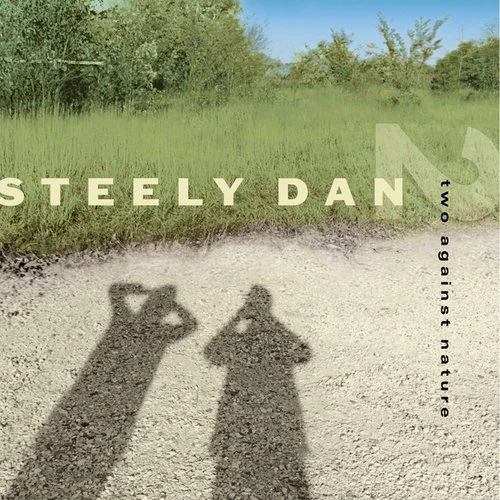
7. Two Against Nature

Release Date: 29th February, 2000

Producers: Walter Becker/Donald Fagen

Label: Giant

Buy: https://www.discogs.com/sell/list?master_id=17120&ev=mb

Standout Tracks: Gaslighting Abbie/Janie Runaway/West of Hollywood

Review:

Speaking of “unexpected”, though, Two Against Nature initially made for a pretty surprising listen. As much as I praise albums like Aja and The Royal Scam, none of the records from the duo’s initial run manage to reach the - for lack of a better word - JAZZINESS of this one. The chill atmosphere and lush arrangements of Gaucho have now been expanded even further, and a lot of the instrumental passages really do approach the realms of traditional jazz fusion. The 70s Dan albums always flirted with jazz classics, but their pop leanings always brought them back under the umbrella of “jazz rock” instead of all-out jazz fusion. In other words, if you’re looking for the most challenging and complex record Donald Fagen and Walter Becker ever released, this is the one. Just listen to the way the title track keeps shifting in and out of different time signatures with its latin beat, or how “Almost Gothic” can’t seem to pick a consistent key or chord progression to stay in.

But here’s the thing: the record goes about its business in such a subtle way that you’re not going to absorb it all in one listen. The music still goes under the same chill guise you’d get from a slick smooth jazz album, but it’s the little quirks that really set it apart. One of the best examples of this comes in the form of “Negative Girl”; the tune is so relaxing as it glides across your eardrums, but listen closer and you’ll find wonderfully complex bass lines from Tom Barney and equally off-kilter drum patterns. On the other side of the energy spectrum, you have the upbeat closing mini-epic “West of Hollywood” which starts out pretty conventionally before revealing its true colors halfway through; a roaring saxophone solo takes over, with Chris Potter tearing it up over ever-changing keyboard melodies. Consequently, stuff like this also makes Two Against Nature the least accessible Dan record, but it’s incredibly rewarding if you give it a chance. Plus, there are still some songs that are much more approachable, notably the relatively straightforward singles “Cousin Dupree” and “Janie Runaway”.

Of course, as with most albums by the duo, the polished music is often presented in contrast with the lyrics. “Cousin Dupree” was the most extensively discussed song to come from the album, as it deals with a slacker who’s just a little too interested in his cousin, and the lyrics even got a nod from Owen Wilson for being reminiscent of the movie You, Me and Dupree (though the song came out first). But let’s be real here; wild topics like infidelity and incest aren’t really out of place in a Steely Dan album. So if anything, I have to commend them for sticking to their guns after being away for so long. Other songs explore similarly dirty topics, such as the sexual escapades found in “Janie Runaway” or the meth-fueled character portrait of “Jack of Speed”. Just as with Gaucho, the music is so beautiful and slick that you almost get distracted from just how dark these songs can get. The juxtaposition is simply fantastic.

While I probably would have rooted for Kid A at the 2001 Grammy Awards, Two Against Nature wouldn’t have been far behind it. People may still complain and consider the win an “upset”, but this really is a fantastic album that progressed Steely Dan in a meaningful way stylistically. If anything, it actually represents the end of their slow transformation into the jazz fusion group that they were always hinting at becoming… it just so happens that people had to wait another 20 years to finally hear it. Give it a listen if you’ve been predisposed to avoid it; you might be surprised” – Sputnikmusic

Key Cut: Cousin Dupree

6. The Royal Scam

Release Date: 31st May, 1976

Producer: Gary Katz

Label: ABC

Buy: https://www.discogs.com/sell/list?master_id=16969&ev=mb

Standout Tracks: Kid Charlemagne/Don’t Take Me Alive/The Fez

Review:

We’ve all heard of the genre called “outlaw country”. But with Steely Dan‘s 1976 fifth studio album, The Royal Scam, the group put forth a collection of songs that may be labeled “outlaw fusion jazz”. With allusions to characters both fictional and contemporary, many lyrical themes focus on darker subjects such as crime, homelessness, drug dealing, divorce, the loss of innocence, and other general bad faith “scams”. Musically, this album features more prominent guitar work than most Steely Dan releases, led by band co-member Walter Becker and session guitarist Larry Carlton, who delivers some of his finest performances on this record.

Steely Dan began as a tradition rock group but following their early success, Becker and lead vocalist/keyboardist Donald Fagen wanted to tour less and concentrate on composing and recording. Following their tour in support of Pretzel Logic in 1974, Steely Dan ceased live performances all together. Eventually the other members departed, with group founder and guitarist Denny Dias staying on in more of session role for later albums while Becker and Fagen recruited a diverse group of other session players starting with the 1975 release Katy Lied including Carlton and backing vocalist Michael McDonald.

With the sessions for The Royal Scam, the group brought in funk/R&B drummer Bernard Purdie for most tracks as Becker and Fagen strived for amore rhythmic sound. The album was produced by Gary Katz and it’s cover features artwork originally for and unreleased 1975 album by Van Morrison.

The album begins with its best overall tune and, really one of the most musically rewarding songs by Steely Dan, “Kid Charlemagne”. This track is built on a catchy clavichord which works perfectly in the cracks between the vocal phrases and rhythm provided by Purdie and session bassist Chuck Rainey, But the most rewarding moments here are are dual leads by Carlton, blending elements of rock, funk and jazz with not a single note less than excellent. “The Caves of Altamira” follows as a jazz/pop with more fine rhythms and featuring a rich horn section, climaxing with the tenor sax of John Klemmer. The lyrics refer to cave paintings in Spain created by Neanderthals, proving early man’s call to be creative and expressive.

Carlton’s heavily distorted and snarling guitar works into a full intro lead for “Don’t Take Me Alive”, another track that explores the criminal edge lyrically. However, this track has an overall feel of 1980’s AOR rock, which really shows Steely Dan’s forward-looking approach to compositions. “Sign In Stranger” changes pace as a piano-dominated piece led by Paul Griffin who provides most of the musical movement and a great lead section. Griffin also co-wrote “The Fez” along with Becker and Fagen, a track that starts with slow and moody piano but soon falls into a perfect 70s funk rhythm with some disco-era, over-the-top synth strings on top” – Classic Rock Review

Key Cut: Haitian Divorce

5. Katy Lied

Release Date: March 1975

Producer: Gary Katz

Label: ABC

Buy: https://www.discogs.com/sell/list?master_id=16954&ev=mb

Standout Tracks: Bad Sneakers/Your Gold Teeth II/Any World (That I'm Welcome To)

Review:

The songs Becker and Fagen came up with are the usual mix of the funny, cynical, and cryptic, but here and there are moments of what seems to be actual sweetness. The brilliance of their songwriting is that they always aimed for complexity and never allowed themselves to be pinned down. Everything was up for negotiation, even when the lyrics were studded with clear meaning. “Black Friday” is a brilliant depiction of chaos, describing what it would be like to make your way out of town and cash your checks when the apocalypse hits. Fagen makes evil sound appealing, suggesting that it might be the only sane response to living in an insane world, but listen with the other ear and you hear the satire and even a kind of yearning from someone who might actually wish for a better world. Meanwhile, Becker plays the best guitar solo on the album, capturing the ragged edge of the moment.

Steely Dan made songs about the destructive force of male vanity that came from two people you knew were speaking from personal experience. They never hold themselves above their characters, but they don’t let them off the hook, either. On “Bad Sneakers,” we see a man bopping around the street near Radio City Music Hall like he owns the place. We feel what he feels but also see how ridiculous he looks, while McDonald’s background vocals suggest grace in his awkwardness, celebrating the energy that powers him even though his actions are laughable. “Rose Darling” is the third track in a row to mention money specifically, but on a more casual listen it sounds something like a pure love song. And then two cuts later, the A-side closes with “Dr. Wu.”

Lodged in the middle of the album that came in the middle of the decade and in the middle of Steely Dan’s decade-long, seven-album run is one of their very best songs, a weary and funny and specific and mysterious ode to longing and loss. “Dr. Wu” gave the album its title (“Katie lies/You can see it in her eyes”) and crystalizes its essential mood. One moment it’s about drugs, the next it’s about a love triangle, and then you’re not sure what’s next or even what’s real, and weaving through it all is the saxophone solo from Phil Woods, connecting dots between musical worlds both corny and elegant, from Billy Joel to Billy Strayhorn.

The characters flailing clumsily throughout Katy Lied are paralyzed by desires they aren’t introspective enough to understand, so all they can do is keep stumbling forward. “I got this thing inside me,” Fagen sings in a bridge on the late album highlight “Any World (That I’m Welcome To)”, “I only know I must obey/This feeling I can't explain away.” Sometimes obeying those desires lead people to something ugly and inexcusable, as on “Everyone’s Gone to the Movies,” a song about a guy who is almost certainly grooming kids for abuse. It’s a Todd Solondz film rendered in sound, and Fagen only shows us the lead-up, forcing us to assemble the pieces in our heads as he hides the crime behind the album’s cheeriest arrangement.

This collision between word and sound—in which the precise moral takeaway and is obscured even as the music makes it go down easy—made the band hard to trust. “The words, while frequently not easy to get the definite drift of, are almost always intriguing and often witty,” John Mendelsohn wrote in a review of Katy Lied in Rolling Stone. But a few paragraphs later he concluded: “Steely Dan’s music continues to strike me essentially as exemplarily well-crafted and uncommonly intelligent schlock” – Pitchfork

Key Cut: Black Friday

4. Countdown to Ecstasy

Release Date: July 1973

Producer: Gary Katz

Label: ABC

Buy: https://www.discogs.com/sell/list?master_id=16898&ev=mb

Standout Tracks: Bodhisattva/The Boston Rag/Show Biz Kids

Review:

Now renowned more as studio-based boffins, following the release of their first album, Can't Buy A Thrill, in 1973 the newly-minted Steely Dan found themselves forced to tour. This forced them to create the follow-up on the hoof. While the band expressed a certain disappointment with the results (and certainly the commercial gains fell way short of the predecessor), Countdown... remains a jewel in their very large artistic crown. A more jazzy affair than Can't buy..., the album built on the duo of Walter Becker and Donald Fagen's ability to combine cynicism with wit, intelligence and some great hooks, all bolstered by the best players around. Still composed of a core of Jim Hodder (drums), Jeff 'Skunk' Baxter (lead guitar) and Denny Dias (rhythm guitar), the duo demoted David Palmer to backing vocals and handed the mic to Donald for perpetuity. It was a wise move.

These tales of drug abuse ("Boston Rag"), class envy ("Your Gold Teeth"), and post-nuclear devastation ("King Of The World") needed the distinctive, weary tones of Fagen to propel them. While opener, "Bodhisattva" may have been a live staple designed for soloing, the band's chops were now fearsome enough to elevate it beyond mere jamming. What's more in "Pearl Of The Quarter" the pair showed that with little more than nuance they could paint a rich picture indeed (it's the tale of a midddle class boy chasing forbidden fruit).

Add to this the usual array of talent drafted in to fill any gaps ie; Rick Derringer's fearsome slide on "Showbiz Kids". With the latter the Dan also forged their fearsome reputation as social commentators as they finally turned their gaze towards the excesses of the West Coast, while reserving no mercy for even themselves ('they got the Steely Dan t-shirts').

Post-modern before the term was coined, erudite, musically literate and still unbelievably cool; Steely Dan by this point were setting a benchmark that few have ever matched” – BBC

Key Cut: My Old School

3. Aja

Release Date: 23rd September, 1977

Producer: Gary Katz

Label: ABC

Buy: https://www.discogs.com/sell/list?master_id=16921&ev=mb

Standout Tracks: Black Cow/Peg/Josie

Review:

The album, which went on to sell 2 million copies, was (at least initially) anathema to a new generation of listeners who rejected the calculation of its expensive studiocraft. Which is in a way highly ironic, since Fagen and Becker’s gnomic lyrics spun stories as sharp-fanged and perverse as any found in the punk canon of the day.

Beyond their obvious allegiance to “Chinese music” (the term applied by Louis Armstrong to bebop), the art-schooled Dan maestros drew on a wealth of literary inspirations for their lyrics, which dealt heavily in subterfuge and misdirection, in the manner of a Times Square three-card monte game.

The influence of Beat forefather William S. Burroughs, whose scabrous experimental novel “Naked Lunch” spawned the band’s name, is always lurking behind the rocks, as are the dark comedians Bruce Jay Friedman and Terry Southern.

No high-lit precursor made as abiding an impact on Steely Dan’s music as did the Russia-born novelist Vladimir Nabokov, for whom Fagen and Becker shared a mutual love. The author of such satiric, game-playing books as “Lolita” and “Pale Fire” contributed his cloaked scenarios, unreliable narrators and caustic observations of human madness to their songs.

The hypnotic suavity of the musical concepts on “Aja” and Fagen and Becker’s propensity for writing brainy, elliptical lyrics manage to obscure the sometimes Stygian stories at the album’s core.

“The hypnotic suavity of the musical concepts on “Aja” and Fagen and Becker’s propensity for writing brainy, elliptical lyrics manage to obscure the sometimes Stygian stories at the album’s core.”

Take the record’s lead-off track “Black Cow.” The song’s silken, soul-derived groove (propelled by Rainey’s fat bass lines), Feldman’s pristine electric piano solo and Tom Scott’s tenor sax outburst all cloak the tale of a man at odds with his drug-addicted, promiscuous girlfriend, whom he may or may not be clandestinely stalking.

Likewise, the ingratiating No. 19 hit “Deacon Blues” sports one of Fagen and Becker’s many unreliable protagonists: a delusional suburbanite who has decided to reinvent himself as a saxophone-playing creature of the nighttime demimonde. The jittery “I Got the News” — which incredibly made it to the B side of the single “Josie” — is nothing more or less than a description of an especially sweaty all-night sex bout.

Is the unnamed actress of “Peg,” as some believe, actually starlet Peg Entwistle, who leaped to her death from the Hollywood sign in 1932? It’s not outside the realm of possibility. Is “Josie,” as writer Brian Sweet has suggested, about an oceanside orgy celebrating the jail release of a female convict? Again, not an unreasonable conclusion.

For Fagen and Becker, the beautifully tooled music they made with their studio cohorts served as the ultimate alienation effect. The true import of their work, which addressed forbidden impulses that moved to the edge of crime and frequently beyond, was always garbed in satiny elegance; its sardonic and horrific essence was marketed as the purest ear candy.

To this day, “Aja” is a thing of musical beauty with a hard-edged heart, and a consummate act of creative sleight-of-hand” – Variety

Key Cut: Deacon Blues

2. Can’t Buy a Thrill

Release Date: November 1972

Producer: Gary Katz

Label: ABC

Buy: https://www.discogs.com/sell/list?master_id=16883&ev=mb

Standout Tracks: Do It Again/Kings/Reelin’ in the Years

Review:

Walter Becker and Donald Fagen were remarkable craftsmen from the start, as Steely Dan's debut, Can't Buy a Thrill, illustrates. Each song is tightly constructed, with interlocking chords and gracefully interwoven melodies, buoyed by clever, cryptic lyrics. All of these are hallmarks of Steely Dan's signature sound, but what is most remarkable about the record is the way it differs from their later albums. Of course, one of the most notable differences is the presence of vocalist David Palmer, a professional blue-eyed soul vocalist who oversings the handful of tracks where he takes the lead. Palmer's very presence signals the one major flaw with the album -- in an attempt to appeal to a wide audience, Becker and Fagen tempered their wildest impulses with mainstream pop techniques. Consequently, there are very few of the jazz flourishes that came to distinguish their albums -- the breakthrough single, "Do It Again," does work an impressively tight Latin jazz beat, and "Reelin' in the Years" has jazzy guitar solos and harmonies -- and the production is overly polished, conforming to all the conventions of early-'70s radio. Of course, that gives these decidedly twisted songs a subversive edge, but compositionally, these aren't as innovative as their later work. Even so, the best moments ("Dirty Work," "Kings," "Midnight Cruiser," "Turn That Heartbeat Over Again") are wonderful pop songs that subvert traditional conventions and more than foreshadow the paths Steely Dan would later take” – AllMusic

Key Cut: Midnite Cruiser

1. Pretzel Logic

Release Date: 20th February, 1974

Producer: Gary Katz

Label: ABC

Buy: https://www.discogs.com/sell/list?master_id=16984&ev=mb

Standout Tracks: Night by Night/Any Major Dude Will Tell You/Charlie Freak

Review:

The album begins with “Rikki Don’t Lose That Number”, which would become the biggest hit of Steely Dan’s career, topping out at number four on the pop charts. Musically, this is about as smooth as any song by the band, led by the simple piano line of Michael Omartian and great samba-inspired drums and percussion by Jim Gordon. During the lead and bridge section, the song morphs from jazz to rock seamlessly and the rather obscure lyrics tend to add to the overall mystique of this unique song (although artist Rikki Ducornet believes it was inspired by Fagen approaching her at a college party years earlier).

The choppy rock rhythm and spectrum of brass intervals of “Night by Night” is followed by the cools and somber “Any Major Dude Will Tell You”. Starting with a brightly strummed acoustic that soon settles into an electric piano groove with electric guitar overtones, this latter song offers great little guitar riffs between the verses composed of uplifting lyrics of encouragement;

The oldest composition on the album, Fagen’s “Barrytown” is lyric driven with a moderate piano backing, not all that complex but with good melody and arrangement. Named for a small upstate New York town near the duo’s alma mater, the song is a satirical look at the small town class system. The first side concludes with the only cover and instrumental on Pretzel Logic, Duke Ellington’s “East St. Louis Toodle-Oo”. This modern interpretation, features the indelible pedal guitar lead by Jeff Baxter, who emulated a mute-trombone solo masterfully. The rest of the piece pleasantly moves through many differing lead sections before returning to Baxter’s guitar to finish things up.

“Parker’s Band” contains much movement as a funky track with rock overtones. Perhaps the highlight of this track is the dual drums by Gordon and Jeff Porcaro, which are potent and flawless. “Through With Buzz” is a short, almost psychedelic piece driven by mesmerizing piano and a strong string presence. This is another example of how the Katz and the group gets everything out the door with extreme efficiency in this lyrical proclamation of a resolution. The title track, “Pretzel Logic”, contains a slow electric piano groove and verse vocals which are the most blues based of any on the album of the same name. This song contains lyrics that are cryptic, driving rhythms and grooves, a pretty respectable guitar lead by Becker, and is also the only song on the second side which exceeds three minutes in length.

The album’s final stretch features three very short tracks of differing styles. “With a Gun” is like an upbeat Western with strummed fast acoustic, Tex-Mex styled electric riffs, and a strong, Country-influenced drum beat. “Charlie Freak” features a descending piano run, which the vocals mimic with simple, storied lyrics of a downtrodden man who pawns his ring to the protagonist at a discounted price to buy the drug fix that ultimately does him in. The closer “Monkey in Your Soul” features the coolest of grooves, with an electric piano and clavichord accented by horns between the verses and a Motown-like clap to end the album on an upbeat note.” – Classic Rock Review

Key Cut: Rikki Don't Lose That Number

FEATURE: Modern Heroines: Part Eighty-Four: Denise Chaila

FEATURE:


Modern Heroines

Part Eighty-Four: Denise Chaila

___________

I have featured…

 PHOTO CREDIT: Róisín Murphy O’Sullivan

the amazing Denise Chaila in my Spotlight feature. She is an artist who is breaking through and is definitely going to be an icon of the future. Someone who is guiding and inspiring other artists in her own right, Chaila started okaying the Limerick music scene in 2012. Her stunning debut E.P., Duel Citizenship, arrived in 2019. Chaila was one of the musical acts featured in the series of remote performances during the COVID-19 pandemic, Other Voices: Courage, in May 2020. Born at the Chikankata-Mazabuka District, Zambia, she moved to Ireland when she was three. Her GO Bravely album was released in 2020. It won Choice Music Prize’s Album of the Year Award that same year. Before coming to some interviews with Chaila, I wanted to mention her recent project, It’s a Mixtape. Released in November, it is another astonishing and mesmeric release from an artist with no real equals. She is a sensational talent! This is what NME had to say about It’s a Mixtape:

Where are you from, originally?” Denise Chaila mockingly asked on her 2019 debut EP ‘Duel Citizenship’, mimicking the racist questions she’s received as an Irish-Zambian person. On that release’s title track, the Limerick-based rapper, singer and poet deftly blended both cultures and celebrated language as a gift for sharing stories (“I could translate all of my Lenje stories / So that we could sing them as Gaeilge”).

Chaila’s 2020 debut mixtape ‘Go Bravely’ then widened her scope further; her carefully-woven lyrics taking centre-stage atop modest jazz-tinged piano and guitar hooks. The release later won Chaila the RTÉ Choice Music Prize – the first time a mixtape has emerged victorious.

It’s a format that Chaila has returned to again with the simply-titled ‘It’s A Mixtape’. Expanding on her musical horizons, Chaila explores a more varied palette of thumping minimal bass-stabs, warm horn arrangements and haunting, medieval-sounding melodies through a synthesised, futuristic lens. While the production feels cranked-up and bolder, its centrepiece ‘I A M’ is still smouldering and meditative, featuring the voices of friends and family from Ireland and around the world. ‘Energy’, which features MuRli (a fellow founder of Chaila’s label and collective Narolane), is another softer stand-out, built around warm keys and jazz trumpets with a sprinkling of harp.

Chaila often draws on regal imagery and a wealth of mythology in her lyrics. On ‘Might Be’ she collides the Greek god of wine-making, Dionysus, with Queen Medb, a figure in Irish mythology who represents intoxication and mead-drinking. Opener ‘061’ (borrowing its title from Limerick’s area code) proudly declares “I am not a queen, I’m a Prince,” while on closer ‘Return of the King’ the rapper cleverly invokes the words of the Greek philosopher Diogenes, who once brandished a plucked chicken at Plato after he classified man as a featherless biped. “Or Artemis me, I’m only fowl when I’m floating,” Chaila puns, further referencing the Greek goddess of hunting and the Irish young-adult sci-fi series Artemis Fowl in a beat. “Freedom is potent, the future’s in focus.”

It all serves to prove Chaila’s dexterous lyricism, neatly linking threads between the present, ancient mythology and more recent historic events, such as Muhammad Ali’s 1974 ‘Rumble in the Jungle’ with George Foreman (“What they say to Ali?” she asks on ‘Might Be’, before quoting the crowd’s chants “Bomaye!”).

Even when it’s going full-throttle, ‘It’s A Mixtape’ has an inherent playfulness over the course of its five concise tracks. She might compare herself to Kanye on the closer, but by that point you’re already left with a keen sense of exactly who Denise Chaila is and what she stands for”.

In my previous feature, I sourced interviews from 2020. Now, I wanted to look at some press from last year. Having put out an L.P. in 2020 and her E.P. last year, I wonder what this year will bring in terms of new releases. With every fresh release, she uncovers more genius and gold. I am going to drop in a few interviews before finishing up with a recent review of It’s a Mixtape. Early last year, NME spoke with Denise Chaila and discussed her incredible mixtape/album, GO Bravely:

2020 was a real break-through year – how are you feeling now after such a whirlwind journey?

“So many beautiful things happened for me in 2020, but receiving abuse online was extremely difficult and heart-breaking. If I were white, I could just be a musician and enjoy this experience without having to be serious very quickly and worry about my safety and that of my family. We have to address this head-on, and move into a culture of deep justice work that’s so much more than these people who want to harm me. It’s dependent though on the idea that racism isn’t a black person’s responsibility; we all have a responsibility to sit with each other and have frank conversations. It’s like breaking a bone again to set it properly so that it can finally heal – that’s what we have to do now to move forward.”

You’ve collaborated with a lot of other Irish MCs and co-founded your own record label, Narolane Records. How do you think the Irish hip-hop scene has informed your music?

“Historically, there’s been a lot of shame in Ireland for rapping in Irish accents about Irish things – irrespective of being black or white. So we’re bound by not subscribing to an inferiority complex and always support each other. Every time another Irish rapper does something great, it makes more room for me to grow and vice versa. We’re not looking for something bigger or a move outside of Ireland to legitimise ourselves. What’s special about the Irish hip-hop scene is that we own who we are.”

Your mixtape ‘Go Bravely’ explores the concept of belonging, and overcoming personal pain. Did you have a particular vision in mind before making the record?

“When I was making ‘Go Bravely’, I was really working on my personal confidence and I wanted to reject any self-flagellation in my music. Whenever you hear me being confident on record, that’s me manifesting something that doesn’t always exist. ‘Go Bravely’ was my affirmation: irrespective of your history or your trauma, or the fears you have about the future, or what sort of musician you think you should be, just be brave and meet the moment.”

In your song ‘Copper Bullets’, you tackle misogyny in hip hop – do you think that’s a topic that needs to be addressed more in rap music today?

“Definitely. Personally, I take issue with being called a ‘female MC’. I did not make sacrifices to become a rapper so that you can relegate me as a cute girl doing a cute thing. I’ve worked so hard and crafted my music – if you haven’t put in the 10,000 practice hours, you cannot dismiss me, because I’m a better MC than you. I’m a woman who raps – you don’t have to call yourself a “male rapper”. It’s an unconscious bias that really excludes people from fulfilling their destiny, purpose and having the impact that they should have”.

Last March, CLASH ran a fascinating interview with the Limerick-based artist. It came the day after her win at the RTE Choice Music Prize for GO Bravely. Even though Chaila has grown stronger and more revered as an artist, she was a hugely celebrated and respected artist early in 2021:

Despite having released her debut single in 2019, with dual release of ‘Copper Bullet’ and ‘Dual Citizenship’, 2020 will forever be known as Denise Chaila’s year, in particular for her single ‘Chaila’. The track went on to become the soundtrack to a summer and catapulted Chaila into widespread national and international consciousness. “People sent me pictures and videos of their children responding to my music and that’s surreal because there’s a whole generation of children who are going to grow up hearing my music like how I grew up listening to Samantha Mumba,” she smiles, adding: “The idea that I could be someone that a child listens to the same way I listened to Britney [Spears] is amazing”.

What should have been a time of great joy, however, was tinged with pain as Chaila became the target of racial abuse online. This abuse escalated with the release of ‘Go, Bravely’. “There have been a lot of very critical decisions I’ve had to make in relation to my safety and trying to protect my family in the face of some very disappointing behaviour from some undesirable members of society has taken precedence over feeling ecstatic about my career,” Chaila recalls of the online threats to her well being brought about by the mixtapes success, which in turn lead her to ask RTÉ not to tag her in any posts on social media relating to the mixtape’s nomination for the choice prize, for fear of attracting vitriol.

Despite such difficulties, Chaila is quick to note how important people’s support for the project has been, saying that “it’s been a mark of the way people have received the music that despite the incredible flux of terrible things, I’ve still found incredible moments of joy where I realise that people are receiving the work as its intended to be”.

Before moving to Ireland at the age of three, Denise Chaila was raised in the Southern province of Zambia, a child of two medical professionals. “The people in the village around us spoke in a language that was neither my mother or my father’s mother tongue, and it separated me a lot from kids my age,” Chaila recalls of her early childhood. Due to her parent’s profession, she grew up surrounded by medics from across the world, including some from countries such as Australia, New Zealand and China, meaning she would spend most of her time with adults rather than children her own age, allowing her to gather a wider view of the world.

At the time, she was being home-schooled by her mother and her mother’s friend. One day, she was being taught the words to ‘Twinkle Twinkle’ and misheard one of the lyrics as ‘like a demon in the sky’. Due to her traditional spiritual upbringing, the ideas of demons floating high above her in plain sight brought nightmares, and months of night terrors. “I couldn’t sleep for months,'' Chaila smiles, recalling the event.

 In an effort to help her child sleep, Chaila’s mother began to flood the house with gospel music, and in particular the work of Belfast Christian songwriter Robin Mark. Denise was urged by her mother to sing Mark’s track ‘Jesus, All For Jesus’ whenever she was scared in the middle of the night, and taught her that this would keep her safe.

“For a really significant part of my childhood, a part of my self-soothing and my spiritual process was singing to myself to feel better,” Chaila explains, “I would wake up in the middle of the night and I would sing until I fell asleep again because I was scared. That slowly became my coping mechanism, so when things become really, really bad, I sing”.

Looking back, Chaila admits how important a moment that was in her relationship with music, and how in times of doubt she harkens back to it. “Wherever I’m going with my life, it starts with being a four-year-old girl who’s really scared who can only sing to her God to make things better” she adds, “Now I’m 27 and I’m still doing the same thing, except now I’m writing the music that I’m singing”.

Her awarding of the Choice Prize for ‘Go Bravely’, a mixtape that touches on subjects such as racism, self-doubt, mental health and the importance of diversity with the lyrical dexterity reminiscent of some of hip-hops eternal greats and Ireland’s illustrious bards, feels like a moment where Ireland simultaneously bowed to Chaila’s greatness and admitted that this was the least they could do.

As one commentator put it, the Choice prize needed Chaila more than Chaila needed it. Does she too see this win as the first step in a bigger plan or the accumulation of almost a decade of hard work?

“For me, Denise Chaila, my narrative spins far beyond what this moment is, but I want this moment to be special and part of making it special was making it healthy for me” she replies, diplomatically, “I honestly tried so hard not think about it until five minutes before they announced it, to keep it healthy for myself, to make this about my career and not make myself happy or sad for three weeks depending on the results”.

In March, there was an interview published that was so deep and readable. A beautiful feature from District Magazine in Ireland, it is something that everyone should read in full. One of my favourite parts of the interview is what Chaila says about success. Rather than fame or money, she is a definite role model:

Denise Chaila is a musician on a dream trajectory. In the brief two years since the release of her debut EP Copper Bullet/Duel Citizenship, the Zambian-born, Limerick-based rapper has propelled herself out of the category of ‘One-To-Watch’ into becoming Ireland’s eminent breakout star. The past year has been a wild ride for Chaila with the release of her debut mixtape Go Bravely winning her fans across Ireland and further beyond. The most recent milestone in Chaila’s extraordinary journey is winning the Choice Music Prize’s much-coveted Album Of The Year Award.

Winning Album of the Year with a mixtape is certainly a flex but, for Chaila, glory largely lies in the impact her victory may have on the communities she’s a part of. “It means that I’m the first Black woman, Black femme, who won the award. Right? That’s a really big deal. It means there’s a really large Zambian community in Ireland, who felt very, very invested in the Choice this year because of me, in a way that they haven’t felt invested before, and had access to a conversation that they didn’t have a desire or permission to have access to prior to it” says Chaila. “That excites me, and, enthuses me that I was able to be instrumental in that journey. I think it means that what I’m doing musically, in terms of rap and hip-hop is being recognized and canonized in a way that I didn’t anticipate”.

PHOTO CREDIT: Shane Serrano and Jameson 

Chaila’s victory feels like a symbol of change for the Irish music landscape. In the time since hip-hop’s first Choice Prize success through Rusangano Family’s Let The Dead Bury The Dead, Irish hip-hop has been shouldering the heavy label of a ‘rising scene’. Go Bravely’s rapturousreception has pushed Chaila, and the entire genre, into becoming a mainstream mainstay – this is no longer music on the outskirts, hip-hop is now becoming a dominant force. Chaila is tentative in her views on what the award means for the genre as a whole. “I think that it’s important to remember that things can have many meanings. It’s impossible to see where they will end up until we have the privilege of hindsight. I think for now, what it means is that we’re giving permission to ourselves to celebrate and acknowledge different kinds of people” considers Chaila. “The way we continue to do that, to me, is going to say whether or not we are moving away from a certain sound or whether we had a moment. I, for one, feel really, really safe in an Ireland that can celebrate me and Ailbhe Reddy and Pillow Queens and Fontaines DC at the same time”.

PHOTO CREDIT: Shane Serrano and Jameson  

Rather than taking a break and letting success settle in, Chaila has gone straight back to writing. “I’m always writing. Actually, I haven’t stopped writing since I released Go Bravely. I think I’ve been in the studio since some point in mid-September last year and I haven’t really gotten out”. Unfazed by the pressure of writing a follow-up to her debut, Chaila’s confidence in her new work is infectious. “’I’m very lucky that I’m not concerned with the sophomore curse because actually the stuff that I was writing in December, bro, like I think I wrote my best song ever last month and I’m so excited because I’m getting better”.

Chaila draws upon the interconnected relationship between hip-hop and the literary voice as an inspiration to her new “more mature” sound. “Voice as a part of Black work is something that is really profound, it’s really profoundly sacred. Actually, if you listen to James Baldwin speak or Maya Angelou reading her own poetry, or Audrey Lorde reading her essays or Rakim spitting bars, or Erykah Badu, you start to realize that there’s something very important about the multiplicity in the way a voice can be used” Chaila says. “Hip hop as an art form was crafted so that people could have the freedom to use their voice liberally in ways that in their day-to-day life, they might not have been permitted to. Rap is poetry and the only reason why we don’t recognize it as a legitimate form of art is racism”.

Prior to a positive review for the brilliant It’s a Mixtape, PAM interviewed Chaila in November. Although, as a successful Black rapper in Limerick, she is in a minority, Chaila has a very healthy and interesting approach to the scene there. It is about working-class voices having their say and finding a platform:

And how did your Zambian background inform your worldview?

The truth is, I don’t know. I’m still figuring that out actually.

Me and my sister, we used to say that when we’re in Ireland, we’re considered Zambian. In Zambia, we’re considered Irish. No one ever gave us the respect and the honor of saying that you’re just from where you are.

It feels sometimes like there’s a wall to climb where you have to almost apologize for foreignness and prove that you belong somewhere. I think if you put someone in that system long enough, they’ll start to ask themselves questions.

But there is no right thing. Nobody has the ability to let you know that, finally, you belong. You’re gonna meet someone who tries to exclude you. Someone else whose identity depends on you being other. And it’s really nice to know that you can be the person who grants that to yourself.

What can you tell us about the rap scene in Limerick and in Ireland?

For a very long time, Irishness was devoid of a black consciousness and devoid of black voices to advocate for their black consciousnesses, plural. I think what’s happening in Ireland in terms of hip hop, is that a lot of people have been finding their voices.

I noticed that a lot of the conversation is about class. It’s about working class people having their voices finally heard. It’s about landlords. It’s about economic abuse.

Then Limerick, I find that the nexus of this is really, really expressed because Limerick has been called the wastebasket of Ireland, it is a place that is diminished and denigrated a lot. it used to be called stab city as a way to deter people from going there because you know, this is gangland.

But the thing that is happening in Ireland in terms of rap, what is Irish rap? It is an opportunity. It is people giving themselves an opportunity to redefine Irishness for themselves, and to challenge systems of oppression.

So what’s happening is that we’re seeing an excess of change and we’re seeing people speaking truth to power. And I think that if you care about watching something emerge from its grassroots, you should look at Irish hip hop and you should study the people and you should come and hang out”.

Denise Chaila is going to be making music for decades more. She is a hugely inspiring artist who, as I mentioned, will be a future legend. It’s a Mixtape is another example of what a fabulous artist she is. Everything Is Noise wrote the following about one of last year’s strongest releases:

It’s A Mixtape shows a different side to Chaila’s artistry, with subtle changes in style and feel to both Duel Citizenship and Go Bravely. Opener “061”, a reference to the area code of Limerick, where Chaila is based, seems like a perfect opener for a live set. High energy and littered with intricate wordplay, “061” highlights Chaila’s self-belief and confidence. The eerie synth perfectly complements the track, with things kept interesting musically with constantly changing beats and electronics. “Might Be” slows things down a little, with the gentle flow leaving much room for Chaila’s artistry. ‘Just ’cause I’m nice don’t mean that I’m not designed to rain hell on anything that comes for my people, my family, my dreams, my purpose, my history, my genome’ comes the lyric, summing up both the artist and the music succinctly.

Whilst the opening two tracks are peppered with phrases or lines that challenge the listener to step back and look at themselves, it is the powerful “I A M” that steals the show lyrically on It’s A Mixtape. Over ethereal backing, the message is clear – ‘All of my heart is worthy/Nobody else has the right to tell my story‘. The track with the least backing, for me, remains the most hard-hitting, even if the track that follows tries to steal its thunder. “Energy”, at first, feels like an instant crowd-pleaser. Big production, brass leading the way, and energetic delivery all point to the track being a radio-friendly single. That is, until the beat drops to almost nothing, allowing Chaila to deliver another passage of inspiration, citing influential writers, musicians, and politicians (yeah, there are a handful of good ones) amongst others. It is another moment, in the growing list of this particular artist, where the audience is forced to open their ears and take in a message.

It’s A Mixtape concludes with the wonderfully titled and assumedly Lord of the Rings-inspired “Return of the King” (coupled with an earlier reference to the Riders of Rohan). If you wanted a quick introduction to Denise Chaila, this would be as good a place as any to start. The beat here is wonderfully put together, driving the track when needed and knowing exactly where to drop out to give space. ‘Your transphobia is whack/Your homophobia is whack‘ Chaila rasps, a reminder, if it is needed, to call out bigotry anywhere it is seen. Despite comparing herself to Kanye West, it is clear that Chaila’s star continues to burn off its own energy.

Chaila is an artist who continues to grow with each release. There may be little references and nods to other artists throughout the work, but Denise Chaila is an artist intent on paving their own path, with their own tools. All releases thus far have been something more than music. Every bar, every sound, every word feels like it has been carefully planned and put there for a reason, either to deliver a message, or set up the delivery of a message. If you haven’t yet heard Denise Chaila, it’s time to set aside twenty minutes of your day to take in It’s A Mixtape”.

There is no telling just how far Chaila can go as an artist. She won a Music Moves Europe Award for Ireland earlier in the week! With such a strong voice, watching her music go around the world and seeing it move and educate people is genuinely thrilling. A mesmeric songwriter and performer, I am very keen to see her perform live (let’s hope this is possible soon). I feel Chaila is going to join the ranks of the greats in the years to come. The spellbinding and always-wonderful Denise Chaila is…

A voice of a generation.

FEATURE: Inspired By… Part Forty-Five: The Kinks

FEATURE:


Inspired By…

Part Forty-Five: The Kinks

___________

WHEN thinking of the greatest…

and most influential bands ever, they do not come finer and bigger than The Kinks. So many artists through the years have taken a leaf from the London band. I am ending with a playlist of tracks from those who, in some form, are inspired by The Kinks. Prior to getting to that, here is some biography from AllMusic:

The Kinks were one of the most influential bands of the British Invasion. Early singles "You Really Got Me" and "All Day and All of the Night" were brutal, three-chord ravers that paved the way for punk and metal while inspiring peers like the Who. In the mid-'60s, frontman Ray Davies came into his own as a songwriter, developing a wry wit and an eye for social commentary that culminated in a pair of conceptual LPs, The Village Green Preservation Society and Arthur (Or the Decline and Fall of the British Empire), that proved enormously influential over the years. By the end of the '70s, the Kinks had refashioned themselves as a hard rock stadium act, resulting in a surge of late-period popularity until they disbanded for good in the mid-'90s.

Throughout their long, varied career, the core of the Kinks remained Ray (June 21, 1944) and Dave Davies (February 3, 1947), who were born and raised in Muswell Hill, London. In their teens, the brothers began playing skiffle and rock & roll. Soon, they recruited a schoolmate of Ray's, Peter Quaife, to play with them; like the Davies brothers, Quaife played guitar, but he switched to bass. By the summer of 1963, the group had decided to call itself the Ravens and had recruited a new drummer, Mickey Willet. Eventually, their demo tape reached Shel Talmy, an American record producer who was under contract to Pye Records. Talmy helped the band land a contract with Pye in 1964. Before signing to the label, the Ravens replaced drummer Willet with Mick Avory.

The Ravens recorded their debut single, a cover of Little Richard's "Long Tall Sally," in January 1964. Before the single was released, the group changed their name to the Kinks. "Long Tall Sally" was released in February of 1964 and failed to chart, as did their second single, "You Still Want Me." The band's third single, "You Really Got Me," was much noisier and dynamic, featuring a savage, fuzz-toned two-chord riff and a frenzied solo from Dave Davies. Not only was the final version the blueprint for the Kinks' early sound, but scores of groups used the heavy power chords as a foundation for their own work. "You Really Got Me" reached number one within a month of its release; released on Reprise in the U.S., the single climbed into the Top Ten. "All Day and All of the Night," the group's fourth single, was released late in 1964 and it rose all the way to number two; in America, it hit number seven. During this time, the band also produced two full-length albums and several EPs.

Not only was the group recording at a breakneck pace, they were touring relentlessly, as well, which caused much tension within the band. At the conclusion of their summer 1965 American tour, the Kinks were banned from re-entering the United States by the American government for unspecified reasons. For four years, they were prohibited from returning to the U.S., which not only meant that the group was deprived of the world's largest music market, but that they were effectively cut off from the musical and social upheavals of the late '60s. Consequently, Ray Davies' songwriting grew more introspective and nostalgic, relying more on overtly English musical influences such as music hall, country, and English folk, than the rest of his British contemporaries. The Kinks' next album, The Kink Kontroversy, demonstrated the progression in Davies' songwriting. "Sunny Afternoon" was one of Davies' wry social satires and the song was the biggest hit of the summer of 1966 in the U.K., reaching number one. "Sunny Afternoon" was a teaser for the band's great leap forward, Face to Face, a record that featured a vast array of musical styles. In May of 1967, they returned with "Waterloo Sunset," a ballad that reached number two in the U.K. in the spring of 1967.

Released in the fall of 1967, Something Else by the Kinks continued the progressions of Face to Face. Despite the band's musical growth, their chart performance was beginning to stagnate. Following the lackluster performance of Something Else, the Kinks rushed out a new single, "Autumn Almanac," which became another big U.K. hit. Released in the spring of 1968, "Wonderboy" was the band's first single not to crack the Top Ten since "You Really Got Me." They recovered somewhat with "Days," but their commercial decline was evident by the lack of success of their next LP. Released in the fall of 1968, The Village Green Preservation Society was the culmination of Ray Davies' increasingly nostalgic tendencies. While the album was unsuccessful, it was well-received by critics, particularly in the U.S.

Peter Quaife soon grew tired of the band's lack of success, and he left by the end of the year, replaced by John Dalton. In early 1969, the American ban upon the Kinks was lifted, leaving them free to tour the U.S. for the first time in four years. Before they began the tour, the Kinks released Arthur (Or the Decline and Fall of the British Empire). Like its two predecessors, Arthur contained distinctly British lyrical and musical themes, and it was only a modest success. As they were recording the follow-up to Arthur, the Kinks expanded their lineup to include keyboardist John Gosling. The first appearance of Gosling on a Kinks record was "Lola." Featuring a harder rock foundation than their last few singles, "Lola" was a Top Ten hit in both the U.K. and the U.S. Released in the fall of 1970, Lola Versus Powerman & the Moneygoround, Pt. 1 was their most successful record since the mid-'60s in both the U.S. and U.K., helping the band become concert favorites in the U.S.

Their contract with Pye/Reprise expired in early 1971, leaving them free to pursue a new record contract. By the end of 1971, the Kinks had secured a five-album deal with RCA Records, which brought them a million-dollar advance. Released in late 1971, Muswell Hillbillies, the group's first album for RCA, marked a return to the nostalgia of the Kinks' late-'60s albums, only with more pronounced country and music hall influences. The album failed to be the commercial blockbuster RCA had hoped for. A few months after the release of Muswell Hillbillies, Reprise released a double-album compilation called The Kink Kronikles, which outsold their RCA debut. Everybody's in Showbiz (1973), a double-record set consisting of one album of studio tracks and another of live material, was a disappointment in the U.K., although the album was more successful in the U.S.

In 1973, Ray Davies composed a full-blown rock opera called Preservation. When the first installment of the opera finally appeared in late 1973, it was harshly criticized and given a cold reception by the public. Act 2 appeared in the summer of 1974; the sequel received worse treatment than its predecessor. Davies began another musical, Starmaker, for the BBC; the project eventually metamorphosed into Soap Opera, which was released in the spring of 1975. Despite poor reviews, Soap Opera was a more commercially successful record than its predecessor. In 1976, the Kinks recorded Davies' third straight rock opera, Schoolboys in Disgrace, which rocked harder than any album they released on RCA.

During 1976, the Kinks left RCA and signed with Arista, and refashioned themselves as a hard rock band. Bassist John Dalton left the group near the completion of their debut Arista album; he was replaced by Andy Pyle. Sleepwalker, the Kinks' first album for the label, became a major hit in the U.S. As the band was completing the follow-up to Sleepwalker, Pyle left the group and was replaced by the returning Dalton. Misfits, the band's second Arista album, was also a U.S. success. After a British tour, Dalton left the band again, along with keyboardist John Gosling; bassist Jim Rodford and keyboardist Gordon Edwards filled the vacancies. Soon, the band was playing arenas in the United States. Even though punk rockers like the Jam and the Pretenders were covering Kinks songs in the late '70s, the group was becoming more blatantly commercial with each release, culminating in the heavy rock of Low Budget (1979), which became their biggest American success, peaking at number 11. Their next album, Give the People What They Want, appeared in late 1981; the record peaked at number 15 and went gold. For most of 1982, the band was on tour. In the spring of 1983, "Come Dancing" became the group's biggest American hit since "Tired of Waiting for You," thanks to the video's repeated exposure on MTV; in the U.S., the song peaked at number six, in the U.K. it climbed to number 12. State of Confusion followed the release of "Come Dancing," and it was another success, peaking at number 12 in the U.S. For the remainder of 1983, Ray Davies worked on a film project, Return to Waterloo, which caused considerable tension between himself and his brother. Instead of breaking up, the Kinks merely reshuffled their lineup, but there was a major casualty: Mick Avory, the band's drummer for 20 years, was fired and replaced by Bob Henrit. As Ray finished post-production duties on Return to Waterloo, he wrote the next Kinks album, Word of Mouth. Released in late 1984, the album was similar in tone to the last few Kinks records, but it was a commercial disappointment and began a period of decline for the band; they never released another record that cracked the Top 40.

Word of Mouth was the last album they would record for Arista. In early 1986, the band signed with MCA in the U.S. and London in the U.K. Think Visual, their first album for their new label, was released in late 1986. It was a mild success but there were no hit singles from the record. The following year, the Kinks released another live album, appropriately titled The Road, which spent a brief time on the charts. Two years later, the Kinks released their last studio record for MCA, UK Jive. During 1989, keyboardist Ian Gibbons left the band. The Kinks were inducted into the Rock & Roll Hall of Fame in 1990, but the induction did not help revive their career. In 1991, a compilation of their MCA records, Lost & Found (1986-1989), appeared, signaling that their contract with the label had expired. Later in the year, the band signed with Columbia and released an EP called Did Ya, which didn't chart. Their first album for Columbia, Phobia, arrived in 1993 to fair reviews but poor sales. By this time, only Ray and Dave Davies remained from the original lineup. In 1994, the band was dropped from Columbia, leaving the group to release the live To the Bone on an independent label in the U.K.; they were left without a record label in the U.S.

Despite a lack of commercial success, the band's public profile began to rise in 1995, as the group was hailed as an influence on several of the most popular British bands of the decade, including Blur and Oasis. Ray Davies was soon on popular television shows again, acting as these band's godfather and promoting his autobiography, X-Ray, which was published in early 1995 in the U.K. Dave Davies' autobiography, Kink, was published in the spring of 1996.

Rumors of a Kinks reunion began circulating in the early 2000s, only to be quieted following Dave Davies' stroke in June 2004. Dave would later recover fully, spurring another round of reunion rumors in the late 2000s, yet nothing materialized. Peter Quaife, the band's original bassist, died of kidney failure on June 23, 2010. Following his death, Ray started demo'ing material with Mick Avory, and Dave slowly became part of the project. As the band prepared a 50th Anniversary reissue of The Kinks Are the Village Green Preservation Society, the Davies brothers and Avory confirmed they were working on a new Kinks album -- the first the drummer was involved with since 1984's Word of Mouth. Before any new music appeared, the Kinks celebrated the 50th Anniversaries of both Arthur and Lola with deluxe edition reissues, which appeared in 2019 and 2020, respectively”.

To celebrate the legacy and ongoing influence of The Kinks, the playlist below is packed with tremendous artists who one can draw a line back to The Kinks. I love the band and feel that their output in the 1960s ranks alongside the greatest of the decade. Their influence will never wane. Regarding the artists they have influenced, The Kinks have left the music world…

SUCH a huge impact.

FEATURE: Moving Strangers: Kate Bush and the Tokyo Music Festival, 1978

FEATURE:


Moving Strangers

IN THIS PHOTO: Kate Bush in Japan in June 1978 

Kate Bush and the Tokyo Music Festival, 1978

___________

I discussed Kate Bush’s 1978 trip to Japan…

in a feature a couple of years ago. Amidst the hecticness of 1978 and the success of Wuthering Heights and her debut album, The Kick Inside, she undertook a promotional blitzkrieg like nothing else! I cannot imagine how straining and discombobulating it would have been to travel all around the world and perform at so many different locations. Alongside the live performances, there was a load of press and T.V. interviews. Air travel was not something Bush ever liked. I can imagine that, after 1978, she came to like it less and less. By the end of the year, she had travelled as far as Australia and New Zealand. Her trip to Japan was, I guess, to help build her name there. As The Kick Inside is forty-four on 17th February, I wanted to publish a run of features about the album and 1978. Bush released singles strictly for the Japanese market. Moving was released in February 1978; Them Heavy People (titled Rolling the Ball) was issued in May 1978. Both singles did well in Japan, and, by all accounts, she was someone who was taken to heart very readily and quickly. Aside from appearing in a watch commercial for Seiko and having photos taken in Japan, one of the biggest promotional tasks of her career to that point took place at the Tokyo Music Festival. I am thinking what her biggest and best-attended live performance would have been to that date. I guess some of her appearances on Top of the Pops drew quite a crowd. In terms of the sheer number of people in front of her in a live setting, the Tokyo Music Festival was a real test of nerves and courage!

It was an odd one-off that I don’t think she would do in any other country. Maybe she did have a curiosity about Japan and wanted to visit. In any case, the Kate Bush Encyclopaedia gives us some information about the festival:

Annual music festival in Japan. On June 18, 1978, Kate Bush performed her song Moving live at the Seventh Tokyo Song Festival with a band of Japanese musicians before an audience of 11,000 at the Nippon Budokan - with a television audience of something like 35 million watching at home. Kate shared the Festival's Silver Prize with an American rhythm-and-blues group called The Emotions, popular at the time for their hit single 'Best Of My Love'.

I guess the slightly unconventional and different style of Kate Bush would have resonated with a country who embrace the more unusual. Whilst she was in the country, she also did other promotional duties. She performed several tracks by The Beatles for Japanese T.V. (She's Leaving Home, The Long and Winding Road and Let It Be). I know that Bush performed Let It Be live in for Sound in S, on 23rd June, 1978. As Far Out Magazine wrote last year, Bush not only performed Moving at the Tokyo Music Festival. Advertising was not something she did a lot after 1978. Allowing her song, Moving, to be used to promote Seiko was an unusual step:

As Flashbak points out, Bush was performing the track at the seventh annual international Tokyo Music Festival inside the Nippon Budokan arena when the ‘Hounds of Love’ became an overnight sensation.

Bush’s performance was screened through Japanese television on June 21, 1978, and was broadcast as an estimated 35 million watched on—it secured her cult status and saw Bush instantly gain fame in the country where her off-beat show would be appreciated.

The track, written by Bush and produced by Andrew Powell, is considered a tribute to Lindsay Kemp, her mime teacher of the time. Kemp was an integral member of Bush’s team and can be widely attributed with offering up her unique performance style. ‘Moving’ has a little more nuanced, opening up with a whale song sampled from Songs of the Humpback Whale, an LP. It encapsulates an artist who was not afraid to push the envelope.

The song became an extremely rare 7″ vinyl due to the fact it was only ever released in Japan as part of a well-crafted marketing campaign involving a commercial for Seiko watches. It meant that the song’s desirability only grew alongside Bush’s. There were two pressings made in limited numbers but, where the song truly found fame – and intrigue looking back – was during its use in the Seiko watch adverts”.

Rather than dissect the Japan trip again, I wanted to look at the Tokyo Music Festival. Looking terrified whilst performing, I suppose that this was an idea from EMI to get her music to a massive audience very quickly. The gamble, in that sense, paid off. Bush definitely became a star then. Whilst Symphony in Blue (from 1978’s Lionheart) was the last single released solo in Japan, Bush did swiftly win the affection of the nation. Perhaps the scariness and pressure of the Tokyo Music Festival accounts for Bush not engaging in music festivals. Aside from her own The Tour of Life in 1979, Bush’s live performances would be for T.V. or as part of her own residency. Promoting her debut album with such passion and a real lack of ego, her appearance at the Tokyo Music Festival shows how far (quite literally) she was going to get her music heard. This article from 2019 argues why Bush being a largely studio-based artist post-1978 was a benefit:

It doesn’t entirely work out for her. I mean, Bush won a silver medal at the Tokyo Music Festival, but the highest honor went to Al Green (which is hard to get upset about. If Kate Bush is going to lose to any singer, Al Green is an honorable choice). Yet she never engages with mainstream pop in the same way again. Bush will remain popular in the charts, but she doesn’t pursue the festival circuit as an artistic path. Soon she’ll retreat even further inward, abandoning a career that involved touring for a studio-bound career. Yes, this has led to tragedies like no songs from The Dreaming ever being performed live. Yet with the slightly hollow and rushed showmanship of her excursion to Japan, it’s hard not to feel like Bush benefits from staying close to home”.

Ahead of The Kick Inside turning forty-three, I am going to take some excursions and look at what Bush was doing to promote the album; go deeper with some of the songs and explore a remarkable debut from a number of angles. Not often talked about and explored, her 1978 appearance at the Tokyo Music Festival is…

BIZZARE and beautiful in equal measures.

FEATURE: A Buyer’s Guide: Part Eighty-Eight: Norah Jones

FEATURE:


A Buyer’s Guide

Part Eighty-Eight: Norah Jones

___________

ON 30th January…

Norah Jones’ third studio album, Not Too Late, is fifteen. It is a superb and underrated album. Having sold over fifty million albums through her career, there is no doubting the success of Jones. She is an artist that I have loved ever since her debut album, Come Away with Me, arrived in 2002. In fact, that huge-selling album turns twenty on 26th February. Before recommending her four finest albums, an underrated gem and her latest studio album, AllMusic provide some helpful biography:

When Norah Jones arrived in the early 2000s, it appeared as if she was the torchbearer for two traditions on the verge of disappearing: sophisticated vocal jazz designed for small, smoky clubs and the warm, burnished sound of the Southern California singer/songwriters of the early '70s. Come Away with Me, her 2002 debut -- conspicuously released on the revived Blue Note imprint -- hit this sweet spot and resonated with millions of listeners, turning Jones into an unexpected star. Instead of cultivating this niche, she soon proved to be quietly adventurous, which perhaps shouldn't have been a surprise for a musician trained in piano and ensconced in New York City's jazz clubs. As the 2000s gave way to the 2010s and 2020s, she incorporated daringly modern musical elements into her albums, which increasingly veered toward adult alternative pop, all the while spending time with side projects where she sang country, punk, and jazz, an indication of her expansive taste and skill, qualities that didn't diminish as her career progressed.

Born Geethali Norah Jones Shankar to the musician Ravi Shankar and concert producer Sue Jones in Brooklyn, New York, Norah moved to the Dallas suburb of Grapevine after her parents separated in 1986. At the age of 15, she enrolled at the Booker T. Washington High School for the Performing and Visual Arts, heading to Michigan's Interlochen Center for the Arts for summer camp. When she was 16, she changed her name to Norah Jones, around the same time she began playing solo gigs in the Dallas area. Her first national notice arrived when she was granted several DownBeat Student Music Awards, taking home Best Original Composition and Best Jazz Vocalist in 1996, repeating the latter win in 1997. For a while, she majored in jazz piano at the University of North Texas, during which time she first encountered singer/songwriter Jesse Harris. One of her musical projects during this period was singing in a jazz combo called Laszlo, a group who performed original material by guitarist Jerome Covington; Laszlo recorded several tracks, which were later released in 2007 as the album Butterflies.

Jones moved to New York City in 1999 and after arriving in Manhattan, started working lounges and clubs. She assembled her own group -- one that featured Harris, along with bassist Lee Alexander and drummer Dan Rieser -- while also sitting in with the adventurous jazz guitarist Charlie Hunter and trip-hop group Wax Poetic (she appeared on the latter's eponymous 2000 album for Atlantic). Blues and jazz songwriter Peter Malick discovered Jones singing at the club the Living Room and hired her to sing several of his songs, along with a few covers, during studio sessions in late summer 2000. These would be released as New York City in 2003, after Jones became a star, which happened swiftly over the course of the next few years.

During the autumn of 2000, she recorded a series of demos, which got the attention of Bruce Lundvall and Brian Bacchus at Blue Note; they signed her after a live showcase in January 2001. After recording with Jay Newland, Jones entered the studio with producer Craig Street that May, switching to a collaboration with Arif Mardin in August. Highlights from these three sessions were combined for Jones' debut, Come Away with Me, which appeared in February of 2002.

Initially, Come Away with Me was a modest success, debuting at number 139 on the Billboard album chart. Over the course of the year, however, it gained considerable momentum, thanks in no small part to the single "Don't Know Why," which became a runaway hit at adult contemporary radio, reaching number four and staying on the recurrent play chart, while peaking at 30 in the Top 40. Come Away with Me reached the top of the Billboard charts in January 2003 as part of a run on the charts that lasted 164 weeks -- a sign, like its 2005 diamond certification from the RIAA, that the album found a massive audience. Jones' appeal was cemented at the 2003 Grammy Awards, where she took home five big awards: Album of the Year, Record of the Year, Best New Artist, Best Female Pop Vocal Performance, and Best Pop Vocal Album. (Jesse Harris also won Song of the Year for "Don't Know Why" and Arif Mardin snagged Producer of the Year.)

Her stardom established, Norah Jones reunited with Mardin for her second album, Feels Like Home. Debuting at number one on Billboard upon its February 2004 release, along with many other charts around the world, Feels Like Home didn't replicate the success of Come Away with Me, but its success was still remarkable: it was certified platinum four times in the U.S., selling over 12 million copies around the world. It also earned Jones a Best Female Pop Vocal Performance for its single "Sunrise," in the same ceremony where she won Record of the Year and Best Pop Collaboration with Vocals Grammys for "Here We Go Again," a duet with Ray Charles.

Come Away with Me and Feels Like Home painted Norah Jones as a singer/songwriter with a torchy bent, but she began to dismantle that stereotype swiftly by returning to off-beat collaborations. The first of these was the Little Willies, a cosmopolitan country group that also featured her rhythm section of Alexander and Rieser. The busman's holiday began playing NYC gigs in 2003 and became a semi-regular concern over the next few years, finally releasing The Little Willies album in 2006. Later that year, Jones returned with "Thinking About You," her first solo single since Feels Like Home.

"Thinking About You" was the cornerstone of Not Too Late, the 2007 album that was her first to include only original material. Debuting at number one on Billboard -- and many other charts around the world, including those from the U.K. and Canada -- the LP wound up earning two platinum certifications from the RIAA. A few months after the January release of Not Too Late, Jones made her silver-screen debut in Wong Kar Wai's My Blueberry Nights, which debuted at the Cannes Film Festival that year.

During 2008, Norah Jones busied herself with El Madmo, a cheeky indie rock trio with bassist Daru Oda and drummer Andrew Borger. The group released an eponymous album on Team Love that May. El Madmo ushered in a period where Jones frequently collaborated with alternative and indie rock musicians. This could be heard on The Fall, a 2009 album that was her first written and recorded without bassist/songwriter Lee Alexander (the pair parted ways professionally following a romantic breakup). Working with producer Jacquire King and featuring a new batch of collaborators, including co-writers Ryan Adams and Will Sheff, the record debuted at number three and was certified platinum by the RIAA. Its leadoff single, "Chasing Pirates," peaked at number 13 on Billboard's Adult Contemporary chart, her best placement since "Don't Know Why."

A compilation of previously released musical collaborations called ...Featuring Norah Jones appeared in November 2010; it peaked at number 29 on Billboard. In 2011, Jones contributed to Rome, the neo-spaghetti Western rock opera by Danger Mouse and Daniele Luppi. This led to Jones hiring Danger Mouse as the producer for her fifth album, Little Broken Hearts, which appeared in April 2012, just after the January release of the second album from the Little Willies, For the Good Times. Little Broken Hearts debuted at number two on Billboard.

Jones next teamed up with Green Day's Billie Joe Armstrong to remake the classic 1958 Everly Brothers album Songs Our Daddy Taught Us. Recorded in nine days with bassist Tim Luntzel and drummer Dan Rieser, the ensuing Foreverly was released in 2013. The following year, Puss N Boots -- an Americana trio Jones formed with Sasha Dobson and Catherine Popper in 2008 -- released their debut album, No Fools, No Fun, on Blue Note Records. Jones returned to her solo career with her sixth solo album, Day Breaks, in October 2016. Produced by Jones, Eli Wolf, and Sarah Oda, the jazzy pop of Day Breaks hinted at her Come Away with Me beginnings; it entered the Billboard charts at number two.

During the course of 2018, Jones spent time in the studio with a variety of collaborators with the intent of releasing one new song per month. The first of these, "My Heart Is Full," appeared in September 2018. By the end of the year, she released the seasonal "Wintertime," which was co-written by Jeff Tweedy. These recordings were collected on Begin Again, a compilation that came out in April 2019. A pair of singles, "How I Weep" and another collaboration with Jeff Tweedy called "I'm Alive," arrived in early 2020 ahead of the summer release of her seventh full-length effort, Pick Me Up Off the Floor. Consisting of leftovers from the sessions that produced Begin Again, Pick Me Up Off the Floor was released in June 2020; it debuted at 87 on Billboard's Top 200.

Jones released her first live album, the Grammy-nominated 'Til We Meet Again, early in 2021. Comprised of performances recorded between 2017 and 2019, the set included a version of Soundgarden's "Black Hole Sun" that was performed in tribute to the recently deceased Chris Cornell. Later that year, she released her first holiday album, I Dream of Christmas, which featured a mix of originals and beloved seasonal songs”.

Almost twenty years since her debut single, Don't Know Why (a cover which Jones made her own), arrived, Norah Jones has risen to become one of the most popular and loved artists in the world. It looks as though she will continue to make music for many more years. Here are my recommendations regarding the Norah Jones albums…

YOU need to own.

______________

The Four Essential Albums


Come Away with Me

Release Date: 26th February, 2002

Label: Blue Note

Producers: Arif Mardin/Jay Newland/Norah Jones/Craig Street

Standout Tracks: Cold Cold Heart/Feelin' the Same Way/Come Away with Me

Buy: https://www.discogs.com/sell/list?master_id=102288&ev=mb

Stream: https://open.spotify.com/album/1JvoMzqg04nC29gam4Qaiq?si=nh10DcVTR9O45BgjR2UN3w

Review:

Norah Jones' debut on Blue Note is a mellow, acoustic pop affair with soul and country overtones, immaculately produced by the great Arif Mardin. (It's pretty much an open secret that the 22-year-old vocalist and pianist is the daughter of Ravi Shankar.) Jones is not quite a jazz singer, but she is joined by some highly regarded jazz talent: guitarists Adam Levy, Adam Rogers, Tony Scherr, Bill Frisell, and Kevin Breit; drummers Brian Blade, Dan Rieser, and Kenny Wollesen; organist Sam Yahel; accordionist Rob Burger; and violinist Jenny Scheinman. Her regular guitarist and bassist, Jesse Harris and Lee Alexander, respectively, play on every track and also serve as the chief songwriters. Both have a gift for melody, simple yet elegant progressions, and evocative lyrics. (Harris made an intriguing guest appearance on Seamus Blake's Stranger Things Have Happened.) Jones, for her part, wrote the title track and the pretty but slightly restless "Nightingale." She also includes convincing readings of Hank Williams' "Cold Cold Heart," J.D. Loudermilk's "Turn Me On," and Hoagy Carmichael's "The Nearness of You." There's a touch of Rickie Lee Jones in Jones' voice, a touch of Bonnie Raitt in the arrangements; her youth and her piano skills could lead one to call her an Alicia Keys for grown-ups. While the mood of this record stagnates after a few songs, it does give a strong indication of Jones' alluring talents” – AllMusic

Choice Cut: Don’t Know Why

Feels like Home

Release Date: 10th February, 2004

Label: Blue Note

Producers: Arif Mardin/Norah Jones

Standout Tracks: What Am I to You?/Those Sweet Words/The Prettiest Thing

Buy: https://www.discogs.com/sell/list?master_id=102290&ev=mb

Stream: https://open.spotify.com/album/42vTuluCgTkgavQGzbMuvG?si=TzW2CFkgRY-2q0aHmUnnJg

Review:

For a woman with such blatant name recognition, Norah Jones is incredibly equitable when it comes to incorporating her band members’ writing. In part, this good deed will ensure a steady stream of publishing royalty income to the musicians who helped get her to the top. But it also answers several critics who speculated that Jones might not be much more than a pretty face with a pretty voice who happens to play a nice piano. Many of the hit songs on Come Away With Me were written by either Jesse Harris or Jones’s boyfriend and bass player Lee Alexander. On Feels Like Home, Jones seeks to silence her critics immediately with the opening standout single “Sunrise”, which she and Alexander penned together. The title of the tune lasts all day, giving Jones ample time to serenade her listeners. She suggests Billie Holiday with her voice here, which is complemented by acoustic guitar picking by Kevin Breit so fine it doesn’t seem real.

It should go without saying that each track on Feels Like Home receives the attention of Norah Jones’s exquisite voice. While many critics of the album complain about the slow pace of the music, relegating it to little more than background music, it’s hard to believe that they were paying attention. There simply isn’t another singer working in pop music now that holds a candle to Jones. You can throw her up against Britney or Beyoncé, Xtina, or Mariah — any of the so-called divas who can “really” sing — and she blows them all away. All the rest sound like all the rest compared to Jones’ divine instinct for harmony and inflection. Of course, there are tracks on Feels Like Home where Jones proves herself especially exceptional. “Carnival Town” is a fine standout, with Nashville-style harmonizing that will place you on top of your convertible’s backseat on a balmy summer evening, sipping lemonade and welcoming the sunset.

“Be Here to Love Me” is a Townes Van Zandt cover from his early album Our Mother of the Mountain that Jones resurrects with the help of the Band’s Garth Hudson on accordion and a string section that’s gone electric. With the heart of a country girl, Jones lends enough soul to this classic that you wish she’d make good on her promise to record an album of standards and favorites. Hudson performs again on the album, joined by former band mate Levon Helm on “What Am I to You?” The quality of Jones’s voice resonates far beyond the mere 24 years she’s been on earth. Here, she melts you with buttery sultriness that simply defies age.

“Creepin’ In” finds Jones in a duet with legendary singer Dolly Parton, and together they provide the album’s most energetic performance. “Creepin’ In” also features more great acoustic guitar from Kevin Breit, and a steady rhythm section anchored by Lee Alexander’s bass. The song is followed by one of the album’s true highlights, “Toes”, which Jones sings herself like a lullaby spiritual. It’s deep and moody and yearning in a way that will change where you are at by the time Jones is done.

Jones decided to end the album by herself, with a cover of an old Duke Ellington song called “Melancholia”, to which she added lyrics and re-titled “Don’t Miss You At All”. With just Jones’s voice and her piano to take you out, she cradles you in loneliness and heartbreak. Her voice is spectacular, but again, she’s more than just a pretty voice. Years of study gave her a deep understanding of how to play jazz. She’s really a jazz musician who happens to have crossed over. This is the type of torch song that would have been just at home 50 or 60 years ago as it is today. To say that Jones is timeless at age 24 may be a bit of an overstatement. Here, she’s not trying to keep up with the Strokes or beat the sophomore slump. She’s just taking her time on a song for all seasons” – PopMatters

Choice Cut: Sunrise

Day Breaks

Release Date: 7th October, 2016

Label: Blue Notes

Producers: Norah Jones/Eli Wolf/Sarah Oda

Standout Tracks: Tragedy/Peace/Carry On

Buy: https://www.discogs.com/sell/list?master_id=1069422&ev=mb

Stream: https://open.spotify.com/album/7ampUMuhfCx0briKjYNKRQ?si=3gspybIPTiuPWG_2GO-YkA Review:

One element on Day Breaks brings Jones back to her debut. She concentrates on her piano after working with guitar on many of her releases in between. In fact, she shows greater command of the instrument than before, presenting her solos and fills as equal to her melodies and vocals.

One through-line in Jones’ sound holds: She still operates on slow-burn, singing intimately while hushing the volume and measuring the pace. It’s a wee-small-hours-of-the-morning sound yet it’s far from sleepy. Amid that groove, Jones found a sensual new texture for her voice. There’s more smoke in her tone and her vibrato lingers longer, melting into her dexterous keyboard work. During “And Then There Was You,” Jones channels a young Diana Washington. In “Sleeping Wild,” she invokes the subtler tones of Ella Fitzgerald.

A role model for the arrangements seems to be Roberta Flack’s take on “Compared To What.” That’s especially clear on “Flipside, with its roiling piano and flinty bass.

Two classic jazz covers turn up: “Peace,” by Horace Silver,” where Jones swans over the melody, and “African Flower,” by Duke Ellington, where her piano creates a dreamy dialogue with Shorter’s painterly soprano sax. There’s one “off-message” cover: Neil Young’s “Don’t Be Denied,” which Jones punches up with jazzy horns. The original compositions prove equal to the covers, running from the swing of “It’s A Wonderful Time For Love,” to the bluesy reflection of “Tragedy.” Still, it’s the relationship between Jones’ voice and her piano that impresses most. Not since her entrancing debut has she sounded this engaged” – Entertainment Weekly

Choice Cut: Flipside

Pick Me Up Off the Floor

Release Date: 12th June, 2020

Label: Blue Note

Producers: Norah Jones/Jeff Tweedy

Standout Tracks: Flame Twin/How I Weep/Were You Watching?

Buy: https://www.discogs.com/sell/list?master_id=1754536&ev=mb

Stream: https://open.spotify.com/album/3pi6NXntLETosIkAuaZEhW?si=pU5ljQcnQMWUE6msMs26rA

Review:

Rather than set out to record an album, Jones initially cobbled together a series of studio sessions as one-offs, expecting to come away with a few songs to round out the 2019 singles collection “Begin Again.” Even after releasing those songs, however, she found herself sitting with a surplus of material. It’s incredibly rare for “leftovers” to comprise a cohesive album, but “Pick Me Up Off the Floor” does just that.

Though stretching its borders from stormcloud blues to orchestral jazz pop to lithe Motown, the album is tied together by Jones’ ineffable ability to convey big emotions with simplicity. “How I weep, and I sleep, and I march, and I dance … but inside, inside I weep,” she pours out on the album’s opener. As the track ends, Jones’ heart is caught behind in brambles, the loss felt deeply, though the minimalist lyrics only hint at the story. Musically, the song counterbalances the existential weight with an evocative string arrangement from Paul Wiancko, curls of violin like birds darting through the sky, viola dropping like rain on growing flowers.

When daily life in modern America feels compounded by an endless array of issues and calls for hope, Jones’ songs pare away details to let the big moments speak for themselves. Walking the fine line between vague and blunt can be tricky, and “Pick Me Up Off the Floor” keeps itself squarely on the latter. Her lyrics aren’t refined and toiled over, but instead cut straight to the core, as if written directly after each painful moment. Album highlight “Heartbroken, Day After” sells both the angst and the yearning within words of each other. “Heartbroken, day after, our world is wasting away,” she offers, only to rebut herself, as if responding to the tears of the listener. “Oh hey, hey, it’s gonna be okay my little one / I promise we’ll find our way.” As angelic pedal steel guitar and backing vocals blur into a radiant corona, Jones’ voice boosts into another range: “Find a way out!” she calls, bursting out of the gloom.

It’s tempting to align that song and others under a banner of protest or response to the Trump presidency. “I’m Alive” is as simple and direct a statement of hope as many are capable of in this moment. Co-written by Wilco’s Jeff Tweedy, the song uses a nameless “she” as a stand-in for Jones herself and women around the world. “She’s crushed by thoughts at night of men / Who want her rights / And usually win / But she’s alive,” Jones exhales, the trademark smoke in her voice weaving through muscly piano, Tweedy’s choppy acoustic guitar and his son Spencer’s nimble drumming. “He screams, he shouts / The heads on the TV bow / They take the bait / They mirror waves of hate,” Jones adds — a straightforward yet no less affecting summation of the last few years in American politics.

Elsewhere, “To Live” digs into more oppression, but aches to break through. “To live in this moment and finally be free / Is what I was after, no chains holding me,” she sings over the gospel-tinted, horn-laden track. And though the solution to her pain may seem easy — love, right there in front of Jones’ face — there’s a revelatory power to the sway, and comfort in the conviction.

Other experiments leave behind the political sphere to push into more personal territory, though again leaving room for listeners to feel every word without the weight of distance or minutiae. “Flame Twin” slinks and burns like a breakup funk track, and “Heaven Above” (another Tweedy collaboration) rides Jones’ lithe piano and lapping waves of guitar into the sunset, looking up at the sky for signs of a lost love.

While it may not be soundtracking any marches or precisely match any singular breakup, Jones’ latest captures big-picture feelings of anxiety, fear, loss and hope. “Pick Me Up Off the Floor” is a cohesive journey reflecting both tragically and sweetly on the amorphous cloud of heartache that lingers in these moments of pain, offering a hand to help us out of the fog” – Variety

Choice Cut: I’m Alive

The Underrated Gem


Not Too Late

Release Date: 30th January, 2007

Label: Blue Note

Producer: Lee Alexander

Standout Tracks: Sinkin' Soon/My Dear Country/Not Too Late

Buy: https://www.discogs.com/sell/list?master_id=102291&ev=mb

Stream: https://open.spotify.com/album/6hpBCxDD4f45hI0UMvOggI?si=PssU1fx7T7KbGzObN6BqOQ

Review:

Meanwhile Not Too Late moves the singer subtly but surely on from the first two records, even if making its most formulaic track, 'Thinking About You', the lead single looks like a conscious attempt not to scare the punters.

More typical is the opening 'Wish I Could', which sets those familiar creamy vocals against a sparse, daring backdrop of tinkling acoustic guitar and cellos, while a line like 'Love in the time of war isn't fair/ He was my man but they didn't care' lends its love-triangle narrative a sharp, contemporary twist.

A more explicit poke at the state of the States comes on 'My Dear Country', whose waltz-time piano and wry commentary might have sprung from the Randy Newman songbook. 'Nothing is as scary as election day,' opines Norah, before adding: 'Who knows, maybe the plans will change/ Who knows, maybe he's not deranged'. It's a polite, laconic kind of protest song, but protest nonetheless.

The darker, more mischievous mood at work is perfectly complemented by arrangements that are as inventive as they are austere. 'Broken' comes set to a murky string quartet. The aching 'Wake Me Up' shuffles along to little more than a ghostly steel guitar. 'Rosie's Lullaby', whose heroine is beckoned to eternal dreams by a crashing ocean (an echo of Jodie Reynolds's doomy 'Endless Sleep'), drifts past to a sultry electric piano.

Occasionally a more upbeat mood is struck - 'Sinking Soon' is an unexpected foray into Thirties jug band blues, with Satchmo-style trumpet and black-humoured Brechtian lyrics about sailing 'in a boat that's built of sticks and hay'. It's Norah, all right, but not as we know her.

There are, arguably, one or two lapses in judgment, but even they stem from artistic ambition. The coy 'Little Room' is too cutesy for comfort (with bad whistling), while 'Until the End' peters into incoherence after a promising Dylanesque opening ('You got a famous last name, but you're not to blame').

Mostly, though, the risks pay off. The credit is not all Ms Jones's. Lee Allen, her beau and bassist, is at the production helm of the pair's recently built studio, and co-writes on several tracks, as do other members of the 'Handsome Band' entourage. There's a lot of musicality in play, albeit deceptively subdued. It's Norah's album, nonetheless, and what a clever, winning evolution of her talents it is” – The Observer

Choice Cut: Thinking About You

The Latest Album


I Dream of Christmas

Release Date: 15th October, 2021

Label: Blue Note

Producer: Leon Michels

Standout Tracks: Christmas Don't Be Late/Blue Christmas/Winter Wonderland

Buy: https://www.discogs.com/sell/list?master_id=2338762&ev=mb

Stream: https://open.spotify.com/album/60SJnVimx7BPaZz2nec9vO?si=3OpCDoHmQkixMfpDmU4kGw

Review:

A mixture of Christmas classics and originals, I Dream of Christmas is thoroughly elegant, the equivalent of a flute of Prosecco. The tunes that Jones penned fit comfortably with the standards because she gets why so many Christmas songs feel evergreen: she wraps her languid, purring voice around comforting and inviting arrangements. Though I Dream of Christmas is being released during the second holiday season during the pandemic, the album is refreshingly lacking in angst or melancholy. Instead, there’s a restorative chumminess and winking flirtatiousness that belies the troubled times in which we live.

In keeping with the cool, sexy tone, Jones eschews the more melancholic Christmas tunes like “Have Yourself a Merry Little Christmas” and instead goes for poppier lighter fare. When looking to contemporary carols, she turns to Ross Bagdasarian’s novelty classic “Christmas Don’t Be Late”, made famous by the high-pitched vocals of Alvin & the Chipmunks. Instead of hewing to the song’s original 1960s pop arrangement, Jones slows down the swinging tempo, remaking the comedy carol into a saucy, torchy chanteuse number.

Jones visits another animated holiday classic, covering Vince Guaraldi’s “Christmas Time Is Here” from A Charlie Brown Christmas. Guaraldi’s original sounds like something Jones would record, so her take is pretty faithful, with her sinewy vocals taking the place of the chirping children’s choir of the older song. The song has been recorded many times and it enjoys a reverence which leads most renditions to be close to Guaraldi’s. Jones’ version doesn’t reinvent anything, but so much of Christmas is about the familiar (especially now) that it feels appropriate she doesn’t do anything too radical.

Other classics on I Dream of Christmas do benefit from Jones’ special touch. Chuck Berry’s “Run Rudolph Run” is a recast of a rock and roll number to a simmering, sensual midtempo tune. Jones takes the “blue” from her take on “Blue Christmas” and turns Elvis Presley’s soulful pop ballad into a languorous bluesy dirge. And the usually-sprightly “Winter Wonderland” is turned into an idiosyncratic, curious carol, complete with ghostly synths and steel guitars that lend an almost-Hawaiian feel to the song.

Two tunes represent the Great American Songbook on this set, and both get relatively straightforward interpretations by Jones. Irving Berlin’s “White Christmas” has been revisited so many times that it seems nearly impossible to do anything radical with it. Jones doesn’t try. Instead, she offers a fine rendition. Her take on Frank Loesser’s “What Are You Doing New Year’s Eve?” is similarly faithful to the original, the steel guitar giving the song a soupcon of country and western affectations. Still, like with the Berlin number, this song has been covered too many times for any novel interpretations of it anymore.

Of the originals, the opening number, “Christmas Calling (Jolly Jones)”, is remarkable because it captures the kind of timeless loveliness of the classics on the record. It could be the arrangements that stick to the jazz-pop that make the song feel as if it were written by Guaraldi in the 1960s as well as Jones’ charming vocal performance. However, the song is a beautiful pastiche of a contemporary jazz-pop and Christmas pop with an eye toward those swinging Christmas records of the 1960s. It’s a rare contemporary Christmas song that sounds like a Christmas standard (akin to Mariah Carey’s Phil Spector homage “All I Want for Christmas (Is You)”.

I Dream of Christmas feels like a soothing salve on what seems like another troubled holiday season. The record is a wonderful soundtrack to the upcoming festivities and should be on the playlist of everyone’s Christmas party” – PopMatters

Choice Cut: White Christmas

FEATURE: Groovelines: Yazoo – Only You

FEATURE:


Groovelines

Yazoo – Only You

___________

I am looking ahead…

for this instalment of Groovelines. On 15th March, it will be forty years since Yazoo (Alison Moyet and Vince Clarke) released their debut single, Only You. Peaking at number two in the U.K. singles chart, it was later to appear on the duo’s exceptional debut album, Upstairs at Eric's, in August 1982. It is sad that Yazoo only recorded two albums (their second and final, You and Me Both, came out in 1983). I wanted to know more about Only You and how the song came to be. There are a couple of articles that explore the song in different ways. NME named Only You eighth in their list of the greatest Pop songs back in 2012. It is fascinating seeing how Yazoo and Only You came to be:

On the surface Alison Moyet and Vince Clarke were a startlingly mismatched pop couple. But together they crafted a synth pop classic.

Clarke had been a formative member of Depeche Mode who had, on their debut ‘Speak & Spell’, explored similar sonic textures as displayed on The Human League’s ‘Dare’. The two seminal albums, which were released weeks apart in the autumn of 1981, confronted the alluring anonymity of the disco in contrast to the drudgery of suburbia.

Using Kraftwerk and Giorgio Moroder as jump off point he added a breezy, “boys from Basildon” pop sensibility in tracks like ‘New Life’ and ‘Just Can’t Get Enough’. It ushered electronic music snapping and heel-clicking into the new decade. Their label, Mute, became a lightning rod for bold progressive electronic music.

But Clarke was disillusioned. He decided to jump ship after ‘Speak & Spell’’s Top 10 success, saying “It would be out of order for me to say that their attitude was wrong. It was just different to mine.”

He continued to pen songs, but needed a vocalist to accompany him. 21 year old Alison Moyet was a blues singer who was gigging around the Basildon pub circuit. At the time, she says, she was looking for something more grounded.

“I put an ad in Melody Maker looking for a semi-professional band. Not someone who’d just had a massive hit album,” Moyet recalled.

Clarke was familiar with Moyet’s powerful voice and he felt that in embodied exactly the texture he needed on the new songs he was writing:

I wanted (my) songs to be sung with a lot of emotion. I didn’t know how it would work, but I wanted to try.

Moyet was compelled by the idea, as if there was a perverse attraction to the contradictions involved in a pub singer pairing up with a big time producer, which essentially was what Clarke was. She said: “It (was) almost freak like, this idea of someone from Basildon moving out and actually doing something.”

The two hooked up and began working on a track which had been offered as Clarke’s parting gift to Depeche Mode but rejected. That song was ‘Only You’.

On the track it was the pairing of the glacial synths and Moyet’s almost masculine, bluesy vocal which created the sound of torch song alchemy. The lyrics flowed along with a sad resignation about the end of an affair. Doors are closed, departing scenes are shot from windows above, and love is likened to a game. Clarke may have been talking about his uneasy relationship with Depeche Mode, but with Moyet cast in the lead role, the story changed. She was the woman looking through a scrapbook of photo-like memories, she was lonely and weak, but still the muscle of her vocal suggested she would survive.

The finished track, which was still envisioned as a demo, was taken to Clarke’s former Mute label boss Daniel Miller. “I got the distinct impression he was not interested. ‘That’s that,’ I thought. ‘Get a proper job’.”

Miller’s response was just a poker face, as it turned out. The track was released and hit Number Two in the charts. Over the years, ‘Only You’s reach has been wide and diverse. Flying Pickets took to the Christmas Number One in 1982, whilst Enrique Iglesias took it to the summit of the Billboard Latin charts in 1997. It was also used to Richard Curtis-style effect in the final episode of The Office. But ‘Only You”s power is the melding of Clarke and Moyet’s opposites into pure pop majesty”.

An eventual chart hit that hit the top ten in Ireland and Australia, Only You is one of the greatest songs of the 1980s. I love the unusualness of the single cover and whether it has any meaning or relevance. The sign of its popularity and endurance can be found in the cover versions. Smooth Radio produced an article of facts about Only You. In addition to discussing its chart success, they also named the artists who have covered the classic:

 “How did it perform in the charts?

'Only You' reached number two in the UK chart, behind Nicole's Eurovision-winning song 'A Little Peace'.

It only peaked at number 67 in the US.

An a cappella version by The Flying Pickets proved even more successful, after it was released the following year.

It reached the top spot, and even won the Christmas number one for 1983. It was also the first a cappella chart-topper in the UK.

Because of this, 'Only You' has often been associated with Christmas, with subsequent cover versions having a festive feel to it.

Who else has covered it?

Many! Including:

- Enrique Iglesias

- Joshua Radin (above)

- Kylie Minogue and James Corden

- Selena Gomez

- Judy Collins

- Jason Donovan

- Smith & Burrows”.

One of the iconic hits of the 1980s, it is not long until we mark forty years of the introduction of the brilliant Yazoo. A short-lived duo, Alison Moyet has gone on to have a successful solo career. The combination of her soulful and powerful vocals together with Vincent Clarke’s incredible songwriting produced this immaculate hit. A thing of amazing beauty that still resonates and stops you in your tracks, Only You is a song…

LIKE no other.

FEATURE: Revisiting… Sabrina Carpenter - Singular: Act I

FEATURE:


Revisiting…

Sabrina Carpenter - Singular: Act I

___________

I have included Sabrina Carpenter…

 PHOTO CREDIT: Hollywood Records

fairly recently but, as she has just announced a new album is complete, I wanted to revisit her third studio album (at eight tracks, it is more like a mini-album). Released in 2018, Singular: Act I is terrific. It was followed by Singular: Act II a year later. Despite the large number of producers and studios, there is a singularity and focus to the album. Carpenter is, perhaps, not talked about as one of the most innovative and impressive Pop artists of this time – ranking alongside the like of Dua Lipa and Selena Gomez. Although Singular: Act I got a few great reviews when it came out, it didn’t get high in the album charts. One does not hear too many songs from the album played today. An artist with an incredible voice and powerful personality, even if you are not a fan of modern Pop, you will find much to appreciate on Singular: Act I. This feature allows me to look back at albums released over the past three or four years. Ones that were popular and hyped at the time, yet they have sort of faded from consciousness or they are not as explored as they should be. Carpenter is such a strong and fascinating artist. I do remember when Singular: Act I and hearing songs like Almost Love and thinking how different they were to what is out there. Make sure that you take some time to listen to an album that ranks alongside the best of 2018.

To show the sort of reception and reaction Singular: Act I was afforded in 2018, I am going to drop in a couple of reviews. The first one comes from The Line of Best Fit. This is what they had to offer when they assessed Carpenter’s third studio album:

While her sophomore album EVOLution symbolised Carpenter’s departure from the folk-flecked pop of Eyes Wide Open, Singular: Act I feels like an even larger progression from the LP preceding it – not necessarily just through her shifts in sound, but in the way it heralds her arrival as a fully-fledged star. This is immediately apparent on “Almost Love” – the album’s lead single and opening number – a commanding, urgent call-to-action for a relationship that needs to take its next step, pushed forward with intermittent whistles and drums.

The album goes on to explore a range of sounds, from “Hold Tight”, a stellar slow jam that kicks into high gear for a huge, stuttering chorus, to “Diamonds are Forever”, a swaggering, theatrical belter. These different leanings are all tied together by Carpenter’s now distinct, confident presence - which shines throughout the LP and imbues its tracks with a unifying sense of self-assuredness, regardless of how they choose to recount relationships both old or new. On the glimmering “Mona Lisa” she spurs on a potential love interest into finding the courage to approach her; the album’s excellent first promotional single “Paris” brings in bells and synths as she sings of returning to an old muse after exploring a new city; and the appropriately titled “prfct” places her vocals at the forefront of a track about embracing the unexpected turns every relationship takes.

Carpenter approaches sourer subjects with a similar sense of self-assuredness. “Sue Me” is an anthemic mid-tempo number about exiting a relationship with the same aplomb as she entered it, and on “Bad Time” – the album’s second promotional single and an undeniable highlight – she gleefully turns the tables on a serial flake. The latter track is also perhaps the best example of the lyricism and pop sensibility Carpenter brings to the album as a whole – creating image-heavy scenarios that are then exploded into a chorus with sticky hooks and a massive pay-off. And though Singular: Act I is described as the lead half of a larger project (with Act II slated for release next year), it’s moments like those, and there are many of them, that make the eight-track album feel like a complete production. It’s certainly no small triumph that Singular: Act I stands so firmly by itself – and its creation marks an exciting new phase of an artist properly coming into her own”.

There is another review that I am going to bring in. It is worth listening to Singular: Act II, as it is the second of the two-part project. I have opted to review Singular: Act I, as I prefer it slightly more. Earmilk highlighted Sabrina Carpenter’s versatility as a performer and writer:

Je ne voulais pas trouver l’amour, mais Paris a quelque chose qui donne envie d’aimer, d’aimer passionnément,” Sabrina Carpenter utters during the bridge of “Paris,” the second track and one of three lead singles from her third album Singular: Act I. “I did not want to find love,” she says, “but Paris has something that makes you want to love, to love passionately.” Early on the 8 track project, the 19-year-old singer leaves behind the looming foothold that was ever present on her previous projects and instead sets the tone for an unbound new venture abundant with elegance and confidence throughout the 25-minute duration of her latest album.

With each track being solidified and pulled together by a different producer, Carpenter is able to showcase her versatility on a myriad of sonic landscapes. “Sue Me” was created with the help of producers Oak Felder and The Orphanage, the same team responsible for Demi Lovato‘s 2017 smash “Sorry Not Sorry.” On this anthemic declaration of self-assurance and personal strength, Carpenter embodies the energy of an individual unrestrained and unbothered by the discontentment of an ex-lover. This poised assertiveness continues on tracks like “Bad Time,” where Carpenter enlists Troye Sivan and Taylor Swift producer OZGO to flip the script on someone notorious for picking and choosing when they want to engage with someone. While “Diamonds are Forever,” produced by Johan Carlsson who holds a production credit from Ariana Grande‘s “Dangerous Woman,” allows Carpenter to dig deep and hit us with explosive and soul-filled vocals.

“Money don’t buy class, and I can’t be bought like that,” Carpenter boasts on the latter track in an effortless vocal progression reminiscent of a pop star ready to make her mark on an ever competitive and comparative genre. This energy appears first and foremost on Singular: Act I’s lead single and opening track, “Almost Love,” and again on “Mona Lisa,” where the singer sets the basis for a collection of stand out pop records. Carpenter succeeded in crafting hit after hit by pulling production efforts from those all over the pop world whom she hadn’t worked with before, although Rob Persaud, who worked on her 2016 sophomore album EVOLution, makes another appearance on “Prfct.”

Singular: Act I’s stand out track happens to be the one collaboration Carpenter decided to include on the album: “Hold Tight” which features rising hip-hop artist, and son of DJ Jazzy Jeff, Uhmeer. The electrifying production of the song is a product of the work of Mike Sabath who already formulated a hit earlier this year with J Balvin and Liam Payne’s “Familiar.” Uhmeer and Carpenter’s interconnection during the third verse of the track exemplifies two artists dynamic capable of demanding a listener’s undivided attention and reverence. The singer navigates her way through a sonic environment that is nebulous at times, manifesting the aura of a dark and hazy room, but invigorating and turbocharged with precision at others–a description easily extended to the versatility of the album as a whole”.

One of the finest and more underrated albums from 2018, I am looking forward to seeing what we might get from Carpenter’s fifth studio album. At only twenty-two, she has packed so much into her career already! There is no telling how far Carpenter can go in her undoubtably long career. She has so much promise! Spend a moment with Singular: Act I, as it is a great Dance Pop album that will definitely…

STAY in your head.

FEATURE: Second Spin: Lana Del Rey – Born to Die

FEATURE:


Second Spin

Lana Del Rey – Born to Die

___________

I think many would argue…

that Lana Del Rey’s best albums have arrived in the past five years or so. Lust for Life is five on 21st July. Lust for Life, Norman Fucking Rockwell! (2019), Chemtrails Over the Country Club (2021) and Blue Bannisters (2021) not only signal huge productivity but, when you look at all the acclaim and positive reviews, huge consistency and growth. I really like the four albums prior to Lust for Life. Coming two years after her eponymous debut, 2012’s Born to Die is an album that divided critics. It celebrates its tenth anniversary on 27th January. I wanted to include it in Second Spin, as it is underrated. Reaching number one here and two in the U.S., Born to Die was the world's fifth best-selling album of 2012, and it sold over seven million copies by 2014. In 2021, it became the second album by a woman and the first debut album by a woman to spend more than four-hundred weeks on the US Billboard 200. It is another classic case of an album selling well and being popular with consumers, but less embraced and admired by critics. More confident, lush, distinct and memorable than her 2010 debut, Born to Die has received retrospective reviews through the years. Many who scored the album low in 2012 have written think-pieces about the industry's perspective on Del Rey. I think that was one of the issues. Many were trashing Del Rey and writing her off as fake.

Many on the Internet voiced their displeasure of Del Rey and her music. A genuine and original artist with a sound that married sweeping orchestrations and visions and scenes one could take from the 1950s or an epic road movie, we hadn’t really heard anything like Born to Die. It must have been terrible for Del Rey to receive such hate on the Internet. Many critics felt Del Rey’s voice was too woozy or lazy. Despite some reappraisal and review updates, I feel Born to Die is underrated and warrants new inspection on its tenth anniversary. Alongside the notable singles, Video Games, Born to Die, Blue Jeans, and National Anthem, there are some great deeper cuts (including Diet Mountain Dew). Even though reviews were not that positive, many magazines and sites have placed Born to Die high in their best of 2012/best of the 2010s rankings. COMPLEX ranked Born to Die fourth in their The 50 Best Albums of 2012. In 2019, The Independent placed Born to Die third in The 50 Best Albums of the Decade. I will end with a couple of positive review for Lana Del Rey’s Born to Die. Before that, this article from last year took us inside one of the most remarkable and misunderstood albums of the 2010s:

Lana Del Rey was just 26 when her first professionally produced album, Born To Die, was released, gaining her overnight success. But it had taken her the best part of ten years to get to that point. Having begun singing as a teenager, by the time she released what was essentially her debut album (a self-titled album was given a limited digital release in 2010, but was withdrawn soon after), on January 27, 2012, everything she’d been working on culminated in one remarkable moment.

Revealing her motives for making music, Lana told Vogue magazine she was more interested in telling her story, rather than making money, concluding, in her ever-authentic manner, “Oh, I don’t think I’ll write another record. What would I say? I feel like everything I wanted to say, I’ve already said.”

A decade’s worth of creative ideas

Lana began singing aged 17, in Brooklyn, sometimes using the name Lizzy Grant while struggling to gain attention. Born To Die marked a turning point, however, with the singer co-writing every song on the album and filtering a decade’s worth of creative ideas into one life-changing moment.

To gauge an early reaction to her music, Del Rey released the song “Video Games,” in October 2011. “I just put that song online a few months ago because it was my favorite,” she told The Observer. “To be honest, it wasn’t going to be the single but people have really responded to it.” Indeed, the promo clip for “Video Games” went viral, gaining 20 million views within five months.

An important creative decision

With the likes of Katy Perry and Britney Spears still dominating pop music in the early 21st Century, a younger generation of fans entered the 2010s seeking something new. Lana’s stripped-back music, performed with live instrumentation and unique vocals, offered them the sound they were looking for; the purity of emotion she drew upon added that extra depth for fans to identify with.

Alexandra Shulman, editor of British Vogue’s 2012 Lana Del Rey cover issue, explained why the singer stood out among the pack, holding her own against the juggernaut success of Adele’s 21: “I am one of the many thousands of people enraptured by the throaty, seductive voice of Lana Del Rey… Once I had seen Lana play at a small event in London, I was convinced that she would be a great.”

Lana’s haunting vocals hadn’t always been so distinctive, but as she told the Daily Star in 2011, “People weren’t taking me seriously, so I lowered my voice, believing it would help me stand out.” Molding herself after vulnerable feminine icons such as Marilyn Monroe, the breathy tone she developed ensured she would be noticed.

Raw and perfectly sculpted

Born To Die isn’t all glamour, however. Lana created some controversy with the track “Lolita” with its obvious references to the Vladimir Nabokov novel centered around a middle-aged man obsessed with the young girl of the title. She also referenced the book’s opening in the “Off To The Races” lyric “Light of my life, fire in my loins.”

But the controversy did little to derail the singer – rather, it aided Lana’s ascent. She has come a long way since the success of Born To Die: building from a cottage-industry talent into one of the biggest stars in the world, she can now command the attention of the era-defining artists that came before her (2017’s Lust For Life found her working with no less than Fleetwood Mac’s Stevie Nicks).

As arguably the most powerful moment in her career, however, Born To Die still resonates. Raw and perfectly sculpted, Lana infused every moment with uncensored emotion, tapping into her fans’ feelings at the same time. It’s where the unassuming, somewhat ordinary Lizzy Grant became the global phenomenon we now know as Lana Del Rey”.

It is quite sad reading some of the reviews of Born to Die in 2012. So many dismissing Del Rey and being unkind to her music and image that were and are genuine. An amazing songwriter, voice and creative force, Born to Die is an amazing album. Ultraviolence, released in 2014, saw much more positivity come her way. I would encourage people to listen to Born to Die. This is what The Guardian wrote in 2012:

It's hard not to feel a twinge of sympathy for Lana Del Rey. She's hardly the first pop star in history to indulge in a spot of pragmatic reinvention that muddies her comfortable background, but you'd certainly think she was. You can barely hear the music over the carping, which appears to be getting louder as her debut album approaches: a cynic might say that's just as well, given the recent Saturday Night Live appearance in which she demonstrated her uncanny mastery of the vocal style deployed by Ian Brown during the Stone Roses' later years – she honked like the foghorn on Portland Bill lighthouse. But one off-key TV spot is surely not a career-ending disaster. Perhaps the arrival of Born to Die will silence the controversy and shift attention to the songs.

Or perhaps not. There's something impressive about her desire to brazen it out, but you do wonder at the wisdom of including Radio, one of those how-do-you-like-me-now? songs in which the singer revisits their terrible struggle to achieve fame. "No one even knows how hard life was," she sings, "no one even knows what life was like," which does rather invite the response: indeed not, but given that your father was not only extremely wealthy but so supportive that he took to the pages of the Adirondack Daily Enterprise to promote your debut album I'll hazard a guess at (a) probably not that hard and (b) basically quite nice.

There's always the chance that she's playing a character, although that seems doubtful, because when Lana Del Rey is in character, she really lets you know about it. The one truly disappointing thing about Born to Die isn't the sound, which understandably sticks fast to the appealing blueprint from Video Games and Blue Jeans: sumptuous orchestration, twangs of Twin Peaks-theme guitar and bum-bum-TISH drums. Nor is it her voice, which is fine: a bit reedy on the high notes, but nothing to get you reaching for the earplugs. It's the lyrics, which in contrast to Video Games's beguiling description of a mundane love affair, are incredibly heavy-handed in their attempts to convince you that Lana Del Rey is the doomed but devoted partner of a kind of Athena poster bad boy, all white vest, cheekbones and dangling ciggie. The reckless criminality of their lifestyle is expressed via hip-hop slang – "yo", "imma ride or die", and, a little Ali Gishly, "booyah" – and the depth of their love through romance-novel cliches ("you are my one true love"). It's Mills and Booyah.

The problem is that Del Rey doesn't have the lyrical equipment to develop a persona throughout the album. After the umpteenth song in which she either puts her red dress on or takes her red dress off, informs you of her imminent death and kisses her partner hard while telling him she'll love him 'til the end of time, you start longing for a song in which Del Rey settles down with Keith from HR, moves to Great Yarmouth and takes advantage of the DFS half-price winter sale.

The best thing to do is ignore the lyrics; easy enough given how magnificently most of the melodies have been constructed. Video Games sounded like a unique single, but as it turns out, it was anything but a one-off: the album is packed with similarly beautiful stuff. National Anthem soars gloriously away from a string motif that sounds not unlike that sampled on the Verve's Bitter Sweet Symphony. There's something effortless about the melodies of Diet Mountain Dew and Dark Paradise: they just sweep the listener along with them. The quality is high throughout, which is presumably what you get if you assemble a crack team of co-writers, including Heart FM king Rick Nowels, author of Ronan Keating's Life Is a Rollercoaster, Dido's White Flag and Belinda Carlisle's Heaven Is a Place on Earth.

You could argue that his presence recontextualises Born to Die, drawing it away from the world of the indie singer-songwriter she was initially thought to inhabit and firmly into the mainstream. It fits better there, where no one bores on about authenticity and lyrics matter less than whether your songs' hooks sink deep into the listener's skin. What Born to Die isn't is the thing Lana Del Rey seems to think it is, which is a coruscating journey into the dark heart of a troubled soul. If you concentrate too hard on her attempts to conjure that up, it just sounds a bit daft. What it is, is beautifully turned pop music, which is more than enough”.

The final thing I want to include is a review from NME. Whilst many were doubting Del Rey and providing her music with little consideration, there were those who were more constructive and could hear real potential from an artist who, now, is considered to be among the best in the world. This is their take on Born to Die:

It speaks volumes about the fuss surrounding Lana Del Rey’s recent Saturday Night Live performance that, after the show, even Harry Potter’s fabled magic wand could do nothing to stem the flow of unkind words directed her way. In the same week that Mark Wahlberg claimed he would have stopped 9/11 if he’d been on board one of the planes that crashed, the self-described ‘gangsta Nancy Sinatra’ caught hell from half the internet and sundry ’slebs of dubious import for her shaky performance of ‘Video Games’, before compère Daniel Radcliffe rushed to her defence. Amazingly, we’re still not sure which story got most publicity.

Then again, it’s tempting to wonder if Del Rey doesn’t relish the critics’ barbs on some level. Looking back on the controversies that followed ‘Video Games’’ runaway success last year – big lips, career false starts, et al, ad nauseam – they begin to resemble not so much a case for the prosecution as they do a vindication of her ‘Hollywood sadcore’ shtick. Fame and romantic love are the dominant narratives sold to us by modern culture, and who better to call it than this freakishly beautiful, David Lynch-addicted, 25-year-old millionaire’s daughter?

Who indeed. And ‘Born To Die’ certainly isn’t shy out of the traps, gliding in with the title track’s big-budget remodelling of the LDR template. Strings usher us mournfully into the palace of Del Rey’s sadness, her voice curling like art deco smoke-plumes – “sometimes love is not enough,” she sighs. The slightly unhinged-sounding ‘Off To The Races’, meanwhile, swaps the tattooed Romeo of the former track’s vid for a coke-snorting sugar daddy, revelling in the amoral pleasures of being a kept woman with no questions asked.

Next up it’s the ‘Blue Jeans’/‘Video Games’ double whammy. The former’s lush Chris Isaak shades shimmer like sea-spume on Helena Christensen’s naked thighs as Del Rey longs for her James Dean. And the latter has lost none of its uncanny power, those lilting piano chords suggesting the perfect hopelessness of a cherished old photograph. She follows that with ‘Diet Mountain Dew’, a breathless, mid-tempo R&B number. Next, ‘Born To Die’ comes a cropper with ‘National Anthem’, a co-write with former Fame Academy winner David Sneddon, which features some unfortunate quasi-rapping and addresses the record’s themes in a way that’s all fingers and thumbs compared to ‘Video Games’’ flawless seduction.

‘Dark Paradise’ and ‘Radio’ fare better, but still sound like ‘Born To Die’ retreads with their splashy drums and string accompaniments. Recovering momentum, ‘Carmen’, a dark tale of pretty-girl psychosis, is a winner, with Del Rey’s richly suggestive tones conjuring the ghosts of Lauren Bacall’s classic femme-fatales. Meanwhile, ‘Summertime Sadness’, a pop number with that patented, pimp-my-homecoming parade feel and lyrics, underlines the self-fulfilling nature of her prophetic pining: “Think I’ll miss you forever/Like the stars miss the sun in the morning sky”.

Although it’s not quite the perfect pop record ‘Video Games’ might have led us to wish for, ‘Born To Die’ still marks the arrival of a fresh – and refreshingly self-aware – sensibility in pop. Some of the sprightlier stuff sits awkwardly, but Del Rey’s ballads pull deftly at a strain of American gothic that runs through performers like Roy Orbison and Bobbie Gentry, and nail the warped sense of nostalgia that’s been in the air recently in a way a thousand wafty shoegaze revisionists could only dream of. And that’s no mean feat”.

A truly underrated album, the approaching tenth anniversary might well see new articles and appraisal of an album that sounds gorgeous and sweeping. Provoking so many different vivid images and all scored by Del Rey’s smoky and beautiful voice, Born to Die is an album that is far deeper and stronger than many gave it credit for in 2012. Ten years later, many can appreciate it for the…

INCREDIBLE album that it is.

FEATURE: Coming in with the Golden Light: Why a Fortieth Anniversary Edition of The Dreaming Would Be Fascinating

FEATURE:


Coming in with the Golden Light

Why a Fortieth Anniversary Edition of Kate Bush’s The Dreaming Would Be Fascinating

___________

ON 13th September…

the biggest Kate Bush anniversary of 2022 takes place. That date marks forty years since her fourth studio album, The Dreaming, was released. Prior to that, the album’s eponymous single turns forty on 26th July. Both the single and album have a somewhat difficult reputation. Whilst The Dreaming is an album that has grown in stature and fondness since its release, many find it too experimental, inaccessible or strange. Compared to the following album, 1985’s Hounds of Love, there is a section of people who overlook The Dreaming. There have not been any anniversary editions of Kate Bush albums. There have been remasters but, in terms of putting an album out with extras, The Dreaming is the one that would prove the most fascinating. With Bush producing alone, she was expanding on what she released on Never for Ever. More layered and complex than anything she had released to that point; I can only imagine how many demos and alternate takes are in the vault. This is something that I have asked before. I wonder whether there is an archive that has yet to be distributed. I know that there are a lot of Kate Bush fans that would love to see a reissue of The Dreaming on its fortieth anniversary. I am endlessly fascinated by the period where Bush was embarking on solo producing and putting together an album that would be unlike anything she had ever done.

Songs such as Leave It Open, Get Out of My House and Suspended in Gaffa must have started life very differently to how they ended up. There will be a lot of new perspective as we head towards September and a stunning album turning forty. If you are unfamiliar with the story of The Dreaming, The Quietus wrote about it in 2012. The sheer work and commitment Bush put into realising the album is amazing:

If Never For Ever captured her at a crossroads, the next record would make no compromises. In December 1980, she went on Paul Gambaccini’s radio station and played a selection of her favourite music. Steely Dan and John Lennon got played, Zappa and Beefheart were left-field favourites but the music was largely culled from music beyond rock’s spectrum: whale song, Celtic harpist Alan Stivell, classical selections and the soundtrack from Peter Brooks' Meetings With Remarkable Men. As she talks about the music of the last mentioned, The Contest Of The Ashoks, & how it "vibrates through the valley", it is hard not to think of the aural landscapes that were imminent. Along with the studio wizadry giving her work the requisite ‘oomph’, Bush was ready to expand her palette more fully away from traditional European/ pop musical modes. Brother Paddy, alumni of London College of Furniture, had already subtly coloured her work with arcane instrumentation. The traditional band set up failed to conjure the adequate images and emotions she was hankering for.

Assembled over the course of a year (back then an inordinately long time) with a revolving cast of engineers and recording locations, The Dreaming, her fourth album, was born of an exhaustive and exhausting gestation. It’s as if the studio itself became the same kind of amalgam of womb/ airless bunker so powerfully evoked in 'Breathing'. Del Palmer, Bush’s then partner and musical sounding board, talked of "coming up" from the windowless Advision studio while Bush herself referred to just "watching the evening news before returning to the dingy little treasure trove to dig for jewels". At one point, all three of the legendary Abbey Road Studios were utilized for the sessions. Soon after promoting the album, Bush was diagnosed with nervous exhaustion and it was three years until the release of 1985’s triumph, Hounds Of Love.

The album was not without its obstacles. She talked of a terrible case of writer’s block. Initially she recruited Hugh Padgham, due to the Gabriel/Collins connection. While she praised the engineer, he seemed both unsympathetic to her madcap approach (and allegedly her then fondness for pot, according to Graeme Thomson’s excellent bio, Under the Ivy). Either way he was committed to working for The Police & recommended his assistant Nick Launay. The pair, bonded by their experimental curiosity and youth, proved to have a more productive simpatico. They mic’d up corrugated iron tunnels around drum kits in an attempt to mimic ‘canons’. The Dreaming melts the gap between pre- and post- punk, Launay having worked with both PiL and Phil Collins, shared Bush’s disregard for the old/wave divide. As early as 1980, Kris Needs noted her ability "to break down musical barriers and capture true emotion". On The Dreaming, proggy shifting time signatures and textures vie with a wild energy and the kind of poly-rhythms deployed on another Launay job, PIL’s Flowers Of Romance (1981). Another engineer, Paul Hardiman, had worked with both Rick Wakeman and on Wire’s seminal first three albums.

The Dreaming was the real game-changer. Back in 1982, it was regarded as a jarring rupture. "Very weird. She’s obviously trying to become less commercial," wrote Neil Tennant, the future Pet Shop Boy, still a scribe for Smash Hits. He echoed the sentiments of the record-buying public. Even though the album made it to number three, the singles, apart from 'Sat In Your Lap', which got to 11 a year before, tanked. The title track limped to number 48 while 'There Goes A Tenner' failed to chart at all. It was purportedly the closest her record label, EMI had come to returning an artist’s recording. Speaking in hindsight, Bush observed how this was her "she’s gone mad" album. But The Dreaming represents not just a major advance for Bush but art-rock in general. Its sonic assault contains a surfeit of musical ideas, all chiselled into a taut economy.

Bush had pirouetted into public consciousness to such an extent that in May 1981, she was asked to play the wicked witch in Wurzel Gummidge. Campy light entertainment was still knocking at the door, still smitten with her theatrical excesses. However, the following month, 'Sat In Your Lap' unveiled Bush’s new aesthetic. Inspired by attending a Stevie Wonder concert, it’s a violent assertion of creative control, a final nail in the coffin of the so-called elfin pop princess. Pounding pianos and tribal drums dominate, frazzled synth brass puffs steam as Bush’s vocals veer from clipped restraint to harnessed histrionics, at times rushing by with Doppler effect. The lyrics scratch their head in search of epistemological nirvana, a pursuit akin to the arduous process of making the album. "The fool on the hill, the king in his castle" goes searching for all human knowledge and the more he discovers, he realizes the less he knows.

The Dreaming’s disparate narratives frequently seem to be tropes for Bush’s quest for artistic autonomy and the anxieties that accompany it; the bungled heist in There Goes A Tenner, the ‘glimpse of God’ in 'Suspended In Gaffa', even the Vietnamese soldier pursuing his American prey for days in 'Pull Out The Pin'. "Sometimes it’s hard to know if I’m doing it right, can I have it all?" she sings in 'Suspended In Gaffa', a Gilbert and Sullivan-esque romp in 6/8, as reimagined by Luis Bunuel. (She was also asked during the album’s recording to appear in a production of The Pirates Of Penzance). A peculiar mix of self-doubt and pole-vaulting ambition characterizes many of the songs here.

The proviso Bush had for The Dreaming was that everything was to "be cinematic and experimental". Movies inform The Dreaming as much as any musical influences. When describing 'Pull Out The Pin', she synaesthetically blurs the vocabulary of music with that of film, referring to wide shots and "trying to focus on the pictures" between the speakers. The song’s evocation of the Vietnam forest, "humid... and pulsating with life" is astonishing; all queasy protruding Danny Thompson double bass lines, musique concrete, Chinese drums and a distorted guitar sounding like a US soldier’s scratchy transistor. Much of these sounds were collated by drummer Preston Heyman in Bali. With its foliage of samples and cultures converging it nods to My Life In The Bush Of Ghosts, the landmark Byrne/Eno collaboration recorded in 79 but released in 81.

Something of the disarming menace in Bernard Herrmann’s music for Hitchcock hangs over The Dreaming’s darkest corners, 'Leave It Open' and 'Get Out Of My House'. Both are sublime slices of musical madness; bad acid trips through broken lives, controlled cacophony, post-punk pantomime. Oddball novelty Napoleon XIV’s ‘They‘re Coming To Take Me Away Ha-Ha’ was a childhood favourite and its disturbed comedy gets the serious treatment. 'Get Out Of My House' repositions A.L. Lloyd’s reading of the metamorphic folk tale of romantic resistance, 'Two Magicians' in the domestic asylum of Stephen King’s The Shining. It ends the album in a resounding bray of donkeys and drum talk, as absurd and harrowing as Lynch soundtrack.

These are thunderous drumscapes with spectral atmospherics blowing through them, as if the gated reverb’s quiet/loud dynamic amounted to a modus operandi unto itself. The madwoman in the attic gets a modern jolt, Gabriel’s 'Intruder' is now the occupant too. 'Leave It Open' is an exorcism of 'In The Air Tonight': edgy tension exploding into more thunderous gated drums. Both songs are about how "we open ourselves up and close down like receptive vessels", often at the wrong times. Bush was already beating a retreat from the invasion of fame.

An embarrassment of riches then, bestowed upon an unworthy rabble. The Dreaming was released to a baffled public but the more open-minded sectors of the music press acknowledged Bush’s achievement. Despite many laudatory notices, watching Bush and Gabriel’s respective appearances on Old Grey Whistle Test confirms what she was up against. Gabriel is afforded due reverence as an art-rock renaissance man, Bush, on the other hand, while covering roughly the same ground, is ever so slightly mocked. Behind her unwavering propriety, irritation smoulders. As with her appearance on Pebble Mill, the usually sympathetic Paul Gambaccini constantly frames the music in context of its radio playability or lack thereof. Bush looks bewildered and more than a little wan. The music she had created was no longer so easily assimilated by daytime TV.

Another tour was talked about but never transpired. She left London. At her parents East Wickham home she created a 48 track studio and returned three years later with the masterpiece Hounds Of Love, knocking Madonna’s Like A Virgin off the top spot. It elevated her into the pantheon of greats, a grand dame of Brit-pop at the tender age of 27. The first side with its consistent rhythms, arresting hooks and l’amour fou turned her into a hi-tech post hippy hit machine. The singles’ videos were glossy excursions, some of them conceived on film rather than video. By the 'Hounds Of Love' promo she was directing herself. Another area the "shyest megalomaniac" wrestled control of. 'The Ninth Wave' was another tribute to her imaginative powers, the song suite being the sexy, acceptable face of prog rock. She even had a hit in America. Although she had to change the name from 'A Deal With God' to 'Running Up That Hill'.

But it was The Dreaming that lay the groundwork. It ignited US critical interest in her (including the hard-assed Robert Christgau and the burgeoning college radio scene finally gave Bush an outlet there. Hounds Of Love, remains the acme of this singular talent’s achievements. It uses ethnic instrumentation while sounding nothing like the world music that would be popularized through the 80s. It is a record largely constructed with cutting edge technology that eschews the showroom dummy bleeps associated with synth-pop. At the time, she talked of using technology to apply "the future to nostalgia", an interesting reverse of Bowie’s nostalgic Berlin soundtrack for a future that never came. Like Low, The Dreaming is Bush’s own "new music night and day" a brave volte face from a mainstream artist. It remains a startlingly modern record too, the organic hybridization, the use of digital and analogue techniques, its use of modern wizadry to access atavistic states (oddly, Rob Young’s fine portrait of the singer in Electric Eden only mentions this album in passing).

For such an extreme album, its influence has been far-reaching. ABC, then in their Lexicon Of Love prime, named it as one of their favourites, as did Bjork whose similar use of electronics to convey the pantheistic seems directly descended from The Dreaming. Even The Cure’s Disintegration duplicates the track arrangement on the sleeve and the request that ‘this album was mixed to be played loud’. 'Leave It Open'‘s vari-speed vocals even prefigure the art-damaged munchkins of The Knife vocal arsenal. Field Music/The Week That Was arrayed themselves with sonics that seem heavily indebted to Bush’s work here. Graphic novelist Neil Gaiman even had a character sing lyrics from the title track in his The Sandman series. John Balance of post-industrialists Coil confessed that the album’s songs were all ideas that he later tried to write. But Bush got there first. And The Dreaming remains a testament to the exhilarating joy of "letting the weirdness in”.

I still think a lot of people fail to grasp the brilliance of The Dreaming. It is such an impressive and detailed album. One needs to come back time and time again to get to the bottom of it. Having some of the early sketches and various takes would show how Bush approached producing such a dense and wide-ranging album. It is a masterful album from an artist who was determined to deliver something that was true to her. No compromises. Before I finish off, this review highlights the fact that The Dreaming sees Bush ascend to almost thespian-like levels regarding vocal layering, her array of characters and impressions:

'This house is full of m-m-my mess'

Kate Bush may not be the first artist to leap to mind when thinking in terms of the Unsung. As a unique and pioneering solo female talent Bush has become well-established as a widely valued eccentric in mainstream, popular music. However, of all her albums ‘The Dreaming’ is the least loved by critics and public alike; generally written off in overviews of her work as an impenetrable mess of experimentation and self-indulgence. This received wisdom needs debunking. ‘The Dreaming’ is an important work which spans the divide between her earlier piano and vocal dominated albums and the denser, electronic and ethnic eclecticism of the albums which would follow. Unlike the unity of each of the vinyl sides of the following ‘Hounds Of Love’ album, this album is made up of individual tales confined to their own tracks. ‘Pull Out the Pin’ sounds like a massively condensed precursor to ‘The Ninth Wave’ which would expand to fill the second side of ‘The Hounds Of Love’; ‘There Goes A Tenner’ tells the tale of a botched bank heist, which in lesser hands would have filled 20 minutes of a concept album. This is a ten-sided album with hardly a breath between each side.

'This house is full of m-m-mistakes'

Often songs teeter on the verge of collapsing under the weight of the experimentation she explores, but to my ears she succeeds in mixing a palette which is unique (and notably became massively influential subsequently), and applies it with great concentration and density, but magically just avoids over-crowding and overloading the songs impasto.

'This house is full of m-m-madness'

Kate has often been quoted calling this recording her ‘mad album’, generally as some kind of journalistic justification for writing it off as a weird aberration. Why? Art embraces the insane all the time to push the limits of the audience. Without this dimension art would become just more bland pedestrian balm, and there’s always been more than enough of that around, indeed at times there is so much of it (such as in 1982 when this album was released) that it’s enough to drive anyone who thinks vaguely radically to the edge of insanity in order to make people simply feel SOMEthing. John Balance of Coil, no stranger to madness himself, once said: “I've got notebooks, this was about the time of The Dreaming, I'd write ideas for songs down and then when I heard The Dreaming they'd all be on the album. I think that possibly some kind of parallel psychic space is being carved up there.”* Or as Kate puts it in the backwards masked part at the end of ‘Leave It Open’: “We let the weirdness in.”

On this album Kate’s voices are more manifold than ever before or since. Perhaps this is one of the reasons people find this album hard to penetrate. ‘The Dreaming’ includes most of Kate’s best acting on record. Within each song Kate uses several multi-layered vocal techniques (the voice truly as instrument), sometimes heavily electronically treated, to express different emotional or narrative perspectives, which permit little access to who Kate Bush actually is and create a moment-form effect that’s positively schizophrenic: ‘That girl in the mirror / Between you and me / She don’t stand a chance of / Getting anywhere at all.’

'This house is full of, full of, full of, full of fight'

‘The Dreaming’ is the sound of Kate striking out. Fighting for her own artistic integrity in a sea of pop banalities. The opening track ‘Sat In Your Lap’ steps into the ring with flailing rhythm section punches, establishing Kate’s intention with its Faustian pact lyricism, and uncompromisingly strange instrumentation. She is greedy to push boundaries and gain enlightenment and knowledge by stepping over a threshold of normality into an unfamiliar landscape. Kate uses Fairlight sampling, sound effects galore, spoken voices, traditional and ethnic musics, backwards masking, unusual time-signatures and changes, and all manner of unlikely instrumentation. The more conventional instrumentation is often processed massively. Just when the listener thinks they are in more familiar Bush territory they can be left hanging in mid air (the choirboy sections of ‘All The Love’, the chamber orchestrated bridge in ‘Houdini’) or suddenly swept up by an Irish jig (Night Of The Swallow). If there is one over-riding lyrical impression it is of entrapment, incarceration, restriction and the accompanying yearning to escape and taste independence and freedom. The album cover and its allusion to the song ‘Houdini’ make this explicit. This is the source of the fight and passion in the album, culminating in the final song ‘Get Out Of My House’ which has to be one of the most passionate and intense songs in Bush’s catalogue. This is the sonic approximation of a furious psychic battle, with allusions to sorcery and exorcism. It sounds like she is destroying her voice as she sings most of the lyrics with a barking and spitting delivery, and repeatedly screams the title, then she leads a chorus of braying donkey impersonations by way of a closing gesture. This album may make some listeners laugh as they take its ambition as a gall to their sensibilities, but all great art polarises opinion anyway. And Kate Bush really meant it. Really”.

One of my favourite Kate Bush albums, I am going to write other features about The Dreaming prior to its fortieth anniversary on 13th September. There is this curiosity and yearning to see what is left in the cupboard. One can picture Bush piecing songs together and honing her work. Whilst the album that we have is the finished work, I don’t think getting a fuller picture takes away anything or distils the album. A fortieth anniversary reissue of The Dreaming would bring a magnificent album to new fans. I think that it would also…

OPEN up exciting new worlds.

FEATURE: The Lockdown Playlist: Chilled Vibes and Relaxing Tones

FEATURE:


The Lockdown Playlist

PHOTO CREDIT: Asso Myron/Unsplash 

Chilled Vibes and Relaxing Tones

___________

FOR a chilly Monday…

 PHOTO CREDIT: Jeremy Bishop/Unsplash

I thought it would be best to put out a playlist of tracks that are quite chilled and relaxing. Whether you are imagining yourself on a beach and somewhere sunny or in a blissed-out headspace, these tracks should transport you to somewhere a bit more calming and warm. I have combined a selection of songs that should ease the stress and chill on a January Monday. If you are in need of some sunnier and relaxed sensations, then I hope that this playlist can help take you somewhere calming, warm, escapist…

 PHOTO CREDIT: Maria Lupan/Unsplash

AND carefree.

FEATURE: The Gospel Truth: A Perennial Best-Seller: Fleetwood Mac’s Rumours at Forty-Five

FEATURE:


The Gospel Truth

A Perennial Best-Seller: Fleetwood Mac’s Rumours at Forty-Five

___________

EVEN though it was released in 1977…

Fleetwood Mac’s Rumours continues to appear in the best-selling vinyl lists. As an album to own on vinyl, it proved very popular last year. Even if some say legacy albums getting big vinyl sales takes something away from new artists and asks questions about buying and listening tastes, I think it proves Rumours is an album all generations love and want to own on vinyl. The permanency of it means the album can be passed through the ages. On 4th February, the American-British band’s famous album turns forty-five. It is sad to think that Fleetwood Mac may never tour again. We do not know whether the band will record again either. Although Lindsey Buckingham and Stevie Nicks appeared on Fleetwood Mac’s eponymous 1975 album, they came to the fore as creative forces on Rumours. By that time, their relationship was beyond repair and there were definite tensions. In fact, everyone in the band was facing break-ups or strain. Christine and John McVie were also separating, and Mick Fleetwood was either in the middle of all of it or facing his own challenges. It is amazing that Rumours got made at all! I often feel the title alludes to indiscretion or rumours of a band nearing the end. Forty-five years after its release, Rumours is not only a must-own vinyl album; it is considered near-perfect by most critics. Largely recorded in California in 1976, it was produced by the band with Ken Caillat and Richard Dashut.

I have written about Rumours quite a lot through the years. I cannot really add too much to what I have already said. As it is forty-five very soon, I could not pass such an anniversary by. An album that continues to make the news because of its popularity on vinyl, the legacy and popularity of Rumours continues to rise and increase after forty-five years. I came across two different and interesting articles about Rumours. Albuism marked forty years of the classic back in 2017:

Shrouded in a rock & roll mystique rivaled by few albums, Rumours’ infamous and extensively documented backstory is notable for many reasons. First, the album followed—and eventually eclipsed—the success of its immediate precursor, 1975’s Fleetwood Mac. A breakthrough album in its own right, the band’s self-titled long player formally introduced the aspiring and remarkably adept songwriting duo of Buckingham and Nicks. The pair’s energy and compositions (Nicks’ “Rhiannon” and “Landslide,” Buckingham’s “Monday Morning”) fundamentally reconfigured Fleetwood Mac’s sound and revived the band’s career, which had been gradually declining after nine, largely blues-rock imbued studio albums and the group’s late ‘60s, Peter Green indebted heyday.

“I didn’t want someone that was going to mimic what we’d done before,” drummer and co-founder Mick Fleetwood told Mojo magazine back in 2013. “That would have been hokey. Lindsey and Stevie came to us fully formed. It worked right from the start. Chris, Lindsey and Stevie’s voices created these wonderful harmonies.” Indeed, the creative and seemingly instant chemistry that the American Buckingham and Nicks so gloriously cultivated with Brits Fleetwood, keyboardist/vocalist Christine McVie, and bassist John McVie transformed Fleetwood Mac from a cult favorite with a modest track record of success in their native UK to international megastars many times over.

In addition to the musical context behind Rumours’ genesis, the album was created amidst incredible personal upheaval for all five of the band members. Fleetwood had recently finalized a divorce from his wife, Jenny Boyd. The McVies’ marriage disintegrated, but Christine and John persevered, at least professionally, for the greater good of the band. Meanwhile Buckingham and Nicks’ romance began to unravel as well. As a result of the pervasive turmoil, recording sessions were invariably fraught with tension and bitterness, emotions that inevitably bled into the songs themselves.

“You can look at Rumours and say, ‘Well, the album is bright and it’s clean and it’s sunny,’” Buckingham explained to Uncut magazine in 2003. “But everything underneath is so dark and murky. What was going on between us created a resonance that goes beyond the music itself. You had these dialogues shooting back and forth about what was going down between us and we were chronicling every nuance of it. We had to play the hand out and people found it riveting. It wasn’t a press creation. It was all true and we couldn’t suppress it. The built-in drama cannot be underplayed as a springboard to that album’s success.”

In retrospect, the fact that the record even came to fruition at all is a credit to the individual band members’ dedication to and belief in their musical partnership. “I am often still flabbergasted at how the hell we managed to make it in the first place,” Christine McVie admitted to Mojo in 2013. “But that was what tied us together—we knew that the music was good.”

Produced by Ken Caillat and largely recorded at the Record Plant in Sausalito, California throughout 1976, rumors—no pun intended—of the band’s liberal cocaine use and overindulgent recording practices still run rampant, many of them having long been substantiated by the band themselves. No matter though, as the group’s laundry list of shenanigans and dysfunction ultimately proved the means to a very gratifying end. The eleven excellent songs, which unfurl as the respective songwriters’ most personal of journal entries, matter much more than the studio hijinks and tabloid-friendly fodder that accompanied their creation.

Unlike most bands that typically boast one or perhaps two principal songwriters at most, Fleetwood Mac features a trio of gifted lyricists, and on the filler-free Rumours, the songwriting credits are divvied up in refreshingly egalitarian fashion among Buckingham, Nicks, and Christine McVie.

One of Rumours’ small handful of underappreciated tracks, Nicks’ wrote “I Don’t Want to Know” prior to joining Fleetwood Mac in 1975 and—much to her chagrin at the time—it replaced her “Silver Springs” (later released as the B-side to “Go Your Own Way”) in the album’s final track listing. An endearing duet by Buckingham and Nicks that examines the complexity and ambivalence of love, the song is also an intriguing artifact of the duo’s more innocent days together, before fame and glory arrived.

"The definitive magical Stevie Nicks vocal would have to be 'Gold Dust Woman,'" producer Ken Caillat insisted to Grammy.com back in 2012. "She was possibly possessed at the end of that song." Beyond Nicks’ impressive vocal performance on her ode to a troubled soul who finds escapism through cocaine, among other destructive vices, the meticulously produced “Gold Dust Woman” is also the album’s most intriguing and unorthodox track, musically speaking, with Buckingham incorporating more obscure dobro and sitar elements within the arrangement.

Though often overshadowed by the more prominent public personas of her California-bred bandmates, Christine McVie contributes four sublime songs that reinforce her multi-dimensional talents as a songwriter, vocalist, and instrumentalist. The most instantly recognizable of her tunes is the exultant “Don’t Stop,” a duet with Buckingham that she penned in the wake of her breakup with John McVie. With a new lease on life and fresh optimism, McVie refuses to allow the past to destroy her spirit, as she accepts that “yesterday’s gone” and wonders, “Why not think about times to come? / And not about the things that you’ve done?” With its themes of forward-looking progress and renewal, it’s no wonder that Bill Clinton claimed “Don’t Stop” as the anthem for his successful 1992 presidential bid.

Bookended by their other masterpieces, 1975’s Fleetwood Mac and 1979’s Tusk, Rumours remains the high water mark of Fleetwood Mac’s prolific recorded repertoire, its critical accolades and commercial triumphs more than well deserved. Reflecting upon the album’s enduring appeal during a 2013 interview with Rolling Stone, Nicks confided, “I think the original feelings do come back. They take me right back to where we were….To me, they are always exciting. I never feel bored when we burst into one of our big hit songs, because what they were all written about was so heavy that they could never be boring.” The antithesis of boring, Rumours is a masterwork of emotion, passion, and the steadfast conviction in the power of music to overcome even the toughest challenges of life and love”.

I will not drop in a review as I normally do with anniversary features. I cannot wait to see how the world reacts to the upcoming forty-fifth anniversary of Rumours. Again, going back to 2017, Rolling Stone talks about, among other things, how the battle between Buckingham and Nicks sort of forms the centre of Rumours:

Happy birthday to Fleetwood Mac‘s masterpiece Rumours, released 40 years ago this week, on February 4th, 1977. Human beings had been mating and separating for several dozen thousand years before Fleetwood Mac existed, but this band walked out of Rumours basically owning the whole concept of breaking up. The emotional trauma behind Rumours is the stuff of legend. As Lindsey Buckingham confided to Rolling Stone at the time, “Being in this band really fucks up relationships with chicks.” Buckingham split with Stevie Nicks. Christine McVie divorced the bassist and moved in with the lighting director, shifting John’s wedding ring to a different finger. Mick Fleetwood left his wife Jenny Boyd and fell for Nicks. As John McVie put it, “About the only people in the band who haven’t had an affair are me and Lindsey.”

It’s an album that has eerie soothing powers when you hear it in the midst of a crisis, which might be why it hits home right now, with our minute-by-minute deluge of apocalyptic news, the rottenest month to be an American since FDR died. People have always gravitated to Rumours in hard times – it’s the sound of five rock stars trying to plant their feet in the middle of a landslide, looking for strength amid all the emotional carnage. “Everybody was pretty weirded out,” Christine McVie told Rolling Stone. “Somehow Mick was there, the figurehead: ‘We must carry on. Let’s be mature about this, sort it out.’ Somehow we waded through it.” You know things are desperate when the voice of maturity is Mick Fleetwood. But Rumours remains so powerful because it’s so ruthlessly clear-eyed about the crisis, instead of smoothing it over. After all the tantrums and breakdowns and crying fits, the album ends with Stevie Nicks asking you point blank: “Is it over now? Do you know how to pick up the pieces and go home?” If the answers are “no” and “no,” you flip the record and play it again.

The battle of Lindsey vs. Stevie is the heart of the album – it’s still strange to see the Mac take the stage and open each show with these two lovebirds chanting “The Chain” together. As Stevie told me in 2014, “We write about each other, we have continually written about each other, and we’ll probably keep writing about each other until we’re dead. That’s what we have always been to each other. Together, we have been through great success, great misunderstandings, a great musical connection.”

Maybe, as Stevie warns in “Gold Dust Woman,” rulers make bad lovers – but these two are just so damn great at being bad lovers. You can hear the tension explode in Lindsey’s “Go Your Own Way,” where all three singers join their voices for a rant about packing up and shacking up. For some reason, this song generated harsh vibes. “Now, I want you to know – that line about ‘shacking up’?” Nicks said in 1980. “I never shacked up with anybody when I was with him! People will hear the song and think that! I was the one who broke up with him.” So what went wrong? “All he wanted to do was fall asleep with that guitar.”

The Seventies had so many divorce classics – Bob Dylan’s Blood on the Tracks, Carole King’s Tapestry, David Bowie’s Low, Marvin Gaye’s Here, My Dear – except Rumours is where you hear the broken couples do their mourning and moaning together. It’s like if every woman on Blood on the Tracks got to narrate her own verse, from the topless dancer to the Dante freak to the mathematician. There’s pain all over the music, but there’s also enough playful energy and lust to remind you why these bad lovers find it tough to let go.

As Sly Stone sang in “Family Affair,” perhaps the finest 1970s divorce song that doesn’t involve a single member of Fleetwood Mac, it’s a story where you don’t want to leave because your heart is there, but you can’t stay because you’ve been somewhere else.

Strangely, when Rumours dropped, the question was whether it could follow up the success of their 1975 blockbuster Fleetwood Mac, which looked like a fluke. The long-running English blues band, originally led by doomed guitar guru Peter Green, rolled through a strange haze of lineup changes, with guys like Danny Kirwan or Bob Welch taking over and moving on. Lindsey and Stevie joined as new kids in town, a pair of hungry San Francisco singer-songwriters scrounging around L.A. The new Mac became a surprise smash – but they paid for it, in a blizzard of narcotic and sexual chaos. “I don’t care that everybody knows me and Chris and John and Lindsey and Mick all broke up,” Stevie said. “Because we did.” But she had no way then of knowing – none of them did – that Rumours would become a myth of monstrous proportions.

Part of it is the musical chemistry, anchored by Buckingham’s virtuosic guitars and a rhythm section with a decade of blues gigs behind them. It’s Fleetwood and Mac who define the groove – listen to any other band cover “Dreams” and you can hear right away it’s not the same song. “The Chain” climaxes with a bass breakdown – remarkably akin to Peter Hook’s epochal punk bassline in Joy Division’s “Shadowplay.” Buckingham showcases his finger-picking in “Never Going Back Again,” which sounds like a breezy acoustic interlude until you hear his wounded, defeated vocals. And “Second Hand News” is such an evergreen pop riff, it became a career-making hit two decades later for Hanson, who changed the words to “MMMBop.” For some daft reason, the Mac left “Silver Springs” off the album – barely anybody knew it existed until Stevie revived it on their 1997 reunion The Dance, giving Rumours a whole new self-sabotage legend”.

Among the albums celebrating notable anniversaries this year, Fleetwood Mac’s Rumours’ forty-fifth ranks up there with the best. I am not sure whether the band are doing an anniversary edition this year, but there is a Super Deluxe version (it contains demos, different takes and live versions). Although I love so many different albums from through the years, I would definitely say that Rumours is…

ONE of my absolute favourites.

FEATURE: After After the Gold Rush: Neil Young's Harvest at Fifty

FEATURE:


After After the Gold Rush

Neil Young's Harvest at Fifty

___________

ON Valentine’s Day…

we mark fifty years of Neil Young’s fourth studio album, Harvest. Arriving a couple of years of, perhaps, his finest and most-acclaimed album, After the Gold Rush, some critics at the time felt Harvest was a retreat of After the Gold Rush. Some felt that Young offered no new ideas and felt flat. Retrospective reviews have rightful acknowledged Harvest as a classic album that ranks alongside the very best of all time. Containing the iconic tracks, Harvest, The Needle and the Damage Done, Old Man, Heart of Gold and A Man Need a Maid, it is hard to understand how anyone could have anything bad to say about Harvest in 1972! With some incredible and high-profile collaborators (including James Taylor, Linda Ronstadt, David Crosby, Stephen Stills and Graham Nash), there is so much to admire and pour over. I am going to end with a review concerning the album. First, there are a couple of features that explore Harvest from different perspectives. Classic Rock spotlighted the album last year. They discuss how Harvest is a work that Young loved at first but has come to distance himself from. We also learn about the role and importance of Carrie Snodgress:

In 1972, Neil Young released his fourth and what became his highest-charting album: Harvest. Acoustic – except for two tracks – out of necessity, because of a back injury that required surgery, it took him an entire year to finish, recorded piecemeal in between tours, hospital stays, surgery recuperations and a high-profile romance that would lead to his first child.

At one point Young called Harvest his “finest album”; then, in 1977, he derided it in the liner notes of Decades, his retrospective collection, all but dismissing it as an MOR aberration.

Forty years later, Harvest continues to confound critics and fans alike. It earned Young his only No.1 record, with the single Heart Of Gold, a song that continues to live on, sung at countless weddings and funerals, and covered by artists as diverse as Zakk Wylde, Boney M, Johnny Cash, Jimmy Buffett and even Young’s Farm Aid partners Willie Nelson and Dave Matthews.

Halfway thorough his solo tour, Young decided to separate the two songs, and began to play them on guitar, cutting one single line: ‘Afraid/A man is afraid’ when the two songs became standalones. But to be completely accurate, while it was released on February 14, 1972, the album was much more than a valentine to Carrie Snodgress.

It’s an album that deals with love of all stripes, chronicling his budding romance with Snodgress, his affection for his ranch hand Louis Avila, his sad regret over Danny Whitten’s dependence on heroin, his own search for self-love.

More so, Harvest is the result of a confluence of serendipitous events, equally weighted by Young’s back injury – requiring him eschew his hefty electric guitars for much lighter acoustic versions; hence writing on that instrument – and falling in love with Snodgress.

The romance unleashed something in the ordinarily emotionally austere Young, allowing him to be more forthcoming, autobiographical and less oblique than he had been before on record.

He even chronicled the beginnings of his romance-cum-conquest of the actress in the third verse of the (much-maligned by feminists) song, A Man Needs A Maid. That is, of course, after first expounding in the first lines that all he really needed was ‘someone to keep my house clean, fix my meals and go away’, lines much more indicative of the character of the relationship than anyone would have suspected in those early days of 1971 when the couple met: ‘A while ago somewhere I don’t know when/I was watching a movie with a friend/I fell in love with the actress/She was playing a part that I could understand.’

It’s intoxicating for the listener to be able to crack open the door into the personal life of this brooding romantic. But if it was absorbing for fans to find him documenting the history of his relationship, it was even more so for Snodgress, who previously hadn’t had any notion who Neil Young was.

“I wasn’t a rock’n’roll girl,” she told the Los Angeles Times in 1990. “I said, ‘Neil Young, Neil Young. Where do I know that name from?’”

What’s unnerving is that after the ambiguity of A Man Needs A Maid, and his rather offhand declaration of love for Snodgress, he follows that song with Heart Of Gold, signifying, like Bono a decade after him, that he still hasn’t found what he’s looking for.

There are no accidents in album sequencing, and Young had to have thought hard about where he wanted to place Heart Of Gold in respect to the rest of the songs. Was the placement, the juxtaposition, a message to Snodgress, or to himself?

Young once described his music as being about “the frustrations of not being able to attain what you want”. When it appears that he had gotten what he wanted, if the love songs on Harvest are to be believed, he’s not completely comfortable with it.

Perhaps that “heart of gold” he’s searching for is his own, given the use of the personal pronoun: ‘I’ve been in my mind and it’s such a fine line that keeps me searching for a heart of gold.’ This particular journey may just be the search for self.

Whatever it was, this prospector’s search led Young to the top of the Billboard chart, giving him the only No.1 record in his long career, but also making him back away from his fame, all but disowning it.

He dismissed and denigrated the song in the liner notes for Decade. “This song put me in the middle of the road. Travelling there soon became a bore so I headed for the ditch. A rougher ride but I saw more interesting people there.”

Decades after Harvest’s release, it’s somehow still polarising people. It’s been called the Neil Young album for people who don’t like Neil Young. Some critics discounted it for being too simplistic, too obvious. Others said it was too overblown and ponderous, using as evidence A Man Needs A Maid and There’s A World, both recorded with the London Symphony Orchestra.

Rolling Stone trashed the record upon its release, all but calling it a retread of After The Gold Rush with a steel guitar. In 2003, the magazine recanted, calling Harvest the 78th greatest album ever made.

Long-time Young stalwart Cameron Crowe called Harvest a “regression,” said the lyrics were “cliché”, and pounced on Taylor and Ronstadt for their “soggy background work”.

That dean of rock critics, Robert Christgau, damned it with faint praise, explaining that “the genteel Young has his charms, just like the sloppy one”. But there is a part of Young that doesn’t mind keeping people off-balance, a dedication to never doing the expected, even in small ways”.

I would encourage people to read the entire article from Classic Rock, as it provides so much information about the creation of Harvest. We learn about the band Young recruits to help bring a masterpiece. Regardless of what some critics have said – and Young’s changing relationship with it -, there is no denying the fact Harvest is a classic that deserves huge admiration. Guitar talked about the genius of Harvest in an article from last year. The collaborative nature of Young’s 1972 album is one of its great strengths:

Despite his notorious hard-headedness… Despite his super-long raging electric guitar solos… Despite his ‘grand concept’ albums that cover every topic from drug death to ecology to anti-agrarian corporations… Young’s always been a serial collaborator. And Harvest is really no different. Although his name alone adorns the cover, he hooked some celebrated Nashville country session musicians he dubbed The Stray Gators, and also the London Symphony Orchestra. He also tapped future folk/country ascendants Linda Ronstadt and James Taylor, while previous bandmates David Crosby, Steven Stills, and Graham Nash all provided backing vocals.

Sounds confused? It was, a bit. In a now-fabled performance at Toronto’s Massey Hall in January 1971, Young shuffled in front of his hometown crowd and remarked of his songs: “I’ve written so many new ones that I can’t think of anything else to do with them other than sing them.” Potent, stripped down songs called Heart of Gold, Old Man and The Needle And The Damage Done were duly tested. Young liked them, his audience loved them. As part of his then Journey Through The Past tour, a newer image of Young alone – free from Buffalo Springfield and CSNY – hunkered over his Martin acoustic hammering out those clanking chords, was one soon set in stone.

In fact, Young’s relocation to ballad-ville was purely a practical concern at first: persistent back problems, which later required surgery, had made it painful for him to play his weighty “Old Black” Les Paul or other electrics and he simply couldn’t perform properly cranked or even standing up. A month after Toronto, while playing with Taylor and Ronstadt for a Johnny Cash TV Show session recorded in Nashville, Young was still travelling light with just his Martin D-45.

While in Music City, Young accepted a dinner invite from young producer Elliot Mazer (1941-2021) who had just launched Quadrafonic Sound Studios, a converted two-storey house in Nashville’s Music Row. Mazer knew early the “romance” a place like Quad could offer: “The control room was the old porch. The living room and the dining room became the two live rooms, and the kitchen became a drum area.” The name though? “We called it ‘Quadraphonic’ as a joke,” Mazer later explained, “although it did have four speakers in the control room.”

Young started at Quad in February 1971. It was a Saturday night, and Mazer had to quickly assemble a band of whoever he knew who was in a fit state to record. Some of them, Young didn’t even know.

Mazer later told TapeOp.com, “Neil was very specific about what he wanted. When Neil Young plays a song, his body language dictates everything about the arrangement. Neil sat in the control room of Quadrafonic and played Heart Of Gold. Kenny [Buttrey, drums] and I looked at each other, and we both knew it was a number one record. We heard the song and all we had to do was move Neil into the studio and get the band out there, start the machine and make it sound good. It was incredible!

“At one point [on Out On The Weekend], Neil said to Kenny that his hi-hat was too busy, so Kenny said, ‘Fine. I’ll sit on my right hand.’ He played the whole take sitting on his right hand.” By only three days in, Young had already cut the versions of Old Man and Heart Of Gold to be released. “Neil and the band played live,” said Mazer, “same as every song on Harvest.”

Town house to Town Hall to farm barn

That said, Harvest had three very different stages. Young was soon on the move again, to London, for BBC TV’s In Concert (another legendary show, some is on YouTube) and a live date at the Royal Festival Hall. On the same visit, A Man Needs A Maid was one of two songs recorded with Young on piano and with backing from the London Symphony Orchestra, the glamorous recording location being… Barking Town Hall.

Like Phil Spector’s strings on The Beatles’ Let It Be, the arrangements of Jack Nitzsche – notably also Spector’s production sidekick – have often been criticized as overbearing and ill-matching. But Rolling Stone said the strings on A Man Needs a Maid made for “a moving union of grandeur and vulnerability.” Young doesn’t care for critics and, anyways, he was happy: “Bob Dylan told me it was one of his favourites,” Young noted. “I listened closer to Bob.”

Young took a break for most of April to September ’71, when he reconvened his makeshift Stray Gators at the California ranch he’d called Broken Arrow. Time for more electric cropping this time, as in the expansive wooden barn they nailed down Alabama, Are You Ready For The Country? and Words (Between The Lines Of Age).

There was one more recording needed. And for another Young classic, The Needle And The Damage Done. A deeply-emotional songs about the perils of heroin addiction, its descending chord pattern is reminiscent of The Beatles’ Dear Prudence and is centred around Young’s recognizable flatpicking style. He didn’t even bother with a studio or a barn for capturing this: the album track is taken from an early live recording from Los Angeles’s UCLA on 30 January 1971, the day after Toronto, the day after Neil Young said “I can’t think of anything else to do…” September had come, and the Harvest was all but over”.

I hope that there is a lot of celebration on 14th February for an album that, to me, sits alongside the very best. Fifty years after it came into the world, people are still playing Harvest. Its songs are being covered and, as I have proven, deep articles are being written about its background and reputation. The retrospective reviews have been more glowing than many of the contemporary ones from 1972. This is what AllMusic wrote in their review:

Neil Young's most popular album, Harvest benefited from the delay in its release (it took 18 months to complete due to Young's back injury), which whetted his audience's appetite, the disintegration of Crosby, Stills, Nash & Young (Young's three erstwhile partners sang on the album, along with Linda Ronstadt and James Taylor), and most of all, a hit single. "Heart of Gold," released a month before Harvest, was already in the Top 40 when the LP hit the stores, and it soon topped the charts. It's fair to say, too, that Young simply was all-pervasive by this time: "Heart of Gold" was succeeded at number one by "A Horse with No Name" by America, which was a Young soundalike record. But successful as Harvest was (and it was the best-selling album of 1972), it has suffered critically from reviewers who see it as an uneven album on which Young repeats himself.

Certainly, Harvest employs a number of jarringly different styles. Much of it is country-tinged, with Young backed by a new group dubbed the Stray Gators who prominently feature steel guitarist Ben Keith, though there is also an acoustic track, a couple of electric guitar-drenched rock performances, and two songs on which Young is accompanied by the London Symphony Orchestra. But the album does have an overall mood and an overall lyric content, and they conflict with each other: The mood is melancholic, but the songs mostly describe the longing for and fulfillment of new love. Young is perhaps most explicit about this on the controversial "A Man Needs a Maid," which is often condemned as sexist by people judging it on the basis of its title. In fact, the song contrasts the fears of committing to a relationship with simply living alone and hiring help, and it contains some of Young's most autobiographical writing. Unfortunately, like "There's a World," the song is engulfed in a portentous orchestration. Over and over, Young sings of the need for love in such songs as "Out on the Weekend," "Heart of Gold," and "Old Man" (a Top 40 hit), and the songs are unusually melodic and accessible. The rock numbers, "Are You Ready for the Country" and "Alabama," are in Young's familiar style and unremarkable, and "There's a World" and "Words (Between the Lines of Age)" are the most ponderous and overdone Young songs since "The Last Trip to Tulsa." But the love songs and the harrowing portrait of a friend's descent into heroin addiction, "The Needle and the Damage Done," remain among Young's most affecting and memorable songs”.

A happy fiftieth anniverssary to Neil Young’s Harvest. Now considered one of the most celebrated albums ever, it took quite a while for critical perception to shift. Knowing that most of Harvest was written about or for Carrie Snodgress and, after its success, Young sort of resented the fame he found and how his life changed. I hope that Young has made peace with Harvest and sees it in a different light. Whilst not quite as acclaimed and great as After the Goldrush, Harvest is definitely a staggering record that deserves a lot of love. This Valentine’s Day, I am sure we will see so many people expressing their love…

FOR the wonderous Harvest.

FEATURE: On & On: Erykah Badu’s Baduizm at Twenty-Five

FEATURE:


On & On

Erykah Badu’s Baduizm at Twenty-Five

___________

I am doing some early…

album anniversary features at the moment. One that I wanted to cover was Erykah Badu’s Baduizm. It turns twenty-five on 11th February. One of the finest albums of the 1990s, I wanted to explore a couple of reviews and an article that dives into a classic album. Blending Jazz, Soul and R&B, Baduizm sounds like nothing else that was around in 1997. It is an album that still sounds like it has no direct companion. It is such a remarkable debut from Badu. After leaving university to pursue music, Badu then began touring with her cousin, Robert ‘Free’ Bradford. She recorded a nineteen-song demo, Country Cousins. That caught the focus of Kedar Massenburg. He organised for Badu to record a duet with D'Angelo, Your Precious Love, after which she eventually signed to Universal Records. Otherside of the Game, On & On, Appletree and Next Lifetime are the best-known tracks on Baduizm, though every track is great. It is not a shock that Baduizm resonated with critics upon its release. Certified three-time Platinum in the U.S. and reaching number two on the album chart there, Baduizm ranks alongside the very best albums ever. Albuism looked back at the album in 2017 and noticed how Badu looked nothing like how female R&B artists of the ‘90s were ‘supposed’ to look. There was no big leather jackets, straight hair and preordained and controlled soundbites and facial looks:

Nor did she sound like them. New Jack Swing’s hip-hop beats and flashy sensibilities had reigned for a decade or so, but its appeal was wearing thin. Surging from the south came a more organic, classic soul influenced sound with the merest of nods to the sound of theintervening drum machine-driven soul of the ‘80s and ‘90s. As D’Angelo’s“Brown Sugar” erupted out of Virginia, so straight out of Brooklyn via Texas came Badu. Both shared the same musical DNA and both rejected the status quo in the strongest imaginable way.

Looking back, it’s easy to think of Baduizm as a laid-back, jazzy affair—a feeling only heightened by the comparisons she drew at the time to the peerless Billie Holiday. But it’s easy to forget just how hard this album goes. For as much as it is more organic than the prevalent R&B of the time, the boom-clack of the snare and the relentless bass resolutely hit home throughout. It may also be the most traditional of her albums in terms of song length and structure, but to mistake this for an easy listen is to miss the point entirely. For beneath the veneer of the smooth soul sound lurk the darker corners of the human condition.

The most obviously applicable label for Badu was “earth mother.” With its talk of ciphers and cups of tea, lead single “On & On” cast her as serenely disassociated from the troubles and strife of the world, somehow able to rise above it all. “Appletree” bounces impishly with a self-affirmation that sprang from the heart of a strong, loving family. But the rest? Well, the rest was the portrait of a flawed, fallible, yet ultimately bold young woman at the beginning of a wildly adventurous journey.

Philadelphia’s The Roots would become the lynchpin of this sound, the eye at the center of this whirlwind of creativity. Not just Badu, but Bilal, Common, Jill Scott, Musiq Soulchild and, of course, D’Angelo all profited from their artistry and collaboration. It was this kinship that cemented this re-upholstering of soul music during the late ‘90s and early 2000s.

It was The Roots again who drove the neck-snapping “Sometimes,” which was testament to the notion that the album went hard, despite the image projected by some critics. “Next Lifetime,” meanwhile, yearned for an answer to the question: “How can I want you for myself / When I’m already someone’s girl?” From the shy, hesitant first meeting to the morally sound resolution to see each other in the next lifetime, it describes a magnetically charged relationship that would doom all participants to pain and heartache—a deliriously told story. And so it went. The snappily disdainful delivery of “Certainly” belies the vulnerability of having been taken in by a lover, while the depiction of loving someone who doesn’t love you back  on “No Love” added to the heartbreak quotient on offer.

With this album began a far from conventional career trajectory: children, writer’s block, service as a doula and life in general enriched the story of an artist unafraid to take risks, unwilling to compromise, and unable to live by anyone else’s expectations. What better way to forge an iconic legacy?”.

It is hard to put into words just how important and different Baduizm was. Almost spiritual and transcendent in its power and sounds, I think we will be talking about it for many more years to come. In their critical review, AllMusic had this to say about 1997’s Baduizm:

Two years after D'Angelo brought the organic sound and emotional passion of R&B to the hip-hop world with 1995's Brown Sugar, Erykah Badu's debut performed a similar feat. While D'Angelo looked back to the peak of smooth '70s soul, though, Badu sang with a grit and bluesiness reminiscent of her heroes, Nina Simone and Billie Holiday. "On & On" and "Appletree," the first two songs on Baduizm, illustrated her talent at singing soul with the qualities of jazz. With a nimble, melodic voice owing little to R&B from the past 30 years, she phrased at odds with the beat and often took chances with her notes. Like many in the contemporary rap world, though, she also had considerable talents at taking on different personas; "Otherside of the Game" is a poetic lament from a soon-to-be single mother who just can't forget the father of her child. Erykah Badu's revolution in sound -- heavier hip-hop beats over organic, conscientious soul music -- was responsible for her breakout, but many of the songs on Baduizm don't hold up to increased examination. For every intriguing track like "Next Lifetime," there's at least one rote R&B jam like "4 Leaf Clover." Jazz fans certainly weren't confusing her with Cassandra Wilson -- Badu had a bewitching voice, and she treasured her notes like the best jazz vocalists, but she often made the same choices, the hallmark of a singer rooted in soul, not jazz. Though many fans would dislike (and probably misinterpret) the comparison, she's closer to Diana Ross playing Billie Holiday -- as she did in the 1972 film Lady Sings the Blues -- than Holiday herself”.

I am going to wrap up soon. There is another review that I want to bring in. Pitchfork revisited Baduizm last year. It proves that Baduizm remain so utterly powerful and spellbinding, almost twenty-five years since its release:

Outside Texas, a generation of soul stars was cropping up in enclaves like Philadelphia, home of the Questlove-backed Roots, who’d just brought keyboardist/songwriter James Poyser into the mix. Working with Badu, they doused Baduizm with live instrumental flourishes on three tracks: “Afro (Freestyle Skit),” the scratchy lounge number “Sometimes,” and the sleek “Otherside of the Game,” about the dilemma of loving a drug dealer. The latter’s occasional horn stabs waft between rim shots as Badu submits, “Work ain’t honest, but it pays the bills.”

The album’s most transcendent moment, “Next Lifetime,” finds her at another crossroads, not above entertaining an illicit affair. The possibility of it hangs in the air and folds beautifully into the song’s woozy ambiance: “How can I want you for myself when I’m already someone’s girl?” Her solution is more divine than definite: She’d have to see him in another lifetime, maybe as butterflies, such a gorgeous way to use reincarnation as a send-off.

You could just sit and listen to Badu and get lifted if you wanted, but the path to true enlightenment required deeper engagement. “On and On” debuted when I was in eighth grade, where the girls in my chorus class ingested its cosmic mantras, having experienced only puppy love. “You rush into destruction ’cause you don’t have nothing left,” we sang anyway. We, too, picked our friends like we picked our fruits. Paired with the ease of bebop, Badu’s lyricism formed scriptures that were too self-aware to be sanctimonious. As a teacher, she had banter for days. “I work at pleasing me ’cause I can’t please you,” she asserts. There’s a moment in the middle of “Appletree” where she drags a line, as she does, like the most confident cigarette pull, and finishes her thought with a high wail: “I… can’t control the soul flowing in me. Ooh-wee.”

Badu has long been held up as an Earth Mother with an endless stash of sage and knowledge whose image resonated because she adhered to the lifestyle in the real world. This was, of course, an integral appeal of the neo-soul movement: the visual contrast between the authentic bohemian goddess and the glamorized R&B star. Badu brought African aesthetics and scholarship into the pop arena without flattening what they represented. There was a meaning behind the headwrap; the incense and candles she lit on stage; the numerology, derived from the Five Percent Nation (“Most intellects do not believe in God/But they fear us just the same,” Badu crooned in “On and On.”) At the same time, her music actively challenged bad politics and systems. She sounded not only informed but empathetic. And this is the same analog girl who later became a digital savant and a doula who sells out vagina-scented incense. But the current era of reckoning has revealed how some of hip-hop’s most radical thinkers have failed to confront retrograde ideals within their own generation. You could hear the record stop when Badu said schoolgirls should wear knee-length skirts or when she “saw the good” in Bill Cosby and Hitler. Turns out, there are limits to being theoretical versus pragmatic; it lifts the veil a bit off a musician known for both her social awareness and otherworldly mystique. Sometimes the teacher needs teaching.

But under the tenets of Baduizm, that’s how the world should work: an infinite exchange of ideas on our endless journeys of self-discovery. Life is a circle, and fittingly, Baduizm’s endpoint is its beginning: “Rim Shot.” By then, Badu has taken you on an odyssey. It’s a testament to her voice, purpose, and charisma that the album maintains intrigue through its latter half, anchored by musings like “No Love” and “Drama.” Amid subtle knocks, Badu rattles off a list of afflictions: “World inflation, demonstration, miseducation/No celebration to celebrate your lives.” Her follow-up, 2000’s Mama’s Gun, would organize these loose threads into an overtly political project with a less circuitous worldview. As Daphne Brooks wrote for Pitchfork, that record “offers a more pointed, sustained, and grounded statement.” Baduizm, though, set a mood and intention for decades to come, not only for Badu but for her future benefactors. The album positioned her as an artist in flux, immune to categories, whose career is proof of Black music’s ability to morph too quickly to ever be contained”.

I wanted to look ahead to twenty-five years of Erykah Badu’s Baduizm. Marking her as one of the leaders and most important figures in the neo-soul genre, it helped bring that genre to the masses. A glorious album that will never fail to inspire and stun, take some time out today to listen to…

ONE of the great debut albums.


FEATURE: Spotlight: Abby Roberts

FEATURE:


Spotlight

PHOTO CREDIT: Sully 

Abby Roberts

___________

THIS is a rare occasion…

 PHOTO CREDIT: GLAMOUR

when I am spotlighting an artist who is pretty much at the start of their career. Whilst Abby Roberts has always loved music, she is best know as a TikTok star and vlogger. In terms of her music, Paramaniac seems like an introduction. Her first music video, these are the first steps from someone who, I feel, will become a much bigger artist. Some may notice that quite a few of my recent Spotlight features (and one or two to come) focus on artists who have found prominence and a big fanbase through TikTok. This is something I will go into in a future feature. Whilst I can only really include one song in this feature (together with a few photos), I think that we will see more music and interviews from Roberts. As she is still very young, there is no rush when it comes to Roberts making her mark. Also, one might assume that her make-up vlogs might mean that she has an instant fanbase when it comes to her music being shared. Whilst many have got behind her new single, it is a different market and reality. Both industries are very competitive though, when it comes to music, I think that you need a set of attributes and skills that cover social media promotion, raw talent and, well, a bit of luck. In the coming weeks, I am feature young artists who I feel are going to make a mark in 2022.

Pop is a genre and side of the industry that is always evolving. I think that it is a sound personified by, made better by and defined by women. In terms of invention and impact, it makes me wonder why there is still imbalance regarding festival line-ups/headliners and radio playlists. In any case, that is a debate for another time! I wanted to bring Abby Roberts to those who read this blog. Whilst there are not many recent interviews surrounding her music and return to her first love, there are one or two. I have been interested and intrigued reading what Roberts had to say about her passion for music and what she wants to achieve. She is a young artist who has already found her own sound and is not following what is deemed popular, commercial or in vogue. Maybe Roberts has changed perspectives during the pandemic. Connecting with music and channelling creative energy into songs is something she has had on her mind for a while, but maybe that need to connect with people and play live has led to this decision. I am going to bring in an interview where we learn how Roberts has used her vlog/beauty platform to speak up for equality and L.G.B.T.Q.I.A.+ rights. This is something she can bring into her music.

As an influencer and someone who wants to genuinely make a difference in the world, here is someone entering music for more than attention, streaming numbers and all of that. In fact, I feel that Abby Roberts’ main objectives are to connect with people and deliver the finest music she can write. I am going to come to music-focused interviews in a bit. First, GLAMOUR spoke with her last year. We learn a lot more about a hugely talented and influential person who, as I say, has a big future:

Self-contained and quieter than I expected off-camera, she strikes me as the sit-back-and-observe type, not requiring to be centre of attention, apart from when she’s behind the camera where she was self-assured and fired up. Her quiet confidence is exactly why the 20-year-old from Leeds was never going to bow down to the haters who teased her when she uploaded her first makeup video on YouTube at the age of 11. “If you’re passionate about something, you should stick to it. I’m so glad I didn’t listen to them because look where we are now,” she smiles, referring to the stylist, photographer, hairdresser, videographer, manager and GLAMOUR team members all on set.

A self-taught makeup artist (she credits YouTube videos with helping her hone her skills), she’s certainly come a long way in the nine years since that initial upload. She’d already amassed 200k Instagram followers and the attention of OG makeup royalty, NikkieTutorials before she posted her first TikTok video at the start of 2019. “It was just for fun in the beginning, I never saw it going anywhere,” she says, but TikTok changed the game. “It just blew up, and in the first few months of me having the app, I gained millions of followers. I remember refreshing the page and I couldn’t believe the numbers.”

PHOTO CREDIT: GLAMOUR 

Her new-found fame has come as a surprise, though. The pandemic was the perfect storm to push the social media platform forward during a time where we craved connection and entertainment while we were #boredinthehouse. “It blew up so much over the pandemic. I was inside, not realising the 16 million on my screen was a real number of people. When everything opened up again, it was a bit of a shock when people were recognising me everywhere,” Abby says. She recently re-shared a post to her IG Stories with teens screaming her name as she drove down the street with her mates in disbelief.

It makes sense that such an outspoken platform appeals so much to a generation that’s known for being vocal, I say. “What sets Gen-Z apart is probably how fearless we are,” she concurs. “We’re not afraid to challenge society’s standards, or to express ourselves. Gen-Z are such activists because of our ability to communicate. Social media has brought so many people together who would never have interacted before,” she adds. “A lot of my best friends are from the US and all over the world. Allowing people from different communities to have these kinds of discussions brings unique opinions and makes people want to stand up for what they believe in.”

PHOTO CREDIT: danikm 

Does she personally feel pressure to speak up? “I definitely feel pressure to speak up on certain issues, but it’s not something I shy away from because there’s a bunch of things that I’m super-passionate about,” Abby answers, referencing her work towards LGBTQ+ equality – something that’s very close to her heart. “I owe so much to that community because it was how I got into doing the crazy kind of makeup that I’m known for. I grew up watching RuPaul’s Drag Race and I was so inspired by all the drag queens,” she adds. “I always have donation links for LGBTQ+ organisations on my pages and I work with The Trevor Project [a leading LGBTQ+ crisis intervention organisation] all the time.”

Another topic she’s hot on is providing more opportunities in creative careers. “When you’re in school, you’re often forced into thinking that university is the only way,” she tells me, revealing her teachers told her she needed a plan B in case her makeup career crashed. “If you’re a parent, encourage your kids if they’re artistic – and if you’re a teacher, don’t force people into getting stuck into Uni,” she says. “I was always a creative. Me and my sister [fellow beauty TikToker, Charlotte Roberts] are the same. We grew up in a house where our parents were like, ‘Do what makes you happy.’ The house always had paintings everywhere. I was the same in school – making stuff and being artistic.”

“I’ve achieved so much with makeup, so I wanted to revisit some more of my childhood passions,” she adds. “As a kid. I would write songs with my cousin and we would perform them to the family. If I can get to where I am with makeup – I was sh*t at makeup when I started, let me tell you – if I put in the same hours and dedication, I can be a good musician. I started learning guitar last year, because it was important to me to be able to contribute to my sessions, and I’m super-involved in songwriting as well”.

Before coming to a great relatively recent interview, DAZED chatted with Abby Roberts in 2020. Discovering what she is most passionate about and her commitment to the L.G.B.T.Q.I.A.+ community is a big reason why she is going to be a respected and hugely pioneering and popular artist:

What issues are you most passionate about?

Abby Roberts: I’m really passionate about LGBTQ rights and mental health awareness. I think being so involved in the beauty community has really opened my eyes to the issues that a lot of LGBTQ people face, especially seeing boys in beauty and the hate that they face online, unfortunately.

And mental health awareness. I’ve struggled with anxiety for a lot of my life, specifically social anxiety. Having to meet a lot of people through doing the job that I do has been pretty tough but it’s kind of allowed me to overcome that, in a way. I’m really passionate about bringing awareness to mental health issues, because it definitely is just as real as any other issue. And a lot of people seem to brush that off, but I think it’s important that it’s something that we all work on.

Who do you think is making real change in the world?

Abby Roberts: I think Billie Eilish. She’s one of my biggest role models, she speaks a lot about mental health and the struggles that she’s gone through and I think her music is doing a lot to help people with that as well. And she also has done a lot for helping the environment as well, which I really admire.

 If you were in charge for a day, what law would you invent?

Abby Roberts: I would say that all people worldwide should have the same human rights that we get to enjoy. And this is specifically aimed at LGBTQ people in a lot of countries. Russia still has concentration camps for LGBTQ people and it’s hard to believe that that’s still happening in the same world that we live in where a lot of LGBTQ people in the West get to have a lot more freedom. I just think that everyone worldwide should get to enjoy the same equal human rights.

Explain your Dazed 100 grant idea in one sentence.

Abby Roberts: I will be donating the prize funds to the Trevor Project and using my platform on TikTok to create a TikTok bringing light to young upcoming LGBTQ artists.

Why should people support your idea?

Abby Roberts:  The Trevor Project is a charity that helps young LGBTQ people have a safe space and they have a helpline for if they’re struggling with anything and just provide advice and guidance for people who are feeling a little lost, which I think is really positive and really helpful. That’s why people should support my idea”.

This year, surely, will see more singles and an E.P. from Roberts. I think she particularly excels when it comes to videos. The video for Paramaniac is proof of that! She can impress sonically and creatively as much as she can visually. 2022 is a year where Pop will change and evolve once more, and there are a lot of talented artists coming through who are mixing with established acts like Dua Lipa. It will be interesting to see what comes forth. I think Roberts is someone who will soon collaborate with some of the biggest Pop artists in the world. CLASH featured Roberts a few days ago. As one of her first interviews under the moniker of an artist – where the interview is about her music more than her other work -, Roberts is going to waste no time in making a mark and ensuring that she resonates and compels:

Known for your makeup artistry, one thing I don’t think you get enough credit for is your fashion sense - how do you define your aesthetic?

I feel like I’m all over the place - I kind of just take inspiration from everywhere! I don’t want to put it into one specific box because I know people always want to put labels on it, but whenever I do that people get mad at it. If you say you’re dressed as a certain subculture everyone’s like ‘you’re not part of it!’ So I would just say it’s expressive, I dress how I feel on the day.

How can you describe the music creation process as opposed to creating a new makeup look?

I think it is very similar, and I didn’t realise that until I’d been doing music for a little while. There’s a similar approach, you find your inspiration and your references. The creation is obviously very different but I think the creativity still applies across in the same way of creative thinking.

The way I would write a song lyrically is similar to how I would come up with a concept. You don’t just want to do the first thing that comes to your head, you want to think of a smart way to do it. So it’s quite similar.

Talk to me about your musical influences. What did you listen to growing up and has it changed at all since creating music yourself?

Growing up I didn’t find my specific musical tastes until quite late – I kind of just listened to whatever my parents would play, which was a lot of 80s, a lot of Queen, that kind of stuff.

It was not until 2012, my dad showed me Lana Del Rey for the first time and I was totally obsessed and in love with her for the rest of my life. So Lana Del Rey for sure is a big influence, especially lyrically. I like that she talks a lot about brutally honest emotional subjects, and you can really connect with that as a listener, and I try to do the same in my music as well.

Arctic Monkeys I love as well, a bit of a rocky influence which you can definitely hear in tracks like ‘Paramaniac’.

PHOTO CREDIT: Sully 

Can you talk me through some of the tracks and your inspirations for them?

My favourite track ‘Paramaniac’, the first single, I am very excited about. It’s my favourite because it’s the one where I felt more developed as an artist when I was creating.

I had a lot of experience in the studio at this point and it was the last song I made for the EP. I knew what gap I wanted to fill for the EP, we had some emotional, sad songs on there and I wanted to make one that was a bit more of a bop, bit of a banger. I feel like it summarises the EP quite well with it just being about my thoughts, a stream of consciousness, that whole vibe.

What would you say the overall presentation of the EP is?

The overall vibe is Abby’s emotions and brain. I touch on mental health also, there’s a song ‘Band-Aid’ that I wrote for my best friend who was really struggling with mental health issues, and it was the only way I felt like I could speak and connect with her on a level that I would be able to help – like not being there physically for somebody.

I think music has such an impact on people emotionally that it was the best thing that I could have done in that situation”.

A definite standout artist that people should keep abreast of, there is no doubting Abby Roberts will do great things in music. I am not sure whether this career will become her main focus going forward. Clearly, putting out her own music has been something she has wanted to for a very long time. She has a massive fanbase on social media platforms like TikTok - and she has a lot of subscribers on YouTube, so abandoning her other commitments and career is not something that will happen. Instead, the two can marry and inspire the other (though I suspect that music will become more of a main focus as her songs and material takes off). Go and follow Abby Roberts and listen to Paramaniac. In the growing and increasingly varied musical landscape, the hugely popular and passionate Abby Roberts will be…

@abbyroberts my fav part of the song heheh #newmusic ♬ Paramaniac - Abby Roberts

A very valuable asset.

_________________

Follow Abby Roberts

FEATURE: Love Me Do: Ranking The Beatles’ First Five Studio Albums

FEATURE:


Love Me Do

IN THIS PHOTO: The Beatles in 1963 

Ranking The Beatles’ First Five Studio Albums

___________

THERE are three reasons…

 IN THIS PHOTO: The Beatles in 1962

why I am revisiting The Beatles. I am a little late but, on 1st January, 1962, The Beatles’ famous audition for Decca Records took place in London on. It is amazing to think that the audition as that long ago! Although Decca did not sign The Beatles, the Liverpool band obviously did okay! This article talks about how one man made one of music’s biggest mistakes:

Although nerves meant The Beatles didn’t perform at their best, all four members and Brian Epstein were confident that the session would inevitably lead to a contract with Decca. The label, meanwhile, was erring towards Brian Poole and the Tremeloes, who had also auditioned that day. As head of A&R Dick Rowe later remembered:

I told Mike he’d have to decide between them. It was up to him – The Beatles or Brian Poole and the Tremeloes. He said, ‘They’re both good, but one’s a local group, the other comes from Liverpool.’ We decided it was better to take the local group. We could work with them more easily and stay closer in touch as they came from Dagenham.

Dick Rowe

I wanted to mark sixty years of that legendary time when The Beatles were turned down by Decca. Another reason for writing about the band is that last year was an exciting one where we saw the documentary-film, The Beatles: Get Back, in addition to an anniversary release of Let It Be. It seemed that, at such a difficult time, The Beatles saved a lot of us! I am not sure what is planned for this year. I am hoping that there is a remaster or re-release of their debut studio album, Please Please Me. Although that was released in 1963, The Beatles began recording in September 1962. We mark sixty years of that moment later in the year. The band’s debut single, Love Me Do, was released in October 1962. Another big anniversary to mark. Because of these milestones, I have been thinking about The Beatles’ earliest albums. There was a period during Rubber Soul (1965) when the group transitioned from their early sound and adopted something more experimental. Maybe not as radical as what we heard through 1966’s Revolver, there was a distinct sonic shift. I wanted to rank the five studio albums released prior to their 1965 masterpiece. I wanted to rank The Beatles’ first five albums, as they are all fascinating and full of wonderful moments. The 1962-1965 era is…   

MY favourite period from the band.

____________

1. Please Please Me

Release Date: 22nd March, 1963

Label: Parlophone

Length: 32:16

Standout Tracks: Please Please Me/P.S. I Love You/Twist and Shout (Phil Medley, Bert Russell)

Review:

The Beatles’ “long play” debut, Please Please Me, came in 1963, opening with a few rudimentary remarks from Mr. McCartney: “Well, she was just 17 / If you know what I mean.” If this is supposed to indicate that the female in question was born in 1946, then yes, we know exactly what you mean, Paul. If it means something else, I remain in the dark. These young, sensitive, genteel-yet-stalkerish Beatles sure did spend a lot of time thinking about girls. Virtually every song they wrote during this period focuses on the establishment and recognition of consensual romance, often through paper and quill (“P.S. I Love You”), sometimes by means of monosyllabic nonsense (“Love Me Do”), and occasionally through oral sex (“Please Please Me”). The intensely private Mr. Harrison asks a few coquettish questions two-thirds of the way through the opus (“Do You Want To Know A Secret”) before Mr. Lennon obliterates the back door with the greatest rock voice of all time, accidentally inventing Matthew Broderick’s career. There are a few bricks hither and yon (thanks for wasting 123 seconds of my precious life, Bobby Scott and Ric Marlow) but on balance, I have to give Please Please Me an A, despite the fact that it doesn’t really have a proper single” – The A.V. Club

2. A Hard Day's Night

Release Date: 10th July, 1964

Label: Parlophone

Length: 30:10

Standout Tracks: If I Fell/Can’t Buy Me Love/Things We Said Today

Review:

A Hard Day's Night, in other words, is a crucial inflection point in the Beatles' career. Coinciding with their leaving Liverpool and moving to London, this could easily have been their first step on a road of crowd-pleasing predictability: Instead, both film and this soundtrack album are a testament to how fabulous pop can be when you take care over doing it.

The album is most famous now for being the first all-original record the band put out-- and their only all Lennon-McCartney LP. Formidably prolific at this point, the pair had been creating songs-- and hits-- for other performers which must have given them useful insight into how to make different styles work. There's been a particular jump forward in ballad writing-- on "And I Love Her" in particular, Paul McCartney hits a note of humble, open-hearted sincerity he'd return to again and again. His "Things We Said Today" is even better, wintry and philosophical before the surprising, stirring middle eight.

But the dominant sound of the album is the Beatles in full cry as a pop band-- with no rock'n'roll covers to remind you of their roots you're free to take the group's new sound purely on its own modernist terms: The chord choices whose audacity surprised a listening Bob Dylan, the steamroller power of the harmonies, the gleaming sound of George Harrison's new Rickenbacker alongside the confident Northern blasts of harmonica, and a band and producer grown more than comfortable with each other. There's detail aplenty here-- and the remasters make it easy to hunt for-- but A Hard Day's Night is perhaps the band's most straightforward album: You notice the catchiness first, and you can wonder how they got it later.

The best example of this is the title track-- the clang of that opening chord to put everyone on notice, two burning minutes thick with percussion (including a hammering cowbell!) thanks to the new four-track machines George Martin was using, and then the song spiraling out with a guitar figure as abstractedly lovely as anything the group had recorded. John Lennon's best songs on the record-- "A Hard Day's Night", "Tell Me Why", "When I Get Home", "You Can't Do That"-- are fast, aggressive, frustrated and spiked with these moments of breathtaking prettiness” – Pitchfork

3. Help!

Release Date: 6th August, 1965

Label: Parlophone

Length: 33:44

Standout Tracks: Help!/The Night Before/Ticket to Ride

Review:

The group’s second movie, Help!, wasn’t nearly as good as A Hard Day’s Night, but its 1965 soundtrack is equally great, from the driving title track and chiming “Ticket to Ride” to Ringo’s twangy cover of American honky-tonk singer Buck Owens’ “Act Naturally.” Harrison surfaces here as a formidable songwriter, taking center stage on “I Need You” and “You Like Me Too Much.”

But the album’s masterpiece is McCartney’s brooding, deceptively simple chamber-pop ballad “Yesterday.” After decades of oversaturation by classic-rock radio and cheesy lounge singers, it’s tempting to dismiss this track as just another schmaltzy McCartney love song. But it’s compositionally complex, one of the first major pop

songs to draw directly from classical music, juxtaposing acoustic guitar with a string quartet, shifting from minor to major chords. It set the stage for one of the most groundbreaking and innovative periods in The Beatles’ career, not to mention pop music in general” – PASTE

4. With the Beatles

Release Date: 22nd November, 1963

Label: Parlophone

Length: 33:07

Standout Tracks: It Won't Be Long/You Really Got a Hold on Me (Smokey Robinson)/Not a Second Time

Review:

With the Beatles is a sequel of the highest order -- one that betters the original by developing its own tone and adding depth. While it may share several similarities with its predecessor -- there is an equal ratio of covers-to-originals, a familiar blend of girl group, Motown, R&B, pop, and rock, and a show tune that interrupts the flow of the album -- With the Beatles is a better record that not only rocks harder, it's considerably more sophisticated. They could deliver rock & roll straight ("I Wanna Be Your Man") or twist it around with a little Latin lilt ("Little Child," one of their most underrated early rockers); Lennon and McCartney wrote sweet ballads (the achingly gorgeous "All I've Got to Do") and sprightly pop/rockers ("All My Loving") with equal aplomb; and the propulsive rockers ("It Won't Be Long") were as richly melodic as slower songs ("Not a Second Time"). Even George Harrison's first recorded song, "Don't Bother Me," is a standout, with its wonderfully foreboding minor-key melody. Since the Beatles covered so much ground with their originals, their covers pale slightly in comparison, particularly since they rely on familiar hits (only "Devil in Her Heart" qualifies as a forgotten gem). But for every "Roll Over Beethoven," a surprisingly stiff reading of the Chuck Berry standard, there is a sublime moment, such as Lennon's soaring interpretation of "You Really Got a Hold on Me," and the group always turns in thoroughly enjoyable performances. Still, the heart of With the Beatles lies not in the covers, but the originals, where it was clear that, even at this early stage, the Beatles were rapidly maturing and changing, turning into expert craftsmen and musical innovators” – AllMusic

5. Beatles for Sale

Release Date: 4th December, 1964

Label: Parlophone

Length: 33:42

Standout Tracks: No Reply/Baby’s in Black/I Don’t Want to Spoil the Party

Review:

It was inevitable that the constant grind of touring, writing, promoting, and recording would grate on the Beatles, but the weariness of Beatles for Sale comes as something of a shock. Only five months before, the group released the joyous A Hard Day's Night. Now, they sound beaten, worn, and, in Lennon's case, bitter and self-loathing. His opening trilogy ("No Reply," "I'm a Loser," "Baby's in Black") is the darkest sequence on any Beatles record, setting the tone for the album. Moments of joy pop up now and again, mainly in the forms of covers and the dynamic "Eight Days a Week," but the very presence of six covers after the triumphant all-original A Hard Day's Night feels like an admission of defeat or at least a regression. (It doesn't help that Lennon's cover of his beloved obscurity "Mr. Moonlight" winds up as arguably the worst thing the group ever recorded.) Beneath those surface suspicions, however, there are some important changes on Beatles for Sale, most notably Lennon's discovery of Bob Dylan and folk-rock. The opening three songs, along with "I Don't Want to Spoil the Party," are implicitly confessional and all quite bleak, which is a new development. This spirit winds up overshadowing McCartney's cheery "I'll Follow the Sun" or the thundering covers of "Rock & Roll Music," "Honey Don't," and "Kansas City/Hey-Hey-Hey-Hey!," and the weariness creeps up in unexpected places -- "Every Little Thing," "What You're Doing," even George's cover of Carl Perkins' "Everybody's Trying to Be My Baby" -- leaving the impression that Beatlemania may have been fun but now the group is exhausted. That exhaustion results in the group's most uneven album, but its best moments find them moving from Merseybeat to the sophisticated pop/rock they developed in mid-career” – AllMusic

Buy: https://www.discogs.com/sell/release/651143?ev=rb

Key Cut: Eight Days a Week

FEATURE: Spotlight: Central Cee

FEATURE:


Spotlight

PHOTO CREDIT: Udoma Janssen 

Central Cee

___________

AS the BBC have announced…

their Sound of 2022 artists, I wanted to spotlight those I have not featured before. One of the brightest names in British Drill music, there is a lot more to Central Cee than a single genre. He is a diverse and fascinating artist that is going to be one to watch this year. Before quoting from a couple of interviews, this is what the BBC wrote when they placed Central Cee fifth in their annual Sound of poll:

One of the fastest-rising stars of UK rap, Central Cee has won fifth place in BBC Radio 1's Sound Of 2022.

Hailing from west London, his melodic take on drill has already earned him two Mobo Awards, and he's nominated for three Brits - including best newcomer - in February.

He burst on to the scene in 2020 with the straight-talking Day In The Life, in which he taunted his peers: "Turn off the auto-tune, let's hear how you really rap."

Freestyled while driving his car, the track was the culmination of 15 years of hard work. Born Oakley Caesar-Su in London's Shepherd's Bush in 1998, he's been cultivating his lyrical style since writing his first verse at the age of eight.

"I recorded my first song when I was 13 - recorded and released it," he told the BBC.

"I'm 22 now, so it's coming up to 10 years. But I wasn't really in the game. I was still in school, balancing things and just going through life. It was only literally last year, 2020, where I got to take this stuff serious."

Day In The Life and its follow-ups, Molly and Loading, framed him as a playful, mischievous character, eschewing the austere beats of drill for a more colourful sound - full of jazz samples and witty wordplay./

Amassing tens of millions of streams, the music quickly attracted the attention of record companies - but the rapper knocked them all back.

"Take that risk and go independent," he explained on the 2021 single Pinging. "I just turned down six figures."

The risk paid off, though. February's Commitment Issues secured Cee a number nine spot on the UK chart, and his first mixtape, Wild West, debuted at number two in March.

He celebrated the release by riding on horseback through Shepherd's Bush Market, and installing a giant mural on the nearby Goldhawk Road.

When Cee turned up to have his photo taken in front of it, "50 to 60 school kids turned up after, like, five minutes," he recalls.

He ended the year with a guest verse on Ed Sheeran's Bad Habits remix, and another top 10 single, Obsessed With You - a street love song that samples fellow Sound Of 2022 nominee PinkPantheress.

Central Cee is the first act to be announced for the BBC's Sound Of 2022, which aims to predict the biggest new stars of the coming year.

The rest of the top five will be revealed daily on BBC Radio 1 and BBC News. Now in its 20th year, previous winners of the prize include Adele, Celeste, Haim, Sam Smith and Ellie Goulding.

Hey there - how has your 2021 been?

It's been an eventful one, to say the least!

You sold out the Shepherd's Bush Empire in October. Did you ever walk past it as a kid and think, "I'll play there one day"?

Every time I passed Shepherd's Bush Empire - which was two to three times a day for 10 to 15 years, I would look at it and I would just look and see who was on the bill, taking it in subconsciously. We could have sold a lot more tickets than that - but it was a conscious decision to make sure I did that one. It's important to me that I did that venue no matter how many tickets I could sell.

At the Mobos, you said you weren't sure how you felt about winning awards. Has your opinion changed now it's had time to sink in?

I still feel the same way but if I could reiterate it, what I meant is that I don't think people should feel like they need award shows to make them feel validated. We're all winners if we're in that room or releasing music, regardless of who gets the actual award.

When you started making music, you'd record with just a MacBook and a pair of iPhone headphones. How did you teach yourself those skills?

I'm just quite observant, I'd say. So when I've downloaded the software I kinda just messed around with it. I didn't even watch no tutorials or nothing. Because I've been in the studio so many times, when I'm in the sessions I'm just watching what they do. I'm a fast learner - it was pretty straightforward.

Where did the names Cench and Central Cee come from?

Central Cee just came. There's no interesting story behind it. And then Cench is just short for Central.

Loading became your first chart hit in the middle of the pandemic. What was it like to see your numbers soaring while you were stuck at home?

It was strange. I couldn't get out there and interact with the fans, or perform, so I felt quite detached - just looking and experiencing everything through my phone, being at home”.

There have been quite a few interviews with Central Cee in 2020 and 2021. I wanted to bring in a couple. Hearing about Central Cee’s (Cench) upbringing and rise is really interesting. CRACK profiled and spoke with the rising star in March 2021:

The eldest of four brothers, Cench became wise to the perils and tribulations in coming of age in west London from an early age. “I didn’t have anyone older than me besides cousins who I didn’t spend much time with. It made me grow up faster, I had to be more aware and responsible,” he says, unflinchingly. “There are a lot of invaluable lessons you can learn on the roads. I think I learned more on my way to and from school rather than in it – at least skills that would help me survive.” Inquisitive and forthright, Cench has never been one to leave things unscrutinised: “I’d ask a lot of questions about what I was seeing, certain things weren’t right but I couldn’t always articulate how. But for a lot of people from where I’m from, that’s normal life,” he explains. This perceptiveness has fed into his lyricism in natural ways: “I’m from a city full of skyscrapers, Armed feds, X5s, high speed chases/ Now they wanna help I don’t need your favours/ When I needed help I couldn’t see faces,” he observes on his Mad About Bars freestyle. “Even though I’m young, there’s a certain depth to my lyricism,” he explains, thoughtfully. “There’s not much difference between the writing in my old music compared to now, I was still expressing how I felt.”

“There are a lot of invaluable lessons you can learn on the roads. I think I learned more on my way to and from school rather than in it”

Maybe it’s the fact that, like so many inner city kids, he grew up in close proximity to extremely wealthy enclaves. Shepherd’s Bush is within spitting distance of Holland Park, home to multi-million pound properties and where the environment is clean and idyllic. As an adolescent, exploring London, Central Cee knew he wanted more for himself. The moment he realised he could achieve it was the day he first walked into a recording studio. It was 2013, and his friend from school brought him into the studio where he recorded his first song. “It was a good day, I remember it vividly,” he says, smiling. “That changed my whole approach and inspired me to want to record more. That experience gave me the confidence I needed to put things out, especially when I was able to hear what I had just made,” he recalls. “Back then, studios weren’t as accessible as they are now but it showed me that this was real. I was gassed just sending the song around to girls and stuff: this is something that I’ve created.”

In many ways, for a young person who feels disenfranchised and ignored, the ritual of going to a studio, recording and then hearing your own music back is a transformative experience. Cench had an aspiration of making music, and the act of actualising it was a huge moment. “I didn’t care about much when I was 14, I wasn’t even living at home back then,” he remembers. The period coincided with him moving around a lot, staying with friends – but music provided focus. “I was just thinking about music. I didn’t know how it worked. There weren’t any people for me to look to, so I had to create my own way and dreams.”

Almost a year on from the explosive run of singles in 2020 that announced Central Cee’s arrival comes his next project: Wild West. The mixtape builds out his vision with unflinching tales of life in the trap, circulating around themes of pulling yourself above difficult circumstances – and making your own way, on your own terms. “Take that risk and go independent, I just turned down six figures,” states the memorable opening of Pinging (6 Figures) before Cench declares, “I don’t wanna hear no Samsung ring, I don’t wanna hear that sound/ The kids these days don’t care ’bout getting in a bag, they just care about clout.” It’s an approach that’s observational much more than participatory, and though he finds the time to celebrate his own rise to stardom on tracks like Hate It or Luv It, you can’t outrun the feeling that he’s paying attention to the world around him, and reflecting back. Something that’s supported by his own experience growing up within a close-knit community, but also somehow setting himself apart. “I always enjoyed my own company and preferred being on my own so I never felt the need to be with a group,” he remembers. “It made me observant of everything around me whilst everyone else was in the midst of it, and they’re all normalised to the fuckery in endz.”

There’s no doubt that 2021 will see Central Cee reap the rewards of years of hard work and self belief, and further refine a voice that already feels essential within the scene. But, true to form, he’s still learning. “I could always see my future, but now it’s just that much clearer. What I’ve now realised is how hard it is to have a vision of the future,” he reflects, sagely. In many ways, he’s still that curious kid on the bus, soaking in the city. Nowadays, there’s a strong sense of mindfulness about his approach to life; patience, being present, and gratitude: “I don’t have any expectations of where I’m supposed to be,” he says. “But I am feeling really grateful”.

There is one more interview that I am keen to bring in. Also in March last year, COMPLEX interviewed Central Cee around the release of one of last year’s finest projects/albums, Wild West:

In June 2020, Central Cee seemingly burst out on the scene with the melodic “Day In The Life”, followed by “Molly”, “Pinging (Six Figures)”, jazzy Wizkid favourite “Loading” (his first Top 40) and more recently, “Commitment Issues”. The 22-year-old has been steady waiting for his rightful slice of the pie as far back as 2016, dropping freestyles for Link Up TV as well as an EP in 2017 entitled 17, biding his time and truly honing his craft with experimental sounds from trap to jazz-infused drill.

Today, Cench is an independent artist, popular for his catchy one-liners and suave demeanour, while sitting on tens of millions of views and streams. With all eyes on him and the numbers to prove it, the rapper is hungry and determined to claim what he believes to be rightfully his—the top spot. Complex caught up with Central Cee over Zoom to discuss his past, his present, and what his future could potentially hold.

“The fact that I’m an independent artist and have no features on the tape is a statement in itself, I think.”

COMPLEX: Technically, Wild West isn’t your debut project, but it’s your first full introduction to the people that only met you during your successful run last year. What statement do you intend to make with this project?

Central Cee: The fact that I’m an independent artist and have no features on the tape is a statement in itself, I think. It says what I want it to say. Knowing that I’ve put my best foot forward and put together the best body of music that I can, I’m not too fussed about how it does commercially, as long as it’s appreciated by the people that have been listening and supporting up to this point.

Was it intentional to have no features on the tape, or did it just happen to end up like that?

It’s all about energies. I’m not a fan of the preferred way of doing features, where somebody that would be a good look just sends a verse over email. There has to be organic chemistry and energy, and the reality is that I’m so early on in my career that I don’t know any rappers like that to have songs with them. I don’t really mess with a lot of people.

Why did you feel like now was the best time for this particular project?

To put it simply, I know that everybody’s listening right now. All of the momentum of my singles last year meant that all eyes were on me and I felt it was the right opportunity.

Are there any producers you work closely with on Wild West to achieve your unique sound?

It’s really exciting because I’m still so early on in my career that I haven’t really gotten accustomed to anything. I haven’t even found a studio that I feel 100% comfortable in yet, or even sat down and properly built relationships with producers. I’m still feeling my way around things, literally not in my bag yet—I’m loading! Including the kind of sound I feel ‘at home in’. On the tape, only one producer’s on there twice: Young Chencs.

You are West London through and through—what about your ends inspires you?

Growing up in West, income inequality was so much clearer—the contrast was really in your face. Seeing all the big yards in Holland Park every day on my way to school actually made me realise that it was attainable from a young age. I feel like people who don’t see these displays of wealth would find it more unattainable. So it’s definitely been motivational to be from West and see that”.

An artist with unlimited potential and a huge amount of kudos already propelling him forward, 2022 will be a very busy one for Central Cee. If you are new to his work, then spend some time acquainting yourself with his incredible music. He is still a relatively new artist but, soon enough, he is going to…

EXPLODE to the mainstream.

____________

Follow Central Cee

FEATURE: Remember Genie from the Casino? Kate Bush’s James and the Cold Gun

FEATURE:


Remember Genie from the Casino?

IN THIS PHOTO: Kate Bush performs James and the Cold Gun during 1979’s The Tour of Life/PHOTO CREDIT: Peter Still/Redferns

Kate Bush’s James and the Cold Gun

___________

AS Kate Bush’s…

 PHOTO CREDIT: Ellen Poppinga - K & K/Redferns/Getty Images

debut album, The Kick Inside, turns forty-four next month, I am spending some time with various songs from it. I have not really spent much attention on a song that was hoped to be the first single. James and the Cold Gun was the song EMI wanted to release first. A track Bush has performed with her group, the KT Bush Band, at various pubs and clubs in the South of England, it could have had a fantastic video! As it was, the song was performed during The Tour of Life in 1979 - though it is never seen as a fan favourite. As it was, Wuthering Heights was Bush’s choice for her debut single. I think that, if EMI had prevailed, James and the Cold Gun may not have reached number one (as Wuthering Heights did). Maybe it would have been a top ten song. Bush was write to go with the more unusual Wuthering Heights. Even so, James and the Cold Gun is a great song that is among the more Rock-orientated and dramatic on The Kick Inside. Sort of Progressive Rock, I feel James and the Cold Gun is a track that truly comes to life on stage. Not based around James Bond or a specific person, it is a song that boasts some wonderful lyrics (“Remember Genie from the casino?/She's still a-waiting in that big brass bed/The boys from your gang are knocking whisky back/'Til they get out of hand and wish they were dead/They're only lonely for the life that they led/With their old friend”).

As this article from the Kate Bush Encyclopaedia explains, some of the choreography and routine from the KT Bush Band days was translated to The Tour of Life when it came to performing James and the Cold Gun:

Song written by Kate Bush in the first half of the Seventies and it became one of the songs performed by the KT Bush Band during their performances in the pub circuit in 1977. Brian Bath, member of the band, recalled later: " Rob got a dry ice machine from somewhere. We used that on stage for 'James And The Cold Gun' and it looked great. We had a bit of a show going! Kate did a costume change, she'd put on a bloomin' Western cowgirl dress for the second set! The theatrical thing was starting to get there." Del Palmer recalled: "She was just brilliant, she used to wear this big long white robe with coloured ribbons on or a long black dress with big flowers in her hair. She did the whole thing with the gun and [the audience] just loved it. She'd go around shooting people."

The song was recorded in the studio in 1977 and released on her debut album The Kick Inside. When she embarked on the Tour of Life in 1979, the live performance of 'James And The Cold Gun' used and enhanced elements of those original performances from 1977”.

Whilst the live version has a bit more electricity and tension, I don’t think that the studio version is too clean and lacking. Perhaps the production of Andrew Powell does not suit a song that is quite wild and intense. Even so, I have a lot of love for James and the Cold Gun. Opening the second side of The Kick Inside, it takes us in a different direction after Wuthering Heights ends the first side. With some great guitar from Ian Bairnson and organ from Duncan Mackay, there is plenty of drive and spirit through James and the Cold Gun. I am glad that Bush brought it to the stage for The Tour of Life, as the song acted as this epic finale. One of the most extravagant and thrilling numbers on the tour, Bush would tout her gun and shoot down everyone in her wake! Perhaps one of the more overlooked songs from The Kick Inside, one does not hear it on the radio all that often. We associate The Kick Inside with Wuthering Heights or The Man with the Child in His Eyes. Bush showed, on James and the Cold Gun, that she was a very broad songwriter who could not be pinned down! I feel the setting of James and the Cold Gun is in the 1930s or 1940s. Maybe a gangster’s mob is chasing the hero. Enjoyed best as a live performance from the Hammersmith Odeon in 1979, James and the Cold Gun is a hot track…

FROM a wonderful debut album.