FEATURE: A Natural Woman: Carole King at Eighty: Her Finest Songs

FEATURE:


A Natural Woman

Carole King at Eighty: Her Finest Songs

___________

ON 9th February…

one of the most important and influential artists ever turns eighty. Carole King has made twenty-five solo albums, though Tapestry is her most loved and successful. It held the record for most weeks at number one by a female artist for more than twenty years. I am going to end with a playlist of her best tracks. Before then, I wanted to include the biography from Carole King’s official website:

Since writing her first number 1 hit “Will You Love Me Tomorrow” at the tender age of 17, Carole King has arguably become the most celebrated and iconic singer/songwriter of all time.

Since writing her first number one hit “Will You Love Me Tomorrow” at the tender age of 17, Carole King has arguably become the most celebrated and iconic singer/songwriter of all time.

Carole wrote "Will You Love Me Tomorrow for The Shirelles with then-husband Gerry Goffin. The dozens of chart hits Goffin & King wrote during this period have become part of music legend, including “Take Good Care Of My Baby” (Bobby Vee, 1961), “The Loco-Motion” (Little Eva, 1962), “Up On The Roof” (The Drifters, 1962), “Chains” (The Cookies, 1962; The Beatles, 1963), “One Fine Day” (The Chiffons, 1963), “Hey Girl” (Freddie Scott, 1963), “I’m Into Something Good” (Herman’s Hermits, 1964), “Just Once In My Life” (with Phil Spector for The Righteous Brothers, 1965), and “Don’t Bring Me Down” (The Animals, 1966).

In 1960 Carole made her solo debut with a song called “Baby Sittin’” and, two years later, her demo of “It Might As Well Rain Until September” made the Top 25 in the United States, climbing all the way to No. 3 on the British chart. In 1967 Goffin and King’s “Natural Woman”
was immortalized by Aretha Franklin. To date, more than 400 of her compositions have been recorded by more than 1,000 artists, resulting in 100 hit singles.

Carole's 1971 solo album, Tapestry, took her to the pinnacle. While she was recording Tapestry, James Taylor recorded King’s “You’ve Got A Friend,” taking the song all the way to number one. In a first for a female writer/artist, Tapestry spawned four GRAMMY Awards® — Record, Song and Album Of The Year as well as Best Pop Vocal Performance, Female honors for Carole. With more than 25 million units sold worldwide, Tapestry remained the best-selling album by a female artist for a quarter century, and Carole went on
to amass three other platinum and eight gold albums. Tapestry was inducted into the GRAMMY Hall Of Fame® in 1998.

In 1987 Carole was inducted into the Songwriters Hall of Fame, and, a year later, Goffin and King were awarded the National Academy of Songwriters’ Lifetime Achievement Award.
 In 1990 the duo was inducted into the Rock and Roll Hall of Fame, and in 2002, Carole was honored with the prestigious Johnny Mercer Award from the Songwriters Hall of Fame. Two years later, Goffin and King received the Trustees Award from The Recording Academy®.

Carole King and James TaylorThe past decade has been among the busiest and most successful of Carole's career. She’s been the recipient of a number of esteemed awards and honors, and remained active in the public’s eye with musical and literary work.

Carole's many late-career achievements include a 50th anniversary Troubadour reunion run 
with James Taylor that became the RIAA gold- certified Live At The Troubadour, inspiring the pair’s 60-concert Troubadour Reunion world tour in 2010. The Troubadour shows also inspired the Morgan Neville-directed feature-length documentary Troubadours: Carole King/James Taylor & The Rise Of The Singer-Songwriter, and premiered on PBS’ American Masters in 2011 shortly after being released on DVD.

In 2012, Carole received the BMI Icon Award and an Honorary Doctorate from Berklee College of Music. The following year brought her The Recording Academy Lifetime Achievement Award, and she became the first woman to be awarded The Library of Congress Gershwin Prize for Popular Song, presented by President Barack Obama at an all-star White House gala.

Carole published her memoir, A Natural Woman, in 2012, which debuted on The New York Times best-seller list at number six and prompted Vanity
 Fair to say, “America is having a Carole King moment."

On January 12, 2014, Beautiful: The Carole King Musical opened on Broadway. Audiences were amazed by her deep musical catalog, and captivated by her life story. The show became 
the hit of the season and won a GRAMMY®
 for Best Musical Theater Album and two Tony®
 awards.  The musical continues to tour across America.  In 2015, it made its international debut at London’s West End, where it garnered two Olivier Awards, and after wrapping up in London, toured throughout the UK. In 2017, Beautiful opened new shows in Japan and Australia.

In January 2014, Carole was honored as MusiCares Person Of The Year and a special gala was held at the Los Angeles Convention Center in which several of today’s most popular artists, including Lady Gaga, Alicia Keys, and Kacey Musgraves, performed many of her classics. To end the night, Carole herself came out to perform “Home Again”, “Jazzman”, and “Sweet Seasons”/”Hey Girl” with James Taylor; after all these years, she proved that she could still captivate an entire audience.

On December 6, 2015, Carole was introduced as a Kennedy Center Honoree for her lifetime contributions to American culture through her music.  Aretha Franklin, James Taylor, Sara Bareilles and Janelle Monae performed Carole's music at the ceremony to pay tribute to her indelible music.  The folowing February, PBS premiered "American Masters" - Carole King: Natural Woman," a documentary about her life and work.

On July 3, 2016, Carole returned to the UK stage for the first time in 27 years to perform Tapestry in full at a sold-out performance at Londone's Hyde Park during the BST Festival.  The 65,000+ audience spanned multiple generations and showed the power and timelessness of Carole's music.

In 2019, she performed at the national "A Capitol Fourth" concert in Washington D.C. and at the Global Citizen Festival in New York's Central Park, and presented the Artist of the Decade Award to Taylor Swift at the American Music Awards.

In 2021, Carole was inducted into the Rock and Roll Hall of Fame a second time, becoming the first person to be inducted separately as a songwriter and a performing artist.

In 2021, Carole wrote a new song, "Here I Am (Singing My Way Home)" with Jennifer Hudson and Jamie Hartman, for Hudson's star turn as Aretha Franklin in the biopic 'Respect.' The film aso includes Hudson's bravura performance of the Goffin/King song "(You Make Me Feel) Like a Natural Woman," the 1967 hit credited as cementing Franklin's status as a superstar.

Carole KingIn addition to her continuously evolving musical career, Carole, who has lived on an Idaho ranch since the early 1980s, is actively involved with the environmental organizations in support of wilderness preservation”.

To honour the truly inspiring and magnificent Carole King ahead of her eightieth birthday on 9th February, below is a collection of her best music. As you can hear, she is a remarkable talent whose words, music and voice is heavenly and like nothing else. A very happy birthday to a…

TRUE icon of music.
FEATURE: Get Into My House: Kate Bush and Why She Is So Relatable

FEATURE:


Get Into My House

 Kate Bush and Why She Is So Relatable

___________

THERE is no denying that Kate Bush…

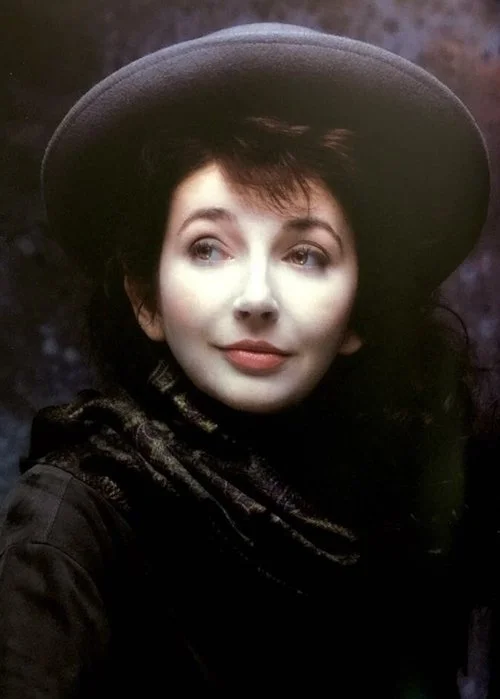
 IN THIS PHOTO: Kate Bush in a photo taken during the promotion of 50 Words for Snow in 2011/PHOTO CREDIT: Trevor Leighton

is one of the most popular artists in the world. Her fanbase extends across all ages. It is not the case that she is only trending when there is news about her – which, as any Bush fan will attest, that is quite rare! She trends just because people are listening to her music! I have lost count of all the times I have gone onto social media and seen something about Bush and her music. There are so many sides to her career and artistry. There is no doubting there is something rarefied about her. I have written before how there is this balance between the deified and domestic regarding Kate Bush. She is such an icon and legend, yet one knows she is very grounded. Whereas it is the music and its genius that has reached so many people and continues to inspire all around the world, I think it is the personality of Kate Bush that draws so many close. One fan understand why she courted a lot of media attention back in the day. Incredibly intelligent, supernaturally beautiful and beautifully spoken, I don’t think music has seen anyone quite like her! Obviously very ambitious yet polite and warm, here is an artist who was very much herself in 1978. No ego or forced persona. Instead, Kate Bush connected with people because she was ordinary and humble. Whereas some of her heroes like David Bowie were less accessible and seemed to be on a different level when it came to accessibility, that was never a problem for Bush!

In an age where social media tends to detach and connect us with artists at the same time, it can be hard getting to know the real musician. There are a lot of walls and barriers. So many of the biggest artists lead lives that few of us can relate to. Even though Kate Bush lives in an expensive house, she is not someone who lives a famous life. She wants to be comfortable and live well, yet she is very much connected to the people and the real world. In December, she left a message for her fans on the Kate Bush News:

With nearly two years of Covid, are any of us the same people we were before?  It’s left everyone confused and uncertain of the future.

It’s been a terrible time of loss for so many. I want to say a big thank you to all the people on the front line and in the NHS. I have such huge respect for all the nurses and doctors who’ve already been working flat out for nearly two years. These caring people are showing such extraordinary acts of kindness to others. Let’s hope they get the pay rises they rightly deserve.

I’d like to mention something that happened a few weeks ago on a walk;  stopping to look at the view, I noticed something moving in a tree right beside me. It was a Goldcrest  – the smallest bird in Europe, even smaller than a wren. I stood still, hoping not to frighten it away.  Its colouring is beautiful –  a peacock’s eye on each wing and a striking yellow streak on its tiny head. This gorgeous little ball of fluff flew away after ten minutes or so. I’ve only ever seen one once before and very briefly. It made my day. In these strange times, I really hope you can get the chance to stop for a moment and feel nature around you.

Please stay safe.  Wishing you a restful Christmas and hoping 2022 is a happier year for everyone .

With love

Kate”.

One can easily imagine Kate Bush doing the shopping, leading a normal life and being very lowkey. This is what she is like. In fact, it was something she strove to return to when her career took off. Before recording Hounds of Love, in 1983 she returned to the country and spent valuable time with her family and boyfriend doing stuff like garnering, going on trips and getting away from the pressure of recording. It inspired one of her best albums. I think this sort of less stressful and high-profile life is what is conducive to great material. Since 1993, Bush has recorded away from big studios and there is no real time pressures on her. The message she left for her fans shows that she is very much one of us. Even if we cannot dream of matching her in terms of musical brilliance, the fact she is relatable accounts for her incredible endurance – and why there is so much passion and love for her. In fact, another piece of news that arrived on Kate Bush News relates to the HomeGround fanzine. I think one of the reasons it is returning for a one-off anniversary edition is because of the swelling fanbase:

In 1982, in the months leading up to the release of The Dreaming single, we first had the idea of making a Kate Bush fanzine. Over the following 30 years we put out 79 issues, full of news and information about Kate and her music and associated subjects, providing a platform for review and discussion of Kate’s work on a worldwide basis. On the way we also organised, with the official Kate Bush Club, the 1985, 1990, and 1994 fan Conventions, the 1986 Video Party, all of which Kate attended. We also organised the fan contribution to the video shoot for The Big Sky. We were asked to provide the chronology and discographies for the 1987 Kate Bush Complete music and lyric book from EMI Music Publishing, and the sleeve note for the 1997 EMI 100 remastered CD of Hounds of Love.

The last printed HomeGround magazine was published at the end of 2011 and rapidly sold out. It was followed in March 2014 by the hugely successful two-volume HomeGround Anthology, containing over 1,200 pages of material from all 79 issues.

In May 2022 it will be 40 years since the first issue of HomeGround, and we felt we should mark the occasion with a very special issue – issue 80. Our intention is to make this available as a free downloadable PDF enabling us to use full colour.

Just as no previous issue of HomeGround could have happened without contributions from Kate Bush fans around the globe this special issue cannot happen without your help.

We will be producing the familiar news and a special retrospective summary of the last ten years in the Kate Speaking world. What we need are other features, artwork, poetry, short “Letters to the Editor” and even For Sale, Wanted, and Personal Message ads, just as we always did.

Here are some ideas for articles: there’s the work Kate has done since 2012, the 2014 Before the Dawn live performances, the 2015 live album, the 2018 re-masters and The Other Sides, and the Record Shop Day specials. 40 years of The Dreaming. Last words on 50 Words for Snow and the animations. Tribute Bands and tribute gigs, cover versions and Kate songs on TV talent shows.

 Inspired fictional stories. Reviews and reactions to the many and various Kate related books now available. The trials and tribulations of collecting Kate material. Charts and facts. That day you met Kate. The Most Wuthering Heights Day Ever, tales of fan conventions and other Kate fan meet ups. The wider KateSphere – Paddy and John Carder Bush, Beck Sian, Sarah Daly, Raven Bush …

But generally, whatever might have a connection to Kate’s music. Before now we have run material as diverse as the appropriate whisky to drink with each album, to an analysis of the Red Shoes myth. We are looking forward to your contributions. Have a go!

Our aim is to have the issue ready by 18th May 2022, the official HomeGround birthday, so four months”.

I am hoping to contribute to that publication. There is this ongoing drive and commitment from fans to share Bush’s work and explain why she is so special. One might think this sort of tsunami of love must be for someone who is mega-famous and starry. As I posited, Kate Bush wins so many hearts because she is not like this! From her charity work to her inspirational messages and her lack of social media presence, we can identify with and respect her. I guess, in a sense, there is also a degree of mystery and enigma that attracts people. As we do not hear from Bush much and nobody really knows what she is doing at the moment, there are always those questions. She just wants to live her own life and, at sixty-three, she has worked for decades and earned that right for privacy. A woman who is deified but also extremely relatable and almost quintessentially English (even though she is half-Irish), it is a reason why we will be talking about Kate Bush…

FOR generations.

FEATURE: Spotlight: Izzi De-Rosa

FEATURE:


Spotlight

Izzi De-Rosa

___________

HAVING released some terrific music…

that displays huge promise, I wanted to spotlight the great Izzi De-Rosa. Although a lot of talk last year centred around the song Love & Roulette, she also released the excellent I Don’t Care. Not averse to describing her sound as ‘Brat Pop’, the North London artists has a big 2022 ahead! With new tracks, surely, on her mind and a bigger project likely, it is a great time to discover the music of De-Rosa. She has a growing and loyal army of fans who are recognising her work and sharing it. I think that there are some wonderfully interesting Pop artists around. Many are taking from the ‘80s or ‘90s, yet De-Rosa is someone inspired by the ‘00s. As she was a child then, inspired by the amazing Pop coming up early this century, it is no surprise that she would look to incorporate that into her own aesthetic. Reminding me of a cross between Britney Spears, Nelly Furtado with some Avril Lavigne in there, in fact, it is hard to actually compare her with anyone else (I hope she is not offended by those comparisons!). With a fresh and vibrant sound, I am looking forward to hearing an E.P. or album. As more live performances are occurring this year, it is a great time for De-Rosa to showcase her material and connect with fans in the live arena. If ‘Brat Pop’ is going to become a bigger sound – which I think it will -, then I feel De-Rosa is at the forefront. There are not many interviews with her available online. That will change as we go through this year. I am, therefore, going to source quite heavily from a great interview NOTION conducted last year. First, here is a bit more information about a wonderful young woman:

Izzi De-Rosa is a British artist that developed her distinct and alluring sound in the underground Leeds scene, before returning to her home town of London. De-Rosa’s music features a signature combination of complex jazz-inspired techniques with endearing soulful melodies. De-Rosa’s commandeering attitude on the track illustrates the singer/songwriter’s empowering qualities. This is mixed with buoyant lyricism and a mature self-awareness that is instantly appealing to a variety of ears. The vocalist has been generating a buzz amongst her growing following, teasing supporters with a number of unreleased projects”.

Rather than Izzi De-Rosa’s music being throwback or endlessly nostalgic, it is actually a perfect cocktail of the best of the ‘00s Pop and R&B scene with one eye very much on the present. Recently, she has teased that a rather good demo has been recorded. With an energy and affectionate fanbase behind her, that is going to translate into some incredible music from a rising star. Back in July, NOTION sat down with De-Rosa and asked about her musical influences and the brilliant single, Love & Roulette:

If you’re a fan of early 2000s pop, chances are you will love Izzi De-Rosa. The self-confessed “sasspot” and “brat” is one to watch, throwing back to a uniquely British sound of pop. Dubbed “Brat Pop” by myself and Izzi during the course of our interview, her sound favours the early noughties’ era-defining aesthetic. Think bright pink velour tracksuits, Bratz, Freaky Friday, and the likes of Brad Pitt, the Sugababes, Destiny’s Child, and Christina Aguilera at events like the GRAMMYs, where they radiate an aura of effortless coolness.

The North London native studied Philosophy at the University of Leeds, before scrambling to transition to music after two weeks on a masters course, where she became deeply embedded in the Leeds music scene, part of a collective of artists. Relocating back home within the first lockdown, she began to find her voice, her sound, and define her aesthetic. Her debut track “Love & Roulette” landed a spot on the Spotify UK playlist, and a clip of her showing the song to her crush (in which he is the subject of a verse) went viral, as it currently stands at 10.1m views. This resulted in a deal with Atlantic Records UK.

Talk to me about the response to “Love & Roulette”.

I just keep pinching myself, it’s so unreal. I’ve been using TikTok to just get my name out there and I haven’t released any music – I’ve just been using it for things like creating songs about things I see around London, and my tattoos and stuff. I had this song, and I love it so I put the video up of me showing this guy that I’d been hanging out with a verse I’d written about him.

I don’t even know why I did it, and I don’t know what came over me because it was like the third time we’d hung out. “Can I record your reaction?” I said, and I don’t think enough people realize that it was so genuine. He’s also a musician so I think he thought that it was like a promo thing – he did not realize it was about him!

The video went crazy. I didn’t really expect it to have that reaction. I just thought I’d get a few views. But within a week, it was at almost 2 million views. My first thought was “Shit, this is crazy!” Because of the algorithm, you blow up like 2 or 3 weeks later, so I just thought the reaction it originally got was what it got. The links in the comments of people making their own are really cute. It really messed up my release schedule – I was going to release more jazz music over the year, and eventually became more of a pop artist.

The universe just throws these situations at you. I just think everything happens for a reason.

It’s mad to see how instrumental TikTok is becoming to a lot of artists now.

I got a lot of followers and then attention from labels, and back in the day to get that attention, especially from labels, you had to graft for years and years, to create a body of work like a mixtape to then present to them.

@izziderosa i probably shouldnt be showing u guys this but im so in luv with the song🥺❤️‍🩹 #newmusic #ukpop #ukartist #poprock ♬ original sound - Izzi De-Rosa🌹

You writing a song with things you see around London is taking off on TikTok – is this part of your actual process?

With those ones, I just go for a walk looking for something to write about, but the songs I make as a musician are based on my real life. In terms of writing my music, something will happen to me and I’ll write about that. The TikToks are really to keep people engaged, saying “I’m still writing and I’m going to show you what I can do”. It’s quite a nice way to show off your music without ruining the hype around a natural release.

For my music – and it’s cringy to say this, but – it’s almost therapy for me. I want to process my emotions and the events that I’ve gone through in day-to-day life through writing. When I release it and see it connect with people, I’m so elated. I feel like we’re all so busy with life that we forget that we’re all sharing this same experience. Those feelings of heartbreak, anger, or falling in love are universal. When I write about those things that are just so personal to me, it’s so amazing to see people print their own experiences onto that.

Tell me about the formative years of uni and the effect the city of Leeds had on you.

I did my undergrad at Leeds in Philosophy, and I ended up staying there for 5 years. I was on an MA course and I had an existential crisis, so I scrambled to get into the music college. I had to go as far as tracking down the Head of Year’s number and calling him! From there I spent a lot of time in the Leeds music scene.

Then I moved back to London in the midst of the first lockdown. But in Leeds, I was in a music collective, and I see it as my training ground, just doing gigs 3 nights a week. But I went back to London and spent the rest of the lockdown writing in my bedroom finding my sound, my aesthetic and just transitioning into a professional artist.

You’ve said you were born in the wrong era – which is the best era?

The early 2000s was a cool combination of grunge and pink things, watching movies like Freaky Friday. Britney Spears in velour tracksuits and the Barbie aesthetic – I love that fusion. Some people now will be one or the other, and back then everyone looked so effortlessly cool. Think videos of Christina Aguilera at the GRAMMYS. Now everyone tries to follow the trend, but back then everyone owned the trend. Musicians and actors of that era all have their own thing going on, the likes of Destiny’s Child and Lindsay Lohan”.

 PHOTO CREDIT: Ollo Weg for NOTION

Someone that I am keen to interview and see live soon (as I am based in North London myself), I am predicting some big things for Izzi De-Rosa this year. I think that she will get some good festival bookings, in addition to seeing radio stations turn onto her music in a big way. I feel that everyone from BBC Radio 1, BBC Radio 2, and BBC Radio 6 Music could spin her music, such is its appeal and range. That would bring her to a massive audience and, as such, confirm her as a serious proposition! As more material comes, so too will honours, bookings and huge accolades. Make sure you follow De-Rosa, as she is someone who will be on the scene for years to come. It will be interesting seeing how her sound evolves and moves on. At the moment, even though these are fairly early days, she has that confidence and talent that you cannot knock or ignore. With a style (both visual and audio) that is her own, look out for De-Rosa! In that NOTION interview, she came across as such an incredibly bright and hungry artist. Someone who, no doubt, was raised around so much music and drank it in as a child, there was a part of her that knew that she had to follow that career path and put her own music out there. Dreams are turning into reality for the London-based artist. If you are seeking a new talent to follow in 2022, then I can definitely recommend…

THE terrific Izzi De-Rosa.

____________

Follow Izzi De-Rosa

FEATURE: Inspired By… Part Forty-Seven: Nicki Minaj

FEATURE:


Inspired By…

Part Forty-Seven: Nicki Minaj

___________

ONE of the most influential modern…

Rap artists, Nicki Minaj is a Trinidadian-born, singer, and songwriter. She is known for her versatility as an artist, in addition to the animated flow lyricism in her rapping. She often employs alter egos and accents. Not only an influence on fellow women in music, her impact spreads far and wide. I am going to end with a playlist of tracks from those who, in some way, have taken guidance from Minaj. Before that, AllMusic provide a biography of the iconic star:

With an unmistakable style and charisma, Nicki Minaj skyrocketed to superstardom with a talent that brought to mind past legends but wasn't quite like anyone who came before her. Her early days included shaky attempts at an acting career and losing her job at Red Lobster for being rude to customers, but Minaj progressed quickly from MySpace demos to nationally adored mixtapes to household-name status. She worked closely with Drake, Lil Wayne, Kanye West, and virtually every upper-echelon rapper and pop star before ascending to the level of fame that had her selling millions of albums and performing in the Super Bowl halftime show. As a rapper, Minaj is ferocious, known for a unique flow that turns on a dime from sugary to snarling, with razor-sharp wordplay and mercilessly blunt lyricism. Her range isn't limited to mixtape fire, however, as her crossovers into pop territory have yielded some of her most successful work. Her 2010 debut album Pink Friday saw the rapper branching out into radio-friendly melodicism, and accordingly it was the first of her albums to sell in the multi-platinum reaches and top chart positions internationally. Establishing herself as more an iconic presence than an album artist, Minaj released well over 70 singles under her own name in her first decade of recording, and stole the show in guest appearances on countless hits for other artists. Minaj's fame was canonized with stand-alone singles like "Superbass," "Starships," and "Anaconda," all of which were chart-topping smash hits with stream counts in the hundreds of millions. As one of the most successful rappers and crossover pop stars of her age, Minaj is part of a lineage that includes Jay-Z, Missy Elliot, Drake, and Beyoncé.

Nicki Minaj was born Onika Tanya Maraj in 1982. Born in Saint James, Trinidad and Tobago to parents who were both gospel singers, she lived with her grandmother in Saint James until the age of five, when she joined her mother, who had relocated to Queens, New York. In high school she discovered the performing arts, setting her sights on acting as her main pursuit. She eventually transitioned into music, working as part of a group called the Hood$tars in the early 2000s before going solo. In 2007 she was discovered by Dirty Money Entertainment CEO Big Fendi, who happened upon her demos on MySpace and signed Maraj to the label. At Fendi's suggestion, Maraj took on the stage name Nicki Minaj, jumbling her last name to reflect a more ruthless persona. Dirty Money Entertainment released both her 2007 debut mixtape, Playtime Is Over, and its 2008 follow-up, Sucka Free. Industry buzz was already surrounding Minaj on her earliest releases, and these mixtapes featured guest appearances from stars like Lil Wayne, Gucci Mane, Jadakiss, and Lil' Kim.

The 2009 mixtape Beam Me Up Scotty was a favorite among a growing fan base, and also included her first songs to hit the Billboard charts. In August of 2009 Minaj signed to Lil Wayne's Young Money Entertainment, becoming the label's first female artist. The floodgates opened from there, as Minaj made cameo appearances on tracks from Gucci Mane, Kanye West, Pusha T, and others as well as offering verses to hits like "Bedrock" and "Roger That" from the 2009 Young Money collaborative album We Are Young Money. An official non-mixtape debut album came in the form of Pink Friday, released in November of 2010 but preceded by the hit singles "Your Love" and "Check It Out." The album saw her leaning more into a pop style than the hard-edged rap of her mixtapes, but the hybrid of the two proved immediately successful, and the album debuted at number two on the Billboard 200 and went platinum, selling upwards of 375,000 copies during its first week alone. She earned a handful of 2011 Grammy nominations, including Best New Artist, Best Rap Album, and Best Rap Performance. An all-out media blitz followed between albums, with extravagant performances at award shows across the globe, an appearance as a musical guest on Saturday Night Live, and joining Madonna -- alongside M.I.A. -- for her Super Bowl XLVI halftime show.

In early 2012, the Euro-dance-influenced single "Starships" signaled the coming of her official sophomore effort, Pink Friday: Roman Reloaded, an album built around her devil-may-care alter ego "Roman Zolanski." Guest artists included Nas, Lil Wayne, Rick Ross, Chris Brown, and Beenie Man, while production came from the likes of RedOne and Ke'Noe. The album hit number one on the U.S. album charts, driven by a Top Ten showing for "Starships," and "Va Va Voom" also reached the Top 40. By the end of 2012, Minaj had been announced as a judge for the 12th season of American Idol, although she left at the end of the season. It hardly affected her success, as she set two career records during 2013: the most-charted female rapper in the history of Billboard's singles chart, and the first person to win Best Female Hip-Hop Artist at the BET Awards four times in a row.

In December 2014, Minaj released her third studio album, The Pinkprint. First single "Lookin Ass" was also featured on the Young Money compilation Rise of an Empire released in March of that year, while follow-up "Anaconda" was nominated for Best Rap Song at the 2015 Grammy Awards. Filled with songs about guilt and failed relationships, the album was well received by critics and debuted at number two on the U.S. Billboard 200 chart. Throughout 2016, Minaj guested on numerous singles, including DJ Khaled's "Do You Mind" and Ariana Grande's "Side to Side," and she also released her own "Black Barbies." In 2017, she issued a trio of stand-alone singles: "Regret in Your Tears," "Changed It" with Lil Wayne, and "No Frauds" with Lil Wayne and Drake. The latter track went gold and broke into the Top 20 of the Hot 100 and Top Ten of the R&B and rap charts. That year, she also appeared on the Migos track "MotorSport" with Cardi B, and on Jason Derulo's "Swalla" with Ty Dolla $ign.

She returned with the singles "Chun-Li" and "Barbie Tingz" in spring 2018, paving the way for her fourth studio album, Queen, which arrived in August of that year. In addition to third single "Bed" featuring Ariana Grande, the LP also features guests Labrinth, Eminem, Lil Wayne, the Weeknd, Future, Foxy Brown, and Swae Lee. Upon release, Queen matched its predecessor with a number two debut on the Billboard 200. More singles arrived the following year, including the non-album track "Megatron," "Tusa" with Karol G, "Trollz" with 6ix9ine. Minaj was also featured alongside Murda Beatz on PnB Rock 2019 track "Fendi." In February 2020, the rapper returned with her own stand-alone song "Yikes." Minaj's third mixtape Beam Me Up Scotty was reissued in 2021, eleven years after its original release. The project was given new cover art and the track listing was altered somewhat, omitting some of the songs from the original 2009 release and including several new tracks. This new version of Minaj's breakout project debuted in the number two spot on the Billboard 200, making it the highest-charting mixtape from a female rapper up to that point”.

To illustrate the artists who are following Nicki Minaj and are inspired by her incredible talent and strength, the playlist at the end contains cuts from some incredible Rap/Hip-Hop artists who are going to go on to inspire others. As you can see, there is some serious talent to be seen! They all have a lot of love and respect…

FOR the amazing Nicki Minaj.

FEATURE: Spotlight: Morgan Wade

FEATURE:


Spotlight

Morgan Wade

___________

AN incredible talent that I am a bit new to…

 PHOTO CREDIT: Thirty Tigers

I want to spend a few moments spotlighting the brilliant Morgan Wade. The twenty-seven-year-old Country artist from Virginia is someone who instantly caught my eyes. Not only does her amazing music and stunning voice stay in the mind. She also has a range of tattoos that, are both super-cool and unexpected! She is an artist that everyone needs to follow! Released through Thirty Tigers, Reckless is an album that won more than its share of good reviews. I will come to one of them at the end. I also want to source some good interviews that Wade was involved with last year. First, her biography on her official website provides more detail and backstory:

Morgan Wade has never sounded like anybody else, and for a long time, she thought that meant her songs were just for her. “Honestly, I think that was really good for me,” she says. “It made me think, ‘Alright, well, I’m not going to sing for anybody else––but I’m singing for myself.’” Since then, Wade has figured out that when you grow up in Floyd, Virginia, where bluegrass sustains everyone like the Blue Ridge Mountain air but you hear other sounds like pop and punk in your own head, singing for yourself is the way to become the artist you were always meant to be.

Produced by Sadler Vaden––Jason Isbell’s longtime guitarist and an acclaimed solo artist in his own right––Wade’s full-length debut Reckless is a confident rock-and-roll record that introduces a young singer-songwriter who is embracing her strengths and quirks as she continues to ask questions about who she is––and who she wants to be. Her voice, a raspy soprano that can soothe liltingly or growl, is on brilliant display. “I feel like the last couple of years have been me trying to figure out where I fit in, who I fit in with, and what’s going on,” Wade says. “I’m almost four years sober, so a lot of the friends I had, I don’t really hang out with anymore. When I wrote these songs, I was going through a lot, just trying to figure out who I am”.

The first interview I want to include is from EF Country. They spoke with Wade back in March about her plans for 2021. They asked her, among other things, about tackling mental health and sobriety in her lyrics:

This record has been a while in the making – is it quite strange that it’s now going out into the world

Yeah, it is weird because I was in such a hurry. I’m very impatient. So we get the record done and a week later the world shuts down ’cause of the pandemic. And so then I’ve just had all this time – it’s literally been over a year. So now that it’s actually time to put it out I’m like, “is it really time to put it out? Are you guys gonna let me?” But I’m excited, I’m ready for everybody to hear it. We worked really hard. But it’s a little weird. It doesn’t feel like it’s real.

Do you feel the way you’ve approached your music has changed at all since you made the record? Or is it still pretty much the same?

Yeah, I mean to me, towards the end there’s a couple of last songs that we put on the record that I’d written to tracks. It wasn’t me sitting down with a guitar or piano or whatever, it was just a track. And so I’ve been writing a lot of stuff like that now, because I enjoy it and it adds something different. It allows me to change things up so they’re not the same. So a little bit has changed but it’s kind of like here and there. Since working with Sadler and a lot of these really talented people out here it’s challenged me to work harder with my writing and challenged myself. So, definitely.

PHOTO CREDIT: Ethan Luck 

You’ve also been very open on the lyrics of this album about your mental health and sobriety. Is that something that’s important for you to talk about – both in your music and more generally?

Oh, for sure. Like I feel like that’s such a big part of my life, and I feel like my fan base… I’ve gained a lot of fans through that because they connect with that, and so I feel like I owe that to them. It keeps me being honest and authentic. It’s something that I struggle with daily so it’s something that I shall always be open about. We have to talk about those things to be able to overcome them.

What’s next for you? Is the record and your upcoming shows your focus for the foreseeable future?

Yeah, just seeing what we can do, getting back to touring however we’re allowed to do that. But just pushing the record, getting out there and doing live shows. I’ve got some other TV stuff coming up to promote. There’s still the pandemic but at least we’re coming towards the end of it maybe, I can see the light so fingers crossed [laughs].

Are you thinking about the new project yet? Or is that still a way off?

Yeah, yeah. No, that’s not way off, not in my head. I’ve been sitting there thinking about record number two for months and they’re like, “well we kind of need to get the first one out”. I’m impatient, I’m always thinking about the next thing, so definitely I’ve been writing a lot and looking for future stuff”.

There were some great interviews with Morgan Wade last year. I got to know a lot more about her when researching. I was definitely interesting learning more about her musical influences. Off the Record discovered more about that when they spoke with her in September:

Morgan Wade on her influences and her obsession with Elvis

Morgan Wade: I’m definitely a ’90s baby. And so, ’90s, early 2000s, Shania Twain, I called her ‘Nia Twain. That’s all I wanted to listen to as well. I was obsessed with her, and then especially it was the Tim and Faith era, and Garth Brooks, and all that coming about. But then, I discovered Elvis, and that changed everything for me. That’s all I would listen to. I was obsessed. And still pretty… We had a show in Memphis a couple weeks ago, and I went to Lansky Bros. They’re at the Peabody Hotel. I had to buy an Elvis leather jacket, and a bunch of stuff. I got a little carried away there, but super obsessed with Elvis.

Morgan Wade on being an old soul 

Joy Williams: My question is, do you feel like you came into this world with an old soul, and do you think that’s something to be proud of, if so?

Morgan Wade: For sure. My grandmother was a hairdresser, and she had her salon in her house. And so, I would sit down there with these women in their 80s, and listen to their stories. And then, my grandmother would also go over to the nursing home and do hair, and I gravitated towards those, it was called the C Wing, which was the wing that was locked down. They couldn’t leave there, because they were flight risks. Those were my friends. I would literally-

Joy Williams: Those were your people.

Morgan Wade: My grandmother would take me there a couple days a week after school, and I just loved it, because the stories they would tell you. And they never would remember me, but they could remember these stories, and I would sit back there with them for hours. It was hard too, because there was a point where my mom really had to kind of sit me down, because all my friends were sadly dying off left and right, because I was becoming friends with… I learned about that pretty early on. It seemed like everyone that I was gravitating towards was, like Elvis, she had to break that to me that he was not alive, when I discovered him. It just seemed like everybody that I loved was in their final days. It might explain a little bit about me, I think.

Morgan Wade on what she hopes fan take away from her debut album ‘Reckless’ 

I was really nervous to put this record out, because I didn’t know if it would be country enough for the people who like country, and would it be too country for the people that don’t like country? And so, I had all these things going through my mind. But now that it’s out, I’m super proud of this record. My main thing is, I’m so glad I put that out there, and I did it exactly how I wanted to. If anybody could take something away from what I’ve done, it’s just do what you want to do, and don’t worry about what everybody else is going to think. Because at the end of the day, Sadler, my producer and I, we talked about it, we were like, “All right, we’re not going to go in here and just try to make hits.” It’s like, we’re going to go in here and make stuff we believe in, and then at the end of the day, if we’re really happy with this, we’ve got something that we worked really hard on together. I think that’s what made this so great, is that we had such a good time doing this, and I can stand behind this. It’s not like I put something out there that I’m like, “Ugh, yeah, it’s doing really well, but I don’t believe in it”.

There is one more great interview that is worth popping in before getting to a review of Reckless. Hopping back to May, The Big Takeover interviewed Wade - in which we find out about her more contemporary musical tastes and tips:

Tour dates are starting to roll out. Are you ready to get out on the road?

MORGAN: I am, yeah. I played five shows since Reckless came out. I played zero in 2020, so that’s really a good feeling. Now that we’re slowly getting back out there and stuff’s not being cancelled anymore, it’s a good feeling.

The Big Takeover has a strong history in punk rock, dating back to the early ’80s. I know you’re a country artist, but wondering how you might identify with punk, whether it be an attitude, or clothes you wear, or the tattoos you have?

MORGAN: I don’t really know what punk rock is, exactly. I don’t listen to country music, really, which baffles people because when people ask what I’m listening to, it’s never country music. Machine Gun Kelly’s last record, Tickets to My Downfall, now that was a punk record and that’s probably my favorite record that came out last year. I can’t deny that. I listen to a lot of, like, punk-rap and more of that sad music, like Lil Peep and stuff like that. I can’t say it’s too far off from punk rock, pretty much if I like music, I like it.
I always wonder, who is this generation’s Don Henley or Huey Lewis or Phil Collins. I’ve had people say that Post Malone fits that bill which, at first, I thought was crazy – he sounds nothing like the middle-age arena artists from the ’80s – but he does write hits, gets a lot of radio airplay, and can fill an arena, so maybe that is a good comparison.

MORGAN: Lana Del Rey goes over a bunch of different genres, she’s one of those that hasn’t had a ton of radio play but she can sell out an arena and tour and she can put out 10 albums in a year and they would all sell and do amazing.

You grew up as part of an MP3/streaming music generation but vinyl is making a comeback. Did you ever buy vinyl when you were younger or did you consume stuff digitally?

MORGAN: Honestly, because I’m 26, I still remember cassettes and being in the car with cassette tapes. And then I remember my grandpa being like, “What the heck?” when we moved over to CDs. So, CDs was my big thing. I remember going to Walmart or something and going back there to look at CDs. It’s funny because I was at Walmart today and I looked and there are almost no CDs. I guess it’s been so long since I’ve looked, but there was more vinyl at Walmart than there are CDs.

Is there a particular lyric that you’re really proud of, like after you wrote you said, “That is good!”?

MORGAN: In “Met You,” I took that from reading a book about Ernest Hemingway and his first wife, Hadley. If you read A Movable Feast, he talks about, “We would be happy, we have our books in bed every night.” So, there’s the line, I don’t know if people picked up on that – you know, in the bridge I talk about “But like Hemmingway and Hadley / It’s not the end of our story” – but in the second verse, I’m like, “We didn’t get our books in bed every night.” I kind of worked that throughout that whole song. I felt kind of artistic on that, I’m like, “I’m going to give myself a little pat on the back for that one”.

To round things off, I am getting to a review from SLATE. They sat down with a remarkable album from last year that went beyond the realms of Country. I think that modern Country is a lot more diverse and genre-spanning than the classic image of the form. They note how other musical elements and flavours are at work through Reckless:

Morgan Wade grew up in the heart of Southwest Virginia—the same area of Appalachia from which the Carter Family and the Stanley Brothers hail—and her voice, a raspy soprano drenched in twang, is shaped by that geography. It’s a voice that sounds like it was built for murder ballads and songs about cheatin’ and drinkin’. But the 26-year-old singer-songwriter isn’t that kind of artist, and on her debut album, she refuses to be typecast.

Produced by Sadler Vaden, Reckless is striking in the way it upends expectations. Although country music is unmistakably present in the DNA of these 10 songs—from the glossy Nashville sheen that underscores opener “Wilder Days” to the aching sway of “Mend”—it’s not the driving force. You won’t find a lick of banjo, fiddle, or steel guitar on the album, and Wade’s songwriting steers clear of country music’s most common tropes, like religion and family, and the caricatures of rural identity that have become the hallmarks of country radio.

Instead, Reckless revolves around issues like addiction, mental health, and isolation—plights that are central to exurban life but mostly ignored by the music that claims to represent that culture. Wade navigates these topics with stark, evocative storytelling. “Tonight I am numb from a cocktail of pills,” she sings on “Met You,” the album’s haunting final track. “I hallucinate, think I’m touching your skin/I’d much rather die than think of the bed that you’re in.” It’s an affecting lyric in its own right, but it’s even more so when considered in context.

Like many of America’s rural communities, Appalachia has been ravaged by the opioid epidemic over the past two decades. For those, like Wade, who grew up in places like this, addiction is omnipresent, a defining characteristic of their hometowns. So it’s no surprise that it shapes almost every song here in ways that are often subtle but deeply consequential. With a few exceptions, these are songs of desire, dependence, and desperation—of a narrator who’s searching for a way to make things better, even if that means settling for a temporary reprieve.

At the same time that vital stories like these are excluded from country music, singers with voices like Wade’s are also denied a place in the broader popular culture. We rarely hear pop or rock that features thick mountain accents or deep Texas drawls—not a surprising fact considering the structural bias that exists against regional dialects (especially Southern ones). Faced with this dilemma, most artists choose one of two paths: cater to the stringent demands required to fit into the country music machine—which dictates everything from what you can sing about to how you dress—or learn to perform in ways that belie their roots.

 Wade makes no such compromises on Reckless. She blends pop and country without subjugating either, all the while covering a wide swath of stylistic ground that runs from searing country ballads like “Mend,” to the sauntering Southern rock of “Take Me Away,” to the radio-ready shimmer of “Last Cigarette,” a perfectly crafted track that takes cues from Halsey and the Chainsmokers. That Wade is equally compelling in all of these modes is a testament to her powerful, versatile, and unique voice.

It’s also a remarkable accomplishment considering the scale of the project. Only seven musicians, including Wade, appear throughout the album, but Vaden’s production offers Wade plenty of space without leaving the arrangements too sparse, which—given the rustic character of her voice—could have made Reckless come off like a roots record. Instead, each of the album’s 10 tracks features just the right level of polish and embellishment—especially the ballads, where Vaden’s masterful guitar playing shines, and where the occasional, well-placed synth or Mellotron adds depth to an otherwise guitar-heavy album”.

If you have not found Morgan Wade or know much about her music, then go and listen to Reckless and check out an amazing artist. I am looking forward to seeing what comes this year. Maybe we will see her come to the U.K. to play. That would be great. It is obvious that Morgan Wade is a fantastic talent who is…

PRIMED for big things.

_______________

Follow Morgan Wade

FEATURE: Running with the Hounds of Love: Kate Bush’s Ultimate, Defining Title Track

FEATURE:


Running with the Hounds of Love

IN THIS PHOTO: Kate Bush captured in 1985 during the Hounds of Love video shoot/PHOTO CREDIT: John Carder Bush

Kate Bush’s Ultimate, Defining Title Track

___________

I ran a feature not too long ago…

when I ranked Kate Bush’s title tracks. I decided, perhaps unsurprisingly, that Hounds of Love got the top honour. Although Hounds of Love is not my favourite Kate Bush album (that is 1978’s The Kick Inside), there is something about her 1985 masterpiece that means it is most people’s favourite albums of hers. Inspired and hugely impressive. At the peak of her game as a songwriter, musician, singer and producer, I can appreciate why many people consider this to be the defining Kate Bush album. I feel a title track is often the song that is the theme or standout of an album. Not always the strongest track, I guess it is the artist trying to distil the album’s themes and meaning into a song. Bush in particular has produced some incredible and varied title tracks. Although Hounds of Love is split into two – the singles on the first side and the suite, The Ninth Wave, on the second -, I kind of think of Hounds of Love as the defining cut on the album. If one wanted a clear image and sound of the album, I would point them in the direct of the eponymous song. I shall talk about the video in a minute (which Kate Bush directed) but, as the single turns thirty-six on 24th February, I wanted to explore it from a different angle. This is the one single (from four) released off Hounds of Love that underperformed.

Running Up That Hill reached number three in the U.K. It was released in August 1985 – a month before Hounds of Love came out. Arguably, there was this excitement and anticipation of an album that propelled the single up the charts. Cloudbusting came out a month after the album release and reached twenty. The Big Sky only got to thirty-seven. I am generally surprised that the singles did not fare better. Although the album was a huge chart and commercial success and penetrated the U.S. market – Kate Bush became a much bigger name there from 1985 -, I am stunned a single like Hounds of Love did not get into the top ten. The fact that the U.K. B-side was The Handsome Cabin Boy, rather than another album track like Waking the Witch or And Dream of Sheep, might account for a slightly low placing. One reason why I think Hounds of Love is the ultimate Kate Bush title track is because the video was the first she directed. She would also direct the video for The Big Sky (and several videos after that). I love that one can see Bush’s love of horror/suspense director Alfred Hitchcock in the video. Influenced by his film, The 39 Steps, 'Hitchcock' also features in the promotion (a nod to the director's famous cameo appearances in his movies).

I have some more thoughts and points about the song but, first, the Kate Bush Encyclopaedia sources interviews where Bush talked about the inspiration behind one of the most important tracks from her most popular and revered album:

The ideas for 'Hounds Of Love', the title track, are very much to do with love itself and people being afraid of it, the idea of wanting to run away from love, not to let love catch them, and trap them, in case th hounds might want to tear them to pieces and it's very much using the imagery of love as something coming to get you and you've got to run away from it or you won't survive. (Conversation Disc Series, ABCD012, 1985)

When I was writing the song I sorta started coming across this line about hounds and I thought 'Hounds Of Love' and the whole idea of being chasing by this love that actually gonna... when it get you it just going to rip you to pieces, (Raises voice) you know, and have your guts all over the floor! So this very sort of... being hunted by love, I liked the imagery, I thought it was really good. (Richard Skinner, 'Classic Albums interview: Hounds Of Love'. BBC Radio 1 (UK), 26 January 1992)

In the song 'Hounds Of Love', what do you mean by the line 'I'll be two steps on the water', other than a way of throwing off the scent of hounds, or whatever, by running through water. But why 'two' steps?

Because two steps is a progression. One step could possibly mean you go forward and then you come back again. I think "two steps" suggests that you intend to go forward.

But why not "three steps"?

It could have been three steps - it could have been ten, but "two steps" sounds better, I thought, when I wrote the song. Okay. (Doug Alan interview, 20 November 1985)”.

Most definitely a song that should be in everyone’s list of Kate Bush’s best twenty, Hounds of Love is a song that stands out on an album not short of highlights! The video is cinematic and incredible. I love the colour palette and Bush’s confidence as a director first time around. I hear Hounds of Love played a lot on the radio, as it is a song that has connected with so many people. One of most powerful, sweeping and punchy compositions on Hounds of Love (Jonathan Williams’ cello is especially memorable), it also features some of Bush’s most captivating and astonishing lyrics. She stops you in your tracks with these lines: “I found a fox/Caught by dogs./He let me take him in my hands/His little heart/It beats so fast/And I'm ashamed of running away”. Almost thirty-six years after the single came out, I wanted to spotlight one of Kate Bush’s greatest moments. Hounds of Love’s title track still sounds so potent and moving! It is a song that catches you and grabs the heart. With an exceptional video and lyrics that are among her best, no wonder Hounds of Love is played so much. It is a song that I…

NEVER tire of.

FEATURE: A Buyer’s Guide: Part Ninety: Lana Del Rey

FEATURE:


A Buyer’s Guide

PHOTO CREDIT: Joe Pugliese/August

Part Ninety: Lana Del Rey

___________

I recently featured Lana Del Rey’s 2012…

album, Born to Die, a few weeks back. I am revisiting it for this ninetieth edition of A Buyer’s Guide. With her eighth studio album,. Blue Banisters, released last year, I wanted to look more widely at her work. Before recommending the four essential albums, the underrated gem, the latest studio album and a book about her, I wanted to bring in some biography from AllMusic:  

Lana Del Rey envisioned a Southern California dream world constructed out of sad girls and bad boys, manufactured melancholy, and genuine glamour, and then she came to embody this fantasy. At first, her stylized noir-pop garnered skeptical sneers -- the rise of her 2012 debut, Born to Die, was impeded by a tentative live debut on Saturday Night Live -- but Del Rey proved to be tougher than her soft exterior suggested. Following a hit remix of her single "Summertime Sadness," she steadily gained not only popularity but respect; her second album, 2014's Ultraviolence, received positive reviews to accompany her sales, and her imitators (of which there were many) became merely an alluring accessory. With subsequent albums like 2019's Grammy-nominated Norman Fucking Rockwell! and 2021's Blue Banisters, Del Rey grew more and more into the ideal she intended to be: a damaged torch singer designed as the tragic romantic icon for her age.

Lana Del Rey's journey to this stardom was a long, steady climb. Born Elizabeth Woolridge Grant in New York City to a pair of wealthy parents, she was raised in Lake Placid, not starting to pursue music until she was out of high school and living with her aunt and uncle on Long Island. Her uncle taught her how to play guitar and soon she was writing songs and playing New York clubs, sometimes under the name Lizzy Grant. While she attended Fordham University, she continued to play music and she started getting serious around 2005. In April of that year, a CD of originals was registered under her birth name with the U.S. Copyright Office and she recorded elsewhere, finishing up an unreleased folky album called Sirens under the name May Jailer.

Reverting to the name Lizzy Grant, she signed with 5 Points Records in 2006, recording an EP called Kill Kill with producer David Kahne, who would prove to be her first pivotal collaborator. Kill Kill appeared digitally in 2008, and over the next two years, Grant became Lana Del Rey, digitally releasing a full self-titled album under that name in 2010. Not long after its release, she teamed with managers Ben Mawson and Ed Millett, who helped her separate from 5 Points (rights to her recordings reverted back to her) and moved to England, where she began crafting the Lana Del Rey persona.

The first unveiling of Lana Del Rey arrived in 2011 via YouTube videos that quickly became a viral sensation, led by the moody, murky "Video Games" and followed by "Blue Jeans." Much of her success was limited to the Internet, but it soon started to spill over into U.K. pop culture. By the fall of that year, she released "Video Games" on Stranger Records, an independent division of Interscope/Polydor, in the U.K., and she won the Next Big Thing trophy at the Q Awards. Del Rey's full-fledged debut album, Born to Die, appeared to considerable anticipation in January 2012. Greeted by mixed reviews, Born to Die's launch also suffered a setback after Del Rey's halting appearance on Saturday Night Live on in January 2012, but that apparent stumble ultimately had the effect of raising Del Rey's profile, and soon Born to Die became a steady seller. That November, Del Rey released the Paradise EP -- at eight tracks and 33 minutes, it was essentially a mini-LP; some pressings bundled Paradise with Born to Die -- which, supported by the single "Ride," charted at ten in the U.S.

Throughout 2013, various singles and videos surfaced -- these included a cover of Leonard Cohen's "Chelsea Hotel #2," as well as a cover of Lee Hazlewood's "Summer Wine" performed with her then-boyfriend, Barrie-James O'Neill -- but her biggest release of the year was the new song "Young and Beautiful," penned for Baz Luhrmann's adaptation of The Great Gatsby. Ultimately, this single was overshadowed by Cedric Gervais' remix of Born to Die's "Summertime Sadness," a remix that turned the song into her first Top Ten hit in the U.S. At the end of 2013, Del Rey released a short film called Tropico, which was accompanied by an EP of the same name. All of these releases -- including a cover of the Disney standard "Once Upon a Dream" for the Disney film Maleficent -- kept Del Rey in the spotlight as she worked on her second album.

Del Rey hired Dan Auerbach, the leader of Ohio blues-rockers the Black Keys, to produce the majority of Ultraviolence, the sophomore set that appeared in June 2014, preceded by the singles "West Coast," "Shades of Cool," "Ultraviolence," and "Brooklyn Baby." Ultraviolence found a more receptive initial audience than Born to Die: not only were the reviews positive, so were the sales, with the album debuting at number one in both the U.S. and the U.K. Ultimately, Ultraviolence didn't generate hits as big as Born to Die, but it performed the crucial task of elevating Del Rey's critical reputation, illustrated by her selection to sing the title song for Tim Burton's 2014 bid for an Oscar, Big Eyes.

Del Rey wasted no time following Ultraviolence. During the first months of 2015, she worked on a third full-length album and announced a co-headlining summer 2015 tour with Courtney Love. As the summer wound to a close, Del Rey announced the September release of Honeymoon, an album she said was "very different from the last one and similar to the first two, Born to Die and Paradise." Her claim was borne out by the album's first two singles, "High by the Beach" and "Terrence Loves You." Honeymoon saw release on September 18, 2015. The album topped the charts in a handful of countries, peaking at number two on the Billboard 200. In addition to touring in support of Honeymoon, she contributed vocals to the Weeknd's chart-topping third LP, Starboy, and began recording for her own follow-up.

In early 2017, she released "Love," the first single from her fourth full-length album, Lust for Life, which arrived that July. Along with debuting at number one on the Billboard 200, the album earned Del Rey her second Grammy nomination for Best Pop Vocal Album. The following year, she began rolling out singles in advance of her fifth album, Norman Fucking Rockwell!, beginning with "Mariners Apartment Complex" and "Venice Bitch." The trickle of new music continued throughout 2019 with a steady stream of new songs, some one-offs, and some album tracks. After ramping up excitement for the record with a cover of Sublime's "Doin' Time" and a two-part joint single, "Fuck It I Love You"/"The Greatest," Norman Fucking Rockwell! was released in late August 2019. It received Grammy nominations for Album of the Year as well as Song of the Year for the title track. The following year, Del Rey issued Violet Bent Backwards over the Grass, a book of poetry that also yielded a spoken word album of the same name.

The official follow-up to Norman Fucking Rockwell!, Chemtrails over the Country Club, appeared in March 2021. Only a few months later, Del Rey released three more singles including the song "Blue Banisters" from her forthcoming album of the same name. Blue Banisters arrived in October of that year, featuring production on some songs from Kanye West and Kid Cudi producer Mike Dean”.

To highlight the incredible work of Lana Del Rey, this A Buyer’s Guide combines the albums that you must hear. If you are a new fan of hers, I hope that the details below are of some use. To me, Del Rey is one of the greatest artists…

IN the world.

_________________

The Four Essential Albums


Ultraviolence

Release Date: 13th June, 2014

Labels: Polydor/Interscope   

Producers: Dan Auerbach/Lana Del Rey/Paul Epworth/Lee Foster/Daniel Heath/Greg Kurstin/Rick Nowels/Blake Stranathan

Standout Tracks: Shades of Cool/Brooklyn Baby/West Coast

Buy: https://www.discogs.com/sell/list?master_id=697600&ev=mb

Stream: https://open.spotify.com/album/1ORxRsK3MrSLvh7VQTF01F?si=oblY2JJmReGb0a7v4QfFdQ

Review:

The title of Lana Del Rey’s new album is a portmanteau coined in Anthony Burgess’ bloody dystopian fantasy A Clockwork Orange, which Stanley Kubrick turned into one of his signature films in 1971. Kubrick would have loved Del Rey — a highly stylized vixen who romanticizes fatalism to near-pornographic levels, creating fantastically decadent moments of film-noir melodrama. It’s an aesthetic that demands total commitment from both artist and listener, and it would be difficult to buy into if she didn’t deliver such fully realized cinema. Ultraviolence masterfully melds those elements, and completes the redemption narrative of a singer whose breakout-to-backlash arc on 2012’s Born to Die made her a cautionary tale of music-industry hype.

The addition of producer Dan Auerbach enhances Ultra‘s air of everyday menace, and finds Del Rey digging deeper. The Black Keys frontman doesn’t push — he’d rather let her shape-shifting moan brush up against dusty drum loops and dead-eyed bass drones. The spacey, sinister groove of ”West Coast” proves that frequent Auerbach collaborator Danger Mouse’s style has rubbed off on him too, and ”Pretty When You Cry” evolves from a woozy mumble into a widescreen blast of guitar heroics. Del Rey’s dark urges — for love, for money, for pure pleasure — don’t evoke the Clockwork droogs as much as they do Tom Cruise’s Dr. Bill Harford from Kubrick’s final film, Eyes Wide Shut. Like Harford, Del Rey has spent countless hours stalking the night, searching for answers and trying on various guises — and Ultraviolence is the masked bacchanalia that finally unleashes the full potential lurking beneath the hype. A” – Entertainment Weekly

Choice Cut: Ultraviolence

Lust for Life

Release Date: 21st July, 2017

Labels: Polydor/Interscope  

Producers: Lana Del Rey/Rick Nowels/Kieron Menzies/Dean Reid/Benny Blanco/Boi-1da/Emile Haynie/Tim Larcombe/Sean Ono Lennon/Max Martin/Metro Boomin/Mighty Mike/Jahaan Sweet

Standout Tracks: Lust for Life (with The Weeknd)/White Mustang/Get Free

Buy: https://www.discogs.com/sell/list?master_id=1212427&ev=mb

Stream: https://open.spotify.com/album/7xYiTrbTL57QO0bb4hXIKo?si=eDp5aMpFTTKgtNrN1r8Sxg

Review:

For those who haven’t paid attention to Del Rey’s career since its first flourish – the sighing, sorrow-drenched Video Games – the Californian artist’s music has remained locked within a small range of emotions, most of which revolve around awful men (often elderly bikers or gangsters) doing awful things and Del Rey remaining belligerently in love with them. However, the world has changed considerably since 2015’s Honeymoon, and, much like Katy Perry’s ambition to make “purposeful pop”, Del Rey has decided to puncture her long-running narrative and reflect the troubled times we are in.

Here, her political approach is rooted in escapism. Del Rey’s longtime producer Rick Nowels recently declared When the World Was at War We Kept Dancing a “masterpiece” for its lyrical message about finding pleasure in the Trump era. Meanwhile, Coachella – Woodstock in My Mind is a sedated trap track; one that attracted derision for its title, given that Del Rey is the patron saint of wearing a flower garland at a celebrity-filled festival. It is a sweetly innocent song about observing an audience of young girls dressed just like her, and praying for their safety amid a period of global terror.

The triumphant God Bless America was written before the Women’s Marches of earlier this year and is a response to the Republicans’ attack on women’s rights – a relief for parents who’ve fretted over their children’s obsession with a singer who has a habit of romanticising toxic relationships. (Del Rey recently admitted that she no longer sings the Crystals-sampling lyric, “He hit me and it felt like a kiss” from her song Ultraviolence.) You can hear the pleasure in Del Rey’s vocals on Beautiful People Beautiful Problems, a piano ballad she shares with Stevie Nicks, which is comparable to Harry Styles’s vague, state-of-the-nation balladry.

But, for every socially conscious sentiment, she paints another pastel coloured paradise full of feted actors (“I’m flying to the moon again / Dreaming about heroin”), doe-eyed infatuation, and 50s girl-group appreciation (“My boyfriend’s back ... and he’s cooler than ever”). Groupie Love is spoken from the perspective of a devoted fan and features quintessentially Del Rey-like lines such as: “This is my life, you by my side / Key lime and perfume and festivals.” 13 Beaches is inexplicably about the time Del Rey travelled to 13 beaches before she found one with nobody on it. It’s surface-level stuff, but perhaps there’s a deeper message in there somewhere: the overwhelm of fame? Overpopulation? Climate change?

Still, Del Rey’s music has always been more about a feeling than an explicit lyrical message. This album features some of the most sophisticated production and shifting of moods from her four-album career. A$AP Rocky and Playboi Carti feature on the lazy rap track Summer Bummer, its eerie production and futuristic melancholy sounding closer to a track from Frank Ocean’s Blonde than her usual 50s and 60s enthralled shtick. The Beatles-referencing Tomorrow Never Came features vocals by Sean Lennon. It’s a strange, melodic reworking of the Beatles’ Something, a vintage glow that rubs up against the sleek contemporary-sounding soundscapes elsewhere. The Chris Isaak school of monochrome melancholy echoes around icy production. The old and new entwine throughout” – The Guardian

Choice Cut: Coachella – Woodstock in My Mind

Norman Fucking Rockwell!

Release Date: 30th August, 2019

Labels: Polydor/Interscope  

Producers: Jack Antonoff/Lana Del Rey/Rick Nowels/Andrew Watt/Zachary Dawes/Happy Perez/Kieron Menzies/Dean Reid/Mighty Mike

Standout Tracks: Mariners Apartment Complex/Cinnamon Girl/The greatest

Buy: https://www.roughtrade.com/gb/lana-del-rey/nfr-new-version/lp

Stream: https://open.spotify.com/album/5XpEKORZ4y6OrCZSKsi46A?si=IgTguzC8QbewVslfa_zdiQ

Review:

Radiating new dimensions of sensitivity and eloquence, “Mariners Apartment Complex” is a towering peak on Norman Fuckng Rockwell!, a four-minute drama about fateful potential romantic energy. But its turbulent grandeur could speak to the whole Lana Del Rey story. “You took my sadness out of context” and “They mistook my kindness for weakness” are bold refusals to be misunderstood. Referencing Elton John with her pristine declaration “I ain’t no candle in the wind,” a phrase originally inspired by the early deaths of Marilyn Monroe and Janis Joplin, is a patent embrace of life from a woman who once wrote, “I wish I was dead.” When she sings, “I fucked up, I know that, but Jesus/Can’t a girl just do the best she can?” it could be a mic-dropping rebuttal to the ludicrous standards she faced from the start (and the overblown, Internet-engineered Lana outrage that now seems sexist and pathetic). The Hollywood author Eve Babitz once wrote, “Once it is established you are you and everyone else is merely perfect, ordinarily factory-like perfect… you can wreak all the havoc you want.” Lana’s evolution follows suit. “Mariners Apartment Complex” is the sort of ballad that makes teens want to bang on pianos and spill their souls.

Lana zooms out to find her zenith. A piano ballad to close down the bar at the end of the world, “The greatest” collapses time, as if Lana is writing the zeitgeist on a typewriter, her lines raving up with fevered reference to rock’n’roll and depression and a proverbial “Kokomo.” Turning the weight of a generation into light, her words crest like the white of a tidal wave—“L.A.’s in flames, it’s a getting hot/Kanye West is blonde and gone/‘Life On Mars’ ain’t just a song/Oh, the livestream’s almost on”—and they feel on arrival to have existed forever. As ever, Lana regards the despondency of existence as a realist, offering a funhouse reflection of the way we live.

Call her Doris Doomsday: “The culture is lit/And if this is it/I had a ball,” she resolves with ecstasy and fire, a lightning rod of humor, sadness, and perception; flip jadedness and abiding love. Fanning the flames of a culture ablaze, Lana sings each word like a prayer, finessed with conviction and smoke, chaos and control. “The greatest” is a galaxy-brain moment in the pantheon of pop, and it belongs to a generation fully aware we are at risk of being distracted into oblivion, Juuling towards early death while watching Earth burn.

But hope does not elude us yet. And Lana has an anthem for that, too. The title of Norman Fucking Rockwell!’s grand finale is itself a doomy 16-word poem called “Hope is a dangerous thing for a woman like me to have - but I have it.” Whatever it was that brought Joni Mitchell and Leonard Cohen together half a century ago, that middle ground is in the solemn mood, hollowed space, and spiritual fortitude of this haunting song. In the muted resignation of her voice you can see her “trust no one” tattoo. She rejects a world of luxury, rejects happiness and sadness both, calls herself “24/7 Sylvia Plath.” And in this slow, glowering procession, she points more directly to her own personal history than ever—“spilling my guts with the Bowery bums” as a volunteer, FaceTiming her father “from beyond the grave”—and soberly she sings: “Hope is a dangerous thing for a woman with my past.” In the vacant spaces between her dark phrases is the unassailable fact that people bury their pasts in order to endure them.

Norman Fucking Rockwell! is the apotheosis of Lana Del Rey, songs of curiosity and of consequence, darkness and light, a time capsule of 2019, proof that a person cannot escape herself but she can change. Lana has said hope is dangerous because of her own experience, because in Hollywood she “knows so much.” Hope is dangerous because women are rarely taken seriously, from matters of authenticity to cases of assault. Hope is dangerous because the world fails women, and the bigotry to which American power is currently pitched ensures it. Lana calls herself “a modern-day woman with a weak constitution,” witnessing “a new revolution,” with “monsters still under my bed that I never could fight off.” What makes this final song of survival so cutting is the palpable difficulty in her delivery. When she lands on “a gatekeeper carelessly dropping the keys on my nights off,” it sounds like an oblique image of corrupted power, as upsetting as it ought to be, one to finally drain her of hope. But she still has it. In a piercing falsetto we rarely if ever hear from Lana, perhaps saved for her most pressing truth, she touches the sky: “I have it, I have it, I have it.” And when she does, you believe her” – Pitchfork

Choice Cut: Venice Bitch

Chemtrails over the Country Club

Release Date: 19th March, 2021  

Labels: Interscope/Polydor

Producers: Jack Antonoff/Lana Del Rey/Rick Nowels

Standout Tracks: White Dress/Tulsa Jesus Freak/Let Me Love You like a Woman

Buy: https://www.roughtrade.com/gb/lana-del-rey/chemtrails-over-the-country-club-black-friday-2021

Stream: https://open.spotify.com/album/6QeosPQpJckkW0Obir5RT8?si=0xIuyqMqTgqATX4blNNnDA

Review:

Lana Del Rey's 2019 album Norman Fucking Rockwell! represented a new level of artistry, as the singer moved further from the disaffected Hollywood starlet persona of her early recordings into something more restrained, subtle, and mature. With seventh album Chemtrails Over the Country Club, Del Rey shakes off the cocoon of her slick pop days completely, continuing the nuanced songwriting and hushed perspectives of NFR! and turning in her most atmospheric set of songs to date. Much like its predecessor, the arrangements on Chemtrails are toned down, keeping the rhythmic elements minimal if they show up at all. This puts her layered self-harmonizing in the forefront of most songs, and also makes room for colorful smears of laid-back '70s-style lead guitar or delicate, jazz-informed touches. Del Rey again pairs with Jack Antonoff for production, and the duo map out every song with slowly evolving subtleties. "White Dress" opens with spare piano and a drawn-out vocal line, and slowly adds nearly imperceptible layers of sound as it goes on. On the surface, the song appears to be a simple nostalgic reflection, but the introduction of each new instrument adds tension and uneasiness, shifting the emotional undercurrents. In the first moments of the album, Del Rey delivers surreal and devastatingly sad commentary on the brutal machinery of the music industry and the sinister side of her own journey with fame, all deftly disguised with lyrics about remembering simpler days spent listening to the White Stripes and talking all night with friends. The title track is similarly sad and subdued, with willfully trite lyrics about the slow passing of an idyllic summer pushed forward by a dark, simmering instrumental.

While NFR! also had a restrained approach, there were multiple moments of accessible pop in the moody cover of Sublime's "Doin' Time" and the classic rock grandeur of "The Greatest." There's barely a hint of that here, with the booming bass and steady drum loop of "Dark But Just a Game" being the closest Chemtrails gets to pop production. There are more tendencies toward ghostly folk, as with the acoustic guitars and bongos of "Yosemite" or the lonely, drifting strumming of "Not All Who Wander Are Lost." Del Rey experiments with expanding the depths of her long-established persona, occasionally breaking the fourth wall with overtly personal lyrics. "Wild at Heart" includes one of several moments where she alters her phrasing to fit extra lyrics into a single line, wondering aloud about what would happen if she escaped her music career for a more frivolous existence. The opening lines of "Dance Til We Die" refer to "covering Joni" and the next song is a pristine cover of Joni Mitchell's Ladies of the Canyon classic "For Free," with vocal contributions from Weyes Blood and Zella Day. The track is a perfect closer for an album that further advances Del Rey's evolution from a constructed pop persona to a complex artist. It's on an entirely different page than the club-ready remixes of her earlier material, but with Chemtrails Over the Country Club, Del Rey shows her softest moments can be her most powerful” – AllMusic

Choice Cut: Chemtrails over the Country Club

The Underrated Gem


Honeymoon

Release Date: 18th September, 2015

Labels: Interscope/Polydor

Producers: Lana Del Rey/Kieron Menzies/Rick Nowels

Standout Tracks: Honeymoon/Music to Watch Boys To/Terrence Loves You

Buy: https://www.discogs.com/sell/list?master_id=884682&ev=mb

Stream: https://open.spotify.com/album/2DpEBrjCur1ythIZ10gJWw?si=hTb95k62TzSNzIrd6FC5DQ

Review:

Earlier this year, Lana Del Rey said that her third album 'Honeymoon' would be "very different" to her previous release, 2014's underselling 'Ultraviolence'.

That album had seen the ‘Video Games’ singer work with Black Keys frontman Dan Auerbach to strip away the more modern elements of 2012 debut 'Born To Die' in favour of a vintage, smoky feel. The constant was the character that Del Rey – real name Lizzie Grant – has fostered: a brooding femme fatale, a stray extra from a Tim Burton film, the sultry face of sadness.

Three albums in, the challenge of ‘Honeymoon’ is not only to reconnect with the audience who bought 'Born To Die' but also to see how far she can push that character before it becomes a caricature. It's the album on which she can widen her world or typecast herself for good, but the words "very different" were an exaggeration – bad boys, sadness, mortality and the myth of California are still on the menu, even if its crisp beats snap the album back to 2015.

The grainy video for the title track has the singer reclining on a bank by a freeway, battered paperback in hand; the song has sounds like the theme for a desolate Bond film directed by Lars Von Trier. Del Rey was, apparently, in the frame for Spectre at one point, and spy soundtracks inform much of the album, from the pensive 'God Knows I Tried' to the quietly powerful 'Terence Loves You'. Out of Bond mode, the mood is languid and tortured, the pace slow and intense even when underpinned by trap hip hop influenced beats as on 'High By The Beach'.

An intoxicating listen, ‘Honeymoon’ is designed for the red neon glow of a smoky cabaret bar, a Californian answer to the chanson tradition. Its lyrics are pulled from the jaws of tragedy, and its melodies evoke the uneasy state between wakefulness and dreaming. Lana seems more fragile, and more human this time. And it makes you think: perhaps it's not a character after all” – NME

Choice Cut: High by the Beach

The Latest Album


Blue Banisters

Release Date: 22nd October, 2021

Labels: Interscope/Polydor

Producers: Lana Del Rey/Gabe Simon/Zachary Dawes/Drew Erickson/Dean Reid/Loren Humphrey/Mike Dean/Barrie-James O'Neil/lRick Nowels

Standout Tracks: Blue Banisters/If You Lie Down with Me/Cherry Blossom

Buy: https://www.discogs.com/sell/list?master_id=2344513&ev=mb

Stream: https://open.spotify.com/album/2wwCc6fcyhp1tfY3J6Javr?si=BBvBVP-gQNSBHEBSIR23mQ

Review:

Let’s keep it simple, babe/Don’t make it complicated,” Lana Del Rey purrs at the start of “Beautiful,” a track from her eighth studio album, Blue Banisters. The lyric serves as a statement of purpose, reflecting the album’s pared-down arrangements, as in the glistening, interlocking piano chords on “Beautiful,” the emphatically plucked acoustic guitar on “Nectar of the Gods,” and plaintive brass instruments on “Arcadia” and “If You Lie Down with Me.” The decision to keep the music sparse draws focus to the lyrical content, which is some of the most razor-sharp and bitingly funny of Del Rey’s career: “‘Crypto forever!’/Screams your stupid boyfriend/Fuck you, Kevin,” she quips on “Sweet Carolina.”

Where this past spring’s Chemtrails Over the Country Club underlined its genres of choice—country, folk, jazz—via overt lyrical and musical references, Blue Banisters merely hints at its own with far-off pedal steel (“Text Book”) and tittering jazz drums (“Black Bathing Suit”). This is, perhaps, due to the absence of producer Jack Antonoff, replaced here with less well-known collaborators like Gabe Simon and Drew Erickson. Hip-hop stalwart Mike Dean also contributes to one track, the piano-driven “Wildflower Wildfire,” but his presence is as much of a tease as the Morricone-quoting “Interlude – The Trio,” whose big, rattling 808s erupt out of nowhere on an album with otherwise minimal percussion.

A fascination with color, a recurring thread that’s ever-shifting in its meaning, is weaved throughout Blue Banisters. When, on “Beautiful,” Del Rey quips, “What if someone had asked/Picasso not to be sad…there would be no blue period,” we understand “blue” to represent not just a state of depression, but one that yields inspiration. On “Nectar of the Gods,” the singer admits that she gets “wild and fuckin’ crazy like the color blue,” suggesting inspiration morphing into impulsiveness. To further confound the motif, across the two distinct choruses of the title track, Del Rey describes a man who promises to paint her banisters blue and enliven her dreary existence. Later, after “a baby’s on the way,” her sisters come to paint her banisters “green and gray,” as if to highlight the man’s empty promise.

“Blue Banisters” marks a new wrinkle in Del Rey’s portrayal of gender. Her music has long explored the charged dynamics between men and women, but Blue Banisters ventures into untrod territory for her. “Thunder” sees the artist rebuking a man whom she knows so intimately that she sees through the veneer he puts on for other people. Del Rey is fraught yet also wiser for how she acknowledges the salve of love while questioning her own obsession with it. Ultimately, she finds a man’s attention unsatisfying and unfulfilling.

Elsewhere, “Violets for Roses” manages to be both beautiful and silly, contrasting city life and the countryside, with Del Rey making mention of a lover forcing her to trade her “new truck for horses” but reminding herself of the “simple life” that she chose. These and other references to a Midwestern existence are more detailed and self-aware than the idealizations on Chemtrails Over the Country Club, where the bucolic is merely seen as the antithesis to city life.

Del Rey’s vocals are as cherubic and distant as ever, stuck in a daydream but exactingly so. She’s torchy on “Dealer,” pushing herself to the brink of tears and her register to its highest reaches. On “Wildflower Wildfire,” she revs up an ever-accumulating force of melody. Sure, there’s an odd bit at the end of “Living Legend” where Del Rey’s trilling is processed through a wah-wah pedal, and there are several, perhaps inevitable, instances of thematic retreads from past albums. But by stripping back the sonic density of her previous work and taking its sweet time to unfold, Blue Banisters further fleshes out Del Rey’s increasingly vivid personal world” – SLANT

Choice Cut: Arcadia

The Lana Del Rey Book


Lana Del Rey: Her Life In 94 Songs: The Early Classics

Author: F.A. Mannan

Publication Date: 18th September, 2020

Publisher: Eyewear Publishing

Synopsis:

Lana Del Rey seemed to appear fully-formed with her melancholy viral hit 'Video Games' - but the story started long before. In this anatomy, F.A. Mannan considers everything that has gone into the equation: the music, poetry and films but also the places and experiences that allow the songs to communicate despite the media circus around them” – Waterstones.co.uk

Order: https://www.waterstones.com/book/lana-del-rey-her-life-in-94-songs/f-a-mannan/9781913606190

FEATURE: My Picks and Predictions… Who I Think Will Win at the BandLab NME Awards 2022

FEATURE:


My Picks and Predictions…

IN THIS PHOTO: Wet Leg (Hester Chambers and Rhian Teasdale) are nominated in multiple categories, including Best Song in the World for Chaise Longue/PHOTO CREDIT: Holly Whitaker

Who I Think Will Win at the BandLab NME Awards 2022

___________

IN addition to music predictions…

there are some other categories as part of the BandLab NME Awards 2022 that I want to take a confident shot at. I have an interest in T.V. and film, so I do not want to be too restrictive. I have already written features about my predictions for this year’s BRIT Awards and the Mercury Prize (which occurs later in the year). Now, as I love NME and they definitely know their stuff, I want to cover most of the categories. This is NME’s piece on the upcoming award ceremony:  

The full list of nominations for the BandLab NME Awards 2022 has been revealed – celebrating the best in pop culture across the worlds of music, film, TV, gaming and beyond over the last year.

The wildest night in music will return to London’s O2 Academy Brixton on Wednesday, March 2 to celebrate the best in music and entertainment from around the globe. Tickets to the event are on sale now and available here.

We’ve already announced that the evening will be co-hosted by comedian, actor and writer Daisy May Cooper and grime trailblazer and radio host Lady Leshurr, alongside huge live performances from Sam FenderGriffRina Sawayama and the recently revealed BERWYN and Chvrches featuring special guest Robert Smith of The CureHalsey will also be in attendance on the night to pick up this year’s Innovation Award.

Now, we can reveal the full list of nominees for the BandLab NME Awards 2022 – with Sam Fender, Little SimzWet LegWolf AliceBillie Eilish, Rina Sawayama and CHVRCHES amongst those leading the nominations with multiple nods each, while the likes of Lana Del ReySelf EsteemGhettsBTSOlivia RodrigoLordeBring Me The HorizonIDLES and Megan The Stallion are up for the some of the biggest gongs on the night.

Meanwhile, today also sees the announcement that Bleachers frontman singer, songwriter and producer Jack Antonoff, will be honoured with the Songwriter Award at this year’s event – following in the footsteps of 2020’s Songwriter of the Decade winner Robyn.

Following a landmark year, which saw Antonoff release Bleachers’ acclaimed third album ‘Take The Sadness Out Of Saturday Night‘ and work with the likes of Taylor Swift, Bruce Springsteen, Lorde, Lana Del Rey, Clairo and more, NME is thrilled to honour Jack with the award for his outstanding contributions to music over the past two decades. Previous winners of this award include Elton John and Bob Dylan. Bleachers are also nominated for the Best Live Act award.

“Looking at the company of artists who have received this award and I am absolutely humbled,” said Jack. “This one goes out to everyone who writes and knows that sacred place it comes from. If you know it, it’s a place you live in. This means the world to me.”

He added: “To hear that Bleachers are also shortlisted for Best Live Act… well, that’s the shit. We play every show like the last night on earth. So this one means a hell of a lot to be recognised for it.”

You can have your say too – head here to vote for who you think should be crowned this year’s Hero Of The Year and Villain Of The Year.

Check out the full list of winners in the Asia and Australia categories at the BandLab NME Awards 2022 here, and the remaining nominees below. Some of the biggest and most prestigious honorary awards are still to be announced in the weeks ahead – along with some more live performances”.

In anticipation of one of the coolest and best music award ceremonies in the U.K., I have listed most of the categories for the BandLab NME Awards 2022. It will be very exciting to see who takes away the prizes in March! Here are my tips as to whom…

 I think will win in the below categories…

 _____________

BEST ALBUM IN THE WORLD

IN THIS PHOTO: The cover for Halsey’s If I Can’t Have Love, I Want Power

Genesis OwusuSmiling With No Teeth

GhettsConflict of Interest

HalseyIf I Can’t Have Love, I Want Power

Lana Del ReyBlue Banisters

Little SimzSometimes I Might Be Introvert

Sam FenderSeventeen Going Under

Self EsteemPrioritise Pleasure

Subsonic EyeNature of Things

Tyler, The CreatorCALL ME IF YOU GET LOST

Wolf AliceBlue Weekend

The Other Best Three: HalseyIf I Can’t Have Love, I Want Power/Little SimzSometimes I Might Be Introvert/Wolf AliceBlue Weekend

Who I Think Will Win: Self EsteemPrioritise Pleasure

BEST ALBUM BY A UK ARTIST

GhettsConflict of Interest

Little SimzSometimes I Might Be Introvert

Sam FenderSeventeen Going Under

Self EsteemPrioritise Pleasure

Wolf AliceBlue Weekend

Who I Think Will Win: Self EsteemPrioritise Pleasure

BEST SONG IN THE WORLD

IN THIS IMAGE: Charli XCX

BTSButter

Charli XCXGood Ones

CHVRCHES & Robert SmithHow Not to Drown

LordeSolar Power

Olivia Rodrigogood 4 u

pinkpantheressjust for me

Sam FenderSeventeen Going Under

The Kid LAROI & Justin BieberSTAY

Warren Hueomomo punk

Wet LegChaise Longue

The Other Best Three: Charli XCXGood Ones/LordeSolar Power/pinkpantheressjust for me

Who I Think Will Win: Wet LegChaise Longue

BEST SONG BY A UK ARTIST

Charli XCXGood Ones

CHVRCHES & Robert SmithHow Not to Drown

pinkpantheressjust for me

Sam FenderSeventeen Going Under

Wet LegChaise Longue

Who I Think Will Win: Wet LegChaise Longue

BEST LIVE ACT: SUPPORTED BY GROLSCH

 IN THIS PHOTO: Rina Sawayama/PHOTO CREDIT: Chloe Sheppard for TIME

Bleachers

Bring Me the Horizon

IDLES

Little Simz

Megan Thee Stallion

Rina Sawayama

Self Esteem

Tomorrow x Together

Wizkid

Yungblud

The Other Best Three: IDLES/Little Simz/Rina Sawayama

Who I Think Will Win: Self Esteem

BEST FESTIVAL IN THE WORLD

All Points East

Austin City Limits

Fuji Rock

Exit Festival

Green Man

Life Is Beautiful

Reading & Leeds

Riot Fest

TRNSMT

Wireless

Who I Think Will Win: Reading & Leeds 

BEST FESTIVAL IN THE UK: SUPPORTED BY WHITE CLAW

All Points East

Green Man

Reading & Leeds

TRNSMT

Wireless

Who I Think Will Win: All Points East

BEST SMALL FESTIVAL

End of the Road

Live at Leeds

Lost Village

Mighty Hoopla

Wide Awake

Who I Think Will Win: End of the Road

BEST FESTIVAL HEADLINER

IN THIS PHOTO: Tyler, The Creator/PHOTO CREDIT: Paul Farrell/The Guardian

Billie Eilish

Liam Gallagher

Megan Thee Stallion

Wolf Alice

Tyler, The Creator

The Other Best Three: Liam Gallagher/Megan Thee Stallion/Wolf Alice

Who I Think Will Win: Billie Eilish

BEST BAND IN THE WORLD

IN THIS PHOTO: Nova Twins

Amyl and The Sniffers

Ben&Ben

Bring Me the Horizon

CHVRCHES

Fontaines D.C.

Glass Animals

HAIM

Måneskin

Nova Twins

Wolf Alice

The Other Best Three: Amyl and The Sniffers/HAIM/Wolf Alice

Who I Think Will Win: Fontaines D.C.

BEST BAND FROM THE UK: SUPPORTED BY PIZZA EXPRESS

IN THIS PHOTO: CHVRCHES

Bring Me The Horizon

CHVRCHES

Glass Animals

Nova Twins

Wolf Alice

Who I Think Will Win: Wolf Alice

BEST SOLO ACT IN THE WORLD

IN THIS PHOTO: Little Simz/PHOTO CREDIT: HYPERBEAST

Arlo Parks

Billie Eilish

Burna Boy

Dave

Little Simz

Pyra

Rina Sawayama

Sam Fender

Tkay Maidza

The Weeknd

The Other Best Three: Dave/Little Simz/Wolf Alice

Who I Think Will Win: Billie Eilish

BEST SOLO ACT FROM THE UK

IN THIS PHOTO: Arlo Parks/PHOTO CREDIT: FADER

Arlo Parks

Dave

Little Simz

Rina Sawayama

Sam Fender

Who I Think Will Win: Little Simz

BEST NEW ACT IN THE WORLD: SUPPORTED BY CANO WATER

IN THIS PHOTO: Olivia Rodrigo

Bad Boy Chiller Crew

BERWYN

Bree Runway

Inhaler

King Stingray

Olivia Rodrigo

Shye

Tems

Wet Leg

Yard Act

The Other Best Three: Bree Runway/Olivia Rodrigo/Yard Act

Who I Think Will Win: Wet Leg

BEST NEW ACT FROM THE UK: SUPPORTED BY MUSIC VENUE TRUST

IN THIS PHOTO: Bree Runway

Bad Boy Chiller Crew

BERWYN

Bree Runway

Wet Leg

Yard Act

Who I Think Will Win: Wet Leg

BEST MIXTAPE

BERWYNTAPE2/FOMALHAUT

Central CeeWild West

FKA twigsCAPRISONGS

Holly HumberstoneThe Walls Are Way Too Thin

PinkPantheressto hell with it

 The Other Best Three: Central CeeWild West/FKA twigsCAPRISONGS/PinkPantheressto hell with it

Who I Think Will Win: Holly HumberstoneThe Walls Are Way Too Thin

BEST COLLABORATION

IN THIS PHOTO: BTS

Baby Keem x Kendrick Lamarfamily ties

Coldplay x BTSMy Universe

FKA Twigs x The WeekndTears in the Club

Griff x SigridHead on Fire

Rina Sawayama x Elton JohnChosen Family

The Other Best Three: Baby Keem x Kendrick Lamarfamily ties/FKA Twigs x The WeekndTears in the Club/Rina Sawayama x Elton JohnChosen Family

Who I Think Will Win: Griff x SigridHead on Fire

BEST PRODUCER: SUPPORTED BY BANDLAB

IN THIS PHOTO: India Jordan

Arca

Fred again..

India Jordan

Nia Archives

Travis Barker

Who I Think Will Win: Nia Archives

BEST FILM

Last Night in Soho

Licorice Pizza

Promising Young Woman

Sound of Metal

The Harder They Fall

The Other Best Three: Last Night in Soho/Promising Young Woman/Sound of Metal

Who I Think Will Win: Licorice Pizza

BEST TV SERIES

 It’s a Sin

Feel Good

Sex Education

Stath Lets Flats

We Are Lady Parts

The Other Best Three: It’s a Sin/Feel Good/We Are Lady Parts

Who I Think Will Win: Stath Lets Flats

BEST FILM ACTOR

 IN THIS PHOTO: Riz Ahmed/PHOTO CREDIT: Sharif Hamza for British GQ

Alana Haim

Benedict Cumberbatch

Jonathan Majors

Riz Ahmed

Thomasin McKenzie

Who I Think Will Win: Thomasin McKenzie

BEST TV ACTOR

 IN THIS PHOTO: Mae Martin/PHOTO CREDIT: Matt Crockett

Aisling Bea

Mae Martin

Ncuti Gatwa

Olly Alexander

Zendaya

Who I Think Will Win: Aisling Bea

BEST REISSUE

IN THIS PHOTO: The cover for Taylor Swift’s Red (Taylor’s Version)

NirvanaNevermind

OutKastATLiens

RadioheadKID A MNESIA

Taylor SwiftRed (Taylor’s Version)

The Beatles Let It Be

The Other Best Three: NirvanaNevermind/RadioheadKID A MNESIA/Taylor SwiftRed (Taylor’s Version)

Who I Think Will Win: The Beatles Let It Be

BEST MUSIC FILM

 Billie Eilish: The World’s a Little Blurry

If I Can’t Have Love, I Want Power

Oasis Knebworth 1996

Summer of Soul

The Sparks Brothers

The Other Best Three: Billie Eilish: The World’s a Little Blurry/Oasis Knebworth 1996/The Sparks Brothers

Who I Think Will Win: Summer of Soul

BEST MUSIC VIDEO

 IN THIS IMAGE: Billie Eilish/IMAGE CREDIT: Getty Images/Ringer illustration

Billie EilishHappier Than Ever

FOALSWake Me Up

Lil Nas XMONTERO (Call Me By Your Name)

Taylor SwiftAll Too Well – The Short Film

Wet LegChaise Longue

The Other Best Three: Billie EilishHappier Than Ever/Lil Nas XMONTERO (Call Me By Your Name)/Wet LegChaise Longue

Who I Think Will Win: Taylor SwiftAll Too Well – The Short Film

BEST MUSIC BOOK

Bobby Gillespie – Tenement Kid

Dave Grohl – The Storyteller: Tales of Life and Music

Michelle Zauner (Japanese Breakfast) – Crying in H Mart

Paul McCartney – The Lyrics

Questlove – Music Is History

Who I Think Will Win: Paul McCartney – The Lyrics

FEATURE: Spotlight: Grandmas House

FEATURE:

Spotlight

 PHOTO CREDIT: Rosie Carne 

Grandmas House

___________

LIKE all of my Spotlight features…

 PHOTO CREDIT: Rosie Carne

I want to get to the bottom of an act through interviews and reviews. Grandmas House consist of Poppy, Yasmin and Zoe. They released the Grandmas House E.P. late last year, and they are being tipped as one of the bands to watch closely this year. The Bristol-based trio have an incredible chemistry and sound that we will all be hearing a lot more of soon enough. I will come to a review of that E.P. towards the end. I also want to bring in a couple of recent interviews. Prior to that, I want to look a bit further back to see how Grandmas House were being talked about. If you are fresh to the trio, I hope that the information below is of use. Get in Her Ears spoke with Grandmas House early last year. They asked about, among other things, their incredible track, Always Happy:

Hello Grandmas House! For anyone who doesn’t know, can you explain how you met and originally formed as a band?

Yasmin: We all went to uni together in London. Then me and Poppy moved to Bristol afterwards and then we dragged Zoe along with us well.

Poppy: Yeah, we were like “you’ll love it here!”

Yasmin: We did have a different bassist before Zoe actually, who we also met at uni. She lived in London still and she was commuting so much and that didn’t really work out. Then Zoe moved to Bristol and became our new bassist, so that worked out pretty well. We’ve all been living together now for three years.

Does living together make things easier in terms of recording and writing songs?

Yasmin: We usually go into the studio now that we’re getting a bit more serious about music, but when we started the band it was just demos recorded on all of our phones. We didn’t know how to edit music so we just cropped all the recordings together. But now we try to go to a professional and take it into a studio and stuff. Obviously because of Covid-19 and all the studios being shut, we did have to record a few things from home. We did a few vocals on the mic from home, but that’s it.

‘Always Happy’ is a song about the misconceptions we have about people’s confidence in social settings and also online. Talk me through what the track’s about, as I know it’s based on your own experiences of performing on stage as well.

Yasmin: I feel like everyone is a bit taken aback by how we are onstage and how loud our music is, especially because our name is Grandmas House, which is quite calm…

Zoe: The track is a mix of thoughts about social anxiety, performing on stage and how people perceive you online, as well as how you show yourself online too. In between songs when we’re on stage, people have said we’re always so smiley, and then we suddenly just start screaming again. There’s been a few gigs where Poppy has been on the drums, looking really, really into it and angry and then as soon as a song ends she’s doing this cute giggle.

Yasmin: I think we’re definitely confident off stage as well. The song is definitely more about mental health and social anxiety that is generally present, but that doesn’t mean you can’t be talkative or chatty after a show. I think you definitely just see a snippet of us, or any other band, when we’re on stage. You don’t see how nervous we are before as well.

Zoe: That adds to the adrenaline we get whilst we’re playing  though. It’s been built up beforehand which is great, so performing is definitely an outlet for that”.

CLUNK MAGAZINE chatted with Grandmas House after they released their E.P. (one that is worth getting on vinyl). As a band who have moved cities and are in a different setting to the one they started in, you can feel that they feel more settled and inspired now. Grandmas House discussed the Bristol music scene:

 “Bristol based post-punk trio Grandmas House recently shared their explosive debut self-titled EP, four tracks of poignent, anarchic music. It’s hard not to be lured in by their frantic sound, especially in a live setting. Since this release we have been eager to find out more about one of Bristol’s, if not the UK’s most exciting post-punk outfits.

Recently, we had the pleasure of asking Poppy Dodgson, vocalist and drummer of the band. We discussed the bands decision to move to Bristol, bands they’ve been enjoying, and much more!

Kieran: Hello Grandmas House, how are you!?

Poppy: Good thank you! We’ve been LOVING touring around the UK over the past few weeks so very happy and very tired!

Kieran: So, you all met at University in London but decided to move down to Bristol, what was it that prompted the move and how have you found it?

Poppy: I’m (Poppy) from Bristol, and knew the other two would love it so dragged them home with me! We absolutely love living here, the music scene is amazing and the people are lovely so we haven’t wanted to go anywhere else since!

Kieran: Has moving cities changed your songwriting or sound at all?

Poppy: There’s a real post punk sound in Bristol at the moment which has definitely inspired our sound!

Kieran: For a band as loud and riotous as yourselves, the band name Grandma’s House feels almost out of place, how did this come to be?

Poppy: Our friend has a tattoo of her grandmas house on her arm, and when we were trying to think of a band name we were saying every possible word we could think of, and one of us just pointed to the tattoo and said GRANDMAS HOUSE! It immediately stuck, and just felt like the perfect juxtaposition with the loud shouty music we make.

Kieran: Bristol has an amazing live music scene full of great bands and artists, who are some you would recommend to our readers?

Poppy: Yes so many! Slagheap, Muffintops, Try Me are some of our absolute faves at the moment!

Kieran: Your self-titled debut EP was released into the wild on October 15th, how has the reception been and how do you feel now it’s out there?

Poppy: Oh my god it’s been amazing!!! We are so happy with the response! We’re so glad it’s out in the world as it’s been a long time coming.

Kieran: Can you talk us through the recording process of the EP?

Poppy: Yeah we had so much fun! We recorded our instruments all together in Factory studios, all in one day in a mad blur! And then we finished it off with Scott Barnett in Bath!”.

There are a couple of other interviews that I want to explore. To give you a view as to what critics were saying about Grandmas House, this is a pretty positive and considered review from DORK:

Coated with sticky sweet danger, Bristol trio Grandmas House’s eponymous debut EP sizzles with all things wild and natural, blazing through the five-track run with elemental power. Lightning fast, three of the songs don’t even touch the two-minute mark; blink, and they’ll just be a ringing in your ears. From the high-street folklore of ‘Pasty’, to the politicised rage of ‘Golden’, the band create songs deeply rooted in the dual mundanity and extravagance of the world we live in, but framed in witchy, earthy sounds. A stand-out moment is the throaty desperation of ‘Feed Me’, which evokes something primordial in its image of the hungover woman laid bare.

The EP feeds the violent frustrations of the past few years through a needlepoint with cutting precision, stitching their songs together with turbulent guitars and incisive lyricism. Jagged and sharp, the band cut through blue skies with their oddly melodic punk explosion, teasing the riotous energy of their live shows and leaving you scouring the internet for their next slot in your nearest boozer. Pumped full of dangerous amounts of adrenaline, Grandmas House have proven themselves as ones to watch”.

It is going to be a very busy year for new music! Grandmas House are one of those groups who are primed and ready for the live circuit. It has been weird the past two years, and they have had to sort of remember how to perform live again! Mia Smith spoke with the trio following an acclaimed and sold-out show at Rough Trade back in September:

I commend the impressive mosh pits induced by their set - ‘yeah, that was insane!’ Yasmin says, ‘from the beginning onwards as well - it usually takes a while to heat up’. The demographic of the Grandmas House crowd couldn’t be wider - from middle aged bearded rockers to a literal child holding onto the barrier. ‘We’ve got the whole range’, Yasmin laughs. Zoe is in similar disbelief: ‘I didn’t look up for the first three songs because I was trying to get in the zone, and then I looked up and was like oh my God’. It’s inspiring to see the crowd the band attracts, and Yasmin notices too: ‘there was a really good mix of genders in the mosh pit, and that’s what we like to see’. I ask if they plan on moshing to IDLES later. ‘I don’t know if I’m gonna get in the pit yet’, Zoe says. Yasmin agrees: ‘yeah, people have definitely broken bones in there. We don’t have any time to be breaking bones’.

 PHOTO CREDIT: Rosie Carne 

The band really don’t have time for injuries, always busy after moving in together in Bristol. We joke that Grandmas House is more than a band name - it’s their actual home. Poppy explains that they met at university in London, but only started making music a year later. They find that living together helps their creative process, and have been especially grateful to share a space throughout the pandemic. ‘A lot of bands were struggling, but we were just constantly together, and that was good’, Yasmin says, ‘If we have an idea we can just shout down the hall’. Zoe laughs, ‘yeah, or just message the Whatsapp group like ‘come to my room!’’. During lockdown the band tried their hand at making music videos, resulting in the delightfully homemade accompaniment to track ‘Always Happy’. ‘We had a vision and it actually worked out really well’, Yasmin explains, ‘I didn’t think it was gonna look that good but it did’. In one part of the video the trio smother their faces in clown-like paint as Yasmin sarcastically screams ‘I am always happy’. ‘We got this really cheap face paint, and it was a one take situation’, she explains proudly”.

Go and follow Grandmas House if you have not already done so. I am going to end with this interview from 365Bristol's dedicated music magazine, LOUD Bristol. They spoke with Grandmas House last year for their third edition. The band talked about the relief and joy of getting back on the road:

 “Despite releasing a slew of singles since their inception, Grandmas House have carved out a reputation as an explosive live band first and foremost, playing some of Bristol’s best-loved small venues including The Old England, Exchange and The Louisiana during their early days. “We were playing out loads at that point,” Yasmin tells me, “playing Bristol pretty much every week.” But, like so many acts emerging across the city and beyond, their progress came to a grinding halt when Covid-19 started to take hold in early 2020. Suddenly, a band who were making a name for themselves with their head-turning stage shows had no heads to turn and no stages to play on.

As it turned out, though, the trio managed to maintain some productivity and keep the ball rolling through successive lockdowns. Living together for the entirety of the pandemic, Yasmin, Poppy and Zoë spotted an opportunity to come up with ideas and focus their energy on making new music while venue doors were bolted shut.

“Going from nothing to playing all these new cities in the past few months has been amazing”

“I think we figured out a really good way of writing songs,” Poppy recalls, “because we were spending so much time together and we’re so comfortable around each other. It was never like ‘oh let’s get together and write a song’ – usually it’s like we’re one brain that comes together and makes something happen.”

IN THIS PHOTO: Grandmas House on-stage as part of the Music Venue Trust Revive Live tour/PHOTO CREDIT: Vendy Palkovicova

“One merged brain! We are just the same people – it’s actually a bit weird,” Yasmin laughs.

Whatever the dynamic, it was clearly a good fit. From March 2020 to the end of lockdown in July, Grandmas House released four standalone singles and two homemade music videos, showcasing their ability to self-produce and create on their own DIY terms. Yasmin explains they were “gigging so much before [the pandemic] that every time we practiced we’d just play the set for the next gig,” never being able to put time aside to work on a studio-quality release.

In contrast, lockdown presented the band with an opportunity to fine-tune their sound, spend more time writing and put more thought into their production. Now, they’ve released their self-titled debut EP (recorded between Bristol and Bath) and crucially, they’re back on the road. Between supporting IDLES on The Downs in September (playing in front of their biggest crowd to date), taking part in the Music Venue Trust’s Revive Live series and embarking on their first-ever nationwide headline tour, Grandmas House are right back in amongst it, and loving every second.

“I feel like we actually kind of forgot how to play live,” Poppy says. “We’d only played gigs in Bristol and one in Cardiff before lockdown, so we never got to experience the proper touring thing and playing in different places. We were a bit scared - we were like ‘oh my god what if we don’t like touring!’ – but going from nothing to playing all these new cities in the past few months has been amazing”.

This year will be a lot more fruitful and productive for Grandmas House. Having released an E.P. and a string of singles last year, they will want to capitalise on that and get the music out there to the people. Keep abreast of their social media channels to see when you can catch them live. Maybe they will pop out another E.P. before the end of 2022. I have big hopes for the Bristol-based powerhouse. They are a really wonderful band. If you want to follow and back a hot band with a big future, then I can direct you…

TO Grandmas House.

_____________

Follow Grandmas House

FEATURE: Letters and Numbers: Recognising Kate Bush’s Enormous and Ongoing Significance

FEATURE:


Letters and Numbers

IN THIS PHOTO: Kate Bush in 1980/PHOTO CREDIT: Patrick Lichfield 

Recognising Kate Bush’s Enormous and Ongoing Significance

___________

I am going to…

IN THIS PHOTO: Kate Bush in 2011

source from a couple of articles that I have used before. There are a couple of things that are notable when you think of Kate Bush today. Firstly, the sheer number of social media posts I see every day concerning her music is amazing. Although not surprising, one is stunned to realise how far and wide her music has spread! An artists who is being talked about passionately by people in their teens and twenties, she is someone who is adored by a huge demographic. Even though it is more than a decade since fresh material came from her, her body of work is endlessly being shared and extolled. The second thing that I notice is how Bush is not as prized and honoured as she should be. I have raised this before. I wrote a feature a while back where I asked when Bush would be made a Dame. Whilst some dislike honours like this and feel uncomfortable, I do not think Bush has that issue. She is a CBE, though she is more than deserving of being a Dame. In terms of music awards, she has won her fair share through the year. That said, she has not been inducted into the Rock & Roll Hall of Fame. Again, there are artists who hate award shows and any sort of ceremony. Whatever form it takes, I feel the sheer size of her legacy and the popularity she has means she deserves more. We have just started 2022. I look around and can see artists covering her songs; others are definitely influenced by her. In addition to compelling new acts, she is someone who has influenced everyone from Tori Amos to Big Boi.

 Regardless of what comes from Bush in the coming years, she is someone who is as relevant now as ever. I have spoken to some people who ask whether Bush is significant now. Does visibility and prolificacy equal relevance and popularity? Look at the adoration Bush and her music received on a daily basis, and one can definitely say she is popular. The fact she is inspiring generations and touching those of all genders, races and walks of life means she is massively relevant! The same is true when it comes to the musical landscape. Not hogging the charts, being played massively on Radio 1 or appearing on the red carpet, it is the fame and modern-day view of celebrity that confuses people. Bush was never like that, nor has she ever sought fame and that sort of exposure. Regardless of whether she does get any further prizes or honours, that takes nothing away from her or the music. Having inspired a few great albums over the past few years, Bush’s influence and important today is huge. I want to start by going back to an article from COMPLEX. In 2020, Brianna Holt wrote about the widespread influence of Kate Bush. She also remarked how her lack of social media activity is refreshing and could account for her popularity:

For the last three decades, Bush has been crowned the queen of art-pop without ever winning a Grammy or touring after the releases of new albums. You won’t catch her in the audience at an award show or giving lengthy interviews on a talk show. In fact, it isn’t even certain where she is spending her time, but many fans assume she’s tucked away somewhere in South Devon. With her pioneering legacy of experimental sound, masterful storytelling, and unconventional lyrics and structure, Bush’s influence in the music industry has stretched across genres and borders. “Kate Bush has always been a typewriter in a renaissance," Boy George explained. "She appeared out of nowhere at the tail end of punk and sort of embodied the punk spirit by just being completely herself. She blew things apart with things like ‘Running Up That Hill’ because it defied the classic logic of pop.”

If you haven’t been as lucky to come across Kate Bush’s music in a film or through the recommendation of a friend, there's a chance you’ve unknowingly grown accustomed to the sounds she pioneered. From FKA Twigs’ Magdalene to Billie Eilish’s When We All Fall Asleep, Where Do We Go?, Bush’s influence—whether direct or not—exists in so many modern pop projects today. Hints of her dramatic vocals carry on through Florence Welch’s delivery and her experimental, futuristic production provided a blueprint for artists like Charli XCX to push pop forward. Her mime-like dance moves coupled with intimate orchestration is echoed in Lorde’s performances. Sinead O’ Connor’s penetrating lyrics in “Troy” and Sia’s roaring vocals in “Chandelier” both conjure the spirit of Kate Bush. Her heirs include other greats like Tori Amos, Björk and Enya. Even electronic artists like Grimes and rock artists like Stevie Nicks have been compared to the UK artist.

Music critics often award talent to musicians who effectively create songs that are transformative and albums that generate a different vibe than the previous. In 2011, Kate Bush told Interview Magazine, “My desire was never to be famous. It was to try and create something interesting musically if I could.”

She is highly praised by her peers, too. Big-time artists like St. Vincent and Adele have publicly expressed how Bush’s music influenced their own work. Prince noted her as his favorite lady. Even Tupac was a Kate Bush fan. Big Boi, a longtime stan of “Running up That Hill,” shared that he would listen to the song everyday on his bike ride to and from school. During a phone call earlier this month he told us, “I fell in love with her songwriting and how her songs would tell stories. It was deep. From there she became one of my two favorite artists." The connection he formed to Bush's music grew so deep that he spent a week in England trying to pin her down while he was in town for press meetings.

For fans, it can be quite frustrating to admire someone who is so distant, especially in the digital age. Very little is known about Bush’s day-to-day life, and social media doesn’t provide a stance on her political views or evolving taste and perspective. It isn’t even certain when and if another Kate Bush album will ever come, leaving fans with no choice but to be patient with her timeline and dive deeper into music that already exists. Luckily, powerful art coupled with a mystifying personality has left a lot to explore since the release of her debut album in 1978. Maybe that is why Bush has continued to persist over time. After all, an artist who is not yet fully understood can often be the most compelling”.

It is true that Bush’s output and visibility in the mainstream has dwindled since the 1990s. In 1993, at a particularly stressful and hard time, there was a real need for her to take a step back. It would take until 2005 until another album arrived from her. I want to finish by quoting from a New Yorker feature from 2018.

In “Under the Ivy,” the music journalist Graeme Thomson’s smart and respectful biography of Bush, from 2010, the author describes how, early on, reactions to Bush often condescended to her as a child of privilege. She was a doctor’s daughter from Kent, raised by an affectionate, mildly oddball family in a rambling old farmhouse (I kept thinking of the Weasleys from the Harry Potter series), where she was kindly listened to and afforded time and space in which to play the piano and write songs. It was a house full of hidden corners and secret-garden nooks, a portal to the imagination almost as good as a magic wardrobe. The family was Catholic, and Kate, the youngest of three, attended convent school; home, meanwhile, was vibrant with the Celtic singing and sayings of her Irish mother. The twin influences of mystical Irishness and Roman Catholicism bequeathed an atticful of imagery to Bush’s songwriting. Her two older brothers, John Carder and Paddy, were early creative collaborators who became lifelong ones, introducing her to prog rock and the pre-Raphaelites, and, in Paddy’s case, playing a startling array of instruments. Her mum and dad loved her songs, even the ripe ones about adolescent sexual longing. “Our father bought a good reel-to-reel tape recorder,” John Carder writes in his book “Kate,” “and we assiduously recorded all her songs, typed out the lyrics, catalogued them and then posted the tapes to ourselves in registered envelopes—the simplest way of preserving copyright.” Later, a college friend of John Carder’s got David Gilmour, the guitarist for Pink Floyd, to come listen to young Kate play at home, and Gilmour, impressed, arranged recording sessions for her at a London studio.

Thomson contends that, at a time when musical camps were more fiercely armored than they are now (remember when people had to choose, absurdly, between punk and disco?), Bush got a bad rap from some music journalists for being a dreamy middle-class girl rather than an angry working-class bloke. There was grumbling about her tweeness, her witchy, unapologetic femininity. “Most of her records,” the jazz critic Richard Cook, writing about Bush in Sounds magazine, complained, “smell of tarot cards, kitchen curtains and lavender pillows.” That said, John Lydon—a.k.a. Johnny Rotten—loved her music. In a BBC documentary about Bush, from 2014, he allows that “a lot of my friends at the time couldn’t bear” Bush’s high-pitched, passionate warbling on “Wuthering Heights” and other early songs. “They just thought it was too much”—and, indeed, Bush is the high priestess of too much. “But that,” Lydon said, “was really what drew me in.”

In the nineties, when Bush’s output slowed and her public appearances dwindled, the British tabloids seized on another archetype for her: she was a “mythical recluse,” as Thomas writes, a rock-and-roll Miss Havisham. It’s a persistently alluring reversal-of-fortune story—the celebrity, especially one who blazed early and prodigiously, fading away, vain and lonely, ideally in a mansion. (See narratives stretching from “Sunset Boulevard” to the 2017 podcast “Looking for Richard Simmons.”)

But her real story doesn’t conform all that well to the fable. She was most productive between 1978 and 1994, when she made seven albums, but in the years since, she’s put out two critically acclaimed albums of original material plus a live album and a collection of some new versions of her old songs. She’s raised a son, Albert, who’s now in his late teens, with her partner, the musician Danny McIntosh. In 2014, she put on “Before the Dawn,” a twenty-two-night residency at the Hammersmith Apollo, in London, that combined theatre, puppetry, film, and music in a spectacle that critics found occasionally ridiculous and genuinely, almost unbearably moving. Tickets for all twenty-two performances sold out within fifteen minutes online”.

Someone who is a national treasure in the U.K. and admired enormously around the world, I do think Kate Bush deserves more awards and honours. Not only has Bush amazed and influenced with her music. Through the years, she has donated to and worked with charities. During the pandemic, she has shown her support for the NHS and commended the frontline workers. That patronage is another reason why Bush should be commended. I have heard no news of any forthcoming honours, though you…

CAN never say never!

FEATURE: Groovelines: Kris Kross – Jump

FEATURE:


Groovelines

Kris Kross – Jump

___________

ON 6th February…

one of the biggest songs of the 1990s turns thirty. Jump is the hit debut single by American Hip-Hop duo Kris Kross. It was a single from their debut studio album, Totally Krossed Out. Whereas some see the song as a bit of a novelty, I feel it is actually a terrific song that should be focused on more. Infectious and uplifting, it is no surprise that music buyers around the world helped make it a success! Even though Kris Kross could not follow the success of their debut single, one can definitely look fondly at the tremendous Jump. Stereogum looked at the song earlier in the month. In a very extensive feature, I wanted to highlight a few sections:

But Kris Kross also made straight-up rap music. In terms of age and geography and subject matter, Kris Kross were outliers within rap music, but they still made music that could sit comfortably next to Public Enemy or EPMD in a DJ set. “Jump,” Kris Kross’ debut single and only #1 hit was, in its time, the most credible version of rap music that had ever made its way to the top of the Billboard Hot 100. In its time and for many years afterwards, “Jump” was also the biggest rap hit of all time.

“Jump” is a ridiculously catchy and memorable song, and that definitely helped it hit the way that it did. But the real difference-maker for “Jump” was probably timing. “Jump” was targeted directly at the kids in my micro-generation, the ones who had never known a pre-rap world. The two members of Kris Kross, Chris “Mac Daddy” Kelly and Chris “Daddy Mac” Smith, were parts of that exact same micro-generation. (I was born in September of 1979, the same month that “Rapper’s Delight,” the first rap song to reach the Hot 100, came out; both members of Kris Kross were about a year older than me.) If you were a little kid when “Jump” came out, then these two guys immediately seemed like the coolest human beings in existence.

While both members of Kris Kross were kids, they weren’t really that much younger than the guy who discovered and assembled the duo. Jermaine Dupri grew up fully immersed in the R&B industry. Michael Mauldin, Dupri’s father, was a road manager for funk acts like Cameo and the SOS Band. In the early ’80s, a very young Dupri jumped onstage to dance with Diana Ross at an Atlanta show that his father booked. As a kid, Dupri found work as a dancer, touring with Cameo, Herbie Hancock, and early rap groups like Whodini and Run-DMC. Dupri was the little kid pop-locking in Whodini’s 1985 “Freaks Come Out At Night” video.

Chris Kelly and Chris Smith, both from Atlanta, had been friends since first grade. That day at Greenbriar Mall, the two of them were shopping for sneakers, and they walked up to Silk Tymes Leather to ask for autographs. Dupri, who wasn’t too much older than those two kids, saw a whole lot of charisma in them. In Fred Bronson’s Billboard Book Of Number 1 Hits, Dupri remembers the meeting: “They were real fresh. I thought they were some teen stars I wasn’t hip to. So I said, ‘Who are you? What do y’all do?’ They said, ‘No, we ain’t no group.’ Everybody else in the mall was looking at them the same way. People were paying attention.” Right away, Dupri decided that these two little kids should be a group and that he should turn them into one.

 The two Chrises didn’t write their lyrics. Jermaine Dupri wrote and produced everything on Totally Krossed Out, the Kris Kross album that came out in March of 1992. Dupri had been to a concert and noticed that “people were just into jumping.” In the Bronson book, Dupri says that he wrote “Jump” in an hour, though he probably spent a whole lot longer putting together the beat. Like most other rap hits of that early-’90s moment, “Jump” is a stitched-together collection of samples, and in an age where all those samples have to be cleared, it would probably be prohibitively expensive to release. The main instrumental hook of “Jump” is a needling, wobbling synth-loop that’s taken from “Funky Worm,” the 1973 funk workout from former Number Ones artists Ohio Players. (“Funky Worm” peaked at #15. Before “Jump,” “Funky Worm” samples had already appeared on a couple of N.W.A tracks.)

The “Jump” single came out in February of 1992, almost two months before the Totally Krossed Out album. It took a couple of months for “Jump” to gather steam, but after Kris Kross performed the song on an early-April episode of In Living Color, the song suddenly soared up the chart, leaping from #61 to #12 in a single week. (Kris Kross probably would’ve been prime targets for In Living Color mockery if they hadn’t actually been on the show; whoever got them booked was very smart.)”.

I was keen to mark thirty years of a ‘90s classic. Maybe you can call Kris Kross a one-hit wonder. Jump definitely captured a mood and resonated with the public. If all critics were not on board, there were plenty who reacted positively to the song. This Wikipedia article combines some critical feedback:

Steve Huey from AllMusic called the song "irresistible", adding, "actually, the miggeda-miggeda-mack bit proves they're not bad rappers". Larry Flick from Billboard wrote that "energetic pop/hip-hopper showcases fast-talking, baby-voiced male rappers that may initially draw comparisons to Another Bad Creation." He also described the song as "radio-friendly" and "melodic". Randy Clark and Bryan DeVaney from Cashbox commented, "For such young guys, they deliver some pretty impressive lyrics and have a slammin' music track on their debut single. You can be sure to hear more from this group in the near future." James Bernard from Entertainment Weekly noted, "Play the group’s hyperactive platinum single ”Jump” at any party and watch the floors quake. To their credit, the two rappers don’t rely on their production team’s musical prowess. Smith (who calls himself Daddy Mack) and Kelly (Mack Daddy) grip their microphones with so much confidence that if they didn’t sound so youthful, you might forget they’re just barely out of grade school." Dave Sholin from the Gavin Report stated, "These two twelve year-olds from Atlanta are about to bounce in only one direction—to the top of the chart." Bruce Britt from Los Angeles Daily News described the song as "bubble gum rap".

Pan-European magazine Music & Media commented that "these 12-year-old boys have formed a real rap posse. They sound as determined as Michael Jackson at that age." Alan Jones from Music Week stated that "against an unusually fresh and eclectic backdrop, the two 13-year-old rappers make a highly infectious noise incorporating some ragga influences". James Hamilton from the magazine's RM Dance Update deemed it a "jaunty "jump, jump" prodded jiggly lurcher". A reviewer from People Magazine said that "their best trick is inserting catchily melodic refrains in the middle of their free-stylin' raps. That should help them kross over to pop. And cheek the speed at which they spin out their ragamuffin rhymes on "Jump" and "Warm It Up". Obviously the tongue matures before the rest of the body.” Hannah Ford from Select wrote that the song "is a beautiful hip hop track that gets your goose bumps quacking. It's Public Enemy's wailing sax break with Naughty By Nature's b-line." Bunny Sawyer from Smash Hits gave it five out of five, commenting, "Their tune's a work of hip-hop genius that comes complete with easy-peasy dance steps to make us all look as cross as them." Sunday Tribune described it as a "infectious rallying cry”.

It is a shame that we did not hear more songs from Kris Kross that equalled the stature and catchiness of Jump. In any case, they could be proud of a song that was a huge chart-topper. Even to this day, Jump is ranked alongside the best tracks of the 1990s. That is no small feat! As its thirtieth anniversary is on 6th February, I would suggest people put the song on and…

PLAY it loud.

FEATURE: Paul McCartney at Eighty: Two: Heart of the Country: What Paul and Linda McCartney’s 1971 Album, Ram, Means to Me

FEATURE:


Paul McCartney at Eighty

Two: Heart of the Country: The Brilliance of Paul and Linda McCartney’s 1971 Masterpiece, Ram

___________

IN the second of forty features…

 IN THIS PHOTO: Paul and Linda McCartney in 1970/PHOTO CREDIT: Paul McCartney

that will come in the build to Paul McCartney’s eightieth birthday on 18th June, I am concentrating on my favourite non-Beatles/Wings album of his. In future pieces, I am going into depth a lot about his role in The Beatles, in addition to his work with Wings. I am also keen to explore subjects away from music – including his vegetarianism and activism – to give a full tribute and salute to the world’s greatest-living songwriter. Before diving into The Beatles, I will write a bit about the Paul and Linda McCartney gem from 1971. Maybe it comes as little surprise that my favourite non-Beatles/Wings album is Ram. The only album credited to Paul and Linda McCartney, I wanted to single this out. Whilst I am going to do more general features about his solo work, I am going to spotlight my favourite Wings album soon. Today, I wanted to come back to Ram. Celebrating its fiftieth anniversary last year, I am going to draw in a couple of articles and reviews to give you more information about an album that was not shown huge kindness when it first came out. After his 1970 McCartney album was slated by many, Ram found plenty willing to throw salt in the wounds and kick McCartney. Given the tension and stress that still existed after the break-up of The Beatles, I think Ram is one of Paul McCartney’s most difficult albums to listen to.

It was clear that McCartney needed to get out of the U.K. With his family, he flew to New York City in October 1970 to begin work on Ram. While the previous album had featured him playing every instrument, now, McCartney decided to hold auditions for musicians. Maybe McCartney was trying to get away from some tension in Britain, but enough time had passed where he wanted to collaborate with other musicians. One reason why Paul and Linda McCartney’s album is so special to me is because this seemed like the former Beatle starting to regain strength and inspiration, despite continued media glare. McCartney definitely would still have felt the aftershocks of not being in The Beatles. Even though Linda does not contribute a huge amount, I think their bond and her influence on him is very clear. She was a rock to him, and one can hear Paul’s affection for his wife on the album. Even though McCartney has released some tremendous solo albums – which I shall rank at a later date -, I do think Ram is the best ‘non-Beatles/Wings’ effort. I do not think there is a weak moment on the album. Ram contains some of McCartney’s best tracks. Linda’s songwriting is excellent features prominently! Beginning with the charged Too Many People and ending with the finest track, The Back Seat of My Car, this is an album that I can listen to over and over again.!

I can understand that some blamed McCartney for the end of The Beatles. There was this anger directed at him. A lot of the spite and poison that was contained in reviews is shocking! Retrospective assessment has been far kinder. Now, Ram is considered among Paul McCartney’s best albums. Not as raw and stripped-back as McCartney or McCartney II (1980), there is an honesty and earthliness to Ram that makes it such a fantastic listen. It is a nuanced album as well. I have found new respect for songs that, before, I liked but did not listen to a lot. Prior to coming to a retrospective review and offering some final thoughts, last year saw Ringer produce a feature around the legacy of Ram at fifty. I find it interesting learning what the recording sessions were like. Ringer spoke with drummer Denny Seiwell about his experiences of working with Paul, Linda and the other musicians:

As Paul also said, “I think the songs—some of them, anyway—reflected our lifestyle at the time.” It’s a record that evokes a time, place, and mood, like Exile on Main Street with a Scottish farm subbing in for a French villa and hugs instead of hard drugs. That connection comes through not just in the pastoral stylings of “Heart of the Country” and “3 Legs” or the loved-up domestic bliss of “Ram On,” “Eat at Home,” and “Long Haired Lady,” but also in the sound. Paul asked Linda to contribute to the album and be in the band he was planning to form, despite her lack of training. She received songwriting credits on six of Ram’s 12 songs, and her homespun harmonies made the album a family affair that sounded different from the Beatles. A more practiced vocalist might have sung certain “Long Haired Lady” lines more smoothly and sweetly than Linda did, but a more typical intonation also might have made it less fun to sing along.

Recording with his wife was one way to ensure that his new bandmates wouldn’t all turn on him the way the old ones did. It was also in keeping with McCartney’s lo-fi approach to his first album (as well as Wild Life, his first one with Wings). McCartney could have assembled a supergroup to record Ram, like Lennon’s “Dirty Mac” lineup at the Rolling Stones Rock and Roll Circus, but as he said in 2001, “I was looking for a new band rather than the Blind Faith thing.” After a decade of Beatlemania and internal tension, secret auditions and no-name sidemen seemed like low-pressure, lasting solutions to the problems that had plagued the Fab Four.

Although Seiwell and the other new recruits weren’t headliners, they had some serious chops, which they needed to master some of the album’s demanding musical moments. “Ram was not that easy of a record to really pull off,” Seiwell says, adding, “A lot of the material on Ram was really complicated. To do a song like ‘Uncle Albert’ in one day, in one pass—we did not do ‘Uncle Albert,’ and then stop the machine, and start it for ‘Admiral Halsey.’ That was one song, and that’s the way it was recorded.” Other passages presented similar challenges, particularly the layered vocals of “Dear Boy” and the creative arrangements of multi-part teen ballad “The Back Seat of My Car,” a song McCartney had demoed during the sessions for Let It Be. (“Oh my God, talk about complicated songs,” Seiwell says about “Back Seat.”) “And there wasn’t a lot of editing, if any,” he continues, adding, “That record was not done to a click track. It was pure. It was really an organic recording.” Most tracks required only three to five attempts to get an album-quality take.

What McCartney found was an effortless-sounding synthesis of his influences and strengths. Ram boasted the Beach Boys–style symphonies and harmonies of “Dear Boy” and “Back Seat”; the Buddy Holly bop of “Eat at Home”; the Lennon-esque absurdity and doggerel of “Monkberry Moon Delight.” Yet it’s less an homage to anyone else than a sampler of McCartney’s musical selves, from the anti-political preaching against preaching in album opener “Too Many People”—a potshot aimed at the outspoken Lennon, who would soon return fire—to the whimsical song suite of “Uncle Albert/Admiral Halsey,” the winking raunchiness of “Eat at Home,” the rustic scatting of “Heart of the Country,” and the “Eleanor Rigby”–esque, depressed protagonist of non-album single “Another Day,” a hit from the same sessions”.

There are so many shades and different sounds mixed through Ram. I love how eclectic it is. You get cheeky-yet-romantic songs like The Back Seat of My Car alongside more experimental and out-there tracks like Uncle Albert/Admiral Halsey. Ram is an album where McCartney is not directly influenced by his former Beatles bandmate, John Lennon. At the time, there was animosity between them. Whilst Ram’s opening track, Too Many People, contains some clever digs at John Lennon and Yoko Ono, later in 1971, Lennon would attack McCartney on Imagine’s vicious track, How Do You Sleep? In some ways, Ram is like a divorce album. Even if McCartney was breaking away from The Beatles, he could not escape the fallout and bitterness from bandmates (George Harrison was heavily involved with Imagine). I love Ram because he wrote with Linda and there is so much great material. Even though they were married, it must have been strange writing with her. It would have been the first serious collaboration since the end of The Beatles. Rather than it being a confused or transition album, it is a masterpiece that, years after its release, gained the respect and reputation that it deserved all along. Pitchfork reviewed Ram back in 2012. They talk about some of the darker notes on the album, in addition to how Ram has this collaborative/group vibe - that, in spite of the fact Paul McCartney was very much at the front and centre:

Or actually, "Paul and Linda." This was another one of Paul's chief Ram-related offenses: He not only invited his new photographer bride into the recording studio, he included her name on the record's spine. Ram is the only album in recorded history credited to the artist duo "Paul and Linda McCartney," and in the sense that Linda's enthusiastically warbling vocals appear on almost every song, it's entirely accurate. Some read Paul's decision as the ultimate insult to his former partner: I've got a new collaborator now! Her name is Linda, and she never makes me feel stupid. In the album's freewheeling spirit, however, the decision scans more like guilelessness and innocence. The songs don't feel collaborative so much as cooperative: little schoolhouse plays that required every hand on deck to get off the ground. Paul had the most talent, so naturally he was up front, but he wanted everyone behind him, banging pots, hollering, whistling-- whatever it is you did, make sure you're back there doing it with gusto.

It is exactly this homemade charm that has caught on with generations of listeners as the initial furor around the album subsided. What 2012's ears can find on Ram is a rock icon inventing an approach to pop music that would eventually become someone else's indie pop. It had no trendy name here; it was just a disappointing Beatles solo album. But when Ben Stiller's fussy, pedantic "Greenberg" character painstakingly assembles a mix for Greta Gerwig intended to display the breadth and depth of his pop-culture appreciation, he slides Ram's "Uncle Albert/Admiral Halsey" on there. It's the song we see her singing along to enthusiastically in the following montage.

The joy of paying close attention to Ram is gradually discovering that Paul was humming darker things under his breath than it seemed. "Smile Away", for instance, is a messy, romping slab of Buddy Holly rock. Paul makes a joke about his stinky feet. The chorus goes "Smile away, smile away, smile away, smile away, smile away." But it's not just "smile," a brief, cost-free act that can last a second. It's "Smile Away", keeping a fixed grin as conversation grows unpleasant. In interviews of the period, Paul was asked repeatedly if he felt lost without his collaborating partner, if he was motivated solely by commercial success, how he felt about being "the cute Beatle." The backing vocal chant behind "Smile Away" goes, by turns, "Don't know how to do that" and "Learning how to do that." "Smile away horribly, now," Paul slurs over the song's fadeout. Yes, he's fine. No, he and Linda will not become the next "John and Yoko." But thanks so much for asking. If you tell a dog it's a brainless fleabag with the same tone of voice you use to say "Good boy," it will still wag its tail.

The album is riddled with dark grace notes like this: "Monkberry Moon Delight" has an absolutely unhinged vocal take, Paul gulping and sobbing right next to your inner ear. The imagery is surrealist, but anything but whimsical: "When a rattle of rats had awoken/ The sinews, the nerves, and the veins," he bellows. It could be a latter-day Tom Waits performance. "Too Many People" opens with Paul warbling "piece of cake," but the lyrics themselves wag their finger at societal injustices, former bandmates-- basically everybody. The lyrics to "3 Legs" are full of hobbling animals with missing limbs.

The almost-title song "Ram On", could serve as the album's redeeming spirit: A haunting, indelible little tune drifts past on ukulele as Paul croons, "Ram on, give your heart to somebody/ Soon, right away." The title is a play on his old stage name "Paul Ramon," which makes the song a private little prayer; a mirror image, perhaps, to John Lennon's "Hold On". The song is reprised, late in the record, functioning like a calming breeze. "I want a horse, I want a sheep/ Want to get me a good night's sleep," Paul jauntily sings on "Heart of the Country", a city boy's vision of the country if ever there was one, and another clue to the record's mindstate. For Paul, the country isn't just a place where crops grow; it's "a place where holy people grow." Now that American cities everywhere are having their Great Pastoral Moment, full of artisans churning goat's-milk yogurt and canning their own jams, Ram feels like particularly ripe fruit”.

As I say, I am going to discuss various Paul McCartney albums and spend a lot of time on his work with The Beatles (as you would expect!). The only album credited to both him and Linda McCartney is my favourite of his away from Wings (who Linda was a member of) and The Beatles. Over fifty years after its release, critical tone has shifted. I can only imagine what it would have been like for Paul McCartney reading reviews of Ram back in 1971! Ahead of McCartney’s eightieth birthday in June, I wanted to show some love for…

A simply brilliant album.

FEATURE: Spotlight: Honeyglaze

FEATURE:


Spotlight

Honeyglaze

___________

ONE band who are going to be…

 PHOTO CREDIT: Holly Whittaker

making big splashes this year are Honeyglaze. The London trio are a hugely original group that I have been following for a bit. Whilst a lot of sites are tipping solo artists when it comes to the sound of 2022, I do think there are quite a few bands that deserve mention and support. Honeyglaze should definitely be on everyone’s radar. Red Light Management wrote this about the trio last September:

Born out of lead songwriter Anouska’s un-desire to be a solo-act, Honeyglaze met officially at their first ever rehearsal, just three days ahead of what was to become a near-residency at their favoured ‘The Windmill’, Brixton.

Forming a mere eighteen-months ahead of a subsequent eighteen-months of mandatory solitude, Honeyglaze have since been making up for lost time, recently performing to a rammed crowd at Green Man festival, and at the iconic 100 Club for Fred Perry’s ‘All Our Tomorrow’s Festival’, with a busy schedule ahead inc. Live at Leeds, and SWN Festival.

Beckoning, becoming and utterly bewitching, their debut single ‘Burglar’ is the coming-of-age lovechild of Whitney’s ‘Forever Turned Around’, and the stylistically-subdued existentialism of Julia Jacklin, or Oregon’s Haley Heynderickx.

In their own words, they describe Honeyglaze as “the ungodly fusion of 3 humans into a clamouring superorganism. It eats only fish, and demands undistracted and constant worship. FFO Power Rangers, Salvador Dalí”.

Speedy Wunderground’s Pierre Hall says of the signing, “We’re so excited to announce Honeyglaze as our next proper signing to the label. We were blown away as soon as we heard their music, and then furthermore when we met them in person. It’s felt like such a natural partnership and they’ve created something really special. We can’t wait for the world to hear. Be prepared to fall in love”.

Recently, Honeyglaze released their new single, Shadows. They also announced their self-titled album will arrive in April. NME reported the news. I think that the Honeyglaze album is going to be one of the most exciting and well-reviewed of this year. There is a lot of excitement around this young band:

Honeyglaze have announced their self-titled debut album and shared a video for their new single, ‘Shadows’ – scroll down the page to watch it now.

The London band are signed to Speedy Wunderground, the label co-run by respected producer Dan Carey.

‘Shadows’ is accompanied by visuals that follow the band as they create shadows against a collapsible reflector, using hats, head coverings with bunny ears and more. “Mornings always feel like paradise,” Anouska Sokolow sings on the jangly indie song. “Cos shadows always haunt me late at night.”

The video for the track was directed by Sorry’s Asha Lorenz. In a press release, the band said: “For the ‘Shadows’ video, we wanted to be a bit more playful and match the jauntiness of the song. We got together with directors Asha Lorenz and Flo Webb and a load of random props, and improvised shadow play scenes together. We just wanted to go out and have fun. We had no idea it would end in death. It was never our intention to kill Yuri. It just all happened so fast.”

 Singer and guitarist Anouska Sokolow added of the track itself: “‘Shadows’ was written during a time when I had just moved house. I had no curtains in my bedroom and the streetlights would cast shadows into my room. I began to associate shadows with the inability to sleep and the feeling of waiting for the relief that the morning brings.”

The band’s self-titled debut album will be released on April 29 and can be pre-ordered here. The tracklist for ‘Honeyglaze’ is as follows:

‘Start’

‘Shadows’

‘Creative Jealousy’

‘I Am Not Your Cushion’

‘Female Lead’

‘Burglar’

‘Half Past’

‘Deep Murky Water’

‘Young Looking’

‘Souvenir’

‘Childish Things’

Honeyglaze are also set to head out on tour later this month, with support dates for Katy J Pearson and The Lounge Society. A headline tour will follow in May”.

There are a couple of other interviews that I want to bring in before closing off. I would urge people to check out Honeyglaze’s music. They are so different to other bands out there. Once you hear their music, it will definitely not leave your head! I was interested knowing what sounds and artists have inspired Honeyglaze. In an interview with Fred Perry, we learn a bit more about their sonic influences:

Name, where are you from?

Anouska, Yuri and Tim. We're from London.

Describe your style in three words?

Tall, dark and handsome.

Which Subcultures have influenced you?

We've grown up in the South London rock scene, and all the acts share this paradox of irreverence and darkness that we love. All the jazz jams around London in the past 5 years have also been so inspiring because they prove a supportive community can exist in a big city like this. Our own sound is more inspired by a deep love of 60s soul and 90s dream pop, but it's harder to pick specific subcultures out of that.

A song you wished you had written?

'This Must Be The Place' by Talking Heads. It's just a perfect song in every way. There are emotions in there I've never heard in another song.

Any new bands you are into at the moment?

The Cactus Channel, Drug Store Romeos, Opus Kink, The Soundcarriers, Saul, Katy J Pearson, Ego Ella May, DOG. So many good sounds, so close to home”.

The Line of Best Fit profiled the band late last year. A rising group who are turning heads, I am looking forward to what they deliver on their debut album. If you are looking for a new band who are going to go the distance and are worth sticking with, then I would point you the way of Honeyglaze. The group have a fascinating dynamic and relationship:

Themselves, three cooly relaxed pieces making up a trifecta built out of vocalist and guitarist Anouska ‘Noush’ Sokolow’s wanting to “avoid the singer/songwriter kind of route.” Starting up the initial solo project under the same moniker - Honeyglaze - “Then I was asked to play a show. And I was like, I want to play with the band,” she laughs.

“I tried playing with a band because I only played like one show, as Honeyglaze anyway. And then I brought Tim and Yuri together in a beautiful fusion one week before our first gig. We had two practices. And then yeah, we just kept playing!”

The other two pieces of this trifecta, drummer Yuri Shibuichi and bassist Tim Curtis are equally representative of Honeyglaze’s smooth surface dichotomy. Shibuichi is the most forthcoming, while Curtis focuses, plotting his conversation. Sokolow retains a similar delicate pointedness.

Coming together for that first show as Honeyglaze - after seeing each other around in other bands - the mutual respect helped them go from assembled pieces to signing to London’s taste-making label Speedy Wunderground, ready for their debut self-titled debut album. “I see us as just progressing towards a slightly more ambitious attitude,” Curtis says. “But not in terms of like, success, but just in terms of expression; just in terms of trying to make music that we really think is good rather than going strictly with the flow. Just really wanting to have a really good live performance basically.”

Honeyglaze are the kind of band that doesn’t pay any mind to following the hype train that’s started up; ignoring any personal push and pull of either being true to themselves or being cliches. “Honestly we come up quite straight edges sometimes. In the venue, just not drinking, sort of being really quiet,” Curtis chuckles.

The natural forces opposing those benchmarks also takes the form of shock value. Shibuichi explains “Personally, I feel like there isn't specifically an inspiration or an influence on how far [we go]. I feel like one thing's for sure for me, [and] it’s that I want people who see us to sort of maybe slightly be a bit surprised or shocked sometimes, or to go away from the show and feel a bit like, ‘wow, like that was a bit as amazing’. Like that was a bit surprising, I guess. Just it's really intense both ways, like just really loud and in your face, or being really, really intimate and pulling it in that direction. I think it's just the play of pulling all those together.”

“I think yeah, playing with the audience's emotions as much as with our own emotions because the more we put in like, the more the audience gets out of it as well. So it's interesting when we have a really intense show people come up to you afterwards. They're like, Oh my god, that was like, really sad...are you okay?” Sokolow laughs”.

A terrific group with a very long future ahead, go and follow them on social media and check out their music. Whilst solo artists emerging are great and warrant focus, there are bands like Honeyglaze that are really strong and are bound for festivals around the country. It may be early days for Honeyglze, but all signs suggest that they are going…

TO go far.

________________

Follow Honeyglaze

FEATURE: Place to Be: Nick Drake’s Pink Moon at Fifty

FEATURE:


Place to Be

 Nick Drake’s Pink Moon at Fifty

___________

THERE are quite a few classic albums…

celebrating big anniversaries this February. Although it is not fifty until 25th February, I wanted to write about Nick Drake’s third and final studio album, Pink Moon. Sparser and shorter than his other two albums, over eleven tracks spanning just over twenty-two minutes, we get this incredibly beautiful album that features Drake without a backing band. It is just him, an acoustic guitar and  a bit of piano on the title track. Pink Moon is definitely a great album to have on vinyl. Ahead of its fiftieth anniversary, I wanted to pay tribute to one of the best albums ever. Drake sadly died in 1974 at the age of twenty-six. It is fascinating to think what he could have gone to create if he had lived. Whilst some prefer his 1969 debut, Five Leaves Left, other pip for 1971’s Bryter Layter. I think that his most affecting and memorable album is Pink Moon. It is the gravity and focus on his voice and acoustic guitar that makes it such a spellbinding listen. Rather than it being haunting and morbid, it is an album that is so evocative and nuanced. You need to play it through a lot so that all of the songs can reveal their layers. Sadly, Drake's first two albums with Island Records sold poorly. This, together with Drake's reluctance to perform live or engage in album promotion, meant that the label was not confident of another album from him.

The songwriter was suffering from severe depression, so it is understandable that he did not want to tour or conduct interviews. Many associate Pink Moon with depression and this very bleak time. Cally Calloman of Bryter Music, which manages Drake's estate, has stated Drake could not write whilst badly depressed. He was not in a bleak state whilst writing Pink Moon. In fact, he was hugely pleased and proud of the album. There are a range of articles that I want to pepper in (well, they are actually quite long!), to give us an idea of how Pink Moon came to be. This first piece actually nods to Drake’s mental-health issues prior to recording Pink Moon:

By 1971, the 23-year-old was overwhelmed by depression and had lost all confidence as a live performer. His final public gig, at Ewell Technical College, in Surrey, in June 1970, had been abandoned halfway through the song “Fruit Tree” before a disconsolate Drake walked off stage.

With no immediate plans to make a new record to follow 1969’s Five Leaves Left and 1971’s Bryter Layter, Drake spent time recuperating at Chris Blackwell’s Spanish villa, at the personal request of the concerned Island Records chief. Drake then snuck away with producer John Wood to lay down a new album, which was recorded over just two late-night sessions at Sound Techniques in London’s Chelsea, in October 1971. Wood later said that “it felt like there was a kind of urgency about it.”

Pink Moon is Drake’s music at its starkest and most uncompromising: no other musicians, no arrangements, just Drake and his acoustic guitar and one piano solo on the title track, with its ill-omened pink moon a portent of disaster. Drake did not know what he wanted on the cover of his new album, except that it had to feature a pink moon. In the end, a surrealist painting by Michael Trevithick, who was the boyfriend of Drake’s sister Gabrielle, was chosen and seems fitting.

The album, which is only 28 minutes long, has an unsettling simplicity. Drake said he didn’t want it arranged, just to stand “naked.” In the brilliant and bleak “Parasite,” Drake uses the device of a journey on the Northern Line of the London Underground to offer a chilling view of the emptiness of contemporary life.

Pink Moon received good reviews, but its intimations of darkness (“Now I’m weaker than the palest blue,” Drake sings in the masterful “Place To Be”) left people feeling uncomfortable. Nevertheless, Island Records kept faith in the young singer, and the company knew that with such exceptional songs (“Road,” “Which Will”) they had something special on their hands. One of the highlights is “Things Behind The Sun,” on which Drake plays some beguiling picking guitar as he sings:

Please beware of them that stare

They’ll only smile to see you while

Your time away

And once you’ve seen what they have been

To win the earth just won’t seem worth

Your night or your day

Drake was a talented technical guitarist and a painstaking musician. For example, he tuned his bottom string down to a low A just so he would get the right fret on one line of “Free Ride,” to emphasize one of the lines. Danny Thompson, who worked with Drake on Five Leaves Left and played bass on John Martyn’s classic Solid Air, which is an album about Drake, said: “Ultimately, it’s the real beauty of his music that draws people in, and his stunning guitar playing, which was so clean.”

The lack of sales for Pink Moon disappointed Drake, whose depression was deepening. He died on November 25, 1974, at the age of 26, from an overdose of anti-depressants. It was a tragedy that passed largely unnoticed at the time.

The three albums which Nick Drake had made in his short lifetime were all, in commercial terms, unsuccessful, even though leading musicians such as Martyn and Richard Thompson urged people to listen to Pink Moon. Eventually, long after his death, people took notice and Pink Moon posthumously went Platinum”.

There is a genius to Drake’s guitar playing throughout 1972’s Pink Moon. A lot of people remark on his vocals and lyrics, though I do not often see people commending his inventive and expressive guitar style. Guitar were in awe of Drake’s playing when they revisited Pink Moon in 2020:

After his great bid for commercial success, Bryter Later, was met with a slightly perplexed critical reception and commercial failure, Drake vowed to strip his sound down to its basic elements of guitar and voice. In the one interview with the press he did in his life, he told Sounds that for his next release: “I had the idea of just doing something with John Wood, the engineer at Sound Techniques.”

Reenergised by time recuperating in Chris Blackwell’s villa in Spain, Drake returned to London in October 1971 and recorded the entire 11-track, 28-minute album across two nocturnal sessions that began at 11pm. And apart from the luminous 10-second piano part he played on its title track, that’s all Pink Moon is – one man playing his guitar and singing.

Legend has it that Drake wordlessly dropped the album’s masters off at Island’s reception in a bag and scurried away. Island’s press officer David Sandison recalls that in fact, he saw Nick at the reception with the masters under his arm and invited him up to his office, where he stayed for half an hour before leaving. “About an hour later, the girl who worked behind the front desk called up and said ‘Nick’s left his tapes behind.’ So I went down and it was the big 16-track master tape and it said ‘Nick Drake Pink Moon’, and I thought, ‘that’s not an album I know.’”

The press release that accompanied the album’s release recounted the incident, bluntly adding: “His first two albums haven’t sold a shit. But if we carry on releasing them, then perhaps someone authoritative will stop, listen properly and agree with us.”

Supernatural picking

By all accounts, Drake was a faultless studio performer, the fact that he rarely dropped a note testament to the hours he would (cue montage) smoke weed and repeat and cycle complex riffs in his dorm room at university, in his bedroom at Far Leys, in his bedsit in London. Despite the hours of hypnotic repetition this implies, according to Robert Kirby, a friend from Drake’s uni years who contributed string arrangements for his earlier albums: “Don’t think for one minute that Nick lacked artistic spontaneity. He could dazzle for hours with electrifying improvisations in many styles (including his own) and play many authentic blues styles.”

He was a musician whose music, for all its approachable outward simplicity, possesses a level of detail and inner complexity that renders it essentially uncoverable. As with his lyrics, there are so many paradoxes in his guitar playing alone: diverse alternate tunings facilitate simple, often single-finger chords; classical sensibilities meld with the physicality of the blues; the ambiguity between major and minor in his chord voicings hover, unresolved; he could orchestrate complex fingerpicking (Road) or just repeat four rattling notes (Know). That last song is even constructed of oppositions: (‘Know that I love you, Know I don’t care…’).

His producer Joe Boyd summarised his playing in the A Skin Too Few documentary: “When you listen back to the records one of the things that’s most extraordinary is the guitar. Because it’s so clean and so strong and all the notes are so equally balanced. It’s so unusual to have such complicated fingerpicking parts played in such a clear and strong way – every note – so that you really can construct the whole recording around the guitar”.

There are a couple of reviews that I want to finish off with. The first, from Beats Per Minute is extremely extensive. Every song on Pink Moon is outstanding. The music provokes so many emotions! An excellent and informative feature, I wanted to use quite a bit of it:

Pink Moon” is a song with a straightforward message, but an uncertain meaning. Sung in Drake’s distinct smooth soulful voice, he tells us that our fate is coming soon: “Saw it written and I saw it say/ Pink moon is on its way/ And none of you stand so tall/ Pink Moon gonna get you all.” Like most of his songs off this album, they come off as poetic and bleak, like a dark sorrowed soul that lived within him. This song might be about a malicious feeling infecting the people who surround him, or it could simply be a metaphor for death coming for them no matter how tall they stand. As terrible as that sounds, he doesn’t sing it in just a sad way, but more haunting with a heavy heart, like he’s given up on saving himself and others, which reflected well on his own life at the time. Similarly, his guitar gives a chord-filled, harmonic melody while the piano break in the middle of the song offers a nice break and sets the mood for this depressing outlook into the near future.

“Place To Be” is a much more structured song than the previous track, with three stanzas describing three different parts of his life: naivety, rejection, and desperation. The love for this girl that Drake missed so much makes this one of the more emotional tracks on Pink Moon. In each verse, he compares moments of times before when he was happy to the moments present where he is in need for the girl he has lost. In “Road,” he takes a different approach about love where it makes him seem okay with the loss, as opposed to felling heartbroken about it, telling her “You can take the road that takes you to the stars now/ I can take the road that’ll see me through.”

After “Which Will,” a mellifluous song about indecisiveness with life’s given choices (clearly another page ripped out of his book), Drake plays his only instrumental of the album, “Horn.” Although the entire album is done with his acoustic guitar, and this is no different, the delicately strummed, soft guitar of “Horn” can act as the beautiful transitional period in between the album.

Following the short piece, “Things Behind The Sun” clocks in at just under four minutes, making it the longest song on the album. Here, Drake again sings about the shallow people who surround his life (“them that stare”) and how they can be however they want, but he can see past the sense of semblance and see that they’re all still sad inside. The depression that slowly filled his own life made it that much easier to see how everyone else in the world is just as depressed as him, with only their phony façade covering up their real feelings. The way he describes it all in song is extremely poetic and mysterious, ultimately asking “Who will hear what I say?” which makes everything look even more desolate.

“Know” is the least difficult song to understand, but also one of the most clever. There are no complex guitar chords, but just a simple two-second long bluesy beat played repeatedly over the course of the song. For the first half, he hums to himself for awhile, then declares painfully “Know that I love you/ Know I don’t care/ Know that I see you/ Know I’m not there.” These unsettling lyrics need nothing more to say to get the point across. Lines one and three are the role of him, while lines two and four are told from the point of view of the one he desires. The juxtaposition of these lines not only show how he is so rejected from the people he loved, but it can also be interpreted that it’s “no” instead of “know” for the opposite’s lines. It is brilliant lyrics like these that make this one of the strongest songs on Pink Moon.

Further on in the record, he relates himself as being a worthless bug, better off dead (“Parasite”), and an effortless weak soul who contributes to nothing (“Free Ride”), but what finishes his deed is “Harvest Breed.” While some of the songs featured prior to this one develop some slight chance of hope, “Harvest Breed” is without question the song about his acceptance and acknowledgement of his impending death. Singing simply that “he’s ready” and that “this could be the end” makes this a dramatic finish to his life through song. His hopelessness clouds any positive thoughts he might have had before and, as if the previous nine songs projected his outlook on the unwelcoming life he lived, this is the point where he lets go and starts “falling fast and falling free.”

After what can only be assumed as a strikingly ominous, eerie ending to the album, along comes the real last track of Pink Moon “From the Morning,” which takes on a completely different change of pace. After hearing ten tracks of depression, emotionally sick times, and anguish, “From the Morning” is sung with the most upbeat approach imaginable for Drake. The guitar is colorful and rhythmic and Drake’s lyrics reflect this as well, clearing up his cloudy mind and singing about what life has to offer that is beautiful: “So look see the days/ The endless colored ways/ And go play the game you learnt/ From the morning.” It’s as if the Pink Moon shone over Drake during the gloomiest moments of his life and throughout the album, while the sun rising in “From the Morning” represents a new life, a new direction to take. It may even just be Drake’s soul ascending to the heavens and relaying how this might not be the place for him, but don’t give up your own life for what he couldn’t appreciate. It’s such an impressive way to end an album that seemingly acts as one big story for Drake’s disheartened life at the time and still giving himself that extra message to keep on going, because the sun will rise again.

Unfortunately, the sun never did rise for Nick Drake again. Pink Moon had worse initial sales than his first two albums originally sold, which sent him into a worse depression and insomnia. On November 25, 1974, at the young age of 26, he died of an overdose of his prescribed antidepressant. Whether it was an accident or suicide was never determined, but looking back on the songs he sang, it acted more like what was to come of Drake than anything. Two years before his death, he knew he wasn’t going to last very long.

More importantly though, his fame slowly rose as big artists from the ’80s and ’90s, such as R.E.M., The Cure, Jeff Buckley, and Elliot Smith began recognizing him as a big influence for their music. He hit an even bigger audience when his song “Pink Moon” was used for a Volkswagen Cabrio commercial in 1999 titled “Milky Way” and eventually led his album to receive huge sales. Slowly he became a more noticeable figure in the music world and by the end of the ’90s, he was a household name to fans and critics, receiving high honors from multiple acclaimed sources, such as the 13th best album of the ’70s by Pitchfork and 320th best album of all time by Rolling Stone.

For a man who felt so small in his time, looking back on it now, Nick Drake created for many more people what is considerably one of the most emotionally draining and most influential folk albums of all time. This is the classic example of how one person can pour every last bit of themselves into an album with such raw despondency and without all of the unnecessary amounts of overproduction to make up for it. No one at Island Records or his producer expected him to make this album, but it’s possible he did it to preserve his life and dying wish before he knew he’d soon be gone. He may have died a tragically early death, but it’s great to see that he became recognized for his genius lyrics and albums like Pink Moon, even if he thought it was certain it would never go his way”.

I am going to round off with a final review. There are others who will mark the fiftieth anniversary of Pink Moon before 25th February. They might look at the album’s legacy, or the position it occupies alongside Nick Drake’s other studio albums. I wanted to give a more general overview of one of the 1970s’ most astonishing albums. This is what AllMusic had to offer in their review:

After two albums of tastefully orchestrated folk-pop, albeit some of the least demonstrative and most affecting around, Drake chose a radical change for what turned out to be his final album. Not even half-an-hour long, with 11 short songs and no more -- he famously remarked at the time that he simply had no more to record -- Pink Moon more than anything else is the record that made Drake the cult figure he remains. Specifically, Pink Moon is the bleakest of them all; that the likes of Belle and Sebastian are fans of Drake may be clear enough, but it's doubtful they could ever achieve the calm, focused anguish of this album, as harrowing as it is attractive. No side musicians or outside performers help this time around -- it's simply Drake and Drake alone on vocals, acoustic guitar, and a bit of piano, recorded by regular producer Joe Boyd but otherwise untouched by anyone else. The lead-off title track was eventually used in a Volkswagen commercial nearly 30 years later, giving him another renewed burst of appreciation -- one of life's many ironies, in that such an affecting song, Drake's softly keened singing and gentle strumming, could turn up in such a strange context. The remainder of the album follows the same general path, with Drake's elegant melancholia avoiding sounding pretentious in the least thanks to his continued embrace of simple, tender vocalizing. Meanwhile, the sheer majesty of his guitar playing -- consider the opening notes of "Road" or "Parasite" -- makes for a breathless wonder to behold”.

Whilst its creator is no longer with us, the sheer majesty and perfection of Pink Moon lives on. It is gentle yet powerful; it is hushed yet carries so much weight. Everyone will have their own words to describe Pink Moon. My favourite lyrics are at the end of the final track. From the Morning: “So look see the sights/The endless summer nights/And go play the game that you learnt/From the mornin’”. There are so many beautiful and standout lines and moments through Pink Moon. It is an album that will be cherished and discussed…

FOR so many years to come.

FEATURE: On a Plain: Kurt Cobain at Fifty-Five: His Legacy and Genius

FEATURE:


On a Plain

IN THIS PHOTO: Kurt Cobain during the taping of MTV Unplugged at Sony Studios in New York City/PHOTO CREDIT: Frank Micelotta/Getty 

Kurt Cobain at Fifty-Five: His Legacy and Genius

___________

ON 20th February…

 IN THIS PHOTO: Kurt Cobain alongside Nirvana bandmates Krist Novoselic and Dave Grohl/PHOTO CREDIT: Jesse Frohman/Trunk Archive

the world will mark what would have been Kurt Cobain’s fifty-fifth birthday. A ‘90s icon who was the lead of one of the most influential bands of their time, Nirvana, his songwriting brilliance, feminist attitude and captivating personality made him a hero to millions. Before coming to features about his legacy and what made Cobain so special, it is worth knowing more about one of the most iconic and revered songwriters ever. AllMusic’s biography provides great detail:

As the lead singer and guitarist of Nirvana, Kurt Cobain's musical success began in his twenties and was heightened when he formed the band Nirvana. Hits such as "Smells Like Teen Spirit," "Come as You Are," and "Heart Shaped Box" helped the group achieve international success.

Cobain was born in Aberdeen, Washington. Hyperactive as a youngster, he was given Ritalin to help him concentrate in school and sedatives to help him sleep at night. At the age of seven, his parents got divorced. He became so difficult to live with that his parents sent him to live with relatives. This period in his life is reflected in songs such as "Sliver." With a dislike for school, Cobain spent his time painting and singing. He listened to the Beatles and the Monkees, but changed to bands such as Kiss, Black Sabbath, the Sex Pistols, and the Clash in 1979. On his 14th birthday, Cobain bought his first guitar and started experimenting with different musical styles. He also was a roadie for a Seattle group called the Melvins. He dropped out of high school a few weeks before graduation to get a job, but his efforts were unsuccessful because he couldn't hold a job for very long.

In 1986 the group Nirvana was formed with Cobain on vocals and guitar, Krist Novaselic on bass guitar, and various drummers. Their first album, Bleach, was released in 1989. They toured the U.S. and had their first international concert in Newcastle, England. Their second single was unsuccessful, so they changed record companies. After signing with Geffen Records in 1991, and adding permanent drummer Dave Grohl, they produced their second album, Nevermind, which received rave reviews with the hits "Smells Like Teen Spirit," "Come as You Are," and "Lithium." Their popularity grew after the group made appearances on MTV's Headbanger's Ball and NBC's Saturday Night Live. The success of the band was intimidating to Cobain, who liked the intimate setting of nightclubs; it was the money that guided them to do concerts and shows in the rock arena. It was in the early '90s that Cobain began doing heavy drugs such as morphine and heroin, but in 1992 his personal life brightened as he married Courtney Love in Hawaii, and their union brought a daughter, Frances Bean. With a wife and daughter, Cobain calmed a bit, and the group released Incesticide.

Things took a turn for the worse in 1993 when Cobain overdosed on heroin. After seeking rehabilitation for a time in a center, he left without completing the program. During this time the band played on. In 1993, the band released In Utero, their last studio-recorded album. Nirvana played an MTV Unplugged concert and a concert in Munich in 1994. One week after the concert in Munich, Kurt Cobain was hospitalized in a coma. After waking up and leaving voluntarily, he was reported missing and was found three days later in his house, dead of a gunshot wound.

Over the next two decades, Cobain's legend only grew, thanks in part to posthumous Nirvana recordings. The live albums MTV Unplugged in New York and From the Muddy Banks of the Wishkah appeared in 1994 and 1996, respectively, and in 2002, an eponymous greatest hits album appeared. Two years later, the rarities and outtakes box With the Lights Out saw release and that was the last major archival release until 2015, when Brett Morgen directed the documentary Montage of Heck. The film was accompanied by the release of a soundtrack album, containing home recordings and demos by Cobain; it was the first-ever album to be credited to Cobain alone”.

Whilst, in 2022, there might not be more to say about Cobain’s legacy and brilliance, it is worth noting what he left the world following his premature death in 1994. Ahead of a big birthday where fans will mark his passing in addition to celebrating his music and the words he put out into the world, I wanted to source a few articles where writers have tried to explain what his legacy and influence is. Last year, twenty-seven years after Cobain’s suicide, this article tells how Cobain and Nirvana inspired their peers, and how Nirvana’s iconic MTV Unplugged set showed new talents and multiple sides of Cobain:

From the yellow wiggly smiley face you see everywhere to their infamous naked baby 1991 album Nevermind still seen in music shops, there is no denying that Nirvana is the most influential grunge band of all time. As of 31st March 2021, the band has just over 17,255,000 monthly listeners and their most well-known song ‘Smells Like Teen Spirit’, has just over 933,525,000 plays on Spotify! They are certainly not going away any time soon.

While the hot debate surrounding what can be defined as grunge has been going on since the mid-80s, Nirvana embraced it for what they assumed it to be. Musically, grunge is an underground genre that borrows from punk, metal, rock and to a certain extent, pop. Under the talent of Cobain, Nirvana surprised the world with their second album, Nevermind breaking tradition by having huge success on radio, MTV, CD, and tape recordings, thus launching the genre into the mainstream. They were raw and unpolished; that’s what was needed then.

Furthermore, their iconic Nirvana MTV Unplugged 1993/1994 set reminded viewers and listeners that they were more than your average Joe. Although the infamous 1992 MTV Awards (when Nirvana performed) may lead many to question why the band would agree to perform for MTV Unplugged, it came at a time where the TV station’s popularity was dipping. Cobain’s motives will never be clear, but one thing is for sure – they rocked the roof off! Viewership for this much-anticipated release did wonders for MTV and showed the entire world that Nirvana were not just some shouty, rowdy men who turned the volume up to 100. This was their time to shine and show their talent off. From ‘All Apologies’ to ‘About A Girl’, they were stripping back and showing off the incredible vocal skills and writings of Cobain. Oh, and the band were willing to take risks by performing covers of David Bowie, who, according to The Independent, was ‘regarded as a sort of super-naff crazy uncle to Phil Collins. It is hard to convey just how uncool he still was in the early Nineties.’ They made it their own.

Cobain became an icon himself. With his clothing style, unphased attitude and his refusal to be inauthentic – many idolised him, and still do. He was ahead of his time; he was even arrested for spray-painting ‘God is Gay’ on police cars in Washington state. He was also modest about his own talent, saying that ‘We’re from the learn-as-you-play school. We’re still in it.’ Cobain came from a small town and dreamed of making it big time. That’s what he did; he never gave up”.

Arts & Culture wrote about Kurt Cobain’s legacy back in 2019. It is clear that the world has not witnessed anyone like him since. Even if he was a reluctant voice of a generation, Cobain had a power and pull that has lasted to this very day:

The grunge wave Cobain fronted kicked out 1980s pop and rock, and set the glum tone for modern guitar music forevermore, from Korn, Linkin Park and Nickelback to early Radiohead and beyond. What then seemed like a passing trend was arguably rock's last hurrah – a milieu today held up with more misty-eyed affection than any movement in guitar music since. In truth, grunge was a nebulous conceit, coined by journalists lazily clumping together scruffily dressed rockers of different musical allegiances – Seattle also-rans Pearl Jam, Cornell's Soundgarden and Alice in Chains owed more to the big riffs of commercial 1970s rock and heavy metal.

IN THIS PHOTO: Kurt Cobain and Courtney Love/PHOTO CREDIT: Michael Lavine 

It's not easy for anyone to serve as the spokesperson for a generation, but quick-witted Cobain seemingly made maladjusted discontent and media antagonism appear an art-form. His widow Courtney Love implies he "chose" a life of drug abuse, and Cobain's strung out visage is the epitome of the oxymoronic phrase "elegantly wasted". Marc Jacobs's high-end grunge clothing range may have little to do with Cobain's thrift-store rags that inspired them – but like a Che Guevara or Bob Marley T-shirt, a Cobain image today represents a statement more cultural than musical. And it's not One Love or socialist revolt that Cobain stood for.

"Teenage angst has paid off well, now I'm bored and old," Cobain sang on In Utero's opener Serve the Servants. He always had a shrewd awareness of his legacy and repute, as the theatre of Unplugged and the scrawl of his suicide note show – complete with that priceless Neil Young quote, "It's better to burn out than to fade away”.

There is one more article that I want to illustrate. In 2020, The Boar also had their say when it came to explaining the relevance and influence of Kurt Cobain. One reason why so many people admired Cobain was his very progressive thinking (in a decade where not all male Rock and Grunge artists would have shared his worldview and intelligence):

As the anniversary of his death comes around again – is this really how we want to remember him? Is this how we preserve him in history, as a tragic young man and a member of the fabled 27 Club? Speculating over the circumstances of his death, even now, won’t do anything. It won’t bring him back.

It is important to acknowledge the tragedy of his suicide and to understand that Cobain was a troubled man. He suffered from depression and addiction. His life was oftentimes difficult. That shouldn’t be ignored but it also shouldn’t be glamorised.

It is more important to instead remember how Kurt Cobain lived, rather than how he died. His legacy is first and foremost the music he made with Nirvana, that to this day still has the ability to inspire and empower. For some, it is the gateway to a love of rock music that lasts a lifetime. I still remember the first time I heard ‘Smells Like Teen Spirit’ when I was 15. I thought: “Where has this band been my entire life?” He gave us even more great music than just their signature song: ‘Heart-Shaped Box’, ‘Lithium’, ‘Breed’, ‘Come As You Are’, ‘Negative Creep’, just to name a few. These songs, two decades after their initial release, are still relevant and still capture people’s attention. That takes talent.

Something we should also acknowledge when we talk about Kurt Cobain is his political progressiveness

Nirvana also pushed the grunge genre forward more than any other band. Their commercial breakthrough, 1991’s Nevermind, is credited with establishing the commercial potential of rock music, taking it from its underground roots and the specialist sections of record stores to the bright lights of the mainstream. That is a big ask for a genre that is perhaps not the most palatable to every taste (try playing ‘Territorial Pissings’ to your parents – or, on second thought don’t). What it is, then, is a testament to the power of their underground fanbase, as well as the band’s music itself for resonating with enough people to make that happen.

Something we should also acknowledge when we talk about Kurt Cobain is his political progressiveness. In the liner notes of compilation album Incesticide, he writes “If any of you in any way hate homosexuals, people of a different colour or women, please do this one favour for us… don’t come to our shows, don’t buy our records.” He continued to speak up for feminism, having often associated himself with bands of the Riot Grrrl movement, and was even known to wear dresses on stage. He also spoke up for LGBT rights in a time where it was a far more contentious subject than today, and once admitted in an interview that he ‘could be bisexual’. He also penned two anti-rape songs, ‘Polly’ from Nevermind and ‘Rape Me’ from In Utero that denounced sexual violence while also acknowledging the strength of rape survivors.

Even if he is no longer around, Kurt Cobain’s voice, his words, and his melodies can never be taken from us. When we remember him, let’s celebrate him both for the person he was and the music he made. Let that be his legacy”.

As we get closer to 20th February, there will be various articles and new pieces that talk about Kurt Cobain from a number of angles. From the sense of torture and doom that he felt towards the end of his life through to Nirvana’s brilliance, all the way to how he affected the new generation of artists coming through, his death definitely left a huge gulf in the world. Even from Nirvana’s 1989 debut album, Bleach, we could definitely tell Cobain was a rarefied talent. 1991’s Nevermind and 1993’s In Utero solidified that. Although he quoted a famous Neil Young quote/lyric in his suicide note, “It's better to burn out than to fade away”, the genius and importance of the peerless Cobain…

COULD and never will fade.

FEATURE: Between the Bars: Elliott Smith's Either/Or at Twenty-Five

FEATURE:


Between the Bars

Elliott Smith's Either/Or at Twenty-Five

___________

BACK in 2003…

the world received the heartbreaking news that Elliott Smith had died (from suspected self-inflicted stab wounds). The Portland-born songwriter was only thirty-four. In his short lifetime, he left us with some phenomenal albums. One of his very best turns twenty-five on 25th February, 1997. Either/Or was recorded in several locations, mostly in Portland, Oregon, and it was produced by Smith, Tom Rothrock and Rob Schnapf. Containing tracks such as Angeles, and the immortal Behind the Bars, Either/Or is regarded as one of the best albums ever. It is possessed of masterful and beautiful songwriting throughout. I think that, prior to its twenty-fifth anniversary, more people should listen to it. I am a recent convert of Elliott Smith, and I have spent a lot of time with Either/Or. It is one of the most affecting albums that I have ever heard. To show its reputation and impact, there are some reviews that I want to source, prior to rounding things off. The Observer looked back at Either/Or on its twentieth anniversary in 2017:

When Slim Moon and Tinuviel Sampson founded Kill Rock Stars in 1991, the record label was distinct among the American indie scene with its roster made up almost exclusively of female artists. That all changed the day Moon signed singer-songwriter Elliott Smith.

The guitarist and vocalist of esteemed Portland indie-pop outfit Heatmiser was no stranger to recording under his own name, crafting a stark, brittle solo debut in 1994 with Roman Candle for the Cavity Search imprint utilizing nothing more than a cheap four-track and a Radio Shack microphone to capture the sound.

Smith expanded his lo-fi setting to include elements of drums, harmonica, cello and organ upon debuting on Kill Rock Stars with his self-titled second solo LP in 1995. Nevertheless, it was an album unique to the company line not only in gender but style as well; the folky wisp of Elliott Smith was a stark contrast to the more aggressive punk energy of popular groups like Huggy Bear, Bikini Kill and Sleater-Kinney.

But it wasn’t until Smith released Either/Or on February 25, 1997 that his legend was carved in stone.

A genuine pop masterpiece boasting a fuller, richer sound, Either/Or was the launching pad that catapulted Smith from the tiny clubs of Portland to playing the Oscars at The Shrine Auditorium when we was nominated for a song he wrote for Gus Van Sant’s Good Will Hunting.

It became the Cinderella story of 1997: the first male marquee act on Kill Rock Stars ascends from the CMJ charts to the Academy Award nomination for Best Original Song with “Miss Misery”—a song that wasn’t on Either/Or, but which embodies everything that has rendered the LP as Smith’s singular masterpiece to this very day.

Massachusetts alt-folk icon Mary Lou Lord once quipped about her longtime friend that Smith was a quintessential balance of Nick Drake and Lou Barlow. But with Either/Or, Smith established himself as far more than just a master of pastiche. He pushed his deep love for The Beatles to the fore with a sweet, scraggly variation of the kind of intimacy Paul McCartney leaned toward on McCartney and RAM, but his disarming, evocative lyrics and elegant yet vulnerable delivery were pure Elliott Smith”.

Whilst Either/Or was a transitional album from Smith, that did not mean a lack of focus, quality or cohesiveness. Quite the opposite in fact. 1998’s XO was Smith’s first album with a major label, DreamWorks. The A.V. Club discussed how Either/Or was the end of one particular phase of Smith’s career:

Either/Or represents many poles in Smith’s career. His first release post-Heatmiser would be his last for Kill Rock Stars, the indie stalwart founded by Slim Moon and Tinuviel Sampson in 1991. It’s the beginning of a three-record run with producers Tom Rothrock and Rob Schnapf (who’d also worked on Mic City Sons), and the end of Smith’s time in Oregon. The liner notes of Either/Or trace a farewell tour around the singer-songwriter’s adopted hometown, from references to geographic locations (“Alameda”) and local rituals (“Rose Parade”) to the names of fellow scene fixtures who gave him the space to lay down tracks (Joanna Bolme of Stephen Malkmus And The Jicks and Quasi; Larry Crane, with whom Smith would build Jackpot! Recording Studio). While Either/Or says goodbye, it makes a sideways introduction to the geographic muse on Smith’s horizon: “So good to meet you / Angeles.”

Either/Or is, in the purest sense of the word, a transitional work. (Something this very publication noted at the time of its release.) Whereas that term could connote incompletion and uncertainty, for Either/Or, it’s progression. No album so capricious—from the Kiekergaardian disjunction of its title to the “They want you or they don’t” of its closing track, “Say Yes”—should sound so confident, accomplished, and driven. But Smith was nothing if not confident, accomplished, and driven in the studio in the mid-1990s, qualities that are once more evident in the remastered tracks on Kill Rock Stars’ 20th-anniversary edition of Either/Or (due March 10). “He would record one live take of vocal and guitar together, and then he would just double to it once we got it,” producer Schnapf told Pitchfork in 2013.

“It was just absurd. The guitar stuff isn’t even easy. It was ridiculous that he was able to just nail a vocal and guitar performance live, and he was able to double it live again. I mean, it’s not like he’s strumming G, C, D. There’s intricate little fills. It sounds so natural, and so simple—then you try to play it. And sing at the same time. He was just really good. Understated, but really good.”

There’s a modesty to Either/Or that keeps the technical proficiency from overwhelming the proceedings. “It could easily have been bigger-sounding,” Schnapf says in the Pitchfork oral history. “We could have blown it up more, but he wasn’t ready to do it just yet.” Though its instrumentation is bulked-up from the folk-busker arrangements of Smith’s first two records, that instrumentation gets no more ornate than a few keyboard parts. Smith’s chops are always in service of his songs, the complex picking on “Alameda” and “Angeles” or the ripping solo on “Cupid’s Trick” born from and enhanced by his ear for melody and composition. The instrumental breakdown in “Pictures Of Me” is particularly impressive in this respect, as Smith pulls together a few measures of Beatles pastiche that calls to mind multiple eras of the band”.

I hope that, through this feature, I have persuaded a few people to check out Elliott Smith’s Either/Or. It is a sublime album that will definitely receive closer scrutiny ahead of its twenty-fifth anniversary on 25th February. I wanted to write something ahead of time. To round off, I want to bring in a review from AllMusic. This is what they had to say about one of Smith’s masterpieces:

Elliott Smith's third album sees his one-man show getting a little more ambitious. While he still plays all the instruments himself, he plays more of them. Several of the songs mimic the melody mastery of pop bands from 1960s. The most alluring numbers, however, are still his quietly melancholy acoustic ones. While the full-band songs are catchy and smart, Smith's recording equipment isn't quite up to the standards set by the Beatles and the Beach Boys. The humbler arrangements are better suited to the sparse equipment. "Between the Bars," for example, plays Smith's strengths perfectly. He sings, in his endearingly limited whisper, of late-night drinking and introspection, and his subdued strumming creates a minor-key mood befitting the mysteries of self. "Angeles" is equally ethereal -- Smith's acoustic fingerpicking spins out notes which briskly move around a single atmospheric keyboard chord, like aural minnows swimming toward a solitary light at the surface of the water. The lyrics are a darkly biting rejection of the hypercapitalist dream machinery of Los Angeles (it would make a great theme song for Smith's label, Kill Rock Stars). Ironically, "Angeles" was included on the Good Will Hunting soundtrack, which won Smith the acclaim of Hollywood's biggest, brightest, and best connected voting body, the Academy of Motion Picture Arts & Sciences. Smith's stock in L.A. soared after he took his bow at the Oscars with Celine Dion and Trisha Yearwood. It might have been more interesting had he sung "Angeles”.

When people think of the defining albums of the 1990s, I wonder how many people talk about Elliott Smith’s Either/Or? To me, it is as important as anything released in the decade. An album that still sounds so powerful and moving to this day, his final release with the Kill Rock Stars label is absolutely stunning. Even though it is nearly twenty-five years old, the incredible Either/Or

WILL not fade or age.

FEATURE: The Lockdown Playlist: Graham Nash at Eighty: His Finest Cuts

FEATURE:


The Lockdown Playlist

PHOTO CREDIT: Gareth Cattermole/Getty Images

Graham Nash at Eighty: His Finest Cuts

___________

BECAUSE the legendary Graham Nash

 IN THIS PHOTO: Crosby, Stills, Nash & Young/PHOTO CREDIT: Michael Ochs Archives/Getty Images

is eighty on 2nd February, I wanted to put together a playlist of his best solo and group work (including tracks from The Hollies, Crosby, Stills & Nash and Crosby, Stills, Nash & Young). The Blackpool-born songwriter has penned classics like Marrakesh Express. Rather than include songs that he has written, I wanted to broaden it out and feature those he has appeared on. Before that, here is some biography from AllMusic:

Graham Nash played a pivotal part in at least two of the major musical movements of the classic rock era. He started his professional career as a member of the Hollies, a pioneering British Invasion group who defined a specific segment of '60s harmony-laden guitar pop. Once he left the band, he joined forces with Stephen Stills of Buffalo Springfield and David Crosby of the Byrds to form the supergroup Crosby, Stills & Nash, a trio that helped usher in the transition from hippie folk-rock to the reflective singer/songwriters of the '70s. Nash entered the Rock & Roll Hall of Fame with both groups but his career wasn't limited to those two bands. Beginning with 1971's Songs for Beginners, he maintained a concurrent solo recording career, releasing new albums every so often, and he also busied himself with philanthropy and photography. The latter endeavor proved particularly lucrative, resulting in auctions in Sotheby's, exhibitions, and publications of his own work, but his success as a photographer couldn't overshadow his long musical legacy. The 2006 collection On a Carousel, 1963-1974: The Ultimate Hollies is an excellent sampler dominated by his era with the group, 1969's Crosby, Stills & Nash was the trio's defining work, and Nash's solo career was bookended by a pair of his strongest efforts, Songs for Beginners and 2016's This Path Tonight.

Born in Blackpool, England but raised in Manchester, Nash started playing music as a teenager, picking up the guitar during Britain's skiffle craze of the mid-'50s. In 1955, he formed the Two Teens with his schoolmate Allan Clarke and the pair performed regularly over the next few years, eventually drifting from skiffle to rock & roll. When they attempted to sound like the Everly Brothers they called themselves Ricky & Dane and after they bought Guytone electric guitars, they switched their name to the Guytones. By 1960, the duo were playing in a band called the Fourtones when they were recruited to supplement the Deltas, which featured bassist Eric Haydock and drummer Don Rathbone. Once the group added lead guitarist Tony Hicks in 1961, the band underwent one final name change, dubbing themselves the Hollies in a salute to chief inspiration Buddy Holly.

Signing with EMI in 1963, the Hollies had their first U.K. Top Ten hit later that year with a cover of Maurice Williams & the Zodiacs' "Stay." Their subsequent 1963 and 1964 British hits were covers, with the band releasing their first original, "We're Through" -- written by Nash, Clarke, and Hicks under the pseudonym "L. Ransford" -- in late 1964. The Hollies' golden era began in 1965, when "I'm Alive" became their first -- and only -- number one British hit, and "Look Through Any Window" brought them into the American Top 40. Over the next few years, the band racked up big hits on both side of the Atlantic, most of them written by Nash, Clarke, and Hicks: "Stop Stop Stop" in 1966, "On a Carousel," "Carrie Anne," and "King Midas in Reverse," all from 1967.

Following the Nash/Clarke collaboration "Jennifer Eccles," a hit in March of 1968, Nash grew creatively frustrated in the Hollies, finding them not suited for his new material and desiring to be solely credited for his compositions. He was also finding kindred spirits in California, particularly in the form of David Crosby and Stephen Stills. By the end of the year, Nash departed the group and officially formed a trio with this pair of folk-rockers.

Crosby, Stills & Nash released their eponymous debut in May of 1969 and it slowly became a sensation. Its singles -- Nash's "Marrakesh Express," which was rejected by the Hollies, and Stills' "Suite: Judy Blue Eyes" -- didn't crack the Billboard Top 20, but the album received strong word of mouth, working its way to number six on the Billboard Top 200 and quadruple platinum certification on its way to legendary status. As crucial as the album's commercial performance to Crosby, Stills & Nash's popularity was the group's appearance at the Woodstock Festival in August 1969. As a studio creation, CSN had yet to play live, so they decided to recruit a fourth member to help fill out the group's sound. After some negotiation, the trio agreed to bring Stills' former Buffalo Springfield sparring partner Neil Young aboard. Young played at Woodstock and recorded 1970's Déjà Vu with the group. Two of Nash's songs, "Teach Your Children" and "Our House," were chosen as singles and while neither made it onto the Billboard Top 10, they'd turn into enduring classics of the era.

Crosby, Stills, Nash & Young supported Déjà Vu with a tour in 1970, but by the time the concert souvenir Four Way Street -- a double album assembled by Nash -- appeared in 1971, the group had split due to interpersonal tensions. Nash delivered his solo debut, Songs for Beginners, an album featuring cameos by Dave Mason, Jerry Garcia, and Rita Coolidge, in May 1971. Reaching number 15 on Billboard's Top 200 and eventually going gold, Songs for Beginners was the most successful of Nash's solo albums but during the '70s, he only released one other: Wild Tales, which arrived in 1973, peaking at number 34. When Crosby, Stills & Nash weren't active as a group, Nash worked in a duo with Crosby. Their first album, Graham Nash/David Crosby, appeared in 1972; it topped out at number four, earning a gold certification that first year of release.

Neil Young rejoined Crosby, Stills & Nash for a groundbreaking 1974 tour that helped push rock into sports stadiums. Once their road obligations were fulfilled, the quartet went their separate ways, with Crosby & Nash releasing two additional studio albums -- Wind on the Water (1975) and Whistling Down the Wire (1976) -- along with a live album. By the time Crosby/Nash: Live appeared in 1977, the duo patched up their relationship with Stills, and the trio put out CSN, which turned into a hit thanks in part to the number seven hit "Just a Song Before I Go." The group splintered after completing tours in 1977 and 1978, and the alliance between Crosby and Nash didn't last much longer, either, due to Crosby's increasing substance abuse problems. A fourth Crosby & Nash album turned into the third Graham Nash solo album Earth & Sky; it peaked at number 80 upon its 1980 release.

Nash and Stills planned to record their first album as a duo in 1980 but Atlantic insisted on Crosby's participation, so 1982's Daylight Again turned into a Crosby, Stills & Nash record. Thanks to a pair of hits -- Nash's "Wasted on the Way" and Stills' revision of the Curtis Brothers' "Southern Cross" -- Daylight Again turned into a success, and this time the trio were able to sustain a partnership for regular tours, a union that withstood solo projects and personal problems. As CSN toured steadily, Nash continued to pursue photography and philanthropy along with extracurricular musical projects. He joined the reunited Hollies in 1983 for the What Goes Around album and its supporting tour, then released Innocent Eyes, his fourth solo album, in 1986. Young unexpectedly returned to the fold for the 1988 American Dream album, but he refused to support the album with a tour. Crosby, Stills & Nash carried on without him, releasing Live It Up in 1990 and After the Storm in 1994, and touring annually.

CSNY reunited for 1999's Looking Forward and the band supported it with tours in 2000. The group also toured in 2002, the same year Nash revived his solo career with Songs for Survivors. Over the next decade, Nash toured with CSN while turning his attention toward archival projects, curating comprehensive box sets concerning the solo work of the trio, along with a hefty set documenting their 1974 tour. Nash published an autobiography, Wild Tales: A Rock & Roll Life, in 2013 and not long afterward, long-simmering tensions boiled over in the group. In early 2016, Nash announced he would never work with Crosby again, effectively bringing an end to CSN. This announcement coincided with the release of This Path Tonight, Nash's first album in 14 years.

In 2018, Nash issued the collection Over the Years, a sampler of his best and best-known post-Hollies recordings, which included a bonus disc of unreleased songwriting demos. In December of that year, Nash made a surprise appearance with venerable indie rockers Yo La Tengo at one of the group's Hanukkah shows. To celebrate the 50th anniversary of the release of Déjà Vu, Nash helped coordinate a 2021 expanded reissue that included enough demos, outtakes, and alternate versions to fill a three-CD and two-LP box set”.

To mark the upcoming eightieth birthday of a true legend of music, here are some tracks that Graham Nash has had a hand in. I have had to cut it down to the very best, but I would encourage people to investigate all of Nash’s brilliant from throughout the year. Ahead of his eightieth, I wanted to wish the magnificent Graham Nash…

A very happy birthday.

FEATURE: The Only One I Know: Looking Ahead to the Thirtieth Anniversary of Later... with Jools Holland

FEATURE:


The Only One I Know

PHOTO CREDIT: BBC 

Looking Ahead to the Thirtieth Anniversary of Later... with Jools Holland

___________

I know I am over eight months early…

 IN THIS PHOTO: Jools Holland and crew on the Later… with Jools Holland set (the first forty-one series of the show were filmed in Studio 1 at London's Television Centre)/PHOTO CREDIT: BBC 

when it comes to marking thirty years of one of the longest-running music T.V. shows ever. In fact, Later… with Jools Holland is the only music show on British mainstream T.V. In terms of the format where artists perform and there is this programme solely about live music, I cannot think of another one. That is quite shocking to hear in 2022! For that reason, marking thirty years of an institution is very important. The first broadcast was back on 8th October, 1992. Little did people know back then that the show would still be on air now. Before writing about why we need to give a proper celebration to Holland’s music series, here is some Wikipedia background about Later… with Jools Holland:

Later... with Jools Holland (also known as Even Later... with Jools Holland, and previously known as Later Live... with Jools Holland and ...Later with Jools Holland) is a contemporary British music television show hosted by Jools Holland. A spin-off of The Late Show, it has been running in short series since 1992 and is now part of BBC Two's Saturday Night Music block, usually broadcast at around 10pm. The day of transmission has varied over the years, but it is usually recorded on a Tuesday for Saturday broadcast and features a mixture of both established and new musical artists, from solo performers to bands and larger ensembles.

The show is considered an institution, having notched up millions of fans around the world. It is currently broadcast in America on MTV Live (formerly known as Palladia); previously it had been shown on Ovation, BBC America, Fuse, and Dave. The Ovation and Fuse broadcasts leave out several performances (and usually one or two performers entirely) to air commercials within a one-hour timeslot. It is also shown in Australia on the UKTV channel and ABC2, in Canada on HIFI and AUX TV, in Germany on ZDFkultur, in Spain on Canal+ Xtra, in Croatia on HRT 2, in Latin America on Film&Arts and in Belgium, France, Portugal, Switzerland, and the United Arab Emirates on iConcerts HD, and in Ireland on TG4.

The 200th programme was broadcast on 1 February 2008. The 250th edition was broadcast in September 2010”.

I first saw Later… with Jools Holland in the late-‘90s. I was aware of other shows like Top of the Pops…but this programme seemed less shiny and smiley. It was a bit rawer and closer to what one would expect from a live gig. The range of guests tended to err on the cooler side – rather than the more mainstream Pop one would hear on Top of the Pops. I loved the fact Holland was there with his guests and would often play too. An amiable and knowledgeable host, it was more about the guests and them delivering a performance which was real and live. I discovered a lot of new music through the show. Whilst YouTube and other platforms have meant live performances are available freely online, there is something sad about the fact Later… with Jools Holland remains a bit of an enigma and rarity today. There have been attempts to launch similar shows over the decades. Nothing has really stuck or remained. There are some who say the show is out of touch and has been running too long without any real changes or improvements. To be fair, the format is simple and popular enough, one does not need to see the series overhauled! At a time when there are more new artists than at any other time, it is odd that there is no real attempt to add to the number of music shows on the box. I think that seeing an artist perform live and be interviewed is a great way to bond with them, and decide whether you would like to see them at a gig.

A great way of discovering some brilliant artists, Later… with Jools Holland remains essential – as it heads to the end of its third decade on our screens. There are legends and newcomers mixing on the same show. I am sure, as we get closer to its thirtieth anniversary, there will be plans for a celebration. Maybe classic performances or a special night dedicated to the series. I really love the show. If you look on the website of the show, you can see videos from artists celebrating its twenty-fifth anniversary back in 2017. It will be exciting to see what is planned this year. There is no telling how long Later… with Jools Holland will run. When the pandemic starts to ease, there will be more live performances. It will be nice to think that, before its thirtieth anniversary, we will see audience members pack into the studio (the show back to how it was pre-pandemic). I want to bring in an article from last year that argued why Jools Holland’s long-running show was one of the most important music series on the television:

On Friday 19 February Later…with Jools Holland returned for its 57th season on BBC Two. A series well known for introducing viewers to new music as well as popular established artists, this programme is one of the only true bastions of music TV left. Running at a paltry six episodes per season and forced to air fewer live performances due to Coronavirus, Later…with Jools Holland is still going strong nonetheless. It’s essential viewing for anyone interested not only in discovering new music but in engaging with music at a level few other platforms can create.

Quirky, vibrant, and excitable, Jools Holland holds appeal for music lovers of all ages. Having watched his programmes and seen his Rhythm and Blues Orchestra live myself, I feel a particular affection with his programmes and unique style of hosting. Usually brought to us from a studio brimming with people, bands, artists, and various celebrities, the new Covid-safe format of the show is not only more intimate but more successful at introducing viewers to musicians. In the first episode of the latest season, Jools is joined by Arlo Parks for an exploration into some of her favourite ‘Later… Live’ performances and a conversational interview which introduces Parks to the audience and provides a great insight into her personal life and career in music.

Jools brings to his show a range of music that, despite its immense variety, always maintains one thing in common: unashamed love of and practice of real, live music

Music that is not in the charts relies heavily on word of mouth or simply being ‘noticed’ by potential listeners – while social media can only do so much and with little mainstream TV dedicated to live or new music, Jools Holland really stands out. The nature of more unconventional or even new music, as typically seen on ‘Later… Live’, is that it can be hard to come by. Listening to new music can be a hard and even stressful process and it can be easy to stick with what you know, maybe trying the occasional new band here or there but rarely deviating from genre or sound. However, to do this undermines the great range of music out there. Growing up, it was instilled in me that if an artist was on TV with Holland, they were one to listen to. I recommend Later…with Jools Holland not only because it introduces the viewer to new music and new sounds, but because as a programme it welcomes its viewers into a community of music which, once in, you will never leave. 

This latest episode is a demonstration of everything that is special about Later…with Jools Holland. With specially recorded performances from Sleaford Mods and Kings of Leon, Parks also selects some classic ‘Later… Live’ performances from the show’s extensive records to play. With these old performances from Radiohead, Anderson .Paak, St Vincent, Erykah Badu and Little Simz ft. Michael Kiwanuka, any first timers to the programme will have a cornucopia of sounds and new music to view. The sheer distinctiveness of the music on offer would be enough for any hipster to drone on about and certainly the range of artists and especially non-western music is impressive.

Jools brings to his show a range of music that, despite its immense variety, always maintains one thing in common: unashamed love of and practice of real, live music, demonstrable of the true skill required to maintain a career as well as integrity in such an industry. Compared to the glitzy and underwhelming performances of old episodes of Top of the Pops, ‘Later… Live’ is gritty and real. Jools Holland shows us how intelligent, complex, and familial music can be. He shows that people from any walk of life can make music and good music at that. It reminds the viewer that music is more than just the sound. The artistry, the performance, the people, and the moves all make music more than just something that is pleasing to the ear. By far one of the most beautiful and artistic things that Jools Holland does is to bring musicians together. The live performances and collaborations between artists on the show are a famed tradition, rendering Later…with Jools Holland particularly unique amongst other forms of music media”.

The deficit of music T.V. shows is glaring and troubling. I think that it is a pity man artists either have to rely on word of mouth or YouTube. There is nothing quite like watching live performances on T.V. and getting that connection with the music. At a time when many gigs are being cancelled or rescheduled, this is a good way of ensuring that live music continues. I feel that the approaching thirtieth anniversary will provide the opportunity for some real music legends to perform. Let’s hope the BBC have no plans to move or cancel Later… with Jools Holland! It is such an important series that, through the years, has seen some of the greatest artists ever perform. I will do other features about the series closer to its thirtieth anniversary in October. I wanted to write about it now, as the show has been essential through the pandemic. Whilst it hasn’t been able to operate as it usually would, there have been some great performances and episodes. Long may it reign! I shall leave things there. A BBC staple that was first shown on T.V. during a great year for music (1992), the one constant has been its genial and enthusiastic host. Jools Holland’s commitment to the series is brilliant. I think many of us would hope Later… with Jools Holland can survive for another decade at least. If it were to leave our screens, what else is there in terms of live music!? Rather than this legendary show going, I hope it inspires other series. We do not have platforms for artists new and established to perform live on T.V. Whereas established music shows like Top of the Pops and The Old Grey Whistle Test are consigned to history, Later… with Jools Holland remains strong. I hope this wonderful and must-watch show is not going anywhere…

ANYIME soon!

FEATURE: Kate Bush’s The Kick Inside at Forty-Four: A Possible Third U.K. Single: Wuthering Heights, The Man with the Child in His Eyes, Then…?

FEATURE:


Kate Bush’s The Kick Inside at Forty-Four

A Possible Third U.K. Single: Wuthering Heights, The Man with the Child in His Eyes, Then…?

___________

I am going to bring in…

 IN THIS PHOTO: Kate Bush in March 1978

information about the two U.K. singles that were released from Kate Bush’s amazing 1978 debut album, The Kick Inside. As the album turns forty-four on 17th February, I want to look at a subject that interests me. The two best-known songs from the album were released as U.K. singles. Wuthering Heights (20th January) and The Man with the Child in His Eyes (28th May) were very successful – Wuthering Heights is Bush’s only U.K. number one as a solo artist – and were good choices as singles. There were singles released in Japan (Moving and Them Heavy People) and Brazil (Strange Phenomena). Whilst the international singles fared well, America was a nation that didn’t connect with or buy Kate Bush’s music. It is a country that would take a long time – if it has ever done – to catch up and appreciate Bush. I can understand that Japan was a big market and, to be fair, Bush was taken to heart there. Maybe releasing the U.K. singles in Japan might have meant lower chart positions. By releasing different songs in Japan as singles, it meant more of the album was out there. I always wonder why EMI only decided to release two singles in the U.K. That was also true of the 1978’s follow-up, Lionheart. Maybe it took until Bush really started to get attention and commercial success that EMI had more faith. By 1980’s Never for Ever, there was no doubt that Bush’s music was being appreciated around the world – and, as such, more singles were released from the album.

One reason why I bring up the subject is because a third single would have meant another music video. After captivating in the videos for Wuthering Heights and The Man with the Child in His Eyes, another video would have been intriguing. A live version of Them Heavy People was released, though there were no videos made for Moving or Strange Phenomena. It might be an obvious to the question as to which song could have been the third U.K. single: one of the songs released in Japan or Brazil. In theory, that makes sense. I think that Moving and Them Heavy People are in the top five best songs from the album. Whilst there is a video for the latter, I would love to have seen what could have been created for Moving. Moving, to me, would seem like an obvious third single. I am going to select the song that I actually think should have been the third U.K. single soon. Before that, here is some information – in the form of interview snippets – where Bush talked about Wuthering Heights:

 “I wrote in my flat, sitting at the upright piano one night in March at about midnight. There was a full moon and the curtains were open, and every time I looked up for ideas, I looked at the moon. Actually, it came quite easily. I couldn't seem to get out of the chorus - it had a really circular feel to it, which is why it repeats. I had originally written something more complicated, but I couldn't link it up, so I kept the first bit and repeated it. I was really pleased, because it was the first song I had written for a while, as I'd been busy rehearsing with the KT Band.

I felt a particular want to write it, and had wanted to write it for quite a while. I remember my brother John talking about the story, but I couldn't relate to it enough. So I borrowed the book and read a few pages, picking out a few lines. So I actually wrote the song before I had read the book right through. The name Cathy helped, and made it easier to project my own feelings of want for someone so much that you hate them. I could understand how Cathy felt.

It's funny, but I heard a radio programme about a woman who was writing a book in Old English, and she found she was using words she didn't know, but when she looked them up she found they were correct. A similar thing happened with 'Wuthering Heights': I put lines in the song that I found in the book when I read it later.

I've never been to Wuthering Heights, the place, though I would like to, and someone sent me a photo of where it's supposed to be.

One thing that really pleases me is the amount of positive feedback I've had from the song, though I've heard that the Bronte Society think it's a disgrace. A lot of people have read the book because of the song and liked it, which I think is the best thing about it for me. I didn't know the book would be on the GCE syllabus in the year I had the hit, but lots of people have written to say how the song helped them. I'm really happy about that.

There are a couple of synchronicities involved with the song. When Emily Bronte wrote the book she was in the terminal stages of consumption, and I had a bad cold when I wrote the song. Also, when I was in Canada I found out that Lindsay Kemp, my dance teacher, was in town, only ten minutes away by car, so I went to see him. When I came back I had this urge to switch on the TV - it was about one in the morning - because I knew the film of Wuthering Heights would be on. I tuned in to a thirties gangster film, then flicked through the channels, playing channel roulette, until I found it. I came in at the moment Cathy was dying, so that's all I saw of the film. It was an amazing coincidence”.

I have speculated and tossed about song suggestions when it comes to that theoretical third U.K. single from The Kick Inside. I have come to a firm decision – which I shall explain and explore in a bit. Prior to that, again, here is some more information revelation. Bush talked about what influenced The Man with the Child in His Eyes:

The inspiration for 'The Man With the Child in His Eyes' was really just a particular thing that happened when I went to the piano. The piano just started speaking to me. It was a theory that I had had for a while that I just observed in most of the men that I know: the fact that they just are little boys inside and how wonderful it is that they manage to retain this magic. I, myself, am attracted to older men, I guess, but I think that's the same with every female. I think it's a very natural, basic instinct that you look continually for your father for the rest of your life, as do men continually look for their mother in the women that they meet. I don't think we're all aware of it, but I think it is basically true. You look for that security that the opposite sex in your parenthood gave you as a child. (Self Portrait, 1978)

I just noticed that men retain a capacity to enjoy childish games throughout their lives, and women don't seem to be able to do that. ('Bird In The Bush', Ritz (UK), September 1978)

Oh, well it's something that I feel about men generally. [Looks around at cameramen] Sorry about this folks. [Cameramen laugh] That a lot of men have got a child inside them, you know I think they are more or less just grown up kids. And that it's a... [Cameramen laugh] No, no, it's a very good quality, it's really good, because a lot of women go out and get far too responsible. And it's really nice to keep that delight in wonderful things that children have. And that's what I was trying to say. That this man could communicate with a younger girl, because he's on the same level. (Swap Shop, 1979)”.

I have previously said how either Moving or Them Heavy People would seem like a likely third single choice in the U.K. Thinking deeper, I think Moving is too close in tone to The Man with the Child in His Eyes. Bush expressed desire for Them Heavy People to come out as a single. Of course, EMI wanted James and the Cold Gun to be the first single. Bush won the battle to have Wuthering Heights as that debut single. If you go for a third single, it has to be different in tone to the others. Both of the U.K. singles are from the first half of The Kick Inside (tracks five and six), so the third single should come from the second half, I feel. Although it has a similar energy to Them Heavy People, I think that Oh to Be in Love should have been the third single in the U.K. Oddly, it was the only song from The Kick Inside Bush did not perform live for 1979’s The Tour of Life. I don’t think that signals a dislike. I feel a good video concept could have come from the song. It is a cut that has a good energy and a great, soaring vocal. One of my favourite songs from The Kick Inside, it shows a different lyrics angle to the other tracks. Even though it was not a single, it was included in a four-track E.P. called 4 Sucessos, released in Brazil. Bridging a commercial sound with something distinctly that of Kate Bush, I predict Oh to Be in Love could have been a top-twenty success. It also kind of pairs nicely with Hammer Horror. The first single from her second album, Lionheart, the two have a similar sort of pace. That song was released on 27th October, 1978. Strange Phenomena (the last single from The Kick Inside) was released on 1st June, 1978. I reckon an August release of Oh to Be in Love could have worked. Although Bush was recording Lionheart in France then and may not have been able to go on Top of the Pops, she could have done some promotion.

I think there are a few songs on The Kick Inside that are overlooked. I am not sure whether Oh to Be in Love has ever been played on U.K. radio. Maybe it has, though I have not encountered that. I love some of the images Bush paints with her lyrics. This is a great example: “All the colours look brighter now/Everything they say seems to sound new/Slipping into tomorrow too quick/Yesterday always too good to forget/Stop the swing of the pendulum! Let us through!”. It is a shame that the song did not get a chance to be staged and fully brought to life. A song that seems to indicate a fear of being trapped in a bad relationship, this is a track that I have a lot of love for. Even though one cannot turn back time and make suggestions about the single releases from The Kick Inside, Oh to Be in Love would have been great after The Man with the Child in His Eyes. The three U.K. singles would have shown the full sonic, lyrical and vocal range of Bush. Perhaps EM felt that a third U.K. single would give too much away. The runaway success of Wuthering Heights took over a lot of Bush’s 1978. Maybe I will explore this concept more in a future feature: which ‘lost’ or possible singles could have been released from her studio albums, were there to be another one? It is curious to ponder. The Kick Inside is forty-four on `17th February, so I wanted to write one more feature about my favourite ever album. On an album full of great tracks, maybe the brilliant Oh to Be in Love could have been a popular single. Who knows. All I do know is that it is a track that…

PEOPLE need to listen to!

FEATURE: Groovelines: Britney Spears – Toxic

FEATURE:


Groovelines

Britney Spears – Toxic

___________

I have various features that I want to combine…

 IN THIS PHOTO: Britney Spears shot by GQ in November 2003

to tell a full story about one of the biggest songs of the ‘00s. Arguably one of Britney Spears’ finest tracks, Toxic was still sounds remarkable now! I have not heard a Pop song since that has the same sort of catchiness and hooks. Spears’ great lead vocal and an instantly addictive chorus makes Toxic a song that nobody can dislike! It is the Indian musical influences that go into Toxic that makes me most intrigued. I am going to come to an article soon that discusses that. Before that – and I will source Wikipedia a couple of times -, I did not know that Kylie Minogue was offered the song and rejected it. Given the fact Toxic was a number one hit in the U.K. and U.S., maybe this is a decision she regrets! I don’t think that Minogue has the same confidence and vocal ability of Spears. I also don’t think she would have done as good a job as Spears:

Toxic" is a song by American singer Britney Spears from her fourth studio album, In the Zone (2003). It was written and produced by Bloodshy & Avant, with additional writing from Cathy Dennis and Henrik Jonback. Released as the second single from In the Zone, the song was initially offered to Kylie Minogue for her album Body Language, but she turned it down. After trying to choose between "(I Got That) Boom Boom" and "Outrageous" to be the second single, Spears selected "Toxic" instead. A dance-pop and techno-pop song with elements of bhangra music, "Toxic" features varied instrumentation, such as drums, synthesizers and surf guitar. It is accompanied by high-pitched Bollywood strings, sampled from Lata Mangeshkar and S. P. Balasubrahmanyam's "Tere Mere Beech Mein" (1981), and breathy vocals. Its lyrics draw an extended metaphor of a lover as a dangerous yet addictive drug”.

Released as a single on 12th January, 2004, Toxic recently celebrated its eighteenth birthday. As Spears has endured a bad time recently (and for many years in fact!) and is rumoured to be writing a book and looking to a brighter future, I hope that recording an album is part of her plans. Her most recent album, Glory, was released in 2016. I feel a future album could be among her most revealing, honest and explosive. One of the great things about Toxic is that it is fun and sees Spears completely in control. As this article explains, Toxic could have ended up with other artists. They spoke with one of its writers, Cathy Dennis, who reveals which American icon she had in mind when writing:

Cathy Dennis is a professional songwriter. She’s co-written hits such as Kylie Minogue’s “Can’t Get You Out of My Head” and “I Kissed a Girl” by Katy Perry, as well as lesser-known songs by Kelly Clarkson, Adam Lambert, and the Jonas Brothers. “[‘Toxic’] was written in Sweden with Bloodshy & Avant [Christian Karlsson and Pontus Winnberg] and Henrik Jonback,” she told Ivors Academy.

“I went over there to write with Janet Jackson in mind,” she said. “I was there for about 10 days in total. I’d had a meeting with Janet, I think in London, but it may have been in New York. I thought I’d have a go at writing something that would work for her and it didn’t come out at the time.

“We did have this song ‘Toxic,’ though,” Dennis continued. “It was started on day one of seven … then took part of day two to try to finish it. And because I couldn’t quite finish it, I said: ‘Look, let’s start on something else.’ So we wrote another three songs that week and in my spare time while I was in my hotel room I was very busy editing my lyrics on ‘Toxic”.

“Toxic” became a massive hit. The track peaked at No. 9 on the Billboard Hot 100, staying on the chart for 20 weeks. Its parent album, In the Zone, was a hit too. It spent 45 weeks on the Billboard 200, spending a week at the top of the chart.

“Toxic” was popular in the United Kingdom as well. The Official Charts Company reports “Toxic” spent 14 weeks on the U.K. chart, lasting one week at No. 1. Meanwhile, In the Zone hit No. 13 in the U.K. and lasted on the chart for 43 weeks. “Toxic” later appeared on Spears’ greatest hits albums Greatest Hits: My Prerogative and The Singles Collection. In the same vein, a remix of the song appeared on the album B in the Mix: The Remixes”.

Prior to ending up with some more Wikipedia information about the reception to Toxic and its legacy, there is an article from INSIDER where Meredith Geaghan-Breiner and Dilan Garcia Lopez talk about how Bollywood helped provide Britney Spears with one of her biggest hits:

- ♪ Baby, can't you see ♪

Meredith Geaghan-Breiner: Rewind to 2003. Britney Spears hasn't had a big hit in almost four years, and critics say her career is slumping. This all would change when she dropped her song "Toxic."

♪ It's dangerous ♪ ♪ I'm falling ♪

["Tere Mere Beech Mein"]

Meredith Geaghan-Breiner: The real story behind "Toxic" begins in 1981 in India with a blockbuster Bollywood musical. Those high-pitched strings in the score? You've heard them before, at the opening of Toxic, then repeated throughout the song. It's this musical number, "Tere Mere Beech Mein," that's the source of "Toxic"'s unmistakable hook and riff and a lot of the song's intensity.

Manasi Prasad: "Tere Mere Beech Mein," it's from a classic film called "Ek Duuje Ke Liye."

Meredith Geaghan-Breiner: This is Manasi Prasad, a classical Carnatic vocalist with an encyclopedic knowledge of Indian music.

Manasi Prasad: This song is actually based on an Indian classical rāga, or melody. It's ♪ La la la ♪ ♪ La la la la la la ♪ ♪ La la ♪ So you'll find a lot of other Indian songs which are in this rāga. It's used to convey feelings of very intense emotions. I think one of the reasons why, you know, Bollywood songs work so well is the range or the pitch of the songs tends to be really high, and it brings an intensity and a brightness.

Meredith Geaghan-Breiner: Britney's team of songwriters, led by hit maker Cathy Dennis, took two tiny sections of the musical number and expertly merged those two sections together.

["Tere Mere Beech Mein"] ["Tere Mere Beech Mein"] ["Toxic"]

Adam Ragusea: There's a string hook that's got the low, fast part, which is the ♪ Bum bum ba da da da dum ba da da dum ♪ and then there's a very high keening part that goes ♪ Da da ba ♪

Meredith Geaghan-Breiner: In the movie, love is danger, and that's reflected in the music, especially in the glissandos, these sliding figures in the strings, which are pretty much the signature of "Toxic"'s sampled hook. They sound slippery and precarious, which fits since Britney's singing about slipping under and falling.

♪ It's dangerous ♪ ♪ I'm falling ♪

Meredith Geaghan-Breiner: Somehow, these notes sound even more treacherous when the sample's played backwards halfway through the track. Beyond the screechy orchestral parts borrowed from Bollywood, the other big source of danger in "Toxic" comes from the buzzing, ominous-sounding guitar.

♪ I'm addicted to you ♪ ♪ Don't you know that you're toxic ♪

♪ And I love what you do ♪ ♪ Don't you know that you're toxic ♪

Meredith Geaghan-Breiner: If that guitar bit sounds kind of old-school to you, that's because it's surf, a rock subgenre that was biggest in the late '50s and early '60s, when there was a boom of interest in West Coast wave culture”.

Alongside the great songs released in 2004, Britney Spears’ Toxic stands aside as one of the very best. It is a track that hits you the first time that you hear it. Small wonder it made such an immediate impact on critics and the public. As we can see, critics were fully behind a song that showed Spears was an artist you could never predict or write off:

Toxic" has been met with widespread acclaim from music critics. Heather Richels of The Paly Voice complimented its hook and catchiness while deeming it the most appealing song on In the Zone. While reviewing The Onyx Hotel Tour, Pamela Sitt of The Seattle Times called it the album's strongest single. Eric Olsen of msnbc.com stated the song could be the biggest hit off of its parent album while calling it "powerfully addicting." Caryn Ganz of Spin commented, "Spears hits pay dirt on 'Toxic'". Christy Lemire of Associated Press stated it was one of Spears' greatest hits and deemed it "insanely catchy", remarking that the chorus alone "makes you want to forgive the Alias wannabe video that accompanies the song." Stephen Thomas Erlewine of Allmusic called it along with "Showdown", "irresistible ear candy in what is surely Britney's most ambitious, adventurous album to date". In a separate review of Spears' greatest hits album Greatest Hits: My Prerogative (2004), Erlewine selected it as one of the "track picks" and described it as "a delirious, intoxicating rush". Jeffrey Epstein of Out compared the innovative sound of "Toxic" to Madonna's "Vogue".

 IN THIS PHOTO: Britney Spears shot by GQ in November 2003 

Sal Cinquemani of Slant Magazine said that "Toxic" and "(I Got That) Boom Boom", "find Britney dabbling in hip-hop, but it's clear her heart lies in the clubs." Jamie Gill of Yahoo! Music Radio commented, "In the name of fairness, it will be noted that 'Toxic' and 'Showdown' could well have been good pop songs in the hands of any other singer than Spears." Joan Anderman of The Boston Globe named it "a well-titled cascade of frantic, mechanized glissandos and dreadful canned strings that buries the album's coolest (only?) chorus under a joyless mass". The song was ranked at number five in the 2004 Pazz & Jop poll by The Village Voice. "Toxic" was nominated for Best Song at the 2004 MTV Europe Music Awards, but lost to Outkast's "Hey Ya!". However, it won Best Dance Recording at the 2004 Grammy Awards, making it her first-ever won Grammy. It won Best Single at the 2004 Teen Choice Awards. Pitchfork listed the song at number three on their Top 50 Singles of 2004 list. Rob Mitchum commented that Spears "finally, she just acted like an adult, rather than constantly reminding us she wasn't a girl anymore”.

"Toxic" won Spears her first, and to date only, Grammy Award at the 2005 ceremony in the Best Dance Recording category and gained her credibility amongst critics. The song also won Most Performed Work at the 2004 Ivor Novello Awards. "Toxic" was ranked at number fourteen on Stylus Magazine's Top 50 Singles between 2000 and 2005. In a 2005 poll conducted by Sony Ericsson, "Toxic" was ranked as the world's second favorite song, only behind "We Are the Champions" by Queen. Over 700,000 people in 60 different countries cast their votes. The song was also included on The 500 Greatest Songs Since You Were Born list by Blender. Pitchfork listed the song on The Top 500 Tracks of the 2000s. Jess Harvell commented that Spears had great pop instincts and that "Toxic" showed how "Britney always had more individualist pep than her peers, important when you're dealing with steamroller productions from the mind of Max Martin”.

As the world looks ahead to see what Britney Spears releases and whether we will see new music from her in 2022, I wanted to revisit a song that all fans must include in their top five. Toxic is the standout track from the underrated In the Zone. To this day, Britney Spears’ 2004 smash remains…

ONE of the all-time great Pop tracks.