FEATURE: Kurt Cobain at Fifty-Five: One the Greatest Songwriters of His Generation

FEATURE:


Kurt Cobain at Fifty-Five

One the Greatest Songwriters of His Generation

___________

ON 20th February…

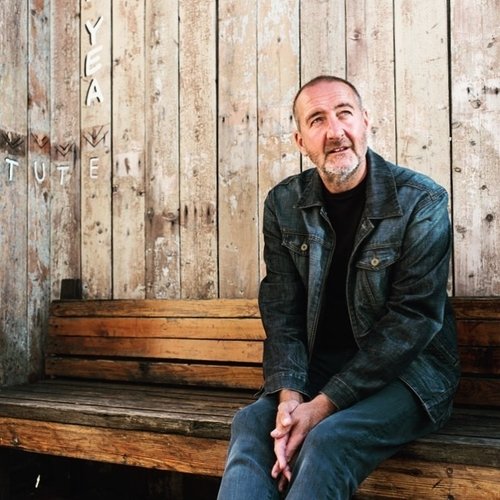
 IN THIS PHOTO: Kurt Cobain with Nirvana’s Dave Grohl and Krist Novoselic

the world will mark what would have been Kurt Cobain’s fifty-fifth birthday. He died tragically young at the age of twenty-seven in 1994. He was the kind of artist one could have seen taking Nirvana to new heights, Maybe they would only have recorded another album after 1993’s In Utero, but Cobain could have had a successful solo career. I also envisage him in films and having a successful career in that area. Socially-minded and conscientious, he would have been more involved in politics and injustices in society. All of this could have been realised…but sadly we will never know how far he could have done. Cobain left so much behind. He is often seen as a voice of his generation – maybe a tag he would not have agreed with or liked -, and he was the peerless lead of one of the world’s great bands. One of the great frontmen and guitarists, he had this voice that could convey anger and spleen one moment; flipping to something sensitive and almost sensual the next. He was a remarkable singer and musical presence. To me, Kurt Cobain’s greatest strength was his songwriting. Someone who could pen timeless and hugely affecting lyrics, he was as much a poet as Bob Dylan, Joni Mitchell or Leonard Cohen. He could also write superb and memorable melodies. A complete songwriter with a voice that one would have loved to have hears for years more, there has been nobody since who has Cobain’s talent and command. I almost think that some part of music’s past died with Cobain in 1994. We do not really have bands who are that iconic and can be provocative. No leads who have the same sense of chaos, enigmatic and mysterious. Cobain was sensitive and thoughtful, though he was troubled and pained.

I feel he brought all of this into his work. Whatever you consider to be his best lyrics, there are so many golden examples of his genius and rarefied ability! Last year, his former bandmate Dave Grohl stated how Cobain was the greatest songwriter of his time. This NME piece tells us more:

Dave Grohl has reflected on Kurt Cobain‘s seismic musical impact, as well as discussing the emotional toll of Nirvana‘s untimely split.

Speaking on Apple Music’s Medicine At Midnight Radio, Grohl also reflected on how the band were initially surprised by their rise to global fame in the early 1990s.

“We were still in our van and we were just watching this happen in front of us,” he said.

​“The shows were getting bigger,” he explains. ​“The crowds were getting bigger. The crowds outside of the shows were bigger than the crowds inside the shows. We could see that something was happening, but we really never expected that it would turn out to be as big as it was. I don’t think any of us expected that.”

Reflecting on the band’s split after Kurt Cobain took his own life in 1994, Grohl said their untimely break-up was one of his “life’s greatest heartbreaks”.

“Of course, it was an incredibly challenging experience and ultimately one of the greatest heartbreaks of my life that Nirvana isn’t still here today making music,” he said.

“Whether it would be called Nirvana or something else. It is one of my life’s greatest heartbreaks that Kurt isn’t still here to write more amazing songs because it’s pretty clear that he was blessed with a gift.

I think it’s safe to say that he was the greatest songwriter of our generation. I’m very proud to say that I got to be his drummer and play those songs every night”.

When thinking about Kurt Cobain – as we will on 20th February -, many consider this tragic figure, or a life cut short. Others looks at Nirvana as a whole and how he helped inspire a generation of fans. Many might think of his feminism and how he was very progressive. Quite different from a lot of the stunted, sexist and idiotic peers around him, he was someone who wanted equality and a bigger voice for women. He was loved and respected by so many people. I want to end with a feature from College Times. They looked at the greatest songwriters from the past twenty-five years. They made a case for Kurt Cobain being among the elite:

The 1980s was perhaps the tackiest decade of the 20th Century. Hairspray galores, Charles Haughey, MJ with a chimp and Cher entertaining a bunch of sailors at her age (and still going now); it was no '60s or '70s. By the decade's close however, a ray of light was shining. Nearer to us, it was with the advent of the Stone Roses. Across the shores, in the city of Seattle, it was with Nirvana. This was the band that would bring rock n' roll back to the fore, not with flashy synths and gimmicks but with a raw edge, nearer to punk. The '90s was a time when the world would rock once more!

Bleach was released in 1989 and its a rough listen, not for the lack of quality in songwriting but for the lack of production. What strikes most prominently is the simplicity of the songs. "About a Girl" was written by Cobain after a binge-day of Beatles' listening and although it has that famous Nirvana-sound, it is at its core, written with a pop mentality. Cobain actually enjoyed a fair-share of pop music, or what he considered to be "pop," referencing R.E.M. as an influence. This may have been his key to greater success above other grunge acts. While that song went on to garner a legacy in their catalogue however, Bleach would not be the album that would bring Nirvana to the mainstream.

Nevermind is often cited as the album of the '90s, at least alongside OK Computer and Definitely Maybe. Its impact was such that grunge would dominate the music scene in both America and the UK until Britpop took prominence in 1994. Anyone reading any music magazines back in late 2011 for the 20th anniversary will understand what a classic it has become. Recorded in Sound City Studios (which Dave Grohl would later make a documentary about), it took the Nirvana grit and added some polish for accessibility. "Smells Like Teen Spirit" became the radio hit that would never go away, parodied by Weird Al for the barely distinguishable vocals of Kurt. "Come As You Are," "Lithium" and "In Bloom" would also become staples of their career and still, there was even more to be excited about. In "Polly" and "Something In The Way," we get a taste of the more sensitive, brooding side of Cobain, an all too eerily true picture of what was to come. There were no fillers on this one. As it replaced MJ's Dangerous at the top of the Billboard Charts in early 1992, it became clear that a new band was ready (though not literally, as Cobain would often note) to take the world by storm.

Incesticide was the next release, a minor one because it was a compilation of outtakes and demos but a jewel for fans and critics alike, who would only get to hear one more full studio album of Nirvana. This was In Utero, which is 20 years and a month old now. Reacting to the pop-image they had obtained, Cobain once again revisited his demons to create a heavier sound. The idea to obscure themselves from the mainstream failed however as the album sold in masses once again. Featuring "Heart Shaped Box," "Pennyroyal Tea" and "Rape Me," this was the swan-LP of a band whose career, whilst speeding towards new heights was bound to crash under the pressure.

Cobain, whose lyrics pervaded the charts were haunted with depression and disenchantment, could no longer take it and took his life in April 1994. His legacy has only increased since and not just for the interesting life story but for the timeless songs, which stood distinctly against the dissipating pop environment of before. Simple melodies with honest lyrics did it for Lennon and likewise for Cobain. It was a short career but longeitivity is not necessarily a good thing as far as legacy is concerned”.

On 20th February, fans around the world will mark Kurt Cobain’s fifty-fifth birthday. His incredible impact and brilliance keep on shining and resonating. From artists following his lead and influenced by his genius, through the stations playing the music of Nirvana, we will always remember the great Kurt Cobain. He was a songwriter who spoke from his soul and heart, and yet his words connected with so many people. Not only confined to angsty and angry teens or people he thought was like him, his lyrical gift and wonderful melodic sensibility meant that he created a catalogue that has struck and seduced people of all ages. Definitely one of the very greatest writers music has ever witnessed, Dave Grohl was right when he said it is so sad that the world will never hear more songs from Cobain. What we can do to keep his memory and huge talent alive is playing those songs. From the iconic Nevermind (1991) to Nirvana’s awesome debut, Bleach (1989), to In Utero, there is so much to enjoy. Even the rare tracks are far stronger than what other songwriters can produce! A remarkable artist whose importance and relevance will never fade; I am ending with a playlist of Nirvana’s best. Although there are a few covers, we can hear what a diverse and hugely consistent writer Cobain was. On 20th February, I hope that every fan of his will play a song that means the most to them. I will definitely take part and remember the…

GREAT Kurt Cobain.

FEATURE: Second Spin: Tom Petty and the Heartbreakers - The Last DJ

FEATURE:


Second Spin

Tom Petty and the Heartbreakers - The Last DJ

___________

I have been thinking about Tom Petty…

as this year is five years since he died. It was such a shock hearing the news of his passing. Looking back, and the man produced so much incredible music! His band, Tom Petty and the Heartbreakers, released albums that were adored and lauded. There were a few from their catalogue that divide critics. Whilst not overlooked or brushed off, 2002’s The Last DJ is an album that some see as weak or not to the band’s best. I am going to end with an article where Petty explained how he is proud of the album and wont back down. There are contrasting reviews that I want to bring in. This is The Guardian’s opinions:

Tom Petty hates being pushed around by record companies, and went on strike against MCA until it dropped the price of his album Hard Promises. Twenty years later comes this semi-concept album raging against corporate greed and dumbing-down. If only The Last DJ were the cure.

Although there is satirical potential in songs such as Money Becomes King (about a rock'n'roller who is compromised by sponsorship) or the title track (the protagonist "plays what he wants to play and says what he wants to say"), the soporific blandness of the music undercuts it time and again.

And since Warner Bros has been trying to drown Petty in $100 bills for years, maybe this is a job for a more impecunious man”.

Even though both reviews are short and do not give too much respect to a genuinely solid album, Entertainment Weekly scored The Last DJ higher.

 “Apparently, Tom Petty needed to work himself into an indignant lather to produce his most consequential songs in years. The Last DJ is basically an album-length rant about greed and corruption in the music biz. Okay, so that’s not exactly a news flash, but Petty’s droll wit and the Heartbreakers’ empathetic playing make tracks like ”Money Becomes King” and ”Can’t Stop the Sun” about as entertaining as polemical pop music can be. And the expansive arrangements give ”The Last DJ” a pleasant, Beatles-flavored kick”.

I think that, whilst The Last DJ is not in the top-five Tom Petty and the Heartbreakers albums, it is one that is underrated and warrants a second spin. Maybe a sense of anger and bitterness on some songs. There is a definite shot against the greed of the music industry. Even though some critics did not like the sound and direction of The Last DJ, the album did get into the U.S. top ten. This Ultimate Classic Rock article from 2017 told us the background and reaction to the band’s eleventh studio album:

When they first heard Tom Petty and the Heartbreakers’ The Last DJ, fans, critics and even casual listeners largely came away with the impression that Petty was bitter – or at least cranky – about the music industry. The idea was that, as a veteran rocker, he was now the old man yelling at the kids to get off of his lawn, explaining about how things were better in his day.

Not that this was totally wrong. The album’s title track and lead single is hardly shrouded in mystery; it’s a requiem for radio as it was when Petty was first a fan, when DJs were tastemakers with distinct personalities. If the singer doesn’t snarl on the track, he does seem to be seething as he spits lines like, “As we celebrate mediocrity, all the boys upstairs want to see / How much you’ll pay for what you used to get for free.”

But, Petty would counter, that listeners were being too single-minded about the subject matter – that there was more to his point and deeper musical layers to this record, his 11th with the Heartbreakers.

“I kept seeing these billboards for radio stations that said, ‘No Talk.’ And I thought, ‘God, that’s sad,” Petty said in Conversations With Tom Petty. “And then I saw it as a parallel, a metaphor, for what was going on in the world. So, I kind of devised this kind of moral play. If the record is about anything, it’s about morals – and how far do we go in the name of money, and what’s gained and what’s lost.”

“The Last DJ” was a nickname that Petty had applied to Los Angeles-based hero of free-form radio Jim Ladd, who was credited with being an inspiration for the album in the liner notes. In the songwriter’s mind, Ladd represented what was not just great about radio, but about free expression. The money men, such as the titular CEO in the track “Joe,” are on the other side of the equation.

At least two other songs on the album – “Money Becomes King” and “Can’t Stop the Sun” – also tied into this theme. If, in writing these tunes, Petty was perceived as a curmudgeon, that was probably true, although he was a curmudgeon with the intent of rallying for the 21st century’s new bands to get the same kind of respect and assistance given to him and the Heartbreakers in the ’70s.

“You don’t see many new acts with a continuity to it. There’s usually not that second hit record,” Petty said in a promo video for the record. “And that’s because these acts aren’t nurtured in any way by the people that hire them. We were very nurtured along in the beginning and sort of taught the artistry of the recording studio and how it’s a very different animal than the stage. … But I don’t think they get that education much these days.”

Regardless of Petty’s reasons, corporate radio took a strong dislike to the album and its lead single, in some cases, banning it from the airwaves. Despite the diminished radio promotion, The Last DJ still debuted at No. 9 on the Billboard chart when it was released on Oct. 8, 2002. However, it became the Heartbreakers’ first studio album since their debut not to go gold in the U.S. within months of its release. Years later, it has still failed to achieve that certification.

In addition, reviews weren’t uniformly glowing. Because the songs were unvarnished in presenting Petty’s view, and because he spoke pointedly about his opinions in the press while promoting The Last DJ, critics tended to focus on the lyrics, and give less attention to the music, when assessing the record.

Petty’s stance became the story. “The saddest thing about that album to me is that the lyrics got so much attention, that all the music got overlooked,” Petty said in 2005. “And there’s really good music on that record. And there’s beautiful playing, and really good melodies. And I took a lot of time on those songs.”

Petty has expressed his satisfaction with gentle rocker “Have Love Will Travel,” as well as the orchestral treatment given to songs including “Dreamville” and “Like a Diamond.” Composer and producer Jon Brion collaborated with the band on the symphonic accoutrements, while founding Heartbreaker Ron Blair returned to the fold to replace his replacement, Howie Epstein (though Petty and guitarist Mike Campbell played bass on most of the album, before Blair returned). It marked a new era.

Although The Last DJ didn’t perform well commercially, critically or on radio, some Heartbreakers fans – including Bob Dylan – consider the album an overlooked gem. Petty maintained a high opinion of the record.

“I thought The Last DJ was really good,” he said. “It’s different for us, and it was a step forward, I thought. I’m really proud of it. I think it will endure. I think it will be around a lot longer than its detractors seem to think”.

If you are a big fan of Tom Petty and the Heartbreakers and have not played The Last DJ in a while, I would urge you to do so. For anyone new to the band, listen to an album that has many highlights. Opening with the title track and Money Becomes King, it is an L.P. that wastes no time in making an impact! It definitely makes its voice heard. The band are terrific throughout. The Last DJ saw the return of Ron Blair on bass guitar, replacing his own replacement, the ailing Howie Epstein. Despite a band of a shift in the group, one cannot notice a big change from 1999’s Echo (even though that album was better received). Maybe I will include Tom Petty and the Heartbreakers in A Buyer’s Guide soon, as I do not think I have done so yet. In any case, go and check out The Last DJ. It is a great album that has never fully got…

THE praise and understanding it deserves.

FEATURE: A Buyer’s Guide: Part Ninety-One: Enya

FEATURE:


A Buyer’s Guide

PHOTO CREDIT: Alan Betson/The Irish Times 

Part Ninety-One: Enya

___________

OVER the next couple of weeks…

 PHOTO CREDIT: Sheila Rock/Rex/Shutterstock

I am going in very different directions when it comes to A Buyer’s Guide. Next week, I am heading to California for Cypress Hill. This week, I am traveling to County Donegal in Ireland for Enya. A hugely influential artist whose music cannot be mistaken for anyone else, I am going to recommend the four albums of hers that you should get. I will also suggest one that is underrated and worthy and in need of more focus. I will finish by looking at her most recent studio album (she did release a Christmas album in 2019, but I am keen not to feature holiday albums). I will also suggest an Enya book that is worth taking a look at. Before then, AllMusic provide some biography about one of music’s most distinct voices:

With her blend of folk melodies, synthesized backdrops, and classical motifs, Enya created a distinctive style that more closely resembled new age than the folk and Celtic music that provided her initial influences. Enya is from Gweedore, County Donegal, Ireland, which she left in 1980 to join the Irish band Clannad, the group that already featured her older brothers and sisters. She stayed with Clannad for two years, then left, hooking up with producer Nicky Ryan and lyricist Roma Ryan, with whom she recorded film and television scores. The result was a successful album of TV music for the BBC. Enya then recorded Watermark (1988), which featured her distinctive, flowing music and multi-overdubbed trancelike singing; the album sold eight million copies worldwide. Watermark established Enya as an international star and launched a successful career that has continued into the new millennium.

Enya (born Eithne Ní Bhraonáin) was born into a musical family. Her father, Leo Brennan, was the leader of the Slieve Foy Band, a popular Irish show band; her mother was an amateur musician. Most important to Enya's career were her siblings, who formed Clannad in 1970 with several of their uncles. Enya joined the band as a keyboardist in 1980 and contributed to several of the group's popular television soundtracks. In 1982, she left Clannad, claiming that she was uninterested in following the pop direction the group had begun to pursue. Within a few years, she was commissioned, along with producer/arranger Nicky Ryan and lyricist Roma Ryan, to provide the score for a BBC-TV series called The Celts. The soundtrack was released in 1986 as her eponymous solo album.

Enya didn't receive much notice, but Enya and the Ryans' second effort, Watermark, became a surprise hit upon its release in 1988. Enya spent the years following the success of Watermark rather quietly; her most notable appearance was a cameo on Sinéad O'Connor's I Do Not Want What I Haven't Got. She finally released Shepherd Moons, her follow-up to Watermark, in 1991. Shepherd Moons was even more successful than its predecessor, eventually selling over ten million copies worldwide; it entered the U.S. charts at number 17 and remained in the Top 200 for almost four years.

Again, Enya was slow to follow up on the success of Shepherd Moons, spending nearly four years working on her fourth album. The record, entitled Memory of Trees, was released in December 1995. Memory of Trees entered the U.S. charts at number nine and sold over two million copies within its first year of release. In 1997 came the release of a greatest-hits collection, Paint the Sky with Stars: The Best of Enya, which featured two new songs. Enya's first album of new material in five years, Day Without Rain, was released in late 2000. In 2001, she contributed material to the first film in Peter Jackson's award-winning Lord of the Rings trilogy, scoring a hit with the single "May It Be." Amarantine, her first full-length recording since Day Without Rain, followed in November 2005. A holiday EP, Christmas Secrets, arrived in 2006, followed by an all new, full-length collection of original seasonal music called And Winter Came in 2008.

Her second greatest-hits collection, The Very Best of Enya, was released in 2009, though it would be another six years until her next album arrived. "Echoes in Rain," the first of two singles from Enya's eighth album, appeared in September 2015, and the normally reclusive star opened up for a number of interviews and was promoted heavily on social media for the first time. Created with longtime collaborators Roma and Nicky Ryan, Dark Sky Island was released in November of that year”.

To show the amazing albums Enya has produced, below are my suggestions regarding the ones that you need to own. Even if you are not a big Enya fan, I guarantee there will be something from her that takes your fancy. Here is the essential work of a…

WONDERFUL artist.

__________________

The Four Essential Albums


Enya/The Celts (1992 Reissue)

Release Date: March 1987/November 1992 (Reissue)

Labels: BBC (1987, U.K.)/Atlantic (1987, U.S.)/WEA (1992, Europe)/Reprise (1992, U.S.)

Producer: Nicky Ryan

Standout Tracks: I Want Tomorrow/The Sun in the Stream/Triad

Buy: https://www.discogs.com/sell/list?master_id=27579&ev=mb

Stream: https://open.spotify.com/album/2L4XSyyDeIW30SawLTOlj4?si=5--BOsKdRTejwljGk-UArg

Review:

Initially released simply as Enya, The Celts shows that the style she became famous for on Watermark was already well under way. With production and lyrical help fully in place thanks to her husband-and-wife gurus Nicky and Roma Ryan, Enya's combination of Celtic traditionalism and distinctly modern approach finds lush flower here. All the elements that characterize her music -- open, clear nods to her Irish heritage, any number of vocal overdubs to create an echoing, haunting feeling, and layers of synth and electronic percussion -- can be found almost track for track. The flip side is that those who find such a combination to be gloopy mush won't be at all convinced further by her work here. It's understandable why folk music traditionalists and anti-mainstream types would get the hives, but those not coming from that angle will find much that's rewarding. Given that The Celts is a commissioned piece of work, it actually stands on its own quite well. The charging surge of the title track functions both as a fine introduction and its own stirring, quietly powerful anthem, a good sign for the rest of the album. There are a couple of slight missteps -- an electric guitar solo disrupts the string-and-vocal flow of the truly lovely "I Want Tomorrow," for instance. Generally, though, her musical instincts serve her very well, with many striking highlights. The appropriately three-part "Triad" showcases her ear for vocal work excellently, while both versions of "To Go Beyond," especially the second, which closes the disc with an exquisite extra string part, also are worthy of note” – AllMusic

Choice Cut: The Celts

Watermark

Release Date: 19th September, 1988

Labels: WEA (U.K.)/Geffen (U.S.)

Producers: Nicky Ryan/Ross Cullum/Enya

Standout Tracks: Watermark/Storms in Africa/Evening Fall

Buy: https://www.discogs.com/sell/list?master_id=27697&ev=mb

Stream: https://open.spotify.com/album/0NJjvdOd3ULUTvoVFCCFJN?si=w97TlQ3RQ0GcmYfFnbs2qg

Review:

Watermark is the second album by the Irish musician Enya, who began her career with the traditional group Clannad and went solo in 1986. Her first U.S. release, Watermark may sound overly subtle at first, but it quickly establishes itself as a rich mood piece of broad proportions.

As evidence of Watermark's broad appeal, both the album and its single "Orinoco Flow" have shot up the U.S. charts – mirroring the album's phenomenal recent success in Europe. The opening, title track sails the listener gently into an ebb-and-flow movement that permeates the album. This simple instrumental leads into the complex "Cursum Perficio" ("Journey's End"), for which producer Nicky Ryan overdubbed up to 100 voice tracks to create a chorus of Latin-chanting Enyas. This distinctive choral effect is also used on "Orinoco Flow" and "The Longships," and its striking harmonies are countered by the exquisite clarity of Enya's solo vocal on the third track, "On Your Shore."

From ethereal plaint to rippling sea chantey, Watermark becomes a glorious aural mosaic. The lyrics, by Roma Ryan, are unornamented but compelling, accentuating the multifarious feel of the album by using Latin, Gaelic and English. The ethnic touches throughout tend to enrich without dominating, as with the Gaelic lyrics on the closing track, "Na Laetha Gael M'Oige."

With its traditional and classical elements and its broad acoustic vocabulary – ranging from Irish uilleann pipes to clarinets and even church organs – Watermark transcends the category of Celtic New Age. It is a tapestry of sound and image to be discovered over time, its evocations ultimately personal, subjective and definitely worth a journey of exploration. (RS 548)” – Rolling Stone

Choice Cut: Orinoco Flow

Shepherd Moons

Release Date: 4th November, 1991

Labels: WEA (U.K.)/Reprise (U.S.)

Producer: Nicky Ryan

Standout Tracks: How Can I Keep from Singing?/Book of Days/Marble Halls

Buy: https://www.discogs.com/master/27537-Enya-Shepherd-Moons

Stream: https://open.spotify.com/album/6ZuPbMe6CvQKl1nvAy0nZm?si=cSe61gnhRsOp5AgLOxdLsw

Review:

In November 1991, Reprise Records released Enya’s Shepherd Moons, the follow-up to the Irish singer’s 1988 album, Watermark. Within the confines of the Entertainment Weekly music department, we did what most critic types did at the time: We gave a quick listen to its pristine, immaculately produced surfaces and then made sarcastic jokes about Celtic New Age stars who resemble Demi Moore. When we begrudgingly realized a review was called for, we relegated Shepherd Moons to a quick paragraph and a B grade and thought that was the end of it.

Shows how much we know. Almost a year and a half later, the album still sells at the rate of roughly 18,000 copies a week — 2 million copies so far — and continues to linger on the fringes of the Billboard Top 40 album chart. ”That’s pretty strong,” says Mike Fine, CEO of SoundScan, the company that tabulates record sales. ”Most artists don’t generate that type of sales 75 weeks after release.” It has also grabbed the No. 1 spot on the Billboard New Age chart for 47 consecutive weeks. Watermark, meanwhile, has sold more than 2 million.

Sales figures tell only half the story, though. Enya (née Eithne Ni Bhraonain) has become something of a soundtrack for our lives. Her music can be heard in restaurants and bookstores, on TV commercials, and on the soundtracks of movies like Far and Away, Green Card, and Toys. A few weeks back, the Shepherd Moons track ”Caribbean Blue” (a breathy, upbeat waltz that personifies everything Enya) popped up as background music on, of all things, the surf-and-mirth TV series Baywatch.

Sleeper albums aren’t new in pop. As of this writing, The Best of Van Morrison and Nine Inch Nails’ 1989 debut Pretty Hate Machine are loitering on the pop charts long after they should have departed (150 and 109 weeks, respectively), and rock’s ultimate cult item, Pink Floyd’s 1973 headphone symphony The Dark Side of the Moon, has just been given the deluxe treatment for its 20th birthday.

Maybe it has something to do with the word moon, but like that album, Shepherd Moons is more than a chart mainstay; clearly it has tapped into our collective psyche. How else do you explain the way people who normally hate anything even remotely New Age — like Top 40 fans and college-radio mavens — are drawn to Enya? Maybe a colleague nailed it when she said Enya’s interchangeable albums (including her tentative, eponymous debut from 1986) are a form of mass hypnosis: Beneath the records’ crystalline grooves are voices telling us to listen to Enya, listen to Enya, listen to Enya.

For those who haven’t had the pleasure of hearing the music, a quick sonic description: Although it is called New Age, Enya’s vacuum-packed music is more like pop with classical pretensions. She sings — or, more like it, breathes — in a pure, virginal soprano, occasionally in Gaelic. She then records up to 200 additional vocal parts and layers them for a gothic-choir effect. Other songs are strictly instrumentals. In either case, Enya’s glistening cascades of piano and synthesizers sound soothingly like a gently flowing waterfall. (That could explain why Shepherd Moons sells best on the water-loving West Coast.) The combined effect is both captivating and elusive. The frail melodies seem to slip through your fingers, repeatedly drawing you back into the record in the vain hope that this time you will pin it down. Much like Enya herself, in fact, who rarely does interviews and keeps a low profile in Ireland when not recording.

No, sleeper albums don’t get any sleepier than Shepherd Moons. But at the same time, Enya’s music isn’t nearly as numbing as anesthetics like Kenny G. Her relaxing melodies are a retreat — from more clattering forms of pop like rap and alternative rock, from the barrage of media and hype in contemporary culture, from the struggles and annoyances of daily life. But as escapes go, her music is surprisingly realistic. Beneath the aural beauty lies the forlorn, brooding pessimism common to the Irish. In album photos, Enya is often shown in stark black-and-white shots standing before rocky cliffs and windswept beaches. The love songs are predominantly mournful (”Who then can warm my soul?/Who can quell my passion?” she murmurs on Watermark‘s ”Exile”). And though she may acknowledge the world’s injustices on Moon‘s ”How Can I Keep From Singing?” she doesn’t sound terribly convinced that her music can change anything.

You don’t have to be Celtic to appreciate those sentiments, which may be the key to the ongoing success of Shepherd Moons. Enya’s fans don’t kid themselves: Her music may be escapist, but sorrow, loss, and displacement are lurking around the corner — often just like in life itself. On second thought, Shepherd Moons is an A-Entertainment Weekly

Choice Cut: Caribbean Blue

And Winter Came…

Release Date: 7th November, 2008

Labels: Warner Bros. (E.U.)/Reprise (U.S.)

Producer: Nicky Ryan

Standout Tracks: White Is in the Winter Night/O Come, O Come, Emmanuel/Oíche Chiúin - Chorale

Buy: https://www.discogs.com/sell/list?master_id=27464&ev=mb

Stream: https://open.spotify.com/album/2CemN34rnpp6wrCFJo555S?si=TbMxovToQWS4URJWKkL7TQ

Review:

If you think about it for more than a second you wonder why it's taken this long for the Irish queen of new age-lite to make a Yuletide album. The softly arpeggiated synth strings and lushly manifold, overdubbed voices put one in mind of nothing less than snowflakes and heavenly choirs. Well, actually she has made a couple of seasonal EPs, but this is the first full-length effort - and for Enya afficianados this can be taken as something that fits perfectly into her canon thus far while giving them considerable amounts of seasonal cheer into the bargain.

And Winter Came... features Enya herself on writing duties for all but two tracks, aided by her usual team of Roma Ryan on lyrics and Nicky Ryan as producer. It's a billing that's been together since 1987's debut; indeed they might be considered a band, working under the singer's name. The usual blend of ambient synthesizer chords and floating whispery voices speak of stars, moonlight, angels and even toys (One Toy Soldier). Aurally, it's like curling up in front of a log fire with a glass of your favourite Amontillado.

Of course, huge swathes of people regard this stuff as evil in small round silvery plastic form (let's not even go near the analogy that the creators of Southpark used her music as), yet there's a reason why she's garnered so much film soundtrack work and racked up the sales. Her music fulfills a very specific purpose: to evoke calm and a palpable atmosphere (no matter how ersatz and air freshener bland you regard it).

Only My! My! Time Flies! breaks the spell with its Beatle tribute tune and wailing guitar solo. It's still a mellow kind of rocking, mind you, and the solo is reverb-drenched enough to make it not too intrusive while you're writing those Xmas lists or resting after an excess of pudding.

Finally, just to ensure the maximum amount of esprit de noel there's the inclusion of two traditional tunes. O Come, O Come, Emmanuel and Oiche Chiuin (Silent Night rendered beautifully in Gaelic). It's actually on these adaptations that you get to hear the true mastery of the multi-tracking and deceptively simple arrangements that have netted them over 70 million sales. It makes you wish that she'd put more traditional fare on this lushly indulgent, gift-wrapped album”  - BBC

Choice Cut: Trains and Winter Rains

The Underrated Gem


The Memory of Trees

Release Date: 20th November, 1995

Labels: WEA (U.K.)/Reprise (U.S.)

Producer: Nicky Ryan

Standout Tracks: The Memory of Trees/China Roses/On My Way Home

Buy: https://www.discogs.com/sell/list?master_id=27630&ev=mb

Stream: https://open.spotify.com/album/34NreMWi5xh62VQFWLPm9U?si=9dPs54sFQcWUdRlbpwavKA

Review:

No surprises here, of course -- Enya didn't achieve new age superstardom by challenging anyone's expectations. This album is every bit as hushed, lovely, and soulless as everything else she's ever done; like a perfect angel food cake, it's sweet, soft, and utterly lacking in nutritive substance. There's nothing the matter with angel food cake, of course, and there's also nothing really the matter with The Memory of Trees, though its Druidic theme does smell awfully trendy (nothing was quite so hip as neopaganism in 1995), and it steers so strictly the same melodic and textural course she's been following throughout her solo career that you're tempted to wonder why anyone would want to spend the money on what amounts to a complete rehash of her earlier work. While other cultural influences play a greater part in this album, the beautiful and brooding Celtic melodies she brought with her from her earlier work with Clannad are still the primary raw materials, and her skillful use of them is still the main thing that sets her apart from the new age pack. She also has a truly lovely voice, and there's no point trying to resist the gentle charm of "China Roses" and the incantatory power of "Anywhere Is." But so little of the album lives up to the promise of these and one or two other tracks that it's hard to recommend it very enthusiastically” – AllMusic

Choice Cut: Anywhere Is

The Latest Album


Dark Sky Island

Release Date: 20th November, 2015

Label: Warner Bros.

Producer: Nicky Ryan

Standout Tracks: The Humming/So I Could Find My Way/Sancta Maria

Buy: https://www.discogs.com/sell/list?master_id=916153&ev=mb

Stream: https://open.spotify.com/album/4FStw70Tk1spCN8V1o11oW?si=Nl_fRwYAQrO1yT11pBYuDQ

Review:

Enya’s new record is partly inspired by Sark, the Channel Island that, with its exceptional night sky, became the world’s first “dark sky island” in 2011.

The album, however, also reveals a profound and expansive meditation on nature, and our relationship to it, reaching back to earlier work such as 1991’s Shepherd Moons.

The album opens with the moving The Humming, which explores a recurring motif and perhaps Enya’s most central image – the sea, its melody resembling the waves she sings of.

Her vocal power seems to increase as years go by; on So I Could Find My Way it manages to be both frail and strong.

The song Even in the Shadows retains a sense of urgency, with layers of vocal and electronics building up to something tremendous, and her touchstones of folk, church music and traditional Irish haunt subtly, illuminating the celestial Sancta Maria, and, indeed, the work as a whole. Nourishing and immersive” – The Irish Times

Choice Cut: Echoes in Rain

The Enya Book


Enya: The Discography (Limited Edition)

Author: Phillip Callaghan

Publication Date: 20th November, 2020

Publisher: Independently published

Synopsis:

As an avid Enya fan, we all get hooked on collecting the music, each song the Irish songstress releases. Hunting down tracks, we’ve never heard in our early stages, to prolific collecting and following. Each song having a favorite place in our hearts, or simply to relax and unwind, whatever the occasion. Some collectors only reach for certain memorabilia like posters, cd’s, cassettes or vinyl and then there are the complete collectors, who sort after anything that's been released from the star, baseball caps, limited edition box sets, press kits, to bootlegs and anything else they can find, worldwide. Purpose. Many Enya releases are unique by geography, printing company, and other variants. In order to develop a comprehensive overview of all her releases, a standardized index and collection of these various products needed to be established. This discography will include, soundtrack, albums, singles, videos, EP’s, attributed on, Inc some photographic evidence. Formats will include, CD’s, cassettes, vinyl, VHS, DVD, 3inch CD’s, laserdisc, memorabilia, promotional products, minidisc, long-boxes, collections, and many more... with catalogue numbers (where possible) Years Covered. The early years 1980-1985The Celts/ Watermark 1986-1989-1990Shepherd moons/ The Celts (Re-issue) 1991-1992-1994The Memory of Trees/ Paint The Sky With Stars 1995-1997-1998A Day Without Rain/ May It Be/ Only Time Collection 2000-2001-2002Amarantine/ Christmas Edition/ Sounds Of the Season 2005-2006And Winter Came/ The Very Best Of Enya 2008-2009Dark Sky Island 2015.in this discography there many pictures and there is plenty of readable material too. this book measures 7inch x 10 inch. 260pages. This Is an updated new version” – Amazon.co.uk

Order: https://www.amazon.co.uk/Enya-Discography-Limited-Phillip-Callaghan/dp/B08NWZQHZP/ref=sr_1_3?crid=3QSTWR2Y5TZM&keywords=enya&qid=1643266807&s=books&sprefix=enya%2Cstripbooks%2C82&sr=1-3

FEATURE: Kate Bush’s The Kick Inside at Forty-Four: A Collectable and Magnificent Thing

FEATURE:


Kate Bush’s The Kick Inside at Forty-Four

IMAGE CREDIT: Classic Album Art 

A Collectable and Magnificent Thing

___________

THAT title may seem vague…

 IN THIS PHOTO: Kate Bush in 1978/PHOTO CREDIT: Gered Mankowitz

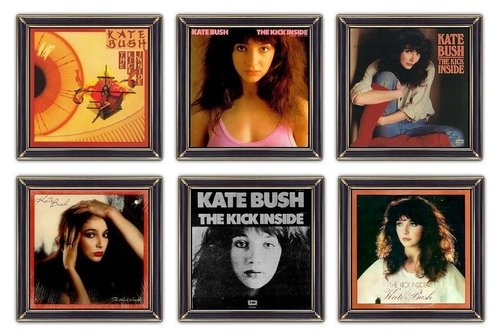
but, as Kate Bush’s debut album, The Kick Inside, turns forty-four on Thursday (17th), I wanted to mop up and conclude my run of features about the album by highlighting its pluses and brilliance. In previous features, I have dropped in reviews and discussed how The Kick Inside remains underrated. As I look to its forty-fourth anniversary, I know a lot of people will take to social media and mark that occasion. I wanted to use feature to urge anyone who does not own the album to go and get it. One can get the U.K. vinyl, though there are international versions of the album that are worth collecting. I have said how the Japanese edition is the one I want, as I love the photo of Bush on it. Rather than The Kick Inside being marked a s promising debut on its anniversary, it needs to be seen as an album that every Kate Bush fan should own and savour. Not just an L.P. with a few good tracks, it is a powerful and consistent work that has inspired so many people. I am going to end with an article that expounds and highlights the virtues of The Kick Inside. To me, it is an album that is an important piece of music history. The first album by an undoubtable icon and musical genius, it is fascinating listening to the songs and how assured Bush is. I would suggest people compile a deep cuts playlist of tracks from The Kick Inside, as they do not get shared that much.

I am a huge fan of all Kate Bush’s work, but I think The Kick Inside is so meaningful because it is an album that started it all. As a teen one could forgive Bush for being unsure or lacking in real assuredness. On the contrary, she is an artist doing things nobody else was. If you are a big fan of the album, it is worth trying to get it on cassette. I am a big fan of the time Bush recorded the album and the promotion she did. From the De Efteling special in May 1978 to T.V. and print interviews, she was traveling afar and doing so much! For those who feel The Kick Inside does not have the same sort of impact and reach as Hounds of Love, it is worth thinking about how incredible the album is and how it is so distinct. I will return to a Stereogum feature from 2018. They marked forty years of The Kick Inside by, among other things, exploring why it such a remarkable and influential document:

Her groundbreaking legacy of experimental yet accessible, inspiringly individualistic work begins with the extraordinary debut album that turns 40 this weekend: The Kick Inside. Released when Bush was 19 in 1978, it included songs she had written as early as age 13 and introduced the world into Bush’s wild imagination. Arriving in a year otherwise dominated by disco and punk (“Wuthering Heights” replaced Abba’s “Take A Chance On Me” as the UK’s #1 single) this imagination felt “strangely out of time” and singular. The album’s focus on female sexuality, its use of voice as an instrument, and Bush’s unique storytelling techniques — particularly her exciting use of fluid narrative identity, in which she changes identities and narrative point of view with every song — created a new, unprecedented model for women in music. The Kick Inside (referred to as TKI from now on) made the world a safer place not just for women musicians but also for freaks and outcasts everywhere, and its anniversary is well worth celebrating.

TKI is also revolutionary because it establishes Bush’s narrative style as fluid and multiple; her songs are short stories each written from a different narrator’s perspective rather than from her own point of view. This writing style stands in stark contrast to the traditionally personal style of music focusing on love and heartbreak that continues to dominate the charts. “I often find myself inspired by unusual, distorted, weird subjects, as opposed to things that are straightforward. It’s a reflection of me, my liking for weirdness,” she said in 1980. Unlike the majority of pop/rock artists, The “I” in Bush’s music is rarely Bush. Her songs are not confessional, but are rather short stories told from the points of views of a diverse range of narrators. From Bush’s songs, we can know about themes that interest her, but Kate Bush herself rarely speaks in her work; her narrators, who occupy multiple genders, races, and historical times, do instead. This is a deeply radical break from traditional “confessional “ songwriting, especially for women up to that point. Consider that the most acclaimed female musician of the time, and probably of all time, Joni Mitchell, is most-lauded for her confessional album, Blue.

Perhaps most importantly, beginning with The Kick Inside she has inspired a wide array of artists to “let the weirdness in.” Lady Gaga covered Bush’s duet with Peter Gabriel, “Don’t Give Up,” because she wanted to “make something that young people would hear and learn something about Kate Bush”, and her theatricality has its roots in Bush’s so-bizarre-they’re-brilliant live performances. Björk frequently cites Bush as a pivotal influence on her musical “form”, saying “I remember being underneath my duvet at the age of 12, fantasising about Kate Bush,” and even sent Bush of a demo of herself covering Bush’s “Moving” in 1989. Lorde played “Running Up That Hill” before the shows on her Melodrama tour, and Bat For Lashes’ Natasha Khan said of Bush, “As an artist myself, [she’s] helped me to not be frightened to put my vulnerability as a woman [in my work] and in that, be powerful.”

Bush’s influence is also felt in hip-hop, especially due to her early use of sampling, best seen in her sampling of the Gregorian chanting from Werner Herzog’s film Nosfertu The Vampyre in Hounds Of Love’s “Hello Earth.” One of her biggest champions is OutKast’s Big Boi, who has repeatedly called her “my favorite artist of all time,” and Tricky from Massive Attack said of Bush’s song “Breathing,” which features the line “breathing my mother in,”: “I’m a kid from a council flat, I’m a mixed-raced guy…totally different life to Kate Bush, but that lyric, ‘breathing my mother in,’ my whole career’s based on that.” Even Chris Martin “admitted” that Coldplay’s “Speed Of Sound” “was developed after the band had listened to Kate Bush”.

On its anniversary, I wanted to end with a feature that explains why I love The Kick Inside. From the various different covers to the way The Kick Inside is still undervalued and full of real revelations and excellence. There is no doubting the importance of Kate Bush’s debut and how arresting, beautiful and compelling its songs are. The fact many other artists have been influenced by it shows what a strong debut it was. The Kick Inside is talked about daily. This is something that will continue…

FOR the rest of time.

FEATURE: Wind Was Blowing, Time Stood Still: Peter Gabriel’s Eponymous Debut Album at Forty-Five

FEATURE:


Wind Was Blowing, Time Stood Still

Peter Gabriel’s Eponymous Debut Album at Forty-Five

___________

THE first of four eponymous albums…

 IN THIS PHOTO: Peter Gabriel performs in New York City on 21st March, 1977/PHOTO CREDIT: Michael Putland/Getty Images

by Peter Gabriel, I wanted to mark the upcoming forty-fifth anniversary. Released on 25th February, 1977, it is a very important debut. After leaving Genesis, there were a lot of eyes on Gabriel and what he would release. Even if many critics – and Gabriel himself – rank subsequent albums higher than his debut, Peter Gabriel/Peter Gabriel 1: Car is stunning. Although some songs are a little over-produced (the album was produced by Bob Ezrin), songs like Solsbury Hill (his top ten debut single) and Modern Love are among his best work. Even if some critics compared Gabriel’s debut to his Genesis work and felt that the was weaker without them, there was plenty of praise for a very strong album that boasted fine songwritintg.  If you do not own the album already, it is one that people can affordably buy on vinyl. Before ending with a review of Peter Gabriel’s 1977 debut album, his official website details the backstory of Peter Gabriel. It must have been strange to leave an established band and recruit new musicians when he stepped out solo:

Having left Genesis the previous summer, Peter’s first solo album arrived in February 1977. He was 26. With legendary producer Bob Ezrin taking charge the intention was to make something more direct and tougher than what had come before.

“With the first album I’d just left Genesis and had been used to having roles defined, and so suddenly to find myself in a studio full of serious musicians (serious in terms of their ability and what they’d done and so on) was unnerving.

It took me three albums to get the confidence and to find out what I could do that made me different from other people. And the first record really was a process of trying …

I’d chosen Bob Ezrin to produce the album, after having met with many producers, and he was based in Toronto at the time. We were working in his studio there, and there was a selection of people that he’d recommended and some that I’d brought in. It was an interesting thing to see how it would work.

I really wanted the first record to be different from what I’d done with Genesis so we were trying to do things in different styles. A bit of barbershop, which Tony Levin helped with, there were more bluesy things, a variety of songs and arrangements that were consciously trying to provide something different than what I’d done before.

The sessions were in wintertime in Toronto and there was a lot of snow around. I had a bicycle and that was a good way to discover Toronto. It was so long ago that Tony Levin actually had hair, which is something very hard to believe now. He’s been bald for so many years, and of course, now I’m the same way myself, but looking back at the photos that was the most shocking thing.

The album cover was done with Hipgnosis who I’d worked with a little bit during the end of the Genesis period and Storm (Thorgerson) and Peter (Christopherson) particularly from there. I think that they are very important in the way that album sleeves have developed over the years. Storm had a very dry, laconic, sense of humour that made it a lot of fun to be around him. You ended up the butt of some of his jokes, but I always enjoyed working with him and it was actually his car that I was sitting in on the front cover. I liked the idea of the water and the black and white and the blue colour.

The picture was taken in Wandsworth, London in Storm Thorgerson’s car, a Lancia Flavia. It was sprayed with water from a hose and Peter sat in the passenger seat. Originally in black and white, the artwork was then hand-coloured and each droplet highlight patiently scraped clean with a scalpel by Richard Manning.

One idea I’d had for that first cover was to do mirrored contact lenses and it took me about a month to find someone who would manufacture mirrored contact lenses. Someone in America, I think in Boston, agreed to do it, but they made me sign something that if I damaged my eyes they wouldn’t take any responsibility – because they’d put a bit of mirror on the back of these hard lenses. They were very painful to wear, but the effect was fantastic; it was like having steel balls for eyes. I remember putting them on in an aeroplane at one point and scared quite a few people, which gave me a lot of pleasure at the time. But, eventually the mirror gradually eroded from the back of the lenses.

Another photo session around that time, which I enjoyed, was with Terry O’Neill who’s a really good photographer. I wanted to do this smoking underwater thing and he found a place in London which was this old seventies disco with coloured lights and a mini pool in the centre of it, which I’m sure they would fill with scantily dressed young ladies in a very Hefner seventies vibe. I went in this pool to get filmed and the lights had shorted and so I got quite a shock underwater as I was doing the filming, but that was quite fun that session.

The first time I went out on the road with another band, other than the one I’d grown up and been to school with, was also a very different experience. Some of the musicians were very much professional musicians and would be flying back to New York between dates to do early morning jingles. Others came from a similar background to myself and were more about the music than maximizing the income.

But it was a lot of fun and I remember we had this percussionist, Jimmy Maelen who sadly died, but he was always a great performer and used to have these two huge gongs at the back of his percussion kit and he would set them up very carefully before the show, and they would be up above so that he had to jump up to the top height he could reach before he could hit the centre of them. So it was always maximizing the drama.

The video for Modern Love was done with this director Peter Medak (I’d seen the film The Ruling Class which I really enjoyed, a great film with Peter O’Toole) and he did that with me in Shepherds Bush. They were just putting in this new shopping centre with moving escalators which seemed very ‘of the future’ at the time.

We did something with Solsbury Hill later, just messing around at Real World with a painter friend of mine Graham Dean. Unfortunately, we didn’t really have budget to do much in the way of video at that time.”

Bob Ezrin talking to CBC Radio in Canada in May 2019 about the making of the album:

So, then we got together in Toronto, I put together a band. We made this record here on Hazleton. I had a studio here by then [Hazleton Avenue is the address of Ezrin’s Nimbus Studios]  which was really good and I was quite sure it would work well for him. I didn’t want to be away from my family any more than I had to and so I put together a band, which was like the Dirty Dozen; a bunch of people he had mostly never met before, including Tony Levin who has stayed with him all this time and Steve Hunter who played that guitar part [referencing Solsbury Hill]… and Jimmy Maelen and Allan Schwartzberg, a phenomenal drummer. He introduced me and Peter to Larry Fast who came and played synthesiser and Joey Chirowski who was in a band called Crowbar, who played piano, a local guy. And Peter said ‘can I have a Brit?’ And I said, oh ok, you can have one draft pick, who do you want? ‘Well, I’d like Fripp’, so I said can’t you get someone who’s decent? [laughs!] So we brought Fripp over to join the band.

This group of people… I like to say that miracles happen when you have a confluence of disparate, brilliant personalities. These were as different as you could get, everyone came from a different discipline and had a different background, but when they got together and started playing this stuff, which they did live in the studio, it was unbelievable, magical”.

Last year, Peter Gabriel’s finest album, So, turned thirty-five. It got a lot of new study and love. I think that it is important that his incredible debut album is celebrated. Whilst it might not be his very best album, Peter Gabriel did get into the top ten in the U.K. upon its release, and it showcased a new side to Gabriel’s songwriting. There is one review that I think is worth highlighting. This is what AllMusic said about Gabriel’s eponymous debut album:

Peter Gabriel tells why he left Genesis in "Solsbury Hill," the key track on his 1977 solo debut. Majestically opening with an acoustic guitar, the song finds Gabriel's talents gelling, as the words and music feed off each other, turning into true poetry. It stands out dramatically on this record, not because the music doesn't work, but because it brilliantly illustrates why Gabriel had to fly on his own. Though this is undeniably the work of the same man behind The Lamb Lies Down on Broadway, he's turned his artiness inward, making his music coiled, dense, vibrant. There is still some excess, naturally, yet it's the sound of a musician unleashed, finally able to bend the rules as he wishes. That means there are less atmospheric instrumental sections than there were on his last few records with Genesis, as the unhinged bizarreness in the arrangements, compositions, and productions, in tracks such as the opener "Moribund the Burgermeister" vividly illustrate. He also has turned sleeker, sexier, capable of turning out a surging rocker like "Modern Love." If there is any problem with Peter Gabriel, it's that Gabriel is trying too hard to show the range of his talents, thereby stumbling occasionally with the doo wop-to-cabaret "Excuse Me" or the cocktail jazz of "Waiting for the Big One" (or, the lyric "you've got me cookin'/I'm a hard-boiled egg" on "Humdrum"). Still, much of the record teems with invigorating energy (as on "Slowburn," or the orchestral-disco pulse of "Down the Dolce Vita"), and the closer "Here Comes the Flood" burns with an anthemic intensity that would later become his signature in the '80s. Yes, it's an imperfect album, but that's a byproduct of Gabriel's welcome risk-taking -- the very thing that makes the album work, overall”.

Forty-five years after its release, Peter Gabriel is an album that is still so popular and acclaimed. Alongside the masterful Solsbury Hill, there are so many great tracks. Gabriel would become more experimental on future albums - though there is a wonderful combination of some of his Genesis work and a newfound confidence. Recording the album in autumn 1976 between London and Toronto, it is fascinating thinking about Gabriel, his musician and Bob Ezrin and realising…

WHAT they would create.


FEATURE: Groovelines: All Saints – Pure Shores

FEATURE:


Groovelines

All Saints – Pure Shores

___________

ONE of the best songs…

of the early-2000s, All Saints released Pure Shores as the lead single for The Beach: Motion Picture. It was also included on their second studio album, Saints & Sinners. Written by group member Shaznay Lewis and producer William Orbit, it was released on 14th February, 2000. To mark twenty-two years of one of All Saints’ best singles – it reached number one in the U.K. and charted well around the globe -, I wanted to spend time with it. War of Nerves came out in 1998. That was the final single from their successful eponymous debut album. The Saints & Sinners album came out in October 2000. Some noted stronger songwriting and better vocals from the group (Melanie Blatt, Shaznay Lewis, Nicole Appleton and Natalie Appleton). Alongside other huge songs like Black Coffee, Pure Shores is an excellent tracks that is still played regularly to this day. 2018’s Testament is their latest album, so if the group are in concert at some point, I am sure they will play Pure Shores. Definitely one of the best Pop tracks of the past twenty-five years, I want to start with a Wikipedia article that collated some of the more positive reaction to Pure Shores:

Pure Shores" was well received by music critics upon release. In his review for The Times, Ed Potten characterized the song as the "musical equivalent of a pina colada: faintly exotic, syrupy sweet and ultimately quite intoxicating." Similarly, Tom Horan of The Daily Telegraph deemed the track "fiendishly catchy". Uncut's Chris Roberts praised the production's "beauty" and said it "will sound as floatily motivating in a decade's time". John Walshe of Hot Press wrote that it "marries William Orbit's swirling galaxies of sound with their harmony-driven pop to perfect effect", while Caroline Sullivan of The Guardian argued that All Saints "lend radiance to [Orbit's] twinkling fairy lights" and their vocals "would be haunting even without Orbit's sparse production".

Dan Gennoe of Q named it the "crowning glory" of The Beach soundtrack which "confirmed All Saints' position as pop's coolest girl band." In The Sydney Morning Herald, Stephanie Peatling said the "lush" song "puts the streetwise cousins of the Spice Girls back on the block." Fiona Shepherd of The Scotsman described it as a "classy single" to "offset all the gossip column inches". Dorian Lynskey wrote for Mixmag that "Pure Shores" provided "a twist" to All Saints, regarding it as "a heady, sensual melancholy better suited to headphones than the Met Bar." Playlouder's reviewer wrote that the "bewitching" track found the group "ditching the famous-for-being-famous tag, and finally becoming the statuesque pop goddesses they always claimed to be." Stylus Magazine critic Dom Passantino gave the song a rating of eight out of ten, calling it "the last time any member of All Saints, William Orbit, and Leonardo DiCaprio were worth a collective damn”.

Although some remarked Pure Shores was lightweight and did not have sufficient weight and a big enough chorus to demand repeated listens, reaction has changed a bit since 2000. It is a song that has clearly endured and connected with people of various different generations. At the 2001 BRIT Awards, Pure Shores was nominated for Song of the Year but lost to Rock DJ by Robbie Williams.

Pure Shores was written by Shaznay Lewis, and William Orbit. Legendary DJ Pete Tong was the A&R man for All Saints in 2000. He wanted the song to be part of the soundtrack for Danny Boyle’s The Beach. Boyle hated the idea of a Pop act being associated with the film. It was Orbit’s name on the song and his production reputation that persuaded Boyle to relent. It seems rather short-sighted in retrospect, as All Saints were never a really commercial or sugar-sweet Pop band producing banal songs. They had depth, attitude and cool that was more than respectable for his film! Orbit wrote the backing track and provide Lewis with a short scene from the film. Based on that composition and imagery, she did not have to work from scratch. She read the novel the film was based on, and she needed no brief regarding the song’s story. It is said that Lewis penned the first draft whilst flying out to Los Angeles to meet William Orbit. Having misplaced  Lewis did not need to rethink her original approach. She came up with the title after writing the song. Pure Shores is a great cut that you do not need to necessarily associate with the film, even though the music video does reference it. One can put it on fresh and without context and appreciate it. Some stunning vocals, excellent production and great lyrics by Shaznay Lewis make it a song that will last and be heard for decades! I want to finish with a review from Freaky Trigger. They noted how Pure Shores is All Saints in a more sophisticated mode. I often think that they were inspired by Madonna’s Ray of Light album from 1998. That was also produced by William Orbit:

It wasn’t just the times, of course: the success of chillout brands like the endless Cafe Del Mar compilation series also spoke to the unshiftable fact that the original generation of British ravers wasn’t getting any younger. There was a little of the old ambient house DNA in the chillout mix – Air’s proggish synth explorations, or the puckish whimsy of Lemon Jelly. But you could draw a stronger line back to the serious-minded atmospherics of trip-hop. More importantly, the success – and global pretensions – of chillout saw it travel on paths broken by the likes of Sasha or Paul Oakenfold. Dance music culture embraced the DJ jet set, and the idea of a shrinking planet – one where you might play downtempo beats in Montevideo before hopping to Kyoto for a big room set – played a big part in establishing superstar DJ mythology. Chillout music offered the sun-kissed day to superclub nights – and its easy, weightless, cultural blends were just as much a soundtrack for a globalised world. So what did you do with your days as a traveler in Ibiza, Goa, Sydney or Madagascar? You went to the beach.

After all, the Thomas Friedman style dream of a flattened Earth didn’t end with the music. British pop and British travel are intimately linked. The story of Popular has tracked British holiday destinations and aspirations, from the exotic dreams of the Shadows, through Cliff Richard in France and naff Spanish souvenirs and onto Ibiza. That British party Empire reached its widest extent as the 90s ended and backpackers spilled out into India, Asia, South America, gluing trinket signifiers of local culture onto dance music as they did. The Beach, the Alex Garland novel that became the film All Saints were writing for, is a creation nailed to its times, a fantasy of self-discovery through strife on a perfect beach in a world freed from geopolitics. Temporarily, as it happened.

In other words, a song about a beach, flecked with chillout bubbles and ripples, called “Pure Shores” is about as 2000 a pop-cultural object as you could possibly imagine. Add in the fact that it’s very good, and no wonder it became one of the year’s biggest sellers. All Saints, from the beginning, kept answering very similar questions: what if girl group pop grew up, got sophisticated, became fashionable? Having ended up at sleek R&B with their final 1998 singles, you could easily imagine the group keeping on in a more American direction, trying to become the British TLC. As the Spice Girls would find out later in the year, this was no easy mission. The choice of William Orbit as a co-writer and producer – a man with very firm roots in techno and ambient music – helped All Saints dodge that particular trap.

And it’s as a pop take on ambient music that “Pure Shores” works. This is a beautifully unified song, as much like “Good Vibrations” as any contemporary pop – form, mood and content all pushing in one thematic direction, an evocation of paradise, soothing spiritually and physically. The lapping of the rising and falling synths, the vocal lines swirling around one another, the patient, strolling pace of the song, the chorus’ giddy surge, and ultimately the crash and spray of the bridge – it’s all going to the same place. It’s not an especially thrilling record, more one that settles quickly into comfortable familiarity. But comfort and relaxation are good things, nourishing things, as long as they aren’t all pop (or culture) aims for. From the vantage point of 2015, where the rest of the world is more often approached with sorrow or fear than touristic zeal, the year 2000 is itself a vanished country, half blessed, half naive. “Pure Shores” is a traveller’s daydream of it, a torn-off scrap of map”.

In my view, one of the finest releases from the first decade of this century, Pure Shores is a real gem. A perfect introduction to the Saints & Sinners album of 2000, Pure Shores is twenty-two today. Despite one or two back in the day who were not big fans of All Saints, one cannot deny that Pure Shores is…

A Pop classic.

FEATURE: Spotlight: M(h)aol

FEATURE:


Spotlight

M(h)aol

___________

THE superb band M(h)aol

have been together for a while now (though their line-up has changed since their formation). That said, they are in the spotlight and being tipped for 2022 because of the release of the Gender Studies E.P. last year. The band (their name is pronounced ‘male’) consist of Róisín Nic Ghearailt, Constance Keane, Jamie Hyland, Zoe Greenway and Sean Nolan. They divide themselves between London, Bristol, Dublin and Cork, and they are definitely primed to make big steps this year. I will come to a couple of reviews for Gender Studies, in addition to a fairly recent interview. The first piece I want to source is from 2020. M(h)aol came back after the release of their debut single, Clementine. Perhaps not the most ideal year to put out new music – as the pandemic put a damper on any touring ambitions -, it was good to see the group refocused and primed for a new chapter. The Thin Air spoke with the promising and hugely impressive young band in 2020:

As you well know, the intervening years in a post-referendum and post-Girl Band Irish landscape have seen a seismic transformation – with peak post-punk dude fecundity. Things were supposed to improve. Women were to experience something resembling equal representation on every level of society and art. M(h)aol’s job was done.

Instead, the five years since their emergence has seemingly directed the zeitgeist back at them, their abrasive, hypnotic vitality captured in return single ‘Laundries’, which we’re delighted to share with you today for the first time. Minus guitarist Sean Nolan, Stevie Lennox had a chat on their absence, return and the need for artists like M(h)aol, with singer Róisín Nic Ghearailt, bassists Jamie Hyland and Zoe Greenway, and drummer Constance Keane – currently based across Dublin, London and Bristol.

It’s been five years since your first and only single, ‘Clementine’. What have you each been up to in the time between?

C: It’s weird, releasing Clementine feels like both a month ago and 20 years ago. Since then I’ve been working on my solo project, Fears, and working in other aspects of the music industry, in management and at labels.

R: Jesus, that’s a big one. Musically, nothing. M(h)aol is 100% my only foray into music. It’s not something I would do of my own volition which is part of what makes being part of this project so special. It’s so removed from the activities that I get up to in my day to day. In terms of what I’ve been up to in my personal life, well, I just finished a MSc in Gender Studies and International Relations so just deep-diving into feminism.

J: There has been a lot of hiding in the shadows of studios for me. I managed to get out and play a few gigs for Gash Collective over that time but yeah, mostly hiding.

Z: I’m currently finishing up an MA in Cinematography in London, but before that I was working in film production in New York for a few years and living with Róisín. But having two members in a completely different timezone isn’t really conducive to a consistent band practice! It just seemed to make sense that we’d go on hiatus for a while until we’re all in the same country to start playing again.

Your new song concerns the Magdalene Laundries and their toxic role in the Irish theocracy. Like your live show, this song feels like a physical and emotional expulsion – did you feel you had something more to say?

R: We actually wrote the first draft of this song five years ago in what felt like a much more optimistic time. It was just after the Marriage Referendum and it really felt like things were changing for the better. Fast forward five years and we are looking at a radically different political landscape. The lyrics of the song have changed for me and are no longer strictly about the Magdalene Laundries, they seem more urgent now, almost a warning to ourselves not to forget our past.

Some of the lyrics are now related to what’s happening here with Direct Provision which I think stems from the same mindset whereby rather than create a society where the goal is that everyone can lead a life of dignity and respect people are sequestered off in an ‘out of sight out of mind’ mentality. One of the verses I say “fallen in love with a new god’s spell” which for me means these kinds of neoliberal values that we’ve replaced the Catholic Church with.

Within neoliberalism there’s a promotion of a scarcity mindset that creates a culture where there is the impression that there are not enough resources for everyone. You can see that reflected in the housing crisis here, the resources are there, what’s holding the government back is the idea that they are not or the financial gain that comes from pretending they aren’t there. The Magdalene Laundries may seem like ancient history but we are seeing events playing out here that I think stem from a similar toxic belief and political system.

C: This release is coming out so soon after the 24th anniversary of the last Magdalene Laundry closing. That’s younger than every member of the band. I think Irish society likes to treat it as “old Ireland”, when really the same attitudes have just focused on different targets.

I also think there’s a serious need for women to be making music that sounds like we do, and the more the better. I started this band years ago from a real frustration about how I was treated as a woman in music. Sure, some small things have changed since then, but the fundamentals are still fucked. It’s now “cool” to call yourself a feminist. But now we have men openly calling themselves feminists, and then supporting abusers. We have men calling themselves feminists, but doing absolutely nothing to empower anyone that looks different to them. I personally want to challenge that. You’re calling yourself a feminist, but what does that actually mean? What are you doing in your privileged position as a white straight cis man in a successful band, to support and promote anyone that isn’t a carbon copy of yourself? Where is your safe space policy for your shows? You watched ‘The Punk Singer’ one time, but are you working with the numerous amazing organisations who work to make gigs safe for people who aren’t straight white cis men? This scene is lazy as hell and full of people who think they are challenging the status quo, while literally being the status quo.

J: Is there ever NOT more to say about the institutional oppression of women?

You played your fundraising reunion show at Christmas. What triggered your decision to play again, and can you tell us how that came together?

R: Ok! So memory is subjective but how I remember it was, I was in Bristol (where I lived before lockdown) and was showing my housemates the video for Clementine and was saying to them “you know I will never play again” and then literally texted Connie and was like “SHOULD WE PLAY AGAIN?!?” and it snowballed from there. Also, Christmas 2019 was the first time in like three years where the whole band was in the same country at the same time so the signs felt auspicious. The fundraising element of it, I think as an all-white group who truly believes in intersectionality you need to look at what you are doing as a band to recognise your privilege and do what you can for other causes. MASI is an incredible organisation who are doing necessary and vital work.

C: I really missed playing together. I was in work, messaging Róisín last October and we were like “would it be absolutely insane to book a show at Christmas, given that we haven’t practiced in like three years?”. Jamie organised the show, and it made total sense for us to use it as a chance to raise funds for MASI. We all lived in different cities – London, Bristol, and Dublin – so we could only fit in one practice before the show. Then I got the flu, so the one practice before the show ended up being a few hours before the show itself with me zoning out in the corner. Full transparency – I remember very little from that evening, but I remember it felt amazing to be together again.

J: It was the first time, as far as I know, that we were all going to be in the same place for a long time. I think Connie never really gave up on M(h)aol being a thing so I think it was her who put the feelers out again to see if we all wanted to do something together.

C: Generally speaking, I don’t know when to give up.

Z: It was really nice because it feels like there’s so much more of a purpose to play when you’re fundraising, especially around the holidays.

Did you make the decision to start writing together again before or after your return gig?

R: Definitely after, for me there was the fear that things wouldn’t flow or that the last three years had changed everything.

C: Yeah I totally agree with this, I had essentially zero concept how that first time back together was going to go and I didn’t want to get my hopes up.

J: We hadn’t actually written a song since some time in 2016. Myself, Connie and Seán went into the studio I was working out of at the time and hashed out a couple of songs. I still have demos of them floating around old harddrives… “risk taker” and something about “feminist” branded items from unethical, fast-fashion stores.

C: Oh yeah, ‘risk taker’ is about when you’re on your period and you’re having a shower and you didn’t bring a new pad/tampon/menstrual cup into the bathroom with you and you have to do that little run from the bathroom to your bedroom without blood flowing down your leg and onto the carpet.

How was it when you got back in the room together again? Did things flow?

R: Oh my god absolutely like M(h)aol is a much more enjoyable project for me now. I can’t speak for my bandmates but I am coming to it from a much better place mental health wise and confidence wise. I’m much happier to play around and add nuance to the lyrics that I just wouldn’t necessarily have done before and generally just have the belief that we have something worthwhile to say. I think it’s growing up, you go out into the world and experience things that strengthen your convictions. Everything matters, I know the music I listen to has influenced my political beliefs so much. It all means something and to have the chance to come together with people I really care about and respect is (not to be cringe here)  just such an honour. The session where we recorded Laundries was by far my favourite one we’ve had. It felt like magic.

C: I still can’t believe how quickly we got back into the swing of things. There was a bit of sitting listening to old recordings on our phones to try to remember how to play our songs, but somehow it all came together pretty swiftly. It was the first time I had sat at a drum kit in a few years, so I was feeling slightly anxious about having to perform live around three hours later, and I feel so lucky that it was with such an encouraging group of people.

J: I feel like it’s really telling about the band that as soon as we were in a room together again, it could easily have still been a few months since we last did it and, honestly, the experience took me out of a potentially heavy depressive swing. Do I remember that before I joined, there was a bit of a meme that rehearsals were semi therapy sessions?

Z: It was definitely Sean’s new fashion belt that brought some magic back to the rehearsals”.

I am glad that M(h)aol are still together and, more than that, at their strongest and most focused. Gender Studies was one of the best and most affecting E.P.s of last year. Get in Her Ears spoke to the group last year ahead of a big show at London’s The Shacklewell Arms in November:

Can you remember who, or what first inspired you to start making music? And can you tell me how you all met & become M(h)aol?

Jamie: I grew up with the radio always on, it would be a very odd moment to not have music playing in the background at home throughout my childhood. I would have heard everything between Bach madrigals, Gilbert & Sullivan operettas, early blues records, Duran Duran albums in passing. I’ve a very vivid memory of watching MTV as a child and hearing Shanks & Bigfoot and that music video, that really sparked something.

I’d been learning piano on my grandad’s very old, very out of tune piano for a while before I got bored of it and my older brother got a guitar and showed me the Pixies and how to play a few guitar lines from those tunes. The simplicity of how to actually play them, but then the musical complexity/impact of them in context was amazing. I first met Connie after a soundcheck eating almonds and playing cards in the back of the Twisted Pepper in Dublin. It took a few years but now she can’t get rid of me and she’s subjected the rest of the band to me as well.

Róisín: Myself and Connie were obsessed with The Punk Singer when we were 21 and she ended up shaving my head and that was the catalyst for M(h)aol. It was a total shock to me that I was in a band. For the first year we just practiced in her gorgeous rehearsal space in Rathmines. For an entire year we just tried to figure out what we were saying and why.

Sean: I was shanghaied by Connie while at work, and joined the band under protest.

There are universal themes within your music (reflections on misogyny and gender-based violence) but there are also strong connections to Irish history too (your band is named after Grainne Mhaol, the context of your track ‘Laundries’), so talk us through the significance of these histories how they’ve informed your song-writing…

Jamie: Irish history is fascinating, at every turn there is something incredible, be that incredibly painful, interesting, or empowering.

Róisín: Growing up in Ireland has shaped us so much for better or worse. There’s so much intergenerational trauma in the country, stemming from clerical abuse etc, but also intergenerational pleasure stemming from our rich history of rebellion and literature”.

Before I round up, it is important to show a couple of reviews for Gender Studies. A terrific E.P. that showed huge intent, there were plenty of positive reviews out there for it. This is what Dead Good Music noted in their review:

Up for some intense bass-driven post-punk? We’ve got a proper noise of feminist punk for you! Dublin five-piece M(h)aol release their debut EP Gender Studies.

The title doesn’t leave you wondering what this album is about, and it couldn’t be more topical.

M(h)aol, pronounced ‘male’ and translating to English ‘bald’, are the finest Irish feminist post-punk transforming ferocious sound into a political message. Since the band is majority female, choosing a name that is pronounced like ‘male’ comes with an attitude and is a response to how female musicians are seen and treated within the industry.

M(h)aol play it the punk way, namely the music they themselves want to hear. They spread a politically conscious message. And they have an attitude. Not only their name is a statement, but they are also pushing forward in the fight for social justice, animal welfare, and feminism.

Their message should be heard!

The debut EP Gender Studies was recorded in only 3 days, since the band is located in different locations. It covers tough, but urgent topics such as violence against women, misogyny within the music industry, and how to navigate through life when you’re not a suited, white man.

All the songs on the EP are relatively short, most of them under 3 minutes. But they come with a bang.

The lead single ‘Gender Studies’ is a cracker. It’s a crashing sound that comes with fab, disturbing riffs of smashing guitars, a huge bass, and great drums. The message is a shake-up – urgent, and straight to the point. In a spoken-word style, the lyrics deliver how pointless gender constructs and the forcing of gender binaries are. It’s a topical message.

The single is accompanied by a great video in a film noir style where the constraints of gender roles and social expectations are portrayed powerfully.

The opening track is a teaser for the other tracks of the album. This isn’t a quiet ride. Instead, it’s a fierce bass-driven race.

There is this insane pounding dark bass in ‘Desperation’ that leads through the entire track. It hits us with distorted sound and destroying energy, strong drums, and great vocals.

‘Kinder Bueno’ is short and sweet and definitely not about chocolate. It’s 52 seconds of again, dark pounding bass, blended with crashing guitars and ferocious drums.

A slow mysterious start comes with ‘Laundries’. But don’t worry, the song paces up while it progresses, and gets faster. The vocals are calm first and then go wild, which leads to a disturbing sound where the distorted bass drives the song and takes the lead. It’s a powerful track full of dark energy and raw dissonance.

“No one ever talks to us / unless they wanna fuck” is the bitter truth of ‚No one ever talks to us’, the second release from the album. It emphasises how often women are only considered interesting if they seem attractive to the male’s eye. It’s a track that builds upon noise and distortion in the middle and to the end and again offers that great disturbing, crashing guitar sound.

After all the wildness and high volume, the EP comes to a rather quiet end with the very atmospheric cover of ‘Óró sé do bheatha bhaile’ (English: Oh, welcome home). This is an old Irish folk song about Gráinne Mhaol, a pirate queen from the sixteenth century. Well-known in Irish folklore and another inspiration for the band’s name. The perfect ending for the EP.

M(h)aol create the soundtrack for a revolution we desperately need. They transform their notes into political messages. They are authentic, radical, and resist social norms and expectations. Their music is a call on all women out there to stand up and scream along.

The EP is released digitally on October 29th. A vinyl release will follow on January 12th. It is released via the record label TULLE that supports underrepresented voices within the music industry – another great statement by the band!”.

GIGWISE also sat down and had their say about an E.P. that I first hard last year but am still playing. It is a great work that everyone needs to investigate and spend time with:

There is certainly something in the water across the Irish Sea, something that breeds next level post-punk. From The Murder Capital to Fontaines D.C. and everything in between, Irish punks are making a big splash. None more so than M(h)aol, whose debut EP channels political rage, with cutting lyrics set to industrial post-punk.

The EP opens with 'Desperation Desperation', an upbeat number with overarching menace. M(h)aol don’t shy away from discussing topics that other bands may steer clear from, such as gender, violence against women and the mysoginistic nature of the music scene. This is without doubt a vital piece of feminist work, set to staggeringly good punk noise.

The title track is a real standout from the EP—the cut channels the sound of Interpol, with vocalist Róisín Nic Ghearailt discussing gender identity over scratchy, fuzzy guitar and feedback. M(h)aol don’t hold back and they don’t give you a moment to collect your thoughts before they launch into 'Kinder Bueno', a 50-second cut that sounds like Nirvana basement tapes with thunderous drums and guitar that soon dissipate into nothingness.

'Laundries Laundries' is a haunting number, raging against the violence that women face on a daily basis, as well as speaking on the Magdalene Laundries, whose violent and misogynistic methods tormented Irish women for decades. M(h)aol tackles these topics tactfully, but they do not hold back when it comes to slamming sexist practices in the modern world and music scene.

Latest single 'No One Ever Talks To Us' follows this pattern by calling out men who are only interested in talking to women to use them for sex. The EP closes out with the hauntingly beautiful 'Oro Oro', a track that would be at home on the score of a tense thriller flick: the melodic vocals and the tense, anxious feedback make this a beautiful closer to the Gender Studies EP.

M(h)aol have hit the nail on the head here. They take on issues of gender and sexism with righteous anger, representing the violence that women face daily. Gender Studies is one of the most important pieces of political art released this year”.

If you have not discovered M(h)aol and are no familiar with them, go and listen to their music and follow them on social media. A terrific group who have a strong connection and a sound of their own, they will be arming and readying themselves ahead of festival season. They are already confirmed for Green Man. They produce a sound and sensation that is precisely…

WHAT the music world needs.

______________

Follow M(h)aol

FEATURE: One for the Record Collection! Essential March Releases

FEATURE:


One for the Record Collection!

IN THIS PHOTO: The cover for Chari XCX’s forthcoming album, CRASH 

Essential March Releases

___________

NEXT month is a busy one for albums…

 IN THIS PHOTO: Mattiel

and, as I always say, I am publishing this quite a bit in advance, so some release dates might change – and some new albums might come out of nowhere and surprise us. I shall start with 4th March, as there are two albums particularly that I would recommend people pre-order. The first is Nilüfer Yanya’s Painless. I am a big fan of her 2019 album, Miss Universe. I would urge everyone to get their copy of Painless:

Mercurial London artist Nilüfer Yanya releases her hugely anticipated second album Painless. It's the follow-up to Nilüfer Yanya’s renowned 2019 debut album Miss Universe, which fully established her as a singular artist and a distinctive voice that simply has to be heard.

As the daughter of two visual artists (her Irish-Barbadian mother is a textile designer and her Turkish-born father’s work is exhibited at the British Museum) creativity was always destined for Nilüfer Yanya’s future. Now she enters the next stage of her creative journey, Yanya is running head first into the depths of emotional vulnerability on her sophomore record Painless. The album was recorded between a basement studio in Stoke Newington and Riverfish Music in Penzance with Miss Universe collaborator and producer Wilma Archer, Deek Recordings founder Bullion, Big Thief producer Andrew Sarlo, and musician Jazzi Bobbi.

Where Miss Universe stretched musical boundaries to include a litany of styles from smooth jazz melodies to radio ready pop, Painless takes a more direct sonic approach. By narrowing down her previously broad palette to a handful of robust ideas that revolve around melancholy harmonies and looped industrial beats to mimic the insular focus of the lyrics, Yanya has smoothed out the idiosyncrasies of previous releases without losing what is essential to her.

Painless is a record that forces the listener to sit with the discomfort that accompanies so many of life’s biggest challenges whether it be relationship breakdowns, coping with loneliness, or the search for our inner self. “It's a record about emotion,” Yanya explains. “I think it's more open about that in a way that Miss Universe wasn't because there's so many cloaks and sleeves with the concept I built around it.” She adds, summing up the ethos of the new album, “I'm not as scared to admit my feelings”.

The other album due out on 4th March I would point people in the direction of is The Weather Station’s How Is It That I Should Look At the Stars. Go and pre-order your copy. This album is shaping up to be among this year’s very best. I love the Tamara Lindeman-fronted band. This new album is going to be one you will not want to miss out on:

One year after the release of Ignorance, The Weather Station returns with How Is It That I Should Look At The Stars. The album is intended to be heard as a companion piece to Ignorance; songs written at the same time that connect thematically and emotionally, songs that reveal the vulnerability at the heart of the body of work. Recorded live in just three days, How Is It That I Should Look At The Stars is achingly intimate; full of breath, silence, and detail.

How Is It That I Should Look At The Stars was written in the same fruitful winter of songwriting that gave rise to Ignorance, but were songs that Lindeman felt were too internal, too soft to fit on the album she had envisioned.

Not long after completing Ignorance, Lindeman decided to make this album on her own terms, fronting the money herself and not notifying the labels. She assembled a new band, and communicated a new ethos; the music should feel ungrounded, with space, silence, and sensitivity above all else.

On this record, there are no drums, no percussion; in the absence of rhythm, time stretches and becomes elastic. Lyrically, many of the songs return to what has often been a hallmark of Lindeman’s writing; a description of a single moment and all the meaning it might encompass. And this dilation of the moment occurs musically too; as the band moves through music so ephemeral it often incorporates stretches of near silence, and breaths, single notes, and brief solos take on greater importance in the absence of other sound. Whereas the recordings on Ignorance leaned towards ambition and grandeur, here the band reaches towards a different goal; grace perhaps.

How Is It That I Should Look At The Stars was recorded from March 10 - 12, 2020. When the band entered the studio, Covid-19 was a news item, not front of mind, but by the time they left, just three days later, everything had changed. Somehow, the music captures that instability; it is ungrounded and diaphanous, it floats and drifts. It is an album of immense sensitivity, a recording of a band and a person daring to reach towards softness without apology”.

Actually, there is one more album that I want to recommend from 4th March that slipped my mind! Kojey Radical’s Reason to Smile is an album that I am looking forward to. One of our very finest talents, Reason to Smile is an album that people should get! If you have not heard his music before, I think that this L.P. might be a good introduction:

Having already made such an indelible mark on British music it's hard to believe that Kojey Radical has never released an album. Over four previous EPs, Kojey Radical has given people greatness but on Reason To Smile he's striving for perfection. Defined by a sound he describes as "space and bass" and featuring the singles War Outside (ft Lex Amor) and Gangsta, Reason To Smile is without doubt Kojey Radical's most ambitious and complete work to date and an emphatic statement of the levels at which he operates”.

Skipping to 11th March, there are a few that I want to cover and include. The first is Bodega’a Broken Equipment. The U.S. group are an act who keep growing and getting better. Pre-order their album and see what I mean. They are an amazing group that have a sound of their own:

The follow-up to the band's acclaimed debut album, Endless Scroll (2018), and 2019's Shiny New Model EP, Broken Equipment was inspired by a book club. In the early months of 2020, the Brooklyn art-punk incendiaries gathered together with close friends to study the works of a wide range of philosophers. Passionate debates lasting long into the night became a regular occurrence, motivating the band to become as ideologically unified as the weighty tomes they were reading. Broken Equipment is Bodega’s attempt to interrogate the external factors that make them who they are, propelling existential quandaries with tongue-in-cheek humour, highly personal lyrics, and irresistible grooves.

The album’s 12 songs are set in present day New York City, packing in references to contemporary issues of algorithmic targeting, media gentrification, and the band itself. On 'NYC (disambiguation)', they break down how the Big Apple was “founded by a corporation” and history remains alive in the present. The poetic 'Pillar on the Bridge of You' is the first love song Ben ever wrote for Nikki, while 'All Past Lovers' gazes back to the “southern belle” and “chat room suitor” who still live inside him today. To accompany the propulsive pace of 'Statuette on the Console' and its lyrics about switching perspectives, Nikki recorded alternate versions in eight different languages. “I used God in that song as this arch overlord character, but it could also be a real estate developer,” she explains. “It’s about anyone who puts their reality on your back and forces you to carry it around.” In that song, Nikki also wryly states that although she doesn’t have faith in this particular “God,” she is still “living life with (my) platitudes.” On 'Territorial Call of the Female', Nikki playfully quips that “when the man is around that’s when I’m putting you down,” highlighting how in the past she unknowingly reinforced patriarchal values by turning against other women to attract men. It’s moments like these where Bodega most exemplifies their self-professed motto that “the best critique is self critique”.

Another great album due on 11th March comes in the form of Jenny Hval‘s Classic Objects. The Norwegian artist is someone so consistent and astonishing. This is an album that, again, people should know about and pre-order:

Norwegian musician and novelist Jenny Hval releases her new album Classic Objects. Classic Objects is a map of places; past places, like the old empty Melbourne pubs Hval’s band used to play in, public places Hval missed throughout lockdown, imagined, future places, and impossible places where dreams, hallucinations, death and art can take you. It is interested in combining heavenly things and plain things.

Classic Objects is Hval’s version of a pop album. Every song has a verse and a chorus. There are interchangeable moments of complexity, interesting melodies throughout, and a feeling of elevation and clarity in the choruses. Heba Kadry mixed it to sound as though it’s played through “a stereo in a mysterious room”.

There are two more albums from 11th March that I want to bring in. One is from a duo I have been following for years now. Superhuman by Ferris & Sylvester is an album I can confidently recommend to everyone. Do ensure that you pre-order this incredible album from the English duo if you can, as they are going to be a big act very soon:

Ferris and Sylvester release their debut album Superhuman via [Integral] / PIAS, a body of work highlighting the very best of the duo’s timeless songwriting. The twelve track album holds ten never before heard songs and takes the listener on a journey through the duo’s world where genres intertwine and emotions are stripped down to the core.

The album was recorded at Bear Creek Studios, Seattle USA with Grammy nominated producer Ryan Hadlock (The Lumineers, Brandi Carlile, The Strokes) and at Sawmills Studio, Cornwall UK with producer Michael Rendall (Pink Floyd, The Jesus and Mary Chain, Youth). Combining influences from Folk, Blues and Americana music from both sides of the Atlantic, the duo’s debut sits in a new and distinct territory”.

Prior to moving to 18th March, there is another album from 11th that is worth your pennies. Widowspeak’s The Jacket is an album that will rank alongside the best from next month. Go and pre-order an album that is going to be terrific:

Written in the months before and after the release of their critically acclaimed fifth album Plum, The Jacket feels like a full-circle moment for the duo of singer-songwriter Molly Hamilton and guitarist Robert Earl Thomas. Thematically, it considers Plum’s broader questions about the values ascribed to one’s time and labor through the more refined lens of performance and music-making. This is due in part to the band’s recent return to New York City, the site of their own origin story, where they recorded The Jacket at the Diamond Mine with co- producer and noted Daptone Records affiliate Homer Steinweiss.

Reunions always breed reflection, and Hamilton admits that much of the album’s themes are tied to formative experiences in the band’s own early years. Some songs speak to the process of moving on (“Unwind”, “Salt”), while others muse about regret (“True Blue”, “Forget It”). The album’s namesake track considers the literal and figurative costumes we dress our personalities in: imbued with meaning and sense of time and place, becoming so representative of who we think we are before they’re ultimately left behind. The symbolic spaces of work, music, nightlife are seen through the haze of recalling one’s own unknown legends.

Sonically, The Jacket finds the band at their usual and best: dynamics shift seamlessly between gentle, drifting ballads and twangy jams, built up from layered guitars, dusty percussion and ambling bass lines. Elsewhere: whimsical flutes, choral textures, and basement organs. Thomas’s guitar playing is as lyrical and emotive as it’s ever been, and Hamilton’s voice: comfortable and effortless. This seamless dynamic is amplified perfectly in the mix by Chris Coady (Yeah Yeah Yeahs, Beach House) . Widowspeak expertly pepper in slow-core, dream-pop, pacific northwest indie, and outlaw country, resulting in a 60s-meets-90s aesthetic. This sense of sonic nostalgia adds another layer to lyrics that reflect on old selves, invented and true. The Jacket is a wizened meditation on performance and past lives from a band who’ve seen their fair share, hitting their stride now over a decade in”.

Let’s move to 18th February. The iconic Cypress Hill are releasing Back in Black that week. It is one that everyone needs and should pre-order. They are sounding as potent and incredible as ever:

Cypress Hill shifts culture. Since releasing its eponymous debut album in 1991, the California rap group has regularly revolutionized rap. B-Real and Sen Dog’s innovative lyrics, distinctive voices and poignant street-centered subject matter catapulted the group to superstar status. Its first LP sold more than 2 million units and its second album, 1993’s Black Sunday, pushed another 3 million units thanks to the Grammy-nominated singles “Insane In The Brain” and “I Ain’t Goin’ Out Like That”. Along the way, Cypress Hill earned a star on the Hollywood Walk of Fame, sold more than 9 million albums, and were nominated for three Grammy Awards. During a time increasingly defined by singles of the moment, rappers B-Real and Sen Dog wanted to make a statement by releasing an album. Back in Black, the group’s tenth studio project, finds the group flexing its musical muscles and pushing itself creatively. With a mesmerizing mix of celebratory, confrontational, inspirational, reflective, and rugged songs, Cypress Hill shines throughout Back in Black. Entirely produced by Black Milk (Slum Village, Lloyd Banks, Pharoahe Monch), the LP is an homage to Cypress Hill’s return and its collaboration with Black Milk”.

The remarkable Mattiel are releasing the much-anticipated Georgia Gothic on 18th February. Go and pre-order the album a remarkable album from a terrific group. It goes to show that March is gifting us with so many great albums that are worth getting on vinyl:

Georgia Gothic, a magic third in Mattiel’s run of full-length albums, was shaped in the quiet seclusion of a woodland cabin in the north of the Atlanta duo’s mother-state. Cultivated by time spent together on the road touring the first two albums, it is this newfound sense of intimacy between Mattiel’s members that enabled the writing of Georgia Gothic not as two separate musicians, but rather as one creative entity. The album remained within the four walls of Brown and Swilley’s private world for much of its evolution — with recording taking place in a simple studio set up by the pair in the borrowed room of a dialysis centre, Swilley in the producer’s seat — until, nearing completion, it was transferred into the trusted hands of the Grammy-award-winning John Congleton (whose extensive list of credits includes artists as diverse as Angel Olsen, Earl Sweatshirt, Erykah Badu and Sleater Kinney) for mixing. Not only does the affinity between its creators translate into an electric synergy between Georgia Gothic’s words and music — the brine-shock of Brown’s taut lyricism cut against the bourbon-smoothness of Swilley’s instrumentation — but here too are the palpable spoils of experimentation, each party trustful enough of the other to trial and error their practices into new geometries”.

On 25th March, there are some seriously good albums you need to own. Before getting there, there are two more from 18th March. Charli XCX’s CRASH is one you must order, as it is going to one of the biggest albums of this year. As the British Pop pioneer said last year, CRASH is going to be an album of contrasting emotions and styles:

Charli XCX has discussed her forthcoming LP in a new interview with InStyle. The singer is gearing up to release her fifth album – the follow-up to 2020’s how i’m feeling now – next year.

Speaking on the new album, which is inspired by the 80s, XCX told InStyle: “It’s kind of all about sex and sexuality”.

“It can make people dance and cry at the same time,” she added. “It’s a vibe.”

The album’s title is yet to be announced, however XCX has teased what appears to be a release date over on Instagram, sharing a picture of a headstone with the date March 18 2022 on it.

Last month, XCX released her first solo single of 2021, and the lead single for the upcoming LP, Good Ones. The song landed alongside a Hannah Lux Davis-directed music video, with XCX explaining in a statement that the track and visual aesthetic marked a “new era” for her. The previously teased headstone also featured in the video.

Her Best Song Ever podcast also launched earlier this summer, featuring conversations with Caroline PolachekChristine and the QueensBeabadoobee and more. Both projects follow collaborative musical efforts such as her Drama remix with Bladee and Mechatok, alongside her Xcxoplex remix with A.G. Cook. Earlier this year, XCX also formed a “supergroup” with The 1975 and No Rome.

The artist also worked on a quarantine documentary which premiered at this year’s SXSW film festival. The project, Alone Together, documented the recording process behind how i’m feeling now”.

The last album I want to recommend from 18th March is Little Boots’ Tomorrow’s Yesterdays. This is another terrific artist I can wholeheartedly suggest you follow. The album is one you need to pre-order. Before moving on, last year, More Music spoke with Little Boots (they discussed “a nationwide project, A Song for Us commissions leading music creators across genres to write new songs inspired by the people of their county. Sound UK and More Music were delighted to co-commission talented singer-songwriter and DJ, Little Boots to create a new song, working with Lancashire Youth Vocal Ensemble and other local singers and inspired by the people of Lancashire”.). She was asked how lockdown was for her and how she coped during such a tough time:

I’ve learnt that my fans are incredible, they way they have supported me through lockdown and helped fund a new album via Patreon in the absence of gigs was amazing. I also found it to be a new set of rules for creativity, certain things were taken way such as being able to work with other people in the studio, but on the flip side we had a lot more time, this encouraged me to step up my production skills and produce my new album mylsef, something I probably wouldn’t have done otherwise”.

Coming to 25th March, there are three big albums that I will end with. The first one is Aldous Harding’s Warm Chris. Harding is one of the greatest voices and finest artists in the world. I love everything she does. Warm Chris is an album that is going to be among her very best:

Aldous Harding releases a new studio album, the follow-up to 2019’s acclaimed Designer. For Warm Chris, the New Zealand musician reunited with producer John Parish, continuing a professional partnership that began in 2017 and has forged pivotal bodies of work (2017’s Party and the aforementioned Designer). All ten tracks were recorded at Rockfield Studios and includes contributions from H. Hawkline, Seb Rochford, Gavin Fitzjohn, John and Hopey Parish and Jason Williamson (Sleaford Mods)”.

There are two more albums that I want to highlight. Ibibio Sound Machine’s Electricity is going to be an awesome album. One you should pre-order, it is fascinating reading about what the album is going to deliver. You certainly need to get involved:

Even in trying times, “there is no love without electricity.” Electricity is the fourth and most progressive album from Ibibio Sound Machine, and like all good Afrofuturist stories, it begins with an existential crisis. “It’s darker than anything we’ve done previously,” says Eno Williams, the group’s singer. “That’s because it grew out of the turbulence of the past year. It inhabits an edgier world.”

Electricity was produced by the Grammy Award and Mercury Prize nominated British synthpop group Hot Chip, a collaboration born out of mutual admiration watching each other on festival stages, as well as a shared love of Francis Bebey and Giorgio Moroder. The fruits of their labor reveal a gleaming, supercharged, Afrofuturist blinder. Electricity is the first album Ibibio Sound Machine have made with external producers since the group’s formation in London in 2013 by Williams and saxophonist Max Grunhard. True, 2017’s Uyai featured mixdown guests including Dan Leavers, aka Danalogue, the keyboard jedi in future-jazz trio The Comet Is Coming, but Hot Chip and Ibibio Sound Machine worked together more deeply throughout the process, collaborating fully. Along the way, the team conjured a kaleidoscope of delights that include resonances of Jonzun Crew, Grace Jones, William Onyeabor, Tom Tom Club, Kae Tempest, Keith LeBlanc, The J.B.’s, Jon Hassell’s “Fourth World,” and Bootsy Collins.

The hook of opener “Protection From Evil” has Williams wielding a massive synth line from Hot Chip’s Al Doyle like a spiritual shield against unspecified, malign forces unspecified because Williams is speaking in tongues. Her lyrics are onomatopoeic: their meaning is defined in her energetic delivery. As Electricity takes off, so do Williams’ words towards a brighter future, alternating between English and Ibibio, sometimes within verses, and propelled by Joseph Amoako’s unabating afrobeat. She digs into this sentiment further on single “All That You Want,” coolly assuring her romantic interest while also requesting reciprocity. Meanwhile, Scott Baylis’ playful Juno synth guides the listener’s feet along the dancefloor.

Electricity is a deep and seamless realization of Williams’ and Grunhard’s ambitious founding manifesto to combine the singularly rhythmic character of the Ibibio language which Williams spoke growing up in Nigeria with a range of traditional West African music and more modern electronic sounds. While the band enjoys veering further into electronic territory with the help of mutuals like Hot Chip, Grunhard emphasizes, “For us, it’s not just a matter of embracing new technology. What’s key is to keep the music grounded in African roots.” Ibibio Sound Machine best exemplify this on Electricity’s “Freedom.” That track was inspired by the water-drumming rhythms of Cameroon’s Baka women, which in turn fueled its lyrics, which in turn prompted Hot Chip and Ibibio Sound Machine to layer joyfully kinetic electronic counterparts on top in the studio. As the track culminates with the mantra of “rage, hope, cope, soul,” it’s clear that Ibibio Sound Machine have channeled, harnessed, and distilled these words as guiding principles, both for the album and for the turbulent world that awaits it”.

I will finish off with the legendary Placebo. Never Let Me Go is an album that is one you should think about pre-ordering. Following the somewhat patchy 2013 album, Loud Like Love, Never Let Me Go looks like it is a bit of a return to form for Placebo:  

In September, Placebo resurfaced from a long hibernation to release their first single in five years – and first from the new album - 'Beautiful James'. A joyous and celebratory song, it came quietly loaded with antagonism for the increasingly prominent, ignorant, factions that have come to litter modern conversation.

As great masters in cataloguing the human condition, Placebo’s unique way of examining both its flaws and beauty finds fertile ground in 2021. Crawling out of the pandemic into a landscape of intolerance, division, tech-saturation and imminent eco-catastrophe, theirs is a voice that has rarely felt more significant to contemporary discourse, and more appropriate to sing these stories to the world. Within the magnetic slow-burn of new track ‘Surrounded By Spies’ no punches are pulled in confronting the erosion of civil liberties, as Brian Molko’s deft lyrical delivery is married to a creeping sense of claustrophobia that fittingly makes the walls feel as though they are closing in from all around”.

If you need suggestions about which albums to get next month, I hope that the list above helps out. There are some seriously great releases in March! From huge Pop artists such as Charli XCX to a smaller act like Mattiel, it s a busy and exciting month for music. Whilst you might not be able to afford all of them, I hope there are some albums that you can…

SET some money aside for.

FEATURE: A Buyer’s Guide: Part Ninety-Two: Cypress Hill

FEATURE:


A Buyer’s Guide

PHOTO CREDIT: NOTIMEX/Newscom 

Part Ninety-Two: Cypress Hill

___________

I have not featured…

that many Rap and Hip-Hop outfits for A Buyer’s Guide. One of the very finest Hip-Hop groups come in the form of Cypress Hill. The California group are the first in Hip-Hop to have sold multi-platinum and platinum albums, having sold over twenty million albums worldwide. Their tenth studio album, Back in Black, is due this year. In honour that, I will recommend their very best albums. Prior to that, AllMusic give us some biography about the amazing Cypress Hill:

Cypress Hill were notable for being the first Latino hip-hop superstars, but they became notorious for their endorsement of marijuana, which actually wasn't a trivial thing. Not only did the group campaign for its legalization, but their slow, rolling bass-and-drum loops pioneered a new, stoned funk that became extraordinary influential in '90s hip-hop -- it could be heard in everything from Dr. Dre's G-funk to the chilly layers of English trip-hop. DJ Muggs crafted the sound, and B Real, with his pinched, nasal voice, was responsible for the rhetoric that made them famous. The pro-pot position became a little ridiculous over time, but there was no denying that the actual music had a strange, eerie power, particularly on the band's first two albums. Although B Real remained an effective lyricist and Muggs' musical skills did not diminish, the group's third album, Temples of Boom, was perceived by many critics as self-parody, and the group appeared to disintegrate shortly afterward, though Muggs and B Real regrouped toward the end of the '90s to issue more material.

DVX, the original incarnation of Cypress Hill, formed in 1988 when Cuban-born brothers Sen Dog (born Senen Reyes, November 20, 1965) and Mellow Man Ace hooked up with fellow Los Angeles residents Muggs (born Lawrence Muggerud, January 28, 1968) and B Real (born Louis Freese, June 2, 1970). The group began pioneering a fusion of Latin and hip-hop slang, developing their own style by the time Mellow Man Ace left the group in 1988. Renaming themselves Cypress Hill after a local street, the group continued to perform around L.A., eventually signing with Ruffhouse/Columbia in 1991.

With its stoned beats, B Real's exaggerated nasal whine, and cartoonish violence, the group's eponymous debut became a sensation in early 1992, several months after its initial release. The singles "How I Could Just Kill a Man" and "The Phuncky Feel One" became underground hits, and the group's public pro-marijuana stance earned them many fans in the alternative rock community. Cypress Hill followed the album with Black Sunday in the summer of 1993, and while it sounded remarkably similar to the debut, it nevertheless became a hit, entering the album charts at number one and spawning the crossover hit "Insane in the Brain." With Black Sunday, Cypress Hill's audience became predominantly white, collegiate suburbanites, which caused them to lose some support in the hip-hop community. The group didn't help matters much in 1995, when they added a new member, drummer Bobo, and toured with the fifth Lollapalooza prior to the release of their third album, Temples of Boom. A darker, gloomier affair than their first two records, Temples of Boom was greeted with mixed reviews upon its fall 1995 release, and while it initially sold well, it failed to generate a genuine hit single. However, it did perform better on the R&B charts than it did on the pop charts.

Instead of capitalizing on their regained hip-hop credibility, Cypress Hill slowly fell apart. Sen Dog left in early 1996 and Muggs spent most of the year working on his solo album. Muggs Presents the Soul Assassins was released to overwhelmingly positive reviews in early 1997, leaving Cypress Hill's future in much doubt until the release of IV in 1998. Sen Dog had come back for the record. He had left because he felt he did not get enough mike time, but after a few years with a rock band he was more than happy to return. Two years later, the group released the double-disc set Skull & Bones, which featured a disc of hip-hop and a disc of their more rock-inspired material. Appropriately, the album also included rock and rap versions of the single "Superstar," bringing Cypress Hill's quest for credibility and crossover hits full circle. The ensuing videos for both versions featured many famous rap and rock musicians talking about their profession, and the song was a smash on MTV because of it. In the winter of 2001, the group came back with Stoned Raiders, another album to heavily incorporate rock music. Three years later, the band issued 'Til Death Do Us Part, which incorporated several styles of Jamaican music. In 2010 they announced their signing to Priority Records thanks to the label’s creative director Snoop Dogg. The label released their eighth studio album, Rise Up, that same year. It would be eight years until the group returned with new material, but in 2018 they came back with Elephants on Acid. The album was the first to be produced by DJ Muggs since 2004's 'Til Death Do Us Part, and the first taster of the record came in the form of the psychedelic track "Band of Gypsies”.

If you are new to Cypress Hill and need some guidance regarding the albums that you should own, then have a look to my suggestions below. I have included an underrated gem, in addition to their most recent studio album. I could not find a book about Cypress Hill, so I will leave that section blank. Here is my view as to the Cypress Hill albums…

REALLY worth owning.

_______________

The Four Essential Albums


Cypress Hill

Release Date: 13th August, 1991

Labels: Ruffhouse/Columbia

Producer: DJ Muggs

Standout Tracks: How I Could Just Kill a Man/Hand on the Pump/Latin Lingo

Buy: https://www.discogs.com/sell/list?master_id=16273&ev=mb

Stream: https://open.spotify.com/album/4tQSV1ZGpwlo3dBiTRuKvM?si=Eg1YklhxSr6bTo6C_os66A

Review:

It's hard enough to transform an entire musical genre -- Cypress Hill's eponymous debut album revolutionized hip-hop in several respects. Although they weren't the first Latino rappers, nor the first to mix Spanish and English, they were the first to achieve a substantial following, thanks to their highly distinctive sound. Along with Beastie Boys and Public Enemy, Cypress Hill were also one of the first rap groups to bridge the gap with fans of both hard rock and alternative rock. And, most importantly, they created a sonic blueprint that would become one of the most widely copied in hip-hop. In keeping with their promarijuana stance, Cypress Hill intentionally crafted their music to sound stoned -- lots of slow, lazy beats, fat bass, weird noises, and creepily distant-sounding samples. The surreal lyrical narratives were almost exclusively spun by B Real in a nasal, singsong, instantly recognizable delivery that only added to the music's hazy, evocative atmosphere; as a frontman, he could be funny, frightening, or just plain bizarre (again, kind of like the experience of being stoned). Whether he's taunting cops or singing nursery rhyme-like choruses about blasting holes in people with shotguns, B Real's blunted-gangsta posture is nearly always underpinned by a cartoonish sense of humor. It's never clear how serious the threats are, but that actually makes them all the more menacing. The sound and style of Cypress Hill was hugely influential, particularly on Dr. Dre's boundary-shattering 1992 blockbuster The Chronic; yet despite its legions of imitators, Cypress Hill still sounds fresh and original today, simply because few hip-hop artists can put its sound across with such force of personality or imagination” – AllMusic

Choice Cut: The Phuncky Feel One

Black Sunday

Release Date: 20th July, 1993

Labels: Ruffhouse/Columbia

Producers: DJ Muggs/T-Ray

Standout Tracks: I Ain't Goin' Out Like That/When the Shit Goes Down/Lick a Shot

Buy: https://www.discogs.com/sell/list?master_id=16404&ev=mb

Stream: https://open.spotify.com/album/02lktkm4J7K7N8T63Gm7KX?si=vGx8z2RjTVi-xkZje4Ivsw

Review:

Dope" beats, indeed: Passed like a torch from Schoolly D to Boogie Down Productions on up to Brand Nubian and Dr. Dre, pot maintains an honored status in hip-hop. Nobody bum-rushes Mary Jane's popularity like Cypress Hill, though. Besides their words to the herb, Cypress Hill's appeal lies in odd contradictions. Addressing the many shades brought together in urban America, Cypress Hill are "multicultural" without even trying, spicing their raps with Spanish over tracks provided by an Italian-American raised in Queens, N.Y. Cypress also carry an "alternative" crowd without alienating hardcore hip-hoppers, sampling Suicidal Tendencies while keeping the beats raw. Still, it's the Cypress combo of stark grooves and cinematic gangsta fairy tales that allows them to rule the streets, a formula not messed with on Black Sunday.

Of course, stoned is still the way of the walk for Cypress Hill in '93. Sunday starts with "I Wanna Get High," on which rapper B-Real freaks the title refrain (lifted from Rita Marley's "One Draw") and tells "Bill Clinton to go and inhale" over a near-comatose drum loop. Other examples of the "buddha-fied funk" include "Hits From the Bong," complete with slurping sounds, and the public service announcement-style "Legalize It," which states that "the marijuana plant ... is used for many other things than just smoking." Cypress Hill hit their stride, though, in "I Ain't Goin' Out Like That." "Ain't" covers typical Cypress territory, recounting a tale of gangsta retaliation similar to their breakthrough hit, "How I Could Just Kill a Man." Over a deep, discordant bass line and the ominous crack of a snare drum, B-Real and co-MC Sen Dog chant the sloganlike chorus over and over until the words lodge in your brain like a bullet from a drive-by. B-Real's nasal whine grinds against Sen Dog's throaty bark to great effect, their play of contrasts resulting in rap's most distinctive call-and-response team since Run-D.M.C.

Producer-DJ Mixmaster Muggs, though, truly masterminds the "funky Cypress Hill shit." Unlike the densely layered masterworks of superproducers like Dr. Dre or the Bomb Squad, Muggs rules the realm of sinister minimalist funk. With rarely more than a raw beat combined with a thumping piano-bass loop and a sirenlike wail, Muggs creates a skeletal groove that allows B-Real and Sen Dog's vocal pyrotechnics to stand out. Like the Geto Boys' soul-laden tracks, Muggs is unafraid to give his severe urban sound-scapes a bluesy feel, tweaking a wah-wah guitar in "A to the K" or tacking a harmonica riff onto "I Ain't Goin' Out Like That." The blues flavor adds to the gloomy coming-down haze that pervades Black Sunday.

Cypress Hill's most confusing attribute is their obsession with gun-crazed violence, depicted in songs like "Lick a Shot," "Cock the Hammer," "A to the K" and "Hand on the Glock"; under the calming influence of all the dope they smoke, they should be waving more peace signs than Arrested Development. This contradiction soon disappears, though; after a couple of listens, it becomes clear that on Black Sunday Cypress Hill are lacing the funk with something harder than your average hip-hop buzz. (RS 665)” – Rolling Stone

Choice Cut: Insane in the Brain

Cypress Hill III: (TEMPLES OF BOOM)

Release Date: 31st October, 1995

Labels: Ruffhouse/Columbia

Producers: DJ Muggs/RZA

Standout Tracks: Illusions/Boom Biddy Bye Bye/Make a Move

Buy: https://www.discogs.com/sell/list?master_id=16855&ev=mb

Stream: https://open.spotify.com/album/0ueRTzXr9xu1XKLUsjeyt4?si=UJaGXVPmT46PZZALLafVGA

Review:

After issuing the early rap-rock classic Black Sunday, Cypress Hill decided to go for the more sedate sounds in the production of Temples of Boom. This album stands as one of the best examples of psychedelic hip hop ever recorded. Cypress Hill are the rare example of a group that can release album after album of similarly-sounding and lyrically themed records and still be entertaining - kind of like a bong-toking hip hop AC/DC, except this is fear more mellow than Back in Black.

Here, Cypress Hill incorporates Middle Eastern music samples and beats that would not be out of place on a trip hop album by, say, Tricky. Lyrically, it's the same as any other Cypress Hill album - most of the songs are about getting stoned or threatening to *** you up. Wu-Tang Clan's production genius, RZA, also allows Muggs a little rest while he takes over the production on "Killa Hill Niggas", in which he and U-God contribute guest vocals.

This album also features the Ice Cube diss track "No Rest For The Wicked", in which the group claims that Cube's theme for Friday was a rip-off of "Throw Your Set in The Air" (which appears on this album as well). While this feud was later resolved, and the whole thing was most likely a coincidence than anything, this is one of the best diss tracks ever recorded, even if Ice Cube does happen to be the best rapper alive.

The album is at its most psychedelic on "Spark Another Owl" (not the only track on this album dealing exclusively about geting high) and the spooky "Illusions" and "Boom Biddy Bye Bye". Though not the most lyrically diverse album out there, Temples of Boom stands high against Cypress Hill's other records. It's a worthy listen, and one of their best efforts” – Sputnikmusic

Choice Cut: Throw Your Set in the Air

Stoned Raiders

Release Date: 4th December, 2001

Label: Columbia

Producer: DJ Muggs

Standout Tracks: Kronologik (featuring Kurupt)/Bitter/It Ain’t Easy

Buy: https://www.discogs.com/sell/list?master_id=17580&ev=mb

Stream: https://open.spotify.com/album/3OTcdjKk357Z0YXeQY6z4V?si=4Ww4Xnr3TNCl7p2w4A47jQ

Review:

In 1992, "The Hill That's Real" would have referred to a seminal rap compilation with the first appearance of M.O.P.'s own Lil' Fame on wax. Cypress Hill were only new jacks on the scene back then, having released their self-titled LP a year earlier. No one could have guessed back then that eight full length albums (including a Spanish 'Greatest Hits' LP) later, Cypress Hill would epitomize that phrase far better than any rapper on that compilation could. Their continued sales strength and legendary shows on tour prove that one decade just isn't enough for these bilingual hip-hop all-stars - now they're working on number two.

Living on the Hill that's real isn't easy for Cypress though. Having to carefully juggle the demands of underground hip-hop credibility with jock rock popularity left the band with last year's uneven "Skull & Bones" LP. The trademark Soul Assassins sound of DJ Muggs met up with the rap-rock fusion sound of Limp Bizkit, leaving some fans worried that B-Real was turning into a hispanic Fred Durst. "Stoned Raiders" would seem to address these critics in that it doesn't completely abandon the new stylee but brings back a rawer latin sound exemplified by the title of a song from their '91 debut: "The Funky Cypress Hill Shit."

The lead single "Lowrider" is exemplary in illustrating this evolution of revolution where everything that goes around comes back around again. Long-time rap fans will recognize Mellow Man Ace providing the hook, which echoes the same-titled hip-hop classic he made with Kid Frost and ALT. This is a whole new twist though which sweeps you up and carries you away with Roger Troutman-esque bouncing synth and a dirty funky bassline. Winter is non-existant in the mental image this song forms of drop-tops bouncing down the street, proving this crew could ONLY be from California. It may be cold where you live, but B-Real's hot lyrics will provide percolation!

"I just wanna blaze it up, whether it's the mic or a spliff

Yes my gift is to amaze you all

Thought I couldn't come for ten my friend but guess what?

I slay niggaz and STILL savin my best nut

[..]

I drop rhymes that grow like trees you're smokin

Eardrums feel like lungs, your brain's chokin

Just let it soak in, seep in, creep in

I'm keepin, all you motherfuckers in the deep end

You wanna trip then I got luggage

I stuff you in and send you off cause you ain't rugged!"

Tell 'em B, tell 'em B, tell 'em! Sen Dog rips the track in this song too though, mixing his espanol and ingles with a hardcore verse that shows why pendejos better not sleep on his skills. Their tag-team attack on the vocals works time and again when Muggs provides hit after hit of the sticky icky funk. From the brain-bashing smash of "Southland Killers" featuring King Tee and MC ren, to the somber and spooky vocals of "Bitter", to the chunky hard rock sound of "Amplified", Cypress Hill cover all the bases with equal aplomb. The lyrics are up to par as well, with a worthy retrospective on "Kronologik" featuring Kurupt and the difficulties of getting ahead on the stomping "It Ain't Easy." In fact Bizkit seem Limp compared to this song's high-octane guitars and symphonically studded verses that showcase pain so raw you HAVE to feel what B-Real has to say:

"Times I hated, times I've waited

Times have went by where I was drunk and faded

They said I wouldn't make it but where are those people now?

Still hatin, creatin, all the evil

Now you're insecurities are showin, exposin you

You're trippin on me and showin emotions too

Don't, spend your life full of envy, it's deadly

Heed me, as I spit the venom, believe me"

This album itself shows no insecurities - eliminating the doubts that seem to have plagued this group ever since "Temples of Boom" in 1995. Every song has a point, whether it's the seriousness of "Memories" or the serious fun of "Red, Meth & B" featuring Redman and Method Man. By the time Kurupt shows up again to help close out the album on the finale "Here is Something You Can't Understand", three hundred and sixty degrees of Cypress Hill's music and career have come full circle. If you were waiting for an undiluted hit of their sonic chronic, this is the bag of boogie bang with the long-lasting buzz. Fans will find this to be their strongest work in years, and know-nots will be intrigued enough to check out their catalogue. If you have to start somewhere go back a decade to where it all started, because that's exactly what Cypress Hill have done with this album - putting rock in rap but still putting rap in funk in one vanglorious hip-hop whole!” – Rap Reviews

Choice Cut: Trouble

The Underrated Gem


Rise Up

Release Date: 20th April, 2010

Label: Priority

Producers: B-Real (also exec.)/DJ Muggs/Mike Shinoda/Tom Morello/Pete Rock/Jake One/Daron Malakian/Jim Jonsin/DJ Khalil/Sick Jacken

Standout Tracks: It Ain't Nothin (featuring Young DA)/Rise Up (featuring Tom Morello)/Armada Latina (featuring Pitbull and Marc Anthony)

Buy: https://www.discogs.com/sell/list?master_id=242606&ev=mb

Stream: https://open.spotify.com/album/426j4dLXzZygBoi0rAzE0a?si=pk2L-IiUSpa71tuWMuJlVA

Review:

In 1991, an artist in Compton picked up Cypress Hill’s debut album. What he heard blew him away; the futuristic funk with a diehard dedication to a certain herb...” Dragging us once again into their halcyon days of glocks and ganja, it’s a shame the Latino legends’ rate of production has slowed to the point they offer a crash course in their own history with every release. Less playful than its predecessor (2004’s Clash-sampling Till Death Do Us Part) – but surprisingly more focussed, given Muggs’ notable absence from the producer’s chair – Rise Up finds B-Real and co. roll calling their stoned celebrity compatriots (K.U.S.H) and threatening to get all “up in yo’ home with the internet technology” (Get it Anyway) as they source inspired collaborations with Pete Rock, Jim Jonsin and Marc Anthony to reinforce their timeless agenda. Rise Up? They just might, but will The Hill ever levitate away from the towering shadow of their 90s output? [Emil Muzz]” – THE SKINNY

Choice Cut: Get 'Em Up

The Latest Album


Elephants on Acid

Release Date: 28th September, 2018

Label: BMG

Producer: DJ Muggs

Standout Tracks: Band of Gypsies (ft. Sadat & Alaa Fifty)/Locos (ft. Sick Jacken)/Muggs Is Dead (Interlude)

Buy: https://www.discogs.com/sell/list?master_id=1432887&ev=mb

Stream: https://open.spotify.com/album/2CnvBTLTov5YDGM2axRKcQ?si=JUOfWVh4RT6zSGyad5CzPQ

Review:

Most episodes of the superb HBO sitcom Silicon Valley end with a musical outro: usually banging hip-hop. This album by Cypress Hill should make the music supervisors’ job on season six a doddle.

After a 14-year hiatus, during which B-Real and Sen Dog did without DJ Muggs, this seminal stoner hip-hop trio are reunited and reinvigorated – or as reinvigorated as a ninth paean to mind-altering substances might permit. As befits an album designed to thrill the brain’s cannabinoid receptors, rather than lay it low with Xanax as per much contemporary hip-hop, producer Muggs pulls every disorienting trick out of the carpetbag: sitars, sub bass, trumpeting pachyderms and dubby contributions by psych outrider Gonjasufi.

And while many of these 21 tracks (interludes abound) sound familiar – tunes like Pass the Knife share considerable bongwater with Cypress Hill’s 90s heyday – innovations do liven up the Hill’s central theme. Nothing quite matches the superlative Band of Gypsies, which features Egyptian underground stars Sadat and Alaa Fifty; DJ Muggs also throws oud players into the mix. But female backing vocals provide the party-starting on tracks such as Oh Na Na” – The Guardian

Choice Cut: Crazy (ft. Brevi)

FEATURE: Paul McCartney at Eighty: Seven: The Lyrics: 1956 to the Present: The Essential Music Book of 2021

FEATURE:


Paul McCartney at Eighty

IMAGE CREDIT: Penguin Books/Paul McCartney 

Seven: The Lyrics: 1956 to the Present: The Essential Music Book of 2021

___________

PRIOR to exploring…

 IMAGE CREDIT: Penguin Books/Paul McCartney 

aspects of Paul McCartney’s career with The Beatles, Wings, solo and other areas of his professional and personal life, one of the things that I wanted to discuss in the run-up to his eightieth birthday in June is his award-winning lyrics book. The Lyrics: 1956 to the Present is not only an essential purchase for any fan of his work. Anybody with even a passing interest in music and lyrics should get this book. The genius songwriter notating and commenting on some of his favourite tracks:

In this stunning, intimate self-portrait from one of the greatest songwriters of all time, Paul McCartney traces his life from boyhood to the present day through the lyrics to 154 iconic songs, together with captivating commentary and never-before-seen photographs, drafts and letters.

'More often than I can count, I've been asked if I would write an autobiography, but the time has never been right. The one thing I've always managed to do, whether at home or on the road, is to write new songs. I know that some people, when they get to a certain age, like to go to a diary to recall day-to-day events from the past, but I have no such notebooks. What I do have are my songs, hundreds of them, which I've learned serve much the same purpose. And these songs span my entire life.'

Championed by our booksellers from the moment of its publication, The Lyrics represents the defining literary statement from Britain’s greatest living songwriter. Through 154 career-spanning songs – from his iconic work in The Beatles and Wings to the restless creativity of his solo output - Paul McCartney unveils his unique songwriting process through endlessly fascinating background notes and considered critical evaluation. Written in collaboration with acclaimed poet Paul Muldoon, this mighty volume contains the lyrics to songs which have soundtracked millions of lives across the globe and stand as some of the touchstone cultural achievements of the past 75 years.

But The Lyrics is more than an addictively insightful window into the craft and inspiration of a rock legend. Boasting a huge number of never-before-seen images from McCartney’s personal archive, it is also a supreme testament to book design and production; a sumptuous slipcased work housing two deluxe volumes that represent a true visual feast. The ultimate adornment to any self-respecting booklover’s shelves, The Lyrics is a once-in-a-generation masterpiece to treasure forever”.

In November, McCartney (alongside author Paul Muldoon, who edited The Lyrics: 1956 to the Present) spoke about the book to Samira Ahmed at the Southbank Centre. I can understand why there was so much sense of event and the grand about a book. Perhaps the greatest-living songwriter (and, to me, the greatest ever), people wanted to know more about these songs that have been a part of our lives. As the price of the book is coming down, this is more of an investment! In decades to come, we will be talking about The Lyrics: 1956 to the Present. The 154 songs that are in there covers his earliest Beatles work and later cuts. It is an amazing book that explains so much about his thought process and inspirations. A while ago, to promote the book. McCartney answered questions from fans relating to particular songs:

PM.com: Greg on Twitter asks: In the process of putting the book together, were there any lyrics or memories that came back to you and reminded you of a time you’d forgotten?

Paul: It wasn’t really a forgotten memory, but revisiting the first song I ever wrote ‘I Lost My Little Girl’ was interesting. It kind of turned into a therapy session, because I thought I was happily writing a little pop song when I was fourteen, but if you look at the timing of it I had just lost my mother. When you think about that, the song seems to have a much deeper meaning that I hadn’t noticed before: the possibility of it being subliminally written about her.

I’ve always said ‘Let It Be’ was written after dreaming of my mum, but some of the lyrics from ‘Yesterday’ might have been to do with my mum as well. Then there were surprising memories that would come out, like when I got into talking about John and was reminded of the hitchhiking trips we’d taken as kids, and with George. I think the whole process of analysing the songs took me to stuff that I hadn’t thought of recently - not because I didn’t want to, but because there was never a clue, never a prompt, never a trigger to think about those things.

That was the interesting thing about making this book. I had to go back in my memory to see how I’d written that song, why I’d written it and any interesting side stories. It became about more than just the songs: it became the memories that the songs evoked. It was a nice process, actually. Better that being with a psychiatrist!

PM.com: Rory on Facebook asks: When you were deciding which songs to include, did you go through it chronologically, in order the songs were written?

Paul: I never worked out Paul Muldoon’s system, but he would appear with a sheet of paper and would say, ‘Let’s do these today!’ It was always good fun, because really it was just a couple of friends sitting and talking. And the more we got to know each other, the more we talked about the act of writing, what with him being a well-known poet. We had a lot of things in common and were always asking each other, ‘How do you start a song?’ Or, ‘How do you start a poem?’ And I would tell him what I did and he would tell me what he did.

IN THIS PHOTO: John Lennon and Paul McCartney writing together in 1968/PHOTO CREDIT: Linda McCartney/Paul McCartney

PM.com: That leads on quite nicely to our next question from Val on Instagram: What is your songwriting process, and do you follow a formula?

Paul: It is a very interesting process, songwriting, and to be honest I don’t know anything about it! I always tell my students in LIPA that, because it’s not like building a car or fixing a television, it’s something that is very different each time you do it so you never learn a set of rules. In fact, you don’t want to learn a set of rules because that’s what keeps it interesting! The minute you know how to do a thing it kinda spoils it.

I remember people used to ask me and John, ‘What’s the formula? Who writes the words and who writes the music?’ And we would say, ‘There is no formula and if we ever found one, we’d reject it.’ There is this idea of discovery when you’re making music, especially when you’re not formally trained but you’re having to produce something that is professional. Nobody’s told you how to do it, so you’re just doing it out of love. For me and John we thought, ‘Oh yeah – we should have a riff at the beginning of this!’ But nobody ever said to us, ‘You should have a riff at the beginning of songs’.

I was talking to Jeff Lynne from ELO once and he said, ‘We just made it all up, didn’t we?’ It’s absolutely true! Sounds a little bit bland, I suppose, but it’s the absolute truth - all the people and all the groups from my generation were very untrained, but we were just passionate about what we did.

PM.com: The next question is from James on Twitter: If you had to pick only one song from your Beatles days, Wings days and your solo days to best showcase each band to curious aliens who had no idea and wanted to learn about you, which ones would you choose?

Paul: It’s always very hard to narrow down favourite songs, so what I do is just make a guess. What comes to my head for The Beatles would be ‘Yesterday’ – I’d say that was an important moment. But then again, my inner voice says, ‘What about ‘Hey Jude’? What about ‘Let It Be’…?’ So it is a very difficult question to answer. But I’ll plump for ‘Yesterday’.

For the Wings period I’ll go for ‘Band on the Run’, although I’ve just heard recently the song ‘Arrow Through Me’ is really getting all sorts of attention, so maybe the aliens would like that! I always liked it myself as a song, but it’s obviously been played somewhere recently and people are going mad on the streaming. That’s another lovely aspect of writing songs - you do something and think it’s of its time, and then years later it gets put in a film soundtrack or something and there’s suddenly a big uptake. I remember ‘Blackbird’ was in the film Boss Baby - it’s an animation film for kids - and parents would come up me and say, ‘You know my kid’s favourite song of yours? It’s ‘Blackbird’!’ It is great that this young generation is getting into the song. I wrote it so long ago and it’s resonating with them now – it’s quite amazing, it’s very gratifying. But anyway, that aside, let’s say ‘Band on the Run’ would be my choice for Wings.

Then for my solo period I would go for ‘Coming Up’ from McCartney II.

Before wrapping up, it is worth sourcing a critical review about the best music book of 2021.The Guardian were among those who provided their opinion on McCartney’s opus. Even if you are a casual fan of his work, it makes for immersive and compelling reading:

Numerous biographies have traced the origins of Beatles songs. This is the McCartney version. Spread over two lavish volumes and more than 900 pages, and supplemented by memorabilia from the million-plus items in his archive (photos, posters, paintings, jottings and letters), the book came about through conversations with the poet Paul Muldoon: 50 hours of them, in 24 sessions between 2015 and 2020, covering 154 songs. On the face of it, the two Pauls have little in common: one a complex poet, the other a pop star. But they share an Irish heritage. And a few of McCartney’s rhymes (pataphysical/quizzical, Edison/medicine) wouldn’t look out of place in a Muldoon poem. At any rate the two hit it off. Though Muldoon has edited himself out of the text, you can sense him in the background, prompting and prodding. In effect the book becomes an autobiography, with Muldoon playing the part that Dennis O’Driscoll played in the interviews that became Seamus Heaney’s autobiography, Stepping Stones.

The biggest influence on McCartney’s music was the death of his mother, Mary, when he was 14. He used to deny that she lay behind the words of Yesterday (“Why she had to go I don’t know, she wouldn’t say”) but now accepts she must have been. He wrote more directly about her in the year she died, 1956, in I Lost My Little Girl, a song not released till 1991. And she is namechecked (“When I find myself in times of trouble/Mother Mary comes to me”) in Let It Be, a phrase she liked to use and one that also appears in Hamlet, which McCartney read at school. A midwife in life, she was also a midwife in her afterlife, helping to deliver some of his finest songs.

IN THIS PHOTO: Paul McCartney during the recording of Egypt Station (2018) 

McCartney has similarly fond memories of his trumpet-playing father, whose love of crosswords he compares to his own approach to writing songs. When he sat down with Lennon – two guitars, two notepads, two pencils – they would have a song written within three hours: “After that your brain goes a bit.” You’d think there must have been sessions when nothing came off but he doesn’t remember any.

He talks a lot about Lennon, nostalgically and with affection (“I still have him whispering in my ear after all these years”), and is keen to emphasise that they ended on good terms; at their last meeting “we talked about how to bake bread”. Harsh words were exchanged when the Beatles broke up, with the acerbic John scornful of Paul’s taste for “silly love songs”, to which he retaliated by writing a song called Silly Love Songs. But till the breakup their differences were productive: “I could calm him down and he could fire me up.” They mirrored each other, John with his right-handed guitar, Paul with his left-handed one. And their tug-of-war rivalry produced brilliant harmonies. “We thought of ourselves as Lennon and McCartney from early on,” he says, a double act like Gilbert and Sullivan or Rodgers and Hammerstein.

The lyrics he wrote as a solo artist and for Wings are included here too. And many aspects of his offstage life are discussed along the way: his pacifism (which began after he met Bertrand Russell), vegetarianism, bird-watching, parenting, painting (which took off after a chat with Willem de Kooning) and unapologetic cheeriness (“it’s OSS: Optimistic Song Syndrome”). All kinds of music influenced him, Cole Porter as well as Little Richard: “No one thought it at the time but we were really big fans of the music that came out of our parents’ generation.” But the real revelation is how much he took from books – “intertextuality as they call it in posh circles”. Among the writers he alludes to are TS Eliot, George Orwell, James Joyce, Philip Larkin, Harold Pinter, Adrian Mitchell (“a good friend”), Eugene O’Neill, Lewis Carroll, Edward Lear, Sean O’Casey, Charles Dickens, LP Hartley and Louis MacNeice. And though the tone of the book is conversational, Muldoon’s editing ensures that it’s also quote-worthy: “Writing a song is like talking to a psychiatrist”, “The vignette is really my stock in trade”, “It’s not so much that I compose songs, they arrive”.

The most startling such arrival was Yesterday, the tune of which was in his head when he woke up one day and which seemed very familiar; only when he played it to others did he realise it existed only in his head. Getting it down, he used dummy words: what became “Yesterday all my troubles seemed so far away” began as “scrambled eggs, oh my baby, how I love your legs”. The backstories to the songs are often as interesting as the lyrics. With Ticket to Ride he and John were also thinking about a trip they’d made to Ryde, on the Isle of Wight; Blackbird, with its “broken wings”, was written after the assassination of Martin Luther King; “Hey Jude was originally Hey Jules and written for the young Julian Lennon after John had divorced Cynthia; the portrait of a community in Penny Lane took its bearings from Dylan Thomas’s Under Milk Wood while She’s Leaving Home “was almost like a shooting script for the Wednesday Play”.

A book that everyone needs in their lives, The Lyrics: 1956 to the Present is definitely the finest music book of last year. It ranks alongside the very best. As people wonder whether Paul McCartney will write a memoir soon, I think his lyrics book is as revealing and autobiographical as you can get. It definitely gives you an insight into his experiences and songwriting past. Without doubt, Paul McCartney’s The Lyrics: 1956 to the Present is…

A genuine masterpiece.

FEATURE: Saluting the Work of a True Master… The Marvellous Glyn Johns at Eighty

FEATURE:


Saluting the Work of a True Master…

PHOTO CREDIT: Julia Wick 

The Marvellous Glyn Johns at Eighty

___________

ON 15th February…

 IN THIS PHOTO: Glyn Johns at Olympic Studios in London in 1970 with Mick Jagger/PHOTO CREDIT: .Ethan Russell

the sensational and legendary Glyn Johns is eighty. Many know about his magnificent engineering, mixing and production work. He has been back in the spotlight, as he featured heavily in The Beatles: Get Back. To me, a key figure and support for the band during their last couple of years, Johns has also worked with The Rolling Stones, The Who, Eagles, Joan Armatrading and Stevie Nicks. I am ending with a playlist of songs from Johns. They are from albums that he has worked from. Before getting there, I found an interview from The New York Times from 2014. He talked about working with various artists. It is his recollections of working alongside The Beatles that interested me:

After disembarking from a Los Angeles to London flight in February 1969, the recording engineer and producer Glyn Johns went straight to a studio to work with the Beatles on the album that became “Abbey Road.” That was followed by an all-night session with the Rolling Stones for the album “Let It Bleed,” after which he rejoined the Beatles, then concluded his marathon that day by recording Jimi Hendrix live at Royal Albert Hall.

That’s what life was like for Mr. Johns during one of the most fertile periods in popular music. Born in suburban London in 1942, he went to work as an apprentice sound engineer at the age of 17, when music was still recorded in monaural, and soon became the engineer of choice for the British pop groups then emerging: He was in the control room twirling the knobs the first time the Rolling Stones went into a recording studio, on a Sunday early in 1963.

Now Mr. Johns has written a memoir, “Sound Man” (Blue Rider Press), in which he explains, among other things, what a record producer actually does: guide musicians in “painting a picture in sound.” Published last month, the book offers behind-the-scene glimpses of his studio work — which in the 1970s and 1980s expanded to artists like the Eagles, the Clash, Howlin’ Wolf, Eric Clapton, John Hiatt, Emmylou Harris and Linda Ronstadt — and the working relationships he forged.

“My objective was not kiss and tell, but an observation of the industry over the last 50 years, how it has developed, and about the characters I’ve met,” he said. “I just love making records, and that’s never going to change. I can’t wait to get back in.”

Inducted into the Rock and Roll Hall of Fame in 2012, Mr. Johns remains active, having recently produced CDs by Ryan Adams and Benmont Tench. In New York on book tour, he spoke of his 50-plus years in the recording studio. Here are excerpts from his descriptions of some of his biggest projects.

Though best known for the records he made with the Rolling Stones, with whom he worked until 1975, Mr. Johns also was the recording engineer for the Who, the Kinks and Small Faces on some of the most notable songs of the 1960s. Even at the time, he sensed these were not ordinary sessions.

“There was absolutely a sense of the possibility of rules being changed, of the enormity of what was going on. One had no idea whether the general public would pick up on it the same way I did. But I can remember very clearly the session for ‘My Generation.’ I can remember very clearly ‘You Really Got Me’ and ‘Won’t Get Fooled Again,’ and lots of Stones stuff. ‘My Generation’? A bass solo? A stuttering vocal? Not to mention feedback or the song itself. Extraordinary! It was certainly special to me at the time. Are you kidding? You’d have to be deaf not to get excited by that.”

Early in 1969, the Beatles invited Mr. Johns to work on their new project. He accepted eagerly, thinking he would be the engineer for George Martin, who had produced the group’s previous albums. But when he arrived, Mr. Martin, who had grown tired of the bickering, was absent, and he realized he was being thrust into a producer’s role. The experience, which eventually yielded the album “Let It Be” after the tapes were turned over to Phil Spector, was frustrating:

“The idea was something like ‘The Basement Tapes,’ to show what they were really like. I’d worked with everyone and their mother by then, so I was quite used to being around people who were famous. But when I got the call, to walk in and be privy to those guys sitting around, doing what they did, and to be invited in, was pretty astonishing. I didn’t know them. I was the same as every other punter on the planet, who saw them as these extraordinary icons of marvelousness.

“And although they could hardly be normal people, because of what their success had done to them, I was witnessing them being normal to each other. Which no one else had got to see, and which nobody really had a clue about. And so my concept of the record was: how fantastic to have a record of them playing live, sitting around mocking each other, just having a laugh.

“It was very weird. But George Martin, being the gentleman that he is, he realized that I had been compromised in a way, and he saw fit to put me at ease about the situation. He took me to lunch, and he said, ‘You’re not to worry about a thing.’ I was feeling really awkward about the whole thing, and he was completely at ease about the situation. Because he is confident of his own abilities.

“I was disappointed that Lennon got away with giving it to Spector, and even more disappointed with what Spector did to it. It has nothing to do with the Beatles at all. ‘Let It Be’ is a bunch of garbage. As I say in the book, he puked all over it. I’ve never listened to the whole thing, I’ve only listened to the first few bars of some things and said, ‘Oh, forget it.’   It was ridiculously, disgustingly syrupy”.

Ahead of the eightieth birthday of one of the most important people in music, I wanted to assort some songs that show Johns’ talent and significance. Since the 1960s, he has earned this reputation as a producer, mixer and engineer like no other! Many people will salute him on his birthday. Here is my tribute to…

THE amazing Glyn Johns.

FEATURE: Spotlight: Rainsford

FEATURE:


Spotlight

Rainsford

___________

AN artist who has especially caught my eye lately…

I am spending some time with Rainsford. The moniker of L.A. actress Rainey Qualley, her music is sensational. There are a couple of interviews that I want to introduce. An artist who is definitely one to watch, her 2022 will be a lot busier than the previous couple of years. I think that her experience in T.V. and film has gone into the music. In the sense she has this emotional impact. Not to say the songs are like performances, but one can definitely feel Rainsford inhabit songs and transform them. I want to start off by looking at interview NOTION ran in 2020. An artist, at that point, on the rise, we discover more about a multi-talented treasure:

LA-based singer-songwriter, Rainsford has carved out her own space amongst the musical landscape. Rainsford has shown her impressive versatility across a variety of projects rooted in film, television, and music. Multi-hyphenate in every sense, she’s a musician, actress, model, writer, and creative director.

Not only has Rainsford topped a variety of ‘Ones to Watch’ lists she’s also garnered critically acclaimed notice from her EP “Emotional Support Animal” in 2018, she also toured both the US and UK, ending with a sold-out show in London.

Rainsford made her acting debut on AMC’s award-winning drama Mad Man, opposite Jon Hamm, in 2015. Upcoming film projects include The Shuroo Project, alongside Fiona Dourif and Tommy Dorfman, The Daylong Brothers, a Southern Gothic tale where she stars opposite Keith Carradine, and Ultrasound with Vincent Kartheiser.

Most recently, Rainsford starred in the Freeform television miniseries ‘Love In The Time Of Corona’ alongside Leslie Odom Jr., Nicolette Robinson and Tommy Dorfman. Out on Freeform, the romantic comedy follows the lives of people who are looking for love, sex and connection during the COVID-19 pandemic while social distancing.

Her influences range from indie, pop, R&B and soul and share the qualities that are most evident in her own material – honesty and authenticity.

If you could summarize it, what would be the story of how you became a musician?

I started dancing when I was really young, which exposed me to a lot of music. It allowed me to experience music in a much more present way. Plus, I just always loved to sing and write songs. It’s one of the few things I feel confident in my abilities about.

What would you say the most important things are that you’ve learned about yourself as an artist?

To trust my instincts and not to value someone else’s opinion over mine, just because they are older or more powerful than I am.

What are the main themes and messages you want to portray in your music?

I don’t really think about my music in that way.  I write lyrics on my phone and on my laptop all the time. I record little voice notes of melody ideas, write songs on my guitar at night when my day is done, and write with my friends in the studio.  I just don’t have an overarching theme besides sharing pieces of myself.

“Oh My God”, “Crying In The Mirror” and “2 Cents” have all captivated a growing fan base both in the US and overseas with your entrancing music videos. How does it feel to have your music out in the world and to be receiving global recognition and support?

Well, that’s a very generous way to describe my career! I hope that’s true! I care so much about the songs I write and music videos I create.  And It really all comes from me.  I write every song.  I think of every video idea.  I don’t have a label or some larger thing pushing for me.  I’m so flattered by everyone who cares or connects to what I’m doing.  It’s so cool to me and fills my heart up thinking about someone choosing to listen to a song I wrote.

Can you talk us through what your creative process when creating new music? Has that been altered due to lockdown?

Not a whole lot has changed in my creative process since quarantine.  It’s only ever me and one other person in the studio. So lucky I’ve been able to keep on going pretty well”.

If you have not followed and listen to Rainsford, then spend some time today checking out her music. A very promising artist who will certainty make strides this year, she is someone I am tipping for very big things. With the release of her new single, Brutal, last month, HUNGER were keen to speak with a brilliant artist:

HUNGER caught up with Rainsford about her new track, ‘Brutal’, her musical evolution and why she’s not going to bow to pressure to choose between acting and singing. This is an artist who is determined to create what she wants, when she wants — even if it means putting up a middle finger to industry expectations…

Congrats on the new track! It seems like a little bit of a break from form. In the past, you’ve spoken about how a lot of your songs have been driven by heartache, but in ‘Brutal’, there seems to be this narrative of women taking control of their love lives in a way that’s more beneficial for them emotionally.

That’s totally spot on. For me, it’s always been easier to be a warrior for my friends and to stand up for them, rather than myself. It’s easier to see what the healthy thing to do is when you’re an outsider, you know? In my own life, in every relationship I’ve had, it’s hard to work out how I’ve really felt about someone, and whether it’s beneficial to me. Sometimes we try to gain someone’s love in an unhealthy way, and that can become a pattern. I guess we were reflecting on that in ‘Brutal’.

PHOTO CREDIT: Jason Lee Parry

Do you think talking about heartbreak in your songwriting is a way for you to explore your own emotional parameters and boundaries?

Definitely, I’ve always used songwriting as a form of therapy and as a way to express myself. Music is a great outlet for me. It’s also interesting how songs take on new meanings over the years. Like when I’ve talked about someone, and one particular experience I’ve had with them, it becomes something else entirely when I look back on it.

Have you ever come to regret writing about a particular scenario or a person in a song? Sometimes, it can feel quite exposing and vulnerable to put parts of our personal lives out into the world.

Definitely a lot of vulnerability for sure. But not really regret. Sometimes, I’ve written songs about guys that I’ve been seeing or been having a problem with, and then I’ll send it to them and be like… “I wrote this about you”. And I’ve regretted THAT. But not really writing or releasing it in a public way, because I think being vulnerable is essential in any art-form where you have to express your humanity.

Out of interest, how do these boys tend to respond when you go all Taylor Swift and send them a song you’ve written about them?

There have been a lot of different reactions, but when me and one of my exes were breaking up, I wrote a song about it and sent it to him. He literally blocked me.

Woah. And I’m assuming you regretted that?

Now, I don’t care, whatever, but I was heartbroken at the time.

You’re obviously in a really happy relationship at the moment. How has that impacted your songwriting? When people are in love, they tend to have a ‘rose-tinted’ view of the world.

Yeah, I’ve written sooo many songs about my boyfriend. It was one of those things too, like early on, I said everything I was feeling in my songs, and then I’d be embarrassed for him to listen because I was so gushy and so in love, and just not playing it cool at all. But now, we’ve been together for a long time and we live together, so he knows how much I love him. I don’t really have to write about him all the time now. But he’s a big source of inspiration, definitely.

I’m guessing, right now, acting is more of a day job and music is more of a way for you to express yourself artistically and emotionally?

I really love them both. With acting, you have to wait for someone to cast you. So you are essentially not allowed to work unless you are chosen —  it’s not self-motivated. But with music, I can write a song and just do it. That’s great for me. When I’m not doing one thing, I like to do the other, and that way I’m always occupied. I really like to be busy and productive. Just firing, and not like, trapped.

What are your next moves for 2022?

I was really looking forward to performing, but now with Omicron… I don’t know. But hopefully, I’ll be back in the next few months. Especially with new music, having the audience’s reaction and hearing them sing the words back to you is such a compelling experience. I mean, I just love to sing, so that’s always on the plan for sure”.

An artist who definitely stands out from the crowd, I do hope that Rainsford puts an album out this year and can come to the U.K. I think that her fanbase here will definitely grow. Maybe not played as much on U.K. radio as in the U.S., that will soon all change. Keep your eyes open for the…

SENSATIONAL Rainsford.

_____________

Follow Rainsford

FEATURE: Sometimes I Might Be Extrovert: Hailing the Extraordinary Power of Queen Little Simz

FEATURE:


Sometimes I Might Be Extrovert

Hailing the Extraordinary Power of Queen Little Simz

___________

EARLIER this week…

 IN THIS PHOTO: Little Simz at the BRIT Awards on 8th February, 2022/PHOTO CREDIT: Gareth Cattermole/Getty

Little Simz not only delivered an incredible performance at the BRIT Awards. She also took away the award for Best New Artist. She took her mum on the stage to collect the award. It showed how down to earth she was! The momentum began long before the BRIT Awards, but Simz’s win elevated her to a new level. People dubbing her a queen and the best artist in the world; someone without peers who was going to be an icon. I cannot disagree with that. I was moved by her powerful live performance at the BRITs, and I could appreciate why her shows and sets have received such great reviews. In the summer, Little Simz headlines the West Holts stage at Glastonbury. There will be a lot more to look forward to when it comes to Little Simz. Looking back, and her 2021 album, Sometimes I Might Be Introvert, was among the best of the year. Although it is personal and tender throughout, there is so much power and something physical that knocks you back. Almost extroverted in its confidence and impact, Simz is able to blend her disparate sounds and layers into something whole. Her lyrics and poetry is on another plain, whilst her compositions are bigger and bolder than previous work. 2019’s GREY Area was a phenomenal album that many thought would be hard to top. She has surpassed that with her latest album. I reckon Sometimes I Might Be Introvert is the frontrunner when it comes to the Mercury Prize later in the year. She is nominated at the BandLab NME Awards next month. Expect her to make a huge impact there and win some awards!

Looking ahead, there is a mix of expectation and excitement. It is all guns blazing regarding live performances. Simz will not be rushing into another album, though we are likely to see more music this year in some form. What is the point of this feature? I wanted to react to her recent BRITs success and celebrate an artist who is among the best in the world – definitely one of Britain’s greatest and most important voices. Last year saw quite a few interviews and profiles of Little Simz. I reckon we will see quite a few more this year. I want to bring a few in, so that we can discover what went into Sometimes I Might Be Introvert. Also, learning about Little Simz’s childhood and rise shows how far she has come and, as she said at the BRIT Awards, how someone like her – who grew up in a council estate and came from humble origins – can get to a position where they are collecting awards. The Guardian spoke with Simz back in April:

Simz, full name Simbiatu Ajikawo, doesn’t waste her words. When she talks, she is purposeful, precise, politely withholding. Yet from its overture, her fourth studio album reveals an interior world of cinematic proportions. “I’m definitely not the greatest at opening up,” she says today. But there are two Simz: the one that is by nature reticent and the Simz who wants to show you her universe.

Born and raised in north London, she was a shy performing arts kid who found her voice at St Mary’s Youth Club in Islington. As a teenager, she starred in TV shows on CBBC (Spirit Warriors) and E4 (Youngers), all the while making music and uploading it on SoundCloud and Bandcamp. By 21 she’d written, recorded and released four mixtapes, five EPs and an album (A Curious Tale of Trials + Persons), all on her own label, Age 101 Music. After a brief stint at the University of West London, she decided to pursue music full-time. In 2017, Kendrick Lamar described her as “the illest doing it right now”. In his 2019 headline set at Glastonbury, Stormzy shouted her out as a legend and one of 52 essential British artists coming through. Simz describes that year as the best of her life; she landed a recurring role in the Drake-sanctioned Netflix show Top Boy, and released her third album, Grey Area, to critical acclaim. In 2020, she won an Ivor Novello.

PHOTO CREDIT: Jameela Elfaki/The Observer

About a year ago, Simz was in Los Angeles. She and her producer, Inflo, had recently started work on the new album and she was celebrating turning 26. When she thinks about that last burst of freedom before the pandemic, her mind takes her back to a changing room on the morning of her birthday. “I got a birthday outfit to wear later – a dress and heels, a little bag, a whole situation.” That night, she had dinner at Soho House with some friends who were in town, including Top Boy co-star Micheal Ward and singer-songwriter Jacob Banks. Later, they went clubbing. Then, shortly after, her manager called, panicky, and put her on a flight back to London. “As soon as I got home, I think the next day, lockdown.”

Suddenly, she was home alone, in her own head. “I live by myself,” she says. “I spent the time doing what everyone was doing really, just reflecting.” That period of reflection has led to some of her best work.

“I know that I’m quiet, innit?” she explains. “I’m just very to myself and I didn’t know how to really navigate that, especially coming in this industry where you’re expected to have this extroverted persona all the time.” Unlike many of her colleagues, Simz is notably low-key on Instagram and Twitter. “I wanted to just let people know like, yo, I’m actually this way inclined.” And so the theme of the new album emerged – an excavation of the things Simz would prefer to bury. “It’s me,” she says, “being this introverted person that has all these crazy thoughts and ideas and theories in my head and not always feeling like I’m able to express it if it’s not through my art.”

 The 19-track album is an epic, Wizard of Oz-style quest as Simz confronts her fears and counts her blessings. Spoken-word interludes are pit stops that give voice to her inner monologue; in one of them, an anonymous narrator who speaks in a clipped English accent is her Glinda the Good Witch. “Do you want 15 years or 15 minutes? Do not tire yourself out.” This is what the inside of Simz’s head sounds like.

Though she’s best known as a rapper rooted in hip-hop, Simz draws from a kaleidoscope of influences ranging from soul to funk, jazz and grime. When making the album, she studied timeless music – “classic albums” by Nina Simone and Etta James – not so much to borrow their sound, but their structure. When I ask what her Desert Island Discs are, she gets excited and pulls out her phone. “Ooohhh, let me go on my Spotty. Ah, see, look, I was just playing [Nina Simone’s] Baltimore. Probably Etta, At Last. A Love Supreme [by John] Coltrane. Records that any time you put on, you’re just in, it doesn’t feel dated”.

Such a fascinating interview subject, I have had a look online at various interviews from last year and certain ones that stood out. Loud and Quiet chatted with Simz in July. Their headline stated that she has nothing left to prove. As a hugely successful artist, actor, fashion icon and role model, Sometimes I Might Be Introverted showed that she was in her own league - in the process, becoming one of the most striking and mesmeric Hip-Hop artists of her generation:

There’s no question that S.I.M.B.I. represents another giant leap forward. Begun pre-lockdown in L.A. and finished between September and December of 2020 – at the same time as filming series 4 of Top Boy – it was recorded with her childhood friend Inflo, who also produced Grey Area as well as both of last year’s acclaimed SAULT records. Stylistically, it finds Simz operating on another plane entirely, delivering some of the most impactful bars of her career and a dazzling array of different musical styles.

Backed by a 40-piece orchestra and recorded at Abbey Road, ‘Introvert’ emulates the epicness of Jay-Z-classic The Black Album, while second single ‘Woman’ draws on the warmth of ’70s soul. There’s the cosmic, ’80s funk feel of ‘Protect My Energy’ – influenced by Nigerian singer Steve Monite – and the Afrobeat-inspired Obongjayar collaboration ‘Point and Kill’. ‘Rollin Stone’ finds Simz spitting blistering, grime-inspired bars, before the song climaxes in a haze of pitch-shifted vocals and woozy trap beats. Meanwhile ‘Two Worlds Apart’ repurposes the refrain from ‘The Agony and The Ecstasy’ by Smokey Robinson, which – impressively – is the record’s only sample.

PHOTO CREDIT: Gem Harris for Loud and Quiet 

“That was the goal,” Simz says of the record’s vast variety. “It was about trying to make it exist everywhere. Like, you might walk into a restaurant in Nigeria and hear ‘Point and Kill’, and then you might be in Sweden at some low key disco and hear ‘Protect My Energy’. And that’s probably inspired by my live shows. I’ll look out into the audience and see kids on my left that are no older than 18 going crazy and moshing, and then I look to my right and I see a couple that are definitely in their 60s. I love that different generations can co-exist at my shows and enjoy this music, and I want to continue to cater to that. And also I enjoy different types of music.

“I probably won’t make another album like this again and that’s cool, because I can’t do the same thing twice and expect different results. So I’m just tryna push the envelope as much as possible. I want to keep proving to myself that I’m not confined to this box of rap/hip hop/urban whatever. There are different sides to me and I’m just exploring them.”

This idea of self-discovery bleeds into the lyrics, which – as the title implies – finds Simz squaring her successes with her status as an introvert. It’s a theme she addressed on ‘Therapy’ from Grey Area, but on S.I.M.B.I. she drills much deeper, frequently providing further exposition via spoken world interludes voiced by Emma Corrin, who plays Princess Diana in The Crown.

At the end of ‘Introvert’, Corrin consoles in cut-glass tones, explaining, “Your introversion led you here / Intuition protected you along the way / Feelings allowed you to be well balanced / And perspective gave you foresight.” By ‘The Rapper That Came To Tea’ that supportiveness has been flipped on its head, with Corrin condescendingly sneering, “The extroverts like to be entertained and I was told you don’t talk much.” As Simz explains, it was the success of Grey Area that forced her to confront her introversion.

“I’ve always been a quiet kid and then all of a sudden it was all red carpets and people saying, ‘Congratulations’ on this, and, ‘Let’s go out to drinks’. And it was a lot. Because you’re in the public eye or in front of the camera, you’re expected to have this extroverted persona, but actually that’s not me in my day-to-day life. So I just wanted to turn inwards a lot more and speak about things that would probably put me in a more vulnerable space”.

I will leave it in a second. I wanted to give you a taste of Simz’s success and what she was saying in interviews last year. The focus of all this attention and success is the sensational Sometimes I Might Be Introverted. An album that will scoop awards this year; it was one of the best-reviewed of 2021. This is what The Line of Best Fit wrote in their review. They gave it a perfect ten!

Delivering yet another Album of the Week, Simbiatu Abisola Abiola Ajikawo is continuing her evolution. Spanning 15 epic tracks punctuated by four interludes and only three features (Cleo Sol and Obongjayar, alongside a spoken word contribution from Emma Corrin), Sometimes I Might Be Introvert is a bright example of both authenticity and creativity.

Calling Simz simply a ‘rapper’ would be to ignore the skills and abilities she exudes within art as a whole, including but not limited to: acting, directing, and writing. Granting a window into the true origins of hip-hop music jazz, blues, soul, funk, rock ’n’ roll and gospel, Sometimes I Might Be Introvert is a roulette board of sounds and imagery, surprising with every turn. Scored out of an immeasurable imagination, it centres her experiences as an artist with over a decade of experience and knowledge in the music world.

 With Sometimes I Might Be Introvert, Little Simz has switched a dial on her TV set, going from black and white to technicolour. While her last outing - 2019’s GREY Area - pictured her in the dark and vulnerable, now we find her in the loudest of yellows holding herself on a wooden throne. Although Simz may represent so much confidence and bravado, the title reminds us that being an introvert and empath are her greatest allies.

Going by the two singles and accompanying visuals premiered in the last few months, Sometimes was always going to be a project bubbling with grand almost shocking musical power - and deliver it does. From the brass to the strings, Simz’s compositions - and production by Inflo - are so mighty that they would make a classical composer blush, and there’s none more powerful than the rallying war cry horns of “Introvert” - Simz’s call to arms.

As Sometimes progresses, while any past work of Little Simz's has been full of fighting talk, it becomes clear that this is an album made to properly showcase her versatility, voice and soul. Talking family, trauma, the industry and her peers, Sometimes I Might Be Introvert is tactical, theatrical, and is the product of 100,000 hours spent honing her craft resulting in a body of work with heart, and its head firmly on its shoulders”.

An artist who is getting more love and respect by the year, twenty-seven-year-old Little Simz is going to be in the industry for decades more. Maybe she will mentor other artists and produce for others. Her own work is going to be towering and engrossing. She will take to some huge stages, and I would expect the U.S. to come calling in a big way! Both humble and somehow deified, she is a rare blend of the accessible and the otherworldly. It is scary to think that Little Simz’s best days may still be ahead! When you consider all that has come before and where she is now, that is praise…

OF the highest order!

FEATURE: Welcome to Paradise: Billie Joe Armstrong at Fifty: His Best Green Day and Solo Songs

FEATURE:


Welcome to Paradise

Billie Joe Armstrong at Fifty: His Best Green Day and Solo Songs

___________

BECAUSE Green Day’s Billie Joe Armstrong

 IN THIS PHOTO: Green Day’s Mike Dirnt, Billie Joe Armstrong and Tré Cool/PHOTO CREDIT: Nigel Crane/Redfern

is fifty on 17th February, I felt it was only right to compile a playlist of the best Green Day songs (in addition to a few solo ones). The lead of a hugely influential Pop-Punk/Post-Punk band, they formed in 1987. It is amazing to think of their longevity! One of my favourite bands, I am going to salute Armstrong with a playlist. Before then, AllMusic provide some useful and informative biography:

Billie Joe Armstrong (guitar, vocals) received slings and arrows from obstinate punk fans when his band Green Day leapt from the underground and onto MTV in 1994.

Born on February 17, 1972, in Berkeley, California, Armstrong is the youngest of six children; his father died from lung cancer when he was only ten. He formed Sweet Children in 1987 with bassist Mike Dirnt. The group's name became Green Day in 1989, and Al Sobrante (drums) joined the band, eventually replaced by Tre Cool. Green Day's first two albums, 39/Smooth and Kerplunk!, solidified their place in the Southern California punk scene of the early '90s. However, when 1994's Dookie was released on a major label and sold more than eight million copies, Green Day were accused of selling out. Armstrong married his girlfriend Adrienne Nesser in June 1994; nearly a year later, their first child, Joseph Marciano, was born.

With each Green Day album, Armstrong continued to ignore the criticisms of the group's early fans as the band proceeded to strengthen their status within the mainstream, culminating in 2004's American Idiot, a rock opera that became a surprise international success, a multi-platinum Grammy winner, and the best-reviewed album of the band's career. Outside of Green Day, Armstrong teamed with jazz singer and pianist Norah Jones in a project to re-create the classic 1958 Everly Brothers album Songs Our Daddy Taught Us. Recorded in nine days with bassist Tim Luntzel and drummer Dan Rieser, Foreverly was released in 2013.

Armstrong busied himself with Green Day during the back half of the 2010s, releasing Revolution Radio in 2016 and Father of All… in 2020. Once the band's touring plans for 2020 were scrapped due to the COVID-19 pandemic, Armstrong began an online covers project called No Fun Mondays where he debuted a new tune at the beginning of each week. The covers were assembled as the No Fun Mondays album in November 2020”.

One of Green Day’s best albums, Nimrod, is twenty-five later this year. Seeing as they have also been together thirty-five years, I hope there are celebrations and special gigs planned. Because Billie Joe Armstrong is such a loved and awesome songwriter and musician, here are tracks that show him…

AT his best.

FEATURE: Vinyl Corner: The Hold Steady - Separation Sunday

FEATURE:


Vinyl Corner

The Hold Steady - Separation Sunday

___________

ONE of the most acclaimed albums…

of the first decade of this century, The Hold Steady’s second studio album, Separation Sunday, is one I would encourage people get on vinyl, as it is a fascinating concept. Separation Sunday follows the interconnected stories of several fictional characters: Craig (the narrator), Holly (short for ‘Halleluiah’), a sometimes-addict, sometimes-prostitute, sometimes-born-again Christian/Catholic (and sometimes all three simultaneously); Charlemagne, a pimp; and Gideon, a skinhead, as they travel from city to city and party to party. Even though their latest album, 2021’s Open Door Policy is brilliant, my favourite album from the Minnesota band is Separation Sunday. It is such an ambitious and totally engrossing album that you will want to hear from start to end! With the core band of Craig Finn – lead vocals, guitar, Tad Kubler – guitar, Galen Polivka – bass guitar and Franz Nicolay – keyboards in top form, everyone needs to listen to Separation Sunday. It is an album that I heard when it came out in 2005, though I have not listened to it for a while. Before I round up, there are a couple of pretty detailed reviews that show why Separation Sunday is an album that you will want to investigate. This is what AllMusic wrote in their review:

The Hold Steady's Almost Killed Me is their hands-down masterpiece, at least this far in the career anyway. A swirling maelstrom of intense, hilarious, and breathtaking rock & roll, it should have been the album that knocked everything else into a cocked hat in 2004. Of course, it was mostly ignored outside the homes of a handful of indie snobs and adventurous punks, but it's there, it's amazing, and most likely the band will never be able to top it. Separation Sunday comes pretty damn close, though. It is a much darker record, revolving around drug casualties, broken lives, a hoodrat fixation, spiritual and physical dissipation, and general despair, and there aren't as many easy laughs this time out -- but instead the listener gets lots of head-shaking wonderment at Craig Finn's genius lyrics and voice.

His gruff, in-your-ear vocals negotiate the twisting torrent of words like a world-class skater kid. He is insanely literate and insanely insistent: he's like the guy who calls at 2:30 a.m. in a frenzy to holler about his latest disaster of the heart, the bar-stool poet with a religious obsession, or the guy who corners you at a party and just won't shut up about how Boston are the missing link between the Beatles and Derrick May -- only you don't mind because he is strangely brilliant. He is also just about the best rock & roll frontman since Bob Pollard. In fact, the group sounds a bit like Guided By Voices at times, only a Guided By Voices that want to kick your sorry can up and down the length of the bar. Or maybe a GBV that worship Springsteen instead of the Who. Whipping up a classic rock-inspired frenzy of monitor-straddling guitar riffs, dual harmony leads, E Street piano flourishes, and galloping horns, the band behind Finn sounds like nothing less than Jim Steinman's dream group. You could talk about great individual songs (the epic "How a Resurrection Really Feels," the piledriving album opener "Hornets! Hornets!," the weird and almost funky "Charlemagne in Sweatpants"), but the strength of the album is in the flow from song to song and the way the intensity level (which starts off at a near fever pitch) elevates until your head is just about ready to burst from the thrill of it all. Call it a quaint idea in 2005, but Separation Sunday is truly an album, one that sounds almost perfect when played from beginning to end in the proper running order. Block out about 42 minutes sometime, hold steady, and get ready for indie rock -- no, rock & roll -- at its sweatiest, most intense, and most impressive. Long live the album; long live the Hold Steady”.

The second review comes from Pitchfork. Separation Sunday is one of those albums that take quite a bit of listening so you can fully appreciate it. I love its concept and the fact that every song seems to form part of this arc and storyline. This is what Pitchfork noted when they reviewed the4 excellent Separation Sunday:  

The Hold Steady's first album, last year's ...Almost Killed Me, was a tangled mess of damaged character sketches and triumphant bar-rock thump-- Harold and Kumar Go to White Castle reimagined as an epic of Russian literature. But Separation Sunday is something more, the elegiac Biblical lost-innocence junkie odyssey that Denis Johnson never wrote.

Like Fiestas & Fiascos, the final album from Finn's former Minneapolis post-punk band Lifter Puller, it's an album-length story that forces us to pull bits of narrative from Finn's tangles of words. In Separation Sunday, a confused Catholic girl named Hallelujah hooks up with a motley assortment of shady characters, does a gang of drugs, gets born again when some guy with a nitrous tank dunks her in a river, wakes up in a confession booth, and maybe dies and maybe comes back from death. But the real story is in Finn's virtuoso evocations of menace ("When they say great white sharks/ They mean the kind in big black cars/ When they say killer whales/ They mean they whaled on him till they killed him up in Penetration Park"), hedonism ("You came into the ER drinking gin from a jam jar/ And the nurse is making jokes about the ER being like an after-bar"), and brief shining moments of lucidity ("Youth services always find a way to get their bloody cross into your druggy little messed-up teenage life").

<center><iframe width="500" height="400" src="https://www.youtube.com/embed/94PUqP4yVzc" title="YouTube video player" frameborder="0" allow="accelerometer; autoplay; clipboard-write; encrypted-media; gyroscope; picture-in-picture" allowfullscreen></iframe>

None of this would work if Finn didn't have an expert rock band backing him up. Finn's songs wheel precariously from one unhinged lyrical idea to the next, almost never stopping for choruses or going out of their way to fit into any sort of structure, but the band plays these songs like long-lost fist-in-the-air classic rock anthems. It's well-schooled in every bar-rock cliché, and executes these moves with joy and conviction: the pick-slide before the climax, the weeping Hammond organ on the bridge, the pregnant pause before the big riff kicks back in. Since ...Almost Killed Me, the band has beefed up its sound with the help of Rocket From the Crypt producer Dave Gardner and keyboard player Franz Nickolay, and its Meat Loaf pianos, greasy George Thorogood blooz choogle, and wheedling Journey guitar carry more heft and authority than they had on the last album. This stuff would sound great behind just about any garage-rock hack, but it turns Finn's dirtbag chronicles into something epic and huge and molten and beautiful”.

A terrific album that will sound superb on vinyl, it is one that I would nudge people in the direction of. The Hold Steady are still going strong, though I still think their finest release was 2005’s Separation Sunday. I have been listening to it a lot the past few days, and I get a new favourite song each time I pass on through. An album that definitely stands up to dedicated focus and listens, Separation Sunday is an album you should not…

BE without.

FEATURE: BBC Radio 6 Music at Twenty: Creating a Loyal Family of Listeners

FEATURE:


BBC Radio 6 Music at Twenty

IMAGE/PHOTO CREDITS: BBC 

Creating a Loyal Family of Listeners

___________

I have previously written…

 IN THIS PHOTO: Nemone

two features about BBC Radio 6 Music in the run-up to its twentieth anniversary on 11th March. It must have been exciting learning about the new station back in 2002. Phill Jupitus kicked things off on that Monday almost twenty years ago. I will not repeat myself too much this time around. There is going to be plenty of love thrown at the station that special Friday next month (a month from today in fact!). It will be great to tune in and see what happens on the day. I do know that this Tuesday (15th) will reveal more about the upcoming 6 Music Festival. We will know the line-up, venues and location. A nice little pre-anniversary treat, for sure! I am sure that the plans and line-up will make up for a slightly different feel and set-up the past two years. On Friday, 11th March, the twentieth anniversary (or should it be birthday!?) celebrations are stating off properly at 5 a.m. with Chris Hawkins (who was with the station on the first day and remains one of the most popular broadcaster) and continuing with Lauren Laverne and then Mary Anne Hobbs, a combination of listener memories and some guests (I assume?) will mark a vital occasion. One reason why the twentieth anniversary is so important and celebration-worthy is because the station was saved from closure in 2010:

A vocal campaign to save BBC 6 Music from closure was rewarded today when the BBC Trust said the digital music station will stay open.

The trust said it was opposed to a proposal put forward in March by the director general, Mark Thompson, as part of a wide-ranging strategy review.

However, the BBC Trust said it would accept a formal management proposal for the closure of 6 Music's digital sister station, BBC Asian Network, provided that it included alternative plans for meeting the needs of this ethnic minority audience "in different ways".

It said 6 Music was encouraging the take-up of digital radio among listeners, describing it as a "highly distinctive" service that represents "value for money" and is "well liked" by its audience.

The BBC Trust said there had been "significant public support for the service" and that 78% of nearly 50,000 online responses to a consultation on the BBC's future focused on 6 Music. The trust also received more than 25,000 emails and nearly 250 letters about the station, "the great majority" of which opposed the closure plan.

IN THIS PHOTO: Chris Hawkins 

It said BBC managers should be increasing 6 Music's average audience of around 600,000 weekly listeners rather than shutting the station down.

The trust also said 6 Music does not represent a threat to commercial competitors. "Throughout the period of our consultation we have received no evidence from the commercial radio sector to suggest that 6 Music represents any kind of threat either now or in the future, so long as it remains true to its distinctive remit."

BBC executives should consider the future of 6 Music as part of a wider examination of how best to improve the performance of its network of digital radio stations.

"The trust concludes that, as things stand, the case has not been made for the closure of 6 Music," the trust ruled. "The executive should draw up an overarching strategy for digital radio. If the director general wanted to propose a different shape for the BBC's music radio stations as part of a new strategy, the trust would consider it. The trust would consider a formal proposal for the closure of the Asian Network, although this must include a proposition for meeting the needs of the station's audience in different ways."

Ruling on the other elements of Thompson's strategic review of the BBC's activities, the trust said it endorsed the proposal to cut the corporation's online budget by 25%, contingent on being able to "understand and approve the editorial changes involved".

"The BBC should sharpen online's focus so that it is truly distinctive and has clearer editorial vision and control," the trust added”.

 IN THIS PHOTO: Lauren Laverne with Professor Hannah Fry

It was a relief that the station not only survived, but it went on to become even bigger and more popular! In 2015, the fifth anniversary of that almost terrible decision was marked and reflected on. This feature from The Guardian explains more:

BBC 6 Music, home to presenters Lauren Laverne, Elbow’s Guy Garvey and Jarvis Cocker, will pass a landmark anniversary in the next few days, although it is not one likely to prompt wild celebrations on air.

It will be five years since the BBC tried to axe the fledgling digital station and replace it with a spin-off version of Radio 2.

The decision prompted a wave of unprecedented listener protest – its Facebook campaign an early demonstration of the power of social media – joined by star names such as David Bowie and Mark Ronson, and its own presenters.

After management was forced into a U-turn by the BBC Trust the fortunes of the station have blossomed. Its audience has since tripled, and in the final quarter of 2014 hit 2 million listeners a week, overtaking its long established sister station, Radio 3.

Now the target is 2.5 million listeners for the station, which the BBC said five years ago had “relatively few unique listeners to BBC radio” and whose audience of 30- to 50-year-olds were well served by commercial radio.

Jeff Smith, head of music for Radio 2 and 6 Music, said 90% of its output today is not heard on any other UK station, with a mix of indie disco, edgier entries in rock’s back catalogue and championing of new artists such as US folk star Father John Misty.

IN THIS PHOTO: Shaun Keaveny 

If the station lacked focus in its early years when it promised an enervating mixture of archive and album tracks, it now pursues a different mantra, “celebrating the alternative spirit in popular music since the 1960s”.

Paul Rodgers, head of programmes for 6 Music, said it was an “important phrase defining what the station is about” but admitted it is a “slippery one”.

“I’m loathe to get into a musical definition of it. Which bit of the Human League is the alternative spirit? You can see I’m struggling,” he said.

For help he turned to the lineup for the 6 Music festival this weekend, which includes Mogwai, the Fall, British Sea Power and Bryan Ferry. “Bryan Ferry might not seem to embody alternative spirit,” said Rodgers. “But if you look back at his work and the ideas that informed it, they are, every bit.”

Liz Kershaw was among the 6 Music DJs who addressed two huge protests outside the BBC’s Broadcasting House in central London after the closure plans were announced in 2010.

I remember saying, yes there’s a need for the BBC to lose weight but you don’t cut your little finger off, you get fit

“I remember thinking, ‘No, I’m not having that. Over my dead body’,” remembered Kershaw, who currently presents the Saturday lunchtime show. “We had fought too long for a station like 6 Music, long before it opened in 2002, for it to shut down eight years later.

“As a listener I felt completely unserved by BBC national music radio. I was past my sell-by date as far as Radio 1 was concerned but I wasn’t one foot in the grave enough for Radio 2, as it was then. I wanted to hear on the radio the sort of bands you saw at festivals and live venues.”

The protests outside Broadcasting House were a very BBC affair – along with banners and placards, campaigners also turned up with homemade cupcakes.

Other 6 Music presenters also spoke out, including Adam Buxton and Tom Robinson. Cerys Matthews, the former lead singer of Catatonia who joined the station in 2009, recalled appearing on BBC1’s Breakfast programme to debate the closure with then BBC chief operating officer, Caroline Thomson.

“I remember saying, yes there’s a need for the BBC to lose weight but you don’t cut your little finger off, you get fit,” said Matthews. “Threatening to shut 6 Music was a ridiculous way to save money”.

 IN THIS PHOTO: Nadine Shah

Like so many loyal listeners to the station, I was proper gutted when Shaun Keaveny left last year! It was not exactly his decision to go; his huge absence is still being felt. In spite of a bad decision by BBC Radio 6 Music management, the station is moving in the right direction. Samantha Moy is now the head of the station, and she has big plans going forward. The main purpose of this feature was to explain how BBC Radio 6 Music is less a traditional radio station. It has this family vibe and sense of community that means new listeners are coming in all of the time. Rather than shout-out every presenter, you can listen live and check out the schedule. Lauren Laverne, Chris Hawkins, Mary Anne Hobbs, Marc Riley, Radcliffe and Maconie, Steve Lamacq, Craig Charles, Iggy Pop, Huey Morgan, Amy Lamé and their colleagues are part of an evolving and wonderful station that has given listeners so much through its twenty years! Whilst the music landscape has changed drastically since 2002 – streaming services have been the biggest shift and addition to the world I think -, the warmth and diversity that is being offered is terrific and a constant. Last year, Samantha Moy talked to Music Week about BBC Radio 6 Music and her plans going forward:

Yes. We are alternative to the mainstream. 82% of the music on our playlist last year was from independent labels. Alternative – as in indie? Yes we are, as well as a myriad of other genres, scenes and specialisms. Truly, we love music of all kinds and we love artists who push boundaries, develop and hone their craft. The last 18 months have been difficult for artists and our audience too - there might have been moments when we are the only voice a listener might hear, so it’s been so important to be the thread which ties us together through our love of music. And in those dark wintry months, we’ve brought a little sunshine through the speakers – celebrating our cut of pop and revelling in nostalgia as we did with 6 Music Goes Pop and 6 Music Goes Back To.”

IN THIS PHOTO: Craig Charles 

What are your plans and ambitions for the station in the months and years ahead?

“To build on what we’ve achieved so far. We’ll always keep the schedule and our plans alive with brilliant commissions, guests and presenters – and of course music. But one thing that I can’t wait for is getting the gang back together - it’s been a long time since we've all been in the same space. I’m looking forward to the return of the 6 Music Festival – with all our presenters and as many of our listeners we can get there. I love those moments when you see Mark Radcliffe and Marc Riley having a chat, or Mary Anne and Steve Lamacq in a studio together, Tom Robinson darting about to as many shows as possible in one weekend or Gideon Coe crate digging for records. It’ll be wonderful to get back to sharing our love of live music together in person.”

Have you completed all the schedule changes you envisioned for the station, or can we expect any further announcements in 2021?

“Later this month, we will be able to announce who will host our 7pm-9pm slot on Friday nights - as Iggy Pop moves to Sunday afternoons (4pm-6pm). And we’ve confirmed that in time, 6 Music will be rooted in Salford as part of the BBC’s Across the UK plans, so that will shape our plans too. I am always looking at ways we can evolve, engage more listeners and be the best partner we can be to artists and the industry, and I’m looking forward to seizing every opportunity we can in 2021 and beyond”.

So what is the main asset and benefit about being a BBC Radio 6 Music listener? In my mind, it is the way the presenters actively label the station as a ‘family’. The listeners are considered and included. One can say that this is true of every radio station - though there is something special about BBC Radio 6 Music that stands it out from the crowd. Whether it is having features where listeners can choose tracks or the sense of comfort and togetherness the broadcasters project on daily basis, there is nothing to suggest BBC Radio 6 Music cannot keep going for decades more! Overcoming possible closure and having to face criticism that the station’s ethos and sound was too narrow and Rock-based…now, it is one of the most eclectic and distinct in the world! The presenters come from different background and walks of life, so they each offer something unique. The music varies hugely. From great new sounds to a wide range of classic tracks, there is something for everyone. A station that wants to embrace and cater for every listener, the growing listenership is testament to the way BBC Radio 6 Music has listened to feedback and adapted. There is no way that the BBC will ever again consider closing the station. The biggest digital station in the U.K., the BBC Radio 6 Music family is one to be proud of. I see so many tweets and interactions on social media. Friendships have been made because of a shared love of the station.

For me, the way BBC Radio 6 Music keeps things fresh is one of the strengths. They have a New Music Fix shows and a New Album Fix (where Matt Everitt looks at four albums each week). The Remix with Chris Hawkins takes established tracks and plays some awesome remixes. Newer additions like The Blessed Madonna and Deb Grant sit alongside long-time broadcasters such as Gideon Coe and Tom Robinson. They each have their own approach and dynamic. One can go from show to show and get a different vibe and feel. In that sense, nobody feels left out at all. If you like a particular style of music, you are accommodated and welcomed somewhere on the schedule. I feel the station will continue to grow in the years ahead. It remains the nation’s biggest digital radio station. Bringing in new presenters and features, I wonder whether the digital-only station will go FM? In terms of audience figures, BBC Radio 6 Music is doing incredibly well (even if there has been a slight dip recently). I know that a lot of people who used to listen to BBC Radio 1 and 2 are now coming to BBC Radio 6 Music. A spectacular force for good, let’s hope that 11th March sees lot of new listeners join a radio family that reaches around the world. I do think we need radio now more than ever! After such a terrible past two years, it is has given so many of us a sense of hope and togetherness! A reliable warmth and light of positivity, BBC Radio 6 Music has been there through it all.

IN THIS PHOTO: AFRODEUTSCHE

A way in which BBC Radio 6 Music can be described as a family is, like a family, they are there at the best moments and help you through the worst. I recall, that dark day in January 2016 when Matt Everitt announced the death of David Bowie on Shaun Keaveny’s breakfast show. Keaveny, Lauren Laverne and everyone at the station kept us together, played Bowie’s music and broadcast messages and reactions from listeners. The same happened when Prince died that same year (2016 truly f*cking sucked!). Great artists are not confined to singular experience and a limited audience: they are part of us all and, as such, their passing is felt across all nations and communities. One can only imagine how strange it is being on air when an iconic artist dies or when the pandemic was at its peak. That sense of fear, uncertainty and need to keep strong and stay positive. That is a special gift that the listeners of BBC Radio 6 Music are fortunate to receive! On the flipside, there are positives aplenty. From themed music days (the station went back to the ‘90s recently). Then, we can all congregate and celebrate glorious music as a parish! The dichotomy and capriciousness of life and music means a station has to adapt at a moment’s notice. From 2002 to now, listeners have come and go. Some have sadly passed, whilst others have been born…

I know there will be BBC Radio 6 Music listeners marking their twentieth birthdays on the same day the station does! Presenters have come and gone but, pleasingly, so many who have been there since near the start are still there. Music news presenters like Georgie Rogers, Matt Everitt (whose The First Time with… is essential listening), Clare Crane and Siobhán McAndrew have provided us with incredible service and loyalty. Guest presenters have filled in expertly. Well-known artists have sat in as part of the Artist in Residence series. The month BBC Radio 6 Music launched, albums from Brandy, Shakira, and Gomez were popular. The day BBC Radio 6 Music turns twenty, new albums from Jenny Hval, Widowspeak, and The Districts are coming out. Whilst a lot has changed, a lot has stayed the same. As we emerge into 2022 bleary-eyed and hopeful of a brighter, busier and much less restrictive year, that means gigs and togetherness. BBC Radio 6 Music will be at Glastonbury; they will hold their festival too. There is a lot to look forward to! On 11th March, make sure you tune in to the station (and, if you know of someone who has not discovered BBC Radio 6 Music, then point them in the right direction!). If you have not tuned in, then make sure that you…

 IN THIS PHOTO: Marc Riley

JOIN the family!

FEATURE: Every Old Sock Meets an Old Shoe: The Passing of Hannah Bush and Kate Bush’s 1993

FEATURE:


Every Old Sock Meets an Old Shoe

IN THIS PHOTO: Kate Bush at Black Island Studios, London, in 1993/PHOTO CREDIT: Guido Harari 

The Passing of Hannah Bush and Kate Bush’s 1993

___________

WHILST this year…

 IN THIS PHOTO: Kate Bush with her brothers, John and Paddy, and her mother at the family home

holds a few big Kate Bush anniversaries – including the fortieth anniversary of The Dreaming -, there is one slightly unhappy one that happens on Valentine’s Day. On 14th February, 1992, her adored mother, Hannah, died from cancer. Normally I would not bring it up, though the thirtieth anniversary does make me think about how special and important she was. Even though, arguably her father (Robert) was more of a sounding board and willing audience of his daughter’s music – especially pre-The Kick Inside -, there is no doubt that Mother Bush was at the heart of the household. At East Wickham Farm, one might find Kate, John, Paddy and her parents enjoying music or a family activity. Whether it was something on the T.V. or an entertaining evening, there was much laughter, culture and energy in the house. Hannah Bush was a very loving and supportive mother. It is no coincidence that Kate Bush, as told in interviews, is very hospitable and welcoming. Often ready with a cup of tea and a warm ‘hello’, one gets the impression this was what her mother was like. I have read about Bush recording her albums and how musicians would often be in and out of the house. Her mother would frequently be there with food and a welcoming smile. More than a source of emotional and physical nourishment, there was this great affection between mother and daughter.

Born in Ireland, it is obvious how influential Hannah’s side of the family was. I have written about this before but, as we mark the passing of a key figure in the Kate Bush story, it is worth repeating. The family would take trips to Ireland; no doubt the young Kate would have been intoxicated by the sounds and scents of the music played around her. I think to this day Celtic and Irish sounds are rare in mainstream music. Right from her earliest albums, Bush was incorporating musical elements one can trace to her mother. One of the biggest instances of Irish music being used in her music comes from The Sensual World’s title track. Of course, Irish players make a big impression of Hounds of Love’s The Ninth Wave (especially Jig of Life). Hannah Bush also featured in the video for Suspended in Gaffa (from The Dreaming). Some people say that the song, Moments of Pleasure (which featured on 1993’s The Red Shoes), was written after Hannah died. It contains the line, “Every old sock meets an old shoe”. Bush has said how this was something her mother said only once - and yet it stuck with her. Her mum found it hilarious when she was told it was in a song. She would have been ill at the time it was recorded. Released as a single on 15th November, 1993, there was a poignancy that came in. Bush re-recorded the song for 2011’s Director’s Cut. Clearly a song that is special to her, it is one where the memory and wisdom of Hannah Bush looms large.  

I think that Hannah Bush’s passing was a turning point when it came to career prioritised being shifted. Even though she died in February 1992, it impacted Kate. The Red Shoes was being recorded at this time…and I wonder whether it affected some of her decisions. Considered to be one of her weaker albums, one wonders how it would have sounded if not for her mother’s death. Although Bush has said in interviews since how a lot of the more heartbreaking and emotional elements of The Red Shoes were written before her mother died, no doubt 1993 was a year that was quite tough. Reviewers have noted how Bush sounds more like a woman on The Red Shoes. One could hear this maturity and new lyrical direction of 1989’s The Sensual World. In her mid-thirties when The Red Shoes was released, maybe Bush was thinking about taking a break and looking at life differently. It would only be six years after her mother died before Bush became a mother herself (to Albert/Bertie). 1993 was a year that changed so much. The Red Shoes was released at the beginning of November. Maybe taking on writing, directing and starring in a short film, The Line, the Cross and the Curve, was a distraction. Released on 13th November, it was a very busy time. Both the album and film received mixed reception. Not that Hannah Bush’s death was the main reason why her daughter worked so hard, I feel there was something missing in the way of guidance and motherly support which could have led Bush to overwork herself. In need of some wise counsel and her support, I often wonder how she felt during such a tense year.

Although she herself would say it wasn’t a hugely bad year, she did split with her long-time boyfriend, Del Palmer. The fact that the two had worked together since before The Kick Inside (1978) – and the two still do work together to this day – would have made the split that bit harder. By the end of 1993, Bush started to wind down in terms of recording and promotion. Whilst Britpop was coming through in the U.K. and it was one of the most exciting and fruitful periods in musical history, one of music’s icons was preparing to step away from the spotlight. 2005’s Aerial was the next album Bush released. Starting a family and having some much-needed rest, the media didn’t know what to make of it. Kate Bush didn’t disappear. Instead, she was putting life and wellbeing above music and the demands that come with that. I don’t think it is a coincidence that there are elements of Hannah Bush in Aerial. The song, A Coral Room, features the lines “My mother and her little brown jug/It held her milk/And now it holds our memories”. On Valentine’s Day, I know that Kate Bush and her family (including her partner, Dan McIntosh) will think about Hannah. Whereas every artists’ mothers are important in some way, there was this close connection and influence that Bush carried right through her career. From Hannah supporting her young daughter when she decided to take up music full-time, through to her sonic, visual and lyrical presence in many of the studio albums, Hannah Bush will never be forgotten. I wanted to write about her ahead of the thirtieth anniversary of her death. On a day when sentiments and expressions of love are shared, this Valentine’s Day, Kate Bush fans around the world should send the much-missed Hannah Bush…

SO much love.

FEATURE: Inspired By… Part Forty-Nine: Brandy

FEATURE:


Inspired By…

Part Forty-Nine: Brandy

___________

I have featured Brandy

a few of times fairly recently. I was hugely impressed by her 2020 album, B7. I also included her in A Buyer’s Guide and recommended the albums of hers that people need to get. Back in September, I argued how her 1998 album, Never Say Never, is underrated and warrants new inspection.  Today, I am showing how other artists have been impacted by her. Maybe it is in terms of their own music and people following her. In other cases, it is artists who have praised Brandy’s vocal style and talent. I am finishing by a playlist of songs from artists who have either been influenced by her or have taken inspiration in some way. To start with, as I do for these features, AllMusic provided a biography of Brandy:

Brandy is among the few artists to achieve mainstream success as a teenager and make smooth artistic transitions across a multi-decade career. The singer and actor emerged during the post-new jack swing era like the kid sister of Mary J. Blige or TLC, specializing in pop-oriented R&B epitomized by her first two singles, "I Wanna Be Down" and "Baby," both Top Ten crossover hits that made her debut, Brandy (1994), a multi-platinum smash. The title role on the popular sitcom Moesha, a chart-topping and Grammy-winning duet with Monica ("The Boy Is Mine," the longest-running number one female duet in Billboard chart history), and the multi-platinum follow-up Never Say Never (1998) all reaffirmed Brandy's broad appeal through the end of the '90s. While she could have continued to crank out safe contemporary R&B as her acting career took precedence, she made the most out of her subsequent studio time, highlighted by Full Moon (2002) and Afrodisiac (2004), progressive stylistic hybrids that earned her consecutive Grammy nominations for Best Contemporary R&B Album. Since the mid-2000s, Brandy has recorded less often, with Human (2008) and Two Eleven (2012) maintaining her unbroken streak of Top Ten R&B/hip-hop albums. Amid constant work onscreen and on-stage, Brandy's musical output during the second half of the 2010s was limited to a handful of singles and featured appearances, but she issued her seventh album, B7 (2020), early the next decade.

Brandy Norwood was born in McComb, Mississippi, and began singing in church at age two. When she was four, her father was hired as music director at a church in Carson, California, and after a few years, she decided to pursue a professional singing career, inspired by Whitney Houston. With the help of her family, she began hunting for a record contract, and in 1992 began singing backup for the young R&B group Immature. Brandy enrolled in the Hollywood High Performing Arts Center and launched an acting career, appearing in films like Arachnophobia and Demolition Man. At the age of 14, she landed a record deal with a performance at an Atlantic Records talent showcase. Around the same time, she won a supporting role on the short-lived ABC sitcom Thea. In September 1994, Brandy released her self-titled debut album, which immediately produced Billboard Hot 100 Top Ten smashes in "I Wanna Be Down" and "Baby," both of which hit number one on the R&B/hip-hop chart; "Brokenhearted" and "Best Friend" went on to smaller successes. Brandy was certified quadruple platinum within two years.

In 1996, Brandy scored her biggest hit yet with "Sittin' Up in My Room," recorded for the Waiting to Exhale soundtrack; it hit number two pop and number one R&B/hip-hop. Early that year, she also debuted on UPN as the star of Moesha, for which she took a lengthy recording hiatus. Apart from "Sittin' Up in My Room," her only real activity over the next couple of years was the Set It Off soundtrack single "Missing You," on which she teamed with Chaka Khan, Gladys Knight, and Tamia. In 1997, she branched out by taking the title role in Disney's made-for-TV version of Cinderella, appearing alongside her idol Whitney Houston; the film's star power and integrated cast made it a significant ratings success. Finally, Brandy set about recording her second album. Never Say Never was released in June 1998, and its first single, the Monica duet "The Boy Is Mine," was a mammoth hit, topping the Hot 100 for a staggering 13 weeks. In its wake, "Top of the World" (featuring guest rapper Mase) and "Have You Ever?" were both substantial hits as well, with the latter becoming Brandy's first solo number one Hot 100 hit. Never Say Never spun off three additional singles, including the Top 20 pop hit "Almost Doesn't Count," on its way to sales of over five million copies. "The Boy Is Mine" subsequently won a Grammy for Best R&B Performance by a Duo or Group with Vocal.

Meanwhile, Brandy's acting career continued to blossom. In 1998, she landed her first major theatrical film role in I Still Know What You Did Last Summer, and the following year, she appeared in another TV movie, Double Trouble, with Diana Ross. She concentrated mostly on Moesha until the show was canceled in the spring of 2001. The same year, she voiced a character in the animated film Osmosis Jones. In February 2002, Brandy released her third album, Full Moon, which entered the Billboard 200 chart at number two, spun off an immediate hit in "What About Us?" -- her seventh Top Ten pop single -- and was subsequently nominated for a Grammy in the category of Best Contemporary R&B Album. That summer, Brandy gave birth to her first child. Her pregnancy was the subject of an MTV documentary series, Brandy: Special Delivery.

The singer's fourth album, Afrodisiac, was released in June 2004. Its lead single, "Talk About Our Love," was produced by Kanye West and peaked at number 36 on the Hot 100. Although it too received a Grammy nomination for Best Contemporary Album, Afrodisiac was Brandy's last recording for Atlantic. Signed to Epic, she returned in December 2008 with Human, an adult contemporary-leaning set that entered the Billboard 200 at number 15. A couple years later, she starred alongside her brother and parents in the reality television series Brandy & Ray J: A Family Business, with a soundtrack of sorts following in 2011.

She teamed up with Monica again in 2012 for the single "It All Belongs to Me" (which appeared on Monica's New Life), and months later issued the collaboration-heavy Two Eleven, which topped the R&B/hip-hop chart and entered the Billboard 200 at number three. The Chris Brown collaboration "Put It Down" became Brandy's tenth Top Ten R&B/hip-hop single as a headliner.

For the rest of the 2010s, Brandy devoted most of her time to acting, highlighted by roles on the series The Game, Zoe After Ever, and Star, as well as the lead role in the Broadway production of Chicago. Her limited recordings during these years included the bluesy belters "Beggin & Pleadin" (2016) and "Freedom Rings" (2019), a featured appearance on August Greene's cover of Sounds of Blackness' "Optimistic," and a duet with Daniel Caesar, "Love Again," which earned a Grammy nomination for Best R&B Performance. After she built more anticipation with the Chance the Rapper collaboration "Baby Mama," B7, her first album in eight years, arrived in 2020. The Disney Princess anthem "Starting Now" appeared the following year”.

To show the popularity, influence and brilliance of Brandy, listen to the playlist below. They are songs from artists who, in some form, are moved by her. Brandy is a stunning and iconic artist who, since her first recordings to the present day has influenced so many people. She is a wonderful artists. I hope that she brings out another album soon. Her is another (well-deserved) salute to…

THE intoxicating and amazing Brandy.

FEATURE: Spotlight: GAYLE

FEATURE:


Spotlight

GAYLE

___________

A hugely talked-about teen artist…

whose debut single made a big impact late last year, GAYLE is someone that you need to be aware of. There are a raft of great young Pop artists breaking through. It is encouraging to hear so many artists come through who sound so confident and like they have serious longevity potential. GAYLE sounds like she is here for the long-run. This is a rare occasion when an artist I am covering only has a couple of songs out. Her latest, ur just horny, came out this year. Her amazing debut, abcdefu, is one that garnered a lot of response and positivity. The tremendous artist from Dallas, Texas has been based in Nashville for a few years. In 2021, she signed a deal with major label Atlantic Records. GAYLE was discovered by former American Idol judge and Pop songwriter, Kara DioGuardi. As I do in these features, I am going to draw in some interviews. They revolve around the debut single of last year. It is clear that we will hear more from GAYLE very soon. VENTS MAGAZINE congratulated an artist who is signed to a label that has represented some all-time legends:

Major congratulations are very much in order for your newly announced addition to renowned record label Atlantic Records! Atlantic has a long and celebrated past, being home to such legendary artists like Otis Redding, Aretha Franklin, Ray Charles and Wilson Pickett. How does it feel to join that roster of amazing talent?

If I’m being completely honest I haven’t fully processed the emotions of signing with my dream label. Every once in a while, it hits me at like 2 am that I ACTUALLY did it and I’m not living in a fever dream. It’s a complete honor to be on the same roster as the amazing artists you mentioned above and i will do everything in my power to match the amazing successes on the Atlantic roster.

Your very first single under the Atlantic Records umbrella is due out on August 13 and it is entitled abcdefu! First things first, the elephant in the room: What led to one of the more unique and creative song titles that I’ve seen in all of my years? It’s really a head-turner!

Funny enough the song was originally called “abcdefuckoff” and I decided to pull it back just a little haha. I didn’t want to give away the whole concept of the song with just the title and I thought “abcdefu” was a good in-between.

Who produced abcdefu and what was that collaboration like between the two of you?

Pete Nappi produced this version of “abcdefu” and we finished it out together when I was visiting LA. I’m a control freak so I always like being in the room with the producer when it comes to my music. Pete started the vibe out by himself and then I added in my production notes and that’s the version that’s coming out today!

For those that may be late to the party, how would you describe your style of music?

Shitty.

You’ve already amassed five million global streams from a very loyal fan base as an independent artist alone. Was there any trepidation of signing on to Atlantic? What made them the perfect fit for you and your music?

Honestly I had no trepidation in singing with Atlantic. I know everybody on my team there has my best interest at heart and truly believes in me and I feel very welcomed and loved joining the Atlantic family”.

Definitely one of the best debut Pop hits of 2021, abcdefu resonated with fans and critics alike. What I have noticed with a lot of the new Pop artists emerging is that they are being inspired by Soul and R&B legends, rather than their mainstream contemporaries or Pop acts from the 1980s and 1990s. I wonder if there is generational thing – maybe these artists’ parents are bringing them up on Soul music. In any case, GAYLE talked about her musical influences in an interview with POPTERNATIVE:

What can you tell us about your latest single, “abcdefu”?

I came out with the first version of “abcdefu” on August 13th [2021], I have since released the demo, a chill, and angrier version of the same song but seen in a different light. The demo shows what “abcdefu” started as. The chill version is for the juxtaposition of telling someone to ‘f*** off’ but in a calm manner, and the angrier version just found a way for me to curse more.

Who is GAYLE as an artist? How would you describe the sound of your music?

I’ve always been inspired by soulful voices Aretha Franklin, Joss Stone, Nina Simone and Kelly Clarkson. I also really love the catchiness of pop music and how so many pop songs can manage to get stuck in my head for days. I prefer an organic leaning production, with occasional synths and lyrics that have something to say and I try my best to take all of those things and channel it towards my music.

When people listen to your music, what are you hoping they get out of it?

I hope when someone listens to my music it gives them the confidence to be more comfortable with themselves and their emotions. I have a tendency to at times bottle up my emotions and I know listening and making music helps me own up and process my emotions, and I hope I can do that for other people.

Did you always know that music was something you wanted to pursue?

I’ve been singing for as long as I can remember. I remember when I was younger before I decided to do music, I wanted to be a puppy rescuer but that lasted like a week.

What advice would you give to aspiring musicians?

Learn to take what inspires you and make it into something different. It’s really hard not to copy things that inspire you and it’s still a struggle for me, but it’s really important if you want to be something different”.

There is another interview that I want to bring in before rounding up. Warner Music Australia chatted with GAYLE about her debut single taking off. They also enquired about musical influences and what comes next for her:

The song has such a collective feeling where it’s meant to be screamed in a room full of people. How was it hearing that chorus yelled back to you?

It was amazing. The song started getting popular during the tour. At the start, a few people know it but later on as the shows started happening more. At the end, I would say the title and people would start yelling. Like, you know this song? What do you mean? It was amazing to hear people scream. I do the angrier version live because any opportunity to say ‘fuck’ more, I’m going to take. Like, c’mon. It was amazing just to hear a loud room of people screaming “fuck” at the top of their lungs.

It’s difficult to imagine a song taking off like this and few will let themselves believe it even when they know they’re great. You must have known there was something special about it though?

I knew it was a song that had the potential to be liked. People would either love or hate it. When you have a strong emotion to a song that can be a positive thing. Personally, though, it was important. For a long time, I didn’t want to be angry. I ran away from anger thinking it would make me less of an angry person. Running away from it is what made me angrier in the first place. I think putting that song out was the reminder that I’m allowed to be angry. I deserve it. It’s not something you have to earn. You have the right to feel that emotion. It was also really important to have the possibility of inspiring other people to let themselves be angry. To give people a safe space to be angry and process their emotions. That was something I just found really exciting about it when it was coming out. That said, I had no fucking clue it was a hit. I just hoped people wouldn’t hate it.

What artists were your outlet growing up?

Alanis Morissette was one. She was a big inspiration. Julia Michaels also became a big inspiration for me. Especially as a writer who can also write for other artists. That was really intriguing for me. Delacey is also really inspiring. That was when I was 15 or 16, her album came out. She said things I’ve never heard someone say so…so, out there. So many people would be afraid to say it but she just says it how it is. Also, Billie, lyrically and the vibe… I’m young and a lot of people want to invalidate my feelings because they don’t think young people can go through shit. I’m going through things and I’m going to talk about it.

In the early ‘00s of pop it wasn’t cool to share your raw emotions. This year, however, popstars are validating young people’s feelings thanks to Billie and Olivia Rodrigo. You don’t have to pretend to be 35 when you’re 17 now.

There’s a lot of things where it’s like you’re either completely okay or you’re having a mental breakdown. In the past 5 years though people are talking about the in-between and are still talking about it today.

Have you thought at all about what comes after this song?

Yeah, I have plans. I filmed the music video yesterday which was really fun. I change my mind on the next single. I’m just gonna let the holidays happen before we start something up in the New Year. It’s staying in the pissed-off vibe”.

A tremendously promising young artist who, although seen as a Pop act, defies genre and boundaries. Her music has the potential to rank alongside the most popular and played of 2022. I guess an E.P. is the next step for her. With a couple of awesome singles out, there is a lot of praise, hope and attention focused the way of the Tennessee-based artist. Here is someone that you need to…

FOLLOW closely.

______________

Follow GAYLE

FEATURE: Not Quite a Full House: Theoretical Extra Singles from Each of Kate Bush’s Studio Albums

FEATURE:


Not Quite a Full House

IN THIS PHOTO: Kate Bush in an outtake from The Sensual World (1989)/PHOTO CREDIT: John Carder Bush

Theoretical Extra Singles from Each of Kate Bush’s Studio Albums

___________

WHILST we cannot turn back time…

PHOTO CREDIT: Getty Images

and speculate an alternate reality, there are artists who release singles from their studio albums - and we wonder what else they could have brought out. Whether it is a deeper cut or an obvious single never realised, we dream what could have been. With a new music video and a chance of fresh chart assault, I do think about Kate Bush and her studio albums. In this feature, I am looking at her ten studio albums and will list the U.K. singles from each. I am going to give my choice as to which other song from each album should have been released as a single. With albums like Hounds of Love so stuffed with gold, there was definite potential for an extra single release. Whether the label/Bush felt that they needed to leave it be or too many singles would result in a poor chart return or damage the enjoyment of the album, I think there is flexibility in every case. I did publish a feature recently revealing the song from The Kick Inside that should have been the third U.K. single (apologies for repeating myself). From 1978’s The Kick Inside to 2011’s 50 Words for Snow, an unreleased single-worthy gem lies within! Here are the songs from each album that I would choose to release if Kate Bush decided to release another U.K. single…

 FROM each album.

______________

The Kick Inside

Release Date: 17th February, 1978

Label: EMI

Producer: Andrew Powell

Stream: https://open.spotify.com/album/5NKTuBLCYhN0OwqFiGdXd1?si=WLZUOLGlSiW31cONAr4-xw

Buy: https://roughtrade.com/gb/kate-bush/the-kick-inside-7a5278e6-76b3-40e7-a55f-2d9471a311ae/lp?channable=409d9269640032333339323310&gclid=Cj0KCQiAosmPBhCPARIsAHOen-NOjorVgsBgwyvsZZilM726nucfFDpGmovy3ey8SXl34ILkHJN-TncaAhcBEALw_wcB

U.K. Singles Released: Wuthering Heights (20th January, 1978), The Man with the Child in His Eyes (26th May, 1978)

Which Other Track Could Have Been a U.K. Single? Oh to Be in Love

Lionheart

Release Date: 13th November, 1978

Label: EMI

Producers: Andrew Powell (Assisted by Kate Bush)

Stream: https://open.spotify.com/album/2CRirDu87zmvr01X8MkcQ8?si=kNgNYPnMSna6_MqiWkCOTg

Buy: https://roughtrade.com/gb/kate-bush/lionheart-60077c9a-5fb5-4714-821a-280d80024a96

U.K. Singles Released: Hammer Horror (27th October, 1978), Wow (5th March, 1979)

Which Other Track Could Have Been a U.K. Single? Kashka from Baghdad

Never for Ever

Release Date: 7th September, 1980

Label: EMI

Producers: Kate Bush/Jon Kelly

Stream: https://open.spotify.com/album/0KBFDO8qcY0zhybIESEQUt?si=ZbAnkJxBQquFWS6lYHBtXw

Buy: https://roughtrade.com/gb/kate-bush/never-for-ever-0e80c456-fc19-41c7-85b8-6574e9091658

U.K. Singles Released: Breathing (14th April, 1980), Babooshka (27th June, 1980), Army Dreamers (22nd September, 1980)

Which Other Track Could Have Been a U.K. Single? The Wedding List

The Dreaming

Release Date: 13th September, 1982

Label: EMI

Producer: Kate Bush

Stream: https://open.spotify.com/album/1gRJsaJ7ExC9Q9YdB9ZMC5?si=Gu0XndTrRmyWY8fHRJPWtA

Buy: https://roughtrade.com/gb/kate-bush/the-dreaming-03e10ee0-e2d3-4b54-948e-0afcb7e7c290

U.K. Singles Released: Sat in Your Lap (21st June, 1981), The Dreaming (26th July, 1982), There Goes a Tenner (2nd November, 1982)

Which Other Track Could Have Been a U.K. Single? Get Out of My House

Hounds of Love

Release Date: 16th September, 1985

Label: EMI

Producer: Kate Bush

Stream: https://open.spotify.com/album/5BWl0bB1q0TqyFmkBEupZy?si=gKClC6UlQzqOUTms8zXxjA

Buy: https://roughtrade.com/gb/kate-bush/hounds-of-love-d3743f1e-51e3-4337-b759-f47b26c0a247/lp

U.K. Singles Released: Running Up That Hill (A Deal with God) (5th August, 1985), Cloudbusting (14th October, 1985), Hounds of Love (24th February, 1986), The Big Sky (28th April, 1986)

Which Other Track Could Have Been a U.K. Single? And Dream of Sheep

The Sensual World

Release Date: 16th October, 1989

Label: EMI

Producer: Kate Bush

Stream: https://open.spotify.com/album/0Bk6rV33JObdtOpjJg0vIy?si=SeFOhYpbTGS1n-gD9-E77w

Buy: https://roughtrade.com/gb/kate-bush/the-sensual-world-e4747d6f-f1a1-4c91-bc7d-c5562cef6288

U.K. Singles Released: The Sensual World (18th September, 1989), This Woman's Work (20th November, 1989), Love and Anger (26th February, 1990)

Which Other Track Could Have Been a U.K. Single? The Fog

The Red Shoes

Release Date: 1st November, 1993

Label: EMI

Producer: Kate Bush

Stream: https://open.spotify.com/album/7GaIK1F61cLAGASyB8TAk4?si=Vor6u-cEQBW7jBbIV7gj5w

Buy: https://store.hmv.com/store/music/vinyl/the-red-shoes

U.K. Singles Released: Rubberband Girl (6th September, 1993), Moments of Pleasure (15th November, 1993), The Red Shoes (5th April, 1994), And So Is Love (7th November, 1994)

Which Other Track Could Have Been a U.K. Single? Lily

Aerial

Release Date: 7th November, 1995

Label: EMI

Producer: Kate Bush

Stream: https://open.spotify.com/album/0xo3ZL0B9982pr08stcNlt?si=gnbjekO-RfyEbvaLIg-R5g

Buy: https://roughtrade.com/gb/kate-bush/aerial-90730658-35e2-49ab-93d8-9c3e7897c0f4

U.K. Singles Released: King of the Mountain (24th October, 2005)

Which Other Track Could Have Been a U.K. Single? Mrs. Bartolozzi

Director’s Cut

Release Date: 16th May, 2011

Labels: Fish People/EMI

Producer: Kate Bush

Stream: https://open.spotify.com/album/5jYdgzyT71V5j4MQm327gF?si=w403tCRvTQOrHMnLi75bFw

Buy: https://roughtrade.com/gb/kate-bush/director-s-cut-23cb82bf-539f-4cfd-a97b-a846f8e0dbdf

U.K. Singles Released: Deeper Understanding (5th April, 2011)

Which Other Track Could Have Been a U.K. Single? This Woman’s Work

50 Words for Snow

Release Date: 21st November, 2011

Label: Fish People

Producer: Kate Bush

Stream: https://open.spotify.com/album/1VAB3Xn92dPKPWzocgQqkh?si=0x1sXJeDRea9yMPFxqyBxg

Buy: https://store.hmv.com/store/music/vinyl/50-words-for-snow

U.K. Singles Released: Wild Man (11th October, 2011)

Which Other Track Could Have Been a U.K. Single? Among Angels