FEATURE: Spotlight: Dreya Mac

FEATURE:


Spotlight

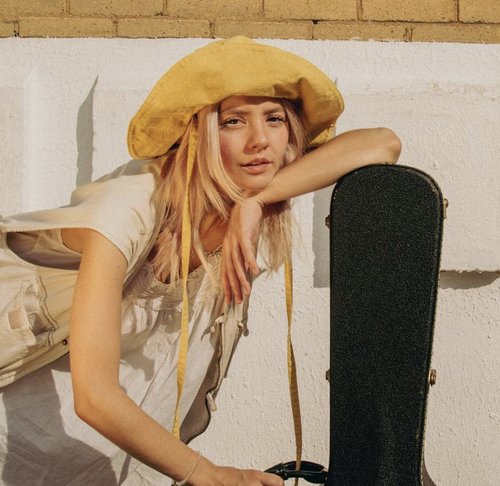
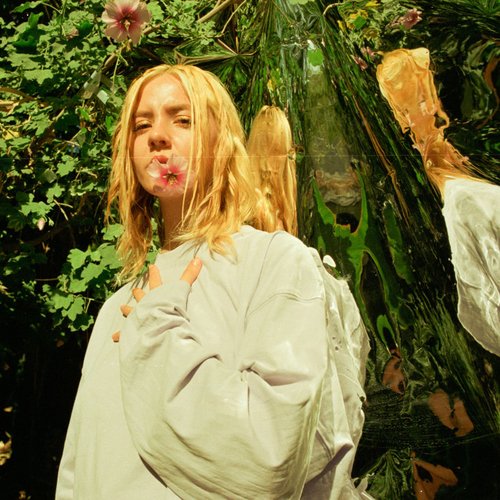
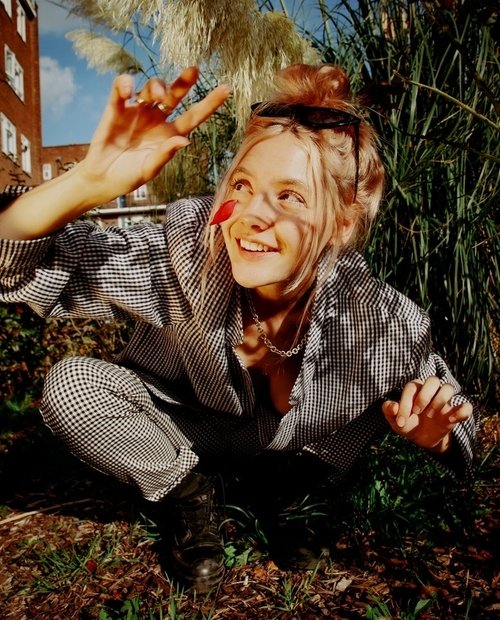
PHOTO CREDIT: Clara Setian

Dreya Mac

___________

DESPITE a change of sonic direction…

from previous Spotlight features, I am sticking with solo artists. Dreya Mac is an exciting young London-based artist who, over the past year or so, has been getting a lot of respect, column inches and adoring press. A sensational lyricist and performer, I think Mac is going to be pretty major in no time at all! Before coming to some interviews with Dreya Mac, here is some brief detail and biography about a sensational talrnt:

West London Native Dreya Mac caused a stir with her debut single “Skippin” which hit over 600K streams across DSPs, while her Colors session received over 340K views / streams in just the first three weeks.

Dreya has garnered support from tastemakers including Annie Mac, Toddla T, DJ Target, Sian Anderson and Rickie and Melvin and Charlie.

Dreya is an alumni of the world famous Brit school where she studied musical theatre and dance from the age of 14. Since then her professional dancing background has taken her all over the world to countries as far reaching as the USA and China. She can be seen demonstrating her talents in videos and shows for prominent artists such as Stormzy, Dua Lipa and Rita Ora. She has also performed at the MTV EMAs and Brit Awards and featured in the Burberry 2020 Festive Campaign”.

There has been some interesting press and interviews over 2021 and this year so far. I wanted to get to a few of them, so that we can know more about the seriously skilled Dreya Mac. Tipping Mac for good things and spotlighting a rising force, The Line of Best Fit spoke with her in April:

 “Mac fell in love with music as a medium for movement long before she committed her voice to record. Dance, in fact, was the West London rapper's first love. Cutting her teeth as a choreographer, Mac’s instinct for conducting sound through her body landed her a role in the visual for Stormzy’s seminal “Vossi Bop” – one of the only women to carve a space for herself in the male-dominated project. So when it comes to self-expression, Mac has proven that her teeth are more than sharp enough.

With only one year under her belt as a musician, four singles which boldly redefine the parameters of the UK rap scene, and a top-down execution of her artistic vision to every beat, outfit and one-two step, to describe Dreya Mac only as a rapper is a disservice. When she was five years old, however, she wasn’t as bold. “I let my sister [speak for me],” she laughs. “I’d just get her to answer questions for me. As soon as I got into dance, it was a way to let people know how I’m feeling without having to speak.” Her foray into music began with the simple intention of having something to dance to; something that drew out the particular shapes and rhythms her body wanted to channel. But in music, Mac found an entirely new, unexpected avenue of self-expression.

“I feel like it’s a kind of therapy”, she says. “When I write, I actually like what I write – I’m really gassed at the end of it. Like, it’s such a fulfilling feeling. When I’m writing, singing or rapping, I can properly express myself. Then I started to realise this could be bigger than what it is.”

 Mac can almost pinpoint the day she decided she would take rapping seriously: the first week of the UK’s national lockdown in March, 2020. By this time, she had already laid down her debut single “Skippin’” in the studio: an atmospheric superstructure of cat-and-mouse wordplay and bouncing flows, all built on a foundation of guitar strings that merged two opposing worlds together. “I didn’t push it that much, in my mind,” she recalls. “But when it got to the day they were going to announce quarantine, I shot the video and released it that first week. It was crazy”.

In the UK rap scene, Dreya Mac was a lone wolf. Apart from producer Kill Miami, who helped her spread the word, she worked alone. Yet, she feels that her music belongs to a wider movement. “There are a few artists who I think are going on the same journey as me. I can’t box myself with a single genre because I flick between them all the time, but in general, there is a new wave,” she explains. “But I think I’m coming into the scene very differently to others. I feel like there’s a formula every UK rapper follows, and I’m just trying to break that as much as I can, not letting any preconceived ideas of my journey get in the way of the kind of music I want to release. I’m coming in on a different wave, for sure.”

It's a bar being set by the likes of Slowthai and FLOHIO, who are redrawing the battlelines of what it means to be a UK rapper. “I feel like genres are kind of getting lost over the years,” Mac says. “We’re so individual, now, and there’s so much freedom in music to allow that. I just think all of these people are helping break the stigma that comes with being a UK rapper – it’s really helpful for me, because it means I can come at this with a more open mind, too.”

 With attention spans dwindling to ten second bursts from the all-you-can-eat scrolling on TikTok, Dreya Mac is seeking to create music with longevity. “I feel like right now drill and grime music is dominating, but it’s more release-driven than creatively driven, you know? When these things blow up on social media, they can come and go real quick,” she thinks. “So it takes value away from this style of music. I don’t want to just release what the UK will want.” Instead, her line of business is to make something timeless.

She remembers cleaning days on Sundays when she was a kid, with her mum blasting garage bangers through the flat. “I feel like my music is heavily influenced by the way it switches between flows, and stuff like that. It’s the earliest memory I have of music.” As she grew up and developed her own tastes, her influences diversified in ways you wouldn’t expect. “Groups like Tame Impala have really helped the instrumentation of my music,” Mac says. “And Billie Eilish, too – she doesn’t let her age be at the forefront of what she’s doing, and I can relate to that. She doesn’t take no for an answer; she doesn’t let anyone get in the way. I feel like I look further than your average, to-the-book kind of rapper. Musicians in the UK are pushed in a certain direction, and I guess I just don’t want to be boxed in at all.”

But growing up on her estate, ambition like this was a rarity. “I feel like everyone around me knew West London and didn’t know anything further than that. I don’t know what it was, whether it was my upbringing or not, but I’ve always thought bigger than what was expected of me.” She left home at 16, and through living alone, she grew a thick skin and a nurtured a hunger for self-improvement. “I didn’t have many people to talk to, so to express myself, I would just write things down on paper – and that was way before the music,” she says. “And apart from that, I could dance”.

There are a couple of other interviews that caught my eye and are worth including here. FIZZY MAG labelled Dreya Mac a rising Rap prodigy when they spoke with. Maybe a mixed blessing, Mac discovered the pure joy and freedom of Rap just as the U.K. was going into the first lockdown back in 2020:

You’ve said you began to take rapping seriously in Lockdown 1. How does it feel to have made such massive strides in such a small amount of time?

It’s quite overwhelming to be fair to have had such a big change in my journey in such a short amount of time. It’s a lot to adapt to and I feel like sometimes I put way too much pressure on myself when really I should just treat this craft how I have treated any other craft previously, and understand and accept that I have just started and I have so much further to go.

One gotta go. R&B, Drill, or Hip-Hop. Who you dropping? 
 
I say Drill, just because I feel like it’s dying out already... The way music works is that there is always one particular genre that is trending at the moment (in the UK anyway). I feel like a couple years back it was Afro-swing that was dominating the charts. Right now, we have Drill dominating the charts but it's starting to get a bit gimmicky... I feel like Hip-Hop and R&B are so timeless and have been forever that I couldn’t boot them off!

Where do you see yourself in 5 years’ time? 
 
In five years I see myself touring the world... tired, exhausted as hell from touring but at the same time so full and thankful.... I see myself with at least three albums out and as a world-renowned entertainer.

Your debut EP ‘TWENTYONE’ dropped last month. How did it feel releasing your first body of work out into the world?

Do you know what, I feel like I am my biggest critic. So I’m always going to be looking for what I could have done other than what I already have. But for some reason with this release I was very much okay and at one with what I had produced. Having a body of work out there only furthers my career and I feel like it just shows how determined and busy I have been since lockdown started. I feel like I’ve made my stamp on the scene and it’s just an introduction to order different projects I have coming up now and in the future”.

Before finishing off, NME recently spoke with the amazing Dreya Mac. As TikTok is a platform where she has accrued following and attention, they asked about her gaining huge popularity there as a Black queer woman:

Do you ever feel the TikTok stigma is hindering you and your progression?

“Before TikTok, I did live shows, I did a COLORS show and I was already performing at festivals, because I’ve created relationships with my supporters. I’ve never thought that the app could be the reason for my success. Also, even if people want to think that, I’d say the person pushing that was me. If something blows up on TikTok, it’s instantly labelled a TikTok song – I understand the logic, but ’Own Brand’ was out a couple of weeks before it started blowing up. TikTok wasn’t the basis for my success. A lot of my true supporters will know that.”

There was discourse on TikTok about you as a Black queer woman blowing up on the app, is there added pressure to be the representation you want to see in the world?

“I’m always about normalising sexuality a lot more. I don’t actively try and set out to change people’s minds or opinions or open their minds, but it happens naturally. And I feel like collectively, as humans, we can actually contribute to normalising different representations of sexuality more, by not making it a thing. I get why it’s important to talk about sexuality but it’s so conflicting in my head because I would never want something that you can’t change or have no choice over to overshadow something I’ve worked for, and be at the forefront of my career. I love being a representation for Black queer women, because I didn’t feel like I had any other like me. But I don’t want that to be highlighted over the art, you know?”

Where do you want your music and artistry to take you in the future?

“I want to be known for my music, obviously, like, that’s what I want to move the world and my artistry as a whole. Every bit of art I produce, I want it to be appreciated more than anything else. But I also want my personality to be appreciated. I want people to love the person I am as well. And, being a public figure, it helps with getting your personality out there. I can do that through music and through dance or whatever, but I want my art and I to be the main focus.

“I want my career to take me around the world. Continue my world domination. That’s what I’ve been putting out there; world domination. I don’t necessarily want to pinpoint where I want it to take me because the possibilities are endless. I’ve always had that mentality in life, in general. I just want everything to take off, really.”

“I’m currently working on my second EP. I will be dropping a couple of singles beforehand, and I’m really excited for my next single coming out very soon. I feel like I’m quite genre-fluid. You cannot pinpoint what I might come out of. I’m excited for people to hear what I can give outside of ‘Own Brand Freestyle’, and I feel like they’re gonna appreciate the variety”.

I think this year is going to be one where we will see more promising emerging artists than ever before. With live gigs back and a new hunger from artists and fans alike, Dreya Mac will court even more love and following. She is someone that we all need to keep an eye out for. If you have not checked her out yet, make sure you do so. This will be a year where Dreya Mac…

MAKES a giant impact.

_______________

Follow Dreya Mac

FEATURE: A Return to Worthy Farm… The Glastonbury Festival 2022 Playlist

FEATURE:


A Return to Worthy Farm…

IMAGE CREDIT: Stanley Dorwood/Glastonbury Festival

The Glastonbury Festival 2022 Playlist

___________

THE first real…

 IN THIS PHOTO: Phoebe Bridgers/PHOTO CREDIT: Olivia Malone for The Times

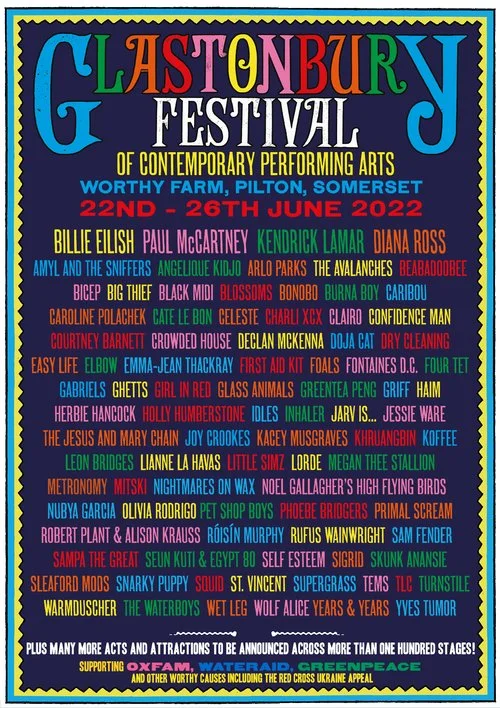
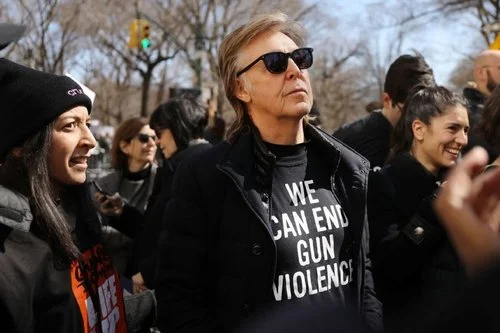
Glastonbury Festival since 2019, we return to Worthy Farm from 22nd-26th June. The first wave of artists was announced earlier this week. Headliners Billie Eilish, Paul McCartney and Kendrick Lamar join West Holts headliner Little Simz, in addition to the legends slot act, Diana Ross. On the poster/bill are the likes of Wet Leg, TLC, The Avalanches, Phoebe Bridgers, and Supergrass. There are more names to come but, after a tough couple of years, it is a relief to have the festival back! The calibre of the artists already announced means those lucky enough to have tickets are in for a treat! Let us hope that, by June, the weather improves – and the terror and war in Ukraine is over and we can return to some form of stability and peace. It will be a cathartic and wonderful celebration in Somerset in the summer. Paul McCartney headlines Saturday night; he turns eighty a week before doing his much-awaited set. Alongside him are some icons and legends of music, in addition to some newer artists who are getting this incredible platform. There will be coverage on the BBC in June. To mark the names that have already been confirmed, I have assembled a playlist of a song from those wonderful acts. In the verdant and buzzing fields of Worthy Farm in June, the amazing panoply of stunning artists will be there to soundtrack a celebration. For the first time in a long time, the excited masses will be sing, dance and…

 IN THIS PHOTO: Paul McCartney

COME together.

FEATURE: Terrifying, Awe-Inspiring, Stunning… A Gem from Hounds of Love’s The Ninth Wave: Kate Bush’s Waking the Witch

FEATURE:


Terrifying, Awe-Inspiring, Stunning…

A Gem from Hounds of Love’s The Ninth Wave: Kate Bush’s Waking the Witch

___________

I think I have written about…

 IN THIS PHOTO: Kate Bush in 1985/PHOTO CREDIT: Guido Harari

every other track on Kate Bush’s Hounds of Love. The album’s second half, The Ninth Wave, is especially captivating and immersive. Every song forms part of a suite – where a heroine is cast adrift in the sea and is hoping for rescue (and she eventually is) - that was a new thing for Bush. She had not really done anything like this before. It is a genius idea, and it gives Hounds of Love two distinct sides; almost like two E.P.s forming an album (like The Beatles’ Magical Mystery Tour). A song I have mentioned and not really gone into depth about is Waking the Witch. The third of seven tracks on The Ninth Wave, it is the most startling, frantic and head-tripping track on the entire album. It follows the beautiful opener of And Dream of Sheep. Almost lullaby-like (as the heroine desires a comfortable sleep and salvation), Under Ice follows. That is a colder and more urgent track. The third track is one of the most important. It needs to move the story on – as nightmares fill her head and the thoughts of an icy tomb await – and create a new sound and sensation. Whereas Under Ice relies more on a singular, deeper vocal and stern, almost-gothic string strike, Waking the Witch is busier. Starting quite calm and building to this madness and strange energy, it is a song that one does not hear played on the radio too much.

Before moving on, the Kate Bush Encyclopaedia sources an interview where Bush discussed Waking the Witch. Listening to it now, it is a song that really moves the senses and drags you into its world:

These sort of visitors come to wake them up, to bring them out of this dream so that they don't drown. My mother's in there, my father, my brothers Paddy and John, Brian Tench - the guy that mixed the album with us - is in there, Del is in there, Robbie Coltrane does one of the voices. It was just trying to get lots of different characters and all the ways that people wake you up, like you know, you sorta fall asleep at your desk at school and the teacher says "Wake up child, pay attention!". (...) I couldn't get a helicopter anywhere and in the end I asked permission to use the helicopter from The Wall from The Floyd, it was the best helicopter I'd heard for years for years [laughs].

I think it's very interesting the whole concept of witch-hunting and the fear of women's power. In a way it's very sexist behavior, and I feel that female intuition and instincts are very strong, and are still put down, really. And in this song, this women is being persecuted by the witch-hunter and the whole jury, although she's committed no crime, and they're trying to push her under the water to see if she'll sink or float. (Richard Skinner, 'Classic Albums interview: Hounds Of Love. Radio 1 (UK), aired 26 January 1992)”.

After Waking the Witch, there are two tracks where, sonically, things calm a bit with Watching You Without Me. The lyrics are quite haunting (the heroine imagining people she loves and her not being there), whilst Jig of Life takes the energy back up. Whereas Waking the Witch is anxious, scary and dark, Jig of Life is full of Irish passion as, at last, there is that kick of life and determination to survive! I like the fact that Waking the Witch comes one song before the midway point of that suite; Jig of Life emphatically opens the second – the shift between doom and a lack of hope and signs that things might be alright. On paper, a concept like The Ninth Wave seems easy and a lot of fun. Lesser artists would have written seven songs that sounded the same or lacked necessary emotion and impact. Bush managed to create this suite and concept (even if we do not know how the heroine was saved and how she ended up in the water) and, along the way, concocted so many moods and differing compositions. To me, the darkly terrifying jolt you get in Waking the Witch is one of the standout moments from The Ninth Wave. With helicopter sound from Pink Floyd’s The Wall, and some of Bush’s best lyrics (the opening verse where various voices urge the heroine to wake up is spellbinding and harrowing in equal measures), Waking the Witch is a phenomenal and unforgettable song…

ON an album of masterpieces.

FEATURE: Fountain and Water: PJ Harvey’s Dry at Thirty

FEATURE:


Fountain and Water

PJ Harvey’s Dry at Thirty

___________

NOT only can you buy…

 IN THIS PHOTO: PJ Harvey in San Francisco in 1992/PHOTO CREDIT: Jay Blakesberg

PJ Harvey’s amazing debut album, Dry, on vinyl; you can also get the recent Demos version of it. As Harvey’s debut is thirty on 30th March, I am looking ahead to an incredible moment in music. One of the most impressive and distinct of all time, it is worth spending a bit of time getting to know the background to Dry – in addition to sourcing a couple of critical reviews. The first feature that I want to highlight is from 2020. In spite of PJ Harvey being young when her debut came out and not like any other artist, she was fully-formed and hugely confident:

Straight out of England’s rural Southwest, Polly Jean Harvey always had a spiritual connection with the American South – the birthplace of backwoods-gothic sin and redemption – and of the blues, which she discovered through her first musical hero, Howlin’ Wolf. With that lineage, it was no surprise that the debut album by this young Englishwoman was unlike anything else that appeared in 1992. Almost three decades later, it’s no stretch to say that it’s still startling. Albums like Dry are so way-out-there that they don’t belong to a decade or scene.

The feral blues-rock underpinning Harvey’s volcanic presence on the record raises the hair on the back of your neck. More than that: hearing Dry‘s gnarled guitar/bass/drums attack is like being in the same room as something disquieting and eternal. Though Harvey’s sonic armory later included a bit of goth, a little electronica, some plain old rock, and something approaching pop, it was the blues that unlocked her storytelling abilities.

 The other remarkable thing is that despite being only 22, PJ Harvey was already fully-formed as a singer and songwriter. This “guitar-toting succubus,” in Rolling Stone’s description, had an emotional spectrum that skewed toward drama, and she had no filter. But she wasn’t out of control – as some contemporary reviewers speculated – she was just conveying her truth, figuratively ripping away Band-Aids to show some wounds, while leaving others safely covered.

One 1992 rave review – that didn’t quite grasp her – contended that Dry was an “honest irrational outpouring.” (The reviewer also claimed she’d reinvented “post-rockist guitar.”) In fact, the album was only irrational in the sense that human feelings are irrational. Honest, though, it certainly was. While Polly Jean later rebutted the assumption that her songs were autobiographical, Dry was undeniably influenced by her own life.

She and her band (Rob Ellis, drums; Stephen Vaughan, bass) had moved from her home village of Corscombe, Dorset (population 445), to London in 1991, and it was a wrench. While the move was musically productive – they signed to indie label Too Pure and were championed by influential Radio 1 presenter John Peel – Harvey was deeply unhappy. Her first real relationship had just ended, she was renting a damp flat in North London, and the city felt overwhelming.

Thus, the songs that ended up on Dry have a definite narrative arc. Over 11 tracks, the mood gradually shifts from heartbroken pleading to a thirst for revenge. Aptly, it kicks off with a discordant clang – that’s Harvey’s guitar, welcoming you to the opening “Oh My Lover.” Dark and bass-heavy, it grimly gives her boyfriend permission to see another woman while still involved with Polly.

On “Dress” and “Sheela-Na-Gig” (the first and second singles), Harvey first adopts a teenage whine, begging the guy to look at her in the dress he bought her; in the second song, she offers him her “childbearing hips…ruby-red ruby lips,” only to be rebuffed by his brutal retort, “You exhibitionist…Wash your breasts, I don’t want to be unclean.”

All of this, including the furious payback tracks “Joe” and “Hair,” is thrust along by Harvey’s caustic guitar-playing and the cavernous noise kicked up by drums and bass. In the latter song she’s Delilah, cutting off Samson’s crowning glory as he screams, “Wait!” an image that any wronged lover will relish.

Oh, and there are some first-class hook lines on Dry: the chorus of “Sheela-Na-Gig” especially, is a roaring singalong that could have been made for festival crowds, and the delight of it, is that it’s about ancient stone figures of women displaying their labia.

It’s easy to see why Courtney Love once said, “The one rock star that makes me know I’m sh_t is Polly Harvey.” Madonna, too, is a fan, and there are clear affinities with Björk, whose solo career took off a year after Dry; both women are restlessly creative, and not bound to any template. Natasha Khan of Bat for Lashes was also inspired by Harvey’s “honest, real, quite intimate nakedness” while making her 2012 album, The Haunted Man.

If Dry still packs a punch almost three decades on, imagine how it sounded at the time. And imagine how she appeared to an early 90s audience. The front cover is an extreme close-up of her bruised-looking lips and the back shows her in stark monochrome, topless and watching the camera equivocally. Yet she bridled at the idea that she and her music upended conventional feminine mores: she just was what she was. Dry is a stunning debut from an artist who more than lived up to her early promise.

Featuring some of Harvey’s best tracks - Sheela-Na-Gi, Dress, and O Stella among them -, it is no wonder Dry remains such a popular and fascinating album. The Demos album is worth getting, as it is powerful and revealing. A tremendous artist who, few would have guessed in 1992, has gone on to become a legend and an icon. Many artists start life quite modestly, though there is such conviction, wonder and raw talent right through Dry! Thirty years later, it remains one of the greatest albums ever. I will end with a couple of reviews. NME had their say in 1992:

Women are reputed never to be disgusted. The sad fact is, they often are, but not with men, they are most often disgusted with themselves." Germain Greer, The Female Eunuch

EXCEPT POLLY PJ Harvey. She's the final nail in the coffin of the carefree, careless boy music critic. Behold, she is the one-woman saviour of indie sex! From out of a regenerated but already self-pollinating indie universe she came, sounding sooo different from Thousand Yard Stare and Midway Still that she might've been from another planet of sound altogether.

Last year's 'Dress' 45 was a wildcat among homing pigeons. Minimalist, hard-faced, ferocious, string heaven, it put the indie boys in a spontaneous lather and nailed mini-label Too Pure to the map. Now you will hear this a lot over the coming weeks - and you'll hear it again and again as this incredible band make their ascent to mainstream acceptance - but I'm putting it into speechmarks: "PJ Harvey has got balls". Do me a king-sized favour! Is it not time we stopped attaching bullocks to things we think are good? Is there not an element of actual lazy journalism in bestowing the gift of sperm production on a female artist who makes the grade? Patriarchal hogwash. You don't need to be Tim Booth, with his "God made us to her own design" guilt-trippery, to be offended by this daft, out-of-date sexist slur. Polly J Harvey Hs assets, strengths, attributes, talent. She is so great, she is a man. Cheers.

"Much to discover/I know you don't have the time", she sings - and when I say sings, I don't just mean enunciate words in tune to a provided melody, Polly dredges these sounds from the pit of her dissected soul and drags them out of her mouth with clenched fists. There is, indeed, much to discover on the low-key, 11-track debut by this Yeovil three-piece. And you should make time. From the first opening vocal wrench that is 'Oh My Lover', you know you're a million miles from the hard(on) sell of corporate nutter-chic(k) such as Tori Amos or even Sinead (God strike me down!). We have come to expect hard work and running up and down and ankle-breaking effects pedal punishment from our best On stars in the last couple of years - but this, as they say, is personal. Doing it for the kids, she may be, but swat is she doing , exactly?

PJ Harvey is the name of the band; this includes cool, grumbling bassist Stephen Vahghan and deft, unmannered drummer Robert Ellis. PJ Harvey is the name of the band's raison d'être too - it is her bruise-like lips that are pushed in your face on 'Dry's' sleeve, it's her songwriting credit that takes these clever, repetitive, low-slung guitar poems into another dimension; it's her submerged, naked body that shocks from the album's back cover. In this case, the blokes are the accessories.

"I'm naked/So cover my body/Dress it fine" she sings on 'Happy And Bleeding', the album's cornerstone. The appearance of Polly's chest on this record's packaging may find itself, erm, misused in the grubby mitts of the lonelier Indie Sadboy, but let's hope they toss themselves off to death, while PJ goes on to greater things. It's problematic, for sure, this brazen, 'artistic' statement - but if you can't rise above it, you won't get far within.

When PJ says she's "bleeding for you", is it some martyrdom kick, or a lover's threat, or a metaphor for pain? One is drawn quickly to the conclusion that it's a 'woman's thing', but things get real messy when you burden a songwriter with your own gender-specific guesswork. Elsewhere, though, PJ urges the onlooker to "Look at these child-bearing hips/Look at these, my ruby red lips"(Sheela-Na-Gig) - she's washing that man right out of her hair ("Turn the corner, another one there") and on 'Dress' she's clearly addressing the pressures of fitting accepted female stereotypes - "It's hard to walk in a dress/It's not easy". You feel as if there's some absurdist gender panto going on in Ms Harvey's mind”.

I will end with Pitchforks from 2016. From its release to recent years, people have been awestruck and moved by one of PJ Harvey’s greatest albums. Among the many strengths of Dry are its vivid and rich lyrics:

From Dry’s first line, Harvey relishes in that ambiguity, forcing the listener to figure out what they’re feeling and why. “Ohhh myyy loverrr,” she rasps in her thick accent, as if seducing someone with her dying breath. She’s assuring her man that it’s fine for him to see another woman simultaneously, promising she’ll soak up his troubles while he can take whatever he likes: Her character understands that his time is limited, his satisfaction paramount, and that compromise is the fate of all women. The bass thuds like a domino line of falling oak trees, while a harmonium’s eerie whine makes the song feel like a dark, lost folk standard.

She follows the streak of subjugation: A frenzied prayer to the Virgin Mary on “O Stella,” to guide her through the night on “Dress.” Then comes “Victory,” where she’s a post-punk Vera Lynn lustily imploring the boys to “sweat, dig—I’ll mop it right off your brow.” On the earthy lurch of “Happy and Bleeding” she loses her virginity and turns from fresh fruit to rotten peach both “long overdue” and “too early,” her “idle hole” then rejected on “Sheela-Na-Gig.” That’s the first half of Dry: blitzing the rigged path young women must walk from innocence to sullied castoff. It’s rife with disappointment and violence, but Harvey treats the double standard for the absurd cabaret it is, making perfect sense of it through her formative blues vocabulary. She plays victim in her words and aggressor with her guitar, adopting a libidinous swagger that’s as nasty and thrilling as the abuser who keeps her coming back for more. Nobody sings like PJ Harvey sings on Dry, veering perilously (but exactingly) between wheedling, raging, vamping, always with a sly wink.

These extreme contrasts confused critics at the time: Dry played like a feminist statement but she refused the label, wondering why anyone remarked on her sexual lyrics when plenty of rock and blues bands had gone further before her. Mostly dressed in black, her hair scraped back severely, she seemed to eschew image, but then posed topless on the cover of NME. She insisted that there was no depth to the lyrics, and professed to being baffled by people’s attempts to interpret them, but her considered use of female archetypes to depict a woman’s fall and subsequent vengeance told a different story. All of these things were true at once, part of her distancing push-and-pull. As she told Spin in ’93, “The biggest protection you can have is if people think they’ve got you and they haven’t got you at all.”

She pulls the same trick on Dry’s scumbag subject, going into the record's vengeful second half. She’s Delilah to his Samson on “Hair,” flattering him into submission and cutting off his mane. “I’ll keep it safe,” she sings, sounding emboldened by power, before flipping on a knife edge, realizing: “You’re mine.” The bass zooms as if mapping the swift transfer of power; the rhythm section pounds like Samson’s impotent rage. “Joe” is the record’s most manic moment. There’s no quiet-loud shift, just pure piledriver dynamics as she spits nails at the treachery she’s experienced: “Always thought you’d come rushing in to clear the shit out of my eye/Joe, ain’t you my buddy, thee?”

But rather than commit bloody murder as you might expect, she retreats on “Plants and Rags,” “[easing] myself into a body bag,” and finding solace at home: “Who thought they could take away that place?” she asks as the violin swirls to a deranged squall. Her love of Slint comes through on the menacing fretboard harmonics of “Fountain,” where she washes herself clean and a Jesus-like figure shrouds her modesty in leaves. On “Water,” her first utterance of the word sounds like she’s dying of thirst. By the chorus, when she’s walked into the sea, invoking Mary and Jesus again, she sounds as though the crashing waves are emanating from her own throat.

Critics have theorized that she drowns herself at the end of the album, to rid the shame from her body. But it sounds more like a rebirth; the cure to her dryness, finding satisfaction on her own terms and eradicating the need she had looked to someone else to fill. Dry is an exciting, scary joyride through the dawning realization that learning to please yourself yields far greater pleasure than relying on others to do it for you: These gory myths are her lover’s discourse, an apocalypse—in the revelatory sense—that she would push even further on 1993’s Rid of Me (after her immediate fame resulted in a nervous breakdown). Following the NYC gloss of 2000’s Stories From the City, Stories From the Sea, she attempted to tap back into this sound on 2004’s Uh Huh Her, but the lack of her debut’s extreme urgency limited its success. On Dry, Harvey’s character may appear to subjugate her gratification, but it’s all there, bursting out in the zeal of her playing.

“It’s the same kind of excitement, playing music, as in a sexual relationship, and the two go hand-in-hand,” she told a French TV show in ’93. “And I think I find music physically exciting as well—actually playing loud music and standing in front of a bass amplifier is quite a sexual experience, I think.” She tells a story about playing in Chicago, and how every time Steve Vaughan hit an A, she got vibrations right up to her middle. “Wonderful,” she muses. “We play a lot of songs in A as well, so it was a good night.” The French journalist gurgles like a stunned baby, unable to process this frank, feral waif who’s got it all figured out”.

Prior to 30th March, I wanted to spotlight a classic album. I don’t think we will get an anniversary release, as the Demos album came out a couple of years back. Anyway, fans around the world will give their thanks and love to a masterpiece from PJ Harvey. As astonishing as any debut, Dry is an album that will…

NEVER lose its brilliance.

FEATURE: A Buyer’s Guide: Part Ninety-Four: Pixies

FEATURE:


A Buyer’s Guide

PHOTO CREDIT: Travis Shinn

 Part Ninety-Four: Pixies

___________

EVEN though I usually say…

an artist needs to have released at least eight studio albums to make it onto this feature, I am making an exception with Pixies. The U.S. giants released their seventh album, Beneath the Eyrie, in 2019. They are headlining the BBC Radio 6 Music festival in April, and I have a feeling they may release an album sometime this year (and, as they released the single, Human Crime, recently, it looks likely more will follow). It may seem obvious which albums of theirs I select as the best…though that is not necessarily the case. Before getting to the essential Pixies albums, an underrated gem and their latest album (in addition to a good book relating to the band), here is some detailed biography from AllMusic:

Combining jagged, roaring guitars and stop-start dynamics with melodic pop hooks, intertwining male-female harmonies, and evocative, cryptic lyrics, Pixies are one of alternative rock's most influential bands. On albums such as 1988's Surfer Rosa and 1989's Doolittle, they turned conventions inside-out, melding punk and indie guitar rock, classic pop, surf rock, and stadium-sized riffs with singer/guitarist Black Francis' bizarre, fragmented lyrics about space, religion, sex, mutilation, and pop culture. His lyrics may have been impenetrable, but the music was direct, forceful, and laid the groundwork for the alternative explosion of the early '90s. From grunge to Brit-pop, Pixies' shadow loomed large; it's hard to imagine Nirvana without Pixies' signature loud-quiet-loud dynamics and lurching, noisy guitar solos. However, the band's commercial success didn't match its impact -- MTV was reluctant to play their videos, while modern rock radio didn't put their singles into regular rotation. By the time Nirvana broke the doors down for alternative rock in 1992, Pixies were effectively broken up. During the rest of the '90s and into the 2000s, they continued to inspire acts ranging from Weezer, Radiohead, and PJ Harvey to the Strokes and Arcade Fire. Pixies' 2004 reunion was as surprising as it was welcome, and the band's frequent tours led them to record albums including 2019's Beneath the Eyrie, which continued the sound of their groundbreaking early work.

Pixies were formed in Boston, Massachusetts in January 1986 by Charles Thompson and Joey Santiago, Thompson's suitemate while studying at the University of Massachusetts Amherst. Born in Massachusetts and constantly shuttling between there and California, Thompson began playing music as a teenager before he moved to the East Coast for good during high school. Following graduation, he became an anthropology major at the University of Massachusetts. Halfway through his studies there, he went to Puerto Rico to study Spanish, and after six months he decided to move back to the U.S. to form a band. Thompson dropped out of school and moved to Boston, managing to persuade Santiago to join him. Advertising in a music paper for a bassist who liked "Hüsker Dü and Peter, Paul and Mary," the duo recruited Kim Deal (who was billed as Mrs. John Murphy on the group's first two records), who had previously played with her twin sister Kelly in their band the Breeders in her hometown of Dayton, Ohio. On the advice of Deal, the group recruited drummer David Lovering. Inspired by Iggy Pop, Thompson picked the stage name Black Francis and the group named itself Pixies after Santiago randomly flipped through the dictionary.

After a few months, Pixies had played enough gigs to land a supporting slot for fellow Boston band Throwing Muses. At the Muses concert, Gary Smith, an artist manager and producer at Boston's Fort Apache studios, heard the group and offered to record them. In March 1987, Pixies recorded 18 songs over the course of three days. The demo, dubbed The Purple Tape, was given to key players within the Boston musical community and the international alternative scene, including Ivo Watts, the head of England's 4AD Records. On the advice of his girlfriend, Watts signed the band. After selecting eight of the demo's songs and remixing them slightly, 4AD released them as Come on Pilgrim in September 1987. Named for a lyric from a song by Christian rocker Larry Norman -- whose music Francis listened to while growing up -- the mini-album peaked at number five on the U.K. indie album chart.

In December 1987, Pixies began recording their first full-length album, Surfer Rosa, with Steve Albini at Boston's Q Division studio. Albini, who had pioneered the thin, abrasive indie guitar grind with Big Black, gave the band a harder-edged sound over the ten-day session, yet the group retained its melodic hooks. Released in March 1988, Surfer Rosa became a college radio hit in America (and was ultimately certified gold by the RIAA in 2005); in the U.K., the album reached number two on the Indie Chart and earned enthusiastic reviews from the British weekly music press. By the end of the year, Pixies' buzz was substantial, and the group signed to Elektra.

While touring in support of Surfer Rosa, Francis began writing songs for the band's second album, some of which appeared on their 1988 sessions for John Peel's radio show. That October, the band entered Downtown Studios in Boston with English producer Gil Norton, with whom they had recorded the single version of "Gigantic" in May. With a budget of $40,000 -- four times the amount Surfer Rosa cost -- and a month of initial recording sessions, Doolittle was Pixies' cleanest-sounding album yet. It received excellent reviews, leading to greater exposure in America. "Monkey Gone to Heaven" and "Here Comes Your Man" became Top Ten modern rock hits, clearing the way for Doolittle to peak at number 98 on the U.S. charts; meanwhile, it hit number eight on the U.K. Album Chart. Throughout their career, Pixies were more popular in Britain and Europe than America, as evidenced by the success of the Sex and Death tour in support of Doolittle. The band became notorious for Black Francis' motionless performances, which were offset by Deal's charmingly earthy sense of humor. The tour itself became infamous for the band's in-jokes, such as playing their entire set list in alphabetical order. By the completion of their second American tour for Doolittle at the end of 1989, the bandmembers had begun to tire of each other and decided to take a hiatus.

During his time away from Pixies, Black Francis went on a brief solo tour. Meanwhile, Kim Deal re-formed the Breeders with Tanya Donelly from Throwing Muses and bassist Josephine Wiggs of Perfect Disaster. In January 1990, Francis, Santiago, and Lovering moved to Los Angeles to prepare for recording Pixies' third album, Bossanova, while Deal worked on the Breeders' debut album Pod in the U.K. with Albini; she joined the rest of the group in time to start recording in February. Working once again with Norton at Burbank, California's Master Control studio, the band wrote many of the album's songs in the studio. More atmospheric than its predecessors, and relying heavily on Francis' surf rock obsession, Bossanova was released in August of 1990; unlike Surfer Rosa or Doolittle, it contained no songs by Deal. Bossanova was greeted with mixed reviews, but the record became a college hit, generating the modern rock hits "Velouria" and "Dig for Fire" in the U.S. In Europe, the record expanded the group's popularity, hitting number three on the U.K. album charts and paving the way for their headlining appearance at the Reading Festival. Though the supporting tours for Bossanova were successful, tension continued to grow between Kim Deal and Black Francis -- at the conclusion of their English tour, Deal announced from the stage of the Brixton Academy that the concert was "our last show."

While they canceled their planned American tour due to exhaustion, Pixies reconvened in early 1991 to make their fourth album with Gil Norton, recording in studios in Burbank, Paris, and London. Hiring former Captain Beefheart and Pere Ubu keyboardist Eric Drew Feldman as an auxiliary member, the band moved back toward loud rock, claiming to be inspired by the presence of Ozzy Osbourne in a neighboring studio. Upon its fall release, Trompe le Monde was hailed by some as a welcome return to the sound of Surfer Rosa and Doolittle, but closer inspection revealed that it relied heavily on sonic detail and featured very few vocals by Deal and, as on Bossanova, none of her songs. The band embarked on another international tour, playing stadiums in Europe but theaters in America. Early in 1992, Pixies opened for U2 on the opening leg of the Zoo TV tour; upon its conclusion, the band went on another hiatus, with Deal returning to the Breeders, who released the EP Safari that April. Francis began working on a solo album.

As he was preparing to release his solo debut in January 1993, Francis gave an interview on BBC's Radio 5, announcing that Pixies were disbanding. He hadn't yet informed the other members; later that day, he called Santiago and faxed Deal and Lovering the news. Inverting his stage name to Frank Black, Francis released his eponymous debut that March. The Breeders released their second album, Last Splash, in August 1993. The album became a hit, going gold in the U.S. and spawning the hit single "Cannonball." Soon after, Deal also formed the Amps, who released their one (and only) album, Pacer, in 1995. Santiago and Lovering formed the Martinis in 1995 and appeared on the soundtrack to Empire Records. During the late '90s and early 2000s, 4AD issued archival Pixies releases, including Death to the Pixies 1987-1991, Pixies at the BBC, and Complete B-Sides.

After releasing The Cult of Ray for American in 1996, Black shuffled between different labels and ended up on spinART for 1999's Pistolero, and several subsequent solo albums. Deal and the rest of the Breeders, meanwhile, suffered from problems ranging from substance abuse to writer's block, and only surfaced intermittently, spending time in the studio but only having a cover of the Three Degrees' "Collage" on the soundtrack to 1999's The Mod Squad to show for their efforts until they released Title TK in 2002. David Lovering left the Martinis and became the touring drummer for Cracker, and also appeared on Donelly's Sliding and Diving, but found himself unemployed in the late '90s. Combining his studies in electronic engineering at Wentworth Institute of Technology and his years of performing experience, Lovering dubbed himself a "scientific phenomenalist," a cross between a scientist, performance artist, and magician, and warmed up the crowds at Frank Black, Breeders, Camper Van Beethoven, and Grant Lee Buffalo concerts. Santiago and his wife Linda Mallari continued the Martinis through the '90s, recording several demos and self-released albums. Santiago also began a career composing soundtracks and incidental music, beginning with the score for 2000's Crime & Punishment in Suburbia, to which Black also contributed a track.

Hopes that Pixies would re-form remained unfounded until 2003, when Black revealed in an interview that he had considered reuniting the band and that he, Deal, Santiago, and Lovering occasionally got together to jam. In 2004, Pixies reunited for U.S. tours, an appearance at that year's Coachella festival and gigs in Europe and the U.K. that summer, including performances at the T in the Park, Roskilde, Pinkpop, and V festivals. All 15 of the band's North American warm-up dates were recorded and released in limited editions of 1,000 copies, then sold online and at the shows. The week after the Pixies' Coachella appearance, the DVD retrospective Pixies and revamped best-of Wave of Mutilation: The Best of Pixies were released by 4AD. The band also released two songs, "Bam Thwok" and a cover of Warren Zevon's "Ain't That Pretty at All" in 2004.

Despite consistent touring throughout the 2000s and 2010s, no more new music appeared until 2013, when the group went into the studio with longtime producer Gil Norton. During those sessions, Deal officially left the group. Former Fall bassist Simon Archer, aka Dingo, replaced Deal in the studio, and the band hired the Muffs' Kim Shattuck for touring duties. "Bagboy," the first Pixies song in nine years, arrived in July 2013 and featured Bunnies vocalist Jeremy Dubs. That November, Shattuck was let go from the band; a few weeks later, Paz Lenchantin -- who also played with Zwan and A Perfect Circle -- was drafted as the Pixies' bassist. EP2 arrived in January 2014, and EP3 was issued that March. The EPs were compiled as the album Indie Cindy for that April's Record Store Day. It reached number 23 on the Billboard 200 albums chart, making it the band's highest-charting album in the U.S. to date. Pixies began work on their sixth album late in 2015, working with producer Tom Dalgety at London's RAK Studios. Released in September 2016, Head Carrier was the first album to include Lenchantin as a full-fledged member. The album peaked at number 72 on the Billboard 200, while the single "Classic Masher" debuted on the Adult Alternative Songs chart at number 30, marking Pixies' first appearance on a Billboard airplay chart since 1992. Late in 2018, the band reunited with Dalgety to record their seventh album at Dreamland Recordings in Woodstock, New York. Pixies documented the making of the album in a 12-episode podcast hosted by author Tony Fletcher that premiered in June 2019. That September, Beneath the Eyrie -- named for an eagle's nest discovered near the studio -- arrived on Infectious. The following year, the band issued demos for the album as well as the single "Hear Me Out”.

Almost forty-four years since Pixies put out their debut album, they are still going strong. Let’s hope the band have no desire to call it time anytime soon! If you need a guide which Pixies albums you should own, then the selection of recommendations below should be of assistance. Here is my guide to…

A legendary band.

_______________

The Four Essential Albums


Surfer Rosa

Release Date: 21st March, 1988

Label: 4AD

Producer: Steve Albini

Standout Tracks: Bone Machine/Where Is My Mind?/Brick Is Red

Buy: https://www.roughtrade.com/gb/pixies/surfer-rosa

Stream: https://open.spotify.com/album/50j4Wm1b9hLpSpPIA39Vp9?si=S_eAn9coS2KVeE1n8R1CVg

Review:

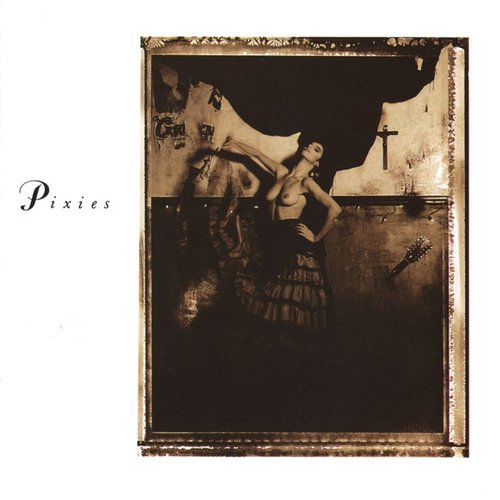
One of the most compulsively listenable college rock albums of the '80s, the Pixies' 1988 full-length debut Surfer Rosa fulfilled the promise of Come on Pilgrim and, thanks to Steve Albini's production, added a muscular edge that made their harshest moments seem even more menacing and perverse. On songs like "Something Against You," Black Francis' cryptic shrieks and non sequiturs are backed by David Lovering and Kim Deal's punchy rhythms, which are so visceral that they'd overwhelm any guitarist except Joey Santiago, who takes the spotlight on the epic "Vamos." Albini's high-contrast dynamics suit Surfer Rosa well, especially on the explosive opener "Bone Machine" and the kinky, T. Rex-inspired "Cactus." But, like the black-and-white photo of a flamenco dancer on its cover, Surfer Rosa is the Pixies' most polarized work. For each blazing piece of punk, there are softer, poppier moments such as "Where Is My Mind?," Francis' strangely poignant song inspired by scuba diving in the Caribbean, and the Kim Deal-penned "Gigantic," which almost outshines the rest of the album. But even Surfer Rosa's less iconic songs reflect how important the album was in the group's development. The "song about a superhero named Tony" ("Tony's Theme") was the most lighthearted song the Pixies had recorded, pointing the way to their more overtly playful, whimsical work on Doolittle. Francis' warped sense of humor is evident in lyrics like "Bone Machine"'s "He bought me a soda and tried to molest me in the parking lot/Yep yep yep!" In a year that included landmark albums from contemporaries like Throwing Muses, Sonic Youth, and My Bloody Valentine, the Pixies managed to turn in one of 1988's most striking, distinctive records. Surfer Rosa may not be the group's most accessible work, but it is one of their most compelling” – AllMusic

Choice Cut: Gigantic

Doolittle

Release Date: 17th April, 1989 (U.K.)/18th April, 1989 (U.S.)

Labels: 4AD/Elektra (initial U.S. distribution)

Producer: Gil Norton

Standout Tracks: Debaser/Here Comes Your Man/Mr. Grieves

Buy: https://www.roughtrade.com/gb/pixies/doolittle/lp

Stream: https://open.spotify.com/album/0DQyTVcDhK9wm0f6RaErWO?si=QULMd9o3TjKlTStD-_eOpQ

Review:

As Kurt Cobain readily told anyone who cared to hear, Nirvana's Nevermind wouldn't have happened without the Pixies' Doolittle. When it came out in 1989, the Pixies' abrasive guitars and twisted, nightmarish vision were eclipsed by the bad-boy cool of Guns n' Roses and the frothy pop of Fine Young Cannibals. For angry, punk self-reflection, you had to comb the indie underground.

The Pixies changed all that, and with Doolittle laid the groundwork for Nineties rock. The album's breathtaking mix of noisy, almost surflike guitars, sweet pop melodies and primal-scream-therapy vocals inspired a generation of would-be rock stars: Nirvana adopted the Pixies use of quiet, mumbled verses and loud, crashing choruses, Courtney Love aped their banshee wails, and Beck drew inspiration from their catalog of surrealistic lyrics.

Doolittle chugs into action on a New Wave bass line and frontman Black Francis' adrenalized barking about a weird scene from a Luis Bu–uel movie. "Debaser," with its cool, crisp guitar line and lyrics about "slicing up eyeballs," sets the tone of the album. From there, the band careens back and forth from menacing to melodic, as Francis and bassist Kim Deal screech, snort and coo their way through tunes such as "Wave of Mutilation," "I Bleed," "Dead" and "Gouge Away.

" Despite the bizarrely violent song titles, the Pixies were schoolyard nerds at heart -- the only person Francis was scaring with his lyrics was himself. They turned out to be prescient: Within five years, awkward pop stars from Pavement to Weezer represented the new cool, and "Monkey Gone to Heaven" and "Here Comes Your Man" were classics” – Rolling Stone

Choice Cut: Monkey Gone to Heaven

Trompe le Monde

Release Date: 23rd September, 1991

Label: 4AD

Producer: Gil Norton

Standout Tracks: Alec Eiffel/Head On/Letter to Memphis

Buy: https://www.roughtrade.com/gb/pixies/trompe-le-monde-30th-anniversary

Stream: https://open.spotify.com/album/1xtaONLuwdb5STNnLGNVGi?si=3bS9ywc3RXiYuwHPT4sYdw

Review:

The title might be French for "fool the world," but with Trompe le Monde, the Pixies weren't fooling anyone: this was essentially Black Francis' solo debut. It focuses on Francis' sci-fi fascination and lacks any Kim Deal songs; even her backing vocals are far and few between. Yet the band sounds revitalized on Trompe le Monde, as if it were planned as their last hurrah. The raucous "Distance Equals Rate Times Time" and the explosive cover of the Jesus and Mary Chain's "Head On" are fairly straightforward, but the lyrics remain quirky on "Planet of Sound," a song about a Martian who lands on Earth, and "Palace of the Brine," a tribute to sea monkeys and Utah's Salt Lake. He even disses hipsters and pretentious students -- basically, the Pixies' fan base -- with nasty little digs like "Subbacultcha"'s "I was wearing eyeliner/She was wearing eyeliner" and "U-Mass"' "It's eduuucaaationaal!" Musically, "Trompe le Monde"'s psychedelic sheen and "Alec Eiffel"'s atmospheric keyboards prove that the Pixies' sound wasn't defined by Steve Albini-style rawness. There's also more emotional depth: "The Sad Punk" features the strangely poignant bridge "And evolving from the sea/Would not be too much time for me/To walk beside you in the sun," and "Letter to Memphis" is a heartfelt, if cryptic, love song. Though Trompe le Monde doesn't sound quite like the Pixies' other work, Come on Pilgrim's spooky beginnings, Surfer Rosa's abrasive assault, Doolittle's deceptively accessible punk-pop, and Bossanova's spacy sonics helped make Trompe le Monde a rousing swan song and a precursor to alternative rock's imminent success. Whether that means their music remained pure or they missed their chance to cash in is debatable; either way, the Pixies are one of America's greatest, most influential bands” – AllMusic

Choice Cut: Planet of Sound

Indie Cindy

Release Date: 19th April, 2014

Labels: Pixiesmusic/PIAS

Producer: Gil Norton

Standout Tracks: Greens and Blues/Bagboy/Blue Eyed Hexe

Buy: https://www.discogs.com/sell/list?master_id=677440&ev=mb

Stream: https://open.spotify.com/album/6pRgKtzZuyJRYZ0ie3wRQa?si=L4dGqRrsQLS_3fzDTuyAVQ

Review:

After 10 years as their own covers band, Pixies have finally decided to release new material to spare them the embarrassment of trotting out the same old classics on tour. Unleashing a new album 23 years after your last is risky – you’re never going to come near the legendary levels of Doolittle and Bossanova, and your mutant-surf-gaucho-punk sound has been diluted by dozens of lesser indie bands over the years. Bassist Kim Deal’s departure last year doesn’t help. Still, Pixies fans will find plenty here to like. Most of the tracks have already come out on the band’s three recent EPs, and yes, they sound fragmented as a single album, but Pixies are past masters at pulling all the pieces together. The skewed pop melodies and twisted riffs are there on Greens and Blues, Magdalena 318, Snakes and Blue Eyed Hexe, while Bagboy, Andro Queen and Another Toe in the Ocean duck and dive with grace and grit” – The Irish Times

Choice Cut: Indie Cindy

The Underrated Gem


Head Carrier

Release Date: 30th September, 2016

Labels: Pixiesmusic/PIAS

Producer: Tom Dalgety

Standout Tracks: Head Carrier/Classic Masher/Tenement Song

Buy: https://www.roughtrade.com/gb/pixies/head-carrier/lp

Stream: https://open.spotify.com/album/0CwsCKBeUxkgRi9LbdWl2x?si=ZwjYk94uT0SV8lTOOziQVA

Review:

And deeper we dig into the dirt. Don’t believe the anti-hype; despite the lack of Kim Deal, Pixies’ 2014 comeback ‘Indie Cindy’ was a worthy successor to their superlative first era, with its tales of witches, sea monsters, android queens and alien lovers.

If that record seemed plucked, musically, from intergalactic radio signals beamed between 1990’s ‘Bossanova’ and 1991’s ‘Trompe Le Monde’, their second reunion album ‘Head Carrier’ treads further back, into the consecrated murk that was ‘Doolittle’ and ‘Surfer Rosa’.

Abandon hope all ye who enter here hoping that Black Francis, at 51, might recapture the sexual frenzy and devil-pact menace of those cult-inducing records, or that new producer Tom Dalgety (Royal Blood, Band Of Skulls) will emulate Gil Norton’s rusted torture chamber aesthetic.But in a cleaner, more mature, concerned-about-its-blood-pressure manner, ‘Head Carrier’ revisits Pixies’ prime, primal age, melodically pumped and squaring up confidently to its admittedly formidable forebears.

There are obvious lifts: ‘All I Think About Now’ is essentially new bassist Paz Lenchantin’s chance at her very own ‘Where Is My Mind?’ right down to the manic pixie “ooh-oooh”s, while ‘Um Chagga Lagga’ is a classic desert punk rant so indebted to ‘Isla De Encanta’ and ‘Oh My Golly!’ that the EU may well sue it for not including the required number of verses in Spanish. Otherwise, ‘Head Carrier’ applies the surf-pop sunscreen of Frank Black’s early solo albums to the simian back hair of early Pixies. So if the album’s two ‘Here Comes Your Man’s – ‘Classic Masher’ and ‘Might As Well Be Gone’ – verge on Weezer, or the Beelzebub tribute ‘Baal’s Back’ sees Francis sounding more like AC/DC’s Bon Scott than The Dark Eater Of Souls Himself, it’s merely an age-appropriate re-imagining of their early fire and brimstone brilliance. Add in sublime off-kilter grunge pop like ‘Oona’ and the title track and, casting aside the boulder of history, you’ll struggle to find a better collection of indie rock songs this year. The reunion of the century keeps on kicking” – NME

Choice Cut: Um Chagga Lagga

The Latest Album


Beneath the Eyrie

Release Date: 13th September, 2019

Labels: BMG/Infectious

Producer: Tom Dalgety

Standout Tracks: On Graveyard Hill/Ready for Love/Bird of Prey

Buy: https://www.discogs.com/sell/list?master_id=1604496&ev=mb

Stream: https://open.spotify.com/album/1ZqL2lIhcGoYkPnehz6KnF?si=PSzU-quCQPuW_9q6ttN6dA

Review:

It’s difficult to pin down the inherent appeal of PIXIES. They’re abrasive and idiosyncratic, off kilter and uncompromising, with Black Francis’ lyricism a veritable rabbit warren of psychedelic imagery that takes years of listening to unravel, their catalogue doesn’t even have an easy place for the uninitiated to start.

Still though, the fact remains that PIXIES are one of the most influential bands of all time, with everyone from Nirvana to Radiohead citing them as influences. While this is arguably due to the uncompromising nature of PIXIES, the fact also remains that very few bands have a back catalogue that’s as consistently good as theirs.

Fortunately, 'Beneath The Eyrie' is the perfect addition to that canon. Doing little to tarnish said consistency, it’s a record that calls to mind some of the band’s best moments, while still managing to feel fresh and exciting.

Of course, like all PIXIES albums, it takes a few listens before really taking hold (the latter half of the record feeling somewhat lacking on the first few plays). From the ominous opener ‘The Arms Of Mrs. Mark Of Cain’ it’s clear that it’s business as usual for the Boston four-Piece. The duality of wailing abrasive guitar courtesy of Joey Santiago and Black Francis’ trademark vocal setting the record’s tone perfectly.

While 'Beneath The Eyrie' might well start with a couple of heavier tracks, it’s a much poppier, or at least softer album than one might expect; the likes of ‘Catfish Kate’, ‘Bird Of Prey’ or ‘Daniel Boone’ retaining typical Pixies idiosyncrasies yet coming off as mellower in their delivery.

Arguably the strongest track on the album falls to ‘Long Rider’. Three minutes of quintessential PIXIES, it builds towards a suitably cathartic conclusion; Francis’ vocal paired with that of bassist Paz Lenchantin to create something that feels both warm yet unnerving.

Very few bands can mount a comeback in such a way that PIXIES have. Though very few bands share the same drive, tenacity, attitude and even arrogance that PIXIES harbour. While that may well deter some people that aren’t already converted, it’s this that makes the band as seminal as they are.

And though they might be mellowing in their age, that doesn’t mean to say they’ve compromised an inch, and 'Beneath The Eyrie' proves just that” – CLASH

Choice Cut: Catfish Kate

The Pixies Book


The Pixies' Doolittle - 33 1/3

Author: Ben Sisario

Publication Date: 20th April, 2006

Publisher: Bloomsbury Publishing PLC

Synopsis:

The Pixies have had a career unlike any other in alternative rock, disappearing as not-quite-the-next-big-things only to become gods in absentia. "Doolittle" is their knotty masterpiece, the embodiment of the Pixies' abrasive, exuberant, enigmatic pop. Informed by exclusive interviews with the band, Sisario looks at the making of the album and its place in rock history, and studies its continued influence in light of the Pixies triumphant reunion” – Waterstones

Order: https://www.waterstones.com/book/the-pixies-doolittle/ben-sisario//9780826417749?awaid=3787&utm_source=redbrain&utm_medium=shopping&utm_campaign=css&gclid=CjwKCAiAgbiQBhAHEiwAuQ6BknFOhC_IwuBcLa1ulFMNKFWe4ldFtxSi17knFGUKO_TIEDXAjelR5BoCjm0QAvD_BwE

FEATURE: Spotlight: Faouzia

FEATURE:


Spotlight

Faouzia

___________

I will move away…

from Pop artists for the next couple of parts of my Spotlight feature. I wanted to include Faouzia, as she is an inspirational artist. A Muslim woman who, in terms of the music landscape, is quite a rarity, she is proud to talk about her heritage. Definitely breaking barriers and inspiring others, she is someone to watch closely. The twenty-one-year-old is a Moroccan-Canadian singer-songwriter and musician. Born in Morocco, she moved with her family to Canada as a child. Her excellent debut E.P., Stripped, arrived in August 2020. There are a few interviews that I want to bring in. Faouzia has an amazing voice and sound. She is a distinct Pop artist in a landscape becoming ever-busier and packed. Someone who is going to be a much bigger artists in the future, make sure you follow her now. EUPHORIA. chatted with her following the release of a song she recorded with John Legend, Minefields:

How did you get involved in singing and performing? What motivates you to pursue it as your career? Have you always had the idea that music is your calling?

I have always had a love for music ever since I could remember. I grew up playing the piano, guitar, and violin and would sing 24/7. It was always my dream to do music but I never had the intention of fully pursuing it until that’s what I found myself doing. One thing led to another and I found myself doing what I love as my career.

What is your earliest musical memory?

One of my earliest musical memories was writing my first song when I was 6 years old. My mom still has the paper I wrote it on. The song was about embracing yourself, no matter your differences.

You’re fluent in several languages! You’ve even released songs in Arabic. As someone who is so proud of her heritage, is it important to you to be able to sing in different languages?

It is very important to be able to sing in different languages because I love tapping into different parts of my upbringing/roots. I grew up listening to French, Arabic, and English music, so they all shaped me in some way. When singing in French, I usually sing ballads. I think it’s because the language is so sweet and sounds very emotional. Arabic feels very powerful to me so I’m drawn to singing about more powerful topics.

A lot of your previous music comes through in powerful piano ballads, but you also have a talent for blending that classic piano sound with the best of today’s pop elements. Is there a reason you blend the two?

I have a love for pop music in general but also a soft spot for pop ballads. I would say my sound varies depending on whether I’m singing pop ballads or just pop music in general. There is always a touch of Middle Eastern vibes because of the trills I do and the way that I sing.

As a songwriter, where do you turn to when you’re in search of inspiration?

If I’m not pulling inspiration from my personal experiences, I get inspiration from those around me or from concepts that I find very interesting.

Since releasing one of your first singles, for example, “My Heart’s Grave,” your music has evolved and changed. Your audience has grown, as well, as your music has gained more and more attention on apps like TikTok. How would you say you’ve changed as an artist since 2017 to now.

I think I have grown so much as not only an artist but a songwriter as well. I grew up writing music alone at home and now I’ve been able to expand and meet other artists/songwriters and collaborate with them too. Being able to pull inspiration from others and learn new skills has helped me mature as an artist.

Can you tell us what we can expect from your upcoming music or what your plans for the near future look like?

I would say to expect the unexpected! Every track has a world of its own”.

I think that Faouzia’s music is her major strength. As an artist, there are not many out there quite like her. I feel her fashion and sense of style is also a defining aspect. In November, Faouzia discussed with UPROXX, among other things, her love of Anna Kolomoiets, a.k.a. Annakiki (a Ukrainian designer).

 “I’m actually wearing Annakiki right now,” she says. “I’m a big fan of Annakiki because it’s a designer that has such unique shapes, very cool prints and very cool colors. It’s definitely a brand that stands out — in the way that you know it’s Annakiki when you see it.” Born Faouzia Ouihya in Casablanca, Morocco, the artist moved to Canada at a very young age and grew up in Manitoba, where fashion was always one of her interests. Along with a very obvious early talent for music, Faouzia has been paying attention to her own personal taste for a lot longer than the average twenty-something, partly due to the intersecting cultures in her background.

“I’m obsessed with style and fashion, that’s a really big world for me, even though music is the one that’s obviously the most apparent,” she continues. “I find it’s just as important and it’s truly a passion of mine.” And that isn’t just lip service, either — the day after our interview she flew to Dubai to attend the always exclusive Chanel fashion show there, and shoot a spread for Harper’s Bazaar, one of the most prestigious style magazines in the world. “I’m literally over the moon, I probably won’t be getting any sleep tonight,” she laughs, happy to withstand the grueling flight for the chance to preview a new season from one of her favorite brands.

 If you’ve ever caught Faouzia at a live performance, or seen one of her colorful, carefully choreographed music videos, her emphasis on style as an element within her music will stand out immediately. Though she’s still starting out in her career as an artist, the singer-songwriter already has a signature style all her own, one that’s defined by high-fashion taste level, unexpected modern twists, and the balance between her stage persona, her at-home presence, and her Morrocan heritage.

“There’s three different Faouzias: Casual/dressed down Faouzia, show/artist Faouzia, and then there’s Moroccan Faouzia,” she explains. “I like to tap into those three categories and vary between them. Most of the time you’ll find me in the dressed-down Faouzia phase, where I resort to really big, oversized hoodies, a cool shoe with a pant, and then dress my hair and makeup up to do something cool with that.” And as she continues to establish herself as a performing artist, her stage look is getting the necessary attention from designers who want to be a part of the persona she’s building for the stage.

“I’ve been talking with fashion designers to build that brand and build that image for show Faouzia,” she says. “I want it to be very weird and cool, and play off shapes and colors. I like to stay very uniform with colors, so sticking to like two colors per outfit. And I like to be over-the-top when it comes to performing and the outfits I wear as artist Faouzia. I’m a big fan of really high heels, like chunky boots or chunky heels. And then for Moroccan Faouzia I would say it’s just traditional wear, like the kaftan, which is more traditional, dressed up attire, or the djellaba, which is more dressed down.

Even after moving to Manitoba, Faouzia’s Moroccan heritage remained a huge part of her life. She describes her childhood home as a “mini Morocco” with a full Moroccan living room, and she spoke in Arabic or French with her parents at home. “I ate Morrocan food, and I’m still very tied to my roots,” she explains. “I don’t feel like I disconnected from my culture, which is really great. I got to really experience two different cultures growing up, Canadian culture and Moroccan culture.”

Along with Annakiki, Faouzia also lists Chanel, Prada, and Bulgari as other designers who have influenced her personal style.“Chanel is one of them, I’m a big big fan of Chanel,” she says of her couture picks. “Prada is another brand that I really love. They have really interesting shapes, too. I recently got a pair of Prada shoes and the bottom has two parts to it, a shape that almost looks like an animal or something. So if I turn to the side you can see the two different shapes — it’s a very cool shoe. Bulgari also has really amazing bags and accessories. They focus mainly on purses and bags, but they’re mostly known for their bags. Those are probably my top three.”

But long before she was old enough to be interested in couture, Faouzia’s powerhouse voice was turning heads globally. As a teenager, she won so many local contests and competitions that Paradigm Talent Agency signed her — and Atlantic Records followed shortly after and she began releasing a steady stream of singles. Last year’s Stripped EP, includes six of her songs pared down to their simplest form to highlight her voice, and she’s continued releasing new music throughout this year, too. 2020’s standout included a duet with John Legend on the grief-stricken, elegant piano ballad “Minefields,” and this year’s offerings, “Hero” and her latest single “Puppet,” emphasize a fierce independence that comes through in everything she does.

As a Muslim woman, Faouzia’s identity intersects with her style in another key way — she prefers modesty even while building her own iconic looks. And it isn’t always super accessible to lock in the fresh, hip looks while also covering up. “I’ve always strived to dress modestly and be as covered up as possible,” she says. “But I’ve always wanted to do that in a way that felt like I was being true to myself and my creative direction. It’s been a lot of fun exploring this world of artistry, but also being covered up. I just want to prove to myself and to any other young girls like me that you can do that. I just want there to be a space for people who want to be fashionable and have a signature look, and do want to cover up”.

There are a couple more interviews that I want to get to. Elite Daily also spoke with Faouzia in November about making music with authenticity. The huge TikTok star and unique artist is someone with a huge future:

Faouzia’s latest single speaks volumes about her artistry. In a world where pop stars are often controlled by major labels and industry execs, she’s taking matters into her own hands when defining her sound. How so? The Moroccan-Canadian singer-songwriter refuses to play into pre-conceived notions of what pop music should sound like, meaning she won’t deliver cookie-cutter, bubble gum tunes anytime soon. The budding singer prides herself on making music that is both infectious and impactful, just like her October 2021 single, “Puppet,” which contains empowering lyrics within every verse. At 21, she’s already had some impressive career highlights, including a collab with John Legend (“Minefields”) and an accompanying performance on The Today Show. With “Puppet,” she has an important story to tell about self-love.

“I wanted to create something that had depth to it,” she tells Elite Daily. “I always want to have depth to my music, and I just think that it's so cool when you can unpack a song and just keep listening and finding different layers to it.”

In the chorus, Faouzia sings, “You tried to pull me under / said I was too much / you're just not enough.” The lyric is an emblem of her strength and the vulnerability she puts forth in her music. Oh, and she’s also dropped versions of “Puppet” in Arabic and French, showcasing her worldly point of view. “It's very important to me for the lyrics to have a deeper meaning and to have a strong message behind them,” she says. “Growing up, I would pay attention to lyrics, almost more than the melodies and almost more than the production. I loved writing. And I loved reading stories.”

Fauzoia is not only an open book in her music, but she also prides herself on being transparent with her TikTok fans — all 2.6 million of them. For her, social media is special for its ability to bring strangers together.

“Everyone at the end of the day is human,” she says. “And when you show your vulnerability, and when you show your true colors, and start talking about your own stories... that's why people will connect to it. I think that's why it might resonate with others as well. Music really does bring people together”.

I was especially interested in a Harper’s BAZAAR interview from December. In terms of representation, we do not see many artists near the mainstream with Arabic roots. Faouzia is a pioneer and amazingly important artist who is proud to talk about being a Muslim woman, Morocco, and her Arabic heritage:

Faouzia was also keen to talk about her Arabic roots. “I still practice Moroccan traditions today, I remember eating couscous with my family every Friday. We still do that now, it’s just not weekly,” she shared. “Also, celebrating Eid with my family is an element of my childhood that I remember and still practice today with my immediate family.”

The singer’s growing success with a western and Arabic audience alike makes her a rare breed, and she wants to use this global platform to spread a positive, feminist message to young women, and the lyrics to her latest single, Puppet, do just that.

“That is definitely the message I wanted to convey with this song. Puppet is all about being true to yourself and not settling for anything less than what you want. It’s also about having the freedom to make our own choices and to be able to live our lives in our own truth,” explained the star, who says female empowerment is a priority for her. “It’s so important! I think it’s important to remind women of how strong, intelligent, and beautiful they are in a society that seems to always try to do the opposite. I want young girls all over the world, and young Arabic girls like me, to know that you don’t need to change for anything – whether it be for a person, a job, a passion.”

PHOTO CREDIT: Fouad Tadros 

She continues to add: “So many people will try to change who you are to fit their standards, but these standards are imaginary rules that are created with pressure and shouldn’t be followed if it’s not something you want to do,” she proclaimed.

Jacket in pink, white and black painted cotton tweed with braid and jewelled buttons, POA; Black T-shirt in cotton with sequins and strass embellished, POA; Skirt in pink, white and black painted cotton tweed, embellished with braid, POA; Jewelled belt in metal, leather and resin, POA; Bag in strass beads and metal interlaced with leather, POA, all CHANEL

The star, who sings in English, French and Arabic on her tracks, has a final message for her young, Arabic fans. “Keep striving, keep pushing and going against the current, especially if it means you are being yourself at the end of the day.” As a singer who is bridging languages, cultures and musical influences, Faouzia is shaping up to be the voice of her generation”.

Someone who is a terrific artist with an amazing talent, ensure Faouzia is part of your new music rotation. Only twenty-one, the years ahead will see her release so many great tracks! Already an artist who has caught so many people’s eyes, 2022 will be a massive year for her. I am new to her music, but I was instantly struck by her raw and powerful talent. Do make sure that you get…

FAOUZIA into your life.

____________

Follow Faouzia

FEATURE: All Hail the Queens! An International Women’s Day 2022 Playlist

FEATURE:


All Hail the Queens!

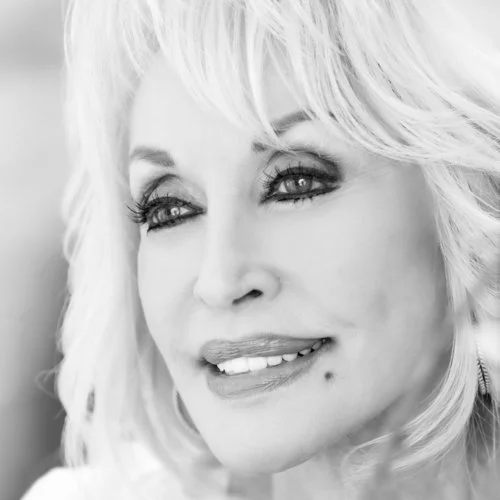
IN THIS PHOTO: Dolly Parton 

An International Women’s Day 2022 Playlist

___________

ON Tuesday…

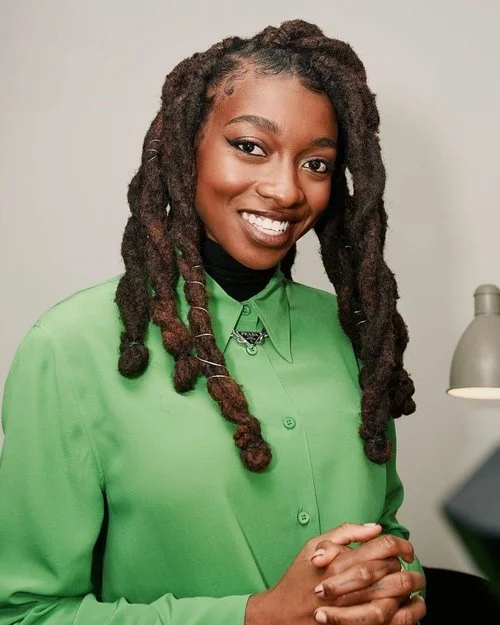
IN THIS PHOTO: Little Simz

it is International Women’s Day. It gives me a chance to salute some brilliant women in music. Through the years, I have been deeply inspired by female artists. I think that music has been dominated by women for years. 2022 is showing that to be true again this year. Whilst there is still inequality regards pay, focus and giving women the same rights as men, small steps are being made. I feel we will get to a day when women are on an equal platform. Considering the music they have given us and what they have done for millions around the world deserves to be recognised. The playlist below assorts legends and newer female artists for this International Women’s Day (I know I have omitted some great artists; I had to draw a line somewhere!). Here is a list of terrific songs from…

 IN THIS PHOTO: Beyoncé

SOME phenomenal women.

FEATURE: Revisiting... Hailee Steinfeld - Half Written Story

FEATURE:


Revisiting...

Hailee Steinfeld - Half Written Story

___________

WHEREAS I normally include albums…

 PHOTO CREDIT: Jeff Kravitz/FilmMagic

in this feature, I anted to include an E.P. this time around. Half Written Story was released in 2020 by the California-born actor and artist, Hailee Steinfeld. Her second E.P., I think that many people who are not necessarily fans of hers might have missed it. As it received some mixed reception when it came out on 8th May, 2020, I wanted to spotlight a recent work that deserves more. I know that Steinfeld will release an album before long. Her two E.P. so far have been a snapshot of where she is at that time. Although some would say there are one or two tracks on Half Written Story some will pass by, I feel the E.P., warrants a bit more love. In any case, if you have not heard it at all, there are a few great tracks that will introduce you to an intriguing and promising Pop artist. I am not normally one who listens to mainstream Pop, though I was intrigued by Hailee Steinfeld’s Half Written Story. As someone who balanced acting and music, one can feel the two world mingle on the E.P. There were reviews that were positive and at least highlighted the fact Steinfeld is a confident artist who has amassed a lot of fans. In terms of originality and breaking into new territories, maybe that is a little way off. That said, there are moments on Half Written Story that are distinctly her. Great tracks that do hit you. I will come to those reviews soon. Before that, Steinfeld conducted interviews around the release of her second E.P.

As she told Billboard in July 2020, Half Written Story is not about popularity and streaming. It is about depth and resonance:

Steinfeld’s singles have been primarily composed of airy, anthemic synth-pop, and consistently garnered hundreds of millions of streams — her five biggest tracks to date have garnered a combined 1.79 billion on-demand streams in the U.S., according to Nielsen Music/MRC Data. Yet those singles have yet to coalesce into a solo project since her 2015 debut EP, Haiz. That introduction is at long last receiving a follow-up this Friday (May 8) with another EP, Half Written Story, that is being billed as the first half of a two-part project. The five new songs are the most experimental, and personal, of Steinfeld’s career; they include interpolations of songbook classics, a heartbroken ballad, and a foray into pop-rap. None of the songs sound like surefire radio staples, but that seems to be the point of Half Written Story.

“It’s not about just top 40 hits, but about adding depth and [Hailee] expressing herself,” says manager Ed Millett. “We then are banking some ideas for her eventual debut album.”

PHOTO CREDIT: Sarah McColgan 

For Steinfeld, the significance of Half Written Story has less to do with maintaining commercial momentum than trying on a few different sounds in order to establish one of her own. Her past five years’ worth of musical output consists of one-offs that were catchy enough to cross over and more thematically universal than personally revealing. Her two biggest hits following “Love Myself” were collaborations, and neither featured co-writing credits for Steinfeld.

Now, she is writing more, exploring more mature subject matter, and going through a self-described “trial-and-error process” in order to figure out what type of pop artist she wants to become. “I haven’t had that chance to really create what [my] sound is, consistently,” Steinfeld says. “I still think I’m very much in that process of finding what it is. And I feel like, with every song I do, I get closer and closer.”

One thing she has appreciated about the lead-up to Half Written Story is the act of discussing her music, in interviews and elsewhere, after years of fielding questions about her acting career. “It’s one thing to talk about a character I play, and someone else’s writing, versus my own,” Steinfeld says. “As far as acting, I’m always going to be protected by the character that I’m playing — that’s like a safety net. And the more and more I talk about my recent music, I don’t feel that, because I don’t have that. It’s very me”.

 PHOTO CREDIT: Sarah McColgan

Forbes covered Half Written Story and emphasised the multiple talents of Hailee Steinfeld. She was asked about her approach to the E.P. and its inspirations:

When you get an Oscar nomination at 14 years old starring opposite Oscar winner Jeff Bridges in a film from Oscar winners Joel and Ethan Coen your lot is cast as an actor in the eyes of the world. Such was the case for Hailee Steinfeld after her breakout role in 2011's True Grit.

But like many, Steinfeld is blessed with multiple talents. The list of greats who succeeded in both music and film is a stunning one, from Barbara Streisand and Frank Sinatra to more recently Jared Leto and Beyonce. And despite the fact there is a proven track record of talented musicians who have dual talents (Bob Dylan and Joni Mitchell were also acclaimed painters) there does sometimes remain a prove it to me attitude from fans when it comes to actors who make music.

Steinfeld proves it without a doubt on her stellar new Half Written Story, the first of a two-part collection out this Friday (the second half of the project comes out later this year).  When you hear her intimate, her attitude in the joyous pop, the production and the passion she brings to the first five songs it is clear her love of music is genuine.

When you talk to her about everything from the Weeknd and Billie Eilish to the Eagles and Fleetwood Mac it is even more evident that, to paraphrase Elvis Costello, Steinfeld's aim is true.

On the eve of the release of Half Written Story I spoke at length with Steinfeld about her passion for music, rediscovering vinyl during the pandemic and revealing so much of herself on the new songs.

Steve Baltin: People have gone different directions in releasing music during this time. What was your thought process in releasing the EP now?

Hailee Steinfeld: It was a combination of things for sure. These are songs that I am so proud of and have had for a while now. This is a project that, unbeknownst to everyone else, has been pushed quite a bit. And if I could have put this music out the day I wrote it I would have. But obviously there's so much to take into consideration. I was also away working on a TV show [Dickinson] and this was always sort of my time that I carved out for music. I try and do my best in working with my teams and making it so that I can focus on one at a time. So that whether it's music or acting it's getting 110 percent of me. So it is a very strange time to be putting out music. But I also sort of feel music has such a unique ability of connecting people and bringing them happiness. And for me music is such a release. And any time a favorite artist of mine drops new music it's like there can never be a wrong time for that.

Baltin: What have been the songs or albums you have turned to during this time?

Steinfeld: I've had the Weeknd's new album, After Hours, on repeat. I love his music. I love the production on the record. I think that he is amazing. But I've also been doing a lot of deep dives into old albums that I grew up listening to, which are a lot of the Eagles, Fleetwood Mac, a bunch of Pink Floyd this morning. And I have all these vinyl's. I've actually been putting together a little home studio and so I've been wanting to hang my vinyl's up on the wall. I pulled out a bunch I totally forgot that I even had. This has been so amazing to actually sit and listen to an entire album from start to finish without any distractions. I can't tell you the last time I did that. I of course will download albums when I'm on planes and traveling. But I'm either falling asleep, someone is interrupting or you're distracted. But to be able to just sit and listen to these records from start to finish has been really cool.

Baltin: What do you hope people take from this record as a body of work?

Steinfeld: I think people now more than ever are getting so creative in the space they are in because it's really all we've got right now. I'm just looking forward to seeing their reactions to the music. I feel like I am paying this forward in the sense that I went through this time in my life that built up a thirst to talk about. And one thing I love is that all my fans will come to me and tell me these records made them feel less alone and hearing them say that and sing these songs and watching them make videos to these songs and do all that makes me feel like if what I went through was good for anything it's that”.

To finish, there are a couple of reviews that shine some positive light on a 2020 E.P. that I think should be played more. Even if you are not aware of Steinfeld, there is much to appreciate and enjoy. This is what Spectrum Culture said in their review:

It’s been almost five years, but Hailee Steinfeld’s second studio release is finally here. The actress turned pop star, who first displayed musical aspirations with her role as Emily Junk in Pitch Perfect 2, has been a bit busy since the release of her debut EP Haiz in 2015. In addition to releasing the standalone singles “Starving,” “Most Girls,” and “Let Me Go” (among others), Steinfeld also appeared in the lead roles of the feature films The Edge of Seventeen and Bumblebee, as well as reprising her role in Pitch Perfect 3 and starring as Emily Dickinson on the Apple TV+ series “Dickinson.” Now, Steinfeld is ready to take music off the backburner and finish what she started. Half Written Story, her new extended play, is the first of two new EPs expected for release this year.

Half Written Story sees somewhat of a departure from the dance-pop Hailee Steinfeld of years past while also still delivering on strong lyrics and production. Steinfeld perhaps made it clear that melancholy would be at the forefront of her upcoming project when she chose to release “Wrong Direction” as the lead single on New Year’s Day. A heart-wrenchingly beautiful ballad, the song chronicles the end of a relationship and one lover’s perspective on wanting to believe the best in someone, even when they hurt you. “I don’t hate you/ No, I couldn’t if I wanted to/ I just hate all the hurt that you put me through,” she sings in the track’s opening lines. “Couldn’t even see through the smoke/ Lookin’ back, I probably should have known/ But I just wanted to believe that you were out sleepin’ alone.”

While Steinfeld has thus far made most of her name as a musician through singles from the soundtracks of her acting projects, “Wrong Direction” proves that she’s no one-trick pony: she can make us sing and dance while also ripping our hearts from our chests. While her music career is still rather underdeveloped and has room for improvement, Steinfeld has already shown that both vocal ability and versatility have entered the chat.

With the release of the EP’s second single “I Love You’s”—an ode to the Annie Lennox classic “No More I Love You’s”—Steinfeld blended her newfound taste for melancholy with her penchant for entertaining, melodic dance-pop. “I Love You’s,” a breakup earworm rumored to be about Steinfeld’s broken relationship with former One Direction member Niall Horan, makes use of irresistible hooks and memorable lyrics. “Diamonds won’t fool me ‘cause I’m too far gone/ Wish I could get back the air in my lungs/ I’ve been so fucked up it’s bad for my heart,” she sings over upbeat production. “I blamed it on the time zones/ I blamed it on my eyes closed/ I blamed it on the world like it owes me/ So stop me before it’s too late/ No more I love you’s/ Until I’m okay.” While a common complaint against Steinfeld’s previous releases was that she lacked personality, “I Love You’s” solidifies what her fans already knew to be true: she knows what she’s doing”.

To finish off, Beyond the Stage definitely threw their weight and support behind Half Written Story. They were definitely enriched and impressed by what they heard:

Beginning with “I Love You’s,” Steinfeld sets the tone for the EP. She brings her usual pop sound and beat with sad and heavy lyrics. With an intriguing hook coming at the beginning, she pulls you in immediately. The song makes it clear that she is not okay through the lyrics “no more I love you’s / until I’m okay.” She also makes the song feel relatable by saying it’s too easy to say I love you because many listeners have probably regretted or questioned their use of it before. The most memorable lyrics are “I blamed it on the time zones/ I blamed it on my eyes closed/ I blamed it on the world like it owes me.” The direct meaning is a little ambiguous, but she makes self-blame a theme of this EP.

“Your Name Hurts” followed with a sound similar to much of Julia Michaels’s music. It has that background sound and faint pop beat, creating a song that many would slow dance to. It feels even more personal than “I Love You’s” because of the blatant connection to a past relationship that filled her with happiness, but left her with sadness and without a part of herself when it fell apart. Considering it plays on the EP title Half Written Story with the lyrics “We’re a half-written story without any ending / You left me to figure it out / Filled me with ecstasy, left with the best of me / But where’s the rest of me now,” I believe it should have been the opener. As what I think is the most powerful song on the album, I think she needed to make more of a statement with it.

The third song “End This (L.O.V.E.)” is a take on the romantic classic “L-o-v-e (L Is For The Way You Look At Me)” by The Hit Crew. Obviously, Steinfeld’s version is not as sweet and tender as the original. It is actually quite the opposite. The song shines light on an ex as a vindictive liar with the chorus “L is for the way you lied to me / O is I’m the only one who sees that /  V, you’re so vindictive, so I’ll be vicious / And E-N-D this L-O-V-E, love, love.” Steinfeld flips the tone to gratefulness through the lyrics “No one’s ever messed me up like you did / Thanks to you, babe, now I know what love is.” She’s recognizing that the pain she went through taught her what love is.

“Man Up” is a different vibe than the rest of the EP and almost feels like it doesn’t belong. Even though it maintains the theme of the rest of the songs, the actual sound is a little off, most likely because of the rap. While I respect her expanding her genre and trying something new and creative, I don’t believe it fits well with the story she is telling. While the other songs do reference the other person’s faults in her relationships, they focused more on her emotions after, whereas this song really isn’t about her. I do like the song, but I wish it had been a single instead of being a direct part of this “half written story.”

The last song on the EP was released back on New Year’s Day as a single with a music video following. “Wrong Direction” was the first glimpse into her emotions and into one specific public breakup that broke more than just her heart. It also hinted at what her newest music would feel like, represent, and sound like. She ends the album with a powerful song about not seeing the red flags. Opening with “I don’t hate you / No, I couldn’t if I wanted to / I just hate all the hurt that you put me through / And that I blame myself for letting you,” she shares that she blames herself for letting her ex hurt her in their relationship and not seeing the issues sooner. By making it the last song on the EP, she ends it all with reflection, leaving the next step ambiguous and listeners with a cliff-hanger about what’s to come.

Overall, the EP is cohesive give or take “Man Up.” Filled with strong and deep lyrics and flowing melodies, it is a beautiful story of her heartbreak. Half Written Story made me feel every emotion with Steinfeld and I can’t wait to eventually hear the ending”.

A great E.P. that I have been listening to a bit lately, Half Written Story was the much-anticipated second studio release from Hailee Steinfeld. With some standout moments and enough to please any Pop listener, I think that it is an E.P. that should be aired more and get some more play today. There will be a lot from Steinfeld to come. Have a listen to Half Written Story and…

SEE what you think.

FEATURE: Paul McCartney at Eighty: Eleven: Vegetarianism, Humanitarianism and Activism

FEATURE:


Paul McCartney at Eighty

IN TH IS PHOTO: Paul McCartney at a March for Our Lives sister protest in New York in 2018 to support those demanding an end to gun violence/PHOTO CREDIT: Spencer Platt

Eleven: Vegetarianism, Humanitarianism and Activism

___________

ALTHOUGH most of these features…

IN THIS PHOTO: Paul McCartney in 1968/PHOTO CREDIT: Linda McCartney

I am putting out ahead of Paul McCartney’s eightieth birthday in June are about his music and impact on the music world, there are areas other than that I want to explore. McCartney’s humanitarian side is something that stands out. In his career, he has written songs that highlight injustice. He wrote Give Ireland Back to The Irish after seeing footage of Bloody Sunday. I think there is always an inclusiveness in McCartney’s music. From his work with The Beatles to his later solo work, he is someone who fights for other people’s rights. From voicing his support of George Floyd’s family after Floyd was murdered in 2020, to him attending the March for Our Lives’ sister rally in New York in 2018, here is someone who wants fairness and justice for all. There is this incredible compassion and warmth that naturally feeds into his songs - though McCartney can be sharp and angry if he needs to make a point or raise an important issue through his songs. Last year, Paul McCartney, alongside other artists called for change regarding streaming platforms and artist payments. The man is someone who is always looking out for others.

Aware of the inequalities and struggles around the world, McCartney uses his platform and passion to affect change. I am going to come to his animal rights work and vegetarianism. He is deeply concerned about the climate crisis and the way we are treating the planet. Humanitarianism is at the core of Paul McCartney’s heart. This article outlines ways in which McCartney has supported charities and important causes:

As of June 2020, Paul McCartney has supported 45 charities. Throughout his life, he has donated millions to several charities and has participated in many benefit concerts, such as Live 8 and Change Begins Within. Change Begins Within was a 2009 benefit concert in Manhattan, New York, hosted by the David Lynch Foundation. It helped raise money and awareness for at-risk youth and encouraged the use of meditation to combat stress and achieve success. Other significant charities and organizations that McCartney has supported include Adopt-A-Minefield, Cruelty Free International, Everyone Matters, Greenpeace, PETA, Red Cross and the St. Francis Food Pantries and Shelters. McCartney is a patron for Adopt-A-Minefield, an organization dedicated to raising awareness about the problems of landmines, raising funds to help survivors of landmine accidents and helping clear landmines. From 2001 to 2005, McCartney performed in five benefit galas for the organization. In total, he helped raise $17 million for the now-inoperative charity.

Paul McCartney is a huge advocate for providing aid for childhood diseases. McCartney has four biological children, Mary, Stella, James and Beatrice, and an adopted daughter, Heather, who is the biological daughter of the late Linda McCartney. McCartney also has eight grandchildren and used them as inspiration for his children’s book “Hey, Grandude!”, which was published in September 2019. His devotion to his own children and grandchildren is evident, but it is also apparent that he cares a great deal for the welfare of children around the world. McCartney’s humanitarian work has included donations to the Barbara Davis Center for Childhood Diabetes, Keep a Child Alive, Children with Leukemia and Teenage Cancer Trust. These are organizations dedicated to focusing on the needs of children affected by significant diseases or disorders. Additionally, in 2012, McCartney performed at the Royal Albert Hall in London for the Teenage Cancer Trust, helping raise over $382 million.

Paul McCartney’s humanitarian work dates back over 40 years. In 1979, McCartney was one of the lead organizers of the Concerts for the People of Kampuchea, a series of concerts that ran from December 26-29, 1979 and took place at the Hammersmith Odeon in London. The concerts raised awareness and donations for the victims of war-torn Cambodia (then known as Kampuchea) at the start of the Cambodian-Vietnamese War. The proceeds went directly toward United Nations agencies’ emergency relief work in Cambodia. In addition, in 1989, McCartney participated in a charity version of the song “Ferry Cross the Mersey.” The proceeds made from the single were used to aid victims of the Hillsborough disaster, a human crush that occurred at a soccer match in the Hillsborough Stadium in South Yorkshire, England, killing nearly 100 people. The song held the number one spot on the U.K. chart for three weeks after its release.

Paul McCartney supports the eradication of poverty. McCartney’s humanitarian work also includes dedicating time and money toward helping those who are socioeconomically disadvantaged. His most notable involvement with an organization dedicated to ending poverty was when he performed at a Live 8 concert in 2005. Live 8 was a series of benefit concerts organized in support of the U.K.’s Make Poverty History coalition and the international Global Call to Action Against Poverty campaign. The goal of the concerts was to raise $50 billion in aid toward impoverished African countries by 2010 (the concerts raised about $30 billion). McCartney has also supported the Worldwide Orphans Foundation, Aid Still Required and the Prince’s Trust. These organizations assist people in underdeveloped countries and unfavorable socioeconomic situations.

In April 2020, Paul McCartney performed in the One World: Together at Home benefit concert. The current international COVID-19 outbreak has affected people worldwide. Global Citizen, a worldwide movement dedicated to ending poverty by 2030, hosted a charity special in the form of a virtual benefit concert starring many famed musicians. The concert was titled One World: Together at Home. It raised $127 million for the COVID-19 Solidarity Response Fund and for charities providing food, shelter and healthcare to those in need. McCartney sang a solo rendition of the Beatles’ song “Lady Madonna” while playing the piano”.

I think that Paul McCartney’s late wife, Linda, was especially instrumental regarding his activism and supporting animal rights. The couple were conscious about what they ate and wore. They talked to the uninitiated and, whilst not preachy, were definitely committed to animal rights and vegetarianism. They read The Animals’ Agenda to learn about current events in the animal movement and wrote protest letters to companies involved in animal abuse. Paul wrote songs inspired by or concerning animals, whilst Linda wrote  cookbooks and created a vegetarian food business. Following Linda’s death in the 1990s, Paul McCartney reaffirmed his animal rights agenda and commitment. Definitely important when it comes to helping others see the benefits of a vegetarian diet, he is still so passionate when it comes to animal rights. This article lists five ways in which McCartney is a dedicated supporter of animal rights:

1. He has been a vegetarian since the 1970s.

Following the end of the Beatles, Paul and his late wife, Linda McCartney, retreated to their peaceful and secluded farm in Kintyre, Scotland. Here, they raised a variety of animals, including horses and sheep. According to Paul, his decision to become a vegetarian was the result of an epiphany he had one day in the 1970s while eating dinner with Linda. As they cut into a roast dinner, they looked out the window to see their own lambs frolicking happily in the pastures. “I had an epiphany. I was taking animals’ lives.” That day, Paul and Linda made the connection between the animals on their plate and the animals in their backyard and went vegetarian. Paul hasn’t looked back since!

2. Paul has been the face of a meat-free diet for decades.

Ever since giving up eating meat himself, Paul has been an outspoken advocate for farm animal rights. He is the narrator of PETA’s “Glass Walls,” a short documentary that exposes the cruel treatment of farmed animals and encourages people to give up animal products altogether. Paul recently arranged for copies of “Glass Walls” to be sent to the moon, in hopes of inspiring future generations to continue to fight for animal rights.

Several years ago, Paul created Meat Free Monday, a campaign that encourages people to give up meat one day a week to reduce animal suffering, improve public health, and protect the environment from the negative effects of factory farming. By actively promoting “Glass Walls” and Meat Free Monday to his fans around the world, Paul has exposed millions of people to a plant-based diet who might otherwise have discounted it.

3. Paul has written several animal rights themed songs.

A renowned songwriter, Paul has penned several songs that center around animals and animal rights. As early as 1968, Paul demonstrated his love for animals in his song “Martha My Dear,” a song written not about a woman, but about his English sheepdog, Martha. In “Wildlife,” Paul began dabbling in animal rights issues by contemplating animals who are trapped in zoos.

It was 1993’s “Looking for Changes” in which Paul first explicitly and unapologetically explored animal rights issues in his professional work. This powerful song is a statement against vivisection, in which Paul proclaims, “I tell you that we’ll all be looking for changes, changes in the way we treat our fellow creatures.” Paul recently released a short rap about going meatless and the song “Meat Free Monday” in support of his Meat Free Monday campaign, and he enlisted the support of his fans to create a music video for the song. Unlike many artists who avoid controversial issues in their work, Paul has purposefully addressed animal issues in his songs and tries to get his fans interested in the issues by involving them in the creative process.

4. He also advocates to save elephants.

In addition to advocating for farmed animals, Paul has taken a special interest in elephants and has worked to ensure their survival and humane treatment. Paul played a big role in the release of Sunder, an elephant imprisoned in an Indian temple where he was repeatedly abused by his handlers. By calling for Sunder’s release, Paul helped ensure that an international spotlight was shined on Sunder’s situation. Paul has also helped to fight ivory trafficking. In 2014, Paul donated a guitar to an auction benefitting the Nature Conservatory’s African Elephant Initiative. Paul signed the guitar and wrote an additional note on it, stating, “This guitar saves elephants!”

5. Paul supports anti-vivisection campaigns.

Paul has taken a strong stand against vivisection by supporting several notable anti-vivisection campaigns. In 2011, Paul joined with the British Union for the Abolition of Vivisection in calling for the European Union to ban all cosmetics that had been tested on animals. With Paul’s help, the campaign was successful – in March 2013 the European Union banned the sale of all new animal-tested cosmetics.

In 2012, Paul lent his support to Humane Society International’s Be Cruelty Free campaign, the largest effort in history seeking to end animal testing for cosmetics. In explaining his decision to support the campaign, Paul noted that “The ugly truth about testing beauty products on animals is that it causes them unimaginable pain and suffering. If every cosmetic tested on rabbits or mice had a photo on the packaging showing these animals with weeping swollen eyes and inflamed skin, I believe everyone would leave cruelty on the shelf and go for the cruelty-free option instead.” In 2014, the Be Cruelty Free campaign experienced two wonderful victories when India banned the use of animals in cosmetics testing and the import of cosmetics tested on animals”.

In June, Paul McCartney turns eighty. There will, of course, be a lot of celebration about his music and legacy. I wanted to use this run of features to look at other areas and sides of the man. His humanity and sense of morality is not only what makes him so loved as a human. McCartney has used his songwriting to talk about the environment, animal rights, race, human rights and so much more. I was going to put together a playlist of songs that demonstrate this, though there will be a few I’d miss!  There is no doubting the fact the man has…

A heart of gold.

FEATURE: Sharp Darts: The Streets’ Original Pirate Material at Twenty

FEATURE:


Sharp Darts

The Streets’ Original Pirate Material at Twenty

___________

I am not sure whether…

there will be an anniversary edition, or anything planned to coincide with its twentieth on 25th March. The Streets’ (Mike Skinner is the principal member and songwriter) Original Pirate Material is one of the best albums of the first decade of this century, and it remains one of the most important Hip-Hop albums ever. Heavily influenced by U.K. Garage and American Hip-Hop, its lyrics are rooted in the working-class lives of British characters. Real, honest, funny, laidback, endlessly sharp and innovative, I don’t think we have heard anything like Original Pirate Material since it came out in 2002. Packed with heart, humour, cheekiness and lyrical brilliance, the album was recorded at Mike Skinner’s house in Brixton. I think its D.I.Y. feel gives Original Pirate Material so much authenticity and authority. At fourteen tracks, there is so many wonderful stories and standout songs throughout. I think that there will be new appreciation of Original Pirate Material leading to 25th March. Such a relevant and influential album, it has not aged or lost any of its wonder! To show why The Streets’ debut album is so important and loved, it is wise to reference some articles. Classic Album Sundays named Original Pirate Material a modern classic. That status and honour is more than just:

Skinner had moved to Brixton from the suburb of West Heath where he first dabbled in music as a child messing around with keyboards. By his teenage years he was obsessed with US hiphop, particularly impressed by the production skills of figures such as DJ Premier and RZA, whose work can be heard on classic tracks by the likes of Nas, Wu-Tang Clan, and Gangstarr. Inspired by their innovative fusion of sampling and drum machines Skinner began to explore the basic principles of beat-making, an interest which would soon intersect with early nightclub experiences with the then commercially dominant sound of UK garage. In-between shifts at fast-food restaurants he remained a struggling musician, sending out hopeful demos to record labels before eventually striking up a relationship with the independent Locked On, who had enjoyed hits with acts such as Artful Dodger and Craig David.

‘Has It Come To This?’ emerged in 2001 as the debut single of The Streets, becoming an unlikely hit when it reached number eighteen on the UK charts in October. Built around a beautifully seductive chord sequence and an archetypal garage beat, the song is an endlessly quotable ode to delinquency and a rallying cry for homegrown talent. The grimy detail of Skinner’s lyrics, which portray “a day in the life of a geezer”, depict the lazy debris of video games, freshly rolled spliffs, and loose scraps of tobacco, littered around the central mantra of “sex, drugs and on the dole”. The notable lack of gloss offered a realist counterpoint to garage’s typically aspirational lyrics, which centred around the glamorous fantasy of the nightclub, and in turn perhaps represented the lives of those listening to the music closer than the genre itself. Despite the languorous lifestyle it revelled in, ‘Has It Come To This?’ showed a level of ambition that outgunned many of the high profile club MCs.

Skinner’s versatility became abundantly clear with the release of Original Pirate Material the following year. Playing like an amorphous blend of UK music history, the album traverses sound system dub and reggae, punk, new wave, house, garage, and (whisper it) brit-pop, with the naturalistic ease of an artist emerging at the dawn of online artistic consumption. The syncopated stabs and pinpoint sound effects of ‘Let’s Push Things Forward’ offer up a novel blend of Jamaica, Brixton, and Birmingham, as Skinner’s voice surmounts an equation which theoretically just shouldn’t work.

Opener ‘Turn The Page’ echoes the faded glory of The Verve’s ‘Bitter Sweet Symphony’ with its grandiose string arrangement that elevates the lyricist’s everyman to the level of mythic warrior. The utopian yearning of ‘Weak Become Heroes’ is underscored by chords imported from Detroit or Chicago and sustained by the eternal pulse of the kick drum which unites the crowd of an imagined rave. Primarily working out of his South London room, these vivid and varied tracks proved just how adept the young musician was at forming innovative combinations with a limited set of resources.

Skinner’s unlikely charisma on the microphone underpins Original Pirate Material’s surprisingly complex depiction of modern masculinity. Despite living in London, throughout the album the MC expresses a provincial sense of boredom and a pent up rage that manifests in binge drinking, chip shop fights, and lary confrontations with friends and lovers. His self-awareness can be fun: on ‘Hold It Down’ the banter is infectious and the self-defeating nature of male heterosexual desire is hilariously skewered. Likewise ‘Too Much Brandy’ offers a queasy perspective from the midst of a European stag-do gone horribly off the rails. But elsewhere the routine grows torturous: ‘Same Old Thing’ vocalises the creeping dread of the repetition, and the way in which its protagonist attempts to break this monotony through a serious self-destructive acts hints at a low-level depression rumbling below the surface. By the time we reach the album’s closing song, ‘Stay Positive’, Skinner’s disenchantment is overt and devastating, the loneliness articulated by his listless lyrics which were recorded whilst the MC was suffering from a cold. It is Original Pirate Material’s fading afterglow – a moment which frames the preceding forty minutes as some kind of existential crisis just waiting to erupt”.

In 2009, The Guardian named Original Pirate Material as their favourite and best album of the decade. The fact that its core was all about U.K. Garage, I think, accounts for its popularity, relatability and realness. This is an artist who was representing what was happening in 2002, both in music and on the streets of London:

 “At first hearing, the almost pathological self-effacement of Tim (the mild-mannered bong-builder who goes head to head with lagered-up Terry the law-abider in the Streets' Socratic dialogue The Irony of It All) seems about as far from the defiant self-assertion of the Who's "Hope I die before I get old" as you could possibly get. But for those who would like to remember the Noughties as a period in which British pop actually moved forward at the same time as regressing into The X Factor's primordial ooze, Mike Skinner's generational rallying cry is every bit as potent as Pete Townshend's ever was.

The two most important criteria for any self-respecting album-of-the-decade contender to meet are that it could not conceivably have been made in any other 10-year period, and that it should be impossible to imagine how that decade might have sounded without it. And the Streets' triumphantly down-home 2002 debut, Original Pirate Material, ticks these boxes for the first decade of the 21st century with the same winning flourish as Massive Attack's Blue Lines did for the 1990s.

Whatever bold claims you might make for Derek B or Mr C or even Massive Attack's 3-D, Mike Skinner was the first to prove that a British rapper could speak directly to a nationwide constituency in a voice entirely his own. The raw-boned but finely honed debut of this "45th-generation Roman" established that British hip-hop could be more than just an aspiring frontier outpost of the imperial American homeland. It also turned out to be the missing link between the observational songwriting of the Kinks and the Specials, and the current pop apotheosis of Dizzee Rascal.

As large as the album looms over the British musical landscape of late 2009, its roots were to be found in the heyday of UK garage. "Every garage MC to my knowledge at that time was really a rapper," Skinner remembers. "The thing about garage was, it gave you a chance of breaking out and reaching a wider public, whereas if all you were doing was making 'UK hip-hop', there was no hope of that happening. Yet at the same time, being a garage MC was not generally regarded as prestigious. If you're a rapper, that's a good thing: you're a wordsmith. But if you were an MC – at least until the momentous Dizzee Rascal came along – that was more like being a holiday rep."

So as well as giving Skinner confidence, did the crossover success of UK garage also give him something to react against? "I've probably said it too many times now," he nods apologetically, "but that's where Original Pirate Material came from: all this stuff about get the girl and drink champagne on the dancefloor, it sounds nice to my ears, and I like that bass line, but sorry mate, I don't know what you're talking about.'"

"My experience of listening to UK garage, which was huge," Skinner continues, "was in people's cars and houses … and the idea behind Original Pirate Material was to make music which reflected that – to be someone who was on the one hand very English, but at the same time a bit like Nas, and could come up with these cool-sounding couplets about all the weed that gets smoked and all the little adventures that you go on”.

I think Original Pirate Material is an album that will still be celebrated and explored decades from now! In a year when the British music scene was changing, along comes Mike Skinner and co. to deliver this incredible album that caused a huge stir. A truly original and staggering album, Original Pirate Material is coming up to twenty. In 2017, FADER spoke to various people to ask what the album means to them fifteen years after its release. I have picked out a few responses:  

Annie Mac, DJ and broadcaster

I first heard “Has It Come To This?” on Ross Allen’s radio show on BBC London. It was late on a Sunday night, in my bedroom in the house I shared with my brother’s band in Forest Gate, east London. I had never heard anything like it. His references were instantly recognizable — the mundane everyday issues of public transport, cheap drugs, fast food, and hangovers. There was no self aggrandizing, just brilliant phonetical descriptions of street life and culture. And it is hilarious in parts — the characters we meet and the pictures painted are so vivid.

Last year, we did a discussion feature for my radio show on BBC Radio 1 with Laurie from Slaves, Matty from The 1975, and Little Simz. All of them cited Mike Skinner as one of their biggest influences. The album is a bona fide classic, and it’s still reverberating through popular music and influencing our U.K. artists left right and center.

Rob Mitchum, journalist

In 2002, the nuances of British electronic and hip-hop culture went way over your typical American music critic’s head — which is my lame excuse for wildly misinterpreting Original Pirate Material when reviewing the album for Pitchfork that year. Since then we’ve had grime and dubstep to put U.K. garage in retrospective context. But I was pleased to discover Original Pirate Material still sounds bonkers 15 years later. Tracks like “Don’t Mug Yourself” and “Sharp Darts” are like head-on car collisions that somehow build a motorcycle — there’s no way these combinations of beat and flow should work, but they do. Mike Skinner was also ridiculously adept at mixing the grand and the mundane, with severe, ragged orchestra loops scoring the most minute of observations. “Weak Become Heroes” might still be the most accurate song about raves in existence, with a woozy pulse, a relentless, wavy piano loop, and stream-of-consciousness imagery detailed enough to trigger flashbacks. Call it first-timer luck or genius, but The Streets’s sound aged a lot better than its genre labels and clueless reviewers.

Kojey Radical, artist

I remember hearing [Original Pirate Material] for the first time and thinking, This feels like the perfect medium between garage culture and indie music. It was like the perfect soundtrack for not knowing what you want to listen to. Hearing “Stay Positive” in [2006 U.K. film] Kidulthood confirmed it was the soundtrack for growing up in London and marrying all the cultures that you come across. I’m from east London and the way [Skinner] spoke reminded me of just going to a cafe on Roman Road and speaking with the people there. Lyrical rap can feel daunting, but Mike Skinner’s approach removed all that tension in understanding lyrics, and made it sound like a conversation. (As told to Jacob Roy.)”.

Could an album like Original Pirate Material exist today? DAZED revisited it in 2017 and noted how it is distinctly British. Maybe it was a reason why it was not really known in America. I think that has changed in the twenty years since its release:

Original Pirate Material was as British as it got, but unlike Britpop a decade earlier, it wasn’t an aggressively patriotic celebration of Albion that came striding in with a Union Jack-adorned guitar. No one who describes themselves as “45th-generation Roman”, as Skinner does on “Turn the Page” with sly wit, believes in pure Britishness; if anything, they’re drawing attention to the absurdity of such an idea. Original Pirate Material was the lives of common people as told by one of their own, shot through with deadbeat realism – no wonder it struck a chord with so many. Skinner intelligently examined the ritualistic lifestyle of “sex, drugs and on the dole” with a sympathetic eye. Everybody knows a Terry, the loutish moron on “The Irony of It All”, emboldened by alcohol: “I down eight pints and run all over the place / Spit in the face of an officer, see if that bothers you.” Terry, the target in Skinner’s merciless crosshairs, is exactly the type of bloke who gets drunk on lager and “Wonderwall” karaoke-singalongs, the sort of hooligan stereotype portrayed in the media by the riots at Marseilles beaches during the France 1998 World Cup; Skinner’s Britain, meanwhile, is multicultural, a place where you can meet both rudeboys and foreign strangers on E in clubs, as on the elegiac “Weak Become Heroes” (“I known you all my life but I don’t know your name / The name’s European Bob, I’m sorted anyway”).

The album soundtracked the beginning of a decade – recovering from the Britpop hangover and comedown from New Labour euphoria – but also defined it. If you weren’t old enough to be one of the stoned night-owls playing Gran Turismo or “discussing how beautiful Gail Porter is” (in “The Irony of It All”), then your older brother and his mates definitely were. The poignant “Stay Positive” explored the despondency of a generation bitten by drug-induced paranoia and inner-city brooding: “You’re going mad, perhaps you always were / But when things was good you just didn’t care”; the point at which “weed becomes a chore (...) so you follow the others onto smack.” Mundane things became loaded with significance, like the choice between “Maccy D’s or KFC” or busting moves in your Reebok Classics.

The album was of its time, and it’s hard to imagine something like it existing now – in 2017, club closures, the high cost of living and gentrification are leaving the sort of audience Original Pirate Material embraced in its day poorer and even more marginalised than before. The pangs of nostalgia that arise from “Has It Come to This?”, a bass-heavy wobble flexing with skipping 2-step rhythms and cannabis calm, might leave them wondering: what has it come to? Furthermore, today’s dominant sound is no longer Skinner’s, despite grime’s resurgence: pop is far too scattershot and diverse for breakthrough records that catch the nation’s imagination”.

I am looking forward to 25th March and seeing how people react to the twentieth anniversary of Original Pirate Material. An album that s so characterful, contrasting and hugely accomplished, I wondered whether a reissue would come out with extras and demos. I guess, as the album sounds quite raw and urgent, there might not be too many sketches and other bits we have not heard. No matter. The Streets’ Original Pirate Material is a wonderful album that is…

PERFECT as it is!

FEATURE: The King of New York: Remembering The Notorious B.I.G.

FEATURE:


The King of New York

PHOTO CREDIT: Barron Claiborne 

Remembering The Notorious B.I.G.

___________

I remember 9th March, 1997 very well…

as I was on holiday in Orlando, Florida with my dad. I was thirteen, and it was my first (and only) time in America. I was aware of who The Notorious B.I.G. was in 1997. It was a strange week for music in March of that year. Spice Girls’ Who Do You Think You Are? was everywhere, but I was also hearing The Notorious B.I.G. played in America too – completely different artists getting a lot of play and love helped open my mind to the sheer range and power of music! I recall hearing on the T.V. that The Notorious B.I.G. had been shot and killed. I don’t think I had experienced that before: switching on the news and hearing of a musician being murdered. It was quite a shock! Of course, as a child, any murder that happens, matter how far away, causes you anxiety. Years after that event, I sought out the music of the Rap icon. Even though he released one studio album in his lifetime, Ready to Die (1994), and a posthumous album – Life After Death (two albums with oddly prophetic and tragic titles) was released a couple of weeks after his murder -, his legacy and influence is huge. It is announced that Life After Death is getting a twenty-fifth anniversary reissue. I will come to his legacy soon. Before that, if you do not know much about The Notorious B.I.G. or are aware of what he created in his twenty-four years on the planet, IMDB provide us with some useful bio:

Christopher Wallace, a.k.a. Biggie Smalls, was born on May 21, 1972 in Brooklyn, New York. He was the son of Jamaican parents, Voletta Wallace, a pre-school teacher, and Selwyn George Latore, a welder and small-time politician. He was raised in the poor Brooklyn neighborhood of Bedford-Stuyvesant. Dropping out of high school at the age of seventeen, Biggie became a crack dealer, which he proclaimed was his only source of income. Hustlin' one's way was a common life for a young Black man trying to make a living in the ghetto. His career choices involved certain risks. However, a trip to North Carolina for a routine drug exchange ended being the soon-to-be MC a nine-month stay behind bars. Once released, Biggie borrowed a friend's four-track tape recorder and laid down some hip-hop tracks in a basement. The tapes were then passed around and played at local radio station in New York.

Not extremely attractive, Wallace named himself Biggie, for his weight. Biggie was a Black man who was overweight, extremely dark skinned, and had a crook in his eye, yet he was a charmer. A young impresario and sometime producer by the name of Sean Combs heard Biggie's early tapes. Impressed, Puffy went to sign Biggie to his new label, Bad Boy Records.

Puffy and Biggie worked on the artist's first album, and the Notorious B.I.G. was born. Biggie was first heard on a remix of a Mary J. Blige song and a track on the Who's the Man? (1991) soundtrack. After these successes, the album worked on earlier went through its final touches and was released in 1994, titled "Ready to Die." The record was certified platinum quickly, and the Notorious B.I.G. was named MC of the Year at the 1995 Billboard Music Awards. After the quick success of the album, Biggie went back to get his friends, some who didn't even rhyme. He had several run-ins with the law, on charges that ranged from beatings, to drugs and to weapons, while all claimed that Biggie was a gentle person. He soon met a rapper from the west coast named Tupac Shakur, and the two became friends.

Tupac supported Biggie and was often giving him advice. However, their friendship turned into the most violent era of hip-hop music on November 30, 1994. While Biggie and Puffy were at a recording session at Quad Recording Studios in Manhattan, Tupac went there to record with another rapper for his third studio album, "Me Against The World" at the same time, but in the lobby, Tupac was held at gunpoint and robbed of $40,000 worth of jewelry. Tupac was shot five times. Biggie rushed down just in time to see Tupac being loaded into an ambulance. Extending a middle finger, Pac blamed Biggie for the shooting and said that Biggie knew about it and failed to warn him. This sparked the East Coast, West Coast rivalry. Tupac later recovered from his injuries. During this encounter, Biggie admitted that he was scared for his life. Biggie never responded to any of Tupac's disses. Tupac attacked Biggie in every way he could, even starting strong rumors that there was a love affair between Tupac and Biggie's wife, Faith Evans.

Later, The entire country became divided into two groups, the west side and the east side, which became Death Row Records versus Bad Boy Records, Marion 'Suge' Knight versus Puff Daddy, and Tupac versus Biggie. The two of them finally met again late in 1995, and Tupac secretly said to Biggie, "I'm just tryin' to sell some records." Unfortunately, it became very real when on September 7, 1996, Tupac was shot four times in a drive-by shooting off the Las Vegas strip after he left a fight he was involved in inside of the MGM Grand Hotel after a Mike Tyson boxing match. He died six days later on September 13, 1996 as a result of those gunshot wounds at the age of 25. The case is still unsolved. Biggie was scared for his life, but he wanted to put an end to the rivalry between the two coasts. Biggie went to the west coast for several events, to support for his next release album, "Life After Death," but also to make a statement that the rivalry was over. On March 7, 1997, he attended the Soul Train Music Awards and went to the after party hosted by Vibe magazine and Qwest Records on March 8. On March 9, Biggie was sitting in an SUV on the street when he was shot multiple times by an unknown assailant. He died almost instantly. Hip-Hop faced its greatest tragedy when both Tupac Shakur and The Notorious B.I.G. were killed. Biggie was only 24 years old”.

Even though The Notorious B.I.G.’s short life was embroiled in turmoil and violence, his legacy in terms of music, fashion and beyond lives to this day. He was undoubtably a rare talent who, if he had lived, could have gone on to record so many more albums. Later this year, we mark what would have been his fiftieth birthday. Ready to Die is one of the most-acclaimed Rap albums ever. Funny, scary, multi-layered and hugely accomplished, there are so many things about the album that make it a classic. Life After Death confirmed The Notorious B.I.G.’s status as a legend! Given the fact Biggie was tipped for global superstardom and huge success, his premature death shook the world. In 2020, Aspire TV discussed the legacy of The Notorious B.I.G.:

On March 9, 1997, the world seemingly stopped as fans reacted to the untimely death of one of the hottest emcees in the game- Notorious B.I.G. The Brooklyn rapper was shot and killed in Los Angeles at the age of 24 and he continues to mold hip-hop 23 years later.

Christopher Wallace was both charismatic and very complex. He had a way of using his unique storytelling ability to bring fans into his world and make you dance at the same damn time. Although his time here was cut short, Wallace- known as Biggie, Biggie Smalls, B.I.G., and Notorious-  is arguably one of the greatest rappers to have ever lived. Truly starting from the bottom, Biggie used his God-given skills of hip-hop to find relief from the environment he grew up in.

Here are 5 reasons Biggie’s legacy continues to shine brightly on the culture decades following his death:

  • His freestyle skills were unmatched. A freestyle on the streets of Brooklyn in 1989 introduced Biggie Smalls to the world. Even at age 17 he had the ability to portray full and detailed stories about life on the streets off the top of the dome with an unbreakable flow and finessed lyricism.

  • He was humble. In a world where rappers solely spit about drugs and alcohol, he would often rap about himself and make fun of his own image. He once rapped “black and ugly as ever.” He may have been on top of the rap game, but was as humble as ever.

  • He only released two albums before his life was cut short. His first album, “Ready to Die,” caused him to become one of the first rappers to ever go quadruple platinum. And his second album, “Life After Death”, went gold in its first week before ultimately going over diamond and becoming one of the biggest selling albums in hip-hop history. Both are considered hip-hop classics.

  • His storytelling is unparalleled. Biggie Smalls was a prolific writer. His tricky wordplay and detailed stories will have audiences unsure of their actual reality. He could take you outside of your world and into his for the two minutes you spend listening to tracks like “Somebodies Got to Die,” where he imagines his own revenge after the loss of his friend.

  • He showed us that the sky really is the limit. Tracks like “Juicy” show that there’s more to life than the circumstances you’re born into. “Birthdays was the worst days, now we sip champagne when we’re thirsty,” Biggie Smalls used a lot of his lyrics to preach positivity that if he could make it anyone can!”.

In addition to posthumous albums and a 2009 biopic, Notorious (which starred rapper Jamal Woolard as Wallace), there has been a lot of discussion about The Notorious B.I.G. and what he gave to the world. In terms of his music, he is one of the most influential rappers ever. Pretty much leading East Coast Hip-Hop in the early/mid-1990s, artists like 50 Cent and Eminem definitely take influence from him. Before moving to more general influence and legacy, this article discusses how, on top of everything, Biggie was a masterful marketer:

Influencer Marketing

Black Excellence is a relatively new term, but Biggie was setting the foundations for this back in the 90s. When you look back at his music videos, he was bringing brands that had previously not been associated with Black culture to the forefront, influencing.

Moët & Chandon has a longstanding relationship with hip-hop; the business switched its focus from targeting white and wealthy audiences when the likes of Biggie organically endorsed them in music videos where they popped bottles as a sign of lavish living. The drink was instantly transformed from being just a Champagne brand to symbolising a part of what was soon to become pop culture.

This was much to do with Biggie, who referenced household names including Alizé, Dom Perignon and Moët in his music. Now some of the biggest names in hip-hop have their own drinks brands – Diddy with Cîroc, Jay Z with D'usse, and Rick Ross with Bellaire”.

There is no telling just how far The Notorious B.I.G. could have gone if he had lived! A phenomenal M.C. and lyricists, his work will continue to inspire generations of young rappers. Wikipedia documents the extensive and ongoing influence of a Rap colossus:

Considered one of the greatest rappers of all time, Wallace was described by AllMusic as "the savior of East Coast hip-hop". The Source magazine named him the greatest rapper of all time in its 150th issue in 2002. In 2003, when XXL magazine asked several hip hop artists to list their five favorite MCs, Wallace appeared on more rappers' lists than anyone else. In 2006, MTV ranked him at No. 3 on their list of The Greatest MCs of All Time, calling him possibly "the most skillful ever on the mic".

Editors of About.com ranked him at No. 3 on their list of the Top 50 MCs of Our Time (1987–2007). In 2012, The Source ranked him No. 3 on their list of the Top 50 Lyrical Leaders of all time. Rolling Stone has referred to him as the "greatest rapper that ever lived". In 2015, Billboard named Wallace as the greatest rapper of all time.

Wallace's lyrics have been sampled and quoted by a variety of artists, including Jay-Z, 50 Cent, Alicia Keys, Fat Joe, Nelly, Ja Rule, Eminem, Lil Wayne, Game, Clinton Sparks, Michael Jackson, and Usher. At the 2005 MTV Video Music Awards, Combs and Snoop Dogg paid tribute to Wallace by hiring an orchestra to play while the vocals from "Juicy" and "Warning" played on the arena speakers. At the 2005 VH1 Hip Hop Honors, a tribute to Wallace headlined the show”.

Before wrapping up by looking back at a documentary that was released last year, it is worth mentioning the album that The Notorious B.I.G. should have been celebrating and promoting on 25th March. Even if Life After Death has a title that seems eerie and oddly prescient, he did leave the world with a mighty and majestic album. Almost as stunning and peerless as his debut, its twenty-fifth anniversary will introduce new people to the album. This is what Pitchfork said about Life After Death in their 2017 review:

Double albums tend to be overblown, self-indulgent cash grabs, but Life After Death warranted the approach. Beginning with the 1994 Quad Studios shooting of Tupac Shakur in New York City, the Notorious B.I.G—along with Combs, Shakur, and Suge Knight—was at the center of a multifaceted rivalry. It was a struggle between N.Y.'s Bad Boy and L.A.'s Death Row records that surpassed label affiliation to become about coastal loyalty, arguments about commercialism vs. art that spread from the music industry to the public, whispers of motives and allegiances ran from the streets to the urban criminal underworld. Big easily had more than one album's worth of material to talk about.

Not only did he have more drawn on, he had more ways to talk about it than anyone else. More than anyone one else in rap ever, Big was able to break language and bend syntax to speak about things in ways that were unforeseen yet seemingly unavoidable in hindsight: “At last, a nigga rappin' 'bout blunts and broads, tits and bras, ménage à trois, sex in expensive cars, and still leave you on the pavement,” he rapped on the No. 1 radio single “Hypnotize.” He continued: “Condo paid for, no car payment. At my arraignment, note for the plaintiff, 'Your daughter's tied up in a Brooklyn basement.' Face it: not guilty—that's how I stay filthy.”

Big was a master of flow, sounding unforced and unlabored over a bevy of pristine, hi-fidelity maximalist beats that seemed to always bow to his intent. His voice was that of a gentle giant; a sumo ballerina who could deashi and pas de bourrée, henka and plie. Few terms in any tongue can capture the way Big was light on his words while heavy on thought. He made his slams look like pirouettes even over the most grating pop moves like “Mo Money Mo Problems,” which showcased Combs' predilection for turning ‘80s R&B hits into ‘90s rap tunes—a push and pull between producer and artist that remains unmatched in hip-hop to this day.

This infamous tug between Combs' pop predilections and Big’s gully tendencies is all over Life After Death: the way the sequencing goes from the Herb Alpert-sampling “Hypnotize” to DJ Premier's Screamin' Jay Hawkins chop on “Kick in the Door” to a boudoir ballad with the R. Kelly-assisted “Fuck You Tonight” to black glove tough talk with The Lox on “Last Day” to lavish ballerism on the René & Angela remake “I Love the Dough” with Jay Z. It's a wrenching of the ridiculous that Big wins at every turn by being on “that Brooklyn bullshit” on “Hypnotize”; by making “Fuck You Tonight” unprofitable without a heavily-edited radio version; by squeezing so many words and skillful mispronunciations and imagery like wearing precious stones “in beards and mustaches” into “I Love the Dough.”

Despite being 24 cuts deep, the album never wears on—the quick twists, deep moods, dark humor, and mastered artistry more than hold your attention. But, still: Like even a good movie, you're ready for it to end when it ends, and it climaxes with songs that deliver on the promise of the era of conflict (and death and rage and extremism) that surrounded Big in 1997. Due to his assassination 20 years ago on March 9th, the last three songs—“My Downfall,” “Long Kiss Goodnight,” and “You're Nobody (Til Somebody Kills You)”—were never enjoyed by the public at large while Big was alive. Today, it's almost impossible to hear them as anything other than war songs for the dead and those about to die. These numbers are both a declaration of intent and pauses for remorse; clarion-song and elegy alike, heavy instrumentation for the trenches and pews, all hymnals of well-earned paranoia and odes to a dawn of violence”.

Last year, there was a bit of a wave of new Biggie interest. The documentary, Biggie: I Got a Story to Tell, featured unprecedented access granted by the Wallace estate. Rhino gave us details about a rare and personal account of a short life that was full of promise and talent:

In the case of the Notorious B.I.G., you can never call it a comeback. Despite his tragic murder in 1997, the legendary Brooklyn rap icon's music and legacy still loom larger than life. Monday, March 1, new documentary, Biggie: I Got a Story to Tell, debuts on Netflix. The film takes a look back at the life and music career of young Christopher Wallace, who grew up to become the hip-hop legend Biggie Smalls, AKA The Notorious B.I.G.

The doc arrives with the release of Music Inspired by Biggie: I Got a Story to Tell, a 14-track collection that celebrates the music and legacy of Notorious B.I.G. The album is stocked with the Grammy-nominated hits that made the rapper a superstar, including "Hypnotize," "Mo Money Mo Problems" and "Big Poppa."

"This will be the first documentary to focus on the experiences of my son's life and the art of his music rather than the circumstances of his death," explained Voletta Wallace, the rapper's mom and one of the executive producers of the movie. "It shows the sort of in-depth storytelling that Christoper loved. This is how he would have wanted to be remembered”.

Whilst one cannot whitewash the facts and call The Notorious B.I.G.’s life spotless (his arrests and controversies cannot be forgotten; people accused him of being involved in the murder of one of his rivals, the iconic Tupac Shakur, in 1996), there is no doubting what an important artist and figurehead Biggie was! Despite being involved in the feud between East and West Coast rappers whilst making his second album, many feel he is the greatest rapper who has ever lived. Quite an achievement for someone who was only twenty-four when he died!  On 9th March, it will be twenty-five years since the world lost The Notorious B.I.G. Even so, he has inspired so many others; his music is still played…and we regularly see features published about him. From his music to his fashion through to his marketing genius, here was an icon and supernova talent – the likes of which we will never see again. This was a salute and fond remembrance of…

A notorious superstar.

FEATURE: Second Spin: The Cardigans - Long Gone Before Daylight

FEATURE:


Second Spin

The Cardigans - Long Gone Before Daylight

___________

AS a certain Swedish band…

formed in Jönköping, Sweden, in 1992, I am marking that upcoming thirtieth anniversary by including them for the second time in Second Spin. Their fifth studio album, Long Gone Before Daylight, was released in March 2003. I previously included the underrated Gran Turismo (1998) in this series. There are a few albums from The Cardigans (their first three really) that are seen as classic, whereas everything that came after that gets a bit of a mixed response. Whilst not as consistent as, say, Life (1995) or First Band on the Moon (1996), there are some seriously good songs on Long Gone Before Daylight. Where Gran Turismo was more Electronic and Rock-driven, their follow-up was sparser and brought in new sounds. Many people might know Long Gone Before Daylight from the singles, You’re the Storm, For What It's Worth and Live and Learn. For What It’s Worth is classic Cardigans. With lyrics written by Nina Persson and music by Peter Svensson, the album sports the combination of great songwriting and stunning vocals from Persson. I think that Long Gone Before Daylight deserves reappraisal. The band’s most-recent album, Super Extra Gravity, was released in 2005. One suspects that it may be the final release from the Swedish wonders. Maybe the band were finest when they had that irresistible Pop sound early on. One that seemed to mix a sweetness and sound of the 1960s with the esteemed and remarkable songwriting from the band.

Not to say that everything post-1996 lacks the magic The Cardigans are known for. I feel a lot of critics will always hark back to songs like Loverfool (from First Band on the Moon) and want that in subsequent albums. As I do with these features, I am going to bring in some contrasting reviews. Long Gone Before Daylight is much stronger than a lot of its reviews suggest. Perhaps The Cardigans were trying to push away from their early happier sound. Maybe seeing it as a bit twee or lacking substance, I think that a combination of the grit and spunk from Gran Turismo could have paired well with the glee and irresistible sound of Life. All that being said, The Cardigans won three awards at the 2003 Grammis (the Swedish equivalent of the Grammy Awards). They picked up Album of the Year, in addition to winning Rock Group of the Year. I want to start with AllMusic’s rather mixed take of Long Gone Before Daylight:

If any clue were needed to confirm a new direction for the Cardigans -- that is, other than the music itself -- it's the change of hair color for vocalist Nina Persson. Previously an icy blonde that approached white (best flaunted on the cover of Life), Persson's hair is now jet black, a color that matches her confessional mood and conflicted feelings about love on the Swedish group's fifth studio album.

Produced by Per Sunding (career-long collaborator Tore Johansson left after an initial session), Long Gone Before Daylight is understated and well-designed, a musicians' record, one that sounds more like an MTV Unplugged session than the high-energy chamber pop of their early recordings. Unfortunately, it's also over-produced to within an inch of its artistic life, and lacks the quality songs and exquisite productions that the group had made a hallmark. Persson composed all the lyrics, rewriting the Spector standard "He Hit Me (It Felt Like a Kiss)" into "And Then You Kissed Me" (sample lyric: "Baby you hit me/Yeah, you punched me right in the heart/And then you kissed me...and then you hit me"). Guitarist Peter Svensson took care of all the music, relying on familiar pop archetypes but forswearing the catchy hooks in favor of carefully constructed songs. Still, the Cardigans don't have enough musical personality on their own to carry these songs; they've always been a surprisingly workmanlike band -- their performances here are sympathetic and intricate -- but they simply can't rise above this subpar material. [The American release, which followed over a year after the Canadian and European issues, included a bonus DVD featuring three videos and three live tracks, plus interviews.]”.

To me, Long Gone Before Daylight is a really strong album where The Cardigans do not try to replicate themselves. Maybe the band were a bit dislocated at that time. Between Gran Turismo and Long Gone Before Daylight the members released various solo records. With darker material that included subjects such as domestic abuse and depression, this was a band quite a long way away from their start. Every group progresses and evolves. On its own weight, Long Gone Before Daylight is a great album that boasts many strengths. NME reviewed Long Gone Before Daylight in 2003 and remarked the following:

Reviving the career of Tom Jones with a song whose video featured a large amount of the colour orange! Soundtracking Leonardo DiCaprio when he became boring! Making solo albums of interest to approximately three people, including oneself! For these heinous acts and various others, it may be hard to forgive the cast of The Cardigans.

For Nina and co it may of slightly more concern that it's been suspiciously easy for us to forget The Cardigans, too. It's been almost half an S Club Junior's life since The Cardigans' last album. Some of this time has been consumed with recording - then rewinding and erasing - a successor to 'Gran Turismo', then starting work all over again on a new album entirely. These things happen, of course. But if we're honest with ourselves the threat of a new Cardigans opus has hardly had the world on the edge of its collective record-buying seat. Even tales of an all-encompassing Swedish new rock supergroup - Pelle from The Hives, Ebbot from Soundtrack Of Our Lives and Nick Hellacopter join the cast at various points across the album - has had difficulty raising a solitary eyebrow. And if you can say anything for The Cardigans, it's that they're good at eyebrows.

As it happens, while there’s not much here of the flog-it-to-a-car-ad variety, ‘Long Gone Before Daylight’ is the band’s best album yet – which is to say that it contains considerably more than three good songs. Where the cold production wedges of ‘Gran Turismo’ were distant and aloof to the point where they ignored the songs themselves, the flourishes here are sparse enough to let them bloom. Best of the bunch are country-tinged opener ‘Communication’ and the Spector-referencing ‘And Then You Kissed Me’; heartbreaking pop with an unstable psyche and a fresh, naked charm. And those guest stars? They’re not even important. This is an album powered by its own radiance – like a solar-powered torch stringed up to a pair of mirrors, driving itself on forever, and still going strong, even by daylight”.

If you are more acquainted with the earlier work of The Cardigans or have not played Long Gone Before Daylight for a bit, I would definitely advise you to get back into it. I do hope that there will be something from The Cardigans this year. On their anniversary year, even if it alum reissues, that would be very welcomed! With great deeper cuts like Couldn't Care Less and Lead Me Into the Night, there is plenty to appreciate when it comes to The Cardigans’ fifth studio album. Nineteen years after it came out, I think this album still…

PACKS a punch.

FEATURE: The Deepest Understanding: Kate Bush’s Famous Fanbase

FEATURE:


The Deepest Understanding

PHOTO CREDIT: Gered Mankowitz 

Kate Bush’s Famous Fanbase

___________

AS I have talked about…

 IN THIS PHOTO: Big Boi/PHOTO CREDIT: Michael Schmelling

Kate Bush’s loving and loyal fanbase before, I wanted to take it in a different direction this time. I am going to discuss Bush’s famous fans. I will come to her 2014 residency, Before the Dawn, and some of the well-known figures who were in attendance through the twenty-two nights. I will finish by including artists who are influenced by Bush and, therefore, are big fans. I know that every artist has a certain degree of popularity. When you think about Kate Bush, she draws in fans from all corners and areas of the world. I love the fact she has such a wide-ranging fanbase that has swelled through the years. This article from a few years back highlights just a few of the big names who are devoted to Bush’s music and exceptional talent:

This woman’s work has found favour in some far-flung corners of the music industry, gaining her a whole host of celebrity fans. Lily Allen, Holly Johnson and Paul Rutherford from Frankie Goes To Hollywood attended Kate’s comeback shows, as did Lily Allen and Madonna, who also turns 60 next month. Fellow Eighties icons Annie Lennox and Toyah never tire of singing her praises, and Tricky and Sir Bob Geldof swear by her.

Her most famous hip-hop fans are Outkast: “Kate Bush’s music opened my mind up,” the dandyish André 3000 once gushed. “She was so bugged-out, man, but I felt her. She’s so fuckin’ dope, so underrated and so off the radar.” Big Boi went further and once spent a month in England “just to find her”. They eventually met during the Before the Dawn shows. “I talked to her and drank some wine and it was just fucking incredible,” he said. Tupac Shakur was also reportedly an admirer.

Public Image Limited’s John Lydon is similarly enraptured by the idiosyncratic songstress. “Kate Bush is a true original,” the former Sex Pistol once said. “It’s not nice that she’s been imitated by artists like Torrid Aimless, sorry, Tori Amos.” Ouch! Indeed, Lydon went as far as to write a song for Kate in the form of a little number entitled Bird In Hand. The lyrics concerned the illegal exportation of parrots from South America. “I don’t think she understood it,” he said back in 2007. “I think she thought it was a reference to her, which it certainly wasn’t!”

 IN THIS PHOTO: Gemma Arterton

I know that actor Guy Pearce is a big fan of Kate Bush. Not only does he love her voice and unique talent; when two massive anthologies were published compiling letters, photos, interviews and all sort of fan-made tributes to Kate Bush, Pearce talked about his love of one of his favourite artists of all time:

Homeground: The Kate Bush Magazine, Anthology One Wuthering Heights to The Sensual World runs to 648 pages, while Homeground: The Kate Bush Magazine: Anthology Two: The Red Shoes to 50 Words for Snow runs to 568 pages.

The books are available at Amazon, Play, Barnes & Noble, Waterstones and all online booksellers - or direct from the publishers, Crescent Moon.

Actor Guy Pearce, a longtime fan of the singer, has said of the anthologies: "For a Kate Bush fan there was nothing more satisfying, other than perhaps Kate herself dropping around for a quick cup of tea, than the arrival of a much awaited issue of HomeGround.

"Just as the illusion of being the one and only devotee reaches overwhelming heights a surprise package is delivered as a joyous reminder of Kate Bush's hold over, not just me, but many of us”.

Pearce has been a fan for some time now. Another actor that holds a lot of affection for Kate Bush is Gemma Arterton. In 2010, she revealed how she would like to play Bush in a film someday:

Gemma Arterton has named 'Wuthering Heights' singer Kate Bush as the musical artist she'd most like to play in a movie.

The Tamara Drewe star told ITN that she would prefer not to play a living musician, fearing that they might not endorse her portrayal.

She said: "Kate Bush, maybe, in the future. There are a few people [I'd like to play], but they're still living. I just think it's weird playing someone who's still alive. If they're rock stars they can be quite scary, people like Courtney Love.

"I love Kate Bush and I reckon I could do a good Kate Bush impression but she's still alive - good!"

On the prospect of starring in a musical biopic, the British actress commented: "I feel like I'm a rock star trapped in an actress's body, I'm just rubbish, but luckily I might play a rock star one time. I don't have to worry about writing music”.

Maybe it is a bit late for Arterton to play Bush. If there is a biopic, maybe they will go for someone a little younger – though Arterton could play Bush from The Red Shoes (1993) onwards. It is so cool that Bush has such amazing fans!

 IN THIS PHOTO: David Mitchell/PHOTO CREDIT: Paul Stuart

Arterton was one of the many who attended Before the Dawn in 2014. I will not double-up here, so I will name-check some of the artists who were there in the section where I mention Bush’s influence on other artists. In terms of Bush’s appeal and influence, she has engaged fans from different generations and professions. Think of authors Neil Gaiman, Jeanette Winterson, David Mitchell (who contributed words to Before the Dawn and wrote the foreword to the book of lyrics, How to Be Invisible, in 2018). Comedian Jo Brand was also there. Other comedic figures who adore Kate Bush include Stephen Fry (who was part of her 2011 album, 50 Words for Snow). Stella McCartney and Kate Moss were at the Before the Dawn shows. Toss in another band of comic including Bill Bailey, old friends Lenny Henry and Dawn French, plus Frank Skinner and Noel Fielding (who dressed as Kate Bush in her Wuthering Heights video for Let’s Dance for Comic Relief in 2011). I have mentioned Gemma Arteton. Other actors at Before the Dawn were Miranda Richardson (who was one of the stars of Bush’s 1993 film, The Line, the Cross and the Curve), Stephen Fry, Jude Law, Keira Knightley, Ian McKellen, Terry Jones and Kirsten Dunst.

 IN THIS PHOTO: Charli XCX/PHOTO CREDIT: Ira Chernova for METAL

Musicians, of course, are going to be massive Kate Bush. At Before the Dawn were legends from the likes of Orbital, Prefab Sprout, Pulp, and Sparks. Another artist who appears on 50 Words for Snow and Bush counts as a close personal friend is Elton John (she was at his wedding to David Furnish). Of course, having celebrity fans is both cool and shows far your influence stretches. It is the music community and the artists who have come through and those who are new that matter most. In terms of the scale of the artists Bush has inspired, there are some seriously impressive names!

Musicians who have cited Bush as an influence include Beverley Craven, Regina Spektor, Ellie Goulding, Charli XCX, Tegan and Sara, k.d. lang, Paula Cole, Kate Nash, Bat for Lashes, Erasure, Alison Goldfrapp of Goldfrapp, Rosalía, Tim Bowness of No-Man, Chris Braide, Kyros, Aisles, Neil Hannon of The Divine Comedy, Darren Hayes, Grimes, Solange Knowles, and Steven Wilson. Nerina Pallot was inspired to become a songwriter after seeing Bush play "This Woman's Work" on Wogan. Coldplay took inspiration from "Running Up That Hill" to compose their single "Speed of Sound". In 2015, Adele stated that the release of her third studio album was inspired by Bush's 2014 comeback to the stage.

In addition to those artists who state that Bush has been a direct influence on their own careers, other artists have been quoted expressing admiration for her work including Tori Amos, Annie Lennox, Björk, Florence Welch, Little Boots, Elizabeth Fraser of Cocteau Twins, Dido, Sky Ferreira, St. Vincent, Fiona Apple, Lily Allen, Anohni of Antony and the Johnsons , Stevie Nicks, Steve Rothery of Marillion, and André Matos. According to an unauthorised biography, Courtney Love of Hole listened to Bush among other artists as a teenager.

IN THIS PHOTO: Tricky/PHOTO CREDIT: Mustafah Abdulaziz for The New Statesman

Tricky wrote an article about The Kick Inside, saying: "Her music has always sounded like dreamland to me.... I don't believe in God, but if I did, her music would be my bible". Suede front-man Brett Anderson stated about Hounds of Love: "I love the way it's a record of two halves, and the second half is a concept record about fear of drowning. It's an amazing record to listen to really late at night, unsettling and really jarring". John Lydon, better known as Johnny Rotten of the Sex Pistols, declared her work to be "beauty beyond belief". Rotten once wrote a song for her, titled "Bird in Hand" (about exploitation of parrots) that Bush rejected. Bush was one of the singers whom Prince thanked in the liner notes of 1991's Diamonds and Pearls. In December 1989, Robert Smith of the Cure chose "The Sensual World" as his favourite single of the year, The Sensual World as his favourite album of the year, and included "all of Kate Bush" in his list of "the best things about the eighties".

Kele Okereke of Bloc Party said about "Hounds of Love": "The first time I heard it I was sitting in a reclining sofa. As the beat started I was transported somewhere else. Her voice, the imagery, the huge drum sound: it seemed to capture everything for me. As a songwriter you're constantly chasing that feeling". Rufus Wainwright named Bush one of his top ten gay icons”.

I wanted to spend a few moments, not only demonstrating how many artists from various walks of life are inspired by Kate Bush. Like all icons and major innovators, her brilliance and relevance is felt right across the arts! From directors and actors through to journalists like Caitlin Moran and broadcaster such as Mark Radcliffe, she is someone who has such an adoring following. This will only swell and expand when we know…

 IN THIS PHOTO: Robert Smith/PHOTO CREDIT: Andy Vella/The Guardian

WHAT she decides to do next.

FEATURE: Revisiting… Natalie Imbruglia - Firebird

FEATURE:


Revisiting…

Natalie Imbruglia - Firebird

___________

IN November…

it will be twenty-five years since Natalie Imbruglia’s debut album, Left of the Middle, was released. I fondly remember that album coming out. Bolstered by the gigantic hit single, Torn, I was fascinated by an artist so different to her peers. In fact, a couple of weeks ago, Imbruglia announced she was taking the album on an anniversary tour. With so many great tracks and consistently brilliant vocal performances from Imbruglia, that album remains underrated. Her fifth studio album, Male, was released in 2015. Receiving mixed reviews, it was the Australian legend covering songs by male artists. Her interpretations are fine, though 2021’s Firebird sort of announced this revitalised and strengthened artist. Produced by MyRiot (Tim Bran and Roy Kerr), Natalie Imbruglia, Albert Hammond Jr., Gus Oberg, Dave Izumi Lynch and Romeo Stodart in various locations during lockdowns (the album features songs co-written by Albert Hammond Jr., KT Tunstall, Roy Kerr, Tim Bran and others), I think that it ranks alongside her very best work. With her voice sounding as powerful, rich and strong as ever, this is an artist whose work and talent warrants greater acclaim. Although Firebird did receive positivity and some great reviews – some pointed out (the album) was a mixture of rebirth and nostalgia -, there were some that were more mixed. Even though this feature is about repurposing and revisiting albums from  the past five years that are worth another spin, I am listening to some albums from last year that I either overlooked or I feel were not given the dues they should have. Even though there are co-writes on the album, it is Imbruglia who stands out.

She owns every song and inhabits them completely. It is not a case of someone singing other people’s words without her own input and impact. This is her at her most true and personal, I think. Firebird came after a long period of writer’s block for Imbruglia. You can tell how cathartic and satisfying it was for her overcoming that. Firebird is spilling over with terrific tracks and some of Natalie Imbruglia’s most impressive performances. Reaching the top ten in the U.K., Firebird was a success. It bodes well for future recordings. It would be great to think that she may have more than enough material to head into the studio to start work on her seventh studio album. I want to bring in a couple of Firebird reviews that seem to come to the same conclusion: this is the decades-successful artist back in the form of her life. Renewed and inspired, Firebird did win hearts in the media. This is what Albumism said in their review:

Although its roots stretch back as far as 2006, Natalie Imbruglia’s fourth long player Come To Life wouldn’t make landfall on her native Australian shores until October 2009. Having recruited an impressive cast of writer-producers featuring the likes of Brian Eno, Ben Hillier, Gary Clark and Chris Martin (of Coldplay), the singer-songwriter expanded on an already winning AOR approach with alternative electronic textures. The result was an affair soused in an even richer, dimensional sound that should have taken Imbruglia to the next level. But, as the saying goes, the best-laid plans…

Island Records, Imbruglia’s then-record company, incredulously withheld the album from wider release outside of the Oceania territories it initially debuted in; the United Kingdom wouldn’t receive Come To Life until February 2010. What was worse than its staggered rollout? The lack of any real ground game to promote the record and its two singles, “Wild About It” and “Want.”

Imbruglia did her best to champion this project she’d sunk so much of herself into—Come To Life had been issued via Island and her own Malabar imprint. However, without the mechanisms of a major label in place to ensure its survival, her finest effort fell into obscurity.

What occurred next was a headlong plunge into a debilitating creative dry spell. In the six years following that crisis, Imbruglia kept busy with other personal and professional pursuits before returning to a drastically changed popular music landscape with Male (2015). Her only offering for Portrait Records saw Imbruglia exclusively reinterpret works from artists of the opposite sex such as Daft Punk (“Instant Crush”), Josh Pyke (“The Summer”), Neil Young (“Only Love Can Break Your Heart”), and Modern English (“I Melt with You”)—to name some.

Reviewers mostly took to the LP with affection, commending Imbruglia for her good taste and noting that her voice remained quite the effective tool. And though a year would separate Male from the small-scale European tour it spawned in April/May of 2017, she courted additional acclaim.

Buoyed by the warm reception that greeted her fifth record, Imbruglia started to consider plotting a course for her sixth album, Firebird. Her first collection of original material tendered in over a decade also marks her launch on the BMG label. Their respective commercial fortunes aside, both Come to Life and Male had Imbruglia refining her established aesthetic sensibilities while subsequently pushing them forward.

Does Firebird maintain that momentum? In a word: yes. A core tenet of Imbruglia’s artistic method is collaboration—Albert Hammond Jr., Rachel Furner, Romeo Stodhart, Caroline Watkins, Francis “Eg” White, and KT Tunstall are just some of the tunesmiths and musicians she asked along for this ride. Their contributions lend the stock on Firebird a stately polish that points to the keen songcraft essential to Imbruglia’s output since her debut album Left Of The Middle (1998). But Firebird isn’t solely a showcase for the talent onboarded—there’s a human heart to the material here.

Imbruglia’s frankness about her struggles with writer’s block—a byproduct of the chaotic industry circumstances that sidelined Come To Life—signposts that she has conquered that impediment. Her way with her pen on Firebird certainly suggests so. At 46, having become a mother in 2019, Imbruglia is a woman whose life is rife with experience of all sorts and that is expressed on the album.

From its opener (and lead single) “Build It Better,” to its closing title piece and all the selections in between, the elements of catharsis, release, reinvention, and romance suffuse their narratives. As the lead scribe on all fourteen cuts, Imbruglia’s personal touch is executed with inventive care and detail. Specifically, entries like “Maybe It’s Great,” “Change Of Heart” and “Invisible Things” evince just how well she steers clear of saccharine storytelling and opts for direct, evocative writing instead. In a true demonstration of her skill in this regard, everything contained on Firebird is cast in such a way that listeners not only connect with her, but they can also find themselves in these songs too.

But what are words without music? Imbruglia joins with Tim “myriot” Bran (of Dreadzone)—the principal producer of Firebird—in a co-production capacity to make sure that the lyrical content of the LP is supported by equally ambitious sonic backdrops. Darting between snappy soul (“Nothing Missing”), layered synth-pop (“What It Feels Like”), drive-time rock (“On My Own”) and sprawling adult contemporary ballads (“Dive to the Deep”), Imbruglia’s fealty to engaging, stylish pop is still intact.

Longtime fans familiar with the particulars of her work to date will recognize much of the sounds she employs on this album have been tapped before; this isn’t a bad thing. What is new is the freshness that permeates the overall production of Firebird. Bran and Imbruglia ensure that every programming fleck and instrumental flourish is never out of place—but nothing ever comes across as overly fussy.

Two great examples of the pair’s method manifest with “Just Like Old Times” and “Not Sorry.” The former track is dressed in spicy jazz rhythms, whereas the latter cut is a sun-dappled slice of uptempo guitar-pop—each are excellent vehicles for Imbruglia’s voice. Its emotive tincture reaches a truly resonant peak on “River,” a parcel of gospel-tinged folk that benefits from the vocal punch of Imbruglia's mid-range.

Like any album worth its salt, every composition housed on Firebird is individually compelling, but when the set is taken in its entirety, it is guaranteed to draw in and hold the attention of its audience for the duration of its run-time. Having fielded triumph and difficulty in equal measure, Imbruglia rises like the namesake of her record, stronger and more focused in her artistic aim than ever before.

Welcome back Ms. Imbruglia!”.

If some felt that Firebird lost steam at some point and there was not a great sense of consistency, I would disagree. There is a great mixture of sounds throughout. Every song wins its place on the album, and I feel the songs are sequenced so that we get flow and a great listening experience. The last two tracks, River and Firebird, are among the best on the album. Even if you have not listened to a Natalie Imbruglia album before, I would recommend you giving Firebird a try. This review from the Evening Standard makes for great reading:

Natalie Imbruglia is sorry she’s late - not to the stage, where she emerges to plinky plonky spa chimes very punctually and launches into her first song with no messing about, but to release an album. It’s been twelve years since her last record of original songs - 2009’s Come To Life - so when she tells the sold out crowd at Lafayette she’s excited to be there “especially after such a long period of writer’s block” she really means it. The joy that emanates from the stage is so pure, it almost doesn’t matter that a lot of the songs are brand new to the audience or that Imbruglia’s having a couple of issues with her throat: the sheer exhilaration of performing filters through. “There’s nothing missing here,” she sings in the set opener, pointing to herself as she does.

I’ll have what Imbruglia is having. She looks and acts as youthful as the wide eyed pop-grunge babe she was in 1997 when her biggest hits came out. Dressed like an 80s goth en route to prom, almost every song sees her twirling around the stage and stomping her boots (during the punk rawk rendition of Big Mistake, her guitarist even head bangs). She treats the audience like old friends and though that illusion is later chipped by the revelation that she has a lot of actual friends at the show, her frequent finger points and knowing grins make us all feel like we’re in the club. There’s a sense that this crowd would do literally anything she asked of them; at one point she manages to get a clap-along going with one single smack of the hands.

Though most of the set list centred on songs from an album that is yet to come out (Firebird is released this Friday), she wisely includes a chunk of 90s hits in the middle and seems as happy to be singing them as anything more recent. A sea of grins broke out during the opening strums of Torn but it was Smoke that slayed, Imbruglia hugging the mic and almost taking a run up at it for the heart-rending chorus.

It was not the only moment when it seemed Imbruglia was really going through something. There was a point during her newer songs at which she stopped the whirligig dancing and stood at the mic, eyes shut, singing the title track to her album. We might as well not have been there. It was a moment of pure feeling: just Imbruglia and her song. A perfect mix of nostalgia and rebirth, even in 2021 Imbruglia deserves her place in the spotlight”.

One of the excellent releases of last year, Natalie Imbruglia’s Firebird is a really strong album with some of her best tracks. I keep thinking back to 1997’s Left of the Middle and how far she has come as an artist. Still so popular and interesting, I hope that we get many more albums from her. Now that things are starting to improve regarding the pandemic, this may translate to a lot more gigs for Imbruglia. I have said how another album would be welcomed…though she will be hoping to get Firebird on the road. If you have not heard the album before, I would say that it is…

WELL worth your time.

FEATURE: BBC Radio 6 Music at Twenty: Songs from the Official Singles Chart Top 100 (3rd – 9th March, 2002)

FEATURE:


BBC Radio 6 Music at Twenty

Songs from the Official Singles Chart Top 100 (3rd – 9th March, 2002)

___________

BECAUSE the hugely popular…

BBC Radio 6 Music turns twenty on 11th March, I wanted to do one more feature. Previously, I have talked about the station and how important it is. To round up before the big day itself, I thought it might be a good idea to compile songs from the Official Singles Chart Top 100 for the week of 3rd to 9th March, 2002. Two days later, on the Monday, a new BBC digital station started life. I realise BBC Radio 6 Music is not a station that has ever really taken its sources and tunes from the charts (not in terms of Pop or the mainstream at least), but it is interesting looking at the songs that were popular in the U.K. in the week prior to BBC Radio 6 Music launching. It shows what was happening in music and why, even in 2002, the station was alternative and quite different to others. I am not sure what is planned for their twentieth anniversary day, but let’s hope they do play a few songs from 2002. As you can see from the selection of songs I have picked from the Official Singles Chart Top 100 twenty years ago, there was a great and broad range of artists and sounds. Once more (ahead of 11th March), a happy twentieth birthday to…

THE incredible BBC Radio 6 Music.

FEATURE: Spotlight: Lime Garden

FEATURE:


Spotlight

 Lime Garden

___________

MARBLES is the recent single…

from the wonderful Lime Garden. I found the band a few months back - I have been helplessly hooked on their music since. I have bit of an affinity for them, as they started their musical life in Guildford, my hometown. Now based in Brighton – which has a more active music scene and more venues -, they are definite ones to watch for 2022. I am not sure whether there is an E.P. coming from the group soon. In terms of gigs, they have a busy year ahead. They have a headline show in London in April, as part of a So Young Magazine showcase. They had a headline show in Brighton (at The Hope & Ruin) recently. One suspects they will have plenty of requests this summer when it comes to venues and stages. Having made a name for themselves in Guildford and Brighton, London is calling for Chloe Howard (vocals/guitar), Leila Deeley (guitar), Tippi Morgan (bass) and Annabel Whittle (drums). I think Lime Garden will be nationwide very soon; a band who can go international and compel audiences around the world. With a sound that is very much theirs, yet there is also a touch of the familiar, they are accessible, extraordinary and refreshing. A tightknit group who clearly have a lot of love for one another!

To give you a better impression of who Lime Garden are, how they have grown and where they are heading, there are interviews where we get some good information and background. The band chatted with The Line of Best Fit last year. The fact they had to change their name (originally LIME), the quartet have exploded fast and found a hungry and dedicated fanbase! Even though lockdown has interrupted their gig plans, it has not been that restrictive in terms of exposure and recognition:

Name changes can be complicated, even stressful sometimes, but for Brighton based band Lime Garden, it was a sign of success. “It’s the name of another more famous band who still use it and that’s why we had to change it,” explains drummer Annabel Whittle. “We never thought it would be an issue or that we would get big enough to become an issue so we were happy with changing it,” adds guitarist Leila Deeley. Speaking from their Brighton house, the duo join singer, synth and guitar player Chloe Howard as well as bassist Tippi Morgan. The latter was easily enlisted into the band after becoming Whittle and Deeley’s housemate. Now all living in Brighton, Lime Garden are on track to becoming the next genre-bending band.

Forming in 2017, it took two years of jamming and Arctic Monkeys covers for the foursome to hit their stride. “The first couple jamming sessions were…quite bad. We were musically confused. At that point, we all had our own genres,” says Whittle. “We were covering Arabella by Arctic Monkeys - and no shade, great tune - but it didn’t sound good. We all come from quite different musical backgrounds that it took so long to find a sound that really resonated with all of us. For the first two years, it was trial and error and a hodgepodge of everything,” recounts Deeley.

Previously studying music in Guildford, the musical confusion seeped into their gigs in the early days (“We’d play a set with an ‘80s synthpop song then a Cuban sad song and then a rock/heavy track”). The then-named Lime sneaked onto the local scene which gave them the rose tinted glasses of rockstar life long before their now emerging success: “ [Our first gig] was actually really fun because we somehow wrangled our way into [playing with] one of our college friends. They had a more established band at the time and we asked if we could play. They actually let us and it was sold out. We thought ‘that’s it, we’re rockstars. Everyone loves us.’ We literally rehearsed for three months and said ‘I think we’re ready for a gig now.’ I guess we learned on the job and thankfully had our more embarrassing phase in a different city.”

Grimy back rooms in Guildford and London rooms gave the band a real taste of early band life, but after the first two years, things began to fall into place. The experience of gigging combined with experimenting with electronica opened up a common ground of sound between the girls. Then came the first UK Covid-19 lockdown where each Lime Garden member found themselves shut up at home. “Luckily, I think that really helped because we all changed the way that we wrote. We started sending each other different stems and doing it electronically. I think it made it more modern and thought-out because we could spend as much time in our personal dens,” says Deeley. “Rather than jamming something and rushing it and feeling like you have to get it done to gig it,” adds Whittle”.

Riding the final waves of college life, parallels can be drawn between Lime Garden and the iconic new wave scene of the ‘70s but the influences behind the band’s sound are much more varied than that: “Individually we all come from different stuff. Chloe is really into hair metal and pop. Tippi loves psych stuff. I grew up listening to a mix of stuff. I was an emo for a while so I loved my emo music. I like electronic and indie stuff. It’s coming from all these different backgrounds. It adds to the hodgepodge,” explains Whittle. Deeley brings “a lot of indie and ‘70s psych” to the table as well as “the Rolling Stones, Black Sabbath, and dad rock bands”.

I am glad Lime Garden are based in Brighton. It is a friendly and bustling area for music! There are fabulous bands new and old from that area. Blood Red Shoes and other groups who are based there still talk about the importance of Brighton and the support of the people. BN1 Magazine interviewed Lime Garden last year, around the time of the release of their third single, Sick n Tired. The band’s sound is a big reason why they are rising and getting a lot of love. It is hard to categorise and label:

On first listen, it feels impossible to distil Lime Garden’s sound into one distinct category – it is truly their own. Vocalist Chloe Howard’s confident and sardonic spirit meets Annabel Whittle’s thumping and buoyant percussion. The combination of Leila Deely’s jangly, psychedelic guitars meeting Tippi Morgan’s floor-filling bass lines, creates something of a melting disco-groove. Listeners can also be equally struck by the well-layered production of their tracks, sprinkled with subtle ear-worms from electronic synths to jazzy saxophones.

The band’s energetic debut, Surf n Turf, managed to evoke the spirit of both 60’s garage rock and the playful, laidback tones of lo-fi rockers Connan Mockasin and Courtney Barnett. Their follow up, Fever Dream, is reminiscent of 80’s New York – from the sounds of the Talking Heads to Nile Rodgers.

Their music videos are as memorable as their music, embodying their eccentric sounds and playing an important part in the band’s identity. The humour and avant-garde imagery which prevail can be credited to their collaborations with director Jay Barlett. “Our ideas are usually quite out there. It’s hard to translate for other people what’s in our brains, but he just gets us!” Leila explains.

The group are also enriched by Brighton’s thriving independent music scene. The four originally met while studying at Guildford’s Academy of Contemporary Music, but for them, the scene in Surrey was one they quickly outgrew. “With only one main venue, Guilford eventually became pretty dry, so we had to switch things up for the seaside,” Annabel explains. Based in Brighton since 2019, the four enjoy the energy of gigs at The Hope & Ruin, and take inspiration from their equally eclectic peers from the likes of Our Family Dog, Porridge Radio and Penelope Isles.

When lockdown struck in March of last year, it cast a wave of uncertainty for all rising bands across the UK. Yet in true zestful fashion, the Limes saw the opportunity to flip the situation on its head. “Believe it nor not, lockdown did us good,” recalls Annabel. “We wrote some of the best stuff we’ve ever written during lockdown, hands down.” While initially being in different parts of the country, the pandemic allowed each member of the group to write separately and build their tracks bit by bit. “At first, we had to deal with the reality of sending different files back and forth to each other. But that’s also when we noticed it’s a method that works best when it comes to song writing. As weird as it sounds, not forcing ideas when you’re all in the same room with other people seemed to work really well for us. It felt more productive to be able to just do it by ourselves, and each provide our separate input”.

There are a couple of other interviews that I want to include here before I wrap it up. DORK spoke with the band in August. Tipping them for success, they also pick up on their unique sound. This, alongside a clear sense of intent from Lime Garden has resulted in radio play, big support and a bright future. Since the interview was conducted, Lime Garden have got even more confident, loved and accomplished. They are going to enjoy a very busy year!

By harnessing nonchalant vocal ambiguity and casting it amongst meticulously crafted incisive melodies, Lime Garden are drawing on their respective music consumption in order to create a sonic landscape that is unique to them. “We’ve always been very into keeping things a bit ambiguous and also letting people decide on their own versions of the song because it’s fun to hear,” Chloe elaborates. “It’s fun to think that when people listen to your music that they’re making a scenario in their head because that’s what I do when I listen to songs.” This open, yet ambiguous, approach is unsurprising with the knowledge that one of her earliest musical memories, and one of the reasons that she picked up a guitar, was because of a girl in her school who would always play ‘Yellow Submarine’ by The Beatles – a band who are well known for their eclectic and often undefinable catalogue.

Lime Garden’s effortless foray into the world of music hasn’t gone unnoticed. The release of their latest single ‘Sick & Tired’ saw them sign with So Young Records, and they’ve already picked up a whole host of radio plays, a sold-out headline tour, and a support slot with Katy J Pearson; it’s undeniable that the band have flourished throughout what has been a confusing time for many. With their upcoming single ‘Pulp’ serving a slice of avant-funk and dizzying post-punk, it’s impossible to say what will come next from the band, but it’s safe to say that they’re going to be completely fine. The future’s bright, the future’s… lime?”.

I am finishing off with NME’s interview from back in June. Already picking up a wave of support then, Lime Garden have accrued a flourishing foundation of fans. They seemingly get stronger and more astonishing with every song they release:

It’s no secret that the past year hasn’t been great for most bands. The COVID-19 pandemic and subsequent lockdown left many struggling to find ways to carry on; live gigs, often their only real source of income, suddenly went off the table completely. Despite a set of circumstances that would lead most to despair, when NME catches up with Brighton’s Lime Garden via Zoom, they’re looking on the bright side.

“I think the biggest plus for us is that we can actually fill a venue now,” beams lead vocalist and guitarist Chloe Howard, referencing a sold-out London show they played late last year. “London shows used to be so terrifying, because you just didn’t know if anyone would come,” adds guitarist Leila. “We’d play these weird backrooms of pubs and like two people would turn up – and one of them would be your dad. Spending ages telling him how packed out your gigs are and the one that he comes to is just him and one other guy.”

A creative boom appeared unlikely a few months back, with venues crowdfunding to stay afloat and bands postponing already delayed tours, but a flurry of announcements in recent weeks provides a glimmer of hope; perhaps Lime Garden’s optimism isn’t misplaced. The band were just as busy during the pandemic as before it, taking the DIY spirit of their early releases and applying it to the online world, engaging fans on social media and building the kind of community usually only seen in more established acts”.

One of the U.K.’s most original and promising young bands, go and follow the sensational Lime Garden. They are playing The Great Escape in Brighton in May. There are some big gigs before then. I wonder whether they will play Guildford’s Boileroom as a sort of homecoming very soon? Having transcended from smaller venues, I think Lime Garden will be an arena act in years to come. They have a stage presence that is extraordinary. With some immense and hugely memorable songs under their belt, keep your eyes out for future announcements regarding E.P.s and touring. Lime Garden’s brilliant and bounteous roots, fruits and shoots are…

A verdant paradise.

____________

Follow Lime Garden

FEATURE: Spotlight: Dora Jar

FEATURE:


Spotlight

Dora Jar

___________

I am continuing to look…

 at wonderful solo artists for these Spotlight features. Today, here is someone who is relatively new to my ears! I am going to get to Dora Jar’s amazing E.P., Digital Meadow (she also released a charity E.P., swirly ditties, last October), as it is a fantastic release. I am going to come to some interviews and pieces around the E.P. to end. First, here is some biography about the American treasure:

Dora Jar is an artist who refuses to be defined. Despite having only shared a handful of songs, each track the 24 year old has released has been distinctive, endlessly fascinating and, quite frankly, brilliant. From the hammering guitars on "Multiply" to the ominous "Did I Get It Wrong," they exemplify an artist with a clear artistic vision: to be as expansive, honest and unequivocally herself as is humanly possible.

Born in New York and raised in California, Dora's life has always been linked intrinsically with music. Some of her earliest memories are being with her mother, who is an actress, while she worked. "She was in the Titanic show on Broadway," the singer recalls, "and I can remember the very high ceilings backstage." Likewise, Dora remembers singing along to Stephen Sondheim musicals. "There are a lot of thunderstorms in New York, and I can remember playing the Original Broadway recording of Into the Woods as lightning was outlining the buildings. I loved that feeling of spooky darkness."

While she may have been young, the move to California irked her. "My mom remembers me saying, 'I'm not a Californian! I'm a New Yorker!,'" she laughs. However, the move was important. Dora's sister, Lueza, was born with cerebral palsy and, as a priority, her parents wanted to send her to a school for children with special needs. "It was really hard to have a kid in a wheelchair in New York City. There are so many buildings and elevators; there are too many moving parts," Dora explains. "In California, there's this school called the Bridge School that was started by Neil Young, who has a kid with the same disability my sister had, and my family bought a special wheelchair van and we moved so she could go there."

The Bridge School also expanded Dora's musical world. Each year, the school hosted a weekend-long charity benefit concert, and it was here that she was introduced to artists like the Foo Fighters and Regina Spektor. "Where we were on stage was behind the acts while they were performing," Dora says, "so you'd see the whole audience of 30,000 people. The sound is really different when you're backstage: it kind of echoes because you're not hearing the speakers facing towards you. To this day, I prefer hearing the sound from behind. Hearing it bounce off an audience is just epic."

Dora was sent to a religious school where there were around 19 students in her whole school year. While her parents were not religious, the students went to church four mornings a week. "There's something cool about the sacredness of it," Dora says of it now. "You really feel that it's a space of worship. And what does it mean when you're a kid? It's intense. And then the priest is telling you a story about the devil tempting Jesus. I was in kindergarten and I can remember being really scared of that story. My mom was mad that they told it to us that young."

While Dora isn't religious, she does practice meditation. "I think that must go back to just starting every day quietly and with some opportunity for setting an intention," she says. "I didn't realise it at the time, but I think it did instil this notion to not rush into your day right away. We have this moment to be thankful for the dew on the leaves and the birds. It's deep, but that escapes us a lot of the time."

Someone who taught Dora this sense of gratefulness was her sister, Lueza. While the pair couldn't communicate in a traditional manner due to Lueza's disability, Dora says that they had their own language made up of facial expressions and their deep connection. "She just saw the moment in its full realness," Dora says. "She was very much a big sister to me, even though she couldn't be a typical big sister. She just was. If I was being a brat for whatever reason, she would give me this look that was like, 'Really? You're gonna do that right now?' She was amazing."

The pair would watch movies on repeat together, including lots of Rodgers and Hammerstein films. "People make fun of musicals and how everyone breaks into song all at once, but actually life is kind of like that. I feel like there is a layer of life where even if it's just a mundane moment, there's a song going on. If life is a performance for the angels, which I think it is, there's a layer of performance that I think we don't even know that we're doing," Dora explains. "I think my sister really understood that, too. It's why, when someone was taking themselves too seriously, she would acknowledge that they didn't even know that they were putting on this performance. It's kind of like she was meditating her whole life. She was just watching it all and accepting it all. She had to. She had a hard physical life, but I think she transcended it in a way that most people don't get to as a result. She just witnessed and accepted. I'm still learning from that."

Nevertheless, life with a disabled sibling was complicated, and Dora says that growing up she was often avoidant and would dissociate from the realities of her sister's health issues. She describes compartmentalising her life, never letting on to friends about her emotions, and also feeling undeserving. "A lot of people think, 'Why me?' when something bad is happening. But I think I've asked that question from being fortunate in some ways. I wasn't the disabled kid. I have a body that works and I have a voice that works," Dora says. "Am I using it enough? What am I doing with it that can show that I'm not wasting it. It's a pressure that I put on myself."

When her sister died in April 2011, Dora decided that she needed to get away, heading to a boarding school on the east coast. She wasn't particularly academic, instead spending her time in school theatre productions and playing guitar in her room. She also didn't speak about her sister or her life back in California at all. "Holding so much trauma in I really felt like I was living a lie," Dora admits.

It was a process, she says, to become open with herself and others about what she had been through. But there were also the magic mushrooms. "I did a shit tonne of mushrooms and had a beautiful time for the first couple of hours; I saw the animal kingdom and rainbow dots on my ceiling," she says. "And then it was a kaleidoscope of deities coming at me indescribable shit. But the one thing that I can describe is that I kept on seeing the word 'okay.' It would shift in a good or bad way. I was asking myself, 'Am I okay? Am I not okay? I don't know.'"

Dora had been doing music all through high school, writing songs that she's glad no one can hear today. But after feeling compelled to go to college only to drop out, she found herself babysitting and wondering whether she was squandering her time. Ultimately, she ended up moving to Poland, where her father is from, to stay with her half-brother, who had just had a baby. While Poland was amazing, she was also uploading little snippets of her playing music on to Instagram. One of these videos caught the eye of a producer in London, who said that they should work together. So Dora went to London.

"We ended up making a song together and it was so good," she says. As a result, she relocated to London and began work on her music in earnest. "I was there for a year," she adds. "I'm not a producer, but I know what I want. That was training, I guess, on how to be a boss in the studio and get the sound you want. I also learned how to be efficient with the time because you will have a session with someone and you only have a day. If you want to write a song you can. I guess it was the skill of getting deep fast and getting to the point."

"That whole time in London was me proving to myself that this was what I wanted to do and wanting to know my shit, my vision and take full responsibility for the songs that I write," she continues. In the time since, she has been "finding my people who get it and who I can communicate with," including producer Ralph Castelli and Vron.

The songs that she has released so far definitely demonstrate someone who knows their shit. Her first single, "Did I Get It Wrong," is a claustrophobic trip hop song about doubting your decisions and self-blame that sounds like Portishead meets Mitski. Follow up "Multiply," on the other hand, is the complete opposite, all crunchy guitars and delicate vocals. It's still vivid, though, something that Dora demonstrates again and again on songs like the Fleetwood Mac-esque "Believe" and the haunting "Quiver," which speaks of Dora's first real experience of heartbreak. Demonstrating her innate ability as a songwriter are the tender acoustics of "Look Back," a song that was written nearly a decade ago but which holds its own among even her most recent releases.

"That song is about loss and it sounds like heartbreak, but at the time I had never been heartbroken," she laughs. "So I just wrote what I thought would be heartbreak and really didn't think about that song for five years. When I finally felt that feeling of heartbreak, I was like, 'Oh my God' and I started playing it. I realised why I wrote that song: it was to comfort my future self."

Dora's upcoming project is set to be equally as eclectic. "Musically, the only thing that I want from me is that it's not going to sound like the last thing," she says. "My next project is going to be bonkers. It's nothing like anything I've released. You're not going to get a sound from me. You're going to get me exploring everything I can do. That's my ambition. I want to stay flexible and shape shift."

Part of this is just committing to the first ideas that arrive and being playful with it. "I don't want to say that I'm not taking myself too seriously because I always am. But there is no persona, there is just me," she says. There are also no alternatives. "Nothing really makes sense to me except from making music. There is really no other option. Except, maybe, for babysitting...”.

It is worth getting to some interviews now. W Magazine are among those who have spent some time with the amazing Dora Jar. She talked about a great track from, Scab Song (which was not included on the Digital Meadow E.P.):

Dora Jar comes up with the best ideas for her songs while walking. If the emerging musician is feeling mixed up, she’ll pop in her headphones and hit the streets. And it was through this process that Jar came up with the “missing puzzle piece,” as she describes it, for one of the songs on her debut EP, Digital Meadow, which blew up on Soundcloud soon after she posted the seven-song collection. A year prior, she’d written the first two verses for “Garden,” a dreamy track with a choir on vocals, but needed one more key component to finish the song. So she went for a walk around the streets of Los Angeles, where she lives. “I saw this dog looking up at this owner,” she says from London, where she’s currently staying in a friend’s attic, ahead of a September 27 show at the West Hackney venue The Waiting Room. “For some reason, it clicked: that feeling of being looked down on. The lyrics that came to me in that moment were, ‘It’s like I’m your puppy love, playing dead obediently. And while you’re up above, looking down on me, you wonder what I’m really thinking.’”

PHOTO CREDIT: Isy Townsend for W Magazine 

Being present, a hugely popular idea among the Gen Z set, is of the utmost importance to Dora, who doesn’t make rigid plans when it comes to songwriting. “That’s a huge truth in creation, is leaving a lot of the connections to be made later and just trusting,” she says. The same ethos can be applied to her trajectory as a musician. Dora’s talent and crystal-clear tone of voice is homegrown—she didn’t attend music school or spend time in a fancy conservatory. She was born in New York City, where she spent the first four years of her life—her mother and father then moved to Northern California's Bay Area (Berkeley and Burlingame, respectively,) which did not sit well with a toddler-age Dora. “My mom told me that I said, ‘I’m not a Californian, I’m a New Yorker!’” Dora's mother was a theater actor and constantly sang show tunes around the house; her father, on the other hand, whistled to no end. “He whistles Puccini and Madame Butterfly, all of those classics. He doesn’t really like music that isn't The Beatles, opera, or jazz,” she says. She honed her vocal skills on road trips between Northern and Southern California with her mother, with whom she made up songs based upon what they saw on the road. As a result, an airy quality to her songwriting persists, which matches the ethereal sound of tracks like “Opening.”

Dora Jar’s sharp musical acumen makes it hard to believe she just released her first single in October of 2020—a time when she was trying to figure out the industry on her own, while friends and family members (her father included) wondered why she wasn’t putting out any work. “I was just so hungry, and I knew that when I started, things would fall into place, but the anticipation of releasing is such an uncomfortable place to be,” she says. “I taught myself to have faith when no one else could see. Then I realized that faith really transcends moods, and if I was in a bad mood and having a moment of self-doubt, I just remembered the bigger picture and that helped me work on a song”.

Prior to getting to more coverage about the E.P., a deep and extensive interview from Lyrical Lemonade grabbed my focus. It is interesting learning how this magnetic artist first caught the bug and started to foster this passion:

Sam: So, talk to me…Where are you from originally? What was your upbringing like and how did music fit in to all of that.

Dora: Okay, yes. I was born in New York City and then I moved to California when I was 4. There’s a home video of me somewhere saying “I don’t want to be here, I’m a New Yorker”…and I was 4, which says something about me and my personality; But, I don’t know, I feel like the energy of New York just downloads into whoever you are. When you’re born in New York, it’s like, I’m New York…This is who I am.

Sam: Well that makes a lot of sense too, because your melodies are incredible. With that, when was the moment where you maybe picked up a guitar for the first time or you realized that you wanted to do music?

Dora: Yeah, so when we moved to Northern California for my sister, the school she went to had a benefit concert every year…naturally, because Neil Young started the school with Peggy Young and so he would open this two-day, weekend long huge concert at Shoreline Amphitheater which is a big tent outdoors. 30,000 people or something came and he would open the weekend playing acoustic and I’m like 4-years-old at the first one and the crazy thing was, I would push my sister up this wheel chair ramp, well I guess my mom did the first year, because I was too small; But I would stand behind the wheelchair and watch Neil young from behind, looking out to the whole audience and that was the craziest feeling ever and I knew that it was crazy even being that young. I was like “woah, I know I’m behind the stage right now.” And then it started raining and Dave Grohl from the Foo Fighters came out and everyone had to play unplugged and Foo Fighters is usually electric guitar heavy, but he’s playing all of the Foo Fighters songs acoustic and in the rain and I fall in love and I’m four and that was when I was like, I have to find out how to do this; and that’s when I started learning guitar.

Sam: Okay, so now, take me to what it was like transitioning from having fun with music, to moving into a space where you wanted to make it a career.

Dora: There are so may lanes to go in. So many people say, especially when they’re an artist, they say “the only thing I can do is this” and I really feel that. I love babysitting. Thats’s another thing I feel really good at.

Sam: Wow, I have so many questions for you, I want to just pick your brain all day long. But, tell me about “Multiply”. I’d love to hear about that song.

Dora: So its in my dad fad tuning which is one of my faves, actually my guitar here is tuned in it now, so it’s an open chord. I found the riff and I was like “wait a second”, and I remember, the first time I played it, I was wearing theses lacy gloves that I found at my cousins apartment and it was really squeaking and I was like “ooooh”. And I didn’t write anything over it for a month. I just had that riff and I kept playing it. Suddenly, the lyric came to me : “When I lean in, you multiply” and I was thinking about my ex and when our faces were close it would get blurry and he’d become 4 different people, but then it was also kind of deep, like when I get close to you emotionally, I see different versions of you; Like I see different sides of you that I haven’t seen before. So I went from that and I think in the past I would’ve tried to stay very specific with that idea, but I’m glad that I kind of just wrote the emotion, not taking the words so seriously, but letting the melody give meaning to the words. So it just fell out from there and I recorded it with my friend Ralph Castelli who is amazing. His music is amazing, but the way he listens and knows exactly what to do. Not too little not too much, he knows the right amount. He knows the right mic to use and then we just did it in 3 hours. I was impressed because that never happens.

Sam: Well that track is so good. It should have like 20 million streams. And I know we DM’ed about it but these last songs that you just put out, you told me that one of them was like 7-years-old, so tell me about these 3 songs and how the reception has been.

Dora: I’m feeling really good about it. It’s always a relief putting stuff out because it builds up with meaning and then it gets to have new meaning when its out of your hands. But, yeah, the last one, “Look Back”, I wrote back in High School and I wrote it before I felt any type of heartbreak that was romantic, but I definitely had big losses in my life and it was at a time where I actually wasn’t looking back at all.I couldn’t reflect on things that were too painful. I didn’t have the capacity or the tools and ti wasn’t really until I had this crazy shroom trip that allowed me to face certain things and become honest about my emotions, not only with myself but with other people as well. Yeah, so I wrote look back and there’s an old video of me on Facebook playing it and it’s private now because I down want anyone to see it, but maybe I’ll make it public now. But yeah then I finally found a real heartbreak this past year and the song just…anytime I was like really upset, I would just hold my guitar  and I would play the riff that it opens with and just sing it to myself and I was like “Oh my gosh, that’s why I wrote that song. It was to comfort me now.” Like my past was comforting my present which is funny because a lot of people are saying that we should speak to our past self nicely, but that was the opposite for me. Like, I’m here for you and just remember that I gotchu and vice versa”.

Actually, I want to finish with a feature from Loud Women. They chatted with Dora Jar last summer about my favourite song from Digital Meadow, Polly:  

What’s emerged is Dora Jar’s debut EP, ‘Digital Meadow’ – an assured but remarkably eclectic body of work. The project was introduced by first single ‘Multiply’, which twisted influences of grunge, folk and rawly honest pop to breath-taking effect. Other EP highlights include ‘Opening’ (“caterpillars totally dissolve in the chrysalis before they form into a butterfly; I want to dissolve my sense of every day self everyday so I can fly”) and future alt-pop anthem, ‘Polly’, which is launched alongside the full project today. The results are variously existential – ‘Wizard’ was as inspired by Dora’s Halloween costume from when she was 7 as it was astrophysics – as they are deeply touching: ‘Garden’ faces up to your own toxicity and the search for divinity (“I am an absolute stan for Jung”), whilst ‘Quiver’ is that feeling of someone echoing through you, even if they’re not in your life anymore.

By the time ‘Digital Meadows’ closes on the resounding ‘Voice In The Darkness’, Dora Jar’s status as one of our most exciting new artists is in no doubt – not that she’ll stop there. “I am my truest form when I am changing shape, morphing sounds, and shifting my point of view. This project is an exploration of my impulse to shape-shift. That’s my ambition.”  It’s all there, too, in the alias of Dora Jar itself: her Polish family name spliced in half, it leaves (as does ‘Digital Meadow’) a future open to possibility. “I want to leave the door ajar in my imagination. Let light seep through the crack”.

If you have not heard of Dora Jar before, she is someone whose music I can confidently recommend. There are so many different and incredible artists emerging this past year or so. Make sure you add Dora Jar to your playlists and musical radar! Someone who is going to go far, you will want to put this artist’s work…

IS in your ears and mind.

____________

Follow Dora Jar

FEATURE: The Lockdown Playlist: BandLab NME Awards 2022 Nominees

FEATURE:


The Lockdown Playlist

IN THIS PHOTO: Rina Sawayama is nominated in two categories, including Best Live Act Supported By Grolsch

BandLab NME Awards 2022 Nominees

___________

THIS playlist is a big one…

as I look ahead to the BandLab NME Awards 2022. On Wednesday, 2nd March at the O2 Academy Brixton in London, actress Daisy May Cooper and rapper Lady Leshurr host one of the most important and quality-laden award ceremonies in the music calendar. The nominations were announced on 27th January, 2022. Sam Fender, Rina Sawayama, Griff, Halsey, BERWYN and CHVRCHES with Robert Smith are set to perform. It will be a wonderful event where we will see epic sets, plenty of excess, surprise winners and some of the best newcomers and established artists under one roof. I have already precited the winners in a separate feature. Today, I have compiled songs that have either been nominated on their own, or are from albums of nominated albums – in addition to tracks from artists who shortlisted for other awards. Here is a great playlist of songs from those who will be vying for top honours at the BandLab NME Awards 2022…

 IN THIS PHOTO: BRIT winner Sam Fender is among the nominees at the BandLab NME Awards 2022/PHOTO CREDIT: Mike Lewis Photography/Redferns

ON Wednesday night.

FEATURE: Beyond the Studio Albums… Kate Bush and the Lesser-Heard Live Recordings

FEATURE:


Beyond the Studio Albums…

IN THIS PHOTO: Kate Bush and David Gilmour at Amnesty International Secret Policeman's Third Ball, at the London Palladium on 26th March, 1987

Kate Bush and the Lesser-Heard Live Recordings

___________

HAVING explored her deeper cuts…

 IN THIS PHOTO: Kate Bush during 1979’s The Tour of Life

and some of the tracks that people might not know about when it comes to Kate Bush, I am constantly being surprised because there are songs and performances emerging that I have not heard! Through the years, there have been compilations that unite B-sides and rare tracks. I have asked before whether there will be another Kate Bush greatest hits compilation. Given the sheer love her music commands and the fact she has released so many terrific songs since the 1990s – the last time that any sort of box-set was assembled - there is an argument for an update or a new compilation. This Woman's Work: Anthology 1978–1990 was released in 1990. It was a greatest hits/best of album. It is terrific that there are compilations for new fans and those who want to investigate Bush’s best songs. One of the greatest pleasures is coming across those recordings that are pretty uncommon. A lot of these are live performances. This takes me back to my feeling that Bush’s The Tour of Life of 1979 should be committed to vinyl and Blu-ray. On 18th January, 2002, Kate Bush appeared alongside David Gilmour to sing Comfortably Numb at the Royal Festival Hall in London. It was her first public live performance since 1987. This was a recording new to me. There is video of it and yet the audio is not particularly clean. One imagines the version can be sharpened and mastered so that it is a much higher standard. Such an important stage performance, this is one that needs to be available on physical formats – or at least on streaming services if it can be made available.

The same goes for The Tour of Life and Before the Dawn. The former has some YouTube videos of recordings that many fans would like to see on vinyl or made into a new album. You can hear Before the Dawn on Apple Music and buy it, though I have been thinking about great live recordings and feel a couple of songs from that album are worthy of isolation and fonder exploration. I might finish off with demos and early recordings. It is the live avenue that intrigues me most. Staying with David Gilmour, he and Bush were on stage in 1987 performing her hit, Running Up That Hill (from 1985’s Hounds of Love). This is another terrific recording that needs to be part of a compilation. I have found a recording of Bush’s The Tour of Life from the Manchester Apollo that, again, could have some tracks isolated and put onto an album. In 1979, Bush was part of a Christmas Special where she did live recordings of some of her songs, in addition to the odd cover. Think about her Top of the Pops performances through the years from, say, 1978 to 1994. Maybe this is exclusively about separating live tracks from everything else. Many people, when they consider Kate Bush, think that she did very little live or was this reclusive artist who was in the studio all of the time. Whilst Bush favoured the studio and spent a lot of time there, she has done a lot of live recordings. Some of this is mostly visual – where she pre-recorded a vocal or was miming –, whereas there are others where she in on stage with other artists or performing at award ceremonies.

One can see a bit of this on YouTube, and it might be the case that Bush herself would not favour an official album of performances and recordings that she has not authorised. One of the best things about Kate Bush is how she brings songs to the stage. Whether it is The Tour of Life or the Before the Dawn residency, or it is a T.V. spot where she is promoting a single, there is a lot of joy to be discovered! I love the rare and relatively unknown recordings that would give this bigger impression about Bush’s talent. I suppose this desire and speculation comes from the absence of new music from it. I am sure that will be resolved at some point - although one only need to look on social media to see how much of her music is being shared and played. It is as desirable and relevant as it has ever been. A lot of what is being shared is her better-known material. I do like the idea of a special compilation coming to light that documents her live performances through the years. I agree the visual aspect is important, though I feel one gets an awful lot from the audio alone. As it has been a few years since anything from Kate Bush’s archives has been released and remastered, there is a natural inquisitiveness and demand. Personally, I feel a lot of these great live performances are too good to languish in memory or remain in a grainy and poor quality state on YouTube or wherever. Combining some class and quality Kate Bush live turns through the decades would be…

QUITE a treasure for fans.

FEATURE: Vinyl Corner: Bon Jovi – Slippery When Wet

FEATURE:


Vinyl Corner

Bon Jovi – Slippery When Wet

___________

BECAUSE the frontman…

of Bon Jovi, Jon Bon Jovi, is sixty on 2nd March, I wanted to take an opportunity to spotlight the band’s greatest studio album. You need to get Slippery When Wet on vinyl. The third studio album from the New Jersey band, their standout album was released in 1986. With most of the songs written by Bon Jovi and guitarist Richie Sambora, this is an album that ranks alongside the best of the 1980s. Bon Jovi are one of these bands that divide people. They have a lot of ardent fans, yet some feel the band are a bit cheesy or overrated. I am not a massive fan, though I really love Slippery When Wet, and I wanted to mark the upcoming sixtieth birthday of Bon Jovi – who, to me, is one of the great bands leads of all time. I am going to work my way to a review of the epic album. Before I come to that, there are a couple of features that go into more detail about the making of the album and its impact. Udiscovermusic.com published a feature last year. We discover Slippery When Wet was the album that changed Bon Jovi’s career. Guitarist Richie Sambora recounted how it was the visuals and videos released that helped make it an iconic and hugely popular release:

From their formation in 1983, Bon Jovi‘s climb to international superstardom was by no means meteoric, at least not for their first three years. Their self-titled debut album of 1984 reached No.43 in the US, producing two modest Hot 100 entries in “Runaway” and “She Don’t Know Me.” The second, 7800° Fahrenheit, peaked only six places higher than its predecessor, and generated two even more minor US chart singles in “Only Lonely” and “In And Out Of Love.”

The album that changed everything for the New Jersey rockers, however, was Slippery When Wet, which made its debut in record stores on August 18, 1986. Fuelled by a series of huge, anthemic singles, it became the record that made Bon Jovi’s name both at home and around the world.

The band had started the month of August on a yacht sailing around Manhattan. They were attending the wedding of their manager Doc McGhee along with members of his other charges, Motley Crüe, and bands such as Ratt. Then in the week leading up to the album’s release, there was great news for Bon Jovi from the all-powerful MTV, who added the video for the irresistible flagship single “You Give Love A Bad Name.”

The song entered Billboard’s Album Rock Tracks chart a week later, then the UK Top 40, and by early September was climbing the Hot 100. “Hard rock, raspy and aggressive,” was the sum total of the magazine’s pithy review. But its critique of Slippery When Wet was much more effusive. “An exceptionally strong album that should take the band all the way,” they wrote, and how right they were.

As Bon Jovi played European shows to big audiences on the Monsters of Rock tour with Scorpions, Ozzy Osbourne, and Def Leppard, the single and album raced up the charts simultaneously. The album began a non-consecutive eight weeks atop the US chart in October, eventually hitting 12-times platinum certification in that country alone. “You Give Love…” hit No.1 in November, the follow-up “Livin’ On A Prayer” did the same in February 1987 (for four weeks), and “Wanted Dead Or Alive” became another substantial Top 10 hit.

Talking to NME about the Slippery success a couple of years later, guitarist Richie Sambora didn‘t underestimate the power of the visuals. “I think it was largely to do with the videos,” says Richie. “At that point, we’d made five videos that didn’t capture who we were as people. People who saw us live knew what we were about, that we were an American rock band, but we had to project that in our videos. We simplified things to get our identity across, wrote some strong hooks, and took control of our own videos”.

A number one album in the U.S. that has been certified twelve-time Platinum, there is no doubting the importance and enduring brilliance of Bon Jovi’s Slippery When Wet. The Observer noted in their 2016 feature how there was dichotomy and contrast in Rock in 1986:

During the Decade of Decadence, mainstream hard rock, fueled by power chords, sex, and a fair amount of booze, weed, and cocaine, fanned the cult of youth and espoused a party hearty world where teens refused to get old or bow down to authority. Many of these ’80s bands may have been legitimate bad boys offstage, but most of their tunes served up rebellion in a seemingly dangerous but ultimately safe package.

While Sunset Strip glam rockers like Ratt and Mötley Crüe had charged out of the gate with hard-rocking records, they soon softened their looks and hooks to seduce growing legions of female followers. Other than Def Leppard with the guitar-heavy Pyromania, no one had achieved monster success with the formula.

1986 was a year of dichotomy in the rock world. The first wave of debauched hair bands was colliding with the thrash metal ascension, which countered decadent bliss with an antidote of reality during the politically callous era of the Reagan-Bush administration. Bands like Metallica and Anthrax delved into darker realms and broached topics like the ugliness of social inequality and the looming specter of nuclear war. It was the unsexy antithesis to the late Robbin Crosby’s “Pussy Party Paycheck” ethos espoused by his band Ratt and their peers.

The keyboard-laced Bon Jovi found the perfect way to circumvent those two camps. Adored by legions of teen girls for their good looks and infectious hooks, the Jersey Syndicate (as they later came to be known) knew how to sell the fantasy of the rock ‘n roll lifestyle and tell stories of both romantic love and sexual hijinks without the overt crassness of some of their hair-band counterparts. They made it look endearing. Bon Jovi’s two albums were filled with such anthems and ballads: “In And Out Of Love,” “Shot Through The Heart,” “Only Lonely,” “Silent Night,” “Roulette”…

There was one problem. The quintet needed a smash single to rocket them into the stratosphere. The only bonafide hit on their first two albums (Bon Jovi and 7800° Fahrenheit) was the keyboard-propelled rocker “Runaway,” the opening track of their debut album, co-written by George Karak and frontman Jon Bon Jovi. While they had some catchy tracks, the band needed an injection in the songwriting department.

Jon and guitarist Richie Sambora hooked up with songwriter Desmond Child, former member of ’70s pop-rock ensemble Desmond Child & Rouge, through members of KISS, who had achieved renewed success with him on post-makeup albums like Animalize and Asylum.

An initial songwriting session at Richie’s childhood home with Jon, Richie, and Desmond immediately produced “You Give Love A Bad Name,” which Child secretly reworked from a recent flop he had written for Bonnie Tyler called “If You Were A Woman (And I Was A Man)”.

Jon and Richie’s partnership with Desmond would prove to be incredibly fruitful. The man knew how to conjure relatable stories about the common man, an approach that Bon Jovi had always taken. Four songs from their Slippery When Wet writing sessions made the album: “You Give Love A Bad Name,” “Without Love,” “I’d Die For You,” and the monster hit “Livin’ On A Prayer,” the stirring anthem about overcoming adversity that will forever be associated with the band.

All four collaborations were about the bonds of love (in the first case, lust), and “Prayer,” Child’s everyman tale of Tommy and Gina, inspired by himself and an ex-girlfriend struggling to make it as artists, struck a serious chord with working-class rock fans across the country. The chorus has become the band’s ultimate sing-along melody live. Another track, the beloved B-side “Edge Of A Broken Heart,” appeared on the soundtrack to the 1987 Fat Boys movie Disorderlies.

Buoying the rich song selection was the sparkling, booming production work of producer Bruce Fairbairn and engineer Bob Rock (who would later become a successful producer for Mötley Crüe and Metallica). Working at Vancouver-based Little Mountain Sound Studios with the band, Fairbairn and Rock imbued the tunes with the right amount of reverb, sonic gloss and a thick drum sound that would make the pop-rock tunes feel heavier than they were.

David Bryan’s grinding, Jon Lord-like organ intro to the anthemic “Let It Rock” sounded like it was descending from the heavens. Richie Sambora’s charging riffs and six-string squeals were placed front and center on the super catchy “Raise Your Hands,” the closest thing the album had to a rousing metal anthem. On the flip side, the lust-fueled “Wild In The Streets” served up deliciously infectious power pop, and “Wanted Dead Or Alive,” with its moody intro and crystalline acoustic guitar sound, offered a stirring mock cowboy anthem striving for mythical rock significance. It has become a classic of their canon”.

Before wrapping up, there is a review that I want to bring in. One of the best-regarded albums of the 1980s, it is a hit-packed classic that everyone needs to get. This is what AllMusic said in their review of Slippery When Wet:

Slippery When Wet wasn't just a breakthrough album for Bon Jovi; it was a breakthrough for hair metal in general, marking the point where the genre officially entered the mainstream. Released in 1986, it presented a streamlined combination of pop, hard rock, and metal that appealed to everyone -- especially girls, whom traditional heavy metal often ignored. Slippery When Wet was more indebted to pop than metal, though, and the band made no attempt to hide its commercial ambition, even hiring an outside songwriter to co-write two of the album's biggest singles. The trick paid off as Slippery When Wet became the best-selling album of 1987, beating out contenders like Appetite for Destruction, The Joshua Tree, and Michael Jackson's Bad.

Part of the album's success could be attributed to Desmond Child, a behind-the-scenes songwriter who went on to write hits for Aerosmith, Michael Bolton, and Ricky Martin. With Child's help, Bon Jovi penned a pair of songs that would eventually define their career -- “Living on a Prayer” and “You Give Love a Bad Name” -- two teenage anthems that mixed Springsteen's blue-collar narratives with straightforward, guitar-driven hooks. The band's characters may have been down on their luck -- they worked dead-end jobs, pined for dangerous women, and occasionally rode steel horses -- but Bon Jovi never presented a problem that couldn’t be cured by a good chorus, every one of which seemed to celebrate a glass-half-full mentality.

Elsewhere, the group turned to nostalgia, using songs like “Never Say Goodbye” and “Wild in the Streets” to re-create (or fabricate) an untamed, sex-filled youth that undoubtedly appealed to the band’s teen audience. Bon Jovi wasn't nearly as hard-edged as Mötley Crüe or technically proficient as Van Halen, but the guys smartly played to their strengths, shunning the extremes for an accessible, middle-of-the-road approach that wound up appealing to more fans than most of their peers. “It’s alright if you have a good time,” Jon Bon Jovi sang on Slippery When Wet’s first track, “Let It Rock,” and those words essentially served as a mantra for the entire hair metal genre, whose carefree, party-heavy attitude became the soundtrack for the rest of the ‘80s”.

Because the legend Jon Bon Jovi is sixty on 2nd March, I wanted to go away from doing a playlist and instead look at one of his band’s greatest achievements. Their most-celebrated album, Slippery When Wet still stands up today. Maybe some of the production and songs are a bit dated, but songs like Livin’ on a Prayer and Wanted Dead or Alive are iconic. A very happy upcoming sixtieth birthday to…

THE superb Jon Bon Jovi.