FEATURE: Blessed: The Iconic Jill Scott at Fifty

FEATURE:


Blessed

The Iconic Jill Scott at Fifty

___________

THE iconic and magnificent…

Jill Scott turns fifty on 4th April. The Philadelphia singer, songwriter, model, poet and actress is a legend whose albums are absolutely amazing. I especially love her 2000 debut, Who Is Jill Scott?: Words and Sounds Vol. 1, and 2011’s The Light of the Sun. To mark her upcoming birthday, I will end with a playlist containing her best cuts and finest moments. Prior to that, I am going to pull in AllMusic’s biography of the R&B/Soul queen:

A poetic R&B powerhouse who handles slower, sensual material and bright anthems of pride and self-empowerment with equal aptitude, Jill Scott introduced herself at the beginning of the millennium with the Top 20 and multi-platinum Who Is Jill Scott? Words and Sounds, Vol. 1 (2000). This debut also resulted in four Grammy nominations, including one for Best New Artist, an indication of the promise the singer has fulfilled and overshot throughout her career. After a pair of Top Ten, gold-selling sequels in the Words and Sounds series, Beautifully Human (2004) and The Real Thing (2007), and a Grammy win for the latter album's "Cross My Mind," Scott topped the Billboard 200 with her fourth and fifth LPs, The Light of the Sun (2011) and Woman (2015). Her substantial collaborative work is highlighted by three more Grammy-winning recordings: the Roots' "You Got Me," which she co-wrote, in addition to George Benson and Al Jarreau's version of "God Bless the Child," and Lupe Fiasco's "Daydreamin,'" both of which feature her vocals. Her extensive synchronous work as an actor includes multiple Tyler Perry projects, main roles in series such as The No. 1 Ladies' Detective Agency, and Black Panther, and an NAACP Image Award-winning role in Sins of the Mother.

From North Philadelphia, born and raised, Jill Scott planned on becoming a high school English teacher. However, she left behind her secondary education studies at Temple University to pursue theater, joined a local troupe, and eventually landed a role in a Canadian production of Rent. Back in her hometown, while reading poetry at the October Gallery, she caught the attention of the Roots' Questlove. Asked by the drummer if she wrote songs, Scott said yes -- which she later confessed was a lie -- and consequently became a co-composer of the Roots' "You Got Me." Scott was also the original featured vocalist, but MCA, the Roots' label, demanded that the group record instead with the established Erykah Badu. Issued as a single in January 1999, "You Got Me" became a Top 40 pop hit. Although it didn't feature her vocals, Scott did perform the song live with the Roots, as documented on The Roots Come Alive, released that November. The studio version went on to win a Grammy in the category of Best Rap Performance by a Duo or Group. Since it wasn't a songwriters' award, Scott didn't receive one.

Two weeks after the street date of The Roots Come Alive, Scott's name appeared on the back of another new release, Will Smith's Willennium. She delivered the chorus for album finale "The Rain," co-produced by Smith's partner, DJ Jazzy Jeff, and it was with Jeff's support that she secured a deal with Steve McKeever's Epic-distributed Hidden Beach label. After working with Jeff, the Roots, and other Philly natives such as longtime creative partners Dre & Vidal and Carvin Haggins, Scott made her solo debut in July 2000 with Who Is Jill Scott? Words and Sounds, Vol. 1.

One of that year's most favorably reviewed albums, it peaked at number 17 on the Billboard 200 and reached number two on the Top R&B/Hip-Hop Albums chart. "Gettin' in the Way," its biggest single, set the tone for Scott's career with its high placement on the Adult R&B chart, reaching number three. The Recording Academy responded by nominating Scott for three Grammys: Best New Artist and Best R&B Album, and Best Female R&B Vocal Performance for "Gettin' in the Way." In 2001, a later single off the album, "A Long Walk," narrowly missed the Top 40, went Top Ten R&B/hip-hop, and made Scott an R&B Vocal Performance nominee in consecutive years. Experience: Jill Scott 826+, a double album of live and studio material (including a soaring 4hero collaboration), appeared that November. Its nine-minute, three-movement version of "He Loves Me (Lyzel in E Flat)" resulted in Scott's third straight nomination for Best Female R&B Vocal Performance.

The next two volumes in the Words and Sounds trilogy, Beautifully Human and The Real Thing, were released respectively in August 2004 and September 2007, and entered the Billboard 200 within the Top Five. The first of this pair yielded a number ten Adult R&B single with the slow jam "Cross My Mind," which bagged a Grammy for Best Urban/Alternative Performance -- Scott's first win, to go along with another set of nominations for Best R&B Album and R&B Vocal Performance, the latter thanks to another loved-up single, "Whatever."

The Real Thing followed another Grammy award -- "God Bless the Child," a collaboration with George Benson and Al Jarreau, won Best Traditional R&B Vocal Performance -- and generated the deeply contrasting Adult R&B hits "Hate on Me" and "My Love." More Grammy nominations followed suit: Best R&B Album and Best Female R&B Vocal Performance (for "Hate on Me"), while Lupe Fiasco's Scott-enhanced "Daydreamin'" won Best Urban/Alternative Performance. Between Beautifully Human and The Real Thing, the singer performed at Dave Chappelle's Block Party. Additionally, the original version of the Roots' "You Got Me" received commercial release on Home Grown! The Beginner's Guide to Understanding the Roots, Vol. 1, while Collaborations, compiled by Hidden Beach, rounded up "The Rain," "God Bless the Child," "Daydreamin'," and other songs Scott graced, headlined by the likes of the Isley Brothers, Kirk Franklin, and Mos Def.

Scott wouldn't release another studio album until well into the next decade, but she was busy as an actor. Hidden Beach mitigated the absence of their star artist with Live in Paris+. Supporting roles in Hounddog and Tyler Perry's Why Did I Get Married?, and a main role in the series The No. 1 Ladies' Detective Agency, built up to a very active 2010 highlighted by the series Black Panther and the film Sins of the Mother. Scott's performance in the latter was acknowledged with an NAACP Image Award for Outstanding Actress in a Television Movie, Mini-Series, or Dramatic Special, handed to her after more than a dozen nominations in music and other acting categories that dated back to her first album. Scott didn't take a complete break from music during this period. She appeared on the Grammy-nominated "Love" by Chuck Brown, the godfather of go-go -- a distinctive D.C. style Scott had referenced in her own output.

In June 2011, Scott returned with her fourth proper album, The Light of the Sun, through her new arrangement with Warner Bros. It crowned the Billboard 200 and placed at number three in the Adult R&B Songs Top Ten; it included "So in Love," featuring Anthony Hamilton, and "Blessed," both chart-toppers. Another four years transpired between Scott LPs. Her most notable musical appearance during this phase -- involving roles in Baggage Claim and the biographical drama Get on Up, for which she portrayed Dee Dee Brown, James Brown's second wife -- was on Robert Glasper Experiment's "Calls." Woman, issued by Atlantic in July 2015, became Scott's second number one album, promoted with the Top Ten Adult R&B singles "Fool's Gold," "Back Together," and "Can't Wait." Meanwhile, Hidden Beach kept cranking out catalog titles, following a series of remix compilations with anthologies such as Golden Moments in 2015 and By Popular Demand in 2018. By the end of the decade, Scott had more than enough featured appearances to fill out another Collaborations-styled compilation, having uplifted material by Dr. Dre, Pusha T, De La Soul, and Big K.R.I.T.”.

Ahead of the fiftieth birthday of the wonderful and hugely inspiring Jill Scott, below are a collection of songs showcasing her at her very best. To be honest, her album deep cuts are pretty damn good too! If you are new to her work or need a reminder of how great Jill Scott is, then I think the songs below should give you…

A great taste of her brilliance!

FEATURE: Pass the Mic: Beastie Boys' Check Your Head at Thirty

FEATURE:


Pass the Mic

Beastie Boys' Check Your Head at Thirty

___________

BY the time their third album…

arrived in 1992, Beastie Boys moved in a new direction. Although their first album, 1986’s Licensed to Ill, was successful, 1989’s Paul’s Boutique did not connect with critics straight away. Its sample-heavy and denser sound meant that it took years for the album to gain proper recognition. Check Your Head is the Beastie Boys moving away (to an extent) from a large amount of samples to using more natural instruments. Pass the Mic, Gratitude and So What'cha Want are classic slices from Ad-Rock, MCA and Mike D. Produced solely by Mario Caldato, Jr. (who was one of the producers on Paul’s Boutique), Check Your Head made number ten on the Billboard 200. It was well-received, even if some were confused by the cross-pollination and new direction. At twenty tracks, Check Your Head is never sprawling and composed or too many weak tracks. With no track lasting as long as five minutes, there is focus and concision in terms of song length. I think that there will be a lot of celebration of Beasties’ classic third studio album on 21st April. It is one of the trio’s strongest albums. I am going to come to a couple of reviews. Before that, it is worth checking back on a couple of features that spotlighted an album that helped to revive and maintain the careers of one of Hip-Hip’s most important and innovative acts.

Loud Wire marked the twenty-ninth anniversary of Check Your Head on 21st April last year. Maybe out of necessity, Beasties moved to relying less on samples and playing their own instruments. They still managed to be uniquely them and hugely innovating regarding their sonics and lyrics:

The trio had long shown their rock influences through samples on their Licensed to Ill and Paul's Boutique albums, but with Check Your Head, they began to shift more toward playing their own instruments and reclaiming the punk and hardcore roots of their pre-fame days before rap put them on the map. Part of the reason for this was the increasing restraints on sampling that were happening at the time.

In a 1992 interview with Uncut, Mike D. stated, "It's kind of a drag cause there's no real established guidelines … You just kind of have to do it and then try to make a deal for it." In doing so, they ran into a few issues. The Jimi Hendrix estate initially denied a wealth of samples used in the song "Jimmy James," but later granted the group permission. They were not as lucky when it came to a sample of James Newton who took the group to court over the use of a portion of his track "Choir" in "Pass the Mic." The band had paid Newton's label, but the artist was not happy with the situation. Eventually, the Beasties were found not liable for the sample.

But even with the sampling issues, the Beasties were already planning on breaking new ground. They started by building their own G-Son Studio with the help of producer Mario Caldato Jr. and keyboardist Money Mark. After the studio was built, it allowed the band the time and access needed to work out musical ideas without having to worry about studio budgets.

"There was talk of making it an instrumental record for a while," explained Mike D. on the 2009 Check Your Head reissue commentary. "For the first year and a half where we just came into the studio and played our instruments every day, we didn't even mess with the vocals for a long time." As a result, the band ended up with funk-based instrumentals like "Lighten Up" and "Groove Holmes," while other tracks were more jam-based like "POW" and "Namaste."

But this approach shouldn't surprise anyone knowing the Beasties' history. "Pretty much from our first indie record, we just do what we do in the moment," Mike D. told Hangin' With MTV. "We're just fortunate that other people are able to deal with it".

It is shocking to think that Beastie Boys needed to prove themselves on Check Your Head. A misunderstood classic, 1989’s Paul’s Boutique was too rich and accomplished for critics who were expected something simple and overly-accessible. Check Your Head was not a compromise; rather, it was an album that granted them the recognition and acclaim that they deserved all along. Albuism cast an eye back in 2017. They discussed the Beasties moving to Los Angeles (from their native New York) and almost starting over:

Check Your Head, the Beastie Boys’ third official release, was a critical comeback album. People who weren’t there may have trouble believing that, but it’s the absolute truth. Paul’s Boutique, their dizzying, Dust-Brothers-produced, sonic-collage sophomore effort, now widely regarded as a classic, was nearly a career-killing commercial flop when it arrived in 1989. Yes, Paul’s Boutique may have gone Gold. But it was originally shipped platinum by Capitol Records, the Beastie Boys’ new label, on the heels of their five-million-selling 1986 debut Licensed to Ill on Def Jam, after a lengthy contract dispute during the late eighties.

So, what to do now, after making a highly slept-on, sample-based-symphony, which also served as a tribute to New York City, an album that by any commercial measurement, flopped?!? Well, move to Los Angeles, of course. Then, over the course of 1991, while as lifelong friends in their late-twenties having fun in the sun, workshop this garage-rap/rock “musical masterpiece.”

Make no mistake, Check Your Head saved the Beasties’ career. It also drew up a blueprint for the territory they would go on to mine for the duration of their shared prime. This formula might have taken them outside the realms of what true-school folks consider hip-hop, placing them perilously close to the alt-rock campfire that was raging at the time. But that was never truly their bag. This album remained true to who the Beastie Boys actually were. And in the words of Daniel Day-Lewis as Hawkeye, in Last of the Mohicans, a film released during the same year, Check Your Head would go on to make sure that these three-brothers-from-another-mother, would “Stay alive, no matter what occurs.”

The Beasties did more than stay alive. With the Check Your Head’s release one quarter of a century ago, the Beasties would go on to thrive. Blessed with hindsight, we don’t think about this album in those terms now. But I clearly recall the first time I heard this album. It was near the cement stairs of a major bank in Philadelphia, near Independence Hall off Market Street, where a wonderfully multi-ethnic group of young skaters were pumping it on cassette out of a boombox while my friends performed rail-slides. As a hip-hop junkie, I’d already all-but-forgotten the Beastie Boys. Shortly after hearing “Pass the Mic,” the lead and arguably most crucial single on the album, the loud music coupled with teenage rebellion resulted in cops showing up. Next thing we all knew, we were running for what felt like our young lives. I will remember the way that new music, and moment, made me feel for the rest of my lifetime”.

In spite of some not completely bonding with Check Your Head, the reaction in 1992 was more supportive than back in 1989. Maybe at the time it was unusual for Beasties fans. Check Your Head is very different to Paul’s Boutique. Now, it was  bridge to their 1994 album, Ill Communication. AllMusic wrote this in their review of the masterful and dazzling Check Your Head:

Check Your Head brought the Beastie Boys crashing back into the charts and into public consciousness, but that was only partially due to the album itself -- much of its initial success was due to the cult audience that Paul's Boutique cultivated in the years since its initial flop release, a group of fans whose minds were so thoroughly blown by that record, they couldn't wait to see what came next, and this helped the record debut in the Top Ten upon its April 1992 release. This audience, perhaps somewhat unsurprisingly, was a collegiate Gen-X audience raised on Licensed to Ill and ready for the Beastie Boys to guide them through college. As it happened, the Beasties had repositioned themselves as a lo-fi, alt-rock groove band. They had not abandoned rap, but it was no longer the foundation of their music, it was simply the most prominent in a thick pop-culture gumbo where old school rap sat comfortably with soul-jazz, hardcore punk, white-trash metal, arena rock, Bob Dylan, bossa nova, spacy pop, and hard, dirty funk.

<

What they did abandon was the psychedelic samples of Paul's Boutique, turning toward primitive grooves they played themselves, augmented by keyboardist Money Mark and co-producer Mario Caldato, Jr.. This all means that music was the message and the rhymes, which had been pushed toward the forefront on both Licensed to Ill and Paul's Boutique, have been considerably de-emphasized (only four songs -- "Jimmy James," "Pass the Mic," "Finger Lickin' Good," and "So What'cha Want" -- could hold their own lyrically among their previous work). This is not a detriment, because the focus is not on the words, it's on the music, mood, and even the newfound neo-hippie political consciousness. And Check Your Head is certainly a record that's greater than the sum of its parts -- individually, nearly all the tracks are good (the instrumentals sound good on their subsequent soul-jazz collection, The in Sound From Way Out), but it's the context and variety of styles that give Check Your Head its identity. It's how the old school raps give way to fuzz-toned rockers, furious punk, and cheerfully gritty, jazzy jams. As much as Paul's Boutique, this is a whirlwind tour through the Beasties' pop-culture obsessions, but instead of spinning into Technicolor fantasies, it's earth-bound D.I.Y. that makes it all seem equally accessible -- which is a big reason why it turned out to be an alt-rock touchstone of the '90s, something that both set trends and predicted them”.

I will finish off with a review from The A.V. Club. Even if Check Your Head is quite accessible and has been part of the landscape for almost thirty years, it is an album that is quite unconventional and odd:

Beastie Boys’ Check Your Head has been a dorm-room staple and cultural touchstone for so long that it can be easy to overlook how staggeringly odd it actually is. It was just as radical a reinvention as its predecessor, Paul’s Boutique, but listeners by then were expecting the Boys to take big chances. They embraced the group’s strangely organic evolution into adventurous sonic astronauts who segued effortlessly from punk (“Time For Livin’”) to Meters-style funk to trippy psychedelia to ominous metal-infused rap-rock (the monster single “So What’cha Want”).

Head was a homecoming on multiple fronts, as the group headed back to New York after a fertile sojourn on the West Coast, and simultaneously returned to using guitars, drums, bass, and Money Mark’s powerhouse organ to recreate the sounds in their heads and record collections. With Head, the Beastie Boys treated the studio as their favorite instrument. They went a little crazy with the studio motherfuckery, though given the optimism and infectious good humor that pervades the album, it’s altogether likely that they piled on the distortion to avoid losing hip-hop credibility and revealing what nice, responsible young men they’d become. The remastered two-disc Head reissue includes a bonus disc of goofy outtakes and B-sides, though for every essential track like the Soul Assassin remix of “So What’cha Want,” there are a few ragingly inessential novelty numbers like “Boomin’ Granny,” “Honky Rink,” and an endless live jam with Biz Markie. The second disc compiles a lot of the silliness the Boys apparently had to get out of their system before they could release an album this (relatively) mature”.

On 21st April, we get to mark thirty years of the immense Check Your Head. Ingenious and overflowing with fruitful and hugely impactful ideas, I wonder whether some of those who put the album down slightly in 1992 will reassess in 2022. I do feel Check Your Head is an album that houses so many tracks the Beastie Boys’ best moments. Check Your Head contains a track called Pass the Mic. With their 1992 missile, Beastie Boys confidently…

DROPPED the mic!

FEATURE: Homesick: Remembering Deacon Blue’s Graeme Kelling at Sixty-Five

FEATURE:


Homesick

IN THIS PHOTO: Deacon Blue’s Graeme Kelling in Glasgow in 1999 

Remembering Deacon Blue’s Graeme Kelling at Sixty-Five

___________

ON 10th June, 2004…

IN THIS PHOTO: Deacon Blue (Dougie Vipond, Ricky Ross, Lorraine McIntosh and Graeme Kelling) on Bells Bridge, Glasgow, reforming for BBC Music Week and charity gig in 1999

the world lost Deacon Blue’s Graeme Kelling. The Scottish band’s original guitarist, he was integral when it came to their success and sound. Written by Paul English and containing photos and interviews with the band and memories from fans, the 2021 book, To Be Here Someday, has an affectionate tribute/chapter to Kelling. The band and fans talk about him and what made him so warm, popular and special (I will end with a few quotes). Much-missed, I wanted to spend a bit of time discussing Graeme Kelling. 2001’s Homesick - recorded in 2000 - was the final album to feature him (he was battling cancer but didn’t feature on the bulk of it). I want to end with a playlist of some of my favourite Deacon Blue songs. Ones that showcase Graeme Kelling’s guitar work and, as I said, prove how essential he was to Deacon Blue and their brilliance. The Independent wrote about Kelling in June 2004:

As guitarist and founding member of Deacon Blue, Graeme Kelling helped the Scottish band establish themselves in the British album charts at the tail-end of the Eighties and well into the Nineties. In April 1989, the six-piece group topped the listings with their second album, When the World Knows Your Name, while the following year their Four Bacharach and David Songs EP reached No 2 in the singles chart when the lead track, a cover of "I'll Never Fall in Love Again" - originally recorded by Dionne Warwick - received an incredible amount of airplay.

Graeme Kelling, guitarist and songwriter: born Paisley, Renfrewshire 4 April 1957; married (one son, one daughter); died Glasgow 10 June 2004.

As guitarist and founding member of Deacon Blue, Graeme Kelling helped the Scottish band establish themselves in the British album charts at the tail-end of the Eighties and well into the Nineties. In April 1989, the six-piece group topped the listings with their second album, When the World Knows Your Name, while the following year their Four Bacharach and David Songs EP reached No 2 in the singles chart when the lead track, a cover of "I'll Never Fall in Love Again" - originally recorded by Dionne Warwick - received an incredible amount of airplay.

Despite considerable investment from Sony Records, Deacon Blue never repeated their UK success overseas and broke up in April 1994 after releasing two Top Five albums, Fellow Hoodlums (1991) and Whatever You Say, Say Nothing (1993), and the No 1 collection Our Town: the greatest hits of Deacon Blue”.

Born in Paisley in 1957, Kelling was raised according to the beliefs of the Brethren sect but turned away from their strict teachings in his teens. In 1984, he joined Dr Love, the Glasgow band led by the singer and songwriter Ricky Ross, who had secured a publishing deal with ATV Music on the proviso he formed a group to perform his compositions.

For a while, the six-piece could do no wrong. In 1991, they masterminded The Tree and the Bird and the Fish and the Bell, a charity album featuring the likes of their fellow Scots Hue & Cry, Texas, Lloyd Cole and Eddi Reader. Deacon Blue also appeared in a William McIlvanney BBC TV play, Dreaming (1990), and, following the release of their third album, Fellow Hoodlums, toured Europe and ended the year with a triumphant gig at the Glasgow Royal Concert Hall broadcast on Radio 1 on New Year's Eve 1991.

The swirling single "Your Town" produced by the Perfecto dance team of Steve Osborne and Paul Oakenfold signalled a change of direction for the 1993 album Whatever You Say, Say Nothing but, despite a big international push, its success remained confined to the British Isles and Deacon Blue split the following year. Graeme Kelling subsequently ran his own recording studio and wrote soundtrack and incidental music for film and television.

In May 1999, he rejoined the original line-up of the group, ostensibly for an event benefiting the Braendam Family House at the Royal Concert Hall in Glasgow which sold out in 90 minutes flat. Renewed interest led to Deacon Blue's touring and recording again”.

Deacon Blue are touring this year. I hope to go and see them soon enough. I know that the band (Ricky Ross, James Prime, Lorraine McIntosh and Dougie Vipond (together with Gregor Philp and Lewis Gordon) miss Graeme Kelling very much!

I was eager to find an interview with Graeme Kelling. In 1999 (that year, Deacon Blue brought out Walking Back Home: their first album together since they disbanded in 1994). Guitarist spoke with Kelling before the release of a much-anticipated L.P. (that contained some older tracks together with some new compositions). It is archived on the Glasgow Skyline website, and it was conducted by Paul English:

He may have co-written some of the songs that helped make Deacon Blue a household name in the 80s and 90s, but Graeme Kelling couldn't have penned a spookier script for the moment his son, Alexander Joseph, popped into the world.

"My wife was just reaching the final stages of delivery," says Kelling, picking up the story. " For some reason or other they had the radio on in the corner, and just as things were nearing their conclusion, Real Gone Kid came on. It was utterly unbelievable. My wife was lying there screaming - 'Get that thing off'. It has to be one of the most uncanny things that has ever happened to me."

After the band unplugged for the last time in summer 1994, its driving force, Ricky Ross, went solo, Lorraine McIntosh took a part in the films My Name Is Joe and Psychos, and formed a new band called Cub, while drummer Dougie Vipond became a TV presenter and occasionally plays for The Swiss Family Orbison.

Guitarist was lucky enough to meet their ex-guitar weilder and proud father, Graeme Kelling...

There must have been a few times at the height of the band's success when you had those 'I really can't believe this is happening to me' vibes.

Totally. My full time occupation when I was with the band, was making nonsense of it, because it's a totally unreal situation to be in. I spent eight years living out a fantasy, selling millions of records and touring the world with six other people. I played along with legends like Chris Rea (on 'Raintown') and Little Richard at a tribute to Woody Guthrie in the States. But it had its down sides too - we went busking once on Buchanan Street once and only made £4.20!

After Deacon Blue split up, Ricky Ross claimed that the band had run its course. Did you agree?

There was a period after it had been announced when we were on our 'Greatest Hits' tour when some of us said 'Why are we splitting up?' But we felt that we'd achieved all we were going to achieve musically. After a time, you get really familiar with the way that everything's played and you get really used to doing things in a certain way. We worked with Paul Oakenfold and Steve Osbourne on our last album to break that up. But in retrospect we were trying to force ourselves in to another jacket - a terrible looking spangly one - and didn't realise that what we had was actually quite special.

On the last studio album, 'Whatever You Say, Say Nothing', guitars became the major focus. Were you happier to see things going in that direction?

Yeah, I suppose a lot of songs before that were keyboard orientated, but Ricky wrote that album on guitar, and the songs were a lot more direct. Woody Guthrie had Guitar Kills Fashion written on his guitar, and that to me is what guitar playing is all about. I think people have lost a bit of the attitude that guitarists have. They can give you the directness to go straight for the jugular with a song.

What's your favorite Deacon Blue riff?

I love the intro to The Day That Jackie Jumped The Jail which is a bugger to play on my own. There's this bottleneck guitar part and I have to quickly scramble right down to the bottom of the neck. I think it was always crap when we did it live, but Mick does it now. That song also has a bottleneck wolf-whistle and I regret not having done more in the way of musical effects. A lot of what Frank Zappa did musically fitted the lyrical idea perfectly. So many of his tracks are amalgamations of musical ideas fitting lyrical ideas, and that's immensely entertaining”.

On 4th April, it would have been Graeme Kelling’s sixty-fifth birthday. I’d like to think he’d be in the band still, happily and loyally playing the hits! I can imagine that Ricky Ross and Lorraine McIntosh will raise a glass to him. Maybe James Prime and Dougie Vipond will share memories or think of him. I love the albums Deacon Blue released after Kelling died, but I think that their very best and most interesting work was with him in the fold. So connected and cemented into the band, he brought something that no other musician could provide. Many of the songs in the playlist below show the sadly-departed and phenomenal Graeme Kelling at his very best. Ahead of his sixty-fifth birthday, I was thinking about a Deacon Blue song or album that would act as an appropriate title for this piece. Maybe When the World Knows Your Name (the band’s second album), or Your Constant Heart (from When the World Knows Your Name). I thought that Homesick was the right choice. It was the final album to feature Graeme Kelling. Like one pines for home and misses that stability and sanctuary when they are far away, so many people miss Kelling and what he gave to the world.

I want to end by quoting some lines from Paul English’s excellent recent book about Deacon Blue, To Be Here Someday. There is a fantastic chapter and section of the book that pays tribute to Kelling. We get these memories from the band, in addition to amazing words and insights from his wife, Julie. Drummer Dougie Vipond remarks: “Graeme brought such coolness…There were times when he just knew what I was going to do, and he would sit in these wee bits in between. He sat in a song’s groove, he gave us a grooviness that without him wouldn’t have been there. He was an amazing player”. Jim Prime (keyboards and pianos) says: “Graeme brought a dimension of cool to the band. He knew the right things, the right places, the right clothes”. Lorraine McIntosh (their amazing singer and soul of the group) stated: “When we listened to Fellow Hoodlums for #TimsTwitterListeningParty earlier this year (2021), I really appreciated how imaginative his guitar parts on that album were…He always made me laugh, Graeme”. Lead songwriter Ricky Ross had this to say: “We had an understanding of each other’s background, because we’d both been raised in the Brethren. Graeme came out of all that as Mr Rock’n’Roll, but we both knew that world. So he was the guy I wanted to take to the NME interviews, because I thought they would make mincemeat of me. But not Graeme”. There is still a lot of love for Graeme Kelling among the band members, From some bigger guitar parts to some great lines and notes where he was not necessarily at the front, below are some Deacon Blue songs…

IN tribute to the Paisley-born great.

FEATURE: A Long-Overdue Honour… Kate Bush and Her 2013 CBE

FEATURE:


A Long-Overdue Honour…

PHOTO CREDIT: PA 

Kate Bush and Her 2013 CBE

___________

I wanted to revisit…

 IN THIS PHOTO: On 30th November, 2014, Kate Bush attends a champagne reception at the 60th London Evening Standard Theatre Awards at the London Palladium/PHOTO CREDIT: David M. Benett/Getty Images

a great moment in 2013 when Kate Bush was awarded a CBE. On 10th April, this was a rare trip to see The Queen. I have written before how Bush has not received a Damehood or any further honours. I feel she is the sort of person who would welcome it. Some refute such honours, mainly because of our current government and their ineptitude. The CBE was a moment when Bush was recognised for her services to music – some thirty-five years after her debut album came out. It would be a year after this when she returned to the stage with her Before the Dawn residency in London. Rhino looked back on a great day for Kate Bush in their 2017 feature:

Four years ago today, Kate Bush was named a Commander of the Most Excellent Order of the British Empire, which – we think you’ll agree – was a most excellent decision by Her Majesty Queen Elizabeth II.

Kate Bush has never been what you’d call a social butterfly, so the mere fact that she made a public appearance to receive her CBE from the Queen was impressive in and of itself. In a highly unsurprising move, Bush opted not to speak to journalist in the wake of receiving her CBE, but she was kind enough to release a statement on the matter:

“I feel incredibly thrilled to receive this honour, which I share with my family, friends and fellow musicians and everybody who has been such an important part of it all. Now I’ve got something special to put on top of the Christmas tree”.

I bring up the CBE of 2013, as Kate Bush is nominated for the second year running induction into the Rock & Roll Hall of Fame. Although she is deserving of a space there, I don’t think it will be her year (this is the third time she would have lost out). Often seen as a queen of music, meeting our actually Queen would have been quite an event for Bush! It was not the first time Kate Bush had met The Queen. In 2005, she seized on the opportunity to ask her for an autograph! Of course, The Queen does not give out autographs – Bush has said in interviews since how she made a tit of herself that day. I love the fact that she got to meet again our monarch – whose platinum jubilee is this year – and receive an honour that was long-overdue. I do wonder she will become a Dame at any point, or whether there are more honours coming her way. In terms of music prizes, it is also the right time for somebody to bestow her a lifetime achievement award or something similar. Given the rising acclaim, influence and fanbase she has, I do feel it is very much deserved! Such a phenomenal artist who is among our most treasured and loved, the day Kate Bush visited The Queen in April 2013 was a…

 PHOTO CREDIT: PA 

DEFINITE career highlight.

FEATURE: Going Out: Supergrass' In It for the Money at Twenty-Five: The Jubilance, Musicianship and Diversity

FEATURE:


Going Out

Supergrass' In It for the Money at Twenty-Five: The Jubilance, Musicianship and Diversity

___________

APRIL is packed with…

 PHOTO CREDIT: Gie Knaeps/Getty Images

important album anniversary. Supergrass released their second studio album, In It for the Money, on 21st April. Following the amazing I Should Coco (which contained Alright), I think they strengthened on In It for the Money. This is my favourite album from them. In terms of the confidence, you can feel that they are hitting a real stride. As I do with album anniversary features, I am going to combine some features and reviews. When it arrived in 1997, Britpop was still going, but many of the bands who cemented and defined the movement had moved on. Supergrass were part of Britpop, and I think they retained some of the Britpop sound on In It for the Money. Their second album is broader and grittier than that. Songs like Richard III and Late in the Day are polar opposites. Hollow Little Reign and Sometimes I Make You Sad are brilliant album closers. Great deep cuts that are almost as strong as the singles, we have Sun Hits the Sky, Richard III, Cheapskate and Late in the Day. My favourite song is the incredible Going Out. It is the moment Gaz Coombes, Danny Goffey Mick Quinn and Rob Coombes at their coolest, most swinging and infectious! A lot of bands who put out albums in 1994 and 1995 took a different direction by 1997. The same is true of Supergrass. Maybe darker and edgier in places, those expecting something exactly like I Should Coco were disappointed. Though few were!
This was the band maturing and showing the full extent of their talents. There are a couple of articles that offer interesting perspective on the mighty In It for the Money. Loud and Quiet explored the album on its twentieth anniversary in 2017:

So when ‘In It For The Money’ arrived twenty years ago today, it was slightly bamboozling: a band known for their lightheartedness had returned with what, from a certain angle, appeared to be a rather serious second album – thoughtful, expansive and gently melancholic, with distinctly fewer barrelling japes. If ‘I Should Coco’ was giddy with youth, ‘In It For The Money’ was the sound of growing pains, and two months after Blur had re-emerged with ‘Beetlebum’, it seemed Supergrass were keen to ensure that Damon Albarn et al didn’t have the monopoly on Britpop bands testing out more mature territory in 1997.

That said, ‘In It For The Money’ doesn’t represent a personality transplant in the vein of ‘Blur’. There are still the blaring horn riffs, sticky key changes and pop-punk passages that made ‘I Should Coco’ so loveable, and thankfully so – after all, one of pop’s most tiresome tropes is a once-playful band suddenly requesting decorum. Alongside that existing template, though, the band added colour, calm and a gentle complexity, but crucially never in a splashy way. Indeed, perhaps the album’s finest characteristic is exactly that modesty: songs like ‘Cheapskate’, ‘Sun Hits The Sky’ and the raucously enduring ‘Richard III’ are marked progressions in Supergrass’ songwriting and playing – there’s an extra chord investigated here, a neat prog-influenced flourish there – but it’s never presented remotely triumphantly. It all makes for a record of progress rather than reboot, which rather magically combines all the fun of their melodic guitar pop with a more composed joy of witnessing a maturation.

And nowhere on ‘In It For The Money’ is that spirit best encapsulated than on the gloriously resigned ‘Late In The Day’. The stripped-back first verse, sly extra half-bar in the bridge, the back-to-back solos – it all adds up to a sense of expanded imagination, of a gravity without earnestness. And then, as if to remind everyone that despite the solemnity this is still Supergrass, the attendant video – initially a piss-take of Oasis’ ‘Wonderwall’ promo that descends into footage of the band larking about on pogo sticks – dodges any accusations of pomposity quite gleefully.

Nonetheless, it’s clear from ‘In It For The Money’ that three years being thumbs-up cheeky-chappy Supergrass was taking its toll, and lyrically, escape was on the brain: “Here I see a time to go and leave it all behind,” runs the album’s opening overture. The very next song sees Gaz Coombes yelling to himself, “I know you wanna try and get away, but it’s the hardest thing you’ll ever know”, and ‘It’s Not Me’ confesses that, “as everyone listened my head turned away”.

Even if there was not an instant anthem like Alright on In It for the Money, there is greater musicality and depth. A more adventurous album, In It for the Money is a defining moment from the Oxford band. Guitar.com revisited Supergrass’ second album in 2020:

Yet the big shift between In It For The Money and its predecessor lies in how much the band upped the ante in terms of production and musicianship in the few years between writing the songs. While the second record lacks a timeless pop single like Alright in among its 12 tracks, what it offers instead feels like witnessing The Beatles’ musical transformation on fast-forward.

Going Out, the first single, was released almost a year before the album, in February 1996. Opening with a catchy 60s fairground-organ riff, it was a genie let out of the bottle: a great Townshend-esque guitar riff driven by Goffey’s pugilistic drums, its brief respite of a horn and piano section, its jam-session climax fading gradually into extended tremolo and ending with a guitar jack being pulled out, here was a taster of the experimentation to come.

They’re in it for the music…

The rest of the album, recorded in the sequestered setting of Cornwall’s riverside Sawmill Studios with engineer John Cornfield, continues the hyperactive burst of creativity and energy hinted at by that amazing single. With swerves at every turn, it weaves in a record collection’s worth of references and telling touches that disappear in a flash.

PHOTO CREDIT: Paul Natkin/Getty Images 

The title track sets the tone with a series of builds and releases that pack in menacing Happiness Is A Warm Gun-esque descending arpeggios, retro vocal harmonies, brass lines and a wall of OTT distortion and organ sound, topped off with an abrupt shrug of an ending. Next up is the rampaging Stooges stomp of Richard III, as magnificently manic as anything on I Should Coco but with just enough melody in the basslines to sweeten the dissonance in the furious guitar parts, which flit from octaves to wah lead lines to soothing hammered-on sus4 chords in the blink of an eye. There’s also a Theremin solo that you didn’t know you needed.

The rocky shuffle of Tonight flits expertly between distorted wall-of-sound rock guitar and brass flourishes, before the album’s musical high point, the majestic Late In The Day, takes the spotlight. The fade-in of a late-night Neil Young-flavoured strummed acoustic intro with major seventh chords smoothly gear-shifts into a harmony-laden 60s-pop jaunt worthy of the Kinks, before the middle section’s Moog solo foreshadows a mighty guitar solo with expressive unison bends – it’s pure melody, through a distorted lens.

Elsewhere, G-Song offers a downtempo, Blur-like psychedelic foray with a bombastic guitar solo tricked up with feedback, whammy bar, sustaining notes, harmony guitar, unison bends and tongue-in-cheek attitude. Sun Hits The Sky condenses around seven songs into its five minutes, happily smashing together ominous indie-rock chords and AC/DC-esque breakdowns with a wacky prog-rock-parody keyboard solo and a bongo outro.

Sonic juxtapositions like these make perfect sense on In It For The Money. It’s Not Me punctuates tender acoustic guitars with filtered synth bass and Cheapskate melds funk with backwards-reverb vocals and busy Paperback Writer-esque riffs, but the underlying sense of humour means none of it seems jarring or try-hard”.

 PHOTO CREDIT: Brian Rasic/Getty Images

It is worth collating a coupe of reviews for the supreme In It for the Money. AllMusic highlighted the textured nature of an album that nods back to their debut at various moments:

Supergrass' debut album, I Should Coco, rushed by at such a blinding speed that some listeners didn't notice the melodic complexity of its best songs. On their second album, the cleverly titled In It for the Money, the band brings the songs to the forefront, slowing the tempos considerably and constructing a varied, textured record that makes their ambition and skill abundantly clear. From the droning mantra of the opening title track, it's apparent that the band has delved deeply into psychedelia; hints of Magical Mystery Tour are evident throughout the album, from swirling organs and gurgling wah-wahs to punchy horn charts and human beatboxes. Supergrass substitute such sonic details for I Should Coco's punky rush, and while that means the band only occasionally touches upon the breakneck pace of their debut (the hard-driving "Richard III"), it also deepens their joyful exuberance with subtle songs and remarkably accomplished musicianship. There might not be a "Caught by the Fuzz" or "Alright" on In It for the Money, but that's not a problem, since the bright explosion of "Sun Hits the Sky" and the nervy "Tonight" are just as energetic, and the album features introspective numbers like the gorgeous "Late in the Day" and "It's Not Me" that give it substantial weight. Even with all this musical maturity, Supergrass haven't sacrificed their good-natured humor, as proven by the detailed production and the bizarre closer, "Sometimes I Make You Sad." Sometimes, maturity turns out to be everything it's supposed to be”.

Finally, I want to quote from Pitchfork’s review of Supergrass’ In It for the Money. They reviewed the Remastered Expanded Edition last year. Despite some minor reservations, they do praise and admire the studio-born songs and the sense of confidence the band had when making their 1997 classic:

Indulgence can be its own reward. Take In It for the Money, the wild, careening sophomore set from Supergrass. Flush with success and fresh out of adolescence, the Britpop trio embraced all the new adventures heading their way, a journey that steadily pulled them away from the frenzied pleasures of their 1995 debut I Should Coco. Where their peers sang of common people and wonderwalls, Supergrass concerned themselves with teenage thrills: buzzing on speed, getting busted by cops, telling dirty jokes, and hanging out with friends. At the center of the album was the smash hit “Alright,” an incandescent pop song about being young, dumb, and free. Other bands might have chased the charts by attempting to re-create the spirit of “Alright.” Supergrass instead chose to see how fast and far they could run.

In It for the Money isn’t so much a departure from I Should Coco as a progression. Often, it feels as if Supergrass are attempting to offer a crash course in the history of British rock, cramming in elements borrowed from the swinging 1960s and 1970s classic rock, then filtering these well-known sounds through the irreverence of punk. They still sound vigorous—witness the rampaging single “Richard III”—but they lack the exuberance that fueled their first album. The shift was necessary for their long-term survival. “Alright” threatened to pigeonhole Supergrass as loveable teenage imps, a role they played to the hilt in the song’s supremely silly video. (They played their part so well that Steven Spielberg believed Supergrass would be ideal candidates for a gen-X spin on the Monkees.)

Supergrass turned down Spielberg, choosing instead to do the things normal rock’n’roll bands do: play an enormous amount of shows before hunkering down in the studio to make another record. It helped that Supergrass had arrived just as the Britpop wave crested, its rising tide not only lifting the shaggy group into the Top Ten but putting them squarely within a happening scene. They shared space on charts and festival bills with the amiably straightforward likes of Cast, Sleeper, the Bluetones, and Ash, yet they were qualitatively different, possessing punk-pop smarts to rival Elastica, a brawnier musicality than Oasis, and a self-evident sense of humor.

All of this comes to a head on In It for the Money, an album where the riffs and jokes are wrapped in woolly psychedelia, blaring horns, and splashes of sweet melancholy. Where I Should Coco blew by at a breakneck pace, In It for the Money unfolds with a deliberate sense of drama, slowly coming into focus with the menacing swirl of the title track and proceeding to ebb and flow across its 12 songs. The record feels so unified that it’s remarkable to realize they entered the studio in 1996 with only two completed songs in tow, forcing them to write the bulk of the album during the recording sessions. Along for the ride was Rob Coombes, a keyboardist who was the brother of Supergrass frontman Gaz. He’d been on the band’s periphery for a while, hammering out the piano to “Alright” and playing woozy organ on “Going Out,” the stopgap 1996 single Supergrass released between their first and second albums, but he’s an integral part of In It for the Money, earning writing credits on all 12 songs and adding distinctive color throughout. (Rob Coombes would officially become a member of Supergrass in 2002.)

Listen closely—or spend some time with the clutch of monitor mixes and rough versions that fill the second disc of the new 3xCD deluxe reissue of the 1997 album—and it’s apparent that Supergrass did indeed write In It for the Money in the studio. Many of the songs are rooted in vamps that blossom into full songs: The slinky funk that propels the verses of “Cheapskate,” the circular stomp on “G-Song,” the lazy, shambling gait of “Hollow Little Reign” all bear telltale signs of compositions that began as group jams. None of these songs sound tossed off, though, littered as they are with overdubs, backwards guitars, and sound effects. Supergrass couldn’t resist any bit of studio trickery when they were making In It for the Money, yet they retained their sense of concise craft. The record feels vibrant, not overstuffed.

The triple-disc reissue of In It for the Money can dampen some of the album’s energy. Some fine B-sides, such as the tuneful neo-music-hall ramble “Melanie Davis,” are buried among the alternate mixes and working versions on the second disc, a collection of ephemera that plays better as individual tracks than as an album. The disc of live recordings is another story. Anchored by a full show from January 1998, a concert given nearly a year after the release of In It for the Money, the live disc shows Supergrass at full roar, turning these studio creations into breakneck rockers.

The title of In It for the Money is a nod toward Frank Zappa’s anti-hippie classic We’re Only In It for the Money. Supergrass may not sound anything like the Mothers of Invention, but their choice reflects the extent to which they were steeped in rock history. Supergrass never attempted to be innovators. They were magpies who busied themselves with figuring out how to assemble pieces of glam, psychedelia, punk, and pop in fresh, surprising ways. They would continue to hone their craft, making sleeker albums than In It for the Money, yet the group’s enthusiasm and imagination are at a peak here. They sound delighted to discover their full potential, and that giddiness remains infectious decades later”.

On 21st April, so many people will mark and celebrate a remarkable album. It came out when I was thirteen, and I was instantly and affectionately struck by the album. I followed Supergrass since then and still love them to this day! Whilst they released other incredible albums, I feel their finest moment is In It for the Money. It came out almost twenty-five years ago, but it still has the ability to surprise and offer up its multiple rewards. From its big hits to those deeper cuts, In It for the Money is…

IN a league of its own.

FEATURE: Mighty Fame Throwa: Saluting Pavement’s Debut Masterpiece: The Timeless Slanted and Enchanted at Thirty

FEATURE:


Mighty Fame Throwa

Saluting Pavement’s Debut Masterpiece: The Timeless Slanted and Enchanted at Thirty

___________

THROUGHOUT April…

 PHOTO CREDIT: Gail Butensky

some enduring and wonderful albums are celebrating big birthdays. One of them is Pavement’s genius debut album, Slanted and Enchanted. Released on 20th April, 1992, it is often ranked as one of the must-hear and greatest albums ever. Led by the incredible Stephen Malkmus, Pavement followed their acclaimed debut with the equally-brilliant 1994 album, Crooked Rain, Crooked Rain. The California band released a masterpiece in 1992. Prior to its thirtieth anniversary, go and get the album on vinyl. Like I do with album anniversaries and stuff like this, I will highlight a couple of features about the album, ending with some reviews. One of the defining albums of the 1990s, Slanted and Enchanted is still played widely today. In a feature from last year, Guitar.com reviewed the album and discussed the background of Slanted and Enchanted. They also revealed how Pavement formed:

Pop music catches on like a meme. It just takes a little bit of tinder, and it can become a phenomenon.” Pavement’s Stephen Malkmus astutely reflected in 2018. In the same interview (with Esquire) the then 52-year-old indie-rock godfather revealed that he was always keeping an ear to the ground, dissecting the modern pop charts mathematically to try to unpick its ever-changing, winning formula.

Little wonder that Malkmus is keen to decode the mechanics of success, his band’s unanticipated rise to the pinnacle of indie rock primacy some 27 years before wasn’t achieved via heavy major label promotion or deft chart-chasing, but by a conscious upturning of listener expectations. His breezy attitude to the recording process – and life in general – became central to Pavement’s slacker-rock appeal.

In 1991, the 24-year-old Malkmus was nervously putting the finishing touches to his band’s debut full-length album. Capturing the ramshackle sound of three young men pushing at the limits of listener tolerance, Slanted and Enchanted’s 14 tracks might have been intended as a wry 90s update of Stephen’s post-punk influences (The Fall and My Bloody Valentine in particular), but, through a combination of unkempt, dissonant chord structures, tangled, grubby riffs, tuneful, vibrant melodies and coolly delivered (but earnestly intelligent) lyrics, Slanted and Enchanted was a felicitous moment-seizer. And one which prescribed the DIY ethos of independent music for decades to come.

Maybe maybe

Formed by high school friends Malkmus and Scott Kannberg (aka Spiral Stairs) in Stockton, California, the pair’s initial ideas (aside from having fun playing local open-mic nights) was that they would experiment with freeform musical expression, and write material that evaded the howling anguish of the then on-the-rise grunge scene, or the pomposity of stadium rock. Malkmus and Kannberg were middle-class, suburban kids – and that’s what they wanted their own music to reflect. “Whatever soul you have being a suburban kid like us, what can you do that’s right that way?” Malkmus explained to MOJO in 1999, “Because we’re not Black Sabbath, we’re not working-class heroes and we can’t get away with that. Luckily we’re not hanging out at Met Bar, either, we’re not New York City hipsters or anything, so that’s our earthiness.”

Freeing themselves from the pressure of trying to be something they weren’t, the duo’s early sound fizzed with raw elements that would soon come to enthral the local indie scene. Early tracks such as the spritely jog of the heartbroken Box Elder or the ominous, angular spikiness of She Believes revealed Malkmus and Kannberg’s predilection for using their guitars as a diverse musical paintbrush. Complementing, and competing, with each other.

These songs, along with three others, were recorded at future drummer Gary Young’s ‘Louder Than You Think’ home studio in one four-hour session. The resulting first EP, Slay Tracks: 1933-1969, pulsed with Malkmus and Kannberg’s noise guitar, purposefully captured in tinny, near-transistor-radio quality (this was stressed by the wash of radio noise on EP opener You’re Killing Me. Pavement’s homespun production aesthetic was born. “When I first heard them, I did not understand it.” Young reflected in an interview with Vice in 2015, “I’d tell my friends in New York I just made this weird record and I don’t really know how to describe it.”

This gloriously sloppy debut EP was a riveting listen, organically shifting between furious squalls of guitar, and shaky arrangements that were barely able to stand, before decaying into abstract expressions of fury. Occasionally bolstered by an eccentric (and often improvised) rhythms – a result of Young’s spontaneous decision to leap behind the drumkit during the sessions. Another crucial ingredient in the developing stew, was Malkmus’s vocal delivery, which veered from a sardonic, idle cool, to a hormonal wail across the EPs run time.

Just 1,000 copies of Slay Tracks… were pressed, and released to surrounding independent stores by Kannberg’s self-run label Treble Kicker. This very first Pavement release was soon recognised as a word-of-mouth, underground gem by indie rock scribes and attentive devotees of their local Stockton scene. It was enough to pique the interest of Chicago-based Dan Koretzky, who was in the process of founding his own label Drag City. Recognising Pavement’s potential, he promptly signed the outfit, and two further EPs quickly followed.

Across Demolition Pilot J7 and Perfect Sound Forever Malkmus and Kannberg were given space to develop their sonic universe. At this point, Gary Young joined the Pavement ship full-time – squaring off competition from their then live drummer Jason Turner”.

The Quietus also shone a light on the brilliant Slanted and Enchanted in their feature from 2012. Reviewed in the month of its twentieth anniversary, the debut album from Pavement still sounds utterly stunning and fresh:

On first listening to the album you'd be forgiven for thinking it was a demo, home-recorded on Portastudio using cheap cassette tape. And it would be an assumption not a million miles wide of the truth. The album was actually recorded at the home-studio of ex-hippy and Pavement drummer Gary Young and done so with little equipment or experience and on a very tight budget.

Though this might not sound particularly appealing at first, specifically to the auto-tuned ears of some readers, this is one of those many aspects of Slanted and Enchanted that makes it so magical.

The lo-fi production gives the listener an affinity with the band because knowing that the songs are not indebted to a producer's signature sound or vision, or sullied by over-production provides one with a more precise sense of what it was like recording this album, an impression almost of what it would have felt like to have been there at the time.

Because of this, Pavement's work has most often been likened to that of The Fall - specifically their early releases. Both groups embrace a raw, unpolished sound; one that seems to welcome dissonance and seeks to give the listener immediacy to the recording process.

And this is not just the opinion of music critics. The frontmen of both Pavement and The Fall (Stephen Malkmus and Mark E Smith respectively) have each acknowledged the apparent similarity, the former through his well documented love and indebtedness to the Manc post-punk outfit and the latter through a less flattering description of Pavement as Fall "rip-offs", saying "it's just The Fall in 1985, isn't it? They haven't got an original idea in their heads."

Aside from the shared sound, what also links the two bands is their lyrical content. Like Smith, Malkmus excels at a stream of consciousness lyrical style, one that baffles and entertains in equal measure.

Take the opening to the stand-out track form the album, 'Trigger Cut' where Malkmus sings "Lies and betrayals / Fruit-covered nails / Eeeee-lectricity and Lust". I've listened to this album countless time and still don't really know what that means. And yet, just as Smith's lyrics perfectly complement the chaotic music of The Fall, so too do Malkmus' with Pavement.

But odd lyrics and Fall-inspired musical simplicity can only take you so far. And what makes Slanted and Enchanted a truly great album (rather than just a good one) is the quality of the songs.

'Trigger Cut' remains one of the band's finer moments and arguably one of the most memorable and enduringly appealing indie tracks to emerge from that decade. It possesses everything that's good about Pavement, surreal cut-and-paste lyrics, Malkmus' unusual delivery, stripped-down production and an irresistibly catchy sound.

And it's the last of these that is most important. Without the band's capacity to craft genuinely catchy hooks and melodies, Slanted and Enchanted would have just been artless noise; or Yo La Tengo if you prefer. [Saucer of milk for Mr Keoghan! Ed]

And this ability to create order from the clutter, letting the undeniably wonderful song-writing of the band shine through, is evident on much of the album. Almost as impressive as 'Trigger Cut' are tracks such as 'Zürich is Stained', 'Here', and 'In the Mouth of a Desert'; each one succeeding in walking that fine line between genius and chaos.

But that's not to say that there aren't some dodgy moments. While not necessarily bad, songs such as 'Conduit for Sale!' and 'Chesley's Little Wrists' are significantly weaker than the rest. They probably could have been left off the album because their inclusion needlessly reveals what happens when a desire to create a messy-sound trumps song-writing, illustrating that the band is capable of sometimes getting it wrong.

But then what album, let alone what debut album, is without its faults? And Pavement at their weakest are still a hundred times more interesting than lots of other bands at their best.

I'd advise anyone who's never listened to Slanted and Enchanted to do so as soon as possible and those of you who haven't listened to it for a while to go back and enjoy it in its entirety.

This is music in its natural state, free from the modern belief that the trickery of the studio contains the key to success. It might be unpolished, messy and at times confusing but that's exactly what helps make it so great”.

I am rounding off with a couple of reviews of Pavement’s debut, Slanted and Enchanted. Even if their debut, debatably, was eclipsed by Crooked Rain, Crooked Rain, Slanted and Enchanted is a timeless introduction that will live and inspire for generations. This is what PopMatters observed in their 2004 review:

No album title from the ’90s describes its sound so perfectly as this album. As grunge began to become oversaturated in 1992, Slanted & Enchanted offered a lackadaisical, sunny, Northern California alternative to all the heroin-drenched misery of Alice in Chains and Stone Temple Pilots, helping to initiate the “lo-fi” trend of the early ’90s, which would be continued in subsequent years by the likes of Sebadoh, Beck, Guided By Voices, and Liz Phair. Recorded over a couple weeks at Young’s home studio, with Kannberg playing bass lines on a tuned-down guitar through a bass amp, it might seem on the surface an amateurish, cacophonous recording, but amidst the hodgepodge are some superbly constructed, albeit idiosyncratic pop songs. Unlike the often impenetrable, artsy noise rock of Sonic Youth, Slanted & Enchanted is actually fun: it’s noise you can hum along to.

The opening track alone is a knockout. “Summer Babe” starts off innocuously, with distorted, Dinosaur Jr. style guitars and Young’s pounding drumming (punctuated by a little hi-hat flourish after every two bars). Any notion of this being just another indie rock song is thrown out the window when Malkmus delivers his unforgettable first verse: “Ice baby / I saw your girlfriend / She’s eating her fingers like they’re just another meal / She waits there / In the levee wash / Mixing cocktails with a plastic-tipped cigar.” This isn’t just pretentious gibberish. A brilliant bit of surrealist poetry that bears a slight similarity to West Coast poets Lew Welch and Bob Kaufman, Malkmus depicts a scene of summertime ennui and longing that sticks in your head immediately. Kannberg’s solos are sloppy, but mellifluous, as the song builds to the climactic chorus of “Every time I sit around I find I’m shocked.” It’s the ultimate slacker love song.

The hooks on the rest of the album are plentiful, as are the oblique lyrics of Malkmus, which are often ridiculously obscure. The fabulous “Trigger Cut” contains whimsical wordplay (“Lies and betrayals / Fruit-covered nails / Eeeee-lectricity and lust”) and a simple, yet contagious melody, complete with a fantastic break of “sha la la” falsetto vocals. The befuddling, Sonic Youth-ish “No Life Has Singed Her” has Malkmus intentionally garbling the words in the chorus (singing “No life for Ginger”), “In the Mouth a Desert” features a great guitar melody that breaks into a gorgeous solo at the end, not to mention a rare impassioned moment from Malkmus (“I’ve been crowned, the king of it / And it is all we have so wait / To hear my words and / They’re diamond sharp”), while “Zurich is Stained” boasts more of a breezy, country feel. “Loretta’s Scars”, the noise-drenched “Perfume-V”, and the exhausted-sounding “Our Singer” (featuring Malkmus’s great vocal delivery in the opening line, “I’ve been waiting / An-tiss-ipating”) sustain the momentum for the rest of the album, but it climaxes on the stunning ballad “Here”. Opening with the classic lines, “I was dressed for success / But success it never comes,” it perfectly encapsulates the plight of directionless, twentysomething Generation X-ers wondering what to do with their lives, but Malkmus then delves into more esoteric poetry, seemingly spewing words that just happen to sound good with the song’s plaintive melody: “And all the sterile striking it / Defends an empty dock you cast away.” It’s a beautiful mess of a song.

Malkmus and Kannberg may have been the driving creative forces behind the band, but Gary Young was their secret weapon. Pounding away relentlessly on the kit like the muppet Animal, Young has two settings: stop, and go. His fluid, often overly powerful drumming sometimes comes close to overwhelming the songs (just listen to those cymbal crashes near the end of “Summer Babe”), but his playful style works perfectly with the other two members, as his distinctive fills help set this album apart anything else you’ll ever hear. Young would go on to record the Watery, Domestic EP in 1992, but by the end of the year, his erratic behavior would force his bandmates to replace him with the more skilled, yet duller Steve West. As a result, the four albums that followed would lack the relaxed, goofy charm of the first record.

In “Conduit for Sale”, a song obviously inspired by his hero Mark E. Smith of the Fall, Malkmus hollers stream of consciousness lines, screaming “I’m trying!” 16 times in a row, and facetiously mispronounces the word “scion”, but in the middle of this mess hides a line that epitomizes what Pavement was all about: “Between here and there is better than either here or there!” On Slanted & Enchanted, Pavement lurked in the fringes, swiping sounds and hooks from myriad styles, doing things their own way; they refused to be categorized, and that quality is what makes the album still sound strong today. The glorious 2002 re-issue Slanted & Enchanted: Luxe & Reduxe, with its wealth of rarities and live performances, hammers home just how great this album was, a perfect introduction for curious younger listeners. Every bit as important and influential as two other albums from the same time period, Nirvana’s Nevermind and My Bloody Valentine’s Loveless, it’s the definitive sound of ’90s indie rock”.

I might actually wrap it there. Such a remarkable and original album that can be appreciated and loved by anyone who hears it, there will be a lot of celebration for Slanted and Enchanted on 20th April. For further reading, I will direct you to this 2012 feature from The New Yorker. Already cemented their talent and promise on their debut, Pavement’s Slanted and Enchanted is…

SUCH a magnificent debut album.

FEATURE: O Superwoman: Laurie Anderson’s Groundbreaking Big Science at Forty

FEATURE:


O Superwoman

Laurie Anderson’s Groundbreaking Big Science at Forty

___________

QUITE a few…

IN THIS PHOTO: Laurie Anderson in 1982/PHOTO CREDIT: Lynn Goldsmith

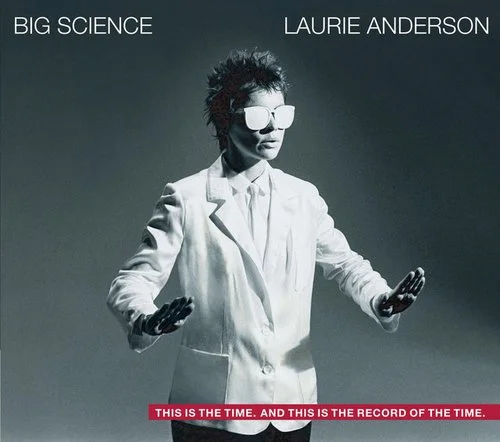
pioneering and classic albums celebrate big anniversaries in April. On 19th, Laurie Anderson’s Big Science turns forty. Although the album was reissued in 2007, there is a new red vinyl version coming out on 9th April. I would encourage anyone to get the album, as it is a work of art! Coming out on the Nonesuch label, they provide us with some detail about the pioneering Laurie Anderson, and how Big Science came to be:

In the early 1980s, Laurie Anderson was already respected as a conceptual artist and composer, adept at employing gear both high-tech and homemade in her often violin-based pieces, and she was a familiar figure in the cross-pollinating, Lower Manhattan music-visual art-performance circles from which Philip Glass and David Byrne also emerged. While working on her now-legendary seven-hour performance art/theater piece United States, Part I–IV, she cut the spare "O Superman (For Massenet)," an electronic-age update of 19th century French operatic composer Jules Massenet’s aria "O Souverain," for the tiny New York City indie label 110 Records. In the UK, DJ John Peel picked up a copy of this very limited-edition 33⅓ RPM 7” and spun the eight-minute-plus track on BBC Radio 1. The exposure resulted in an unlikely #2 hit, lots of attention in the press, and a worldwide deal with Warner Bros. Records.

'Cause when love is gone, there's always justice.

And when justice is gone, there's always force.

And when force is gone, there's always Mom. Hi Mom!

At the time of its original release, the NME wrote of Big Science, "There’s a dream-like, subconscious quality about her songs which helps them work at deeper, secret levels of the psyche." With instrumentation ranging from tape loops to found sounds to bag pipes, Big Science anticipated the tech-savvy beats, anything-goes instrumentation and sample-based nature of much contemporary electronic and dance music. On the album’s 25th anniversary, Uncut noted, "The broader themes of alienation and disconnection still resonate, while Anderson’s use of loops and traditional/synthesized instrumentation is prescient."

"In the ’70s I traveled a lot," Anderson recounts. "I worked on a tobacco farm in Kentucky, hitchhiked to the North Pole, lived in a yurt in Chiapas, and worked on a media commune. I had my own romantic vision of the road. My plan was to make a portrait of the country. Big Science, the first part of the puzzle, eventually became part two of United States I–IV (Transportation, Politics, Money, Love). My goal was to be not just the narrator but also the outsider, the stranger. Although I was fascinated by the United States, this portrait was also about how the country looked from a distance. I was performing a lot in Europe, where American culture was simultaneously booed and cheered. But the portrait was also a picture of a culture inventing a digital world and learning to live in it. Big Science was about technology, size, industrialization, shifting attitudes toward authority, and individuality. It was sometimes alarmist, picturing the country as a burning building, a plane crash. Alongside the techno was the apocalyptic. The absurd. The everyday. It was also a series of short stories about odd characters—hatcheck clerks and pilots, preachers, drifters and strangers. There was something about Massenet's aria ‘O Souverain’—which inspired ‘O Superman’—that almost stopped my heart. The pauses, the melody. 'O souverain, ô juge, ô père' (O Lord, o judge, o father). A prayer about empire, ambition, and loss”.

There are a few really interesting articles out there about the tremendous Big Science. An Avant Garde and Art-Pop masterpiece, I wonder whether there were any albums quite like Big Science in 1982. The early-1980s saw a lot of innovation in terms of Electronic music and pushing the boundaries. On its thirty-fifth anniversary in 2017, The Vinyl Factory talked about the context of Big Science and how Laurie Anderson’s debut heralded in a new age for music:

When she married Velvet Underground founder Lou Reed in one of music’s most sustaining partnerships, they came together as creative equals. On another, more artistic note, current enthusiasm for its 45th anniversary shows that Anderson also picked cannily when she distilled her 4 ½ hours-long orchestral and multimedia performance, The United States of America, into the comparative brevity of Big Science’s eight pungent tracks.

With her postmodern pixie haircut – allegedly first snipped by Winston Tong, the singer of West Coast art-rockers, Tuxedo Moon — Anderson was a fresh paradigm, who programmed to her own drum sample. Perhaps anniversaries act as too easy an anchor in our chaotic culture, but Big Science deserves its re-assessment. It seems now to have a quality of eerie prophecy.

The album’s anniversary is being celebrated as a birth of synthesized art-rock – pace Brian Eno — but let’s also dig Big Science as the harbinger of intersectionality that it is, sizzling somewhere between music and drama, social observation, politics, history, projection and humour; and with its sound just as unexpected, melodies, more abstract soundscapes, and for at least some among us, the pleasing and unexpected skirl of the bagpipes on the very funny ‘Sweaters.’

On the track ‘Big Science’ itself, her gentle vocal persuasion counterpoints a dirge of a drone, that could recall the harmonium and voice of Nico, Reed’s early bandmate/muse – except that Anderson’s tough fragility is tones apart from Nico’s deadpan, near-dead affectlessness.

Something about the brutish optimism of the early 1980s prompted the frequent use of the word “Big” (Disclosure, I co-created a TV music show back then called Big World Café and noticed we were part of a “Big” Moment before we said Moment, including this LP and the Tom Hanks flick.) The title’s nod to Science acknowledges the dream of technology as hope – and its limits.

There’s a suggestion of the era’s hysterical expansiveness in Anderson’s butterfly-wing-subtle deliveries, fluttering fast through meta levels of wry wit and seismic sighs at the human condition. Above all, right now, it is the chilling suggestion of creeping authoritarianism that makes Big Science feel so scary timely. Modestly lilting, the folksy intimacy with her characters makes her odd rigor all the more powerful. Take the airline pilot of opening track, ‘From The Air,’ professionally, detachedly and yes, robotically, steering the passengers through the imminent Big Crash. Is this the inner voice of the guardians of nuclear buttons in today’s Lukewarm War?

Beyond the famous early-girl-with-synthesiser aspect, perhaps the biggest surprise is how the emerging trends of the time, which proved durable, are so clearly limned: the neo-African kalimba-like sound, and above all the experimental fireworks of free jazz, sparkling off in several directions.

The entire exercise is steeped profoundly in the harmolodic concept of Ornette Coleman, a figure who also loomed large in her marriage; L&L, as Lou’n’Laurie called themselves, were regulars at Ornette soirees and events; he represented one of the few key constants and touchstones in their select pantheon. The biting spoken verse of the young Coleman’s wife, firebrand activist poet Jayne Cortez, also seems to resonate deep inside Anderson’s polished rage.

They called it art-rock but it is simply, timelessly, avant-garde.

The ultimate triumph of Big Science, and the key to Anderson’s longevity, resides beyond her mind and music’s admirable keen-ness, giddy hilarity and somber empathy. It is that growling animal thing, the wolf howling within the minimalism, rendering the supposedly cold synthesizer into an all too human instrument”.

I want to end with a couple of reviews. Even today, Big Science sounds so futuristic and unmatched. Whilst many artists have been influenced by the album, I don’t think anybody has managed to synthesise the same sound and visions as Laurie Anderson. It is a staggering work! This is what Pitchfork wrote about Big Science in 2007:

Big Science comprises songs from Anderson's also quite prescient United States project, a multimedia performance art piece cum opera ("It seemed like everyone I knew was working on an opera," she recalls) that depicted America on the brink of digital revolution and capitalist nirvana, where the dollar trumped tradition and the apocalypse-- cultural, political, technological-- loomed large. In fact, given its themes and presentation, much of Big Science sounds every bit about "the present" as "O Superman" does, and its idiosyncratic execution (with stylistic nods to the minimalists and pal William S. Burroughs) has helped the disc weather the passage of time remarkably well. It's less a document of the early 1980s than it is a dark glimpse of the future recorded at the dawn of the Reagan era.

Anderson's ingenious move, musically, was utilizing the vocoder not as a trick but as a melodic tool. It's the first thing you hear on Big Science, looped in "From the Air" like some bizarre man-machine synth. The rest of the track revolves around a circular pattern of blurted sax figures and hypnotic drums. There's virtually nothing about it that screams its age as Anderson intones a wry announcement from a (caveman) pilot of a plummeting flight. "There is no pilot," she speaks. "You are not alone. Standby. This is the time. And this is the record of the time." It's a metaphor for every frightening thing about 20th (and now 21st century) living you can think of, and in its spare way it's enough to scare you silly.

The gloomy ghost town future-music of the title track sounds like the rueful ruminations of someone who sees the end of the world on the horizon and can't help but to chuckle a little at their impending doom. The austere soundscapes of "Walking & Falling" and "Born, Never Asked" convey a similar chilliness laced with a despair at once aloof and oddly wistful. "Example #22" is like a Can/Yoko/Eno chop-shop, its funky wordless denouement part chant, part celebration of the absurd.

In fact, one of the elements that makes Big Science so special is Anderson's sense of humor. In "Let X=X", Anderson offers, with a wink, "I can see the future, and it's a place-- about 70 miles east of here." It's a perverse punchline to some cosmic joke, and the human element back and forth of "It Tango" does little to dissipate the feeling that on Big Science it's the machines that are getting the last laugh at the expense of their masters. The future was yesterday. The future is now. Welcome to the future”.

I will finish with another review. AllMusic showed their admiration and respect for an album that was unlike anything at the time. Big Science was definitely not a commercial compromise or sell-out on behalf of Laurie Anderson:

There was a backlash against Laurie Anderson in "serious" musical and artistic circles after the completely unexpected mainstream commercial success of her debut album, Big Science. (The eight-plus-minute single "O Superman" was a chart hit in England, unbelievably enough.) A fair listen to Big Science leaves the impression that jealousy must have been at the root of the reception because Big Science is in no way a commercial sellout. A thoughtful and often hilariously funny collection of songs from Anderson's work in progress, United States I-IV, Big Science works both as a preview of the larger work and on its own merits. Opening with the hypnotic art rock of "From the Air," in which an airline pilot casually mentions that he's a caveman to a cyclical melody played in unison by a three-part reeds section, and the strangely beautiful title track, which must feature the most deadpan yodeling ever, the album dispenses witty one-liners, perceptive social commentary (the subtext of the album concerns Anderson's own suburban upbringing, which she views with more of a bemused fondness than the tiresome irony that many brought to the subject), and a surprisingly impressive sense of melody for someone who was until recently a strictly visual artist. For example, the marimba and handclap-led closer, "It Tango," is downright pretty in the way the minimalistic tune interacts with Anderson's voice, which is softer and more intimate (almost sexy, in a downtown-cool sort of way) than on the rest of the album. Not everything works -- "Walking and Falling" is negligible, and the way Rufus Harley's bagpipes intentionally clash with Anderson's harsh, nasal singing and mannered phrasing in "Sweaters" will annoy those listeners who can't take either Yoko Ono or Meredith Monk -- but Big Science is a landmark release in the New York art scene of the '80s, and quite possibly the best art rock album of the decade”.

On 19th April, Big Science turns forty. Still astonishing and unique, I think people will discover Laurie Anderson’s debut fresh. It will be quite a realisation and revelation! An album that is still creating tremors, Big Science is one of the all-time great L.P.s. If you have never heard it before, then do yourself a favour and experience…

A marvellous and groundbreaking album.

FEATURE: Paul McCartney at Eighty: Twenty: The Playful, Child-Like and Whimsical Sides to the Songwriter

FEATURE:


Paul McCartney at Eighty

IN THIS PHOTO: Paul McCartney and his daughter Stella

Twenty: The Playful, Child-Like and Whimsical Sides to the Songwriter

___________

WHEN researching for features…

IN THIS PHOTO: Paul McCartney and his daughter Mary in Scotland in 1970/PHOTO CREDIT: Linda McCartney

to mark Paul McCartney’s eightieth birthday in June, I have been discovering new things about him. I have always known it, but I love the fact that he can write these deep and haunting songs like Eleanor Rigby (from The Beatles’ 1966 album, Revolver), alongside the more upbeat and fun. Since the early days of The Beatles, McCartney has always had this whimsical and child-like side. Maybe it was more from McCartney than anyone else in the band. Sometimes John Lennon was less keen on McCartney’s more child-like side. The band were hammered and drilled when it came to recording Abbey Road’s Maxwell’s Silver Hammer. A daft song, its lyrics are pretty dark. That said, it has a sense of fun and the silly. I think some of The Beatles’ best moments came when McCartney was writing these more playful tunes. It didn’t really start to happen until the band became more experimental. Written with John Lennon, Yellow Submarine was an early sign of the more child-like view of Macca. Sung by Ringo Starr, it is a song not intended for the band’s female audience or related to the band’s romantic lives. It is a step into something more fantastical. This continued on Good Day Sunshine (on Revolver). Sgt. Pepper’s Lonely Hearts Club Band (1967) has When I’m Sixty Four. Written years earlier, this is a very young McCartney writing a song about being old. As I look to his upcoming eightieth birthday, I wonder what he thinks of the tracks today!

Although these types of songs did not connect with critics as much as some of hid classics, I find McCartney to be at his most charming and delightful when, for instance, he is discussing northern characters growing old. Although the lyrics are not child-like, the sentiment and mood of Ob-La-Di, Ob-La-Da is! Again, not a great favourite among the other Beatles or critics as such, it is a supreme Pop writer branching out and diversifying. I think one of the reasons why I fell for The Beatles as a child is because I could relate to songs like Ob-La-Di, Ob-La-Da. I will end by discussing McCartney’s 2019 children’s book, Hey Grandude! Maybe his perspective is different now when he is writing for children or has that child-like view – as a grandfather and older man -, but I feel  there was this desire, maybe, for McCartney to return to childhood when writing some of these Beatles songs. Becoming famous and things being quite different and busier, maybe there was this escape and need to embrace something simpler and easier, songs such as All Together Now (from 1969’s Yellow Submarine soundtrack) is joyous! Even if these more whimsical and lighter songs do have elements of the sexual and saucy, there is a playful nature that has connected with children and adults alike. Being in a huge band like The Beatles and writing songs that weren’t necessarily targeted at the core audience or were instantly commercial, that was quite brave! For his cynicism, Lennon was definitely inspired by McCartney’s child side. Think about Hey Bulldog from Yellow Submarine or The Continuing Story of Bungalow Bill from The Beatles. This was a man who, in spite of a harder edge, took something from McCartney that was more childish and sillier!

Thinking about McCartney’s solo output, right from his debut, McCartney, there was signs of this more childlike side. Teddy Boy is a song that springs to mind. 1982’s Tug of War contains Dress Me Up as a Robber, whereas we have songs such as Fine Line and English Tea (from 2005’s Chaos and Creation in the Backyard) that are lighter, have whimsy and project something almost child-like. There is definite eccentricity and silliness on English Tea. Quaint almost! I love the tone and sound of Mr. Bellamy from Memory Almost Full and Back in Brazil from Egypt Station! For Wings, he wrote songs like Bip Bop (from 1971’s Wildlife). 1974’s Band on the Run has Jet. I almost see that as a chant that children can sing to. It is definitely on the more playful side of things. Think about McCartney II from 1980 and pieces like Check My Machine are the sound of a man experimenting with sounds and accents to create something that was entertaining to him. A songwriter who could project silliness, lightness or something that didn’t have to be serious or predictable! From his teens right through to now, Paul McCartney has kept this child-like innocence at heart. He is an artist whose material is as broad as anyone who has ever lived. I don’t hold onto this assumption that songs like When I’m Sixty Four or All Together Now are more throwaway and not worth as much as, say, Hey Jude or Yesterday. Indeed, Hey Jude was written for John Lennon’s son, Julian, when Lennon left his wife to be with Yoko Ono. Dealing with that upheaval, McCartney showed paternal instincts and opened one of his most enduring songs. Maybe his more whimsical songs are a way for him to stay young or deal with stressful times. McCartney also wants to connect with a younger audience and not come across as too serious or predictable.

His children’s book, Hey Grandude!, is McCartney continuing to see the world through this prism. Not that the more child-like element of his is dominant in his songwriting - you can feel and hear it on albums he made with The Beatles, Wings and his solo material. He has grandchildren, so it seemed almost inevitable he would write a children’s book. Even though he is approaching eighty, I feel that McCartney will continue to write children’s books and include albums tracks that have that playful side to them. It is one of the best and most interesting aspects of his career. I love When I’m Sixty Four and Yellow Submarine. I think that the brilliance of Paul McCartney is that he can write these heart-wrenching songs that take it out of you. He can also switch the mood and take you to this more escapist world. It is one of many reasons why the world loves him so much! A quality that definitely should not be overlooked or dismissed in any way at all. I think, as McCartney enters his ninth decade of life, he will continue to splice whimsy and the child-like with the serious and personal. It gives his albums that emotional variation that make them so rich. It is what makes the beloved Paul McCartney…

A worldwide treasure!

FEATURE: Spotlight: Beth McCarthy

FEATURE:


Spotlight

PHOTO CREDIT: Emris Media 

Beth McCarthy

__________

I interviewed…

the magnificent Yorkshire-born artist Beth McCarthy almost four years back now. Now situated in London, I think that it is high time I include her in my Spotlight feature. There is an E.P., coming from her soon. Having followed her music for over four years and loving what she has done since I interviewed her, everyone should follow McCarthy. Before I proceed, I want to bring in a few of the questions I asked her back in 2018:

 “For those new to your music; can you introduce yourself, please?

So. I’m a singer/songwriter from York and I’ve been on ‘the scene’ for around eight years now. People who follow me will know me for a more Country/Folk vibe but I’ve spent the last year working on a totally new Electronic/Pop sound that I’m super excited about.

You are a Yorkshire-based artist. Is it a great county to make music in? How important are the people and the vibe of Yorkshire regards your music?

I am so unbelievably proud to be from Yorkshire. I think we have some absolute gems when it comes to music and everyone just wants to help each other get to where they want to be which is amazing. Yorkshire supports Yorkshire. It’s magic.

Were you raised around a lot of great sounds? What sort of music were you raised on?

I was actually raised on Rock music! AC/DC, Meat Loaf and Deep Purple were all favourites of my dad so, ultimately, became the soundtrack to my childhood. The standout, though, was Queen and they remain one of my favourite bands of all time!

What do you hope to achieve by the end of 2018?

I try not to put time stamps on things as I’ve found it generally leads to disappointment! I’ve been in so many situations where things have been planned or promised and they’ve ended up taking far longer than expected or not happening at all which leaves this massive feeling of defeat.

These days, I just keep going ‘till I get to where I want to be and I don’t really keep track of the time. I know that, if I keep working hard, it’ll happen eventually so I just enjoy the ride!

What advice would you give to new artists coming through?

The best advice I ever got was from a doctor in London who I met during my time on The Voice. He’s a doctor to the stars and said that the three things you need to be successful in this industry are: talent, the skin of a rhinoceros and the ability to cope with extended periods of inactivity. Over the last couple of years, I’ve realised how true that is and it’s kept me going through some of the harder times”.

I want to mention McCarthy’s latest single, Friendship Bracelet, which was released late last year. I am excited to hear the next track from the E.P., No Hard Feelings, which is out on Friday (25th). I will get to an article about that track ion a minute. Prior to that, York Vision spoke with Beth McCarthy last summer. A big hit on TikTok and a rising artist who is among our finest young songwriters, they wanted to know more about her:

Anyone who has been within 50 yards of TikTok will recognise Beth McCarthy, having seen her sobbing behind her steering wheel to ‘She Gets the Flowers’ – a video with 5.1 million

views.

If you’ve seen the dual TikTok of Will Joseph Cook’s ‘Be Around Me’ and her own ‘Omg Did She Call Him Baby?’, you’ll also remember her distinct, trembling voice. There is something vulnerable and fragile about her music that belies the incredible strength it imbues to her listeners.

McCarthy left many people’s dream job in radio the month that lockdown began, but quickly returned as her pursuit of success in London was “spoiled” by COVID-19. Explained as a role for “if music doesn’t work out”, the radio enables her need for “connection”.

“My main goal has been to write songs that connect with people and that people can relate to and listen to and go, that’s me, that’s my story.”

TikTok provides the perfect opportunity for this, according to McCarthy – particularly during a pandemic where we all have “that kind of want for real moments and genuine emotion.” Three years ago, she tells me, “If I’d have cried in my car and put it online, people would have been like, ‘She’s not okay!’” Now, people need to connect on a “vulnerable and raw and genuine level.”

PHOTO CREDIT: Louie Wittner 

However, McCarthy jokes that TikTok is still not a wholly comfortable platform. She admits to being “a little bit bitter that I spent ten years grafting my arse off to try and make it in music… and then I literally had to cry in a car. And that’s the thing that everybody’s listening to my music because of… I could have just done this the whole time?” This was something that picked up when she went on The Voice UK at 16 – maintaining that she did it to “get the experience”.

“I chatted absolute bollocks for like, a good 20 minutes,” she laughs. “But it worked for me… they were like, ‘Yes, you’re weird, and so are we! We’ll just stick with you!’” This plays out across McCarthy’s music as she rewrites the charts – from Lewis Capaldi to Noah Cyrus. “There are certain songs out there that I hear and I’m like, wow, that’s incredible. But I-I am the person they’re singing about, like, I’m not them.”

The power of this approach is perhaps best led through ‘Self Love Story” – a fundamental reworking of Taylor Swift’s 2009 hit. The famous, perhaps infamous chorus is replaced by: “You don’t need a prince when you’re already a queen / Write your own story / Where, baby, you are the lead.” She compares her role as singer-songwriter to being “the best friend or the big sister.” Her personal ethos is one based around self-appreciation: “I hate this narrative that people have of, like, needing someone else. The minute you start being, like, happy with yourself and comfortable with yourself, is the minute that all that attachment and sadness goes away.”

“I’m trying to take on everyone’s story on my little shoulders. I’m the Oprah of Music.”

Interaction with her audience has remained an integral element of McCarthy’s work – in the music video for ‘She Gets the Flowers’, a sequence of women write and hold up their stories of heartbreak. Simple and totally devastating, you leave the song consumed by the silence it leaves behind. She says that her next song is going to be building on the power within her rewrites – “We all cried together, and now we’re all going to get over it together.” Her aim is to “take the power back and take that moment where it’s like, okay, we’re really sad about that person, we’re really, really sad about that. But you know what, we’re okay”.

I think that everyone should follow Beth McCarthy (all the links are at the bottom). Friendship Bracelet is the current taste of her upcoming E.P. Make sure you listen to No Hard Feelings when it comes out this Friday. A sensational artist that I hope to see play live soon, she is an amazing talent with a very long future. Music Crowns covered Friendship Bracelet when it arrived in December:

Beth McCarthy returns with another sensational alt-pop track: ‘Friendship Bracelet’. Her witty, storytelling lyricism stands out as she laments a friendship falling apart through hard-hitting lines and singalong melodies. Flooded with deep bass, shimmering strings and dynamic percussion, Beth McCarthy presents a magnetic indie-pop sound.

Discussing her new release, Beth reveals: “‘Friendship Bracelet’ expresses the petty and over-dramatic feelings that you experience when you lose your friend to a new relationship and in a way, is like a friend breakup anthem. I’m always unreasonably heartbroken when my friends get into new relationships because I suddenly have to share them with someone that they’re going to love more than me and the friendship will inevitably change. It’s also the worst thing EVER to be a third wheel so I wanted this song to encapsulate all those feelings of resentment, betrayal, sadness, and also the process of reminiscing on old times with that friend and almost grieving them as you know everything will be different now.

My favourite lyric in the song is ‘we were growing old alone together, that’s what you wanted ’til you wanted something better’ as I feel like it fully represents that feeling of being left behind in a friendship and is a feeling I’ve experienced too many times!”

‘Friendship Bracelet’ is the second single from Beth’s highly-anticipating upcoming EP, which boasts production and co-writing credits from Sophie Ackroyd (Nina Nesbitt, Benjamin Francis Leftwich). Accumulating almost 10 million streams, landing spots in coveted Spotify playlists and opening for Sigrid, Beth McCarthy is on her way to the top”.

An artist I have a lot of affection and time for, keep your eyes peeled on Beth McCarthy’s social media channels. I think 2022 will be a busy one for the Yorkshire artist. Go and see her perform if you can. She is a marvellous and hugely original artist who I have been a fan of for years now. I am in no doubt she will continue to grow and get some very big honours and gigs through her career. In the wonderful Beth McCarthy, we are lucky enough to have…

A very fine artist.

_____________

Follow Beth McCarthy

FEATURE: Turn It On: Sleater-Kinney’s Dig Me Out at Twenty-Five

FEATURE:


Turn It On

Sleater-Kinney’s Dig Me Out at Twenty-Five

___________

I am going to source heavily…

 IN THIS PHOTO: Sleater-Kinney in Seattle in 1997

from others, as there have been some detailed and insightful articles and reviews written about Sleater-Kinney’s third studio album, Dig Me Out. Released on 8th April, 1997, it was produced by John Goodmanson and marked the debut of Janet Weiss, who would become the band's longest-serving drummer. Carrie Brownstein (guitar, vocals), Corin Tucker (vocals, guitar) and Janet Weiss (drums, percussion) were responsible for one of the greatest albums of the 1990s. Sleater-Kinney cemented their reputation and brilliance on 1996’s Call the Doctor. That album fought against gender roles, consumerism, and Indie Rock's male-dominated hierarchy. Even though Lora Macfarlane’s drumming on the album is great, the introduction of Janet Weiss unlocked something and took Sleater-Kinney’s music to new heights. The band’s 2021 album, Path of Wellness, does not feature Weiss. She left the band because she felt she was just the drummer, and not a creative equal in Sleater-Kinney. It is sad that someone so integral to the overall sound and success of the band has left. It makes the upcoming twenty-fifth anniversary of Dig Me Out bittersweet. One big reason why the album is a classic is because of Janet Weiss’ huge talent and innovation. Of course, the album is not only about Weiss. The songwriting and performance from the trio is immense throughout! At thirteen tracks running to a total of just over thirty-six minutes, Dig Me Out is focused and economic. There is definitely no filler on this hugely important album.   

I want to bring in a couple of features about Dig Me Out before getting to some reviews. The A.V. Club looked at Sleater-Kinney’s third studio album on its twentieth anniversary in 2017:

That solid base gave Tucker and Brownstein more room to play with their interlocking guitar and vocal lines. Although both continued to tune their guitars down from a standard E to C-sharp (and still do), adding Weiss to the band forever liberated Sleater-Kinney from its lack of a bass player. Weiss’ precise, pounding beats filled the void just fine, with a little added volume from producer John Goodmanson, who noted in a profile of the band, “The awesome thing about having no bass player is you can make the guitars sound as big as you want.” The result is an aggressive, yet intricate dual-guitar attack that relentlessly plows forward with punk passion and danceable hooks, without any extended solos or self-indulgent noodling—or rock ’n’ roll wankery of any kind, even when it’s reinterpreting it.

Brownstein’s sharp opening riff on “Dig Me Out” serves as a thesis statement, an urgent warning to buckle up. The rest of the song zooms by in a panic, as an increasingly desperate-sounding Tucker sings, “I’ll wear your rings, your sores,” before belting out, “Oh god, let me out / There’s nowhere else to go.” Later in the album, “Not What You Want” resembles the Shangri-Las on speed, describing a tearful breakup in the front seat of Johnny’s car with both pedals pressed to the floor.

Tucker’s lyrics combine such relationship conflicts and confusion with a politicized take on the female body, as well as the transcendent power of the music itself, which is often the only thing giving her full ownership over herself. Without her guitar, Tucker seems broken, emotionally and physically (“Work ’til I can’t give / I’m a machine,” goes the call and response on “The Drama You’ve Been Craving”). It’s an idea that becomes literal on “Heart Factory,” which starts as an extended fantasy about feelings that can be turned on and off at will, until the chorus busts down the door with a defiant cry, “I’m not just made of parts.”

That interplay was made even more poignant by the relationship Tucker and Brownstein shared off stage, which had recently ended in heartbreak. Between Call The Doctor and Dig Me Out, Brownstein and Tucker were forcibly outed in a Spin interview describing them as “ex-lovers,” a fact that neither of them had made public at the time. In her memoir, Hunger Makes Me A Modern Girl, Brownstein writes of the experience, “I told my dad that Corin and I had dated but that we didn’t anymore, which was the truth. I said that I didn’t think or know if I was gay, dating Corin was just something that had happened, which at the age of 22 was also the truth.” The relationship may have been over by the time Dig Me Out was recorded in the winter of 1996, but the wound was still fresh. That’s most evident on the poignant “One More Hour,” a snapshot of the exact moment when you know that while you might always love someone, you won‘t always be with them, delivered over skittish Gang Of Four-inspired guitar, and with Brownstein offering some consolation (“I know it’s so hard for you to let it go”) to Tucker’s anguished “I needed it.”

Toward the last third of the album, Dig Me Out turns even more reflective, waking up after the party with last night’s makeup smeared on its pillow and a pang of regret. Tucker’s vibrato-laden vocals and Brownstein’s spare guitar enhance the pathos of “Buy Her Candy,” a wistful song of longing after a perfect woman, as both a romantic and an aspirational ideal. (The narrator fears she can never measure up either way.) That uncertainty swells to epic proportions on album closer “Jenny,” where Tucker laments a lost love repeating, “Didn’t we almost have it? Didn’t you want it?” as guitars swell around her like the ocean.

Dig Me Out is frustrated with the suffering that women endure, but focuses that rage into a determination to survive. It embraces joy as an act of self-love, a defiant promise to get up, brush yourself off, and keep going despite the many painful obstacles that life throws your way. It’s a sentiment best reflected on “Things You Say,” a swirl of choppy guitars and churning emotions that ends with what could serve as the album’s manifesto: “It is brave to feel,” Tucker sings. “It is brave to be alive”.

In another twentieth anniversary feature, Stereogum discuss how quickly Dig Me Out was recorded. It is amazing to consider how such a great and enduring album was recorded over such a short period of time:

Call The Doctor, Sleater-Kinney’s previous album, had hit like a bomb, and that album came out barely a year before Dig Me Out. And yet the band still figured out ways to level the fuck up on their third album. They lost Lori McFarlane, their perfectly capable drummer, and teamed up with Janet Weiss, probably my favorite drummer on the face of the Earth. That change did amazing things for them, anchoring their low end and giving them room to play around rather than just fire straight ahead. And Tucker and Brownstein seemed to think of themselves as something more — as rock stars, or something like it. The Dig Me Out cover famously quotes the Kinks’ The Kinks Kontroversy, demanding to be taken as seriously as any foundational classic rock. “Words And Guitar” nails the elemental power of what they were doing. “I make rock and roll,” Tucker howled on “It’s Enough” — as simple and defiant a statement of intent as you could ever want.

And as they were saying all this, Sleater-Kinney were still very much an underground band. Their last album had been a critical smash, but it didn’t exactly move massive numbers. They moved up from a tiny indie label to a less tiny indie label, and they probably started playing bigger rooms, but Dig Me Out was still an album made by the skin of its teeth. They got 10 days to record Dig Me Out — luxurious compared to the four days they had to make Call The Doctor, but not compared to anything else ever. They had to stay at Brownstein’s father’s place while making it because they didn’t have money for a hotel. The studio was bone-cold, and Brownstein has written about how they had to jump around and do aerobic routines between takes just to keep themselves warm.

So it’s a minor miracle that Dig Me Out even exists, that Sleater-Kinney had the vision to go for something so elemental and huge. And it’s a miracle for more than just material reasons. Tucker and Brownstein had been a couple, and they’d broken up not long before they recorded the album. That’s the sort of thing that would’ve broken up most bands — especially in that era, coming from a riot grrrl scene where bands rarely made it past one album. Instead, Sleater-Kinney used all that stress and hurt and anger to fuel the album. Brownstein has written about disconnecting emotionally while recording it, working on her “One More Hour” guitar parts and not even thinking about whether she was the person Tucker was singing about, the one who had the darkest eyes.

Dig Me Out is Sleater-Kinney’s greatest album, the one that will always jump into people’s minds when they think of the band. It’s not my favorite Sleater-Kinney album; that’s One Beat, now and forever. Maybe it’s not your favorite Sleater-Kinney album either. But it’s the one where everything absolutely clicked, where they rode some astral wave and burned their name into the history of American underground rock. It’s where they became legends. Dig Me Out isn’t a punk album, as Call The Doctor had been — not really, not exactly. Instead, it’s an album that lies outside subgenre designations, outside conversations. It’s where Brownstein and Tucker’s guitars became these tangled and intricate balls of melody, where they began to sound like a completely interconnected web. It’s where Brownstein’s icy, haughty vocals first held their own against Tucker’s otherworldly roar. It’s where Weiss came in and gave the band a whole new rhythmic dimension — hitting hard but treating her drums as an instrument rather than just a way to keep rhythm. It’s where they really became Sleater-Kinney.

Critics lost their minds for Dig Me Out, just as they’d done for Call The Doctor before it. And in a later age, that critical love probably would’ve been enough to push Sleater-Kinney closer to something resembling popularity. These days, the power of the internet is such that critical love can be enough to push a band into bigger venues, into higher spots on the festival posters that didn’t exist in 1997. (Back then, the closest thing we had to Coachella was alt-rock radio-station festivals, and Sleater-Kinney were emphatically not getting booked at those.)”.

It is worth highlighting a couple of positive reviews. Dig Me Out found very little but huge respect and praise when it arrived in 1997. That has continued to this very day. Pitchfork wrote about the album in 2014, following the release of a vinyl box-set of all of the band’s studio albums up until that point:

Then, behold: Janet Weiss. She joined on 1997's breakneck Dig Me Out, an all-time great American punk statement, giving Sleater-Kinney the most crucial muscle a drummer can offer: not sheer force, but heart, taking the momentum to a new plane. Sleater-Kinney released their next four records with the larger Olympia feminist label, Kill Rock Stars, but none distilled the band's sound and attitude like Dig Me Out: sometimes brutal heartache, sometimes a menacing threat, always intelligent and extreme, there are enough hooks architected into these two- and three-minute songs to span several albums, but even the added dum-de-dum sugar seems as though it must be raw Portland agave.

"Little Babies" critiques stereotypes of motherhood, "Heart Factory" roars over synthetic emotions of the Prozac Nation, and the instantly classic "Words and Guitar" is an ode to rock that just feels necessary. At the peak of "The Drama You've Been Craving"—Tucker's "Kick it OUT!"—there are practically fireworks bursting on either side. Really, Dig goes from 0-to-100 within seconds of its opening salvo of a title track, which begs for transcendence from worldly oppression, "Outta this mess/ Outta my head."

Unlike so much in the trajectory of punk, there is no nihilistic self-destruction in the face of chaos. More than skepticism, anti-consumerism, or the glories of tattoo art, punk teaches empathy, a principle Sleater-Kinney practiced with nuance. This is why Sleater-Kinney's music shines a light despite its loudness, why it is easy to be alone with the songs and feel protected. Sleater-Kinney would never forego the optimism to believe their songbook could make us smarter, angrier, more tender and hopeful. Dig Me Out dreams of a better future, clawing itself up with every note.

The highlight of Dig Me Out and Sleater-Kinney's career, "One More Hour" is one of the most devastating break-up songs in rock. "Oh, you've got the darkest eyes," Tucker and Brownstein quaver in unison—the song is about their own short-lived romance—and the way Tucker extends the last word, it is like she can't let them go. There are complex feelings near clear ones, which is what break-ups are: someone wants to untangle the mess, someone wants to snip it apart. "I needed it," Tucker howls, hardly distinguishing where one word ends and another begins. "One More Hour" is sublime sadness, a kind one can only know when staring at the end of something and wanting desperately for it not to be so”.

I will end with SPIN’s take on the mesmeric and staggering Dig Me Out. This is what they had to say when they explored the album on its twentieth anniversary:

Nobody wants to be radical anymore. On the right, radicals blow up family-planning clinics; on the left, they’re shaggy ’60s relics and fat, hairy manhaters who destroyed feminism for ordinary women. Even as slang, “radical” seems about as fresh as Pauly Shore in a pair of Bongo shorts.

Until you hear Sleater-Kinney. “Dig me out!” hollers Corin Tucker on the title track of the band’s new album. “Dig me in! / Outta this mess, baby / Outta my head.” Tucker’s singing about how rock’s monstrous noise rips off her skin, leaving her unprotected and gloriously unbound. As guitarist Carrie Brownstein turbocharges a riff rescued from Iggy Pop and David Bowie’s “China Girl” and drummer Janet Weiss applies dominatrix discipline to her kick drum, Tucker alternately guides the music’s onslaught and gives in to it. She lets the songs’ electric momentum strip her down to her emotional core—a pure and antisocial humanity. From start to finish, Dig Me Out aims for this place of undiluted emotion, where girlishness yields to the rage and joy of women who feel no need to charm.

Nurtured in the pink petri dish of Olympia, Washington, where women’s lib never went out of fashion and punk meant the gentle triumph of nerdy kids, Sleater-Kinney seemed at first like a glorious anomaly: politically radical artists whose rhetoric fired them up instead of weighing them down. Tucker’s voice was one of those wonders of the world that turned listeners into pilgrims; Brownstein drove her own path with raggedy-ass, blade-sharp guitar, and the songs gleamed with quick eloquence. Yet for all the harsh allure of their 1995 debut and last year’s Call the Doctor, Sleater-Kinney’s music remained, for the most part, more no than yes, a reaction against sexism instead of an attempt to imagine life beyond it.

On Dig Me Out, a rockin’ little collection of love songs and catchy dance numbers, Sleater-Kinney take the next step. Like the most radical feminist art, the album cuts into the meat of women’s everyday experience, aiming for depths untouched by the buttons-and-brows (or nose-and-belly-button-ring) conventions that identify what’s “feminine.” This is not an easy task in the pop world, where most female artists trade in these conventions, occasionally sassing back, but ultimately staying within familiar boundaries. Many women assume they’re liberated because they can choose which fantasty to modify. But self-determination doesn’t mean shit when you didn’t create the self you’re determining. And one thing rock ‘n’ roll’s beat can offer is a momentary sandblast that frees raw consciousness. When Tucker sings “I’ll touch the sky and say what I want,” she knows that the music is what opens her mouth.

It takes chops to achieve such a visceral liberation, and Sleater-Kinney now own them fully. Weiss, who joined the group last year, is both relentless and highly musical, and Brownstein has grown dexterous on guitar; her twisted melodicism, which always got its energy from wiry riffs instead of crunchy chords, is a full partner to Tucker’s vocal aerobatics. Sleater-Kinney now deliver the punch their words describe. “Words and Guitar” leaps and skitters with the just-released repression of early Talking Heads; “Dance Song ’97” uses a Farfisa for a new wave, Day-Glo mood. Even “Little Babies,” a fairly standard feminist protest against the maternity trap, gets an added bite from a rock-reveling chorus (“All the little babies go one-two-three-four!”). Over chords that sounds like the Clash taking a walk on the wild side, Tucker and Brownstein giddily admit their own need to suck the mother’s milk of the backbeat.

It’s a blast to get charged up by Sleater-Kinney’s suffragette rock, but Tucker and Brownstein make their most surprisingly radical moves within love songs. Most address women, and this unqualified declaration of lesbian desire immediately lifts them past typical wedding-bell romance. Both fragmentary and painfully intimate, the songs avoid erotic platitudes, instead exploring sexual longing in plain language. Tucker and Brownstein are listening to themselves, and what they discover isn’t simple. In the magnificent “One More Hour,” the chorus counterposes Tucker’s irrational heartbreak (“I needed it,” she repeats, her pitch rising) against Brownstein’s rote rationalizations and deadpan clichés. The argument ebbs and fades; it could be lovers feuding, or one friend consoling the other, or the bereft Tucker split against herself. In this moment what emerges is the clarity of partial vision, the understanding that who you are is a process, not reducible to parts.

Dig Me Out captures the noise of a soul-filled body shaking itself awake, and that’s an experience that bridges any gender divide. In it, guys as well as girls will hear the rattle of their brains and the flash of their libidos. The catharsis Sleater-Kinney seek is more than just fun; it’s a battle in earnest for the human right to know and possess yourself. Feminism was supposed to be about that fight, too, but it’s still sputtering under the weight of its own complacency. Sleater-Kinney push us back into the fray. If they wanna be our Simone de Beauvior, Dig Me Out proves they’re up to it”.

Ahead of its twenty-fifth anniversary on 8th April, I wanted to write about a wonderful album that is one of the defining statements of the 1990s. During a decade that saw so many scenes, genius releases and timeless albums, Dig Me Out ranks there with the best of them! If you have not heard the album in a while, make sure that you dig it out, turn it on and…

PLAY it loud.

FEATURE: Reel-to-Real: Fabien Baron: Madonna – Erotica (1992)

FEATURE:

Reel-to-Real

Fabien Baron: Madonna – Erotica (1992)

___________

IN October…

Madonna’s fifth studio album, Erotica, turns thirty. I am going to write features about it ahead of its anniversary. Even though the title song does not turn thirty until September, I wanted to explore it now. I am going to lean fairly heavily on a Wikipedia article that talks about the video. Pushing her sound, sexuality and confidence further than she did on 1989’s Like a Prayer, Erotica is an album where Madonna inhabits a character, Mistress Dita. Able to play this character, in a sense, allowed Madonna to write and release videos that were a little mor provocative and controversial. It is empowering to see the video for Erotica! Sexual, cinematic and highly captivating, I think that it is one of Madonna’s greatest videos. The first single from the album, the video for Erotica did attract a lot of attention. Not only because of its visuals and themes. Madonna, as the biggest Pop artist in the world at that time, had eyes and ears her way. There was so much press speculation and intrusion! This megastar was taking her music to new heights and levels. Directed by fashion photographer Fabien Baron, the video for Erotica is phenomenal. Justify My Love was a single released to coincide with Madonna’s greatest hits album in 1990, The Immaculate Collection. Similar in terms of its sexual content and steaminess, if anything, Erotica takes things further and is the Queen of Pop at her most alluring, commanding and boundary-pushing!

This Wikipedia article gives information about the amazing video for one of the most memorable and talked-about singles of the 1990s. Many Pop artists of the ‘00s were inspired by Erotica and the video for the title track:

"Erotica" is a song by American singer and songwriter Madonna. It is the title track from her fifth studio album, Erotica (1992), and was released as the album's lead single on September 29, 1992, by Maverick Records. It was later included on her greatest hits albums GHV2 (2001) and Celebration (2009). The song was written by Madonna, Shep Pettibone and Anthony Shimkin, while production was handled by the singer and Pettibone. Musically, "Erotica" contains spoken word vocals, and is an ode to S&M, with Madonna using a pseudonym called "Dita". She invites her lover to be passive while making love to her and leads him to explore boundaries between pain and pleasure.

The song debuted at number 13 on the Billboard Hot 100, becoming one of the highest debuts on the chart history at the time, eventually peaking at number three. Additionally, it became a success on the Hot Dance Club Play chart, reaching the top position. "Erotica" also found commercial success internationally, peaking in the Top 10 in several countries including Denmark, Finland, New Zealand, Norway, Portugal, Sweden and the United Kingdom. In Italy and Greece it peaked at number one.

“The music video for "Erotica" was directed by fashion photographer Fabien Baron. The video intercalates scenes of Madonna, dressed as a masked dominatrix with a gold tooth, with actual footage of the making of her Sex book; in these scenes Madonna is seen sitting topless in the lap of an older man, kissing model Naomi Campbell, wearing BDSM gear and riding a bicycle in the nude. The video also counts with cameos by celebrities such as Isabella Rossellini, Tatiana von Fürstenberg, Helmut Berger and Big Daddy Kane. Shooting for the footage of Madonna singing the song, took place on August 22, 1992, at The Kitchen in New York City while shootings for Sex took place at Hotel Chelsea and Times Square's all-male burlesque Gaiety Theatre. In order to imitate the look of old home movies and stag films, the entire video was shot with super 8 mm film. The video had its world premiere on MTV, on October 2, 1992. Upon its release, it was met with controversy; Susan Bibisi, from Los Angeles Daily News, called it a "virtual advertisement" for Sex". Entertainment Tonight had previously reported that Madonna herself had initiated the mayhem surrounding the video by walking bare breasted at designer Jean Paul Gaultier's fashion show and posing nude in Vanity Fair magazine. Richard Harrington from The Washington Post wrote:

In the video, Madonna becomes Dita Parlo, a masked, gold-toothed dominatrix from an indeterminate age, ready to help us cross the street at the corner of Pleasure and Pain [...] assuming different dominatrix roles and investigating assorted bondage scenarios before finishing up with some nude hitchhiking on a street remarkably free of pile-ups. Shot in grainy black and white, 'Erotica' has the feel of a stag film, though its quick cuts keep the viewer from seeing all that much.[

After its release, it was aired by MTV a total of three times, all of these after the 10 pm watershed, due to its highly charged sexual content, before being permanently banned; this made it Madonna's second video to be banned from airing by the channel, after "Justify My Love" in 1990. MTV spokeswoman Linda Alexander said, "The themes of the video are clearly aimed at a more adult audience. It is not appropriate for a general viewing audience". Madonna herself said she understood the channel's ban on the video; "MTV plays to a huge audience and a lot of them are children, and a lot of themes I'm exploring in my videos aren't meant for children, so I understand that they say I can't show it [...] I accept it". Rolling Stone's Anthony DeCurtis said that "This is pretty much normal Madonna fare, [...] But how much longer can you continue mining sexuality? In checking off your list of taboos, how far can you take them? At what point does it just stop being interesting?” Similarly, David Browne from Entertainment Weekly, asked "Haven’t we seen most of this stuff before? Can we be bored with the subject matter already? [...] no emotion is attached to the mechanics of these acts, so it's difficult to identify with or care about the characters”. The video was nominated for the 1993 Billie Awards in four categories: Consumer print, trade print (music) and consumer print (retail), the most for a single entry It also was ranked at number 16 on VH1's "50 Sexiest Video Moments". The video was made commercially available in 2009, when it was included, albeit in a censored version, on Madonna's Celebration: The Video Collection compilation; it had previously been excluded from 1999's The Video Collection 93:99. In October 2020, during the 28th anniversary of the studio album, the music video got remastered and posted on her official YouTube channel”.

Leading up to October, there will be a lot of talk and writing out there regarding Erotica and Madonna’s Sex book. As they turn thirty, there will be fresh perspective. I wonder what Madonna herself will say on the anniversary – and whether there is a thirtieth anniversary re-release in store for Erotica (and if the Sex book gets reprinted). This Today in Madonna History articles recalls a very special day in 1992 when New York’s The Kitchen was graced with the presence of one of the most influential artists on the planet:

On August 22 1992, Madonna filmed scenes for the Erotica music video at The Kitchen in New York City with fashion photographer/director/designer Fabien Baron. These scenes consisted of Madonna in the character of her Sex book alter-ego, Dita, miming the lyrics to the song, and would be intercut with a selection of 8mm footage previously shot by Baron during the making of the Sex book.

Baron also served as art director for the Sex book, the Erotica album and single, and later for the Bedtime Stories album and its singles Secret and Take A Bow. He also directed the commercial for her fragrance, Truth Or Dare by Madonna, in 2012.

“She put that book out at the best moment. She timed it very well. She knows what she’s doing. And such drive. Some people want to lift stones and see what’s under it. She’ll be on a beach with millions of stones and want to lift every one of them”  – Fabien Baron”.

I really love the video for Erotica. It is challenging and bold without being too explicit or crude. If a male artist were to do a similar video (and they have through the decades, then they would not have got flak!). Madonna, as a woman in music, was subjected to judgment. Defying critics and those who attacked her, the Erotica album is one of Madonna’s finest works. Even though there was some slight pulling back and conservativism on 1994’s Bedtime Stories, Erotica’s title track is Mistress Dita taking the reins! This article explores how the vivid and wonderful video helped Erotica climb high up the charts:

Proving to be shocking and highly controversial upon its release, the song served as the title track of Madonna’s fifth, eagerly-awaited album. Released to coincide with the steamy coffee table book she’d assembled, the directly and appropriately titled tome “Sex,” the video clip included a series of bold and somewhat pornographic vignettes. While critics, the religious right and many parents were less than thrilled with the video that featured Madonna in sadomasochistic gear, kissing supermodel Naomi Campbell and appearing topless in several scenes, it was agreed that the clip would be shown only after 10 p.m.. Viewed by some detractors as nothing more than an overt advertisement for her book, the video was shown only three times on television before being permanently banned, making it the second Madonna clip to achieve that status following her seductive clip for “Justify My Love” in 1990. The controversy paid off: The “Erotica” single climbed as high as No. 3 on Billboard’s singles chart and the album of the same name made it all the way to No. 2”.

With Fabien Baron helming a video of Madonna at her best, there is no doubt Erotica is one of the most striking and memorable videos ever. I think it took Madonna from this Pop artist on the verge of superstardom confirming her place as the Queen of Pop. Erotica’s video still seems and feels quite bold to this day! I think that Pop music has become a bit more reserved since the 1990s. It is a mixed blessing, but Erotica’s title track definitely opened the track for a generation of women in Pop. We will celebrate the track of the amazing Erotica album on its thirtieth anniversary…

IN October.

FEATURE: Lines, Crosses and Curves: Kate Bush and the Filmic Possibilities

FEATURE:


Lines, Crosses and Curves

IN THIS PHOTO: Kate Bush in 1989/PHOTO CREDIT: Guido Harari 

Kate Bush and the Filmic Possibilities

___________

SHE did release a short film…

PHOTO CREDIT: Gered Mankowitz

in 1993 called The Line, the Cross and the Curve. That was a selection of her songs set to film. The material appeared on The Red Shoes, yet Bush wanted to do something a bit more filmic. She loves cinema, and she had directed some of her music videos up until that point. I really like the film, though Bush directed, wrote and starred in it. Taking on a lot at a time when she was so busy, maybe it was not the best time to take a short. I do think that Bush’s music is perfect for film. I have written features before asking if there will ever be a Kate Bush biopic. I have also discussed the need for new documentaries about her. Also, I have written about how Bush’s music and life could be translated to film. In the past, her songs have been used on the big screen. It is quite rare, so it needs to be a film that she approves of. I think that her songs are so diverse, yet they mean so much to so many people. Rather than there being a biopic or musical, a film that uses Bush’s music as the soundtrack would be wonderful. It would come down whether Bush would be comfortable having her music used as part of a soundtrack.

I think that originals plus artists covering her songs would be great. One of my other features explored the idea of a tribute or covers album. There have been one or two before, though they have not really featured bigger artists. Many people cover Bush’s work, but there is a list of artists that love her work that I would enjoy hearing tackle one of her songs. Maybe The Divine Comedy’s Neil Hannon and St. Vincent doing songs. Perhaps Björk and Big Boi providing an interpretation each of a classic. There could be four or five new recordings made especially for the film. I have been batting around a film that is sort of coming-of-age that either has a lead actress who is a massive Kate Bush fan, or else there is a film that is set to her music. Sort of like a narrative with different songs being visualised. I think that the first option is more likely. From the gorgeous tones of The Kick Inside’s (1978) The Man with the Child in His Eyes to 50 Words for Snow’s Snowed in at Wheeler Street (2011), there could be this fascinating story. Maybe a film set in the 1980s that would use her songs up until, say, 1988 or 1989. It could be this great mix of a teen coming-of-age, but it would also have more serious and deeper elements. I can’t recall whether anything has been done like this. There are artists whose music has been used this way (Blinded by the Light was a film set to Bruce Springsteen’s music), but Kate Bush has bene relatively untouched and under-explored when it comes to her music and the screen. Whether the protagonist would discover Kate Bush and find power in her music, or there is a semi-autobiographical element where some of the lead’s life and arc mirrors that of Kate Bush’s, I am not too sure.

 IN THIS PHOTO: St. Vincent

One cannot say that there is a lack of support, affection for and demand of Kate Bush’s music. Her popularity seems to rise by the year! I really like how people can just share her videos and music and that sparks huge conversation and admiration. Unlike big stars of today who have to tweet and post endless posts to get their music noticed and talked about, Kate Bush has this endless majesty and genius that means her music will be dissected and highlighted for generations. I love the split between Bush’s ‘70s music and what she produced in the 1980s. Her first two albums – 1978’s The Kick Inside and Lionheart – have a more stripped sound that rely more on piano and voice. Themes mostly explore love, and there is this quality to her voice that is pure, sweet – yet there is also great passion and range. As she moved into the Eighties, one can feel shifts and expansions between 1980’s Never for Ever, 1982’s The Dreaming, 1985’s Hounds of Love and 1989’s The Sensual World. Songs like Babooshka and Army Dreamers (Never for Ever) could be represented and start the film. Then songs from The Dreaming like There Goes a Tenner and All the Love could be the next part of the first act. Hounds of Love’s The Ninth Wave could be act two, then you could go to a couple of tracks from The Sensual World for the final act.

There are, in fact, endless possibilities when it comes to plot and setting. Rather than this being a way to simply use Kate Bush’s songs in a film, a lot of the lyrics would be played out. A story would form around her words. Mixing in music video-style direction with different visual angles, it could be an engrossing and memorable film. The fan demand would be there but, in a more general sense, there would be success and demand. Because Kate Bush keeps reaching new people and her influence is vast, I do think there needs to be more projects that visual and represent this.  A film could combine elements of a musical, together with well-known artists covering her songs. There would be a mixture of romance, tragedy and drama. I am not sure what it would be called or what the plot is, but I can picture scenes and little moments that would combine into a pretty decent and original film (or T.V. drama). I feel we will see some books and other projects relating to Kate Bush through this year. Who knows what could shape up and appear in the coming months?! There is always hope that another album will arrive (2011’s 50 Words for Snow is her latest studio album), but she will be done when she is done! Her music will engage and inspire the new generation, but I reckon a powerful, funny, interesting and affectionate film where her music is at the heart of things would…

PROVE to be a big success.

FEATURE: In All Her Glory: Ranking Britney Spears’ Nine Studio Albums

FEATURE:


In All Her Glory

Ranking Britney Spears’ Nine Studio Albums

___________

EARLIER this week…

 PHOTO CREDIT: Axelle/Bauer-Griffin/FilmMagic

there was news that Britney Spears is writing material for a new album. Her ninth, Glory, came out in 2016. Having won a long-drawn-out conservatorship battle against her father and those who have been controlling her career for years, it seems like this is a new phase for Britney Spears. Now forty, the Pop icon is looking ahead to fresh horizons. Maybe there will be big live dates later this year and some personal news. I think the music world is holding its breath for another album. Will it be confessional and angry, or will it be a return to the lighter, sexier Pop that she is known for? I think we will get something defiant, independent, strong and compelling. One of the biggest artists of the late-1990s and 2000s, it is good that she is in a happier space now. Ahead of a potential tenth studio album, I wanted to rank her nine albums. I think they are all very strong, though there are some that I prefer above the rest – even the lowest-ranking album is very good indeed. Here is my view when it comes to ranking…

THE albums of the inimitable Britney Spears.

_____________

9. Britney Jean

Release Date: 29th November, 2013

Label: RCA

Producers: A.C./Chico Bennett/Christopher Braide/Peter Carlsson/Cirkut/Diplo/Dr. Luke/Freshmen III/David Guetta/Derek Weintraub/Zach ‘Reazon’ Heiligman/Keith Harris/HyGrade/William ‘DJ Keebz’ Kebler/Kool Kojak/LWAM/Sebastian Ingrosso/Damien LeRoy/William Orbit/Otto Knows/Anthony Preston/Nicky Romero/Giorgio Tuinfort/Marcus van Wattum/Richard Vission/will.i.am

Standout Songs: Alien/Perfume/Body Ache

Review:

Even now, just about to celebrate her 32nd birthday, Britney Spears remains as enigmatic as the Disney-groomed, emotionally insulated teen who greeted us in the late ’90s. It’s part of why we treasure her: The feeling that, even as she sings her most seductive or inventive songs, the real Brit’s off dreaming her unknowable dreams. Britney Jean, which takes its title from her family nickname and has been billed as the most ”personal” of her eight albums, tells you virtually bupkus about her struggles over the years. But in just 10 tidy songs, it brings us closer than ever before to that distant dreamer.

Of course, since it’s a Britney Spears album executive-produced by will.i.am in 2013, it also happily indulges the fantasies of endorphin-seeking EDM festival goers. Brit promises she ”won’t stop ’til you breathe heavy” on ”Body Ache,” a David Guetta track that nearly builds to a clobbering house beat, then cannily falls back. Thor’s hammer comes down instead on the other Guetta collaboration, ”It Should Be Easy,” in which Britney, will.i.am, and their AutoTune elves join hands to reflect vacuously on love. Dance music’s lousy with anonymous female hook singers right now, but these two songs transcend DJ filler because Britney never soft-pedals her voice’s uneasy layering of girly and libidinous. They’re based more in tension than release.

Britney’s tradition of messing with pop forms goes back at least 10 years, to the genre-splicing ”Toxic.” As often as she might withhold tabloid fodder from her lyrics, she puts a lot of trust in her producers. That translates to the weird and wonderful intimacy of ”Alien,” a gently pulsing track in which an actual extraterrestrial finally realizes she’s ”not alone,” and repeats the phrase until it is pitchshifted up like a departing space ship.

It also gives rise to less subtle pleasures, like the first single, ”Work Bitch,” a fabulous if campy dance track, and the bass bomb ”Tik Tik Boom,” in which Brit tells a lewd T.I., ”you got a sex siren in your face.” Alienation lurks in those songs, too — which naturally gives Brit’s duet with her younger sister Jamie Lynn, the morphing ballad ”Chillin’ With You,” a special poignancy. All we really learn is that Britney prefers red wine, and Jamie Lynn, white. But we share their warm, tipsy feeling all the same. B+” – Entertainment Weekly

Key Cut: Work Bitch

8. Blackout

Release Date: 25th October, 2007

Labels: Jive/Zomba

Producers: Danja/Bloodshy & Avant/Kara Dio/Guardi/Freescha/Fredwreck/The Neptunes/J.R. Rotem

Standout Songs: Piece of Me/Radar/Break the Ice

Review:

 “Public image is vital to pop stars, but few stars have been so inextricably tied to their image as Britney Spears. Think back to "...Baby One More Time" -- it has an indelible hook but what leaps to mind is not the sound of the single, but how Britney looked in the video as she pouted and preened in a schoolgirls' uniform, an image as iconic as Madonna's exposed navel. Every one of Britney's hits had an accompanying image, as she relied on her carefully sculpted sexpot-next-door persona as much as she did on her records, but what happens when the image turns sour, as it certainly did for Britney in the years following the release of In the Zone? When that album hit the stores in 2003, Britney had yet to marry, had yet to give birth, had yet to even meet professional layabout Kevin Federline -- she had yet to trash her girl-next-door fantasy by turning into white trash. Some blamed Federline for her rapid downward spiral, but she continued to descend after splitting with K-Fed in the fall of 2006, as each month brought a new tabloid sensation from Britney, a situation that became all the more alarming when contrasted to how tightly controlled her public image used to be. The shift in her persona came into sharp relief at the 2007 MTV Video Music Awards, as she sleepwalked through a disastrous lip-synch of her comeback single "Gimme More," a disaster by any measure, but when it was compared to such previous meticulously staged VMA appearances as her make-out with Madonna in 2003, it made Britney seem like a lost cause and fallen star.

All this toil and turmoil set the stage for her 2007 comeback Blackout to be a flat-out train wreck, which it decidedly is not -- but that doesn't mean it's a triumph, either. Blackout is an easy album to overpraise based on the lowered expectations Britney's behavior has set for her audience, as none of her antics suggested that she'd be able to deliver something coherent and entertaining, two things that Blackout is. As an album, it holds together better than any of her other records, echoing the sleek club-centric feel of In the Zone but it's heavier on hedonism than its predecessor, stripped of any ballads or sensitivity, and just reveling in dirty good times. So Blackout acts as a soundtrack for Britney's hazy, drunken days, reflecting the excess that's splashed all over the tabloids, but it has a coherence that the public Britney lacks. This may initially seem like an odd dissociation but, in a way, it makes sense: how responsible is Britney for her music, anyway? At the peak of her popularity, she never seemed to be dictating the direction of her music, so it only stands to reason that when her personal life has gotten too hectic, she's simply decided to let the professional producers create their tracks and then she'll just drop in the vocals at her convenience. Even the one song that plays like autobiography -- "Piece of Me," where she calls herself "Miss American dream since I was 17" and "I'm miss bad media karma/another day another drama," complaining "they stick all the pictures of my derriere in the magazines," as if she wasn't posing provocatively for Rolling Stone as soon as "Baby" broke big -- was outsourced to "Toxic" producer/writers Bloodshy & Avant, who try desperately to craft a defiant anthem for this tabloid fixture, as she couldn't be bothered to write one on her own. Instead, she busies herself with writing the album's two strip-club anthems, "Freakshow" and the brilliantly titled "Get Naked (I Got a Plan)" (surely the successor to such trash-classics as Soundmaster T's "2 Much Booty (In Da Pants)" and Samantha Fox's timeless pair of "Touch Me (I Want Your Body)" and "(Hurt Me! Hurt Me!) But the Pants Stay On"). Every piece of gossip in the four years separating In the Zone and Blackout suggests that her head is in the clubs, yet it's still a bit disarming to realize that this is all that she has to say.

Britney may not have much on her mind but at least she pockets so deep she can buy the best producers, hiring Bloodshy & Avant, the Clutch and the Neptunes, among others, to help craft an album that cribs from Rhianna's sleek, sexy Good Girl Gone Bad and the chilly robo-R&B of Justin Timberlake's FutureSex/LoveSounds. Emotionally, this isn't a progression from In the Zone, but it is a cannily contemporary dance album, sounding nearly as fresh as Rhianna and JT, even if it's hardly as trendsetting as either. Then again, Britney hasn't set the pace for the sound of dance-pop since her first two Max Martin-driven productions, and her skill -- conscious or not, it doesn't really matter -- has always been to get the right producers at the right moment, which she surely does here. Those producers turn Blackout into a sleek, shiny collection of 12 guiltily addictive dance tracks where the only weak link is Britney herself. Never the greatest vocalist, her thin squawk could be dismissed early in her career as an adolescent learning the ropes, but nearly a decade later her singing hasn't gotten any better, even if the studio tools to masquerade her weaknesses have. Strangely enough, the computer corrections either emphasize her irritating, strangled delivery -- nowhere more so than on "Piece of Me," where she's sharp, flattened, and clipped, the vocoder stabbing at the ears like a pick -- or she disappears into the track entirely, just another part of the electronic tapestry. Naturally, the latter cuts are more appealing, as they really show off the skills of the producers, particularly the Clutch's lead single "Gimme More," Bloodshy & Avant's relentless "Radar," the new wave shimmer of "Heaven on Earth," the stuttering electro-clip of "Break the Ice," or the spare, silly chant of "Hot as Ice." When Britney is pushed to the forefront, she garners too much attention, as she tries too hard to be sexy -- a move she could pull off before, when carefully controlled pictures of her in schoolgirl uniforms, cat suits, and tight jeans filled in the blanks her voice left behind. Now, those images are replaced by images of Britney beating cars up with umbrellas, wiping her greasy fingers on designer dresses, and nodding off on-stage, each new disaster stripping away any residual sexiness in her public image, so when she tries to purr and tease on Blackout she repels instead of seduces. That's the new Britney, and as she's always been an artist who relies on image, her tarnished persona does taint the ultimate effect of her music, as knowledge of her ceaseless partying turns these anthems a bit weary and sad. But if you block that image out -- always hard to do with Britney, but easier to do here since the tracks sound so good -- Blackout is state-of-the-art dance-pop, a testament to skills of the producers and perhaps even Britney being somehow cognizant enough to realize she should hire the best, even if she's not at her best” – AllMusic

Key Cut: Gimme More

7. Circus

Release Date: 28th November, 2008

Labels: Jive/Zomba

Producers: Benny Blanco/Bloodshy & Avant/The Clutch/Dr. Luke/Fernando Garibay/Nate ‘Danja’ Hills/Rob Knox/Greg Kurstin/Let's Go to War/Max Martin/The Underdogs/Gary White/Nicole Morier/The Outsyders/Guy Sigsworth

Standout Songs: Circus/Out from Under/Kill the Lights

Review:

Britney Spears is making a habit of putting out albums with titles that promise more self-revelation than she’s ultimately able to provide. Last fall, she released Blackout…which turned out not to have anything to do with experiencing blackouts. This year, it’s Circus, with a title track that’s not about the madhouse her life has become but just a brag about her prowess as a whip-cracking sexual ringmaster. In the studio, however, she’s no auteur, and with her producer-writers seemingly calling the creative shots, Spears is only as interesting as they are on any particular day.

Initially, that’s not interesting enough. Circus‘ first half has hitmakers like Dr. Luke and Max Martin bringing their B game to rote dance tracks like ”Shattered Glass” (pronounced glah-ee-ass) and the puerile ”If You Seek Amy” (sound it out to hear why it’ll be a middle-school sensation). But halfway through, Circus shifts from defiant booty calls to subtler material; suddenly, it’s a first-rate electro-pop album. The Danja-produced ”Blur” is a remarkably pretty song about (finally!) an actual blackout. ”Mmm Papi” giddily sets her littlest-girl voice against a guitar right out of 1960s go-go rock

The standout is ”Unusual You,” a pulsating ballad where a woman of experience finds unexpected love: ”Didn’t anyone tell you you’re supposed to/Break my heart, I expect you to/So why haven’t you?” Mostly, Spears still presents herself as fantasy object, but here might be her own fantasy — of real acceptance. Next time, Britney, flash us more of that. B” – Entertainment Weekly

Key Cut: Womanizer

6. Britney

Release Date: 31st October, 2001

Label: Jive

Producers: BT/Rodney Jerkins/Brian Kierulf/Peter Kvint/Max Martin/The Neptunes/Rami/Josh Schwartz/Justin Timberlake

Standout Songs: Overprotected/I'm Not a Girl, Not Yet a Woman/Boys

Review:

To thwart bootleggers, and perhaps the reviewing process, reviewers get to hear Britney Spears third album once: on a swivel chair in the middle of her record company's office whilst all around workers get on with their daily chores.

But even after just one play it's clear 'Britney' is Spears' coming of age album. This is not an album exclusively for playground dance routines, this is an album of late nights and nightclubs, of self-discovery and self-doubt. She's clearly manoeuvring herself into Madonna's slipstream, but a better comparison can be made with Janet Jackson's 1986 album, 'Control', where Jackson powerfully announced her womanhood with an explosion of club-dominated pop. 'Britney' pulls off exactly the same trick, both musically and lyrically.

She enlists an array of top grade songwriters to facilitate this, including Rodney Jerkins, Dido and her boyfriend, *N SYNC's Justin Timberlake. It's The Neptunes, though, who spin the darkest magic with their two tracks - even if the lusty electro funk of 'I'm A Slave 4 U' and 'Boys' are essentially the same songs telling exactly the same story: that it's better to be a slave to the rhythm than to any man. Timberlake, meanwhile, provides backing yelps on his re-write of *N SYNC's 'Pop', 'What's It Like To Be Me', as well as a bizarre lyric for his fiancee to sing. "Do me right", growls Britney, "or we're through". Is this a memo from Justin to himself, or to her? Indeed, the fact Britney, 19, has so little lyrical input into all this soul bearing (including an icky trio of love ballads towards the end, written mainly by old Swedish men) somewhat lessens its dramatic impact. That it takes Dido - a woman staring into the harsh glare of her thirties - to sum up the projected mood of a young woman bidding farewell to the comfort of her teens with 'I'm Not A Girl, Not Yet A Woman' is ironic. That Dido forces Britney to pitch in with the kind of come-down funk for which Dido's become unjustifiably famous is downright cruel.

Britney and 'Britney' still works best when making a good pop cheese and dance sandwich: there's the ace Rodney Jerkins-produced version of Joan Jett's 'I Love Rock'n'Roll', which does exactly what is says on the tin. There's the crackle and Euro pop fizz of 'Overprotected' ("I'm so fed up with being told to be something else but me", howls Spears over a song written and produced by Max Martin and Rami). There's the roaring disco of 'Anticipating' (take that, Kylie!), but best of all there's 'Boombastic Love' which has exactly the same chorus as 'Oops...I Did It Again!'. All of this is better than the slow-paced navel-gazing. Then again... "It does improve the more times you hear," urges one of Jive's Britney-battered workers as we leave. Alas, that must remain a moot opinion “ – NME

Key Cut: I’m a Slave 4 U

5. Oops!... I Did It Again

Release Date: 3rd May, 2000

Label: Jive

Producers: Timmy Allen/Larry ‘Rock’ Campbell/Barry J. Eastmond/Jake/Robert ‘Esmail’ Jazayeri/Rodney Jerkins/David Kreuger/Robert John ‘Mutt’ Lange/Kristian Lundin/Steve Lunt/Per Magnusson/Max Martin/Rami/Paul Umbach/Eric Foster White

Standout Songs: Stronger/Don't Let Me Be the Last to Know/Lucky

Review:

Given the phenomenal success of Britney Spears' debut, ...Baby One More Time, it should come as no surprise that its sequel offers more of the same. After all, she gives away the plot with the ingenious title of her second album, Oops!...I Did It Again, essentially admitting that the record is more of the same. It has the same combination of sweetly sentimental ballads and endearingly gaudy dance-pop that made One More Time. Fortunately, she and her production team not only have a stronger overall set of songs this time, but they also occasionally get carried away with the same bewildering magpie aesthetic that made the first album's "Sodapop" -- a combination of bubblegum, urban soul, and raga -- a gonzo teen pop classic. It doesn't happen all that often -- the clenched-funk revision of the Stones' deathless "Satisfaction" is the most obvious example -- but it helps give the album character apart from the well-crafted dance-pop and ballads that serve as its heart. In the end, it's what makes this an entertaining, satisfying listen” – AllMusic

Key Cut: Oops!... I Did It Again

4. Femme Fatale

Release Date: 25th March, 2011

Label: Jive

Producers: Ammo/Billboard/Benny Blanco/Bloodshy/Cirkut/Dr. Luke/Rodney ‘Darkchild’ Jerkins/JMike/Henrik Jonback/Magnus/Max Martin/Oligee/Fraser T Smith/Sandy Vee/Shellback/Stargate/will.i.am

Standout Songs: Till the World Ends/I Wanna Go/Criminal

Review:

Femme Fatale? The title of Britney's seventh album suggests a mystique redolent of cigarette holders and smouldering glances across cocktail parties. A more accurate title might be "In Season". For these are 12 all-out mating calls, issued on an endlessly pulsating dancefloor, in which Spears dispenses with any other subject matter save her unquenchable lust.

Spears went big with this predatory insatiability around the time of 2007's Blackout, released concurrently with what appeared to be a nervous breakdown. It was a little weird at the time, how she conducted herself like a Duracell sexbot in song, while her children were being removed and her affairs handed over to her father.

But the idea of dead-eyed female lubriciousness is now a Britney staple, and this album is better at it than most. Femme Fatale's first two singles – "Hold It Against Me" and "Till The World Ends" – have garnered praise, despite being two of the less arresting songs on the album. The standard is high. The cringe-making "Criminal" aside, there are no noisome ballads cluttering up the steady throb of Auto-Tuned solicitation.

There is, moreover, one copper-bottomed work of pop finery on this album. "How I Roll" is a thrilling digital workout penned mainly by Bloodshy & Avant (they did "Toxic" and "Piece of Me") which you could describe as ghetto-Nordic, via MIA. It sounds like a sweet come hither soundtracked by a shop full of digital toys, until the line "You could be my fuck tonight" reaffirms the thematic status quo.

Dancing has rarely been a more obvious referent for sex standing up than on Femme Fatale. "I Wanna Go" is all hi-NRG booty calling, with a possible reference to New Order's "Blue Monday" thrown in. But it's not just Britney with her hands in the air. American pop seems to have caught a wholesale case of European rave pox. For the past decade, Stateside pop has more or less equated with mass-market R&B, tweaked by frequently Scandinavian auteurs employing hip-hop production techniques.

Of late, though, the steady tish-tish of continental dance music – inaugurated, arguably, by Madonna's Confessions on a Dancefloor (2005) – has turned into an all-out all-nighter.

Synth stabs, techno builds, house pianos and Ibizan dynamics have conjoined with high-end digital production to create a new hybrid pop. The Black Eyed Peas have been movers in the field, linking up with French dance producer David Guetta on various tracks. Curiously enough, though, the token will.i.am track on Femme Fatale is the most old-school work here, a deeply silly chant-along in which Britney declares she "could be the trouble" and "you could be the bass" ("Big Fat Bass"). Do you see what they did there? The bass, of course, grows ever more tumescent.

"Gasoline", meanwhile, offers an extended petrol metaphor for desire in which the line "my heart only runs on supreme" should be commended. It would be tempting at this point to say that Britney is on fire, having turned in the "fierce dance record" she promised. But let's just say: she's hot to trot” – The Observer

Key Cut: Hold It Against Me

3. ...Baby One More Time

Release Date: 12th January, 1999

Label: Jive

Producers: Jörgen Elofsson/David Kreuger/Kristian Lundin/Per Magnusson/Max Martin/Rami

Standout Songs: (You Drive Me) Crazy/Sometimes/Born to Make You Happy

Review:

The song that sparked the beginning of the pop princess herself, Britney Spears, as well as years of iconic Halloween costumes, started back in 1997, when Spears first tried to join girl group Innosense, and instead was singed to her own record label with Max Martin, where she was given the demo for “Hit Me Baby One More Time” (originally rejected by girl group TLC).

It was shortened later to “…Baby One More Time” because producers were worried it held connotations of domestic abuse. The song “…Baby One More Time” featured on Spears’s debut studio album of the same name, which released in January 1999. But the pop song of the century released in October 1998, and it reached number 1 in every country it charted in.

Before Spears got her record deal she was already an American sweetheart, having performed on Disney’s Mickey Mouse Club, and it was here that she was discovered as a star. She worked alongside Justin Timberlake, Christina Aguilera and Ryan Gosling, all of whom became stars in their own right.

But this album marked Britney’s ongoing success. Opening with “…Baby One More Time”, the album introduces a poppy up-beat style, and “makes its presence known in exactly one second”. It’s a great way to grab a listener’s attention for a debut album. The next track, “(You Drive Me) Crazy”, might sound like an unfamiliar version if you listen back. The track was made more popular with “The Stop Remix”, and was used for the music video, giving it more substance a second time round.

As we move into “Sometimes”, we get an airy, romantic-comedy type song. It’s everything associated with a young Britney, with slow, relaxing vocals, accompanied by delicate percussion and soft backup vocals. The song, also a single, made it to her singles collection album, entitled Britney: The Singles Collection, which features 4 other singles from her 1999 album, including “…Baby One More Time”, “Autumn Goodbye”, “(You Drive Me) Crazy [The Stop Remix]”, and “Born To Make You Happy”.

The next song, “Soda Pop”, shows Spears revisiting her countrified vocals a little more, and stepping away from the iconic voice she moulded for herself so carefully. The singer channels her friend Christina Aguilera (XTina), and also her old-self, when she performed alongside Justin Timberlake on the Mickey Mouse Club. With such strong, deep vocals, it was astounding to see that she’d changed her singing style, but thanks to doing so, she stood out.

And so did “…Baby One More Time”’s music video. The schoolgirl singing in the halls became Britney’s most iconic look (after the “Oops!… I Did It Again” red latex suit), and it skyrocketed her career. With her look and voice complete, her first album paved the way for this sweet, innocent new star. But Britney had other plans for her future…

“Born To Make You Happy” was a record that fitted well with “Sometimes”. It was airy and light, with low piano notes playing throughout. However, unlike “Sometimes” and “Soda Pop”, this track used flats and sharps to create a more sorrowful sound. Worried that she’ll lose her love, the song explores this emotion and plays on it, with the song progressing to a happier ending as the tune switches octaves towards the end. Uplifting and reassuring, it’s a love song for the ages.

Surprisingly, upbeat “I Will Be There” and ballad “E-mail My Heart” were never singles, but they were favourites for many from the album. The latter explored a more emotional side of the album, depicting a softer vocal-d Spears, professing her love. It was warm and soothing, perfect for her teen girl audience at the time” – We Plug Good Music

Key Cut: ...Baby One More Time

2. In the Zone

Release Date: 12th November, 2003

Label: Jive

Producers: Bloodshy & Avant/Brian and Josh/Roy ‘Royalty’ Hamilton/Jimmy Harry/Penelope Magnet/Moby/The Matrix/R. Kelly/Rishi Rich/Guy Sigsworth/Shep Soloman/Mark Taylor/Trixster

Standout Songs: Me Against the Music (feat. Madonna)/Outrageous/Brand New Girl

Review:

For the most part, In The Zone is a big, fat, thumping love letter to the dancefloor, which makes Madonna’s involvement (on lead single “Me Against The Music,” arguably one of Britney’s finest moments and one of her mentor’s worst) even more appropriate. Britney’s unabashed devotion to dance-pop is, perhaps, the one thing that truly links her to the big M, as she presses her body “up against the speaker” the way Madonna did back in the early ‘80s. Tracks like the Southern-fried, banjo-infused “(I Got That) Boom Boom,” which features Atlanta party rap duo Ying Yang Twins, and the string-laden, Bollywood-style “Toxic” find Britney dabbling in hip-hop, but it’s clear her heart lies in the clubs. Britney beckons to an anonymous dance partner on the ambient-techno number “Breathe On Me,” exploring (perhaps for the first time in her career) the eroticism of restraint: “We don’t need to touch/Just breathe on me.” Curiously, the sexy thump of the song is briefly interrupted when Britney simultaneously channels George Michael (“Monogamy is the way to go,” she whispers) and Lauren Bacall by way of Madonna (“Just put your lips together and blow!”).

After a night at the club (and, interestingly, little actual physical contact), she passes out on a couch in the “Early Mornin’” (with hypnotic beats, bass loop and synth flute courtesy of Moby) and finds some self-gratification on the Middle Eastern-hued ode to masturbation “Touch Of My Hand.” The only hint of pure pop is the retro Euro-dance/pop number “Brave New Girl” (yes, we’re assuming Britney actually had the chutzpah to evoke the Aldous Huxley classic without having read the book). “Outrageous,” a collaboration with R. Kelly, includes a telling parallel that reveals a lot about one of music’s biggest—as Alanis Morissette would put it—treadmill capitalists: she sings “my sex drive” and “my shopping spree” with the same dripping gusto. For a girl who’s always seemed too sexed-up for her age, In The Zone finds Britney finally filling her britches, so-to-speak. Her little girl coquettishness actually works now—maybe because, at 21, she’s finally a woman. And she’s a self-referential one, at that: “Am I too hot for you?/Did you check out my video?” she asks a prospective boy-toy on “Showdown.” Yes, Britney, we all have. And that’s the way you like it” – SLANT

Key Cut: Toxic

1. Glory

Release Date: 26th October, 2016

Label: RCA

Producers: BloodPop/Burns/Cashmere Cat/DJ Mustard/Jason Evigan/Oak Felder/Andrew Goldstein/Oscar Görres/Ian Kirkpatrick/Mattman & Robin/Nick Monson/Alex Nice/Robopop/Lance Eric Shipp/Twice as Nice/Tramaine Winfrey

Standout Songs: Private Show/Do You Wanna Come Over?/Clumsy

Review:

The soft commercial performance of 2013's Britney Jean made it clear that it was time for Britney Spears to shake up her recording career -- a move made somewhat less urgent due to the success of Britney: Piece of Me, the residency show she launched at Las Vegas' Planet Hollywood a few months after the release of Britney Jean. Sin City's influence can be heard within the splashiness of the arrangements of certain portions of Glory, the 2016 album designed to be Britney's return to the Top 40. To that end, Glory downplays the show biz glitz of Vegas in favor of modern dance-pop, one with EDM undercurrents and hip-hop overtones. Sometimes echoes of other stars can be heard -- Justin Bieber's Purpose appears to a primary text -- but despite this contemporary gloss, the album usually relies on sounds of Spears' past, trading heavily on the cloistered dance of Blackout and the shimmering neon of Femme Fatale. Glory is much lighter than either album, a reflection of Britney's maturation -- the softer nocturnal numbers make a play for Ellie Goulding territory, but they could slide onto adult contemporary -- and her willingness to be goofy. Some of the highlights are the silliest songs: the swinging "Clumsy," the overheated flamenco chorus of "Do You Wanna Come Over?," and "Private Show" and "Slumber Party," a pair of heavy-breathing come-ons that never manage to seem sexy despite the flood of innuendo. Such moments accentuate Britney's playfulness, an aspect of her persona that's been in hibernation for nearly a decade, and it's a welcome return, as is Glory as a whole: it feels as fun and frivolous as her earliest music while retaining the freshness of her best mature work” - AllMusic

Key Cut: Slumber Party (ft. Tinashe)

FEATURE: Inspired By… Part Fifty-Seven: Betty Wright

FEATURE:


Inspired By…

Part Fifty-Seven: Betty Wright

___________

ONE of the saddest music losses…

of the past few years happened on 10th May, 2020. The legendary and hugely influential Betty Wright died aged only sixty-six (she died from cancer). Mentoring artists and providing a catalogue that has been sampled through R&B, Pop and beyond, she is someone who has left her mark and will continue to inspire new artists for many years to come. I will come to a playlist of songs from artists who have either been mentored by her or are natural successors. Before getting to that, here is some biography and background about the superb and missed Betty Wright:

Betty Wright is a soul and R&B singer with deep gospel roots. She influenced a generation of female singer-songwriters and continues to influence the world of hip hop, who sample some of her more famous material.

Born singing gospel with the family group, the Echoes of Joy, Wright began experimenting with R&B music in 1965 when she was only 11. In 1968, she released her first album, My First Time Around, by the age of 14, and scored her first national hit, "Girls Can't Do What Guys Can Do". But it was not until the end of 1971 that Wright's most successful phase of her career began to take place. The song, "Clean Up Woman", became a Top 5 pop and #2 R&B hit, and would later influence a remix of Mary J. Blige's "Real Love" single with the sample of its guitar riffs; R&B girl group trio SWV's "I'm So Into You" also featured a sample from "Clean Up Woman," as did Afrika Bambaataa's song "Zulu War Chant", and Sublime's "Get Out!" remix. In 1974, Wright scored big with the songs "Tonight is the Night" (about a real-life love affair that happened with Wright when she was a teenager) and "Where is the Love" (which won her a GRAMMY for Best R&B Song).

After experiencing the Alston labels apparent dissolution in late '79, she rebounded founding her own record label, Ms. B Records in 1985. In1988, Wright made music history by being the first woman to have a gold record on her own label, (self written, arranged, produced, and published). With the release of Mother Wit, which featured two of her biggest hits in years, "No Pain No Gain" and the "After The Pain." On both songs, Wright displays her powerful upper register capabilities and seven-octave range.

By 2001 a compilation album The Very Best of Betty Wright was released, along with her first studio album in several years, Fit for a King. After co-producing the first two Joss Stone albums, (2003, 2004) multiple GRAMMY nominations, Vocal production on Diddy and Keyshia Cole’ Last Night (#1),a Vocal Coaching spot on Making the Band 3, which spawned the group Danity Kane, Wright managed to squeeze in an amazing collab with her dear friend Ms Angie Stone which garnered them a GRAMMY nomination in Best duets category. Ms. B is also vocal coach to Lil Wayne, who she declares has the memory of a space alien: a phenomenon. Wright also co-produced the critically acclaimed Bible Belt, the freshman presentation of Diane Birch, who came to Ms B "s writing camp and got more than she bargained for...the hook-up...which is why they call her Mama.

This Mother of 5 ( Aisha, Patrice, Patrick*, Chaka, and Asher, (*deceased due to gun violence Dec 25, 2005.)) still manages to mentor several young singer/songwriters in a home-based camp called The MOST, which is an acronym for Mountain Of Songs Today, Wright has been instrumental in the careers of hundreds of artists (vocal coaching, production, song writing, backing vocalist and co-ordinator, music consultancy, etc)The likes of Beyonce, Gloria Estefan, Jennifer Lopez, Joss Stone, Mia X, Trick Daddy, Flo Rida, DJ Khaled, Michael Jackson, Stevie Wonder, Chaka Khan, Alice Cooper, Bill Wyman(Rolling Stones) and on and on til the break of dawn.....!”.

To honour and recognise the influence and important of Betty, here are songs from artists who owe her a debt. Whether she has coached and supported them, or one can hear an artist taking their lead from Wright, there is compassion, respect and affection for an artist who we will never see the likes of again. This Inspired By… is about the powerful, influential, timeless and…

TRULY stunning Betty Wright.

FEATURE: Paul McCartney at Eighty: Nineteen: Seven of the Master’s Underrated Solo Albums

FEATURE:


Paul McCartney at Eighty

PHOTO CREDIT: Paul McCartney

Nineteen: Seven of the Master’s Underrated Solo Albums

___________

AS part of a run of features…

 IN THIS PHOTO: Paul McCartney in 1993

ahead of Paul McCartney’s eightieth birthday in June, I have already recommended his five best solo albums. Having released eighteen solo albums, there are a few that are heralded as classics. I do think that there are albums of his that have been overlooked or not got as much respect as they warrant! To rectify that, I have selected seven of his albums that have more than their share of great material. From his work in the 1980s to some more modern albums, Macca has put out some real crackers! Here are seven Paul McCartney albums that I feel…

 IN THIS PHOTO: A shot of Macca from The Paul McCartney World Tour (1989-1990) programme/PHOTO CREDIT: Paul McCartney

DESERVE new love.

____________

McCartney II

Release Date: 16th May, 1980

Labels: Parlophone (U.K.)/Columbia (U.S.)

Producer: Paul McCartney

Buy: https://www.roughtrade.com/gb/paul-mccartney/mccartney-2-044f06cd-859d-48e0-be17-639a60635786/lp

Standout Tracks: Temporary Secretary/Waterfalls/Darkroom

Review:

Entitled McCartney II because its one-man band approach mirrors that of his first solo album, Paul McCartney's first record since the breakup of Wings was greeted upon its release as a return to form, especially since its synth-heavy arrangements seemed to represent his acceptance of new wave. In retrospect, the record is muddled and confused, nowhere more so than on the frazzled sequencing of "Temporary Secretary," where McCartney spits out ridiculous lyrics with a self-consciously atonal melody over gurgling synths. Things rarely get worse than that, and occasionally, as in the effortless hooks of "Coming Up," the record is quite enjoyable. Nevertheless, the majority of McCartney II is forced, and its lack of memorable melodies is accentuated by the stiff electronics, which were not innovative at the time and are even more awkward in the present. At least McCartney II finds Paul in an adventurous state of mind, which is a relief after years of formulaic pop. In some ways, the fact that he was trying was more relevant than the fact that the experiments failed” – AllMusic

Key Cut: Coming Up

Pipes of Peace

Release Date: 31st October, 1983

Labels: Parlophone (U.K.)/Columbia (U.S.)

Producer: George Martin

Buy: https://www.discogs.com/sell/list?master_id=92548&ev=mb

Standout Tracks: Pipes of Peace/So Bad/Tug of Peace

Review:

Styled as a conspicuous companion piece to Tug of War, Pipes of Peace mirrors its 1982 cousin in many ways: its title track holds up a mirror to its forefather -- and, if that weren't enough, Paul McCartney serves up the knowing "Tug of Peace," an almost-electro collage that twists the songs into McCartney II territory -- it serves up two showcases for duets with a former Motown star along with a cameo from fusion superstar Stanley Clarke and, most importantly, it is also produced by former Fab Four ringleader George Martin. Some of that production occurred during the sessions for Tug of War, with roughly half of the record culled from outtakes from that album, but Pipes of Peace has a distinctly different feel than its predecessor, seeming fleet, adventurous, and modern, almost as an accidental riposte to the consciously classical Tug of War. Sometimes that whimsy slides right into silliness -- witness "Average Person," a music hall showstopper inexplicably shoehorned into the middle of the second side -- but that lightness allows McCartney to indulge in an instrumental funk collaboration with Clarke ("Hey Hey"), a super-slick bit of yacht pop with Jackson ("The Man"), a bit of confession disguised as a synthesized soft rock lark ("The Other Me"), and a galloping revision of Red Rose Speedway with "Keep Under Cover." If McCartney gets a little sticky on the ballad "So Bad," his melody saves him and the album's other two hits have aged exceptionally well: "Say Say Say" hits hard, sounding as funky as anything on Thriller, and "Pipes of Peace" achieves an earned grace. Perhaps Pipes of Peace doesn't have the gravitas of Tug of War but it offers something equally valuable: a portrait of an impeccable craftsman at play” – AllMusic

Key Cut: Say Say Say (ft. Michael Jackson)

Off the Ground

Release Date: 2nd February, 1993

Labels: Parlophone (U.K.)/Capitol (U.S.)

Producers: Paul McCartney/Julian Mendelsohn

Buy: https://www.discogs.com/sell/list?master_id=93701&ev=mb

Standout Tracks: Off the Ground/Biker Like an Icon/C’Mon People

Review:

Paul McCartney lights on a surprising variety of topics on his new album, "Off the Ground." There is an angry broadside against vivisection, a bit of populist utopianism, a starry-eyed paean to nature's beauty, a couple of Elvis Costello collaborations that peek at the dark side of romance and, as one expects from a McCartney album, a few ballads celebrating naive, untroubled love.

If there is a unifying undercurrent, it is McCartney's determination to have his work reconsidered. It's no secret that he was disappointed by the failure of his last studio outing, "Flowers in the Dirt" in 1989, to reach the top of the charts, despite critical enthusiasm and a world tour that broke attendance records. Many of his fans wanted only to bask in Beatles and Wings hits and were hardly tempted by the new material.

That McCartney hopes to turn this situation around is implicit in the energy that propels "Off the Ground" (Capitol 80362; CD and cassette). The album's title song, with its bouncy chorus, slithering electric slide guitar and layered vocals, suggests more explicitly the direction McCartney wants his recording career to go (that is, up) and lays out his strategy: namely, to reach back to the 1960's to reclaim the inventive spark that made his music irresistible. The message is most telling in "C'mon People," a grand "people power" anthem in which McCartney sings of his eagerness to "get it right this time," adding: "I must admit I may have made a few mistakes.

Although "Off the Ground" is, over all, one of the most consistently enjoyable albums McCartney has made, there are a few missteps here. The album's defect is McCartney's lazy lyric writing: wonderful imagery -- in "Winedark Open Sea" and "I Owe It All to You," for example -- often melts into syrup. It is as if he reaches an impasse, reflexively fills in "I love you," or a variant, and forgets to replace the phrase with something more thoughtful” – The New York Times

Key Cut: Hope of Deliverance

Chaos and Creation in the Backyard

Release Date: 12th September, 2005

Labels: Parlophone (U.K.)/Capitol (U.S.)/Capitol Records/Universal Music Enterprises (2018 reissue)

Producer: Nigel Godrich

Buy: https://www.discogs.com/sell/release/12003535?ev=rb

Standout Tracks: Fine Line/English Tea/This Never Happened Before

Review:

The largely one-man-band results resemble the more ramshackle albums from the first decade of McCartney's post-Beatles career: McCartney, Ram, 1980's McCartney II. But those albums were sunlit, quirky and marked by a daffy, occasionally grating sense of humour. Chaos and Creation in the Backyard is muted and crepuscular. Godrich's measured, dry production means that even the love songs seem strangely downbeat: the chirpy Promise to You Girl sounds as out of place here as a burst of Ob-La-Di-Ob-La-Da at a funeral.

Some of the sessions' tension has seeped into the songs, with surprising results. At the Mercy sounds bewildered and despairing. Riding to Vanity Fair is notable not only for a glorious chorus that rises from the song's murky strings and minor chords in a way that is so inimitably, ridiculously McCartney-esque, you can virtually feel your thumbs involuntarily twitching aloft, but also because it offers a previously unheard noise: Paul McCartney sounding bitter. It's an emotion he has previously avoided, presumably because he spent his golden years collaborating with a songwriter who could do vicious, sneering, bug-eyed bitterness better than anyone. Even when Lennon turned his sights on him - on How Do You Sleep?, an early draft of which tactfully labelled McCartney a "cunt" - he never responded in kind, preferring the bemused, disappointed shrug of Dear Friend and Let Me Roll It. But someone has clearly riled him in a way that Lennon could not. Peppered with withering "apparently"s and "I wouldn't dare to presume"s, Riding to Vanity Fare takes McCartney, emotionally at least, into new territory. It's all rather bracing.

Not all the album's pleasures are so unexpected. It does a brisk and highly enjoyable trade in Beatles references. English Tea offers a string arrangement that is one part Eleanor Rigby to two parts Martha My Dear and a witty lyrical nod to the author's saccharine public image ("very twee," he notes, "very me"). Friends to Go has a distinct Two of Us swing. A charming bit of Latin-inflected fluff called A Certain Softness recalls Step Inside Love, the charming bit of Latin-inflected fluff he wrote for Cilla Black in the mid-1960s. The delightful Jenny Wren could no more obviously signpost its links to The White Album's Blackbird if it were called Listen to This, It Sounds a Bit Like Blackbird off The White Album.

For all the nods to the past, not a note of Chaos and Creation in the Back Yard comes close to Beatle standards: it's an intriguing diversion rather than a major addition to the canon. What it has is a sense of purpose, lovely tunes in abundance, and charm. It mints an unassuming and idiosyncratic style with which McCartney could see out his career. At last, it seems he's found an answer to the previously imponderable question: now what?” – The Guardian

Key Cut: Jenny Wren

Memory Almost Full

Release Date: 4th June, 2007

Label: Hear Music

Producer: David Kahne

Buy: https://www.discogs.com/sell/list?master_id=93713&ev=mb

Standout Tracks: Dance Tonight/Mr. Bellamy/The End of the End

Review:

Paul McCartney isn’t about to let a little thing like a contentious divorce send him on a bleak confessional bender. He opens Memory Almost Full, his 21st solo album, in fancy-free fashion, pulling out the mandolin and inviting pals over to ”Dance Tonight” (an alternative gala to Dancing With the Stars?). Still, now that he’s 64, even rock’s most sanguine superstar is ultimately drifting toward weightier thoughts on mortality and the passing of time. Many of these Memory pieces have Macca taking stock of a pretty cool life that ”went by in a flash” or, in ”End of the End,” serenely anticipating his own final curtain. It’s his version of Bob Dylan’s Time Out of Mind…if Time Out of Mind had cutthroat pop instincts and whistling solos.

Any Starbucks employee who’ll be forced to spin this nonstop — since Memory‘s the flagship release on the chain’s new label — should take heart: McCartney’s ruminating has somehow inspired his zestiest music in eons. ”If fate decreed that all of this would make a lifetime, who am I to disagree?” he yowls in ”That Was Me.” The lyrics are nostalgic, but the music avoids the self-consciously Beatlesque touches of his other recent discs, freeing him up to make the equivalent of a great Wings album (a quality you’ll recognize as soon as you hear ”Only Mama Knows,” a rocker with a distinctly ”Jet” engine). His best record since 1989’s Flowers in the Dirt, Memory is beautifully elegiac and surprisingly caffeinated” – Entertainment Weekly

Key Cut: Ever Present Tense

Kisses on the Bottom (Covers Album)

Release Date: 6th February, 2012

Label: Hear Music

Producer: Tommy LiPuma

Buy: https://www.discogs.com/sell/list?master_id=407115&ev=mb

Standout Tracks: I'm Gonna Sit Right Down and Write Myself a Letter/The Glory of Love/Get Yourself Another Fool

Review:

You are the world’s most successful songwriter; you have written the most-covered song in the history of popular music; and changed the world by the age of 24: you are Paul McCartney. So if you want to record an album of neglected dishes from the great banquet of American popular music, you are fully entitled to do so.

There is much pleasure to be gained from Kisses on the Bottom: the jazzy piano of Diana Krall, for one. There’s some sensitive acoustic playing, and the lush arrangements help to swell familiar titles such as It’s Only a Paper Moon, The Glory of Love and Bye Bye Blackbird.

An equal bonus, because all he’s chosen to do is sing, is that there’s a vulnerability to McCartney’s vocals here, a sensitivity in his handling of these all-time classics. Get Yourself Another Fool and Irving Berlin’s Always remind you just what a good singer the rocking knight can be. And after years of personal and professional earnestness, he sounds like he’s having fun.

To his credit, McCartney hasn’t gone for an obvious selection of tracks – it’s doubtful that Frank Loesser’s The Inch Worm would make it onto many desert islands. Ironically, though, it is this one track (with its glutinous children’s choir) which represents the album’s low point.

Of course there’s a history here which transcends these songs; this, after all, is an album from a man whose band effectively blew this style of popular music right out of the water half a century ago. But Paul’s music-loving dad Jim would have known these songs, and while thrashing through Hamburg all-nighters or lunchtimes at the Cavern, The Beatles often found room for songs from this showbiz pantheon.

Cynics may cast a jaundiced eye over Kisses on the Bottom – only two new songs out of 14? (Although My Valentine stands as a breathtakingly good McCartney original.) And hasn’t Rod Stewart taken a scythe through the Great American Songbook? But what McCartney accomplishes here, in the best possible sense, is an album ideally made for Easy Listening” – BBC

Key Cut: My Valentine

NEW

Release Date: 11th October, 2013

Labels: MPL/Hear Music/Universal

Producers: Giles Martin/Paul Epworth/Mark Ronson/Ethan Johns

Buy: https://www.discogs.com/sell/list?master_id=607607&ev=mb

Standout Tracks: Save Us/Early Days/New

Review:

He’s found some enthusiastic partners in this in the album’s four producers, each of whom approaches the collaborative challenge from a different angle. Adele and Florence and the Machine producer Paul Epworth revives the taut, nervy postpunk sound of his early work with Bloc Party for the album-opening “Save Us", and injects the single “Queenie Eye” with aggressively punchy compression and generous splashes of noise. Trad-rock specialist Ethan Johns gives two of the album’s acoustic moments, “Early Days” and Hosanna" an intimacy that’s almost painfully raw. “Alligator” and “New", the two tracks produced by Mark Ronson, are the ones that most closely resemble McCartney’s classic work (late-era Beatles and early Wings, respectively) but he’s given them a modern-sounding density. (He also proves his reputation as an expert vocal producer by stacking McCartney’s voice into a multitracked nod to Pet Sounds at the end of “New.”)

Overseeing the whole project is Giles Martin, son of George, who executive produced the album and directly produced half of the songs. Martin, who was responsible for much of the work on the catalog-spanning Beatles remix project Love, has a natural sense for finding the right balance between McCartney’s sonic ambitions and his established musical identity. As a result, the drum loops and computer-altered electronic sounds and other modern touches that they’ve brought to the table fit comfortably in settings that have over the years become Sir Paul’s trademarks: the jauntily psychedelic faux-classical jingle, the pastoral landscape story-song, the occasional acerbic ripper that he uses to remind us that he’s not all tea and crumpets and quaintly eccentric British aristocrats.

A lot has been made about how busy McCartney’s been keeping himself well past retirement age, and much should be: it’s gratifying and inspiring to see the pop musician who arguably most deserves to rest on his laurels steadfastly refuse to do so. But even more remarkable than his work ethic is the fact that he’s still trying to improve himself as an artist. While the songs on New don’t have the historical import or epic ambition of his best-known work, they also don’t have the same kind of flaws. He’s far less sentimental than he used to be, far less prone to letting his whimsical side carry a song off to cloud cuckoo land, and a much, much better self-editor than he was during the peak of his career. His fellow Boomer musicians could learn a lot from him. As a matter of fact, a lot of the ones from subsequent generations could, too” – Pitchfork

Key Cut: Queenie Eye

FEATURE: Paul McCartney at Eighty: Paul McCartney and Me: The Interviews: Pete Paphides

FEATURE:


Paul McCartney at Eighty

 IN THIS PHOTO: Paul McCartney in 1964/PHOTO CREDIT: RA/Lebrecht Music & Arts

Paul McCartney and Me: The Interviews: Pete Paphides

___________

IT has been really enjoyable, revealing and enlightening…

PHOTO CREDIT: Pete Paphides

interviewing people about their love of Paul McCartney and their experiences with his music. In a run of forty features ahead of McCartney’s birthday in June, I wanted to hear from artists, fans, broadcasters and journalists about when they discovered Paul McCartney’s music - whether that was his work with The Beatles, Wings or solo. Now, I have been speaking with the magnificent Pete Paphides. A journalist, writer, author and broadcaster, I am a big fan of his. I also really love his prize-winning and hugely acclaimed 2020 coming-of-age story/memoir, Broken Greek. Pete is also the founder of the excellent record label, Needle Mythology (their next two releases are You Had a Kind Face, an anthology by Scottish indiepop group, Butcher Boy (April 15), and Altitude by ALT, a reissue of a 1995 album by an ad hoc group made up of Andy White, Tim Finn and Liam O’Maonlaí (May 6). Pete discusses why the video for Wings’ Mull of Kintyre was so affecting to him as a child, why Band on the Run (by Wings) is an album he holds a lot of love for, what it was like interviewing Paul McCartney, and what present he would get the legend for his eightieth birthday. Sit back and read Pete Paphides’ illuminating and fascinating words about the music, magic and importance of…

 IN THIS PHOTO: Paul McCartney hitches a ride (or is just giving a thumbs up?) in Toronto, Canada in 1989/PHOTO CREDIT: Timothy White

THE iconic Paul McCartney.

____________

Hi Pete. In the lead-up to Paul McCartney’s eightieth birthday on 18th June, I am interviewing different people about their love of his music and when they first discovered the work of a genius. Can you remember when you first heard the work of Paul McCartney? How did if affect you?

The first Paul McCartney song I knowingly heard was Mull of Kintyre. I wanted him to be my dad. I wanted to climb into the video and be part of what was happening in that song, in that video. Paul and Linda just looked like the grooviest mum and dad in the world. I figured I could fit right in there and be no trouble at all. I loved everything about Mull of Kintyre. Even the bagpipes. In fact, especially the bagpipes.

You couldn’t watch Blue Peter for more than a few weeks without some fully-kilted fusilier walking into the studio and doing a turn on the pipes. So it didn’t seem that weird to me that there were bagpipes on Mull of Kintyre. They turned a very pretty song into a somewhat emotional one. But then, that’s the point of bagpipes isn’t it? That’s why they’re so loud. They’re designed to remind Scottish people all over the world to come back home once in a while.

In your 2020 memoir, Broken Greek, you wrote how songs like Leo Sayer’s When I Need You, and the work of ABBA can be projected onto your life and has deeper meaning. Did the music of Paul McCartney have a similarly impactful role on you as a child – or has it become more meaningful as you grew into adulthood?

Well, Mull of Kintyre definitely had an element of that going on in it. Later on, I would also get it with Penny Lane, a song whose meaning and emotional effect seemed to change with every time you played it. Penny Lane captures the elusive nature of time and consciousness as well as pretty much any song I’ve ever heard.

As millions have been, you must have been engrossed by The Beatles: Get Back on Disney+. How did it change your impression of The Beatles at that time, and specifically Paul McCartney’s role and influence on the rest of the band?

Like everyone who watched it, I was just floored by the emotional intelligence displayed by Paul. He realised more acutely than anyone else what an enormous and probably impossible job it would be to keep the band together. Because the very thing it would take would be for him to assume leadership of the band – which was also the thing that George and John found annoying and sometimes threatening. And he knew that. He knew what it was about him that irritated the others.

But what were the alternatives? His relentless creativity is an attempt to singlehandedly inject some urgency and momentum into a project that will die without it. It’s a superhuman effort. And it’s sometimes heartbreaking to watch because we know how this story ends.

He realised more acutely than anyone else what an enormous and probably impossible job it would be to keep the band together”.

In 2021, we also received McCartney 3,2,1. It was interesting hearing just Paul McCartney and (super-producer) Rick Rubin exploring some of his best-known songs. He made scant mention to McCartney III (2020) or his more recent work. Why do you think this is?

I don’t know. It seems to run contrary to what Paul spends so much of his time trying to do – which is to draw attention to the fact that he’s still creating new music. Having said that, he was clearly responsive to Rick. And I thought that Rick was wonderful in the programmes. He established a lot of eye contact, which if you watch how Paul operates, seems to be central to establishing a bond with him. And he allowed him to develop his answers without interrupting too much. Often, there didn’t even need to be a question. He just pushed up the faders on a song and waited for Paul’s response.

I could have watched those moments all day.

 Like me, you have a love for Wings’ Band on the Run. I think this is my favourite non-Beatles McCartney album. Why is this album special to you?

It’s Paul playing a blinder when the odds are stacked against him. It’s not dissimilar in that regard to Get Back. Two members of the band have left at almost no notice. They’re off to Lagos, to work in a studio that isn’t really fit for purpose. But again, as with Get Back, Paul’s sheer force of will wins the day. And he does it with a bunch of songs which set out his existential stall. Paul is defaulting to what he knows, especially on songs like Mamunia

“So the next time you see rain it ain't bad/Don’t complain, it rains for you/The next time you see L.A. rainclouds/Don’t complain, it rains for you and me

…and Mrs Vanderbilt

What’s the use in worrying?

…and Bluebird

Touch your lips with a magic kiss/And you'll be a bluebird too/And you'll know what love can do”.

Even on Band on the Run and Nineteen Hundred and Eighty-Five, there’s an irresistible life-force at the heart of these songs that you can’t ignore. It’s like he’s saying, “You trusted me enough to fly halfway across the world to make an album in the most insalubrious of conditions and I’m going to lead us through this”.

It’s funny that Fela Kuti came to see him in order to make sure he wasn’t engaging in any sort of cultural appropriation, because what Paul has at moments like this isn’t dissimilar to what Fela Kuti displays.

You can’t hate someone as much as John sometimes hated Paul without loving him”.

This overwhelming charisma in which you want to be a participant. You want some of what he’s on. The Wingspan documentary shows that in abundance. Compare the vibe around Paul in the early-‘70s to the vibe around John in the Gimme Some Truth documentary. Poor John is lost. I think he always knew it was going to be difficult without Paul – and his resentment for him is inextricably intertwined with that. You can’t hate someone as much as John sometimes hated Paul without loving him.

I know you have interviewed Paul McCartney. In 2018, you wrote on Twitter how, when you spoke, you noted how the best songs stay alive and assume new relevance though time. What was it like interviewing McCartney and talking about his songs’ importance?

If you see footage of Paul out and about being stopped by fans who want to tell him how much they love him, you’ll notice that he never stops. He’ll engage, sure, but he wants to keep moving. And interviewing him is a bit like that. If you stop to dwell on the importance of his songs or his contribution to music in general, you risk having him go into ‘auto-Paul’ mode. Reeling off stories or memories or observations that you’ve heard several times in other interviews. So the challenge is to keep him stimulated.

I was happy that he engaged with this idea about Penny Lane and When I’m Sixty Four having this slow-release of melancholy built into them. He talked about I Do Like to Be Beside The Seaside also having that quality. Which, of course, is true. It’s impossible to sing that song in your head without a procession of Victorian ghosts emerging out of your unconscious mind.

Songs like ‘That Day Is Done’ and ‘So Like Candy’ in the raw are so hair-raisingly good”.

I feel Paul McCartney, in spite of his genius, is still underrated. Are there any albums of his (or with Wings) that you feel are worthy of greater appreciation that have, perhaps, been overlooked or dismissed?

I’ve been hugely enjoying the McCartney Archive Collection series of expanded reissues for the way they reactivate and bring extra context to existing records – in particular the Flaming Pie demos and the Flowers in the Dirt demos. Like a lot of people, I wish he’d finished what he started with Elvis Costello. Songs like That Day Is Done and So Like Candy in the raw are so hair-raisingly good.

Maybe an impossible question, but what does Paul McCartney, as a human and songwriting icon, personally mean to you?

He created a new brand new archetype for male rock stars. Every male musician who chose “that life” over the responsibilities of being a good husband and parent must feel a bit uncomfortable when they ponder the fact that Paul invented a way to be great at both. For me, that’s an achievement comparable to what he did in The Beatles. And at the time, he got ridiculed for it.

If you had the chance to interview Paul McCartney now and ask him any one question, what would that be?

Here’s £2 to spend in a corner shop. What are you going to buy?

If you could get a single gift for McCartney for his eightieth birthday, what would you get him?

A tray of my mum’s spanakopita or a tin of Attiki Greek honey. Something simple he might enjoy. Deep, meaningful or symbolic presents aren’t going to cut it with him. We have to keep it light!

I’d also give him an original copy of The Vipers’ No Other Baby – because I seem to recall that his version of the song on Run Devil Run was recorded from memory, and that he hadn’t heard the actual song since its release in 1958. Perhaps he hasn’t got around to getting himself an original copy.

To end, I will round off the interview with a Macca song. It can be anything he has written or contributed to. Which song should I end with?

On the Wings of a Nightingale, the song he wrote for The Everly Brothers.

FEATURE: The Lockdown Playlist: Umbrella at Fifteen: The Best of Rihanna

FEATURE:


The Lockdown Playlist

Umbrella at Fifteen: The Best of Rihanna

___________

ON 29th March…

 PHOTO CREDIT: Vogue Italia

it will be fifteen years since Rihanna’s super-hit, Umbrella, was released. Co-written by and featuring JAY-Z, Umbrella is one of the greatest songs of the ‘00s. The opening track of Rihanna’s 2007 album, Good Girl Gone Bad, I wanted to not only mark the anniversary of the song. Rihanna will soon be a mother, and there are rumours that a ninth studio album might arrive quite soon. One of the most innovative and incredible R&B artists of her generation, I will use Umbrella as a starting point -  but there are so many other terrific songs in her cannon. I have covered Rihanna before and looked at various albums and songs. Before getting there, I want to drop in AllMusic’s biography of the Barbadian superstar:

Rihanna established her pop credentials in 2005 with "Pon de Replay," a boisterous debut single that narrowly missed the top of the Billboard Hot 100 and fast-tracked her to becoming one of the most popular, acclaimed, and dynamic artists in postmillennial contemporary music. Mixing and matching pop, dancehall, R&B, EDM, and adult contemporary material, Rihanna has been a near-constant presence in the upper reaches of the pop chart. Through 2017, she headlined 11 number one hits, some of which -- "Umbrella" and "Only Girl (In the World)" among them -- led to her eight Grammy Awards. And more than just a singles artist, Rihanna has continually pushed ahead stylistically with her LPs, highlighted by the bold Good Girl Gone Bad (2007), steely Rated R (2009), and composed Anti (2016), all of which confounded expectations and placed within the Top Ten of the Billboard 200 with eventual multi-platinum certifications. Her secondary discography as a featured artist is impressive as well, with major crossover pop hits headlined by the likes of Jay-Z ("Run This Town"), Eminem ("Love the Way You Lie," "The Monster"), and Kendrick Lamar ("LOYALTY.").

Born Robyn Rihanna Fenty in Saint Michael, Barbados, Rihanna exhibited star quality as a child, often winning beauty and talent contests. Because she lived on a fairly remote island in the West Indies, however, she didn't foresee the global stardom she later attained. Her break came courtesy of a fateful meeting with Evan Rogers, writer and producer of pop hits for such big names as *NSYNC, Christina Aguilera, Jessica Simpson, and Rod Stewart. The New Yorker was vacationing in Barbados with his wife, an island native, when he was introduced to an aspiring singing group that featured Rihanna. The trio performed for Rogers, who was then eager to work with Rihanna as a solo artist. After the fledgling singer recorded material with Rogers in the U.S. and signed with SRP (Syndicated Rhythm Productions), operated by Rogers and partner Carl Sturken, she sparked the interest of the Carter Administration -- that is, the newly appointed Def Jam president Shawn "Jay-Z" Carter. Following an audition, Rihanna accepted an on-the-spot offer to sign with the major label.

Come May 2005, Def Jam rolled out "Pon de Replay," Rihanna's first single and the lively introduction to the full-length Music of the Sun. Produced almost entirely by Rogers and Sturken, the song synthesized Caribbean rhythms with pop-R&B songwriting. "Pon de Replay" caught fire almost immediately and peaked at number two on the Billboard Hot 100, denied the top spot by Mariah Carey's "We Belong Together." Music of the Sun, released that August, spawned a Top 40 placement with "If It's Lovin' That You Want" and ranged stylistically from a remake of Dawn Penn's rocksteady-styled crossover hit "You Don't Love Me (No, No, No)" (featuring dancehall star Vybz Kartel) to the Beyoncé-like "Let Me" (co-produced by emergent duo Stargate). Music of the Sun was only eight months old when Rihanna followed up in April 2006 with A Girl Like Me. It showed that the singer wasn't a fluke success and could also stretch out, laced with three dissimilar hits. "SOS," high-gloss dance-pop with a sample of Soft Cell's version of "Tainted Love," topped the Hot 100. "Unfaithful," her first big ballad, and "Break It Off," an electro-dancehall hybrid (with Sean Paul), became her third and fourth Top Ten pop singles.

Superstar status was attained with Good Girl Gone Bad, an album that built on Rihanna's commercial momentum and developed into a blockbuster. Released in May 2007 and "reloaded" with additional material the following June, its lengthy promotional campaign yielded several chart-topping singles and boasted collaborations with A-listers such as Jay-Z, Ne-Yo, Timbaland, and Justin Timberlake. Lead single "Umbrella," co-written by the-Dream and Christopher "Tricky" Stewart, sounded like nothing else on the airwaves and shot to number one, as did "Take a Bow" and "Disturbia," while "Hate That I Love You" and "Don't Stop the Music" added to the tally of Top Ten entries. "Umbrella" gave Rihanna her first Grammy win for Best Rap/Sung Collaboration. The album was on its way to triple platinum status by October 2009, when Rihanna set the dark and provocative tone for fourth album Rated R with "Russian Roulette," another Ne-Yo collaboration and Top Ten single. Abused lover, dominatrix, and murderer were among the perspectives Rihanna offered throughout the album, released that November. Even the additional Top Ten hits "Hard" and "Rude Boy" -- the latter her fifth number one -- were stern in demeanor, making the early hits sound like the work of a significantly more complex artist. While Rated R was riding high, Jay-Z's "Run This Town," with Rihanna on the intro and hook, won Grammys for Best Rap Song and Best Rap/Sung Collaboration.

Annual studio albums, each one with a November release date and a broad range of light and dark material covering EDM, contemporary R&B, adult contemporary, dancehall, and straight-up pop, continued well into the following decade. In 2010, just after Eminem featured her on the diamond platinum "Love the Way You Lie," there was Loud. Led by the Stargate-produced "Only Girl (In the World)," eventually a Grammy winner for Best Dance Recording, it was sustained with additional Hot 100 toppers "What's My Name?" (featuring Drake) and "S&M." Talk That Talk was heralded in 2011 with Rihanna's most triumphant single, "We Found Love," on which she collaborated with Calvin Harris. After she nabbed yet another Best Rap/Sung Collaboration Grammy, this time for her role on Kanye West's "All of the Lights," the streak concluded, and culminated, with the 2012 set Unapologetic. Her first LP to top the Billboard 200 (after all of the previous six had gone Top Ten), it also became her first to win a Grammy for Best Urban Contemporary Album. "Diamonds," the anthemic and inspirational standout among some of Rihanna's brashest moments, became her tenth number one pop hit and 18th to peak within the Top Ten.

Within a span of three years, Rihanna had released her fourth through seventh albums. An equal amount of time passed prior to the release of her eighth full-length. In 2013, she lengthened her list of chart accolades as a featured artist with an assist on Eminem's "The Monster," which became her 25th Top Ten hit as a lead or featured artist, went to number one, and led to her fourth Best Rap/Sung Collaboration Grammy. No longer with Def Jam -- a deal had been signed with Roc Nation via Jay-Z, who left Def Jam several years earlier -- Rihanna released non-album singles throughout 2015, beginning with the unembellished "FourFiveSeconds," an unlikely matchup with Paul McCartney and Kanye West that reached number four. "American Oxygen" didn't flourish as much from a commercial standpoint but upon release became one of her most remarkable recordings, a dignified ballad with a personal, pro-immigration theme.

Album eight, the strikingly composed Anti, became Rihanna's second consecutive number one album following its January 2016 arrival. She partnered again with Drake, resulting in another number one hit with "Work." "Needed Me," a buzzing slow jam cooked up with a production team including DJ Mustard and Kuk Harrell, and "Love on the Brain," a throwback soul belter involving Harrell and Fred Ball, entered the Top Ten as well. Those who missed the comparative lack of high-spirited exuberance in Anti were placated across 2016 and 2017 with Rihanna's guest appearances on Calvin Harris' "This Is What You Came For" and N.E.R.D.'s "Lemon." Meanwhile, Drake, Future, DJ Khaled, and Kendrick Lamar likewise profited from Rihanna's featured spots. Lamar's "LOYALTY." made Rihanna a five-time winner of the Grammy for Best Rap/Sung Collaboration, setting a record for women artists in that category”.

Having inspired the likes of Charli XCX, Mabel, Rico Nasty, Tinashe and Selena Gomez, Rihanna is an artist whose phenomenal music has cast a wide net! A respected and successful businesswoman and actor, there will be a lot more from the Barbados-born artist in the future. To celebrate her best-known song turning fifteen, the playlist below is a selection of awesome tracks from…

A queen of modern music.

FEATURE: The Beatles’ Cover for Sgt. Pepper’s Lonely Hearts Club Band at Fifty-Five: A Playlist of Songs from Albums with Iconic Covers

FEATURE:


The Beatles’ Cover for Sgt. Pepper’s Lonely Hearts Club Band at Fifty-Five

A Playlist of Songs from Albums with Iconic Covers

___________

I have written a couple of features…

 PHOTO CREDIT: Peter Blake

relating to the fifty-fifth anniversary of The Beatles’ Sgt. Pepper’s Lonely Hearts Club Band. The legendary album marks its anniversary on 26th May. I wanted to put one out now, as the cover for the album was shot on 30th March, 1967. Fifty-five years since one of the most iconic album covers was shot, it still resonates and reverberates. To celebrate and remember one of the most important moments for The Beatles and album art, I have put together a playlist of songs from albums with timeless and hugely memorable covers. Before I get to that, the Beatles Bible provide us with some information about the cover shoot for Sgt. Pepper’s Lonely Hearts Club Band:

"Prior to a late night recording session at Abbey Road, The Beatles visited Michael Cooper’s London photographic studio where the cover photographs for Sgt Pepper’s Lonely Hearts Club Band were taken.

The shoot took place at 4 Chelsea Manor Studios, 1-11 Flood Street, just off King’s Road in Chelsea. The studios opened in 1902, and Cooper established his studio from 22 July 1966.

The Beatles arrived in the late afternoon. The soon-to-be-famous collage, designed by Peter Blake and his wife Jann Haworth, had been assembled in the studio during the preceding eight days.

The Beatles during the Sgt Pepper cover shoot, 30 March 1967The Beatles during the Sgt Pepper cover shoot, 30 March 1967The Beatles during the Sgt Pepper cover shoot, 30 March 1967

Ringo Starr, Mal Evans and John Lennon during the Sgt Pepper cover shoot, 30 March 1967Mal Evans, Paul McCartney and Michael Cooper during the Sgt Pepper cover shoot, 30 March 1967

A contract dated 14 April 1967 described the various fees for the session, including a misspelling of the album title:

In addition to the front cover shot, The Beatles also posed for the images used on the back cover and the gatefold sleeve.

The Beatles in Sgt Pepper uniforms, 1967The Beatles in Sgt Pepper uniforms, 1967The Beatles in Sgt Pepper uniforms, 1967

The cover had come about after Paul McCartney came up with the album title. He took some ideas to his art dealer friend Robert Fraser, who suggested they use Blake, Haworth and Cooper to realise the concept.

We had an original meeting with all four Beatles, Robert Fraser and Brian Epstein; most of the subsequent talking was done with Paul at his house and with John there sometimes.

Peter Blake

McCartney’s initial idea was to stage a presentation featuring a mayor and a corporation, with a floral clock and a selection of photographs of famous faces on the wall behind The Beatles.

He asked the others to list their choices for the photographs; the original list, complete with misspellings, was given to Fraser and Blake:

Yoga’s; Marquis de Sade; Hitler; Neitch; Lenny Bruce; Lord Buckley; Alistair Crowley; Dylan Thomas; James Joyce; Oscar Wilde; William Burroughs; Robert Peel; Stockhausen; Auldus Huxley; H.G. Wells; Izis Bon; Einstein; Carl Jung; Beardsley; Alfred Jarry; Tom Mix; Johnny Weissmuller; Magritte; Tyrone Power; Carl Marx; Richard Crompton; Tommy Hanley; Albert Stubbins; Fred Astaire.

McCartney took the list and sketches to Peter Blake, who developed the concept further. Further names were added and others fell by the wayside.

Jesus and Hitler were among John Lennon’s choices, but they were left off the final list. Gandhi, meanwhile, was disallowed by Sir Joseph Lockwood, the head of EMI, after he told them they would have problems having the sleeve printed in India”.

Because we are about to mark fifty-five years since a remarkable and hugely fascinating album cover was shot, I was interested in other albums who have striking covers. Including a couple of tracks from Sgt. Pepper’s Lonely Hearts Club Band, the below is a selection of songs from albums whose covers are…

AMONG the greatest ever.

FEATURE: Spotlight: Folly Group

FEATURE:


Spotlight

PHOTO CREDIT: Alex Waespi

Folly Group

___________

ANOTHER act…

I have discovered through BBC Radio 6 Music – who recently turned twenty -, Folly Group are an interesting and very strong proposition. I have to be a bit careful when sourcing interviews, as Folly Group have added a couple of new members since their inception (their formation has changed, so apologies if there are songs included that is part of the old line-up!). I have made the mistake of including old interviews and photos of bands without the new member or with one that has since left! I am sourcing pretty recent interview. The promotion is sort of cantered around their 2021 E.P., Awake and Hungry. I shall get to a review at the end. In preparation for that, I want to bring in a few interviews with the guys. The Line of Best Fit covered the rising group back in July about their formation and growth:

Formed out of drunken enthusiasm on a late-night tube journey, housemates Sean Harper, Louis Milburn and Tom Doherty would frequently play shows at venues such as The Old Blue Last and The Windmill in South London, before finally recruiting percussionist Kai Akinde-Hummel into the fold. He claims that at one point in his life, he was “the only drummer in Camden”. Naturally, this meant that he was involved with many different projects at the same time. “I went to go see them and thought they were terrible. I asked them, do you know what you should do…” Hummel jokes as the other members give conflicting stories of what actually happened.

In reality, Hummel was brought along to a rehearsal having been close friends with the members for years, and became the missing piece of the puzzle. His rhythmic contributions on tracks such as “Fashionista” and “Four Wheel Drive” are hard to miss, adding to the unconventional nature of their music. “We had a show the following Wednesday and he was right – it was way better!” Milburn shouts.

With Kai now in the fold, the group got to work over last summer, fleshing out demos that would become Awake and Hungry. Not every idea they had always stuck, especially with intensive writing sessions, sometimes up to 10-12 hours a day. However, they feel like has paid off. “We recorded it whilst me Louis and Tom were sharing a house in a tiny bedroom, with a mattress shoved against the wall. Thankfully our deaf neighbour was cool with it and we couldn’t have done it without him!” exclaims Harper. “It feels sentimental and almost like a sonic footprint of the experimental energy we had at that time.”

Despite being lumped in with the post-punk label like many of the South London DIY bands associated with The Windmill venue such as Squid, Black Midi and Goat Girl, Folly Group’s members are more in touch with their electronic and dance influences than anything else. That being said, Folly Group aren’t afraid of shying away from the label either. As Harper says: “It’s so much easier to explain that we’re a post-punk band when someone asks you at the pub than getting bogged down in subgenres. At the end of the day, what we make has so many other random influences. In terms of the EP we wanted to make something that was broad enough that whatever we decide to do in the future isn’t some U-turn.”

Harper says that he grew up engaged in the world of dance music from an early age – particularly material that was dark and heavy. It is hard to miss this influence in all of Folly Group’s music with the EP’s constant ambient layers amongst the other frantic instrumentation. The idea of being in a straightforward rock band isn’t appealing to him. “All those things seep into Folly Group, the most obvious one being incorporating such a complex rhythm section for a group of four people,” he explains. “I think the idea was that we wanted audiences to have the same lucid, bodily reaction they would get from a DJ”.

The lockdowns and pandemic wouldn’t have been great for a band who were changing and trying to make their next moves. Tom, Kai, Louis and Sean were recording remotely and trying to acclimatise to the changing and strange situation. WAX spoke to the band back in the summer and asked how they were faring in this new reality:

I am very excited to interview you all and meet you virtually. How is the state of the world and the limitations affecting your creativity?

Sean: Kind of positively, in new ways that we hadn’t anticipated. I think that being pushed into these boxes has meant that we have bent into very weird shapes that we would have never foreseen before all of this. Tom and Louis are in one place, I’m in one place and Kai is in another. We have become pretty efficient at remote collaboration which was made a lot easier by the fact we have always recorded and made music at home ourselves. It is almost like running a small business at the moment; we all really enjoy fiddling with it, remixing, doing 16 bars, stemming it, passing it on to the group and then someone else will reinterpret it.

Tom: I’ve quite enjoyed doing things that way as well.  You can kind of do it in your own time, see what comes back. If you’re together, they’re more gradual changes, but the stuff I send to Sean will come back and it’s gone fucking west and vice versa.

Sean: To hear another member of the band’s work when you haven’t been privy to the process they have undertaken in order to change it, you end up totally repurposing that piece of work. When we’re not all in the same room collaborating, brand new doors for this gestating piece of music are opened. You’re being made to hear something that you started in a completely new way, which for me has been brilliant.

PHOTO CREDIT: Holly Whittaker 

Has the recording process changed during the lockdowns, as opposed to – for example – your debut track ‘Butt No Rifle’?

Kai: The only real difference was that I wouldn’t go to their house and record the production parts. I would do it at home and would send it over.

Sean: Kai’s been sending a lot of agogô bells and woodblock stems over email. Everything we have put out and are sitting on so far was recorded in Louis’ bedroom in Leyton. We don’t really have a set rule for writing. We chose ‘Butt No Rifle’ to be the first track that we put online as we felt it’s a perfect example of how each of us do 25% of the work; it felt like a good mission statement. ‘Fashionista’, however, was almost exclusively Tom. We fleshed it out together but it hasn’t deviated very much from the logic demo that Tom put together.

Tom: [laughs] I did listen back to that original demo the other day and it’s horrible! It’s a lot more refined now but, no, our original strategy hasn’t really changed at all.

I feel like your sound is very eclectic, drawing on loads of different influences, yet still giving the impression of unity and a shared experience. Could you perhaps tell me a bit about your individual musical backgrounds and how you came to form Folly Group.

Tom: We have all known each other in some shape or form for a very long time. Sean, Louis and I have played in projects beforehand and all three of us used to live together. Kai used to play in a band with some friends of ours. The biggest shift was moving in together, it was just like “why are we not doing this?”

Kai: My situation is a bit different. Me and Louis were in separate bands, but we toured quite a lot together. We’d always be at the same shows together around Europe or wherever. I’ve known that guy for crazy long. I just realised how long it’s actually been that I have known him, it’s a stupid amount of time. I think I first met him when I was still a teenager! We never got the chance to properly work together so it’s kind of cool to join up with these guys now.

Louis: I feel like there was one fatal tube trip where we all looked at each other talking about music and we were like “well this is pointless, we should definetly be in a band together.”

Sean: I think we were railed as well, where were we coming back from?

Louis: I feel like that was around Kai’s birthday and before we had ever considered being in a band together. We’ve known each other for a long time; this isn’t our first try.

I really love the electronic, punky, genre-bending sound you have – could you speak to me a little bit about your influences as individuals, as well as a band?

Sean: I have always loved guitar music – for lack of a better phrase – and electronic dance music as much as each other, for as long as I can remember. I’ve always tried to exist in both worlds. We are all massive fans of a lot of electronic music, and I have quite an extensive background in making it. I think you can hear that in the way we treat samples as instruments, and we flip the originals of our own tracks. Some of that comes from my love of Sheffield 90s bleak techno and old Warp Records releases. Everyone’s got a USP in this project which is kind of what keeps it really exciting to be in.

Tom: I’ve had a lot more of a guitar background. I’ve enjoyed electronic music my whole life but in a less educated way. Since hanging out with Sean I have learned so much more about it. I have started enjoying it in a different way, really thinking about how I can use it. But really, I just loved guitars as a kid

Kai: I know it’s a bit of a cliché when people say “I listen to everything” but growing up in London you are exposed to many different subcultures and groups. I’ve been playing from really early; the only drummer in my school – I was in every flipping band! But it opened my ears and my eyes to music that a lot of people wouldn’t expect me to like, and I shock myself sometimes. Similar to Tom, the latest music influence for me was more traditional electronic music – I’m not talking about anything that is produced on the computer. Techno was just like ‘what the hell?’ for a long time. But then, hanging different groups of people, going away to different countries, to Uni and stuff, you just get exposed to so much”.

I want to include a bit of an interview from DORK from back in July. The band appear self-deprecating and funny, but there is a sense it was quite tough getting their music together whilst they were all isolated. It was a struggle to record and create as they would have been used to before the pandemic took hold:

Still, at the end of the day, we’re all here for the music, and the boys know that. Folly Group are post-punk in the true sense of the word, drawing on a whole range of influences from outside of the world of big riffs and bass licks. Or, in Sean’s words: “We make weird hybrid guitar music that is 100% just the sum of various influences.” “Right yeah,” continues Louis. “We’re a kind of four-limbed vessel for turning lots of complicated ideas into one idea that’s not really the sum of its parts.”

Self-deprecation aside, their new EP is a scorcher. For Folly Group, it’s both the closing of an early chapter (“A fond farewell to the formative period,” as Sean describes it) and a product of their recording environment. Sean, Louis and Tom were hunkered down in one house while Kai radioed in his contributions, explains Louis: “It was the three of us locked in a really, really small house — way too cramped for three fully-grown blokes in such a small, decaying—” “Shithole,” butts in Tom. “We were helped enormously by the fact that we had an extremely kind and an extremely deaf next-door neighbour called Roger, so big up Roger,” adds Sean with a cheesy grin. “Not one complaint.”

But how about contributing from outside of the makeshift bedroom studio? The band had already been playing together for six months before the first lockdown, so the dynamic was well in place, but there were definitely complications for Kai. “It was just a lot of recording percussion in my bedroom and pissing off my flatmates. I didn’t have such a lucky setup as these guys. We were all inside constantly, so having me banging away on like agogô bells and woodblocks wasn’t ideal. I have all these files on my laptop, and I’ll be like, ‘Oh, what’s that?’ and it’ll just be silence and then really loud cowbells. What was I thinking?”

In 2021, the realities of being cooped up in a shithole are pretty universal, even for those of us not recording flatmate-troubling belters. That’s something the band have definitely been thinking about, as Louis explains. “It’s quite interesting, the prominence of guitar-based music at the moment, because I always think — well, it’s not mending any broken hearts, is it? It’s a very kind of active energetic genre, there’s always a transference of energy. And it’s interesting: how are people who are locked down listening to this music? Someone just sat in a room like, ‘Yeah, I’m gonna listen to some loud shit now’. But maybe that’s why it’s important now because people don’t have a way to bring that energy into their lives so much. Maybe that’s why people are liking it again.”

PHOTO CREDIT: Alex Waespi 

When we suggest that listeners might be coming to Folly Group to live out their future live music fantasies, it’s met by another round of guffaws. “I don’t want to use the word escapism in an interview because I fucking hate it, but there’s definitely an element of living vicariously,” says Louis, before Sean juts in. “I mean, if we’ve made anyone look forward to anything, then job done.” It’s a strong mission statement, and one that reflects the prospect of the summer ahead. If nothing else, we can all look forward to drunkenly slurring “…band?” and ambling to a gig together”.

Their Awake and Hungry debut E.P. is tremendous. The title almost seems like the band declaring that, after time in isolation and unable to unleash their music, they are now ‘awake’ and very hungry to get going! As I said, they have been played on BBC Radio 6 Music, but their appeal and promise stretches far and wide. They are a band who are going to go far. With some gigs in the diary, I think they will ascend to festival stages before too long. If you have not discovered the band, then go and follow them on social media (I cannot find a Twitter account for them) and check out their music. It may still be early days for Folly Group, but to bet against them or overlook their music would be…

FOOLISH indeed.

____________

Follow Folly Group

FEATURE: Groovelines: Richard Marx - Hazard

FEATURE:


Groovelines

Richard Marx - Hazard

___________

BACK on 28th January…

Richard Marx’s classic song, Hazard, turned thirty. Many might know him best for Right Here Waiting, though I particularly love Hazard. Released as a single from his third studio album, Rush Street (1991), it is brilliant storytelling. You do not get many songs today that have this narrative. Something that is like a murder mystery. The song is about a woman named Mary who mysteriously disappears, and the lead (Marx) is accused of orchestrating Mary's disappearance. He claims his innocence. There is intrigue, twists and suspects in a song about the death of a pure and loved woman. If that were not intriguing and arresting all by itself, the beautiful vocal harmonies in the chorus and the instantly memorable melody hooks you and stays in the head! In April 1992, Hazard peaked at nine on the US Billboard Hot 100. It went on to top the Billboard Adult Contemporary chart, becoming Marx's third number-one single on that chart. I want to bring in a couple of features about the beautiful and haunted Hazard. You wonder what inspired the song and where why Hazard, Nebraska was chosen as the setting. The Prompt wrote about how Richard Marx’s Hazard was a rare songwriting addition to the true crime genre. It remains quite an underrated song. Marx himself, to me, is one of the most original and compelling songwriters ever:

The song is a brooding meditation on the murder of a young woman named Mary. The crime takes place in the town of Hazard, Nebraska. The protagonist/singer and Mary are friends, possibly more, who often take walks along the river that runs through the town. When Mary goes missing one night, our protagonist finds himself a suspect. This is not surprising, since we learn from the opening stanza how the townspeople had always regarded him with suspicion.

My mother came to Hazard when I was just seven

Even then the folks in town said with prejudiced eyes

That boy’s not right…

The lyrics are admittedly a bit vague. Almost generic. But that is part of the appeal. Mary is any and every victim. Hazard is any and every small town that ever found itself the stage for a murder. It’s Holcomb, Saxtown, and Manitowoc County.

It’s also an underappreciated link in the evolution of the True Crime genre that starts with Truman Capote and runs through to our present time in podcasts like Serial and documentaries like The Keepers.

Well, technically speaking it’s not “True” Crime. There is, to be sure, a real town in Nebraska called Hazard*.

*The story of how Richard Marx picked the name is a fascinating subplot.  As he explained in an interview with Songfact:

“That’s the funniest part of the whole song. Because the song was all written except for those two syllables. So I had the opening two lines of ‘My mother came to duh-duh,’ and the rest of the song was finished except for the Nebraska line. And then the Nebraska line actually came because the syllables of it and the sound of it sang so well: ‘and leave this old Nebraska town.’ They sang so well to me that I was like, OK, I’m sold on Nebraska. This is way before the Internet, so what I did was I called the Nebraska Chamber of Commerce and got some very nice woman on the phone and I said, ‘here’s my fax number.’ I was in Los Angeles, and I said, ‘Can you fax me a list of every town and city and municipality in the state of Nebraska?’ So all of a sudden just page after page after page is coming through my fax machine. And I took the pages, I think there were 16, 17 pages worth of tons of names on each page. And I threw them up in the air and picked a random sheet and literally put my finger on the page, and it was Hazard”.

The lyrics do offer this mystery. I do wonder why Marx’s hero would ever be suspected of a crime like murder. I always had the sheriff pegged as the culprit – jealous as he was by Mary’s affections towards someone else. The black-and-white video for Hazard is beautifully shot and told. This Wikipedia article provides further details:

The music video opens with the protagonist cutting his hair by the side of a creek. Suddenly the ghost of a woman is seen hovering over the creek, accompanying the haunting synths and melodies of the music. Several older men are then seen teasing the protagonist as a child with his mother in the background; the description of his character as "not right" may imply slight mental illness or simply being different. The video then shows Mary, who is depicted as having features very similar to those of the protagonist's mother. Various scenes in this sequence can cause the viewer to become unsure about the nature of their relationship. As the story continues, the town's sheriff is shown taking photographs of the couple and following one or both of them in his vehicle.

It is implied that the protagonist goes to see Mary but catches her making love to an unidentified person as the police car arrives on the scene. Again, the video flashes back to his childhood, where he sees his mother committing adultery. In present time, the sheriff arrives and sees the protagonist, who then flees, leaving his scarf behind on the branch of a bush. He returns home and weeps about Mary.

Mary is then shown alone near the river spoken of in the song. She turns to face the camera, with a look of surprise on her face, and it is then made to look as if she is lying in water. The next morning (as the song states), several people assist in arresting the male character in connection with her disappearance.

While in the interrogation room, the protagonist is shown a white cloth, which the sheriff identifies as the item used to strangle Mary. He then denies that he and Mary were romantically involved, and the sheriff asks if Marx was jealous. At this point, the video reveals a larger picture of the protagonist's childhood: that after his mother's affair, his father leaves her for another woman. He is then shown as a child running out of a burning house, although it is unclear whose it is or if he actually set the fire alight.

Locals are shown vandalizing the male character's home, breaking its windows and setting fire to it. It is implied that he cannot be proved guilty when the sheriff drops him off at his ruined home. As the video ends, a woman walking by covers her young son's eyes, again implying he is an outcast or implicated in her disappearance. The video ends with the protagonist leaving the town once and for all by hitchhiking.

The final scene shows the male character remembering the girl saying to him: "You know, everyone says that I should be afraid of you. But I am not”.

One of those songs that, once heard, keeps coming to mind and you cannot help but playing! I am not sure whether Marx has ever revealed who was the killer in the song and how much of the song’s setting, characters and lyrics were based (albeit loosely) around personal events. Not the murder part, but the attraction to Mary (whether she was based around a crush or young love). A beautifully told and performed song released as a single from 1992, Hazard is a song that everyone should approach and embrace…

WITHOUT caution.