FEATURE: A Buyer’s Guide: Part Ninety-Eight: Lionel Richie

FEATURE:


A Buyer’s Guide

Part Ninety-Eight: Lionel Richie

__________

NEARING in…

 PHOTO CREDIT: Jeff Kravitz/FilmMagic

on the hundredth edition of this feature, I am including the legendary Lionel Richie in A Buyer’s Guide. Rather than concentrate on his work with The Commodores, I am recommending his best solo work. I will highlighting his four best studio albums, an underrated album that deserves more love, and his latest studio album. I will also include a Lionel Richie book. Before getting to those recommendations, here is some biography about the iconic Lionel Richie:

Although rooted in soul and R&B, Lionel Richie became a global superstar of the pop charts, blurring musical borders in the 1980s with solo hits like "All Night Long (All Night)," "Hello," and "Stuck on You," as well as chart-topping collaborations like the Diana Ross duet "Endless Love" and the star-studded charity single "We Are the World" which he co-wrote with Michael Jackson. A consummate singer, songwriter, and producer, Richie steered the Commodores into their most successful period, fronting the band on late-'70s hits like "Easy" and "Three Times a Lady" before making himself a household name as one of the most dominant male solo acts of the following decade. During his commercial peak, he proved himself a master of smooth romantic balladry, sending songs like "Truly" and the Oscar-winning "Say You, Say Me," to the top of the pop charts, though he also had a knack for more uptempo fare like 1986's "Dancing on the Ceiling." Richie also forged a unique crossover connection to country music, writing and producing for Kenny Rogers and collaborating with Alabama. Although his popularity faded during the '90s and early-2000s, Richie updated his sound with 2006's Coming Home and was rewarded with his first Top Ten LP in 20 years. The singer's renaissance continued over the next decade with 2012's country-driven Tuskegee returning him to the top of the pop charts. Beginning in 2018, Richie began a new high-profile role as a judge on American Idol, introducing him to younger generations of fans.

Lionel Brockman Richie, Jr. was born on June 20, 1949 in Tuskegee, Alabama, and grew up on the campus of the Tuskegee Institute, where most of his family had worked for two generations. While attending college there, Richie joined the Commodores, who went on to become the most successful act on the Motown label during the latter half of the '70s. Richie served as a saxophonist, sometime-vocalist, and songwriter, penning ballads like "Easy," "Three Times a Lady," and "Still" (the latter two became the group's only number one pop hits). Although the Commodores maintained a democratic band structure through most of their chart run, things began to change when the '70s became the '80s. In 1980, Richie wrote and produced country-pop singer Kenny Rogers' across-the-board number one smash "Lady," and the following year, Richie's duet with Diana Ross, "Endless Love" (recorded for the Brooke Shields film of the same title), became the most successful single in Motown history, topping the charts for a stunning nine weeks. With the media's attention now focused exclusively on Richie, tensions within the Commodores began to mount, and before the end of 1981, Richie decided to embark on a solo career.

He immediately set about recording his solo debut for Motown. Titled simply Lionel Richie, the album was released in late 1982 and was an immediate smash, reaching number three on the pop charts on its way to multi-platinum status. It spun off three Top Five pop hits, including the first single, "Truly," which became Richie's first solo number one. If Lionel Richie made its creator a star, the follow-up, Can't Slow Down, made him a superstar. Boasting five Top Ten singles, including the number ones "All Night Long (All Night)" and "Hello," Can't Slow Down hit number one, eventually reached diamond status, and won the 1984 Grammy for Album of the Year. Such was Richie's stature that he was invited to perform at the closing ceremonies of the 1984 Olympics in Los Angeles, a spectacular stage event that was broadcast worldwide.

In 1985, Richie put his superstar status to work for a greater good, joining Michael Jackson in co-writing the USA for Africa charity single "We Are the World"; the all-star recording helped raise millions of dollars for famine relief. By the end of the year, he was on top of the charts again with "Say You, Say Me," a ballad recorded for the film White Nights but not included on the soundtrack album. The song was slated to be the title track on Richie's upcoming album, but delays in the recording process prevented the record from being released until August 1986, by which time the title was changed to Dancing on the Ceiling (in order to promote Richie's next single release). Three more Top Tens followed "Say You, Say Me," as did "Se La," which became the first of Richie's solo singles not to reach the pop Top Ten. Overall, Dancing on the Ceiling didn't reach the commercial heights of Can't Slow Down, though it was by any means a significant success.

Richie's nine-year streak of writing at least one number one single (a feat matched only by Irving Berlin) came to an end in 1987. As a matter of fact, Richie all but disappeared from the music business, exhausted after two decades of recording and performing, and also occupied with taking care of his ailing father. Richie's silence was broken in 1992, when Motown released a compilation titled Back to Front; in addition to some of his solo hits and a few Commodores tracks, Back to Front also featured three new songs, including the number one R&B hit "Do It to Me." Finally, in 1996, Richie returned to the studio with his first album or new material in a decade. With a sound updated for the era, Louder Than Words, was a moderate success, reaching the Top 30 and going gold. Appearing two years later, Time found Richie in a more familiar element, relying on his signature sound with only slight musical updates. However, it marked a commercial nadir for the veteran artist, spending only a few weeks in the lower reaches of the charts.

Richie's next album, Renaissance, was released to a favorable reception in Europe in late 2000; it was issued in the U.S. in early 2001. It fared best in the U.K., where it went platinum. Three years later Richie released Just for You, another album that was most successful in the U.K. The 2006 album Coming Home -- released the same year his popularity in certain Arab states was covered by mainstream media outlets -- found him working with an all-star cast of collaborators including Jermaine Dupri, Raphael Saadiq, Sean Garrett, and Dallas Austin. In the U.S., it reached the Top 10 of the pop and R&B charts. The wholly modern Just Go, released in 2009, featured assistance from Stargate, Terius "The-Dream" Nash, Christopher "Tricky" Stewart, and Akon. His next release was much different: 2012's Tuskegee featured fully countrified updates of hits from his past, including "Easy" (with Willie Nelson), "Hello" (with Jennifer Nettles), and "Dancing on the Ceiling" (with Rascal Flatts). The album reached the top of the U.S. pop and country charts.

The following year, Richie embarked on his first North American tour in a decade. The All the Hits, All Night Long show took in some 18 different cities, before being extended over the next two years, with dates taking in cities across the world including a performance at the 2015 Glastonbury Festival. In 2016, Richie took the show to Vegas and performed a residency at the Planet Hollywood Zappos Theater. Over the next few years, Richie acted as a judge for the revived talent show American Idol, as well as playing more dates in Vegas. A recording of his show, Hello: Live from Las Vegas, was released in 2019 -- it debuted at two on Billboard -- while Richie once again embarked on a mammoth 33-date tour of North America. Heading into the next decade, he retained his role on American Idol, serving through the show's 2021 season”.

If you need a guide regarding the best Lionel Richie albums to own, I hope the suggestions below are of use. I am not sure if we will get another studio album. His most recent, Tuskegee, was released in 2012. Let’s hope there is more to come from the legend! Here are the albums that you need to get from…

THE one and only Lionel Richie.

______________

The Four Essential Albums


Lionel Richie

Release Date: 8th October, 1982

Label: Motown

Producers: James Anthony Carmichael/ Lionel Richie

Standout Tracks: Tell Me/My Love/Truly

Buy: https://www.discogs.com/sell/list?master_id=45720&ev=mb

Stream: https://open.spotify.com/album/5R8J87WpdqO4t4pB4F4LNJ?si=x1V-bWsqSdOCOKTp8dBOxA

Review:

Lionel Richie's solo career began while he was still in the Commodores, as he wrote and sang (as a duet with Diana Ross) the theme to the Brooke Shields romance Endless Love, which became a bigger hit than any of the group's singles, thereby setting the stage for his departure and his 1982 self-titled solo debut. He wasn't working in unfamiliar territory, or with new musicians. The Commodores decided to work as their own band, so their producer, James Anthony Carmichael, was able to devote his energy to working on Richie's album. Using the pop-crossover ballad style of "Endless Love," "Three Times a Lady," and "Easy" as their template, the duo turned Lionel Richie into a sleek, state-of-the-art record that, at its best, provides some irresistible pop pleasures. The key to its success -- and the reason it was scorned by some Commodores fans -- is that Richie doesn't even make a pretense of funk here, leaving behind the loose, elastic grooves of his previous bands (a move that makes sense, since his voice never suited that style particularly well), choosing to concentrate on ballads and sparkly mid-tempo pop, peppered with a few stylish dance grooves. The ballads, of course, provided two big hits with "My Love" and "Truly," two numbers that illustrate that he was moving ever-closer to mainstream pop, since these are unapologetic AOR slow-dance tunes. The other big hit, "You Are," is an effervescent, wonderful pop tune that showcases Richie at his sunniest; it's one of his greatest singles. Throughout the first part of the record, the dance numbers are served up and they're very good -- "Serves You Right" has a shiny, propulsive groove, while "Tell Me" jams nicely. After "You Are," the record bogs down with a couple of ballads that are on the wrong side of adult contemporary -- too formless, too hookless to really catch hold -- but they don't hurt the first seven songs, which form a dynamic mainstream pop-soul record, one of the best the early '80s had to offer. It's the sound of Lionel Richie finding his solo voice, and, the next time out, he knew how to use it even better than he does here. [The 2003 reissue of Lionel Richie includes two bonus tracks: a solo demo of "Endless Love" which not only fits perfectly with this record, but is less cloying, and an instrumental of "You Are" whose primary worth is to hear the detail and expertise in the production Richie and Carmichael assembled.]” – AllMusic

Choice Cut: You Are

Can't Slow Down

Release Date: 11th October, 1983

Label: Motown

Producers: James Anthony Carmichael/Lionel Richie/David Foster

Standout Tracks: Stuck on You/Running with the Night/Hello

Buy: https://www.discogs.com/sell/list?master_id=45794&ev=mb

Stream: https://open.spotify.com/album/609oTPBaxPzZUCHzQikOtC?si=5ZROANMsQQihjtnLRrRqTg

Review:

By 1983, Lionel Richie had become Motown’s biggest star almost by default. With Stevie Wonder always a law unto himself when it came to releasing albums and Diana Ross, Marvin Gaye and Michael Jackson all departing the imprint, a significant release was needed in the label’s much-lauded 25th year.

Jackson’s Thriller was the new high water-mark in commercial pop/soul. Richie, arguably Jackson’s nearest rival at that point, had seen Jackson return to his old label for one night only on Motown’s 25th Anniversary in May that year and upstage everybody with his version of Billie Jean. Although his self-titled debut solo album from 1982 had been a confident step away from the Commodores, Richie knew that the bar had been raised for his second album on which he was currently working.

Richie stepped up to the challenge and created Can’t Slow Down, an album that became almost as ubiquitous as Jackson’s landmark. Made by around 50 people, it is one of the smoothest, most closely produced albums of the 80s.

Can’t Slow Down is very good indeed, Richie’s last true moment as a cutting-edge balladeer. Stuck on You is in the line of Commodores love songs Sail On and Easy; Penny Lover and The Only One are sweet and beguiling. Although it became a laughing stock in some quarters because of its video with the blind girl making a statue of the singer’s head out of modelling clay, album closer Hello showcased the craft that Richie had made his mark of quality.

And although virtually all of his old Commodores grit had been worn smooth, there was still a modicum of spikiness in the title-track, Running with the Night and the late night soul of Love Will Find a Way, is like the musical equivalent of cooking a gourmet meal – a drizzle of piano here, a pinch of synthesizer, there; tasteful, and sweet.

Released just ahead of the album, All Night Long (All Night) is one of the last great Motown singles. Using a lilting, infectious rhythm and a mumbo-jumbo breakdown, Richie created a dance masterpiece.

Can’t Slow Down was, of course, a huge hit, and went on to sell over eight million copies and garnered sundry Grammys. It further established Lionel Richie as the go-to ballad singer for millions, and, unlike many other records made in the mid-80s, is still very listenable” – BBC

Choice Cut: All Night Long (All Night)

Dancing on the Ceiling

Release Date: 15th July, 1986

Label: Motown

Producers: Lionel Richie/James Anthony Carmichael/Narada Michael Walden for Perfection Light Productions

Standout Tracks: Se La/Ballerina Girl/Say You, Say Me

Buy: https://www.discogs.com/sell/list?master_id=41732&ev=mb

Stream: https://open.spotify.com/album/5IvqScO5vIXQ2zrxtpCVHf?si=tY5Mot-lQL2J15OWqlU7Fg

Review:

Lionel Richie will never surprise you. His triumph has been his ability to turn conservative dependability into a commercial, and at times even an aesthetic, virtue. If he's rarely galvanizing, he's never less than accomplished, and Dancing on the Ceiling sets an impressive standard for mainstream pop craft in the Eighties.

Following the massively successful formula defined by 1983's Can't Slow Down, Dancing on the Ceiling assembles a tasteful sampler of established musical styles. Among the most satisfying of these are the insinuating reggae groove of "Se La" and the Marvin Gaye-in-spired Motown sensuality of "Don't Stop." On these tracks, Richie and coproducer James Anthony Carmichael blend elegant rhythmic and percussive figures with synthesizer atmospherics to create alluring, sonically complex musical statements. The gritty roots of these songs inspire Richie to give committed vocal performances, toughening his phrasing and roughening the grain in his voice's timbre.

The title track flashes Richie's signature buppie funk, and "Love Will Conquer All" is a smart, bouncy pop duet with Marva King. The LP's two modest stretches are "Tonight Will Be Alright," a polished heartland rocker that features Eric Clapton's stinging guitar, and "Deep River Woman," an easy-listening country ballad on which Alabama provides rich background vocals. "Ballerina Girl," unfortunately, provides a virtual anthology of Richie's worst saccharine excesses.

Richie's musical brilliance, however, reveals itself on "Say You, Say Me," the bracing, Beatlesque pop classic that closes the album. That song's stirring arrangement, affirmative message and gentle expansiveness embody Richie's finest qualities – qualities in abundant supply on Dancing on the Ceiling” – Rolling Stone

Choice Cut: Dancing on the Ceiling

Just Go

Release Date: 13th March, 2009

Label: Island

Producers: Akon/JB & Corron/John Ewbank/Nando Eweg/David Foster/Clayton Haraba/Martin K./Sean K./Stargate/Tricky Stewart

Standout Tracks: Forever/Forever and a Day/Good Morning

Buy: https://www.discogs.com/sell/list?master_id=369227&ev=mb

Stream: https://open.spotify.com/album/0SF4YWvJFsZBXublew4PsF?si=z69IZoUERHCh7iZBs0hCtw

Review:

Lionel Richie is a one-man service economy through much of “Just Go,” his solicitous new album. He wants to make sure you’re comfortable, fulfilled and secure in his devotion. “I am not okay/Unless you’re okay,” he declares in one ballad, “I’m Not Okay.” On the lightly Caribbean-flavored title track — produced by Akon and now on the Hot Adult Contemporary chart — he sings, “I’m here to take that stress from you.” Then he offers to cook a meal, make the bed and spirit you by sailboat to the Bahamas, where he’ll make good on the promise of a massage.

“You” in this case is a placeholder for Mr. Richie’s core demographic, which skews overwhelmingly female, and generally older than any of his kids. But if that makes “Just Go” a textbook adult-contemporary album, it also lends credible emotional footing to the songs. It’s one reason that Mr. Richie doesn’t sound out of his element singing on tracks provided by contemporary R&B hit makers, complete with up-to-the-minute production.

In that sense Mr. Richie is expanding on a formula that brought success a few years ago, when he released “I Call It Love,” a ballad produced by the Norwegian duo Stargate. “Just Go” features five songs apiece by Stargate and another bankable team, Christopher Stewart, known as Tricky, and Terius Nash, known as The-Dream. Mr. Richie has inspired both camps, and maybe sparked some competition: Stargate writes a song called “Forever,” and the other duo comes up with “Forever and a Day.”

Mr. Richie’s most relaxed moment occurs during “I’m in Love,” a Stargate song written with Ne-Yo. As for his weirdest moment: “Into You Deep,” by Mr. Stewart and Mr. Nash, weighs guilt-stricken pleas against a stark, thumping beat, with compellingly creepy results.

Then there’s “Eternity,” a utopian hymn arranged by David Foster, and a distinctly grown-up valediction. Mr. Richie sounds fine there, but he’s even better singing, “Party like there’s nothing left to give,” his refrain from a second track produced by Akon. Never mind the hint of exhaustion in those lyrics; your host is here to please” – The New York Times

Choice Cut: Just Go (featuring Akon)

The Underrated Gem


Louder Than Words
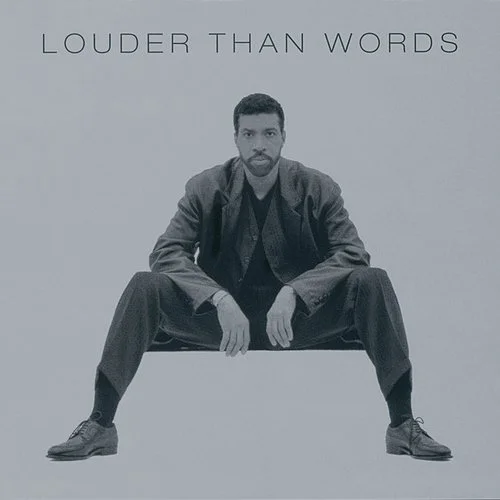
Release Date: 16th April, 1996

Label: Mercury

Producers: James Anthony Carmichael/David Foster/Jimmy Jam and Terry Lewis/Lionel Richie

Standout Tracks: Still in Love/Don't Wanna Lose You/Climbing

Buy: https://www.discogs.com/sell/list?master_id=257865&ev=mb

Stream: https://open.spotify.com/album/3DSci5KKdb4imJa66kVRf4?si=yY7K8FqnTZqrhbvSK9RyZA

Review:

Remember when Lionel Richie was one of the biggest names in R&B? When Dancing on the Ceiling topped the charts in 1986, Richie was second only to Michael Jackson in crossover appeal, thanks to an impressive run of top 10 singles — ”All Night Long,” ”Hello,” and the Oscar-winning ”Say You, Say Me,” among them. These weren’t mere commercial successes, either; there was a melodic ingenuity to Richie’s work that put him on par with Motown’s finest songwriters. At the time, his career momentum seemed unstoppable.

But stop it did. Between writer’s block, an embarrassing divorce, and a record company dispute, it took six years for Richie to deliver his next album, and even then the best he could manage was the greatest hits collection Back to Front. When that slid off the charts after barely cracking the top 20, even his fans filed Richie under ”has-been.”

Let’s not be hasty, though. Richie’s career may be colder than a Minnesota winter, but with Louder Than Words, his first album of new material in a decade, he makes it clear that he hasn’t lost his touch. From the singalong charm of ”Ordinary Girl” to the slow-boil balladry of ”Piece of Love,” these songs are very much in the vein of his ’80s output. In fact, the soulful ”Don’t Wanna Lose You” sounds as if he were back with the Commodores.

But that’s the trouble. Though it’s only been 10 years since he dominated the charts, Richie’s middle-of-the-road rhythm & blues may as well be from another century. It isn’t that he can’t work a groove; what makes Richie seem so old-fashioned is that he doesn’t understand that these days the groove is everything.

Richie does strive for something contemporary. But it’s hard to be convinced by the sinuous synth-funk (courtesy of Jimmy Jam and Terry Lewis) of ”I Wanna Take You Down” when it’s immediately preceded by the countrified ballad ”Still in Love.” Even the space shuttle couldn’t get from Nashville to Minneapolis that quickly.

Still, Richie is only partly to blame. With the rise of rap, and R&B’s movement toward a street sensibility and harder beats, crossover became a dirty word. Compared to tough-lovers R. Kelly, Mary J. Blige, or Jodeci, Richie comes across as a fuddy-duddy.

A pity, because even if he hasn’t kept up with the times, he has grown. There’s a complexity to ”Can’t Get Over You” that wasn’t there a decade ago, as Richie’s protagonist tries to bridge the gap between what he knows and how he feels. Unlike the simple sentimentality of an early-’80s hit like ”Still,” Richie goes for emotional ambiguity here, relying on pacing and dynamics to convey the anger and regret mere words could never capture. It’s a subtle piece of work, but totally convincing.

Then there’s his singing. Where Richie’s older hits evoked Barry Manilow, Louder Than Words finds him sounding more like Marvin Gaye, bringing a lush sensuality to the loping rhythms of ”I Wanna Take You Down” and evoking the jazzy confidence of ”What’s Going On” in ”Change.” Even better is the sultry ”Piece of Love,” which finds Richie wading into the sort of soulful backwaters his music hasn’t visited since the Commodores left Tuskegee.

Just as ”Piece of Love” reminds us of Richie’s roots, the gutsy delivery he gives ”Say I Do” defines his new maturity. Had it been left to, say, Janet Jackson, this Jam & Lewis ballad would have been predictable Top 40 fare. But in Richie’s hands ”Say I Do” strikes a deeper chord, begging for commitment in a way that makes the chorus seem less like a melodic ploy than the sort of dramatic payoff his performance demands.

Whether that can convince contemporary radio that Richie is as dope as Janet Jackson remains to be seen. But even if Louder Than Words doesn’t put him back on top of the charts, it’s proof that Richie is on top of his game” – Entertainment Weekly

Choice Cut: Ordinary Girl

The Latest Album


Tuskegee

Release Date: 5th March, 2012

Label: Mercury

Producers: Tony Brown/Buddy Cannon/Nathan Chapman/Kenny Chesney/Dann Huff/Dirk Vanoucek (assoc.)

Standout Tracks: My Love (with Kenny Chesney)/Hello (with Jennifer Nettles)/Endless Love (with Shania Twain)

Buy: https://www.discogs.com/sell/list?master_id=434599&ev=mb

Stream: https://open.spotify.com/album/5FnNO3IO6veN62ZdaV7j3z?si=GpNg2E4ZRy2JVHAbtCEaJw

Review:

From Tuskegee, Alabama, Lionel Richie was always a county boy at heart: that much was implicit by the narrative-heavy ballads that pepper his back catalogue and the countless countrified covers of Three Times a Lady. Here, his Stetson is truly out of the closet as he gives a collection of his classic numbers a pronounced rural makeover, duet-style as he brings in some of the genre’s biggest names. Shrewd choices too, running from the legendary to the contemporary, meaning Kenny Rogers, Willie Nelson and Shania Twain put in appearances, as do Rascal Flatts, Darius Rucker and Rasmus Seebach – but this isn’t simply a sales pitch. Richie constantly crops up at the Country Music Association Awards and is probably as marketable to the lighter end of the country music audience as most of his guests. And this album won’t have affected such a status quo.

With the exception of a couple of ill-advised collaborations – Hello, with Sugarland’s Jennifer Nettles, is even more mawkish than the original; Angel, featuring Pixie Lott, becomes a bland power ballad – it all works with total synchronicity. The tempos, sentiments and story-telling centres of these songs are perfect country fodder, and Richie’s light touch with the vocals and the instrumentation has long been established. Dancing on the Ceiling becomes a mildly raucous banjo-fest; Say You Say Me adopts a pedal steel guitar; Deep River Woman, featuring Little Big Town’s delicate harmonising, is rural gospel personified; Easy has a creeping organ that’s pure Memphis, while the harmonica and Willie Nelson’s singing give it nearly an outlaw quality; and Jimmy Buffett fits perfectly with the restrained island pulse of All Night Long. Perhaps the most remarkable thing about these hayride makeovers is the music and the vocal interactions seem so natural, in quite a few cases you have to go back to the originals to check something has actually been changed.

Whether Tuskegee, the album, is enough to please hard core country fans is not really the point here – Richie’s post-Commodores output was largely ignored by soul fans. He’s a pop artist of substance, and as such brings a touch of class and sufficient flavour of another genre to the mainstream to make music that’s interesting and lasting” – BBC

Choice Cut: Stuck on You (with Darius Rucker)

The Lionel Richie Book

Lionel Richie: Hello

Author: Sharon Davis

Publication Date: 1st March, 2009

Publishers: Equinox Publishing Ltd,SW11

Synopsis:

For nearly thirty years Lionel Richie has never looked back as a performer. From fronting his group the Commodores - the premier R&B pop unit of the seventies - he became the most popular singer/songwriter in the world by the eighties. A decade later he was the ultimate star entertainer with a 'nice guy' image. The "Lionel Richie" story is about a five-time Grammy winner who has sold more than 100 million albums worldwide. For nine consecutive years he had no 1 singles in America, a feat matched only by Irving Berlin. It is also the story of two broken marriages, personal insecurities, near-death experiences and an insight into the man behind a success story that broke the rules. "Lionel Richie" is the first book written about Lionel Richie and the Commodores and draws on Sharon Davis' unique access to the Motown archive, her numerous in depth interviews with Richie as well as her time as the Comodores' publicist” – Amazon.co.uk

Order: https://www.amazon.co.uk/Lionel-Richie-Hello-Popular-History/dp/184553185X/ref=sr_1_2?crid=BGPZ8AA5SVHO&keywords=lionel+richie&qid=1648018359&s=books&sprefix=lionel+richie%2Cstripbooks%2C50&sr=1-2

FEATURE: Everybody's Crazy for You: Looking Ahead to the Fortieth Anniversary of Madonna’s Debut Single: Time for a New Covers Album?

FEATURE:


Everybody’s Crazy for You

IN THIS PHOTO: Madonna in 1985/PHOTO CREDIT: Lynn Goldsmith 

Looking Ahead to the Fortieth Anniversary of Madonna’s Debut Single: Time for a New Covers Album?

__________

NOT that every legendary artist or band...

gets their own tribute or covers album, but there are a load of other artists who want to pay tribute to another. Whether it is The Beatles or Prince, cover versions can give well-known songs by legends new light. I am not sure how many cover albums there have been relating to Madonna, but I do feel that this October marks a big moment. In October 1982, her debut single, Everybody, was released. To mark forty years of that important and historic moment, there should be a tribute album. As part of BBC Radio 6 Music’s festival in Cardiff, Manic Street Preachers performed a cover of Madonna’s track, Borderline. From her eponymous debut album of 1983, it was a great cover! It got me thinking about a whole range of artists who have either tackled a Madonna cut in the studio or performed it live. The positive reaction to Manic Street Preachers’ Madonna turn made me wonder whether they will take that song into the studio. I speculated how a cheeky cover of Material Girl (from 1984’s Like a Virgin) would be a great idea. There are a few Madonna anniversaries this year (the thirtieth anniversary of Erotica for instance), and I feel that, as her debut single is forty in October, maybe a forty-track tribute album would do full justice.

I know her 1990 greatest hits compilation was called The Immaculate Collection. Maybe a tribute album should be something similar to that in terms of title. As her debut single is called Everybody, something that nods to that. At forty tracks, it would allow a whole range of artists a chance to provide their take on her material. It is impossible to say just how many of Madonna’s tracks have been covered through the years. There has not been a Madonna-endorsed tribute album - or at least not one for a while. As her biopic is due at some point this year – which she is also directing -, it is a perfect time to think about it. Maybe it could be a charity fundraising album. Available on double cassette, two CDs and a vinyl set, perhaps it would be reserved for bigger fans who have the money to invest. That said, it could be available via streaming, so fans would not be priced out. It would also be a way for younger listeners the chance to connect with Madonna. Maybe hearing some of her lesser-known tracks for the first time. Think of artists who have been inspired by Madonna. From Beyoncé and Britney Spears through to Lady Gaga and Gwen Stefani. From huge artists to new acts, combining them all for one album would be a real tribute to the Queen of Pop.

I am not sure which of her songs could make up the forty. I don’t think that it should be just her studio album songs. She has contributed to film soundtracks; there are B-sides and rarer songs that are worth exploring. If I had to choose forty for artists to cover, they would be Borderline, Holiday and Everybody from her debut album; Material Girl and Angel from Like a Virgin; Papa Don’t Preach, Live to Tell and La Isla Bonita from True Blue; Erotica and Bad Girl from Erotica; Secret, Human Nature and Bedtime Story from Bedtime Stories; Swim, Ray of Light and Frozen from Ray of Light. There is Vogue from I’m Breathless; Who’s That Girl from the soundtrack of the same name. It would take sufficient time to assort the songs and artists and get it all recorded…so it may be tight to get it done by October. That said, one feels something of this nature must be planned ahead of the anniversary. As Everybody was her first single, there will be other features, projects and celebrations of the moment when a future Pop queen launched a great debut. Maybe not her best track, it is very underrated. It is extremely important. As the Manic Street Preachers showed on Thursday in Cardiff when they provided their take on Borderline, there are intriguing possibilities! Disparate and varied artists going into studios to cover Madonna songs from 1982 to present (or her latest album, 2019’s Madame X). There is a lot of love out there from Madonna from so many corners of the music landscape. A 2022 tribute album would show that so many artists are…

CRAZY for her.

FEATURE: Modern Heroines: Part Eighty-Eight: Normani

FEATURE:


Modern Heroines

Part Eighty-Eight: Normani

___________

FOR this eighty-eighth…

edition of Modern Heroines, I am featuring one of the Pop and R&B world’s hottest, most talented and greatest artists. Normani auditioned as a solo act for the American television series The X Factor in 2012, after which she became a member of the girl group Fifth Harmony. Never really given a chance to step into the spotlight and spread her wings, she seems a lot happier and stronger as a solo artist. Her long-awaited debut studio album is due this year. I shall come to that soon. There are a few interviews that I want to collate, just to give an impression of how far Normani has come and where she is heading. Allure chatted with her back in September:

Over the past year and a half, a lot of truths have come to light for Normani. The pandemic mandated a change of pace that gave her the space to breathe and go inward. There had been no time to process the trauma she was left feeling after the Fifth Harmony breakup and the pause let Normani finally put her all into being a solo phenomenon. In 2018, she had released a massive single, “Love Lies” with Khalid, and left mouths gaping while she ate up her live performance of the song at the Billboard Music Awards. Then there was the EP collaboration with Calvin Harris, and successful tracks with 6lack (“Waves”) and Sam Smith (“Dancing With a Stranger”). For 2019’s “Motivation,” Normani opted not to have a featured artist and the single gained even more traction than its predecessors, thanks to the nostalgic, bubblegum-pink music video that zoomed in on her athleticism and dance talents.

Coming out as a new artist for the second time is a challenge, but Normani returned on fire. Now, the star in bloom is in the final stages of producing her debut solo album, reveling in her grown womanhood, and at home with so much more of who she is. “A lot of breakthroughs are happening these days,” she says proudly.

Laurel DeWitt cabbage top. Chanel earrings and necklace. To create a similar look: Naked Cherry Eyeshadow Palette, 24/7 Glide-On Eye Pencil in Perversion, Vice Lipstick in Big Bang, and Stay Naked Threesome in Fly by Urban Decay. Photographed by: Adrienne Raquel. Cover illustration: Andreea Robescu. Fashion stylist: Nicola Formichetti. Hair: Ursula Stephen. Makeup: Sarah Tanno. Production: Viewfinders.

Normani Kordei Hamilton was born in Atlanta in 1996 and raised in New Orleans, an only child. Her mom and dad worked incredibly hard, and for young Normani, witnessing their work ethic was an early foreshadowing of her own grit and ambition. In the midst of traveling frequently for their jobs, her parents balanced long shifts with keeping Normani enrolled in gymnastics, dance, and later, pageants. When they were away, she was raised by her grandmother, who Normani says is the “real star of the family.” It was in her car where Normani would belt out the words to Tina Turner’s “What’s Love Got to Do With It.” She laughs as she remembers her grandmother’s commitment to her own Tina Turner fandom, like the time she went to a Halloween party dressed as the icon — wig and all. Their intergenerational bond is cosmic: “She’s really my best friend. She’s my soul mate, for real,” Normani says of her grandma.

As a young brown-skinned Black girl in the South, affirming spaces were crucial as they weren’t everywhere in Normani’s orbit. “I grew up feeling beautiful. My mom, my dad, my grandmother instilled in me at a very early age that I was beautiful,” she says, smiling. “The fact that my skin was chocolate was a beautiful thing. My kinky hair was beautiful. I don’t need to straighten it. I can rock my braids to my all-white school.”

Normani’s white classmates doled out microaggressions and racist comments about her skin and hair that she knows would’ve been more detrimental without the encouragement she received from her loved ones.

“I did get bullied a lot. Not feeling like I had that representation at school was very hard,” she says. Eventually, after moving to Houston following Hurricane Katrina and switching schools a few more times, Normani and her parents decided when she was in sixth grade that homeschooling was best for her.

The rejection Normani felt from her peers lingers even now that she’s in her mid 20s. She still has to quell thoughts that tell her she doesn’t belong. To stand out, Normani has given her everything to be the best. “I’ve always felt like the underdog in anything that I’ve ever done,” she tells me.

The stakes are high for Black girls from the day we’re born. We aren’t allotted an infinite number of opportunities to show that we’re talented, and that is coupled with the looming expectation that we be so. There is little margin for our trials and errors. For Normani, who is obviously very gifted, her presence was seen as too strong and, in turn, she has often been disregarded. She has touched success, but the recognition can seem like a farce. Impostor syndrome can override everything that is true and prompt the question: Are the wins real and deserved if you’ve had to work harder than everyone else for the recognition?

The answer is not only in her artist’s résumé, but also in the battles she’s won. At this point in her career, Normani has talked about her negative experiences in Fifth Harmony more times than she should have to. While part of one of the biggest girl groups of the 2010s, she navigated racist trolls, a problematic group member, and the recommendation that she repress her star power to blend in.

“I didn’t get to really sing in the group. I felt like I was overlooked,” Normani says. “That idea has been projected on me. Like, this is your place.”

Historically, the term “pop” has come with the notion that the artist and/or product has been carefully packaged. There must be something highly sellable, an element of mass appeal, along with the ability to traverse styles. But the tides continue to turn as Black female artists attain mainstream status with authenticity and experimentation. Normani checks all the boxes, but she also wants to create outside of those lines.

“My purpose in this work that I do is for other people that feel like they have Black women figured out. There’s so many layers to us, there’s so many textures, there’s so much that we’re capable of doing,” Normani says. “Yes, I can throw ass. But I can also give you a proper eight-count, and I can do ballet, and I can do contemporary dance. If I want to sing this pop ballad, then you’re going to love it! While you see my Black face!” Period.

Normani’s grateful for the blueprints of the artists who’ve paved the way, but she’s clear about one thing: Her only formula is her work ethic. Normani puts in the hours of an outlier — studying her craft, getting in after-hours rehearsals — and she doesn’t rest until whatever she’s working on is right. “When I show up, I’m ready,” she says. “You can’t point the finger at me”.

Last July, Harper’s BAZAAR published an interview where they celebrated a new era for Normani’s music. They noted that there was one bog obstacle that she has overcome: herself:

For Normani, her return to the public eye is about more than just the music, though; it's about finding her voice as an artist, a performer, and a woman. While "Motivation" was a bubblegum-pop track that echoed her career beginnings as a member of the popular girl group Fifth Harmony, "Wild Side" showcases a more complex, sensual, and aware Normani. Getting to this point, the singer says, meant getting out of her own head when it came to public expectations of what her music should sound like.

"The new music is a lot darker and edgier sonically," Normani explains. "I think that's just because I grew up listening to a lot of '90s R&B—and I love pop as well—but I think for me, a main goal is really not to be limited [musically] and really wanting to be genre-less. A lot of the music that I've released even before my solo endeavors, I wasn't completely fulfilled. And I always say that this is a rebirth and a chance for me to have a second go-around and do things my way. My main goal is also just to show people that I'm grown now."

PHOTO CREDIT: Greg Swales 

Part of embracing a more mature and sexier sound included bringing Cardi B along for the ride. Normani only praises the rapper when asked about her experience collaborating on their new hit.

"[Her support] means everything, because she's been so consistent—since the beginning, to be completely honest. She's such a genuine spirit, and not only do I respect her as an artist and everything that she's had to go through [to get where she is now]," Normani says. "Sometimes people forget that we're human beings and that we've endured a lot. I respect that she knows who she is and she really genuinely believes in me. I was on the phone with her yesterday and the night before, and she was just like, 'You got to be excited! Why are you scared?' Just encouraging me and telling me that I'm that bitch and reminding me of that, because sometimes I tend to forget. Imagine having her as your hype woman!".

Before coming to news of her debut solo album, I want to get to an interview with W. If some of Normani’s songs suggest a more bubblegum sound, her debut album is going to offer something for everyone:

How would you describe the sound of your next project?

I naturally gravitate toward eerier, darker sounds. Sound selection is my favorite part of the production process, especially when you get in with a producer who is willing to break barriers. We just go in there and play by no rules. I come from a super pop girl group, but I grew up listening to ’90s R&B, which is pretty much what I still listen to every single day. There’s so much space in between, it gives me the opportunity to really play.

Will there be a darker visual aesthetic that goes along with that?

I’m not always as bubblegum as “Motivation” was, or as bubblegum as how people have perceived me to be from looking at that music video. So just imagine the flip side of that. It’s still going to be palatable for a wide audience. Nobody is going to feel left out.

For six years, you were primarily known as a member of the pop girl group Fifth Harmony. But in 2018, you released “Love Lies,” a duet with Khalid, and the following year came “Motivation,” a chart-topping, upbeat single, with a music video filled with ’90s and ’00s pop references. How have you been preparing for your next project, out this summer?

Honestly, 2020 was a tough year for me, because my mom was diagnosed with breast cancer, and I couldn’t travel home to Houston because of Covid. But then I kind of had to shift my perspective and just know that finishing my album really helped her get through it, and helped me get through it.

What do your parents think of the new music you’ve been working on?

Oh my goodness. Honestly, I could put out trash, and my mom and dad would literally be like, “This is a hit, this is a smash, how dare y’all not love it the way we love it.” They swear they are my A&R”.

I think Normani is going to be a music icon of the future. A tremendous talent whose debut album should be stunning, it will be exciting to see how her solo career blossoms. NME featured news of the album at the end of December:

The news came during Ciara’s stint guest-hosting The Ellen DeGeneres Show yesterday (December 30), when Normani opened up about the challenges she’s faced in making a name for herself outside of Fifth Harmony. “Coming out of a girl group,” she explained, “there was a lot that I had to figure out about myself and fears that I had to deal with head-on.

“I was always so safe being in a girl group. I remember my mom when I was little, she was like, ‘Why do you want to be in a girl group so bad? Is it so you can hide?’ And I think that that was pretty much the answer. But God had other plans for me, and by his faithfulness and his grace… Oh, he’s really, really kept me. Because what we do is not easy, guys, I’m telling you.”

The singer noted that she’s found working on her solo album much harder than it was to mint a Fifth Harmony record, telling Ciara: “I think people really underestimate how hard it is and how much effort we put into one project, one body of work”.

She also touched on the way confidence plays a big role in any release. “When you give your baby out to the world – which is, y’know, our music – that’s the deepest part of me,” she said, “[and] you give people the opportunity to kind of pick it apart and have an opinion on it; but I believe in what I’m doing now, for sure”.

A remarkable talent who is going to be putting out a debut album very soon, I love the work of the awesome Normani. If you have not heard her music or are aware of her talent, then make sure you check her out. I am ending this feature with a playlist of some of her tracks, to show you…

WHAT an amazing artist she is.

FEATURE: Second Spin: Super Furry Animals – Hey Venus!

FEATURE:


Second Spin

Super Furry Animals – Hey Venus!

___________

WHEN it comes to bands…

who have had this sort of near-faultless run through their careers, they do not come a lot better than the Super Furry Animals! The Welsh band’s ninth and final album, Dark Days/Light Years, was released in 2009. Looking at the reviews for all of their albums makes for impressive reading! Almost all of them have won huge acclaim. There are a couple that I feel did not scoop the amount of praise warranted. One such album is their penultimate, Hey Venus! Released in 2007, this is an album that did get acclaim, though there were a few reviews not quite as positive as they could have been. I guess that is always going to happen. The reason I am highlighting Hey Venus! Is that it is one of the Super Furry Animals’ best albums. You do not hear the songs from it played on the radio as much as you do from, say, the tracks on Fuzzy Logic (their 1996 debut) or Radiator (the 1997 follow-up). Hey Venus! Contains classic slices like Run-Away and Show Your Hand. It is an album that I would recommend everyone check out today. It is remarkable that any band could release nine albums that have almost received nothing but positivity and love! I am trying to think how many others can claim that! In any case, Hey Venus! is one of the nine Super Furry Animals albums that should have got even more praise.

It is underrated I feel. The tracks on the album warrant wider appreciation today. This is what AllMusic said in their review:

Sometime after Radiator, Super Furry Animals began exploring a wide sonic world, eventually drifting far out into orbit with albums like Rings Around the World and Phantom Power, albums so ambitious and so packed with celeb cameos that they brought the band attention from the respectable press. As accomplished as those albums were, they found SFA losing their divine gift of suggesting that anything could happen, the very thing that made their first four albums so divine. While they didn't get as overstuffed and lethargic as Mercury Rev or Flaming Lips did when they turned all serious -- an impish sense of humor always pulsated underneath their music -- Super Furry Animals did turn a bit ponderous, which made the relative levity of Love Kraft welcome even if the album was uneven, but that warm, hazy record in no way suggested the full-fledged return to pop power that is 2007's Hey Venus! By far the tightest record SFA has released since Radiator -- boasting no song over five minutes and four clocking in under three -- this is a concise, song-oriented record, which is somewhat ironic since it began its life as something as a concept album.

The narrative was ditched during the recording as the group culled together 11 songs that hold together as an intensely colorful, insanely catchy pop album. Such a claim may suggest that this is the return of the frenzied rush of Fuzzy Logic, which isn't exactly true, because after a flurry of hooks at the outset -- "Run-Away," "Show Your Hand," and even the cleverly tossed-off opener, "The Gateway Song," all hold their own with "God! Show Me Magic" and "Herman Loves Pauline" -- the record settles into softer territory, trading on the lush Beach Boys, Bacharach, and ELO of their turn-of-the-century records. But if those albums were gauzy, as much about the texture as about the tune, here the focus is solely on the song, with each of the 11 tracks standing on its own yet working together to create an addictive 37-minute pop album. And just because this is disciplined in a way that Super Furry Animals haven't been in years doesn't mean they've ceased to progress -- they've never had songs as lazily soulful as the closing "Let the Wolves Howl at the Moon" or "The Gift That Keeps Giving" with its electric sitars, and "Baby Ate My Eightball" threads their electronic fascinations into a lean rocker, the kinds of subtle innovations that prove that the Furries can still surprise as they enter their second decade. That reclaimed sense of unpredictability is as easy to embrace as the simple pop pleasures of Hey Venus! as a whole”.

With their lead, Gruff Rhys, providing some of his best vocals to date, Hey Venus! is a treasure trove. It is also a good introduction to anyone new to the Welsh wonders. Although there is oddity and experimentation, there is nothing on Hey Venus! that would put people off. I will finish off with the BBC’s take on the 2007 album:

And the award for most innovative band of our time goes to.... the Super Furry Animals. OK there's no such thing but if there was, the Furries would be a good outside bet to snatch this one away from the likes of Radiohead and The Flaming Lips. You see the wacky Welsh wizards are currently on album number eight and once again they have served up a record that both baffles and inspires.

Produced by David Newfield (Broken Social Scene), Hey Venus! is part one of a two-chapter epic. Like 2003's Phantom Power, the latest instalment in Furrymania - which follows the adventures of a young woman who flees her small town for the big metropolis - fires out pop gems at every turn. Only this time they're both shorter and sweeter.

Kicking off with the band's ‘shortest song ever’ at just 43 seconds, the stomping "Gateway Song" sounds like Chas And Dave covering Status Quo. Then comes five minutes of pure pop bliss in the form of the heartfelt "Run-Away" and jangling lead-off single 'Show Your Hand'. It's a shrewd trick and one that works brilliantly elsewhere especially on stand-out track "Into The Night", a huge pop belter, served up with calypso beats, fuzzy guitars and an Indian twist.

But a Super Furries album wouldn't be complete without their usual dollop of wackiness. "Baby Ate My Eightball" is as bonkers as its title suggests as is piano driven closer "Let The Wolves Howl At The Moon". But the award for most mental track on the album unashamedly goes to psychedelic brass beast 'Battersey Odyssey'. Here guitarist Huw Bunford sounds like his head's been shoved underwater as he warbles: "Battersey Odyssey/Battersey Odyssey" while the rest of the band pull out every instrument under the sea.

You can always rely on the Furries to deliver a brilliant album and Hey Venus! is right up there with some of their best material (Radiator, Guerrilla, Phantom Power). Let's hope part two is just as bonkers”.

A magnificent album from a band who called it quits when they were still on a high and producing phenomenal work, Hey Venus! is a masterful and stunning album. Go and investigate the fine work of Super Furry Animals. Despite most critics latching onto and loving Hey Venus!, it is an album that deserves even…

MORE love than it got.

FEATURE: A Long Term Effect: The Cure's Pornography at Forty

FEATURE:


A Long Term Effect

The Cure’s Pornography at Forty

___________

THE fourth studio album from The Cure…

Pornography was released on 4th May, 1982. Ahead of its fortieth anniversary, I wanted to spend a bit of time with an album that was not given great reception when it was released. It is still not seen necessarily as one of The Cure’s best. Maybe people could sense the darkness and fracture that was present within the band. The fact they survived and managed to keep on recording is amazing in itself! The album sessions saw the band on the brink of collapse, with heavy drug use, band in-fighting. Their lead, Robert Smith, was in a huge depressive state. That influenced a lot of the lyrical content. The band would go on to record more uplifting music, but I feel Pornography is a dark masterpiece that should be written about in the lead-up to its fortieth anniversary. I want to collate some articles that have explored Pornography through the years. Udiscovermusic.com told the story of The Cure’s underrated album on its thirty-ninth anniversary last year:

A proto-goth masterpiece, The Cure’s ‘Pornography’ is one of the darkest and most extreme records

Battered by personal bereavements, exhaustion from playing 200 gigs a year, and debilitating depression, The Cure’s Robert Smith was at a very low ebb early in 1982. “I had every intention of signing off,” he admitted in Jeff Apter’s Never Enough: The Story Of The Cure. “I wanted to make the ultimate ‘f__k off’ record and then sign off.” Artistically, Smith achieved his aim with The Cure’s fourth album, the controversially titled Pornography. Released in May 1982 – and later hailed as a proto-goth masterpiece – the album remains one of the darkest and most extreme records known to rock, though it rightly ranks highly among the most essential platters in Smith and co’s illustrious canon.

Pornography is regarded as the third and final installment in the original three-piece Cure’s early “gloom trilogy”, which began with their sparse, pessimistic sophomore LP, Seventeen Seconds, and continued with 1981’s unremittingly bleak Faith: the latter recorded in mourning after Smith’s grandparents both passed away.

In retrospect, though, it’s astonishing that Pornography was even completed. Not only was the pervasive mood of nihilism in London’s RAK Studio further exacerbated by LSD and heavy alcohol consumption, but The Cure also incurred the wrath of the studio’s cleaners by expressly forbidding them to touch the mountainous beercan sculpture they constructed during the sessions.

Opening with the oppressively dense “One Hundred Years” (wherein Smith sneered “It doesn’t matter if we all die”), Pornography was harsh and brutal, but while its creators may have been on the brink of collapse they were still capable of innovation. For example, Lol Tolhurst’s monumental drum sound was captured through a (then) radical approach where all the acoustic dividers were removed from RAK’s main room, leaving him to play his parts in a huge open space. Elsewhere, to create the weird, claustrophobic titular song, the band and co-producer Phil Thornalley used a proto-sampling technique (akin to David Byrne and Brian Eno on My Life In The Bush Of Ghosts) whereby they dropped in snatches of commentary recorded from a TV documentary about sex.

Though dominated by relentless, hypnotic dirges such as “The Figurehead” and the icy, keyboard-swathed “Cold,” Pornography nonetheless yielded one minor hit single courtesy of the insistent, drum-heavy “The Hanging Garden.” Its parent LP’s unyielding darkness ensured it was received coldly by the critics on release, yet, commercially, Pornography still out-performed the band’s previous LPs, peaking at No.8 in the UK Top 40.

Replicating the record’s sleeve, The Cure sported their soon-to-be trademark big hair and lipstick for the first time when they embarked on their ill-fated Fourteen Explicit Moments tour across Europe. Smith, Tolhurst, and bassist Simon Gallup, however, split after inter-band tensions came to a head during the jaunt. When Smith later reanimated The Cure, he radically changed direction, steering the band towards pop success with quirky, radio-friendly hits including “The Walk” and “The Love Cats”.

Although not the most accessible and easy-going album from The Cure, Pornography is a fascinating album that is well worth hearing! Like Fleetwood Mac’s Rumours, The Cure were falling apart and there was so much disruption. Although not quite on the same level as Rumours, Pornography is a remarkable album. This is what Drowned in Sound:

The Cure didn't fit in with any scene back then and probably never have. They existed on their own terms, impossible to pigeonhole, although many have tried. Even prior to Pornography their appearances on Top Of The Pops stood out like proverbial sore thumbs. Having made their debut on the show in April 1980 with 'A Forest' and followed it up almost twelve months to the day with 'Primary', both minor hits with the former briefly bothering the lower end of the Top 40 while the latter stalled just outside, no one could have predicted they'd go onto become one of the most influential bands of their generation.

Having already undergone several line-up changes during their brief career prior to commencing work on Pornography, it seemed like The Cure's star had shone as brightly as it was ever likely to. Their status as a "cult band" seemingly assured - indeed they'd released a single under a pseudonym entitled 'I'm A Cult Hero' three years earlier - they were a band in limbo, unsure of their next move or indeed if they had one left in them. Their last release 'Charlotte Sometimes' preceded Pornography by seven months, a single that undoubtedly heralded a new direction between the oblique soundscapes of third album Faith and the bleak narrative of its forthcoming successor. Produced by Mike Hedges who'd worked on both Faith and second album Seventeen Seconds, 'Charlotte Sometimes' signified the end of an era in one way and the dawning of a new one in another.

Fuelled by depression and anxiety that resulted in a lot of self-medication, vocalist, guitar player and songwriter in chief Robert Smith (in 1982 he wasn't the icon he's since gone on to become) and his two cohorts at the time - Simon Gallop (bass) and Lol Tolhurst (drums) - wanted to make a record representative of the band's mood at the time. In fact, Pornography could very well have been the last Cure record, so fraught were the sessions which culminated in Gallop leaving the group once the album was finished. Recorded over a three month period at the start of 1982, played back now it sounds like something of a chilling epitaph. Those opening lines of 'One Hundred Years' reading like a self-referencing suicide note that gets even darker throughout the song's six and a half minutes.

Comprising eight songs in total, each telling its own story of misery, despair and desolation, it's remarkable to think that just two years later The Cure would go on to become one of the biggest bands in the world, releasing happy-go-lucky pop songs such as 'The Caterpillar' and 'The Lovecats'. Yet back in 1982, their ethos was anything but. "Derange and disengage everything" declares Smith at the end of 'Short Term Effect', a song that deals with the fantasy of death from the perspective of natural elements while on 'The Figurehead', he ominously intones "I will lose myself tomorrow" as if all hope has gone.

The sentiment of helplessness continues throughout the record. An inquisitive "Can no one save you?" punctuates 'Cold's errant emptiness while 'Siamese Twins' declares "everything falls apart", its melody inspired by Low-era Bowie rather than any of The Cure's current contemporaries. Astoundingly, the one 45 lifted off Pornography gave them their biggest chart hit for two years. Driven by a coarse drum sound inspired by Siouxsie And The Banshees drummer Budgie, 'The Hanging Garden' perpetuated The Cure as a mainstream anomaly in sounding like nothing else on the radio or in the singles charts at the time. Reaching the dizzy heights of number 32, it only stayed in the Top 40 for one week before dropping like a stone but its impact would remain omnipresent, not least by way of boosting Pornography's album sales which saw them embark on new territory in reaching the Top 10, an achievement they'd repeat throughout their existence to this day.

Ending with the title track, another six and a half minutes of disconsolate melancholy that closes with the words "I must fight this sickness." Pornography remains one of the most poignant albums of its or any other generation, an album that will never grow old or become dated. Interestingly, this was also the album which saw The Cure reinvent themselves aesthetically too, Smith adopting the now trademark spider's mop, smeared lipstick and uniform black from head to toe.

Even today it sounds like nothing else on earth, yet still demands to be heard as a full body of work rather than broken down into individual segments. The band may have been at their lowest ebb during the making of Pornography but this is perfunctory greatness personified”.

I want to feature a piece from The Quietus from 2017. Although Pornography is not forty until May, I wanted to look ahead. I may explore it again before 4th May:

John Robb, fromtman of the Membranes and author of the forthcoming history of goth The Art of Darkness, agrees. "We used to have our own acid tests where we would take lots of mushrooms and put records through their paces," he recalls. "Never Mind the Bollocks … was a brilliant psychedelic record; it was like having a head full of fire. Trout Mask Replica, which is a genius album, of course, was nightmare [when you were] tripping; it was like having your brain tied up in knots."

But what of the contemporary sounds of the early 1980s? "We did test Pornography as well and it was fantastically dense but full of texture which is perfect for tripping; there's so much to trip you out," Robb says. "Lots of great records are 3D and psychedelia is so much more than paisley shirts and the swinging 60s. Even punk was tinged with psychedelia, and music in the north west of England has always had a trip glow to it. The so-called goth period was laced with the lysergic - it was flipped to the black. I know for a fact that the Banshees were immersed in that world but created an early-80s trip narrative that really suited them, and The Cure had been building up to literally and psychically blowing their minds."

Robb hits the nail on the head when he places Pornography in the context of the contemporary psychedelia of the late 70s and early 80s and the environment in which it was created.

"Pornography is a magnificent record - a stark landscape of a record that, for us, was the Part Two to The Stranglers' Black And White, another psychedelic record in a then-modern sense that ate into the bleak times but in imaginative musical shapes. We used to love tripping to those bleak landscapes. Joy Division fitted this world as well, and their debut album is a very tripped out work, as was Section 25's magnificent Always Now."

If the much of the first generation of British psychedelia in the late 60s had harked back to the innocence of childhood, then Pornography was something altogether darker and nightmarish. A world of deception, paranoia and mortality, The Cure's fourth album is, at times, the sound of abject misery.

For Robb, it was a continuation of a lineage that's rooted in the darker variant of the psychedelia that emerged from the other side of the Atlantic in the 1960s. "There's so much crap talked about hippies and the Year Zero of punk but it all merged really; it was the counter culture but with a sharper edge, and more in a 70s focus," he says. "I'm not sure how much peace and love there had been in the 60s anyway. Every band from that time always claims they were the ones who defined peace and love, but the music in the late 60s had darkness and violence around it. The Doors, The Velvet Underground and The Stooges were all in the same spirit as the period we're talking about, and in many ways The Doors were the alpha 'goth' band - all Baudelaire in leather kecks, romantic poets dressed in black. Looking back, punk didn't end this stuff - it sparked it into life again."

"People started to reference the 60s again," agrees Youth. "The Doors were very popular again in the 80s as was The Doors' biography No One Here Gets Out Alive. Certainly if you listen to The Cure and bands of their ilk, they definitely dabbled with a kind of psychedelia."

Having worked relentlessly since the release of their debut album, Three Imaginary Boys in 1979, the recording of Pornography was made at the end of an intense four-year period that saw them working under a punishing schedule. Opening with 'One Hundred Years', The Cure set out their stall. At surface level, the song may well seem like a series of disconnected images thrown together at random but there's something much deeper at play here. Whether consciously or not, this is a damning critique of the 20th century, a period of time that saw huge scientific leaps while at the same time industrialising the slaughter of humanity. Factor in images of post-war alienation and meaningless existence, and this is an howl of existential anguish that's fuelled by Robert Smith's whining and dizzying guitar lines, Simon Gallup's two-note bass drones and Lol Tolhurst's relentless drumming. Alice In Wonderland this ain't.

"Over the period of about a thousand days, we played a show every other day as well as making three albums," Tolhurst recalls. "We were absolutely blasted, really. We operated at that level of intensity anyway as a matter of course because we wanted to feel connected to what we were doing. We were very committed and we were a three-piece. A three-piece is a cauldron of intensity. To me, The Cure is two separate bands; you've got the three-piece of which the pinnacle is Pornography and then you have the five- or six-piece band of Kiss Me.

"If you have a bigger band you have not so much of the vision necessarily but you have the opportunity and if one person flags then someone can help and it becomes that much more easy to navigate. But a three-piece is a triangle and my position was to facilitate the communication between [the other two]. In terms of the intensity of making something that hard together, by its very nature, then the emotional intensity is going to be ramped up”.

A remarkable album from 1982, Pornography arrived a year after the brilliant Faith. Although the Crawley-formed band are still going (though the line-up has changed through the years), Pornography almost ended them! A lot of critics were quite middling about the album, through it has gained acclaim and new recognition. Though it is hard-going and dark, it is well worth investing some time in ahead of its fortieth anniversary. The mighty Pornography ranks alongside The Cure’s…

BEST and most interesting work.

FEATURE: Groovelines: Gerry Rafferty - Baker Street

FEATURE:


Groovelines

Gerry Rafferty - Baker Street

___________

ONE reason why I am…

including Baker Street into Groovelines is that its writer, Gerry Rafferty, would have been seventy-five on 16th April (he died in 2011). Released in February, 1978, it is a classic track that is seen as one of his greatest songs. It spent four weeks at number one in Canada, number one in Australia and South Africa. It went to number three in the United Kingdom. Rafferty received the 1978 Ivor Novello Award for Best Song Musically and Lyrically. The legendary Scottish artist, with Baker Street, created a song that has this gorgeous saxophone riff (played by Raphael Ravenscroft). Released as the second single from his magnificent 1978 album, City to City, Baker Street is one of the all-time classics! There are a couple of articles that I want to explore relating to the song. The second looks at the iconic saxophone part, in addition to Baker Street’s searing and fabulous guitar part. First, this blog celebrated Baker Street’s fortieth anniversary back in 2018:

Sung in second-person, “Baker Street” was a melancholic reflection of Rafferty’s then-recent past, inspired by his own break from a previous business relationship (during his post-Stealers Wheel days) and his subsequent regular commute from a town outside Glasgow to a friend’s flat on an actual Baker St. in London.

In just two thoughtfully crafted verses, Rafferty conveyed the despair of being tired, wasted and depressed in a city with “no soul,” the solace one finds in connecting with a trusted friend, and the hope offered by the prospect of a new morning and the euphoria of finally “going home.”

“Baker Street” was as unlikely a big hit as there could be in mid-1978.  At a time when disco was dominating and most songs followed a typical verse-chorus-verse-chorus vocal pattern, Rafferty crafted a mid-tempo, mostly instrumental tune (nearly four of its six minutes are sans vocals) that couldn’t have been less danceable and less conforming.

Most notably, Rafferty replaced what would normally be the chorus (i.e., the vocal hook) with that now-famous sax lead, the origins of which are nearly as controversial as the song’s ultimate chart fate (which I’ll get to momentarily).

But first, the sax.

By virtue of having sole songwriting credits for “Baker Street,” Rafferty is also credited for writing the sax part (despite claims to the contrary by Ravenscroft, who died three years after Rafferty in 2014).  According to some accounts, Ravenscroft once claimed he not only played but created the sax part to “fill a gap” in Rafferty’s demo.  However, a demo of the song has since surfaced where Rafferty plays the sax part with his guitar, suggesting that Rafferty had already created the part when Ravenscroft was called in to work his saxophone magic.

Then in more recent years, to further fuel the controversy surrounding the sax solo’s origins, tapes surfaced of a different song from a decade earlier with a similar sounding sax riff, leading some to speculate that neither Rafferty nor his erstwhile sax player, Ravenscroft, created the famous section, having instead interpolated it from the earlier tune”.

There is a sense of escape on Baker Street. Rafferty wrote the song at a time when he was trying to free himself  from his Stealers Wheel (his former band) contracts. Staying at his friend’s house in Baker Street, there is a feeling of coldness to the song. Being sued and having to travel to his lawyer, there is no wonder that Baker Street contains a bit of dread. One listens to the song and it has this romance and smoothness. Look at the first couple of verses, and you get a sense of where Gerry Rafferty’s head was when writing this classic: “Winding your way down on Baker Street/Light in your head and dead on your feet/Well, another crazy day/You'll drink the night away/And forget about ev'rything/This city desert makes you feel so cold/It's got so many people, but it's got no soul/And it's taken you so long/To find out you were wrong/When you thought it held everything”. Although it is a second-person song, it is hard to ignore Rafferty describing the hard situation he was in: “Another year and then you'd be happy/Just one more year and then you'd be happy/But you're cryin', you're cryin' now”. I want to finish off with a piece from The Atlantic from 2015. Hugh Burns discussed lending incredible guitar to Baker Street:

The guitarist Hugh Burns has scored movies like Die Another Day and The Hobbit, and played with the likes of Paul McCartney, Michael Jackson, Jack Bruce, and George Michael throughout his storied career. Burns is responsible for the blistering guitar solo on “Baker Street ” and considers working with Gerry Rafferty one of his life’s great honors.

“Quite frankly, I loved his songs. I regard it as a great good fortune that I was able to meet and contribute something to Gerry’s music,” he told me over the phone from England. “I did six albums with him. I probably did more music with him than any other musician.” He was also friends with Ravenscroft and toured with him.

Burns was performing on the road with Jack Bruce in 1978 when he made arrangements to visit the London studio where Rafferty’s album City to City was being recorded. “I went to the studio after I played the gig and I think one of the first songs we played was ‘Baker Street.’ And I said, ‘This is fantastic. This is a great song.’”

Burns told me that there’s no question that Rafferty came up with the music that became the famous riff line on “Baker Street.” After Burns laid down the solo, Rafferty asked him to “have a go at what obviously became very famous, which was the sax line.” Burns tried it on guitar, but the two men agreed that it would be better on the saxophone. “That’s the way I always saw it,” he remembers Rafferty telling him at the time”.

Although there is a myth around how much Ralphael Ravescroft (who died in 2014) was paid - according to legend, he was only paid £27 for his contribution, while Rafferty was said to have made £80,000 in annual royalties until his death in 2011 -, Baker Street is an iconic song. Ahead of what would have been Gerry Rafferty’s seventy-fifth birthday on 16th April, I wanted to investigate and salute his most-famous song. It still sounds remarkable and hypnotic after nearly forty-five years. With its personal, fascinating and memorable lyrics alongside the brilliant saxophone and guitar (in addition to the brilliant work of the other musicians on the song), Baker Street is…

AN absolute classic.

FEATURE: For Your Pleasure: Ranking Roxy Music’s Studio Albums

FEATURE:


For Your Pleasure

Ranking Roxy Music’s Studio Albums

__________

FEW would have thought…

 PHOTO CREDIT: Virgin Records

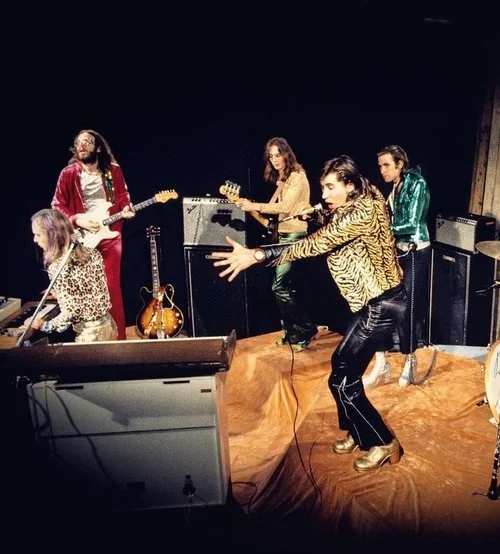
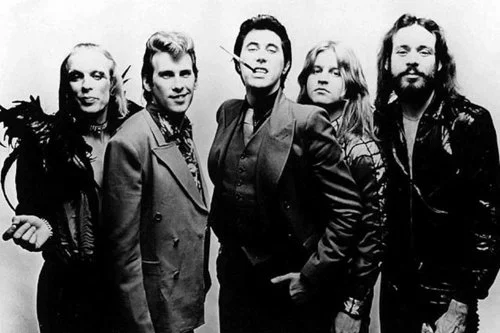
that Roxy Music would go back on tour! Announced recently, they are marking fifty years of their debut album. That is fifty in June. To mark that, I want to rank their incredible eight studio albums. I am not sure whether the tour will tempt them to release a ninth album! With Bryan Ferry, Brian Eno, Andy Mackay, Phil Manzanera and Paul Thompson in the original line-up (Brian Eno since left the band), they were a band with no equals! Pitchfork were among those who announced the good news:

Roxy Music are heading out on tour for the first time in 11 years, celebrating the 50th anniversary of their debut album. The current lineup of Bryan Ferry, Andy Mackay, Phil Manzanera, and Paul Thompson will play across the United States, Canada, and the United Kingdom in September and October, supported on most of the North American dates by St. Vincent. (Support for shows in Boston and the United Kingdom has not yet been announced.) Check out the dates below.

Roxy Music recently announced an anniversary-themed vinyl reissue campaign for all eight of their albums.

Read Pitchfork’s Sunday Review of For Your Pleasure and the rundown of “The 200 Best Songs of the 1970s.” In 2013, Bryan Ferry spoke to Pitchfork about the soundtrack to his life for a “5-10-15-20” feature”.

To celebrate the upcoming fiftieth anniversary of Roxy Music and the fact they are touring to mark that album release, here are their eight studio albums ranked. I feel they are all fantastic, though there are some that have that extra touch of class and gold. Maybe you have your own views. See what you think about my views on which…

ROXY Music album goes where!

____________

8. Flesh and Blood

Release Date: 23rd May, 1980

Labels: E.G./Atco/Reprise (U.S.)

Producers: Rhett Davies and Roxy Music

Buy: https://www.discogs.com/sell/release/1442813?ev=rb

Standout Tracks: Flesh and Blood/My Only Love/Over You

Review:

It featured not one but three classic singles (‘Oh Yeah’, ‘Same Old Scene’, ‘Over You’), two distinctive cover versions, and was arguably one of the most influential collections of the 1980s.

It also perfectly compliments such contemporary new-wave/disco work from Blondie, Duran Duran and Japan (also sharing with those acts a reliance on the Roland CR-78 rhythm box, heard prominently in the intro of the below).

Flesh + Blood is the last Roxy studio album where Andy Mackay (sax) and Phil Manzanera (guitar) were major players if not songwriters (all tracks were written by Ferry apart from the covers, though Manzanera had a hand in ‘Over You’, ‘No Strange Delight’ and ‘Running Wild’). Both add memorable solos and nice ensemble work throughout.

It’s also a classic early-’80s bass album: reliably excellent Alan Spenner and Neil Jason joined new boy Gary Tibbs, fresh from his acting role in Hazel O’Connor’s ‘Breaking Glass’ movie and about to become one of Adam’s Ants.

The great Andy Newmark piled in on drums, having just completed work on Lennon/Ono’s Double Fantasy, alongside fellow NYC sessionman Allan Schwartzberg (who plays a blinder on ‘Same Old Scene’).

Londoner Rhett Davies was on board as co-producer, fresh from groundbreaking work with Brian Eno (both are apparent influences on the psychedelic/ambient outros to ‘My Only Love’ and ‘Eight Miles High’, and atmospheric overdubbing throughout), working with the band at his favourite Basing Street Studios (later Sarm) in London’s Notting Hill. There were also occasional sessions at Manzanera’s Gallery Studios in Chertsey, Surrey.

Burgeoning star NYC mixing engineer Bob Clearmountain took time off his work with Chic to add some hefty bottom-end and fat drums at the fabled Power Station studios. Bob Ludwig’s ‘definitive’ 1999 CD remaster is one of the loudest, bassiest re-releases of the last few decades (but not a patch on the original cassette!).

But basically Flesh + Blood is very much Ferry’s show, layering Yamaha CP-80 piano (in his trademark ‘no thirds’ style) and synths to great effect, and even adding some amusingly sleazy guitar on the title track. He also sings superbly, delivering a particularly impassioned performance on ‘Running Wild’” – Moving the River.com

Key Cut: Same Old Scene

7. Manifesto

Release Date: 16th March, 1979

Labels: E.G./Polydor/Atco

Producers: Roxy Music

Buy: https://www.discogs.com/sell/release/223314?ev=rb

Standout Tracks: Manifesto/Trash/Angel Eyes

Review:

Returning to action after four years of solo projects, Roxy Music redefined its sound and agenda on Manifesto. More than ever, Roxy sounds like Bryan Ferry's backing band, as the group strips away its art rock influences, edits out the instrumental interludes in favor of concise pop songs, and adds layers of stylish disco rhythms. Although the songwriting is distressingly inconsistent, there are a number of wonderful moments on the record, particularly in the sighing "Angel Eyes" and the heartbroken "Dance Away." Still, trading sonic adventure for lush, accessible disco-pop isn't entirely satisfactory, even if it is momentarily seductive” – AllMusic

Key Cut: Dance Away

6. Siren

Release Date: 24th October, 1975

Labels: Island/Atco

Producer: Chris Thomas

Buy: https://store.hmv.com/store/music/vinyl/siren?gclid=CjwKCAjwuYWSBhByEiwAKd_n_iFXwPSRVo-UuD_c93xDmNmxxhwB_NjWOuz2_5qe9yUHCHobM0KW5BoCICsQAvD_BwE&gclsrc=aw.ds

Standout Tracks: Sentimental Fool/Both Ends Burning/Just Another High

Review:

Abandoning the intoxicating blend of art rock and glam-pop that distinguished Stranded and Country Life, Roxy Music concentrate on Bryan Ferry's suave, charming crooner persona for the elegantly modern Siren. As the disco-fied opener "Love Is the Drug" makes clear, Roxy embrace dance and unabashed pop on Siren, weaving them into their sleek, arty sound. It does come at the expense of their artier inclinations, which is part of what distinguished Roxy, but the end result is captivating. Lacking the consistently amazing songs of its predecessor, Siren has a thematic consistency that works in its favor, and helps elevate its best songs -- "Sentimental Fool," "Both Ends Burning," "Just Another High" -- as well as the album itself into the realm of classics” – AllMusic

Key Cut: Love Is the Drug

5. Avalon

Release Date: 28th May, 1982

Labels: E.G. Records/Polydor

Producers: Rhett Davies/Roxy Music

Buy: https://store.hmv.com/store/music/vinyl/avalon?gclid=Cj0KCQjw3IqSBhCoARIsAMBkTb2K-W8TAxcbkXWSZi9LpWw1ppLpuvSoeimJjJCW5Xqfz8yoK08azV8aAkcZEALw_wcB&gclsrc=aw.ds

Standout Tracks: Avalon/While My Heart Is Still Beating/Take a Chance on Me

Review:

Flesh + Blood suggested that Roxy Music were at the end of the line, but they regrouped and recorded the lovely Avalon, one of their finest albums. Certainly, the lush, elegant soundscapes of Avalon are far removed from the edgy avant-pop of their early records, yet it represents another landmark in their career. With its stylish, romantic washes of synthesizers and Bryan Ferry's elegant, seductive croon, Avalon simultaneously functioned as sophisticated make-out music for yuppies and as the maturation of synth pop. Ferry was never this romantic or seductive, either with Roxy or as a solo artist, and Avalon shimmers with elegance in both its music and its lyrics. "More Than This," "Take a Chance with Me," "While My Heart Is Still Beating," and the title track are immaculately crafted and subtle songs, where the shifting synthesizers and murmured vocals gradually reveal the melodies. It's a rich, textured album and a graceful way to end the band's career” – AllMusic

Key Cut: More Than This

4. Stranded

Release Date: 1st November, 1973

Labels: Island/Atco

Producer: Chris Thomas

Pre-Order: https://www.roughtrade.com/gb/roxy-music/stranded-half-speed-remaster

Standout Tracks: Amazona/Psalm/A Song for Europe

Review:

Two British bands are genuinely stretching the dimensions of pop music. One, 10 c.c., has already found a degree of popularity in the States. Roxy Music has been unable to cross the Atlantic so far, but that should change with this album. Stranded is one of the most exciting and entertaining British LPs of the Seventies.

Roxy has constructed the modern English equivalent of the wall-of-sound. One instrument, either the guitar or a keyboard, will sustain or repeat a note, and the other instruments will build on top of it. Added to the thick mix is the unique voice of Bryan Ferry, who sounds alternately tormented (“Psalm”), frantic (“Street Life”), or about to sink his teeth into your neck (“Mother Of Pearl”). He delivers his consistently clever lyrics in the most disquieting baritone in pop. Everywhere there is menace.

Andy Mackay, whose searing sax made Mott the Hoople’s “All the Way from Memphis” an American favorite, has written the tune for “A Song for Europe” — the most impressive track on the album. It’s an awesome example of self-disciplined hard rock. Instead of flailing frantically away, the musicians, including Ferry on piano, limit themselves to maintaining musical tension. Here is emotion without lack of control. Ferry’s tortured recitation is supported by an eerie, pained musical backing. Mackay’s sax is mournful, Phil Manzanera’s guitar lines are expressive, and the drumming of Paul Thompson is dramatic.

Like “Street Life,” “Psalm” fades in, with an organ swelling slightly to introduce Ferry’s half-intoned, half-sung ode to the Divine. As the group slowly joins in and increases volume, there’s a bolero effect, and toward the end of the extended piece a Welsh male choir enters. Soon, the group sounds frenzied, yet not irreligiously so. Ferry is a possessed man offering a prayer, and this exceptional “Psalm” sounds like a wily demon’s prostration before God.

“Street Life,” a highly enjoyable entry (and British hit single), opens with what sounds like a UFO coming in for a landing and ends with fading finger-snapping. Ferry spits out his literate lyrics to chaotic uptempo support. The reference to “pointless passing through Harvard or Yale” as “only window shopping … strictly no sale” may draw a few Ivy League smiles.

Only on “Amazona” does Ferry’s cleverness get the better of him — a couple of puns provoke groans. But the intriguing instrumental track, with its several shifts of mood, dynamics and tempo, helps save it.

Roxy Music can no longer be ignored by Americans. They may not achieve the commercial success they have in Britain, where Stranded reached Number One, but their artistic performance must be recognized. Stranded is an eloquent statement that there are still frontiers which American pop has not explored” – Rolling Stone

Key Cut: Street Life

3. Roxy Music

Release Date: 16th June, 1972

Labels: Island/Reprise

Producer: Peter Sinfield

Buy: https://www.roughtrade.com/gb/roxy-music/roxy-music-half-speed-remaster

Standout Tracks: Re-Make / Re-Model/2HB/Bitters End

Review:

Falling halfway between musical primitivism and art rock ambition, Roxy Music's eponymous debut remains a startling redefinition of rock's boundaries. Simultaneously embracing kitschy glamour and avant-pop, Roxy Music shimmers with seductive style and pulsates with disturbing synthetic textures. Although no musician demonstrates much technical skill at this point, they are driven by boundless imagination -- Brian Eno's synthesized "treatments" exploit electronic instruments as electronics, instead of trying to shoehorn them into conventional acoustic patterns. Similarly, Bryan Ferry finds that his vampiric croon is at its most effective when it twists conventional melodies, Phil Manzanera's guitar is terse and unpredictable, while Andy Mackay's saxophone subverts rock & roll clichés by alternating R&B honking with atonal flourishes. But what makes Roxy Music such a confident, astonishing debut is how these primitive avant-garde tendencies are married to full-fledged songs, whether it's the free-form, structure-bending "Re-Make/Re-Model" or the sleek glam of "Virginia Plain," the debut single added to later editions of the album. That was the trick that elevated Roxy Music from an art school project to the most adventurous rock band of the early '70s” – AllMusic

Key Cut: Ladytron

2. Country Life

Release Date: 15th November, 1974

Labels: Island/aTCO

Producers: John Punte/Roxy Music

Pre-Order: https://www.roughtrade.com/gb/roxy-music/country-life-half-speed-remaster

Standout Tracks: The Thrill of It All/Out of the Blue/Casanova

Review:

If there's a note-perfect song on a note-perfect album, though, it might have to be 'All I Want Is You', three songs into the whole thing and so perfect it's no surprise Country Life almost feels front-loaded. Manzanera's introduction is a fanfare for six-string and feedback; and from there it's another quick stomper, fast and fun without being ponderous or simply skipping by, Ferry splitting the difference between main verses and breaks and making both equally memorable and immediate. There is a full instrumental section that lets everyone show off collectively, while still wrapping it up in three minutes. And all the while Ferry deliciously - there's no other word for it, he sounds like he's savouring every last syllable as he delivers it - seems to just throw out lines like, "If you ever change your mind/ I've a certain cure/ An old refrain, it lingers on/ L'amour, toujours l'amour" and "Don't want to know/ About one-night-stands/ Cut-price souvenirs/ All I want is/ The real thing/ And a night that lasts/ For years." Take it at face value, read it all as a ploy, or both, it all works, and when he bows out with "Ooo-oo, I'm all cracked up over you!" there could be no finer flourish; his heart, or something close to it, worn on his sleeve.

And speaking of sleeves, I can't not mention the actual cover art itself. Appropriate given that the album specifically referencing a British magazine of the same name, all veddy English and proper about rural life, another bit of aspiration that Ferry and company proceeded to pulverize and celebrate all at once. The result: the male gaze and then some, one year before Laura Mulvey coined the term. Not that Roxy hadn't already been associated with this kind of idea given their three previous covers, of course, but when you have two women on the front, one woman using her hands in place of a bra, looking directly out at the viewer, another with a bra that leaves little to the imagination but while holding a hand in front of her panties just so, also giving you a direct look back as she holds her other arm to her forehead, it's a little hard to miss. Ferry met Constanze Karoli and Eveline Grunwald on a Portuguese trip, persuaded them to do the cover, British Vogue photographer Eric Boman did the shot and the rest was fairly notorious history, ranging from alternate cover shots of just the background trees following refusals to stock the album to innumerable parodies and references from other bands and publications in later years and more from there.

Saying everyone involved knew exactly what they were doing might be too much for anyone to claim - but then again, the shot used did have them both looking right out at any viewer, and their look was not so much inviting as challenging, even cold. One other detail too: Karoli and Grunwald are both specifically credited on the album's inner sleeve with helping Ferry on translating the German verses for 'Bitter-Sweet'. That Ferry's son became famous - or infamous - in later years with the kind of talk about fox hunting that might as well have come from the actual Country Life magazine being referenced seems perfect irony, but that's the danger of aspiration and subversion in the end, when everything becomes heritage history, even when it still works on a late night evening out on the town thousands of miles and two decades away” – The Quietus

Key Cut: All I Want Is You

1. For Your Pleasure

Release Date: 23rd March, 1972

Labels: Island/Warner Bros.

Producers: Chris Thomas/John AnthonyRoxy Music

Buy: https://www.roughtrade.com/gb/roxy-music/for-your-pleasure-half-speed-remaster

Standout Tracks: Beauty Queen/Strictly Confidential/In Every Dream Home a Heartache

Review:

For Your Pleasure’s two longest songs, “The Bogus Man” and the album-closing title track, leave plenty of time for Eno’s deviations. This first sketches out a musical design for trance, years ahead of it, with a long, minimalist break that confirms Eno’s mantra, “Repetition is a form of change.” Each instrument mutates, minutely transmogrified, on some mysterious cycle. On “For Your Pleasure,” Ferry makes only a brief vocal appearance. Over the last four and a half minutes, producer Chris Thomas and Eno are playing the recording studio as though it’s an instrument, conducting the song at a mixing board, and building a panoramic disorientation. They add more echo on the electric piano, more reverb on the guitar, phasing, tremolo, the drums slip away, and it gently becomes hazy and puzzling: Chopped-up bits of “Chance Meeting” from Roxy’s first album come in—Roxy are sampling themselves—then Judi Dench murmurs, “You don’t ask why,” and almost randomly, la fin. An album that began with Ferry’s request for your attention ends with Eno placing you in the strange new world you were promised. A new sensation has delivered new sensations of arousal and uncertainty.

Roxy aimed for a melding of American R&B and avant-garde European traditions (Mackay’s oboe on “For Your Pleasure” sounds like the last thing you’d hear before bees stung you to death). You don’t hear a struggle between Ferry and Eno, just two guys with similar ideas and a band juiced on its early success and acclaim, trying to get farther from earth while still holding on to the Marvelettes and the Shirelles. The playing is so adept and surprising, and Thompson and Manzanera do such strong jobs of grounding the music’s outlandish shifts, that you only slowly realize none of the album’s eight songs has a chorus.

A few months after For Your Pleasure was released, Eno left the band, quitting before he could be fired, and starting an unparalleled career as a solo artist and producer. Bryan and Brian were incompatible. Ferry was a neurotic—Woody Allen trapped in the body of Cary Grant—while Eno was a disruptor. In interviews, Ferry withdrew like a turtle; Eno excelled at them, and talked fluidly about Marshall McLuhan, Steve Reich, or his ample pornography collection. Eno most avidly pursued the band’s androgynous style, and dressed like he was Quentin Crisp’s glam nephew (leopard print top, ostrich feather jacket, bondage choker, turquoise eye shadow). Out of the chute, he was a cult hero, and Ferry grew tired of hearing punters yell “EEEEEE-NO!” in the middle of ballads, or seeing Eno credited as his co-equal.

The music had no immediate impact in the U.S., where it grazed the album chart at number 193. The band’s two-album deal with Warner Bros. had expired and the label happily left them go. American audiences, Ferry told a British interviewer, “are literally the dumbest in the world, bar none.”

But in England, it was the album of the moment, and Roxy returned to TV’s Old Grey Whistle Test, where Whispering Bob Harris, a stodgy presenter who was still stuck in the ’60s, sneered at them, as he had the previous year as well, dismissing them as great packaging with no substance.

The notion that style and substance were contradictory was a holdover from the ’60s, and it’s one that has never gone away, revived periodically by fans and critics who long for seeming authenticity. Years later, those Roxy TV appearances would start to feel almost as significant as the Beatles on Ed Sullivan. Harris’ contempt was recommendation enough for lots of kids, of myriad genders and sexualities, who would soon come to Roxy shows dressed in sparkling tunics, glowing frocks, and immaculate dinner jackets, boys and girls both in drag. But glamor and self-invention were only part of the aftereffect: Within the next few years, plenty of future punks and new wavers went on to art school, where they immediately started acting, dressing, and playing like Roxy Music” – Pitchfork

Key Cut: Do the Strand

FEATURE: Great Danes of Love: Inspired by Under the Ivy: An Expanded Edition of Hounds of Love

FEATURE:


Great Danes of Love

IN THIS PHOTO: Kate Bush in 1985/PHOTO CREDIT: Guido Harari 

Inspired by Under the Ivy: An Expanded Edition of Hounds of Love

___________

I have been inspired by…

a recent anniversary. On 19th March, 1986 Kate Bush performed Under the Ivy live from Abbey Road Studios in London. It was broadcast to mark the 100th episode of The Tube. The  performance is gorgeous. It highlights what a remarkable song it is. Not available on streaming services (not Spotify at least), Under the Ivy is one of Bush’s finest songs. Originally released as a B-side for Running Up That Hill, it never made it onto Hounds of Love. Recorded hurried in one afternoon, it was created after the album was completed. Released as the B-side on 5th August, 1985, it does make me wonder about reissuing Hounds of Love on its own as an expanded edition. Before going further on that, the Kate Bush Encyclopaedia collated interviews where Bush discussed Under the Ivy:

It's very much a song about someone who is sneaking away from a party to meet someone elusively, secretly, and to possibly make love with them, or just to communicate, but it's secret, and it's something they used to do and that they won't be able to do again. It's about a nostalgic, revisited moment. (...) I think it's sad because it's about someone who is recalling a moment when perhaps they used to do it when they were innocent and when they were children, and it's something that they're having to sneak away to do privately now as adults. (Doug Alan interview, 20 November 1985)

I needed a track to put on the B-Side of the single Running Up That Hill so I wrote this song really quickly. As it was just a simple piano/vocal, it was easy to record. I performed a version of the song that was filmed at Abbey Road Studios for a TV show which was popular at the time, called The Tube. It was hosted by Jools Holland and Paula Yates. I find Paula’s introduction to the song very touching.

It was filmed in Studio One at Abbey Rd. An enormous room used for recording large orchestras, choirs, film scores, etc. It has a vertiginously high ceiling and sometimes when I was working in Studio Two,  a technician, who was a good friend, would take me up above the ceiling of Studio One. We had to climb through a hatch onto the catwalk where we would then crawl across and watch the orchestras working away, completely unaware of the couple of devils hovering in the clouds, way above their heads!  I used to love doing this - the acoustics were heavenly at that scary height.  We used to toy with the idea of bungee jumping from the hatch. (KateBush.com, February 2019)”.

 PHOTO CREDIT: Clive Arrowsmith

I have speculated how there could be re-releases of all Kate Bush studio albums. I think that Hounds of Love specially is one that has not really been given much consideration. It has been remastered but, as Bush’s most-acclaimed album, there is definite scope for expansion. Under the Ivy is a song ones suspects could have ended up on Hounds of Love if it was written in the sessions and time around the other songs. So much better than a B-side, I often wonder where it could have fitted on Hounds of Love. Maybe closing the first side, or being nestled on The Ninth Wave (the album’s second side) between the opener, And Dream of Sheep, and Under Ice. Some say it would be sacrilegious to add anything to The Ninth Wave, as complete and flawless as it is. Maybe there would not be enough room to add it to the first side. Having an extra vinyl would allow room for Under the Ivy, My Lagan Love (a traditional Irish song, it was a B-side on Hounds of Love), Burning Bridge (another Hounds of Love (single) B-side), and Not This Time (a B-side for The Big Sky). There are a couple of audio interviews that could also be added to a vinyl. It seems a shame that a song as majestic and important as Under the Ivy has not been included on a reissue. Hounds of Love remains such a wonderful album. Maybe a package that includes a book, special magazine about it and an extra vinyl alongside the original album would be a great idea. Having rewatched the video of Bush performing Under the Ivy in 1986 for The Tube’s 100th show captivated me! A song that not every Kate Bush fan knows about, Under the Ivy is…

A minor masterpiece.

FEATURE: Paul McCartney at Eighty: Forty Years of Paul McCartney and Stevie Wonder’s Ebony and Ivory

FEATURE:


Paul McCartney at Eighty

Forty Years of Paul McCartney and Stevie Wonder’s Ebony and Ivory

___________

A Paul McCartney song…

that has always had to fight for respect and recognition, Ebony and Ivory was released on 29th March, 1982. The lead single from McCartney’s Tug of War album, it has had its critics through the years. McCartney’s first major duet, it is wonderful hearing him and Stevie Wonder unite on a song about racial harmony. I wanted to look at a few specific songs as I continue a run of forty features ahead of McCartney’s eightieth birthday in June. I will look at a famous Beatles and Wings track in future features. Now, I am keen to explore forty years of one of his most underrated tracks. Seen as too sentimental and lacking necessary anger and depth, some felt that a wealthy Pop musician writing about racial tension and the need for togetherness lacked authenticity and impact. It would be a few years before the golden age of Hip-Hop began – where we saw groups like Run-D.M.C. and Public Enemy articulate such topics with more anger and personal experience. I feel it is a classic McCartney track that deserves reinspection. Although it was never intended to change policies and bring about revolution in the same way many Hip-Hop artists of the 1980s and 1990s did, Ebony and Ivory has plenty of heart and is not just intended to get up the charts and cheapen something pure. Reaching number one in the U.S. and U.K. (and many other countries), I have a lot of love for Ebony and Ivory. There are a couple of articles that discuss a song that, whilst it has divided people, remains played and loved by many. The Beatles Bible give us a bit of information about Ebony and Ivory’s release and success:

Ebony And Ivory’, a duet between Paul McCartney and Stevie Wonder, was released as a single on 29 March 1982.

Produced by George Martin, it was the lead single from McCartney’s Tug Of War album.

‘Ebony And Ivory’ topped the Billboard Hot 100 for seven weeks, and became the fourth biggest hit in the USA in 1982.

The single was McCartney’s longest spell at number one in the USA as a solo artist, and the second-longest behind ‘Hey Jude’ including his Beatles work. It was also Stevie Wonder’s longest chart-topper, and enabled him to become the first solo artist to top the US chart in three consecutive decades.

It also topped the singles charts in Canada, Finland, Germany, Iceland, Ireland, Israel, Norway, Spain, the UK, and Zimbabwe. It was a top 10 hit in Australia, Austria, Belgium, Denmark, France, the Netherlands, New Zealand, Poland, South Africa, Sweden, and Switzerland”.

Stereogum run a series where they look at number one singles through the years. Although they were not overly-kind about Paul McCartney and Stevie Wonder’s Ebony and Ivory, they gave us some background about when they song was written and why:

When I wrote the song, I thought, ‘Maybe we don’t need to keep talking about black and white. Maybe the problem is solved… Maybe I’ve missed the boat. Maybe it should’ve been written in the ’60s, this song.’ But I after I’d written it and recorded it, you look around, and, you know, there’s still tension.” That’s a very astute decades-old observation from Sir Paul McCartney, the man who attempted to heal racial tensions in the most trite, simplistic manner imaginable.

The central metaphor of McCartney’s song “Ebony And Ivory” is so basic that it doesn’t really bear explaining, though McCartney still explains it all over again anytime anyone asks him about the song. McCartney had just been through a few personal upheavals. His band Wings had officially broken up in 1981, when Denny Laine, the only longtime member of the band who did not have the word “McCartney” in his name, quit the group. And of course, McCartney was also mourning the death of his former bandmate John Lennon. He was also, at least in some sense, playing catchup. There’s some possibility that “Ebony And Ivory” is McCartney, long considered the glibbest of the Beatles, doing his best to inject some level of profundity into his solo work.

When McCartney first wrote “Ebony And Ivory,” he’d just gotten into a fight with his wife Linda, and he was thinking that they should be getting along better. Without working particularly hard on it, McCartney stretched his analogy to encompass conflicts between black and white people — a problem that, he thought, had maybe been solved. Maybe that general overall cluelessness is why “Ebony And Ivory” is so blasé and tossed-off, why it’s utterly lacking in anything resembling urgency.

Talking to Bryant Gumble on Today in 1982, McCartney said, “I wanted to sing it with a black guy.” The first black guy who came to mind was Stevie Wonder, the man who’d recorded what many consider to be the best Beatles cover ever recorded. (Wonder’s 1971 version of “We Can Work It Out” peaked at #13.) Wonder was happy to do it. Talking to Dick Clark shortly after the song came out, Wonder said, “I won’t say [the song] demanded of people to reflect upon it, but it politely asks the people to reflect upon life in using the terms of music… this melting pot of many different people.” Right now, all around us, we can see how well that approach works.

McCartney and Wonder recorded the song together on Montserrat, in the West Indies, with both of them playing a bunch of different instruments. McCartney played bass and guitar. Wonder played drums. Both of them played pianos, synths, and percussion. Linda McCartney and Denny Laine sang backup, and so did 10cc’s Eric Stewart, a man who’s previously appeared in this column as a member of Wayne Fontana & The Mindbenders. (I’ve seen some reports that Isaac Hayes also sang backup on “Ebony And Ivory,” but I can’t find confirmation of that anywhere reliable, and I sure don’t hear him.) The Chieftains’ Paddy Moloney played pipes. George Martin, McCartney’s old Beatles collaborator, produced the track. While McCartney and Wonder were recording together in Montserrat, they also came up with a much better song that also appeared on McCartney’s Tug Of War album: “What’s That You’re Doing?,” perhaps the nastiest soul/funk track ever released under McCartney’s name”.

On its fortieth anniversary (29th March), I wanted to salute a song that remains underrated and a little maligned. It is a beautiful song of unity and understanding from an artist who had every right to discuss it through music. Ahead of Paul McCartney’s eightieth birthday in June, I will dissect one or two of his other songs. I wanted to use this feature to spotlight the lead single from Tug of War. A brilliant single from a terrific album, Ebony and Ivory is something that people should…

EMBRACE and love.

FEATURE: Spotlight: Shenseea

FEATURE:


Spotlight

Shenseea

___________

EVEN though she has been active…

 PHOTO CREDIT: Phylicia J. L. Munn for Rolling Stone

since 2015 and recording music for a while, her new album, ALPHA, has brought her to the attention of a lot of people. Her anticipated debut has captured a lot of attention and buzz. Shenseea is a remarkable Jamaican-born artist whose Dancehall sound and vibe is sensational and fresh. I am going to come to a review of her amazing new album. Before that, there are a few interviews worth bringing in. I want to take things back to 2017. Wild Cat Sound spent time an artist who, then, was seen as a newcomer. It was fascinating reading about how she started her career and how things got going:

HI SHENSEEA, HOW DID YOU START YOUR MUSICAL JOURNEY?

I started my musical journey May 2016 when Romeich who was my boss being the fact that i did promotion, later on discovered my talent as I broadcasted videos of me singing my own songs on social medias (Whats App, Instagram etc) we both came up with an agreement for him to be more than just a promotional boss but to the manager of a career I have always wanted to pursue, which ofcourse is to be an artiste. We then recorded my first single "Jiggle Jiggle" and released it in July 2016. We further on shot a video for this single being the fact that we were receiving great feedback off the audio release.

HOW MUCH HARD IS FOR YOU - AS A WOMAN - TO BE A GOOD ARTIST AND WHY?

Its not just for a woman.. I believe to gain success entirely is hard regardless if you are a male or female. We should always work for what we want. To focus on the complications is where you are already doubting yourself. Do what must be done and do it right.

WHICH ARTISTS INSPIRED YOU THE MOST AND WHY?

I wouldn't necessarily say an artiste inspired me. I've always been a lover of music ever since I heard it and discovered that I had been given the talent to sing”.

In 2020, The Guardian chatted with Shenseea. Having put out consistently good music and put in the hard graft, she was representing Jamaican Dancehall like nobody else. Small wonder what she was exciting people! Not that the sound is niche at all. She has definitely put Jamaican Dancehall in the spotlight:

Four years later, Shenseea is known as Jamaica’s Princess of Dancehall. She has 2.1 million Instagram followers and a slew of hits across the Caribbean. She calls her fans her “Shenyengs”. “I’m as big as I can get in Jamaica,” she says. “But everything that I had to do before, to get to where I am today, I’ll do it all over. I love to feel the hunger.”

Jamaican stars before her serve as proof that hunger alone is not enough to go global – obstacles have ranged from visa issues to a wariness of patois and colourism. But Shenseea is making savvy moves: she has a creative partnership with Interscope labelmate Rvssian, a young Jamaican producer lauded for his Spanish-language reggaeton songs and his modern take on dancehall. Together, they instinctively understand the new genre-hopping, globally focused streaming generation. “We keep the Jamaican roots but we’re trying to branch out,” she says. It’s working: their most recent single, IDKW, has had more than 4m YouTube views since its release in mid January.

Shenseea also knows how to stay on lips beyond the music. In the video for Blessed, she snuggles up to a hot blond woman in bed. It is a bold move for an artist working in a notoriously homophobic genre: it sparked a massive debate in Jamaica, with a leading LGBTQ ambassador calling the move “raw, radical, and disruptive”.

Did she intend to become a gay icon? “Of course!” Wasn’t it pandering to the male gaze? “That too,” she says, with a cheeky smile. “They always wanna see something extra from females. We have to be doing the most! Killing ourselves! Doing some stunt!” More than that: as with her eye on cross-genre pollination, Shenseea knew she was making a timely statement. Buju Banton had just apologised for his old homophobic lyrics, reflecting a change in attitudes in the country. Plus, she had the safety blanket of a US record deal: “LGBT is very big in America.”

But dancehall’s recent modernisation has failed to encompass colourism. Last year, Spice (a close friend of Shenseea’s) said how much harder it had been for her to break the global market as a dark-skinned performer. Shenseea is lighter-skinned, of Korean and African-Jamaican descent, but she says it has been hard for her, too. “Because of my light skin, people say that I didn’t have to work hard enough for it.”

Her work ethic is, evidently, beyond reproach: she is now recording a full album with Rvssian. She has already had shoutouts from A-listers 21 Savage, Cardi B, Drake and her idol Rihanna, who lip-synced to Blessed from the back seat of a cab on Instagram live. “I grew up listening to Rihanna 24/7,” she screams. “And now she’s listening to me.”

You sense that next time Shenseea is in London, she will be staying at the Ritz. But she will still be flying the flag for her country. “It’s still dancehall, it’s just evolving,” she smiles. “Because nothing is ever gonna stay the same for ever”.

In this interview from 2020, Shenseea was asked twenty-one questions about career and influences. I have selected a few that caught my eye:

1. Shenseea, let’s talk about music and your journey as a performer and recording artist. You are improving rapidly, to what do you credit your improvements?

I travel a lot and I get to experience different audiences. Performing for me now is fun. Years ago anywhere I go I had to have dancers behind me to boost my confidence. I tell them if anything goes wrong they should take the attention (distract them). But now, it’s like majority of the time I don’t feel like I need anybody on the stage with me. Many times I tell everyone to come off the stage because I want to grab their full attention.. you get me? It’s really experience that helped to mold me and I am really proud of myself because I never once backdown. Romeich had people come in teach me to perform but performance comes with your personality and nobody can teach you that. They can teach choreography but the connection has to be natural.

2. So you did go through the A&R process?

I did and sometimes looking back and I cringe but I worked really hard in the last two years. When I first heard your voice I knew it was something special.

3. How did you develop your vocal range?

I was always an outspoken child and was told never to talk under my breath. I was always shouting. Even when I am expressing myself I was always loud so that was training my voice to be strong but the control comes from the beat. When I hear the baseline and kick in the rhythm, I know that’s definitely Dancehall and that chop manish-womanish comes out and that helped me to channel my voice. When I am onstage I say ‘ok for this next song I will tone it down a bit’, and midway I just say Yeah this is me, deal with it. It also grabs the attention of people and keeps them anticipating.

4. Do you write your music?

Yes I do. I write my music. I have over 100 songs and I wrote most of them. Doesn’t mean I won’t take a song from someone. We should be more open to songwriters but only if the song makes sense.

5. Who inspires you?

I wouldn’t say anyone specifically but growing up I listened to a lot of Christopher Martin because i’d watch Rising Stars. And Michael Jackson… I used to play Michael Jackson everyday.

6. So no other female inspire you in the industry?

Well as far as performance I watch Spice a lot and she has the stage locked. She brings the flag for the females onstage. She held her own and I respect her for that. Where lyrics are concerned I listen a lot of Vybz Kartel and challenge myself against him.

7. I take note of your freestyles. That’s not common for Jamaicans?

That’s why I picked it up. I don’t like to do what everyone else is doing.

8. I notice you are diverse…with the Hip Hop lingua as you are with the Dancehall. Which one do you prefer?

Jamaican of course. Jamaican all the way. I can’t do rap 100 percent HipHop lingua I have to add some dancehall in it.

9. You can DJ with the Hip Hop flow. With hip hop having a bigger audience and you being mixed with Black and Asian you think you will do songs for other markets like the Spanish market?

I would do a Spanish song but it has to be the right look.

10. People compare you to Stefflon Don, would you do a collab with her?

We communicate and I would. I am always up for it when it comes on to female collaborators. Not just her but it depends because I work off vibe and energy.

11. Who is your dream collaboration?

Nicki Minaj and Rihanna.

12 Where will Shenseea be in five years?

In five years I will be an international artist and in seven years I want to pursue a career in acting”.

The final interview I want to introduce is from NME. Having appeared on Kanye West's DONDA, and combined with Megan Thee Stallion on Lick, she is now in the midst of making a historical leap:

She has good reason to be: the 25-year-old – real name Chinsea Lee – has been frontrunner in dancehall music for nearly half a decade. Whether you know her for her dancehall hits like ‘Loodi’, which features the influential producer Vybz Kartel, or perhaps her new song ‘Lick’ with rap heavyweight Megan Thee Stallion, her name continues to expand into new places. Her recently released debut album, ‘Alpha’, will only bolster that: “Most people take the word ‘alpha’ as meaning number one and I think it goes with my personality. I’m a very strong, dominant person… I’m a leader,” she tells NME.

When she featured on Kanye West’s tenth album, 2021’s ‘DONDA’, her ethereal contributions to ‘Pure Souls’ and ‘Ok Ok Part 2’ made her the first female Jamaican dancehall to appear in the Billboard Hot 100 in 17 years. Working on the record was a blessing in disguise, she says. “I did like five or six songs on ‘DONDA’ and two made the cut. I was expecting none or one, to be honest. I really blew my expectations away and Kanye has really been a gem to me. He’s treated us with respect and is a very good mentor and inspiration.”

Bringing what she learnt from all the various mentors throughout her career, ‘Alpha’ is a debut of pure musical exploration. Lee honed in on her unique mix of imaginative salacious lyrics with pop-rap sounds, like on ‘Target’ where she and frequent collaborator Tyga cruise over a subdued, rum-infused version of afroswing sounds. “Tyga is one of those people I just have such good chemistry with,” she says. “Even a mixtape or another album together, that’s the vibe I’m getting from me and Tyga”. When she’s not producing her floaty bashment tunes, you can find her trying out some R&B on ‘Deserve It’ and ‘R U That’.

Shenseea boasts that she “never had to pay for a feature on her album” because of the mutual respect between everyone on it, including 21 Savage, Tyga, and reggae legend Beenie Man and more). But ‘Alpha’ is more so about showcasing herself than making a certified hit: “It’s my first album so I don’t know what to expect, and I’m not going to be perfect at formulating the best album since it’s my first. I really just experimented on all the songs and chose the best of the ones that brought out a different side of me. All of them are my favourites, you can’t pit one against the other.”

Lee recalls wanting to be an “international pop star” from the age of five, with her aunt introducing her to the music that would later influence her to this day. “On a bad day I had no other choice but to listen,” says Shenseea, “and that’s when she’d play all the Xscape music, Usher, Whitney, Michael Jackson.” In particular, Whitney Houston inspired her to embrace her own “vocal range” and to “sing loud” and proud on the album – most noticeably on ‘Sun Comes Up’, the uplighting song of resilience closing ‘Alpha’.

From Rihanna, she takes the thick skin the Barbadian superstar has had to develop after media bashing in a decade-plus career: “She helped with my flavour, with my attitude. Watching her when I grew up, she doesn’t really respond to negativity. She doesn’t waste her time throwing stones at everybody who’s throwing stones at her. I learned that from her and now negativity never affects me because it really doesn’t”.

I will end with a review of the sublime and incredible ALPHA. This is what Dance Hall Mag observed when they reviewed one of this year’s best albums:

In proving that she had not ditched her Dancehall dexterity, Shenseea starts her 14-track debut album on Target, riding The Stereotypes-produced beat with precision, in her unmistakeable Jamaican accent.  She begins with the song’s catchy hook on the Dancehall-fusion where she calls for her collaborator Tyga, to “aim fi di taagit”, singing and deejaying a song produced for “bubblin” and TikTok dance moves.  Tyga, who’s known to body his many features, embellishes the song with his rap lines, flawlessly.

Can’t Anymore, an R&B/Hip-Hop track about a salacious afterparty in the car, is a slower groove that makes for perfect club music.  Produced by London On Da Track, it is a song that demonstrates that she’s capable of standing on her own and shining without features.

Can’t Anymore is followed by the previously released Deserve It (produced by Rvssian) and R U That featuring 21 Savage (produced by Dr. Luke) and the song regarded as a wasted effort by critics and fans: Lick with Megan Thee Stallion, for which, the less said about that—the better.

In the Hip-Hop/Pop-sounding Bouncy, which featured Offset and was produced by Smash David (Khalid, Tory Lanez, Chris Brown) and Western (Drake, Meek Mill, Camila Cabello), Shenseea wades into uncharted territory but scores big again with her singing voice in a whisper at times and her “gunman voice” — as she described her hardcore deejaying voice — chipping in at intervals.

For the Chimney Records/Banx & Ranx-produced Henkel Glue, which has elements of Steelie and Clevie’s Gi-Gi riddim, some might find it awkward listening to a near-50-year-old Beenie Man telling 25-year-old Shenseea lascivious things such “ p_y good like gold, mi c_ky yuh drape up”, and singing explicitly about her “tight” private parts, which feels like the adhesive, which is popular in Jamaica for gluing wood and paper.  However, the two Jamaicans complement each other on the beat, in exciting Dancehall fashion, while unwittingly giving the distributors of Henkel at Red Hills Road in Kingston, a free endorsement on what might be the biggest hit of the album.

Shenseea takes on Reggae with Sean Paul in Lying If I Call It Love, which was co-produced by Miami duo Cool & Dre and Miami-based Jamaican Supa Dups.  The duet flows smoothly and beautifully and seemed headed for greatness, until the singer begins to use profanity midway, diminishing the potential of the track which would have had massive wherewithal to dominate free-to-air television and radio airwaves.  Hopefully, she will have a radio-friendly version, as this song is, albeit the expletives, magnificent.

In the Rvssian-produced Hangover, Shenseea comes in like a champion, low-keyed at the beginning until she takes charge of the hook, and tells her lover that while she knows her relationship was destined for destruction, she was hell-bent on enjoying the moments. Full of good melodies, inflections and well-written lyrics, the track should get heavy rotation.

In Body Count, she appears to address the well-known lust that Yankees have for her, as a “Yardie”, noting that the man, who saw her as the subject of his affections should not concern himself with her number of past lovers, but ensure that he steps up to the plate when they connect in the bedroom, or wherever.

Known for her stance on cheap, parsimonious, trifling men, Shenseea reminds the world that she is unwavering on that position on Egocentric (co-produced by Slyda Di Wizard and DJ Blackboi) where she disparages “mean men” while expressing her dislike of them, outlining that while she would not beg because “mi a nuh pauper, dat don’t mean yuh nuh fi offer”.

Similarly, on Shen Ex Anthem, produced and co-written by her first manager Romeich Major, Shenseea scolds a low-life ex, which with one of the punch lines being “why yuh dweet drankro?” should chalk up much laugher in Jamaica.  The phrase gained popularity following an online rant by a Seaview Gardens woman, who cursed out the father of her seven children referring to him as Dutty Goola while asking “why yuh dweet drankro”.  Drankro (John Crow) is the Jamaican name for a vulture, but is commonly used to describe those deemed “good-for-nothing”.

Her six-year-old son Rajerio Lee has songwriting credits on the Rvssian-produced Sun Comes Up, an inspirational, upbeat song about perseverance and hope, again, masterfully delivered by the 25-year-old.  In an endearing mother-son moment, an audio clip of him giving her directives as to the manner in which she should deliver her lyrics, for the song, serves as the outro.

“You’re welcome,” a delighted Rajerio responds politely after Shenseea thanks him and tells him that he “is a producer”.

Blessed, her 2019 collab with Tyga, completes the set.

Alpha is a brilliant album.  And it is brilliant not because of the features with older or more established artists.  It is brilliant because Shenseea stamps her authority as a singer and a deejay, with her rich Jamaican accent, which was not ditched as most people feared she would have done based on the content of the pre-released tracks.

She does not sound like “everybody else.”

She is distinctly Shenseea and even with the direction she has taken her sound. Those connoisseurs of Dancehall, with misgivings after Lick, should be well-satisfied with Alpha”.

An artist who keeps growing, and who is bringing Jamaican Dancehall nearer to the mainstream, the remarkable Shenseea is an artist that everyone needs to look out for and keep an eye on. Having been in the business for a while, I think that her best days are still ahead. If you have not discovered her music, then make sure you…

CHECK her out now.

____________

Follow Shenseea

FEATURE: Revisiting... Tierra Whack - Whack World

FEATURE:

Revisiting...

Tierra Whack - Whack World

___________

HAVING released…

 PHOTO CREDIT: Mary Kang for FADER

three E.P.s last December - Rap?, Pop? and R&B? -, Tierra Whack is announcing herself as a major talent. Each E.P. has its own vibe and sound. The question marks are well-placed and appropriate. Not really committing to genres, they are fascinating works! I want to revisit Tierra Whack’s debut album, Whack World. Maybe not as revered as her recent E.P.s, it is an amazing work. I don’t know if I can call it an album, as it is fifteen minutes in length. The fifteen tracks run in at a minute each. It is more of a mixtape or extended-E.P. However you class it, one should definitely investigate! Before getting to a couple of reviews for Whack World, Whack spoke with FADER. We learn more about the Philadelphia-born rapper’s start and early life. She is a huge talent that is going to go very far:

Around 9 or 10, she was given a poetry assignment in a reading class and, with that, found the freedom to express herself on her own terms. She committed the poem to memory and presented it to her peers, garnering enough positive feedback in class to go home and ask her mom for a composition book that night. Eventually, the poems that filled the journal would become her first raps after an uncle suggested setting them to beats. "I realized that music was the only thing I really thought about — music and writing. It just all came together,” she says. “For a long time, I couldn't tell somebody how I felt or I couldn't talk about my problems because I felt like I was complaining. Writing would help me or it would be like, I can't tell you how I feel, but I can play you a song."

PHOTO CREDIT: Mary Kang for FADER 

After doing a few years in the Philly cypher scene, she got away for a brief two-year stint in Atlanta. She needed respite from feeling boxed in the place she’d always known, and the Southern rap capital allowed her an opportunity to gain perspective and experience varied audiences. She came away feeling like “someone is bound to like [my music], and that's what I care about — that one person." The time also helped her figure out who she was as an artist outside of the influences that made up her foundation. The transition from Dizzle Dizz to her given name, Tierra Whack, signaled a new artistic chapter that would be built around her own impulses. The first glimmers came through a string of experimental loosies made up of warped melodies and lyrical somersaults that she started uploading to Soundcloud in 2015. The only hint of her hometown was the way in which she could play with words and syllables, how she could bend them to her will even behind the distorted effects. 

Though none of those tracks would end up on Whack World, they were an opportunity to sharpen her edges to an impeccable point. When it was album time, she knew she wanted to present a snapshot of herself with a visual element. The rest was letting herself fall down rabbit holes: more Dr. Seuss, YouTube, Austin Powers, assorted artbooks. And once inspiration struck, she followed the feeling to its end and then started all over again. The result reflects Whack’s varied interests and a kaleidoscopic idea of what constitutes art or even an album. “It was just a feeling. It felt right to put a collection of songs together. I wanted to do videos, but I was trying to find the right person to work with,” she says of the process. “I got everything I wanted: videos and new music.”

The sudden attention coupled with critical acclaim, which Whack admits doesn’t feel real, is particularly exciting when you consider that neither the art nor the person making it fit into any sort of current trend. Popular and mainstream rap hasn’t championed a darker-skinned woman since Missy Elliot (with whom she shares a creative lineage as well), and Whack seems poised to be the one. It is just as rare that women in rap are celebrated when they steer away from the clichés and club bangers and into something that exists on its own terms, free from the expectations of grand statements or the responsibilities of saving the world. “We can't afford to look dumb," Whack says, and it’s true: Art for art’s sake isn’t a privilege that is usually afforded to those in her position, but words like “usually” mean nothing. She’s making her own rules. "I've noticed [those kinds of patterns] in that world, but I'm living in Whack World”.

I think that Whack World got a lot of attention in 2018, though you do not really see people discussing it now. It got some acclaim, yet many may have overlooked the mixtape/album because it is quite short. The fact Tierra Whack doesn’t like her own voice or would get bored with a full-length song means we get these sketches and ideas. I think they all hang together and there are no weak tracks. Hip Hop DX gave their thoughts on the incredible Whack World:

Tierra Whack recently released her unconventional debut album, Whack World, a strange journey into the eccentric mind of the burgeoning Philadelphia artist. Before getting into what makes the 15-minute audiovisual project brilliant, let’s talk about the glaring negative.

It’s too damn short.

Each song on the 15-track effort is precisely (and purposely) one-minute long to coincide with 15 Instagram videos that go along with the album. Just when “Hookers” gets going with its infectious R&B groove and unabashed bravado, it’s over.

Simply put, the songs feel unfinished, which is a shame because — and here’s the crazy part — they’re all so good. Even without the video clips, Whack is able to express nearly every emotion a woman can experience in a 24-hour period, backed by a myriad of musical styles.

From the doo-wop stylings and heartbreak vibe of “Silly Sam” to the country twang in the brazen “Fuck Off” anthem, Whack exposes her audience to the multiple characters she’s able to summon from her complex and colorful personality.

Coupled with the inventive visuals, the Whack World experience puts all senses on high alert. For “Bugs Life,” Whack removes her hood to unveil a horribly disfigured face as she asserts, “Yeah/Probably would of blew overnight if I was white/Rap with a mic and wore really baggy tights/It’s aight,” seemingly accepting her slow rise to notoriety.

After all, the former Philly battle rapper known as Dizzle Dizz has been at it since 2011, when she was still a wide-eyed 16-year-old. Her unwavering determination is evident on album opener “Black Nails,” as she raps, “Best believe I’m gon’ sell/If I just be myself. ”

Like the American flag on the moon, Whack World is the 22-year-old’s declaration that she has arrived. Not since Missy Elliott’s “The Rain (Supa Dupa Fly)” has a female rapper/singer captivated her audience with such weird, unbridled innovation.

But instead of a giant, inflatable trash bag-looking ensemble, Whack dons multiple looks for her video collection — she plays a dog groomer in “Flea Market,” boujee badass in “Hungry Hippo,” beret-wearing animal lover mourning her dog’s death in “Pet Cemetery,” balloon-popping maniac in the aforementioned “Fuck Off” and chubby exercise fiend in “Fruit Salad.”

As Whack World begins to come to a close, Whack proves she’s poised for an industry takeover if she plays her cards right, especially on project highlight “Pretty Ugly” when she spits, “It’s about to get ugly, flow so mean I just can’t be polite/Don’t worry ’bout me/I’m doing good, I’m doing great, alright.”

Like many of her peers (Solange, Tyler The Creator, Vince Staples, Mike WiLL Made-It) have already acknowledged, the Whack World of Tierra Whack is one that demands more exploration”.

I am going to finish off with a review from Pitchfork. Gaining acclaim from various sources, Whack World is a stunning debut from a remarkable artist. If you have not heard Whack World, you definitely need to check it out:

Whack World is a funhouse of minute-long vignettes, teetering between a fantastic dream and an unsettling nightmare. Lyrics share double meanings with the corresponding 15-minute visual Whack released alongside the album, which adds even more dimension and intrigue to the ambitious project; light and dark are forced to coexist. At one point, she snips the strings off of red helium balloons while singing in a comically excessive twang to a potential suitor: “You remind me of my deadbeat dad.” In another bubblegum-backdropped scene, she reveals a half-swollen face and declares: “Probably would’ve blew overnight if I was white.” She’s probably not wrong.

This isn’t Whack’s first foray into the absurd. Last year’s “MUMBO JUMBO” video found her in the midst of a horrifying dentist appointment that could double as a deleted scene from Get Out. On that song, she delivers novocaine-induced, mush-mouthed lyrics over a trap beat that forces you to question whether it even matters what she’s saying. Her point, in part, was that mumbling doesn’t always connote the absence of skill but, on the contrary, can be a valid mode of creative expression. It’s a shrewd suggestion and one that lands well, considering her own lyrical nimbleness, and the way she need not rely on it to make compelling music.

 Little arguments and stories like this land all over Whack World. Despite the brevity of the songs (every single one is exactly a minute long), there are no half-baked ideas here; huge revelations are nestled in the frivolous. “4 Wings” masks the sting of death in a carryout order, while “Pet Cemetery” smudges the line between mourning your dog and mourning your dawg. “My dog had a name/Keepin’ his name alive,” she sings over a disarmingly jovial staccato piano, complete with barking puppies in the background and a video that’s just as literal. Elsewhere, on a lighter note, she encourages self-care—eating fruits and veggies, and drinking water—on “Fruit Salad,” while affirming that she cannot be defined nor denied.

Whack World puts forth a portrait of the good and the bad, the weird and the unremarkable, while plowing through insecurities. She uses vanity mirrors to magnify her features on a song titled “Pretty Ugly” and bursts out of a house several sizes too small on “Dr. Seuss,” as if to reflect that feeling of having outgrown your surroundings or other people’s expectations. With the walls closing in, she throws down a bit of wordplay in a helium-infused voice—“Look but don’t touch/I should just be celibate/You the type to sell out/Me? I’m trying to sell a bit”—before pitching into a warped slo-mo like she’s being smothered.

The triumph of Whack World feels that much more important given the music industry’s stubborn refusal to champion diverse portrayals of women in rap outside of hypersexualized stereotypes. There is freedom in the margins, and Whack has crafted a work that beautifully manifests her own vision on her own terms. The result is brilliant—from the length of the songs down to the exaggerated imagery. Though she springs from a rich stylistic lineage, her 60-second confections have few modern precedents. Short songs, while in vogue, serve a different purpose here: Where others stretch small ideas and repetition, thinning them out for easy absorption, Whack uses the time constraint to make her big ideas seem larger than the space they’re allotted. Like an evolution in real time, she gives just enough to complete the thought before she morphs and catapults you to the next one.

Whack World morphs into a clever exercise in economy and using only what you need. It’s a visual album prepackaged for optimum social media consumption; every tiny piece stands on its own without losing sight of the larger picture. At its core, though, Whack’s sense of humor—her captivating depiction of a black woman’s imagination—is an opportunity to celebrate an aspect of art that often goes uncelebrated, an opportunity for Whack to celebrate herself”.

A tremendous work from 2018, I wanted to revisit the amazing Whack World. I am excited to see what comes next for Whack and where her music heads. A stunning and astonish talent who is one of the best artists in the world, Whack World is a…

SUPERB and memorable debut.

FEATURE: Inside Tom’s Diner… Suzanne Vega’s Solitude Standing at Thirty-Five

FEATURE:


Inside Tom’s Diner…

Suzanne Vega’s Solitude Standing at Thirty-Five

___________

AN album that is thirty-five on 1st April…

Suzanne Vega’s second album, Solitude Standing, is a magnificent release. The most commercially successful and critically acclaimed album of Vega's career, being certified Platinum in the U.S. It reached eleven on the Billboard 200. An album that does not get ranked alongside the best of the 1980s, I think that is definitely should be. With two huge hits in the form of Tom’s Diner and Luka, Vega created some of her best work for Solitude Standing. It is an album where the deeper cuts are fascinating. Night Vision, Calypso and Tom's Diner (Reprise) are incredible songs. I love Vega’s singing and writing throughout. What appears to be unassuming and almost gentle performances are so full of depth and nuance. Originality and feeling. It is a stunning album. I want to draw a couple of features together that highlight a mesmeric album from the wonderful Suzanne Vega. Hi-Fi News revisited Solitude Standing in 2019:

The runaway success of her 1987 single 'Luka' propelled this singer into the limelight leaving the album from which it was taken somewhat in the shade. Yet this delicate mix of sharply observed stories told with unassuming vocals is as iconic as they come

The unexpected success of Suzanne Vega's 1985 debut album put her under considerable pressure from her manager, Ron Fierstein, to record a follow-up. Despite that pressure, the album she delivered in 1987, Solitude Standing, pole-vaulted her to international multi-platinum status, establishing Vega as the pre-eminent female singer-songwriter of the era.

Although born in California, and having studied dance at The New York School of Performing Arts (aka the 'Fame' school), that debut album had made her the darling of the Big Apple's Greenwich Village left-of-centre folkie set and she found herself being described as a 'frail, wan, waif-like poetess of enormous sensitivity'. She was determined that Solitude Standing would present her in a different light.

Pop The Question

'With the proceeds from my first album I had bought a house out on Cape Cod,' she has revealed, 'and we decided to do what was called woodshedding. We lived in this house all together, with my band, and we would practice in the basement, and some of the songs came together that way.'

Having been writing songs from an early age, Vega had a considerable backlog of unrecorded material to draw on, which included 'Gypsy' from the late 1970s, 'Tom's Diner' from 1981 and 'Luka' from 1984. It was these latter two which would rocket her to a level of stardom that she found somewhat uncomfortable. 'I was confused 'cause "Luka" was a hit and I was never expecting it to be one. So I became popular, which made it pop. So this made me confused. Am I pop, am I folk?'

Harrowing Tale

The album opens with 'Tom's Diner', an immediately arresting a cappella rumination about a day in 1981 when she visited a local restaurant. 'It's a real diner. It's called Tom's Restaurant. It's a pretty average place. Even now, when I go in there I have to wait 20 minutes for them just to get a coffee. And they have misspelled my name in the menu.'

The lyric, with a few imaginary additions, vividly describes what Vega saw in the diner that day, but she did not originally conceive of it as a solo vocal piece. 'In my mind, when I heard the song, it had a piano playing in my brain. I don't actually play piano so that was awkward. Then I realised that since I can't actually write music, I couldn't write out the part, but I wanted to try it out and I didn't want to have to wait for a piano player and all that stuff, so I decided just to try it a cappella and it worked better than I could have imagined.'

Next up is 'Luka', the harrowing tale of an abused boy which, understandably, she had never imagined as a potential hit single. Indeed, it provoked an argument between Vega and Fierstein. 'Ron said, "Is this a song about child abuse?". And I said, "Yes, it is actually". And he said, "I really think that song could be a big hit". I just thought he was out of his mind.' Nevertheless, Fierstein initiated some extra production which transformed the simple folk song into a radio-friendly track that peaked at No 3 in the US.

Vega has always been careful to stress that, although there was a real boy called Luka living in her apartment block, he was not to the best of her knowledge an abused child. 'I sort of appropriated his character for the song. It took me a while to figure out the angle of how to write it – the idea of it being a child singing to a neighbour – then the whole thing seemed to write itself in two hours one Sunday”.

Actually, there are a couple of other features worth sourcing. Vega’s 1987 masterpiece was discussed by Udiscovermusic.com last year in an illuminating piece:

1985 was a key year in the career of California-born singer-songwriter Suzanne Vega, with her first national and international success. Then 1987 brought her breakthrough to platinum-selling status. We’re remembering the creative, critical and commercial success of her sophomore LP Solitude Standing, released on April 1 that year.

After crossing the country to emerge via New York’s Greenwich Village folk scene, Vega had done well with her self-titled A&M debut album. Its signature song “Marlene On The Wall” became an MTV and VH1 video favourite of the day and peaked just outside the UK Top 20. The long player itself peaked at No.91 in America, but found significant audiences in the UK as well as Holland and New Zealand.

Far from solitude

In 1986, her profile remained high with the single “Left Of Centre,” featured on the soundtrack of the hit movie directed by John Hughes, Pretty In Pink. Then, in April 1987, Vega unveiled her second album, little knowing that it would become the most popular of her career.

Solitude Standing was produced by Steve Addabbo and Patti Smith’s former guitarist Lenny Kaye, who with Steven Miller had overseen the debut set. And although the majority of the new record was written after Vega’s 1985 emergence, its best-known songs predated her major label debut.

The original, a cappella “Tom’s Diner,” which opened the album, was composed in 1981. It went on to give Suzanne’s career the most unexpected helping hand when a 1990 remix by the British group DNA became a pop and dance smash. It hit No.2 there that year and No.5 in the US, where it went gold. The unlikely mix added more publicity both to her then-current third album Days Of Open Hand and to the LP that contained the original.

The first single from Solitude Standing had been the typically delicate, folk-inflected “Gypsy,” written as far back as 1978. It wasn’t a hit, but served as a flavorsome appetiser for the album. It was followed by the 1984 composition “Luka,” her affecting story of child violence, which became Vega’s first US chart single. It climbed all the way to No.3, and hit the UK Top 30.

The album also included another song dating from 1984, “Calypso,” and “Ironbound”/“Fancy Poultry,” the latter with music written by film composer Anton Sanko. Other collaborators included Marc Schulman on “In The Eye” and Michael Visceglia, on several tracks including the title song.

‘An absorbing second album’

Critics lined up to praise the new album’s artistry and song craft, with the Philadelphia Enquirer calling it “Suzanne Vega’s coming of age.” Thom Duffy of the Orlando Sentinel described the “dreamy sound that serves well her unique musings.” Chris Willman in the Los Angeles Times heard an “absorbing second album…full of characters whose sharp self-awareness is shaped by their isolation.”

Solitude Standing has remained close to Vega’s heart, and to her audience’s. In 2012, she marked its 25th anniversary by playing the record in its entirety at four shows, three in the US and one in London. In September 2017, she played three dates at New York’s City Winery where she again performed the whole album as well as all of 1992’s 99.9F”.

To finish off, I want to source a review from The Young Folks. As I said, maybe Solitude Standing is underrated when it comes to the albums deemed the best of the 1980s. It is a brilliant and beautiful album that warrants a lot of new study and love ahead of its thirty-fifth anniversary on 1st April:

What makes Solitude Standing such an impressive entry into the rock canon is Vega’s ability to tell a story.  Whether fictional or not, many of the songs on this project can be relatable, comedic, or mature.  Vega has an acute sense of detail that has developed in the indie-rock genre for quite some time.  It feels almost poetic at certain points.  Her descriptive language used on the first single, “Tom’s Diner” is funny, light, and engaging.  Vega goes a cappella on this track, and many consider this to be her most well-known song of her career (or at least a version of it is: A dance remix by the DNA Disciples was a Top 5 hit around the world in 1990).  The rhythm that she uses with just her voice has lead to artists creating different remixes with instruments and electronic sounds for this track.  She sets the mood nicely here as well by starting the song with lyrics like, “I am sitting in the morning at the diner on the corner.”  It’s easy to sing along to, and there is some light and enjoyable comedy mixed in as well.

Because Vega likes to use storytelling as a device in her lyrics, she does an excellent job setting up not only the plot, but the characters as well.  For example, in one of her most mature songs, the hit single “Luka,” she addresses the topic of child abuse.  Vega got the inspiration from an actual boy playing in the park who seemed different to her, because he was separate from the other kids.  The contrast between the catchy instruments behind the mature lyrics creates something that people will really have to listen to a few times to understand.

Vega creates this world on the album where her characters in each song want to break away from the depression or angst that they may be feeling.  Whether she does this through a certain point of view, or through a first person account, each track uniquely represents something different.  On “Iron Bound/Fancy Poultry, Vega sets this dark and depressing background showing the inner conflict that her main character possesses.  With a slow-tempo guitar riff behind the lyrics, this is considered another gem on the EP.  She uses a first person point of view on “In the Eye” where she has more catchy instrumentals to go along with her almost menacing voice.  Lyrics like, “If you were to kill me now I would still look you in the eye,” shows Vega’s insistence on making herself known through love.  She goes into more of a folk-style production on “Night Vision.”  This song almost reminds me of a Lord Huron song from their second album.  While the story in this track is fictional, it is still inspired by poetry and has a more belonging theme to it.

The title track, “Solitude Standing” is more alternative-based and pop influenced.  Vega incorporates solitude as a character here trying to set things straight with her personality.  Vega seems to be trying to find herself here on this song, leaving the impression that she has been fighting with solitude for awhile now.  “Calypso” is taken straight form the story of Odyssey, where Vega uses instances from that play to tell a heartbreaking love tale.  Much like in “Luka,” she has a lyric like “My name is Calypso” to set up the story from the beginning.  Very moving track.  On the song, “Gypsy”, Vega takes a storyline out of a book to put her own style in music form.  Over a slow-tempo guitar, she talks of belonging once again much like “Night Vision.”  Vega seems to be fighting with solitude as the album progresses on.

What ties this album together nicely is, the “Tom’s Diner” instrumentation at the end.  Vega just has a violin playing to the rhythm of her first song on the project, without lyrics.  It’s like the listener has to put the two together and envision it his/herself.  While Vega has not come out with anything as impactful preceding Solitude Standing, this album has still shown people that storytelling mixed in with a folk-like production can create something that is socially relevant.  Vega creates this world that people can relate to, and have their own perspective on.  Bands like Lord Huron will try to emulate her style, but the challenge will be difficult”.

I shall end there. One of the, in my view, greatest albums of the 1980s, Suzanne Vega’s sublime Solitude Standing still sounds entrancing and amazing. An album that every music fan needs to add to their collection, it has lost none of its power and potency…

AFTER thirty-five years.

FEATURE: It’s Always Darkest Before the Dawn: Kate Bush and the Difference Between Excellence and Perfectionism

FEATURE:


It’s Always Darkest Before the Dawn

IN THIS PHOTO: Kate Bush in August 2014 performing Waking the Witch during the concert dress rehearsals for Before the Dawn/PHOTO CREDIT: Gavin Bush.

Kate Bush and the Difference Between Excellence and Perfectionism

___________

A subject I have broached and explored in the past…

 IN THIS PHOTO: Kate Bush in 1978/PHOTO CREDIT: Rex Features

there have been a lot of misconceptions about Kate Bush and perfectionism. I am minded of this, as I saw an article on the Express website that talked about Bush and this almost obsessive nature. The article, in a wider sense, looked at her mental puberty. How she changed in terms of her attitude, career and body between the ages of twenty-eight and thirty-two. She lost her mother in 1992 and split from Del Palmer (who she had been with on and off since the 1970s) in 1993. The article went on to explore why Bush returned to the stage in 2014 with Before the Dawn:

The star began writing songs at the mere age of 11, and by 1978 had sold over a million copies of her debut album The Kick Inside. According to the Guinness Book of World Records, Bush was the first female artist in pop history to have written every track on a million-selling debut album. A few years back, a former colleague at her label EMI spoke with The Mirror, who revealed some insight into the star’s work ethic and the process in which she goes through in order to produce her successful music.

IN THIS PHOTO: Kate Bush in 1993 during filming for The Line, The Cross and the Curve/PHOTO CREDIT: Guido Harari 

Known for keeping herself out of the spotlight, Bush released a compilation of rare tracks, cover versions and remixes from box sets back in 2019 which was her first music release since her 22-night residency at the Hammersmith Apollo back in 2014.

Speculating about why she leads such a private life, before her comeback in 2014, her former colleague told The Mirror: “Kate is a perfectionist, always has been and always will be.

“As much as she has enjoyed her time out of the spotlight, she knows she needs to get back on stage and share her musicianship to feel truly fulfilled.

“She’d probably describe herself as having mild to middling OCD.

 “Kate has had the final say on every detail. To say she has been hands-on is an understatement.”

Although Bush herself has never claimed whether she has OCD or not, the star has spoken in the past about struggles with her mental health, especially after turning 30 years old.

Speaking about the difficult period in the late 1980s, Bush said: “I think it’s a very important time, where there’s some kind of turning point”.

I don’t believe Kate Bush has OCD or is even borderline. Obsessiveness would, I guess, result in her doing the same thing over and over again. Bush is always evolving and creating something new. There is never an obsession to obtain perfection. She has said this in interviews. Regarding the Before the Dawn gigs, her being hands-on and making sure everything was as she wanted is the result of an artist who wants excellence. Look back at 1979’s The Tour of Life, and she was involved with the whole process. After coming back with a huge show thirty-five years after that tour, it is no wonder Bush was determined to make it as special as possible! I guess there are misperceptions about artists. If someone like Kate Bush spends a lot time recording an album or she is heavily involved in a live show, that means she has OCD or is a perfectionist?! Maybe she is undiagnosed, but it is much more likely she is striving for something that represents her vision. As a woman in music who was subject to sexism and parody early in her career, one can understand why she spent intervening years taking control and working to be taken seriously. The part of the Express article that discussed her mental-health and growing up in the spotlight is relevant today. So many big artists talk about burn-out and struggling with attention. Whether it is social media comments or pressure between albums, the likes of Charli XCX have recently come out to express their concern. As a fan of Kate Bush, Charli XCX seems similarly innovative and inspiring.

 IN THIS PHOTO: Charli XCX

I do worry about artists now and the combination of a lack of streaming royalties, pushing themselves performing live and having to deal with social media and the demands and spotlight of the media and labels. Being branded or judged, women especially have so much crap to deal with. Things were not that much easier for Kate Bush from 1978. Exploding onto the scene with such an unusual and successful single like Wuthering Heights, there was expectation and eyes on her. It took until 1985’s Hounds of Love for Bush to be taken seriously and get the acclaim she deserved. That was the album when she produced solo and seemed to be happy and at her best. Even then, I do not think there was any need for perfectionism. Such a visionary and ambitious artist, people who worked with her in the studio got on very well. Everyone has a nice thing to say about Bush and those times! It does make me think of modern music and also Bush today. I wonder whether, in this streaming age, people appreciate the sheer effort and hard work artists put into the music. From recording to promotion, things seem more disposable than they used to. It is no wonder artists like Charli XCX can feel burned-out or upset by what they read on social media (although her new album, CRASH, has received incredible reviews and ranks alongside her best work). What about Kate Bush? Maybe she is obsessively working on the nuts and bolts of a new album though, if there is any music being made, it is not going to be this overly-worked and perfected thing. She will operate as she has since the start: putting her heart and soul into everything to ensure that the music is true to her. Not working as tirelessly as she would have done in the 1970s and 1980s (due to the fact she has her own record label, Fish People, that she releases her albums on), it is exciting to see what comes next. A wonderful producer, innovative songwriter and true icon, Kate Bush was and remains…  

AN inspiration to so many.

FEATURE: Didn’t Know What Time It Was... David Bowie’s Starman at Fifty

FEATURE:


Didn’t Know What Time It Was…

David Bowie’s Starman at Fifty

___________

THIS 28th April…

 PHOTO CREDIT: EMI

it will be fifty years since the release of David Bowie’s iconic hit, Starman. I know I am going in early, but I wanted to look ahead to a classic track and a big anniversary! The lead single of his fifth studio album,. The Rise and Fall of Ziggy Stardust and the Spiders from Mars (which is fifty in June), it one of Bowie’s best-known and loved songs. I think that therw was a lot of curiosity about space and space travel in 1972. Elton John released Rocket Man (I Think It's Going To Be A Long, Long Time) in April 1972. In 1969, David Bowie released the Space Oddity album. It’s title cut came out in July that year. It was an exciting age of space exploration, so it is only natural artists would reflect this. I wonder how people will mark the approaching fiftieth anniversary of Bowie’s epic Starman. I want to bring in a couple of features that give us more depth and story regarding the creation and release of one of the best songs ever. Bowie Bible are first up:

David Bowie’s ‘Starman’ single was released in the United Kingdom on 28 April 1972.

Sales were initially slow, and it was at number 41 in the charts at the time of Bowie’s game-changing Top Of The Pops appearance in early July.

Bowie had not had a hit since ‘Space Oddity’ in 1969, and many assumed that ‘Starman’ was its follow-up – despite having released several albums and singles in the interim. Yet the new single cast off the image of the old long-haired singer-songwriter, and Bowie’s glam image spawned a legion of imitators.

The success of ‘Starman’ lifted the sales of Bowie’s back catalogue, and led to reissues of some of his earlier works. It also guaranteed interest in The Rise And Fall Of Ziggy Stardust And The Spiders From Mars, which was an instant hit upon its release.

Then ‘Starman’, backed with ‘Suffragette City’, was released as a single on 28 April in the UK. Suddenly we were on the radio again, and when the Ziggy Stardust album itself came out on 6 June it went straight in at Number 7, peaking at Number 5. Finally we were headline news.

Mick Woodmansey

Spider From Mars: My Life With Bowie”.

Almost fifty years after its release, there is still speculation about Starman and its origins. As Ziggy Stardust, Bowie created this alter-ego (one of many) where he was almost alien and subterranean. Whereas Ziggy was retired in 1973, this brief incarnation was among the most fascinating. Starman is one of Bowie’s greatest moments. Far Out Magazine provide some lucid and rich detail about a song that has taken on a life of its own:

Ziggy Stardust once had a dream and, in his dream, he was advised by something called ‘the infinites’ to write a message of hope, that despite the world ending in a matter of five years, Ziggy would have to deliver the news of belief to the youth of the masses, explaining that they are now the leaders of the world – the future. This ‘message of hope’ is David Bowie’s second and milestone hit, ‘Starman’.

In an interview with the American writer William Burroughs for the Rolling Stone, Bowie explained that he wanted to turn Ziggy Stardust into a musical. “The time is five years to go before the end of the earth. It has been announced that the world will end because of a lack of natural resources. The album was released three years ago,” said Bowie to Burroughs.

When he wrote his fifth and life-changing album, The Rise and Fall of Ziggy Stardust and the Spiders from Mars, he had envisioned creating a musical out of the album. Within this context, imagine ‘Starman’ as the central musical theme of the show; it is played at the beginning of the musical and at the end of it.

The song truly solidified Bowie’s character of Ziggy Stardust within the minds of impressionable youths as the rock alien’s anthem. ‘Starman’ was the first single for the record and would secure Bowie’s imminent rise to fame. The story of ‘Starman’ is told from the perspective of someone listening to Ziggy Stardust’s message from the sky.

Bizarrely enough, despite this song being Ziggy’s manifesto, it was the last song to be written for the record, almost as an afterthought. He wrote it in response to the head of RCA, Dennis Katz’s request for a single. It would end up replacing a cover of Chuck Berry’s ‘Round and Round’. It was written in the same session as the tragic denouement of the album: ‘Rock n’ Roll Suicide’.

“So, we came out of the studio and in about a month he had written ‘Starman’ and we were back in the studio by January,” Spiders From Mars’ drummer, Woody Woodmansey recalled. “It was an obvious single! I think Mick and I went out in the car after David played it for us the first time, and we were already singing it, having only heard it only once.”

He continued: “It might seem strange, but we just hadn’t done anything that commercial before. I always thought Bowie had that ability, that any time he felt like it, he could write a hit single. He just had that feeling about him. I think he chose not to right through his career. If he felt like it, he would write one, and if he didn’t, he wouldn’t. That was just the impression of working with him. It’s not a fluke to be able to write all those amazing tunes.”

How did Bowie write ‘Starman’? Legend has it that he took the octave jump in Judy Garland’s ‘Somewhere over the Rainbow’ and adapted it to the chorus of ‘Starman’. When Bowie performed it at the Rainbow Theater in August of 1972, he would sing “there’s a starman, over the rainbow”.

1972 was glam rock’s year, and Bowie paid full attention to it; after all, he would play an integral part in influencing it. The key ingredients that went into the song were T-Rex’s ‘Telegram Sam’ and the Motown song ‘You Keep Me Hanging On’ by The Supremes, which is where Bowie got the idea for the ‘morse code’ sound from and uses it on the instrumental bridge leading into the chorus. Spiders from Mars’ Mick Ronson, while he doesn’t always receive the credit that’s due, helped Bowie tremendously with the arrangements of his songs, and ‘Starman’ is no different”.

Ahead of its fiftieth anniversary on 28th April, I wanted to write about Starman. A song that is beloved by Bowie and non-Bowie fans alike, I think we will be discussing this incredible anthem (if that is the right word?) for another fifty years – so strong and compelling is Starman. A magnificent opus from an artist who sadly, is no longer with us, through Starman, the iconic David Bowie…

WILL live forever.

FEATURE: Inspired By… Part Fifty-Eight: Laura Nyro

FEATURE:


Inspired By…

Part Fifty-Eight: Laura Nyro

___________

I included Laura Nyro

in A Buyer’s Guide last year. On 8th April, it will be twenty-five years since we lost her. Still an underrated artist, her legacy and influence are huge. Her music stunning, beautiful and unique. I am going to end with a playlist of songs from artists influenced by her. Before that, as I did last year, I am grabbing some biography from AllMusic:

During the singer/songwriter movement in the late '60s and early '70s, Laura Nyro was one of the most celebrated tunesmiths of her day, penning soulful, literate songs that took the folky introspection of her peers and infused it with elements of soul, R&B, jazz, and gospel, giving them an emotional heat that set her apart. Nyro was a well-respected recording artist, whose confident piano work and rich, expressive vocals made albums like 1968's Eli and the Thirteenth Confession and 1969's New York Tendaberry classics, and she demonstrated how powerfully classic R&B and girl group material had influenced her on the all-covers set Gonna Take a Miracle, recorded in tandem with Labelle. However, while she made great records, Nyro's passionate style was considered too idiosyncratic for the Top 40, and her songs were better known in versions recorded by other artists; the 5th Dimension, Three Dog Night, Barbra Streisand, Blood, Sweat & Tears, and Peter, Paul & Mary all scored hit singles with her material. Nyro's frustrations with her lack of success as a performer, coupled with her desire to maintain her privacy, led to her periodically retiring from recording and performing, but latter-day efforts like 1984's Mother's Spiritual and 1993's Walk the Dog and Light the Light revealed she was still a compelling singer and pianist, while her social, political, and environmental concerns pushed her lyrics in new directions.

Laura Nyro was born Laura Nigro on October 18, 1947 in the Bronx section of New York City. Her father Louis Nigro was a jazz trumpet player who also tuned pianos, while her mother Gilda Nigro (born Gilda Mirsky) was a bookkeeper. By her own admission, Laura was not an especially happy child, and she retreated into music and poetry, teaching herself to play piano and soaking up the influences of her mother's favorite singers, among them Nina Simone, Billie Holiday, Judy Garland, and Leontyne Price. By the time she was eight years old, Laura had started writing songs, and she would later attend the Manhattan High School of Music & Art, where developed a greater appreciation for folk and jazz styles. (Laura would also attend meetings at the New York Society for Ethical Culture, citing the latter as a major influence on her progressive political views.) In her teens, Laura would enjoy the sounds of the harmony groups who would gather at parties and on street corners, and developed a special fondness for girl group sounds, soul, and the great songs that came out of the Brill Building.

In 1966, Artie Mogull, a veteran A&R man and music publisher, hired Louis Nigro to tune the piano in his office, and Louis persuaded Artie to listen to his daughter sing her songs. The next day, Laura sang "Wedding Bell Blues," "And When I Die," and "Stoney End" for Mogull, and he quickly signed her to a publishing deal, while Mogull and his business partner Paul Barry became her managers. Laura had been using a variety of assumed names for her music at that point, and she settled on Laura Nyro as her professional handle once she turned professional. Nyro's new managers got her gigs at the famous San Francisco night club the Hungry i, as well as the groundbreaking 1969 Monterey Pop Festival, and that same year, she released her first album, More Than a New Discovery, on Verve-Folkways Records. Sales were modest, but Peter, Paul & Mary scored a hit with their version of "And When I Die," and Nyro's career began to take off.

David Geffen took over Nyro's management, successfully suing to void her previous contracts as they were signed when she was under 18. With Geffen's help, Nyro established her own publishing company and signed a new record deal with Columbia Records. Nyro's first album for the label, 1968's Eli and the Thirteenth Confession, was a more personal and sophisticated effort than her debut, in both songs and arrangements, and it received enthusiastic reviews in the rock press. Sales were good, though not up to the level of her critical acclaim, and the same was true for 1969's New York Tendaberry. However, Nyro was increasingly well regarded as a songwriter; the 5th Dimension had scored major chart hits with their versions of "Stoned Soul Picnic," "Sweet Blindness," "Wedding Bell Blues," and "Blowing Away," and Blood, Sweat & Tears hit the charts with "And When I Die," which drew discerning listeners to her original recordings of the songs. By the time Christmas and the Beads of Sweat was released in 1970 (which produced Nyro's only Top 100 single, a cover of "Up on the Roof"), she had sold her increasingly lucrative publishing company for $4.5 million, as more hits continued to flow from her pen; "Eli's Coming" was recorded by Three Dog Night to great success, and Barbra Streisand's album Stoney End featured three of Nyro's songs (and Streisand's version of the title track bore no small resemblance to the original recording on More Than a New Discovery).

In 1971, Nyro released Gonna Take a Miracle, in which she covered a handful of soul and R&B tunes she loved in her teenage years, with the vocal group Labelle helping her re-create the girl group harmonies of the originals. Later in the year, Nyro married and announced her retirement as she found herself at odds with her growing celebrity and embraced small town life. 1973 saw Columbia reissue More Than a New Discovery in a revised edition titled The First Songs. By 1976, Nyro had divorced, and she returned to the recording studio to cut the album Smile, which reflected a more relaxed, jazzy sound and a greater interest in Eastern philosophical and spiritual concerns. While most of Nyro's live performances had found her accompanied only by her own piano, she assembled a band to tour in support of Smile, and the concerts produced her first live album, 1977's Seasons of Light. The album was originally intended to be released as a two-LP set, but Columbia opted to edit it down to a single disc; the songs that were cut were later restored for a 2008 CD reissue. Nyro's next album, 1978's Nested, was recorded as she was expecting her first child, and while she played a few shows following its release, after she gave birth Nyro once again walked away from the spotlight to devote herself to her family.

It wasn't until 1984 that Nyro delivered another album, Mother's Spiritual, a lighter and more folk-oriented set that often reflected her views on feminism, the environment, and parenthood. Four years later, Columbia Records was eager for Nyro to record a new studio album, but she preferred to go out on tour with a band in tow. Columbia had no interest in releasing a live album from the tour, and 1989's Laura: Live at the Bottom Line, which included five new songs, was instead released by the A&M-distributed Cypress Records. (One of the songs, "Broken Rainbow," was written for an Oscar-winning documentary on the forced relocation of a Native American reservation in 1983.) .

From the late '80s onward, Nyro toured frequently, but it would be 1993 before she released another studio album, Walk the Dog & Light the Light (issued by Columbia), in which she added animal rights to the list of causes she supported in song. In 1994, Nyro would begin work on another album, but progress on the project came to a halt when she was diagnosed with ovarian cancer. Nyro worked with Columbia Records to compile 1997's Stoned Soul Picnic: The Best of Laura Nyro, a two-disc career spanning anthology of her recordings. It turned out to be her swan song, as cancer claimed her on April 8, 1997.

In 2001, the unreleased studio recordings from 1994 and 1995 were issued by Rounder Records in a collection titled Angel in the Dark, while Christmas shows from New York's Bottom Line club from 1993 and 1994 were collected on the live release The Loom's Desire in 2002. 2004's Spread Your Wings and Fly: Live at the Fillmore East was another archival release that gave belated release to a concert recorded in New York in 1971. In 2017, Real Gone Music reissued the monophonic mix of Eli and the Thirteenth Confession and the original sequence of More Than a New Discovery in a package titled A Little Magic, A Little Kindness: The Complete Mono”.

To show how many fabulous artists have been influenced by Laura Nyro, the playlist below is a selection of songs from some hugely talented people! In October, we will mark what would have been her seventy-fifth birthday. Even though Nyro died nearly twenty-five years ago, her incredible music lives on. It will inspire people for decades to come. Here are some artists who definitely follow Nyro or they have been moved by her…

PHENOMENAL music.

FEATURE: A Buyer’s Guide: Part Ninety-Seven: Toni Braxton

FEATURE:


A Buyer’s Guide

PHOTO CREDIT: FAULT 

Part Ninety-Seven: Toni Braxton

___________

PERHAPS an oversight on my part…

but I have not featured Toni Braxton in A Buyer’s Guide as far as I can see! I have featured her before, but not in this series. To remedy that, I am going to highlight the albums of hers that you need to own. Her ninth studio album, Spell My Name, came out in 2020. Let’s hope there are plenty more albums from the R&B legend. Prior to getting to the albums, here is some biography from AllMusic:

Blending fire and finesse, Toni Braxton has wielded broad appeal throughout a career studded with Top Ten pop and R&B/hip-hop hits, multi-platinum certifications, and major award recognition. Soulful enough for R&B audiences yet smooth enough for adult contemporary play lists, sophisticated enough for adults but sultry enough for younger listeners, and equally proficient at heartbroken and seductive material, Braxton made her solo debut at full power during the early '90s. Her first two albums, Toni Braxton (1993) and Secrets (1996), both went platinum eight times over, accompanied by a string of hit singles that included "Un-break My Heart," which ranks among the longest-running number one pop hits of the rock era. Each one of her subsequent albums has been treated as an event, whether it has followed a brief or extended break in studio activity. They have regularly debuted within the Top Ten, highlighted by Love, Marriage & Divorce (2014), a set of duets with long-term collaborator Babyface that made her one of the few artists to be handed Grammy Awards in each of three decades. From "Love Shoulda Brought You Home" to her first single of the 2020s, "Do It," Braxton's Top Ten R&B/hip-hop hits span a similar length of time. The latter appeared on her first album for Island, Spell My Name (2020).

Toni Michele Braxton was born in Severn, Maryland, on October 7, 1968. The daughter of a minister, she was raised mostly in the strict Apostolic faith. Encouraged by their mother, an operatically trained vocalist, Braxton and her four sisters began singing in church as girls. Although gospel was the only music permitted in the household, the girls often watched Soul Train when their parents went shopping. Braxton's parents later converted to a different faith and eased their restrictions on secular music somewhat, allowing Braxton more leeway to develop her vocal style. Because of her husky voice, she often used male singers like Luther Vandross, Stevie Wonder, and Michael McDonald as models, as well as Chaka Khan. Braxton had some success on the local talent show circuit, continuing to sing with her sisters, and after high school studied to become a music teacher. However, she soon dropped out of college after she was discovered singing to herself at a gas station by songwriter Bill Pettaway (who co-authored Milli Vanilli's "Girl You Know It's True"). With Pettaway's help, Braxton and her sisters signed with Arista Records in 1990 as a group dubbed simply the Braxtons.

The Braxtons released a single in 1990 called "The Good Life," and while it wasn't a hit, it caught the attention of L.A. Reid and Babyface, the red-hot songwriting/production team who had just formed their own label, LaFace (which was associated with Arista). Braxton became the first female artist signed to LaFace in 1991, and the following year she was introduced to the listening public with a high-profile appearance on the soundtrack of Eddie Murphy's Boomerang. Not only did her solo cut "Love Shoulda Brought You Home" become a substantial pop and R&B hit, but she also duetted with Babyface himself on "Give U My Heart." Anticipation for Braxton's first album ran high, and when her eponymous solo debut was released in 1993, it was an across-the-board smash, climbing to number one on both the pop and R&B charts. It spun off hit after hit, including three more Top Ten singles in "Another Sad Love Song," "Breathe Again," and "You Mean the World to Me," plus the double-sided R&B hit "I Belong to You"/"How Many Ways." Toni Braxton's run of popularity lasted well into 1995. By that time, Braxton had scored Grammys for Best New Artist and Best Female R&B Vocal ("Another Sad Love Song"), and tacked on another win in the latter category for "Breathe Again."

To tide fans over until her next album was released, Braxton contributed "Let It Flow" to the Whitney Houston-centered soundtrack of Waiting to Exhale in 1995. Again working heavily with L.A. Reid and Babyface, Braxton released her second album, Secrets, in the summer of 1996, and predictably, it was another enormous hit. The first single, "You're Makin' Me High," was Braxton's most overtly sexual yet, and it became her biggest pop hit to date. However, its success was soon eclipsed by the follow-up single, the Diane Warren-penned ballad "Un-break My Heart." The song was an inescapable juggernaut, spending an amazing 11 weeks on top of the pop chart (and even longer on the adult contemporary chart). Further singles "I Don't Want To" and "How Could an Angel Break My Heart" weren't quite as successful (hardly an indictment), but that didn't really matter; by then Secrets was already her second straight multi-platinum hit. In 1997, she picked up Grammy Awards for Best Female Pop Vocal and Best Female R&B Vocal (for "Un-break My Heart" and "You're Makin' Me High," respectively).

Toward the end of 1997, Braxton filed a lawsuit against LaFace Records, attempting to gain release from a contract she felt was no longer fair or commensurate with her status. When LaFace countersued, Braxton filed for bankruptcy, a move that shocked many fans (who wondered how that could be possible, given her massive sales figures) but actually afforded her protection from further legal action. She spent most of 1998 in legal limbo, and passed the time by signing on to portray Belle in the Broadway production of Disney's Beauty and the Beast. Braxton and LaFace finally reached a settlement in early 1999, and the singer soon began work on her third album. The Heat was released in the spring of 2000, and entered the Billboard 200 at number two, matching the highest position held by Secrets. Lead single "He Wasn't Man Enough" was a Top Ten hit and an R&B/hip-hop chart-topper. A brisk seller out of the box, The Heat eventually cooled off around the two-million mark and led to yet another Grammy win for Best Female R&B Vocal ("He Wasn't Man Enough").

Following the release of the holiday album Snowflakes, Braxton appeared in the VH1 movie Play'd and recorded More Than a Woman. Released toward the end of 2002 with half of its songs co-written with sister Tamar, it broke Braxton's streak of Top Ten studio albums and prompted a temporary move to the Blackground label. Libra, supported with the singles "Please" and "That's the Way Love Works (Trippin')," started a new streak of Top Ten entries in 2005. In Europe, it was re-released the following year with the addition of the Il Divo collaboration "The Time of Our Lives," the official 2006 FIFA World Cup anthem. It was around this time that Braxton became the main performer at the Flamingo Hotel & Casino in Las Vegas. Her show, Toni Braxton: Revealed, ran until April 2008, when she joined the cast of the competitive reality show Dancing with the Stars. After lasting five weeks before being voted off the show, Braxton completed Pulse, her first full-length for Atlantic. Issued in May 2010, it became her fifth Top Ten album.

Braxton further boosted her 2010s comeback profile by participating in another reality TV series, the long-running Braxton Family Values, which focused on her relationship with her mother and four sisters. Meanwhile, she reunited with Babyface to record the duets album Love, Marriage & Divorce. Released by Motown in 2014, it went to number four just before the duo starred in a Broadway production of After Midnight. Love, Marriage & Divorce won the Grammy Award in the category of Best R&B Album just months before Unbreak My Heart: A Memoir was published. The book detailed Braxton's triumphs, as well as her business and health struggles behind the scenes, and led to a similarly titled biographical television film.

Braxton's affiliation with the Def Jam label began in 2015 with her second holiday recording, Braxton Family Christmas. Although lupus complications hampered Braxton's touring schedule, she worked on a new album and in 2017 accepted a Soul Train Legend Award. Sex & Cigarettes, a set dominated by aching ballads, arrived in 2018. It reached number 22 and led to a Grammy nomination for Best R&B Album, while "Long as I Live," a Top 20 R&B/hip-hop single, was up for Best R&B Song and Best R&B Performance. The Top Ten R&B/hip-hop hit "Do It," featuring Missy Elliott, followed in 2020 as the first result of a new deal with Island Records. Spell My Name, on which she was also joined by H.E.R., arrived that August”.

I am going to whittle down her nine solo studio albums to the best four, the underrated gem, in addition to her latest studio album. There is a memoir that I thought I would also highlight. This is the essential work of the…

SENSATIONAL Toni Braxton.

_____________

The Four Essential Albums


Secrets

Release Date: 18th June, 1996

Labels: LaFace/Arista

Producers: Babyfac/eKeith Crouch/David Foster/R. Kelly/L.A. Reid/Tony Rich/Soulshock & Karlin/Bryce Wilson

Standout Tracks: You're Makin' Me High/Talking in His Sleep/Let It Flow

Buy: https://www.discogs.com/sell/list?master_id=96174&ev=mb

Stream: https://open.spotify.com/album/0Uy6GD6CqvEkWAdzxy7S1x?si=rwpUIdb1T22BCXdx0tCfXA

Review:

Although she’s the daughter of a deeply conservative apostolic minister who didn’t allow her to listen to pop music when she was a little girl, it must not have been very difficult for Toni Braxton to relate to the songs crafted for her by writer-producer Kenneth ”Babyface” Edmonds. Babyface venerates love; for him, romance is a religion to be both studied and enacted. And on Braxton’s new album, Secrets, the singer and her recording mentor offer up a series of secular hymns to attraction and affection, betrayal and brokenheartedness, cooing and cohabitation.

You can hear their devotion in a song such as ”How Could an Angel Break My Heart,” cowritten by Babyface and Braxton. Over a lulling ballad melody, the singer makes her agony a thing of beauty, pausing with daring vocal timing over the lyrics’ details of a lover’s wayward behavior. And you can hear a different sort of testament to the redemptive powers of love in ”You’re Makin Me High,” the album’s airily funky first single. Both ”High” and the finger-poppingly upbeat ”Come On Over Here” give the lie to doubters who thought Braxton could sell only slow songs effectively.

Having sold more than 7 million copies of her self-titled 1993 debut album, Braxton had to face up to a big challenge. Toni Braxton had yielded a string of hit singles (”Another Sad Love Song,” ”Breathe Again”), and ”Let It Flow,” from the soundtrack to Waiting to Exhale, is presently a staple of urban contemporary radio. But sophomore albums are, as the cliche goes, jinxed, and Braxton must have worried, just a little, whether all those young one-name female upstarts — Brandy, Monica, Monifa, and their sisters — might render her languid take on love irrelevant.

But instead of trying to pursue the cutting edge and emulate the youngsters’ melding of R&B and hip-hop, Braxton has opted to skew older: Secrets offers space to veteran songwriter-producers Diane Warren and David Foster, who between them have worked with a slew of middlebrow behemoths from Barbra Streisand to Michael Bolton. Warren came up with ”Un-Break My Heart,” a tearjerker so grandiose and yet so intrinsically, assuredly hit-bound, it’s the kind of mass-appeal grabber that’s probably already sent a jealous Diana Ross diving for a comfort gallon of Haagen-Dazs.

Easily the worst song on Secrets and therefore worth lingering over for a second, ”Un-Break My Heart” (produced by Foster, so Babyface is guilt-free) is one of those the-verses-exist-only-for-the-swelling-chorus showstoppers that allude to emotions without ever actually embodying them. Braxton does her darnedest to plug some life into the song, to no avail. And no matter: This is the sort of MOR fodder that becomes a radio standby in spite of itself. Its selection by Braxton and coexecutive producers Antonio ”L.A.” Reid and Babyface was, in this sense, a shrewd, if artistically disappointing, one.

Braxton gets more solid material from other outsiders, like R. Kelly (whose ”I Don’t Want To” is a cool tune about romance in denial) and Tony Rich (co-writer of ”Come On Over Here,” a neo-Motown composition in the manner of Rich’s own best work).

As for the core Braxton/Babyface collaborations, well, they are diverse, witty, and exquisitely modulated. Indeed, Babyface’s ”Let It Flow” (also included here) is one of Braxton’s most successfully adventurous moments. A sultry tune that requires the singer to reach down to her lowest register, ”Flow” has a sinuous power, and it flows into the next track, ”Why Should I Care,” in which Braxton ascends to a high, breathy croon. Taken together, this pair of songs not only demonstrates Braxton’s technical range but confirms her ability to deliver Secrets’ sermons of sensuality — little gospels of good and bad loving — with unusual eloquence. A-“ – Entertainment Weekly

Choice Cut: Un-Break My Heart

The Heat

Release Date: 25th April, 2000

Label: LaFace

Producers: Teddy Bishop/Keith Crouch/David Foster/Jazze Pha/Rodney ‘Darkchild’ Jerkins/Keri/Daryl Simmons

Standout Tracks: Spanish Guitar/Just Be a Man About It/Maybe

Buy: https://www.discogs.com/master/143318-Toni-Braxton-The-Heat

Stream: https://open.spotify.com/album/0UZsKcXzOehMvFWTiBlwMi?si=iBpV0MW9RX2i_QI3u0e_Jw

Review:

Toni Braxton went through a lot in the years separating her star-making Toni Braxton and her 2000 comeback The Heat. Yes, she became a star, but she also went through a painful bankruptcy that delayed her sequel for years. Fortunately, you wouldn't be able to tell that there was so much behind-the-scenes drama from The Heat -- it's a confident, assured, sexy effort that reaffirms Braxton's status as one of the finest contemporary mainstream soul singers. She may not be as street-smart as Mary J. Blige, nor does she push the boundaries of the genre the way TLC does, but she has a full, rich voice that instantly lends her songs a sense of maturity and sensuality, especially since she never, ever oversings or misjudges her material. And, while that material can occasionally be a little generic, much of The Heat is built on solid ballads and smoldering, mid-tempo dance numbers. Producers as diverse as Babyface, Rodney Jerkins, Daryl Simmons, Teddy Bishop, and David Foster are responsible for various tracks on the album, which is typical for a big-budget, superstar release like this, but rarely are the tracks quite as consistent and cohesive as they are here. The skittering beats of "He Wasn't Man Enough" and "Gimme Some" are every bit as effective as the simmering title track or ballads "I'm Still Breathing" and "Spanish Guitar" -- or "Just Be a Man About It," an instant classic telephone breakup song, with Dr. Dre playing the wayward lover breaking the news to Ms. Braxton. True, The Heat slightly runs out of momentum toward the end, but there aren't many dull spots on the record -- it's all stylish, sultry, seductive, appealing urban contemporary soul that confirms Braxton's prodigious talents” – AllMusic

Choice Cut: He Wasn’t Man Enough

More Than a Woman

Release Date: 18th November, 2002

Label: Arista

Producers: Babyface/Gerrard C. Baker/Big Bert/Irv Gotti/Rodney Jerkins/Keri Lewis/Mannie Fresh/Andrea Martin/Ivan Matias/The Neptunes/No I.D./Chink Santana

Standout Tracks: Let Me Show You the Way (Out)/A Better Man/Lies, Lies, Lies

Buy: https://www.discogs.com/sell/list?master_id=151013&ev=mb

Stream: https://open.spotify.com/album/4loWAxPQnpNreGRDEmPMDo?si=eXvZXptcS_SGMqco5-4Z6Q

Review:

Long before the likes of J-Lo and Britney Spears hypnotised the world with their frequently photographed rumps and midriffs, Toni Braxton spearheaded the cluster of desirable females with a knockout combination of seductive looks, silky vocal tones and an inclination towards dresses which seemed to be produced during a cloth shortage. But image aside, Braxton's career CV can't be laughed at. With six Grammys, seven American Music Awards and a total of 25 million worldwide album sales, record company bosses will be relying upon her to deliver the goods with her latest offering.

More Than A Woman is a diverse blend of danceable club numbers, trademark Braxton ballads and experimental tracks which borrow from the genres of rock and jazz.

First off is the feisty "Let Me Show You The Way (Out)". A new woman's anthem for 2003? I truly think so. Over a hammering hip-hop bassline, angry incessant piano chords and Braxton's calm but commanding vocals lies a telling tale of infidelity, which sets the theme for the majority of the album. Nothing demonstrates this so magically as "Hit The Freeway". What at first sounds like a quintessential Neptunes track - melodic synthesiser, staged handclaps and funky drum patterns - later transpires into an impressive slice of pop R&B. The chorus: "Farewell my lonely one, nothing else here can be done, I don't ever wanna see you again" is eagerly contagious. Revenge has never sounded sweeter.

For your dosage of classic love songs, turn to the elegant "Always". Harking back to the Toni of yesteryear,this is a tenderly honed R&B ballad with rich, multi-layered vocals, which add balance to the edgier, street-orientated tracks.

The album's surprise comes courtesy of Braxton's hubby, Keri Lewis who produced the standout track "Lies, Lies, Lies". The most notable element on this record is the usage of live instrumentation. Toni's vocals also provide an interesting mix, as her gravelly tones are pit against an electric guitar.

There's no doubt that More Than A Woman will sell bucket-loads. At age 34 Braxton is in a great position to serve both middle-of-the-road listeners with her high-powered ballads, as well the comrades of the streets with her attitude-ridden take on modern day living” – BBC

Choice Cut: Hit the Freeway (featuring Loon)

Sex & Cigarettes

Release Date: 21st March, 2018

Labels: Def Jam/Universal

Producers: Fred Ball/Antonio Dixon/Kenny ‘Babyface’ Edmonds/Dapo Torimiro/Stuart Crichton/Tricky Stewart/Pierre Medor

Standout Tracks: Deadwood/Sex & Cigarettes/Sorry

Buy: https://www.discogs.com/sell/list?master_id=1334468&ev=mb

Stream: https://open.spotify.com/album/1nmxUznbVkZorzeY4olXco?si=L6x7ZjMFSwiN3NYvSU6FuQ

Review:

Toni Braxton may have just got engaged to hip-hop mogul Birdman, but there isn’t any sign of a heel-clicking, lamppost-swinging flush of love here – she seems permanently marooned in a Mariana trench of post-breakup misery. This is of course her dominant mode. She remains best known for Unbreak My Heart, where the dejected singer knows how impossible the task of the title is, but is powerless not to request it. Lyrically, even upbeat hits such as You’re Making Me High are freighted with a quiet pain. Like Billie Holiday, Braxton’s voice reflexively bends towards sadness, and it continues to do so even when there’s a diamond on her finger.

A very strong trio of songs open this record, beginning with Deadwood, which has a fantastic singalong chorus alongside acoustic strumming and chardonnay-doused strings. Perhaps it could have benefitted from a more traditional power ballad arrangement, but it’s very good nonetheless. Braxton’s intonation of “deadwood” – putting the emphasis bitterly on the “dead” – is the kind of impactful, classy detail you can only paint after a lifetime of heartache songs.

The smooth R&B single Long As I Live has an even stronger central melody, but it’s the title track, a piano ballad, that really dominates this opening salvo: a tale of emotional abuse with Braxton at an Unbreak level of trauma, pleading “at least lie to me, lie to me” to a cheating lover who doesn’t bother to mask his scent of sex and cigarettes. By the end you can practically hear the snot and tears as she crumples. Lesser singers would tip it into camp; Braxton makes it shockingly raw.

She doesn’t quite reach those heights again, and there is some slightly rote production: the Viva La Vida ripoff of Coping and the already passé tropical house of Missin’. But there’s still a masterly emotional range: from simmering anger on FOH (“Boy you must be suicidal / Is that bitch right there beside you” scans with a chilling brilliance) to tender regret on My Heart. No real joy or happiness, mind – you do rather feel for Birdman listening to it for the first time” – The Guardian

Choice Cut: Long As I Live

The Underrated Gem


Toni Braxton

Release Date: 13th July, 1993

Labels: LaFace/Arista

Producers: Babyface/Vassal Benford/Bo & McArthur/Vincent Herbert/Ernesto Phillips/L.A. Reid/Daryl Simmons/Tim & Ted

Standout Tracks: Another Sad Love Song/Seven Whole Days/I Belong to You

Buy: https://www.discogs.com/sell/list?master_id=96167&ev=mb

Stream: https://open.spotify.com/album/73ojqvZakvdkBxSg9pyPqz?si=-UE90LFMTAaT6GyOTB9gPA

Review:

The music-buying public of the UK was not holding its breath for the first solo album from Toni Braxton, the perfect, pure voice from US gospel troupe The Braxtons (with her sisters Traci, Towanda, Trina and Tamar). However, when they heard her sumptuous phrasing, saw how beautiful she looked and heard her enormous hit, Breathe Again, she was made most welcome. Suddenly, it was as if she was everywhere. In her white vest, Braxton became an antidote: both to Mariah Carey stretching unlimited mileage out of every single note, and Whitney Houston, now a remote superstar in the wake of the global success of her box office blockbuster, The Bodyguard.

Spotted by producers and songwriters L.A. Reid and Babyface, Braxton was singled out from her group to record Love Shoulda Brought You Home, a track the duo had written for 80s torch songstress Anita Baker. The match worked. As a result, half of Braxton’s debut album sounds like Baker’s best work since 1986. Seven Whole Days is such an update on the Rapture singer’s formula, you actually think you are listening to Baker herself, and You Mean the World to Me is a very affectionate homage to Same Ole Love.

However, if it was simply pastiche, it wouldn’t have sold so well and been held in such high regard. It was the tracks on which Braxton found her own voice that made this album special. Another Sad Love Song showed how well an accomplished production team could perform when married with a superior vocalist. But it was the album’s third single, Breathe Again, that fully established Braxton. A delicate ballad that refused to resort wholly to cliché, it is brought to life by Braxton’s dreamy, breathy delivery. And it was huge. Breathe Again went to the US top three and to number two in the UK.

The single made the album sell and sell. Toni Braxton topped the US chart and made the UK top five. It was spritely, mature soul at its best – and just urban enough to make it the bedroom album for the hip hop generation. There’s no denying how glossy, overcooked, and, at times, overwrought it is, but there is little point in denying its beauty“ – BBC

Choice Cut: Breathe Again

The Latest Album


Spell My Name

Release Date: 28th August, 2020

Label: Island

Producers: Paul Boutin/Chris Braide/Toni Braxton/Ghara ‘PK’ Degeddingseze/Antonio Dixon/Kenneth Babyface Edmonds/Hannon Lane/Missy Elliott/Akeel Henry/Jordon Manswell/Jonathan Martin/Soundz/Dapo Torimiro

Standout Tracks: Dance/Gotta Move On (featuring H.E.R.)/Spell My Name

Buy: https://www.discogs.com/sell/list?master_id=1797844&ev=mb

Stream: https://open.spotify.com/album/7cVfHcCdsGH28PMMRdTQg5?si=NiTZAdVrRxOfhSDAEV1mBA

Review:

Toni Braxton was one of the biggest pop and R&B stars of the 1990s, and after a few years out of the spotlight, began a career resurgence began with 2014’s “Love, Marriage & Divorce” album with Babyface, which continued with 2018’s “Sex & Cigarettes.” Now, a mere two years later, she’s back with “Spell My Name,” possibly her strongest album since her halcyon period in the mid-to-late ‘90’s.

She’s brought along several longtime collaborators. Antonio Dixon penned the song “Long As I Live,” and he’s all over this album, chiming in with the second single, the shimmery summertime disco stomper, “Dance.” He also co-wrote “Do It” with Braxton and Babyface, who is also omnipresent, not only as a songwriter but because this album was recorded entirely at his Brandon’s Way recording studio.

For her part, Braxton cowrote nearly every song on the album, and she and her collaborators have succeeded in deftly meshing her signature minor-key R&B sound with production and vocal arrangements that keep things classy but contemporary. The mistress of melancholy, Braxton has made a career out of heartbreak and this record is no exception: Even “Dance,” the only fully upbeat song here, arrives as the remedy to a break-up. Meanwhile, “Gotta Move On” featurs a slow and meditative 4/4 beat with swooping strings and Ernie Isley-esque guitar solos from special guest H.E.R.

Of course, Braxton brings powerhouse vocals to the songs.. The emotive, scene-setting chords that begin “Happy Without Me” is one of her best-ever recorded performances, with lyrics to match: “Nothin’s bruised but my ego/ Nothin’s hurt but my pride.”

With just eight songs (plus a remix), the album actually harkens back to the vinyl age, when the physical limitations of an album meant shorter track lists. But that’s just part of the overall vibe. This is a not an R&B record made on a bedroom laptop: It’s expensive sounding, with a stellar cast of collaborators and dramatic orchestrations. And by the time the country-soul closing track rolls up — fittingly, a Babyface number, with a put-your-hands-in-the-air chorus’ — fans will be ready to start the whole thing over” – Variety

Choice Cut: Do It (with Missy Elliott)

The Toni Braxton Book


Unbreak My Heart: A Memoir

Author: Toni Braxton

Publication Date: 20th May, 2014

Publisher: It Books

Synopsis:

The bestselling solo R&B artist finally opens up about her rocky past and her path to redemption

While Toni Braxton may appear to be living a charmed life, hers is in fact a tumultuous story: a tale of personal triumph after a public unraveling. In her heartfelt memoir, the six-time Grammy Award-winning singer and star of WE tv's hit reality series Braxton Family Values is unapologetically honest in revealing the intimate details of her journey.

Toni and the entire Braxton clan have become America's favorite musical family, but what fans may not know is the intense guilt Toni once felt when she accepted a recording deal that excluded her sisters. That decision would haunt Toni for years to come, tainting the enormous fame she experienced as a popular female vocalist at the top of the charts. Despite her early accomplishments, Toni's world crumbled when she was forced to file for bankruptcy twice and was left all alone to pick up the pieces.

Always the consummate professional, Toni rebuilt her life but then found herself in the midst of more heartache. The mother of an autistic child, Toni had long feared that her son's condition might be karmic retribution for some of the life choices that left her filled with remorse. Later, when heart ailments began plaguing her at the age of forty-one and she was diagnosed with lupus, Toni knew she had to move beyond the self-recrimination and take charge of her own healing&;physically and spiritually.

Unbreak My Heart is more than the story of Toni's difficult past and glittering success: it is a story of hope, of healing, and, ultimately, of redemption” – Amazon.co.uk

Order: https://www.amazon.co.uk/Unbreak-My-Heart-Toni-Braxton/dp/0062293281

FEATURE: Modern Heroines: Part Eighty-Seven: Jenny Hval

FEATURE:


Modern Heroines

PHOTO CREDIT: Jenny Berger Myhre

Part Eighty-Seven: Jenny Hval

___________

ONE of the finest artists in the world…

this Modern Heroines concerns the brilliant Jenny Hval. Although she has released seven solo albums prior to Classic Objects, I want to make her current album the main focus. Iconic and among the most acclaimed songwriters around, Hval is Norwegian singer-songwriter, record producer, musician, and novelist. A stunning artist whose music is absolutely phenomenal. Recorded at Øra Studio in Trondheim, Classic Objects is one of the best-reviewed albums of the year so far. I am going to end with a playlist of her best solo songs to date. Before that, I am going to combine a couple of recent reviews, alongside reviews for the fantastic Classic Objects. In this NPR interview, we discover why (compared to some of her other albums) Classic Objects is a brighter and more Pop-oriented release.:

All of Hval's albums, in their own way, attempt to untangle the same struggle: the reality that her art, her desires, her body, plagued by history's gaze and capitalism's exploitations, have to be continuously reclaimed. Her latest, Classic Objects, expands on that project with a fluid, lively meditation on what it means to center her identity around being an artist, while grappling with the reality that her art exists tethered to a wider marketplace — one which constantly threatens to erode the personal, radical nature of her work.

A press release for the album claims Classic Objects is Hval's "version of a pop album," but the music here isn't pop so much as it's lighter than her more foreboding past work. Gone is the darkwave of The Practice of Love or the medieval gloom of 2016's Blood Bitch, replaced here with a jazzy, New Age sound. On songs like "Year of Sky" and "Cemetery of Splendour," thunderous bongos and shaken percussion give the songs an earthy, ritualistic aura, the latter ending with a spoken list of oddities found outside — branches, pine cones, cigarette butts — and the sounds of buzzing insects and revving cars and cyclists.

There's also long been a fervent religiosity to Hval's work, from the straight line she draws between her own sensuality and the ecstatic visions of Joan of Arc on 2013's Innocence Is Kinky to the throbbing, church-worthy instrumentals of Apocalypse, girl. Even her lyrics, which tend to unspool in poetic, casually conversational threads, can sometimes sound like sermons. Here, she continues her fascination with chest-clutching, Americana spiritualism on songs like "Year of Love," with its flat, pop Manzarek-style organ, and "American Coffee," which has a soulful choir tracking Hval's wild-out vocals. Once you get to the line where she sings about nursing a UTI and staring back at her own blood in the toilet, you know what it means to be a congregant of Hval's church: to remember that underneath society's projections, you're just flesh and blood.

The brightness of the music on this album reflects the ways in which Hval's more theory-driven tendencies as a songwriter are pulled back a bit. On Classic Objects, Hval's radical politics tend to hang in the background, bobbing in and out of the music's line of vision like deflated balloons that have clustered at the edges of a party in its last hours. The album opens up when Hval latches onto one of them and pulls it close to her, reminding herself that, actually, maybe she isn't as in control as she thought.

Classic Objects vibrates with the tension of "what could have been" had Hval made different life choices. On the album opener "Year of Love," she cheekily surveys the weight of her marriage — an act that arguably threatens her artistic and financial independence — like a museum attendee circling a sculpture. "In the year of love I signed a deal with patriarchy," she sings. But she also fills the album with voices and faces from her personal past — a studio space partner; roommates; her mother, scared in childbirth — revisiting life-shifting details like a scrapbook, cataloging the moments that have informed her art and made her her — more than just an artist, more than just a married person. And yet a shadow version of herself remains, a concept she confronts on "American Coffee": "Not she who stayed behind / She who quit everything, music and identity."

For Hval, music and identity is everything, and often one and the same. And art and what it means to protect it, to keep it an experimental extension and reflection of her selfhood, is a central concern of Classic Objects — sometimes ambiently, sometimes directly. On "Jupiter," she confronts the reality that not all art shares her same revolutionary ideals, looking at her reflection in the designer product-lined windows of the gluttonous installation "Prada Marfa" in the Texas desert. "Sometimes art is more real, more evil," she sings. "Just lonelier." Elsewhere, in the middle of the album's finale, "The Revolution Will Not Be Owned," Hval takes a meta beat to call witness to the political limitations of her own art embedded in the fine print. "This song is regulated by copyright regulations / And dreaming doesn't have copyright," she sings, the song's instrumentals building up around her. "I guess you could say: The revolution will not be owned."

Hanging over every minute of Classic Objects is the reminder that art and self-expression in its most potent form — vulnerable and politically unsparing — is precious, always threatened by the prospect of commercial ruin. Hval's work isn't easily codified, messily pushing and prodding against preconceived ideas about gender, sex, labor and desire, and so it constantly runs the risk of being flattened. And when she excavates her discomfort here with institutions like marriage and easily marketable strains of art, she shines a spotlight on the ways in which capitalist forces reorganize both art and love, threatening to mute their possibilities. Even the last few minutes of "Cemetery of Splendour," in which the trampling steps and trash of humans have invaded a natural terrain, traffic sounds dueling with the buzzing of insects, hold so much tension in such a small invasion”.

 PHOTO CREDIT: Jenny Berger Myhre

The Guardian recently spoke with Hval. They opinion how, whereas she has used her music to discuss pornography and patriarchy, Jenny Hval feels like a hypocrite for tying the knot. There were also some perks for Hval when it came to the recent pandemic lockdowns:

Classic Objects isn’t wholly preoccupied with marriage. Hval’s pandemic experience looms large over much of the record, with the legal restrictions placed on artistic performance providing plenty of food for thought. The fact that live music events were halted gave her the impression that her work was generally considered “dangerous yet unimportant” – the perfect perspective, she says, for “any authoritarian government” wanting to make changes to society.

Even as things open up again, Hval is concerned that the music industry is continuing its slide into a “more conservative” mindset, with the economic toll of multiple lockdowns cementing the shift. In order to guarantee ticket sales, venues that “started out as subcultural hubs” are now “hosting bands that are already signed and touring the world”, she says. The datafication of music also rewards existing success. “I wonder if that trend will just keep going now that we try to measure everything,” says Hval. “There are so many numbers – they can distort good creative decisions.”

Yet lockdown had its perks. Hval felt the physical benefits of pausing her itinerant lifestyle; she has coeliac disease and felt liberated from the constant challenge of finding suitable food while on tour. She also entered a period of cosy domesticity, spending time with her husband, who got very into fermenting food and looking after their puppy – a task that led to the semi-passive consumption of endless trashy movies, the only art form undemanding enough to accommodate the pair’s newly dog‑centric attention spans.

Hval came to the conclusion that she “would be quite happy to be a hermit artist”, but a recent return to live performance reminded her that touring’s sacrifices are accompanied by a unique joy. “There’s some kind of magic about being on stage that I only remember [when I’m there],” she says. “There are some parts of me that only exist in that stage moment.”

Instead of turning her into a permanent recluse, the pandemic, and the change of pace it required, fed into a new approach to songwriting: “simple stories” to echo her experience of a simpler life. The lyrics in Classic Objects are more immediately intelligible than on her previous offerings, but pared-back Hval is still rich and complex. The gorgeously searching, organ-backed American Coffee references everything from Guy Debord and her mother’s fear of driving to watching French cinema while suffering from a brutal UTI. She admits her songs “did get more adventurous than I anticipated”, which, in retrospect, she is relieved about. “Otherwise I think I would have written something that I didn’t actually agree with”.

A truly awesome artist who is going to continue to bring us music of the highest order, Jenny Hval is most definitely an artist who will be looked back on as a legend and iconic artist of our time. She is one of the most astonishing lyricists I have ever heard. Classic Objects is among her best albums to date. DIY had this to say when they reviewed it:

There was a painter in my first studio space,” Jenny Hval recalls on the title track of ‘Classic Objects’. “I remember she used to attach her own hair to her paintings.” Delivered with a conversational tone that runs throughout this eighth studio album, it holds up a mirror to Jenny’s pairing of the abstract and the personal. Much like the physical incorporation of the painter’s body into their work, ‘Classic Objects’ places personal experience front and centre, yet envelops it in a conceptual bubble. Not new to turning private developments into works of art, here Jenny adopts a new level of candour. Inspired by the lack of artistry during the pandemic, ‘Classic Objects’ is the response to a question asked by many over the past two years: Who am I? The answer lies throughout several personal stories, each recounted with a matter-of-factness at odds with the otherworldly sound. On standout ‘American Coffee’, a tale of global exploration is momentarily replaced by French philosophy, leading to a disarmingly abrupt finish. The album’s two epic set pieces close with natural sounds that directly contradict the tangible nature of the story at hand. ‘Cemetery Of Splendour’ concludes with a spoken list of objects, painting a haunting picture of the balance of the natural world and humanity. It all accompanies a sound that harks at traditionalism and modernity, driven by Jenny’s distinctive soft vocals. Yet what on previous records had created something ethereal and untouchable here generates something altogether more physical and tactile. ‘Classic Objects’ walks the line between art and humanity, between nature and fabrication, between the real and the conceptual. It’s the audible equivalent of a painting affixed with human hair”.

I am going to close with a glowing review from Pitchfork. Not normally ones to give albums acclaim (they tend to err more on the side of caution a lot of the time!), they were impressed by Classic Objects:

She plunges further into the divide between seeming and being on “Jupiter” and the album’s title track. On the former, she squares herself against the beige concrete corners of the Prada Marfa art installation in the West Texas desert. “I am an ‘abandoned project,’” she sings. The line recalls Lydia Davis’ singular “Tropical Storm,” with Hval offering a lightly funny reminder of the constant upkeep and occasional chaos of the corporeal form. But it also brings to mind the premise that Joan Jacob Brumberg presented in her 1998 book The Body Project: An Intimate History of American Girls, which examines the historical arc of pervasive messaging to girls about physical self-improvement. Hval further ponders material differences in “Classic Objects,” wondering whether the items in her hands are art or stuff, and how to kiss passive gold and marble.

Within the confines of her humanity, Hval settles into the contradictory realities of her existence—among them, being a proud feminist and independent artistic woman who decided to marry a man. She recoils at being subjected to the “industrial-happiness complex,” as she puts it. “‘It’s just for contractual reasons,’ I explained,” she sings on “Year of Love,” with black jeans offered as another signifier of efforts to defang the proceedings. The song’s jumpy organ melody feels like a feverish calliope, as if the carousel of “The Circle Game” had somehow gone a little lopsided.

Hval’s perspective gradually expands outward across the record, shifting from small personal details to bigger-picture observations. The heady “Year of Sky” spins from the appeal of finding oneself back to losing it again, where time and place are temporary anchors to an infinite expanse, and Hval ponders the afterlife in “Cemetery of Splendour,” with a plodding, earthy bass tone that cedes to a long tail of a woodsy field recording. She takes inventory of her environment in a voice of breathy wonder—leaves, birds, cigarettes, gum! gum! gum!—illustrating her exterior world with lovely and ugly things alike.

From the harp-dappled lilt of “Freedom,” where she wonders about institutional promises, Hval builds toward the stormy, piano-driven finale of “The Revolution Will Not Be Owned.” She basks in the notion that an interior world is the only space where absolute unbridled freedom exists—even songs are subject to copyrights, as she sings. She frames dreaming as “the plan without the plan,” a carnival of unconsciousness. It’s here that the being and the seeming collapse into nothing, where it’s possible to be free of the world and all its impositions. Absolute freedom, Hval suggests, lies in the willful abandon of opening up to the wild possibilities of the interior. In the great conflicting unknown, pleasant surprises, profound revelations, and life-changing love abound”.

One of the music world’s most important and respected artists, I am curious where Jenny Hval will head next. As she is married and her music has taken on a new tone and lyrical direction, this will be a new and exciting phase for her. If you have not discovered Hval and her beautiful music, then spend some time to immerse yourself in the wonder of…

A modern-day icon.

FEATURE: Paul McCartney at Eighty: Twenty-One: The Beatles on Film: A Hard Day’s Night

FEATURE:


Paul McCartney at Eighty

Twenty-One: The Beatles on Film: A Hard Day’s Night

___________

AS part of this forty-feature run…

ahead of Paul McCartney’s eightieth birthday in June, of course, there will be more than a few dedicated to The Beatles. I have already spent some time with their albums and best tracks. I will rank the studio albums, perhaps, in another feature. Today, I want to start a mini-run of The Beatles’ films. Starting at the beginning with 1964’s A Hard Day’s Night. Alongside the phenomenal album, I think this was The Beatles’ best film. In terms of the acting, every member is superb. There ia argument that Ringo Starr and George Harrison provide the best performances, though I love Paul McCartney’s acting. I shall explain more and give my impressions on the film soon. Before that, I want to bring in some details about a tremendous film. Here, first, is its synopsis:

At a railway station, The Beatles (John, Paul, George and Ringo) run, hide and adopt disguises in order to evade their fans.

Cocooned on a London bound train, they are accompanied by Paul's irascible, wayward Irish grandad, their manager Norm and factotum Shake. In their carriage, a middle-aged gent, clearly a member of the class that thinks they own the railway (''I fought the war for your sort") challenges the group over opening a window and playing a radio.

After Ringo rejects a 'come hither' advance from a sophisticated lady in another carriage, they join Norm and Shake in the buffet car, where they make passes at two schoolgirls. Grandad causes a scene and is placed in the baggage compartment, where the lads join him. The Beatles engage in a jam session with the schoolgirls watching. The train arrives at Paddington, where hoardes of waiting teenage fans are held back by police.

In their hotel room hundreds of fan letters have arrived. Ringo receives an invitation to visit Le Circle casino club. This is seized upon by granddad who steals an elderly room attendant's suit and visits the club himself. The Beatles visit a nightclub, and on their return to the hotel find the stripped room attendant in a cupboard, who tells them what happened. Recognised by the Le Circle doorman in spite of their casual dress, the four manage to rescue granddad.

A limousine takes The Beatles to a television studio, where they are topping a variety show (which also features dancers, operetta excerpts and a magician) that evening. Again, there are hordes of fans outside. The four attend a press reception. During rehearsals, the television director becomes increasingly anxious, as the Beatles continually 'do their own thing' rather than follow the diktats of those in authority like himself. They take a break on the fire escape and visit a nearby playing field, where they are told to move on as it is "private property".

George visits an advertising agency where Simon, concerned with spotting "tomorrows trends today", is launching a new range of shirts for teenagers. As George is regarded as a 'trendsetter', Simon wants his opinion (pre-scripted, of course). George tells him what he really thinks of the shirts. Ringo does his own thing and goes walkabout along a river bank, where he chats to an urchin, visits a secondhand clothes shop and a pub. He is soon taken to a police station, as is granddad for aggressively hawking Beatles publicity photos. Granddad escapes and George, Paul and John arrive to rescue Ringo, and are subsequently chased by policemen.

The Beatles perform their songs on the TV show before a hysterical studio audience of teenage girls, climaxing with 'She Loves You'. The performance is a triumph, to the amazement of the TV director. The Beatles are bundled into a helicopter, and as it takes off into the stratosphere their publicity photographs are scattered to the crowds below”.

I often wonder what it was like turning up on that first day to film their very first film. Naturally, there would have been expectation and some nerves. They would have been excitement too! The Beatles Bible give some information about that fateful day in March 1964:

On Monday 2 March 1964 The Beatles joined Equity, the actors’ union, only minutes before they began shooting their first film, the as-yet untitled A Hard Day’s Night

Their union memberships were proposed and seconded by Wilfrid Brambell and Norman Rossington, their main co-stars in the film. All gathered at London’s Paddington Station, where their train left at 8.30am from platform five. However, no filming took place at the station itself.

The specially-hired train was destined for Minehead and back, where for the next three days scenes were filmed in the suitably cramped setting. There was a dining car for The Beatles to eat in, yet during their designated 40-minute food break they preferred to sit outside the stationary train.

The Beatles’ dialogue was recorded using microphones hidden inside their shirts, but numerous retakes were required due to sound problems.

The train bit embarrasses us now. I’m sure it’s less noticeable to people watching in the cinema, but we know that we’re dead conscious in every move we make, we watch each other. Paul’s embarrassed when I’m watching him speak and he knows I am. You can see the nervous bits normally in pictures: things like the end – you make that on one day, and on the next day you do the beginning. But we did it almost in sequence. The first we did was the train, which we were all dead nervous in. Practically the whole of the train bit we were going to pieces.

John Lennon, 1964

Anthology

One of the actresses present on this day was Pattie Boyd, for whom George Harrison took an instant liking. They began dating shortly afterwards and married in January 1966.

The scenes of Beatlemania which greeted the group as they embarked on their journey caused a rethink in subsequent days’ filming. For the next five days they boarded at Acton rather than Paddington, and in the evenings were met by their chauffeurs at a variety of smaller suburban stations”.

Paul McCartney appeared with The Beatles in films such as Help! and Magical Mystery Tour. Alongside the film and the album, there was promotion. By the time A Hard Day’s Night was filming, Beatlemania was certainly growing! The band are seen in the film’s opening scene being chased by hordes of fans. It is pretty close to what life was like for them! I think A Hard Day’s Night stands out, is because it is the young band in a film that is about their daily lives. Directed by Richard Lester, it wonderfully features Wilfrid Brambell as John McCartney, Paul's grandfather. I love that relationship and story strand. All of the band are great in the film, but I feel McCartney offers a good mix of emotions. He does not ham things up too much; his acting is solid, and he is very charming and funny throughout. I am not sure whether fans and the media would have defined each Beatle in terms of their personality. Maybe Lennon was the more serious one; Starr the funnier one. McCartney was, maybe, ‘the cute one’. Never parodying the band or heightening the reality, A Hard Day’s Night looks and feels beautiful in black-and-white. McCartney is in some of the best scenes and moments. Him trying to keep his mischievous grandfather in check is brilliant! The bond he has with Lennon is especially endearing and important. At an early stage of their career, you can see Harrison, Lennon, Starr and McCartney enjoying themselves! I hope that McCartney remembers the film fondly. As he is eighty soon, it must be strange looking back on a film that is almost sixty years old!  A Hard Day’s Night is a hugely influential film, inspiring numerous spy films, The Monkees' television show and a tonne of Pop videos and future films featuring groups (one feels Spice Girls’ Spiceworld was directly inspired by A Hard Day’s Night). In a landmark and still-amazing film, Paul McCartney offers up…

A wonderful and warm performance.

FEATURE: Experiment I: Returning to the Notion of a Kate Bush Tribute Album

FEATURE:


Experiment I

IN THIS PHOTO: Kate Bush in 1993 during filming of the short film, The Cross, the Cross and the Curve/PHOTO CREDIT: Guido Harari 

Returning to the Notion of a Kate Bush Tribute Album

___________

HAVING read reviews…

 IN THIS PHOTO: Kate Bush in a promotional photo for Army Dreamers (1980)/PHOTO CREDIT: John Carder Bush

of the recent album, Ocean Child: Songs of Yoko Ono, I have been thinking about Kate Bush and the lack of tribute albums out there. The Yoko Ono is a variety of artists covering her songs. It is a great album, and it will introduce her music to new people. Maybe not one of the most accessible or played artists, I think it was high time there was a tribute album! Although Kate Bush’s music is better known, I still feel there is something that can be done to make people aware of the full extent of her brilliance. Listen to the radio and, mostly, it is the bigger songs that are played. Rarely do stations go off the script and play a deeper cut. Because of this, I feel a lot of people define Bush too rigidly or have a narrow view of her music. Proper fans spend time listening to her album tracks, but I wonder how much of the wider world beyond that understand and are aware of songs like, say, The Wedding List? There are so many people that do not know some brilliant songs. Not that a tribute album would change that is a massive way. It is more of a salute to an innovative and pioneering artist who has so many supporters and fans. Seemingly more relevant than ever, demand would certainly be there for a tribute album!

 IN THIS PHOTO: Florence Welch (Florence + The Machine)/PHOTO CREDIT: Rhys Frampton for Sorbet Magazine

It would definitely not be the first time artists have been brought together for an album like this. In the past, there have been projects. They tended to feature smaller artists who are less widely-known. Look at some of the newer artists like The Anchoress who are inspired by Kate Bush. As I have said before, The Divine Comedy’s Neil Hannon is a fan. I have just interviewed Nerina Pallot about Bush. She has previously covered Moments of Pleasure (The Red Shoes). Even though some of Bush’s big musician fans have covered her music before, there is opportunity to organise a tribute album. The aim would be to look at deeper cuts, rather than the ones that everyone is familiar with. Everyone from Big Boi, St. Vincent, Rufus Wainwright, Guy Garvey, Anna Calvi, Fiona Apple, k.g. lang, Courtney Love, Darren Hayes, Björk and Florence Welch are fans. In terms of who could appear, there is no reason why major artists would either refuse or be expensive to book. In a previous feature, I think I suggested profits could go to a charity. Bush is a supporter of many, so proceeds could go there. Maybe the cost of putting it on vinyl would mean a big financial hit if that was where the profits were going. In any case, I would be fascinated to see how artists we know and love combine with upcoming acts. Tackling songs that show Kate Bush’s true depth and musical dexterity, they would put their own stamp on these songs. Maybe recording the songs at a studio that Bush has worked out of, like Abbey Road or AIR Studios.

 IN THIS PHOTO: Neil Hannon (The Divine Comedy)

In terms of the number of tracks, I think there could be fourteen. Trying to take a song from each of her nine studio albums (I am leaving out 2011’s Director’s Cut), songs that have not been shared or played that much are brought to life and reinterpreted by some brilliant artists. I know The Anchoress likes the song, Egypt (from 1978’s Lionheart). Maybe Big Boi taking on a song from The Dreaming (Pull Out the Pin?). St. Vincent grappling with Waking the Witch or Mother Stands for Comfort? Nerine Paollot has performed Moments of Pleasure. I would like to hear what she does with a deep cut. I think Neil Hannon could do a brilliant rendition of a song such as James and the Cold Gun (The Kick Inside) or the brilliant Mrs. Bartolozzi (Aerial). I think there would need to be some bands in the mix. Perhaps pairing artists together. Anna Calvi together with Charli XCX? I am just putting it out there but, when it comes to Kate Bush-related projects, there has always been this gap that a tribute album could fill. I don’t think Bush could have any objections. Artists celebrating her work and showing their respect is not only a perfect way to mark her legacy. Maybe it would motivate Bush to record more music at some point. As there are U.S. artists who might not be able to get to the U.K. and record, they could record their parts closer to home. I was eager to put the notion of a tribute album back out there. I love the song, All the Love (from The Dreaming), and I have suggested it as a podcast title. It would actually suite a tribute album! Songs such as Experiment IV (the single from the 1986 greatest hits album, The Whole Story), The Song of Solomon (The Red Shoes), and The Fog (The Sensual World) would be brought to…

 IN THIS PHOTO: The Anchoress (Catherine Anne Davies)

A wider audience.

FEATURE: Spotlight: Carson McHone

FEATURE:


Spotlight

Carson McHone

___________

I do not feature too many…

Country and Americana artists in my Spotlight feature. It is an oversight, and one I am trying to rectify. I only recently came across the music of Carson McHone, but I really love what she does. Her latest album, Still Life, is magnificent! Certainly one of the musical treasures of the year so far! I am building everything to a review of that album. Before I get there, it is worth putting in some background and interviews with the fabulous artist from Austin, Texas. Her debut album, Goodluck Man, came out in 2015. Since then, she has built her sound and fanbase. McHone is an artist that everyone needs to check out:

There is something almost excruciating about the places in between. The feeling of falling. A reassertion of gravity as one step leads to another but just before the foot lands. The purgatory between borders, before clarity becomes whole.

Still Life, Carson McHone’s third album and second release with Loose Music, quivers like a tightrope, with songs about existing within such tension and surviving beyond the breaking point. These are stories of sabotage, confusion, and surrender. The album is a testament to the effort of reaching, sometimes flailing, for understanding and for balance. Still Life invites us to gasp at our own reflection and acknowledge the unsettling beauty in this breath.

McHone’s 2018 internationally released Carousel (Loose Music), produced by Mike McCarthy in Nashville, was a reimagining of songs from her formative years coming of age playing in Texas bars. It established her as a shrewd lyricist who raises unconventional questions with language equally at home in a short story or a poem. Still Life addresses a broader picture. It is thematically more refined and yet more daring. McHone’s voice remains front and center, but it’s richer, darker. Wielded more than woven. A gorgeously wrought instrument for pushing meaning forward.

McHone wrote the songs of Still Life in quiet moments between tours in her hometown of Austin, then recorded in Ontario with Canadian musician and producer Daniel Romano. McHone says of the session, “Daniel is a perceptive player, and his response was intuitive and organic. We attacked these songs as a blank canvas. Shadows sharpened and came to life as full vignettes that felt familiar in a magical way, a product of keeping things emotionally open. I think we picked up on things that were unwritten.” Together in a home studio they cut almost the entire record themselves, calling on two friends, the versatile Mark Lalama on accordion, piano, and organ, and David Nardi with some savvy saxophone, to round it out. The phrasing and tones recall John Cale, The Kinks, Richard and Linda Thompson—like-minded artists of the late ’60s and early ’70s, another era of transition and innovation.

On Still Life, this first-time collaboration between McHone and Romano reveals a compelling dynamic; the musical punctuation is intricate, erratic, and at times even playful. The arrangements provide texture to the landscape of the songs while sustaining the underlying thematic tension. The album opens with “Hawks Don’t Share,” a literary allusion to the creative sabotage that often confronts artistic alliance. A pair of sparring electric guitars sets the scene, mirrored in the line, We’re both boxers babe/ we don’t make love. Bright horns pop between phrases overtop a tight rhythm section. A jangly twelve-string leads into a driving chorus with big vocal harmonies and layered synth. The title track plays out an anguished spiraling.

Right at the point where language fails, the vocals break away into fuzz guitar and violent, incessant piano, as if the turmoil can only be expressed by music. In “Sweet Magnolia,” the strings, horns, and piano create a perfect orbit for the mannered intensity of a song that soars but is essentially spoken. “End of the World” builds with dark and dissonant violins over a repetitive major guitar progression, leaving us hanging on its final line, “Tell me what do you know of restraint?”. The punchy sax and tumbling toms of “Only Lovers” play into the ruse of pretending you haven’t already fallen when you have. The background vocals are like a playground taunt. On the buoyant “Someone Else,” McHone’s assured vocal delivery cuts to the punch: I’m caught between the two/ sweet despair and hope renewed/ say it ain’t profound babe. Behind her, the rollicking organ and hammering piano conspire to bust down the door and pull us along.

More than timeless, Still Life is timely, inherently modern, immediate. The final song, “Tried,” acts as a kind of eulogy for the in-between spaces these songs embody. The bardo one must emerge from. The album challenges us to take responsibility for what we experience and how we negotiate gravity moving forward. Still Life summons us to the present in all its complexity, daring us to join in the deliberation. Here is an exposé of conscience, and a confirmation of the inherently hopeful act of creation.

Let’s find a new language to use so we’re not confused”.

I did not know much about her prior to coming to this feature. It has been fascinating researching. I want to combine a couple of recent interviews. SPIN chatted with McHone about Still Life. She is someone whose musical has grown and diversified since her debut. It is hard to categorise and define her sound:

Despite growing up around a subculture of musicians doing their best to mimic cowboy tropes, McHone was more interested in how songs become timeless and manifest in succeeding generations. “I grew up listening to a lot of Celtic music,” she continues. “I’ve always loved melodies that feel ancient but so, so urgent and still relevant.” As a result, McHone’s been able to assimilate folk, grunge, blues, and yacht rock sounds into kinetic, breathable compositions.

Four years after Carousel, she’s blossomed far beyond the genres she’s never fit into. Her Merge Records debut, Still Life, is a sweeping collection of technicolor and crooning balladry, a country vibrato that toes the line between alternative and Americana. The record’s orchestral arrangements, supplied by Ontario bulwark Daniel Romano, turn McHone’s songwriting three-dimensional. The project germinated at the beginning of the pandemic, when she and Romano retreated to Toronto and used the country’s lockdown protocols to hone their compositional chemistry and generate a palette of arresting, streamlined lyricism. “It’s the first record I’ve made where it’s an intimate thing between just two people,” McHone says.

PHOTO CREDIT: Chad Wadsworth 

The night before our video call, McHone says she watched Cool Hand Luke for the first time. She quickly picked up on the parallels between the infamous “failure to communicate” line and her own, “let’s find a new language to use so we’re not confused,” in “Fingernail Moon.”

“That’s all we’re trying to do, communicate, and the language that we use is so personal and it’s all based on our past experience, the things that we collect,” she says. “You have to, first, be in touch with yourself to know what you want to say, but then there’s this element of mystery about how people are going to interpret it.”

Taking linguistic inspiration from books like A Moveable Feast and The Heart is a Lonely Hunter, McHone is a vivid storyteller. Her lyrics have always been solemn, straight-to-the-point yet spacious; emotionally sprawling and inviting, even in her barnstorming, DIY days. During the zenith of “End of the World,” she asks the listener: “Tell me what do you know of restraint?” It’s a question McHone’s been workshopping the answer to because she writes such acute, centered language – but it’s her interactions with liminal space, and her articulation of tension, that establishes such good resonance. She, beautifully, gives us her life story, but empathetically leaves room for us to glean our own stories from it, too. “As an artist, the catalyst for involving yourself in the creative process is very personal, but you do have to take into account your audience,” McHone adds. “You want to be understood, but you also want to allow people to arrive themselves”.

I think that Still Life is one of the best albums of the year. Glide Magazine shared similar sentiments when they spoke with the remarkable Carson about Still Life recently:

It’s only February, but I feel confident in saying that one of the best albums you will hear this year is Carson McHone’s Still Life, due out this Friday, February 25th on Merge Records. The Austin-based singer-songwriter has been performing much of her adult life and forged a respectable folk-rock meets country sound on her previous full-length albums, 2015’s Good Luck Man and 2018’s Carousel. Yet Still Life exists on a higher plane. The album is rich with instrumentation that feels full and commanding yet warm and inviting, with sentimental accordion, twelve-string guitar, horns, choir-like background vocals, and organ all coming together in one beautiful symbiotic wave of sound. McHone also seems to be tapping into a range of new influences, including British folk-rock, soul, 60s and 70s pop, and glam rock, all of which form a sound that, mixed with her complex lyricism, is vibrant and timeless. In other words, Still Life is not the kind of album you throw on once and forget about.

To make the album, McHone decamped far from her home base in Texas to the Great White North of Ontario. Here she linked up with the prolific Daniel Romano, who somehow found a break from constantly releasing albums to be able to produce and record the album along with a handful of super talented players. Romano – who has never been afraid to take his sound in new directions and shift from a country album to psych rock to paisley pop and more – clearly has a chemistry with McHone as Still Life truly feels like a collaborative effort.

As we emerge to a state of normalcy after a depressing couple of years, Still Life is exactly the piece of art that can lift spirits. McHone, who hasn’t played a show in two years, will also be hitting the road this spring with Romano and his band where she will undoubtedly treat listeners to these new songs. Recently, she took the time to chat about the making of the album, finding its sound, musical inspirations, collaborating with Romano and more.

You seem to be moving away from a more country-influenced sound to something a little more rooted in pop and soul on this new album. Were you consciously pushing towards a different sound than your last album?

I just followed where the songs lead. It’s not so much that my interests have changed, it’s more so that I’m learning how to listen to things more as a creator, in a way that I can pick things out and put them to use myself.

You worked with Daniel Romano in Canada on this album. Did being away from Texas and working with Daniel make you approach the music in a different way?

Daniel has made all kinds of music over the years and as we explored different feels, he could facilitate different options on the drums, or bass, guitars, etc. We made this record in the living room, because that’s where we were, and because things were locked down, but I do believe that making it when and where we did gave me some healthy perspective. Approaching these tunes in a completely different space, faraway from the place where I’d written them, physically and emotionally, solidified them – the things they carried either fell away or became clearer and more potent, standing there stripped of context and with a different backdrop.

When were these songs actually written? Would you say you were inspired to write during the pandemic?

All of these songs were written prior to the pandemic, but recorded during a lockdown, and the album seems to embody that time in an uncanny way. Time and space seemed to hover in this strange limbo, which is where these songs exist, in these elevated moments of introspection – it was a sort of pause, but it’s in that beat that change can begin, a shift can happen – the literal isolation allowed me that in a way”.

I want to end with a review for the stunning and instantly affecting Still Life. Holler. commended the range and excellence of Carson McHone’s third studio album:

With Still Life, Carson McHone proves just how broad a church Americana really is; stirring up her own personal melting pot of musical experimentation and influences to create a diverse third full-length album.

From listening it becomes clear why she’s drawn comparison to the likes of Gillian Welch. Throughout the record, she displays a similar mastery of poetic lyrics, written from her hometown of Austin, Texas, then taken north across the border to Canada, to be arranged and recorded with producer Daniel Romano in Ontario.

The album’s title track has mazy guitar lines and genuine Americana warmth that pulls back and forth around McHone’s direct vocals. She nods towards Tom Petty’s band, the Heartbreakers, on ‘Hawks Don't Share’, with its duelling guitars, economical delivery and power pop undertone, as she sings: “I’ve got a soft spot for your madness and your fierce embrace / And the quiet violence in your face.” This pop-orientated approach is also heard in ‘Someone Else’, a jumpy and urgent track, and on ‘Only Lovers’, with its ironically jolly arrangement.

At its best, Still Life ticks every emotional and musical sweet spot, perhaps most notably with ‘Sweet Magnolia’, as McHone tries to avoid looking back with rose-tinted spectacles, lyrically capturing shades of Randy Newman’s peerless, pin-sharp evocations of place and time. On ‘Fingernail Moon’, choruses of layered, heavenly harmonies explore the sincere hope to “find a new language to use so we’re not confused”.

 Going in a completely different direction, ‘Spoil on the Vine’ features chiming guitar under McHone’s distorted, echoing vocals, making the song’s sentiment feel more distanced and otherworldly, as she pleads: “won’t you cry into my ears so that I can hear your tears.”

Contrasting with the more elaborate constructions and layers elsewhere, three tracks deliberately pare everything down and take it back to basics. ‘End of the World’ has acoustic guitars noodling away under McHone’s doubled-up vocals. ‘Folk Song’ lives up to its name, with keening tune and folky delivery of lyrics including the world-weary observation that “all the sense in all this round world will never save me from myself.”

Taking this formula to the extreme, her apt closing number, ‘Tried’ is short, spare and stripped back to almost nothing, just vocals and simple guitar. Maybe McHone is asking the listeners to muse carefully about what they’ve heard when she finishes the entire record with the entreaty, “when you write it say that I tried.”

Stripped back or full-blown, there’s something for everyone who loves Americana here - McHone is really flexing her musical muscles. Very promising”.

An artist that you need to check out and add to your rotation, Carson McHone is an amazing talent. Go and follow her on social media and listen to Still Life. Although we are not that far into 2022, it is most certainly one of the best albums…

OF the year.

____________

Follow Carson McHone