FEATURE: Paul McCartney at Eighty: Twenty-Five: Is the Legend the Most Musical Person Ever?

FEATURE:


Paul McCartney at Eighty

PHOTO CREDIT: Getty Images

Twenty-Five: Is the Legend the Most Musical Person Ever?

__________

MANY would argue…

 PHOTO CREDIT: Mary McCartney

that the most musical people who have ever lived are Classical composers. When you think of the symphonies and incredible works the likes of Mozart have composed, that must be seen as the most musical things ever?! In terms of range and the sheer breadth of musicality, the masters of Classical are limited. Look to traditional music and who else rivals Paul McCartney?! Look back to the first Beatles albums and he was definitely showing signs of future genius. It is not only the scope of instruments and styles he was blending. It is the intelligence and innovation of his songwriting. I think 1965’s Rubber Soul is the first album from the band when McCartney really started to show his musical genius. The tracks, You Won’t See Me, Michelle and I'm Looking Through You are all magnificent in terms of their melodies and originality. Think about how he broadened his sense of ambition and musicality through Revolver (1966) and Sgt. Pepper’s Lonely Hearts Club Band (1967). Even though it was a George Martin (the band’s producer) suggestion, the strings on Eleanor Rigby are inspired! A haunting song from McCartney, it is very different to Good Day Sunshine, For No One and Got to Get You Into My Life. In terms of genre and sound, this was McCartney reacting to what was happening around him and making it his own. One could say that John Lennon was rivalling him in terms of musicality. Whilst an inventive composer and songwriting, McCartney’s solo career has confirmed that there is nobody who comes close. Even by the end of The Beatles’ career, McCartney had laid down a gauntlet regarding sheer musicality and genius.

McCartney’s songs on The Beatles (1968), I think, are broader musically than that of Lennon’s. Back in the U.S.S.R., Wild Honey Pie, Blackbird and Helter Skelter are all over the place and do not join up. Abbey Road’s amazing medley (most of which was composed by McCartney) was one of the final moments in the band where he was demonstrating his compositional and musical ambition and talent. Look at the recent documentary, The Beatles: Get Back, and you can see McCartney composing these classic songs on the spot! Without any nerves or thought, he was coming up with these melodies, lyrics and compositions that have endured for decades! Into his solo career and work with Wings, that musicality broadened. Wings are very underrated, yet it was a time when McCartney was writing some of his best work. Though McCartney had mixed genres like Musical Hall, Reggae, Rock, Musique Concrète and R&B with The Beatles, this strengthened and expanded with Wings. An album like Band on the Run (1974) is extraordinary in terms of its variety and musicianship. Although Wings was short-lived, it was a chance for McCartney (as the primary composer) to do something aside from The Beatles. A different project and direction, McCartney’s innate tunefulness and curiosity resulted in such a broad musical palette. Not that everything he wrote was gold. His Wings work was great but, like his solo material, some of it was brilliant; other tracks was merely promising or average.

Even though the quality was not always up his impeccable standard, look at the solo work McCartney has produced and all the different styles and genres he has fused! From 2020’s McCartney III, right back to the original McCartney in 1970, there is no doubt that McCartney is in a league of his own! Think about everything he has written and accomplished. From the medleys and beautiful moments to the odd twists and angles, this is an artist who is always innovating and discovering new ground! A forbearer of future genres, though an album like 1980’s McCartney II was negatively reviewed by many, a lot of the experiments and songs that Macca wrote for that album were so far ahead of their time! As he approaches his eightieth birthday (in June), I don’t think there is anyone who will ever match McCartney’s musical vision. Something encoded into him from such a young age, he can play any instrument or write a song in any style. He is so adept when it comes to weaving together interesting lines and melodies. Finding hooks and avenues that his peers could never have dreamt of, there is no doubt in my mind that Paul McCartney is the most musical person ever. Let’s hope that we get to hear the brilliance of McCartney’s musical gifts for many more years. It is clear that there is…

NOBODY like him.

FEATURE: At Her Most Innovative: Kate Bush in the ‘80s: Her Best of the Decade

FEATURE:


At Her Most Innovative

IN THIS PHOTO: Kate Bush in 1989/PHOTO CREDIT: Kevin Cummins 

Kate Bush in the ‘80s: Her Best of the Decade

__________

WHILST Kate Bush…

 IN THIS PHOTO: Kate Bush in 1980/PHOTO CREDIT: Andy Phillips

delivered some exceptional music during the 1970s, 1990s, 2000s and 2010s, it was the 1980s where she was at her most acclaimed and innovative. Classic Pop recently ran a feature about Bush during the ‘80s. It is a fascinating read that documents how she evolved as an artist. The biggest takeaway is how she grew as a songwriter since her first couple of albums. An eventful and successful decade, Bush did not really get full acclaim and respect until 1985’s Hounds of Love. The 1980s was also the time when Bush started to produce her own work. I wanted to keep this short. Whereas I love Bush’s work outside of the 1980s, the music she made during the decade ranks alongside the all-time best. From 1980’s Never for Ever through to 1989’s The Sensual World, Kate Bush demonstrated what a remarkable original and accomplished artist she was. As The Dreaming approaches its fortieth anniversary later this year, I feel people should not only spend more time with that album, but Bush’s entire catalogue. Not only the hits, but the deeper cuts that we do not often hear. When we think about artists who defined the Eighties, we think about the likes of Madonna, Prince and Michael Jackson. The Pop mainstream that deserve acclaim. I feel Kate Bush should be listed among those titans! She produced so much remarkable music during that decade – as you can clearly hear from…

THE playlist below.

FEATURE: Never Torn and Frayed… The Rolling Stones’ Exile on Main St. at Fifty

FEATURE:


Never Torn and Frayed…

The Rolling Stones’ Exile on Main St. at Fifty

__________

EVEN though…

 IN THIS PHOTO: Keith Richards and Mick Jagger on tour in America with The Rolling Stones in 1972

I have written about The Rolling Stones’ 10th studio album, Exile on Main St., before, it is fifty on 12th May. I wanted to look ahead to a huge anniversary. It is unusual for bands to hit a peak ten albums in. The Rolling Stones were on a very hot streak that sort of slowed on the following album, Goats Head Soup (1973). Before that, they put out a string of albums with their best material on. I feel Exile on Main St. is the band’s greatest album. I am not sure whether a fiftieth anniversary release is planned. I am going to source some articles and reviews for an album that took The Rolling Stones to a new peak in 1972. Exile on Main St. is seen as one of the most astonishing albums ever. Udiscovermusic.com told the story of the album in a feature back in 2020:

The celebrated circumstances of the making of this storied double-album were so challenging, and its gestation so drawn-out, that few Stones diehards could have imagined how Exile would claim such an exalted place in their history. It took its name, with knowing irony, for the band’s own, enforced tax exile status from their own country. This started immediately after they finished a UK tour at London’s Roundhouse in March 1971.

“You were very resentful about having to leave your own country, because that’s really what it came to,” said Keith Richards to this writer, in a Sunday Times feature at the time of the deluxe reissue of Exile in 2010. “Yeah, you could have stayed and made tuppence out of every pound,” he joked, of the punishing tax laws that forced the Stones to relocate. “Thanks a lot, pals.”

“It was the only thing to do,” added Charlie Watts. “What do they call it, a break in earnings? It worked out, thank goodness.” Both he and Bill Wyman settled in France. “My family were very happy there, and I was.”

The Stones began sessions for songs that finished on the album at Mick Jagger’s Stargroves estate as early as 1969. They continued at Olympic Studios in London. But Exile was chiefly recorded, with considerable difficulty, at Richards’ Nellcote villa in the south of France. The challenges were myriad, from sheer audiophonic limitations to endless delays caused by the Stones’ lifestyle of the time.

‘It was magical’

The sessions were captured in their celebrated and much-used Rolling Stones mobile truck, but only after certain modifications. Wyman, describing the villa in the Sunday Times piece, said: “It was very Mediterranean, and very beautiful, on top of this point with its own boat. When Keith rented it, the garden was very overgrown, so it was magical.

“It was fantastically exotic, with palm trees. We had to saw a couple of them down to get the truck [the Rolling Stones Mobile] in to record. We ran the cables down into various rooms that we tried sound in.”

“The basement was the strangest place,” Richards said in the same article. “It was large, but it was broken up into cubicles, it kind of looked like Hitler’s bunker. You could hear the drums playing, for instance, but it would take you a while to find Charlie’s cubicle.”

Mick Jagger, remembering the coterie that surrounded the Stones, added: “Everyone’s life was full of hangers-on. Some of them were great fun, they’re all good for a bit, but when you really come down to it, you don’t want them around, because they just delay everything.

‘It’s a rock‘n’roll environment’

“But that was the lifestyle then. It was just another way of living. There’s a lot of people with a lot more hangers-on now than we ever had. There was lots of drugs and drinking and carrying on. But you know, it’s not a factory. It’s not a mill in the north of England. It’s a rock‘n’roll environment.”

But from such unpromising circumstances came a record that continued the Stones’ blinding run of form of the era. Released on May 12, 1972, it went to No.1 on both sides of the Atlantic — their sixth chart-topper in their own, temporarily estranged country —and in many other countries from Spain to Canada. It was certified platinum in the US by 2000, and the chart-topping deluxe reissue went platinum in the UK.

Lenny Kaye, reviewing Exile on its first release, admired its “tight focus on basic components of the Stones’ sound as we’ve always known it, knock-down rock and roll stemming from blues, backed with a pervading feeling of blackness that the Stones have seldom failed to handle well”.

I want to repeat myself a little regarding the chronology. A superb double album that is among the rawest and most electric The Rolling Stones released, it seemed to have this special meaning for Keith Richards. The Guardian nod to this in a 2010 piece (a year when Exile on Main St. was remastered):

As summer turned to autumn, people started drifting away from Nellcôte and, in November 1971, Richards and Pallenberg followed suit. The album was eventually finished in Sunset Sound studios in Los Angeles. In the documentary, Jagger reveals that some of the lyrics were written at the last minute, including the album's first single, "Tumbling Dice", which was composed "after I sat down with the housekeeper and talked about gambling". The words to another gambling song, the frenetic "Casino Boogie", were created by Jagger and Richards in the cut-up mode made famous by William Burroughs, which gives a lie to the notion that the line about "kissing cunt in Cannes" refers to an episode in Jagger's notoriously promiscuous sex life.

Jagger also denied recently that "Soul Survivor" was about his relationship with Keith Richards during the making of Exile. On it, he sings the line, "You're gonna be the death of me".

In places, Exile on Main St does indeed sound, in the best possible way, like an album made by a bunch of drunks and junkies who were somehow firing on all engines. Jim Price and Bobby Keys's horns are an integral part of the dirty sound, as is Nicky Hopkins's rolling piano. Songs such as the galloping opener, "Rocks Off", surely about the effects of a heroin hit, and "All Down the Line" are messily powerful, with vocals fading in and out of focus and the group kicking up a storm underneath. "Tumbling Dice" features one of the greatest opening gear changes in rock'n'roll and a swagger that carries all before it.

In one way, the double album, housed in Robert Frank's contact sheet-style cover, is Keith Richards's swan song of sorts, a final blast of rock'n'roll energy before he descended into a protracted heroin addiction that would often make him seem – and sound – disconnected from the rest of the group during live shows. After Exile, Jagger carried the weight and, despite some great moments on subsequent albums including Goat's Head Soup and Black and Blue, the Stones would never sound so sexy, so raucous and abandoned, so low-down and dirty. Neither, though, would anyone else. By the time punk came and went and indie rock had taken hold, the mix of sexiness and sassiness that the Stones at their best epitomised had disappeared entirely from rock music. So had the kind of survival instinct that the group drew on when the going got tough.

"The Stones really felt like exiles," Richards says. "It was us against the world now. So, fuck you! That was the attitude." You can still hear it, loud and clear, on this messy, inchoate, rock'n'roll masterpiece; the Rolling Stones in excelsis”.

A near-perfect album has, unsurprisingly, received nothing but acclaim since its release. I think Exile on Main St. has got five stars or near right across the board! One of the reasons why it remains so popular is that it keeps fresh and has not dated at all. With the band at the top of their game, you can feel and hear the excitement, energy and inspiration in every track. This is what AllMusic said in their review of a masterpiece:

Greeted with decidedly mixed reviews upon its original release, Exile on Main St. has become generally regarded as the Rolling Stones' finest album. Part of the reason why the record was initially greeted with hesitant reviews is that it takes a while to assimilate. A sprawling, weary double album encompassing rock & roll, blues, soul, and country, Exile doesn't try anything new on the surface, but the substance is new. Taking the bleakness that underpinned Let It Bleed and Sticky Fingers to an extreme, Exile is a weary record, and not just lyrically. Jagger's vocals are buried in the mix, and the music is a series of dark, dense jams, with Keith Richards and Mick Taylor spinning off incredible riffs and solos. And the songs continue the breakthroughs of their three previous albums. No longer does their country sound forced or kitschy -- it's lived-in and complex, just like the group's forays into soul and gospel. While the songs, including the masterpieces "Rocks Off," "Tumbling Dice," "Torn and Frayed," "Happy," "Let It Loose," and "Shine a Light," are all terrific, they blend together, with only certain lyrics and guitar lines emerging from the murk. It's the kind of record that's gripping on the very first listen, but each subsequent listen reveals something new. Few other albums, let alone double albums, have been so rich and masterful as Exile on Main St., and it stands not only as one of the Stones' best records, but sets a remarkably high standard for all of hard rock”.

In finishing, I wanted to drop in Entertainment Weekly’s 2010 review of Exile on Main St. Even if you are not a devoted fan of The Rolling Stones, one has to respect and connect with the quality and importance of the music! It is an album that we will be discussing centuries from now:

The greatest Rock & Roll Band in the World has not always shown the greatest skill when choosing which tunes to put on albums. After all, these are the folks who sat on ”Start Me Up” for years before sticking it on 1981’s Tattoo You.

So fans’ mouths were set a-watering by the news that the group would reissue its classic 1972 album, Exile on Main Street, with 10 previously unheard bonus tracks from the same era. And if the songs — which have been overhauled to varying degrees by producers Mick Jagger, Keith Richards, and Don Was — are of lesser quality than, say, Exile high point ”Tumbling Dice,” there are several that certainly deserve to be heard. ”Pass the Wine (Sophia Loren)” is an excellent piece of loose-limbed funk. ”I’m Not Signifying” boasts a nice bluesy swagger. And lament ”Following the River” is a genuine tearjerker, although its shiny presentation — which includes newly recorded Jagger vocals — is far removed from the atmospheric murkiness of the original collection.

Some other songs, including a Richards-sung version of Exile number ”Soul Survivor,” are of more archaeological interest. It also seems rich that the ”super deluxe edition” features a half-hour film containing footage from the forthcoming documentary Stones in Exile, rather than the doc itself. Literally rich, given that the deluxe version, which also includes the original Exile on vinyl, costs more than $100. But the basic package is an essential purchase that rescues a clutch of terrific tracks from their 38-year Exile exile. Original album: A+”.

Ahead of its fiftieth anniversary on 12th May, I wanted to spend some time with a very special album. It is one of those undeniably faultless albums that should be preserved for all time. Even though The Rolling Stones did not hit the same high on albums after 1972, that is not to say they did not get close before that (albums such as 1971’s Sticky Fingers is another masterpiece) are not worth exploring. Such a staggeringly strong and well-aged album, Exile on Main St. is…

NEVER going to feel torn or frayed.

FEATURE: Paul McCartney at Eighty: Twenty-Four: Thinking Back to Paul McCartney’s 2018 Carpool Karaoke and Carpool Karaoke: When Corden Met McCartney, Live From Liverpool

FEATURE:


Paul McCartney at Eighty

IN THIS PHOTO: James Corden and Paul McCartney/PHOTO CREDIT: Craig Sugden/CBS 

Twenty-Four: Thinking Back to Paul McCartney’s 2018 Carpool Karaoke and Carpool Karaoke: When Corden Met McCartney, Live From Liverpool

__________

WHEN thinking about subjects…

to write about when it comes to Paul McCartney, I have been casting my mind back to his appearance on Carpool Karaoke in 2018. Part of James Corden’s U.S. chat show, there was some scepticism from some when it was announced. Maybe some wondered whether Corden and McCartney would not gel, or they would be an ill fit. It stands out as one of the most important moments of his (McCartney’s) career! The original Carpool Karaoke segment was a real coup. Corden, to that point, had driven around a lot of famous people. It is basically him and a guest singing alongside to songs (it is usually artists). It is this unique and fun interview idea. For someone like Paul McCartney that has had such a long and unmatched career, I guess there was always going to be something extra-special. The reaction to the initial segment was incredibly positive. I love the fact that McCartney was so accommodating. Corden drove McCartney around Liverpool; the songwriting legend revisited his childhood home where he wrote music with John Lennon. James Corden did a great job of bonding with Paul McCartney and bringing the best out of him. Although McCartney has provided countless interviews, there was something more intimate and revealing about this one! A glimpse into his life and a city that he calls home, the original twenty-three-minute segment was shown as a special.

This Deadline article talks about Carpool Karaoke: When Corden Met McCartney, Live from Liverpool. It featured never-seen-before scenes. It is an extended version of the original broadcast:

Saying “Baby, I could drive your car” has proven to be a very good strategy for James Corden — never more so than when he put Paul McCartney into the highly sought passenger seat.

The primetime special “Carpool Karaoke: When Corden Met McCartney, Live From Liverpool” is a contender in five Emmy categories this year, including variety special (prerecorded), plus directing, writing, editing and sound mixing for a variety special. That’s hardly the only impressive stat Corden can claim, though. The late-night host himself is up for seven Emmys, the most for any on-air performer this year, and five of those nods are directly associated with the “Carpool Karaoke” franchise. (The only person with more 2019 nominations than Corden is his executive producer and director, Ben Winston, with eight.)

 “You’ve got to be really careful at times like this to not start to think you might be more of a dude than you really are,” admits the “Late Late Show” host, faced with the abundance of Emmy love (which the Television Academy keeps having to adjudicate upward, having previously undercounted before establishing in late July that he got seven personal nods).

It does not hurt to have an ex-Beatle as a co-dude. “I just always felt he was made for” the segment, Corden says. “Genuinely every day since that went out, somebody somewhere has talked to me about it. It’s rare to have a segment on a late-night talk show that would seep into the public consciousness in that way.”

 McCartney himself brought it up repeatedly on his recent stadium tour, pointing to the single “Come on to Me” (from 2018’s “Egypt Station”) as “one you might have heard” because of “Carpool Karaoke.” Says Corden: “Every few weeks I’ll get a text from a friend saying, ‘Dude, I was just at Paul McCartney’s show, and he mentioned you.’ It’s lovely that he would talk about it in such a way. Paul had not had a No. 1 album in America [since 1982], and he very kindly and publicly credits that segment as being an instrumental thing in that happening. But I also know that he feels very proud of it because it took a lot for him to open up in such a manner.”

It’s not just McCartney who opens up. When Corden recently did a “Carpool” segment with the Jonas Brothers, s— got just real enough for a few minutes that it seemed as if the seemingly frolicsome bit might be the most revealing interview they did as part of their post-contention comeback.

“Obviously people think about the songs when we do these ‘Carpool’ things, but I think the thing I’m proudest of is the interview,” says Corden. “You’re in there for a long time. I mean, the one we shot with Paul was shot over five or six hours. And the Jonas Brothers was, I think, three hours. Everybody just relaxes into that segment. It’s very rare that we use anything that’s shot in the first 10 minutes of those ‘Carpools.’ Then very slowly people start to open up and chat, and you’ve got to let them know that this is a safe place and they can trust you — and then you’re seeing a real version of themselves, because there’s no one else around. It’s blocked off cameras. There’s not a soul there. If you and I were conducting this interview now in front of an audience of people, or with loads of cameras around, or even a crew around, we’d probably be talking very differently than we are right now, and that’s the thing.

Another freeing element, he says, is “there isn’t the construct or the pressure of time. You can go down some dead ends. You can organically find stuff. If you’re in there with, like, Migos… Offset was in the back, and he was carrying something like $200,000 in cash in a bag, which I had absolutely no idea about. That wasn’t set up. They hadn’t told me. I was just like, ‘What?’ And then that just opens up a whole new sort of thing.”

With McCartney, that played out in an unexpectedly emotional way for interviewer and subject. As Corden recalls: “We were going back to Liverpool, telling stories that he had never told before. On the day of shooting, he said, ‘Can I talk to you for a minute?’ We were in this hotel, and we went into this walk-in closet and he said, ‘Listen, I know we’ve talked about this, but I don’t want to go back into my house.’ And I said, ‘Can I ask why?’ And he said, ‘I just feel weird about it. I haven’t been in there in 50 years.’ It’s now a National Trust house. ‘All I ever do when I bring people to Liverpool is I drive up outside and I show them that house, and I show them where John lived …’ And I said, ‘Look, Paul, don’t overthink this. If you don’t want to go in, we’re not going to do anything you don’t want to do. All you have to think about is having a great time, and that’s all that’s expected of you. Nothing else matters other than you and me enjoying this. Just see how you feel. And if you don’t want to go in, just give me a look, and we’ll drive on.’

“That was a moment where I thought, ‘I don’t know what’s happened to my life that I’m standing in a wardrobe giving Paul McCartney a pep talk about enjoying himself.’ But when we pulled up outside the house, I looked at him, and I suddenly realized we probably should have used a word, because what if he’s giving me a look and I don’t know? But he goes, ‘Yeah, let’s do it.’ And it was glorious.”

Obviously only parts of it were played for comedy. “I didn’t expect for it to be quite so moving,” Corden says. “And I didn’t expect to have feelings or thoughts of my grandfather. My grandfather was a musician, my father is a musician, and I remember so vividly them playing me ‘Let It Be’ and ‘Hey Jude.’ And I said to Paul, ‘If my granddad was here, he’d get a real kick out of this.’ Because I know that he would. And there’s a moment where Paul just says, ‘He is.’ And it gives me chills now even thinking about it.”

The McCartney segment wasn’t originally planned to be a primetime special. It originally ran on the late-night show at a mere 23 minutes, but “the reaction to it afterward was so incredible, and we just had so much footage left over, that we spoke to the network and spoke to Paul’s people” about expanding it to an hour for primetime. There was so much content there. Just being with him walking down Penny Lane, it felt closer to something you’d maybe see on ‘60 Minutes’ or something, you know? I mean, we could have made it longer, in truth”.

I love that original Carpool Karaoke and the longer version. It is a celebration of McCartney’s endless significance and popularity. Him showing genuine love and fascination for Liverpool is infectious and touching. I love Corden and McCartney singing along to these iconic songs. Even though, I guess, there was this intention Carpool Karaoke was promoting Egypt Station and it was trying to draw attention to that, it took on a life of its own. I remember seeing Carpool Karaoke at the time, and I was instantly struck by it. Looking back now, it still has this effect. It creates emotion. I wanted to highlight it now, as there may be people who have not seen Carpool Karaoke or the extended version. After the huge wave of acclaim and affection for the original, Carpool Karaoke: When Corden Met McCartney, Live From Liverpool gave us a fuller picture and some great extras. I think, when McCartney is no longer with us, we will watch these specials and understand what a special person he was! Inspiring throughout, it is so much more than an interview. I wonder whether James Corden and Paul McCartney will ever interview again and do something similar. Turning eighty in June, I think his ninth decade of life will bring a lot of new music and memorable moments. Everyone has their favourite Paul McCartney interviews and specials. The Carpool Karaoke and Carpool Karaoke: When Corden Met McCartney, Live From Liverpool specials are among…

THE absolute best.

FEATURE: Second Spin: Kelly Rowland - Talk a Good Game

FEATURE:


Second Spin

Kelly Rowland - Talk a Good Game

__________

IN another Second Spin...

I wanted to spotlight an album from an artist who remains underrated. Formerly of Destiny’s Child, Kelly Rowland’s solo material is exceptional. I think a lot of former band members struggle to adapt solo or create something that is different from their former self but is relatable. Like her former bandmate, Beyoncé, Kelly Rowland releases music that is personal to her. Rowland’s latest studio album, Talk a Good Game, is one I want to talk up. Though she has released E.P.s since that album was released in June 2013 (last year’s K is amazing!), there are many who will ask if a new studio album is planned. An artist I love loads, Talk a Good Game is a great album that did not get the respect it deserves. I will end by sourcing a couple of reviews. Following on from 2011’s Here I Am – another undervalued album -, she put out an L.P. with some of her best solo cuts to that date. Freak and Kisses Down Low epically and beautifully opens Talk a Good Game. Although there are a few producers and writers in the mix, this is very much Kelly Rowland’s album. She wanted to nod to personal heroes like Whitney Houston and Stevie Wonder. Talk a Good Game is a celebration of womanhood. It is a very passionate and powerful album. A commercial and chart success, I love how her Destiny’s Child bandmates Beyoncé and Michelle Williams join her on You Changed. One of many highlights from Talk a Good Game, this is an album that everyone needs to check out!

Her most vulnerable and personal lyrics, Talk a Good Game goes deep. I am surprised that it did not score bigger reviews across the board! That said, there were some positive reviews. People that were listening hard and properly. This is what SPIN said in their review:

The ballad “Down on Love” precedes “Dirty Laundry” on the track list, a sort of prequel to the deep shit, detailing another man with commitment issues and hoping for someone good enough. “Gone” flips a “You don’t know what you got till it’s gone” hook (Janet Jackson via Joni Mitchell) into a sleeper banger with cloudy synths and a snap beat. “Talk a Good Game” is a dating-standard-setting guide for K-Row’s potential suitors; the awesome “Red Wine” makes good use of her breathiness. “Street Life,” featuring Pusha T, has her getting gritty over a summery, ’70s-funk-meets-2070 Pharrell production — the only song here not directly dealing with matters of the heart, it had better be released as a single before August, and should come with subwoofers as a matter of courtesy. Another banger, “I Remember,” is reminiscent of the Jamie xx beat that powered Drake and Rihanna’s “Take Care,” with residual effects of U.K. funky house that make it perfect for Rowland’s British audience, who were holding her down for those first two solo albums when the U.S. was busy gawking at Beyoncé.

Speaking of: Inevitably, Rowland reunites with her girls here, which feels like proof that the jealousy rumors were unfounded. “You Changed” is essentially a classic Destiny’s Child song, but each vocalist gets equal billing: Kelly Rowland, featuring Beyoncé and Michelle Williams. Better than recent trio single “Nuclear,” it’s got a midtempo funk bass line propelling the sisterhood to gang up on an unworthy dude so effectively that it’s the best girl-power break-up song that never dropped in ’99, and that’s no dis: It’s worthy of Destiny Child’s classic catalogue, their chemistry unscathed by time. It also makes sense to put a reunion joint on an album this good: A sliver above 2011’s hit Here I Am, this one shows that even when she’s going through hell, Rowland steps out with sure footing, a girl-next-door who belongs on top”.

Just prior to round off to let people listen to Talk a Good Game, FACT wrote this in regards Kelly Rowland’s amazing fourth studio album. There is definitely appetite for a fifth studio album – or a reunion release with Destiny’s Child:

It’s been a standard story in the post-Destiny’s Child years that Kelly Rowland has some baggage but with Talk A Good Game, it turns out we didn’t know the half of it. Selling upwards of 25 million solo records still hasn’t quelled jokes about her career being a side note to Beyonce’s stratospheric success, and Rowland has repeatedly dismissed rumours of in-fighting as tabloid fodder. They’re the best of friends, sisters if you will, and to suggest otherwise is merely a callous attempt to drive a wedge between them. This is something at the very heart of Talk A Good Game and on lead single ‘Dirty Laundry’, Rowland addresses years of repressed suffering with stark honesty and self-awareness, and in turn shedding new light on an artist that, after nearly 20 years in the game, we still know remarkably little about.

The confessional element is on the one hand a standard R&B trope – tales of being head over heels in lust, unrequited love and the heartache born of it – but Rowland uses ‘Dirty Laundry’ to detail a violent relationship and how it reinforced a sense of inferiority initially born of a faltering solo career with a rawness largely absent from previous work. It’s hard not to take in a sharp breath to lyrics like: “Post Survivor, she on fire, who wanna hear my bullshit? / Meanwhile this nigga putting his hands on me” and “I was battered / He hittin’ the window like it was me, until it shattered / He pulled me out, he said “Don’t nobody love you but me / Not your momma not your daddy and especially not Bey / He turned me against my sister, I missed you.” In laying herself bare, Rowland is as much reflecting on pain and the path it took her down as her desire to reach out to Beyonce from the better place she’s on her way to.

As ‘Dirty Laundry’ closes Bey extend both hands out by introducing ‘You Changed’ with “Ladies, y’all wanna do it again?”, flipping this pain into a slowly forming peace within through a sort of grown woman reflection on solidarity-in-sisterhood jam ‘Emotions’. Over a decade on Kelly, Beyonce and Michelle still sound in good company, and ‘You Changed’ likely follows ‘Dirty Laundry’ as a way of quashing rumours of in-fighting as much as being symbolic of Rowland’s healing process. It’s an interesting doubling that bolsters the albums thematic core of making peace with the past and holding onto the promise of the new, yet also doesn’t make Talk A Good Game a heavy listen overall.

It’s a taut balancing act that is reflected back onto the production. Having worked with The-Dream, Pharrell, Mike Will Made It and Boi 1da amongst others, each with their own signature sound within the R&B sphere, it remains a very cohesive and easy-going listen. It doesn’t stray too far from a palette of restrained and steady percussion and twinkling key arrangements on the bridges and hooks, but there’s still surprises to keep things interesting. The line “Tell Obama about the street life / The recession eating me alive” on ‘Street Life’ comes out of nowhere: because Rowland’s storytelling is almost exclusively confined to romance, it doesn’t pack much of a contextual punch and sticks out awkwardly amongst the rest of the writing. Sonically, a highlight comes in ‘Down On Love’ when Boi 1da sample The Whispers’ ‘Rock Steady’ to glorious effect, turning it into the kind of sultry after hours jam that would be the envy of most female R&B singers working today.

These kind of surprises are minimal, but Talk A Good Game carries itself with the kind of relaxed poise that Rowland’s keen to show us in herself. Mike Will Made It executes super lush romantic R&B on ‘Kisses Down Low’; muffled hi hat crashes and light and loose MPC drum patterns giving plenty of breathing room for Rowland’s well-honed vocals to take centre stage on her most sexual track since 2011’s stellar ‘Motivation’. This is what stands out most on Talk A Good Game overall: Rowland is an excellent R&B singer who has, perhaps for too long, lingered in the shadow cast by Beyonce’s immediately recognisable, stadium-sized vocal range. Considering her career so far, this is super cool, contemporary grown-up R&B that shows just how far Rowland has come”.

If you have not checked out the brilliant Talk a Good Game, I would definitely recommend it. Even if you are not a big Kelly Rowland fan, the 2013 album stands aside as a brilliant listen. I don’t think we really hear R&B like this anymore. Even though Talk a Good Game was nine years ago, it is a nod to a bigger and more visible time for R&B. Packed with amazing material and some of Rowland’s best vocals and songwriting, the stunning Talk a Good Game

LIVES up to its title!

FEATURE: The Need to Break Free: Kate Bush’s The Dreaming at Forty

FEATURE:


The Need to Break Free

Kate Bush’s The Dreaming at Forty

__________

EVEN though...

Kate Bush’s fourth studio album, The Dreaming, is not forty until September, I am writing a few featured about it in the run-up to the anniversary. One think that is clear with the album is that Bush was making a statement. She was fed up with being guided and easily defined. Someone who was loved and had a lot of attention in her corner, maybe that pressure and sense of being crowded comes out in The Dreaming. From record labels and people trying to define her music or guide her too closely, through to that expectation from her family, it would have been intense for Bush. She was only twenty-four when The Dreaming was released. Still so young, you can definitely detect this woman blossoming and striking out. The layered and dense sounds of The Dreaming is this sense of independence and almost rebellion coming out in the music. Producing the album herself and doing things her way, this was not going to be anything like she had produced before! Even though Bush had a sense of pressure and would have wanted to find some space and peace – which is one reason why she built a bespoke studio at her family home for Hounds of Love; getting out of the smog and busyness of London -, there was also a desire to have fun and more pleasure.

Prior to The Dreaming, there was a lot of album promotion. A new artist being pulled pillar to post! Not that things calmed down in 1982 - but you get the sense Bush wanted to branch out and have the option to do other things. In an interview with Company Magazine at the start of 1982, Bush talked about her desire to work on stage and in film:

 “One new song on her next album has Kate talking about herself and her new awareness of life, its goals and inevitable pressures. "The song is called Get Out of My House ," she says, "and it's all about the human as a house. The idea is that as more experiences actually get to you, you start learning how to defend yourself from them. The human can be seen as a house where you start putting up shutters at the windows and locking the doors--not letting in certain things. I think a lot of people are like this--they don't hear what they don't want to hear, don't see what they don't want to see. It is like a house, where the windows are the eyes and the ears, and you don't let people in. That's sad because as they grow older people should open up more. But they do the opposite because, I suppose, they do get bruised and cluttered. Which brings me back to myself; yes, I have had to decide what I will let in and what I'll have to exclude.

"While I was working on this album I was offered a part in a TV series. I've been offered other acting roles, but this was the first totally creative offer that has ever come my way. I had to turn it down--I was already committed to the album. Sadly, I don't think that offer will be made again, but you have to learn to let things go, not to hang on and get upset, or to try to do it and then end up making a mess of everything else. It's like wanting to dance in the studio when I'm recording--I want to but I know that I can't because it will just tire me. I wish I had the energy to do everything," she says, sighing at her limitations, "but at least I'm healthy and fit."

Kate is one of those lucky people who never puts on weight. <Well...> She's a slim, elf-like, five foot three and has been a vegetarian since sixteen because, she says, "I just couldn't stand the idea of eating meat--and I really do think that it has made me calmer." She smokes occasionally--though she admits she shouldn't--and hardly drinks. "Champagne, I love champagne...but I don't really call it alcohol!" She confesses that she doesn't do breathing exercises, though she is very aware of breath control when she is singing. She regards her voice as a "precious instrument: it can be affected by almost anything: my nerves, my mood, even the weather." On stage she's a bundle of energy--a complete contrast to the calm, mature, pretty girl who sits drinking coffee in the elegant farmhouse drawing room.

"My plans for the future..." she muses. "Well, I want to get into films. And I want to do more on stage. I love staging my own shows, working out the routines, designing the whole package, and using every aspect of my creativity." What kind of films would she like to make? "My favourite is Don't Look Now. I was incredibly impressed by the tension, the drive and the way that every loose end was tied up. I get so irritated by films which leave ideas hanging."

Singing, she says, will always be with her. So will songwriting. Never satisfied with her voice or with her work, she strives all the time towards some impossible goal of perfection. "But, I suppose," she says, "that if the day ever came when I was 100 per cent satisfied, that would be the day that I stopped growing and changing--my deatch knell."

Despite her stardom, Kate Bush has remained amazingly gentle and sensitive. She is well aware of how easy it would be to be sucked into the music business, drained of all her natural creativity in and artificial world. To her the most important thing is, "To feel that I am progressing with my own life and my work. I also desperately want to feel some kind of happiness in what I am creating. Not contentment," she pauses, "but pleasure”.

That combination of a young woman who was feeling claustrophobia and definitely reflects some of that tension and strain together with her need to diversify and maybe have a bit of time to work on other projects. The Dreaming was certainly an important moment in her career. It would be three years until she released Hounds of Love. Not that this was a long gap but, after such an intense period, the need to rest and spend building a studio and being closer to home meant that people were asking whether she had disappeared. I am going to investigate and spotlight all of the tracks from The Dreaming closer to its fortieth anniversary. Today, I was eager to highlight how, by the time Bush was recording The Dreaming, she must have felt such pressure! Not that she ever wanted fame, but the glare of the media and the promotional circuit had definitely got to her. Although you can hear some crisis and anxiety in The Dreaming, I also think that it is an album where Bush was taking charge and wanted to change the way her career was conducted. To an extent, that did begin to happen. After the success of Hounds of Love, she was in a more powerful position and had this incredible successful album under her belt. Whether a transition between a sheltered and stressful era and the beginning of a new one, or the sound of a young artist putting all of her emotions into an album, The Dreaming is fascinating and important. I hope that it gets a lot of attention in September when it turns forty. Her 1982 underrated masterpiece is an album where she wanted to…

BREAK free.

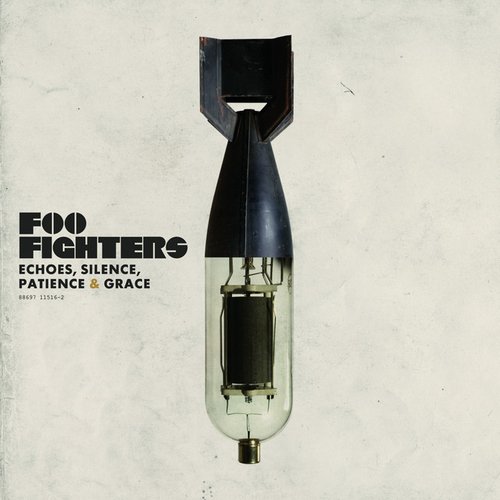
FEATURE: Second Spin: Foo Fighters - Echoes, Silence, Patience & Grace

FEATURE:


Second Spin

Foo Fighters - Echoes, Silence, Patience & Grace

__________

ON 25th March...

Taylor Hawkins of Foo Fighters died aged fifty. Their legendary drummer, there is still shock and disbelief in the air! He died whilst the band were on tour in South America. I am not sure whether the band will continue, or whether they will recruit a new drummer once they have had sufficient time to grieve and reflect. A band who have released some classic albums, there are a few in their cannon that did not get as much love as they deserved. One such album is the underrated Echoes, Silence, Patience & Grace. Released on 25th September, 2007, it is the U.S. band’s sixth studio album. With some incredible drumming and backing vocals from Taylor Hawkins, this is not only an album reserved for Foo fans. I am not a big fan of the band, yet I really like Echoes, Silence, Patience & Grace and feel more people should hear it. It is unfortunate that some people and reviewers wrote off the album or did not score it high. There were some positive reviews for a fascinating and varied album. This is what NME observed in their review:

There’s a genuinely heartwarming story about the genesis of ‘The Ballad Of The Beaconsfield Miners’, too – a gentle, spiraling instrumental acoustic interlude that crops up unexpectedly and apropos of nothing towards the end of the album. It goes something like this: following the tragic collapse of the Beaconsfield mine in Tasmania last May, one of the trapped miners requested an iPod fully stocked with Foos tunes to be lowered down to him to get him through the whole harrowing experience. When he heard of the miner’s request, Grohl, being the doyen of decency that he is, sent the two men a note that read, “Though I’m halfway around the world right now, my heart is with you both, and I want you to know that when you come home, there’s two tickets to any Foos show, anywhere, and two cold beers waiting for you.” Some rock stars probably would’ve fobbed them off with an autograph. Via fax.

Of the quieter moments, there are two clear standouts: ‘Statues’ sounds very much like Grohl’s paean to his newfound domestic bliss (“We’re just ordinary people, you and me/Time will turn us into statues/Eventually”). It’s built around cascading piano chords and soaring, country-esque guitar licks that are so gorgeous, they made us weep like a little girl when we drunkenly heard it for the first time. Oh, alright, we weren’t drunk. Meanwhile, the hymn-like ‘Home’ – the album’s closer – begins just as sparsely, only Dave, a solitary piano and his ruminations on wanting to get off the road and back home, before turning into a full-blown, clenched-fist, lighters-aloft anthem. It’s simple stuff, but done incredibly well.

There are take-it-or-leave-it moments, of course; ‘Stranger Things Have Happened’ sounds like a bluesy acoustic afterthought and should’ve been saved for a B-side, while the plodding, aimless stadium-rock-by-numbers of ‘Summer’s End’ is almost as dull and uninspiring as its title. But by and large this is as consistent a record as the Foo Fighters have ever made. Neither as instantaneously radio-friendly as ‘There Is Nothing Left To Lose’ nor as self-absorbed as ‘In Your Honor’, it’s the record the Foo Fighters have always threatened to make. Foo Fighters albums are like a box of Quality Street; everyone has a favourite. This one is ours”.

Featuring two of the Foo Fighters’ best songs, The Pretender and Long Road to Ruin, there are two anthems there. A lot of the deeper cuts are really interesti9ng and worth some time. This is what AllMusic said in a more mixed review:  

It's not quite right to say that the Foo Fighters only have one sound, but why does it always feel like the group constantly mines the same sonic vein? Even on 2007's Echoes, Silence, Patience & Grace -- their sixth album and first with producer Gil Norton since their second, 1997's The Colour and the Shape -- the Foos feel familiar, although the group spends some palpable energy weaving together the two sides of their personality that they went out of their way to separate on 2005's In Your Honor, where they divided the set into a disc of electric rockers and a disc of acoustic introspection. Here, the Foos gently slide from side to side, easing from delicate fingerpicked folk (including "Ballad of the Beaconsfield Miners," an instrumental duet between Dave Grohl and guitarist Kaki King) to the surging, muscular hard rockers that have been the group's modern rock radio signature. Echoes never lingers too long in either camp, as it's sequenced with a savvy professionalism that only veteran rockers have. That sense of craft is evident in all the songs, whether it's the subtly sly suite of the opening "The Pretender" -- after a slow build, it crashes into a crushing riff into a chorus, building to a typically insistent chorus before taking a slightly surprising bluesy boogie detour on the bridge -- or the sweet melodic folk-rock "Summer's End," a song as warm and hazy as an August evening.

"Summer's End" is one of the unassailable highlights here, and all the rest of the truly memorable tunes on Echoes share its same, strong melodic bent, particularly "Statues," a wide-open, colorful anthem that feels as if it's been resurrected from a late-'70s AOR playlist. These songs place the melody at the forefront and also have a lighter feel than the rockers, which are now suffering from a dogged sobriety. For whatever reason, Dave Grohl has chosen to funnel all of his humor out of the Foo Fighters' music and into their videos or into his myriad side projects. When Grohl wants to rock for fun, he runs off and forms a metal band like Probot, or he'll tour with Queens of the Stone Age or record with Juliette Lewis. When it comes to his own band, he plays it too straight, as almost every rocker on Echoes -- with the notable exception of "Cheer Up Boys (Your Make Up Is Running)," a song that has a riff as nimble as those on the Foos' debut -- is clenched and closed-off, sounding tight and powerful but falling far short of being invigorating. They sound a little labored, especially when compared to the almost effortlessly engaging melodies of the softer songs, the cuts that feel different than the now overly familiar Foo signature sound. And since those cavernous, accomplished rockers are so towering, they wind up overshadowing everything else on Echoes, which may ultimately be the reason why each Foo Fighters album feels kind of the same: Grohl and his band have grown subtly in other areas, but they haven't pushed the sound that came to define them; they've only recycled it. Since this is a sound that's somber, not frivolous, the Foos can sometimes feel like a bit of a chore if they lean too heavily in one direction -- as they do here, where despite the conscious blend of acoustic and electric tunes, the rockers weigh down Echoes more than they should, enough to make this seem like just another Foo Fighters album instead of the consolidation of strengths that it was intended to be”.

A great album that I think has not been given the ratings and acclaim it warrants, Echoes, Silence, Patience & Grace is one you need to investigate! Featuring some super playing from Taylor Hawkins, and some great songwriting from the band (Dave Grohl, Taylor Hawkins, Nate Mendel and Chris Shiflett), go and check out Foo Fighters’…

BRILLIANT sixth studio album.

FEATURE: Paul McCartney at Eighty: Twenty-Three: Tug of War at Forty

FEATURE:


Paul McCartney at Eighty

Twenty-Three: Tug of War at Forty

___________

PART of a run of Paul McCartney features…

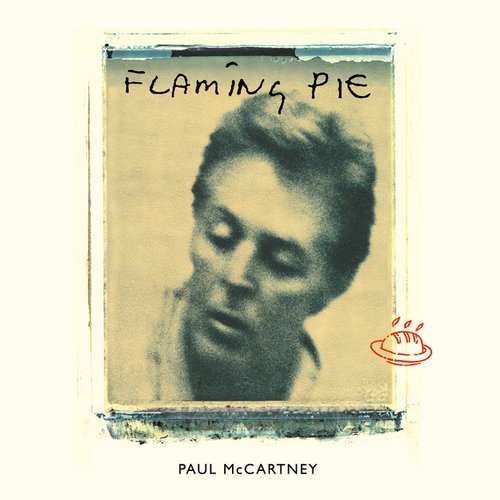
ahead of his eightieth birthday in June, I am concentrating on some of his solo albums and big anniversaries. I have looked at Flaming Pie and its upcoming twenty-fifth anniversary. I wanted to also look to his third studio album, Tug of War, turning forty. His third studio album, it was his first album released after the dissolution of Wings the previous year. It was also McCartney's first album after the murder (in 1980) of John Lennon. The album was produced by former Beatles producer George Martin. There is a lot to unpick about an album that carries quite a lot of weight. Because of the fact it was released not long after Lennon’s death, one can detect him in most of the songs – McCartney writing about his former close friend. I think Tug of War is an underrated album that definitely requires some reinspection. I think Tug of War contains some of McCartney’s best work. Take It Away, Tug of War and Ebony and Ivory are fantastic tracks. Maybe there are a couple of weaker tracks towards the end of the album, though the album as a whole is very strong! One of his best and most important solo works, I think Here Today is the standout. Written very much with John Lennon in mind, it is one of the most emotional songs McCartney ever composed. Listening to it now, it still affects you; a man talking about someone who he was extremely close to and had a complex relationship with.

I am going to come to a positive review for Tug of War soon enough. Before that, Ultimate Classic Rock discussed how Tug of War followed the break-up of Wings and the reality of John Lennon’s death:

It was a somewhat trying time for him: Wings, the hit-making band he put together a few years after the Beatles broke up, just called it quits themselves. More significantly, the album's sessions started in October 1980 but were put on hold after the murder of his former bandmate John Lennon two months later.

So McCartney's will to carry on following these two life-shaking events could have resulted in another tossed-off experimental oddity like his previous solo work, 1980's McCartney II, or a worn rehash of what he accomplished with Wings for most of the '70s. Instead, Tug of War turned out to be his best album since 1973's Band on the Run, the one undisputed masterpiece of his post-Beatles career.

It helped that he was working with producer George Martin for the first time since the Beatles' swan song, Abbey Road. Martin knew McCartney better than he knew himself in the studio. McCartney produced (or co-produced, in a couple rare cases) all of his previous solo records and Wings albums, and the finished material often steered all over the place in search of a direction.

Martin was a pro who knew what made McCartney sound good. That included ace musicians to back the star, including jazz bassist Stanley Clarke, Stevie Wonder (who sang Tug of War's No. 1 hit, "Ebony and Ivory," with McCartney, and played various instruments), former Wings bandmate Denny Laine and, for two songs, old Beatles pal Ringo Starr.

McCartney's last album with a band, Wings' 1979 finale Back to the Egg, was messy and unfocused. When he emerged a year later with his second solo record, he was entirely on his own, producing and playing every instrument himself. Tug of War was supposed to be – and, indeed, turned out to be – a rebirth of sorts for McCartney, who lost his way creatively over the previous few years.

Even though Lennon's death was a turbulent blow, when he and Martin regrouped in February 1981 to resume sessions, the mood was light, professional and prolific. For the next several months they hopped continents and studios (mostly recording in the Caribbean and London), picking up guest musicians, along the way.

Two songs were recorded with Wonder, "Ebony and Ivory" and the way funkier "What's That You're Doing"; Starr played drums on another pair, "Take It Away," the album's second single, and "Wanderlust"; and old friends like Laine, Beatles inspiration Carl Perkins and wife Linda showed up throughout.

From the opening title track (a mournful meditation that could be interpreted as commentary on McCartney's splintered relationship with Lennon) to "Ebony and Ivory" (his eighth No. 1 as a solo artist), Tug of War played like an equal balance of his career: good songs, sappy songs, commercially targeted songs and some adventurous songs.

It all paid off with another No. 1 album, his first since 1976's Wings at the Speed of Sound and last until 2018's Egypt Station hurtled McCartney back to the top. The sessions were so productive that several of its leftover songs (which didn't become B-sides) ended up on his next record, the following year's Pipes of Peace.

Tug of War marked the moment where McCartney was at his most Beatlesque since the group's breakup more than a decade earlier – from Martin's shimmering production and Starr's participation to the mix of pop, rock and R&B and the reflective nature of some of the songs. ("Here Today" is a moving eulogy for Lennon.)”.

Even though some in 1982 did mark down Tug of War and felt that it was not up to McCartney’s very best work, I feel a lot were just piling onto him or could not accept anything from him post-Beatles. He did get a lot of stick and negativity after the end of The Beatles in 1970. Retrospective reviews have been kinder and more considered – people concentrating on the quality and breadth of music, rather than writing the album off before they heard it. This is what AllMusic had to say in their review for Tug of War:

Like 1970's McCartney, 1980's McCartney II functioned as a way for Paul McCartney to clear the decks: to experiment and recalibrate in the aftermath of his band falling apart. This means 1982's Tug of War is, in many ways, the very first Paul McCartney solo album, a record recorded not at home but in a studio, a record made without Wings and not co-credited to Linda, who nevertheless is present as a backing vocalist. McCartney recognized this album as something of a major opportunity, so he revived his relationship with Beatles producer George Martin and brought in several heavy-hitters as guests, including his hero Carl Perkins, his Motown counterpart Stevie Wonder, fusion star Stanley Clarke, prog rock refugees Eric Stewart and Andy Mackay, and his old bandmate Ringo Starr, whose presence was overshadowed by "Here Today," an elegy written for the murdered John Lennon.

 Tucked away at the end of the first side, "Here Today" is bittersweet and small when compared to all the show pieces elbowing each other for attention throughout Tug of War: the grave march of the title track, the vaudevillian "Ballroom Dancing," the stately drama of "Wanderlust," and sincere schmaltz of "Ebony and Ivory," the Wonder duet that helped turn this album into the blockbuster it was intended to be. As good as some of these numbers are -- and they are, bearing an ambition and execution that outstrips latter-day Wings -- much of the charm of Tug of War lies in the excess around the edges, whether it's the rockabilly lark of the Perkins duet "Get It," the later-period Beatles whimsy of '"The Pound Is Sinking," the electro-throwaway "Dress Me Up as a Robber," or the long, electro-funk workout of "What's That You're Doing?," a track that's a fuller collaboration between Paul and Stevie than "Ebony and Ivory." Such crowd-pleasing genre-hopping finds its apotheosis on "Take It Away," a salute to eager performers and the crowds who love them, which means it summarizes not only the appeal of Tug of War in general -- it is, by design, a record that gives the people old Beatle Paul -- but McCartney in general”.

One of Paul McCartney’s essential albums, Tug of War turns forty on 26th April. I think that it has been viewed differently through the years. Maybe it got some flack in 1982 because of some people’s impressions of McCartney. Maybe some were reacting to John Lennon’s 1980 murder and thinking negatively about Paul McCartney. In terms of the material, Tug of War is incredibly strong. Considering the emotions McCartney would have been processing, he released one of his most consistent and enduring albums. I listen to it today, and so many songs pop out. From the Stevie Wonder duet, Ebony and Ivory, through to the devastating Here Today and the underrated The Pound Is Sinking, I wanted to celebrate Tug of War. It sounds amazing and so incredibly strong…

FORTY years later.

FEATURE: Revisiting… Run the Jewels – RTJ4

FEATURE:


Revisiting…

Run the Jewels – RTJ4

__________

THIS time out in Revisiting…

I recommend people listen back to one of the best albums of 2020. Sometimes, in this feature, I revisit albums from the past five years that were overlooked. That is not the case with Run the Jewels’ RTJ4. A monumental release from El-P and Killer Mike, I hope that people pick it up. I don’t think radio stations examine and spin the album as much as they should. I am going to finish with a couple of reviews for the album. 2020 was an incredible year for music. Albums from Taylor Swift (folklore), Rina Sawayama (SAWAYAMA), and Dua Lipa (Future Nostalgia) arrived in the first year of the pandemic. It is amazing that such amazing music came out at a very difficult time. There was something potent and important about RTJ4 arriving when it did. The album was released in June 2020, only a month after the murder of George Floyd in the U.S. Such a charged, sensational and essential album, this is one for the ages! I want to source one of a number of interviews Run the Jewels provided to promote RTJ4. COMPLEX spoke with them about, perhaps, their greatest album – one that may well be their last:

On your website, there’s a message to the fans for RTJ4. It reads: "We never thought that when we were doing the first one that RTJ would become our whole lives and honestly we're so grateful that it did." Can you elaborate on why you posted that message and the sentiment behind it?

Killer Mike: I was just going to say I'm very proud to be defined as a part of two different partnerships. There's my marriage with my wife Shay and there's the marriage that is Run the Jewels.

El-P: Run the Jewels was born out of a moment of us hanging out with our friends and making some music. We really didn't have any idea what it would become. Writing that to our supporters was just us acknowledging how grateful we are, and I think that a lot of people try and present everything that happens to them as like, “Oh yeah my plan worked.” The truth is is that we would be fucking lying if we were saying our plan worked. We didn't have a fucking plan. We just reacted to our friendship, then to the music, and then to the impact the music was having.

I think that me and Mike both sensed there was some greatness in it. There was something that we could do together that I don't think either of us would have pulled off or could possibly pull off on our own. Just know that when you're fucking with us, you're fucking with two guys who are excited that this is even happening still and are grateful for this and therefore grateful for people who let us do it.

You've mentioned the magic that happens with you guys. You guys have made your own exceptional solo work, but something is just different when you two come together. RTJ4 is the clearest evidence of that. What is that?

Killer Mike: Who knows why strawberry lemonade got invented? You know, the shit you get at the The Cheesecake Factory? Who the fuck was sitting around stoned like, “You know what? I need to put strawberry puree in a already fucking classic?" So I have no idea why the magic happens. What I do think and I do give myself credit for this: I recognized we had magic within the first three hours of knowing each other. Within the first three hours, I literally was calling my manager like, "Hey, man, I am Ice Cube who's just found his Bomb Squad.”

I knew El and I were supposed to be making music together. I knew R.A.P. Music was supposed to be produced entirely by him, but when we went on the road and we performed as Run the Jewels, I knew that it was something special and magical and I knew that I didn't have responsibility for knowing why people like strawberry lemonade. It was my responsibility to make sure they kept getting strawberry lemonade. I wanted to make sure that through it all Run the Jewels became the prominent driving force because it allowed me to be as creative as I ever wanted to be.

It allows me to be as creative as a 15-year-old who wants to make a record about angst and what I'm angry about with society just to get it off my chest so I don't implode. At the same time, I get to rap about shooting an old lady or a poodle if they don't meet my demands. There's something very freeing about having a partner to balance yourself with. As a solo artist you get locked into a character. Not that the character isn't you or based on you or who you are. I'm just as much as Killer Mike as I ever was, but Run the Jewels enhances the ability for that to be fully me in a lot of ways. I can be both the Michael that smokes weed and doesn't give a fuck on one record, and the Michael that gives a shit on the next record and no one says, "Oh, he's contradicting himself." They simply say, "What El and Mike managed to do is magic.” I don't know why it's magic, but I do know that it's our job to keep making magic as long as we aspire to.

El-P: Me and Mike are very different people. We have very different ways of getting to our points. We have very different ways of expressing ourselves, but there's this fundamental agreement that we have on a lot of things and we agree on allowing ourselves room to be who we are and no matter what that may be. From being silly and jokey to stupid, serious or sad, there's a safety and an agreement between us that we got each other's backs.

The solo stuff I was doing when I met Mike was important to me, and I'm proud of those records. I think that they had their own voice. That's very different from what I do at Run the Jewels, if you were to ask me what's more fun, I would say getting high and rapping with my friend is a lot more fucking fun. Inspiration has to come out of fun, and when you get that you don't want to turn away. Sometimes it's not fun, but even when the hard moments come it just means that we are actually humans and that we're voices that are constantly trying to learn how to work with each other. The result of that shit is something that neither of us can replicate on our own. It's just the truth.

There was chatter about this being the last RTJ album, but you’re both saying there’s too much fun being had to stop now. What does that fun look like?

El-P: Yeah, it was really weird, motherfuckers started being like, "Will Run the Jewels continue?" It's like why wouldn't we? It always baffled me. Like do you hear this shit that we're making? This shit's great!

Killer Mike: When you say, "What's your idea of fun?" Walking in a room to a dope-ass, jamming-ass beat with a joint in your hand having to figure out how to make this motherfucker doper so that you aren't so in awe that you just sit there and listen to it. When you walk in a room and El has just laid the most cutthroat, killer verse ever, you're sitting there like, “Oh I got to fucking step up!” That's fun. That's Michael Jordan's pregame. That's Kobe Bryant shooting a hundred shots after the game. When we say fun we're not talking about doing a dilly dally—we're talking about the work, but the work is satisfying”.

The reviews for RTJ4 were overwhelmingly positive. It is an album that is impossible not to be moved and affected by. This is what AllMusic wrote in their review of one of 2020’s best albums:

Arriving earlier than expected as both a global pandemic and a nationwide movement against police brutality gripped the United States, RTJ4 distills the anger and frustration of the people through Run the Jewels' hard-hitting, no-nonsense revolution anthems. Trim with no filler, this fourth set from the outspoken duo provides relevant history lessons that are more useful than a classroom textbook. Rousing and lyrically dexterous, Killer Mike and El-P deliver their densest collection yet, balancing clever bon mots with tongue-twisting screeds decrying police brutality, systemic racism, class injustice, and a litany of other ills plaguing the nation. RTJ4 rarely strays from the intensely political; when it does, the duo shine with boastful quips and chest-thumping bravado, loosely weaving their "Yankee and the Brave" personas -- alluding to the baseball teams from their respective home bases -- with production that merges old-school hip-hop nostalgia with aggressively sharp contemporary stylings. BOOTS and Dave Sitek return for the very RTJ-titled "Holy Calamafuck," a menacing attack that's bested only by the clattering "Goonies vs. E.T.," which sounds like a Prodigy

Additional guests include 2 Chainz on the breathless "Out of Sight"; DJ Premier and Greg Nice on the "DWYCK"-sampling "Ooh La La"; and Mr. Muthafuckin eXquire on the neon dystopia of "Never Look Back." Meanwhile, an unlikely pair join forces on the swirling "Pulling the Pin," with Josh Homme's ghostly wails and Mavis Staples' pained cries creating an RTJ-meets-...Like Clockwork doomscape that pushes back against a power structure that allows for "filthy criminals...at the pinnacle." On album highlight "JU$T," "poet pugilist" Zack de la Rocha and Pharrell Williams join the fight by contributing popping production and a condensed socio-economic lecture, pulling back the curtain to reveal "murderous chokehold cops still earning a living" and "all these slave masters posing on your dollars." On "Walking in the Snow," Mike, El-P and Gangsta Boo tackle the American school-to-prison pipeline and those "chokehold cops," directly invoking the spirit of Eric Garner -- who was killed by Staten Island police in 2014 as he pleaded, "I can't breathe" -- and unwittingly honoring George Floyd, whose murder under the knee of a Minneapolis police officer prompted protests across the globe and pushed RTJ4's early release. Bringing the past and present full circle, Mike reminds listeners to "never forget in the story of Jesus, the hero was killed by the state." Much like reality, the raw and unflinching RTJ4 is a lot to take in, both a balm for the rage and fuel to keep the fire burning. Although eerily prescient, RTJ4 is less prophetic and more a case of deja vu, addressing the endemic issues of a broken country that sadly continue. This has all happened before and, as El-P laments, this is the "same point in history back to haunt us”.

The final review I want to source is from CLASH. As mentioned, the reaction to RTJ4 was enormously impassioned and positive. I think that the album still sounds as powerful and earth-moving nearly two years later:

 “Back at it like a crack addict, / Mr. Black Magic” announces Killer Mike, kicking off the album with ‘Yankee And The Brave (Ep. 4)’. A two-and-a-half-minute reintroduction to the unmistakable sound of Run The Jewels. From the offset it’s obvious: the boys are back; this is Trump’s America and they aren’t taking it lightly. The drum beat pounds the track with maliciousness as both rappers growl aggressively over the Schwartz brothers and El-P produced beat.

‘RTJ4’ dropped ahead of its expected release date. Pushed forward by the rappers themselves in wake of the recent murder of George Floyd. The early release was announced on social media along with a download link to access the 11-track digital album for free. The message read:

F-ck it, why wait.

The world is infested with bullshit so here’s something raw to listen to while you deal with it all. We hope it brings you some joy. Stay safe and hopeful out there and thank you for giving 2 friends the chance to be heard and do what they love.

Run The Jewels is a legendary combination of two highly skilled MCs. Atlanta, Georgia’s Killer Mike and Brooklyn, New York’s El-P, who also produces RTJ cuts. Both are veterans of the rap game. Separately, they are masters of wordplay. Together they are a hip-hop supergroup. This, their consecutively titled fourth album, is a welcome return for the duo. Featuring appearances by 2 Chainz, Pharrell Williams, Zack De La Rocha, Greg Nice, DJ Premier, Mavis Staples and Josh Homme. Those wanting a physical copy will have to wait until September.

‘Ooh La La’ sets the scene for us. Featuring renowned producer and one half of Gang Starr, DJ Premier, and Greg Nice of late 80s rap group Nice & Smooth. Introducing the video with the text “One day the long fought battle between humanity and the forces of greed and division will end, and on that day, finally free, we will throw a motherf-ing party...” the visuals feature the artists in the midst of a crowd of revellers who are dumping bags of money and credit cards onto a street bonfire before setting them alight.

Indeed, El-P spits fire behind the literal flames: “I used to be a munchkin / Wasn’t ‘posed to be nothin’ / Ya’ll f-ckers corrupted / Or up to somethin’ disgustin...” The boom-bap is strong in this one and it was hard not to feel the energy within.

2 Chainz joins the party in Out of Sight. As Mike and EL playfully exchange rhymes back and forth over a sample of Foster Sylvers’ ‘Misdemeanor’, co-produced by Little Shalimar and Wilder Zoby. I sense echoes of Run-DMC throughout the first verse. Was that a subtle sample of The Sugarhill Gang’s version of ‘Apache’, I could hear buried in there?

‘RTJ4’ gets darker as it progresses. Holy Calamaf-ck strikes hard with the ragga dancehall inspired beat as EL-P boasts: “I’m the decider / You evil eyers / A pile driver provider for liars / The sleep depriver...” before the beat switches as the New Yorker continues: “Ayo, one for mayhem / Two for mischief / Now aim for the drones in your zoning district / Hindenburg ‘em, / get ‘em / burn ‘em / Can’t give the ghost up / No resistance.” The contrasting styles of the rappers are apparent here, with Mike’s southern drawl holding steady against EL’s flow, not too dissimilar from late fellow New Yorker, Big Pun.

‘Walking In The Snow’, the album’s sixth track features a guest appearance by one time Three 6 Mafia member Gangsta Boo. The beat is heavy and the lyrics are eerily all too close for comfort as Mike takes us back to the 2014 death of Eric Garner at the hands of the police: “And every day on evening news, they feed you fear for free / And you so numb you watch the cops choke out a man like me / And 'til my voice goes from a shriek to whisper / ‘I can't breathe’ / And you sit there in the house on couch and watch it on TV / The most you give's a Twitter rant and call it a tragedy.” Such lyrics are hard to listen to, especially in the wake of the death of George Floyd in Minneapolis at the hands of a police officer.

‘RTJ4’ is a must listen. It is diverse enough to appeal to even the hardest crowds. Many genres are represented here, but lyrical hip-hop is at the forefront of all that Run The Jewels is. They stand out from the crowd, whilst invoking the people to stand up for themselves. There is not a bad song on the entire album and the production and features are second to none. I kept rewinding the tracks, not just from a reviewer’s perspective, but to hear the how well combined Mike and El-P are.

As the album’s finale builds up with a saxophone crescendo, the track fades out before we are once again introduced to the mock TV show Yankee And The Brave. As I pressed play once more on the album, I realised I cannot wait to hear what Run The Jewels 5 will bring”.

An album that will rank alongside the best of this decade when we look back years from now, Run the Jewels’ RTJ4, let’s hope, is not their last! One of the most powerful albums I have heard, maybe its songs are not played and discussed as much today as they were back in 2020. Let’s hope that this changes…

VERY soon.

FEATURE: Spotlight: Latto

FEATURE:


Spotlight

Latto

___________

ONE of the most amazing and compelling…

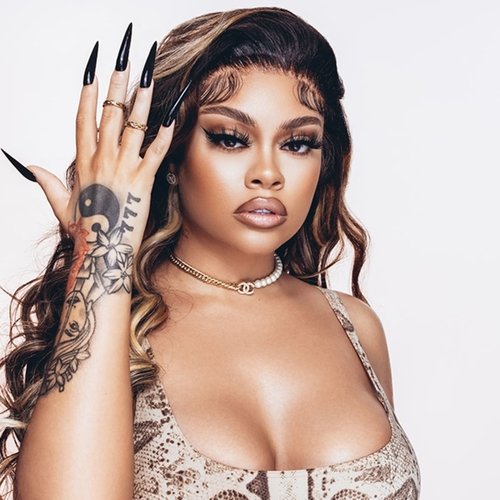
 PHOTO CREDIT: Scrill Davis for Inked

artists coming through is Latto. Although she has been releasing music a while, I feel 2022 is a breakthrough year. With her new album, 777, out in the world (it came out on 25th March), this is an artist that everyone needs to know about. I will finish off with a review of 777. I want to start with a bit of background on Latto. I want to get to some interviews soon. First, from her website, here is what you need to know about Latto:

Raised in Atlanta, GA, 22-year-old rising rapper Latto has been making a name for herself since she was 10 years old. The Rap Game Season One winner has continually released music since 2016 and signed with RCA Records in 2020. In June 2019, Latto released her EP Big Latto, which included her breakout-hit song “Bitch From Da Souf.” The December 2019 release of her follow-up project, Hit The Latto, contained the remix version of the track featuring Saweetie & Trina. The accompanying video has been viewed nearly 82 million times. Combined, both versions of “Bitch From Da Souf” have over 200 million streams on Spotify and Apple alone. Prior to the aforementioned, her impressive catalog of music includes Miss Mulatto (2016), Latto Let ‘Em Know (2017) and Mulatto (2018).

Latto has proven that her pen game, replete with witty and raw verses, is unmatched. The “Bitch From Da Souf (Remix)” went RIAA-certified Platinum, making Latto the first solo female rapper from Atlanta to accomplish this feat. The 22-year-old was also one of only two women inducted into the XXL 2020 Freshman Class, earning her another major milestone in her burgeoning career. In August 2020, Latto released her major label debut project Queen of Da Souf, and later that year released the extended version of the project. Combined, both versions garnered over 300 million streams worldwide and had multiple standout tracks including “In n Out” feat. City Girls, “Sex Lies” featuring Lil Baby, and the now RIAA-certified Gold track “Muwop” feat. Gucci Mane. In addition to her own music, Latto has been inescapable; from her cameo in Cardi B’s iconic “WAP” video featuring Megan Thee Stallion, to countless features including Chris Brown & Young Thug’s “Go Crazy (Remix)” with Future and Lil Durk, Chloe& Halle’s “Do It” (Remix) with Doja Cat and City Girls, NLE Choppa’s “Make Em Say”and Hitmaka’s “Thot Box (Remix),”she’s proven that Big Latto is bigger and better than ever before”.

Such a young artist showing such ability, confidence and promise, I think Latto is going to be a rapping icon! Someone who inspires the next wave. An impassioned and hugely talented artist, I was keen to know more about her earlier life. This recent UPROXX interview gives us some background regarding her build-up to acclaim and success:

Growing up in Atlanta, Alyssa Michelle Stephens was pushed into rap early after showing both interest and impressive aptitude for the craft. Dubbed Miss Mulatto for her mixed heritage (her father is Black, while her mom is white), she quickly developed as an artist thanks to a near relentless schedule that found her learning multiple facets of entertainment from as young as eight years old, including rapping, DJing, promoting events, and even hosting a podcast, resulting in practiced ease in dealing with media – as well as an advantage over the competition when she appeared on the Lifetime reality show, The Rap Game, at just 16 years old.

Hosted by So So Def founder and veteran hip-hop hitmaker Jermaine Dupri, the show offered the polished teen what some would call the opportunity of a lifetime when she won the inaugural season — an opportunity she eventually turned down. In our prior interview ahead of the release of Queen Of Da Souf, Latto explained why she left the deal on the table in favor of a strenuous independent grind. “It wasn't something that I was comfortable doing yet,” she admitted. “I was 16 when we filmed the show, I was 17 by the time it aired and I was offered the contract. I'm a baby at 17. I don't want to get myself into no record deal to where I don't even fully understand the terms, or be locked down for years to come, and I was fresh off of a hit television show. So I didn't even get to see the outcome of the show and receive other offers.”

That gamble paid off. After dropping the “Miss” from her nom de plume and releasing a string of mixtapes throughout her teens, she got her big break — and laid the groundwork for her future name change — after releasing the EP Big Latto, which contained her first charting hit, “Bitch From Da Souf.” Released in January that year, the track peaked at No. 95 on the Billboard Hot 100 chart, spawning a well-received remix featuring the original Southern rap queen Trina and pop-rap upstart Saweetie. It also led to her major deal with RCA Records and placement on XXL’s 2020 Freshman Class just weeks before the release of her debut album. The album reached No. 44 on the Billboard 200, solidifying her status and justifying her boldness in holding off on signing at 16.

However, it wasn’t all smooth sailing; as she received greater acclaim, she also garnered more intense scrutiny for her rap name. After all, in today’s increasingly socially conscious landscape, there was simply too much room to misinterpret the reference — both deliberate and inadvertent — even despite her insistence that her name was meant only to pay homage to her parents, reclaiming an insult that had been levied against her as a child. Under intense pressure from fans on social media, she relented, opting to shorten the name to Latto, comparing it to “lotto” or lottery. She even has a tattoo that reads “777,” a jackpot on a slot machine, so the new name works. And she freely admits that the old name was never the best and attributes the delay in changing it to the vagaries of business.

PHOTO CREDIT: Peter Donaghy  

“I did not name myself originally Miss Mulatto,” she recalls. “I was eight years old. So, how could an eight-year-old even name themself that? But as my career blossomed and continued to develop, I feel like those things were brought to my attention. And as I'm getting older, I'm having my own train of thought, I'm having my own perspective and opinions and morals and values. So I feel like, my name just didn't align with those so that's when I changed my name…. I think people need to give me more credit for even being open-minded to changing it because it's a lot of different factors that went into changing it. I got the label involved. I got management. I got lawyers.” Now that the name controversy is behind her, though, she’s set about the business of building her new brand, with her new sound, while sticking to that deeply ingrained philosophy of remaining true to herself.

Latto’s been outspoken about the competition among women in the field before, as well as questioning the higher standards to which women are held in the first place — especially compared to men who rap. “Don't get me started on that because I'll go all day,” she winds up when the subject is broached. “They criticize us so hard, but these boys get up there with they shirt off grabbing they nuts and jump up and down and they the hottest thing ever. We got to be four hours in glam. Make sure your nails match your outfit, your hair, makeup everything matches. And don't sound out of breath. Make sure you have choreography. And then we doing it in heels!”

Speaking of glam and heels, back at the shoot, I catch up with Latto’s sister Brooklyn as Latto changes into a new ensemble consisting of a Marni coat, Ottol Inger pants, and McQueen shoes. Much shier than her sister, Brooke has become something of a fixture at the rapper’s side while on tour and at shoots like this one, faithfully documenting their adventures for TikTok, where once again, that dynamic, down-to-earth personality is on full display.

PHOTO CREDIT: Peter Donaghy 

We watch a video that features the siblings playing a common question-and-answer game on the platform. The questions wonder which of the two “got the most whoopings growing up,” prompting both sisters to point emphatically toward Latto. When asked about her sister’s supposed rebellious streak, Brooke explains, “She don’t like being told what to do. She don’t like you to tell her the rules. She just does whatever she wants to do.”

Latto confirms this was the case, even in that early stage that laid the foundation for her later success. “I used to hate it when I was young,” she says. “I used to be like, 'I want to go to the skating rink.' At times, I'd be like, 'Man, my friend having a sleepover on Saturday.' And my daddy would be like, 'You got a show on Saturday. You going to appreciate me for this when you get older.' Now, I understand what he was saying, but I think it just gave me an overall advantage. I'm not scared of the camera.”

That rebellious streak means she’s not afraid of the criticisms or taking risks, as she did with the release of “Big Energy” and its departure from her established sound. It also shines through in the defiance she projected throughout her recent freestyle for the LA Leakers radio show, where she laid the “Beatbox” controversy to rest for good. “How you big can't name a track,” she wondered. “How you big but can't hang a plaque?” Of course, with all that ferocity, it helps to remain anchored, which she has by keeping a little piece of her hometown close at hand”.

A few years from her introduction onto the scene, you can hear and feel this growth in her music. Almost re-establishing and reintroducing herself to the world, COMPLEX interviewed Latto around the release of 777. It has been a busy and exciting past three years for the Atlanta rapper:

It’s been nearly three years since Latto broke through with her anthem “Bitch from da Souf,” and a lot has changed since then. In March 2020, the Atlanta native signed a deal with RCA Records, before dropping her debut studio album Queen of da Souf, which peaked in the top 50 of the Billboard 200 and included two platinum-certified singles. She also changed her name from Mulatto to Latto, and grew a massive following.

Now, Latto is walking into the release week for her second studio album with a lot more experience and knowledge. “I’m really growing as a woman, and it just reflects in the music,” she says.

Latto’s forthcoming album, 777, will be the first full-length project she’s dropped under her new name, and with it, she says she’s “reintroducing” herself to the world and hoping to make a statement. While she opted for a pop-leaning sound with “Big Energy,” she says the album will showcase her versatility, with all different types of vibes.

“I wanted to solidify myself and where I fit in the industry,” she tells Complex. “This is just the first introduction. ‘Big Energy’ is the pop sound from this project. I got an R&B sound.

 I got the rap trap sound. I got some rhythmic stuff that I did with Pharrell, just different swaggy stuff.” The album also includes features from major collaborators like Lil Wayne, 21 Savage, Childish Gambino, and more.

Ahead of Latto’s album release, she revealed that an artist featured on her album made it difficult to clear the collaboration when she denied their advances. Her comments shed light on what women in the music industry are constantly faced with. “People have always told us, ‘It’s better not to speak on that,’ or we’re burning bridges or we’re problematic if we do,” she explains. “But it really shouldn’t be how the game is.” Latto did not explicitly name the artist, noting, “It is something that you just got to tread lightly on when you do speak on those subjects, because sometimes people get invested for the drama of the situation rather than the fact that female rappers are being silenced in the industry and bullied behind closed doors.”

Latto is confident about where she is at in her career and what fans will hear on her new album. She declares herself the “female face for Atlanta,” and suggests 777 will further stamp her name in the history books. Complex spoke with Latto about making the album, navigating the music industry as a woman, and more. The interview, lightly edited for clarity, is below.

It’s been two years since you released Queen of da Souf. How have you grown as an artist over that time? 
I tried more things. I’m really growing as a woman, and it just reflects in the music. I have new experiences as a woman to talk about. And being an artist, I’m going to naturally talk about my experiences growing up and becoming a woman. So it shows my evolution in life through music. 

Did you feel any pressure going into this music cycle? 

Yes, for sure. I think after “Big Energy” and its success, I knew how many eyes I had on me—new eyes at that. A new audience tuned in, and I feel like this album is my chance to reel them in as fans.

What was your biggest goal going into this album cycle? 

I really wanted to solidify my place in this industry. I wanted to get my bars off and let people know that I do songs like “Big Energy” and showcase my versatility, but let them know where the passion started in the first place. And that was rapping—just getting the bars off, no hook freestyles. So I’m definitely rapping my ass off and showcasing the versatility at the same time.

What separates you from other artists? 

I’m a female face for Atlanta and that’s never been done before on a mainstream massive scale. That alone is my lane. And then, my Southern open flow with the bars, that separates me. And my authenticity. I don’t put too much thought into anything. I really just be myself.

What does the album title 777 personally mean to you? 

Seven is God’s number, so it just started with that. From a younger age, seven has always been my favorite number. And then triple—it triumphs 666, or overcomes 666. It became a part of my brand when I changed my name to Latto in reference to the lottery and casino, hitting the jackpot is 777. But it already had a meaning to me. It just somehow aligned with my career”.

I will end with a  review of 777. Receiving a lot of praise, it is an album that you need to get involved with! This is NME’s take on the incredible 777:

I’m from the Southside / Bougie bitches and dope boys,” the artist born Alyssa Stephens raps on last year’s single ‘Soufside’, emphasising the distance she’s travelled as a Platinum-certified star who has overcome stinging controversy and the music industry’s glass ceiling to become one of the most exciting rappers in the world. And with album two, Georgia-raised Latto peels back the layers of her larger-than-life persona.

It’s a record that meets Stephens on the other side of criticism that has dogged her since she introduced her unintentionally offensive former moniker, Mulatto, as an eventual winner of reality show The Rap Game in 2016. Last year, she told NME: “The negative definition of Mulatto might have been holding me back.” She explained that her then-new abbreviation meant “lottery” and that she hoped it would “be forthcoming of good fortune – financially, spiritually, emotionally”. On the hard-boiled ‘Trust No Bitch’, the 23-year-old puts it more boldly: “Big Latto – short for lottery / So ‘fuck I look like losing?”. No wonder this album’s title references the jackpot on a slot machine.

For the most part, the mood is fittingly buoyant, the album’s trappy percussion variously slathered in blaring horns, crisp acoustic guitar and – in the case of the 21 Savage-featuring ‘Wheelie’ – a buzzing syntheziser that would put a swagger in Mario’s 8-bit step. Perhaps inevitably, the feel-good highpoint arrives in the form of the mega-hit (almost 64 million Spotify streams and counting) ‘Big Energy’, a dumb, fun summer anthem wrapped up in a squelchy sample of ‘80s new-wavers Tom Tom Club’s ‘Genius of Love’.

Away from the Billboard chart-bothering singles, however, Stephens dials down the braggadocio and dials up the introspection. If there was a criticism of her 2020 debut ‘Queen of Da Souf’, it was that the “rich bitch shit” (as she defined her lyrical preoccupations on the clenched ‘He Say She Say’) and steely production could seem a little one-note. With this second round, Latto is utterly compelling when she slows things down.

Take the foe-forgiving Lil Wayne and Childish Gambino collaboration ‘Sunshine’, or the Kodak Black team-up ‘Bussdown’, on which she demands respect: “Got it out the mud without no handouts”. In that NME interview, Stephens insisted it would be “ignorant” not to acknowledge the stigma that female rappers still face, adding: “it’s flat-out in our face every day”. Here is proof, once again, that Latto could go toe-to-toe with the best of ‘em”.

An amazing artist who will keep growing and getting stronger, Latto is someone who needs to be on everybody’s radar! Go and follow her (all the links are below) and check out her music. There is no doubt that you will continue to put out incredible music…

FOR many years more.

______________

Follow Latto

FEATURE: Spotlight: Alex Amor

FEATURE:


Spotlight

Alex Amor

__________

AN artist I would love to interview one day…

Alex Amor is a stunning talent who is going to be among our very best artists. Her Love Language E.P, released last year, is tremendous. I predict that, as she releases more E.P.s and an album, we will see her tour the world and hook up with some of the biggest artists of the time. It would be reductive to label Amor’s music simply as Pop. Although there is an accessibility and spirit to the music that lifts you up, she is an artist who has so much depth and variety. There are a lot of terrific artists rising and coming through right now. The Glasgow-raised, London-based artist is one of the strongest and most promising I have heard in a very long time. I am doing things a little roundabout. Before coming to a few interviews – where we can discover more about the wonderful Alex Amor -, there was a lot of love (rightfully so!) for her E.P., Love Language. SNACK provided their impressions on a remarkable E.P. that stands up to repeated listens:

Perfectly produced with swagger and sincerity to match, Alex Amor’s Love Language is an ode to the romantic tribulations of youth. Amor, who is 23 and from Glasgow, worked alongside Derbyshire-based DJ Karma Kid to craft this ethereal and majestic piece of alt-pop.

Love Language explores the progression of relationships, from their blissful beginnings to their fractious ends – it’s as relatable as it is playful. The EP’s title track – a reference to Gary Chapman’s book The Five Love Languages, which discusses how humans can show affection in relationships – sees Amor dissect her own failed romance through a series of light-hearted juxtapositions. It is fun and familiar, but with an RnB twist; a style which clearly comes naturally as a result of Amor’s background in poetry, as does her love for the syncopation of rap.

The coming-of-age narrative which predominates on Love Language relates as much to Amor herself as it does her relationships with others. ‘I am a woman struggling for autonomy’, she states. ‘I’m moving into adulthood and desperately trying to make sense of its complexities’.

This inner struggle is particularly apparent on ‘Motion’. Great care is taken to ensure that the instrumentation is kept minimal so as not to overwhelm the delicate lyric. ‘It’s me who got it wrong / I don’t know when to let things go’, Amor laments, before coming to terms with her situation. It’s not all doom and gloom.

Amor expresses personal experiences and feelings using her songs as vehicles of connection. It’s almost uncanny for someone so young. She says: ‘I am speaking directly to people from the heart. There’s an overarching theme of positivity in my music, the idea that it’s okay if things aren’t okay but there’s always hope that things will get better’. This sentiment extends far beyond the literal subject matter of Love Language and appeals to the more general human condition: we want to be loved, we want to be reassured, and we want to be excited. It’s safe to say Alex Amor is capable of creating moods where the listener is free to feel all three.

Love Language, much like a fleeting adolescent romance, is short but oh so sweet. It packs in everything from effect-laden soundscapes to sparse, airy ballads, and even includes some contextual swearing for good measure. At times it feels a little like poetry set to music, but this and its conversational feel are also what makes it fresh.

In an international pop world brimming with opulent, exclusionary, bourgeoise bluster, Alex Amor is speaking an engaging and honest modern language”.

Even though she is young and making her first statements, the promising is definitely there. Launching into the music world at a time when the pandemic was gripping, I am not sure what Alex Amor would have thought about the future and whether her music would get the audience it deserves! It must have been strange and stressful releasing an E.P. during the pandemic. Though things are not over. Gigs are returning, and she is able to get her music to the masses. Her fanbase online is growing. Whilst most of her following is on Instagram, her Twitter numbers are growing. If you have not followed Alex Amor, go and do so! It is worth getting some background and information about a wonderful artist. NOTION chatted with Amor in December 2020. We learn about some of her first musical loves and experiences:

23-year-old Glaswegian newcomer Alex Amor has only released three songs to date and she’s already secured a spot at next year’s Great Escape Festival.

Debut single “The Part With Each Other”, an airy, harmonised alt-pop number about the first flush of romance, only dropped this year, and was then followed up by “Prove Me Right”, a more cynical number about modern dating. Now, Alex has shared her new single “Motion”, another tune reflecting on her life’s experiences, wrapped up in a foot-tapping beat.

All three songs will be featured on Alex’s upcoming debut EP, ‘Love Language’, set for release in January next year.

Produced with Karma Kid, the EP documents the highs and lows of a relationship as it progresses from the first youthful infatuation to the inevitable demise. “This EP reflects a recent time of my life where I am a woman struggling for autonomy. I’m moving into adulthood and I’m desperately trying to make sense of its complexities. Though there’s no happy resolve at the end of the EP, I feel more self-assured than ever, more me than

I’ve ever been”, Alex said of the project.

PHOTO CREDIT: James O'Donohoe 

First song you wrote?

I reckon I was around 11 when the songwriting curiosity kicked in. The first song I wrote, I never actually wrote down because the lyrics changed every time I sang it. It was called ‘Take me on a Trip’ and the highlight of the song’s short life span was performing it at my annual flute camp, at the end of the week talent show.

First CD you owned?

I can quite vividly remember pressing play on my baby pink CD player and rocking out to “Complicated” by Avril Lavigne. ‘Folklore’ by Nelly Furtado was the first CD I bought with pocket money.

First time you were starstruck?

The closest I’ve been to being starstruck was when I saw Lana Del Rey live in concert when I was 15. There was a full orchestra and the whole concert felt quite otherworldly, as did she

First time you wanted to give up?

I guess I’ve never really given up. I did stop taking music as seriously when I went to university to study textile design. I tried to do the whole normal life thing but it didn’t last long. Music was always there in the back of my mind even when I wasn’t doing it. I got a lot of life experience during those years that I still take inspiration from to this day so I don’t regret it at all. When I started fully committing to pursuing music, that was when things started to align”.

There are a couple of other interviews that I want to explore before wrapping up. I love the fact Alex Amor set up a studio in a cupboard under the stairs at her parents’ house in 2018. She spent two months in creative self-isolation and used technology to work remotely with producers. That determination and focus is paying off. Such a memorable talent with a very long future ahead, there are albums and artists that inspire her. When she spoke with Beats Per Minute in 2021, Amor discussed some records that are important to her. I have chosen a couple of them as a highlight:

Scottish indie-pop artist Alex Amor releases her debut EP Love Language today; a five-track set that shows a surprisingly defined musical personality and bravery for someone on their first body of music. Diving headlong into emotional entanglements, dating disappointments and intimate trails of thought, Amor makes a captivating and amusing singer and lyricist. Aided by simply stylish production, Love Language heralds an artist who should be slipping her way into many people’s playlists this year.

Of course, we wanted to know about her influences, those songwriters who’ve helped guide her path to this point. In her On Deck, Amor tells us about four particularly luminary artists that have helped her escape, provoked new ideas and, ultimately, been there for her when she needed them.

Corinne Bailey Rae – Corinne Bailey Rae

[Capitol; 2006]

One of my favourite albums from childhood is Corinne Bailey Rae’s self-titled album. The songwriting on every song is nothing short of exquisite. I remember as a young girl getting lost in her world of calming vocals and raw production that perfectly complimented the music. It’s an album that pushes your emotions to either end of the scale – there’s moments of elation and then times of desperate longing and melancholy like on “Choux Pastry Heart”. I was 10 when I heard this record, daydreaming of what it was like to fall for a boy and perplexed at the emotional rollercoaster that is love.

Kali Uchis – Isolation

[Rinse/Virgin EMI; 2018]

Isolation is one of my favourite albums of the past five years. Kali Uchis has a way of shape shifting genres on every track yet manages to sound entirely like herself. I love artists that merge old with new and Uchis does just that. The track “After The Storm” seems to fit the current feeling of the moment too. Her feel good futuristic nostalgia is at its best on this track, where she motivates us not to give up even though “we’ve been struggling endless days.” Her unapologetic self love is infectious too, which is a thread throughout all of her music”.

 PHOTO CREDIT: Elsie Matilda

I will round off with an interview from LOCK. Although the last couple of years have not been ideal in terms of venues open and restrictions, Alex Amor’s music has got out there and connected with a lot of people. She is definitely one of the names to watch closely this year. Among the live dates she has coming up, she will play Brighton’s The Great Escape. When she spoke with LOCK late last year, she was asked where that amazing sound comes from:

You’ve recently shared your new double single project “Summer Is Sweet With You”, can you tell us more about the project?

The project came from a genuine place during the pandemic. I was finding freedom in a relationship when it felt like the whole world was literally locked down. I’m not really the type of person to throw caution to the wind, but sometimes you just have to say ‘fuck it’ and go with your intuition, do something drastic and ride the rollercoaster. The music has an uplifting feeling to it and a sense of possibility, which is ultimately what I wanted to convey with this project.

Really loving your hazy indie-pop sound, where do you draw the most inspiration from?

I listen to a lot of dream pop bands from the west coast and Canada like Men I Trust,  Alvvays, Wild Nothing and Beach Fossils. There’s a sense of warmth in the music I’m inspired by, that puts your mind at ease. I’m naturally quite an anxious person, so I like music to calm my nervous system down. My producer for the ‘Summer is Sweet with You’ singles owns a lot of analog gear, which was so much fun to experiment with over the past year. I’ve wanted to experiment with synths for such a long time and I’m finally managing to translate the sounds I hear in my head into the music.

What does your creative process look like?

Recently I’ve been inspired by movies. There’s something about listening to a monologue at a pivotal scene that always makes me want to write afterwards. Yesterday I wrote a poem after watching ‘IT: Chapter 2’. It’s about how us humans seem to always forget the good memories while we never seem to be able to get rid of the bad ones. It’s hard to let go of things that hurt us in the past but it’s so easy to forget all the great things that have happened to us. So yeah, I’ll probably bring that poem into a session and make a song out of it. If I’m lucky, I’ll pick the right chords for the song, and improvise the right melodies to go with the lyrics. That would be a good day in the studio!”.

I know that Alex Amor is going to go a very long way. The more she performs and with every song, here is someone who is standing out from the crowd! At a time when so many artists are emerging, I don’t think there is anyone quite like Amor. It will be fascinating to see how her career develops and blossoms through the next few years. I wonder when her debut album will come out. With an impressive string of singles already out there, small wonder so many people are buzzing about her music! Go and check out the brilliant Alex Amor. She is a young artist who is…

A mighty talent.

_____________

Follow Alex Amor

FEATURE: Hills, Hounds and Skies: Ranking Kate Bush’s Albums: The Best Opening Three Songs

FEATURE:


Hills, Hounds and Skies

IN THIS PHOTO: Kate Bush shot in 1979 by Gered Mankowitz 

Ranking Kate Bush’s Albums: The Best Opening Three Songs

__________

ALTHOUGH I have already…

 IN THIS PHOTO: Kate Bush in 2011 in a promotional photo depicting 50 Words for Snow’s Misty

ranked Kate Bush’s album tracks (the best opening and closing tracks. In addition to the best side one ender), I have looked through the archives and I cannot find a feature where I have ranked the albums in terms of the best opening three tracks. The reason I want to focus on this is because, according to many, the first three tracks are the most important. Scoring a great one-two-three hooks you in and announces a damn fine album! Bush’s opening and closing tracks are always excellent, but which of her ten studio albums has the finest opening trio of songs? Actually, I will omit Director’s Cut (2011) as, essentially, it as reworking of tracks from The Sensual World (1989) and The Red Shoes (1993), so I think the results will be predictable enough – and it is an album that I think stands on its own because of its unique place in her catalogue. In terms of the remaining nine albums, here are my rankings as to which…

 IN THIS PHOTO: Kate Bush in 1985 in an on-set promotional photo for the Running Up That Hill (from Hounds of Love) music video alongside dancer Michael Hervieu/PHOTO CREDIT: John Carder Bush

HAVE the best opening three songs.

_____________

9. Aerial

Release Date: 7th November, 2005

Label: EMI

Producer: Kate Bush

Opening Three Tracks: King of the Mountain/Pi/Bertie

Review:

Domestic contentment runs through Aerial's 90-minute duration. Recent Bush albums have been filled with songs in which the extraordinary happened: people snogged Hitler, or were arrested for building machines that controlled the weather. Aerial, however, is packed with songs that make commonplace events sound extraordinary. It calls upon Renaissance musicians to serenade her son. Viols are bowed, arcane stringed instruments plucked, Bush sings beatifically of smiles and kisses and "luvv-er-ly Bertie". You can't help feeling that this song is going to cause a lot of door slamming and shouts of "oh-God-mum-you're-so-embarrassing" when Bertie reaches the less luvv-er-ly age of 15, but it's still delightful.

The second CD is devoted to a concept piece called A Sky of Honey in which virtually nothing happens, albeit very beautifully, with delicious string arrangements, hymnal piano chords, joyous choruses and bursts of flamenco guitar: the sun comes up, birds sing, Bush watches a pavement artist at work, it rains, Bush has a moonlight swim and watches the sun come up again. The pavement artist is played by Rolf Harris. This casting demonstrates Bush's admirable disregard for accepted notions of cool, but it's tough on anyone who grew up watching him daubing away on Rolf's Cartoon Club. "A little bit lighter there, maybe with some accents," he mutters. You keep expecting him to ask if you can guess what it is yet.

Domestic contentment even gets into the staple Bush topic of sex. Ever since her debut, The Kick Inside, with its lyrics about incest and "sticky love", Bush has given good filth: striking, often disturbing songs that, excitingly, suggest a wildly inventive approach to having it off. Here, on the lovely and moving piano ballad Mrs Bartolozzi, she turns watching a washing machine into a thing of quivering erotic wonder. "My blouse wrapping around your trousers," she sings. "Oh, and the waves are going out/ my skirt floating up around my waist." Laundry day in the Bush household must be an absolute hoot.

Aerial sounds like an album made in isolation. On the down side, that means some of it seems dated. You can't help feeling she might have thought twice about the lumpy funk of Joanni and the preponderance of fretless bass if she got out a bit more. But, on the plus side, it also means Aerial is literally incomparable. You catch a faint whiff of Pink Floyd and her old mentor Dave Gilmour on the title track, but otherwise it sounds like nothing other than Bush's own back catalogue. It is filled with things only Kate Bush would do. Some of them you rather wish she wouldn't, including imitating bird calls and doing funny voices: King of the Mountain features a passable impersonation of its subject, Elvis, which is at least less disastrous than the strewth-cobber Aussie accent she adopted on 1982's The Dreaming. But then, daring to walk the line between the sublime and the demented is the point of Kate Bush's entire oeuvre. On Aerial she achieves far, far more of the former than the latter. When she does, there is nothing you can do but willingly succumb” – The Guardian

8. The Red Shoes

Release Date: 2nd November, 1993

Label: EMI

Producer: Kate Bush

Opening Three Tracks: Rubberband Girl/And So Is Love/Eat the Music

Review:

The album is a continuation of Bush's multi-layered and multiple musical pursuits and interests. If not her strongest work -- a number of songs sound okay without being particularly stellar, especially given Bush's past heights -- Red Shoes is still an enjoyable listen with a number of diversions. The guest performer list is worthy of note alone, ranging from Procol Harum pianist Gary Brooker and Eric Clapton to Prince, but this is very much a Kate Bush album straight up as opposed to a collaborative work like, say, Santana's Supernatural. Opening song "Rubberband Girl" is actually one of her strongest singles in years, a big and punchy song served well with a horn section, though slightly let down by the stiff percussion. "Eat the Music," another smart choice for a single, mixes calypso and other Caribbean musical touches with a great, classically Bush lyric mixing up sexuality, romance, and various earthy food-based metaphors. Another highlight of Bush's frank embrace of the lustier side of life is "The Song of Solomon," a celebratory piece about the Bible's openly erotic piece. Those who prefer her predominantly piano and vocal pieces will enjoy "Moments of Pleasure" with a strong string arrangement courtesy of Michael Kamen. Other standouts include "Why Should I Love You?" with Prince creating a very Prince-like arrangement and backing chorus for Bush (and doing quite well at that) and the concluding "You're the One," featuring Brooker” – AllMusic

7. The Sensual World

Release Date: 16th October, 1989

Label: EMI

Producer: Kate Bush

Opening Three Tracks: The Sensual World/Love and Anger/The Fog

Review:

It’s more fanciful than most of The Sensual World’s little secrets. To hear someone recall formative childhood truths (the lush grandeur of “Reaching Out”) and lingering romantic pipedreams (the longing of “Never Be Mine”) is like being given a reel of their memory tapes and discovering what makes them tick. On “The Fog,” she’s paralyzed by fear until she remembers the childhood swimming lessons her father gave her, his voice cutting through the misty harps like an old ghost. Relationships on the album can be sticky and thorny. “Between a Man and a Woman” is half-dangerous and half-sultry, its snaking rhythms mirroring the round-in-circles squabbling of a couple. When a third party tries to interfere, they’re told to back off. This time, unlike on “Running Up That Hill (A Deal With God),” there’s no point wishing for a helping hand from God.

But if there are no miracles, there are at least songs that sound like them. For “Rocket’s Tail,” Bush enlisted the help of Trio Bulgarka, who she fell in love with after hearing them on a tape Paddy gave her. The three Bulgarian women didn’t speak English and had no idea what they were singing about, but it didn’t matter. They sound more like mystics during its a capella first half, and when it eventually blows up into a glammy stomper with Dave Gilmour’s electric guitar caterwauling like a Catherine wheel, their vocals still come out on top: cackling like gleeful witches, whooping like they’re watching sparks explode in the night sky. Its weird, wonderful magic offered a simple message: Life is short, so enjoy moments of pleasure before they fizzle out

Perhaps that’s why there are glimmers of hope even in the album’s most desperate circumstances. “Deeper Understanding” is a bleak sci-fi tale about a lonely person who turns to their computer for comfort, and in doing so isolates themselves even more. But while there’s an icy chill to the verses, Trio Bulgarka imbue the computer’s voice with golden warmth. Bush wanted it to sound like the “visitation of angels,” and hearing the chorus is like being wrapped in a celestial hug. She pulls off a similar trick on “This Woman’s Work,” which she wrote for John Hughes’ film She’s Having a Baby, although her vivid, devastating interpretation of its script has taken on a far greater life of its own. It captures a moment of crisis: a man about to be walloped with the sledgehammer of parental responsibilities, frozen by terror as he waits for his pregnant wife outside the delivery room, his brain a messy spiral of regrets and guilty thoughts. Yet Bush softens the song’s building panic attack with soft musical touches so it rushes and swirls like a dream, even as reality becomes a waking nightmare. “It’s the point where has to grow up,” said Bush. “He’d been such a wally.”

She didn’t need to prove her own steeliness to anyone, especially the male journalists who patronized her and harped on her childishness as a way of cutting her down to size. Instead, The Sensual World is the sound of someone deciding for themselves what growing up and grown-up pop should be, without being beholden to anyone else’s tedious definitions. It gave her a new template for the next two decades, inspiring both the smooth, stylish art-rock of 1993’s The Red Shoes and the picturesque beauty of 2005’s Aerial. Like Molly Bloom, Bush had set herself free into a world that wasn’t mundane, but alive with new, fertile possibility” – Pitchfork

6. The Dreaming

Release Date: 13th September, 1982

Label: EMI

Producer: Kate Bush

Opening Three Tracks: Sat in Your Lap/There Goes a Tenner/Pull Out the Pin

Review:

Four albums into her burgeoning career, Kate Bush's The Dreaming is a theatrical and abstract piece of work, as well as Bush's first effort in the production seat. She throws herself in head first, incorporating various vocal loops, sometimes campy, but always romantic and inquisitive of emotion. She's angry and pensive throughout the entire album, typically poetic while pushing around the notions of a male-dominated world. However, Kate Bush is a daydreamer. Unfortunately, The Dreaming, with all it's intricate mystical beauty, isn't fully embraced compared to her later work. Album opener "Sat in Your Lap" is a frightening slight on individual intellect, with a booming chorus echoing over throbbing percussion and a butchered brass section. "Leave It Open" is goth-like with Bush's dark brooding, which is a suspending scale of vocalic laments, but it's the vivacious and moody "Get Out of My House" that truly brings Bush's many talents for art and music to the forefront. It prances with dripping piano drops and gritty guitar, and the violent rage felt as she screams "Slamming," sparking a fury similar to what Tori Amos later ignited during her inception throughout the '90s. Not one to be in fear of fear, The Dreaming is one of Kate Bush's underrated achievements in depicting her own visions of love, relationships, and role play, not to mention a brilliant predecessor to the charming beauty of 1985's Hounds of Love” – AllMusic

5. The Kick Inside

Release Date: 17th February, 1978

Labels: EMI (U.K.)/Harvest (U.S.)

Producers: Andrew Powell/David Gilmour (co-producer)

Opening Three Tracks: Moving/The Saxophone Song/Strange Phenomena

Review:

Besides, Bush had always felt that she had male musical urges, drawing distinctions between herself and the female songwriters of the 1960s. “That sort of stuff is sweet and lyrical,” Bush said of Carole King and co. in 1978, “but it doesn’t push it on you, and most male music—not all of it, but the good stuff—really lays it on you. It’s like an interrogation. It really puts you against the wall and that’s what I’d like my music to do. I’d like my music to intrude.” (Evidently, she had not been listening to enough Laura Nyro.) That reasoning underpinned Bush’s first battle with EMI, who wanted to release the romp “James and the Cold Gun” as her first single. Bush knew it had to be the randy metaphysical torch song “Wuthering Heights,” and she was right: It knocked ABBA off the UK No. 1 spot. She soon intruded on British life to the degree that she was subject to unkind TV parodies.

But provocation for its own sake wasn’t Bush’s project. EMI not pushing her to make an album at 15 was a blessing: The Kick Inside arrived the year after punk broke, which Bush knew served her well. “People were waiting for something new to come out—something with feeling,” she said in 1978. For anyone who scoffed at her punk affiliation—given her teenage mentorship at the hands of Pink Floyd’s Dave Gilmour and her taste for the baroque—she indisputably subverted wanky prog with her explicit desire and sexuality: Here was how she might intrude. The limited presence of women in prog tended to orgasmic moaning that amplified the supposed sexual potency of the group’s playing. Bush demanded pleasure, grew impatient when she had to wait for it, and ignored the issue of male climax—rock’s founding pleasure principle—to focus on how sex might transform her. “I won’t pull away,” she sings almost as a threat on “Feel It,” alone with the piano. “My passion always wins” Pitchfork

4. Never for Ever

Release Date: 8th September, 1980

Label: EMI

Producers: Kate Bush and Jon Kelly

Opening Three Tracks: Babooshka/Delius/Blow Away

Review:

You listen to all of these records in sequence and good as The Kick Inside is, it’s just very apparent that the songwriting has gone up a gear with Never Forever. Strident, diverse, and intense Never Forever is the last Bush album with batshit mental prog art, the last album with an outside producer (though she co-produced with Jon Kelly), and the last record before she started using her beloved Fairlight synthesiser/sampler. It was also her third album in three years, that preempted the first meaningful gap in her career - you could point at the ways in which it predicts The Dreaming and call it a transitional album, but the truth is Never for Ever feels like the [apotheosis] of Leotard-era Kate Bush. The songs are just dazzlingly strong and distinctive. There are singles: ‘Babooska’ is a lot of fun, and the closing one-two of the eerie ‘Army Dreamers’ and the apocalyptic ‘Breathing’ is remarkable. But there’s a hell of a lot of little-remembered gold amongst the album tracks: the breakneck ‘Violin’ and tongue-in-cheek murder ballad ‘The Wedding List’ are really extraordinarily good pieces of songwriting. (8)” – Drowned in Sound

3. Hounds of Love

Release Date: 16th September, 1985

Label: EMI

Producer: Kate Bush

Opening Three Tracks: Running Up That Hill (A Deal with God)/Hounds of Love/The Big Sky

Review:

Hello Earth bleeds into The Morning Fog. There has been some disagreement among fans as to whether the narrator survives. The question is whether this is a praise song upon rescue or does the narrator perish and this is a song of rebirth? I lean toward survival and Kate Bush has stated the narrator survives and not to take the lyric, “being born again” literally but figuratively. My conclusion is that the heroine after her harrowing experience has acquired a treasure trove of wisdom and is completely changed i.e. reborn. The song conveys a completely different feeling: the fear, threat, anxiety and madness have given way to ecstasy and joy. This is mirrored by the chimes and sheer beauty of the accompaniment. We and the narrator have travelled through this harrowing ordeal and she has survived. It is an understatement to say the Ninth Wave is completely enveloping and emotionally cathartic.

Hounds of Love delivered a masterpiece for Kate Bush and would guarantee artistic independence for her now long career. This exquisite, idiosyncratic album would pave the way for many female artists to follow. She would singlehandedly create the personage of the enchanting songstress that Bjork, Florence Welsh, Natasha Khan and Catherine Davies to name just a few would emulate. Bush would with “Hounds of Love” deservingly win at the 1986 Brit Awards, Best Album, Best Producer, Best Female Artist and Best Single for Running Up That Hill. Her vision and determination along with her breathtaking musical abilities make her a living legend. The songs off of “Hounds of Love” have had such an enduring potency that 29 years later Bush would return to live performance to present Before the Dawn. Bush would perform all of the songs from Hounds of Love except The Big Sky and Mother Stands for Comfort in front of sell-out crowds. Before the Dawn would dramatically flesh out visually the story of The Ninth Wave. As this retro review goes to press Bush has announced the live recorded release of the Before the Dawn performance. In the end “Hounds of Love” is a masterwork because it is still as fresh and engaging as the first day it was released. Hounds of Love has an unfathomable emotion impact on listeners with a beauty that is breathtaking. It is a true example of an essential album and listening experience” – xz noise

2. Lionheart

Release Date: 13th November, 1978

Label: EMI

Producer: Andrew Powell (assisted by Kate Bush)

Opening Three Tracks: Symphony in Blue/In Search of Peter Pan/Wow

Review:

One of the funny things about The Before Time when you had to buy music to listen to it is that ropey critical reputations could really put you off ever listing to certain records, even by artists you loved. It took me years to get around to Lionheart. And you know, sure, it’s the weakest Kate Bush record but that doesn’t make it bad. If anything the fact it’s routinely dismissed as a rushed follow up to The Kick Inside means it doesn’t have the pressure to compete with the stronger later records. The luminous ‘Wow’ is obviously the best and most memorable song, but seriously, check out those elaborately layered vocals on opener ‘Symphony in Blue’. The songwriting is a bit hazy compared to the laser-definition of later albums, but musically and texturally it’s a really beautiful record - the only Kate Bush album that is content to be pretty and not ask you to commit to it, and there’s something to be said for that, I think. (7)” – Drowned in Sound

1. 50 Words for Snow

Release Date: 21st November, 2011

Label: Fish People

Producer: Kate Bush

Opening Three Tracks: Snowflake/Lake Tahoe/Misty

Review:

But in one sense, these peculiarities aren't really that peculiar, given that this is an album by Bush. She has form in releasing Christmas records, thanks to 1980's December Will Be Magic Again, on which she imagined herself falling softly from the sky on a winter's evening. She does it again here on opener Snowflake, although anyone looking for evidence of her artistic development might note that 30 years ago she employed her bug-eyed Heeeath-CLIFF! voice and plonking lyrical references to Bing Crosby and "old St Nicholas up the chimney" to conjure the requisite sense of wonder. Today, she gets there far more successfully using only a gently insistent piano figure, soft flurries of strings and percussion and the voice of her son Bertie.

Meanwhile, Fry's is merely the latest unlikely guest appearance – Bush has previously employed Lenny Henry, Rolf Harris (twice) and the late animal imitator Percy Edwards, the latter to make sheep noises on the title track of 1982's The Dreaming. Equally, Fairweather Low is not the first person called upon to pretend to be someone else on a Bush album, although she usually takes that upon herself, doing impersonations to prove the point: Elvis on Aerial's King of the Mountain, a gorblimey bank robber on There Goes a Tenner. Finally, in song at least, Bush has always displayed a remarkably omnivorous sexual appetite: long before the Yeti and old Snow Balls showed up, her lustful gaze had variously fixed on Adolf Hitler, a baby and Harry Houdini.

No, the really peculiar thing is that 50 Words for Snow is the second album in little over six months from a woman who took six years to make its predecessor and 12 to make the one before that. If it's perhaps stretching it to say you can tell it's been made quickly – no one is ever going to call an album that features Lake Tahoe's operatic duet between a tenor and a counter-tenor a rough-and-ready lo-fi experience – it certainly feels more intuitive than, say, Aerial, on which a lot of time and effort had clearly been expended in the pursuit of effortlessness. For all the subtle beauty of the orchestrations, there's an organic, live feel, the sense of musicians huddled together in a room, not something that's happened on a Bush album before.

That aside, 50 Words for Snow is extraordinary business as usual for Bush, meaning it's packed with the kind of ideas you can't imagine anyone else in rock having. Taking notions that look entirely daft on paper and rendering them into astonishing music is very much Bush's signature move. There's something utterly inscrutable and unknowable about how she does it that has nothing to do with her famous aversion to publicity. Better not to worry, to just listen to an album that, like the weather it celebrates, gets under your skin and into your bones” – The Guardian

FEATURE: Feels Like a Different Thing: Confidence Man’s TILT and the Need for a Dance Revival

FEATURE:


Feels Like a Different Thing

Confidence Man’s TILT and the Need for a Dance Revival

__________

ALTHOUGH this is a not a review…

of Confidence Man’s new album, TILT, I did want to make it the focal point of this feature. I am going to get to a couple of reviews for TILT. The reason I want to focus on it is because of the nature of the album. Harking back to the big Dance albums of the 1990s, I have not heard too many modern albums like it. Sure, there are Pop albums that are quite energetic and have anthems, though I have bemoaned the lack of Dance music that nods back to the past. Not to say modern examples are weak, yet there isn’t the same sort of innovation and resonance. When it comes to TILT, the Brisbane group (with Janet Planet and Sugar Bones at the centre) are leading a new charge. They spoke with EUPHORIA. about the sound and nature of their second album:

They say the second album can be a “difficult” one to make. Have you felt his statement to be true?

In the lead-up to the pandemic, we had been touring non stop for like five years. The first album had popped off and we were just kind of riding it. People started asking about the second album and we freaked out cause we were about to go on another big tour and there just wasn’t any time. Then COVID happened. It was a silver lining for us because we all moved in together and suddenly had endless days with literally nothing to do but write. We all went a little crazy at times but overall, we worked our asses off day in day out, found the sweet spot, and didn’t stop until we knew we had something really strong. It all came pretty naturally.

Who and what was the inspiration behind the record, sonically and lyrically?

We just wanted to keep making party tracks to get people moving and feeling good. We also wanted to maintain the message of empowerment while adding some depth and new dimension. Musically we wanted to make it bigger and more expansive. Grace Jones is a massive inspiration for us.

Was there a particular track that was most challenging to create that almost didn’t make the cut?

“Luvin U Is Easy” was a tough one to nail down. We had a breakthrough when we sped it up by 20 bpm, the only problem then was that Janet had to sing this nice cruisey chorus double time. It can really mess with your head when you’ve learnt a song one way then you’ve got to re-learn it all over again in a new format. One year later and we got the perfect take.

“Holiday” is such a big tune and moment on the album and a favorite of mine. What are your favorites and why?

I really love “Relieve the Pressure.” It’s the album closer and encapsulates the entire album. A solid pop body with an extended off-the-wall outro. “Holiday” is also a fave, it just came to us so complete, barely needed anything after conception, a rarity.

What are you hoping listeners will take away from the album once they’ve heard it?

We want them to dance out the door with a swagger in their step, a smile on their face, and love in their hearts.

What is Confidence Man’s main goal for 2022? Is there something you want to achieve before the year is over

Just destroy as many dance floors/minds as possible. Oh, and maybe kiss Bono”.

Confidence Man’s 2018 debut, Confident Music for Confident People, was masterful when it came to humour, colour and these amazing songs that over-spilled with life, wit and character. Maybe a different sort of album to their debut, in Janet Planet, there is this voice and Dance icon that reminds me of the women who sung some of the biggest anthems of the ‘90s. It makes me wonder whether we will get more albums that are like TILT in the coming year. This is what NME had to say in their review:

Confidence Man’s first record, ‘Confident Music For Confident People’, was a masterclass in hyper-charged, over-the-top pop, fizzing with in-your-face grooves and hilarious lyrics about shit boyfriends, delivered with razor-sharp deadpan by the commanding Janet Planet and her himbo foil Sugar Bones. Live, it was more preposterous still: a chaotic, out of time kaleidoscope of goofy dance moves and LED lights. In other words: a complete blast.

On its follow-up, ‘TILT’, the Brisbane electro-poppers are still anything but subtle. The beats are still blaring, the grooves immediate and direct. Most of the songs are still about partying and fucking. Nevertheless, it’s a decidedly different experience to its predecessor. It’s less silly but more assured, happy to let pumping ’90s-indebted rave instrumentals take centre stage as often as Planet and Bones’ storytelling.

It’s still silly in places, mind. “Living life on the wild side just like a bear / We’re alive – we’re just animals with beautiful hair” Sugar Bones gurns like a third-rate playboy in an unplaceable accent on the deranged ‘What I Like’. Their appropriation of ’90s aesthetics is so full-hearted that they’re unafraid to occasionally drift into full-on Eurodance territory. Yet at other points the group reveal hitherto unheard aspects of their personality. ‘Luvin U Is Easy’ is a tender expression of blossoming love over a smooth Balearic instrumental. The gently psychedelic ‘Holiday’ is bewitching escapism, stripped of irony or overthought”.

I will round off with a few thoughts after another review. AllMusic were among those keen to share their thoughts about the mesmeric TILT:

Four years after their painfully hip debut, Confident Music for Confident People, Australia's Confidence Man amassed even more of their titular surety, letting their guard down and fully embracing their dance roots on the celebratory Tilt. While the devastating cool of their first album made it feel like trying to get into a club with a high cover charge, Tilt throws the doors open and invites everyone to the party, going full-bore on a collection of '90s house-indebted thrills that uplift listeners to another plane of pure euphoria. Stylish and swaggering, sibling vocalists Janet Planet and Sugar Bones and producers Reggie Goodchild and Clarence McGuffie execute like seasoned veterans, recalling 2000s dance-revivalist favorites like Hercules & Love Affair, Scissor Sisters, CSS, and LCD Soundsystem. Naturally, they also dig deeper into their own influences, channeling pre-millennial forebears such as Madonna, Haddaway, CeCe Peniston, Deee-Lite, and Ace of Base. Exuberant cuts like "Feels Like a Different Thing" and "Relieve the Pressure" build to unbearable heights, inspiring rapturous release like a church service on the dance floor. The infectious disco of "What I Like" injects playful horns and cowbell into one of the better gang vocal performances on the set, just as expertly as "Holiday" hypnotizes with synth stabs and swirling atmospherics. Fans of Confidence Man's debut might even feel a surge of nostalgia on the throbbing, defiant "Angry Girl" and "Break It Bought It," a glittering glam throbber fit for runways and ballrooms. The cathartic release is absolutely joyous on this stylish party album, a heaping dose of maximalist escapism from a quartet that just wants you to dance your cares away”.

 PHOTO CREDIT: @samar0103/Unsplash

The reception to the album gets me thinking widely about Dance and modern Pop. There are a lot of artists who nod to decades like the 1980s and 1990s, and the sound and result can be quite watered-down or muddled. There are others who do not like genre and, as such, they produce music that is lacking in identity and focus. One of the saddest things about music of the past couple of decade is how we do not hear strong music that could have been in the clubs of the 1990s. Often fronted by women, epic tracks that had incredible choruses and big beats have struck in our heads for decades! I can appreciate how it is hard for artists to show huge enthusiasm and energy at such a draining time. Confidence Man, being based in Australia, are in a glorious landscape and nation that I think it more inspiring then the U.K. or U.S. at the moment. I think they will help to kick a wave of albums that have this energy, campiness, lack of restraint, yet there is depth and layers that keep revealing themselves with every listen. After such a rough couple of years, festivals and gigs are starting to return. TILT is an album that demands a willing and lively audience. Whether you were alive in the 1990s or not, one cannot deny the beauty and power of those songs that made you feel free and unshackled. Everybody's Free (To Feel Good) by Rozalla and The Key, The Secret by Urban Cookie Collective are two classic examples.

Not to say anything from modern Pop is lacking, yet one does not hear fifth gear activated all that often. Maybe some feel that overtness and huge energy risks trampling on personal lyrics or a certain subtleness. There have been some dancefloor fillers released since the pandemic started yet, as Confidence Man have shown throughout TILT, turning the volume up and unleashing these big and neon declarations is so powerful and cathartic! I am not suggesting we all immerse ourselves in nostalgia and want things to be like they were in the past, though there is a dearth of music that grabs you and really gets you moving. As the summer approaches, let’s hope that things are in a better position regarding the pandemic, the invasion of Ukraine and other things that are depressing us at the moment. I have asked whether we will get a third Summer of Love. The Second Summer of Love happened in 1988-1989, and I think a third one would react to the British Government’s incompetence and a need to come together – though, with the pandemic rising again, maybe that will not be possible. Perfect mood-lifting music is what we need more of. With the likes of Confidence Man putting out albums like TILT, it is really helping. Let’s hope (from them and other artists) there is…

 PHOTO CREDIT: @juantures12/Unsplash

MORE to come!

FEATURE: You're a Bird of Paradise: Duran Duran's Rio at Forty

FEATURE:


You're a Bird of Paradise

Duran Duran's Rio at Forty

__________

IT is amazing that an album…

 IN THIS PHOTO: Duran Duran in NYC in 1982/PHOTO CREDIT: Lynn Goldsmith

with Rio, Hungry Like the Wolf and Save a Prayer could ever be seen as forgettable or average! That is how some felt when Duran Duran’s second studio album, Rio, arrived on 10th May, 1982. Still their greatest album, it was recording at AIR in London between January and February 1982. I think a lot of the negative reviews were coming out of America. Rio peaked at number two in the U.K. on the second week of its release. I think Rio still sounds fresh today, and not like an album that can only exist in 1982. Produced by Colin Thurston, there is a freshness and sense of the timeless about it. Ahead of its fortieth anniversary, Rio has got some new attention in the form of a 33 ⅓ series book by Annie Zaleski. It came out last year, and it has introduced a phenomenal album to many who were not aware of it. PopMatters discussed the book around its release:

It’s easy to dismiss Duran Duran. When they blew up in 1982 and 1983 with their second album, Rio, they were all over MTV in impeccable suits and perfectly coiffed hair. Their music was full of danceable beats streaked with fashionable keyboard riffs. They dominated teenybopper magazines. Girls screamed.

What those who failed to look beyond the superficialities didn’t realize was that Duran Duran — who went their separate ways after Live Aid 1985 — made sophisticated, meticulous, deeply felt music — and continued to do so for decades. Rio may have been their apex, but they were hardly a flash in the pan. What’s more, anyone who dives into Rio will be rewarded many times over with an album that may be an iconic statement of its times but also resonates to this day.

As part of Bloomsbury’s 33 ⅓ series, journalist and critic Annie Zaleski dissects Rio, places it in its proper cultural context, and makes a strong case for its present-day relevance. This is an album released nearly 40 years ago but it still merits repeated listens. Zaleski follows the band from their initial formation in the late ‘70s and early ‘80s by way of a local Birmingham [England] club, the Rum Runner. Bassist John Taylor and keyboardist Nick Rhodes, both rabid fans of glam rock, were looking to form “a cross between Chic and the Sex Pistols.” Eventually, guitarist Andy Taylor, drummer Roger Taylor (none of the three Taylors are related), and vocalist Simon Le Bon were added, and the band was off and running.

Zaleski’s book often underscores the fact that Duran Duran — a band with a relatively fast trajectory — became successful largely due to hard work and talent. While often lumped in with the early ‘80s “New Romantics” such as Spandau Ballet and Human League, they set themselves apart through sheer tenacity and dedication. What’s more, the glitterati style they perfected on Rio (mainly through the iconic music videos) was hard-won. “While recording the album,” Zaleski explains, “the band members weren’t jaded jetsetters, but hopeful dreamers. The cosmopolitan and escapist vibe permeating the Rio LP is aspirational, rooted in sincerity and earnestness.”-

After the modest success of their self-titled 1981 debut album — which includes the singles “Planet Earth” and “Girls on Film” — Duran Duran was hard at work on the follow-up, using the band members’ disparate styles to their advantage. Rhodes’ adventurous, forward-thinking keyboards worked well against Andy Taylor’s more rock-leaning guitar work, and the combination of John Taylor’s fluid bass work and Roger Taylor’s danceable beats made them a unique rhythm section. Le Bon’s occasionally surreal lyrics were the cherry on top.

“We had an open-mindedness with each other musically about anything we created at that time,” Rhodes quotes. “Really, it was a free-for-all. You had to pass the board of everybody else. But if you wanted to try something out, everybody would just step aside and say, ‘Go for it. Let’s see what we get.’” This type of professionalism and easy creativity will likely come as a shock to anyone with the mistaken notion that Duran Duran were a band of models assembled by record company executives looking to profit off their good looks.

While Zaleski chronicles the making of the Rio album in great detail, the book’s longest chapter, “Duran Duran, Video Pioneers”, was inevitable. Musically, Duran Duran may have rock-solid bona fides, but their popularity was aided in part by MTV, which was officially launched between the release of the band’s first and second albums. Duran Duran hooked up with now-legendary music video director Russell Mulcahy and headed off to Sri Lanka in the Spring of 1982 (between the recording and release of Rio) to shoot videos for “Hungry Like the Wolf”, “Save a Prayer”, and the album’s title track. These videos were crucial in helping sell the Rio album, established the band’s cosmopolitan “look”, and aided in the legitimization of music videos as an art form. The making of these music videos also helped bond friendships amongst the band proved their desire to work hard to attain artistic and commercial success”.

As I do with big album anniversaries, I want to bring a combination of features and reviews in. Undoubtedly one of the most prominent and popular albums of the 1980s, Rio is an album where the deep cuts are as excellent and worthwhile as the singles. Albuism revisited the classic on its thirty-fifth anniversary in 2017:

On May 10th, 1982, Duran Duran released their second long player Rio. Their world―and ours―was irrevocably changed. The sensation that swept the world and propelled five English lads―Taylors John (bass guitar), Roger (drums), and Andy (guitar), along with Nick Rhodes (synthesizers, keyboards) and Simon Le Bon (vocals)―into the international public consciousness was just that, a sensation. Rio went on to become the definitive LP of the New Romantic period, the British born movement that combined post-punk salt, synth-pop style, a touch of latent disco swing and a flair for theatricality.

The platinum busting album launched four commercial singles between November 1981 and November 1982: “My Own Way” (UK #14), “Hungry Like the Wolf” (UK #5, US #3), “Save a Prayer” (UK #2, US #16) and the title track (UK #9, US #14). The corresponding music videos secured Duran Duran's legacy as visual auteurs. And, on top of monopolizing MTV and conquering the charts, there were the screaming teenage girls (and boys). Pop hysteria to be sure, but, there was more to Rio than just frenzied fans or the plentiful spread of accolades it earned.

The genius of Rio was that it was a logical step forward for a group that would show favor to modernity over nostalgia, always. But prior to the record's world dominance, it all began with Duran Duran (1981). Their eponymous debut record met success at home in Britain, whereas listeners in the United States dismissed it upon its initial launch there. Plucked from the mind of a band enthralled with the glam and art rock of Bowie and Roxy Music, they wrote (and played) with gusto. Production focus was lent to them from the departed Colin Thurston who had already tasked behind records for Magazine and The Human League.

But how to elevate themselves further from an already eclectic, competitive debut? Simple, they unleashed their collective creative imagination with no limitations. Duran Duran hunkered down to script and play on what was to become Rio. Thurston resumed production duties on the record as well.

Across its nine tracks, Rio is an upscale affair, lyrically and musically. Their rock musicianship sinew snaps and sneers on the acidic “My Own Way” and “Last Chance on the Stairway,” but conversely balances pop guile on the title track with its synaptic shattering synths, guitar and drumming patterns per Rhodes, Taylor and Taylor. This path between the refinement and nerve of pop and rock, Duran Duran repaved enthusiastically―Rhodes and Thurston's keen programming and production made this possible.

The songwriting, initially, painted opulent visions of Brazilian shores, European airshows, British dancefloors and endless New York City skylines where seductive trysts were infinite. Closer listening revealed stormier narratives underneath these pseudo-escapist songs. Nowhere was this more apparent than on the creeping gloom of “The Chauffeur” which closes the record.

But if the words compelled, it was in due part to their delivery via the unmistakable Simon Le Bon. Le Bon's range and color, equally human and alien, could transfix audiences. Not only did his singing establish him as an indisputable peer to his accomplished contemporaries Tony Hadley (of Spandau Ballet), (Boy) George O'Dowd (of Culture Club), and Martin Fry (of ABC), it made him one of the most vital vocalists in British music history.

Deeper album cuts mixed comfortably with the mammoth hits as heard on the chilly “Lonely in Your Nightmare” and the light proto-funk of “New Religion.” The latter had all three Taylors bringing buoyant rhythm to the Duran Duran sound. The song was a harbinger for the steamier funk Duran Duran served up with their groovy Notorious LP four years later”.

Shocking that it was slated by some critics back in May 1982, retrospective acclaim has settled that score. Maybe it took a few years to see the influence Rio would have and the popularity it would accrue. Singles like Rio and Hungry Like the Wolf are radio staples. Songs that will passed through the generations. I am not a massive Duran Duran fan, though I love Rio and how astonishing it is. Arriving a year after Duran Duran’s eponymous debut, this was a step up from the Birmingham band (Simon Le Bon, Nick Rhodes, John Taylor, Roger Taylor and Andy Taylor). To end, I want to quote a sample review. This is what AllMusic observed about the wonderful Rio:

From its Nagel cover to the haircuts and overall design -- and first and foremost the music -- Rio is as representative of the '80s at its best as it gets. The original Duran Duran's high point, and just as likely the band's as a whole, its fusion of style and substance ensures that even two decades after its release it remains as listenable and danceable as ever. The quintet integrates its sound near-perfectly throughout, the John and Roger Taylor rhythm section providing both driving propulsion and subtle pacing. For the latter, consider the lush, semi-tropical sway of "Save a Prayer," or the closing paranoid creep of "The Chauffeur," a descendant of Roxy Music's equally affecting dark groover "The Bogus Man." Andy Taylor's muscular riffs provide fine rock crunch throughout, Rhodes' synth wash adds perfect sheen, and Le Bon tops it off with sometimes overly cryptic lyrics that still always sound just fine in context, courtesy of his strong delivery. Rio's two biggest smashes burst open the door in America for the New Romantic/synth rock crossover. "Hungry Like the Wolf" blended a tight, guitar-heavy groove with electronic production and a series of instant hooks, while the title track was even more anthemic, with a great sax break from guest Andy Hamilton adding to the soaring atmosphere. Lesser known cuts like "Lonely in Your Nightmare" and "Last Chance on the Stairway" still have pop thrills a-plenty, while "Hold Back the Rain" is the sleeper hit on Rio, an invigorating blast of feedback, keyboards and beat that doesn't let up. From start to finish, a great album that has outlasted its era”.

On 10th May, the world will celebrate forty years of Duran Duran’s Rio. An album that is overflowing with standout songs and incredible band performances. The group are wonderful together, and they each add these elements and layers that make Rio such a nuanced and stunning album. A New Wave classic with some of the biggest and more recognisable hits of the 1980s, Rio will only continue to grow in its importance. I love everything about the album, maybe except for the video for the title track. However, like everything else on the album…

I shall come around soon enough!

FEATURE: Nothing Can Stop Us: The Iconic Sarah Cracknell at Fifty-Five: The Best of Saint Etienne

FEATURE:


Nothing Can Stop Us

The Iconic Sarah Cracknell at Fifty-Five: The Best of Saint Etienne

__________

ON 12th April…

the wonderful Sarah Cracknell turns fifty-five. The lead singer of the phenomenal group, Saint Etienne, I wanted to mark her upcoming birthday by compiling a playlist of the best cuts from them. Sarah Cracknell, Bob Stanley and Pete Wiggs formed the band in London in 1990. Their remarkable debut, Foxbase Alpha, turned thirty last year. Their most-recent album, last year’s I've Been Trying to Tell You, shows they have lost none of their genius! Prior to coming to a fulsome Saint Etienne playlist, here is some biography from AllMusic about the Sarah Cracknell-led band:

Formed at a time when acid house was booming and Brit-pop was just starting, Saint Etienne offered a sophisticated, lush, and tuneful alternative. Initially designed by the duo of Bob Stanley and Pete Wiggs as a project with revolving vocalists, they set that notion aside once vocalist Sarah Cracknell joined. They built songs around odd samples, balanced goofy dancefloor tracks with heartbreaking ballads, and had a hit right away with 1991's Foxbase Alpha LP. Further albums and singles showed the group had a magpie eye towards pop culture and musical trends, picking up shiny pieces of sound and combining them in fascinating ways. 1994's Tiger Bay delved into British folk melancholy, thick dubby bass, and real orchestras, 1998's Good Humor eschewed electronics in favor of warm Swedish indie pop sounds, and they delivered a harmony pop concept album with 2005's Tales From Turnpike House. By this time, Saint Etienne were well established as arbiters of style and taste, as Stanley and Wiggs pursued side careers as DJs and curators of compilations. The band settled into a groove of issuing top-notch albums made up equally of nostalgia and futuristic sounds, then in 2021 took a left turn into ambient pop with the surprising I've Been Trying to Tell You. Throughout the group's career, they have delivered on their version of pop music with style, grace, and enough memorable songs to fill a multi-volume greatest-hits collection.

The origins of Saint Etienne date back to the early '80s, when childhood friends Bob Stanley and Pete Wiggs began making party tapes together in their hometown of Croydon, Surrey, England. After completing school, the pair worked various jobs -- most notably, Stanley was a music journalist -- before deciding to concentrate on a musical career in 1988. Adopting the name Saint Etienne from the French football team of the same name, the duo moved to Camden, where they began recording with the help of producer/engineer Ian Catt. By the beginning of 1990, the pair had signed a record contract with the indie label Heavenly. In the spring of 1990, Saint Etienne released their first single, a house-tinged cover of Neil Young's "Only Love Can Break Your Heart," which featured lead vocals from Moira Lambert of the indie pop band Faith Over Reason. The song became an underground hit, getting a fair amount of airplay in nightclubs across England, especially after receiving a coveted Andrew Weatherall remix. Later in the year, Saint Etienne released their second single, a cover of the indie pop group Field Mice's "Let's Kiss and Make Up," which was sung by Donna Savage of the New Zealand band Dead Famous People. Like its predecessor, "Kiss and Make Up" was an underground hit, helping set the stage for "Nothing Can Stop Us." Released in the spring of 1991, the song was the first Saint Etienne single sung by Sarah Cracknell, who had been in a number of indie bands and sang on a track by Lovecut DB.

After Stanley and Wiggs abandoned the idea of using a rotating cast of singers, they chose Cracknell as the main vocalist on the group's debut effort, Fox Base Alpha, which was issued in the fall of 1991. Following that release, Cracknell officially became a member of Saint Etienne. The album was well-received and the trio gained a strong fan base not only in England but all over Europe. Throughout 1992, the group released a series of singles -- "Join Our Club," "People Get Real," and "Avenue" -- which maintained their popularity and began to stretch the boundaries of their established sound. In addition to writing and recording music for Saint Etienne, Stanley and Wiggs became active producers, songwriters, remixers, and label heads as well. In 1989, Stanley founded Caff Records, which issued limited-edition 7" singles of bands as diverse as Pulp and the Manic Street Preachers, as well as a number of other lesser-known acts like World of Twist. In 1992, Stanley and Wiggs founded Icerink, which intended to put out records by pop groups, not rock groups. The label released singles from several artists -- including Oval, Sensurround, Elizabeth City State, and Golden -- and a compilation CD titled We Are Icerink.

Preceded by the single "You're in a Bad Way," Saint Etienne's second album, the sample-heavy So Tough, appeared in the spring of 1993 to generally positive reviews and sales. Over the course of 1993, the group released three more singles -- "Who Do You Think You Are," "Hobart Paving," and "I Was Born on Christmas Day" -- which all charted well. The band's third album, 1994's Tiger Bay, combined sleek dancefloor tracks with British folk melodies, dub excursions, and real orchestration to become their most expansive release to date. They returned the next year with a Euro-disco-influenced collaboration starring French singer Etienne Daho, "He's on the Phone," then decided to take an extended break during 1996, only releasing a remix album titled Casino Classics.

Sarah Cracknell pursued a solo project, releasing a single titled "Anymore" in the fall of the year. Bob Stanley and Pete Wiggs began a record label for EMI Records, with the intention of releasing music from young developing bands. When they decided to make more music together as a group, they decamped to Sweden with producer Tore Johansson, who had worked previously with the Cardigans. Sporting an organic sound with nary a sample in sight, 1998's Good Humor was their first album to be issued by Sub Pop; the label also released a collection of EP tracks titled Places to Visit in 1999. The experience of recording in another country went so well that Saint Etienne headed to Germany to work with To Rococo Rot at their studio. Sound of Water was released in 2000 and also featured production by their new mate Gerard Johnson and arrangements by Sean O'Hagan of the High Llamas. After a U.S. tour in support of the album, Sub Pop issued Interlude -- a collection of new tracks, instrumentals, and B-sides -- in early 2001. The band's 2002 album Finisterre was recorded once again with Ian Catt and featured a less sonically focused approach than their previous two records, instead following various strands of sample-based and electronic music, much as their early albums had done.

After a couple of years spent raising families and working on the 2005 Finisterre: A Film About London, the trio returned to the studio with Ian Catt to record Tales from Turnpike House, their first crack at a loosely constructed concept album. With lush backing vocals from legendary British singer Tony Rivers and his son Anthony, a guest appearance by David Essex, and some glitter provided by Xenomania, the album is an oft-overlooked high point of their discography.

Following a seven-year break during which the bandmembers worked on making films, doing remixes, and various solo projects, musical and otherwise, the group resurfaced in 2012 with Words and Music by Saint Etienne, an album loosely based on the concept of how music can affect and shape lives unexpectedly, both positively and negatively. It would be another five years before they released new music, but, as ever, the bandmembers kept themselves busy with other projects in the meantime. Cracknell signed to Cherry Records and released the solo album Red Kite in 2015; Stanley's second book, Yeah! Yeah! Yeah!: The Story of Pop Music from Bill Haley to Beyoncé, was published in 2014; and Wiggs contributed the soundtrack to the film Year 7.

After Saint Etienne played a series of shows in 2016 to commemorate the 25th anniversary of Foxbase Alpha, they decided it was time to record some new tunes. The band selected producer Shawn Lee and began writing songs inspired by the counties in the southeast of England, where each of the bandmembers spent their teenage years. Working quickly with Lee and his studio full of vintage instruments, the group finished the record, titled Home Counties, in three weeks, and it was released in June 2017 by Heavenly. The band set off on a tour of the U.K., then headed to America for a rare string of appearances. They returned not too much later for a short tour celebrating the 20th anniversary of the release of Good Humour. Nostalgia struck again when they performed Tiger Bay in full with the London Contemporary Orchestra in 2019, just before a short U.K. tour and a box set reissue of the album itself. Along with their work for the band, Stanley and Wiggs also become known as prolific curators of compilations of all sorts of obscure sounds for the Ace label.

In 2020, finding it impossible to work together on music, the bandmembers recorded in their respective homes, with Stanley digging up samples in Bradford, Wiggs providing music in Hove, and Cracknell adding vocals in Oxford. They were assisted on a number of tracks by film music producer Gus Bousfield, who is also in the band Gurgles. Released in late 2021, I've Been Trying to Tell You set forth a melancholy, dub-influenced alternative pop universe circa the late '90s with the assist of samples culled from songs by Natalie Imbruglia, Tasmin Archer, the Lighthouse Family, and Honeyz, among others”.

To celebrate the approaching fifty-fifth birthday of the amazing Sarah Cracknell, this playlist is a demonstration of the wonder and consistency of Saint Etienne – and what Cracknell specifically brings to the group (whether that is her wonderful vocal turns or her songwriting). I shall end by wishing the iconic lead…

A very happy birthday.

FEATURE: Paul McCartney at Eighty: Twenty-Two: Flaming Pie at Twenty-Five

FEATURE:


Paul McCartney at Eighty

Twenty-Two: Flaming Pie at Twenty-Five

__________

DURING this run…

 IN THIS PHOTO: Jeff Lynne and Paul McCartney in 1997/PHOTO CREDIT: Linda McCartney/Press

of forty features to mark Paul McCartney’s upcoming eightieth birthday in June, I am concentrating on various songs and albums that are very special. As his tenth solo album, Flaming Pie, is twenty-five on 5th May, I thought it was a great opportunity to spotlight what was his first studio album in over four years. Following the underrated and less-strong Off the Ground (1993), Flaming Pie was a solid and emphatic return to form. I think McCartney did have mixed fortunes during the 1980s and 1990s regarding his albums. Flaming Pie was mostly recorded after McCartney's involvement in the highly successful Beatles Anthology project. With several friends and family of McCartney on the album, there is a warmth and sense of family connection that comes through in the songs. I guess it was working on The Beatles’ Anthology project that reminded Macca of the songwriting standard they were held to. Maybe because of this, that sharpened his skillset and kicked him up a gear! I am not sure whether there are plans for a twenty-fifth anniversary release. There was a reissue release from 2020 that I would urge people to get.  Like I do with album anniversaries, I want to bring in a couple of reviews and features. Some of McCartney’s all-time best solo songs are on Flaming Pie. The World Tonight and Calico Skies are him at his absolute peak. A beautiful album that ranks alongside his very best offerings, Flaming Pie is a masterful album from an artist who, so far into his career, was writing the most astonishing music!

With production from Paul McCartney, Jeff Lynne, George Martin and a host of remarkable musicians featuring, Flaming Pie is a triumph. The reissue is well worth checking out and owning. One of the absolutely essential Paul McCartney solo albums, Flaming Pie is one that I have loved ever since it came out in 1997. You can find out who played what on each song. Before coming to reviews, Udiscovermusic.com looked back at Flaming Pie in a piece from last year:

I think I’ve given the Anthology a decent interval,” McCartney told Mojo as the album was being released. “My stuff is suddenly ready, asked Linda if she had any photos, she had a great little selection, banged it together and it all suddenly seemed to work and it was, ‘Oh, there you go…’”

The apparently improbable title was something of a Beatles in-joke, which went to the very heart of their transformation into the group we knew and loved. In an article in the Liverpool beat music magazine Mersey Beat in 1961, John Lennon said with his customary irreverence: “It came in a vision – a man appeared on a flaming pie and said unto them, ‘From this day forward you are Beatles with an A.’ Thank you Mister Man, they said, thanking him.”

The new album had McCartney collaborating with two of the key protagonists of the Anthology series, producer-artist Jeff Lynne and Beatles mentor George Martin, among many other interesting guests. Paul’s longtime friend Steve Miller, on whose “My Dark Hour” he had appeared “anonymously” while still a Beatle, played guitar and sang, even taking a lead on “Used To Be Bad.”

Friends and family

Paul’s constant companion Linda McCartney provided backing vocals as ever, on a record that appeared just under a year before her tragic death. Their son James added to the friends-and-family ambience with some electric guitar, as did Ringo Starr on drums. He was prominent on the greatly underrated “Beautiful Night,” elegantly orchestrated by Martin at Abbey Road.

That track became the last of three UK singles from the set, after “Young Boy” and “The World Tonight.” There was also a first-ever McCartney-Starkey co-writing credit, as Paul and Ringo collaborated on “Really Love You.” Another highlight was “Calico Skies,” written in the early 1990s, even before the release of Paul’s previous solo album, 1993’s Off The Ground.

Flaming Pie performed more than respectably in the worldwide charts, reaching No.2 in both the UK and the US, with gold certifications in each country. It was also gold in Japan and Norway, and a Top 5 album around much of Europe”.

Even though there are one or two mixed reviews for Flaming Pie (NME among them), the overall vibe and reaction was one of positivity. After 1993’s Off the Ground, there was more critical support on Paul McCartney’s shoulders. This is what CLASH wrote when they reviewed Flaming Pie in 2020:

Honestly, it’s tough sometimes, being a hardcore Paul McCartney stan in 2020. Obviously we know Macca is the foremost artistic genius of his generation, but it’s not as if the great man makes it easy for us, out here in the trenches, defending his honour against those tiresome pub bores who reckon they’re sophisticated for pretending John or, heaven help us, fucking George was the best Beatle.

Fucking shut up about the Frog’s Chorus – it’s a children song, get over it.

Anyway, there we’ll be, arguing the toss about the relative merits of ‘Live And Let Die’ compared with, fucking, ‘You’re Sixteen You’re Beautiful And You’re Mine’, when bang, here he is again, cringeing up the place on telly, undermining all our good work, like a croaky old dear off an Age Concern fundraising ad.

So yeah, loving sir Paul McCartney is frustrating as hell, except when a tidy little archive gem resurfaces on the radar of public consciousness to remind everybody who the motherfucking king is.

Is 'Flaming Pie' (1997) Paul McCartney’s greatest masterpiece? No, of course it isn’t. His greatest masterpieces are towering cultural touchstones to rival the pyramids.

What you have here instead, in this handsome reissue, see, is a snapshot of 55-year-old Macca – the elder statesman, the wizened old artisan, humbly proffering a suite of songs that would easily sit at the apex of literally any other cunt’s career.

Opening number ’The Song We Were Singing’ says it all, really – a timeless fingerpicked McCartney waltz, all languid choppy rhythms and poetic imagery. It’s about John Lennon, I think, and weed – what’s not to like – over a bracingly unusual outing of what I will argue to my grave is a hip-hop-inspired flow.

Some context, for what it’s worth – in 1997 Sir Paul had just finished filming The Beatles Anthology, marinating in reminiscences of his Fab Four heyday. This set a lofty artistic bar, while in the background a dispiriting cancer diagnosis for his soon-to-be-deceased partner Linda lends an irresistible tragi-romantic poignancy to the slow numbers.

And the slow numbers are really where it’s at on this record – ‘Calico Skies’ and ‘Great Day’ especially wouldn’t sound at all out of place mid-White Album.

History’s foremost balladeer also smashes it out the park on light-touch lament 'Little Willow' – penned in tribute to Ringo’s ex-wife Maureen, who herself not long ago succumbed to leukaemia – and the achingly sad ‘Souvenir’.

“I go back so far / I’m in front of me” on 'The World Tonight' is probably the LP’s standout lyric. Here is a man bitterly conscious of his advancing years and declining relevance – two solid decades before James Corden took him for a spin and broke the internet. All the while, bashing out top-drawer melodies with a master-craftsman’s panache.

Sure, boomers are gonna boomer, and Paul boomers the fuck out the gaff here, especially on dumb cod-blues jam 'Used To Be Bad' and the execrable 'Really Love You', on which Ringo plays drums, apparently, woo.

But man alive, if you do nothing else today give the title track a spin and marvel at Sir Paul McCartney’s deftness of touch, his impish sense of glee, his preternatural knack for a toe-tapping pop hook.

Take heart, and hang in there, fellow McCartney truthers – soon enough he’ll kick the bucket and everyone will realise we’ve been right the whole time. Until then, enjoy this stellar mid-career effort; perfect for slipping on next time you're engaged in a vain struggle to convince some knobhead that Harrison actually sucked”.

I am going to round up with a review from AllMusic. Other McCartney albums have big anniversaries this year (Tug of War is forty on 26th April; I am going to cover that separately). Flaming Pie is a very important album in the Macca cannon:  

According to Paul McCartney, working on the Beatles Anthology project inspired him to record an album that was stripped-back, immediate, and fun, one less studied and produced than most of his recent work. In many ways, Flaming Pie fulfills those goals. A largely acoustic collection of simple songs, Flaming Pie is direct and unassuming, and at its best, it recalls the homely charm of McCartney and Ram. McCartney still has a tendency to wallow in trite sentiment, and his more ambitious numbers, like the string-drenched epic "Beautiful Night" or the silly Beatlesque psychedelia of "Flaming Pie," fall a little flat. But when he works on a small scale, as on the waltzing "The Song We Were Singing," "Calico Skies," "Great Day," and "Little Willow," he's gently affecting, and the moderately rocking pop of "The World Tonight" and "Young Boy" is more ingratiating than the pair of aimless bluesy jams with Steve Miller. Even with the filler, which should be expected on any McCartney album, Flaming Pie is one of his most successful latter-day efforts, mainly because McCartney is at his best when he doesn't try so hard and lets his effortless melodic gifts rise to the surface”.

Ahead of its twenty-fifth anniversary on 5th May, I wanted to use this feature to discuss and dissect an incredible album. It sounds as good and powerful now as it did back in 1997. If you are a McCartney fan, but have not listened back to Flaming Pie for a while, then I would definitely urge you to…

GIVE it another spin.

FEATURE: The Kate Bush Interview Archive: 1986 Beth Fishkind (The Island Ear)

FEATURE:


The Kate Bush Interview Archive

1986 Beth Fishkind (The Island Ear)

__________

THERE are not that many interviews…

 IN THIS PHOTO: Kate Bush in 1985 in a photo used on the back cover of Hounds of Love to illustrate The Ninth Wave

left that I can quote for the Kate Bush Interview Archive. A New York music paper, Bush spoke with The Island Ear in 1986. Beth Fishkind conducted the interview. Thanks to this website for providing a link to a great and rare U.S. interview from 1986! That was a year when Bush was promoting Hounds of Love (1985) and her greatest hits album, The Whole Story, was released that year. It is fascinating reading her responses in this interview:

Is Kate Bush news to you?

Despite well-known status since the late 70's in her English homeland, Kate Bush has had only a cult following - albeit a devoted one - in America. But this fall, when the single "Running Up That Hill (A Deal With God)" paced its way on to the U.S. charts and with her sixth [fifth] album, Hounds of Love hunting out lots of American Homes, her relative obscurity in these former colonies seems to be on the decline.

In England, success came early. So the story unfolds... At 16, she was "discovered" by Pink Floyd guitarist David Gilmour. She spent the next few years honing her talents, which culminated in her debut single "Wuthering Heights" hitting the top of the U.K. charts in 1978. (The song was later covered by Pat Benatar on her Crimes of Passion album.)

For singer, songwriter, keyboardist and producer Kate Bush, Hounds of Love appears to be serving two purposes: One, attracting new fans, and Two, for all her devotees, a welcome return from a few years silence.

I: Your music contains a lot of very strong emotions. For example, the hit "Running Up That Hill (A Deal With God)" is intense in that manner. Can you explain the emotions behind this song.

K: It's very much about two people who are in love, a man and a woman, and the idea of it is they could swap places... The man being the woman and vice versa and they'd understand each other better. In some ways talking about the fundamental differences between men and women, I suppose trying to remove those obstacles, being in someone else's place; understanding how they see it, and; hoping that would remove problems in the relationship.

I think emotion is really what music's all about. It's trying to emote to the listener, in some way that is effective, either to make them happy or sad. To me as a listener to other people's music, that's what it does for me though. There are pieces of music that just make me go "Ohh...," they're just so good. They make you feel great or they make you feel very sad and nostalgic, and i think everyone has some kind of music that really makes them feel good. Does something for them. So I think that's the purpose, to emote the listener. So it's got to be about emotion, really, and expression.

I: Your music and lyrics do show you as a very emotional person. Like you're always thinking... there's always something churning inside of you. I would describe you as a serious person on that account. Is this correct?

K: I think I'm quite analytical and I think that's definitely what comes out in a lot of the songs. It's the analyzing of emotional situations. I think I"m an emotional person - I think that's what motivates me. Definitely from some writing point of view, even in political situations when people say, "You've written this. This is quite political." But for me, it's the emotional content of the political situation that effects me. I think that most people that are sort of intrigued by writing or creating on some level are sensitive to the emotional side of things. That's in a way perhaps what makes them write... A kind of insecurity.

I: Listening to the background vocals on Hounds of Love, they sound agonized, plaintive, and sometimes they're screams. The whole second side of the album, which you call "The Ninth Wave," reminds me of waking at night in a cold sweat, you know, always thinking, "What is the meaning of life?" Seems like you tend to ponder on that.

K: I think that side is about that and that's great if you feel that. It's not what I experience myself, thank God, but it is very much about someone trying to make it through the night in the water - alone, scared, and not really knowing what's happening, but going through the experience and hopefully coming out the other side with an appreciation of what's really going on. So it's quite good if you get that image.

I: What songs on this album, or parts of songs, were inspirational flashes. You know, a lightning bolt hit you. What took work?

K: It's very much like that. You get a big burst and then it will all slow down and it gets very slow. And then you get... Uh, let me think... Well, "Watching You Without Me" was very quick. That was all done in two days, I'd say, the whole thing except for the orchestra that we put on during an extra session. But all the songs were put straight to master. I was actually writing in the studio, so there was no demo in the process. It was all being written straight onto master tape. So if that initial thing was good enough, it would be taken from there. It was incredibly quick. Some songs were written on the piano, so again they were quite quick, instead of me having to round up [a line was repeated here so their appears to be missing line here] the slow processes were technical. Technical things that slowed you down, or just trying to make ideas work that you thought could but didn't happen as quickly as you hoped, and you just had to be patient.

I: Your songwriting is self-taught. I've read where you went to the library to find books that would try to teach you how to put word to music. How did you finally learn, just by doing? Trial and error?

K: Well, I think from the word "go" it's been just a gradual process of teaching myself what worked and what didn't. It's just through practice, really. Any time you're writing a song, you're learning about some aspect of songwriting.

I: Regarding the types of sounds you get, how did you get that little part on "Running Up That Hill" that comes in first at the start of the song, after the drums and before the vocals?

K: That's the Fairlight and that was actually what I wrote the song with. That was what the song was written around.

I: And what about the altered voice at the end of the song, where you're singing, "If only I could, keep [she actually says "be"] Running Up That Hill"? How was that done?

K: That's just a heavy effect.

I: What effect is on there? Do you remember?

K: I guess I'll put "I won't say."

I: You won't say?

K: No. It was just a combination of the engineer and myself. I think it's part of the thing of recording and there are so many limitations to what we do, to discover something interesting that perhaps people aren't really using... It's so quickly that people imitate things. You've got to hand onto them, I suppose. If you want to use them again.

I: Can you explain to me, as non-technical as possible, what the Fairlight is and how you use it?

K: For me, what is so good about it, is it's a machine you can sample any sound you want into it. Say, you can sample a car horn or a violin, and then just play it on the keyboard. It's useful not only for when you're writing a song, but also for any arrangements. For instance, if I want a brass arrangement in a song, I can play around on the Fairlight and get an idea of what I want by actually using a sound like brass.

I: I can see how it helps a composer, particularly you, you've got a studio in your home and you just go right in... but what do you think this technology will do to the recording industry and the making of albums in general?

K: I think it's a good thing and I think it's going to develop very much in the next couple of years. I think everything really is advancing to get superior sounding things so that there's as little noise as possible. I think it's probably going to have quite an effect. But I think synthesizer did. When synthesizer were introduced, music was so inspired by it, that the synthesizers were over everything. IT was quite a stampede, because yo have the medium, and I think probably the same thing will happen with the Fairlight.

I: Technology is certainly bringing good sounds and sophisticated features to keyboards in an affordable range. Do you see this as a whole big revolution? I mean, it's started now, but...

K: Yes. I think technically right across the board, not just in music, we're going into another stage. There's no doubt that things are just gonna go... You know, you think even in the last ten years things have really developed, that I think we're actually just on the front of a whole new world of technology”.

Another great interview from the iconic and magnificent Kate Bush, I think she gave some of her best chats around the release of Hounds of Love and the following year. Bringing so much to every interview she ever was involved with; it is no wonder that so many journalists and fans around the world…

WANTED to speak with her.

FEATURE: Spotlight: Niko Rubio

FEATURE:


Spotlight

Niko Rubio

__________

A phenomenal and hugely talented...

young artist, Niko Rubio is someone that people should follow. Her debut E.P. of last year, Wish You Were Here, is a remarkable release. Her latest single, Dream Girl, shows how stunningly consistently Rubio is. Before getting to a couple of interviews from last year, here is some biography about the incredible American artist:

When creating her debut project, 21-year-old singer/songwriter Niko Rubio found a never-ending muse in the Pacific Coast Highway: the iconic stretch of road that runs along the ocean for nearly the entire length of California, including the Southern California South Bay area where she grew up. Expansive and euphoric, Niko's radiant form of songwriting perfectly echoes the pure sense of possibility that accompanies driving down the PCH, all while channeling the intense emotion typical of any Pisces. The result is an immediately absorbing collection of songs, introducing the 20-year-old artist as an undeniable new voice with a highly original vision.

"My whole goal with this project was to create something true to my experience; being from California and taking this path that not many women of color I knew had taken before, probably because the space was never open to them. I look up to someone like Linda Ronstadt, who is this strong female songwriter and storyteller, and is a pioneer for Hispanic women," says Niko, whose heritage is Mexican and Salvadoran. "At the same time I was just writing from my heart about everything I've gone through in the past year -- falling in love and out of love and then back into love -- and creating this very real story of love and lust and heartbreak."

Made in collaboration with producers/songwriters like Andy Seltzer (Maggie Rogers, IAN SWEET) and Nick Long (K.Flay, BØRNS), Niko's debut EP centers on a free-flowing sound she partly attributes to the easygoing nature of her creative process. "Everything we did was built from guitar and drums and good love and good heartbreak," she says. "I let go of any pressure I might've felt, and let the writing and production happen naturally." On the EP's lead single "You Could Be the One," Niko brings that untamed energy to a brightly shimmering track capturing the wild rush of new love ("Breathing never had me too excited/Now I get to just enjoy my youth"). "I wrote that song about my boyfriend, who I met in Joshua Tree in the middle of quarantine," she says. "I came back from that trip feeling so inspired to write a song that's hopeful about love, and it ended up being so freeing for me."

With its effervescent melodies and unpredictable textures, "You Could Be the One" reveals Niko's affinity for early-'00s indie-rock, a genre she first discovered thanks to an aunt fairly close to her in age. "My aunt was in high school when I was in elementary school, and I thought anything she did was so cool," Niko recalls. "I remember tagging along to go get frozen yogurt with her friends -- this little kid sitting in the back while they listened to Vampire Weekend and Two Door Cinema Club and Lana Del Rey. Pretty soon I started listening to that music on my own, and became completely obsessed with it."

PHOTO CREDIT: Lauren Dunn 

Although she also names Erykah Badu, Tyler, the Creator, and twenty one pilots among her main influences -- and even has the number 21 tattooed on her hand -- Niko was mostly raised on the mariachi and banda music that her grandparents played at home in Palos Verdes. At the age of 12, she began performing on a series of Spanish-language TV shows, spotlighting the magnetic vocal presence that continues to infuse her music. Within two years she'd started playing guitar and writing her own material, and at age 15 had a major breakthrough with a song called "Rolling Stone." "I wrote 'Rolling Stone' sitting on my bed at my grandma's house, and it was the first time I ever came up with something that felt fully like me," she says. "It was a really happy moment where I knew that I could actually do something with my music." Over the coming years, Niko worked with a number of producers as she shaped her musical identity, and in fall 2019 put out an alt-R&B-leaning song called "I Dreamt About You Again Last Night." That track soon caught the attention of songwriter J Kash and, in turn, paved the way for her signing to Atlantic Records.

Mostly recorded remotely over the course of quarantine, Niko's debut project never fails to illuminate the effortless complexity within her artistry. On "Amor," for instance, she delivers a tenderhearted love song in Spanish, merging her ethereal vocals with intricate percussion and gently cascading guitar tones. One of the EP's most vulnerable tracks, "Can't Pretend I'm Just a Friend" conveys the heavy-hearted longing that comes with not knowing where you stand in a relationship, while "Bed" unfolds in sultry grooves and snarling guitar riffs as Niko slips into a state of feverish infatuation ("I like it when you say my name/Tastes like candy on my brain/I'm so dumb for you, love"). And on "Saving Me," the EP achieves a moment of blissful transcendence. "I wrote 'Saving Me' about being in love and wanting to express to your partner how much they mean to you, but it can also be a song to yourself," Niko points out. "At the end of the day, the only person who can save you is you."

With its cinematically detailed reference to a fantasy road trip up the PCH, "Saving Me" marks the EP's boldest reflection of Niko's Californian sensibilities and endless love for her homeland. "When you're driving from Palos Verdes, it's the most gorgeous view you've ever seen -- it looks like mermaids are jumping from the ocean every time the sun glistens on the water," she says. "I got to see that almost every day of my life on the drive to school, and it was always so beautiful. I hope my EP feels like that drive, and gives people some kind of an escape. I want it to take them on a whole journey that brings them a feeling of nostalgia and happiness and hope that stays with them a long time”.

Amplify Her Voice spoke with Niko Rubio late last year. She is someone who I predict will continue to rise and get massive attention. Her music and story is like nothing I have encountered before:

Rising singer-songwriter, Niko Rubio grew up on the mariachi and banda music that her grandparents played for her as a child i Palos Verdes, California. She looked up to artists like Linda Ronstadt who she names a “strong female songwriter and storyteller, and a pioneer for Hispanic women,” and at the same time she obsessed over Erykah Badu, Tyler the Creator, and 21 Pilots – the number “21” tattooed on her hand and all. Add in a soft edge and authentic spirit, and what you’ll get is Rubio’s new EP, Wish You Were Here - an alluring intimate look at the artist’s love life, family life, and Californian inspirations.

Created with executive producer Andy Seltzer (Maggie Rogers, Chelsea Cutler, LILHUDDY), John Debold (Katy Perry, HAIM, Wallows) and Nick Long (Machine Gun Kelly, blackbear, Weezer), Rubio’s EP was recorded remotely during quarantine, but the magic in the record is that its song stories bring themselves to life, despite being recorded during a lockdown. The artist’s talent for storytelling, music-making, and most of all, image-capturing shines through on each of the EP’s songs. “Amor” is a soft-hearted track dedicated to her family and recorded in Spanish, while a song like “Saving Me” transports its listeners through a road trip up and down the California coast. The EP itself is blissful, sweet, and full of love, with hints of all of Rubio’s musical idols laced in between lyrical testaments to family heritage and the quiet yet hypnotic grace of falling head over heels.

You’ve opened up about how 2020 was a difficult year, emotionally for you. What about writing music helped you navigate through tough emotions like depression in a year of lockdown? Is creating music often cathartic for you?

2020 was a hard year for everyone. I think most would agree that it’s hard to navigate the many deep traumas that have resurfaced during our times at home. I mean what else is there to do but work and think about your darkest deepest insecurities. Is that just me?

I loved reading about how the creation for this EP came about by you driving up and down the coast of Southern California. It was so easy for me to visualize you doing that. You wrote that you “would jump in the ocean and cry” finding inspiration for your music at the beach. Is your new visualizer for “Can’t Pretend” a reflection of these moments or is it something entirely it’s own?

The “Can’t Pretend” visualizer is so special because we did it in one take. It was getting dark. We had 20 minutes of sun before the sun set and it was cold. It is so cathartic for me to be in water or the forest or lake I just feel so at peace. I wanted the video to have that sense of peace.

Can you tell us a little bit more about how your culture and ancestors have inspired this EP?

My Mexican culture inspires everything I do including this EP. Even when I write in English, the sonics of the songs I write are based on American and Mexican rock stars like Linda and Blondie. The braids in my hair for the “Amor” video inspired by the braids I wore horseback riding with my grandfather. It’s all connected in small ways.

Do you have any advice for young women, especially women of color, who are aspiring to be musicians?

My advice to women of color in music is do not let anyone take your shine away. Opposition is normal and, a lot of the time, your biggest competitor is yourself. Make friends with everyone, especially the young women end people coming up with you. Everyone can win”.

 PHOTO CREDIT: Natalia Mantini

To round off, there is an interview from LATINA that I feel is worth highlighting. I feel connecting with her Mexican roots is very important to Rubio:

Growing up, did you always know you wanted to be a singer-songwriter?

I always knew I was going to be a singer. I guess technically when I was ten I thought I was going to be a chef. I asked for a food processor for Christmas and when I got it, I started crying. I wanted a real food processor because the Barefoot Contessa had one — she used it for all her, you know, whatever, purees, and I was like, “I’ll be a real chef if I get one of these!” And then I realized, you get really hot cooking; I don’t think this is right for me.

So I started writing. Because I just loved school, and I couldn’t cook anymore. That probably swayed me into, ‘Oh music is amazing. I love writing. Let’s just do that — forever.’

Was your family supportive of that dream?

Surprisingly, yes. I’m first-generation Mexican. My grandma wanted to be a singer growing up. So I think, for her, when she found out that her nieta could sing, she was like, “Okay what can we do with this?” You know what I mean? She was schemin’ on how to make it work, like Selena’s family [who rallied around Selena’s dreams].

She told me, ‘We can’t make you a family van, but we can do something.” *Laughs* And so she’d come home from work and take me to vocal lessons. That’s just kinda how it started. They were super, super, super, super, super receptive. And believing. It’s very rare.

What would you say your connection to your Mexican roots is like right now?

I mean, very strong. My mom didn’t really teach me how to speak Spanish because she came from the time of ‘We need to acclimate.’ And ‘We don’t teach our kids how to speak Spanish. We need to become American.’ And my grandma and grandpa were like, “I don’t believe in that. At all. We are proud Mexicans, here in America, and we’re gonna do our shit, and you’re gonna learn how to speak Spanish.”

So it was actually one of the rules of me doing music. Grandpa said, “I’ll take you to singing lessons. But you have to sing in Spanish. And you’re moving into grandma and grandpa’s house. No more this whole, mom, white-washing thing.”

What does success look like to you? Where do you hope Niko Rubio is in five, ten years?

It’s the constant question of, what is enough? Because I could say [win] five Grammy’s and that’s great, but I think, internally, I’m starting to understand and feel where my threshold is gonna be. Is it a McMansion in the Hills? Or is it being able to live? And be happy?

I think that I imagine myself being able to support my family. And, whether or not it’s with a Grammy, I really want to do, in five years, my own solo tour. I really want to have a clothing line. And at least be in Vogue, twice. *Laughs* Those are my goals”.

An amazing artist that everyone should follow, go and check out the amazing Niko Rubio. She is someone who is going to go very far indeed. Her music is among the best I have heard from any new artist. She is a wonderful talent…

TO celebrate.

_______________

Follow Niko Rubio

FEATURE: Reel-to-Real: Stephen R. Johnson: Peter Gabriel – Sledgehammer (1986)

FEATURE:


Reel-to-Real

Stephen R. Johnson: Peter Gabriel – Sledgehammer (1986)

___________

MAYBE an obvious choice…

but I wanted to spend a moment with a real classic. The first single from his masterful 1986 album, So, Sledgehammer has one of the greatest and most innovative music videos ever. Its stop motion and meticulous filming and concept must have taken so long to come together! Peter Gabriel was very patient when being filmed. It looks rapid and seamless when you watch the video, but it consists of so many different scenes, tiny movements and eye-catching visions! Directed by Stephen R. Johnson and commissioned by Tessa Watts at Virgin Records, it was oroduced by Adam Dowd. Aardman Animations and the Brothers Quay provided claymation, pixilation, and stop motion animation that gave life to images in the song. It is fantastical, mind-bending and utterly innovative. I am not sure how many videos prior to 1986 were as groundbreaking! Sledgehammer’s video nine MTV Video Music Awards at the 1987 MTV Video Music Awards, in addition to Best British Video at the 1987 Brit Awards. Even today, it has been unsurpassed. Nowadays, you would be able to film a similar video more quickly. Not many modern artists tackle claymation and stop motion for videos! So original and iconic, I have written about the video before. For a series that celebrates and illuminates the best and most captivating music videos, I could not pass by Peter Gabriel’s Sledgehammer!  Sort of repeating himself with the video for Steam (from the 1992 album, Us), nothing beats the wonder and awe one gets from watching Sledgehammer. Although a great team put it together, I do especially love Stephen R. Johnson’s direction.

During a decade where MTV was born (in 1981), so many songs were defined by the power of their videos. From Madonna and Michael Jackson to Peter Gabriel, we got some of the most remarkable videos ever in the 1980s. Maybe there was this ambition to get a video seen. Artists and directors pushing the form to lengths that had never been seen. Whilst music videos are used today, I can’t see the same sort of pioneering clips and genius as back then. Maybe it is very hard to reinvent the wheel or blow people’s minds. I want to use this moment to introduce a feature from Stereogum. One of the rare occasions where a video is so good that it eclipses a song that is phenomenal, Sledgehammer’s video will be remembered and adored for generations. Stereogum discussed the making of one of the best music videos ever:

Sledgehammer,” Peter Gabriel’s big hit, is one of the many, many songs that owes a great deal of its success to its music video. That’s another thing that Peter Gabriel embraced early: The warping, convulsive possibilities of music videos as an art form. Gabriel’s “Sledgehammer” video is one of the all-time masterpieces of the medium. The year after its release, “Sledgehammer” went Titanic on MTV’s Video Music Awards. It won nine trophies, the most ever for a single video. By some estimates, “Sledgehammer” is the most-played video in the entire history of MTV. So before we talk about “Sledgehammer” itself, we need to talk about the video.

Here’s the thing about the “Sledgehammer” video: It’s the fucking best. It rules so hard. It’s an experimental short and a Bugs Bunny cartoon at the same damn time. In its five minutes, the clip veers in all sorts of wonderfully weird and goofy directions. It turns Peter Gabriel’s face into a jittery glitched-out mirage, a blue sky, an ice sculpture, a sentient fruit garden, and a claymation hallucination that kicks itself in the face, along with who knows what else. I love it.

Before making that “Sledgehammer” video, director Stephen R. Johnson had made the similarly wild clip for the 1985 Talking Heads song “Road To Nowhere.” That video, in particular its stop-motion sequences, were what attracted Gabriel to Johnson. Johnson, in the oral history I Want My MTV: “I didn’t even like [‘Sledgehammer’], frankly. I thought it was just another white boy trying to sound Black. But Peter Gabriel took me to dinner, got me drunk on wine, and I agreed to do it.” With the “Sledgehammer” video, Johnson just went nuts, and Gabriel did everything necessary to bring Johnson’s visions to life.

In making the video, Johnson enlisted the help of the groundbreaking experimental stop-motion animators the Brothers Quay. At Gabriel’s behest, he also brought in Aardman Animations, the British production house that would later make the Wallace & Gromit films. Nick Park, who went on to create Wallace & Gromit, personally animated the bit in the “Sledgehammer” video where the two chickens dance. Park used real chicken carcasses, and they started to rot and stink while he was working on them. (Later on, Park co-directed the 2000 hit Chicken Run, so the experience apparently didn’t put him off working with chickens.) In working on the video, Gabriel himself had to spend 16 hours laying underneath a sheet of glass, and he got a bunch of electric shocks while wearing a Christmas tree costume. It all worked out. Gabriel, Johnson, and all their collaborators made something immortal.

A spectacle as outsized and surreal and popular as the “Sledgehammer” video makes for a fitting peak of Peter Gabriel’s career”.

A video that I first saw as a child, it has lost none of its magic. Sledgehammer broke ground in 1986, and it is regarded (rightly) as one of the best music videos of all time. To hear the song and come up with a video like that is amazing! Credit to director Stephen R. Johnson and everyone who made it happen. Credit also to Peter Gabriel, who would have given so much time and energy to a single music video! It is testament to his belief in the concept and potential of the Sledgehammer video. Even if you have seen it hundreds of times or see it for the first time today, the video for Sledgehammer will hit you with…

AN almighty wallop.

FEATURE: Inspired By… Part Fifty-Eight: Otis Redding

FEATURE:


Inspired By…

Part Fifty-Nine: Otis Redding

__________

ONE of the greatest Soul singers…

who ever lived, I was keen to include Otis Redding in this feature. We lost the legend at the young age of twenty-six in 1967 following a plane crash. It is tragic when you think of how far he could have gone. I am going to come to a playlist of songs from artists who take a lead from Redding, or they definitely have been influenced by him. First, here is some biography from AllMusic:

Otis Redding was one of the most powerful and influential artists to emerge from the Southern Soul music community in the '60s. A bold, physically imposing performer whose rough but expressive voice was equally capable of communicating joy, confidence, or heartache, Redding brought a passion and gravity to his vocals that was matched by few of his peers. He was also a gifted songwriter with a keen understanding of the creative possibilities of the recording process. Redding was born in 1941, and he hit the road in 1958 to sing with an R&B combo, Johnny Jenkins & the Pinetoppers. In 1962, Redding traveled to Memphis, Tennessee with Jenkins when the latter scheduled a recording session for Stax Records. When Jenkins wrapped up early, Redding cut a song of his own, "These Arms of Mine," in 40 minutes; Stax released it as a single in May 1963, and the song became a major R&B hit and a modest success on the Pop charts. Over the next four years, Redding would cut a handful of soul classics: "Mr. Pitiful," "That's How Strong My Love Is," "I've Been Loving You Too Long (To Stop Now)," "Respect," "Tramp" (a duet with Carla Thomas), and "Shake." In 1967, Redding seemed poised for a major breakthrough with a legendary set at the 1967 Monterey Pop Festival that solidified his status with hip rock & roll fans. Sadly, Redding would not live to see his greatest triumph: his most ambitious single, "(Sittin' on The) Dock of the Bay," was released little over a month after his death in a place crash, becoming his first number one Pop hit and his signature tune. Redding would become a bigger star in death than in life, and his recordings would be regularly re-released and repackaged in the years to come, as his legend and his influence lived on into the 21st century.

Otis Ray Redding, Jr. was born on September 9, 1941 in Dawson, Georgia. His father was a sharecropper and part-time preacher who also worked at Robins Air Force Base near Macon. When Otis was three, his family moved to Macon, settling into the Tindall Heights housing project. He got his first experience as a musician singing in the choir at Macon's Vineville Baptist Church, and as a pre-teen, he learned to play guitar, piano, and drums. By the time Redding was in high school, he was a member of the school band, and was regularly performing as part of a Sunday Morning gospel broadcast on Macon's WIBB-AM. When he was 17, Redding signed up to compete in a weekly teen talent show at Macon's Douglass Theater; he ended up winning the $5.00 grand prize 15 times in a row before he was barred from competition. Around the same time, Redding dropped out of school and joined the Upsetters, the band that had backed up Little Richard before the flamboyant piano man quit rock & roll to sing the gospel. Hoping to advance his career, Redding moved to Los Angeles in 1960, where he honed his songwriting chops and hooked up with a band called the Shooters. "She's Alright," credited to the Shooters featuring Otis, was Redding's first single release, but he soon returned to Macon, where he teamed up with guitarist Johnny Jenkins and his group the Pinetoppers; Redding sang lead with the group and also served as Jenkins' chauffeur, since the guitarist lacked a license to drive.

In early 1962, Otis Redding & the Pinetoppers issued a small label single, "Fat Gal" b/w "Shout Bamalama," and a few months later, Jenkins was invited to record some material for Stax Records, the up-and-coming R&B label based in Memphis, Tennessee. Redding drove Jenkins to the studio and tagged along for the session; Jenkins wasn't having a good day and ended up calling it quits early. With 40 minutes left on the session clock, Redding suggested they give one of his songs a try, and with Jenkins on guitar, Otis and the studio band quickly completed a take of "These Arms of Mine." Stax wasted no time signing Redding to their Volt Records subsidiary, and "These Arms of Mine" was released in November 1962; the single rose to number 20 on the R&B charts, and crossed over to the pop charts, peaking at number 85. Redding's follow-up, "That's What My Heart Needs," arrived the following October, and peaked at 27 on the R&B charts, but a stretch of singles released in 1964 failed to make much of impression.

Redding's luck changed in 1965. In January of that year, he released "That's How Strong My Love Is," which hit number 2 R&B and 71 Pop, while the B-side, "Mr. Pitiful," also earned airplay, with the song going to 10 R&B and just missed hitting the Pop Top 40, stalling at 41. Redding's masterful "I've Been Loving You Too Long (To Stop Now)," issued in May 1965, shot to number 2 R&B, and became his first single to make the Pop Top 40, peaking at 21. Redding landed another crossover hit in September 1965, as his song "Respect" hit number four R&B and 35 Pop. By this time, Redding was becoming more ambitious as an artist, focusing on his songwriting skills, learning to play guitar, and becoming more involved with the arrangements and production on his sessions, helping to craft horn arrangements even though he couldn't write sheet music. He was also a tireless live performer, touring frequently and making sure he upstaged the other artists on the bill, as well as a savvy businessman, operating a successful music publishing concern and successfully investing in real estate and the stock market. In 1966, Redding also released two albums, The Great Otis Redding Sings Soul Ballads and Otis Blue: Otis Redding Sings Soul; he miraculously wrote and recorded most of the latter in a single day.

In 1966, Redding released a bold, impassioned cover of the Rolling Stones' "Satisfaction" that was yet another R&B and Pop hit and led some to speculate that perhaps Redding was the true author of the song. That same year, he was honored by the NAACP, and played an extended engagement at the Whisky A Go Go on Hollywood's Sunset Strip; he was the first major soul artist to play the historic venue, and the buzz over his appearances helped boost his reputation with white rock & roll fans. Later that year, Redding and several other Stax and Volt Records artists were booked for a package tour of Europe and the United Kingdom, where they were greeted as conquering heroes; the Beatles famously sent a limousine to pick Redding up when he arrived at the airport for his London gig. The British music magazine Melody Maker named Redding the Best Vocalist of 1966, an honor that had previously gone to Elvis Presley for ten consecutive years. Redding released two strong and eclectic albums in 1966, The Soul Album and Complete and Unbelievable: The Otis Redding Dictionary of Soul, which found him exploring contemporary pop tunes and old standards in his trademark soulful style, and a cut from Dictionary of Soul, an impassioned interpretation of "Try a Little Tenderness," became one of his biggest hits to date and a highlight of his live shows.

In early 1967, Redding headed into the studio with fellow soul star Carla Thomas to record a duet album, King & Queen, which spawned a pair of hits, "Tramp" and "Knock on Wood." Redding also introduced a protege, vocalist Arthur Conley, and a tune Redding produced for Conley, "Sweet Soul Music," became a million-selling hit. After the release of the Beatles' Sgt. Pepper's Lonely Hearts Club Band took psychedelia to the top of the charts and became a clarion call for the burgeoning hippie movement, Redding was inspired to write more thematically and musically ambitious material, and he solidified his reputation with what he called "the love crowd" with an electrifying performance at the Monterey Pop Festival, where he handily won over the crowd despite being the only deep soul artist on the bill. He next returned to Europe for more touring, and upon returning began work on new material, including a song he regarded as a creative breakthrough, "(Sittin' On) The Dock of the Bay." Redding recorded the song at the Stax Studio in December 1967, and a few days later he and his band set out to play a string of dates in the Midwest. On December 10, 1967, Redding and his band boarded his Beechcraft H18 airplane en route to Madison, Wisconsin for another club date; the plane struggled in bad weather and crashed into Lake Monona in Wisconsin's Dane County. The crash claimed the lives of Redding and everyone else on board, except for Ben Cauley of the Bar-Kays. Redding was only 26 when he died.

"(Sittin' On) The Dock of the Bay" was released in January 1968 and quickly became Redding's biggest hit, topping both the Pop and R&B charts, earning two Grammy awards, and maturing into a much-covered standard. An LP collection of single sides and unreleased cuts, titled The Dock of the Bay, followed in February 1968, and it was the first of a long string of albums compiled from the material Redding cut in his seven-year recording career. In 1989, Redding was inducted into the Rock & Roll Hall of Fame, he was granted membership into the BMI Songwriters Hall of Fame in 1994, and he received the Grammy Lifetime Achievement Award in 1999”.

To remember and acknowledge the enormous talent and influence of the late, great Otis Redding, the playlist below has songs from artists who you can tell were impacted by the great man. We live in an age where you do not really get terrific Soul artists like him or Aretha Franklin. I am not sure anyone can match their talent and power. Whether a classic act or a newer artist, there are many who have helped to keep Otis Redding’s…

SPIRIT alive.