FEATURE: Suffragette City: David Bowie’s The Rise and Fall of Ziggy Stardust and the Spiders from Mars at Fifty

FEATURE:


Suffragette City

David Bowie’s The Rise and Fall of Ziggy Stardust and the Spiders from Mars at Fifty

__________

ON 6th June…

a classic album from a much-missed musical genius turns fifty. David Bowie’s The Rise and Fall of Ziggy Stardust and the Spiders from Mars must rank near the top of the master’s best albums. From the early-late-1970s, he put out some of the best albums ever. I would put The Rise and Fall of Ziggy Stardust and the Spiders from Mars in the top three objectively. So iconic and strong as it is, I don’t think people can rank it lower! A masterpiece that is considered to be one of the most important Rock albums ever, it contains prime Bowie cuts like Five Years, Moonage Daydream, Starman, Suffragette City, and Rock ‘n’ Roll Suicide. Bowie adopted various personas and looks throughout his career. Ziggy is, perhaps, his most iconic creation. The album concerns Bowie's titular alter ego, a fictional androgynous and bisexual Rock star who is sent to Earth as a saviour before an impending apocalyptic disaster. In its story, Ziggy wins the hearts of fans but suffers a fall from grace after succumbing to his own ego. Even in terms of fashion and looks, The Rise and Fall of Ziggy Stardust and the Spiders from Mars has inspired so many artists and continues to do so to this day (I would say Lady Gaga and YUNGBLUD are particular fans of the album). It is an essential album that everyone needs to own.
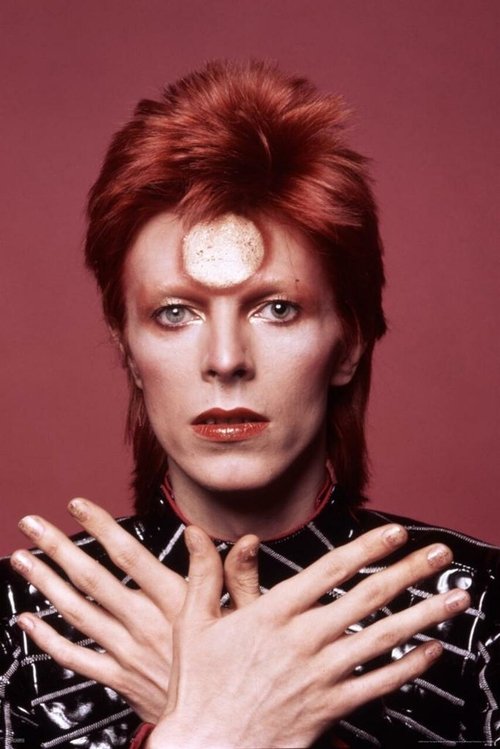
Rough Trade have it in stock…so there is no excuse to avoid an album that celebrates its fiftieth anniverssary in June:

Originally released through RCA Victor on 6th June 1972, 'Ziggy Stardust' was David Bowie's fifth album, co-produced by Bowie and Ken Scott. Incredibly, the album was written whilst Bowie was recording 1971's 'Hunky Dory' album, with recording beginning a couple of months before that album's release. It was recorded at Trident Studios, London between 8th November 1971 and 4th February 1972, with the line up: Mick Ronson (guitar, piano, backing vocals, string arrangements), Trevor Bolder (bass), Mick Woodmansey (drums), Rick Wakeman (keyboards) and backing vocals on 'It Ain't Easy' by Dana Gillespie. as well as performing vocals, Bowie also played acoustic guitar, saxophone and harpsichord on the album and was involved in the arrangements too. The album eventually peaked at number 5 on the UK album chart on 22nd July having entered the chart at number 15 on 1st July.

Key to the album's rise in the UK were the two tv performances of 'Starman' on Granada TV's lift off with Ayshea and nationally on the BBC's Top of the Pops. The album's influence is immeasurable - it converted legions of fans, becoming the zeitgeist and a major influence on the next generation, particular those who were involved in the punk movement - musicians, artists, designers - and the subsequent re-birth of rock and pop.

Famously Bowie killed Ziggy at his peak at London's Hammersmith Odeon, on July 3rd, 1973, though Ziggy Stardust's influence was to redefine popular culture forever: pop music was never the same again”.

I realise that I am a little early marking the fiftieth anniversary of The Rise and Fall of Ziggy Stardust and the Spiders from Mars but, in five weeks or so, there will be so much attention paid to David Bowie’s fifth studio album. This was the start of his golden run. In 1971, he released the phenomenal Hunky Dory. Completely transformed in terms of sound and aesthetic, the follow-up is a very different beast altogether! I am going to finish with a couple of reviews for The Rise and Fall of Ziggy Stardust and the Spiders from Mars. Before that, I wanted to source from a Classic Album Sundays feature, where they discuss the Ziggy origins, in addition to the importance of the 1972 album:

Ziggy Inspirations

Bowie had studied with mime artist/dancer/performance artist Lindsay Kemp and was adept at role-playing. He felt the need to write a theatrical piece and initially aspired to writing a musical. However, he did not feel he had the necessary skills, so instead created a character as the central figure for an album.

Bowie began to develop the persona Ziggy Stardust who was partially based upon the country-western cult figure, The Legendary Stardust Cowboy, an “outsider” musician who was on the same label as Bowie. Another influence was Vince Taylor of whom another rock luminary, Joe Strummer of The Clash, remarked, “Vince Taylor was the beginning of British rock’n’roll. Before him there was nothing.” After massive success the previous decade, by the mid-sixties Taylor was indulging in heavy drug use and subsequently announced he was the new Jesus. Bowie did meet ‘the leper messiah’ in 1966 by which time Taylor was immersed in an alternative reality.

There is one more possible influence on the Ziggy character (and the name may be a hint): Iggy Pop. With his band The Stooges, Iggy’s wild, outrageous and sometimes self-destructive behaviour was as equally powerful as The Stooges’ proto-punk sound. Due to all-round messy conduct, The Stooges were dropped from their label and Bowie brought Iggy to London, helped him get signed to Columbia Records and then he produced the new Stooges record, ‘Raw Power’.

Rock’s  Iconic Alien

‘The Rise and Fall of Ziggy Stardust and The Spiders from Mars’ was released on the 6th of june, 1972 and a month later performed ‘Starman’ dressed as an alien rock star on Top of the Pops, an event that changed many future musicians’ lives. Opinion was divided. The freaks loved him and the traditionalists dared not decipher the alien in their living rooms. But any PR is good PR and this performance helped spur Ziggy to become the most significant mythological rock icon.

As a great vocal dramatist and with his cross dressing and gender bending, Bowie knew how to cull a personality. Around this time he announced he was bisexual while married to his wife Angela and drew a line between himself and the very hetero male rockers of the early seventies. The lines between the real person and his contrived character began to blur. Davy Jones became David Bowie who became Ziggy Stardust, his alter ego. He became obsessed with his creation and started to introduce himself as Ziggy Stardust on tour and in interviews.

Pop as Performance Art

Ziggy Stardust, The Stooges, Lou Reed and Roxy Music’s debut helped signal the end of the sixties and the hippy movement and marked the musical and stylistic transition into glam rock and punk. However, just like ‘Flower Power’, even Ziggy had to come to an end. After the band’s final show of the tour at London’s Hammersmith Odeon on the 3rd of July, 1973, much to the dismay of his audience and his band, Bowie, or Ziggy, announced that it was the last show that they would ever do.

With Ziggy Stardust, David Bowie had succeeded in turning a popular art form, pop music, into high performance art. He lived and breathed the character of his own construction until it nearly consumed him. He had to retire the character and “break up the band” for his own piece of mind and his own sanity. However, did still refused to expose his “real” self to his fans but instead, as a maestro of artifice, created another character, Aladdin Sane, who Bowie described as “Ziggy goes to America”.

Because he related to those on the fringes of society and helped fortify the pop institution of performance art and role-play, Ziggy’s resonance is still felt today throughout music and pop culture. Although Bowie killed off his alien rocker via a rock n’roll suicide, Ziggy Stardust lives in the hearts of society’s outcasts encouraging them to march to the sound of their own drum”.

I am going to finish with two detailed reviews that provide different slants and angles. This is what Rolling Stone had to say when they reviewed The Rise and Fall of Ziggy Stardust and the Spiders from Mars:

Upon the release of David Bowie’s most thematically ambitious, musically coherent album to date, the record in which he unites the major strengths of his previous work and comfortably reconciles himself to some apparently inevitable problems, we should all say a brief prayer that his fortunes are not made to rise and fall with the fate of the “drag-rock” syndrome — that thing that’s manifesting itself in the self-conscious quest for decadence which is all the rage at the moment in trendy Hollywood, in the more contrived area of Alice Cooper’s presentation, and, way down in the pits, in such grotesqueries as Queen, Nick St. Nicholas’ trio of feathered, sequined Barbie dolls. And which is bound to get worse.

For although Lady Stardust himself has probably had more to do with androgony’s current fashionableness in rock than any other individual, he has never made his sexuality anything more than a completely natural and integral part of his public self, refusing to lower it to the level of gimmick but never excluding it from his image and craft. To do either would involve an artistically fatal degree of compromise.

Which is not to say that he hasn’t had a great time with it. Flamboyance and outrageousness are inseparable from that campy image of his, both in the Bacall and Garbo stages and in his new butch, street-crawler appearance that has him looking like something out of the darker pages of City of Night. It’s all tied up with the one aspect of David Bowie that sets him apart from both the exploiters of transvestitism and writer/performers of comparable tallent — his theatricality.

The news here is that he’s managed to get that sensibility down on vinyl, not with an attempt at pseudo-visualism (which, as Mr. Cooper has shown, just doesn’t cut it), but through employment of broadly mannered styles and deliveries, a boggling variety of vocal nuances that provide the program with the necessary depth, a verbal acumen that is now more economic and no longer clouded by storms of psychotic, frenzied music, and, finally, a thorough command of the elements of rock & roll. It emerges as a series of concise vignettes designed strictly for the ear.

Side two is the soul of the album, a kind of psychological equivalent of Lola vs. Powerman that delves deep into a matter close to David’s heart: What’s it all about to be a rock & roll star? It begins with the slow, fluid “Lady Stardust,” a song in which currents of frustration and triumph merge in an overriding desolation. For though “He was alright, the band was altogether” (sic), still “People stared at the makeup on his face/Laughed at his long black hair, his animal grace.” The pervading bittersweet melancholy that wells out of the contradictions and that Bowie beautifully captures with one of the album’s more direct vocals conjures the picture of a painted harlequin under the spot-light of a deserted theater in the darkest hour of the night.

“Star” springs along handsomely as he confidently tells us that “I could make it all worthwhile as a rock & roll star.” Here Bowie outlines the dazzling side of the coin: “So inviting — so enticing to play the part.” His singing is a delight, full of mocking intonations and backed way down in the mix with excessive, marvelously designed “Ooooohh la la la”‘s and such that are both a joy to listen to and part of the parodic undercurrent that runs through the entire album.

“Hang on to Yourself” is both a kind warning and an irresistible erotic rocker (especially the handclapping chorus), and apparently Bowie has decided that since he just can’t avoid cramming too many syllables into his lines, he’ll simply master the rapid-fire, tongue-twisting phrasing that his failing requires. “Ziggy Stardust” has a faint ring of The Man Who Sold the World to it — stately, measured, fuzzily electric. A tale of intragroup jealousies, it features some of Bowie’s more adventuresome imagery, some of which is really the nazz: “So we bitched about his fans and should we crush his sweet hands?”

David Bowie’s supreme moment as a rock & roller is “Suffragette City,” a relentless, spirited Velvet Underground-styled rush of chomping guitars. When that second layer of guitar roars in on the second verse you’re bound to be a goner, and that priceless little break at the end — a sudden cut to silence from a mighty crescendo, Bowie’s voice oozing out as a brittle, charged “Oooohh Wham Bam Thank you Ma’am!” followed hard by two raspy guitar bursts that suck you back into the surging meat of the chorus — will surely make your tum do somersaults. And as for our Star, well, now “There’s only room for one and here she comes, here she comes.”

But the price of playing the part must be paid, and we’re precipitously tumbled into the quietly terrifying despair of “Rock & Roll Suicide.” The broken singer drones: “Time takes a cigarette, puts it in your mouth/Then you pull on your finger, then another finger, then your cigarette.” But there is a way out of the bleakness, and it’s realized with Bowie’s Lennon-like scream: “You’re not alone, gimme your hands/You’re wonderful, gimme your hands.” It rolls on to a tumultuous, impassioned climax, and though the mood isn’t exactly sunny, a desperate, possessed optimism asserts itself as genuine, and a new point from which to climb is firmly established.

Side one is certainly less challenging, but no less enjoyable from a musical standpoint. Bowie’s favorite themes — Mortality (“Five Years,” “Soul Love”), the necessity of reconciling oneself to Pain (those two and “It Ain’t Easy”), the New Order vs. the Old in sci-figarments (“Starman”) — are presented with a consistency, a confidence, and a strength in both style and technique that were never fully realized in the lashing The Man Who Sold the World or the uneven and too often stringy Hunky Dory.

Bowie initiates “Moonage Daydream” on side one with a riveting bellow of “I’m an alligator” that’s delightful in itself but which also has a lot to do with what Rise and Fall … is all about. Because in it there’s the perfect touch of selfmockery, a lusty but forlorn bravado that is the first hint of the central duality and of the rather spine-tingling questions that rise from it: Just how big and tough is your rock & roll star? How much of him is bluff and how much inside is very frightened and helpless? And is this what comes of our happily dubbing someone as “bigger than life”?

David Bowie has pulled off his complex task with consummate style, with some great rock & roll (the Spiders are Mick Ronson on guitar and piano, Mick Woodmansey on drums and Trevor Bolder on bass; they’re good), with all the wit and passion required to give it sufficient dimension and with a deep sense of humanity that regularly emerges from behind the Star facade. The important thing is that despite the formidable nature of the undertaking, he hasn’t sacrificed a bit of entertainment value for the sake of message.

I’d give it at least a 99”.

I shall wrap up with the BBC’s 2002 take on one of the greatest albums of all time. I know that there will be new reviews and features written about The Rise and Fall of Ziggy Stardust and the Spiders from Mars before 6th June:

It sounds like a cliché, but to an entire generation this album has become a yardstick by which to measure all others. Why the hyperbole? Because the strength of Ziggy lies in its completeness. Not a track is out of place, in fact not a NOTE is out of place, and at just over 38 minutes it is (and this has been scientifically proven, boys and girls) the perfect length. Every R&B and Hip Hop artist in the universe take note. So, does it still stand up after 30 years? Is it a major strand in rock's rich tapestry, with its gender bending bravado and melodramatic sweep; or just an ephemeral piece of fluff about a bisexual pop star living through the apocalyptic countdown?

With its so-called classic status written in stone, a perverse logic makes you want to reassess the album in a negative light. It can't be as good as all that can it? But remember, there's a reason why all those bands have dined out on this sonic template (step forward Suede, Supergrass and countless others). Within two short years Bowie had transformed himself from fey folk wannabe into a glam icon, via a brief flirtation with heavy metal. In doing this, lest we forget, he forged the template for the truly modern pop star that has yet to be broken. How this was achieved had a lot to do with two factors.

One was his adoption of three lads from Hull as his backing band, renaming them the Spiders From Mars and thus making the wild Les Paul stylings of guitarist Mick Ronson an essential element of his sound. The second was young David''s choice of producer. Most people associate Tony Visconti (the man who gave Bolan his glam sheen and who had played on and produced the aforementioned metal album The Man Who Sold The World) with this period. It was, in fact, with his previous album Hunky Dory that DB found the perfect studio partner for this phase in his mercurial career. The pairing of Bowie with Ken Scott at Trident studios allowed him to finally nail a simple format of guitar, bass, drums and piano into the place where the New York nihilism of the Velvet Underground met a quintessentially English way with a tune and a vocal. Ziggy represents the peak of their achievement.

Having perfected the format Bowie took his greatest leap forward by taking a cycle of songs and moulding it into a loose story of the nominal Ziggy and his Christ-like rise and fall at the hands of adoring fans. It allowed Bowie to take the central role onstage, hiding behind a mask of glamorous decadence that some would say hes yet to renounce. The songs weren't bad either. The part sci fi, part demi-monde narrative unfolds via the sophisticated use of shifting perspectives, beginning with "Five Years" and its tale of despairing humanity at the brink of destruction. Ziggy is observed through the eyes of one besotted fan who, following the star's death, takes their own life in the thrilling climax of "Rock 'n' Roll Suicide". From piano-led sumptuousness ("Lady Stardust") to plain old dirty riffage ("Suffragette City") Dave was on a creative roll that would catapult him to the heights of success but ultimately lead him to destroy the Frankenstein's monster that had him and his audience confusing fantasy and reality.

So here it is, with the obligatory second disc featuring early versions by fake band Arnold Corns, demos, outtakes that most bands would kill to have as prime material (including "Velvet Goldmine": yes, the film was named after it), b-sides and one of Bowie's greatest singles, "John I'm Only Dancing". It's a worthy treatment of such an aural treasure and one can only hope that generations to come will come to love it as much as their peers. Ultimately, what Ziggy really represents is an artist who was in the right place, with the right people and the right songs at the right time. The future held plenty more surprises; but for millions this will always be the place where the world's most famous Martian truly fell to earth”.

Ahead of its fiftieth anniversary on 6th June, I wanted to spend some time with a landmark David Bowie release. Perhaps his finest album to that point, it remains a work of wonder that, to many, was his absolute best. With so many notable and timeless songs and deep cuts that are just as satisfying and strong, there is no denying the fact that The Rise and Fall of Ziggy Stardust and the Spiders from Mars is a masterpiece. A grand and hugely captivating album, it is going to be one that people look back on decades from now and marvel at. Even though its creator is no longer with us, like all of his music, The Rise and Fall of Ziggy Stardust and the Spiders from Mars will live forever. This stunning album truly is…

A work of art.

FEATURE: Paul McCartney at Eighty: Paul McCartney and Me: The Interviews: Shaun Keaveny

FEATURE:


Paul McCartney at Eighty

 IN THIS PHOTO: Paul McCartney in 1964/PHOTO CREDIT: RA/Lebrecht Music & Arts 

Paul McCartney and Me: The Interviews: Shaun Keaveny

____________

FOLLOWING the interview I published…

with his friend Matt Everitt, I have been hearing from the fantastic Shaun Keaveny about his love of Paul McCartney and what his music means to him. Before coming to his interview, make sure you check out his incredible projects and podcasts. His podcast, The Line-Up, is one that I would thoroughly recommend. Here, guests are invited to choose their fantasy festival line-up. His Community Garden Radio is a radio revolution that you will want to listen to (go and support Shaun on his Patreon page). He also hosts the BBC Radio 4 series, Your Place or Mine. There are some really interesting interviews out there, where Shaun has talked about his new ventures and projects. It is inspiring to read! Check out his interview with the Financial Times, his chat with Steve Chamberlain for The Observer, and his talk with The Times. It has already been a busy and exciting year for Shaun! To distract him and get his mind onto all things Paul McCartney, Shaun reveals when he first heard the music of Paul and The Beatles; what he made of the recent three-part documentary, The Beatles: Get Back, and why he thinks McCartney is so loved and adored after all of these years. It has been great (insert Paul McCartney impression here) learning about Shaun’s love and experiences with the music of…

PHOTO CREDIT: MJ KIM/MPL Communications

A musician without equals.

_____________

Hi Shaun. In the lead-up to Paul McCartney’s eightieth birthday on 18th June, I am interviewing different people about their love of his music and when they first discovered the work of a genius. When did you first discover Paul McCartney’s music? Was it a Beatles, Wings or solo album that lit that fuse?

I’d say I was about 6. Kensington Drive, Leigh. At my grandparents’ house. My best friend was my uncle Martin, who was 2 years older than me (northern families). His older brothers, my uncles, listened to all the good stuff. We got access to the Red and Blue compilations, and it was the cultural water we swam in from there on. The high watermark, that we didn’t realise at the time, would never be surpassed! What an incredible impact those comps had. Totally ubiquitous and essential.

What an incredible gift it must have been for him and Ringo to watch that film”.

Like me, you must have been engrossed by The Beatles: Get Back on Disney+. How did it change your impression of The Beatles at that time, and specifically Paul McCartney’s role and influence on the rest of the band? Did you have any favourite moments from the three-part documentary?

The issue that I have here is time. I could probably give you a 20-page response. I think the man himself said it best. That it wasn’t until he himself watched back the footage that he realised what an erroneous narrative he had bought along with us all. That at this point the band didn’t get on. They hated each other and didn’t speak except through lawyers. What an incredible gift it must have been for him and Ringo to watch that film. And for us.

I’ve said it before but, to me, The Beatles are an extension of my family. Uncles I have not really met. I actually love them. That’s seems silly, but it’s true! As for favourite moments, all the times that John makes Paul piss himself laughing. The time George laughs when John gets the words wrong in Don’t Let Me Down. The bit where John says “It’s like we’re lovers or something” to Paul. Ringo’s total, gnomic, BUDDAH-like calmness and selflessness…I mean...have you got a spare hour??

I also loved the McCartney 3, 2, 1 series he did with Rick Rubin. Did you catch that at all, and did you learn anything from that you didn’t know before about McCartney?

I watched a fair few. It was nice. But poor old Rick is just like me: he’s totally fanboyed; he cannot ask a critical question; he’s just like “Yea, that was so cool too!”. Which is what I’d be like. My main takeaway was that, although Paul is one of the best bass players ever, he can’t play air bass at all well.

If you had to select your favourite Beatles, Wings and McCartney albums (one each), which would they be and why?

I’m going to confess: I’m more Beatles and less solo Macca. Beatles-wise it’s impossible, but I would say Abbey Road. As for Macca, the one with No More Lonely Nights in (1984’s Give My Regards to Broad Street). And Wings: Band on the Run!

There were more problematic legacies I am sure, but it was mostly delivered perfectly from a place of great kindness”.

Maybe an impossible question, but what does Paul McCartney, as a human and songwriting icon, personally mean to you?

He, along with the other Beatles, heralded an unprecedented level of freedom, creativity, self-expression, curiosity…but mostly, love acceptance and inclusivity. These are all hallmarks of what McCartney and The Beatles left behind. There were more problematic legacies I am sure, but it was mostly delivered perfectly from a place of great kindness. I’m seeing it through rosé-tinted spectacles I am sure!

Of course, McCartney’s music will live longer than any of us. It has inspired millions of people around the world. Why do you think he is so enduring and beloved? Is there that single element that sets him aside from everyone else?

Like Mozart or Hendrix or Lennon or Nina Simone or Miles Davis, what sets him or them apart is a quirk of fate and DNA. Pure luck really. A confluence of environmental factors and innate talent that burps out a total fucking genius every so often. Thank God it does, or the world would be so boring.

I think that McCartney is an artist both reverted and underrated. A lot of his albums and songs have been ignored or slated unfairly. Is there a Macca song or album that you would urge people to investigate – one that is perhaps a little less adored?

I look forward to seeing the answers to this and educating myself, as I am guilty as many of undervaluing much of his output. Teach me! I would say something daft like Mull of Kintyre was so ubiquitous and derided, but it’s fucking incredible.

As we know, Paul McCartney will headline Glastonbury on Saturday, 25th June (mere days after his eightieth birthday). What do you think he might play in terms of songs/his set? Do you think he might bring out any special guests?

l saw him in 2004. I can’t remember granular detail FOR SOME REASON. However, I remember it was a bonanza of bangers, and then there were a shit load of fireworks after Live and Let Die…so I would expect more of the same! I would hope there might be a couple of very special guests. And to that point, I should point out Paul, if you’re reading this - which you surely are -, I WILL BE AT GLASTONBURY THIS YEAR, and will happily help you bang out a number or two.

I know you have interviewed McCartney before but, if you had the chance to interview him now and ask him any one question, what would that be?

Have you got any gear?

If you could get a single gift for McCartney for his eightieth birthday, what would you get him?

An hour of total fucking peace with nobody asking him anything or wanting him to do anything!

To end, I will round off the interview with a Macca song. It can be anything he has written or contributed to. Which song should I end with?

Sorry, but it would probably be Here, There and Everywhere.

FEATURE: Paul McCartney at Eighty: Paul McCartney and Me: The Interviews: Matt Everitt

FEATURE:


Paul McCartney at Eighty

IN THIS PHOTO: Paul McCartney in 1964/PHOTO CREDIT: RA/Lebrecht Music & Arts 

Paul McCartney and Me: The Interviews: Matt Everitt


____________

THIS interview is going to take a slightly…

IN THIS PHOTO: Matt Everitt with Paul McCartney/PHOTO CREDIT: Matt Everitt/BBC Radio 6 Music 

different form to previous ones I have conducted. These interviews are part of a run of forty features I am publishing before the genius Paul McCartney turns eighty in June. Most of the interviews I have conducted take the form of email exchange. I send the questions off, then the guest answers and sends them back. The first couple of questions were answered by the brilliant Matt Everitt by email but, awesomely, he recorded the rest of the answers on microphone (in the form of him reading the questions and giving the answers). Take a listen to his fascinating and personal thoughts about the music of Pauli McCartney below - and read his great answers to the first couple of questions soon. I am going to end with a great Paul McCartney solo song (as I ask all guests, at the end of the interview, to select a song McCartney has written or recorded that means a lot to them). I will also come on to highlighting why Matt was perfect to speak with when it comes to Paul McCartney - though, as you will hear, the fact he has interviewed the great man a few times is reason enough! I am very jealous of Matt because, not only has he interviewed the one human I want to speak to more than ever, Kate Bush (in a superb interview from 2016); he has met Paul McCartney and has got to be within inches of one of my music heroes!

Before getting to the interview, I wanted to mention a couple of Matt-related things. As a broadcaster and journalist for BBC Radio 6 Music, check out his New Album Fix series - where he take a deeper look at great albums released that week and gets words from the artists themselves. His The First Time with… series is also a must-listen. I just featured I am the EggPod’s Chris Shaw. He provided a very personal and interesting interview. Matt has appeared on Chris’s podcast a number of times. Most recently, he talked about day 20 of The Beatles: Get Back - where Chris talked to a range of guests and explored each day featured on the recent three-part documentary - and provided his thoughts. Matt also chatted with Chris about Paul McCartney’s latest album, McCartney III, in December 2020. He also talked about The Beatles’ ‘blue album’. His 2019 conversation about The Beatles’ Rubber Soul is also well worth a listen! Before wrapping up, I shall turn to Matt and his really great answers. Read his thoughts about the first two questions…

_______________

Hi Matt. In the lead-up to Paul McCartney’s eightieth birthday on 18th June, I am interviewing different people about their love of his music and when they first discovered the work of a genius. When did you first discover Paul McCartney’s music? Was it a Beatles, Wings or solo album that lit that fuse?

It was hearing Yesterday – as I think I’ve spoken about before. I would’ve been about 4 or 5, round a neighbour’s house and it was on the radio. I was playing hide and seek with their kid and I was crouched behind the sofa, then that song came on and I was almost paralysed with melancholy. Why did she go away? Why wouldn’t she say? For all its familiarity, it can still impact on me that song. That loneliness. I’ve always preferred downbeat music to upbeat songs – maybe that’s where it started?

Like every Beatles fan, you must have been affected by The Beatles: Get Back on Disney+. How did it change your impression of The Beatles at that time, and specifically Paul McCartney’s role and influence on the rest of the band?

Ahhh. I think it reinforced what I knew. He’s a genius. I know Paul Gambaccini a bit – lovely man, amazing music historian, fan and broadcaster – and he’s interviewed all The Beatles face to face. He says, whenever he finished a chat with Paul, he thinks “There goes Mozart”. And I feel the same way. His innate ability to create melody – totally instinctively - is nothing short of genius. I also loved how he and John still looked up to/and at each other for approval when it came to their work and performances. 

__________________

This SoundCloud link (I have also included the audio right at the bottom) sees him take up the remaining questions. Thanks so much to Matt Everitt for giving his time and chatting about Paul McCartney and what his music means to him. In the next interview, I am chatting with Matt’s friend and erstwhile BBC Radio 6 Music colleague, Shaun Keaveny. I would love to watch an interview with Matt and McCartney sat together, similar to the one that he (Macca) did with Idris Elba in December 2020. It would be wonderful bringing the two together for a long-form interview. Listening to and reading Matt’s answers has made me revisit The Beatles: Get Back for a third time (let’s hope there is an extended cut of it soon), and especially Paul’s role and best moments. I shall leave things there. As you heard in the interview, Matt wanted to, at first, end with Maybe I’m Amazed (included on McCartney’s finest eponymous album of 1970), but he plumped for a gorgeous song from a McCartney solo album that turns twenty-five on Thursday (5th May). It is a song that, maybe, McCartney might play during his Glastonbury headline set in June. To hear him play this gem, days after his eightieth birthday, to thousands of fans in Somerset would be…

A memorable and amazing moment!

Ever since I heard my first Irish pipe music it has been under my skin, and every time I hear the pipes, it's like someone tossing a stone in my emotional well, sending ripples down my spine. I've wanted to work with Irish music for years, but my writing has never really given me the opportunity of doing so until now. As soon as the song was written, I felt that a ceilidh band would be perfect for the choruses. The verses are about a lady who's trying to keep her man from accepting what seems to be an illegal job. He is a pilot and has been hired to fly some people into another country. No questions are to be asked, and she gets a bad feeling from the situation. But for him, the challenge is almost more exciting than the job itself, and he wants to fly away. As the fiddles, pipes and whistles start up in the choruses, he is explaining how it will be all right. He'll hide the plane high up in the clouds on a night with no moon, and he'll swoop over the water like a swallow.

Bill Whelan is the keyboard player with Planxty, and ever since Jay played me an album of theirs I have been a fan. I rang Bill and he tuned into the idea of the arrangement straight away. We sent him a cassette, and a few days later he phoned the studio and said, "Would you like to hear the arrangement I've written?"

I said I'd love to, but how?

"Well, Liam is with me now, and we could play it over the phone."

I thought how wonderful he was, and I heard him put down the phone and walk away. The cassette player started up. As the chorus began, so did this beautiful music - through the wonder of telephones it was coming live from Ireland, and it was very moving. We arranged that I would travel to Ireland with Jay and the multi-track tape, and that we would record in Windmill Lane Studios, Dublin. As the choruses began to grow, the evening drew on and the glasses of Guiness, slowly dropping in level, became like sand glasses to tell the passing of time. We missed our plane and worked through the night. By eight o'clock the next morning we were driving to the airport to return to London. I had a very precious tape tucked under my arm, and just as we were stepping onto the plane, I looked up into the sky and there were three swallows diving and chasing the flies. (Kate Bush Club newsletter, October 1982)”.

IN THIS PHOTO: Kate Bush in 1982

Some songs on The Dreaming have few lyrics and it is more to do with sound or repetition. Others are wordier and have quite a lot of different thoughts. Night of the Swallow falls in the latter camp. It is a track that you immerse yourself in and follow along. If proof were needed that Kate Bush is one of the greatest storytellers and most original lyricists of her age, then Night of the Swallow provides proof: “It's funny how, even now/You're miles away/I won't let you do it/I won't let you do it/I won't let you go through with it/"Meet them over at Dover/I'll just pilot the motor/Take them over the water/"With a hired plane/And no names mentioned/Tonight's the night of the flight/Before you know/I'll be over the water/Like a swallow/There's no risk/I'll whisk them up in no moonlight/And though pigs can fly/They'll never find us/Posing as the night/And I'm home before the morning”. I do wonder how Bush writes songs like this. Whether she writes a song like a poem and puts the music over the top, or whether she has a composition and melody in mind and the words go on top. Such a fantastical and detailed set of lyrics, Night of the Swallow is definitely one of the most interesting song from The Dreaming. There is another passage that really caught my eye: “With a hired plane/And no names mentioned/Tonight's the night of the flight/Before you know/I'll be over the water/Like a swallow/There's no risk/I'll whisk them up in no moonlight/And though pigs can fly/They'll never find us/Posing as the night/And I'm home before the morning”. One big reason for spotlighting the ten tracks on The Dreaming is that they are all different and incredibly strong. Maybe not the most radio-play-accessible of Bush’s albums, there is so much diversity and brilliance through the 1982 album. The fabulous Night of the Swallow is a Kate Bush gem that I…

NEVER tire of.

FEATURE: Groovelines: Lisa Loeb & Nine Stories - Stay (I Missed You)

FEATURE:


Groovelines

Lisa Loeb & Nine Stories - Stay (I Missed You)

__________

ONE of the defining songs…

of the 1990s, everyone can recognise Lisa Loeb & Nine Stories’ Stay (I Missed You). Released in May 1994 as the lead single from the original movie soundtrack, Reality Bites (1994), it was written and composed by Loeb. Originally, Stay (I Missed You) was originally conceived in 1990, though Loeb deciding to use the song herself. It is said that Loeb's neighbour and friend, actor Ethan Hawke, heard the song and passed it to Ben Stiller for use in the film he was directing, Reality Bites. The song plays over the film's closing credits. It is a marvellous song that has one of the best choruses of any written I think. I am going to end with critical reaction to Stay (I Missed You). In one of the best years for music (1994), Lisa Loeb & Nine Stories’ classic stands out as one of the greatest of that year. It went to number-one on the Billboard Hot 100 chart. One of the great things is that she was the first artist to top the U.S. chart before being signed to any record label. That happens today, but it was extremely rare in the 1990s. Stereogum run a feature where they examine number one songs and give the background and their opinions on them. They covered Stay (I Missed You) in March. I have chosen a few sections from the extensive feature (American Songwriter have also written wonderfully about the song):

Lisa Loeb started to write “Stay (I Missed You)” when she was still at Berklee. She’d just gotten into a bad fight with her producer and long-term boyfriend Juan Patiño. As she continued to work on the song, Loeb learned that Daryl Hall, a guy who’s been in this column a bunch of times, was looking for songs for a solo project. Loeb usually wrote strummy, folky songs, but she tried to tailor “Stay (I Missed You)” to Hall’s sensibilities. Years later, Loeb told Genius, “I was trying to come up with something that was a little bit R&B, but good for [Hall’s] voice. So I came up with that guitar… It’s not a riff. It was just chord changes, and it felt kind of R&B groovy-ish, for me, at the time.” Loeb never got the chance to play “Stay (I Missed You)” for Daryl Hall. (Loeb met Hall after “Stay” has already been a hit, and she got to tell him that she wrote it for him. He never had any idea.)

Lisa Loeb kept “Stay” for herself, and she noticed that people liked it when she played the song at her own shows. When she was living in New York, Loeb was friendly with Ethan Hawke, the young movie star who’d broken out in 1989’s Dead Poets Society. Loeb and Hawke had mutual friends, and they lived across the street from each other in Manhattan. Hawke’s character in Reality Bites has a go-nowhere band called Hey, That’s My Bike, and the script called for him to sing a song called “I’m Nuthin’.” Hawke asked Loeb to write “I’m Nuthin’,” and she did, but her version didn’t make it into Reality Bites. Instead, David Baerwald, formerly half of the duo David & David, wrote the “I’m Nuthin'” that Hawke sang in the movie. (David & David’s only charting single, 1986’s “Welcome To The Boomtown,” peaked at #37.)

But Ethan Hawke still wanted Lisa Loeb to be a part of Reality Bites. A few days after Loeb’s “I’m Nuthin'” got rejected, Hawke went to see Loeb play live, and he liked “Stay (I Missed You).” Hawke sent a cassette copy of the song to Ben Stiller and to music supervisor Karyn Rachtman, and they liked it enough to make it the film’s end-credits song.

Originally, the song was just called “Stay,” but the soundtrack people changed the title. In Fred Bronson’s Billboard Book Of Number 1 Hits, Loeb addresses the issue of awkward song-title parentheses head-on: “We decided to add ‘I Missed You’ as a parenthetical, which I vowed I would never do because I always see the parentheticals in the Beatles’ songbooks and I never understand how they picked that parenthetical as a parenthetical.” Shout out to dorked-out English majors making #1 hit songs. It doesn’t happen often, but today, we are represented.

The Reality Bites soundtrack is mostly a nice little collection of ’80s pop nuggets and mid-’90s alt-rock jams. When the soundtrack came out, RCA didn’t pick any particular single to push; they just sent the whole thing to radio stations. A few of the songs ended up getting some traction, though it varied from station to station. Ben Stiller himself directed the video for the Juliana Hatfield Three’s “Spin The Bottle,” which became a minor alt-rock radio hit.

Reality Bites also gave nice little bumps to the Knack’s “My Sharona” and Squeeze’s “Tempted.” Unfortunately, it also made a hit out of Big Mountain’s shitty reggae-pop cover of Peter Frampton’s “Baby, I Love Your Way.” (The Big Mountain cover peaked at #6. It’s a 3.) But “Stay (I Missed You)” became the song from Reality Bites. The video had a lot to do with that.

Ethan Hawke, who’d only ever directed a short called Straight To One, helmed the “Stay (I Miss You)” video himself. The cat in the video is Hawke’s cat, though the empty apartment is not Hawke’s empty apartment. The whole thing is one extended camera shot, with Lisa Loeb running through the apartment and singing directly to the camera. The idea was that the clip would re-create the argument from the song, putting you, the viewer, in the shoes of the boyfriend. That’s not really what happened, though. Loeb never seems angry in the “Stay” video. Instead, she comes off dewy and romantic. She’s also super fucking hot, and she’s a kind of super fucking hot that was pretty rare in the circa-’94 pop-culture mainstream. A whole lot of people bought cat’s-eye glasses after the “Stay” video came out, and Loeb eventually started her own line of spectacles. The light in the video is a kind of light that only exists in the films of the mid-’90s. That video a beautiful piece of work, and it stood out boldly on MTV and VH1.

The song itself stood out, too. Lyrically, “Stay” is a little bit scattered, which makes sense; most couples’ arguments are scattered. It’s not clear whether Loeb’s narrator is about to break up with this guy. (Loeb and Juan Patiño did stay together for a while. Patiño produced “Stay” and a bunch of Loeb’s later records.) The issue seems to be these two people’s respective images of each other not lining up. He says she only hears what she wants to. She doesn’t listen hard, and she doesn’t pay attention to the distance that he’s running or to anyone, anywhere. She thinks that she’s throwing, but she’s thrown. He says that she’s naïve, but she thought that she was strong. They can’t make sense of the dissonance”.

A lot of songs from the 1990s have not aged well and have lost their spark. Brilliantly written by Loeb and with excellent production from Juan Patiño, Stay (I Missed You) is a timeless classic that will live for decades. Wikipedia collated reaction and critical reception to a beautiful song:

"Stay (I Missed You)" was well received by music critics. Larry Flick of Billboard wrote: "Harmonic rock ballad from New York-based upstarts perfectly balances on the fine line between modern rock, AC, and top 40 pop sensibilities. With a vulnerable, determined delivery, Loeb's vocals recall the sweetness of the Sundays' Harriet Wheeler and the brashness of Edie Brickell." In the UK, Alan Jones from Music Week stated that "its pleasing amalgam of semi-acoustic stumming and sublime vocals is attractive enough to do rather well." Mark Surtherland in Smash Hits predicted UK chart success akin to that on the US charts, calling it "a rather touching acoustic ballad thingy in its own right. Just right for when you're feeling a bit angstful, and could be just as big here. In his retrospective review of the album Tails, Stephen Thomas Erlewine from AllMusic said: "Tails delivers on the promise of 'Stay'. While the basic folk-rock elements of the song are present, much of the material on the record doesn't sound like her breakthrough hit; there are some distorted guitars here and there, and she even rocks out a little bit. Nothing on Tails is as good as 'Stay'." In 2005, Erlewine wrote of the song in a review of The Very Best of Lisa Loeb. He said "'Stay (I Missed You)' took her from obscurity to minor celebrity when it was included on the soundtrack of Reality Bites [...] While Loeb never strayed very far from the sweet, gentle template she laid down with 'Stay (I Missed You),' she always was friendly, melodic, and rather ingratiating."

Almost twenty years after the release of Reality Bites, Jim Beviglia from American Songwriter wrote: "What [Reality Bites] did yield was a song that not only succinctly summed up that era but also managed to transcend it [...] Lisa Loeb's 'Stay (I Missed You)' is not just the relic of a specific era. It still resonates with anyone who ever loved someone not mature enough to properly reciprocate.” Rhik Samadder from The Guardian centered the song in an "Old Music" article, praising the song saying: "Listening to the song now is like looking into a crystal ball backwards, seeing myself looking into it forwards. For that convoluted and dubious reason, whenever I hear Stay, I always turn the radio up".

I love the story behind Stay (I Missed You) and how a film helped bring it to the fore and make Lisa Loeb a big name. The song did appear on her 1995 albums, Tails. Whilst not one of her best albums, she has gone on to release some magnificent albums. 2020’s A Simple Trick to Happiness is one of her most personal and best. I wonder whether she has an opinion on her best-known song. It is played heavily today and has this simplicity and charm that means it will continue to resonate and influence musicians for years to come. It is one of my favourite songs from the 1990s, and it is one I play to this day. It is a simply brilliant track from…

A magnificent songwriter.

FEATURE: Revisiting… Maggie Rogers - Heard It in a Past Life

FEATURE:


Revisiting…

Maggie Rogers - Heard It in a Past Life

__________

AS she has a new album, Surrender

coming out on 29th July, I thought I would include Maggie Rogers’ excellent debut, Heard It in a Past Life, in this Revisiting… I have been a fan of the Maryland-born artist for a long time now. Her debut came out in 2019. With the first single from the album, Alaska, released in 2016, there was this build-up to the album. Although it is not unusual for artists to leave a gap between the first single and the album release, there was a lot of anticipation and excitement when Heard It in a Past Life arrived at the start of 2019. I think it is an album that should be played and shared more on the radio. One that was a remarkable debut, but also quite underrated at the same time. I am going to come to a couple of positive reviews for it in a minute. Prior to that, there were some great interviews with Rogers from 2019. She spoke with DIY and discussed how she has transcended the popularity of Alaska and released an album that is astonishing:  

Heard It In A Past Life’ is an album that charts Maggie’s “overwhelming” range of emotions since her 2016 breakthrough when, then a student at New York University, she played her song ‘Alaska’ for a visibly moved Pharrell Williams during a class group discussion. The video went viral and, with it, transported Maggie from recent graduate to upcoming pop sensation in a matter of months. A packed touring schedule followed, quickly followed by an EP, 2017’s ‘Now That The Light Is Fading’, and a career in music that she wasn’t always completely sure was for her.

“I had to learn how to do press and how to talk to reporters and have my photo taken and how to be on the road, but I feel like it’s anyone in a new job, there’s a lot to learn really quickly… I mean that’s the craziest thing, you’re absolutely fucking exhausted,” she admits. “It’s not a natural thing to move every day. That’s why it was so traumatising. I was really tired and there were a lot of people, I dunno, waiting for me to say some dumb shit about Pharrell. I don’t know, you’re going to use that as a quote…” She pauses. “Touring is really tiring. Some people love it, some people don’t. I’m still figuring it out.”

Millions may have watched the video of a then 22-year-old Maggie and the superproducer, but with ‘Heard It In A Past Life’ she’s keen to make her name on her own terms. Possessing an uncompromising direction of creative vision, she names time constraints as the most difficult part of making the album, being under more pressure than ever before to deliver. Her label, she explains, “very much wanted me to have a radio hit or me to go in and write with all these top [producers]. They saw my potential to be a pop star, sort of wanted to pressure me into that and it’s not who I am. I feel proud of the work that I’ve done and I also feel really proud of the lack of compromise that exists on the record.”

She may possess a huge sense of pride in her music now, but Maggie’s future as a performer and producer hasn’t always been a given. She arrived at music via a detour in journalism, interning at Elle and Spin and working as an assistant editor on Lizzy Goodman’s book Meet Me In The Bathroom, a 2001-2011 oral history of rock ‘n’ roll in New York. “I’ve done a fair amount of these!” she says, referring to our interview. “From your side and from mine. It’s interesting, I went through this really long period of writer’s block and I sort of realised that instead of telling my story I could just tell other people’s and that was interesting enough for me for a little while, but I never felt completely fulfilled by it or like there’s a story that I have to tell. And the work I make in music, it’s for me.”

PHOTO CREDIT: Jenn Five 

This awareness of both sides shows - both in the way she pushes for more specificity in the questions she’s asked and seems sensitive to how her words will be portrayed. She’d rather not talk about how she sees her music career expanding over the next few years (“I mean I could bullshit my way through that answer but I think I’d rather not. Leave the future to unfold for itself…”) and, despite having worked with huge pop producers Greg Kurstin, Rostam and Ricky Reid on the album, she’s reluctant to talk about it as a pop record, explaining “I inevitably just believe genre exists to sell music, not to make music…”

She is, however, often refreshingly open about her own struggles, both personally and as a performer. On the day of our interview, it’s not long after her set at last summer’s Reading Festival, where someone accidentally unplugged some of her and her band’s gear, meaning they arrived on stage late and had to cut their set to just a handful of songs. “It’s kind of just how it goes. It’s not worth panicking cause then you can’t really think about it clearly,” she shrugs. “I feel like the only thing to do is be like ‘OK, what’s within my control, and what’s not within my control’.” Not only that, but being scheduled to play at the same time as Post Malone on the main stage meant the crowd was sparser than expected. “[It] was a bummer… If I wanted to make music I thought people were going to like, I would be Cardi B and I’m clearly not. I think she’s so authentic to her, but you know there’s a reason people went to Post Malone’s set and not to mine and that’s ok.”

It’s been a strange few years for Maggie and ‘Heard It In A Past Life’ catalogues that. On it, there’s ecstatic highs but also the sense of fear and isolation that comes with being given an incredible opportunity and finding out it doesn’t necessarily mean everything in your life just falls into place.

“I made the EP so I could try out making pop or making dance music and then actually sort of ended up missing some more human elements,” she says. “So the record is about this crazy time in my life where everything changed and I fell in love and fell out of love and fell in and out of love with music too. I mean, there was a time when I didn’t know if I was really going to do this.

“But I think the record is about me really powerfully and poignantly choosing this and deciding that this is what I love and this is what I wanna do,” she adds, “instead of having the internet really beautifully choose for me”.

I am going to wrap up with a couple of positive critical reviews. Heard It in a Past Life, I suspect, will be a very different album compared to Rogers’ Surrender. A lot has changed in her career and music since 2019. I am really looking forward to what she releases. AllMusic had this to say when they listened to Heard It in a Past Life:

After she released the Now That the Light Is Fading EP, Maggie Rogers issued a string of singles that hinted she was moving in a poppier direction. However, her debut album Heard It in a Past Life offers a more complete picture of her music that gives equal time to her electronic leanings as well as her folky roots, both of which she combined brilliantly on her breakthrough single "Alaska." That song also appears here, and its effortless blend of styles and Rogers' guileless singing still sparkles. On the rest of Heard It in a Past Life, she finds different ways to forge her own bright, assured version of pop. Working with Rostam and Greg Kurstin among other producers, Rogers fills the album with clever production twists and heartfelt performances. At times, her skill at transforming big emotions into hook-laden songs calls to mind frequent Kurstin collaborator Sia, particularly on "Give a Little"'s call for unity (Rogers was inspired to write the song after a nationwide school walkout in protest of American gun violence) and "Overnight," where she ponders over how her relationships could change in the wake of her viral success. Even if nothing else here sounds quite like "Alaska," Heard It in a Past Life's best songs have as much confidence and originality as the track that introduced her. The album's second half allows Rogers more range, spanning the sensual sway of "Say It" and "On + Off" (another standout that also appeared on Now That the Light Is Fading) as well as the empowering ballads "Light On" and "Fallingwater," an impressionistic collaboration with Rostam that flows and swells like its namesake. While it sometimes feels like Rogers could be even bolder than she is on Heard It in a Past Life, it's a strong debut that shows how well she's growing into her fame as well as all the dimensions of her music”.

To end, I wanted to bring in the review from CLASH. They highlight how there could be cynicism around an artist who went big quite quick. As it is, she is a genuine and incredibly talented artist making music in her own way; her own sound is very much to the fore:

In a world in which cynicism appears to be everyone’s default setting, it would be easy to write off Maggie Rogers as an industry plant - an artist who seemingly came from nothing, went viral, landed a record contract and the rest is history.

It’s a story we’ve seen countless times before and an argument, used by many, to delegitimise the work of the individual for whom this criticism is often unfounded. However, as is proven on Rogers’ debut release she is, and always has been, more than just the doe-eyed girl that flawed Pharrell Williams in a viral video a few years ago.

The pop sensibilities of the of the now 24-year-old Rogers are so broadly distributed throughout her first full-length LP that the truth is now incontrovertible. Maggie Rogers is in it for the long hall. We first heard evidence of her wizardry in the form of her 2017 EP 'Now That The Light Is Fading', featuring some of Rogers’ best work such as 'On + Off', 'Alaska' and 'Dog Years'.

In the 18 or so months since, she has cultivated a small but indiscreet following, with many comparing her to Florence Welch, Lana Del Rey or early years Laura Marling. Whilst it’s easy to see where these comparisons come from, they don’t really do any of the parties involved justice.

Sure, they all fit under the umbrella of “pretty girls singing folksy tunes” but as any fan of any of those four artists will tell you, there is evidently more to them than that. Rogers proves this throughout 'Heard It In A Past Life', most notably on the runaway stand out track 'Light On' where infectious energy and choppy beats are enough to bob Rogers’ characteristically peppy vocals over some of the prettiest melody you are likely to hear this year.

Other notable cuts include 'Overnight' and 'Retrograde', the latter of which I was praying was a James Blake cover but is, in fact just another of Rogers’ would-be classics. Increasing in familiarity and its endearing nature upon repeated listening, Rogers has released a fantastically spritely and fluid debut album, one that shows off her various talents without doing any of them a disservice.

It sticks in the mind for a good while after and just keeps bringing you back in with fantastic production, brilliant pop songwriting and a central personality as easy to like and support as any on the current music scene.

8/10”.

If you have not heard Maggie Rogers or Heard It in a Past Life, then go and check it out. Building from a stunning debut, Rogers is an artist who should be on everyone’s radars. Heard It in a Past Life is a remarkable debut that I have been listening to since 2019. That is why I wanted to spotlight it here. Go and spend some time with a wonderful album from the…

UNIQUE and amazing Maggie Rogers.

FEATURE: Reel-to-Real: Damian Kulash and Trish Sie: OK Go – Here It Goes Again (2006)

FEATURE:


Reel-to-Real

Damian Kulash and Trish Sie: OK Go – Here It Goes Again (2006)

__________

REGARDED by some

to be one of the best videos ever, I have a very soft spot for OK Go’s Here It Goes Again. The song is wonderful, though it pales in comparison to the video. The one-take video is amazing to see! I have a fondness for one-take videos, as they take so much patience and concentration. Literally, if something is messed up a few seconds before the end, then they have to start again! I kicked off this feature with Michel Gondry’s one-take video for Lucas with the Lid Off (1994). I will return to the French master soon enough. Now, I want to take a closer look at the 2006 video for the fifth single of the band’s second studio album, Oh No (2005). OK Go were formed in Los Angeles, California. The band is composed of Damian Kulash (lead vocals, guitar), Tim Nordwind (bass guitar and vocals), Dan Konopka (drums and percussion), and Andy Ross (guitar, keyboards and vocals), who joined them in 2005. Before getting to a couple of articles about one of the all-time great videos, Wikipedia provide some background to the stunning Here It Goes Again clip:

The music video of the song is an elaborate performance of the band dancing on eight treadmills, arranged in two rows of four and in alternating opposite directions, in a single continuous take. Choreographed and co-directed by the band and lead singer Damian Kulash's sister Trish Sie, it took a total of seventeen attempts to complete the video.[12] As in the band's video for "A Million Ways", Tim Nordwind lip-syncs the lead vocals instead of Damian Kulash, following the format from the dance choreographed for the song "C-C-C-Cinnamon Lips", which Tim sings. The video debuted on YouTube on July 31, 2006, and has been viewed over 53 million times. It premiered on VH1's Top 20 Countdown that same day. OK Go performed the dance routine live at the 2006 MTV Video Music Awards.

The music video won the 2007 Grammy Award for Best Short Form Music Video and the 2006 YouTube awards for Most Creative Video.

In "The Must List" on the August 18, 2006, issue of Entertainment Weekly, the video was ranked number nine: "The votes have been tallied, and this year's award for Best Use of Treadmills in an Alt-Pop Music Video goes to... http://okgo.net/news.aspx". In July 2011, the music video was named one of "The 30 All-TIME Best Music Videos" by Time Magazine”.

I can understand why artists tend not to do one-take videos. They can prove time-consuming and expensive. They take a lot of rehearsal and, in some cases, people cheat and use invisible cuts and editing to masquerade as a pure one-take. I can only imagine how tiring it got for OK Go to execute and perfect the video on treadmills! Directed by Trish Sie and band member Damian Kulash, it is amazing how it all choregraphs and flows seemingly seamlessly! Consequence looked at the video in 2016 and paid tribute to its innovation ten years after its release:

We were like, ‘Look, if we can do that by accident, then we should do it on purpose,’” Kulash says. “So I called my sister, and we tried to think up a new, more ridiculous dance. That’s when we came up with the treadmill idea.”

The plan was surprisingly sparse. They just figured they’d get eight treadmills in a room and then figure it out. As history has proven, it worked. They stowed themselves away in Sie’s Florida home for 10 days. They didn’t tell their label or their manager what they were doing for fear they’d shut it down, meaning they recorded the whole thing without a budget.

“I remember when we put up the tarp behind us, we were like, ‘It’s okay that it looks shitty. We don’t want anyone to mistake this for a real, high-budget music video,” Kulash says. Still, the band sat on the video for almost nine months with worries that it’d be too similar to the “A Million Ways” video. It eventually dropped when the band was playing a festival in Russia. Without their knowing, the label posted the video to StupidVideos.com, with the band’s guitar tech breaking the news to them.

IN THIS PHOTO: Trish Sie 

“We were like, ‘Really?! What the fuck!’” Kulash recalls.

They decided to just go with it and asked the label to take it down and repost it to a new, up-and-coming site called YouTube. They’d anticipated getting the same 300,000 views they’d gotten on iFilm, maybe in a shorter time frame. Instead, it hit 900,000 views within a day.

“We honestly thought there was a decimal place wrong,” Kulash says. “It was like, holy shit. Obviously it blew up, and it was a big deal, and all of the sudden our label remembered our name and turned on the promotion machine and all that.”

The video would go on to become a pop culture phenomenon. They’d perform the treadmill dance on the MTV Video Music Awards and won a Grammy the next year for Best Short Form Music Video. It wasn’t the last the world would see of OK Go and certainly not the last video they’d make that would capture the imagination of the internet. They’d create an intricate Rube Goldberg Machine for their song “This Too Shall Pass”, choreograph a video with dogs and buckets for “White Knuckles”, and perform a routine on motorized unicycles for “I Won’t Let You Down”. The video for “Needing/Getting” required the band to personally tune 57 pianos, each string to the same single note, in a warehouse for three days.

“It’s like a runaway train, these videos,” Kulash says. “Most bands spend maybe two days on a video. It’s been a long time since we’ve only spent two months on one”.

There is another piece that is worth bringing in to highlight the genius – and genius direction – of OK Go’s video for Here It Goes Again. Stack listed some facts (perhaps unknown to many) about the vide. I have chosen a few:

That’s correct, chums: it’s been 15 years since LA-via-Chicago four-piece OK Go released the video that injected them right into the cockles of pop culture’s heart: Here It Goes Again.

Since then, the group have become renown for their nutty clips; they’ve defied gravity, activated an elaborate Rube Goldberg machine, stretched four chaotic seconds into four beautiful minutes, and more. But right now, we’re taking it back to the low-budget beginnings, with five things you may not know about the superb clip for 2006 hit Here It Goes Again.

The dancing started as a live thing

In their early days when performing live around Chicago, OK Go would often spend their encores doing little choreographed dance routines instead of actually, y’know, playing songs. “We wanted something… so ridiculous that people couldn’t forget that they had seen it,” frontman Damian Kulash told NPR in 2005. “My sister is the person who is so ridiculous that no one can forget that they’ve seen her, so we thought we’d call her in and see what she could do.”

There was another viral one-shot video before this one

Call in his sis Damian did, and Trish Sie – who herself is a professional choreographer and former championship ballroom dancer – was instantly into it. “Everybody on the planet likes to watch men dance, especially men who don’t dance for a living,” she’s said. “There’s just something kinda wrong about it. People love that.” In 2005 Trish filmed the boys practising in Kulash’s backyard, so they could watch the video back and see their own progress. The group uploaded the delightfully dorky footage to YouTube as the clip for their song A Million Ways, and rabid public interest did the rest.

The choreography was created espesh for these treadmills

The treadmills in the clip are are Vision Fitness T9600 and T9700 models, which Trish rented and set up in her spare room. She then choreographed the dance specifically for these models. “They have the circular arms which are perfect for jumping on and off, we can slide through them easily… now,” Kulash has said.

Of 21 attempts, they got through it perfectly three times

Eight treadmills, arranged in two rows of four, and going in alternating-opposite directions. Someone’s going to be mucking something up at some point, right? And yet the band managed to get it spot-on three whole times. Bravo!”.

I shall leave it there. OK Go and have done a few ambitious and brilliant videos, but none quite as memorable and unmatched as Here It Goes Again! I really love the video and, if you are looking to do something different and eye-catching, why not do a one-take/shot?! Maybe it does take more time and luck, but it is rewarding looking back at a single shot, knowing there have not been so many cuts, camera angles and post-production editing. With full commitment from OK Go and superb direction from Damian Kulash and Trish Sie, this 2006 diamond is…

A video masterpiece.

FEATURE: Army of Me: The Captivating Power, Innovation and Legacy of Björk

FEATURE:


Army of Me

 IN THIS PHOTO: Björk with Beck in 1998

The Captivating Power, Innovation and Legacy of Björk

__________

I was watching…

IN THIS PHOTO: Björk in 2015/PHOTO CREDIT: Alasdair McLellan for The Gentlewoman

an episode of Top of the Pops where they were playing the biggest hits of 1995. Among them was Björk performing It’s Oh So Quiet. It got me thinking about her as an artist, and the fact that there is nobody like her. I cannot do full justice in terms of an album-by-album guide or anything deeper. I will end with a playlist containing some of her best songs. I was compelled to write, as she is someone who continues to amaze me. There is rumour that a tenth studio album is due. There are few artists as consistent as her. All of her nine studio albums are exceptional and different. I still hold a very soft spot for her 1993 introduction, Debut. Of course, prior to her solo career, she was the lead of The Sugarcubes. Displaying her extraordinary vocals, it was clear that she was going to go solo. Her debut album is thirty next year. I think there should be some sort of celebration, such as boxsets of her albums or reissues with demos. Despite her being such a singular artist, there has not been much in the way of covers albums. There are so many other artists that are clearly inspired by Björk. It would be great to see one of those come to light. I also think that Björk would be brilliant collaborating with others. Maybe Björk herself tackling other people’s songs. Such is the range of her voice, she can express so many emotions and reinvent any song. As a live performer, she is so compelling and has this rare power and gravity!

I first heard the music of Björk in the 1990s. It might not have been as early as her debut album; maybe 1995’s Post was when I came in. I had not experienced another artist like her until that point! It was not just the fact that this Icelandic singer was performing with a distinct accent. A lot of other artists in the 1990s were putting on an American accent. The way she pronounced words and elongated certain words definitely came across as unusual. I don’t think there were many European artists making it to the mainstream like Björk did in the 1990s. I was compelled to follow her music. It was the videos and interviews that also stood out. Looking and projecting herself like nobody in the industry, you got the sense she was not vying for fame or being a Pop star. Instead, Björk was about artistic vision and individuality. Such a remarkably creative and versatile artist, 2017’s Utopia shows that she is still as remarkable and unique as she has always been. Although the Icelandic legend is beyond comparison and has his own voice, I feel her influence is wide. Modern Pop would not be the same without her. There are some albums that have clearly been impacted and shaped by Björk. I will wrap up with this article that states that, although Björk’s music is perhaps less accessible to all ears and it might take some time to  resonate with everyone, her appeal and legacy is wide and spans multiple genres:

Björk's music, while perhaps less immediately accessible to the general public, is vastly influential to the entire sphere of Western popular music. Since her debut solo album, Debut (1993), she continues to innovate and evolve her sound, altering the course of pop music with every release. It's difficult, then, to describe her legacy in concrete terms. Still an active artist, her legacy continues to evolve as she continues to create. Björk has inspired multiple generations of artists—and has been inspired by those artists in return. It's hard to imagine where we'd be without her.

Björk's most influential body of work thus far is indubitably her third studio album, Homogenic. Released in 1997, this album marked a sharp left turn for her sound and career. Her first two albums, Debut and Post, were created with a broad sonic palate, drawing from a wide variety of influences. They utilized an immense range of genres: the industrial rock–inspired "Army of Me" and the bubblegum pop of "Hyperballad" hardly feel like they belong to the same artist, much less the same album.

Homogenic, on the other hand, feels like "one flavor." It's a frigid, cold album, with a soundscape meant to evoke images of Björk's home, Iceland. Electronic drum programming propels the majority of it, especially evident on cuts like the hard–hitting "Pluto" and album opener "Hunter." At the same time, string arrangements—both synth and acoustic—provide an icy melodic backbone. One endlessly fascinating characteristic of Björk's work is her ability to create grand, gorgeous hooks within unfamiliar and experimental environments. This skill shines through again and again throughout Homogenic. "Jóga," for example, is set against bizarre, inaccessible drum patterns, but opens up completely in the chorus with a haunting melody and brilliant string countermelody.

Homogenic's influence doesn't necessarily lie in its technical innovations to electronica. In 1996, the year before Homogenic was released, English artist Aphex Twin produced the wildly innovative Richard D. James Album. "4," the opening track from the album, could slot easily into Homogenic. Synth strings provide the melody, with an electronic breakbeat propelling the song forward. It's impossible to imagine Homogenic without Aphex Twin, just as it's impossible to imagine pop music without Björk.

Her pivot from the genre–fluid influences behind Debut and Post to the singular, entirely electronic sounds of Homogenic provided the blueprint for numerous artists to undergo similarly comprehensive transformations. Thom Yorke, Radiohead's frontman, has pointed to Homogenic's "Unravel" as his favorite song of all time. It's no coincidence, then, that Radiohead made the famously controversial move from the alt–rock sound of OK Computer to the highly experimental electronica of Kid A. In a 2001 interview, Radiohead's Ed O'Brien stated, "I think we've all been envious about the way Björk has been able to reinvent music."

Without Björk, Radiohead's pivot probably would not have happened in the same capacity, and Kid A, one of the greatest albums of all time, would not exist. Kanye West, too, made an eerily similar transition when he released 808s & Heartbreak (2008). Had Radiohead and Björk never laid the groundwork for this turn nearly a decade before, Kanye may not have had the ability to do so.

Beyond Homogenic, Björk's music still innovates and inspires. Vespertine (2001) was one of the first albums created with the intent to be consumed from the Internet. Her extensive use of "microbeats" aimed to minimize any compression that would occur when downloading the album through services like Napster. Biophilia (2011) was released alongside an app meant to enhance the listening experience and meld visual, technological, and auditory arts into one cohesive package. Vulnicura (2015) and Utopia (2017) were the result of an extensive collaboration with visionary electronic artist Arca, who was the one of the main creative forces behind Kanye West's Yeezus, FKA Twigs' EP2 and LP1, and Kelela's Take Me Apart.

Without Björk, pop music—especially electronica—would not exist in its current capacity. From her ability to constantly and often radically change her sound and appearance, her phenomenal production work, and her lengthy list of collaborators and those influenced by her music, Björk has proven time and time again, over nearly three decades, that she is an unstoppable force of pure, unbridled creativity”.

An artist that amazes and stuns me more than most, I think we will see new music from Björk this year. She is one of the most remarkable and important artists the world will ever see. Go and explore all of her albums and videos – as I only could include a small portion here. The mighty and jaw-dropping Björk is…

AN icon and titanic talent.

FEATURE: Inside Kate Bush’s The Dreaming at Forty: Track Six: The Dreaming

FEATURE:


Inside Kate Bush’s The Dreaming at Forty

Track Six: The Dreaming

__________

OVER the halfway point…

 PHOTO CREDIT: Guido Harari

through a run of features that looks inside each of the ten tracks on Kate Bush’s The Dreaming, I have reached the title track. Her incredible fourth studio album is forty in September, so I wanted to spend some time beforehand looking at an album that, although loved, is still underrated. The Dreaming is a track from the album that I have written about before. It was the second single from the album, arriving thirteen months after Sat in Your Lap. Like quite a few tracks on The Dreaming, the title cut is underappreciated and definitely worthy of more love. Before getting to archived interviews where Bush talked about the inspiration behind the song, this Wikipedia article gives some information about the B-side of The Dreaming:

An alternative version of "The Dreaming", entitled "Dreamtime", was used as the UK single B-side. It is usually referred to as an instrumental version of "The Dreaming". This is not strictly true, in that while the track omits all the sung lead vocal lyrics, it still retains most of the backing vocals, such as the stretched dreamtime harmonies heard during the chorus. It is also of note that "Dreamtime" contains both an extended intro and outro. It starts with approximately 4 bars of double-tracked didgeridoo drone before the original arrangement comes in and finishes with approximately 30 seconds of the same following a breakdown of the original arrangement. At the very end, Harris can be heard saying "...and stuff like that".

I will come to some of the lyrical highlights from the song. Although it does have a black mark in the sense that Rolf Harris features playing didgeridoo, I don’t think this should tarnish a remarkable track that raises important concerns and has big messages. The Kate Bush Encyclopaedia collates interviews where Bush revealed inspiration behind The Dreaming. I have picked a couple:

We started with the drums, working to a basic Linn drum machine pattern, making them sound as tribal and deep as possible. This song had to try and convey the wide open bush, the Aborigines - it had to roll around in mud and dirt, try to become a part of the earth. "Earthy" was the word used most to explain the sounds. There was a flood of imagery sitting waiting to be painted into the song. The Aborigines move away as the digging machines move in, mining for ore and plutonium. Their sacred grounds are destroyed and their beliefs in Dreamtime grow blurred through the influence of civilization and alcohol. Beautiful people from a most ancient race are found lying in the roads and gutters. Thank God the young Australians can see what's happening.

The piano plays sparse chords, just to mark every few bars and the chord changes. With the help of one of Nick Launay's magic sounds, the piano became wide and deep, effected to the point of becoming voices in a choir. The wide open space is painted on the tape, and it's time to paint the sound that connects the humans to the earth, the dijeridu. The dijeridu took the place of the bass guitar and formed a constant drone, a hypnotic sound that seems to travel in circles.

None of us had met Rolf (Harris) before and we were very excited at the idea of working with him. He arrived with his daughter, a friend and an armful of dijeridus. He is a very warm man, full of smiles and interesting stories. I explained the subject matter of the song and we sat down and listened to the basic track a couple of times to get the feel. He picked up a dijeridu, placing one end of it right next to my ear and the other at his lips, and began to play.

I've never experienced a sound quite like it before. It was like a swarm of tiny velvet bees circling down the shaft of the dijeridu and dancing around in my ear. It made me laugh, but there was something very strange about it, something of an age a long, long time ago.

Women are never supposed to play a dijeridu, according to Aboriginal laws; in fact there is a dijeridu used for special ceremonies, and if this was ever looked upon by a woman before the ceremony could take place, she was taken away and killed, so it's not surprising that the laws were rarely disobeyed. After the ceremony, the instrument became worthless, its purpose over. (Kate Bush Club newsletter, October 1982)

Well, years ago my brother bought 'Sun Arise' [by Rolf Harris] and I loved it, it was such a beautiful song. And ever since then I've wanted to create something which had that feel of Australia within it. I loved the sound of the traditional aboriginal instruments, and as I grew older, I became much more aware of the actual situation which existed in Australia between the white Australian and the aborigines, who were being wiped out by man's greed for uranium. Digging up their sacred grounds, just to get plutonium, and eventually make weapons out of it. And I just feel that it's so wrong: this beautiful culture being destroyed just so that we can build weapons which maybe one day will destroy everything, including us. We should be learning from the aborigines, they're such a fascinating race. And Australia - there's something very beautiful about that country. ('The Dreaming'. Poppix (UK), Summer 1982)”.

Many don’t associate Kate Bush with political or being socially conscious. She has always has this side to her. Concerned about the plight of the Aborigines, it is a very honest and authentic. This was not Bush jumping on a bandwagon or trying to exploit a particular wave. I love the lyrics throughout The Dreaming. The most striking verse is this: “The civilised keep alive/The territorial war/"See the light ram through the gaps in the land"/Erase the race that claim the place/And say we dig for ore/Or dangle devils in a bottle/And push them from the Pull of the Bush/"See the light ram through the gaps in the land"/You find them in the road/"See the light bounce off the rocks to the sand"/In the road”. In terms of the vocals and composition, it is one of the most fascinating examples on The Dreaming. From the piano and Fairlight from Bush to the animal noises by Percy Edwards; the bullroarer by Paddy Bush and the crowd noise by Gosfield Goers, The Dreaming is a track that jumps out of the speakers! There are so many remarkable lines performed by Bush. I even think the Australian accent she adopts is good and never sounds too jarring. Another of my favourite passages is this: “Ma-ma-many an Aborigine's mistaken for a tree/("La, la, oo-ooh!")/"See the light ram through the gaps in the land"/You near him on the motorway/And the tree begin to breathe/Erase the race that claim the place/And say we dig for ore/"See the light ram through the gaps in the land"/Dangle devils in a bottle/And push them from the Pull of the Bush/"See the sun set in the hand of the man". I shall leave it here. I can sort of see why, as a single, The Dreaming did not fare too well. More of an album track, it is spectacular and has this sense of importance and weight. The title track from Kate Bush’s fourth studio album proved that she is…

SUCH a remarkable songwriter.

FEATURE: Eternal Grace: Remembering the Iconic Jeff Buckley

FEATURE:


Eternal Grace

Remembering the Iconic Jeff Buckley

__________

I have written about…

IN THIS PHOTO: Jeff Buckley in Miami in 1994/PHOTO CREDIT: Meri Cyr

the legendary and much-missed Jeff Buckley quite a lot through the years. A big reason why I am revisiting his music and legacy is because, on 29th May, it will be twenty-five years since he died. Aged only thirty, Buckley accidentally drowned. One of the most heartbreaking losses in music ever, he was on the cusp of something extortionary. Even though his debut (and sole) album, Grace, did not get a lot of coverage when it was released in 1994, it has gone on to be one of the most celebrated albums ever. An artist that was perhaps not truly appreciated in his lifetime, I think that it is tragic that Buckley left us without knowing the full extent of how his music would resonate and influence through the years. Certainly, in terms of influence, he is an artist who continues to inspire people. From Radiohead to Anna Calvi, he is an extraordinary and unmatched artist who is sorely missed. Although 1994’s Grace is the only album completed in his lifetime, there are live albums and other tracks that show different sides to him. A posthumous album, Sketches for My Sweetheart the Drunk, was released in 1998. There are some promising songs on the album, though you get the feeling Buckley would have nixed the songs and started again. When he died, he was in Memphis working on demos and songs that were hopefully going to be part of a second album. One wonders what direction the album would have taken. Perhaps slightly heavier and more experimental than Grace, it is one of those great unanswered questions.

I have been a fan of Jeff Buckley since I was young. As a musician, after a decade as a session guitarist in Los Angeles, he started to grab attention and appear on the radar in the early-1990s by playing cover songs at venues in Manhattan's East Village such as Sin-é. Eventually, he signed with Columbia, recruited a band, and recorded Grace. There have been projects and documentaries about Buckley in the years since his death, though I can hear his influence now more than ever. As an artist who will be celebrated and played for generations more, it is time to put together something where people discuss what he means to them. Artists new and established could pay tribute to an icon. For me, it is his musicianship and feel that gets me. The way he can take a song to new heights or make someone else’s track his own. A wonderful guitar player and heavenly vocalist, to see him live must have been mind-blowing! I never got that chance, and yet I feel like I had some connection with him. Listening to a Jeff Buckley live performance is like being in the audience. He has a way of drawing people in! One is powerfulness to resist the magic of his voice. Grace is a staggering debut album that hinted at this incredibly interesting and long future. If he were here today, he would be a fifty-four-year-old artist, I suspect, stepping back slightly and maybe producing for other artists. I think that he would have released several studio albums and collaborated with a range of artists. He would definitely be amazed at how many people his touched!

I might put out another feature before 29th May. It will be a very sad day remembering an artist who should be with us today. Rather than mourn, it is opportunity to celebrate everything he achieved. Go and dig as much as Buckley’s music as you can. There are rare songs, B-sides and live performances you may not have heard before. Revisit Grace too. I simply like listening to interviews with him, as he had this soothing speaking voice that was so full of wisdom, warmth and wit. Vulnerable yet seemingly superhuman in his talents, Jeff Buckley was someone who you felt an affinity for. Like you knew him somehow. That seems strange, but he was so relatable and grounded. I would have loved to have hung out with him in New York or gone to see him play an intimate gig back in 1993. Since his death in 1997, so many other artists owe him a debt. His music has been the soundtrack to so many people’s lives, and we will remember him forever. A singular and supernova talent who was possessed of a golden voice and such ability, 29th May is a chance for Jeff Buckley fans around the world to remember him and pay tribute. I will definitely do that. Play loud the incredible and stunning music of…

A truly wonderful human.

FEATURE: Paul McCartney at Eighty: Paul McCartney and Me: The Interviews: Chris Shaw

FEATURE:


Paul McCartney at Eighty

IN THIS PHOTO: Paul McCartney in 1964/PHOTO CREDIT: RA/Lebrecht Music & Arts 

Paul McCartney and Me: The Interviews: Chris Shaw

______________

AS I continue my run of features…

 IN THIS PHOTO: Chris Shaw (right) with the world’s leading authority/historian of The Beatles’ work, Mark Lewisohn (he appeared on I am the EggPod in 2019)/PHOTO CREDIT: Chris Shaw/I am the EggPod

to celebrate the eightieth birthday of Paul McCartney in June, I am publishing interviews with fans of his work. For this interview, I am featuring the brilliant Chris Shaw. He runs the amazing podcast, I am the EggPod. On his podcast – which recently reached the one-hundred episodes mark -, Chris chats with a selection of guests about Beatles and solo Beatles albums. Through the years, he has discussed many Paul McCartney solo, Wings and Beatles albums. There are few better qualified people to chat with when it comes to Paul McCartney! Here, Chris reveals when he discovered McCartney, what he thought about the recent The Beatles: Get Back three-part documentary, what songs Macca might play during his much-anticipated Glastonbury headline set in June (only a few days after his eightieth birthday), and what it is like watching the icon perform live. It has been fascinating discovering what Chris had to say about Paul McCartney, and what his music means to him. Macca is, to Chris, to me, and to so many people, someone who has a very special place…

 IN THIS PHOTO: Paul McCartney in Scotland in 1971/PHOTO CREDIT: Linda McCartney

IN our hearts.

______________

Hi Chris. In the lead-up to Paul McCartney’s eightieth birthday on 18th June, I am interviewing different people about their love of his music and when they first discovered the work of a genius. When did you first discover Paul McCartney’s music? Was it a Beatles, Wings or solo album that lit that fuse?

They were always just *there*…so it was a gradual process - osmosis. I definitely remember singing Wings’ Mary Had a Little Lamb, so I’d have been two. But the Beatles 1976 mass singles reissue (not technically a reissue!) meant they were on the radio a lot. It must have been around then that I had the Dorothy-lands-in-Oz moment.

It took a while to try and get my head round the fact that Paul McCartney, who was always in the charts, was in fact Beatle Paul from all those years ago. A key moment was when I saw the Coming Up video with the multiple Maccas. There he is! Beatle Paul! It’s the same Paul! And he wrote those songs as well!

Like me, you must have been engrossed by The Beatles: Get Back on Disney+. How did it change your impression of The Beatles at that time, and specifically Paul McCartney’s role and influence on the rest of the band? Did you have any favourite moments from the three-part documentary?

Having heard the Nagras, I was aware that the mood was a lot lighter than had been reported. But to actually see the smiles and laughter was the best fun. With all this footage, certain audio moments finally made sense - for example, when John and Paul are having a (semi) mock argument in front of a microphone, it sounded brutal. However, now we know they’re playing up to the camera. Another highlight was to see the ‘supporting cast’.

Historically, Paul was cited as being pushy and overbearing - which is just a negative way of saying he was the driving force. He was vital in keeping the band going. Without Paul’s ambition, I doubt we’d have even got the Abbey Road album.

Doing the EggPods has certainly reinforced my love of Paul’s music, and I hope it’s encouraged listeners to explore albums they may have not bothered with before”.

As you run I Am the EggPod (where guests discuss Beatles and solo Beatles albums), you have greater knowledge and experience of McCartney’s work than most. Has doing the podcast strengthened your appreciation of Paul McCartney or taught you anything new about him?

The main thing it’s taught me is that Beatles fans are rarely casual fans. Every guest has clearly been moved by the music, the story and the people - to the point where their knowledge and insight is often astounding. Doing the EggPods has certainly reinforced my love of Paul’s music, and I hope it’s encouraged listeners to explore albums they may have not bothered with before. I remember disliking a particular album when I was 14, and it was only recently I thought: “Why am I trusting the opinion of 14-year-old me?” - I played it, played it again, and fell in love.

Stupid 14-year-old me.

Are there any albums of his, either with Wings or solo, that you have come to love that you were previously indifferent to or unfamiliar with?

Definitely The Fireman’s Rushes album. Context is everything, and author John Higgs brought that one alive for me. What I once considered to be little more than boring trance, I now realise is a heartbreaking epitaph for Linda - we experience Paul’s grieving process and it’s incredibly moving.

My formative years were spent being ‘Team John’, especially after reading Ray Coleman’s Lennon biography. I also lost my mum at an early age, and my father was never around. So the story of John’s childhood always held a deep resonance for me.

It was the hope, positivity and joy that burst from his songs that appealed so much”.

Now, looking back, I realise that it was actually Paul’s music that I listened to more. It was the hope, positivity and joy that burst from his songs that appealed so much. And now, I fully appreciate that positivity that’s been Paul’s trademark from day one. The loss of his mother will have torn him to shreds, but he took the decision to be positive - and it is a decision.

With Palo Verde from the Rushes album, Paul is suffering the raw loss of his soulmate, Linda. It’s a eulogy, but it’s in real-time. He is actually going through the mourning process as we listen - her voice whispering just out of reach, the ethereal sound of horses hooves, and Paul’s repeated refrain: “Let me love you always.” Paul shared this with the world (albeit under a pseudonym) and, despite the subject matter, we know that after this tragedy Paul moved on. We know he found happiness, and it was because he made that decision to be positive. It’s not easy - and easy to mock -, but it’s straight out of Romans for me: “Suffering produces perseverance; perseverance, character; and character, hope.”

If you had to select your favourite Beatles, Wings and McCartney albums (one each), which would they be and why?

Beatles - impossible (it changes daily), but Paul & Linda’s Ram is my absolute favourite of any solo Fab album. It’s a masterclass in music, and for me stands alongside any Beatles album.

Paul McCartney, as a songwriter, means different things to different people. Do you think he is the greatest songwriter there has ever been?

By virtue of McCartney’s legacy so far, you cannot simply compare him with the best songwriters from his own lifetime - i.e. Brian Wilson, Goffin/King etc. You must include Gershwin, Mozart, Beethoven et al. And, as Stuart Maconie recently pointed out, his diversity far exceeds any of them. Music is by its very nature subjective, but if you list what Paul has achieved, there is nothing that comes remotely close.

So, yes. I do believe Paul McCartney is the greatest songwriter there has ever been.

You have seen McCartney live before. What is it like hearing his music in the flesh?

Oddly, of all the songs he played, the one that moved me and so many others around us was All My Loving. I guess it’s that realisation that the man on that stage actually wrote this historic song that has not only been part of the soundscape of your life, but helped define music.

“…I think it would be a powerful statement to play ‘Pipes of Peace’ - which he’s never played live before”.

McCartney is confirmed for Glastonbury as a headliner this year. I feel it will be one of the most uplifting and important gigs ever. What do you think we might expect from his Saturday night slot?

We mentioned it in a recent podcast, but I think it would be a powerful statement to play Pipes of Peace - which he’s never played live before. Now would be the perfect time.

Of course, we all love to see Beatles reissues and anniversary releases. Do you think we will see any in 2022? Any albums of theirs you would love to see get the Giles Martin treatment?

Give everything to Peter Jackson!

If you could get a single gift for McCartney for his eightieth birthday, what would you get him?

A framed photo of John.

Were you to have the chance to interview Paul McCartney, what is the one question you would ask him?

I’m left-handed. Can I have one of your guitars, please?

To end, I will round off the interview with a Macca song. It can be anything he has written or contributed to. Which song should I end with?

You Know My Name (Look up the Number). He once stated it was his favourite, as it conjured so many memories. That’s good enough reason!

FEATURE: Spotlight: lau.ra

FEATURE:


Spotlight

lau.ra

__________

THE moniker of…

the remarkable and super-talented Laura Bettinson, lau.ra is also known by her stage name, FEMME. She is also a member of Ultraísta with Radiohead producer Nigel Godrich. She a Warwickshire-born songwriter, producer and D.J. who is hugely inspiring. I love everything she has ever done! She started writing music at sixteen, gigging around the Midlands area before moving to London to study Bmus Popular Music at Goldsmiths, University of London. Whilst I am going to spotlight Bettinson as lau.ra as one to follow and investigate, there are a few interviews I am bringing in that, understandably, are more about Laura Bettinson as an artist and creative. I have put some links at the bottom of this feature so that you can follow lau.ra, and there will be songs of hers here and there. One of the most innovative artists there is, I have been a fan of lau.ra for a long time. This is good timing in terms of a feature, as her debut mixtape, Vol 1: The Collection, is out tomorrow. Here is a link and some information about the hot release:

Boundary pushing electronic artist, lau.ra, delivers her debut mixtape Vol. 1 - The Collection, on Needwant - an imprint that’s developed artists such as Kim Ann Foxman, Ejeca, Kiwi, Meg Ward, Rein, and Paris Green. Vol. 1 is a diverse collection of bass driven records which are instantly recognisable as lau.ra’s own developed and unique style.

The downtempo, overdriven banger ‘Sideways’ kicks off the LP, Featuring self-taught star Secaina on vocals, wonky drum grooves, blasts of grizzly bass and warped rubber synths that add up to a fantastically fat and wobbly groove that straddles multiple genres at once. ‘Get Creative’ draws parallels with ’Sideways’ with it’s four to the floor beat and entrancing vocal from East London singer-songwriter Nova, also known as Nova Newland, a performer with a distinctive, gender defying voice.

Frequent collaborator, Eliza Legzdina, features on two of the LP’s tracks; ‘Blow’ and ‘Wicked’. The lead single, ‘Blow’, is laden with crunchy percussion, heavy bass and lau.ra’s signature synth style with Eliza Legzdina’s vocal confidently powering the progression. It is in your face and impossible to ignore. ‘Wicked’ instantly gets you warmed up with a blast of saturated bass before Eliza’s enticing vocal draws you deeper into the tracks hard and bare groove.

‘Chengdu’ is a laidback eastern jam which is driven by a soft flute motif that carries you softly into a field of scattered percussion, skipping beats and an unforgiving bassline which contrasts perfectly with its mellow surroundings. The track is reminiscent of the underground UKG scene with its swung beats and a withdrawn, reverb soaked vocal sample drawing parallels with Burial’s earlier work. ‘Don’t Waste My Time’ shares in the underground UKG vibe and features a hard and direct vocal delivery from Kiwi artist JessB. Model Man delivers a stripped and euphoric back remix of ‘Don’t Waste My Time’ as the album’s final track”.

I am going to work backwards and bring together a few interviews. If you are new to lau.ra or have not heard her magic music and production, then these will provide some depth and explanation. Minimal Mag chatted about her incredibly eclectic sonic reach – Lau.ra looked ahead to this year and stated what we might expect (now that we know she has a mixtape out):

You have a unique take on electronic dance music sprinkled with many UK flavours, seamlessly taking elements from a range of genres.  Are there any artists or styles you’re particularly influenced by at the moment?

I look up to producers like Chris Lake, Chris Lorenzo, Justin Martin, Four Tet, and also take a lot of influence from old school UKG. I’m also a big fan of a great vocal hook, a vocal can make or break a tune and I have a good ear for lines that’ll stick in your head forever.

You’ve stated more than once we’re not seeing the return of Femme. I’ve definitely noticed elements present in tracks under your old moniker in your current work. Do you feel like lau.ra is its own project entirely or rather the logical evolution of Femme?

My last two releases as FEMME were already moving in a dancier/more electronic direction but were still rooted in song-writing structures. With lau.ra I really wanted to break free of those restraints and be able to use vocals more as samples and instruments in the arrangement rather than having to write an entire song every time. lau.ra is likely a natural evolution of FEMME but I wanted to launch a new project as unlike in FEMME, I am no longer singing on every track. In fact I very rarely sing on any lau.ra tunes, it’s my opportunity to work with other vocalists and just be producer and editor.

As lau.ra we’ve seen you work with countless other artists, both by lending your voice to other acts for their productions or working with other vocalists in your own arrangements. Can you give us any hints on who you’re working with next, or perhaps some dream collaborations you’d love to do?

There’s a big track in the bag which I’m hoping will be on what will inevitably be a massive album in electronic music and i’m waiting to see if that will all go ahead and other than that I have my own EP coming out very soon followed by a vinyl physical release of all my singles and some new stuff so far in 2022. I’m always vocaling bits for the big names in dance music so alongside those and my own releases that are planned I think 2022 will be fairly large”.

There are other interviews that caught my eye that I want to share. WODJ Magazine spoke with lau.ra during the worst part of the pandemic to ask how she has been faring:

What has music meant to you during this unusual time?

I actually haven’t listened to a lot of music because I’ve been making so much of my own. I’m lucky that my studio is in my house so it’s been a fairly productive time for me and unusual to have such a long stretch of undisturbed time to concentrate on creating. It’s kept me focussed and motivated. Although some weeks have been more fruitful than others.

What’s the song that would define you the most and why?

In many ways the song that defines me most is the Four Tet remix of the song ‘Small Talk’ by Ultraísta that I sing on. That remix opened a lot of doors for me and was really my introduction into dance and electronic music. After it was released I realized that my voice could be quite strong and unique in that space and it led to many more successful collaborations for me. Four Tet is also a huge inspiration in terms of artistry, career and approach to production so to have him work on a song that we’d made was pretty thrilling.

Where is the place you would love to play your song as the last track of the night?

I feel like this song would go off as the closer down in the basement of Dalston Superstore. Or an iconic gay club in NYC. People voguing and hooking up everywhere. It would be kind of perfect wouldn’t it really. Let’s hope we all get to go out again soon.

Your top 5 favorite tracks, to give us an insight in your musical tastes?

All Night Long – Mary Jane Girls (Ardalan Edit)
Don’t Go – Justin Martin
Essence – Cassius Select
I’m Not Dancing – Tirzah, Micachu
Baby I Need Your Loving – The Four Tops

What’s your biggest dream and how do you go about achieving it?

Play more! Make more! Learn more! Earn more! Every year I feel like a stronger version of myself. I hope that I can inspire some young women to enter the music industry as music producers. Growing up in a small town in the middle of England I wasn’t even aware of technical roles in the music industry. The only women I saw in music were pop stars, so I naturally entered the music industry as an artist and it wasn’t until I was frustrated with the creative ‘co-writing’ process in pop music that I started to teach myself music production. I didn’t want to wait around for someone to fit me into his schedule to enable me to create stuff and get shit done. I’ve never looked back. I feel like I’m right where I need to be but I remain open to all and any adventures”.

I am going to round off soon. There are two more interviews that I want to get in there. There were some terrific answers and reveals from the Fifteen Questions interview. It is one of the most interesting out there. Go and check it out in full:

When did you start writing producing music? And what are who we are early passions and influences? What is it about music and or sound that drew you to it?

I started writing and producing my own songs when I was about 16. Before that, I'd always been a singer from from a very young age about five, my parents telling me I would be singing all the time. I would learn to sing through imitating other artists pop pop stars, and some of my favorite songs on the radio. That's how I kind of trained my pitch and and strengthened my voice.

But I didn't start writing my own songs until I was about 16. And that was initially on the piano. And then I moved to London when I was 18 and realized that I couldn't take a piano to any shows because stage pianos are really heavy. And I was a student and didn't have any money to pay for taxis. So I started to work with electronics and getting, again, all my gear that I needed into a suitcase. So instead I started messing around with loop stations and samplers. From that experience of going out live and playing these songs with really basic, programmed beats, I then took that into the studio context and started to teach myself how to produce and program.

What is it about music and or sound that drew you to it?

I'm not sure. I think, really, how I ended up here is because I have a very strong desire to create. And to create, I mean, it could be music, it could be video, it could be art, could be fashion, I have an interest in all those things. It just so happened that music was the one that stuck. I got some early successes through the door, which meant I kind of was hurtling down this path. So it wasn't intentional. I just wanted to make stuff. Before I moved to London as an 18 year old to study music I was doing my a levels in art. And I had the intention of going to study art in London, rather than music, but it didn't work out that way. I ended up jumping on music first. And and here I am still making music. So it wasn't a kind of predetermine decision.

 What were your main compositional and production challenges in the beginning? And how have they changed over time?

Well, when I first started writing and producing my own music, like I mentioned, I was making pop music. And at the time, I was really, really influenced by that Phil Spector wall of sound. When I grew up, I obviously was a child of the 90s. So it was a lot of Spice Girls, and Destiny's Child and all states and things like that. But my parents and my grandparents and also me and a lot of my friends, we would love to listen to Motown Records, old soul and then as a kind of tangent off that a lot of the 60s girl groups. So when I first started making pop music, I was very, very influenced by that sound. But obviously, when you've never really produced any records before, creating something that dense is really hard, because you have no idea how to mix anything. So that was probably my greatest challenge.

When I first started producing my own music was I had aspirations beyond my skill set in terms of a mixer. Now, 10 years into making music and producing my own records, I've gone from strength to strength and that really is just practice. I say that to a lot of young producers and an upcoming artists: You've got to put the hours in. I certainly have and I feel like in the last 18 months with the music I've been making, I've just completely made some really huge leap forwards in terms of my skill set as a mix engineer, mainly because I've found the set of sounds and the right world. For me, that makes the mixing process a lot easier. I found the right place, I found a great sonic identity for myself.

Could you describe your creative process on the basis of a piece or album that's particularly dear to you? Where did the ideas come from? How were they transformed in your mind? What did you start with?

One piece of music of my own that I am very proud of, is a song called "Wicked", featuring Eliza Legzdina. For me, that really sums up my creative process.
When I'm making a new song, I always aspire to create a banging piece of music that's gonna make people dance without using too many musical elements. I want to make the most filthy, outrageously banging tune, but not have 150 tracks in my session. I really felt like I achieved that with "Wicked". I had programmed this and I had written that baseline, and I put the whole thing together as an instrument. And I was like: Yes, this is really working. And it did really work as an instrumental. But then I met Eliza, who came in to my studio in South London for about an hour, maybe an hour and a half. And she just wrote some kind of extended verses back to back and her voice was perfect for the track, had the right amount of edge and kind of sass and had a unique quality to it, which I loved. And always with my music, when I'm producing a new song for myself, I'm trying to capture a personality. So when Eliza came in, she banged down a few verses back to back, we had a coffee and then we said goodbye. She really wasn't in my studio for very long. She went home.

And then I spent the next few hours chopping up those vocals that she left me, sculpting and crafting the hooks out of it, which then became the finished song. By the evening of that day, by 6pm or something I kind of had it finished. I love tracks that come together that quickly. It's usually a really good sign for me if I if a song comes together quickly, it's a it's you've made the right, strong decisions from day one you're not doubting yourself. That definitely sums up my creative process”.

I am going to finish off with this Music Radar interview that helps give a larger picture of lau.ra and Laura Bettinson. She is a hugely inspiring artist and innovator who, I feel, will continue to break ground and win hearts around the world:

Turning to the tech side of things, what gear would you say is the cornerstone of your work in the guise of lau.ra?

“To be honest, I can make a banging tune with very little equipment. A laptop and a USB keyboard, with a set of headphones is all I need to get working. I’ve never been that hung up on getting loads of gear.

“I have a little Yamaha CS-5 which I use for bass sounds quite a lot, that I couldn’t live without. I have a little Korg Minilogue synth here too which is perfect for me as it’s small and fits nicely on my desk!

“I really don’t like faff, actually, so I have a few choice vocal mics that I’ve been enjoying and use a lot. Aston mics are really affordable and high quality. I don’t really get a lot of the elitism that comes with gear a lot of the time. I’ve never had that much of a budget to spend, and I’ve never really lusted after gear, because my restrictions of the gear that I used informed the sound that I was making.

Laura is hopeful that the imminent re-opening of live venues can level the playing field.

“I actually think we have a unique opportunity to support more home-grown talent, especially in dance music,” she tells us. “Over the last five years, the same names were on every club line-up in three different countries every weekend. There really wasn’t much room for anyone new to come through. I think now with the travel restrictions, it presents a unique opportunity, once venues re-open, to have a bit of space to come through. Especially for women and black DJs, and queer artists. I hope we don’t go too quickly back to the same 12 white guys, who are on every single line-up every weekend.”

“Don’t get me wrong - given the time and the money, there’s a long list of synths that I would love. With the kinds of basslines that I write, like the one in Wicked, for example, you need to be doing those on analogue synths really. It’s not quite the same to do it all in software. There’s definitely more punch with the real deal. But I’m happy to live within my restrictions – I actually think that it makes me more creative, to have less stuff.

“I work in Logic. When I first started producing music about ten years ago, I used Cubase on a pretty crap PC laptop. I think I was only using that for about half a year before I moved over to Logic. I’ve been using it ever since then.”

How about synths; do you have an extensive collection of soft synths?

“I’ve not used it for a while but NI’s Reaktor in Kontakt is something that I quite enjoy using. It was always my go-to for bass sounds.

"Recently I’ve been enjoying the Arturia Analog Lab. It’s got some amazing emulations of Prophets and classic analogue synths. I’ve been enjoying using their stuff. I will also still occasionally use Massive. There’s one sound in particular in there, the B-Low 2 preset, which adds quite an effective 808 sound.”

Is there anything else you want to complete your setup?

“I do collect a lot of plugins and sample packs and keep refreshing that side of things more than hardware. Most of my work is chopping up audio. I work with drum samples and chopped-up bass loops that I’ve found, or bass performances that I’ve recorded in someone else’s studio.

“In terms of actual hardware, I’m not all that interested really. I should be more, especially now I have a new studio space. I need some new monitors and a new compressor.

"I use Focal CMS65 monitors, which I love. I’ve also got a pair of NS10s that I use for reference”.

If you have not check out lau.ra and ordered her new mixtape, Vol 1: The Collection, then go and do that now. A simply amazing artist, producer, D.J. and writer. Long may she reign! Go and investigate the astonishing work of…

THE mighty lau.ra.

____________

Follow lau.ra

FEATURE: Modern Heroines: Part Eighty-Nine: Adwaith

FEATURE:


Modern Heroines

Part Eighty-Nine: Adwaith

__________

A tremendous band…

who are one of the finest and most promising names in all of music, Adwaith are from Carmarthen in West Wales. Formed in 2015, they consist of Hollie Singer (vocals, guitar), Gwenllian Anthony (bass, keys, mandolin), and Heledd Owen (drums). The band are signed to Libertino Records. They are a group that I have covered before. I think that they are going to keep going for years and become icons. I make proclamations in this feature when it comes to fascinating women – whether they are solo, in a duo or a group. With so much new momentum behind Adwaith, there is no doubt they are primed for greatness. It is exciting that they are going to be releasing their second studio album soon. The Welsh Music Prize winners will release Bato Mato on 1st July. After their debut scoped the prestigious Welsh Music Prize, there were a lot more eyes on them. There will be much more promotion and interviews closer to the release of Bato Mato. I am going to end with a playlist containing some of their best tracks soon. Before that, it is worth sourcing a couple of interviews with Adwaith, just to give a sense of who they are. There might be people reading this who do not know them or are vaguely familiar. They will, as I suggest, become a huge group and inspire so many others very soon. PRS for Music spoke with Adwaith in 2020. They asked them about their Welsh Music Prize win and plans for the future:

How does the songwriting process work between the three of you?

Hollie: It varies to be honest, it can start with a riff or a drum beat, then sometimes we write stuff individually and bring stuff to the group. It really depends. We all share the writing responsibilities and we all produce stuff.

Gwenllian: The lyrics are quite collaborative. Sometimes we have a full song with lyrics written by one of us, but some of it we just have a discussion and write it between us.

Did you ever worry that singing primarily in Welsh might hinder you career?

Gwenllian: When we first started making music we just saw it as something we did for fun, but it’s all progressed really amazingly. I don’t think a career is something that we thought about. A few years later and its all kicking off.

I think a lot of what makes it stand out, especially outside Wales, is the fact that we sing in Welsh, our mother tongue. It’s never something that we thought about really. We often get asked, ‘when are you going to do English songs?’ We have released some English songs, but that’s not us as a band, I don’t think.

Do you see it very much as part of your identity as a band?

Hollie: Yes, very much. That’s what a lot of people love about us as a band. We’re definitely keeping it Welsh, forever.

Do you ever find that it acts as a barrier for some non-Welsh speakers or have people generally embraced it?

Hollie: I feel like when we play outside of Wales the response is great. When we played in London last some guy came up to us and said, ‘you’ve really inspired me to learn Welsh.’ The reaction to it, surprisingly, is amazing.

Gwenllian: I think we get a better reaction out side of Wales a lot of the time. I don’t know if that’s because people are kind of used to the Welsh language in Wales. A lot of people were brought up thinking that it wasn’t cool to speak Welsh. I guess some people have that mentality and feel like they don’t understand it. People outside of Wales don’t have that relationship with the language. We definitely get a nicer reaction outside of Wales.

In recent years acts like Cate Le Bon, Gwenno and Gruff Rhys, among others, have paved the foundations for a strong Welsh language music scene. Does it feel to you like the tide is turning?

Gwenllian: I think over the last few decades it’s been difficult to push Welsh language music outside of Wales. We have Super Furry Animals, obviously, and Gorky’s (Zygotic Mynci), but it is sometimes still a struggle. But Gruff Rhys did open up the door to all the other bands in Wales, which was amazing.

Is it important to you to promote the Welsh language with your music?

Gwenllian: Not necessarily the Welsh language, but definitely the culture and Wales as a whole. Obviously, we’re very proud to be Welsh and I think Wales is the underdog. I really like promoting the culture and Wales in general, but not specifically the language.

I think Welsh artists are overlooked and I don’t feel like their subscribing to a scene. We get a lot of different genres and different experimental music. People in Wales are creating the kind of music they want to.

Hollie: What’s great about Welsh musicians is how experimental they are.

Gwenllian: They don’t feel like they need to be a certain way. Everyone’s very spread out and quite individual, which is cool.

Last year you followed in Gwenno and Gruff’s footsteps and picked up the Welsh Music prize – what did it mean to be recognised like that?

Hollie: It felt really crazy to be honest.

Gwenllian: Yeah, we wrote some of those songs when we were like 16, 17 and we didn’t play them live bit revisited them for the album. It’s mad to think that people connected with them so much. We never thought they would have that kind of reach, but it’s been great.

What was the process of recording your debut like and what was the thinking behind it?

Gwenllian: We recorded most of it in a week in mid-Wales, but we also had some singles that we recorded before that we popped in there as well. The album is all about growing up, finding your way as people and growing up. so I guess the album is a reflection of our journey as people.

Hollie: We worked with producer Steffan Pringle – he’s great – he’s produced all of our stuff from the start and still does today. He completely gets our sound and helped massively with the album.

As a band do you think you’re most at home in the studio or playing live?

Hollie: I feel like in the studio. We love playing live, it’s so much fun, but in the studio you can do so much more. You can play around with different sounds, but with just three of us, there’s only so much you can do onstage”.

I am excited to hear what is coming with Bato Mato. One of the most inspiring and fascinating aspects of Adwaith’s music is their Welsh-language lyrics. It is quite rare to hear artists perform in Welsh. I am sure that we will hear more of this in their much-anticipated second studio album. For the Rabbits highlighted the Welsh band last year. Even though they have success and a big fanbase, they are worried that music is not a viable career and future. There is no doubt in my mind they will endure for many years to come:

Although the band’s initial musical love came with the folk-tinged sounds of bands like The Staves and Fleet Foxes, they’ve constantly shown themselves to be unafraid of experimentation, Melyn showcasing everything from perfect post-punk to ethereal soundscapes and swampy blasts of ravey psychedelia. Adwaith’s sound is a distinctly modern one, the sort of music made by artists who’ve grown up with the world of sounds that the internet now gives us all, one-minute dipping into the baggy sound of the Happy Monday’s, the next finding like-minded Welsh-language inspiration from the likes of Datblygu or Gwenno.

With plans already in place for a brand new record, and hitting the road, Adwaith’s next step looks like cementing their place at the forefront of creative alternative music and bringing Welsh music to the world at large. Recently I spoke to the band about the pressure success brings, future plans and their influences that go from, “folk to hip-hop to Turkish psychedelic music”.

FTR: Somehow it’s three years since you released Melyn, were you pleased with the reaction that album got?

We were more than pleased! We wrote some of those songs when we were 16/17 so to know that people connected to the album is incredible.

FTR: Has that success changed how you’re approaching recording new music? Is there a pressure to follow-up on that record?

I think we did feel a bit of pressure but as soon as we got into the studio, we felt the weight lifting off. The songs sound huge and we’re really happy how they’ve turned out.

PHOTO CREDIT: Siân Adler

FTR: There’s a lot of very creative music coming out of Wales at the moment, so it must have been a real honour to win the Welsh music prize. How has that changed things for you as a band?

I don’t think it’s changed us much. If anything, I think it’s given us confidence in what we’re doing! It took us a while for it to sink in though.

FTR: Who are the influences on Adwaith’s music? Have these changed since you started making music?

Our first influences were definitely more folk orientated. We were really into The Staves and Fleet Foxes. Now, we’re into lots of different music. From folk to hip-hop to Turkish psychedelic music.

FTR: Why do you make music?

That’s a difficult question to answer! I think it’s always something we’ve done, it’s a way of expressing emotion. It’s a way of dealing with feelings you might not want to deal with! And it’s a lot of fun jamming with your friends.

FTR: What are your ambitions for Adwaith? Is music still a viable career?

It’s hard to see it as a viable career at the moment. It’s such an expensive job to be a musician. With recording, mastering, PR, travel, gear, music videos and photos costing thousands of pounds, there’s no money to pay ourselves. But hopefully we can in the future. That’s the Dream!”.

If you have not discovered Adwaith or are new to their music, spend more time with them. From being named Music Venue Trust patrons last year to a new album coming out in summer, the group are growing stronger and reaching new people. I feel they are going to continue to rise, release more albums, tour internationally, and go on to become modern-day icons. A superb group who make such tremendous music, go and check Adwaith out on social media and listen to as much of their stuff as possible. I have been a fan of theirs for years, and the music they are releasing at the moment is among their absolute strongest. There is no doubt that the mighty band are going to be…

FUTURE legends.

FEATURE: The King Is Dead, Long Live the Queen: Kate Bush and Her Backing Vocals on Other Artists’ Songs

FEATURE:


The King Is Dead, Long Live the Queen

IN THIS PHOTO: Kate Bush circa 1980 

Kate Bush and Her Backing Vocals on Other Artists’ Songs

__________

I have sort of mentioned this before…

 IN THIS PHOTO: Kate Bush with Peter Gabriel in 1980 at The Townhouse in London/PHOTO CREDIT: Peter Gabriel

but Kate Bush is not just known for her great lead vocals. Her own music is brilliant, but she has appeared on other artists’ songs. I was compelled to write this, as I saw a recent Top of the Pops show that featured Go West’s song, The King Is Dead. Released in 1987, it is an otherwise pleasant and unremarkable song elevated by Kate Bush’s distinct and striking vocal. While recording the song in Denmark, Go West felt it would benefit from the addition of backing vocals reminiscent of Bush's style. Their guitarist Alan Murphy, who had worked with Bush in the past, offered to contact her. Bush agreed to provide vocals, but rather than travel to Denmark due to her fear of flying, she recorded her part in her home studio. I can understand why Go West felt that their song would benefit from Kate Bush appearing on it. I am trying to think what the earliest examples are of Bush appearing on other artists’ music. I think the one that comes to mind is Peter Gabriel. Bush was on the songs, No Self Control and Games Without Frontiers. That was in 1980, in a year when Bush released her third studio album, Never for Ever. Bush would later appear on Don’t Give Up from his 1986 album, So. That was more of a duet.

I imagine she would have got so many different requests for backing vocals and collaborating with other artists. As one of the most distinct artists and phenomenal singers, she brought something incredible and unmatched on the songs she was a backing vocalist on. I love what she does with The King Is Dead. It is a powerful and beautiful vocal performance. Although her French vocal on Games Without Frontiers are quite brief (in terms of word count), it is the perfect injection of her vocal magic! On No Self Control, she provides this breathy rush; quite sparse and subtle vocals, never really stealing too much focus, but definitely adding something astonishing to the Peter Gabriel songs. There was this thing in the earliest days of Bush’s career where people had misconceptions about Bush and her voice. They labelled her as kooky or high-pitched, so maybe some artists avoided working with her because they thought they would get a very singular vocal. In actuality, she was a remarkably versatile singer from the start. The songs she does appear on in the earliest years showcase that. A lot of her guests features happened in the 1980s. In 1986, she appeared on Big Country’s track, The Seer. Taking from the album of the same name, she worked with lead singer and lyricist Stuart Adamson. It is again, akin to a duet, but an occasion where Bush is not the lead artist. Prince appeared on Bush’s 1993 album, The Red Shoes, on the track, Why Should I Love You? Bush featured on Prince’s My Computer. Like so many songs that she appeared on, she recorded from her home studio (due to time commitments and her fear of flying). That was on his 1996 album, Emancipation. Every backing vocal Bush has provided during her career has been different and added so much to the song!
I love the fact Bush has reciprocated vocals. Some artists have appeared on her tracks, so she then appears on them. You get this happening today, but it is great Bush found time to work with other artists, as she rarely has much free time. One case is when she provided backing vocals on Roy Harper’s You (The Game Part II). Taken from his 1980 album, The Unknown Soldier, Harper can be heard providing backing on Breathing. That song was from Bush’s 1980 album, Never for Ever. 1980 was a year when Bush was featured on at least three other songs that were not hers. Her career is definitely not over and, as I have written before, there is rumour that she is going to feature on a song from Big Boi. That has been doing the rounds for a bit, but I would not be surprised if a song from him with Bush’s voice in the mix appears at some point. She is remarkably memorable singing lead and doing her own songs, though she can bring something unique to other artists’ tracks. In 1992, she featured on Sam Lowry's 1st Dream/Brazil (providing vocals with Michael Kamen and The National Philharmonic Orchestra of London); in 1993 she featured on Alan Stivell’s album, Again (on the track, Kimiad). I would be interested to know if there are other songs she has provided background vocals to that I have missed. Whichever artist she works with, her vocals are always perfect and leave their mark. They most certainly…

ALWAYS makes an impression.

FEATURE: Groovelines: Foo Fighters – Monkey Wrench

FEATURE:


Groovelines

Foo Fighters – Monkey Wrench

__________

I featured Foo Fighters…

 PHOTO CREDIT: Martyn Goodacre/Getty

in Second Spin last month, as the band’s beloved drummer Taylor Hawkins unexpectedly died. I felt compelled to write about them because there was so much shock in the air. Listening back to their albums, I was struck by the quality and consistency – perhaps something I had neglected before. One of the band’s best albums, The Colour and the Shape, turns twenty-five next month. Even though Hawkins was part of the band around the time of The Colour and the Shape, it was Dave Grohl who was taking care of drumming duties. It was not until 1999’s There Is Nothing Left to Lose when Hawkins stepped in full-time to drum. Even so, I wanted to mark the twenty-fifth anniversary of one of The Colour and the Shape’s mightiest tracks, Monkey Wrench. That was released as a single on 28th April, 1997. One of Foo Fighters’ signature songs, it is time to get a bit deep with the song. The music video for the song was the first to feature Hawkins on drums, although the actual drum track is performed by Grohl. I shall come to the wonderful and acclaimed video for Monkey Wrench soon. Produced by Gil Norton and written by the band (Dave Grohl, Nate Mendel and Pat Smear), Monkey Wrench helped take Foo Fighters from this side project of Dave Grohl to a bona fide group who meant serious business and were their own entity.

Not that there should have been doubt or scepticism before 1997. The eponymous Foo Fighters album of 1995 was a debut essentially of Dave Grohl. As Monkey Wrench pre-dates the release of The Colour and the Shape, I guess there was still a feeling that this was Dave Grohl mucking around or figuring out a new project. Monkey Wrench really helped establish Foo Fighters as a terrific band who made this enormous impact in 1997. I will get to the music video and why that is so special. Prior to that, Louder ran a feature in 2016 about the importance and impact of Monkey Wrench:

In 1997, as Britpop crumbled, Radiohead went even more miserable with OK Computer and drum ’n’ bass 12”s were top of every teenager’s shopping list, it was hard to work out exactly what Monkey Wrench was. It wasn’t punk. It wasn’t grunge. It wasn’t metal. It wasn’t pop.

In fact, it was all those things and more. It was three minutes and 51 seconds of driving guitars, pop melodies, and a soft-then-loud dynamic that culminates in a bridge full of shouty metal-inflected vocals. Sound familiar?

The lead single off 1997’s The Colour And the Shape album, the song was born out of difficulty. Grohl knew that this album had to answer their critics. “I knew it had to be good,” he says. “I knew it had to solidify the band as a legitimate band. It couldn’t be just another six days in the studio. It couldn’t be a basement demo.”

Grohl’s songs became more ambitious. They got in producer Gil Norton – a guy who had produced indie’s superleague: Sugarcubes, Pixies, Echo And The Bunnymen – and a renowned perfectionist. “Gil is awesome in that he fucking wrings you out,” says Grohl. “He wants every last drop of performance and song. It was intense.”

Dave Grohl’s private life was pretty intense too. “I was going through a divorce. I was falling in love with someone else. I was living out of my duffel bag on this cat-piss-stained mattress in my friend’s back room with 12 people in the house. It was fucking awful.”

With the recording almost finished, the band realised that their grand vision wasn’t really coming across. Drummer William Goldsmith was unhappy and ‘wasn’t really gelling’ so Grohl started re-recording some of the songs himself, adding his own drum tracks. Impressed, producer Norton urged him to come into the studio to record those versions. Left on the subs bench, drummer Goldsmith left the band. Now a three-piece, Grohl – recently voted rock’s greatest living drummer by Classic Rock magazine (second only to his hero, the late John Bonham of Led Zeppelin, in a poll to find rock’s greatest drummers) – played the drums as the band re-recorded almost the entire album.

Seen in this context, Monkey Wrench’s lyrics about not wanting to be a spanner in the works, could be seen to be as much about Goldsmith’s departure as Grohl’s divorce, with Dave singing from Goldsmith’s/the spurned lover’s perspective. A bitter kiss-off to someone, lines like “I’d rather leave than suffer this” and “one last thing before I quit” sound more like the ending of a working relationship than a romantic one.

 If the lyrics are downbeat, the music is anything but. Kicking off with a slamming, punk-pop guitar riff, there’s a spectacular moshpit-confusing stop-start before the verse begins. Performed live or heard down your local rock club, the pause completely wrong-foots you: all you can do is jump, headbang or attempt some air-drumming. Either way, from that moment on it’s got you. From then on it just builds and builds, propelled by some spectacular drum fills, the emo-like shouty bit in the bridge, and the anthemic “fall in, fall out” backing vocals.

Even old-fella-of-rock, Queen’s Brian May, thinks it’s a classic. In 2002, Brian compiled an album called The Best Air Guitar Album In The World… Ever and included Monkey Wrench alongside classics like Smoke On The Water, The Boys Are Back In Town and Paranoid. “The number one criterion was, if you hear the song you have to jump up and do something,” explained the curly one. “Preferably in the first 10 seconds. To me, the Foo Fighters are totally at the cutting edge of what rock music’s about today. Monkey Wrench wasn’t as big a hit as it ought to have been, but I think it had a big effect on all bands in general.

“[With Taylor] you’ve got two of the greatest drummers in the world in that band,” says May. “And one of them plays incredible guitar, sings incredibly well and writes incredible songs. So, Dave Grohl, thank you very much and I hate you”.

American Songwriter ranked Monkey Wrench as the seventh-best Foo Fighters song in a rundown late last year. Considered to be one of the defining tracks from the band, the fact it was the lead single from the band that were, now, more than Dave Grohl makes is so important. The assimilation of Taylor Hawkins on the next album solidified the band further and brought their music to a new level. I like the fact that he is in the video. What makes it so awesome is that is was directed by Grohl. Foo Fighters had this sort of independent and D.I.Y. spirit where they were not relying too much on other people and creatives. Wikipedia write about the stunning Monkey Wrench video:

The music video was directed by the band's lead singer/songwriter, Dave Grohl. In the video, Grohl arrives at his apartment with groceries in hand, but finds the door secured from inside by the chain latch when he tries to open it. Looking through the peephole, he finds black-clad duplicates of the band members playing the song. The rest of the band soon joins him at the door, peeking in through its mail slot, and eventually start trying to force their way in as the duplicate Grohl taunts them and spits on the peephole. He holds the door shut against the band's efforts for a while, but they eventually break in only to find the apartment suddenly empty. They look out the window and see the duplicates fleeing on foot through a courtyard, then close the door and finish the song using the abandoned instruments. As the video ends, a third set of bandmates is listening at the door outside, creating a recursive situation.

When Grohl is in the elevator heading up to his apartment, a muzak version of the Foo Fighters song "Big Me," performed by The Moog Cookbook, can be heard”.

It has been just over a month since Taylor Hawkins died (he died on 25th March whilst Foo Fighters were on tour in Colombia). It is bittersweet celebrating the twenty-fifth anniversary of a song that introduced many people to him. He would soon come into the band and blow the world away! Monkey Wrench is an anthemic song that remains a fan favourite and has touched so many people. A happy twenty-fifth anniversary to Monkey Wrench. It is a mighty jam from…

AN iconic band.

FEATURE: Revisiting… Doja Cat – Planet Her

FEATURE:


Revisiting…

Doja Cat – Planet Her

__________

THIS feature is me…

looking back at albums from the past five years that should be played more. The incredible Doja Cat’s (Amala Dlamini) third studio album, Planet Her, was released in June last year. It is a recent album, though I feel the songs from it should be played more. One of the finest Hip-Hop artists of her generation, she is a stunning talent that I really love. I wanted to get to a couple of reviews for the album. It got positivity when it was released, but there were a few more mixed reviews that I think are unfair. To me, it is one of the best albums from last year. So many of her best songs – Kiss Me More and Woman – are on Planet Her. If you have not heard the album before, then go and check it out. It is one that everyone needs to study – whether they like Hip-Hop and Pop or not. Before coming to reviews, there is an interview from COMPLEX where Doja Cat was asked about Planet Her and the positive reaction to it (she was interviewed in September):

You recently mentioned in your chat with Missy Elliott that you wanted Planet Her to have a “collage of sounds.” A lot of albums come together when all the tracks follow a specific sound, but what criteria did it take for a song to be worthy of being on Planet Her?

I feel like I’m kind of not destined—or, maybe a little cursed. I tend to do this on every album, where I do something different with every song. And I really do appreciate consistency as an artist. Those are the albums that I play the most in my own personal life. I’m able to kind of just listen to things that sound very consistent. I can’t really play albums that switch up too much, which is kind of strange. You’d think that I’d be making albums that way if that’s my favorite thing. But I think I just need to really be happy about what I’m making, and sometimes that means I have to change my entire direction in the studio when I’m making each song individually. Because I get very bored very quickly, I think. In the future, I’m going to try more to kind of shoot for more conceptual things that feel consistent, but I don’t know. As of now, and in the past, I’ve just never really felt like I wanted to follow anything.

You also mentioned something about the album being a little weirder. What makes a song too weird? And I’ve heard you use that word before, too. Are you glad that the word “weird” can be used in such a positive context?

I think when I say “weird,” it’s more just things that stick out like a sore thumb. So with Hot Pink, that wasn’t the issue for me. That wasn’t something I wanted to avoid. I liked it being all over the place. And I felt like it gave it a vibrant touch to the album to have those stick-out-like-sore-thumb moments. But for this album, I worked with one producer, Y2K, who has a very specific style. He’s good at classic pop, but he does add hip-hop elements into them more often than not, and I wanted to stay true to that. I worked with other producers on this project, but I wanted it to feel more sparkly and pretty and high-energy, and less like a circus. I don’t know how to really describe it. But I mean, when you listen, it’s just very clean. I wanted everything to be very clean. I had songs that maybe sounded too Prince or a little too hip-hop or something. The thing is, “Ain’t Shit” is the one stick-out record on the album. I feel like I was OK with that, because that song meant so much to my fans and meant so much to me. So that one gets a pass. But yeah, that’s kind of how I feel about the weird, weird tracks.

This year, you dabbled in acting with Dave. Are there any other mediums that you’ve yet to explore that are on your radar?

My big thing that I really want to do in the future is acting, and I don’t know how to get in there. You know, people have offered some things in the past. And it’s always been that I need four months at a time to do those things. But I don’t, because I’ll have an album coming out. During Hot Pink, that whole rollout sort of got in the way of other things. I mean, in the future, I’m definitely trying to see if I can send out my schedule for stuff like that, because I really do love improv and I’m really into the idea of getting into acting. People told me I should act, too, so I might as well try.

What do you think the positive reception of Planet Her—whether it be the awards or the crowd feedback last weekend—has taught you about what you’ve been able to do with the project?

It taught me a lot of things as far as strength. More specifically, vocal strength. Like, I’ve pushed myself for this project. And to be on stage during the songs, I felt a lot more comfortable. I definitely was out of breath at certain points. And it hurts when I watch those moments, but I’ve grown a lot, just in the physical realm as far as the vocals and dancing. These songs are made for that. The songs are made for dance. The songs are made for further expression in that way, so I’m excited to do that in the future”.

An album that reached number two in the U.S. and three in the U.K., Planet Her was a big commercial success. It also received mostly positive reviews. That said, I would love to hear the album played more on the radio. There were a few mixed reviews that missed the point or did not listen to Planet Her that hard. A supreme artist with whose production and songwriting throughout the album is amazing, everyone needs to take a moment out and listen to Planet Her. This is what NME said in their review of Doja Cat’s third studio album:

Perhaps more than any other pop star, Doja Cat seems to reflect our current, rather fractious era of social media. It’s not just the way she’s conquered TikTok – her glistening disco bop ‘Say So’ topped the Billboard Hot 100 in 2019 after inspiring a viral dance trend – but also her steady stream of online controversies.

These include but aren’t limited to: dismissing coronavirus as “a flu” in early 2020, hanging out in chat rooms that allegedly propagated alt-right sentiments before she was famous and initially trying to defend her past use of a homophobic slur before backtracking with an apology. At this stage, a certain amount of messiness is almost baked into her persona, but she’s alway managed to bat away any real threat of being ‘cancelled’.

Then there’s the perpetual elephant in the room: the 25-year-old’s association with Lukasz “Dr. Luke” Gottwald. This previously prolific songwriter-producer became a music industry pariah in 2014 after being accused of emotional abuse and sexual assault by Kesha (he has always denied the allegations and in 2020 won a defamation case against the star). He produced ‘Say So’ under the pseudonym Tyson Trax, and the song’s enormous chart success effectively sealed his comeback last year. So it’s not too surprising that he contributes to three tracks here – including the hit single ‘Kiss Me More’, a funky, sun-kissed collaboration with SZA, and ‘You Right’, a dreamy duet with The Weeknd. Tellingly, he’s now credited as Dr. Luke once more.

Whether you want to listen to Doja Cat bops produced by Dr. Luke is a matter of personal conscience. Less debatable are her obvious skills as a performer. Throughout this intoxicating third album, the artist born Amala Ratna Zandile Dlamini pivots effortlessly between deceptively sweet singing – deceptive because her lyrics are generally anything but – and fierce, filter-free rapping. “Eat it like I need an apron on /  Eat it ’til I need to change my thong,” she purrs on the grinding sex jam ‘Need to Know’. Sex and regret are recurring themes here, sometimes coalescing on the same song. She’s said on Twitter the wistful R&B ballad ‘Love to Dream’ deals with “fantasising and reminiscing about an ex”, a relatable jumble of emotions that the song conveys perfectly.

It’s also difficult to argue with her knack for naggingly catchy, TikTok-ready melodies. If ‘Planet Her’ sounds precision-tooled for chilled summer listening, its choruses tend to linger like a Sangria buzz. Musically, it’s a breezy affair – 14 tracks fly by in under 45 minutes – that gives Doja ample opportunity to show off her range. Whether she’s celebrating her feminine power over an afrobeats rhythm on ‘Woman’ – “I could be the CEO, just like a Robyn Fenty,” she brags – or duetting with Ariana Grande on the featherlight R&B glide ‘I Don’t Do Drugs’, she’s an agile and consistently compelling presence. On the spacey breakup song ‘Alone’, she sings and raps so slickly that she almost comes off like a one-woman, Gen-Z TLC.

‘Planet Her’ is also an album that brims with the confidence of an artist embracing her imperial phase. You don’t hire David LaChapelle to create your cover art – as Doja does here with stunning, space-themed results – unless you’re really feeling yourself. On the lascivious sex jam ‘Get Into It (Yuh)’, she’s brazen enough to namecheck Ed Sheeran and thank Nicki Minaj, who co-signed Doja by jumping on a ‘Say So’ remix last year

Unlike Minaj, Doja’s lyrics don’t always dazzle with wit and wordplay, but they definitely possess a plain-speaking power. “Left on read and can’t give head / Buddy, you ain’t shit, need a laxative,” she tells an inadequate male on ‘Ain’t Shit’. Sometimes, it’s not so much what she says, but the way that she says is. When she adopts a childlike voice for one of the track’s later putdowns – “You should have paid my rent / Go get a fuckin’ job” – it really heightens the sting.

Though she works with a dozen or so producers including Jay-Z associate Al Shux and Drake collaborator Rogét Chahayed, ‘Planet Her’ is almost entirely mid-tempo and defined by a certain lightness of touch. This means that ‘Kiss Me More’ is probably the only track that matches ‘Say So’ for pure, unassailable pop appeal, but also that the downbeat, dirge-like ‘Been Like This’ is the record’s only dull moment. It all adds up to a job well done with more than enough bops to drown out her next social media controversy”.

Prior to wrapping up, there is another review that is worth bringing in. AllMusic were among the many who had some very positive things to say about a remarkable album:

Pop polymath Doja Cat crossed completely over to the mainstream after her 2019 release Hot Pink. Third album Planet Her puts the emphasis on her versatility and anything-goes stylistic blend, applying even slicker production values to her already radio-friendly sound. The record swings wildly, tackling different sounds almost song to song. Album opener "Woman" is a sultry and bass-heavy track that pulses with a psuedo-Caribbean groove before throwing in the curveball of a Kendrick Lamar-esque rap flow halfway in. The gears switch quickly to hooky rap-singing on the melodic Young Thug-assisted earworm "Payday," slick cosmic R&B on "You Right," featuring a cameo verse from the Weeknd, vaporous indie-adjacent electronic sounds on "Been Like This," and sugary balladry meeting booming bass thumps on the lovestruck yearning of "I Don't Do Drugs" featuring Ariana Grande. All of Doja Cat's various creative wanderings are held together seamlessly by incredibly clean and detail-rich production. Each of her unexpected left turns and potentially clashing marriages of styles are guided into easy landings with expertly placed rhythmic dropouts, ear-catching synth flourishes, and inventive instrumental moves that fill any space that could be awkward or uneven in less-skilled hands. Planet Her's dazzling construction is matched by Doja Cat's controlled performances and a personality that can deliver hypersexualized brags and expressions of tenderness and fragility with the same power. Some of the album's best moments hold space for both, like the lewd yet sweet drift of "Love to Dream," and the pitch-perfect summer anthem "Kiss Me More," which closes out its celebration of lust and the giddy excitement of brand-new love with a verse from SZA. Doja Cat tries something new with almost every orbit on Planet Her. When the production magic keeps up with her boundless spirit, the songs reach a unique hotspot of fun and infectiousness that makes all of Doja Cat's disparate impulses gel into an exhilarating whole”.

I love Planet Her and everything Doja Cat does. A terrific album from last year, it still sounds great when I play it now. I look forward to hearing and seeing what is next for Doja Cat. Her latest album clearly highlights the fact that she is…

ONE of the world’s best artists.

FEATURE: An Incredible Array of Talent… The Great Escape 2022 Playlist: Part Three

FEATURE:


An Incredible Array of Talent…

The Great Escape 2022 Playlist: Part Three

__________

THE full line-up…

IN THIS PHOTO: The Crab Apples

for this year’s bonanza, The Great Escape have been announced. Because of that, I am putting out playlists of the artists included. There are a lot to get through, so I have divided it into playlists. Covering the terrific talent that will be play in May, it is a tantalising and wonderful collection of songs. This third feature covers the last batch of artists scheduled to play. Here are some awesome artists who will head to Brighton to wow the crowds…

 IN THIS PHOTO: Willow Kayne

NEXT month.

FEATURE: Supernova: Remembering the Great Lisa ‘Left Eye’ Lopes

FEATURE:


Supernova

IN THIS PHOTO: Lisa ‘Left Eye’ Lopes in 1999/PHOTO CREDIT: Jeffrey Mayer/WireImage 

Remembering the Great Lisa ‘Left Eye’ Lopes

__________

BORN on 27th May, 1971…

 IN THIS PHOTO: TLC in 1994

there was nobody like Lisa ‘Left Eye’ Lopes in music! On 25th April, 2002, the world lost her. Twenty years later, I wanted to include some music from her, and take a look at a great article written in 2019 that highlights what an incredible person she was. After dying at the tragically young age of thirty, there is no telling what she could have achieved. Her amazing solo album, Supernova, was released in 2001. I predict Lopes would have released a lot of albums, in addition to setting up charities and doing some amazing work. Most people know Lopes best as a third of TLC. Alongside alongside Tionne ‘T-Boz’ Watkins and Rozonda ‘Chilli’ Thomas, the group achieved fame and huge acclaim with albums like Ooooooohhh... On the TLC Tip (their 1992 debut) and CrazySexyCool (1994). Not only was Lisa ‘Left Eye’ Lopes an amazing rapper. She was an incredible writer who contributed a lot to TLC’s cannon. Co-writing incredible songs like Ain't 2 Proud 2 Beg, she was this versatile writer whose rapping and flow was like nobody else’s. She also contributed to songs from other artists. Duetting with Melanie C on 2000’s Never Be the Same Again, she was also on Donnell Jones’ U Know What's Up in 1999. I will include both of those songs, in addition to a couple of TLC classics, before wrapping up. I know that the world will remember a much-missed talent on 25th April on the twentieth anniversary of her death. Before concluding, I wanted to source from an amazing article from Red Bull. In 2019, they provided a detailed history about Lisa ‘Left Eye’ Lopes, and what she achieved in her life:  

In 2002, Lisa ‘Left Eye’ Lopes, the hip-hop innovator of TLC, began production on a documentary intended to chronicle her time spent in Honduras. Filmed from March 30, until her death on April 25, Lopes takes fans on an intimate journey of introspection while freely running naked through waterfalls as she began building a youth camp for children.

Accompanied by her team, sister Reigndrop Lopes, and Egypt, the R&B group she was mentoring at the time, they set out to the forest to film for 30 days. “That's the plan,” Lopes says prophetically. “I say that’s the plan because things always change.” Filming ended on day 27, after a tragic car accident that took Lopes’ life. In posthumously sutured tapes, the Lauren Lazin directed film, The Last Days Of Left Eye, ominously follows the final days of the effervescent star and her struggles with art, mortality and unrelenting dark premonitions.

This year marks the 20th anniversary of TLC’s FanMail, the final album released with Lopes. Today, she would be 48 years old.

From TLC’s beginnings in 1990, Lopes’ larger-than-life attitude propelled the group forward. Her instant chemistry with Tionne "T-Boz" Watkins was akin to a sisterly bond, the two egging each other on to create aesthetics that were sometimes strange, often new yet always exciting. A dancer for Damian Dame, Rozonda Thomas completed the trio after their previous third member and founder, Crystal Jones was booted out of the group. Lopes affectionately nicknamed Thomas ‘Chilli’, who would in earnest preserve the ‘C’ in TLC.

In 1992, their debut single, Ain't 2 Proud 2 Beg, a refreshing amalgam of new jack swing and R&B punctuated sexual liberation with a smirk. Dominated by the playful exuberance of Lopes who dons cartoonish neon hats, billowing parachute pants and a pair of glasses, with one lens replaced by a condom, their introduction to the world was brash but exhilarating. Delivering lines about consensual and protected sex was a strong part of the TLC package – inspired by the AIDs crisis. Unabashed pleas for pleasure were made by the seductive T’Boz with her uniquely gravelly vocals, Chilli’s sweet lilt, and Lopes’ skittish yet sharp rhymes. “2 inches or a yard rock hard or if it's saggin',”, she quips, “I ain't 2 proud 2 beg (no).”

Lopes’ vivacity is immortalised in these early moments. Whether she was dancing in the background, folding laundry or delivering the poetic equivalent of “size doesn’t matter” her presence was mesmerising.

Record label executive, L.A. Reid, who worked closely with Left Eye with LaFace Records, sees the late rapper’s resemblance in some of today’s musicians, especially in Nicki Minaj. "I see a little Left Eye in there,” he mused to The Hollywood Reporter.

The legacy continues from generation to generation: It's there on Side To Side, Ariana Grande’s collaboration with Minaj who gesticulates their Soul-Cycle inspired message, and with Rihanna refusing to mince words on S&M.

Left Eye’s goofy light-heartedness co-existed alongside her raunchy rhymes and cybergoth fashion sensibilities. She was funny, but never veered into parody. Everything about Lopes was sincere, and her ability to embody contradictory traits came down to one thing — “I’m a Gemini,” she says smiling at the camera.

“She was determined to be something in life,” Atlanta Rapper, Jermaine Dupri told MTV in 2002. “She was a true rock star. She didn’t care about no press. She was the one that would curse on TV. She had tattoos. You could expect the unexpected. When you see Lisa, you could expect something from her. That’s the gift she carried”.

"Energy never dies... it just transforms,” was Left Eye’s spiritual motto. Since her death in 2002, her inimitable mystique has endured taking on an immortal presence in pop culture. "There is a track called A New Star Is Born," Lopes told MTV in 2002, describing a forthcoming song on her solo album, Supernova. "It's saying that there is no such thing as death. I don't care what happens or what people think about death, it doesn't matter. We all share the same space." Just months after making these comments, the animated star tragically passed away.

Everything about Left Eye was larger than life and distinctly profound. Always dressing for excess, she braided her hair into colossal hoops that demanded attention and donned the wildest ensembles with all sincerity. She was the embodiment of CrazySexyCool, the futurism in FanMail and the excitement of ‘Ooooooohhh... On the TLC Tip’.

A supernova is “a star that suddenly increases greatly in brightness because of a catastrophic explosion that ejects most of its mass”. It can outshine entire galaxies, and radiate more energy than the sun ever can in one lifetime. Lisa ‘Left Eye’ Lopes lives on in TLC. Everything that made her who she was, from the contradictions and controversy to championing the truth, continues to shine, radiating more energy than some stars ever will in one lifetime”.

A documentary showing the final twenty-seven days of Lopes' life, The Last Days of Left Eye, premiered in April 2007. Most of the footage was shot with a handheld camera, often in the form of diary entries filmed by Lopes while on a thirty-day spiritual retreat in Honduras (where she died in a car crash) with sister Reigndrop, brother Ronald and members of the R&B group, Egypt. The Rock star and biggest personality in TLC, I think she helped define their sound; responsible for their huge popularity and endurance. Of course, it was not all about Lopes, but she had this charisma, controversy and enormous talent that set her out as a future icon. A posthumous album, Eye Legacy, was release din 2009, though it is one of those albums, like so many posthumous releases, that seems poorly cobbled together and does not do full justice to the artist. It is best to remember Lisa ‘Left Eye’ Lopes as a tremendous artist who, at the time of her death, was in the process of setting up two educational centers for Honduran children. She would have recorded solo music and looked ahead to a new chapter. It would be nice to think that, as TLC are still around as a duo, Lopes could have joined them for a special gig or there would have been a reunion. It makes Lopes’ death that bit more tragic when we consider what could have been. Ahead of the twentieth anniversary of her death, I wanted to include some of her music. She accomplished a lot in her life, but she was destined for so much success. Remembering the great Lisa ‘Left Eye’ Lopes, the music world is…

NOT the same without her.

FEATURE: Inside Kate Bush’s The Dreaming at Forty: Track Five: Leave It Open

FEATURE:


Inside Kate Bush’s The Dreaming at Forty

Track Five: Leave It Open

__________

AS a premature celebration…

 PHOTO CREDIT: Anton Corbijn

of The Dreaming ahead of its fortieth anniversary in September, I am going through each of the ten tracks. The reason for doing this is because they are all very different and excellent. Whereas one or two tracks from The Dreaming are played on the radio, the remainder are not. I am leaning, once more, on the Kate Bush Encyclopaedia when it comes to information about the stunning fifth track on The Dreaming, Leave It Open. I am going to get to looking at some of the lyrics and going deeper into the track. I especially like the bass work by Jimmy Bain, the percussion from Preston Heyman, and Kate Bush’s processed and exceptional vocals. There is a demo available that has the vocal less processed and more raw. It is interesting seeing the streaming figures for the ten tracks on The Dreaming. Sat in Your Lap, Suspended in Gaffa and The Dreaming have larger figures, but the rest of the tracks have between one and two million streams. There is almost this equal popularity between the seven. Behind All the Love, Leave It Open has the lowest number of streams. It is a phenomenal song that warrants more attention. Bush has spoken about Leave It Open and where it came from. The Kate Bush Encyclopaedia has sourced some interviews for us:

Like cups, we are filled up and emptied with feelings, emotions - vessels breathing in, breathing out. This song is about being open and shut to stimuli at the right times. Often we have closed minds and open mouths when perhaps we should have open minds and shut mouths.


This was the first demo to be recorded, and we used a Revox and the few effects such as a guitar chorus pedal and an analogue delay system. We tried to give the track an Eastern flavour and the finished demo certainly had a distinctive mood.

There are lots of different vocal parts, each portraying a separate character and therefore each demanding an individual sound. When a lot of vocals are being used in contrast rather than "as one", more emphasis has to go on distinguishing between the different voices, especially if the vocals are coming from one person.

To help the separation we used the effects we had. When we mastered the track, a lot more electronic effects and different kinds of echoes were used, helping to place the vocals and give a greater sense of perspective. Every person who came into the studio was given the "end backing vocals test" to guess what is being sung at the end of the song.

"How many words is it?"

"Five."

"Does it begin with a 'W'?"

It is very difficult to guess, but it can be done, especially when you know what the song is about.

I would love to know your answers. (Kate Bush Club newsletter, October 1982)

'Leave It Open' is the idea of human beings being like cups - like receptive vessels. We open and shut ourselves at different times. It's very easy to let you ego go "nag nag nag" when you should shut it. Or when you're very narrow-minded and you should be open. Finally you should be able to control your levels of receptivity to a productive end. (Richard Cook, 'My Music Sophisticated? I'd Rather You Said That Than Turdlike!'. NME (UK), October 1982)”.


Like every track on The Dreaming, Leave It Open has some awesome lyrics. One of the greatest lyricists ever, so many of the words stand out. My favourite two verses/segments are: “Wide eyes would clean and dust/Things that decay, things that rust/(But now I've started learning how,)/I keep 'em shut./I keep 'em shut” and “I kept it in a cage/Watched it weeping, but I made it stay/(But now I've started learning how.)/I leave it open/I leave it open”. Quite trippy, psychedelic and weird, I love how this song is so far detached from Bush’s earliest work. Almost Progressive Rock in its tone and sound, it is another highlight from the album. Similar to Sat in Your Lap, in the sense that the percussion is high in the mix and one of the dominant sounds, it is a heavy track that I can imagine must have taken a while to record. Quite layered and detailed, it is amazing hearing the song. In terms of sequencing, it is perfectly placed. Coming after the lighter and springier Suspended in Gaffa, Leave It Open closes the first half. The Dreaming then opens the second half. If you have not heard the song, then go and listen to it now. It is a highlight from the brilliant The Dreaming. Leave It Open is mesmerising jewel from such a rich album. It is a magnificent song and…

A brilliant midway point.