FEATURE: David Bowie’s The Rise and Fall of Ziggy Stardust and the Spiders from Mars at Fifty: The Iconic Musician’s Greatest Album?

FEATURE:


 David Bowie’s The Rise and Fall of Ziggy Stardust and the Spiders from Mars at Fifty

The Iconic Musician’s Greatest Album?

 __________

THERE is definitely a case to be made…
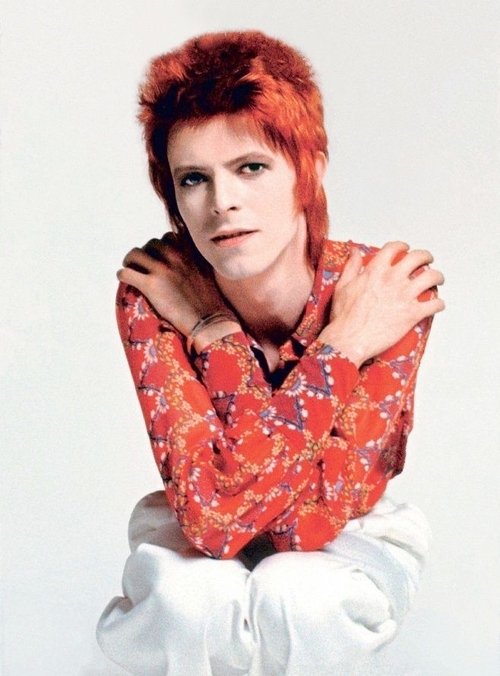
 IN THIS PHOTO: David Bowie in 1972/PHOTO CREDIT: Masayoshi Sukita

that The Rise and Fall of Ziggy Stardust and the Spiders from Mars is David Bowie’s greatest album. Released on 16th June, 1972, it turns fifty very soon. I have written about it before, but I have been looking through the tracks and it acts almost like a greatest hits collection! Certainly, there are four of five of Bowie’s best songs on The Rise and Fall of Ziggy Stardust and the Spiders from Mars. Reappraised as one of the most important and influential albums ever, the album also has one of the strongest side ones ever. With Five Years, Moonage Daydream and Starman in the first side, the second has Lady Stardust, Suffragette City and Rock ‘n’ Roll Suicide! At the start of a run of albums that ranks alongside the greatest ever, maybe embodying the persona of Ziggy gave Bowie license when it came to the songs. There is something to be said about how a persona or identity can inspire musicians to write in a way they would not have if they were writing as their ‘normal self’. Although there is much debate, I feel The Rise and Fall of Ziggy Stardust and the Spiders from Mars is definitely high up on the list. If you disagree about whether or not it is Bowie’s best album, you cannot deny its iconic and influential status! This Wikipedia article talks about the legacy of The Rise and Fall of Ziggy Stardust and the Spiders from Mars:

Ziggy Stardust is widely considered to be Bowie's breakthrough album. Although Pegg believes Ziggy Stardust wasn't Bowie's greatest work, he states that it had the biggest cultural impact of all his records. Trynka states that besides the music itself, the album "works overall as a drama that demands suspension of disbelief", making each listener a member of Ziggy's audience. He believes that decades later, "it's a thrill to be a part of the action."

In retrospectives for The Independent and Record Collector, Barney Hoskyns and Mark Paytress, respectively, noted that unlike Marc Bolan, who became a star a year before Bowie and influenced his glam persona of Ziggy Stardust, was unable to stay in a position of stardom in the long run due to a lack of adaptability. Bowie, on the other hand, made change a theme of his entire career, progressing through the 1970s with different musical genres, from the glam rock of Ziggy Stardust to the Thin White Duke of Station to Station (1976). Hoskyns argued that through the Ziggy persona, Bowie "took glam rock to places that the Sweet only had nightmares about". Ultimate Classic Rock's Dave Swanson stated that as the public were adapting to glam, Bowie decided to move on, abandoning the persona within two years. Writing on Bowie's influence on the glam rock genre as a whole, Joe Lynch of Billboard called both Ziggy Stardust and Aladdin Sane records that "ensured his long-term career and infamy". He argues that both albums "transcended" the genre, are "works of art", and are not just "glam classics", but "rock classics". In 2002, Chris Jones of BBC Music argued that with the album, Bowie fashioned the template for the "truly modern pop star" that had yet to be matched”.

Every track on the album has its worthy and important place. Threads, layers and stories of this epic and amazing opus, Far Out Magazine ranked the songs on The Rise and Fall of Ziggy Stardust and the Spiders from Mars last year. I think Bowie’s fifth studio album is not only among his very best. It is one of the greatest albums ever released. Rolling Stone asked its readers in 2013 which Bowie album was the best. The Rise and Fall of Ziggy Stardust and the Spiders from Mars claimed the top spot:

The world has just five years left and it seems like there is no hope, but suddenly an alien rock star named Ziggy Stardust enters the body of a man and offers us salvation in our dying days. Sadly, he "took it all too far" and wound up killing himself in a "Rock and Roll Suicide." It's a story that virtually nobody has ever bothered to follow, but that hardly matters. The songs on Ziggy Stardust represent the high point of the entire glam movement. Also, Bowie was reborn onstage as Ziggy Stardust, providing a much-needed rock star in an otherwise bleak music landscape. Even better, parents hated him. Bowie has had bigger hits and more acclaimed albums, but never in his career did he seem quite as important or refreshing. This is the Bowie album that will be in the history books”.

It is interesting how various journalists react to the album and the tracks. The Rise and Fall of Ziggy Stardust and the Spiders from Mars changed everything that came after it. I hope that the fiftieth anniversary of this masterpiece gets people thinking and debating. My favourite album from Bowie is Station to Station though, oddly, I think The Rise and Fall of Ziggy Stardust and the Spiders from Mars is technically his best! From the imagery and persona of Ziggy Stardust to the sheer quality of the songs, together with the production from Bowie and Ken Scott, this is a historically important album. This is what SLANT said in 2004 about Ziggy Stardust and the Spiders from Mars:

Trying to imagine popular culture without the influence of David Bowie’s copper-headed prefab rock star alien is practically impossible (or at least a lot less interesting) but the aspect of Bowie’s breakthrough album and the resulting phenomenon that usually gets overlooked is the music itself. Like Marilyn Manson’s music today (though he’s yet to come up with anything as insidiously catchy as “Hang On To Yourself,” but give him time), Bowie’s contributions to the pop music lexicon have been overshadowed by the eye shadow of his characters. Unlike some of the lesser glam acts that followed in Bowie’s platformed footsteps, the tunes on The Rise And Fall Of Ziggy Stardust And The Spiders From Mars, somewhat loosely held together by the concept of the Earthbound exploits of the interplanetary rock star, strangely avoid the trap of being so much dated, post-hippie nonsense.

Kicking off with the ‘50s-styled opener “Five Years,” then setting off on slinkier, more soulful territory with “Soul Love,” Bowie and band (featuring gardener-turned-guitar hero Mick Ronson) establish early on that the album could almost serve as a travelogue of the history of pop music, as seen through the eyes of both the alien protagonist and his adoring fans. You’ve got the unbridled rock ‘n’ roll hysteria of “Suffragette City” (all together now: “Wham bam, thank you ma’am!”) and “Star,” which is delivered with a no-nonsense, workmanlike sensibility by the Spiders while being carried over the top by Bowie’s amped-up croon. There’s the trippy frippery of “Moonage Daydream,” resplendent in early ‘70s hallucinatory imagery (“squawking like a big monkey bird,” indeed) and wigged out leads courtesy of Ronson and producer Ken Scott (who never really seemed to receive as much credit in shaping the sounds of Bowie’s early output as Tony Visconti would on later albums). And of course, there’s the big single: the saccharine-sweet “Starman” being the most overtly pop of the album’s 11 tracks, replete with swirly strings, cosmically-conscious lyrics and a chorus that still, some 32 years later, gets arms aloft during Bowie’s current stadium romps.

Bowie was always partial to the pomp side of pop, especially in the early phases of his recording career, and Ziggy Stardust carried all the drama of a Shakespearean play (as seen on acid, of course). “Lady Stardust” is a love song addressed to both the androgynous astro-rocker and to rock ‘n’ roll itself, with its lilting piano motif married to a stadium-sized chorus. And with the title track we have the ultimate glam rock (hell, the ultimate rock anthem), with a riff that would provide air guitarists decades of enjoyment accompanying the tale of the wayward rocker from Planet X, capped off with the dramatic tag that would become the alien’s epitaph: “And Ziggy plaaaaaayyyed…guitar!”

Still, a pop masterpiece is nothing without a killer final act, and it’s with “Rock & Roll Suicide” that Bowie draws the Ziggy saga to a close. Like the album opener, it has the innate heartrending properties of weepy, wall-of-sound shrouded pop classics of a bygone era, married to a message of the redemptive power of rock ‘n’ roll: “You’re not alone!” shrieks Bowie, shouting from some rooftop that exists in the mind’s eye of the listener, staving off the mundane of the everyday with an exhortation to give him our hands, and to follow his lead. And as Ronson tears off another lighter-waving lead and the strings swell to a final, definitive stroke, you’re sent reeling, as if you’ve made the journey back to Earth from some far-flung intergalactic locale, previously visited only in dreams. Truly timeless pop—truly timeless art in general—is transformative; you emerge somewhat different after experiencing it. And in giving in to his own imagination and creating his own world, Bowie changed ours immeasurably, and for that many a pop fan should be eternally grateful”.

It is so sad that Bowie is not around to toast and reminisce about Ziggy Stardust and the Spiders from Mars fifty years later (the legend died in 2016). Although he adopted other personas and guises through his long career, I don’t think he managed to create a character as compelling as Ziggy Stardust! I think Bowie was at a real creative peek in 1971 and 1972. Ziggy Stardust and the Spiders from Mars is a remarkable and utterly timeless work of brilliance that will shine, inspire and survive strong…

THROUGH the rest of time.

FEATURE: Kate Bush in June 1977: A Beautiful Calm Before a Debut Album Storm

FEATURE:


Kate Bush in June 1977

A Beautiful Calm Before a Debut Album Storm

 __________

I am going to…

IN THIS PHOTO: Kate Bush in 1977/PHOTO CREDIT: John Carder Bush

put out a series of features marking Kate Bush’s debut album, The Kick Inside, turning forty-five through the next couple of months. Although it was released in February 1978, the recording of its was completed in August 1977 (it began in around July of that year). I will also put together proper anniversary features early next year. As it is June 2022, I want to look back forty-five years for this one feature – and I will steer away from this time period for future Kate Bush features. With buzz around her still because of the big role Running Up That Hill (A Deal with God) has played in Stranger Things – Bush herself has been working with the show and seems to be fully onboard with the track being used so heavily -, it is good to sort of take things back to a simpler, quieter time. It is great that, as we speak, Kate Bush’s music is being talked about so fervently. New fans are ensuring that one of her best songs is storming the download charts and putting her firmly in the spotlight! I wonder what will happen after Stranger Things’ new season ends and there is a fading away of attention on Bush’s musical inclusion on the series. There are anniversary celebrations and other stuff that will happen later in the year. I predict that the spotlighting of her most famous song will compel Bush to release new music – whether that is this year or next. I want to think about June 1977. Bush was not going fresh into The Kick Inside in July/August. A couple of the songs from the album had already been recorded in 1975 (they were The Man with the Child in His Eyes and The Saxophone Song).

A lot of June was dedicated to gigs with the KT Bush Band. Between March and June, the band (comprising Kate Bush, Del Palmer, Vic King and Brian Bath) played about twenty gigs around and near London. Playing their final gig at The White Elephant Club in Mayfair as an EMI showcase, it was decided that Bush was ready to head into the studio. I guess that is the main focus of June 1977. It is amazing to think that, twenty-five years ago, Bush was playing small pubs to a crowd who had no idea what was about to happen! Playing songs that would appear on The Kick Inside – including James and the Cold Gun and Oh to Be in Love -, this was invaluable live experience and exposure for Kate Bush. I did not only want to mention again the performances of the KT Bush Band. In a previous fracture where I mentioned how June 1977 was the final month the KT Bush Band performed, I was not aware of the later gigs. More than anything, June 1977 marked a time when this young woman (who was only eighteen) was embarking on an unpredictable career. Whilst some of her same-aged friends might have been heading to university, she was in the earliest stages of her career. Of course, she already had a record deal, and we knew that a debut album was coming. Bush was still finalising and thinking about the songs that would appear on The Kick Inside. Before she could head to AIR Studios for several weeks or exciting recording and taking those big steps, she would have been unaware of how her career would take off.

The dates vary, but Bush was called to come to the studio in August 1977 (though some say July). In March of 1977, she wrote Wuthering Heights (a late addition to the album, as the other songs were more or less written before that). By September of 1977, she was battling EMI to have that song released as the first single from the album (they favoured the more conventional James and the Cold Gun). In the space of a couple of months, Kate Bush was thrust into the thick of things! Therefore, June 1977 feels like one of the most important months in Kate Bush’s career. She was excited about performing these small gigs, and I wonder what life was like at her family home. At East Wickham Farm, I get the sense her parents would have been a bit worried but also very proud. Seeing their daughter embark on a music career would have stirred a mixture of emotions. There would have been discussions about what she has been up to and gigs ahead. Songs coming together and plans for her debut album. Maybe concern that, in spite of her undeniable talent, things might not explode straight away or work out long-term. I am fascinating getting a sense of what things were like with the KT Bush Band, her thinking about making her album, EMI watching their protegee blossoming, her day-to-day life, and what she did when unwinding.

1978 was a manic year for promotion, so 1977 seems like a time more reserved to creating music and preparing the groundwork. June and July 1977 was a time of gaining live experience, working on album songs (maybe honing them a little) and thinking about the future. I know that Bush was excited about her debut album and doing something she had dreamt about since she was a child. Thinking about Running Up That Hill (A Deal with God) and what her career was like in 1985 – busy; successful; at a peak – made me want to glance back forty-five years to 1977. It was only a short time before Bush and the band started recording The Kick Inside with producer Andrew Powell. I am going to do a short series of features around her debut in July and August. There is something almost romantic and calm about June 1977 in Kate Bush’s world. Some gigs here and there, but time for her to concentrate on her album and not being too overwhelmed. That would all change soon enough! Forty-five years ago, the world was witnessing…

A star being born.

FEATURE: Spotlight: Oliver Sim

FEATURE:

Spotlight

PHOTO CREDIT: Ryan Pfluger for The New York Times

Oliver Sim

__________

PRIOR to the release of his album…

Hideous Bastard in September, I wanted to shine a light on the magnificent Oliver Sim. Go and pre-order his album, as it is a self-confessional journey of fear and shame inspired by the queer horror films he loves. Oliver is joined by Jamie xx, who produces Hideous Bastard with an elegant touch, and Jimmy Somerville. It is going to be one of the best albums of this year. There are a couple of interviews that I want to source, just so that we can learn more about Sim. I know him best as a member of The xx alongside Romy Madley Croft and Jamie xx. Last month, Sim shared the hugely potent and personal track, Hideous. NME reported news of the incredible Oliver Sim putting out a song that everybody needs to hear:

Oliver Sim has shared his new single ‘Hideous’, which addresses the xx musician’s diagnosis with HIV at the age of 17.

The track is the latest preview of Sim’s newly announced debut solo album ‘Hideous Bastard’, which has been produced by Jamie xx and is set for release on September 9 via Young.

Sim has today (May 23) shared ‘Hideous’, which features Bronski Beat and The Communards’ Jimmy Somerville on guest vocals. It’s also been accompanied by a new Yann Gonzalez-directed video, which you can see below.

In a note accompanying its release, Sim explained that ‘Hideous’ explores his experience of living with HIV.

“Early on in the making of my record, ‘Hideous Bastard’, I realised that I was writing a lot about fear and shame,” Sim wrote. “I imagine that might paint a picture of a dark, ‘woe is me’-sounding album, but in recent years I’ve become a firm believer that the best antidote to these feelings can be bringing them to the surface and shedding some light on them.

“I haven’t written the record to dwell, but rather to free myself of some of the shame and fear that I’ve felt for a long time. So, I hear a lot of the music as joyous, because the experience of writing and recording it has been the complete opposite of what fear and shame have been for me.”

Sim continued: “Two thirds in, having a good idea of what the record was about, I realised I’d been circling around one of the things that has probably caused me the most fear and shame. My HIV status. I’ve been living with HIV since I was 17 and it’s played with how I’ve felt towards myself, and how I’ve assumed others have felt towards me, from that age and into my adult life.

“So, quite impulsively, I wrote about it on a song called ‘Hideous’. I thought I could release it into the world and be done with it. After playing the song to my mum, being the protective and wise mum that she is, she gave me some of the best advice I’ve ever received. She suggested that I spend some time having conversations with people in my life first. Either people I hadn’t told yet, or people I had told but hadn’t wanted to talk much further on it. Since writing ‘Hideous’, I’ve spent the past two years having those conversations, which was difficult and uncomfortable to start with, but has allowed me to feel a lot freer and has only strengthened my relationship with myself and with the people in my life”.

I want to finish off with a terrific interview and profile from The New York Times. It was published to publicise the forthcoming release of Hideous Bastard. It is a fascinating article that paints the picture of a hugely strong young man. Sim talks about writing about his H.I.V. positive status:

Sim’s vocals on “Hideous Bastard” are flinty and melismatic. The lyrics are wry and heartbreaking. “A lot of the sense of humor is very British,” he said. “To me, starting a song with ‘I’m ugly’ is hilarious.”

Oliver Sim is far from ugly in any conventional sense of the word. He is tall and slim, with gigantic amber-colored eyes that he says turn a bit green when he cries. On an April afternoon, he sported baggy khakis and a fresh tan courtesy of a weekend watching his bandmate Jamie xx at Coachella. Something darker lurked beneath his blue-and-white-striped button-down: a T-shirt emblazoned with “Buffalo Bill’s Body Lotion,” an allusion to the serial killer in the film “The Silence of the Lambs.”

“Hideous,” a mid-tempo pop song with moody and lush orchestration, opens the album, and its final verse packs a wallop: “Been living with H.I.V. since age 17, am I hideous?”

Those lyrics are true. Oliver Sim has been living with H.I.V. for 15 years. Many of his friends and family were aware of that fact, but this is the first time he’s chosen to discuss his status in public.

“I wrote that song knowing that a lot of this record had to do with shame and fear and I knew I was dancing around something that causes me the most shame,” he said.

Sim said he was inspired by musicians like John Grant and Mykki Blanco, who make challenging and nuanced work and are also open about their H.I.V. positive status. “For me, this is the opposite of shame,” Sim continued. “If I were deepest in shame I would have made a record not talking about any of this stuff.”

When Sim first wrote “Hideous,” he played it for his mother. “She gave me a great piece of advice,” he recalled. “She was like, ‘How about you have some conversations before you do this?’”.

“The stigma associated with H.I.V. made a lasting impact on him. “It started to marry itself with my sexuality,” he said. “As if sex itself was something that was destructive or dangerous or shameful.”

“And I think I wanted to pull that apart, to separate those two,” he added, referring to his new album. But Sim stressed that H.I.V. is only one part of the story he’s telling on “Hideous Bastard.”

“This record isn’t about H.I.V.,” he said. “I’m not naïve, I know it’s going to be talked about and it will be a defining part of it, but that’s not how I see this record. It’s about shame, it’s about fear and it’s celebratory.”

After the cemetery, Sim wanted ice cream. His publicist knew a great place in Los Feliz that offered flavors like biscuits and jam and everything bagel. Before entering the shop, Sim lit a cigarette and waxed about Jamie Lee Curtis. “I think I wanted to be her: angry and sexy,” he said.

Sim doesn’t come across as angry. He also doesn’t come across as morose or withdrawn, as he has frequently been described in the past. In person, he was quick to laugh and easy to talk to. As we rode around Los Angeles, he dished about a recent date, sang along to “Together Again” by Janet Jackson and professed his love for the reality TV show “Selling Sunset.”

“I don’t think I’m the shy, awkward person that’s maybe been written about or portrayed,” he said, tapping a cigarette. The pandemic also made him realize that he wasn’t quite the introvert he had always thought himself to be”.

I will wrap things up now. Go and pre-order Hideous Bastard if you can. Oliver Sim is so compelling as a person and songwriting. This all goes into his amazing work. I am looking forward to seeing how his solo album is received, in addition to where The xx go next and whether they are going to put out another album. The remarkable Oliver Sim is…

A major talent.

_____________

Follow Oliver Sim

FEATURE: Three Years on From Madame X… What Next for Madonna?

FEATURE:


Three Years on From Madame X

What Next for Madonna?

__________

ON 14th June…

 IN THIS PHOTO: Madonna onstage during the 2019 Billboard Music Awards at MGM Grand Garden Arena on 1st May, 2019 in Las Vegas/PHOTO CREDIT: Kevin Mazur/Getty Images for dcp

it will be three years since Madonna released her latest and fourteenth studio album, Madame X. This year is not exactly going to be quiet for her! I think the biopic she is directing is moving along. As I suspected, Julia Garner has been offered the titular role. Erotica turns fifty later in the year, and I suspect that Madonna will be involved in some anniversary commemoration of a reissue of the album. 50 Number Ones is the new remix album. There is a lot going on in her world. Also later this year, her debut single, Everybody, turns forty. Even though there are no immediate plans to follow Madame X, I think fans will be looking the way of new music. Madonna did tour the album before the pandemic, but she suffered from injury and setbacks. Whether she is going to look more to live work rather than new music, I am not too sure. Madame X was an album that put Madonna back on the critical radar. Not that her previous albums were poorly received but, since 2005’s Confessions on a Dance Floor, her albums have got mixed reaction. Madame X was a lot more positively received. Madame X, an alter-ego her album is named after, is also the title of a 1908 play written by Alexandre Bisson. It was great seeing Madonna embody another alter ego. Like Erotica and Mistress Dita, this was a chance for her to make a more conceptual album. Featuring some of her best modern-day singles – Crave and I Rise among them -, I get the sense that we may hear more from her soon.

There was definitely a lot of love from fans when Madame X came out in 2019. Madonna was sixty when the album was released. It is testament to her endurance and sense of reinvention that she managed to put out an album that showed that she was still one of the greatest Pop artists in the world. This is what AllMusic said in their review:

Madame X is the rare album from a veteran artist that puts earlier records in a different light. Ever since the 1980s, the conventional wisdom about Madonna claimed she brought trends from the musical underground for the purpose of pop hits, but Madame X -- a defiantly dense album that has little to do with pop, at least in the standard American sense -- emphasizes the artistic instincts behind these moves. The shift in perception stems from Madonna embracing a world outside of the United States. While she's been an international superstar since the dawn of her career, Madonna relocated to Lisbon, Portugal in 2017, a move that occurred two years after Rebel Heart -- an ambitious record balanced between revivals of old styles and new sounds -- failed to burn up any Billboard chart outside of Dance singles. These two developments fuel Madame X, an album that treats America as a secondary concern at best. Madonna may address the political and social unrest that's swept across the globe during the latter years of the 2010s, but her commentary is purposely broad. Perhaps Madonna errs on the side of being a little bit too broad -- on "Killers Who Are Partying," she paints herself as a martyr for every oppressed voice in the world -- yet this instinct to look outside of her experience leads her to ground Madame X in various strains of Latinx sounds, trap, and art-pop, music that not only doesn't sound much like the American pop charts in 2019, but requires focused attention in a manner that makes the songs not especially friendly to playlisting.

Madame X has its share of colorful neo-disco numbers and shimmering chill-out tracks, but they're painted in dark hues, and they're surrounded by songs so closely cloistered, they can play like mini-suites. Case in point is "Dark Ballet," an ominous number that descends into a sinister, robotic rendition of Tchaikovsky's "Dance of the Reed Flutes" section from The Nutcracker -- an allusion that recalls not the future, but the dystopian horror show of A Clockwork Orange. Such darkness hangs heavy over Madame X, surfacing fiercely in the clenched-mouth phrasing on "God Control," but present even on the bobbing reggae of "Future." The murk does lift on occasion -- "Come Alive" gains levity from its clustered polyrhythms -- but the somber tenor when combined with fearless exploration does mean Madame X can be demanding listening. The rhythms are immediate but the songs aren't, nor are the opaque productions. While this thick, heady confluence of cultures and sounds may demand concentration, Madame X not only amply rewards such close listening, but its daring embrace of the world outside the U.S. underscores how Madonna has been an advocate and ally for left-of-mainstream sounds and ideas throughout her career”.

Before coming to a bit of a round-up, I want to source some of SLANT’s review of Madame X. A terrific release from Madonna, this was an artist with a new lease of life, taking her undeniably great music to new places:

Of course, Madonna has never been your average pop star. Though her music has deep roots in R&B and disco, she is, at heart, a rock auteur, with all of the inclinations toward upending the status quo and expressing a singular vision that designation implies. Her last album, 2015’s Rebel Heart, was designed by committee, while its predecessor, MDNA, was recorded during a period when she seemed more interested in directing movies and extending her brand than making music. So it makes sense that when she decided to forgo songwriting camps and aspirations of a late-career radio hit for her 14th album, Madame X, Madonna turned to French producer Mirwais, her primary collaborator on American Life.

In other words, Madame X sounds like the work of an artist reawakened, and one who’s got something to say. It’s a development reportedly inspired by her time in Lisbon, where she was surrounded by musicians and art in a way she hadn’t been since her pre-fame days in the East Village. The influence of Lisbon’s multicultural history can be heard on tracks like the fado-meets-Motown “Crazy”—co-produced by Mike Dean, the album’s other principal knob-twirler—and the polyrhythmic “Batuka,” featuring Afro-Portuguese group Orquestra de Batukadeiras.

Madame X plays like a musical memoir, sometimes literally: “I came from the Midwest/Then I went to the Far East/I tried to discover my own identity,” Madonna sings on the Eastern-inflected “Extreme Occident,” referencing her rise to fame and spiritual awakening, famously documented on her 1998 album Ray of Light. A multi-part suite that shifts abruptly from electro-pop dirge to classical ballet and back again, “Dark Ballet” is a Kafkaesque treatise on faith and her lifelong crusade against the patriarchal forces of religion, gender, and celebrity—an existential battle echoed in the Jean-Paul Sartre-quoting closing track “I Rise.”

The album’s autobiography is also conveyed sonically: It’s a thrill to hear Madonna singing over a ‘90s house beat on the smoldering “I Don’t Search I Find.” But despite its ballroom strings, finger-snaps, and throaty spoken-word bridge, comparing it to “Vogue” or “Erotica” would be too easy. This isn’t a song so much as a mood. It’s downstairs music, the distant bassline rumbling beneath your feet as you slip into a bathroom stall for a quick bump or fuck.

Madonna has a reputation for being a trendsetter, but her true talent lies in bending those trends to her will, twisting them around until they’re barely recognizable, and creating something entirely new. The album’s pièce de résistance, at least in that regard, is the six-minute “God Control,” which begins with Madonna conjuring the spirit and disaffected monotone of Kurt Cobain—“I think I understand why people get a gun/I think I understand why we all give up,” she sings through clenched teeth—before the whole thing implodes into a euphoric, densely layered samba-disco-gospel mash-up. Throughout the song, Madonna’s vocals alternate between Auto-Tuned belting, urgent whispers, and Tom Tom Club-style rapping as she takes on the gaslight industrial complex and so-called political reformers. On paper, it might sound like the ingredients for a musical Hindenburg, but—somewhere around the midpoint, when she declares, “It’s a con, it’s a hustle, it’s a weird kind of energy!”—it all coheres into the most exhilaratingly batshit thing she’s done in years.

If, metaphorically, Madame X represents Madonna’s rediscovery of her voice as an artist, then it also highlights the literal loss of it. Over the years, the soft edges of her voice have grown sharper, and the album’s pervasive vocal effects—most gratuitous on the electro-ragga “Future” and, to a lesser degree, the haunting “Looking for Mercy”—have a distancing effect. The heavy Auto-Tune on Music and American Life was deployed in service of larger conceptual themes like imperfection (“Nobody’s Perfect”) and anonymity (“Nobody Knows Me”), contrasted by the bare performances of more confessional songs like “Easy Ride.” Here, filters are indiscriminately thrown on nearly every song, which only serves to obscure Madonna’s humanity. On “Medéllin,” for example, her admission that “For once, I didn’t have to hide myself” is pointlessly cloaked in Auto-Tune, keeping us at a remove”.

Even though the rest of 2022 is going to be busy, I feel there is this swell of curiosity and demand for new Madonna music. There have been remixes and hook-ups since 2019, though not a lot in terms of solo material that indicates where she might head next. Maybe she will return to her 1980s and 1990s sound and release an album that sounds like Erotica (1992), Ray of Light (1998), Like a Prayer (1989) or True Blue (1986). It would be interesting hearing a blend of those albums, rather than something that sounds like Madame X. As good an album as it is, it is very modern. I think that a combination of current and throwback would be a good next step. Madonna is at her peak when making these innovative Pop songs that stick in your head. One of the issues with Madame X was the processed vocals. There were quite a lot of producers and writers in the mix. Hearing an album more streamlined and personal, I feel, would make for even stronger music. Whatever comes next, it is going to court a lot of attention. Three years since her latest studio album, Madonna still keeps people guessing. Someone who is always reinventing themselves and ensuring the music is fresh and evolved, it is hard to predict what her fifteenth studio album will sound like. When it comes to Madonna…

YOU never can tell.

FEATURE: As Long As You're Not Afraid to Feel: Kate Bush’s Stunning Catalogue: Where to Start?

FEATURE:


As Long As You're Not Afraid to Feel

IN THIS PHOTO: Kate Bush in 1983/PHOTO CREDIT: Brian Griffin 

Kate Bush’s Stunning Catalogue: Where to Start?

 __________

THERE have been a few articles…

 IN THIS PHOTO: Kate Bush on the set of the video for The Big Sky (from Hounds of Love)

published over the past few weeks in reaction to Kate Bush’s Running Up That Hill (A Deal with God) storming charts around the world. It features in the current season of Netflix’s Stranger Things, and it is set to appear again. I am writing this on 7th June so, by the time this is published, the song may well have reached number one either here or in the U.S.! As it is, the song hit number eight in the U.S. – Bush’s highest chart position in the county; Running Up That Hill (A Deal with God) originally went to thirty there on its released in 1985. I have sort of covered this before, but a lot of articles have responded to Bush’s new chart blitz with beginners’ guides to her work  - where to start in terms of the albums and the songs that you need to listen to. It is useful to have a guide so that you can narrow things down and then, when you have a taster, expand from there. I will end with a playlist of songs across her ten studio albums that should give new finders of Bush’s music a helpful and varied exploration. For me, I always say to start at the start: in this case, her debut album, The Kick Inside. I feel you can only really get a true sense of an artist’s evolution if you go from their debut album and work forward. If you are a young listener and have heard Running Up That Hill (A Deal with God) and love the song, then Hounds of Love is an album that you will cherish and treasure.

In terms of music of hers you can listen to for free or very little, her albums and interviews are on streaming platforms and sites like YouTube. I would say to start by spending a few hours watching interviews and documentaries with her. This provides a good overview of her career and who Kate Bush is. There is a lot out there that will keep you engrossed. Rather than use streaming services solely when it comes to Kate Bush’s music, have a taste of her studio albums. Some casual yet essential research like this is both enjoyable and informative. You can discover her great videos and interviews but, in terms of the music, which albums you like best. From 1978 to 2011’s 50 Words for Snow, Bush’s music has altered and changed. One cannot say there is a distinct ‘sound’. You may be a bigger fan of her 1980s output; some might prefer her more modern output. From there, make a list of three studio albums to own on vinyl. This is a good starting point and, as a listening experience, owning her albums on vinyl is the way to do it! Rough Trade are pretty useful when it comes to her albums on vinyl; you can shop around if they do not have the ones you want in stock. If your budget is quite low – as vinyl can cost quite a bit! -, I would say the C.D.s are also really good. Make a playlist of your own with your favourite Kate Bush songs. Alongside the physical albums, you also have a selection of her songs you can listen to on the go.

There are a couple of other things that I would also advise new listeners to do. I have previously advised books that you can get that give you a greater impression of who Bush is. I think, if you are starting out, her lyrics book, How to Be Invisible, is essential. Having this hamper of Kate Bush songs, albums and a book is a nice foundation for anyone. As I say, from there, there are multiple options regarding expanding and building that collection. I think that Bush being back in the charts should be applauded! More than that, she is an artist who endures because of the sheer brilliance and originality of her songs. The Guardian wrote their own guide as to which tracks new listeners should start with. They discussed how Bush was successful and established right at the start of her career:

It’s fair to say that hardly anyone would have predicted Bush becoming such a revered and influential artist, when she emerged in 1978. She was immediately hugely successful – her debut single Wuthering Heights went to No 1, the accompanying album The Kick Inside sold a million copies – but her public image seemed to be that of a dippy-hippy throwback who’s every other word was “wow”, and this image was burnished further by the unbridled outlandishness of her TV performances and videos. Trained in interpretative dance and mime, from the start Bush was not at home to accepted notions of cool.

In truth, The Kick Inside was packed with evidence of how extraordinary she already was. Its 13 tracks were culled from a longlist of 120, written throughout her teens, and contained songs about menstrual pains and masturbation. The title track told the story of a woman killing herself after becoming pregnant by her own brother. It should go without saying that these were not normal topics for a platinum-selling singer-songwriter 44 years ago. She claimed to be influenced by David Bowie, Elton John and Roy Harper, but you wouldn’t have known if she hadn’t said it: from the start, she sounded only like herself.

Even at 19, there was a certain steely self-possession in her approach. Offered the seemingly unmissable opportunity to launch her career in the US with a place on Fleetwood Mac’s Rumours tour, she declined: if she was going to perform live, she wanted it to be an audio-visual extravaganza – as on her 1979 Tour of Life and, again, on 2014’s Before the Dawn shows – and you couldn’t do that in a 20-minute support slot. Her American record company was so furious at the snub, it refused to release her next three albums in the country.

Then, rather than capitalise on her sudden initial burst of commercial success, her music got stranger and richer. The cover of 1980’s Never For Ever depicted a bizarre phantasmagoria billowing out from under Bush’s skirt, which seems like a pretty accurate interpretation of how listening to her music increasingly felt, and continues to feel like: a deeply weird, frequently beautiful and occasionally unsettling world that you immerse yourself in.

Her videos and TV appearances, meanwhile, became more elaborate and idiosyncratic: it would be lovely if Running Up That Hill’s fresh success leads people to her amazing performance of the song on the chatshow Wogan, Bush singing behind a lectern, as if delivering a speech or a sermon, while her band, clad in dark robes, slowly advance from the rear of the stage. She produced more huge hits – 1985’s Hounds of Love was her biggest-selling album, despite its second side containing some of the most abstruse music of her career; her lengthy 2005 “comeback” Aerial shifted over a million copies – alongside stuff that was more coolly received, most notably 1982’s dense and demanding The Dreaming (its artistic reputation has nevertheless rocketed over subsequent decades). Occasionally, the most critical voice about Kate Bush’s work has belonged to Kate Bush. She “never liked” her rushed second album, Lionheart, and memorably described her short musical film The Line, the Cross and the Curve as “a load of old bollocks”. Her 2011 album Directors’ Cut consisted entirely of reworked songs from 1989’s The Sensual World and 1993’s The Red Shoes, complete with the implicit suggestion that she wasn’t happy with the original versions.

From the moment that Wuthering Heights appeared – a swooning, swooping ballad sung in a keening soprano, at the height of punk – Bush has always seemed entirely apart from whatever else is going on in the charts. In the long term, that has meant her music has never dated. Running Up That Hill feels completely different from everything else in the Top 10 in 2022, but it felt completely different from everything else in the Top 10 in 1985 as well. In the interim, it hasn’t taken on any patina of age; it resolutely doesn’t sound of its era”.

There will be quite a lot of listeners who have discovered Kate Bush through Stranger Things or Running Up That Hill (A Deal with God). That is a good thing. Rather than stick with that song and Hounds of Love, it is worth thinking about starting your own collection and what you might select. I am not sure what the future holds regarding new music or older music of hers being brought to the screen. I think the success Running Up That Hill (A Deal with God) has achieved this year so far will lead to new projects and books pretty soon. I have said before how a new greatest hits collection is long-overdue. Maybe Bush, pleased at the success of her Hounds of Love hit, will green-light a new package. To end this feature, I have compiled a playlist of Kate Bush songs for those new to her work - or those who need a bit of a refresher course. Let’s hope that, throughout 2022, Bush continues to grow in stature and reach new people. Adding fresh blood and ears in the direction of her music. It is humbling and exciting seeing waves of new fans joining…  

HER massive and adoring fanbase.

FEATURE: Revisiting… King Gizzard & The Lizard Wizard - K.G.

FEATURE:


Revisiting…

King Gizzard & The Lizard Wizard - K.G.

 __________

FOR this outing of Revisiting…

I wanted to feature one of the many albums by the Australian band, King Gizzard & The Lizard Wizard. Their latest album, Omnium Gatherum, came out in April. It is their twentieth studio album! That is amazing when we consider that the band’s debut arrived in 2012. Ten years after they came onto the scene, the band are still producing such different and always-moving music. They never repeat themselves. I wanted to spend time shining a light on K.G. Released in 2020, it was their only album that year (slackers!). I am going to round up with a couple of reviews for the album. Their sixteenth studio album, one could forgive the guys for taking it easy or reigning it in. No such problems on the amazing double album, K.G. Slightly underrated in my view, some might have missed the album. For those not initiated into the world of the band, go and listen to the amazing K.G. It is an album that was produced by band member Stu Mackenzie. In terms of track length and numbers, it is fairly conventional – as the band released an album earlier this year, Made in Timeland, containing two fifteen-minute songs! If you have not heard K.G., then I think that you need to! This is what AllMusic wrote when they reviewed a typically innovative album from King Gizzard & The Lizard Wizard:

Over a ten-year span spent releasing an album every few weeks (or so it seemed) King Gizzard & the Lizard Wizard never repeated themselves, always pushing forward and trying new things whether it was lengthy jazz excursions, gloom-and-doom synth prog, or thundering thrash metal. That changed some on 2020's K.G., where the band revisit the approach used on Flying Microtonal Banana, the group's 2017 album built around the avant-garde sounds of their custom-made guitars and altered instruments. Stuck in their various homes during the global pandemic, the band gravitated toward the unique instruments and built a batch of songs using their non-Western tunings and tones.

Unlike that album, though, where that almost felt like a (mostly successful) gimmick, this time the guitars are more fully integrated into the songs. "Automation" and "Some of Us" kick and twist like classic King Gizzard-style psychedelic rockers, the acoustic guitars of "Straws in the Winds" have a snarling bite that matches the evil sneer of the vocals and sentiment of the lyrics, "Oddlife"'s guitar solos are pure prog, and "The Hungry Wolf of Fate" revisits the blown-out metal attack of their most recent studio LP with a nice mix of restraint and explosive power. Even though much of the record transverses familiar sonic territory, the band still find some room for surprises. The acid house synths percolating behind the wall of guitars on "Minimum Brain Size" are a nice touch; the group work up a sweaty groove on "Ontolgy" and in the process sound something like Talking Heads butting heads with Kid Creole & the Coconuts; and in the album's only real shocker, they drop some bubbly Madchester grooves on "Intrasport." The sound is so slinky and giddily elastic, it makes one wonder what a full album of King Gizzard songs made for dancing would be like. Judging from this, and the band's track record, probably pretty great. Apart from this one song, King Gizzard don't break much new ground on K.G., and while that in itself might be something of a letdown, the result is still quite pleasing. Listening to them tread a little bit of water is still better than listening to the fresh ideas of 99.9 percent of other groups, especially when it's done with the energy and passion the band exhibit here”.

Among my favourite albums of 2020, I do wonder where King Gizzard & The Lizard Wizard get their energy, ideas and sense of drive. They are an amazingly consistent band. Whereas most groups release a new album every couple of years or so, King Gizzard & the Lizard Wizard can’t wait that long. 2021’s L.W. was seen as the second part of a double album – though I want to pull them apart and focus on K.G. itself. They are bursting with music! This is what Under the Radar wrote for their review of K.G. They were impressed with an album that ranks among the best from King Gizzard & The Lizard Wizard:

Ten years since their formation, King Gizzard & The Lizard Wizard are back with yet another heavyweight entry into their ever-growing discography. Their sixteenth studio album, K.G., subtitled Explorations into Microtonal Tuning, Volume 2, fits comfortably into the Melbourne outfit’s oeuvre.

K.G. is the closest thing to a self-titled album we’ll ever get from King Gizzard & The Lizard Wizard. It’s a fair representation of the band, with their normal calling cards: syncopated rhythms, microtonal instruments that echo Arabic and Turkish influences, flutes, harmonica, and deep lyrics.

King Gizz have always been clever at pairing genre-bending song structures with meaningful lyrics, packed with philosophical motifs and activism shrouded in science fiction. K.G. certainly holds that trend. Tracks such as “Minimum Brain Size” and “Ontology” contain complex observations of human existence, but these revelations can be easily missed because of the songs’ captivating delivery.

Longtime fans of the Gizz can recognise certain similarities with 2017’s microtonal study, Flying Microtonal Banana—the first two singles from K.G., “Honey” and “Some of Us,” both feature microtonal instruments predominantly. But where the band’s past work differs from K.G. is in the risks the now six-piece continues to take. It wouldn’t be enough for K.G.’s 10 tracks to merely pick up where Banana left off. Instead, King Gizz continue to explore genres (disco, funk, house, and cinematic music, to name a few), lyrical content, and fan interaction. The fourth single, “Automation,” was accompanied by a “DIY project” for fans: the band supplied raw audio files and footage; in return, fans could remix the song and make their own music videos. The move echoed King Gizz’s ethos of lo-creativity, and gave the band’s loyal fanbase a chance to connect amidst a global pandemic.

This gesture of community in the face of adversity is a typical King Gizz move. The band released six live albums in 2020 (the latest, their 2016 San Francisco show), with a portion of the profits going to Australian wildlife relief. They released a concert film, Chunky Shrapnel, in April. And at a time when everyone is stuck at home, facing uncertainty, grief, and loss, King Gizzard & The Lizard Wizard have given something special to the world: the ability for fans to connect, and to (virtually) travel the world alongside the band’s diverse musical influences. (www.kinggizzardandthelizardwizard.com).

A remarkable album that remains a little underplayed. It got some positive reviews, but not quite the same sort of acclaim that it warrants. That is why I wanted to put it here and encourage people to give it another spin. If you are not aware of King Gizzard & The Lizard Wizard, then there is no right place or album to start with. I would think K.G. is as good a starting point as any! The Melbourne band showed that, even though they release albums quite frequently, this work rate…

DOESN’T dent the quality.

FEATURE: Spotlight: yunè pinku

FEATURE:


Spotlight

PHOTO CREDIT: Ryan Blackwell 

yunè pinku

 __________

REAL name Asha Yuné…

the lowercase yunè pinku is a major artist based in South East London. The Malaysian-Irish producer and songwriter is a sensational and huge talent who, surrounded by promising young artists, stands out and defines her own sound and career path. I am going to drop a few songs in before wrapping up. There are not too many interviews online with her – which I am sure will all change as yunè pinku becomes more widely-known and puts out more music! I have heard her played on BBC Radio 6 Music, though I think her music has this universal and utilitarian quality that means it can be played anywhere and be appreciated by all. This year’s Bluff is a phenomenal E.P. from a super talent who is accomplishing such heights at such a young age. Last year, NOTION named yunè pinku as one to watch for this year:

yunè pinku is a fitting ambassador for a new generation. The artist burst onto the scene late last year with a confident debut single “Laylo”, which depicts the struggle of an anxious introvert to put on a brave face for the world. yunè uses the rich history of electronica as a sandbox for her own exploration, drawing from sounds both nostalgic and cutting-edge alongside frank songwriting unveiling her anxieties. She’s already gained the attention of Joy Orbison, who featured her on BBC Radio 1 last year and later collaborated with yunè on a guest mix, and has provided vocals for a new Logic1000 track, cementing her ever-rising status in the annals of electronic music.

What’s been your career highlight so far?

I’m not sure really, I’ve been pretty lucky being able to work with such great people so early on! Working with Bone Soda back in November was great though, it was the first time I’ve ever performed in front of people so that was pretty cool.

Who are your key influences?

I think my production and vocals are inspired by very different artists. Vocally The Cardigans, Eartheater and Melody’s Echo Chamber would be huge influences, but then for production I love traditional UK garage/house like Sunship or Interplanetary Criminal. I like the mismatch of kind of indie-inspired vocals with these classic house instrumentals.

What has been your biggest lesson from 2021?

I think I learnt a new appreciation of real honesty and transparency. Whether it’s career or personal, I’ve just realised no one can fault you for just being honest and willing to kick up when you really want something.

Who would you love to collaborate with?

SASSY 009, Gorillaz or Easter probably, kind of different choices but both all banging artists. Guaranteed fan-girling with all of them.

Dream performance venue?

Le Carmen in Paris looks gorgeous, but I think in London there are so many great venues – like the Roundhouse and loads of open air performance spaces in the summer, which I love!

What are your goals for 2022?

I’d love to try out live performance and DJing more this year and keep cracking out tunes! It’s all quite open this year, which I’m really liking”.

There are a couple of interviews that I want to bring in. NME spotlighted an amazing Electronic producer and artist who is likely to have a very busy summer in terms of dates and festival appearances. She is a simply amazing and unique artist:

Having never been a fan of “all-out raving”, Yunè Pinku found a whole new appreciation for the more chilled-out side of electronic music during lockdown. “Just listening to some other stuff made me realise that there are way more kinds of electronic music than I thought there were,” says the teenage producer, real name Asha Yuné. This period of discovery has further influenced the Malaysian-Irish 19-year-old, whose fusion of UK club culture, introspective lyricism and hypnotic melodies has propelled her to become one of the fastest-rising names in the dance music scene.

It’s surprising, then, to hear that Yuné “actually hated electronic music growing up”. Her initial disinterest in the genre, she says, was down to constantly hearing her mum’s favoured trance music around the family home (Yuné preferred, er, Billy Joel and Madonna). As she got older, however, Yuné began to enjoy “messing around with soundscapes” and writing songs in her bedroom. “I’ve always really liked writing, but I wasn’t making music to go anywhere,” she recalls. “So I just started adding bits and bobs.” While she originally only utilised her vocals as a backing to her music, over time Yuné’s voice came to the forefront of her creations: “I think you can carry what you’re trying to say or what the feeling is [in your music] a bit more when there’s words to it.”

As she started to build up a collection of tunes, Yuné began – albeit nervously – to show them to her friends, some of whom were already active in the music industry. “Back then, the stuff I was making was not in the same sort of lane of what they’d be into, so I wasn’t very confident in showing it to people for a long time,” she remembers. Despite having no official releases to her name, Yuné then managed to land her first BBC Radio 1 guest mix during Joy Orbison’s residency in July 2021 – though she didn’t realise how much of a big deal it was at the time. “[Orbison] was one of the first people I worked with when I started working in music,” she recalls. “We did a few sessions, and then he asked if I wanted to do something on his show and I was like, ‘Sure!’”

Two months later, ‘What You Like’, a collaboration with Logic1000 that the pair created over email, arrived, and it now boasts over 2.6 million streams. “I was quite excited about that [collaboration], because I hadn’t met any girls in electronic music up until that point,” Yuné says of working with the Sydney-born, Berlin-based DJ and producer on the track. “I think there’s a massive thing going on now where you’ve got Nia Archives, Logic1000 and PinkPantheress, who are all producers. There’s definitely a boom coming in that sense, which is nice to see.”

‘Bluff’, Yuné’s debut EP as Yunè Pinku (Yunè is a childhood nickname which means ‘cloudy’ in Japanese, while Pinku is a nod to her love of Pingu), sees her join that list of artists who are instilling a sense of intimacy into their club-ready tracks. Carrying that oh-so-relatable feeling of “accidental anxiousness”, the four-track ‘Bluff’ was written during the pandemic and consequently serves as “a diary of where I was at that time”. Recalling how she was “having a hissy fit about being bored and missing things”, the EP narrates the period of “going from lockdown and being quite isolated [to] then trying to readjust to being back out in the world”.

I am going to finish things off with a recent profile from CRACK. As big fans and supporters of yunè pinku, they were eager to highlight her work and ask about the future:

Music for introverted ravers” is how Asha frames her output today, an accurate summary that simultaneously betrays her own somewhat strained relationship with club culture. “I like small parties, but I just find clubs very intense,” she explains matter-of-factly, going on to imply that successive, enforced lockdowns actually served as a kind of creative liberation.

“The idea of listening to that kind of music without being in an intense environment was something that just hadn’t occurred to me before,” she remembers. “I’d sit in my bedroom disappearing down 90s garage wormholes, discovering all these different types of electronic music. And that’s when I really got into dance music – through just chilling out, rather than dancing or whatever.

Having cut her teeth making lo-fi bedroom-pop and soundscapes inspired by post-war radio, Asha began looking to UKG and experimental house, and incorporating more club-centric sounds into her productions. After circulating some demos, it wasn’t long before she found herself collaborating with Logic1000 on 2021 single What You Like, and recording guest mixes for Joy Orbison and The Blessed Madonna, which were aired on BBC Radio 1 and 6Music respectively. Listening to Asha discuss the creative rationale behind Bluff, it isn’t difficult to see why she’s already pulling such high profile support.

“Overall, there’s a punchiness to the project that I think came from a place of being pretty panicked at what’s out there in the world. And with the rise of ASMR, I was really interested in exploring textural sounds. I’m just so fascinated by the concept of digital natives, and by the fact that a lot of young people now probably find the sounds of computers more familiar than, say, the sound of a river or birds singing.”

As for the future, Asha’s ruling nothing out for the time being. “I’m happy to go wherever the wind takes me musically,” she smiles. “Although now I’m also really interested in being a ski instructor”.

There is another interview from last week. The Line of Best Fit featured her as an artist on the rise. Every interview reveals new layers and details about a phenomenal artist:

Growing up, she had a range of jobs–from bartending to interning for Prada and working in a crystal shop. “You’d get the weirdest stories from there,” she enthuses on the latter. “We’d have mums coming in and being like, I’ve just found out the guy that I was seeing everyone else at the school, and then they’d be looking for a crystal that might help their situation. And then we got proper geezers in, who’d be like [grunts] I can't tell anyone at work about this, can I? It was really interesting because you’d get all of these people that you’d never think would be into that kind of stuff.”

As someone who’d always been drawn to creative writing–even applying and getting into journalism courses at Yale and Cambridge on a whim–being surrounded by stories and differing perspectives is important to Asha. When we talk about her inspiration for Bluff, she tells me how she tends to draw from others' experiences. “I just write down a bunch of random things or thoughts or phrases I hear on my notes app and whenever I’m trying to write lyrics I’ll look to that page and come up with something. When mates of mine would be telling me these insane stories of like, ‘and he was married and he had kids and–’ and you’re like woah. So I guess I kind of draw on their stories more because you know they got the drama,” she laughs.

She dabbled a little in piano growing up, but began to experiment with music fully as a teenager, downloading production software from a blank website her cousin had sent her. Tampering with her computer, she delved into the production world, at first making Clairo-influenced bedroom pop and then “Bladee-weird Drain Gang stuff”. A few years later, she began to click more with electronic music. “I’d only really listened to music in the pretext of like a club or something, and then I realised you can do it outside of a club and on your own grounds and stuff. I like to draw and write electronic,” she tells me, noting inspiration in boundary-pushing artists Eartheater and Sassy 009.

PHOTO CREDIT: Chris Almeida

Emerging from lockdown with over 150 songs created in her bedroom, mostly shared solely to her boyfriend at the time, managers she had connected with via SoundCloud and a friend of a friend, her family were surprised initially. “No one knew I made music. I was like I might get a record deal soon, and my mum was like what? My mum’s the number one listener now. I think the biggest comment I get from my family is, I don’t get it but I’m so proud of you. Electronic music is not everyone’s bag.”

Prior to any releases, Joy Orbison invited Asha to contribute a guest mix during his radio 1 residency last year, and a few months later she collaborated over email with Logic1000. Now, with her debut EP well-received and a buzz around the young artist, she’s conscious of the additional pressures. “I psych myself out sometimes and will be like I don't know if this is a commercially good song. I guess it’s the battle between the commercial mind and the creative one.”

“I wouldn’t consider myself someone who has ever craved the spotlight. I think I’d be more so like a stagehand person by nature, but it’s interesting because I’ve had a few conversations recently where it's been like do you see yourself and your artist project as separate things? And I don’t think I do really; I think they’re strains of the same person eventually, but that in itself is quite interesting,” she tells me, considering the direction that Yunè Pinku has been in and will go in. “Through being in these situations where I am more of a focus than I ever thought I’d be, you see new parts of yourself and learn that you actually are okay with this”.

Everyone needs to investigate yunè pinku’s music. Having started out and gained traction over the past year or so, 2022 is a year where her music is starting to get noticed and played widely. A magnificent rising star who has endless potential, we all need to support yunè pinku. I have only recently discovered her, but I was instantly grabbed and won over. A compelling and captivating artist and person, the magnificent and wonderful yunè pinku is…

SUCH a strong and memorable force.

_____________

Follow yunè pinku

FEATURE: Spotlight: Allison Ponthier

FEATURE:


Spotlight

PHOTO CREDIT: Lissyelle Laricchia for Vogue 

Allison Ponthier

 __________

FOR this Pride Month…

I will use a couple or few of the Spotlight features to shine a light on inspiring and phenomneal L.G.B.T.Q.I.A.+ artists. Allison Ponthier is a queer Country artist whose E.P., Faking My Own Death, was one of the best of last year. She has put out music this year, but the interviews I am quoting are from last year – and they were released around the time of E.P. coming out. Released back in August, I think Ponthier is a sensational artist who is going to be an icon. This is well-timed, as she is going to release her new E.P. on 10th June. She is releasing a track, Hollywood Forever Cemetery, but I am not sure whether the E.P. shares that title or exactly what form it will take. Lots of eyes will be on her social media channels next week. Anyway. There is no particular order for these interviews. Each teach us something about Ponthier and her wonderful E.P. NME chatted with Ponthier last August. It is interesting how her move from Texas to Brooklyn impacted her songwriting:

You moved from Texas to Brooklyn, New York when you were 20. What was that like?

“I grew up in a town called Allen, it’s not a small town but it is a conservative town in the Bible Belt. I had grown up wanting to live in a big city, and especially in New York, because I watched all the movies and was a kid that was obsessed with showbiz and entertainment. When I finally moved here I made the decision very quickly – from the time that I decided to move and to when I actually moved was around two and a half weeks, which sounds very Manic Pixie Dream Girl of me, but I really wanted to be somewhere where I could be myself.

“I was in the closet for years by the time I had moved to New York, and I wasn’t intending to move and just live freely, but that there was a part of me that was really hopeful that I could.”

Did the move impact the music you were making?

“Definitely. When I was in Texas, I was making R&B-inspired pop music. It was me making songs over vocal loops, which was very fun and I loved making music like that, but I was really afraid to make music that was genuinely vulnerable, that was me telling my story or expressing feelings that I wasn’t familiar with.

“I hadn’t even begun to entertain the complicated feelings of coming out, or the complicated feelings of me never truly feeling like I belonged when I was growing up, and so a lot of the music I made was ‘cool music’. I made what I thought people would like to listen to at a concert and I tried to be someone I wasn’t.

“And then when it came to moving to New York, I was so alone that I didn’t have to perform for people personally, and I was really, really heartbroken over the fact that I was scared to come out. The first song I wrote about it was ‘Cowboy’, and ‘Cowboy’ was a country pop song, that kind of came out of nowhere. I grew up with country music but I really rejected it because I wanted to be a rebel, and I wanted to be different. And because of that, it was really surprising that the song that came from my heart was the song that kind of reminded me of where I grew up.”

PHOTO CREDIT: Julian Buchan

Do you still get nervous putting songs out?

“I’m nervous when I do everything, I mean, I’m a healthy level of nervous right now; but ‘Cowboy’ was especially nerve-wracking. It came out a few years after I came out, but I had never told the story of me coming out through music before. And ‘Cowboy’ is quite an alternative song so I was like: ‘Maybe not everyone will love it. Maybe not everyone can dance to it, but even if everyone can’t dance to it, I hope that a few people can cry to it and feel validated by it’.

“Some artists are artists that everyone can party to or celebrate with, and while I would love to be that, I really want to be the kind of artist that could be someone’s favourite because they relate in a unique way to my story.

“I’ve had quite a few people reach out to me and say that ‘Cowboy’ spoke to them, especially people who are also from the South like I am. I think there’s a lot of people that felt like they were the only person on Earth as a queer person. And I always say that I feel like I invented being gay and that’s why it was so lonely. I didn’t know about other gay people until I was 12 or 13-years-old. And whenever I say that other queer people laugh and be like, ‘Yeah I’ve totally felt that before’. And, in a weird way, releasing ‘Cowboy’ has kind of made me realise how silly it was that I ever thought I was alone in the first place”.

PASTE also spoke with Ponthier in August. I want to stay on the subject of the songwriter moving from Texas to New York. Even though she has adopted a new city and area of the U.S., there is still that identity and connection with Texas in her music:

As the kid discovered her artistic voice, fun fashion sense, and—having come out—the support of a whole thriving gay community she hadn’t had back home, she remembers taking any gig she could to put her food, such as it humbly was, on the table. A talented visual artist, she drew commissioned portraits of people’s pets. She made her own jewelry. She even tried modeling for a bit, until her agent split town with all the money he owed her. “I even worked for the American Museum of Natural History for a little while, doing their Snapchat stories,” she says. “I’ve always been a creative person. That’s why a lot of the odd jobs I was doing were creative.” Once she finally got financially ahead, she began attending concerts, trying to meet as many musicians as she could. “I so desperately wanted to be a part of something, I really put myself out there, even though I was very socially anxious,” she adds.

Every performer who has starved for their craft loves to romanticize the early hardscrabble days, when there was nothing in the pantry but Top Ramen and/or peanut butter. And Ponthier is no different. Growing up in Texas, though? Not so colorful, she’s sad to report. She was extremely introverted, and expressed herself through a cavalcade of passing phases, like horse nerd, an indie-rock phase, a Zooey Deschanel 1950s-dress period, and one where she would dress up like characters from her favorite movies; she preferred the old Sunset Boulevard-era classics flickering on the TCM network, until she stumbled upon her first horror film on Halloween at 15—the Paris Hilton-starring remake of Vincent Price’s House of Wax. “It was kind of brutal, and I remember watching it and thinking, ‘I can’t believe I’ve never seen a horror movie before! This is the greatest thing on Earth!’” she says. “And now House On Haunted Hill is probably my most-watched movie of all time.” It’s the newer Dark Castle version, she clarifies; she’s preparing to delve into the original William Castle celluloid crypt.

Naturally, her surroundings could only stifle Ponthier for so long. She knew she was different, understood that she had to leave home to find her muse, and was tired of feeling like an alien, an oddball outsider. “And it wasn’t just because I was in the closet,” she says. “It was mostly because I had such a hard time making friends. I think the best thing that could have happened to me when I was younger was having proper representation for queer people—I didn’t even know what being gay was until I was 12 or 13 years old. I was really, really sheltered growing up, so moving to New York was like a culture shock.” Fortunately, a YouTube video she’d posted of her teenage self singing Al Green’s “Let’s Stay Together” had gotten a favorable response from some New York-based managers; she’d declined their offer then, but tracked them down in their then-mutual hometown. And as they all shared a love of vintage horror and sci-fi, it proved a perfect team-up.

Ponthier’s new handlers, now based in L.A., encouraged her to let her freak flag fly. So while she sings Texas tales of twisters, like her ballad “Tornado Country,” or her dabbling in convoluted personas while residing there in the Faking My Own Death title track, the EP proved to be a total catharsis, which ultimately led to its definitive “Cowboy” proclamation. As much as she was fitting into her new city’s scene, she still felt like a Southerner, even though she spoke with no discernible drawl. “So I was some kind of hybrid of the two,” she now understands. “And I also had never said I was Texan more in my life than when I had moved to New York—it was like the third thing out of my mouth every time that I spoke”.

Even though New York was quite liberating for Ponthier and one feels, as a queer artist, it is a more open and accepting city perhaps (compared with Allen, Texas), it must also have been nerve-racking. Faking My Own Death is an interesting title. Maybe saying goodbye to the old self and reinventing herself, one can take it a few different ways. Cosmopolitan’s interview with Allison Ponthier is particularly interesting. I have selected a few sections:

Cosmopolitan: It’s been an incredible year for you, especially these past few months as you’ve released your EP, Faking My Own Death, and started to perform. Does it all feel surreal?

Allison Ponthier: I never thought that I would be able to do music full-time. I’ve loved music since I was a kid and I always wanted to be an artist, but I never thought that I could be. I really struggled with giving myself permission to dream big. It was so weird. I was a super-shy kid and had trouble relating to other kids and making friends. Even though I really struggled with putting myself out there, there was still a part of me that always was trying to move in the direction of being an artist.

Cosmopolitan: Many people would categorize your EP as country. What would you say your genre is?

AP: I never really think about the genre before I make something, but if I had to describe it, I would say it’s like alternative pop music that is based off of ’70s country and folk music. I grew up listening to country music because I’m from Texas and my mom also loved it. Especially that ’90s country-pop music like The Chicks or Shania Twain. And because I was a rebel, after living in Texas for so long and since there was some political connotation to country music for a long time, especially in the early 2000s, I was like, I’m better than this. I’m going to get out of this town and move to New York City. I never want to like your country music again. When I actually did move, the music that I gravitated toward, and what ultimately helped me come out when I wrote “Cowboy,” was a kind of pseudo-country song.

PHOTO CREDIT: Sarai Mari

Cosmopolitan: How does it feel going into that genre especially in a time when there’s a lot of debate about what is “real” country music, like we’ve seen with Taylor Swift, Kacey Musgraves, and Lil Nas X?

AP: This is a really, really exciting time for country music. Country originally was a really progressive genre and way more inclusive. In the early 2000s, there was this huge shift where country music became quite exclusive. But people are now viewing it as a great vehicle to tell stories. That’s what I love about it more than anything. I am really inspired by queer country artists like Brandi Carlile. I would even consider Lil Nas X a queer country artist. “Old Town Road” is a country song, so he is someone who is a country artist. Any genre should move with the times. I wouldn’t be making country music if I didn’t feel inspired by other country artists who are like me, and that’s thanks to the power of representation. It’s kind of a domino effect.

Cosmopolitan: Growing up as a shy kid, do you feel like the big reason you’re able to perform in front of so many people is because of your journey in figuring out and accepting who you are?

AP: Most of my life, I felt like I needed to make myself smaller or more digestible for a lot of people and to blend in a lot more. But I always had this hunger to stand out and be different. I really do feel like I know myself so much more now. Growing up, I wasn’t always hanging out at other people’s houses or going out. I spent a lot of time fostering my interests and hobbies, which were music and art. As an adult, now doing this EP, I take that thing that was mine, which was the way that I coped with a lot of things, and married it with this fear and dream that I’ve had, which is performing for other people”.

There is so much to unpick and dive into when it comes to Allison Ponthier. She is going to be a huge artist very soon! I am an admirer or her music and, following Faking My Own Death, I am looking ahead. Such a remarkable songwriter and performer, I will try and come and see Ponthier play if she performs in the U.K. Women in Pop interviewed Ponthier about an E.P. that, as it seemed, made her feel better and more comfortable about herself:

I am a huge fan as well of 'Tornado Country' which ends the EP. It really is like a love letter to the past, which I think is so beautiful. There's something so incredibly warming with it that just reminds all the listeners, ‘hey, you know what, you can go through stages, but you're still going to be yourself at the end of it’. If you could describe this collection as a whole would it be like ‘this is me up to this point’? 

Oh yeah. I didn't have a theme for the EP, I just was like, here are the songs I love. And then when I took a step back, especially when we wrote 'Faking My Own Death', I was like, 'Oh, I get it now'. Because they were all songs about what kind of person I wanted to be, or things that I had gone through. It's all really about identity at the end of the day. At first I was like, maybe I can just only write songs about identity, but really, that's just what was taking up space in my mind at the time. When I moved to New York, I came out and that was very difficult for me, and then when you move to a totally new place and you start over you can kind of be whoever. For me, not being around everyone that I had ever grown up around made me feel a little bit more empowered to figure out who I actually was underneath everything. 'Hell Is a Crowded Room' is about me having anxiety attacks, 'Harshest Critic' is about me being super hard on myself, 'Cowboy' is about how hard it was to come out. So they're all kind of connected in that way.

PHOTO CREDIT: Weslee Kate 

As a listener, we take on your beautiful songs and that people come of age constantly. It's not just like, ‘bam, it happens when you stop being a teenager’. This thing keep happening all the time. And if you've got some music to see you through it, what better way?

Yeah, truly it feels both selfish and natural to say this, but every song that I wrote, whether or not I was doing it as a job, I would have written already. Every song I've written I've written for myself. And in a weird way, it's kind of the least selfish thing you can do, because a lot of people write songs to impress other people, or to seem cool or to prove something to people. For me, I was just like, ‘I need to write the songs that I would like to hear that would comfort me’. It's really helped my self confidence a lot. Making this project has made me feel a lot better about being myself in general.

And you've made a hell of a lot of us feel better about many situations. It's gorgeous. Not to mention, your ridiculously cinematic music videos that accompany everything you do. They are next level cool. Obviously music does more for you than just sonically, do you always see your songs when you're creating them?

Most of the time yeah. Songs that are my favourites, I always see a music video with them. It's like a vehicle for me to write good songs, picturing it like a movie. I love making the videos. I'm a huge movie fan, and I fell in love with music by watching movie musicals. It makes so much sense to me to pair music and visuals. Plus, it's so much fun. There's nothing like stepping on set and seeing a universe that you've created yourself, I'm very, very, very lucky that I am able to do that. whenever it's time to shoot music video.

You are a bit of an old soul with regards to your songwriting, but at the same time, it's so very now. And I think that comes a lot from this new generation of country music. It used to be a dirty word, and now everyone's like, actually, it's kind of cool. Everyone's admitting it now. Can you talk me through music as an influence in your childhood? And when was it that you started to create your own and put it out there?

Yeah, I love talking about this because there's a misconception that you have to be able to write songs from birth to be a good songwriter. I grew up listening to country music, my mum loves country music, and I actually didn't even know pop music existed. It was just country music and church music because I grew up singing in church. I loved country music, especially pop country like Shania Twain and Faith Hill. When I got a little bit older, I was like, ‘well, I'm a preteen, I'm a rebel, I no longer like country music, and I only like indie and alternative music’. Discovering that Pandora existed changed my life, Regina Spektor 'On The Radio' 24/7. I loved Paramore, I loved Imogen Heap, I love Fleet Foxes. It was me trying to find music that made me feel like I could be bigger and better than what my life was in that moment. But I didn't write songs, real songs, until I was 19 or 20. I was so embarrassed to write songs, I wrote one song when I was in high school, it was for a project about the Salem witch trials! My first real artist song happened when I was 19 - and it wasn't good! And it's because I was just learning. It takes time to develop your artistic voice and I didn't really know how to do that. I didn't know how to be vulnerable, I was just trying to sound cool instead of trying to really express myself and tell my story. It's really important that people know that you don't have to write songs forever to be good. It's a skill like anything else and I've been very lucky, I do a lot of co-writes with people I really love and care about and I've learned so much from them. Also on top of that, if you tell unique stories, if your voice is unique, that's the way you're supposed to tell the story, the way that's natural to you”.

I am going to wrap it up now. The stunning and mesmerically talented Allison Ponthier is an artist I am highlighting now because I feel she had a remarkable year last year. There is going to be a lot of new music for sure. Keep your eyes peeled for 10th June and the E.P. she is putting into the world! After the exceptional Faking My Own Death E.P. and the positive reviews it accrued, that will provide the confidence needed for Ponthier to take her music to the next level. I am excited about next week and what we will get. Seemingly finding new inspiration and purpose in New York, I feel the Country artist might move once more in the future. A curious and hungry young artist, few have her remarkable voice and undeniable talent. Recent singles Autopilot and Hardcore make me think Ponthier is brewing and might give us an album soon enough. Although she has collaborated with others through her career, I know there are many artists who would line up to work with her. In return, Ponthier must have a list of artists that she wants to work with! One of my favourite new artists, the future is very bright for Ponthier. If you are new to her or have only heard the odd song, then rectify that! I would urge everyone out there to follow Allison Ponthier and check out what she has released so far. It will soon become obvious why she is going to be making music…

FOR many years to come.

____________

Follow Allison Ponthier

FEATURE: Inspired By… Part Sixty-Five: Pavement

FEATURE:


Inspired By…

Part Sixty-Five: Pavement

 __________

I have written about Pavement

 PHOTO CREDIT: Leah Nash/The Guardian

a little bit over the past year or so but, as the band are back, it is a good time to focus on them and the influence they have had on other artists. I am going to end wit a playlist of songs from artists inspired by Pavement. Before that, AllMusic provide a detailed biography about the iconic Californian band:

Pavement is perhaps the defining American indie rock band of the 1990s, the group that captured the slacker zeitgeist of the alt rock era. Standing detached from the tumult of grunge, Pavement seemed laconic, sometimes lazy, as they threaded their love of underground American rock and British-post punk, dressing their winding melodies with squalls of feedback and shambolic rhythms. Initially conceived as a studio project between guitarists/vocalists Stephen Malkmus and Scott Kannberg in 1989, Pavement released a series of EPs that were foundational texts in the lo-fi movement of the 1990s before breaking through to the college rock mainstream with their 1992 debut Slanted & Enchanted. Shortly after Slanted & Enchanted became an indie sensation, the band's classic lineup featuring Malkmus and Kannberg, along with bassist Mark Ibold, percussionist Bob Nastanovich, and drummer Steve West gelled, and they debuted on the 1994 album Crooked Rain, Crooked Rain. Buoyed by the alt-rock explosion of the 1990s, Crooked Rain, Crooked Rain gave Pavement their lone modern rock hit with "Cut Your Hair," but Pavement always felt more at home on the fringes of the mainstream, indulging in their odd obsessions on Wowee Zowee, then trying to tie up loose ends on Brighten the Corners. Pavement called it a day after Terror Twilight but their deep influence was apparent in generations of indie rock bands in the 21st century, a legacy the group celebrated with archival releases and the occasional reunion tour.

Stephen Malkmus (vocals, guitar) had finished studying history at the University of Virginia and returned to Stockton, California, when he formed Pavement with childhood friend Scott Kannberg (guitar, vocals) in 1989. Pavement had released their first 7" EP, Slay Tracks: (1933-1969), by the summer of 1989. Recorded for 800 dollars at the small local studio Louder Than You Think -- which was owned by Gary Young, a forty-something drummer who appeared on the EP -- and released on the duo's own indie label, Treble Kicker, Slay Tracks demonstrated sonic debts to the Fall, R.E.M., the Pixies, and Sonic Youth. While there were only a couple hundred copies pressed of the EP, it managed to work its way to several influential people within the underground industry, including British DJ John Peel. Furthermore, the EP, which was credited only to "S.M." and "Spiral Stairs," became something of an enigma, since it was supported by no press releases or information about the band. By the 1990 release of Demolition Plot J-7, the band had begun to forge these influences into their own signature sound. Pavement moved to Drag City Records and added Young as a member during the recording of Demolition Plot J-7, but the band didn't perform any concerts until after the 1991 release of Perfect Sound Forever.

During preparation for their first concerts in 1991, Pavement added bassist Mark Ibold and, in order to bolster Young's shaky timekeeping, a second drummer named Bob Nastanovich, who had attended college with Malkmus. The new lineup appeared on the band's first full-length album, Slanted & Enchanted, although the group didn't record any of the album as a full band; instead, it was pieced together by Malkmus and Kannberg. Before it was released on Matador Records in the spring of 1992, Slanted & Enchanted created extremely good word-of-mouth praise; before the album was even available promotionally, critics were lavishly praising it in the press. Initially, the band's following was based upon critics and fellow musicians, but soon word began to spread on the street as well. Pavement supported the album with their first national tour, and while it didn't reach many cities, it became notorious for the band's sloppy sound and Young's grandstanding. He would greet the audience at the door, shake their hands, perform handstands during the show, hand out salads, and occasionally collapse drunk. Young was asked to leave the band during 1993; his last release with the group was the EP Watery, Domestic, which was released in the fall of 1992. He was replaced by Steve West, a friend of Nastanovich. After West joined the band, the band's early EPs were compiled on Drag City's 1993 collection Westing (By Musket and Sextant).

Pavement's sound was cleaned up somewhat after Young's departure; it was a combination of having a steady drummer and recording in real studios. Some pundits predicted that Crooked Rain, Crooked Rain, the 1994 follow-up to Slanted & Enchanted, would be Pavement's breakthrough into the mainstream. To a certain extent, it was. The album debuted on the U.S. charts at 121 and "Cut Your Hair" became a Top Ten modern rock and MTV hit. But despite the LP's overwhelmingly positive reviews, Crooked Rain simply expanded Pavement's cult dramatically, confirming their status as underground, not mainstream, stars. Following the release of Crooked Rain, Pavement recorded sporadically in 1994; Malkmus and Nastanovich also contributed to Starlite Walker, the full-length debut by the Silver Jews, which was led by their college friend David Berman.

Pavement returned with their third album, Wowee Zowee, in the spring of 1995. More sprawling and eclectic than either of its predecessors, the album proved once again that Pavement was a leader of the underground instead of alternative rock's Next Big Thing. Despite the mixed response Wowee Zowee received from critics -- which sparked a Pavement backlash in the press that continued for the next two years -- most of the group's die-hard fans embraced the album. The band also landed a spot on the fifth Lollapalooza tour, which featured likeminded artists such as Beck and Sonic Youth. Though it may have been financially lucrative, the gig proved frustrating for the band; sandwiched in the middle of the main stage's bill, Pavement found themselves playing to fewer people than they might have had they headlined the second stage.

The group began 1996 with the release of the Pacific Trim EP and spent the rest of the year recording their fourth album with producer Mitch Easter. Released in early 1997, Brighten the Corners was seen as a return to the group's more accessible, Crooked Rain-like sound; it was greeted with positive reviews and debuted at number 70 on the American charts. After extensive touring in the U.S. and worldwide, Pavement took a break for the first half of 1998. That summer, among the bandmembers' off-duty activities, both Malkmus and Kannberg performed solo gigs: Malkmus introduced new Silver Jews and Pavement songs at the two L.A. dates he played with Scarnella (Nels Cline and the Geraldine Fibbers' Carla Bozulich's side project), while Kannberg played drums with Half Five Quarter to Six (an impromptu '80s cover band featuring other San Francisco-based musicians) at a charity event called One Night Stand. Kannberg also started his own label, Pray for Mojo (later renamed Amazing Grease), which featured bands like the psych-pop combo Oranger.

That fall, Pavement regrouped and recorded Terror Twilight with producer Nigel Godrich, whose intricate, polished style graced albums by Natalie Imbruglia, Beck, and, most famously, Radiohead. That group's guitarist, Jonny Greenwood, played harmonica on the album's sessions. When Terror Twilight arrived in the summer of 1999, it won uniformly positive reviews, but its bigger, cleaner sound and lack of any Kannberg songs made it feel suspiciously like a disguised Stephen Malkmus solo album. The Major Leagues EP did feature songs from Kannberg -- which he recorded with Gary Young at Louder Than You Think -- but this did little to dispel the breakup rumors Pavement had been dodging since Malkmus' solo gigs, during which he admitted that the bandmembers' desires to live outside of Pavement could spell the group's end. He announced that the band was indeed finished at their November 20, 1999, date at the London Brixton Academy: with a set of handcuffs hanging from his mike stand -- which he said symbolized being a part of a band -- Malkmus thanked Pavement's fans "for coming all these years."

However, the official word from the band and Matador Records was that Pavement were merely on hiatus. But, in the spring of 2000, word got out that both Kannberg and Malkmus were readying solo projects: Kannberg's, named the Preston School of Industry, reunited him with Gary Young; Malkmus' was initially called the Jicks, then rechristened Stephen Malkmus & the Jicks, and included drummer John Moen, formerly of the Dharma Bums and the Fastbacks, and bassist Joanna Bolme, who had also worked with the Minders. An interview with Malkmus in the November 2000 issue of Spin confirmed Pavement's breakup for once and all. Ibold, West, and Nastanovich also stayed busy during the group's "hiatus": Ibold started his own label, West toured and recorded with his project Marble Valley, and Nastanovich maintained his horse-racing tip sheet Lucky Lavender. Late in 2000, it was announced that Malkmus' solo album -- which had the working title of Swedish Reggae -- would be known simply as Stephen Malkmus, and that he and the Jicks would tour in the spring of 2001 with Elastica's Justine Frischmann joining as an additional guitarist and Nastanovich as their road manager. Kannberg and his group also began playing dates in early 2001.

Despite the band's somewhat confusing and frustrating end, Pavement helped steer the course of '90s indie rock in a consistently intelligent, unpredictable -- and even fun -- direction. In late October of 2002, Matador released a massively expanded version of the seminal Slanted & Enchanted. The version contained an astounding 36 bonus tracks ranging from an entire live performance to revealing B-sides. A retrospective double-DVD set entitled Slow Century was welcomed concurrently. Matador then released a similarly expanded edition of Crooked Rain, Crooked Rain in 2004 and Wowee Zowee in 2006, all the more confirming Pavement's legacy as indie rock trailblazers. In 2009, the band announced a series of 2010 benefit shows in New York City's Central Park and the U.K. that evolved into a full-fledged reunion tour in 2010. That year also saw the release of a compilation album called Quarantine the Past: The Best of Pavement. Following this burst of activity, the bandmembers once again went their separate ways. In 2015, they reactivated their archival project with the release of Secret History, Vol. 1, a compilation that issued rarities from the 2002 Slanted & Enchanted [Luxe & Reduxe] reissue on vinyl.

Pavement planned to mount a second reunion tour in 2020 but plans were scrapped thanks to the COVID-19 pandemic. The group was finally able to hit the road in 2022, the same year they released an expanded version of Terror Twilight subtitled Farewell Horizontal”.

A remarkable band who are back now and we may hear new material from soon, the immense Pavement have influenced so many artists through the decades. To show the scale of that influence, below is a packed playlist of tracks from those who have something of the band about them. This is a tribute to the…

ROCK-SOLID Pavement.

FEATURE: Not Enough of the Former… Kate Bush’s Love and Anger: Her Most Unappreciated and Underrated Single?

FEATURE:


Not Enough of the Former…

PHOTO CREDIT: Guido Harari 

Kate Bush’s Love and Anger: Her Most Unappreciated and Underrated Single?

 __________

PERHAPS the fact that…

Kate Bush had trouble putting the song together and was not sure what it is about is a reason why Love and Anger is not played more. Although the album it is from, The Sensual World, is highly regarded, songs like Love and Anger are ranked quite low in terms of the best from the album. Reaching number thirty-eight in the U.K., it was the third and final single from The Sensual World. After the success of The Sensual World (the single reached number twelve here) and This Woman’s Work (it got to number twenty-five), Love and Anger did not fare as well. I think The Sensual World, unlike its predecessor, Hounds of Love (1985) is less singles-obvious and does not have a lot of commercial songs. Maybe that explains why some Kate Bush fans place The Sensual World quite low when it comes to ranking the albums. Not choosing to include another song from The Sensual World as a B-side – I think that tracks like The Fog and Between a Man and a Woman would have made great B-sides -, Bush included Ken, One Last Look Around the House Before We Go and The Confrontation (the latter two of which are instrumentals and were only available on the C.D. release and 12" version of this single. These songs were written for the episode GLC: The Carnage Continues..., the British T.V. show, The Comic Strip).

The fact that these B-sides were more whimsical or instrumental than previous ones suggests that Bush was not entirely convinced about Love and Anger as a single. It is a shame that she seems to have taken a while to get to the meaning behind the song – and one suspects it is not one of her favourite contributions to The Sensual World. Before moving on, the Kate Bush Encyclopaedia gathered interviews where Bush talked about Love and Anger. I have selected a couple:

This song! This bloody song!

It was one of the most difficult to put together, yet the first to be written. I came back to it 18 months later and pieced it together. It doesn't really have a story. It's just me trying to write a song, ha-ha.

Obviously the imagery you get as a child is very strong. This is about who you can or cannot confide in when there's something you can't talk about. "If you can't tell your sister, If you can't tell a priest..." Who did I have in the lyrics? Was it sister or mother? I can't remember. (Len Brown, 'In The Realm Of The Senses'. NME (UK), 7 October 1989)

It's one of the most difficult songs I think I've ever written. It was so elusive, and even today I don't like to talk about it, because I never really felt it let me know what it's about. It's just kind of a song that pulled itself together, and with a tremendous amount of encouragement from people around me. There were so many times I thought it would never get on the album. But I'm really pleased it did now. (Interview, WFNX Boston (USA), 1989).

I couldn't get the lyrics. They were one of the last things to do. I just couldn't find out what the song was about, though the tune was there. The first verse was always there, and that was the problem, because I'd already set some form of direction, but I couldn't follow through. I didn't know what I wanted to say at all. I guess I was just tying to make a song that was comforting, up tempo, and about how when things get really bad, it's alright really - "Don't worry old bean. Someone will come and help you out."

The song started with a piano, and Del put a straight rhythm down. Then we got the drummer, and it stayed like that for at least a year and a half. Then I thought maybe it could be okay, so we got Dave Gilmour in. This is actually one of the more difficult songs - everyone I asked to try and play something on this track had problems. It was one of those awful tracks where either everything would sound ordinary, really MOR, or people just couldn't come to terms with it. They'd ask me what it was about, but I didn't know because I hadn't written the lyrics. Dave was great - I think he gave me a bit of a foothold there, really. At least there was a guitar that made some sense. And John [Giblin] putting the bass on - that was very important. He was one of the few people brave enough to say that he actually liked the song. (Tony Horkins, 'What Katie Did Next'. International Musician, December 1989)”.

Even though the song’s origins are a little spotty and vague, I think the lyrics are among some of her most personal and powerful. Bush broke up with Del Palmer (who she still works with today) around 1993. Maybe she was reacting to a relationship of long standing breaking down or facing a rough patch: “Take away the love and the anger/And a little piece of hope holding us together/Looking for a moment that'll never happen/Living in the gap between past and future/Take away the stone and the timber/And a little piece of rope won't hold it together”. With some great guitar work from Dave Gilmour, and Paddy Bush on the valiha, there is a great mix of sounds and scents on Love and Anger. I think that Bush provides such a beautiful vocal for the song. The second track on The Sensual World Bush, as producer, clearly had some hope and faith in the song when the album came out. Often ranked low when people are listing Kate Bush’s best singles, I do think Love and Anger is a great song that deserves more respect. At a time in her career when she was one of the most loved and successful artists in the world, Bush was still very much at the peak of her powers. The Sensual World is an album that is still not as regarded and explored as it should be. It is full of wonderful songs. Love and Anger should have charted higher as a single, though maybe Bush’s first single of the 1990s arrived a bit too long after The Sensual World in terms of momentum. I think that the beautiful Love and Anger is…

A terrific song.

FEATURE: Saluting and Celebrating the Brilliant RAYE: A Future Pop Icon Who Is Free to Make Music on Her Own Terms

FEATURE:


Saluting and Celebrating the Brilliant RAYE

A Future Pop Icon Who Is Free to Make Music on Her Own Terms

 __________

THERE is some exciting recent news…

 PHOTO CREDIT: Alexander Beer

to share when it comes to the magnificent RAYE. Rachel Agatha Keen had her breakthrough in 2016 by featuring on the singles, By Your Side, by Jonas Blue, and You Don't Know Me by Jax Jones. RAYE was shortlisted for the BBC Music Sound of... award for 2017; she was named in third place. Her debut mini-album, Euphoric Sad Songs, was released in November 2020. In July 2021, Raye parted ways with her record label Polydor Records. I love RAYE. She is such a brave, refreshing, open and talented artist. Whilst she was still reaching her full potential on Euphoric Sad Songs, she is a stunning songwriter who is going to grow and grow. To me, she is a Pop icon of the future! I also wonder whether there is going to be an album this year – now that she is free of Polydor. I will come to her recent Ivor Novello nomination. Before that – and I will drop in songs to show how great RAYE is -, there are a couple of interviews that are worth mentioning and including here, as they spotlight RAYE in a transitional and quite tense period. In fact, what I will do is mention one interview and pop that in, then come to a recent interview, before wrapping up with my thoughts. This is what RAYE said to The Guardian when she was interviewed last year:

Towards the end of June, while waiting to be interviewed on Channel 4’s Sunday Brunch, Raye found herself desperately trying not to cry on live TV. With more than 17 million monthly listeners on Spotify, seven Top 20 hits to her name and songwriting credits for the likes of Beyoncé, John Legend and Little Mix, the south Londoner’s career appeared to be going from strength to strength. But then, on a lumpy turquoise sofa in a Shepherd’s Bush studio, the rictus pop star smile started to wobble. There to promote her dance bop Call on Me, – the latest in a long line of make-or-break singles – she found an innocuous query about the status of her elusive debut album triggering emotions she had suppressed for years. Two days later, sitting alone in her bedroom, she opened Twitter and shattered the illusion for good.

“I have been on a 4 ALBUM RECORD DEAL since 2014,” she vented to her 50,000 followers. “And haven’t been allowed to put out one album.” She detailed how her “music sat in folders collecting dust”, and were being gutted, with songs passed on to other artists “because I am still awaiting confirmation that I am good enough to release an album”. Aware there was no turning back with her label, Polydor, she added: “I’m done being a polite pop star.” In mid-July, she announced she had been released from her contract: “Today I am speaking to you as an independent artist.”

Weeks later, in a hotel lobby in central London, the 23-year-old, real name Rachel Keen, is still processing what happened. She tries to return to the headspace she was in before she blew up her career in order to save it; one clouded with the streaming stats she’d obsessively pore over daily, knowing they could unlock her future. “It would dictate my mood, my anxiety,” she says. “Even creating a bitterness [towards] some of my closest girls in the industry.” She had been certain that Call on Me was leading towards an album. “Then it was like, ‘I don’t think it’s going to happen.’” She takes a deep breath. “I was ready to just give up and not be an artist any more.”

How did she feel after the tweets? “I felt better but I also felt terrified. I’d put my neck on the line.”

While Raye’s honesty felt unique, the situation she found herself in is not. Pop is littered with artists, from Chlöe Howl to Sinéad Harnett, who have signed with major labels and then been sidelined, perhaps because of shifting commercial expectations, reluctance to finance an album campaign, or simply because the person who signed them left the company. Some of pop’s biggest household names – Mabel, Anne-Marie, even Dua Lipa – endured EPs, mixtapes, dance music collaborations and tastemaker tracks on their long road to debut albums.

Signed by Polydor off the back of the success of her self-released 2014 EP Welcome to the Winter, Raye’s early tracks were a combination of hazy R&B and hip-hop. The excellent Second EP, released in 2016, featured a pre-fame Stormzy. Collaborations with the rappers Stefflon Don and Mr Eazi followed. Early tracks like pulsating kiss-off Shhh and the boisterous banger The Line, which zoomed in on a night out gone awry, showcased pop’s secret weapons; attitude, personality and an ability to switch styles, taking in everything from Afrobeats to disco.It was her collaboration with producer Jax Jones on Top 3 smash You Don’t Know Me that proved a turning point with the label: suddenly Raye seemed to be repositioned not as a long-term recording artist, but as a featured vocalist on other people’s songs.

When the label head who signed her left in 2016, Raye says she became less of a priority. Communication with her new bosses slowly disintegrated. One exchange, from Christmas 2019, is seared into her mind: “The head of the label said to me: ‘It’s like you’re 6-0 down at half-time.’” She notices my shock. “I was like: ‘OK, noted, I’m going to figure out how to bring that back.’” She quickly scored a UK Top 10 with the Brit-nominated Secrets, a collaboration with DJ Regard that has been streamed 280m times on Spotify. “I did get to 6-6,” she says with a shrug.

Late last year there was a breakthrough of sorts with the release of the mini-album Euphoric Sad Songs. For Raye, it was a body of work her fans could really dig into. For her label, it was seen as a flop because it did not make the Top 40 (six of its nine songs have passed 15m streams). “What actually should matter is having artists who build fanbases and sell out shows and stream music, regardless of what genre it is,” she says. “Having a Top 10 is not defining. What it showed me was that we were aiming for two completely different things and we always have been. What makes them proud isn’t what makes me proud”.

If Euphoric Sad Songs showed a major talent coming through who, perhaps, needed a bit more time to hit her peak, I think that time is now! Showing resilience and dignity when speaking in interviews about her experiences and struggles, she is also someone who is looking out for new songwriters. Speaking with NME recently at the Ivor Novellos, she experiences her concerns for new artists and songwriters:  

RAYE has spoken out about the challenges facing young songwriters, and what needs to change with major labels in the shifting musical landscape.

The singer made headlines when she parted ways with Polydor Records last year after claiming that the label had refused to release her debut album, despite signing a four-album deal in 2014.

Speaking on the red carpet at last week’s Ivor Novellos – where she was nominated for Songwriter Of The Year among the likes of Adele, Dave and Coldplay – the singer told NME that she had “found peace” with her former label, but that many more changes were still needed in the music industry to make songwriters feel valued and financially stable.

“Songwriting is a craft that people don’t see, because it’s done in the darkness in studios and behind closed doors,” said RAYE. “I don’t think people realise how essential songwriters are in an industry based on songs.

“Things need to be put in place to protect our future songwriters – to nurture them and make them feel special and important.”

The singer told NME that the shortlist for her category at the Ivors proved that there was “an openness that there hasn’t been before in styles, flavours, genres and different types of expression” in modern music, and how the major label model needed to respond to this.

“For the first time, we’re seeing that the ‘we need a hit’ model is fading,” she said. “It doesn’t work anymore. I think major labels are realising that you can’t blackmail the system anymore. You used to be able to slap a bag of money down on the table and be like, ‘Play my artist’. That’s how it used to work.

“Streaming has taken over and now the people decide. That’s what is opening the market to different flavours of excellence to be shining through”.

Even though RAYE lost out to Dave for the Songwriter of the Year award at the Ivors, she is someone who is poised to release her best work. As an independent artist who has so much attention her way, this is an artist who is not crushed by that pressure and expectation. Instead, I get the feeling of ambition and hope from RAYE. Even if streaming models are bad and things are not great for songwriters, the music RAYE has put out in the past year or two shows that she is building this foundation. An incredible songwriter and bright artist who has so many fans and supporters behind her, I wanted to celebrate and salute her huge talent. I also wanted people to tune into her music. Some of the reviews for Euphoric Sad Songs were mixed. I think that was more to do with a young artist still trying to find her voice. There is plenty of brilliance on that release. As she looks to the future and has a loyal fanbase behind her, eyes will be on her next move. For RAYE, it is about going at her pace and putting out the music that she wants to. You can feel and here this artist about to produce something magnificent – another reason as to why I wanted to write this feature. Inspired by her Ivors nomination and the buzz she has been getting from crowds recently, you can feel this renewed artist who is looking ahead to brighter times. The brilliant RAYE is…

AN artist to be very proud of.

FEATURE: From The Bronx to Bexleyheath… Kate Bush and the Influence of Laura Nyro

FEATURE:


From The Bronx to Bexleyheath…

Kate Bush and the Influence of Laura Nyro

 __________

ONE would not imagine that…

an artist from The Bronx would impact an icon born in Bexleyheath. Though both areas start with the letter b, would they intersect and match up? The late Laura Nyro – who died in 1997 – is not someone one would typically associate with the sound of The Bronx. That said, can we say Kate Bush is typically of any place or time?! Both artists are synonymous with their beautiful and intimate songwriting, their octave-spanning vocals and their sheer musicianship and exceptional songwriting. Nyro achieved critical acclaim with albums like Eli and the Thirteenth Confession (1968) and New York Tendaberry (1969). She has gained a lot of posthumous praise. Possibly more loved and known in the U.S., Bush is someone who is better-known in her home nation. Bush has also never really cited female singers in interviews as being influential. She has named the likes of The Beatles, Elton John, and Roxy Music, though she has stayed clear of naming women, lest people compare her. As an artist, she did not want to get compared or too influenced by them. She said early on how she did not make the sort of music Carole King did. In the sense she did not want to be a confessional songwriter writing about love in the same way. Having been compared to Joni Mitchell, Bush has never really alluded to that too much – only to say that she loves Mitchell and her music makes her shiver. One cannot help but to hear the essence and influence of Laura Nyro in Kate Bush.

Before coming onto a closer examination – thinking about albums like The Kick Inside and Lionheart (both 1978) -, this is a timely feature, as there is a new documentary being made about the legendary Laura Nyro. Pitchfork explains in more detail:

Vistas Media Capital has announced plans for a new documentary about Laura Nyro, the late singer-songwriter, activist, and Rock & Roll Hall of Fame inductee. The as-yet-untitled film will be produced by Ben Waisbren and music producer Bonnie Greenberg, with Nyro’s son Gil Bianchini serving as an associate producer, reports Deadline. A director has yet to be announced for the documentary.

“I was first attracted to Laura Nyro’s music and life story by what David Geffen so poignantly said about her in Susan Lacy’s 2010 feature film Inventing David Geffen,” Waisbren said in a statement to Deadline. “Her lyrics touched and galvanized a generation of women—words that have resonance today.”

At age 19, Laura Nyro made a name for herself at the 1967 Monterey Pop Festival where she effortlessly sang her way through folk, jazz, and blues songs. David Geffen convinced her to be his first-ever client as a music manager immediately afterwards, and he helped her sign a deal at Columbia Records. Nyro’s first three records became increasingly more successful, as did her collaborative singles with artists like Barbra Streisand and the 5th Dimension. Her work went on to have a profound impact on Joni Mitchell, Elton John, and Kate Bush.

Nyro died from ovarian cancer in 1997 at age 49. Her final studio recordings were released in 2001 on the posthumous album Angel in the Dark. In 2021, Nyro was celebrated with a career-spanning box set titled Laura Nyro: American Dreamer”.

There have been references to Kate Bush and Laura Nyro. The below, a review of The Kick Inside from Laura Snapes for Pitchfork, sort of jokingly reefers to the relationship between the artists’ music:

Besides, Bush had always felt that she had male musical urges, drawing distinctions between herself and the female songwriters of the 1960s. “That sort of stuff is sweet and lyrical,” Bush said of Carole King and co. in 1978, “but it doesn’t push it on you, and most male music—not all of it, but the good stuff—really lays it on you. It’s like an interrogation. It really puts you against the wall and that’s what I’d like my music to do. I’d like my music to intrude.” (Evidently, she had not been listening to enough Laura Nyro.) That reasoning underpinned Bush’s first battle with EMI, who wanted to release the romp “James and the Cold Gun” as her first single. Bush knew it had to be the randy metaphysical torch song “Wuthering Heights,” and she was right: It knocked ABBA off the UK No. 1 spot. She soon intruded on British life to the degree that she was subject to unkind TV parodies”.

I do think that, on The Kick Inside, you can see that Bush had been listening to Laura Nyro. If Bush was not consciously following Nyro, you can hear parallels between them. Listen to Nyro’s classic albums and what defines them. The vocal richness and emotional depth. There are acrobatics to an extent, but it is more nimbleness and something operatic. If you listen to songs like Wuthering Heights, Them Heavy People and Symphony in Blue (Kate Bush; from The Kick Inside and Lionheart), one can trace a line back to Laura Nyro albums like Eli and the Thirteenth Confession. That album was released in 1968 so, as a nine/ten-year-old, I suspect that some of tones would have resonated – if, indeed, Nyro was featured on station in 1968 and would have made their way to East Wickham Farm in Welling.

One can argue that a teenage Bush would not have been diving into the catalogue of Laura Nyro. Someone more at home with the albums of Elton John or Roy Harper, a lot of her inspiration came from male artists. Certain phrases and melodies from Nyro were present in Kate Bush’s music. More than anything, the amazing and iconic Laura Nyro laid a trail and path for the likes of Kate Bush. If Bush was more experimental regarding personas and characters in her songs, it is more the texture and style of Nyro’s music that you can directly link to Bush. Now that a Laura Nyro documentary is announced, it will show how she has influenced artists such as Kate Bush – in addition to affecting musicians such as Joni Mitchell, Tori Amos, Elton John, and Patti Smith. One of the most inspiring artists of her time, Nyro would have been seventy-five this October.

I know Laura Nyro would have been proud of the fact her music has survived and been cherished for so long. I listen to the first couple of Kate Bush albums, and I can definitely detect the importance of Nyro (the fact both women wrote, arranged and performed their own music). Some say that the reason Tori Amos was successful in the U.S. is because of Kate Bush and the influence she had on her – even if Bush herself has never been truly recognised in the U.S. until now. A remarkable songwriter with such reach, beauty and honesty in her songs, Laura Nyro definitely made it possible for someone like Kate Bush to take that foundation and sound and take it to the next level. One can argue that Kate Bush’s brilliant voice, melodies and way with intonation and phrasing have led to a new generation of artists, thought I would urge people to listen to Laura Nyro and the clear similarities – even if Kate Bush took her music in a new direction by 1980’s Never for Ever. The announced Laura Nyro documentary will not only celebrate this much-missed artist who made an impact in her short life. I also hope that it means that her incredible work will…

GET more focus and praise.

FEATURE: And We've Got to Get Ourselves Back to the Garden… Shaun Keaveny at Fifty

FEATURE:


And We've Got to Get Ourselves Back to the Garden…

PHOTO CREDIT: CLASH 

Shaun Keaveny at Fifty

 __________

FOUR days before Paul McCartney…

 PHOTO CREDIT: Dean Chalkley/The Observer

celebrates his eightieth birthday on 18th June, Shaun Keaveny turns fifty. I mention the two together, as it is kind of cool they mark big birthdays so close together! Keaveny is a big fan of McCartney – as are we all -, and I have almost completed my forty-feature tribute and salute to a genius who, nearly sixty years since The Beatles released their debut single, remains unsurpassed as a musician. I thought that it was worth mentioning a broadcaster that is loved by so many. His Community Garden Radio show every Friday (alongside super-producer Ben Tulloh) is among the highlights of my week. Formerly with BBC Radio 6 Music, Keaveny has now created something very much his own – though it is very open to and embracing of his ‘gardeners’. Whilst I discovered Shaun Keaveny through BBC Radio 6 Music years ago, I feel more connected to him now. Whilst his leaving the station (last year) was sad and it created a big hole, he has done so much since then. Aside from the radio station building up and bringing in a mass of Patrons, he also hosts the BBC Radio 4 series, Your Place or Mine alongside the amazing history presenter, podcaster and comedian Iszi Lawrence. The tremendous podcast, The Line-Up (produced by the wonderful Natalie Jamieson) brings in guests who each select their fantasy festival and line-up. I have written about the amazing Shaun Keaveny a few times but, as his fiftieth birthday is on 14th June, I could not pass the opportunity to focus on him one more time (for now anyway)!

I am going to come to a great interview that The Observer published back in April. It was scary and quite uncertain the day Keaveny left BBC Radio 6 Music. Having spent fourteen years there, this was him moving from a certain comfort zone and having to figure out his next move! As it turns out, after some time to plan - and, as he would admit, worry quite a bit -, he has built this empire. The respect he has from his fellow broadcasters is unsurprising, heart-warming and inspiring:

The day he left the BBC Johnny Marr pitched up on air to pay tribute, while Ken Bruce, who helms the UK’s most listened-to radio show on Radio 2 tweeted: “A unique broadcaster and a top bloke. Your next adventure awaits!” while Zoë Ball called him “a don of the airwaves”.

The way Keaveny’s listeners react, the way they’re in on the act reminds me of someone else: Terry Wogan, with his Togs, the gags that ran for years, and the cocoon he wove around himself and his audience. I suggest he could be seen as a kind of Wogan for Generation X.

“Wow!” he chews on the idea for a long moment, “Terry was – and is – my lodestone. When I started breakfast, he was still there. He anointed me, was very kind.”

Kind in what way? “What he brought out in me was this idea that, OK you’re not going to write a novel, OK you might never record an album as good as What’s Going On, but you’re a broadcaster, and be comfortable with that. And if you get really good at it and you do it for long enough, you might get the chance to touch people.

PHOTO CREDIT: Dean Chalkley/The Observer 

“More than anybody – with the exception of maybe Danny Baker – he showed me that, if you think it’s just a radio show, you’re wrong. It becomes a community and that’s a really important part of people’s lives and it remains for years.”

It’s a theme he picked up on during his final 6 Music broadcast, speaking about how something as ephemeral and easily dismissed as a radio show can have emotional and cultural heft. “All the way through those years at 6, I was in all sorts of emotional turmoil because, if you’re a novelist or musician, then it’s, ‘Mummy’s writing a novel, so leave her alone because this is serious.’ Whereas what we do, we’re down here with DLT dickin’ around and killing three hours on the radio.

“I became like a character – the creatively thwarted man. The character me was comfy with the idea that these big names would come in as guests and I’d want to be like them, but I can’t be.”

But, over time, he’s begun to accept that radio is his medium and that through it he might just have ended up producing his own equivalent of that novel – a feeling underlined by the outpouring of love from listeners and colleagues at the end of his 6 Music tenure: “I now realise – it’s gone from head to heart and it’s sunk in – that we’ve created this incredibly beautiful thing. That’s the great joy of our kind of shows – like a Danny Baker or a Greg James or a Liza Tarbuck or a Trevor Nelson – you build an environment, you build repetition, you build jokes and everybody understands them and it’s a fantastic community.

“There were lots of people who loved what we did at 6. It might sound disingenuous – like I’m a bread-head who wants to get as many Patreons as possible so I can buy a gold toilet, but that’s not the case – but if this stayed exactly as it is now, that would be great. It would be so lovely and beautiful and a manageable part of my life. But if there are more who want to be part of it, I don’t know where we can go; we talked about making our own radio station. I don’t see why that’s not possible”.

I shall not include them all here, aside from his Creative Cul-de-Sac podcast, Keaveny has also appeared on Namaste Motherf**kers and a host of other podcasts. It is great that he has been in-demand and has had the opportunity to discuss his career and next steps! During his time with BBC Radio 6 Music, there weren’t a tonne of interviews published. I guess he was restricted in terms of what he could say and who he could speak with. Now that is away from the BBC, we know more about a remarkable broadcaster who has been in our lives for so many years. As he turns fifty, I don’t think his sixth decade should be seen ageing or a time when he needs to slow down! Like so many of his broadcast heroes – including the great, late Sir Terry Wogan -, we will hear Keaveny in our lives for a lot longer. I think he will be broadcasting for another couple of decades. As much as anything, he loves that connection with the listeners. He is a modern-day podcast king, yet it is when I hear him on Community Garden Radio where I hear the man really at his warmest, safest, happiest and most fulfilled.

For the rest of 2022, there is going to be so much happening in the life of the Leigh-born broadcasting giant. The Community Garden Radio is going to Latitude AND Glastonbury! There will be weekly radio broadcasters; more episodes of The Line-Up, in addition to guests spots on other people’s podcasts. With Your Place or Mine and new developments (I think there might be something T.V.-related soon), it is going to be a busy time for Keaveny. I wonder if he will expand his social media output to TikTok. I also think it would be great if there was a deep chat or podcast series with his good friend (and former BBC Radio 6 Music colleague) Matt Everitt. Another of his former colleagues, Lauren Laverne, would make for an excellent co-host if they recorded a podcast or did some radio together - and so many people would love to hear that! With a host of loyal and loving fans (The Keavenettes – which, to be fair, sounds like a girl group of the 1960s!) by his side, Shaun Keaveny can celebrate his fiftieth birthday knowing that there is so much love out there for him! Such a warm, generous and hard-working broadcaster, I hope he gets more stints on BBC Radio 2 (he has covered for Liza Tarbuck a few times). Maybe, if he ever finds time, there will be an autobiography or new book. Who knows?! What I do know is that Shaun Keaveny is among the most respected and talented broadcasters we have. His community garden of listeners blossoms and grows by the day. As Joni Mitchell sings on her iconic song, Woodstock – and as I have quoted before in a feature about Shaun Keaveny -, “We are stardust, we are golden/And we've got to get ourselves

IMAGE CREDIT: Latitude Festival

BACK to the garden”.

FEATURE: Groovelines: Lisa Lisa and Cult Jam - Lost in Emotion

FEATURE:


Groovelines

Lisa Lisa and Cult Jam - Lost in Emotion

 __________

A classic track from 1987…

 PHOTO CREDIT: Lynn Goldsmith

I wanted to feature the magnificent Lost in Emotion from Lisa Lisa and Cult Jam. The album it is from, Spanish Fly, turned thirty-five in April. A number one single in America, it made a minor dent in the charts in the U.K. It is a song that some might know recognise by name but, once heard, it will strike a chord! Spanish Fly is such a varied and eclectic album, I would encourage everyone to listen to it. 1987 was a great year for music. Whilst some feel 1986 was awash with same-sounding songs and too many drum machines, there was something about 1987 that washed away the clouds and brought something fresh to the table. A song like Lost in Emotion, whilst containing tropes and hallmarks of mid-‘80s music, was certainly different. With a sound both familiar and original, Lost in Emotion is a song that has stood the test of time and continues to be played around the world. I am going to come to an article about Lost in Emotion. It provides background about the track and details about its success and legacy. Accompanied by a video that is both extremely ‘80s and charming at the same time, one cannot help but be carried away by the song! It is impossible to dislike it. When charting number one singles, Stereogum spent some time with Lisa Lisa and Cult Jam’s classic when covering 1987:

 “As a singer, Lisa Velez was never quite as polished as Mary Wells, but her voice had the same kind of breezy, innocent confidence. She’s able to broadcast personality all over the place, and on “Lost In Emotion,” she pushes the dizzy sweetness home. “Lost In Emotion” is a song about being drunk on feelings to the point where you’re saying stuff that you probably shouldn’t say: “Just how true are the rumors I am hearing about the crush you have on me?/ Oh baby, I’m blind ’cause I just don’t see it, but I wanna believe what they see.” It’s charming, adorable high-school shit, and Velez, barely out of high school herself, sells it. I don’t really like Velez’s one weird little Frankie Valli-style high note, but her offhanded, shrugging deliver of the “que sera, que sera” bit on the chorus is perfect.

“Lost In Emotion” is a simple, bubbly song that works. It evokes oldies-radio feelings without being entirely beholden to oldies-radio aesthetics. It keeps up a buoyant mood without ever pandering too hard. These are all difficult things to pull off. But “Lost In Emotion” is also slight. It doesn’t have the sheer, hungry force of previous Lisa Lisa jams like “I Wonder If I Take You Home” or “Can You Feel The Beat” or even “Head To Toe.” “Lost In Emotion” is a breezy, likable little jam, but it’s not more than that. I like hearing it when it’s on, but then I forget all about it. And given that Lisa Lisa blew up as part of a forward-thinking musical movement, it’s a bit of a bummer that her second and final #1 hit is so fundamentally retro.

The “Lost In Emotion” video is retro, too, but nothing about it bums me out. Director Jon Small, who made a lot of Billy Joel videos, films Lisa Lisa at New York’s 116th Street Carnival, and it’s mostly just her bopping along and being charming. Lisa Lisa has said that she refused to do a lot of fancy performance stuff in the video, that she wanted it to just be fun. Mission accomplished. The bit at the end where she has to be coaxed onstage is great.

 “Lost In Emotion” was the last top-10 hit for Lisa Lisa And Cult Jam. The group came back in 1989 with the album Straight To The Sky, and its weirdly muted lead single “Little Jacky Wants To Be A Star” peaked at #27. Where the first two Cult Jam albums went platinum, Straight To The Sky and 1991’s Straight Outta Hell’s Kitchen were relative flops. (The group’s clubby 1991 single “Let The Beat Hit ‘Em” reached #37, and that was the last time they charted.) Cult Jam broke up shortly after Straight Outta Hell’s Kitchen came out.

After Cult Jam ended, Lisa Lisa went solo, dropping a few dance-pop singles that didn’t do too well. Later on, Lisa Velez played the mom on Taina, a Nickelodeon sitcom that started in 2001 and only lasted one season. She had a single with Pitbull in 2009, but that didn’t go anywhere either. (Pitbull will eventually appear in this column.) A couple of years ago, she signed on with Snoop Dogg’s management company, and it’ll be cool if anything comes out of that. (Snoop Dogg will also be in this column one day.) But even if Lisa Lisa never makes a big pop comeback, she’ll be fine. There’s a thriving freestyle-nostalgia circuit, and big package shows full of ’80s hitmakers always seem to draw big crowds on the East Coast and in California. I’ve never been to any of those shows, but I bet they’re fun as hell”.

I will wrap up in a second. A song I have loved ever since I heard it as a child, Lisa Lisa and Cult Jam’s Lost in Emotion is music that will lift you up and make you smile. Even though the production and sound is dated, I think the reason Lost in Emotion continues to affect people and is played widely is because of a universality of the lyrics. Written by Curt Bedeau, Gerry Charles, Hugh L Clarke, Brian George, Lucien George and Paul George, I could happily listen to Lost in Emotion over and over. One of the highlights from the excellent Spanish Fly album, this fabulous track turns thirty-five on 7th June. Even though it reached number one in America for a week, its status as a classic is confirmed. I think Lost in Emotion is a song that will be passed down through the generations and still be known decades from now! This might be a track that you have not heard for a while. It might be one that you have never heard and know nothing about. I think, as it comes up to its thirty-fifth anniversary, it is a perfect opportunity to bond with a song with that incredible Full Force production. Whilst we in the U.K. did not really bond with this cut and give it the chart position it deserved; American buyers made sure it got to the top spot. 1987’s Lost in Emotion is one of those effortlessly catchy and bright songs that gets into the head and elevates the mood. For that reason alone, it is a good time to…

GIVE it a spin.

FEATURE: The Lockdown Playlist: Songs from Albums with Incredibly Long Titles

FEATURE:


The Lockdown Playlist

Songs from Albums with Incredibly Long Titles

__________

THERE are albums…

 IN THIS PHOTO: Fiona Apple

that have short titles and get to the point very quickly, and there are ones that are extremely long. By that, I mean they are ten words or over. That might not sound too long but, if you think about it, most album titles are under that. In fact, I think most album titles are under five words. The aim is to create a memorable album and, for better or worse, a very long title can be remembered for the wrong reason. Last week, I wrote a feature for Fiona Apple’s 2012 album, The Idler Wheel… Its full title is The Idler Wheel Is Wiser Than the Driver of the Screw and Whipping Cords Will Serve You More Than Ropes Will Ever Do. That is one of the longest album titles I have ever seen! It is interesting figuring out why artists do go for album titles that long. Maybe it is to stand out from others. In any case, researching Fiona Apple’s 2012 album led me to look at others with very long titles. The playlist below is songs from albums that have incredibly long titles. Some of the titles have been shortened on Spotify, but go and check them all out. Here are some great cuts from albums with…

PRETTY long titles!

FEATURE: Second Spin: Girls Aloud - Tangled Up

FEATURE:


Second Spin

Girls Aloud - Tangled Up

 __________

THERE are a couple of reasons…

why I wanted to shine new light on Girls Aloud’s 2007 album, Tangled Up. This is a case of an album scoring huge reviews. Usually in this feature, I revisit albums that were underrated. I also focus on albums that are under-played or discussed. That is the case with Girls Aloud’s fourth studio album. Their strongest album, it is one that people need to pick up. Released on 16th November, 2007, I don’t think many stations dive too deep into the album. You might get one or two singles heard, though it is such a strong album, more people need to know about it. It is sad that band member Sarah Harding is not with us. She died at the age of thirty-nine last year. Key to Tangled Up’s success and sound, I also feel there are not many strong or notable girl groups around. Maybe the likes of Girls Aloud were the last of a breed. Up there with the best of the best, the group were formed through Popstars: The Rivals in 2002. Celebrating twenty years since they formed, they disbanded in 2013. Featuring some of their best singles – including Call the Shots and Can’t Speak French -, Tangled Up also benefits from having really strong deeper cuts. With fantastic production from Xenomania and Brian Higgins, Tangled Up is perfectly sequenced and it sounds amazing! The group – Cheryl Cole, Nadine Coyle, Sarah Harding, Nicola Roberts and Kimberley Walsh – are at the top of their game throughout the album.

I would implore everyone to listen to the magnificent Tangled Up. To highlight and back up its quality, I am going to source a couple of the many positive reviews the album received back in 2007. In the lead-up to its fifteenth anniversary in November, I do hope that more songs from the album are played on the radio and generally shared. It is a terrific album from such a tight-knit group. This is what the BBC said in their review:

Adored by critics, fans and even the skinny jean brigade, the experimental "Sexy! No No no..." was our first introduction to the 4th Girls Aloud album. And we're really happy to report Tangled Up is yet another unrelenting pop masterpiece.

Managing to rid themselves of the tackiness of the likes of "I Think We're Alone Now", the understated "Call The Shots" is an unexpectedly calm opener. But don't get too worried, "Close To Love" really kicks off the energetic side of Tangled Up with a monster beat. Similarly the punishing 90s bassline of "Girl Overboard" and it's overwhelming chorus make it, like "Something Kinda Ooh", one of those songs we know is going to be amazing to dance to in a club. Sarah's influence is certainly felt on the futuristic "I'm Falling". Trapping squelchy sounds with a punky guitar, those of us who were horrified "Graffiti My Soul" was never a single will love it.

Instead of ballads, we're treated to mid-tempo fun courtesy of the sultry "I Can't Speak French" and the entrancing album closer "Crocodile Tears". And we never thought we'd name a slower song as one of our favourites, but the reggae infused "Control of the Knife" complete with an absurd mash of trumpets and synths has managed to steal our heart

Undoubtedly the best girl band the UK has ever seen, Girls Aloud make challenging pop music without ever losing their sense of fun and Tangled Up is yet another diamond on their fingers”.

To end up, I wanted to bring in DIY’s take on a 2007 album from, debatably, one of the best and most consistent girl groups the U.K. has ever produced. It is clear that Girls Aloud have helped to influence and inspire a whole new generation of Pop artists:

Five studio albums in, and Girls Aloud have confounded their critics, sold a bucketload of records and are still managing to look as if they are having the time of their lives. New album ‘Tangled Up’ is taking no prisoners. It’s non-stop pop with no ballads, no cover versions and hardly takes a breath from start to finish.

The Euro-pop chic of ‘Call The Shots’ opens the album, an odd choice considering what the rest of the album has in store. It features a smooth and sublime chorus, and finally a stand-out verse for the neglected vocals of Nicola Roberts. ‘Close To Love’ ups the tempo and once again demonstrates the part-rap part-fast singing that Nadine always does so well.

Xenomania are, of course, responsible for the ridiculously high standard maintained, and for three songs in particular they’ve outdone themselves. ‘Black Jacks’ could be one of the finest, well-crafted Girls Aloud songs yet. It has an absorbing melody matched by a huge chorus and Nadine shines. The trademark GA number ‘Fling’ is an unrelenting, beefed-up dancefloor assault, impossibly catchy and superbly flirtatious. It simply has to be a single. Good enough to seriously rival ‘Something Kinda Ooooh’, you can just about forgive the copious use of the lyric ‘ding a ling’. The final stand-out number of ‘Tangled Up’ is the electro delight ‘I’m Falling’, a seething track which twists and turns and could well be considered the heaviest moment of the album.

There are flaws, of course. Nadine still dominates too much of the vocals, you could argue that the sheer unadulterated pop on offer could be considered too much, but we don’t think so. While there are no songs which could be dubbed filler, we’d question the inclusion of ‘What You Crying For’, an unnecessary drum ‘n bass featurette which smacks of Xenomania simply ticking another genre off their list. Similarly, ‘Can’t Speak French’ seems ill at ease with the rest of the album - we can’t fail to wonder why the far superior ‘Dog Without A Bone’ (B-side to ‘Sexy! No No No’) wasn’t chosen instead.

It seems strange that various commentators are still talking about their surprise when it comes to Girls Aloud. This isn’t the first time a girl band has managed to walk the line between commercial success and artistic recognition. Whether it’s their reality TV origins or maybe they weren’t expected to get this far, Girls Aloud have given us yet more magnificent 21st Century pop and we should rejoice”.

The crowning achievement from Girls Aloud, Tangled Up is such a fantastic album. Hitting number four in the U.K., many reviewers noted the incredible production and the strong songwriting. To me, it is the vocals and chemistry between the group members that really makes Tangled Up stand out. I have been minded to revisit this album, as I don’t think it gets talked about enough. The more you listen to it, the more…

YOU love it.

FEATURE: Appetite: Prefab Sprout’s Paddy McAloon at Sixty-Five: Celebrating a Truly Unique and Brilliant Songwriter

FEATURE:


Appetite

PHOTO CREDIT: MOJO

Prefab Sprout’s Paddy McAloon at Sixty-Five: Celebrating a Truly Unique and Brilliant Songwriter

__________

ON 7th June…

 IN THIS PHOTO: Prefab Sprout

one of the most fascinating and wonderful songwriters who has ever lived turns sixty-five. Prefab Sprout’s magnificent lead, Paddy McAloon, has a pen and mind like nobody else! His songwriting is filled with so much wit, imagination, character and wonder. The legendary band from County Durham formed in 1978. Set up by brothers Paddy and Martin McAloon and joined by vocalist, guitarist and keyboard player Wendy Smith in 1982, they released their debut album, Swoon, to critical acclaim in 1984. I was wondering what the best way was to honour McAloon. I thought, keeping it simple, having a playlist with his greatest songs was best. Although Prefab Sprout are not recording as a band anymore, McAloon released the 2013 album, Crimson/Red, under the band’s name. I am not sure whether there are going to be any further albums. McAloon has faced health challenges over the years, so I can appreciate if he does not want to record anymore. Before coming to the playlist, I want to source an interview Paddy McAloon conducted with Classic Pop Mag last year:

Having to explain his music to the media is one reason there isn’t more Prefab Sprout music. “If I make something, it kills it stone dead if I spend too long talking about it,” Paddy says.

“So I end up skipping the stage where I actually make the record. I write it and move on – which I know is absolutely mad, because I’m not making a living when I’m doing that.”

This is heartbreaking, not just because the world could always do with hearing more of Paddy McAloon’s music, but also Paddy McAloon is a dream interviewee, both an absolute gentleman and a wise philosopher about music.

Prefab Sprout: Paddy McAloon interview: Unfinished symphonies

Unfinished Prefab Sprout albums include Earth: The Story So Far and a concept album about Michael Jackson. Paddy writes three LPs a year, but doesn’t play them to anyone.

He admits it’s “an obsessional habit”, saying: “I should have made more records and written fewer. I shouldn’t keep so many hidden away in boxes. I’m not lazy, but it’s difficult for the songs I write to satisfy me in the ways they used to.

“You only have so many moves as a writer, no matter how good you are. The thrill is when I surprise myself and think, ‘That’s pretty good, how did I do that?’ You lose that ability as you get older.”

Even the great successes in Prefab Sprout’s canon like Steve McQueen remain something of a mystery to their creator. Their 1985 opus was the subject of a recent Classic Album feature in these pages, but Paddy insists: “You can go to bed thinking you’re quite some guy, because you’ve written all these songs people like.

“But if you talk about them, you start reverse-engineering how those songs were created: you talk about them as if everything was pre-ordained. The truth is, you came up with a few good songs and you were lucky.”

Paddy has long credited Prefab Sprout producer Thomas Dolby as playing a large part in Steve McQueen’s success, confirming now: “I have to give Tom the credit, because he chose the songs we should record. There were only 15 or 16 I played to him, not a huge amount. But in picking the ones he did, he helped shape the album. I wrote the songs, so it can look as if I always have the shape of an album in my head. And that’s not quite true.”

In fact, Paddy was never happier than before Prefab Sprout were even signed. They began with Paddy, his younger brother Martin, and Martin’s drummer friend Mick Salmon in their native County Durham in 1975, seven years before debut single Lions In My Own Garden (Exit Someone) was released.

“The romance all bands have when they can afford their first amp – that’s what it’s all about,” sighs Paddy happily. “That’s when you have the endless possibilities of the world. You make a lot of racket, rehearse endlessly and you’re not so super-tight that anyone else would be impressed, but you’ve got something, and it’s your own something.”

For Paddy, that romance had disappeared once revered debut album Swoon was released in 1984.

“Once you make a living from music, the atmosphere shifts. People around us said after Swoon: ‘That did OK for a record that didn’t cost much. Where’s your next one?’ And suddenly, you’re not bashing out songs in a rehearsal room, it’s me in a room trying to ensure the band’s got a good supply of material. It’s a strange lifestyle, where you’re almost totally dependent on what you create, but musically it’s not actually as intense as when you were amateurs, bashing away every night.”

It was that pressure that meant Prefab Sprout rarely toured. They recorded the albums From Langley Park To Memphis and Jordan: The Comeback in the US, as Thomas Dolby was based there, but the band never actually toured the States.

“I didn’t enjoy being in a band,” summarises Paddy, his Geordie speaking voice as soft and mellifluous as you’d hope from his music. “As a teenager, pop music answers some fantasy part of your mind. And the reality of it – being in the back of a van going to venues – was so far away from the fantasy that I just rejected it.

I retreated to my bedroom mentality, recreating the conditions I had when I was 15, when I could just write and write instead.”

He tried telling bosses at CBS Records that he didn’t want to do promo for Prefab Sprout albums, pointing out that Robert De Niro didn’t do interviews, so why should he? “The reply came back, ‘You’re not Robert De Niro, you’re some scratchy little group from Newcastle.’”

Paddy talks fondly of the artists he saw as his peers – Aztec Camera, The Waterboys, Scritti Politti – but smiles: “I was too shy to talk to people. Everyone would stay at the Columbia Hotel, and my brother Marty could talk to anyone. But when I saw Noddy Holder at the bar, I just thought, ‘That’s Noddy Holder!’ like any fan would and go shy.

I did meet David Bowie, though, in 2000. I said to him, ‘You really used to chop them out in the 80s’, and even as I said it I thought, ‘That’s a very strange analogy to use to The Thin White Duke.’ Bowie thankfully knew what I meant and said, ‘Yeah, I did, I could do two of those albums a year. But nobody would want them now.’”

Prefab Sprout: Paddy McAloon interview: Everybody hertz

One of Paddy’s albums that comes closest to the romantic spirit of Prefab Sprout’s early days is I Trawl The Megahertz. Released in 2003, it was the only long-player out under Paddy’s own name. But its reissue rebrands it as a Prefab Sprout release.

The original Sprout-free identity of I Trawl The Megahertz is because it’s so musically different.

Closer to Shostakovich than When Loves Breaks Down or The King Of Rock ‘N’ Roll, it has a beautiful, neo-classical tranquillity, with two spoken-word passages, based on calls to late-night talk radio phone-in shows which Paddy listened to while recovering from eye surgery for a detached retina. It opens with the evocative 22-minute title track.

“If I released records quicker, my career would be easier able to absorb sudden changes like Megahertz,” admits the 61-year-old. “People would go, ‘Oh, this one is different,’ like Bowie doing Aladdin Sane or Low. But at the time, I went through an agony of thinking, ‘The opening track is 22 minutes and the people who like Cars And Girls might well think, “What the hell is this all about?”’ Over time, those differences in your output just evaporate.”

Of the album’s adventurousness evoking the days before being signed, Paddy muses: “We always had it in us to be a very different band. Me, Marty and Mick liked stuff that wasn’t always song-based, as the 70s had a richness on offer on late-night Radio 1, where you’d hear Tangerine Dream and Captain Beefheart next to Roxy Music.

“If you’re three people jamming in a room, there’s a lot of improvisation and instrumentals. We had those other possibilities, which closed down once I started thinking of myself as a writer of melodies.”

The spoken-word passages were recited by Yvonne Connors, a commodities broker introduced to Paddy via a friend of his wife Vicki. “My wife is in teaching, she has a proper job,” he laughs.

“But her friend Lucy Cuthbertson knew people in theatrical circles and Lucy said, ‘I know someone.’ As soon as I heard this voice on my answerphone’ I thought, ‘There’s something there.’”

Prefab Sprout: Paddy McAloon interview: Battling on

I Trawl The Megahertz is effectively a soft-launch for a full Prefab Sprout reissue campaign, which Sony will begin later this year. Paddy talks excitedly of seeking out contemporary demos to accompany every album, despite Steve McQueen having been given an expanded reissue in 2007.

“I’ve got the Steve McQueen demos that I played Tom Dolby on my guitar,” he reveals. “He wrote the songs he wanted on the back of a cigarette packet. I’ve no idea what those demos are like, but if they’re rubbish people can go, ‘Thomas did a really good job there!’

“There’s a song called Snowy Rents A Dog that I hope will finally make it onto an album. We submitted it for Steve McQueen but Thomas didn’t pick it, so we submitted it for the next album and he still didn’t pick it. It became a running joke between me and Marty – ‘Do you think Snowy will finally make it?’ It’s obvious Thomas didn’t think it was very good.”

Sadly, while Paddy still struggles with bad eyesight, he calls it “small beer” compared to the condition which has significantly damaged his ability to create music.

Since 2006, Paddy has suffered from hearing disorder Meniere’s Disease. He’s had three major bouts, most recently in October 2017, which has left him with seemingly permanent tinnitus in his right ear. “Even as I’m talking to you, it’s constant,” he explains matter-of-factly.

Meniere’s Disease means Paddy is unable to play music with other people, as it’s too loud. Instead, he now composes songs on a tiny two-octave Yamaha keyboard, hitting boxes as noisily as his hearing can tolerate for percussion.

“I can work in batches of an hour-and-a-half,” says Paddy. “My bad ear dominates the good one, which means I can’t judge pitch easily. I keep hoping it’ll recede, but I’m just glad I’m no longer falling over and dizzy like when I had the last major bout. I cherish it now when I can sing.

I didn’t like my singing for such a long time. Maybe there’ll come a time with Meniere’s when I can’t sing at all, and I’ll think, ‘You idiot, you should have sung every day.’ For now, I’m happy in the corner of a room, singing into my cassette player.” He adds that his most recent unfinished LP, Jockey Of Discs, is “The Prefab Sprout dance album.”

Hearing problems, self-doubt, obsessive album delays – it may seem a worrying fate for Prefab Sprout’s leader. But there’s a delight about Paddy, too, the air of someone who can’t believe he got to live out his fantasies, no matter how frustrating some of them proved to be. He has three daughters, aged 15 to 20, and even they think he’s cool.

“They’ll never say it, but I think my daughters think that in some strange way I’m hip,” he laughs. “They’ll intimate to me that people think I’m some sort of deal”.

I shall move on now. Let’s hope that there is more Prefab Sprout music and that magic music from Paddy McAloon! As he is sixty-five on 7th June, I wanted to show just what an astonishing songwriter he is by compiling together songs from the debut Prefab Sprout album in 1984, through to Crimson/Red in 2013.

A genius songwriter and absolute gentleman!

FEATURE: Stranger Things Have Happened… Kate Bush’s 2022: Is It the Time That She Finally Conquers America?

FEATURE:


Stranger Things Have Happened…

IN THIS PHOTO: Kate Bush and dancer Michael Hervieu in the video for Running Up That Hill (A Deal with God)/PHOTO CREDIT: John Carder Bush 

Kate Bush’s 2022: Is It the Time That She Finally Conquers America?

 __________

AT the time of writing this (2nd June)…

 IN THIS PHOTO: Kate Bush performing Running Up That Hill (A Deal with God) in 1985/PHOTO CREDIT:
ZIK Images

Kate Bush’s Running Up That Hill (A Deal with God) is at the top of the iTunes chart. We could very well be looking at Kate's highest ever U.S. chart placing in the Billboard 100, beating her previous best with the same song in 1985. If Bush achieves a singles chart position in the U.K. top twenty later today, she will be the first female artist to have had top twenty U.K. hit singles in six consecutive decades: the 1970s, 1980s, 1990s, 2000s, 2010s and 2020s. This is all down to Stranger Things – the U.S. series on Netflix – featuring her famous Hounds of Love song. It is no surprise that the track is likely to break records and see Bush get a top twenty in the U.K. She has always been loved and supported in her home country. Whilst Bush’s music has been shown and featured on U.S. shows and films, it has not necessarily translated into a renaissance of popularity there. Bush has never been too fussed about ‘cracking America’. Hounds of Love is the album that most Americans associate with her; the one that did well in the charts, even though critical reviews were mixed. There has been a tsunami of focus and love for Kate Bush and her ‘appearance’ on Stranger Things. The song has been used prominently on one of the most popular shows on Netflix. Now sixty-three, Bush is not going to worry too much about commercial success in the U.S. Many young listeners are discovering Kate Bush in America for the first time. A nation that has never really boosted and embraced her as other nations have, the fact that she has thrice been nominated for entry into the Rock & Roll Hall of Fame (the latest time was this year) and denied shows that there is still this barrier and lack of understanding.

Many U.S. artists have covered her songs – in fact, Running Up That Hill (A Deal with God) will get its fair share of new covers now! – and mentioned Bush as influential. Radio stations play her songs, though I suspect they are a reserved few from Hounds of Love. In fact, U.K. stations are rigid regarding which Bush tracks they play. My big hope here is that chart success means stations play deep cuts and do not endless fall back on the ‘hits’. It is great Stranger Things has helped highlight the wonders of Running Up That Hill (A Deal with God), but this is a song already heavily featured on playlists. I do wish that stations would broaden their focus and stop defining Bush as someone whose only accessible and worthwhile work is on her 1985 album! More importantly right now is the fact Generation Z is latching onto her music. I don’t think that chart success will stop in the U.S.. Other tracks from her will get new light and popularity. Other filmmakers will approach Bush to use her music. Given the fact she has been supportive and involved with Stranger Things and Running Up That Hill (A Deal with God) means she might be more open to having her music used this way. I am not sure whether Bush’s opinions on American success have changed but, almost forty-five years since she recorded her 1978 debut, The Kick Inside, she has conquered America!

Not only could a high chart placing here mean that other albums and songs from her are heard and given more airplay there. I also think she will be reassessed by the media. Even when it comes to huge albums like Hounds of Love, The Sensual World, The Dreaming and Aerial, there is still a modicum of bitterness, doubt or cynicism. The chart positions have been either low or lower than in the U.K. Many feel that, as a Kate Bush-esque artist like Tori Amos is making music, then why embrace her? That perception has started to shift recently, but this new wave of success and highlighting could be significant. Of course, when Stranger Things’ fourth season has ended, there will be this dying down of talk about Running Up That Hill (A Deal with God). What happens next month and the months going forward? A new generation and fanbase will ensure that Kate Bush’s televisual explosion is not the end of things. Without new material coming forth, it is hard to say how this 2022 resurgence and chart success will translate. Of course, if there is an album coming this year, I reckon American critics and audiences are going to snap it up like they wouldn’t have done before. It is an exciting time for Bush’s music! My biggest prediction is that there will be cover versions, tributes to her, more artists in American being inspired by her and, therefore, they will make music that has elements of her sound. We might even get new books about her and a magazine article or three about the ‘Stranger Things phenomenon’. Maybe she will not go to the U.S. to do any interviews, but I would not bet against press and radio interviews coming soon. I have been rewatching interviews Bush did in America in 1985 and realising that she was getting respect and being taken seriously – quite right considering the genius of Hounds of Love. As I keep saying, if she does get chart glory and a new generation of fans in the U.S., then it is going to be…

LONG overdue.

FEATURE: The Lockdown Playlist: Charlie Watts at Eighty-One: The Late Drummer’s Best Beats with The Rolling Stones

FEATURE:


The Lockdown Playlist

IN THIS PHOTO: Charlie Watts in 1965/PHOTO CREDIT: George Wilkes/Hulton Archive, via Getty Images 

Charlie Watts at Eighty-One: The Late Drummer’s Best Beats with The Rolling Stones

 __________

2ND June marks what would have been…

 PHOTO CREDIT: Michel Euler/AP

Charlie Watts’ eighty-first birthday. We lost him last year at the age of eighty. It was a sad loss for the music world. Such an iconic drummer, he came to define The Rolling Stones’ sound. An incredible skilful and inventive drummer, I want to mark his eighty-first birthday with a playlist containing some of his best beats. Before then, AllMusic provide some biography about the much-missed Charlie Watts:

Charlie Watts was world famous as the drummer with the Rolling Stones, a position he held for nearly 60 years, and the subtle yet strong swing of his backbeat and his deceptively simple grooves would become one of the band's audible trademarks. When not busy with the Stones, Watts also enjoyed a celebrated sideline playing jazz, his first love, with a variety of British combos, both large and small. As with the Stones, Watts' jazz work didn't trade in flash, instead displaying a peerless instinct as to where to put the notes to best serve the music. The consistent strength of Watts' performances with the Rolling Stones are borne out on their career-spanning 2002 collection Forty Licks, while among his jazz recordings, 1992's A Tribute to Charlie Parker with Strings is a loving tribute to one of his favorite artists, 2004's Watts at Scott's captures him on-stage at London's premiere jazz venue, and 2017's Charlie Watts Meets the Danish Radio Big Band found him sitting in with a celebrated European ensemble.

Charles Robert Watts was born on June 2, 1941 in London, England. His father drove a lorry, while his mother worked in a factory. Watts grew up in Wembley, Middlesex, and as a youngster he developed a love of music, especially jazz, collecting 78s with his friend Dave Green ranging from Charlie Parker to Jelly Roll Morton. Watts was eager to learn to play an instrument, and in his early teens, he bought a banjo. He soon found he didn't enjoy working out the fingerings for songs, so he removed the neck from the banjo, put the head on a stand, and played it like a snare drum with brushes, following the style of Gerry Mulligan drummer Chico Hamilton. His folks thought he showed promise as a drummer, so they bought him a cheap drum kit in 1955, and his savings were spent on jazz records and upgrading his drum set. After completing secondary school, Watts enrolled at Harrow Art School, and he went on to land a job as a graphic designer and illustrator for an advertising agency. In his spare time, Watts played with a jazz group, but rhythm and blues was becoming the hot new sound in London, and Alexis Korner invited him to join his group Blues Incorporated. Watts took the gig and played out with Korner as his schedule permitted. Watts' tight, tasteful playing and powerful groove caught the attention of another British blues act, who needed a drummer and felt Charlie was the right man for the job. Watts initially opted to stay with Blues Incorporated, but when the Rolling Stones offered to pay him five pounds a week to play with them, he joined the group, playing his first show with them in February 1963. By the end of the year, they had developed a powerful reputation as a live act, and they signed with the British Decca label, with London Records distributing their recordings in North America. Their first single, "Come On," was a moderate hit, and the Stones were on their way. In April 1964, the Rolling Stones released their debut album, and following the success of the Beatles in the United States, they sought to conquer America. "Time Is on My Side" became their first Top Ten hit in the U.S. "(I Can't Get No) Satisfaction," issued in June 1965, became a massive international smash, and the Rolling Stones would spend the next several decades billing themselves as the Greatest Rock & Roll Band in the World.

While debauchery and wild living would be the order of the day for most of his bandmates, Watts was one Stone who was unimpressed with the trappings of fame. He wed his art school girlfriend, Shirley Ann Shepherd, in 1964, and they would stay together for 57 years. Watts rarely partied after a show, preferring to get a good night's sleep and draw pictures of his hotel rooms in his sketchbook. He used his fortune to indulge his taste in vintage suits, thoroughbred horses, and classic automobiles (despite the fact that he couldn't drive). And through the sometimes bumpy road of the Rolling Stones career, Watts would be a beacon of stability, remaining a steady force behind the kit. Watts was also a moderate drinker who avoided drugs until a combination of a midlife crisis and family problems led to him experimenting with hard drugs in 1983, resulting in a dark period that lasted two years. Tellingly, Watts would clean up when he realized his habit was ruining his marriage, and he gave up drugs and alcohol for life.

Despite his busy schedule with the Rolling Stones, Watts never lost his interest in jazz, and in 1964, he wrote and illustrated a children's book inspired by the life of Charlie Parker, Ode to a High Flying Bird. In the late 1970s, during downtime from the Stones, he began performing with Rocket 88, a group specializing in classic boogie-woogie led by Ian Stewart, the Stones' original pianist and longtime road manager. The group put out an eponymous album recorded during a show in Germany in 1979, in March 1981. After kicking his drug habit in the mid-1980s, Watts began indulging his love for jazz in a bigger way, and he formed the Charlie Watts Orchestra. A 33-piece ensemble featuring a number of notable British jazz artists, it toured the United Kingdom, Europe, and the United States.

A March 1986 performance by the Orchestra was recorded and then released later the same year as Live at Fulham Town Hall. 1991 saw the release of From One Charlie, with Watts anchoring a band playing favorites from the Charlie Parker catalog; the package included a version of his Ode to a High Flying Bird book. Watts paid further homage to Parker with his next album, 1992's A Tribute to Charlie Parker with Strings, featuring Peter King on sax and credited to the Charlie Watts Quintet. Watts recruited Bernard Fowler, a vocalist who had become part of the Stones' touring ensemble, for 1993's Warm & Tender, a low-key collection of classic standards. Fowler rejoined the Charlie Watts Quintet, with the London Metropolitan Orchestra lending support, for 1996's Long Ago & Far Away, another set of familiar standards. Watts and well-respected studio drummer Jim Keltner created an unusual effort with 2000's Charlie Watts Jim Keltner Project, which featured nine percussion-based pieces laced with electronics that paid tribute to some of their favorite drummers. Watts was in more traditional form on 2004's Watts at Scott's, with Charlie's new ensemble the Tentet recorded live at Ronnie Scott's, long regarded as London's finest jazz club. With Axel Zwingenberger, Ben Waters, and Dave Green, Charlie became 25% of the ABC & D of Boogie Woogie, an ad hoc quartet devoted exclusively to playing vintage boogie-woogie numbers, and they issued an album, Live in Paris, in 2012. Watts sat in with the Danish Radio Big Band for the 2017 LP Charlie Watts Meets the Danish Radio Big Band, which included jazz arrangements of three Rolling Stones classics as well as several more traditional jazz pieces.

Watts's various jazz projects were, of course, created when the Rolling Stones weren't occupied with touring and recording, and the group kept up a busy schedule in the 21st Century. On August 19, 2019, the Stones played a show in Miami, Florida, the last concert before a touring break, performing the final song as rain poured down. The COVID-19 pandemic forced the band to cancel a number of scheduled dates in 2020, and on August 3, 2021, they issued a press release revealing that Watts would be sitting out the make-up shows set to begin in September, due to health issues, with Steve Jordan (a friend of the band who had played on Keith Richards' solo project) as his temporary replacement. On August 24, 2021, Charlie Watts died at a London hospital, surrounded by family, at the age of 80”.

To celebrate the work of the incredible Charlie Watts, below is a playlist with some of his amazing drumming. Perhaps not the most powerful drummer, Watts managed to fascinate, move and stun with something more skilled, subtle and textured. I don’t think that we have ever seen another drummer quite like Charlie Watts. I honestly don’t think…

THAT is ever going to change.

FEATURE: Kate Bush 3D: Could There Be An Art Exhibit or New Event to Celebrate the Iconic Images of a Legendary Artist?

FEATURE:


Kate Bush 3D

IN THIS PHOTO: Kate Bush at Old Chapel Studios, London in 1978/PHOTO CREDIT: Gered Mankowitz 

Could There Be An Art Exhibit or New Event to Celebrate the Iconic Images of a Legendary Artist?

 __________

ALTHOUGH this was announced…

 IN THIS PHOTO: Kate Bush in 2011 in a promotional photo for Director’s Cut/PHOTO CREDIT: John Carder Bush

a couple of weeks back, I wanted to write about it now, as there has been quite a bit of Kate Bush activity. One thing I didn’t feature is how her music has is being used in the new season of the U.S. show, Stranger Things. It is not unusual a song from Bush should feature on a T.V. show or film. It has happened before, but she is quite selective about who she allows to use her music! Around the fortieth anniversary of The Dreaming in September, there will be things happening. The Kate Bush fanzine, HomeGround, is forty very soon – that is being marked with a special digital edition. I will be looking into her debut album, The Kick Inside, as it was completed in August 1977 (making it forty-five soon). One piece of news that caught my eye came via The Guardian. They reported how English photographer Gered Monkowitz, who shot Bush in the first few years of her professional career, is allowing many of his shots to be turned into 3D works. He took some remarkable photos of Bush. Mankowitz has also shot some huge icons and legends. There is this move to preserve some of his shot (including one of Kate Bush) and turn them into 3D works:

British photographer Gered Mankowitz has an archive that spans 60 years, capturing an extraordinary array of stars that include Jimi Hendrix, the Rolling Stones, Slade, Elton John and Kate Bush. Now, he hopes that vast treasure trove will be given a new lease of life after selling the lot to a company that plans to use digital technology to turn the images, among other things, into three-dimensional works of art.

Mankowitz is the latest high-profile photographer to sell the rights to his images, after a similar move by well-known musicians: Bob Dylan and Bruce Springsteen are among many who have sold their recording and songwriting rights for large amounts of money.The photographer, who lives in Cornwall, feels that this is about creating a legacy of his work, as well as a multimillion-pound nest-egg in his 76th year. “My work will be taken to new levels that I could never have hoped for by myself,” he said this weekend. “I feel very excited.”

Unpublished shots are among tens of thousands of negatives, transparencies and digital scans he has transferred to Iconic Images, which is owned by the US giant Authentic Brands Group (ABG), owner of the rights to some of the world’s most prominent stars of music, screen and sports.

The worst nightmare of any artist is having their work associated with unfortunate products or causes, said Peter Fetterman, author of The Power of Photography. “Often the heirs of great photographers are completely unable to preserve the legacy or even organise the archive in a professional way. Major museums are not equipped to do it or have no interest in doing it. What is absolutely necessary is to protect the legacy of these great photographers”.

 IN THIS PHOTO: Kate Bush in 1985/PHOTO CREDIT: Guido Harari

Mankowitz has released his photos of Bush in a coffee book. There was a plan a while ago for a book to come out. That did not happen. It makes me think about the photos he took of her; some of the outtakes and general recollections that could form part of an exhibit. Think about other photographers like her brother, John Carder Bush, and the great Guido Harari. There are some stunning press photos, live shots, ones taken during interviews, in addition to more candid ones and childhood photos. Bush is sixty-five next, year, and I think that should be marked with various projects. Maybe some album reissues (with demos and extras), plus a tribute/remix album with some of her best-known songs and deeper cuts. There is room for a new book. I don’t think that would saturate the market or distil he potency and importance. Conversely, it would show just how much love there is for her, and how important she remains after all of these years! I think the visual side of Kate Bush is so captivating and tells as much as her story as the music does. With news that we could see a famous Kate Bush image in 3D, it got me wondering about a wider celebration. A gallery or series of days where Kate Bush was represented through the years. It would intrigue and excite superfans and the more casual alike.

Perhaps her videos could be playing, although I reckon the photos alone are worthy of their own place and space. From the fabulous shots by Gered Mankowitz; the decades-spanning ones from John Carder Bush, plus all the rest that show different sides to Kate Bush, surely next year would be a time to consider housing photos of the iconic Kate Bush. Maybe a special portrait of her or some other visual aids would provide this great interactive exhibition that documents the career and life of one of the most celebrated and loved artists ever! It will be interesting seeing what comes of the Gered Mankowitz/3D plan. Having plans put in motion that collates some of the best images of her would garner plenty of interest. I think that Kate Bush would support it too. Almost forty-five years since she recorded her debut album, there is still nobody like her! Having your photo taken is something that all artists have to get used to through their careers. Some dislike it or are not natural. There are those who radiate and provide something phenomenal with every photo. Legends like David Bowie and Madonna are examples. Kate Bush can be added to that list! When it comes to photos of her, the magnificent and incomparable Kate Bush…

 IN THIS PHOTO: Kate Bush at Old Chapel Studios, London in 1978/PHOTO CREDIT: Gered Mankowitz

ALWAYS captivates and shines!