FEATURE: Groovelines: Don Henley - The Boys of Summer

FEATURE:


Groovelines

Don Henley - The Boys of Summer

__________

TAKEN from his 1984 album…

Building the Perfect Beast, I wanted to go a bit deeper with The Boys of Summer. Reaching number twenty in the U.S. upon its release, this single (released, somewhat ironically, on 26th October) has grown hugely in popularity and stature since 1984. Almost synonymous with this time of year, The Boys of Summer boasts one of the most memorable choruses ever. Actually, The Boys of Summer is more about looking back at a better time or dealing with ageing. It is one of those songs that speaks to all generations because of its instantly accessible sound. Even though the lyrics are quite personal and particular to Don Henley, the sheer singalong quality means that the track has been taken to heart by so many others through the years. American Songwriter looked back at the classic track in 2109. A sense of letting go of the past looms quite large. The Boys of Summer is definitely a track that has been close to my heart since I was a child:

The Boys of Summer” – Written by Don Henley and Mike Campbel

While you may think that we chose Don Henley’s “The Boys Of Summer” to dissect this week due to its ties to the hottest season, a closer listen to this #5 hit from 1984 reveals that it is in many ways an anti-summer song. Indeed, one of the first lines out of Henley’s mouth is “The summer’s out of reach.”

Instead of a treatise on sun, surf, and all the rest, “The Boys Of Summer” presents a wistful portrait of a man clinging to a lover who has left him in the cold for the titular flavors of the season. Henley borrowed the title from Roger Kahn’s famous book about the Brooklyn Dodgers and used it to represent everything youthful and vibrant with which the narrator can no longer compete.

Henley got an unlikely writing assist on the song from Heartbreaker Mike Campbell. Campbell often wrote the music for Tom Petty songs and then let Petty add in the lyrics and melody. He demoed the track that would become “The Boys Of Summer,” but Petty, ever the rock traditionalist, balked at the heavy use of synthesizers.

One man’s trash is another man’s treasure, as they say, and Henley gladly scooped up the dynamic track, adding lyrics that dovetailed perfectly with the icy beauty of Campbell’s music. Ironically, Petty would try to catch the same kind of magic a few years later with “Runaway Train,” a similarly synthesizer-heavy Campbell composition, but it failed to make much of a dent in the charts.

As for the lyrics, the most memorable line in the song is the narrator’s damning observation in the final verse: “Out on the road today I saw a Deadhead sticker on a Cadillac.” For those who were wondering, yes, it actually happened to Henley, as he recounted in a 1985 interview with NME: “I was driving down the San Diego freeway and just got passed by a $21,000 Cadillac Seville, the status symbol of the Right-wing upper-middle class…and there was this Grateful Dead ‘Deadhead’ bumper sticker on it!”.

If you listen to The Boys of Summer and feel it would have sounded perfect for Tom Petty, he was actually offered the demo of the song but turned it down. Ultimate Classic Rock told the story of this now-classic song that was rejected by one of the legendary and most important songwriters ever:

Tom Petty's rejection of a demo made by Heartbreakers guitarist Mike Campbell paved the way for Don Henley to record one of his biggest solo hits, 1984's "The Boys of Summer."

On Brian Koppelman's podcast The Moment, Campbell said he had created the demo with a new Linn drum machine, complete with all the chords and the guitar parts but no words. He played it at his house for Petty and producer Jimmy Iovine, both of whom were underwhelmed.

"In Tom's defense, when I got to the chorus, I went to a different chord," Campbell said. "It was kind of like a minor chord. As the song ended up, on the chorus it goes to that big major chord. You know, it lifts up. And so he heard a slightly inferior version. And I remember when it went by, we were kind of grooving to it, and it got to that chord and Jimmy Iovine goes, 'Eh, it sounds like jazz.'"

Campbell was "completely deflated" by the response, but he also realized Iovine was right. So he changed the chords on the chorus and dropped them onto the demo. Then Iovine called him and suggested he play it for Henley, who was looking for music for what would become Building the Perfect Beast. Figuring that Petty, even with the new chords, was "probably fed up with it" and had plenty of other music to work with, Campbell agreed and took the tape to the former Eagles drummer's house.

"It was just me and him," Campbell noted. "We sat at a big table. He sat at the other end like the judge, totally quiet and didn't bat an eye - just listened with his eyes closed. And then he said, 'Okay, maybe I can do something with that.'"

Campbell, who'd never met Henley before, said the drummer was so serious that he couldn't tell if he liked it. Then he got a phone call from Henley. "He's like, 'Oh, I just wrote the best song of my life to your music,'" Campbell remembered. "'Really? I'd like to hear that.'"

But the demo was in a key ill-suited for Henley's voice. So, when it came time to track the song in the studio, Campbell had to re-learn all the guitar parts he had improvised on the demo, which was in a higher key. He was able to get it all down, but he made one spontaneous change: the song's classic outro solo.

Campbell also recalled that during the sessions for Southern Accents, he and Petty went out to a car to listen to a mix of "Don't Come Around Here No More," only to turn on the ignition and hear the radio playing "The Boys of Summer." Thinking it might upset Petty, Campbell immediately changed the station, only to hear another station playing the song, too.

"'Boy, you know, you were really lucky with that,'" Campbell remembered his partner as saying. "'I wish I would have had the presence of mind to not let that get away.' That was a real 'brother' moment we had".

I am going to finish off with a Wikipedia article that tells of the success and accolades The Boys of Summer has accrued. It is a song that will never age. You just know radio stations around the world will spin The Boys of Summer for decades to come:

The Boys of Summer" reached No. 5 on the Billboard Hot 100 and topped the Billboard Top Rock Tracks chart for five weeks. It was his most successful hit in the United Kingdom, reaching No. 12 on the UK Singles Chart. A re-release of the single in 1998 also reached No. 12.

In 1986, Henley won the Grammy Award for Best Male Rock Vocal Performance for the song. "The Boys of Summer" was ranked No. 416 on Rolling Stone magazine's list of The 500 Greatest Songs of All Time. "The Boys of Summer" is included in The Pitchfork 500, Pitchfork Media's "Guide to the Greatest Songs from Punk to Present."

Tom Petty was astounded by the track's success. One day, he and Campbell were out on a car drive to listen to a mix of their song "Don't Come Around Here No More", but turned on the ignition and heard "The Boys of Summer". Campbell changed the station in case the song would upset Petty, but another station was also playing the song. Petty enjoyed listening to it and regretted initially turning it down”.

If you have not heard Don Henley’s The Boys of Summer for quite a while, got and spin it now. The black-and-white video for it is pretty amazing too! A song perfect for this hot weather, its lyrics and sense of looking back at the past with caution is a reason why it has endured and touched so many people. This 1984 diamond will continue to shine brightly…

FOR generations.

FEATURE: Kate Bush’s The Kick Inside at Forty-Five: The U.K. Cover Design and a Worthy Alternative

FEATURE:


Kate Bush’s The Kick Inside at Forty-Five

The U.K. Cover Design and a Worthy Alternative

__________

EVEN though I have written about…

 IN THIS PHOTO: Kate Bush during a trip to Japan in 1978/PHOTO CREDIT: Koh Hasebe/Shinko Music/Getty Images

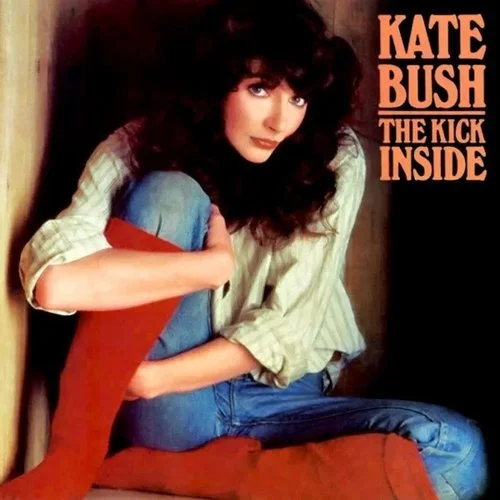
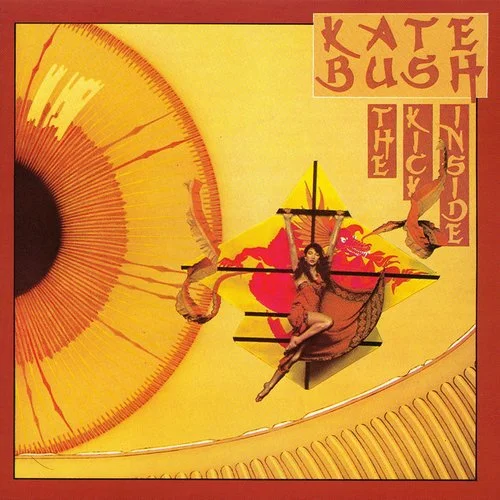
its cover before, I am doing a run of features to mark forty-five years since The Kick Inside was recorded. It is my favourite album and, as such, I love almost everything about it. One of the things that has always split me about the album is the cover. In different countries a different image was used. For the U.K. release, there is Kate Bush in the background mounted on a kite. The colour scheme and lettering give the album an Oriental vibe, whilst its star seems to be too far in the distance. Alongside Aerial and 50 Words for Snow, it is my least favourite cover. From her quick follow-up, 1978’s Lionheart, Kate was more at the centre with a concept that was more relevant and interesting. That is not to say that The Kick Inside’s U.K. cover is all bad or there were no alternatives at all. Before speaking about that, the Kate Bush Encyclopedia has interviews from Bush about The Kick Inside. The first interview snippet actually mentions the cover for her debut album:

I think it went a bit over the top [In being orientally influenced], actually. We had the kite, and as there is a song on the album by that name, and as the kite is traditionally Oriental, we painted the dragon on. But I think the lettering was just a bit too much. On the whole I was surprised at the amount of control I actually had with the album production. Though I didn't choose the musicians. I thought they were terrific.

I was lucky to be able to express myself as much as I did, especially with this being a debut album. Andrew was really into working together, rather than pushing everyone around. I basically chose which tracks went on, put harmonies where I wanted them...

I was there throughout the entire mix. I feel that's very important. Ideally, I would like to learn enough of the technical side of things to be able to produce my own stuff eventually. (The Blossoming Ms. Bush, 1978)

As far as I know, it was mainly Andrew Powell who chose the musicians, he'd worked with them before and they were all sort of tied in with Alan Parsons. There was Stuart Elliot on drums, Ian Bairnson on guitar, David Paton on bass, and Duncan Mackay on electric keyboards. And, on that first album, I had no say, so I was very lucky really to be given such good musicians to start with. And they were lovely, 'cause they were all very concerned about what I thought of the treatment of each of the songs. And if I was unhappy with anything, they were more than willing to re-do their parts. So they were very concerned about what I thought, which was very nice. And they were really nice guys, eager to know what the songs were about and all that sort of thing. I don't honestly see how anyone can play with feeling unless you know what the song is about. You know, you might be feeling this really positive vibe, yet the song might be something weird and heavy and sad. So I think that's always been very important for me, to sit down and tell the musicians what the song is about. (Musician, 1985)”.

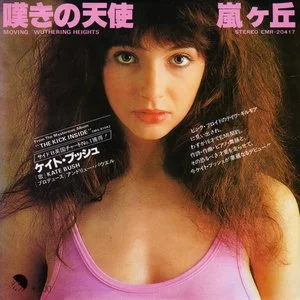
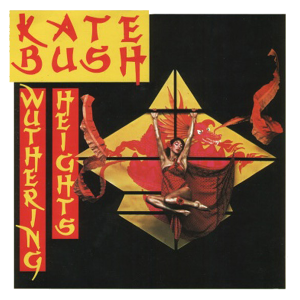
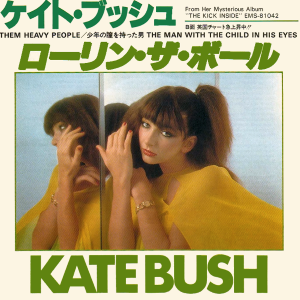
I do like the fact that the cover for The Kick Inside is quite adventurous and not merely a very simple and unengaging portrait. It is hard to put a portrait of an artist on a debut album that conveys all the emotions and intentions within. Gered Mankowitz took a series of images of Bush intended for the cover of Wuthering Heights (Bush’s first single). Because of controversy around one photo where you could see her nipples, that idea was scrapped. One of the photos that has not been given wider attention and celebration adorns the cover of the Japanese version of The Kick Inside (above). I love that Mankowitz shot and I think, had Bush took a step back and considered both images, she would have come around to the fact that a single image of her is a lot more striking and better than a design which is quite misleading when it comes to The Kick Inside and its sound/themes. In any case, Kate Bush’s 1978 debut album is a remarkable and hugely important work. Across the thirteen tracks, she announced herself as a songwriter with no equals. Gaining criticism, sexism and misogyny for a lot of different sources, few back in 1978 could have predicted we would see Bush hitting number one nearly forty-five after The Kick Inside.

In future features, I am going to examine various songs and sides to The Kick Inside. It does turn forty-five next month in terms of the fact it finished recording in August 1977. In February, fans mark forty-five years since its release. Even if the U.K. cover is a little bit of a missed opportunity, it did at least signal Bush was a very original and unpredictable artist in terms of her vision. Consider the cover of The Kick Inside with other Pop artists of the day. Other countries use different images. If you look hard enough, you will find a cover that suits you. Not as stunning as the covers for Never for Ever (1980), The Dreaming (1978) or Hounds of Love (1985), The Kick Inside’s British cover neither put its star at the front clearly visible, nor did it create something that sticks in the mind. Even so, I have come to like the U.K. cover, as it from my favourite ever album. I do wonder what the reaction would have been if the Gered Mankowitz shot of Bush in a pink leotard with a hugely mature, beautiful, and multi-layered look on her face was used. I know some people who really love the cover for The Kick Inside. Clearly, at the time, there was a feeling that it was a good representation of Kate Bush as an artist. Whichever cover you prefer, there is no doubting that 1978’s The Kick Inside is…

A truly spectacular album.

FEATURE: One for the Record Collection! Essential August Releases

FEATURE:


One for the Record Collection!

IN THIS PHOTO: Julia Jacklin

Essential August Releases

__________

I am going to recommend…

 IN THIS PHOTO: Lauran Hibberd/PHOTO CREDIT: Ed Miles for DIY

ten albums due next month that are worth some pennies. Although you may not be able to afford all of them, there is a variety of albums due that will give you options. I am going to start with 12th August. The first album from that week that I want to highlight is Hudson Mohawke’s Cry Sugar. This is an album that I would recommend people pre-order, as it is sounding like it will be terrific and must-hear:

Hudson Mohawke returns with a new album Cry Sugar. His third album, Cry Sugar, deepens his practice of producing motivational music for club goers-uplifting the debauchery and inspiring many through his own brand of anthemic maximalism. Trading in his lineage in dark UK back-alleys filled with Glaswegian antipathy for studio sessions with blazed Pavarotti-inspired tenors and drunk string quartets, Mohawke has dialed in an ongoing fascination with melding high and low culture. After all, he is indeed the architect for the high peaks of high-definition trap production that became embellished in the 2010s-a style that has been appropriated in everything from beer can littered college parties to Arby's commercials. American decadence, then, becomes a stage for his music to thrive-where the DJ booth becomes a composer's podium for him to conduct the tense drama between debauchery and apocalypse, the "mise-en-scene" of club culture in 2022.

Cry Sugar, serves as Hudson Mohawke's first work deeply informed by apocalyptic film scores and soundtracks by everyone from the late Vangelis to the goofy major-chord pomp of 90s John Williams. Cry Sugar also serves as Mohawke's own demented OST to score the twilight of our cultural meltdown. As the album's artwork (by Wayne horse Willehad Eilers) depicts-we are arm-in-arm with the Ghostbusters marshmallow man, returning home while swinging a bottle of Jack only to gaze out at the gray tempest of a coming catastrophe.

Despite the apocalyptic undercurrent, Mohawke foregrounds the iridescent vibrattos of gospel choirs, soul samples, and scat-sampling throughout Cry Sugar-scaling our bright human drama in the tumult. Known for his deft uses of fragmentation and deconstruction, Mohawke presents our fraught cultural moment as set against the quintessential backdrop of late capitalism-a tightrope walking between chaos and the unashamedly euphoric, between the erratic and the bold, the noisy and anthemic, the saccharine with the devastating. Cry Sugar becomes a testament of its namesake. In our most intimate, melancholic moments, something sweet and twisted emerges. A wry smile beneath the malice. In 2022, we cry sugar”.

The second album from 12th August that I want to spotlight is Pale Waves’ Unwanted. A band that has never really got the acclaim and airplay that they deserve, their third studio album is shaping up to be their best. An urgent, inclusive, and incredible album that will leave its mark, go and pre-order it if you can. Led by the fantastic Heather Baron-Grace, Pale Waves are a group that possess this great chemistry and bond. I think that Unwanted will get a lot of positive reviews when it comes out on 12th August:

A fiery, confident kick-back against convention, Pale Waves’ third record Unwanted sees the group building on the promise of last year’s UK Top 3 album Who Am I?, and staking their claim as British rock’s most dynamic young group. “It’s bold and unapologetic, and that’s what the Pale Waves community is about,” says frontwoman Heather Baron-Gracie herself. “We don’t need to fit a perfect mould, we don’t need to apologise for being ourselves, and we won’t change for anyone. That acceptance is what connects us.” Led by riotous lead single “Lies”, Unwanted is a record that reaches out to the passionate community of misfits and LGBTQI+ fans around the band, tapping into darker emotions than ever before while also striking a fresh tone of defiance”.

Let’s go to 19th August. That is the week when Hot Chip release Freakout/Release. One of Britain’s best bands, they are constantly pushing their sound and improving. They have a very loyal and growing fanbase around the world. I am looking forward to seeing what comes about with their latest album. On the evidence we have heard so far, it is looking like business as usual for Hot Chip! This is an album that I would point people in the direction of regarding pre-ordering. Freakout/Release is going to be an amazing release that will rank alongside the best of this year:

Freakout/Release is another dizzying high in a multi-decade career that’s seen Hot Chip continuing to innovate and develop a rich, resonant songcraft. And while they continue to operate at peak form, the album also feels like a new chapter for the group - a collection of flesh-and-blood songs that finds the band reaching into the darkness to emerge as a true creative unit, their gazes fixed positively on the future ahead. The album features Canadian rapper Cadence Weapon, British DJ and musician Lou Hayter and production work from Soulwax”.

The next album from 19th August that you may want to investigate is Viva Las Vengeance by Panic! At the Disco. Go and pre-order the album. It seems like the seventh studio album from Panic! At the Disco is going to see them take a slightly different course. Another band that has never quite gained the embrace and full approval that is deserved, I am going to be curious seeing how critics perceive Viva Las Vengeance. If you have some spare pennies for next month, it is well worth investing in the new album from Panic! At the Disco:

Panic! At The Disco release their seventh studio album, Viva Las Vengeance. The upbeat, driving, anthemic title track, kicks off the new era of Panic! At The Disco.

Viva Las Vengeance shows a change in process for frontman / songwriter Brendon Urie, having cut everything live to tape in Los Angeles alongside his friends and production partners, Jake Sinclair and Mike Viola. The cinematic musical journey is about the fine line between taking advantage of youryouth, seizing the day and burning out. The songs take an introspective look into his relationship with his decade plus career including growing up in Las Vegas, love, and fame”.

There are a couple of other albums from 19th August that I want to direct you towards. The brilliant Lauran Hibberd prepares to release Garageband Superstar. An artist that I have known about for a while now, she is one of our very best and most promising artists. A unique and potent songwriter who is consistently stunning, her album is going to be one that will introduce her music to a wider audience. I would urge people to pre-order what is likely to be a simply brilliant album from the Isle of Wight wonder. I reckon Hibberd is going to be a massive star of the future. I have a lot of affection and respect for everything that she does:

Isle Of Wight’s resident slacker pop queen. Lauran Hibberd’s rise towards the forefront of the emerging indie elite shows no signs of slowing, with her charismatic, tongue-in-cheek songwriting already attracting widespread press attention (The Guardian, NME, The Line Of Best Fit, Dork, DIY, Billboard, NYLON, Clash, Gigwise, Upset), and significant praise across BBC Radio 1 airwaves (Clara Amfo, Jack Saunders, Jordan North). With her eagerly anticipated debut album on the way later this year, and tour dates galore lined up, the indie sensation is primed for a thrilling twelve months”.

Prior to finishing with a crop of albums out on 26th August worth some money, 19th August also sees Phoebe Green’s Lucky Me come into the world. An album that you will want to pre-order, do go and check this out. She is another fabulous young artist who has her own vibe and is among the very best artists this country has produced in years. Like Lauran Hibberd, Phoebe Green is shaping up to be a legend of the future. I am a fan of hers for sure! Lucky Me is an album that everyone will want to check out and listen to, as Green is a magnificent songwriter and talent that you should not pass by:

24 year old Mancunian alt-pop star Phoebe Green's debut studio album Lucky Me is released on Chess Club. Produced by Alex Robertshaw of multi time Mercy Award nominated outfit, Everything Everything and his production partner Tom Fuller, the album comes off the back of supporting Self Esteem, Everything Everything and Baby Queen in one month alone, a BBC Radio 1 Maida Vale session and a Killing Eve sync. For fans of New Order, Ladytron and Big Moon”.

Let’s get to 26th August, as there are a few albums form that week which you will want to check out. The first that you need to be aware of is Ezra Furman’s All of Us Flames. Her new album is going to be one that will get a lot of love and positive reaction. Go and pre-order All of Us Flames if you can:

A singer, songwriter, and author whose incendiary music has soundtracked all three seasons of the Netflix show Sex Education, Ezra Furman has for years woven together stories of queer discontent and unlikely, fragile intimacies. Her new album All of Us Flames widens that focus to a communal scope, painting transformative connections among people who unsettle the stories power tells to sustain itself.

Produced by John Congleton in L.A., All of Us Flames unleashes Furman's songwriting in an open, vivid sound world whose boldness heightens the music's urgency. The record arrives as the third instalment in a trilogy of albums, beginning with 2018's Springsteen-inflected road saga Transangelic Exodus and continuing with the punk rock fury of 2019's Twelve Nudes.

"This is a first person plural album," Furman says. "It's a queer album for the stage of life when you start to understand that you are not a lone wolf, but depend on finding your family, your people, how you work as part of a larger whole. I wanted to make songs for use by threatened communities, and particularly the ones I belong to: trans people and Jews”.

A few other great albums are due on 26th August. One that I am especially excited to hearing is Julia Jacklin’s PRE PLEASURE. The Australian artist’s third studio album follow’s 2019’s Crushing. Jacklin is a magnificent songwriter who always delivers brilliant work. PRE PLEASURE is an album that everyone needs to pre-order, as it is going to be among the absolute best of 2022. I am a big fan of Julia Jacklin, so I am looking forward to listening to her latest effort. Again, if you have some spare pennies for next month, I can recommend the brilliant Jacklin and PRE PLEASURE:

Pre Pleasure is the breath-taking third album from Australian singer-songwriter, Julia Jacklin. Co-produced with Marcus Paquin (The Weather Station, The National), Pre Pleasure sees Jacklin as her most authentic self, delivering the most intimate, raw and devastating ten songs of her career to date. An uncompromising and masterful lyricist, always willing to mine the depths of her own life experience, and singular in translating it into deeply personal, timeless songs”.

One of the big albums of this year comes from Muse in the form of Will of the People. Their ninth studio album, this is one that you will want to pre-order. Listening to the singles from the album they have put out already makes have shown that this is going to be a very strong album from the Devon band:

Grammy Award winning band Muse release their long-awaited ninth studio album Will Of The People via Warner Records. Of the album, Muse frontman Matt Bellamy says, “Will Of The People was created in Los Angeles and London and is influenced by the increasing uncertainty and instability in the world. A pandemic, new wars in Europe, massive protests and riots, an attempted insurrection, Western democracy wavering, rising authoritarianism, wildfires and natural disasters and the destabilization of the global order all informed Will Of The People. It has been a worrying and scary time for all of us as the Western empire and the natural world, which have cradled us for so long are genuinely threatened. This album is a personal navigation through those fears and preparation for what comes next.”

With Muse being Muse, there is NO bowing to any singular genre. The album’s title track “Will Of The People” brings playful provocation to a dystopian glam-rocker while there is an innocence and a purity to the nostalgic electronic textures of “Verona.” From the visceral thrill of “Won’t Stand Down,” to the industrial-tinged, granite heavy riffs of “Kill Or Be Killed,” or the lightning-bolt rush of “Euphoria,” the album concludes with the frenetic finale of the brutally honest “We Are Fucking Fucked.” On the band’s new single “Compliance,” Bellamy says, “

Will Of The People was produced by Muse. Key collaborators include mixing on eight tracks by the multiple Grammy Award winner Serban Ghenea; mixing from Dan Lancaster on “Won’t Stand Down,” and additional mixing on “Kill Or Be Killed” from Aleks von Korff”.

Let’s round off with Stella Donnelly’s Flood. An album that people need to pre-order, she is an artist that many might not know about. I hope that this changes with the release of an album that is sounding really fascinating and compelling. Donnelly is an artist sure to go very far indeed:

Like the many Banded Stilts that spread across the cover of her newest album Flood, Stella Donnelly is wading into uncharted territory. Here, she finds herself discovering who she is as an artist among the flock, and how abundant one individual can be. Flood is Donnelly’s record of this rediscovery: the product of months of risky experimentation, hard moments of introspection, and a lot of moving around.

Donnelly’s early reflections on the relationship between the individual and the many can be traced back to her time in the rainforests of Bellingen, where she took to birdwatching as both a hobby and an escape in a border-restricted world. By paying closer attention to the natural world around her, Donnelly recalls “I was able to lose that feeling of anyone’s reaction to me. I forgot who I was as a musician, which was a humbling experience of just being; being my small self.”

Reconnecting with this ‘small self’ allowed Donnelly to tap into creative wells she didn’t know existed. Soon songs were coming to her in a way she could not control and over the coming months, Donnelly accumulated 43 tracks as she moved out of Bellingen and around the country, often finding herself displaced due to border restrictions and a tough rental market.

Though the writing of Flood was an intensely personal undertaking, Donnelly still saw the recording process as one of her most collaborative projects yet. Along with her band members, co-producing the record beside Anna Laverty and Methyl Ethyl’s Jake Webb helped to foster an important spontaneity in the studio. With Webb, Donnelly could “dig in” and discover a “forward-leaning sound” she’d been searching for, while Laverty’s ability to “capture the piano” and discern the “perfect take” allowed the songwriter to take risks, many of which have clearly paid off.

Looking back at the Banded Stilt, Donnelly ultimately appreciates how when “seen in a crowd they create an optical illusion, but on its own it’s this singular piece of art.” While each song in Flood is a singular artwork unto itself, the collective shares all of Stella Donnelly in abundance: her inner child, her nurturing self, her nightmare self; all of herself has gone into the making of this record, and although it would take an ocean to fathom everything she feels, it’s well worth diving in”.

That is ten albums due next month that I would recommend to people. Of course, there are many others that you can get. From Muse and Julia Jacklin through to Lauran Hibberd and Phoebe Green, there is a great variety of albums for you to choose from. If you are looking for some guidance as to which August-due albums are worth your money, then I hope that the above…

IS of some help.

FEATURE: Second Spin: The Beatles - Beatles for Sale

FEATURE:


Second Spin

The Beatles - Beatles for Sale

__________

THE fourth album from The Beatles…

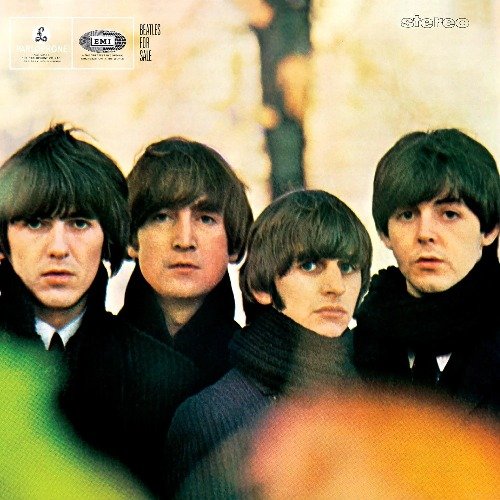
Beatles for Sale was released on 4th December, 1964. It was a bit of a departure from the more upbeat tone that had characterised their previous work. At this point, The Beatles were exhausted because of touring schedules and constant work. I think a lot of people overlook this as a classic or do not rank it highly. Whilst I normally highlight underrated albums here that are not seen as universally great but have strengths, it seems a bit ridiculous to suggest that Beatles for Sale has weaknesses and needs my backing! In terms of the band, I do not hear that many people discuss Beatles for Sale. It contains one of The Beatles’ most popular songs in the form of Eight Days a Week. 1965’s Help! saw another shift, as the album contains mostly original compositions by John Lennon and Paul McCartney. Beatles for Sale features a balance of great cover versions and some originals. Although some of the covers (such as Carl Perkins’ Honey Don’t) are not that great and one or two originals are promising but not at the band’s peak (What You’re Doing springs to mind), Beatles for Sale is a wonderful album that does not show fatigue or any of the tiredness the band were facing when recording through 1964. I love the powerful and spine-tingling vocals from Lennon on I’m a Loser and Mr. Moonlight. McCartney’s I’ll Follow the Sun is a beautiful short number, whilst songs like No Reply and I Don’t Want to Spoil the Party are great cuts that you do not hear of much.

Although there is a little more anger in The Beatles’ songs here (especially from Lennon) than previous albums, their innate and unmatched compositional and songwriting abilities makes Beatles for Sale a triumph. It is filled with electricity, variety and quality. I want to bring together a couple of reviews. The first, from Pitchfork, hints at a slightly messy album. They were still impressed by what they heard:

The Beatles themselves were changing how the business worked, but Beatles For Sale, of all the British records, bears the stamp of these business realities. It's a mess.

But it's a really good mess. Taylor's sleevenotes are also interesting because they go out of the way to reassure listeners that everything they're hearing can be reproduced live. Studio experimentation was becoming more important to the band and producer George Martin, but clearly someone viewed it with a little nervousness. You can understand why: The Lennon-McCartney originals on Beatles For Sale are often full of curious arrangements, drones, jagged transitions, and lashings of aggression. Blame pot, or the inspiration of Bob Dylan, or just the pressure-cooker environment the group was in, but the record hits a seam of angry creativity.

This is particularly true of Lennon's amazing first three songs. "No Reply" shatters itself with waves of jealous rage, taking the menace that had flecked Beatles music and bringing it up in the mix: his dangerously quiet "that's a lie" is the most chilling moment in their catalogue. "I'm a Loser" turns that anger inward with just as much brutality. And "Baby's in Black" curdles a nursery rhyme, transforms the group's crisp pop sound into an off-kilter clang, and uses John and Paul McCartney's double vocal to thicken the soupy sound even further. This run of tracks marries the direct attack of their earliest material and the boundary-pushing of their later albums, and stands with the best of both.

Even so it's a relief when "Rock and Roll Music" breaks the tension, especially when you notice that the band are playing their best rock'n'roll since "Twist and Shout". Perhaps the workrate had pushed them back into the Hamburg hot zone, but the uptempo covers on Beatles For Sale are fiercely good-- as ragged, loud and immediate as the songs needed to be. Even "Mr. Moonlight" fits the aggressive mood, the ugliness of its organ solo surely deliberate

McCartney's songs on Beatles For Sale are more thoughtful than moody, though on his splendid "Every Little Thing"-- given melodramatic thrust by Shangri-Las-style piano and bass drum-- he's distinctly melancholy, his "yes, I know I'm a lucky guy" sounding like an attempt to convince himself of that. But Lennon's anger and the band's rediscovery of rock'n'roll mean For Sale's reputation as the group's meanest album is deserved, even if it has "Eight Days a Week" as its breezy centerpiece. The lumpiest and least welcoming of their early records, it's also one of the most rewarding”.

I am going to finish with a review from AllMusic. Awarding it five stars, they made some interesting points about Beatles for Sale. I definitely think it is an underrated album in their cannon that more people should give a listen to:

It was inevitable that the constant grind of touring, writing, promoting, and recording would grate on the Beatles, but the weariness of Beatles for Sale comes as something of a shock. Only five months before, the group released the joyous A Hard Day's Night. Now, they sound beaten, worn, and, in Lennon's case, bitter and self-loathing. His opening trilogy ("No Reply," "I'm a Loser," "Baby's in Black") is the darkest sequence on any Beatles record, setting the tone for the album. Moments of joy pop up now and again, mainly in the forms of covers and the dynamic "Eight Days a Week," but the very presence of six covers after the triumphant all-original A Hard Day's Night feels like an admission of defeat or at least a regression. (It doesn't help that Lennon's cover of his beloved obscurity "Mr. Moonlight" winds up as arguably the worst thing the group ever recorded.) Beneath those surface suspicions, however, there are some important changes on Beatles for Sale, most notably Lennon's discovery of Bob Dylan and folk-rock. The opening three songs, along with "I Don't Want to Spoil the Party," are implicitly confessional and all quite bleak, which is a new development. This spirit winds up overshadowing McCartney's cheery "I'll Follow the Sun" or the thundering covers of "Rock & Roll Music," "Honey Don't," and "Kansas City/Hey-Hey-Hey-Hey!," and the weariness creeps up in unexpected places -- "Every Little Thing," "What You're Doing," even George's cover of Carl Perkins' "Everybody's Trying to Be My Baby" -- leaving the impression that Beatlemania may have been fun but now the group is exhausted. That exhaustion results in the group's most uneven album, but its best moments find them moving from Merseybeat to the sophisticated pop/rock they developed in mid-career”.

Even though there are a couple of tracks on Beatles for Sale that are not as strong as they could have been, The Beatles are not uninspiring or lacking energy. The cover (shot by Robert Freeman) depicts the band slightly bedraggled and drained. If you listen to Beatles for Sale, there is a great mix of cynicism, downbeat, Rock and Roll explosion and amazingly inspired originals. Although Eight Days a Week is the best-known song on Beatles for Sale, there is more than enough away from that song that is up there with their best stuff. Not talked about as much as Beatles albums such as Revolver (1966) and Abbey Road (1969), the superb Beatles for Sale

IS an incredible listen.

FEATURE: Inspired By… Part Seventy: Fugees

FEATURE:


Inspired By…

Part Seventy: Fugees

__________

A group that released…

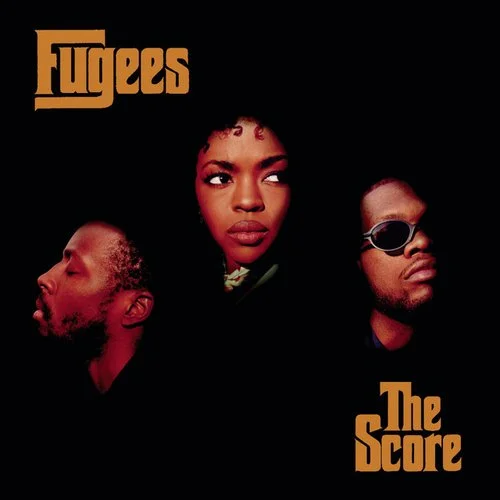
two albums (their second, 1996’s The Score, is their best I think), Fugees consists of Ms. Lauryn Hill, Wyclef Jean and Pras Michel. A Hip-Hop group who are iconic and adored, there is new talk that they might perform together. It does seem like they will tour again at some point in time. To show how many artists they have inspired, I am ending with a playlist of songs from those who are definitely indebted to Fugees. Before that, AllMusic provide a biography about the New Jersey-formed trio:

The Fugees translated a seamless blend of jazz-rap, R&B, and reggae into huge success during the mid-'90s, when the New Jersey-area trio's seminal sophomore album The Score hit number one on the pop charts and sold over five million copies before winning a pair of Grammy Awards in 1997. Featuring the songs "Killing Me Softly" and "Ready or Not," the effort became a '90s classic, while each member went on to pursue solo careers that extended into the 2000s.

The trio formed in the late '80s in South Orange, New Jersey, where high school friends Lauryn Hill and Prakazrel Michel ("Pras") began working together. Michel's cousin Wyclef Jean joined the group, dubbed the Tranzlator Crew, and they signed to Ruffhouse/Columbia in 1993. After renaming themselves the Fugees (a term of derision, short for refugees, which was usually used to describe Haitian immigrants), they entered the studio to record their first official full-length, Blunted on Reality. Issued in early 1994, the album showcased a beat-driven, hip-hop crew vibe, with Hill, Jean, and Michel trading verses in a fashion similar to A Tribe Called Quest, Poor Righteous Teachers, and Digable Planets. While an underground favorite, the album didn't make much of a dent on the charts and they veered in a different, but ultimately more successful, direction on their follow-up.

The Score arrived in 1996 and was an instant hit. Retaining some of their earlier jazz-rap spirit, while incorporating traditional R&B that showcased Hill's singing abilities, the album topped charts across the globe and was certified multi-platinum around Europe and in the U.S. Featuring the soulful, chart-topping single "Killing Me Softly" and a top 40 cover of Bob Marley's "No Woman No Cry," The Score made significant dents in the commercial mainstream while retaining their existing fan base, becoming one of the surprise hits of 1996. At the 1997 Grammy Awards, the Fugees won Best Rap Album and Best R&B Vocal Performance by a Duo or Group for "Killing Me Softly."

Following the success of The Score, the Fugees took a break, pursuing solo endeavors that eventually made the hiatus permanent. Jean issued his first solo album, 1997's The Carnival Featuring the Refugee Allstars, while Michel joined Mya and Ol' Dirty Bastard for the hit single "Ghetto Superstar (That Is What You Are)." In 1998, Hill released her chart-topping, neo-soul opus The Miseducation of Lauryn Hill, which went on to outsell The Score and win five Grammy Awards in 1999. While Hill bowed out while on top of her game, Pras continued rapping and also pursued acting and film production. Meanwhile, Jean continued to release solo material -- issuing over a dozen albums -- and produced for artists, working with the likes of Destiny's Child, Santana, Shakira, Young Thug, and many more.

Almost a decade after peaking with The Score, they reconvened in 2005, performing together on a European tour and releasing the single "Take It Easy." However, the reunion was brief, and the trio disbanded once again. While their overall time together was short, The Score endures as one of the most critically acclaimed albums of all time and each Fugee remained active -- both musically and politically -- for decades to come”.

To commemorate and recognise the immense influence of Fugees, the playlist below are songs from artists who cite the group as important – either that or they have been compared with them. Let’s hope that there is more touring from Fugees. Even though the trio are unlikely to release a third studio album, we have not seen the last of them. Here are tracks from artists who count Fugees…

AS an influence.

FEATURE: Vibes in the Sky Invite You to Dine: Returning to Kate Bush’s Blow Away (For Bill)

FEATURE:


Vibes in the Sky Invite You to Dine

Returning to Kate Bush’s Blow Away (For Bill)

 __________

A song considered to be…

one of the weakest on her third studio album, Never for Ever, I wanted to come back to the brilliant Blow Away (For Bill). Whilst it is not my favourite song from the album, it is a beautiful song that gets overlooked. The song has quite a sad backstory. Dedicated to lighting director Bill Duffield, he worked with Kate Bush and her team for The Tour of Life. On 2nd April, 1979, following a show at the Poole Arts Centre in Dorset, the equipment had been loaded up for the next date, and Duffield was having a last look around the stage area to make sure nothing had been left behind. An open panel was left in the flooring so, as Duffield crossed the stage, he fell seventeen feet onto a concrete floor under the stage. He was put on life support but died a week later. Barely in his twenties, it was a tragic loss and hit Bush hard. On 12th May, 1979, there was an In Aid of Bill Duffield concert in Hammersmith that included contributions from Peter Gabriel and Steve Harley. Before going into a bit more detail, the Kate Bush Encyclopedia collected some interviews where Bush discussed Blow Away (For Bill):

'Blow Away' is a comfort for the fear of dying and for those of us who believe that music is perhaps an exception to the 'Never For Ever' rule. (Kate Bush Club newsletter, September 1980)

So there's comfort for the guy in my band, as when he dies, he'll go "Hi, Jimi!" It's very tongue-in-cheek, but it's a great thought that if a musician dies, his soul will join all the other musicians and a poet will join all the Dylan Thomases and all that.

None of those people [who have had near-death experiences] are frightened by death anymore. It's almost something they're looking forward to. All of us have such a deep fear of death. It's the ultimate unknown, at the same time it's our ultimate purpose. That's what we're here for. So I thought this thing about the death-fear. I like to think I'm coming to terms with it, and other people are too. The song was really written after someone very special died.

Although the song had been formulating before and had to be written as a comfort to those people who are afraid of dying, there was also this idea of the music, energies in us that aren't physical: art, the love in people. It can't die, because where does it go? It seems really that music could carry on in radio form, radio waves... There are people who swear they can pick up symphonies from Chopin, Schubert. We're really transient, everything to do with us is transient, except for these non-physical things that we don't even control... (Kris Needs, 'Lassie'. Zigzag (UK), November 1985)”.

When it comes to Never for Ever, Blow Away (For Bill) is not often discussed. I think the song boasts one of Bush’s best vocal performances on the album. The fact that she dedicated a song to Bill Duffield shows how much he meant to her. More than anything, the song is this unusual and fascinating glimpse into a musical afterlife.

The lyrics name-check departed musicians such as Sanny Denny and Marc Bolan. Bush debuted the song on 18th November, 1979 during a gig at the Royal Albert Hall to celebrate seventy-five years of the London Symphony Orchestra. This was the first and only performance of the song. The lyrics draw you in. You can picture these musicians together in Heaven (or another place) joined by the young Bill Duffield. Maybe Bush wanted to feel like her friend was being looked after following death or had this reward and company: “Our engineer had a different idea/From people who nearly died but survived/Feeling no fear of leaving their bodies here/And went to a room that was soon full of visitors/Hello. Minnie/Moony, Vicious/Vicious, Buddy Holly/Sandy Denny”. I can’t think of too many songs since Blow Away (For Bill) when it comes to the story and lyrics. I love the song and feel that it should be better regarded and played more. The third track on Never for Ever, it follows Delius (Song of Summer) and All We Ever Look For. A beautiful run of songs, they are ethereal and memorable. Never for Ever is a Kate Bush album that definitely should be heard by more people, as a lot of attention still surrounds other albums like Hounds of Love. Perhaps not as strong as Babooshka, Army Dreamers and Breathing, Blow Away (For Bill) is a brilliant song for Bill Duffield. It is definitely a moving and…

FITTING tribute.

FEATURE: Second Spin: Ciara - Ciara

FEATURE:


Second Spin

Ciara - Ciara

 __________

AN artists whose albums…

have never quite got the credit they deserve, I think that Ciara’s eponymous album maybe won critics around. Released on 5th July, 2013, Ciara entered the US Billboard 200 at number two. Some critics felt there was a lack of identity and memorability. That the album didn’t remain with you after you have done listening. I would disagree. I feel it is an album that does not get played as much as it should. With a new Ciara song out there, JUMP, maybe she is getting ready to announce an eighth studio album (her seventh, Beauty Marks, was released in 2019). An album that takes risks and does not stand still, her fifth studio album was definitely a step up in terms of its quality and breadth. One of the most underrated artists there is, there is a lot to love when it comes to Ciara’s eponymous album. Incredible successful singles such as Body Party and I’m Out, this is an album that warrants new respect and airplay. I am not sure what direction a new Ciara album might take. If you have not heard the Texan R&B artist before, then definitely check out Ciara and her other studio releases. I can’t find too many interviews with Ciara from 2013. Instead, I am going to get to a couple of positive reviews for the album. It makes me wonder whether there will be a tenth anniversary release for Ciara next year.

The first review that I want to bring in is from AllMusic. Although some were mixed or had some negative things to say about Ciara,  many were very positive when it came to highlighting the album’s strengths and terrific songs:

Whether she was dropped, released, or merely shifted away from her deal with LaFace parent Jive, Ciara was displeased with the lack of support given to Fantasy Ride and Basic Instinct. Her self-titled fifth album sees her back with LaFace co-founder L.A. Reid, president of Epic, whose roster added several LaFace artists due to distributor Sony's consolidation of labels. Ciara took plenty of time to develop the album -- long enough for delays, a scrapped lead single ("Sweat"), the release of various non-album cuts, and even a change of title (originally One Woman Army). The result isn't a muddled mess but another lean and focused set, despite the involvement of several writers and producers. A full-length partnership with fellow Atlanta native Mike Will, specialist in woozy and entrancing trunk rattlers, would have been ideal -- if perhaps too obvious -- but they do connect on "Body Party," one of Ciara's most attractive slow jams, as hot as "Promise" and "Speechless." Slinking and slightly predatory or confrontational content courses throughout the album, including the booming "Sophomore" ("So you say that you a bachelor/Well step your game up and get your master's), the winding "Keep on Lookin'" ("Keep on lookin', keep on lookin' with your lookin' ass), and the steamier, more gleaming likes of "Super Turnt Up" and "DUI." Those are the highlights, while the more energetic and/or pop-oriented material -- "Overdose," the Kid 'N Play-quoting "Livin' It Up," the mature and middling Future duet "Where You Go" -- is functional if not as memorable”.

Just before round off, there is another review that I want to bring into the mix. The Guardian were among those who had lots of good things to note about the remarkable Ciara. The more I listen to the album, the more that I bond with it and dive deep:

One of the most heartening moments on Ciara's fifth album comes when Nicki Minaj – with whom the R&B singer has built up a welcome chemistry of late, with three superb collaborations during the past year – devotes half her guest rap on Livin' It Up to affirming her partner's greatness. It's a sisterly riposte to Ciara's name having become a byword for commercial failure, which is a reflection less of her talent than of mismanagement and fickle pop trends. In fact, Ciara has quietly built up a formidable discography, and this eponymous set maintains the high quality. It finds Ciara at her most tender (the reverie of DUI; the voluptuous, My Boo-sampling Body Party) and authoritative (Keep on Lookin', a taunting repudiation of the male gaze; the hedonism-as-vengeance anthem I'm Out). At times she's both, as on the hypnotic, organ-underpinned Sophomore and the magnificent Super Turnt Up, on which she coos prettily over twinkling synths before contorting her delivery into a ferocious screwface. The infinitely more successful Rihanna has occasionally mocked her underperforming rival; in light of their recent artistic output, it's hard not to feel that in a more just parallel universe, their careers would be exchanged”.

A brilliant album that I would point everyone in the direction in, I was compelled to feature Ciara in this Second Spin. Perhaps her best-reviewed album to date, it gets me guessing what happens next and where her music might take her. With so much great music under her belt, I know we will be enjoying albums from her for years more. 2013’s Ciara proves that the Fort Hood-born artist is…

A truly amazing proposition.

FEATURE: Spotlight: Yaya Bey

FEATURE:


Spotlight

PHOTO CREDIT: Lawrence Agyei 

Yaya Bey

__________

HAVING released one of this year’s…

 PHOTO CREDIT: Lawrence Agyei

best albums in the form of Remember Your North Star, Yaya Bey is an artist that people need to know about. The Brooklyn R&B artist is an extraordinary talent. Someone I have recently discovered and am loving, I was compelled to write about Bey. Before getting to some interviews from her, Ninja Tune provide some great and detailed biography about an artist who is among the most promising around. A rising artist with a tremendous talent and sound, Yaya Bey should definitely be on your radar:

Yaya Bey is one of R&B’s most exciting storytellers. Using a combination of ancestral forces and her own self-actualization, the singer/songwriter seamlessly navigates life’s hardships and joyful moments through music. Bey’s new album, ‘Remember Your North Star’ (out June 17), captures this emotional rollercoaster with a fusion of soul, jazz, reggae, afrobeat and hip-hop that feeds the soul. The artist’s knack for storytelling is best displayed in the album’s lead single, “keisha”. It’s an anthemic embodiment of fed-up women everywhere who have given their all in a relationship, yet their physical body nor spiritual mind could never be enough.

Bey’s ability to tap into the emotionally kaleidoscopic nature of women, specifically Black women, is the essence of the entire album. With themes of misogynoir, unpacking generational trauma, carefree romance, parental relationships, women empowerment and self-love, Remember Your North Star proves that the road to healing isn’t a linear one – there are many lessons to gather along the journey.

“I saw a tweet that said, ‘Black women have never seen healthy love or have been loved in a healthy way.’ That's a deep wound for us. Then I started to think about our responses to that as Black women,” Bey says of ‘Remember Your North Star’s title inspiration, an entirely self-written project featuring key production from Bey herself, with assists from Phony Ppl’s Aja Grant and DJ Nativesun. “So this album is kind of my thesis. Even though we need to be all these different types of women, ultimately we do want love: love of self and love from our community. The album is a reminder of that goal.”

The artist’s raw, unfiltered approach threads ‘Remember Your North Star’. “big daddy ya” finds the artist tapping into her inner rapper, channeling the too-cool and confident factor that artists like Megan Thee Stallion and City Girls are well-known for. “reprise” captures women’s exhaustion everywhere, with its lyrical tug-of-war of bettering oneself while trying to cut yourself off from toxic relationships. There’s also “alright” (co-produced by Aja Grant), a soothing, jazz-inspired ditty that showcases Bey’s love for the genre’s icons like Billie Holiday, while the carefree “pour up” highlights the artist’s friendship with DJ Nativesun (the song’s producer) and will immediately rush hips to the dancefloor.

There is no fakeness when it comes to Bey’s music, and her authenticity can be partly attributed to her upbringing in Jamaica, Queens. Early childhood memories included watching her father (pioneering ‘90s rapper Grand Daddy I.U) record in his studio – which also doubled as Bey’s bedroom – and listening to records by soul legends Donny Hathaway and Ohio Players around the house. Beginning at age nine, the artist’s father would leave space for her to write hooks to his beats, using her favorite artists like Mary J. Blige and JAY-Z as inspirations.
Bey quickly grew out of New York City and moved to D.C. at age 18. Calling it her second home, the city further ignited the artist’s creativity as she worked at museums and libraries, as well as tapping into poetry and attending protests. Her first release ‘The Many Alter - Egos of Trill’eta Brown’ in 2016 that  incorporated a digital collage and a book, was praised by FADER, Essence, and many more. Bey followed up with fellow critically acclaimed projects like 2020’s ‘Madison Tapes’ album and 2021’s ‘The Things I Can’t Take With Me’ EP – the first release on Big Dada’s relaunch as a label run by Black, POC and minority ethnic people for Black, POC and minority ethnic artists – that received support from Pitchfork, Rolling Stone, NPR, Harper’s Bazaar, FADER, HotNewHipHop, Dazed, Clash, FACT, Crack Magazine, The Line of Best Fit and Mixmag.

In 2021, Bey was also profiled by Rolling Stone for their print magazine, contributed to the publication’s The 500 Greatest Songs of All Time list, and curated a playlist for Document Journal. The artist’s “september 13th (DJ Nativesun Remix)” and “made this on the spot” singles received strong radio support from BBC Radio 6 Music and BBC 1 Xtra’s Jamz Supernova. Last May, Bey was interviewed on BBC 1Xtra and performed three tracks for Jamz Supernova’s “Festival Jamz” including The Things I Can’t Take With Me’s “fxck it then” and “september 13th” that December.

Bey is also a critically acclaimed multidisciplinary artist and art curator, creating the artwork for her music through collages of intimate photos and self-portraits. In 2019, her work was featured  in the District of Columbia Arts Center’s “Reparations Realized” exhibit and Brooklyn’s Museum of Contemporary African Diasporan Arts (MoCADA)’s “Let the Circle Be Unbroken” exhibit. She also completed multiple fine art residencies with MoCADA, curating programs that reflect the same theme that drives her music: the Black woman's experience.

‘Remember Your North Star’ continues Bey’s personal and artistic evolution as she strives to be a soundboard for Black women everywhere. “I feel empowered in music because I can transform anything that happens to me into something that is valuable. Music helps me to see the value in what's going on in my life,” she explains. “There’s a spirit in music. It’s a culture and I'm in that community, contributing my story which keeps us connected”.

The first interview is from Okayplayer. With their headline stating Yaya Bey is creating healing music for Black Women, Remember Your North Star is an album that is even more than that. It is a work that can provoke so many different emotions and sensations. A brilliant voice and songwriter, it is no surprise that there were so many positive reviews for her latest album. I will come to one of them at the end:

Yaya Bey’s newest R&B album is a healing balm she created for herself as she navigated the past few years of the pandemic. Aptly titled Remember Your North Star, Bey said that the 18-track project is a product of her trying to find her own sound after years of creating music under the strict vision of men (specifically her ex-husband and her ex-boyfriend) she was involved with. The end result is a full-length produced by Bey, Phony Ppl’s Aja Grant, and DJ Nativesun, that fuses R&B, jazz, soul, and hip-hop to soundtrack Bey’s love letter to herself and Black women like her.

On Remember Your North Star, Bey is lyrically thoughtful, sprinkling each track with soliloquies about a former lover or sharing her thoughts on double standards. She utilizes her alto voice on this album alongside funky, rhythmic beats to get her thoughts across in a distinct manner, evoking Erykah Badu’s intricate debut Baduizm, but with a modern touch.

The vulnerability she offers up on this record stems from the time she’s been spending in therapy. She credited her therapist as a source that has allowed her to understand the road she’s been on to “repair herself,” and shared that, as a Black woman, hyper-masculinity and misogyny are the core of what she believes her music career and life were led by up until two years ago — whether it was the misogyny of family figures like her father or romantic interests. This pivotal choice to disengage from these sources of power shifted things for her.

 “I got divorced and then had a breakup after the divorce and [began] realizing I had a lot to unpack,” she said. “Even now I think I’m still unpacking it. I think in the album process I was in the muck of it.” Bey adds, “[Creating music] is sort of raw, but I do it because music is what I’m good at. It’s not always fun but I’m grateful for it.”

Beginning in September 2020, the Queens native toyed with creating an album as she navigated what it was like being divorced in her early thirties. A lot of the feelings she was grappling with ended up on The Things I Can’t Take With Me, an EP that she released last year. Completed in January this year in New Jersey, Remember Your North Star was created during a time when she was balancing making music while paying her bills.

“I work really hard, work a day job, and then my music is a full-time job,” Yaya said. “By the time I get home I’m dead tired.”

She added that COVID-19 eviscerated sources of income she’d previously relied on (like touring and playing local shows), saying: “Money is in the shows, and not having that [was] rough.”

Still, Bey managed to create an album that reflects the major transformation she’s experienced both musically and personally.

“Everything I make is about my life,” she said. “I was in a seven-year partnership, and then I got married and I got divorced. My ex-husband was the producer behind a lot of my older stuff…I think I sound like me now”.

Prior to a final interview and a review for Remember Your North Star, Yaya Bey was interviewed by Bandcamp. It is clear that she has had to overcome and deal with so much negativity and challenge over the past few years. This is all channeled into a truly remarkable album:

While creating her music over the last few years. Bey faced many personal challenges including the ending of a romantic relationship with her then-manager. The impact of misogyny is firmly the theme of the Remember Your North Star. “When you look at Black women, we’re all responding to misogyny. There are different brands and genres of us; there’s the City Girls, who are like ‘fuck n—as,” she says, describing the archetype of women rappers. “Then there are women who zen out, and are like ‘Nothing will disturb my peace.’ All of this is because they haven’t seen women be loved properly. It’s a process, and we’re all trying to survive a really violent social system.

With Remember Your North Star, Bey wants to manifest some joy for herself. On the track, “don’t fucking call me,” she sings, “It’s OK to cry if you need to.” Many of the songs are vulnerable and honest about heartache. On the flip side, opening track “intro,” channels a no-nonsense Bey: “Fuck you n—a, I need my rent paid,” she says. Throughout the album, Bey is a chameleon, and she walks listeners through every step of her journey. The second track is an interlude that includes a poem called “libation,” where Bey says: “Some girls remind us so much of god that when they go missing, we don’t look so hard/ The wells in our eyes dry up, and there’s no libation left to pour/ When this happens, we never talk about it/ We just hide.”

Remember Your North Star represents a time when Bey tried to find herself while running dry—offering her all to those willing to take but not reciprocate. On lead single “keisha,” Bey wonders why her love isn’t enough for the relationship. “Why don’t you like nice things? Why do you complain about the joy I bring? Why would you front like we just a season and double back like what was the reason,” she sings.

“The process of making the album was less about the art and more about the life that I was living,” Bey says. “Everything was happening in real-time. Which is why I needed this to be the last album about misogyny and write about other things. I’m in a place where I don’t want to make another album about misogyny anymore. I had to walk myself through all of it and my last final hurrah”.

Pitchfork also spoke to Yaya Bey about Remember Your North Star. It is interesting reading what she had to say about relationships and what it takes to form and maintain one that is healthy. I would compel anyone who has not yet heard Bey’s new album to give it a decent listen and invest yourself in. It is definitely one of my favourite albums of this year so far:

Pitchfork: You’ve said the thesis of this album is about Black women wanting and needing love. People expect us to give all the time, and we’re the least loved.

Yaya Bey: We all know that Black women have a wound around not knowing love or being loved, and that just hit home for me. My stepmom grew up watching her mom really desperate for love, and she was like that with me—she would compete with me for attention from my dad. I was processing that idea while making the album. At this point, I’m like, all my life, misogyny has been the star of the show.

In relationships or in general?

In everything. Although I love my dad, he’s gravely sexist. [laughs] And my stepmom had so much internalized misogyny. I’ve seen women be desperate for men. And all of that has shaped and colored how I move through the world. I went through a stage of like, “Fuck these niggas.” Women, period, are having varying responses to that. You have City Girls and Megan Thee Stallion, and they’re responding to a lack of love and understanding that men are most likely not going to meet your emotional needs, but they can meet your financial needs. There’s songs on the album that take on that perspective and reflect on the shame that I felt in not having firm boundaries in my relationships.

PHOTO CREDIT: Eric McNatt 

What have you learned about what it takes to have a healthy relationship in love and with yourself?

Anything that’s for me, I don’t have to chase it. And it doesn’t have to be that hard. And my worth isn’t measured by how much I can endure—I don’t have to endure anything, actually. I had always seen women be congratulated for putting up with shit, that was the system that they were valued by. Especially in the hood. Like the “down ass bitch,” that whole narrative is what I had seen. I got tired of being sad. And it’s OK to want more. And maybe more is not gonna come from this place where I’m trying to get it. That was a hard pill to swallow. But I feel relieved that I don’t have that cloud over me.

What do you hope for this summer?

I’m really excited. I’m trying not to have expectations and to make the most of whatever happens. I don’t want to get invested in outcomes. I just want to be able to do anything in any space but not necessarily live in that space. I want to float in and out. I would do a song with a mainstream artist, but I don’t want to be, like, gang-gang with anyone. I think that’s limiting. It’s a lotta pressure right now. Am I gonna make a living off my art? I’m in that place where it’s very possible. It’s right there. It’s a lot of faith. It’s a process. I think it’s happening”.

I am going to close with a review for Remember Your North Star. Sticking with Pitchfork, and they were incredibly positive and effusive when it came to Bey’s latest triumph. I am not sure what my favourite track from the album is, but it may well be the beautiful meet me in brooklyn. Remember Your North Star is an album overflowing with gems and gold:

Bey’s focus on the past adds depth and context to Remember Your North Star’s stories about the relationships in her life today. Vacillating between come-ons and teardowns, her stances are always moving. On the woozy “don’t fucking call me,” as she ruminates on post-breakup loneliness in an airy upper register, she describes a toughened sense of adoration for a challenging lover: “​​Love you like cooked food, baby, you’s a meal,” her pitch-shifted voice chants, “Only cost a few gray hairs/That’s a steal.” She constantly shifts into different modes of lyrical and vocal expression, each one more poetic and surprising than the last. “keisha” is a masterclass in melody, adopting the swagger of R&B’s greatest shit-talkers while retaining Bey’s coolheaded style. The song’s washed-out guitar melody and drums open up into a sunny beat for the instantly memorable, sprightly chorus: “The pussy so, so good and you still don’t love me,” she sings, braiding confidence and vulnerability into one.

The oscillation between moods reflects Bey’s mind, jumping from one thought to the next as quickly as she changes flows. Even the album’s sparer elements—a looseness of form and structure, the textural and lo-fi production on songs like “street fighter blues” and the dubby “meet me in brooklyn”—are in service of amplifying her words. Bey's approach to creating a thesis is freeform and conversational; she doesn’t hand you a roadmap, instead establishing a mutual trust that her listeners will understand her more deeply than that.

For all of the hardships and complexities she’s working through, Bey also knows there’s no pain without joy. The album expands her scope toward more upbeat production, turning Remember Your North Star into an engaging, shapeshifting listen that places it among other recent R&B albums that pull from neo-soul and hip-hop for experimental spare parts. “Pour Up” takes her to the dancefloor, where she and Washington, D.C. producer DJ Nativesun envision a hedonistic night out with a thick bassline and a thudding beat. She sounds as natural in a raucous setting as she does on the smoky standout “alright,” where her tempestuous modulations attain a dreamy weightlessness. Here, her message snaps into focus, creating a mantra-like salve over breezy, rolling percussion and keys. “Don’t it feel like love is on the way?” Bey ponders, turning the question into a passionate affirmation for Black women in every walk of life. Remember Your North Star assures that working through messy emotions and behaviors—whether inherited or learned—is integral to receiving and giving love. With her deft voice and casual rhythms, Bey makes the process sound freeing”.

A wonderful artist who is going to enjoy a very long and interesting career, go and follow Yaya Bey. Remember Your North Star is her finest work yet, though I think we will hear albums even strong and more compelling from her in years to come. Truly brilliant, accomplished and fascinating, the stunning Yaya Bey is…

AN artist who we all need to keep an eye on.

____________

Follow Yaya Bey

FEATURE: Driven By You: Brian May at Seventy-Five: His Greatest Tracks

FEATURE:


Driven By You

Brian May at Seventy-Five: His Greatest Tracks

 __________

ON Tuesday (19th)…

the legendary Brian May is seventy-five. Known for his guitar work with Queen, there are few who have a style and power like May. A phenomenal player and songwriter, he wrote classic Queen songs like We Will Rock You and I Want It All. To mark his upcoming seventy-fifth birthday, I have put together a playlist featuring some great Brian May solo tracks, songs he wrote for Queen, in addition to some of his best guitar performances with the band. Before coming to that playlist, AllMusic’s biography of Brian May provides details about a music colossus:

Few rock guitarists possess a playing style as instantly recognizable as Queen's Brian May. With his orchestrated guitar armies (multi-tracked guitar lines overdubbed on top of each other) and instantly memorable, well-constructed melodic leads, May is in a class all by himself. Born in Hampton, Middlesex, in July 1947, May showed an interest in music at a very early age -- learning to play the ukulele and piano before receiving his first guitar as a present on his seventh birthday. Shortly thereafter, May and his father began to build a custom guitar from scratch. Completed two years later, the one-of-a-kind instrument would become known as the Red Special, a guitar that would later become May's sonic and visual trademark throughout his career.

It wasn't long until May began to pick up a thing or two from such popular rock guitarists as the Shadows' Hank Marvin, Elvis Presley's sideman Scotty Moore, and Buddy Holly. As a student at secondary school, May formed his first group, the instrumental band 1984, playing around London and even opening a 1967 show at the Olympia Theatre for such soon-to-be big names as Jimi Hendrix, Traffic, Pink Floyd, and Tyrannosaurus Rex (later T. Rex). After beginning studies at Imperial College (in the physics/infrared astronomy field) and growing weary of their musical direction, May left 1984 in the spring of 1968.

During his college career, May hooked up with drummer Roger Taylor (via an ad placed on a college noteboard) and a fellow ex-1984 member, bassist/vocalist Tim Staffell, forming the rock trio Smile. Shortly after graduating from college with an honors degree in physics and math, May focused full-time on music when Smile signed to Mercury Records. Despite great promise, Smile only managed to issue one single (titled "Earth") and a few unreleased tracks before Staffell left the group. But it was a friend of Staffell's who would offer his services as the group's new singer -- Freddie Mercury. With the lineup change came a new name, Queen, and a new musical direction -- heavy rock mixed with grand ballads and a flamboyantly glam look.

After going through numerous bassists, Queen found a permanent member in John Deacon -- resulting in a recording contract with EMI/Elektra and a self-titled debut following in 1973. With each successive release (1974's Queen II and Sheer Heart Attack), Queen's musical direction and stage show grew stronger and more popular, until they were one of the world's biggest acts by the mid- to late '70s, due to such mega-hit albums as Night at the Opera, A Day at the Races, News of the World, and Jazz. Unlike other groups where a single member supplied all the songwriting, all four of Queen's members had their own songwriting credits equally, with May writing some of the group's most identifiable hits -- "We Will Rock You," "Fat Bottomed Girls," "Now I'm Here," and "Tie Your Mother Down," among others.

During a short break in 1983, May issued his first solo release, the four-track EP Star Fleet Project (which featured an all-star cast backing him -- Eddie Van Halen, REO Speedwagon drummer Alan Gratzer, and session bassist Phil Chen), and co-produced the debut recording from the obscure heavy metal outfit Heavy Pettin, titled Lettin Loose. Around the same time, an exact duplicate of May's Red Special guitar was issued to the public via the Guild guitar company, and May recorded a video guitar lesson as part of the Star Licks series.

Queen would continue issuing hit albums and sold-out tours throughout the late '80s (as they experimented with a wide range of musical styles), until they became solely a "studio band" during their later years, 1989's The Miracle and 1991's Innuendo (the reason for this was kept under wraps at the time, but it later became known that it was due to health reasons -- Mercury was diagnosed with AIDS). With Mercury's death in 1991, Queen went their separate ways, with May focusing on a solo career and other projects (including hosting and playing at a 1991 Guitar Legends concert alongside Steve Vai and Joe Satriani).

May's first full-length solo album was preceded by the single "Driven by You," which reached the Top Ten in England and was featured in a Ford car commercial -- winning an Ivor Novello Award for Best Theme from a TV/Radio Commercial. 1993 finally saw the release of Back to the Light, an album that was a sizeable hit in Europe, and led to May's first solo tour (which included members Cozy Powell on drums, Neil Murray on bass, longtime Queen sideman Spike Edney on keyboards, Jamie Moses on guitar, plus backing vocalists Shelley Preston and Cathy Porter). A year later, a live document of the tour, Live at the Brixton Academy, was issued, mixing new solo material with Queen classics. It wasn't until 1998 that May would issue a proper studio follow-up, Another World.

In addition to rock music, May retained his interest in astronomy, and in 2006 he returned to his studies in astrophysics, completing his doctoral thesis and earning his PhD from Imperial College London in 2007. May also has a keen interest in 3-D photography, and wrote a A Village Lost and Found, a study of T.R. Williams, a famous stereo photographer of the 1850s, as well as a book on French Diableries.

May has also tried his hand at penning original music for movies (the 1996 version of The Adventures of Pinocchio) and a radio series (a BBC radio special on the Amazing Spiderman), as well as recording the soundtrack for the Red and Gold Theatre Company's production of Macbeth, which was staged at London's Riverside Theatre in the late '90s.

In 2017 May collaborated with Kerry Ellis for the first time since their 2013 record Acoustic by Candlelight. Golden Days was an album of original compositions and cover versions, including a take on Gary Moore's "Parisienne Ways."

May's contribution to rock guitar remains great as his playing has proven to be a huge influence on other renowned rock guitarists past and present, including Billy Corgan (Smashing Pumpkins), Ty Tabor (King's X), Nuno Bettencourt (Extreme), and Phil Collen (Def Leppard), to name but a few”.

Member of the iconic Queen and one of the greatest guitarists ever, a happy seventy-fifth birthday for 19th July. Still touring with the band (Adam Lambert is their lead), I am not sure whether there will ever be any more studio albums from Queen. Regardless, Brian May has been responsible for some of the greatest and most timeless music ever. As a guitarist and songwriter, there is nobody like him! Below is a playlist of solo and Queen work that May either wrote or showed off his phenomenal guitar work. Ahead of his seventy-fifth birthday, I was keen to collect together…

HIS very best work.

FEATURE: You’re Gonna Need Someone on Your Side: Morrissey’s Your Arsenal at Thirty

FEATURE:


You’re Gonna Need Someone on Your Side

Morrissey’s Your Arsenal at Thirty

__________

ALTHOUGH he is a controversial figure…

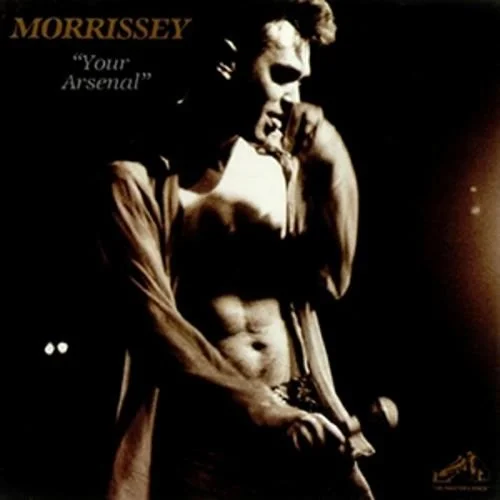
and his political views have got him into trouble a lot, I am concentrating on the positive side of Morrissey. After The Smiths broke up in the 1980s, Morrissey embarked on a successful solo career. Whilst some may say his best solo album is 1994’s Vauxhall and I, its predecessor, Your Arsenal, is my favourite. It turns thirty on 27th July. In spite of one very controversial song, The National Front Disco, and one that may come across as very un-P.C. in today’s scene (You’re the One for Me, Fatty), Morrissey’s third studio album is a hugely strong work that vastly improved upon 1991’s Kill Uncle. With band members like Alain Whyte and Boz Boorer offering more range, a harder sound and swagger, there is a lot of life, depth, and variation across Moz’s 1992 release. Whilst the line of “England for the English” on The National Front Disco can either be seen as Morrissey writing about a misguided character or projecting his own political ideals, I am not too sure. It does slightly sour the album. Elsewhere, there is plenty to love. The confident and swinging opener, You’re Gonna Need Someone on Your Side, races from the gates and announces Your Arsenal as this emphatic and vital album. Whilst his former Smiths songwriting partner Johnny Marr is notably absent in terms of the melodic and musical gifts he brought to the band, there is a consistency on Your Arsenal that keeps you hooked and brings you back for repeated listens. My favourite tracks include Certain People I Know and I Know It's Gonna Happen Someday. The latter is one of two songs co-written (by Morrissey) with Mark E. Nevin (the other being You're Gonna Need Someone on Your Side).

At the moment, Morrissey is performing his residency in Las Vegas. Maybe it signals that he is nearing the end of his recording career or is slowing down. His more recent work has yielded mixed results, though there was this period from Your Arsenal in 1992 through to Vauxhall and I in 1994 where he was near his peak with The Smiths. Albumism looked back at the magnificent Your Arsenal in 2017:

Produced by Mick Ronson, Your Arsenal was the debut of Moz's new lineup, including former Polecats guitarist Boz Boorer and Alain Whyte, both of whom had toured with him in conjunction with Kill Uncle (1991). Boorer would go on to produce Morrissey's albums from there on out, as well as write several songs alongside Moz. But coming from a rockabilly background, both Boorer and Whyte added a harder sound to Morrissey's music, kicking right off with "You're Gonna Need Someone on Your Side." If you listen closely, you can hear a little bit of "Handsome Devil" in the guitars. But despite the brutal melodies, it's quite a romantic song, an ode to the necessities of friendship (I know, I'm as surprised as you are): "Day or night, there is no difference / You're gonna need someone on your side."

Similarly, the penultimate "I Know It's Gonna Happen Someday" heads into the heartbreak anthem "Tomorrow," and I'm never quite sure if this is a love song or if it's Morrissey being Morrissey, the sarcastic bastard we all love. This also makes use of the sampling that we saw previously on "Rubber Ring" and others.

"I Know It’s Gonna Happen Someday" was covered by David Bowie on 1993's "Black Tie White Noise." Morrissey idolized Bowie, appearing on stage with him in 1991. But during appearances on a tour in 1995, the two had a falling out, which left a bitter taste even after Bowie's untimely death last year.

All of the opening track's generosity is immediately dismissed on "Glamorous Glue," with the House-esque refrain, "Everyone lies, everyone lies" and a heavy-handed slap at both L.A. and London. At his best, Morrissey has always been a cheeky, clever poet. But at his worst, as we see here, he is lazy and dull, repeating the same worn tropes many more before him have used to greater effect. We get it, Morrissey, California is full of polished ugliness. But geez, can't you find something else to bitch about?

And of course, "The National Front Disco" has new, horrifying relevance in the era of Trump and Brexit and the rise of the alt-right. This song, about a young man joining a far-right group, remains controversial—does the anthem warn or celebrate? Of course, Morrissey says it isn't racist, but everyone knows Morrissey is kind of a racist prick and we only let it sort of slide because The Smiths are just so damn good. "England for the English" sounds a little bit like "America First," doesn’t it?

Nevertheless, there are still some remnants of the Morrissey we love, as best evidenced in the bwang-twang lick that opens "Certain People I Know" and even the guilty pleasure "You're The One For Me, Fatty" (I know I should hate this song, but I don't, which makes me feel like a total jerk and I'm sorry)”.

Prior to wrapping things up, I want to bring together a couple of reviews for 1992’s Your Arsenal. Although some were mixed and a bit critical – many highlighting songs like The National Front Disco as a worrying or too-controversial inclusion -, there was ample praise for a extremely solid and enjoyable album. This is what CLASH wrote back in 2014:

Four years into an unwanted solo career, and lacking the kind of melodies such a wordsmith needs to hang his withered gladioli upon, a reboot was required.

Having assembled a youthful and far-from-virtuoso group around him in order to tour 1991’s limply polished and lyrically unfocused ‘Kill Uncle’, Morrissey wanted that band dynamic on record. With legendary guitarist Mick Ronson on production duties, the glam world the artist had studied and his producer had lived was brought back to life.

Several songs inhabit the personae of challenging characters in typically provocative fashion, whether football hooligans or members of the National Front. The latter is more pitied than condemned across one of the album’s strongest melodies, ‘The National Front Disco’.

‘Certain People I Know’ may be a shameless T. Rex rip off, but it does features a gloriously mannered Moz vocal, while ‘I Know It’s Gonna Happen Someday’ is a grandiose ballad with more than a nod to Bowie’s ‘Rock ‘N’ Roll Suicide’.

As is his want, Morrissey has tinkered with the 1992 original record for this reissue, subbing out closing track ‘Tomorrow’ (original video below) for its mildly more muscular American mix, but otherwise it’s business as usual. The accompanying DVD features an early performance by this line-up, which is a mildly diverting if sonically unspectacular curio alongside a still largely splendid record”.

I am not sure whether there will be much in the way of celebration and coverage on the thirtieth anniversary of Your Arsenal. It is an album that definitely should be explored more. I hear the odd song played here and there. Featuring some of Morrissey’s best lines and vocals, go and listen to the album if you have not heard it. This is Rolling Stone’s take on Your Arsenal from 1992:

Mope no more. forsaking the cozy glow of cult-hero worship on his fourth solo album, Morrissey hurls himself into the cold cruel rock mainstream. Your Arsenal is the most direct — and outwardly directed — statement he’s made since disbanding the Smiths. Buoyed by the conversational grace of his lyric writing, Morrissey rides high atop this album’s rip-roaring guitar tide.

Just last year, the meticulously obscure Kill Uncle positioned Morrissey as the postpunk scene’s answer to Elvis Costello: an eccentric major talent perfectly content to bask in a stuffy hothouse atmosphere. Your Arsenal admits a blast or two of less rarefied musical air, and it works wonders. “You’re Gonna Need Someone on Your Side” is not only one blitzkrieg bop of an opening cut, it aggressively sets Morrissey’s new interpersonal agenda. The onetime poet-recluse boldly approaches a fellow neurotic (“with the world’s fate resting on your shoulders”), offering pointed and hard-won counsel: “Give yourself a break before you break down.” All the while, two blunt and fuzzy guitars cough up a glam-metal variation on the Bo Diddley beat.

Onetime Bowie foil Mick Ronson produces Your Arsenal to stunning effect. For all the sonic thunder, he imposes a much-needed pop discipline on Morrissey’s grander instincts. His penchant for maudlin balladry held firmly in check by taut arrangements and riff-driven melodies, Morrissey turns his sharp eye to the crumbling world outside his window. This time, the moody slow songs (“I Know It’s Gonna Happen Someday,” “We’ll Let You Know”) really do linger and haunt. The deeply affecting “We’ll Let You Know” (“We are the last truly English people you will ever know”) and the disarmingly uptempo “National Front Disco” peek into the sad, sick world of Britain’s neo-fascist youth movement; Morrissey probes this twisted mind-set with psychological depth and deftness. Rather than preach against the general evils of racism, as most topical rockers would, he puts us inside this hopeless situation for a few revealing minutes.

Not that Morrissey’s a Brit isolationist, by any means. “We look to L.A. for the language we use,” he insists on the raucous media-age anthem “Glamorous Glue.” Spitting out the line “London is dead” a half-dozen times after that, punctuating the psychedelic groan with his own croons and hoots, Morrissey faces down the wildly uncertain New World Order with dark humor and a clear head. Your Arsenal is stockpiled with the rock & roll equivalent of smart bombs: compact missives that zoom in on their targets with devastating precision. The repercussions last long after the rubble is cleared”.

Humorous, edgy, tough, controversial at times, beautiful at others, it is fascinating diving into Your Arsenal. I wanted to shine a light on Moz’s second solo studio album ahead of its thirtieth anniversary on 27th July. There is no denying that it is…

ONE of his greatest solo albums.

FEATURE: Kate Bush’s The Kick Inside at Forty-Five: My Five Favourite Songs from My Favourite Album Ever

FEATURE:


Kate Bush’s The Kick Inside at Forty-Five

My Five Favourite Songs from My Favourite Album Ever

__________

REACHING number three in the U.K…

and one in a couple of others, Kate Bush’s debut album, The Kick Inside, was released in February 1978. It was recorded in August 1977. Because the latter date is forty-five years ago, I am running a few features to celebrate the anniversary. The first one will be simple: me selecting my favourite five songs from the thirteen. Produced by Andrew Powell, The Kick Inside is a phenomenal debut from the then-teenager. Bush’s performances and songwriting are spectacular throughout. So original and accomplished at such a young age, people are still listening to and mentioning The Kick Inside. Before I select the five tracks from the album (in chronological order rather than quality ranking), here are a couple of interview snippets of interviews where Bush discussed her debut:

Hello everyone. This is Kate Bush and I'm here with my new album The Kick Inside and I hope you enjoy it. The album is something that has not just suddenly happened. It's been years of work because since I was a kid, I've always been writing songs and it was really just collecting together all the best songs that I had and putting them on the album, really years of preparation and inspiration that got it together. As a girl, really, I've always been into words as a form of communication. And even at school I was really into poetry and English and it just seemed to turn into music with the lyrics, that you can make poetry go with music so well. That it can actually become something more than just words; it can become something special. (Self Portrait, 1978)

IN THIS PHOTO: Kate Bush in 1978/PHOTO CREDIT: Gered Mankowitz 

There are thirteen tracks on this album. When we were getting it together, one of the most important things that was on all our mind was, that because there were so many, we wanted to try and get as much variation as we could. To a certain extent, the actual songs allowed this because of the tempo changes, but there were certain songs that had to have a funky rhythm and there were others that had to be very subtle. I was very greatly helped by my producer and arranger Andrew Powell, who really is quite incredible at tuning in to my songs. We made sure that there was one of the tracks, just me and the piano, to, again, give the variation. We've got a rock 'n' roll number in there, which again was important. And all the others there are just really the moods of the songs set with instruments, which for me is the most important thing, because you can so often get a beautiful song, but the arrangements can completely spoil it - they have to really work together. (Self Portrait, 1978)”.

My favourite album ever, it is hard drilling down to the best five tracks. The selection below includes some obvious choices, but there are also a few songs that people may not be aware of (thanks go to the Kate Bush Encyclopedia for providing information about the album and songs). I am excited to think back forty-five years when Kate Bush and her band were putting down these incredible tracks. Below are my five favourites from…

A musical icon.

______________

Moving

 “Song written by Kate Bush, included on her debut album The Kick Inside. The song is a tribute to Lindsay Kemp, who was her mime teacher in the mid-Seventies. She explained in an interview, "He needed a song written to him. He opened up my eyes to the meanings of movement. He makes you feel so good. If you've got two left feet it's 'you dance like an angel darling.' He fills people up, you're an empty glass and glug, glug, glug, he's filled you with champagne."

'Moving' opens with a whale song sampled from 'Songs of the Humpback Whale', an LP including recordings of whale vocalizations made by Dr. Roger S. Payne.

Formats

On 6 February 1978, 'Moving' was released as a 7" single in Japan only, featuring Wuthering Heights on the B-side.

Versions

There are two officially released versions of 'Kite': the album version and the live version from Hammersmith Odeon. However, a demo version from 1977 has also surfaced and was released on various bootleg cd's”.

Strange Phenomena

Kate about 'Strange Phenomena'

['Strange Phenomena' is] all about the coincidences that happen to all of us all of the time. Like maybe you're listening to the radio and a certain thing will come up, you go outside and it will happen again. It's just how similar things seem to attract together, like the saying ``birds of a feather flock together'' and how these things do happen to us all the time. Just strange coincidences that we're only occasionally aware of. And maybe you'll think how strange that is, but it happens all the time. (Self Portrait, 1978)

"Strange Phenomena'' is about how coincidences cluster together. We can all recall instances when we have been thinking about a particular person and then have met a mutual friend who - totally unprompted - will begin talking about that person. That's a very basic way of explaining what I mean, but these ``clusters of coincidence'' occur all the time. We are surrounded by strange phenomena, but very few people are aware of it. Most take it as being part of everyday life. (Music Talk, 1978)”.

The Man with the Child in His Eyes

 “Song written by Kate Bush, released on her debut album The Kick Inside. Bush wrote the song when she was 13 and recorded it at the age of 16. It was recorded at Air Studios, London in June 1975 under the guidance of David Gilmour. She has said that recording with a large orchestra at that age terrified her. The song received the Ivor Novello Award for "Outstanding British Lyric" in 1979.

Kate about 'The Man With The Child In His Eyes'

The inspiration for 'The Man With the Child in His Eyes' was really just a particular thing that happened when I went to the piano. The piano just started speaking to me. It was a theory that I had had for a while that I just observed in most of the men that I know: the fact that they just are little boys inside and how wonderful it is that they manage to retain this magic. I, myself, am attracted to older men, I guess, but I think that's the same with every female. I think it's a very natural, basic instinct that you look continually for your father for the rest of your life, as do men continually look for their mother in the women that they meet. I don't think we're all aware of it, but I think it is basically true. You look for that security that the opposite sex in your parenthood gave you as a child. (Self Portrait, 1978)

I just noticed that men retain a capacity to enjoy childish games throughout their lives, and women don't seem to be able to do that. ('Bird In The Bush', Ritz (UK), September 1978)

Oh, well it's something that I feel about men generally. [Looks around at cameramen] Sorry about this folks. [Cameramen laugh] That a lot of men have got a child inside them, you know I think they are more or less just grown up kids. And that it's a... [Cameramen laugh] No, no, it's a very good quality, it's really good, because a lot of women go out and get far too responsible. And it's really nice to keep that delight in wonderful things that children have. And that's what I was trying to say. That this man could communicate with a younger girl, because he's on the same level. (Swap Shop, 1979)”.

Wuthering Heights

Song written by Kate Bush, released as her debut single in January 1978. She wrote the song after seeing the last ten minutes of the 1967 BBC mini-series based on the book ‘Wuthering Heights’, written by Emily Brontë. Reportedly, she wrote the song within the space of just a few hours late at night. The actual date of writing is estimated to be March 5, 1977.

Lyrically, "Wuthering Heights" uses several quotations from Catherine Earnshaw, most notably in the chorus - "Let me in! I'm so cold!" - as well as in the verses, with Catherine's confession to her servant of "bad dreams in the night." It is sung from Catherine's point of view, as she pleads at Heathcliff's window to be allowed in. This romantic scene takes a sinister turn if one has read Chapter 3 of the original book, as Catherine is in fact a ghost, calling lovingly to Heathcliff from beyond the grave. Catherine's "icy" ghost grabs the hand of the Narrator, Mr Lockwood, through the bedroom window, asking him to let her in, so she can be forgiven by her lover Heathcliff, and freed from her own personal purgatory.

The song was recorded with Andrew Powell producing. According to him, the vocal performance was done in one take, "a complete perfomance" with no overdubs. "There was no compiling," engineer Kelly said. “We started the mix at around midnight and Kate was there the whole time, encouraging us… we got on with the job and finished at about five or six that morning." The guitar solo that fades away with the track in the outro was recorded by Edinburgh musician Ian Bairnson, a session guitarist.

Originally, record company EMI's Bob Mercer had chosen another track, James And The Cold Gun as the lead single, but Kate Bush was determined that ‘Wuthering Heights’ would be her first release.  She won out eventually in a surprising show of determination for a young musician against a major record company, and this would not be the only time she took a stand against them to control her career.

The release date for the single was initially scheduled to be 4 November 1977. However, Bush was unhappy with the picture being used for the single's cover and insisted it be replaced. Some copies of the single had already been sent out to radio stations, but EMI relented and put back the single's launch until the New Year. Ultimately, this proved to be a wise choice, as the earlier release would have had to compete with Wings' latest release, ‘Mull of Kintyre’, which became the biggest-selling single in UK history up to this point in December 1977.

‘Wuthering Heights’ was finally released on 20 January 1978, was immediately playlisted by Capital Radio and entered their chart at no. 39 on 27 January. It crept into the national Top 50 in week ending 11 February at No.42. The following week it rose to No.27 and Bush made her first appearance on Top of the Pops ("It was like watching myself die", recalls Bush), The song was finally added to Radio One's playlist the following week and became one of the most played records on radio. When the song reached number 1, it was the first UK number 1 written and performed by a female artist”.

Them Heavy People

Formats

'Them Heavy People' was released as a single in Japan only. This single featured The Man With The Child In His Eyes on the B-side. A Seiko logo appears on the insert's back side, which makes it Bush's only commercial release featuring any kind of product endorsement. A live recording of this song was the lead track on the On Stage EP.

Kate about 'Them Heavy People’

The idea for 'Heavy People' came when I was just sitting one day in my parents' house. I heard the phrase "Rolling the ball" in my head, and I thought that it would be a good way to start a song, so I ran in to the piano and played it and got the chords down. I then worked on it from there. It has lots of different people and ideas and things like that in it, and they came to me amazingly easily - it was a bit like 'Oh England', because in a way so much of it was what was happening at home at the time. My brother and my father were very much involved in talking about Gurdjieff and whirling Dervishes, and I was really getting into it, too. It was just like plucking out a bit of that and putting it into something that rhymed. And it happened so easily - in a way, too easily. I say that because normally it's difficult to get it all to happen at once, but sometimes it does, and that can seem sort of wrong. Usually you have to work hard for things to happen, but it seems that the better you get at them the more likely you are to do something that is good without any effort. And because of that it's always a surprise when something comes easily. I thought it was important not to be narrow-minded just because we talked about Gurdjieff. I knew that I didn't mean his system was the only way, and that was why it was important to include whirling Dervishes and Jesus, because they are strong, too. Anyway, in the long run, although somebody might be into all of them, it's really you that does it - they're just the vehicle to get you there.

I always felt that 'Heavy People' should be a single, but I just had a feeling that it shouldn't be a second single, although a lot of people wanted that. Maybe that's why I had the feeling - because it was to happen a little later, and in fact I never really liked the album version much because it should be quite loose, you know: it's a very human song. And I think, in fact, every time I do it, it gets even looser. I've danced and sung that song so many times now, but it's still like a hymn to me when I sing it. I do sometimes get bored with the actual words I'm singing, but the meaning I put into them is still a comfort. It's like a prayer, and it reminds me of direction. And it can't help but help me when I'm singing those words. Subconsciously they must go in. (Kate Bush Club newsletter number 3, November 1979)”.

FEATURE: Vinyl Corner: Santana - Abraxas

FEATURE:


Vinyl Corner

Santana - Abraxas

__________

FOR this Vinyl Corner…

 IN THIS PHOTO: Carlos Santana/PHOTO CREDIT: Tucker Ransom/Getty Images

I am including a legendary artist that I have not spoken about much. The legendary Carlos Santana is renowned as one of the most influential and important artists and guitarists ever. His band, Santana, have released some sensational albums. Carlos Santana turns seventy-five on 20th July. To honour that, I am featuring the band’s 1970 masterpiece, Abraxas. Go and get the album on vinyl if you can. It is a sublime and extraordinary album that features songs like Oye Cómo Va and Black Magic Woman (a Fleetwood Mac cover). It is an album that I would encourage everyone to listen to. I am going to come to a review of Abraxas soon. Before that, Consequence took a dive into the band’s second studio album in a feature from 2020:

To fully appreciate Abraxas — that is, to believe it’s some portended, almost-mystical force of nature … or at least a longshot to have topped the charts for six weeks back in 1970 — requires a brief look at how the planets aligned for Carlos Santana and the band’s classic lineup: Gregg Rolie (lead vocals, Hammond organ), Michael Shrieve (drums), Michael Carabello (congas, percussion), and José “Chepito” Areas (timbales, congas, and percussion). A mere two years after famed promoter Chet Helms had told Santana that a Latin-infused rock band couldn’t succeed and that the guitarist should return to his day job as a dishwasher, the band had scored a record deal, cut their self-titled debut, and catapulted into the public’s imagination with an appearance at Woodstock. The now-iconic documentary Woodstock even features an infomercial-length jam session as the band jubilantly sync rhythms with the masses during a sprawling rendition of “Soul Sacrifice”. It’s one of the weekend’s most memorable moments and part of the reason audiences were both hip and open to Santana when their largely instrumental debut came out just two weeks later.

A little more than a year later, Santana found themselves about to release their sophomore album, Abraxas. Their debut, which would go platinum twice over, had been a top-five album, and their hypnotic cover of jazz percussionist Willie Bobo’s “Evil Ways” had scored them a top-10 single and would go on to become a founding staple of modern classic-rock radio. All of a sudden, the unlikely Latin-blues collective from San Francisco were internationally known and sought after. Santana now had to worry about blisters on his fingers rather than dishpan hands, but also how to follow up such unexpected success and handle new levels of expectation. The answers to that dilemma seemed to flow through the guitarist himself.

Abraxas would be its own beast (as the opening track’s title might suggest), flesh adhering to bone through a mix of Carlos Santana’s interests, influences, and a series of serendipitous moments. For instance, the cover art of Abraxas features the 1961 painting “Annunciation” by German-French artist Mati Klarwein. Santana had just happened to have seen the painting in a magazine and made an inquiry. Not only has the album cover gone down as one of the most iconic in rock and roll history, but Klarwein would go on to design for many other artists, including one of Santana’s personal heroes, Miles Davis. These types of whims that turn into the stuff of legend seemed to pile up around Santana in those early years. It makes one begin thinking that we were somehow always destined to be talking about Abraxas 50 years later.

Like so much of Santana’s best work, Abraxas finds its way into our bloodstream. In a band with three percussionists and one of the most innovative blues guitarists of all time, reason stands that the music’s entry point might be to tap into our pulse as it does in the opening, dance-inducing drumming on Santana or to strike a nerve via a melodic guitar groove that manages to be infectiously sweet one moment and sharply penetrating the next. Neither is the case here, though. As Abraxas stirs, and “Singing Winds / Crying Beasts” slowly awakens, the opening song’s titular winds pass through chimes and find passage into our lungs. It’s everything that opener “Waiting” wasn’t just an album earlier. Gone is Gregg Rolie’s swirling, hurricane organ; the percussion’s locked-in, insistent throb; and the incendiary sprint to the finish. Instead we have menacing keys that wander, hushed percussion that sounds like thunder rolling in the distance, instruments mingling and fading out like guests making rounds at a cocktail party, and a tension that builds from restraint rather than a rising. It’s Santana and band breathing through us, demonstrating that they have more than one way to commune with an audience”.

It is worth wrapping up with a review from Rolling Stone. An undeniably huge and vastly impressive albums, I don’t think one needs to be a fan of Latin and Chicano music to vibe to and get involved with Santana’s brilliance. Abraxas is an album that every person can feel something for. The impact of the songs will be felt instantly:

Carlos Santana is one of the three new guitarists who border on B. B. King's cleanliness. His only two contemporaries are Eric Clapton and Michael Bloomfield, but Santana is playing Latin music and there are no other Latin bands using lead guitars. The paradoxical thing about Santana has been their acceptance by a teenybop audience that digs Grand Funk and Ten Years After when they should be enjoyed by people who are into Chicago and John Mayall.

The heart of Santana is organist Gregg Roli and bassist Dave Brown, who hold the rhythm together over which the percussion unit can jam and bounce. Timbales, congas (Puerto Rican) and drums take off on Brown's rhythm and then Santana himself comes in to make his statements on lead guitar.

Carlos Santana is a Chicano and he loves the guitar, which has always been used heavily in Mexican music. He has perfected a style associated with blues and cool jazz and crossed it with Latin music. It works well, because the band is one of the tightest units ever to walk into a recording studio. Of white bands, only Chicago can equal their percussion, but Chicago is held together by horns, while Santana is held together by timbales and congas.

"Oye Como Va" is the highlight of the album. It's only weakness is that Roli's fine organ has been mixed too low. This is a different trip for Santana, much more into the styles of the younger Puerto Rican musicians in New York, like Orchestra DJ and Ray Olan, and farther from the Sly trip that dominated their first album. Unless you really dig Latin music or some of the middle period work of Herbie Mann and the Jazz Messengers, you may not enjoy this cut or the album at all.

Abraxas is one of the new independent productions for Columbia done at Wally Heider's studio, and bass player Dave Brown did much of the engineering. The album he has helped to come up with may lose Santana some of their younger audience, but is bound to win them respect from people interested in Latin jazz music. On Abraxas, Santana is a popularized Mono Santamaria and they might do for Latin music what Chuck Berry did for the blues.

The major Latin bands in this country gig for $100 a night, and when you see them, you can't sit still. If Santana can reach the pop audience with Abraxas, then perhaps there will be room for the old masters like La Lupe and Puente to work it on out at the ballrooms. But for now, Abraxas is a total boogie and the music is right from start to finish. (RS 73)”.

One of the very finest albums ever, Abraxas is one that sounds brilliant on vinyl. It is one I remember first hearing when I was a child. I adore the songs and the performances from the whole band (though it is Carlos Santana’s guitar work that particularly sticks with me!). If you do not own this on vinyl, then I would steer you towards it, as it is…

WORTH the money.

FEATURE: Spotlight: Queen Kwong

FEATURE:


Spotlight

PHOTO CREDIT: Laura-Mary Carter

Queen Kwong

__________

AN is artist I have known about…

PHOTO CREDIT: Laura-Mary Carter

for a while now, Queen Kwong’s new album, Couples Only, is released on 29th July. It is one that I would urge everyone to check out and order. An amazing artist who has made such a personal and powerful album, the circumstances around the time and what she had to deal with and absorb makes the music truly remarkable and brave:

Carré Callaway aka Queen Kwong returns for her third and most fiercely visceral album to date. Produced by Joe Cardamone (The Icarus Line) and featuring guest performances by members of Swans, The Cure, and Blood Red Shoes, Couples Only is a truly defiant statement.

A few years ago, Carré Kwong Callaway—aka Queen Kwong—was diagnosed with cystic fibrosis and told she may only have a decade left to live. Couples Only it’s an outpouring of pure feeling and visceral thought that captures every emotion that comes with both the grieving and recovery process. It's a fearless account of facing the worst betrayals and accepting the deepest losses. It's the realisation of one's mortality and the impermanence of everything we know and cherish. But, ultimately, it’s a testament to the endurance of the human spirit. Because while this record is unashamedly about the darkest period of Carré’s life, it doesn’t wallow. It can be accusatory and violent, but there's no time wasted on self-pity.

From the razor sharp midnight swagger of “I Know Who You Are” to the post modern doo-wop of “On The Run” and the Lynch-ian pop hooks of closer “Without You, Whatever" Couples Only is a fearless testament of endurance and survival in the face of betrayal, loss, and mortality”.

I think that Queen Kwong is one of the most amazing artists on the scene. Some people may not have heard of her, so that is why I am including her in Spotlight. To give you more of an idea of what she is about and what went into Couples Only, I am going to source a few interviews from this year. BlackBook spoke with Queen Kwong back in April:

Existing somewhere between a band and a solo project, Queen Kwong is actually the nom de guerre of Carré Kwong Callaway, the Los Angeles songstress who was thrust into the spotlight in 2005 when Trent Reznor discovered her seventeen-year-old self in a New Orleans recording studio. She suddenly found herself, under her birth name, opening for Nine Inch Nails‘ on their extensive 2005 With Teeth Tour. She disappeared for a spell, then re-emerged as Queen Kwong in 2009, and once again hit the road with NIN.

She released a series of EPs between 2013 and 2019, the last one coming a year after her diagnosis with cystic fibrosis. For those not familiar, it is a particularly horrifying condition, which causes persistent lung infections, significant digestive problems and, well…can cause the sufferer bouts of not actually being able to breath properly.

Many of the songs on Couples Only address how her illness quickly caused the deterioration and eventual breakup of her marriage to a famous rock guitarist, whom she had wed in 2016. The first single, ‘I Know Who You Are’ is an absolute shiver-inducing stunner, with its haunted, slow-build introduction, jarringly jagged grooves, and thundering, industrial-punk sonics.

But most revealingly, in her eerily double-tracked voice, she recites lyrics about a pattern of taking up with toxic people – a stark confessional and catharsis at once. In a way it actually feels like an exorcism…except that the demons are very human ones. Fittingly, the accompanying video is an homage to an infamous Isabelle Adjani scene from the the 1981 film Possession.

We caught up with her to take a deep dive into what it all means, and how music may have just genuinely pulled her back from the brink.

Your new album was inspired by the splitting up of your marriage? Was it difficult to revisit that, or did you find it cathartic?

Both. For a long time, I did everything I could to not feel or think about it, just so I could get through it. By the time I started recording, I had stored all of those feelings inside of me and I was physically and mentally maxed out because of it. So recording the album was a necessary purge. It was freeing.

The lyrics to ‘I Know Who You Are’ seems to be about someone who willingly takes up with toxic people. Is that autobiographical?

Because writing and playing music are such coping mechanisms for me, everything I do is deeply personal and autobiographical in some way. ‘I Know Who You Are’ is an acknowledgment of repeating patterns I found myself in with fake, parasitic people – personally and professionally. People who play a part and get away with bad behavior. People who are enabled by the sycophants who surround them. The song calls out those people and acknowledges how I see them and I know them and I no longer am willing to stay quiet about it.

You chose demonic possession as the touchstone for the video. Is there something you’re trying to tell us?

I chose to use the tunnel scene from the movie Possession as the inspiration for the video because to me, it’s not about being possessed by a supernatural demon but being possessed by the emotions you feel while navigating a toxic relationship, from start to finish. Beginning with the giddiness and the “high” of falling in love, then experiencing the betrayal and disillusionment, the gas-lighting that causes the self-questioning (Am I the “crazy bitch”?), and then ultimately the relief and freedom you feel when you surface at the other side.

Did you actually have fun making the video, or was it a rather unsettling experience?

To be honest, making art isn’t about having fun for me; that’s never been a priority, haha. The intention is always to express myself in a way that challenges me as an artist and that’s cathartic enough to be therapeutic. Though shooting this video was pretty grueling, especially physically, we did it so fast that there wasn’t much time to dwell on what I was feeling. I just entered a flow state and got it done.

There’s a lot going on on the new record sonically. What were some of the things you were inspired by sound-wise during the writing and recording of Couples Only?

Because I don’t pre-write any material before recording, there’s not really a plan when it comes to what I want something to sound like. The only inspiration is whatever emotions surface in the moment. Listening back to the record now, everything is sonically aligned with those emotions. Screaming guitars that sound like screaming voices, modulating synths that cause tension and discomfort, birds chirping in the backyard leaking into the one and only vocal take I could muster before tears got in the way…

What are some of the most meaningful songs for you on the album?

‘Mourning Song’ and ‘Sad Man’ are the highlights for me. The former was the first track I recorded for Couples Only and it’s the most personal. If there’s one song that says everything I needed to say, it’s that one. On the other hand, ‘Sad Man’ is kind of self-deprecating and humorous, which I think is essential to have on a record like this. Both are brutally honest but represent different sides of my life”.

An album that is going to get so much love when it comes out, Couples Only is going to announce Queen Kwong as a huge artist that will go very far indeed. Going back to May, VENTS MAGAZINE spent some time with Queen Kwong. Hearing her answer to a question about how her third album differs from her first two is really interesting:

Your home label for Couples Only is with Sonic Ritual. What does Sonic Ritual bring to the table for you and your music that no other label can?

They don’t enforce any creative boundaries. That’s huge. Practically unheard of when it comes to a label. They take what I already do and see the potential in that without trying to make it into something else. I couldn’t imagine a better label, especially for this record and the kind of artist I am.  

Can we look forward to seeing you on tour in the weeks and months to come?

Hopefully in the fall/winter I’ll be touring in the UK/EU. Plans are in motion but I think I’m still in the “believe it when I see it” mode just because COVID has really thrown everyone for a loop.
Musically, who inspires you at the moment?

A$AP Rocky and Kendrick Lamar are on repeat at the moment. Both of their latest releases are so good and innovative. Hip hop is the new punk rock.
How did you land on the path of being such an accomplished musical artist? Is there a secret origin story you could share with us?

I’ve had to redefine what success and accomplishment means to me many times. I think focusing on making honest art and not caring about how successful that art is going to be is the key to staying motivated as an artist, because it’s a constant struggle and never-ending slog in one way or another. I’m the kind of person who is never satisfied, always hungry for a challenge and thrives off of pushing boundaries. Those aspects of my personality have definitely helped keep my heart in music.

Couples Only is your third album. How is it similar to the first two? How is it different?

The producer (Joe Cardamone) and our creative process has remained the same for all three records but since this is the third record, I was able to tap into that process more easily and make it more sonically polished. It helped to have Tchad Blake mix it too because he was able to wrangle the chaos a bit. Every song was written on the spot while recording in the studio but this one is less messy and not as lo-fi as the first. It’s a stream of consciousness but the stream has been refined, if that makes any sense. Also, musically, Couples Only has more electronic elements like programmed drums and synths than the previous two”.

Before finishing up, there is another interview that I want to bring in. CLASH chatted with Queen Kwong earlier this month. It is so remarkable and moving hearing what she had to endure and face before and during the recording of Couples Only:

When considering the circumstances surrounding ‘Couples Only’, it’s shocking that the album was ever even completed. The release touches on Callaway’s divorce, the life-changing impact of a cystic fibrosis diagnosis, and the limbo of being ejected from one’s marital home – as Callaway reels off the details of events that inspired this record, you can’t help but feel something inside of you ache. Speaking on the recording process, Callaway admits that “it was intense.” But her recording approach helped numb some of the possible sting; “luckily I record really fast, so I didn’t have to, you know… linger. It was really emotional, but we kept things moving.”

This quick approach also allowed the tracks to come out as raw as possible; “Joe Cardamone, my producer, has known me since I was 18, so I didn’t feel the need to be ‘careful’; I didn’t try to be poetic or beat around the bush. I just did it, and whatever came out, we just let it be. I didn’t want to go back and edit. There were some songs where I only did one take, I wasn’t able to do it again… But then I have to learn them again properly for shows – learn the lyrics and do all that. So I’m sure that will be… an experience.”

For Callaway, telling the truth was all that mattered. “Going through the divorce and the backlash of it all, it was really important for me to hold on to what the truth actually was,” Callaway notes. “For a couple of years I was being told that I was crazy, or I was lying – this was kind of my only way of speaking my truth. I needed to make a point of, like, ‘I know what happened’, pulling direct quotes like ‘you mean bitch’ on ‘EMDR ATM’, literal lines I had been told. So I think in that way, being blunt was really effective, because it’s just kind of keeping a record of what actually happened, you know?”

‘Couples Only’ doesn’t ask its listener to read between the lines – it forces them to acknowledge the reality of Callaway’s experiences. It’s not a comfortable listen by any means, and Callaway is well aware of this; “It wasn’t comfortable to record, and it’s not a comfortable listen… but, you know, it was uncomfortable for me to go through – coming out of a divorce, with divorce lawyers and people judging me for telling the truth. People kept saying ‘do you really want to talk about that?, ‘why do you want to make trouble?’ or ‘why do you want to stir the pot?’”

“But… these things happened to me,” Callaway takes a moment to emphasise. “This all happened, I had to live through it – but people are always like ‘oh, but you’re making people uncomfortable by talking about it.’ And I think, as a woman, you just get used to living in discomfort for the sake of other people’s comfort levels; you avoid being confrontational, you never make a scene. It just got to the point where I knew I was being quiet for other people’s comfort, and I was about to burst. There was a year or two where I didn’t say anything – but then I was like ‘not anymore.’”

Rather than whimper in fear, Callaway is determined to make as much noise as possible. While Queen Kwong’s style is impossible to pin down, a thread of heavy, jagged rock and experimentation has always been a key element. ‘Couples Only’ takes a different sonic route than previous releases, but that heaviness is still blisteringly clear – and, in terms of lyrical content and emotional drive, the album is her heaviest yet. “On the surface, sonically speaking, this record isn’t as heavy or as aggressive as some of the previous stuff I’ve released. But, by saying the opposite, it means that you actually listened,” Callaway says. “I think, if you just listen, surface level, to the music and not really pay attention, it isn’t as heavy or aggressive as stuff on the previous two LPs, but I think it is a lot heavier in terms of content and themes – and there was no way to get around that.”

Callaway reflects on one of the toughest phases that fed into the creation of this record, harking back to touring in 2018. “There was one show with such bad feedback. It was like the highest pitch – my guitarist actually threw up afterwards. Like, my teeth hurt, that’s how bad it was,” Callaway recalls. “That whole tour was a big blur to me – it was literally when my marriage was ending. I think I really put my bands through a lot on that tour because I was literally like, sobbing all the time. I was a nightmare. They had to carry me – sometimes literally, physically carry me – through that tour.”

“The whole time, I just wanted to go home and save my life – it was like watching my home burning to the ground, but I couldn’t do anything about it,” Callaway admits. “I was on the other side of the world when everything was falling apart. Finding out about all this betrayal, cheating – it was horrendous. I felt like I wanted to save my life, save my marriage, but it wasn’t possible”.

If you have not heard of Queen Kwong and Couples Only is your introduction, go and hear the album (when it arrives on 29th July). Although she has been making music for a while, I just know that we will be hearing from this amazing artist…

FOR many more years.

____________

Follow Queen Kwong

FEATURE: Perfect Synchronicity: The Brilliant Stewart Copeland at Seventy: His Very Best Beats

FEATURE:


Perfect Synchronicity

The Brilliant Stewart Copeland at Seventy: His Very Best Beats

 __________

CONSIDERED to be among…

the greatest drummers ever, The Police’s Stewart Copeland is seventy on Saturday (16th July). Not only confined to the scope and memorability of the band, Copeland is a very successful composer and artist in his own right. That said, his percussion with The Police is one of the main reasons as to why they are so respected, loved and influential. Before getting to a playlist featuring some of Copeland’s best beats (both with The Police and other projects), AllMusic provide biography about the great man:

After rising to international stardom with the Police, Stewart Copeland largely rejected his pop music past to pursue a career as a composer, authoring a prolific series of film scores, operas, and ballets. Born July 16, 1952 in Alexandria, VA, Copeland -- the son of a CIA agent -- spent his formative years in the Middle East but attended college in California before settling in England in 1975 and playing drums with the progressive rock unit Curved Air. Following the group's dissolution, he founded the Police with singer/bassist Sting and guitarist Henri Padovani (the latter soon replaced by Andy Summers). Beginning with their first hit, 1979's "Roxanne," the trio emerged as one of the most popular and innovative bands of the post-punk era, drawing upon reggae, funk, and world music to create a uniquely infectious yet cerebral brand of pop which generated a series of smash singles including "Every Little Thing She Does Is Magic," "Every Breath You Take," and "King of Pain." While with the Police, Copeland -- who in 1980 issued a solo record, Music Madness from the Kinetic Kid, under the alias Klark Kent -- not only earned wide critical acclaim for his intricate, textured drumwork, but he contributed many of the group's songs as well.

At the peak of their commercial success, the Police disbanded after touring in support of the 1983 blockbuster Synchronicity; by that time Copeland was already established as a film composer, however, earning a Golden Globe nomination for his score to Francis Ford Coppola's Rumble Fish. In 1985 he released The Rhythmatist, the product of his musical pilgrimage to Africa, followed by an ever-increasing number of film scores including a pair of Oliver Stone features, Wall Street and Talk Radio, in addition to acclaimed projects like Ken Loach's Raining Stones, Four Days in September and West Beirut as well as many more mainstream Hollywood productions. Copeland's other work includes a stint with the pop-fusion trio Animal Logic as well as authoring the San Francisco Ballet's King Lear, the Cleveland Opera's Holy Blood and Crescent Moon, and Ballet Oklahoma's Prey.

In 2001, it was announced that Copeland would be touring with former Doors members Ray Manzarek and Robby Krieger and the Cult's Ian Astbury as the Doors of the 21st Century. Copeland later sued the group for breach of contract, claiming they reneged on a promise to use him on tour and in the studio, but the suit was amicably settled with Manzarek and Copeland trading kind words in the press. Next was soundtrack work for the Showtime series Dead Like Me and a guest appearance on guitarist Rusty Anderson's Undressing Underwater. In 2002 he played a short tour in Italy with the percussion quartet Ensemble Bash and a small orchestra. The tour was documented on the CD/DVD package Orchestralli, released by the Ponderosa label in 2005. Copeland then reunited with the Police in 2007, celebrating the band's 30th anniversary with a worldwide tour”.

To mark the seventieth birthday of one of the most important musicians ever, I have compiled songs which show what an individual and spectacular drummer Stuart Copeland is! It only remains for me – as many around the world will also do – to wish the happiest of birthdays to…

A musical colossus.

FEATURE: The Kate Bush Interview Archive: 1978: Donna McAllister (Sounds)

FEATURE:


The Kate Bush Interview Archive

1978: Donna McAllister (Sounds)

__________

I am going to do…

 IN THIS PHOTO: Kate Bush during the Wuthering Heights shoot in 1978/PHOTO CREDIT: Gered Mankowitz

a run of features very soon around The Kick Inside. Kate Bush’s debut, recording of the album completed in August 1977. That is almost forty-five years ago. I wanted to lead into that with an interview from 1978. One of the features I will do for The Kick Inside is around the cover. It is not one of Bush’s best. In this interview with Donna McAllister of Sounds, the album cover was brought up. In one of the last editions of The Kate Bush Interview Archive, this one caught my eye. I am really interested in those early interviews. Bush was new on the scene and people were not quite sure what to make of her. A lot of the interviews revolved around her looks and sexuality. This interview is a bit more balanced, mature and respectful, I think. It opens by asking why there is attention around Kate Bush:

SOULFUL, SENSITIVE, salubrious. So why all the fuss about Kate Bush's age? Is it the fact that you don't usually get such cohesive intelligence from 19 year old females? Is it that 'child' prodigies are out of our mode? Or is it simply the fact that the journalists are getting older? It wasn't that long ago that the charts were brimmed from 1 to 10 with teen-aged stars. It may seem that only yesterday she was your average unknown person, but in fact, Kate has been developing her unique talents on rinky-dink second hand pianos since she was the ripe old age of 14. Recently she moved into a three storey flat in Lewisham, which is owned by her general practioner daddy-o, and whose other two storeys are occupied by her two older brothers.

The story is not at all as overnight as it seems to be, it was in fact two years ago that Pink Floyd's Dave Gilmour bopped around to Kates' flat with a Revox -- goal in mind to get some of Kates tunes published. She wasn't, at the time, considered a singer but Gilmour, who is genuinely interested in giving undiscovered talent a shot-in-the-arm (with his Unicorn organization) felt that the bubbling under songs should have the opportunity to be heard. They recorded about 15 songs per tape, and took them around to various record companies. The unanimous opinion, then, was 'non-commerical', and after all . . . it's not creative unless it sells, 'eh?

How Kate and Gilmour hooked up is rather a vague 'girlfriends'- boyfriends'- girlfriends friend' sort of rigamaroll, but the fact is that he never did lose interest in her er . . . talents, and decided that the only way to reach a record company's goldlined pocket was to produce finished product. Which is exactly what they did. Gilmour put up the money, and Kate went into Air studios complete with a band, and laid down the three tracks she and Dave both felt were best. This is the tape which eventually landed Kate her contract with EMI Records.

Despite the fact that she has been already wrongly built (no pun intended) in the media to be a mere child, she is surprisingly aware of what is going on around her, and is accepting the entire shindig with a pleased air of disbelief.

"They keep telling me the chart numbers, and I just kind of say 'Wow' (she sweeps her arms) . . . it's not really like it's happening. I've always been on the outside, watching albums I like go up the charts, and feeling pleased that they are doing well, but it's hard to relate to the fact that it's now happening to me..."

'WUTHERING Heights', Kate's self-penned song, inspired by the book of the same title, is literally catapaulting up the UK charts, and looks as though it will be one of those classic world-wide smasheroonies, though it has yet to be released in most other countries. She recently took her first air-bourne flight to Germany for a television appearance, as the single, apparently, has been chosen as whatever the German equivalent of 'pick-of-the-week' might be.

"It was mind blowing," she said euphorically, in reference to flying, "I really want to do more of that . . ." Wonder how she'll feel about in in two years time.

She writes songs about love, people, relationships and life . . . sincerely and emotionally, but without prostituting her talents by whining about broken hearts.

"If you're writing a song, assuming people are going to listen, then you have a responsibility to those people. It's important to give them a positive message, something that can advise or help is far more effective than having a wank and being self-pitiful. That's really negative. My friends and brothers have been really helpful to me, providing me with stimulating conversation and ideas I can really sink my teeth into."

For as long as she can remember she has been toying around with the piano, much, I reckoned, to her parent's chargrin. Can you imagine living with a nine-year-old who insisted on battering away on said instrument, wailing away at the top of her lungs in accompaniment?

"Well, they weren't very encouraging in the beginning, they thought it was a lot of noise. When I first started, my voice was terrible, but the voice is an instrument to a singer, and the only way to improve it is to practice. I have had no formal vocal training, though there was a guy that I used to see for half-an-hour once a week, and he would advise me on things like breathing properly, which is very important to voice control. He'd say things like 'Does that hurt? Well, then sing more from here (motions to diaphram) than from your throat.' I don't like the idea of 'formal' training, it has far too many rules and conventions that are later hard to break out of . . ."

IT IS QUITE obvious from the cover of 'The Kick Inside', her debut album, that Ms. Bush is Orientally influenced, but apparently it was not meant to take on such an oriental feel.

"I think it went a bit over the top, actually. We had the kite, and as there is a song on the album by that name, and as the kite is traditionally oriental, we painted the dragon on. But I think the lettering was just a bit too much. No matter. On the whole I was surprised at the amount of control I actually had with the album production. Though I didn't choose the musicians," (Andrew Powell, producer and arranger did). "I thought they were terrific”.

A great interview from 1978, I always love reading different interviewers’ question and perspectives. Kate Bush handled herself very well and gave terrific answers. In one of the busiest years of her professional career, she was all over the place being interviewed. The Kick Inside is an exciting and original album from a teenage artist who was capturing people’s attention. I am going to start a series of features around that album, forty-five years after it was recorded. There is no other album like it in my mind. Bush, even at the start, was so eloquent, interesting, and kind in interviews. The above is an example of that. The Sounds interview is a great one which fans need to read. Back in 1978, the brilliant Kate Bush came into the music world with…

A stunning debut.

FEATURE: Not Black and White: Should Phones Be Allowed at Gigs?

FEATURE:


Not Black and White

PHOTO CREDIT: @dannyhowe/Unsplash 

Should Phones Be Allowed at Gigs?

__________

IT is not a clear-cut argument…

 PHOTO CREDIT: Paul Hanaoka/Unsplash

when it comes to the issue of phones at gigs. I can understand how people want to record gigs for posterity. It is all well and good saying that and making that argument, but I wonder why people need to get the audio in such bad quality! Photos can document gigs and you get a record of actually being there. The footage you see shared online at gigs is so terrible, I wonder if it does actually serve any benefit or provoke memories and fond recollection! Surely something so lo-fi and hard-to-hear is not really useful or will serve as any impressive and evocative record of a gig years from now. Because of that, I wonder whether phones should be banned at gigs. They can be taken in for emergencies, but no filming allowed perhaps. Watching the gig and providing your full focus will surely deliver a much more rewarding, tangible, and real experience. If you are distracted filming a show and not focusing on the act, then this means you are missing out. Some artists do have a no-phones policy at their gigs. One such artist is Jack White. As this recent NME feature details, he made sure the phones were safe and secure. But nobody could take them in. Whilst many might bridle, a lot seemed to prefer the fact they were not distracted:

But having survived the show, I have to attest that Jack White has a point. We’re all sick to death of having the person in front of us at a gig decide to film the best bits from overhead or stream the whole show to their dog. It’s not just a distraction and annoyance for us – it’s a waste of a great in-person live music experience for them too.

The pouches themselves opened at the touch of a magnetic button on the way out, so venues could quite easily pepper them along exit routes to let people release their precious zombie boxes themselves, then drop the pouch in the buckets provided – because who the hell wants to steal a straitjacket for a mobile phone (unless you’re planning an intervention on Darren Grimes)? In a world where mankind has realised the impossible dreams of space travel and Deliveroo wine, it must surely be possible to concoct a machine that releases everybody’s phones remotely as the houselights go up, too. Although that might lead to innumerable injuries as people fail to notice all those flying drumsticks.

The entire live experience might be improved, too, if bands feel that they can treat us to previews of new albums without the unreleased songs getting splashed all over social media within minutes. The benefits for improved connection between band and fan could be immense, and they could even make pouches that light up whenever they recognise a ballad starting. Imagine what Coldplay could do with these fuckers.

Whether they’re taken up by the wider music world remains to be seen, but the possibility of phone-free gigs is finally, realistically upon us. And from personal experience, I can tell you – when the screens go dark, the whole room lights up”.

People survived perfectly fine before smartphones. They were able to go to gigs and simply enjoy them. Technology allows us to photograph and record live music, but I can’t see any real advantage of it. Even if it is a once-in-a-lifetime occasion like seeing Paul McCartney at Glastonbury for instance, you do get a feeling that when that person watches the video back months from now, they will either delete it or bemoan its poor sound quality. Actually watching live music and being immersed in the togetherness and connectivity seems to be much richer and more worthwhile. I am not sure why people feel the need to video everything instead of putting their phones down. People video tragedies, accidents, and arguments rather than intervening. It is almost ghoulish and desperate how dependant and glued to phones people are. I feel it is ruining the live music experience. Many would say that each person is entitled to their own take and rules. I have seen on social media many artists thank fans who share videos of gigs. If they are happy and the people seeing the music are too, then is there any real issue? I guess it all comes down to whether the artists want their fans to have phones. One should not be in a position to feel like they are entitled to video gigs. If someone like Jack White wants his audience to be in the moment and watch a gig with their own eyes, then that sounds fair enough to me. It might be more common that we see gigs phone-free. Some would complain about that, but I feel it would not cause too many problems and would return us to a time when people were not distracted or felt the need to look at live music through a phone. It is a debate and question that will rumble and be asked as more artists ask people to put away their phones. I can see advantages for having phones at gigs but, more and more, the idea of leaving them at the front door and simply being at a gig…

 PHOTO CREDIT: @hannynaibaho/Unsplash

SEEMS very sensible.

FEATURE: Spotlight: Wu-Lu

FEATURE:


Spotlight

Wu-Lu

__________

THIS time out…

 PHOTO CREDIT: Guy Gooch for The Line of Best Fit

I am spotlighting the remarkable Wu-Lu. Real name Miles Romans-Hopcraft, he released his album, LOGGERHEAD, on Friday. It is a fantastic work from a rising South London artist. I cannot see interviews from this year around the album and its release. Because of that, I am dipping into older interviews. I will come to a couple of good examples from last year. First, gal-dem introduced us to Wu-Lu in 2019. This was to coincide with the release of his E.P., Save Us from Ourselves:

“Based in South London, Miles Romans-Hopcraft aka Wu-Lu is a producer and multi instrumentalist who makes music that swims effortlessly between genres – scuzzy lo-fi, meandering jazz, sweet soul and strange rock all intermingle over everything from boom-bap beats to grungy drums. Wu-Lu has worked with some of our faves as both a producer and collaborator: he can count Poppy Ajudha, Ego Ella May, Nubya Garcia among his past musical colleagues, to name a few.

Wu-Lu is also one of the original members of Touching Bass, South London’s self-described “soulstranauts” collective, also featuring the likes of Shy One, and he’s got a track on Untitled, a forthcoming music project about Basquiat that’s dropping next month.

We caught up with Wu-Lu about family, genres, and the release of his second EP, S.U.F.O.S – which stands for “Save Us From Ourselves”.

gal-dem: Can you tell us a bit about yourself? I read you’ve been into music since you were a kid?

Wu-Lu: I have been around music and the arts my whole life, my dad being a touring musician and my mum a travelling contemporary dancer. I’ve grown up always knowing I would be involved in it, one way or the other.

What does “Wu-Lu” mean?

A while ago I was following the Rastafarian movement and at that time I started to learn Amharic, the language of Ethiopia.I came across the word for water: “wu-ha”. I liked it – but thought people would make the reference between me and Busta Rhymes [who has the song, ‘Woo-Ha’]. So I changed the end so that it would flow better and sound more like a word that represented water to me – so in short it means water, in my own description

One of your songs is called ‘Habesha’, which is a term for Ethiopian and Eritrean people. Is bringing your heritage into your work something you actively try and do? How does that connection manifest for you?

‘Habesha’ is about someone from that part of the world. When I am writing I’m always writing from a place that reflects my surroundings, and I guess culture falls into that category.

Why is the EP called ‘Save Us From Ourselves’?

I think throughout time the human race has made decisions where they haven’t necessarily thought about the future damage of their actions. So, with that in mind, when I’m speaking about relationships it’s just a constant reminder to think before you speak and take time before you act”.

I think Wu-Lu’s upbringing and background explains his choice of career and affects his music. He does have a fascinating story that one can feel blended into his songs. He is someone who will progress and release a series of brilliant albums. Last year, The Quietus interviewed Wu-Lu. It is interesting reading about his parents’ careers and how that impacted him:

Growing up, Romans-Hopcraft says he was “on two sides of the coin.” His white father and his Black mother were amicably separated, and although they both started out in council housing, “life choices and opportunities” meant his father, a jazz trumpeter, was able to move on to the property ladder while his mother, a dancer, “stayed where she was. It was two different worlds”. Both had an influence on him artistically. When DJ Shadow’s Endtroducing and the 2001 hip hop DJ documentary Scratch emerged as early inspirations, his mother, who herself worked with the charity Youth Music, nurtured a love of turntablism by supplying him with trance and jungle records brought home from work.

“My dad, being ‘the musician’ out of the two, was always saying to me, ‘Music’s really, really hard you know, so get another skill,’ where my mum was more like, ‘Do whatever you want, be creative,” Romans-Hopcraft says. “She was always told when she was growing up, trying to dance, ‘You ain’t gonna be able to do this’ because she was a Black woman in London. With that she was saying you can fucking do it.’ I guess my dad didn’t have as many people saying to him, ‘You can’t do that.’” He recalls an early trio he formed with his brother and a friend. “We were in the front room of my dad’s house and he came in, he must have been pissed off about something [that happened] earlier in the day, and he was like, ‘Listen guys, music’s really hard,’ and gave us this whole long speech. But then when he left the room my brother turned to me and was like, ‘But we’re gonna do it though. We’re gonna be on [the cover of] Kerrang!’”

As well as turntablism, Kerrang!-backed early-2000’s metal, grunge and pop punk bands like Korn, The Offspring, Limp Bizkit, Blink-182 and Slipknot were key influences growing up, as was the soundtrack to the video game Tony Hawk’s Pro Skater 2 (Papa Roach, Rage Against The Machine, Consumed and more). Skate culture was another key strand – the first shows he saw were local punk bands at Stockwell skate park – as was UK hip hop, introduced to him in a chance mention of Rodney P on a graffiti-focussed episode of Channel 4 reality show Faking It, and grime. Then he discovered Gorillaz, who united a number of different strands. “Through the years I realised why that was such a moment in my life, because it had no genre. It had a bit of dub, a bit garage, a bit of hip hop. It spun me. The animation, the punky stuff and the hip hop and baggy clothes. I was like, 'Sick! Sick! This is it!'” Later he drew the links between the afro jazz inspired work of his father with the hip hop he was listening to.

Romans-Hopcraft’s ambition means that any trappings of tradition or genre are secondary concerns at best. “I’m just about trying to keep you on your toes. I’ve got tunes that have a straight up orchestral vibe.” Since he witnessed a Connan Mockasin gig so powerful that he left “feeling different,” more than anything else his aim is to deliver maximum immersion. “I’m trying to make people feel something, good or bad.” Were budget no object, he imagines his work reinterpreted as a Secret Cinema style physical installation”.

  PHOTO CREDIT: Guy Gooch for The Line of Best Fit

I want to finish off with an interview from The Line of Best Fit. Putting together his debut album (which we now have in the world), it is exciting reading press from last year. This promising and very talented artist being covered and tipped for big things! If he is not on your radar, then you need to get involved and check out LOGGERHEAD:

As we speak, Romans-Hopcraft is in the midst of creating his debut album, which he'll release via his new label - the legendary Warp, home of Aphex Twin, Flying Lotus and Kelela. He struggles to articulate, at first, exactly what it is because everything he writes about is so intrinsic to who he is. “I think I’m just going through an exfoliation of my thoughts and experiences,” he says. “Things I’ve never really spoken about. It’s one giant life puzzle, and this album is about building the first section of it, and all the left-over pieces will set the tone for the future. It’s more of a coming of age thing, with me talking peripherally about my life as person of colour growing up in London, looking back on my younger self. All of my music is just drawn from nostalgia – I mean, you’ve seen my room. It’s like going onto your old iPod and remembering where you were in life when you first heard a particular song. It’s about intangible stuff that brings you back to that space. I’m trying not to forget. I guess it’s about hoarding memories, innit.”

Youth, and the hard-won scars that come with it, has, in many ways, been his muse and motivator. As someone who has worked with kids in everything from youth centres to pupil referral units and community studios, Romans-Hopcraft feels that the essence of his work is about paying it forward. “There was always some older in a space like that who would talk to me on my level, or gave me life advice,” he remembers. “I took more of a liking to that. All of that is worth its weight in gold. Working with young people, you can kind of see a little image of yourself reflected back at you.” He recalls a quote he heard in a documentary. “There was a guy going around close to my age, and he was like: ‘When we were growing up, we thought we were invincible, but now, the kids today are trying to prove it.’”

Now, after a few, cluttered hours, Romans-Hopcraft is lying on his stomach as the tattoo artist is inking Goku onto his lower leg. I sit on the floor and slide my Dictaphone next to him on the table. Considering he’s somewhat hungover as the needle carves out shapes in his skin, he’s only slightly absent-minded as we talk, prone to protracted silences as he forgets a question. I ask if it’s painful. “Yeah. I’m just firming it,” he says. “There have been worse pains. I’ve broken so many bones in my body, man, but it’s calm.” Wrist, finger, arm, leg, toe, he lists them off – most of them from when he got hit by a car, but the rest: “That’s all from too much skating or just being a dumb kid, basically.”

Does he ever wish, sometimes, that he’d chosen an easier life? A life without sleepless nights from the precarity of scraping together a living? A life a little less exhausting from trying to strike the balance between work and play as they merge into one? “Bare times! Bare times!” he laughs. “But I’ve gone way too far. It’s like I chose the picture, I showed it to the tattoo artist, and I’ve started the tattoo. I’ve got to complete it. My dad always said to me when I was younger: ‘Being a musician is hard, man. It’s really, really hard – so find a plan B.’ He gave us this big lecture, but then my brother turned to me and said, ‘But we’ve obviously got to do music, innit?’”.

One of our most remarkable young artists, Wu-Lu is someone who will definitely make a huge mark on the music industry. He is a brilliant talent! Many eyes are on him. I have only recently found his music, but I love what I hear. The future is going to be very bright for the London-based artist. With a growing fanbase and attention from big radio stations, there is no denying this is someone…

WE should all know.

____________

Follow Wu-Lu

FEATURE: Groovelines: Lou Reed – Perfect Day

FEATURE:


Groovelines

Lou Reed – Perfect Day

__________

THERE are a couple of reasons…

why I am thinking about Lou Reed’s Perfect Day. For one, it must form one of the best double A-sides ever (its other being Walk on the Wild Side). The song was the first single from his album, Transformer. Released in November of that year, maybe people best associate Perfect Day with a BBC advert that ran in 1997. After featuring in the 1996 film, Trainspotting, it became known to a wider audience. Perhaps a generation who did not grow up with Lou Reed or his music with The Velvet Underground. The Transformer album is one of Reed’s very best. Its third track in, Perfect Day is the standout for me. I will come on to discuss Perfect Day in the context of the BBC charity single that was released in 1997. That version is twenty-five on 17th November – exactly twenty-five years since the original was released. In terms of its background and origin, I want to start with some information from Wikipedia:

The original recording, as with the rest of the Transformer album, was produced by David Bowie and Mick Ronson (who also wrote the string arrangement and played piano on the track). The song has a sombre vocal delivery and a slow, piano-based instrumental backing.

The song was written after Reed and his then fiancée (later his first wife), Bettye Kronstad, spent a day in Central Park. The lyric is often considered to suggest simple, conventional romantic devotion, possibly alluding to Reed's relationship with Bettye Kronstad and Reed's own conflicts with his sexuality, drug use and ego.

Some commentators have further seen the lyrical subtext as displaying Reed's romanticized attitude towards a period of his own addiction to heroin. This popular understanding of the song as an ode to addiction led to its inclusion in the soundtrack for Trainspotting, a film about the lives of heroin addicts.[3] However, this interpretation, according to Reed himself, is "laughable". In an interview in 2000, Reed stated, "No. You're talking to the writer, the person who wrote it. No that's not true. I don't object to that, particularly...whatever you think is perfect. But this guy's vision of a perfect day was the girl, sangria in the park, and then you go home; a perfect day, real simple. I meant just what I said”.

The mark of a really great song is one that can succeed and have life as an original, but it can also be transformed and adapted by others. I think a lot of people try and look for darker and more controversial meanings behind songs from edgier artists that do have a heart. By that, Perfect Day seems like this paen to a blissful moment and great love. A man putting his heart out there. Lou Reed has written some beautiful love songs but, with The velvet Underground, drug references were not too far away. Some have interpreted Perfect Day as a song about heroin or being in a drug-induced bliss. In 2020, Far Out Magazine reported how some see Perfect Day to be about drugs:

The material, upon first listen, sounds like an innocently beautiful effort and, if you were unaware of this theory about the song’s true meaning, then it would never spring to mind. The accusation about the track being centred around heroin is one that has been around since the birth of its inception with Reed even attempting to extinguish the theory all the way back in 1973, but his words fell on deaf ears. “That’s a lovely song. A description of a very straightforward affair,” he told NME a year after the release of Transformer.

Reed’s denial of the track being about heroin is backed up by many who, over time, have claimed that the former Velvet Underground had no reason to lie about what the meaning of the song when, in comparison, he famously released a track titled ‘Heroin’ with his former band—a factor which proves he clearly had no issues with wearing his outside influences on his sleeve.

The theory was given a second wind in 1996 when, in Danny Boyle’s masterpiece Trainspotting, an overdose scene in the British classic film that follows a bunch of heroin addicts in Edinburgh—a collaboration which only added fuel to the fire of the rumour.

However, this interpretation, according to Reed himself, is “laughable”. In an interview in 2000, he stated, “No. You’re talking to the writer, the person who wrote it. No that’s not true [that the song is about heroin use]. I don’t object to that, particularly whatever you think is perfect. But this guy’s vision of a perfect day was the girl, sangria in the park, and then you go home; a perfect day, real simple. I meant just what I said”.

I think that Reed’s lyrics and performance on Perfect Day are beautiful. If you have not heard the song before, then I would suggest you listen to the whole of the Transformer album and see how it fits in. Reed, one of the very best songwriters ever, is at the top of his game on his 1972 album!

If anything, those who sang on the BBC 1997 version of Perfect Day brought new life and meaning from it. In no doubt their version explores and augments love and togetherness, it remains one of the best adverts ever. Featuring a range of artists and personalities, it not only highlighted the diversity and importance of the BBC; it brings tingles and shivers when you hear each person take a line or two from the song. I think that many people went back to Lou Reed’s original when they heard the BBC cover (Reed featured on the BBC version). I like the actual and true meaning behind Perfect Day. Aural Crave gave us more details about what inspired one of the all-time best songs:

Lou Reed was able to place us all in front of a mirror, in a strong contrast to the hippie rhetoric of peace and free love that raged in California in those years. He was a deeply sensitive artist, who had touched pain with his hand and seen the darkness with his eyes. Reed was afraid of sleep because the darkness and loss of consciousness took him back to the electroshock therapy (a very common therapy back in the days) he had received when he was teenager, that had been administered to “cure” his alleged homosexuality. If you analyse some of his albums, you may come to realise that the sensitivity of his sublime poetry came from the pain.

Perfect Day, the single released in November 1972 from his second album Transformer, is simply the “perfect song”. The song that everyone would like to receive as a love message. The most beautiful song on the album, and perhaps the most beautiful song by Reed.

You made me forget myself

I thought I was someone else

Someone Good

These are the verses that I most adore of this immortal poem. It’s great to think that there is someone in the world who will help you forget who you are and make you feel better. It reminds me of a phrase from Jack Nicholson’s beautiful movie As Good As It Gets, where at some point, Jack says to Helen Hunt: “You make me want to be a better man”. The person to whom Lou Reed is talking in the song is Shelley, one of the most important women in his life since adolescence, the woman who inspired some of the most beautiful songs in his first part of the career (including I’ll Be your Mirror).

Shelley was Lou’s first real love story, which lasted for his whole time at high school. A very complex and psychologically intense story. Reed recalled, in some interviews, how beautiful those meetings were; going to get ice cream, going to the zoo together, seeing a movie. All the while he tells us in the lyrics, that it is wonderful to enjoy the little pleasures in life, because we won’t have a second perfect day, as the sad melody and the cadence of the voice suggest. That day was perfect and had to be perfectly immortalised, forever, in memory and in this song.

The fruits of those moments will continue to be collected for a very long time, as he says in the last verse: “You’re going to reap just what you sow”. Behind a good harvest there is always hard work – simple, but so difficult to put in place. It’s not easy to listen and listen and understand the difficulties, needs and feelings of each other. It is even more difficult to put aside our selfishness, our ego and our fears, to give love, then to learn how to receive it. The concept is deep and extensive; all the books in the world would not be enough to fully explain it, yet Reed expressed and synthesised it in a few, unforgettable verses”.

I will finish there. A tremendous song that sounds touching, haunted, timeless, and pure when Lou Reed sung it. In the hands and mouths of a cast of other artists, the BBC version turned it almost into something hymnal and ethereal. Whichever version you prefer, one cannot argue against the fact Perfect Day has these wonderful lyrics. Lou Reed died in 2013. He would be proud of the success and life the song has enjoyed! The song has featured on other shows and media. The power the song has and how it makes you feel is almost otherworldly. As a piece of music, It is almost…

SOMETHING holy.

FEATURE: Start Me Up: The Rolling Stones at Sixty: Their Greatest Tracks

FEATURE:


Start Me Up

IN THIS PHOTO: The Rolling Stones in 1964: (clockwise from left) Bill Wyman, Brian Jones, Keith Richards, Charlie Watts and Mick Jagger/PHOTO CREDIT: Terry O'Neill—REX/Shutterstock.com

The Rolling Stones at Sixty: Their Greatest Tracks

__________

THERE are some great shows…

on BBC Sounds that marks The Rolling Stones’ sixtieth anniversary. It is amazing to think that they have been going for so long! Although they lost their drummer Charlie Watts last year, the guys are back on the road. Led by one of the ultimate showmen, Mick Jagger, they have recorded one of the most impressive bodies of work ever. Starting out doing mainly covers of their eponymous album of 1964, The Rolling Stones (with Brian Jones and Bill Wyman in the line-up) came in strong. Their first classic album, December's Children (And Everybody's), was released in 1965. Although there were still cover songs in the line-up, originals like Get Off of My Cloud and I’m Free showcased a great songwriting partnership between Mick Jagger and Keith Richards. I know there will be a lot more celebrations and shows dedicated to The Rolling Stones on their sixtieth anniversary. I am not sure whether they will release another album soon or not, but they are still keeping active on the live circuit. They have a longevity and wonderful catalogue like…

NO other band.

FEATURE: In Love with This Woman’s Work: Stranger Things Season 5: If Another Kate Bush Song Featured, Which Would It Be?

FEATURE:


In Love with This Woman’s Work

IN THIS PHOTO: Kate Bush in 1989/PHOTO CREDIT: John Carder Bush

Stranger Things Season 5: If Another Kate Bush Song Featured, Which Would It Be?

__________

THIS will be the last feature for a while…

 IN THIS PHOTO: The main cast of Netflix’s Stranger Things

relating to Stranger Things. The hit Netflix series, as we know, used Kate Bush’s Running Up That Hill (A Deal with God). Because of that, the song has got to number one in several countries and has put Bush back into the spotlight. I know that Hounds of Love track has reached a whole new audience. The success of the song continues, and I feel we might get new records and acclaim for Running Up That Hill (A Deal with God) before long. It may be unlikely but, as season five of the series might be set around 1988 or 1989, might another Kate Bush song be used? Here are details about what we know at the moment regarding the final season. The placement and use of Running Up That Hill (A Deal with God) was excellent. Bush herself has said how she was really impressed and moved. Ensuring that the song got her approval and that she oversaw where and when it was being used, the success the song has accrued since it was seen on the series has taken her by surprise! Of course, The Duffer Brothers (who created the show) might have different ideas when it comes to music for the fifth season. As there is a love of Kate Bush from the crew and characters in the show, you cannot rule against another one of her songs being used.

If there was going to be a song of hers used, it depends on the year the season is set. If it is 1988, then that was a year before The Sensual World was released. A song that was featured on her 1986 greatest hits album, Experiment IV, has a vibe and sound that could fit into Stranger Things. With quite a spooky and eerie sound, maybe this is a track of Bush’s that could be dusted off. One that a lot of people do not know about (and people sort of overlook), it would be great to hear. More likely, 1989 will be a better setting in which to feature Kate Bush’s music. Thinking about The Sensual World, and there are a few songs from that album that would be terrific for Stranger Things. Whilst Running Up That Hill (A Deal with God) was already a big song and one that was a single, maybe, if her music were used in some form again, the producers would look for something as big and known. That would leave This Woman’s Work and The Sensual World. The former seems more likely but, as it was originally written for the film, She’s Having a Baby, maybe it would be too obvious. I was discussing this on Twitter recently with fans. In terms of the more appropriate and resonant songs that are not well-known and could well shine a light on a Kate Bush album some people write off, I think The Fog, Reaching Out and Love and Anger could be in the frame. Let’s think about those three tracks and why they would fit…

I think that The Fog is perfect for Stranger Things. A deeper cut from The Sensual World, it features Kate Bush’s dad doing a bit of dialogue. The sound and lyrics seem to be primed for a scene on Stranger Things. Perhaps they do not want to repeat themselves when it comes to Kate Bush but, when you consider the impact and sensation of The Fog…would you miss out on it? The Kate Bush Encyclopedia collated interviews where Bush revealed details of The Fog:

It's about trying to grow up. Growing up for most people is just trying to stop escaping, looking at things inside yourself rather than outside. But I'm not sure if people ever grow up properly. It's a continual process, growing in a positive sense. (Len Brown, 'In The Realm Of The Senses'. NME (UK), 7 October 1989)

Again, it's quite a complex song, where it's very watery. It's meant to be the idea of a big expanse of water, and being in a relationship now and flashing back to being a child being taught how to swim, and using these two situations as the idea of learning to let go. When I was a child, my father used to take me out into the water, and he'd hold me by my hands and then let go and say "OK, now come on, you swim to me."

As he'd say this, he'd be walking backwards so the gap would be getting bigger and bigger, and then I'd go [Splutters]. I thought that was such an interesting situation where you're scared because you think you're going to drown, but you know you won't because your father won't let you drown, and the same for him, he's kind of letting go, he's letting the child be alone in this situation. Everyone's learning and hopefully growing and the idea that the relationship is to be in this again, back there swimming and being taught to swim, but not by your father but by your partner, and the idea that it's OK because you are grown up now so you don't have to be frightened, because all you have to do is put your feet down and the bottom's there, the water isn't so deep that you'll drown. You put your feet down, you can stand up and it's only waist height. Look! What's the problem, what are you worried about? (Roger Scott, BBC Radio 1 (UK), 14 October 1989)”.

I keep thinking about some of the lyrics and the way Bush sings them. Almost child-like in its story and narrative, Stranger Things is a series that could place The Fog in a scene and elevate it. These lyrics really jumped out: “This love was big enough for the both of us/This love of yours was big enough to be frightened of/It's deep and dark, like the water was/The day I learned to swim/He said/"Just put your feet down, child/"Just put your feet down child/The water is only waist high/I'll let go of you gently/Then you can swim to me".

The imagery that provoked and moved Kate Bush when she wrote Reaching Out leads me to believe that this is another track that could be featured on a show like Stranger Things. Again, read the way she talks about it. It is one of The Sensual World’s best tracks in my view:

That was really quick, really straightforward. A walk in the park did that one for me. I really needed one more song to kind of lift the album. I was a bit worried that it was all sort of dark and down. I'd been getting into walks at that time, and just came back and sat at the piano and wrote it, words and all. I had this lovely conversation with someone around the time I was about to start writing it. They were talking about this star that exploded. I thought it was such fantastic imagery. The song was taking the whole idea of how we cling onto things that change - we're always trying to not let things change. I thought it was such a lovely image of people reaching up for a star, and this star explodes. Where's it gone? It seemed to sum it all up really. That's kind of about how you can't hold on to anything because everything is always changing and we all have such a terrible need to hold onto stuff and to keep it exactly how it is, because this is nice and we don't want it to change. But sometimes even if things aren't nice, people don't want them to change. And things do. Just look at the natural balance of things: how if you reach out for something, chances are it will pull away. And when things reach out for you, the chances are you will pull away. You know everything ebbs and flows, and you know the moon is full and then it's gone: it's just the balance of things. (...) We did a really straightforward treatment on the track; did the piano to a clicktrack, got Charlie Morgan [Elton john's drummer] to come in and do the drums, Del did the bass, and Michael Nyman came in to do the strings. I told him it had to have a sense of uplifting, and I really like his stuff - the rawness of his strings. It's a bit like a fuzzbox touch - quite 'punk'. I find that very attractive - he wrote it very quickly. I was very pleased. (Tony Horkins, 'What Katie Did Next'. International Musician, December 1989)”.

Although one of more lyrical simple songs, the chorus has a power and beauty that I think could be translated onto the show: “Reaching out for the hand/Reaching out for the hand that smacked/Reaching out for that hand to hold/Reaching out for the Star/Reaching out for the Star that explodes/Reaching out for Mama”.

Released as a single in 1990 (it got to thirty-eight in the U.K.), this is a track that did not get the credit and commercial success that it deserved. Love and Anger could feature on Stranger Things. It has an interesting history and road to completion:

It's one of the most difficult songs I think I've ever written. It was so elusive, and even today I don't like to talk about it, because I never really felt it let me know what it's about. It's just kind of a song that pulled itself together, and with a tremendous amount of encouragement from people around me. There were so many times I thought it would never get on the album. But I'm really pleased it did now. (Interview, WFNX Boston (USA), 1989)

I couldn't get the lyrics. They were one of the last things to do. I just couldn't find out what the song was about, though the tune was there. The first verse was always there, and that was the problem, because I'd already set some form of direction, but I couldn't follow through. I didn't know what I wanted to say at all. I guess I was just tying to make a song that was comforting, up tempo, and about how when things get really bad, it's alright really - "Don't worry old bean. Someone will come and help you out."

The song started with a piano, and Del put a straight rhythm down. Then we got the drummer, and it stayed like that for at least a year and a half. Then I thought maybe it could be okay, so we got Dave Gilmour in. This is actually one of the more difficult songs - everyone I asked to try and play something on this track had problems. It was one of those awful tracks where either everything would sound ordinary, really MOR, or people just couldn't come to terms with it. They'd ask me what it was about, but I didn't know because I hadn't written the lyrics. Dave was great - I think he gave me a bit of a foothold there, really. At least there was a guitar that made some sense. And John [Giblin] putting the bass on - that was very important. He was one of the few people brave enough to say that he actually liked the song. (Tony Horkins, 'What Katie Did Next'. International Musician, December 1989)”.

Maybe the least likely of the three to get included on Stranger Things, Love and Anger still has this translatable potency and importance that could score a scene. These lyrics stuck out to me: “Take away the love and the anger/And a little piece of hope holding us together/Looking for a moment that'll never happen/Living in the gap between past and future/Take away the stone and the timber/And a little piece of rope won't hold it together”. Even if The Duffer Brothers have not said Kate Bush’s music will feature again on Stranger Things, it is something that you…

CAN’T rule it out.