FEATURE: The Power of One’s Own Imagination: Hounds of Love at Thirty-Seven: The Majestic and Timeless Cloudbusting

FEATURE:


The Power of One’s Own Imagination

Hounds of Love at Thirty-Seven: The Majestic and Timeless Cloudbusting

 __________

BECAUSE the mighty…

Hounds of Love is thirty-seven on 16th September, I have been exploring various songs and sides. I will do another feature or two before the actual date. The October 2022 edition of MOJO prominently features Hounds of Love. Released as the second single from the album on 14th October, 1985, this album provided huge bounty on the first side. Running Up That Hill (A Deal with God) was the first single from Hounds of Love. That came out in August 1985. Cloudbusting is one of the most popular songs from the album and the fourth most-streamed of Bush’s songs on Spotify. The single reached number twenty in the U.K. I always think that was quite a low position for a song that is so good! The video as well features Donald Sutherland. Given the fact there was a six-figure budget for the video and you are utterly entranced by the song, why did it chart relatively low?! Maybe the public bought the album and did need the single as much. I am coming back to Cloudbusting for a couple of reasons. I shall come to them soon, in addition to providing my thoughts about the song. First, here is some information about Cloudbusting. In fact, it is Kate Bush discussing the origins and story of the song:

This was inspired by a book that I first found on a shelf nearly nine years ago. It was just calling me from the shelf, and when I read it I was very moved by the magic of it. It's about a special relationship between a young son and his father. The book was written from a child's point of view. His father is everything to him; he is the magic in his life, and he teaches him everything, teaching him to be open-minded and not to build up barriers. His father has built a machine that can make it rain, a 'cloudbuster'; and the son and his father go out together cloudbusting.

They point big pipes up into the sky, and they make it rain. The song is very much taking a comparison with a yo-yo that glowed in the dark and which was given to the boy by a best friend. It was really special to him; he loved it. But his father believed in things having positive and negative energy, and that fluorescent light was a very negative energy - as was the material they used to make glow-in-the-dark toys then - and his father told him he had to get rid of it, he wasn't allowed to keep it. But the boy, rather than throwing it away, buried it in the garden, so that he would placate his father but could also go and dig it up occasionally and play with it. It's a parallel in some ways between how much he loved the yo-yo - how special it was - and yet how dangerous it was considered to be. He loved his father (who was perhaps considered dangerous by some people); and he loved how he could bury his yo-yo and retrieve it whenever he wanted to play with it. But there's nothing he can do about his father being taken away, he is completely helpless. But it's very much more to do with how the son does begin to cope with the whole loneliness and pain of being without his father. It is the magic moments of a relationship through a child's eyes, but told by a sad adult. (Kate Bush Club newsletter, 1985)

'Cloudbusting' is a track that was very much inspired by a book called A Book Of Dreams. This book is written through a child's eyes, looking at his father and how much his father means to him in his world - he's everything. his father has a machine that can make it rain, amongst many other things, and there's a wonderful sense of magic as he and his father make it rain together on this machine. The book is full of imagery of an innocent child and yet it's being written by a sad adult, which gives it a strange kind of personal intimacy and magic that is quite extraordinary. The song is really about how much that father meant to the son and how much he misses him now he's gone. (Conversation Disc Series, ABCD 012, 1985)

It's a song with a very American inspiration, which draws its subject from 'A Book Of Dreams' by Peter Reich. The book was written as if by a child who was telling of his strange and unique relationship with his father. They lived in a place called Organon, where the father, a respected psycho-analyst, had some very advanced theories on Vital Energy; furthermore, he owned a rain-making machine, the Cloudbuster. His son and he loved to use it to make it rain. Unfortunately, the father was imprisoned because of his ideas. In fact, in America, in that period, it was safer not to stick out. Sadly, the father dies in prison. From that point on, his son becomes unable to put up with an orthodox lifestyle, to adapt himself. The song evokes the days of happiness when the little boy was making it rain with his father. (Yves Bigot, 'Englishwoman Is Crossing The Continents'. Guitares et Claviers (France), February 1986)”.

There are a couple of things from the MOJO feature that caught my eye. Maybe a bit salacious and controversial, but Donald Sutherland sort of cemented this respect for Bush when, on the first morning of the shoot, he saw her coming out of her trailer smoking a joint! Kate and weed were no strangers. She smoked since she was a child, and weed was part of her life from her debut album, The Kick Inside (1978), onwards. Whether to counteract or handle stress or a way to get more relaxed or chilled, I love the fact that she had this nonchalant relationship with something that many might frown at. It just underlines how cool she is! The real reason I wanted to come back to Cloudbusting is because of is significance. I shall come to a particularly poignant thing about the fifth track from Hounds of Love. The video for Cloudbusting is among Bush’s best and most ambitious. The fact that Bush lobbied hard for Donald Sutherland and doorstepped him at his suite at the Savoy in London shows how important the visual side was. The directing flame was well and truly lit, as she would direct the next single from Hounds of Love. Its amazing title track. It is wonderful that a huge actor like Donald Sutherland appeared in the video! He was not having a great time on the film, Revolution, so this was something nice and different. I think he was so impressed with Bush asnd her professionalism. The reason he threw himself into it. The two grew quite close – ironic given they were playing father and son who are torn apart after a moment of breakthrough.

If you want to know more about the video, I would recommend this feature. This is what Wikipedia say about the legendary video for Cloudbusting:

The music video, directed by Julian Doyle, was conceived by Terry Gilliam and Kate Bush as a short film. The video features Canadian actor Donald Sutherland playing the role of Wilhelm Reich, and Bush in the role of his young son, Peter. The video shows the two on the top of a hill trying to make the cloudbuster work. Reich leaves Peter on the machine and returns to his lab. In flashback, he remembers several times he and Peter enjoyed together as Reich worked on various scientific projects, until he is interrupted by government officials who arrest him and ransack the lab. Peter senses his father's danger and tries to reach him, but is forced to watch helplessly as his father is driven away. Peter finally runs back to the cloudbuster and activates it successfully, to the delight of his father who sees it starting to rain.

Filming took place at the Vale of White Horse in Oxfordshire, England. The hill on which the machine is positioned is Dragon Hill, immediately below the Uffington White Horse, a prehistoric hill carving which can be seen briefly in a couple of the shots. Bush found out in which hotel Sutherland was staying from actress Julie Christie's hairdresser and went to his room to personally ask him to participate in the project. In the UK, the music video was shown at some cinemas as an accompaniment to the main feature. Due to difficulties on obtaining a work visa for Sutherland at short notice, the actor offered to work on the video for free. Although the events depicted in the story took place in Maine, the newspaper clipping in the music video reads The Oregon Times, likely a reference to Reich's home and laboratory "Orgonon".

The Cloudbusting machine in the video was designed and constructed by people who worked on the Alien creature and bears only a superficial resemblance to the real cloudbusters, which were smaller and with multiple narrow, straight tubes and pipes, and were operated while standing on the ground In a reference to the source material of the song, Bush pulls a copy of Peter Reich's A Book of Dreams from Sutherland's coat.

The full-length video features a longer version of the song, which is different from the Organon Mix released on 12-inch vinyl. This version was commercially available on "The Red Shoes" single.

Around the time of the release Bush sent Peter Reich a VHS copy of the music video. Reich was immediately a fan. He later told Dazed magazine "Quite magically, this British musician had tapped precisely into a unique and magical fulfilment of father-son devotion, emotion and understanding. They had captured it all”.

I say this about every Kate Bush song it seems, but Cloudbusting does contain some of Bush’s best lyrics. I love the inspiration behind the song and how she took something niche and potentially challenging and wrote this beautiful, beautiful song. I adore the opening verse: “I still dream of Orgonon/I wake up crying/You're making rain/And you're just in reach/When you and sleep escape me”. That said, and returning to the Kate Bush Encylopedia not everything was plain sailing when it came to the recording:

That did all fall apart over a period of about ten bars. And everything just started falling apart, 'cause it didn't end properly, and, you know, the drummer would stop and then the strings would just sorta start wiggling around and talking. And I felt it needed an ending, and I didn't really know what to do. And then I thought maybe decoy tactics were the way, and we covered the whole thing over with the sound of a steam engine slowing down so that you had the sense of the journey coming to an end. And it worked, it covered up all the falling apart and actually made it sound very complete in a way. And we had terrible trouble getting a sound effect of steam train so we actually made up the sound effect out of various sounds, and Del was the steam. (Laughs) And we got a whistle on the Fairlight for the "poo poop". (Richard Skinner, 'Classic Albums interview: Hounds Of Love'. BBC Radio 1, 26 January 1992)”.

The thing I want to end with relates to the Before the Dawn residency. The 2014 gig series was Bush’s return to large-scale live performance. Having not done something like this since 1979, it was an emotional thing for her and her fans. The set contained some of her biggest hits, but she did prominently feature her two suites. The Ninth Wave from Hounds of Love finally got to the stage. She realised straight away that it had cinematic potential and there were video plans long ago. This was the first time the suite was staged. Aerial’s (2005) second album/side, A Sky at Honey, was also featured. Of course, there was an encore to the Before the Dawn setlist. For the encore, Bush started with a rare appearance for 50 Words for Snow. The only song on that album not relating to snow, Among Angels, was the first song. Cloudbusting was the final track. This is the final song Bush is likely to ever play live. That is quite startling to realise. That final night  on 1st October, 2014, people heard Cloudbusting and maybe didn’t realise that this was it. One of Hounds of Love’s most important song ended Kate Bush’s live career. I can only imagine how emotional it was performing that song for the final time – Bush knowing she is unlikely to step on the stage again! As Hounds of Love is thirty-seven on 16th September, I wanted to revisit Cloudbusting. I will do another feature or two about the album, as it is such a fascinating and important work! One of the most remarkable songs Bush ever wrote, I have been listening to it a lot in preparation. It gets inside me and elicits emotions each time I hear it. We know that Stranger Things recently used Running Up That Hill (A Deal with God) in an episode. In the process, it got the song to number one in the U.K. and broke records for Bush. You’d imagine Cloudbusting is the Hounds of Love track you’d expect to see scoring a big T.V. or film moment. You can never say never. It may well…

HAPPEN yet.

FEATURE: Revisiting… Megan Thee Stallion – Good News

FEATURE:


Revisiting…

Megan Thee Stallion – Good News

__________

SHE put out one of the best albums…

of this year in the form of Traumizine. Released last month, it is the second album from the phenomenal Megan Thee Stallion. The Texan rapper is a modern icon and someone who has released two faultless albums. Her first, Good News, came out in 2020. Released in November of that year, it was a stunning album that made the pandemic that much easier to deal with. In spite of the fact Good News came out at a time when most of us were confined, it debuted at number two on the Billboard 200 after moving over 100,000 album-equivalent units in its first week. It spawned some of 2020’s best singles in the form of Body and Girls in the Hood. I am going to end with a couple of positive reviews for Good News. It gained huge acclaim and was noted as one of the best and biggest albums of 2020. I want to start with a terrific interview from GQ from November 2020. It is worth reading in-full, as it goes into her personal life and some controversies. Such a compelling and strong figure, Megan Thee Stallion delivered one of the most memorable and important debuts in years. I am including it in this feature, as I am not sure how many people listen to it in full, and whether it is played on radio much considering her new album is getting more focus:

It may seem jarring to lay all this out at the beginning of the story, to start with a sudden cold plunge into a life-fracturing subject. In a year marked by undeniable success of Megan's own making—the viral moments and omnipresent bops and joyous social media antics—this lone and shitty incident (that she didn't create) has loomed persistently. Instead of sinking into the muck of a bad situation, Megan has chosen a way forward—not only by continuing to live her Hot Girl life, but also by transforming the ugliness of it all into an urgent message about how Black women in this country should be treated.

PHOTO CREDIT: Adrienne Raquel 

Since 2019, with the release of her mixtape Fever, when she established herself as Hot Girl Meg—an aspirationally fun, powerfully sexy artist who rapped about the importance of being fun, powerful, and sexy—Megan has made it her mission to inspire a legion of fans, called the hotties, to be as flagrantly confident as she is. Her music is juicy self-help wrapped in wit and buoyed by preternaturally dazzling rap skills. And all of it is paired with a personality that somehow feels simultaneously genuine and like a built-for-Instagram exercise in branding. She's a cultural powerhouse perfectly pitched for the moment. Even a pandemic couldn't stop her; if anything it was an accelerant. In March she released the song “Savage,” which got an immediate boost when 19-year-old Keara Wilson created the “Savage” dance challenge, which was taken up by a captive audience, stuck inside during the early days of the lockdowns. “Savage” became a monster hit on TikTok, basically ensuring that by the time Megan dropped the remix with Beyoncé, it was destined to be the biggest track of 2020.

This, of course, was before Megan and Cardi B. released “WAP,” a pussy-exalting anthem that now has a historic place in the annals of timeless fuck tracks. “WAP” hit No. 1 on the charts without breaking a sweat, but it also set off a surprisingly loud freak-out amongst pearl-clutching, spirit-of-Tipper-Gore-runs-through-me conservatives. The acronym made the nightly news program my 66-year-old father watches, which led me to receive and ignore an earnest text asking what WAP stood for.

Megan laughs recalling those reactions. “I saw somebody…some Republican lady, you know how they be. Some goddamn Republican lady, like, ‘This is a terrible example,’ ” she says, slipping into Republican-lady voice. (Megan is referring to former congressional candidate DeAnna Lorraine, who tweeted: “America needs far more women like Melania Trump and far less like Cardi B”.) “And I was like, ‘Girl, you literally had to go to YouTube or to your Apple Music to go listen to this song in its entirety. How are you in your Republican world even finding your way over here to talk about this? You must not have noooo WAP if you're mad at this song.’ ”

It doesn't bother or surprise her much, though. “Sometimes people are really not comfortable enough with themselves, and I don't think they like to watch other people be comfortable with themselves. And I don't think they want anybody to teach other people how to be comfortable with themselves,” she says both thoughtfully and dismissively.

The “WAP” discourse demonstrates the way that nearly everything Megan does prompts discussion and debate. She can proudly describe the appeal of a well-lubricated vagina, and then—bam!—she's caught up in a dialogue about the fear of Black women's sexuality. She can go about her business, wearing a dress, or shorts, or something that shows off her enviably muscular thighs, and it's a flash point in a conversation about what's “appropriate” for someone with a body like hers (frankly, anything). She can quietly try to heal from being shot, then find herself tugged into a national reckoning with racial injustice and the mistreatment of Black women. She's spent the past six months riding out a storm of things both within her control and completely out of it.

After the chaos of the summer, Megan barely took a break. “I was like, ‘I have to take control of this,’ ” she says. She had to remind herself, “I'm still Megan Thee Stallion.” And as soon as she could, she returned to what made her Meg. She performed, she recorded, she Instagrammed her hot-girl activities with her friends. She made big statements. And she reminded herself—and her fans and detractors—that she could handle the topsy-turvy moments not because of who she'd become, but because of who she's been all along.

She often attributes lyrical and sonic inspiration to Southern male artists like Juicy J and Pimp C. Her mom would play Three 6 Mafia, and Megan would study the themes: money, sex, power, high-quality liquor. She heard men rap about, as she says, “what they are gonna do to a girl, or how confident he is, or how tough he is,” and that matrilineal influence reminded her that she could do it too, and better. She thought, “ ‘Damn, this would really be something good if a girl was saying this.’ ”

With Megan, it's never just the words. She has a way of delivering filthy lyrics that can absolutely knock you flat. It's the way she curls her lips while she says a line or raises her eyebrow right before she drops down in a squat. As a performer, she doesn't ask for permission or forgiveness or even confirmation. “I know this about me,” she says. “This is my pleasure, this is my vagina; I know this vagina bomb. Sometimes you just got to remind people that you're magical and everything about you down to your vagina and to your toes is magical.” In the grand tradition of Trina, Lil' Kim, Missy Elliott, Jill Scott, and other female artists who write lyrics that simply drip with horn, Megan's message—and the way she shares it—isn't for men.

“I feel like a lot of men just get scared when they see women teaching other women to own sex for themselves,” she says. “Sex is something that it should be good on both ends, but a lot of times it feels like it's something that men use as a weapon or like a threat. I feel like men think that they own sex, and I feel like it scares them when women own sex”.

Megan Thee Stallion (Megan Jovon Ruth Pete) is only twenty-seven. You know that she is going to go down in history and join the highest ranks. A modern-day Rap idol who will reach the same sort of success levels as legends like Missy Elliott and Ms. Lauryn Hill. Good News is a statement as strong as any released in 2020. Critics raved about the album. This is what NME said when sitting down with it:

When she’s not enlisting A-list R&B stars for a song, Megan continues to boast about her sexual prowess on ‘Work That’, a fun club-friendly track that would definitely hurt your knees if you tried to do Megan’s signature rocking squat to it. Speeding up Louisiana rapper Juvenile’s forgotten 2006 bedroom classic ‘Rodeo’, the song continues in the original’s tradition – with a little more vulgarity (“He like it when I lick that, sit down, look back”). ‘Rodeo’ was a ‘hot girl’ anthem around 15 years before Megan Thee Stallion coined that phrase (from the song’s purred intro: “I know all y’all hot girls is tuned in right now”) and here the head hot girl transforms the track into a jubilant celebration of sexual expression: “Bitch, touch them toes, bitch, get that dough / If you in love with your body, bitch, take off your clothes.”

This attitude appears, too, on the buoyant ‘Suga’, which sees Megan wink, “invest in this pussy, boy, support Black business” over a jokey, marching synth line. ‘Intercourse’ continues the theme lyrical, though the track, featuring Popcaan – one of Jamaica’s musical veterans – sees Megan Thee Stallion explore dancehall, a perhaps unexpected move. It’s not totally successful, her signature verses bumping up against the dancehall instrumental created by acclaimed DJ Mustard, sometimes feeling like two songs jammed together, but it is exciting to hear Megan Pete testing the boundaries of her musical template.

For all the sex positivity and club-ready anthems, though, there are glimpses of that tone was first introduced with ‘Shots Fired’: on the lithe ‘Go Crazy’, Megan admits “the hate turned me to a monster, so I guess I’m evil now”, while Detroit rapper Big Sean (the song also features Georgia’s 2 Chainz) reiterates the price of fame when he asks, “How many besties done upped and left me?”. In the main, however, this debut finds Megan Thee Stallion determined to retain her freewheeling positivity in a difficult year. And isn’t that the sound of 2020?”.

I will end up with CLASH’s take on Good News. I listen to the album now and love it as much as I did in 2020. I do feel more people need to know about and see where Megan Thee Stallion came from (even though she did put out E.P.s and mixtapes prior to 2020):

Megan Thee Stallion has already occupied several different roles in her career, but she’s never truly been seen in her 360. From Tina Snow to Hot Girl Meg, she’s been pegged in different areas, allowed a portion of the success she deserves by this industry, while also remaining hemmed in, bound by broader expectations. A lengthy, endlessly inspired, expertly curated full length, ‘Good News’ explodes those definitions, and finds Megan Thee Stallion asserting full control – and it’s a joy to behold.

The Texan artist leans on her Southern roots for the production, brusk and up-front, balancing her undeniable ambition with a raw sonic aesthetic that affords space for experimentation while retaining a real sense of definition. ‘Shots Fired’ is an outrageous introduction, while the pace doesn’t let up until emphatic close ‘Girls In The Hood’.

Meg’s character is the centre for the creative cosmos on ‘Good News’, which emphasises the riveting nature of her self-expression, and her canny ear as a cultural curator. The features on show tap into her aesthetic while also magnifying it – Beyonce is obviously the star name, but SZA’s appearance on ‘Freaky Girls’ is in a world of its own.

Indeed, ‘Good News’ thrives on Meg’s ability to see beyond her own limitations. Popcaan and Mustard raise the tempature on ‘Mustard’, while Big Sean and 2 Chainz link up on the stadium-filling ‘Go Crazy’. Never one to be over-awed, Megan Thee Stallion works with a clear sense of structured – as far as major league 2020 rap releases go, this is one of the most thorough, astute, and exact in its structure.

That said, the album’s peak often belong to Megan Thee Stallion alone. Take the raw, unrelenting flow that attacks ‘Circles’ for instance, or the sweetness she can adopt, and even transcend on ‘Sugar Baby’ or later highlight ‘Don’t Rock Me To Sleep’. She’s able to unveil different layers to her persona, all while bringing these elements together into something defined, and potent.

At times, ‘Good News’ can be almost overwhelming in its creative intensity. The velocity of the Texan’s attack never drops, a sustained assault that is staggering in its directness – even after multiple listens, the empowerment message of ‘Body’ can still stun, particularly given the broader context of Meg’s experiences in 2020.

Raw and ruthless, ‘Good News’ is the sound of Megan Thee Stallion pushing against the boundaries imposed on her until they break. Embracing some of the viral tropes that surround her, she’s able to own them, and transcend them, before moving on; she’s working at her own pace, owning her own destiny. The latest headlines are in: ‘Good News’ is a triumph, and a late contender for Album Of The Year.

9/10”.

A masterpiece debut album from the incomparable Megan Thee Stallion, she may have even topped it with this year’s Traumatize. A remarkable artist whose music will endure for years and inspire so many young rappers coming through, Good News should be in everyone’s collection. Not only was it one of the best albums of 2020. It is one of the best albums…

OF the past ten years.

FEATURE: Kate Bush's Never for Ever at Forty-Two: Why Has It Not Received the Same Scrutiny and Acclaim As Her Most Revered Albums?

FEATURE:


Kate Bush's Never for Ever at Forty-Two

Why Has It Not Received the Same Scrutiny and Acclaim As Her Most Revered Albums?

__________

MAYBE this steps on the heels…

IN THIS PHOTO: Kate Bush during the photoshoot for Babooshka/PHOTO CREDIT: John Carder Bush

of my feature stating why Kate Bush’s Never for Ever is underrated. The third studio album from her is forty-two on 8th September. I want to revisit the subject. I am flipping the question and asking why it has not achieved the same celebration, investigation and love as albums such as 1985’s Hounds of Love. Of course, that is a masterpiece that deserves all of its acclaim. I think that Never for Ever has never truly got a platform of featured highly in people’s thoughts. If you know it from songs like Babooshka, does that give a limited or particular view of the album?! A single that is accessible yet distinctly the work of Kate Bush, I wonder whether there was an unhappiness from Bush after she released the album that led her in a completely different direction when it came to producing The Dreaming. That 1982 album is forty on 13th September. She co-produced Never for Ever with Jon Kelly. I think that it was a happy experience. Maybe she needed to take a leap and make an album that was more artistic, deep and layered. I have a couple of points to make. In various interviews, Bush has spoken about Never for Ever and how she feels about it.

The Kate Bush Encyclopedia collected together some interviews. It is interesting seeing how Bush’s described the making of Never for Ever through time. I have chosen a couple to highlight:

It's difficult to talk about the album without you actually hearing it, I suppose it's more like the first album, The Kick Inside, though, than the second, Lionheart, in that the songs are telling stories. I like to see things with a positive direction, because it makes it so much easier to communicate with the audience of listener. When you see people actually listening to the songs and getting into them, it makes you realise how important it is that they should actually be saying something. (...)

There are a lot of different songs. There's no specific theme, but they're saying a lot about freedom, which is very important to me. (Deanne Pearson, The Me Inside. Smash Hits (UK), May 1980)

For me, this was the first LP I'd made that I could sit back and listen to and really appreciate. I'm especially close to Never For Ever. It was the first step I'd taken in really controlling the sounds and being pleased with what was coming back. I was far more involved with the overall production, and so I had a lot more freedom and control, which was very rewarding. Favourite tracks? I guess I'd have to say 'Breathing' and 'The Infant Kiss'. (Women of Rock, 1984)”.

There is nothing to fault about Never for Ever. You can hear how 1979’s The Tour of Life influenced and infused Bush with new energy and impetus. The production is outstanding throughout. Mixing new technology with the Fairlight CMI with interesting instruments; some of her best vocal work and stunning work from her band, this is an eleven-track album that should be adored and respected! The first album by a British female solo artist to top the U.K. album chart, as well as being the first album by any female solo artist to enter the chart at number one, the public clearly loved this album and Kate Bush. After that successful and acclaimed tour the year before, small wonder Never for Ever sold so well. In terms of single performances, Never for Ever fared better than Hounds of Love if you match the singles. Never for Ever’s three singles (Breathing, Babooshka and Army Dreamers) charted higher – if you average them out – than the first three from Hounds of Love (Running Up That Hill (A Deal with God), Cloudbusting and Hounds of Love). Both Never for Ever and Hounds of Love reached number one in the U.K., and Never for Ever did get some acclaim upon its release. But why is it not put on the same pedestal as an album that, comparatively, did not chart quite as well? Never for Ever features everything you could want from a Kate Bush album!

I can appreciate there is nothing as ambitious and big as Hounds of Love’s The Ninth Wave (the conceptual suite that forms the second side). Perhaps more conventional than albums like Hounds of Love or 2005’s Aerial, where does Never for Ever sit in the Kate Bush album rankings? SPIN put it at six (out of ten) this year. NME felt similarly in 2019; Far Out Magazine (spelling/grammar issue aside) put it at seven last year; the same position when Classic Rock History ranked the albums this year; LOUDER put it low down the list last year; it got more respect from this blog last month. You see the pattern though! Averaging fifth or sixth when you aggregate the albums, that is far down the order! I know I have ranked her albums before but, as it stands, I would put Never for Ever behind The Kick Inside, Hounds of Love and The Dreaming (Lionheart would come fifth). I know fourth is not much of an improvement, but I do think that Never for Ever will overtake The Dreaming in years to come and claim the bronze! The reason I say that is because, whilst perhaps less technical, accomplished and nuanced as The Dreaming, Never for Ever is easier to digest, more accessible and has these songs that were overlooked at the time but seem stronger now – such as Violin and All We Ever Look For. I also feel Never for Ever is more consistent than The Sensual World (1989), or even the remarkable 50 Words for Snow (2011). I am not sure about Aerial and how it stacks up. The critics prefer it, though I find myself exploring Never for Ever more.

Regardless, my point is that Never for Ever is strong enough to mix with Kate Bush’s very best albums! It is forty-two on 8th September, and I wonder how many people will talk about it. Look at the archived reviews for Never for Ever, and most give it three stars (out of five) or middling grades. One or two mark it higher, and there have not been that many retrospective features and reviews of a tremendous album that features some absolutely golden and classic Kate Bush songs. I would say half of the album at least ranks alongside the best work she has ever produced – Army Dreamers, Breathing, Babooshka, The Wedding List and The Infant Kiss are terrific. As I have done before, I am going to source some exerts from the effusive and detailed feature Pop Matters produced in 2020 to mark Never for Ever’s fortieth anniversary. Even though they are not as glowing about All We Ever Look For as I have been, they note how Never for Ever started a new decade with maturity and extraordinary production. A true original who you cannot compere her to anyone else. At the start of a decade in which she dominated alongside artists such as Madonna, Michael Jackson and Prince, Kate Bush’s Never for Ever has so many gems:

The Infant Kiss” is one of the highlights of the album, though it, too, is more of a throwback to earlier compositions. The eerie song was inspired by the film The Innocents, which was in turn based on the Henry James novella The Turn of the Screw. Lyrically, the song is similar to the title track of The Kick Inside and “The Man With the Child in His Eyes” in its dealing with taboo sexuality. The song’s narrator is a governess torn between the love of an adult man and child who inhabit the same body. Or, as one critic called it, “the child with the man in his eyes.”

What sets this song apart is Bush’s production. Instead of overwrought orchestral arrangements of the earlier albums, Bush relies on restrained, baroque instrumentation to convey the song’s conflicted emotions. With Bush behind the boards, she begins to use the studio as an instrument unto itself. Her growing technical facility, combined with the expansive possibilities of the Fairlight and other synthesizers, allowed her to express her feelings through sound more fully.

The penultimate “Army Dreamers” is a lamentation in the form of a waltz, sung from the viewpoint of a mother who’s lost her son in military maneuvers. Here, the samples of gun cocks add a percussive and forbidding element to the arrangement. The sound is restrained but menacing when coupled with the shouts of a commander in the background. Plus, “Army Dreamers” is one of the more political songs in Bush’s repertoire, though situating it inside a personal narrative keeps it from becoming polemical.

The album’s closer, “Breathing”, is a more overtly political song. It was Bush’s crowning achievement at the time, a realization of everything that had led her to this point. The song is told from a fetus’s perspective terrified of being born into a post-apocalyptic world: “I’ve been out before / But this time, it’s much safer in”. Bush plays on the words “fallout” and the rhythmic repetition of breathing—“out-in, out-in”—throughout.

Synthesizer pads and a fretless bass build to a middle section in which sonic textures take precedence over lyrical content, as Bush’s vocals fade to a false ending at the halfway mark. Ominous, atmospheric tones play over a spoken-word middle section describing the flash of a nuclear bomb. The male voice is chilling in its dispassionate delivery, and the bass comes to the foreground once again in a slow march to the finish as the song reaches its final dramatic crescendo. Here, Bush’s vocals, which admittedly can be grating at times, perfectly match the desperation of the lyrics. “Oh, leave me something to breathe!” she cries, in a terrifying contrast to Roy Harper’s monotone backing vocals (“What are we going to do without / We are all going to die without”).

“Breathing” is a full opera in five-and-a-half minutes, written, scored, arranged, and performed by an artist growing into herself and beginning to realize her full potential. It’s a fitting ending for Never for Ever, an album that sees Bush, only 23 years old at the time, leaving behind her ’70s juvenilia. At the turn of the 1980s, she was poised to scale new heights with her music, some of which would define the decade to come”.

Whilst The Dreaming will (I hope) get a tonne of love on and before 13th September to mark its fortieth. I know Hounds of Love will also get a lot of new attention as it is thirty-seven on 16th September. First of all, we celebrate forty-two years of Never for Ever. It is an album that warrants more than a few Twitter mentions. I often feel that, if Bush ever did The Beatles thing and release Deluxe editions of her albums – which seems so far-fetched and impossible! -, you’d get all these great revelations and demos from Never for Ever. Maybe a book to go alongside it; some great insights from musicians who played alongside her. I’d love to hear how Breathing formed and whether we have any alternate takes of a song like Delius (Song of Summer). There is so much to love and unpick when it comes to 1980’s Never for Ever. Such an exciting time for Kate Bush. After a hectic past two years where she was recording and promoting so much, Never for Ever could have been tired or uninspired. As it is, at just twenty-two (when the album came out), we got this leap forward from a very mature and intelligent t artist and producer. A remarkable album from an artist without comparison or equals, Never for Ever is a treasure. I do hope that it gets new reflection and study soon. Far stronger than many have given it credit for, the majestic Never for Ever

STILL sounds utterly extraordinary.

FEATURE: Space and Time: The Verve’s Urban Hymns at Twenty-Five

FEATURE:


Space and Time

The Verve’s Urban Hymns at Twenty-Five

 __________

EVEN though…

the album is not celebrating its twenty-fifth anniversary until 29th September, I wanted to throw ahead to that important day. The album I am referring to is The Verve’s Urban Hymns. I often think of that album as a debut. It is actually the band’s third studio outing. Their 1995 album, A Northern Soul, is wonderful. They were definitely cemented as one of the best British bands. The Wigan warriors, led by the amazing Richard Ashcroft, stepped things up to unimaginable heights on Urban Hymns. It seemed to capture a mood and perfectly encapsulated the spirit of 1997. It is unspringing that Urban Hymns was one of the biggest-selling albums of the year. It is the only Verve album to feature guitarist and keyboardist Simon Tong, who initially joined the band to replace their original guitarist Nick McCabe. McCabe re-joined the band soon after. Go and get Urban Hymns on vinyl if you do not own it already. It is not only a classic of the ‘90s; Urban Hymns is one of the greatest albums ever. To prove that, I have a couple of reviews I am going to end with. There are some brilliant features that take us inside the making and release of Urban Hymns. The first, courtesy of Udiscovermusic.com from 2021, is a fascinating read. I have selected some sections from that feature:

When Oasis’ feverishly-anticipated third album, Be Here Now, was released in August 1997, it rocketed to the top of the UK charts, becoming the fastest-selling album in British chart history. Yet the celebrations were brief and strangely muted, for it was the record that knocked Be Here Now off the top of the UK Top 40 – The Verve’s Urban Hymns, that captured the zeitgeist as Britpop went into terminal decline.

Fronted by the intensely charismatic Richard Ashcroft and precociously talented sonic foil, lead guitarist Nick McCabe, the idealistic Lancashire quartet had promised something of this magnitude from the moment they signed to Virgin Records offshoot Hut in 1991. Produced by John Leckie (Radiohead, The Stone Roses), The Verve’s 1993 debut, A Storm In Heaven, was an ethereal, psychedelia-streaked beauty of considerable promise, while its acclaimed successor, 1995’s A Northern Soul, veered closer to the mainstream, eventually peaking inside the UK Top 20.

Though contrasting with the hedonism inherent in Britpop, the introspective A Northern Soul had still generated two British Top 30 hits, “On Your Own” and the keening, string-kissed ballad “History.” both of which suggested that Richard Ashcroft was rapidly emerging as a songwriter of major significance.

Going gold, A Northern Soul left The Verve seemingly all set for crossover success, yet with the band burnt out by the usual rock’n’roll symptoms of excess and exhaustion, Ashcroft rashly split the group just before “History” began climbing the charts. As events proved, however, the band’s split was only temporary. Within weeks, The Verve were back in business, albeit minus guitarist Nick McCabe, but with the addition of new guitarist/keyboardist Simon Tong, an old school friend who’d originally taught Ashcroft and bassist Simon Jones to play guitar.

The band already had working versions of emotive new songs, including “Sonnet” and “The Drugs Don’t Work,” with Ashcroft having written the latter on Jones’ beaten-up black acoustic guitar early in 1995. Instead of the exploratory jams that produced The Verve’s earlier material, these vividly and finely-honed songs were the logical extension of A Northern Soul’s plaintive ballads “History” and “On Your Own,” and they reflected the direction The Verve tenaciously pursued as they started work on what would become Urban Hymns.

“Those two tunes [‘Sonnet’ and ‘The Drugs Don’t Work’] were written in a much more definitive way… more of a singer-songwriter approach,” Ashcroft says today. “For me, I wanted to write concise stuff at that point. That opened up a well of material and melodies.”

Urban Hymns came together slowly, with The Verve cutting demos at Peter Gabriel’s Real World studios in Bath, and then with A Northern Soul producer Owen Morris, before the album sessions proper commenced with producers Youth (The Charlatans, Crowded House) and Chris Potter at London’s famous Olympic Studios in Barnes. At Richard Ashcroft’s instigation, string arranger Wil Malone (Massive Attack, Depeche Mode) was brought in and his swirling scores added a further dimension to a number of the album’s key tracks, including “The Drugs Don’t Work” and “Lucky Man.”

During these protracted sessions, The Verve expanded to a quintet after the estranged Nick McCabe was welcomed back into the fold. Among his arsenal of guitars, McCabe brought a Coral electric sitar and a Rickenbacker 12-string to the studio, and his spontaneity was encouraged as he added his inimitable magic to the guitars already precisely layered by Simon Tong. “What [Nick] did was very respectful,” Jones says today. “He made it all intertwine. He embellished what was already there and how it turned out was a beautiful thing.”

Assisted further by what Richard Ashcroft enthusiastically refers to as the “loose discipline” of Youth’s production methods, The Verve emerged triumphantly from the painstaking Olympic sessions knowing they had created music that would have a lasting impact.

“I knew the history of that room [Olympic Studio] and we were now a part of it,” Ashcroft recalls, speaking of the studio that had previously hosted the likes of The Rolling Stones and Jimi Hendrix. “We’d hit a timeless seam. When Wil got those scores down, it was this incredible feeling that we could just hit Rewind and hear them again and again. It was like walking into a bank with millions and millions of pounds’ worth of music.”

The band’s self-belief was vindicated when Urban Hymns’ first single, “Bitter Sweet Symphony,” shot to No.2 in the UK in June 1997. Built around Malone’s strings and a four-bar sample from Andrew Loog Oldham’s orchestral rendition of The Rolling Stones’ “The Last Time,” the song was stamped with a timeless quality and soon gained further traction thanks to a memorable, MTV-friendly promotional film of Ashcroft walking down a busy London pavement, seemingly oblivious of anything going on around him.

<center><iframe width="500" height="400" src="https://www.youtube.com/embed/GQNxSTFf6zQ" title="YouTube video player" frameborder="0" allow="accelerometer; autoplay; clipboard-write; encrypted-media; gyroscope; picture-in-picture" allowfullscreen></iframe>

With their star firmly in the ascendant, The Verve scheduled their first UK gigs for two years in September ’97, just as the album’s second single, the glorious orchestral swell of “The Drugs Don’t Work,” furnished them with their first UK No.1. Urban Hymns’ majestic trailer singles were inevitably singled out for praise when the album emerged, yet the record seamlessly ebbed and flowed between the band’s customary psychedelic wig-outs (‘The Rolling People’, “Catching The Butterfly,” the valedictory “Come On”) and expansive, existential laments such as “Space And Time’,” “Weeping Willow” and the elegant “Sonnet.” Barely a second seemed superfluous.

With Urban Hymns, which was released in all its glory on September 29, 1997, The Verve delivered the transcendent masterpiece they’d promised all along. With the critics onside (Melody Maker hailing the record as “an album of unparalleled beauty”) and fans unanimous in their praise, Urban Hymns not only knocked Be Here Now off the top of the UK chart (where it remained for 12 weeks), but also soared to No.12 in the US and went on to sell over 10 million copies worldwide”.

Recorded between October 1996 – May 1997, Urban Hymns is a classic without a doubt. It seems, as Diffuser wrote, that Richard Ashcroft was not happy with some of the initial recordings. Urban Hymns is an album that did not fall together that quickly or easily by all accounts:

The recordings, which began in the fall of 1996, might have been a big step forward for Ashcroft, but – for better or worse – he didn’t feel they were quite worthy of the Verve, which he determined couldn’t be the same band without McCabe on guitar. The frontman threatened to leave music completely if McCabe didn’t rejoin the band, and the guitarist complied.

“I wasn’t surprised,” Youth told Select in 1998. “Richard was always going on about what a great player Nick was. Nick rejoining could have meant re-recording the album, but Richard had to do something radical. He put himself aside and did what was best for the songs.”

And so, McCabe added guitar parts to the existing Youth-produced songs. The reunited Verve (plus Tong) then did sessions with producer Chris Potter to record some looser, more jam-based material, attempting to strike a balance between the old Verve and the new. The resulting Urban Hymns, released on Sept. 29, 1997, would feature seven recordings produced by Potter and seven by Youth.

One of those seven Youth tracks was determined to be the record’s lead single, “Bitter Sweet Symphony.” It was a catchy, circular epic partially constructed around a string sample that was taken from a 1966 symphonic recording of the Rolling Stones’ “The Last Time.” The Verve had received permission to use a six-note sample, but when the Stones’ former manager Allen Klein (who held the rights to the band’s early recordings) heard how heavily “Bitter Sweet Symphony” featured the repeated string motif, he sued the Verve, who settled out of court.

As the song turned into a monster single over the summer, debuting at No. 2 in the U.K., Mick Jagger and Keith Richards were given co-writing credit (with Ashcroft) and all of the song’s royalties went to Klein’s ABKCO Records. The band’s big moment proved fruitless – at least financially – and was undercut in the press by the controversy. Ashcroft could only sneer.

“This is the best song Jagger and Richards have written in 20 years,” he told Rolling Stone, pointing out that “Bitter Sweet Symphony” had outpaced any U.K. Stones single since “Brown Sugar.”

Still, the single, along with its MTV-approved video of Ashcroft insouciantly strutting down the street, turned into a smash all over the world, bringing the Verve to the attention of American music fans, who made Urban Hymns a platinum record in the States. In the band’s native Britain, the album was even bigger, producing three Top 10 singles (including the No. 1 “The Drugs Won’t Work”) and eventually selling more than 3 million copies. Critics were nearly as effusive in their praise, with the album landing on best-of lists on both sides of the Atlantic.

But the Verve didn’t appear to bask in the glow of their success for long. While on tour, Ashcroft and McCabe’s relationship became fractious again, resulting in a scuffle and the guitarist’s departure. Live performances were panned and the Verve once again fell apart, with Ashcroft disbanding the group in 1999.

In the years that followed the split, Ashcroft desired more credit for Urban Hymns, something that his former (and future) bandmates seemed all but too pleased to give him. Bassist Jones later complained that the Verve was becoming all about “strings and ballads.” McCabe expressed displeasure with the final record.

“By the time I got my parts in there it’s not really a music fan’s record. It just sits nicely next to the Oasis record,” the guitarist said. Urban Hymns “was just a safe bet for people.”

Much of the public and rock press would respectfully disagree. Urban Hymns remains in the conversation of best British albums of all time among U.K. rock writers, while “Bitter Sweet Symphony” has established itself as a Britpop classic. In 2017, a 20th anniversary deluxe edition of the album was put out by Virgin, to mostly glowing retrospective reviews. Decades after its release, maybe the guys who made the album  - who have since reunited and broken up again – can even enjoy it”.

I am going to finish off with a couple of reviews. Urban Hymns was met with universal acclaim. It is an album that is beyond criticism. Nearly twenty-five years after its release, it is still being played. It sounds thrilling and wonderful in 2022. This is what NME had to say in 1997:

THEY USED to call him mad, you know. Back in the days when The Verve were making their first enthusiastic bounds into the musical arena, at a time when bands like Carter and Senser collected all the critical and commercial bouquets, the critics dubbed Richard Ashcroft 'Mad'. That was his name: Mad Richard. Funny that. Here's one of the things he said back then, in 1993, that first earned him the 'mad' nickname.

"I hate indie music."

He said that, in 1993, before Oasis had signed a record deal, when white English guitar music was about nothing else. Here's how he followed it up:

"I'm into great music. Funkadelic, Can, Sly Stone, Neil Young, the Stones. Jazz. I can name you 50 bands who are doing OK now and in two years they will be forgotten. History will forget them. But history has a place for us. It may take three albums but we will be there."

And so it proved. Four years and two albums later, nobody calls Richard Ashcroft mad any more. If his name has to be shortened he is known simply as Richard Verve now, the skinny face that owns the voice that sings the songs of the only white guitar band to seize 1997 by its neck and shake it free of complacency. Nine months and two Verve singles into the year and even history addresses Richard Ashcroft with respect.

But step back a year, less maybe, and history had cancelled The Verve's reservation near the head of its table. Their last album, the epic 'A Northern Soul', was assured its legend as one of the decade's lost greats but the band had disintegrated, its two principal sources of inspiration, Ashcroft and guitarist Nick McCabe, torn apart by mental and physical burn-out. The tragedy of the piece was that a band that had put so much faith solely in the power of its own music had fallen in the end on the sword of this unrequited belief. As a nation romanced Oasis with a passion that would've suited The Verve fine, the obituaries that greeted their demise were slim... lights dim, curtains close, four shattered northern souls grieve quietly backstage with family and friends.

Act Two, Scene One opens in a burst of blinding light to searing, joyous strings, to the sound of a 'Bitter Sweet Symphony', The Verve's first single since their split and the opening song of praise from this collection of 'Urban Hymns'. Its sheer magnificence and spirit is such that the danger of it overwhelming anything that follows it is obvious. This, after all, is the musical signature of the year for anyone not so out of love with music that they're satisfied with Elton John's bleeding heart. But 'Urban Hymns' is a big, big record. Its scope and depth is not too dented by boasting two anthems like 'Bitter Sweet Symphony' and the chart-topping, tear-jerking 'The Drugs Don't Work'. There are other peaks to be scaled - the apocalyptic 'The Rolling People' and 'Come On', the aching odes to love setting in and breaking down on 'Sonnet' and 'Space And Time' - and the emotional pace is largely maintained throughout, only stumbling slightly towards the end when introspection perhaps begins to fog the lens a tad. But this is a long album too - 70 minutes, if you include the hidden track that jangles spacily like some outtake from their debut 'A Storm In Heaven' album, and echoes at its close to the sound of a baby crying - and as such it casts a powerful spell”.

I am completing things by quoting AllMusic’s views on the spectacular, epic and monumental Urban Hymns. On 29th September, 1997, the world with a masterpiece. It would take The Verve until 2008 to release their next studio album, Fourth (one that is great, but not up to the dizzying heights of Urban Hymns):

Not long after the release of A Northern Soul, the Verve imploded due to friction between vocalist Richard Ashcroft and guitarist Nick McCabe. It looked like the band had ended before reaching its full potential, which is part of the reason why their third album, Urban Hymns -- recorded after the pair patched things up in late 1996 -- is so remarkable. Much of the record consists of songs Ashcroft had intended for a solo project or a new group, yet Urban Hymns unmistakably sounds like the work of a full band, with its sweeping, grandiose soundscapes and sense of purpose. The Verve have toned down their trancy, psychedelic excursions, yet haven't abandoned them -- if anything, they sound more muscular than before, whether it's the trippy "Catching the Butterfly" or the pounding "Come On." These powerful, guitar-drenched rockers provide the context for Ashcroft's affecting, string-laden ballads, which give Urban Hymns its hurt. The majestic "Bitter Sweet Symphony" and the heartbreaking, country-tinged "The Drugs Don't Work" are an astonishing pair, two anthemic ballads that make the personal universal, thereby sounding like instant classics. They just are the tip of the iceberg -- "Sonnet" is a lovely, surprisingly understated ballad, "The Rolling People" has a measured, electric power, and many others match their quality. Although it may run a bit too long for some tastes, Urban Hymns is a rich album that revitalizes rock traditions without ever seeming less than contemporary. It is the album the Verve have been striving to make since their formation, and it turns out to be worth all the wait”.

Looking ahead to 29th September, I wanted to get in early and discuss the approaching twenty-fifth anniversary of The Verve’s Urban Hymns. I heard the album first when it came out. As a fourteen-year-old, it spoke to me in one way. I loved the album. The older I have got, the deeper the album has dug. It has become more profound. That time and space has only made Urban Hymns a greater and more important work. It is hard to believe it is almost twenty-five! That said, Urban Hymns is an ageless and…

TIMELESS album.

FEATURE: Inspired By… Part Seventy-Seven: Patsy Cline

FEATURE:


Inspired By…

Part Seventy-Seven: Patsy Cline

__________

ON 8th September…

 PHOTO CREDIT: GAB Archive/Redferns

it would have been Patsy Cline’s ninetieth birthday. She died tragically young at the age of thirty in a light aircraft crash. One of the most important artists in any genre, the late Country great has influenced legions of artists from different generations. I will come to a playlist that includes a few of them. First, AllMusic provide a detailed biography of a music icon:

One of the greatest singers in the history of country music, Patsy Cline also helped blaze a trail for female singers to assert themselves as an integral part of the Nashville-dominated country music industry. She was not alone in this regard; Kitty Wells had become a star several years before Cline's big hits in the early '60s. Brenda Lee, who shared Cline's producer, did just as much to create a country-pop crossover during the same era; Skeeter Davis briefly enjoyed similar success. Cline has the most legendary aura of any female country singer, however, perhaps due to an early death that cut her off just after she had entered her prime.

Cline began recording in the mid-'50s, and although she recorded quite a bit of material between 1955 and 1960 (17 singles in all), only one of them was a hit. That song, "Walkin' After Midnight," was both a classic and a Top 20 pop smash. Those who are accustomed to Cline's famous early-'60s hits are in for a bit of a shock when surveying her '50s sessions (which have been reissued on several Rhino compilations). At times she sang flat-out rockabilly; she also tried some churchy tear-weepers. She couldn't follow up "Walkin' After Midnight," however, in part because of an exploitative deal that limited her to songs from one publishing company.

Circumstances were not wholly to blame for Cline's commercial failures. She would have never made it as a rockabilly singer, lacking the conviction of Wanda Jackson or the spunk of Brenda Lee. In fact, in comparison with her best work, she sounds rather stiff and ill-at-ease on most of her early singles. Things took a radical turn for the better on all fronts in 1960, when her initial contract expired. With the help of producer Owen Bradley (who had worked on her sessions all along), Cline began selecting material that was both more suitable and of a higher quality than her previous outings.

"I Fall to Pieces," cut at the very first session where Cline was at liberty to record what she wanted, was the turning point in her career. Reaching number one in the country charts and number 12 pop, it was the first of several country-pop crossovers she was to enjoy over the next couple of years. More important, it set a prototype for commercial Nashville country at its best. Owen Bradley crafted lush orchestral arrangements, with weeping strings and backup vocals by the Jordanaires, that owed more to pop (in the best sense) than country.

The country elements were provided by the cream of Nashville's session musicians, including guitarist Hank Garland, pianist Floyd Cramer, and drummer Buddy Harmon. Cline's voice sounded richer, more confident, and more mature, with ageless wise and vulnerable qualities that have enabled her records to maintain their appeal with subsequent generations. When k.d. lang recorded her 1988 album Shadowland with Owen Bradley, it was this phase of Cline's career that she was specifically attempting to emulate.

It's arguable that too much has been made of Cline's crossover appeal to the pop market. Brenda Lee, whose records were graced with similar Bradley productions, was actually more successful in this area (although her records were likely targeted toward a younger audience). Cline's appeal was undeniably more adult, but she was always more successful with country listeners. Her final four Top Ten country singles, in fact, didn't make the pop Top 40.

Despite a severe auto accident in 1961, Cline remained hot through 1961 and 1962, with "Crazy" and "She's Got You" both becoming big country and pop hits. Much of her achingly romantic material was supplied by fresh talent like Hank Cochran, Harlan Howard, and Willie Nelson (who penned "Crazy"). Although her commercial momentum had faded slightly, she was still at the top of her game when she died in a plane crash in March of 1963, at the age of 30. She was only a big star for a couple of years, but her influence was and remains huge. While the standards of professionalism on her recordings have been emulated ever since, they've rarely been complemented by as much palpable, at times heartbreaking emotion in the performances. For those who could do without some of more elaborate arrangements of her later years, many of her relatively unadorned appearances on radio broadcasts have been thankfully preserved and issued”.

To celebrate and highlight the influence and huge importance of Patsy Cline, the playlist below is a selection of songs from artists who are either influenced by Cline or they have been compared with her. Ahead of what would have been her ninetieth birthday, here are tunes from great musicians who…

FOLLOW in her footsteps.

FEATURE: Kate Bush’s The Dreaming at Forty: 13th September: A Listening Party Invite

FEATURE:


Kate Bush’s The Dreaming at Forty

IN THIS PHOTO: Kate Bush in Abbey Road’s Studio 2 in 1982/PHOTO CREDIT: Steve Rapport 

13th September: A Listening Party Invite

 __________

I pitched this on Twitter…

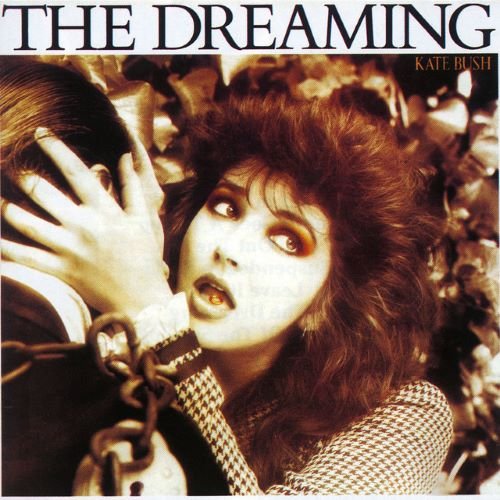
a while back. On 13th September, Kate Bush’s remarkable and hugely enduring fourth studio album, The Dreaming, turns forty. In October, I did suggest Bush’s albums warrant their own listening parties, sort of similar to what Tim Burgess does. I am going to come to my listening party suggestion but, before then, a bit of insight into The Dreaming. Even though SPIN ranked Bush’s The Dreaming as the third-best in her catalogue (and rightly placed The Kick Inside second, behind the mighty Hounds of Love) – last month, they ranked it as the best album of 1982 this month, where it beat out Prince 1999 and Michael Jackson’s iconic Thriller. Here is what they said about their 1982-conquering queen:

Pop stars don’t always do a good job describing their own work, but Kate Bush had a point when she described The Dreaming as her “I’ve gone mad album.” A pounding maelstrom of frenetic drums inaugurates Bush’s fourth LP, in which the songwriter plunges brain-first into avant-pop paranoia. Teeming with production techniques that summon Public Image Ltd more than the mainstream radio acts of 1982, The Dreaming is full of jarring flourishes: Bush’s scorched cries of “I love life!” on the violent “Pull Out the Pin,” the didgeridoo drones of the title track, the utterly frightening donkey brays on “Get Out of My House.” Yet somewhere amidst this chaos comes the waltz-time reverie of “Suspended in Gaffa,” one of Bush’s most magical compositions. New converts may wonder how Bush traveled from the sweet naïveté of “Wuthering Heights” to the art-pop genius of Hounds of Love. They should spend some time with The Dreaming. – Z.S.”.

If you do not own a copy of The Dreaming on vinyl, then go and get one. Before coming to the listening party idea, I want to source some information about this spectacular album, in addition to a review. The below interview - where Bush discussed 1982’s The Dreaming – is one that I keep coming back to:

I have no doubt that those who buy singles because they like my hits, are completely mystified upon hearing the albums. But if it comes to that, they should listen to it loudly! If a single theme linked The Dreaming, which is quite varied, it would be human relationships and emotional problems. Every being responds principally to emotions. Some people are very cool, but they are silenced by their emotions, whatever they might be. To write a song, it's necessary that I be completely steeped in my environment, in my subject. Sometimes the original idea is maintained, but as it takes form, it possesses me. One of the best examples would be this song that I wrote on 'Houdini': I knew every one of the things that I wanted to say, and it was necessary that I find new ways that would allow me to say them; the hardest thing, is when you have so many things to fit into so short a space of time. You have to be concise and at the same time not remain vague, or obscure. The Dreaming was a decisive album for me. I hadn't recorded in a very long time until I undertook it, and that was the first time that I'd had such liberty. It was intoxicating and frightening at the same time. I could fail at everything and ruin my career at one fell swoop. All this energy, my frustrations, my fears, my wish to succeed, all that went into the record. That's the principle of music: to liberate all the tensions that exist inside you. I tried to give free rein to all my fantasies. Although all of the songs do not talk about me, they represent all the facets of my personality, all my different attitudes in relation to the world. In growing older, I see more and more clearly that I am crippled in facing the things that really count, and that I can do nothing about it, just as most people can do nothing. Making an album is insignificant in comparison with that, but it's my only defense. (Yves Bigot, 'Englishwoman is crossing the continents'. Guitares et Claviers (France), February 1986)”.

In 2012, to mark thirty years of The Dreaming, The Quietus wrote a fascinating article about the album. It is something I would urge everyone to check out. I have selected section of it that I feel are especially noteworthy:

The Dreaming was the real game-changer. Back in 1982, it was regarded as a jarring rupture. "Very weird. She’s obviously trying to become less commercial," wrote Neil Tennant, the future Pet Shop Boy, still a scribe for Smash Hits. He echoed the sentiments of the record-buying public. Even though the album made it to number three, the singles, apart from 'Sat In Your Lap', which got to 11 a year before, tanked. The title track limped to number 48 while 'There Goes A Tenner' failed to chart at all. It was purportedly the closest her record label, EMI had come to returning an artist’s recording. Speaking in hindsight, Bush observed how this was her "she’s gone mad" album. But The Dreaming represents not just a major advance for Bush but art-rock in general. Its sonic assault contains a surfeit of musical ideas, all chiselled into a taut economy.

Bush had pirouetted into public consciousness to such an extent that in May 1981, she was asked to play the wicked witch in Wurzel Gummidge. Campy light entertainment was still knocking at the door, still smitten with her theatrical excesses. However, the following month, 'Sat In Your Lap' unveiled Bush’s new aesthetic. Inspired by attending a Stevie Wonder concert, it’s a violent assertion of creative control, a final nail in the coffin of the so-called elfin pop princess. Pounding pianos and tribal drums dominate, frazzled synth brass puffs steam as Bush’s vocals veer from clipped restraint to harnessed histrionics, at times rushing by with Doppler effect. The lyrics scratch their head in search of epistemological nirvana, a pursuit akin to the arduous process of making the album. "The fool on the hill, the king in his castle" goes searching for all human knowledge and the more he discovers, he realizes the less he knows.

The Dreaming’s disparate narratives frequently seem to be tropes for Bush’s quest for artistic autonomy and the anxieties that accompany it; the bungled heist in There Goes A Tenner, the ‘glimpse of God’ in 'Suspended In Gaffa', even the Vietnamese soldier pursuing his American prey for days in 'Pull Out The Pin'. "Sometimes it’s hard to know if I’m doing it right, can I have it all?" she sings in 'Suspended In Gaffa', a Gilbert and Sullivan-esque romp in 6/8, as reimagined by Luis Bunuel. (She was also asked during the album’s recording to appear in a production of The Pirates Of Penzance). A peculiar mix of self-doubt and pole-vaulting ambition characterizes many of the songs here.

If 'Sat In Your Lap' vaguely chimed with Burundi beat of the times (Bow Wow Wow & Adam Ant ), its flip-side sounded like the inscription of a dream. Her reading of Donovan’s 'Lord Of The Reedy River' takes the minstrelsy of the original and filters it through disquieting modern psychedelia, the subtly shifting palette not too dissimilar to the singles The Associates were chaotically assembling that year (see 'White Car'/ 'Q Quarters'). Where much of synth pop was revelling in pared down repetition, this music was incantatory, voluptuous, like Keats drifting ‘Lethe-wards’. Recorded in Townhouse Studios’ disused swimming pool in order to evoke the sensation of floating down a river, the song’s grainy, low-resolution Fairlight motifs root it in its time but the aqueous phantasmagoria points the way forward to Hounds of Love’s 'The Ninth Wave'. Like Lennon wanting to be the Dalai Lama on Tomorrow Never Knows, Bush was using technology as a means of metamorphosis.

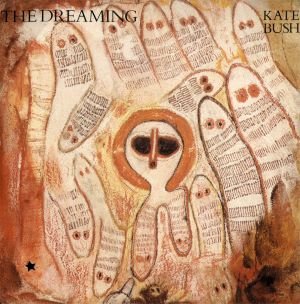
She disappeared into the studio after the single’s release. Emerging 13 months later with 'The Dreaming' single, which sadly flopped. Repeated listens reveal a record that deserves to rank alongside her more famous songs. With its "flood of imagery painted into it", the track would have benefitted enormously from an extended mix but its dismal chart placing meant it wasn't to become her first single release on 12". The semi-instrumental version on the b-side illuminates how Bush was becoming an inspired producer, creating tracks engorged in overdubs yet "full of space and loneliness".

The Dreaming elicits comparisons with Nic Roeg’s Walkabout(1971), not just due to its setting but in its tragic understanding of the human inability to communicate (a recurrent Bush theme). The film recites AE Housmann at its finale, so too a wind of ‘civilized’ change consumes The Dreaming’s finale. Into the aborigines’ hearts ‘an air that kills’, consigning their way of life to the ‘land of lost content. The animalistic chants and the Dreamtime itself, a belief system where Ancestral/ Totemic beings leave their fingerprints on the land or as other forms through reincarnation, evidenced her infatuation with transformation in sound and subject. The desire for artistic development, escaping the narrow confines of public perception and perhaps those early years watching Bowie parade his various personae (she was in the Hammersmith Odeon audience July ’73 when he retired Ziggy) all seem to influence the symbolism of The Dreaming.

Released the same year, Peter Gabriel IV (aka Security) opened with a double punch that eerily echoes The Dreaming. 'The Rhythm Of The Heat' in its pictorial three dimensions and 'San Jacinto' in its indigenous/'civilized' worlds colliding. No more could people like Padgham dismiss her as a Gabriel wannabe. She was now a peer and innovator. The title track segues into 'Night Of The Swallow'. Moon-glow piano balladry mutates into a torrid Irish folk blow-out; chiaroscuro Celtic cine-pop.

The Irish contributions, coming from members of Planxty and The Chieftans, were recorded over an all-night session at Dublin’s Windmill Lane Studios. Her musical imagination has the transporting power of cinema. As the scene moves from The Dreaming’s Antipodean soundscape to the outlaw glamour of a ceilidh band, it almost resembles the aural equivalent of the ‘magic geography’ of Bush favourites, Powell and Pressburger.

Another serpentine shape-shifter, 'Night Of The Swallow' deals with flight and imprisonment, a pilot begs his lover to "let me go" on a journey carrying potentially dangerous cargo (terrorists?). The lexicon of The Dreaming is rife with a similar tension: "wings beat and bleed" at windows, protaganists lock up their bodies like houses and then "face the wind" or recall "rich, windy weather" when incarcerated. Escapoligists perish "bound and drowned". An interpretive stretch perhaps but woven into the lyrics is the thrill and the threat of change: a move away from the prison house of public perception that had plagued Bush in a lot of ways or confronting her own limitations. It could even be wrestling with the surrender to the discipline of rhythm. Its presence ebbs and flows, a rigid backbone that frequently crumbles, giving way to more free-flowing musical passages.

The proviso Bush had for The Dreaming was that everything was to "be cinematic and experimental". Movies inform The Dreaming as much as any musical influences. When describing 'Pull Out The Pin', she synaesthetically blurs the vocabulary of music with that of film, referring to wide shots and "trying to focus on the pictures" between the speakers. The song’s evocation of the Vietnam forest, "humid... and pulsating with life" is astonishing; all queasy protruding Danny Thompson double bass lines, musique concrete, Chinese drums and a distorted guitar sounding like a US soldier’s scratchy transistor. Much of these sounds were collated by drummer Preston Heyman in Bali. With its foliage of samples and cultures converging it nods to My Life In The Bush Of Ghosts, the landmark Byrne/Eno collaboration recorded in 79 but released in 81.And like that modernist masterpiece, The Dreaming glimpses at a very metropolitan melancholy. Bush would never make an album in London again, a city she felt had an air of dread hanging over it’. 'All The Love', a forlorn musical sigh, features percussive sticks imitating Venetian blinds turning shut. It climaxes with messages from Bush’s actual malfunctioning answerphone: all very modern alienating devices, straight from the same world of Bowie’s 'Sound & Vision'. This was after all, the year Time magazine voted the computer as person of the year. Palmer’s ECM-like drowsy bass almost sobs with regret.

An embarrassment of riches then, bestowed upon an unworthy rabble. The Dreaming was released to a baffled public but the more open-minded sectors of the music press acknowledged Bush’s achievement. Despite many laudatory notices, watching Bush and Gabriel’s respective appearances on Old Grey Whistle Test confirms what she was up against. Gabriel is afforded due reverence as an art-rock renaissance man, Bush, on the other hand, while covering roughly the same ground, is ever so slightly mocked. Behind her unwavering propriety, irritation smoulders. As with her appearance on Pebble Mill, the usually sympathetic Paul Gambaccini constantly frames the music in context of its radio playability or lack thereof. Bush looks bewildered and more than a little wan. The music she had created was no longer so easily assimilated by daytime TV.

But it was The Dreaming that lay the groundwork. It ignited US critical interest in her (including the hard-assed Robert Christgau and the burgeoning college radio scene finally gave Bush an outlet there. Hounds Of Love, remains the acme of this singular talent’s achievements. It uses ethnic instrumentation while sounding nothing like the world music that would be popularized through the 80s. It is a record largely constructed with cutting edge technology that eschews the showroom dummy bleeps associated with synth-pop. At the time, she talked of using technology to apply "the future to nostalgia", an interesting reverse of Bowie’s nostalgic Berlin soundtrack for a future that never came. Like Low, The Dreaming is Bush’s own "new music night and day" a brave volte face from a mainstream artist. It remains a startlingly modern record too, the organic hybridization, the use of digital and analogue techniques, its use of modern wizadry to access atavistic states (oddly, Rob Young’s fine portrait of the singer in Electric Eden only mentions this album in passing).

For such an extreme album, its influence has been far-reaching. ABC, then in their Lexicon Of Love prime, named it as one of their favourites, as did Bjork whose similar use of electronics to convey the pantheistic seems directly descended from The Dreaming. Even The Cure’s Disintegration duplicates the track arrangement on the sleeve and the request that ‘this album was mixed to be played loud’. 'Leave It Open'‘s vari-speed vocals even prefigure the art-damaged munchkins of The Knife vocal arsenal. Field Music/The Week That Was arrayed themselves with sonics that seem heavily indebted to Bush’s work here. Graphic novelist Neil Gaiman even had a character sing lyrics from the title track in his The Sandman series. John Balance of post-industrialists Coil confessed that the album’s songs were all ideas that he later tried to write. But Bush got there first. And The Dreaming remains a testament to the exhilarating joy of "letting the weirdness in”.

Apologies for repeating or recycling any material I have written before about The Dreaming but, for those new to the album or have overlooked it, I think it is important to reiterate and repost. My idea is that, on the day of The Dreaming’s fortieth anniversary (13th September), there is a listening party. Maybe there have been Kate Bush listening parties before, but none that I am aware of! Such an important album that has gained new respect and understanding following mixed reviews back in 1982, its tracks are all so different, wonderfully interesting and extraordinary. The time is not set in stone, but I was guessing maybe 7 p.m. GMT would be best. It may be earlier than that, but the intention is to include as many people as possible – so that various time zones are covered and catered for. It would basically be a chance for fans of The Dreaming to comment on each of the ten tracks. People’s memories and thoughts; their favourite lyrics and music bits. I would kick things off and post a link for each track. With a hashtag like #TheDreamingListeningParty, people would tweet about what the track means and why they like it. I am not sure if anyone associated with the album might be available, but it might be short notice to get them organised and tracked. It will be fitting, fun and right to salute and show proper respect for an album that is forty on 13th September. If there was some bemusement and colder words reserved for it back in 1982, today there is no doubt that this Kate Bush album is…

A definite masterpiece.

FEATURE: Happy Day: The Incredible Talking Heads: 77 at Forty-Five

FEATURE:


Happy Day

The Incredible Talking Heads: 77 at Forty-Five

__________

SURELY one of the best…

 PHOTO CREDIT: Talking Heads in Amsterdam in June 1977/PHOTO CREDIT: Gijsbert Hanekroot/Redferns

and most important debut albums ever, Talking Heads’ Talking Heads: 77 is forty-five on 16th September. A landmark debut album, there aren’t that many articles and features about this amazing album from the New York band. Led by the genius that is David Byrne, I hope that people who have never heard Talking Heads: 77 dig it out ahead of its forty-fifth anniversary. Like I do with album anniversary features, I’ll come to a couple of reviews. In 2017, when the album turned forty, Annie Zaleski wrote a fascinating article for Salon regarding Talking Heads: 77. It is amazing to think that the best-known single – and maybe the band’s defining song -, Psycho Killer, only got to ninety-two on the U.S. chart! The album itself got to ninety-seven! Maybe too advanced, forward-thinking, and unique for audiences in ’77, this Talking Heads classic has been given a lot more affection and time in the years since. The band - guitarist/vocalist David Byrne, bassist Tina Weymouth, drummer Chris Frantz and guitarist/keyboardist Jerry Harrison – are absolutely phenomenal throughout their debut:

This legacy began with the band's debut LP, "Talking Heads: 77," which was released on September 16, 1977. The words "minimal" or "minimalist" were often used at the time to describe Talking Heads, which is entirely correct. The record's music is spacious, almost self-indulgently so, and deliberate. Every sound — a frayed guitar riff, a lurking bass line, confetti-shower piano, a rattlesnake drum roll — has a purpose and place and works in meticulous tandem with its surroundings. Even the cover's stark nature is streamlined: It's a brilliant tomato-red color with green text spelling out the album's name in a classic typeface that recalls a storied newspaper.

Because things are so orderly, "Talking Heads: 77" possesses an aura of simplicity. On the watercolor soul-funk jam "The Book I Read" and the deceptively carefree "Don't Worry About the Government," this austerity is soothing. During other moments — the self-explanatory "Psycho Killer," the haywire twirl "New Feeling" — Talking Heads' methodical approach drums up tension. The push-pull between these moods gives "Talking Heads: 77" a balanced sound that speaks to the band's instinctual bent; the album is never too rigid or laissez-faire.

"None of us read music," Weymouth told Vivien Goldman in the June 26, 1977 issue of Sounds. "We all suspect technique, because so much of that early '70s technical prowess just turned out boring. I have a basic idea about what a rhythm section, bass and drums, should do. I dislike flashiness, I think it's ridiculous. If people clap because it sounds good, that's the point.

"It doesn't matter that they don't realize you're playing something complicated which sounds simple," she adds. "I'd sooner play something which sounds simple and repetitive than clutter up the sound. It's all a case of keeping the beat and carrying momentum."

Indeed, "Talking Heads: 77" has its own singular internal rhythms and structures governing the music. Calling the record post-punk or new wave makes sense, because it's a pastiche of granular influences (e.g., soul, dub, tropicalia, folk, '60s rock) stitched together in precise and different ways. Harrison's keyboards cushion the main melodies and instrumentation, buoying the music without taking up too much space, while hints of exotic percussion or unorthodox instrumentation add subtle accent colors.

“Despite such self-effacement, Talking Heads were special. Critics, to their credit, tried to dig into Talking Heads' nuances and how the band fit into the burgeoning New York scene. For example, the Rolling Stone review of the album wrote, "Dressing like a quartet of Young Republicans, playing courteously toned-down music and singing lyrics lauding civil servants, parents and college, Talking Heads are not even remotely punks. Rather, they are the great Ivy League hope of pop music."

The band members themselves also resisted being lumped in with the punk movement, as they recognized such a monolithic tag didn't make sense. "We don't feel that in our performance we typify that angry attitude," Byrne told Melody Maker's Caroline Coon in the May 21, 1977 issue. "We don't eschew the primitivism — you know, the less is more and the more is less — but that's not quite what we're doing.

"They tend to believe that if you do something in a slick way, then it has no feeling. We don't hold that to be true. That doesn't necessarily mean we want to be real slick. At the same time, just not being slick doesn't mean that it's coming from the heart.

"I like to leave it up to someone else to say whether we're New and that's Old," he adds. "I didn't think of the band as joining the new wave but I did start out by thinking that I'd like to do something a little fresher than what you see in the chart!"

"Talking Heads: 77" did sound fresh, and it didn't take long for people to catch on. Although the album stalled at No. 97 on the U.S. album charts and "Psycho Killer" reached No. 92 on the singles charts, the band's next record, 1978's "More Songs About Buildings and Food," peaked at No. 29 on the pop charts and spawned a Top 40 hit with a cover of Al Green's "Take Me to the River." Talking Heads added depth, texture and shading on future records, but the sturdy foundation the band built with "Talking Heads: 77" lingered for the rest of their career”.

I am going to get to some reviews for Talking Heads: 77, as this is an album that has received so much acclaim. In 2003, Talking Heads: 77 was ranked at 290 on Rolling Stone's list of The 500 Greatest Albums of All Time. The album was also included in the book, 1001 Albums You Must Hear Before You Die. This is what AllMusic noted in their review of one of the most astonishing debut albums in musical history:

Though they were the most highly touted new wave band to emerge from the CBGB's scene in New York, it was not clear at first whether Talking Heads' Lower East Side art rock approach could make the subway ride to the midtown pop mainstream successfully. The leadoff track of the debut album, Talking Heads: 77, "Uh-Oh, Love Comes to Town," was a pop song that emphasized the group's unlikely roots in late-'60s bubblegum, Motown, and Caribbean music. But the "Uh-Oh" gave away the group's game early, with its nervous, disconnected lyrics and David Byrne's strained voice. All pretenses of normality were abandoned by the second track, as Talking Heads finally started to sound on record the way they did downtown: the staggered rhythms and sudden tempo changes, the odd guitar tunings and rhythmic, single-note patterns, the non-rhyming, non-linear lyrics that came across like odd remarks overheard from a psychiatrist's couch, and that voice, singing above its normal range, its falsetto leaps and strangled cries resembling a madman trying desperately to sound normal. Talking Heads threw you off balance, but grabbed your attention with a sound that seemed alternately threatening and goofy. The music was undeniably catchy, even at its most ominous, especially on "Psycho Killer," Byrne's supreme statement of demented purpose. Amazingly, that song made the singles chart for a few weeks, evidence of the group's quirky appeal, but the album was not a big hit, and it remained unclear whether Talking Heads spoke only the secret language of the urban arts types or whether that could be translated into the more common tongue of hip pop culture. In any case, they had succeeded as artists, using existing elements in an unusual combination to create something new that still managed to be oddly familiar. And that made Talking Heads: 77 a landmark album”.

I am going to leave things by sourcing from Pitchfork’s 2020 review of Talking Heads: 77. It is a shame there have not been more articles written! I think this is an album that should be preserved and passed down through the generations:

The band’s curiously multivalent relationship with pop music was already being negotiated. Across 11 songs, Talking Heads aspire to pop’s communal uplift while also creating distance from the genuine article. A few seconds into “Uh Oh, Love Comes to Town”— cymbal crashes, four chords ascending toward frenzy, the rhythm locking in—and we’ve arrived indisputably at the Talking Heads sound. Frantz plays like an R&B session drummer with a gun held to his head, just a little too edgy and insistent. Weymouth is bouncy and melodic, with no trace of a beginner’s tentativeness. A gleeful steel pan solo appears from nowhere, an early sign of the band’s disinterest in rock orthodoxy. Byrne yelps, proclaims, and carries on conversations with himself.

As he would again and again, he addresses human connection in the stilted language of an atomized and impersonal society. He frets that falling in love might cause him to “neglect my duties,” as a stockbroker might make a bad investment—so concerned with performing his role that love becomes an incursion, an obstacle toward getting work done. Crucially, however, “Uh-Oh, Love Comes to Town” is not black-witted satire. It may be a postmodern send-up of a love song, but it’s also a love song. The rhythm section does a stiff imitation of the Funk Brothers, but they still lay down a pretty good groove for dancing. Parsing the blend of sincerity and irony in any Talking Heads song is difficult, but you never doubt their belief in the music.

For New York, 1977 was a difficult year—economic freefall, neighborhoods ravaged by arson fires, a blackout that threw the city briefly into anarchy, the shadow of a serial killer who stalked the outer boroughs the summer before—and Talking Heads 77 occasionally embodies that darkness. “Psycho Killer,” the catchiest song ever written about a sociopathic murderer, is more disquieting in footage of an early CBGB performance than it is on record, where it evolved into a campy performance of violence, turning the killer’s chilling laughter into a goofy refrain.

“No Compassion” is more mundane, and more menacing because of it, with a narrator who calmly rationalizes his own refusal to empathize with anyone. Opening with an uncharacteristically hard-rocking riff and lurching between two drastically different tempos, it feels like a last vestige of affinity with the punk scene’s heavier and more nihilistic tendencies. Still, its message probably shouldn’t be taken at face value. “So many people have their problems/I’m not interested in their problems,” Byrne moans at one point, a rich sentiment coming from a guy beset by problems on all sides and eager to tell you about it, whose response to the joys of new love is a resounding “uh oh.”

These moments of intensity arise as occasional spasms across an otherwise upbeat and approachable album. At times, Talking Heads ‘77 seems to leapfrog the stormy minimalism the band would pursue across the trio of Brian Eno collaborations that followed this album, and instead offer a budget approximation of the pancultural dance party they threw on 1983’s Speaking in Tongues. Talking Heads ‘77 abounds with ecstatic rhythms and bright sonic details: a honky-tonk piano disguised as a disco bassline on “The Book I Read”; mallets and Latin percussion building toward a sultry sax refrain on “First Week / Last Week … Carefree”; a toylike synthesizer on “Don’t Worry About the Government,” a song whose cheeriness in the face of alienation is both heartening and unsettling. The Talking Heads of ‘77 come off like enthusiastic collagists rather than master sculptors: these sounds are thrilling on their own, but they don’t always cohere with the holism of later albums.

On “Tentative Decisions,” Byrne engages in a one-man call-and-response, switching between his usual whine and a cartoonishly stentorian low register, simulating the interplay of lead and backing vocalists on any number of old pop and soul records. This was a new kind of self-awareness for rock bands, who by the mid-’70s were steeped in decades of pop history, and anxiously searching for their own place within it. Talking Heads articulated that self-awareness without ever sounding smug or lapsing into parody, twisting pop’s stock gestures into new shapes while maintaining their core musical appeal. It was a feat no one had accomplished in quite the same way before them, and no one would repeat in quite the same way. No one except the Talking Heads, that is: Byrne would closely replicate the “Tentative Decisions” vocal arrangement on the chorus of “Slippery People,” from Speaking in Tongues. But by 1983, he had an actual chorus of slick-sounding backing singers—the distance between Talking Heads and the rest of the world growing smaller, but never collapsing entirely.

After its tense final chorus, “Tentative Decisions” explodes into the most jubilant stretch of music on Talking Heads ‘77, an instrumental coda with a four-on-the-floor drumbeat, congas tapping at the edges, and high-stepping piano from Harrison—all of it repeating with minimal variation as the song fades out. More than anything, it sounds like house music, a genre that wouldn’t come along for a few years, but would eventually leave a seismic imprint on pop. Talking Heads stumble into the resemblance on “Tentative Decisions,” and stumble quickly out of it. Still, in 1977, they didn’t need to rush toward the future. They were already there”.

One of the all-time great albums, Talking Heads: 77 turns forty-five on 16th September. Less than a year later, Talking Heads released the sensational More Songs About Buildings and Food. A band that had this incredible quality and consistency right from the beginning, it all started with…

A masterpiece from 1977.

FEATURE: Revisiting… Låpsley – Through Water

FEATURE:


Revisiting…

Låpsley – Through Water

__________

AN album…

I feel should have been shortlisted for a Mercury Prize in 2020, Låpsley's Through Water is magnificent. She has a new album, Cautionary Tales of Youth, coming out in January 2023. The Southport artist born Holly Lapsley Fletcher is one of her finest and most consistent young artists. A sensational talent who mixes Arty Pop, Soul, and different genres into something very much her own, I am looking forward to her forthcoming third studio album. Not only did Through Water (released on 20th March, 2020) not get the attention it deserved. I think it did not really earn all the acclaim and positivity it warrants. Thinking about it, the album was released just before the pandemic was declared in the U.K. It must have been frustrating for her to have this exciting album out and not being able to perform to the fans! Go and check out Cautionary Tales of Youth, but also check out Låpsley's brilliant second studio album. It is a great taster and introduction to the stunning artist – though her debut, 2016’s Long Way Home, is also remarkable. It sounds like her third album might be a slight departure and evolution in terms of themes and sounds. New songs like Dial Two Seven suggest we are going to get a terrific album in January! I will get to a couple of reviews for Through Water soon. Before then, I want to source an interview from 2021.

You’ve been creating music for quite some time now, only 17 when you started releasing songs on Soundcloud, going on to tour the world and release two albums, as well as a number of EPs and singles. You must have been on quite a journey! How do you reflect on your career thus far?

I do want to look back and give myself a hug when I was 18, or 19. I don’t think I necessarily got the support I should have. But now having gone through all of that and I have the support system around me, I’m very proud of the work I’ve made. Despite the tough times, it’s the music that carries you through, and it’s also the support of the fans. I put that first over frets I had about the way I looked, my weight, about women in the industry, I’ve always put the music first and I think it’s held me in good stead. I’ve held the most important things close to my heart, which has kept me doing it because I think often it’s very easy to burn out. Especially when you enter the industry quite young, and you’re put through the motions, it’s very intense. But now we’re at the other end, I feel like this is the start of my career in a way. I’m working on the third album, it’s pretty much written, I just need to finish the production. I think in order to write quite fluidly and to write a lot and to finish up something like an album, you need to be in a good mental space. And I think the fact that I’ve done that it’s just testament to how much of a good place I feel like I’m at right now.

You took full control of your 2020 record, ‘Through Water’ and said it was the first time you felt like an ‘artist’. How important do you think it is that musicians have autonomy over their music?

It’s incredibly empowering. And also, the people around you who aren’t creatives don’t necessarily understand, and it’s not their fault, they just work in the industry and you are the artist. No one ever turned around and said to me, ‘actually, if you want to be like your idols, you’ve got to put the time in, you’ve got to put the hours. You’re not just gonna get there because you got a top 10 or because doors opened’. It takes hours in the studio trying to work out, and also working on your writing and assessing. Writing is like communication, you’re basically turning your life experiences into words and into art and the more you do it, the more you feel comfortable in it and the more you push yourself, the more you find yourself. I wish someone told me that it would take time, and it’s okay not to have all the answers. I think that would have helped me. So I mentor artists now and I try and tell them that shit.

A year on, how do you feel about your ‘Through Water’ record now?

Oh, my God, I love it. It’s funny, I never listen back to my own music because I’m always on to the next thing, so I was thinking, ‘oh, I wonder what songs I should play for the All Points East festival’. So I just listened to my record, from front to back the other day when I was going on a run. And I was like, ‘go get ’em, girl! God, this is so cool man!’.  I left this industry, now I could look back and just be so happy with that piece. I’ve never had that job satisfaction in my life, so I have nothing but pride.

So what can we expect from your next set of music?

There’s two new singles next. This one song is about opportunities closing, like doors opening and doors closing. And then there’s another song about dating in lockdown, and connection and someone seeing you through all the bullshit that is the dating world. So just some real early 20 shit. Classic Lapsley, electronic. I think it makes sense that it’s an extension of ‘Through Water’. I think the album is going to be slightly more of an indie electronic direction. This is more minimal electronic pop, these two tracks”.

To round off, I will drop in a couple of the positive reviews for Through Water. A terrific album from Låpsley, it is exciting to see what she produces on her new album. If you have not heard this gem from 2020, go back and listen. It is disappointing that some did not rave and give it full praise – though I guess that is the way with many albums. This is what DIY had to say in their review of Through Water:

Sometimes, an album’s artwork tells you everything you need to hear about the work that lies within. On 2016 debut ‘Long Way Home’, Låpsley stares you down from the sleeve, the defiant look on her young face setting the scene for her sad-synth mediations on disappointing relationships and internal hurt. On ‘Through Water’ she’s stopped demanding answers and has given herself over to the elements - a deep dive of commitment, going wherever the waves might take her.

The leap has definitely paid off - her inimitable voice thrives in the woozy dancehall and afrobeat-inspired ‘First’ and the big pop confidence of ‘Womxn’, but also knows when to take a step back, peppering the record with spoken word segments and heartfelt mantras that tie the whole thing together. Her work will always be defined by its understated, vulnerable nature, but here it feel much more an intention than an accident - an artist learning to lean into their strengths, no longer shrinking back in the wake of darkness. Bringing the record to a close on the delicate ‘Speaking Of The End’, she confronts it directly: “I’m running a new race… I’ve sculpted a new face”. By adding an extra layer of complexity to her sound without compromising on intimacy, it’s a solid evolution that bodes incredibly well for wherever she swims to next”.

Let’s finish off with the review from The Line of Best Fit. They were deeply impressed with Through Water. I first heard songs from it in 2020, but I have dived deeper into the album since then. It is magnificent, and it should be played more widely:

Through Water is an expansion of Låpsley’s fluid soundscape which is dominated by ambient electronica, but the common thread which permeates it all is a sense of growth, understanding, and acceptance.

Without coining the stereotypical phrase, ‘coming of age’, there truly is a sense of acknowledgement of the past, and anticipation of the future which lies at the heart of the album. This sentiment comes to fruition quite early on, in the likes of “My Love Was Like the Rain”. A pacifying sound bath washes over you before being littered with staccato hits of a synth and brushes of a snare which calmly come together and convey a feeling of testing out the building blocks of life in order to formulate some kind of sense through moments of turbulence.

Where her previous releases have seen Låpsley as the embodiment of the lo-fi bedroom star, Through Water oozes multitudes of confidence, and within that arises the clarity of stumbling upon the right path in life. It is testament that Låpsley’s sonic palette has grown ever expansive and more developed over the years, with “First” containing afro-beat tinged hues that add a blossoming amount of warmth to her glacial soundscape, and “Bonfire” conjuring imagery of drizzling embers of fireworks which soar across the soundscape, radiating the excitement of encountering something unexplored.

Though, that isn’t to say that the introspective ambient moments have been completely lost. “Ligne 3” is an echo of “Station” – the song that catapulted her into the limelight – in that it perfectly captures her melancholic musings on love. Ethereal strings are thrown in for added meditative effect, shimmering amidst the call-and-response nature of her spectral vocals and her soft-spot for down pitched androgyny which portrays two sides of a heart-breaking story.

From the confines of her bedroom, to the expansiveness of the great blue planet; Låpsley’s talents are limitless. The parallels between nature and emotion are prevalent throughout, and her silken smoky tones often find ways to mirror lyrical content between songs — “Sadness is an avalanche” (Sadness is a Shade of Blue) and “Happiness grows like ivy walls” (Speaking of the End) are just a few of the poetically charged lines that showcase the progression in her lyricism, but “Leeds Liverpool Canal” offers the alternative idea that sometimes there is a lot of power in the unspoken. Serving as an interlude of sorts; the keys and strings cultivate a sense of euphoria whilst an element of grounding is offered by synthesised liquid pools being splashed at, by your feet, making you want to dance around them in order to feel a part of the action.

At the heart of it all, Through Water is an album that was made to move you – physically and emotionally – and most importantly, to make you feel. Water as a substance is intrinsic to our very being, and through Låpsley’s intention, is complex enough to touch us all”.

If you have never heard of Låpsley or her music, I would definitely point you towards Through Water. She is a brilliantly talented young artist that is among our most distinct and promising. I think Cautionary Tales of Youth is going to be terrifically received. It will be a treat in January. Go and spend some time listening to…

THE superb Through Water.

FEATURE: Spotlight: Seraphina Simone

FEATURE:


Spotlight

Seraphina Simone

__________

I have some male artists and bands…

coming up but, at the moment, I am being influenced and affected more by female (and non-binary) artists. With such amazing new talent out there, it is great to feature as many artists as I can. Even though there are not many recent interviews with Seraphina Simone, I was keen to include her, as her music is really good and worth a listen. Here is an artist with an amazing pedigree and simply awesome talent. There are some interview bits from this year I want to include, after I include an interview from 2020. Prior to that, here is some background about the amazing Seraphina Simone:

On the other she is musical aristocracy, although the term makes her cringe. Her father is the musician Terence Trent D’Arby aka Sananda Maitreya. Holidays when she was a girl meant long trips through California, brushing shoulders with everyone from George Harrison to Billy Idol, or being babysat by Pamela Des Barres. Some artists might claim their ‘godparents’ were Prince, Miles Davis, Christie Hynde, Pete Townsend and Mary Greenwell. Seraphina’s actually were.

A childhood only takes you so far. From all these influences, from her deep-South pastor grandfather, and a heritage that is black, Greek, Irish and Cherokee, Seraphina Simone has created a sound that’s wholly her own. These are smart, sun-drenched tales of heartbreak and longing, queer sultry odes to the bad decisions you wished you hadn’t made and the ones you wished you had.

If you listen out for BANKS or Lana Del Ray or Bat for Lashes or Lorde, then you might hear traces, as well as the ghosts of Human League, Blondie, New Order and Cyndi Lauper. These are the songs of a young woman finding a path through an impossible 21st century.

But she is also none of the above: wholly sui generis. In her hands the ordinary becomes uncanny. With her head in London and her heart in California, Seraphina Simone has written the soundtrack to this longest and strangest of summers”.

I was interested learning how Seraphina Simone got into music. I think I first became aware of her music in 2020. That was a rough year for any artist to try to establish themselves – what with the pandemic and the impossibility of playing live. In June 2020, she released her first single, Cherry. WIMITLA spoke with a superb artist already primed for big things:

How did you get started making music?

My dad's a musician and had some success in the 80s, so music was always just around or happening growing up. Like I remember being in LA with my dad as a kid, and he had to go meet a friend quickly to pick something up, and the friend turned out to be Madonna— but I was like 9 at the time so it kind of registered but also kind of didn't. But I guess subconsciously I grew up with this feeling that musicians were my family, and felt like they were my tribe, even before I was making music myself. It took me a minute to actually commit to it though, I think I was too scared to fail so I just hovered around the music industry on the business side for a bit before realizing I was kidding myself and had to at least try or I'd go mad.

Favorite non-music activities?

Reading, but a lot of the books I read are about music or musicians so maybe that doesn't count... I'm a bit of a pagan and love being in nature, so being somewhere that feels elemental - the woods, the beach, by a lake. Throw in some mates and the classiest bottom shelf boxed wine and we're talking. Maybe I'll bring my tarot cards and freak people out.

Any future projects that fans can look forward to?

I've got a few more releases planned for the year so keep an ear out for new music... I'm also in another project called TRILLS and we're planning on putting a single out this year, but it's kind of in corona-limbo right now. We wrote it in LA with a producer called Boom Bip and were finishing in London with John and Ned from Franc Moody, but quarantine kind of halted everything”.

I am going to move onto a recent interview. Seraphina Simone’s Milk Teeth ranks alongside my favourite singles of the year so far. Some big beats and synths mix with a vocal that scores a song that has some personal and somewhat dark lyrics. A sense of sadness and struggle can be found on the song. That contrast when it comes to the energy of the composition and the nature of the lyrics stands Seraphina Simone’s work out. The Line of Best Fit spoke with the wonderful artist about the song’s background and her music:

Struggling herself with matters of racial identity and insufficient representation, as well as navigating life between London and Cali, Seraphina Simone turned to one of the few constants in her life; music. Vibrating with 80s chirrups and otherworldly warbles, but sang with a deep and profound bitterness, "Milk Teeth" is a perfect encapsulation of Simone’s sultry twenty-first-century style. It’s only the second single from her upcoming debut EP of the same name, but manages to elegise the treacherous and perplexing path of one’s early twenties with astonishing poise and candour. The refracted glamour, the societal yearning, the struggles, and the downfalls.

“It’s a track about growing up feeling ugly and invisible,” she muses. “Beauty standards were inextricably white, with the idealised woman being a gamine, long-limbed, milky-skinned waif. I was brown and short with frizzy hair and I dreamed of waking up one day looking like Alexa Chung or Cory Kennedy.”

In the absence of role models in the music tableau that look like her, Simone has decided to become her own. From a heritage that is black, Greek, Irish and Cherokee, and a long lineage of masterly musicians (did we mention Terence Trent D’Arby is her dad?), she has whittled a sound that’s wholly her own.

Smart, sultry elegies of heartbreak and social anguish that feel at once achingly anecdotal and timelessly relatable are brought to life through spacious synths and reverb-drenched production, before being doused in the sleaziness of California glamour and a healthy dosing of smoky, London grit. These are tracks about being suspended between two worlds but fitting into neither: “Those manic pixie dream girls never had brown thighs,” she snuffs on her latest chorus, “I’d be happy if I had those milk teeth.”

“Rather than questioning the system and thinking how fucked up it was that I was made to feel like I wasn’t enough because of the colour of my skin and body shape, I internalised and made it my mission to fit in, spiralling into self-loathing and self-denial about my own heritage because of some fear of being too Other,” she reflects. “It’s ironic that as an indie kid that scene was all about a community of awkward misfits, except all the misfits looked the same. It’s taken me a long time to unpick all that bullshit and accept myself as I am.”

Having been performing as part of pop royalty Self Esteem’s band since 2020, as well as opening for her on the electric Prioritise Pleasure tour, Simone’s early aplomb and eye for cutting one-liners are no coincidence. In using music to reconnect with her black heritage and reject music’s tired one-size-and-shade-fits-all maxims, she’s crafted a sound that’s as important as it is catchy, and alongside characters like Rebecca Lucy Taylor, is ushering in pop’s long-awaited new world order”.

I am going to finish off with CLASH’s coverage of the amazing recent track, Lovesick. It is from the must-hear Milk Teeth EP. Here is an artist who is primed and ready for the biggest stages. One of the finest new young artists coming through right now:

Travelling to London from her native United States, her academic gifts saw her accepted to Oxford University, reading English. The stifling atmosphere saw her burrow inwards, however, and music became a source of respite and escape from the stale surroundings.

Word of mouth spread, with Seraphina Simone invited to become part of self esteem’s live band. Touring around the country as the songwriter’s work reached countless new fans, Seraphina kept working on her own music, kept focussing on her own plans.

Her debut EP is out now, melding together synth-pop tropes with her own unique brand of melodic melancholy. The process behind the EP became therapeutic, a way of Seraphina Simone excising old emotions.

“The EP is a reflection of me dealing with my shit for the first time in my life. I’d had some quite heavy emotional trauma growing up, and not dealt with any of it – I just pushed it down into a black hole inside me and it (obviously) manifested in other ways, one of which was a kind of phobia of vulnerability,” she says. “Then 2020 hit, we spent acres of time having to confront ourselves, and I started working through my shit properly for the first time in my life.”

 Seraphina adds: “The songs on this EP mirror the early stages of this process – It’s me unstitching big parts of my identity and trying to re-patch them together in ways that reflect who I am now, and figuring out which beliefs and feelings and judgments are innately mine, and which I’ve just had transplanted onto me by society or the value systems around me or as a reaction to my own insecurities.”

Lead cut ‘Lovesick’ bristles with promise, a self-described “cry-dance” banger worthy of Robyn, or even Lorde. Written in 2020, it’s come to form the fulcrum of this new phase of her work. “‘Lovesick’ is me processing the fallout of a big relationship, where we’d broken up not through lack of love but because it wasn’t right. That kind of grief, where you’re breaking your own heart and someone else’s, took a while to get over.”

She adds: “I couldn’t write a single song for about six months, until ‘Lovesick’ tumbled out. It’s about heartbreak and hurt and apathy and doom-spirals and the fear of being alone and self-sabotage, but I was going out a lot to numb the sadness and doing lots of crying on dancefloors, so I wanted the song to reflect that”.

I will round up here. If you do not know about the sensational Seraphina Simone, then go and follow her on social media and check out the new Milk Teeth EP. It marks her out as someone with a very bright future. Since 2020, she has put out such incredible music and built this great fanbase. Gaining attention and traction from the likes of BBC Radio 6 Music, everyone needs to know about her. She plays Paper Dress Vintage in London on 28th September (the date is sold out). Seraphina Simone may be rising right now, but very soon she will be…

A major artist.

____________

Follow Seraphina Simone

FEATURE: And Let My Body Catch Up: Kate Bush’s Rubberband Girl and Eat the Music

FEATURE:


And Let My Body Catch Up

IN THIS PHOTO: Kate Bush in a still from the Rubberband Girl music video 

Kate Bush’s Rubberband Girl and Eat the Music

 __________

HERE are a couple…

 IN THIS PHOTO: Kate Bush in a promotional photo for Eat the Music

of Kate Bush songs that people might not be aware of. To be honest, I think Bush herself might not have a lot to say about them. As the singles are celebrating anniversaries soon, I wanted to write about them. Taken from her album, The Red Shoes, Rubberband Girl was released on 6th September, 1993. It reached number twelve in the U.K. That is quite an impressive chart position! The opening track from the album, Bush did re-record it for her 2011 album, Director’s Cut. I think she sort of regrets reworking the song and had her doubts whether it should have been included. She did say this to MOJO in 2011:

I thought the original 'Rubberband' was... Well, it's a fun track. I was quite happy with the original, but I just wanted to do something really different. It is my least favourite track. I had considered taking it off to be honest. Because it didn't feel quite as interesting as the other tracks. But I thought, at the same time, it was just a bit of fun and it felt like a good thing to go out with. It's just a silly pop song really, I loved Danny Thompson's bass on that, and of course Danny (McIntosh)'s guitar.  (Mojo (UK), 2011)”.

Whether that means Bush was not happy including Rubberband Girl on The Red Shoes or Director’s Cut, I am not sure. In any case, the original is a wonderful song that are among my favourites of hers. It has a jauntiness and elasticity to it that is infectious! This idea of being knocked down and having resilience is inspiring. At the time, I think Bush herself did need that sort of strength and resolve. Her mother died on 14th February, 1992. She split with Del Palmer (her engineer and musician boyfriend) around the time of The Red Shoes, and it was a difficult period in general. Bush released the short film, The Line, the Cross and the Curve in November 1993. It was not well-received and, even though her writing and direction is okay, the fact that she starred in it too means she took on a lot.

After The Red Shoes, she would not put out a new studio album until the 2005 double, Aerial. She started a family (Bertie was born in 1998), and I think everything came to a head. Looking back, she had barely taken a break by 1993. The Red Shoes is a good album, but it is not regarded as one of her best. I think Rubberband Girl is one of the best songs, and shows that there was stuff to enjoy. Returning to the Kate Bush Encyclopedia, and here are a few more details about the first single from The Red Shoes:

Song written by Kate Bush. Originally released as a single by EMI Records in the UK on 6 September 1993. Also released on her seventh album The Red Shoes. The song was subsequently also released as a single in the USA, on 7 December 1993.

Formats

'Rubberband Girl' was released in the UK as a 7" single, a 12" single picture disc, a cassette single and a CD-single. In the USA, the single appeared on CD only. A cassette single was also released in Canada.
All formats feature the lead track and the B-side 
Big Stripey Lie. On the 12" single and some CD-singles, an extended mix of Rubberband Girl appeared. in the USA, the B-side was Show A Little Devotion instead of Big Stripey Lie.

Versions

There are four different versions of 'Rubberband Girl': the album version (which was also the single version) and an extended version, both released in September. A year later, a 'U.S. remix', credited to American DJ Eric Kupper, appeared as an extra track on the single release of And So Is Love. And in 2011, a re-recording of Rubberband Girl appeared on Bush's album Director's Cut”.

I love the video for Rubberband Girl. Like her debut single, Wuthering Heights, we got a U.S.. video. America had a different Wuthering Heights video because they found our version a bit scary and odd. I am not sure whether that was the case with Kate Bush trampolining in the Rubberband Girl video, or whether she just wanted to do something different herself. I have included both video is in here so that you can compare for yourself. As the single is twenty-nine on 6th September, it is well worth bringing it to the spotlight. I don’t know whether it happens so much now, but artists used to put out different singles for different parts of the world. Maybe the idea was that more of the album was being promoted, and some songs might not translate well in various countries. When it came to the first single from The Red Shoes, the U.S. got Eat the Music. Entirely different to Rubberband Girl, it is one of the underrated gems on The Red Shoes. Whilst I think Rubberband Girl is more primed for the American market, Eat the Music did reach ten on the U.S. Modern Rock Tracks chart. Again, let’s bring in some information about the song:

Song written by Kate Bush. It was originally released as the lead single for The Red Shoes in the USA on September 7, 1993, while everywhere else in the world Rubberband Girl was released. In the UK, a small handful of extremely rare 7" and promotional CD-singles were produced, but were recalled by EMI Records at the last minute. A commercial release followed in the Summer of 1994 in the Netherlands and Australia, along with a handful of other countries. The song's lyrics are about opening up in relationships to reveal who we really are inside.

Formats

The USA CD-single featured the album version and 12" version of 'Eat The Music', along with Big Stripey Lie and Candle In The Wind. A 2 track CD-single, released in the Netherlands in the summer of 1994 featured 'Eat The Music' and You Want Alchemy. The Dutch and Australian 4 track CD-singles featured these two tracks plus the 12" version of 'Eat The Music' [which is actually the 4'55 US edit, see below] and 'Shoedance (The Red Shoes Dance Mix)'. It is worth noting that the Australian CD-single came in a 'Scratch And Sniff' card sleeve”.

I really like The Red Shoes, but I always thought the track order was wrong. Rubberband Girl is a good opener, but I think Lily would be better. In any case, Eat the Music should definitely come as the second track. On The Red Shoes, we have Rubberband Girl, And So Is Love, Eat the Music, then Moments of Pleasure. The mood sort of goes up and down, and up and down again, so it is a bit uneven! I feel Rubberband Girl and Eat the Music should be side by side, whether tracks one and two or two and three. Anyway. They are singles that fared differently and share very little common ground, apart from the fact they have great energy. I love then both, and it shows what musical diversity is on The Red Shoes. Rubberband Girl is more in the Pop/Rock mould, whereas Eat the Music has this Calypso/Balla sound. This is an interesting direction that was not explored too much more on The Red Shoes. Both tracks feature horns, but Eat the Music has valiha and kabosy from Justin Vali. There is some vocal work from Kate’s brother, Paddy Bush, plus an assortment of terrific brass. Two brilliant songs from a very underrated album, I was keen to mark the approaching twenty-ninth anniversaries. After 1993’s The Red Shoes, Kate Bush did slowly retreat from the limelight to focus more on herself and family. Aerial arrived in 2005, and it marked this wonderful return. The Red Shoes is an album that more people should know about, as it features…

SOME really brilliant music.

FEATURE: Whenever You Call: Mariah Carey’s Butterfly at Twenty-Five

FEATURE:


Whenever You Call

Mariah Carey’s Butterfly at Twenty-Five

__________

I am immersing myself…

IN THIS PHOTO: Mariah Carey during the Butterfly photoshoot/PHOTO CREDIT: Michael Thompson

in album anniversaries over the next week or so. This and next month, there are big anniversaries for album, by, among others, The Smiths, Talking Heads, Radiohead, Janet Jackson, and R.E.M. Although not necessarily Mariah Carey’s best-received album, I felt I had to mark the approaching twenty-fifth anniversary of Butterfly as it is hugely important. Her sixth studio album was released on 16th September, 1997. I remember when this came out, I was in high school. Singles like Honey and Butterfly were being played by a lot of my peers. While she mainly spoke to girls of that age, I was aware of a much broader and diverse listening audience outside of the school gates. I have always liked Mariah Carey, and Butterfly did top the album chart in the U.S. Seen as an R&B classic, it won awards and gained a lot of critical love. Like I do with album anniversaries, I am going to drop in a couple of sample reviews, just to show what critics make of Butterfly. Before that, there are a couple of features that give us more insight and background to one of Carey’s greatest and most important albums. Albumism marked twenty years of Butterfly in 2017. Among other things, they discussed its reception and success:

Carey’s womanhood unfolds over the record’s expanse, lyrically and vocally. The title piece is a riveting gospel-pop stunner, recast later as a brief, but ascendant dance jam “Fly Away (Butterfly Reprise).” Many of the downtempo tracks on Butterfly borrow from devotional/non-secular music mechanisms―with exceptions for the ephemeral jazz of “Fourth of July” and the Spanish flecked “My All”―as it relates to Carey’s vocal intermix of power and nuance. But, she explores new vocal techniques too. Her rapid-fire delivery of lines from the album’s centerpiece, “Breakdown,” sting and soothe―a picture-perfect conveyance of resilience and heartbreak. Her guests on the track, Bone Thugs-N-Harmony, complement Carey and do not subvert or subtract from her or the song.

The only “swing and a miss” moment on Butterfly is an ill-conceived duet with Dru Hill frontman Sisqó on the Prince chestnut “The Beautiful Ones.”

Released on September 16, 1997, Butterfly went on to collect five platinum certifications in America. Globally, the record tallied silver, gold and platinum marks in Australia, England, Japan and Canada, among others. Beginning in the autumn 1997 and concluding in the spring of 1998, Butterfly produced five singles: “Honey” (US #1, US R&B #2, US Dance #1), “Butterfly” (US AC #11), “The Roof,” “Breakdown” (US R&B #4), “My All” (US #1, US R&B #4, US AC#18). Continuing tension between Carey and Columbia caused the mishandling of format and market specificity for these singles. Subsequently, their respective impacts were strong, but scattered in multiple territories.

Critically, Butterfly received mostly unanimous praise, amassing industry nominations, honors and awards, but its biggest gift to Carey? It distilled her gifts of songwriting, singing and that impeccable ear on one album. Even with the peaks and valleys Carey has endured―artistically, professionally and personally―Butterfly is remembered for its delicacy and strength”.

I have listened to Butterfly quite a bit 1997, but I am not too aware of the background and history of it. Two years after the incredible Daydream, Butterfly pushed Carey more into R&B territory. Carey had little control over the creative and artistic steps she took on her albums following her marriage to Tommy Mottolo. However, after their divorce midway (through the album's conception), she was able to assume more influence and control in terms of the writing and production. Making the songs and sound more in her own image rather than that of Mottolo. Carey has said how 1997’s Butterfly was a turning point and really important moment in her life. Essence took a look at Butterfly in 2020. Some of its creators (including Carey) reflected on a classic that cemented her as one of the world’s best artists:

Of course she’s technically “pop,” in the purest sense of the word. With ten platinum studio albums, 34 Grammy Nominations, countless Billboard hits and a slew of other record-breaking achievements, she is undoubtedly one of the most popular and prolific artists of all time.

But she didn’t choose that. It was kind of inevitable, right? Her voice alone —its palpability, its singularity— primed her for a career of singing chart-topping hits. She couldn’t help it.

It’s the other connotation of “pop” that doesn’t quite fit and feels more determined —the one that makes you think of bubblegum— light, generic, lacking substance or burden. The kind of label we give to artists who can create anthems, but rarely get intimate. That’s where Mariah gets off the train.

IN THIS PHOTO: Mariah Carey during the Butterfly photoshoot/PHOTO CREDIT: Michael Thompson 

To not define (or to not at least offer a careful disclaimer) when calling Mariah “pop” is to ignore her legacy of delivering masterfully written music that’s personal, profound and soulful —the antithesis of the typical pop music formula. While songs like “Love Takes Time” and “One Sweet Day” from her earlier albums hinted at Carey’s desire to go deeper, it was 1997’s Butterfly that solidified the rhythm and blues quotient in her music and presented her as a vulnerable and self-reflective artist ready to break free.

With Butterfly, she created a classic. More than a branding tool, the butterfly became synonymous with Carey, and for a good reason. The imagery of a vibrant, spirited thing with incomparable beauty and an unpredictable wingspan, was the perfect mascot for Carey’s unprecedented range as a musician and an artist —her dynamic voice, so striking and distinct, it could only be something crafted by the Divine. Not to mention the butterfly’s process of becoming —its life cycle, its transition while cocooning, the stages of egg, caterpillar and then butterfly— served as an idyllic symbol for a woman on the brink of emerging.

But Butterfly was more than a statement of her proverbial metamorphosis as an artist and woman. The album had tangible implications in her personal life and musical legacy. For one, it was her first album after her separation from Tommy Mottola, a divorce that afforded her the creative and personal freedom to produce music on her own terms. The album also catalyzed the pop music trend of collaborating with hip-hop artists (every other “pop diva” would soon follow suit.) And finally, Butterfly not only showcased her already-established prowess as a vocalist, who could belt out ballads or flirt over the hottest summer jams but also as one of the most versatile songwriters in contemporary music.

Here Carey and her collaborators speak on the creation of the album.

The whole butterfly theme.

Mariah: “I was never actually into butterflies, but I kept hearing this song in my head. ‘Spread your wings and prepare to fly because you have become a butterfly.’ And at the time, I was leaving the home where I lived and on the mantel there was a piece that this guy had made and it had a little butterfly in the middle. I had just written the song, [so it felt like a sign]. That was the only thing I took from that house. It burned to the ground.”

The house she is referring to is the mansion she shared with then husband and producer Tommy Mottola, which she nicknamed “sing-sing,” after the New York prison. Her and Mottola separated in 1997 and in an odd sort of poetic justice, two years later the home burned to the ground in an accidental fire. During the course of their six-year marriage, Mottola reportedly controlled Carey’s personal and professional life, and in his 2013 book, even admits that the marriage was “wrong and inappropriate.” Butterfly was Carey’s first album without Mottola’s oversight.

Stevie J: “She was just being herself [when we worked together]. She was married at a young age, so you know she had really began to find herself and the woman she wanted to be. It’s a great thing for a woman when she gains her independence, so I didn’t really see anything other than just her being a happy, spirited person. We would have our Cristal and our wine and just be writing smashes.”

Da Brat: “Once she broke away from the cocoon, she spread her wings and flew on her own. She was ready to handle her own life. The ‘Honey’ video showed her escaping from an island. ‘Butterfly’ (the song) is self-explanatory. She came into herself. The album was soulful because that’s who she was. Behind all the glam, she was hood, still a kid, knew all of the lyrics to all rap songs… and just wanted to express herself in her own way. Her words are her truth. ‘Breakdown,’ just listen to the words. She joined forces with her favorite hip-hop homies who she knew she had great creative chemistry with and soared even higher.”

Collaborating with a legend.

For Butterfly, Carey worked with Da Brat, Jermaine Durpi, Sean “Puffy” Combs, Q-Tip, Stevie J, Mase, Mobb Deep and Bone Thugs-N-Harmony. Although now it’s not uncommon for rap and pop artists to collaborate, Mariah was one of the first artists to popularize it with hits like “Fantasy,” “Heartbreaker,” and “Honey.”

Stevie J: “When I got with Puff, he was like, ‘Imma introduce you to Mariah and you gone work on an album.’ And I was like, ‘Yeah, right. Yeah right. Get the f-ck out of here.’ But he made it happen. And she was so f-ckin cool and it’s crazy because she’s one of our legends. Nobody can say she didn’t pay her dues —she sold a lot of records… and she still looks good.”

Da Brat: “’Always Be My Baby’ was the very first time I met MC. I went with JD to her and Tommy Mottola’s home. They lived right next door to Ralph Lauren. I felt like royalty. I was blown away. We hung out, she stole a car (she had twenty and had never driven them) and drove me to McDonald’s. We got in trouble and were typical Aries. I was a kid that wanted to scream like a true fan but I had to keep it together and maintain my So So Def swag.”

Stevie J: “Even though I was nervous in the studio, she just always made me feel comfortable with my talents and abilities. She would let me sing background vocals, and just vibe. When we first met, we did ‘Honey.’ It was me, Puff and Q Tip. Q-Tip came up with the sample and after I had the sample looped, I put the chords, music, and drums on and she was just like, ‘Yo, your bounce is crazy. Where did you learn how to do all these instruments?’ From there, we just developed this great rapport.”

Mariah, the writer.

With the exception of “The Beautiful Ones,” a remake of Prince’s song, Mariah wrote or co-wrote each track on Butterfly. Carey’s former manager and American Idol judge, Randy Jackson reportedly stated that out of the “Big 3” (Whitney, Celine and Mariah) Mariah is the only one who also writes her own music. And according to her collaborators she really, really writes.

Stevie J: “When you have someone with that type of writing ability… Her pen game is lethal.”

Da Brat: “When MC works, she likes to write together with the producer or artist she’s collaborating with. She starts humming melodies, we throw ideas in the pot, different scenarios, rhymes, ad-libs, harmonies and then a masterpiece is crafted.”

Mariah: “I love writing, sometimes more than singing. There’s something about it. I love poetry.  I love writing melodies. I love collaborating with other writers. When I’m not doing it, I don’t feel like myself”.

I think Butterfly, like Daydream, is one of those albums that anyone can appreciate. You do not need to be a fan of Mariah Carey and know her work to like what you hear. It is such a brilliantly performed and written album! Whilst my first experience of the album was at school in 1997 where certain contemporaries were listening but it was not being shared, I have grown to explore and appreciate Butterfly since those early days when I heard the odd single played here and there. I am going to wrap things up with a couple of reviews. This is what SLANT said about Butterfly in their 2003 review:

Honey” and “Butterfly” together exemplify the abrupt gear shifting that appreciating Mariah the artist requires. Butterfly’s pop brilliance doesn’t always come easy, where detecting it depends on the audience’s newfound ability to apply Carey’s pop life to her pop music (the divorce shaded her in and put some real-life behind her on-record misery). Like very good camp, Butterfly requires work. Russ Meyer knew and Paul Verhoeven sometimes remembers that the most enthralling camp is that which doesn’t always announce itself as such (ahem, John Waters), but which alternately winks knowingly and blinks blindly at the consumers, awarding them the decision of what’s good, what’s bad, and what’s so-bad-it’s-good. Though Butterfly does a lot more blinking, there’s a similar mechanism at work that’s actually inherent to all of Carey’s music, since all unbearable sappiness, to varying degrees, counteracts with her extremely listenable, extraordinary voice. Butterfly heightens the effect as Carey swings wildly between emotional extremes (cool and, to use one of a few 10-cent words Carey drops throughout the album, fervid), between mushy subject matter and specificity. Carey’s means may not be as astute as those of Meyer and Verhoeven, but her end has the head-spinning effect that the aforementioned auteurs ideally achieve: entertainment by any means necessary.

Butterfly is too eager to please for it to merely settle into guilty pleasuredom. Yes, it’s incredibly slow and the flutter turns to a crawl during the album’s final third, which becomes audacious with a how-slow-can-you-go cover of Prince’s “The Beautiful Ones” with Dru Hill. But a moderate pace more often suits Carey, who’s less prone to running (thematically and vocally) to the bigger picture during Butterfly’s wonderful middle. Little more than yearning, kissing, and remembering happens during the course of “The Roof,” a rough-enough R&B revision of Mobb Deep’s “The Shook Ones.” But lyrically, Mariah the writer is vivid, sometimes shockingly clever (rhyming “liberated” with “Moet” is a stroke of genius).

Butterfly peaks exactly where it should, with its sixth track, “Breakdown.” It’s the song of Carey’s career, where the lyrical strokes are as broad and obvious as they are naked. The song’s central question, “So what do you do when/Somebody you’re so devoted to/Suddenly just stops loving you?” is so naïve and bare, it’s almost as devastating as a child asking hard questions about death. The song finds Carey paired with half of Bone Thugs-N-Harmony, Krayzie Bone and Wish Bone. Mariah the chanter flawlessly adapts to their singsong style, largely boxing her multi-octave range into a sly, hypnotic melody so that when she really wails at the end, you really feel it. As with “The Roof,” Carey lunges toward musical maturity by embracing, not shunning hip-hop. This is the height of her elegance—and maybe hip-hop-soul’s too.

The comedown after “Breakdown,” and the last in the album’s mid-game rally, is “Babydoll,” Carey’s sole stab at Timbaland-styled skitter balladry to date. No longer able to seem nonchalant about the breakup that surfaces repeatedly throughout the album, Carey wants to be smothered once again: “Wrap me up nice and tight/Love me all through the night.” And here Mariah the confessor explicitly reveals what post-“Honey” Butterfly lacks: “I wanna get intimate/But you’re not within my reach.”

A quiet storm album without the fucking, Butterfly is, above everything, idiosyncratic. Here, like never before, we’re asked to take Carey for what she is: unabashedly chaste but ultra femme, unrelentingly precious but undeniably vulnerable. It’s this perceived waffling that makes Carey such a divisive pop artist; certainly the girliness doesn’t help either, since femmephobia is perhaps the status quo’s least-questioned fear. And it’s Mariah the inconsistent that makes Butterfly so ultimately fascinating and endearing.

Viewing her character from a completely different angle on the album’s weepy last track, “Outside,” Carey observes that she’s “always somewhat out of place everywhere/Ambiguous/Without a sense of belonging to touch/Somewhere halfway/Feeling there’s no one completely the same.” Whether she’s talking about her mixed-race heritage, her career, or both, it’s the old Carey one-two, a seemingly unhappy ending fueled by the know-thyself philosophy that otherwise makes Butterfly joyous. As Carey’s most bizarre moment of self-celebration, it’s also a triumph, since it could only make sense coming from Mariah the person”.

I am going to conclude with Sputnikmusic’s 2017 review. They marked it as a classic and noted how this was a personal and spiritual quest and revelation for Carey. A moment of honesty and truth where she was almost breaking away from chains and being held back, you can hear this sense of emancipation and strength throughout Butterfly:

There is a lot of lyrical content on Butterfly that relies much on Carey’s existing skills as a lyricist, and her innate ability to write about love and the difficulty in human relationships, as she did in her previous work. In track nine, Whenever You Call, a piano-driven ballad co-arranged and produced with Carey’s longtime writing partner Walter Afanasieff, there is evidence of this fact. The second verse finishes with an acknowledgment and understanding that the narrator’s affection and empathy for another has compelled her to search herself, with greater transparency than ever before: “And you have opened my heart/And lifted me inside/By showing me yourself undisguised”. The distinction between the language used in this song and in album closer Outside is one that, in my opinion, seems to deal with the relationship between the universal and the personal, like the other tracks on Butterfly, and Carey’s personal lived experience transforming into a universal thing- as a caterpillar metamorphoses into a butterfly, eventually. When Carey reveals her internal struggles with self-acceptance and racial identity in the lyrics and vocal performance on Outside, she is doing so with a level of transparency and intimacy that which she had not done prior to Butterfly. While her debut album has Carey grasping at the concept of systemic racism in There’s Got to Be a Way on a global scale, Outside allows her to express her own uncertainties, insecurities, and constants that she believes in, such as her faith- that she has kept private and is only now beginning to shed, and perhaps, resolve.

It isn’t only within the ballads that these lyrical transformations occur, but in the mid-tempo R&B numbers Breakdown and Babydoll, which are polar in their contrasts of Breakdown’s frustration and pain in a relationship, and Babydoll’s near-erotic level of intimacy and degree of sexual confidence and liberation. Breakdown is the realization of suffering at the hand of another, but claiming personal accountability in a need to not allow oneself or another to create emotional trauma that only damages existing scars. This is achieved not only with Mariah’s contributions to the record, but guests Krayzie and Wish Bone’s rap section, functioning as the bridge of the song, before, from a production and compositional standpoint- the lines “…going to extremes to prove I’m fine without you” and “…and I lie convincingly” converge into one-minute-and-thirty-seconds of self-actualization. This closure consists of layers of harmonies, ad libs, and backing vocals by Carey, reinforcement by Krayzie and Wish Bone that one must “better get control”, and the denial at the onset of Breakdown becoming self-awareness by its end, as demonstrated in the best way Carey can, which is enough. Between Breakdown and Babydoll, as well as Honey and The Roof, she was able to marry and integrate the sounds native to modern R&B at the time with fresh and distinctive lyrical, rhythmic, and melodic choices while maintaining her artistic integrity.

Following Mariah Carey’s first world tour for her most successful album in her home country, Daydream, both fans and critics alike have observed over the years, that her voice suffered at the hand of her intention to please her international fans. Despite various phases of rest Carey has taken following Butterfly, most people believe that her voice will never return to the way that it was during the early to mid-nineties. It is well-documented throughout the history of vocal pedagogy that the human voice does indeed undergo significant changes, regardless of one being a professional singer or not, but that singers are often in their vocal prime during their thirties, particularly classical singers. It should be noted though, that not every classical singer has had to promote, record, tour, and use their instrument quite as much as Carey had to in the first seven years of her career alone, debuting at the age of 20. It can be argued, therefore, that Carey’s physiological changes to her instrument are not only responsible for several tracks on Butterfly being more subdued and less vocally taxing as her previous records indicate, but that this change to her instrument has left her neither a weaker nor stronger vocalist, but perhaps one- “...on the verge of fading…nearing the edge…” in the self-reflections on track eight Close My Eyes, and one who, thankfully, “…woke up in time.”

Mariah Carey is doing exactly what she wants on this album. There is no more pretense than the fictional worlds and narratives created by her music videos for this album. She is doing what she wants, and doing it extremely well. Whether or not it’s what she wanted from the beginning, or just for a moment- this is her at her best, most honest self. As she writes in the titular Butterfly, track two: “When you love someone so deeply they become your life/It’s easy to succumb to overwhelming fears inside…”, Carey’s evanescing relationship with her ex-husband and CEO-of-Sony comes secondary to her desire and need to “…prevent this hurt from almost overtaking me…”. On Butterfly, Carey is not only evaluating the risk-reward of being honest with herself to the world, but finding a determination and certainty in the spiritual and creative flight that which she has craved for many, many years”.

Because the mighty and majestic Butterfly is twenty-five on 16th September, I wanted to write something ahead of time. I haven’t heard of any anniversary vinyl release for the album but, if anyone has, then let me know. Carey would go on to release other terrific albums after Butterfly, but many (possibly herself included) consider Butterfly to be her greatest achievement. In a phenomenal and hugely competitive musical year (1997), Carey’s sixth studio album definitely stood out. It is a stunning album from an iconic artist. If I was a bit slow to appreciate the album when I was a teen, knowing more about it and what Mariah Carey had to go through until as recently as halfway through recording Butterfly has bonded it to me! A step into new territory here – compared to the Adult Contemporary vibes pre-1997 – Butterfly is a maturation and evolution. On its twenty-fifth anniversary on 16th September, I hope that Mariah Carey remembers…

BUTTERFLY very fondly.

FEATURE: Kate Bush’s The Dreaming at Forty: Indoor Voices: The Terrifying and Electrifying Get Out of My House

FEATURE:


Kate Bush’s The Dreaming at Forty

IN THIS PHOTO: Kate Bush in 1982/PHOTO CREDIT: Pierre Terrasson

Indoor Voices: The Terrifying and Electrifying Get Out of My House

__________

EVEN though I have looked at this song…

a few times before, because The Dreaming is forty on 13th September, it is a good moment to revisit the album’s closing track. I often wonder whether Bush had more than ten tracks planned for The Dreaming. The songs are quite dense in their own way. They are busy and full of life, so it might have seemed liker overkill to put too many tracks in there. Like Never for Ever (which had eleven tracks), it is quite lean in that sense. I can imagine there were other tracks thought about and tested that never made it. I just wonder what else was considered and whether Bush had planned a longer album. What we got in 1982 was astonishing! Perhaps ten songs it the exact right amount. There is no denying the fact that Get Out of My House was the only track from the album that could close it. It is one of Kate Bush’s most exceptional and urgent tracks. It is mad and scary. It is a world away from anything anyone would have associates with her! The Dreaming is an album where she proved she was an ‘artist’. The songs have an integrity, sophistication and originality that defied radio playlists and any critical prediction. I want to go into Get Out of My House. Before that, here is some interview archive where Bush discussed the jaw-dropping final track from her fourth studio album:

The Shining' is the only book I've read that has frightened me. While reading it I swamped around in its snowy imagery and avoided visiting certain floors of the big, cold hotel, empty for the winter. As in 'Alien', the central characters are isolated, miles (or light years) away from anyone or anything, but there is something in the place with them. They're not sure what, but it isn't very nice.

The setting for this song continues the theme - the house which is really a human being, has been shut up - locked and bolted, to stop any outside forces from entering. The person has been hurt and has decided to keep everybody out. They plant a 'concierge' at the front door to stop any determined callers from passing, but the thing has got into the house upstairs. It's descending in the lift, and now it approaches the door of the room that you're hiding in. You're cornered, there's no way out, so you turn into a bird and fly away, but the thing changes shape, too. You change, it changes; you can't escape, so you turn around and face it, scare it away. (Kate Bush Club newsletter, October 1982)

The song is called 'Get Out Of My House', and it's all about the human as a house. The idea is that as more experiences actually get to you, you start learning how to defend yourself from them. The human can be seen as a house where you start putting up shutters at the windows and locking the doors - not letting in certain things. I think a lot of people are like this - they don't hear what they don't want to hear, don't see what they don't want to see. It is like a house, where the windows are the eyes and the ears, and you don't let people in. That's sad because as they grow older people should open up more. But they do the opposite because, I suppose, they do get bruised and cluttered. Which brings me back to myself; yes, I have had to decide what I will let in and what I'll have to exclude. (Rosie Boycott, 'The Discreet Charm Of Kate Bush'. Company (UK), 1982)

It's meant to be a bit scary. It's just the idea of someone being in this place and there's something else there... You don't know what it is. The track kept changing in the studio. This is something that's never happened before on an album. That one was maybe half the length it is now. The guitarist got this really nice riff going, and I got this idea of two voices - a person in the house, trying to get away from this thing, but it's still there. So in order to get away, they change their form - first into a bird trying to fly away from it. The thing can change as well, so that changes into this wind, and starts blowing all icy. The idea is to turn around and face it. You've got this image of something turning round and going "Aah!"' just to try and scare it away.  (Kris Needs, 'Dream Time In The Bush'. ZIgZag (UK), 1982)”.

I have covered a few different songs on The Dreaming ahead of its fortieth anniversary on 13th September. There are underrated singles and tracks that are particular dear to me. I wanted to highlight once more the epic and pulsating closer Get Out of My House, as it is one of the best things Bush has ever recorded. Through her career, horror and suspense has very much been in the mix. In fact, The Dreaming has several songs where we look at the terrifying and suspenseful (Houdini and Pull Out the Pin among them). I think Bush had dreams of going into psychology as a child. This fascination with the mind and what scares us. Someone who gravitated towards the haunted and darker, it all comes to the fore in Get Out of My House. Her debut single, Wuthering Heights, has this sense of being possessed and ghostly. Get Out of My House takes that and makes it bigger and even more electric. I have said before how not releasing Get Out of My House as a single is a missed opportunity, as I could imagine Bush directing the video and her acting in it! Imagine the scenes as she sings “So I run into the hall/(Lock it!)/Into the corridor/(Lock it!)/There's a door in the house/(slamming!)/I hear the lift descending/(slamming!)”. How about when Paul Hardiman unleashes “Hee-haw! Hee-haw! Hee-haw-hee-haw-hee-haw-hee-haw...”?! The lyrics on Get Out of My House are some of Bush’s very best.

 PHOTO CREDIT: Steve Rapport

Her use of language and the way that she can almost create these music videos through words is extraordinary. I am not sure exactly when the song was written. Perhaps influenced by an especially tense period, it would be really interesting hearing early takes; how this remarkable song came together. It sounds like it took a lot of work to get all the different strands to fall in place! It is wonderful to listen to The Dreaming and discover all these textures and sounds in the one album. It is testament to Bush’s remarkable songwriting and production that everything works together like it does. Forty years after its release, The Dreaming is an album that still sounds incredible and fresh. Undoubtedly influencing so many other artists, I do hope that songs like Get Out of My House is played on the radio in celebration. I don’t think I have heard it before, in spite of the fact the album has been out for forty years! It is not surprising, as Bush’s music is often reduced to a few well-known hits. I still get shocked and moved when I hear Get Out of My House. It is such a dizzying song that buckles the knees and makes the mind wander, imagine and step inside the song. It is a song that everyone should embrace, should you…

DARE you to enter.

FEATURE: My Favourite Singles of 2022 (So Far): Four: Caroline Polachek - Billions

FEATURE:


My Favourite Singles of 2022 (So Far)

Four: Caroline Polachek - Billions

 __________

IT has been such a strong year…

PHOTO CREDIT: Terrence O'Connor

for singles. That is the same with albums, but I have been amazed by the variety of singles that have come out. I am doing a run where I nominate my favourite of the year so far. I am highlighting the top five; then I will put numbers six through ten in the final feature. A single that I reviewed back in February is Caroline Polachek’s Billions. I am not sure when there is going to be a follow-up to the tremendous 2019 album, Pang. During 2021, Polachek did collaborate and tour with other artists (and she has recently performed alongside Charli XCX). On 14th July, 2021, she released Bunny Is a Rider. Polachek did reveal the song was part of a future project. In On 9th February, she released Billions. My fifth-favourite single of this year so far involves a Rap titan who is among the finest artists in the world. Now, I want to spend some time with the sensational Billions. I will come to a review (not mine) of the mighty and majestic Billions. A brilliant single from the New York-born artist, this is how Rolling Stone wrote about the release of a wonderful revelation:

CAROLINE POLACHEK HAS shared her new single, “Billions” — a trip-hop inspired, hallucinogenic epic that finds the songwriter expanding upon the inventive production style perfected on her critically acclaimed 2019 album, Pang.

The song, a staple from the “So Hot You’re Hurting My Feelings” singer’s 2021 live shows, was written and produced by Polachek alongside Danny L. Harle and features a children’s chorus performed by London’s renowned Trinity Choir. Its release was accompanied by a surrealist video which finds Polachek indulging in a variety of decadent activities — picking grapes, bathing, pouring wine — before reading a mysterious book to a group of children.

Polachek’s lyrics are ambling, yet visually evocative throughout the track. Against a backdrop of icy beats and gentle, atmospheric coos, she sings of “sexting sonnets under the tables,” “headless angels” — and somehow manages to work “cornucopeiac,” a delightful linguistic treat, seamlessly into her dreamlike prose.

“The overabundance of this world overwhelms me,” Polachek said in a statement accompanying the song’s release. “Sometimes it seems like ultimate tragedy, the earth being pillaged and destroyed for it. Sometimes it seems pre-human, beyond morality, sublime. I don’t pick sides, I just live here, with you. How does it feel, being so rich?”.

Before getting to that review and finishing with my thoughts about Billions, this DAZED article from February took a look at the amazing video. One reason why I love Billions so much is its amazing and truly memorable video:

As well as sparking this creative defrosting, the Mediterranean country set the tone for the video in other ways: “Being in somewhere as both politically and geologically volatile as Italy, where there are active volcanoes, and people’s relationship with government and society is so fiery and individualistic in a way that’s very different from America. I was just so inspired and energised.” Liam Moore, the video’s art director, included discreet Italian details in the visuals, inspired by both 90s Italy and Ancient Rome. Below, Caroline Polachek, Matt Copson, Liam Moore, stylist Kat Typaldos and director of photography Alex Gvojic break down the visual references, inspiration and symbolism of “Billions”.

When Caroline Polachek and co-director Matt Copson put together the brief for their “Billions” video, the PDF they sent round to the team simply read, ‘In which Caroline makes wine and serves it to children.’ “That was the entire pitch for video,” the singer says. “And I remember, on first glance everyone’s reaction was like, ‘Okay…?’ But once we saw it on camera, there was this magical ripple of understanding that went through all of us on set.”

‘Magical’ is a good adjective to begin describing the Caroline Polachek visual universe, as are ‘surreal’, ‘cerebral’ and ‘fantastical’. Or, as she described her vision for debut solo album Pang: “expressionist storybook goth”. Her videos for “Door”, “So Hot You’re Hurting My Feelings” and “Bunny Is A Rider” have an otherworldly and apocalyptic quality; taking influence from the hyper-modern shapes of old Disney movies and 90s Versace ad campaigns. In “Billions”, an extension of this world she’s built, Polachek picks and squashes dewy grapes, cleans off the debris in a copper bath, before decanting the liquid into ornate glassware and giving it to an audience of children”.

PHOTO CREDIT: Terrence O'Connor

THE BRIEF

Caroline Polachek: When I was younger my mom would take me and my sister up to Vermont every summer to this country house that had no TV or video player, no radio, or anything. And she would always bring these big volumes of illustrated myths. There were Greek myths and Arthurian legends and then of course, like the house was filled with hundreds of volumes of National Geographic so I remember as a kid just completely losing track of time, sitting on the couch with the crickets outside and just completely becoming absorbed by the stories.

Over the course of the pandemic, I started adopting a mythological perspective on our contemporary situation, in terms of politicians lying, disease, fires, volcanoes erupting. Rather than looking at these as necessarily contemporary conditions, I started realising that humans have been dealing with this for forever. And I felt very connected with people living in ancient civilisations. It helped humanise the whole experience of being alive in a chaotic time. And so I wanted to bring that feeling of connection with the past and the future into the video.

Alex Gvojic: Caroline and Matt came to me with a really strong visual treatment. They are really good at crafting a world that feels both familiar and foreign at the same time. We were interested in creating a theatrical world that still felt alive, and were inspired by surrealist cinema. And Björk’s “Venus As A Boy”.

PHOTO CREDIT: Terrence O'Connor

THE DECANTING SCENE

Caroline Polachek: I stumbled upon Tim Drier, the glassworker, because I follow this Instagram account I’m obsessed with called Secret Goblet Society. It posts a lot of contemporary and ancient glassware. I love how musical and decadent and gorgeous goblets are in general, but when I saw Tim’s work, I was like, ‘Oh my god, it looks like music.’ Frankly, I’ve been looking for an opportunity to incorporate those shapes for a while. The feeling of flowing forward in time was something we thought about in the cinematography and keeping things very twisty and fluid.

Liam Moore: For the pouring scene, Caroline and I couldn’t find anything that quite replicated the magic of [Drier’s] glasses. So I decided to reach out and he very generously sent us his glasses to use in the video, which was a true thrill. They’re such stunning objects that we really wanted those to be the star of that scene.

PHOTO CREDIT: Terrence O'Connor

THE STORYTIME SCENE

Caroline Polachek: The video is fun as a comment on pop culture, which is, you know, intoxicating the youth. But it also plays into one of the last remaining taboos that we have in society, which is the bad mother. Women are expected to be caregiving and responsible. And we expect this from women on a very, very deep level. With men you have all kinds of clichés, like criminal urges, being badly behaved – a bad boy is an icon, and so is a bad girl, but the bad mother figure is something that is still very repellent. I was interested in dipping a toe into it. It won’t be the first time that I play with it either, because I find it to be very interesting.

Kat Typaldos: It felt to me like an irreverent Mother Goose moment, reading to these children who are drinking the wine from the grapes she carefully harvested. I think we wanted the look to feel sensual and a little irresponsible – naturally Vivienne Westwood made sense! We paired it with Caroline’s grandma’s net headscarf and the magical Capezio shiny hosiery and nude fishnets to mirror the top half. My favourite detail is the olive green silk undies that  were underneath that would flash in a more subtle Basic Instinct moment”.

PHOTO CREDIT: Terrence O'Connor 

Apparently a new album is coming, but we have not got a set date for it yet. I think it is a matter of time before a firm date is set. Billions is likely to feature on it. Just before rounding things off, here is an interesting take on Caroline Polachek’s remarkable Billions:
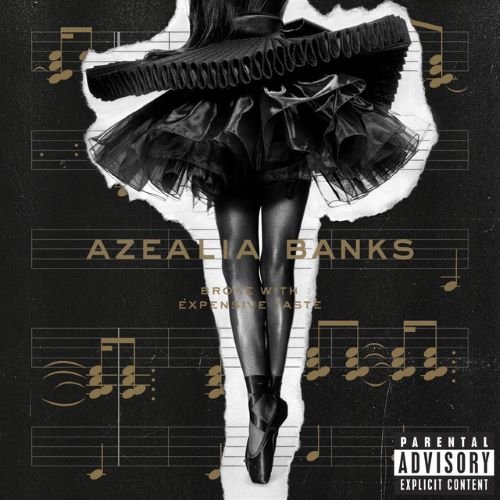
The overabundance of this world overwhelms me," Caroline Polachek says in the notes accompanying her latest single, "Billions." With abundance comes the inevitable risk of corruption, be it in interpersonal, political or financial, and she tackles this head on with her trademark lush, multi-layered songwriting.

"Lies like a sailor / But he loves like a painter / Oh, billions"—the romantic abundance she sings of feels both nourishing and virulent, but most of all, too tempting to let go of. Gasps of satisfaction after each line, and sudden switches in her vocal register from enthralled to hostile, add a dash of musical theater to the proceedings. Elsewhere, Danny L Harle's electronics carve out a magisterial ambience. A fervent pulse and some Eastern-tinged percussion trickle down like syrup, giving "Billions" a regal, almost ancient (and decadent) aura. The track culminates with a huge chorus of "I've never felt so close to you," sung by London's Trinity Boys & Girls Choir. It's beautiful but eerily hypnotic, like the chants of wide-eyed cult members, as if to say: although the pillaging of the world and her sanity are painful to endure, it still technically counts as a warped form of intimacy”.

Its marvellous and hypnotising video is matched by a song that ranks alongside the best of 2022. Billions is proof that Caroline Polachek is one of the finest artists in the world. I can tell she is going to be releasing music of the highest quality for many more years. I cannot wait for a new album from her. I think that everyone who loves her music – and that is a lot of people! – really hope that this…

COMES soon enough.

FEATURE: Kate Bush’s Never for Ever at Forty-Two: Give the Kid the Pick of Pips: The Extraordinary Army Dreamers

FEATURE:


Kate Bush’s Never for Ever at Forty-Two

IN THIS PHOTO: An outtake from the Army Dreamers video shoot/PHOTO CREDIT: John Carder Bush

Give the Kid the Pick of Pips: The Extraordinary Army Dreamers

__________

THERE is a lot to talk about…

when it comes to Kate Bush’s Army Dreamers.  The reason I am doing so is because the album it is from, Never for Ever, is forty-two on 8th September. Her third studio album, she produced it alongside Jon Kelly. This was the first album were Bush had that sort of production freedom and role. As such, her songwriting is broader and more ambitious. I think that, chronically, Army Dreamers is her first real political song. As the third single from the album (on 22nd September, 1980), it was sort of beaten to the punch by Breathing. Never for Ever’s epic finale, that is the first single. It concerns nuclear word as told from the perspective of a fetus. Army Dreamers is the track before Breathing. This incredible double ends Never for Ever on this potent, important, and thought-provoking note. Not that the album is dark or that serious. It has plenty of light touches, but I think Bush was more conscious of bringing something more social and political into her music. This was a moment that she could do that. Never for Ever has plenty of songs that could have been a single. I am glad she chose Army Dreamers as one, because it is a song that deserved wider release and scrutiny. Though some feel it is lightweight as a political track, I think that it is very effecting and impressive. Bush inhabits the character of a mother who sees her son go to war at such a young age. All the things he could have been, but his life is wasted doing something so futile.

The title of the song as well. Maybe this young man who thinks enrolling and fighting is a dream. The young man of the song was so young that he could not really have had much of an idea about career and his life’s path. Instead, he is thrust into this situation that is seemed to be ideal or his only option. Here, in the form of archived interviews, Kate Bush talked more about Army Dreamers:

Army Dreamers' is about a grieving mother who through the death of her soldier boy, questions her motherhood. (Kate Bush Club newsletter, September 1980)

It's the first song I've ever written in the studio. It's not specifically about Ireland, it's just putting the case of a mother in these circumstances, how incredibly sad it is for her. How she feels she should have been able to prevent it. If she'd bought him a guitar when he asked for one. (Colin Irwin, 'Paranoia And Passion Of The Kate Inside'. Melody Maker (UK), 10 October 1980)

The Irish accent was important because the treatment of the song is very traditional, and the Irish would always use their songs to tell stories, it's the traditional way. There's something about an Irish accent that's very vulnerable, very poetic, and so by singing it in an Irish accent it comes across in a different way. But the song was meant to cover areas like Germany, especially with the kids that get killed in manoeuvres, not even in action. It doesn't get brought out much, but it happens a lot. I'm not slagging off the Army, it's just so sad that there are kids who have no O-levels and nothing to do but become soldiers, and it's not really what they want. That's what frightens me. (Kris Needs, 'Fire In The Bush'. ZigZag (UK), 1980)”.

I am going to come onto the video for Army Dreamers soon. There is a lot to love about the song. The vocal has this dreamy and almost balletic sound to it. Even though the lyrics carry so much weight, Bush’s voice waltzes and twirls. She adopts an Irish accent beautifully, giving Army Dreamers this feeling of the personal. Her own mother was Irish, so I sort of envisage Bush casting herself in the song. The lyrics are fascinating. My favourite verse is this: “Our little army boy/Is coming home from B.F.P.O../I've a bunch of purple flowers/To decorate a mammy's hero”. B.F.P.O. is British Forces Post Office. This is almost a mantra. Soldiers not able to come home. Instead, there are grave notes and lost letters being sent that tells of loss or false hope. The backing vocals are terrific. Featuring Brian Bath (who was part of the KT Bush Band early in Bush’s career), Paddy Bush (her brother) and Alan Murphy. Even if the lyrics are not as powerful as some that you might hear from other songwriters, Army Dreamers is Kate Bush addressing political themes and genuinely showing her distress towards young soldiers being sent to their deaths. I am going to turn to Wikipedia for sourcing information about the stunning video:

The music video opens on a closeup of Kate Bush, dressed in dark green camouflage, holding a child. She blinks in synchronisation with the song's sampled gun cocks. The camera pulls out and shows that Bush has a white-haired child on her lap. The child walks off and returns in military combat uniform, and during the first pre-chorus, as Bush responds to her bandmates' comments, the child grows up into a 20-year-old. Bush and several soldiers (two of whom, Bush included, have "KT8" or "KTB" stencilled on the butt of their rifles: "KTB" was a monogram used by Bush early in her career) make their way through woodland, amid explosions. As the song progresses, Bush reaches out for the child soldier, but he disappears. Finally, Bush is blown up

Bush has stated that this video is one of the few examples of her work that completely satisfies her:

For me that's the closest that I've got to a little bit of film. And it was very pleasing for me to watch the ideas I'd thought of actually working beautifully. Watching it on the screen. It really was a treat, that one. I think that's the first time ever with anything I've done I can actually sit back and say "I liked that". That's the only thing. Everything else I can sit there going "Oh look at that, that's out of place". So I'm very pleased with that one, artistically”.

I think that Army Dreamers is one of Kate Bush’s finest songs. Because its parent album, Never for Ever, is forty-two on 8th September, I wanted to spend time with one of its definite standouts. The final single released from the album in September 1980, it is interesting looking at the single releases. On previous and future albums, you’d get singles a few months down the line from the album release. Only a couple of weeks after Never for Ever came out, she put out its third and final single. I wonder whether a fourth single – maybe The Wedding List or Violin – could have come out at the very end of 1980 or start of 1981. In any case, Army Dreamers is a turning point for Bush in terms of lyrical angles and bringing something more political into her music (although, to be fair, she has always been fearless and bold when it came to subject matter, honesty and writing songs no other artist would!). If the soldiers Bush sings about on Army Dreamers are gone or part of a previous era, the song itself…

WILL never age.

FEATURE: Second Spin: Azealia Banks - Broke with Expensive Taste

FEATURE:


Second Spin

Azealia Banks - Broke with Expensive Taste

__________

THIS is a curious case…

of a promising and amazing artist releasing an album after a lot of speculation, build and interest. That was eight years ago. Azealia Banks put out her debut album, Broke with Expensive Taste, in 2014. In 2011, Banks started working on the album despite not having signed to a record label at that time. She signed a contract with Interscope and Polydor Records to work on the album. Unfortunately, she was unhappy with the labels' representatives, so she ended the contract with them in July 2014; Banks then signed to Prospect Park. Broke with Expensive Taste arrived on 7th November, 2014. In terms of its styles and genres, the album mixes House and Dance-Pop with Hardcore Punk, Punk, Trance, Trap, R&B and U.K. garage. Many felt the album was worth the wait and definitely lived up to any hype. Recognising Banks as a huge talent with a promising future, Broke with Expensive Taste was successful in the U.S. It didn’t fare as well in the U.K. I think it is an album that is still underrated and underplayed. Maybe Azealia Banks has gained more attention for Twitter feuds and controversy rather than her brilliant music. This is a case of separating the artist from the personal, as she does have a Morrissey-like streak for controversy and unwise racial stereotypes and slurs. I am just focusing on her album and its worth – even if I am not fully on board with Banks as a person and her opinions.

I am going to get to a couple of reviews for Broke with Expensive Taste soon. One is very positive, whereas the other is a little more mixed. Before that, there is an interview from COMPELX. Azealia Banks was asked about her new album, and what life as a child was like in N.Y.C. It makes for an interesting read:

What have the last three years been like for you leading up to the release?

They’ve been really hectic. I've been doing a lot of traveling. I’ve been here, there, here, there. I’ve been more places in the last three years than I’ve been my entire life.

People kept saying you did a "Beyoncé release," but it wasn’t a Beyoncé release. You were working on this for so long, and now a lot of reviews say, “It’s surprisingly great.” 

The music has always been great. [Laughs.]

Did it feel like an "I told you so"?

It’s good to do that, but nobody wants to hear me do that. I’m obviously a very strong woman. It’s not to say that I’m at all trying to seem weak to make people like me or anything like that. I’m not going to say, “I told you so,” because you know so, and I know you know so. So we’re just going to leave it at that, and I’m going to go on and do my other things. One thing I can say, I distinctly remember what publications stuck by me and which ones shitted on me. Complex was definitely one of the ones that shitted on me.

In what way?

Just lots of ways, a lot of the times those things would happen...

—the headlines.

I feel like you guys at Complex, it’s more like it’s a boys club kind of thing. I get shitted on by Complex a lot, like a lot. Yeah, in terms of headlines and in terms of when I put stuff out, the comments have always been shady. You guys have all of these little small bloggers there that tweet really disgusting things. I almost feel like Complex is part of that group of urban media stuff that I just you know….

It’s an interesting dynamic because it's a men's hip-hop magazine.

Yeah. I feel like Complex Magazine has done a really good job in exaggerating a lot of things that are happening in the media, and Complex has played a really great hand in putting the sour taste for Azealia Banks in the public’s mouth.

What topics in rap do you think are over-sensationalized? Maybe a lot of people also really don’t know what anyone is talking about in the industry.

That’s because I feel like hip-hop isn’t really talking about anything right now.

I feel like hip-hop isn’t really talking about anything right now.

At all?

Not really. Like not really that I know of. On the mainstream, OK, Kanye, he’ll do “Black Skinhead.” That’s talking about something. I’m not even saying that I’m talking about shit. I’m not talking about shit in my music. I’m bring more styles of music, ideas, and themes to you. In terms of that whole hip-hop with a message, no one is really bringing a message right now.

No one is conscious?

Or conscious in just bringing a message. I’m consciously trying to bring you new things and new feelings and trying to move you in that way.

Well, speaking of Kanye, years ago, you guys did some work together. What happened to it? 

[Shrugs] At an earlier point in my artistry, the idea of working with someone like Kanye West, Beyonce, or Lady Gaga was very glamorous to me. It was such a glamorous idea, but once I started to delve deeper into my music it was like, “OK, this is really what it’s about.” It’s about being the best you can be and not linking up with everybody else.

Who was the first person you played the album for front to back?

The first person to actually sit and listen to the album was [my manager] Jeff Kwatinetz. This guy right here, this is the first person I actually played it for and was paying attention to what was happening. I played it for lots of people. He got it right away.

What was there to get that other people weren’t getting?

I felt like everyone I was playing it for was listening to it in a very opportunistic way. Like, "How am I going to make money off of this? What is the single?" Rather than like, “OK, just listen to the fucking music.” Like forget about me, forget about Azealia Banks, listen to "Idle Delilah," "Give Me a Chance," or "Miss Camaraderie" and see what you think about this. Can you sell this album? I didn’t ask if you can fucking sell me. Can you sell this music.

You're not supposed to do anything with it. Put it in a fucking display case. If somebody wants to buy it, they will buy it. I need you to stock the shelves. Can you stock the fucking shelves, please? Just stock the fucking shelves. Just put it out, and if people want it, they’ll take it.

I remember reading about you growing up, sneaking on the train, getting dollar slices, really just being a normal NYC kid.

Yeah! I really wanted to be so much more. I wanted like purses and shoes, and I wanted to have my own apartment. As time went on the meaning changed into something more along lines like, there's always more to learn, there’s always more to be. You’re always broke striving for more. It’s like a life motto for me now, rather than like a joke. Like, oh you’ve got champagne taste with a beer budget, it's not that. It’s kind of humbling in the sense that…not to say you’ll never see God, but you know what I mean. It makes you happy with your day-to-day existence. It makes me feel really content when I say “broke with expensive taste.” Rather than wanting, you’re happy with what you have. Of course you want to know more. I’m making it more of knowledge and wisdom thing than a material thing.

No matter how much you know there will always be more to know.

Exactly”.

It is time to come to some critical reaction to 2014’s Broke with Expensive Taste. It is an album that should be more widely heard and played. Maybe Azealia Banks’ relative retreat from the spotlight means many are not aware of the album. There are some fantastic tracks on it that need to be heard. I will come to a positive review from Pitchfork:

It’s been three years since Azealia Banks sprung up from the New York underground fully formed with "212", her confrontationally profane lead single. "212" was the seed for all of the triumph and adversity that followed—the prodigious rap skills, the casual genre-bending, and the bratty disdain for authority. In its wake, Banks charted a career path typical of a budding rap talent. She dropped the promising, beat-jacking pre-album mixtape (2012’s unrelenting Fantasea) and the compact retail EP of brash originals (2012’s nostalgia tripping 1991). She navigated through mettle-testing beef with her peers. The tiffs were negligible as long as the music was nourishing, and for a while Azealia’s war on the rap establishment was excitingly disruptive.

But as work on her Interscope Records debut commenced, Banks hit a tight spot. The deal soured as her new tracks were met with indifference from label liaisons. Her uncompromising social media demeanor landed her in quaffs both hysterical (See: her merciless ribbing of T.I. and Iggy Azalea) and injurious (that time she defended her right to call Perez Hilton a gay slur), but vocal criticism of Baauer, Pharrell, and Disclosure began to cost her profitable collaborators. Her early career goodwill nearly spent, Banks finally caught a break: Interscope let her out of her deal with the rights to all the songs she’d recorded during her tenure there. Broke With Expensive Taste arrived this month with very little fanfare, its release announced with a simple tweet. Its lengthy gestation is, of course, its chief foible. Older material accounts for roughly half the tracklist, and some of it doesn’t mesh well with the fresher, weirder stuff around it. It helps to see Broke With Expensive Taste, then, as an anthology, The Portable Azealia Banks.

Three songs in, it’s clear why Interscope didn’t know what to do with the thing. Opener "Idle Delilah" bursts in effortlessly crossing elements of house, dubstep, and Caribbean music. It’s followed by "Gimme a Chance", a bass-heavy post-disco romp that takes a hairpin turn into smooth merengue halfway through, as Banks flits from rapping and singing in English to perfect unaffected Spanish. "Desperado" borrows a beat from early 2000s UK garage whiz MJ Cole’s "Bandelero Desperado" as Banks puts on a rap clinic, flaying adversaries in a flow so neat you might miss the fact that every piece of every line rhymes. Her voice is often the sole unifying force from track to track here, and it’s easy to see a label’s trepidation about pushing this thing on listeners who haven't followed her every move. "Nude Beach a Go-Go", for instance, a late album collaboration with Ariel Pink, is every bit the what-the-fuck moment it sounds like on paper.

By the end of Broke With Expensive Taste you’ll come to see Azealia Banks as a dance pop classicist underneath the flailing. The capable but unfussy approach to melody on deep cut confections "Soda" and "Miss Camaraderie" as well as Fantasea holdover "Luxury" and the massive "Chasing Time" showcase Azealia as a singer who’s studied her Robin S. and Technotronic. Coupled with her bullish rhyme skills, Azealia’s chops as a house vocalist make for a true rapper-singer double threat. (Credit is due to Drake and Nicki Minaj, but both sound like they picked up singing on the job.) She’s an angel on the choruses, but for the verses in between, she’s a formidable spitter whose flash and flow are unmistakably Harlem.

The party line among hip-hop aficionados is that New York rap currently lacks a distinctly New York identity. There’s some truth to it. The city’s biggest success stories of late involve locals breaking out by spicing Big Apple grit with outside flavors, from A$AP Mob’s Texas screw fixation to French Montana’s trap circuit traction to Nicki Minaj’s day-glo EDM daze. But the scene in 2014 can’t look like it did in 1994 or even 2004, and it’s becoming increasingly clear that the Statlers and Waldorfs pining for a new age of rappity boom bap wouldn’t notice a new New York if it came up and offered them molly in a Brooklyn bar bathroom.

Well, Azealia Banks is it, and Broke With Expensive Taste is a reminder that the corner of Harlem that she claims is walking distance from both Washington Heights and the Bronx, where you’re as likely to hear hip-hop booming out of apartments and passing cars as freestyle, reggaeton, house, or bachata. It’s a quick subway jaunt away from the landmark clubs where ball culture persists, as well as perennial dance parties at Webster Hall and the glut of eclectic Lower Manhattan concert venues. Broke With Expensive Taste glides through all of these, just like the faithful 1 train sampled on "Desperado". Both album and the artist revel in the freedom of a New York City where divisions between these sounds and scenes have ever so slowly ceased to exist”.

I am going to finish up with an AllMusic review for Broke with Expensive Taste. One of the best albums of 2014, let’s hope that Azealia Banks has more music in her - and there is a great second album soon enough. A very talented (if controversial) figure, there will definitely be demand and an audience waiting:

Broke with Expensive Taste, the official debut album from rapper/songwriter Azealia Banks, finally appeared in late 2014, despite originally having been scheduled for a 2012 release and well after several songs showed up as singles many months and sometimes years before an album surfaced. Various delays and major-label red tape ultimately saw Banks walking out on her contract with Polydor/Interscope and independently releasing the album digitally with no press notification or promotional lead-up. This surprise-attack release followed a similar approach as Beyoncé's late-2013 self-titled album, which simply appeared online in full without notice about a year prior to Broke with Expensive Taste. Finally a reality, the strengths of Banks' debut are incredibly strong. Aforementioned long-available singles like "212," "Chasing Time," and "Yung Rapunxel" showcase aggressive production that winds together dubstep's relentless bass pounding and Banks' talents as a fluid, sometimes vicious MC as well as a serviceable R&B vocalist. Production assistance from underground dance figures like Lone, AraabMuzik, and Lil Internet, among many others, gives the album an incredibly varied feel, sometimes losing focus and spilling into confused territory.

The Spanish-sung rhymes, Latin breakdown, and funky horn sections of "Gimme a Chance" sound like a different artist when held up to the harsh minimalism of "Heavy Metal and Reflective" just a few tracks later. Likewise, the commercial rap routines and haunted trap beat of "Ice Princess" make the kitsch-heavy faux-surf nonsense of the Ariel Pink-produced "Nude Beach A Go-Go" sound even more out of place, both tunes on the same album making it harder to take either at face value. While the time-tested singles are highlights and several other tracks hit similar highs, the album ultimately goes in too many directions that feel like filler, leaving this debut coming across more like a piecemeal collection of tracks that spike and dip in terms of quality and intent”.

There has been music since 2014 from Banks. The E.P., Icy Colors Change, was released in 2018. Her long-delayed second and third studio albums, Fantasea II: The Second Wave and Business & Pleasure, still await releases. The lead singles from each respective album, Anna Wintour and Black Madonna, were released in April 2018 and June 2020 respectively. I guess we will have to see whether there is going to be more news or updates regarding Azealia Banks and a follow-up album! She is a fantastic artist who we definitely need to hear more from – in terms of music, rather than Twitter feuds and misjudged remarks! If you have not heard it before, then go and listen to Broke with Expensive Taste. It is an album that is…

WORTH another spin.

FEATURE: After the Clouds Have Been Busted… Kate Bush's Hounds of Love at Thirty-Seven: The Ninth Wave

FEATURE:


After the Clouds Have Been Busted…

IN THIS PHOTO: Kate Bush in a promotional image for The Ninth Wave/PHOTO CREDIT: John Carder Bush

Kate Bush's Hounds of Love at Thirty-Seven: The Ninth Wave

__________

ON 16th September…

Kate Bush’s Hounds of Love turns thirty-seven. The album has long been regarded as her very best. It has acquired fresh popularity and relevance after its first single, Running Up That Hill (A Deal with God), appeared on Stranger Things. I have typed that line so many times now! It is great that the album has reached those who might have missed it before. The first half of the album is more conventional and contains the singles. Aside from Running Up That Hill (A Deal with God), there is Cloudbusting, The Big Sky and Hounds of Love. I am not sure how far into the writing process for Hounds of Love Kate Bush thought of The Ninth Wave. This is the conceptual suite that is, in my view, the best thing about the album. I wanted to revisit it ahead of the anniversary of the album. Before going into more detail, here is a snippet of Bush discussing the idea behind The Ninth Wave:

The Ninth Wave was a film, that's how I thought of it. It's the idea of this person being in the water, how they've got there, we don't know. But the idea is that they've been on a ship and they've been washed over the side so they're alone in this water. And I find that horrific imagery, the thought of being completely alone in all this water. And they've got a life jacket with a little light so that if anyone should be traveling at night they'll see the light and know they're there. And they're absolutely terrified, and they're completely alone at the mercy of their imagination, which again I personally find such a terrifying thing, the power of ones own imagination being let loose on something like that. And the idea that they've got it in their head that they mustn't fall asleep, because if you fall asleep when you're in the water, I've heard that you roll over and so you drown, so they're trying to keep themselves awake. (Richard Skinner, 'Classic Albums interview: Hounds Of Love'. BBC Radio 1, 26 January 1992)”.

In previous features, I have looked at The Ninth Wave as a film. Maybe turning it into a short film or longer piece. Of course, Bush did bring the suite to life on stage in 2014 during Before the Dawn. In interviews, when asked about The Ninth Wave, Bush said it concerned a terrifying thought. The idea of being stuck in the water and not knowing what is beneath. She feels this it the scariest thing possible. Much more terrifying than being in the air and in peril. She has also said how she heard people fall asleep when they are in the water/this situation, and they naturally roll over and drown, so her heroine needed to stay awake. It makes the first song on the suite, And Dream of Sheep, particularly tragic and ironic. That desire and almost painful need to sleep! Waking the Witch features voices telling the woman to stay awake and alive as it seems, as hope is slipping, she is getting tired and getting into danger. I keep writing about The Ninth Wave because it is so fascinating and accomplished. When Hounds of Love came out, Bush was only twenty-seven. That is such a young age for someone to write something as phenomenal and astonishing as The Ninth Wave! I almost think of Hounds of Love’s second side as a classical suite or a film that Bush tested out through music first. I guess one can think about The Ninth Suite being related to classic literature and imagery.

I get reminders and links to The Lady of Shalott by Alfred, Lord Tennyson. The heroine lives in a castle on a river and tries to escape. She ends up in a boat on a river and eventually dies. Although Bush’s figure survives and is rescued at the end of The Ninth Wave, that has never truly been confirmed. Although it seems like there is a rescuer lifting her to safety, could this be a dream? On stage, people saw Bush being rescued. She has said how The Ninth Wave does end with the woman being saved, but it is still open to interpretation. I found an interesting article where a Kate Bush fan page asked people about their general thoughts about The Ninth Wave. This response caught my eye:

Though many of you may already have taken notice of the following on your own, IED has been so taken with these ideas that he felt he just had to mention them anyway.

The whole conceit of the heroine drifting in water refers to far more than just the explicit, immediate context of The Ninth Wave. In fact, the implicit references are so deliberate that they may arguably be more important than the explicit subject-matter. Actually, at least three earlier such subjects loom in the collective English consciousness. All of them have important positions in British cultural history.

Of these the best known outside England is the story of Ophelia in Hamlet. The allusion to Ophelia's insane self-immersion is plain to see in the photo for The Ninth Wave: the flowers. These were explained away almost flippantly by (if IED remembers correctly -- Doug, will you confirm or deny, since you were there too?) John Carder Bush as being intended to show the chaos and damage on board the ship during its sinking (or whatever ultimately forced the heroine into the ocean). The idea was supposed to be that commercially cultivated flowers, perhaps in the hands of the heroine at the time of the disaster, perhaps thrown by happenstance into the water from a dining table flower arrangement during the commotion and sinking, have happened to end up floating in the very same waves in which the heroine finds herself engulfed.

This explanation has always struck IED as suspiciously superficial -- not to mention implausible. The image of a beautiful young Englishwoman floating on her back in a cold, deathly state, dressed in a white lace nightie and set adrift amid exotic and colourful flowers has, since the seventeenth-century premiere of Hamlet, been inextricably connected with the fate of Ophelia.

In fact, the image of Ophelia in the water is a relatively modern variant on the Arthurian images of both Elaine and the Lady of Shalott. These two earlier legends feature their heroines floating downstream in open boats (in which they eventually are found dead). This image, in fact, was reproduced precisely by Kate herself in what was virtually her debut on video, the so-called Eftelink films, specifically the last of the six, a setting of "The Kick Inside". The reader will begin to see the extent of the convolutions involved; see, in fact, a multitude of wheels within wheels, and all of impeccably, classically English origin.

But the images are not only associated with the word, but with English paintings, as well, and these are predominantly Victorian. The most famous of all of these pictures, and possibly the single greatest image of the Pre-Raphaelite movement, is "Ophelia", by John Everett Millais (1852). Kate is definitely very familiar with the painting; her brother confirmed as much in conversation with IED at East Wickham Farm in 1985. At the time this point made littel impression on IED, but since then it has come to take on increasing importance in his fevered brain...

IN THIS PHOTO: Kate Bush being carried off stage during the performance of Hello Earth during 2014’s Before the Dawn/PHOTO CREDIT: Ken McKay 

During that conversation IED and JCB discussed the connection of the "Lakeside" images (photographs taken by Jay of his sister sitting and stretching by the banks of the river or lake which appears in the Eftelink videos) with Pre-Raphaelite imagery. We also talked about the famous post-Pre-Raphaelite painting (in the Tate Gallery) of the Lady of Shalott, by John William Waterhouse. There are at least four other very familiar paintings of about the same date which depict episodes from the legend of the Lady of Shalott, and which were inspired by a poetic setting of the legend in...Tennyson's Idylls of the King. (More wheels ...) IED has been purposelessly musing on all of this, mulling over also Kate's own comments about the influence of Pre-Raphaelitism on her own artistic vocabulary (see quote No. 1) as well as the large painting, called "The Hogsmill Ophelia", which hangs in her studio (see quote No. 2). And the more familiar he becomes with the images and the references, the more sense it all makes. What do you think?

Quote Number 1:

NM: I'm reminded by a painting in the corner here, which is a sort of satire of a Pre-Raphaelite painting, that I always have thought that those Victorian painters, the Pre-Raphaelites, were an influence to the texture of your song writing.

KB: Yes, yes. I think that particularly in my very early teens I was very enchanted by the whole romance of it, yes. They find their way into songs, the imagery. I think that's what happens: something attracts you because of its imagery and you digest it and it comes up in a song. I think that's how artists work; they are like magpies, picking up little bits of gold and storing them away.

Quote No. 2:

At one end of the studio is a huge painting of a drowned, cracked doll floating face up past a sewer. For some reason this painting, which might be described as macabre-kitsch, seems to say a lot about its owner. Kate returns and sees me examining it.

"That's called 'The Hogsmill Ophelia'. A lot of people find it disturbing but I don't. I lived with it for ages. Looked at it every day. That picture cost me all the money I had once. Paintings are a great inspiration. One of my favourites is by Millais, 'The Huguenot'. It's of a man going off to the wars being hugged to the breast of his lover. She's holding him to her by a scarf around his arm. It's very beautiful.”.

At seven tracks, I think of The Ninth Wave as its own body of work, rather than the second side of Hounds of Love. It is remarkable how each song has its own life and sound. You know Bush composed the song with video ideas in mind. Although it has not happened yet, you wonder what she would have concocted if she ever did film The Ninth Wave. I am not going to go into detail about each song, except for its finale, The Morning Fog. From the almost ballad and lullaby-like quality of And Dream of Sheep, we then get the chillier and more haunting Under Ice. That leads to the terrifying and head-spinning Waking the Witch. Later on, we get one of the most dramatical musical switches Bush has ever put to tape when we go from Jig of Life – which is spirited and has fantastic Irish musicians playing – to Hello Earth. It is a dramatical change of sound and direction! The Morning Fog is the heroine saying she has been born again. The final words offer hope and this second chance: “I'm falling/And I'd love to hold you know/I'll kiss the ground/I'll tell my mother/I'll tell my father/I'll tell my loved one/I'll tell my brothers/How much I love them”. This is what Bush said about The Morning Fog in 1992:

Well, that's really meant to be the rescue of the whole situation, where now suddenly out of all this darkness and weight comes light. You know, the weightiness is gone and here's the morning, and it's meant to feel very positive and bright and uplifting from the rest of dense, darkness of the previous track. And although it doesn't say so, in my mind this was the song where they were rescued, where they get pulled out of the water. And it's very much a song of seeing perspective, of really, you know, of being so grateful for everything that you have, that you're never grateful of in ordinary life because you just abuse it totally. And it was also meant to be one of those kind of "thank you and goodnight" songs. You know, the little finale where everyone does a little dance and then the bow and then they leave the stage. [laughs] (Richard Skinner, 'Classic Albums interview: Hounds Of Love. Radio 1 (UK), aired 26 January 1992)”.

On 16th September, Hounds of Love will get a lot of attention. Many will discuss it in the context of Running Up That Hill (A Deal with God). I do hope that some talk about The Ninth Wave and its importance. Such a stunning and immersive suite that I am still blown away by! I can only imagine how fans reacted to it the first time in 1985. They would not have been prepared for something like this! A long-held ambition from Bush was to realise The Ninth Wave. She finally got to do this in 2014. What a treat it must have been for fans to see that across twenty-two nights. How exhausting it must have been for her! Displaying her imaginative, songwriting and production genius, The Ninth Wave is also Kate Bush at the top of her game regarding vocal performances. She puts so much emotion and character into every song! If Bush, earlier on Hounds of Love, was asking if she could do a deal with God so she could swap places with someone to better understand them, you get the sense that The Ninth Wave is when she truly needed divine intervention. If all looked lost at the start of The Ninth Wave, there is this satisfying conclusion. Though, as I have said, could that have been a dream? Did the heroine die during Waking the Witch and everything afterwards is imagined or her final thoughts? I’d like to think that, actually, it out worked okay and the ill-fated and poor woman (who we assume got into the water when she got swept from a ship) did make it…

OUT safely.

FEATURE: Kate Bush’s The Dreaming at Forty: I Must Admit, Just When I Think I'm King: Ranking the Five Singles

FEATURE:


Kate Bush’s The Dreaming at Forty

I Must Admit, Just When I Think I'm King: Ranking the Five Singles

__________

IT is great…

 IN THIS PHOTO: Kate Bush performing Suspended in Gaffa

putting together a series of features for Kate Bush’s fourth studio album, The Dreaming. Released on 13th September, 1982, the fortieth anniversary is important. A lot of new features will be written and, on the day, a lot of love will be out there for an album that did not get all the praise it deserved when it was released. In all, there were five singles released from the album. Sat in Your Lap, The Dreaming, There Goes a Tenner, Suspended in Gaffa (released in mainland Europe and Australia) and Night of the Swallow (released in Ireland) are all very different and fared differently in the charts. I am going to rank those five singles and, in each case, include a bit of information about each (courtesy of the Kate Bush Encyclopedia), some of the musicians on the song, and my favourite lyrics from each. Ten amazing tracks on the album, five were put out as singles. Although there was mixed fortune in terms of chart positions (only one of the singles, Sat in Your Lap, can be seen as a success), they are brilliant songs that showed what breadth and range The Dreaming possessed. Here in my ranking of the…

FIVE brilliant singles from 1982’s The Dreaming.

_____________

Five: There Goes a Tenner

Release Date: 2nd November, 1982

U.K. Chart Position: Did Not Chart

B-Side: Ne t'enfuis pas

Musicians:

Kate Bush – piano, Fairlight CMI, Yamaha CS-80, vocals; Del Palmer – bass guitar; Stuart Elliott – drums; Dave Lawson – synclavier

Background:

It's about amateur robbers who have only done small things, and this is quite a big robbery that they've been planning for months, and when it actually starts happening, they start freaking out. They're really scared, and they're so aware of the fact that something could go wrong that they just freaked out, and paranoid and want to go home. (...) It's sort of all the films I've seen with robberies in, the crooks have always been incredibly in control and calm, and I always thought that if I ever did a robbery, I'd be really scared, you know, I'd be really worried. So I thought I'm sure that's a much more human point of view. (The Dreaming interview, CBAK 4011 CD)

That was written on the piano. I had an idea for the tune and just knocked out the chords for the first verse. The words and everything just came together. It was quite a struggle from there on to try to keep things together. The lyrics are quite difficult on that one, because there are a lot of words in quite a short space of time. They had to be phrased right and everything. That was very difficult. Actually the writing went hand-in-hand with the CS-80. (John Diliberto, Interview. Keyboard/Totally Wired/Songwriter (USA), 1985)Kate Bush Encyclopedia

My Favourite Lyrics:I hope you remember/To treat the gelignite tenderly for me/I'm having dreams about things/Not going right/Let's leave in plenty of time tonight

Four: Night of the Swallow

Release Date: 21st November, 1983

U.K. Chart Position: Only a Single in Ireland

B-Side: Houdini

Musicians:

Kate Bush – vocals, Fairlight CMI; Stuart Elliott – drums; Del Palmer – fretless bass, 8-string bass; Bill Whelan – bagpipes, string arrangement; Liam O'Flynn – uilleann pipes, penny whistle; Seán Keane – fiddle; Dónal Lunny – bouzouki

Background:

Ever since I heard my first Irish pipe music it has been under my skin, and every time I hear the pipes, it's like someone tossing a stone in my emotional well, sending ripples down my spine. I've wanted to work with Irish music for years, but my writing has never really given me the opportunity of doing so until now. As soon as the song was written, I felt that a ceilidh band would be perfect for the choruses. The verses are about a lady who's trying to keep her man from accepting what seems to be an illegal job. He is a pilot and has been hired to fly some people into another country. No questions are to be asked, and she gets a bad feeling from the situation. But for him, the challenge is almost more exciting than the job itself, and he wants to fly away. As the fiddles, pipes and whistles start up in the choruses, he is explaining how it will be all right. He'll hide the plane high up in the clouds on a night with no moon, and he'll swoop over the water like a swallow.

Bill Whelan is the keyboard player with Planxty, and ever since Jay played me an album of theirs I have been a fan. I rang Bill and he tuned into the idea of the arrangement straight away. We sent him a cassette, and a few days later he phoned the studio and said, "Would you like to hear the arrangement I've written?"

I said I'd love to, but how?

"Well, Liam is with me now, and we could play it over the phone."

I thought how wonderful he was, and I heard him put down the phone and walk away. The cassette player started up. As the chorus began, so did this beautiful music - through the wonder of telephones it was coming live from Ireland, and it was very moving. We arranged that I would travel to Ireland with Jay and the multi-track tape, and that we would record in Windmill Lane Studios, Dublin. As the choruses began to grow, the evening drew on and the glasses of Guiness, slowly dropping in level, became like sand glasses to tell the passing of time. We missed our plane and worked through the night. By eight o'clock the next morning we were driving to the airport to return to London. I had a very precious tape tucked under my arm, and just as we were stepping onto the plane, I looked up into the sky and there were three swallows diving and chasing the flies. (Kate Bush Club newsletter, October 1982)Kate Bush Encyclopedia

My Favourite Lyrics:In Malta, catch a swallow/For all of the guilty--to set them free/Wings fill the window/And they beat and bleed/They hold the sky on the other side/Of borderlines

Three: The Dreaming

Release Date: 26th July, 1982

U.K. Chart Position: 48

B-Side: Dreamtime

Musicians:

Kate Bush – lead and backing vocals; piano; Fairlight CMI; Paddy Bush – bullroarer; backing vocals; Rolf Harris – didgeridoo; Stuart Elliott – drums; Percy Edwards – animal sounds; Gosfield Goers – crowd noise

Background:

Well, years ago my brother bought 'Sun Arise' [by Rolf Harris] and I loved it, it was such a beautiful song. And ever since then I've wanted to create something which had that feel of Australia within it. I loved the sound of the traditional aboriginal instruments, and as I grew older, I became much more aware of the actual situation which existed in Australia between the white Australian and the aborigines, who were being wiped out by man's greed for uranium. Digging up their sacred grounds, just to get plutonium, and eventually make weapons out of it. And I just feel that it's so wrong: this beautiful culture being destroyed just so that we can build weapons which maybe one day will destroy everything, including us. We should be learning from the aborigines, they're such a fascinating race. And Australia - there's something very beautiful about that country. ('The Dreaming'. Poppix (UK), Summer 1982)

The title actually came last. It always does. It's the most difficult thing to do. I tried to get a title that would somehow say what was in there. It was really bad. Then I found this book [Hands me huge tome on australian lore]. I'd written a song and hadn't really given it a proper name. I knew all about this time they call Dreamtime, when animals and humans take the same form. It's this big religious time when all these incredible things happen. The other word for it is The Dreaming. I looked at that written down and thought, ``Yeah!'' (Kris Needs, 'Dream Time In The Bush'. ZigZag (UK), 1982)

The Aboriginals are not alone in being pushed out of their land by modern man, by their diseases, or for ther own strange reasons. It is very sad to think they might all die. 'The Dreaming' is the time for Aboriginals when humans took the form of animals, when spirits were free to roam and in this song as the civilized begin to dominate, the 'original ones' dream of the dreamtime. (Press statement by Kate Bush, 1982)” – Kate Bush Encyclopedia

My Favourite Lyrics:The civilised keep alive/The territorial war/"See the light ram through the gaps in the land"/Erase the race that claim the place/And say we dig for ore/Or dangle devils in a bottle

Two: Suspended in Gaffa

Release Date: 2nd November, 1982

U.K. Chart Position: Only a Single in Mainland Europe

B-Side: Ne t'enfuis pas

Musicians:

Drums, sticks: Stuart Elliott; bass: Del Palmer; piano: Kate Bush; strings: Paddy Bush, Kate Bush; mandolins: Paddy Bush; synclavier: Dave Lawson

Background:

I could explain some of it, if you want me to: Suspended in Gaffa is reasonably autobiographical, which most of my songs aren’t.  It’s about seeing something that you want–on any level–and not being able to get that thing unless you work hard and in the right way towards it. When I do that I become aware of so many obstacles, and then I want the thing without the work. And then when you achieve it you enter…a different level–everything will slightly change. It’s like going into a time warp which otherwise wouldn’t have existed. (Richard Cook, 'My music sophisticated?...'. NME (UK), October 1982)

'Suspended In Gaffa' is, I suppose, similar in some ways to 'Sat In Your Lap' - the idea of someone seeking something, wanting something. I was brought up as a Roman Catholic and had the imagery of purgatory and of the idea that when you were taken there that you would be given a glimpse of God and then you wouldn't see him again until you were let into heaven. And we were told that in Hell it was even worse because you got to see God but then you knew that you would never see him again. And it's sorta using that as the parallel. And the idea of seeing something incredibly beautiful, having a religious experience as such, but not being able to get back there. And it was playing musically with the idea of the verses being sorta real time and someone happily jumping through life [Makes happy motion with head] and then you hit the chorus and it like everything sorta goes into slow mo and they're reaching [Makes slow reaching motion with arm] for that thing that they want and they can't get there. [Laughs] (Interview for MTV, November 1985)Kate Bush Encyclopedia

My Favourite Lyrics:That girl in the mirror/Between you and me/She don't stand a chance of getting anywhere at all/Not anywhere at all/No, not a thing/She can't have it all

One: Sat in Your Lap

Release Date: 22nd June, 1981

U.K. Chart Position: 11

B-Side: Lord of the Reedy River (Donovan)

Musicians:

Kate Bush – lead and backing vocals; piano; Fairlight CMI; Paddy Bush – bamboo sticks; backing vocals; Preston Heyman – drums; bamboo sticks; Jimmy Bain – bass guitar; Geoff Downes – CMI trumpet section; Stewart Arnold – backing vocals; Ian Bairnson – backing vocals; Gary Hurst – backing vocals

Background:

I already had the piano patterns, but they didn't turn into a song until the night after I'd been to see a Stevie Wonder gig. Inspired by the feeling of his music, I set a rhythm on the Roland and worked in the piano riff to the high-hat and snare. I now had a verse and a tune to go over it but only a few lyrics like "I see the people working", "I want to be a lawyer,'' and "I want to be a scholar,'' so the rest of the lyrics became "na-na-na"' or words that happened to come into my head. I had some chords for the chorus with the idea of a vocal being ad-libbed later. The rhythm box and piano were put down, and then we recorded the backing vocals. "Some say that knowledge is...'' Next we put down the lead vocal in the verses and spent a few minutes getting some lines worked out before recording the chorus voice. I saw this vocal being sung from high on a hill on a windy day. The fool on the hill, the king of the castle... "I must admit, just when I think I'm king."

The idea of the demos was to try and put everything down as quickly as possible. Next came the brass. The CS80 is still my favourite synthesizer next to the Fairlight, and as it was all that was available at the time, I started to find a brass sound. In minutes I found a brass section starting to happen, and I worked out an arrangement. We put the brass down and we were ready to mix the demo.

I was never to get that CS80 brass to sound the same again - it's always the way. At The Townhouse the same approach was taken to record the master of the track. We put down a track of the rhythm box to be replaced by drums, recording the piano at the same time. As I was producing, I would ask the engineer to put the piano sound on tape so I could refer to that for required changes. This was the quickest of all the tracks to be completed, and was also one of the few songs to remain contained on one twenty-four track tape instead of two! (Kate Bush Club newsletter, October 1982)” – Kate Bush Encyclopedia

My Favourite Lyrics:In my dome of ivory/A home of activity/I want the answers quickly/But I don't have no energy/I hold a cup of wisdom/But there is nothing within/My cup, she never overfloweth/And 'tis I that moan- and groaneth

FEATURE: Inspired By… Part Seventy-Six: Gloria Estefan

FEATURE:


Inspired By…

Part Seventy-Six: Gloria Estefan

 __________

ON 1st September…

the legendary Gloria Estefan is sixty-five. A hugely influential artist, Estefan is a seven-time Grammy Award-winner and a Presidential Medal of Freedom recipient. She has been named one of the Top 100 greatest artists of all time by both VH1 and Billboard. Estefan's record sales exceed seventy-five million worldwide, making her the second best-selling female Latin artist in history, and one of the best-selling female singers of all-time. Not only marking her sixty-fifth birthday, I wanted to put together a playlist of songs from artists who are either influenced by Gloria Estefan or have been compared to her. Before I get there, AllMusic provide some biography about an iconic artist:

With sales of more than 100 million albums, more than three-dozen number one singles, and a shelf-full of awards, singer/songwriter Gloria Estefan is arguably the most successful crossover artist in Latin music history. Pre-dating the first global Latin pop explosion by a decade, Estefan paved the way for artists such as Ricky Martin, Jennifer Lopez, and Shakira, to name a few. Her achievements, both solo and with Miami Sound Machine (co-led with producer-multi-instrumentalist husband Emilio Estefan, Jr.) began with the release of the European club smash "Dr. Beat" in 1984. She scored at home with "Conga" in 1985, and "The Rhythm Is Gonna Get You" in 1987. These trademark Estefan jams wed slick Miami pop to polyrhythms from her native Cuba. She effortlessly moved between Latin and Anglo approaches, employing elements of cumbia, funk, son, montuno, guajira, rhumba, soul, and pop.

Estefan hit number one for the first time with 1988's polished ballad "Anything for You," and ruled the '90s charts with hit singles including "Turn the Beat Around," "Mi Tierra," and "Oye." Her platinum albums, including 1996's Destiny, did the same. Her run continued in the 21st century with the multi-platinum Alma Caribeña and 2007's gold-certified 90 Millas. 2013's Standards, her last outing before an extended recording break, registered at 20 on the Top 200. Philanthropists and humanitarians, the Estefans were the first couple to receive the Presidential Medal of Freedom, and Gloria was the first Cuban-American singer/songwriter to receive a Kennedy Center Honor. The couple have been graced with the Gershwin Prize for Popular Song by the Library of Congress. A Tony-nominated Broadway musical, On Your Feet, was based on their lives and music.

Born Gloria Fajardo in Havana on September 1, 1957, Estefan was raised primarily in Miami, Florida, after her father, a bodyguard for Cuban president Fulgencio Batista, was forced to flee the island following the 1959 coup helmed by Fidel Castro. In 1975, Fajardo and her cousin Merci Murciano auditioned for the Miami Latin Boys, a local wedding band headed by keyboardist Emilio Estefan, Jr. After they were hired, the group was re-christened Miami Sound Machine. Four years later, Fajardo and Estefan wed. As Miami Sound Machine began composing their own original material, their fusion of pop, disco, and salsa earned a devoted local following, and in 1979 the group issued their first Spanish-language LP on CBS International. Despite a growing Latino fan base, they did not cross over to non-Latin audiences until the single "Dr. Beat" topped European dance charts in 1984.

Primitive Love, issued in 1985, marked Miami Sound Machine's first English-language effort. It scored three Top Ten pop hits in the U.S. alone with the infectious "Conga," "Bad Boy," and "Words Get in the Way." For 1988's triple-platinum Let It Loose, the group was billed as Gloria Estefan & Miami Sound Machine, reeling off four Top Ten hits -- "Rhythm Is Gonna Get You," "Can't Stay Away from You," the chart-topping "Anything for You," and "1-2-3." 1989's Cuts Both Ways was credited to Estefan alone and generated her second number one hit, "Don't Wanna Lose You." While touring in support of the album, her bus was struck by a tractor trailer on March 20, 1990. She suffered a broken vertebrae that required extensive surgery and kept her off the road for over a year. Emilio Estefan and the couple's son were injured in the crash as well, but all three recovered. Estefan resurfaced in 1991 with Into the Light, again topping the charts with "Coming Out of the Dark," a single inspired by her near-fatal accident; two more cuts from the album, "Can't Forget You" and "Live for Loving You," secured her foothold on the adult contemporary charts.

With 1993's Mi Tierra, Estefan returned to her roots, recording her first Spanish-language record in close to a decade and earning a Grammy Award for Best Tropical Latin Album; on the follow-up, 1994's covers collection Hold Me Thrill Me Kiss Me, she also recalled her dance-pop origins with a rendition of the Vicki Sue Robinson disco classic "Turn the Beat Around." Another all-Spanish effort, Abriendo Puertas, earned the Grammy as well, while Destiny featured "Reach," which was named the official theme of the 1996 Summer Olympics. As Latin pop made new commercial headway thanks to the efforts of acts like Ricky Martin and Enrique Iglesias, Estefan reigned as the most successful crossover artist in Latin music history, with international record sales close to the 50 million mark. In 1999, she also made her feature film debut alongside Meryl Streep in Music of the Heart, recording the film's title song as a duet with *NSYNC and scoring both a massive pop hit and an Oscar nomination in the process.

A new Spanish-language album, Alma Caribeña, followed in the spring of 2000. Several months later, Estefan was awarded a Grammy for Best Music Video for "No Me Dehes de Querer" at the first annual Latin Grammy Awards. Her husband, Emilio, won Producer of the Year. In 2003, she released Unwrapped, an English-language effort that was met with a lukewarm reception from consumers and critics. She didn't return with another new album for several years, as stop-gap compilations such as Amor y Suerte: Exitos Romanticos (2004), The Essential Gloria Estefan (2006), and Oye Mi Canto: Los Éxitos (2006) were released from time to time. When she did return, with 90 Millas in 2007, it was with a splash. The Cuban-themed, Spanish-language effort hearkened back to Mi Tierra and was a big hit on the Latin music scene; its lead single, "No Llores," quickly scaled Billboard's Hot Latin Tracks chart, and the album itself was a chart-topper as well. Estefan returned to English-language pop with 2011's Miss Little Havana, a dance-pop album produced by Pharrell Williams of the Neptunes. Estefan went in the opposite direction for her next album, tackling the Great American Songbook on the aptly titled 2013 album The Standards.

After the supporting tour ended Estefan took a break. She had contemplated an album celebrating the ties between Cuban and Brazilian music. In late 2016, Estefan, with a host of Brazilian musicians and producers, went through her catalog. Together they rearranged and re-recorded music and vocals for 14 of her hits --including "Conga," which was retitled "Samba" -- as well as four brand-new songs. The completed set was temporarily shelved after Estefan's mother died and other life events intervened. In June the single "Cuando Hay Amor" arrived at radio and streaming. The full-length Brazil305 was released by Sony in August”.

To honour and show appreciation to a remarkable artist who has broken barriers and influenced generations of other artists, the playlist below contains songs from those who have followed in her prestigious and acclaimed footsteps. The songs below are from those who owe the remarkable Gloria Estefan…

SOME hearty thanks.

FEATURE: Kate Bush’s Never for Ever at Forty-Two: A Song That Has Become Especially Relevant to Me Lately

FEATURE:


Kate Bush’s Never for Ever at Forty-Two

IN THIS PHOTO: Kate Bush in 1980/PHOTO CREDIT: Gered Mankowitz

A Song That Has Become Especially Relevant to Me Lately

 __________

NOT that I am going to lean…

 IN THIS PHOTO: Kate Bush at a signing for Never for Ever in Glasgow on 9th September, 1980

too heavily on the Kate Bush Encyclopedia too much for this feature – though I need to use it as a guide a bit later. As the gorgeous and stunning Kate Bush album, Never for Ever, is forty-two on 8th September, I am writing a few features about it. For this one, I wanted to get specific. A song from it has come to mind and increased in its relevance. I will also flesh this feature out with a 1980 interview with Kate Bush. I have said many a time how The Wedding List – the middle track (six) on the album – is my favourite cut. It is Bush at an early peak in terms of her vocal dexterity, lyrical brilliance and production genius. I think that Babooshka is the best single (of the three) from Never for Ever. The song I am going to reference and explore has an odd position on the album. I think that the tracklisting is mostly right, though a couple of tracks could have been moved. There is an odd run from tracks three to five. Blow Away (For Bill) starts it, whilst Egypt ends it. Positioned, somewhat awkwardly, in the middle is the divine and relatively unknown All We Ever Look For. I have spotlighted this song before, but there is a personal and more emotional relevance to it now that I wanted to tie in with a more general salute to a magnificent album ahead of its forty-second anniversary.

Before concentrating on a beautiful song that has stirred me recently, I wanted to quote a bit of an interview from Smash Hits of May 1980. This was a good four months before Never for Ever came out. At that point, Bush had not long finished her The Tour of Life (1979). That took her around the U.K. and Europe in an amazing live spectacle. Breathing came out in April 1980; Babooshka would be unveiled in June 1980, so this was an interesting mid-point where the media were keen to talk with a well-known young artist whose new music was unlike anything she had done before. Just hearing Bush asked about her personal life and how she retains this normalness and grounded approach (she also talks about the single, Breathing) struck my eye:

Kate rightly points out, however, that her lyrics do go into the psychology of relationships, and analyse what lies under that superficial banner of "love", which--no matter how common a theme--is still very important to a lot of people.

Her new album, however, is exploring different avenues.

"There are a lot of different songs," she says. "There's no specific theme, but they're saying a lot about freedom, which is very important to me." Which is why Kate is also producing the album herself this time, helped by John Kelly, who produced The Kick Inside and Lionheart . <False. Andrew Powell produced The Kick Insied , and Kelly was assisted by Kate on the production of Lionheart .>

"It means I have more control over my album, which is going to make it more rounded, more complete--more me, I hope."

Her latest, fifth, single is very different from anything Kate has done before, and different from anything on the album, she says. Breathing is a dramatic statement about the very real dangers of a possible nuclear disaster in our world.

"It's about a baby still in the mother's womb, at a time of nuclear fallout, but it's more of a spiritual being," Kate explains, gesticulating with her hands, drawing a picture in the air to demonstrate.

"It has all its senses: sight, smell, touch, taste and hearing; and it knows what is going on outside the mother's womb. And yet it wants desperately to carry on living, as we all do, of course.

"Nuclear fallout is something we're all aware of, and worried about happening in our lives, and it's something we should all take time to think about. We're all innocent, none of us deserves to be blown up."

The hopelessness and pointlessness of nuclear fallout is conveyed also in the haunting, ominous melody which swirls forlornly around Kate's familiar crying vocals. The lyrics are short but to the point, while in the background an officious-sounding broadcast instructs its nation what to do.

It seems strange to hear Kate singing about politics, something I associate more with fighting, militant bands such as the Clash and the Stranglers.

Kate is so slight and demure, an extremely artistic person whose aims seem more concerned with entertaining people by taking them away from the outside world and its problems, even if only for an hour or two.

Hers seems a comfortable, almost fairytale success story. Discovered by EMI Records at the age of sixteen, she was sponsored for a couple of years, writing, during which time she continued learning to dance, perform and project herself.

"I think from the outside it does look as if it's been very easy for me--if you believe what the media say. But in fact it hasn't. Everyone thinks--knows, because it's true--that you need that lucky break, but what really counts is the determination that has to be there in the beginning.

"Basically it all comes down to personality. You have to be very strong to get where you want in this business. I mean, some people have been going ages, like Elkie Brooks. She's amazing (n.b.: the only time in an hour's conversation that Kate uses that word).

"Elkie's been knocked down so many times, and yet she always gets up and fights back. It's the same with me. Because I want to keep going, I can. I don't deny that I've been lucky, though."

The determination, just as important as the talent, has always been there, probably even before Kate learnt to play the piano at the age of eight.

"Instead of going out to play with other children I used to play the piano--it was my way of talking, of expressing myself."

Kate admits she was a fairly solitary child who didn't have many friends, and I wonder if she still is a bit of a loner. It seems rather an odd question when picturing the self-assured performer onstage--but what about offstage, away from it all? Is she much of a socialite

"No, I don't go to parties much. The last one must have been, ooh, Christmas, I suppose. When I get home I tend to sleep--especially at the moment, because I've been working too hard; or I clean up--wash-up and hoover. I find that very therapeutic. When I've got a lot on my mind I like to get away to something totally non-taxing

"I see friends whenever possible, too, and watch television, because that's something you can just switch off when you've had enough."

She laughs at having to relate such run-of-the-mill things to prove she's "normal".

"I'm not a star," she says adamantly. "My name is, but not me. I'm still just me”.

The song that has been in my thoughts and has affected me recently is All We Ever Look For. I seriously doubt people who do not know Kate Bush’s work well are aware of the song. I love the wonderful sounds through the song. Her brother Paddy plays a koto (a Japanese plucked half-tube zither instrument). There is some great timpani from Morris Pert. I particularly like the fact there are backing vocals from Preston Heyman, Paddy Bush, Andrew Bryant, Gary Hurst. Bush would bring a choir and string of other, lesser-featured vocalists on her songs from this point on. All the Love features answerphone messages from a range of people. Hounds of Love’s The Ninth Wave also has a few voices pop up through the suite. One of her greatest tracks to this point, here is some further information about All We Ever Look For:

Song written by Kate Bush. The Fairlight is used on this track to great effect, with many sound samples being played back. At one point, a group of Hare Krishna followers is singing the 'Maha Mantra', with Kate using a tiny part of a line from this mantra: "(Hare) Krishna, Hare Krishna, (Krishna Krishna, Hare Hare)", presumably to represent the chorus immediately following the sound clips: "a God", followed by birdsong ("A Drug") and then finally applause ("A Hug"). The song was released on the album Never For Ever.

“'All We Ever Look For' is about how we seek something but in the wrong way or at wrong times so it is never found. (Kate Bush Club newsletter, September 1980)

One of my new songs, 'All We Ever Look For', it's not about me. It's about family relationships generally. Our parents got beaten physically. We get beaten psychologically. The last line - "All we ever look for - but we never did score".' Well, that's the way it is - you do get faced sometimes with futile situations. But the answer's not to kill yourself. You have to accept it, you have to cope with it. (Derek Jewell, 'How To Write Songs And Influence People'. Sunday Times (UK), 5 October 1980)”.

The message of the song, as Bush explains, about seeking something at the wrong times chimes with me (particularly the lines “All they ever want for you/Are the things they didn't do/All they ever wanted, a little clue/All they ever wanted, the truth/All they ever wanted, a little bit of you/All they ever wanted/But they never did get”). I am working on projects at the moment and hoping to advance them but I think, with everything happening in the world. Not a lot will happen for a while. I am also moving flats very soon and I am trepidatious about that. There is change and, for me personally, I am looking to add things to my life that are missing at the moment. All We Ever Look For has hit me because of what it says and what it is about. Its beauty, too, has got under my skin. Maybe it is a wake-up call or a realisation (“All we're ever looking for/Is another open door”). I am searching for a lot and seeking stuff. I think, because of a variety of things, maybe I am doing it at the wrong time and in the wrong way. Even though All We Ever Look For is more general and perhaps less personal to Kate Bush, it is a song that is relevant to everyone. We can all relate to what she is saying and the message behind the song. A magical and simply beautiful song from Never for Ever, it is an ongoing shame that deep cuts like this are rarely discussed and not given the airplay they deserve. As look forward to the forty-second anniversary of Never for Ever on 8th September, I wanted to highlight a song that has…

TOUCHED me deeply.

FEATURE: My Favourite Singles of 2022 (So Far): Three: Julia Jacklin - I Was Neon

FEATURE:


My Favourite Singles of 2022 (So Far)

Three: Julia Jacklin - I Was Neon

__________

A couple of…

 PHOTO CREDIT: Nick Mckk

Julia Jacklin-related things occurred last week. For one, she released her third studio album, PRE PLEASURE, on 26th August. It was also her birthday on 30th August. The Sydney-born artist is one of my favourite songwriters, I love her music and adore her voice. Her albums are superb, and I have been following her since she released her 2016 debut, Don't Let the Kids Win. PRE PLEASURE is among her very best work. One of my favourite singles of the year is I Was Neon. She has also put out the wonderful Be Careful With Yourself, but I think I Was Neon is my favourite song from Pre Pleasure. It is classic Jacklin! Go and get Pre Pleasure as it is among the best albums of this year. It is hard narrowing down the best singles of this year. With stiff competition from Jessie Ware, Kendrick Lamar, Wet Leg, Caroline Polachek, Nova Twins, Charli XCX, Beyoncé, and others, I feel that Jacklin has released a real pearl of a song. I am going to drop in an interview that she did with The Guardian (not all of it), but NME were among those who wrote about the release of I Was Neon back in June:

Julia Jacklin has shared a new single titled ‘I Was Neon’, the second to be lifted from the singer-songwriter’s forthcoming album ‘Pre Pleasure’.

In a statement, Jacklin explained that the new song was originally written for a short-lived side project, Rattlesnake, that she played drums for in 2019.

“I rewrote it for my album in Montreal, during a time when I was desperately longing for a version of myself that I feared was gone forever,” she continued. “I was thinking of this song when I made the album cover, this song is the album cover really.”

‘I Was Neon’ arrives alongside a video directed by Jacklin herself and shot in Melbourne”.

One of Julia Jacklin’s best songs to date, I Was Neon shows what a sensational talent she is. I don’t think we embrace Australian music enough or spotlight artists from that country. Jacklin is one of the very best artists from a nation that has provided us with so many legendary artists and brilliant music. I want to move on to that interview from The Guardian and some extracts:

Her 2016 debut Don’t Let The Kids Win had been warmly received, but Crushing seemed to hit a nerve and a cultural moment. Songs such as Body, Head Alone and Pressure to Party charted a messy, cathartic arc that was part breakup album, part reclamation of personal and bodily autonomy – and they arrived amid a wave of singer-songwriters, including Phoebe Bridgers and Lucy Dacus, who were recasting folk and Americana to tap a millennial-friendly vein of love, anxiety and defiance.

Soon Jacklin was playing to bigger, younger and more enthusiastic crowds around the world and fielding Instagram messages from the likes of Lana Del Rey, who invited her on stage to duet on Crushing highlight Don’t Know How to Keep Loving You.

“I saw my crowd change before me, which was really exciting,” Jacklin says over coffee in Melbourne, where the Blue Mountains-raised singer-songwriter has lived since Crushing came out. “They got quite a lot younger and just a bit more engaged – actually engaging with it on an organic level.”

But as she began to contemplate its follow-up, she found herself drawn to the music that elicited the same organic, unguarded reaction she saw in her young fans – even if it meant sacrificing a bit of cool to do it.

PHOTO CREDIT: Nick Mckk 

“I feel like I’ve wasted a lot of energy in my life trying to be cool,” she says.

“Over the last couple of years [I’ve been] reconnecting with music that I enjoyed before I was heavily influenced by what I felt I was supposed to like. I think that’s a journey everyone goes through; you like all these things when you’re younger, and it’s so uncomplicated, and then it becomes really complicated for like 15 years,” Jacklin says. She is now 31. “You define yourself, at least I did, by your music taste: ‘I am my music taste, I don’t exist except for the things that are on my iPod.’”

Recorded in Montreal in September 2021, Pre Pleasure teases out the edges of the warm, guitar-driven template of her first two albums with hints of drum machine, piano and glossy orchestral flourishes arranged by the Canadian composer Owen Pallett. Across its 10 tracks Jacklin sings about the past and the future, family and friendships, love and loss, but even its most subdued moments have a lightness to them.

“The strings feel a lot more connected to those early days of singing as a kid, when I was obsessed with listening to a lot of Doris Day and those types of singers,” she says. “Those melodies, and the way I sing them, just feels very connected to old, old, old me in a way that I can’t really articulate yet.”

The album closes with End of a Friendship, full of cinematic strings and a big, classic rock guitar solo. “Usually with folk records, and the records I’ve made in the past, the last track is some acoustic, sad number; you kind of go out with a whimper,” she says. “But I wanted this record to go out with a kind of ‘movie magic’ moment.”

PHOTO CREDIT: Nick Mckk 

Pre Pleasure sees Jacklin look back to her youth in other ways, too. On Ignore Tenderness she sings about “stripping down / looking at my own reflection / ever since I was 13 I’ve been pulled in every direction”. Meanwhile, lead single Lydia Wears a Cross revisits her years at a Blue Mountains Catholic primary school, when singing in choirs, listening to Jesus Christ Superstar and acting in no less than two amateur productions of Joseph and the Amazing Technicolour Dreamcoat made her fall in love with performing.

“I love singing, it’s the most spiritual thing for me, because I’m not a spiritual person,” she says. “The closest I’ve felt to God was watching Jesus Christ Superstar, performing in Joseph and the Technicolour Dreamcoat. That’s where religion started to make sense to me; where it was infused with joy and love and all of the things that people say it’s about”.

It has been challenging ordering the best singles from this year so far. I am going to run down positions four and five, then do another feature for six to ten inclusive. Julia Jacklin is an artist I have a lot of respect for. She is such a magnetic talent whose songwriting is so smart and deep. The refrain and line of “Am I gonna lose myself again?” is one of the most striking and stirring. I love the verse of I was neon, I was a floodlight/Arms out reaching for everything in sight/I swear I could be it, swear I could be it”. Pre Pleasure is a fantastic album. You just know she is going to be making amazing music for years more. I cannot wait to see…

WHERE she heads next.