FEATURE: Inspired By… Part Eighty-Seven: Smokey Robinson

FEATURE:


Inspired By…
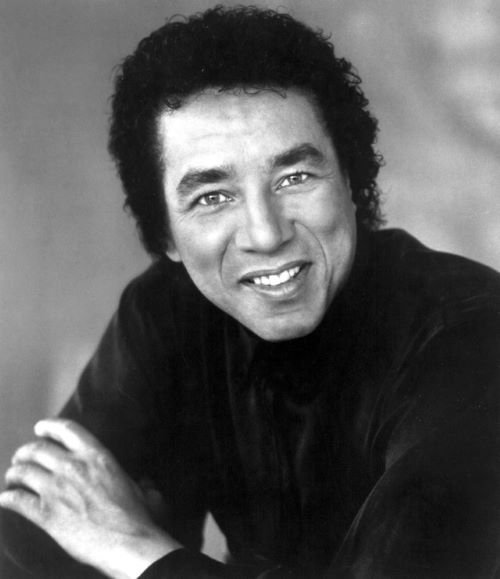
Part Eighty-Seven: Smokey Robinson

__________

HERE is another legendary artist…

who I have not yet included in Inspired By… One of the greatest songwriters and most soulful voices ever, Smokey Robinson has definitely made an impact on artists who have followed. I am going to end with a playlist of songs from artists who are similar to Robinson – or they have definitely been influenced by him. Before I get there, AllMusic provide a biography of the legendary artist:

Berry Gordy founded Motown Records, but one could argue that Smokey Robinson was the man who first pushed America's most iconic soul music label toward greatness. As the leader of the Miracles, Robinson was one of the very first artists signed to the fledgling label in 1959, and while he racked up many hits for it with the Miracles and as a solo act, Robinson was also an invaluable behind-the-scenes talent who wrote songs, produced records, scouted and groomed talent, and served as a vice president at Motown from 1961 to 1988. Robinson is one of the most iconic figures in American R&B; his work helped defined pop-oriented soul, his lush, romantic R&B ballads literally gave quiet storm its name, and no less an authority than Bob Dylan has called Robinson "America's greatest living poet."

William Robinson, Jr. was born in Detroit, Michigan on February 19, 1940. He grew up in Detroit's Brewster housing project, and picked up the nickname "Smokey Joe" from his Uncle Claude, which quickly stuck. Robinson first developed an interest in music by investigating his mother's record collection, which included classic sides by Sarah Vaughan, Billy Eckstine, Muddy Waters, and John Lee Hooker. Robinson's mother died when he was ten, and since his father was frequently on the road making his living as a truck driver, young Smokey was looked after by his older sister Geraldine, and in his early teens he began singing, performing in informal doo wop groups with his friends.

In 1955, Robinson assembled a vocal group called the Five Chimes, which featured his schoolmates Clarence Dawson, James Grice, Pete Moore, and Ronald White. In 1956, the group adopted a new name, the Matadors, after Dawson left and Emerson Rogers took his place, and a year later, Rogers and James Grice left the lineup, and Claudette Rogers and Bobby Rogers (respectively Emerson Rogers' sister and cousin) stepped in. With their new co-ed lineup, the name the Matadors was considered a poor fit, and they began calling themselves the Miracles. A guitarist, Marv Tarplin, joined the act in 1958, and the Miracles began making a name for themselves on Detroit's R&B scene.

In 1958, Robinson met Berry Gordy, a Detroit-based songwriter who had penned several hits for Jackie Wilson and was looking to make a name for himself in the music business. Gordy was impressed with the Miracles and Robinson's talents as a songwriter; he helped the band land a deal with End Records, and the Miracles released their first single, "Got a Job" (an answer song to the Silhouettes' hit "Get a Job") later that year. While the single sold well in Detroit, it didn't make much noise nationally, and follow-ups on End and Chess fared no better. Robinson believed he and Gordy could do better themselves, and he urged Gordy to follow through on his idea of forming his own label. The Miracles became the first act signed to Gordy's new record company, Motown, and in 1960, their song "Shop Around," written by Robinson, was the first Motown single to become a nationwide hit.

Through the '60s, the Miracles were a frequent presence on the pop and R&B charts, scoring hits with such songs as "Tracks of My Tears," "Mickey's Monkey," "You've Really Got a Hold on Me," "Going to a Go-Go," "Ooo Baby Baby," and many more. As Robinson became recognized as the creative force behind the group, their name was changed to Smokey Robinson & the Miracles in 1966. Robinson also shared his talents with many other Motown acts; he wrote "My Guy" and "The One Who Really Loves You" for Mary Wells, "My Girl," "Get Ready," and "The Way You Do the Things You Do" for the Temptations, "Ain't That Peculiar" and "I'll Be Doggone" for Marvin Gaye, and "The Hunter Gets Captured by the Game" for the Marvelettes, among many others. As a vice president at Motown, Robinson was also a key part of the label's management and production team, and helped guide the company into being one of the most successful independent American record labels of all time.

Robinson fell in love with Claudette Rogers not long after she joined the Miracles, and they were married in 1959. By 1969, Robinson was growing tired of dividing his time between his family, Motown, and the Miracles, and he decided to retire from the group so he could spend more time at home and less time on the road. He postponed his departure when "Tears of a Clown" (recorded in 1966) unexpectedly became a major hit in 1970, but a year later, he launched a "farewell tour" with the Miracles, though the group would continue without him (and Robinson would write one of their latter-day hits, "Floy Joy").

After a two-year layoff, Robinson returned to the recording studio with his first solo album, 1973's Smokey. The album found Robinson focusing on midtempo romantic numbers as well as more mature and personal themes, which would carry over to his second solo effort, 1974's Pure Smokey. Robinson scored a pair of major R&B hits with 1975's A Quiet Storm, the title tune and "Baby, That's Backatcha," and the former tune would give a name to the sort of polished, romantic R&B that was becoming Robinson's stock in trade. Robinson was no longer as consistent a hitmaker as he once was, but he continued to make his presence known on the charts with tunes such as "Cruisin'" (from 1979's Where There's Smoke) and "Being with You" (from the 1981 album of the same name). The year 1987 was a memorable one for Robinson -- the album One Heartbeat would score a massive hit for him with the song "Just to See Her," which also earned him a Grammy, and he was also inducted into the Rock & Roll Hall of Fame (though the rest of the Miracles were not, much to his consternation). But this came near the end of an important era for Robinson -- in 1988, Motown was sold to MCA, and Robinson stepped down as vice president. In 1990, he recorded a final album for Motown, Love Smokey (Robinson received a Lifetime Achievement Grammy the same year), and he signed with SBK Records for 1992's Double Good Everything.

The end of Motown came during a turbulent period for Robinson -- in the mid-'80s, he developed a serious addiction to cocaine, and his marriage to Claudette ended in divorce in 1986. While Robinson would kick drugs shortly after the end of his marriage, following the commercial disappointment of Double Good Everything, he wouldn't record again until 1999, when he recorded Intimate for MCA's revived Motown label. In 2004, Robinson (who cited a spiritual reawakening as a key factor in giving up drugs) recorded a contemporary gospel album, Food for the Spirit, and a collection of standards, Timeless Love, followed in 2006. Robinson returned to the smooth soul sounds of his '70s and '80s solo work with 2009's Time Flies When You're Having Fun, released on his own label, Robso Records; several tracks from this album were matched with remakes of Robinson's Motown hits for the collection Now & Then. In 2014, he released a Verve album, Smokey & Friends, for which he remade 11 of his most popular compositions with a roster of duet partners that included Elton John, James Taylor, Mary J. Blige, and Jessie J”.

To show the impact and importance of the magnificent Smokey Robinson, below are songs from artists who have definitely been influenced by the great man. Simply one of the greatest ever artists, there is no doubt that Robinson will continue to inspire legions of wonderful musicians. Here is a selection of the…

ARTISTS he has inspired.

FEATURE: Spotlight: Skylar Stecker

FEATURE:


Spotlight

PHOTO CREDIT: Kigon Kwak for Wonderland. 

 Skylar Stecker

__________

HAILING from Tampa, Florida…

the amazing and hugely talented Skylar Stecker is someone that I want to recommend to everyone. She has a massive fanbase already, but I feel that she may not be that well-known to some in the U.K. The twenty-year-old is already an established artist and actor. In 2015, Stecker released her debut studio album, This Is Me. In March 2019, she independently released her second album, Redemption. I think that Stecker deserves a major label release, as she is an incredible artist who could penetrate and infiltrate the mainstream and stand alongside the biggest artists of today. There is no doubting her passion and commitment. Someone who I recently discovered, I wanted to bring in a few interviews so that we can learn more about the multi-instrumentalist and multi-talented Stecker. She has actually been releasing music since 2013, so here is someone who started out incredibly young! I think that she will be releasing music for decades more. It is always amazing finding these very young and prolific artist making an impact now. Those you know will only get better and grow bigger. I am going to finish with an interview from earlier this year. Before that, there are a couple of older interviews that are worth sourcing from to give us background, context and a sense of development.

Back in April last year, Wonderland. spoke with Stecker about her music. They were curious, being nineteen at the time of the interview, how she navigated the industry at such a young age. Redemption is one of the best albums from 2019. It is one that deserves new exposure now:

The excitement and confusion that comes with newfound feelings can be overwhelming, to say the least. Whether you catch yourself smiling at your phone one too many times or overthinking everything your crush says and does, the process of liking someone can be both draining and euphoric. 19-year-old singer Skylar Stecker is here to remind you that you’re not alone with her latest track “Questions”. A display of pop perfection, the track has it all. From the singer’s ethereal vocals to the romantic lyrics – which are steeped in longing and complex emotions – we are provided with sultry sounds and an introspective look into Stecker’s love life.

“Questions is a special song to me because I wrote this song alone during quarantine with someone special in mind,” states the young star. “The words and melodies just fly out of me effortlessly and I was able to finish this song in one day. Then I sent it to my friend and producer Jordan Manswell who took the production to another level.”

At the tender age of 19, Skylar’s boasts an outstanding resume. From taking to the stage at The Today Show and shooting to the top of the Billboard Dance Charts in record-breaking moves to mastering the guitar, drums and piano from the confines of her own bedroom, the singer’s raw talent is evident. And, with a string of new music releases on the horizon, the young star shows no signs of slowing down.

Check our interview with Skylar below…

 PHOTO CREDIT: Kigon Kwak

Hey Skylar! How has this past year been for you? How has it affected your creativity?

The past year has had its challenges, but it also allowed me the extra time at home to learn how to produce and produce vocals, as well as spend more time mastering the drums!

You’ve been performing and singing for years, how did you first get into music?

I entered a talent show when I was 9 to play the piano, which turned into me singing instead and from there on I was obsessed with trying to find venues where I could continue to perform and be around music in any capacity. That led me to performing National Anthems in College and then at Pro Sporting events. Eventually, I moved to California to pursue a singing career.

You’re 19-years-old and have already released your second album, what is it like navigating the industry at such a young age?

In many ways starting at such a young age was a blessing. Being young allowed me to be able to be like a sponge, and soak up knowledge

from people without judging where I was creatively. I explored different genres while also continuing to hone in on my writing and my vocal skills.

You were signed as well before becoming independent, why the change and do you prefer it?

What I have learned through that experience is that it’s more about the people involved and if it’s the right fit at the right time. As an artist, I have continued to evolve and the most important thing to me, regardless of being with a label or being independent, is that my voice and vision are heard.

Congratulations on your new single “Questions”, take us through the production process? What was the inspiration behind the song?

Questions is a special song to me because I wrote this song alone during quarantine with someone special in mind. The words and melodies just fly out of me effortlessly and I was able to finish this song in one day. Then I sent it to my friend/producer Jordan Manswell who took the production to another level.

What do you want people to take away from your latest single?

I want people to just enjoy the feeling of the song as a whole. It has a very sensual vibe that taps into the feeling we all get at the beginning of a relationship.

Looking back on your previous singles, how do you think this one differs from your last?

With every single I release I try to give the listener more snippets of who I am and what I am experiencing at that moment.

You’ve had so many accolades over the years! What’s been your biggest pinch-me moment?

Definitely performing on The Today Show!

You have more music lined up in the pipeline, what can we expect from your future projects?

You can expect a lot more music and my next single out this summer!”.

RAYDAR spoke with Skylar Stecker late last year when she was promoting her amazing E.P., Earth Signs. An artist who is so prolific and always impressive and original, there are few out there as promising and exciting as her:

A self-taught multi-instrumentist, Skylar is one of the youngest artists to top the Billboard Dance Charts and saw early success from pop ballads such as “How Did We” and “Only Want You.” The rising artist is becoming widely loved for her honey-drenched vocals and occasional song covers. Her 2019 project Redemption was well-received and served as her first full-length release as an independent musician. Songs like “Let It Pour,” “Don’t Test Me,” and the title track rose as fan-favorites from the project.

Earlier this year, Stecker unveiled her EP aptly titled Earth Signs, a 7-track offering with a lone feature from Lucien Parker that the trials and triumphs of navigating a new relationship and learning about how to deal with feelings that she had never experienced up until that point in her life. Fast forward to now, Skylar is working on her next EP slated to arrive during the summer of 2022 with more content to follow. Keep your eyes peeled for the young promising songstresses as she carves out her own space in pop-infused R&B.

We spoke with Skylar Stecker about being an independent artist, new music, relationships, and much more! Check it out below.

I know that you’re originally from Florida but moved to Los Angeles to pursue music. How did the different cultures on top of being so laser-focused on music affect who you are today?

I feel like it helped me to adjust and not be too attached to things. The number one thing I take away from it is being able to live in the moment because I’m a forward thinker, but at the same time, I have to reel myself back in and really live in the present. Where I’ve lived, all these places have given me perspective and stories to tell in my music.

Prior to being an independent artist, you were signed to Cherrytree Records in a joint venture with Interscope at a fairly young age. Is there anything liberating about putting out music on your own now?

I think before, I didn’t feel as attached to certain things or songs because I didn’t 100% write them or they didn’t reflect how I felt for other political reasons. There’s always a sense of disconnect from not having full ownership. Now, with the music release, it’s definitely a bit more nerve-wracking because I can’t put that weight on other people’s shoulders. Obviously, I have a team around me, but the responsibility lies within me but it’s also really exciting because I get to create my own story.

Considering you decided to be more vulnerable on Earth Signs, how long did it take to perfect this EP? Did it feel any different compared to your previous works?

I was going through my first real serious relationship and basically “Superman” was the first song I wrote on that project. After that, everything just came so easy to me and I knew I wanted to use that as the blueprint for the rest of the EP. I created stories around my life experience and also that person that I was experiencing these things with. It’s funny I named it Earth Signs because I’m actually an Earth sign and I got into that stuff during quarantine as well.

Can you walk us through what your songwriting process is like?

It really varies, I definitely keep a tight circle of music creators. I really love to try to lock in with people and do as much as I can with them because it feels like a family and the music comes out more authentic. I think that’s translated in my music and songwriting, but I’m also starting to do a lot at my home studio as well. Due to COVID, I learned how to vocal produce and do stuff like that which has been really really helpful.

A good bit of your music focuses on love, dating, and intimacy—what is your definition of modern love?

That’s a very good question! I would like to know the definition of love! For me, my number one thing is that I lead with my brain. Love is being able to be yourself and have that person be able to see you who you are fully. Not the persona that you start off with because we’re always worried about saying the right thing. Love is that comfortability, and I know that I definitely fall in love with someone when they show consistency that matches me.

What are some key points and components of your music that you would like your fans to pick up on and enjoy?

I think the number one thing for me is that I’m trying to find my way. I feel like we’re all humans and no matter what we’re going through, we’re always trying to figure it out. I think my music reflects that whether it be love or tribulations in some other areas of life. I just want to be very transparent and honest about the mixed emotions and thought processes that we go through.

I see that you also have a pretty unique sense of style, what are some of your go-to brands or sneakers these days?

I love Jordans! I started with one pair and now I have a whole collection and it’s dangerous. Every time I see new pair online, I’m like oh god. My style is definitely comfort but I try to find shoes or accessories to spice it up a bit. I love Nike, Adidas, all the sportswear brands, and really nice jewelry whether it be hoop earrings or something of that sort.

I have a stylist that I’ve been working with lately and he’s been getting me out of my comfort zone lately. I think that’s the cool thing about fashion, you can always reinvent and evolve. I’m definitely a sweats person but when I wear a dress you’ll catch me in the car getting my flick on.

Knowing what you know now, what advice would you give your younger self?

The number one thing I would tell myself is to be patient with everything. I think in life, to get the greatest reward you definitely have to have your fair share of work. Stay steady and look at every day as a way to grow. There are always going to be challenges but try to make the best choices. I’d also say listen to your gut because there will always be people with opinions and not in a bad way. Just take them as a grain of salt in comparison to your own.

Obviously, your younger years are in the rearview, so what are some long-term goals you have set for yourself?

Long-term, I want to do a lot. I want to do the GRAMMYs and hopefully I can get there. I really just want to continue to grow and evolve as an artist. I think embracing change is good and I want to be able to best translate that in a way that I can look back and have a sense of contentment that I was able to do all the things I wanted to do”.

I am going to wrap things up there, actually. I would recommend you follow Skylar Stecker on social media, as she is such a fascinating artist whose music cannot readily be compared with anyone else. I would encourage anyone to listen to her songs, as they are so engaging and memorable! There are videos and live tracks I am unable to include as I will run out of space and opportunity. For that reason, go and look at her YouTube channel and all the amazing videos on there! Sounding already established and confident, it is amazing to discover this in a twenty-year-old. I think, as she moves through the next few years, we will see more albums and E.P.s from this wonderful artist. As I said, I hope there is some interest from big labels – or a label that is a perfect fit for her and treats her with respect. Her work deserves as much love and attention as possible, so I do hope that the next E.P. or album spreads around the world and we see her hit the road. There are definitely going to be people in the U.K. and Europe who would be interested seeing Stecker in the flesh. Such a talent and loved artist – check out her TikTok videos for a start! -, we will hear a lot more from her. I am glad I discovered Stecker’s music, as I have got to know more about her career and start. Because of that, I have bonded with this truly stunning artist. I am predicting some immense and wonderful things for Skylar Stecker…

IN 2023.

____________

Follow Skylar Stecker

FEATURE: With Love to Bertie: Kate Bush’s Aerial at Seventeen

FEATURE:


With Love to Bertie

IN THIS PHOTO: Kate Bush in a promotional photo for Aerial/PHOTO CREDIT: Trevor Leighton

Kate Bush’s Aerial at Seventeen

__________

I am winding up…

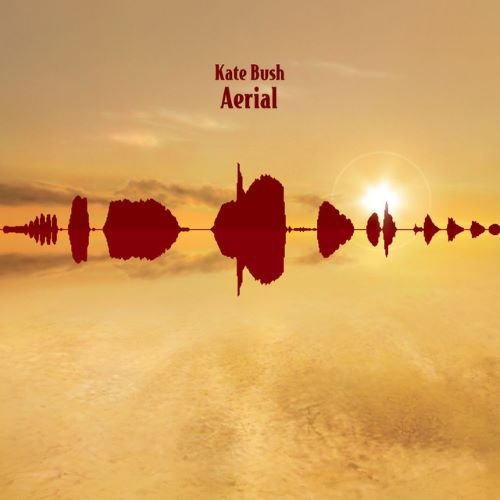
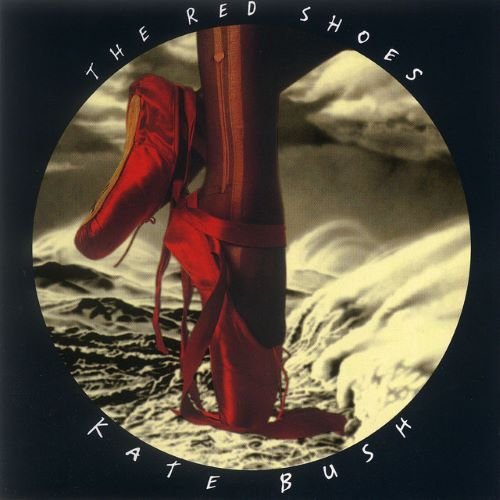
my anniversary features for Kate Bush’s Aerial. Her return following 1993’s The Red Shoes, Aerial was released as a double album on 7th November, 2005. It has been interesting looking deeper at one of Kate Bush’s best albums. I have already talked about the gap between The Red Shoes and Aerial. I have also explored various songs on the album, in addition to the second disc suite, A Sky of Honey. What is at the centre of Aerial’s brilliance and wonderful scope? It is an album as ambitious as Hounds of Love (her 1985 masterpiece), but it has a different sound. If the singles and first side of Hounds of Love is quite propulsive and has a definite rush, the second side, The Ninth Wave, is dark, scary and emotional. In contrast, Aerial’s first disc has one or two bolder and racing songs (King of the Mountain kicks off Aerial beautifully!), but it seems more personal and emotive. Contemplative, gorgeous and steeped in nature and the open, A Sky of Honey has the feeling of an artist as incredible as she was in 1985 but, fifteen years later, her music was taken on fresh meaning and energy. I think it is good to compare Hounds of Love and Aerial, as both albums are extremely important and personal. The former was a bit of a rebirth for Bush. After the exhaustion and endless hard work put into 1982’s The Dreaming, Hounds of Love found Bush finding new space and inspiration.

Things changed in terms of her living conditions, work rate and the how she recorded. Hounds of Love is as fantastic as it is because she was surrounded by family and had a studio at her family home. It allowed her the environment to make some of the best music from any artist ever! Similarly, with home very much at its heart, Aerial is as fantastic as it is because of the importance and influence of family. Rather than her parents, brother and boyfriend (Del Palmer) fusing into Hounds of Love, there is someone who I feel not only influenced most of Aerial, but also subsequent albums and Bush’s return to the stage with 2014’s Before the Dawn. Her son Bertie was born in 1998 (I am not sure which month). Before then, Bush had started working on Aerial - but his birth certainly changed the direction and meaning of this hugely important album. There is one song that is very much about him. I feel A Sky of Honey is Bush imagining the course of a summer’s day with her new son. Songs on the first disc, including Pi and A Coral Room, I feel, can be linked to Bertie. It is the eponymous song that is very much about her treasured new son. As she revealed to Ken Bruce in a 2005 interview, there was always going to be a song about him on Aerial:

He's such a big part of my life so, you know, he's a very big part of my work. It's such a great thing, being able to spend as much time with him as I can. And, you know, he won't be young for very long. And already he's starting to grow up and I wanted to make sure I didn't miss out on that, that I spent as much time with his as I could.

So, the idea was that he would come first, and then the record would come next, which is also one reasons why it's taken a long time (laughs). It always takes me a long time anyway, but trying to fit that in around the edges that were left over from the time that I wanted to spend with him.

It's a wonderful thing, having such a lovely son. Really, you know with a song like that, you could never be special enough from my point of view, and I wanted to try and give it an arrangement that wasn't terribly obvious, so I went for the sort of early music... (Ken Bruce show, BBC Radio 2, 3 November 2005)”.

Whilst Bush has said Aerial is her favourite album, she never really revealed the reasons why. It is personal to her, but I think it is because it was recorded and released at such a happy time! With so much expectation on its shoulders, there could have been disappointment. Maybe it was because The Red Shoes was not quite Bush’s best and most acclaimed album. If she had departed with a phenomenal album, some might have felt a tinge of underwhelm with Aerial. One cannot really compare The Red Shoes and Aerial. So vastly different, I think Bush starting a family really did something to her creative vision and recording! Perhaps her warmest sounding and feeling album ever, it is beautifully produced (by Bush), ewngineered (by Del Palmer) and arranged. I do not love every song on Aerial, but the overall album is flawless. Everything works perfectly together! Of course, not every song is about Bertie. I feel he was very much in Bush’s mind when she was writing and recording these songs. There is no doubt that her young son infuses the material throughout, and he definitely gave her motivation to keep recording! 2011’s 50 Words for Snow features Bertie, as does its predecessor, Director’s Cut. Now that Bertie is twenty-four, one wonders whether he will feature on his mum’s next album – if there is one that is! Maybe a vocal duet, some guitar playing or something else, it seems strange to imagine Bertie as a grown man or not appearing on an album by his mum! MOJO named Aerial their third-best album of 2005. Aerial received a BRIT Award nomination for Best British Album in 2006. Bush was also nominated for Best British Female in the same year. Such a remarkably successful album (it charted at three in the U.K.), this was a music icon in peak form twelve years after her previous album! Although many factors go into Aerial, I think her new bundle of joy, Bertie, was a constant inspiration and source of influence. For many reasons, Kate Bush fans offer Bertie…

OUR love and appreciation.

FEATURE: Second Spin: Leona Lewis - Spirit

FEATURE:


Second Spin

Leona Lewis - Spirit

__________

THERE are two reasons…

why I have selected Leona Lewis’ debut album, Spirit, in this Second Spin. For one, it was very underrated and I think it deserves some new focus and play. Many critics did love the album, but there were a few that were mixed or had some negative things to say. It is a shame because, whether you are a Leona Lewis fan or not, there is more than enough to enjoy and respect about her debut. Her fifth studio album, I Am, was released in 2015. I wonder whether she will record another studio album. Let us hope so! Spirit came out on 9th November, 2007. As it is fifteen soon, I wanted to include it for reassessment. For a bit of background: Lewis achieved recognition when she won the third series of The X Factor in 2006, earning a recording contract with Syco Music. Her winner's single, a good cover of Kelly Clarkson's A Moment Like This, reached number one in the U.K. and broke a world record by reaching 50,000 digital downloads within thirty minutes! In February 2007, Lewis signed a five-album contract in the United States with Clive Davis's record label, J Records. In spite of the fact there was so much anticipation around Spirit, many critics did not give it the praise it deserves. The public reacted differently. Reaching number one in the U.S. and U.K., Spirit was the sixth-biggest-selling of 2008. It was best-selling debut album by a female artist in the U.K., and one of the best-selling albums in U.K. chart history. The best-selling album by a female artist in the twenty-first century, the incredible and unbeatable success of Spirit contrasts to the critical reaction. Maybe there was a lot of hype and too much in the way of numbers and record breaking for critics to judge it on its own merit.

I think many were reacting to Spirit in the context of The X Factor and seeing it as a talent show album. Instead, listen to Spirit as an album by a great young artist whose incredible vocal abilities are at the fore. Even though Lewis did not write a lot of the material on Spirit, it does sound very pure and personal. Not a case of a reality show winner singing songs by others in a rather lacklustre way. She makes every track her own! I know Leona Lewis and her huge fanbase will mark Spirit’s fifteenth anniversary on 9th November. She was only twenty-two when her debut came out. That isa a remarkably young age to deal with such pressure, acclaim and responsibility! Already hugely promising at the start, her music has developed, and her confidence has grown through the years. Perhaps her best album is I Am. Even though there were some mixed reviews for her most recent album, there was a lot of praise and new affection for Lewis. I think that Spirit is an incredible album in many ways. I want to bring in a couple of reviews that, whilst pointing at some flaws, definitely praise Lewis as a performer and talent. This is what SLANT said in their 2008 review:

Quick (and mostly useless) fact: Last week, Leona Lewis, winner of Simon Cowell’s U.K. talent show The X Factor, became the first British female artist to top the U.S. singles chart since 1987, when Kim Wilde transformed the Supremes’ “You Keep Me Hangin’ On” into a dance-pop classic…and then quickly faded into obscurity. If all goes according to Cowell’s plan, however, Lewis’s career trajectory will be a little more like Mariah Carey’s. Not only does Lewis share with Carey a multiracial heritage, but she’s also got the voice—albeit, one with a slightly less impressive range and timbre.

The #1 hit in question is “Bleeding Love,” penned by teen heartthrob Jesse McCartney and OneRepublic’s Ryan Tedder; it’s the kind of pop song that announces itself from the very first note (in this case, a distorted organ), and though it’s an utterly by-the-numbers pop ballad, Lewis delivers vocally, and the track’s crunchy drum loop gives the illusion of edginess, something her debut, Spirit, desperately needs. The album alternates between similar heavy-beat ballads and more traditional adult contemporary mush; “Angel” falls into the former category (it’s yet another lazy copy from the “Irreplaceable” assembly line, and someone needs to buy Stargate a new drum machine for Christmas…2006), while “I Will Be,” a cover of an Avril Lavigne song produced by Dr. Luke and Max Martin (who takes a step even farther away from his “…Baby One More Time” past), is dangerously middle-of-the-road. Though the 21-year-old’s faithful, capable rendition of “The First Time Ever I Saw Your Face” proves that the timelessness of the song should remain unquestioned, the album’s adult-skewed material sounds even more jarring next to two fresh new tracks, the bouncy and youthful “Forgive Me” and urban club jam “Misses Glass,” added for American consumption. Drippy songs like “Footprints in the Sand,” which was co-written by Cowell himself and is based on the Christian allegorical text “Footprints,” might draw comparisons to Carey, but it’s the Carey of 15 years ago, not the one Lewis is currently trying to fend off at the top of the charts”.

A phenomenal commercial success in the U.S. in addition to her native U.K. (Lewis was born in Islington, London), huge songs like Bleeding Love makes Spirit enduring to this day. Even if you are not a fan of this type of music or have heard of Leona Lewis, I think you can play the album and find quite a few tracks that hit you. It is not perfect by any means, but it is an impressive debut from one of the U.K.’s most popular and important artists of the past fifteen/twenty years. This is what AllMusic said in their review:

The truest test of Simon Cowell's power within the music industry circa 2008 was not whether American Idol could produce a star in its seventh season or if its U.K. cousin, The X Factor, would have another success in its fifth season -- it was whether he could turn Leona Lewis into the international superstar he so clearly believed she is. Lewis was the third winner of The X Factor -- the Cowell-driven replacement to Pop Idol in Britain, a replacement that came to be because he wanted to own a significant piece of the show -- and one of the key differences between Factor and Idol is that the judges can mentor the contestants and therefore have a stake in the outcome of the show, more than they do on Idol, where the judges merely comment.

Rightly impressed by Lewis' multi-octave voice -- reminiscent of a warmer, earthbound Mariah Carey -- Cowell continued his mentorship after the conclusion of the show, making her the first contestant in the whole Idol/Factor enterprise that he personally shepherded through the major-label process. He struck a deal with Clive Davis -- the executive producer behind all the American Idol projects, the producer who publicly bristled when Kelly Clarkson tried to take control of her career through her original compositions -- and the two launched a grand plan to break Lewis in her native U.K. first, then slowly roll her out in the U.S. a few months later, via an appearance on Oprah and a slightly re-sequenced and remixed version of her debut, Spirit.

That U.S. version drops the bonus track of Leona's version of "A Moment Like This," her first hit single that is not so coincidentally a cover of Kelly's first big single. If Kelly became a thorn in Davis' side, Leona Lewis seems happy, even eager, to play the major-label game, singing anything that comes her way, never lodging a complaint when she has to cut a couple R&B-flavored tracks to appeal to the American market. These tunes -- "Misses Glass" and "Forgive Me" -- are just slightly glitzier than the rest of Spirit, surely bearing heavier rhythms but not to the extent that the beats obscure Lewis' voice, as the whole point of Spirit is to showcase her singing, particularly those high glory notes that are all the rage on Idol/Factor.

Unlike most Idol/Factor alumni, Lewis can hit those big notes but make it seem easy, never straining her voice and building nicely to the climax. Unlike most divas, there is a human quality to her voice, as she's singing to the song, not singing to her voice. Then again, this was also true of Mariah Carey on her 1990 debut, which Spirit greatly resembles in how the handful of R&B-oriented songs camouflages how this is almost entirely a stuffy middle-of-the-road pop record. Not only that, but Spirit is so old-fashioned it sounds as if it could have been released in 1990 and compete with Carey's debut for the top of the charts; her first single, "Bleeding Love," opens with a crawling organ that recalls the muted gospel of "Vision of Love," even if the skin-crawling lyric "you cut me open and I keep bleeding love" wouldn't have suited the Top 40 in 1990.

I can appreciate how some people highlighted flaws on Spirit. Maybe lacking too much personality difference and development throughout the album, the emphasis is on the sheer power of Lewis’ voice, rather than range or diving too deep into her vocal gifts. That is a shame, as I think she could have produced a lot more if allowed to have more of a production and writing say. I feel Spirit has many highlights and should be commended because of its success and how it clearly resonated with millions of people. Turning fifteen on 9th November, people need to give this another spin. For someone like me – who really does not bond with winners of The X Factor and reality show winners’ albums -, I was not a big fan of Leona Lewis’ debut in 2007. I have grown to really appreciate it and the beginning of the professional career for a mighty talent. Spirit is appropriately named, as the album…

HAS that in abundance!

FEATURE: Spotlight: Antony Szmierek

FEATURE:


Spotlight

Antony Szmierek

__________

FOR this Spotlight…

I am staying with solo artists, but here is someone that might be quite new to many people. The tremendous Antony Szmierek is a wonderful talent who many are predicting big things from. There are not many interviews online from him – I could only find one recent one -, but I hope that changes in the next year or so. I guess his career is still building and developing. How best to describe Szmierek and his sound? Such a compelling, promising and original artist, this from Primary Talent is a pretty good overview:

Antony Szmierek is a spoken word and indie hip-hop artist making unique moves by blending his poetic, often introspective lyricism with undeniably smooth riffs and nostalgic beats. Hailed by Lauren Laverne as "the best thing I've heard all year" and described as "Mike Skinner spliced with Simon Armitage" - his track 'The Hitchhiker's Guide to the Fallacy' spent 4 weeks on the 6 Music B-list, as well as being featured on Jack Saunders' 'Future Artists' show on Radio 1. The same track also bagged the high score on Steve Lamacq's legendary Round Table. Support continues to pour in from the likes of Craig Charles, Steve Lamacq, Nemone, Mary Anne Hobbs and Chris Hawkins”.

I will end with a bit of press about a recent song. Before getting there, here is an interview with Skiddle. It is from September and, as it seems, press sources, music magazines and radio stations are starting to recognise the music and brilliance of Antony Szmierek. I think that 2023 is going to be a big breakout year for him where he plays a lot of festivals and bigger stages:  

This year has been a bit of a wild one for you so far, it would be fair to say. Heavily playlisted by the likes of Spotify and BBC 6 Music, and with adulation coming from some of the biggest names on the airwaves, the likes of Lauren Laverne and Craig Charles - it must feel incredible to be receiving so much appreciation for your work. How’s the experience been so far?

"I like ‘wild’ as an adjective and have been using it a fair bit myself. It’s been unexpected for sure. I keep trying to pinpoint the specific moment it changed but can’t decide when it was. I’m a big fan of 6music anyway so to hear my name read out by these disembodied voices that are a stable of my life is really strange in the best possible way. And then they become real people and you’re suddenly on Zoom with Craig joking about Robot Wars or sending voice notes to Lauren Laverne and trying not to freak out about it. Let’s stick with wild until I find anything better.

Where and when did your journey in music begin? How did it all start?

"I’m one of this new wave of lockdown musicians, I think. I’ve been writing for ten years – novels at first and then short stories and eventually poems. The performance aspect of that was what became important and being heavy into music and experiencing it live - it was just right there in front of me and seemed an obvious next step. I bought a couple of these little Volca synths and started bashing out rudimentary stuff on audacity, which is free, and then Ableton, which is also free for 60 days. So I had 60 days to make something. That became ‘Giving Up for Beginners’ which my now producer and live keyboard player Robin Parker helped me get over the line."

The release of your most-listened-to-track to date, ‘Hitchhikers Guide To The Fallacy’ marked a watershed moment for you, in terms of breaking through to a wider audience. What do you think it is about this track that resonates with music fans?

"I did sort of know it was good, but it was only supposed to be the intro to the next EP and not a proper single or anything. I think I’d have been tempted to overthink it and include a hook or something but I’m really glad I didn’t now as it’s informed a lot of my writing since."

"I honestly couldn’t tell you. Everyone seems to have their own favourite line and the house beat bubbles along nicely in the background. I’m a big fan of the little guitar motif that runs through it from my brother, Martin, who is also in the live band. I think that’s the glue. The secret sauce."

How do you approach writing a song such as ‘Hitchhikers Guide To The Fallacy’? Do you have a particular process?

"It was the title first with this one. Just a notes app thing. We were working on this song called ‘Last Train Back’ that never quite made it so moved on to another song to cleanse the palette and I just started reading things out from my notes. It got a laugh from Dean (producer based in VIBE Studios, Cheetham Hill) and that was enough of a thumbs up for me. Hitchhiking as a concept is quite desperate and yet there’s a hopeful optimism to it. And so I just applied that to how I was feeling, which as it turns out was quite jaded”.

I am just going to finish off with an article from CLASH, who looked ahead to the release of Szmierek’s new E.P., Poems to Dance To. I am writing this on 25th October, so I have not got any of the reviews from it yet - though the ones that come out are likely to be terrific. I would recommend you check it out, along with phenomenal recent tracks like Working Classic. A terrific talent who is going to go very far:

Antony Szmierek knows that communication essentially boils down to words and music.

A word-of-mouth hero in his native Manchester, he melds together spoken word lyricism with hip-hop, adding in a dash of soul for good measures. Literate and worldly wise, he also packs a punch – there’s romance, there, but also grit.

New EP ‘Poems To Dance To’ is out on October 28th, and it represents a neat encapsulation of his methodology. The project is led by superb new single ‘Working Classic’, matching his word play to aspects of UKG.

Digging into a classic UK sound, ‘Working Classic’ is a point where Antony’s approach merged with music, his two loves sparking into one. He explains: “It has these hyper specific references but also these ambiguous, gut-punch universal truths that come in when you’re starting to have too much of a good time. The UKG influence is there to amp up the nostalgia.”

A fantastic starting point, ‘Working Classic’ feels like life in the UK right now – under grey skies, fighting to survive, but somehow managing”.

Go and follow the remarkable Antony Szmierek. He is someone who is unlike anyone out there. With his incredible E.P. out in the world, there will be more eyes and ears his way. His blend of Hip-Hop and spoken word lyricism has, as CLASH said, grit alongside heart and depth. It is an intoxicating blend that…

HITS the soul.

_____________

Follow Antony Szmierek

FEATURE: A Beautiful Sunrise: Kate Bush’s Aerial at Seventeen

FEATURE:


A Beautiful Sunrise

Kate Bush’s Aerial at Seventeen

__________

I am going to publish…

 IN THIS PHOTO: Kate Bush in 2005/PHOTO CREDIT: Trevor Leighton

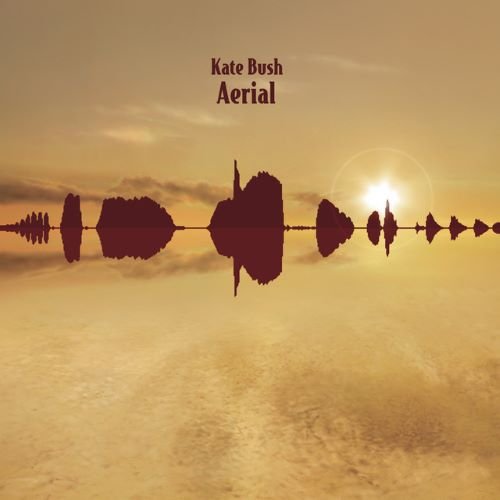
one more feature about Kate Bush’s double album, Aerial, ahead of its anniversary. Released on 7th November, 2005, it reached number three in the U.K.  Similar to her 1985 masterpiece, Hounds of Love, Aerial is split into two sections. The first disc is subtitled A Sea of Honey. The second disc is called A Sky of Honey. I like the titles of each disc and the sort of warmth and sweetness they project. It was brilliant that Bush gained so much success with her double album. Aerial sold more than 90,000 copies in its first week of release and has now been certified as platinum by the British Phonographic Industry. Dissimilar to The Ninth Wave, A Sky of Honey is about the richness, sweetness, beauty, redemption and restorative beauty and natural wonder of a summer’s day. Rather than a heroine being struck at sea and struggling for life and hope (though she is rescued in the end), there is this endless purity and sense of uplift and wonder through the song cycle on Aerial. If the first half of Aerial is not as striking and hit-filled that on Hounds of Love, I do think there is a greater variation and depth in terms of the material. Bush’s late mother Hannah is referenced in A Coral Room. Her then-new son (who was seven in 2005) Bertie has a song named after him. Mrs Bartolozzi is about the mundanity of laundry, yet it turns into this stirring and almost fantastical piece where the clothes seem to be dancing and twirling. Sexual, suggestive, longing, and powerful, it is one of Bush’s best songs!

Although I am not featuring A Sky of Honey entirely and making it my focal point, it is one big reason why Aerial is so successful and loved. Bush herself has cited this as her favourite album. I really like the first disc. If songs such as Pi, Bertie and Joanni are harder to get on board with an embrace – the first song is literally Bush reciting a series of numbers- it shows that she was as explorative, ambitious, and original as ever. Bush was not going to come back after twelve years – her album before Aerial was The Red Shoes (1993) – and make an album that was a little watered-down and safe. There is plenty of eccentricity and unique moments through A Sea of Honey. I am going to end with a couple of reviews for Aerial. The reason behind this feature is to bring Aerial to people’s attention. Although the vinyl is expensive, I would advise people to buy it if they can afford, as it is such a tremendous album. An album designed to be listened to the entire way through, you immerse yourself in Bush’s 2005 masterpiece. A Sea of Honey features a couple of Bush’s all-time great song. The single from the album, King of the Mountain, is a phenomenal track that was an obvious single. Mrs. Bartolozzi is hugely memorable and strangely moving. I also think A Coral Room and How to Be Invisible rank alongside her greatest moments. Perhaps there are one or two tracks I am not keen on, but A Sky of Honey is flawless!

One of the only problems with it was that the original 2005 release did feature spoken vocals from the disgraced Rolf Harris. They have since been removed on subsequent releases, but it is an issue if you have an original vinyl copy. If you get the 2018 remaster, you do not have his voice. Not a huge part of AerialThe Painter’s Link finds Harris replaced by Bush’s son Bertie McIntosh (the surname comes from Bush’s partner, Danny McIntosh) -, you are not too offput. Aerial was Bush’s return after twelve years. It has almost been that long since she released her latest studio album, 50 Words for Snow (2011). I recently spoke with journalist Tom Doyle about interviewing Bush in 2005. Although she did not give too many interviews, the ones that she did are excellent. Excited to come back and put new music into the world, it must also have been strange to do promotion and answer questions. Perhaps cautious that people would want to know what she has been doing and why she’s been away for so long, there was plenty of respect and affection for her! The hugely positive reviews for Aerial show that Bush was dearly missed and, as you would expect, had lost none of her genius. Inspired and more refreshed after the somewhat tired The Red Shoes, Aerial sits up there with Hounds of Love as Bush’s best album. I think that A Sky of Honey is one big reason why Aerial is so accomplished and nuanced. The nine short tracks are flow and weave together. They bring the listener into the cycle of a summer’s day. Prologue, Aerial Tal and Nocturn are so gorgeous and spellbinding. Influenced by motherhood, a new life, the simplicity and importance of nature and the natural world, there is this feeling of compassion and warmth throughout A Sky of Honey. The compositions are so rich and fascinating. I am going to finish with two sample reviews for the remarkable Aerial. It is seventeen on 7th November.

The BBC were unequivocal in their assertion that Aerial is a masterpiece. It is hard to argue against that, as the more you hear the double album, the more layers you find. It is a sensational piece of work that started life back in the 1990s:

After 12 years of waiting Kate Bush fans finally get their hands on an album of new material. A double album-sized helping of new songs should keep most fans happy with 16 tracks to delve into.

Disc one is a varied set of numbers which mainly centre around her private life, with odes to her son and a moving song about the loss of her mother. But at times these songs feel too personal and are hard to decipher with dense and difficult melodies. They encompasse a range of musical styles - from folk ("Bertie") to new age ("Pi") and classic Kate Bush ("How to be Invisible"). However, some of these tracks never really achieve lift-off and could have been left on the recording studio floor.

The Kate Bush of "Cloudbusting" and "Wuthering Heights"-fame is in there but struggles to get out. After the flatness of disc one, the second disc is full of surprises. It's an old-fashioned concept album that takes the listener on a journey. And what a journey! Bush has written a lyric poem set to music, which has an epic quality, transporting the listener to a deeply lush and fertile landscape. Lyrically cryptic, but strangely seductive, side two is the album Pink Floyd might have made in 1979 if Bush had been their lead singer.

Concept albums are not everyone's cup of tea - but this is a masterpiece”.

This is what AllMusic noted in their review. Although they observe how not a lot happens during the majestic A Sky of Honey, they do recognise how powerful and wonderful it is:

A Sky of Honey is 42 minutes in length. It's lushly romantic as it meditates on the passing of 24 hours. Its prelude is a short deeply atmospheric piece with the sounds of birds singing, and her son (who is "the Sun" according to the credits) intones, "Mummy...Daddy/The day is full of birds/Sounds like they're saying words." And "Prologue" begins with her piano, a chanted viol, and Bush crooning to romantic love, the joy of marriage and nature communing, and the deep romance of everyday life. There's drama, stillness, joy, and quiet as its goes on, but it's all held within, as in "An Architect's Dream," where the protagonist encounters a working street painter going about his work in changing light: "The flick of a wrist/Twisting down to the hips/So the lovers begin with a kiss...." Loops, Eberhard Weber's fretless bass, drifting keyboards, and a relaxed delivery create an erotic tension, in beauty and in casual voyeurism.

"Sunset" has Bush approaching jazz, but it doesn't swing so much as it engages the form. Her voice digging into her piano alternates between lower-register enunciation and a near falsetto in the choruses. There is a sense of utter fascination with the world as it moves toward darkness, and the singer is enthralled as the sun climbs into bed, before it streams into "Sunset," a gorgeous flamenco guitar and percussion-driven call-and-response choral piece -- it's literally enthralling. It is followed by a piece of evening called "Somewhere Between," in which lovers take in the beginning of night.

As "Nocturne" commences, shadows, stars, the beach, and the ocean accompany two lovers who dive down deep into one another and the surf. Rhythms assert themselves as the divers go deeper and the band kicks up: funky electric guitars pulse along with the layers of keyboards, journeying until just before sunup. But it is on the title track that Bush gives listeners her greatest surprise. Dawn is breaking and she greets the day with a vengeance. Manic, crunchy guitars play power chords as sequencers and synths make the dynamics shift and swirl. In her higher register, Bush shouts, croons, and trills against and above the band's force.

Nothing much happens on Aerial except the passing of a day, as noted by the one who engages it in the process of being witnessed, yet it reveals much about the interior and natural worlds and expresses spiritual gratitude for everyday life. Musically, this is what listeners have come to expect from Bush at her best -- a finely constructed set of songs that engage without regard for anything else happening in the world of pop music. There's no pushing of the envelope because there doesn't need to be. Aerial is rooted in Kate Bush's oeuvre, with grace, flair, elegance, and an obsessive, stubborn attention to detail. What gets created for the listener is an ordinary world, full of magic; it lies inside one's dwelling in overlooked and inhabited spaces, and outside, from the backyard and out through the gate into wonder”.

One of Kate Bush’s best works and most important albums, Aerial’s seventeenth anniversary next week should be celebrated and noted fondly. Let us hope that, if we do get to a point when there has been twelve years since Bush’s latest album (2023), that we get something from her. She did need that gap between albums, and she returned to music sounding a lot more positive and fulfilled. Aerial demonstrates that the musical pioneer and icon was…

AS wonderful as ever.

FEATURE: Hardly a Pretender! The Making of a Pop Icon: Madonna’s Like a Virgin at Thirty-Eight

FEATURE:


Hardly a Pretender!

The Making of a Pop Icon: Madonna’s Like a Virgin at Thirty-Eight

__________

ALTHOUGH it is not a big anniversary…

 PHOTO CREDIT: Steven Meisel

I wanted to mark the upcoming thirty-eighth anniversary of Madonna’s Like a Virgin. Released on 12th November, 1984, the iconic album was re-released worldwide in 1985. I think that her second studio album is one of her most important and underrated. When we think of the ‘classic’ Madonna albums, usually we look towards Like a Prayer (1989) or Ray of Light (1998). After her eponymous 1983 album, there is a definitely sense of new ambition and boldness on Like a Virgin. Although her most explicit, expressive, and remarkable work would start to take shape later in the decade, Madonna ensured that her second studio album was unlike her debut the year before. Whereas Madonna wrote most of the songs on her debut, Like a Virgin saw her working with writers like Steve Bray. Bray actually produced the album alongside Madonna and primary producer Nile Rodgers. Like a Virgin has more pronounced Dance Pop and Disco sounds because of Rodgers’ involvement. I like the evolution between albums. Although there are a couple of deeper cuts that lack depth and memorability, Like a Virgin has more than enough to hold your interest. The title track is one of the most celebrated in Madonna’s catalogue. Angel, Love Don’t Live Here Anymore, and Pretender are also terrific tracks. The opening track – and the only song that could truly open things – is the divisive Material Girl. Not in terms of quality! I think many Madonna fans can agree that it is one of her greatest moments. I think Madonna resented being seen as material and having shallowness. Trying to establish herself as independent and strong, a song that talked about excess and material things possibly went against what she felt. That said, she performed Material Girl in subsequent tours and has an improved relationship with the song.

Although Like a Virgin fluctuated in the U.K., it did get to the top of the chart. A chart-topper in the U.S. and other nations, it is a huge-selling album that started to establish Madonna as the Queen of Pop. I don’t think enough people credit Like a Virgin with putting Madonna in that position. After only two albums, she was very much head and shoulders above most of her female peers! Big singles like Material Girl and Like a Virgin, tied to interviews and a lot of airplay, meant that Madonna was a huge star that was becoming an icon. I am going to come to a Wikipedia article that documents the legacy of Like a Virgin. First, back in 2019, Albumism celebrated thirty-five years of Madonna’s second studio album with ten fast and fun facts:

(1) The first time that Madonna performed the controversial title track was at the first-ever MTV Video Music Awards on September 14, 1984, roughly seven weeks before the single’s official release on October 31, 1984. It remains arguably the most infamously memorable performance in the event’s history, for obvious reasons.

(2) The iconic photograph that adorns the album cover was shot by Steven Meisel, the revered fashion photographer who collaborated with Madonna on her provocative Sex coffee table book in 1992, eight years after Like A Virgin’s release.

(3) Signaling her growing stature in the pop music sphere, Madonna enlisted Chic co-founder and producer extraordinaire Nile Rodgers to oversee recording sessions for Like A Virgin. Hot on the heels of his production work for David Bowie’s massively successful 1983 Let’s Dance album, Rodgers invited his Chic bandmates Bernard Edwards (bass) and Tony Thompson (drums) to play on Madonna’s second LP, consistent with his greater emphasis on live instrumentation relative to Madonna’s synth and drum machine indebted debut album Madonna (1983).

“When I was talking to Madonna during the making of Like A Virgin and I got Chic to play on her songs, she kept saying: ‘Why don’t we just use a drum machine instead?’ Rodgers recently recalled to Classic Pop magazine. “I replied: ‘Because if you do that, then anybody can sound like you. But if we play it, then only we will sound like that.”

(4) While filming the iconic, Marilyn Monroe inspired music video for “Material Girl,” the album’s second official single, Madonna met the actor Sean Penn, whom she married seven months later on her 27th birthday (August 16, 1985). Their four-year marriage concluded with the couple’s divorce in 1989.

(5) Like A Virgin was Madonna’s first album to hit #1 on the Billboard 200 chart. Since she achieved the initial milestone, eight of her albums have also reached the top spot, with her most recent album Madame X (2019) debuting at #1 earlier this year.

(6) Though closely associated with Like A Virgin, the hit single “Into The Groove” was not included in the original track sequencing for the album. It was subsequently added to the album’s European-only 1985 reissue and appeared in the 1985 film Desperately Seeking Susan, though it was curiously absent from the soundtrack. “The dance floor was quite a magical place for me,” Madonna once reflected in revisiting the song’s impetus. “I started off wanting to be a dancer, so that had a lot to do with the song. The freedom that I always feel when I'm dancing, that feeling of inhabiting your body, letting yourself go, expressing yourself through music. I always thought of it as a magical place—even if you're not taking ecstasy.”

(7) Although Like A Virgin proved to be a smash success commercially, the critical reception that welcomed her sophomore long player was lukewarm at best, with more than a few critics unwilling to embrace her growing credibility as a pop artist and vocalist. This scrutiny would begin to dissipate, however, with the release of 1986’s True Blue and particularly 1989’s Like A Prayer, which earned well-deserved critical plaudits across the globe.

(8) On April 10, 1985 at Seattle’s Paramount Theatre, Madonna launched The Virgin Tour, her first national tour, which spanned 40 dates in all, concluding in June 1985 with a five-date run split between New York City’s historic venues Radio City Music Hall and Madison Square Garden. Though their debut album Licensed To Ill (1986) wouldn’t arrive for another year-and-a-half, the Beastie Boys were selected as the tour’s opening act. However the upstart hip-hop trio were neither the first nor the second choice to share the billing with Madonna—The Fat Boys and Run-DMC were the preferred picks, but the groups were not available and too expensive, respectively. “I don't know why she thought it would be a good idea,” Adam “Ad-Rock” Horowitz said of Madonna and her management’s decision to invite the group on the tour during a 1998 SPIN interview. “It was a terrible idea. But it was great for her in a way because we were so awful that by the time she came onstage, the audience had to be happy."

(9) Like A Virgin remains Madonna’s highest selling studio album of her career to date in the United States, having earned the coveted diamond certification reflective of 10 million units sold. The rest of her top five selling studio LPs include 1986’s True Blue (7 million), her eponymous 1983 debut Madonna (5 million), 1998’s Ray Of Light (4 million) and 1989’s Like A Prayer (4 million). The 1990 hits compilation The Immaculate Collection has also earned diamond certification status.

(10) Albumism readers and writers disagree with respect to where Like A Virgin ranks within Madonna’s studio album discography, with the former ranking it #12 and the latter placing it at #3”.

The fact that Like a Virgin has sold so many copies and scores so highly in polls of her best albums shows how important it is. I still feel it is a little underrated by some critics and fans. Surely one of her five best albums, it definitely helped shape the sound and face of Pop in 1984. Sexy, playful, assured, varied and fun, Like a Virgin is a superb album that does not sound that dated. Some of the production is not that strong, but the fact we are playing songs from the album and discussing it today shows how important it is! I want to get to a review of Like a Virgin that was published many years after the album came out. First, Rolling Stone said this in 1985:

IN THE EARLY Sixties, when girls were first carving their niche in rock & roll, the Crystals were singing about how it didn’t matter that the boy they loved didn’t drive a Cadillac car, wasn’t some big movie star: he wasn’t the boy they’d been dreaming of, but so what? Madonna is a more, well, practical girl. In her new song, “Material Girl,” she claims, “the boy with the cold hard cash is always Mr. Right/’Cause we’re living in a material world/And I am a material girl.” When she finds a boy she likes, it’s for his “satin sheets/And luxuries so fine” (“Dress You Up”).

Despite her little-girl voice, there’s an undercurrent of ambition that makes her more than the latest Betty Boop. When she chirps, “You made me feel/Shiny and new/Like a virgin,” in her terrific new single, you know she’s after something.

Nile Rodgers produced Like a Virgin, Madonna’s second LP; he also played guitar on much of it and brought in ex-Chic partners Bernard Edwards on bass and Tony Thompson on drums. Rodgers wisely supplies the kind of muscle Madonna’s sassy lyrics demand. Her light voice bobs over the heavy rhythm and synth tracks like a kid on a carnival ride. On the hit title song, Madonna is all squeals, bubbling over the bass line from the Four Tops’ “I Can’t Help Myself.” She doesn’t have the power or range of, say, Cyndi Lauper, but she knows what works on the dance floor.

Still, some of the new tracks don’t add up. Her torchy ballad “Love Don’t Live Here Anymore” is awful. The role of the rejected lover just doesn’t suit her. Madonna’s a lot more interesting as a conniving cookie, flirting her way to the top, than as a bummed-out adult”.

I want to bring in AllMusic’s more contemporary take on one of Madonna’s best albums. A hugely important moment in Pop music, an artist that many only heard about a year before Like a Virgin was starting to dominate the charts and airwaves! Like a Virgin definitely turned Madonna into an icon of the ‘80s – and, looking back, it was the album that confirmed her place as the Queen of Pop:

Madonna had hits with her first album, even reaching the Top Ten twice with "Borderline" and "Lucky Star," but she didn't become a superstar, an icon, until her second album, Like a Virgin. She saw the opening for this kind of explosion and seized it, bringing in former Chic guitarist Nile Rodgers in as a producer, to help her expand her sound, and then carefully constructed her image as an ironic, ferociously sexy Boy Toy; the Steven Meisel-shot cover, capturing her as a buxom bride with a Boy Toy belt buckle on the front, and dressing after a night of passion, was as key to her reinvention as the music itself. Yet, there's no discounting the best songs on the record, the moments when her grand concepts are married to music that transcends the mere classification of dance-pop. These, of course, are "Material Girl" and "Like a Virgin," the two songs that made her an icon, and the two songs that remain definitive statements. They overshadow the rest of the record, not just because they are a perfect match of theme and sound, but because the rest of the album vacillates wildly in terms of quality. The other two singles, "Angel" and "Dress You Up," are excellent standard-issue dance-pop, and there are other moments that work well ("Over and Over," "Stay," the earnest cover of Rose Royce's "Love Don't Live Here"), but overall, it adds up to less than the sum of its parts -- partially because the singles are so good, but also because on the first album, she stunned with style and a certain joy. Here, the calculation is apparent, and while that's part of Madonna's essence -- even something that makes her fun -- it throws the record's balance off a little too much for it to be consistent, even if it justifiably made her a star”.

I’ll finish with that Wikipedia article about the legacy of Like a Virgin. Still influencing artist to this very day, it is amazing to consider just how impactful the album is. Ahead of its thirty-eighth anniversary on 12th November, I know fans around the world will be playing the album loud:

After the release of Like a Virgin, Stephen Holden commented in The New York Times: "No phenomenon illustrates more pointedly how pop music history seems to run in cycles than the overnight success of the 24-year-old pop siren known as Madonna. The month before Christmas, Madonna's second album, Like a Virgin sold more than two million copies. Teen-agers were lining up in stores to purchase the album the way their parents had lined up to buy Beatles records in the late 60's." Madonna proved she was not a one-hit wonder with the release of the album which sold 12 million copies worldwide at the time of its release. In 2016, Billboard ranked at number nine in the list of Certified Diamond Albums From Worst to Best. Like a Virgin was placed at fifth at Album of the Decade by Billboard—the highest peak by a female performer.

Taraborrelli felt that "Like a Virgin is really a portrait of Madonna's uncanny pop instincts empowered by her impatient zeal for creative growth and her innate knack for crafting a good record." He added that the success of the album made it clear what was Madonna's real persona. "She was a street-smart dance queen with the sexy allure of Marilyn Monroe, the coy iciness of Marlene Dietrich and the cutting and protective glibness of a modern Mae West". Although the album received mixed reviews, Taraborrelli believed that the "mere fact that at the time of its release so many couldn't resist commenting on the record was a testament to the continuous, growing fascination with Madonna ... Every important artist has at least one album in his or her career whose critical and commercial success becomes the artist's magic moment; for Madonna, Like a Virgin was just such a defining moment."

Chris Smith, author of 101 Albums That Changed Popular Music, believed that it was with Like a Virgin that Madonna was able to steal the spotlight towards herself. She asserted her sexuality as only male rock stars had done before, moving well beyond the limited confines of being a pop artist, to becoming a focal point for nationwide discussions of power relationships in the areas of sex, race, gender, religion, and other divisive social topics. Her songs became a lightning rod for both criticism by conservatives and imitation by the younger female population. Consequence of Sound ranked the album at number two on "The 10 Greatest Sophomore Albums of All Time," calling it the album that "carved out the throne...that would be Madonna's forever: the Queen of Pop”.

An album that I think does still not get the respect and true salute that it deserves, Like a Virgin is undoubtedly one of the most important in all of Pop! From 1984, Madonna would continue to expand her music, grow in confidence, and change her image. True Blue was her next studio album in 1986. In 1984, with the remarkable Like a Virgin, a global superstar…

WAS born.

FEATURE: Inspired By… Part Eighty-Six: Rihanna

FEATURE:


Inspired By…

Part Eighty-Six: Rihanna

__________

I am amazed that I have not yet included…

 IN THIS PHOTO: Rihanna attends Marvel Studios' Black Panther 2: Wakanda Forever premiere at Dolby Theatre on 26th October, 2022 in Hollywood, California/PHOTO CREDIT: Axelle/Bauer-Griffin/FilmMagic/Getty Images

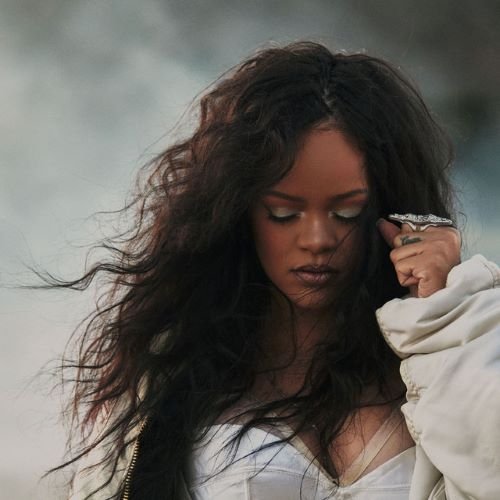
the amazing Rihanna in Inspired By… This feature highlights a legend of music and the artists that they have influenced. There is no doubt that so many other artists follow in the footsteps of Rihanna. She recently released a new track, Lift Me Up (From Black Panther: Wanda Forever – Music from and Inspired By). It has been getting a lot of coverage and love. Before coming to a playlist featuring songs from artists influenced by a legend, I wanted to drop in some biography for Rihanna. Let’s hope there is a follow-up to the amazing ANTI of 2016. I am keen to get to the playlist. First, AllMusic give us a deep biography about the iconic Rihanna:

Rihanna established her pop credentials in 2005 with "Pon de Replay," a boisterous debut single that narrowly missed the top of the Billboard Hot 100 and fast-tracked her to becoming one of the most popular, acclaimed, and dynamic artists in postmillennial contemporary music. Mixing and matching pop, dancehall, R&B, EDM, and adult contemporary material, Rihanna has been a near-constant presence in the upper reaches of the pop chart. Through 2017, she headlined 11 number one hits, some of which -- "Umbrella" and "Only Girl (In the World)" among them -- led to her eight Grammy Awards. And more than just a singles artist, Rihanna has continually pushed ahead stylistically with her LPs, highlighted by the bold Good Girl Gone Bad (2007), steely Rated R (2009), and composed Anti (2016), all of which confounded expectations and placed within the Top Ten of the Billboard 200 with eventual multi-platinum certifications. Her secondary discography as a featured artist is impressive as well, with major crossover pop hits headlined by the likes of Jay-Z ("Run This Town"), Eminem ("Love the Way You Lie," "The Monster"), and Kendrick Lamar ("LOYALTY.").

Born Robyn Rihanna Fenty in Saint Michael, Barbados, Rihanna exhibited star quality as a child, often winning beauty and talent contests. Because she lived on a fairly remote island in the West Indies, however, she didn't foresee the global stardom she later attained. Her break came courtesy of a fateful meeting with Evan Rogers, writer and producer of pop hits for such big names as *NSYNC, Christina Aguilera, Jessica Simpson, and Rod Stewart. The New Yorker was vacationing in Barbados with his wife, an island native, when he was introduced to an aspiring singing group that featured Rihanna. The trio performed for Rogers, who was then eager to work with Rihanna as a solo artist. After the fledgling singer recorded material with Rogers in the U.S. and signed with SRP (Syndicated Rhythm Productions), operated by Rogers and partner Carl Sturken, she sparked the interest of the Carter Administration -- that is, the newly appointed Def Jam president Shawn "Jay-Z" Carter. Following an audition, Rihanna accepted an on-the-spot offer to sign with the major label.

Come May 2005, Def Jam rolled out "Pon de Replay," Rihanna's first single and the lively introduction to the full-length Music of the Sun. Produced almost entirely by Rogers and Sturken, the song synthesized Caribbean rhythms with pop-R&B songwriting. "Pon de Replay" caught fire almost immediately and peaked at number two on the Billboard Hot 100, denied the top spot by Mariah Carey's "We Belong Together." Music of the Sun, released that August, spawned a Top 40 placement with "If It's Lovin' That You Want" and ranged stylistically from a remake of Dawn Penn's rocksteady-styled crossover hit "You Don't Love Me (No, No, No)" (featuring dancehall star Vybz Kartel) to the Beyoncé-like "Let Me" (co-produced by emergent duo Stargate). Music of the Sun was only eight months old when Rihanna followed up in April 2006 with A Girl Like Me. It showed that the singer wasn't a fluke success and could also stretch out, laced with three dissimilar hits. "SOS," high-gloss dance-pop with a sample of Soft Cell's version of "Tainted Love," topped the Hot 100. "Unfaithful," her first big ballad, and "Break It Off," an electro-dancehall hybrid (with Sean Paul), became her third and fourth Top Ten pop singles.

Superstar status was attained with Good Girl Gone Bad, an album that built on Rihanna's commercial momentum and developed into a blockbuster. Released in May 2007 and "reloaded" with additional material the following June, its lengthy promotional campaign yielded several chart-topping singles and boasted collaborations with A-listers such as Jay-Z, Ne-Yo, Timbaland, and Justin Timberlake. Lead single "Umbrella," co-written by the-Dream and Christopher "Tricky" Stewart, sounded like nothing else on the airwaves and shot to number one, as did "Take a Bow" and "Disturbia," while "Hate That I Love You" and "Don't Stop the Music" added to the tally of Top Ten entries. "Umbrella" gave Rihanna her first Grammy win for Best Rap/Sung Collaboration. The album was on its way to triple platinum status by October 2009, when Rihanna set the dark and provocative tone for fourth album Rated R with "Russian Roulette," another Ne-Yo collaboration and Top Ten single. Abused lover, dominatrix, and murderer were among the perspectives Rihanna offered throughout the album, released that November. Even the additional Top Ten hits "Hard" and "Rude Boy" -- the latter her fifth number one -- were stern in demeanor, making the early hits sound like the work of a significantly more complex artist. While Rated R was riding high, Jay-Z's "Run This Town," with Rihanna on the intro and hook, won Grammys for Best Rap Song and Best Rap/Sung Collaboration.

Annual studio albums, each one with a November release date and a broad range of light and dark material covering EDM, contemporary R&B, adult contemporary, dancehall, and straight-up pop, continued well into the following decade. In 2010, just after Eminem featured her on the diamond platinum "Love the Way You Lie," there was Loud. Led by the Stargate-produced "Only Girl (In the World)," eventually a Grammy winner for Best Dance Recording, it was sustained with additional Hot 100 toppers "What's My Name?" (featuring Drake) and "S&M." Talk That Talk was heralded in 2011 with Rihanna's most triumphant single, "We Found Love," on which she collaborated with Calvin Harris. After she nabbed yet another Best Rap/Sung Collaboration Grammy, this time for her role on Kanye West's "All of the Lights," the streak concluded, and culminated, with the 2012 set Unapologetic. Her first LP to top the Billboard 200 (after all of the previous six had gone Top Ten), it also became her first to win a Grammy for Best Urban Contemporary Album. "Diamonds," the anthemic and inspirational standout among some of Rihanna's brashest moments, became her tenth number one pop hit and 18th to peak within the Top Ten.

Within a span of three years, Rihanna had released her fourth through seventh albums. An equal amount of time passed prior to the release of her eighth full-length. In 2013, she lengthened her list of chart accolades as a featured artist with an assist on Eminem's "The Monster," which became her 25th Top Ten hit as a lead or featured artist, went to number one, and led to her fourth Best Rap/Sung Collaboration Grammy. No longer with Def Jam -- a deal had been signed with Roc Nation via Jay-Z, who left Def Jam several years earlier -- Rihanna released non-album singles throughout 2015, beginning with the unembellished "FourFiveSeconds," an unlikely matchup with Paul McCartney and Kanye West that reached number four. "American Oxygen" didn't flourish as much from a commercial standpoint but upon release became one of her most remarkable recordings, a dignified ballad with a personal, pro-immigration theme.

Album eight, the strikingly composed Anti, became Rihanna's second consecutive number one album following its January 2016 arrival. She partnered again with Drake, resulting in another number one hit with "Work." "Needed Me," a buzzing slow jam cooked up with a production team including DJ Mustard and Kuk Harrell, and "Love on the Brain," a throwback soul belter involving Harrell and Fred Ball, entered the Top Ten as well. Those who missed the comparative lack of high-spirited exuberance in Anti were placated across 2016 and 2017 with Rihanna's guest appearances on Calvin Harris' "This Is What You Came For" and N.E.R.D.'s "Lemon." Meanwhile, Drake, Future, DJ Khaled, and Kendrick Lamar likewise profited from Rihanna's featured spots. Lamar's "LOYALTY." made Rihanna a five-time winner of the Grammy for Best Rap/Sung Collaboration, setting a record for women artists in that category”.

With the hope of new material in the air – in the form of an album -, there are a lot of people looking Rihanna’s way. Such an important artist who has inspired so many others, below is a selection of acts who definitely follow the Barbadian legend. Whether citing her as an influence or clearly indebted to her, below are those who are moved and compelled…

BY a truly great artist.

FEATURE: A Renewed, Reborn Artist: Kate Bush’s Aerial at Seventeen

FEATURE:


A Renewed, Reborn Artist

IN THIS PHOTO: Kate Bush in 2005/PHOTO CREDIT: Trevor Leighton 

Kate Bush’s Aerial at Seventeen

__________

BECAUSE Kate Bush’s…

eighth studio album, Aerial, is seventeen on 7th November, I am writing a few features about the double album. I will concentrate on various songs from it. To start off, this feature is about how Bush returned with this wonderful record. I have talked about 1993’s The Red Shoes and how this was the last album before Bush took a well-earned break from music. That album is also celebrating an anniversary next month. I have just written my final features about that too. When it comes to Aerial, I want to explore how it is Kate Bush in a renewed and rejuvenated headspace. She would go on to release two albums in 2011 – Director’s Cut and 50 Words for Snow (whose anniversary it is next month) – and come back to the stage in 2014 for Before the Dawn. It was a creative and fertile period where Bush released some of her best work. Work on Aerial started in the 1990s, but I think it was necessary for her to take the time to create an album that was right and as good as could be. She had her son, Bertie, in 1998. I think prioritising personal life and creating some space was pivotal. I think, if she tried to release an album too soon after The Red Shoes, it might have meant she’d burn out or quit. You can hear this refreshed and reinspired artist on Aerial. Similar to Hounds of Love in 1985, Aerial has two distinct sides.

The first, A Sea of Honey, has a selection of songs that mix fantasy, the personal and traditional ‘Kate Bush’. Bertie is a paen to her new son, A Coral Room references her late mother, and King of the Mountain seems to be autobiographical. The second side, A Sky of Honey, is the course of a summer’s day. One of Kate Bush’s most accomplished pieces of music, there is this sense of wonder and revival that runs through. Whereas there is some tension and fatigue on The Red Shoes, Aerial always sounds like it is from an artist starting again. A Sky of Honey is such a remarkable work that you listen to and are engrossed by. I wanted to bring in an interview from 2005. This was a big moment for the media and Kate Bush fans. There was this doubt whether she would return. I guess she would always release music, but would there ever be an album, and what would it sound like? Nobody was expecting a double album, not least one that is among her very best work. Aerial’s greatest strength is the distance between albums. A very different sounding and feeling album, this is almost like Bush pushing away from the past and taking more control. Bush set up her own label, Fish People, in 2011. A year where she was no longer reliant on EMI and tied to the label (even though there was still some relationship with them). Aerial was the first album where Bush was starting to enter this phase of her career where her welfare and the quality of her life were very much at the forefront. I feel the years 1978-1993 were a blur when she was grinding away so much and not able to take a break and reflect!

Even though Bush was starting anew and there was this sense of a happier and calmer artist enjoying music more than ever, the press still speculated. There has always been this impression Bush is a recluse and she hides away. Living this weird life. If an artist is not seen to be touring and releasing music all of the time, then they are written off as too private or weird! With Bush’s music being so original and not like anything else, she has suffered more than most. Aerial absorbs all the past tragedy and loss and couples that with new life and someone more settled in her own skin. Tom Doyle interviewed Bush in 2005 for The Guardian. Whilst Bush realised that it had been a long time since she released an album (twelve years), we get the sense of someone charmingly down-to-earth and domestic. An artist who can release this extraordinary music but be grounded and normal:

This is how 12 years disappear if you're Kate Bush. You release The Red Shoes in 1993, your seventh album in a 15-year career characterised by increasingly ambitious records, ever-lengthening recording schedules and compulsive attention to detail. You are emotionally drained after the death of your mother Hannah but, against the advice of some of your friends, you throw yourself into The Line, the Cross & the Curve, a 45-minute video album released the following year that - despite its merits - you now consider to be "a load of bollocks". You take two years off to recharge your batteries, because you can. In 1996, you write a song called King of the Mountain. You have a bit of a think and take some more time off, similarly, because you can.

Two years later, while pregnant, you write a song about artistic endeavour called An Architect's Dream. You give birth to a boy, Albert, in 1998 and you and your guitarist partner Danny McIntosh find yourselves "completely shattered for a couple of years". You move house and spend months doing it up. You convert the garage into a studio, but being a full-time mother who chooses not to employ a nanny or housekeeper, it's hard to find time to actually work in there. Bit by bit, the ideas come and a notion forms in your mind to make a double album, though you have to adjust to a new working regime of stolen moments as opposed to the 14-hour days of old. Your son begins school and suddenly time opens up and though progress doesn't exactly accelerate ("That's a bit too strong a word"), two years of more concentrated effort later, the album is complete. You look up from the mixing desk and it is 2005.

If the outside world was wondering whether Kate Bush would ever finish her long-awaited album, then it was a feeling shared by its creator. "Oh yeah," she sighs. "I mean, there were so many times I thought, I'll have the album finished this year, definitely, we'll get it out this year. Then there were a couple of years where I thought, I'm never gonna do this. If I could make albums quicker, I'd be on a roll wouldn't I? Everything just seems to take so much time. I don't know why. Time ... evaporates."

There was a story that some EMI execs had come down to see you and you'd said something like: "Here's what I've been working on," and then produced some cakes from your oven. True? "No! I don't know where that came from. I thought that was quite funny actually. It presents me as this homely creature, which is all right, isn't it?"

Even if apocryphal, it's a nugget that reveals something about Bush's relationship with a record label she signed to 30 years ago. For a long time now, she hasn't taken a penny in advances and refuses to play them a note of her works-in-progress. In the latter stages of Aerial's creation, EMI chairman Tony Wadsworth would come down to visit Bush and leave having heard nothing. "We'd just chat and then he'd go away again," Bush says. "We ended up just laughing about it, really."

If the completion of Aerial put paid to one set of anxieties for Bush, then its impending release has brought another - not least, a brace of newspaper stories keen to push the "rock's mystery recluse" angle. It seems the more she craves privacy, the more it is threatened. "For the last 12 years, I've felt really privileged to be living such a normal life," she explains. "It's so a part of who I am. It's so important to me to do the washing, do the Hoovering. Friends of mine in the business don't know how dishwashers work. For me, that's frightening. I want to be in a position where I can function as a human being. Even more so now where you've got this sort of truly silly preoccupation with celebrities. Just because somebody's been in an ad on TV, so what? Who gives a toss?".

Aerial album sold more than 90,000 copies in its first week of release. MOJO named Aerial their third-best album of 2005, and it received a BRIT nomination for Best British Album in 2006. Bush was also nominated for Best British Female in the same year. In fact, I am not going to source another interview. There was not a lot in print in 2005. Bush did some radio interviews, but she would do more promotion for albums like 50 Words for Snow. I think there might have been some wariness about the questions she’d be asked. Perhaps trying to transition into being an artist in the spotlight again. Bush, clearly, was setting new rules when it came to promotion and how much she’d be engaging. Not wanting to burn-out as soon as she came back, she recognised how much time the creative and promotional duties too. Aerial came together over a number of years and, whilst she was excited to have it out there, she was not about to go on T.V. shows, do a load of interviews and repeat a pattern of the past. I am glad Bush brought Aerial’s conceptual suite to the stage for Before the Dawn. She has named Aerial the favourite of her albums on more than one occasion. You can tell how much it means to her! Of course, a new partner (Danny McIntosh) and son is a big reason for that. After losing her mother in 1992, Bush now had a new family. There has been almost eleven years since her last album. I wonder whether Bush is recalibrating again and planning something for next year. She is definitely taking her time and does not have to be as full-on and meet demands of the label anymore. This all started with Aerial. Although there was still expectation, she would not be rushed! Breaking from a stressful and tiring period of her life, Bush is revived through Aerial. It is no wonder critics love the album and she ranks it so highly! Previously needing to step back after a hard time in her life, Bush stepped back and delivered one of her best albums. This was an iconic and legendary artist doing things…

ON her own terms.

FEATURE: Spotlight: Lana Lubany

FEATURE:


Spotlight

Lana Lubany

__________

I was going to feature…

the magnificent Lana Lubany in my Spotlight feature next weekend. I have already published one Spotlight feature today, but I was so determined to put this online now. In my next two Spotlight features, I am concentrating on Antony Szmierek, and Skylar Stecker. I have been focusing on a lot of incredible female artists. I keep saying that I will include bands and more male artists but, to be honest, the most innovative, interesting and long-lasting music is being made by women right now! I have been following Lana Lubany’s music for a while, and I have grown to love it more and more. An artist with such a spectacular talent, the American-Palestinian wonder has a very long and bright future. Now based in London, do go and follow her on social media and support her music. As I am based in Soho, I hope that Lubany has some gigs in the capital soon. So many venues and passionate fans would love to see her in the flesh! There is quite a bit that I want to cover but, before getting there, here is a bit of biography and early career background:

Lana Lubany has always known a career in the music world was awaiting her. Growing up, she had the opportunity to perform for Barack Obama, Pope Benedict XVI, alongside Bobby McFerrin, Peter Yarrow of “Peter, Paul and Mary” and other notable artists and public figures at a very young age.

Born in Jaffa on November 3, 1996, with origins from Nazareth, Lana started off her career singing in a local multi-national peace choir and playing the piano, discovering her passion for music and performing. She was quickly singled out as a soloist, and in 2013, she was selected to perform in front of president Obama. After her first solo performance on a big stage in the Nazareth Christmas Market in 2013, she knew she was born to be on the stage. A year later she had her own one hour performance in the Bethlehem Christmas Market.

After graduating from high school in 2015, Lana started uploading covers to YouTube as well as focusing on her own music and songwriting. She started writing songs and short stories at a very young age – never about personal experience, at least back then – inspired by mystery and horror books and films. She released her first single “One Of A Kind” in January 2017 which was very well received by a growing number of fans from all around. Along with producer “Dushii”, Lana began working on her debut EP in April 2017. Almost a year later, the first song off of the EP, called “Still Love U Call Me” is out now”.

There are a few features and interviews that I want to bring in. Lana Lubany’s music is so distinct, and each of he tracks inhabits its own world. Such a striking and nuanced artist, I have been listening back to E.P.s like Devil in My Eden (2020), and singles such as Bad Angel and Down I Go. Although Lubany has been in the industry for a little while, I think some of her best and most popular work has come this year. To me and so many fans, her music helped us during the pandemic. Now, as we are out of the other side (sort of), we are seeing this remarkable human put out modern gems like THE SNAKE and SOLD. I am going to end with some predictions and thoughts about the hypotonic Lubany. First, Scene Noise published a feature with her earlier this year (on my birthday, as it happens!). Although the interview centres around the TikTok hit, THE SNAKE, it is fascinating knowing more about Lubany and her awesome personality and passion:

With nothing but complete devotion to her music, 24-year-old Palestinian-American pop star Lana Lubany emphasized how this complete shift in her social media presence inaugurated what would be one of the hardest years of her life, “I had this like the major crisis of, like, why am I not getting somewhere? I didn't understand what was happening. And it was kind of really depressing actually. But by the end of 2021, I did a lot of self-discovery and a lot of work on myself. I spent a lot of time alone, just working on my mental health and writing things down, working on my awareness, which I think is so important. And eventually, by the end of that, I had a healthier relationship with social media. In general and with myself.”

Touching on her own self-healing journey quickly prompted me to ask her to wholly pick apart what that entailed. “So I was like, okay, let me write down my goals. Let me write down what I need to do in order to get to these goals. And I just did that. Without thinking about numbers without thinking about my worth relating to these numbers. I just did that. And I made the content that I needed to make in order to reach my goals, I was very clear about everything. And I organized myself and I spent time on it and gave planning importance. And then it just kind of came together because it made my mental health so much better. And having all these things laid out in front of me, showed me the path I needed to follow to get there.”

Not pointing out how crazy organized and meticulous Lubany is, would be a hate crime at this point. It’s clear from hearing her talk that the artist’s attention to detail and planning is akin to that of a mad scientist. Every step calculated, every decision mulled over with one eye on the future.

“I knew what I had to do,” she continued. “I was like, okay, I'm gonna release ‘THE SNAKE’ because I’ve had the song since the summer. So Ben [my producer and co-writer] and I wrote ‘THE SNAKE’ in the summer before LA. Whenever I showed the song to people, they just reacted differently. So I was like, ‘Okay, this is the next song that I’m going to release’. And that’s all I know. When I posted the video with my mom, ‘THE SNAKE’ had been out for three weeks already. It wasn't viral or anything. I wasn't expecting it to go viral because I was like, okay, I'm just gonna keep on making content until I have to release the next song. And then I'll keep on making content for that. Eventually, something will catch on.”

And catch on it did. Perhaps unexpectedly, but Lubany was prepared, and perhaps had even subconsciously manifested this moment. The Arabic/English hybrid song trickled down into existence through years of exposure to her mother’s array of classic tapes. Whilst there was no direct influence on the song - some might even say Lubany and her co-writer Ben wrote ‘THE SNAKE’ in a studio vacuum of their own - the hit had been years in the making.

Though this was my first music editorial feature, I knew I had the duty to dig into Lubay’s discography – how else would one contextualise her current work and rising fame? Many backseat-car listening sessions later, it was her EP, titled ‘Devil in My Eden’ that stood out to me. It struck me as a little genre-bending - perhaps experimental - of a release for the rising pop star. So different that I had to inquire as to where that piece of work falls in her mental catalogue.

“To me, everything before ‘THE SNAKE’ doesn't really represent me anymore…If I could wipe everything and just keep ‘THE SNAKE’ I would. I guess that's one of the reasons why [the title] is in capital letters and everything else isn’t? Because it's a new era. And I'm excited about [it].”

Sitting with any independent artist always feels like free game and insight into the intricate crevices that is the music industry. What I was fully not expecting to learn, however, was how integral healing as an artist is to ‘making it’ as an artist. Hearing about Lubany’s undertaking of her own healing journey post-algorithmic shift and the cognitive dissonance that followed, is truly commendable.

With much of the inner workings of the music industry completely contingent upon the artist’s personal timeline, Lubany knew she had to put herself first if she wanted to continue making art, “I think in order to heal, you need to reflect, you need to reflect and accept your flaws, and the things that you do wrong. So, to me, that was a flaw in my mindset. And I had to work on it. And the minute I realise that there's something wrong, I feel liberated. It kind of slowed things down for me, because I, you know, I want to be doing big things right now. But I realized that I needed to be patient and I couldn't rush things. Because, by me trying to rush things for the past five years, I've actually slowed them down by a lot. But it is what it is. And I'm here now. So I think the most important thing or one of the most important things is acceptance, awareness.”

Talking about social media triggered a thought I’d been reflecting on for some time, regarding the intricacies of music distribution and how its methods have changed over the years. Being 20 going on 21, I’m what people are now labeling as ‘Gen-Z’. I grew up with iTunes. Digital music distribution. I saw firsthand CDs becoming obsolete, with platforms like Spotify and Apple Music taking over. I knew that back in the day, people used to hand out their demos at gas stations, train stations, in front of label headquarters. You don’t need to be involved in the industry to know that the shift from that to social media is hugely pivotal for the medium of music as a whole, both in creativity and business. I asked Lana how she felt about this change, and whether social media being the main conduit for music could get overwhelming at times.

“I think because a lot of people don't get this social media shift, they hate it. I think that's the wrong mindset…we need to be open to change…There's gonna be new things like NFTs which I personally don’t get right now…But I know I should be getting more familiar with it. So in order to keep being successful, you have to keep on evolving. I think that's so important. So with social media, I've always been an internet girl. I love content and I love creating in general – not just music, but also videos, and all types of digital content. So that's why I don't mind the social media game… [it’s] a path that really suits me.”

Having dived deep into the meta of what will soon be the metaverse (social media), I brought the focus back down to ‘THE SNAKE’. “Were the religious connotations in ‘THE SNAKE’ and the kind of underlying biblical imagery that followed intentional?” I asked”.

I think, apart from her determination and undeniable natural talent, it is her mixed heritage that makes Lana Lubany’s music so compelling and original. Such a beautiful, layered, emotive and commanding voice, her delivery and performances are truly remarkable. After a massive and instantly loved song like THE SNAKE, SOLD hit just as hard. It seems like this always-phenomenal artist is starting to reach new heights and peaks. We are going to see Lubany standing on some of the biggest stages around the world soon enough. In such a competitive and eclectic music market, she stands aside from many of her peers. The Line of Best Fit were eager to throw a spotlight on Lubany back in July. Waxing lyrical about the stunning SOLD, they underlined the magnificence and huge promise that has been unfolding:

Based in London but with American-Palestinian descendants, Lubany merges middle eastern influences with more Western ideals, her blend of Arabic and English lyrics telling the story of an artist searching for their true selves, unsure of where to turn and unwilling to let go of an even small piece of herself.

Growing up as a Palestinian in Israel, she’s fluent in Arabic, English and Hebrew and has utilized all three across her work to ensure equilibrium with self and art. "SOLD" jumps out from the off as one of the most fascinating and enchanting pop singles of the year so far, it comes with it the potential to normalise the use of more left-field production influences, and potentially introduce a new dawn of middle-eastern sounds and textures to Western pop.

SOLD" is about falling prey to that persuasive voice in your head that stops you from making the right decisions” Lubany explains of the track, “It tempts you into creating a ruthless cycle of repetition and regret, where your comfort zone is your safety, but your safety is your danger zone. You’ve had a taste of luck in the past, and it was comfortable, so you try different shortcuts and start losing and doubting yourself in the process.”

"SOLD" follows up Lubany’s previous, self-released single "THE SNAKE" which amassed widespread support on TikTok, with the sound viewed over 13 million times on the app and Instagram alone, as well as racking up over 6 million streams on Spotify. Both singles were created in collaboration with producer Ben Thomson, their partnership allowing Lubany the structure to develop and incubate her unique blend of infectious pop melodies and thoughtful lyrical dexterity.

Both tracks are set to feature on Lana’s upcoming debut project with Beatnik, entitled THE HOLY LAND, which Lana describes as a creative exploration through the journey of self-discovery, with each track included representing a different stage of the journey through life and self. “It’s about internal battles. I wanted to call it ‘THE HOLY LAND’ because I personally ended up finding my identity in my roots, but it could be anybody’s hold land. It can be whatever you find sacred and wherever you end up finding yourself.”

Writing across three languages from a very young age, Lubany has crafted her early sound in no small part thanks to years of singing on stage as a child. Still, in the early stages of her career, she has already performed in venues worldwide and has sung to audiences including President Obama and the Pope, to name but a few. There’s little to no doubt that Lana Lubany is a voice for the ages, and an artist looking to break beyond the influences of music and to make the world the more blended reality of her dreams”.

In the coming weeks, I am highlighting a range of new or rising artists who are making impressions now but will make a big impact in the next few years. From approaching Indie bands to sizzling R&B solo artists, it is almost too hard getting to grips with the best and brightest out there! One of the very best young artists around, everyone needs to follow and listen to the marvellous Lana Lubany. NME chatted with her last month. They also recognised how, in spite of the fact she has a solid foundation of brilliant work under her belt, this year has been next level successful:

Despite releasing music for several years, Lubany describes ‘THE SNAKE’ as the “first real song that represents me”. Along with ‘SOLD’, the success of the tune has solidified Lubany’s creative vision: flitting between Arabic and English and inspired by the likes of Billie Eilish and Rosalía, the tracks provide an exciting glimpse of what’s to come on her forthcoming debut project ‘The Holy Land’.

Taking a well-earned break to speak to NME in a cosy central London café, Lubany talks us through her rollercoaster last six months, the importance of having a creative vision, and what her mum thinks of being a viral sensation.

NME: It’s been a pretty wild six months for you…

“Yeah, definitely! My life pretty much changed when I released ‘THE SNAKE’ back in February, and it went viral a month later. It was a surreal experience. I’ve gone viral in the past, but it wasn’t like this. This translated: it got interest from the industry, it got me actual fans, it was crazy, and I’m very grateful.”

 PHOTO CREDIT: Erea Ferreiro/Press

Why did you decide to follow up ‘THE SNAKE’ with ‘SOLD’?

“Something about ‘SOLD’ felt right – it felt different and like the perfect follow-up. I’m working on a project called ‘The Holy Land’, and I’ve divided it into phases: ‘SOLD’ fit perfectly into ‘Phase 2’. It was different enough that it wasn’t a recreation of ‘THE SNAKE’. That’s something I don’t want to do: I don’t want to have a hit song and then recreate it, because that’s where I feel some artists go wrong. Where’s the magic in [doing] that?”

There’s a strong creative vision behind your work. Have you always felt comfortable enough to say “we’re doing it this way”, or have there been times when you felt pushed to do certain things?

“Early on in my career I was working with somebody who’d get people to write songs for me, and he would gloss over the fact that I wanted to write my own music. I was young at the time and I didn’t really understand, so it was uncomfortable. I didn’t understand how the industry worked: I was like, ‘OK, that’s what pop stars do, they have songs written for them’. There’s nothing wrong with that, but it felt wrong to me as I’ve always known that I want to write my own songs and I want to create my own art, and I really like to be involved in every aspect. I want to be a songwriter as well as an artist. So that led me down the wrong path, because I kept on meeting the wrong people and I wasn’t listening to myself. So music was definitely uncomfortable for me for a few years, but I love it again now. 

When ‘THE SNAKE’ started blowing up, were record labels getting in touch with you?

“I had so many meetings the week after it went viral, [they went on] for a month. [It] was so draining, but it was a great learning experience. I expanded my networks, I met people and I started understanding the industry a little bit more, because it’s a really tough industry to understand. So the door [was] opened for me and I had a foot in the door, I was so happy.”

Has your TikTok success changed your ambitions for the future at all?

“I definitely feel like I have more power because of my TikTok success. Before that, I think I was one of those artists that wanted to be saved,  in a way… Not to be saved, but for someone to find me and develop me. But TikTok success has given me independence. That’s not to say I’ll stay independent as an artist forever, but it’s given me the freedom to build myself with an audience watching – and I think that’s one of the most valuable things an artist can have these days”.

I want to wrap things up now. It is so exciting following Lana Lubany’s music and career progress right now. With every song she offers something astonishing that leaves a big mark on the heart and mind. As I said, I think she will play big international stages. With some great London venues perfect for her, I know there are a lot of fans established and new who would flock to see Lubany play. I know she is a dedicated artist, but I think there is an amazing acting talent that could be explored and exploited more. Maybe it is a bit of a tangent but, similar to big artists like Taylor Swift and Halsey, I could see Lana Lubany expanding her gifts to the big or small screen. Her music has a quality that could see it work wonderfully on the screen too. So many sides to an artist whose is catching the eye and attention of some huge magazines and music websites, I predict 2023 will be a really massive year for Lubany! I am not sure whether there are plans for an album or another E.P. As she grows more intruiging and assured with every song, things bode very well for next year! I have not even brought in reviews for Lubany’s work but, suffice it to say, she has won the praise and affection of so many around the world.

Undeniably a huge future star, the rich and gorgeous music of the Palestinian-American artist is what every music lover needs. I have been following her since about 2020. I am so pleased by all of her success. I do hope (like on THE SNAKE) there are more songs in both Arabic and English, as it sounds utterly wonderful and new. I am sure she will inspire other artists (with a similar heritage) to mix Arabic and English. Blessed with stunning and eye-opening videos full of imagination, colour and epic scenes; music that lingers long in the memory and a clear eye on the future, we will hear a lot more about Lana Lubany. I hope to interview her one day. Some artists can fade from view or lose their promise and popularity after years. There are others that grow bigger and greater as time goes on. Lana Lubany definitely falls in the latter category! She is going to be making music years from now. It may be premature to predict major and worldwide success at this point but, considering the sheer and indefatigable quality of her music, I have…

@lanalubany Full BTS video on my youtube!! 💚 #SOLD #musicvideos #vlog #uksinger ♬ SOLD - Lana Lubany

ABSOLUTELY no doubt!

_____________

Follow Lana Lubany

FEATURE: Heaven: All Saints’ Eponymous Debut Album at Twenty-Five

FEATURE:


Heaven

All Saints’ Eponymous Debut Album at Twenty-Five

__________

ON 3rd November, 1997…

Spice Girls delivered their hugely anticipated second studio album, Spiceworld. Perhaps one of the most important second studio albums of the 1990s, it was a huge moment, not only for fans of the girl group but for other music listeners too. It was a big moment when Spiceworld was released. Perhaps not as acclaimed as their debut, Spice, 1997 was a golden year for Pop. On 24th November, when there was still buzz and excitement around Spiceworld, All Saints arrived. In some ways they were quite similar to Spice Girls. I think the slightly tougher and edgier sound, combined with a mix of British and Canadian members made them more eclectic and stronger than Spice Girls. The album was not the first shot we heard of All Saints. In August 1997, they released their iconic and number four debut single, I Know Where It’s At. All Saints reached the U.S. top forty, but it got to number two in the U.K. In its earliest iteration, All Saints (whose full name was All Saints 1.9.7.5) consisted of Melanie Blatt, Shaznay Lewis, and Simone Rainford. The early line-up struggled to find commercial success upon being signed to ZTT Records and were dropped by the label shortly after Rainford left the group. By 1996, the group were joined by Canadian sisters Nicole and Natalie Appleton. They signed to London Records under their shortened name.

I think there was a lot of condescension and doubt surrounding girl groups. Many wrote off Spice Girls as being a fad and empty. Maybe U.S. girl groups gained more respect and seemed deeper and stronger. In the U.K., it was a bit hard for girl groups to get respect across the board. They did have their own fanbase. Whereas Spice Girls distinctly had a demographic and particular message and sound, I feel All Saints’ demographic was a lot broader. I definitely connected with them in a way I had not with any other girl group. I have read 1997 reviews of All Saints’ eponymous debut. Some call in naff and feel the music is background or has no longevity. I think it is important to mark the upcoming twenty-fifth anniversary of All Saints. In 1997, with the music scene leaning away from Pop groups to an extent, All Saints definitely made an impact. Their harmonies and vocals were stronger than their peers’. The songwriting had personality and plenty of hooks. In terms of getting their debut album off the blocks, the trio of songs Never Ever, Bootie Call and I Know Where It’s At is hard to beat! Over fifteen minutes of amazing music, presented by a group who had that sisterly bond and individual talent. I also like the two covers on the album. Tackling Red Hot Chili Peppers’ Under the Bridge and the stunning Lady Marmalade is a hard task! The group add their own take and make them their own.

There is that combination of big hitters and some interesting deep cuts. I think that is the mark of an album’s quality. Not to compare All Saints heavily with Spice Girls. The latter’s singles from Spiceworld are strong, but maybe a few of the deeper cuts struggle or lack necessary appeal. On All Saints, there are four or five deeper cuts that could have been singles. Heaven, Alone and Trapped are particularly strong and stand up to repeated listens. With an excellent array of songwriters and producers on the album, tied to the fact group member Shaznay Lewis also co-wrote most of the songs makes the debut from All Saints so convincing. Some may say the album sounds dated, but I think that it is fresh and deep. The range of genres and the expertise of the songwriting means that All Saints is more contemporary and cooler than a lot of Pop from 1997. In the United Kingdom, All Saints debuted at number twelve for the week beginning 6th December 1997, before progressing to a peak of number two on 17th January, 1998. It spent a total of sixty-six weeks on the chart. I do not know whether All Saints are doing anything for the twenty-fifth anniversary. The group are still together today (though they have not toured or recorded together for years), and I know they will mark its big anniversary on 24th November. I wanted to come in early and mark such a big moment for a terrific group. Many of the reviews are quite mixed, and I cannot see features relating to the album and its legacy. That is a real shame, as All Saints is a terrific record that I still listen to now!

I am going to finish off (almost) with a positive review for All Saints. In their assessment of one of the biggest debut albums of the 1990s, this is what AllMusic had to say. All Saints definitely packs punches with its hits - and it led to plenty of critics lazily comparing All Saints to Spice Girls. All Saints proved that they very much had their own path and sound:

As the first group of consequence to be saddled with the "new Spice Girls" tag, it would be reasonable to expect that All Saints would be cut-rate dance-pop without the weirdly magical charisma that made the Spices international phenomenons. It is true that All Saints lack the personality of the Spices, but they make up for that with musical skills. All four members have better voices than the Spices, and they all have a hand in writing at least one of the songs on their eponymous debut, with Shaznay Lewis taking the most writing credits. More importantly, they and their producers have a better sense of contemporary dance trends -- there are real hip-hop and club rhythms throughout the record, and samples of Audio Two, the Rampage, and (especially) Steely Dan are fresh and inventive.

But what really makes the record are the songs. The singles are the standouts, with the party-ready, Steely Dan-fueled "I Know Where It's At" and the extraordinary gospel-tinged "Never Ever" leading the way, but the covers are well chosen (their take on "Under the Bridge" eclipses the Red Hot Chili Peppers', boasting a better arrangement and more convincing vocals) and the lesser songs are pleasantly melodic. Sure, there's some filler, but that should be expected on any dance-pop album. What counts is that the performances are fresh, the production is funky, and there is a handful of classic pop singles on the album, and you can't ask for much better than that from a dance-pop record, especially one from a group that almost beat the Spice Girls at their own game”.

It is a shame that I could not make this feature longer, as there are not many articles around the release of the album. I hope that there is reassessment ahead of the twenty-fifth anniversary. Go and check out the group’s official site, as it is intoxicating discovering the music of All Saints.

I will end things shortly. I really love All Saints as an album. From the alluring, powerful and memorable cover, through to the spins they put on Under the Bridge and Lady Marmalade, it is those opening three songs that really signal the arrival of an incredible group. In 1998, The Remix Album was released. The fact All Saints was popular meant that producers and D.J.s were keen to do something new with the songs. As testament to the group’s quality, I don’t think any of the remixes top the incredible originals! I remember buying the album in 1997. I had heard I Know Where It’s At, and I was really excited to see what the debut album from All Saints had to offer. Maybe not expecting too much, coupled with the regency and fervour around Spice Girls, I was really surprised that I bonded with the album so instantly! Today, it still sounds brilliant. I come back to it and get a rush when hearing songs such as Bootie Call and Lady Marmalade stacked against interesting deep cuts like Take the Key. The group’s second album, Saints & Sinners, was released in 2000. Featuring big hits like Pure Shores and Black Coffee, it did get a bit more critical acclaim and attention.

Maybe feeling the production and songs were more mature and developed than what we heard on All Saints, I have a soft spot for the 1997 introduction from a brilliant group. I hope that we have not heard the last of All Saints. That combination of Canadian and British talent, the amazing vocals, and the chemistry the group had makes All Saints a legendary group! It is no surprise they have such a huge fanbase. Take a listen back to All Saints ahead of its twenty-fifth anniversary on 24th November. The hits from All Saints are still played to this day. It is a pity some of the deeper cuts are not explored, as they do show the fuller range of the group’s talents. Proving themselves to be powerhouses from the off, I listen to All Saints now, and it takes me back to a time when my exploration and curiosity of music in all its forms was at its height. I was fourteen - and discovering a group like All Saints was a bit of a revelation. Beautifully sequenced with amazing performances throughout, All Saints is going to stand up to scrutiny decades from now. It is an incredible album bustling with phenomenal songs that cross borders and genres. There is no doubt, ahead of its twenty-fifth anniversary on 24th November, that All Saints is…

AN underrated and amazing debut.

FEATURE: Worthy of More International Acclaim: Kate Bush’s The Red Shoes at Twenty-Nine

FEATURE:


Worthy of More International Acclaim

Kate Bush’s The Red Shoes at Twenty-Nine

__________

I have been…

 IN THIS PHOTO: Kate Bush in 1993/PHOTO CREDIT: John Stoddart

doing a run of anniversary features, as there are six Kate Bush albums celebrating birthdays next month (including four studio albums). The Red Shoes is one I have already featured, but I want to finish with this one ahead of its twenty-ninth anniversary on 2nd November. Here, I want to examine the chart positions. Most Kate Bush albums did well in multiple countries. She has always been at her most successful in the U.K. market, though the European nations have responded well, as have countries like Australia. There was a bit of a split when it came to The Red Shoes. I want to argue why The Red Shoes was deserving of greater acclaim and commercial success around the world. Before that, there is an interview from Vox from November 1993. Bush was asked about The Red Shoes, but she was also asked about her career and life in general:

You don't normally release material unless you're totally satisfied...

"That's right. That doesn't necessarilly mean'perfect', but it's to the best of my ability. I've tried to say what needed to be said through the songs, the right structure, the shape, the sounds, the vocal performance--that is, the best I could do at the time."

When you've worked hard for something, you obviously don't want somebody interfering with it. In your cuttings, you've been described as the shyest megalomaniac on the planet, so how do yout work out the balance between that and being an incredibly quiet, private person

"I think it's quite true that most people are extreme contradictions. It's like this paradox that exists, and I think that on a lot of levels, I'm quiet and shy, and a quiet soul.

I like simple things in my life...I like gardening and things like that, but when it comes to my work, I am a creative megalomaniac again. I'm not after money or power but the creative power. I just love playing with ideas and watching them come together, or what you learn from something not coming together.

I'm fascinated by the whole creative process--I think you could probably say I was obsessed I'm not as bad as I used to be, I'm a little more balanced now."

What's calmed you down?

"Just life, I think... Life gets to you, doesn't it? I also think there's a part of me that's got fed up with working. I've worked so much that I'm starting to feel... I felt I needed to rebalance, which I think I did a bit, just to get a little bit more emphasis on me and my life."

Where did you get the idea of 'Rubberband Girl"?

"Well, it's playing with the idea of how putting up resistance... um... doesn't do any good, really. The whole thing is to sort of go with the flow."

What about the sexual content--'He can be a woman at heart, and not only women bleed?

"It's not really sexual, it's more to do with the whole idea of opening people up - not sexually, just revealing themselves. It's taking a man who is on the outside, very macho, and you open him up and he has this beautiful feminine heart."

Have you found many of those?

"I think I've seen a lot of them, yeah. I think there are a lot of men who are fantastically sensitive and gentle, and I think they are really scared to show it."

A father image often comes out in your work. Is that because you're particularly close to your father or does it merely represent somebody or something you respect?

"I think they're very archetypal images: the parents, the mother and the father... it's immediately symbolic of so many things. I'm very lucky to have had an extremely positive, loving and encouraging relationship with both my parents. And you know I feel very grateful... I feel very honoured, actually."

Who is the Douglas Fairbanks character in 'Moments Of Pleasure '?

'Ah... In a lot of ways that song, er.. well it's going back to that thing of paying homage to people who aren't with us any more. I was very lucky to get to meet Michael (Powell, the film-maker who directed the original The Red Shoes) in New York before he died, and he and his wife were extreme;y kind. I'd had few conversations with him and I'd been dying to meet him. As we came out of the lift, he was standing outside with his walking stick and he was pretending to be someone like Douglas Fairbanks. He was completely adorable and just the most beautiful spirit, and it was a very profound experience for me. It had quite an inspirational effect on a couple of the songs.

"There's a song called 'The Red Shoes'. It's not really to do with his film but rather the story from which he took his film. You have these red shoes that just want to dance and don't want to stop, and the story that I'm aware of is that there's this girl who goes to sleep in the fairy story and they can't work out why she's so tired. Every morning, she's more pale and tired, so they follow her one night and what's happening is these shoes... she's putting these shoes on at night before she goes to bed and they whisk her off to dance with the fairies."

Are you still as involved in dancing as you were?

"I've had a lot of periods off, unfortunately, because my music is so demanding and I went through a phase where I just had no desire to dance. The last couple of years, it really came back, and it's been very interesting working in an older body. Your brain seems better at dealing with certain kinds of information. And I think there's something about trying too hard which takes the dynamics out of everything.

I think I've become less conscious through dancing, because it's very confrontational in a positive way - standing in front of a mirror and looking at something that basically looks like a piece of you, and you've got to do something with it."

Does that mean looking like a piece of shit?

"It does at nine in the morning. When I started dancing again, a couple of years ago, I hadn't done anything for about three or four years and although I had the desire to dance again, I really didn't know if I had the energy, or whether I could be bothered to go through all that and my body being so sore. But I was aware that, although it was difficult for me, I always felt better after the classes than I did before. I'd get up grumpy, then after I'd feel really good."

Is it true you once planned to be a psychologist or psychiatrist?

"Yes I did. I really wanted to be a psychiatrist, I really did, but I knew I'd reached the point where I would never be able to do all the training. You have to train as a doctor, I think, and be good at chemistry, physics, etc. I was never any good at maths, I just knew I'd never make it."

Are there any parallels with what you do now?

"I've never really thought of it, but I suppose I really like the idea of helping people and that I was really fasdnated by people's minds and the way they work--I still am. I don't think I've ever got into people's minds, but I've always been interested in how people think”.

Singles like Rubberband Girl and Moments of Pleasure are compelling reasons to listen to The Red Shoes. Deeper cuts such as Eat the Music and Top of the City are fantastic. Maybe there are one or two slightly weaker songs, but The Red Shoes is a terrific album that has never got the respect it deserves. Whilst it did get to number two in the U.K. and an impressive twenty-eight in the U.S., the European and international chart positions were quite low. In terms of international acclaim, 1989’s The Sensual World made the top twenty in multiple countries. That album also, I feel, should have done better. Whereas top ten positions are not everything, Bush did struggle to earn those high places after Hounds of Love. The Sensual World got a lot of critical acclaim, so I feel like its chart positions did not do too much damage. Regarded now as one of Bush’s best albums, there is agreement that The Sensual World is incredible. The Red Shoes has not fared as well. I look at the chart positions and wonder why there were these divisions. A hit in the U.K., it reached fourteen in France, thirteen in Australia, and sixteen in Sweden. Even if The Red Shoes did get a lot of top forty attention, I wonder if there was a tapering off of the commercial success and adulation outside of the U.K. Of course, Bush has an enormous amount of fans around the world…but I do wonder if there was a bit of a dip in terms of that commercial appreciation. The Red Shoes did get some critical acclaim, but the mixed reviews might have put some people off. Even though 2005’s Aerial appeared outside the top ten in a lot of countries, it did score better than The Red Shoes. It seemed like fans were glad to have Kate Bush back!

The Red Shoes’ recording was a period where Bush was taking on a lot and experience stress and personal loss. It shows in a couple of songs and some elements of the sound/production, but I think The Red Shoes is a vastly underrated album that should have fared better. It was released on 2nd November, 1993. Ahead of its twenty-ninth anniversary, I wanted to re-investigate it. I keep saying there should be Special Edition versions of Bush’s studio albums. The Kick Inside (her debut) is forty-five in February. The Red Shoes is thirty next year. I would like to hear more from the recording sessions. I feel there is a relative lack of exposure when it comes to the songs. Rubberband Girl and Moments of Pleasure get played, but even songs like And So Is Love and Lily are slightly ignored! Doing very well in the U.K., I have tried to get to the bottom of why the album – plus The Sensual World – struggled a bit in the rest of the world. Of course, top forty album positions are great, but Bush’s work deserves much more! There have not really been that many podcasts about The Red Shoes, and many are content to let the album lie. Always at/near the bottom when it comes to rankings of Bush’s albums, I hope people listen to it ahead of the anniversary on 2nd November. In my view, The Red Shoes is…

A wonderful album.

FEATURE: Spotlight: Aoife Nessa Frances

FEATURE:


Spotlight

Aoife Nessa Frances

__________

I am going to get to…

 PHOTO CREDIT: Katie Freeney

a couple of reviews for Aoife Nessa Frances’ new album, Protector. The Dublin artist is a magnificent talent who has followed her 2020 album, Land of No Junction. There is a new interview that helps us get a better understanding of this tremendous musician. Writing and co-producing (with) Brendan Jenkinson, there has been a lot of love for a terrific album. You can actually read more about Frances’ debut album and its background. Frances is actually touring the U.K. at the moment. Go and get a ticket to see her if you can. Such a remarkable songwriter and musician, her music is so beautiful and goes really deep. I am going to come to an interview with Aoife Nessa Frances. Before that, AllMusic provide a biography of the incredible Irish artist:

Aoife Nessa Frances is an Irish singer/songwriter based in North Dublin whose haunting and sometimes experimental blend of indie folk and lightly psychedelic pop is dramatically conveyed by her lush, dark-toned vocals and elegant arrangements. She released her debut album, Land of No Junction, in January 2020. Her pastoral and ruminative follow-up, Protector, arrived in late 2022.

A native of Dublin's southern coastal area, Frances comes from a large creative family and was encouraged to engage with music at a young age. After a hand injury altered her course from flamenco guitar to more subtle folk and rock styles, she began writing songs and eventually found a place amid the city's bustling indie rock scene as one-half of the shoegaze duo Princess.

She and bandmate Liam Mesbur released a handful of singles and EPs, enjoying some decent exposure in the mid-2010s before going their separate ways. Over the coming years, Frances devoted herself to writing songs of a more pastoral, acoustic nature, working with collaborator Cian Nugent to develop an elegant sound that included light psychedelic flourishes and lush strings. Resurfacing in 2019 under her own name, she announced a deal with American indie Ba Da Bing Records, which issued her solo debut, Land of No Junction, early the following year.

With touring off temporarily off the table due to the global pandemic, Frances headed to rural County Clare on Ireland's west coast and began writing material for her next album. The focus of isolation, both in writing and recording, brought about a personal transformation that can be heard in the tranquil, mysterious sounds of her second album, Protector. Released in late 2022 by the Partisan label, the record explores themes of dislocation, family, and renewal”.

Recently, Loud and Quiet spoke with the amazing Aoife Nessa Frances. If you have not heard of her before, I would advise going onto her Bandcamp page (the link is at the bottom of this feature) and listen to Land of No Junction. Then go and investigate the brilliant Protector. The album is gaining really positive reviews so far. I want to quote a bit from the Loud and Quiet interview:

Sitting on the grass on a sunny afternoon in the leafy Iveagh Gardens, nestled in Dublin’s city centre, Aoife Nessa Frances lists some of the bands whose names were inscribed on the walls of her childhood bedroom: Nirvana, Deus, Eels, The White Stripes. This train of nostalgia then takes us through gigs she attended as a teenager, from The Prodigy to Primal Scream, and festival appearances by James Brown, The Who and Kanye West long before he became the world-renowned figure he is today. It’s an eclectic assortment of artists to have played a part in Aoife’s formative years as she developed her musical taste, and a surprising selection considering her music today is so indebted to psych-pop and avant-garde instrumentation from the 1960s and ’70s.

When we meet, the Dublin-born songwriter and musician is two months away from the release of Protector, her second LP and first since signing to Partisan Records earlier this year. Her 2019 debut Land of No Junction introduced her as an artist with great promise and garnered deserved critical acclaim. Since then, she’s had a busy couple of years filled with an intense touring schedule and time spent in seclusion writing material that would eventually become this stunning follow-up. In the short distance between her debut and its successor, Aoife notes the considerable evolution – personally and professionally – that occurred between releases and how it has affected her relationship with her debut.

 PHOTO CREDIT: Donal Talbot

The stories Aoife shares about herself, especially her younger years, demonstrates a life informed by and immersed in music. She recalls how her mother played songs by Leonard Cohen and Joni Mitchell on guitar in the home; her father makes fiddles and has a great love of music and enjoys everything from traditional Irish folk to techno. As a child, Aoife went to violin lessons herself, but discontinued them following a difficult period in her life when her parents separated – she associated the violin with the memories of that time. A few years away from becoming a teenager, she forged a strong connection with a different instrument.

“I got an old guitar that couldn’t even be tuned properly,” she says. “My parents saw that I had a big interest in playing it and they encouraged me to keep doing it. I did lessons, firstly with my parents’ friend Klaus who had also made my birth chart when I was a baby! I only figured this out years later. I still have it, and it was pretty spot on.”

In that initial period of picking up the guitar, she practised constantly and learned how to play her favourite songs, mostly by Nirvana, including their cover of Lead Belly’s ‘Where Did You Sleep Last Night?’. Once adolescence arrived, she began writing her own songs and finding her voice.

“I still have the first song I ever wrote saved on my private Soundcloud page,” she laughs. “It was a very powerful experience writing it. I was around 15. I borrowed my friend’s Swedish grandfather’s guitar and I thought it had these magical qualities to it. I played it for a week or two over Christmas and the song just poured out of me. It happened without me realising what I’d done. It was a very emotional experience; I wasn’t crying but tears were streaming down my face. That actually still happens to me sometimes. When I’m writing or figuring out melodies my eyes just stream. Again, it’s not that I’m crying but something is happening, it’s very strange. I feel like that’s an indication that something is meaningful to me when it incites that kind of reaction.”

These days, Aoife is no stranger to the stage, but sometimes no amount of experience can make it easier for an artist to stand before a packed venue and expose the insecurities that inspired their art. “It’s intense,” says Aoife of performing her latest material to crowds, “but at the same time, I feel like the act of writing and recording songs isn’t complete until you share the work with the world. I do feel very vulnerable because even having to think about what the record is about in the lead-up to releasing it, you have to think about all these things. I found that really hard because I was almost trying to protect myself from oversharing. Talking about the album brings up a lot of stuff from when I was writing it. When it came to the time where I had to think about talking about Protector, I found I was putting up a massive wall and I didn’t want to say anything about it. Ultimately, though, I know it’s important to share my thoughts on things I’ve experienced because a lot of people navigate similar situations and feelings. I want people to connect and relate to the album, and I know everyone experiences things in different ways but, at the end of the day, we’re all human beings and yeah, the process of sharing these songs with people was the next level of getting to know myself, too”.

The first review of Protector I want to bring in is from Secret Meeting. A wonderful album that people definitely need to hear, Aoife Nessa Frances is a talent who is going to go very far. I am interested to see where her career goes next:

On Protector, Aoife Nessa Frances holds up a mirror, and explores the human condition

Without trust, human beings become stagnant. And when we cannot find it elsewhere, in places or in others, we have only option: to look even deeper within ourselves. Protector is very much Aoife Nessa Frances holding up a mirror. And rather than falling back into comfortable tropes, the Irish songwriter doesn’t just step out of her comfort zone – but takes a series of leaps.

Having previously only written in her home city of Dublin, the inspiration for this, her follow up to 2020’s Land of No Junction, was born from her move to County Clare. Firstly, through days spent out on the road, with her father and her sisters, travelling and exploring Ireland’s West Coast. Then, in the quiet of her own company, finding her own process – writing ‘in the magic hour before the world woke up.’

Emptiness Follows marks Frances drifting away from friends. Wrapped up in a dawn-like hue, Meabh McKenna’s fingers flicker across her harp like fireflies that are all but burnt out, as Frances places her trust in her instincts, and the nature that surrounds her newly made home. It’s one of a few song where the words have met the page in a literal manner. But Protector is a record made to be experienced and felt – rather than needed to be understood. On Way To Say Goodbye, it is her Aldous Harding-alike voice that brings the emotion. On Chariot, it is the guitar flashes that recall The Brian Jonestown Massacre. This hybrid of folk, psych, chamber and pop means the LP cannot be pinned down – feeling both classic and contemporary at the same time.

From growing her familial bonds, to wrapping herself in quiet solitude, and exploring her inner strength, Protector is a living and breathing document of someone letting their heart be their instinctive guide. ‘Do you know where your story ends?’ Frances sings on Chariot. By holding a mirror up to herself, it’s the questions, reflections, growth and trust that are important – not the destination…”.

The final review is from The Last Mixed Tape. They beautifully describe what Protector sounds like and what sensations it elicits. It is a wonderful album that I would recommend everyone checks out when they can. It is clear that Aoife Nessa Frances is an artist with a clear ability and talent that will last for years:

Protector plays out like the soundtrack to a long journey into night, a lonesome drive on the outskirts of town with only headlights illuminating the way. Such is the cinematic scope of Aoife Nessa Frances’ sophomore album that the music has a hypnotic quality that dances across a widescreen mixture of psychedelic, dream-pop and indie shapes and colors.

It’s challenging to extract singular parts of Protector from the over-arching work itself. The power of Aoife Nessa Frances’ latest offering comes from how each song beautifully melds into the next. This is a whole story, a narrative from beginning to end. Indeed, ‘Way To Say Goodbye’ instantly submerges us in the darkly-lit haze of Protector. Blending choruses and verses in the same way the individual tracks melt into one another, ‘This Still Life’ fades into view, almost emerging from the same textural landscape as ‘Way To Say Goodbye’. 

That is not to say Protector lulls you into a passive listening experience; rather, much like the aforementioned late-night drive, there’s an insular immersive quality brought to the fore by Aoife Nessa Frances’ commanding performance. The sprawling ‘Only Child’ entrances with vivid passages of musicality as Frances powerfully draws focus, while the gently set ‘Back To Earth’ rests carefully on the tone and mood within her voice. This dreamlike back and forth between voice and sound is at the centre of Protector, weaving a sonic thread throughout.

The stand-out moment of Protector is Protector itself. As I said before, Aoife Nessa Frances has woven together a world so completely, that each element is essential to its mise-en-scène. A haunting vocal plays the main character while the music forms the setting, making the immersive nature of Protector its zenith. 

And so it goes, Protector is the result of an artist at the height of their powers. Aoife Nessa Frances’ writes, directs and stars in a record that thrusts us into late-night soundscapes with the light of her music guiding the way. As thrilling as it is hypnotic, few albums this year are as cohesively constructed as Aoife Nessa Frances’ Protector”.

I will wrap things up soon. I have been following Aoife Nessa Frances’ music for a little while, but I have been wrapped up in Protector. Go and follow Frances on social media and listen to her new album. I have not seen her live, but I will try to when she plays in London in the future. Her music provokes so many different emotions and reactions. Her wonderful music comes…

STRAIGHT from the heart.

______________

Follow Aoife Nessa Frances

FEATURE: A Selections of the Best-Selling U.K. Singles 1952-2022: Seventy Years of the Official Singles Chart

FEATURE:


A Selections of the Best-Selling U.K. Singles 1952-2022

ILLUSTRATION CREDIT: Vecteezy

Seventy Years of the Official Singles Chart

__________

I like doing anniversary features…

 PHOTO CREDIT: mindfulness_com

whether that refers to an album, single, moment or music event. I think one pretty major anniversary occurs on 14th November. On that date in 1952, the first UK Single Chart was published in NME. To mark the upcoming seventieth anniversary, I have compiled a playlist featuring many of the best and biggest-selling U.K. singles between 1952 and this year. Before getting there, this feature revisits tracks featured in the very first Official Singles Chart in November 1952:

In the US, Billboard had been compiling a weekly chart based on record sales since 1940, but here in the UK a song’s popularity was measured not by its physical sales, but by sales of the accompanying sheet music.

In 1952, Percy Dickins, one of the founders of the New Musical Express (which later became the NME) decided to produce a chart based on UK record sales. Dickins compiled the chart by telephoning 20 record shops up and down the country every week and tallying up their biggest-selling singles. The first ever Top 12 (which was actually a Top 15 given that sales of the Number 7, Number 8, and Number 11 singles were tied) was published in the New Musical Express on November 14, 1952.

American crooner Al Martino took the inaugural Official Singles Chart Number 1 with his track Here In My Heart. He would hold onto the top spot for nine consecutive weeks, a feat which has only been beaten by David Whitfield’s Cara Mia (10 consecutive weeks), Rihanna’s Umbrella (10 consecutive weeks), Frankie Laine’s I Believe (11), Wet Wet Wet’s Love Is All Around (15) and Bryan Adams’ (Everything I Do) I Do It for You (16).

Jo Stafford, who would go on the become the Official Singles Chart’s first female chart topper, debuted at Number 2 with You Belong To Me, while Nat King Cole’s Somewhere Along The Way entered at Number 3. Bing Crosby’s The Isle of Innisfree entered at Number 4, and Guy Mitchell’s Feet Up (Pat Him On The Po Po) completed the first ever Top 5.

Further down the chart, Frankie Laine’s High Noon and Vera Lynn’s Forget Me Not were tied for Number 7. Doris Day And Frankie Laine’s Sugarbush and Ray Martin’s Blue Tango were joint Number 8, and Max Bygraves' Cowpuncher’s Cantata and Mario Lanza’s Because You’re Mine were joint Number 11”.

It is amazing to think that it has been nearly seventy years since the Official Singles Chart started life. Even though the musical landscape has altered drastically since 1952, the importance of the chart has not really waned. Even today, artists celebrate getting a number one. It is such an achievement to be in the chart - especially as there are so many artists and songs around today. With physical singles replaced with digital ones, that is perhaps the biggest change. Aside from that, the Official Single Chart has remained eclectic and exciting. To show which songs ruled the charts in the years between 1952 and today, below is a selection of wonderful songs…

THAT will stand the test of time.

FEATURE: Revisiting… Half Gringa – Force to Reckon

FEATURE:


Revisiting…

Half Gringa – Force to Reckon

__________

FOR this outing…

of Revisiting…, I am coming to an album from 2020 that I missed out on. I have found it since, and I would recommend people check out Half Gringa’s Force to Reckon. Many might not know about the band but, if you look at their Bandcamp, we get a description and overview (“Emerging from Chicago’s indie music scene, Half Gringa creates music informed by contemporary indie-rock and Latin American and midwestern folk. The name Half Gringa is both a tribute to and study of her legacy, stemming from a childhood term of endearment as “la Gringa” in her Venezuelan family and her bicultural experience growing up in the United States”). I am going to come to some positive reviews of a wonderful album from 2020. Before that, VICE listed Half Gringa’s Force to Reckon as one of the most overlooked (and best) albums from 2020:

Izzy Olive makes empathic and twangy songs about grief and getting stuck in your own thoughts as Half Gringa. Her band name comes as a nod to her bicultural experience growing up in a Venezuelan family "in the Midwest really into alternative rock, but heard a lot of country music in the supermarket,” and that charm comes through in her music. On her sophomore LP Force to Reckon, the Chicago alt-country songwriter hones in on the death of her grandmother who passed away while Olive was on tour. She sings on the gorgeous "Transitive Property," "And every sadness I have ever felt / it manifests as hunger." It's this drive that's the LP's propulsive energy that culminates in the cinematic, string-laced, and mournful closer "Forty," one of the most beautiful songs of the year. — JT”.

Many people might not be aware of Force to Reckon. It is a terrific album, and it is one that did not get a lot of attention from mainstream sites and journalists. I have found a couple of reviews that, hopefully, convince you to give the album a try. This is what Audio Femme said when they looked at one of the great albums from 2020:

It feels appropriate for an album loud with nostalgia to kick off with a track about memory called “1990.” The opening licks of Half Gringa’s sophomore release, Force to Reckon, took me back to the early 2010s, when I lived in the South and would careen around bends along the Appalachian Mountains with Defiance, Ohio, Mirah, and Rilo Kiley spilling out my windows. If I could distill that sound into a time capsule — along with the freedom of those drives or the way my heart felt things so much more intensely then because many experiences were still new — it would be this record.

Singer Izzy Olive croons in that intimate, confessional style that came to maturity in the aughts for alt rock women — but without the vocal flourishes or gushing reverb more apparent in newer artists, like Angel Olsen. Force to Reckon is punctuated with a mix of folksy violin and pop riffs that have declined this last decade. In some ways, it sounds suspended in time.

That’s not necessarily a bad thing. COVID-19 has many people looking to past sources of comfort, with music acting as a particular sort of time machine. This album offers familiarity to a moment where everything from the future of live music to what’s happening to Portland protestors is uncertain. And it does it vibrantly, masterfully. Half Gringa doesn’t reinvent the wheel — but makes sure it’s polished and strong. Force to Reckon is unflinching in what it does.

The standout track is the second song, “Binary Star.” It’s a rich journey of yearning and rejection that comes in waves, but many lines take on their own meaning. When Olive repeats with a pained longing, “Nothing feels like almost touching,” I recall the ache of having not hugged a friend since February. Now we see each other at six-foot distances outside, if we see each other at all, and even brushing elbows with strangers on the train feels worthy of fantasy for how foreign, even forbidden, it’s become.

Olive sounds like she’s waxing about a past lover, but certain phrases transcend the specifics of the story. In another part, she says, “Everyone leaves for California, New York, Chile, Berlin.” If you’re from the Midwest, as I am, Chicago seemed mythical growing up — the BIG “big city” of the region where grit and aspiration are tested. But that also makes it a pit stop, not a final destination. In comedy, you hone your act at someplace like Second City, then take it to Los Angeles (actors and musicians, do this, too). If you’re a writer or artist, you rub elbows with poets, maybe get an MFA, then head to New York.

Olive came from a small town in southern Illinois to study poetry at University of Chicago. Adopting the moniker Half Gringa as “in tribute to her Venezuelan family and her bicultural experience growing up in the United States” (according to Bandcamp), she’s stayed in Chicago to make music. So when she follows a list of common relocations for former Chicagoans with, “I’m not going anywhere, I’m not going anywhere,” it sounds bold. Bolder than telling a lover she’ll wait for them despite all indicators she shouldn’t. Then she says, “The bar’s warm and I’m easy to converse with and denial runs its long hands/Through my fine hair with a final, fatal smile.” Knowing Chicago is just a chapter for most transplants, you hear the defiance mixed with self doubt in that line as being about here, specifically. This city is a gamble – there are opportunities elsewhere. Maybe she’s kidding herself, but she’s choosing opportunities closer to home, relishing them rather than feeling resigned.

To say “I’m not going anywhere” also evokes a willing immobility because of Coronavirus. By chance, so much of the record speaks to being stuck at home — time in isolation to reflect on our pasts, contemplate our futures, and fixate on both the personal and structural conditions that brought us where we are now. On “Transitive Property,” Olive sings, “I don’t understand this country/I don’t understand my own grief/How could you have seen what I see?/I’m in disbelief and bereaved.” I’m unsure what she’s specifically responding to, but when I hear it, I hear my own anguish about the murders of people such as Breonna Taylor or Riah Milton. Or my outrage that, in the United States, healthcare is tied to employment, so over 30 million people don’t have either right now. It’s a cathartic song for discomfort and lack of resolution. I take comfort hearing someone else is hurting and upset by our country, too.

Force to Reckon tries to make sense of so many things specific and abstract that bring us ache and confusion. Every song searches — tunes that probe childhood trauma, grieving at a distance, and other prescient themes — but never reaches a tidy conclusion. Like so much right now, the album is open ended. Unlike most, it’s beautifully so”.

I want to wrap things up with a review from New City Music. As I was quite new to Half Gringa, it was interesting reading their review and getting a good and deep take on an album (and group) that I really love and would definitely recommend anyone to listen to:

Chicago singer-songwriter Isabel Olive has planted her flag solidly on the city’s indie scene. As reviews have pointed out, she’s a gifted composer and singer, and her stripped-down sound honors the grunge and alt-country she grew up with as well as her half-Venezuelan heritage (hence her project’s name). The Latinx elements are limited to flourishes, sudden blossoming of melodic sumptuousness, in the midst of plangent passages, but they’re there and they’re lovely.

So yeah, I like Half Gringa, and I’m right there behind everyone else who’s said the same. But for the love of God—why has no one yet mentioned this woman’s prowess as a lyricist? It’s certainly the most stunning aspect of her second album, “Force to Reckon,” which over the course of nine tracks explores a downbeat emotional landscape, including regret, apologies, misunderstanding and grief. It’s a cathartic ride.

But the sustained brilliance of the lyrics is just flat-out exhilarating. Olive was a poetry major at the University of Chicago so she’s got both the instinct and the institutional finesse to produce reams of verse that are almost literally dazzling—she’s strewing diamonds in every line.

She delivers couplet after couplet of startling imagery; like this, from “Binary Star”: “The bar’s warm and I’m easy to converse with and denial runs its long hands / Through my fine hair with a final, fatal smile.” But she’ll often weave in some internal rhymes and resonances that can just knock you right out of your chair—like this one, from the same tune: “My heart grew heavy and sweetIy linger, singing, longing / Singer strong and steady, stinger at the ready.” Followed soon by “Apologies, I didn’t plan this rigid orbit / Vicious gorgeous, I am reeling.”

When she’s at full strength, the combination of emotional connection, ingenious imagery and uncanny internal rhymes work together to create a kind of lyrical slam-dunk—as in this passage from “Transitive Property.”

Nuanced and demanding

I thought I’d reached some understanding of loss

Torn and tread in these departures

Still I dream of gilded archers

Loner ardor—spirits I brew myself

There’s a peculiar frisson to writing a music review that’s primarily about words; but ever since Cole Porter wrote “Flying so high with some guy in the sky / Is my idea of nothing to do,” there’s been a tradition of songwriters reaching as exalted a plane with their lyrics as with their melodies. Having been at this music-critic game for quite a few years, I’ve come to recognize immediately the almost-electric feeling of discovery when from out of nowhere, someone emerges who launches herself right into Joni Mitchell-Leonard Cohen territory. As Olive does, once again, in “Afraid of Horses”:

I’ve been bad at listening

My plans were talking too loud

Finally finished a blueprint

After years of throwing them out

But so as not to stint the sonic for the lyric, let me add a shout-out to Half Gringa’s outstanding bandmates, who include Nathan Bojko on drums, Sam Cantor on guitar, Andres Fonseca on bass and Lucy Little on violin (with some winning solos from Lucy), as well as to guest players Ivan Pyzow on trumpet and Gia Margaret on piano. (Margaret provides some hair-raisingly lovely harmonies on a few of the tunes.)

In the final run this album remains chiefly a poetic triumph, so I’ll give the last word to the songwriter herself—this being my favorite passage on the album. It’s from the title tune.

Maybe this will leave another scar

Maybe time passes differently where you are

When I sleep I dream of only things I could know

No prophecy, just fields of faded paper snow

The horizon line feels tilted sometimes

But I’ve never learned without a curve”.

A terrific album from 2020, Half Gringa’s Force to Reckon is really terrific! A complete band performance led by the remarkable Izzy Olive, I have been spinning this album a bit. One that flew under the radar a bit, do go and spend time with Half Gringa’s Force to Reckon. It is a wonderful album that…

EVERYONE should hear.

FEATURE: Kate Bush’s The Red Shoes at Twenty-Nine: Moments of Pleasure: Inside One of Her Most Underrated Singles

FEATURE:


Kate Bush’s The Red Shoes at Twenty-Nine

 IN THIS PHOTO: Kate Bush in 1993 in the Moments of Pleasure video/PHOTO CREDIT: Gudio Harari

Moments of Pleasure: Inside One of Her Most Underrated Singles

__________

THERE are a few reasons…

why I want to explore Kate Bush’s Moments of Pleasure. Not only is it one of her best songs and most underrated singles. It was also written for an album, The Red Shoes, that does not get a great deal of credit. Released as a single on 15th November, 1993, it is a phenomenal song. The Red Shoes came out on 2nd November. I like the fact that Bush chose this as the second single from the album. It is celebratory and heartbreaking. Bush wrote the chorus "To those we love, to those who will survive" for her mother Hannah, who was sick at the time of recording. She died a short time later. Bush reworked Moments of Pleasure for 2011’s Director’s Cut, but she took the lyrics out of the chorus. It is clear that Moments of Pleasure is personal and has rawness, but it is also one of her most beautiful and hopeful songs too. There are various aspects to explore when it comes to Moments of Pleasure. Before that, here are interview quotes where Bush spoke about one of The Red Shoes’ best songs:

I think the problem is that during [the recording of] that album there were a lot of unhappy things going on in my life, but when the songs were written none of that had really happened yet. I think a lot of people presume that particularly that song was written after my mother had died for instance, which wasn't so at all. There's a line in there that mentions a phrase that she used to say, 'every old sock meets an old shoe', and when I recorded it and played it to her she just thought it was hilarious!

She couldn't stop laughing, she just thought it was so funny that I'd put it into this song. So I don't see it as a sad song. I think there's a sort of reflective quality, but I guess I think of it more as a celebration of life. (Interview with Ken Bruce, BBC Radio 2, 9 May 2011)

I wasn't really quite sure how "Moments of Pleasure" was going to come together, so I just sat down and tried to play it again-- I hadn't played it for about 20 years. I immediately wanted to get a sense of the fact that it was more of a narrative now than the original version; getting rid of the chorus sections somehow made it more of a narrative than a straightforward song. (Ryan Dombai, 'Kate Bush: The elusive art-rock originator on her time-travelling new LP, Director's Cut'. Pitchfork, May 16, 2011)”.

The video featured in Bush’s short film, The Line, the Cross and the Cure. With Bush directing and starring in that film (and she wrote it), I think Moments of Pleasure is one of her most gorgeous videos. There is mystery and beauty throughout the song. The colour palette, mood and look of the video is stunning. Bush twirls and has this hypnotic quality. I like the longer version where there is spoken word at the beginning. There is hopeful and romantic lyrics: “I think about us lying/Lying on a beach somewhere/I think about us diving/Diving off a rock, into another moment”. We have something funny, quirky, and self-deprecating: “The case of George the Wipe/Oh God I can't stop laughing”. I believe ‘George the Wipe’ referrers to a tape op (a person who performs menial operations in a recording studio in a similar manner to a tea boy or gopher) at Townhouse Studios who, back in 1981, accidentally wiped a whole song that had been recorded for her album The Dreaming. Packed with so many vivid scenes and interesting thoughts, Moments of Pleasure is a song that shows how strong The Red Shoes is! Bush had lost none of her genius and vision. The album has so many songs that are as arresting. I wanted to mark the album anniversary next month - but I also wanted to focus on this brilliant song. The fact that she is so personal was relatively new at that point. She could not help but be affected by her mother’s ailing health: “Just being alive/It can really hurt/And these moments given/Are a gift from time/Just let us try/To give these moments back/To those we love/To those who will survive/And I can hear my mother saying/"Every old sock meets an old shoe"/Isn't that a great saying?/"Every old sock meets an old shoe"/Here come the Hills of Time”.

Bush vocal performance throughout is so wonderful and filled with emotion! The effectiveness of Moments of Pleasure comes from Bush and her piano. No percussion or bass, Michael Kamen is responsible for the orchestral arrangements. It nods forward to Aerial (2005), where Bush would strip things back in some ways, but also add strings and something regal and more elegant. Although The Red Shoes’ first single, Rubberband Girl, got to twelve in the U.K., Moments of Pleasure only reached twenty-six. I said this recently when talking about the anniversary of Cloudbusting (released from her 1985 album, Hounds of Love) and the fact that it only charted at twenty. Such great and compelling songs that did not perform as well as they deserved. Maybe too emotive or lacking a punchy chorus, this is a rich and soulful song with Bush painting us images from home and away. Taking us to a New York balcony, her mother’s side, and recording mishaps, you become engrossed and transported! I do like the fact Bush also takes us into the studio and introduces characters we might not know about: “Hey there Maureen/Hey there Bubba/Dancing down the aisle of a plane/'S Murph, playing his guitar refrain/Hey there Teddy/Spinning in the chair at Abbey Road/Hey there Michael/Do you really love me?/Hey there Bill/Could you turn the lights up?”. There is Bush referring to some people she lost. The ‘Murphy’ is her long-time guitarist Alan Murphy, who sadly died on 19th October, 1989 (a few days after The Sensual World was released). ‘Bill’ is Bill Duffield, the young lighting assistant who died in a freak accident after the warm-up date for The Tour of Life at Poole Arts Centre on 2nd April, 1979. I am not quite sure who the ‘Michael’ is. Maybe Karmen? Although there are some gaps, Bush was keeping some people who died alive.

Moments of Pleasure is not a morbid song where Bush tackles mortality. It is beautiful and graceful. I also like the different formats and B-sides. In the U.K., Moments of Pleasure was released as cassette single, a 12" single with free poster, in addition to a  regular C.D.-single and a limited-edition box-set C.D.-single with card prints. On the 7" single and the cassette single, there was the instrumental version of Moments of Pleasure on the B-side. The 12" single had the track, Home for Christmas. The C.D.-singles added, besides the title track, December Will Be Magic Again and Experiment IV. The non-limited version also had the track, Show a Little Devotion. Bush performed Moments of Pleasure after an interview with Michael Aspel in 1993 (the interview is not that great in terms of the questions, but the performance is reliably stunning!). The Red Shoes is sequenced interestingly. Opening with the bouncy Rubberband Girl, it then sandwiches between the more serious (And So Is Love is second) and the fun (Eat the Music is third). The fourth track takes us back into the more reflective with Moments of Pleasure. Tackling relationship strain and the illness of her mother, this was a different Kate Bush. She was putting more of herself into the music. Addressing changing circumstances and things happening around her, I think many critics wanted something more uplifting. The Red Shoes has these moments, but it is an album that gets personal and does look more into Kate Bush’s life and heart. This was not new for her, though I think it is more explicit on The Red Shoes. Moments of Pleasure is a fabulous song that is a natural single. I think it should have fared better. Twenty-six is not a low chart position but, seeing as Rubberband Girl was in the top twenty, I am not sure why the public were not similarly enamored with Moments of Pleasure. All these years later, the song is played and loved! In the song, Bush says how her sense of humour is funny at all. Maybe trying to make light and find humour at dark times, “Oh but we sit up all night/Talking about it”. Whether the ‘we’ is her and her mother or a friend/lover, I am not too sure. Moments of Pleasure offers these mysteries alongside the personal. Released as a single on 15th November, 1993, Moments of Pleasure is…

A mesmerising song.

FEATURE: Spotlight: Indigo De Souza

FEATURE:


Spotlight

Indigo De Souza

__________

I did say…

 PHOTO CREDIT: Charlie Boss

I was going to come on to bands when it came to Spotlight. That said, there is an artist I have overlooked that I have been aware of for a while. The brilliant Indigo De Souza was raised in North Carolina, and her music is a blend of Indie and Rock. In terms of new material this year, things have been a little quiet. I wanted to look back at her extraordinary album from last year, Any Shape You Take, as we are going to hear more from this amazing talent very soon. Before coming to her sophomore album (her debut, I Love My Mom, was released in 2018), there are some interviews that I want to bring together. The Line of Best Fit spoke to De Souza back in September last year about her upbringing, music and plans:

She grew up in Spruce Pine, a very small conservative town in the middle of the North Carolina mountains. Her family had considered moving to the bigger city of Asheville but it proved to be too expensive at the time, leading them to choose a town that was close to it. “Spruce Pine just happened to be very different from Asheville in the end,” De Souza laughs. As one of the very few mixed race students, she suffered from bullying; feeling like an outcast. Her family unit – her father, a Brazilian bossa nova guitarist, her mother, an eccentric but passionate creative artist – didn’t fit the typical Spruce Pine mould. Music and songwriting, then, were her way out of her shyness. “Music definitely helped,” she tells me. “I would probably be in a very different position if I didn’t have music to give me some sort of tool to connect with people through.”

De Souza would eventually land in Asheville, moving there at the age of 16. “My grandfather had moved in with us about a year before I moved to Asheville,” she recalls. “It kind of became tense in the house because I was so young and didn’t understand the violence and confusion that comes with dementia. My mum felt like I needed to go somewhere else because I needed to be free of that tension and I also just wasn’t having a good time in Spruce Pine. She knew that I needed a broader music community to experience as well, so I moved out of my mom’s house and into a house with my sister, who was I think 24 at the time, in Asheville.”

After lacking love and compassion in Spruce Pine, she endeavoured to find it for herself in Asheville. She soon found herself in the music community she had been craving for so long. “It’s a really beautiful music community though with so many talented people. There’s a lot of people under the surface who only play places in the original Asheville scene. It’s been changed a lot by tourism and development. So the original Asheville people hang out in the original places.” It’s also why, when I ask if she sees herself moving up in the world again, perhaps to a music hub such as New York City, she’s immediate with her answer. “No. I had wanted to before the pandemic but not anymore. After the pandemic, I moved out to the woods and now I have such a giant community here. There’s no reason to leave, I love all the people here. I love the landscape, the river, the trees. It’s a really good climate here too, even in summertime it’s not super heavy. I love it here.”

During this time, De Souza released her debut album, I Love My Mom, in 2018 and it’s decidedly DIY, winsomely ramshackled and raw. She went through several life changes in the following few years – relationships coming and going, indulging moments of existential crises and even signing with Saddle Creek. The move to that label afforded De Souza access to luxuries that she could never have previously imagined. “I Love My Mom was recorded in more of a bedroom situation,” she says. “We didn’t have a lot of resources and I didn’t know a lot about recording back then. So a lot has changed. This album is much more hi-fi in general and there’s so many fun synths and instruments on it. I’m grateful for that and for being able to go to the total opposite end of the spectrum in a recording sense.” But she maintains that the DIY energy is still present though: “I think that next time I’ll want to take more elements from the DIY side into the album and kind of split the difference. Using all that fancy stuff brings with it a lot of pressure!”

PHOTO CREDIT: Charlie Boss

Mostly raised by her mother, the continuing bond between mother and daughter is never more striking than on both of De Souza’s album covers: her mum designed the artwork for both I Love My Mom and Any Shape You Take; an endearing mix of their creative passions. “Both of the [album covers] were visions that came to me in a moment and I knew that those were the images I wanted,” she reveals. “I explained the imagery to my mom and she then painted it from what she could understand. I asked her to paint an apocalyptic grocery store aisle before the pandemic even happened! Then once I saw the pandemic I realised that I’d told the future,” she laughs.

When the pandemic did come along, bringing a time of struggle for most, De Souza luckily managed to create positivity in her life. “I became aware of a really beautiful community of people,” she remembers, smiling warmly. “I also had a hand in building a really wonderful community too. I moved into this church building during the pandemic,” she laughs, beckoning to the huge arched windows behind her that had perplexed me at the start of our interview. “It’s this huge church and I just live here with one other person. We’ve made it a safe place for artists and people to gather. Before I was never really in one place long enough to have a really grounded community.”

Her mental health improved during this time too, in no small part to the new community place she had honed. “The pandemic gave me a lot of patience for life,” she reflects. “Everything slowed down. The music industry slowed down, my relationships with people slowed down. Everything was in slow motion. So I think I gained a lot of patience and awareness of the way I was living my life and the energy I was giving to things. That break from the fast pace of the world was very helpful. I feel much better calibrated.”

Many of her songs reflect the care and compassion that has bound De Souza with her community. The middle part of “Real Pain” features the voices of De Souza’s fans stacked with hers after she asked them to send in audio clips of them screaming. “The idea just came to me. It felt poignant because of the way we were all experiencing collective pain and fear. It was so palpable this feeling that the whole world was experiencing something similar and that people could relate to each other for the first time. There was a really common denominator. That idea really inspired me, mostly because I barely relate to people in the world ever. I wanted to give people a space to scream and yell and let out all their frustration and anger. I just wanted to connect with my audience and give them that moment in a song”.

 PHOTO CREDIT: Charlie Boss

I am going to move on to a great interview from “Fifteen” Questions. As their name suggests, they ask their subjects fifteen questions. One of the most interesting questions posed is how Indigo De Souza’s sense of identity affects and influences her creativity:

For most artists, originality is preceded by a phase of learning and, often, emulating others. What was this like for you: How would you describe your own development as an artist and the transition towards your own voice?

I wrote songs in a more traditionally structured way when I first started playing. I remember learning standard folk songs from my guitar teacher and modeling my own songs after those structures. My thinking about songs and lyrics changed drastically when I was later introduced to underground rock and indie music.

I was also heavily influenced a very special artist friend in my life who taught me that there are no limits to the ways in which I can write. I am allowed to explore anything that feels true. There is no structure.

How do you feel your sense of identity influences your creativity? What were your main creative challenges in the beginning and how have they changed over time?

I don’t know that I am ever really dwelling in my sense of identity very much, though I’m sure it has some kind of influence.

When I wrote I love my mom I actually think I barely had an identity at all because I had almost completely disappeared into a very heavy and turbulent relationship. I guess that’s kind of classic though --- writing from a place of deep pain. Pain is very inspirational!

I don’t really know if I’ve had many creative challenges though. Maybe just that sometimes I don’t write for a while, and that can feel scary. But it always comes back, so I just try not to pressure myself or feel down about that.

There are many descriptions of the ideal state of mind for being creative. What is it like for you? What supports this ideal state of mind and what are distractions? Are there strategies to enter into this state more easily?

I think my ideal state of mind for writing is usually just a very raw place of emotion that is coming directly from my heart. I can never really choose when I enter that space, but it helps to listen to my own voice in headphones and to just kind of zone out with some droning keyboard sounds.

I also make a lot of voice memos in my phone throughout the day. Sometimes I will enter a creative space when I listen back to those and have time to really sit with them.

Music and sounds can heal, but they can also hurt. Do you personally have experiences with either or both of these? Where do you personally see the biggest need and potential for music as a tool for healing?

Music has absolutely been a source of healing for me! Even just tracing back to my youth when I was bullied a lot in school and felt very alienated. Music gives people a safe space to express anything and feel anything without being judged. It also allows for people to feel closer to themselves and their experiences.

I am very grateful to have the chance to play music as a career. It has always been the only thing that really makes sense to me”.

If you do not have De Souza’s Any Shape You Take, then go and order a copy. She is a phenomenal artist who I cannot wait to see where she goes next. LADYGUNN spoke with the North Carolina-born artist about her new album. It is curious to feel and hear the changes between Any Shape You Take and her debut, I Love My Mom:

CONGRATULATIONS ON YOUR ALBUM! I’D LOVE TO START BY TALKING A LITTLE BIT ABOUT YOUR LAST ALBUM IN RELATION TO THIS ONE. WHAT WERE THE DIFFERENCES IN THE PROCESS BETWEEN CREATING AND RELEASING I LOVE MY MOM COMPARED TO ANY SHAPE YOU TAKE?

It was very different because I Love My Mom was a DIY, bedroom-living room recording, and this new album was much broader within its resources. There were many more people working on this album than the last and just really everything changed. When I made I Love My Mom I had just started playing with a band, so that was new to me. Everything was new and the recordings just kind of happened very naturally and it was before we’d even gone on one tour. Recording this album was very different because I’ve had so much more experience with music in general since then.

LISTENING THROUGH THE ALBUM I REALIZED THAT A LOT OF IT DEALS WITH GRIEF, DEATH AND MORTALITY. DO YOU THINK THAT BECAUSE WHEN SOMETHING CHANGES THERE’S OFTEN AN ENDING TO ONE THING SO THAT IT CAN BECOME A NEW THING, THAT CHANGE IS ALWAYS ACCOMPANIED BY SOME LEVEL OF GRIEF?

Totally, that’s exactly it. It feels like this constant grief and loss and pain because change carries those things and those things are kind of the greatest teacher. I think for a while that was the part that I didn’t understand. I just wanted to be angry that I was feeling so much pain and I wanted to go against that change. Then I realized that you could actually learn something from it and move through it. If I were to feel all of the pain and grief and actually learn from it, then I will be changed for the better. Then I can move through things quicker if I actually accept the pain that I’m feeling.

 PHOTO CREDIT: Charlie Boss

SO I KNOW THAT YOUR MOM HAS CREATED BOTH OF YOUR ALBUM COVERS. IF YOU’RE COMFORTABLE I’D LOVE TO HEAR ABOUT YOUR RELATIONSHIP WITH YOUR MOTHER AND HOW IT INFORMS YOUR MUSIC, IF AT ALL.

It’s funny people ask this question about her and my music being related in some way because I called the album I Love My Mom and she painted the paintings. But I think my songs are much more about my friends, my romantic relationships and my relationship to myself. But she has kind of been this symbol of mortality in my songwriting because she is one of the things that kind of triggered this series of realizations when I was in my teens. I guess you would call them existential crises. I kind of came to the idea that we’re actually dying and although I’ve known that my whole life, there were a few moments where it actually clicked that we were dying. That my mom was dying, that everyone I loved would die, and the people that they loved would die. That we would all kind of live in this space where things were beautiful and joy was able to be had, but then we would lose each other in a very real and kind of final way. It was one the most important realizations I’ve ever had because it offered me this new space to be very present in my life and to see people with much more compassion than I’d ever seen them with before. So I think that’s why there’s so much symbolism with my mom because she is one of the things that triggered that. And then also she’s just really, really beautiful. She’s just a really wonderful artist. She has hundreds of paintings, which I’m trying to get her to start an Instagram for because nobody can see her artwork anywhere other than my album covers. She sculpts things and builds things and has always been a very vibrant and colorful person. It’s always been very inspiring, at times embarrassing when I was young, but now fully inspiring (laughter)”.

 PHOTO CREDIT: Kara Perry for Pitchfork

Before coming to a review of Any Shape You Take, Pitchfork interviewed one of the most promising and fascinating rising artists. I have known about Indigo De Souza for a little while, but I have been struck ever since. She definitely stands out in a sea of talented songwriters. The more you delve and dive into Any Shape You Take, the more you get from it and the more you learn about De Souza:

Pitchfork: Your music is extremely earnest and never uses irony as a shield. “Die/Cry,” for example, is built around the straightforward mantra, “I’d rather die than see you cry.” Do you ever have second thoughts about being so unguarded?

Indigo De Souza: I’ve always wanted to share exactly what I’m feeling all the time, I guess it’s just the way I was born into the world. I sometimes have to be like, “OK, stop telling everyone how you’re feeling.” I find freedom in people knowing what I’m feeling, so there’s no mystery. From a young age, I found that if I really put it all out there in my songwriting, people will find something to relate to. That became a really special ability, because I noticed how it brought people together in this bubble of feeling.


One of the most striking moments on the new album is the chorus of crowdsourced screams on “Real Pain.” Why did you decide to include that in the song?

I initially asked for people’s voices when I was recording demos before the pandemic, because I wanted to embody collective pain. Then I asked again during the pandemic, and it took on a new meaning. I wanted to give people the opportunity to express whatever they were feeling at that time. I received a lot of very dark recordings that were very heavy to listen to, but also some lighter ones from people that were just excited to send something. Some in New York City sent me a little passage about how they felt like they couldn’t scream in their apartment and needed to find some place at a park. Nobody else that was recording with me knew the individual screams like I did. That section of the song is a representation of the idea that, no matter how separate our brains are, we all experience pain in such immense ways throughout our lives, and how that connects us.

Based on your experiences so far, what would you like to see change about the music industry?

Mark [Capon], who co-owns the store Harvest Records in Asheville, introduced me to the idea of having a music lawyer who could help me understand the things that I was being offered by labels. If I hadn’t had that, I would have gone with the first thing I was offered because I thought it was cool. I’ve had artist friends who were taken advantage of, who didn’t know what certain words or ideas within contracts mean. When music is your whole life, it becomes very emotionally involved. Sometimes it seems like the music industry doesn’t think about the people who are making the art that then makes money for everyone involved. If that person isn’t supported emotionally, they won’t be able to produce. I would like to see the music industry become more human”.

I am going to wrap things up with a review from The Line of Best Fit. They were definitely mesmerised and impacted by Indigo De Souza’s remarkable second studio album. It is certainly one of the best albums from last year. De Souza’s fanbase is growing, and there is a sense that she will keep growing bigger and stronger:

De Souza’s directness comes as no shock. Her debut, I Love My Mom, was a resolutely honest record with little time for riddles, aiming instead to translate De Souza’s experience with vivid clarity. Given she has described Any Shape You Take as a “companion piece”, it’s unsurprising that the new record continues along a similar track, with songs often sounding more like diary entries than edited works. “Kill Me”, for example, was initially recorded as a stream-of-consciousness on De Souza’s webcam back in 2018, testament to the unfiltered relationship between her life and her art. To listen to her music is to first and foremost feel. When De Souza sings “I’d rather die than see you cry” on the garage-rock “Die/Cry”, there’s no second-guessing her intent. Her love is so encompassing it becomes sacrificial, nothing more, nothing less.

As is alluded to by the record’s title, De Souza’s confessional lyrics are paired with a shifting and restless sound on Any Shape You Take. In a divergence from the indie-punk of I Love My Mom, De Souza feels no obligation to abide by, well, anything, fearlessly leading her musical troupe down numerous unexpected avenues, with the sole intention of eliciting as much raw emotion as possible. Exploring the crushing, haunting helplessness of nightmares and insomnia? Easy, opt for a dense stoner riff and gothic vocal performance, as on “Bad Dreams”. However, if you’re wanting to communicate the sweet obsession of teenage love, look to the sort of saccharine indie-pop Hellogoodbye and Owl City deployed, which is exactly what De Souza does on opener “17”. She has commended her team for following her to what may appear unnatural ends, but the ambition sits solely with De Souza. Her dissolution of restrictions is inspired and inspiring, not a random amalgamation of sounds, but a pure expression of the experience.

For much of Any Shape You Take, that experience is one of love. Not the love of cute dates and effortless commitment, but the kind that rewires your entire life, a messy collision of extremes that is dependent on a blind commitment to its necessity. “Way Out” straddles the desperation and frustration of being unable to save someone you love, with the immovable want to believe that you still can. “Pretty Pictures” is similarly conflicted, as De Souza accepts the ending of a relationship is in her best interest, yet struggles with what makes sense versus what feels right as she laments “it’s so hard to give it up”. These kinds of paradoxes appear throughout the record, finding their most abrasive form on “Real Pain”. Following a burgeoning intro, in which De Souza contemplates the loss of love over a simple guitar/drums backing, the track devolves into a maelstrom of screams, yells and static, before closing in soaring indie fashion. Redolent of the unease and the unknown inherent in, and occasionally defining, relationships, in particular breakups, “Real Pain” is De Souza most realised, as experience and performance become intrinsically linked.

Any Shape You Take is a record about heartbreak and despair. But it’s also more than that. It encompasses the extremes of human emotion, as De Souza shoots back and forth across the divide like a pendulum in full swing. The tender adoration of “Hold U”, on which she heavily channels HAIM’s smooth optimism, is a mere gear change away from the resignation at the start of “Way Out”. In De Souza’s eyes, they’re all connected, if at opposite ends of the board. Any Shape You Take attempts to connect the dots, unafraid of expressing the depths nor the heights of a life lived with supreme sensitivity. As she sees it, if we're to empathise, we need to go there with her; to know what she knows, first we have to feel what she feels”.

Go and follow Indigo De Souza, as she is someone whose music instantly resonates. I wonder whether she has a new E.P. or album in the back of her mind. With a few tour dates mapped out for next year, I wonder whether we might see De Souza in the U.K. Following the release of Any Shape You Take, her fanbase has swollen. More eyes have looked her way. There is no doubt in my mind that Indigo De Souza is a tremendous young artist…

WITH a big future.

___________

Follow Indigo De Souza

FEATURE: Kate Bush Plans the Job… Forty Years Since the Release of the Singles There Goes a Tenner and Suspended in Gaffa

FEATURE:


Kate Bush Plans the Job…

IN THIS ILLUSTRATION: Kate Bush from the Suspended in Gaffa video/ILLUSTRATION CREDIT: iniminiemoo

Forty Years Since the Release of the Singles There Goes a Tenner and Suspended in Gaffa

__________

I wanted to focus on an anniversary…

 IN THIS PHOTO: Kate Bush and an extra during the shoot/rehearsals for the There Goes a Tenner video in 1982/PHOTO CREDIT: John Carder Bush (from the book, KATE: Inside the Rainbow)

that is quite important. We celebrated The Dreaming turning forty back in September, but there are a couple of singles that turn forty on 2nd November. Not an album with commercial choices and anything that would necessarily get her big radio play and chart success, it was tough deciding which songs would be put forward to promote the album! Prior to 2nd November, 1982, Bush had already released two singles from her fourth studio album. Sat in Your Lap came out in 1981, whereas The Dreaming was released in July 1982. As the album itself came out in September, there still needed to be a bit of momentum and promotion towards the end of the year. I have said in other features how songs like Houdini and All the Love could have been singles. I guess Bush was more concerned with the album itself and making sure that sold and people listened. Whereas its follow-up, Hounds of Love, had ready singles and was deliberately more commercial (to an extent), The Dreaming did have a big challenge when it came to singles. I love the fact that two different singles were released in different parts of the world on the same day! That doesn’t really happen today, and I guess it was a chance to get different songs out and ensure that more of the album was shared. There Goes a Tenner was released only in the U.K. and Ireland. Suspended in Gaffa was released in continental Europe and Australia (in 1983).

As The Dreaming’s title track concerned Aboriginal Australians, the single did not do too well there (it got to ninety-one). Maybe not a nation that understood The Dreaming and its complexity, Suspended in Gaffa got nowhere. It was a single release cycle that did not yield success or any new attention. Although The Dreaming album reached the top forty in many countries (including Australia), the singles struggled quite a bit. I did want to note forty years since the release of two very different songs from an amazing album. It is interesting reading interviews where Bush spoke about each song. As a single, There Goes a Tenner marked her lowest chart position yet. Here is Bush discussing a song that did not get the chart adulation and reception that it deserved:

It's about amateur robbers who have only done small things, and this is quite a big robbery that they've been planning for months, and when it actually starts happening, they start freaking out. They're really scared, and they're so aware of the fact that something could go wrong that they just freaked out, and paranoid and want to go home. (...) It's sort of all the films I've seen with robberies in, the crooks have always been incredibly in control and calm, and I always thought that if I ever did a robbery, I'd be really scared, you know, I'd be really worried. So I thought I'm sure that's a much more human point of view. (The Dreaming interview, CBAK 4011 CD)

That was written on the piano. I had an idea for the tune and just knocked out the chords for the first verse. The words and everything just came together. It was quite a struggle from there on to try to keep things together. The lyrics are quite difficult on that one, because there are a lot of words in quite a short space of time. They had to be phrased right and everything. That was very difficult. Actually the writing went hand-in-hand with the CS-80. (John Diliberto, Interview. Keyboard/Totally Wired/Songwriter (USA), 1985)”.

Following the cinematic and unusual video for The Dreaming – that was not an orthodox and traditional promotion, in the sense that it relied on wide shots and few quick cuts -, the video for There Goes a Tenner had more action and energy. Directed by Paul Henry, it depicts Bush planning the job and, with her crew, breaking into a bank and trying to get away with the loot. It sort of nods back to old crime capers of British cinema. I can imagine Bush thinking of some of those classics when she was writing There Goes a Tenner. Many critics attacked a lack of political intent and a certain shallowness. Others felt There Goes a Tenner was inaccessible and weird. A lack of chorus and big hook, it is a song that was not destined for chart glory. I really like There Goes a Tenner, as it was something different and interesting! Not relying on easy hooks and something too mainstream, I feel it should have fared a lot better in the charts. Maybe not a natural single, I am still glad that it was released. People were at least talking about There Goes a Tenner, whereas it might have languished had it not been released. I have seen the song score fairly high in polls of Bush’s best songs ever. The Guardian placed it at twenty (out of twenty-nine) in 2018. Classic Pop recently produced a special edition dedicated to Kate Bush. When choosing her forty best tracks, they placed There Goes a Tenner at twenty-six! They bemoaned the fact that the sound of Bush practically inventing (the band) Blur did not push the single past number ninety-three. That is as high as it got in the U.K., yet forty years after its release (on 2nd November), There Goes a Tenner deserves a lot more love!

Perhaps more accessible and with a very different sound and rhythm, Suspended in Gaffa has an interesting story. Its music video sees Bush dancing in an old barn. The sets are quite simple, and there were no special effects or anything flashy. It is a video that features Bush’s own mother. Bush recalled how proud she was her mum was in the video. Before carrying on, here is what Bush said about the song:

Whenever I've sung this song I've hoped that my breath would hold out for the first few phrases, as there is no gap to breathe in. When I wrote this track the words came at the same time, and this is one of the few songs where the lyrics were complete at such an early stage. The idea of the song is that of being given a glimpse of 'God' - something that we dearly want - but being told that unless we work for it, we will never see it again, and even then, we might not be worthy of it. Of course, everybody wants the reward without the toil, so people try to find a way out of the hard work, still hoping to claim the prize, but such is not the case. The choruses are meant to express the feeling of entering timelessness as you become ready for the experience, but only when you are ready. (Kate Bush Club newsletter, October 1982)

'Suspended In Gaffa' is, I suppose, similar in some ways to 'Sat In Your Lap' - the idea of someone seeking something, wanting something. I was brought up as a Roman Catholic and had the imagery of purgatory and of the idea that when you were taken there that you would be given a glimpse of God and then you wouldn't see him again until you were let into heaven. And we were told that in Hell it was even worse because you got to see God but then you knew that you would never see him again. And it's sorta using that as the parallel. And the idea of seeing something incredibly beautiful, having a religious experience as such, but not being able to get back there. And it was playing musically with the idea of the verses being sorta real time and someone happily jumping through life [Makes happy motion with head] and then you hit the chorus and it like everything sorta goes into slow mo and they're reaching [Makes slow reaching motion with arm] for that thing that they want and they can't get there. [Laughs] (Interview for MTV, November 1985)”.

Whereas There Goes a Tenner is the second track on The Dreaming (after Sat in Your Lap), Suspended in Gaffa is track four (after Pull Out the Pin). I really like this song too and, again, it features quite highly when it comes to poll of Bush’s singles and songs. A remarkable and beautiful song, it did at least chart in some countries around Europe. Not a song easy to penetrate, I think that Suspended in Gaffa has fared better in years since. I do love the fact that Bush and EMI released it as a single! On 2nd November, both Suspended in Gaffa and There Goes a Tenner turn forty (next year it will be forty when we consider the Australian released). On the B-side of Suspended in Gaffa, Ne T'enfuis Pas appeared, except in France, where the record company opted for Dreamtime instead. Like There Goes a Tenner, Suspended in Gaffa has this bounce and lighter tone. Quite nimble and springy, the lyrics particularly interest me. Bush’s way with words has always been different to her peers. More conversational and intellectual, there is also this mystery and room for interpretation: “He's gonna wangle/A way to get out of it/She's an excuse/And a witness who'll talk when he's called/But they've told us/Unless we can prove/That we're doing it/We can't have it all/We can't have it all/"I caught a glimpse of a god, all shining and bright". Even if There Goes a Tenner and Suspended in Gaffa were not successful for Bush, I think that the fortieth anniversary of the singles’ release warrants respect. From a tremendous album, these songs showcase Bush’s incredible range as a writer, composer, and singer. Prior to their fortieth anniversary on 2nd November, I think that we should…

GIVE them new love.

FEATURE: Inspired By… Part Eighty-Five: Florence + The Machine

FEATURE:


Inspired By…

IN THIS PHOTO: Florence Welch (Florence + The Machine)/PHOTO CREDIT: Autumn de Wilde 

Part Eighty-Five: Florence + The Machine

__________

LED by…

 PHOTO CREDIT: Autumn de Wilde for Vogue

the phenomenal Florence Welch, Florence + The Machine are an amazing act. I think that Welch in particular is a spectacular songwriter and singer. She has inspired so many other artists. I am going to come to a playlist of songs from artists who are influenced by Florence + The Machine and the incredible lead. First, AllMusic provide a biography of the South London group. The most recent album, Dance Fever, was released earlier this year. It is one of the best albums of this year:

South London's Florence + the Machine blend Baroque pop, pastoral folk, and artful alternative rock to create a rousing sound which they debuted on 2009's Lungs. Led by namesakes Florence Welch and Isabella "Machine" Summers, the group broke into the mainstream on the strength of their platinum singles "Dog Days Are Over," "You've Got the Love," and "Shake It Out," which were elevated by Welch's powerhouse vocals. As their first three releases topped U.K. charts, they made a steady climb in the U.S., hitting number six on the Billboard 200 with 2011's Ceremonials. In 2015, they secured their first Billboard number one with How Big, How Blue, How Beautiful, which became a worldwide smash. That same year they headlined the Glastonbury Festival and returned to the Top Five of the global album charts with 2018's High as Hope. Following non-album singles like 2019's "Jenny of Oldstones" and 2020's "Light of Love," Welch and company released 2022's choreomania-influenced set Dance Fever.

Formed in 2007 by vocalist Welch and keyboardist Summers, Florence + the Machine released their debut single, "Kiss with a Fist," on the Moshi Moshi label in June 2008. Once a full band was recruited, they signed with Island Records in November. Their critically acclaimed debut album, Lungs, followed in July 2009 and quickly became one of the year's most popular releases in the U.K., where Florence charted four Top 40 singles in less than 12 months. The songs gathered steam in other parts of the world, too, particularly in America, where the anthemic "Dog Days Are Over" peaked at number 21 and went platinum. Lungs was reissued the following year in a two-disc package entitled Between Two Lungs, adding a bonus 12-track disc that featured live versions, remixes by the Horrors and Yeasayer, and Twilight soundtrack inclusion "Heavy in Your Arms."

In 2010, Florence + the Machine returned to the studio with producer Paul Epworth (Bloc Party, Adele) to begin work on their second full-length outing. The resulting Ceremonials, which successfully expanded on the group's already huge sound, arrived on Halloween in 2011. In addition to the lead single "Shake It Out," the chart-topping set also included "No Light, No Light" and the Australian multi-platinum Top Three hit "Never Let Me Go."

The following year saw the release of CD and DVD versions of MTV Unplugged, an 11-track set filmed before a small studio audience that featured fan favorites along with a pair of covers, including "Try a Little Tenderness" and the Johnny Cash/June Carter classic "Jackson," the latter of which featured guest vocals by Queens of the Stone Age frontman Josh Homme. That same year, Welch announced an upcoming period of inactivity, during which time the band crafted its next record and Welch scored a chart-topping dance hit, "Sweet Nothing," with Scottish producer Calvin Harris.

Her third studio long-player, the Markus Dravs-produced How Big, How Blue, How Beautiful, arrived in May 2015. Nominated for five Grammy Awards, it was the band's third consecutive number one U.K. album, topping charts in Australia, the U.S., and across Europe. A yearlong international tour and short film The Odyssey extended How Big's promotional cycle into 2016.

Their fourth effort, High as Hope, followed in 2018. Featuring production by Welch and Emile Haynie, the album included the singles "Sky Full of Song," "Big God," and "Hunger." Upon release, it entered the Top Three across the globe. While on the road promoting the effort, Welch issued the singles "Moderation" and "Jenny of Oldstones." The latter track appeared on the final season of television series Game of Thrones and became a modest chart hit.

Another single, "Light of Love," arrived in April 2020 as a charity song released in response to the COVID-19 pandemic, with proceeds going to Britain's Intensive Care Society. Welch also contributed the song "Call Me Cruella" to the soundtrack to Disney's live-action 2021 film Cruella. The Jack Antonoff co-produced "King" arrived in February 2022 as the first single released off the band's fifth studio album, Dance Fever. Antonoff joined Glass Animals' Dave Bayley and Kid Harpoon on production of the anthemic, healing LP, which also included the urgent hit singles "Free" and "My Love".

An amazing group with one of the most captivating and electric leads in music, I hope that we see a lot more music from Florence + The Machine in years to come. With Florence Welch at the front, here is an artist with an amazing talent that infuses every album with so much emotion and power. Below is a playlist with songs from artists who are either influenced by Florence + The Machine or have been compared to them. It makes for quite…

AN impressive selection!

FEATURE: Second Spin: Maya Hawke - MOSS

FEATURE:


Second Spin

Maya Hawke - MOSS

__________

NORMALLY with Second Spin…

 PHOTO CREDIT: Celine Sutter

I revisit a great album that did not get the acclaim and attention it deserved years ago. Most of the albums arrived quite a while ago, but there is one from this September that I feel was overlooked by some and is underrated. Maya Hawke announced some big tour dates, and they sold out remarkably quickly. Someone perhaps best-known for her acting, like Suki Waterhouse for instance (another renowned actor whose first love is music), you feel that Hawke connects more strongly with music than acting, in the sense it has been a deep passion since childhood. I wanted to urge people to give MOSS a second spin, as it is a remarkable album from her. Her second album – after 2020’s Blush -, there was positivity for MOSS - but not as much as there should be. Not that Metacritic’s an overly-reliable meter when it comes to reviews and the worth of an album, MOSS has 70/100 at the moment. It signals favourable reviews, but it is such a strong album, it should be in the 80s and even 90s! One of the best albums of this year, I am sure it will be included in my top twenty when I do a list in December. For now, and breaking with convention, I want to highlight a recent album that people need to re-evaluate and spend more time with.

One of the very best albums from this year, I wanted to finish by bringing in a couple of reviews for the stunning and hugely impressive MOSS. Before getting to a couple of reviews, NME sat down with Maya Hawke and talked about her work on Netflix’s Stranger Things. I am more interested when things started to turn to the subject of music:

Now established as a bankable Hollywood name in her own right – though she’s reluctant to admit it – Hawke says she’s grown up a lot since NME last sat down with her in 2020. “I feel like I’ve heard a lot of people say this before, but getting older is really getting younger,” she says, swinging side-to-side in her chair. Hawke shares Robin’s frenetic energy – and often barrels from observation to observation without pausing. “When you’re young, you want to be old, so badly, and you’re so afraid and freaked out. I’m really enjoying becoming more playful, more excited, more myself, less afraid, more confident.”

She launches into a metaphor about high school crushes and how you initially think you fancy the person all your friends fancy but, as the validation of others starts to matter less, you let your own taste dictate your crush. “I feel the same way about art,” she says. “When I was younger, I wanted the jobs everyone else wanted. I wanted to make songs everyone liked. Now, I feel like when you do things because other people want them or like them, all other people smell is a liar. The best way to communicate with the world is to be the most yourself – and then if people like it or hate it, at least you were you.”

As well as being one of the most exciting young actors around, Hawke, 23, is an equally talented musician. In 2020, she released her debut album ‘Blush’ – a minimalist collection of poetic folk – and, in September, she’ll return with her second record, ‘Moss’. The new project is bolder, lusher and richer, deviating from the bare-bones approach of its predecessor and signalling an artist beginning to blossom with confidence.

“When I was making ‘Blush’, I wanted to do as little as possible to avoid making mistakes,” she explains. “I wanted it to be as stripped-back as possible, I didn’t want to put reverb on my voice, I didn’t want any electronic instruments. I think I’ve learned now to be like, ‘Let’s make mistakes, let’s aspire to sound how we actually want to sound – even if it means embarrassing ourselves for being try-hards’.”

During the height of the pandemic, when sets were shut down and touring was called off, Hawke wrote songs instead. She was quarantining with her younger brother Levon, who she calls an “amazing guitar player”, and the pair would spend hours each day singing and playing together. Working with someone she knows so intimately helped her shrug off the intimidation she usually feels in the studio.

“Even though I think he’s a better musician than me, I trust Levon enough to share my bad ideas with him,” she says. “[Working on] them together and some of them not being bad gave me a lot more confidence when I went in to make ‘Moss’.” When Hawke speaks – whether it’s about acting or music – she does so from a position of humility, aware that just because she’s had some critical acclaim doesn’t mean she’s suddenly a maestro in either field. Knowledge, she suggests, is key to being able to create. Hawke, above all, wants to grow and improve.

 PHOTO CREDIT: Celine Sutter

She describes ‘Thérèse’, the first single from ‘Moss’, as about being “stuck as a version of yourself that someone else created”, but rather than relating that to fame, she tells NME it’s about “gender and misogyny and the way women are generally looked at from a young age as sexual creatures.”

The title and the central idea for the song came from a painting Hawke saw in New York’s Metropolitan Museum of Art by the late Polish-French painter Balthus, called Thérèse Dreaming. In it, an 11-year-old girls sits with her hands on her head, eyes closed, and her leg perched on a stool so her underwear is visible. It’s a piece that has caused much controversy because of the model’s demeanour and age. In her new track, Hawke uses the character to sing about “the secret spaces” she’s built for herself. Spaces which help her to break out from society’s suffocating ideas around femininity.

“It’s written from the point of view of my high school self,” she says, noting that much of ‘Moss’ looks back at that period, sharing the “songs I wish I’d written when I was 15”. While in ‘teen mode’, she took inspiration from past acting roles, many of which saw her play younger than she actually is. “In the acting world, you often get cast to play 14 at 16, 16 at 20 – what’s cool about that is you know a lot more about what it means to be 14 when you’re 16. So I’ve been taking that ethos and using it in my music.”

 PHOTO CREDIT: Celine Sutter

Going back to that time of her life is interesting to Hawke because that was when “a lot of things felt possible”. As she got older, stuff like school, society, self-consciousness shut those feelings down, and made her think she needed to be only one thing. “But when you look back, you go, ‘Remember when I was everything? Maybe I’m still everything’.”

‘Moss’ doesn’t so much unlock parts of Hawke that were previously suppressed as it does showcase that eureka moment. “Making this record felt like a break, like a beginning,” she says. “Since then – and it’s probably what my next record will be about – I’ve started feeling freer and exploring more. But since I made the break, everything’s going really great.”

As an outsider looking in, it’s hard to disagree. It seems like Hawke is just getting started. “I’m really hungry to keep learning and get better at all the things I’m doing,” she nods. “There are so many things I want to be doing… But I’m 23, I’m not in any hurry”.

I am going to wrap up with reviews for the gorgeous, wise, intimate, and moving MOSS. It is an album that I feel should have been reviewed by more people and embraced with greater warmth. Not that it lacked acclaim – just that it should have got some five-star reviews. I think it will still make top twenty lists on many critics’ polls later this year. The Forty-Five had this to say about MOSS:

I‘ve got sticky little words / They heal and they hurt”, sings Maya Hawke on ‘Sticky Little Words’. The track is from Hawke’s second album, ‘Moss’, itself a spellbinding combination of sticky little words. The 13 album tracks are more poems than songs, vignettes interrogating the experience of being a woman and artist through Hawke’s eyes. A more confident and experimental departure from the folky whimsy of 2020’s ‘Blush’, ‘Moss’ is audacious, introspective and lyrically labyrinthine, radiating curiosity and wonder tempered with a knowing melancholy.

Hawke’s feathery voice dances beautifully over the contours of ‘Moss’, her delivery hushed and intimate – almost like she’s whispering in your ear. Sonically ‘Moss’ is ambient and lush, a rich woven tapestry of indie and folk textures (Hawke’s primary collaborators on the album are indie musicians Christian Lee Hutson and Benjamin Lazar Davis). Mixed at Long Pond Studios, the album seems to carry with it the misty quiet of the famed studio hidden in the haze of upstate New York.

Intertwined in the guitar strings and organ keys is a surprising darkness, a depth of searching vulnerability and unforgiving admission. “I don’t need anyone to hurt me, I can do that myself”, Hawke sings on ‘Luna Moth’ – she accidentally steps on a moth at a lover’s party and spirals into self-hatred and blame. She sings of love with jaded irony on ‘Hiatus’, beginning the song with dizzying tongue-in-cheek infatuation (“I want a gym routine, self-obsessed, hardly dressed teenage dream who cares about sunscreen / And loves to make me Wilhelmina scream ‘cause it sounds like applause”) only to later sing wearily of infidelity and acquiescence (“Maybe he’ll cheat on me, but I’ll forgive him when he does… She was a late shift waitress with a pour heavy / Now your home on hiatus”).

Perhaps no other song captures the prickly essence of ‘Moss’ better than ‘Bloomed into Blue’, a gentle and meandering story of brutality and bloodshed. “As a babbling baby they blessed her”, Hawke sings over a gently falling indie tinker, “her balling mother bled onto the bed boards.” Over darling folk tones and in her signature rasp, Hawke recalls the life of a girl born semi-charmed but all too soon ruined by this world she was born into: “the birds bid for her body”, she is taunted by “whispers of weakling and witch”, and“the blokes” of this world ruthlessly cut her down to nothing. The haunting story (“Bend over, you bedraggled basket babe”, the blokes snarl) is told over innocent nylon strings, chased with the discordant harshness of a fuzz guitar.

‘Moss’ picks up from the thoughtfulness and intrigue of Hawke’s impressive debut and stretches her lyrical and worldbuilding abilities to even darker corners. Far from lighthearted, it speaks to the knottiness and complexity of Hawke’s experiences and relationships, whilst draped in the ethereal soundscape of a fairytale”.

The final review is from The Line of Best Fit. Released on the Mom + Pop, MOSS sees the New York-born actor and musician hitting a peak here. It is exciting to consider what might come from a third album. I like the one-word titles and the fact that, to me, MOSS refers to Kate Moss. Following Blush, there are connections to modelling and beauty – but it is more likely Hawke is referring to nature and something else. If you have not heard this tremendous album, then go and check it out. Go and get it on vinyl if you can:

First was Joe Keery, with his DECIDE album under the name of Djo, and now Maya Hawke is sharing her second album; MOSS. Some people just have it all. The new album sees Hawke prove her lyrical prowess with whimsical poetry and an acoustic, summery indie-pop.

Hawke’s talent lies especially in her unique songwriting style. The character-driven poetry of "Thérèse" and the alliteration exercise that is "Bloomed In Blue" stand out as some of the best songs on the album, and she also excels in the more jarringly personal lines like in "Luna Moth" (“I don’t need anyone to hurt me / I can do that to myself”). Elsewhere, she really leans into the more witchy, whimsical style: "Over" gives the album a little edge when Hawke lowers her voice for a folksy incantation, and "Mermaid Bar" is a delightfully charming way to close.

MOSS has a delicate, light sound which will appeal to those with an inclination for cottagecore; think along the lines of gentle acoustic guitars and whispery vocal harmonies. "Backup Plan" is particularly summery, introducing us to the sugary sweetness of MOSS and great lyrical promise. As we move through the album, each track is satisfying to listen to on its own, but by the time we get to "Crazy Kid," you start to feel a frustrating lack of sonic variation. There are stand-out moments of course, but at times MOSS finds itself becoming somewhat repetitive.

That’s not to say there are no songs that break free from this formula. Her previously released single "Sweet Tooth" is energetic and more impactful than the tracks that came before it, just as the cinematic "South Elroy" could really pack a punch on a coming-of-age indie film. Later, experiments with vocal harmonies on "Sticky Little Words" allow Hawke to really show off her skill and gives us one of the most memorable choruses on the record.

When you listen to any of the songs on MOSS on their own, it’s impossible not to be charmed by their lyrics and delicate style. Yes, the album could do with some variation in its sound and a few more wildcard tracks to switch things up a bit, but overall, MOSS is a gorgeous outing for Maya Hawke”.

I might be a few more very new albums in Second Spin, as underrated is underrated, regardless of what year they were released. MOSS has gained critical acclaim, but an album can still be underrated if people really like it. I do feel there should have been more coverage and a higher chart position. MOSS is a fabulous album where Maya Hawke proves herself to be one of best young producers and songwriters in the world. A naturally gifted artist, the twenty-four-year-old has a long and successful future in music. MOSS is proof of that! Go and investigate Maya Hawke’s…

AMAZING second studio album.