FEATURE: Inspired By… Part Ninety-Four: Rage Against the Machine

FEATURE:


Inspired By…


Part Ninety-Four: Rage Against the Machine

_________

ANOTHER act…

that has been nominated for entry into this year’s Rock & Roll Hall of Fame, this legendary Rage Against the Machine released their eponymous album in 1992. They are still officially together, but recent tour plans were put on hold because their lead, Zack de la Rocha, was unwell. Let’s hope we see Rage Against the Machine taking to the stage again soon. I am going to end with a playlist of songs from artists inspired by the band. Before that, AllMusic provided a detailed biography of the irresistible and potent force that is Rage Against the Machine:

Outspoken firebrands and activists Rage Against the Machine educated masses of heavy music fans by injecting their bombastic Molotov cocktail of rap, hardcore punk, funk, and metal with a sobering dose of fiercely polemical, politically charged urgency. Crashing the mainstream in 1992 with "Killing in the Name" -- their sonic protest against police brutality and systemic racism -- the band planted their flag in the scene with their triple-platinum debut, Rage Against the Machine, which courted controversy with its graphic cover of a protesting, self-immolated Buddhist monk. For the remainder of the decade, Rage continued to push this anti-authoritarian and revolutionary message, extending their platinum streak with subsequent chart-topping Grammy winners Evil Empire (1996) and The Battle of Los Angeles (1999). At the turn of the millennium, it seemed like they would show no signs of relenting, balancing sales and chart success with headline-grabbing demonstrations (like shutting down the New York Stock Exchange for a video shoot). However, in late 2000, the band imploded and decided to take a break. After issuing a covers album, Renegades, members went on to pursue other projects, with vocalist Zack de la Rocha going solo and the rest of the group forming Audioslave with Soundgarden frontman Chris Cornell. Into the 2010s, a rumored comeback album never materialized, but the band remained a fixture on the cultural landscape, performing shows and working on side projects such as Prophets of Rage. At the turn of the next decade, Rage made another official comeback, charting a global reunion tour in 2020 that was sidelined by the outbreak of the COVID-19 pandemic. That same year, in the midst of international protests against police brutality, their seminal debut struck a chord with demonstrators, reentering the U.S. charts as every one of their albums hit the Top 30 on streaming services.

Taking aim at corporate America, cultural imperialism, and government oppression, Rage Against the Machine formed in Los Angeles in the early '90s out of the wreckage of a number of local groups: vocalist Zack de la Rocha (the son of Chicano political artist Robert de la Rocha) emerged from the bands Headstance, Farside, and Inside Out; guitarist Tom Morello (the nephew of Jomo Kenyatta, the first Kenyan president) originated in Lock Up; and drummer Brad Wilk played with future Pearl Jam frontman Eddie Vedder. Rounded out by bassist Tim Commerford, a childhood friend of de la Rocha's, Rage debuted in 1992 with a self-released, self-titled 12-song cassette featuring the song "Bullet in the Head," which became a hit when reissued as a single later in the year. The tape won the band a deal with Epic, and their leap to the majors did not go unnoticed by detractors, who questioned the revolutionary integrity of Rage Against the Machine's decision to align itself with the label's parent company, media behemoth Sony.

Undeterred, the quartet made their official major-label debut with Rage Against the Machine, scoring hits with singles like "Killing in the Name" and "Bombtrack." After touring with Lollapalooza and declaring their support of groups like FAIR (Fairness and Accuracy in Reporting), Rock for Choice, and Refuse & Resist, Rage spent a reportedly tumultuous four years working on their follow-up. Despite rumors of a breakup, they returned in 1996 with Evil Empire, which entered the U.S. album charts at number one and scored a hit single with "Bulls on Parade." The track "Tire Me" went on to win a Grammy for Best Metal Performance. In 1997, the band charted a summer tour with rap group Wu-Tang Clan (the Wu later dropped off the tour and the Roots replaced them) and remained active in support of various leftist political causes, including a controversial 1999 benefit concert for death-row inmate Mumia Abu-Jamal. Third album The Battle of Los Angeles followed in 1999, also debuting at number one and going double platinum by the following summer. Album single "Guerrilla Radio" scored Rage a second Grammy, this time for Best Hard Rock Performance. A live set from the era -- The Battle of Mexico City -- was recorded for a documentary of the same name and released in 2001 (it finally appeared on vinyl on its 20th anniversary in 2021).

In early 2000, de la Rocha announced plans for a solo project and the band performed an incendiary show outside the Democratic National Convention in August (and months later stirred things up outside the Republican National Convention). In between, bassist Commerford was arrested for disorderly conduct at MTV's Video Music Awards following his bizarre disruption of a Limp Bizkit acceptance speech. Plans for a live album were announced shortly thereafter, but in October, de la Rocha abruptly announced his departure from the band, citing breakdowns in communication and group decision-making. Surprised but not angry, the remainder of Rage announced plans to continue with a new vocalist, while de la Rocha refocused on his solo album, which was slated to include collaborations with acclaimed hip-hop artists including DJ Shadow and El-P of Company Flow. December 2000 saw the release of de la Rocha's final studio effort with the band, the Rick Rubin-produced Renegades; it featured nearly a dozen covers of hip-hop, rock, and punk artists like EPMD, Bruce Springsteen, Devo, the Rolling Stones, the MC5, and more. By 2001, Morello, Wilk, and Commerford had formed Audioslave with Soundgarden frontman Chris Cornell, and the group released an eponymous album by the end of 2002. With a de la Rocha solo album still not announced, Epic finally released the long-promised concert album Live at the Grand Olympic Auditorium on CD and DVD in time for Christmas 2003.

Over the next few years, rumors of a Rage Against the Machine reunion always swirled but never came to fruition. Two Audioslave albums followed in 2005 and 2006 before the group split, then the next year Morello began releasing protest folk-punk as the Nightwatchman. That year also brought the long-anticipated Rage Against the Machine reunion. First, the band played the closing day of 2007's Coachella festival, then in 2008 several other gigs followed, usually coinciding with major festivals in Europe and the U.S. No new studio work from Rage Against the Machine materialized, but de la Rocha collaborated with former Mars Volta drummer Jon Theodore in a group called One Day as a Lion, releasing an EP that year.

The next burst of Rage activity came in 2009 when there was an Internet campaign to get "Killing in the Name" to the top of the U.K. charts, all in the hopes of thwarting an X Factor winner from taking the pole position. The viral campaign worked and Rage played a free celebratory concert at Finsbury Park in the summer of 2010. Despite all these gigs -- including a summer 2011 appearance at L.A. Rising, a festival the band arranged -- and word of a new album, no recordings appeared. In 2013, their debut album received a deluxe reissue and, two years later, the 2010 Finsbury Park gig was issued as a CD/DVD release. The next year, Morello, Wilk, and Commerford joined forces with Public Enemy's Chuck D and Cypress Hill's B Real to form the supergroup Prophets of Rage, releasing a self-titled album in 2017.

As 2019 came to a close, Rage kicked off a new decade with more reports of a comeback. Coachella appearances were later confirmed, the start of a global trek that would pair the veteran band with like-minded rap duo (and frequent de la Rocha collaborators) Run the Jewels. However, plans were halted by March, when the COVID-19 pandemic forced cancellations of most live music for 2020. That June, as protests against police brutality broke out around the world following the death of George Floyd, Rage's albums returned to Billboard and streaming charts”.

Before we discover whether Rage Against the Machine make it into this year’s Rock & Roll Hall of Fame, I wanted to include them here in inspired By… It is clear they have influenced a lot of other artists. That legacy and influence will continue through the years. A spectacular group who have made some of the most important and incendiary music ever, we give thanks for everything they have done. Here are some artists that owe a nod to…

THE Los Angeles legends.

FEATURE: Groovelines: Radiohead - How to Disappear Completely

FEATURE:


Groovelines


Radiohead - How to Disappear Completely

_________

IT is the strange thing…

 IN THIS PHOTO: Radiohead’s Thom Yorke

when it comes to Radiohead’s 2000 album, Kid A. It did get some mixed reviews. There were those who saw it as an inspired and necessary evolution for the band. Different from their 1997 album, OK Computer, Kid A is more Electronic in terms of its influence. Perhaps less Rock-based, some critics were disappointed. Maybe seeing the 1997 album as a high watermark, anything new or unlike OK Computer was unwelcomed. In years since, Kid A has been seen as one of Radiohead’s best albums. Maybe some were confounded, but Kid A progressed Rock and Electronic music. Over twenty-two years since it was released, Kid A still sounds remarkable, bold and like nothing else. One of the greatest tracks Radiohead ever recorded is on that album. With strings and composition largely guided by Jonny Greenwood, Thom Yorke’s lyrics makes How to Disappear Completely sound utterly haunting and beautiful. Radiohead did not release any singles from Kid A, which is quite a shame. Songs like The National Anthem, Everything in Its Right Place, and Kid A would have benefited from some incredible videos. That is definitely true of How to Disappear Completely. Yorke began writing it in June 1997, in Toronto. Later that month, Radiohead performed a huge show at the RDS Arena in Dublin. There was a lot of wind and rain that night. Yorke was terrified and anxious, recalling that he dreamt of being swept up by a tidal wave.

That feeling and fear featured in a dream that led to the creation of the song. It sounded like a tense show, as there were technical issues that almost pushed Yorke to leaving. It was a really hectic and pressured time for Radiohead following OK Computer’s release and enormous success. The lyrics were partly inspired by R.E.M.’s Michael Stipe. At such a draining and unhappy time for Yorke, he rang Stipe up who offered some advice. Stipe said (to Yorke) to pull the shutters down and say to himself “I’m not here, this isn’t happening”. Although a video has been made for the track (by David Herrera) and it has been viewed over nine million times on YouTube, it is sort of okay. It is interesting in places - although I feel that something a bit different could have been created. I imagine a Kid A Visualised concept, where directors come and provide music videos to tracks on the album. The ten-track album has so many wonderfully vivid and arresting songs. It would benefit each of them if they got their own treatment and look. I always picture something in black-and-white for a How to Disappear Completely video. Maybe similar in look and feel to the Jonathan Glazer-directed video for Street Spirit (Fade Out) (from their 1995 album, The Bends), it would feature an actor in the lead role. Thom Yorke and the band would not appear, but it would be awesome to see a new visualisation and interpretation of one of Radiohead’s best songs. Yorke has said in interviews how it was the most beautiful thing the band recorded. It is among the fans’ favourites from the band…and How to Disappear Completely still sends shivers to this day!

Before wrapping up, I wanted to bring in something from Wikipedia, where they have collated reception to the amazing How to Disappear Completely. There is no denying the power and transcendence of this incredible and ethereal song. One that is very personal to Thom Yorke:

How to Disappear Completely" was released as the fourth track on Kid A, released on 27 September 2000. The music press predicted that the song would be released as a single due to its potential to be a hit, but Radiohead eventually did not release singles from the album. However, "How to Disappear Completely" was released in 2000 as a CD promotional single in Poland on Parlophone and in Belgium on EMI Belgium. In the US, it was released as a double A-side promotional single with "Idioteque" on Capitol Records. Along with "Idioteque", "How to Disappear Completely" was included on the compilation album 2001: A Sound Odyssey, released in the US in 2000 on Capitol. The song was included on the special edition of the greatest hits album Radiohead: The Best Of (2008) and the Kid A Mnesia reissue.

In a 2000 article published prior to the release of Kid A, Melody Maker's Andre Paine described "How to Disappear Completely" as "several minutes of music that sounds like the Smiths produced by DJ Shadow". Reviewing Kid A in 2000, NME's Keith Cameron wrote that the song sees Radiohead's "return to the big ballad template, as massed strings swoon and Yorke's voice soars transcendentally for the first time". The Rolling Stone critic, David Fricke, wrote that the song "moves like an ice floe: cold-blue folk rock with just a faint hint of heartbeat.” Brent DiCrescenzo of Pitchfork stated that the song "boil[ed] down [OK Computer tracks] 'Let Down' and 'Karma Police' to their spectral essence", claiming it "comes closest to bridging Yorke's lyrical sentiment to the instrumental effect. [...] The strings melt and weep as the album shifts into its underwater mode."

Billboard called "How to Disappear Completely" "haunting", noting that "vocalist Thom Yorke is as tortured as ever, proclaiming 'I'm not here/This isn't happening' [...] as if he'd already vanished long ago."  Cam Lindsay of Exclaim! described the song as "a moody acoustic number" and "the most radio compatible track" on Kid A, comparing it to the OK Computer track "Exit Music (For a Film)". The Uncut journalist, Simon Reynolds, described the song as a "missing link" between Scott Walker's orchestral music and the "swoonily amorphous" ballads on My Bloody Valentine's album Isn't Anything (1988). He also likened it to a Walker ballad composed by Penderecki, in an article for another magazine, The Wire. The Morning Call likened the song's "haunting and calming" sound to the sound of the ocean. The author Greg Kot wrote it sounds like a lost soundtrack to Alfred Hitchcock's 1958 film Vertigo. The author Steven Hyden believes that the song could have been on OK Computer if Walker had produced it. He also compared the acoustic guitar, which "slowly builds to an operatic emotional climax", to previous Radiohead songs such as "Fake Plastic Trees" and "Exit Music".

The mesmeric How to Disappear Completely was released as a promotional single in the U.S., Poland, and Belgium. Radiohead first performed the track in 1998 whilst on tour. An early soundcheck performance features in the 1998 documentary, Meeting People Is Easy. During the Kid A sessions in 1999, Radiohead recorded some demos for the song around various studios, before they recorded it at their Oxfordshire studio at the end of January 2000. In early February, strings were recorded and performed by the Orchestra of St John's in a church near to the band's studio, which were arranged by the brilliant Jonny Greenwood. I love the fact that How to Disappear Completely inspired Michael Stipe to write the R.E.M. single, Disappear. That song appears on their 2001 album, Reveal. Stipe did phone Yorke in 2004 to apologise for ‘stealing’ the concept for Disappear from Radiohead’s song. Yorke in turn revealed that it was Stipe who inspired lyrics for How to Disappear Completely! I hope that another video for the song is made one day. It is a sensational song that ranks alongside the very best from Radiohead. Out of a time of depression and anxiety from Thom Yorke came this…

UTTERLY beguiling moment.

FEATURE: Still So Young: Suede’s Eponymous Debut Album at Thirty

FEATURE:


Still So Young


Suede’s Eponymous Debut Album at Thirty

_________

IF 1994’s Dog Man Star

 PHOTO CREDIT: Suede/Pat Pope/John Cheeves/Phillip Williams

is seen as their masterpiece and greatest work, then Suede’s fantastic eponymous debut album is a close second. I actually think that Suede is their most important album. It turns thirty on 29th March, so I wanted to spend some time with it. An album that is credited with starting Britpop, we do not think about Suede when we look back on the movement. Blur and Oasis get credit for popularising this genre – music that emphasised Britishness; it had Pop and grittier Rock mixed alongside one another -, but many do not consider bands like Suede and Pulp. I think there is a consistency and confidence from Suede that makes it a classic. With incredible songwritintg by their lead Brett Anderson and guitarist Bernard Butler, the band were completed by bassist Mat Osman and drummer Simon Gilbert. Produced by Ed Buller, I know there will be celebration around Suede turning thirty. I feel Dog Man Star is not as commercial or accessible as Suede. That 1994 reached number three in the U.K. and is a bit darker in feel, I think. Suede was a number one in the U.K., and iconic singles such as So Young and Animal Nitrate are still fresh and captivating to this day! I shall get to a couple of reviews for the 1993 debut album. Before then, there are a couple of features that are worth exploring, as they give us some background and context to Suede. Far Out Magazine revisited the album last year on its twenty-ninth anniversary:

On March 29th, 1993, London alt-rock group Suede ostensibly kicked off the Britpop era with their eponymous debut album. The album has gained attention over the past three decades as one of the landmark releases of the 1990s, but at the time of its release, it wasn’t as impactful on a global scale as it perhaps should have been. It is generally noted that the failure of the album to push the group to international acclaim and recognition was due to the non-starting American tours of the early 1990s. The first tour in the US was impacted by internal conflicts in the group leading to early cancellation. Shortly thereafter, the second run of live shows in the US was cancelled following the death of guitarist Bernard Butler’s father.

In their stead, Blur and Oasis seemingly took the Britpop flame and ran with it hurriedly towards a distant finish line. All the while, Suede were somewhat sidelined as one of the background heroes of the Britpop era, competing with the likes of Elastica and Sleeper until the success of their 1996 LP Coming Up. Despite the failure to make an early impact in the US with their masterpiece debut album, it was a success in the UK. Suede entered the UK Albums Chart at number one and observed the biggest initial sales for a debut album since Frankie Goes to Hollywood’s Welcome to the Pleasuredome a decade before. The album even won the band the 1993 Mercury Prize, and the group subsequently donated the entire £25,000 prize money to Cancer Research.

The album’s enduring importance and appeal comes from the unique, androgynous and yelping vocal style of Brett Anderson. The throwback to Ziggy Stardust era androgyny was fortified by the bold and memorable cover art featuring an androgynous couple kissing. The image was taken from the 1991 book Stolen Glances: Lesbians Take Photographs, collated by Tessa Boffin and Jean Fraser. The cover art provoked some controversy in the press and prompted Anderson to comment: “I chose it because of the ambiguity of it, but mostly because of the beauty of it”.

The group’s sound came as a modernised take on the early 1970s glam style that David Bowie championed. The lyrical and vocal prowess was given its updated sound with Butler’s intricate guitar stylings that appeared to take inspiration from the Smiths legend Johnny Marr. Conceptually, the music depicted the darker side of life in London in the 1980s and ’90s, with references to poverty and drug abuse throughout”.

I will come to The Quietus’ examination of Suede in 2018. Twenty-five years from its release, they observed how the period in which it was recorded and released was very different to the Britpop era from 1995 to around 1998. The early-’90s was still lumbered with a Tory government, music that was not at its peak, and high unemployment. The swagger and glory days were a little way off! Suede helped to at least set off a movement that would ignite during more optimistic days. They were ahead of their time in some respects but, as you listen to the lyrics of Suede, they were very much reflecting the times too:

In his autobiography Coal Black Mornings Anderson maintains that he was “documenting Britishness” all along, and it’s a claim that stands up: “The feeling of ‘Britishness’ that we were developing in our words and in our music and in our style was something exciting that we felt we had stumbled upon, and as such it felt brave and raw and beautifully out of step.” Contemporaries Pulp were doing something similar but weren’t attracting much attention at that time, and of course the Pet Shop Boys had already projected a Cowardian Englishness onto the pop landscape which had influenced Suede. When Bernard Butler answered Brett and Mat's ad for musicians in NME, the guitarist recalled his interest had been piqued by the diversity of the influences - the Smiths, the Pet Shop Boys, Lloyd Cole and the Commotions - which perhaps don’t look as variegated in the internet age as they might have when music fans were more tribal.

At another point in the book, Brett notes: “The point was to reflect the world that I saw around me and that world just happened to be Britain: a cheapened, failed world that had nothing to do with the laddish, jingoistic and frankly patronising interpretation that would follow”. Blur’s edgy sense of irony raised eyebrows a few months after Suede was released when they posed for the questionable “British Image 1” photoshoot with photographer Paul Spencer, featuring Damon in skinhead attire handling a dog. In the context of the moment it could have been construed as flirting with fascism, especially after Morrissey had brazenly brandished a Union Jack at Madstock in Finsbury Park the year before. Right wing imagery of any kind was anathema in alternative rock and the music press was hypersensitive to it. Suede would inadvertently play a part in changing that perception.

The notorious Select cover with Brett mounted on the national flag with the indefensibly xenophobic “Yanks Go Home!” strapline certainly caught the eye when it appeared in newsstands. It’s reasonable to suggest it’s where the patriotic bombast of Britpop all began, and yet the bands being championed within were far more diffident about what it meant to be British. “I don’t think there’s anything great about Britain as such,” said Luke Haines of the Auteurs. “I don’t have any great feelings of love towards this country. And I particularly hate all this kitsch retrospective stuff about Carry On films and the like, which were definitely not great. There’s not a lot to be patriotic about in a country that’s put up with the Tories for 14 years.” Jarvis Cocker from Pulp spoke of being ashamed of “hooligans: leftover from the days of Empire. People who really do believe that we rule the world or ought to. People who go to other countries and think it’s OK to be rude to the people there.” Lawrence from Felt meanwhile noted that the Union Jack was “just a flag like any other flag, a piece of cloth you hoist up a poll when you’ve won a war”, and St Etienne’s Bob Stanley declared, “I prefer France myself.”

The concept for the magazine campaign had come from Stuart Maconie, who’d recently jumped ship from NME, partly because he was tired of all the grunge coverage. Select’s cover feature was designed as a riposte to Uncle Sam, although not everyone was happy with the layout. “Suede, while enjoying the acclaim and publicity, were peeved with me, perhaps understandably, at being associated with a flag that at that point was seen as the preserve of the far-right,” wrote Maconie in The Mirror in 2014. “But within a few years, it was everywhere, from Noel Gallagher’s guitar to Geri Halliwell’s mini-dress.” Maconie justified it all by saying what came after was “about confidence in being British, a celebration of British life and a new-found love of our past, rather than slavish worship of America.” Brett for his part was happy to go along with the yank bashing: “I still don’t understand why people dress like that. Why English bands persist in Americanising themselves. I don’t understand why American music has to be so military and aggressive. Look at Henry Rollins; he’s like a Sergeant Major or something."

Suede really did bring sexy back to white guitar rock, and not in a straight or misogynist or objectifying way like, say, the Rolling Stones. Some might point out the fact Brett’s experimentation with gay sex only went as far in reality as being playful with his pronouns, though it still gave empowerment to many and moved the conversation on (it stands at no.27 in Attitude’s Top 50 Gay Albums of All Time). What’s more, it opened up a glorious portal that, via songs like ‘The Drowners’ and ‘Metal Mickey’, could transport you back to the heady glory of glitter rock. There were no three-day weeks or energy cuts, but it felt just as shit to be alive in 1993 as it did in 1973. Like the creme of early glam rock, and almost as a reaction to the coiffured prissiness of American hair metal, Suede brought with them a riot of drug fuelled escapism, and celebrated the bad teeth and the deviant sexuality, the androgynous pop and the glorious failures that make us proud to be British. It’s just a shame somebody brought along a Union Jack”.

I don’t think there are any plans for a thirtieth anniversary reissue of Suede. You can buy the original album on vinyl, but I am not sure what else is planned. The band are still going strong. Bernard Butler left the band after Dog Man Star. The legendary band released their ninth studio album, Autofiction, last year. The winner of thew 1993 Mercury Prize, Suede is seen as one of the all-time greats. Whilst it was successful in the U.S, it struggled in terms of sales compared to the U.K. Pitchfork  revisited Suede when they reviewed the Deluxe edition of the album that came out in 2011:

There is music on these albums. Obviously. The reason I'm saying that up front is that discussion of the first two Suede albums is invariably framed in a discussion of the bigger picture, both in terms of what was happening in British rock in the early 1990s and in terms of the discord within the band, particularly during 1994. There are good reasons for this. Suede were at the center of the conversation that gave us the Britpop narrative that so dominated the UK in the mid-90s. They were the band on the cover of the issue of Select that invented Britpop as a concept, they were massively hyped before they even released anything, and their debut album was the fastest-selling in British history. They were ignored in the United States and ridiculously had to change their name in this country to the London Suede after a lawsuit by an obscure lounge singer.

This stuff is all important to understanding who Suede were-- the music they made, especially on their first three albums, is tied closely to their story as a band-- but I really want to make sure that as I make my way through that story, the music doesn't slip to the side of the conversation. Stories and meta-cultural narratives aside, the music is what we have to listen to now, and there is a lot of great music spread over these elaborate reissues. The whole band, including once-estranged original guitarist Bernard Butler, was involved in putting together these packages, each of them a 2xCD/DVD featuring the original album, demos, unreleased outtakes, every contemporary B-side (plus one non-album A-side), music videos, interviews and live performances. The band's entire output, with the notable exception of three early unreleased tracks, "Be My God", "Art", and "Wonderful Sometimes", is now available on five very well-done reissues that include all of the original artwork for both the albums and the singles. They have curated their past well.

Consider the arena this band was entering when it debuted in May, 1992 with "The Drowners". The British rock world was dominated by two waning trends, shoegaze and Madchester, both of which emphasized sound and vibe over personality and pomp. And here Suede were, with a very bold, direct, and sexually charged song that had the swagger of glam rock and was focused on the voice of Brett Anderson, who was powerful and distinctive. Anderson's vocals had a little of Bowie and a little of Morrissey, but there was a lot more there than a simple swirling of influences. Here was a guy who could sing frankly about drug abuse and rough sex without plasticizing it or stylizing it-- actions had consequences in the world he created, and wild nights had mornings after, but he was careful not to tell you the moral of the story.

It wouldn't always be like that, but during the brief years Butler was still in the band, Anderson was at his best as both lyricist and vocalist. The band had a good rhythm section, too. Bassist Mat Osman is a subtle force in the band, playing melodic lines that keep the songs light on their feet, even when Simon Gilbert's drumming locks in on a stomping and otherwise heavy beat. When they matched up with Butler's guitar, they were nearly as charismatic as a trio as the guy who was singing for them. "The Drowners"-- which for all the early hype around the band (they were on the cover of Melody Maker a month before its release under the headline "The Best New Band in Britain") only charted at #49-- has a destructive energy to it that I can understand hearing as a clarion call in the musical climate of Britain in the early 90s. The opening drum stomp, soon joined by Butler's crunching, metallic riff, seems to announce the band as something different and exciting. It drips with sex before Anderson even opens his mouth”.

I wanted to spotlight Suede ahead of its thirtieth anniversary on 29th March. An album that introduced one of the great British acts to public attention, its importance and genius is clear. So influential in terms how it shaped and changed British music, I don’t think it is reserved to that time and place. Because of Suede’s unique and compelling songs, it is a lot more enduring and relevant that a lot of albums released around the time. Take some time out today to listen to…

A mighty debut.

FEATURE: Stay Tuned/Stay Where You Are: An Early Happy Birthday Salute to the Mighty Lauren Laverne

FEATURE:


Stay Tuned/Stay Where You Are

PHOTO CREDIT: Rachell Smith for Red

An Early Happy Birthday Salute to the Mighty Lauren Laverne

_________

BECAUSE I have a big birthday coming…

 IN THIS PHOTO: Lauren Laverne with PP Arnold/PHOTO CREDIT: BBC

up myself on 9th May, I have been thinking about a particular inspiration of mine who has a ‘big’-ish birthday approaching. I have written about Lauren Laverne a few times through the years. I know she probably will not welcome attention being brought to her age but, on 28th April, she turns forty-five. Given she is a broadcaster, D.J., musician and journalist, I like the fact forty-five is a music-based number. Not that she will be writing about her favourite about her 45 (RPM) records on the big day, but I did want to write about her one more time ahead of quite a big day. Another reason was that she has had quite a busy and eventful last year or two. There have been some downs and losses, but there has also been a lot of success and acclaim. Hosting the breakfast show on BBC Radio 6 Music weekdays, she has made this slot her own. Taking over from her erstwhile colleague Shaun Keaveny (who I hope joins her for a broadcast of some kind in the future), it is essential morning listening. I don’t think there is anyone like Laverne on the airwaves. I will come to it, but I think it is her experience as a musician that really helps drive her passion. Supporting new artists and displaying such a huge knowledge of many genres and deeper cuts, all of this comes together with a warmth, incredible wit and dedication that means we in the BBC Radio 6 Music family hopes she stays with them for years to come!

As the former lead of the band Kenickie, you have this former artist now supporting the next generation. The band’s second and final album, Get In, is twenty-five in August. Next year marks thirty since the band formed. Laverne has also recorded with the likes of Mint Royale, and The Divine Comedy. I and so many others have found amazing new artists thanks to her. I think I first heard Billie Marten on her former mid-morning BBC Radio 6 Music show. I know her schedules is mega-busy, but I can envisage Laverne presenting a podcast or series where she interviews new artists or puts together a selection of tracks from rising artists across the music map. There is so much to love about her BBC Radio 6 Music show; I would recommend it to anyone. There are great regular features and a combination of the playlist, unexpected selection and listener-chosen tracks.

Laverne is effortlessly charming, and always so invested in everyone she speaks with

From the 6 Music Salutes feature, where a special person, event or thing is soundtracked, to the daily Cloudbusting segment – where a series of listener-mixed uplifting tracks helps boost us after 8 a.m. -, the listeners are very much included and heard. I have written regularly about Laverne’s personality and professionalism. As an experienced and skilled broadcaster, she brings this energy, slickness and incredible command to every show. Such a safe pair of hands. There are a variety of features and sort of interviews done each week. Laverne is effortlessly charming, and always so invested in everyone she speaks with. It is no surprise she is so admired, trusted, loved and respected by her colleagues, those in the industry, and the ever-growing station family. In fact, I feel that Sunderland’s proud daughter is one of the major reasons why BBC Radio 6 Music is not only safe – at one stage, there was a threat and real possibility it was being scrapped -, but it is growing into an empire.

I am going to move on to other things but, as I hit forty in May, I have been freaking out about it! Whether life would get worse or slow down. Whether the best days are behind me. As Laverne stated in an interview with Red in 2019: “Your 40s are bananas. Everything is happening. You know the sound of an orchestra tuning up, where it’s just bonkers? That’s what your 40s are like. It’s fascinating. You realise there are all sorts of different, brilliant ways to live your life. And hooray for that”. There is no doubting that the past five years have been among the most successful, satisfying and interesting in her career. I have known about her music since I was a teenager. I have known about her broadcasting talent since pre-BBC Radio 6 Music days, and I have followed her work on the station since, I think, about 2015. I think the past few years have seen her not only become the station’s most valuable and exceptional asset. It makes me believe she will join radio icons like Annie Nightingale. There is no doubting the fact Lauren Laverne is inspiring so many people to get into broadcasting and radio. So many young women in fact. There was a time when there were fewer women on BBC Radio 6 Music – and across the industry in fact -, and I think she is a pioneer in terms of opening doors and ensuring there is greater parity. I know forty-five is not really a ‘big birthday’ but, as it is kind of big and Laverne is five years into a decade that she has embraced wholly, I wanted to salute her and highlight her incredible work. You can follow her on Instagram and Twitter. I have said before, but I wonder whether there will be an official Lauren Laverne website, as it will be a one-shop and central hub that archives her previous work and keeps people updated as to what is coming up.

Laverne is in demand as a presenter too. As someone who has hosted award shows (including the Mercury Prize), I hope that she gets to cover the Mercury Prize later in the year. She regularly co-hosts The One Show, and she has also regularly hosts the BBC’s coverage of Glastonbury. I also hope that, again, she gets to go to Worthy Farm and host this year. We are only in March, but I do think that this will be a really exciting and busy one for one of our most-loved and inspiring broadcasters! Apart from some awful interviews (not her fault!) and some ridiculous opinions when it comes to her presenting BBC Radio 4’s iconic Desert Island Discs, she is considered to be a magnificent host. She definitely is! You can listen and find that out yourself but, having taken over from Kirsty Young in 2018, Laverne has added her stamp to the decades-running series. Already, she has interviewed legends like Kate Moss, Ian Wright, and Steven Spielberg (and Kirsty Young herself, in a weird-but-delightful multiverse-cum-parent-teacher sort of radio event!). From helping put the mighty Lizzo on the map here in the U.K., to the way she has inspired so many artists and broadcasters, I thought it was appropriate to give Lauren Laverne a digital hug. Before wrapping up, I am going to do a bit of lazy journalism (which has never stopped me before!). It is a shame there are not many interviews with and features from Lauren Laverne, as I think that she has had one of the most eclectic and amazing careers!

I often bemoan the lack of really interesting British comedies that we see in the cinema. We can do charming, uplifting and warm, but the envelope is rarely pushed in terms of originality and themes. Doing something as bold as you might get from an American studio. I am not sure whether it has been done, but I would love to see a Britpop/’90s-set comedy that features central characters and them bonding through music and culture of the time. Musicians and figures of the day would be portrayed too. Maybe a Lauren Laverne-like actress to play a central role or, indeed, representing the pretty awesome lead from Kenickie! In terms of casting, as she revealed in a 2022 interview with The Guardian, Laverne had her actress cast:

When were you happiest?

There are different flavours of happy, but I think my favourite is the quiet contentment when several generations of family are sitting together watching a crowd-pleaser like Harry Potter on the telly.

What is the trait you most deplore in yourself?

Deflection – what about you?

What is the trait you most deplore in others?

Unkindness, meanness. People who could make the world better and choose to make it worse.

Aside from a property, what’s the most expensive thing you’ve ever bought?

A caravan. I was brought up going on caravan holidays – but we quickly realised that a double-axle caravan was too much of a commitment and sold it.

Describe yourself in three words

Hopeful, curious and thoughtful, in the sense that I am always thinking about things.

Sign up to our Inside Saturday newsletter for an exclusive behind the scenes look at the making of the magazine’s biggest features, as well as a curated list of our weekly highlights.

If you could bring something extinct back to life, what would you choose?

The concept of polite disagreement.

What makes you unhappy?

I find it very difficult when the people I care about are unhappy.

Who would play you in the film of your life?

Evanna Lynch who plays Luna Lovegood in the Harry Potter films”.

I have probably not done full justice to everything awesome about Lauren Laverne. This wasn’t, as I have said in various features about her before, a chance to blow smoke or praise her for no reason. It seems, with every passing year, she sets the bar higher. She would just say she’s doing her job and it is no big deal, but I see the love out there for her. She has this ear and eye for great new music that means artists who might not have otherwise been discovered get this big platform. One of the all-time great broadcasters, the soon-to-be-forty-five-year-old has at least several more decades of broadcasting in her. It is scary just what she can achieve in that time – whether it is with BBC Radio 6 Music, BBC Radio 2, Greatest Hits Radio or, if life plans change, a station in America or somewhere else. Maybe there will be a novel or autobiography. Perhaps she will front a music T.V. show akin to The Old Grey Whistle Test that could accompany BBC’s Later… with Jools Holland (and, Lord, do we need one!). Perhaps podcasts, music documentaries or anything she wants. I think it is music and its universal and remarkable power that gives her that desire and passion. As a musician and someone who found music very young, she knows how it can affect your life. Last year for Stylist, the Music For Dementia ambassador wrote about the power of music and what it means to her:

But music doesn’t just take you back, it can take you forward too – into a new mood or a new frame of mind. It can soothe or revive, offer celebration or catharsis. Music can change your day, and if it does that often enough, it will change your life. Even better, music can connect us with other people – friends, family, and lovers of course, but also strangers. In 1912, French sociologist Émile Durkheim coined the term “collective effervescence” to describe the powerful human ability to come together as a group and share the euphoric experience of (temporarily) forsaking our individuality to become part of something “sacred”. At the time, he was looking at the role of religion in society. He saw collective effervescence as a valuable escape from the drudgery of day-to-day life, and as a vital means of bonding a community”.

I am feeling a little less worried and cliché about turning forty soon. That said, I feel positively inadequate when someone five years older than me has achieved so, so much! I have creative ambitions I am desperate to fulfil and have not yet done. They include music journalism/interview dreams (including interviewing Kate Bush; something Lauren Laverne did beautifully in 2011), and film/script writing-related. She gives me that push and inspiration because, as she has said and proven, entering your forties is not something to be feared or seen as a time to reign things in. Because one of broadcasting’s very best queens and finest humans has a semi-big birthday that I know so many people will celebrate, I wanted to mark it early. I am a classic French exit guy when I do go to parties and events, but I do turn up early and put the effort it. When it comes to Lauren Laverne, I will definitely raise a glass on 28th April.

I think the next five or so years will be among her most successful, fulfilling, and (hopefully) happiest in broadcasting

It is more than that. I have a platform where I can write stuff like this. Offering thanks to someone who is an amazing talent and enormously respected human. We love our Loz! I shall leave it there. A (very early) happy birthday to Lauren Laverne. For anyone who has not heard her shows on BBC Radio 6 Music and BBC Radio 4, then go and investigate. From the way she was at the station helping us get through the pandemic, to the amazing job she is doing right now, her indefatigable bond with her listeners has been reciprocated with so much love and gratitude. I think her next five or so years will be among her most successful, fulfilling, and (hopefully) happiest in broadcasting. This week, Lizzo shouted out BBC Radio 6 Music (and Laverne) for getting her name and music heard in the U.K. Here on tour at present, that is just one of the many artists she has brought to wider attention. Our very own Lauren Laverne is…

GOOD as Hell!

FEATURE: Temptation Waits? Why I Hope There Is a Version 2.0 at Twenty-Five Reissue from Garbage

FEATURE:


Temptation Waits?


Why I Hope There Is a Version 2.0 at Twenty-Five Reissue from Garbage

_________

ONE of my favourite albums of the '90s…

 IN THIS PHOTO: Garbage circa 1998/PHOTO CREDIT: Maryanne Bilham Photography/Redferns

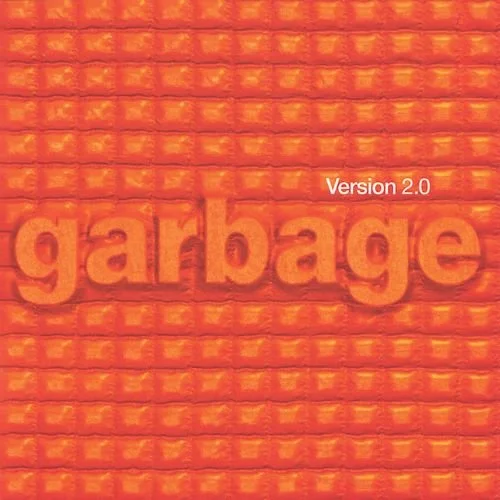
turns twenty-five on 11th May. Released two days after my fifteenth birthday, I was mesmerised by Garbage’s Version 2.0. Led by the legendary and iconic Shirley Manson, the band’s second album followed Garbage of 1995. Whilst many favour the debut, I think that Version 2.0 is a stronger effort. Maybe because I came to it having loved singles like Push It. Maybe it is a premature thing, but I hope something happens for the twenty-fifth anniversary. Such a classic album that reached number one in the U.K. and if often see as one of the greatest albums of the 1990s, Garbage wanted to expand on the ideas and sounds they put into their 1995 debut. I will end with a few thoughts, but I wanted to combine some features and reviews to give you an idea of how people perceive and have reacted to the spectacular Version 2.0. This is what BrooklynVegan said about it on its twentieth anniversary in 2018:

This all comes across on Version 2.0, which, again, starts out with three out-of-this-world songs and stays on that level. Those three songs show off Garbage's various styles -- "Temptation Waits" has the trip-hop influence, "I Think I'm Paranoid" is probably the best grunge/industrial song they've ever written, and "When I Grow Up" is about as good as their pop side gets -- yet they all flow together perfectly. After that overwhelming one-two-three punch, Garbage calm things down by successfully trying their hand at a ballad ("Medication"), and from there we get deeper dives into experimental electronics ("Hammering In My Head"), laid-back '90s-style psychedelia ("The Trick Is To Keep Breathing"), a sex-fueled late-night jam ("Sleep Together"), and a "Don't Worry Baby" interpolation that rivals the original ("Push It"). The album really never lets up -- Version 2.0 was Garbage firing on all cylinders, it was the album where everything fell into place.

Version 2.0 had just enough of the early '90s left over (as you probably know, drummer Butch Vig had a role in a pretty major grunge album), and just enough foresight to see where rock was headed. It came out about a month before The Smashing Pumpkins went in an electronic direction on Adore, and a few months before Radiohead's Thom Yorke began his deep dive into electronic music with his appearance on Unkle's "Rabbit in Your Headlights." It's not that electro-rock didn't exist before 1998 (elements of it are on the first Garbage album too), but 1998 was a pivotal year for this kind of thing, and Garbage were a big part of that turning point.

The new expanded reissue comes with ten b-sides/rarities from the Version 2.0 era, and though most of them have been pretty easy to come by over the years, it's nice having them all in one place. With the Version 2.0 era being such a creative peak in Garbage's career, even the b-sides are on the level of the songs that did make the initial cut for the album. If I could go back in time to when Garbage were sequencing Version 2.0 and talk to the band, I'd suggest fitting the dark, orchestral "Afterglow" on the record. It's the last track on the 20th anniversary edition, and it's a gorgeous closer that doesn't sound like much else on Version 2.0. There's also a handful of great, classic-sounding songs that are closer to the general vibe of Version 2.0 (like "13 x Forever" and "Lick the Pavement"), and a few cool gems in there too. They included their psychedelic cover of The Seeds' "Can't Seem to Make You Mine" ('60s-style vocal echo included) and a cover of Big Star's "Thirteen" that they basically made sound like a '90s Garbage song, plus an acoustic version of "Medication" that's even more heartbreaking than the original”.

I think that Version 2.0 is the most confident album to that point. In terms of the songwriting, there is more ambition and depth I feel. It still sounds such a wonderful and fresh album today. You can play the songs to someone who does not know about Garbage and they would bond with it. The Line of Best Fit had their say about Version 2.0 in 2018. I do hope there is a slew of new features and examinations ahead of the twenty-fifth anniversary. The incredible band performances and the hugely strong and peerless vocals of Shirley Manson makes the album impossible to ignore or better. I still have so much affection and respect for this incredible album:

The first was at an audition for the role of Garbage’s lead singer while Manson was still in Anglefish. The audition didn’t go well, though Manson got another chance after Anglefish’s disbandment when she got back in contact with the rest of the band in 1994. Their first release, the self-titled record from 1995, went on to become a critical and commercial success. Lauded for its embracing of the new digital opportunities of the day, it went on to become a classic from the ‘90s, and continues to resonate with modern audiences. Just as important as its success in the public domain, however, was something that it gifted internally; namely, Shirley Manson her confidence.

Version 2.0, released in 1998, was the sonic embodiment of that new-found belief. In interviews from the time Manson discusses how she had become increasingly self-assured following the success of the first record. No longer fronting a super-band of rock producers, a position which to be fair she refuted despite the fact it was seemingly constantly suggested of her, she had grown to be a much greater musician and lead singer than that early audition suggested.

Manson quickly made a name for herself as an iconic provocateur in rock, a position aided no end by the lyrical content of Version 2.0. From the opener "Temptation Waits’’ ("I'll tell you somethin', I am a demon/Some say my biggest weakness’’) to the raunchy "Sleep Together’’ (‘’If we sleep together/Will I like you better/If we come together/Prove it now or never’’), Manson is anything but discrete. She stares the camera in the face and discloses her desires and intentions, never daring to look away and challenging her listeners to do the same. It’s a brazen approach that doesn’t always work ("Happy hours, golden showers/On a cruise to freak you out’’ on "When I Grow Up’’ is one to forget), though when it does it adds real-life intrigue to the digital influences, resulting in what is often considered to be the quintessential Garbage sound

This new confidence in Manson’s lyrics and approach however is balanced against, even at times emphasised by, an ongoing vulnerability and volatility. An acoustic rendition of "Medication’’, one of the b-sides included here on the reissue, is the clearest example of the softer side to Manson, though elsewhere on tracks such as "I Think I’m Paranoid’’ and ‘’The Trick Is To Keep Breathing’’ her instability is obvious. Again, however, she takes on these topics direct, never scared of facing her demons and in the process developing her songwriting further.

The additional b-sides are mixed between those heavily influenced by the digital influences of the time and those that are more stripped back, such as the aforementioned "Medication’’ and the Velvet Underground-esque "Can’t Seem To Make You Mine’’. The record proper however very much embraces the new sounds available to the band. At times comparable with another album from the same year that adorned tales of love in dark electronica, Smashing Pumpkins’ Adore, Version 2.0 is a step forward from their debut into the increasingly digital world.

The trio of drummer and co-producer Butch Vig, Duke Eriksen on guitar and keyboards and guitarist Steve Mark also worked to successfully produce a futuristic and eccentric backing for Manson. The excellent "Hammering In My Head" is a prime example, the most perfect expression here of Garbage’s ability to marry the best of pop and rock with a nod towards the next phase of popular music.

The intention behind Version 2.0 has been described by Vig as to "take everything we learned from our debut album and filter it through the new digital technology we were grappling with’’. The development of their sound perhaps is what is most clearly alluded to by the record’s title. The development of Manson as well, however, and the new sense of confidence she approaches Version 2.0 with is undoubtedly another. An updated version that, for all of her faults, resulted in a master provocateur and an icon for many who continues to resonate, twenty years down the line”.

Before wrapping up with a few thoughts, I want to get to AllMusic’s review of Version 2.0. This is an album that has brought different reactions and interpretations from critics. I like what AllMusic had to say about a release that had a certain level of expectation on its shoulders in 1998. I think that Garbage released a tremendous sophomore album:

Unveiling the new model of a machine that made its debut three years prior, alternative rock outfit Garbage polished the raw grind of their hazy first album with the sparkling digital sheen of 1998 sophomore effort Version 2.0. Emerging from the eerie trip-hop and bleak grunge of the critically acclaimed, multi-platinum Garbage, the quartet expanded their vision, going into overdrive with a futuristic sound that blended their inspirations both classic (the Beach Boys, the Beatles, and the Pretenders) and contemporary (Björk, Portishead, and the Prodigy). While Garbage retained the sleaze and effortless cool of their debut -- hinted on early tracks "As Heaven Is Wide" and "A Stroke of Luck" -- they infused Version 2.0 with deeper electronic layering, improved hooks, and an intimate lyrical focus courtesy of iconic vocalist Shirley Manson, who seized her place as the face and voice of the band with authority and confidence. On the propulsive "When I Grow Up" and the bittersweet "Special," Garbage took cues from '60s girl groups with "sha-la-la"s and stacked vocal harmonies, grounding them with a delivery inspired by Chrissie Hynde. Elsewhere, the hard techno edges of Curve and Björk cut through the frustrated "Dumb" and the lusty "Sleep Together," while Depeche Mode's Wild West years received tribute on the stomping "Wicked Ways." Beyond the blistering hit singles "I Think I'm Paranoid" and "Push It," Version 2.0 is also home to Garbage's most tender and heartbreaking moments, from the pensive "Medication" to the trip-hop-indebted "The Trick Is to Keep Breathing" and "You Look So Fine." Balanced and taut, Version 2.0 is a greatest-hits collection packaged as a regular album, not only a peak in Garbage's catalog, but one of the definitive releases of the late '90s”.

I have not seen anything online that says we will get a twenty-fifth anniversary release of Version 2.0. There was one for the twentieth…but I feel another huge anniversary deserves something. Maybe some podcasts or a documentary. One of the defining albums of a wonderful decade, it put Garbage on the world stage and made their stand out from their peers. There will be a generation who might not know about the album. I hope that the band do an anniversary tour or there is something in the way of demos or something from that time. On 11th May, fans of the band will show their love for an album that gave us epic songs such as Temptation Waits and When I Grow Up. I love all of the band, but I have reserves of love and appreciation for Shirley Manson. Her vocals and words define the songs and makes the album such a nuanced, arresting and fascinating thing to listen to. I can’t believe it is coming up for twenty-five years. In one of music’s greatest years, 1998 was treated to a second studio album from Garbage. The splendid Version 2.0 is never going to lose its edge, genius and popularity. We get songs from it played on the radio to this day, and I have not heard another album like it since. I wonder if we will get a new release or something put together that celebrates twenty-five years of Version 2.0. I adored it back in 1998, and it still hits me the same way all of these years later. When I was fifteen and first heard the album, I did not know that the world would be celebrating and cherishing it…

WHEN I grew up.

FEATURE: Greatest Day: The Fabulous Beverley Knight at Fifty: An Ultimate Playlist

FEATURE:


Greatest Day


The Fabulous Beverley Knight at Fifty: An Ultimate Playlist

_________

I have written about…

 PHOTO CREDIT: Simon Frederick/National Portrait Gallery

Beverley Knight before. I also think I have assembled a career-spanning playlist too. Because she is fifty on 22nd March, I wanted to celebrate with an ultimate playlist. This features her best-known hits, plus some deeper cuts. She is one of the all-time great singers, and a musician who has released some phenomenal albums (one of the best, 2002’s Who I Am, leaps to mind!). Before I get to a playlist of songs from the R&B icon, AllMusic are at hand with a detailed biography of the stunning and much-adored Beverley Knight:

Neo-soul diva Beverley Knight channeled the sound and spirit of classic R&B to emerge as one of Britain's biggest new pop stars of the '90s. Born Beverley Anne Smith to Jamaican parents in Wolverhampton, England, on March 22, 1973, she grew up in a strict Pentecostal environment and sang in her church choir throughout adolescence. Raised on a steady diet of gospel music and forbidden to listen to its secular counterpart, she nevertheless discovered crossover legends Sam Cooke and Aretha Franklin and began writing her own original songs at age 13. By 17, Knight was headlining local nightclubs and singing advertising jingles for a local radio station; the exposure earned her a recording contract offer, but she declined, instead studying religious theory and philosophy at the University of Wolverhampton. In late 1994, Knight signed to the independent label Dome, teaming with London production trio 2BE3 to cut her debut LP, The B-Funk. A critical smash that earned plaudits for its adherence to old-school soul production and sensibilities, the album won a number of media and industry awards but failed to translate into commercial success.

The single "Flavour of the Old School" nevertheless cracked the U.K. Top 40 following a 1996 re-release, but soon after, Knight split with Dome in the wake of creative tensions and signed with EMI's Parlophone subsidiary to release Prodigal Sista in the summer of 1998. The album generated five Top 40 smashes, chief among them "Greatest Day" and "Make It Back '99," a collaboration with U.S. rapper Redman, and was well on its way to winning Best Album honors at the annual MOBO (Music of Black Origin) Awards. The chart smashes "Get Up!" and "Shoulda Woulda Coulda" anticipated the spring 2002 release of Knight's third LP, Who I Am, a Top Ten hit and Mercury Music Prize nominee celebrated as the singer's most deeply personal effort up to that point. She next teamed with pop producers Guy Chambers and Peter-John Vettese for 2004's Affirmation, which boasted a polished, mainstream sound that alienated a significant segment of her urban audience. The record still became Knight's biggest-selling release yet, buoyed by the hits "Not Too Late for Love" and "Keep This Fire Burning," while the singer also picked up a lifetime achievement award that year at the Urban Music Awards in London. Affirmation was profoundly inspired by her relationship with platonic soulmate Tyrone Jamison, host of the BBC program The Gay Show, who lost his battle with HIV in 2003.

Knight would become an ambassador for charities including the Stop AIDS Campaign, Christian Aid, and the Terrence Higgins Trust, and in 2006 was honored as a Member of the Order of the British Empire (MBE) by Queen Elizabeth II for her creative and charitable contributions. That same year, Knight co-starred in the BBC1 music showcase Just the Two of Us and issued the retrospective Voice: The Best of Beverley Knight, enjoying a Top 20 hit with her cover of Erma Franklin's soul classic "Piece of My Heart." Beverley Knight's fifth album, Music City Soul, then appeared in 2007, peaking inside the Top 10 of the U.K. Album Charts. Featuring the single "No Man's Land," the record once again won Knight critical acclaim. Two more albums -- 100% (2009) and Soul UK (2011) -- followed before Beverley Knight performed at the 2012 Summer Paralympics opening ceremony in London, which coincided with the release of The Collection 1995-2007. After a lengthy stint in the theater -- first playing the role of Rachel Marron in a stage adaptation of The Bodyguard, and then the starring role in the musical Memphis in the West End -- Knight returned to the studio for her 2016 album Soulsville. Recorded in the famous Royal Studios in Memphis, the album also featured appearances from Jamie Cullum, Jools Holland, and Memphis' own Sam Moore of Sam & Dave fame. Celebrating her 25-year career thus far, 2019 saw Knight release BK25, an orchestral re-imagining of many of her classic tracks, recorded with the Leo Green Orchestra at the Royal Festival Hall”.

Looking ahead to the fiftieth birthday of one of the music world’s best talents, I have compiled a playlist featuring her hits and deeper cuts that are well worth a listen. Lots of love to Beverley Knight ahead of her birthday. Her last non-live album was 2016’s Soulsville. Let’s hope that we hear more from her, as her music is incredible, powerful, and hugely memorable! There is nobody in the music industry…

QUITE like her.

FEATURE: Kate Bush: The Deep Cuts: The Man I Love

FEATURE:


Kate Bush: The Deep Cuts


The Man I Love

_________

THIS is not a Kate Bush original…

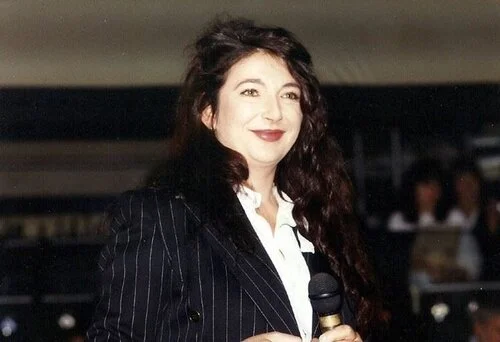
 IN THIS PHOTO: Kate Bush at a fan convention in 1994

but it does show that she could take an existing song and very much make it her own. Like Elton John’s Rocket Man (which she covered for a tribute album in 1991), her reading of The Man I Love by George & Ira Gershwin is sublime and very different. Here, she provides a smoky, sensual, and chocolate-rich rendition of song written back in 1927. A song that could very much be included in The Great American Songbook in terms of its quality and legacy, with lyrics by Ira Gershwin and music by his brother George, The Man I Love was included in their government satire, Strike Up the Band. Bush recorded the song for Larry Adler’s The Glory of Gershwin album. The song was released as a single on 18th July, 1994. It reached twenty-two in the U.K. There is a bit to discuss when it comes to her cover. The song features Larry Adler on harmonica, and the album was released to coincide with the late great’s eightieth birthday. The B-side of the 7" single was an edited version of Adler and George Martin's (who produced the album) rendition of Rhapsody in Blue. Before getting to my thoughts around the cover, here is what Kate Bush said about being involved with the tribute album:

This romantic song was written by George and Ira Gershwin and when Larry Adler put an album together of their songs, called The Glory of Gershwin, he asked me to sing this beautiful song. The album was produced by George Martin. I was very fond of George - such a special talent and creative spirit, a really gentle man, very kind and incredibly interesting. It was a great honour to work with him and Larry.  George and Larry were very different personalities (Larry was a real character), but they made a great creative combination.

It was released as a single and Kevin Godley directed the video. I loved working with Kevin -  so imaginative and great fun. I’d worked with him and Lol Creme when they directed the video for Peter Gabriel’s song, Don’t Give Up. Kevin chose to present the video in a very traditional way which suited the song extremely well.  Godley and Creme are huge talents who left their mark not just in the music industry with their intelligence and wit in the band 10CC but also in the visual world with their groundbreaking videos, working with an impressive list of diverse artists”.

It is great that Bush got to add to her repertoire! Thinking about her studio albums, and there is not a lot like this on them. In terms of the vocal and the sort of compositional elements. That is a shame. Recorded after The Red Shoes in 1993, and way before she released Aerial in 2005, there could have been this album in the middle that maybe were covers. Thinking about Bush tackling more songs with the same beauty and smokiness would have been tantalising! I was not aware she was a Gershwin fan, so it was great that she was approached. Also, she got to work with George Martin. Bush was a huge Beatles fan, but she never got to record with any of the surviving band members – though there is time of course! As someone who recorded at Abbey Road Studios, it must have been a thrill for Bush to meet George Martin. Someone whose work she admired deeply. I also love the vocal direction! She could have done anything with it, but her reading is as mesmeric as anything in her catalogue. Bush brings so much emotion and passion to every word. The black-and-white video features Bush and Larry Adler. She is spellbinding throughout. The Man I Love is not known far beyond Bush’s most accessible and commercial work. Many people have not heard it, and I don’t think the 1994 single is played much on the radio. I have written about it before but, as this shows a whole new side to Bush, it needs to be focused on more.

The last point I want to make about Bush’s version of The Man I Love relates to Bush’s interpretative talents. Through her career, she did cover others’ music. Although her studio albums feature original compositions, there are B-sides and singles where she has taken on somebody else’s track and made it her own. All of her covers are so different. She never lazily stuck to the original or did anything stale. Instead, she takes the text and imagines it as her own. Think about her covering Rocket Man and giving it a Reggae twist. Very different to the stage version from the 1920s, Bush’s version sort of sounds like it could have appeared in a Jazz club in the 1950s or ‘60s. It is so engaging and mature. Listen to the songs on The Red Shoes and Bush’s vocal register. It is higher than it is on The Man I Love. Thirty-five when the song was released, you would swear you were hearing someone older singing in. Such an utterly entrancing vocal performance, it is a pity that we never got to hear Bush perform this live! Many have noted how her vocal on The Man I Love is a revelation. Why was it not explored more? I guess, as she was not recording her own music, opportunities would have been scarce. Still, one fans would have basked in the glory and wonder of Bush recording another track with that particular vocal sound! Definitely a Kate Bush deep cut, let’s hope that her staggering rendition of George & Ira Gershwin’s The Man I Love gets played on the radio more. It would help introduce this classic song and revelatory vocal performance…

TO a new generation.

FEATURE: Kings of the Stone Age: When Will the Rock & Roll Hall of Fame Acknowledge Music’s Queens?

FEATURE:


Kings of the Stone Age

IN THIS PHOTO: Courtney Love Cobain/PHOTO CREDIT: Nicholas Hunt/GI


When Will the Rock & Roll Hall of Fame Acknowledge Music’s Queens?

_________

THE tone…

 IN THIS PHOTO: Jessica Hopper/PHOTO CREDIT: David Sampson

of this article from Billboard, I think, seems to downplay slightly the imbalance that is evident at the Rock & Roll Hall of Fame. Courtney Love Cobain publicised and called out the gender imbalance this week. Rock critic Jessica Hopper pointed out some alarming statistics, and Love Cobain emphasised the poor showing. Hopper’s post noted that 61 — about 8.5 percent — of inductees are women. Hopper went on to write that the representation of women in the Rock & Roll Hall of Fame is “worse than women-artists-on-country-radio numbers (10%) and women headliners at major music festivals (13%)”. This is what Billboard wrote about the recent controversy and discussion:

Citing a tweet from author Jessica Hopper, from the same date, in which the journalist criticized the institution’s programs celebrating Women’s History Month, Love captions a screengrab of Hopper’s post, “So over these ole boys. #fixtherockandrollhalloffame.”

The author’s original post says that of the 719 Rock Hall inductees, only 61 — roughly 8.5 percent — are women. Hopper goes on to report that the representation of women in the Rock Hall is “worse than women-artists-on-country-radio numbers (10%) and women headliners at major music festivals (13%).”

“Thanks so much @msjesshopp I’ve been begging someone to do this math for decades,” Love added.

In 2020, ahead of the year’s Rock Hall induction ceremony, NPR reported on a similar — though lower — percentage. That year, according to the nonprofit media organization, less than 8 percent of inductees were women.

IN THIS PHOTO: Cyndi Lauper is shortlisted for induction into this year’s Rock & Roll Hall of Fame 

Janet Jackson also spoke out on the lack of women in the Rock Hall during her 2019 induction speech, closing with, “Rock and Roll Hall of Fame, please: 2020, induct more women.” Whitney Houston, Pat Benatar and Chaka Khan (with Rufus Featuring Chaka Khan) were nominated for the 2020 class. Of the three, only Houston was inducted that year.

In the second image of her carousel post, the Grammy-nominated rocker shares what appears to be a text message she sent to Dave Grohl, who was inducted into the Rock Hall in 2021 with the Foo Fighters, and in 2014 with Nirvana. “Have fun at rock hall Dave. Make sure and hold the seats of Tina turner & carole king, both who have been eligible for 30! Years each,” her text reads. (Both Turner and King were inducted as solo performers in the 2021 class; the former was previously inducted as part of Ike & Tina Turner in 1991, while the latter was inducted as part of the songwriting duo Goffin/King in 1990.)

Billboard has reached out to the Rock and Roll Hall of Fame. Grohl’s rep declined to comment.

Six women have been nominated for the Rock Hall’s class of 2023: Kate Bush, Sheryl Crow, Missy Elliott, Cyndi Lauper, Gillian Gilbert (with New Order) and Meg White (as part of The White Stripes). The inductees are set to be revealed in May; the ceremony will happen in the fall”.

This year has some legendary female artists on the shortlist, but there are only four women who have been nominated. I think, in the case of Meg White and Gillian Gilbert, that is sharing credit and they are, at best, fifty percent of the act they are part of. It is like people saying there is a female headlining Glastonbury Festival this year because Guns N’ Roses has a woman playing in the band. It is stretching things and de-valuing the worth and sheer number of incredible women out there. Maybe Cyndi Lauper will make it in this year, as the vote goes to the public and she is in a fairly comfortable position. Courtney Love Cobain fronts Hole, and she is someone who deserves entry. There are notable omissions (including Love Cobain) who should make it in. Not being biased, but why has Kate Bush not been inducted already? Someone who is now more visible and relevant than ever, she is someone who should get a free pass in there. Love Cobain should, and I think that Tori Amos should be too (and others agree). How about Ms. Lauryn Hill (as lead of Fugees, she is also soon eligible as a solo artist?! The Rock & Roll Hall of Fame is not about including only Rock bands. The name is a bit of a misnomer. It used to be a little generic and single-minded, but it is actually embracing of all genres. It does still seem to be the way that those who gain entry are white males.

I would love to see De La Soul inducted, or maybe have another iconic Hip-Hop act. This year, A Tribe Called Quest are eligible and shortlisted. Aside from George Michael and A Tribe Called Quest, there are not many male acts I would fight for this year. I am a fan of Soundgarden, so maybe them, but it is women like Kate Bush, Sheryl Crow, Cyndi Lauper, and Missy Elliott that should be inducted. One feels it will be another year where men dominate. I would class ten of the fourteen artists nominated as male/male heavy. That would include The White Stripes, as Jack White is the lead, and I sort of feel like that is who the Rock & Roll Hall of Fame are responding to. What about female-led bands like Hole or Garbage. It is great that some male artists do call out the Rock & Roll Hall of Fame, but most of the time it is women fighting for other women. Why do male artists who are shortlisted or inducted not use their platform to call out the injustice?! Maybe that would some ungrateful and a snub, but it is important to raise awareness. Many might say that the Rock & Roll Hall of Fame is ancient and irrelevant, but the idea is to celebrate iconic and legendary artists who have made a big impact. The current record and relative lack of women nominated and inducted does seem to suggest their place in music history is irrelevant or small.

We could all compile a list of the women who have not been inducted into the Rock & Roll Hall of Fame who are more than worthy – in the same way we could easily list headline-worthy festival women who are denied or pushed lower down a bill! I do think that there are no excuses in any field when it comes to gender inequality in music. The Rock & Roll Hall of Fame considers artists an individual artist or band must have released its first commercial recording at least twenty-five years prior to the year of nomination. Look to 2024, and we would be able to go back to 1999. I think Britney Spears would be eligible then. The late-‘90s saw an influx of incredible women come through and cement their reputations as queens. Also consider the fact that countless amazing women that this criteria could include. From the 1960s icons through to the plethora of innovative and popular women/female-led bands of the 1980s and 1990s. The choice should give such pleasure and inspiration to those who decide who is shortlisted for the Rock & Roll Hall of Fame! I would love to have the privilege of selecting some incredible women. Thanks to Courtney Love Cobain and Jessica Hopper, as they have reignited a debate that has been raging for years. So many times the Rock & Roll Hall of Fame has overlooked women or not made efforts to ensure that their fourteen nominated artists includes greater attempts.

IN THIS PHOTO: When will Björk (whose international solo debut album came out in 1993) be inducted into the Rock & Roll Hall of Fame?!

It is not simply them doing this to please people and be seen as progressive. It is actually acknowledging the fact that there are scores of women who are worthy and have been left out. It is hard to argue against the statement that the Rock & Roll Hall of Fame is a boys’ club when, year after year, most of the nominees are male/male-led. I have been thinking about all the female artists who inspired and influenced me growing up. Alongside Courtney Love Cobain, I can think of dozens who are eligible for inclusion in the Rock & Roll Hall of Fame and are as worthy and important as any of the male bands who have been shortlisted this year. Kate Bush will miss out this year by the look of things, and let’s hope at least one women is inducted (I am not including the fact that there is a female member deep inside of Joy Division/New Order, for Christ’s sake!). Something does need to change very soon. I don’t think it is good enough to say that they (the Rock & Roll Hall of Fame) is trying and steps are being made. That is what major festivals say when they have to explain why there are no female headliners. It is very tiring. At a time when we know there are incredible women who could headline festivals, and there are these queens who have impacted music in such a profound way, what is the real reason for bodies like the Rock & Roll Hall of Fame repeating the same patterns?! I don’t think it is good enough – and that has been echoed by so many on social media since Courtney Love Cobain and Jessica Hopper shared the statistics. The inductees are announced in May, and we the ceremony takes place in New York City. Thinking about The Big Apple puts me in mind of Fiona Apple. Another amazing woman who has not been inducted into the Rock & Roll Hall of Fame! It reaffirms the clear and undeniable fact that things need to…

CHANGE for the better next year.

FEATURE: Beauty Queen: Roxy Music’s For Your Pleasure at Fifty

FEATURE:


Beauty Queen


Roxy Music’s For Your Pleasure at Fifty

_________

LOOKING ahead quite a bit…

 IN THIS PHOTO: Roxy Music (Brian Eno, Bryan Ferry, John Porter, Andy Mackay, Paul Thompson and Phil Manzanera) in 1973

I am thinking about a terrific album that has its fiftieth anniversary. Roxy Music’s phenomenal second album, For Your Pleasure, celebrates that anniversary on 23rd March. Featuring Roxy classics like Do the Strand, their second album was a stronger and broader work than their 1972 debut, Roxy Music. With stronger material from Bryan Ferry, and finer and more remarkable production, there is greater experimentation and variety through For Your Pleasure. One of the best albums of the 1970s, and one of the most influential Glam Rock/Art albums, I hope there is a new release or a reissue of For Your Pleasure closer to its anniversary on 23rd March. Even though it was not commercially successful in the U.S., the album did reach number four in the U.K. With Do the Strand and Beauty Queen opening the album, you are absorbed into For Your Pleasure right away. I want to get to a couple of positive reviews for a masterpiece album. First, I found a 2012 feature from Pop Matters, where Jason Mendelsohn and Eric Klinger discussed the merits and impact of For Your Pleasure. For those who I have never heard it, then go and listen to this remarkable album:

Mendelsohn: I’m completely confused by Roxy Music’s For Your Pleasure. I’m unsure how to work it in to my musical narrative, let alone placing it contextually in the canon of great albums, so I’m just going to work it out as we go. From the outset, this album seems a little off-kilter and yet so progressive and forward-thinking that it sounds a full decade ahead of its time. There are so many opposing forces working in the music that it’s hard to believe the band could make a coherent whole, and that strange dichotomy seems to be personified in the presence of Roxy’s dapper frontman Bryan Ferry and the flamboyant, oddball Brian Eno.

This record is strange and wonderful. I’m left wondering why I hadn’t given it much of a chance until now but I can’t help thinking that a certain amount of patience and appreciation for the forebears of the punk and glam standard would first have to be cultivated. In my younger days, I don’t think I would have made it past the first couple of bars of “Do the Strand” and that would have precluded me from finding the scary genius of “In Every Dream Home a Heartache”, the epic grandeur of “Strictly Confidential”, or the sly funk of “The Bogus Man”.

My only question is, where did this album come from? Looking back to the early 1970s British rock scene, you have a rather large power vacuum created by the absence of the Beatles now slowly being filled in by the likes of David Bowie and Pink Floyd. To my ears, Roxy Music is more in line with the glam that Bowie was proffering than the bluesy space funk from Pink Floyd. Even so, For Your Pleasure seems like such a non sequitur in comparison to Dark Side of the Moon or The Rise and Fall of Ziggy Stardust and the Spiders from Mars. Or are we looking at a music supernova—an odd mix of both—where the rambling, explorative space funk ran headlong into the bright lights and glitter of the glam ethos?

Klinger: Well, it certainly seems that there are two distinct forces at work here, between the grit and glitz of glam and the more esoteric soundscaping of what critics used to call “art rock”. And you’re right, in one sense For Your Pleasure seems very rooted in its time, and yet it also sounds very much like something we could call the headwaters of New Wave. I’ve always heard a distinctly retro sensibility in glam, although sometimes it’s hard to put my ear-fingers on exactly what I’m hearing that puts me in that mind. Still, I suspect it’s very much there, from Mott the Hoople’s “All the Way from Memphis” right up to Bryan Ferry’s modified quiff. There are flavors of that all the way through For Your Pleasure as well, especially when Andy Mackay’s saxophonery heads down into the honking range, like it does on “Do the Strand”.

The first review I want to bring in is from AllMusic. In their five-star review, they highlighted how tensions between Brian Eno and Bryan Ferry within the band did result in some peaks. The differences of direction and ambition saw Eno shortly leave Roxy Music, but it also resulted in a terrific album where those differences provided beneficial. Nearly fifty years after its release, For Your Pleasure remains this iconic and stunning album that truly announced a mighty force in music. The band would follow For Your Pleasure very quickly. In fact, November of 1973 is when they put out Stranded:

On Roxy Music's debut, the tensions between Brian Eno and Bryan Ferry propelled their music to great, unexpected heights, and for most of the group's second album, For Your Pleasure, the band equals, if not surpasses, those expectations. However, there are a handful of moments where those tensions become unbearable, as when Eno wants to move toward texture and Ferry wants to stay in more conventional rock territory; the nine-minute "The Bogus Man" captures such creative tensions perfectly, and it's easy to see why Eno left the group after the album was completed. Still, those differences result in yet another extraordinary record from Roxy Music, one that demonstrates even more clearly than the debut how avant-garde ideas can flourish in a pop setting. This is especially evident in the driving singles "Do the Strand" and "Editions of You," which pulsate with raw energy and jarring melodic structures. Roxy also illuminate the slower numbers, such as the eerie "In Every Dream Home a Heartache," with atonal, shimmering synthesizers, textures that were unexpected and innovative at the time of its release. Similarly, all of For Your Pleasure walks the tightrope between the experimental and the accessible, creating a new vocabulary for rock bands, and one that was exploited heavily in the ensuing decade”.

I am always keen and excited to mark important album anniversaries. A fiftieth is a thing to be proud of. I wonder what Bryan Ferry and the rest of the band think of For Your Pleasure all of these years later. It is one of the all-time great British albums. It has lost none of its passion, oddness, beauty, intelligence, and influence after fifty years. Pitchfork offered their thoughts on For Your Pleasure back in 2019. I have selected some sections of the review that caught my eye and are particularly insightful and interesting:

Throughout the album, the band is puffed up with ideas, and desperate to make an impression. Ferry summarizes his passions for artifice and postmodern thought in manifestos: “Part false, part true, like anything/We present ourselves,” he sings in a theatrical baritone that recalls, at various times, Noël Coward and Dracula. For Your Pleasure is happily pretentious and self-involved, the juncture where glam and prog meet with the greatest degree of success. Glam steals from prog’s song lengths and love of soloing, and prog swipes glam’s exclamation marks and sex appeal.

Ferry was drawn to the anxious, feminine side of R&B, evident on the album’s most retro moment, “Beauty Queen,” which the band bookends into a salmagundi of a song, complete with tempo changes navigated by stalwart drummer Paul Thompson. Ferry is dumping a woman who has “swimming pool eyes,” but it sounds more like he’s pitching woo. He lavishes her with purple praise, promises she’ll be fine without him, and carefully lathers his words with his heaviest Scott Walker vibrato. Ferry, with his fondness for dualities, uses theatricality and even camp to prove his sincerity, implying that everything make-believe is also real, and vice versa.

For Your Pleasure’s two longest songs, “The Bogus Man” and the album-closing title track, leave plenty of time for Eno’s deviations. This first sketches out a musical design for trance, years ahead of it, with a long, minimalist break that confirms Eno’s mantra, “Repetition is a form of change.” Each instrument mutates, minutely transmogrified, on some mysterious cycle. On “For Your Pleasure,” Ferry makes only a brief vocal appearance. Over the last four and a half minutes, producer Chris Thomas and Eno are playing the recording studio as though it’s an instrument, conducting the song at a mixing board, and building a panoramic disorientation. They add more echo on the electric piano, more reverb on the guitar, phasing, tremolo, the drums slip away, and it gently becomes hazy and puzzling: Chopped-up bits of “Chance Meeting” from Roxy’s first album come in—Roxy are sampling themselves—then Judi Dench murmurs, “You don’t ask why,” and almost randomly, la fin. An album that began with Ferry’s request for your attention ends with Eno placing you in the strange new world you were promised. A new sensation has delivered new sensations of arousal and uncertainty.

A few months after For Your Pleasure was released, Eno left the band, quitting before he could be fired, and starting an unparalleled career as a solo artist and producer. Bryan and Brian were incompatible. Ferry was a neurotic—Woody Allen trapped in the body of Cary Grant—while Eno was a disruptor. In interviews, Ferry withdrew like a turtle; Eno excelled at them, and talked fluidly about Marshall McLuhan, Steve Reich, or his ample pornography collection. Eno most avidly pursued the band’s androgynous style, and dressed like he was Quentin Crisp’s glam nephew (leopard print top, ostrich feather jacket, bondage choker, turquoise eye shadow). Out of the chute, he was a cult hero, and Ferry grew tired of hearing punters yell “EEEEEE-NO!” in the middle of ballads, or seeing Eno credited as his co-equal.

The music had no immediate impact in the U.S., where it grazed the album chart at number 193. The band’s two-album deal with Warner Bros. had expired and the label happily left them go. American audiences, Ferry told a British interviewer, “are literally the dumbest in the world, bar none.”

But in England, it was the album of the moment, and Roxy returned to TV’s Old Grey Whistle Test, where Whispering Bob Harris, a stodgy presenter who was still stuck in the ’60s, sneered at them, as he had the previous year as well, dismissing them as great packaging with no substance”.

On 23rd March, the incredible For Your Pleasure turns fifty. One of the best Roxy Music albums in a career that has more than its share of brilliance, the album is still played to this day. I am not sure what is planned for the anniversary, but I do hope that something happens. If it has been a while since you heard For Your Pleasure, then spend some time today re-familiarising yourself with…

THIS work of genius.

FEATURE: The Digital Mixtape: We Got the Beat: The Best Female Drummers Ever

FEATURE:


The Digital Mixtape

IN THIS PHOTO: Meg White of The White Stripes performing on The Daily Show with Jon Stewart in 2005/PHOTO CREDIT: Scott Gries/Getty Images


We Got the Beat: The Best Female Drummers Ever

_________

AFTER receiving praise, defence, and love…

 IN THIS PHOTO: Karen Elson/PHOTO CREDIT: Emily Dorio for The Glossary

from the likes of Questlove, I wanted to talk about female drummers. Backing it up a bit, Questlove came out to defend Meg White after a journalist stated how The White Stripes (who she was in with Jack White) would be a better band without her. Karen Elson also showed her support for a fantastic drummer:

This week, a tweet from political journalist Lachlan Markay surfaced in which he claimed that The White Stripes would have been a better band with “a half decent drummer”.

“Yeah, yeah I’ve heard all the ‘but it’s a carefully crafted sound mannnn!’ takes. I’m sorry Meg White was terrible and no band is better for having s***ty percussion,” Markay continued.

The reporter’s sentiment has been widely rebutted by the music industry. Elson, who was married to Meg’s ex-husband and bandmate Jack White between 2005 and 2013, tweeted: “Not only is Meg White a fantastic drummer, Jack also said the White Stripes would be nothing without her.

“To the journalist who dissed her, keep my ex husband’s ex wife name out of your f***ing mouth. (Please and Thank You).”

“By now you’ve probably seen an ill-advised (and since-deleted) tweet I sent out yesterday about the White Stripes and Meg White. It was an over-the-top take on TWS and White as a drummer, and was, let’s face it, just truly awful in every way. Petty, obnoxious, just plain wrong,” he wrote.

“... To Meg White: I am sorry. Really. And to women in the music business generally, who I think are disproportionately subject to this sort of shit, I am sorry to have fed that as well. I’m really going to try to be more thoughtful in the future, both on here and off”.

Not only was Meg White a bad-ass and fantastic drummer, she put so much personality, power and originality into her beats, enhancing The White Stripes’ music, and making it so enduring and world-class! I wanted to build off of the controversy and debate by including her in a playlist featuring some of the best female drummers there has ever been. I may have missed a few great drummers (and the songs are listed by band rather than highlighting the drummer’s name), so apologies if there are any missing! With Meg White leading the charge, below are women whose drumming…

IS in a league of its own.

FEATURE: How Music Shapes Our Lives… Physical and Streamed Music, and How It Impacts and Shapes Memories

FEATURE:


How Music Shapes Our Lives…

PHOTO CREDIT: lookstudio via Freepik


Physical and Streamed Music, and How It Impacts and Shapes Memories

_________

HAVING read…

an interesting recent article from The Guardian from journalist and author Jude Rogers, it got me to thinking about the way music shapes our lives and how it affects memories. It relates to her excellent book, The Sound of Being Human: How Music Shapes Our Lives. I have always assumed that the physicality of older music leaves a bigger impression in the mind. Memories are deeper and more vivid because of the lack of instant accessibility to everything. The fact that, by saving up and buying albums and singles, they are more precious and that tangibility is more evocative and longer lasting. Rogers explored her memories and theories:

I’ve always been fascinated by how music affects us and I delved into neuroscience in my book to discover how our brains and bodies are hardwired to respond so powerfully. According to a 2013 University of Helsinki study, humans are capable of memory-building from the womb (a group of babies were tested just before birth, then at four months, to see if they recognised a specific version of Twinkle Twinkle Little Star played to them in utero – and they did). Music can help give us security in our changing identity when we are hormonal adolescents, our bodies telling us to define ourselves separately from our family to help us mate beyond our genes. Wonderfully, I discovered through research that favourite songs can give us the same dopamine rush as an orgasm.

PHOTO CREDIT: Gareth Iwan Jones/The Observer

Music also helps us when we hurt and when we grieve, giving us a familiar place to help us explore and express our feelings – and our brains still respond to music right through to later life, including in people experiencing dementia. I’ve realised I want music to support my son in his life as well as it has supported me, and this feeling is intensifying as he gets older. He was only seven when I wrote my book, getting into his first pop songs that weren’t just for children. We have now travelled from his first love, the Spice Girls, a band he loved dancing to with his female cousins, to a playlist that he shuffles through skittishly. It’s more than 150 tracks long.

My worries about my son’s engagement with music, I realise, are partly about it existing in a digital space, where he can get lost in mood music, or give up self-control. But a chat with Professor David Hesmondhalgh, Professor of Music, Media and Culture at the University of Leeds, gave me pause. He referred me to his 2021 journal article, Streaming’s Effects on Music Culture, which underlined how music has always been tied to functions, from social rituals like weddings and funerals to intimate rituals like singing babies lullabies to send them to sleep. “The recent concerns about the use of music to accompany other activities can seem rather odd when seen in this historical context,” he added.

Upstairs, I can hear my son’s feet dancing through the ceiling…

Hesmondhalgh’s article also cited a sample of 5,000 streaming-service users by Norwegian researcher Anja Nylund Hagen in 2015, which involved people keeping strict music diaries, showing many of them “exercising skill and creativity in searching and browsing, and engaging in substantial curation”. Another study by Dutch marketing professor Hannes Datta showed that new users of a streaming service significantly increased their consumption of artists, tracks and genres that they had not previously encountered.

My son’s playlist is a mishmash of genres that also collapses the distance between decades. Alongside contemporary tracks by Nova Twins, George Ezra and Olivia Rodrigo are Roxette by Dr Feelgood, Copacabana by Barry Manilow and Song For My Father by Horace Andy. He also changes his top 10 all the time: his current favourite is Bonkers by Dizzee Rascal which, unbelievably, is now 14 years old.

The closest I got to this was making mixtapes in my mid-teens: a laborious process involving a double tape deck and much more planning involving controlling the order of songs. When I was in my mid-20s, my mother found a box of cassettes that included a similar tape made by my father. The clunk of record and play buttons being pressed together between songs by Kim Wilde and Roxy Music still hit my heart like a hammer.

‘My life has been shaped by songs.’ The Nova Twins. Photograph: Samir Hussein/WireImage

My “reminiscence bumps” – otherwise known as the vivid recollections of favourite music for people over 40 – are something neuropsychologist Professor Catherine Loveday, of the University of Westminster, is an expert on. So does waiting for music or saving up for it increase the intensity of connection to songs? “Hearing people say, ‘This was the first record I bought’ or ‘I saved for ages to get this’ is common in my work, yes – but it’s important to remember I have interviewed people from their 40s to their 80s,” she says. The older people’s experiences of accessing music were very different, but the way their reminiscence bumps work was very similar.

When Loveday’s older interviewees were teenagers, pop music was not on mainstream radio or TV and music was much harder to buy. Even though young people’s access is almost immediate if they have the right technology, Loveday thinks younger people will experience similar reminiscence bumps when they’re old enough to be studied – and may have an even deeper connection to songs”.

 PHOTO CREDIT: cottonbro studio

The question she posed in the article is whether streaming sites will affect our musical memories. The younger generations are having a different connection and relationship with music compared to someone my age (late-30s). Maybe there is something idealised and romanticised when it comes to past decades. It is true that we had to save up for albums and often record stuff off the radio. We didn’t have access to a wide selection of genres and music as we do not. Mixtapes were quite hard to put together. Now, we can assemble playlists that span the years and genres. It provides these new memories. People can connect with the past, but they can also have these new layers of memories, as Rogers wrote in her article. It is an interesting debate. I do feel that physical music should be preserved and kept alive. Rather than cassettes and C.D.s being seen as relics or something quite kitsch and past their time, you do get a different experience and sensation hearing albums on these formats rather than digital. I am not sure whether I would have such a primal, tangible and long-lasting fascination with music if it were not for the way I connected with it physically. I do feel that streaming and digital music is very valuable. There are definite advantages and disadvantages to how we can access music now. Whilst digital services can provide wide access and richness that we did not have when I was growing up, maybe the accessible, inexpensive, and almost ubiquitous nature means that there is not the same value. I think a lot of the memories I have are because of the way I saved up to buy something, shared it with friends, and kept playing. If you are scrolling playlists and do not have that sense of pride from saving up and owning something, do the memories last as long and mean as much?

 IMAGE CREDIT: Freepik

I am fascinated by the whole subject. I was struck by the article, so I wanted to source some of it here. But I also realised a couple of things. I don’t think that everything was better in the past regarding the way music was digested and handed down Whilst I always maintain that it means more if albums in physical form are passed down and shared, that is not to say that tradition has been abandoned. Parents now have kept hold of albums on vinyl, cassette ands C.D., but playlists and streaming means that younger listeners can bolster that education and palette. The reason I have attachment to particular tracks and albums is because of the setting and people around me. Whether it is falling for Steely Dan because of car trips with my aunt, or the music I was listening to at high school during a formative time or playing a cassette on my go cart whilst whizzing it around the block with friends hanging off the back. Or remembering hearing Betty Boo’s Where Are You Baby? during a warm day as a child and being hooked by its infectiousness. Sure, the physical sensation of putting an album into a device and playing it and sharing it meant that it has stayed in my mind. I feel it is less to do with the physicality or music and more to do with the lack of distractions and the individuality of music. I love the fact that anyone can hear anything now. You do not have to save up for a single album and, therefore, are not able to buy too many albums. It means your tastes are less chart-driven and singular. Streaming services can lead you to artists you might not have thought of. And you can still have that social aspect. You can share songs and playlists with friends. It does not have the same physical and connective aspect. I love the fact that I still have in my family home albums I bought growing up. They each hold fingerprints and memories. I am not sure whether playlists will ever do that.

The point of this was to raise a couple of points. First, things are not as clear-cut as they sound. Jude Rogers’ experiences with her son and the memories he is getting from a combination of streaming playlists and her collections is powerful. It is more than I had growing up, so that sort of education and mixture of physical and digital could mean longer-lasting memories. He gets an attachment and knowledge of his parents, but there is also this new chapter and instant access to old and new music without having to wait or save. The other thing I wanted to raise is how important the physical aspect is. Even if albums and singles were quite sparse in terms of affordability, we keep hold off them and each play and time we revisit stirs up older memories. I do feel playlists and digital music is so vast and accessible, we take it for granted and it is harder to form specific memories and experiences around albums and songs. Maybe a more solitary and less focused listening experience, will children now look back twenty or thirty years from now and remember times they shared music with friends or had precious family moments with particular songs? In all of my prized memories where music plays a big part, I was focused and undistracted.

 PHOTO CREDIT: lookstudio on Freepik

If it was listening to music in the car and particular songs heard on the way back from the airport after a family holiday or a song I heard played in a classroom when I was in primary school, I was always attuned to the sound and let them in. I do worry people in general are more distracted and skimming through music rather than dedicating their full attention and time to it. That may be a generalisation, but it is clear there are blessings and curses with digital music and the relative lack of physical music. The way generations now will remember music and how their memories will differ is really intriguing. I hope physical music is retained and protected as much as possible, as there is no substitute for it. I also would much rather keep the childhood I had, rather than be young now and have the experiences with music young people do now. That said, I never had libraries of music at my fingertips when I was growing up. I can only imagine how that would have impacted my life and what effect that would have had. It is an interesting debate and generational conversation that should be kept alive and relevant. Thanks to Jude Rogers’ article, it has made me think more deeply about music and memories. I think we can all agree about the importance of music. How they keep memories alive, and how they score important times like nothing else. Its power is clear. Music bonds us and creates a very raw and wonderful connection. It keeps alive friends that have left us, and it also gives us inspiration and clarity when it comes to the future. I think we can all agree on that…

 PHOTO CREDIT: Brett Sayles

REGARDLESS of age.

FEATURE: A Legendary Compilation Series: Looking Ahead to the Fortieth Anniversary of NOW That's What I Call Music!

FEATURE:


A Legendary Compilation Series


Looking Ahead to the Fortieth Anniversary of Now That's What I Call Music!

_________

IT is no exaggeration…

to say that the NOW That's What I Call Music! compilation series opened my eyes to Pop music. The first copy of the series I bought was in 1993. That was 24 in the U.K. Ten years after its inception, they were already putting out the twenty-fourth instalment! I am throwing fairly far ahead, but this year is the fortieth anniversary of the iconic series. Back in November, NOW That's What I Call Music! 113 was released. As you can see from the official website, the compilation series has broadened through the years. There are compilations relating to decades and genres. On 28th November, 1983, the first NOW That's What I Call Music! was released. I am not sure whether the makers have any plans to mark forty years. As the number forty is relevant to the charts (the top 40 etc.), then maybe something around that? A forty-track ‘best of’ from through the years? It will be tough to whittle down the series to the best forty. The volume that first introduced me to the series came out on 26th April, 1993. That was a couple of weeks before my tenth birthday. As I have said in previous features, I think I may have bought it not long after my birthday. The joy of having the double cassette in my hands might seem quaint now. The NOW That's What I Call Music! series compiles the best music from the charts from throughout the years. Even though it is broadly Pop-based, there is that diversity and range that takes in other genres.

Before I explore my memories of the series and why I think there should be something special done for the fortieth anniversary, here is some background and history regarding the magnificent and iconic NOW That's What I Call Music! compilation series. Something that has a very special place in so many music lovers’ hearts:

The compilation series was conceived in the office of Virgin Records in London and took its name from a 1920s British advertising poster for Danish Bacon featuring a pig saying "Now. That's What I Call Music" as it listened to a chicken singing. Richard Branson, owner of Virgin, had bought the poster for his cousin, Simon Draper, to hang behind Draper's desk at the Virgin Records office. The pig became the mascot for the series, making its last regular appearance on Now That's What I Call Music 5, before reappearing in 2018, 2021 and 2022.

Original United Kingdom and Ireland series

The idea for the series was conceived in the office of Virgin Records in Vernon Yard, near Portobello Road in Notting Hill, London, by the head of Licensing and Business Affairs at Virgin Records (1979–1990) Stephen Navin, and General Manager (1983–1988) Jon Webster. The concept was taken to Simon Draper (managing director at Virgin Records) and then Peter Jamieson (managing director of EMI Records (1983–1986)). Jamieson had similar plans to launch such a compilation, and he agreed to the partnership. The deal was negotiated and finalised on Richard Branson's boat moored in Little Venice.

The series took its name from a 1920s British advertising poster for Danish Bacon featuring a pig saying "Now. That's What I Call Music" as it listened to a chicken singing. Richard Branson had bought the poster for his cousin, Simon Draper, to hang behind Draper's desk at the Virgin Records office. Branson wrote, "He was notoriously grumpy before breakfast and loved his eggs in the morning, so I bought him the poster, framed it and had it hung behind his desk." The pig became the mascot for the series, making its last regular appearance on Now That's What I Call Music 5, and made a reappearance on the cover of Now That's What I Call Music! 100 in 2018 and Now That's What I Call Music! 109 in 2021.

The first Now was released on 28 November 1983 and featured 30 UK hit singles from that year on a double vinyl LP or cassette. Although the compilation of recent hit songs into a single release was not a new concept (K-tel and Ronco, for example, had been issuing various-artist compilations for some years), this was the first time that two major record labels had collaborated on such a venture. Virgin agreed to a deal with EMI, which allowed a greater number of major hits to be included (the first album in the series included a total of "eleven number ones" on its sleeve). The album went to number one, and soon after, CBS/WEA's The Hits Album adopted a similar format to Now!. The two series co-existed for the rest of the 1980s, and when Universal (formerly PolyGram from Now 8 in 1986 through to Now 42 in 1999) joined the collaboration, the Now! series was more successful commercially. The Out Now series by MCA and Chrysalis was also established as a rival to the series, but was short-lived and lasted only two volumes”.

I was well aware of Pop music and the charts before I got a copy of NOW That's What I Call Music!, but there was something unbelievably exciting about having so many different chart tracks on the same album! Until then, I was listening to studio albums and stuff from my parents. Getting a compilation featuring so many great songs was this amazing selection box. I was a devoted purchaser of the NOW That's What I Call Music! albums right until high school. I think the last one I bought would have been around about 1999 when we were on number forty-four (there were three that year; 44 was the final one of 1999). The fact that the series is still going strong proves a couple of things. For one, there is this appetite for a physical compilation when, effectively, one can do the same on Spotify. Rather than do something digitally and listen in your ears, people are going to buy the album and are playing it in its true form. Whether people are investing in the series and keeping the collection going, buying it so they can revisit it years from now, or they are new to the magic and history of NOW That's What I Call Music!, it is so encouraging to see the series thrive and grow! To me, it is a journal and yearbook of the best music from the year. If the series is quite commercial in terms of the artists that it includes, I think that is the point. What I loved when I got NOW That's What I Call Music! 24 back in 1993 was that here were these chart hits from through the last year/few months that were all in one place! It is a sort of best of the best series, but you do get some surprises thrown in.

 PHOTO CREDIT: @ztapesrecords

I think that there should be some anniversary plans. Not that it is available at the moment – at least I don’t think it is -, but it would be wonderful if the series so far was brought to vinyl and cassette. You can get some of the ‘Yearbook’ and others in the series on vinyl, but not the numbered ones I believe (unless you go through other websites). Maybe that would be an expensive and logistical nightmare, but there are so many who want their favourite NOW That's What I Call Music! album on these amazing formats. Definitely in terms of cassettes, I envisage this NOW That's What I Call Music! pop-up shop forming where you get a vending machine(s) where each album has its own slot/section. It would be numbered 1-113 (or whatever number we are up to later in the year), and you can pay by cash or card and then get the album on cassette from the vending machine. Maybe something old-skool in terms of it being a record shop where you could browse only NOW That's What I Call Music! albums. There is definitely demand for these albums on physical formats. One can buy C.D.s at the moment but, if you want cassettes or vinyl, then you need to hunt online…and it can be quite expensive. You are going to get second-hand copies, and this sort of takes something away! I feel there will be a special compilation to mark its fortieth, but maybe a documentary or podcast that looks back at its inception and legacy. I feel NOW That's What I Call Music! will continue for many more years. For almost forty years, we have bought this amazing series. Long may this wonderful compilation…

CONTINUE on strong!

FEATURE: We’re Not Alone on the Stage Tonight: Kate Bush’s The Tour of Life: The Planning and Anticipation

FEATURE:


We’re Not Alone on the Stage Tonight

IN THIS PHOTO: Kate Bush performing at the Falkoner Teateret in Copenhagen, Denmark during The Tour of Life on 26th April, 1979/PHOTO CREDIT: Jørgen Angel
 

Kate Bush’s The Tour of Life: The Planning and Anticipation

_________

BECAUSE we are in March…

 PHOTO CREDIT: Max Browne

I am thinking ahead to next month and a Kate Bush anniversary. The Tour of Life started with a warm-up gig in Poole on 2nd April, 1979. It was a triumphant night, despite the fact that it ended in tragedy. When checking the venue after the gig for any leftover bits and bobs that might have been left behind, young lighting assistant Bill Duffield fell through an open panel high on the lighting gallery. He died of his injuries a week later. Although it was a devastating start to what should have been (and was) a magical and successful tour, it was a blow to suffer that loss before the first official show. When Bush performed in London on 12th May, the concert had a very different setlist because this was a benefit performance, In Aid of Bill Duffield, that featured guest stars Steve Harley and Peter Gabriel. I wanted to discuss a particular aspect of The Tour of Life. If you do not know about Kate Bush’s one and only tour, then the Kate Bush Encyclopedia provides some useful background and details:

The Tour of Life, also known as the Lionheart Tour or even the Kate Bush Tour, was Kate Bush's first, and until recently only, series of live concerts. The name, 'Tour of Life', was not coined until after its completion, with all promotional material referring to it simply as the Kate Bush Tour.

Consisting of 24 performances from Bush's first two studio albums The Kick Inside and Lionheart, it was acclaimed for its incorporation of mime, magic, and readings during costume changes. The simple staging also involved rear-screen projection and the accompaniment of two male dancers. The tour was a critical and commercial success, with most dates selling out and additional shows being added due to high demand. Members of the Kate Bush Club were provided with a guaranteed ticket.

Rehearsal

The tour was to become not only a concert, but also incorporating dance, poetry, mime, burlesque, magic and theatre. The dance element was co-ordinated by Bush in conjunction with Anthony Van Laast – who later choreographed the Mamma Mia! movie and several West End smashes – and two young dancers, Stewart Avon Arnold and Gary Hurst. They held morning rehearsals for the tour at The Place in Euston, after which Bush spent afternoons in Greenwich drilling her band. Off stage, she was calling the shots on everything from the set design to the programme art”.

The intercontinental tour was a whirlwind where Bush was performing this huge, almost theatrical set each night. I have recently written about how it would be good to have a release around The Tour of Life. There has not been a lot of retrospection or evaluation of such an important moment in Bush’s career.  In 1978, she put out two studio albums. In November came Lionheart. That was ninth months after her debut, The Kick Inside. It would have been in her mind that year but, having been made to put out a couple of albums in fairly quick succession, it would have motivated her to perform live rather than get right back in the studio. Also, as Andrew Powell produced both of those albums (even though Bush assisted on Lionheart), Bush wanted to do something in her vision. One where she had more control and license. I am fascinated by that preparation and run-up to the tour. It is a pity there is not more documentation about The Tour of Life. Two official recordings were released, both recorded at the Hammersmith Odeon in London. There is the On Stage E.P. that was released in September, 1979, and there followed an hour-long video, Live at the Hammersmith Odeon, featuring twelve songs from the set. Since then, there has been nothing in terms of a remastered set or any new release of a set from the tour. Anyhow, it must have been a thrilling undertaking for Bush and her crew.

As Bush put so much of her own money into it to ensure that it was executed and realised as she wanted it (and reach as many people as possible), it was also really the first time she was surrounded by a team and musicians of her choosing. Although she had a good time and bond with the musicians on The Kick Inside and Lionheart, she would have liked her own band to be there on those albums. I can understand a certain sense of influence from EMI with their new artist. When it came to showcasing her new material internationally, of course the label had input and some control. The Tour of Life very much saw Kate Bush and those closer to her construct something that mixed together theatre, mime, dance, and other aspects. It as an unconventional and groundbreaking tour that was not going to be a normal or straightforward Pop performance. Having watched the Nationwide documentary that showed footage of Bush and her team planning the tour and rehearsing, I do love how much work and time went into it. From the rehearsal side, Bush was eager to get her musicians perfectly in time and step. She wanted the songs to sound as honed as possible, but she also had flexibility when it came to her movements. One of the big desires from Bush was to be able to dance and not to be restricted. She wore a wireless head microphone for the shows. She was the first artist to do so, and it was originally designed from a refashioned coat hanger, until they made something permanent for the shows! Not only did Bush want to get the band tight and well-rehearsed. She also put so much effort into her dancing and movement.

Each song pretty much had a different feel and costume, so Bush would dash backstage to get changed between numbers. Similar to her 2014 residency Before the Dawn, Bush was very hands-on and had say in every element. Over twenty-nine dates, she wowed the crowds! I am not sure when the preparations and planning began, but there were some rather chilly (weather-wise) morning rehearsals held at The Place in Euston. After that, Bush would race over to Greenwich where she would drill the band to make sure all was right. If it seems rather strict, I think it was a combination of Bush wanted to present something that could be ambitious and professional. This was larger than anything she had undertaken, so putting the hours in was essential. Also, she was a disciplined artist who was a success after two albums. Her career was still new, so anything seen as sloppy or below her best could have caused backlash or commercial dents. As it was, the run of shows was a big success with crowds and critics alike! The build-up would have been a combination of nerves and excitement. After working through the routines, set changes, and knowing what the shows would look like and sound, it was now ready for the audiences. Starting officially on 3rd April at the Liverpool Empire, and completing at London’s Hammersmith Odeon on 14th May, Bush , her team, and the set had gone everywhere from Sunderland to Amsterdam to Mannheim (Germany). It was a whirlwind that, whilst exhausting, was also a lot of fun and success.

Even though she lost money from the tour, and it took a physical drain, it was also confirmation of two things. Firstly, that she could assume responsibility (with a team) and create something in her own vision. The fact that her next album, 1980’s Never for Ever, saw her co-produce for the first time (alongside Jon Kelly) was as a result of The Tour of Life. She was no longer willing to let another producer call all of the shots. Another it showed that there was this huge love out there. You get a sense of her popularity with chart positions and reviews, built the physical reaction to her performing from the stage each night was a direct and visceral feedback. People rapturously cheering and applauding Kate Bush. Even though she did not embark on another large-scale live experience for thirty-five years, Bush recalls The Tour of Life fondly. The 1979 extravaganza was something that was necessary after a busy year where she released two studio albums and was hailed as a unique and promising talent. I am not sure that anyone had any idea of the scale and size of The Tour of Life! I think about what it must have been like plotting the logistics. Those early sketches. From the set design ideas through to the rehearsals in London to the warm-up show on 2nd April, there was this anticipation, excitement, and sense of trepidation. As it was, nobody in her circle should have been fearful. The twenty-nine-show run was…

PHOTO CREDIT: Max Browne

AN absolute runaway triumph!

FEATURE: The Legendary Band’s Most Underrated Album? The Beatles’ Please Please Me at Sixty

FEATURE:


The Legendary Band’s Most Underrated Album?


The Beatles’ Please Please Me at Sixty

_________

DEBUT albums…

are always a little tricky and divisive. Few artists produce their best work at the start, and it usually provides the building blocks for better and more evolved music. Many would argue that about The Beatles’ stunning debut, Please Please Me. It was released on 22nd March, 1963. I wanted to mark its upcoming sixtieth anniversary, as it is a historic album. Whilst it is not the band’s very best album, I do think that it is their most underrated. Many review Please Please Me in terms of its context and the way it introduced The Beatles. Few actually discuss the quality of the album. Yes, there are some rough edges and quite a few covers on the album. Maybe one or two of the cover versions are not as good as they could have been but, when you consider some of the brilliant originals on the album (I Saw Her Standing There and P.S. I Love You among them) alongside some brilliant cover versions (Boys is especially thrilling and standout), it is an album that stands the test of time! Fresh, live-sounding and full of variation, The Beatles mix Pop, Rock and the sound of R&B girl groups in one of the most exciting albums I have ever heard. It would begin a very busy and important career. By 10th July, 1964, the band released their third studio album, A Hard Day’s Night. In just over a year they had not only recorded that much material, but their original and incredible songwriting was coming to the fore.

Paul McCartney and John Lennon’s genius was coming through. Even by 1964, they stood out as the greatest songwriting duo of their time. There is plenty of promise throughout Please Please Me. I love how much there is to love. Each Beatles gets a turn in the spotlight in terms of vocals. The driving and compelling I Saw Her Standing There opens the album in a perfect way (with Paul McCartney on lead vocals). Of course, Please Please Me ends with John Lennon – with a sore throat and cold – sounding shredded, raw, and tired providing one of the all-time great vocals for Twist and Shout. Quite a straightforward album, The Beatles would definitely expand and change their sound. One cannot deny the historic nature of Please Please Me and how it did launch The Beatles to the wider world. To me, their debut album is one of their strongest. They are at that stage where you can hear howe excited they are to be together! Even though albums from Sgt. Pepper’s Lonely Hearts Club Band (1967) onward are great, splits were starting to form. Please Please Me is the Liverpool quarter at their closest. Even though the fourteen songs on the album are very much a product of their time, Please Please Me is so relevant and identifiable in 2023. At fourteen tracks, you might expect it to be bloated and over-long. With a few exceptions, most of the songs are under two-and-a-half minutes. I will wrap up soon, but I wanted to bring in a couple of different perspectives on The Beatles’ debut. This is what NME wrote in 2016:

In truth, the real magic on ‘Please Please Me’ lies in the cover versions, The Beatles at this point were born interpreters. Here is where you can literally feel their charisma and their character, honed over those million nights in a million shitty clubs, emanating from the speakers: the way George’s lead vocal gets swamped by his over-keen bandmates’ harmonies on ‘Chains’; the Fabs’ lapdog humour in giving Ringo a song called (and about) ‘Boys’; Paul’s doe-eyed balladeering on ‘A Taste Of Honey’ and John’s ever-so-slightly over-egged, throat-shredding attempts to stamp his ‘I’m a rebel, me!’ credentials over soppy ballads ‘Anna (Go To Him)’ and Burt Bacharach’s ‘Baby It’s You’. Where the magic is most potent here is on ‘Twist And Shout’: where all of these things beautifully combine to present the world with the two-and-a-half minutes that evoke the image of Beatlemania, and thus the earliest peak of pop culture better than any other. Perfection that is all over the shop. Anarchy you could take home to mum. Rock’n’roll that is about fuck-all and absolutely everything at the same time.

They’d make better records, and better recorded records, and more perfectly realised statements, and get Ringo to get rid of the not-very-moptop-at-all quiff he sports on the cover. The Beatles were learning as they went, but the resulting, snapshot nature of their first foray into albums is exactly what makes it so great. It is, and was, buoyed by the excitement of ‘Please Please Me’ the single, for certain. Had they spent another 12 months in the studio re-jigging things and making it ‘just right’, the world may well have moved on to something else. Yet it just came out as it was, imperfect but beautiful enough, then a month later there was another new single, then a couple of months after that another new single, and then a couple of months after that another, better album, and so on. Repeat ad finitum. They wouldn’t let people forget them. Thank God”.

I do genuinely feel Please Please Me is The Beatles’ most underrated album. In terms of how people feel it is promising but not essential. There is such joy, depth, and variegation that you keep coming back to the album time and time again and discover new things. Produced by the legendary George Martin, the album topped Record Retailer's LP chart for thirty weeks, an unprecedented achievement for a Pop album. Intended to replicate the sound of The Beatles live, all but four tracks from the album were recorded on 11th February, 1963. Eight of the fourteen tracks  were written by Lennon and McCartney, which I think is an amazing achievement. The band could have put more covers in, but we get to hear some of the most original Lennon and McCartney originals at the start of their career. Even if Please Please Me has been voted among the best albums ever by some publications, you rank The Beatles’ albums and most would place it down there with Yellow Submarine (1969), Let It Be (1970), or Beatles for Sale (1964). I would actually out Please Please Me third or fourth in the list. Maybe not as strong as Revolver (1966), Rubber Soul (1965) or Abbey Road (1969), it can challenge Sgt. Pepper’s Lonely Hearts Club Band (1967). That is a big claim, but one I think that is not an exaggeration. This is what BBC had to say about Please Please Me when they reviewed it in 2010:

Producer George Martin was, in Paul McCartney’s words, unsure of the band’s musical abilities when he invited them to Abbey Road to record songs they’d spent months perfecting live. In that environment they regularly shined, but studio experiences were still comparatively alien. What Martin recognised was a focus, a desire for more than their present lot. He listened beyond the music of the moment, hearing a future that these four young men would shape for themselves. The self-contained pop group was born, and quicker than either band or producer envisioned.

The recording of Please Please Me was fast, the band committing ten of these tracks to tape in just a single day – “a straightforward performance of their stage repertoire,” was how Martin summarised the sessions. Previously released single tracks and b sides completed the set. Featuring more originals than not, Please Please Me saw the McCartney-Lennon songwriting partnership blossom – from the title track to Love Me Do, There’s a Place to I Saw Her Standing There, the collaboration was incredibly productive, and would continue to bear fruit until the group’s Let It Be swan song of 1970.

The immediacy that these songs carry remains irresistible, and Please Please Me’s lengthy reign at the top of the UK albums chart proved the perfect response to Decca’s rebuttal that guitar groups were “on the way out” when the label turned down the opportunity to sign the band. Lennon’s vocal on the climactic Twist and Shout is perhaps the most wonderfully loose, ragged-edged element of the entire record, and the essentially ‘as live’ recording showcases a group with their feet still very much in the clubs and theatres, performance just preceding actual arrangement. Their way with composition is relatively simple; effective, but black and white nonetheless, playing exclusively to recognised strengths.

What followed made The Beatles the inspirational band they’re regarded as today. But the grandest oak begins as the tiniest acorn, and Please Please Me is just that: perfectly formed for what it is, and ready to split when promise is realised”.

On 22nd March, 1963, the world received this unbelievable and bombshell debut album that changed Pop. It reached number one in the U.K. In 2013, Please Please Me’s fiftieth anniversary was celebrated by current artists mirroring The Beatles by re-recording the album in a single day. It and the other recordings were broadcast on BBC Radio 2. I think that Please Please Me is one of the best albums ever. It is The Beatles’ most underrated album – in spite of the fact it has received lots of positive reviews and has been placed high in rankings lists. On its sixtieth anniversary on 22nd March, I hope there is some celebration and a big event. I wonder how Ringo Starr and Paul McCartney will mark the occasion. The joyous and iconic Please Please Me is considered to be one of the most important albums ever. That is going to be the case…

FOR the rest of time.

FEATURE: Laughter Lines: Will We Get a Modern-Day Classic Comedy Soon?

FEATURE:


Laughter Lines

PHOTO CREDIT: Anastasiya Lobanovskaya/Pexels 


Will We Get a Modern-Day Classic Comedy Soon?

_________

I know this isn’t strictly music-related…

 IN THIS PHOTO: David Jonsson and Vivian Oparah in Rye Lane/PHOTO CREDIT: Chris Harris/20th Century Studios

but, as I am writing the treatment and story for a music-related comedy film, I am interested in exploring modern comedy. It is a very hard genre to ‘get right’. Whereas other genres like Horror can excel and produce surprises, it seems that comedy stalls. Maybe it is because of budgetary issues. Even bigger American comedies do not get the same budgets as other types of films. I know some of the very best comedies ever were made on a very small budget. I am thinking of the likes of Airplane! (1980) and This Is Spinal Tap (1984) – two of the greatest comedies there have ever been. That said, there is definitely a lot more money available from American studios. That is not to say that British comedy – or the entire genre – is in danger of dying. Recent releases such as Rye Lane show there is innovation and new angles to be found, but it is still quite safe in terms of its comedy (the film was criticised for gentrifying the South London area it was set in). Whereas there have been some incredible and boundary-pushing recent films, comedy is not offering up surprises. Even when it tries, it seems to miss the mark. I am wondering when the last ‘modern classic’ of the genre was. When it comes to answering that question, many look back to 2011’s Bridesmaids. An American-made comedy co-written by Kristen Wiig, has there been a better-received comedy since then? I guess one can call recent films like Knives Out (2019) and Everything Everywhere All at Once (2022) comedy-adjacent at least. The latter is an award-winning film, but neither are out-and-out comedies. They have comedic elements. I am trying to recall the last pure comedy that set critics alight. I like the fact Rye Lane is doing well and has scooped more than its share of good reviews. The chemistry and heart of the film is clear, even if the comedy doesn’t go far beyond what you’d expect from a typical Romantic Comedy.

Olivia Wilde directed 2019’s Booksmart. Maybe that is a more recent ‘modern classic’. Again, that is an American comedy. I am not ragging on British comedy, but the best of the best has always come from America – and I think that is always going to be the case. They have the budget and studios that produce the bigger comedies. Maybe there is something in the culture that inspires broader and more ambitious comedies. Of course, when things do go bad for comedies, then it can leave a fouler taste and be subjected to more slander and vitriol! If a comedy really gets the tone wrong, is just plain offensive, gross, misguided, or flat, then it can bomb and disturb in a way other films simply can’t! It is risky getting things right. Many might argue that, actually, 2017’s Paddington 2 is a modern-day British classic. I might concede that. Every five years or so, we do produce something in comedy that is genuinely terrific. As we are in 2023, that six-year gap is being felt! I am not just talking about Britain exclusively when it comes to privation of expectation and a deficit in high ambitions and originality. America does produce the best comedy films in general, but even they have not done a whole lot over the past few years. I am not even talking about merely ‘great’ comedies. Rather, the ones that will be ranked alongside the very best in years to come. If you look at lists of the funniest comedies ever, you have to scroll pretty far down the list before you get anything fairly recent (and, invariably, I think that Bridesmaids usually is the highest-placed comedy that can be considered relatively ‘modern’.)

I see award-nominated films that have these great concepts and push things. Even if there is less money available for comedy films, what is holding back filmmakers from taking a gamble and doing something genuinely fresh and out-there? I don’t think a lack of talent is a reason why there are few genuinely terrific comedies being produced. Can anything come along that challenges the very best of the best? This is a moment that someone will ask the inevitable question. Sure, I have not written one myself, and scripting any film is hard enough. Comedy is such a subjective thing so, even if you think you have a masterpiece on your hands, it may not connect with a lot of people. Writing comedy is extremely difficult, and audiences will perhaps be less accepting or something that is a bit bonkers or has the same high concepts and ambitions as huge films in other genres. I am not saying the comedy I am writing (or trying to) could ever rank alongside the very best, but in terms of concept/hit rate/storylines, it is very different to everything out there – and it goes to great pains to ensure that there are as many jokes as possible on each page. Money is an issue. Even a conservative estimate of the comedy I am thinking of would place the budget at over $25 million. Few studios would ever take a chance on a new comedy writer with an idea that cost that much! Perhaps budget is killing a lot of bigger comedic ideas. Many might argue that the essence of a great comedy film are the jokes. Sure, you do not a bigger budget for jokes and set pieces that are larger in scale, but there are so many modern comedies where the concepts and scripts are so ordinary and predictable.

 IN THIS PHOTO: Yara Shahidi/PHOTO CREDIT: Clara Balzary for DAZED

I am not sure what the problem is. Some simply terrific comedy writers are out there, but are they pitching projects that are being rejected by studios? It is frustrating that there is such potential for timeless and all-time-great comedies to come along…but it doesn’t happen. For every terrific and five-star comedy that we get every five years or so, there are a slew of average, pretty good or downright horrible ones! Whilst there has been a selection of refreshing and interesting comedies from the past few years, most stick in my mind because of the concept and acting rather than the jokes. Others are memorable because of the wittiness and comedy rather than anything original or brave. It is hard to balance and blend the two. I am finding it impossible to get a treatment to anyone. Finding a co-writer who can help bring my comedy to light, Simply getting it to the next stage is proving such a burden. I guess that hinders a lot of people. I have a long cast in mind that would include Elizabeth Olsen, Chelsea Handler, Florence Pugh, Hannah Waddingham, Whitney Cummings, Yara Shahidi, and Rachel Brosnahan. There are writers like Kristen Wiig, Michaela Coel and Greta Gerwig, who I admire but could never reach – the same goes for producers and actors like Margot Robbie. Maybe a lot of ideas and big plans are being dampened and extinguished by the sheet difficult in getting them to people. Perhaps they are changed or told to tone down when it comes to make something affordable or popular. I am not sure. Comedy is essential and one of the greatest forms of film. If you make a classic, it will live for years and give joy to generations to come. Whilst we have seen some sparks and potential classics fairly recently, it has been many a year since something has exploded onto the screen that can sit there with the absolute best. Let’s hope that this will be addressed and corrected…

SOON enough.

FEATURE: The Prettiest Star: Looking Ahead to Big Anniversaries for David Bowie’s Aladdin Sane, and Let’s Dance

FEATURE:


The Prettiest Star

IN THIS PHOTO: David Bowie as Aladdin Sane/PHOTO CREDIT: Brian Duffy


Looking Ahead to Big Anniversaries for David Bowie’s Aladdin Sane, and Let’s Dance

_________

I am looking quite far ahead…

but there are two David Bowie albums that celebrate big anniversaries next month. One is more notable than the other – that is the one I am going to start with. I shall come to Let’s Dance. That was released on 14th April, 1983. Produced by Bowie and Nile Rodgers, Let’s Dance followed 1980’s Scary Monsters… And Super Creeps. The first album I want to come to is Aladdin Sane. One of his greatest works, it followed two of his other great works. Released on 19th April, 1973, Aladdin Sane came out a year after The Rise and Fall of Ziggy Stardust and the Spiders from Mars. That came a year after Hunky Dory. Within such a short time, Bowie had created this run of very different btu equally magnificent albums. A new persona for each one, Ziggy Stardust was gone. In their place was something darker and a little different. I will start off by taking a look at the masterful and iconic Aladdin Sane. As it is fifty on 19th April, I wanted to take a look at David Bowie’s sixth studio album. In the middle of a phenomenal run of creativity and evolution, this was the first album released by Bowie where he was a bona fide star.. Produced by Bowie and Ken Scott, there are contributions from Bowie’s band, The Spiders from Marks. A lot of the songs were written between U.S. shows. It is a fascinating window into this artist adopting this new persona.

There is a much more America-leaning sound on Aladdin Sane. This would not be the last time American influences came into his music, but it was one directly influenced by touring the country. As such, many of the lyrics dissect the dark sides of touring. Coping with this newfound fame, the resultant music could have been a mess. As it is, Aladdin Sane ranks as one of Bowie’s greatest albums. This is what AllMusic wrote in their review:

Ziggy Stardust wrote the blueprint for David Bowie's hard-rocking glam, and Aladdin Sane essentially follows the pattern, for both better and worse. A lighter affair than Ziggy Stardust, Aladdin Sane is actually a stranger album than its predecessor, buoyed by bizarre lounge-jazz flourishes from pianist Mick Garson and a handful of winding, vaguely experimental songs. Bowie abandons his futuristic obsessions to concentrate on the detached cool of New York and London hipsters, as on the compressed rockers "Watch That Man," "Cracked Actor," and "The Jean Genie." Bowie follows the hard stuff with the jazzy, dissonant sprawls of "Lady Grinning Soul," "Aladdin Sane," and "Time," all of which manage to be both campy and avant-garde simultaneously, while the sweepingly cinematic "Drive-In Saturday" is a soaring fusion of sci-fi doo wop and melodramatic teenage glam. He lets his paranoia slip through in the clenched rhythms of "Panic in Detroit," as well as on his oddly clueless cover of "Let's Spend the Night Together." For all the pleasures on Aladdin Sane, there's no distinctive sound or theme to make the album cohesive; it's Bowie riding the wake of Ziggy Stardust, which means there's a wealth of classic material here, but not enough focus to make the album itself a classic”.

There are a couple of things I want to mention about Aladdin Sane, before I get to a BBC review of the album. The Southbank Centre are celebrating fifty years of Aladdin Sane. There is an exhibition that centres around the lightning flash portrait of Bowie by Brian Duffy, in addition to live music and talks. It will be a must-see for all Bowie fans. Also, there is a fiftieth anniversary release of Aladdin Sane. This is what the BBC had to say when they approached David Bowie’s 1973 masterpiece:

From the first crashing chord of ''Watch That Man'' you know that this is a rock'n' roll album. If Ziggy Stardust was his Sgt. Pepper (a loose-fitting concept about an alter-ego rock band, but staggeringly good songs), then Aladdin Sane is Bowie's Exile on Main Street and, as if to prove a point, there's even a cover of a Stones song on here: the staunch rocker ''Let's Spend the Night Together''.

The riffs come thick and fast. Mick Ronson might lack Keith Richards' blues licks - he plays guitar like a Hull mechanic, which was pretty much what he was when he joined the Spiders from Mars - but boy, can he play. Listen to ''Jean Genie'', ''Cracked Actor'' and ''Panic In Detroit''. Ronson's six-string shuffle turns his guitar's sound into something that chases you with teeth.

Bowie described this album as 'Ziggy in America', and the rock'n' roll is certainly more down to earth than its predecessor, with the notable exception of the space-age ''Drive in Saturday'', the other-worldly ''Lady Grinning Soul'' and ''Time'', with its echoes of pre-war Berlin cabaret neatly prefiguring Bowie's own sojourn in that city in the later Seventies. Mott the Hoople turned down ''Drive in Saturday'' as a follow up to ''All the Young Dudes'', which was a shame perhaps, but Bowie's recording is wonderfully atmospheric, and it is difficult to imagine anyone else capturing that languid 'Gee it's hot, let's go to bed' feel in quite the same way. 'Pour me out another phone', he sighs, before name-checking Twiggy and someone called Buddy.

Pianist Mike Garson is consistently great throughout this album, and an important adjunct to the Bowie house-band. His weary, decadent piano - put to particular good use on the title track -''Aladdin Sane (1913-1938-197?)'' - was one of the album's talking points when it was first released in 1973. It's lost none of its freeform, jazzy sparkle in thirty years and still sounds as Jackson Pollock's blobs might, had they been splattered onto sheet music instead of canvas.

The bonus disc accompanying this 30th anniversary pressing comprises four relatively interesting tracks - Bowie's own 1973 recording of ''All the Young Dudes'', a sax version of his 1972 hit, ''John, Im Only Dancing'', and the single mixes of ''Time'' and ''Jean Genie'' - and various live out-takes from American gigs of the Seventies.

Aladdin Sane is one of the finest forty-five minutes in rock. 'Crack, baby, crack; show me you're real' he demands on ''Cracked Actor'': a chameleon lost, for one glorious moment, in his own camouflage”.

Let’s come to 14th April, as that is when Let’s Dance turns forty. The ‘80s is not Bowie’s most celebrating or interesting decade, but I do think that Let’s Dance is worth celebrating. Even if Bowie reflected on the aftermath of Let’s Dance success and his subsequent next two albums as a low period (he compared his output to that of Phil Collins), Let’s Dance is fascinating throughout. Recorded at the Power Station in New York City, this album marked some shifts. There were new players on board this album. Bowie also did not play any instruments on Let’s Dance. That was the first time that has happened. Incorporating some Post-Disco and New Wave, it is a shame that Bowie did not bring any of this to his next album, 1984’s Tonight. Let’s Dance was a huge commercial success. Topping charts in many countries, his 1983 release is still his most popular. It is a case of critics being divided concerning the material and Bowie’s new direction. The public and record buyers reacted very differently. They wholly embraced Let’s Dance! I want to move on to a 1997 review from Ken Tucker in Rolling Stone:

AS A POP-CULTURE changeling flitting from pose to pose, David Bowie is overrated. Ultimately, there isn’t that much difference between Ziggy Stardust and the Elephant Man — they’re both ugly misfits who want to control their worlds. However, as a pop musician, endlessly experimenting and exhausting new styles, Bowie is unduly neglected. He has been consistently astute in his choice of collaborators, from Mick Ronson to Brian Eno. And now, the Thin White Duke has teamed up with a master of black rock, Chic guitarist Nile Rodgers, for an album of chilly dance music.

Let’s Dance sounds great; it’s all beat, brains and breathiness. The album’s most intelligent strategy is its utter simplicity: Rodgers serves up guitar lines in thick slabs, and Bowie’s voice cuts across their surface like a knife slicing meat. His mannered whine is alluringly distant — charming but formal, inveigling but austere. This is as true of a song like the loud, slamming “Modern Love” as it is of the quiet, pulsing “Without You.”

Working as coproducers, Bowie and Rodgers have updated each other’s sound. Although Bowie revitalized his career in 1975 by ripping off a James Brown riff for the hit single “Fame,” Chic’s brand of black rock & roll is more suitable for him. The icy sheen of aloofness that glistens on Chic’s greatest hits (“Good Times,” “Le Freak”) is a lacquer that coats Bowie’s whole career, from “Space Oddity” through the fractured, mysterious LP, Lodger. Rodgers and bassist Bernard Edwards formed Chic at the height of discomania, and while Chic’s work remains interesting and vital, the duo’s career has not: their last two albums have stalled on the charts, and their remake/remodel of Deborah Harry on Koo Koo was a disaster.

For his part, Bowie hasn’t been heard from much since 1980. Scary Monsters was a good album, but it was also a dead end, concluding the themes of dislocation and alienation developed on Low, “Heroes” and Lodger. By superstar standards, it was only a modest commercial success, and its pervasive feelings of dread and sadness were oppressive. If Bowie has become this much of a downer, his audience seemed to say, give us Gary Numan.

But now Bowie and Rodgers are back, and the title song of Let’s Dance is a jittery, bopping single as vital as anything on the radio. It’s also relevant to add that Gary Numan is a has-been: there’s a difference between following trends and running them into the ground, after all.

The trend Bowie and Rodgers are following is Eighties-style dance music. Let’s Dance is synth-pop without the synths — or, at least, without their domination. Although Rob Sabino adds splashes of keyboards, Rodgers’ guitar does the work that synthesizers usually do these days, providing the foot-tapping hooks and an aura of cool.

For all its surface beauty, though, there’s something thin and niggling about Let’s Dance. Perhaps it’s Bowie’s choice of material, some of which is recycled: “China Girl,” cowritten by Iggy Pop, appeared on Pop’s 1977 LP, The Idiot; “Criminal World” was recorded by Metro; and “Cat People (Putting Out Fire)” is a rerecording of Bowie and Giorgio Moroder’s theme song for Paul Schrader’s Cat People film. Subtract these three tunes — and they are certainly the most subtractable songs on the album — and you’re left with five songs. Of these, “Ricochet” borrows the tape trickery, anonymous voices and rhythms of Eno and David Byrne’s My Life in the Bush of Ghosts, while “Let’s Dance” refurbishes the hook of Chic’s “Good Times.”

That leaves three pristine lovelies, and I’m tempted to employ a reviewer’s cliché and say they’re worth the price of the album. I’ll resist, however, for it is only in the context of the whole record that “Modern Love,” “Without You” and “Shake It” take on their most dramatic effects. This trio of songs offers some of the most daring songwriting of Bowie’s career. The lyrics are so simple they risk simple-mindedness, yet I’d give a hundred “Space Oddity”s for the elegant cliché twisting at the climax of “Modern Love”: “Modern love gets me to the church on time/Church-on-time terrifies me.” As a rock statement about growing up and facing commitments, that couplet beats the hell out of Jackson Browne.

“Without You” and “Shake It” are two of a kind: the former features the most exquisitely unaffected vocal performance Bowie has yet attempted, while the latter adds wit to candor. Quite aside from a verse about Manhattan that should make cabaret writers Kander and Ebb squirm with jealousy (“I could take you to heaven/I could spin you to hell/But I’ll take you to New York/It’s the place that I ??now well”), “Shake It” is Bowie’s most triumphant stab at deflating the portentous persona of David Bowie Superstar. Having spent a career donning masks, acting existentially neurotic and pushing his latest image, Bowie lets his voice slip demurely behind the lurching beat and a squealing backup chorus, only to suddenly surge forward and deliver the lines that end the album: “When I’m feeling disconnected, well, I sure know what to do/Shake it, baby.”

It’s a great, giddy moment: David Bowie cuts a rug, and cuts the crap. Love is the answer, get down and boogie. Let’s dance, indeed”.

Just before finishing up, back in 2018, Albumism revisited Let’s Dance for its thirty-fifth anniversary. Whilst not in the upper tiers of David Bowie’s incredible and peerless catalogue:

Several projects on the stage and the silver screen—notably The Elephant Man and Merry Christmas Mr. Lawrence—kept Bowie busy post-Scary Monsters (and Super Creeps). This is to say nothing of his 1981 alliance with Queen on “Under Pressure.” The pace picked up though in 1983. The musical upstart had not only signed a new deal with EMI Records, but sessions for his next project, Let's Dance, had begun to percolate. Having (temporarily) parted ways with his longtime musical partner Tony Visconti, Bowie took up company with Nile Rodgers, the founding member of the seminal disco-soul outfit Chic and an emergent producer and songwriter in his own right.

The Bowie/Rodgers relationship, later reprised on the unsung Black Tie White Noise (1993), has been one of much discussion and study. Some have remarked that their pairing was the shrewdest of partnerships, but the music they made together posited that there was more happening between the two. Both men were pushing the other toward the limits of his imagination during the three week incubation period for the forthcoming album. Let's Dance is the ultimate expression of David Bowie's absolute awareness and application of his abilities in song.

With exceptions issued to “China Girl” and “Cat People (Putting Out the Fire)”—pieces that existed in prior iterations and were re-recorded for Let's Dance—the rest of the material is fresh faced. The selections swagger (“Shake It,” “Let's Dance”), they flirt (“Modern Love”) and they think too (“Ricochet”). As a songwriter and vocalist, Bowie hadn't lost his touch—everything on Let's Dance is biting and bright, anchored in a rhythmic, melodic rock/pop/R&B hybrid ideal for radio play.

Out of the eight entries on the long player, half went out as commercial singles from March to November 1983—“Let's Dance,” “China Girl,” “Modern Love,” and “Without You.” Drawing focus upon the title track, it upstages his previous urban-pop masterpieces “Young Americans” and “Fashion.” Comprised of a heady mix of humid brass, bluesy guitar riffs and peppery percussion, “Let's Dance” is forward thinking, funky and irresistible.

Like no other long player before or after it, Let's Dance managed to smooth out Bowie's mercurial eccentricities without totally expunging them and dropped him dead center into the “I want my MTV!” era. Overnight, Let's Dance collected silver, gold and platinum certifications the world over, secured its status as a definitive record of the 1980s, and sent its creator out on an eight-month concert tour encompassing ninety-six shows that touched sixteen countries.

Bowie had done it. He had finally crossed the commercial threshold. Even better, he had come out of the experience unscathed and artful as he ever was. Or had he? For the rest of the decade, Bowie was dogged by expectations to match and exceed Let's Dance—Tonight (1984) and Never Let Me Down (1987) suffered as a result.

Although Bowie's post-1980s recordings improved dramatically following these few missteps, he never again achieved the equilibrium of art and commerce as he had on Let's Dance. Regardless, this record further extended Bowie's pop music omnipresence, showing that even for the briefest of moments he could gracefully command the often antithetical elements of creativity and commercialism”.

There are a couple of important David Bowie anniversaries happening next month. Let’s Dance comes first. We will wish that album a happy fortieth anniversary on 14th. I think that producer Nile Rodgers will have something to say about his time working on the album. I have not heard of any anniverssary release or events happening. That is not true of Aladdin Sane. It will turn fifty on 19th and, as such, there is a Southbank Centre exhibition and a reissue and anniversary release of the mighty Aladdin Sane. Both albums are different yet incredible. I know that Black Tie White Noise is thirty next month but, as one of Bowie’s lesser-known albums, I did not include it here. I was keen to celebrate two big anniversaries of important and sensational albums from David Bowie. Aladdin Sane and Let’s Dance show that there was and is…

NOBODY like him.

FEATURE: Revisiting… Lorde - Solar Power

FEATURE:


Revisiting…


Lorde - Solar Power

_________

FOR this Revisiting…

PHOTO CREDIT: Ophelia Mikkelson Jones

I am coming to an album that was given mixed reviews when it came out. Lorde’s third studio album, Solar Power, was released on 20th August, 2021. Lorde wrote and produced the album with Jack Antonoff, with whom she also worked on her 2017  studio album, Melodrama. An album that went to number one in several countries and hit number two here in the U.K., the third album from the New Zealand-born Ella Yelich-O'Connor is phenomenal. I saw a lot of two and three-star reviews, but there were also some hugely positive ones. It split critics quite a bit as good as Melodrama, it does come close! I think that Solar Power was given a bit of an unfair shake in 2021. Listening now, and it is an album that keeps reveal layers and wonderful moments. Prior to getting to some positive reviews for Solar Power, I want to source a couple of interviews. With songs written by Yelich-O'Connor (she credited herself as Lorde when it came to production) and Antonoff, Solar Power is this incredible album that will stay with you. In August 2021, The New York Times featured Lorde. Stating here was someone who achieved hits as a teen and is now chasing the sun, Solar Power seems like Lorde’s most important work to date:

It’s not even that the singer and songwriter born Ella Yelich-O’Connor, now 24, presents as especially perfect, or self-assured or immune to criticism. It’s not that she doesn’t suffer from second-guessing, insecurities, bouts of vanity, impatience or mindless cellphone scrolling.

But Lorde — the human and the artist — can usually be found one step ahead, intuitively and emotionally, having thought through her reality from most angles: how something felt to her, how she might express that, how it will be received and how she might process how she was interpreted. This is a skill set that many people who become known like she did — as a gifted small-town teenager with an out-of-the-gate smash success — can feign pretty well. But few do it as convincingly.

“I know enough to know that people in my position are symbols and archetypes and where we meet people, in the context of culture and current events, is sort of outside of our control, so I try not to fret too much,” Lorde said recently, with characteristic consideration and Zen, ahead of the release of her third album.

“It’s a very funny position to be in,” she acknowledged. “It’s absurd.”

But it’s this sense of perspective and self-awareness that has kept Lorde going in an often unforgiving industry. In fact, she made an entire album about finding balance.

“Solar Power,” out Aug. 20, is what happens when a pop star outwits the system, swerves around its strange demands, stops trying to make hits and decides to whisper to her most devoted followers how she did it. For Lorde, the trick was having a life — a real life — far away from all of this. And also throwing her phone into the ocean. (A therapist didn’t hurt either.)

After the reign of “Royals,” her first single — which spent nine weeks at No. 1 and won two Grammys — and her three-times platinum 2013 debut “Pure Heroine,” Lorde took four years to release a follow-up. Her second album, “Melodrama,” in 2017, paled in comparison commercially, but it realigned out-of-whack expectations, establishing the singer as a phenom-turned-auteur, earning her rave reviews and another Grammy nomination, this time for album of the year. Then she hoarded four more years for herself.

Along the way, Lorde became an industry blueprint for a sort of world-building, precocious wallflower singer-songwriter, helping to usher in a generation including Halsey, Billie Eilish and Olivia Rodrigo. But Lorde hasn’t really stuck around to see it.

Sign up for the Louder Newsletter  Stay on top of the latest in pop and jazz with reviews, interviews, podcasts and more from The New York Times music critics. Get it sent to your inbox.

“I went back to living my life,” she said of her recent hiatus, identifying as “a hothouse flower, a delicate person and a massive introvert,” drained after a year-plus of promotion and touring for “Melodrama.” “It’s hard for people to understand that.”

“The question I’ve gotten a lot recently is, ‘What have you been doing?’” she added. “I’m like, ‘Oh, no, no, no — this is a break from my life.’ I come back and perform these duties because I believe in the album”.

 PHOTO CREDIT: Justin J Wee for The New York Times

I want to move on to NME. An artist hugely admired around the world, there was a lot of attention and press around Solar Power. NME noted how there is a singularity to the album. It is a hugely intriguing and nuanced album that does unfold over time. Maybe many critics need to revisit it and approach with fresh ears:

Aside from Lorde herself, the biggest character on ‘Solar Power’ is our planet. The album is a celebration of the natural world, from the musician’s insistence that we should “hope the sun will show us the path” on album opener ‘The Path’ to ‘Fallen Fruit’’s disappointment in past generations leaving today’s youth to deal with the climate crisis. Even the sounds on the record reflect the nature she was so inspired by, her beloved 808 drums and synths – which made 2013 debut ‘Pure Heroine’ and its 2017 follow-up ‘Melodrama’ so compelling – replaced by acoustic guitar and analogue drums.

“There’s some statistics about electronic music being more likely to be made in cities or urban environments and the opposite is more likely to be made in open pastures,” she says. “I think that makes sense based on my experience. ‘Melodrama’ was very much made in a city and also for a different time of day. I think when you’re trying to bust the 808s out to represent the golden hour…” She trails off, laughing at the idea.

‘Solar Power’ is a singular record in 2021’s musical landscape. It has elements of the Laurel Canyon folk influence that you can hear in record’s such as Clairo’s ‘Sling’ (the gen-Z star also provides backing vocals on several tracks) or Birdy’s ‘Young Heart’, but the way Yelich-O’Connor marries that with other influences – referencing Primal Scream, Natalie Imbruglia and, brilliantly, S Club 7 and Robbie Williams on the title track alone – pulls it into its own unique space of sunkissed folk-pop that feels like its sprouted from the soil itself.

“I guess that was part of why I stepped back from consuming the internet in a really consistent way – I wanted to know what I would make when I wasn’t dialled into what everyone else was making,” she theorises. Lorde has gone mostly off-grid – she’s locked out of her social media accounts, has blocked Google on her phone and YouTube on her laptop, and made her phone grayscale to try and pull herself out of a digital addiction. “One of the things that starts to happen when you have any sort of community is you start to move as one, in a way. I honestly don’t think I could have achieved this if I tried four years ago, just because [I was in] the whirlpool.”

“I was like, ‘Is this all I can do? Is this the sum of my parts, being an entertainer?’”

In the past, the 24-year-old says, she would have been drawn into trying to make her own version of what she saw other people doing. “I would even just see someone wear something and I’d be like, ‘I really need to get that, that’s what we’re wearing now’,” she says, laughing. Divorcing herself from being so in touch with the cultural zeitgeist allowed her to put the focus back on herself and follow her instincts.

For each of her albums, Lorde has undergone a big personal transformation. Records, for her, are ways to unpack the events and relationships in her life. In the four years between ‘Melodrama’ and ‘Solar Power’, she says “so much” has changed, particularly in the way she’s reset her relationship with fame and the by-products of it. Rather than view her pop star existence as her “normal” life and her time at home as a holiday, she sees it as being very much the other way around.

“For someone like me, there’s a lot of fractals,” she begins. “There’s me in my house with my loved ones; my neighbours who know me to be a famous person; people in my country who know me to be a famous person; people in other countries who know me to be a famous person. It takes a second to figure out what your relationship is going to be.” To work that out for herself, she says, she needed to tap out and sink into a more domestic life at home – one where she gives herself weeks at a time off work, living in a very “luxuriously unstructured” way until she feels the itch to get back in the studio”.

I want to bring in a review from Rolling Stone. They had plenty of praise and positive points when it came to the incredible Solar Power. I think that it ranks alongside the best albums of 2021. If you have not heard the album, then make sure that you rectify that:

Nothing moves up a quarter-life crisis quite like a global climate catastrophe and a pandemic, so Lorde’s is right on time. With Solar Power, she’s right in the thick of it: wearied by teenage fame and capitalism, worried about the state of the earth and grieving the loss of her beloved dog Pearl. To abate the bubbling undercurrent of grief and stress, she escapes to the beachside resort in her mind. It’s the dawn of a new Lorde — dare we say, in her Margaritaville era? — trying to channel her inner chill to mixed results.

The title track led off Lorde’s album cycle, a Jack Johnson-y slice of commercial sunshine pop that embraced some of the lush harmonies of her previous two albums but pivoted far away from the underlying darkness. The rest of Solar Power has the same approach in mind: Clairo and Phoebe Bridgers fill out the background vocals on a mix of Laurel Canyon-esque acoustic cuts and serene ballads. As she promises on “Oceanic Feeling,” her “cherry-black lipstick’s gathering dust in a drawer/I don’t need her anymore.

Lorde spends a lot of the album shedding her skin. Phones get tossed in the water. She bids adieu to “all the bottles, all the models” and “the kids in line for the new Supreme.” The music she loved when she was sixteen gets left back in New Zealand, probably collecting dust next to the lipstick. She essentially Gone Girl’s herself from her past, taking a sparse few memories with her, like the one of Carole King presenting her with a Grammy Award on “California.” But even her relationship with her own music is fraught: “I thought I was a genius/But now I’m 22, and it’s starting to feel like all I know how to do is put on a suit and take it away/With my fistful of tunes that it’s painful to play,” she admits “The Man With the the Axe.” The ballad itself is a bit sleepy; while there is ambient emotional tension threaded through the album, that doesn’t always translate to the way a song sounds, leaving some of those reflections feeling more whimsical than they probably should.

Meanwhile, those glimpses into her early twenties psyche don’t mesh and often complicate the more satirical moments. “Mood Ring,” which is sonically a highlight and lyrically a miss, is one of the more obvious satires, tackling wellness culture through the lens of Sixties commune life. While a valiant attempt, what it misses is that one of the best parts of Lorde’s songwriting is her incredible earnestness. When that is let loose, like on the absolutely stellar “Oceanic Feeling” and Big Star-esque “Big Star,” she is an unstoppable pop force.

Solar Power largely meanders through the anxiety, a bit of a relatable smooth brain approach to all that’s going on in the world. Lorde admits as much on the album: she basks in the inconclusiveness of her deep thoughts. Even Robyn, who appears at the end of “Secrets From a Girl (Who’s Seen It All)” as a flight attendant on Strange Airlines, destination Sadness (quite literally) is not even sure where the tour will take you. (And though always pleasant to see Robyn, imagine the type of sweeping dance floor monster the pair could’ve made in a different part of Lorde’s musical journey!)

The timing of the songwriter’s most inward album yet is a bit funny: we are seeing the impact of her first two albums absolutely dominate popular music. Her influence has left an indelible mark on the likes of Olivia Rodrigo and even Billie EIlish, both of whom hit the same notes on how taxing celebrity can be before they even hit their twenties. We are hearing a version of Lorde everywhere nowadays, but Lorde herself can’t hear any of it with all those seashells pressed to her ears, listening deep for the sounds of crashing waves in the distance. She’s figuring out her life in real time, chipping away at who she is and who she could be through her music. And has enlightenment been found? No, she professes, but she’s trying”.

I am going to finish with a review from NME. Awarding thew album five stars, Rhian Daly was stunned and blown away by an artist who has released three stunning albums in a row. I am curious to see what album number four might offer:

On her previous two albums, Lorde made modern classics. ‘Pure Heroine’ surveyed the life of teenagers in 2013, bored and over the typical milestones of what we’re told success is, too busy drifting around the suburbs in friends’ cars to care about the trappings of luxury. Four years later, on ‘Melodrama’, she took us into one night at a house party and the dissolution of a relationship, deftly capturing every angle of a break-up.

For her third album, the Kiwi star is bringing things back to our most basic level – paying tribute to nature and the Earth itself. “The beginning of summer is my favourite time in New Zealand, and this year in particular it feels like a gift,” she shared with fans in a round-robin email last year, before ‘Solar Power’ was announced. The first piece of material she previewed from the record – its title track – captured that feeling perfectly. “I hate the winter / Can’t stand the cold,” the 24-year-old sings. “But when the heat comes/ Something takes a hold.”

Lorde revels in the environment throughout the album, whether she’s suggesting jumping off Bulli Point on her home country’s Lake Taupō on album closer ‘Oceanic Feeling’ or looking to the skies for answers on ‘The Path’. “Now if you’re looking for a saviour – wellm that’s not me,” she tells us on the latter, dark and moody flute melodies floating beneath her. “Let’s hope the sun will show us the path.”

While ‘Solar Power’ draws its potency from Mother Nature, its creator doesn’t sugarcoat the reality that the natural world, which is so inspiring to her, is in danger of irreversible change. “Wearing SPF 3000 for the ultraviolet rays,” she sings on ‘Leader Of A New Regime’, a stripped-back island escape that makes hermitting yourself away from the chaos of daily life sound like a dream (“Got a trunkful of Simone and Céline and of course my magazines / I’m gonna live out my days”). ‘Fallen Fruit’ takes on the generations that came before us, condemning them, over unsettling folk music, for leaving “us dancing on the fallen fruit”. She asks: “How can I love what I know I am gonna lose?”

‘Solar Power’ reflects Lorde pulling from Earth not just lyrically, but musically too. Where ‘Pure Heroine’ and ‘Melodrama’ were filled with euphoric synths and crisp digital sounds, this album peels away all our technological advances and relies on more organic sounds. Even when swathes of mellotron or Wurlitzer coat the tracks, as on ‘Fallen Fruit’ or ‘Secrets From A Girl (Who’s Seen It All)’, they do so in a way that feels like they’ve been pulled from the soil rather than coursing with electricity.

Elsewhere, the record deals with grief – not for the climate especially, but for Lorde’s dog Pearl, whose death in 2019 delayed this release. “‘Member what you thought was grief before you got the call?” Lorde asks herself on ‘Secrets…’ and, later, Swedish alt-pop don Robyn dials into the track for a spoken word verse that tells us: “Welcome to sadness / The temperature is unbearable until you face it.” It’s a gentle, generous song that softly urges Lorde to keep going and get through her pain, nudging her to trust in her instincts and believe in the answers she holds inside herself.

Pearl pops up again on the reverent ‘Big Star’, which pays tribute to the pure, non-judgmental relationship between pet and owner. “I’m a cheater – I lie and I’m shy / But you like to say hello to total strangers,” Lorde murmurs on its first verse, summing up her late dog’s accepting nature, which is at odds with humans’ flaws. “You’re a big star,” she adds fondly. “Want to take your picture / ‘Til I die.”

To counter ‘Solar Power’’s worship of our planet and its creatures, ‘Mood Ring’ offers a tongue-in-cheek look at wellness culture. Dropping references to yoga positions and crystals, the track depicts relying on the titular jewellery to know how you’re doing. “I can’t feel a thing,” Lorde sighs. “I keep looking at my mood ring / Tell me how I’m feeling.” The subtly amusing lyrics also find her noting: “Can’t seem to fix my mood / Today it’s as dark as my roots.”

There are comments on ageing too; on ‘Secrets’, the 24-year-old laments how quickly her last decade has slipped by, and the gorgeous ‘Stoned At The Nail Salon’ sees her meditate on growing up. “All the beautiful girls, they will fade like the roses,” Lorde notes, later adding: “All the music you loved at 16, you’ll grow out of.”

‘Solar Power’, though, doesn’t feel like a record that will suffer that same fate – this is an album that grows in quiet stature with every listen, new nuggets of wisdom making their way to the surface, peeking through its beautiful instrumentation that weaves a stunning, leafy tapestry. Few artists strike gold on every record they create but, for the third time in a row, Lorde has done it again, crafting yet another world-beater”.

An album that I think was unfairly criticised by some. Many feel a little disappointed, but I feel Solar Power is a typically remarkable album from Lorde. One of the greatest songwriters of her generation, we are going to hear a lot more music from her. A fine work that deserves a lot more love, I know that Solar Power will…

SHINE bright for years.

FEATURE: The Digital Mixtape: Tracks from Incredible Duos

FEATURE:


The Digital Mixtape

IN THIS PHOTO: Outkast


Tracks from Incredible Duos

_________

WHEN defining a ‘duo’…

 IN THIS PHOTO: Confidence Man

I am talking about the vocals and the two people synonymous with the act. There are some duos such as Steely Dan and Tears for Fears who played with musicians. One would class Tears for Fears more as a duo. Steely Dan may seem like a band but, as they were fronted by Walter Becker and Donald Fagen, I think of them as a duo with musicians around them. I was compelled to think about duos after re-listening to Charles & Eddie’s 1992 hit, Would I Lie to You? I was musing as to whether you get male vocal duos anymore. It seemed like there was a time when we had that sound, but it is not so common now. There are great duos today like Wet Leg, and Let’s Eat Grandma. I think about the evolution of duos and the scope they possess. From harder-edged to more Pop-based, there have been some great duos through the years. Again, I am classing a duo as two people that are backed by musicians. Here is a playlist featuring some terrific songs from…

 IN THIS PHOTO: Charles & Eddie

GREAT duos.

FEATURE: Revisiting… Toni Braxton – Spell My Name

FEATURE:


Revisiting…


Toni Braxton – Spell My Name

_________

I have included…

Toni Braxton a fair bit on my blog through the years. I have not mentioned her latest studio album, Spell My Name. The ninth studio album from the R&B legend, it was released by Island Records on 28th August, 2020. For this amazing album, Braxton assumed more control in terms of writing and producing the material. Spell My Name also features a range of collaboration, including appearances from H.E.R. and Missy Elliott. Quite underrated in my opinion, I wanted to shine some new light on an album that has a lot to offer. Before coming to two differing reviews, I want to quote from a couple of interviews. The Guardian  interviewed Braxton in August 2020. It is interesting learning more from one of music’s most influential legends:

I didn’t realise I could sing until my teenage years. Singing was so much a part of me and my family. We got up, we sang, we went to bed. I think at elementary school I realised I had a different tone. My voice was always low. I remember everyone in class singing Joy to the World and I was the only one who couldn’t sing it in the key. I was always the kid in the room with the low voice that made you turn around.

Nobody believes how I was discovered. They think it’s a story for publicity, but it’s absolutely true. I was in college and one day I was at the gas station, singing to myself while I filled the car. The attendant [William E Pettaway Jr, writer of Girl You Know It’s True, by Milli Vanilli] comes up to me and tells me he likes my voice and that he’d like to do some demos with me. I thought it was just a line, but I went with it and here I am. He went on to buy the gas station!

I regret not having more sex when I was younger. I should have drank more. I should have partied more. Smoked more, even. I think my religious upbringing stopped me doing a lot of things that I should have done. It’s not a good look at the age I am now. The way it works is you do that stuff in your 20s and 30s and then in your 40s you’ve earned enough to pay for the therapy.

I was starstruck meeting Stevie Wonder. He was touching my face – which is how he “sees” – and telling me how beautiful I was. I was, like: “You could cop a feel right now, Stevie, and I wouldn’t care – you’re Stevie Wonder!” I’m a huge fan. Meeting him was absolutely massive to me”.

One of my favourite artists ever, another reason I wanted to highlight Spell My Name is that Toni Braxton’s eponymous debut album is thirty in July. A month where a lot of terrific albums have big anniversaries, Braxton has lost none of her magic, passion and talent. Her latest album is one that needs to be heard by more people. FAULT chatted with Toni Braxton in December 2020 about her latest album. I have selected a few questions from their discussion:

Do you feel you achieved everything you wanted to with the Spell My Name album?

Toni Braxton: I think I did – sometimes the concept of an album comes to me right at the start, and sometimes it comes at the end, but for this particular project it all came together pretty quickly. I knew I was going to do a heartbreak album, but one with a lot of hope in it.

There’s always been an old school versus new school R&B discussion, but you bridged the gap working with both longtime practitioners and relative newcomers this album – was that a conscious decision?

Toni Braxton: I’ve always wanted to collaborate on a song with Missy, I’m a huge fan of her work. HER is very talented – she’s a musician who plays a roster of different instruments, and I was impressed when I saw her on a morning show playing the piano – she reminded me of myself as a young musician. So it was more out of admiration for the different artists than a statement.

What would you say was the most challenging part of your musical journey so far?

Toni Braxton: My lack of knowledge about the business side of the industry. As an artist, I just wanted to sing and let my art to be out there, but it’s a journey that you have to take by yourself, and thankfully along the way it got better. 

I think your learning moments also helped educate other artists on their journey – does that give you some comfort?

Toni Braxton: I think so, I also learned a lot from other artists like Anita Baker, Stevie Wonder and Whitney Houston. I was in 12th grade when Whitney came out, and I loved her so much, and I think you always have to pay it forward.

You’ve seen the industry change during your tenure as an artist, do you feel enough real progress has made?

Toni Braxton: It’s changing slowly, but women still aren’t heads of record companies, and there are so many talented female writers and producers that you don’t hear about. We’re not celebrated like men are. Missy Elliot, for instance, is a fantastic producer and writer but I don’t feel that’s truly appreciated. The same goes for me, Mariah, Alicia Keys and so many others but I find with guys in the business, they’re always being bigged up for their talent while people don’t recognise the talents of female artists the same way.

What do you want your art to say about you?

Toni Braxton: That I’m a risk-taker, a trendsetter and a real talent”.

I am going to get to some reviews for Spell My Name. Many were not taken with the number of ballads on Spell My Name. Maybe more synonymous with more energised, sultry, or spirited songs, the 2020 album does seem more introspective and slower than some of Braxton’s earlier work. This is what CLASH observed in their review of an album that deserves a lot more love and revisiting:

Toni Braxon is an unimpeachable icon, one of the voices who reconfigured R&B during its 90s Imperial phase. Later turning her hand to acting with a run of hugely successful Broadway appearances, her 2018 album ‘Sex & Cigarettes’ lit up the charts. Clearly, this American legend has nothing to prove.

‘Spell My Name’ is hard to fault, then, but also difficult to truly love – her new album, it’s a slight affair, clocking in at a slender 10 songs, one of which is technically a ‘bonus’.

‘Un-Break My Heart’ goddess is an impeccable vocalist, and the highs on display rank with some of the best of her career. ‘Gotta Move On’ for example, pairs Toni Braxton with modern day trailblazer H.E.R., while the vastly popular single ‘Do It’ couples the divine R&B chanteusse with indefatigable creative iconoclast Missy Elliott.

Aside from these songs – and frisky opener ‘Dance’ – it’s a largely down tempo affair, and this leads to each song blurring into the next. There’s a preponderance of slo-mo balladry, and while the likes of ‘Spell My Name’ and ‘Happy Without Me’ are expertly sung, it’s no more than that – the sound of a legend showing off her chops, maybe, but ceding ground at the cutting edge.

It’s far from a failure, with ‘Spell My Name’ boasting moments of rich maturity, the kind of lyrical openness that has always made her work so intriguing. Yet there’s also an unwillingness to embrace contemporary movements in R&B, in the manner of, say, Brandy’s recent LP.

But perhaps that’s churlish. Toni Braxton has more than earned the right to exist on her own terms, and fans will find much to adore on her tenth studio album.

6/10”.

In this feature that revisits incredible albums from the past five years, a treasure from 2020 came in the form of Toni Braxton’s Spell My Name. It is an album that gets more stronger and more rewarding the more you listen to it. In a four-star review, The Guardian offered the following observations and impressions:

It’s been eight years since Brandy’s last album – forgivable for someone who’s “been an original since 1994”, as she boasts on I Am More on this new one. The R&B singer is such an icon that when you google the phrase “the vocal bible” her picture comes up, all thanks to the supremacy and range of her voice.

B7 isn’t exclusively a trip down memory lane, but it does cruise past a few old haunts. Brandy’s trademark raspy vocals and sublime harmonies on Rather Be and Lucid Dreams are nostalgia-inducing for anyone who grew up listening to her acrobatic riffs and runs. Baby Mama featuring Chance the Rapper is a rhapsody to her 18-year old daughter and an anthem for single mothers. “I’m every woman,” she sings, evoking Chaka Khan and Whitney Houston.

Perhaps Brandy shouldn’t quit her day job when it comes to rapping – her attempt on High Heels is so-so – but the singer sure knows how to duet. Love Again, featuring Daniel Caesar, ripples with lavish melodies, and their layered and distinct voices marry to create the bespoke cocktail your strange summer’s been missing. So good it could square up to 1998’s beloved The Boy Is Mine”.

If you are a fan of Toni Braxton or not, I would recommend that you listen to the wonderful Spell My Name. Maybe there are one or two tracks that are a bit similar or could be nixed, there are also some modern-day Braxton classics. I especially love Dance, Do It and Happy Without Me. Such an influential artist, let’s hope there are more albums from the iconic Toni Braxton. Spell Me Name, whilst not up there with her very best, is a worthy and solid album with many highlights and deeper cuts. It shows that, nearly thirty years since her debut album, she is an artist we…

ALL should cherish.

FEATURE: I’m Amazed: Pixies’ Timeless Debut Album, Surfer Rosa, at Thirty-Five

FEATURE:


I’m Amazed


Pixies’ Timeless Debut Album, Surfer Rosa, at Thirty-Five

_________

LOOKING ahead to…

 PHOTO CREDIT: Rob Verhorst/Redferns

21st March, and that is the thirty-fifth anniversary of one of the greatest and most influential debut albums ever. Pixies’ Surfer Rosa was released on the British label, 4AD. Produced by Steve Albini. Even though Surfer Rosa is now regarded as a classic, it failed to chart in the U.S. or U.K. Surfer Rosa was rereleased in the U.S. by Elektra Records in 1992, and in 2005 was certified gold by the Recording Industry Association of America. The Boston band released something truly distinct in 1988. Prior to the release of Pixies' debut mini-album, Come on Pilgrim, in October 1987, 4AD’s head, Ivo Watts-Russell, suggested they return to the studio to record a full-length album. The plan was to use producer Gary Smith (who produced Come on Pilgrim), but due to a disagreement between him and the Pixies’ manager, Steve Albini was hired. The legendary producer (who went on to record Nirvana’s In Utero in 1993) was a superb choice – a name suggested by 4AD. To mark the approaching thirty-fifth anniversary, I will come to some reviews of the album. Prior to that, there are some features to bring in. Guitar highlighted and saluted the genius of Surfer Rosa for a feature in 2020:

David Bowie called the album, which went Gold on both sides of the Atlantic, “the most compelling music outside of Sonic Youth made in the entire 80s”; it blew PJ Harvey‘s mind; Kurt Cobain admitted to ripping off Surfer Rosa; the artists not yet known as Smashing Pumpkins and Radiohead were listening closely, too.

Surfer Rosa‘s origins lie in the Purple Tape, a demo recorded over six days in March 1987 using $1,000 borrowed from singer and guitarist Black Francis’ father. 4AD boss Ivo Watts-Russell was impressed enough to sign the band and put out eight songs from the demo as the EP Come On Pilgrim. By the time Pixies went into Boston’s Q Division Studios to record Surfer Rosa with producer Steve Albini in December 1987, they were a tightly wound unit. Countless hours of rehearsals in a sewage-soaked basement rehearsal room enabled the whole thing to be wrapped up in just 10 days, costing $10,000 – with 4AD paying Albini a flat fee of $1,500.

Wantonly unorthodox

Central to the chilling brilliance of this strange, unsettling album is the balance and contrast between the three main players – Francis (real name Charles Thompson), Philippines-born lead guitarist Joey Santiago and bassist Kim Deal. Francis’ more controlled rhythm playing is a steadying counterpoint to Santiago’s wantonly unorthodox approach, while Deal’s chugging basslines bring a melodic levity to the seething brew. Try to imagine Gigantic without her simple yet immediately evocative contribution, for example.

Both guitarists, who met at the University Of Massachusetts, wanted to use Telecasters on Surfer Rosa, but Francis got there first, deploying his blonde 1980s American Standard into a Vox AC30 for the sessions. Santiago settled on a Les Paul, borrowing Deal’s 1970s Goldtop and plugging in to a Peavey Special, while the bassist used an Aria Pro II Cardinal Series through a Peavey Combo 300.

“A Les Paul is a really good complement to a Tele,” Santiago told Guitar.com in 2018. “If you’ve got the Fender, you’re gonna have to have the Gibson to counteract it, unless you want to be a country act, and then you’re all Tele’d out. It’s Mick Jones and Strummer and all that good stuff…”

Both players were determined to carve their own niche, too, rejecting the histrionic hair metal tropes that dominated rock music in 1987. “Mainstream guitar had a lot of typewriting skills,” said Santiago. “The only thing that was impressive about it for me was the speed. But in the back of my mind I was like, ‘I don’t care’. It just wasn’t my thing.”

Francis and Santiago were ripping up the rule book, messing with song structures and pairing chords and riffs that sat uneasily, Santiago’s anti-solo stance at the heart of many of the album’s most memorable moments. Witness the thrilling sense of discord in the riff and churning unison bends on Where Is My Mind? That song’s solo, too, is unusual, Santiago playing notes from the B minor pentatonic scale over major chords.

“The music is unconventional,” Francis told Guitar.com. “There’s a lot of half-steps, a lot of chords that don’t theoretically go with the key, but it seems to work”.

Before getting to a review, there is another great feature that is worth sourcing. The Quietus marked the thirtieth anniversary of Surfer Rosa in March 2018. Aside from the wonderful production and compositional brilliance, The Quietus argue that it is Pixies’ strange and often disturbing lyrics that helps give their debut album (and subsequent Pixies albums) its unique and urgent edge:

Surfer Rosa was, and still is an amazing record. It’s Pixies’ best, something that becomes ever more apparent with the passage of time (reviewing Bossanova for Melody Maker in 1990, Bob Stanley remarked that he didn’t really get the genuflection before Pixies albums, since they had so much filler; he’s largely right, but Surfer Rosa is by a distance the one with the least filler). It’s a landmark record because it doesn’t sound of its time, whereas so many of 1988’s other critical favourites do sound of their time, for reasons of technology or fashion or context: NME made Public Enemy’s It Takes a Nation of Millions To Hold Us Back it’s album of the year, with Surfer Rosa at No 10, which was a perfectly reasonable position to take - Millions is a great, groundbreaking album - but 30 years on, Surfer Rosa is the one that has aged into timelessness rather than becoming a period piece.

I think the reason Surfer Rosa sounds timeless, sounds classic, is that, at heart, it is a very traditional album. Listen to it closely (even better, don’t listen closely; just have it on in the background). It’s not a revolutionary statement of musical intent. It’s a Classic Rock album. No, it doesn’t sound like Boston or the Stones or ZZ Top or any of the behemoths of American radio formats; it’s a bluesless album, a product of the great schisms of the late 70s in which not just punk but hard rock, too, expunged the shuffle from guitar music that wasn’t specifically celebrating the blues. But so much of its DNA is in Classic Rock that it’s easy to see why British audiences seized on it: while satisfying fetish for newness that British music fans like to identify in themselves, because of its dervish noise and lyrical perversity, it offered so many familiar comforts that you didn’t need to be a maven of the underground to love it. Conversely, maybe it was neglected in America because the underground tastemakers noted Pixies’ conservatism, while it remained too leftfield for the actual Boston and ZZ Top fans.

The clarity of that spacious sound – unusual in the mid-to-late 80s, when engineers and producers were taking advantage of new technology to make records as full and overwhelming as possible – made Surfer Rosa very easy to listen to. It might not be lush, but because it eschews maximalism it means the melodies – the vocal melodies, the guitar lines, the countermelodies of the bass – are always foregrounded. All its hooks are evident, and for all the ferocity of the guitars, the instrumental set-up never conceals them.

Now, one might plausibly argue that had Pixies made the exact same album musically but paired them with the lyrics of, say, The Wonder Stuff, then history might have been different: would critics have frothed over the Surfer Rosa with quite the same urgency had they not been singing about incest, violence, more incest, more violence, and sundry other unsettling kinkiness? Had the critics not frothed – this being an age when the weekly music press still wielded influence – would the indie public have embraced them so wholeheartedly? Had the indie public not embraced them so wholeheartedly, would they have passed into pantheon of great bands, or would they be another of those groups who get occasionally reissued, gushed over in the specialist press a bit, then forgotten again, like The Feelies, a pioneering American indie band who remain consigned to the margins?

Surfer Rosa endures. It will continue to endure. Teenagers will continue to discover Pixies – you see them at the shows – thrilling to the lyrical transgression; adults will continue to listen to them, reliving a past. Younger bands will continue to acknowledge them – Kings of Leon, of all people, cited them as an inspiration when the two groups shared a bill in Hyde Park last summer. Nowadays, the notion that Pixies are a classic band isn’t something to dispute. It’s only a hop from there to accepting them as Classic Rock”.

Unsurprisingly, the reviews for Surfer Rosa in 1988 were phenomenal. Retrospective ones have perhaps been even more constructively positive and amazed. This is what AllMusic observed in their review of one of the finest and most enduring debut albums that has ever been released. It is clear that Surfer Rosa is this majestic and astonishingly consistent and faultless work from the sublime Pixies:

One of the most compulsively listenable college rock albums of the '80s, the Pixies' 1988 full-length debut Surfer Rosa fulfilled the promise of Come on Pilgrim and, thanks to Steve Albini's production, added a muscular edge that made their harshest moments seem even more menacing and perverse. On songs like "Something Against You," Black Francis' cryptic shrieks and non sequiturs are backed by David Lovering and Kim Deal's punchy rhythms, which are so visceral that they'd overwhelm any guitarist except Joey Santiago, who takes the spotlight on the epic "Vamos." Albini's high-contrast dynamics suit Surfer Rosa well, especially on the explosive opener "Bone Machine" and the kinky, T. Rex-inspired "Cactus." But, like the black-and-white photo of a flamenco dancer on its cover, Surfer Rosa is the Pixies' most polarized work. For each blazing piece of punk, there are softer, poppier moments such as "Where Is My Mind?," Francis' strangely poignant song inspired by scuba diving in the Caribbean, and the Kim Deal-penned "Gigantic," which almost outshines the rest of the album. But even Surfer Rosa's less iconic songs reflect how important the album was in the group's development. The "song about a superhero named Tony" ("Tony's Theme") was the most lighthearted song the Pixies had recorded, pointing the way to their more overtly playful, whimsical work on Doolittle. Francis' warped sense of humor is evident in lyrics like "Bone Machine"'s "He bought me a soda and tried to molest me in the parking lot/Yep yep yep!" In a year that included landmark albums from contemporaries like Throwing Muses, Sonic Youth, and My Bloody Valentine, the Pixies managed to turn in one of 1988's most striking, distinctive records. Surfer Rosa may not be the group's most accessible work, but it is one of their most compelling”.

I am going to end this feature with a review from the BBC. They  note how the lyrical mood and themes had shifted quite a bit from Come on Pilgrim. There is something altogether more serious and darker on Surfer Rosa. Even though the lyrics are a bit different, Pixies ensure their debut album is eclectic, elastic and has plenty of light and layers. It still stands up and sounds fresh thirty-five years later:

Though the specialist subjects of sun, surf and dubious sexual encounters of their debut ep (1987’s Come On Pilgrim) had been retained, the overall mood masterminded a year later on their first full length record was altogether more unruly.

The Bostonian quartet, formed by guitarist and singer, Charles Michael Kitteridge Thompson IV - who for understandable reasons of alt rock credibility rechristened himself Black Francis – fell in with producer Steve Albini to create an album which though failing to chart at the time, had a telling influence on those picking up on the harsh, surly undertow of its (at times) frat-house humours.

Albini’s production simultaneously amplifies The Pixies’ endearing naiveté and hectic energies, contrasting the polarities of throwaway trash (the tongue-in-cheek nerdy B-52s-type hero worship of “Tony’s Theme”) versus the snarling thrash of “Vamos” (a remade carry-over from Come On Pilgrim) which does much to lend the album its unsettling volatility.

Although “Gigantic” co-written and sung by bassist Kim Deal, shows they were more than capable of delivering hook-laden pop, it credibly opened up the kind of territory which Kurt Cobain and pals would later claim as their own.

Indeed such was its legacy, David Bowie covered “Cactus” on 2002’s Heathen. Somewhat sanitised on that occasion, the original version here has a don’t-go-there edge to it, and is one of the best songs ever to burst in and shine an FBI-style flashlight onto the darker, closeted recesses of obsessive love; ‘Bloody your hands on a cactus tree/ Wipe it on your dress and send it to me.’

The left-field locations continue with “Bone Machine,” the limelight veering between Francis’ tale of parking lot molestation and a wonderful solo by their ingenious lead guitarist, Joey Santiago. Beginning like James Brown’s “Sex Machine” being not so much taken as frog-marched to the bridge, it rapidly leaps into a revved-up blast recalling one of King Crimson’s Robert Fripp’s patented chordal solos; a genuinely thrilling 18 seconds that you never want to end. Though the follow-up, Doolittle (1989), ultimately widened their appeal, this is indispensable warts-and-all stuff that set the benchmark”.

On 21st March, one of the all-time great albums turns thirty-five. The all-conquering Surfer Rosa is a debut masterpiece from Pixies. The album had a profound effect when it came to shaping the sound of Grunge and Alternative Rock. Nirvana’s Kurt Cobain explained how the album formed the basis and inspiration for their Nevermind. You can hear a lot of Surfer Rosa’s dynamics and themes in 1991’s Nevermind. That connection alone shows how phenomenal and important Pixies’ debut album is. In reality, the album has had a gigantic impact on the music world. Ahead of its thirty-fifth anniversary, I wanted to highlight the brilliance of…

THE amazing Surfer Rosa.