FEATURE: The Digital Mixtape: Songs from the Best Albums and Mixtapes by Women from 2023 (So Far)

FEATURE:


The Digital Mixtape

IN THIS PHOTO: Kelela


Songs from the Best Albums and Mixtapes by Women from 2023 (So Far)

_________

I have previously…

 IN THIS PHOTO: Miley Cyrus/PHOTO CREDIT: Steven Meisel for British Vogue

listed the best albums by female artists this year (so far). In March, I also compiled a playlist with tracks from the best albums of the year. I want to focus on revising my thoughts regarding the best albums and mixtapes (there are a couple that I wanted to include that was a mixtape and not an album, so that is why I am broadening things a bit) made by women. Instead of delving into these works fully, I am going to take a song from each of them. The reason I am featuring albums by women only is because I feel they have been responsible for giving us the best music of the year. Also, as the Mercury Prize committee will soon shortlist the albums nominated this year, a few of the artists mentioned in the playlist will be named, I am sure. I also want to show what diversity and range there is between these albums. Such an amazing and busy year for terrific music, these queens have delivered some pure gold! I am not including music from female-fronted bands. Maybe you will know many of these albums, but some of them will be fresh to you. Have a listen to the songs below and, if you can, go and investigate the albums they come from. As you will plainly hear, it is hard to fault the brilliance that has come from some very special women! I know the quality will continue as we march through the second half of 2023. I may do another playlist like this at the end of the year but, for now, here are the songs from the best albums and mixtapes of the year…

BY some remarkable women.

FEATURE: Ctrl, Alt, Shift… Based on a True Story: Why the Writers Guild of America Strike Should Reassess the Rights of Artists and Songwriters

FEATURE:


Ctrl, Alt, Shift…

IMAGE CREDIT: storyset via Freepik


Based on a True Story: Why the Writers Guild of America Strike Should Reassess the Rights of Artists and Songwriters

_________

THERE are a lot of things…

 PHOTO CREDIT: WireImage/Getty Images via Vanity Fair

that are happening in Hollywood that are not being mirrored in the music industry. I always feel like there is a link and generations-long bond and association between music and film. There is definite crossover and, when it comes to talent, there are various different layers and levels. In the film industry, you have actors, directors, producers, executive, and numerous other roles. Music too has its songwriters, producers, artists, engineers, and many others who make amazing songs and albums come together. Equal and fair pay is a sore subject in music at the moment! It is a big issue in America too. The 2023 Writers Guild of America strike is not a new thing: there have been writers strikes in Hollywood in the past. There are protest happening and shows being put on hold. This strike looks like it could last a while. I have been intrigued by a  recent feature in Pitchfork, which asks when artists will get their Hollywood strike moment. There are some interesting extracts that made me think:

In today’s music industry, the distinctions between songwriter and musician are even blurrier than they were in the 1980s. Independent contractors are excluded from the protections offered by the National Labor Relations Act (NLRA) of 1935. Labor lawyer Leo Gertner explains that the independent contractor classification was carved out in the 1947 Taft-Hartley amendments to the NLRA, which also banned solidarity and wildcat strikes and passed right-to-work laws. “A lot of this stuff is just anachronistic,” says Gertner. “In the modern economy, and especially in industries like music where technology has played a huge role in atomizing the workers and allowing people to do little pieces of work and then get paid very little, I think the law has lost sight of that.”

PHOTO CREDIT: Min An/Pexels

Guitarist Marc Ribot, who has been an AFM member since 1977, notes that it’s not just workers that have been atomized. When the AFM won in the 1940s, they negotiated contracts with major labels guaranteeing fair pay for all member musicians that are still in place today, protecting recording artists on those labels. But for decades, those companies have been outsourcing production and working relationships to smaller indie labels, which aren’t subject to union contract terms. Another Taft-Hartley piece, which prevents workers from taking organized action against anyone but their immediate employer, insulates the wealthiest labels from financial responsibility. “You can’t go after the money anymore,” says Ribot.

Phillip Golub, a jazz musician and member of the Music Workers Alliance, founded in 2019, agrees. “Ford, GM, and Chrysler figured out that if they bought their parts from a third-party parts manufacturer that was a small company, then they wouldn’t have to deal with the union in their shop,” says Golub. “The major labels did the same exact thing.”

Most musicians today would likely be classified, like the songwriters, as independent contractors. That weakens their organizational power under the NLRA, but because antitrust laws consider organized rate demands from independent contractors to be price-fixing, it also means that any coordinated action targeted at better pay could invite a lawsuit. After music trade groups tried to warn musicians about unfair contracts from Sirius XM in 2011, the radio giant sued the groups on antitrust grounds, alleging that they were interfering with free market competition”.

I think it opens up a wider conversation about the value and worth of songwriters, artists and producers. Even if songwriters have greater security, representation and, I guess, compensation than artists, I still think that writers and producers are overlooked. Similar to Hollywood and how there is focus on actors and directors, how much kudos do we give to those who produce the films and write the script?! Similarly, in music, the artist gets all the adulation. Aside from the GRAMMYs having categories for writers and producers, most award ceremonies only recognise the artist, songs and album – whereas songwriters and producers get overlooked. Whereas huge artists like Harry Styles, Taylor Swift, and Ed Sheeran are generating quite a bit of revenue from massive album sales and streaming numbers, I have always been curious how much money goes to songwriters and producers. I think Swift is more autonomous in regards the songwriter, but there are plenty of others who help make these massive artists successes. How much are they earning from sales and streaming? Are they being recognised as much as they should? Do they have rights and a union behind them if they want to strike? It is quite a complex area, so I am not going to pretend that I know all of the laws and situation. I was compelled by the headline Pitchfork put out regarding songwriters and why they can’t strike….just yet. The article ends with this:

Even without legal and policy fixes, organizers say the emergence of strong organizing groups like the Music Workers Alliance and UMAW suggest that musicians are ready to fight again. Years ago, Ribot opined that if unions don’t stop the siphoning of profits by tech and streaming companies, rank and file music workers would revolt, within or without the constraints of labor classifications. “That rank and file revolt,” says Ribot, “is happening right now”.

 IN THIS PHOTO: Taylor Swift/PHOTO CREDIT: Getty Images

I think, now more than ever, it is clear that artists, songwriters and producers are undervalued and underpaid. I don’t think artists, no matter how big or small, could afford to strike. It would backfire, and I am not sure whether it would lead to immediate change. If writers in America are being seen as rank and file by some, it is clear their striking is impacting shows. Their importance cannot be understated! I wonder whether the current striker will leads to reform and new terms - or, if nothing is agreed, Hollywood will start to crumble. Whether their rights and value will be put at the forefront. From working hours, pay and accreditation, there does need to be action! Writers in America are not being paid fairly. This TODAY article goes into more detail:

Writers are also fighting for higher residual payments, or the payments writers receive when shows they have worked on are re-released, whether as reruns or in syndication.

According to the WGA, half of all writers now work in streaming, which pays fewer residuals for new and pre-existing shows.

Valentina Garza, a producer and writer who has worked on shows including “Wednesday,” “Only Murders in the Building” and “Jane the Virgin,” shared one stark example on Twitter of how low residual payments can be on streaming services.

“In case anyone’s wondering why the WGA is on strike, this is my streaming residual check for two episodes of 'Jane the Virgin,'” she tweeted, sharing a photo of a check made out for three cents. “One for .01 another for .02. I think the streamers can do better.”

In the face of these industry shifts, the union is proposing regulations regarding artificial intelligence, pay structures to make up for the elimination of residuals, preservation of the writers' room, minimum pay for streaming, and guaranteed number of on-the-week jobs for writers, per a WGA document.

The Guild's proposals, according to the WGA, would cost studios $429 million per year. Studios' counterproposals were $86 million”.

I am thinking about music and songwriters and artists. Times are hard for most artists. In terms of how much they are compensated and the rights they have. With the rise of AI threatening the future of music in some ways – artificial intelligence able to replicate artists’ voice -, it must worry writers. Even if AI cannot replace a human voice and style, songwriter could become more machine-fed and generated. I think that songwriters are enormously important! Music has not really had its #MeToo movement (whereas Hollywood has). Will songwriters here and in the U.S. ever strike? It is clear that, when it comes to streaming sites and the low payment artist are given, there will be some form of action and rebellion. Artists are touring harder than ever just to break even. For songwriters, things are quite bleak – especially when it comes to royalties from streaming. Variety wrote about this in a feature from March:

If you love songwriters and hate the many ways songwriters are underpaid, paid slowly, or not paid at all, please read the following: There is between $700-$800 million of mechanical-royalty income related to songs that were streamed between 2018 and 2022 that has not been paid — and there is no guidance on when it will.

Why? Eyes down.

The Mechanical Licensing Collective (“MLC”) is an organization responsible for receiving mechanical royalties from streaming services, matching the royalties for songs to the appropriate songwriters, and distributing that income to songwriters and publishing companies accordingly. The MLC is currently holding $373 million dollars in mechanical royalty income for songs streamed between 2018 and 2022.

PHOTO CREDIT: Moose Photos/Pexels

In simplest terms, the MLC can’t distribute this money because the mechanical royalty rate for that period still has not been finalized.

The statutory rate for mechanical royalties is set every five years by the Copyright Royalty Board (“CRB”). This rate hadn’t moved very much in decades; however, in a 2018 proceeding before the CRB that is known (anachronistically) as Phonorecords III, songwriters and publishers finally received an increase to the compulsory mechanical royalty rate, from 11.4% to 15.1%, for the 2018-2022 period. Four streaming services appealed this decision, causing a long and expensive back-and-forth in the courts. Finally, in July of 2022, the increased rate was preliminarily upheld — the decision was heralded as a long-awaited win to songwriters. In addition to the royalties held by the MLC, if these preliminary rate increases are finalized, streaming services will owe hundreds of millions in royalty payments to songwriters for those past periods.

In total, finalizing the Phonorecords III rates could lead to additional payments of up to $700-800 million in royalties.

Unfortunately, it has been a hollow victory for songwriters thus far. For the monies to be released, the CRB must publish a final determination on the mechanical royalty rate for the 2018 to 2022 period. Once it is set, streaming services will have six months to report and pay the MLC additional royalty payments based on the increased rate. The CRB, presumably dealing with other important matters, has still not issued its final determination.  Obviously, this is frustrating, but it is especially painful in a time of economic uncertainty and heightened inflation. Mechanical royalties are a critical source of revenue for songwriters, particularly as streaming has become the dominant format for music distribution.

PHOTO CREDIT: cottonbro studio/Pexels

Failure to receive the full royalties due for songs streamed between 2018 and 2022 negatively impacts every aspect of the songwriting economy. Songwriters rely on mechanical royalty income to support themselves and their families and ensure they can continue to create music for a living and build their careers. Music publishers use this revenue to sign new songwriters, acquire music catalogs, and provide advances to creators. These layered uncertainties impacts proper compensation and investment in songwriters’ creative works, futures, and the entire industry”.

I hope that there is negotiation and satisfactory resolution for writers striking in Hollywood and other parts of the U.S. Their value and key is clear - and yet it is not being compensated fairly. I think the same is fair for artists and producers. But songwriters are near the bottom of the pile when it comes to payment and fair treatment. There have not really been any strikes in the music industry. Maybe the risks are too high. I think, inspired by writers' strike, songwriters should strike. Maybe now is not the perfect time but, unless there is change and proper recognition, it might come to that! There is the risk of being sued by companies like Spotify. I do feel that songwriters and artists should come together and demand better conditions and payment. The more technology atomises and demonetises artists and songwriters, the worse it will be for the industry – and that will have long-lasting impact across the industry. In music, as it will be the case in Hollywood soon enough, I hope that the Writers Guild of America (WGA) actions, protest and passion…

 IN THIS PHOTO: A picketer at Paramount Studios in Los Angeles carries a sign with references to the television shows Grey's Anatomy, Abbott Elementary and Succession/PHOTO CREDIT: Valerie Macon/AFP via Getty Images

STRIKES a chord!

FEATURE: Time Out of Mind: Discussing the Mental Health of Male Musicians

FEATURE:


Time Out of Mind

IN THIS PHOTO: Rapper Kendrick Lamar has spoken previously about his experiences with depression and mental health struggles/PHOTO CREDIT: Ellis Parrinder/Camara Press/Redux


Discussing the Mental Health of Male Musicians

_________

I have used this title before…

 IN THIS PHOTO: Artist YUNGBLUD has discussed his mental health in the past. The track, god save me, but don’t drown me out, addresses his struggles and fears/PHOTO CREDIT: Tom Pallant

for a couple of other features, but as Steely Dan’s Time Out of Mind (from 1980’s Gaucho) seems appropriate here, I am using it again. I have been inspired by a book by journalist, author and legend Caitlin Moran. What About Men? is released in on 6th July. If you are not familiar with Moran’s work, I think that you will not want to miss out on her upcoming book. It seems like it is must-read. It asks some very important questions. At a time when toxic masculinity rages, and men’s mental health is not often explored widely and put in focus, this book looks to a brighter (hopefully) future:

For the past ten years, whenever Moran has been doing an event, or an interview – talking about women, and girls – at some point, someone will have asked, ‘But, Caitlin – what about men?’

And at first, like an idiot, she was like, ‘Whevs. They’re fine. Dude, I’m all about Team Tits.’

But now – after decades of rising male unhappiness, mental illness, loneliness, academic failure, and the online radicalisation of young men – plus modern mens’ trousers becoming so tight, they look like leggings – Moran has realised: yes. There is a problem here.

No, this isn’t ‘a feminist trick’. We’re genuinely really worried about you. After all, the cause of unhappy girls, wives and mothers is, all too often, unhappy boys, and men.

And there are some things that womankind has learned along the way – being gloriously honest about your fears and problems, making jokes about them, and then having a jolly good go at changing the world – that feels kind of useful right now. 2023 is when we really do need to ask the question, ‘What about men?’

Come and join the start of a new, urgent, but also often amusing conversation – and bring your husbands, fathers, sons, brothers, nephews, boyfriends and best friends with you.

Porn, violence, Star Wars, fatherhood, sex, banter, Andrew Tate, Jordan B Peterson’s lobsters, and what’s actually good about masculinity: we’ll discuss it all.

We’re better together”.

 IN THIS PHOTO: Caitlin Moran, photographed in Mallorca, Spain/PHOTO CREDIT: Vicens Gimenez

A lot of my features are about women and equality. Whether it is a festival line-up shunning female artists, or I am discussing the fact that the best albums of the year have been released by women, it is a subject that is very dear to my hear. It is important to keep talking about the amazing (and often underrated) work of women, but also focus on some of the more troubling and darker facts. Unfortunately, some of my recent features have revolved around sexual assault and harassment. In an industry where so many women have been subject to sexual harassment and assault, it is obvious that more needs to be done. I do hope that the industry does something. So many women feeling unheard and vulnerable. I know Caitlin Moran’s book will talk more about men’s mental health in general and the conversations around that, but it has got me thinking about the way I discuss and frame men on my blog. I would consider myself to be a feminist writer, and it is so important that as much discussion as possible happens when it comes to the discrimination and inequality through the industry. Although it applies to a small percentage of men, I am always disgusted, exhausted and angry when reading the statistic of sexual abuse and harassment. I also get enraged hearing stories about women being bullied and abused online. Whether it is threatening language or explicit threats, there is sexism, misogyny and this unwavering toxic masculinity.

Men’s mental health is one of multiple questions and topics that are discussed (“So, what about men? Why do they only go to the doctor if their wife or girlfriend makes them? Why do they never discuss their penises with each other - but make endless jokes about their balls? What is porn doing for young men? Is their fondness for super-skinny jeans leading to an epidemic of bad mental health? Are men allowed to be sad? Are men allowed to lose? Have Men's Rights Activists confused 'power' with 'empowerment'? And is Jordan B Peterson just your mum - but with some mad theory about a lobster?). Whilst I will never defend men who are culpable of sexual abuse, threats and misogyny, I have not really discussed male musicians and their mental health and challenges that face them. There is another feature due when it comes to the darker side of music and how to make women feel safer. It is a topic that is never far from my mind. More and more, we are reading statistics about male mental health. The statistics around mental health in men is shocking:

Why Men Don't Talk About Their Mental Health

To the cohort of men who don't talk about their mental health, we asked what the underlying reasons were:

  • ‘I’ve learnt to deal with it’ (40%)

  • ‘I don’t wish to be a burden to anyone’ (36%)

  • ‘I’m too embarrassed’ (29%)

  • ‘There’s negative stigma around this type of thing’ (20%)

  • ‘I don’t want to admit I need support’ (17%)

  • ‘I don’t want to appear weak’ (16%)

  • ‘I have no one to talk to’ (14%)

Even when related to medical professionals like their GP, many men don't feel like they can raise the issue of mental health. Almost one quarter (22%) of respondents said they would not feel comfortable speaking to their GP or any other professional about their mental health. The main reason given was that they worry it would be a waste of their GP’s time. Given that suicides are so high amongst men (77% of all suicides are committed by men), it serves to highlight the damage that can be caused when men feel like they can't reach out for support.

PHOTO CREDIT: Inzmam Khan via Pexels

The results show that work still needs to be done to lift the stigma that surrounds mental health. Dr Natasha Bijlani, a Consultant Psychiatrist at Priory Hospital Roehampton, puts it down to the outdated idea of what it means to be a man:

“Traditionally, men have been less likely to seek support for mental health issues. This is probably for a number of reasons including stigma and the traditional ‘strong male’ stereotype still prevalent in our society – the idea that expressing emotion is a sign of weakness."

The Biggest Issues Affecting Men's Mental Healt

77% of men polled said they experienced some level of symptoms for common mental health problems such as anxiety, stress or depression.

But what underlying factors are driving those symptoms? Respondents were asked about the biggest causes of pressure in their life - pressures that might negatively impact their mental health.

The top three issues are:

  • Work-related pressure - 32%

  • Financial pressures at - 31%

  • Health concerns - 23%.

The seasonal pressure of Christmas was also mentioned as a factor, especially among older men aged 35-44. The cost of the festive season means Christmas and mental health don't always match up as harmoniously as we believe - especially for those with young children or bigger families”.

Of course, we can look at the music industry and know, from seeing those statistic above, that there is a whole group of people that we need to spotlight. I keep coming back to Caitlin Moran’s book, where she asks questions that perhaps have not been asked before. I am not going to write about toxic masculinity of a poisonous side of music when it comes to men. It is impossible to defend or rationalise any of that behaviour. Instead, I have been inspired by her opening up debate and doing something she has not done before. More used to writing from a woman’s perspective and speaking from a female perspective, What About Men? is looking at the challenges afflicted men and the idea of modern manhood. Why men feel the need to win all of the time; whether there is still taboo around discussions around unhappiness and anxiety. It has been a catalyst for me, for at least one feature, to have a more sympathetic approach to men in the industry. To be fair, I have never had any issues withy artists (unless they make the news for the wrong reasons), but I have never really thought about their struggles and realities. As someone who struggles with various mental health issues, I can only imagine how hard it is for men to carry that whilst trying to maintain a career in such a competitive industry. I know female artists, of course, have mental-health struggles. The reason I am focusing on men is because they often find it harder to discuss that side of things. The media also does not often look at mental health in male artists and opening up the conversation.

I have read a few recent stories where some high-profile male musicians have talked about their mental health. It can often be hard to do so because, when they are being interviewed, it is always about the music. There are very few forums where we get to hear about what it is like for men in the industry – and the effect a busy career has on their mental wellbeing. You can apply this to all artists but, as Ed Sheeran recently revealed in an interview that he felt embarrassed about discussing his mental health, you do have to ask questions. Is there still a stigma around men talking freely and honestly about depression and anxiety? It is something that impacts so many in the industry, but is there much consideration given when it comes to touring, promotion and care? I do feel like there is so much pressure on their shoulders, that many would rather try and grin and bear it. If artists like Tom Grennan have talked about mental health struggles and challenges in the past, I do wonder if there is enough being done in the music industry to create a dialogue and do more to safeguard male artists. This should be extended to all genders, but there does seem to be a sense of stigma still applied to men when it comes to how they process struggles. With increased touring demands – because artists are not making money from streaming -, the exhaustion of travel, putting on a smile in interviews and on stage, coupled with financial struggles and very long days, there is a fear that we could see so much burn-out, careers being ended, or something even more disturbing.

In the past, there have been articles and occasions when men have talked about their mental health. Movember (or Men's Mental Health Awareness Month) happens in November. Last year, an article came out that spotlighted the male artists who were putting their struggles in the spotlight:

Many male musicians had spoken up about their struggles or shown support for others during the Men’s Mental Health month of November.

Dave, a rapper from South London and Yungblud, an alternative indie singer from Doncaster, Yorkshire, not only used their social media platforms to speak on it but used their music to further speak about their own mental health struggles.

Dave’s debut album PsychoDrama was created following therapy sessions he attended discussing his mental health. In the album, he touches on his mental health, his strained relationships, and his feeling toward his brother who was convicted of murder in 2010 and is serving a life sentence.

Yungblud used his art and social media to advocate not for his own diagnosis but for other less spoken about mental health struggles.

Youngblud’s song “God Save Me, But Don’t Drown Me Out” is about struggling with depression. During an earlier interview with NME, Yungblud said he struggled with his mental health and more so when people were “not understanding what you’re going through”.

If documentaries like Man Down have provided this platform for men in music to freely explore mental health issues, how often has the conversation been reintroduced? You get the odd article or interview where an artist has discussed their mental-health, but I still feel there are many in the industry unwilling to share or fearful of speaking out. In terms of how that will affect their career. They might feel exposed or like they are on their own. Musicians who do speak out about their mental health are to be commended, but it is not a common thing. I feel, especially over the past couple of years, there has been a rise in mental health problems among male artists. The fact some mainstream artists have revealed their struggles with give inspiration and strength for others to do likewise, but what is done when these interviews come out? For those artists who do open up, what happens next? It seems like they just go back into the thick of things and there is not enough being done. Songs from big artists like Kendrick Lamar are proof that mental-health problems can affect any man in the industry. Apart from the odd documentary and interview, I don’t know what is being done. It might be impossible for the industry and labels to give their artists too much time off or reduce their workloads. Of course, we must also do more in this sense to protect women and non-binary artists. They have the same mental health struggles, together with problems that most men do not experience (sexual harassment and misogyny for example).

After reading articles and interviews where male artists were bravely opening up about their struggles, I do think that the conversation needs to widen. There are wonderful charities and organisations that provide support for musicians. As this 2020 piece reveals, the number of Indie male artists who report mental health issues is shockingly high. Less likely to seek support or talk about their issues, there is definitely cause for the industry to take this on board. Something that can then be rolled out to all artists, I do worry that we could lose some musicians because of the pressures put onto them. Those speaking out do help, but I think a lot of male artists stay silent and just carry on regardless. This can then lead to exhaustion or depression. I opened by saying that Caitlin Moran’s new book, What About Men?, inspired me for a number of reasons. I have discussed men in a negative context in a lot of features. It is justified given the circumstances and context but, when thinking about male artists, I haven’t really thought too hard about these conversations that we need to have. Why are so many still not reporting their struggles? Do artists that talk about mental health issues or mention it in songs get necessary support and allowances? Does the entire industry make less demands of artists? Do we need more podcasts, shows and documentaries where the focus is on male artists’ mental health? I know that so many male artists are being impacted. That feeling that they are alone or will feel weak and judged if they talk about their problems. I hope that more support and awareness comes about regarding male artists and mental health problems, as we need to…

NORMALISE it and change the narrative.

FEATURE: Aqualung: The Barbie Soundtrack, and Why the Upcoming Film Is a Must-See

FEATURE:


Aqualung

PHOTO CREDIT: Atlantic Records/Warner Bros. Pictures


The Barbie Soundtrack, and Why the Upcoming Film Is a Must-See

_________

THERE are a couple of points…

 PHOTO CREDIT: Warner Bros.

that I wanted to bring up when it comes to the upcoming Barbie film. Directed by Greta Gerwig (who co-wrote the script with Noah Baumbach), the film comes out on 21st July. As this is a music blog, I wanted to look at the soundtrack, but there is also something else that I wanted to focus on. I will start with the music. Undoubtably the film of the summer, there is a lot of excitement around Barbie already. Rolling Stone reported on the soundtrack roll-out, in addition to providing more details about the film itself:

The movie of the summer is almost here — and now has an all-star soundtrack lineup to go with it.

Rolling Stone exclusively reveals that Barbie: The Album will feature Ava Max, Charli XCX, Dominic Fike, Dua Lipa, Fifty Fifty, Gayle, Haim, Ice Spice, Kali, Karol G, Khalid, Lizzo, Nicki Minaj, PinkPantheress, Ryan Gosling, Tame Impala, and the Kid Laroi. The compilation project releases July 21, the same day the movie, starring Margot Robbie and Gosling, arrives in theaters worldwide.

What a lineup … and also Gosling. Jokes aside, the star has been known to flex his vocal chops —Gosling sang, danced, and played piano in the Oscar-winning La La Land.

And the list isn’t even complete — more artists will be announced as the album’s release date draws near. The project will be executively produced by Mark Ronson, who collaborated with Lipa on the platinum-certified “Electricity” as one half of the electronic duo Silk City.

On Monday, Lipa (who stars in the film as Mermaid Barbie) announced that her single from the soundtrack, “Dance the Night,” will be released Thursday. The Grammy-winning multi-hyphenate kept the Barbie vibes going this week, living her plastic fantastic life at Cannes, where she unveiled her new collaboration with fashion house Versace.

A first glimpse of the song made its way into the latest Barbie trailer, which finally reveals some gritty, existential details about the plot beyond shiny plastic and picture perfect parties. Dancing at her own giant blowout party — her version of a small get-together — Barbie spins and twirls to Lipa’s smooth vocals, singing: “You can find me under the lights, diamonds under my eyes.”

“It is the best day ever — and so is yesterday, and so is tomorrow, and every day from now until forever,” Barbie exclaims on the dance floor, keeping the good times going until she asks: “Do you guys ever thinking about dying?” With a loud record scratch indicating the sudden vibe-shift, “Dance the Night” is immediately replaced with the sound of crickets to go with everyone’s horrified looks.

For some on the project, being involved in Barbie is a self-fulfilling prophecy. The Barbie moniker is one of Nicki Minaj’s long-standing alter egos, punctuated by 2018’s “Barbie Dreams,” which flipped Biggie’s “Just Playing (Dreams).” Now, she’s on the soundtrack.

A brief clip of her contribution to the project closes out the trailer. As the release date flashes across the screen in the classic Barbie font, Minaj spits: “It’s Barbie, bitch, if you still in doubt.”

Sadly, no sign of Aqua on the project. The previously unknown group from Denmark exploded when its cheeky track “Barbie Girl,” which included the unforgettable “life in plastic, it’s fantastic” bars, became a global sensation in 1997. The track was sampled in 2017’s “Not Your Barbie Girl” by Ava Max, who appears on Barbie: The Album. Read the oral history of the infamous track, which turned a quarter-century last year, here.

The movie’s first trailer arrived last month, introducing a Barbie multiverse and a star-studded cast: Issa Rae as President Barbie, Ana Cruz Kayne as Supreme Court Justice Barbie, Kate McKinnon as a Barbie who’s always “in the splits,” and others. The Greta Gerwig-directed flick takes place in Barbie Land and has a log line: “To live in Barbie Land is to be a perfect being in a perfect place. Unless you have a full-on existential crisis … Or you’re a Ken.”

The Barbie fun doesn’t stop here — the film’s global trailer drops Thursday at noon ET. Plus, Barbie is just one movie on Rolling Stone’s “40 Movies You Need to See This Summer” list. See what else made the cut here”.

IN THIS PHOTO: Dua Lipa/ PHOTO CREDIT: Tyrell Hampton

I am excited about the soundtrack, as it features some huge artists. I half-jokingly titled the feature ‘Aqualung’. Aqua are a Danish band that released Barbie Girl in 1997. That song won’t appear on the soundtrack (mercifully). I think that the artists and music that will be on the soundtrack will give life and breath to a film that is going to be among the best of the year. Dua Lipa’s single is fantastic - and she will have a small role in the film. There is another thing that I wanted to focus on. Barbie is a film that has heart and moments of emotion. I think it is primarily a comedy. After being expelled from Barbieland for being a less-than-perfect doll, Barbie sets off to the real world to find true happiness. The trailer looks incredible, and it is clear that Greta Gerwig is helming a film that is going to do huge business at the box office. It has a $100 million budget, and I expect that it will take a few times that within weeks. It is hard to name too many comedies from the last decade which have stuck in the mind. One might see a comedy that is heart-warming and uplifting. When it comes to those classics and standout comedies, I struggle to remember when the last one was. You would have to go back many years to name a comedy that can sit alongside the best of all time. I think that the Barbie film is not only going to be one of the films of 2023 – this could well rank alongside the best comedies ever. With Greta Gerwig’s incredible and imaginative direction, there is going to be this balance of fantasy and real-life. When in Barbieland, there is going to be a lot of fantasy and frivolity. A somewhat plastic world that seems suited to Barbie. In terms of the script, there is plenty of scope for huge laughs and memorable scenes. I think it is the transition into the real world that will provide the highlights.

With Margot Robbie as Barbie and Ryan Gosling as Ken, there is that chemistry and connection you can feel in the trailer. I think that Robbie especially has a natural gift for comedy. It is going to be a fantastic film. I have been dubious when it comes to modern comedies. Not much has captured me in terms of the plot and crucially the laughs. A lot of them fall rather short! With Barbie, I think that it is going to exceed any comedy released in the past couple of decades. Of course, it will have a lot of depth and seriousness too. The marketing campaign has been incredible. I can understand why people are excited ahead of the July release. Mark Ronson is the Executive Producer of the soundtrack, so you are in safe hands regarding the sequencing and artists. HAIM, Ice Spice, Kali, Karol G, Khalid, Lizzo, Nicki Minaj and a host of others will provide one of the best soundtracks of the year. I was eager to write something about Barbie, if only to highlight the music. You know the film will get five-star reviews across the board! With excellent performances, a hugely strong cast, and direction by Greta Gerwig, this is going to be a film that is going to sit alongside the very best. In comedy terms, I think that we are in for something huge! There are going to be more teasers and news coming about Barbie closer to July. At the moment, you can feel the anticipation and excitement. This is a smash that you…

WON’T want to miss!

FEATURE: Spotlight: Shallowhalo

FEATURE:


Spotlight


Shallowhalo

_________

A duo I am very excited about…

everybody needs to check out the amazing Shallowhalo. Comprised of Allyson Camitta and Ezra Tenenbaum, they hail from Brooklyn, New York. There is a lot of exciting music coming from New York right now. There always has been buzz and brilliance - but it seems now is a particularly fertile and interesting time there. I first heard them when their recent single, Renaissance Affair, came out. They have released an album, No Fun, which came out in May 2022. I wonder whether they are following that this or next year. I am going to come to a couple of interviews where Allyson Camitta was discussing her musical inspirations and the work of Shallowhalo. They are chats from last year. I think they are relevant now, as you get a good sense of where the duo came from and the sounds that inspired it. I want to start off with some recent kudos from NME. They named Shallowhalo as one of the acts defining New York music at the moment:

ShallowhalWho: The synth-pop duo modernising ’80s sounds
Why you should care: Made up of Allyson Camitta and Ezra Tenenbaum, Shallowhalo are reimagining that signature, synth-heavy ’80s sound with their unique musical voice. Each of their tracks is dripping with dreamy vocals provided by Camitta, along with dynamic percussion arrangements that add a bit of edge.
Key Track: ‘Renaissance Affair’ (AG)”.

I am really excited to see where Shallowhalo go next! They are being tipped for big things, and I think that there is a growing fanbase for them in the U.K. I guess they do take a modicum of inspiration from British Pop of the '90s. Maybe that is one reason why Shallowhalo are resonating with people here. PAPER  heralded Renaissance Affair for a recent feature. It is definitely one of the best singles of 2023. I think that Shallowhalo are going to go very far:

Shallowhalo is in their renaissance era. On their single “Renaissance Affair,” released today, the Brit-pop duo sport sunglasses and powdered wigs as they sing along to playful '80s pop synth — okay, there are many eras at play there.

Shallowhalo’s revival is as bright-eyed and full-cheeked as a Sistine Chapel cherub. Their latest single, premiering today on PAPER, falls at the heels of the single “Crystal Ball,” the duo's second release with Melbourne label Dinosaur City Records.

In “Renaissance Affair," French aristocracy meets camcorder meets karaoke as Shallowhalo's Allyson Camitta and May Rio, who provided backing vocals for the single, go gallivanting across New York City streets, exploring the lore and LARPing of New York nightlife. The visual was filmed by nightlife documentarian Jackie Young.

“I incorporated footage from the times over the last few months I’ve seen Allyson and May play around New York,” said Young. “Each time, I’ve re-recorded over existing footage on the same worn-down Mini DV Tape, creating an analog glitching collage which felt fitting for how the New York music scene can feel like a fast-paced blur.”

By re-inventing history, the music video allows its protagonists to reinvent themselves. Occupying an ambiguous space between life and play, “Renaissance Affair” encourages listeners to live their life like make-believe. Reminiscent of childhood costumes and characters, Camitta and Rio live out their fantasies and find themselves in the process.

"'Renaissance Affair' was written over this past summer," Camitta recalls. "I was going out regularly to a friend’s weekly DJ gig at Home Sweet Home in the Lower East Side and then took a picturesque trip upstate to the Renaissance Faire in Tuxedo, New York where we dressed up in medieval outfits and took a bunch of mushrooms. The song is a mashup of the pageantry and escapism of dressing up and going out in the city — the fantasy of it all.”

The track itself blends Italo Disco, tape echoes, flute and an '80s-ready baseline with additional vocals from Rio — wrapping a host of voices, styles and sounds up into one repeat-worthy beat”.

I am going to look back on a couple of interviews from last year. The Luna Collective spoke with Shallowhalo’s lead, Allyson Camitta. It is fascinating seeing how Camitta started out and the sort of sounds that inspired her. No Fun is a magnificent debut statement! I think that Shallowhalo will take even bigger steps on a sophomore album. It is amazing seeing them rise and get so much deserved attention:

THERE’S AN OLD SAYING ABOUT MUSICIANS — that states, “If you’re a musician and also a programmer, you’re frickin’ sick.” And what a coincidence that artist Shallowhalo is all three. What is it about a synth that speaks to all of us? I still remember the first time I heard Shallowhalo’s music, her sweet voice, and the feeling of being intoxicated with the fullest sounds music can offer. It was like the melody was telling me exactly how to feel, exactly where to be.

Bringing with it a sense of belonging, a sense of remembering, Shallowhalo does so without being too obvious or too derivative. It’s something almost all musicians aim for but very few achieve in their lifetimes. Shallowhalo’s new debut album, No Fun, does just that while adding a bit of her very own girlboss programmer flare that keeps everything new and exciting; it’s like hearing music itself again for the very first time.

I was able to sit down with Shallowhalo and ask her some of my own burning questions — friend to friend — about her artistry, vision, process, and the tender love and care that went into the making of No Fun, out now.

LUNA: When did you start making music?

SHALLOWHALO: I started making music in 2016 after I bought a Korg Minilogue. I tried writing a couple of songs but didn’t know how to finish them and got caught up with school and working in fashion. A few years later, I met Harrison [Smith], and he asked if I wanted to play synth in his band, Turtlenecked. This terrified me because I had never been in a band before, but he was cool with that so I said yes and we were able to play a couple shows before the pandemic happened. By then, I was having so much fun playing music with other people so I decided to keep going. Ezra [Tenenbaum] and I started making music together, which is funny because we’d known each other for a long time but never collaborated until then. We were just having fun, challenging ourselves to make a song every couple of weeks to release an EP. Before we knew it, we had 10 songs and decided to put out an album.

LUNA: Who was your biggest musical inspiration while making this album?

SHALLOWHALO: I was aiming to make something that sounded like if you put electroclash, goth pop, twee, and synth pop in a blender. We were also constantly listening to Chris and Cosey, they have so many great songs.

LUNA: What does the songwriting process look like for you?

SHALLOWHALO: We tried a few different ways, and it was different for each song, but I like to constantly be working on new lyrical ideas to help guide the process. I started journaling a few years ago after reading The Artist’s Way, this self-help book for artists. One of the book’s exercises is called “Morning Pages,” where you wake up and immediately start writing whatever is in your head. The only rule is to keep writing until you fill up three pages. It sounds corny, but there's something about when you first wake up when your mind is still in that half-sleep state that helps me write in a more dream-like way.

LUNA: Favorite song you’ve ever written?

SHALLOWHALO: “Yesterday's Toy” is probably my favorite because I wrote a whole story behind it and it came together so seamlessly. We originally had a skeleton of a song that I sang gibberish over while I figured out the lyrics. I locked myself in a room and came up with a storyline where I had a porcelain doll that was a little haunted, who was precious to me when I was younger. Over the years, I lost track of her until one day I stumbled upon her in a thrift store, along with everyone else's forgotten toys. Seeing her brought back all the good memories we had together and a strong sense of nostalgia so I vowed to never leave her again”.

PHOTO CREDIT: Brittany Orlando

There is another interview that I want to source before wrapping things up. A GRRRL’s Two Cents spoke with Allyson Camitta as part of a series featuring inspiring womxn and queer femme musicians based in New York City about their experiences, music tastes and favourite hang-outs:

I understand that you started making music when you bought a korg mini synthesizer. What drew you to the synth in particular and what compelled you to take it home?

I bought that synth around five years ago when I first moved to New York and studied. I’ve always been a big music fan who would go to shows every night of the week. I always wanted to make music, but I didn’t know where to start. I grew up taking piano and violin lessons, and I learned how to read music, but never learned how to write it. So it just seemed like the next logical progression to start making my own music. And since I knew how to play piano already, the synth seemed like it would translate well.

When you and Ezra started working together, when did you both realize you had something special?

Ezra and I started making music together during the lockdown in Spring 2020. We were both getting heavily into analog synths at the time. He built up a synth collection and I bought a DX7, which is a more 80s-sounding keyboard. We just started jamming together and messing around with all these different synths, and at the time we weren’t thinking “Okay, we’re going to start a project.” It was a very natural progression that lead to a couple of songs that felt like they belonged together. So we eventually decided to expand on that, and started thinking in terms of creating an album or an EP. Then we wrote a bunch more songs, some that got scrapped, and a few others that made it onto the first album, No Fun.

How would you describe the world of Shallowhalo?

The world of Shallowhalo sucks you in, haunts you, hypnotizes you, and it’s built around community and inclusion. I want to bring all of these amazing people that I’ve met throughout my life together and curate one big dinner party. I also think about that when I collaborate with people too — filmmakers, photographers, dancers — combining all of these mediums together and creating something beautiful.

I said in an interview a few months ago that our vibe is basically a rave at a haunted Victorian mansion, and we recently turned that into a reality. Ezra and I rented an Airbnb upstate with a few artist friends of ours — Frost Children, May Rio, Big Dumb Baby, etc. — and we DJ-ed and had a little forest rave, which was cool.

I also understand that you’re a really big fan of the mid-2000s indie sleaze culture. What is it about this particular resurgence that appeals to so many people, particularly now?

I think it has to do with people being cooped up at home for so long. A big part of that moment was going out, partying, getting sweaty, and this need for connection after a major American recession, which is happening again. Coming out of pandemic restrictions, people want to go into full-on party mode. So seeing people like Cobrasnake at parties where my friends are DJ-ing is awesome and surreal. I’m 100% behind this indie sleaze revival because I’m really inspired by a lot of the music that came out during that time. I actually just found my old iPod. And looking through that iPod library, I was really impressed with how fantastic my taste was back then. I was also on a lot of online forums too, always wanting to discover something new, and that hasn’t changed.

Who are some of your favorite artists in the city that more people should know about?

GRBGE_GRL, May Rio, Frost Children, The Dare, Test Subjects, Liam Benzvi, Slic, sadie. I could go on and on. There are so many awesome musicians in the local scene making incredible, [boundary-breaking] stuff”.

Not only a duo conquering the New York City music scene, Shallowhalo are a worldwide sensation! It is still early days, though I do think that there will be a load of international tour dates and festival headline slots soon enough. There are many in the U.K. that would love to see them play. With a phenomenal debut and newer singles Renaissance Affair and Crystal Ball under their belt, the future is looking very bright for….

THE remarkable Shallowhalo.

___________

Follow Shallowhalo

FEATURE: The Digital Mixtape: Ice Cream Parlours and Milkshake Bars: The Playlist

FEATURE:


The Digital Mixtape

PHOTO CREDIT: lookstudio via Freepik


Ice Cream Parlours and Milkshake Bars: The Playlist

_________

THE weather is improving…

 IMAGE CREDIT: Freepik

and, when the sun is out, rather romantically and oldskool, I think back to classic ice cream parlours and milkshake bars. We still have them now, but there is a particular nostalgia and something 1950s/1960s about them. I am glad they are still around and popular (especially ice cream shops and bars), as they will be buzzing in the summer! To mark the approaching warmer weather and a bright (hopefully!) season, I have compiled a playlist of songs both classic and modern that evoke those scenes. Of the older-style bars and parlours that seem outdated or of the past now, to the more modern examples, there is this pull and wonder to them. It has been interesting thinking of songs that could well score a pleasant afternoon or evening grabbing a milkshake or some ice cream – or, if the mood strikes, both! To mark the warming weather and some drier and brighter skies, here is a playlist that should get the summer sounds started early. If you have not even considered venturing out to get some ice cream or a refreshing milkshake, then I hope that these tracks help…

 PHOTO CREDIT: Austin Cooper via Pexels

PUT you in the mood.

FEATURE: Divinely Uninspired/Broken by Desire: The Weight of Success: The Commercial Lure of the Male Singer-Songwriter and the Deeply Personal

FEATURE:


Divinely Uninspired/Broken by Desire

IN THIS PHOTO: Lewis Capaldi


The Weight of Success: The Commercial Lure of the Male Singer-Songwriter and the Deeply Personal

_________

THIS might be a bit of a mash-up…

 IN THIS PHOTO: cottonbro studio via Pexels

but there are a couple of things that have become clear when it comes to the mainstream and particular tastes. It is wonderful that there is this explosion and continued wave of fresh and exciting Pop music. Whether it is a relatively new and rising artist or a legend like Kylie Minogue, I think there is this pleasing core of music that is not particularly personal or overwrought! I like when an artist can bare their soul, but there is something to be said about music that is more escapist and fun. Whereas there are female artists who are exposing their wounds and putting their hearts out there (such as Adele), I think there are more that have this fresh and more thrilling sound. That might seem like an over-simplification, but the most electric and interesting music is coming from them. In terms of energy and inventiveness, they are leading the way. Ellie Goudling recently said that her new album, Higher Than Heaven, was her least person. It was a bit tongue in cheek, though I think that there is this expectation for artists, especially commercial Pop acts, to be personal and revealing. Maybe this was more common pre or during the pandemic, but there has been this reassuringly uplifting and less personal music appearing since then. If there is this phenomenal and catchy as hell bliss coming from a lot of female artists, the same isn’t necessarily true with regards the men. Again, that might be over-simplifying things, but there is a divide. If artists such as Harry Styles can mix the personal with the more spirited and lively, there is still this reliance and lure of the heart-on-sleeve male singer-songwriter.

I am not necessarily talking about the Indie acts like Sam Fender. Years ago, there was this saturation of male artists who were more introspective and soul-baring. Rag'n'Bone Man, Lewis Capaldi, and Ed Sheeran are a few artists who have this very similar sound. This feature is really about two things. For one, it is a music and lyrical style that seems to be very popular and sought-after when it comes to mainstream male artists. The other point relates to a certain weight of expectation and pressure on them. If artists like Ed Sheeran and their ilk are affable and likeable enough, their music doesn’t seem to match the personality. You have Ellie Goulding, Kylie Minogue and Dua Lipa music that very much matches their demeanour and personalities. Female artists are personal and revealing in their music, yet I don’t think there are the mainstream artists who are quite downbeat or wounded that have the same sort of commercial pull. Maybe Freya Ridings and Adele are the big examples. I wonder whether this heartfelt and almost tortured at times sound is taking a lot out of the artist. Does it also have enough depth and nuance to stand the test of time?! Sam Smith, a non-binary artist, has been associated with this same sort of sound and lyrical approach. They are bolder and more daring on their latest album, Gloria, but there does seem to be this awkward mix of bigger and more experimental sounds with lyrics and songs struggling to find identity and depth. Maybe a similar generic and sometimes bland approach. Is there this feeling that they have to be revealing and too personal? You can tell Smith is trying to evolve their sound, but there is that commercial and fan expectation that they need to wear heart firmly on sleeve. I have enormous respect for artists like Smith, and Sheeran, but I also worry about a few things. I will come to Lewis Capaldi soon. He, alongside Sheeran and Smith, have revealed personal struggles and a certain fatigue recently. If their music is very honest and personal, I do wonder if there is this negative effect. That this earnest and revealing music is taking a lot of out of them. I do also wonder whether there is still this worrying trend of embracing artists whose music has this very similar sound. The continued dominance of inner-looking and heart-exposing music. If there are many male artists pushing forward and offering alternatives, these very similar and hugely popular artists like Grennan and Sheeran are not taking bigger leaps or experimenting as much as many of their peers (many of them female) – or whether they are trying and it isn’t working.

Sheeran’s latest album – and the last in the mathematic symbols series -, -, was commended for progress and some attempt to move his sound on. Many explained how he was also harking back to his acoustic roots. How his lyrics were not exactly reinventing the wheel and necessarily trying to speak to those beyond his fanbase. Playing to the masses and displaying a vagueness, there is a pattern emerging. Are big male artists like this expected to stick to a lyrical direction?! Why is there commercial demand for a particular type of male artists that is not necessarily comparable to the sound and type of female artist?! Sheeran went to number one. I can appreciate that Sheeran wanted to be personal and honest on -, but is that what is expected of him – or was this a very conscious decision to reflect personal grief and losses?! He was featured in Rolling Stone back in March. A few parts of the interview caught my eye:

With Sheeran’s new album, – (pronounced Subtract), due May 5, he’s in sudden danger of achieving a new brand of musical coolness, thanks to some of his most unadorned and emotive songwriting, paired with the chiaroscuro inventiveness of production by the National’s Aaron Dessner. Sheeran knows there’s a chance critics might actually like this one, which kind of scares him: “I’m worried about that, because all my biggest records, they hate.”

Sheeran isn’t afraid to say what he means in his songs, at nearly all times. If he’s grown up and is a father now, he sings, “I have grown up/I am a father now” — the opening line of 2021’s =. His use of metaphor is sparing. He loves Van Morrison, but if Sheeran wrote a song called “Listen to the Lion,” it would probably be about a trip to the zoo, and a Top Five worldwide hit to boot.

PHOTO CREDIT: Liz Collins

Someone on Twitter recently accused Sheeran of making “sex anthems for boring people,” a critique he needs only a millisecond to contemplate. “150 million boring people, by the way,” he shoots back, referring, loosely, to his total album sales, a figure that clearly hovers close to the surface of his mind. “I think I’m quite meme-able. Have you seen the meme of me when I’m queuing up at a record store in my own T-shirt with a bag that says “÷” on it? And it says, ‘Why does Ed Sheeran look like he’s queuing up to meet Ed Sheeran?’ I think it’s because I am quite quote-unquote ‘ordinary-looking.’ I look like someone’s older brother’s mate who came back from college and works in a pizza shop.”

If there’s still skepticism about therapy in the U.K., some young Americans treat it as a sort of miraculous, all-healing totem — hence the prevalence of “Men will literally become the biggest male pop stars of their generation instead of going to therapy”-type memes. For Sheeran, it’s been deeply helpful, but not magical. “The help isn’t a button that is pressed, where you’re automatically OK,” he says. “It is something that will always be there and just has to be managed.”

PHOTO CREDIT: Liz Collins

“Eyes Closed,” the first single, is built around a pinging pizzicato riff that builds to an octave-jumping chorus as big as anything in Sheeran’s catalog: “I’m dancing with my eyes closed/’Cause everywhere I look I still see you.” It’s a rewrite of a more straightforward pop song Sheeran had on hand, a more generic breakup narrative. Now it speaks directly to his traumas and their aftermath: “I pictured this month a little bit different/No one is ever ready.”

There are 14 tracks on –, but that’s not the end of Sheeran and Dessner’s collaboration. Sheeran yanked three tracks from the album that felt too joyous, and realized they were the start of something else. “It was very quickly seen that we were making two different things,” says Sheeran. He went on to write an entirely separate second album with Dessner. He’s already mixing that one, though he’s not sure when it will come out; he wants to give – a chance to breathe. “I have no goals for the record,” he says. “I just want to put it out.”

Sheeran has five more albums in mind using another category of symbols, one he’s not ready to share, at least on the record. He sees the last in that series as a years-long project, with a twist. “I want to slowly make this album that is quote-unquote ‘perfect’ for the rest of my life, adding songs here and there,” he says. “And just have it in my will that after I die, it comes out”.

There is a whole other feature I need to write about male artists and mental health. How music can be therapeutic and a way of understanding and healing. How it can also have very damaging psychological effects when they have to perform these very raw songs live. It is commendable that these men want to be very direct and honest with their fans and music - and their commercial success shows that the audience are connecting with the music. Unfortunately, a lot of the time, the sounds can be very insipid or familiar. If Sheeran is experimenting and genre-hopping, for the most part, the music is quite dry and homogenous. Lewis Capaldi is another artists I have a lot of appreciation for. He is a very funny and warm guy and I always want good things for him. In fact, his latest album, Broken By Desire to Be Heavenly Sent, has stormed the charts:

Broken By Desire To Be Heavenly Sent has outsold the rest of the Official Albums Chart Top 10 combined in the process. It surpasses the previous biggest opening week of the year – Ed Sheeran’s Subtract shifted 76,000 chart units in its first seven days on sale earlier this month – Lewis now claims the title with his second Number 1 album.

This week, Broken By Desire To Be Heavenly Sent nets in excess of 95,000 chart units, it’s the most streamed, downloaded and physically purchased release of the week, and also the best seller of the past seven days in the UK’s independent record shops. See the Official Record Store Chart Top 40 here.

What’s more, the record outperforms the opening week of Lewis’s debut Divinely Uninspired To A Hellish Extent, which totalled 89,000 chart units in its first seven days of release in 2019.

Lewis also claims the biggest opening week of any album since Taylor Swift’s Midnights in October 2022 (204,000 chart units), and the biggest first week for a male solo artist in 12 months, since Harry Styles’ Harry’s House reached the summit in May 2022 (114,000 chart units)”.

 PHOTO CREDIT: Alexandra Gavillet

In a recent interview with The Times, Capaldi explained how his fragile mental health might force him to quit music. Like Sheeran (who also said he might quit music), Grennan and even Smith, there is this label such as ‘boy-next-door’. A certain image and type of artist. Also, in the interview as in the music, Lewis Capaldi is soul-baring. This is an artist and sound that is popular and speaks to fans, but here is another artist who has this commercial success and enormous popularity running adjacent to this very personal music that isa clearly from the heart. The demands of touring and maybe the rawness and realness of his lyrics is having a detrimental impact. If there is catharsis and therapy in the way he can express himself, I do wonder if there is an expectation on the male singer-songwriter to be a certain way. Although it only applies to a few, there is clearly a distinct type of singer-songwriter that has been popular for years. Lyrics that are very soul-baring and honest, but also a little run of the mill at the same time. I have nothing against their music, although there does seem to be a lack of music endeavour and evolution. Again, this might require a separate feature exploring male singer-songwriters, mental-health, and the way there are labelled and marketed – and, indeed, the sort of commercial pull they have. It is an interesting phenomenon that someone like Lewis Capaldi is shifting so many albums, but that is alongside interviews where he voices his worries about his health and longevity!

Also, as many critics have stated, the music can be middling. I know these artists have a huge fanbase but at a time when so many female artists are pushing forward and releasing music that can be personal but also very fun, there are these huge male artists that are sticking on a well-worn track. If his debut album’s title, Divinely Uninspired to a Hellish Extent, was a bit tongue in cheek, Capaldi has been resolutely unmoving on Broken by Desire to Be Heavenly Sent – wanting an album that was not a reinvention; instead something that was personal and similar to the debut. I have a lot of respect for Capaldi and his peers. I notice something interesting when it comes to personality and popularity compared to the musical depth, pedigree and originality. It is clear that the days of the heart-warming and personal male singer-songwriters is not over, but I do wonder whether the music has much substance and longevity (especially compared to what is being produced by incredible female artists). There is also this discussion that needs to be opened up more when it comes to the mental-health of these huge male artists and whether we need to talk more about this. That might be for another day! Although I do have a lot of respect for Lewis Capaldi and his soundalike brothers, I do find the music a little hard to get behind and keep in the head. I do hope they will be okay and keep in the industry, but I also have my fingers crossed that their next studios album will…

HAVE a sense of evolution and invention.

FEATURE: Changing Their Tune: Treating Women in the Music Industry with Greater Respect

FEATURE:


Changing Their Tune

PHOTO CREDIT: Thiago Matos/Pexels


Treating Women in the Music Industry with Greater Respect

_________

RATHER than this being related to…

 IN THIS PHOTO: Rapper slowthai has appeared in court, where he has been charged with two counts of rape, both occurring in 2021/PHOTO CREDIT: PA Archive

a breaking bit of news or statistics regarding gender inequality in the industry, it is more a culmination of things. I know that there is small movement and improvements in the industry when it comes to how women in music are treated. I have recently written about sexual assault and harassment many women face. Whether they are at festivals, behind closed doors or elsewhere, there is still a shocking number of cases being reported. Musicians such as slowthai (Tyron Frampton) is currently facing two counts of rape. Going beyond respect, this is consent. Taking away that human right because an artist thinks they are beyond punishment. When it comes to a lot of male artists who are accused of sexual assault, they are often quickly forgiven by the industry or not sufficiently punished. In the case of slowthai, he has been taken off of several festivals’ bills, but you suspect he will be celebrated and heralded in a few months or so – and everything will sort of be back to ‘normal’. Natasha Rainey wrote an article for Gigwise recently. She talked about how sexual assault is still very prevalent in music. Many of the women who are speaking out and affected are portrayed as ‘alleged victim’(s) or not really seen as trustworthy:

I will also never understand the pedestrian pride of acquitted artists. Is there pride of genuine innocence in a world that believes you capable of sexually assaulting another person after years of grinding only to be taken advantage of yourself. Maybe there is.

Alas, you can’t fix a broken system from the top. Groundless power dynamics trickle right down to burial sites of (not so) cancelled musicians and their successors. It’s the stasis of music as we know it. Where would Reading and Leeds be without it?

Gig culture is an easy place to start. Choking in sweat, hormones and the euphoria of strobe lights, boundaries are blurred, and hands reach unimaginable places.  It’s an echo chamber of congenial bad behaviour. Right place, right time, eh? But it’s usually the other way around as the story goes.

And if the addled groping of a stranger on a sticky dancefloor isn’t enough, the smug strummers, 1-foot off the floor, who believe it is their divine right to conquer are certifiably nauseating. I respect musicians, I especially respect musicians who respect their audiences and fellow musicians. It’s the egos a spotlight can enchant in them. It’s reductive to say an ego leads to sexual assault but abusing idol worship is a power play, no matter how far off the ground your stage is.

PHOTO CREDIT: Liza Summer/Pexels

Forget the gigs, we’re moving onto bigger and darker things! As of August 2022, 1 in 3 women are sexually assaulted at music festivals. Sexual assault has long since transcended dress code, drunkenness and “you were asking for it”-s – now the crowds are thirsty and taut, practically forcing randy headbangers upon the wanton head bobbers. I never thought overcapacity would ever play into half-cooked narratives of sexual offenders, but here we are. It’s the new normal, it’s fucking insane.

More sinister to come, the industry! I was a fresh 20-something trying to blag a career in music. Smitten in the lowest possible position (intern), I was soon corralled into working weird shifts, inappropriate conversations about sex and at the receiving end of nude photos sent by my universally loved boss. In a city where blacklisting breeds lists quicker than the time it takes to press delete, what does an impressionable young woman do? They don’t say a thing.

Maybe you can fix it from the top. Maybe the big leagues need to do more, be bolder at weeding out the bad ones, speak up for the people lower down the ladder that can't.

On a broader landscape, 1 in 4 women are raped, 1 in 18 men are raped and the highest number of rapes recorded by the police ever was in 2022. So, why is being safe in the safeguarded world of music so hard? Sexual assault is not victimless. It’s easy to be convinced otherwise, next year’s headliners will let us know.

At this point, I feel like a broken record. But in a broken system, let the music play, tainted and crooked as it is”.

If festival bills are slowly beginning to balance in terms of women being included, headline slots of predominantly the privilege of male artists. Again, there are improvements being made, but excuses are often thrown around when festival organisers are called out regarding clear sexism and gender imbalance. I think there is sufficient options and flexibility when it comes to suitably female artists and their availability. Rather than it purely being an issue with the industry not promoting women or giving them opportunities at ground level (though that is a major reason), I think organisers are just not really that compelled and motivated to fight for equality. You can throw about whatever excuses you like – male artists seen as more commercial and popular; if it ain’t broke then don’t fix it; there are plenty of women on the bill, so what does it matter if they are not headliners? -, but that is all it is: people hiding behind rather flimsy excuses. It comes down to respect for the amazing women out there and the brilliant music they are releasing. Every festival that heavily relies on male artists fore their headline slots is clearly not digging deep enough or purely accepting the fact that the best music being made is by women. They are visible and waiting to take to the stage! They have the requisite experience, and one could easily name dozens of female artists suitable for any festival! I have written about ageism and how some women are not included on various radio stations’ playlists because of age. Kylie Minogue’s recent single, PADAM PADAM, did make it onto Capital’s radar – a station that tends to play younger artists – but there are stations, including BBC Radio 1, who have not featured her. One can call it ‘selective ageism’ if they want, but the fact is that there are many female artists making such relevant and incredible music not included on playlists because of their age. I realise stations like Kiss and Capital have both Rita Ora and Beyoncé on their radars (both of whom are over thirty), but there are stations and playlists that tend to define a woman as relevant and fresh if they are under thirty or thirty-five, whereas male artists don’t quite have the same struggle!

I do think that the more conversations that happen, then the more things will improve. It is often women highlighting the inequalities rather than men. Many women do not feel safe in the industry because of the fear of being sexually harassed or assaulted. A lot of female artists are not being heard and featured at festivals – especially as headliners -, and I think that more and more, many stations and playlists are reserved only for ‘young’ female artists. Maybe tied to this notion that they are desirable and worthy when they are a certain age. Attitudes need to change. Much greater respect needs to be shown! I will finish with a feature that is about sexism many women face. This is still a major problem in the industry. If award shows like the Ivor Novellos recently celebrated some remarkable women, there are plenty of others that have not done enough to recognise the work of female artists.  Recently, Whiskey Kicks – a long-time music journalist and editor of UKF (who is also a woman) – spoke with some female D.J.s in the industry about their experiences. It seems, when it comes to Dance and women D.J.-ing, there is still a lot of sexism and assumption that they shouldn’t be there or must be supporting their boyfriends (rather than being the actual talent and D.J.). I have selected a few parts of the fascinating article:

Ruth Royall

I’ve definitely had people mistake my manager for the DJ before but they were always absolutely mortified afterwards and not at all rude about it. I don’t find that it’s individuals that are the problem the majority of the time, it’s the overall sense of still being the only woman in the room and feeling like I’m lucky to be there.

Backstage areas are often full of men, predominantly white, who have been doing this for years, there have been comments like ‘the girls are doing great at the moment aren’t they’ or ‘women are really having a moment’. This is meant with the best intent, and I love that the guys are taking notice and getting behind the momentum but it still makes you feel somewhat ‘other’ and like it’s not going to last. If we balanced the playing field from the top, for example, promoters booking more women, more female A&R and tour managers and more women running the live tech side of things, encouraging more women to take degrees in sound design and engineering, we would stop feeling like a lucky girl with a golden ticket and feel like we belong. Which we do. We are getting more light shone on us than ever before, which is a great thing, but we don’t want to feel like we are being given permission to be there, we want to just do our thing and have a great time just like everyone else.

Amy Jayne

One story that stands out to me and I always refer back to was from Hospitality at The 02 Academy in Brixton 2014. I was Head of Promotions at the time and the team had pulled off an amazing sold-out event at one of the most prestigious venues in South London. It was early doors and I was standing on the side of the stage watching the venue fill up fast. I was having a proper moment in my own head, looking out and feeling so proud of the team. It was also one of the biggest events I’d been involved in at that time. The next thing some guy, a guest of someone playing the event, comes over and interrupts my moment by asking me if I was the DJ’s missus. I laughed sarcastically and told him I wasn’t – “Ok, so which one are you shagging then?”. I rolled my eyes and told him I worked for Hospital Records. “Ahhhh ok, well go get me a drink then.”

Obviously, I walked off and didn’t get him a drink but I do regularly kick myself for not standing up for myself – this wasn’t the first or last time I’d experienced this but the difference this time was the moment in which he interrupted me. I went from being so proud to so disheartened in a split second.

Another moment that springs to mind that I can only laugh at given my age and experience was a comment made by a random guy backstage at a show: “You can’t be a Label Manager you’re too young….. and a girl”.

IN THIS PHOTO: Georgie Riot

Laurie Charlesworth

A pretty big DJ once asked me how I got backstage at an event, threatening to call security, basically insinuating that I’d snuck back there. I was actually working in management for another artist on the lineup at the time, which was why I was backstage. I was the only woman backstage.

Georgie Riot

I’m a 26-year-old female who’s always been surrounded by men during my education and now working in the music industry. In college I was the only female on my Music Technology course, I found that I was treated with less respect, and it made me feel uncomfortable. I find that as a female, no matter how good you are at what you do there is always someone ready to chime in and say something to dampen your success some of the phrases I’ve either heard people say or read online are: “she didn’t make that track herself”, “she probably had a ghost producer” “she only got to where she is now because she’s a female”.

Working in the music industry as a woman, it feels like you have to work twice as hard to prove yourself. even when you’ve proved yourself, people will always have something to say about you because of your gender. It’s something that most men will never understand because they won’t ever experience it. We are grossly misrepresented, not taken seriously as artists, objectified, and sexualised and it seems that our appearances are valued more than our skills.

A lot of people think it’s easier to pave a way for yourself in the music industry as a woman, but it definitely isn’t. Let’s stop pigeon-holding women, and try to re-programme people’s attitudes towards female artists. Let’s give women equal opportunities and support, after all music is supposed to be about peace, love and unity”.

 PHOTO CREDIT: Luriko Yamaguchi/Pexels

Those experiences seen above are not isolated. Most women in the music industry have faced sexism at some point. There is still this massive imbalance when it comes to opportunities and exposure. Women often seen as less valuable and good as their male counterparts. The struggle that so many women in music face is huge. To getting started and being given the same opportunities as men. Making it onto radio playlists and festival bills. Feeling safe and secure. Having a lasting career and being taken seriously when they pass a certain age. Many men face some of these issues, but it is much more common for women. From gig-goers and station bosses, through to those higher up in the industry, women do need to be shown a lot more respect! There will be those coming out and saying that the issues I have outlined refers to a small number of men – and that most men in the music are respectful. This is true, but it is down to every man in the music industry to support women and talk about imbalances and inequalities. I don’t think there are enough using their platforms and voices to support women. Whether they are a journalist, label boss, musician, or anything else, you don’t see many interviews, speeches or podcasts where men are calling for change and progression. Most of the articles written relating to gender inequality, sexual assault and the problems at the core of the industry are written by women. If small steps are being made, there is an opportunity and real need for huge leaps to made! With every article, tweet, and report of women feeling unsafe, unheard, or disrespected, it proves that they are not perceived and treated the same way as men. Given everything they give to the industry, and the fact that they are responsible for making music as wonderful, accepting, and brilliantly diverse as it is, the least they deserve is…
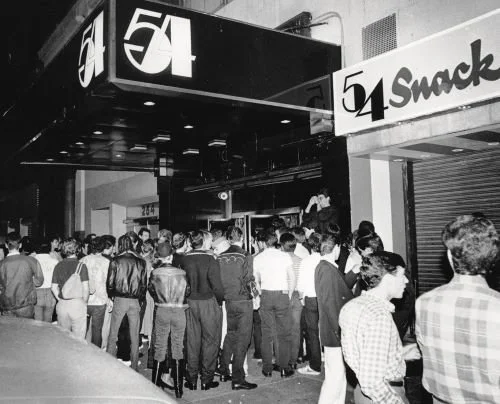
TO feel respected, heard and treated far better than they are.

FEATURE: Angel in Disguise: Brandy’s Never Say Never at Twenty-Five

FEATURE:


Angel in Disguise


Brandy’s Never Say Never at Twenty-Five

_________

I am keen to explore…

 IN THIS PHOTO: Brandy Norwood during the 50th Annual Primetime Emmy Awards held at the Shrine Auditorium in Los Angeles, CA on 13th September, 1998/PHOTO CREDIT: Margaret C. Norton/NBCU Photo Bank/NBCUniversal via Getty Images via Getty Images

an album that helped cement the brilliance of an R&B icon. Released on 9th June, 1998, Brandy’s Never Say Never reached number two in the U.S. and nineteen in the U.K. The record label Atlantic consulted David Foster as well as producer Rodney ‘Darkchild’ Jerkins and his team to work with Brandy Norwood on the record; Jerkins then went to work on and mould majority of the album. He also acted as Brandy’s mentor. In terms of what is explored on the album, Brandy discusses her experiences with love, the media, and monogamy. Perhaps her most important album, it built on the promise of her 1994 eponymous album. Maybe four years was a long gap, but it resulted in a follow-up that is more eclectic and broad. Showcasing her amazing voice and songwriting, Never Say Never contains singles such as The Boy Is Mine (with Monica), Angel in Disguise, and Have You Ever. Never Say Never was nominated for Record of the Year at the 1999 GRAMMYs. Because it is twenty-five years soon, I wanted to spotlight an incredible album. Having gone five times Platinum in the U.S., there is no doubting the importance and popularity of Never Say Never. The first feature I want to highlight is from Vibe. They marked its twentieth anniversary in 2018:
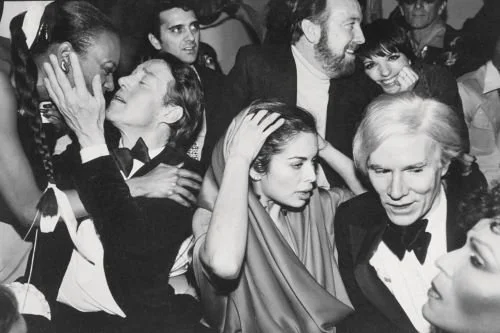
Her project came four years after her self-titled debut, a notion that would be considered blasphemous today. But Brandy was in no way resting on her laurels. During the 90s and early aughts, Brandy was the R&B ‘it girl,’ with mainstream appeal. She was the epitome of the “girl next door,” which was showcased on our television screens every week as she starred on the hit UPN (now CW) sitcom, Moesha.

When Brandy entered the studio in the fall of 1997 to begin recording, she wanted to break away from the songs heard on her debut. But in some ways, the Brandy album has similarities to Never Say Never when it comes to ballads such as “Brokenhearted” and “Always On My Mind.” Both records have the then-14-year-old singer crooning about heartbreak and longing, themes she would come to revisit on her sophomore offering.

This time around, things would be different– enter Rodney “Darkchild” Jerkins. Brandy’s record label connected her with the then-upcoming producer, and the next is R&B music history.

Jerkins, along with his production and songwriting team consisting of brother, Fred Jerkins III, and LaShawn Daniels, gave Brandy a timeless mix of R&B ballads, up-tempo and mid-tempo tracks. He was the mastermind behind Never Say Never’s hit lead single, “The Boy Is Mine,” a duet with Monica. Playing on the rumors in the press about the two songstresses disliking each other, Jerkins thought it would be cool to put those stories to a song.

It paid off with “The Boy Is Mine” spending 13 weeks at number one on the Billboard Hot 100 chart and winning both ladies a Grammy for Best R&B Performance by a Duo or Group. Brandy had officially arrived.

In addition to Never Say Never having commercial appeal with “The Boy Is Mine,” the album is strong in its R&B roots. “Angel In Disguise” is arguably one of the best opening tracks on a 90s R&B album. With backing vocals from R&B veteran Joe, the song tells a story of Brandy playing tug of war with her love with him pulling back emotionally. It’s mid-tempo production leaves any listener drenched in all the feelings as Brandy stands her ground in the game of love.

Let’s keep in mind, when Never Say Never is released, Brandy was only 19-years-old. One would never know that seeing as the album’s messages and lyrics appear to be from someone 5 to 10 years older”.

There was a lot of retrospection in 2018 when Never Say Never turned twenty. Many were excited to look back on an album that was Brandy’s international breakthrough. It was also an album that influenced upcoming female artists such as Britney Spears and Christina Aguilera. Listening back almost twenty-five years since I first heard Never Say Never, and it still sounds so fascinating and strong! Albumism revisited Never Say Never in 2018. Even though the entire album is terrific, there is one song that many people associate with Never Say Never:

Released one month ahead of the June 1998 drop date for Brandy's second album Never Say Never was its initiating single, “The Boy Is Mine.” Conceived as a two-way split between herself and her peer Monica, the slick slice of black pop showcased the pair trading cool, but caustic barbs at each other in relation to a romantic liaison with the same man. The song also doubled as the title piece to Monica's sophomore album which premiered two months later. The ensuing sensation the track created—commercially and culturally—still astounds twenty years removed from its reveal. Separate from the phenomenon that was “The Boy Is Mine” was the respective impact of Brandy’s sophomore LP itself.

Never Say Never followed Brandy (1994), the eponymous debut on the Atlantic label that established the vocalist—and emergent actress—as a preeminent presence in the R&B marketplace. Animated by its compelling streak of singles showcasing Brandy's versatile contralto, Brandy hit the platinum mark four times over in the United States alone. As an entire body of work, the self-titled collection's smooth, hip-hop soul vibe was fetchingly fitted to Brandy's voice and left listeners craving more. Demand for the singer's second offering was high.

The Never Say Never sessions began in the latter half of 1997 with the pressure for Brandy to repeat (and exceed) the critical and commercial performance of her first record. Despite this tension, Brandy kept a level head and carefully vetted the collaborative suggestions from Atlantic Records. Such was the label's counsel that Brandy intersected with the industry-decorated Canadian arranger, producer and writer David Foster.

Wisely sensing that Foster could lend a certain level of pop crossover credibility to the project, Brandy agreed to put down tracks with him. Foster helmed three compositions for the set: “Have You Ever?,” “One Voice” and “(Everything I Do) I Do It For You.” The latter track was a spirited, if ultimately faithful cover of the 1991 power ballad smash by Bryan Adams.

The remainder of Never Say Never was overseen by an enterprising young man that was assuredly on the way up. Rodney “Darkchild” Jerkins had been the man behind the boards on song pieces for the likes of Vanessa Williams, Mary J. Blige and Joe and it was hoped that he and Brandy would find creative chemistry together.

As it happened, the assembly for Never Say Never allowed Brandy and Jerkins to discover their respective muses in each other and commence one of the most enduring, if tempestuous singer/producer partnerships in popular music history. In addition to his own individual production and writing skills, Jerkins had a close knit pool of colleagues—Harvey Mason Jr., LaShawn Daniels and Fred Jerkins III—to assist him in Never Say Never's construction, while fielding supplemental writing or production contributions from others as needed.

Encouraged by Jerkins to share her feelings and participate in the record making process, Brandy wrote and produced on the LP where she could. The rest of the material contained on Never Say Never reflects various Darkchild staff—or writers/producers commissioned by them—tailoring it all to her life experiences. It makes for a long player that is disarmingly astute in tackling identity (“Top of the World,” “U Don't Know Me (Like U Used To)”) and romantic turbulence (“Angel in Disguise,” “Almost Doesn't Count”). By infusing her own pathos into these typically chewed over subjects, the album is a somewhat intimate affair.

With its 16 tracks radiating a clear and concise confidence, Never Say Never was sent out into the world on June 9, 1998. Critically and commercially, the effort was a monumental victory for Brandy with seven of its singles, post-“The Boy Is Mine,” carrying the record—domestically and internationally—into the spring of 2000. The collection was also a Grammy favorite with nominations in two calendar years, 1999 and 2000; she won one in 1999.

Accolades aside, Never Say Never is representative of an overall watershed moment for Brandy's legacy in that the album trademarked her exuberant, but mature aestheticism and transformed it into a source of inspiration for much of the modern R&B that came in its wake. It was quite a feat for the little girl who originally held fast to the dream of becoming a Whitney Houston-esque songbird in her own right. But as the saying goes, “never say never”.

I am going to end with a review for the terrific and iconic Never Say Never, Brandy is an artist who continues to release extraordinary music. Her latest album, B7, came out in 2020. Let us hope an eighth studio album comes about soon. Sputnikmusic had their say about an album that I feel, whilst hugely successful, is actually quite underrated. I would like critics to revisit it now and revise their original reviews. There was a lot of love for Never Say Never:

Brandy is an oft-repeated name in dance music and r&b retrospectives, but rarely is her music put to the test beyond a small handful of well-known singles (and of course, countless samples). Today, I challenge you to put her music to the test. If you're saying to yourself, nice try, I'll never appreciate such a cheesy album or genre, here's what I say to you: Never Say Never.

Never Say Never captures the energy of an artist fresh off of a successful debut album, ready to let go and make music true to her heart and vision. Like many old skool r&b releases, a lopsided tracklist detracts from the record's immediacy looking back...but that's not the point! The serendipitous pairing of Brandy and producer Darkchild (aka Rodney Jerkins) resulted in a distinct atmosphere and style that made waves in the pop music industry and beyond. It doesn't lose sight of what r&b had to offer during the '90s, but is simultaneously forward-thinking, striking a balance between camp and soul that remains exceptional over twenty years later.

On 9th June, Never Say Never turns twenty-five. A real classic, I know Brandy herself will have a few words to say about it. I am not sure whether there is an anniversary vinyl being planned (the music videos from the album could be remastered in 4K), but if you get chance to stream Never Say Never, then please do. It sounds as remarkable and impactful now as it did…

BACK in 1998.

FEATURE: Don’t Leave Me This Way: Why It is Time for Another Motion Picture About the Iconic Studio 54

FEATURE:


Don’t Leave Me This Way

PHOTO CREDIT: John P. Kelly


Why It is Time for Another Motion Picture About the Iconic Studio 54

_________

THIS is tied to any…

 IN THIS PHOTO: Beyoncé on a fake horse during her Renaissance World Tour/PHOTO CREDIT: Kevin Mazur/Getty Images for Parkwood

event or anniversary, but I have been thinking about the resurgence and rise of Disco-inspired music. Whether you call it Post-Disco or Neo-Disco, there has been a lot of artists putting their stamp on it. From Jessie Ware to Kylie Minogue or Beyoncé, it is a great way of revitalising sounds of the 1970s and updating them. Maybe using Disc as a basis, there is a blend of the modern and classic. Hardly surprising that this concoction should result in such phenomenal albums. People wasn’t to be uplifted and transported somewhere! I suspect that we will see a lot more albums like this in the coming years. It has made me think about a vital club that has sadly now closed, but it played a key role in Disco’s story. Studio 54’s building is there still, but it operates a Broadway theatre. It is located on 254 West 54th Street in the Midtown Manhattan neighbourhood of New York City. I get the feeling that, whether they are an American act or British, there are artists evoking the spirit of Studio 54. I definitely put on their albums and feel like I am there. The Guardian recently reviewed Beyoncé when she played in Cardiff as part of her latest tour. There was a mention of Studio 54:

One section encapsulates the emancipatory next-levelness: a pugnacious workout in which a trio of Renaissance club tracks are delivered in even sweatier forms. The Queens remix of Break My Soul interpolates sections of Madonna’s Vogue, acknowledging a previous time a major US pop star paid tribute to the innovations of dance music’s queer crucibles. Enveloped within are further nods to fellow musicians: Lizzo, Tierra Whack and Santigold are just three contempories named. Sister Rosetta Tharpe, Bessie Smith and “Helen Folasade Adu”, AKA Sade, are pioneers recognised.

In among all this bass and bling, Beyoncé’s voice remains commanding. But her more conventional soul melismas are rationed tonight, with staccato raps, ecstatic noises and edicts to the fore. If Lemonade, Beyoncé’s previous record, was a nuanced statement of Black pride, Renaissance revels in unbridled physical liberation for “everybody”. There are women in the band. There are plus-sized dancers, although there could be more. A giant silver duvet envelops Beyoncé at the end of Cozy, a song about being comfortable in your own skin. Whether overtly intended or not, a woman on horseback doesn’t just tilt at Studio 54, it suggests the notion of a warrior queen, of a Boudicca – an image that contrasts with the more prevalent colonial narratives: statues of chaps on horseback”.

It is just over forty years since Studio 54 closed its doors. On 4th February, 1980, a few years after it opened as a Disco club, the party named ‘The End of Modern-day Gomorrah’ ended this wonderful era. Even if it was a brief regency, you do wonder if anything like Studio 54 exists today. Not only in terms of its setting and vibe, but the sort of people who go there. Before coming to the point of this feature, I want to quote from GQ. They chatted with Ian Schrager about the release of the book, Studio 54. The opening paragraphs are vivid and scene-setting:

There are two useful political bookends to the continued significance of the legend of Studio 54 from the opening and closure of the most famous nightclub in the world. When the doors of Studio flung open during the infamous early summer of 1977, the socialite Nikki Haskell was among the first to approach the velvet rope. She was double-dating that night. On her arm was a man whose name is now forgotten to history. Accompanying them was the future president of the USA, Donald Trump, with his then-bride, Ivana.

In Studio’s dying days, after its short lifespan – the space ignited then burned out with the speed, efficiency and sparkle of a Catherine wheel – scandal had begun to accrue around the former midtown opera house, and not just concerning the freewheeling accountancy practices of its owners, Steve Rubell and Ian Schrager. Margaret Trudeau, deep into the dreamy haze of a Quaalude hit, slumped back on a banquette in Studio’s secret room downstairs, under the stage. She was an early victim of what is now euphemistically known as ‘the upshot’. The Canadian prime minister’s wife was papped knickerless. The shot became the hottest news item shared across Canadian news media the following day. Pierre Trudeau lost his seat shortly thereafter. Three decades later, his son Justin occupies it.

PHOTO CREDIT: Robin Platzer

That the twin leaders, the giants of North American politics, should have intimate connections to Studio 54 should come as little surprise. ‘Everybody who came to New York went there,’ says Ian Schrager now, sitting in his Lower Manhattan office suite, the central hub of operations from which he conjures ever-more delightful environments in which the mundane business of life can be lent his tasteful fairy dust. ‘I mean, it was a phenomenon.’ Schrager has just opened the latest of his hotels, Public, on the Lower East Side. Patti Smith played at the ribbon-snipping party. A rooftop terrace bar looking wide out onto the East River, Brooklyn and beyond carries with it some of the vista of his past and present. To many, Schrager is the unofficial king of New York.

Over his left shoulder sits the Studio 54 logo, the letters picked out in lacquered gold. By ‘everyone’ coming to Studio, he means ‘everyone good’, a claim that bears close scrutiny. The discotheque rode a new celebrity wave hard and fast, its politics a secondary afterthought to the amoral bacchanalia housed within. Parties were thrown for Tennessee Williams and Truman Capote. Thelma Houston once ‘ummed’ and ‘aahed’ her way through the delicious introduction to “Don’t Leave Me This Way” in crimped silver lamé from the balcony. Michael Jackson still sported his Afro there. For the Warhol coterie, Studio was an elite variant of the working men’s club. In its final hours, Diana Ross bid farewell to Rubell and Schrager from the Studio DJ booth before the NYPD intervened to cut short the Dionysian excess by dishing them out a couple of jail sentences for tax evasion.

In the intervening four decades since, Studio 54 has become the subject of every art director’s glamour mood board. When boys who read nu-disco blogs hear the opening strains of “Love Hangover”, “Relight My Fire” or “Was That All It Was”, it is their imaginary Studio 54 valve that those propulsive basslines first tickle. When a stylist slips into a kaftan, it is to the back stairwell of Studio their sartorial choice transports them. I once heard the NYC Downlow, Glastonbury’s triumphant disco space, described as ‘Studio 54 in a cow field’. When you want to designate a particular brand of louche elegance on a night-time scene, Studio 54 is the natural first port of comparative call.

PHOTO CREDIT: Robin Platzer

In it Rubell and Schrager, a pair of old friends with a Brooklyn complex, had temporarily restructured Manhattan in the spirit of interwar Berlin, setting the theatre of the twilight to a disco beat. ‘The best thing that happened to me,’ says Schrager, ‘was being raised in Brooklyn. Everybody was hungry, everybody was upwardly mobile. Your parents wanted you to live better lives than they had lived. In Brooklyn, everybody had an ambition and everybody had something to prove. You know, I wasn’t declawed, as I would’ve been if I’d grown up in a suburb.’

On its 40th birthday, Ian Schrager has begun for the first time to look back in detail at the legacy of Studio 54. As he glided past 70 last year, he has reached a satisfying point in his story. He has a wife, Tania, and a seven-year-old son, as well as two daughters from a previous marriage, and two step-daughters with Tania. Schrager is living something of his domestic life in reverse. Now a hugely successful hotelier, he has a string of successful global concerns that have bucked the populist hospitality trend. His hotels, like his nightclub, have been much imitated, never bettered. ‘I’ve been in one of my hotels and heard someone say, “This is the hotel from hell,”’ he says, without a care. ‘Well, whatever. The strength of the hotel is that it’s not generic and it’s not for everyone”.

It is a shame that the Disco era died, and that a club as legendary and iconic had to close. Now that this is this fresh wave of Disco-inspired music, one would think there is lease and life in such an iconic club like Studio 54. I understand there are a lot of Disco clubs around the world, but none that have the lure and fame of Studio 54. Given its history and allure, there has not been a huge amount in the way of films about it. Studio 54: The Documentary came out in 2018. The way it is described (“#Studio54 was the epicenter of 70s hedonism - a place that not only redefined the nightclub, but also came to symbolize an entire era. Its co-owners, Ian Schrager and Steve Rubell, two friends from Brooklyn, seemed to come out of nowhere to suddenly preside over a new kind of New York society. Now, 39 years after the velvet rope was first slung across the club’s hallowed threshold, a feature documentary tells the real story behind the greatest club of all time”) is thrilling! It is a must-see for anyone with even a passing interest in the club. There have been films that have included Studio 54 and used it in their plots. Only one big film to my mind has got a theatrical release. Studio 54 was released in 1998. It starred Ryan Phillippe, Salma Hayek, Neve Campbell, and Mike Myers as Steve Rubell, the club's co-founder. Whilst the idea and intention of the film was noble and needed, reviewers stated it was a missed opportunities. Not featuring many of the real characters and faces that passed through, the lack of realism means it is not an essential representation of Studio 54. Without ingraining and exploring its L.G.B.T.Q.+ themes, a lot of Studio 54’s meaning and legacy was lost.

There is definitely scope and demand for a film that revisits Studio 54. Not to cast already, but you could see Beyoncé taking in one of the parts! Maybe working to the close in 1980, you could focus on a group of friends who frequent Studio 54, but it would very much be about the real-life people who ran it and helped put it on the map. Perhaps there will be some creative license regarding some of the characters, but you want to keep it grounded. It could show some of the excess and hedonism that was present inside the walls of the Midtown Manhattan space. Backed and propelled by a terrific soundtrack, it could be a really popular film. I don’t think there has been anything beside documentaries when it comes to Studio 54. Putting something on the big screen twenty-five years after the film, Studio 54, was released, there does need to be something more real and rooted in the club’s history and players. I think it would resonate with audiences of all ages. Although the Studio 54 story would include corruption, excess, controversy and some dark elements, there is also the frivolity, the fun and sheer cool of the club! Rather than make a film that waters down the sex and drugs, or one that focuses too much on it, there could be this balance where you see inside Studio 54 and its famed guests, but you get to do so through some lead characters experiencing it for the first time. As so many of the songs and artists played at Studio 54 have doubtless influenced artists today repurposing oldskool Disco, there is relatability creating a film that takes us inside this legendary place. I definitely think that it is…

TIME to go back there.

FEATURE: Inspired By… Part Ninety-Eight: Siouxsie and the Banshees

FEATURE:


Inspired By…

IN THIS PHOTO: Siouxsie and the Banshees in 1986


Part Ninety-Eight: Siouxsie and the Banshees

_________

THERE was meant to be…

 PHOTO CREDIT: John Stoddart/Popperfoto

this big moment when Siouxsie Sioux played the Cruel World Festival on 20th May. Sadly, the festival was cut short due to adverse weather in California. It meant that she did not get to play to U.S. audiences that day (though she did get to play a rescheduled show the following day). It would have been a huge moment for someone who is so loved! One of the most captivating live performances there is. For this Inspired By…, I am focusing on her band, Siouxsie and the Banshees. The hugely influential London band honed this unique and distinct Post-Punk sound that had a big impact on artists that followed. Their debut album, The Scream, came out in 1978. Their final album, The Rapture, arrived in 1995. It was a fine way to bow out. I wanted to celebrate their legacy with a playlist of songs from artists influenced by the amazing Siouxsie and the Banshees. First, AllMusic provide some detailed biography concerning the iconic band – with one of the most talented and important leads in Siouxsie Sioux:

Siouxsie and the Banshees were among the longest-lived and most successful acts to emerge from the London punk community; over the course of a career that lasted two decades, they evolved from an abrasive, primitive art punk band into a stylish, sophisticated unit that notched 18 Top 40 hits in the U.K. as well as a left-field Top 40 hit in the U.S.

Throughout its numerous lineup changes and textural shifts, the group remained under the leadership of vocalist Siouxsie Sioux, born Susan Janet Ballion on May 27, 1957. She and the Banshees' initial lineup emerged from the Bromley Contingent, a notorious group of rabid Sex Pistols fans; inspired by the growing punk movement, Dallion adopted the name Siouxsie and formed the Banshees in September 1976. In addition to bassist Steven Severin and guitarist Marco Pirroni, the band included drummer John Simon Ritchie, who assumed the name Sid Vicious; they debuted later that year at the legendary Punk Festival held at London's 100 Club, where their entire set consisted of a savage, 20-minute rendition of "The Lord's Prayer."

Soon after, Vicious joined the Sex Pistols, while Pirroni went on to join Adam and the Ants. The core duo of Sioux and Severin, along with new guitarist John McKay and drummer Kenny Morris, reached the U.K. Top Ten with their 1978 debut single, "Hong Kong Garden"; their grim, dissonant first LP, The Scream, followed later in the year. Two days into a tour for their 1979 follow-up, Join Hands, both McKay and Morris abruptly departed, and guitarist Robert Smith of the Cure (the tour's opening act) and ex-Slits and Big in Japan drummer Budgie were enlisted to fill the void; although Smith returned to the Cure soon after, Budgie became a permanent member of the group, and remained with the Banshees throughout the duration of their career.

With ex-Magazine guitarist John McGeoch on board, the band returned to the studio for 1980's Kaleidoscope, a subtler and more melodic effort than their prior records; on the strength of the U.K. Top 20 smash "Happy House," the album reached the Top Five. A year later, the Banshees released the psychedelic Juju, along with Once Upon a Time, a collection of singles; at the same time, Sioux and Budgie formed the Creatures, an ongoing side project. Following 1982's experimental A Kiss in the Dreamhouse, McGeoch fell ill, and Smith temporarily rejoined for the group's planned tour; a pair of 1983 performances at London's Royal Albert Hall were recorded and later issued as Nocturne. Also in 1983, Severin and Smith teamed as the one-off project the Glove for the LP Blue Sunshine.

After his recovery, McGeoch opted not to return, so the Banshees recruited former Clock DVA guitarist John Carruthers after Smith exited following the sessions for 1984's dark, atmospheric Hyaena. With 1986's Tinderbox, Siouxsie and the Banshees finally reached the U.S. Top 100 album charts, largely on the strength of the excellent single "Cities in Dust." After 1987's all-covers collection Through the Looking Glass, Carruthers took his leave and was replaced by ex-Specimen guitarist Jon Klein and keyboardist Martin McCarrick for 1988's Peepshow, a techno-inspired outing that gave the group its first U.S. chart single with "Peek-a-Boo."

In 1991 -- the year in which Sioux and Budgie married -- the Banshees performed on the inaugural Lollapalooza tour; their concurrent LP, Superstition, was their most commercially successful, spawning their lone U.S. Top 40 hit, "Kiss Them for Me." Another singles collection, Twice Upon a Time, followed in 1992 before the group returned after a long absence with 1995's stylish The Rapture, produced in part by John Cale. A year later, the nostalgia surrounding the reunion of their former heroes the Sex Pistols prompted Siouxsie and the Banshees to finally call it quits; Siouxsie and Budgie turned to the Creatures as their primary project, while Severin composed the score for the controversial film Visions of Ecstasy. In 2002 Siouxsie, Severin, and Budgie reunited, joined by guitarist Knox Chandler, for the so-called Seven Year Itch tour, eventually leading to a live album, Seven Year Itch, and a DVD concert film in 2003. Universal Music began releasing the band's albums remastered with bonus tracks in 2006. Voices on the Air: The Peel Sessions, drawn from live recordings made for the John Peel radio show between 1978 and 1986, appeared that same year”.

Even though the group are no longer together, Siouxsie Sioux is playing live. In July, she heads off on a European tour that includes the U.K. Latitude Festival (20th-23rd July), and she’ll also headline the BBC Sounds Stage on the final evening, joining previously-announced headlining acts Pulp, Paolo Nutini, and George Ezra. To illustrate the influence of Siouxsie and the Banshees, below is a playlist of tracks from artists who cite their as influences or have been compared with them. It shows they are an…

ENROMOUSLY important band.

FEATURE: You Don’t Have to Be Beautiful… Some of the Early Press Reaction to Kate Bush’s Music

FEATURE:


You Don’t Have to Be Beautiful…

IN THIS PHOTO: Kate Bush in 1982/PHOTO CREDIT: Clive Arrowsmith


Some of the Early Press Reaction to Kate Bush’s Music

_________

MAYBE something that influenced…

 IN THIS PHOTO: Kate Bush in 1978/PHOTO CREDIT: DPA

Prince’s 1986 hit, Kiss, there is this oddly insulting headline that appeared in SOUNDS in 1978. Their headline ran “You don’t have to be beautiful…”. I wanted to look at some of the weird and sometimes short-sighted press that Kate Bush has received through her career. Now, she is considered to be an icon and legend. There is mostly positive press - but that was not always the case! I have written about this before, but it is very strange that the press did not really know how to handle Kate Bush or what to make of us. If her music was original and unlike anything around her, the press seemed to use that as an excuse to cast Bush in a very odd light. I can only imagine how she must have felt, excited about her career and keen for the music to connect, reading some of the press! SOUNDS spotlighted Kate Bush in March 1978. Even if they were very positive about her music fort that interview, the fact that they lead with an odd headline – and say that we cannot accuse them of being sexist – was a peculiar angle. They do mention her looks and beauty. Bush said that she didn’t mind this being brought up, so long as it did not get in the way of her career and interfere with her process. Donna McAllister was the interviewer. It is a mixture of compliments and random digs. There is mention of her mannerisms and over-gesticulations. It was not always the case though, for a teenage artist excited to see her name in print, there was this somewhat condescending and patronising overtone. By mentioning her looks or kooky side, it did undermine the seriousness of her music and the fact that she was a professional.

SOUNDS were back at in September 1978! It is okay not to like an artist, but the way in which this was conveyed by the magazine was a bit insulting. They interviewed her after a busy and successful year. This time around, it was Pete Silverton who was asking the questions. There are some great quotes from Bush, but the language used by Silverton was extraordinarily disrespectful. There is a quote that said: “…insipid to the point of unreality”. It came from a paragraph where Silverton remarked being “trapped” in a conversation with Bush was like being in a kid’s T.V. show. Something quite wholesome, but with unwarranted aspirations of intellectualism. Silverton was patronising when Bush talked about astrology. She was not referring to someone’s star signs, but real astrology where mathematicians get together and study it. Written off as someone who was quite airy and ridiculous, how discouraging must it have been for Bush to read stuff like that?! I am not spotlighting this press to emphasise anything bad: more, it is about showing how this amazing artist succeeded and resonated with fans, despite the fact the press didn’t truly understand her. If they are faced with someone interesting and different, their instinct was to mock and ridicule! This is not a random dive into the press around Kate Bush. I have been reading Laura Shenton’s Kate Bush: A Visual Biograph. Shenton discusses Bush’s amazing career. Her words are accompanied by incredible photos and press cuttings. It is a terrific read for Bush fans!

 IN THIS PHOTO: Kate Bush in 1982/PHOTO CREDIT: Steve Rapport

Whilst I was amazed by the photos and this really arresting writing, the press cuttings, at times, made me feel both sadness and respect. Every artist has to deal with some bad or inaccurate press coverage. There was a turn of the tide by the time Hounds of Love arrived in 1985, but the years before that were quite tough at times. Bush committing to interviews, only to be described in such belittling or insulting tones! Even when an interview is largely positive, there was always some sting or unnecessary comment. 1982’s The Dreaming was a very experimental and dense album. I can understand how critics might have felt confused by the album – and not quite sure how to address or assess it. Keeping things with SOUNDS – not to fixate on the publication, but they did interview her quite a bit -, and there was a less editorial approach from Karen Swaye. Instead of Swaye going off on a tangent and sharing unwanted opinions about Bush’s looks and sound, there was this forum where she allowed Bush to speak. Published in October 1982, it is one of the mire respectful interviews. Even so, during the interview, Bush was asked about early press and how she was portrayed. In 1978 and 1979, there were not many female artists around. The press did not quite know how to cope with an artist who was coming into a male-dominated industry. If someone early interviews winkingly claimed not to be sexist, by calling attention to that, I think that they were.

Definitely, when you read some of the words aimed at Bush, it was a case of journalists going after an ambitious and unique female artist. It was easier for them to mock and misunderstand, rather than take her seriously! I am glad there was a reversal in tone and affection by 1982. Even so, a review of The Dreaming by Rose Rouse couldn’t help but be spiteful. New to Bush’s work, Rouse found her sickening and stomach-churning. Criticising the production and feeling depressed by some songs, Rouse was a typical example of what journalists had been doing since 1978. Bush was constantly dogged with this idea that she was on cloud nine and quite vapid. Rouse was shocked that there were real themes and serious words throughout The Dreaming. Expecting Bush to be empty and sickly-sweet, encountering tracks like The Dreaming and Pull Out the Pin were a surprise. Even so, the review came across as ill-informed and stuck up. A young woman daring to do something different and experimental! There was still this impression that women in music should have a particular sound and style – and that an album like The Dreaming was boring or a mistake. Alongside the more positive and encouraging reviews and interviews, Bush still had to read this. She was mocked for being quite philosophical and dreamy. She was then written off when doing something more esoteric or political. She could not win either way!

SOUNDS were covering Kate Bush in 1985. Hounds of Love got enormous praise, but one of the biggest music magazines of the time were still not willing to give it over to Bush. Caroline Linfield was not impressed when she attended the premier at the London Planetarium. It was a very condescending and bored take. Linfield described the evening in rather distressed tones. Not impressed by the light show and this idea that Bush was a hippie that was all surface and no substance. Lacking any real respect for Kate Bush and displaying zero knowledge of her importance and back catalogue, it is another press cutting that should have been full of praise and respect – but instead was a waste of column inches and time! As I say, most of the press was positive and showed compassion and affection. There was a sector that was pretty mean and dismissive of Bush. Whether she was being interviewed back in 1978, or returning to the spotlight in 1985, I can see why she would stop reading her press after a while. Some may say that it does not matter but, in the 1970s and 1980s, the Internet was not a thing. People were getting their music media from magazines and newspapers. That is how a lot of opinions were formed. Bush has had the last laugh and is a massive success all these years later. It comes down to her being misunderstood and ahead of her time. One of few female artists in the mainstream when she started out, critics could not get over this common idea that she was a waif-like teen with not a lot to say. This was never true, but it was just the way she was written about. Perception has changed now, but there were so many years where Bush could not get away from this notion that she was insubstantial and out of her depth. The narrative did change, and now one can bury that ridiculous press! There is so much love for her now. The press she gets now is overwhelmingly positive. After some of the words she had to read early in her career, it is the very least…

THAT she deserves.

FEATURE: Prince at Sixty-Five: Revisiting the Idea of a Biopic or Film Featuring the Genius’s Music

FEATURE:


Prince at Sixty-Five

IN THIS PHOTO: Prince in action during a Purple Rain tour performance in Los Angeles, March 1985/PHOTO CREDIT: The LIFE Picture Collection/Shutterstock


Revisiting the Idea of a Biopic or Film Featuring the Genius’s Music

_________

I might publish another feature…

 IN THIS PHOTO: Prince performing at the Fabulous Forum on 19th February, 1985 in Inglewood, California/PHOTO CREDIT: Michael Ochs Archives/Getty Images

ahead of Prince’s sixty-fifth birthday on 7th June. We lost the genius in 2016, but I am very keen to celebrate his legacy and life through a series of features. He is one of the all-time greatest and most influential artists. I don’t think we will ever see anyone quite like him again! When I wrote some features commemorating his passing (Prince died in April 2016), I did mention how there has not been a biopic or new documentary about his life. Not that his music is obsolete or the man needs reframing. I just think he is due some celebration on the big or small screen. Documentaries seem obvious. He is someone who continues to influence artists and millions around the world. I am sure we could have a series of documentaries that discuss his iconic albums – including Purple Rain and 1999 -, and what he gave to the world. There have been documentaries through the years, but not anything thorough since he died in 2016. In terms of biopics, there is always some sort of talk and rumour. It is hard to get the tone right and clear things with the estate. I am sure that they would give permission for a project, providing that it was truthful, open, and featured the right actor in the lead role. Prince’s career and life was so compelling, successful and varied, we do need to see the great man on the big screen! I feel that, alongside Madonna, this is one of the major artists who has been missing from cinema. Maybe many might feel it would be sacrilege to his legacy and brilliance. Can we expect an actor to replace Prince? I can see what they are saying, but nobody is trying to dishonour him. In fact, I feel a biopic could introduce Prince’s music to a new generation!

As he would have been sixty-five on 7th June, I am thinking more and more about his life and music. How it has not really been explored as much as it could have been. With such a long career, it is a decision as to whether home in on a particular period or do something more wide-ranging and career-spanning – though I suppose focusing on his golden period in the 1980s might be wiser. I would be fascinated if a film explored the time between Prince releasing 1999 (1982) and Purple Rain (1984), or how his career hit a new level after that. As an inspiration for other Black artists, an activist and icon, Prince defied racial stereotypes. His music was flamboyant for sure, he his amorphous sexuality was not common at the time. There is no doubt that Prince is a role model and peerless historical figure. If not a biopic, then there is scope and promise regarding a film that features music from Prince. As I previously wrote, there are films that use an artist’s music as a soundtrack. Maybe the lead characters are inspired by them. A coming-of-age narrative that uses these songs to score some powerful scenes. With Prince, this could really bring to life a remarkable and moving film. From funky and exhilarating tracks to political statements and raw cuts, through to more romantic or sexual sermons, his wonderful catalogue could feature in a film!

There are all sorts of possible scenarios, but a film set in the U.S. seems like the best place. I like the idea of an individual or a group of friends bonding and being inspired by Prince. His songs scoring big moments. Whether it is love/sex, or something joyful. Maybe a tense moment. One where someone faces racial prejudice or violence. There is that possibility of making it a more musical film, and one or two songs – such as Let’s Go Crazy – do suggest a bigger choreographed number, or even a solo performance/dance. I can’t think of any film from recent years where an artist’s music has been the backbone and inspiration through a motion picture. Not that Prince can ever be forgotten or under-appreciated, but I do feel like there needs to be a big project and screen representation. We are getting posthumous releases – and that will continue for many years to come. I do like the idea of a film set in the 1980s or 1990s. A group of friends facing challenges or discrimination. Chronicling their lives and events, Prince’s music would very much be a driving force and sense of stability and guidance. I have been thinking about this a lot. As Prince is sixty-five on 7th June, it is right back at the forefront. An amazing and legendary artist who, to my mind, has been ignored when it comes to documentaries and films especially, there is a place – and I think demand – for the mighty Prince. Even though he died seven years ago, his legacy and importance will never fade. I long for the day when we see Prince’s life or music firmly on the big (or small) screen. I’d like to think, if he were still with us, that he would…

FIRMLY approve.

FEATURE: Good Times Roll: The Cars’ The Cars at Forty-Five

FEATURE:


Good Times Roll


The Cars’ The Cars at Forty-Five

_________

THROUGHOUT the year…

I am marking big anniversaries for important albums. One I could not let go is The Cars. The eponymous debut album from the U.S. group, it is rightly regarded as a classic. Featuring timeless songs such as My Best Friend’s Girl, Good Times Roll, and Just What I Needed, it reached eighteen on the US Billboard 200 and has been certified six-times platinum by the Recording Industry Association of America (RIAA). It is one of the forerunners and defining albums of New Wave. I am going to get to a couple of reviews for The Cars. Before getting to them, Albumism provide some context to the album’s release. It came out on 6th June, 1978. This was a time of change and shifting musical tastes. Maybe Punk was starting to lose ground and dominance to other genres. There was nothing quite like The Cars in mainstream music at that point:

The world in 1978 was a sea of confusion and in search of an identity. The previous summer, the so-called King of Rock and Roll died on the toilet and his unfortunate demise was emblematic of what was occurring in the music world. The illusion of innocence was gone. It became increasingly evident that the business part of “the music business” was more important to the people who ran it. Music heads wanted more than what was being offered on the radio. Punk broadened the landscape, but many of us were not ready to swim that far out into the ocean. We craved something different and lucky for us it arrived late in the spring of 1978.

The Cars’ self-titled debut album was released in June 1978 and was critically well received. To this day it is considered the cream of the New Wave crop. The Cars is a nine song rock classic that expanded our sonic horizons. It was no longer just about the Eagles or Fleetwood Mac. Rock music was going in a different direction and the casual radio listener was ready to follow wherever The Cars were going to take them.

Even though Ric Ocasek was the main songwriter and leader of the band, Benjamin Orr was the group’s heart and soul. His performances on "Just What I Needed,” "Bye Bye Love,” "Moving in Stereo" and "All Mixed Up" personify the band’s sound and these songs are still being played on many classic rock stations today. The beauty of this album is that it came out of nowhere. The opening riff of "Just What I Needed” immediately transports me to a good place. I’m 13, in my room, listening to WNEW-FM and wondering “who the fuck is this?” The Cars’ debut album is everything good about discovering new music”.

There are a couple of features about The Cars’ debut album prior to getting to reviewers. The first, from Rhino, was published last year. I was not aware quite how influential and vital The Cars was. Maybe it is the impact and originality of the songs. Perhaps the album arrived at a time when something different was needed:

In June 1978, the Saturday Night Fever soundtrack was nearing the end of an epic nearly six-month run at #1 on the Billboard album charts, ruling the roost from the end of January through early July. The biggest rock albums of the year where from Boston, flying high with the group's second LP, Don't Look Back, and Billy Joel, whose 52nd Street album grabbed #1 for the last seven weeks of the year.

Amidst that barrage of sonic bombast, on June 6, 1978, the Cars released the band's debut album, simply titled: The Cars.

“It was beautiful to put that first bunch of songs together,” guitarist Elliot Easton told Rolling Stone in 1979. “It was the first time it was so easy in any band I’d been in. We knew we wanted to stick it out. The way it worked was, it would either be on a cassette, or Ric (Ocasek) would pick up his guitar and perform the song for us. We’d all watch his hands and listen to the lyrics and talk about it. We knew enough about music, so we just built the songs up. When there was a space for a hook or a line — or a sinker — we put it in.”

The band's confidence was high, to say the least: “We knew we were good before we did our first gig,” drummer David Robinson casually added.

It was May 1978 when the Cars released the band's first single: "Just What I Needed." The song was a success, making a formidable impression across rock and pop radio with its stark and minimal approach. The catchy pop melodies combined with bassist Benjamin Orr's affected vocals and the track's inventive arrangement immediately stood out from the hit parade. On the charts, "Just What I Needed" cracked the top 30 to peak at #27 on the Hot 100 in September 1978.

With the lead single picking up steam, the Cars released the band's self-titled debut album on June 6, 1978. From the record's anthem-like opening track (and third single), "Let the Good Times Roll," it was clear that the Cars were driving towards new frontiers in the world of rock 'n' roll, and inspiring a sea of new bands in their wake.

With "Just What I Needed" rocking radio and the charts throughout the summer of 1978 and well into the fall, the group's second single didn't arrive until October of that year: "My Best Friend's Girl" was another instant classic in the Cars' canon, the top 40 tune peaked at #35 on the Billboard Hot 100, but has proven to be one of the most enduring songs of the entire 1970s.

"I began playing the demos of 'Just What I Needed' and 'My Best Friend's Girl' in March 1977 during my weekday slot, from 2 to 6 p.m. Calls poured in with positive comments," Boston radio DJ Maxanne Satori recalled. "The Cars' sound was fresh. It wasn't punk, hard rock or folk rock. I thought of it as pure pop for now people, the title of a Nick Lowe album."

The Cars was a breakout smash, cruising to peak at #18 on the Billboard 200 for the week of March 24, 1979. The enduring power of the record was evidenced a few years later in the summer of 1982. That's when deep album cut "Moving in Stereo" was used most effectively during the memorable swimming pool scene in teen coming of age movie, Fast Times at Ridgemont High. That scene would get referenced for a new generation during Stranger Things 3.

“I guess we do have a pretty good aesthetic sense,” the late Ocasek pondered back in 1984 during an interview with The San Diego Union-Tribune. “But, you know, pop music can be good, too. We just hope that the pop music we make has people think a little more than some of the trash that’s out there.”

"We used to joke that the first album should be called The Cars' Greatest Hits," Easton said in the liner notes for Just What I Needed: The Cars Anthology. "We knew that a lot of great bands fall through the cracks. But we were getting enough feedback from people we respected to know that we were on the right track”.

There is a feature from a couple of years ago that underlines and emphasises the Pop mastery that is present throughout The Cars’ phenomenal debut album. Forty-five years later, it is still widely played and adored – and no doubt still inspiring bands coming through:

At just over 35 minutes, The Cars in its entirety is about as lengthy as a standard lunch break, and if one’s attention wavers for even a moment they are liable to have missed half the experience. Rather than obstruct its appeal, however, the album’s brevity actually encourages repeat listens, which themselves often reveal previously undetected details with each subsequent review. The record is frighteningly easy to enjoy and is dripping with pop appeal, but also features incredible artistic interest and idiosyncratic expression which makes the record something of a musical equivalent to junk food in its enjoyability and addictive nature, but with the nutritional benefits of fruits and vegetables.

Having assembled just two years prior to the release of their debut album, the Boston-based Cars origins actually lie further west, with lead singer/rhythm guitarist Ric Ocasek and bassist/occasional lead vocalist Benjamin Orr having first met in Ohio where the two were living at the time. The two would later reconnect in Columbus and would establish a collaborative partnership which would continue until the 1988 disintegration of The Cars. The pair soon relocated to Boston as a folk act under the name Milkwood, and would release one album which failed to make a discernible impact. This venture did bring them into contact with future Cars keyboardist Greg Hawkes, however, and soon after, lead guitarist Elliot Easton and drummer David Robinson would join the fold, solidifying the lineup of what would become the Cars. 

Taking on a new musical direction, the band quickly began to pick up steam, performing in local venues and recording demos which would garner significant record label attention and result in a bidding war for the band between Elektra and Arista Records. Ultimately, the band opted to sign with Elektra, predicting that their fusion of electronic, rock, and new wave would attract greater attention among the label’s roster of more traditional sounding acts. Producer Roy Thomas Baker was urged by the label to attend a performance of the band’s, which prompted him to sign on as their producer, a role he would maintain over the course of their next four albums. With all the necessary elements in place, the band entered the studio in February of 1978 to record their first album.

The album opens with the slinky, single-note arpeggios of Ocasek’s “Good Times Roll,” a sardonic observation on the absurdity of celebrity status and the rockstar posturing which had become prevalent in popular music at the time. The lyrics can also be interpreted as an acceptance of the inevitability of chaos, underlined by the G major chord in the bridge – the minor 3rd of the song’s key, E major – which makes its appearance concurrently with the drums, sparking an atmosphere of unease and seemingly indicating the approach of something sinister. Elliot Easton establishes himself early on as an unsung hero of the album, as his understated lead guitar work weaves in and out of Ocasek’s chugging rhythm and peppers the backdrop with broad, mid-range swells which silently dictate the track’s mood. The critique of lifestyles glamorized by society and the media, but ultimately detrimental to the people living them, is a recurring lyrical theme throughout the album”.

There is no denying The Cars’ place in musical history. As one of the all-time best debut albums, you’d have thought there might have been an anniversary vinyl release. I have not heard news of what coming about. That is unfortunate. The reviews are available, and they are unanimously positive from what I can see. This is what AllMusic said about The Cars’ 1978 debut:

The Cars' 1978 self-titled debut, issued on the Elektra label, is a genuine rock masterpiece. The band jokingly referred to the album as their "true greatest-hits album," but it's no exaggeration -- all nine tracks are new wave/rock classics, still in rotation on rock radio. Whereas most bands of the late '70s embraced either punk/new wave or hard rock, the Cars were one of the first bands to do the unthinkable -- merge the two styles together. Add to it bandleader/songwriter Ric Ocasek's supreme pop sensibilities, and you had an album that appealed to new wavers, rockers, and Top 40 fans. One of the most popular new wave songs ever, "Just What I Needed," is an obvious highlight, as are such familiar hits as "Good Times Roll," "My Best Friend's Girl," and "You're All I've Got Tonight." But like most consummate rock albums, the lesser-known compositions are just as exhilarating: "Don't Cha Stop," "Bye Bye Love," "All Mixed Up," and "Moving in Stereo," the latter featured as an instrumental during a steamy scene in the popular movie Fast Times at Ridgemont High. With flawless performances, songwriting, and production (courtesy of Queen alumni Roy Thomas Baker), the Cars' debut remains one of rock's all-time classics”.

I will wrap things up with a review from Rolling Stone. They highlight the insatiable and catchy melodies and that blends of eccentricity and accessibility. The Cars is a wonderful album that is coming up for forty-five years. We will be talking about it decades from now:

The first sound you hear on "Just What I Needed," the single from the Cars' debut album, is the repeated thump of bass notes against the short, metallic slash of guitar. It's a magnificent noise: loud, elemental and relentless. But the Cars–the best band to come out of Boston since J. Geils–aren't interested in simply traveling the interstates of rock & roll. They'll go there for the rush, but they prefer the stop-and-go quirks of two lanes. Before "Just What I Needed" is over, guitarist Elliot Easton has burned rubber making a U-turn with his solo, and Greg Hawkes' synthesizer has double-clutched the melody. Leader Ric Ocasek once sang that he lived on "emotion and comic relief," and it's in this tension of opposites that he and his group find relief (comic or otherwise) between the desire for frontal assault and the preference for oblique strategies. This is the organizing principle behind not only the single but the entire LP, which is almost evenly divided between pop songs and pretentious attempts at art.

The pop songs are wonderful. (Besides "Just What I Needed," they include "My Best Friend's Girl" and "You're All I've Got Tonight.") Easy and eccentric at the same time, all are potential hits. The melodies whoosh out as if on casters, custom-built for the interlocked but constantly shifting blocks of rhythm, while Ocasek's lyrics explode in telegraphic bursts of images and attacks ("You always knew to wear it well/You look so fancy I can tell"). Neither Ocasek nor bassist Ben Orr have striking voices, but by playing off the former's distant, near-mechanical phrasing against the latter's sweet-and-low delivery, the band achieves real emotional flexibility.

As long as the Cars' avant-garde instincts are servicing their rock & roll impulses, the songs bristle and–in their harsher, more angular moments ("Bye Bye Love," "Don't Cha Stop")–bray. The album comes apart only when it becomes arty and falls prey to producer Roy Thomas Baker's lacquered sound and the group's own penchant for electronic effects. "I'm in Touch with Your World" and "Moving in Stereo" are the kind of songs that certify psychedelia's bad name. But these are the mistakes of a band that wants it both ways–and who can blame rock & rollers for that? (RS 274)”.

On 6th June, The Cars’ immaculate debut album turns forty-five. It is tragic that Ric Ocasek is no longer with us (he died in 2019), as his incredible songwriting defines the album. If you have not listed to The Cars before – or not for a long time -, then do carve out some time to do so. It is an utter…

WORK of brilliance.

FEATURE: When You Got a Job to Do, You Got to Do It Well: A Holy Bond: Paul McCartney and Wings’ Live and Let Die at Fifty

FEATURE:


When You Got a Job to Do, You Got to Do It Well

IMAGE CREDIT: UMG


A Holy Bond: Paul McCartney and Wings’ Live and Let Die at Fifty

_________

I do not often…

 PHOTO CREDIT: Redferns/Getty Images

celebrate big anniversaries for songs (only albums normally), but there is one that I wanted to mark. In my opinion, the best James Bond theme song is Paul McCartney and Wings’ (I shall shorten it to ‘Wings’ for the rest of the feature) Live and Let Die. It has all the ingredients that you look for in a Bond theme: drama, sexiness, a hook-y chorus, and explosions, tension and whimsy. It is a beautiful song written by Paul and Linda McCartney. It was released on 1st June, 1973. I was keen to explore the track ahead of its fiftieth anniversary. 1973 was a big year for Wings. On 30th April, we marked fifty years of the band’s second studio album, Red Rose Speedway. Whilst it received some mixed reviews upon its release, I think that it has been re-examined since. Containing the classic My Love, it is a wonderful album that was a big step up from their 1971 debut album, Wild Life. Later in 1973 (5th December), Wings released the mighty Band on the Run. Their finest album, I think it ranks alongside the very best Beatles albums – although Paul and Linda McCartney were creating something distinct and new with Wings. That album is a colossus that proved Wings were much more than a Beatles side-project. In the same way as The Beatles would release singles that did not feature on their studio albums, Live and Let Die was this amazing release between two studio albums that could have appeared on Band on the Run. It did appear on the Archive Collection Reissue of Band on the Run and as part of Red Rose Speedway Archive Collection reissue – though the group could easily have slotted it onto the original album as a closer or hidden track.

Live and Let Die was released in the U.K. as Apple R 5987 on 1st June, 1973. It spent fourteen weeks on the singles chart. It reached number nine. There are a few features that I want to introduce, as this is an iconic song in the cannon and catalogue of Paul McCartney. Reaching number two in the U.S., Canada and Norway, Live and Let Die was a huge hit that has divided people when it comes to the all-time best Bond songs. I think it should always be at the top. With Paul McCartney, Linda McCartney, Denny Laine, Henry McCulloug, Denny Seiwell, and Ray Cooper in supreme form, this song will live forever. The legendary George Martin (who produced most of The Beatles’ studio albums) was responsible of the orchestral arrangement. When it was released as a single, the B-side was I Lie Around. Many have interpreted this song as a reply to John Lennon’s track, How Do You Sleep? A track (from his 1971 album, Imagine) that attacks Paul McCartney, this unofficial reply is typically clever and subtle. I am going to start by bringing in a feature from Entertainment Weekly. In 2021, they revealed the story of the most exhilarating Bond theme ever:

"Live and Let Die" was written by McCartney and his wife Linda while the band was recording Wings' second album, Red Rose Speedway, in London. "On the Sunday, I sat down and thought, okay, the hardest thing to do here is to work in that title," the ex-Beatle would later tell Mojo journalist Paul Du Noyer. "I mean, later I really pitied who had the job of writing Quantum of Solace. So I thought, Live and Let Die, okay, really what they mean is live and let live and there's the switch. So I came at it from the very obvious angle. I just thought, 'When you were younger you used to say that, but now you say this.'"

"Live and Let Die" was put on tape at London's AIR studios. "It was recorded live in a big room," Wings guitarist Denny Laine, who plays bass on the track, tells EW. "We had to have the orchestra live and so we needed the big room. I think it was recording it live that gave it the excitement. It usually does in a studio. When you've got a live recording it has the energy, the performance, which may be the reason why it was so popular."

The track was produced by George Martin, the longtime Beatles collaborator. "Oh, George was a sweetheart," Laine says of the producer. "He was the ultimate professional. Obviously it was Paul who wanted him. He knew what he was doing. He always had suggestions too. He wasn't a background guy. He was up front. He gave good ideas."

According to 007 legend, when franchise producer Harry Saltzman initially heard the track he thought it was a demo and planned to have it another performer cover it, before being informed that McCartney would only allow the song to be used if it was performed by Wings. Saltzman acquiesced to the demand, to the benefit of both the franchise and the band. "Live and Let Die" proved the most successful Bond theme up to that date, reaching No. 2 on the Billboard chart. The tune was nominated for an Academy Award but was beaten by the title song from The Way We Were. Wings' first album, 1971's Wild Life, had not enjoyed the critical or commercial success of McCartney's work with The Beatles. Red Rose Speedway was a bigger hit, but it was the success of "Live and Let Die" which really established the band as a major musical force. "It was pretty big for us," Laine says of the song. "We used to do it live ourselves with the band, with Wings. Obviously, the audience just loves that track because it was so famous."

Wings dissolved in 1981, but "Live and Let Die" has lived on. In 1991, Guns N' Roses included a cover of song on the band's multi platinum-selling album Use Your Illusion I with their version becoming a staple of the group's live show. "I loved it, I really did," says Laine. "It lends itself to a heavy rock version. Wings' version was a rock version to a certain degree but it was also an orchestra. Guns N' Roses did it as a rock band and they did a good version of it."

Over the years, the song has become a fixture at solo shows by both McCartney and Laine. "It always goes down really well," says Laine. "It's like a 'Goodnight!' song. The fact that it goes from the slow section to the fast section, and then back into the slower piece, and then rocks out at the end, is a great way of finishing the show”.

I will finish by looking at the aftermath and success of Live and Let Die. I don’t think that we often think about James Bond themes isolated. What I mean is that they are always associated with the film, and we do not really discuss them in the context of an artist’s career alone. I think, when it comes to Wings, I always feel it is a single that has a life of its own. One that you could play now and it would not necessarily make you think of James Bond. It is a track that remains so fresh and compelling because it has this dexterity and depth. I will move to an article from The Guardian that was published last year. The tale goes that James Bond producers heard the Wings song and thought it was a demo. They wanted a female singer to record the vocals, rather than Paul McCartney. The Guardian recount the story about a song that could only be delivered by the genius that is Paul McCartney:

It had always seemed inconceivable that the James Bond producers wanted to replace Paul McCartney with another singer for Live and Let Die, particularly as his title song for the 1973 Roger Moore classic became a massive hit.

But the story told by Beatles record producer George Martin, and repeated by McCartney, was that the 007 producers thought McCartney’s recording with his band Wings was just a demo and they wanted a female voice.

Now Allan Kozinn and Adrian Sinclair, authors of a forthcoming book, have unearthed unpublished contracts in a US university archive which show that the Bond producers always wanted McCartney for the opening credits and another performer for the film’s disco scene.

Kozinn, music critic of the New York Times for 38 years until 2014, said: “This has been a longstanding story in the music world – the producers of Live and Let Die wanted to replace McCartney with a female singer. Martin told the story many times. Paul’s picked it up many times. Actually, the internal communications revealed that it was always in the contract that there would be two versions of the song.”

In his 1979 memoir, All You Need is Ears, Martin recalled playing McCartney’s recording to Harry Saltzman, who produced the Bond films with Albert “Cubby” Broccoli: “He sat me down and said, ‘Great. Like what you did, very nice record, like the score. Now tell me, who do you think we should get to sing it?’ That took me completely aback. After all, he was holding the Paul McCartney recording we had made. And Paul McCartney was – Paul McCartney. But he was clearly treating it as a demo disc. ‘I don’t follow. You’ve got Paul McCartney,’ I said. ‘Yeah, yeah, that’s good. But who are we going to get to sing it for the film?’ ‘I’m sorry. I still don’t follow,’ I said, feeling that maybe there was something I hadn’t been told. ‘You know – we’ve got to have a girl, haven’t we?’”

In one interview, McCartney said: “The film producers found a record player. After the record had finished they said to George, ‘That’s great, a wonderful demo. Now when are you going to make the real track, and who shall we get to sing it?’ And George said, ‘What? This is the real track’.”

Sinclair, an award-winning documentary-maker, said: “That became part of that collection of stories that George and Paul would tell over the years, and nobody ever corrected it”.

Regardless of where you rank Live and Let Die among the other James Bond themes, there is no denying it is a Wings classic and one of the best songs Paul (and Linda) McCartney ever wrote. In the middle of a year where they were arguably at their commercial peak, this magnificent, mad and wonderful Bond theme was released into the world. On 1st June, we mark fifty years of an iconic and classic theme. Wikipedia provide some information about the commercial acclaim and critical reception of Live and Let Die:

Upon release, "Live and Let Die" was the most successful Bond theme up to that point, reaching No. 1 on two of the three major US charts (though it only reached No. 2 on the Billboard Hot 100) and No. 9 on the UK Singles Chart. The song also received positive reviews from music critics and continues to be praised as one of McCartney's best songs. It became the first Bond theme song to be nominated for the Academy Award for Best Original Song, but ultimately lost the award to Barbra Streisand's "The Way We Were". It won the Best Arrangement Accompanying Vocalist(s) at the 16th Annual Grammy Awards in 1974.

Wings performed "Live and Let Die" live during their concert tours and McCartney continues to play it on his solo tours, often using pyrotechnics during the instrumental breaks. It has been covered by several bands, including Guns N' Roses, whose version appears on their 1991 album Use Your Illusion I. One of the more popular covers of the song, their version was nominated for the Grammy Award for Best Hard Rock Performance at the 35th Annual Grammy Awards in 1993. In 2012, McCartney was awarded the Million-Air Award from Broadcast Music, Inc. (BMI), for more than 4 million performances of the song in the US”.

Billboard's contemporary review called it "the best 007 movie theme" to that time and one of McCartney's most satisfying singles, by combining sweet melody, symphonic bombast and some reggae into one song. Cash Box said that the song was "absolutely magnificent in every respect". Record World predicted that it "should have a long chart life."

"Live and Let Die" reached No. 1 on two of the three major US charts, though only reached No. 2 on the US Hot 100 for three weeks. It was kept from the No. 1 spot each week by three different songs, "The Morning After" by Maureen McGovern, "Touch Me in the Morning" by Diana Ross, and "Brother Louie" by Stories. "Live and Let Die" also peaked at No. 9 in the UK. The single was certified Gold by the Recording Industry Association of America for sales of over one million copies.

Sales of the single release and of the sheet music were "solid."[23] The sheet music used the line "in this ever-changing world in which we live in" as part of the opening verse of the song. In the Washington Post interview more than 30 years later, McCartney told the interviewer, "I don't think about the lyric when I sing it. I think it's 'in which we're living', or it could be 'in which we live in', and that's kind of, sort of, wronger but cuter," before deciding that it was "in which we're living".

IN THIS PHOTO: Wings on holiday in 1972/PHOTO CREDIT: MPL Communications Ltd 

"Live and Let Die" was not featured on a McCartney album until the Wings Greatest compilation in 1978, and was included again on 1987's All the Best!, 2001's Wingspan: Hits and History, 2016's Pure McCartney, and in 2018 as a restored bonus track on a reissue of Red Rose Speedway. The entire soundtrack also was released in quadrophonic. It was also included on The 7" Singles Box in 2022.

United Artists promoted the song in trade advertisements for Academy Award consideration, though producer Broccoli opposed the marketing tactic as unnecessary. The song became the first James Bond theme song to be nominated for an Academy Award for Best Original Song (garnering McCartney his second Academy Award nomination and Linda her first). In the Academy Award performance of the song, entertainer Connie Stevens dressed in a "silver-lamé outfit" with a Native American-looking headdress "descended from the ceiling" and then was "variously lifted and tossed about" by dancers dressed in various colours until she left the scene. The song lost to the eponymous theme song from the musical film The Way We Were”.

Undoubtedly one of those songs that is impossible to dislike, the epic Live and Let Die turns fifty on 1st June. I first heard the song when I was very young, and it has lost none of its power and drama. It is a wonderful song that will always be special to me. Some may say that it is not the greatest Bond theme ever. There is no doubt in my mind that….

NOBODY did it better.

FEATURE: Revisiting… Florence + The Machine - Dance Fever

FEATURE:


Revisiting…


Florence + The Machine - Dance Fever

_________

ONE big reason…

 PHOTO CREDIT: Lillie Eiger

as to why I am including such a recent album into Revisiting… is because Florence Welch was awarded at the recent Ivor Novello Awards for the song, King. It was written alongside Jack Antonoff. It rightly won for Best Song Musically and Lyrically. It was an honour for an amazing artist whose fifth studio album, Dance Fever, was released on 13th May, 2022. Despite it being critically acclaimed, I do not hear tracks from it much on the radio anymore. It is an album with some great deep cuts. Without a weak moment, this is one people should listen to. I am going to come to some reviews of the masterful Dance Fever to wrap up. Before then, there are a couple of interviews involving Welch in promotion of the wonderful Dance Fever. I think it is an astonishing work that was one of the very best from 2022. Hitting number one in the U.K. and seven in the U.S., this was a huge commercial success for the group. Led by the peerless Welch, I think that Dance Fever is one every music fan should explore. Before getting to an interview from British Vogue, there is one from The Guardian that I will reference. We get some background and backstory to this amazing artist:

Dance Fever is Welch’s first album in four years. Like Ed Sheeran or Adele, she is a survivor of that tense period at the end of the 00s when the industry decided that no one was buying recorded music any more. Her rise was steep and surprising: at 23, her debut album, Lungs, launched her on an 18-leg world tour that culminated in support slots for U2. Big gigs, and a big voice, made her a household name but her artistic paraphernalia has always been part of the package: there was a book club with fans (it’s still running) and a couple of years back, a volume of Welch’s poetry.

Today, she sits in a small room in the garden of an art gallery in Camberwell, near where she grew up and attended art college for a while. Four or five large rings chime on her expressive hands: her hair is whirled into a high ponytail which she occasionally releases, with a flick of her fingers, to punctuate a joke or a moment of drama, before piling it back up again.

Welch’s parents divorced when she was 13, and when her mother, an esteemed history professor, married their next-door neighbour, she acquired two new siblings overnight and became even more protective of her own space (her little brother slept in the linen closet). But her stepfather’s late wife had left behind an Arts and Crafts chandelier and a huge gothic fireplace, both of which fed into an aesthetic that has never left her – 13 years after her debut album she still puts one in mind of John Singer Sargent’s Ellen Terry, or the Lady of Shalott in a vintage Laura Ashley dress.

In person, Welch does not have the imperious air she has on stage: she seems to arrive filterless, fizzing with a nervy but rather humorous energy. In the video for her latest song, Free, she plays herself, while Bill Nighy has a cameo as her “anxiety”. Interviews are hard work, she says – she likes to schedule a day off afterwards to lie down. Harder than being on stage for two hours? “I think so, yes, because that’s scripted and you’re in control.”

Being on stage was, of course, a moot point until recently – this summer, she will tour for the first time in three years. Everyone knows that musicians had a terrible time in the pandemic but Welch, with her unusual directness, is a useful person to ask about it. What did she really think her prospects were?

“My mum said: ‘You’ll find something else to do,’” she says. “It felt incredibly final. I don’t know if that’s because musicians and performers lean towards dramatic thinking, but the reality was no one could say, before there was a vaccine, if gigs would ever come back. Maybe in five years, seven years. I often think about everyone meandering back into the world now with so much unprocessed PTSD.”

Welch told her mother: “I don’t really want to exist in a world where I can’t do the thing I feel like I was put on this Earth to do. The thing that gives me meaning, that makes the jumble in my head – which is a sort of screaming nightmare a lot of the time – make sense.” In print, this sounds a bit overblown but in person, she sounds almost apologetic.

Lately, she has been musing on what she calls the “monster of performance” – how it comes round every two years and swallows you up for a world tour. When it slunk off during the pandemic she felt “bereft”. In March 2020, she was in New York, writing songs for Dance Fever, with Jack Antonoff, known for his work with Lorde and Lana Del Rey. Back in south London, in lockdown, she moved her boyfriend in to her flat and wrote “sad little poems” instead, which turned into songs such as My Love (“my arms emptied, the skies emptied, the buildings emptied”). Unable to dance on stage, she danced in her kitchen (“I’m actually really good at wombling around in socks”). Yet Dance Fever, which was eventually produced in the UK with Dave Bayley from indie band Glass Animals, is no disco record. It may be high in BPM, but much of what she’s put on top is dark, strident, mournful: she has called it “Nick Cave at the club”.

I am keen to move onto a couple of the many positive reviews that Dance Fever received last year. First, British Vogue chatted with Florence Welch last April. There is something insightful and revealing with each interview. There are particular sections of the interview that I will bring in, as they are particularly interesting. I think that Florence Welch is among the most inspiring artists of her generation:

This wry, gently self-mocking sense of humour runs through Dance Fever, which sees Welch return to the euphoric, stadium-sized anthems that defined her early career. After the success of the band’s debut, Lungs, in 2009, each Florence and the Machine album (Dance Fever will be the fifth) has sold in the millions. They have played all the major festivals, been nominated for six Grammys, and Welch herself has performed with everyone from Drake to The Rolling Stones. “Lungs with more self-knowledge,” is how she describes the new album. “I’m kind of winking at my own creation,” she says. “A lot of it is questioning my commitment to loneliness; to my own sense as a tragic figure.” Cue cackle.

Take the opening line of the Kate Bush-esque “Choreomania” (named after the compulsive collective dancing mania that erupted across Europe in the late Middle Ages): “And I’m freaking out in the middle of the street / With the complete conviction of someone who has never actually had anything really bad happen to them.” Or that of the lo-fi electronica number, “Free”: “Sometimes I wonder if I should be medicated / If I would feel better just lightly sedated.”

“I feel like as a female artist you spend a lot of time screaming into the void for people to take you seriously, in a way that male artists just don’t have to do,” says Welch. She was “so tired of trying to prove myself to people who are never going to get it”. So she stopped. And “it set me free.”

PHOTO CREDIT: Autumn de Wilde

The photographer and director Autumn de Wilde, responsible for the album’s artwork and Welch’s new music videos, was instrumental in creating Florence’s new liberated world. “She is an electric genius,” de Wilde says of Welch. “I started to feel like the record she was making was very honest, very raw and modern, but also rich with otherworldly fantasy. I wanted to create a visual escape-hatch into an ancient fairy tale.”

The pandemic was looming when Welch started working with producer Jack Antonoff in New York, having just finished a gruelling tour for her 2018 album High As Hope. “It’s almost like an addictive cycle,” she says of her need to constantly record. “You forget the pain so quickly.” Plus, she was 33 (her “resurrection year”, as she puts it) and felt she was at once “finally growing into herself as a performer” while also increasingly aware of that all-too-familiar “rumbling panic that your time to have a family might suddenly just–”, she clicks her fingers like a magician. “I had this drive underneath me and I was like if these songs want to get out, I have to get them out fast, because I do have other desires…”

It is the push and pull of these “other desires” – namely motherhood and the impact child-bearing can have on a career, a body, a mind – that “King”, the album’s opening track, explores so affectingly. You can already hear its refrain, “I am no mother/I am no bride/I am king”, being bellowed by thousands of women on this summer’s festival circuit. “The whole crux of the song is that you’re torn between the two,” she says. “The thing I’ve always been sure of is my work, but I do start to feel this shifting of priorities, this sense of like,” she drops to a whisper– “maybe I want something different.”

I wonder what it is that makes her feel like she can’t have both – motherhood and a career. She pauses. “I think I’m afraid. It seems like the bravest thing in the world to have children. It’s the ultimate measure of faith and of letting go of control. I feel like to have a child and to let that amount of love in… I’ve spent my life trying to run away from these big feelings. I think I’ve had a stilted emotional immaturity just through having been in addiction and eating disorders for years.” She admits she has a “really complicated relationship” with her body. After years, she is finally comfortable in it, but the idea of the change it would undergo is one she finds terrifying”.

Alongside commercial success, there were huge and impassioned reviews for Dance Fever. Many consider it to be the best Florence + The Machine album so far - in a career that has not had a weak or even slightly good album in it. The consistency of the group is amazing! In fact, the debut single from the group, Kiss with a Fist, is fifteen on 9th June. This is what The Line of Best Fit wrote about Dance Fever in their review:

Choreomania, as the condition was later termed, was recently put to screen in Ari Aster’s 2019 horror film Midsommar, but Florence Welch’s long-standing fixation with the pagan and the bewitched has rarely felt horrific. Instead, all of her references to witchcraft and the occult have felt like pure theatrics – her music colourful and accessible, her wicker made for the Glastonbury main stage rather than their runes. Since her 2009 6x platinum debut Lungs, her presence has remained stubbornly consistent, an anomaly amongst her pop peers who often contorted their sound to the whim of each passing trend.

Indeed, her fifth LP sticks to the same, fruitful ground. There’s a moment on "Cassandra" where she sounds a little like '90s Nick Cave, which is new, and the final track sounds closer to breezy indie pop than she’s ever ventured before; but the album’s singles are still filled with howled choruses, driving drums and plucked harp. Despite this, Dance Fever feels like Welch’s biggest change of course in a decade. Firstly, it boasts some of her strongest singles ever, and, coming at the end of a four year break and a two year pandemic, it’s not the theatrical Welch who shows up here; this is a woman and a songwriter, no forest-sprite.

On the opening "King", Welch is standing in her kitchen arguing with her partner about her career and about motherhood. It’s filled with personal triumph al a "Shake It Out", but also pieces of startling self-doubt: “I was never as good as I always thought I was” she sings in the coda, “but I knew how to dress it up”. On the wonderful "Girls Against God" she makes a mockery of the grandeur which is her music’s defining sound: “Crying into cereal at midnight… I listen to music from 2006 and feel kind of sick / But oh God, you're gonna get it / You’ll be sorry that you messed with this”. Welch has been many things in her music, but funny wasn’t one of them until now.

On Dance Fever, there’s definitely the feeling of an artist whose decided that they have nothing left to hide. On "My Love", the album’s most-likely hit, she talks about losing her creative spark as lockdown began, and wonders where to put her feelings if not in song. The panic of this loss is palpable, and more horrific than any creature of the night. The moment of rediscovering her muse is a jubilant one, as is the closing stretch of the record, which boasts some of the most delicate instrumentation of a band whose career has been marked by bombast.

Closer "Morning Elvis" is the most self-lacerating song Welch has ever recorded; so raw that hearing it feels like pressing a thumb against a bruise. “I told the band to leave without me / I’ll get the next flight / I’ll see you all with Elvis if I don’t survive the night”. The song ends with the kind of explosive finale which made Welch a star, but after lyrics like these, the jubilation feels truly earned. Dance Fever may not be their pivot towards disco, but moments like these make it as thrilling as a night on the dance-floor”.

The final thing I want to bring in is from CLASH. They were enormously impressed by Florence + The Machine’s Dance Fever. I am surprised that the album was not shortlisted for the Mercury Prize last year, as it was more than deserving. No matter. It definitely resonated with fans and critics alike:

Proclaiming herself as king, Florence + The Machine’s fourth album is as majestic as it is authentic. Tip-toeing along the lines of grandiosity, the record (and Welch herself) possesses self awareness and is beautifully honest. Anxiety’s dance partner, a girl against god, a defector from love: Florence weaves together poetry, spoken word and angelic vocals effortlessly. Pounding drums are once again her partner in crime and push Dance Fever’s crescendos to a euphoric level.

Ironically, most of the tracks on ‘Dance Fever’ have a choral eeriness to them that would suit the acoustics of a cathedral. Florence is the devil caught in God’s pure gaze as it feels like she dictates straight from her poetical diary. A tone of wizened nostalgia is found on ‘Back in Town’. Thoughts of LA tie it to ‘How Big How Blue How Beautiful’. References to previous records are sprinkled throughout but a familiar clapping pattern and twinkling harp at the beginning of ‘Choreomania’ sends a ‘Dog Days’ shiver down your spine.

Defiance in the face of inner demons paired with the give and take relationship of music making reveal themselves as the main themes of the album. Welch has spoken about how the opportunity for relapse was incredibly present and real during lockdown as well as how wearying being away from the stage was. "Take me back drunken gods", she sings on ‘Cassandra’ as she searches for someone to sing to. Burdened with empty pages and a full heart, Welch captures the vast emptiness of a locked down world.

Jack Antonoff has left his fingerprint on ‘Dance Fever’ although not as clearly as on some of Welch’s contemporaries’ records such as ‘Solar Power’ and ‘Blue Banisters’. ‘Girls Against God’ has a familiar melodic lead guitar that bends to the producer’s will. Beyond that, Florence’s mystical touch injects the right amount of drama and empowers fragility and self-truth. Visceral soundbites of gasping, laughter and guttural throat noises are layered throughout and add to the harmonies and choir of Welch’s voice. Heard on ‘Daffodil’, they add depth to the already cinematic track that has the power of a war cry and the storytelling of a Dickensian villain.

The shorter tracks ‘Restraint’ and ‘Prayer Factory’ are not to be glossed over. They act as epilogues to their previous sister tracks and give them satisfying outros, tenderly teasing you in less than a minute. ‘Dream Girl Evil’ melds rapturous instrumentation with fervent drums. It throws the male gaze into the fire and delights in its burning. Religious metaphors have a small hold over Florence when it comes to desire as seen with ‘Ceremonials’ bonus track ‘Bedroom Hymns’.

In the face of love, bombs are thrown and Elvis asked for forgiveness at the end of ‘Dance Fever’. Balancing a dramatic soundtrack with heartfelt emotion, Florence + the Machine invite you into their fever dream. A dance party to release your demons to, they cast yet another lyrically beautiful and musically capitulating spell.

9/10”.

If you have not heard this album for a bit, go and take a listen to the magnificent Dance Fever. It is a masterpiece from Florence + The Machine - and I think that songs from it should be played on the radio more. With this consistency and brilliance, it will be exciting to see what the group…

COMES up with next.

FEATURE: Movvvvvinnnnnggggg… Kate Bush’s Busy and Important May and June, 1978

FEATURE:


Movvvvvinnnnnggggg…

IN THIS PHOTO: Kate Bush in Tokyo, Japan in June 1978/PHOTO CREDIT: Koh Hasebe/Shinko Music/Getty Images


Kate Bush’s Busy and Important May and June, 1978

_________

I have marked a couple of Kate Bush…

 IN THIS PHOTO: Kate Bush in Tokyo in 1978/PHOTO CREDIT: Koh Hasebe/Shinko Music/Getty Images

anniversaries that happen this month. In fact, they both relate to singles released from her 1978 debut album, The Kick Inside. Them Heavy People (released in Japan) and The Man with the Child in His Eyes turned forty-five. Very different but amazing songs, I am sticking with this time period. With her debut album released in February of that year, Bush experienced this hectic and almost whiplash promotional circuit. I think that May and June of 1978 was a period that was both packed and important. In terms of expanding her influence to other nations, these spring/summer months were pivotal. Thanks to this invaluable website for their Kate Bush timeline. For a bit of context, 4th April is where we start. Wuthering Heights, released in January 1978, had been at number one. By that April date, it slipped to three. The Kick Inside got to number three, so it was this time when Bush had an incredible and unique debut single holding steady on the charts (when it got to number one, she set a record as the first British female artist to enjoy a self-written number one single), in addition to an album that clearly provided a lot more depth and appeal than the one track! Bush headed off to Europe to promote both her single and album. In addition to heading to West Germany and France, she was in the Netherlands. In a twenty-five-minute promotional film for the new De Effeling gothic amusement/theme park in Kaatsheuvel, she performed six songs from The Kick Inside. Bush also performed on the Voor De Vuist Weg television programme.

Many people associate Bush with being a bit distant with the U.S. early on. In fact, Bush did visit in April 1978 on a brief promotional jaunt. I can’t find many details about this or whether any interviews took place. It seems that May 1978 was perhaps when she visited America. Bush also appeared on Saturday Night Live (introduced by Eric Idle) in December 1978 and sang The Man with the Child in His Eyes. Even by April 1978 – with one album down -, there were plans and talks of a possible tour. This early travel and international exposure was motivation to broaden the ambitions and visuals. As we know, The Tour of Life happened in 1979. I think it would have been impossible to realise a tour in 1978, as she released two studio albums (her second, Lionheart, came out in November) and promoted her music throughout the year – with barely a moment to perform! She did promote in the U.S. and Canada in May 1978. Even though there are no T.V. appearances here, it was a chance for the still-teenage Bush to experience the different rhythm and pace of North America. Whereas Wuthering Heights got to number one in the U.K., it did not impact North America. It got to eight on the US Bubbling Under Hot 100 Singles, but I am not sure how much recognition Canadian and U.S. audiences had of Bush in 1978. Regardless, it was a valuable trip and an opportunity for her to get better known there – even if Bush resolutely stated that she did not dream of cracking America. It is a strange that the past couple of years has been the first time when you feel her music has been widely and truly embraced by a number of generations there!

If there was a bit of U.S. jaunt from April 1978, it seemed like Bush had a short break following her North American trip. A rare opportunity to briefly breathe, I can only envisage how Bush was feeling at this point! A few months off her twentieth birthday, it was a vastly different experience to what her old schoolmates would have been going through! It was her dream to make an album, but I don’t think in her wildest dreams she would have pictured how frantic and globe-trotting her first full professional year in music would been. After Bush fought determinedly to have Wuthering Heights released as her first single – EMI wanted the more conventional and accessible James and the Cold Gun -, she was given reign to select her second single. I suppose EMI would have favoured Them Heavy People (a success in Japan) or a song like Kite to be the next release – or even a return conversation around the merits of James and the Cold Gun. Intuitive and the best judge of her own music, The Man with the Child in His Eyes was the next single. That came out on 26th May, where it reached six in the U.K. Maybe because of some U.S. promotion, it actually got to eighty-five on the Billboard Hot 100! You can see why Bush felt The Man with the Child in His Eyes should be a single. Recorded in June 1975 – alongside The Saxophone Song -, it won an Ivor Novello in 1979. Demonstrating her incredible lyrical talent, her instincts proved right. Less of a novelty than Wuthering Heights, there was a nice contrast and balance – The Man with the Child in His Eyes more of a standard; more tender and almost soulful. In Japan, the U.S. and elsewhere, the follow-up later in the year was EMI's first choice, Them Heavy People. Even though that Kate Bush timeline says The Man with the Child in His Eyes was released on 28th May, 1978, I have 26th May down as the release date. I am not sure who can break the tie, but I am going with the latter date, as that is the one that seems to be most common elsewhere. As is the problem when it comes to getting accurate release dates from so far back, there is often no definite answer or single authority who can verify and make that ruling.

Regardless, by the end of May 1978, a lot had been achieved. Remember, The Kick Inside was released in January. Two singles down, chart success around the world, and so many people knew who Kate Bush was. She had visited multiple nations, and that was just the start of things! As I get a chance to visit Kate Bush’s visit to Japan in June 1978, I wanted to contextualise it forty-five years down the line. Maybe Bush’s most itinerant two-month period, from the U.S. and Europe in April/May, Japan came calling! Moving has been released in February 1978 in Japan. As I wrote recently, Them Heavy People was released as a single only in Japan. Retitled Rolling the Ball, it reached number three there - its only release worldwide as an A-side. I have written about Bush’s Japan trip of June 1978 (I don’t know if she ever returned to the country after that) before, but not in the context of that period where she recently visited America. Someone who was not a fan of flying from the off, there must have been some nerves and fear about going somewhere so far from home! I am not sure whether it was a decision EMI made to really bolster and boost her profile in Japan, but Bush was thrown into a very deep end with the 7th Tokyo Song Festival. On 18th June, Bush performed Moving live before an audience of 11,000 at the Nippon Budokan. Consider the fact that her biggest gig prior to that would have been a pub booking in England to around a roomful of folk, this was next level! That Japan performance was viewed by over 35 million people! Although it was a weird and inexplicable promotional angle, the gamble clearly paid dividends! Bush won the Silver Prize jointly with American group The Emotions. Moving reached number one in Japan. For someone who was unknown in the country at the start of 1978, she was now a chart-topping artist there! Even though she did not release Japan-only singles past Lionheart, it is amazing that she made such an instant impression there. Though perhaps not that weird. There were mixed blessings to this Japan success…

I wonder why there was such a divide between the East market and those in North America. Is it a language thing? Did the sounds of Moving and Them Heavy People/Rolling the Ball translate more effectively in Japan than Wuthering Heights did in North America? It would be interesting to get some theories and feedback on that. If the U.S. and Canada trips were not synonymous with television performances and that much eventfulness, that is not true when we consider Japan. Perhaps a market more fertile in terms of opportunity and commercial appeal, Bush also appeared on the T.V. show, Sound in S, taped at Tokyo's TBS G Studio. She made her only television advertisement, and her only endorsement for a commercial product - a spot for Seiko watches. Whether slightly coerced or something that was part of an early international career plan – Bush doing adverts and something more akin to what a mainstream Pop artist might do -, I am not too sure. I do like the fact Bush didn’t do more advertising, as her Seiko spot finds her slightly uncomfortable and uneasy. In a country that Bush was not familiar with and was a million miles away from the feel and fabric of her East Wickham Farm home in the U.K., there were moments of awkwardness, cultural appropriation and translation issues – which are understandable as Bush was never exposed to this way of life and language before! Regardless, I think that she was a true professional and stoic presence there. After only a brief holiday following her time in North America (which followed close on the heels of European promotion), she was jetted to a nation that would embrace her music more heatedly and instantly than most – though you wonder how much of it was understood and translated. Her natural charm, hard work ethic and raw talent put her in a very healthy and exciting position by June 1978.

 IN THIS PHOTO: Kate Bush during her trip to Japan in June 1978/PHOTO CREDIT: Koh Hasebe

One would hope that EMI would offer their young prodigy a break before considering any new steps (and I would advise people to read this excellent feature about Bush’s Japan trip). I hope at least she got her twentieth birthday off (30th July, 1978) and enjoyed some family time! Not long after getting home from Japan, Bush was ordered to get ready for album number two. If that promotional blitz resulted in success and international exposure, it gave EMI the proof they needed that Kate Bush was indeed a star. One feels that money and commercial acclaim were outweighing allowing their tired artist to pause after promoting her debut album so diligently and without complaint. Of course, Bush did not relish the very short amount of time she was given to deliver songs for a new album. As such, only three of the ten that would appear on Lionheart were newly written. Despite the fact the majestic and gorgeous Symphony in Blue was among them, she couldn’t have gone into recording Lionheart in the best of spirits! That was the only album recorded outside of the U.K. (in France), but she had to revamp and rework seven older songs perhaps not considered strong enough or right-sounding for The Kick Inside. She demoed the songs in a studio designed by her brother Paddy (who appeared on all of her albums bar her most recent, 2011’s 50 Words for Snow). That studio was paid for from the royalties Wuthering Heights amassed. I guess the deadlines and way of working were good practise when it came to the foundations for 1979’s The Tour of Life. There, with Bush taking more command and control (and using a lot of her own money to realise her vision and execute the tour), it was a lot of long days and decision making all over the place. It would have been quite a tough time…so you can imagine Bush would have had some retrospective sympathy with EMI.

It is staggering and dizzying considering the amount of growth and work done less than a year after Bush was called into the studio in London to record The Kick Inside. That happened in August 1977. Prior to that, Bush was touring pubs and clubs around the south as part of the KT Bush Band. With bassist Del Palmer, guitarist Brian Bath,  Vic King (who did not feature on her debut album and contact was lost after that, even though he played with The KT Bush Band for some live dates in 2016). I think the original idea for the band, from Paddy Bush, consisted of Del Palmer, Brian Bath and Charlie Morgan playing with Kate Bush. I am not sure whether that line-up played gigs past rehearsals and talk, but it is clear that the one of Bush, Palmer, King and Bath did play a string of dates together. Anyway. I digress! What I mean is that Bush started working in the KT Bush Band in August 1977 (about seven months after she passed her driving test). The Kick Inside gets completed by in August 1977 (though there may have been some additional input in September), and Wuthering Heights arrives in January 1978. If that five months or so seemed like a real leap, that was nothing compared with the five months that followed her debut single coming out! It was a really intense and escalating period where Bush was getting ever busier and known. No wonder what she wanted to tour and step away from album promotion and recording through most of 1979. As it was forty-five years ago, I wanted to revisit and explore an intense and memorable time in Kate Bush’s career. Even if it was quite exhausting and, at times, strange, it was very important. Bush was gearing some real-world exposure beyond the U.K. If it took a while for North America to connect with her music, that trip to Japan helped get her to number one there. It was a mind-broadening and interesting couple of months! I wonder how Bush would reflect on that time now. If it did not yield terrific commercial reward, and she came to dislike flying more than she would have done previously, it showed that there was a market and life for her music…

BEYOND the U.K. and Europe.

FEATURE: Spotlight: Kali Malone

FEATURE:


Spotlight


Kali Malone

_________

I am featuring an artist…

who has released one of this year’s most interesting and wonderful albums in the form of Does Spring Hide Its Joy. It is a longform drone piece by on sine wave oscillators alongside cellist Lucy Railton and Sunn O))) guitarist Stephen O’Malley. For those new to her, Kali Malone is an American composer and organist based in Stockholm. Her works implement unique tuning systems in minimalist form for analog and digital synthesis often combined with acoustic instrumentation. Born in Denver, Colorado, this is an artist that everyone should know about. I am fairly new to Kali Malone’s work, but she is an exceptional composer and musician. I shall end with a review for Does Spring Hide Its Joy. Before I get there, I want to bring in a few interviews where we discover more about Malone and her background. In 2018, Tiny Mix Tapes spotlighted a phenomenal musician who was on the rise:

Kali grew up in Colorado and lived there until she was 16, after which she spent time in Western Massachusetts before relocating to Stockholm in 2012. She has been there since and is currently pursuing a Masters degree in electroacoustic composition at The Royal College of Music.

So far in 2018 she has released a cassette, Organ Dirges 2016-2017 (Ascetic House), and an LP, Cast of Mind (Hallow Ground). A triple CD of organ music is coming later this year from iDEAL Recordings, as well as the debut album from her new project with Acronym and a vinyl reissue of Organ Dirges 2016-2017.

PHOTO CREDIT: A.M. Rehm

I know a bit about the music scene in Western Massachusetts, but what is happening in Colorado and Stockholm?

The music scene in Denver, Colorado has changed a lot the past few years. Mostly because Denver has been gentrifying so rapidly and the housing crisis has made a lot of people move, and it’s difficult to acquire venue spaces for underground music. Especially since the Ghost Ship tragedy, which triggered a cascade of repercussions throughout the whole country, some of our most important DIY spaces have been shut down and some of our heroes have fallen, so it’s been a really tumultuous couple of years.

But growing up there, I remember shows happening everywhere always and all extreme musics were bound into a night, so from a very early age, I was exposed to a lot of different extreme expressions. The shows were mostly all ages and happening in people’s homes or warehouses rather than in bars; it was a pretty inclusive community.

In some ways, I’ve found that sort of community in Stockholm for sure. In Stockholm, we have many shared resources and shared spaces, like state-funded studios and venues, so it’s kind of hard to avoid ending up in a community there. A lot of those are institutionalized communities, so people aren’t necessarily choosing each other, but you get a lot of diverse expressions through that also. The thinking is kind of like, “We happen to share this space together, we happen to share these resources, let’s get along and do something.”

You have Fylkingen, which is an 85-year-old artist-run society and venue for experimental music and art. And there’s EMS, a state-funded studio for electroacoustic music that houses very-well-cared-for Buchla and Serge modular systems. At these places, you’re working with many different generations of people at once, so you can really learn a lot and keep certain traditions alive. Outside of those more institutional and formal communities, my friends and I have our own studio called Tropiska Föreningen, and we put on more DIY shows and exhibitions.

Great venues in Stockholm have also shut down since I’ve been there, but that’s kind of the nature of doing underground music — nothing is ever permanent, and you always have to be working at it and readjusting to the circumstances. The minute you get too comfortable with it, you lose it. You always have to live with that anxiety of not knowing what’s going to happen next, which is why it’s so important to have that community around you.

Why did you decide to stay in Sweden?

Well, I went there initially because of Ellen Arkbro. I met her in New York when I was 16 at a house show, and a year later I went to visit her in Sweden and she introduced me to EMS and Fylkingen. I started playing music with a bunch of people there, and I never wanted to leave. It was a really formative and groundbreaking experience, especially for my exposure to improvised music. When I first heard Swedish improvised music, I noticed that it was very careful and considerate of the other musicians, and it inspired a different sort of listening in me. Up until that point, when I’d played improvised music, it was a lot about taking space and blasting sound, even though I wasn’t quite sure what I was trying to articulate yet.

After that, I moved to Sweden really naively when I was 18 with just my Fender Blues guitar amp and some pedals, and I’m still there six years later.

How did you begin to play the organ?

One of my first friends in Sweden is an organist, and I would go to the church and watch him practice. But I never really thought of it as an instrument for me because, in my mind, it was still so connected to the traditions of the church; it wasn’t yet sonically liberated from that particular setting and culture for me. Then Ellen Arkbro and my other friend Marta Forsberg put on an incredible organ concert in a church, and that was kind of the first time I heard live, contemporary pieces on the organ that really resonated with me. It was inspiring, but I still wasn’t thinking “I’m going to write for organ.” But then I met the organ tuner Jan Börjeson for some research I was doing for my thesis. I’m very interested in tuning systems and temperament systems, and so I wanted to talk to an organ tuner about their experiences with that because they are often tuning in many different temperaments. I went for a 10-minute interview with him, which turned into us tuning the organ for eight hours, and now I’m his apprentice. So, I actually started playing the organ through tuning it”.

In 2020, as Kali Malone was performing as part of Re-Imagine Europe (she was commissioned by INA GRM), François Bonnet spoke with her. In this fascinating interview, we learn more about Malone’s extraordinary talent and musicianship. She is someone that you need to listen to. Hearing her music and performances is a real gift and wonderful experience:

FB: Your music has an ‘anti-romantic’ approach. Its expression is not a musical gesture summoned by a genius but by rules and structure that help build a ‘selfless expressivity’. Had you already explored this legacy of Cage and Feldman in the US or is it something you developed in Sweden?

KM: Thanks for that interpretation, I’d say it’s a fair evaluation of some of my work. This approach grew over time while in Sweden. It’s not something I’m entirely bound to, although the more I commit to it the more difficult it is to transition to other forms of expressivity. Applying a rational and generative structure to the organisation of sound challenges my willpower and ego. It submits my chaotic nature to a discipline based on concept rather than emotion. Interestingly, the music ends up projecting something much more emotional and personal than if it had been composed without a predetermined structure.

FB: You create acoustic and electronic music. What are the differences, if any, in the approach to these two modalities?

KM: I love to combine synthesis and acoustic instruments in my work. There’s an incalculable beauty to an acoustic timbre’s organic quality and the human sensibility’s delicate obscurity. There’s also a component in the process of recording acoustic instruments that demands more commitment and clarity from my part, making the whole thing feel more humbling and significant. The idea of ‘the recording’ is quite different when I’ve set up the studio, borrowed microphones, and reserved time with live musicians than when I’m spending hours at my leisure on a new synth patch. There’s an implied scarcity and urgency in the former recorded sound, which might be why my latest works use so much acoustic material.

FB: You’re creating a new work in the context of the Re-Imagine Europe project, which you’ll present at the Sonic Acts Academy and INA GRM’s The Focus Concert Series with a loudspeaker orchestra. Will you develop something specifically for a 360-degree diffusion of your music?

KM: Yes.

I am going to move things to the present time. Bandcamp featured an interview with Kali Malone in promotion of Does Spring Hide Its Joy. I think I first heard her music last year. I have been intrigued ever since. I don’t think that there is anyone quite like her in the industry. I am really curious to see what direction she takes next, and what how she follows the sublime and immersive Does Spring Hide Its Joy:

You give all of your trust to the music and let it guide your attention rather than anticipate what’s around every corner,” says composer Kali Malone. Malone creates drone meditations that gradually unfold through layered tones. Her latest project Does Spring Hide Its Joy presents three different versions of the finished piece, each of which blossoms from the same score.

Malone found kinship with like-minded artists Lucy Railton, a cellist she met in Sweden who was often working in the Electronic Music Studio at the same time as her, and Stephen O’Malley, a guitarist she met by chance while going through the metal detectors at Ina GRM in France. In the spring of 2020, the three artists were locked down together in Berlin. During that time, they began to make music at Berlin Funkhaus and MONOM and ended up making Does Spring Hide Its Joy, which features Malone on 72 sine wave oscillators, Railton on cello, and O’Malley on guitar.

The music on Does Spring Hide Its Joy is non-linear yet structured. Five-minute blocks link together, forming a ladder the three players move up and down; in total, the work can last anywhere from 15 to 90 minutes. As the trio plays, they react to each other in real time, matching one another’s notes or falling away and leaving empty spaces. It’s about trusting each other and the process and embracing the failures that lead to successes along the way.

Much of Malone’s work employs rhythmic patterns like canons or tuning systems that guide the music in a certain direction. Within these confines, she finds space for creativity and change. “When you have a bunch of restrictions, you lose control because there’s some sort of agency that is given to the composition that you submit yourself to,” she says. “It’s a big puzzle. And then when it does fit together, the piece is so much more perplexing than I could have really imagined or linearly composed.”

 The ideas Malone explores across the album, and her discography, stem from interests she’s held for a long time. She was a musical child; one of her earliest memories is of sitting at the piano, where she quickly fell in love with the sound of the black keys. But it was an experience she had conducting a piece by Pauline Oliveros at 19 that shaped her artistic trajectory. Oliveros established the practice of deep listening, breaking open new ways of actively engaging with sound and each other. The piece Malone conducted, To Valerie Solanas And Marilyn Monroe In Recognition Of Their Desperation, plays with the social dynamics of an ensemble. Through this work, Malone began thinking more about relationships that exist between each player and how you may submit your will to the collective or rebel against it.

Throughout Does Spring Hide Its Joy, the three artists each explore submission and assertion, attentively listening to see when they should play or recede. When performed live, this dynamic shapes the listening experience of the audience. Depending on the space, the piece will take on different forms: If they’re seated in different positions, they may hear different sounds from each other, and different acoustics will create different qualities of sound. For Malone, live performance is where all of the elements come together—and where deep listening thrives. “It’s the moment I can really just completely be present and in the music,” she says. “If I’m able to listen and just enter that zone, then it also opens up a doorway for the other people in the space to go there with me.”

Malone estimates the group has spent 24 hours performing the music live to audiences in 60 or 90-minute concerts. She’s met people who have seen them play it more than once and often think it’s something different. But it isn’t—it’s just that every time, there’s still something left to be unearthed. “It’s so exciting because it just keeps on giving and giving and teaching us new things,” Malone says. “I feel like it’s a musical practice rather than a piece that we can continue and that I would love to continue forever”.

Before getting to a review for Does Spring Hide Its Joy, I just want to highlight parts of an interview from The Guardian. They spoke with Kali Malone in January (when the album was released) regarding her search for the sublime. It is yet another window into the incredible mind of a stunning composer:

“Malone grew up mostly in Denver, where she sang in state choirs, studied classical vocal music, then discovered gigs age 13. “I was a very independent kid, with not so much supervision, and very adventurous,” she says. She moved to Massachusetts alone to study music, then boldly to Stockholm, aged 18, after becoming friends with Swedish avant-garde composer Ellen Arkbro. “I just knew I needed to go,” she says, “I was naive enough to arrive with just an amplifier and my guitar, but the first week I got a job, got my visa, an apartment – I somehow figured it all out.”

She studied electroacoustic composition at Stockholm’s Royal College of Music, where she found a fertile cohort including Arkbro, synth musician Caterina Barbieri and Maria W Horn (with whom she ran the label XKatedral) among others. Stockholm provided access to rare synths at EMS, and she began working as a technician at experimental venue Fylkingen (to sound poetry what New York’s CBGB was to punk). During this intense creative time, she made much of what became 2018’s Organ Dirges 2016-17 and Cast of Mind, and The Sacrificial Code: “I would roll all the microphones and mic stands across the building where the organ was every day,” she says. “I was the last one to leave school every night – I’d often get locked in.”

Malone’s organ fixation started when she interviewed organ tuner Jan Börjeson while studying. She began apprenticing with him, climbing inside the bellies of these mechanical whales. She was fascinated by their clacking, wheezing physicality, but also by the possibilities of tunings. “Holding down two notes, the beating patterns that then occur reminded me of what I was searching for in my electronic music,” she says.

She becomes visibly excited explaining the technicalities of how historical organs have been retuned through a process of harmonic standardisation. Grappling with terminology, I ask if this means some are essentially wearing clothes that don’t fit? “That’s a good way to put it,” she says, kindly. She elaborates about wolf tones and commas, and I am utterly lost. “I don’t understand why more people don’t know about harmonics,” she says. “We learn about chemistry, about colour – the science of sound doesn’t just apply to musicians – we experience sound every moment of our lives.”

She mentions a less sublime environmental sound. “There’s a leaf-blower that wakes me up every morning,” she says. “I remember once sprinting outside with my recorder because five guys were leaf-blowing together – it was one of the best sounds I’ve ever heard.” This is the mindset of a musician who is as much receiver as composer: “There’s so much beautiful sound out there – it’s all just your perception whether you experience it as music”.

I will wrap up with a review for Does Spring Hide Its Joy. This is what Pitchfork offered when they sat down and listened to one of this year’s most atmospheric and important albums. Even if it is not the sort of music you normally listen to, I would urge you to give it a try:

Endurance is a longstanding element of Malone’s music, but Does Spring Hide Its Joy makes it a central component. Each of the three presentations of the piece featured on this release are an hour long (subdivided into 20-minute movements), and, anchored by a shared tonic drone, they easily melt into one sprawling three-hour epic. The music breathes in slow motion, with massive exhalations of bass ceding to stretches of quiet consonance before the next yawning gasp. Change is omnipresent and can be dramatic, but there’s a veneer of stillness that makes listening feel like observing the swirl of a nebula; the spectacle exists on a scale that’s difficult to grasp in one sitting. The most effective way to ground oneself in the piece is to be with the music as it exists in the moment, listening for incremental shifts as they unfold.

What Malone describes as “hold[ing] time together” involves a process of letting go of traditional musical demarcations of time and forming new ones. Drone music is often perceived to lack rhythm, but Does Spring Hide Its Joy is abundant with it, just on different scales than many listeners might be used to. You can mark time with the moments when Railton runs out of bow and changes direction, which don’t occur at regular intervals. The constant ebb and flow of volume, intensity, and dissonance, which takes place in cycles of dozens of minutes, offers another rhythmic viewpoint. But the most fascinating occurs on a much smaller spectrum of time: As the trio builds up microtonal harmonies, warbling beats caused by harmonic interference contract and expand as the frequencies fall in and out of phase with one another. Depending where the listener’s attention rests, clock time, geological time, and quantum time each become observable.

This precise and harmonically dense requires superhuman concentration, and it’s clear from these recordings how closely the three musicians are listening and reacting to one another. Rather than conjure impressions of solitude, the spontaneous decisions the trio makes—to dig into coarse dissonance, to let the glorious simplicity of an open fifth ring out, to fade into oblivion—speak to the joys of building something collectively. In a recent interview with Bandcamp, Malone discussed how working on a score by Pauline Oliveros, the composer and Deep Listening pioneer whose methods were championed in 2020 as a balm for isolation, has affected how she thinks about working within and composing for an ensemble. Out of the singular nature of sustained tones emerge entire worlds of sound that arise from each member of the trio understanding not only their own role, but how to mold their contributions around the distinct personalities of their collaborators.

There’s something utopian about music driven by an attention to understanding those around you, music that pushes listeners to expand their understanding of how time is experienced and demarcated. In a period of upheaval, letting go of expectations of how things should be, beginning with how music should move or present itself, can be a powerful step toward reimagining the future. Rejecting escapism and celebrating invention, Does Spring Hide Its Joy is equally compelling and uncompromising. The music and the feeling of being absorbed in it is its own reward. Just beneath the surface of Malone’s composition lies an alternate path forward: one that is malleable, defined by change and the mysterious complexities of sound”.

An incredible talent that should be known by all, I think we are going to hear a lot more singular and moving music from Kali Malone. Make sure that you check her out. I am not sure if she is going to be playing in the U.K. in the future, but she was here earlier in the month. If you can catch her performing, then I would definitely recommend it. Do go and immerse yourself in…

HER remarkable musical world.

__________

Follow Kali Malone

FEATURE: Spotlight: Kito

FEATURE:


Spotlight


Kito

_________

AN amazing producer artist, songwriter, and D.J…

Kito is someone that is very much at the forefront right now! Her groundbreaking new track involving an AI replication of Grimes’ voice has caused a lot of discussion and excitement. Kito (Maaike Kito Lebbing), is an Australian multi-talented innovator residing in Los Angeles, California. She debuted in 2009 on Skream's record label, Disfigured Dubz. After Lebbing independently released a 2018 E.P., Haani, she debuted under Astralwerks/Capitol. An amazing producer, Kito has created amazing remixes for Beyoncé's Run the World (Girls) (2011), Broods' Too Proud (2019), and Wafia's Flowers and Superpowers (2019). In addition, she has produced music for Mabel, Jorja Smith, Banks, and Ruel. An acclaimed and hugely respected and admired producer, she was nominated for the Breakthrough Songwriter of the Year (Los Angeles) at the 2020 Global APRA Music Awards. I have grabbed some background from Wikipedia but, in truth, I am keen to get to some interviews. I have put all of Kito’s social media links at the bottom, so do go and follow her. I have written about the imbalance in studios when it comes to female producers and how women often feel unseen or unheard in studios. How the environment can be hostile or inflexible. Kito is definitely a huge influence in terms of the importance and immense talent coming from some brilliant women! She will help to provoke change and conversation; breaking down barriers for women coming through. I will work my way to a recent interview she was involved in regarding AI and her ‘collaboration’ with Grimes.

I am going to go back to last year when it comes to the first interview. Seemingly fuelled and inspired by coffee, a great team, and authenticity (possibly not in that order!), it is exciting seeing this hugely important and inspiring producer and artist come through. She collaborated with BANKS on Sad Girl Music last year. That was one of my favourite songs of the year. I can imagine her working with other enormous artists very soon. I have a list that I could see coming to fruition – as I am sure Kito herself does! The Fade In: talked with the influential Australian. Someone who I think is going to go on to change the industry and really make her mark, it is fascinating reading interviews from a year or two ago. Contrasting that to here and now. What she is currently creating and how important her recent AI work is! I have enormous respect for what she does:

You have a very outstanding personality that is noticeable both in your music and your look, and we know female artists have always played an important role in raising other girls’ voices and becoming a source of inspiration in many respects. How would you describe the power and/or responsibility of being a female musician nowadays?

Thank you! I find my power in making stuff that I’m excited about. My team is mostly made up of women which I love, plus I also work with so many talented female identifying musicians. I just wanna make good music and make people feel good and hopefully that resonates and inspires others.

How does your creative process usually look like?

Drink lots of coffee then bounce around between different ideas before focusing on one thing and forgetting to eat dinner because I get so engrossed! (I do always eat dinner, just sometimes not until 11pm if I’m really into something I’m working on haha).

When was the most remarkable moment of your career?

I think each time I feel power in my abilities or learn something new. Also the last 2 years have been amazing – finding a great team to work with has changed everything for me (in such a positive way!)

What are your biggest dreams for the future, and what would you like to say to yourself when they come true?

I want to continue making music I’m passionate about, working with artists I love, and one day build my dream studio at the back of my house. I guess I’ll say “you did that” and give myself a pat on the back, and then most likely just continue doing the same ol stuff I’m doing now haha”.

I will see if I can interview Kito one day. I would like to know more about her experiences getting into production and what it was like. How her experiences differ to that of other women in the industry. I want to go back a little further to the start of last year. A few months or so after the release of her E.P., Blossom, Flaunt were eager to spotlight the remarkable Kito:

Kito is a whole vibe, and it shines through in her music. Here to put on for all the aspiring female producers, songwriters, DJs in the world, the Australian-bred, London-raised, Los Angeles-based recording artist sees her music as an intimate party everyone is invited to, touching the masses on an international scale. From her romantic lyrics to her uptempo production to her catchy hooks, Kito knows a thing or two about hit records.

Last year, Kito received her first Gold record for her song “Bitter” with FLETCHER, which currently hails over 200 million streams and counting. And let’s not forget about her all-star catalog of remixes for the likes of Beyonce to Saweetie & Doja Cat, creating her own lane of futuristic pop.

Fast forward to 2021, Kito unveils her highly-anticipated new EP titled Blossom, reminiscent of a bouquet of flowers and how her mixture of sounds, tones, and emotions are intentionally picked and arranged. Coming into fruition during the COVID-19 lockdown, the 7-track project hails guest appearances from Bea Miller, VanJess, Channel Tres, ZHU, Jeremih and more.

Flaunt caught up with Kito via Zoom, who was posted in Echo Park with her friend’s kitten in her lap. Read below as we discuss her background, being self-taught, being influenced by her friends, the turning point in her music career, the meaning behind Blossom, how she got her features, favorite songs, studio essentials, playing Art Basel, and more!

What was it like being from Australia and growing up in London?

I grew up in a really small town south of Perth in West Australia, really isolated. I got into music through online forums and through friends. I found that community of electronic music when I was pretty young. I also loved collecting records. I then learned to produce, kind of self-taught. It was finding a lot of friends online, sending stuff back and forth and learning in that way.

How did you teach yourself how to produce?

A lot of tutorials. A lot of people, myself included, try to copy something that you hear that you like. At that stage, you’re not very good at being able to mimic something so you end up doing your own thing through good mistakes and trying to copy whatever it is that you’re into. The style of music or even songs, trying to figure out how people made something.

Blossom EP out now, how are you feeling?

I feel great! I feel really happy to tie a bow at the top of that project. That project was mostly done during the pandemic and a lot of time spent on my own at home, so it reflects that musically a little bit. It’s not necessarily club music, but it’s been really fun.

Where did you get the inspiration for the Blossom EP?

I didn’t start the EP like “I’m going to make an EP,” it wasn’t a conceptual idea. It was more so piecing it together from the work I’d already done, then finishing all the songs that tied it together and fit within that project. Also, this EP came from a place of more feminine energy than the past music I’ve made - there are many female collaborations on the EP.

You say the project helps soothe your anxiety. How often are you in front of the computer screen?

I’m in front of the computer way too much. It is important to get outside - it’s as simple as going for a walk, getting coffee, seeing friends... just taking a break so you’re not staring at your screen all day. I’ve learned to find a bit more balance than I used to, especially since during the lockdown we communicated with people on our devices so much more than we were doing before. It’s nice to give my eyes a break from the screens”.

Before getting to the most recent interview with Kito, I want to include an interview from Metal. They highlight how she is a self-taught producer (after watching hours of videos on YouTube) and in a position where she is working alongside some of the biggest artists in the world. Obviously, there is more to her story than that. A natural passion and intuition for crafting and producing the best and most compelling sounds, there is nobody in the industry quite like her. I know many will look up to her and want to follow her lead:

Right now, you have millions of streams on Spotify and a ton of monthly listeners. What would you say now to that Kito who started producing years ago?

Have fun with it and be less precious. It’s not that serious!

You have collaborated with renowned artists such as Trevor DanielLudacrisJeremih or Jorja Smith. What other names would you like to work with?

I’d love to work with Pink PantheressPrincess NokiaAmaaraeDoja Cat070 Shake and so many more.

Sad Girl Music, your latest release with Banks, talks about the sadness of an infidelity from the perspective of the cheater. The track proposes being consistent with our actions but also knowing how to forgive ourselves. Do you usually forgive yourself after making mistakes?

I’m insanely hard on myself – usually when work is involved – and I’m definitely learning to break that pattern as it’s not a healthy one! In the case of infidelity, some remorse is probably a good thing depending on your arrangement (laughs).

By the way, how was this collaboration with Banks born?

Mnek wrote the song, so it was really about finding the right home for it! Banks has been a friend ever since I worked on her song Gimme with Hudson Mohawke, and I just felt like this one was perfect for her. I think she really brought it to life.

Of all your songs, which is your favourite?

I have different favourites for different reasons! My favourites to play in a DJ set are Wild Girl and Recap.

To finish off, do you have any other future projects in mind?

I’m always working on stuff! Whether it’s for my own project, or for other artists’ projects. Last year I did music supervision for a short film called Femme that won a BAFTA and it was such an amazing learning experience. I’d love to further explore music supervision and maybe even scoring at some stage”.

Cold Touch might seem like an apt title for a song that uses AI. This is Kito using an AI version of Grimes – getting her vocal pattern and sound – and putting it on a new song. Grimes was very interested and happy to have this done. It expands the debate about AI and how it is used in music. I feel that other artists will follow Kito regarding using existing artists’ voice in the form of AI-generated sounds. It will change how we perceive music. The Face discussed Cold Touch with Kito, and they were curious about the software used to get this remarkable and almost life-like vocal sound:

Have you heard? Grimes has a new song out. Cold Touch, a collaboration with the Los Angeles-based Australian producer Kito, is an icy, propulsive dance track, a two-minute blast of energy that pairs big-tent EDM and hazed out d’n’b with Grimes’ signature ethereal vocals. But Kito’s collaborator is credited as GrimesAI, which is a different entity to the human born Claire Boucher.

If you heard Cold Touch in a club or on the radio, you’d recognise the voice as Grimes’ instantly. But actually, the vocals were provided by Scottish vocalist Nina Nesbitt, then fed through Grimes’ new AI platform Elf.Tech, which allows anyone to input their own vocals and download a new version of the track, redone as Grimes.

Grimes unveiled Elf.Tech a few weeks ago and, since then, innumerable musicians have been posting their own songs featuring Grimes’ vocals on social media. The technology, which is similar to Holly Herndon’s Holly+ vocal deepfake, was trained using raw audio of Grimes’ voice. On the day Elf.Tech launched, Grimes proclaimed: ​“Grimes is now open source and self-replicating.” She’s said she will split royalties 50/​50 with any successful AI generated song that uses her voice.

When you first heard about Elf.Tech, what was your reaction?

I think it felt very predictable that Grimes would embrace the experimentation of using AI for creative expression. I’m a fan of Grimes, so the idea of trying to make something that would sound like a Grimes/​Kito collaboration was really exciting to me.

What was it like working with the software?

I was in London a couple of weeks ago and I did a session with two people that are good friends of mine and amazing writers – Nina Nesbitt and Fred Ball. I pitched the idea to them to try and write a Kito/​Grimes song using Elf.Tech. So we wrote it together and it’s Nina’s voice that was then transformed into Grimes.

It’s kind of funny, because obviously AI is new for everyone and everyone’s a little confused about what involvement AI has in a song. There’s talk about lyrics being written, but obviously for something like this [Grimes has] trained her AI platform to know her voice. I think it did a pretty good job and it helped that Nina sang the way she thought Grimes would sing it. I think it’s probably harder if you have a really deep voice or something – it might not catch it.

Did Grimes have any tips on how to make it sound more like her?

She did give me some pointers [after she heard Cold Touch] on how she processes her voice. But we talked about lots of different things we could do – we were being very indecisive about, like, should we work on this further and then fully collaborate on it? Or is it a thing of the moment that we put out and this is Kito’s version, and then we work together on a Grimes version – which, I would hope that we do do that. It’s a funny conversation to have because it’s new for both of us.

A lot of people are a bit iffy about AI in music. What was your first impression of AI’s impact on the industry and how do you feel about it now?

I think it’s a bit scary because, for everyone witnessing it – how fast everything moves and the amount of versions of songs popping up without artists’ consent – it feels like it’s threatening our livelihood. I do think it’ll be a mess for a lot of artists! So much is attached to a voice – a story and an identity. Taking a very recognisable voice that we’ve grown to love and recognise, and having someone else take control of that is scary. Grimes was embracing [AI] and wanting to be part of this experiment. I would never put something up copying another artist’s voice unless they were embracing AI, because I do think there’s a bit of a danger to doing that. I would tread carefully in that respect, for sure.

[But] I actually think [AI] is going to be a tool for us. I don’t think it’s going to be a hindrance for creativity at all. I think it’s probably changed the way I’m gonna work on music this year, just because it was so creatively freeing for me to do something off the cuff and release it so quickly after making it. That in itself feels quite inspiring for me”.

Undoubtably one of the most remarkable producers in the business, she is a brilliant and compelling artist and producer who is going to have a very busy and long future! I can see her working alongside other major artists, whether that is producing for them or pairing with them on various tracks. If you have not heard of Kito, then go and check out her work and follow her. She is someone who is pioneering and astonishing. I think that she is one of the most compelling and interesting producers…

IN the industry.

___________

Follow Kito

FEATURE: Diamonds and Pearls: Prince at Sixty-Five: Inside the Legendary ‘Vault’

FEATURE:


Diamonds and Pearls

IN THIS PHOTO: Prince, Under The Cherry Moon, 1986/PHOTO CREDIT: AJ Pics/Alamy Stock Photo 


Prince at Sixty-Five: Inside the Legendary ‘Vault’

_________

FOR a run of features…

 IN THIS PHOTO: Inside of Prince’s famed Vault at his Paisley Park Studios home

I am going to mark what would have been Prince’s sixty-fifth birthday. We lost him in April 2016. As The Purple One would have been sixty-five on 7th June, I wanted to explore his amazing career and legacy from a number of different angles and perspectives. I have a couple of other features to go. For this one, I wanted to look to the past and the future. Most artists record everything that they can whilst they are alive. You will get posthumous material. In some cases, this can be controversial. The artists might not have wanted demos or non-album-quality material getting out there. Others might have been working on stuff before they died and it never saw the light of day. Estates have this choice whether to keep these things hidden or put it into the world. In a lot of cases, this material is not overly-strong. It might have been set aside for a reason - but I guess it is nice to still feel that this artist is with us. It is new material at the least. Prince had no idea when he would go. As he died of an accidental overdose of fentanyl, he might have been working on something in the days before his death. That drug is highly potent. Prince was unwell in the days leading up to his death. The fentanyl that led to his overdose was contained in counterfeit pills made to look like a generic version of the painkiller hydrocodone/paracetamol. It was a tragic accident that many feel could have been avoided (not because of Prince, but why he was prescribed it). Regardless of the circumstances and what-ifs, it was a monumental loss of a legend who was only fifty-seven! You sort of ask what could have been. Maybe Prince would never repeated his golden run of albums in the 1980s that started with Controversy in 1981 and ended (in terms of quality) with Lovesexy in 1988. He was a true genius, one of the all-time great guitar players, and such a prolific artist. It is that prolific nature that we can see in his Vault (I am putting a capital v in there because I see it as a place and historic site, rather than a mere vault). Most artists have an archive but, in the case of Prince, there is almost this entire career’s worth of stuff in there.

Aside from album reissues where we have had some rarities, there have been a few posthumous albums. Piano and a Microphone 1983 (2018), Originals (2019), and Welcome 2 America (2021) have reached us so far. I wanted to figure what else might be in the Vault, but I also wanted to introduce some features about this amazing treasure trove. There is one album definitely in there but has not seen the light of day. I am grabbing this information from Wikipedia:

The album was originally recorded in 1986 under the pseudonym Camille, a feminine alter ego portrayed by Prince via pitch-shifting his vocals up to an androgynous register. Prince planned to release the album without any acknowledgement of his identity. The project was initially scrapped several weeks before its planned release, with rare early LP pressings eventually surfacing for auction in 2016; several tracks recorded for Camille were instead included on various other projects, most prominently Prince's 1987 double LP Sign o' the Times.

In March 2022, Third Man Records announced that they had received the rights to release the album, with Ben Blackwell (co-founder of the label) saying "Prince’s people agreed – almost too easy." While the label indicated plans to release Camille, no release date or method of release has been announced yet. There have been no updates on the release since July 2022”.

I am not sure when Camille will get to us, but it does seem like it will be the next posthumous release from the Prince Vault. I am excited by this because it is s shame it was not released in 1986 or 1987. There has been a lot of talk and focus on the album through the years. Maybe there will be an announcement to coincide with his sixty-fifth birthday next month? Although most of this material has been released in some form or other, the fact that we get this new persona is the most exciting aspect.

What about the legendary Vault? What is it? There is an invaluable Prince Vault website that gives you news, album details and information about the iconic artist. In terms of distributing the material in the Vault, because Prince left no will, I guess it is quite complex! Sorting through all of this music and deciding what should go out and when is something his estate are wrestling with. Consequence looked inside his Vault in 2018:

Located in the basement of Prince’s Paisley Park estate is a bank vault full of unreleased music. As part of their investigation into the musician’s tragic death in 2016, the Carver Country Sheriff’s Office recently released a number of photographs from inside the vault, offering our first peek at the treasure trove of material amassed by Prince over the course of his 57-year life.

According to Prince’s former sound engineer, Susan Rodgers, the vault pre-dates the release of 1984’s Purple Rain and was already at capacity she left three years later. “When I left in 87, it was nearly full,” she explained in an interview with the Guardian. “Row after row of everything we’d done. I can’t imagine what they’ve done since then.”

As Prince’s death was unexpected and he left no will, his estate had no way of accessing the vault as only Prince knew the door’s key code. After drilling it open, the estate’s archivist discovered enough unreleased music to release a new album every year for the next century.

The first batch of this discovered material has begun to see release, including a reissue of Purple Rain, the 1999-era “Moonbeam Levels”, and the original version of “Nothing Compares 2 U”, which surfaced last week. The estate has also struck distribution deals with Warner Bros. Records and Universal Music with plans for more unreleased music to be unearthed in the months and years ahead. An early draft of Prince’s handwritten memoir is also on the way”.

Back in 2021, it was announced that Prince’s Vault – which must have been quite chaotic and disorganised when he died in 2016! – was getting updated and organised. Esquire highlighted a 60 Minute segment that dove into the Vault. This was ahead of the release of the acclaimed Welcome 2 America:

Death is not an end, but a beginning. Prince Rogers Nelson believed that in his bones. So it was that the night Prince died, a new era, the era of the vault, began.

By the time Prince was 40, he had written and recorded more songs than any artist could possibly release in a lifetime. Material, it seems, is the musical genius’s burden. To house all of his unreleased recordings, Prince constructed a vault in the basement of his Paisley Park complex in the suburbs of Minneapolis. Legend has it that as many as 8,000 songs are stored in the vault. For diehard Prince fans, the vault has been like an insurance plan — a way of guaranteeing the artist’s eternity, despite his premature death. At the same time, the vault has been frustratingly impenetrable and almost impossible to make sense of, especially considering the legal battles that have enveloped it ever since Prince died without a will in 2016.

On Sunday night’s episode of “60 Minutes,” correspondent Jon Wortheim dug into the vault’s status with a brief segment tied to the upcoming release of Welcome 2 America — the first release of a standalone Prince album that is comprised of new and original material. Previously, Prince’s estate only put out deluxe versions of some of the artist’s biggest albums, like 1999 and Sign o’ the Times, or compilations like Originals which was made up of Prince’s recordings of hits that he wrote for other artists.

The segment revealed that in its current state, Prince’s vault is more of a minefield than a treasure chest. The challenge, Wortheim summarized, is “monetizing the catalogue while still trying to do right by Prince.” That enormous task has been left to Troy Carter, a former Spotify executive and Lady Gaga’s previous manager. Since joining Prince’s estate in 2018, Carter has overseen the relocation of the majority of the vault’s contents from Paisley Park to Iron Mountain, a climate-controlled storage facility in Los Angeles, and created a team of archivists whose job it is to propose new releases of vault material.

Carter joked with Wortheim about the pressure of the job. “I want to make sure that Prince isn’t somewhere in heaven giving me the side eye.” In that spirit, the upcoming release of Welcome 2 America is an important first test, and according to Carter, the judges will be the Prince fans who think they have heard everything.“Whenever we can find things that the fans haven’t heard, it’s like a victory,” explained Carter. With it’s 10 previously unreleased tracks, Carter is hoping Welcome 2 America is a win”.

It is lucky that there is access to the Vault. Obviously, because of the sudden nature of his death, details about the code or how to access the Vault died with Prince. He did not leave details of how to get into the locked safe-like unit. Prince hid the code, so when he died and people found the Vault locked, it created a headache! Dave McOmie, a professional safecracker based in Oregon, came into to the rescue and opened the safe. He knew the exact model of Prince's vault - a Mosler American Century - when Prince's estate contacted him.  At six and a half feet tall, several feet wide and 6,000 pounds, it was a job getting in there! Prince was not messing around when he had that thing installed! Whereas many artists would prefer to keep unreleased material private in the event of their death – if they did not deem it good enough to be released commercially –, but that was not the case with Prince. Even if Paisley Park was his home studio, the music he recorded there was not for his mere pleasure – it was for the entire world! In 2021, Brianna Holt wrote for Rolling Stone about the almost holy Vault. She spoke with Prince’s younger sister, Tyka Nelson. Prince would have wanted all of this material out in the world. To honour her brother’s wishes, that is what she is going to do:

Since Prince’s death in 2016, Tyka Nelson, the musician’s younger sister, has been tasked with helping preserve the Purple One’s legacy. She shares one-sixth of Prince’s estate, with thousands of unreleased songs reportedly stowed away in Prince’s vault. Fans have eagerly demanded a taste of what the artist never got the chance to release on his own. Tyka, along with others who Prince trusted with his most prized collection, has spent the last four years uncovering and preserving treasures that only an artist as transcending as Prince could create. For Tyka, it’s an opportunity to fulfill her brother’s wishes, which he shared with her three years before his passing: “I won’t get off this planet until he gets every single solitary thing he worked so hard for and preserved for all of the world to hear.”

This week, the estate announced the upcoming release of Welcome 2 America, an album Prince recorded in 2010 but never released. It’s just one example of how much of his music the world has still never heard. Prince was notably skeptical of the music industry’s benevolence and, in a prescient move, fought to wrestle back ownership of all of his masters. Now, as his legacy lives on, the careful work of preserving these creations unfolds.

With four albums under her belt and a chart-topping single (“Marc Anthony’s Tune” reached Number 33 on Billboard‘s Hot R&B/Hip-Hop Songs chart in July 1988), Tyka is no stranger to overcoming hurdles and obstacles in the music industry. The 60-year-old singer and songwriter spoke with Rolling Stone about how Prince’s legacy has been preserved since his passing. She discussed what he saw in the music industry at large and why he had the foresight to archive and document his entire collection.

It’s widely known that Prince taught himself to play instruments and that you guys grew up in a very musical family. At what moment did you realize Prince was becoming a star?

To me, for a long time, he wasn’t of the caliber of Michael Jackson and Madonna, but the world thought he was. Of course, I thought it was great, it was wonderful, but it was all surreal. Especially going to the Purple Rain movie premiere and seeing Eddie Murphy and all these stars sitting around and I’m still sitting there going, “Why did they show up? What are they doing here?” My brain really never caught up, and if I’m totally honest, I didn’t catch up until about four years before he passed. That’s when I realized my brother was actually a star. That man was cold-blooded.

How has Prince’s legacy been preserved and not preserved since his passing?

Fortunately, it’s one of those easy jobs with a legacy who’s already said, “This is what’s going to happen and this is what I’m doing about it.” He kind of pre-planned everything and I don’t know where it started or why he began to put all these tapes, and movies, and scripts, and music together and preserve it. After Paisley Park was purchased, I thought it was going to be a soundstage, but it ended up being kind of a rehearsal hall, soundstage, and party place. So then he started planning the museum for it. All of these things were already told to everybody, so they knew what to do. All we had to do is kind of pick it up, put it down, and release the vinyl or CD, or help get the picture a little better, or make the audio a little clearer. But Prince did the work for us, he preserved it himself. Prince was always preserving his own legacy.

IN THIS PHOTO: Prince's sister Tyka Nelson poses for photographers in front of Purple Rain era costumes at the My Name is Prince exhibition at the O2 Arena in London on Thursday, 26th October, 2017/PHOTO CREDIT: Frank Augstein/AP

Prince once told Michael Howe, a former record-label executive, “All these recordings in the vault at some point would see the light of day after I’m gone.” His archive is known to have “thousands and thousands” of unreleased recordings, should fans ever expect to hear more of them like ‘Piano & a Microphone’ in the near future?

Prince always wanted people to hear his music. How dare I not do what this man broke his back to do all his life? There would be no way that I let one note of his music not ever be heard. I would not allow that museum to never open and not let people see what he envisioned. That man put this mess in motion and I won’t get off this planet until he gets every single solitary thing he worked so hard for and preserved for all of the world to hear.

Unfinished work has been said to remain with the family, have you found any things in the vault to be super surprising or exciting to you on a personal level?

Definitely not surprised. Definitely amazed. I guess I’m just so happy that he put his life down like this. Cicely Tyson, I heard, wrote a 400-page book before she passed. And to me that’s exactly what Prince did through his music. This is his life. Prince had old reel-to-reel tapes documenting his life. There’s just so much wonderful stuff in there, and Michael’s been brilliant at going in there and grabbing it all. But you also find these pieces of music that are just the beginning of a song or a chorus and all of the sudden there’s no other half to the song and it’s like, “Oh man, you stopped singing.” So for me personally, as one of the heirs, I can’t speak for all of them, I don’t mind if people hear the small stuff — the little stuff where he’s just sitting there playing with the piano and how he put it together. That might teach some little boy that wants to learn how to put a song together. We never know. Anything and everything, get it out there. If I live 100, 200 years, I would definitely be there helping to oversee getting it out. But Prince’s music will outlive me for sure.

In a 2018 interview, Howe also mentioned that Prince was working right up until the time he passed away and that there are recordings in the vault that are about as close as you can get to the end of his life as possible. Did Prince ever have any plans to retire?

That is not a word in the Prince vocabulary. Not that he wouldn’t use it, but he would never describe himself that way. In his last concert, which was at Paisley Park, he told everybody to come out and announced he was going to stop playing the guitar because he wanted to get better at the piano. That to me is because Judith was kicking his butt on that piano and I think he thought if he didn’t hold his game on the piano — because he was too busy on his guitar — that he would lose it. He wanted to get better at the piano, he wasn’t thinking of stopping. Retirement for him — no way”.

There is going to be a lot of sadness and remembrance on 7th June. Prince would have celebrated his sixty-fifth birthday in style, I am sure! Maybe he would have spent some of the day in the studio, but then he would have tore it up! He missed his sixtieth birthday. It is especially sad when we know he is not around for these big, milestone birthdays. Regardless, we will also share memories and happiness at the phenomenal music he gave to us! In terms of the future, you know there are going to be books and articles written about him. I recently speculated whether we will ever see a biopic about him. Maybe a film that features his music via a coming-of-age-style film. Perhaps we will get a Moonage Daydream-like film about Prince? That 2022 Bowie film – directed by Brett Morgen – was a dazzling and mesmeric feast for the senses! I would like to think at least something filmic or televisual surfaces soon, as the man has been under-represented on the screen since his death! We are safe in the knowledge that we’ll get years’ worth of music from the Vault. I guess Camille will be the next album out but, as Tyka Nelson seems to be the one who will see what is released and when, it will be a steady stream of albums and songs. Maybe quite a bit of it is not up to the high benchmark Prince set at his career best - but the fact that he recorded so much music is to be applauded and appreciated. We give him our thanks for that magical Vault! We also offer him our thanks and love…

FOR everything he gave to the world.