FEATURE: Front Row Seats: The Complex Debate Regarding Women at Festivals

FEATURE:


Front Row Seats

IN THIS PHOTO: Lana Del Rey


The Complex Debate Regarding Women at Festivals

_________

EVEN has though it might seem easy…

 IN THIS PHOTO: Texas’ Sharleen Spiteri at the Pyramid stage on Friday (23rd June) at Glastonbury, where she defended festival co-organiser Emily Eavis against criticisms of favouring male-dominated bands/PHOTO CREDIT: Kate Green/Getty Images

to accuse some of the major festivals of being sexist regarding their uneven bills, the issue is quite a complex one. I think there is a degree of not doing enough to secure female artists for festivals, but I guess things are not as simple as all that. Glastonbury has just happened. Many noted how some of the best sets from Worthy Farm were by women. In fact, CLASH argued that the festival was made wonderful and almost defined by female artists:

Alas, it wasn’t to be. With faltering sound, a wayward set list, Axl’s vocal idiosyncrasies, and lots – and lots – of guitar solos, this is a headline set which never quite landed. Even a later guest spot from rock’s foremost gentleman Dave Grohl couldn’t save them – Guns N Roses had about as much punch-through as a water pistol against a tank.

In truth, female artists have held the festival together. From Fever Ray’s remarkable late night journey to Sudan Archives’ storming West Holts set, Glastonbury has assembled a slew of phenomenal female voices. Last night – June 24th – underlined this emphatically. It began with a magical performance from Maggie Rogers, the American songwriter bringing a dose of ecstatic joy to the Other Stage. A huge fan of the festival – she was spotted dancing side-stage during Carly Rae Jepsen’s set – her performance climaxed with a thrilling overhead display from the Red Arrows. Heavenly.

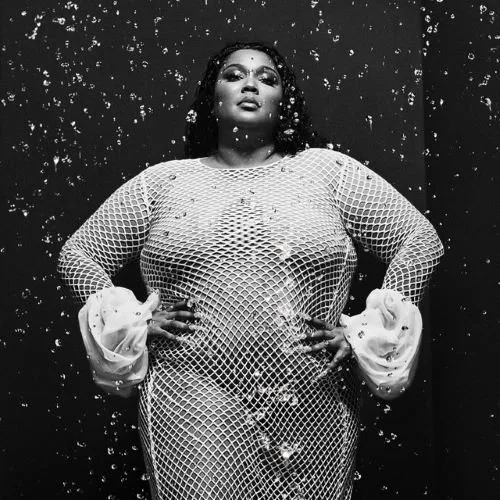
Lizzo’s secondary headline status seemed to fire up the much-loved artist, who responded with a phenomenal performance on the Pyramid Stage. Honed across an exhausting international tour – including a fully sold out UK run – she’s a simply lethal live artist right now. People fully believe in her self-love mantras, and with the sun beating down Lizzo is the perfect choice for Worthy Farm. There’s no solid metric to test this, but purely using our eyes: Lizzo seemed to get a bigger crowd than Guns N Roses. Yep, we’re calling it.

And then, of course, there’s Lana Del Rey. Arriving onstage stylishly late – a mere 30 minutes – she breezed into a magical set that blended old with new. Opening with ‘A&W’ the first chapter of the set leaned into her recent album ‘Did You Know That There’s a Tunnel Under Ocean Blvd’ before venturing into broader currents within her catalogue. A majestic ‘Ultraviolence’ seemed to indicate where the set was going next, a carefully curated journey into Lana’s majesty accompanied by a wonderful stage show, the dancers swirling around the singer’s magnetic persona.

But then the mic went out. Having started late, Lana Del Rey fell foul of the curfew. Dropping to her knees, she begged figures at the side of the stage to let her continue, but to no avail. Rules are made to be obeyed, we suppose, but there is certainly a feeling on the ground that Lana had been hard done by. Perhaps that’s apt microcosm for women as a whole during festival season – flourishing, in spite of the obstacles”.

Whilst plenty of male artists – from Lil Mas X, Foo Fighters and Elton John – delivered exceptional sets, the fact that some of the biggest crowds of the event were for female artists shows that there is a demand. It might be the case, as Nova Twins told Woman’s Hour, that we do not nurture female and non-binary bands the same way as male ones. That is true. I think that festivals headliners often have to be seen as bands. Normally Indie or Rock bands. Men with guitars. It is important, I think, to have one band as headliner. There are plenty of bands with women in that could have headlined Glastonbury. I am taking it wider than that, because organiser Emily Eavis did include many terrific women on the bill – and she ensured the festival was one of the best ever! I think there is that thing of under-promoting and nurturing women and bands with women in. Whether that is because there is a legacy of prioritising male bands, or labels are not signing bands with women in as much, I am not sure. New and left-field musicians are not supported and funded. Looking at many of the headline sets across the summer, and there are few bands with women in them. It is not only about having that central figure. Promoting and booking bands with women in them is essential. Major festivals liker Glastonbury have shown that there are plenty of potential female headliners. A lot of acts lower down the bill who are stronger and more engaging than their male peers!

 IN THIS PHOTO: Anna Prior

Before moving on, Anna Prior talked to me about gender inequality at festivals, and why it is important to celebrate all women in bands - and not just ‘female-fronted’ bands. As drummer and backing singer with Metronomy, and a successful solo artist, her perspective was incredibly valuable and interesting. She has said how we need to also get away from this narrative of mentioning ‘female-fronted’ bands and celebrate any band with women in them. I was keen to find out more; what advice she had for women taking their first steps towards becoming a musician:

There has been a lot of discussion about the lack of female headliners booked for Glastonbury and other festivals. Do you think this is a problem with the ‘pipeline’, or is it something is it a reluctance to almost ‘take a risk’ on female artists?

If we're speaking only in terms of headliners, then yes, I think festivals don't want to take risks. However, Glasto (Glastonbury) sells out before the line-up is announced, so why not take risks?

As you have said on Twitter, it is important to discuss women performing in bands and on the stage, whether they are the lead or not. Whereas the term ‘female-fronted’ is a term many women feel uncomfortable about, should we instead put focus on women in bands generally?

The term 'female-fronted' perpetuates the notion that women are just a thing to be looked at. We should be focusing on female musicians in a much wider context. Doing research, finding out which 'male-fronted' bands actually have women musicians in them, and not excluding these bands for headline slots because the women in the band isn't the singer.

What has your experience been like performing solo or with Metronomy? Have you experienced personal challenges and obstacles being a woman in a band? It is important, in addition to discussing the band and their strengths, to also highlight an inspiring woman who is no doubt influencing a lot of other women.

I've been lucky enough to be doing this job for 15 years, and I have seen the industry change a lot in that time. The main factor is that there seems to be more women collaborators; in the performance side of things or and the business side of things. We tend to help each other out more, whereas 15-20 years ago, we were always pitted against each other - by the media mainly.

Give women the jobs, give them the exposure, give them the opportunities”.

It is evident that you have influenced a lot of women coming through at the moment. How
important is it that to you? Together with
Sarah Jones (who played drums and performed backing vocals on Harry Styles’ current tour), it must be encouraging that, slowly, more attention is being paid to women in bands – and not just whether they are ‘female-fronted’.

It's one of the most important things for me. We need the exposure, we need the jobs to be given to women musicians. I was barely aware of any female drummers when I started - now, any young women wanting to learn has so many established artists to look up to.

It is clear that watching Glastonbury that women are dominating music and there are so many
headline-worthy artists. What do festivals and the industry need to do to highlight their incredible music and ensure that they supported?

Give women the jobs, give them the exposure, give them the opportunities. Actively seek female musicians, do research, and find out which male solo artists have women in the their band.

Do you have any words of advice or encouragement for female artists looking to follow in your footsteps when it comes to picking up drumsticks?

Start a band! It's the best way to learn drums, to become more creative, and learning how to play with other people is helpful in building character in your playing.

I have seen posts saying that festivals are sexist and they are not trying hard enough. There are others that look at the pipeline and observe that there might be fewer options when it comes to finding female artists that can fill bigger festivals slots (especially as headliners). I think things will radically change next year. It is obvious that festivals are stronger when female (and non-binary) artists are given bigger platforms. There are more than enough choices when it comes to women who can headline. Even though it is not a case that festivals are purely sexist and ignoring women, I think more risks need to be taken. If a solo artist or band with women in them does not seem like a traditional or obvious headline act, you don’t know until you book them! It is clear the old guard and go-to bands are no longer fresh or required. It seems very tired! At a time when there are so many fresh and wonderful women who can command a big stage and deliver a captivating headline set, we are relying on older male acts or the white boys with guitars route. The debate is complex. Things will not be completely fixed by next year. There will be development, mind. In spite of there being no female headliners at Glastonbury, there were many incredible women – as solo artists/band or bands with women in there – that got incredible crowds and reviews. That shows that it is not the punters who do not want to see women play. Maybe it is a mindset or a feeling that people will revolt or be disapproving if boys in bands and male artists are balanced out or even outweighed by female talent of all genres.

 IN THIS PHOTO: Carly Rae Jepsen/PHOTO CREDIT: Jasmine Safaeian

There are a lot of festivals coming up. If the bills are depressingly male-heavy, every single one of them is going to be held to task next year. I think, aside from every festival needing to acknowledge and accept that they have no excuses to be male-heavy and deny women headline slots, we need to look deeply at the industry. Less funding and attention to the more innovative and left-field artists. Radio playlists – especially major stations – are still not playing nearly enough women! Bigger labels are not signing enough women and nurturing them the same way as they do men. Those in power (men) still have this feeling that men rule music and that is what people want to see and hear. It is patently not true! If things need to change across all festivals, organisers need each section and layer of the industry to do more to ensure that women are given opportunities and equality. As it stands now, there is a massive pool of women that are available and ready to dominate festivals next year. Many of the best and most popular sets from festivals this year have been from women. I also find that, broadly, female artists have this incredible rapport with their audiences. I am not saying men do not, but there seems like there’s greater wit, warmth and a deeper connection. Another reason why this current inequality is maddening! Things cannot completely change instantly, though there are ways of making big steps right away. Booking more bands with women in them (not just ‘female-fronted’ or ‘all-female’) is a step forward. Young women and girls seeing women in bands, whether they are on drums or guitar, is a very positive and important thing. Simply committing to do things differently and stop leaning on the tired and rather uninspired options. I think 2024 will bring about improvement and progress! When it comes to inequality and a lack of proper recognition and opportunity for women at festivals, let’s hope that this is…

THE last year we see that!

FEATURE: Jamaica to Australia: Kate Bush’s June and July, 1982

FEATURE:


Jamaica to Australia

IN THIS PHOTO: Kate Bush in 1982/PHOTO CREDIT: Pierre Terrasson


Kate Bush’s June and July, 1982

_________

ONCE more…

 IN THIS PHOTO: Kate Bush deep in thought at Abbey Road Recording Studios on 15th October, 1982/PHOTO CREDIT: Steve Rapport/GI

I am referring to the invaluable and indispensable The Garden for this feature. They are a resource that provides a timeline of Bush’s career and all the important events and dates. I have utilised this before for other features but, as there are no anniversaries approaching for a bit, I thought I would go down a different path. I have already done a few features that documented an important month or moment in Bush’s career (including May 1983; I did a recent feature on 15th June, 1983). I wanted to look back at 1982, and specifically June and July. Forty-one years ago, Bush’s career was in a very interesting place. The first single from The Dreaming, Sat in Your Lap, had been released, though the album was still not out. It would eventually be released in September 1982. The album was supposed to come out earlier, but it had been delayed. It was a period of rest and new endeavour. In the May of 1982, Bush travelled to Jamaica for a holiday. Rather than finding it relaxing, there was something deafening about the peace and tranquillity. Having spent so much time in studios recording The Dreaming (sixteen months combined), you can understand why she wanted to go on holiday. Maybe unable to switch off the noise and pace of London, I wonder how beneficial that trip was. Straight back from holiday and there was stuff for Bush to attend and address.

 IN THIS PHOTO: Kate Bush in 1982/PHOTO CREDIT: Pierre Terrasson

In June, the announcement was made that The Dreaming’s title track and planned second single was delayed. Maybe Bush was going to Jamaica and expecting her new single to be out very soon after. Instead, it was released in late-July. It must have taken some momentum away. Wanting to get a new single out after a year, many were wondering where she was and what was awaiting them. 1981’s Sat in Your Lap was a top twenty hit for her. Whilst different to anything she had released so far, it was a fair indication of what was to come. I will talk more about The Dreaming’s title track (and second single) nearer its anniversary in July. I wanted to mark out June and July, 1982, as it was a period between Bush returning from holiday, her album being delayed, and the second single coming out. I wonder whether it was originally conceived that the album and single of the same name would both come out in July. Regardless, there was not too much time to decompress and sit back after her holiday. In June 1982, Bush did some session work for Zaine Griff, who with her had attended Lindsay Kemp's mime classes back in 1976. She does backing vocals on a track dedicated to Kemp, Flowers. In the same month, there was that announcement the single would be delayed. Perhaps there was too much competition that month for it to chart. Maybe the unique aspects were not going to resonate as much in June 1982. I don’t know. When the single did come out, it charted low and got some decidedly mixed reviews – in spite of the fact it is a fantastic song, maybe not an obvious single! If Kate Bush felt a sense of tiredness or strangeness after her holiday, the ensuing few months showed that she did need a rest. It was a frantic time!

Unbeknownst to her, the first issue of the fanzine, HomeGround, was being prepared. Twenty-five copies are run off in an office photocopier. That happened in June 1982. Maybe Kate Bush did know about it, but I think that it is quite unlikely! They celebrated their fortieth anniversary last year with special edition. The fanzine ceased being in 2011, but from 1982 until then, they produced these wonderfully passionate informative zines with fans’ poems, letters, drawings, news and anything relating to Kate Bush. At a time when Bush was transitioning between recording and completing The Dreaming and awaiting the arrival of its second single, there was this HomeGround fanzine – its editor, Peter FitzGerald-Morris, also collated this timeline (The Garden) I am referencing – coming to life. On 26th July (though I have seen some say it was out on 27th), The Dreaming’s title track was released into the world. Although some press sources saluted the bravery and innovation of the song there was not a lot of radio interest. Only a week before the song came out, and with forty-eight hours' notice, Bush was asked to take David Bowie's place in a Royal Rock Gala before H.R.H. The Prince of Wales in aid of The Prince's Trust. She gives a rare live performance of The Wedding List (from 1980’s Never for Ever), backed by Pete Townsend and Midge Ure on guitars, Mick Karn on bass, Gary Brooker on keyboards and Phil Collins on drums. Rather than do Sat in Your Lap or a sneaky peak of anything from her fast-approaching new album, Bush sang live a track from Never for Ever that is a definite deep cut. By all accounts, her performance was one of the highlights of the night!

When The Dreaming’s title track was released, Bush was firmly thrust back into the promotional cycle. With very little time between everything being finished and that single coming out, I can appreciate why she made a firm decision that Hounds of Love would be a different experience. From 1983, as I have written about, she built her home studio and dedicated herself to dance and a more healthy working life. It is wonderful envisaging Kate Bush’s life during June and July of 1982. With some plans being delayed and an unexpected live appearance coming up, she was clearly keeping busy and living through this unpredictable time! I will refer to The Garden again and that invaluable resource of dates and important Kate Bush events. More than anything, it provides opportunity to explore vital dates and important moments. I think that the lead-up to The Dreaming coming out as a single is a pretty big one! After it came out, we got a sense that this artist we thought we knew was going in a very different direction. The Dreaming album would arrive in September and confirm Bush as one of the most innovative and unpredictable artists of her generation. A few days after The Dreaming (single) came out, Bush turned twenty-four. So amazingly ambitious, assured and accomplished at such a young age! I guess you can never be surprised or shock when it comes to Bush and her seemingly superhuman powers. She would unleash this incredible song about the Aboriginal Australians and how they were displaced and repressed. No artist her age was singing about these sort of things! Live performances of the song are among her most interesting and jaw-dropping. I absolute love…

EVERYTHING she does.

FEATURE: #PrideMonth: Songs from the Best L.G.B.T.Q.I.A.+ Albums of 2023 So Far

FEATURE:


#PrideMonth

IN THIS PHOTO: Amaarae


Songs from the Best L.G.B.T.Q.I.A.+ Albums of 2023 So Far

_________

IN a previous Pride Month feature…

 IN THIS PHOTO: Jake Shears

I looked at the best L.G.B.T.Q.I.A.+/Pride albums of 2022. It was interesting hearing the albums and assembling songs from them into a playlist. For this feature, I have put together a selection of the best songs from similar albums of 2023. These are tracks by artists that are part of the L.G.B.T.Q.I.A.+ community. Representing Pride Month with some amazing music, I hope there is something in the playlist that catches the ear. In any case, go and listen to the albums the songs are from, as they are incredible works. This will be my final Pride Month feature, and I was keen to look at some awesome albums from this year. To celebrate an incredible Pride Month, take a listen to this playlist and…

 IN THIS PHOTO: Rebecca Black

DIVE right in.

FEATURE: Not Yet Two Weeks Ago: Spotlighting the Amazing Maisie Peters

FEATURE:


Not Yet Two Weeks Ago

PHOTO CREDIT: Sonny McCartney


Spotlighting the Amazing Maisie Peters

_________

I have already spotlighted…

Maisie Peters but, as she played Glastonbury last week in a celebrated set, I thought it was a perfect time to celebrate her once more. For those in attendance, it was a magical experience down at Worthy Farm. It was a gig that gave her a perfect opportunity to showcase songs from her new album, The Good Witch. The second studio album from the West Sussex-born songwriter, it follows 2021’s debut, You Signed Up for This. I think that The Good Witch announces Peters as one of our finest young artists. Rolling Stone assessed her Glastonbury performance:

The worst way to love somebody is to watch them love somebody else,” sings Maisie Peters during ‘Body Better’, the song that opens her set today on Glastonbury’s Pyramid Stage.

Full of self-doubt, it’s a vulnerable way to begin her first ever appearance at Glastonbury but Maisie Peters thrives on creating heartfelt pop. Backed by a three-piece band, a fiery sense of purpose and a crowd that knows every word, ‘Body Better’ is quickly transformed from pained confession to jubilant anthem. There’s plenty more where that came from as well and by the end of her hour-long set, Peters has traded in heartbreak for something far more confident. “I’ll fuck your life up as a blonde,” she smirks during the giddy, ‘80s inspired ‘Blonde’.

Maisie Peters’ gigs often feel like a party but today, the singer has more to celebrate than usual. Her second album ‘The Good Witch’ came out at midnight and “what better place to see it in than the most magical place in the world,” she asks.

A “twisted” take on a break-up album, The Good Witch explores destruction, power and magic, without ever dwelling on sadness. There’s self-deprecation but also spiky empowerment and a giddy sense of fun. Today, Peters brings all of that, as well as a little bit of her own magic, to the Pyramid Stage.

‘Cate’s Brother’ is a sugary pop-punk track that feels purpose built for sunny fields, ‘Run’ is an urgent, indie-rock banger while the thunderous ‘Not Another Rockstar’ is introduced by Peters as being about her “terrible, terrible taste in men”. Halfway through the theatrical track, Peters pauses for a second to take in the ever-growing crowd. “The irony is, who’s the rockstar now?” she smiles.

PHOTO CREDIT: Getty Images

Peters has clearly learnt a thing or two from touring stadiums with Ed Sheeran. She’s a master of crowd control and a majority of her set fills suitably grand, with the likes of ‘Villain’, ‘I’m Trying’ and ‘You’re Just A Boy (And I’m Kinda The Man)’ all sounding glorious on Glastonbury’s biggest stage.

There are moments of genuine intimacy as well though.  A gorgeous, slow-burning ‘Worst Of You’ bubbles with emotion before ‘You Signed Up For This’ flickers between hope and heartache. ‘Brooklyn’ is sung for Peters’ sister as an apology for not bringing her a vape on-site while ‘John Hughes Movie’, a hammering song about unrequited love, is dedicated to the queer community. “I wouldn’t have the career I have without you,” she explains. “I feel very honoured to be a woman on the pyramid stage,” she adds a little later.

That ability to forge a connect from afar is clearly working as well. Fans hold up banners reading “We are the granddaughters of the witches you could not burn” which goes nicely with Peters’ own “Women’s hearts are lethal weapons” t-shirt. It’s little wonder she’s been fan-cast as support for Taylor Swift’s European ‘Eras’ tour next year.

Before the phenomenal snarl of ‘Lost The Break-Up’, one fan on the front tow hands Peters her very own broomstick. “What a good day to be a good witch” she grins. It’s early in the day, but this witch has cast the most magical spell over Worthy Farm”.

With similarities made to Taylor Swift, there is something about Maisie Peters that stands her aside from her peers. Making Pop that stays in the head but also stirs the soul, she is someone who is going to have a very long career. I will finish off with a review for The Good Witch. If you are new to Maisie Peters, I have looked at a few interviews online that will give you more depth and detail. There are a couple of interviews I want to bring in Teen Vogue in an interview published last week. We learn, even though Maisie Peters is not especially spiritual, music is as close to something divine and truly meaningful. It is incredible to see how far this wonderful artist has come in a relatively short time:

She fell in love at an early age. Growing up in Steyning, a small town near the sea in West Sussex, England, where timber-framed buildings line quiet streets, Peters often escaped in the velvety pages of fictional stories. She'd bend the spines and mark the margins of her most sacred texts, The Twilight Saga and The Great Gatsby. Never a fan of being read to, she preferred to move at her own voracious pace. She started writing short stories and poetry in primary school, skills that naturally developed into songwriting as she began curating her taste. She'd pore over the lyric booklets of her favorite albums — Lily Allen's Alright, Still, Florence and the Machine's Lungs, ABBA Gold, and Taylor Swift's Fearless — enamored by their fanciful anecdotes and attention to detail. Despite having no formal music training, she'd make drum beats with her hands and fill her notebooks from cover to cover. When she was 12, she borrowed a friend's acoustic guitar and taught herself to play by watching YouTube videos.

"I was so obsessed," she recalls, "for no reason. It wasn't like I told my family, 'I want to be a singer. I want to be a writer. I want to be a pop star.' I had none of that. I just loved doing it… I wrote so much music and wanted it to go somewhere, but there was no big, grand plan."

Within a year, she had written hundreds of songs, the result of an overactive imagination; by 15, she had joined a band and started regularly busking on the street and performing at pubs, posting original songs on her YouTube page. Early cuts wallow in life's messiest bits, gentle melodies for tempestuous feelings, and a folksy lilt over wistful keys. "Waiting around, still halfway hopeful that you'll show," she sings on 2017's "Birthday," one of her first independently released singles. "You've said you'd call, of course you won't, I should've known."

PHOTO CREDIT: Alice Moitié

"I'm someone who writes music to remember," she shares over a plate of truffle fries. "A lot of why I write music is to chronicle and document. I think some people write music for catharsis, and that's not really my experience with it." She supposes the healing comes after, not for her but rather for the listener to bear. These "stamps of memory," as she calls them, frozen in time signatures, no longer belong to just her. "When you write music the only person that's relevant is yourself," she says. "You're very much in that moment. Then when you release it, it's really not about me at all, or even the person I wrote about. You can listen back to it, you can hear how you felt, but you can't really feel it anymore."

It's a lesson in Swiftian storytelling. It's crafting an image so lyrical and engaging that it places the listener alongside you in the room where it happened — the heartbreak, the disappointment, the love. Last year, Swift described a good song as something that "stays with you even when people or feelings don’t." Peters cites the Midnights mastermind as her "holy grail," her most formative influence. You can hear it in the way she sets a scene. "I am 20 and probably upset right now," she sings on the opening track of her debut album, You Signed Up For This, released under Ed Sheeran's Gingerbread Man Records in 2021. It's an affirmation of self-awareness, equal parts sincere and melodramatic. On "John Hughes Movie," she laments unrequited love over synthy melodies and elastic beats; "Boy," co-written by Sheeran, is a smooth kiss-off to a serial cheater in which she deliciously delivers the lyric "I could be a grown-up, but baby you know what / maybe I’ll release this song instead" with all the pettiness of a young woman scorned.

The Good Witch inhabits a similar space — broken hearts, bruised egos, and offbeat anthems — but Peters displays a heightened sense of introspection and emotional range. If You Signed Up For This was directed at you, the listener, then The Good Witch gazes inward. A breakup album at its core, she sees herself as the story's arcane narrator, both its playwright and its muse”.

I want to move to an interview with Rolling Stone UK. You can buy Maisie Peters’ The Good Witch. A fantastic listen, it shows a more ambitious and confident artist to the one we heard on the excellent You Signed Up for This. With music aimed at dreamers, romantics, and those living in a fantasy, there is something fantastical and magical about her music that is hard to ignore. I do think that we have in our midst an artist who will soon conquer the globe:

Peters is building on what her idol — and now Maisie Peters fan — Taylor Swift spent 15 years establishing: that women can write pop songs about the insecure, the needy and, most pertinently, the hallucinatory space in which reality and fantasy meet. “I’m obsessed with the almost,” Peters says. “What you almost say, or almost do, or you almost had or almost lost. All of those moments, I think, make for interesting music and also feel very female as well, that whole experience.” She returns to something I previously mentioned about the impossibility of ever knowing if romantic interests obsess about you in the same way as you do them. “You said the word obsessed earlier and I realised when I was looking through my next album, ‘obsessed’ would be the biggest word on my word map. I think women are pretty private with their obsessions, apart from to other women maybe, and sometimes it’s funny because people are like, ‘Oh, you’re so obsessed.’ And you’re like, ‘You have no idea.’ This is the surface of the obsession.”

Later, when Peters plays her headline set at the venue, she will tell the room who she makes music for: the girls who got ghosted and still wish them ‘happy birthday’; the girls who bought gifts for their crush’s mother; the girls who got ditched by someone who was not their boyfriend. The list changes each night, depending on what comes to her in the hours beforehand. “I just think there’s such validity in those relationships, and sometimes they mean more to you than the ones you can define because you never quite had it, or you could never quite explain it,” she says.

PHOTO CREDIT: Emilia Paré

While making her upcoming album The Good Witch, Peters felt powerful. Some of it was written over the past year, firstly in Stockholm — an already magical place to her — with two other women (“we became almost like a coven”), and later in the forests in Suffolk. She cites destruction, femininity and benevolence as its themes. “My universe, in this album at least, is something for me to destroy and to build up again how I want to,” she says.

The first single, ‘Body Better’, is about a recent time she compared her body to another girl’s, deeming it hotter, categorically better. It was an ugly thought, she says, something she’s not proud of for thinking but assumes it will be relatable. She predicts it will be hard to talk about this song when she has to promote it and when fans approach her to ask about it. “I know I’m going to get people who think it’s wrong or bizarre of me to say. I’m well aware I have a lot of privilege, I’m a [UK] size 4 or 6 and white and blonde,” she says. “Equally, it was something that was true to me. I hope that by putting it into the world it is only a force for good.”

The support of the few women who have heard The Good Witch and loved it encourages her. In the weeks spent finalising this album, she’s been co-ruminating and testing ideas out with her female housemate who is increasingly invested in her favourite tracks making it onto the album. “When I tell her so-and-so on my team doesn’t like it, she’s like ‘Why? I don’t agree!’” Peters laughs.

It’s while relaying stories like this that she decides she has a final answer about who a Maisie Peters fan is. “If I were to summarise it, I’d say my music is for the quietly unhinged,” she says. “That’s who I make music for if I was gonna choose a blanket statement. The quietly unhinged… And maybe also the loudly, too — there’s no shame for being loudly unhinged either. I just think that there’s a whole subculture in the world of the quietly unhinged.” And then she goes downstairs to address her many quietly deranged girls in love”.

I am going to round up with a review for The Good Witch. Maisie Peters’ second studio album has won plenty of acclaim. This is what The Line of Best Fit sat down with an album that must rank alongside the best of this year. Peters is a remarkable songwriter who has a distinct style. Everyone needs to check her out. After a busy 2023 so far, the momentum will keep going for her. I am excited to see where she goes next:

After a long stretch where barely discernible ‘mumble rap’ and hazy, languid R&B beats dominated the radio and tilted popular music, the pandemic has ushered in a new wave of feel-good, glittery pop. This year, Ava Max and Ellie Goulding shifted their style to this emphasis on fun, and TikTok-minted newcomers like Reneé Rapp and Mimi Webb have entered the ring as well.

Maisie Peters’ second album, The Good Witch, follows the same pattern: a solid album of dance-pop paired with the same bounciness and clarity that mid-2010s pop songs used to dominate the radio. Peters could have easily lapsed into forgettable lyrics, but often includes topics done in a smart way that pop music back then would have never touched: body dysmorphia and even gender switching to assert dominance (on one song she declares, “You’re just a boy, and I’m kinda the man.”)

Peters knows how to write a catchy song, and her voice is smart, sharp, and fitting for the digs that permeate the album. “Lost The Breakup” pares down a past relationship to a competition capable of winning, a race to see who can get out of it quicker, stronger, and better – much like MUNA’s recent “One That Got Away.” “Coming of Age” and “There It Goes” tracks self-development and assurance in oneself: “I am the Iliad,” she says on the former, “Of course you couldn’t read me.”

The album includes more tender moments, when Peters is at the opposite end of the breakup: “Watch” goes into pop-punk territory as she sees a former partner’s success (“You’re being a superstar and all I got are victim cards”); the peppy “Body Better” sees her in a moment of speculation and envy, wondering if she’s been dumped because a different girl has a nicer body than hers; “BSC” ditches the pretenses and manners, admitting how a relationship affected her. “You think I’m alright, but I’m actually motherfucking batshit crazy,” she sings, which narrowly loses the title of the album’s funniest line to “I am both Kathy Bates and Steven King,” appearing on the same song.

The record’s few missteps largely reprise themes or instrumental ideas that are too dated: “Two Weeks Ago” is an attempt at a power-pop ballad, and “Want You Back” has a better premise, but still sounds as if it’s plucked from ten years ago, right next to Rachel Platten’s inescapable “Fight Song.” “Therapy” too, is a little contrived, an unwelcome symptom from Instagram mental-health speak: “How come you’re taking me from your arms back into therapy?” she asks, without realising what’s discussed in that session might make for a better song topic.

The Good Witch is pleasant pop, a record that doesn’t feel like it’s trying too hard while still cutting with witty writing. Peters has a fun side, but her creativity is evident in places like closer “History of Man,” which boasts topics most pop stars wouldn’t even think to write about, going back through history and discussing the gender differences between powerful men and women. “Women’s hearts are lethal weapons,” she says, “Did you hold mine and feel threatened?” Such is the story of a woman with smarts and heart to spare”.

Even if I have highlighted and written about Maisie Peters, that was around her debut album. Things have changed and moved on since then. One of the U.K.’s brightest and most accomplished young artists, I can see her doing big venues gigs like her idol, Taylor Swift. Not to be too readily compared, Peters has her own sound. She is someone who will inspire songwriters coming through. Only twenty-three, there are many years and decades ahead of her. We are very lucky to have…

THIS rather special artist.

FEATURE: More Than a Muse: Recognising and Exploring the Women in Classic Tracks

FEATURE:


More Than a Muse

PHOTO CREDIT: Valeria Ushakova/Pexels 


Recognising and Exploring the Women in Classic Tracks

_________

WHILST attending…

 PHOTO CREDIT: cottonbro studio/Pexels

an event where Sophie Haydock was discussing her debut novel, The Flames, it got me thinking about songs and the women references. I don’t think there are enough books out there that celebrate women and their influence. There are essential books like This Woman’s Work: Essays on Music (and a few others). Really, there could be more out there that recognises the impact and influence of women in music! If you do not know what The Flames is about, here are some more details:

Vienna, 1912. Behind every painting, there is a story...

A new century is dawning. Vienna is at its zenith, an opulent, extravagant city teeming with art, music and radical ideas. It is a place where anything seems possible...

Edith and Adele are sisters, the daughters of a wealthy bourgeois family. They are expected to follow the rules, to marry well, and produce children. Gertrude is in thrall to her flamboyant older brother. Marked by a traumatic childhood, she envies the freedom he so readily commands. Vally was born into poverty but is making her way in the world as a model for the eminent artist Gustav Klimt.

Fierce, passionate and determined, none of these women is quite what they seem. But their lives are set on a collision course when they become entangled with the controversial young artist Egon Schiele whose work - and private life - are sending shockwaves through Viennese society. All it will take is a single act of betrayal to set their world on fire…”.

PHOTO CREDIT: Sophie Haydock

It was really interesting hearing Haydock speak about the process of writing The Flames. The fact that these women in the book were largely written out of history. Now, thanks to her, we know more about some incredible subjects who inspired one of the great artists of the twentieth century. She is writing another book about a household artist this time. It is interesting that we see art and the women painted, but we rarely ask who they were and what their stories are. It is a real shame that there is this legion of uncredited women who are seen as ‘muses’ or ‘inspirations’ – but that is all they ever are! I guess the same could be said for music. Whether fictionalised or real, there are countless women in music’s cannon that are idolised, lionised and occasionally victimised. Whether an adoring love song, a song or admiration and curiosity or even a put-down, how many of these women are fleshed out and discussed?! Of course, songwriters will talk about songs featuring women and reveal who those people are. I was thinking that it would be interesting knowing more about the women in classic tracks. I don’t think there is a book out there that, like Sophie Haydock’s The Flames, details the women behind the lyrics. Whether it is from The Beatles, Leonard Cohen, Björk or any other artist you can name where they mention women or name a song after a woman, what about their legacy and importance?! Of course, I know there is that clash and contrast between the fictional and real-life. Even those wonderful imagined women. I think it would be great if their stories were told. Rather than women being seen as ‘muses’ – which I find seems rather reductive or dismissive -, they deserves pages written about their lives and importance!

PHOTO CREDIT: cottonbro studio/Pexels

It is always wonderful hearing women mentioned in music. Some of the greatest tracks ever have been written for or about a woman. Of course, given the sheer number of women mentioned in classic songs, you would be given quite a task to find and recall them all. That said, there is ample supply of incredible women that we do know about. When we play and sing these songs back, do our minds think of the women? I wonder how many people are intrigued to imagine who this particular woman is. It is not just male artists that sing about women. Whether a female artists is a member of the L.G.B.T.Q.I.A.+ community or they are referring to a fictional woman, a friend, or merely telling a woman’s story, there is ample scope to explore and investigate. I think women get written out of music. Whether it is great artists who have to fight to be heard, or the lack of documentaries and books talking about women’s importance and influence, we need to all do more. I was interested by Sophie Haydock’s acknowledgement and celebration of the women who sat for Egon Schiele. Rather than celebrate the artist for his work and not think about the women he painted and sketched, this book is one that gives life and biography to the women – though there were many more whose stories we might never know. Music is full of these brilliant and diverse women who have been responsible for some of the greatest lyrics ever written. I guess we all have our favourite fictional and real-life women in songs. I especially love The Beatles’ Something. That was written about Pattie Boyd. Many people know about Boyd, but it would be great to have her recognised as the woman who inspired one of the greatest love songs ever. And it goes on and on. So many incredible women who are inside these magnificent tracks!

 IN THIS PHOTO: Pattie Boyd and George Harrison in an embrace on their wedding day on 21st January, 1966/PHOTO CREDIT: Bettmann/Getty Images

In terms of going forward, I hope that someone someday takes up the challenges and commits to documenting ‘the women behind the lyrics’. I have always hated the word ‘muse’. It seems to belittle somewhat. Not give full credit to a woman! The women who are seen as muses and inspirations are written into songs, but they are very rarely discussed beyond that. In fact, there are many songs where the women are anonymous or there is some mystery. Of course, on the other side of the romantic coin are the songs that are a little more acidic and derogatory. Whether this is earned scorned, or a male artist raging and moaning because they have been spurned or cast aside, they definitely deserve their pages! It would require a lot of research and planning, but a book could be put together. Featuring sketches or paintings of these women inside of the songs, I think it would not only give agency and recognition to their role; it would also allow us greater context when we think of these classic tracks. Rather than singing their names and wondering who they were, let’s have them brought to life and sitting alongside one another. For, without them, we would not have some of the greatest songs ever written! These amazing women have words written about them. They are moulded, directed and defined by male (and sometimes female) writers. I think that it is time that we allow these women to…

TELL their stories.

FEATURE: D N’ R: Does the Traditional Rock Band Headliner Have the Same Pull?

FEATURE:


D N’ R


Does the Traditional Rock Band Headliner Have the Same Pull?

_________

OVER the Glastonbury long weekend…

 IN THIS PHOTO: Elton John/PHOTO CREDIT: Dave Hogan/Hogan Media/Shutterstock

the best-reviewed and received performances were away from the headline slots. Apart from Elton John’s emotional and hugely impressive Sunday night performance, there was a little bit of disappointment on Friday and Saturday. Arctic Monkeys’ Friday night set was a bit middling. There were some fine moments, but I think a lot of people were expecting something more intense and electric. For a band whose sound has changed notably since their debut album in 2006, it would have been hard pleasing everyone. Maybe the assumption was that the set would be a fired-up and bigger than it was. The headline set got some positive reviews…but there were performances elsewhere that were more headline-worthy. In addition to some incredible sets from Rick Astley and Blossoms, and Rina Sawayama, it was a festival where we saw some future headliners. Lizzo played the Pyramid Stage before Guns N’ Roses. Much more exciting, engaging and memorable than the legendary band that she proceeded, there was greater colour and spectacle away from the headliners. You can check out some of the sets here. Christine and the Queens, RAYE, Blondie, Lil Nas X, Caroline Polachek, Cat Burns, Lewis Capaldi and Billy Nomates’ sets were clear highlights. Although Lana Del Rey’s unfortunate lateness cut short her set, you do wonder just how it would have been if she had not been cut short. This year’s festival had ample highlights and an embarrassment of riches. Most would say, aside from Elton John’s magnificent and historic farewell, the other two headline sets were good but not exceptional! Many who saw Lizzo play would say she’d have been a better Saturday night headliner!

 IN THIS PHOTO: Axl Rose and Slash of Guns N’ Roses/PHOTO CREDIT: Getty Images

Maybe it is that idea that male Rock band are what people want as a headliner. This Glastonbury perhaps proved otherwise. Foo Fighters were an exception. They have headlined before, but they did give a crowd-pleasing set. It was other genres and artists who were giving much more thrilling, nuanced and crowd-connecting performances. Even Lana Del Rey’s truncated set was received rapturously. I always wonder why Björk was not asked to headline! There were brilliant women across Pop, R&B and a wide range of genres who could have created a more sonically, racial and gender-diverse outlook. I know there are two female headline acts booked for next year. It is a positive step that is well overdue! Not to say that Guns N’ Roses and Arctic Monkey were boring and lifeless, but there is an argument to say that (white) Rock bands are no longer what people want as a headline act. Or, at the very least, they are not delivering the biggest and most discussed sets. Though, I can see the brilliant Nova Twins headlining in years to come. Elton John was a perfect choice, but Friday and Saturday could have gone to other artists. The festival was a roaring success and there was something for everyone. I am not criticising the organisers. More, this is a sign that the traditional Rock headliner is no longer crucial and the go-to. In past years, headliners like Billie Eilish (2022) have been a much more compelling proposition. Although some of the best performances from the festival were not headline-ready just yet, there were artists who were primed and ready. Lizzo is top of that list. Even if Elton John’s epic and stirring headline set is still ringing in the ears, the best of the rest was away from the Pyramid headline sets. In terms of the type of act that is booked to headline a massive festival like Glastonbury, it is evident that…

IN THIS PHOTO: Lizzo/ PHOTO CREDIT: Getty Images

THINGS have to change!

FEATURE: The Digital Mixtape: The Summer of 1998

FEATURE:


The Digital Mixtape

PHOTO CREDIT: Anna Shvets/Pexels


The Summer of 1998

_________

WHEN thinking about…

 PHOTO CREDIT: cottonbro studio/Pexels

a playlist I could assemble for The Digital Mixtape, my mind cast back to the summer of 1998. A particular great one for memorable music, I am going back twenty-five years to that glorious time. Summer also provides us with amazing tracks. Rather than do a playlist of the best songs of this summer so far, I wanted to go to 1998 and some of the memorable cuts from that time. Maybe you were around in 1998 to experience these songs first time. Maybe you are too young to remember so, for all and sundry, here are some ace tunes from the summer of 1998. I might do similar playlists chronicling summer tracks from some great years. The weather is fine and hot so, in that spirit, I have assembled some pretty hot songs. It has been a pleasure to cast my mind back to the simply wonderful and magical…

 PHOTO CREDIT: Armin Rimoldi/Pexels

SUMMER of 1998.

FEATURE: Physical Attraction: Madonna at Forty: Its Legacy and Visual Impact

FEATURE:


Physical Attraction

IN THIS PHOTO: Madonna photographed in 1983 by Richard Corman


Madonna at Forty: Its Legacy and Visual Impact

_________

I have already…

 PHOTO CREDIT: Richard Corman

written features about Madonna’s eponymous debut album. Madonna turns forty on 27th July. It is undoubtably an album that changed the face of Pop. I was a couple of months old when the album was released, but I can only imagine what it was like living in a time when this exciting and fresh Pop artist came through! Madonna is an exceptional and enduring album that sort of revived Disco. At a time (1983) when a lot of Pop artists sounded the same, Madonna combined Disco of the 1970s and added something personal and distinct into the mix. Dance-Pop was created. Instantly, here we had this artist with enormous star power! Songs with catchy hooks, bright choruses and infectious moments aplenty, this was an introduction like no other. I am going to discuss the legacy of Madonna. But I want to discuss the visual impact of the album. In terms of the cover, promotional photography and the videos. I think Madonna has always been synonymous with her changing looks and distinct style. Someone who was individual and empowering, she also borrowed from other cultures and periods. In 1983, there was this blend of girl-next-door and cool-as-hell street chic. I am going to drop some photos in. I was caught by something on Wikipedia in the Legacy section of the Madonna page:

Music critics Bob Batchelor and Scott Stoddart, commented in their book The 1980s that "the music videos for the singles off the album, was more effective in introducing Madonna to the rest of the world." Author Carol Clerk said that the music videos of "Burning Up", "Borderline" and "Lucky Star" established Madonna, not as the girl-next-door, but as a sassy and smart, tough funny woman. Her clothes worn in the videos were later used by designers like Karl Lagerfeld and Christian Lacroix, in Paris Fashion week of the same year. Professor Douglas Kellner, in his book Media Culture: Cultural Studies, Identity, and Politics Between the Modern and the Postmodern, commented that the videos depicted motifs and strategies which helped Madonna in her journey to become a star. With the "Borderline" music video, Madonna was credited for breaking the taboo of interracial relationships, and it was considered one of her career-making moments. MTV played the video in heavy rotation, increasing Madonna's popularity further”.

To start, there is that iconic album cover. Photographed by Gary Heery (the cover for the reissued album was by George Holz) and directed by Carin Goldberg, it is so different to anything that came out in 1983! That year – especially Pop albums – had a lot of bright and almost garish covers. There is something classic and subdued. The lettering and colour scheme is perfect. It perfectly frames this image of a young and hungry artist who mixes sexiness and sweetness. Confident and bold, yet there is that look of mystery and intrigue. It is such a great shot and album cover! The album’s back cover sees Madonna tugging at the chain around her neck. There is that sort of street tough look. There is also an allure and sense of tease in there. I think that Madonna’s looks and style of 1983 is among her most memorable and incredible. She comes across as someone who is quite accessible and relatable. You also get the sense she is a star. Someone who has this incredible aura and power! I will come back to the photos around 1983 soon. Before that, it is worth talking about the music videos for Madonna. Each of them is crucial. I wonder, ahead of the fortieth anniversary of Madonna, whether the videos for Holiday, Lucky Star and Burning Up will be remastered and in HD. The videos for Everybody and Borderline have already received this treatment. I always wonder, if there was more budget, whether Madonna would have reimagined the Holiday video. The one we have is very basic: looking like she is in an aerobics studio, it has that homemade feel. Even so, it shows that here was this quite modest and unstarry artist who was creating videos that were quite low-key. It is clear she had a love of dance and, at a time when the aerobics craze was huge in the U.S., it is perfectly suitable. The videos for Burning Up, Lucky Star and Borderline are the best visual representations of Madonna’s incredible music.

Burning Up sees Madonna on a boat and a variety of locations. The concepts would soon become more adventurous and filmic. Here, it is a showcase of her incredible look. With plenty of wristwear and bracelets, a combination of her album cover look and this awesome white dress (you call tell I am no fashion expert!), and you get this very cool and classic combination! Madonna already standing out as an iconic artist with her own look and designs. Directed by Mary Lambert, Borderline is the standout video from Madonna. Lambert would go on to direct the videos for Like a Virgin, Material Girl (1985), La Isla Bonita (1987) and Like a Prayer (1989). In the video, Madonna plays a young woman emotionally torn between her Hispanic boyfriend (Louie Louie) and a white photographer for whom she models and who publishes her pictures on a magazine cover. A young John Leguizamo appears in the background as an extra. Madonna wears different outfits. From ‘80s thrift looks to a tougher leather jacket and some denim, it is this amazing Pop artist dazzling and conquering the screen. She just owns the video! Even if the plot is quite basic, the direction and visuals are amazing. In every video released from the debut album, Madonna is very much at the front. Showcasing her range of styles and future acting prowess, even in 1983 and 1984, she was impossible to ignore! Borderline was the last video from Madonna. Released on 15th February, 1984, it would be only a few months until the Like a Virgin video came out. A video compilation, Madonna, was released by Warner Music Video and Sire Records in November 1984 to promote the debut album. The first video compilation, it contained three music videos from the album - Burning Up, Borderline and Lucky Star - as well as the then current single, Like a Virgin. It was clear there was this enormous pull early on. A great new artist catching the eye and capturing the heart.

I will come to the photos around in 1983. Before that, I want to take a moment to recognise the legacy and impact of Madonna. CLASH wrote how this wonderful debut changed the face of Pop. It influenced countless artists - and it must surely rank alongside the most important albums of all time:

It's 1983. Punk is dead. Post-punk is on it's last limbs. According to those in the know, disco is dead also, although that proved not to be the case. Indie and alternative is in it's infancy and pop music seems as varied and sparse in it's tastes as it ever has done. Prince was working up to his career's pinnacle, Talking Heads were about to descend from theirs and, in that climate, it seemed that very few would enjoy more than their fifteen minutes of fame, in a sector of the industry that now felt more immediate than ever before.

Recovering from it's biggest shake up since the emergence of The Beatles in the early 1960s, pop music also felt boundless in what it now had to offer the world. MTV blew the entertainment world wide open in 1981, turning former child star Michael Jackson into The King Of Pop in the process. The industry needed a Queen to share his throne.

Step forward a 25-year-old Michigan native who now worked the restaurants of New York City, following after her move to the big apple, pursuing her dream of making a career in modern dance, fell flat on it’s face. Her name? Madonna Louise Ciccone, although the world would come to know her by only one name.

In 1982, bed-stricken by a recurrent heart condition, Sire Records' founder Seymour Stein pressed play on her demo for ‘Everybody’, the song that was to become Madonna's first single, as well as the closing track on the eventual debut record. Within hours of hearing it for the first time, and calling over to Danceteria DJ Mark Kamis (who had given Stein the tape in the first place), Madonna was by his bedside, signing the contract that would see her career begin with one of the most fabulously realised debut albums in music history.

It's now 2018 and Madonna is celebrating her 60th birthday. It's also 35 years since that eponymous debut album and subject of this spotlight review hit the shelves in record stores all over the world and, as I drop the needle on my newly acquired vinyl copy, I get a sense of just how exciting it must have been for someone in my position to be doing just that, more than three decades ago.

PHOTO CREDIT: Richard Corman

As the shimmering intro to ‘Lucky Star’ begins to play and is replaced by that prime 80s mix of synth beats, choppy guitars and a funky bass line, I find myself transfixed by her timeless, thousand yard stare, one half of which shoes an angelic, young adult, the other a hardened, tortured soul. She had the look of a woman both frustrated by her past and determined to ensure her future is markedly different. More endearingly, she has the look of someone who's completely unaware of how different that future would prove to be, for both herself, and the rest of the entire world.

It's difficult to think of many more debut albums that, in retrospect, hint so boldly at the career that an artist would grow into and the reputation that they would subsequently cultivate – the only one that springs immediately to mind is U2's ‘Boy’, an album made in Dublin kitchens but destined to be played in the world's biggest, best arenas.

Throughout the course of ‘Madonna’, she discusses the tropes present on most pop debuts – the idea of love, loss and the struggles of early adulthood. The overriding presence of her lyrics here is her independence and her ability to challenge the preconceived ideas that others have of how she should act and the choices that she is making”.

That street-smart monochrome cover shot for Madonna by Gary Heery and art directed by Carin Goldberg remains staggering and perfect! I think it captures so many different sides to this new artist who was still mixing styles and personas. It was hard, in 1983, to define who Madonna was. In 2015, The Cut interviewed Carin Goldberg about her memories of directing Madonna for her debut album shoot:

Because she wasn’t famous, the budget was not huge at all. I asked her to come dressed in the kind of clothes she would normally wear. I said, “You’ve got your thing, just do it.” There was nothing particularly shocking about what she was wearing at the time. I think she just had a unique style. A lot of people did — Betsey Johnson, Cyndi Lauper, Diane Keaton. There was a lot going on then that was all about women wearing all kinds of weird combinations. We were all doing that kind of eclectic look, but Madonna did it with a much more audacious, sexual edge. It wasn’t so much about trying to be a rock star — it was more just making something from something you had around. Taking some piece of fabric and wrapping it around your head, for example. Over the years her style has changed, given her independence and wealth and ability to have designers design for her, but there’s still a kind of eclecticism to some degree.

My memory was that she wore some kind of cut shirt — there was definitely a lot of belly hanging out. And a balloon-y pant with the waist and legs rolled up. A lot of artists really didn’t have very much taste — they don’t always know who they are, and they need to be told — especially these days. Madonna walked in ready-made. She knew who she was. We didn’t have to worry about styling her.

She came with a lot of bracelets on, and so I said, “I think we ought to focus on the bracelets, let’s really try to get that in the picture.” That was the one iconic thing about her outfit, besides the rag in her hair. I thought she needed even more, so the girlfriend of the photographer went into her jewelry box and took as many bracelets as she could find, to give it a bit more boom.

We put on her music and I asked her to dance. There was not much else we needed to do, because she was a performer. It was short, it was sweet. She was prompt, she did everything we asked her to do, she said thank you. It could not have been more easy. I would not call her in any way warm and cuddly, but she was not unfriendly. She was just all business.

And who knew? In my wildest dreams, could I have ever imagined? I mean, I knew she had a little talent. She got there and danced, and sang “Holiday,” I think. I liked it, we could dance to it. But who the hell could have predicted after that? It totally exploded. That album was the moment”.

PHOTO/ART DIRECTION CREDIT: Gary Heery/Carin Goldberg

I think the best images of Madonna from 1983 were taken by Richard Corman (you can read more about his New York City shoot with Madonna here). A lot of the looks and styles in the photos would appear in the videos for Madonna. By Like a Virgin (1984), Madonna has shifted her looks and style choices. Here, in these Corman shots, there is that emphasise on a street-level and relatable artist who was natural in the streets of New York City. Big earrings, bangles and denim was quite a common look in 1983, though Madonna has this natural cool and charm that stands her aside from anyone else. I think the most iconic image from Richard Corman is one where Madonna is not street-ready and casual. In, I guess, a Cinderella homage (see above), she is on the roof and has this beautiful black-and-white striped skirt on. She looks relaxed and happy…and it says as much about Madonna as all the other shots. Kate Simon’s Madonna in NYC, 1983 work is brilliant. I suppose the idea was to portray this young woman from the Bay Area, Michigan who came to New York with not a lot of money to her name. She is a classic case of a promising talent coming to the city and making it. This early in her career, you sense that hunger and desire! Coming across both accessible and a star-in-the-making, the imagery and photography from 1983 (before and after the album release on 27th July) goes hand and hand with the music. George Holz took some grittier and tough images of Madonna (you can see one of his images on the Borderline single cover).

 IN THIS PHOTO: Madonna photographed in 1983 by George Holz

Rather than simply be this sweet and fun artist, there was this definitely toughness and confidence. Madonna was not relying on anyone to make her a success! She wrote most of the tracks on her debut, as you know she had a lot of say when it came to her amazing videos and shoots. I wanted to look at the visual side of Madonna. The album’s videos definitely stood out from what was being released n 1983. When MTV was ruling the world, you had this artist emerging who seemed perfect for them. That incredible album cover, the beautiful and simple videos, together with the great photoshoots where we see this clear star blooming and making her first moves, I think a lot of people will look back at this element when celebrating Madonna at forty. I am not sure if there are anniversary reissues planned, whether the videos will be remastered, or there is going to be a photo exhibition on 27th July. Madonna is preparing for her Celebration Tour. She will be on the road on 27th July, so I am not sure how much time and energy she has to give to that. One of the most important releases in Pop history, the mighty and majestic Madonna changed Pop and influenced a generation of artists – and it continues to inspire artists forty years later. On 27th July, through Sire and Warner Bros., this album arrived off of the back of two successful singles – Everybody (three on the US Dance Club Songs (Billboard) chart) and Burning Up (three on the US Dance Club Songs (Billboard) chart). Of course, when Holiday was released on 7th September, 1983, Madonna became a chart phenomenon and a true star! That was thanks to the incredible album and the momentum she had built. After its release on 27th July, 1983, this wonderful artist would soon…

CONQUER the globe!

FEATURE: Three MC’s and One DJ: Beastie Boys' Hello Nasty at Twenty-Five

FEATURE:


Three MC’s and One DJ


Beastie Boys' Hello Nasty at Twenty-Five

_________

FOLLOWING 1994’s Ill Communication

 IN THIS PHOTO: Beastie Boys in 1998/PHOTO CREDIT: Danny Clinch

Beastie Boys released their fifth studio album, Hello Nasty, on 14th July, 1998. It sold 681,000 copies in its first week, debuting at number 1 on the Billboard 200 album sales chart. Hello Nasty also won Best Alternative Music Album and Best Rap Performance by a Duo or Group (for Intergalactic) at the 41st Annual Grammy Awards. It splits people as to whether it is in the top-three Beasties albums. One of their members, Ad-Roc, revealed it was his favourite. Some fans put it up there with Paul’s Boutique and Ill Communication, whereas others feel it not up there with their best. I am in the former camp. Hello Nasty is the album that got me into Beastie Boys. Intergalactic is one of the songs of my teenage years. The album will always have a special place in my heart! I don’t think there are any plans for a twenty-fifth anniversary edition. I would urge people to listen to the album ahead of 14th July. One of the best albums of the '90s, Hello Nasty got a lot of love upon its release. I will bring in a few reviews/features. Rolling Stone reviewed Hello Nasty upon its release in 1998:

SEE ALL THOSE stars up there? That means I can’t walk down my block for a whole month. For a black man, championing the Beasties is like being down with Madonna or rooting for the Utah Jazz. Whether it’s from a well-merited overprotectiveness of our precious culture or from mildly sour grapes, we ain’t supposed to like people who take black culture and refract it through white lenses.

Now, I hate the Salt Lake Celtics as much as the next guy, but the Beasties are complicated. Unlike nearly all white rap acts, the Beasties aren’t white boys in blackface. They’re the embodiment of the modern lower-Manhattan street kid. If hip-hop is as much a New York thing as it is a black thing, if keeping it real means faithfully representing your social aesthetic, if it’s another way of saying perfect pitch, then the Beasties keep it as real for their peoples as Jay-Z and Snoop do for theirs. For modern lower Manhattan, Kids is The Godfather and the Beasties are Sinatra.

Now comes a ludicrously fabulous, oftmanic, sometimes mellow 22-song long player of such astounding variety that it seems a lot longer than 67 minutes: Hello Nasty. Mike D, Ad-Rock and MCA opened their career with a pair of hip-hop albums (Licensed to III and Paul’s Boutique), then shifted gears for a pair of records that were more punk influenced (Check Your Head and III Communication). With their fifth proper album, a playfully mature Beastie record (if that’s possible), they turn the focus back toward hip-hop — there’s not one hárdcore punk song here — but with an understanding of how to conflate their two largest influences into one smooth-flowing package. Imagine the collaboration that Black Flag and De La Soul might have made, mixing jaunty samples and esoteric beats with punk-guitar crunch while shifting between that old we’re-havin’-fun-on-the-mike ethos and a primal, post-vocal wail. Imagine a sonic mix that’s about sixty-five to seventy percent the frenetic, sample-crazy hip-hop eclecticism of Paul’s Boutique and about 25 to 30 percent the funk-punk fun of III Communication — with a cool, Latin-influenced near-instrumental (“Song for Junior”) and a sublime Brazilian-flavored acoustic number called “I Don’t Know,” which is sweetly delivered by MCA(??): “I’m walking through time/Deluded as the next guy/Pretending and hoping to find/That distant peace of mind,” and at that point you, too, will do a double take What? Did my Smashing Pumpkins CD sneak into the player? No, that’s just one of the many nice surprises on Hello Nasty — they wail, they whisper, they sample Spanish, they sample a little kid, they let Biz Markie and reggae legend Lee “Scratch” Perry do whatever they want. Still, it all flows so neatly, it’s like a single, multigroove, multisample, multihook sound collage that kinda morphs into something else every few minutes, with movements titled in a classically smart-aleck Beastie fashion — “Super Disco Breakin,'” “Song for the Man,” “Sneakin’ out the Hospital,” “Dr. Lee, Ph.D.” Good luck digesting all this sonic info before Labor Day. Hip-hop hasn’t unleashed anything this fantastically dense since the heyday of De La and Public Enemy.

On “Unite” the Beasties chant, “We’re the scientists of sound/We’re mathematically puttin’ it down.” Here’s the equation. In one rhyme, Ad-Rock tells you, “Well, I’m the Benihana chef on the SP-12/Chop the fuck out the beats left on the shelf”; and later they add, “I keep all five boroughs in stitches.” That’s the Beastie dichotomy — they’re silly on the mike to make it fun, but they’re Ginsu sharp on the samples and beats, throwing their pure love of sound all over the place. And I’m not supposed to like it? I’m supposed to prefer formula-clinging stereotype promoters who, every so often, catch a ridiculous arrest and make us cringe? The Beasties, as innovative musicians and good citizens, contribute more to the hip-hop community than a lot of MCs. And I’m not supposed to like it? Yeah, right”.

Melody Maker, NME and Rolling Stone ranked Hello Nasty as the second-best album of 1998. Reaching number one in the U.S. and U.K., there is no denying the popularity and commercial success of the album! Albumism revisited Hello Nasty for a feature celebrating its twentieth anniversary in 2018:

By the time the Beastie Boys released Hello Nasty 20 years ago, they had pretty much won over most of their numerous doubters and haters by remaining true to themselves while maintaining a proper respect for hip-hop. That’s not an easy feat for an all-white rap act. While their 1986 debut Licensed to Ill bordered on parody and what some had perceived as mocking the then very new genre, Paul’s Boutique (1989) was the bellwether of what was to come for the band.

The Beastie Boys started out as a punk band who experimented with using samples. Their first single “Cooky Puss” was also the group’s first hip-hop single. On a personal note, it was in heavy rotation on my radio show back in 1984 at KSCR (now KXSC), USC’s student run radio station.

After Paul’s Boutique arrived to critical acclaim, their following LPs Check Your Head (1992) and III Communication (1994) dipped back into their punk influenced roots, and eventually led them to what was to be the peak of their career. The Beastie Boys willingness to stretch their boundaries while combining all of the elements of their first four LPs resulted in Hello Nasty.

Well, it’s…Fifty cups of coffee and you know it’s on / I move the crowd to the break of break of dawn / Can’t rock the house without the party people / Cause when we’re gettin’ down we are all equal / There’s no better or worse between you and me / But I rock the mic so viciously / Like pins and needles and words that sting / At the blink of an eye I will do my thing” (“Super Disco Breakin’”)

The Beastie Boys are unapologetically a New York band. They’re a hip-hop act with the aesthetic of a rock band from lower Manhattan and it comes through loud and clear on Hello Nasty. The group’s addition of Mixmaster Mike only further strengthened their old school vibe while adding a futuristic feel throughout the entire album.


“Intergalactic” sounds like it could have been the theme from a campy sixties sci-fi movie you’d watch at two in the morning on Channel 9. With samples from the theme from The Toxic Avenger, the song sets itself apart from whatever else was on the radio in 1998. The big surprise at the end is a freestyle rap from Biz Markie that does not come off as a gratuitous cameo appearance. It also makes it clear that The Beastie Boys were musically at another level. The beauty and genius of the Beastie Boys is that they continued to add new elements to the music, while keeping their feet firmly rooted in ‘80s hip-hop without sounding dated. “Three MC’s and One DJ” is further proof of this. The title is ripped straight from the ‘80s and the song gives props to the DJ, who always gets the party started.

It’s hard to write about the Beastie Boys now without thinking of the late Adam Yauch a.k.a. MCA. He was always my favorite member of the group because I always dug his style. MCA’s flow throughout the album had never sounded better and unfortunately, he is also responsible for the LP’s one debatable misstep, “I Don’t Know.” It was his first attempt at singing on wax and luckily it doesn’t ruin the album. It only adds to its quirkiness and spirit of the recording. The cherry on Hello Nasty’s sundae is an appearance by none other than Lee “Scratch” Perry on “Dr. Lee, PhD.” It’s spacey and out there, but it works. Don’t ask me how, but it fits in with the previous 20 tracks.

Hello Nasty proved to be the Beastie Boys’ commercial peak, and remains an important album in their discography. It combined all the elements from their previous output and spit out daring and original material. They could have taken the easy way out and given us a weak greatest hits album, but they chose to show us what they’ve learned and what they intended to do going forward. Hello Nasty is long and dense, but hang in there, it’s definitely worth your time”.

I am going to finish off with a review and retrospective from Stereogum. There will be a slew of new features coming this and next month ahead of a big anniversary for the mighty Hello Nasty. I think this is the last of the ‘classic’ Beastie Boys albums. They followed Hello Nasty with To the 5 Boroughs. Although underrated, I don’t think it has the same sort of ingenuity, layers and quality of previous albums:

The Beastie Boys never disowned Licensed To Ill, the masterfully assholish frat-rap classic that made them famous. But they did spend the entire rest of their career distancing themselves from it, and sometimes apologizing for it. By the time all three Beasties hit 30, they’d achieved social and political consciousness. They were decrying misogyny and tirelessly lobbying for Tibet. They only barely did Licensed To Ill songs live. Still, Ad-Rock’s delivery on that “New Style” intro lingered. Ice Cube sampled it on “Check Yo Self” in 1992. DJ Kool quoted it on “Let Me Clear My Throat” in 1996. In 1995, the Pharcyde built the entire song “Drop” around the way Ad-Rock said that one word, and Ad-Rock and Mike D showed up to make cameos in the amazing filmed-backwards Spike Jonze video.

So when the Beasties sampled that line on “Intergalactic,” it wasn’t just a fun, goofy, exciting moment. It was the first time that the Beasties really embraced their own legacy — where they picked over their own old records for something cool, the same way they’d already picked over everyone else’s old records. It was the moment that they recognized themselves as cultural forces. And it was also the moment when they effectively became a legacy act. Maybe I wouldn’t have been so excited that afternoon in the minivan if I’d realized that.

If a band gets famous enough and then sticks together for long enough, legacy-act status is practically an inevitability. It’s going to happen; it’s just a matter of how you slide into it. All through the ’90s, the Beasties had been building themselves their own tiny empire of cool. They had their own label and their own recording compound. They had their own interconnected web of associated acts. They had their own magazine, read religiously by dorks like me. They ventured away from rap, into scratchy instrumental funk and dirt-stache hardcore. And yet they always had something to do with mainstream rap. Check Your Head and Ill Communication, their two previous albums, could be heard as distant branches on the Native Tongues family tree, and the Native Tongues were still making popular records at the time. But by 1998, Native Tongues were a distant memory, and the Beasties couldn’t have possibly had less to do with Bad Boy, or DMX, or Master P.

The Beasties weren’t willing to be like their old Def Jam labelmate L Cool J, ferociously and sometimes desperately clinging onto the rap zeitgeist and rapping over whatever sounds would keep him on rotation in rap radio. They had the luxury of letting that go, making music for the vast and mostly white cult that they’d spent the ’90s cultivating. The Beasties had been making music for themselves, but they’d been keeping an eye on crossover success. Hello Nasty — named for the phrase employees at the Beasties’ PR firm recited when answering phone calls — is more or less the album where they let that go, where they colored within the lines that they’d already drawn and stopped trying to grab anyone from outside that cult.

It was still huge, of course. The Beasties were still making music with focus and drive and energy, and a song as big and silly as “Intergalactic” or “Body Movin'” still got plenty of love on alt-rock radio. The Beasties spent the next few years touring arenas, doing a gimmicky and silly live show where they all wore matching jumpsuits and new recruit Mix Master Mike, late of the Invisibl Skratch Piklz, got a whole lot of chances to show off. But Hello Nasty was still the moment when they’d play live and you’d wait patiently through the new songs. When I saw them that summer, I was excited to hear “Intergalactic,” but I was a whole lot more excited to hear “So What’Cha Want” and “Sure Shot.”

The Beasties would release three more albums after Hello Nasty — none of them especially good, all edging close to self-parody. At a certain point, their infrequent records sounded less like artistic statements and more like excuses to tour some more. There’s nothing wrong with that; it’s the legacy act way. And so Hello Nasty now stands as a fulcrum point in the group’s career, the moment where they started transitioning from boho-rap world-builders to the cool rich dads that they are today. (It’s been six years since we suddenly and tragically lost MCA, but he’d probably be doing a slightly more activism-heavy version of the same shit as his two surviving bandmates if he was alive today.) Hello Nasty was the Beasties coasting on goodwill, but it generated plenty of goodwill of its own. And while it’s far from the best Beasties album, it still sounds plenty good on a July afternoon. Try it for yourself and see”.

On 14th July, the world celebrates twenty-five years of Beastie Boys’ Hello Nasty. Alongside Body Movin', Intergalactic and Three MCs and One DJ, there are some wonderful deeper cuts from the genius minds of Beastie Boys. I would encourage anyone who has never heard the album to do so when they can. Even if Hello Nasty divides some people, I think that it is…

ONE of their very best.

FEATURE: Balance Is Gone: Why the Abuse and Negativity Billy Nomates Faced After Her Glastonbury Set Is Especially Upsetting and Angering

FEATURE:


Balance Is Gone


Why the Abuse and Negativity Billy Nomates Faced After Her Glastonbury Set Is Especially Upsetting and Angering

_________

IF some on social media…

 IMAGE CREDIT: Tor Maries (Billy Nomates)

have claimed that abuse and cruel comments aimed at Billy Nomates (Tor Maries) does not constitute sexism and misogyny – some men, they say, have been put down similarly… -, you only had to read some of the comments that were left on the BBC Radio 6 Music feed to know this is not true! The station has been posting videos of performances from Glastonbury. In its second day now, we have seen some incredible sets and wonderful new artists how why they will be headliners of the future. If the festival was criticised for not including any female headliners this year – even though Lizzo will support Guns N’ Roses later, many (myself included) felt she should be a headliner -, they are rectifying that next year. It is pretty much odds-on that Taylor Swift (who was busy this year) is one of the two women the organisers have promised as 2024 headliners. I have written enough about how women are dominating music. The best albums of the past have been made by women.They are ruling music, and they are giving us so much…and yet there is still so much abuse and misogyny aimed at them. Specific comments about Billy Nomate’s gender shows that it is very much misogynistic. It is, I should note, not BBC Radio 6 Music’s fault, as they are ardent champions and supporters of Billy Nomates’ music! I would struggle to believe if a male artist performed a set with no band behind them, they would not be subjected to a flood of insulting and insulting comments! Billy Nomates performed without the band. As a tweet from BBC Radio 6 Music’s Lauren Laverne showed, she doesn’t need the band: she IS the band! She is called ‘Billy Nomates’, so anyone expecting a full band behind her has missed the point! She put on a remarkable set and, when she was interviewed by Laverne earlier in the day for BBC Radio 6 Music, she was so pumped, excited and wonderfully uplifting. Such a vibrant, friendly, loving and inspiring artist, that was all soured when she learned of a lot of the reaction to her set.

I must say that, from Billy Bragg to Lauren Laverne to The Anchoress (Catherine Anne Davies) to countless others, there has been love, support and condemnation of those idiots who posted misogynistic comments. Dress it up any way you like, and it is very much an attack on women. There seems to be this standard that men are not held to. This discrimination and sexism that is in no danger of going away. People wonder why there are no female headliners when those primed to be one are discouraged and cancel shows because they are so depressed and disheartened by abuse! So many incredible women are playing amazing sets, but so many too have to read sexist and incredibly nasty and unwarranted comments. Even if – and there WAS NOT – anything wrong, strange or substandard about Billy Nomates’ performance, then why comment on it? This festival has seen far weaker and less spectacular sets than what Billy Nomates gave to us – and yet they have not received vile personal attacks and tin-earned poison. Clearly, as Billy Nomates explained in her post, she is not to everyone’s taste. This is very modest of her: those who do not ‘get’ her are missing out on something very brilliant indeed! She is a perfectly accessible and brilliant artist but, like a lot of artists, there will be those who do not take a shine. It is their loss! What you don’t do is go online to attack a performance or artist because you felt it was not to your standards. I think there is still this assumption Glastonbury should be male-heavy bands playing guitars. If a woman dared to perform without a big band, then that is really not what the festival is about!

There is that narrow-minded and very outdated viewpoint of what a festival is. Music is always evolving, and we have more choice and variety than ever before. I do worry, if women like Tor Maries are put down and insulted because they are providing this very direct, personal and extraordinary performance on their own terms, what does this mean for the future of festivals and music in general?! Sexism, sexual assault, discrimination, gender imbalance on radio stations playlists, and a fewer opportunities are already hurdles women have to face. Throw into the mix the fact that, if they do play a prestigious festival on a day that should count as one of their best, they then have to read abuse and clear misogyny, then they might consider quitting or stop playing! Billy Nomates has said there will be no dates after summer commitments. I hope she reconsiders! One of our very best artists, last year’s CACTI is an album that deserves a Mercury Prize nomination next month. She is one of our best artists and human beings. It is humbling and emotional reading all the love and support there is for her! On an amazing day where those in attendance gave her huge respect and applause, a band of Internet trolls and, let’s face it, mostly male keyboard warriors felt the need to insult her performance and why she was not playing with a band.

Taking aim at her voice and demeanour, it is so upsetting to imagine what Tor Maries was thinking when she had to read that! After such a buzz, this is a massive comedown that nobody deserves! I hope that she does keep on playing. I know she will get sent the comments supporting her and calling out those who took aim at her. In a larger sense, the industry and festivals needs to address the way many of its female artists are judged, received, and seen. I know it is a hard situation where they are trying to create gender balance and yet women are being attacked and abused. At a time when there are few female headliners, this sort of thing is not helping the cause! So many have this notion of a festival. It may be mostly a generational thing. I don’t know. That impression festivals should be male-heavy and guitar-based. That it doesn’t matter if there are fewer women playing. So many incredible female artists are enriching the industry, and yet they have to fight so much harder than men. They get fewer gigs and big platforms, less radio play on bigger stations, and they are open and subjected to misogyny and abuse. It will have a devastating impact on an industry that is golden and brilliant because of them. We need to start respecting women in music. For doing that they want to write and perform in the manner and way that they want! I will discuss that in a separate feature, but I wanted to react, like so many, to the sad news that Billy Nomates is going to stop playing because of what was posted. The brilliant Tor Maries warrants nothing but love! She should be celebrated and adored for…

THE legend and queen that she is!

FEATURE: Spotlight: Ezra Williams

FEATURE:


Spotlight

PHOTO CREDIT: Colette Slater Barrass


Ezra Williams

_________

THE incredible Irish artist Ezra Williams

 PHOTO CREDIT: Colette Slater Barrass

is someone who has released one of the best debut albums of the year with Supernumeraries. Actually, it might be one of the best albums of the year – regardless of whether it is a debut or not. Williams, formerly known as Smoothboi Ezra, has released a debut album that is so mature, interesting, open and powerful. I think people get an impression of what Irish music should sound like. Cities like Dublin having a distinct and narrow vibe. The truth is that the music coming out of Ireland is so eclectic and varied. For a few years, Williams has been honing their songwriting skills that speak about what it is like for someone on the autism spectrum to form close and lasting relationships. Go and check out Supernumeraries when you get time. I am going to get to a couple of reviews for the album later. First, and for those new to Ezra Williams, The Lunar Collective’s interview from March gives us some more insight and detail regarding their music, career trajectory and debut release:

LUNA: I want to start off by asking about your time as a musician so far: When did making music begin to feel like a meaningful outlet for you, and why does it continue to be meaningful?

WILLIAMS: Music was always a meaningful outlet; even just listening to music was an outlet. I started writing music properly — songs that I actually wanted people to hear — when I was 14, and from the get-go it was always quite meaningful for me. It was more for me than it was for anyone else.

LUNA: Has that changed now that you have been putting out music? Do you still feel like it's mostly for you, even though you have an audience who wants to hear it?

WILLIAMS: It still definitely is mostly for me. I feel like if I was trying to write for someone else, it wouldn't sound the way I wanted it to. A lot of my songs happen the way that they do because I write them for me.

LUNA: That's so good! I feel like you get to, in turn, put out art that you're actually proud of because you're not trying to please anyone else. I love that you have a good relationship with your work. How do you balance wanting to share these parts of you with the world but also prioritize your own mental health and privacy when it comes to releasing these really vulnerable pieces of work?

WILLIAMS: I don't know if I have reached a balance yet. A lot of the time I want to release songs, but with some of them I don't want to explain what they're about when it comes to me. That's why a lot of the time I'll give very vague descriptions of what the songs mean or why I wrote them. Then I'll have my management being like, “Is there anything else? Do you want to talk about it a bit more?" And I'm like, "Nope, not at all!"

LUNA: Yeah, I feel like as an artist, there's all this pressure put on you to divulge your full life story with your discography and explain every single moment of your life, which is kind of inhumane if you think about it.

WILLIAMS: It does feel like that sometimes.

PHOTO CREDIT: Colette Slater Barrass

LUNA: Especially with the nature of your music and how introspective it is, it can be hard to hit that balance of preserving yourself and separating yourself from the “artist self” that you have. Kind of going off that, how do you deal with self-doubt when it comes to sharing your music?

WILLIAMS: What helped me a lot is listening to my friends’ music and hearing them talk about their music. I realized how you [can be] to yourself. I have so many friends who will play me something and they'll be like, "Oh, this is going nowhere, it sucks." And I'm like, "This is the best thing I've ever heard in my life." I'll write a song and sometimes I'll spend too much time on it in one go, and then I'll annoy myself with it or I'll end up not liking it anymore. Then I'll spiral into this thing of [thinking] it was terrible to begin with and that it was so bad. A lot of the time, I have to take a step back and then go back to it at another time. Sometimes if there are songs that I worked really hard on but I don't like how they turned out, I will do something with them later on because I know that I might feel different later, or also that, just because I don't like it doesn't mean that someone else won't.

LUNA: Definitely. I love that you don't immediately scrap a song if it's not what you want or necessarily envision. It's like, "I can come back to this later."

WILLIAMS: I do that with a lot of my songs. That's why loads of the songs on my [upcoming] album are actually songs I wrote a while ago. A lot of them are songs that I decided to scrap a while ago and then came back to.

LUNA: What's the process of revisiting those songs like for you? I imagine some were written a couple years ago as opposed to recently.

WILLIAMS: It's different every time, but for the album that I just made, from the moment that I decided I was going to start writing an album I wrote all the names of every song that I had in my phone and my Notes on sticky notes, and I put them on my wall. Then I organized them based on which songs I liked and which songs I didn't like, so that if I had a moment of inspiration, I could go look at my wall and be like, "Okay, I'll work on this song, or I'll work on this song." And that's how I did it”.

I do not normally bring in other publications’ ones to watch features when doing my own. That said, as The Guardian spotlighted Ezra Williams earlier this month, I thought it was worth dropping in what they had to say about an incredible artist. They are definitely going to go a very long way and release a lot more wonderful music. I am quite new to them, but I am already an intrigued fan. Go and follow Williams on social media when you can, as they are someone with a distinct and amazing sound:

As an introvert growing up on the coast in County Wicklow, Ireland, a teenage Ezra Williams would steal their brother’s iPod Shuffle and jot down “little poems”. These later became songs, culminating in their first single, 2018’s Thinking of You – a wistful bedroom-pop track that only migrated from GarageBand to SoundCloud’s public sphere for the benefit of their mum, who wanted a listen. After that: “I just kept releasing things. That was it.”

Influenced by artists such as Elliott Smith, Frank Ocean and Fiona Apple, Williams’s soft indie rock is rich with layers of meaning. Their shoegazey 2020 single My Own Person drew in fans after featuring in the coming-of-age Netflix hit Heartstopper, with its gentle melody and heart-wrenching lyrics (“But I wanna start feeling that I can be myself”). “Some of the song is sarcasm relating to the fact that society thinks the trans community is constantly confused,” Williams, who identifies as non-binary, explained.

Now 21 and an art student in Cork, Williams is diving deeper still into themes of desire, alienation and uncertainty. Their forthcoming debut album, Supernumeraries, examines burgeoning or faded relationships amid a considered blend of heady, echoing harmonies and contemplative guitar-strumming. In Williams’s capable hands, intimate details and closely held desires – such as Until I’m Home’s “You smell like a home that you love and you know/ Wish I knew what it smelt like to you” – become resonant and universal”.

I am going to come to those reviews soon. Before I get there, NME spoke with Ezra Williams recently. Back in March, NME opened by saying that Williams is operating in different career cycles. This one they are in now is this growth and progress from a promising artist. Exploring and revealing different facets of their personality, it seems that Williams is writing music that is what they heard in their heads years ago. That said, when it comes to a few of the songs on Supernumeraries, some of the tensions and questions posed during the pandemic (and whey were thinking of these songs) have issues that have since been resolved:

In the coming months, Williams will fully close out the last seven years of their life with the release of their long-awaited debut album – with details to be revealed soon. The record details old relationships and friendships; situations growing ever distant in the rearview mirror of the 20-year-old’s life as they continue to shed those stories and let go. “A lot of them are 2020 situations – they’re not even things I think about now,” they explain. “Writing and making this album for so long has definitely helped me move past what the songs are about.”

The record ends with a reimagined and re-recorded version of Williams’ 2019 single ‘Seventeen’. Where the original features minimal layers, the artist’s voice taking centre stage over a finger-picked melody, this take completely reinvents the song, splashing drums and a bass groove underpinning effect-laden stuttering vocals. Returning to that track was prompted by Williams’ friend and producer Jacky O’Halloran wanting to make his own version of it. “He sent me the backing track he made and it was really cool, so I was like, ‘Let’s work on it together,’” Williams says.

They squirm slightly at the memory, admitting the lyrics are “not as good as I remember them being”. “It’s kind of weird singing about hoping they will be better when you’re 17 when you’re almost 21,” they note wryly. Looking back on that time and knowing things did work out OK, though, brought them some peace, but they admit: “I wouldn’t wish being 14 to 16 on anyone ever.” 

‘Deep Routed’, the recent first single from the upcoming album, shares William’s feelings on something that has become part of their life since then – dating and relationships from the perspective of an autistic person. “Not understanding social cues and sarcasm and all those things are definitely way more difficult when you’re trying to date people,” they explain. “I wrote it after a first date when I was feeling scared of relationships and intimacy.”

That track isn’t the first time they’ve detailed their experience of autism in their music. Their 2021 EP ‘Stuck’ also shared a view of life through that lens, while Williams’ songs have always dealt in other highly personal stories. Songwriting, for them, has helped them become comfortable with everything that makes them who they are – even if they might need the perspective of someone else to help them get there.

“Music has definitely helped me understand myself more but, when I was younger, I’d write these songs where I didn’t know what they meant,” they say. “I’d show my mum and she’d psychoanalyse me through these songs and be like, ‘It means this’. It was like I’d have to get a second opinion on what I was feeling. That still happens to this day”.

Let’s finish up with a couple of positive reviews for the incredible Supernumeraries. The Line of Best Fit wrote about an album that is soul-searching and revealing. It has a lo-fi, almost homemade feel to it. Making the music seen rawer and more personal, one can understand why Ezras Williams is being talked about as a remarkable young artist to watch closely. I am definitely keeping my eye out for them and where they go next:

It is a record of vulnerability and introspection, making it unsurprising that it was written and mostly self-produced by Williams, with help from close friends along the way. To set the scene: keeping the circle small, they recorded the album at various friend's houses and at the bottom of their parent’s garden in Greystones. Here, Williams brought together a 12-track showcase of songs written throughout their life, engaging in the breakdown of both romantic and platonic relationships and the deep-rooted feelings they were left with in the end. Supernumeraries comes from a place near and dear to its creator, with each track acting as a small piece of their past in song form.

There is a tactile quality to the song titles which is highly intriguing on first listen. With names like “Skin”, “Bleed”, “Babyteeth”, and “My Nose” all being things that make up the human body, it is slightly unnerving, yet makes this an album full of experiences familiar to all. The title Supernumeraries stems from the excess of teeth Williams had as a child, due to a condition called hyperdontia. After holding onto these teeth for a large portion of their childhood, they are now nowhere to be found. This realisation later became the inspiration for the record- a depiction of something that was once part of you, now being erased from your reality.

Williams leads with a heavenly tenderness on “Skin”, bearing a similar sweetness to the vocals of Clairo. The blend of their soft vocals with the DIY quality the lo-fi production successfully delivers gives their music a classic yet modern feel. Full of emotion and sentimentality, they demonstrate a deep attachment to the past through their lyricism, using speech to connect the dots between the past and present.

Expanding on the meaning behind “Skin”, Williams voices that; “This song is about trying to start dating again after heartbreak, the comparing of new people to past and accidentally falling back into bad habits from previous relationships.”

At its core, Supernumeraries is a record of love. Although not in its most typical form, they share conversations on both the ups and downs experienced in romantic and platonic relationships and the anxieties and strong feelings tied up into these connections. As someone whose queerness, gender identity and neurodiversity play a significant role in their expression as an artist, they are actively contributing to a space which champions love stories from outside the binary”.

The final thing I want to quote is a review from NME. Big fans of Ezra Williams’ work, they discussed this artistic and personal transformation. They feel, although Supernumeraries, is personal and confessional at times, it is never singular in its sound and feel. You get plenty of variety in a very special and remarkable debut album. Williams is proof that some of the most interesting and impactful music is coming out of Ireland:

On their debut album, Ezra Williams embodies the idea of transformation as much as they sing about it. The 21-year-old is a master at communicating the inner monologue, layering deeply personal observations on desire, tenderness and frustration over soothing, mid-tempo guitar songs. When honesty is served up as nakedly and directly as it is on ‘Supernumeraries’, it can stop you in your tracks.

Over the past year, Williams, a Country Wicklow native, has overhauled both their sound and artistic identity. After emerging in 2018 with the peppy ‘Thinking Of You’, the Irish songwriter began uploading their acoustic tunes to SoundCloud; four years later, their breakthrough single ‘My Own Person’ soundtracked a key scene in Netflix’s smash-hit LGBTQ+ drama Heartstopper, nudging Williams towards the mainstream. But they were still figuring out who they were: earlier this year, Williams scrapped their previous alias of Smoothboi Ezra in order to represent the more confident, full-bodied sound of their new music. “I hated having to explain [the name], an inside joke that I had when I was 14,” they recently explained to NME of the decision.

‘Supernumeraries’, then, skips the friendly hello and dives straight into Williams’ ever-expanding and colourful world. Its 12 tracks are intimate and diaristic, but the album never feels one-note: Williams is at turns hopeful, liberated, confused, and anxious. “I don’t care about being on my own / Actually I do, but I don’t want you to know”, they sing on ‘Seventeen’ over a soaring pop melody, before letting out a lung-shattering scream. Here, Williams unpacks what it means to face up to loneliness, shifting into a confrontational voice that they embody easily.

A folkier softness is highlighted on ‘Don’t Wake Me Up’ and ‘Beside Me’, which glide along at a gentler place than much of ‘Supernumeraries’; they’re tentative songs but with a purpose, both of which contemplate what it means to not have – or need – the right answers for everything. This level of soul-searching is reflected elsewhere, too: ‘I Miss You(r) Face’ adopts a hushed vocal, as Williams hums along to the breezy melody, as though they are deep in thought.

One of the most refreshing things about the record is how, much like their transatlantic peer Leith Ross, Williams is uninterested in finding any kind of solution to the big, endless questions of young adulthood – they have started to make peace with their growing pains. Williams may often sing about the gap between who they are and who they want to be, but the giddy, occasionally uplifting atmosphere of ‘Supernumeraries’ gives them ample space to work out their next steps as an artist”.

If you are looking for a terrific new artist to follow, then I can definitely recommend that you follow Ezra Williams. Their music might be new to your ears or unfamiliar but, before long, you will fall under its spell. They are a brilliant young artist with many years in the industry ahead. Supernumeraries has rightly been getting…

A lot of love.

_____________

Follow Ezra Williams

FEATURE: The Digital Mixtape: Ariana Grande at Thirty: The Ultimate Playlist

FEATURE:


The Digital Mixtape


Ariana Grande at Thirty: The Ultimate Playlist

_________

I wanted to use this feature…

to look ahead at the upcoming thirtieth birthday of one of the world’s most popular artists. Ariana Grande celebrates her birthday on 26th June. On 30th August, her debut album, Yours Truly, turns ten. Her most recent album, Positions, came out in 2020. To mark her approaching thirtieth birthday, I have compiled a playlist of her best-known songs, together with a selection of deep cuts. Firstly, I want to bring in some biography from AllMusic:

Ariana Grande is perhaps the quintessential pop star of the last half of the 2010s, capturing the era's spirit and style. Emerging in 2013 with the hit single "The Way," Grande initially appeared to be the heir to the throne of Mariah Carey, due in part to her powerhouse vocals. With its Babyface production, her debut Yours Truly underscored her debt to '90s R&B, but Grande quickly incorporated hip-hop and EDM into her music. "Problem," a 2014 smash duet with Iggy Azalea, was the first indication of her development, an evolution reinforced by the hits "Bang Bang" and "Love Me Harder," which featured Jessie J & Nicki Minaj and the Weeknd, respectively. Grande maintained her popularity with 2016's Dangerous Woman, then really hit her stride with 2018's Sweetener and its swift sequel Thank U, Next, whose title track became her first number one pop hit. That achievement was quickly equaled by "7 Rings," a glitzy anthem for the Instagram age that consolidated her stardom and artistry, as well as "Positions," the lead single from 2020's R&B-heavy album of the same name.

A native of Boca Raton, Florida, where she was born in 1993 to graphic designer Edward Butera and Joan Grande (the CEO of Hose-McCann Communications), Grande began singing and acting at an early age, appearing in local theater productions. In 2008, when she was 15, she landed the role of Charlotte in the Broadway production of 13; her performance was well-received, and she won a National Youth Theatre Association Award. Following an appearance in the 2010 Desmond Child-written musical Cuba Libre, Grande was cast as Cat Valentine in the Nickelodeon television program Victorious. The show ran until 2012, at which time Grande's Cat Valentine was spun off into a show called Sam & Cat, which also starred Jennette McCurdy of iCarly.

As she kept herself busy with television, Grande began to pursue a musical career. She frequently made appearances at sporting events and with symphonies, and she made her first appearances on record with the soundtrack to Victorious. In 2011, she released the single "Put Your Hearts Up," which was cut during sessions for a teen-oriented pop album; she later disowned the single due to its kiddie feel. Grande felt much more comfortable with "The Way," her 2013 single featuring Mac Miller. This signaled a mature direction and audiences responded, taking it to the Top Ten in the U.S., where it was eventually certified triple platinum. It was the first single from her 2013 debut, Yours Truly, which also featured hits in "Baby I" and "Right There."

At the end of the year she released a seasonal EP called Christmas Kisses, but her real efforts went into the recording of her second album, My Everything. Preceded by the single "Problem" -- a song that featured a guest spot from Iggy Azalea, the "It girl" of the summer of 2014; it peaked at two on the U.S. charts and was certified double platinum -- the album featured a host of different producers, including Max Martin, Shellback, Ryan Tedder, and Benny Blanco. It was released at the end of August 2014, hitting number one on charts across the globe. Subsequent singles featured assists by Zedd ("Break Free"), Jessie J & Nicki Minaj ("Bang Bang"), and the Weeknd ("Love Me Harder"). At one point in 2014, three of her songs were in the Billboard Top Ten at the same time, a feat matched only be Adele. By the time fifth single "One Last Time" charted in early 2015, My Everything had sold nearly 600,000 copies.

As that album's cycle wound down, Grande guest-starred on Ryan Murphy's campy slasher series Scream Queens and she also recorded another holiday EP, Christmas & Chill. In October 2015, Grande released the single "Focus," which debuted at number seven on the Hot 100 and was certified platinum the following January. That February, she announced her third album, Dangerous Woman, and released the album's title track as a single in March. The song hit number eight on the Hot 100, making Grande the first artist to have the lead single from each of her first three albums debut in the Top Ten. Featuring collaborations with Macy Gray, Future, and Nicki Minaj, the album appeared in May 2016 and debuted at number two. It eventually went platinum, helped by a trio of Top Ten hits and a Grammy nomination for Best Pop Vocal Album. Grande began 2017 by duetting with John Legend on "Beauty and the Beast," the title track for Disney's live-action remake of the 1991 animated classic. She then mounted her Dangerous Woman Tour, performing across North America and Europe during the first half of 2017.

Tragedy struck on May 22, 2017, when a suicide bomber attacked Grande's concert at the Manchester Arena in Manchester, England. Grande returned to performing on June 4, when she held a star-studded charity concert called One Love Manchester to aid the victims of the bombing. Following the show, she resumed the Dangerous Woman Tour, which concluded in Hong Kong that September.

In April 2018, Grande kicked off promotion for her fourth album, Sweetener, by issuing the single "No Tears Left to Cry," which debuted at number three on the Hot 100. It was followed by "God Is a Woman" later that year. Upon its release in August 2018, Sweetener debuted at number one in both the U.S. and U.K.

Three months after the release of Sweetener, Grande returned with the non-LP single "Thank U, Next." Quickly becoming an internet sensation, "Thank U, Next" shot to number one throughout the world, as did Grande's next single, "7 Rings." Both songs were featured on the full-length album Thank U, Next, which appeared in February 2019. Her fourth U.S. number one, the set also topped the charts in over a dozen countries, further buoyed by third single "Break Up with Your Girlfriend, I'm Bored." Mere months after the release of Thank U, Next, Grande moved on with a series of collaborations, including "Monopoly" with Victoria Monet, "Boyfriend" with Social House, and the Charlie's Angels reboot theme "Don't Call Me Angel" with Miley Cyrus and Lana Del Rey. Capping off the year, Grande was nominated for five Grammy Awards: Album of the Year and Best Pop Vocal Album for Thank U, Next, Record of the Year and Best Pop Solo Performance for "7 Rings," and Best Pop Duo/Group Performance for "Boyfriend." She capped this prolific period with k bye for now, a live album recorded at various stops throughout her 2019 Sweetener World Tour.

Grande had duets reach the top of the Billboard charts in early 2020 -- first it was "Stuck with U" with Justin Bieber, then it was "Rain on Me" with Lady Gaga -- before she launched her next album, Positions, with the release of its title track. The single reached number one just before the October 30 release of the album, which crowned the Billboard 200”.

In honour of Ariana Grande’s thirtieth birthday, below is a selection of her tracks. Let’s hope that there is a new album coming along soon. She is one of the most loved artists in Pop, so we can only hope that she announces something new soon! Enjoy this Digital Mixtape that highlights the talent and brilliance of…

THE one and only Ariana Grande.

FEATURE: Sgt. Pepper’s Lonely Hearts Club Band (Reprise): Dating and Work-Life Balance for Those in the Music Industry

FEATURE:


Sgt. Pepper’s Lonely Hearts Club Band (Reprise)

PHOTO CREDIT: lookstudio via Freepik 


Dating and Work-Life Balance for Those in the Music Industry

_________

A subject I have raised before…

 PHOTO CREDIT: Andrea Piacquadio/Pexels

I wonder whether those in the music industry have enough time to healthily balance work and a social life. I have talked about this before, but so few in the industry have a lot of time to look for love and commit to dating. Whether you are a musician, journalist or someone else who works in the industry, I think it can be really hard to find time for romance or even a social life. Everyone is in a different situation, but promoting music and having a career takes up so much time. A lot of it is done online. Most dating sites aren’t superficially set up for music lovers. That sounds weird, as music tastes and compatibility is one of the most powerful things. Everyone, to some degree, has a love of music. I find that the most interesting people I speak to have similar music tastes or are on the same wavelength. I would normally avoid dating websites, because there is that sense of incompatibility. Like so many in the industry, similar music tastes is a must. As I dedicate so much time to writing and music, it is important for me that dating and social life has a musical element. So many in the industry are so passionate about music, it is hard to talk about anything else. It is so firm in our minds and such a huge part of our vocabulary, hanging out with people who are similarly single-minded is really important. Dating can be hard anyway. In terms of finding the time, energy and money, you don’t really want to search too hard or wade through endless websites. Before this year, I hadn’t really seen any dating websites or apps designed for music lovers. As Mix Mag wrote earlier in the year, there is this new site, Vinlylly (I wonder whether CeCe Peniston signed off on the name!), that is designed with music fans in mind:

A brand new dating rivalling the likes of Tinder and Bumble, Vinylly, is matching its users through musical compatibility.

Dubbed as a ‘first of its kind’, and the largest dating app based solely on music compatibility, Vinylly saw more than 18,700 matches alone in 2022, and amassed more than 40,000 profile views.

Connecting people through their taste in music, Vinylly looks into your streaming habits and consumption, and asks questions to each user about their tastes and preferences.

Earlier this week, Vinylly founder Rachel Van Nortwick tweeted some statistics from Vinylly’s recent growth, sharing that the app was recently “recognized by Mashable as one of ‘8 dating apps that are bucking against Tinder’s model’.”

PHOTO CREDIT: hrisimir Vasilev/Pexels

“I have been working hard on Vinylly, the inclusive dating app focused on music compatibility,” Van Nortwick explained. “I thought I'd share what we've been up to because we are shaking up the dancefloor.”

Vinylly also allows users to create and share playlists, of which saw more than 21,000 playlists viewed in 2022. Those on the app can also link their Spotify accounts, and chat to other users using music-based openers.

“We launched our own proprietary profile generator, giving all music fans the ability to create a profile in minutes. Users can still sync their Spotify too,” added the founder. “Vinylly's mission is backed by science. Connecting through music increases dopamine, oxytocin and lowers cortisol.”

In a blog post by Vinylly, cognitive psychologist Dr. Daniel Levitin spoke about the science behind music compatibility, stating that “listening to music changes your brain chemistry”. He added: “we know that people use music the way they use drugs.”

The post went on to add: "Vinylly’s algorithm allows you to match with people who have some similarities in music interests – just enough for you to find something in common, while also growing and expanding your music library”.

 PHOTO CREDIT: cottonbro studio/Pexels

It can be very lonely being in the music industry, so any site or app that makes it easier for us to find compatibility and sociability is a must! I also find that it is hard to find many social events where music is the focus. Though we do need more dating clubs and apps that are based around music and have us in mind, what about clubs or nights where those in the music industry can hang? You can go to gigs and find like-minded people, but I do think that it is hard to connect and be really sociable there – because of the noise, busy and packed venues/sites. Leading such busy lives where there is not much time to find love and friendship, it is essential that there is more out there for us. I find also artists are breaking up with their other half or finding it hard to maintain long-term relationships because that person either doesn’t understand their commitment or they are not completely compatible. I would love to find a club or venues that are less hectic than a gig where music fans can hang out. Like a big music café or site where you get smaller gigs, music books and a jukebox. You can all just hang and meet people naturally. That might exist somewhere, but I don’t think anywhere in London has something like that. I think loneliness is a big thing in the music industry. It can be – especially for journalist – particularly solitary and time-consuming. You don’t often have time to put a lot of time into finding a relationship or expanding your friend group.

Social media gives us a fake sense of friendship, belonging and influence. It is nice having people following you and interacting, but you do not often meet them. You can feel heard and supported, but it is all digital and intangible. We spend so much time immersed in that digital world, how often do we disconnect and spend time with others? For those in music, there is a disproportionate work-life balance. I would like a weekly thing I can go to that is for those in the industry. I am not sure what form it would take. But having that set time and place where you are away from the screen but get to be among your tribe and people has a lot of benefits. It can be a great way to network, but you also get more social opportunities and real-life connections. In reality, I think that dating might be harder to get right and find time for. As I say, it can be straining, lonely and isolating being in the music industry. Between spending hours online to not really having that many people who get you or you have a lot in common with, how easy is it to find love? Dating apps seem like a last resort, but they are convenient if you spend a lot of time online and don’t have the money or time to go to bars etc. It can be quite anxiety-inducing and strange trying to find someone in the real world. A lot in the music industry have psychological issues or shyness, so an online site can be a more accessible and comfortable way in. Vinylly is a great idea, but I wonder whether people write about relationships and friendship in music. I guess the situation is different for artists compared to everyone else in the industry. Many are on the road so much. When they do find a partner, it can be hard to make it last. Taylor Swift is in my thoughts when thinking of that. Do artists of her calibre and fame have the time to date, is it harder to sustain a relationship? Whether you date someone who is a musician or a ‘normal’ person, it can be really tough to make things last. That has quite a negative and long-lasting impact – though relationship woes and disconnect can inspire music!

 PHOTO CREDIT: Ketut Subiyanto/Pexels

Recently, new attention has been put on artists and mental health issues. Whether it is because of touring a lot and being drained and affected by long gigs and travel, or the impact of negativity on social media, artists need support and care. They often have to pull back from touring, and I wonder whether labels and those in the industry provide enough care and support to ensure that artists do not overdo things and have that care when they need it. I can only imagine how difficult it is for them to hold down relationships or dedicate their time to it. Friendship and dating is as important as a music career. Often, there is too much weight and time in the latter and not enough on the former. The more I write and immerse myself in music journalism, the less time and energy I expend to a social life or dating. Gigs can provide some overlap. It is that issue of finding time and space to detach from music and allow yourself time to relax and get that human connection. Dating can be a minefield for artists and those in the industry, because so much of that spark and connection revolves around music tastes. Also, I think a relationship or friendship has a greater chance of enduring and developing if you are on the same page regarding music tastes and that passion. It can be all-consuming, so ensuring the other person understands and appreciates that is key. The more I hear about artists struggling and those online spending so much time promoting their music and, at the same time, having to deal with crap and hateful comments, the more I feel it is important to switch off. It can be impossible to do that, but it is really vital. I need to take my own advice and do something with it. From finding a compatible mate to a space where similar-minded music lovers can hang and bond, it can be really tough. If you are able to strike that balance and find that connection it can…

 PHOTO CREDIT: Jonathan Borba/Pexels

MAKE a huge difference.

FEATURE: Breathe Out… Kate Bush’s Best Five Album Closing Tracks

FEATURE:


Breathe Out…

IN THIS PHOTO: Kate Bush in 1979/PHOTO CREDIT: Brian Arris 

Kate Bush’s Best Five Album Closing Tracks

_________

I seem to recall…

 IN THIS PHOTO: Kate Bush in 1993/PHOTO CREDIT: John Stoddart/Popperfoto via Getty Images

writing a Kate Bush feature naming her best opening album tracks. I may have done one ranking all of her album final songs, but for the life of me I cannot find that feature! In any case, I am going to narrow things down and rank the five best. She has released ten studio albums, so I am going to neglect a few I am afraid. It is essential, when recording an album, that the first and last tracks are as strong and memorable as possible! In a lot of ways, it is best to end with the strongest song, as you work up to that and leave the listener wanting more. Kate Bush always opens her albums with such incredible songs! You might be even more striking and memorable when it comes to that album swansong. To acknowledge that, below are her five finest closing songs. I had a hard time choosing but, when you listen to those closing tracks in the context of the whole album – I will embed the five albums throughout -, I think these leave the biggest impression. Such a phenomenal artist, these album-ending gems are guaranteed to…

TAKE the breath away!

____________

FIVE: Breathing (Never for Ever)

Album Release Date: 8th September, 1980

Single Release Date: 14th April, 1980

U.K. Album Chart Position: 1

U.K. Singles Chart Position: 16

Producers: Kate Bush/Jon Kelly

Song Details/Insight:

When I wrote the song, it was from such a personal viewpoint. It was just through having heard a thing for years without it ever having got through to me. 'Til the moment it hit me, I hadn't really been moved. Then I suddenly realised the whole devastation and disgusting arrogance of it all. Trying to destroy something that we've not created - the earth. The only thing we are is a breathing mechanism: everything is breathing. Without it we're just nothing. All we've got is our lives, and I was worried that when people heard it they were going to think, 'She's exploiting commercially this terribly real thing.' I was very worried that people weren't going to take me from my emotional standpoint rather than the commercial one. But they did, which is great. I was worried that people wouldn't want to worry about it because it's so real. I was also worried that it was too negative, but I do feel that there is hope in the whole thing, just for the fact that it's a message from the future. It's not from now, it's from a spirit that may exist in the future, a non-existent spiritual embryo who sees all and who's been round time and time again so they know what the world's all about. This time they don't want to come out, because they know they're not going to live. It's almost like the mother's stomach is a big window that's like a cinema screen, and they're seeing all this terrible chaos. (Kris Needs, 'Fire In The Bush'. Zigzag (UK), 1980)

From my own viewpoint that's the best thing I've ever written. It's the best thing I've ever produced. I call that my little symphony, because I think every writer, whether they admit it or not, loves the idea of writing their own symphony. The song says something real for me, whereas many of the others haven't quite got to the level that I would like them to reach, though they're trying to. Often it's because the song won't allow it, and that song allowed everything that I wanted to be done to it. That track was easy to build up. Although it had to be huge, it was just speaking - saying what had to be put on it. In many ways, I think the most exciting thing was making the backing track. The session men had their lines, they understood what the song was about, but at first there was no emotion, and that track was demanding so much emotion. It wasn't until they actually played with feeling that the whole thing took off. When we went and listened, I wanted to cry, because of what they had put into it. It was so tender. It meant a lot to me that they had put in as much as they could, because it must get hard for session guys. They get paid by the hour, and so many people don't want to hear the emotion. They want clear, perfect tuning, a 'good sound'; but often the out-of-tuneness, the uncleanliness, doesn't matter as much as the emotional content that's in there. I think that's much more important than the technicalities. (Kris Needs, 'Fire In The Bush'. Zigzag (UK), 1980)” – Kate Bush Encyclopedia

FOUR: This Woman’s Work (The Sensual World)

Album Release Date: 17th October, 1989

Single Release Date: 20th November, 1989

U.K. Album Chart Position: 2

U.K. Singles Chart Position: 25

Producer: Kate Bush

Song Details/Insight:

John Hughes, the American film director, had just made this film called 'She's Having A Baby', and he had a scene in the film that he wanted a song to go with. And the film's very light: it's a lovely comedy. His films are very human, and it's just about this young guy - falls in love with a girl, marries her. He's still very much a kid. She gets pregnant, and it's all still very light and child-like until she's just about to have the baby and the nurse comes up to him and says it's a in a breech position and they don't know what the situation will be. So, while she's in the operating room, he has so sit and wait in the waiting room and it's a very powerful piece of film where he's just sitting, thinking; and this is actually the moment in the film where he has to grow up. He has no choice. There he is, he's not a kid any more; you can see he's in a very grown-up situation. And he starts, in his head, going back to the times they were together. There are clips of film of them laughing together and doing up their flat and all this kind of thing. And it was such a powerful visual: it's one of the quickest songs I've ever written. It was so easy to write. We had the piece of footage on video, so we plugged it up so that I could actually watch the monitor while I was sitting at the piano and I just wrote the song to these visuals. It was almost a matter of telling the story, and it was a lovely thing to do: I really enjoyed doing it. (Roger Scott Interview, BBC Radio 1 (UK), 14 October 1989)

That's the sequence I had to write the song about, and it's really very moving, him in the waiting room, having flashbacks of his wife and him going for walks, decorating... It's exploring his sadness and guilt: suddenly it's the point where he has to grow up. He'd been such a wally up to this point. (Len Brown, 'In The Realm Of The Senses'. NME (UK), 7 October 1989)” – Kate Bush Encyclopedia

THREE: The Kick Inside (The Kick Inside)

Album Release Date: 8th September, 1980

U.K. Album Chart Position: 3

Producer: Andrew Powell

Song Details/Insight:

The song The Kick Inside, the title track, was inspired by a traditional folk song and it was an area that I wanted to explore because it's one that is really untouched and that is one of incest. There are so many songs about love, but they are always on such an obvious level. This song is about a brother and a sister who are in love, and the sister becomes pregnant by her brother. And because it is so taboo and unheard of, she kills herself in order to preserve her brother's name in the family. The actual song is in fact the suicide note. The sister is saying 'I'm doing it for you' and 'Don't worry, I'll come back to you someday.' (Self Portrait, 1978)

That's inspired by an old traditional song called 'Lucy Wan.' It's about a young girl and her brother who fall desperately in love. It's an incredibly taboo thing. She becomes pregnant by her brother and it's completely against all morals. She doesn't want him to be hurt, she doesn't want her family to be ashamed or disgusted, so she kills herself. The song is a suicide note. She says to her brother, 'Don't worry. I'm doing it for you.' (Jon Young, Kate Bush gets her kicks. Trouser Press, July 1978)” – Kate Bush Encyclopedia

TWO: The Morning Fog (Hounds of Love)

Album Release Date: 16th September, 1985

U.K. Album Chart Position: 1

Producer: Kate Bush

Song Details/Insight:

Well, that's really meant to be the rescue of the whole situation, where now suddenly out of all this darkness and weight comes light. You know, the weightiness is gone and here's the morning, and it's meant to feel very positive and bright and uplifting from the rest of dense, darkness of the previous track. And although it doesn't say so, in my mind this was the song where they were rescued, where they get pulled out of the water. And it's very much a song of seeing perspective, of really, you know, of being so grateful for everything that you have, that you're never grateful of in ordinary life because you just abuse it totally. And it was also meant to be one of those kind of "thank you and goodnight" songs. You know, the little finale where everyone does a little dance and then the bow and then they leave the stage. [laughs] (Richard Skinner, 'Classic Albums interview: Hounds Of Love. Radio 1 (UK), aired 26 January 1992)” – Kate Bush Encyclopedia

ONE: Get Out of My House (The Dreaming)

Album Release Date: 13th September, 1982

U.K. Album Chart Position: 3

Producer: Kate Bush

Song Details/Insight:

'The Shining' is the only book I've read that has frightened me. While reading it I swamped around in its snowy imagery and avoided visiting certain floors of the big, cold hotel, empty for the winter. As in 'Alien', the central characters are isolated, miles (or light years) away from anyone or anything, but there is something in the place with them. They're not sure what, but it isn't very nice.

The setting for this song continues the theme - the house which is really a human being, has been shut up - locked and bolted, to stop any outside forces from entering. The person has been hurt and has decided to keep everybody out. They plant a 'concierge' at the front door to stop any determined callers from passing, but the thing has got into the house upstairs. It's descending in the lift, and now it approaches the door of the room that you're hiding in. You're cornered, there's no way out, so you turn into a bird and fly away, but the thing changes shape, too. You change, it changes; you can't escape, so you turn around and face it, scare it away. (Kate Bush Club newsletter, October 1982)

The song is called 'Get Out Of My House', and it's all about the human as a house. The idea is that as more experiences actually get to you, you start learning how to defend yourself from them. The human can be seen as a house where you start putting up shutters at the windows and locking the doors - not letting in certain things. I think a lot of people are like this - they don't hear what they don't want to hear, don't see what they don't want to see. It is like a house, where the windows are the eyes and the ears, and you don't let people in. That's sad because as they grow older people should open up more. But they do the opposite because, I suppose, they do get bruised and cluttered. Which brings me back to myself; yes, I have had to decide what I will let in and what I'll have to exclude. (Rosie Boycott, 'The Discreet Charm Of Kate Bush'. Company (UK), 1982)” – Kate Bush Encyclopedia

FEATURE: Taylor Swift’s Eras Tour: Cool Summer, Wildest Dreams… and An Important Blank Space

FEATURE:


Taylor Swift’s Eras Tour

 PHOTO CREDIT: Kevin Winter/Getty Images for TAS Rights Management


Cool Summer, Wildest Dreams… and An Important Blank Space

_________

THE past few weeks…

 PHOTO CREDIT: Jim Louvau

has been amazing for incredible women in music. Kylie Minogue’s Padam Padam has reached the top ten in the U.K. Finally, after weeks of complaints and campaigning, BBC Radio 1 have added the song to their playlist. Fighting off accusations of ageism, let’s hope that this leads to improvement on their part. Kate Bush has scored over a billion streams for her iconic track, Running Up That Hill (A Deal with God); she has thanked people for supporting the song. Madonna is gearing up for her Celebration Tour, and Beyoncé has seen her Renaissance World Tour conquer! In fact, as is the case with Beyoncé, and will be with Madonna, there is an economic impact. Depending on the countries and cities they play, the economy is vastly affected. Beyoncé was blamed for driving up inflation in Sweden recently. The fact that prices are going up to mirror the demand and increased tourism. Maybe pricing out some fans and causing issues there, I will look at the possible economic impact Taylor Swift’s current Eras Tour will have on the economy in the U.K. The current tour is ending in November. I am going to talk about various aspects of the tour and Swift’s 2024. As this live juggernaut is continuing into next year, the BBC reported about news that will please fans in Europe, Asia, and the U.K. It looks set to be another huge year for Swift and her fans:

Taylor Swift has announced international dates for her record-breaking Eras tour, with shows set for UK, Europe and Asia in 2024.

The pop star will play nine shows in the UK, with concerts in Edinburgh, Liverpool, Cardiff and London.

There is also a gap on Glastonbury's final night, with the star rumoured to be reclaiming the headline slot she missed in 2020 due to the pandemic.

The first leg of the tour has seen her play to record audiences in the US.

Demand for the tickets was so high that it overwhelmed Ticketmaster's systems, with thousands of fans left unable to obtain seats.

The fiasco led to Ticketmaster being hauled in front of US senators to answer questions on the company's handling of the event.

Swift herself said it was "excruciating" to watch fans struggling to get tickets, and that she had been assured Ticketmaster could cope with the demand.

For the UK dates, fans have been invited to register interest via Swift's website, although those who tried to do so after the announcement were put in a long queue.

After registration closes, fans will be sent a purchase link for tickets. The London dates then go on sale on 18 July, followed by Edinburgh on 19 July and Cardiff on 20 July.

"We expect there will be more demand than there are tickets available," Ticketmaster warned those who successfully registered.

"Tickets will be sold on a first come, first served basis while currently-available inventory lasts".

Taylor Swift's 2024 UK dates:

  • 7 & 8 June - Edinburgh, Murrayfield Stadium

  • 14 & 15 June - Liverpool, Anfield Stadium

  • 18 June - Cardiff, Principality Stadium

  • 21 & 22 June and 16 & 17 August - London, Wembley Stadium

Eras is Swift's first world tour since 2018, since when she has released four new studio albums, including the Grammy Award-winning Folklore.

Music publication Billboard has estimated the ticket revenue from the 52-date US tour to be $591m (£464m).

Those shows launched in March, with Swift playing a three-hour, 44-song set spanning the entirety of her recording career.

As well as hits like Shake It Off, Love Story and Lover, she plays two "surprise" acoustic songs at every show, often bringing out special guests to help.

So far, the acoustic section has included fan favourites like Mirrorball, Snow On The Beach and Getaway Car alongside more mainstream hits like Welcome To New York and her debut single Tim McGraw.

Fans have been clamouring for international dates for months, and the tour extension will see her play in Asia and Australia at the start of 2024, before reaching Europe in May.

Reactions from 'Swifties' - a term the pop star has trademarked and uses to call her fans - in Asia have already been wild on social media.

She will begin her Asia tour in the Japanese capital Tokyo, where she will play for four nights beginning 7 February. She will then make her way to Australia, performing first in Melbourne for two nights, and then three nights in Sydney.

Her Asia leg ends in Singapore, the only South East Asian country in her Eras tour, where she will set up stage for three nights ending on 4 March.

The UK dates will kick off at Edinburgh's Murrayfield Stadium on 7 June, and wrap up with two nights at London's Wembley Stadium in August.

Two earlier Wembley shows appear to clash with Glastonbury's first two nights. But she has a space in her diary on Sunday 23 June, which means she could close the festival with a headline slot on the Pyramid Stage.

Reviews for the US leg of the Eras tour have been overwhelmingly positive.

"The queen of pop reclaims her throne," declared The Times, adding: "If there is a danger that shifting between 10 such different albums could lead to an uneven experience it is somehow avoided here, with Swift managing to produce a cohesive experience despite the constantly changing outfits and backdrops."

"The Swifties are certainly going to be Enchanted," said Hello magazine in a review peppered with Swift's song titles.

"It's been a long wait back to this moment, but karma is, indeed, a queen - and this was worth the wait."

"The achievement is often staggering," concluded Billboard, "with costume changes, set-piece upheaval [and] vulnerable moments in a crowd of thousands and sing-alongs that will rival the scope of any tour this year."

There have been reports of fans who couldn't get tickets gathering in car parks outside venues to sing along with the star's songs.

Other fans have reported suffering a form of amnesia after the show, due to the overwhelming nature of the experience”.

It is great that Taylor Swift has this success! It seems that major artists are putting on longer sets to please fans. Quite epic shows, I wonder what effect it has had on Swift already. It is the same with all artists who put on so many dates. Madonna’s Celebration Tour is going into 2024, so you wonder whether that demand and sense of commitment will have negative impact. In terms of physical wellbeing, it is a gruelling feat. Fatigue and mental health problems are another concern. I am sure Taylor Swift is being looked after on the road but, when she gets back to her hotel toom at the end of each night, you wonder if that contrast – from thousands of screaming fans to quiet and that eerie aloneness – has an impact too. It makes me think whether we consider artists on tour and the negative aspects. On the plus side, Swift is delighting countless fans. You can see more details about the tour here. It is going to be a test of endurance for her. As much passion as she has for her fans, let’s hope that she gets enough time to recharge between dates! It is inspiring seeing her deliver such incredible shows night after night. From articles raving about the Eras Tour to this review to this impassioned feature, it seems this is one of the greatest live experiences in decades! I am going to end up with a festival prediction regarding Taylor Swift next year.

It is not just how reputation and incredible body of work that is responsible for extra dates being added. As a performer, there is nobody on Earth like her. Whereas many artists produce a big set without the intimacy and closeness that seems impossible, Swift achieves something incredible: a huge and spectacular show where she has this almost personal and direct connection with her fans. Rather than trot through the hits and focus purely on what is happening on stage, Taylor Swift very much communicates and brings her fans into the show. Earlier this month, The New Yorker wrote why Swift’s Eras Tour is startingly intimate:

Swift has for years been a savant of what I might call “you guys” energy, a chatty, ersatz intimacy that feels consonant with the way we exist on social media—offering a glimpse of our private lives, but in a deliberate and mediated way. When Swift addressed the seventy-four thousand people who had gathered to see her, I felt as though she was not only speaking directly to me but confessing something urgent. After one long applause break, she said, “There’s nothing I can say that can accurately thank you for doing that. You just, like, screamed your head off for an hour and a half. That was insane.” Maybe it’s her savvy use of what feels like the singular “you.” When I attempted to explain this feeling to other people, it sounded as though I had been conned. Yet I’d prefer to think of it as an act of kindness: Swift sees each of us (literally—we were given light-up bracelets upon entering) and wants us to know it.

On TikTok, fans discuss each concert with a fervor and knowledge that reminds me of the grizzled heads who spend years analyzing old Grateful Dead set lists. Swift’s show is famously long—more than three hours. By the end, mothers were carrying out sleeping children. I found Swift’s stamina astounding. (She is onstage the entire time, save costume changes.) Some eras translate better than others to the shape and echo of a football stadium. The lusty bite of “Reputation,” for instance, overpowered the aching ballads of “evermore.” There were some nice surprises: Phoebe Bridgers came out to sing “Nothing New,” a wounded song from “Red (Taylor’s Version),” and the Bronx-born rapper Ice Spice performed on a smug remix of “Karma.” Toward the end of the set, Swift does two acoustic songs, on piano or guitar. It’s the only part of the show that reliably changes. That night, she performed “Holy Ground” and “False God.” The latter is one of Swift’s most carnal songs. “I know heaven’s a thing / I go there when you touch me,” she sings.

Swift’s voice has become richer and stronger over the years; its clarity and tone foreground her lyrics. Played on piano, absent the R. & B. production of the studio version, “False God” felt, suddenly, like a reflective song about resigning yourself to failure. Love and sex are a trap, its lyrics suggest; never trust the fantasy sold to you by pop songs:

We might just get away with it
The altar is my hips
Even if it’s a false god.

 Swift is sometimes described as “professional,” which feels like a pejorative—it suggests decorum, efficiency, steadiness, and various other qualities that, in general, have nothing to do with great art. She has perhaps been unfairly dismissed as too capable and too practiced, an overachieving, class-president type. I’ll admit that I’ve struggled, at times, with the precision of her work. If you’re someone who seeks danger in music, Swift’s albums can feel safe; it’s hard to find a moment of genuine musical discord or spontaneity. Over time, though, I’ve come to understand this criticism of Swift as tangled up with some very old and poisonous ideas about genius, most of which come from men slyly rebranding the terrible behavior of other men. (Swift sees it this way, too. On “The Man,” she imagines life without misogyny: “I’d be a fearless leader / I’d be an alpha type.”)

The intense parasocial bond that Swift’s fans feel with her—the singular, desperate throb of their devotion—can swing from charming to troublesome. When Swift débuts new costumes, as she did in New Jersey, a wave of glee washes over Twitter. But when she puts out a new song (“You’re Losing Me”) with lyrics that suggest romantic turmoil (“And I wouldn’t marry me either / A pathological people pleaser”), it can provoke vitriol—in this case toward the actor Joe Alwyn, Swift’s former partner. (Weeks earlier, Swifties were outraged after one of Alwyn’s co-stars posted a photo of him on a scooter, which was read as an egregious slight because Swift has been in a public battle with a music executive named Scooter Braun.) It’s hard enough to understand a relationship when you’re inside it; trying to piece together a narrative via song lyrics and a few paparazzi photos seems like a fundamental misunderstanding of human relations. Swift was recently rumored to be dating Matty Healy, of the British rock band the 1975. Healy is, depending on whom you ask, either an irascible provocateur or a disgusting bigot. Some of Swift’s fans deemed him a racist torture-porn enthusiast, owing to comments he made on a podcast, and groused about him after he and Swift were photographed together. Though it would be easy, and maybe even correct, to dismiss this sort of hullabaloo as ultimately innocuous—just people being hyperbolic online, in the same way one might tweet, say, “Taylor Swift can run me over with a tractor”—the swarm-and-bully tactic feels at odds with Swift’s music, which has always lionized the misunderstood underdog. Maybe Healy deserves it. Alwyn, at least, seems innocent. This is the obvious flip side of Swift’s purposeful cultivation of intimacy. From afar, her fans’ possessiveness appears both mighty and frightening.

IN THIS PHOTO: Taylor Swift performing during the Eras Tour opening night in Glendale, Arizona/PHOTO CREDIT: Kevin Winter/Getty Images for TAS Management

Still, the intensity of her fandom manifests so differently offline. Swift’s performance might be fixed, perfect (it has to be, of course, to carry a tour so technically ambitious), but what happens in the crowd is messy, wild, benevolent, and beautiful. I was mostly surrounded by women between the ages of fifteen and twenty-five. As Swift herself once sang, on “22,” that particular stretch into post-adolescence is marked by feeling “happy, free, confused, and lonely at the same time.” The camaraderie in the audience invited a very particular kind of giddiness. My best friend from childhood had accompanied me, and when she returned from the concession stand carrying two Diet Pepsis so enormous that they required her to bear-hug them for safe transport, I started laughing harder than I have laughed in several years.

As the night went on, I began to understand how Swift’s fandom is tied to the primal urge to have something to protect and be protected by. In recent years, community, one of our most elemental human pleasures, has been decimated by covid, politics, technology, capitalism. These days, people will take it where they can get it. Swift often sings of alienation and yearning. She has an unusual number of songs about being left behind. Not by the culture—though I think she worries about that, too—but by someone she cared about who couldn’t countenance the immensity of her life. In her world, love is conditional and frequently temporary. (“You could call me ‘babe’ for the weekend,” she sings on “ ’tis the damn season,” a line I’ve always found profoundly sad.) On the chorus of “The Archer,” she sings, “Who could ever leave me, darling? / But who could stay?” Toward the end of the song, she adds a more hopeful line: “You could stay”.

 PHOTO CREDIT: Getty Images for TAS Rights Management

There are dates in Europe, Asia and Europe next year for Swift’s Era Tour. Taking it from North America and seeing the world, it will add a little bit of extra tiredness and strain. I may expand in another feature, but it takes a lot out of any artists committing to such a huge tour. It affects personal relationships, social time, and recording potential. I know Swift will have songs ready to record after the tour. At the moment, she is connecting with her fans through North America. One of the big benefits of a major artist like Taylor Swift being in town is the economic boom. Whereas some say that inflation caused by rising prices has a negative affect and impacts the economy negatively, it seems that hotel bookings, the local tourist-related economic boom and such will have positive results. When she comes to the U.K., there will be a lot of her fans here spending their month across hospitality and retail. The Guardian reacted to the news about Swift coming to Australia next year. The economic possibilities of the Pennsylvania-born modern legend coming to Oz:

For Australia waking up this morning, the important news that broke during the night depending on your points of view was either that Australia had won the first Ashes Test or that Taylor Swift had announced her tour dates.

As a massive sports nut and also acknowledged Swiftie, this was a banner news morning.

And for someone who has written on how household spending has hit a few speed bumps, the Taylor Swift tour also raises a few possibilities.

Swiftonomics is currently surging across the US, with economists pondering the impact of her tour dates on spending and inflation and overall GDP.

In Canada, Peter Armstrong asked: “Is Taylor Swift saving the economy?”

Given – as I noted when reporting on the latest GDP figures – household spending is slowing at a rapid rate, and both Treasury and the RBA are forecasting GDP per capita is declining, will Taylor come to save us from a recession?

The reason why Swifties are able to power such spending is not just the concert ticket sales – though these will be massive. If we take Ed Sheeran’s concerts at the MCG in March, we can pretty much lock in 100,000 for both of the dates in Melbourne and around 80,000 for the three concerts at Accor Stadium in Sydney.

Given the ticket prices range from $349.90 to $1,249.90, and tickets start at $79.90 but rise to $379.90 for a spot in A Reserve, we know even with a median of $120 in sales, we are looking at about $55m being spent.

But it does not end there: at $70 a pop for a tour T-shirt, there will be a heck of a lot spent on merchandise.

Of course, not much of this will remain in Australia. There’s a reason this world tour will possibly make Swift a billionaire.

But the spending will also be for hotels, eating out, travel and just general spending around town.

Only holding concerts in Sydney and Melbourne means Swifties will be coming from other states and New Zealand, given there are no concerts to be held there, so that is some “export” dollars for tourism.

That will not be unwelcome given tourism numbers continue to struggle to get back to pre-pandemic levels.

The good news is the impact of the five concerts will not likely spur inflation – at least not in a manner that will affect interest rates.

But you can certainly expect an increase in the prices of hotels in Sydney and Melbourne on those nights.

I did a quick check of prices at a Sydney hotel I have previously stayed at near Central station. On the Friday night of 16 February you can book a room with two double beds for $325. But if you want to book the following Friday – the night of Taylor’s first concert – you will have to pay $816. That’s a 150% Taylor Swift markup.

As I write, the air fares from Adelaide to Sydney have not changed for that weekend, but you wouldn’t want to wait too long, given the experience of events like AFL grand finals”.

Of course, if you think about the dates announced next year, there is room in the diary for a headliner appearance at Glastonbury 2024! Emily Eavis said two female artists have been booked as headliners for next year – as they have none this year, there has been criticism regarding gender inequality. It does seem that the chances are high Taylor Swift is one of those headliners. She was speculated for this year, but that would mean she’d have to rearrange Eras dates and make the long trip over here. It does seem next year might be her year at Glasto. Maybe Madonna will be here too, though you suspect that would blow the budget! Whomever the second female headliner is, you know that Swift can translate her arena-ready set and spectacle to the open air of Glastonbury. It will be a boom for the festival. Let’s hope there is a blank space in her diary for next June! You think ahead to the possibilities. Maybe, potentially, one of the best headline sets the festival will ever see. Let’s also hope that, a year from now, this artist who has been touring relentlessly and is extending her your into next year is given a massive amount of space and support after the tour. It will be a decompression after all these exciting and enormous shows. Following last year’s Midnights, another new album (rather than reversions of her previous albums) will be in her mind. I also wonder whether there is a tour documentary being made. Perhaps a photobook of her on the road and the various venues. There is a chance for something to come out that would not only chart and document a generation-defining tour, it also provides candid insight into the realities of a tour and the emotional impact it has on artists. From the elation and buzz during the shows to the relative comedown that happens after, it could well provoke a lot of questions – relating to the artist’s mental health and wellbeing, the economic and environmental impact, together with the way a Pop live show has changed through the years. At the end of it all, we must salute Taylor Swift! Such a phenomenal artist who is giving her fans a memory and experience they will never forget, she truly is…

AN icon and pioneer.

FEATURE: Self Control: Better Protecting Women in the Music Industry

FEATURE:


Self Control

IN THIS PHOTO: Ava Max/PHOTO CREDIT: Lauren Dunn


Better Protecting Women in the Music Industry

_________

EVEN if they were isolated incidents…

 IN THIS PHOTO: Bebe Rexha

there have been a couple of shocking attacks on two incredible artists. Bebe Rexha and Ava Max, both American artists, were performing to adoring fans when, shockingly, they were attacked. I am going to come to a concern regarding the safety of women in the industry – especially when performing live and whether conversations need to open up more. Before that, Rolling Stone reported on a violence incident at a recent gig that left her needing medical attention:

Bebe Rexha received stitches and a young man was taken into police custody after the singer was nailed in the head by a flying cell phone during her set at New York’s Pier 17.

A preliminary investigation by New York City police “determined that a 27-year-old male intentionally threw a cell phone” at the 33-year-old star. Rexha received EMS treatment and was taken to a local hospital. She received stitches, Rolling Stone has learned from a family member.

The alleged assailant, Nicolas Malvagna of New Jersey, was taken into custody and was arraigned on Monday evening. Malvagna has been charged with two counts of assault in the three degree; one count of harassment in the second degree; one count of aggravated harassment in the second degree; and one count of attempted assault in the third degree.

According to the The Manhattan District Attorney’s office, Malvagna not only confessed to throwing the phone. He also stated, “I was trying to see if I could hit her with the phone at the end of the show because it would be funny.”

The moment the “I’m Good (Blue)” singer was struck by the cell phone projectile was captured and shared to social media by a concert goer.

The incident occurred near the end of Rexha’s show, bringing the concert to an abrupt conclusion. On Monday morning, she posted a picture of herself on Instagram with the caption, “I’m good.”

The incident is just the latest in a dangerous trend of concert goers throwing objects at stars. The motives of the thrower in this case are not known. But in other contexts, over-exuberant fans have tossed phones at stars, not to hit them, but hoping that they’ll get to interact in some way with the star as the phone gets returned. Last November Harry Styles was pelted in the eye after a misguided fan tossed Skittles candy at the stage.

Rexha spoke to Rolling Stone at length in April about her new album. She described a playful relationship with fans on social media, including the relentless lobbying she received to put a song that went viral on TikTok on her latest album. “They bully me a little,” she said, “but I love it”.

Although it does not happen all that often, the fact that there have been two cases of violence against female artists in quick succession is concerning. I don’t know what was going through the mind of the man who lobbed a phone at Bebe Rexha! Such casual and mind-numbingly dangerous and stupid motive, I do wonder how many cases like this we will see. Both cases involve men as the attackers. The BBC wrote about an incident this week involving Ava Max:

Singer Ava Max has said a concertgoer "slapped me so hard" during a show in Los Angeles that he "scratched the inside of my eye".

Videos shared online appeared to show a man hit the US pop star in the face while she was performing.

The footage shows Max recoiling and holding her eye after being struck.

Following the show, the singer wrote on Twitter: "He slapped me so hard that he scratched the inside of my eye. He's never coming to a show again."

She added: "Thank you to the fans for being spectacular tonight in LA though!!"

The 29-year-old singer was performing at The Fonda Theatre on Tuesday when she was hit.

It came days after pop star Bebe Rexha sustained facial injuries after an audience member threw a phone at her while she was on stage in New York.

Ava Max rose to fame with Sweet But Psycho and has since had hits with Salt and Kings & Queens.

Max had been near the end of her show when she was struck and left the stage soon after. She wore sunglasses during a meet-and-greet with fans following the show.

Joel Rangel, 30, from Tucson, Arizona, who captured the moment on video, told the PA news agency: "She was ending the show with her song The Motto and a fan just ran and jumped on the left side of the stage.

"As he jumped on stage some of the lights fell to the floor and he was running for Ava with his arms wide open like he was going to hug her.

"But the security ran and grabbed him and as they did she just happened to turn and his arm was out and hit her in the face."

Mr Rangel, who said he flew to Los Angeles for the concert, added: "Also, they almost cancelled the meet-and-greet because of the situation.

"She had to wear sunglasses and she was disoriented and dazed so it was sad having to talk to her like that."

Another fan, Cory Larrabee, tweeted: "The security guard tackled him and literally THREW him down the stairs. Wild!!! It happened so fast."

The singer, whose real name is Amanda Ava Koci, rose to fame following her breakout single Sweet But Psycho in 2018 and has since enjoyed chart success with Kings & Queens, Salt and My Head & My Heart.

Her debut studio album, Heaven & Hell, peaked at number two in the UK in 2020 and she released her second album, Diamonds & Dancefloors, earlier this year”.

Ava Max and Bebe Rexha will be okay. I wonder how it will affect their confidence going forward. Both are very strong women who are not going to be intimidated and cowed by idiot members of their audiences! Looking larger afield, it does raise issues around how safe women are at gigs. In terms of gig-goers, there is that threat of sexual assault and harassment. It is bad enough that many women feel unsafe or nervous at gigs through fear that they will be assaulted. We shouldn’t really have to worry about women on the stage and whether they are safe from their fans! I hope that the men who assaulted Ava Max and Bebe Rexha are banned from their future gigs. It is a worrying time in general, and cases like we have seen this week do cause chills. From a man finding it ‘funny’ to throw a fan in a woman’s face, to another climbing on stage and causing injury to Ava Max, I have seen people on social media asking what is going on. Do women need more security? Are they actually safe at all? I know male artists get subjected to attacks and fans who do not respect their boundaries, but there was something especially chilling and anxiety-inducing reading the reports this week. How things could have turned out worse. I realise that gigs have security teams and you cannot police every single inch of a venue.

Going forward, it does seem like conversations needs to be had. It should seem very obvious that women like Ava Max and Bebe Rexha are on stage to perform and should not have to feel threatened and intimidated! So many other women in the industry have had to deal with attacks, abuse and threats. From Taylor Swift being lunged at by a fan in 2015, through to Heidy Infante being sexually assaulted on stage by another musician recently, this violence against women is shocking! Women have enough to overcome already in terms of discrimination and gender inequality. Struggling to get the same opportunities and attention as male artists, they also have that worry that something could go wrong at a gig. Even major stars with huge security teams are vulnerable. Furvah Shah, writing for Cosmopolitan, asked why two of the industry’s most amazing women were assaulted by men at their own gigs. Dehumanisation and objectification makes them vulnerable to these kind of deplorable and sickening attacks:

Whether it’s on stage at their shows or in their day-to-day lives, musicians – no matter how famous they are – deserve to be safe and protected, in much the same way as the rest of us. Just because they're opening themselves up to massive crowds, their personal space and privacy isn't up for grabs more than anyone else's.

Fans have taken to Twitter to share their outrage over recent events, with many echoing the same fury. “Someone jumped onstage and slapped Ava Max last night, someone threw a phone at Bebe Rexha’s head. Can we f***ing respect performers when they’re working please, also when they’re not working, just respect them in general and not assault them?” wrote one fan.

“Leaving your house to assault a woman at her own concert is evil. It's [wild] that Bebe Rexha and Ava Max were both attacked in such a short period of time by two different men,” shared another. People are shocked and angry at this recent uptake in violence against female performers while on stage. And, they’re confused as to why this is happening.

Ella McCrystal, an abuse survivor and psychotherapist who works with female victims of violence, spoke to Cosmopolitan UK about why this might suddenly be happening. "Violence against artists, including physical assault, is a reflection of broader societal issues such as gender-based violence, harassment, and lack of respect for personal boundaries.

“Perpetrators feel entitled to exert control or dominance over women. It’s clear in these cases that the perpetrators felt a sense of entitlement or power over these artists, which led them to engage in aggressive or violent actions.”

Ella shares that these acts of aggression may also be influenced by growing toxic masculinity or a desire for attention from these fans. “Female artists, in particular, are subjected to objectification and dehumanisation, which can increase their vulnerability to violence,” she continued. “Treating artists as objects of entertainment rather than as individuals deserving respect can contribute to a hostile environment.”

"I can't help but worry about a growing trend of violence against female performers"

Whether it’s Ava, Bebe or another female artist, it seems that work needs to be done to protect women in the entertainment industry now more than ever, and Ella agrees. “It's crucial to create safe environments for artists to perform, collaborate, and express themselves,” she said. “This includes promoting awareness of consent and boundaries, and fostering a culture of respect within the entertainment industry. Furthermore, raising awareness about gender-based violence, consent, and bystander intervention is essential.”

Artists, especially female artists, need to feel safe on stage, meaning that venues, security staff and fans need to continue to work together to prioritise the protection of musicians at concerts. While I hope what happened to Ava and Bebe are one-off incidents, I can't help but worry about a growing trend of violence against female performers in a day and age where misogyny feels like it's getting worse. I just hope that more can be done to make sure women can feel safe on stage, or in any other workplace, because it's the least we deserve”.

Lots of love and support to Bebe Rexha and Ava Max! With every incident like the ones that occurred earlier this week, it raises questions about women’s safety and how they are viewed. Clearly, for Rexha and Max, the men who attacked them had no respect for their wellbeing. It is also shocking for everyone in the audience to witness something like that! I hope we do not see another incident like this again - though, sadly, it is something you cannot rule out. Women deserve to be respected and feel safe on the stage and in the audience. They should not have to worry about being attacked, assaulted or abused. Security teams, venues, and everyone else in the music industry needs to ensure that they…  

MAKE them feel safe and valued.

FEATURE: Spotlight: Picture Parlour

FEATURE:


Spotlight

PHOTO CREDIT: Jennifer McCord


Picture Parlour

_________

ONE of the most exciting…

new bands coming through, Picture Parlour are Katherine Parlour, Ella Risi, Sian Lynch and Michael Nash. A tremendous British band who are already turning heads, they have been compared with The Last Dinner Party. Both groups are, most notably, extraordinary and captivating live performers. Even if the title of their debut single, Norwegian Wood, might call to mind a Beatles song of the same-ish name (the Fab Four added (This Bird Has Flown) or a Haruki Murakami novel, their sound and direction is very much their own. In fact, I think that Picture Parlour are going to continue releasing music that defines their sound and stands aside from everyone else. Capturing the attention of the likes of NME and Rolling Stone already, it is clear that there is something very special about them! Similar to The Last Dinner Party, some have asked whether Picture Parlour are an industry plant. How can these women (plus, of course, Michael Nash) have got such press and attention this early on?! Accusations of their being an established band who are prefabricated and a kind of industry experiment. The truth is that Picture Parlour are extraordinary on their own terms. This kind of sexism is really damaging. It is not surprising that they have already been tipped as a huge band to watch. There is a great connection between them. The live shows are hugely memorable, and Norwegian Wood ranks as one of the best singles of the year.

Before getting to some big recent features, I want to head back to The Great Escape. Last month, Picture Parlour played Zahara down in Brighton. NME were in attendance. I am not sure where their next gig is or whether they have much in the festival calendar, but you can see the quartet high up festivals bills and playing big venues very soon! They clearly have a stunning set of songs under their belt that need to be witnessed in the flesh:

Roll up! Roll up! Picture Parlour invite you to enter their rock circus, a spectacle of melodrama, cartwheeling riffs and genuine, delicious swagger. Just after the clock strikes 12.30pm, Brighton’s Zahara club descends into complete darkness, while an unnerving fairground tune plays from the PA. The energy in the room starts to crackle with feverish anticipation. You can only surrender to the idea that this feels like the start of something very special.

Led by vocalist Katherine Parlour, the London-based four-piece are relishing the lore that has built up around their band over the past few months. Having played their first-ever live show at The Windmill in Brixton last December – a mightily influential venue that has been pivotal to the careers of Shame, Goat Girl and Black Midi – the exhilarating musicianship that has come to define Picture Parlour’s gigs has resulted in bookings at festivals across the country, and won them a fan in Courtney Love. On paper, the band are yet to officially release a single piece of music.

“Wow, it’s busier here than we anticipated,” says Parlour, ruffling her two-tone hair in mild embarrassment. You can say that again. Underneath twinkling rainbow lights, the sardine-packed venue – which is housing the Vocal Girls stage this afternoon – vibrates with the unmet demand for space, resorting to a one in, one out policy. The feeling is bolstered by the band’s seesawing, lightly psychedelic songs, which grow in intensity rather than walloping you in the face repeatedly. Throughout ‘Judgement Day’, each yelped howl and spindly solo feels like another spin on a wind-up toy that’s waiting to be stirred to life.

A suave ringleader holding court in a primary coloured suit, Parlour creeps along the stage, flitting between playing the jester as she gently pushes her bandmates, and looking away from the audience completely. Her distinctive vocal timbre adds depth to ‘Gala Day’, a track that sizzles with the brooding, sinister sexuality of Arctic Monkeys’ ‘Humbug’ era, while the goosebumps come out for the ‘Sawmill Sinkhole’, a blast of raw feeling.

‘Norwegian Wood’ – not a Beatles cover – is equally captivating; “Not sure I know my body,” Parlour roars as the track gradually builds, the band working to emphasise the lyric before guitarist Ella Risi rips into a solo. It’s as if they’ve crafted an entire song around that line in order to muster up the courage to sing it – a genuinely moving moment.

Before they finish with ‘Moon Tonic’, stage chatter proves to be tricky, as repeated expressions of gratitude are met with near-silence. Though, at this point, it wouldn’t be wrong to suggest that the atmosphere is simply awed”.

 PHOTO CREDIT: Garry Jones

Starting out as a duo, Picture Parlour have expanded their line-up and, on the evidence of Norwegian Wood, released an instantly memorable track. I am not sure whether they will drop some singles before an E.P., but there must be intrigue already regarding a debut album. It is early days for the band, but you just know that they will go a long way. Rather than focus on gender and compare them to other women in music, just focus on the music and the incredible quality of this band of close friends. CLASH had their say about Norwegian Wood: quite a hypnotic and brilliant debut single:

Initially a duo, introduced by mutual friends during their time at university in Manchester, Picture Parlour descended to the capital in order to try and get themselves heard. And that they did. After recruiting drummer Michael Nash and bassist Sian Lynch (the magical rhythm section vocalist Katherine Parlour and lead guitarist Ella Risi were looking for), Windmill Brixton’s legendary tastemaker Tim Perry gave them a shot, hosting them several times before their own headline show sold out in advance. Since the blossoming momentum, ears have eagerly awaited Picture Parlour’s first release, the buzz around the quartet like wildfire. Finally, the band have delivered their debut single, and it was absolutely worth the wait.

‘Norwegian Wood’ feels like a trance, the droning lead guitar and synths mesmerising, the dynamic changes hitting like a one-two punch. The subtle double-bends from the lead guitar closing off each chorus are a slick touch, Picture Parlour oozing a true rock and roll aura effortlessly; no pastiche, no gimmicks, just a refreshing, modern-meets-nostalgia take on guitar music. This debut single is an anthem, vocalist Katherine Parlour’s rich and layered poetry delivered with electrifying passion and prowess atop of a powerful instrumental, courtesy of the other three pillars that make up Picture Parlour.

Katherine Parlour’s razor-sharp commentary and spine-tingling vocal growl over the top of a haunting guitar lead and thudding instrumental makes for an incredible catalyst, the London-based quartet vastly exceeding the hype-fuelled expectations that have shrouded them since their Windmill debut. ‘Norwegian Wood’ is for sure going to springboard this quartet into the stratosphere, their sound fresh and alluring, and their potential is quite simply limitless”.

I am going to get to some of the features. There aren’t many recorded interviews with the band. I hope that they do some podcasts and video interviews. Just so that we get to discover even more about a group that everybody needs to follow. It is no surprise, as we learn from this recent CLASH interview, that Picture Parlour have won a fan in Courtney Love:

“‘Hype’ is a term often used vaguely, an industry buzzword which often strikes after some tepid virality. Rare is it we see a true tale of organically generated hype – slews of high calibre performances, full sets posted to YouTube and a chance attendee in the form of a (controversial) rock legend. London-based quartet Picture Parlour fall into the latter, dazzling audiences far and wide with their sharply distinct sound, incredible instrumentation and an impeccable visual aesthetic. Fronted by the mesmerising Katherine Parlour, who’s vocal timbre emits an effortless growl, Picture Parlour have built a world within their music, with nods to everyone from Nick Cave, Patti Smith and even Taylor Swift. Visceral storytelling and cinematic lyricism are carefully placed over roaring instrumentals, an earth-shaking rhythm section and some truly wailing guitar lines. Debut single ‘Norwegian Wood’ is a powerful, downtempo anthem teeming with bittersweetness and some stunning instrumentation.

“We must’ve had it [‘Norwegian Wood’] for around two years now,” muses Katherine Parlour, the enigmatic frontwoman of the band, from her flat in London. “We moved to London and were feeling like crap. Was this the right thing to do? Everything is so different; we didn’t really have anyone. I wrote it as this twenty-minute blurb one night, being like ‘wow this is so pathetic, I’m never showing anyone this song’. I finally showed Ella, and she was like this could be it!” Guitarist extraordinaire Ella Risi chimes in on the tale of their electric debut single; “We just cracked on with it, showed the band, and we all loved it. We’ve been opening the set with it so seemed like the right place to start with releases, really.”

A double whammy of a reference, to both The Beatles and Haruki Murakami, ‘Norwegian Wood’ was a spark of inspiration for Parlour, during those lower times that came after the move to London. “I picked up the Murakami book, the Beatles reference taking me home a bit. I’d read it like every day on The Tube and listen to The Beatles’ ‘Norwegian Wood’ at the same time. Like a ritual of sorts. And after a week I’d finished the book, I was just like, ‘well, what do I do now?’ I realised I still felt like crap after finishing the book. But it sparked something in me, our song kind of coming from both references.”

The pair initially bonded over a similar music taste, with artists like Nick Cave, Father John Misty and St Vincent all staples during those first encounters – and obviously The Beatles. “That’s kind of like who we bonded over when we first met and started jamming together. We did a couple of covers, didn’t we? And then we were like, as you do, let’s do our own stuff,” Risi recalls, the days of being a stripped-back duo a nostalgic snapshot for the band now, given their electric momentum. After moving to London, the pair snapped up drummer Michael Nash and bassist Sian Lynch to complete the line-up, finally getting their first show at none other than Brixton’s Windmill – the birthplace of a myriad of acclaimed British guitar bands in recent years. “We got our first gig after relentlessly emailing every single venue in London, and hoping we’d get a response. The only response was from the absolute legend Tim Perry, he really liked us and got us back a few times over the course of a few weeks.”

Picture Parlour’s debut headline took place at the Windmill – where else, eh – which sold out in advance, prior to even a whisper of a release. “That was a really good show. I feel like that was the show where we were like, oh, fucking hell. Should we just keep going? There was a bit of momentum at that point. We’re just super, super grateful for that evening. It felt like a special night.”

Despite how much has happened since the show, both Parlour and Risi discuss it and recall with the utmost gratitude and respect, and joy, saying how much Tim Perry and The Windmill has pushed them further. And also, a chance attendee in the form of none other than Courtney Love, who posted videos from their headline set across her Instagram page, much to the delight and shock of the band – as their social following increased dramatically overnight. “What was she doing at the Windmill! That’s, it’s the biggest conspiracy of all time. Like no one can put two and two together. It’s mad. We’ve exchanged Instagram DMs with Courtney Love. What is life?! We were sat in the pub with our mates, when she posted it, and then suddenly our phones were going off and we were getting notifications on the band account. That doesn’t happen!”.

I am going to include quite a liberal chunk of the VOCAL GIRLS feature. Spotlighting this incredible and hugely promising band, it is clear that they are not an overnight success. Indeed, they have been grafting and working on music for a while now. With this wonderful debut single out in the world, they are going to get a lot of big record labels looking their way. I am not sure whether they have been approached already or want to remain on a smaller label (Norwegian Wood came out through BuzzCity) and have some independence. Their world is going to change and blow up very soon:

Picture Parlour are natural born storytellers: even in conversation, Katherine Parlour (vocals and guitar) and Ella Risi (lead guitar) are eminently watchable, sharing anecdotes with a charismatic back and forth that makes you feel as if they’ve done this a hundred times before. Which, to be fair, they probably have; the pair are speaking to me at the end of a full-on press day, giving them plenty of opportunity to have perfected their interview patter. And yet, nothing about them seems rehearsed - genuine and animated, I get the impression that there are elements of the band’s lore which just don’t tire from repetition.

Take, for example, their live shows, which quickly generated a word of mouth fervour that spread round London’s gig circuit quicker than a Lost Mary in a smoking area. Anyone hoping to satisfy their cravings for Picture Parlour’s earworm tracks had to do so via YouTube footage of them playing live; even a cursory glance through their Instagram would yield a glut of semi-outraged ‘I can’t find your songs on Spotify!’ comments. This week, though, the band have finally released their debut single, ‘Norwegian Wood’ - a track they’ve been sitting on for over two years. “It feels surreal”, says Parlour. “We wanted it to sound like how we imagined, and we just didn’t have the means to do that before [signing with their current management]”. She pauses, smiling, “so I guess we’re delusional and waited, thinking that something could happen”.

PHOTO CREDIT: Megan Graye

Listening to the track, it’s not hard to understand why the pair had such ambition. With expansive production and an anthemic chorus, ‘Norwegian Wood’ is a powerful yet vulnerable expression of insularity as a self-defence mechanism. ‘If I express myself / Well you wouldn’t stick around me’ sings Parlour, paralysed by a potent contradiction of love and fear. The single also comes accompanied by a DIY, monochrome video inspired by one of her short stories - an evocative tale which fans may well be able to read for themselves at some point down the line. “We were saying that it’d be cool to release a book alongside [a longer body of work]”, Risi explains, “containing all the stories that the songs came from”. Spanning auditory, visual, and literary mediums already, it’s clear that Picture Parlour’s world is one which invites immersion.

Words are her forte - “before I pick up an instrument, I consider myself a lyricist” - but there was nevertheless one aspect of the band’s timeline which nobody, not even Parlour, could have written. One night back in March, her and Risi were out at the pub with some friends when their phones suddenly started blowing up. Checking social media, they realised all the furore was because Courtney Love (yes, the Courtney Love) had given Picture Parlour a shoutout on Instagram. The Hole frontwoman had shared footage - shot by South London legend Lou Smith - of the band playing Brixton’s Windmill, and her dedicated fans then flocked to follow Picture Parlour before you could say ‘3 Scouse she wolves & a cub’. “It was mental”, says Risi emphatically, “to have an icon give you that kind of affirmation… insane”. “I think [Love] has become a bit of a tastemaker”, says Parlour, “because she’s not just spoken about us - I guess she’s trying to shed light on female-fronted bands, which is an incredible thing to do”.

PHOTO CREDIT: Megan Graye

It’s a bit of a point of contention, that phrase, and one which the pair are assuredly familiar with. While obviously being an accurate way to describe a band, ‘female-fronted’ can encode a certain value judgement when used repeatedly by press or men in the industry. “I think it limits you to an extent”, Risi says. “We love being women, and we’re proud to be women, but there’s more to us than that”. Parlour agrees, explaining that “it’s easy to throw women in music into a box, because it’s just the laziest thing to do - ‘women, tick, guitar, tick, indie, tick’”. For Risi especially, this became apparent when she studied music at university and was the only woman in her class. “It automatically makes you feel like it’s not your space to be in, and that you have to prove yourself”, she says, turning to her bandmate and smiling. “That’s why it was so special when we met and started doing music together - there was no concern that you would see [my] gender before the musical merit”.

Contributing to a noticeable shift away from the many sprechgesang, Mark E. Smith-esque outfits of late, Picture Parlour epitomise a new class of guitar music. In part harking back to the days of melodic mid-2010s indie, in part evoking the narratorial arcs of Fleetwood Mac or Patti Smith, their sound is widescreen and unashamedly maximalist. They’re not dissimilar to The Last Dinner Party in this regard: both bands have cultivated a sort of mythical buzz around them; both have a reputation for theatrical, you-had-to-be-there live shows. Recently, TLDP became the latest subjects of the inane ‘industry plant’ discourse - an accusation which, as many have noted, is directed at female artists far more frequently. Though Picture Parlour haven’t had such comments yet, it wouldn’t be surprising; some people seem to have a perverse belief that artists need to have struggled before receiving any critical or commercial acclaim. Parlour, for her part, finds the whole thing vaguely amusing. “If Courtney Love wants to post about us, and it helps us out and people are offended by that, then fucking more fool them”, she grins. “This has been our dream since we were kids. We worked really hard, and we got really lucky”.

PHOTO CREDIT: Garry Jones

There are a couple of other features that I want to introduce before finishing up. If you are dubious regarding Picture Parlour’s credentials, the fact they are NME’s latest cover stars tells you all you need to know! The group have had to fend off challenges about their authenticity and legitimacy. Rather than this being some odd marketing experiment or campaign, this is a very real and urgent band who demand your attention. They don’t need to prove anything to anyone. They are very much the real deal! I know that eyes in America will soon turn their way:

Just six months ago, Picture Parlour were psyching themselves up to take the stage at south London’s premier independent venue, The Windmill, for their first-ever gig. The 150-capacity venue is written into UK guitar music lore, having played a pivotal role in launching the careers of Shame, Black Midi and Squid, and continues to promote emerging bands with its weekly gigs. “Towards the end of last year, The Windmill put us on a Friday night slot,” Parlour says, picking up the story; her Scouse accent sharpens and accelerates as she speaks with excitement. “And afterwards, people were like, ‘Fuck off, that wasn’t your first gig!’”

She continues: “We had to ask [promoter] Tim [Perry] if that was a normal reaction to shows at The Windmill. He told us it wasn’t – and immediately invited us back to play the following week.” Risi adds: “We had been rehearsing for so long before that show as we didn’t want to embarrass ourselves,” she says. “We said, ‘We cannot play this show unless we practise. We have one shot at this.”

PHOTO CREDIT: Garry Jones

One reason the band may already be resonating strongly with rock fans is their determinedly DIY approach so far. Parlour and Risi met while studying philosophy and music respectively in Manchester, having previously been part of other various bands and projects. Yet Risi was the only woman in her class of guitar players – and was often made subject to patronising comments from her peers. In an industry that continues to sneer at emerging female-identifying acts – Panic Shack and The Last Dinner Party have both been subject to unsolicited critique online in recent months – this is, sadly, not uncommon. “It was just so nice to be playing with another woman that really got me,” Risi says of meeting Parlour. “I’ve never heard anyone sing like her before. We could just be our authentic selves around each other – it was one of the first times I felt seen.

Parlour adds that the band felt like “a last chance saloon” for the pair; they started out as a duo, before meeting Lynch and Nash last summer via a Facebook community page for fellow young musicians. Without any financial backing, they had to ensure any personal funds spent on rehearsal spaces always resulted in new material, meaning they work on multiple songs at a time; Lynch, meanwhile, still holds a full-time contracts manager role. The fervour around their early live shows, however, has led to Picture Parlour landing a deal with the same management agency as Wet Leg, and though they are currently unsigned, the record deal offers have recently started to flood in. They’ve also been booked for some major festival slots, including BST Hyde Park with Bruce Springsteen next month, and Live At Leeds in October.

It’s perhaps the speed in which Picture Parlour have emerged that has given them an old-school mentality. “It’s so funny to me when industry [execs] come to gigs to see if the ‘hype’ around us is real,” Parlour says, gently rubbing her face and sighing. “It is real. Come and watch us play, and you’ll find out. I’m very confident in our ability as a band, because the one thing we’ve got is sincerity”.

It will be exciting seeing where Picture Parlour go from here. There will be a certain curiosity regarding their second single. Whether it sounds like Norwegian Wood or goes in another direction. The more live experience the get, the more buzz that circulates. I would not be shocked if they went on a European or American tour next year. Their music is resonating far and wide. Rolling Stone UK featured them earlier this week:

Tell us about the creation of ‘Norwegian Wood’.

Katherine: As a song, pre-recorded, we’ve been sitting on it for a couple of years and we just couldn’t record it for financial reasons, so when were offered the chance to sit about it, we went fuuuck, it’s happening!

We both moved to London a few years ago and at the time I was doing what everyone does when you move your life to a new city. You wonder if it’s the right decision and whether you should be trying to do new music. I was just feeling crap and I remember seeing the book ‘Norwegian Wood’ by Haruki Murakami in Waterstones on the shelf and the blurb references the Beatles track which just reminded me of home so I thought fuck it, I’ll buy it. Then it became like a bit of a ritual where I’d read the book, listened to the song on the tube and I think I read it within like the week and you know how you’re in that world with the book and then it finishes and you’re like, ok, I’m back in reality now, now what?

It was just one of those moments and I was like, well, I still feel a bit shitty, the book’s a bit depressing. It came to me after that and I thought it was shit, but Ella came home that night and asked what I’d been up to. I showed the track to her and she immediately thought it could really be something, even if I wasn’t sure.

Ella: We just sat down and worked on it and it became our set opener because when we showed it to the band, they loved it as well. It kind of feels like a nice place to start, releasing that.

That’s interesting that Ella liked the song even if you didn’t have the same faith.

Katherine: We have a balancing act between us, I think where a lot of the time I can have like a stupid idea or one that I think is stupid and Ella is going to be like, well, well, hang on. Actually, this could be quite good.

Ella: It definitely helps being so in tune with each other and being able to have that like honest communication as well for sure.

You’ve spoken before about how the likes of Nick Cave and Patti Smith have influenced your sound

Katherine: Nick Cave, Patti Smith, Fleetwood Mac, T Rex, they’re all what I call classic musicians. It’s amazing what they can do to your emotions. When I go to a Nick Cave gig I can walk away and have a skip in my step because he’s affected me so much. But at the same time, when we last saw Nick Cave we were just in floods of tears. It’s so affecting and that’s the kind of thing that I think seeps into you being a human and when I write songs I’m always hoping it can do the same thing as those musicians have done for me.

Ella: On the guitar side of it, when we’re writing we always tend to make it as big as possible and to sound as big as possible. We imagine whether we could play it on a big festival stage. I want something that, like, if I was in the crowd, any audience member would be able to sing along to it.

Katherine: We go from that sort of perspective and I think that’s why him and Stevie Nicks have this way with words where they can say like the most simple things, but it’s in such a beautiful way, even like sonically, like how, how they sing each word.

Does that come from a place where like you were discovering it naturally or is this the kind of music you were brought up on?

Katherine: I grew up on Fleetwood Mac, but actually my dad was a big Motown fan, like Soul and Motown. Then I guess like you hit your teen years and you’re trying to like discover yourself and you want to be cool and that’s when you find like T Rex and Nick Cave.

Ella: I grew up on David Bowie, I was from a very small town so there wasn’t much music culture, but I could sort of find myself just having a passion for music and playing guitar. Then when I got to Manchester for uni, it was a big culture shock. I started discovering more artists through there.

You’ve just supported The Last Dinner Party who have attracted huge acclaim this year. Does it feel like the tide is beginning to turn for female-fronted bands?

Ella: It does feel like there’s a shift starting, even if it’s a long time coming. I look back at when I was at music uni and one of the only girls in the class, it felt like a space I wasn’t meant to be in. That plays into your self confidence and you keep pushing, so it’s nice to see things slowly beginning to turn with bands like us and The Last Dinner Party”.

I will end it there. These may be the initial shoots and leaves from Picture Parlour, but you just know that they are primed and set to dominate. Alongside wonderful new bands like The Last Dinner Party, there is this really engaging and smart wave of guitar music that has a freshness and originality. A welcomed breath of fresh air and blast of wonder, throw some support the way of this amazing four-piece. If they are approved by Courtney Love then that should be…

ALL that you need to know!

__________

Follow Picture Parlour

FEATURE: Don’t Try Me: Why Body-Shaming and Misogynistic Comments Made About Jorja Smith Is the Final Straw

FEATURE:


Don’t Try Me


Why Body-Shaming and Misogynistic Comments Made About Jorja Smith Is the Final Straw

_________

IT is appalling…

 PHOTO CREDIT: Ivor Alice for METAL

that women in the music industry have to deal with truly disgusting and offensive comments. From remarks about their looks to their ability, there is so much sexism and misogyny online! It is bad enough that there is huge inequality and sexism in the industry. Throw in posts and comments that they read on their social media accounts, and it is clear that something needs to change! One of our very best artists, Jorja Smith, has unfortunately been subjected to body shaming and misogynistic comments for a while. Whether someone is being disrespectful or nasty about how she looks or makes a remark about her body size, she has had to read such disgusting things. She has risen above it and not let it stop her posting, but why should women in music still have to face this sort of thing?! CLASH’s Robin Murray highlighting how body-shaming comments about Smith brings to the surface the very worst of the Internet:

Let’s get it straight: Jorja Smith is a modern British icon. No ifs, no buts, no maybes. She’s been able to navigate the industry, speaking her truth and garnering accolades. Blending neo-soul and R&B, debut album ‘Lost & Found’ was a twilight delight, its hushed atmosphere surrendering to a unique form of intimacy. For our money, Jorja is often at her best on club sounds – think the Preditah-produced UKG bouncer ‘On My Mind’, her Ezra Collective collaborations, or her new single ‘Little Things’. An ode to UK club culture, she hand-picked newgen junglist Nia Archives to remix it, and she responded with a system slayer, an all-out festival anthem. Musically, it’s one of Jorja’s best moments – and she’s clearly revelling in that energy.

Except that’s not what people are discussing online. Jorja Smith seems – for whatever reason – to attract the worst portions of the internet, the darkest commentators. This time round, they’ve chosen to fixate on her appearance, with a slew of body-shaming statements sweeping across Twitter and Instagram.

We’re not going to amplify these statements, suffice to say if you click on any post Jorja makes right now – or any platform supporting her work – then you’ll be able to discover it for yourself. Sickening, sexualised comments; discussion about her before and after appearances; the continual, continual fixation on her appearance, completely disregarding her voice, her songwriting, her production insight, and her genius.

As ever, Jorja Smith hasn’t deigned to respond. Why should she? She has her own life, and long since abandoned Twitter as a platform. It’s nonsense to think that Jorja isn’t aware of it, though – how could she not be? Her name regularly trends on a platform she’s not even a part of, most often for cripplingly cruel reasons.

Remix co-conspirator Nia Archives maintains a presence on Twitter, and she couldn’t resist commenting. Her blunt statement “stop body shaming the gyaldem” speaks volumes, precisely because this is the last possible thing she should have to say. It’s basic, it’s fundamental, and it’s a million miles away from the music.

People online don’t ask Stormzy why he’s not maintaining his gym routine. They don’t wonder about Dave developing a belly on tour, or Central Cee losing weight. This constant, never-ending fixation on appearance rests solely on the shoulders of young women, most of whom have no way of dealing with it. Many of them probably have body issues of their own.

An article from Black British Bloggers offered insight into the experiences of young Black women who experience eating disorders. Much of the literature surrounding this issue remains weighted in the experiences of white women – in imagery, and in words, Black women struggle to see themselves. An article from Refinery29 puts it more bluntly: Black Women Are Failed When It Comes To Eating Disorders. Instead, what they’re able to read is non-stop commentary online about the way their peers and heroines look.

Jorja Smith owes these people nothing. All she owes herself is happiness, love, and her best possible life. The comments surrounding her are shameful, and show the internet at its darkest”.

 IN THIS PHOTO: Lizzo/PHOTO CREDIT: Steve Jennings/WireImage/Getty Images

The fact that so many people choose to focus on her body is horrifying. Other Black women in music such as Lizzo have also had to hear and read so much disparaging and offensive comments about their bodies. It is sexist, misogynistic, body-shaming and hugely disrespectful to women who are making some of the best music in the world! No woman in music should have to face anything like this. Unfortunately, there is still a torrent of sexist, offensive and misogynistic abuse aimed at women. Whether it is threats, overly-sexual comments, body-shaming or disrespectful comments about their musical abilities (compared to men), it is highlighted by some. But that is where the anger ends. Why are social media companies not doing more to ensure that this sort of hateful and unacceptable abuse and sexism is making its way onto social media?! I follow a lot of artists on Twitter and Instagram, and I unfortunately have to see what they deal with. Even one nasty or abusive comment is incredibly damaging to their mental health and self-esteem! n fact, the artist Self Esteem (Rebecca Lucy Taylor) is someone that got a lot of body-shaming comments - and she has stepped back from Twitter quite a bit. There is body-shaming against other-gendered artists, but this seems like a toxic practice that largely applies to women. Musical brilliance is put aside in favour of zeroing in or their bodies and appearance! The last thing we want is for Smith to leave social media or even take a break from music because of the impact this would have on her mental health.

I do feel that not enough is being done to both protect women who are body-shamed (and any other form of hate and discrimination) and ban/punish those responsible for posting such vile comments. It is angering that I have to return to the theme of body-shaming in music so soon after I posted a feature reacting to Lizzo’s experiences with it! Let’s hope, going forward, that there is greater action when it comes to filtering body-shaming comments. When it comes to Jorja Smith, she is one of our most astonishing artists. Her upcoming album, Falling or Flying, is out on 29th September. Go and pre-order your copy:

Double Brits Awards Winner and Grammy / Mercury Prize nominee Jorja Smith returns with her second album. On the album Smith embarks on an adventure of sounds and thrills. It's smooth, it's pop and soulful and sure to be one of the albums of this year.

Sonically, this album, a no-skips body of work, isn’t like anything you’ve heard before. It sits masterfully in this same space of excitement, self-exploration and self-assertion that Jorja does. Compromised of deep, thumping drums, racing basslines, irresistible hooks and distinctive beats, ‘falling or flying’ runs at the same pace that Jorja’s mind does. ‘I don't slow down enough’ she says. ‘This album is like my brain. There’s always so much going on but each song is definitely a standstill moment.’

Of the many British voices in music today, Jorja is among the most commanding, writing at a pitch of intensity and urgency that few can match”.

An album I can see being in contention for next year’s Mercury Prize, the wonderful Jorja Smith is forging ahead and gifting us with such sensational music. We need to do all that we can to ensure that inspiring and iconic women like her are allowed to focus on music and not have to consider reacting to hateful and misogynistic comments about their body, appearance or anything else. These incredible and vital artists deserve…

NOTHING but respect!

FEATURE: Sooner or Later: Why We Need Another Music Show to Sit Alongside a BBC Institution

FEATURE:


Sooner or Later

PHOTO CREDIT: KoolShooters/Pexels


Why We Need Another Music Show to Sit Alongside a BBC Institution

_________

I have nothing against…

 IN THIS PHOTO: Jessie Buckley and Bernard Butler appeared on Later… with Jools Holland in 2022 in promotion of their Mercury-nominated debut album, For All Our Days That Tear the Heart/PHOTO CREDIT: BBC

the iconic Later… with Jools Holland. It has been running for thirty years now, and it is still relevant and a must-watch. We live in a time when there is so much to talk about in terms of music. From album anniversaries, new artists, classic albums, general music news, important issues and some nostalgia, a new music format and show – whether it is on the BBC or Channel 4 – would be welcomed. Later… with Jools Holland has a set format that has not changed much through the years. Whilst the guestlist each week is quite varied; it is set in its ways. Featuring artists who range in tastes and ages, it does reach a broad and eclectic audience. I have written about this a few times. Every time you float an idea like this on social media, you get some people asking what is the need for a music show. We have radio and social media. YouTube exists, and we do not really need to have more than one option on the box. I think a modern show that appeals to a wide audience could be great. The BBC did try and launch a younger version of Jools Holland’s show a while back that did not last. It tried to mix Top of the Pops with Later… with Jools Holland. It was more of a music-cum-entertainment show that was a bit scattershot and lacking in real quality. More appealing to a BBC Radio 1 audience, it was a bit restrictive and homogenous. I think that a music T.V. show, like ones of the past, can provide discovery and live experience. You can find artists you might not know about, and you get to see them perform live - something you might not be otherwise able to afford or do. That can also compel you to go and see them live – if you had not considered it before.

 IN THIS PHOTO: Broadcaster, D.J., radio and television presenter, narrator, and comedian Alice Levine/PHOTO CREDIT: Hanna Hillier

If there was an hour-long new music show every week, you could have new artists performing live – ones that might not be on the radar of Later… with Jools Holland -, in addition to more established artists. There could be regular features and segments. Albums coming up for anniversary being spotlighted. Interviews around issues in music and developing news. Maybe something nostalgic that could cover things from the past (‘90s music technology or Beatlemania etc.). It would not restrict itself in terms of the audience, but the vibe would be a bit like Top of the Pops and The Old Grey Whistle Test. Filming it in Manchester would take it outside of the capital. Maybe I have mentioned this before, but it would be very popular in my opinion. You could show it on a Sunday evening perhaps. That would be a good slot, as there is not a lot of attractive T.V. choice then. In terms of presenters, there are options. Names like AJ Odudu, Maya Jama, Arielle Free, Alice Levine could partner up. They would all be excellent choices. It would be inclusive and diverse show that was topical, fun but also tackled serious issues when needed. Maybe doing an album reviews section. A serious chat each week, together with the best in new music. Trying not to make it too broad and all over the place, it would balance and hang together nicely. I think that Later… with Jools Holland has its core and audience, but there are many who are asking for an alternative. In fact, this is a conversation that has been happening for years now. When will those calls be answered?!

IN THIS PHOTO: Television presenter, D.J., and broadcaster Maya Jama/PHOTO CREDIT: Ian West/PA

It comes back to that conversation of necessity. Would a broadcaster spend money on a new T.V. show that might not be watched?! I know that it is a risk, yet there are plenty of shows and regular series that provide less worth and necessity. I know Spotify is available for podcasts and we have radio, but that visuals aspect is crucial! I don’t think a lot of people look at music videos or interviews with artists. Unless you are a particular fan of that artist. I don’t think the changing nature of music discovery has changed our tastes radically. People still watch T.V., so it is not like you would struggle massively for viewers. I think that, if it was different enough to Later… with Jools Holland and spoke to a broad demographic, then it could have legs and have many series under its belt. There is so much to cover, discuss and spotlight regarding music new and old. It can be confusing getting on top of everything. You will inevitably miss something and stay in your comfort zone. A fresh and exciting weekly music show would be a wonderful accompaniment for every music lover. I wanted to keep this brief but, if you get the tone right and the right presenters, it would be a success. Bringing in some great interviews and some fascinating features, combined with brilliant new artists and some legends, it would be a worthy rival to the mighty Later… with Jools Holland. There is definitely a demand and call for it! I hope that one broadcaster takes up that request and commissions one. If that happened, we could have this essential weekly viewing that would attract a large audience. When was the last time we saw a new music show that has sustained? It has been many years. There is barely anything to choose from now! That is why we need an awesome new music show that would…

RUN for many years to come.

FEATURE: In the Warm Room: When Kate Bush Travelled to France to Record Lionheart

FEATURE:


In the Warm Room

IN THIS PHOTO: Kate Bush in 1978/PHOTO CREDIT: Gered Mankowitz 


When Kate Bush Travelled to France to Record Lionheart

_________

LATER in the year…

I am going to put out a podcast about Kate Bush’s second studio album, Lionheart. That will come closer to its forty-fifth anniversary in November. I wanted to talk about July 1978. The month before, Bush was in full promotion mode for The Kick Inside. She travelled to Japan to promote the album there, taking part in the 7th Tokyo Song Festival. She also filmed an advert for Seiko. Even though the promotion was gruelling and seemingly endless, it was paying dividends. By June 1978, Bush was the best-selling female albums artist in the U.K. (for the first quarter of 1978). Her debut single, Wuthering Heights, topped the charts in the Netherlands, Belgium, New Zealand (five weeks), and Australia. It went top ten in Germany, France, Brazil, Argentina, South Africa, Denmark, Sweden and Finland. It was a massive success and one of the most important debut singles ever. By 4th July, 1978, the second single from The Kick Inside, The Man with the Child in His Eyes, reached number six in the U.K. Things were not really happening in the U.S. The Kick Inside was reissued there with a different cover. With Kate in Jeans and boots, she looked like Tammy Wynette or a Country artist. Maybe not the best shot to promote the album! Wuthering Heights was not being played and talked about, as American stations and audiences found it too weird. The first half of her first professional year was an exhausting one! Bush has ventured around the world and been involved with countless interviews. It must have been enormously tiring for her!

In a future feature, I will look ahead to the completion of Lionheart and Bush previewing tracks from it. It was on 7th July that Bush travelled to Superbear Studios in Nice to record. She had heard good things about the studio from her mentor and friend David Gilmour. Although it was the first time Bush had recorded outside of the U.K. (and only), it was a welcomed break. Forward things to August, and the ten weeks of recording had been completed. Bush noted how The Kick Inside was designed to affect the senses. Maybe more spiritual and cerebral, Lionheart was aimed at hitting the guts. Maybe a tougher and tauter album. At ten tracks, it was shorter than its predecessor. Lionheart signalled the end of a brief partnership between Kate Bush and producer Andrew Powell. He produced The Kick Inside. Lionheart was Bush acting as an assistant. The same musicians (more or less) were used for both albums. Through Bush wanted her own band to play on her second album – the players from the KT Bush Band (including Del Palmer and Brian Bath) -, they only had a small role. Brian Bath played guitar on Wow. Del Palmer played bass on a few tracks (including Hammer Horror), and the rest featured musicians who played with Bush on The Kick Inside – including Ian Bairnson and Duncan Mackay. I would love for there to be photos available of that time in France. When Bush and her artists were recording this album.

Lionheart reached six in the U.K. and it was an international success story. Maybe not as lauded and popular as The Kick Inside, it was remarkable she managed to release such a good album with such incredibly short notice. I think that, when she travelled to Nice in July 1978, it was a needed break for her. Rather than stay in London and have the stress and smog around her, it was deemed worthwhile taking things to France. With the mountains around her, that fresh air and calmer setting was just what Kate Bush deserved! By all accounts, there was fun and relaxation to be had. Many moments when Bush and her band were lounging by the pool. Kate Bush is said to have bathed topless on more than one occasion and been partial to some weed. Not for any prurient interest, but it makes me wonder why there is not film or photos of Bush and her band in this idyllic setting. Maybe something will come to light in years to come. After six months of solid promotion, this is an opportunity to spend some time getting back to music. Even if there was disagreement between Bush and Powell regarding the sound of the album – he wanted a repeat of The Kick Inside; she wanted a progression and something different – and the band who were playing on it, Bush did give interviews where she was positive. She instantly said she preferred Lionheart to The Kick Inside. It at least gave her a taste of production. By 1980, acclaimed and established, she chose her own band and co-producer (Jon Kelly).

In July 1978, with bits of The Kick Inside’s legacy and promotion still being wrapped up, she got the chance to go to France to record her second album. With only time to write three new songs – Symphony in Blue, Coffee Homeground and Full House -, it was a bit of a rushed affair. EMI wanted to capitalise on the momentum of The Kick Inside, unaware that their star wanted time to work on new material and create something different. I think the label naively assumed that the same sort of album would be produced, so Bush could certainly pull older songs from the archive pretty quick! At least that trip to Nice provided Bush the chance to get a little bit of downtime. Away from any interviews and press focus, she was able to get to work on her second album. Regardless of tighter schedules, few new songs and some tension with her producer, there was lots of laughter and good times. By October 1978, Bush was firmly back on the campaign trail. She was in Australia for a couple of appearance; one of which involved a live performance of Hammer Horror. That was to be the album’s first single (released a couple of weeks after that performance). She devised the dance routine quickly in her hotel routine. 1978 was a frantic and non-stop one in terms of work. Bush did not have much time to rest, which is why I wanted to focus on France and the recording of Lionheart. It seemed to offer some tonic and soothe for someone who, still a teenager, was thrust into the deep end! One positive thing that came out of that time in France is…

AN amazing album.