FEATURE: In It for the Long Game: Encouraging Young and New Kate Bush Fans to Listen to Her Albums and Share Their Thoughts

FEATURE:


In It for the Long Game

PHOTO CREDIT: Guido Harari


Encouraging Young and New Kate Bush Fans to Listen to Her Albums and Share Their Thoughts

_________

IT has been a wonderful past couple of years…

 PHOTO CREDIT: ZIK Images/United Archives via Getty Images

for one particular Kate Bush song. That is the mighty Running Up That Hill (A Deal with God). I am not going to discuss it again, suffice to say it has surpassed a billion streams on Spotify and two hundred million YouTube views! As the most popular Kate Bush song at the moment, there is a great gulf in terms of streams between this track and the rest of her catalogue. I have written around this before, but I do hope that there is more exploration of her catalogue. When one song dominates and gets all of the attention, it can be the easy go-to. When it comes to Hounds of Love – the song Running Up That Hill (A Deal with God) is from -, go and explore the rest of the album. Kate Bush has a new legion of young fans. They might stick with one song - but there are those digging deeper. Spotify figures will adjust as more people expand their horizons. I think that there is that pleasure hearing a whole album. Bush might call it a ‘journey’, but you get the whole picture and story with an album. A single or one track will give a distorted and incomplete vision. The truth and depth of an album comes from listening fully. When you do hear the albums, you get to experience the deeper cuts. It gives you a much more passionate and purer connection with Bush. I think many people discovering her music fresh are eager to know more about her. Rather than cynically checking out Running Up That Hill (A Deal with God) because it is trending and cool, this is their gateway song. A route into Kate Bush’s world. The greatest pleasure is using that as the starting point and moving around her albums!

TikTok and social media has been useful when it comes to Bush reaching new fans. You do not see many videos or posts where people discuss and review the albums. Listening to, say, The Sensual World and write about it. Even if there is this army of Kate Bush fans, a lot of this love comes from streams, YouTube views, and social media posts – usually about Bush herself and not the albums. If Bush is to sustain as a wonderful and broad artist and reach new generations in the future, we need to start sharing our thoughts and recommendations about her albums. There is some of that, but you can stream them. It is a phenomenal listening experience, and in the course of doing this, you learn so much more about this incredible artist. I am always pleased and proud of Running Up That Hill (A Deal with God), though there needs to be this commitment and goal to get the rest of her catalogue boosted and shared. So many treasures with relatively few streams. Last year, when Running Up That Hill (A Deal with God) led to her highest chart position in the U.S., it was a moment when she was truly embraced there. A nation that have never really shown as much love for her as us in the U.K., it was a long-overdue acceptance. The problem might be, as Jeremy Helligar wrote, an issue associating Bush only with one track. Running Up That Hill (A Deal with God), I feel, has always been known in the U.S. Better-known that Wuthering Heights (from her 1978 debut album, The Kick Inside), does the new wave of attention for the Hounds of Love song risk Bush being a one-hit wonder in the U.S.?

 PHOTO CREDIT: Getty Images

One of the downsides of a single song having this incredible runaway success and separate life is that it can often create this bad habit. People not only associating Bush with Running Up That Hill (A Deal with God). We all want more for her! As much as I love this classic, I objectively don’t think it is even Bush’s best song. There are so many treats and eye-opening tracks that people might not yet have heard. The U.S. love Running Up That Hill (A Deal with God), partly because it was on Stranger Things, and there is also that accessibility. Now is a perfect time for the country to do something they did not do years ago: support and listen to Bush’s weirder and more experimental tracks. Even her album tracks, rather than a few obvious singles. Social media posts are a good way of turning people onto Kate Bush, but going into more detail about albums and some lesser-heard tracks ensures her legacy is more rounded and wide-ranging. It also means that she is not merely this new one-hit wonder who will fade once the buzz around Running Up That Hill (A Deal with God) fades. We need to let future generations know who Kate Bush is. Rather than this artist that is tied to one song, there is such a startling and incredible collection of work. As social media is so powerful, it is easier and more impactful now talking about Kate Bush. I would encourage both new and older fans to listen through Bush’s albums and ensure that her full and eclectic brilliance is shared and discovered. That ensures that we will be discussing this wonderful artist…

FOR many more generations.

FEATURE: Harmonic Infrequencies: Artists Unable to Afford Touring and Small Festivals Closing Is a Truly Worrying Sign of Things to Come

FEATURE:


Harmonic Infrequencies

IN THIS PHOTO: Elkka/PHOTO CREDIT: Alex Lambert 


Artists Unable to Afford Touring and Small Festivals Closing Is a Truly Worrying Sign of Things to Come

_________

ONE of the saving graces…

 PHOTO CREDIT: Wendy Wei via Pexels

of modern society is live music Maybe ‘saving graces’ is the wrong term: perhaps something more appropriate would be ‘uplifting factors’. It sounds less poetic and important, but the truth is that live music provides escape, release, community, discovery and passion. It is a forum in which people can come together and witness something truly special. Whether that is a small gig or a major festival, the post-pandemic desire for live music seems vital! We went nearly two years without easy access to gigs. Since then, there has been a real catharsis. Many have said how live music returning was a lifeline of sorts; a way of getting back to normal and making up for lost time. Certainly, the physicality and human connection you get with gigs has been a very welcome return – the pandemic Zoom/streamed gigs were okay, yet nothing can replace the feel and sensation of being in the same space as an artist. Even if there is that desire from people to see live music, worrying trends and statistics suggest that many artists cannot afford to tour. Indeed, some smaller festivals are reigning themselves in or packing up for good. The high cost of touring – Brexit’s strictures and uncertainty has definitely not helped at all – means many artists are choosy about where and when they play. Gig-goers are still out there, yet a younger demographic is struggling to find money for gigs. An article in The Guardian highlighted the fact that things are in a pretty worrying place right now:

Musicians are dropping out of festivals because huge rises in the cost of performing are outstripping their fees. Artists told the Observer they have had to turn down offers to play or cut out elements of their live shows, while others have revealed they have lost as much as £17,000 for a single performance.

Although ticket prices have risen by 15% on average, the Association of Independent Festivals (AIF) warned that the costs of staging a show are up by 30%, and that gap is costing both artists and promoters.

More than 100 UK festivals – one in six – have closed permanently since the start of the Covid pandemic, three in the last week alone, due to staffing shortages and the high costs of energy and equipment such as fencing, toilets and stages.

Maxïmo Park were due to play Chagstock in Devon this month but the organisers cancelled it, blaming escalating costs and lower than expected ticket sales.

“It’s a real shame,” said Paul Smith, Maxïmo Park’s lead singer. “I think a lot of festivals are wondering whether it’s worth putting it on, and a lot of smaller acts are wondering if it’s worth the small fees to get there.” The indie rock band are known for their lively stage shows and were unable to tour with their 2020 album, Nature Always Wins, because of lockdown. This summer they have just a handful of dates planned, including Hartlepool’s Tall Ships festival.

“We’ve stripped back because of the costs – we didn’t take a lighting engineer on our recent European tour,” Smith said. Brexit rules have also made touring more expensive due to the cost of visas and cabotage rules on tour buses.

The Newcastle singer is also part of Unthank : Smith, a collaboration with folk singer Rachel Unthank. “We put a record out this year,” he said. “We looked at a few logistical things. It would have cost us a lot of money to do festival dates, and our fees would have been minimal. So we didn’t.”

Elkka, the electronic artist whose 2021 club hit Burnt Orange helped get her a Radio 1 residency, played a DJ set at this year’s Glastonbury. “I have to be really, really selective about what I do and whether it’s possible financially,” said the musician, whose real name is Emma Kirby. “I’m a DJ as well, so sometimes I look at something and think that I can’t afford to take a show because it’s too expensive to take my show there. So I DJ instead – but I’m lucky to have that option.”

John Rostron, the AIF’s chief executive, said the Hideaway festival in Essex, Tokyo World in Bristol and Doune the Rabbit Hole in Stirling had all been forced to abandon this year’s plans since the AIF had published research showing that there were 482 festivals left, down from 600 in 2019.

“I’m very nervous about the state of the market,” he said. Independent festivals had struggled through Covid with bounce-back loans, but many had sold tickets at 2019 prices for festivals that were delivered at 2022 prices. “You had events that sold out but lost money. So there was no cushion.”

At the other end is a lack of demand from young music fans. Data from AIF members shows that 20% of ticket sales are now paid for in instalments, up from 4% in 2019, but very few people under 24 are even taking payment plans, Rostron said”.

This is not a new thing at all. Things were worrying pre-pandemic but, with the rising cost of living coupled with the dropping demand, and money artists and festivals are losing, the essential live sphere is dwindling. If major festivals like Glastonbury showed that many thousands supported the arts and wanted to be there, other festivals were not so lucky. I do wonder how many of the smaller acts who played Glastonbury made any money. Maybe it was the honour of being there. Outside of that festival, can many really take the hit of breaking even or losing money by touring? The fabulous Elkka (Emma Kirby) has said, as  a Queer artist, she wants to place in spaces with her tribe. A space where she feels heard and seen. It can be costly to get there and play those venues. Taking a big loss at times, there is so much working against artists. They want to see people and please their fans but, touring relentless as they can, it is impacted their mental health and finances. Many smaller festivals sold tickets at 2019 prices, the pandemic put things on hold, and they operate at 2022 prices. Rising costs and inflation means that they are losing out. These smaller festivals are crucial when it comes to showcasing new talent and giving people options regarding artists and genres. If they dwindle and we loss many of these wonderful festivals, it impacts the entire industry! Many artists will quit or find it hard to sustain a career. Between the cost of touring, fans having less disposal income, and the mental health of those in the industry being hit, it is a very troubling moment right now.

 PHOTO CREDIT: Pixabay via Pexels

It is not only the U.K. which is seeing struggle. Breaking America and touring there is a privilege that few can afford. Still a nation where you can get huge exposure and opportunities, the complexities of getting there and being able to afford to play there is meaning many stay at home. This article from last month highlighted how many Irish artists are not travelling to the U.S. to play because of the costs and difficulty in securing a visa for an affordable cost:

For many musicians, the price may simply be too high to pay. Already, God Is An Astronaut, an internationally successful live band from Wicklow, who have toured in places as far-flung as Russia, Ukraine, India and Australia, as well as across the US and Canada – and whose 2023 schedule currently includes gigs in Italy, Romania, Hungary and Peru – have decided against touring the US in 2024.

“The proposed hike in visa fees,” band leader Torsten Kinsella says matter-of-factly, “will put touring out of reach for all new, upcoming European artists. And even for established independent artists.”

For a touring party of six, the additional upfront costs amount to in the region of $7,000. And that money has to be paid in advance, along with the legal fees that a visa application almost inevitably entails. Torsten stresses the anti-competitive nature of the US plans.

“American bands who come to tour in Ireland and Europe do not face the same costs,” he says. “They pay a fraction of what we already have to pay – giving the US music industry an unfair advantage.”

So far, he suggests, the official Irish response has been defined by a desire to avoid ruffling feathers.

“The Irish government will not intervene on this matter,” he says bluntly, “as they are fearful of upsetting their US counterparts.”

“These increases could have a serious impact on the ability of our members to work in the United States,” the general secretary of Equity, Paul W. Fleming, complained to US magazine, Variety. “Equity would echo the concerns of other trade unions and engagers across the industry who have called for them to be reconsidered.”

While Equity does not support a tit for tat response, there are others – including musicians – who think that's the only thing that will focus minds.

One industry insider suggested that the UK – and potentially Europe – should reciprocate by imposing similar work tariffs, putting an equivalent squeeze on American artists and bands coming to Europe. It is part of a wider, recent drift towards trade protectionism – which is inherently contrary to the spirit of cultural exchange.

In relation to the UK, as it happens, there is already potential trouble ahead for Irish artists.

“The problem with touring in the UK, post-Brexit, is the possible requirement for an ATA carnet,” Torsten Kinsella explains. “This has not yet been fully enforced between Ireland and the UK, but if it is, it will mean putting up thousands of euros as a bond to import/ export your musical equipment – which most bands simply cannot afford to do.”

Irish band Modernlove. are a young outfit on the rise. They have been making significant progress internationally, touring widely – including in the US.

“We recently completed our debut 16-date US tour on a P1 visa,” they told Hot Press. “We can totally appreciate the concern around this proposed fee increase and the impact it would have on artists at a similar level to ourselves.

“Gig fees won’t necessarily increase just because the costs of securing a visa have,” they observe. “And securing a visa can be a lengthy and expensive process anyway – so touring becomes even more precarious financially”.

I will round off with some further thoughts…proposing or hoping for some sort of recovery and growth. Last year, an article caught my eye that made me sad. The Guardian spoke with artists about their experiences post-pandemic. The industry was hard hit between 2020 and 2022, and when things reopened and we all emerged, it was a hard transition. So much damage had already been done. The article featured Australian artists such as Sampa the Great, Gang of Youths and Santigold. Being so far away from nations like the U.K. and U.S., the costs of flights and touring were proving impossible. Also, when the climate crisis is in the spotlight, many are trying to be responsible but finding that less damaging and polluting forms of transportation are not feasible and realistic:

As the industry attempts to recover, a wealth of issues continue to wreak havoc on touring – and many of them are financial.

As a musician myself, I can say from experience that Australia has always been difficult to tour profitably. Starting out, you might be offered an opening slot on the national tour of a bigger artist – a vital way to expose your music to a wider audience, but not one that pays well (many support artists are paid as low as $100 a show). And to hit all the major cities, it’s virtually impossible to tour Australia by road – meaning you’ll need to buy flights for yourself, your band and in some cases your team and crew.

“There’s so much money that goes into it – and unless you have the means to fund a tour, and then potentially lose all that money, there’s no hope,” says Heather Riley, one half of Melbourne-based punk duo Cry Club. “Flights are so expensive at the moment. We can only do half tours if we get support slots, because we can’t afford to go to Perth.” 

Festivals, too, are not immune to soaring costs, staffing issues, and low consumer confidence – not to mention the destruction wrought by climate change over the past few years.

PHOTO CREDIT: user6702303 via Freepik

Extreme weather events have caused the cancellations or postponements of at least nine major Australian music festivals in 2022, according to Sydney Morning Herald. This list includes Splendour in the Grass, This That and Strawberry Fields, resulting in loss of income not just for promoters but for thousands of artists, crew, stall holders and other personnel relying on the weekend of work.

And for artists, it’s not just about the loss of fees (which can be anything from a few hundred dollars to tens or hundreds of thousands); they also lose the audience reach a festival set can bring.

A cashflow problem – and a confidence problem too

While costs are rising, artist fees are not – and tickets to regular shows are harder to move than ever. Many fans aren’t ready to return to the crowded, sweaty mosh; others are dealing with the cost of living crisis. And with the exception of blockbuster shows, people who do buy tickets are tending to buy them last-minute – creating a cashflow problem for artists, and a confidence problem too.

“Because we don’t have as many people buying pre-sale tickets, we don’t have a clear understanding of how a show is going to perform,” says Shannen Egan, a Melbourne-based artist manager. “We’re looking at the numbers, we’re looking at the inflation of touring costs, and asking if this is really sustainable.”

‘Don’t shame them for their honesty’

In May, the Swinburne University of Technology released a study surveying 1,300 people working in live performance and music. More than half of respondents had experienced suicidal thoughts – over four-and-a-half times the proportion of the general population – and more than one in ten of them had acted on them.

Nearly two in three reported high or very high levels of psychological distress, making it four times as common as in the general population. Among vulnerable groups, the proportion of highly stressed respondents was even worse: 83% of non-binary people, 72% of women, 75% of people under 35, 81% of people with a disability or long-term health condition and 81% of people on a very low income”.

 PHOTO CREDIT: jcomp via Freepik

 The findings and statistics are alarming: “More than 100 UK festivals – one in six – have closed permanently since the start of the Covid pandemic, three in the last week alone, due to staffing shortages and the high costs of energy and equipment such as fencing, toilets and stages”. That is what we learn from that first article in The Guardian; a new study that spotlights how so many artists are losing a big amount by playing live. Many bands are not taking a whole crew on the road. Unbale to afford the fees and extra costs, that stripped-back set means that so many who relied on income from touring are going without. Look at Billy Nomates’ performance at Glastonbury. She (Tor Maries) played without a band. Not that she needed one to wow the crowd, but I feel that the cost of getting them there would have made her a real loss. Performing solo, the fact so many criticised her meant that she asked the BBC to remove footage of her playing from their social media and page – as the comments and attacks were making her feel very hurt and vulnerable. Because of that, she has said that there would be no more touring after the summer. It is hard enough for artists to survive and flourish on the road. They need to think about their pockets and mental health. If both of these are strained and endangered, that has a big impact on the whole industry – and it is a troubling picture for artists coming through that are excited about the prospect of touring. There does need to be a plan and committee put together worldwide that ensures that there are fewer losses in the future. Perhaps there are no easy solutions and quick fixes. It may be a long-term recovery, yet every article that highlights the fact that the live music scene is in trouble is met with anxiety about the future. After such a tough past few years, live music has been something that has provided essential contact and nourishment! Now more than ever, it is something that we…

CAN’T afford to lose.

FEATURE: Spotlight: needanamebro

FEATURE:


Spotlight


needanamebro

_________

THERE is not a lot out there…

in the way of interviews or personal insight into needanamebro. Maybe they want to project an air of intrigue or let the music do the talking first. Regardless, there is a lot of excitement around this London trio. I am not sure if they are changing their name to something else. I think needanamebro is intriguing! Maybe that slight anonymity and non-specific nature means that there is curiosity about who they are. Everyone tries to label and name everything. Having a slightly unknown quantity from Yssy, Amelia and Maddie is what more artists should be doing. With a huge following across TikTok, Instagram and Twitter, the trio have this intimacy that bring you into their rehearsal, studio and process. It is a connection with the fans that actually might be more powerful and meaningful than interviews. We get to see so many sides to the trio, without the media controlling the narrative and misquoting them. I am going to talk more about girl groups and why that term might need dispensing with or reframing. First, here is a little bit of an introduction to a mighty musical force:

Maddie, Yssy and Amelia – Britain’s next great girl group – have held weekly meetings since the Londoners became roommates last November. The agenda? Choosing a name to replace the too-literal (but still brilliant) placeholder: needanamebro. Their debut single Better Love only came out in spring, but they’ve already got 250,000 fans on TikTok. ​“Everyone suggests, like, Destiny’s Sisters,” grins Maddie, 19. ​“Or The Magic Trio,” says Yssy, 19. Amelia, 20, stifles a giggle: ​“But we appreciate the love!” There’ll be many more meetings ahead, then. In fact, Maddie calls an emergency conference mid-interview to decide on the perfect answer to our would-you-rather: go on tour with Beyoncé, win a Grammy or bag Christmas Number One? ​“Christmas Number One!” announces Maddie. ​“Because that will get us a Grammy, and Beyoncé will love the song so much that she’ll play it every Christmas.” If only they could decide on a name that quickly. OP”.

With any group that comes through and stands out right away, there is that temptation to ask when the debut album is coming out. Even though needanamebro have made no announcement and they are probably keen to put out singles and get some gigs behind them, there is always that wondering. I think that there has been a lot of focus recently on girl groups. I always felt that terms was a bit sexist or defined. I am not sure whether artists today want to use that term, but I guess needanamebro – with its members born in the '00s -, are reigniting a phenomenon that was very much alive and well in the 1990s. Having suffered a dip with groups like Fifth Harmony and Little Mix stepping back/on hiatus, a new breed have emerged. With FLO perhaps leading the charge, it does seem that British girl groups are defining the new sound. Maybe not as soulful, edgy and addictive as Destiny’s Child or with those indelible songs the likes of All Saints, Spice Girls, and TLC dropped in the '90s, there is a nice blend of the nostalgic and modern in girls groups’ sound. I like needanamebro, as they do have edge and that street-level vibe. They also have a compelling fresh sound that is not afraid to splice and mix in some classic sounds. Maybe speaking to those of us who grew up in the'90s and'00s, this cross-generational splicing is yielding gold. Maybe it will be hard to get the same legacy and reputation as the classic girl groups. We are in a time where there are so many artists. Other genres and sounds are taking over. That said, as many have noted, needanamebro have the ammunition and tunes to go very far. I think that they could well herald the arrival or many other girl groups.

The Guardian wrote a feature back in March about the London trio whose R&B and '90s hothousing/'00s-style ‘journey’ and modern-day social media intimacy was standing them out from the pack. I do think that, when they release an album, it will be met with plenty of acclaim. It is clear that they have a passion for the music and want to go as far as possible:

Last week, two brand new UK girl bands spent some time with their respective fanbases. For Flo – the Brit-award-winning, BBC Sound of poll-topping, magazine-covering new hope – the fans were in Paris, waiting outside a star-studded Loewe fashion show in the hope of grabbing a selfie. In London, meanwhile, an R&B girl band so new that they have almost no music or even a name held a gathering at a branch of ice-cream parlour Creams to celebrate a year since completing their lineup. Billed on their social media accounts as “needanamebro”, teenagers Yssy, Amelia and Maddie have quickly gathered momentum, reaching nearly 250,000 followers and 11m likes on TikTok. Their path has been an intriguing, era-straddling mix of classic 90s girl band hothousing, letting fans share in a 2000s X Factor-style “journey” and a hefty dose of modern-day social media intimacy and world-building.

While the nascent girl band’s event had the feel of a typically ad hoc, ironic teenage hangout at a brightly lit sweet emporium, it was underscored by major label efficiency: they’re signed to Atlantic and managed by pop band star-maker Modest, former incubator of Little Mix and One Direction – both parties clearly keenly aware of the potential for a new girl group to fill a Little Mix-shaped hole in pop. A special needanamebro menu was created as a keepsake featuring different ice-cream specials for each member (Amelia’s teeth-rotting Amazing Kinder Bueno Waffle With Bueno Gelato, for example). Over the course of a sugar-rich 90 minutes, the London-based band hung out with a portion of their fanbase like best mates, immersing them in a world that’s still being constructed: their Soundcloud page has one song – a gorgeous, harmony-drenched cover of Drake’s Massive – while a playlist of favourite tracks (and obvious stylistic signposts) features the Sugababes, SZA and 90s US R&B trio Brownstone.

It’s a novel way to launch a new band. In the 90s, pop bands often spent a year or so in development behind closed doors, honing their skills while their managers and labels worked out where they fitted in the pop cosmos. By the time TV talent shows arrived at the turn of the millennium this process was truncated to 10 or so weeks on primetime television, with the public given a selective peek at pop’s machinations. Now, with talent shows more concerned with celebrities on ice, or singing while dressed as rhinos, carefully curated social media feeds do the job of showing how the sausage is made – and, more importantly, foster a relationship between fans and the band members.

Flo have been fairly open about the fact they were auditioned, and needanamebro have taken their followers on the journey from Yssy and Amelia being a duo to apparently meeting Maddie for the first time a year ago at Creams (hence the meet-up). (Atlantic confirmed that it signed the duo after finding them online, and then the girls met Maddie through social media.) Rather than hide their history, there are even tote bags in circulation featuring the band as just the original duo, which is both catnip for pop collectors and perhaps a suggestion that becoming a trio wasn’t always on the cards. But today, authenticity isn’t about how you met. Instead, it’s about that all-important chemistry – something that can be honed and shared via Instagram stories and playful TikToks.

needadamebro’s social media feeds are littered with sweaty rehearsal footage, impromptu outdoor dance routines to Beyoncé, and breezy a cappella performances while sitting on the floor. Their styling is casual, their tastes more Mahalia deep cuts than Pussycat Dolls bangers. The mood is dressed down and intimate – the antithesis of constructed and controlled, even if the wheels are furiously turning behind the scenes. At this super early stage, each post, each non-obvious song cover choice, each glimpse into the studio, is a puzzle piece for fans to use to work out who this band are and, ultimately, who they could be.

Perhaps needanamebro’s biggest trump card, however, is that name. Or lack thereof. It’s not unusual for a band to be put together without a name initially, or for that name to change: the Spice Girls were Touch, and then Spice; the Sugababes were the Sugababies, and even the X Factor-controlled launch of Little Mix started with a blip as they switched from being Rhythmix. But here it works as both an inbuilt gimmick (surely there’s a name!), a guarantee of investment and their calling card. Nearly all of needanamebro’s posts feature fans asking a variation of the same thing – “when are you deciding on a name?!” – to which the reply is always “soon”. If it hasn’t already been decided in secret, there’s the possibility that an early fan might supply the winning choice.

The hope, seemingly, is that in years to come fans will be able to say “I was a fan before they even had a name!” Shortly followed by: “I needed five fillings after that meet-up at Creams”.

I am going to wrap up in a second. As I say, there is not a tone of information about the trio online. I would love to feature or interview them at some point. With tracks like Better Love and Not a Lot Left to Say, they are announcing themselves as girl group queens ready to join FLO at the front of this resurgence and renaissance! I want to drop in a review for their debut single, Better Love. It is one that highlights that they are fully-formed and very promising proposition that everyone needs to check out:

needanamebro are introducing themselves to the world with their debut single “Better Love” and cementing themselves as your next favourite girl group. There’s not a lot of information to be found about this British three-piece, but the intriguing mystery surrounding them is half the fun. They’ve built up a strong fanbase on social media by just posting covers and demo snippets, but now they’re sharing the official first taste of who they are as musicians.

Sonically reminiscent of early Sugababes, “Better Love” is a melodic RNB track with its entire soul embedded in the rich harmonies. With strings interpolated with light RNB percussion, there is a soothing energy that shines through. It’s intentionally slow burning, and as it glides through the chorus, the melody will continue to circle in your head.

The ultimate girl-group empowerment anthem, “Better Love” is all about being there for each other through it all. No matter how dark the times might feel, they want to remind each other that they are there to help them through it. “Cause every moment I’m with you, I can live my truth. Every day I’m by your side and you stay by mine. I just wanna lift you up. You showed me a better love” they sing.

With there release of “Better Love”, needanamebro are quickly winning over listeners and deservingly going to be touted as your next favourite girl group. Get ready for their domination”.

A terrific trio who have a locker full of promise and passion, I do feel like they are going to help resuscitate the girl group wave. As more interviews come and new music is released, we will learn more about who Yssy, Amelia and Maddie are and where they came from. I would be interested to know about their musical upbringings and the artists that influenced them. If some feel that needanamebro is a placeholder, you can tell that the success of their music and love they get on social media means that they should stick…

WITH the name that they have!

_____________

Follow needanamebro

FEATURE: Too Late Now: Doug Richards’ Laundry-Airing Against Wet Leg Is Yet Another Example of Misogyny in Music

FEATURE:


Too Late Now

IN THIS PHOTO: Wet Leg’s Rhian Teasdale and Hester Chambers in April 2023/PHOTO CREDIT: Annie Lai for Porter


Doug Richards’ Laundry-Airing Against Wet Leg Is Yet Another Example of Misogyny in Music

_________

IT seems that every week…

brings about a story that there has been misogyny in the music industry! It is a depressing state of affairs that shows attitudes towards women have not really changed as much as they should. Whether it is a female artist being attacked or denied opportunity, you wonder how much is being done to tackle these attitudes and bring about progression. In terms of that idea of the classic musical muse. I have discussed recently how women in classic tracks are rarely credited or discussed. They do not come out of the woodwork and call out the male artists who get successful using their name or image. It seems, when it comes to men and accreditation, there is this sense of entitlement. Men who are not part of bands anymore who feel like they are owed credit or acclaim because they have this notion they were pivotal. In the case of Doug Richards, he has hit back at Wet Leg. The Isle of Wight band feature the central powerhouse of Rhian Teasdale and Hester Chambers. In addition to being heralded and award-winning, they have had to face a lot of misogyny and sexism. Accused of being industry plants when they burst through with a song as astonishing and successful as Chaise Lounge, it is the same crap The Last Dinner Party are facing right now. Picture Parlour are too. In fact, any female band or women in music gets similar accusations when they have this complete and accomplished sound right at the start.

The truth is, and this can be applied to all those who have had to face these misogynistic accusations, is that they are not industry plants. In fact, they have been working a while and touring to make sure that their debut song is as impactful as possible. Raw talent and originality is a reason why Wet Leg have gained the hearts and affection of millions. Indeed, Rhian Teasdale and Hester Williams’ connection and songwriting is what has got them where they are now – throw in the support and skills of the band they play with live. You listen to Wet Leg’s music and their stories and lyrics resonate. Whether they are discussing the mundanities of modern life or focusing on an ex-lover, they are always witty, fresh and memorable. Sadly, as Tom Taylor wrote for Far Out Magazine at the weekend (reacting to an interview published by The Sunday Times), the acclaimed and superb Wet Leg are facing a fresh wave of misogynistic credit-grabbing from a bitter ex of Rhian Teasdale:

And yet, Wet Leg are once again being smeared, this time not by the ‘industry plant’ brigade but by the disgruntled ex-partner of Rhian Teasdale with nothing more than “dirty laundry” to air—a point he, Doug Richards, admits and then proceeds with all the same.

Richards, taking part in what feels like a dirty tabloid expose, only this time with the Sunday Times, has claimed that his contribution has been written out of history, something that a history’s worth of women know all too well, to such an extent that there is a phrase that dubs them in the background: behind every great man is a great woman. That platform is now being levelled at long last, and with women stepping to the foreground of that phrase, men need to start realising that relationships are about support and nobody gets nor deserves a receipt for their spiritual part in the pact.

This is an absent thought in the recent Sunday Times piece interviewing Richards, where not only is it bemoaned that his minor contributions to the band well before they were signed haven’t been recognised years later when success finally arrived, but shots are also fired at what is termed the ‘Terrible Ex Boyfriend’ genre with Taylor Swift and Miley Cyrus also being indicted.

As you might expect, no mention is made of Blonde on Blonde or calls for Bob Dylan to credit his first girlfriend back in Duluth, or even Bon Iver’s muse ‘Emma’, who proved so pivotal to his artistry that she features continually in his songs, while we are led to believe that these great men transcended any influence that their exes had on them, but the women in Wet Leg will forever be indebted… or at the very least that they should take pity on the people from their past.

The fact that when they broke up, Richards was asked to leave the band should surely serve as evidence of the role he played within it. “I also felt like I helped to create it,” is hardly a quote that paints him as an irreplaceable pillar of influence. And yet, for some inexplicable reason, he is being given a platform to candidly muddy the waters of Wet Leg once more, a band that nobody seems to want to accept as important contemporary musicians.

“You can’t make a cake without breaking some eggs,” Richards states in the article regarding the band’s frequent break-up-orientated lyrics. “We all do it. It’s difficult to be the egg though,” he adds. “I realise she wrote these lyrics during the heat of a break-up, but she could have come and told me about it after, given me a heads-up at least”. Why does Rhian Teasdale owe him this for her artistry that may well not have anything to do with him at all? If this was always the case then Leonard Cohen would’ve probably written about nine songs in his whole career before spending the rest of his days rattling off letters to myriad spurned muses.

In another more toxic point cited throughout, Richards states: “It’s just been completely surreal, watching them get massive. I keep thinking, ‘Why does it have to be the No 1 album? Could it not just be No 4 or something?’” While this dent to the ego might be passed off in a lighthearted fashion, ill-wishes to female exes is not a sentiment that should be making its way into the press – no matter how glib – in an era whereby we know how troublesome that narrative can be.

Richards’ concluding statement is that “it’s weird to have all the nice memories from a seven-year relationship tarnished, but of course we had some really happy times,” he says. “I’d like to feel more at peace with it all. It’s hard though, when they’re just everywhere.” That is the same with every single relationship. Certain pubs become untenable, mutual friends have be reconstituted, and songs from the past blare out of the radio to haunt you. While of course there is a comical undertone to the fact that Richards also has billboards to contend with, when you take into account the sullying undercurrent to Richard’s claims against Wet Leg and their art, this seems far from a laughing matter.

In this instance, the entirely normal ordeal of a break-up has been woven into part of a narrative that is becoming more and more common in pop culture: men are taking ownership over women’s achievements or looking to tarnish them once surpassed. I’m sorry for your plight Doug Richards, but nobody would’ve ever known about it if you had never emerged to swing yet another hatchet at a female band finally in a position of progressive influence and sway”.

I am glad that this story has been reported. I am glad, in a way, that a male journalist has written so passionately about ending misogyny and calling out men like Doug Richards. Women not having agency when it comes to their success. If a break-up song seems to be about a particular man, and that song then does well and the artist(s) get popular, that does not mean they should be credited or acknowledged. In this case, Richards’ sour, money and attention-grabbing campaign is a classic case of misogyny. If a male artist had written a lot of songs about broken relationships or they had grown successful partly because of this, you would not get loads of women asking for recompense and apology. Richards was clearly a minor cog in the band’s story. Although he claims to have co-written a few songs, I am not sure what proof he has! His mere existed, maybe?! Wet Leg are successful in spite of him and not because of him! It is convenient that Doug Richards has come out of the woodwork at a moment when Wet Leg are at their peak. He would have a hard time in court arguing he deserves credit and royalties from their songs, so why does he feel that he warrants a platform and degree or compensation because he is – though nothing has been explicitly said about him being named in songs - the subject of some realistic and harsher words?! I guess the more these stories are highlighted, then the quicker there is this shift in narrative. The way women are treated and expected to behave in relation to men. If men can freely get successful from songs where their former exes are mentioned and taken down, then that should be okay or everyone else. To be fair to Wet Leg, they are more than entitled to writing about tough times and break-ups without having to explain themselves!

The Sunday Times should never have run the article! Almost a tabloid story in terms of its pathetic central figure and this scandalisation of people who deserve nothing but respect, adulation and privacy, it is another bit of hate and detriment thrown at Wet Leg. It does muddy their incredible music and legacy! It also sends out this message to women in music that, if you dare to become successful on your own terms and do not credit your former boyfriends when you make it, you are going to be dragged and called out. Too much of this sort of things is happening! So much imbalance, double standards and misogyny is doing huge damage to artists and the industry as a whole. Let’s hope Wet Leg carry on regardless, rather than let a former wannabe tarnish and damage their incredible drive and passion. It makes me wonder whether there will ever be change and proper respect give to women in music.

IN THIS PHOTO: Wet Leg in early-2023 with their two GRAMMYs (Best Alternative Music Album (for Wet Leg), and another for Best Alternative Music Performance for Chaise Longue)/PHOTO CREDIT: Getty Images

I know that Doug Richards’ words will be forgotten and he’ll be written out of Wet Leg’s history. What it does leave is this feeling that men will be given this massive platform to accuse and attack women in music when they feel they are owed reparations and a piece of the pie. There are countless women who should be given an equal platform to talk about being discredited, marginalised, harassed, abused, overlooked, and having to deal with misogyny and sexism. Where are all those stories?! Maybe that cold hard truth is a bit too real and raw for the press. Having a tale of a man seemingly (but not) disrespected in songs and not being acknowledged for what he brought to the table. The reality is simple enough: former boyfriend of Rhian Teasdale is no longer in her life and should move on. He is no more than a miniscule footnote! Unfortunately, rather than being ignored and waved aside, a national newspaper has painted him as a victim. Claiming to have also helped name Wet Leg, this story has been reported far and wide since Sunday. Wet Leg have been dogged by misogyny since they started out. This latest story proves that, rather than attack and undermine them, we should all…

RAISE women up!

FEATURE: The Digital Mixtape: Twin Flames: Modern Actors Making Great Music

FEATURE:


The Digital Mixtape

IN THIS PHOTO: Christina Chong appears in Star Trek: Strange New Worlds. She released her excellent debut single, Twin Flames, last month/PHOTO CREDIT: David Reiss for Los Angeles Confidential 


Twin Flames: Modern Actors Making Great Music

_________

IT is not the right and reserve…

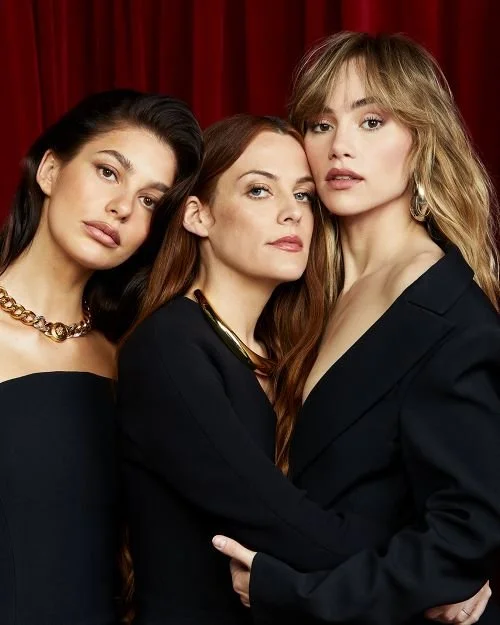
 IN THIS PHOTO: Suki Waterhouse (right) is a s successful solo artist who also stars in Daisy Jones & The Six (about a fictional band) fronted by Riley Keough (centre) as the eponymous Daisy Jones/PHOTO CREDIT: Dan Doperalski for Variety

solely of musicians to make music. It is a part of the arts that embraces those form other disciplines. I would like to see more people from other disciplines make music. There has been a long tradition of actors making music. For many, it is their main passion. It can be hard balancing the two worlds but, as we have heard recently, some of our best-loved actors have put out incredible singles and albums. I may have overlooked some, but I wanted to focus on a few great actors who have put out amazing music in the past few years. I have included those act and direct (such as Seth MacFarlane, and, in the case of Daisy Jones & The Six, the fictional band are led by Riley Keough. There are also modern artists who were child actors, and perhaps people don’t know that they started out acting. Yesterday, Christina Chong (Star Trek: Strange New Worlds) put out the stunning music video for her single, Twin Flames. It is a wonderful debut single from someone who I hope releases an album sometime soon. Other actors such as Florence Pugh and Damien Lewis are or have released music. I don’t think there is this sense of actors capitalising on their fame and popularity to get that exposure in music. In every case, this is something that they love to do. Whether they have always balanced music and acting or are primarily known for their acting, I have put together a selection of songs from terrific actors who have gifted us with awesome music. There are actors you just know would be incredible artists who have not yet released music – and there are artists who would also make accomplished actors. The disciplines are interlinked and natural bedfellows given they have shared disciplines and dynamics. From Christina Chong’s new song, to cuts by the likes of Suki Waterhouse and Maya Hawke, here is a collection of songs from actors who show that they…

HAVE a burning love for music.

FEATURE: The Glastonbury Festival Effect: How An Extraordinary Performance Can Impact Album Sales

FEATURE:


The Glastonbury Festival Effect

IN THIS PHOTO: Maisie Peters’ second studio album, The Good Witch, reached number one in the U.K., a week after her phenomenal set at Glastonbury (making her the youngest British female solo artist in nine years to claim that honour)/PHOTO CREDIT: Sophie Scott


How An Extraordinary Performance Can Impact Album Sales

_________

MAYBE it is not something…

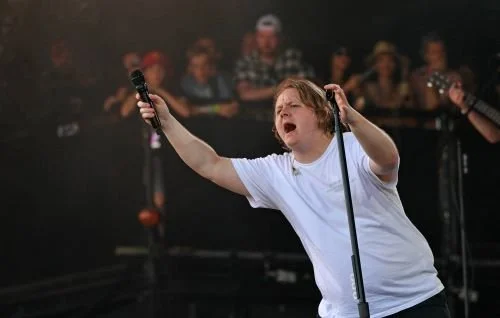
 IN THIS PHOTO: Lewis Capaldi during his Glastonbury set on the Pyramid Stage, 24th June, 2023/PHOTO CREDIT: Getty Images

that only happens with Glastonbury. I am going to stay with the recent Glastonbury, mind. That was televised and is still available on the BBC iPlayer. Many of us who were not able to go watched from our T.V.s and laptops. It was great to see a whole range of performers take to the stages! I definitely discovered new sides to artists that I already know; discovering ones I was not really aware of. I think I have been made to reassess certain Elton John albums (positively) after his Sunday headline slot. I have also dug deeper into the catalogues of Lana Del Rey, and Yusuf/Cat Stevens. I think that one of the most powerful impacts of the Glastonbury Festival being broadcast on the BBC is that many new acts got spotlighted and exposure. Many people might otherwise have missed out on them. One artist I have recently written about and has seen her new album go to the top of the charts is Maisie Peters. The terrific Peters’ Good Witch has enjoyed incredible sales. Music Week provided more details and examination of a Glastonbury trend and effect:

The Glastonbury effect is unmistakable in the latest charts.

Maisie Peters, who performed on the Pyramid Stage on Friday (June 23), debuted at the albums summit with The Good Witch (Atlantic/Gingerbread Man). Peters’ second album was released on the day of her appearance at the televised festival.

The Good Witch opened with 20,760 sales (9,475 CDs, 5,286 vinyl albums, 1,000 cassettes, 1,138 digital downloads, 3,861 sales-equivalent streams). Maisie Peters’ debut, You Signed Up For This, peaked at No.2 in 2021 (9,575 sales).

Meanwhile, Elton John and Lewis Capaldi climbed into the Top 3 following their Glastonbury sets.

The farewell UK performance by Elton John was a ratings hit on BBC One. Glastonbury 2023 broke previous digital audience records for viewing and listening on the BBC - with content streamed a record 50.3m times across BBC iPlayer and BBC Sounds to date – up 47% on 2022. On BBC iPlayer, viewers streamed sets and Glastonbury programming from Worthy Farm a record 47.5 million times, up 49% on the year before.

Elton John’s compilation Diamonds reached a new peak, climbing 13-2. Weekly sales were up 188.1% to 16,669, including 4,835 copies of the coloured vinyl Pyramid edition.

HMV reported a 922% increase in sales for Diamonds. The special edition sold-out almost immediately upon release on HMV’s online store.

Phil Halliday, managing director at HMV and Fopp, said: “Glastonbury is probably the country’s best showcase for artists and we see a sales boost across the board for the big names who take to the stage. This year the headliners all saw substantial increases in sales across our stores as those who were at Worthy Farm or watched on TV rushed to add artists that made a lasting impression on them to their collections.

“Beyond the main-stage headliners, the Glastonbury’s crowd’s heartwarming response to Lewis Capaldi’s set clearly had an effect beyond the fields of Somerset and has translated at the tills, while Lizzo’s stand-out performance has attracted a new audience to her music based on our sales data.”

In the albums chart, Lewis Capaldi’s sophomore release, Broken By Desire To Be Heavenly Sent, rebounded 16-3 (8,801 sales - up 68.1%), while 2019 debut, Divinely Uninspired To A Hellish Extent, moved 34-9 (7,281 sales - up 114.8%).

Tom Grennan, another Glastonbury performer, finished at No.5 with What Ifs & Maybes (7,541).

Headliners Arctic Monkeys are back in the Top 10 with AM (12-7, 7,442 sales). The band also saw gains for Whatever People Say I Am, That’s What I’m Not (29-20, 4,108 sales), Favourite Worst Nightmare (51-38, 3,081 sales) and The Car (119-73, 2,029 sales).

As revealed in Alan Jones’ charts analysis, other albums by acts who appeared at Glastonbury that achieved gains of 10 or more places this week are: But Here We Are (31-14, 4,955 sales) and The Essential (63-22, 3,901 sales) by Foo Fighters; Born To Die (43-29, 3,631 sales) and Did You Know That There’s A Tunnel Under Ocean Blvd (100-74, 1,995 sales) by Lana Del Rey; Greatest Hits (96-31, 3,278 sales) and Appetite For Destruction (re-entry at No.62, 2,180 sales) by Guns ‘N Roses; and Only Honest At The Weekend (89-69, 2,089 sales) by Becky Hill.

In the singles chart, Until I Found You by Stephen Sanchez reached a new peak of No.14 after Sanchez performed the song during Elton John’s Glastonbury set.

There are also Glastonbury-powered re-entries for Cold Heart by Elton John & Dua Lipa (No.30, 13,523 sales) and his 1983 No.4 hit I’m Still Standing (No.34, 12,373 sales), while Guns ‘N Roses’ Sweet Child O’ Mine returned to the Top 40 for the first time in 34 years (No.40, 11,234 sales)”.

Maisie Peters is a tremendous artist who deserves that chart position! I guess, when you see an artist perform at a festival, you are curious and will buy their album. Glastonbury has this different impact. As it is televised, it can have a huge effect on an artist’s popularity. As opposed established acts seeing their albums do well again, the most wonderful and important result of that Glasto exposure is for newer artists. Not only is it an honour to play at Glastonbury: you also are showcasing your music to people who might not have your album. In the case of Maisie Peters’ The Good Witch, there was some shrewd/lucky timing regarding her Glastonbury appearance. The album came out on 23rd June. This was the same day her album came out. What better way to showcase it to her fans than performing it on the Pyramid Stage. On that huge stage in front of an eager crowd, there is no surprise that this sort of platform resulted in boosted album sales. I feel there are other results of Glastonbury that will highlight female artists. Maisie Peters is going to get headline slots very soon, but there were female artists on the bill who will see a rise in album sales because of their time at Glastonbury. At a time when gender inequality is still a talking point, I feel like the ‘Glastonbury effect’ of albums selling more post-appearance is a positive thing. I am going to write separately about gender at festivals as we move towards other major ones.

 PHOTO CREDIT: Jorge Fakhouri Filho/Pexels

In a wider sense, I think the nature of promotion is changing. Look back years ago, and the way albums got sold in large amounts was by massive touring and a load of T.V. and radio promotion. This is still part of the promotional cycle, but the fact festivals being televised results in this awareness of great artists and their albums should compel a few things. For one, we need other festivals to get syndicated and televised. I am thinking of Coachella, Reading & Leeds, and Primavera. I feel like there would be a huge demand for this. Also, at a time when we have one televised music show – Later… with Jools Holland -, another one needs to come to our screens very soon! I also feel like social media platforms like TikTok are hugely influential. Artists can share short clips of their songs and, in turn, fans can share that song in their own videos. Live videos professionally shot also give you a glimpse of new material and what that artist sounds like live. These live videos also have the bonus of, let’s hope, festival organisers being aware of more female artists and their live prowess. Congratulation to Maisie Peters on the triumph of The Good Witch! Also, a congratulations to all the other artists that benefited from their appearances at Glastonbury. It is encouraging to see. In future features, I am writing about vinyl sales, HMV, and physical music in general. Even if artists like Peters use social media and digital platforms to promote their work, fans are putting their hand in their pocket and buying the album – maybe compelled by the physical performance of the songs and keen to bond with a physical music format. Peters’ majestic second studio album has clearly…

CAST its spell.

FEATURE: One for the Record Collection! Essential August Releases

FEATURE:


One for the Record Collection!

IN THIS PHOTO: Rhiannon Giddens


Essential August Releases

_________

NEXT month…

 IN THIS PHOTO: Renee Rapp/PHOTO CREDIT: Erica Hernandez (Courtesy of Interscope Records)

is quite busy for new albums. There are a few that I want to recommend, so I shall plough straight on! The first date I want to focus on is 4th August. There are a few great albums out from that week that I would urge people to investigate. Art School Girlfriend’s Soft Landing is one that you need to pre-order, as it is going to be among this year’s best albums. If you need a bit more information around this album, then Rough Trade are on call for assistance:

Art School Girlfriend, Aka Polly Mackey, releases her second album Soft Landing, via Fiction Records. The album is self-described as a series of “small euphorias”, it is an album that finds Mackey shifting her sound towards tactile electronics whilst retaining the floating melodies of her debut.

Lead track "Close To The Clouds”, follows the success of standalone single “A Place To Lie” earlier this year. “Close To The Clouds” is an integral part of Soft Landing, with the central refrain providing the album with its title, and the song unfurling into climbing, arpeggiated synths amidst acid-house indebted drums.

Soft Landing follows Mackey’s 2020 debut album, Is It Light Where You Are? an album made in the wake of a tumultuous time and released during one. Soft Landing feels like Mackey’s true debut, a record of curiosity and playfulness with songs that sound like they are falling effortlessly into place”.

A terrific trio, Girl Ray, prepare to release Prestige on 4th August. An album that you need to pre-order, it looks set to take some of the elements of their first two albums and add in something new. If you are not familiar with Girl Ray, then the new album is one that you need to get. They are a wonderful force. I think that they will release one of the most rewarding and exciting albums of the year. Among the most interesting and finest groups around, Girl Ray are phenomenal:

The essential album for summer 2023. Girl Ray, the three-piece comprising Poppy Hankin, Iris McConnell and Sophie Moss, release their much anticipated third album, Prestige via Moshi Moshi.

Co-produced by Grammy Award-winning producer, Ben H. Allen (M.I.A, Gnarls Barkley, Christina Aguilera, Deerhunter) along with the band’s singer and songwriter Poppy Hankin, Prestige takes the shambolic charm of their debut, Earl Grey (2017), and the indiefied R&B of 2019’s Girl, and injects it with a booster shot of Hi-NRG eighties disco pop”.

There is one more album due on 4th August that I want to bring to people’s attention. Miles Kane’s One Man Band is shaping up to be a terrific album that you’ll want to get behind. Even though he has been in the industry for a while now, Kane never rests on his laurels or repats himself. He is an artist always looking ahead and doing something new. Go and pre-order the brilliant One Man Band:

Miles Kane returns with a blistering new album One Man Band, out on Modern Sky Records. The album’s first offering is the exuberant indie banger ‘Troubled Son’.

Opening the record, ‘Troubled Son’ is raw, pop-driven indie, made for festival stages. “It’s about the struggle we all have in life,” Miles said of the track. “Sometimes we have our shit together and sometimes we don’t. This is me acknowledging my faults and my fears and showing the journey I’m taking as I try to figure it all out.

Miles returns to his guitar hero best on One Man Band as he focuses on big hooks and even bigger anthems. Sharp, infectious, urgent and packed to the brim with singalong moments, it’s Miles on the top of his game. A deeply personal record, Miles returned to Liverpool to work on the album, finding himself reflecting on his journey.

“Making the album back in Liverpool with my family really helped to bring this out of me,” Miles said of the writing process. “We left no stone unturned. Sometimes you have to go backwards to go forwards, and this album helped me rediscover why I picked up a guitar in the first place. This album is like a brand new, yet somehow familiar leather jacket. A comforting melting pot of all the music that has inspired and continues to inspire me every day”.

Before moving onto a busy 18th and 25th August, there is one due on 11th August that is well worth seeking out. Laura Groves releases Radio Red then. It is an album that I think people need to pre-order. It sounds like a really interesting album that will offer up plenty for the listener. Groves is an amazing artist that needs to be on everybody’s radar for sure:

Much of Radio Red, the first full length album Laura Groves has released under her own name, was written, produced and recorded by Groves in her studio, watched over by two radio transmitting towers. “I became very drawn to them and they became like symbols to me; they were always awake, sending their messages, the red lights always came on at night and watched over whatever was going on in my life.” The album deals with themes of communication - missed and intercepted signals, chance meetings, synchronicities, the channels through which we try to express our true feelings, the outside interference that can get in the way and the joy of letting go and allowing the messages to flow freely.

Self-recording and production is a core part of Laura’s songwriting process. “I remember years ago getting hold of some basic recording software and being instantly drawn in. The idea of being able to layer up my voice was a dream, like building an orchestra out of what I had at home.” The passion for home-recording, using the resources available at the time, working through limitations and capturing textures through layering, forms the foundation of Groves’ experimental and off-centre pop music and electrified folk music. The sound world of Radio Red is made up of echoes and snapshots of half-remembered pop songs, piano ballads, chopped up TV theme tunes, ambient synthesised sounds and electronic music; tuning in between channels without fully belonging to any one of them, with the comfort, familiarity and strangeness that can come with hearing voices on the radio”.

Let’s flip to 18th August. The superb Iraina Mancini releases her debut album, Undo the Blue. She is someone I have been a fan of for a while. I adore her music and everything she puts out. I have heard the album, so I can assuredly say that it is going to be among the best of this year - though it might well be the absolute best. Go and pre-order (this might be a better link to use, as you get the option of cool bundles) a sensational and rich album from one of the U.K.’s greatest and most talented artists. I am so excited to see how people react to Undo the Blue:

Needle Mythology, the label founded by music writer, author and broadcaster Pete Paphides, release the eagerly anticipated debut album by London singer-songwriter and renowned DJ Iraina Mancini. Iraina’s singular pop vision will be known to regular listeners of 6 Music, where her singles ‘Undo The Blue’, ‘Deep End’, ‘Shotgun’ and ‘Do It (You Stole The Rhythm)’ have all been enthusiastically embraced. Iraina's obsession with music stretches back into her early childhood, much of which was spent absorbing her parents’ collection of old 45s, in particular her dad’s Northern Soul records – an alternative education which meant that, by her early 20s, she was a familiar presence in the DJ booth at many discerning London club nights. Her love of French ye-ye, British freakbeat, Brazilian bossa nova, soul, and Turkish psych will be well-known to regular listeners of her Soho Radio show. Having always sung from a young age, Iraina embarked on a string of collaborators such as Jagz Kooner (Sabres Of Paradise), Sunglasses For Jaws (Miles Kane) and Simon Dine (Paul Weller, Noonday Underground) which truly saw her find her metier as a songwriter, conjuring melodies that stand shoulder to shoulder alongside her impeccable influences. Iraina describes her first single for Needle Mythology ‘Cannonball’ as “a celebration of that moment when you meet someone you really fall for and it knocks you for six. It can be a bit scary, but you’ve just got to go with what your intuition is telling you.” Written with Simon Dine, the vertiginous heart-in-mouth abandon of the song perfectly mirrors the circumstances that brought it into being. Iraina cites Jacqueline Taïeb’s 1967 single 7h du Matin as an early inspiration for the song: “There’s such a great energy about that song. Her vocal is amazing and all those stops and starts that grab your attention.” “This is an artist I absolutely love, one of our rising stars at 6Music.“ Lauren Laverne BBC 6Music”.

There are three more albums from 18th August well worth saving some pennies for. The first is Margaret Glaspy’s Echo the Diamond. Glaspy is a brilliant artist with a unique voice. This is an album that you will definitely want to pre-order and experience. It seems like the making of Echo the Diamond was a very important and impactful for Glaspy:

The third full-length from Margaret Glaspy, Echo The Diamond emerged from a deliberate stripping-away of artifice to reveal life for all its harsh truths and ineffable beauty. Like the precious gem of its title, the result is an object of startling luminosity, one capable of cutting through the most elaborately constructed façades. “This record came from trying to meet life on life’s terms, instead of looking for a happy ending in everything,” says the New York-based musician. “The whole experience of creating it felt like effortless catharsis.”

Produced by Glaspy with co-production from her partner, guitarist / composer Julian Lage, Echo The Diamond expands on the frenetic vitality of her widely acclaimed debut Emotions and Math—a 2016 release The New Yorker hailed as an album “in which pretty songs often turn prickly, enriched by carefully measured infusions of dissonance and grit.” This time around, Glaspy worked with drummer/percussionist David King of The Bad Plus and bassist Chris Morrissey (Andrew Bird, Lucius, Ben Kweller), recording at Reservoir Studios in Manhattan and embracing an intentionally unfussy process that left plenty of room for spontaneity.

For fans of Liz Phair, Speedy Ortiz, Juliana Hatefield and The Lemonheads”.

Even though I cannot see a vinyl release for the album, Renee Rap’s Snow Angel is available on CD on 18th August. This year has already seen some magnificent debut albums. The American actress and songwriter is going to release a terrific debut album into the world. I would say that it is well worth pre-ordering, as she is an artist getting a lot of attention and buzz. There is this sense that she will go a very long way indeed. Make sure that you get on board early:

Reneé Rapp’s debut album Snow Angel kicks off her new era of music by putting her heart in full display as she continues to round out her already-multidimensional artistry. Executive produced by Alexander 23, the album captures Rapp’s ability to unabashedly speak her truth, whether it’s through emotional ballads or infectious pop hits. In just a year, Reneé has already sold out shows nationwide while netting hundreds of millions of streams, making Snow Angel one of the most anticipated albums of year”.

One album I am particular excited to hear is Rhiannon Giddens’ You're the One. She is an extraordinary artist with one of the most powerful voices I have heard. This time around, Giddens has put together an album of all originals. Go and pre-order your copy. Someone who is great at interpreting older songs, it will be interesting hearing what she offers on You’re the One. Her most recent album, They're Calling Me Home with Francesco Turrisi, was superb. She has collaborated with other musicians a lot. Although this is a solo album, there are some terrific musicians in the mix:

Rhiannon Giddens’ You’re the One is the Grammy - and MacArthur - winning singer, composer, and instrumentalist’s third solo studio album and her first of all original songs; her last solo album was 2017’s critically acclaimed Freedom Highway. This collection of 12 songs written over the course of Giddens’ career bursts with life-affirming energy, drawing from the folk music that she knows so deeply, as well as its pop descendants. The album was produced by Jack Splash (Kendrick Lamar, Solange, Alicia Keys, Valerie June, Tank and the Bangas) and recorded at Criteria Recording Studios in Miami with a band composed of Giddens’s closest musical collaborators from the past decade alongside musicians from Splash’s own Rolodex, topped off with a horn section, making an impressive ten to twelve-person ensemble”.

Let’s move things into 25th August. There are a few albums from newer artists that are coming out on this date. One, Be Your Own Pet’s Mommy, sounds really interesting. I am going to check it out. This may be a band that you are not aware of. They should be in your sights, as I think that they are going to go a long way and be in the industry for years to come. You can pre-order their album here. Mommy is shaping up to a stunning release that you will want to check out:

The Nashville, Tennessee, garage rock group were signed as teenagers to the prestigious XL in the UK and Thurston Moore's Ecstatic Peace label in the US, with whom they released two widely acclaimed albums. They went on to tour with the likes of Arctic Monkeys, Sonic Youth, Le Tigre etc and have been cited as influences for groups such as Paramore and Big Joanie.

Now they return with their first album in 15 years on Third Man. It explosive, scuzzy and full of fireballs of energetic nuggets. Welcome back!!”.

An album where we have much more information for, Becca Mancari’s Left Hand has an intriguing backstory. I do like the learn the history of an album and what its story is. Following 2020’s The Greatest Part, it seems like they are going to gift us with one of the most arresting albums of the year with Left Hand. Here is some detail regarding Becca Mancari’s third studio album:

Since moving to Nashville to start their music career in 2012, Becca Mancari has been lauded for their dextrous songwriting and prodigious guitar playing. Their sophomore album The Greatest Part, released in 2020, was an indie rock opus that garnered acclaim from The New York Times, NPR, and more. After its release, however, Mancari was despairing. An illness in their family, coupled with a realization that their alcohol dependency had become untenable, led Mancari to begin the hard work of taking ownership of their existence by mending broken relationships and investing in their mental health. “I didn’t realize it then, but looking back, I was a passenger in my own life,” Mancari says. The transformative period of self-reckoning was the catalyst that ultimately steered Mancari to write and produce their triumphant new album, Left Hand. After a disheartening studio session with an outside producer, Becca became convinced that they were capable of rendering their vision independently. Close friend and musical ally Juan Solorzano, who has played on all of Mancari’s albums since the debut of Good Woman in 2017, joined them in the studio to co-produce the majority of the record. In addition, Daniel Tashian (Kacey Musgraves, Demi Lovato) co-wrote and co-produced the song “Don’t Close Your Eyes,” encouraging Mancari to track every instrument on the initial demos.

 As much as self-producing this album was an act of resilience and growth in one’s own craft, Mancari brought trusted friends like Brittany Howard, who they play with in Bermuda Triangle, Julien Baker and Zac Farro into the process. Insecurities that had dogged Mancari since childhood couldn’t weather the force of energy in that studio, where they executed decisions with newfound certainty. The title track, “Left Hand,” is named for the Mancari family crest. After a lifetime spent feeling like they didn’t belong, Mancari unlocked a perfect metaphor in the crest: “In many cultures children born with a dominant left hand were taught not to use that hand, and were told that using the right hand was ‘normal’ and ‘correct.’ Similarly, queer children are often times told that it’s not ‘normal’ for them to love who they love and that they need to ‘change.’” On Left Hand, Mancari offers the listener a collection of songs that should be played in moments when we are in need of reassurance and encouragement. No song exemplifies this better than the ebullient track “Over and Over,” which is a reminder to friends that happiness doesn’t need to be fleeting. “I wanted to write a queer pop song that has meat on its bones,” they say. Inspired by one of many reckless and joyful hangs with dear friends in Nashville, the enlivening pop song makes a promise to them, and to the greater community Mancari embraces on this album. “There is something to the feeling/ Head hanging out of the window/ Being ok that we don’t know,” sung on the chorus over a beat replete with congas and shakers. What follows is a promise to anyone who ever feels like the greatest moments of their life are disappearing in the rearview: “We can have it like we used to, over and over and over and over again”.

There is a final album that I want to mention. Not a new artist on the scene, the legendary Cindy Wilson (The B-52’s) always produces incredible music. Realms is out on 25th August, and I think that it is going to get some great reviews. Maybe you do not know about her solo music. Rough Trade give us some useful information that should convince you to pre-order this amazing album from one of the music industry’s greats:

Cindy Wilson has always been on the forefront of music's cutting-edge: As a founding member of The B-52's, she was a pioneer of the New Wave sound that redefined music in the 1970s and '80s - Cindy is known for her distinctly melodic voice and her remarkable ability to deliver powerful emotions in her music.

She has made a fresh name for herself that extends beyond her band's legacy, establishing herself as a singular force in her own right. Nowhere is this more readily apparent than on Realms, Wilson's spirited sophomore studio album and her most ambitious effort to date. Once again working with Suny Lyons (with Sterling Campbell contributing drums and Maria Kindt on strings), Wilson invites her audience on an immersive, enchanting ten-track journey that peels back the layers of our common humanity. Realms demands our undivided attention as Wilson takes us on a kaleidoscopic journey through our own minds and souls. Through a series of colorful, dramatic outpourings and dynamic, finessed upheavals, it's a carefully crafted record proving beyond a shadow of a doubt that Cindy Wilson continues to have her fingers on the pulse of modern music. Pop in style and indie at heart, Realms is the next new wave of Wilson's already storied legacy”.

You should have plenty of choice there when it comes to albums out next month well worth some money. Of course, most people can’t afford them all – but you may be able to get one. There are no huge releases from mainstream artists. Instead, it is a chance to discover brilliant new music from artists that are just as worthy and talented. I hope that my recommendations…

HAVE been of some use.

FEATURE: The Digital Mixtape: Ringo Starr at Eighty-Three: A Peace and Love Playlist

FEATURE:


The Digital Mixtape

PHOTO CREDIT: Scott Robert Ritchie


Ringo Starr at Eighty-Three: A Peace and Love Playlist

_________

THIS time around…

 IN THIS PHOTO: The Beatles’ George Harrison, Ringo Starr, Paul McCartney and John Lennon in their London backyard/PHOTO CREDIT: Terry O’Neill/Getty Images

for The Digital Mixtape, I wanted to celebrate the upcoming birthday of one of the music world’s finest human beings. Ringo Starr turns eighty-three on 7th July. Rather than simply put together a playlist featuring his best beats with The Beatles, I am going to broaden it a little. Alongside those cool beats will be some of his great vocals on Beatles songs, together with a few of his finest solo cuts. It is always nice celebrating the birthday of an important musician, but there is something extra special when it comes to our Ringo! Not only one of the greatest drummers to have ever lived, he also has that legendary wit and kindness. Always offering up peace and love, it is only right to throw some love back ahead of his birthday. His latest studio album, What's My Name, was released in 2019. We all hope there will be another album from Starr! Also, as his erstwhile bandmate Paul McCartney is recording, it would always be nice to think they’ll be a collaboration between them. The Beatles machine will always be on, so we will get more album anniversary reissues. It is great that the brilliant Ringo Starr is still out there and performing. To honour his approaching birthday, here is a selection of the best work…

FROM the Liverpool-born legend.

FEATURE: Live to the World: Making Gigs and Artists More Accessible

FEATURE:


Live to the World

IN THIS PHOTO: Picture Parlour at Brighton’s The Great Escape in 2023/PHOTO CREDIT: The Great Escape


Making Gigs and Artists More Accessible

_________

AN article…

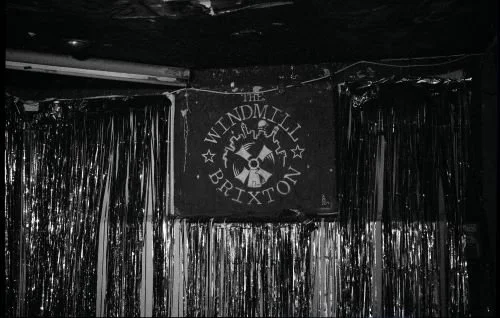
 IN THIS PHOTO: The Windmill, Brixton/PHOTO CREDIT: Alex Amorós

from NME caught my eye recently. I have written about music videos and how, now, you do not really get some of the more inventive and ambitious ones you had years ago. That may be budget-related, or maybe there is not so much stock in a great visual representation of a single. People prefer to stream the song or see the artist do it live – so the video is not really that important. I love visuals with a track, as it brings it alive. Something that is happening more is the live video. Rather than these being rather poor-quality phoned sets, we are seeing more and more of these high-quality and crisp videos of artists playing live. Rather than a group or artists having to tour and hoping that they catch the eye of a label or festival booker, they can get these sets or performances captured and sent to the world:

Scan over any tastemaking festival lineup this summer and you’ll see a host of emerging names without any recorded material available. Instead, these buzzy upstarts have been beamed out by way of immersive live videos shot by a growing community of videographers. Just a few names due to hit festival stages in the coming months include Picture Parlour, Fat Dog and Mary In The Junkyard, all of whom introduced themselves to the world via videos of their visceral live shows – much like The Last Dinner Party, before they emerged with the huge ‘Nothing Matters’ in April.

Joe Love from London-based newcomers Fat Dog – who have been booked to play Reading & Leeds this summer – says the movement is a testament to the venues that are the backbone of the south London scene. “Places like The Windmill in Brixton allow artists to try out new shit, sometimes it goes down well and other times it doesn’t, but people are forgiving,” he says. “These venues put bands on that people don’t know about and take risks on them – it’s about having faith and giving artists the chance to do their thing.”

This sentiment is echoed by Katherine Parlour of fast-rising four-piece Picture Parlour, who recently stormed The Great Escape festival in Brighton. “When you’re playing these smaller venues, there’s just magic and excitement there,” she tells NME. “You’re just thrilled to be at The Windmill or The Social – venues we dreamt of playing when we started, so having those shows captured is just so special.” Take a look at the professionally recorded clip of the band’s current set opener ‘Norwegian Wood’, which shot at The Social – you can practically smell the beer and dry ice as her voice crackles with gut-punching emotion.

As an emerging band without the resource to instantly deliver their vision on record, Parlour explains that these videos have helped to kickstart the band’s career. “There’s a level of accessibility behind getting out there and playing shows,” she says. “We couldn’t just go and record a single up to our standards and put it out into the world, but you can definitely just do a live show and have someone enjoy it, capture it and whack it on the internet.”

Guitarist Ella Risi explains that the content is much more than just fan-shot footage, citing filming veteran Lou Smith, who made his name shooting the likes of Fat White Family and Shame at The Windmill over the years. “People watch Lou’s videos because they know they’re going to discover this new talent,” she says. “The videographers have their own communities around them.”

Things took a particularly unpredictable turn for Picture Parlour when Courtney Love shared a snippet of one of Smith’s live recordings to her Instagram, which saw the band’s followers count skyrocket. “It goes to show this kind of exposure is so important for smaller bands,” Risi adds”.

One great thing about the videos is that they have that professional touch. During the pandemic, many relied on streamed and virtual gigs to get their fix. Not only can these videos give festival and venue bookers a sense of what an artist can do. It is also a chance for fans to get a sense of what they sound like. When festivals are looking for acts, they can see a real and very vivid representation of what their live credentials are. You can get several videos of the same artist at different venues. Rather than having to go to a gig, stand at the back and get a semblance of what it is actually like on the stage, here you get something much more tangible and vibrant. I guess, in many ways, it is a video C.V. Not that many artists will get signed on the strength of a live video. It does give that sense of what they are about. The fact that these videos look so good shows that there is a level of professionalism there. One reason why I wanted to look at this article and phenomenon is that there is something for fans too. Many won’t be able to travel to gigs or afford it. They might feel a bit anxious and unable to handle stepping into a venue and that noise. I am in a situation where I like live music, though I have to limit the gigs I go to. That is financially-based, though I also can feel a bit overwhelmed and blasted by the sound and volume of people there. It is a shame. Whilst bands cannot replicate their live shows through videos, it is a nice and accessible way for fans who cannot get to gigs to see them. Also, it is a taster for potential ticket-buying. If you are not sure what they are like live and have been on the fence, these videos can influence your decision.

I am still fascinated by music videos. Rather than focus on that subject again – and why they are less important or high-concept or some of the previous best -, I thought I would share some important words from NME. I use quite a few of these filmed sets in my features. When highlighting an artist, it is a nice way of showing what they are like live. Because of that, people might decide to buy a ticket and see them play. Perhaps the biggest and more effective reason for these videos existing is to get festivals and venues talking and booking them. At a time when women are under-represented at festivals and having to fight for inclusion, these videos can show festival organisers why they need to book them. It at least provides an insight and small window into the live prowess of an artist or band. Again, you rely on luck and hope that a festival organise will be at your gig by chance. That rarely happens. Posting something onto social media is that instantly way of sharing that live video to the world. The professional sound and visual quality means that there is this very clear representation. I have followed artists and written about them based on their videos. It also gives me a sensation of what they are like playing live. You also promote a venue with these videos. Let people know what that space is like. Artists can also watch back their videos and see how they look performing. It can be a great template when taking the music to a festival or another venue – almost like a training video in a sense. Let’s hope that this phenomenon grows through the years. Whilst you can never get that true sense of what the gig is like, it is a brilliant way of an artist showing the world…

WHAT they are all about.

FEATURE: Spotlight: Prima Queen

FEATURE:


Spotlight


Prima Queen

_________

HAVING just played…

five sets at Glastonbury, the incredible Prima Queen are gaining new momentum and acclaim off of the back of their E.P., Not the Baby. I will come to a review for that E.P. at the end. In a sea of wonderful new music, there is something especially memorable and spectacular about Prima Queen. Fronted by the songwriting duo of Louise Macphail (Bristol) and Kristin McFadden (Chicago) - when playing live, Heledd Owen and Kitty Drummond are in the fold -, they combine vulnerable and nostalgic colours with light-hearted and immersive lyrical imagination. Although they have been compared with artists such as Julia Jacklin, Nilüfer Yanya, Phoebe Bridgers, and Lucy Dacus, they very much add their stamp on the Indie Rock genre. Cast back to In November 2021: this is when Prima Queen signed to Nice Swan Records and released the awesome single, Chew My Cheeks. They are one of the most interesting and promising acts in the world. When we have so much terrific music coming through, Prima Queen are very much at the forefront. I want to bring together a few different interviews. Starting out with a slightly older one from Fred Perry:

What’s the best gig you’ve ever been to?

Phoebe Bridgers at the Great Escape - we’re really big fans of her songwriting and were really excited to see her perform but we got to the show too late and they weren’t letting anyone in. We had to wait in a massive queue outside and spent ages trying to sneak through the fence to get in through the back door. By the time we finally got inside she was playing her last song. At that point, we felt like we worked so hard to get inside (i.e. the fence/security guards/people in the queue) it made the whole thing even more magical.

If you could be on the line up with any two artists in history?

Fleetwood Mac and Abba.

Which subcultures have influenced you?

We’re based in South East London and are a part of a really inclusive and exciting art/music community there. We’re also part of a collective called People’s Front Room which travels around to different UK festivals. Both of these communities have inspired us to collaborate with different musicians and experiment with instrumentation (sax, trumpet, cello, synths, etc). Depending on the gig we mix up the musicians playing on our set which is really exciting for us because we can have different versions of the songs. This is something we know is more common in jazz communities but not as popular in indie rock circles.

If you could spend an hour with anyone from history?

We’d love to have a guitar lesson from Emily Remler, an amazing female jazz/bossa nova guitarist from the '80s.

Of all the venues you’ve been to or played, which is your favourite?

We love The Windmill, Brixton - the sound, Tim Perry and the dog who lives on the roof.

Your greatest unsung hero or heroine in music?

Sister Rosetta Tharpe - her singing and guitar playing influenced Chuck Berry and Elvis but not everyone seems to know that.

The first track you played on repeat?

'Where Did Our Love Go' by Diana Ross & The Supremes. Not the first track I played on repeat but I got a record player last year and my mum’s Diana Ross LP was literally the only vinyl I had for 6 months so have been listening to that pretty much on repeat since Christmas.

A song that defines the teenage you?
K:

'Wide Open Spaces' by the Dixie Chicks.

One record you would keep forever?

'Don’t Let The Kids Win' by Julia Jacklin.

A song lyric that has inspired you?

“In five years I hope the songs feel like covers,
dedicated to new lovers.”

From 'Night Shift' by Lucy Dacus.

The song that would get you straight on the dance floor?

'Thinking Of You' by Sister Sledge”.

When performing earlier in the year, Soundofbrit spoke with Prima Queen. They asked about the reference and inclusion of mental health in their lyrics. Obviously, they enquired as to whether they had a good time performing live in France:

You talk a lot about mental health and Alzheimer’s disease in your songs. Can you explain why and how you chose to talk about it ?

Christine : It felt like it was something that had to be talked about. Butter Knife is about that. This is something I was going through.. And the songs were inspired by just being in a bathroom, hiding from people, cause you’re like too sad to talk to anyone. And I thought it would be an interesting way to start a song, someone alone in a bathroom, trying to hide from your own friends, which is quite sad.

Louise : In general, we write songs about things that are happening to us and, yeah, my auntie died from Alzheimer’s. But I guess you just write about what you know and what you’re going through at a certain time.

C : Sometimes you have to write about it because you just don’t know what to do with the feelings.

L: The best thing is when you write a song and you feel like that delt with some of the feeling.

C : Yeah, you can process it in it. A better way maybe when you have to create something that’s coherent instead of just journaling… (laugh)

L : We have to sit down and really make something, a finished product from a feeling, and I think that helps process.

C : And then getting to sing it, that feels so satisfying when you finally like kind of figured out your feeling and then put it in a song and then each time you get to play it, it’s really cathartic.

Do you think mental health is talked about more at the moment ?

L : yeah it’s definitely talked about more but it’s something that is always good to talk about I think. I think in our songwriting… we make sure that we’re being really honest and vulnerable, and I think that it’s what’s important to us. So I think that yeah, talking about everything is good.

What did you think about your first gig in France ?

The audience was so nice ! It was a crazy feeling like “wow we’re in a different country now and there’s people here!”. We only ever played in the UK and everyone was so nice, it was a really good experience. We’d love to come back ! Next year, sometime, we’ll release an EP.

Can you tell us more about your influences ?

We love Jenny LewisBig ThiefTaylor Swift… It’s always changing ! We’re quite different. Sharon Von Etten also, trying to get those big guitar sounds ! We’re working with a producer, Ali Chant, and he’s recorded a lot of bands that we like : Aldous HardingKaty J. PearsonSorrySoccer Mommy… So we’ve been listening to a lot of his production stuff!”.

 PHOTO CREDIT: Bonnie Ophelia

Whynow interviewed Prima Queen this year. With that incredible meeting and coming-together or kindred spirits, it is clear that the duo are part of a movement of leading women. Female artists dominating and defining the best music. After a busy and successful 2022, this year has been another huge one for Prima Queen:

This has been a hallmark of the pair’s songwriting and musical output as Prima Queen, their elegant indie-rock outfit formed after Kristin – originally from Chicago – made her way over to a course in London where she met Louise, originally from Bristol.

As though struck by a music-loving cupid – and hitting it off after Louise’s insistence that Kristin would join her on her musical venture, latching onto her like a kid choosing their friend on the first day of school – the pair have been creative soulmates ever since, penning dreamy tunes that have a deft storytelling prowess. It’s not without irony that among the many rich tunes they’ve released to date is ‘Butter Knife’ – an apt metaphor for how their songs slice into your soul with warmth.

And having toured with fellow female-fronted outfits The Big Moon and it-band Wet Leg last year, Prima Queen are riding a crest of ever-flourishing guitar music that’s paired with a feminine touch and lullaby-like harmonies.

The pair are in such red-hot form in fact, having also recently played Austin’s SXSW Festival, that they were recently whittled-down from thousands of entries to be selected for Glastonbury’s Emerging Talent Competition.

And with a new EP, Not The Baby, out now, we speak to Louise and Kristin, about how Prima Queen formed as a band, their mammoth touring efforts and their love of service stations – especially new ones.


You’re from Chicago, Kristin, as you mentioned; and you’re from Bristol, Louise. So how on earth did you both meet and form Prima Queen?

K: I was actually at Uni in America. I wanted to study abroad and come to London. I took a semester off and enrolled on a course here, and that’s where I met Louise.

L: I was on this course, and I’d been really wanting to be in a band. We were both doing our own singer-songwriter thing, both played guitar and sang. But I wanted to start a band and just couldn’t really find anyone to start one with – or tried and failed. Then I was told Kristen was coming, and I decided she was going to be in my band.

You knew the moment you met her?

L: Yeah, I called my mum outside after I met [Louise], and said, “I’ve met her and I’m going to ask her [to be in my band] and it’s going to be good.” My mum said, “Be chill” and reminded me how I always used to ask people to be my friend in the playground.

K: [Louise] was smiling at me when I walked in, and instantly just said, “Do you want to be in my band?”

Last year was pretty immense for you: touring with Wet Leg and The Big Moon. What did you take from those experiences as a band?

L: It’s amazing touring with lots of different bands and getting an insight into how they work.

K: Just building a really nice fan base as well has been great, because people will come back to our gigs; at our headline show at the end of the year, people were saying they saw us play elsewhere. It’s nice to have that organic following that have seen you and are true music fans because they’re going to see these other bands we’ve been on tour with. So we’re just able to share those fans–

L: Steal them–

K: And meet all these really lovely people that come back to shows every time.

We mentioned your tour support with Wet Leg, and The Big Moon – both impressive, female-led guitar groups. Do you feel like you’re part of a female-led guitar moment in music? Or do you think that’s a media-imposed oversimplification?

L: I think when we were starting, we had this idea of what music we wanted to make, but there wasn’t actually loads of it around; we were trying to describe this rock-guitar driven music with feminine harmonies, and there wasn’t much of it – and now there is.

K: Yeah, I definitely think it is a movement. And it’s my favorite music. Women are leading the way. It’s awesome.

And what else is next for you following the release of this EP?

K: We’re working on an album.

L: We’ve got a whiteboard over there [pointing] that we’ve just got, ready to write on. We’ve got lots of songs that we’re trying to figure out what will be on the album”.

The final interview I am bringing in is from The Line of Best Fit. It is clear that there was an instant spark between Kristen McFadden and Louise Macphail. You can hear and feel this sense of connection, friendship and trust within their debut E.P., Not the Baby. Two songwriters very much in harmony – both vocally, lyrically and visually:

It’s not an isolating dynamic, however. Prima Queen comes from a long line of women finding solace in each other and their stories. Women are connected by each other’s experiences and, for McFadden and Macphail – as with so many others – it all comes down to Taylor Swift, the ultimate unifier.

Despite growing up with an ocean between them, the pair shared the same feelings and ideas through music. “We felt the same thing as teenagers [because of songs like] 'Teardrops on My Guitar' and 'Love Story',” Macphail muses. Continuing, McFadden agrees: “I’d never heard a young woman talk about playing the guitar before and someone so cool saying boys don’t love me.”

In the formative days of their relationship, Swift made her presence known. “Kristen was in my house one time, really early into our friendship, and my iPod was on shuffle. A very risky situation,” Macphail laughs. “This deep cut of a Taylor Swift song came on and we both immediately got on the table and started dancing.” Smiling, McFadden adds, “it was like ‘okay I feel safe now, this is a safe space.”

As Prima Queen, the practice of rallying around women feels more powerful. In the lyricism their music is built, there’s nods at having each other's backs, vocally and literally, and reinforcing each other’s stories.

In “Back Row”, McFadden leads a tale about complicated love, lamenting “I remember the letter / You left beneath my door / I tried to write you back / I spent two days crying on my bedroom floor.” With Macphail behind her, it’s an experience shared. Neither are lonely in moments of grief, something fortified by the upbeat and euphoric chorus of accepting love and loss as a part of life.

It’s a set of feelings perhaps impossible to conquer alone. “We know all of each other’s stories inside and out. Whoever is singing lead is telling theirs and the other is there supporting because they get it. They all feel like both of our stories now,” says Macphail. “We’re telling each other’s stories and we’re each other’s main support,” McFadden adds, “we know everything about the other person’s life and what they’re feeling and the songs reflect that; the songs are reflections of what we’ve told each other.”

With “Dylan”, a jazzy, ruling and introspective glimpse into the breakdown of a relationship, sonically McFadden stands behind Macphail as she confronts a partner – it’s now two against one.

“How we’ve helped each other process feelings is the accumulation of the song,” McFadden assures, and the result is sprawling. It’s hard not to become mobilised by the autobiographical, narrative tales Prima Queen anchor their songs around.

Visceral and all-encompassing, they belong to the listener just as much as them. Not Your Baby is a comforting call of empowerment amongst love and life’s messiest moments, and it also serves as a reminder that no one has to go at it alone”.

I am going to wrap things up with a review of the amazing Not the Baby E.P. It is definitely one of the best E.P.s of the year. It will be interesting to predict when Prima Queen will put out their debut album. There is a lot of love and support behind them. NME were among those who have a lot of positives to say about Not the Baby:

Transatlantic duo Prima Queen may have met by chance, but their connection was surely destined to be. Their story begins with the Chicago-born Kristin McFadden moving to London for a semester abroad to study songwriting. And who happened to be on that course? Her future bandmate and bestfriend Louise Macphail, of course, who’d already decided they’d make music together after seeing a video of McFadden performing online.

A bond formed instantly. Not even McFadden returning to the US for a year could break it, and now six years later, they’re as close as ever. This resilience to change and getting through things together bleeds into the foundations of Prima Queen’s debut EP, ‘Not The Baby’. They complete each other’s melodies, and as both McFadden and Macphail delve into their respective personal dealings lyrically, the other is never too far away, always providing a holding hand.

This level of support can be heard in the duo’s storytelling. Positioning themselves as heartbreakers – “We got tangled up and turned around / I got your hopes up then I went back and let you down” – opener ‘Back Row’ is an instant alt-rock triumph. The track’s crescendoing horns, meanwhile, feel reminiscent of Katy J Pearson’s 2022 album ‘Sound Of The Morning’.

The sweetness of the lush, acoustic number ‘Crows’ feels disparate to the track’s darker themes, complete with a namecheck to Ted Hughes’ seminal 1970 poetry collection of the same name. The band detail his “grief for Sylvia Plath” while exploring creation and life in a mindset of despair, which stretches to observing a crow “bleeding in the grass”. More hopeful than Hughes and his late counterpart, Prima Queen hold each other up with the realisation that, sometimes, those you love are struggling and you can’t fix it, however hard you try.

‘Not The Baby’, while only pushing 13 minutes, attests to the strength of friendship. Prima Queen are a duo so in sync, their support of one another results in a remarkable songwriting prowess, which will continue to evolve as the band reaches a wider audience. They recently placed as runners-up in this year’s Glastonbury Emerging Talent Competition, winning them a set at Worthy Farm in June – their biggest show to date. But Prima Queen will continue to move forward with a belief that their irrepressible musical chemistry can get them through anything”.

If you do not currently have Prima Queen in your life, go and rectify that now! Follow them on social media and listen to the marvellous Not the Baby. After their warmly received and successful Glastonbury gigs, many eyes are going to be firmly on this incredible pair. It is evident that this spectacular and hugely close-knit duo have a…

GOLDEN future ahead.

__________

Follow Prima Queen

FEATURE: Blonde Bombshell: Hot Pinks and Business Greys: The Cinematic Double Header of Barbie and Oppenheimer

FEATURE:


Blonde Bombshell

IN THIS PHOTO: Barbie star Margot Robbie is photographed for Vogue in May 2023/PHOTO CREDIT: Ethan James Green


Hot Pinks and Business Greys: The Cinematic Double Header of Barbie and Oppenheimer

_________

NOT there is a direct link to music…

 IN THIS IMAGE: Grave greys and fabulous pinks: Cillian Murphy in Oppenheimer and Margot Robbie in Barbie/COMPOSITE CREDIT: Universal Pictures/Album; Alamy Stock Photo (via The Guardian)

but there is an upcoming cinematic battle that sort of reminds me of some of the showdowns we used to see in music. I guess the most famous one was between Blur and Oasis back in 1995. That epic Britpop battle between Blur’s Country House and Oasis’ Roll with It resulted in narrow victory for Blur. Even though both songs were beyond the bands’ best, the fact that there was so much press and interest in this showdown was thrilling! There were interviews where Oasis would dig at Blur or vice versa. You do not really get it much these days. It is a shame, because there was drama and build-up that created this kind of strange excitement and tension! I guess the fact people chose their camps and there was this showdown between fans was not great. Even so, I do look back fondly at some of the great music tussles. In cinema, you occasionally get these battles. There is little to connect Greta Gerwig’s Barbie and Christopher Nolan’s Oppenheimer. Both are very different films, but they each come out on 21st July. Of course, you can go and watch both…but which do you see first?! I am going to discuss both films in detail. Both are expected to be among the most popular films of 2023. Barbie stars Margot Robbie in the titular role. Unlike Britpop’s greatest single battle, there is n animosity or any sort of rivalry between Greta Gerwig and Christopher Nolan. The former is an exceptional visionary who is a brilliant director, actor and writer. Having recently directed incredible films such as Little Women (2019) and Lady Bird (2017), this is a film that will firmly break her into the mainstream. With a $100 million budget and actors like Ryan Gosling (playing Ken), Margot Robbie and Emma Mackey in the cast, it is going to be a hit! You can see from the trailers that it is going to be the film of the summer. I think that it may even surpass Christopher Nolan’s Oppenheimer at the box office. What a treat to get two huge and extraordinary films in the same week!

I wanted to bring in some details about each film, before rounding things up. I am a massive fan of both Greta Gerwig and Margot Robbie. Gerwig is an amazing writer and director. I think that Barbie will be the funniest film of the year. More than that, it will expand our understanding of Barbie and this iconic cultural figure. More than a blonde pin-up doll, we will see various versions of Barbie through the film. Someone who can do anything, it is going to be an empowering and inspirational film. Writing with Noah Baumbach, Gerwig shows Barbie and Ken expelled from the Barbie utopia to the real world. Barbie was being less-than-perfect. We will see the joy and plastic of the Barbie world, before she is taken out of that to the harsh reality of our world. I do think that the film will get a lot of five-star reviews and award nominations (maybe for the screenplay and direction, in addition to Margot Robbie for her lead role). Given the fact that Barbie is up against Oppenheimer, there has been a lot of discussion about the film. Because of the incredible promotion and marketing of the film, a lot of articles have been written. I want to bring a few in. Unlike Oppenheimer, there is a lot of partnership and promotional possibilities that are being utilised (you’d worry if Oppenheimer found many easy commercial and partnership deals!). The Guardian, who have written a few articles about Barbie, explore the incredible marketing of the film. How there will be a lot of interest in the film which could then see sequels and spin-offs happen:

When Margot Robbie first read the script for the Barbie film, which she stars in and co-produced, her first thought was: “They’re never going to let us make this movie.”

Mattel, the doll’s manufacturer, had jealously guarded her image for more than 60 years. It would never agree to a movie that not only riffed on Barbie’s sometimes controversial history, but included among its comic characters none other than a “weird and insensitive” CEO of Mattel. Right?

The answer to that question is opening in cinemas in three weeks’ time – in what the company’s (real-life) CEO has said he hopes will be the beginning of a new franchise of Barbie movies – and an unstoppable wave of lucrative commercial opportunities.

Cinephiles may be intrigued by the pairing of arthouse favourite Greta Gerwig (who co-wrote and directed the movie) with the ubiquitous plastic doll, but for her makers this is an unmissable opportunity to break Brand Barbie out of toyland – and paint all kinds of other products bubblegum pink.

IN THIS PHOTO: Barbie’s Malibu DreamHouse is being made available to rent via a partnership with Airbnb/PHOTO CREDIT: Airbnb/Reuters

Mattel has signed licensing deals with more than 100 brands, it said this week, meaning that this summer as well as dressing in Barbie apparel from Gap, Primark or Forever 21, wearing her shoes from Aldo or inline skates from Skatehut and sporting her makeup (NYX Cosmetics and others), you can also relax on a Barbie x Funboy pool float while enjoying Pinkberry’s Barbie-branded frozen yoghurt

Entertaining? Why not serve your drinks in Barbie x Dragon glassware, scented by themed Homesick candles – but take care not to spill anything on your Barbie x Ruggable rug. Afterwards, you can book an Airbnb break, pack your luggage, play on your pink Xbox and then brush your teeth using “the pinkest oral beauty collection ever”. There are many, many others.

Barbie is the bestselling doll in the UK – last year six dolls were sold every minute – “and that’s before the movie even comes out”, said Melissa Symonds, executive director for UK toys at the consumer analyst Circana. Almost a third of toy sales, she said, are already licensed from films or other media – think Harry Potter, Star Wars and Minecraft.

Although many toy brands hope to extend their name into other sectors, not all succeed. What’s notable about this occasion, Symonds said, is the extent to which those behind Barbie “haven’t just gone down one supermarket aisle”.

Gary Pope of specialist marketing agency Kids Industries added: “Barbie was in an interesting place before it began, because it’s probably the biggest girls’ brand on the planet, and the only brand that really truly owns a colour as well.

“So before they’ve even got out of the traps, they’ve got a fantastic place to play.”

Licensed merchandise has always been important to big movie events, said Ben Roberts of the industry magazine License Global, but we are long past the days when just slapping a Batman logo on a lunchbox would do. “It’s a lot more holistic than that,” Roberts said. “Licensed products are not just linked to a movie, they are part of a brand’s lifecycle.

Mattel, he said, was careful to create “multigenerational touch points” in its licensing, “so that no matter where you are in life, you can engage with the brand in that way”. It’s become particularly central as generations Y and Z – absolutely steeped in diverse media as they grew up – have matured to become kidult fans with purchasing power, he said. “Fandom has become such a large part of our culture now. And fandom is the biggest driver for licensing.”

From the studio’s point of view, too, merchandising is increasingly important in guaranteeing overall profitability, said , director of theatrical insights at film analytics specialist Gower Street. That’s particularly important on megabudget action blockbusters, but also on less predictable movies which may defy easy categorisation – including Barbie, he said.

Expectations were initially modest for the movie, as no one quite knew what it would be, said Mitchell. “This is a film about a toy, essentially, but it is being made by some arthouse film-makers.” But as snippets of the movie have built buzz – and the coincidence of its launch on the same day as Christopher Nolan’s atomic bomb drama Oppenheimer has led to a rush of viral memes comparing them – industry hopes are rising for Barbie, he says.

“Warner Bros and their partners are doing everything they can to make Barbie stand out. And it’s working … it has a very good chance of being the breakout film of the summer.”

The birth of Barbie

She’s been beloved by generations of children, and decried by feminists for promoting an unhealthy body image, but 64 years after she was launched by Mattel, Barbie is still going strong – all the more astonishing given the revolution in women and girls’ lives since.

But Barbie’s surprising origins go back even further still – and are a lot saucier than many parents of young girls realise.

The first Barbie doll, dressed in a black and white striped swimsuit and heels, was launched by Mattel in the US on 9 March 1959. In that first year, 300,000 dolls were sold.

Though recognisably the same doll as today, her vampish looks (catlike, heavily lidded eyes, archly raised eyebrows) were directly taken from Bild Lilli, the German doll who was herself the spin-off of a racy comic strip in the tabloid Bild.

Lilli, in the cartoon version, was a highly sexed seductress and gold digger with a large bosom and quick wit. She was such a hit that the newspaper licensed toymaker O&M Hausser to make a doll, sold from 1955.

Her big moment came when Ruth Handler, who had founded Mattel with her husband, came across the doll on a trip to Europe with her daughters and decided to make an American version named after her daughter Barbara (Ken, who followed in 1961, is named after the Handlers’ son, which perhaps helps explain the dolls’ curiously chaste romance). Mattel acquired the rights for Bild Lilli in 1964”.

With a film like Barbie and the associated commercial and historic value of the brand, the marketing campaign for the film has been especially itinerant, hectic and colourful! I wonder what Margot Robbie’’s next film projects are going to be, and whether she does something similar to Barbie - or whether she goes into a full-on comedy. Looking at her film roles so far, Robbie definitely has a love and appreciate for the past. Exploring different decades. It seems the new Barbie film is split between the modern-day and, when it comes to the dream and utopia world, maybe the 1980s. The Guardian took us inside the marketing machine of the magnificent Barbie:

Barbie, which opens in Australia on 20 July and in the UK and US the following day, is expected be one of the biggest movies of the year. Directed and co-written by Lady Bird and Little Women’s Greta Gerwig, and starring Robbie, Gosling, Ferrera, Issa Rae and a teeming ensemble cast, the expectations are as stratospheric as Astronaut Barbie’s space station.

On Pitt Street Mall, the clamouring crowd is decked out in all shades of pink – magenta, fuchsia, cerise, rose, neon and the rest. There are months-old babies in pink beanies, older women with hot pink-striped scarves, and a person in a rainbow-coloured tulle mermaid skirt. The stars greet fans lined-up along the Mall, signing Barbie dolls in boxes and taking photos before ascending the stage for a Q&A; in a refreshing sartorial moment, Robbie takes a selfie with a man in a Slipknot hoodie.

“Barbie was part of my childhood but one which was hidden,” he says. “I went to my sister’s room and played with her Barbie. To see that in real-life with this movie, it means a lot. It’s important to celebrate everyone and every type of person.”

Gerwig’s Barbie movie, produced through Robbie’s production company LuckyChap Entertainment, has been at pains to emphasise its inclusivity. The cast includes Barbies and Kens from all backgrounds and body types, with trans actor Hari Nef as Doctor Barbie.

IN THIS PHOTO: Margot Robbie takes a selfie with fans/PHOTO CREDIT: James Gourley/Getty Images

During a media event the day before at Sydney’s Bondi beach, Gerwig says the target audience for the film is anyone from eight to 108. “It’s a movie that I think can really cut across generations and genders. Everyone can find a pink, glittery existential dance party in their heart.”

Gerwig’s mother wasn’t a fan of Barbie – which only made her child-self more interested in the toy. “I had a lot of hand-me-down Barbies, so I got a lot of Barbies who were like Kate McKinnon’s Weird Barbie. They didn’t have shoes and their clothes were backwards.”

After Robbie brought her on to the project, Gerwig went to Mattel headquarters, where the business opened up their archives for her.

“They took me through everything from 1959 until now,” she says – a deep dive which compelled Gerwig to re-position what Barbie’s legacy means to fans today.

“If there were rules, I think we broke all of them. That was part of the fun, in a way. Like, ‘Tell me what your sacred cows are and I will do something naughty with them’.”

‘Everyone can find a pink, glittery existential dance party in their heart,’ says director Greta Gerwig. Photograph: Caroline McCredie/Warner Bros/NBC Universal

Gerwig wanted to tap into the full gamut of emotions surrounding the Barbie brand, and all the different feelings – positive, negative and neutral – it evokes.

“If you love Barbie, you’re going to love it, if you hate Barbie, you’re going to love it,” Robbie says. “But if you just like a good movie, you’re going to love it”.

 In another article from The Guardian the two biggest films of the year so far are weighed up. It is easy to pit them against one another but, as they will each have their successes and audiences - and many will see both films -, this is more a spotlighting of phenomenal filmmakers bringing something awe-inspiring to the screen. I cannot wait to see how audiences react to Barbie and Oppenheimer when they hit cinemas on July 21st:

The 39-year-old Gerwig is arguably as big a selling point as Robbie or Gosling, as well as a guarantor of quality control. The three-time Oscar nominee directed Lady Bird and Little Women, as well as co-directing with Joe Swanberg the long-distance love story Nights and Weekends, back in the days when she was the doyenne of the lo-fi indie “mumblecore” movement. Her co-writer on Barbie is her partner, the director Noah Baumbach, with whom she wrote gems such as Frances Ha and Mistress America. Back in 2010 when she was promoting Greenberg, the bittersweet Baumbach comedy which became her Hollywood springboard, she spoke of her childhood habit of jumbling up the letters in her name: “In second grade, I’d be writing ‘Great Gerwig, Great Gerwig’ on everything,” she said. These days, it’s more than just an anagram.

Her opponent is the 52-year-old Nolan, a five-time Oscar nominee who has heft on his side. His is the weightier directing CV (12 films), with Oppenheimer his longest yet: he recently confirmed that it is “kissing three hours”, which makes it more than an hour longer than Barbie. This is serious, spectacular event cinema, shot with Imax cameras and booked long ago into all that format’s venues – to the apparent chagrin of Tom Cruise, whose latest Mission: Impossible adventure opens a week earlier but will be relegated to smaller screens the instant Oppenheimer drops.

Nolan’s cast is every bit as impressive as Gerwig’s; as well as the perpetually haunted Cillian Murphy as the physicist Robert J Oppenheimer, father of the atomic bomb, Nolan has assembled Florence Pugh, Emily Blunt, Matt Damon, Rami Malek, Robert Downey Jr, Gary Oldman and Kenneth Branagh. The chances of any of them rollerblading à la Gosling in Barbie are negligible, which may help explain why Gerwig’s film is on track to have the more impressive opening weekend. Not that Oppenheimer will exactly bomb.

Barbie also has the edge when it comes to marketing opportunities, as might be expected of any movie adapted from merchandise. This goes way beyond the valley of the dolls: among the many tie-in products is an inflatable Barbie pool-float golf-cart, a Barbie dog’s basket, and an electric toothbrush capable of 36,000 sonic vibrations a minute – the same effect you get from watching Oppenheimer in Imax.

Unlike Barbie, Nolan’s film probably doesn’t have its own Exclusive Oral Beauty Partner, though given his protagonist’s chain-smoking tendencies there may be a teeth-whitening deal in the offing. And we shouldn’t rule out Oppenheimer throwing its hat in the ring when it comes to headgear. As far back as 2010, one plaintive user on thefedoralounge.com was searching “for a lid like the one the famous nuclear physicist wore,” citing a “2½-inch snap brim and a very thin ribbon” and concluding that “such a hat would be positively atomic”. Factor in the Cillian Murphy effect – this is the man who helped popularise the Peaky Blinders newsboy cap/undercut combo – and the Oppenheimer fedora and brown wool coat could be the look to replace Barbie’s summery pink once the nippier months roll around.

Some mild shade has already been thrown between the film’s respective camps on social media. “Greta Gerwig could do Oppenheimer but Christopher Nolan couldn’t do Barbie,” observed one tweet. Another overreached by proposing that “Margot Robbie could do Oppenheimer but Cillian Murphy couldn’t do Barbie” – clearly the work of someone who has never seen him in Breakfast on Pluto or Peacock. But the encouraging thing about the Barbie v Oppenheimer discourse is that, by and large, it has not followed the contours that often prevail in our online interactions. For anyone who loves cinema, the vibe feels closer to a cuddle than a cage fight.

There is real genius in this tactic of opening films catering for different audiences on the same day (known as counter-programming). The canny part is not what separates Nolan and Gerwig but what unites them: despite a clear contrast of style and sensibility, both directors possess a comparable skill, intelligence and passion, and tend to inspire loyalty in their fans. This same situation could never have arisen had Oppenheimer been pitted against, say, The Super Mario Bros Movie. Though that film is a smash, having grossed more than $1bn worldwide to date, it has nothing in it to propel cultural conversation along with profits.

Opening two films together that share similar DNA would also produce less of a spark. The experience of going to an afternoon screening of Ghostbusters on opening day in December 1984, then coming out and going straight back in to see Gremlins at teatime, was thrilling for my friends and me as 13-year-olds (especially as Gremlins was rated 15), but it was a routine sort of double bill on reflection: both were comedies that trafficked in the scary or supernatural.

What makes the combination of Barbie and Oppenheimer sing is that it is unlikely but not nonsensical. And though the films’ subjects are markedly different, there will be some overlap between their audiences. The major Rorschach test of our era, one Twitter user has suggested, will be whether you follow Oppenheimer with Barbie or vice versa. It’s no longer the case of “either/or” that it first appeared to be but rather “which one first?”. The Picturehouse chain is even extending the double bill idea by screening a selection of both directors’ past work in the coming weeks; audiences can see Lady Bird take flight alongside Interstellar, or pair Little Women and Dunkirk in a double bill of wartime stories, albeit from different wars.

Contrary to the way the rivalry was initially framed, this is no replay of the hostile Blur v Oasis Britpop war of the mid-1990s. Even the formulation of Barbie v Oppenheimer misrepresents the tenor of this unusual pairing: shouldn’t it be the more harmonious Barbie x Oppenheimer, in the style of today’s brand collaborations? Whichever film prevails financially, the result will be less meaningful to audiences than what these movies represent in a post-pandemic landscape that has seen famished exhibitors begging for new product”.

PHOTO CREDIT: Ethan James Green

Depending on what order you see them, many fans are planning a double feature on 21st July! Logically, I would see Oppenheimer first and then Barbie. That way, you maybe save the best/most anticipated second. Tonally, too, Oppenheimer is going to be far heavier – so you then need that lift from Barbie. Both are epic in their own way. It does seem that Greta Gerwig and Margot Robbie are going to see Oppenheimer. Rather than see this as two films scrapping it out at the box office – Barbie is expected to turn over more profit; Oppenheimer might fare better when it comes to reviews (but both will get five-star reviews across the board!) -, this is more of a celebration! Two incredible filmmakers bringing their visions to the screen. Both are huge in terms of their scale and looks, though you could not find two more different cinematic experiences. I am interested in both, but I am more familiar with Christopher Nolan’s work. The amazing British director is one of the most imaginative and consistently brilliant of his generation. Nolan’s new film id a biographical thriller film about J. Robert Oppenheimer, the theoretical physicist who helped develop the first nuclear weapons. Based on the 2005 biography American Prometheus by Kai Bird and Martin J. Sherwin, the film stars Cillian Murphy as Oppenheimer, with a supporting ensemble cast including Emily Blunt, Matt Damon, Robert Downey Jr., and Florence Pugh. Here are some more details:

Discover all the details about Christopher Nolan's highly-anticipated film, Oppenheimer. From the star-studded cast to the release date and streaming details.

When Warner Bros made the controversial decision to release its movies simultaneously in theaters and on HBO Max throughout 2021, Christopher Nolan voiced his discontent.

Oppenheimer stars Cillian Murphy as theoretical physicist J Robert Oppenheimer, known as one of the fathers of the atomic bomb. (Universal Pictures)

Oppenheimer stars Cillian Murphy as theoretical physicist J Robert Oppenheimer, known as one of the fathers of the atomic bomb. (Universal Pictures).

IMAGE CREDIT: Universal Pictures

The eminent director, who had a long-standing partnership with Warner Bros, decided to part ways with the studio.

However, it didn't take long for Nolan to find a new creative home. It was Universal that emerged victorious, presenting Nolan with an irresistible deal that would make any dentist's teeth ache.

With a blank canvas and unlimited resources at his disposal, Nolan set his sights on bringing the story of Oppenheimer to life.

Curious about Oppenheimer? You've come to the right place.

Hindustan Times delved deep to uncover all the details about this highly-anticipated film.

From the release date to the cast, plot, and more, we've compiled everything you need to know about Oppenheimer.

Oppenheimer release date

Nolan's partnership with Universal has shed light on the planned release strategy for his upcoming film, Oppenheimer.

Known for his meticulous approach to filmmaking, the mastermind behind Inception is leaving no room for compromise. As reported by The Hollywood Reporter, Nolan has set forth specific requirements for the war movie.

One of the key demands is a substantial theatrical window of at least 100 days. This means that Oppenheimer will have an extended period exclusively in theaters before any other distribution channels. Plus, there will be a three-week buffer period both before and after the film's release, during which Universal will not premiere any other movies.

Oppenheimer cast

Oppenheimer boasts an extraordinary cast led by the talented Cillian Murphy, who will portray the eponymous scientist. Joining Murphy are renowned actors and actresses such as Emily Blunt, Robert Downey Jr., Florence Pugh, and Matt Damon, ensuring an all-star lineup that is sure to captivate audiences”.

I am interested in this WIRED interview. Oppenheimer’s writer-director Christopher Nolan was asked about the film. It is a great insight into one of the most important and spectacular cinematic minds the world has ever seen. It seems his latest film is going to rank alongside his very best work! I hope that audiences are suitably buckled and braced when they go and see Oppenheimer on 21st July:

WHEN WIRED HEARD that Christopher Nolan and his producer—and wife—Emma Thomas were coming out with a biopic of J. Robert Oppenheimer, we were perplexed. At least for a moment. It is hard for WIRED to resist a Nolan–Thomas film. Nolan has a real love of science, just like us. (We know this because, well, it's pretty obvious in some of his movies, but also because Nolan guest­-edited an issue of WIRED back in 2014 when his film Interstellar came out and we got him to geek out over physics.) Add to that, the duo like to bend their audience's minds. And their eyeballs. They make superhero movies! It's so much chum for WIRED.

So, Oppenheimer. A biopic, a look back at history. Alas. WIRED parlance is more often about looking ahead. (Not that we didn't like Dunkirk.) So we kinda thought maybe we weren't the magazine to dive into this one.

But we couldn't get the idea out of our minds, because so many conversations in the office and in meetings and around technology were about the potentially apocalyptic time we are living in. Climate, war, yes. But also, generative AI. Over and over, I was hearing people compare this moment to the mid-1940s, when we stepped across the threshold into the nuclear age, or to the years when Oppenheimer was heading up the project to build the bomb in New Mexico.

Here comes the full disclosure: I know something about Oppenheimer, and his path to Los Alamos. I helped edit a biography about him and three women who were central to his life, written by my mother, Shirley Streshinsky, and the historian Patricia Klaus. I started to want to know what Christopher Nolan thinks of the time we are in, considering he has spent his last few years steeped in the time so many people kept referring to. Perhaps Nolan and Thomas line up with WIRED interests all over again.

The Big Interview

So I headed to LA, to a quiet neighborhood where the couple keep an office. I had hoped to talk to them both, and as I entered a glass-walled, stylish conference room overlooking a garden, happily, Thomas was standing there too. I burbled something about how often her name gets left out of interviews. She thanked me for that. Turns out she couldn't stick around. But toward the end of my conversation with Nolan, he told me, “Everything we do is in lockstep. I mean, she's the best producer in Hollywood, without question.” And their latest film, though it's set firmly in the past, might just be their most forward-looking yet.

IN THIS PHOTO: Christopher Nolan/PHOTO CREDIT: Magnus Nolan (Christopher Nolan’s teenage son)

MARIA STRESHINSKY: Maybe this is presumptuous, but looking at your films in reverse, it feels like your and Emma's work has been, all the while, leading up to Oppenheimer. In ways, it makes so much sense.

CHRISTOPHER NOLAN: I don't think that's at all presumptuous. It's how I feel about the film.

(Also, I don't mean to say your career is over.)

I've tended to feel this way with every project I've done. Because I'm trying to build on what I've learned before. Every time you finish a film, there are questions left hanging. And so with the next film, you kind of pick up the thread. In the case of Oppenheimer, very literally, there is a reference to Oppenheimer in Tenet [Nolan's previous movie].

So he's been in your head for a while.

Oppenheimer's story has been with me for years. It's just an incredible idea—people doing these calculations, and looking at the relationship between theory and the real world, and deciding there's a very small possibility they're going to destroy the entire world. And yet they pushed the button.

It's very dramatic.

I mean, it's literally the most dramatic moment in history. In history.

PHOTO CREDIT: Magnus Nolan

A lot of people may not know that when we dropped the bomb in 1945, it was not only a horrifying moment but maybe also the one in which it was understood that humans could now wipe out all humanity.

My feeling on Oppenheimer was, a lot of people know the name, and they know he was involved with the atomic bomb, and they know that something else happened that was complicated in his relationship to US history. But not more specific than that. Frankly, for me, that's the ideal audience member for my film. The people who know nothing are going to get the wildest ride. Because it's a wild story. 

His personal story, you mean.

And they need to, because, you know, he's the most important man who ever lived.

You have a line in the movie, someone says to Oppenheimer, You can get anybody to do anything. Something like that. He was a brilliant manager. He was brilliant at knowing, in that room, those scientists are doing x, and in that other room, those scientists are doing y. He was the one who could keep it all in his mind.

He knew how to motivate people through the theatricality of his persona, the projection of his own brilliance. He gave all the scientists and officials and everyone a focal point.

IN THIS PHOTO: Oppenheimer (Cillian Murphy stars as J. Robert Oppenheimer) is told mostly from the perspective and narrative of the titular character/PHOTO CREDIT:: Melinda Sue Gordon/Universal Pictures

He had real charisma.

Charisma. That's the perfect word. It made it all come together. The film deals with this a lot, the idea that these academics, these theorists could come together and build something with their own hands of this magnitude, of this importance. It's miraculous.

Speaking of building something of magnitude, I was at the TED conference in Vancouver recently, and one of the most interesting sessions was a series of talks about generative AI. So many of the speakers mentioned the atomic bomb, nuclear weapons. The last speaker was a technologist—who happened to grow up in Los Alamos, by the way—who talked about the inevitable growth of the use of AI in weaponry. He ended his talk by saying that the only way to keep world order was to have better AI weapons. That it was a deterrent. Which sounded a lot like how people thought of the atomic bomb. Feels like you couldn't have planned your film release for a better time.

I think the relationship is an interesting one. It's not the same. But it's the best analogy—which is why I used it in Tenet—for the dangers of unthinkingly unleashing a new technology on the world. It's a cautionary tale. There are lessons to be learned from it. Having said that, I do believe the atomic bomb is in a class of its own as far as technologies that have changed and endangered the world.

And the origins of these technologies weren't the same.

There is a fundamental difference. The scientists dealing with the splitting of the atom kept trying to explain to the government, This is a fact of nature. God has done this. Or the creator or whoever you want it to be. This is Mother Nature. And so, inevitably, it's just knowledge about nature. It's going to happen. There's no hiding it. We don't own it. We didn't create it. They viewed it as that.

IN THIS PHOTO: Nolan and his dog, Charlie, in Los Angeles/PHOTO CREDIT: Magnus Nolan

In other words, they felt they were just revealing something that was already there.

And I think you'd be very hard-pressed to make that argument about AI. I mean, I'm sure some will.

You must've grown up in the shadow of the bomb.

I grew up in the 1980s in the UK, and we had the Campaign for Nuclear Disarmament, all that. People were very, very aware. When I was 13, me and my friends, we were convinced we would die in a nuclear holocaust.

But you didn't, and the world moved on.

I was talking to Steven Spielberg about this the other day. He grew up under the threat of the Cuban Missile Crisis in the '60s. Same thing. Absolutely. There are times in human history when the danger of nuclear warfare has been so palpable and tactile and visible to us that we're very aware of it. And then we can only be worried for so long, and we move on. We worry about other things. Um, the problem is that the danger doesn't actually go away.

Right. I mean, I feel like a month ago we were all worried that Putin might be serious about using a nuclear weapon.

What I remember from the '80s is that the fear of nuclear war had receded in favor of fear of environmental destruction. It was almost like we couldn't sustain the fear of it for that long. We have a complicated relationship with our fear. And yes, Putin has been using that doomsday threat and that fear to saber-rattle. It's extremely unnerving.

As unnerving as the threat of an AI apocalypse?

Well, the growth of AI in terms of weapons systems and the problems that it is going to create have been very apparent for a lot of years. Few journalists bothered to write about it. Now that there's a chatbot that can write an article for a local newspaper, suddenly it's a crisis.

We, folks in the media, have been doing that for years. Navel-gazing. Some of us are writing about AI because it can put us out of a job.

That's part of the problem. Everybody has a very—call it a partisan point of view. The issue with AI, to me, is a very simple one. It's like the term algorithm. We watch companies use algorithms, and now AI, as a means of evading responsibility for their actions”.

 IN THIS PHOTO: Greta Gerwig/PHOTO CREDIT: Blossom Berkofsky for Crash

We have heard from Christopher Nolan. The man in the red corner. Now, in the pink corner, is the amazing Greta Gerwig! There is an interview I will get to where she and Noah Baumbach – who are in a relationship with each other – discussed Barbie. First, here is some detail and revelation regarding cultural influences on Gerwig:

What are the seminal books or plays that you have always loved? The ones that helped you become a writer? And then what are your recent favorites?

I loved Woody Allen and Monty Python and comedians in that way, and then movie musicals like, “American in Paris,” “Singing in the Rain,” “Oklahoma” and the great Agnes de Mille choreography, were really big for me. And then it wasn’t until I got to college that started getting into cinema proper as an art form. I’ve always been a reader, and I think for me that my jam, as it were, were those 19th century novels were really big for me. The Austin, the Brontes, Dickens, Herman Melville, and the Russians. Anna Karinina was a huge one. There’s a section in “Anna Karinina” where he goes into the dog’s mind, it’s so perfect, and I couldn’t believe it. In any case, those were really big for me. And then, because of theater, Shakespeare was everything. We would go to the Oregon Shakespeare Festival every year, and I’d see two plays a day for a couple of weeks and that was very formative.

How old were you then?

From about the ages of about seven or eight to eighteen. It was an incredible way to experience theater. In high school, it was all Edward Albee and Tom Stoppard. A Tom Stoppard quote from “Rosencrantz and Guildenstern are Dead” was my senior quote, which is incredibly nerdy. Albee had a kind of rhythm that I instantly connected to. It’s just awful and funny and wicked, and similarly, Tom Stoppard was just so frothy. For a high school student, it felt like you were part of the insider baseball with him, because he was always with the references, and then you’d go look up the reference, and you’d learn another thing which is the same way I felt about Woody Allen, because he’d always reference movies and books and then I’d go find them. When I got into college, I worked at a theater company downtown- I did lights and sound at Richard Foreman’s theater, the Ontological-Hysteric Theater Company- and through that group (nobody knew who I was, I was just a chubby eighteen year old who was good at lights) but that opened me up to different theater downtown, and Will Eno was a big playwright for me. I was finding my people, and what I was interested in and so those were all very formative. I read Milton, and it killed me- I couldn’t believe it. The idea that even poetry is a state of sin because it’s fallen, because it’s metaphor? I felt like I had to stay inside for the weekend when I read it.

PHOTO CREDIT: Blossom Berkofsky

What would you say right now would be your favorite authors?

I’ve really gotten much more interested in female writers and artists, and playwrights, and filmmakers -and I don’t think this is unusual- but I think I had sort of unconsciously internalized that the the way I think of when someone says, “Do you want wine?” I automatically think “they meant red wine. If they meant white wine they would have said white wine. Wine is red wine, is that artists are men. If it’s a woman artist, they’ll tell you it’s a woman artist.” I haven’t even totally started dismantling it until really recently. There’s the biggies of course – Austin, the Brontes, Virginia Wolf, but I really didn’t have a sense of who the women were who were my heroes and I think now, I have had the privilege to work with some of these people… the French filmmaker Claire Denis and Agnes Varda, and now Mia Hansen-Love, she’s amazing, and I recently those Ferrante books holy shit… those Ferrante books destroyed me. As a poet, Eileen Myles and Kay Ryan and for fiction Renada Adler, I felt like there was a whole world that I was stepping into. My then favorite playwright right now is Annie Baker. I felt like when I saw her play for the first time in like 2007, “Circle Mirror,” I had that feeling that was “This is not the best play by a woman, this is the best play… she is the best writer. It’s not a B-side. It’s she is better. She is better than them” I felt this surge of pride and jealousy. I’m almost, at this point, excluseively interested in what women are doing, and I’m sure that it will change in a way and of course I love male writers. I mean I think, I feel very lucky to be at the time I’m in. Living through what’s happening. I still can’t believe how unequal it is.

What’s your opinion about men everywhere in film, on film sets, etc? When you first started, were you intimidated?

I don’t mind talking about it. It’s a boys’ club. And I think that part of it is that boys are given- not to be too sociological- but I feel like boys are given machines to play with. Girls are not given machines. Boys are given computers and cameras and tools, and I think there’s an immediate intimidation factor with girls with the tools that they don’t… But I’ll tell you… I know a lot of male filmmakers and most of them don’t know anything about those tools, they just feel confident about it, but they don’t know more about lenses than you do. They don’t know. I mean, the DP knows about lenses. But a lot of them don’t know what they’re what they’re talking about- not really. And it’s a really, I mean its an invisible thing. 

Do you construct your crews, now that you have some say in the matter, around picking really nice people, or talented, or…

I always want the best people to be the people. The reason that I am attracted to both film and theater and dance for that matter, and music, is that they’re so incredibly collaborative, and that they are always made by groups. You’re never just executing something, you’re bringing your whole self to it, and I want people who bring their whole selves, and feel ownership over it. I still hate, I shouldn’t say it because maybe I’ll eventially take one, but I’m not crazy about the “film by” credit. I think you directed it, and you wrote it, but the film is not by you. It’s not. That’s an absurd statement to make. It’s by the people that made it. And I think what I look for is people that have a little spark of the commune in them because for me that’s what I’m drawn to. People tend to construct film sets as if they’re military operations with a pyramid power structure with the director at the top and then you go on down. I’m much more interested in “everybody owns the factory.” 

PHOTO CREDIT: Blossom Berkofsky

Do you still go to Church?

Oh yeah. I think it’s largely based on Catholicism rather than Christianity because that was the education I was raised in, and I feel that Buddhism is beautiful, Judaism is beautiful, and Islam. But that wasn’t the tradition I came up through, so I think I heard the Dalai Lama say, “You don’t need to become a Buddhist. Be what you are. Just be kind,” and I thought, “Oh that’s right.” It always felt like a bit of an act to me, to take on a religion. I think whatever works for people then good.

What kind of dance do you do?

I take a lot of hip hop, Jamaican dance hall, and house dancing and it’s really hard and I’m not good at it. I’m just the awkward tall blonde girl standing in the back, but it’s good for the soul. It’s hard for me to exercise just for the purpose of exercising, I’m like, “what are we doing?” It always felt like doing math to me like the way it’s taught like, “I can solve this equation for you but why? What are we doing? I’m just moving these numbers around, this is dumb. There’s no higher purpose.”

What do you see for yourself in your future?

I think in the short term, I’m directing a movie I’ve written this summer.

What’s that about?

It’s sort of a Mother-daughter movie, and it’s about an eighteen year-old, and her last year living at home before she goes to college, and her mother and their family and their town and it’s starring sioirse tonana and she’s great, and she’ll be great. I direct that in August and September, and I think what I’ve been doing and what I’ll continue to do is that I want to write and direct films about women. That’s what I want to do. I’ve been writing them, and acting in them and producing them, but think it’s sort of the next step and I’d like to make a bunch of them. I really think that the last ten years, about 2006 around when I graduated from college until now, I apprenticed in film and I feel like it’s time. I’m real”.

 PHOTO CREDIT: Clement Pascal for The New York Times

The final interview is from the New York Times. Earlier in the year, they spoke with Barbie’s writers Greta Gerwig and Noah Baumbach. I have enormous admiration for Baumbach but, in Greta Gerwig, we have someone who can conquer American cinema – which, as you will see, is an ambition she is more than capable of achieving! At a time where female directors are still largely overlooked and under-celebrated, one of the world’s best directors is going to break barriers, start conversations and lead to change in the way female directors are perceived and appreciated (or not in many case):

In the beginning, did people think she was the Hollywood ingénue riding on Mr. Baumbach’s reputation? I remind her of the time Barbra Streisand asked Steven Spielberg to watch an early cut of “Yentl,” and then a lot of people falsely assumed he had directed it. Ms. Gerwig grinned and said she showed Mr. Spielberg an early cut of “Little Women” to get his notes, and no one assumed he had directed it.

Ms. Gerwig said that before she started directing, some people assumed that she was just contributing some extemporaneous lines to films she was starring in and Mr. Baumbach was directing, like “Frances Ha” and “Mistress America.”

“People would say things like, ‘Did you help to write the script?’” she recalled. “I was like ‘No, I co-wrote it.’ I think the more work I did and the more authorship I took on, the less that was something that was a question mark. People are more like, ‘Oh, she probably did write those with him because now we can see this work or that.’ That assumption of ‘Oh, you probably didn’t do this really,’ that’s gone away.”

Mr. Baumbach wryly said it goes the other way now, with people talking about “Frances Ha” as though it’s Ms. Gerwig’s sole creation.

PHOTO CREDIT: Clement Pascal for The New York Times

‘Her Ambition Is to Conquer American Cinema’

Saoirse Ronan, a star of “Lady Bird” and “Little Women,” said that Ms. Gerwig, like the director Steve McQueen, was “a bundle of energy, ideas and inspiration. She was constantly rewriting scenes to make the script as tight as she could. She’ll work all the hours that God sends.”

Ms. Ronan said that in “Lady Bird,” a nun tells her character that the greatest form of love is to pay attention. “That came from Greta directly,” she said. “She pays absolutely incredibly sharp attention to everyone and everything around her.”

Amy Pascal, a producer of “Little Women,” was equally effusive. “She barged into my office and said, ‘You have to hire me to write “Little Women,” and I want to direct it, and here’s why. I want to tell the story in a completely different way.’” She told Ms. Pascal: “It’s about money.”

“She was able to decipher the book to tell it in a really modern way,” Ms. Pascal said. “Her ambition is to conquer American cinema.”

Ms. Metcalf said the key to Ms. Gerwig’s success as a director is dogged preparation. “She does all of the homework before anybody gets to the set,” she said, eschewing the usual mad scramble. “There’s a lightness there. She takes away all the pressure.” Instead of being the type of director who withholds praise from “the children” and whispers about the actors behind the monitor to make them paranoid, Ms. Metcalf said, Ms. Gerwig “keeps a bubble around you, so no negative feelings are allowed in.”

Before they began filming “Lady Bird,” Ms. Gerwig brought the cast over to her New York apartment and showed them a shoe box of mementos she had kept from high school, saying, “Here’s how I see the character.”

IN THIS PHOTO: Greta Gerwig with Noah Baumbach at the White Noise U.K. premiere in October, 2022/PHOTO CREDIT: Gareth Cattermole/Getty Images

“That clicked with me in a way that was rare,” Ms. Metcalf said. “That made it so real to me. It was the first time I was playing a fictional character where I actually was able to think of it as a real woman.” 

Ms. Gerwig and Mr. Baumbach both like to blend autobiographical elements into some of their movies. Does it ever feel like you’re sucking out each other’s emotional DNA, I asked her, or studying each other for good material?

“He’s working on something right now, and I’ve been reading it as he’s working on it and I said, ‘You know what?’ and I gave him this little story and a good line and then he put it in,” she said. “And then I read another draft and I was like, ‘Listen, if you’re not going to use that line, I’m going to use it.’ He said, ‘No, no, no, I’m going to use it. Don’t worry.’

“Some little things are flattering,” she continued. “There was something in ‘Marriage Story’ with the Scarlett Johansson character, Nicole,” who was widely understood to be a stand-in for Ms. Jason Leigh but shared some of Ms. Gerwig’s traits. “In the beginning, when Charlie and Nicole are talking about each other and he says, ‘She makes tea and leaves it all over the apartment and she leaves the cabinets open.’ And my friends watched it and were like, ‘That’s you. You do those things.’ I was like, ‘It’s true. It is me”.

 PHOTO CREDIT: Ethan James Green for Vogue

I shall leave things be soon. It is great seeing the directors and writers of both films talk about their experiences and get more spotlight. It is normally the case that the actors promote the film; that is where the weight is. Because Greta Gerwig and Christopher Nolan are both such incredible and influential directors, we get to hear more from them. Margot Robbie has spoken about the film with Vogue:

In 2018, Robbie sensed an opening. So she had a meeting with the new CEO of Mattel, Ynon Kreiz, at the Polo Lounge. That meeting was about pitching LuckyChap, the production outfit she runs with her friend Josey McNamara and her husband, Tom Ackerley, to Mattel. “We’re LuckyChap,” she says. “This is our company. This is what we do. This is what we stand for. This is why we should be the ones to make a Barbie movie. And this is how we’d go about it.”

LuckyChap didn’t have a specific concept in mind, but they did know this much. “We of course would want to honor the 60-year legacy that this brand has,” Robbie says. “But we have to acknowledge that there are a lot of people who aren’t fans of Barbie. And in fact, aren’t just indifferent to Barbie. They actively hate Barbie. And have a real issue with Barbie. We need to find a way to acknowledge that.”

There were bigger meetings with Mattel, and then meetings with Warner Bros., where LuckyChap had a first-look deal at the time. Eventually Robbie started talking to Greta Gerwig about writing and directing. “I was very scared it was going to be a no,” Robbie says. “At the time this was such a terrifying thing to take on. People were like, You’re going to do what?” But Gerwig said yes, on the condition that she could write the script with her partner, Noah Baumbach. “It felt sparky to me in some way that felt kind of promising,” Gerwig tells me later. “I was the one who said, Noah and I will do this.” (Baumbach: “She broke the news to me after we were already doing it.”)

PHOTO CREDIT: Ethan James Green

LuckyChap wanted Gerwig and Baumbach to have full creative freedom. “At the same time,” Robbie says, “we’ve got two very nervous ginormous companies, Warner Bros. and Mattel, being like: What’s their plan? What are they going to do? What’s it gonna be about? What’s she going to say? They have a bazillion questions.” In the end LuckyChap found a way to structure a deal so that Gerwig and Baumbach would be left alone to write what they wanted, “which was really fucking hard to do.”

Gerwig and Baumbach did share a treatment, Robbie adds: “Greta wrote an abstract poem about Barbie. And when I say ‘abstract,’ I mean it was super abstract.” (Gerwig declines to read me the poem but offers that it “shares some similarities with the Apostles’ Creed.”) No one at Lucky­Chap, Mattel, or Warner Bros. saw any pages of the script until it was finished.

When I ask Gerwig and Baumbach to describe their Barbie writing process, the words “open” and “free” get used a lot. The project seemed “wide open,” Gerwig tells me. “There really was this kind of open, free road that we could keep building,” Baumbach says. Part of it had to do with the fact that their characters were dolls. “It’s like you’re playing with dolls when you’re writing something, and in this case, of course, there was this extra layer in that they were dolls,” Baumbach says. “It was literally imaginative play,” Gerwig says. That they were writing the script during lockdown also mattered, Baumbach says. “We were in the pandemic, and everybody had the feeling of, Who knows what the world is going to look like. That fueled it as well. That feeling of: Well, here goes nothing.”

Robbie and Ackerley read the Barbie script at the same time. A certain joke on page one sent their jaws to the floor. “We just looked at each other, pure panic on our faces,” Robbie recalls. “We were like, Holy fucking shit.” When Robbie finished reading: “I think the first thing I said to Tom was, This is so genius. It is such a shame that we’re never going to be able to make this movie.”

PHOTO CREDIT: Ethan James Green

LuckyChap did make the movie, of course, and it’s very much the one Gerwig and Baumbach wrote. (Alas, that joke on page one is gone.) If you saw the trailer released in December, you’ve seen the opening of the film. It’s a parody of the Dawn of Man sequence from 2001: A Space Odyssey. But instead of apes discovering tools in the presence of a monolith, little girls smash their baby dolls in the presence of a gigantic Barbie. Robbie-​as-​Barbie appears in a retro black-and-white bathing suit and towering heels. She slowly lowers a pair of white cat-eye sunglasses and winks.

I saw more of the movie one morning at the Warner Bros. lot. After the Kubrick spoof we go on a romp through Barbieland, “a mad fantasy of gorgeousness,” as Sarah Greenwood, the film’s set designer, puts it later. Barbie wakes up in her Dreamhouse and embarks on the Perfect Day, accompanied by an original song that serves as soundtrack. (I am not allowed to say who sings it.) Everything everywhere is infused with pink. “I’ve never done such a deep dive into pink in all my days,” Greenwood says. Barbie’s perfectly fake, color-​saturated world retains many of the quirks and physical limitations of the toy version. Her environment isn’t always three-dimensional, and the scale of everything is a bit off. Barbie is a little too big for her house and her car. When she takes a shower, there is no water. Her bare feet remain arched.

The swimsuit Robbie wears in the Dawn of Woman sequence is a replica of the one worn by the first Barbie doll in 1959. Over the course of the Perfect Day, Barbie changes clothes constantly. The progression—poodle skirt, disco look—amounts to a survey of Barbie fashion over time, says Jacqueline Durran, the film’s costume designer. (Wisely, the survey does not include the more retrograde outfits in Barbie’s past, such as the Slumber Party ensemble of 1965, which came with a little bathroom scale set at 110 pounds and a book titled How to Lose Weight that advised: “Don’t eat.”)

“The key thing about Barbie is that she dresses with intention,” Durran tells me. “Barbie doesn’t dress for the day. She dresses for the task.” The task might involve a leisure activity, or a form of employment. One scene pokes fun at the way the Barbie universe seems to blur such distinctions. “My job is just beach,” Ken explains.

PHOTO CREDIT: Ethan James Green

Ken is played with daft aplomb by Ryan Gosling. “The greatest version of Ryan Gosling ever put on screen,” in Robbie’s estimation. (Gosling: “Ken wasn’t really on my bucket list. But in fairness, I don’t have a bucket list. So I thought I’d give it a shot.”) In Barbieland, Ken is basically another fashion accessory. “Barbie has a great day every day,” we are told in voiceover delivered by Helen Mirren. “Ken only has a great day if Barbie looks at him.” Mattel introduced the first Ken doll in 1961, in response to letters demanding Barbie get a boyfriend. “Barbie was invented first,” Gerwig points out. “Ken was invented after Barbie, to burnish Barbie’s position in our eyes and in the world. That kind of creation myth is the opposite of the creation myth in Genesis”.

I may do another feature on Barbie closer to the release, as the interview with Vogue is incredible and deep. I will try and catch both films, because 21st July is going to be an epic day for cinema! Whichever side you are on – or, if like many, you are going to see them both -, it will be an amazing experience! I think that Barbie might triumphant when it comes to box office, but Oppenheimer is going to be an amazing spectacle and a typically mind-blowing Christopher Nolan picture! Reviews are going to be massive I am sure. As Barbie and Oppenheimer are such enormous and hyped films, there will be a tonne of glowing reviews. I wanted to look at both of them as, in some ways, this is like a great music battle. Even if it is a more loving and positive one compared to, say, the Britpop battle of 1995 between Blur and Oasis, it has made me think about music. We do not really get times when two big albums come on the same day and there is this build up.

COMPOSITE CREDIT: Little White Lies

If cinema can still have this very epic and dramatic air to it where there is this lead-to two films going up against one another, maybe music needs more of that. I am not sure what the modern equivalent would be. Maybe a Taylor Swift or Madonna album going against a new Radiohead release? They are just random examples, but it would be amazing if music had its Barbie vs. Oppenheimer (or, more correctly and kindly Barbie x Oppenheimer) moment where we got this lead-up and big trailers. People deciding which album they were going to buy. In any case, I am excited for July 21st: a date that will see the year’s most-anticipated films delight audience. The blonde icon Barbie up against the explosive Oppenheimer. With Greta Gerwig and Noah Baumbach’s funny, inspiring and dazzling script up against a typically complex, intelligent and deep Christopher Nolan effort, it will be a sensory experience seeing both! That is the main takeaway from this: rather than choose between two cinematic titans, you really must…

GO and see both!

FEATURE: A Delay to the Celebrations… Wishing Madonna the Very Best

FEATURE:


A Delay to the Celebrations…

PHOTO CREDIT: Frazer Harrison/Getty Images


Wishing Madonna the Very Best

_________

EARLIER this week…

we all got a bit of a shock. Waking up to news that Madonna was taken to hospital with a serious bacterial infection was not what anyone was expecting. Preparing for The Celebration Tour, maybe things have caught up with her. It was due to kick off in Vancouver on 15th July. Several dates have now been postponed. Fans will be disappointed but, as we read, it is quite fortunate that things were not even more serious for the Queen of Pop:

Madonna spent several days in intensive care after developing a serious bacterial infection on Saturday. Her manager said in a statement that she will be postponing a world tour that was scheduled to kick off next month.

The singer remains under medical supervision, Guy Oseary said on Instagram, but is expected to make a full recovery. “We will share more details with you soon as we have them, including a new start date for the tour and for rescheduled shows,” he said.

Madonna’s representatives, including Oseary, could not immediately be reached for comment on the seriousness of her condition or whether she was awake and responsive.

Her Celebration Tour, announced in a video in January that featured Amy Schumer, Jack Black and Lil Wayne, among others, was set to begin in Vancouver on July 15, with concerts planned to stretch into next year. The tour was set to include stops in Seattle, New York, D.C., Mexico City and London.

“I don’t take any of this for granted,” Madonna, 64, said a few days after announcing her tour. “I feel like the luckiest girl in the world.”

The pop star has had a string of health incidents in past years, including horseback riding accidents in 2005 and 2009. In 2020, she announced she would be undergoing regenerative treatment for missing cartilage, several months after she abruptly canceled a performance in Lisbon, saying she had “to listen to my body and rest”.

Of course, there was an outpouring of empathy and support from fans. Depressingly, there were plenty more who were only offering up cruel comments and negativity. Whether commenting on Madonna’s appearance or her age, the misogyny that has always been aimed at her was relit at the most inappropriate time! It is always horrible when you read insulting and hugely insensitive remarks made about Madonna. This must be an incredibly stressful time for her. Having prepared for the tour and worked tirelessly on it, she now has to rest and postpone some of the earliest dates. I am not sure which date is the official start of the tour now, but I am sure that the ones she misses will be rescheduled. Planning to run until next year, it is a long time on the road for Madonna. She has been rehearsing and tightening the show for a long time. It would have been exciting to see her back on stage soon, but things are on the back burner for a little while. I wanted to wish her the best. It was a nervous moment looking at the news, everyone hoping that her condition would not deteriorate. Fortunately, she has been given the all-clear and, after some time to recuperate, things will reignite and she will head onto the tour then.

More than ever, we need to respect Madonna and show her support. The fact that anyone – let alone the hordes who did – felt the need to be insulting and disrespectful at a time when she was very ill is something I wanted to tackle more. So many women in music face sexism and misogyny. Madonna is on the receiving end of ageism. Considering all that she has given the world and think about all the people that she has inspired; she deserves a lot of respect and love. Most people do, but there is that proportion of people that feel the need to leave vitriol and hate. Whether remarking on her body and past (the fact that she was a sexually liberated and bold artist), or making light of her being in hospital, it is always so baffling why anyone feels the need to do such things! Women in the industry have to deal with this sort of thing all the time. When you get to a certain age, there is another layer of discrimination and toxicity aimed at them. I have said it many times before, but we do need to show much more respect to women in music. Women like Madonna have given so much and changed the face of music. The way many people perceive them is shocking! I hope that Madonna makes a complete recovery and can go on the road with plenty of support behind her. There is a tonne of love out there for her, so I hope anyone who felt the need to be callous and appalling when news of her hospitalisation broke reassess things – though, sadly, people often don’t! It will be good to see her on stage in front of the fans soon but, for now, she deserves a bit of time to recharge, listen to her body and…

TAKE good care.

FEATURE: Violently Happy: Björk’s Debut at Thirty: Ranking Its Five Singles

FEATURE:


Violently Happy

 PHOTO CREDIT: Kevin Cummins


Björk’s Debut at Thirty: Ranking Its Five Singles

_________

THIS is the second…

piece I have written about Björk’s amazing and unique debut album. Called Debut, it was unleashed into the world on 5th July, 1993. I wanted to look ahead to its thirtieth anniversary by taking a different approach this time. My first feature was a general overview of the album and how it was received. Seen as one of the best albums of the '90s, I remember when it came out. Many people had not heard Björk in The Sugarcubes, so here came this very unusual and different artist! I love every track on Debut. I think many of the non-singles deserve a lot more airplay. How often does one hear Crying, Aeroplane and The Anchor Song?! Each very different but equally spectacular, I do hope that the thirtieth anniversary allows stations to be a bit broader with their Debut selections! That being said, the five singles that were released from Debut show Björk at her very best. I am counting Play Dead. Even though it was released as a single from the soundtrack, The Young Americans, the song was included in the reissued version of Debut – so I think that counts as a Debut single too! They are extraordinarily powerful and wonderful songs. It is hard to pick between them because, when it comes to this incredible album, there are definitely no weak moments. I thought I would rank the five singles and, in each case, mention when they were released, where they charted in the U.K., and what critics made of them. From one of the music’s world’s most innovative and sensational people, here are the five singles from the magnificent debut ordered in terms of…

THEIR absolute brilliance.

________________

FIVE: Violently Happy

Track Position on Debut: 10

Release Date: 7th March, 1994

Producer: Nellee Hooper

U.K. Chart Position: 13

What the Critics Said:

Violently Happy" received generally positive reviews from music critics. It was defined "bittersweet" by Heather Phares of AllMusic, and "insanely addictive" by Sean McCarthy of The Daily Vault, which also deemed its title as "one of the best song titles of all time". The Daily Telegraph's journalist Emily Bearn noticed that "Violently Happy" finds her making guttural noises at the sea: "I tip-toe down to the shore/Stand by the ocean/Make it roar at me/And I roar back". Brantley Bardin of Details commented that "songs like “Violently Happy” summed up a worldview that put all its faith in emotional abandon instead of logic. “Too much cleverness,” says Björk, “is the worst disease in the world. It ruins everything. Give us a laugh—make us happy".  Brad Beatnik from Music Week's RM Dance Update wrote, "A typical fourth single, this might not be quite as immediate as her previous hits but it still has some damn fine moments." In particular, Simon Reynolds of The New York Times praised the song generally, "The title of 'Violently Happy' captures the Björk effect perfectly: a gush and rush of euphoria, a tidal wave of oceanic feeling. Over the song's brisk house beats, Björk stammers as she struggles to express feelings of excitement so intense she seems on the brink of leaping out of her skin: 'I'm driving my car too fast with ecstatic music on/I'm daring people to jump off roofs with me.' In the end, she and Mr. Hooper resort to studio wizardry to gesture at inexpressible feelings, sampling one syllable and turning it into a stuttering vocal tic". Johnny Dee from NME commented, "More fun, madness and surprise follows", noting its "pulsating grind". Sylvia Patterson from Smash Hits gave it four out of five, writing, "Not quite the jovial rejoicings of "Big Time Sensuality" but a giant of space-dance majesty, nonetheless." Troy J. Augusto from Variety described it as "a smoothly twisted tune". David Petrilla from The Weekender stated that the singer "is aiming directly at the dance floor" with the song” – Wikipedia

FOUR: Venus As a Boy

Track Position on Debut: 3

Release Date: 23rd August, 1993

Producer: Nellee Hooper

U.K. Chart Position: 29

What the Critics Said:

Venus as a Boy" received positive reviews from music critics. Heather Phares of AllMusic complimented the song and its lyrics, stating that "the album's romantic moments may be its most striking; "Venus as a Boy" fairly swoons with twinkly vibes and lush strings, and Björk's vocals and lyrics -- "His wicked sense of humor/Suggests exciting sex"—are sweet and just the slightest bit naughty". Larry Flick from Billboard described it as a "hip-hop-splashed tune—easily the most accessible cut from her adventurous solo debut." Taylor Parkes from Melody Maker named it Single of the Week, adding, "It's pornography, naturally. Naturally as in, you know, naturally." Johnny Cigarettes from NME also named "Venus as a Boy" Single of the Week, praising the "bizarrely gorgeous, head-spinningly eclectic and exotic instrumentation and arrangement", Bjork's "incredible voice, more startling and spine-stroking than it's been since "Birthday" sent everyone into wibbling raptures", and her "beautifully peculiar way with a lyric". On the album review, another editor, Johnny Dee, felt the "wonderful" song "creates an Arabic mantra." Sam Wood from Philadelphia Inquirer named it one of the "high points" of the album, remarking that the song "marries a subtle reggae bassline with a deliciously sinuous string section reminiscent of classic Egyptian film scores". Gavin Reeve from Smash Hits complimented it as a "gorgeous and uplifting song". He added, "Just one of the brilliant swirling dance tracks on her album Debut, this is surely the sort of music that God plays on his/her stereo."[20] A less flattering review came from Rolling Stone reviewer Tom Graves, who discussed the singer's shift from rock to alternative music, commenting that the Indian orchestra in "Come to Me" and "Venus as a Boy" "[is] more intrusive than galvanizing". On a similar note, Kate Narburgh of The Chronicle, citing the "Mellow vibes accent "Venus as a Boy"", hoped that "Björk won't waste her vocal talent on such talentless music".

The song was nominated in the "Song of the Year" category at the inaugural Icelandic Music Awards in 1993” – Wikipedia

THREE: Play Dead (Included on the reissued edition of Debut)

Track Position on Debut: 12 (Reissued Release)

Release Date: 11th October, 1993

Producers: David Arnold/Danny Cannon/Tim Simenon

U.K. Chart Position: 12 (from the soundtrack, The Young Americans)

What the Critics Said:

The track was well received by music critics. Derek Birkett described it as "one of the best things Björk’s ever done". Alexis Petridis of Blender stated that it "boasts a chorus that’s both original and implausibly epic". In his weekly UK chart commentary, James Masterton wrote that it is "a haunting beautiful piece of music to rank alongside anything she ever did with the Sugarcubes and becoming a bigger hit than she ever had with her former band in the first place.” Pan-European magazine Music & Media noted that "the clamour of Iceland's siren is in the air again, beautifully floating above superb rhythm tracks. Highly original; there's nothing like this on the entire planet." Tom Doyle from Smash Hits gave "Play Dead" four out of five, viewing it as "a grand sweeping groovy orchestral thing which sounds like an unhinged Bono theme and will make the hairs on the back of your neck tingle. Remarkable." The Tech journalist Fred Choi, while reviewing Greatest Hits stated that the song is "compelling but lesser-known". Mal Pearchey of Vox described it as "incredibly sophisticated after the eclectic drama of The Sugarcubes" – Wikipedia

TWO: Human Behaviour

Track Position on Debut: 1

Release Date: 7th June, 1993

Producer: Nellee Hooper

U.K. Chart Position: 36

What the Critics Said:

The song was well received by music critics. In an retrospective review, Terry Nelson from Albumism said it is "brilliant", noting it as "a smart and quirky observation of us very strange humans as seen through the eyes of an animal." For AllMusic's Heather Pares, the song's "dramatic percussion provides a perfect showcase for her wide-ranging voice". Upon the single release, Larry Flick from Billboard wrote that it "has her ripping that harsh and distinctive voice over a stark, militaristic dance beat. Alternative programmers surely will be captivated by the mystical combo of what eventually become mantra-like vocals and an insinuating bassline." Dave Sholin from the Gavin Report stated that here, Björk "gets off to an awesome start", adding that "it's time to introduce her to Top 40 audiences, who can't help but be blown away by the lyrical power and originality of this fresh entry." Caroline Sullivan from The Guardian said, "Its combination of smoky, jazz-club vibe and a sound that's often more a laryngeal reflex than a voice is addictively strange. In a year of female experimentalism, Bjork is out there on her own, and sounds just fine."

In his weekly UK chart commentary, James Masterton felt it's "unfortunately a cacophonous mess". Dave Simpson from Melody Maker named it Single of the Week, writing, "This is wonderful, the sort of spooky and unique experience I thought pop had abandoned long ago. [...] Mostly, though, it's The Voice that gives "Human Behaviour" its near-intangible sparkle. I can't remember the last time I heard a voice so laden with intrique (sexual tension, outrage, fear—they're all in there) or an avant-garde record that made such sense as pop." In their review of Debut, Music & Media commented, "This solo album succesfully [sic] marries eccentricity to accesibility [sic]. The musical-esque song "Like Someone In Love" and the current single "Human Behaviour" with those thundering timpani are prime examples of this." Martin Aston from Music Week rated it four out of five, calling it a "sensual, subtle dance track that bodes well for the future." Simon Reynolds from the New York Times described the lyrics as a "parallel between the beastliness of humanity and the bestiality of nature. Johnny Dee from NME noted that "a swampy kettle drum jazz vibe circles around Bjork's rasping larynx, trying to find a melody but eventually settling for the search." Tom Graves from Rolling Stone wrote, "Only on the opening track, "Human Behavior", do we get a glimmer of what the fuss was all about." Sian Pattenden from Smash Hits gave it two out of five” – Wikipedia

ONE: Big Time Sensuality

Track Position on Debut: 6

Release Date: 22nd November, 1993

Producer: Nellee Hooper

U.K. Chart Position: 17

What the Critics Said:

The song was deemed as a highlight of Debut and was praised by critics. Reviewing the album, Heather Phares of AllMusic, noted that "Björk's playful energy ignites the dance-pop-like 'Big Time Sensuality' and turns the genre on its head with 'There's More to Life Than This'." The website cites the track as an All Media Network-pick, and in a track review, Stacia Proefrock defined it as an "aggressive, screechy dance number" that "While not scraping the top of the charts[...] was part of an album unusual enough to stand out among its fellow pop releases as a quirky and complex experiment that worked most of the time". Larry Flick from Billboard wrote, "Wiggly bass and heavy beat come to the fore here, unfortunately competing with Björk's voice for lead billing, when her vocal really should be allowed to steal the show." Sean McCarthy of the Daily Vault defined the track as "insanely addictive". John Hamilton from Idolator felt that "this dancefloor monster resembles the soulful American house sounds of Crystal Waters and Ultra Nate in its original album mix, but for the single, it was revamped into a storming trance jam by remix duo Fluke."

Martin Aston from Music Week gave it four out of five, stating that it "sees the ubiquitous star this time going for the big dancefloor smash", adding that "she can do no wrong right now." Simon Reynolds of The New York Times stated that "the sultry 'Big Time Sensuality' has her vaulting from chesty growls to hyperventilating harmonies so piercing she sounds as if she's inhaled helium". Johnny Dee from NME commented, "More fun, madness and surprise follows", noting "the pulsating grind" of the song. Tim Jeffery from the RM Dance Update noted, "That soaring voice starts the track over swirling synths before a deep and rumbling bassline powers in and the rest is history repeated as Bjork heads for another smash." German band Culture Beat reviewed it for Smash Hits, giving it four out of five. Tania Evans said, "She really knows how to express herself as an artist and I like the irregularity of her phrasing and the way she uses her voice. She is unique." Jay Supreme added, "I love her, her voice is real good. This song comes from a different angle but you can tell that it's definitely her." Vox journalist Lucy O'Brien called it "saucy" – Wikipedia

FEATURE: Guts and Glory: Olivia Rodrigo: A Modern Pop Icon

FEATURE:


Guts and Glory

PHOTO CREDIT: Larissa Hofmann


Olivia Rodrigo: A Modern Pop Icon

_________

I am writing this in reaction…

 PHOTO CREDIT: Davis Bates

to one of the best songs of the year. Having dropped vampire yesterday (30th June), there is a lot of excited anticipation ahead of Olivia Rodrigo’s second studio album, GUTS. Due on 8th September, it is the second studio album from the twenty-year-old California-born artist. I wanted to use this opportunity to, in part explore her debut album, new singles and interviews around both. I also wanted to highlight how, in Rodrigo, we have a modern-day Pop icon. Where artists like Taylor Swift, Dua Lipa and other megastars get a lot of attention and focus, there is less aimed the way of Olivia Rodrigo. When she released her debut album, SOUR, in 2021, there was so much talk and buzz. Topping the charts here and in the U.S., and with huge singles like drivers license, it was a remarkable and hugely successful introduction! Olivia Rodrigo co-wrote the songs. The then-teenager was already being talked up as a potential Pop icon and legend. I think that this will come to fruition. On the basis of one song from her GUTS album, it seems as if she may even top the mighty and mesmeric SOUR. I think that GUTS (putting SOUR and GUTS next to each other sounds quite gross, mind!) might even better her debut. It seems like we have someone who is no one-trick pony or fluke. If you loved SOUR, I think you will discover new depths and layers to this remarkable artist! I am going to start off with a 2021 interview from the Los Angeles Times. If you didn’t know, Rodrigo starred in the Disney television shows, Bizaardvark and High School Musical: The Musical: The Series. She then signed with Geffen and Interscope Records in 2020.

It would limiting to just label her as a Pop artist. Her music has raw edges and Rock brilliance. There are other genres and sounds working together. I wonder whether, when GUTS comes out, she will be elevated to the same heights as modern-day icons like Taylor Swift. I think that Olivia Rodrigo is deserving of that! The Los Angeles Times interview gives us a bit of background about a wonderful and hugely inspiring artist:

Rodrigo, whose mom is white and dad is Filipino American, grew up in Temecula convinced she’d be an Olympic gymnast. “I was terrible at it — terrible!” she says now. “But I was like, ‘Mom and Dad, this is what we’re doing.’” An only child, she was always into music; her mom, an elementary school teacher, took her record shopping at Goodwill and Amoeba and taught her about grunge and riot grrrl: L7, Hole, Babes in Toyland. (“Brutal,” “Sour’s” cheerfully blistering opener, has some serious Bikini Kill energy.) Her first concert was a Weezer gig at the Del Mar Fairgrounds her parents dragged her to; later she begged them to take her to see Carrie Underwood.

PHOTO CREDIT: Jay L. Clendenin/Los Angeles Times

“I was a big country girl when I was younger,” she says. One of her key Goodwill finds? A Tanya Tucker greatest-hits LP featuring “Delta Dawn,” which Tucker recorded when she was 13. “The song isn’t about her — she’s literally telling someone else’s story,” Rodrigo says of the early-’70s character study. “As a young kid, I was like, That’s so cool.”

Rodrigo started singing and writing songs before she hit double digits, and soon she was giving up gymnastics to belt adult-size ballads at little-kid talent shows. At 13 she was cast on the Disney Channel’s “Bizaardvark,” about a group of teenage internet content creators; among her co-stars was Jake Paul, the shock-merchant YouTuber turned pro boxing villain.

“I haven’t seen him since he left the show,” Rodrigo says of her old castmate. “But the last thing he said to me was, ‘You’re gonna sell out stadiums one day, kid.’”

Wait — Jake Paul, of all people, was the first to identify Rodrigo’s pop-star potential?

“He called it,” she says, laughing. “God, my publicist would not appreciate me saying this. He was very nice to me. I don’t really follow all the stuff he does online anymore.”

In 2019, Rodrigo booked the role of Nini on “High School Musical: The Musical: The Series,” a Disney+ extension of the durable Disney Channel franchise. Last year she wrote a song for the show, the plaintive “All I Want,” which went viral on TikTok and led to a deal with Geffen Records.

“I’ve been doing this for a minute, and usually what you hear from young writers are parts of songs,” says Sam Riback, co-head of A&R at Interscope Geffen A&M. “But with Olivia it’s the whole composition that’s so well put together.”

PHOTO CREDIT: Jay L. Clendenin/Los Angeles Times

“I’m a big believer in the discipline of songwriting,” says Rodrigo, who swears by Elizabeth Gilbert’s book “Big Magic: Creative Living Beyond Fear.” “She talks about how ideas are more likely to come to you when you show up for them,” Rodrigo says, adding that she wrote a song every day for the first four months of COVID-19 quarantine. (She says the voice memos app on her phone is so full that it doesn’t work anymore.)

She and Nigro were equally diligent in the studio, cutting and re-cutting her vocals on every song until they were just right. One of Rodrigo’s strengths as a singer is her background as an actor; she knows how to bring a lyric fully to life, as in “Deja Vu,” where she punctuates a verse about an ex who recycles old jokes with a bitter little chuckle that says more than words could.

“Sometimes we’d do a take and it would be fine,” she says. “Then we’d do it again but Dan would film me while I was singing. I’d perform for the camera, and that take would be so much better.”

When “Sour” came out, the song “1 Step Forward, 3 Steps Back” carried a co-writing credit for Swift and her producer, Jack Antonoff, because Rodrigo interpolated the piano chords from Swift’s song “New Year’s Day.” Then, months later, after fans on YouTube made videos about the similarities between “Good 4 U” and Paramore’s 2007 hit “Misery Business,” Rodrigo retroactively cut in that band’s Hayley Williams and Joshua Farro as co-writers on “Good 4 U” (with a combined 50% share of the song’s royalties, according to Billboard).

Asked if the experience bummed her out, Rodrigo sighs, then spends a few seconds deciding what she wants to say. “I think it’s disappointing in general to see people discredit young women’s abilities and talents,” she says. “All music is inspired by other music, and I think it would be so cool if a girl 15 years from now wants to write a song inspired by something I made. That’s the whole point of creativity.”

As her public profile has grown, Rodrigo says she’s stayed tight with a circle of old pals that includes “Bizaardvark’s” Madison Hu. (She’s reportedly dating Adam Faze, a podcaster and film producer.) Is she ever suspicious of the motives of would-be new friends? “You can always tell — there’s always a gut feeling,” she says. “But sometimes I can tell and I’m just like, I don’t care — I still want to hang out with them.”

Looking ahead to 2022, Rodrigo is excited to finally mount her first tour behind “Sour,” which is scheduled to launch in April and play theaters, including the Greek in L.A. and New York’s Radio City Music Hall, rather than going straight into the arenas she likely could fill. “I don’t think I should skip any steps,” says Rodrigo, who will bring Abrams and Humberstone along as opening acts. At a recent rehearsal for a TV performance, she and her band — “It’s all girls,” she notes happily — ran through “Brutal,” which nearly brought a tear to her eye. “Six girls on electric guitars and things, rocking out on this super-crunchy grunge song — I feel like I didn’t get to see enough of that when I was a kid,” she says.

She’s started writing too, including one song the other day about the “way that young women are so competitive with each other and tear each other down in a way that’s so counterintuitive.” Many of the songs on “Sour” deal with first-time experiences and sensations, but she’s not worried about aging out of that perspective. “There’s always something on my mind I can talk about. I’ve been listening to a lot of rap lately, and I really admire rappers for that.” J. Cole’s latest, “The Off-Season,” is a current fave. “He can talk about anything and everything and we eat it up because he says it in such an interesting storytelling way”.

I will come to a couple of the many positive reviews for 2021’s SOUR. That album was quite vulnerable and sad. It did resonate and connect with people. It managed to be uplifting, powerful and hugely nuanced in spite of the fact Rodrigo put so much of herself in it. When she spoke with ELLE in 2022, she was discussing her film, Olivia Rodrigo: Driving Home 2 U. She also hoped that her second studio album was going to be less sad. Was this, as ELLE posed the question, the end of Olivia Rodrigo’s Sad Girl era? On the basis of vampire, it seems like GUTS is going to be still personal - and yet, there is that social awareness, anger and outrage. Someone who is calling out those who deserve it. Maybe slightly angrier, the music and lyrics on vampire are compelling and rich. It creates this intrigue ahead of the release of GUTS:

Even though Sour came from a vulnerable place (or perhaps because of it) people did enjoy it. A lot. The album debuted at number one when it dropped last May and earned Rodrigo seven Grammy nominations, and that was all after its lead single, the breakup anthem “Drivers License,” went viral. In a time when Sad Girl music is very much part of the zeitgeist, Rodrigo’s heart-wrenching compositions⁠—whether in ballad or punk-rock form⁠—have resonated. When I mention I’m a fan of the so-called genre, she nods in agreement, “Me too.” Phoebe Bridgers is her personal favorite. “I love her so much and I hung out with her a little at the Women in Music Billboard event. … And she’s just the coolest person in the world and her music’s so great.”

Sour isn’t only about heartbreak, though. The track “Jealousy, Jealousy” captures those feelings of anxiety triggered by social media, and “Hope Ur Ok” is an uplifting message to queer kids. “Brutal” is an aptly pop-punk response to the frustrations about the public frenzy surrounding her life and her music, the loneliness she experienced, insecurities about her image and her craft, and just being a teenager. “That period of my life was very strange, and I remember feeling lonely and I remember wanting a boyfriend really bad,” she says in the film of her headspace at the time. “That was during a time when I looked through what people said about me online or in print.”

The line “‘Cause who am I, if not exploited?” came out of those emotions. In the film, Rodrigo recalls how excited and proud she was when she wrote it. (With good reason: It’s an impressive callout to the media and public obsession around her personal life, and a pleasantly surprising rhyme for “disappointed.”)

PHOTO CREDIT: Disney

“My gosh, it’s so funny,” Rodrigo says in our interview. “I look back at it and I was like, ‘Wow, I was so angsty.’” She later adds, “I guess I was just coming to terms with being like a really young person in the industry and feeling weird about it. But I don’t think I feel that way anymore, which is nice.”

It’s fascinating to watch the behind-the-scenes footage of “Brutal” coming together: Weeks before Rodrigo’s deadline to turn the album in, she decides she wants to add another more upbeat song in the mix. Nigro starts playing around with a rock chord progression that piques Rodrigo’s interest. She starts forming a melody over the chords, in gibberish at first. “It kind of just really came naturally and I think it was meant to be,” she recalls.

When she performs the song in the film, it’s with her all-women band and in the bones of an abandoned airplane in a Mojave Desert airport. They go hard. There’s so much attitude, it’s basically oozing from the screen. It helps that Rodrigo is accompanied by guitarist Towa Bird and bassist Bleu de Tiger, two musicians who gained popularity on TikTok. Rodrigo admits she discovered them on the app. “Look at TikTok bringing people together,” she quips. It’s a fitting, very Gen Z move. As for what’s on Rodrigo’s For You Page right now? “I’m on like the spiritual TikTok where it’s like, girls who are reading your tarot cards for you. And they’re like, ‘Just take it if it resonates.’ And they’re never really right, but I still like to listen through all of them and I love that,” she says. “It’s that and it’s also videos that have no likes and it’s just someone making a dance in their bedroom in like, Tennessee.”

There are many revelations in Driving Home 2 U, but mainly, it serves as a reminder of Rodrigo’s sheer talent. You see it in the recordings of her writing songs and singing them in private, to performing them with creative new arrangements for the film. Her voice holds power on both the belts and the soft notes. Her lyrics evoke so much with few words. She believes two core tenets of songwriting should be “specificity and authenticity.” “Good 4 U” is backed by a string orchestra in the desert; “Favorite Crime” echoes in the walls of a canyon; she does “Traitor” on a loop pedal at a gas station as she plays all the instruments.

“I really wanted to make this film for my fans, especially my fans who maybe couldn’t see me on tour,” Rodrigo says. “And so I thought it’d be really cool if they got to see new arrangements of the songs, kind of as if it’s a whole new concert. So I had a lot of fun playing with different sonics and different ways that you could kind of position these songs that I’ve kind of gotten comfortable with over this past year. … It was kind of like stretching a new creative muscle”.

I am going to move things up to date. Before that, CLASH were among them to have their say regarding one of the best debut albums in many a year. Olivia Rodrigo announced herself as one of the most talented and promising artists of her generation. I remember hearing SOUR when it came out, and I was instantly compelled and hooked. I am excited to see what we will get from GUTS in September:

“If the past 12 months have been the weirdest in memory, then spare a thought for pop riser Olivia Rodrigo. This time last year she was a Disney star – fast forward and she’s a global icon three singles in, a teen voice already being touted as one of Gen Z’s finest.

Debut album ‘Sour’ arrives weighed down with hype and expectation, an 11 track song cycle that aims to make its mark. The banner headline of this review, then? ‘Sour’ exceeds the hype and smashes those expectations to pieces – lyrically strong, her bold, revealing, and punchy songwriting produces 11 potential smash hit singles, with each one feeling like a readymade anthem.

‘Brutal’ is a stabbing, succinct opener, recalling everyone from Garbage to Paramore via Elastica with its three chord minimalism. ‘Traitor’ opens out her pop palette a little, before the majestic, instant-classic ‘Drivers Licence’ arrives to make you fall in love with her calm, assured heartbreaker all over again.

‘Déjà vu’ sits close to the centre of the album, and Rodrigo’s heart – the buzzing digi-pop palette feels off kilter, breaking the rules because she’s too damn young to know them. ‘Good 4 U’ remains the exceptional, surging, stadium-throbbing monster it became on its release, but placed in this context her lyrical introspection becomes ever-more apparent.

‘Enough For You’ is a gorgeous hymn, perhaps the closest Olivia comes to echoing heroine – and now friend – Taylor Swift, with its ‘folklore’ esque acoustic chords. Indeed, Taylor is actually named on the credits, with ‘1 Step Forward, 3 Steps Back’ acting as a bridge between two incredibly potent female pop voices.

Indeed, what’s revelatory on ‘Sour’ is the sheer breadth Olivia Rodrigo can occupy. Only three singles deep into her career, she’s able to move from the glorious torch song atmospherics of ‘Happier’ – a piano-pounding song of regret – to the blunt, half-spoken slacker pop of ‘Jealousy, Jealousy’.

Brought to a close with the demo-like intimacy of ‘Hope UR OK’, this is a bravura pop experience. Marked by excellence from front to back, ‘Sour’ is the sound of a bold talent operating on their own terms – potent in its execution, revealing in its lyricism, it’s a record that finds Olivia Rodrigo effortlessly claiming her status as pop’s newest icon, and one of its bravest voices.

8/10”.

I am going to finish up with a very glowing review of Olivia Rodrigo’s new single, vampire. Before then, here is another review for the sensational SOUR. Entertainment Weekly were captivated by such a confident and assured debut by the teenage Olivia Rodrigo. It is clear that, even in 2021, people could tell that this was an artist who was going to go a very long way:

“Olivia Rodrigo's debut album opens with swooping strings, indicating the sort of melodrama that made "Drivers License," her debut single, a TikTok staple and automatic chart-topper. Would Sour, the Disney star's entrée into pop music, lean into what worked so well over the winter? The answer comes about 14 seconds later, when the strings break and Rodrigo declares, "I want it to be, like, messy." Whew: Thrashy guitars careen into the mix, announcing the teen-angst tirade "Brutal" — and Rodrigo's desire to defy any pop expectations that have been placed upon her by fans, friends, executives, or exes.

Born in 2003, Rodrigo began her come-up through the Disney ranks in the mid-2010s, appearing in and singing the theme song for the vlogcom Bizaardvark until 2019. That year, she was also cast in High School Musical: The Musical: The Series, which turns the unstoppable 2000s franchise into its own high school musical. As Nini Salazar-Roberts, who goes on to play Vanessa Hudgens' Gabriella Montez in the show's show, Rodrigo co-wrote and performed "All I Want" in the series, a deeply felt, if slightly gloppy, showcase for her lithe voice and detailed lyric writing.

Then came "Drivers License," which Rodrigo teased snippets of on Instagram last summer and released in January. While its popularity was given a boost by the gossip-page chatter around it — was it about HSMTMTS co-star Joshua Bassett? Who was "that blonde girl who always made [Rodrigo] doubt"? — its power-ballad grandeur and ingenious production, starting from the way its beat blossomed from a car's open-door chime, propelled its appeal across demographic lines. "Drivers License" sat atop the American charts during the country's shortest, coldest days, and its raging against cosmic unfairness felt righteous.

Sour could have been "Drivers License: The Maxi-Single," a cynical grab for curious streamers full of also-ran tracks from HSMTMTS' cutting-room floor. Instead, the album, which Rodrigo worked on with producer and co-writer Dan Nigro, announces the California native as a major player in the ever-shifting spheres of teen pop and adult pop. She's a singer who zeroes in on her lyrics' emotional core and a writer who's pushing past the noise of the outside world and listening intently to her truth — even if those realities seem ugly, or, as she sings on the serpentine "Jealousy, Jealousy," make her wonder, "I think too much."

Like any "bad times" playlist worth its track listing, Sour embraces sonic variety; pop-punk, synthpop, dreampop, and good old power ballads all come into the mix, while Rodrigo's limber soprano is its guiding light. "Good 4 U" is punchy and snide, with Rodrigo gasping out its syllable-laden, salt-heavy verses over tense drums that explode into a manic, sarcastic chorus. "Déjà Vu" is a gauzy fantasia with a time-blackened heart, all pillowy synths propping up Rodrigo's venom-filled diatribe toward an ex who's moved on. There are ballads, too — "Traitor," which precedes "Drivers License," feels like a thematic prelude to that hit, its lyrics full of the post-grief anger and bargaining that precede aimless-driving depression. But any heaviness is leavened by Rodrigo's self-awareness and grace: "Hope Ur Ok," which closes the album, is a shimmering blessing to down-on-their-luck people Rodrigo has known, complete with a chorus that sounds like a benediction.

Rodrigo was three years old when Taylor Swift's self-titled album came out, and 10 when Lorde released Pure Heroine; those two artists' DNA is definitely part of Sour's genetic makeup, from the interpolation of Swift's reputation track "New Year's Day" on the regret-wracked "1 Step Forward, 3 Steps Back" to the spectral harmonies on the stripped-down "Favorite Crime" that recall the choirs accompanying Lorde on "Royals." But Sour doesn't try to be "the next" anyone; instead, Rodrigo distills her life and her listening habits into powerful, hooky pop that hints at an even brighter future. A-”.

We do know some details about GUTS. Produced by Dan Nigro, it will be released through Geffen. I predict that it will be one of the finest albums of this year. If vampire is anything to go by, Olivia Rodrigo is not going to drop a step! We have this truly remarkable artist who will be an all-time great in years to come. This is what The Guardian’s Laura Snapes made of vampire in her five-star review:

“It starts all heavy, Beatles-y piano chords. The hum of the room is intact, creating an image of a young woman alone at the keys with her thoughts. But they quickly overtake Rodrigo as she reflects on a relationship with a leeching ex who subjected her to “six months of torture you sold as some forbidden paradise”. She remembers infraction after infraction, and her vocal performance races from rueful rumination to bitter crescendo, the piano galloping alongside her, and the song feels like it’s approaching liftoff. The pre-chorus has a dreamy lightheadedness to it that’s quickly become a Rodrigo trademark – as has her way with a punch to the gut. The music dips, and she wails the blow, seething with rage: “Bloodsucker! Fame fucker! Bleeding me dry like a goddamn vampire!”

It only thunders harder from there, Rodrigo indicating that this guy was significantly older (“girls your age know better”) and hating herself for ignoring other women’s warnings about him and agreeing with his characterisation of them as “crazy”. It’s as laden with words as a Gilmore Girls script, delivered with a spit and a stomp at truly exhilarating, breakneck pace that ends in a furious, battered exorcism: imagine if Tidal-era Fiona Apple was performing a Dear John on a piano being towed by a runaway truck and you’re somewhere close.

PHOTO CREDIT: Larissa Hofmann

It’s depressing that much of the media coverage of Rodrigo’s comeback will inevitably dwell on who it’s about. To do so undersells the strength of her songwriting. Vampire is an elegantly executed conceit: “I should have known it was strange you only come out at night … you sunk your teeth into me,” she sings. Skewering a guy only there for “the parties and the diamonds”, it flips the sexist stereotype of the female gold digger and acknowledges Rodrigo’s forever-changed status without coming off as a classic second-album whinge about celebrity. And the piano-led arrangement dodges current chart trends (for one thing, it rescues the bridge from pop’s dumper), establishing that this is Rodrigo’s lane to keep refining.More significant than its subject are the women that Vampire puts Rodrigo in conversation with. Apple is there musically, but also spiritually: that line about the man calling the women who are worried about Rodrigo crazy connects directly to her 2020 song Newspaper (“I wonder what lies he’s telling you about me / To make sure that we’ll never be friends”). The exploitative age difference ties it both to Taylor Swift’s 2010 song Dear John (and last year’s Would’ve, Could’ve, Should’ve, thought to be about the same relationship) and Billie Eilish’s 2021 single Your Power, her own second-album comeback. Rodrigo castigates her ex, but also herself for not having known better (“I used to think I was smart / But you made me look so naive”), a dichotomy that Eilish articulated powerfully to Vogue: “It’s so embarrassing and humiliating and demoralising to be in that position of thinking you know so much and then you realise, I’m being abused right now.”

PHOTO CREDIT: Larissa Hofmann

Vampire will also resonate deeply with a generation of young fans who are alert to abuses of power. Even six years post-#MeToo, those dynamics remain depressingly prevalent in life and in the entertainment industry. Surely that’s the reason behind the current vogue for delicious revenge songs (linking Rodrigo’s vengeful bloodletting to SZA, Miley Cyrus and Lana Del Rey, too): when real justice is hard to come by, the fantasy of public humiliation in a stratospherically popular hit may be the next best available option. The fantastic Vampire bears Rodrigo’s wounds in a reminder of what’s at stake for young women”.

If you have not heard Olivia Rodrigo’s music, or you have only listened to vampire or drivers license, then I would encourage you to dive deeper. It is such a rewarding experience! She is a stunning artist who everyone needs to hear. Ahead of the release of GUTS, there is this opportunity to immerse yourself in the music of a modern great. Whilst these are the early days, there is every sign that she is going to…

GO down in music history.

FEATURE: Nearly Dan: Living Out the Album Dream

FEATURE:


Nearly Dan

 PHOTO CREDIT: cottonbro studio/Pexels


Living Out the Album Dream

_________

I did say that my previous feature…

 IN THIS PHOTO: Donald Fagen and Walter Becker of Steely Dan/PHOTO CREDIT: Lynn Goldsmith/Corbis/VCG/Getty Images

concerning Steely Dan would be my last. This is sort of Steely Dan-adjacent! I think that many music journalists have that dream of recording an album. I am not a natural singer and I do not play instruments. That said, I have always been fascinated with songwriting and creating music. This feature might be a little self-indulgent, but it also mentions A.I. This is being used more and more in music. Steely Dan are relevant as, if I ever made an album, the songwriting style of Walter Becker and Donald Fagen would very much by in my mind. Fagen would never go for it, but you do wonder whether there would be any attempt to make Steely Dan A.I. A sort of ‘lost’ album. I will come back to this thought later. I have written about how many artists in modern music overlook important themes. Their music can be overly-personal, in the sense that there is not much room for other subjects. At a time when there is environmental catastrophe, divisions and hatred aimed at the trans and L.G.B.T.Q.I.A.+ community as a whole, where is the outrage and musical condemnation?! Raising awareness through music is a powerful force. We don’t really have Hip-Hop artists like we did in the past making this political and incendiary music – and more is the pity! As we look ahead to the genre’s fiftieth anniversary in August, I do wonder whether artists need to be more conscious of addressing bigger themes and talking about things like discrimination, gender inequality, and climate change. Some artists do this already, yet there are so many who have the opportunity to do something genuinely important and reactive.

 PHOTO CREDIT: Alexander Grey/Pexels

I think, it is I got the chance to do an album, it would be writing and assisting production, rather than singing on it. There would be a use of samples, similar to how Hip-Hop used them back in the day. As it is expensive and hard to get clearance, there might not be that many (though using a few would be good). I think A.I. would come in when it comes to instruments and effects. Maybe using it for production and some backing vocals. Steely Dan are key, as a lyrical approach that is quite witty and intelligent would make the songs more accessible and enduring. There are artists like Hak Baker who are talking about important thing. His new album, Worlds End FM, discusses struggles and conflicts. I am not saying no artists are doing something important and raising issues that need exploring. It seems to be less common. I have been really immersing myself in Steely Dan. Whereas they were never really political, they tackled unconventional themes and interesting characters in their songs. I know I will never get an album out there. But, as I have had ideas and I want to also explore deeper themes in music and A.I., I can lay the songs and concepts out there. I love the idea of having different singers take on the songs. The same rich and detailed compositions ‘The Dan’ used to do. An album that does take on some big things, but there is also humour, love, and these interesting and odd adventures. In terms of tracklisting:

IMAGE CREDIT: Posetrmywall.com

The opening track deals with sexual harassment and assault in the industry. Using Chanel perfume and a blue dress as a central point, it would end up as evidence in court. Not explicitly mentioning people like Harvey Weinstein, it would be a take on the more predatory nature of some men in music and Hollywood. Lawyers trying to discredit these women. Claiming they want stardom and are t blame. It would also allude to a court case where Taylor Swift was testifying about being sexual assaulted. There has not really been a #MeToo movement in music, so this is sort of a combination of highlighting the issues and calling for this movement. It may sound like a heavy start to an album, but it going to have a lighter composition. Maybe a sample from an older film (dialogue), together with a couple of samples. Forgive the self-indulgence, but St Germain’s What You Think About… (from Tourist) comes to mind, as would Girl by Destiny’s Child. It would have Steely Dan touches when it comes to the descriptions and scene-setting, but it would lead to something quite emphatic and huge at the end. Maybe a building of vocals and mood to this crescendo. Lasting about six minutes, it would be one of the longest songs on the album – the title and cover I shall cover at the half-way point. Local Celebrity would be more humours and Dan-esque. It concerns the differences between smaller towns and the city. Smaller towns residents that put stock in minor things. How a local celebrity could be someone quite minor. It is also about politics and voting for those who look after their best interests and not the wider world. I have been back to where I was born, and you people excited about the weirdest things. Not really aspiring beyond their ordinary lives. Not that there is anything wrong with that. You can feel the contrast when you go back into the city. It would be a shorter song but also one of the catchiest!

Summer By the Ocean is about climate change and rising temperatures. Maybe referencing Beach Boys songs and early sounds, it would be a satirical look at those who love the sunshine and burn in it, unaware that it is a bad sign. The fact that, soon, ocean temperatures will rise. In places, there will be floods and more natural disasters. The New Arrangement is the clearest Steely Dan nod. The Second Arrangement was a song they recorded for 1980’s Gaucho. It got wiped and, spending a massive amount of time and money to try to recreate it, they gave up. It is one of those music what-if scenarios that has been answered - as it has been recently discovered!. I am not sure about the content of the song, but it would be a nod that aborted track. I am thinking about a hustler. Maybe a legend who rolls loaded dice, steals women and uses street Kung Fu. Almost a mix between a spy theme and this 1970s-set Blaxploitation picture. David Has a Masterplan concerns gun violence in the U.S. A nation that makes abortion illegal in some states, and yet people are allowed to carry guns. The weird contrast between mass murders and gun tragedies and this Stone Age visions about women’s rights and abortion. This has been covered in music I think, but it needs to be more front and centre. The protagonist would be someone who has these placards and stickers about abortion and supporting making it illegal, but he has a gun to protect himself. Someone who seems to value unborn life above existing ones. The story would end with him carrying out a ‘masterplan’ about shooting out a school, but he is foiled and makes a mistake. Southside is also the name of a cocktail (which combines gin with lemon juice, sugar and mint). Other cocktails would be mentioned in the song, but it is a tale set on the south sided of L.A. A sort of loser who drifts through life. Other cocktails would be named and used as lyrical references – Manhattan, Jungle Bird, French 75, Old Fashioned, Naked and Famous. The song would end with him at a party having passed out in the bath as lewd acts happen around him. It would be another song that took into some samples.

 IN THIS PHOTO: A Southside cocktail

As an interlude, I wanted to talk about album covers and titles. I think that album covers have become less ambitious and striking through the years. You do get the odd great one each year, but so many others are quite bland and plain. Maybe the artists will be on there in a pose, but you can do something original and new. Some say that there is less emphasis on covers because people listen digitally. Vinyl sales are climbing, so there is value in ensuring that the cover is memorable and as good as possible. My idea would be one that is quite busy but has a bold central image. Like the inside of a creative mind, there would be an outline of a brain or suggestion of it. The photo would be a single room with lighting. There is a woman in the centre holding a bottle of alcohol in one hand. The other one would have a book in it that is on fire. You do not see which one it is. The suggestion might be is she has had her mind blown or it is suicidal. There would be this image of her looking up with quite a shocked or enigmatic look. One that stays in the mind. Some of the song titles would play out in the photo. There would be items around the room such as cocktails. The woman would be in a blue dress that is torn. There is a scratch on her shoulder. In the room would also be a typewriter. It would sort of be similar to Harry Styles’ Harry’s House cover in a way. A sense of personal upside-downness and confusion. I am working on it – if conception ever is required to transition into execution -, but it would be a cover that is striking but has mystery. The title, Autumn at Katz’s Deli, refers to an iconic delicatessen in Brooklyn (and the words/reference is sung in the album’s final song). That could change, but the title has multiple meanings and possible connections - both literal and metaphorical.

 IN THIS PHOTO: The cover for Harry Styles’ 2022 album, Harry’s House

I am not sure how the lettering would be displayed, but maybe in a neon sign or written on a wall, either in blue blood or lipstick. There would also be allusions to film, plot twists, environmental decay and political corruptness within the photo. In terms of the liner notes, there would be lyrics to each of the songs and the titles in this cool font. Alongside them would be illustrations. I think it is important to have as much detail as possible in the liner notes/booklet. You get the artwork on the cover, and there would be an interesting image on the back cover (the one I have used is for test purposes). Maybe the same room and scene from the front cover being cleaned up. The tracklisting would be on the back, with the thirteen tracks divided in the middle over both sides of a vinyl (one for C.D., two for cassette). There would be musician and production details and dates for each song. Having an artist paint pictures or little illustrations for each song gives them this life and personality. I was thinking, as she did such beautiful and interesting paintings for the book, Quantum Criminals: Ramblers, Wild Gamblers, and Other Sole Survivors from the Songs of Steely Dan, Joan LeMay could do some for the album. The whole album would be about art and trying to convey these different scenes. The colours, sights and smells that are contained within the world of the songs…

PHOTO CREDIT: Tayla Walsh/Pexels

Getting back to the album, and the second half would be a mixture of serious subjects and Steely Dan-like losers. There would be a couple of songs that utilise samples. Hipsterlooza is one of the less political and most Steely Dan-esque. Maybe about someone going to a music festival and trying to be cool. Someone who can’t keep track of new music and says things were better in the past. A wider tale of people pretending to be someone they are not or wearing fake clothes. There would be images between new generational branding and music, together with this out of step man who has a faded band T-shirt. It would, I hope, contain a Grateful Dead sample (affectionately placed, and not as a representation of that man’s musical delusions). For Those in the Back Rows is very much about women being overlooked in music. From festival bills being male-heavy to playlists featuring fewer women; older female artists ignored by some statins altogether. The title refers to rows on a festival poster, but also those who are in the back rows of a cinema or boardroom. Grabbing their attention or, if they need to squint to see what is in front of them, then they need to move forward. I hope to be able to use a Kylie Minogue and Madonna sample for this one. Four more tracks before I link it to my points around A.I. I do maintain a couple of things. Album covers have largely lacked real substance or effort. I can appreciate this is a digital age, but it is one where physical albums are as in demand now as they have been for many a year. Even though Steely Dan’s album covers were largely terrible, I have bought albums on the strength of the cover alone. More often than not, the music inside reflects the quality and innovation of the cover.

 PHOTO CREDIT: wayhomestudio/Freepik

Antique Ruby has a few meanings. The title word ‘Ruby’ refers to both the shade of red and Jack Ruby (he murdered Lee Harvey Oswald). There is a lot of Americana and old-skool American references through the album, I know. A murder-mystery song with a vibe of a 1950s setting, but there are multiple meanings. Stuck in the Middle with Me is a generational thing about the narrator trying to understand the younger generation coming through and their references and slang and the older taste and values of his parents and their generation - and not being able to relate to either. It then leads to Control, Alt, Repeat. This is about corrupt and extreme governments taking a hold and then, when the public complaints, they still get re-elected. Not learning from the mistakes of history, an alternative and preferrable option is not taken. Katy’s Switch relates to the journalist and broadcaster Katy Montgomery. A trans woman, she often has to deal with a lot of abuse and hate online. People attacking the trans community. The song has her in mind, but it more about the ignorance displayed against transgender people. A need for people to educate themselves and stop posting such vile and misinformed comments. The album ends with I’ll Get to New York City One Day Soon... It is a gentler song that has, I hope, features a guest vocal by Rachel Brosnahan, and a musical cameo from Donald Fagen. The song has this desire and yearning for New York City. Seeing it portrayed on screen and in literature but never being able to reach it. I am hoping actually that these songs and album become a reality. Having different vocalists and musicians for each song – though many of the same musicians might spread throughout the album -, there will be a role for A.I. Rather than it being used to replicate existing artists and trying to replace them, it can create professional-sounding music at a low cost. Inspired by Steely Dan, getting that incredible sound from a lot of musicians will be costly and timely. A.I. can give access to technology and possibilities that were not previously there.

 PHOTO CREDIT: wirestock/Freepik

I am not a musician or singer, but I have songs and ideas that I want to bring to life. Rather than letting them go to waste, A.I. is a way of being able to layer instruments and build a studio sound from home. It also helps in terms of photography and imagery. Being able to composite a shot that might be costly and difficult for real. Many might ask whether using technology like that through an album that wants to be genuine and old-skool is a contradiction. It has been interesting thinking about an album and every layer of it. I think so many people have that idea of what an album would be like if they set their mind to it. I have talked about Steely Dan enough but, after writing about them a fair bit lately, I have been compelled to think of songs and subjects. Their characters are always so vivid and intriguing. I wanted to do something similar A.I. is not trying to make this ‘lost’ Steely Dan album. Instead, it is giving license and opportunity to a fan of the band. Inspired by them, it would be awesome to see an album come to light. There are not many artists you can really compare to them. Shockingly few who are picking up the Donald Fagen and Walter Becker mantle. When it comes to features about Steely Dan, this is absolutely…

GOING to be the last (for a while!).

FEATURE: Put the Pin Back In: Inside of The Dreaming’s Promotion

FEATURE:


Put the Pin Back In

IN THIS PHOTO: Kate Bush at a record signing for The Dreaming at Virgin Megastore on Oxford Street in London on 14th September, 1982/PHOTO CREDIT: Getty Images


Inside of The Dreaming’s Promotion

_________

I have already…

used the brilliant Kate Bush chronology, The Garden, for various features. You get these dates and events that are important when it comes to Bush’s career. I am returning to 1982 and the run-up to The Dreaming being released - in addition to promotion in the month or two following it coming out. I will do more general features in the coming weeks, but I am interested in a specific chunk of time that had some interesting events take place. I don’t think many Kate Bush fans realise some of the details behind the albums. There is a lot of standard promotion, but it goes deeper than that. Think about The Dreaming. It was a hard album to record, as it consisted of very long hours and not too much rest. Bush, sole producing for the first time, was really throwing her all into the album! Maybe proving that she was a serious artist, she really put her all into each song. A more dense and complicated listen than previous albums, it was hard for Bush to really sell the album. It got some positive reviews but, in terms of the selling the singles and really trying to get people invested, that was a harder task! Think about August 1982. The Dreaming was a single that I really like, yet it did not chart well. Getting to number forty-eight, BBC Radio 1 gave it no daytime airplay. I am thinking about modern comparisons. In 1982, Radio 1’s playlist would have been very Pop-focused. More accessible than a song like The Dreaming, it must have been gutting for Bush and EMI. The first single from The Dreaming, Sat in Your Lap, was more successful. Perhaps more accessible and relatable, putting out a more unusual second single was a gamble. Bush had to release singles from the album, though you get the sense she would have preferred to put the album out on its own and not really do single promotion. As it was, because the lack of airplay, The Dreaming’s title track struggled.

Even though there was not a great deal of support for The Dreaming, it remains one of Bush’s most interesting tracks. The album itself came out in September 1982. That was quite a busy month. I love looking at the promotional trail of each album. Perhaps less hectic and itinerant than The Kick Inside’s promotional at 1978, there was still quite a bit of to and fro. Bush appeared live at a Radio 1 Roadshow at Covent Garden’s Piazza, where she was interviewed about her album. I cannot find audio of that. It must have been quite a strange time. This denser and more layered album being discussed before an audience (and for a station) that had heard nothing like it. I am not certain how much say Bush had regarding who she spoke to and where she went, but it would have been important to connect with a younger audience. Maybe The Dreaming was ahead of its time in some ways. It must have been quite a strange time. She was speaking with radio stations and explaining her album, yet radio stations were baffled when it came out on 13th September, 1982. The Dreaming asks for a certain degree of patience and time. You could not put it on in the background or skim through it. You sort of get that today. Not many big stations like BBC Radio 1 are going to play songs or albums that are more experimental and layered. They want something that is quick and easy. More instant and less demanding of your intellect and soul, Bush would have been in an odd position. She has made this incredible album, yet she was largely promoting it to stations and places where it was not understood or being played! If there was this dissonance between Bush’s latest album and radio stations, the fans came out in force!

You get albums where the reviews might not be great and there is this rather dismissive attitude. The public’s love and the album’s commercial success contradicts and contrasts that. This was very clear with The Dreaming. It got some love from critics listening hard enough, but it was Bush’s fans that really made it a success. It got to three in the U.K., and it was top thirty in nations like France and Australia. Even if it only reached 157 on the U.S.’s Billboard 200, it still charted. It was a small sign that at least her music was beginning to penetrate there. The follow-up, Hounds of Love, and 1989’s The Sensual World would build on that. To promote The Dreaming, as I have written before, Bush made a personal appearance at the Virgin Megastore in London's Oxford Street. The queue again exceeds a hundred yards in length. Bush’s ardent fans were turning out, keen to have their copy of The Dreaming signed! It must have been heartening, after a couple of shaky or rather fruitless promotional visits, to know that there was love out there. Bush’s fans have always been able to see the beauty and genius of her music. If somewhat older and less informed people in the media gave little time to The Dreaming, there was the admitting fanbase. That, coupled with some reviews that rightly acknowledged the brilliance of The Dreaming, would have given encouragement to EMI. They were a little disappointed the album took so long to finish. In terms of its commercial success, it did not sell massive units, but a top three success cannot be sniffed at! Bush did not promote as far-reaching as with previous albums, but she was hitting the road hard to get the album out there.

After that successful and love-filled signing in London, Bush continued by train to Manchester, using a specially cleared goods car to rehearse for a video for the next single. That must have been the routine for There Goes a Tenner (released in November 1982). It is amazing to picture Bush getting a train to Manchester and, rather than sit and kick back, she used that time to rehearse a video’s choreography! That was not an isolated incident. On more than one occasion I think, she was being driven by van somewhere and would rehearse dance moves and prepare for a video in the back. Use that small space to try and work out a routine! Whilst she was up in Manchester, she appeared on The Old Grey Whistle Test. The video for The Dreaming is shown for the first time on British T.V. That show was probably a better fit for promotion compared to BBC Radio 1. From promoting the album, Bush wanted its eponymous single to do well. She put the graft in discussing and hyping it, but it was a song that was a relative commercial failure. The video was more filmic and less traditional. Most Pop videos rely on quick cuts and tighter angles. The Dreaming relied on wider shots and fewer cuts. It was almost like a film in some ways. Even if it was directed by Paul Henry; you know that Bush had some say and creative control. That was true of Sat in Your Lap too. She would have offered her ideas and wanted the video to be like what she saw in her mind. Following the low chart position of The Dreaming, EMI said to Bush that the next video needs to be simpler and more conventional. It is sad that the brilliant There’s Goes a Tenner and its cool video resulted in chart disaster – the song did not chart at all in the U.K. (well, it was outside of the top 100).

In terms of the stations and T.V. shows she was promoting on/for, it was definitely eclectic! Bush made an appearance on Razzmatazz, performing There Goes a Tenner (which is to be the next single). That was on 21st September. I can only imagine how the children in the audience reacted to a song like There Goes a Tenner! She had been on the show in July 1981 to talk about Sat in Your Lap and how it was made. She bonded with the children and they seemed to hang on every word. Between then and this new appearance, Bush took time out from recording the album to visit Loch Ness. She also visited Abbey Road Studios to celebrate their fiftieth anniversary. I forget that Bush was promoting Sat in Your Lap, yet The Dreaming had not been completed yet. It must have been strange promoting its first single before the whole album was done! Not too many modern artists would do that. Anyway, back to 1982. After her new appearance on Razmataz, she visited Europe. Whilst in Munich, The Dreaming is performed, whereupon she is presented with a Gold Record for German sales of Never for Ever during the same television appearance. How confusing to receive an honour for her previous album whilst promoting her new one! Like albums before, there was not too much chance to decompress. Bush was swiftly off to Milan, where she performs The Dreaming. Maybe there was also a trip to Spain, though this cannot be confirmed. Bush must have needed a holiday at this point! She did holiday in Jamaica in May 1982 as a way of getting some relaxation following such hard work on the album. Unable to relax and enjoy the tranquillity, the oddness of not having noise and the bustle of London sort of messed with her mind! I feel, at this point, Bush was so used to the hectic schedule and busy cities that she was unable to relax or appreciate the quiet.

In October 1982, Bush appeared on the BBC’s Saturday Superstore to be interviewed about the new album. Noel Edmonds chatted with her. It was a nice moment where she could be on home soil. I suppose, like most artists, the label were aiming the music at a younger audience. She did quite a few spots on children’s T.V. Whilst none of Bush’s albums were children-friendly or for that demagogic, she still appeared on those shows and was able to bond and connect with younger fans. Maybe the critics were a bit confused, but whilst she was on the road, there were people turning out. Bush made personal appearances in Glasgow, Newcastle and Birmingham. The Dreaming goes Gold. Keeping that promotional train going, in October 1982, when she was up in Birmingham, Bush records an appearance on the Beeb’s Pebble Mill at One where she was interviewed by Paul Gambaccini about the new album. The interview is screened on 29th October and part of the video for There Goes a Tenner is shown; the only time that this video is aired on British T.V. Gambaccini predicted Sat in Your Lap would be a success, but Bush was not too sure. She was finding it hard to predict how people would react to her singles. If she loved meeting fans and wanted them to listen to the album, you feel her heart was not in doing singles and trying to make songs chart. The Dreaming is a not a singles album. Hounds of Love is much more so. That would have pleased EMI. Bush recorded The Dreaming very much as a single piece of work. Rationing out the songs and expecting them to succeed and resonate out of context would have been a struggle. I am not sure whether there are any unseen photos from that promotional tour in 1982, though the fans would definitely love to see them!

After U.K. airtime, Bush was back in France for more T.V. promotion of the album, where she lip-synched Suspended in Gaffa (it was released as a single in Europe) and did an in-depth interview for French T.V. station France-Inter. By November 1982, with The Dreaming out there and doing well, Bush would have been thinking ahead to Christmas and a chance to relax and celebrate with her family. Never allowed too much time to chill, November 1982 saw her going to Germany where she was promoting like a champ. Again, she gave a lip-synced performance of Suspended in Gaffa (this performance was known as the ‘puppets’ or ‘marionettes’ version). If The Dreaming single did not chart and was ignored for airplay, I think the performances of Suspended in Gaffa helped make it more of a success. Although not a massive top ten success, it did chart in European countries. It is now viewed as one of her best songs. In November 1982, a crop of positive U.S. reviews and an okay chart position, there is buzz there. The Dreaming is pushed by spots on U.S. college radio. Towards the end of the year, airplay begins to pick up. Bush expands her small cult following in the U.S. to attract a wider audience. As I recently wrote, Bush was due to do a promotional tour of the U.S. in 1983 but travel issues meant she stayed in England, where she turned her thoughts to building a home studio for Hounds of Love. I love the fact that there was this small group of fans in the U.S. that were listening to Bush! I can imagine The Dreaming being bought and played in dorms and on campus. This cool English artists that was seen as a bit weird and cool! If the U.S. felt Wuthering Heights was strange back in 1978, four years later, an album as weird and different as that debut single was being embraced – albeit by a cult and minor following.

A few things are apparent when thinking about Bush’s touring towards the middle and end of 1982. Bush had been promoting quite steadily since 1981, so she was putting a lot of effort into ensuring that The Dreaming was talked about and heard. It is clear that EMI wanted the album to be successful and better-reviewed than it was. One cannot call the album a failure in any way. That said, Bush was under great pressure to tour to make up for the lack of obvious single success in the U.K. A tour is seriously considered, although it was never pursued. It is a great tragedy that songs from Never for Ever and The Dreaming have not been staged and joined together! Maybe tired of promotion and feeling it took her away from the studio, she looks ahead to 1983: a year when she will push on with a new album and start work for what was to become her magnus opus, 1985’s Hounds of Love. 1981 and 1982 was full of promotion and recording. It was a hectic time for Bush. 1983 and 1984, whilst busy and packed at times, seemed less tiring in terms of commitment, promotion and travel. I wanted to revisit the promotion for The Dreaming, as there are some fascinating stops and dates. From T.V. and media interviews to the videos for The Dreaming and Sat in Your Lap showing new sides to Kate Bush, it was an interesting time for her. Only twenty-four, Kate Bush has achieved so much. The fact that she produced an album like The Dreaming at that age is testament to her genius and supernatural abilities. Maybe the media were a little cold to the album – aside from some positivity from people who got what she was doing -, but the fans turned out and bought the album. They showed Bush…

SO much love.

FEATURE: Spotlight: Aja Monet

FEATURE:


Spotlight


Aja Monet

_________

FOR this Spotlight…

 PHOTO CREDIT: Fanny Chu

I am looking at the amazing Aja Monet. The New York-born contemporary poet, writer, lyricist, and activist is based in Los Angeles. Having written several books and volumes of poetry, I was fascinated to hear her wonderful debut album, when the poems do what they do. It is not only one of the best debut albums of this year: it ranks alongside the absolute finest albums of the year full stop! Such an immersive and moving experience. I will come to some reviews of that album. First, here is some biography regarding the amazing Aja Monet:

Born in New York City to parents of Cuban and Jamaican descent and raised in the Brooklyn neighborhood of East New York, Aja Monet Bacquie began writing poems when she was eight or nine years old. While attending Baruch College Campus High School, she performed spoken-word for school talent shows. Around this time, Monet joined Urban Word NYC—a non-profit organization that offers guidance and public platforms to young writers, particularly those of color—and became a part of a community of aspiring urban writers.

At 19, Monet became the youngest winner of Nuyorican Poets Café’s Grand Slam. She later earned her Bachelor of Arts from Sarah Lawrence College and MFA in Creative Writing from the School of the Art Institute in Chicago. Not long after graduation, she published two chapbooks: The Black Unicorn Sings (2010) and Inner-City Cyborgs and Ciphers (2014). Both were later released as e-books. Monet also co-edited and arranged the spoken-word collection Chorus: A Literary Mixtape (2012) with Saul Williams and writer and actress Dufflyn Lammers.

Monet has performed spoken-word in France (she lived, briefly, in Paris), England, Belgium, Bermuda, and Cuba. During her visit to Cuba, Monet connected with her extended family there—relatives from whom her U.S.-based family had become estranged after Monet’s grandmother fled the island. In 2018, Monet released her first full-length poetry collection, My Mother Was a Freedom Fighter, dedicated to women of the Black diaspora and to mothers. The book was nominated for an NAACP Image Award for Outstanding Literary Work in Poetry.

The collection includes her best-known poem #sayhername, a dedication to the Black female victims of police brutality often overlooked by news media and activists. Inspiration for the poem came after an event at which Monet read a poem that expressed her solidarity with the struggle of Palestinians. Eve Ensler, who was in attendance, invited Monet to contribute a poem to the #SayHerName vigil. Monet joined Ensler, legal scholar Kimberlé Crenshaw, and others on May 20, 2015 in New York’s Union Square to remember Black women and girls murdered by police.

Monet, who lives in Little Haiti, Miami, co-founded Smoke Signals Studio in Miami—an arts collective dedicated to music, art, and community organizing. She also manages the poetry workshop Voices: Poetry for the People and organized its first annual Maroon Poetry Festival in the Liberty City section of Miami.

In 2018, Monet was a speaker at TEDWomen, where she appeared alongside Georgia legislator Stacey Abrams and Children’s Defense Fund founder Marian Wright Edelman. Monet has expressed admiration for the work of fellow Black women poets June Jordan, Jayne Cortez, Carolyn Rodgers, Wanda Coleman, Audre Lorde, and Phillis Wheatley”.

I am going to come to The Creative Independent’s interview with Aja Monet back in January. Ahead of the release of when the poems do what they do, they discussed finding language in what you've lived, art as a form of service, the oral tradition as a way to live forever, and being drawn to wordlessness:

When did you first realize that words could make a powerful impact?

My grandmother, she’s a santera but I gravitated towards the church because I knew that there was something deeply spiritual about the way I saw the world as a young girl. I was always into other realms and curious about magic, and the power of the spirit. And prayer was a really big thing for me. So, I would say my first real relationship to understanding the power of language was really in relationship to the church. And maybe not so much the church, but at least the Bible, “In the beginning was the Word.” And growing up in New York, understanding that your word is your bond. That used to be the slogan of the time, “Word is bond.” All those things were a part of my upbringing.

Culturally, as a Black woman in the world, your word has always had weight in terms of one’s capacity to tell the truth. Standing by what words you offer and also, the ability of words to offer new ideas or to speak goodness over someone, to transform and heal. I knew that prayer was a big part of spell casting and magic making, and if one prayed powerfully enough… I grew up in churches where the women who prayed could change the course of one’s life with the power of the words that they spoke over you. So, I was always aware that language and the marriage of voice and intent and vibration, that all of those things went hand in hand. They were never separate. That’s been my orientation in the world and it’s followed me everywhere. It’s a big part of why I can’t see language as just something that belongs on the page. It is alive, a breathing thing. That’s a bit of where my relationship to the power of language comes from.

Storytelling keeps the fabric of the inter-generational continuum together. It sounds like you were an early deep-listener, which is not something everyone is good at but it’s very powerful. What do you tap into and access from past generations to bring forward into the next?

I learned how to listen very young, realizing that part of learning from life was to look at those who’ve come before and just being intrigued by that. It was like every elder I met, they were always reflecting and had a way of being like, “Be as present as you can. You better make the most of life because you never know.”

Black folks, I think we’ve always had a relationship to our mortality. This isn’t to be judgmental, but I do think there’s more propaganda around whiteness and western society being fascinated with immortality in the stories and traditions. And I think from my history as African and Black tradition, we eat death for breakfast on Tuesday. I have a line in one of my poems, “Death is a cousin, or a family member you didn’t know until you meet.” And so, I think it’s just one of those things that, for me, when you talk about your elders and when you talk about listening to your elders, I think it’s about having a sense of humility and grace that there are those who have come before us who have endured and suffered and dreamed and imagined and loved and thought us up. And so, it is our obligation to be in service to that. To learn whatever there is to know so that we can take those things and create something else, and imagine and dream something else up, but informed by our relationship to our ancestors, our genetic memory, and the legacy that we follow in. Time is not linear, but it’s a way of being, an all-encompassing approach to one’s breath and life and existence. I listen to my ancestors when I write and I look forward to the day I can be that sort of elder for someone else.

There’s a beautiful line in one of your pieces, “I know I don’t like money. I only want it to buy mangoes, and cinnamon, and rice, and water, and a place to live, and bathe, and love, and raise growing things.” Challenging times reinforce the truth that community is more important than money and by fortifying a community means that when you really need it, it can really be there powerfully. How important is the coexistence of a social practice with your artistic practice?

I’m a part of the many voices in the air, I’m a reflection. I’m introspective about that often. I also have to be honest with where my limitations are. What are the things that I struggle with, as a person who’s been culturally shaped by this society? I have to talk about and question my individual wants. Some of it is superficial, “I might want to decorate my room this way, so let me get this cool fabric.” And that might seem not important, but those are the things that the artist in me gravitates towards, the ways to beautify spaces around me, and to believe that the pursuit of beauty is valuable and worthy, especially in the time of revolution and uprising, has always been my struggle. To believe that I am worthy of beauty, even as I suffer the ugly around me, has been part of my journey in this time. And to organize around that beauty, to believe that it is worth fighting for has been a big thing. I don’t believe in art for art’s sake in some ways, but I do believe in creative freedom and artistic freedom”.

Before getting to reviews for the mesmeric when the poems do what they do, I have another interview I am keen to include. The New York Times spoke with Aja Monet earlier this month. It is always fascinating reading about and learning from this wonderful poet, writer, musician, and activist. She is someone that everyone should know about:

Monet grew up in East New York in Brooklyn and started writing poetry when she was 8 because she was “fascinated by typewriters and people who would sit at typewriters,” she said. “The first thing I ever asked my mother for Christmas was a typewriter,” she added, recalling an early interest in “stories and storytelling, and the ways that people tell stories.”

An English teacher at Baruch College Campus High School in Manhattan was an early inspiration. “She would read and recite one foot from one desk to the next, and give us encouragement to really see what was happening in the language and what was going on in the stories,” Monet said.

At home, she listened to a different kind of poetry: the R&B singers Sade, Whitney Houston and Mary J. Blige, and the rapper Tupac Shakur. She knew they were each saying something profound, even if she couldn’t fully process what it was yet. When she won the school talent show with a poem, “I just remember all my teachers in tears in the front.”

Monet didn’t find much community for burgeoning poets like herself, though, so she created her own club: SABA, or Students Acknowledging Black Achievements, a space where others at her high school “with the weird obsession of poetry and art” could convene. After a classmate encouraged her to check out Urban Word NYC, a program that teaches creative writing to minority students, she attended her first poetry slam there and was hooked.

PHOTO CREDIT: Tyrone Delaney for The New York Times 

“To this day it’s probably one of the most pivotal memories in my life,” Monet said. “Because it was the beginning of me being introduced to a whole world, legacy and tradition that I now found myself called to. It deeply felt like a home that I had been waiting to return to.”

The poet Mahogany L. Browne remembered a 15-year-old Monet at Urban Word. “From that moment, I could see the power of her purpose,” Browne said in a telephone interview. She invited Monet to a poetry workshop at a group home for pregnant teens in Manhattan’s Inwood neighborhood, which opened the young writer’s eyes to what poetry and community activism could accomplish. Later, as a freshman at Sarah Lawrence College in Bronxville, N.Y., Monet organized a poetry potluck to aid those affected by Hurricane Katrina.

“I just remember feeling so powerless, away from the community of poets that I knew understood what that meant and what it felt like,” Monet recalled of her response to the storm. “It was just jarring to see Black people being killed literally by neglect of this country.”

Those themes and concerns stayed with her, and inform “When the Poems Do What They Do.” The album blends poetry Monet has written over the years with vigorous live instrumentation. “The Devil You Know” pairs dark, psychedelic jazz with searing observations about America, and “Yemaya” centers upbeat, polyrhythmic percussion with words about the cleansing power of water”.

PHOTO CREDIT: Tyrone Delaney for The New York Times 

There are a couple of reviews for when the poems do what they do. It has received so much praise and love from critics. I am hopeful that as many people as possible listen to this phenomenal album! I know that Aja Monet has many more releases to come. NPR had their say regarding one of the most astonishing releases of 2023 so far:

In Black American folklore, music and poetry share the same soul. The poets of the Black Arts movement, particularly Sonia Sanchez, Nikki Giovanni, Audre Lorde and Amiri Baraka, were in touch with jazz as if it were of the same coterie, and they opened the door for the more music-driven spoken-word artists of the 1970s — Gil Scott-Heron, The Last Poets and The Watts Prophets, jazzmen who inspired hip-hop. All understood that poems not only could be music, but had an inherent musicality: that performance merely brought its natural rhythm and voice to the ear, and that poetry could "lift the veil," as Percy Bysshe Shelley put it, and see clearly when music couldn't.

The blues poet and activist Aja Monet is careful about upholding that tradition. In 2021, as the co-founder of the Smoke Signals collective, she released The FREE Tape, a hip-hop-forward, self-described "soundtrack for liberation" made in conjunction with the group's many singers, poets and multi-instrumentalists. Her 2020 poetry collection, entitled My Mother was a Freedom Fighter, is full of lessons on the continuum of activism, one that, for Monet, extends to her great grandmother. It is also full of verses about language and speaking as song, and its pages include a revision of Jay-Z and Kanye's "N****s in Paris" and a plea to recognize all the women who have been muses to songwriters in album credits. On the poem "my parents used to do the hustle," Monet writes, "i gravitated toward turntables and cyphers / disco and latin freestyle / watchin over / enveloped in the cool / jazz of their joy." Her performances carry all of that motion in them — the instincts of cypher and freestyle.

Monet's wondrous debut album, when the poems do what they do, is actively thinking about performative poetry's purpose, and her place in the continuity. Among many other things, on opener "I Am," she is the djembe drum; the gardenia in Billie Holiday's hair; a Bob Marley dreadlock; Marcus Garvey's last microphone. But, most importantly, she is a reflection of community: "I'm only possible because we are," she exclaims. This is not the first time her poetry has been staged with music, but it is her first recording, the first time she has felt like part of an ensemble and the first time her poems feel like songs. Here, she is not only a bard but a bandleader, one tapping the smoothness and urgency of soul to deliver restorative messages at a time when they're much needed.

Gorgeously meditative and potently groovy, when the poems do what they do brings many of Monet's most deeply considered ideas into perfect focus, executing thoughts about solidarity in the process. Produced alongside Chief Adjuah (Christian Scott), with Marcus Gilmore on drums, Elena Pinderhughes on flute and Samora Pinderhughes on piano, the album's arrangements range from soft-simmering jazz ("why my love?") to ambient boogie ("for sonia") to blues epics ("yemaya"). Monet, for her part, is responsive to the band's internal tension. Her performances can be fiercely lyrical or gently intoned; dictating flow or wading into the current. Her voice is a balm and barb, both soothing and piercing, but definitive. Songs build around her climactic execution, yet she also knows precisely when to let the music breathe and speak for itself”.

The final piece I am bringing in is from Pitchfork. They mentioned her volumes of poetry and incredible background. Backed by some phenomenal Jazz musicians, they showed love and respect for the Brooklyn poet’s debut album – one, as they say, possesses a profound and forceful clarity. It is clear that Aja Monet is going to get a lot more attention and eyes trained her way. One of the world’s most astonishing and inspiring wordsmiths:

In her previous collections, such as My Mother Was a Freedom Fighter and The Black Unicorn Sings, Monet explored themes of childhood, race, and the rhythms of New York City with a rare gentleness and precise eye. Her new record expands upon these subjects, taking us through storm-battered homes and jump rope competitions as she explores Black joy and the blight of capitalism. The unhurried and gentle arrangements that accompany her words—provided by Grammy-winning trumpeter Chief Xian aTunde Adjuah, drummer Marcus Gilmore, and other acclaimed musicians—only add to the gravitas and wonder.

On opening track “I Am,” tapped rhythms land like errant raindrops on a windowpane; Monet begins describing herself in all her contradictions and complexities, painting herself as, simultaneously, “a kiss that quivers, a machete that bleeds … a brown liquor flirt.” The drumming then ramps up to a crescendo, loud and erratic like a  stampede as she pivots to recognize the role others have played in her life. When Monet cries, “I am because of you, we are here together, there’s no me without you” at the end of the song, the percussion sounds like a chorus of affirmation.

When Monet speaks her work aloud alongside curls of percussion and jazzy instrumentation, she creates a unique kind of musical intimacy. “Weathering” begins with a long, languid jazz intro consisting mainly of a muted trumpet over brushed drums and piano. It’s slow and sensual, underscoring Monet’s rapturous lyrics about a lover who “kisses wounds and sets free tornadoes down my spine.” While she frequently invokes the grandeur of the natural world in her writing, she can also inhabit a more colloquial mode; on “Why My Love,” Monet describes an affection for her community that is “Indigenous, ocean-wide, sky-deep” and then “ass-whooping, accountable.” An airy flute flies gracefully overhead, serving as a reminder of the lightness love can provide even in times of darkness.

The record’s highlight is “Black Joy,” which tenderly describes the beauty and vibrancy of Monet’s locale, even when it’s struggling with violence. She notices “twerks and taps, jooks and jives, Harlem shakes, electric slides” as well as neighbors rocking on their porch and barbecuing in their backyards. In the background, there is the echo of street chatter: faint sounds of laughter, a “whoop!” When Monet states that “joy is righteous and ratchet,” we don’t have to wonder what she means; instead we experience it along with her. Here is a glimpse into her desires, fears, and dreams, offered with unflinching honesty”.

Go and investigate the fabulous Aja Monet. I would recommend you seek her poetry out. But, when you get a free moment, go and listen to when the poems do what they do. This is someone that you need in your life! I have my fingers crossed she tours and performs in the U.K. at some point this year – as there are many here that would love to meet her. I have been blown away by Monet and her phenomenal work! She is someone who always produces…

THE most profound and thought-provoking work.

_____________

Follow Aja Monet

FEATURE: Kept Yourself Alive: Queen’s Remarkable Eponymous Debut at Fifty

FEATURE:


Kept Yourself Alive

Queen’s Remarkable Eponymous Debut at Fifty

_________

A top 40 success…

when it was released in 1973, I wanted to look ahead to the fiftieth anniversary of the eponymous debut album by Queen. The mighty Queen was released on 13th July, 1973 through EMI Records in the U.K. and by Elektra Records in the U.S. It was recorded at Trident Studios and De Lane Lea Music Centre, London, with production by Roy Thomas Baker, John Anthony and the band. Even though few would place Queen’s eponymous album in their top three, I think that it is hugely important. As it is coming up for fifty, it is worth spotlighting it. Inspired by Metal and Heavy Rock, I often think of Queen’s debut in terms of .Led Zeppelin. There are comparisons. Zep were discussing folklore, mythical things and love on the same album. Robert Plant has a similar charisma to Freddie Mercury. And I guess one could compare the guitar skills of Jimmy Page and Queen’s Brian May. Although, by 1973, Led Zeppelin were a big success and had released one of their greatest albums (Led Zeppelin IV/Four Symbols, 1971) and actually put out Houses of the Holy months before Queen’s debut arrived, you could make some comparisons. It is best to judge Queen on their originality and individuality, as they arrived with a distinct swagger and brilliance! No band lead like Freddie Mercury had existed before 1973 – and there has not been one since. That rare blend of pantomime, opera, sexuality and playfulness. It would come to full fruition on subsequent albums, though it was pretty evident through Queen’s `1973 eponymous debut. I want to come to a couple of features regarding Queen. One is a retrospective piece, whilst the latter is a review.

Even though it got into the top 40, I guess many might consider Queen to be a relatively minor album. Certainly, not all critics were on board. Five of the ten tracks were written by Freddie Mercury; Brian May wrote four songs; drummer Roger Taylor both wrote and sang Modern Times Rock and Roll. Keep Yourself Alive is one of Queen’s most impressive and memorable opening tracks. I think that those who have scored the album low or sold it short need to have another listen! This feature from last year looked back on one of music’s most important debuts:

Friday the 13th of July was a lucky day for fans of Queen. That morning their eponymous debut album was released. In the evening they performed a brilliant concert at Queen Mary College in Basingstoke, the first date of a short tour that would culminate in a brace of shows at a happy hunting ground, London’s Imperial College, before embarking on a prestigious Mott the Hoople support slot.

But if Queen’s star was about to rise only the cognoscenti would have heard of them at this juncture. Brian May, Roger Taylor, and Freddie Mercury – born Farrokh Bulsara – had road-tested their act in an earlier incarnation called Smile with mutual friend Tim Staffell. Older than the others he had the distinction of being in a blues-rock group named 1984 that supported Jimi Hendrix and Pink Floyd. When Tim left to pursue different ventures, Brian, Freddie, and Roger persisted as a trio with May bringing his guitar influences to the table.

May, an ardent fan of the Jeff Beck Group, Cream,  and Hendrix of course, Brian’s thickly textured, heavily syrupy guitar riffs and colors would fire the early Queen, as Mercury had since named them – for all the word’s flamboyant connotations – into similar realms of hard rock and British heavy metal, though that term was not in wide circulation yet. Those who saw Queen during 1972 likened their sound to Led Zeppelin, praising the crunchy attack May gave them while the rhythm section of drummer Roger and the recently recruited bassist John Deacon, younger than his mates, laid down a box-tight backing.

Freddie was something else again. A natural showman who was increasing in confidence as the months to the album’s release date raced by, his interest in multi-media rock was also somewhat inspired by having attended David Bowie’s Ziggy Stardust spectacular a year earlier at Friar’s club, Aylesbury. Roger and his Mini drove the pair to the Buckinghamshire market town. The drummer recalled: “We loved it. I’d seen him there about three weeks before in the long hair and the dress. Suddenly you saw this spiky figure coming on stage. You thought, wha-a-at? Ziggy and the Spiders From Mars looked like spacemen.”

Ignoring that backhanded advice Queen rehearsed like mad and made demos in De Lane Lea Studios, in Dean Street, Soho. Four of these, “Keep Yourself Alive,” “Great King Rat,” “Jesus” and “Liar” would be remodeled for the album proper. While they enjoyed De Lane Lea’s state-of-the-art equipment (designed to provide music for TV and movies) the room wasn’t ideally set up for rock music and so it was only a short hop to Trident Studios for work in earnest.

At this point, Queen were signed to Trident’s Neptune Productions, set up Roy Thomas Baker, the man who would produce them in the years ahead. Also on hand was John Anthony, the other half of Neptune, and fresh from ground-breaking work with Genesis and Roxy Music, two more of the unusual outfits flourishing in this fascinating era. These highly gifted technicians suited Queen’s modus operandi but since finances were still tight at this stage the first album was recorded in fits and starts on what bands call downtime – not ideal but needs must. At least they made full use of Trident’s 8-and-16-track facilities, bouncing the parts for extra atmosphere.

Looking back on the album the members will have opinions colored by hindsight – drums could sound better here, the guitars should have been more orchestrated there, and so on.

It doesn’t matter because the record that was released by EMI after many others had turned it away will prove to be an important, auspicious and vital entry – Queen’s firstborn now sounding like a landmark.

Consider the evidence: the opening “Keep Yourself Alive,” composed by May, had an ironic meaning in his mind but once Freddie sank his teeth into the lyrics the whole dynamic changed with band collaboration to the fore, switching the structure so that May and Roger sang the bridge to add a counterpart. It is certainly a quite startling and brilliant beginning that throws Queen’s gauntlet down and dares you not to pick it “Doing All Right” was a May and Staffell number from Smile days. Now newly envisaged the music fuses acoustic and metal guitars, Brian’s piano part (though Freddie did the honors live) using Trident’s famous instrument, and the unique in-house sound found on St. Anne’s Court.

Brian’s “The Night Comes Down” is a lovely introspective slice of nostalgia and personal commentary that references his love for The Beatles in an allusion to John Lennon’s “Lucy in the Sky With Diamonds.” In this instance, Queen retained most of the De Lane Lea mix, though Taylor gave his drums a bigger kick. His own “Modern Times Rock ‘n’ Roll” is a fine addition to the debut, a short old-school romp with John Anthony joining in the fun on backing vocals. By way of contrast May’s “Son and Daughter” stretches out the ensemble playing with a bluesy, psych metal twist.

The acid rock-styled “Jesus,” ostensibly a straightforward and descriptive view of Christ healing the sick, may also have been written by Freddie with Bowie’s words and imagery from “Ziggy Stardust” and “Five Years” still resonating. Whatever, Jesus is also referenced in “Great King Rat.” An outtake from this album called “Mad the Swine” also deals with a character making his second coming. These were intriguing times.

Queen reaches its finale with the short instrumental “Seven Seas of Rhye” of which we will hear more later on. Running at only one minute 10 seconds it certainly left the listener desperate for more; there was nothing left to do but turn the album over and hit play again.

Placed in context Queen’s debut is one of the great albums of 1973, a year that also saw the release of Steely Dan’s Countdown To Ecstasy, George Harrison’s Living In The Material World, Pink Floyd’s The Dark Side of the Moon, Led Zep’s Houses of the Holy and Bowie’s Aladdin Sane – all albums that make a nonsense of the concept that rock music was moribund and self-indulgent.

Queen were certainly not operating in any comfort zone. They display élan and hungry ambition here and once they take the songs out on the road, either under their own steam or with Mott the Hoople, the fan base will suddenly grow exponentially while a vibrant music press takes due note of a new and potentially world-beating phenomenon.

The band members were typically self-effacing about the record. A few weeks after release May told Guitar Magazine: “I’m quite pleased with it. But it’s been such a long time – the band’s been together for three years and most of the songs were written about three years ago. We just feel that, as a band, we’ve gone past what’s on the album. We put it down in order to progress to different things.

“We like some of the stuff on it, but we sometimes fell into the trap of over-arrangement. You know, the songs changed over the years and some of them probably evolved too much. You can get so far into something that you forget what the song originally was. On a personal level, it was frustrating for me to take so long to get to this point. I wanted to record things with, for instance, tape echoes and multiple guitars five years ago. Now I’ve finally done it, but in the meantime so have other people! Which is a bit disappointing. But you have to get away from the idea that playing music is a competition. You should just keep on doing what you think is an interesting thing to do.”

Indeed you should and Queen would. A month after their debut was released they went straight back to Trident to commence work on Queen II”.

I am going to round up with one of the most positive reviews for Queen, Written in 1973 for Rolling Stone, Gordon Fletcher was powerless to resist the wonder, strangeness, power and unique world that Queen created! The band are all awesome but, in Freddie Mercury, we had this genius whose voice was like nobody else’s. No wonder that so many people were blown away:

RUMOR HAS IT that Queen shall soon be crowned “the new Led Zeppelin,” which is an event that would certainly suit this observer just fine. There’s no doubt that this funky, energetic English quartet has all the tools they’ll need to lay claim to the Zep’s abdicated heavy-metal throne, and beyond that to become a truly influential force in the rock world. Their debut album is superb.

The Zeppelin analogy is not meant to imply that Queen’s music is anywhere near as blues-based as the content of Led Zep I & II. No, their songs are more in the Who vein, straight-ahead rock with slashing, hard-driving arrangements that rate with the finest moments of Who’s Next and Quadrophenia. Yet there’s a certain level of intelligence with which the show is presented, a structured sanity that coexists alongside the maniacal fury that gives me the impression that the band must have had a lot of Yessongs on their turntables in the three years this album was taking shape.

“Great King Rat” and “Doing All Right” are most indicative of the intricacy of Queen’s product, each a lengthy piece composed of several vignettes. The contrasting moods of the latter are stark, at opposite moments calm and thunderous, summoning up memories of a thing called “Babe I’m Gonna Leave You.” The group does direct, three-chord rock just as well, though, with “Keep Yourself Alive” displaying a truly awesome move for the jugular.


Personnel: Brian May plays guitar, and if it seems as though he really knows the ins and outs of his instrument it’s for good reason. He made it himself, from wood he found in a 100-year-old fireplace, a bizarre creation with rollers where you’d normally expect to find a nut. And where you’d normally expect to find holes in a three-piece band’s sound you’ll instead find May making excellent use of his instrument’s electrical attributes. A master of fuzz, wah and sustain, his solos are persistent, hard-hitting and to the point.

Vocalist Freddie Mercury has a strong, steady voice that never lacks for power and authority. Through the storms of “Liar” to the artsy, choir-boy innocence of “My Fairy King” he handles a wide range of vocal chores, never once losing his air of cocky, regal arrogance.

Let’s just say that the product of drummer Roger Meddows Taylor and bassist Deacon John is explosive, a colossal sonic volcano whose eruption maketh the earth tremble.

There’s a song on the album (remarkably reminiscent of “Communication Breakdown”) called “Modern Times Rock ‘N’ Roll,” and that’s exactly what Queen’s music is. They’re the first of a whole new wave of English rockers, and you’d best learn to love ’em now ’cause they’re here to stay. Regal bearings aside, Queen is a monster”.

On 13th July, Queen’s wonderful debut album turns fifty. It is one of those albums many might compare unfavourably to the classics from the band, but I would pout it right up there. Even if the songs on the album had been written years before and played a lot, they come alive and sound fresh on 1973’s Queen. I would urge everyone to listen to this magnificent album before it celebrates its…

FIFTIETH anniversary.

FEATURE: The Digital Mixtape: Queen Róisín Murphy at Fifty: Her Greatest Solo Cuts

FEATURE:


The Digital Mixtape

PHOTO CREDIT: Nik Pate


Queen Róisín Murphy at Fifty: Her Greatest Solo Cuts

_________

IN addition to her sixth studio album…

 PHOTO CREDIT: Ninja Tune

coming out on 8th September, there is something else I wanted to celebrate before then. Actually, you can pre-order Róisín Murphy’s Hit Parade. I think that it is going to be one of the albums of the year (its cover is definitely up there with the best of them!). On 5th July, Murphy celebrates his fiftieth birthday! I wanted to use it as an excuse to collate some of her very best solo tracks and deeper cuts. Before getting there, I want to bring in some biography from AllMusic:

A purveyor of adventurous, omnivorous pop, Róisín Murphy makes influences as far-flung as disco and hot jazz her own. As a solo artist, she builds on the eclectic style she forged as Moloko's frontwoman in increasingly confident and distinctive ways. Even given her pedigree, 2005's Ruby Blue was unexpected, fusing found sounds, vintage vocal pop, funk, and more in its equally eccentric and catchy songs. On 2007's Overpowered, she streamlined her music into something approaching mainstream pop, yet still bearing her signature idiosyncratic style. Her singles and EPs, such as 2012's "Simulation," 2014's Italian-language EP Mi Senti, and her 2018 collaborations with Maurice Fulton, are just as vital to her body of work as albums like 2015's Mercury Prize-nominated Hairless Toys, which found room for touches of house, glam rock, and country within its sophisticated blend. With 2020's pulsing Róisín Machine, she continues to blaze a trail as a one-of-a-kind talent.

Born in Dublin, Murphy moved from Ireland to Manchester, England with her family when she was 12, and remained there even after her parents returned to Dublin four years later. On her own at 16, she joined a post-punk band with some schoolmates, then moved to Sheffield and became involved in the city's club scene. In 1994, she formed the eclectic electronic pop duo Moloko with producer Mark Brydon, whom she met at a party. The combination of her theatrical vocals -- which were inspired by Grace Jones, Siouxsie Sioux, and Björk -- and his stylish, playful production work won acclaim for albums spanning 1995's Do You Like My Tight Sweater? to 2002's Statues. They also scored several hits, including "Fun for Me," "Sing It Back," and "The Time Is Now." During this time, Murphy also worked with other artists such as producer Boris Dlugosch, whose 2001 single with Murphy, "Never Enough," was an international hit. By the time of Statues' release, Murphy and Brydon's personal and professional relationships were strained, and Moloko called it a day after completing the tour supporting that album.

To start her official solo career, Murphy moved to London and collaborated with forward-thinking electronic producer Matthew Herbert, who had previously worked on a remix of "Sing It Back" with Moloko. He encouraged Murphy to bring typically non-musical items like notebooks into the studio and use them in musical ways; the results were first released as three limited-edition vinyl EPs, Sequins #1, Sequins #2, and Sequins #3. then as the album Ruby Blue. Arriving in June 2005 on Moloko's former label Echo, the album drew inspiration from the funky experimentalism of Outkast's Speakerboxxx/The Love Below, early 20th century vocal jazz, and the everyday sounds that surrounded Murphy. Ruby Blue peaked at number 88 on the U.K. Albums chart. Following its 2006 release in the U.S., songs from it were featured on popular television shows like Grey's Anatomy and So You Think You Can Dance. That year, Murphy signed to EMI and began work on her second solo album, recording in studios in Miami, London, and Barcelona with members of Bugz in the Attic and Groove Armada. A smoother and more pop-oriented work than Murphy's debut, October 2007's Overpowered reached number 20 on the U.K. Albums chart and spawned the singles "Let Me Know" and "You Know Me Better." The album was also shortlisted for Ireland's Choice Music Prize.

During the late 2000s and early 2010s, Murphy issued a string of singles, EPs, and collaborations, starting with a 2008 cover of Bryan Ferry's "Slave to Love" for a Gucci advertising campaign. The following year, she issued 2009's garage-house single "Demon Lover" (which was released the same day Murphy announced she was pregnant with her first child) and "Orally Fixated," another collaboration with Bugz in the Attic's Seiji. January 2010 saw the release of "Momma's Place," and guest appearances on Crookers' album Tons of Friends and David Byrne and Fatboy Slim's collaboration Here Lies Love, which followed later in the year. In 2011, she worked with the Dutch DJ Mason, singer/actor Tony Christie, and the Feeling. She returned in 2012 with a trio of singles: the David Morales-produced "Golden Era" in May, the sleekly disco-tinged "Simulation" in August, and "Flash of Light," a collaboration with Luca C & Brigante, in October. Over the next two years, she worked with producers including Boris Dlugosch, Hot Natured, and Freeform, and also released the EP Mi Senti, a collection of Italian-language songs inspired by singers such as Mina. Late in 2014, "Invisions" -- another collaboration with Luca C & Brigante -- arrived.

Early in 2015, the single "Gone Fishing" heralded Murphy's first full-length in eight years. Hairless Toys was a more personal set of songs sparked by sources including Paris Is Burning, the 1990 documentary of New York City's ball culture and the African-American, Latino, gay, and transgender people who created it. Reaching number 19 on the U.K. Albums Chart, the album was nominated for the Mercury Prize as well as Ireland's Choice Music Prize, and was certified silver in 2016 for sales of more than 20,000 copies in Europe. That July, Murphy released her fourth album Take Her Up to Monto. Recorded with longtime collaborator Eddie Stevens during the Hairless Toys sessions, it was a livelier, more wide-ranging set of songs that peaked at number 41 on the U.K. Albums Chart and number eight on Billboard's Top Dance/Electronic Albums Chart. Shortly after the album's release, Murphy staged a show at London's famed Globe Theatre.

Murphy returned in 2018 with a series of 12" double A-side singles produced by vaunted house producer Maurice Fulton. The following year, she issued the single "Incapable," the first peek at October 2020's full-length Róisín Machine, a collaboration with Crooked Man's Richard Barratt. Along with the pair's 2012 single "Simulation," the album also featured freshly recorded tracks of hypnotic disco-house. The following April, Barratt's reinterpretations of the Róisín Machine tracks arrived as Crooked Machine”.

In order to properly salute Róisín Murphy ahead of her fiftieth birthday on 5th July, I have compiled an ultimate playlist. Her absolute best solo tracks, sprinkled in with some deeper cuts that are worth listening to. One of our very best artists and live performers, queen Róisín Murphy is someone who no doubt is inspiring so many other artists (among them Jessie Ware and VV Brown). Take a listen below to this musical…

SOLID gold.

FEATURE: A Call to the World: Inside the Revolutionary and Incredible WIMIN Festival

FEATURE:


A Call to the World

IMAGE CREDIT: WIMIN Festival


Inside the Revolutionary and Incredible WIMIN Festival

_________

AFTER hearing…

IN THIS PHOTO: Katy J. Pearson

Anna Grace Du Noyer and Katy J. Pearson talk to Chris Hawkins on BBC Radio 6 Music (1:36.25 on) about the extraordinary WIMIN Festival, I was compelled to write about it. Thanks to this website, here are the details about the incredible festival. One that everyone needs to be aware of – at a time when so many festivals are overlooking women and not booking female headliners:

WIMIN Festival is a groundbreaking event in Bootle, Liverpool and managed by Scrapyard Studios CIC. The festival aims to foster talent and creativity of women in the music industry. The festival is set to make history with an all-female led lineup of performers and a female-crewed production team.

About Scrapyard Studios CIC

Scrapyard Studios CIC is a not-for-profit organisation based in Bootle that offers year-round inclusive workshops and activities for artists and creatives of all genders in the local community. With a commitment to addressing the challenges women face in the events industry, Scrapyard Studios strives to create a supportive and safe environment for female professionals in Liverpool's music scene.

The UK music scene is set to experience a seismic shift this summer. In response to the industry's gender disparities, WIMIN Festival unveils the first wave of a pioneering female lineup. Headlined by unforgettable pop performer Katy J. Pearson, who is revered for her songs that slide effortlessly between lovelorn country, glittering pop, and lo-fi folk". The festival - described as a movement - with an all-female production crew and - is managed by Scrapyard Studios CIC, a Bootle-based non-profit, working with a skilled team of partners across Merseyside and beyond to deliver WIMIN Festival to music-lovers of all genders, on Saturday 29th July when the extensive ground of the Lock and Quay, Bootle will be transformed into a 3-stage festival site.

Now on sale for with discounts for teens and bundles, tickets are expected to be snapped up fast, following this first-wave announcement so music fans are encouraged to act quickly to secure a ticket before prices rise following the next wave announcement.

Leading the parade of talent from the main stage, festival goers will get to experience Katy’s singles Talk Over Town and Alligator, taken from her album Sound of the Morning described as “captivating” by The Guardian and “a sweet elixir” by NME. No stranger to the festival scene, Katy played the main-stage at Green Man 2022 as well as appearing at Latitude, Deer Shed and Blue Dot. The star’s presence at this grass-roots festival highlights the magnitude of feeling around gender inequality in music.

Adding to the event’s potent blend of talent is Manchester's indie-pop prodigy, rising star Abbie Ozard, bringing a uniquely compelling sound to the stage, off the back of her recent UK tour. Having gained recognition through her singles "Growing Pains", "Heartbreak Radio" and "On A Low", Abbie Ozard is known for her emotional depth and lyrical finesse. Her emotionally-driven tracks have resonated with fans and critics alike, earning her extensive radio play on stations such as BBC 6 Music.
Fans will also be treated to a fusion of sonic grunge and DIY punk from London-based band
 A VOID. Known for their raw energy and boundary breaking live performances, a testament to the band's commitment to challenging the status quo. Embracing non-conformity and progression, this band epitomises the spirit of this maverick music festival and movement, WIMIN Festival.

WIMIN Festival is much more than a celebration of music; it's a determined stride towards an industry that truly values and promotes its female artists such as Brighton's intriguing dream-pop outfit hanya - another stellar addition to the WIMIN Festival line-up. The band bring a tonne of energy to their live performances - with a distinct sound drawing comparisons to acts like Beach House and Warpaint. The art-rock trio will impress revellers with their innovative blend of genres that has been described as ‘all consuming and addictive’.

Organised entirely by female talent - from management, marketing, production teams, and artists - the festival represents more than a gathering of talent. WIMIN Festival is a statement of intent and action, making a stand against inequality while nurturing new talent and championing skill and creativity.

The festival promises a lot of bang for your buck. Beyond the impressive line up of musical performances, across 3 stages, ticket-holders will benefit from industry-expert-led panels, wellbeing and practical workshops, delicious drinks and food and a mini-market to buy from female-founded local businesses in The Garden.

IN THIS PHOTO: WIMIN Festival’s Director Holly Tulloch

"We have an incredible line-up of trailblazing female artists leading the charge for the first WIMIN Festival - with loads more to come. We are so excited to be working together to forge a more equitable music scene for women,” said Holly Tulloch, Director of Scrapyard Studios CIC.
The festival is a direct response to the needs expressed by the women who work and create in the music scene as revealed in the results of Scrapyard Studios 2022 Women in Music survey. Shockingly - or perhaps not so - 64% of women who responded said they feel unsafe in Liverpool's music venues and 88% sought better career opportunities, marking WIMIN Festival much-needed beacon of progress - as well as an incredible, family-friendly day out this Summer.

With the impressive first-wave also including Hushtones, Liverpool's sparkling indie-pop 5 piece, Mica Sefia who melds neo-soul and rock influences, SOFT LAD, a multi-instrumentalist turned pop songstress, Lazygirl, an emerging pop artist with infectious tunes, Seagoth with their ethereal indie rock soundscapes, Americana/Folk-Rock band Motel Sundown, introspective and melodic performer nil00, dynamic pop artist Micayl, and Liverpool's own dream-pop singer/songwriter, Niki Kand - WIMIN Festival is set to be the event of the Summer is one not to be missed.

With anticipation building and further artist announcements in the pipeline, the tickets are on sale now, including discounts for teens and bundles, but are set to increase soon, so secure your spot now”.

 IN THIS PHOTO: Anna Grace Du Noye

You can book your ticket here. Anna Grace Du Noyer at Fierce PR is a great contact. If you want to follow them on social media:

Instagram: @wiminfestival @scrapyardstudioscic @lockandquaybootle @fierce_PR

Twitter: @WiminFestival/@ScrapyardCIC/@_LockandQuay/@Fierce_PR.

There are more details here. I shall come to writing about fellow all-festival festivals, why the WIMIN Festival is so important, and why other festivals need to take note:

ARTIST SOCIAL MEDIA HANDLES :

A VOID

Instagram

https://www.instagram.com/avoidinyou/

Twitter

https://twitter.com/avoidinyou?lang=fr

Facebook

https://www.facebook.com/avoidinyou

Spotify

https://open.spotify.com/artist/3ha9mtXhb0Ia40lnrU2cOI

Bandcamp

https://avoidinyou.bandcamp.com/album/dissociation

Soundcloud

https://soundcloud.com/avoidinyou

YouTube

 https://www.youtube.com/channel/UCBwCzGg0kXD8delfwMQqgtQ

Apple Music

https://music.apple.com/fr/album/awkward-and-devastated/1439338745

Abbie Ozard

Instagram

https://www.instagram.com/abbieozard/

Twitter

https://twitter.com/abbieOzard

Facebook

https://www.facebook.com/abbieozardmusic

Spotify

https://open.spotify.com/artist/03Xxe7sWXZW0NlayYQQHIn?si=ZDRni2wgQCK5tnWGTobv0w&nd=1

Bandcamp

https://abbieozard.bandcamp.com/album/water-based-lullabies

Soundcloud

https://soundcloud.com/abbie-ozard

YouTube

 https://www.facebook.com/abbieozardmusic

Apple Music

 https://music.apple.com/gb/artist/abbie-ozard/1332966674

From Boudica focusing on amazing women on and off of the stage, to the L.G.B.T.Q.+-supporting festival for women Femme Fest, Loud Women Fest that stages these incredible womxn that might overwise be overlooked by some festivals, there are these wonderful and much-needed showcases of female talent. I will come back to WIMIN Festival in a minute. Back in 2019, when inequality (like now) is still rife at festivals, The Guardian asked why there has been a rise in all-female festivals:

In 2015, music blog Crack in the Road tweeted a doctored image of the poster for the Reading and Leeds festival, erasing all acts that didn’t include a female performer. Only 10 groups remained. It started a conversation about gender inequality at music festivals – an issue that, despite the outcry, persists in 2019. This weekend’s edition of Reading and Leeds features only one female performer, Billie Eilish, among the festival’s 11 top-billed acts. Scotland’s TRNSMT and metal festival Download each had only one act featuring women across their nine lead acts, while there are no female headliners at indie festivals Green Man and End of the Road.

At this year’s Glastonbury, despite the presence of Janet JacksonKylieLauryn Hill and Miley Cyrus lower down the bill, the Pyramid stage headliners were all male. “The pool isn’t big enough,” said organiser Emily Eavis. “It’s time to nurture female talent. Everyone wants it, everyone’s hungry for women, but they’re just not there.”

 This year, a number of festival organisers are attempting to redress the issue by having only women on stage. Those with all-female lineups include Native festival in Kent, Loud Women Fest in north London, and Boudica festival in Coventry. KT Tunstall is involved with a festival called HearHer, which will feature a programme comprising of female solo artists or women-fronted bands, and women manning the behind-the-scenes production.On the west coast of the US, there’s California Women’s Music and Women Sound Off; meanwhile, Brandi Carlile, the Americana star who won three Grammys this year, will bring back her Girls Just Wanna Weekend to Mexico in January 2020.

Angela Martin – co-founder of Cro Cro Land, a female-organised festival in south London where the lineup and crew have a 50/50 gender balance – puts the boom in such festivals down to “unrest among women in music”. This, she says, leads to an increase in female promoters creating their own events.

She cites the PRS Foundation’s Keychange initiative as a catalyst in raising awareness about gender inequality at festivals. The campaign encourages festivals to have a 50/50 gender split among performers by 2022. More than 150 events worldwide have pledged to hit this target, including the Proms, Bluedot and Standon Calling.

The mastermind behind Keychange, Vanessa Reed, said the rise in all-female lineups this year was a necessary phase to help redress the balance. “People are feeling frustrated by festival lineups being male-dominated. Until Keychange there was no big debate about this or positive action. Some places, as an act of defiance, are saying: we are going to book loads of female talent in our city.”

Others put the rise down to politics, including the #MeToo movement that took off in the wake of sexual assault and rape allegations made against the Hollywood mogul Harvey Weinstein. Reed mentions Statement festival in Sweden, which had an all-female lineup and an all-female audience, too. (It was later successfully sued for discrimination.) “That was set up for a different reason, specifically in response to incidents of sexual harassment – they wanted to make a statement.”

Victoria Boyington founded California Women’s Music festival in 2014 because promoters were not booking enough women. In the last year, she says there has been an “insurgence of feminism and the feminist movement”. She believes the trend may have peaked, and that it is a sign of change when bigger corporations jump on the bandwagon. She points to US radio conglomerate iHeartRadio and its all-female Women Who Rock concert for International Women’s Day, which featured artists including St Vincent and Karen O. “The future won’t necessarily be all-female lineups, but more inclusive festival lineups for major festivals.”

However, Boyington says some bookers lack integrity, booking women simply as a marketing ploy. “I am not sure they have the same focus as our organisation, which is more grassroots and founded by women for women.”

Reed says the next step is to establish gender equality more deeply through the festival industry. “There are still so many male promoters and bookers and established networks that have traditionally booked more men than women. All those things mean it’s harder to instigate change. But I have been inspired by the fact that lots of younger men in the music industry are as keen as women are for programmes to be more balanced. So I hope to some degree it’s about generational change”.

Change is certainly happening – Barcelona’s Primavera festival, one of the biggest music festivals in Europe, offered a 50/50 gender split in its 2019 lineup. “With loads of great music made by women, the paradigm of what we understood as ‘headliners’ until now is changing,” organiser Marta Pallarès wrote in Loud and Quiet magazine. “Music shouldn’t be the ‘pale, male and stale’ playground any more”.

It is clear sexism is rife in music. Katy J. Pearson said that to Chris Hawkins during the BBC Radio 6 Music interview yesterday (27th June). From techs and sound guys assuming that a women sound-checking or on stage is only singing and other people are playing instruments, to a general attitude held by festivals that women cannot headline, there is this contrast between the obvious wealth of talent out there and this discrimination and barrier. Rather than the brilliant WIMIN Festival excluding men or pushing them away, it is a celebration and safe space for women. It is a place where women can feel supported and seen. Where new skills can be learned; where women can network and feel included and heard. You can meet the team behind the festival. I would encourage people to share news and details online. I will finish soon with information of how and why you should support WIMIN Festival. Things are not changing fast. I have just published a feature reacting to Glastonbury having no female headliners this year. Many major festivals are ignoring the headline readiness of sensational women. In the feature, I interviewed drummer Anna Prior (Metronomy) about why festivals need to be gender-balanced and her advice to women coming through in the industry. Last year, the stats around female headlines was grim reading. It is clear that the industry is not nourishing and supporting women. You get the sense that articles like this will still be published next year – at a time where every festival should commit to a balanced line-up and feature women headlining.

If you can support the mighty, amazing and hugely important WIMIN Festival, that would be amazing. The festival’s director Holly Tulloch wants this to be a spaced where women can be front and centre. Where they can thrive without limitations. Together with an amazing team of women – including PR Manager Anna Grace Du Noyer -, here is a festival that not only provides this showcase of tremendous female talent. It should encourager other festivals to be more inclusive, safer and more aware of women, and it also highlights some brilliant emerging talent. Here is how you can support the brilliant festival headed by Holly Tulloch:

“I am a 26 year old woman and I work in the Liverpool events industry.

During my short career, I have experienced multiple examples of discrimination, physical and sexual abuse. It might be a surprise to some that the music industry is still heavily weighted against women. It is harder for our voices to be heard. Mentorship and learning opportunities are more difficult to come by. And even when our skills have been mastered, it is harder for us to put them into practice.

I am a Director of Scrapyard Studios CIC, a not-for-profit organisation in the North of Liverpool. We offer inclusive workshops and activities for artists and creatives in our local area. Through running these, I have met dozens of women who have had similar experiences to me. People who have faced sexual abuse, discrimination, gate-keeping - all for daring to pursue a career in their passion.

I realised that through Scrapyard I have a platform to try and address some of the injustices that women in the Liverpool events industry face.

WOMEN IN MUSIC SURVEY

In the summer of 2022, Scrapyard put out a survey for women in the local music industry to document their experiences. I wanted to see how many women were out there who had experienced similar things to me and get a better understanding of how Scrapyard could support women in the industry.

We received 100s of responses. Of the women who replied to the survey:

  • 64% said that they feel unsafe in Liverpool's music events and workspaces, with many citing instances of discrimination, harassment and emotional or physical harm

  • 88% said they wanted to see increased career development opportunities

  • 90% said they wanted more gigging opportunities

  • 94% more networking opportunities with women

  • 91% said they wanted to experience more leadership and mentoring opportunities

These findings did not shock me, but they did spur us on to take action.

 WHAT IS WIMIN FESTIVAL?

WIMIN Festival will be a one-day event taking place in North Liverpool. It will be organised entirely by women.

  • The management team is all women

  • The marketing team is all women

  • The production team and crew will all be women

  • The artists across our stages will all be female-fronted

  • Anyone will be allowed to attend

Most importantly, WIMIN will provide women in the Liverpool music scene with an opportunity to learn new skills from each other and apply them in a safe environment free from discrimination or abuse.

WIMIN will take place in the grounds of The Lock & Quay across two distinct spaces:

  • The Marquee will feature the very best up-and-coming female artists in Liverpool

  • The Garden will showcase local, female-founded independent businesses, who will share their experiences of working in the Liverpool music industry across a series of panels and workshops

Our ambition is to expand the festival to create a Main Stage that would feature well-known touring artists, allowing WIMIN to reach even more people across Merseyside.

THE TEAM

We have assembled a team of over 30 women based in Liverpool who are already working on the event. We are made up of established and aspiring events industry professionals, all rallied behind the common goal of putting on a progressive festival in a fair, abuse-free environment.

 We hold monthly full festival team meetings. The more experienced members of our network mentor the new talents. WIMIN will be an example of what can happen when large groups of people come together to showcase their skills on their own terms. Opportunities to learn and apply knowledge are few and far between. We have made our own career development opportunity.

We have partnered with numerous female-founded Liverpool businesses who have aligned themselves with our cause. These include We Want Women, Where Are The Girl Bands, Bitch Palace and Sounds Northern, and all will be featuring in The Garden during the event.

 WHY DO WE NEED YOUR SUPPORT?

Scrapyard is a not-for-profit company, and festivals cost a lot of money to make happen. From the artists performing, the production, the staff working across the day, there are many costs that we simply cannot cover on our own. We are looking into sponsorship opportunities, funding bids and even hosting monthly Gals Who Gig events to help fund the project. 

I know that there are more in Liverpool who feel like I do. Have experienced worse than what I have. I have got to know many of them well over the past few months. So most importantly we are looking for help from people who feel that our story resonates with them, to enable us to make a difference in our community.

The traction that WIMIN has already gathered on a purely word-of-mouth basis has been so exciting. We now want to bring it to the rest of the city.

WIMIN Festival will take place on July 29th 2023.

The Lock & Quay

11am - 10pm

We are grateful for any support we can get for the festival, and all those who donate over £20 will be granted access to the event.

If anyone would like to get involved or find out more, they can reach us via email.

Thank you”.

Be sure to spread the word and support WIMIN Festival. Whilst many other festivals this year will feature no female headliners and are not as inclusive they should be, there is this amazing festival that is nurturing and backing important women, both as performers and those who want to get into areas like production. As I said, I hope eyes are opened to the continued inequalities and discrimination. WIMIN Festival shows that there is this demand and need to see more women on bills! As I also keep saying when ending features regarding festivals and gender inequality, let’s hope that things…

IMPROVE next year.