FEATURE: Speaking Words of Wisdom: Will We Get a Second Get Back Documentary from The Beatles and Peter Jackson?

FEATURE:


Speaking Words of Wisdom
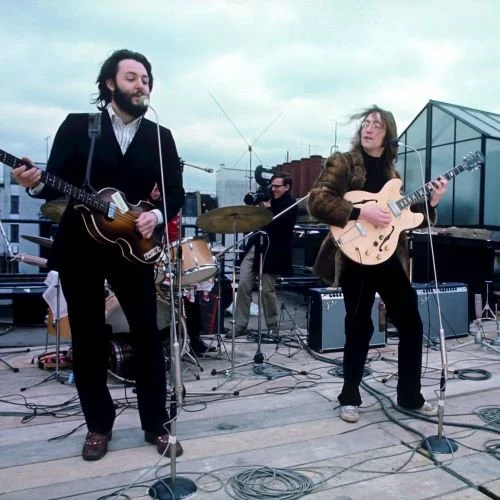
 IN THIS PHOTO: The Beatles in January 1969 during their legendary rooftop gig in London/PHOTO CREDIT: Apple Corps


Will We Get a Second Get Back Documentary from The Beatles and Peter Jackson?

_________

THERE is always something going on…

 ILLUSTRATION CREDIT: Madison Grosvenor

when it comes to The Beatles! In terms of news, exhibitions, auctions, reissues and general news, we are never short of action! Whilst we Beatles fans are blessed and lucky to have access to their music and new information about them so many years after they broke up, there are certain questions and what-ifs. I think many people wonder which album of theirs will be reissued. The previous one was Let It Be. Many would want the next reissue to be for 1965’S Rubber Soul. Giles Martin, the arbiter and super-producer in charge of all of this, has made no announcements yet. I suspect that we will get an album reissue in the next year or two. They are always so exciting to hear! I saw a recent article from Rolling Stone about the recording of Let It Be and that Peter Jackson Get Back documentary that came out in 2021:

Producer/engineer Glyn Johns recorded the whole of the Let It Be sessions for the Beatles in 1969, and mixed a raw version of the album that wouldn’t be released for another 52 years —  so he’s far from a fan of the Phil Spector-embellished album that came out in 1970. “He did a terrible job,” Johns says on the new episode of Rolling Stone Music Now. “Don’t misunderstand me — I respect Phil Spector for his early work tremendously. But somebody like Phil Spector shouldn’t ever be allowed near a band like the Beatles, in my view. Phil Spector was always the artist in the records that he made. He treated the artists like parts of the machine to make the end result. I don’t think the Beatles ever require that kind of input.”

The new episode, which also includes an interview with Ringo Starr, was recorded live at the Rock and Roll Hall of Fame on Starr’s 83rd birthday, with Rob Sheffield and Hall of Fame vice president of education Jason Hanley joining host Brian Hiatt to interview Johns about the making of Let It Be and more. To hear the whole episode — which also includes some of Johns’ memories of working with The Rolling Stones, the Who, and Led Zeppelin — go here to the podcast provider of your choice, listen on Apple Podcasts or Spotify, or just press play above. A few highlights follow:

Johns thinks the Beatles improved tremendously as players from their early days. “I had the good fortune to be present on a recording for a TV show they did in the very early sixties called Around the Beatles, and it was done at the studio where I was working,” Johns says. “And the backing tracks sounded pretty average, like any band really. I actually think they all developed tremendously as musicians from there, George in particular. George was not the most instinctive guitar player like Eric [Clapton] George needs time to sit and work stuff out, and when he does it is phenomenal. It’s just phenomenal. Ringo, I didn’t pay much attention to initially, but by the time I got to record them, it became apparent to me what an astonishing drummer he is, and I don’t think he gets nearly enough credit to this day. He really is quite remarkable. His feel. I’m talking about his feel. His technical ability is average, but his feel exceptional. Also, what he does, where he puts what he plays is quite remarkable. And without him, they would not have been the same band. I don’t care what anybody says.”

Starr has no idea where he got the beat he plays on the released version of “Get Back.”

In early rehearsals, as shown in Peter Jackson’s Get Back documentary, “it’s just straight rock,” Starr says. “And then it’s on the roof and I’m, I’ve got that shuffle-swing march going and I don’t know what came into me to do that. I just felt good at the time doing that. That’s how most of my drumming was actually. It’s a feeling kind of playing, not an absolute restrictive type of drumming.”

When George Harrison temporarily left the Beatles during the making of Let It Be, it felt “very real,” Johns says. “Extremely real! He even took his eight track back. Talk about throwing your toys out the pram! I was really upset: ‘Bloody hell. I’ve waited all these years to work with them. I’ve been in it for two minutes, and it looks like it’s all over already.’ And of course, that turned out not to be the case, but it was pretty disappointing”.

Reading some of that Rolling Stone article casts my mind back to Get Back. In terms of its importance, that documentary recontextualised our understanding of The Beatles’ relationship during that time. The perceived wisdom prior to that documentary was that there was a lot of in-fighting and disharmony. Many assumed that Yoko Ono added to a lot of the tension – like she was in the way or, absurdly, broke up the band. In fact, whilst there was some argument and bad moments (George Harrison walking out), there was a lot of relaxation, happiness and great moments. The bond between John Lennon and Paul McCartney is particularly striking. They still had that mutual respect and love for one another.

It was a great gift to get the documentary and the 468 minutes of the band rehearsing and recording new songs. I do wonder whether more from that time will come out. By all means, Peter Jackson would have kept material aside. There were many more hours originally filmed and directed by Michael Lindsay-Hogg. The more we understand from those latter days, the more we can appreciate them anew. Future generations will also get more context and truth. We do not necessarily need a further three-part series, but more footage from those sessions would be a treasure! I think that there is a lot of curiosity regarding what was left out and how much is left. It is always brilliant to know that people around during the time The Beatles: Get Back are still with us and will talk about it. I know fans were so appreciative to Peter Jackson for bringing us this footage and, in the process, giving us a new perspective on a very important period in the band’s history! I have the feeling that there is a lot more to be seen. More than will add new layers to the greatest band ever to have lived. Let’s see what the future holds. If nothing comes about, then we can let it be. I know there will be books, albums and various other Beatles bits arriving in the coming years. It is just that the impact of that three-part documentary in 2021 was profound. If it could happen all over again, then that would really be something. From the more boring moments in the studio when the band were noodling, to that epic and iconic rooftop gig, it was a hugely emotional watch! I know Beatles fans around the world would love to spend some more time with The Beatles as they put together wonderful songs. We can never say never, because none of us know…

WHAT the future holds.

FEATURE: Personality Crisis: New York Dolls’ Sensational Eponymous Debut at Fifty

FEATURE:


Personality Crisis


New York Dolls’ Sensational Eponymous Debut at Fifty

_________

A classic case…

 PHOTO CREDIT: P. Felix/Daily Express/Hulton Archive/Getty Images

of a genius debut album selling poorly but being met with critical acclaim – or the other way around in some cases -, the New York Dolls’ eponymous album was released on 27th July, 1973. Recorded at The Record Plant in New York, there is something very loyal to the city. Hailing from New York City, they gained huge local respect and re by playing shows through Lower Manhattan in the lead-up to cutting their debut album. There was reticence from record labels to push ahead signing and recording New York Dolls due to their outlandish and excessive lifestyle. The vulgarity and outrage they stirred from the stage. That was part of the deal. They were a genuine Rock band who were stirring things up! Also, as there was a lot of homophobia in New York City (and the wider world) in the early-1970s, concerns were raised. Maybe they inspired David Bowie to an extent (who developed his Ziggy Stardust persona more or less around the same time as the release of New York Dolls), the band donned an extravagant and eye-catching wardrobe, high heels, eccentric hats, satin, makeup, spandex, and dresses whilst performing. Perhaps there was a fear they would be ostracised and attacked releasing an album. No doubt their stage performances inspired artists both in the U.S. and U.K. They were a terrific cult band who were so different to everything around them. Whilst a lot of Rock from the 1960s and 1970s (and beyond) was very male-driven and sexual, there was this androgynous aspect to New York Dolls which stood them about. The fact the band dragged up for the album cover of their debut is part shock value - but also sent a message that they would not be censored or discriminated against!

Recording their phenomenal debut album with Todd Rundgren – who, renowned for his sophisticated Pop tastes was not overly keen on New York Dolls’ sound -, he got down their live sound on the debut. Although there would have been disagreements whilst recording, the partnership did yield a classic. New York Dolls is so impactful and enduring, as it talks about  urban youth, teen alienation, adolescent romance, and authenticity. The band - David Johansen, Arthur ‘Killer’ Kane, Jerry Nolan, Sylvain Sylvain and Johnny Thunders – created this vital album. Reappraised as one of the most important debuts ever, it certainly ignited Punk Rock and more beside. Defining and shaping New York music with their distinct sound, many consider New York Dolls to be a better Glam/Rock album that anything that followed from David Bowie or Marc Bolan (T.Rex). I want to round off with a couple of reviews for the mighty New York Dolls. Writing in 1973, this is what Rolling Stone had to say:

THE ALBUM COVER hits with a stark black and white photo, title scrawled in lipstick red aross the top. The boys appear on a white satin couch with a strange combination of high pop-star drag and ruthless street arrogance. There’s lipstick, eyeshadow and platform boots, but there’s also some sinister slipstream flowing here. Remember the earliest Stones’s publicity photos? What was scruffy and outrageous then looks so commonplace now — in ten years will this photo seem as quaint?

But the Dolls are a lot more than just another visually weird band. In much the same way that the Stones and the Who began as symbols of and for their club audiences, the Dolls, in their series of legendary gigs at the Mercer Arts Center came to be the forefront of a new creature/clan. Somebody once described them as “the mutant children of the hydrogen age”: boys and girls of indeterminate gender, males with earrings and flashing orange hair, females with ducktails and black leather, interchangeable clothes, makeups and postures, maybe gay, maybe not — and what’s it to ya, mothafuckah? (Wistful lost children with battery acid veins and goldbrick road dreams … how hard it is to be outrageous these days …)

Interesting sociologically, but it could get pretty deadly on a music level, if it weren’t for the Dolls’s street sense. They don’t take their movie any more seriously than they take anyone else’s, and they play it with a refreshing and sardonic sense of humor.

In fall of last year the Dolls Toured England, where their first drummer died of chemical complications. They returned to the US and added friend Jerry Nolan, who seemed to spark a tightening-up and surprising musical growth. The band attracted a lot of record company interest, but most executives went away mumbling and snarling — with the exception of Paul Nelson, who kept coming back. In time a contract was signed and work began, with whiz-kid producer Todd Rundgren at the board. At first the combination seemed not only bizarre but unworkable: Todd, ace of complex board work and over-dubbing sessions versus the driving but basic dead-end kids of the Seventies. But strangely enough, the compromise between live raunch and studio cleanness and complexity seems to work about 90% of the time.

Generally, the Dolls’s live sound is the traditional two-guitar, bass and drums, with occasional harmonies behind lead vocals, and for the most part, it is maintained here. As is often the case with first albums, the group got too hung up with the toys of the studio — a few lead lines are all but buried in overdubs, some vocal choruses are just a bit too rich — but on the whole, it’s mostly straightforward power rock.

Lead singer David Jo Hansen wrote most of the lyrics, and his keen sense of the absurd comes through on the opening cut, “Personality Crisis,” a driving rocker. “With all the cards of fate mother nature sends, your mirror’s always jammed up with all your friends…. You got so much personality, you’re flashing on a friend of a friend of a friend …” The cut is a jumping companion piece to classics like “20th Century Fox” and “Cool Calm and Collected.” After finishing the screaming end of the take David sauntered into the control booth at the Record Plant. “Was that ludicrous enough?” he asked earnestly.

“Looking for a Kiss” is many people’s favorite Dolls song. It’s another full-power rocker with contemporary slice-of-urban-life lyrics: “I did not come here lookin’ for no fix — ah, uh-uh, no! — I been out all night in the rain babe — just looking for a kiss.” Guitarists Johnny Thunders and Sylvain Sylvain (he’s the one with the roller skates and clown rouge on the cover shot) lay down a suitably harmonic-cacophonic city sound behind David’s sincere plea — “I mean a fix ain’t a kiss!”

“Vietnamese Baby” is a love song, and Todd’s magic fingers turn the drums into occasional bursts of machine gun fire. “Now that it’s over baby — whatcha gonna do?” “Lonely Planet Boy” is a comparatively acoustic ballad with a great late-night smoggy city feel, as close as the Dolls get to being ethereal. David’s voice is almost a whisper over the Ice Dog saxophone of Buddy Bowser. Although just a taste too busy, the cut has a mood of drifting solitude that’s just right at the end of a strange sad night when the manholes have been trying to bite you.

“Frankenstein (Orig.)” — it was written before Edgar Winter’s — is the album’s “bad acid” song. It builds an air of oppressive and droning inevitability, helped along by Todd’s droog-ing on the Moog. In an interview David explained, “The song is about how kids come to Manhattan from all over, they’re kind of like whipped dogs, they’re very repressed. Their bodies and brains are disoriented from each other … it’s a love song.”

“Trash” has an infectious rhythm riff, and uses Stones and Beach Boys quotes as well as old R&B lines: “How you call your loverboy? Trash!” It’s a nonsensical, good-rocking ass-shaker. Probably the most easily accessible song here is “Bad Girl” (“A new bad girl moved on my block/I gave her my keys, said don’t bother to knock”). The guitar break by Johnny is short, catchy and effective. Nobody takes any long solos anywhere; what counts is the song, words and music and the arrangements are lean and mean, put together with craftsmen’s ears.

“Subway Train” is a personal favorite. The charging guitar phrase that keeps running throughout has all the metal banshee mania of the Seventh Avenue IRT, and the riff is equally relentless. “I seen enough drama just riding on a subway train,” David sings, and if you’ve ever been there you know just what he means.

“Private World” is another favorite, about your own fantasy retreat from it all (“Shut the door!”) — with an oddly familiar and infectious riff, and nice honky-tonked piano by Todd and Syl. The album closes with “Jet Boy,” mostly words on a swooping riff; Marvel Comics meets the Lower East Side. Throughout, the rhythm of drummer Jerry Nolan and bassist bad Arthur Kane is solid and pulsing, the guitars fast and slashing, the structures simple but effective”.

If it shocked and stunned back in 1973, it lost none of its impact and brilliance years later. Like any cult album, the sales were not terrific. Critics could identify this band who would instantly change the music world. You only need to hear the opening track, Personality Crisis, to tell that New York Dolls mean business! AllMusic sat down with New York Dolls’ debut and noted the following:

When the New York Dolls released their debut album in 1973, they managed to be named both "Best New Band" and "Worst Band" in Creem Magazine's annual reader's poll, and it usually takes something special to polarize an audience like that. And the Dolls were inarguably special -- decades after its release, New York Dolls still sounds thoroughly unique, a gritty, big-city amalgam of Stones-style R&B, hard rock guitars, lyrics that merge pulp storytelling with girl group attitude, and a sloppy but brilliant attack that would inspire punk rock (without the punks ever getting its joyous slop quite right). Much was made of the Dolls' sexual ambiguity in the day, but with the passage of time, it's a misfit swagger that communicates most strongly in these songs, and David Johansen's vocals suggest the product of an emotional melting pot who just wants to find some lovin' before Manhattan is gone, preferably from a woman who would prefer him over a fix.

If the lyrics sometimes recall Hubert Selby, Jr. if he'd had a playful side, the music is big, raucous hard rock, basic but with a strongly distinct personality -- the noisy snarl of Johnny Thunders' lead guitar quickly became a touchstone, and if he didn't have a lot of tricks in his arsenal, he sure knew when and how to apply them, and the way he locked in with Syl Sylvain's rhythm work was genius -- and the Dolls made their downtown decadence sound both ominous and funny at the same time. The Dolls were smart enough to know that a band needs a great drummer, and if there's something likably clumsy about Arthur Kane's bass work, Jerry Nolan's superb, elemental drumming holds the pieces in place with no-nonsense precision at all times. "Lonely Planet Boy" proved the Dolls could dial down their amps and sound very much like themselves, "Pills" was a superbly chosen cover that seemed like an original once they were done with it, and "Personality Crisis," "Trash," and "Jet Boy" were downtown rock & roll masterpieces no other band could have created. And while New York Dolls clearly came from a very specific time and place, this album still sounds fresh and hasn't dated in the least -- this is one of rock's greatest debut albums, and a raucous statement of purpose that's still bold and thoroughly engaging”.

A blazing and seismic debut album from the New York Dolls, this eponymous album definitely inspired bands like Kiss, Ramones, Sex Pistols, The Damned, Mötley Crüe, Guns N' Roses, and The Smiths. Its impact and influence can still be heard in new bands. I am not sure whether there are anniversary plans ahead of 27th July. If there is no reissue of New York Dolls, at least people need to dig it out and let this incredible album do its work. It may have been recorded in New York City by a New York City band, but this landmark and hugely influential debut album was very much…

FOR the world!

FEATURE: Under My Skin: Kate Bush in Japan, June 1978: The Iconic Koh Hasebe Shot

FEATURE:


Under My Skin

IN THIS PHOTO: Kate Bush in Japan in June 1978/PHOTO CREDIT: Koh Hasebe (Shinko Music/Getty Images)


Kate Bush in Japan, June 1978: The Iconic Koh Hasebe Shot

_________

YOU can see the actual…

 PHOTO CREDIT: Koh Hasebe (Shinko Music/Getty Images)

photo here of Kate Bush in Japan back in 1978. It is one that is hugely significant to me. The shot was taken by Koh Hasebe when Bush visited there in June of that year. Only four months after her debut album, The Kick Inside, was released into the world, Bush was in a new country with a very different way of life. Not used to something that was a culture clash compared to the U.S., I wanted to revisit this period for one reason. I have a couple of Kate Bush tattoos already, but they are both lyrics – from two songs on The Kick Inside. I wanted something of her face. It was a hard decision to make but, looking through some iconic early shots of her, I was struck by the photos in Japan. Dressed quite casually, Hasebe captured this teenage artists quite relaxed but curious. Even though she is smiling in some of the photos, it is the ones of her looking more pensive and mysterious that moved me. You can see another article, where the image is front and centre. There is something about the shot of her looking on with flowers in the foreground that is especially beautiful and striking. Other than it being a fantastic composition, that photo is taken half-way through one of her busiest years. In fact, apart from maybe 1985, Bush was not to experience a year quite as hectic as 1978! It was a dizzying time where she went around the world promoting her album and performing. Still new to the music industry, it was an exciting, confusing and packed year where she went to new places and really hit the ground running!

EMI, with their new prodigy having already had a number one single (Wuthering Heights) and a debut album that was a chart success, were keen to show her off and see if she could conquer the globe. Bush had released Moving in Japan in February, 1978. Them Heavy People was released in Japan in May 1978. Gaining hype and momentum there, she went on this trip that saw her perform at a music festival, film her one and only advert (for Seiki watches), sing songs by The Beatles, and be met with huge acclaim from a loving audience. Maybe there was some slight cultural appropriate from Bush when in Japan – such as the outfits and looks in general. You can read more about that trip in this article. I love the fact that she was popular in Japan. In fact, Moving reached number one there. Them Heavy People went to number three. It was only to be expected she would visit Japan. I am not sure how much time she had to relax and explore the country. It was important that she promoted her music whilst there. Even if the itinerary was a bit strange, perhaps it was a hard country to crack. In terms of interviews, there would not be many interviewers who spoke good English. No music shows like we had in the U.K. Trying to break through language and cultural borders, something about Moving and Them Heavy People resonated with audiences in Japan. Both quite spiritual and beautiful songs, I am not sure whether Wuthering Heights would have been as successful there – even if Japan is known for being a bit strange and bold.

Another reason for doing this feature is to get people to think more deeply about Kate Bush. There will be fans that want a tattoo of her. It is always a hard choice. Maybe you go for something based on Hounds of Love (1985). You may want Kate Bush a bit later in her career. Whatever you go for, it has to mean something and be more than skin deep. Even if it is literally on your skin, the meaning and relevance of that tattoo does have to go beyond that. I love the shot I chose by Koh Hasebe as, like Gerd Mankowitz, John Carder Bush and Guido Harari, he managed to capture Kate Bush in a very deep and extraordinary pose. Whilst it may seem like an ordinary photo, there is so much interesting context. Taken during this wild and unusual trip to Japan, Bush looks thoughtful and almost sullen. I am not sure what the directions were like for Hasebe. With a limited time with her, he had to capture this range of shots that expressed different sides and moods. The one of Bush with flowers in the foreground is compelling and arresting. With that eye shadow/mascara and long brown hair, it is a stunning look! I was intrigued by her pose and what she might have been thinking when the photo was taken. More than anything, it captures Bush at a pivotal moment. She was thrust into the world and hitting the scene hard. EMI were hardly allowing her time to breathe. June 1978 was in the middle of a busy time. The previous month, she took her first promotional trip to the U.S. By July, she was in France to start recording of her second studio album. It was a mad and whirlwind time. I can only imagine what it was like when she was in Japan. Exciting in many ways, there must have been a feeling and longing for home. Excited to make her second album, she was not given too much time to write new material. I do think about that and how that made her feel. Both beautiful and stirring, that Koh Hasebe shot of Kate Bush in Japan looking on really compelled me. It is truly a remarkable and…

MEMORABLE photo.

FEATURE: Waking Up: The Queens Highlighting and Fighting Sexism and Misogyny During the Britpop Era

FEATURE:


Waking Up

IN THIS PHOTO: Elastica (Justine Frischmann, Justin Welch, Donna Matthews and Annie Holland)


The Queens Highlighting and Fighting Sexism and Misogyny During the Britpop Era

_________

I have been inspired by a new series…

 IN THIS PHOTO: Garbage (led by Shirley Manson) in 1998/PHOTO CREDIT: Maryanne Bilham Photography/Redferns

on BBC Sounds that explores The Rise and Fall of Britpop. Presented by Jo Whiley and Steve Lamacq, it is a fascinating look at one of the most important yet divisive music periods. I think that there was some division when Britpop started around, let’s say, 1993 – though I don’t think there is an official date, the likes of Suede launching their debut this year cemented the term. Dividing people into groups and clans, there were those who liked Oasis or Blur. You also had Pulp, Suede, and those a little on the periphery like Menswear, Supergrass, and Cast. Big bands at the time like Radiohead never realty fitted into Britpop. It was a particular sound that still exists to this day. There is no denying the fact that it was a huge time. These amazing British artists ruling and producing the best music. Whilst there was a combination of division and unity, there seemed to be this divide between male and female artists. I am going to end with a collection of songs from some of the finest women in the Britpop era. With bands led by the likes of Shirley Manson (Garbage), Justine Frischmann (Elastica) and Louise Wener (Sleeper), there were these captivating and powerful women singing timeless and hugely inspiring songs. There was this relatively lack of exposure and acclaim. Sexism and this rise of the lad culture. In the fourth episode of the BBC Sounds episode, Louise Wener, Shirley Manson, Miki Berenyi and Justine Frischmann discuss their experiences.

Among the interviews for the show, this notion that women were seen as sex objects. Reduced to their bodies. double standards regarding women talking about sex and being open, and this cliched version of masculinity. Whilst female artists of the time were playing as well, partying as hard and making as big an impact as their male counterparts, they were still not gracing as many magazine covers, getting as much acclaim and respect, or being discussed as much in terms of their musical brilliance. Often there are poisonous attitudes when women talk about sex and love. Dismissed as sex-obsessed or dirty, men were celebrated and idolised for saying the same things. Many of the great bands with women in (or comprised of women alone) were not featuring in magazine or in interviews. When many still talk about Britpop, women are frequently kept at the outskirts. Not put at the centre like Blur and Oasis. There were so many amazing women who could not make the covers unless there was a level of sexuality and explicitness. Blur’s video for Country House – the song that went up against Oasis’ Roll With It in the big battle of Britpop in 1995 – was meant to be ironic, but it sort of highlighted how many viewed women. Seen as sex symbols and bodies, it is an unfortunate casting of women. An in-joke that not everyone got. Lad mags, as is explored in the documentary, took the industry back to darker times. Women were often expected to talk in a certain way and fit into this very regressive narrative.

The Britpop world celebrated the horrid page three and porno ‘fun’ of the time. This weird and insulting representation of working-class culture. These amazing women making music and trying to be seen were often leered at. Shirley Manson said in the documentary how society is tougher for women. There is this impossible standard. The music industry, especially during Britpop, wanted women young. If they dressed like women and were comfortable in their own skin, they faced this sexualisation and view that they were meat. Many had to dress more like men to get attention or for this sort of thing to stop. Women were often marketed as sex objects or expected to be very revealing in a very bad and toxic way. If the industry has changed slightly, I think there is still a perception that women are objects. They do not have depth or real meaning beyond their looks and bodies. This was something that existed before Britpop, but the movement enforced this very dangerous and dismissive attitude. Britpop, as the documentary concludes with, saw women pave the way for change. For new artists to come through. Some of the absolute best singles and albums from that Britpop reign – 1993 to about 1998 – came from bands like Lush, Sleeper, Garbage, Skunk Anansie, Elastica and those with phenomenal women at the helm. Even today, so many women – including Garbage’s Shirley Manson – at loggerheads with magazines about the way they are presented. There are still huge challenges. We romanticise Britpop and forget about women’s experiences. Sexism is only half of the story when it comes to women and their role in Britpop.

There was so much misogyny too. I am going to reference a few articles that discuss how women were perceived during a high time where men were celebrated and seen as music heroes. Far Out Magazine wrote late last year about the misogyny that was rife and somewhat undiscussed during the Britpop period. If we have happy memories of the brilliant music and uplift of that time, we do tend to sweep away or forget how women were viewed. Things like the Country House video definitely didn’t help things:

“Another respected figure from the time is Sleeper frontwoman Louise Wener, whose hits such as ‘Inbetweener’ and ‘Sale of the Century’ are hailed as Britpop highlights. Despite these hits, Wener faced ample sexism, and it’s something she hasn’t forgotten. “The music press was so leaden and serious back then,” Wener told Long Live Vinyl. “It was hard to get any humour across. There was a basic sexism, too; this fake shock of, ‘Oh, it’s a woman at the helm! Writing the songs!’ Because of that, the men in the band had to be diminished in some way.”

Much of this manifested itself in the term “Sleeperbloke”. Originally used to describe Wener’s bandmates, guitarist Jon Stewart, drummer Andy MacLure and bassist Diid Osman, it soon became a way of depicting the apparently forgettable men in a female-fronted band. Later in the interview, MacLure said of the term: “Only female-fronted bands had Sleeperblokes in the ’90s. It was a terrible, misogynistic way of operating.”

One moment in Britpop that has long been the subject of intense criticism is the video of Blur’s 1995 single ‘Country House’. Although the single is most famous for being the band’s offering in the fierce media spectacle ‘The Battle of Britpop’, against Oasis hit ‘Roll With It’, the misogyny contained within is more significant.

The accompanying music video of ‘Country House’ was directed by artist du jour Damien Hirst and depicts the song’s narrative of a man – played by Keith Allen – who escapes the rat race of the city for a big house in the country. However, it also features models Sara Stockbridge, Vanessa Upton, and Page 3 girl Jo Guest in an objectifying way. The women involved are used as sexual objects and nothing else.

Blur guitarist, Graham Coxon, has been particularly critical of the video, labelling it “demeaning to the girls” who appear in it. In his 2022 memoir, Verse, Chorus, Monster!, he wrote: “It made me angry because here I was, finally in a band, and the experience seemed to be getting cheapened by Page 3-type imagery, a revival of sexism and football hooliganis”.

Of the objectifying, he added: “I was clashing heavily with the Britpop thing and didn’t feel the need to refer to women’s body parts in a rude way.”

This begs the question, why wasn’t Britpop more heavily protested against at the time? Despite all the promises of the liberal 1990s, outdated social mores were yet to change, and #MeToo was still a long way away. Ultimately, Radiohead put it perfectly – Britpop was “backwards-looking”.

Before coming back to a more serious side of the debate, Caitlin Moran wrote a feature for Stylist imagining what it would have been like if Britpop was dominated by women. Instead of wall-to-wall men, it would have been a very different world. One, I think, vastly more interesting! I have selected a section of her funny, honest and often thought-provoking feature that caught my eye:

Rejoice in a female Supergrass – so young they’re still almost children, wildly hairy, pedalling away on their Chopper bikes in the video to Alright. Stoner lady- monkeys with one of the greatest drummers, Dani, Keith Moon-ing (sorry, Kate Moon-ing) so hard and wild behind her kit, she ends most gigs just in her bra, beaming, exhilarated, at the crowd.

The odd, appealing innocence of Caught By The Fuzz – which is essentially the origin story of Ilana and Abbi from Broad City, in which some young women try to buy some marijuana, but it all goes wrong in the most amusing way possible.

If a band as hairy as Lady Supergrass had existed when I was a teenage girl, there’s every chance the female moustache would have become a fashionable look. I could have saved myself 20 years of waxing. We would all have lady moustaches now.

As for Jarvine Cocker – that gangly, sexy nerd of Pulp, kung fu kicking in their charity shop suit – well, overnight, it became OK for everyone to wear glasses. I would never have bought contact lenses if I had seen Jarvine Cocker sing Common People at Glastonbury in 1995 – glasses steaming up and howling, “I wanna live with common people like yoooooou!” jumping in the air like a praying-mantis. And I wasn’t the only one.

 A week later, the cities of Britain were filled with elegantly shabby types in suits and glasses, talking about class war, carrying bottles of cherry brandy around in their battered satchels, and busting their demented dance moves at parties, while boys swooned at their geeky insouciance.

Now look, I don’t wish you to get me wrong. I loved the Britpop we actually had. Man, you could live the life of a Number One pop star by simply getting up, going out, having a fag, putting it out, seeing your friends, seeing the sights and feeling aaaaaalright.

A parallel world

But we can admit, now: when Damien Hirst is eventually commissioned to make a Britpop sculpture, it will be a 60ft high pile of cocks and balls, with, like, four tits stapled to the side.

As someone who was there at the time, it often felt like that bit in Game Of Thrones’ Battle of the Bastards, where Jon Snow is slowly being crushed under a pile of hundreds of hairy men-soldiers. But, in this case, all the men are in vintage Adidas tops, shouting, “Oi oi, mate! Nice one!” at each other.

That’s why it’s fascinating – something new and diverting for the eye! – to see, just for a second, what it would have been like in a parallel world. A world of women.

To imagine – as the great Johanna Lennon might have put it – there’s no Stephen. It’s easy if you try.

Just imagine what Titpop’s finest might have looked like…”.

Articles such as this explain how memories and books have been released that highlight how imbalanced and toxic Britpop was for women. Many of thew major players of the time – including Lush’s Miki Berenyi - have spoken honestly and candidly about their experiences. Women were written out of Britpop. There are horrifying testimonies from women in bands at the time. I want to finish by looking at a couple more articles. To be fair, there are essays, books and many more examples where the misogyny and sexism of Britpop is explored. The Quietus’ feature from 2013 took an extract from Clampdown: Pop-Cultural Wars on Class and Gender by Rhian E Jones. The extract was about Britpop culture - via Shampoo and Kenickie – and social class and gender:

Kenickie's brassy, breezy self-expression was also presumed to signify an 'easy' sexuality, making them the objects of an unstable mixture of lust and disgust:

We were asked if we were in anyway like Viz's Fat Slags, 'only thinner', and these were the journalists who liked us! The interviewers seemed bemused by our hostility to their question - 'So what you're asking us, then, is, are we slags?' replied Lauren [Laverne, vocalist/guitarist] coolly. The asking of such a question demonstrates the reduction of all their assumptions about our perceived class, gender and regional roots to the grotesque parody of North East women in the Fat Slags comic strip. This ignored our own statements about our identity in our music.

This lack of understanding by a middle-class media of how such a comparison might be received highlights the frequent intersection of sexism and classism, whereby all women who are perceived as working-class are implicitly 'chavs', and all 'chavs' are explicitly easy. Kenickie's female frontline, like Shampoo, had an earthy, cartoon-glam aesthetic, half Old Hollywood starlets, half explosion in Claire's Accessories. Their particular brand of glamour was, as Susan Sontag wrote of Camp, 'a variant of sophistication but hardly identical with it'. Their towering heels, aggressively revealing outfits and lashings of makeup were worn on their own terms; a Pink Ladies-inspired protective covering rather than a puppeteered provocation. Tangled up with the roots of this look was the history of glamour as a means for 'ordinary' girls to dress 'above their station' through artifice, lavish and luxurious but popularly accessible, which did not require the backing of 'good breeding'. In its more recent forms, this kind of glamour has become identified with either 'vulgar' appropriation or defiant class drag, in both cases serving to emphasise rather than disguise the class of its wearer. Carol Dyhouse's history of the term, however, traces how glamour's possibilities for transcending class and gender barriers generated predictable anxiety, cloaked in snobbery and appeals to national loyalty: at the height of 'glamour' as emulative and ambitious artifice and excess, a signifier of the upwardly-mobile and autonomous woman 'on the make', British Vogue encouraged its female readership to forsake this brash, democratic and over-the-top aesthetic in favour of a 'natural English look'”.

I’ll end with an article by The Guardian from last year. Lush’s Miki Berenyi’s Fingers Crossed: How Music Saved Me from Success is an essential memoir that, among other things, sees her discuss her time in music when Britpop was celebrating men and not embracing edgy and alternative women who were doing things their own way and looking to be heard and respected:

James does in fact offer Lush the chance to plug Lovelife in Loaded, but only if Emma and I strip down to bikinis. It takes me a moment to realise he’s serious. And why shouldn’t he be? Plenty of others have no issue with baring the flesh, so why shouldn’t he assume that I’m up for it, too?

Emma and I do a photo shoot for Dazed and Confused and are presented with a rack of clothes selected by a stylist. The photographer picks me out a black top and a leather mini. It’s only when I put them on that it becomes apparent that the skirt is the width of a football scarf and barely covers my arse. As we walk through the magazine’s busy offices, I tie my jumper around my waist to cover my rear and make sure I walk bolt upright, lest the skirt ride up any further.

This kind of sexist bullshit is becoming commonplace and reframed as “edgy”. I’m recommended a hot new photographer who is hailed as a visionary genius for shooting underage models in white underwear having a pillow fight on a bed. The snapper’s brilliant creative idea is to have Emma and me pose in a toilet cubicle. We position ourselves in our usual stance, but now he’s telling me to stick one leg against the door or push my hip out and stretch an arm up the wall. Any shift in my posture has the microskirt riding up, so I cautiously comply only as far as dignity will allow. When he indicates that he wants me to bend over the toilet, legs splayed and look back at him over my shoulder, I realise that this whole set-up is an elaborate ploy. The magazine isn’t interested in Lush, they just want some wank fodder for their readers. I firmly tell him no and we finish the shoot. The piece ends up relegated to an eighth of a page with about 40 words of text.

At one of the Soho House soirees, while I order drinks, a drunk comedian slurs at me to either suck his cock or fuck off. As I stand chatting to friends, Alex from Blur is sprawled on the floor making “phwoarr” noises and sinks his teeth into my arse. The Carry-On Sid James impersonations are a common theme. I fall into conversation with Keith Allen and try to ignore him sweeping his eyes around my body, twitching with overheating gestures and tugging at his collar to show he’s letting off steam. Another comedian sharing a cab ride suggests he come in for a bunk-up, despite having spent the entire night excitedly chatting about his imminent fatherhood. Liam Gallagher shuffles around me, wondering aloud when I’ll be ready to fuck him in the toilets.

This isn’t flirting, it’s constant, relentless sexualisation. And there’s a nasty edge to it, implying that it’s me, not them, who is asking for it.

IN THIS PHOTO: Lush in 1994/PHOTO CREDIT: Gie Knaeps/Getty Images

I recall Suzanne Vega once pointing out that Madonna may be breaking boundaries, but every teenage girl who dresses like her is still treated like a slut. I’m experiencing a similar uncomfortable side effect with the supposed androgyny of Britpop. While Justine from Elastica and Sonia from Echobelly and Louise from Sleeper, wearing suits or jeans and T-shirts, get treated as one of the boys, my long hair and short dresses are now a signal that I’m gagging for it. I’ve been doing what I do for years and now I’m being reframed as happy to be objectified.

I’ve been reading feminist texts since college, however unfashionable that might be right now – and to be fair, Chris always found it a bit tiresome. My education, both at North London Poly and from the politicised bands I’ve followed, has taught me to see through the “harmless fun” to the misogyny that drives it. I’m not militant about it. I don’t crucify people for crossing a line, I just recognise there is one. And I need to know someone well enough to accept that they’re “just joking”; I’m not going to swallow it as an excuse from a bloke I’ve just met.

I tag along to the NME Brats awards and the only women to take the stage all night are some semi-clad dancing girls and Candida Doyle, keyboard player in Pulp. Of the 17 categories, with 10 entries each, there are just seven women included and four of those are in the solo artist category: Madonna, Björk, PJ Harvey and Alanis Morissette (Paul Weller wins). The claim that Britpop celebrates sassy women in bands is a veneer. I saw it before with riot grrrl, where (in the UK, at least) the press consisted mainly of pitting women against each other. It spawned a host of “women in rock” debates that to my shame, I got dragged into, badmouthing Kylie Minogue when it was the men comparing every other female musician disparagingly to her sexy pop”.

I do love a lot about Britpop. At its best, it saw some sensational artists go head-to-head. There was this sense of celebration and hope. This is something hard to imagine today. We do not often look at the darker and more regressive side of Britpop: one where women were sexualised and overlooked. This misogyny and inequality is explored in an episode of the brilliant The Rise and Fall of Britpop on BBC Sounds. I would urge everyone to listen to the series! To end, I wanted to combine together the amazing women of Britpop. Those pioneers and hugely influential figures whose music will endure for decades! If they were not given their dues and respect in the 1990s, I think that there has been a correction and fonder retrospective attitude. It is clear that these amazing women gave such much to the music scene at pivotal and celebrated time in British culture. More importantly, they opened doors and have influenced a whole wave of female artists coming through. For that alone, they should be offered…

ETERNAL respect, gratitude and thanks.

FEATURE: Enable Repeat: The Addictive Nature of Streaming Music

FEATURE:


Enable Repeat

PHOTO CREDIT: Danish Saifi/Pexels


The Addictive Nature of Streaming Music

_________

THIS might be a bit of a personal thing…

 PHOTO CREDIT: cottonbro studio/Pexels

but there are other people who will surely be able to relate. I actually want to discuss a few things when it comes to streamed music. Even if physical music is booming and sales are looking really impressive, there is still that limitation regarding affordability. We cannot buy as many albums as we would like. As physical singles are no longer a thing, artists have to rely on streaming alone to get people to listen to them. I still think people should buy albums, though one has to be selective and reign themselves in. Streaming in beneficial, as you get to hear albums and sample them before you buy. Singles are easily available to hear, and there is no doubt that a balance between buying albums and listening on streaming sites is best. Whilst artists are not paid nearly as much as they should for being on streaming, I think another problem exists when it comes to the listener. I pay Premium on Spotify, but I often think that this is not enough to pay. When you consider the fact you can listen unlimited to whatever music you like ad-free, it seems £9.99 is far too little! Considering I pay this sort of money for streaming T.V. – Disney+, Paramount etc. – and I use that comparatively little, it does seem that I (and everyone else) should pay more for music. Not to suggest a cut-off point but, as I pay very little to stream, I wonder whether I am getting as much out of it as I can. I tend I play the same songs over and over again. This addictive nature means that I can rinse a track and saturate it and it loses some value. You can do that with a physical single, but I am exploring less than I should do – leaning on these few songs and playing them to death. There is this addictive nature to streaming music. Whilst it is good to love a song and want to play it, there are one or two I cannot seem to stop playing. I wonder whether this is a healthy thing, and whether there should be some cut-off.

 PHOTO CREDIT: Philip Boakye/Pexels

Spotify has the Daily Mix playlists. This is based on what you listen to. They will then create various mixes and playlists by genre and type of artist. It is good for prosperity and reference, but it is easy to rely on those and, again, play the same songs. Because there isn’t this streaming limit, I do wonder whether many of us are playing songs we know and love and not exploring enough. It can be very hard to open people eyes to the full extent and variety of new music. Even if there are weekly playlists of new music, so many artists and songs get missed out. It is vital there is older music and I can make playlists of my favourite songs, I feel Spotify and other streaming platforms should do more to highlight artists that do not get that many streams. I find that the Spotify interface is quite useful and easy to navigate. There is a choice of podcasts and music, but I find something is missing. Maybe an option to limit older songs you play regularly. A chance to pay a little bit more per month and ensure that some of that money goes to new artists. Perhaps integrating some of the features you get on Bandcamp. Being able to stream unlimited, but also there being a section where you can buy singles and albums from artists. Maybe it would not be the full amount, though a small fee – rather than streaming the music for very little – I think would change our listening habits. I do love older music, but I am getting hooked on the same artists and songs. I wonder how healthy it is going back to the same songs over and over again.

 PHOTO CREDIT: master1305 via Freepik

What I think needs to happen is for Platforms like Spotify to emphasise new music more. They could have a legacy section, but more playlists of new music and lesser-heard artists would be really rewarding. Radio is great for new music discovery, though I do miss out on so much. I have got into this very reductive and destructive habit of spinning the same songs and staying in a bit of a cycle. Not expanding my horizons and embracing newer sounds. Spotify and other platforms are great and give us so much access to all music. Perhaps it is just my listening habits, and yet other people I know get into the same routines. If you can get all this music for £9.99 a month, I tend to find you will utilise that and play your favourite music over and over. Rather than spreading out more with new music and podcasts, I am trying to drag myself out of a rut. Spotify and similar streaming sites are so vast and full of options. It can be a case of being overwhelmed and not missing out on so much. I feel we should all be paying more for streamed music. The reason for writing this feature was to sort of unburden myself a bit! Rather than keep on top of the best new music, I am relying on suggested mixes, my old playlists and these few songs time and time again. Because there are no limits and I can play a song over without paying music more, I am getting lazy. Perhaps people would bulk if there was a new payment structure and a raise. I kick myself for overlooking certain songs and artists, though there aren’t many guides or daily playlists that highlight them. That combination of repeating the same songs and not diving too much into new music tied to that low cost of streaming in the first place is affecting all of our tastes and habits. It has made me realise that I need to stop recycling and taking the easy option and spend more time exploring the full and wonderful array…

 PHOTO CREDIT: Jess Bailey Designs

OF new songs and artists.

FEATURE: Spotlight: eee gee

FEATURE:


Spotlight


eee gee

_________

EACH week…

 PHOTO CREDIT: Joacim Fougner

I am coming across great rising artists that slipped me by. The remarkable eee gee is someone that everyone should know about. I am a recent convert, but she is definitely someone who stands apart. There are not many recent interviews with her. Instead, I wanted to provide various bits of detail and information from features that teach us more about an incredible young artist with a bright future. Here is a bit of background about eee gee:

eee gee is the project of Danish singer/songwriter Emma Grankvist. She released her debut album Winning in February 2022, which received multiple five-star reviews and it was since elected ‘Best Album Of The Year’ by multiple music medias like Soundvenue and GAFFA.

eee gee’s elegant universe is one of paradoxes – things are not always what they seem. Searingly honest, she writes songs about heartbreak and not feeling good enough while calling it “winning” and knowing just how lucky she actually is in the scheme of things. She lives in the complex world of a young woman trying to find her way. Her compelling storytelling about love, life and everything in between creates a relatable moment in every song”.

Her debut album, Winning, was released early last year. One of the best debuts of the year, it brought her music to the attention of the wider world. A perfect demonstration and representation of her magnificent talent and sound. Ones to Watch had their say on Winning. If you have not heard eee gee, I would recommend that you check out her debut album, as it is a great place to start:

Life has a way of teaching us hard lessons from time to time. The key is to manifest what you've learned from your journey, and not hold your past against you. Wisdom is not an attribute doled out lightly, maybe because it is rarely justified. But every now and then, an artist comes along to share with us wisdom gained from their life lessons so that maybe, just maybe, we won't have to learn the hard way.

Brooklyn-based Danish artist Emma Grankvist, more popularly known as eee gee, has crafted an intimate, daring, and honest album with her latest release Winning. Masterfully demonstrated throughout the album is Grankvist's ability to tell a story, her story. Singing honestly about recollections of her past and revelations about her character are what make this album so captivating. It also helps that her voice is so euphonious. This album oozes confidence in all the right ways, a feat evident on tracks like "Killing it" and "Favourite Lover." You could pull a line anywhere off this album and use it as an inspirational quote.

With a delightfully eclectic mix of indie-pop, folk, and soul, Winning is a thoroughly fantastic listening experience, not only for the nuggets of wisdom you can mine from the lyrics but because it contains a range of tracks that will move you, as well as make you want to move. On the track "Favourite Lover," Grankvist states, "I don't care what you're saying about me" - but after listening to Winning, it will most assuredly only be good things”.

Before getting to a feature about eee gee’s amazing new single, ghost house, Rolling Stone UK wanted to find out more about an artist who refuses to put her music into one. Someone had to compare with anybody else, it is great that she got this nod and spotlight. Let’s hope that even more people discover her music. It is a true revelation:

“It’s a ghost house, dating’s haunted, everyone’s scared, to catch feelings,” comes the snappy chorus of ‘Ghost House’, the commitment issues synth pop banger that marks the first taste of She Rex, the latest album from Danish star eee gee.

The singer, real name Emma Grankvist, deals in whip-smart lyrics and striking melodies that offer a refreshing perspective on the world around her, all wrapped up in a package that’s brilliantly tough to pigeonhole.

“There was a big moment for me when I started realising that I could write songs in different genres, because I love Banks, but I also love Joni Mitchell,” she tells Rolling Stone UK.

Now, She-Rex will take that sound in further directions, with the singer promising a disco-tinged element too.

We first you saw supporting in Arlo Parks on the Rolling Stone UK stage at The Great Escape earlier this year. How was that experience for you?

It was amazing, because it was our first show outside of Denmark where we didn’t bring all of our equipment, so that presented the challenge of having to play on a smaller setup which was really fun. We’ve always been curious about that was going to work, but it’s a fun way to do things.

You were raised in Denmark and you’ve said that singing in your native tongue could help you go to the top there? Why didn’t you choose to take that path?

Phonetically it suits my personality better to sing in a language that’s a little softer, Danish can sound a little harsher on the syllables and the vowels. It’s a beautiful language, but singing in your own language means there’s no filters between you and the audience. Personality wise I’m more of an introvert so having a small sense of a cloak between me and the audience helps a little bit. But now I’ve lived in New York for two years, I actually feel more connected to the language which is interesting as I’m growing a little bit more mature and a bit more confident in music. That cloak is starting to fade away, so I do feel that I’m beginning to connect with people even though it’s not my native tongue.

There’s multiple sides to your sound. Some parts are full pop whereas others are perhaps a bit folkier. How did you land on these sounds when first writing?

It’s funny because I had a project before this one with a producer that was definitely leaning way more towards like alternative pop. And I remember we started out writing and sounding like acts like Beach House, but we really wanted to start writing more commercial pop and I listened a lot to Banks in that time and I was really into like that very melancholic dark electronic pop thing.

But when we started playing live – I don’t know if it was a combination of the key and the chords and the production and the melody – I just, it just didn’t feel like it was vibrating with me.

So when we ended that project, I just knew that I had to start over again and really investigate what genre felt authentic to me and where I’m from and really make sure that it felt like an extension of me instead of just being something that was trending or felt cool. There was a big moment for me when I started realising that I could write songs in different genres, because I love Banks, but I also love Joni Mitchell.

Also, I started thinking about how Copenhagen and Denmark takes in so many global influences, because we love Beyonce and Frank Ocean and Adele. We’re so influenced by all of these genres that are not really authentic to where we’re actually from culturally.

So I just really felt the need to, to investigate more of like the folk genre which I feel like is way more, you know, authentic to where we’re actually from.

It’s funny that people have been saying it sounds like Lana Del Rey because I love Lana but it was never like a thing I was going for.

Do your live shows help that connection to grow?

Yeah. I’d played my first shows and festivals for a year and it’s very easy for me to feel a strong connection when I’m on stage. Look, I wouldn’t necessarily put my music on for like, you know, going out and the peak of the party, but it definitely could be there at a pre party or coming down from a party. That’s the same vibe I’m really going for at festivals.

Your second album She-Rex arrives in September. Where does it take your sound and what can you tell us about the title?

It’s interesting because on my new album I’ve experimented with disco, so maybe I am getting closer to the songs that get played at the peak of the party and the peak of festivals!

The title is a rather sarcastic response to my first album, that was a very emotional record and about never really knowing where you’re standing with yourself. You know, trying to work with all the self care and self awareness in a world that is trying to pull you apart.

It’s an extension of that and, you know, T-Rex represents a primal and aggressive instinct. There’s a softer touch on the record too, but it has that I want to conquer the world feel, which felt very appropriate for a second album.

It’s also funny that Rex in Latin is king, because of course they had to give the biggest dinosaur male characteristics. I thought it was funny to make it into a She-Rex. The She King! It’s a fun word play and it has a strong base in humour and tongue in cheek lyrics”.

You might be aware of eee gee’s new single, ghost house. I hope that you do go back and listen to her previous music. Another awesome cut from the Danish innovator, maybe we will get an E.P. or another album fairly soon. There is definitely a huge demand for what she is putting out there. CLASH had this to say about her latest gem:

Danish alt-pop voice eee gee has shared new single ‘ghost house’.

The songwriter’s 2022 debut album ‘Winning’ was a supremely intelligent dose of synth pop, blending witty lyrics with some superb melodies. She’s on a hot streak, too, with eee gee set to release a follow-up this year.

New album ‘SHE-REX’ will be released on September 1st via Future Classic, and it finds the songwriter – real name Emma Grankvist – broadening her vision. As she puts it: “I make music for the introvert, who is constantly pushed into the uncomfortable extrovert way of how the world works.”

Take new single ‘ghost house’. Out now, it blends superb word play with rippling electronic melodies, building to something irresistible. A song about love and betrayal, she sings: “Did he just use me as a build-up in a song / That never gets to where it could belong…?”

eee gee explains…

“I have a good friend who fell in love with this guy – a cliché of a cool, free-spirited surfer-dude with nice hair and that one-in-a-million look. They went all in on what seemed to be a match made in heaven. He even talked about her on the phone with his mom. However, one day my friend found out that he was actually dating several other girls and that he was anything but ready for a serious relationship,”

She continues: “Dating is haunted. If anyone should ever have a chance to find real love when looking for it, you probably need to break up with your own bad habits and expectations of what you think you need first. Ask yourself, why do you want to fall in love? If you find the answer, I believe you’re most likely able to meet new exciting people with the right intentions”.

Although I am new to eee gee, I have been listening back and getting a better and bigger sense of what her music is about and who she is. This is an artist I can confidently and thoroughly recommend. In a very busy and varied scene for new music, she is someone who stands out. If you are in search of some fascinating new music to get your ears around, then I would like to point you in the direction of…

THE brilliant eee gee.

____________

Follow eee gee

FEATURE: From a House in Nebraska… Why Ethel Cain’s Social Media Experiences Should Give Pause to Music Fans Around the World

FEATURE:


From a House in Nebraska…

IN THIS PHOTO: Ethel Cain


Why Ethel Cain’s Social Media Experiences Should Give Pause to Music Fans Around the World

_________

IT can be risky…

 PHOTO CREDIT: Tim Gouw/Pexels

for any artist being on social media. Whether it is Twitter, Threads, Instagram or any other platform, they are followed by a huge and anonymous number of people that have this very direct and unfiltered access to an artist’s accounts. Many of the accounts from bigger artists are run by a team. You do have artists who look after their own accounts. Whilst most of the feedback and comments are kind, there is a lot of toxicity and dangerous remarks - as pretty much anyone can follow any artist. Many have quit social media or pulled back because their fans’ comments have taken a toll. Either that or it is too much having to maintain the accounts and keep the career going. One wonderful artist everyone should know is Ethel Cain. Florida-born Hayden Anhedönia is a hugely inspiring and incredible transgender artist whose 2022 album, Preacher's Daughter, was one of the best of that year. She is someone who has been on social media for a while. Someone who interacted with fans and reacted to memes, videos and posts. That has changed slightly. Feeling that she is more a performing monkey, The Guardian highlighted her relationship and changing interaction with social media platforms during a recent interview (as Ethel Cain is touring the U.K. next month):

Part of Anhedönia’s popularity – she has nearly 300,000 Instagram followers, and was the face of recent Givenchy, Miu Miu and Marc Jacobs campaigns – can be attributed to the fact that she is extremely internet literate, and became known online for a sharp Twitter feed on which she participated in jokes and memes about her public image. It soon began to feel as if she was “a dancing monkey in a circus. It’s very like, ‘Oh, she’s so funny on Twitter, she’s so relatable’ and then it becomes this big weird joke cycle,” she says. Although she stresses that she loves the support and adoration of her fans, she says it can become demoralising to not have her art met on the level she’d like it to be: “Don’t get me wrong, laughter and memes and jokes are always really fun. But when you want to post something to be consumed seriously, people are still joking – and then you get like, thousands of comments that are like, ‘silly goose’. All of a sudden, you start to feel like you can’t turn off the memeable internet personality thing.”

IN THIS PHOTO: Ethel Cain on stage at Coachella 2023/PHOTO CREDIT: Enoch Chuang

Live, Anhedönia is a captivating, remarkable performer: during a show at the London club Omeara last year, you could hear a pin drop as she shepherded an audience of thrilled young fans through her largely hushed setlist. But at concerts, Anhedönia will sometimes be trying to perform her quietest, most intimate songs, only to have people yell jokes at her, breaking the spell. “I had a show recently where I was singing the really quiet intro to Sun Bleached Flies,” she recalls. “I went to hold [a fan’s] hand and they began sort of screaming, ‘I didn’t even know who you were two weeks ago, I found you through a meme on TikTok.’ It’s almost like heckling. I don’t think any of them are mean spirited, but it’s a little jarring.”

Earlier this month, she deleted her Twitter, leaving fans aghast. “I always kind of conflated openness with honesty and I thought that if I was completely transparent and bared every aspect of my soul that people would think I was relatable and kinda cool,” she says. “Then I was like, I don’t want to know you. I don’t want to be friends with you. I don’t want to have all of my personal business and every innermost thought just out there on the internet for the world to see.”

Another part of the reason Anhedönia pulled back from social media was the way that her fans began to demand access not just to her, but to her friends and family. “I really had no idea the full nature of [my success] until I had those closest to me kind of half-joking, half actually kind of complaining, being like: ‘People are DMing me and asking me questions about you and trying to become my friend only to find out months later that they’re really just trying to get to you through me,’” she says. “I always thought that success would exist in a vacuum for me but it did start to affect my family. And my closest friends and even just acquaintances of mine. I’m not Britney Spears, but it was noticeable for them and it created a really weird dynamic between us for a while.”

Part of the problem, Anhedönia thinks, is the fact that she is often classed as a pop artist, and therefore becomes part of the stan economy, wherein teens treat female artists “like fantasy football teams”, arguing “about streams and stats and followers and almost using them as like Pokémon to fight each other”.

 IN THIS PHOTO: Self Esteem (Rebecca Lucy Taylor)/PHOTO CREDIT: Suzie Howell for The New York Times

It made me think about other artists who have deleted Twitter or spend less time there. From Self Esteem (Rebecca Lucy Taylor) to Nadine Shah, there are great artists who, for various reasons, spend less time on there or have let their team run their accounts. Maybe Instagram seems like a slightly safer space, it is that vulnerability and enormous weight that means it is overwhelming. Negative comments can have a devastating impact on mental health. From sexism to sexual harassment to insults and hateful remarks, too many artists have to detach from their fans this way because you cannot filter and block out that negativity – unless you read the comments and then block that user. Fans wanting more access and invading the private lives of artists’ families is scary! You do wonder how many other artists have to face this sort of thing. It is sad that Ethel Cain has had to take the step of deleting her Twitter account – though you feel like it might be the best move. It is such a shame too. If you get rid of accounts, it potentially deprives people of news and updates about an artist you love or may not yet know. But, at the end of the day, the health and wellbeing of the artist is paramount. There are Ethel Cain update and news sites, so the fans have that resource. I think it is important that everyone in the music industry should be able to post on social media without having to process a lot of bullying, negativity or unrealistic demands. Being allowed limits and not having to show too much of themselves and give too much away.

 IN THIS PHOTO: Nadine Shah/PHOTO CREDIT: Fraser Taylor

Stories like the one Cain has shared should give pause to music fans around the world. Think about that dialogue and interaction you have with artists. There is that hard balancing act. Do artists need to post all of the time and give too much away? By sharing personal details and updates, it strips away mystery and can feel far too open and revealing. If they just stick to updates and sharing news, many will accuse them of not interacting with fans or being boring. If they delete social media accounts, that can also have a big impact. It is an impossible situation! Even smaller artists have that conflict between creating this almost friend-like and warm nature with fans, but they are also susceptible to people they have never met stomping their privacy, asking too much of them, or even asking about their families. Whether they are posting from a house in Nebraska, and office in London, or somewhere in Australia, you feel like it is impossible to balance, navigate and create a healthy relationship with fans that has boundaries. It is a shame that Ethel Cain has deleted her Twitter account. I know other artists will be in a similar position. I can appreciate fans have this direct contact and might want to know more about an artist, but they have to realise what effect that has. It can be really shocking, pressurising and uncomfortable when there are so many people wanting so much. Let’s hope that Ethel Cain’s words and testimony opens music fans’ eyes across the world. The privacy, wellbeing and mental health of artists should be…

THE main priority!

FEATURE: Various Shades of Blue and Pink: Inspiring Women Directors, Writers and Actors Injecting Originality and Invention Into the Comedy Genre

FEATURE:


Various Shades of Blue and Pink

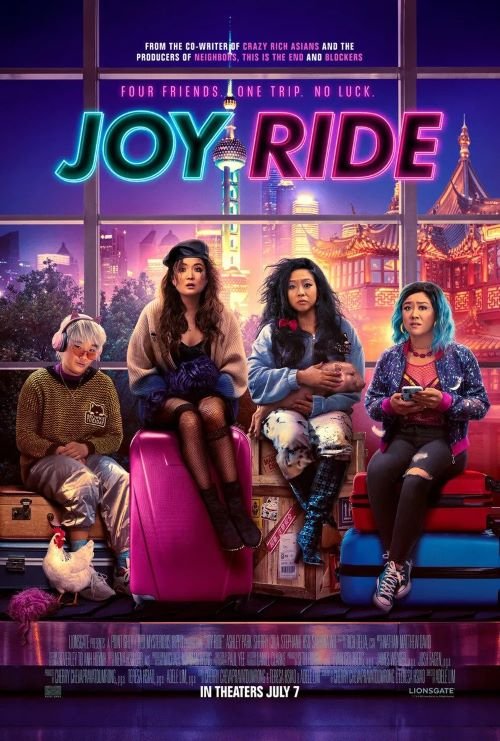
IMAGE CREDIT: Lionsgate Films 


Inspiring Women Directors, Writers and Actors Injecting Originality and Invention Into the Comedy Genre

_________

I will take a slight detour…

IN THIS PHOTO: Barbie’s (the film is out on 21st July) director and screenwriter (with Noah Baumbach), Greta Gerwig/PHOTO CREDIT: Leeor Wild/The Observer

for this feature. Whilst I am going to start off by mentioning something musical, it will then divert into comedy. This blog is mostly about music, but I do bring in other topics and themes from time to time. One of the most interesting and excellent soundtracks of the year is for the Barbie film. Lizzo, Charli XCX, and Dua Lipa are among the artists around included. There are a couple of T.B.A. artists. We have been promised something quite big in that regard. At the time of writing this (9th July), we do not know who those missing pieces are. Maybe it will be Britney Spears, but nothing has been confirmed still. Out on 21st July, the Barbie film is going to be one of the biggest box office draws of this year. I think that it will be viewed as one of the best comedies in a very long time. I want too quote from an interview by The Guardian/The Observer from today (9th July), where Barbie’s director Greta Gerwig spoke with Alex Moshakis:

To pitch Barbie to executives, Gerwig wrote a poem so strange and “surreal” that she will not read it to me now. When I ask what it concerned, she says, “Oh, you know, the lament of Job?” before adding, “Shockingly, it does actually communicate some vibe of the movie.” Gerwig wrote Barbie with her partner, the filmmaker Noah Baumbach, though for a while she didn’t tell him she’d enlisted his help. (“He was like, ‘Did you sign us up to write a Barbie movie?’ And I was like, ‘Yes, Noah, get excited!’”) They worked on the script during the pandemic, when doubt plagued the future of the communal cinema experience. “There was this sense of wanting to make something anarchic and wild and completely bananas,” Gerwig says, “because it felt, like, ‘Well, if we ever do get to go back to cinemas again, let’s do something totally unhinged.’” The anarchy of Gerwig’s Barbie comes from “the deep isolation of the pandemic,” she says, “that feeling of being in our own little boxes, alone.”

Such are the levels of secrecy around Barbie that I was only allowed to watch the first 20 minutes of the film, which I did in a large screening room, alone but for a projectionist, a Warner Bros employee, and a man who sealed my phone in an opaque bag. Watching 20 minutes of a film is not enough to say if it is good or not, but it is enough to confirm an early vibe, which is anarchic. There is colour and artificiality, fun and chaos. There are many Barbies and many Kens. It has the atmosphere of an over-the-top gender-reveal party during which various things go wrong. Barbie’s feet become flat, not stiletto-arched. Her shower runs cold. Her breakfast burns. She develops neuroses. A once perfect-seeming life becomes not perfect.

PHOTO CREDIT: Leeor Wild/The Observer

Before filming, Gerwig organised a Barbie sleepover at Claridges, the London hotel, and invited a number of the film’s female cast: Robbie, Rae, America Fererra. The Kens were invited, but asked not to spend the night; the Barbies wore pyjamas and played games. “Honestly, it just felt like it would be the most fun way to kick everything off,” Gerwig says. “And it’s something you don’t get to do that much as an adult. Like, ‘I’m just going to go have a sleepover with my friends…’”

Behind the lens: directing Lady Bird. Photograph: Moviestore Collection/Alamy

Gerwig is known for creating open, democratic sets. And she describes part of her job as “creating an atmosphere of acceptance, no wrong answers, no judgment. It allows people to feel safe, to bring wonderfully wild things to the table, which they otherwise might not want to.” (“She’s into things arising,” the actor Jamie Demetriou, who appears in Barbie, told me.) That everyone on set bonds is important to Gerwig – hence the sleepover. Before Little Women, she asked the film’s primary cast – Ronan, Florence Pugh, Emma Watson and Eliza Scanlen – to memorise a poem, and to later recite it to each other. “These were professional actors,” Gerwig recalls, “but there was something about the fact they had to select a poem and then recite it… It was very intimate and amazing, and they were very vulnerable. It instantly felt helpful in creating that connection.” She later adds: “As a director, you have the job of dreaming up the movie, and then you have to get everyone else in the movie – hundreds of people – to have that same dream, too.”

Demetriou recalls the Barbie set being full of positivity. “A lot of the film I spent with Will Ferrell and Connor Swindells talking about how there was this magical drip-down effect from her,” he told me, “this positive vibe that everyone wanted to keep going.”

Barbie is what I wanted to use as a springing board. The comedy genre is one that has always struggled in terms of consistency. Most of the classic films are in the past. We are in a time when other genres are producing the most original and memorable concepts. There have been some good comedies released over the last few years, though nothing that stands out as a classic. This year sees at least a couple which provide hope. Barbie is one of them. Although there are dramatic elements and it is more than a straight-out comedy, its tone and ambition means that it is going to be a huge smash! I think a bigger budget and a director that has this incredible vision can make a comedy an enduring success. Barbie has that ambition and budget. That is not the only reason comedies are limited.

I think many filmmakers are repeating what is out there. Not showing enough endeavour and bravery. So many lazy comedies come out that sag the shoulders. This year has seen some truly awful comedy attempts come to the screen. This recent one is part of a growing list. In terms of the ‘failures’, it comes down to the tone being misjudged, Not being sufficient laughs or a strong enough cast. I know comedy is very hard but, in many cases, there is that potential for it to be something at least passable. More than any genre, when comedy fails or gets it wrong, it makes that massive and unmistakable dent. It is a deafening silence! Other comedies like No Hard Feelings have been getting a drubbing. Jennifer Lawrence is one of the most versatile and talented actors of her generation. She is lumbered with this misjudged and weird script that is very questionable in terms of its ethics! Playing a woman who is paid to give a teenage son a good time – essentially have sex with him -, it is quite an odd place to go to. Seemingly belonging to another time, even though No Hard Feelings has got some okay reviews, many have slammed it. One of the most divisive films of the year, it just shows that when comedies get it wrong it is incredibly noticeable! There have been many more comedies that have not stood out or had anything good to say about them.

I am not down on comedy - far from it! It is a wonderful genre that, when done right, can be amazing. I have written several times about my 1980s-set concept set in a high school that has a unique edge. A rare comedy that would need a massive spoiler, I am always frustrated I cannot get it off the ground, as objectively it would be much more interesting and funny than most comedies that have come out this year. But that is not the way the industry works! Even if you have a great idea, so too do countless other aspiring filmmakers. It is almost impossible to get your script to anyone with any pull and leverage. Regardless, something that is always in my mind, it makes me think about the successes. Barbie is going to be a terrific film that undoubtedly will get five-star reviews. I have already predicted massive things for it (three or four Oscar nominations among them). A new film that is bringing something raunchy and risqué to the plate is Joy Ride. The title implies theft and frivolity, but it clearly about a road trip that has an X-rated element. A clever title is backed up by an excellent script from Cherry Chevapravatdumrong and Teresa Hsiao, with superb direction from Adele Lim, it is incredible Asian women writing and directing incredible Asian women. It is almost a first in terms of a comedy film. Groundbreaking and highly regarded, its plot I will crib from Wikipedia:

Audrey Sullivan, an adoptee with white parents, lives in White Hills, Seattle with her childhood best friend, Lolo Chen. Audrey is an overachiever who works as a lawyer at a prestigious firm, while Lolo makes sex-positive art. Promised a promotion to Partner if she can close a deal with a Chinese businessman, Audrey and Lolo take a trip to China, joined by Lolo's cousin Vanessa, nicknamed "Deadeye", who is socially awkward but obsessed with K-pop. In China, Audrey meets her college roommate and close friend Kat, who is an actress on a popular daytime show, and despite being sexually promiscuous in college, is engaged to her co-star and Christian fiance Clarence who is saving himself for marriage.

The group meet Chao, the Chinese businessman at a party, where Audrey vomits on him. Chao claims that in order for him to do business with Audrey, he must meet her birth family, whom she has never met. Lolo lies to Chao that Audrey is in close contact with them. Prior to the trip, Lolo had called Audrey's adoption agency and tracked them down. Audrey resolves to meet her birth mother and take her to Chao's party to close the deal.

The quadruple board a train to Audrey's adoption agency, where they are seated next to a drug dealer. They are forced to consume various amounts of cocaine after a train inspection — the drug dealer then steals their luggage and has them kicked off the train. Stranded in the middle of rural China, Lolo contacts former NBA star Baron Davis, who is currently playing in China. The four women injure several players in sex-related accidents the following night, causing the basketball team to refuse to drive them to their destination.

The group makes it to their destination. There, Audrey discovers that her mother is not Chinese but rather Korean. In a last ditch effort to secure the deal, one of Deadeye's online friends secures them a private jet to Seoul, but without their passports, they pretend to be a new idol group to pass the border. Lolo livestreams their idol performance on Instagram Live, only for Kat's skirt to inadvertently fall off, revealing a large devil tattoo on her vulva. They are forced to instead take a boat into mainland Korea.

Lolo's livestream inadvertently goes viral, with hundreds of millions of people seeing Kat's vagina. Chao calls Audrey to inform her that the deal is off, and then Audrey is fired from her job, while Kat is at risk of losing her television deal. The quadruple have a fight and split. Audrey learns that her birth mother has passed away and visits her grave, but meets her birth mother's husband there. Her husband shows Audrey a video recorded by her birth mother before her passing. Audrey returns to Seattle and makes up with Lolo and Deadeye.

One year later, Audrey, Lolo, Kat, and Deadeye are in Paris for a best-friends trip. Audrey started a new law firm, Lolo has begun waiting tables and selling her art, while Kat is engaged to Clarence”.

There have been X-rated comedies that are daring and push boundaries. A lot of times they can be very crude and ‘blokey’. I think the fact that this film is led by women has this empowering and fresh take. A lot funnier and more endearing than many like-minded comedies, Joy Ride is going to be the pinnacle of comedies this year – depending on what Barbie serves up perhaps. Having to answer to ridiculous criticism that it is anti-white, it is blatantly sexist and misogynistic attack that male directors and screenwriters would not get! I want to bring in one of the many wonderful reviews for Joy Ride. This is what The New York Times had to say:

The new “Joy Ride” offers a modern-comedy bingo card with pretty much all the squares checked: mismatched besties, an oddball crashing a group outing, said outing going wildly off the rails, freewheeling sex, projectile vomiting, unhinged debauchery involving booze and drugs, and a crucial plot point hinging on an intimate body part.

This film, directed by the “Crazy Rich Asians” co-writer Adele Lim, may not reinvent the raunch-com wheel (see: “The Hangover,” “Girls Trip,” “Bridesmaids”), but it does change who’s driving the car. And, most importantly, it is really, really funny.

“Joy Ride” processes all of its familiar ingredients into a sustained, sometimes near-berserk, barrage of jokes, interspersed with epic set pieces. That is, up until the two-thirds mark, when the movie paints itself into a corner and presses the “earnest sentimentality” eject button before managing a narrow escape. It’s a small price to pay for the inspired pandemonium that precedes.

The mismatched friends here are Audrey (the brilliant Ashley Park, from “Emily in Paris”) and Lolo (a deliciously acerbic Sherry Cola), who have been best friends since childhood, when they bonded over being the only two Asian girls in their Pacific Northwest town.

IN THIS PHOTO: Adele Lim/PHOTO CREDIT: Nicholas Sutjongdro

Audrey, who was adopted from China by a white couple, grows up to become a prim, career-obsessed lawyer. She is sent to Beijing to close a deal, with a promotion hanging on her success. Since her Mandarin is practically nonexistent, she brings along the irrepressible Lolo. Completing the comic superteam are Lolo’s socially awkward cousin, Deadeye (Sabrina Wu), whose superpower is extensive K-pop knowledge, and Audrey’s college roommate Kat (Stephanie Hsu, from “Everything Everywhere All at Once”), now a screen star in China and engaged to her very hunky and very Christian co-star (Desmond Chiam).

Eventually, Audrey decides to find her birth mother, and the four women set off on an odyssey that immediately devolves into a series of mishaps. The shenanigans come at breakneck speed, and peak with a repurposing of the Cardi B and Megan Thee Stallion hit “WAP” that could become a late-night-karaoke staple in its own right.

The film is especially sharp around identity and assimilation, and the screenwriters Cherry Chevapravatdumrong and Teresa Hsiao have fun with the expectations and stereotypes placed on Asians and Asian Americans — including those that are self-imposed. The seams show only toward the end, when the film’s pace slackens, but even then, the cast’s chemistry and flawless timing hold steady.

As the straight arrow protagonist, Park expertly pulls off a trick similar to Kristen Wiig in “Bridesmaids”: Her character serves as the narrative engine, while also setting up comedy opportunities for the others.

If there is any justice, Park will soon be a marquee name. But this applies to all of the central quartet, who so effectively take advantage of the movie’s many opportunities to shine. With “Joy Ride,” summer has truly arrived”.

 IN THIS PHOTO: Florence Pugh/PHOTO CREDIT: Peter Lux

I did want to spotlight a comedy that is a success and has taken risks. The fact that it is an Asian cast and has these inspiring women creating and acting in the film is refreshing when you look at a lot of the very boring, homogenised and uninteresting comedies that have come around. With plenty of spark and memorable moments, Joy Ride, I hope, will open the door to raunchy comedy that have heart, intelligence and, importantly, laughs (and diversity)! It succeeded where No Hard Feelings failed. There has not really been a British/American equivalent of Joy Ride. Maybe with American directors, producers and setting, I looked at Joy Ride and its central quartet and I instantly thought about something similar. I think that a British quintet that is in America and has a similar arc to Joy Ride’s heroines would succeed. In terms of cast and chemistry, I thought that Florence Pugh, Gemma Chan, Jameela Jamil, Amelia Dimoldenberg and Phoebe Waller-Bridge would make an amazing central cast. Friends escaping a life in their own country and taking a trip together in the U.S. could be an amazing comedy. With at least two of the cast (Dimoldenberg and Waller-Bridge) being comedians and comedy writers, it could be directed by an amazing female director. I think that a successful, bold and brilliant comedy like Joy Ride could turn the tide. I think, more than anything, the fact that it is led by women is a major reason for its success. I also think that this is something one can apply to Barbie. Even though actors like Ryan Gosling are in the cast, writer/director Greta Gerwig and stars like Margot Robbie (Barbie) and Issa Rae (Madam President Barbie) are in standout and vital roles.

I don’t think that it is a coincidence that two films that are standout comedies in terms of their laugh rate, visions and brilliance are from women. Ones essentially led by women. I am not against male-focused comedies, but most of the finest comedies this year have been directed by women. Take Rye Lane. A British comedy directed by Raine Allen-Miller, it has won some of the most awe-struck reviews of the year. Starring Vivian Oparah alongside David Jonsson in the lead roles, I think that Oparah and Allen-Miller could win awards for their work on Rye Lane. It is an extraordinary success at a time when there have not been a slew of great British comedies. Injecting something new, funny and heartwarming into the genre, there have been some brilliant comedy films among a mass of average, questionable or downright flat ones! Even though I am a male writer (primarily, obviously, a music journalist), the film idea I had is one I want to co-write with a female screenwriter; with a female director and a crew consisting of many brilliant women – and a teenage and adult cast with phenomenal female talent. It is always a shame that there are so many films made by women that have to face criticism and sexism. Joy Ride is not the first of last incident. Barbie goes up against Christopher Nolan’s Oppenheimer on 21st July. I think Greta Gerwig’s film will win the box office, awards race and audience vote when it comes to this ‘battle’ – the films are pitted together in a loving way where there is a lot of mutual respect.

I did want to use this feature to step away from music briefly. Although Barbie is going to have an amazing soundtrack including some sensational women and an as-yet-unnamed music icon (or two), there are these films coming out this year that showcases some phenomenal female talent. From the wonderful ensemble of Joy Ride and Barbie through to Rye Lane, I think that so many eyes should be on amazing women doing such incredible work. Even if a film like Cocaine Bear got a few mixed reviews, the fact that Elizabeth Banks’ direction was so awesome marks her out as a director who is going to helm some huge projects very soon. A wonderful comic actress herself, she is someone who will inspire so many women coming through. Banks is a producer on Bottoms. Due on 25th August, it also has a connection to Barbie, as Charli XCX composed the music for the film alongside Leo Birenberg. Canadian director Emma Seligman helms a film that has already won enormous plaudit. A high school sex-comedy wonderfully released by Metro-Goldwyn-Mayer – who haven’t distributed many films like this! -, it is about two high school senior girls set up a ‘fight club’ to hook up with cheerleaders before graduation. With a screenplay by Emma Seligman and Rachel Sennott, and Sennott, Ayo Edebiri, Havana Rose Liu, and Kaia Gerber leading the cast, it is another wonderful and year-best comedy that is helmed and led by women!

I might expand on this concept and notion more, as I genuinely believe women are revitalising comedy at the moment. Not to discount the great male directors and screenwriters, but 2023 is showcasing some truly brilliant women who are going to produce many more phenomenal films. From great talent already out there to a theoretical cast/crew I put together – Waller-Bridge, Pugh, Chan, Jamil and Dimoldenberg -, there is this very exciting revolution happening. I wonder whether there will be any articles published that interviews and spotlight directors like Greta Gerwig, Raine Allen-Miller, Elizabeth Banks and Adele Lim with writers such as Cherry Chevapravatdumrong, Emma Seligman and Rachel Sennott and actors like Stephanie Hsu and Margot Robbie. Comedy has been rather patchy for many years now, but you can see these green shoots! From raunchy new comedies and fresh takes on old formats through to these bigger-budget successes, there are some golden comedy flicks standout out. As I said, they are largely led by women. Alongside some rather questionable, lumpen and downright lazy comedies, they are providing such a sense of hope, brilliance, laughs, heart and…

HUGE relief and release!

FEATURE: Flowers in Full Bloom: The Brilliant Women Dominating 2023

FEATURE:


Flowers in Full Bloom

IN THIS PHOTO: Miley Cyrus/PHOTO CREDIT: Steven Meisel for British Vogue


The Brilliant Women Dominating 2023

_________

IT is not a shock…

 IN THIS PHOTO: PinkPantheress/PHOTO CREDIT: SKIMS

that female artists have been dominating music this year. In terms of the best albums so far, I think most of the high positions are occupied by them. It is always wonderful seeing magnificent female artists release incredible and original music. In an industry still dogged by imbalance and inequality, news that most of the biggest-selling singles of this year so far will help to open eyes to the fact that things need to change. When it comes to radio playlists to festival bookings, more and more proof is out there that shows women are more than worthy of inclusion and the bigger stages. The BBC’s Mark Savage recently reported on some incredible chart news:

Miley Cyrus's Flowers is the biggest single of the year to date, says the Official Charts Company.

The break-up anthem, which spent 10 weeks at number one earlier this year, has achieved 147 million streams and more than 80,000 downloads.

Raye's Escapism is 2023's second biggest-seller, while SZA's Kill Bill is in third place.

The Weeknd's two-year-old greatest hits collection, The Highlights, is the most popular album so far this year.

Taylor Swift's Midnights is in second place, followed by Harry Styles' Harry's House.

However, new releases are largely crowded out of the album chart, due to the enduring popularity of classic tracks on streaming services - which now account for 86% of music consumption in the UK.

Greatest hits collections by Elton John (at number five), Eminem (seven) and Fleetwood Mac (nine) are among the year's biggest-sellers, after establishing a semi-permanent residency in the weekly countdown.

Only two albums released in 2023 feature in the Top 10 biggest-sellers list: Lewis Capaldi's Broken By Desire To Be Heavenly Sent, at six, and Ed Sheeran's Subtract, at eight.

Taylor Swift, meanwhile, has five albums in the Top 40, with Midnights joined by 1989 (16), Lover (19), Folklore (23) and Reputation (34).

Top 10 singles of 2023 (year-to-date)

  1. Miley Cyrus - Flowers

  2. Raye ft 070 Shake - Escapism

  3. SZA - Kill Bill

  4. PinkPantheress - Boy's A Liar

  5. Taylor Swift - Anti-Hero

  6. Rema ft Selena Gomez - Calm Down

  7. Calvin Harris and Ellie Goulding - Miracle

  8. Libianca - People

  9. Harry Styles - As It Was

  10. Miguel - Sure Thing”.

The top five best-selling singles of the year are all by female artists - incredibly, the first time this has ever happened in chart history.

The top 10 also features two Afrobeats artists, Rema and Libianca, both of whom had breakout hits at the start of the year. And Ed Sheeran is missing from the Top 10 for the first time since 2016.

Miley Cyrus's Flowers, meanwhile, was the star's first number one since 2014's Wrecking Ball.

The song was heavily rumoured to be about the end of her marriage to actor Liam Hemsworth, including a reference to their Malibu home that burned down in a wildfire in 2018.

She released the track on Hemsworth's birthday, 10 March, and was said to be wearing one of his suits in the video.

Fans also speculated that the lyrics were an interpolation of Bruno Mars's When I Was Your Man, which was reportedly played at the couple's wedding.

Where Mars sang, "I should have bought you flowers / And held your hand", Cyrus replied, "I can buy myself flowers... And I can hold my own hand."

Whilst this chart news is a bit of a rarity, I don’t think that it will be a one-off. In terms of women dominating and delivering those chart-busting hits, this is going to continue through the year and into next. If you search for the best and most popular albums of 2023, you will see so many phenomenal works from female artists. Like the previous few years, I have found that the songs and albums that have stayed in my head longest are from women. I think that reports like the one above should once and for all expel any myths or assumptions that women cannot headline festivals. Radio playlists are still unequal, and we still have to see massive sexism and inequality throughout the industry. Things do have to change. News that the singles charts have been enriched by women will definitely help move things in the right direction.

I do think that 2024 will be a year when big steps are taking in terms of equality. There have been tiny steps in some areas but, by and large, we are seeing the same reports and outcomes – women being overlooked and having to fight harder than men to be heard and respected. I wanted to react to this awesome news about female artists’ chart success. If many people were to compile their top ten albums of this year so far – which I have done myself -, female artists would be heavily represented. We are definitely not done with 2023, so it will be fascinated to see what comes in terms of singles and albums. Maybe yet more chart honours for female artists. If this is the first year in a long while the singles chart has been defined by female artists, I think that we will see this continue…

INTO next year.

FEATURE: Second Spin: D'Angelo and The Vanguard – Black Messiah

FEATURE:


Second Spin


 D'Angelo and The Vanguard – Black Messiah

_________

IN this feature…

 PHOTO CREDIT: Greg Harris

I urge people to check out an album on C.D. or vinyl that is either underrated and deserves new love, or it is a great album you do not hear much. If neither option is possible, go and stream that album at the very least. This instalment is reserved for an album that was hugely applauded when it came out. In fact, D'Angelo and The Vanguard’s Black Messiah was my favourite album of 2014. Released on 15th December that year – and it rare to get a year-best album come out that late! -, it came fourteen years after the phenomenal Voodoo. D’Angelo unveiled the album at a New York listening party. Like Prince and his New Power Generation, D’Angelo made a big returns with The Vanguard. There are options to buy Black Messiah. In any case, one of the best-regarded albums of the 2010s definitely should be played more across radio. I wonder if that is the final album we will hear from D’Angelo. He did release a single, Unshaken, in 2019 - though there has been no news of a fourth studio album. I am going to come to a couple of reviews for the masterpiece that is Black Messiah. There are so many five-star reviews for an album from one of music’s absolute greats. That is no surprise! It is D’Angelo’s most immediate and varied collection of songs. Without a weak moment (though I have seen some view Really Love as a bit too routine and unambitious) through the album, it sounds as essential and necessary now as it did back in 2014. Recorded between 2002 and 2014, this is an album that shows its working. Though it is loose and funky at times, I feel it is a very precise album with so much detail.

D'Angelo’s ‘Vanguard’ includes Questlove, bassist Pino Palladino, guitarist Isaiah Sharkey, and horn player Roy Hargrove. Favouring an analog sound that puts it alongside some of the great Soul albums of the 1970s, I think that works wonders. It makes Black Messiah sound more urgent, silky and vintage. Even though it was a success in the U.S., Black Messiah didn’t chart all that high in the U.K. and many other nations. I wonder why that is. Maybe people were not expecting the album or it enjoyed steady sales after a while. I remember buying it the week it came out and instantly being moved by it. It remains one of my favourite albums from the past ten years. Multi-instrumentalist, producer and songwriter D'Angelo showed the full range of his abilities through Black Messiah. I hope, decades from now, people will remember this as one of the all-time great albums. For that reason, I wanted to shine new light on it – to ensure that it is being played and reaches new people. On its fifth anniversary in 2019, Albumism showed love for the mighty Black Messiah:

For D’Angelo, an artist who captured the world’s attention with his stellar debut Brown Sugar in 1995 and then took five years to follow it up with the neo-soul defining Voodoo (2000), time between ventures wasn’t uncommon. But it took fourteen years for his third release to see the light of day, the ambitious and genius filled Black Messiah.

Fourteen years. That’s several lifetimes in today’s music scene. Time for audiences to move on. Time for rumors to build. Time for fear to set in. Time for self-doubt to rear its head and strike at the heart of the artist.

But in that extended hiatus, D’Angelo was still musically active, releasing cover versions of artists that had influenced him and guesting as a featured artist on many spots. But this just drove the desire to hear new original material.

And writing was taking place. Sessions with Questlove proved fruitful. Time locked away in a studio writing, composing, performing and producing in a similar vein to Prince delivered a bounty of tracks. But it wasn’t until D’Angelo was joined in the studio with a bevy of top-notch musicians that the stars aligned and work started to come into focus.

Tracks from the early 2010s were fine-tuned, revamped and reinvented and new material was written. And whilst D’Angelo is credited with vocals, guitar, piano, organ, keyboards, synthesizers, bass, electric sitar, drum programming, and percussion on the album, musicians such as Pino Palladino, Jesse Johnson, and vocalist and writing partner Kendra Foster all contributed in no small part. But still, this involved a 4-year process of working on one song for a month or two and then taking a month’s break. A slow and steady approach that built excitement as well as concern that it was busy work without any real deadline in sight (none that would be met anyway).

But then, spurred on by the racial inequality he was seeing amplified by the controversy surrounding both the Michael Brown Jr. and Eric Garner trials, D’Angelo pushed the release up by several months and on December 15, 2014 the world finally got to hear what D’Angelo had so painstakingly been brewing.

Steeped in funk, the album is strongly zeroed in on issues of race relations, the ongoing struggle for equality, and the value of human life, while still reserving time for a handful of tracks about good loving.

It’s been said that part of the reason for the extended hiatus was as a push back by D’Angelo against his public image of being a sex symbol that overshadowed his actual prowess as a musician and songwriter. As he sings in “Back To The Future (Part I)” with a tongue decidedly in his cheek, “So if you're wondering about the shape I'm in / I hope it ain't my abdomen that you're referring to / This what I want you to listen to,” not only is he casting off the sex symbol imagery conjured up by his previous outing, he’s also putting the focus on where it should have always been, and where it always belongs: on his art itself.

With Black Messiah, the focus is back where it belongs. It’s a beautiful, broody, murky mix of funk and soul that carries you from opening track to the final note. It’s not only an encapsulation of D’Angelo’s influence, but also a reminder of why it’s so important that his next release doesn’t take another fourteen years to surface. Though if it does, you can be sure it will be worth the wait”.

I want to turn to some reviews before wrapping things up. Pitchfork were stunned by the surprise release of an album that I think is the best thing D’Angelo has ever released. Alongside The Vanguard, they created this immaculate and enormously powerful work that should be required listening:

With this week’s shock release of Black Messiah, soul singer and multi-instrumentalist D'Angelo, the man music critic Robert Christgau once earnestly dubbed "R&B Jesus," returns with his first album of new material in 14 years. It was not, as many have suggested, 14 years of silence. The last D'Angelo album, 2000’s Voodoo, was a near perfect communion of buttery soul, Crisco-fried funk, and hip-hop thump, but the video for its calling card ,"Untitled (How Does It Feel?)", a lingering, sensual glance over the singer’s face and chest, turned him into an unwitting sex symbol. Live shows soon descended into catcalling, and D, convinced his music had become an accessory to his looks, slipped slowly out of sight. Dispatches grew scarce and worrisome. There were arrests. There was a car accident. For a while, D'Angelo appeared to follow talented but troubled forbears Marvin Gaye and Sly Stone into the dark.

Even in darkness there was still music. D'Angelo guested on albums by J Dilla, Q-Tip, Snoop Dogg, and more. He taught himself to play guitar. There were perennial promises of a new album. D'Angelo returned to the stage in 2012 peppering sets of old favorites with carefully chosen covers and unreleased new material. Black Messiah isn’t a sneak attack; it’s a slow-simmering gumbo finally boiled over. We tasted its fearless ambivalence to genre boundaries in 2007 when Roots maestro Questlove snuck an early version of the stately Joe Pass homage of "Really Love" to Australia’s Triple J Radio, in 2010 when the punk-hop scorcher "1000 Deaths" briefly slipped onto YouTube and in 2012 when D'Angelo returned to television to unveil the big band funk smartbomb "Sugah Daddy" on the BET Awards. Still, it’s a wonder to hear his mutant groove unblemished by the passage of time and stretched around this gobstopping cosmic slop of country funk, psych and new wave.

Black Messiah is a study in controlled chaos. The nightmarish chorus of "1000 Deaths" arrives late and fierce, as though the band unfurled its crunchy, lumbering vamp just long enough to violently snatch it out from under us. "The Charade"'s Minneapolis sound funk rock follows, every bit as bright as the previous track was menacing until you zero in on the threadbare heart-sickness of D and P-Funk affiliate Kendra Foster’s lyrics. Black Messiah pulls together disparate threads few predecessors have had the smarts or audacity to unite. One song might channel Funkadelic, another, the Revolution, but the shiftless mad doctor experimentation and the mannered messiness at the root of it all is unmistakably the Vanguard. Black Messiah is a dictionary of soul, but D'Angelo is the rare classicist able to filter the attributes of the greats in the canon into a sound distinctly his own. It’s at once familiar and oddly unprecedented, a peculiar trick to pull on an album recorded over the span of a decade.

The bipartite nostalgia romp "Back to the Future" looks for solace in memories ostensibly because the present is discouraging. The love songs run a little morbid. The titular pledge of "Betray My Heart" doesn’t speak fealty so much as candor, and the album’s barn burner of a closer "Another Life" is a song of devotion in the vein of the Stylistics’ "You Are Everything"—except that the couple never really meets. Black Messiah is about finding something to hang onto in dire times, soldiering through the infuriating insanity of oppression with a support system in tow. "It’s about people rising up in Ferguson and in Egypt and in Occupy Wall Street and in every place where a community has had enough and decides to make change happen," D'Angelo writes in the liner notes. "Black Messiah is not one man. It’s a feeling that, collectively, we are all that leader." He may have taken well over a decade to show face again, but it turns out D'Angelo is right on time”.

Even though you can strongly hear the influence of Prince and Sly Stone throughout Black Messiah, these heroes are used as starting points and references – without leaning too heavily towards them and D’Angelo losing his identity. Indeed, Black Messiah is a singular work that could only come from D’Angelo! This is what AllMusic offered when they tried to articulate what Black Messiah means to them:

The one-eighty Questlove promised back in 2012, when the drummer and producer persuaded D'Angelo to perform for the first time in a dozen years, turns out to be closer to a ten. As those who caught later gigs and subsequent uploads could attest, there were no signs that D'Angelo -- enigmatic maker of two classics that twisted gospel, soul, funk, and hip-hop with aloof but deep-feeling swagger -- was developing his third studio album with production pointers from David Guetta or elocution lessons from Glee's vocal director. Instead, he's made another album that invites comparisons to the purposefully sloppy funk of Sly & the Family Stone's There's a Riot Goin' On. It's more outward-looking, refined, and bristly than what preceded it, however, and has much in common with releases from retro-progressive peers like Van Hunt and Bilal. D'Angelo retains the rhythmic core that helped him create Voodoo, namely Questlove, bassist Pino Palladino, and trumpeter Roy Hargrove, and adds many players to the mix, including guitarist Jesse Johnson and drummers James Gadson and Chris Dave.

Q-Tip contributed to the writing of two songs, but a greater impact is made by Kendra Foster, who co-wrote the same pair, as well as six additional numbers, and can often be heard in the background. The societal ruminations within the fiery judder of "1000 Deaths," the dreamy churn of "The Charade," and the falsetto blues of "Till It's Done," fueled as much by current planetary ills and race relations as the same ones that prompted the works of D'Angelo's heroes, strike the deepest. Among the material that concerns spirituality, devotion, lost love, and lust, D'Angelo and company swing, float, and jab to nonstop grimace-inducing effect. On the surface, "Sugah Daddy" seems like an unassuming exercise in fusing black music innovations that span decades, and then, through close listening, the content of D'Angelo's impish gibberish becomes clear. At the other end, there's "Another Life," a wailing, tugging ballad for the ages that sounds like a lost Chicago-Philly hybrid, sitar and all, with a mix that emphasizes the drums. Black Messiah clashes with mainstream R&B trends as much as Voodoo did in 2000. Unsurprisingly, the artist's label picked this album's tamest, most traditional segment -- the acoustic ballad "Really Love" -- as the first song serviced to commercial radio. It's the one closest to "Untitled (How Does It Feel)," the Voodoo cut that, due to its revealing video, made D'Angelo feel as if his image was getting across more than his music. In the following song, the strutting "Back to the Future (Part I)," D'Angelo gets wistful about a lost love and directly references that chapter: "So if you're wondering about the shape I'm in/I hope it ain't my abdomen that you're referring to." The mere existence of his third album evinces that, creatively, he's doing all right. That the album reaffirms the weakest-link status of his singular debut is something else”.

An extraordinary album from a musical genius, it was a very pleasant early Christmas present that D’Angelo gave the world in 2014. After so long between albums, there could have been fears he had lost his touch or fans might have gone elsewhere. They came out in force (in the U.S. at least!); Black Messiah confirmed that he has still in a league of his own! From the opening bars of Ain’t That Easy to the final seconds of Another Life, Black Messiah is…

A faultless album.

FEATURE: Groovelines: Fall Out Boy - We Didn't Start the Fire

FEATURE:


Groovelines


Fall Out Boy - We Didn't Start the Fire

_________

THIS might be…

 IN THIS PHOTO: Billy Joel/PHOTO CREDIT: Mike Slaughter/Toronto Star/Getty Images (via The New York Times)

the first cover versions I have featured in Groovelines. There is a special reason for that. Perhaps one of his more divisive tracks, Billy Joel released We Didn’t Start the Fire back in 1989. From his album, Storm Front, the single reached number one in the U.S. and seven in the U.K. You can read more about it here. Even if the album was given mixed reviews, I think that its lead single is a smash. The song runs major political and cultural events in chronological order. A great no other artist had attempted before, everything from the H-Bomb, Peter Pan, Bob Dylan and Wheel of Fortune were all checked off. I cannot imagine how long it took Joel to write the song. Making it all rhyme and scan would have been a tricky feat! As you can imagine, for a song that is original yet quite strange, it was open to parody. The Simpsons did their own version during one episode. In 2021, a weekly podcast began which was hosted by Katie Puckrik and Tom Fordyce. Called We Didn't Start the Fire, each week they examined a subject mentioned in the song, in lyric order, where they discussed its importance and cultural significance with an expert guest. As so much has happened since 1989, there was this opportunity for someone to update We Didn’t Start the Fire. Even they did not do things chronologically – perhaps the downside of the new version – Fall Out Boy have taken on the impossible chalice of cramming in over thirty-three years’ worth of history into a song!

One big reason why I wanted to look into the song was because of a lot of the reaction it garnered. There are a few problems reapproaching a song that was quite divisive when it came out. Even though Billy Joel covered most major events in his 1989 original (and he wasn’t really a fan of the song himself!), there were some bemused by the song. Not something we’d associate with Joel in terms of sound and lyrics, I think that retrospective views have been a bit kinder. It has a cheesiness to it, but I like that history lessons have been taught around We Didn’t Start the Fire. Many children learned about important events because of this song. In fact, I think I may have featured the original in a Groovelines a while ago. It is educational and original. I like Joel’s vocals and the fact he commits to it. The cover version has garnered some negativity. Many highlight some unwise lyrical couplets – rhyming ‘George Floyd’ with ‘Asteroid’ (a video game) maybe lacks sensitivity – and some saw it as tasteless and ill-judged. Fall Out Boy’s bassist and lyricist of the new version, Pete Wentz, sort of had to defend the song. Although he tried to make it chronological and had to discount some events (such as the COVID-19 pandemic), there is a lot in there. It was always going to be the case that stuff would not make the cut. In terms of its reaction, I think that a lot of it is unfair. We Didn’t Start the Fire suggests itself to an update, as it is literally history and culture ran in chronological order. That gap between 1989 and 2023 needed to be filled and explored! There are articles dedicated to explaining what is wrong with Fall Out Boy’s cover.

It is always going to be one of those situations where you won’t please everyone. It is much harder to include everything relevant in a new We Didn’t Start the Fire, as there is arguably more to explore in the past thirty-four years than the first eighty-nine of the twentieth century. The Internet has given access to a galaxy of new possibilities. So much has happened in terms of popular culture, it was impossible to get everything down. The New York Times covered the song. Pete Wentz wrote in an email what the song means to him and why Fall Out Boy covered it:

I remember hearing the song when I was a kid,” Pete Wentz, the bassist, wrote in an email. “The ‘J.F.K. blown away’ line always stuck out to me. I would always start the verses but get kind of lost a few references in.”

He continued, “This song was omnipresent in that era, but in a way where it crept through the cracks of pop culture. I remember talking about the lyrics in history class.”

According to Mr. Wentz, instead of a straight cover of the song, the band wanted to amend the lyrics to reflect the 34 years that had passed since its release.

“I listen to Billy Joel’s and so many of the things in it are either massive moments or just kind of shoulder shrugs within history now,” he wrote. “It’s interesting to see what he referenced from the ’50s and ’60s and what he didn’t. And in some ways it’s just etchings inside of a cave — documentation that we existed and these things happened, both triumphant and terrible. We made this song for ourselves and then we hoped our fans would have fun with it.”

Brady Gerber is a rock music critic who contributes to New York and Pitchfork. As a fan of the original, he is quite fond of Fall Out Boy’s take.

“I think every generation gets their own ‘We Didn’t Start the Fire,’” Mr. Gerber said. “I still think the melody is really catchy and fun. And I remember that the initial reaction to Billy Joel’s original version wasn’t really great. I think a lot of people actually hated the song at the time. So it’s funny, because I’m also seeing a lot of people criticizing the song thinking it’s ridiculous, but it’s also just a ridiculous song to begin with.”

While it’s hard to capture every historical moment, the song mimics the original in that its references span a wide range, covering climate change as well as Pokémon and the “Twilight” films.

Fall Out Boy did, however, leave out one of the most recent historical events: “I think our biggest omission was a Covid reference,” Mr. Wentz said, “and we debated it, but we leave that to the next generation’s update!”.

I still think, despite the parodies and endless references to the original 1989 Billy Joel hit, We Didn’t Start the Fire is ripe for revision. Maybe Fall Out Boy’s version means nobody else would try it, but it is a fascinating phenomenon. The way some have attacked it whilst others really like it. It is quite close to the original in terms of melody and rhythm. I think some of the inclusions and notable omissions has been what has split people. Rather than it being embarrassing or tasteless, I actually think that a slight rearrangement and some pertinent inclusions – like The Simpsons and Beyoncé - would have made it a bit better. It has been opinion-splitting. I am fascinated by the new Fall Out Boy version and what people are saying about it. The band’s lead, Patrick Stump, gives it his all at least! It is clear, because many highlight things that could have been included, that there is interest in the original and that idea of tackling history. Will the new version be taught in classes and used as historical reference?! At least it makes us think about the important events, people and moments from the past thirty-four years. It makes me wonder if anyone will pick up the baton from Fall Out Boy and write the third version of We Didn’t Start the Fire

A few decades from now!

FEATURE: The Digital Mixtape: Songs from Classic Hip-Hop Albums

FEATURE:


The Digital Mixtape

IN THIS PHOTO: Ms. Lauryn Hill


Songs from Classic Hip-Hop Albums

_________

AS 11th August…

sees Hip-Hop turn fifty, I have been putting together features about the wonderful gene. For this one, I have compiled tracks from the classic Hip-Hop albums. Before I get there, this article talks about the rather modest birth of a style of music that would soon grow and take over the world. Whether you consider 11th August to be the day the seeds of Hip-Hop were planted or not, you cannot deny that it gave us a pivotal moment:

Like any style of music, hip hop has roots in other forms, and its evolution was shaped by many different artists, but there’s a case to be made that it came to life precisely on August 11, 1973, at a birthday party in the recreation room of an apartment building in the west Bronx, New York City. The location of that birthplace was 1520 Sedgwick Avenue, and the man who presided over that historic party was the birthday girl’s brother, Clive Campbell—better known to history as DJ Kool Herc, founding father of hip hop.

Born and raised to the age of 10 in Kingston, Jamaica, DJ Kool Herc began spinning records at parties and between sets his father’s band played while he was a teenager in the Bronx in the early 1970s. Herc often emulated the style of Jamaican “selectors” (DJs) by “toasting” (i.e., talking) over the records he spun, but his historical significance has nothing to do with rapping. Kool Herc’s contribution to hip hop was even more fundamental.

DJ Kool Herc’s signature innovation came from observing how the crowds would react to different parts of whatever record he happened to be playing: “I was noticing people used to wait for particular parts of the record to dance, maybe [to] do their specialty move.” Those moments tended to occur at the drum breaks—the moments in a record when the vocals and other instruments would drop out completely for a measure or two of pure rhythm. What Kool Herc decided to do was to use the two turntables in a typical DJ setup not as a way to make a smooth transition between two records, but as a way to switch back and forth repeatedly between two copies of the same record, extending the short drum break that the crowd most wanted to hear. He called his trick the Merry Go-Round. Today, it is known as the “break beat.”

By the summer of 1973, DJ Kool Herc had been using and refining his break-beat style for the better part of a year. His sister’s party on August 11, however, put him before his biggest crowd ever and with the most powerful sound system he’d ever worked. It was the success of that party that would begin a grassroots musical revolution, fully six years before the term “hip hop” even entered the popular vocabulary”.

I don’t know if we have seen many films where DJ Kool Herc’s game-changing breakthrough has been documented and been front and centre. Maybe a film based in 1973 where we see that moment play out in a larger. I know that, on 11th August, the world will celebrate fifty years since the world was gifted…

THIS incredible music force.

FEATURE: Rewriting the Masterplan: Why the Reopening of HMV Flagship Store on London’s Oxford Street Is Especially Exciting

FEATURE:


Rewriting the Masterplan

PHOTO CREDIT: Shutterstock


Why the Reopening of HMV Flagship Store on London’s Oxford Street Is Especially Exciting

_________

THERE is a lot to celebrate…

 IN THIS PHOTO: A van outside HMV, Oxford Street in 1963/PHOTO CREDIT: HMV

when it comes to physical music. As has been reported – and I have written about a lot -, the rise in vinyl sales signals a slight move from streaming. People want a tangible form of music that is tactile and not ephemeral. They also want to support artists by buying music – which is something they cannot guarantee. Compact discs are not obsolete: their sales are not terrific, but they are holding steady. Also, cassettes are inexplicably popular! Most people do not possess devices on which to play them. Maybe it is another way to give artists money. They are a lot cheaper than vinyl. It ties into a music institution that I want to revisit now. I am not sure whether they will be selling devices to play cassettes in the future. HMV have their own layout and design. That will be the same across all shops. I think, regarding the boom in physical music, more space need to be dedicated to that – and the devices that allow us to play them on. I am going to continue. Great news broke back in April that HMV’s flagship London store on Oxford Street is reopening:

HMV is set to make a return to Oxford Street after a four-year absence, with a lease signed to confirm the reopening of its flagship later this year.

HMV currently has 120 shops across the UK, including a West London location in Westfield, the specialist Fopp store in Covent Garden, and the 25,000 sq ft Vault in Birmingham – Europe’s largest entertainment store.

Sunrise Records owner Doug Putman acquired the historic music chain in 2019. Since the closure of the 363 Oxford Street store in the same year, the presence of a flagship in the capital has been on the agenda.

Under Putman’s tenure, the business has evolved its concept to centre on a fan and community-orientated offer, including in-store gigs from local acts. It has successfully tapped into consumer demand for vinyl.

IMAGE CREDIT: HMV

363 Oxford Street will feature HMV’s new logo, and be fitted out with the new ‘HMV shop’ concept. The first store featuring the new layout and offering opened in Solihull on HMV’s 100th birthday in July 2021.

The concept will have been taken to 24 new sites – and retro-fitted to 14 of the existing estate – by the end of the year. By 2024, half of the HMV estate will have been converted to the new concept.

Doug Putman said: “The expansion of our fan-focused pop culture offer is really working for us and the reopening of our flagship represents the culmination of a good few years of hard work. We are also opening stores in Europe this year, so while it is the culmination of one phase of work, more excitingly we see it as the launchpad for an exciting new era for HMV.”

The new 363 Oxford Street store is expected to stock a large range of pop culture merchandise, vinyl, film, TV and music technology.

In the past year, HMV shops in the UK have welcomed artists such as Charli XCX, Stormzy, Shania Twain, Raye and Ellie Goulding for signings. The central London shop is expected to draw big names and is set to stage performances from up-and-coming acts through the HMV Live&Local programme.

363 Oxford Street played host to the very first HMV store in 1921. It became one of the UK’s most famous retail destinations. In 1995, Blur performed a memorable rooftop gig. A year later, the store hosted the Spice Girls’ Christmas Lights switch-on.

It remained there until 2000 when HMV relocated to its 150 Oxford Street store (since closed). HMV later returned to 363 Oxford Street in 2013. Since its closure in 2019, the site has been operated as an American-style candy store.

IN THIS PHOTO: Two happy customers browsing at HMV on Oxford Street in the 1960s (via Voices of East Anglia)

ERA CEO Kim Bayley said: “This announcement is a cause for celebration across the UK music industry. HMV is one of the talismanic names of the UK High Street and a standard-bearer for the UK’s continued love for physical music, video and games product. Owner Doug Putman and UK MD Phil Halliday have done an incredible job in restoring HMV to profitability, and we offer them our sincere congratulations.”

Cllr Geoff Barraclough, Westminster City Council’s cabinet member for planning & economic development, said: “It’s fantastic to see this iconic brand back on Oxford Street, where it stood as a driver of music and pop culture in the capital for so long. It’s also particularly pleasing it is replacing one of the many US candy stores which sprang up during the pandemic.

“The return of this famous name is proof that there’s a buzz back in the West End. Established retailers want a presence on the UK’s premier shopping street and as a council we want to see the nation’s high street reinvigorated and home to brands like HMV.

“There’s nothing quite like browsing through CDs and vinyl in-store. As a teenager who bought his first LP in an HMV shop some decades ago, I look forward to reliving that experience!”

Sam Foyle, co-head of prime global retail at Savills, acting on behalf of the private landlord for 363 Oxford Street, said: “The return of HMV is a major milestone for Oxford Street. It shows the growth in belief and confidence for the street. The previous vacancy and short term candy store tenant, was the focus of the challenges facing Oxford Street. HMV reopening along with many other global transactions in progress, demonstrates that Oxford Street has recovered”.

It is great news that such an important store is coming back to London. High rent prices was one reason why it closed in the first place. Whilst things have not changed much in that respect, you can see how the new demand for physical music has revitalised chains like HMV. I hope that they survive and continue on Oxford Street for many years to come! In the centre of the capital, there are precious few options when you want to buy physical music. There are independent stores, but they can often be crowded and limited. If you want to have that choice, you need to go to somewhere like Rough Trade East in Brick Lane. That is not too far away, though there is this centrality and convenience having a huge store like HMV in a part of London that is going to get a load of foot traffic. Its reopening will also help revitalise the high street stores around it. There will be those coming to Oxford Street just for HMV. It is going to have a benefit for many other business. No official reopening date has been confirmed, although you know there is a lot of work being done right now to ensure that HMV can open its doors before Christmas. That pre-Christmas trade will get them off to a great start! HMV has always been more than music. There are T-shirts, DVDs and books that you can browse and buy. It is a victory for physical music distributors. I also wonder if HMV on Oxford Street will have album signings and in-store gigs. That would be a great way for artists to get promotion and boost their album sales. If the old shop design was pink and black and seemed a bit glaring, there is something cooler and more toned-down - yet classic-looking and hip - about the new layout and design.

 IN THIS PHOTO: The exterior of HMV in Wigan

So many people have unique connections to HMV. For me, it was a way of discovering new music and really forging a bond with physical formats. Alongside Our Price, there did use to be that choice on the high street. Woolworths were also a shop that sold music. Now, you struggle to find physical music beyond those dedicated to it. Look around one of the busiest parts of a packed London, and it is really difficult to locate a music shop. HMV coming back with a new look is going to have a positive impact on album sales in general. It will also mean that younger music fans will have somewhere they can find all this incredible stuff. I am not sure how much flexibility there is to change the floor plan in terms of what is stocked, but you can get a sense from the Wigan HMV what will be in store in London. This revival and success of physical music makes me reignite the question as to whether devices will roll out so that we can play cassettes and C.D.s more readily. HMV’s unexpected return to Oxford Street is a great bit of news in a moment where there are so many other business struggling to stay open on the high street. I hope that this revival extends to other parts of the country. It will be exciting seeing that big reopen in London and walking into a store many had thought we’d never see again. The benefits for the music industry cannot be understated. It is a big victory that will help to further boost the rude health of physical music. It will encourage more people to buy physical music because of that accessibility. A large space where they can browse and linger. HMV’s flagship store return to London’s Oxford Street is a brilliant success story from this year. I hope that the company’s success and momentum continues…

 IN THIS PHOTO: The chic and stylish at HMV on Oxford Street in the 1960s (via Voices of East Anglia)

INTO 2024.

FEATURE: Revisiting… Lana Del Rey – Chemtrails Over the Country Club

FEATURE:


Revisiting…


Lana Del Rey – Chemtrails Over the Country Club

_________

MY next excursion…

 IN THIS PHOTO: Lana Del Rey and Jack Antonoff produced Chemtrails Over the Country Club (alongside Rick Nowels)/PHOTO CREDIT: Rebecca Sapp/Getty Images for The Recording Academy

into Revisiting… will be an album from the past five years that is underrated or overlooked. This time out, I was keen to highlight a terrific album from one of the world’s greatest artists. One of the finest songwriters of her generation, Lana Del Rey’s Chemtrails Over the Country Club came out on 19th March, 2021. After 2019’s Norman Fucking Rockwell! scored her the biggest reviews of her career so far, the follow-up was equally brilliant yet different. The contrasting covers were quite striking. Chemtrails Over the Country Club is one of my favourite Del Rey albums. I wanted to get to a couple (of the many) positive reviews for it. Reaching two in the U.S. and one in the U.K., Chemtrails Over the Country Club was a massive commercial and critical success. For Lana Del Rey’s seventh studio album, she enlisted producer Jack Antonoff – whom she had worked with Norman Fucking Rockwell! The album mixes Country-Folk and Del Rey’s traditional Americana. Looking at her family and friendships, that is blended with tales of love, escape and, as you would expect, a healthy dose of nostalgia! All the brilliant and reliable Lana Del Rey hallmarks are there, but this was a definitely evolution and move forward. An artist who never stands still and brings something new to each album, I would urge everyone to check out this album. After her truncated set at Glastonbury last month – where she performed one of the best sets of the festival -, she is very much in my mind again. I will do a deeper dive into her albums and career soon enough.

I want to bring in a couple of different interviews. This article from News Week gave us an insight and preview of detailed discussion of Chemtrails Over the Country Club. It was an album that quite rightly garnered a lot of positivity, curiosity and discussion. This once-in-a-generation artist releasing another masterful and stunning album to the world:

In the new edition of Music WeekLana Del Rey and her team talk us through the making of her incredible new album Chemtrails Over The Country Club. Arriving hot on the heels of 2019’s acclaimed Norman Fucking Rockwell! and 2020’s Violet Bent Backwards Over The Grass poetry book and spoken-word LP, it is one of the most highly-anticipated records of the year.

Part of the discussion, of course, includes reuniting with super-producer Jack Antonoff, with Lana detailing how one of Chemtrails’ finest moments, White Dress, came about as a surprise when she heard him “noodling” around on the piano.

“I just stepped up to the microphone and started ad-libbing an entire song, which was only somewhat modified with layered vocals,” she recalls. “That only happens once in a while, and it also started off as kind of a joke [with] me not really knowing what I was saying or singing about. It just brings me back to that good ol’ fashioned feeling of getting lucky and being able to express myself without really having a second thought about needing to edit it. That’s what the sentiment is about, being brought back to a time when things felt the purest.”

“Jack’s technical skill is off the charts musically, his chords are fantastic if you’re ever stuck for inspiration,” she continued. “On top of everything, he’s just genuinely hilarious which is really important. We have each other laughing a lot.”

Also in the feature, Lana Del Rey, Tap Music’s Ben Mawson and Ed Millett and Polydor co-president Tom March look back at her career to date.

“Coming off Norman Fucking Rockwell!, she’s in the best place she’s been in almost from the beginning of her career,” Polydor’s Tom March told Music Week. It is a position, Lana stresses, that has been hard won.

“I know for myself [at the beginning of my career] it took years of walking into the same [kind of] labels I’m signed to now to have a chance to be understood as a person telling a story rather than a trend,” said Lana. “I fought very hard for that and I’m so glad I did. People may get caught up now and then in the fact that I have a strong look or presentation, but at the end of the day what’s important to me is the fact that I’ve been able to tell my life’s stories, dreams and encounters for over a decade, and that in itself is a triumph.”

She has, assuredly, scored some huge hits such as Video Games (1,047,511 sales, according to OCC data) and Born To Die (612,930), likewise she has superstar collaborations with Miley Cyrus and Ariana Grande (Don’t Call Me Angel – 301,131) and The Weeknd (Lust For Life – 217,025). Her biggest single yet, meanwhile, is Cedric Gervais’ dance remix of Summertime Sadness (1,524,549).

Yet Lana’s career has largely been built on the richness of her catalogue, the power of her bodies of work.

“We don’t count on hits,” said Ben Mawson. “Whilst being a superstar, she’s not conforming to anything in terms of modern pop. She wasn’t even when she first came out. Video Games didn’t have any drums and it was a big global hit when, at the time, everything was – and still is – dominated by beats. She’s done her own sweet thing musically since the start and it connects.”

“It’s not that I don’t want to have a hit, it’s just that without meaning to, my journey has ended up playing out more like a long-term game,” Lana told Music Week, before outlining the things that have worked for her. “Long-playing records and lots of them! [With] spoken records in-between, and lots of other little interesting projects. I think an artist can have their finger on the pulse of culture without having big hits, but it might end up being something that isn’t metabolised in the form it was meant to be until a later time. At least that’s how I feel like it is for me mostly”.

A little bit of a detour, for Interview Magazine, Lana Del Rey and co-producer Jack Antonoff were in conversation with one another. I would recommend that everyone check it out. I have selected a particular chunk of it that I find especially interesting. I would also advise anyone who has not heard Chemtrails Over the Country Club to go and check it out now:

ANTONOFF: On that last tour, you really put an emphasis on building a community. Artists are so isolated. People don’t realize that most of us don’t know each other. I love that you call people and say, “Hey, I’m going to be in your town. Do you want to come sing with me or have coffee?”

DEL REY: You’re so funny, the way you always hit things spot-on.

ANTONOFF: Don’t you feel that way? Like there’s an imaginary club, but it’s not real and you almost feel sad because you wish it was?

DEL REY: That’s especially true when you’re an alternative artist, and you’re not collabbing or making nightclub appearances. You’re either in your room or you’re with your producer. The best thing I ever did was tour the Midwest. I got to know Weyes Blood and Hamilton Leithauser. Devendra Banhart was texting me. I found my heart and I was super happy there. I’m driving back from there now and I didn’t want to leave.

ANTONOFF: Do you feel like you’re ever going to leave L.A.?

DEL REY: I guess I can’t because I have all the animals and I have my family. I don’t know if I’ll do this drive again in a hot minute. The fact that you can be in Kansas in two hours by plane is amazing.

PHOTO CREDIT: Chuck Grant

ANTONOFF: With Violet Bent Backwards Over the Grass, I feel like you’re mourning a piece of L.A., sometimes literally, sometimes in feeling and tone. Then, coupled with Chemtrails, it’s like you’re starting to talk about all these new places and slowly planting little flags and creating little emotional homes in other parts of America. Obviously I’m here for it, but it does make me wonder if we’re going to be making records in Tucson or Tulsa next year.

DEL REY: It’s funny, the record was Midwestern-sounding before I even went to the Midwest. What’s interesting about having a true muse—and it sounds kind of ridiculous—is that you’re at the whim of it. When I’m singing about Arkansas, even I’m wondering why. The one way I would describe the Midwest, Oklahoma in particular, is that it’s not cooked or oversaturated, and there’s still space to catch that white lightning.

ANTONOFF: That’s why I love Jersey so much. It gives you space to get bored out of your mind, and if you let yourself get bored, you might just think of something great.

DEL REY: One hundred percent.

ANTONOFF: Before I met you, I thought you’d be the opposite of what you are. I’m trying to think of the best way to describe it.

DEL REY: You were probably surprised that I actually write. I guess that’s how I would describe it: I really write. Poems and music. Sometimes I miss the mark, but I know what I’m going for. That’s why I really like hip-hop.

PHOTO CREDIT: Chuck Grant

ANTONOFF: I remember you listening to some of the hardest stuff in the room. I think the best part of really feeling something that someone else does is that it inspires you not to mimic them, but to do you. With Chemtrails, do you feel like you’re revisiting the past?

DEL REY: Not so much where I’ve been, but more like where I’m going. It makes me anxious listening to it, because I know it’s going to be a hard road to get to where I want to be, to do what I want to do. A lot of that’s going to involve writing classes and being uncomfortable in new places with not many friends and raising my dogs and my cats and my chickens alone. It’s going to be work. I hear Chemtrails and I think “work,” but I also think of my stunning girlfriends, who so much of the album is about, and my beautiful siblings. “Chemtrails” is the title track because it mentions them all and it mentions wanting so much to be normal and realizing that when you have an overactive, eccentric mind, a record like Chemtrails is just what you’re going to get.

ANTONOFF: So many people bring a confidence to the table that is actually destructive to the work.

DEL REY: And yet, that’s also often not true. I know some women who put on a real front. The one thing I have to learn from other people is how to be happy, and everyone has different ideas about how to do that and how to keep a lightness in the songs. The one thing that I know that I can do regardless of where I’m at in my process is make a beautiful melody. I don’t really care if you mush an amazing life story into an alternative record. If the melodies don’t stun me, I kind of don’t care. I think it’s interesting if you’re yelling and shouting and talking about where you’re going and what it’s been like, but to me that’s not a record. That’s a therapy session”.

I’ll finish up with a couple of reviews. Rolling Stone, who are big fans of Lana Del Rey’s music, were hugely positive when they sat down with 2021’s Chemtrails Over the Country Club. I think the impression from most reviews is that this is among Del Rey’s most important work. Since Chemtrails Over the Country Club, she has released two further spectacular albums: Blue Bannisters (2021) and Did you know that there’s a tunnel under Ocean Blvd (2023). Although songs from Chemtrails Over the Country Club are played on the radio, it is not as explored as it should be:

I’M READY TO leave L.A., and I want you to come,” Lana Del Rey sings on her latest album Chemtrails Over the Country Club. “Eighty miles north or south will do.” It’s an escapist fantasy the pop singer has entertained before: stealing away from the City of Angels in a pickup truck that no one recognizes. But thankfully – for us, at least – she never acts on her wishes. On Chemtrails, her most subdued and introspective album thus far, she soundtracks the death of the American dream right from the heart of Hollywood, just as she did on her previous effort, 2019’s electrifying Norman Fucking Rockwell! And while it may not have as many grandiose showpieces as its older sibling – no nine-minute “Venice Bitch” to be found here – Chemtrails is every bit as sharp and prescient of a cultural artifact from pop’s premier Cassandra. After all, when that fireball hurtles past Hawaii towards the West Coast, as Lana foresaw on NFR’s “The Greatest,” who’s going to be there to sing torch ballads over the silent, ashen remains of Los Angeles? Lana Del Rey, of course. Where else would she be?

Though Del Rey’s overall project has remained remarkably consistent throughout her career, her growing disillusionment with fame, and with this country’s prevailing iconography of wealth and success, has loomed large as the national mood has grown more dire. Sure, there was always danger lurking behind the Kennedy smiles and gray mansion luncheons featured on Born to Die and her other early works; it’s a trait that this album’s laughably conspiratorial title still carries. But back then, Lana took the Shangri-Las approach, recalling motorcycle crashes and illicit affairs on the beach with a winking, cooing innocence. Even her saddest songs got a dance remix. Not so much anymore. Her observations are somber now, her melancholy placed against a more substantial backdrop. Kids dance the Louisiana two-step in a forgotten bar; a prolonged breakup meets its bitter end; people get high and make out in a parking lot while “the whole world is crazy.” It’s an incredibly bleak yet weirdly comforting sentiment all at once – the notion that one’s personal dramas, the ups and downs of “normal” life, will continue to go on even as the rest of the world goes to shit.

The mundaneness feeds into Chemtrails’ depiction of American whiteness and white womanhood in particular, a long-running fascination in Del Rey’s work that has been called into question recently with her public controversies. In her infamous “Question for the Culture” open letter that she released last spring, her point that she was making space for “women who look and act like me … the kind of women who are slated mercilessly for being their authentic, delicate selves,” got lost in the backlash she received for appearing to pit herself against Doja Cat, Beyoncé, and other pop stars of color. Chemtrails makes her case more plainly: This is Del Rey’s most delicate-sounding album to date, supported by Jack Antonoff’s production taking the Seventies singer-songwriter sheen of NFR and stripping it to its most essential piano-and-guitar elements. (As with the previous album, longtime collaborator Rick Nowels steps in for one collaboration, the haunting folk track “Yosemite.”) Percussion takes the form of soft bongo drums, live drum cymbals, and barely pulsing synths that are nearly dissolved in the ether. These songs are quiet musings, the kind you’d play on a baby grand in an empty ballroom.

Del Rey’s voice, that distinctly mid-century drawl, often fades in and out of the album’s instrumentation. Her tone stays measured and careful: “I only mention it ‘cause.…” she murmurs, in two separate songs, like she’s just said something too revealing to an acquaintance. The showiest display of her vocals, by far, is on opener “White Dress,” where Del Rey upends autobiographical lyrics about her prefame life by singing in her highest possible register, a self-effacing parody of female fragility. “Down in Orlando, I was only 19/Down at the Men in Music business conference,” she squeaks, the words tumbling out. (It’s also a great example of Del Rey’s knack for wringing dry humor out of mythology — it’s unlikely that such a business conference, highlighting the distinct achievements of men in the music industry, would ever need to exist.)

By contrast, a strong current of idyllic female solidarity runs beneath Chemtrails’ ennui. “God, it feels good not to be alone,” Del Rey sighs on “Dance Till We Die,” her ladies-of-the-canyon-themed answer to Le Tigre’s “Hot Topic,” where she recounts dancing with Joan Baez and putting out a house fire with Courtney Love. She draws a line between herself and Tammy Wynette’s tragic subservience on “Breaking Up Slowly,” aided by cool-girl outlaw Nikki Lane, and once again pays her respects to Mother Joni with a faithful rendition of “For Free,” closing out the album with immaculate harmonies by Zella Day and Weyes Blood. For all of Del Rey’s ill-worded defensiveness surrounding how many women of color were depicted in her gaggle of debutante friends on the album’s cover, it only emphasized her earnest belief that such a scene could be both achievable and uncomplicated.

Del Rey’s dreams of places beyond the San Gabriel Mountains take her to more states than she’s traversed in all her other albums combined: Florida, Oklahoma, Nebraska, Arkansas (pronounced ar-KAN-sas), Louisiana, the strange land of Northern California. God and religion, too, play an outsized role, ranging from the divinity of Sun Ra to a Bible tattoo to the “Tulsa Jesus Freak” who served as the singer’s most recent muse. Del Rey has always relished in the repetition of proper nouns — designer brands, classic-rock songs, etc. — and it’d be easy to wave off these new additions as merely Del Rey’s way of acknowledging the most recent political climate. But it mirrors a personal evolution for Del Rey, too, as her outward persona of the past five years has gradually moved away from her initial, provocative “Lolita lost in the hood” aesthetic into a woman of more suburban experience, a person who gets routinely clowned by her fans for owning “live, laugh, love” decor and a painting of a sailboat above her fireplace.

Whether this mall-dress-wearing era for Lana is just another character or truly her “authentic, delicate self” will no doubt be up for debate, but it’s telling that the most craven desires on Chemtrails all center around stability; the woman who once observed, “Kanye West is blond and gone,” now fears the irreversible damage that fame can do to a person’s psyche more than anything else. “The best ones lost their minds/So I’m not gonna change/I’ll stay the same,” she promises on “Dark but Just a Game.” Speaking to a steadfast lover on “Yosemite,” she remarks, “Seasons may change/But we don’t change.” With a career-spanning ability to freeze-frame historic icons of culture with a single lyric or video, she’s now seeing if the magic trick can work on herself.

For a brief moment, it does. The soaring “Wild at Heart,” the highlight of the album and one of Del Rey’s most poetic efforts to date, is a study in making do with what you already have: the song recycles its most prominent elements from several tracks found on Norman Fucking Rockwell! On the verses, Del Rey floats on a melody borrowed from “Love Song” and “Hope Is a Dangerous Thing”; she makes smoking cigarettes “to understand the smog” sound positively romantic. Suddenly, the music swells up into a chorus section lifted straight from “How to Disappear” — the NFR track that feels most closely linked to Chemtrails in spirit. In that song, Del Rey envisioned herself growing old in the California sunshine with “a kid and two cats in the yard.” Here, we get its antithesis: Del Rey flees Calabasas in the dead of night, leaving L.A.’s fiery hellscape in her wake. As if editing a film montage, her mind flashes to the paparazzi car accident that killed Princess Diana. But in the next beat, she’s back to reassuring herself: “I’m not a star.” Here, if nowhere else, she’s free of being perceived”.

I am going to finish up with NME’s take on one of 2021’s best albums. I know Lana Del Rey has released an album very recently, but you do wonder where she will go next. She is someone I feel could be a screen icon too. Someone who has this incredible talent and hugely powerful and alluring aura. Her distinct and extraordinary voice and always-mesmeric songwriting is all over Chemtrails Over the Country Club:

Almost 10 years ago, a beautiful song called ‘Video Games’ emerged online, introducing a mysterious new artist to the wider world. The track immediately captured people’s imaginations, with its vintage Hollywood sheen, poetic lyrics and its creator’s elegantly downcast drawl. Lana Del Rey had arrived, and she’s barely stopped spearheading the conversation since.

Throughout a decade as one of music’s top artists, Del Rey has kept a relatively low profile. Compared to other acts of her stature, paparazzi shots and tabloid headlines sensationalising her life are few and, as she told NME in 2019, she leads a life as regular as yours or mine, hosting game nights with her girlfriends and hanging out with her siblings.

Fame and Del Rey’s disregard for it is a recurring theme on her seventh album ‘Chemtrails Over The Country Club’. On opening track ‘White Dress’, she explores her longing for a time when she was yet to find success; she delivers it in a rasped whisper so urgent it sounds like she’s trying to transport herself back there. “I felt free because I was only 19,” she sings of days and nights spent waitressing and listening to jazz, Kings Of Leon and “White Stripes when they were white hot”.

Perhaps it’s a case of the grass always being greener – pre-fame Lana surely wouldn’t have imagined achieving all she has and wanting to be back bussing tables – but she closes the song rationalising her desire to go back: “Because it made me fee… like a god/ It kind of makes me feel like maybe I was better off.”

The sublime, dreamy float of the title track is similarly nostalgic, calling back to a time where “there’s nothing wrong, contemplating God / Under the chemtrails over the country club”. It’s gorgeous and idyllic, distilling a scene of quintessential Americana into its most poetic form. Del Rey even manages to make the most mundane of chores and activities sound magical: “Washing my hair, doing the laundry/ Late night TV, I want you only”.

Conversely, on the romantic waltz of ‘Wild At Heart’, she’s in the here-and-now, evoking a scene of being chased by the paps, fingers on the shutter. “The cameras have flashes / They cause the car crashes,” she sighs, with an important distinction to make lest anyone get things twisted: “But I’m not a star.” ‘Dark But Just A Game’, which shifts from brooding trip-hop atmospherics to brighter folk licks, was inspired by a party at Madonna’s manager’s house and finds Del Rey explaining she doesn’t “even want what’s mine / Much less the fame”.

Later, she shares a lesson she learned from watching those who came before her: “We keep changing all the time / The best ones lost their minds / So I’m not gonna change; I’ll stay the same.” Rather than whinges about the privilege of being rich and successful, these are sharp observations on buying into your own celebrity and the impact of society’s thirst to know everything about our idols.

The LA-based musician’s last album, 2019’s ‘Norman Fucking Rockwell!’, saw her hit a career-high with a record that instantly cemented its place as an all-time great. Yet with ‘Chemtrails…’ Del Rey follows it with ease, riding that record’s creative high but looking further back into her past to tie her whole story together in one place.

On first listen – and especially after the more organic sounds of ‘NFR!’ – ‘Tulsa Jesus Freak’ might come as a shock. Del Rey’s voice is fed through Auto-Tune and vocal processors, aping the production of the mumble rappers she declared her love for on her last album cycle. Incorporating elements of hip-hop into her timeless pop is nothing new for Lana – she’s been doing it since her ‘Born To Die’ era – but it’s exciting to hear her invention and refusal to be restricted.

There are plenty of Easter eggs littered throughout the record, connecting it to past releases. On the title track, she sings, “You’re in the wind, I’m in the water”, harking back to ‘Brooklyn Baby’’s “I think we’re the wind and sea”. She repeats ‘Mariners Apartment Complex’’s assertion that she “ain’t no candle in the wind” on the quiet fingerpicked folk of ‘Yosemite’ and ‘Tulsa Jesus Freak’, while ‘Wild At Heart’ brings back the character of Joe, who previously appeared on ‘NFR!’’s ‘How To Disappear’ and her spoken-word poem ‘Never To Heaven’.

As well as paying tribute to herself, on ‘Chemtrails…’ Del Rey carves out space for her heroes and current favourites. ‘Breaking Up Slowly’ finds her swapping verses with country singer Nikki Lane. “I don’t wanna live with a life of regret / I don’t wanna end up like Tammy Wynette,” Lane sings at one point, before Del Rey references the vintage star’s third husband George Jones: “George got arrested out on the lawn / We might be breaking up after the song.”

The album ends with a poignant cover of Joni Mitchell’s ‘For Free’, which features Arizona rising singer-songwriter Zella Day and Weyes Blood’s Natalie Mering. On the penultimate track ‘Dance Til We Die’, Lana sings, “I’m covering Joni and I’m dancing with Joan / Stevie is calling on the telephone.” It’s a reminder that, more than just being influenced by the likes of Joan Baez and Stevie Nicks, she’s now on a par with them. Lana Del Rey is at the peak of her game – just don’t expect her to come down anytime soon”.

If you have not listened to Chemtrails Over the Country Club in a while, spend a few moments re-exploring it. In terms of her very best albums, it must surely rank in most people’s top three. Though she has produced so many incredible albums, perhaps there will be stiff competition! I don’t think it is talked about and played as much as it deserves – hence the reason it is appearing in this feature. In Lana Del Rey, we have this modern icon who is influencing other artists. One wonders just what she would have delivered in her Glastonbury set had the power not been cut. I am pretty sure that she will be…

BACK there soon.

FEATURE: Spotlight: Brittney Spencer

FEATURE:


Spotlight

PHOTO CREDIT: Rachel Deeb


Brittney Spencer

_________

THE remarkable…

 PHOTO CREDIT: Jimmy Fontaine

Brittney Spencer is an American country singer–songwriter that everyone should know about. Whilst her debut full-length is still to come, she has released several singles, including 2021's Sober & Skinny. Spencer has performed on the Country Music Association Awards and has embarked on a world tour. She hails from Baltimore, Maryland. Developing an interest in music from singing in church at a very young age, there was this clear and powerful spiritual and communal connection. Spencer was raised as an African Methodist Episcopal. Coming from a musical family, she began by singing background vocals for R&B and Gospel artists including Jason Nelson. Forward to February 2013: this is where Spencer moved to Nashville to pursue Country music full-time. I am going to bring together quite a few interviews, as it is important to know more about Spencer and her path to Country music. Last year, she spoke with Glamour about her path. After moving to Nashville in 2013, she plugged and worked hard for years to get recognised:

Glamour: In past interviews you’ve said you never really thought about pursuing music—you just went for it and planned on finding a way no matter what. How do you stay motivated despite the grueling nature of the music industry?

Brittney Spencer: I remember that I’ve wanted to do this my whole life. Like that statement that you just mentioned…I never had a moment in my life where I decided to do music for a living. I just knew at four years old that I wanted to sing. That’s what I've always pursued long before I understood the industry. I’ve been on the road almost consistently since about July of last year. Yes, it’s incredible—but it also takes a lot out of you. So I go back to that place—I go back to that little girl, and it keeps me going because I wanted these days so bad my whole life where I get to sing and write songs. Songs that people connect with and want to hear more of. It’s truly a humbling feeling.

You’ve been candid about how difficult it’s been finding your way in Nashville when you don’t fit in—and how size can play a part of that. Then you released a song called “Sober and Skinny,” which is such a bold move for a new artist who’s defying expectations. Do you feel pressured to talk about your appearance, or is it something you do to inspire other women?

Probably both. There’s no one telling me I should lose weight—not now, at least. I just feel the societal pressure sometimes. Even at the place where I am in my career, just finding clothes that’s in our sizes can be hard. Being a Black woman in Nashville can be challenging when it comes time to book someone to do all sorts of things related to fashion, whether it’s glam or wardrobe. I do feel that systemic or societal pressure at times, but I also feel really empowered. I’m in a constant state of protesting my own thoughts and the things that I’ve been told about what people like me are supposed to look like, or how we’re supposed to approach the world around us. If I’m going to be an artist then I’m going to be myself. I don’t really have a caricature to be—I’m just me, and that’s all I want to be. I just put my truth out there without having to always say it. I’m trying to challenge all of the things I’ve been told to believe about myself and people who are walking in the shoes that I walk in. We are enough as we are.

You just mentioned the intersection of sexism and racism in Nashville. Do you ever get frustrated when people say things like, “Brittney Spencer is redefining what it means to be a Black country artist” when country music is Black music?

You know, when I hear statements like that it takes me back to what I know about history. I spent a whole lot of time studying the history of country music and studying the roots of American music in general. I think that people are just now having an awakening…. They are finally waking up to this thing. I finally woke up to the truth about it a few years ago myself. It makes me excited and very hopeful to know that people are starting to really understand that there is a place for everybody in country music.

It makes me happy to see different sectors in country music making an intentional attempt to rectify history, but more so reshape the future of what this thing is and showing what it always has been when it wasn’t always visible. That makes me hopeful. That’s what gives me just a little more courage to do what it is that I do because I’m honestly not trying to redefine anything more than I am just trying to sing songs. But I recognize the weight of what it is that I’m doing. I recognize the value of my presence in this space, the value of Black presence here in this space. At the end of the day, I just want to sing my songs and love people as well as I can.

What is your advice for Black girls and women who have Nashville dreams of their own but don’t know where to start?

I’d say take it one day at a time, hone one skill at a time. It can be so overwhelming to consider the bigger picture of what it is that you want to do. It can sometimes make your dream feel so out of reach. But just remember that it’s literally one song at a time, it’s one gig at a time. I took a year where I didn’t sing anywhere except for busking downtown after I learned how to play guitar. I didn’t sing at any places; I didn’t take any gigs because I really wanted to focus on learning how to play guitar. I wanted to focus on learning how to write songs and how to make songs that made sense here in Nashville, but I couldn’t do it all.

Also, if anything that you’re doing makes you feel like you have to be less than yourself or it’s not causing you to stretch yourself and grow yourself in the direction that feels good to you as a person—as an artist—leave it alone. It’s just not for you. Finding your place, finding your people, finding your lane is so much more important than trying to be seen and trying to be visible and trying to make it in anything that will be available to you. You’ll lose yourself giving yourself to anything that will accept you”.

I am going to work to some interviews from this year. Last year was a busy one for Spencer. With the three-track E.P., if I ever get there: a day at blackbird studios, in the ether and sounding phenomenal, it is a little taster of an artist who is going to make a huge difference in Country. A compelling woman who is storming a gerne that is broadening and diversifying. Even though it has not always been open to Black artists and women, things are changing slowly. Brittney Spencer is definitely going to break barriers and pave the way for many artists like her in years to come! Last year, American Songwriter spent some time with this incredible human:

Brittney Spencer has been making waves on the country music scene for years, but she is reaching new heights heading into 2022. Currently out on the 2nd leg of her In A Perfect World Tour and working on her debut album, Spencer promises an exciting year ahead. In an interview with American Songwriter, she reflects on her successes over the past year and gushes about her musical inspirations.

First, as she navigates the ups and downs of rising fame, Spencer reveals how her loved ones and fellow musicians have kept her afloat.

“People have really championed and pushed me into the place where I am in my career. I just feel so overwhelmed with just gratitude for that,” says Spencer. “It’s been just this moment of just recognizing that I get to be more of myself.”

Between her 2020 EP Compassion and her first full-length album expected later this year, Spencer is showing more vulnerability in her music than ever. Her profound lyrics and stunning vocals have recently landed her numerous titles, including Spotify’s 2021 Hot Country Artist to Watch and a spot on CMT’s Next Women of Country.

Yet, as her audience grows, so does the pressure to create art that her fans feel connected to. “There is pressure with that,” she admits. “But there is also a lot of learning about myself, and I’m more focused now than I ever have in my life about what I want to do, where I want to go, what I want to do.”

Her musical direction all started when she was young and a friend at church suggested she listen to The Chicks. Her passion for music, and country music especially, only grew from there. In fact, it wasn’t until Spencer discovered Taylor Swift that she believed she could make country music herself.

 “Dixie Chicks made me like it. Taylor made me feel like I could do it,” she recalls. Spencer, a Baltimore native, was unsure that she had the right voice for country music. But Swift made her realize that country music was about more than having a certain accent. “[Swift] didn’t have a twang—she’s from Pennsylvania,” Spencer points out. “She’s very poetic, and I felt like so much of that… It was me.”

Aside from Swift and The Chicks, Spencer has a wide range of musical heroes who influence her writing. “I like Ray Charles, I love Beyonce, I love Miranda Lambert. I think Jazmine Sullivan is the greatest singer alive,” she lists, to name a few

Spencer believes the diversity of the genres, singers, and songwriters that she admires gives her music a sound that is entirely her own. “I feel like I have a really wide stretch of what influences me, which is probably why it still made my songs sound so different,” she observes.

Now, with a platform of her own, Spencer aims to inspire others as each of these artists inspired her. “It was moments that I heard another person that made me feel like maybe there was a place for me here,” she says. “So I’m inspired by a lot. I try to embody that in my music.”

When it came to putting together her first album, she picked the songs that moved the people close to her. “I have friends that I love who I just trust their ears like crazy. They’re the same ones that helped me pick out the songs for my Compassion EP,” she explains. “But I also have a team there, so I bounce things off some of my team, and I just… I think I also really rely on a lot of the creatives that I kind of come across”.

Before moving things more up to date, when that E.P. was released back in November, Billboard discussed it. They also mentioned how Brittney Spencer, after working in coffee shops and dreaming of forging a career in music, has now signed with Elektra. A huge achievement for one of Country’s finest and most powerful young artists:

Burgeoning country artist Brittney Spencer has signed with Elektra and will drop if i ever get there: a day at blackbird studio, her first release for the label, at midnight ET.

The highly sought-after Spencer, who put out her breakthrough single, “Sober & Skinny,” independently in 2021, has made tremendous inroads at country, opening for Maren Morris, Reba McEntire, Brandi Carlile, Jason Isbell, Willie Nelson and others. Additionally, she is an honorary member of Morris and Carlile’s The Highwomen (which also includes Natalie Hemby and Amanda Shires), often stepping in for group members, including on Oct. 30 when the quartet performed at Loretta Lynn’s memorial concert at the Grand Ole Opry, where she substituted for Morris.

Spencer began drawing industry attention two years ago in October 2020, when she posted her cover of The Highwomen’s “Crowded Table” on Twitter and drew the praise of Morris and Shires, who invited her to perform with them when they returned to the road after the pandemic. That dream came true in September 2021 when she stepped in for an ailing Shires at The Highwomen’s appearance at the Bottle Rock Napa Valley Music Festival. CMT’s Leslie Fram also became an early supporter, naming her to the CMT Next Women of Country class of 2021. Spencer made her Grand Ole Opry debut in May of last year and embarked on her own headlining tour last December. She also received a CMT Music Awards nomination earlier this year for digital-first performance of the year.

“We were instantly moved by Brittney’s astounding talent and infectious spirit as soon as we met her,” said Breanna Duncan, senior manager of A&R at Elektra, in a statement. “She has a natural ability to connect with listeners with her brilliant vocal delivery and her gift at capturing emotions through her songwriting is just remarkable. Brittney Spencer is an absolute gem in the music scene and we couldn’t be more excited that she has chosen Elektra as her label home.”

Spencer, who is part of Victoria Secret’s “Undefinable” global campaign, recorded her three-track EP live at Nashville’s Blackbird Studio with producer Daniel Tashian (Kacey Musgraves, Little Big Town). The first single is her cover of The Chicks’ 1999 hit, “Cowboy Take Me Away”; the set also includes two originals, “Better As Friends,” co-written with Hailey Whitters, and “A Hundred Years Old,” co-written with Ashley Ray and Sean McConnell.

“These three songs are some of my favorites to perform live, and they reflect a lot of where my head and heart have been lately – a little sad girl fall, a little gleeful nostalgia. I’ve been touring with some of my absolute heroes, getting to partner with brands I love like Victoria’s Secret (like, what?!), and just being a person feeling my way through my ever-changing, stupid life,” said Spencer, who is managed by Activist Artists Management’s Matt Maher and Caitlin Stone. “Still, writing and creating music has been my honest guide, my emotional safety and my best companion this year, my album is close to finished now!”.

Prior to coming to a couple of interviews from this year, this article highlighted an important honour and event from May. In addition to being an inspiring musician who will help diversify and broaden Country music, Brittney Spencer is also making a big difference in the community. Someone who has this wonderful heart and humanity:

Brittney Spencer has been named Artist Advocate for Habitat for Humanity’s Music Row Build, set for May 13 at Village by the Creek in North Nashville.

As Artist Advocate, she and friends Abbey Cone, Caylee Hammack and Chris Housman will be performing at The Bluebird Cafe on April 13 at 9 p.m. to benefit the Habitat Music Row Build. In addition to the Bluebird performance, Spencer will be at the Habitat build site May 13 with volunteers, supporting this year’s future Habitat homeowner LaShawnda Bowman, who is the mother of four children.

“As a person who’s struggled with housing security and homelessness in the past, it means a lot for me to partner with Habitat for Humanity. Affordable housing can feel impossible to obtain in Nashville. Habitat’s homeownership program provides education and the ability to break down barriers on the build site working with the future homeowners and volunteers who come from all walks in life. Being able to have a home that is affordable means everything,” says Spencer.

“We are grateful Brittney is lending her incredible talent and voice to raise awareness for the affordable housing crisis in Nashville,” says Penny GattisChair for Habitat for Humanity’s Music Row Build. “Our music community providing a pathway to homeownership for a Nashville family is invaluable and we thank Brittney for her advocacy.”

Additionally, UTA will serve as Music Row Build sponsor for 2023.

“I’m thrilled that UTA will join Brittney in actively bettering our community,” says Jeffrey Hasson, Music Agent & Co-Head of UTA Nashville. “Habitat is an amazing organization that positively effects change and this event gives us a chance to give back to those in need.”

Nashville is among the top five U.S. cities on the verge of a housing crisis. Over the last decade median household income has risen 15 percent and home prices have risen 167 percent. Habitat homes are not free and the sustainable homeownership program provides education, budget coaching and home maintenance classes empowering successful homeownership”.

 PHOTO CREDIT: KT Sura

Prior to round up, there are a couple of interviews worth sourcing. Riverfront Times spoke with Brittney Spencer last month ahead of a performance at the World Wide Technology Raceway for the Enjoy Illinois 300 NASCAR event. It seems that Country music is very much home for her. A genre of music that connects deep and resonates within her:

Did you always have your sights on country music as your genre or did it sort of happen by accident?

A little bit of both. I was brought up in the church in Baltimore, I sang opera for years, and I listened to Ray Charles, Ella Fitzgerald, Mariah, Whitney. I started listening to country music as a kid when I had no concept of genre at all. I started really listening to the Chicks. In hindsight, I really didn’t know it was changing my life, but I loved their harmonies and their stories, and I just became a serious fan. I have a lot of different musical influences. But with country music, it was the songwriting that made me gravitate toward the genre. I finally found a place where I felt like I could tell stories that I wanted to tell. I could put my thoughts into words, and it would make sense in country music.

How would you describe your place in country music sonically?

I’m a country artist. Sonically, I’m always going to want to have fun and stick to tradition, but I’m also going to want to bend and break a few rules. That’s just the creative in me wanting to explore. But I want to tell stories, and I’m going to continue to do that in this space because it feels like home to me.

You are one of several Black artists who are currently finding success in country music. What is your perspective from inside the industry?

I want to see more of us. I know things take time, but I can’t wait until we don’t have to have this conversation anymore because it’s so normalized to see so many different cultures in country music. Right now, we’re sprinkled in and still in the beginning stages of seeing the genre diversity, and there’s a lot of people putting in a lot of effort to make that happen. But we need to keep going. What would make me happy is to look back in 10 years and you won’t be able to name the Black country artists if you tried because there’s so many.

Your songs sound autobiographical. Are they?

I do tend to write in first person, but I’m not always the person in the song. Like “Sober & Skinny” is not about me. I’ve never actually experienced that. “Whiskey Rose” is not about me at all. Writing about other people makes me feel more empathetic, when I'm able to find a human way to connect with people in a story I wrote but didn't actually experience. It’s actually really hard for me to write about me. I feel exposed. But every artist that I love does that, and I decided I don’t want to be a mystery, so I think the bravest thing is to put my actual self in songs, and I’m doing it a lot more these days”.

PHOTO CREDIT: Nicki Fletcher

Recently, Rolling Stone featured a sensational artist who is revolutionising Nashville and Country. Someone making space for Black artists coming through, everyone needs to know her name and investigate her music. She is such a powerful and important artist. Someone primed for very big success:

BRITTNEY SPENCER WAS stoned and chilling at home in Nashville the night her life changed. She had posted an acoustic cover of “Crowded Table,” a song of radical inclusion by the all-star country quartet the Highwomen, after seeing them sing it on TV. “It was so beautiful watching this supergroup come together in the way they did for this album. I remember feeling so warm inside watching it,” she says.

The group, which is comprised of Brandi Carlile, Natalie Hemby, Maren Morris, and Amanda Shires, retweeted her video, and things began to accelerate at a rapid pace. Soon, Spencer was opening shows for artists like Jason Isbell, then making appearances on the CMA Awards and ACM Awards. Now, she’s breaking new ground in a part of the music industry that has not historically (or even recently) made room for Black women. “I’m doing something that is probably already going in the history books,” she says, “and not because it’s me and my song, but because I’m part of something.”

It’s a sunny spring day and Spencer is perched on a group of large stones along Nashville’s Bicentennial Mall, a public park on the north side of downtown that’s in sight of the state capitol building. She’s wearing a sweatshirt that doubles as self-promotion, since it has the title of her song “Sober & Skinny” printed in large letters across the chest.

Spencer grew up in Baltimore — Bicentennial Mall reminds her of public spaces back home, she says — and fell hard for country music after hearing the Chicks as a teenager. Initially she sang backup for gospel and R&B groups around her hometown and the East Coast. Eventually, some of the artists she was working with found out that she wanted to sing country music, and one of them, R&B singer Lil’ Mo, encouraged her to pursue her passion. “I remember one day asking her, ‘Do you think I can actually do this?’” Spencer says. “Everybody knew I wanted to do country music. And she was like, ‘You gotta get to where the music is.’”

So Spencer headed out for Nashville as a 25-year-old who’d just lost her job and felt like she needed to be in town to succeed. She didn’t know much about the country music business, beyond what she’d learned from the Reba McEntire and Taylor Swift documentaries she had watched. “I didn’t know what I was doing,” she says now. “I actually still don’t know what I’m doing.”

Her early years in Nashville were filled with trial and error, and she had trouble getting anyone in the industry to meet with her. It was Highwomen member Maren Morris’ debut album, Hero, that helped Spencer through a tough period when she wanted to give up. “Here’s this woman who knows how to write, and also she can sing her ass off,” she says. “I listened to that album over and over again for weeks until I talked myself off the ledge of stopping.”

Spencer feels like she’s had good fortune in the wake of her viral moment, and been able to work with people who have treated her well. She’s already been out on tour with Reba McEntire and Brett Eldredge, and had a standout moment singing James Brown on Jason Isbell’s Georgia Blue covers album. “My first points of entry into this industry were with people who made me feel really safe,” she says. “The Highwomen are family to me. Jason Isbell made me feel safe. Going on tour with Brett Eldredge and Reba, they were so kind and so welcoming and so themselves with me it made me feel like I could be myself onstage and off.” In July, she’ll get to play a show in London with Bruce Springsteen.

As the country music industry starts to reckon with its racist past, Spencer’s presence in town alongside other Black women like Mickey Guyton and Madeline Edwards is a powerful indication of how things could be. She sees the opportunity not just as a platform for her own career but for the artists who come after her. “We won’t see the true impact of right now for another few years, when we see the next generation of country artists and race isn’t even a question,” she says. “That’s going to be the real testimony of this moment we’re standing in.”

To make sure that future is better and more open, Spencer has a policy of being honest about racism she experiences in the music industry. It’s not attention-seeking — she isn’t a big fan of receiving attention, despite her career aspirations — but more of a reminder that there’s work to be done. “It’s actually doing a disservice to everybody if people are walking around thinking that these things don’t happen, that we’re much further along than we actually are,” she says”.

Go and follow Brittney Spencer. A Country artist with a distinct sound and hugely powerful voice, you only need to hear a bit of one of her songs to know that she is something very special! Go and check out this wonderful artist to ensure that you…

DO not miss out.

____________

Follow Brittney Spencer

FEATURE: The Kate Bush Interview Archive: Mary Dickie: Music Express (1990)

FEATURE:


The Kate Bush Interview Archive

 IN THIS PHOTO: Kate Bush in 1989/PHOTO CREDIT: Guido Harari


Mary Dickie: Music Express (1990)

_________

I don’t think that I have…

included this interview. I thought I had found pretty much every print interview Kate Bush had been involved with. with this invaluable website providing resources and guidance, there was another one that I wanted to source. I have not done this feature for a while, but I am glad I can revive it – if only for a short time. In a 1990 interview with Mary Dickie of Music Express, Bush was promoting her remarkable sixth studio album, The Sensual World. It is one of the more interesting interviews from that time, at a moment in Bush’s career where she had put out one of her more personal albums. Quite a challenging time in some ways – following up an album as successful as Hounds of Love -, she was in her thirties and embarking on this new stage of her career:

The Sensual World is, according to Kate, something of a departure of her in that besides being her most personal, it's also her most "female" album. What does she mean by that?

"Well, I'm not sure what I mean, except that's how it feels to me," she laughs. "I suppose what I'm trying to say is that some of the songs feel like I'm writing them as a female, which is not necessarily something I've felt strongly before.

"I think people tend to presume that when you are female you write from a female point of view, but I'm not sure I always have, really. A lot of my songs have been written from a man's point of view, or a child's point of view - I've never necessarily felt like a female writer. In fact, I think in the past I've very much enjoyed not writing as a female. It's kind of like writing stories - you don't really want to be yourself; you want to put yourself into other situations that are much more interesting."

This time, however, Kate's into the "positive female energy" thing. The song The Sensual World, for example, was inspired by the famous monologue at the end of James Joyce's Ulysses by Molly Bloom (amusingly misidentified as "Wally Blue" in the press information). But more than that, it's the sound of the album that makes it different.

As Kate explains, "Although Hounds Of Love was definitely a female work of art, from a sound point of view I wanted to get the sense of power I associate with male music - strong rhythms, big drum sounds, very sort of male energy sounds. But I just didn't necessarily want to go for that anymore."

But if big drums are male energy sounds, what are female energy sounds? "Well, I think that unfortunately most female sounds in rock music are dissipated by male sounds, because generally it's the males who are producing and playing the instruments," she says. "So I'm not sure there is a strong female sound in contemporary music. There is in ethnic music, though. Now the Bulgarian singers [The Bulgarian State Choir and Orchestra, an all-female choir whose haunting Mystere Des Voix Bulgare album and tour took music lovers by storm last year] - that's very much female music, from a strong female point of view. I think it has a tremendous intensity because of that, and it's very unusual for us to hear that kind of positive female strength, which you don't really find in contemporary music."

Kate found herself so inspired by the Bulgarian singers that she wound up using three of them, the Trio Bulgarka, to contribute vocals to three songs on The Sensual World. The interweaving of the Bulgarian voices with Kate's is particularly startling on Rocket's Tale, which she wrote with the trio in mind (and which, in spite of its rarefied sound, turns out to be named for her cat ). But the singing of these women (Yanka Rupkhina, Eva Georgieva and Stoyanka Boneva) seems to have had a lasting impact on Kate, as well as setting the tone for the whole album.

"The first time I heard them sing was just after we finished the last album," she says. "My brother Paddy, who listens to a lot of ethnic music, heard them on Radio Sofia, and he played me a tape. And I could not believe it. It was just devastating, as it is for everyone the first time they hear it. It's like angels, isn't it? And when I was thinking about making another album, I thought, 'Wouldn't it be great if perhaps we could work try working together!' That was scary for me, because their music is so good - you don't want to drag them down to your level, you know? I mean, funky Bulgarians would be just terrible!"

In any case, Kate eventually made the trip to Sofia, Bulgaria, to meet the singers, and rehearsed with them for three days. As she says, "It was just incredible - some of the purest musical communication I've ever had, and we didn't have any other language in common, because they don't speak English and I don't speak Bulgarian!"

Besides Bulgarian singers, books - which have been a continuing source of inspiration ever since Wuthering Heights - and cats, what else inspires Kate to write songs?

"Well, I think relationships are probably what continually entice me, as well as films and books," she says. "And conversations with people. They're all very much inspirational things. Just ideas, and things people might have said that sparked something.

"But it's interesting how most of these things originated long ago, and maybe four or five years later they're regurgitated into an idea," she continues. "Like Cloudbusting [on the Hounds Of Love LP) - that was originally from a book I read nine years before I wrote the song! It struck me very deeply, but it took a long time to step back enough to write the song, because it was a very powerful experience for me. I think sometimes the more powerful something is, the more you're scared of it. You're a bit wrapped up in it, and it takes time to move back, to perhaps see how you could look at it differently."

One song, This Woman's Work was inspired by, of all things, a John Hughes movie - She's Having A Baby. Says Kate: "It's a light film, very comic, about a young guy whose wife gets pregnant, and everything remains light until they get to the hospital, and suddenly she's rushed away and he's left sitting there. You get the impression that this is the moment when he has to start growing up. Up until then he's been a kid, and very happily so. It's a lovely piece of film, and in some ways it's an exploration of guilt, I guess.

And now for the age-old question, the one that Kate doesn't like: what about touring? Kate has done only one tour in her career, way back in 1979, and though she said she enjoyed it, it looks as though she won't do it again.

"Why do people still ask me if I'm going to tour?" she say's, incredulously. "I haven't toured in ten years! I mean it's absolutely ridiculous!" Perhaps it's because she hedges so much about it, never quite coming out and saying that she'll never do it again.

"A lot of people of people think I hated touring, and that's why I haven't done it again," she acknowledges. "But actually I really enjoyed it. Sometimes I think I would like to, but I guess I'm scared of committing myself to something like that again. I found it very tiring, and it was really difficult for me to do anything for a very long time afterwards..."

As everyone who's seen Kate's videos knows, she definitely has an interest in the theatrical, and her live show was reportedly full of stage antics and special effects.

"I was very much influenced by dance and theatre at the time, and I really wanted to do something special with the show," she explains. "But recently, especially over these past two albums, it's been very important for me to spend time being a songwriter. I didn't want to be a performer. I didn't feel like a performer, and I didn't want to be exposed to all that it entails. I wanted to spend some tome alone at home and just be a songwriter and not be out there in front of everyone. I feel very exposed, doing that."

What about other people's music? Does she listen to records?

"I tend not to listen to music too much when I'm working on an album," she says, adding, "it's so intense that when I get home I like to watch things instead. But in between I like to listen. Right now I'm listening to the new John Lydon album, which is fantastic! It's really good!"

Although she will admit to missing audience contact, Kate has a large and steady following and can afford to remain in her Kent cocoon, insulated from and even unaware of trends in music - even if she did happen to hit upon one with the Bulgarian choir.

"If I was trying to be hip, I wouldn't stand much of a chance," she laughs. "Because by the time my record came out, four or five years later, it would be so passe! I'd have to leave it for 10 years, so that it would have time to come around again!”.

It is always interesting looking back at old interviews where Kate Bush has talked (eloquently and interestingly) about her music. The Sensual World is one of her best albums, so it was a treat revisiting this interview from Music Express by Mary Dickie in 1990. The sheer amount of promotion she was doing back then was quite something. This being Kate Bush, she handled it all professionally and gave great value. She is now, as she was back then…

AN international treasure.

FEATURE: The Digital Mixtape: Christine McVie at Eighty: Remembering a Much-Loved Music Great

FEATURE:


The Digital Mixtape

PHOTO CREDIT: Pat Johnson/Shutterstock


Christine McVie at Eighty: Remembering a Much-Loved Music Great

_________

LAST November…

 IN THIS PHOTO: Fleetwood Mac photographed in 1979 by Sam Emerson for the Tusk tour book

we had to say goodbye the legendary Christine McVie. One of the most-loved artists of her generation, her death came as a big shock. One of the reasons that Fleetwood Mac were such a success, her songwriting was phenomenal. Whether a solo write or co-write, you could always detect a Christine McVie record. A remarkable musician, she turns eighty on 12th July. I wanted to mark that by combining some of her best songs with Fleetwood Mac – ones that she wrote alone or co-wrote -, in addition to her work outside of the band. Before getting there, I want to bring in some biography from AllMusic:

Christine McVie stood at the center of Fleetwood Mac through the majority of the band's tumultuous changes of the 1960s and '70s, helping guide their evolution from the blues to pop through her sweet, strong voice and gorgeous, generous melodies. These gifts were evident on the records Fleetwood Mac made during their transitionary period where she shared the spotlight with guitarist Bob Welch but they were pulled into sharp focus when Lindsey Buckingham and Stevie Nicks joined the group in 1975, leading to the seemingly overnight transformation of Fleetwood Mac into a pop/rock powerhouse. Over the next dozen years, the group towered over the pop charts, often thanks to the hits of McVie. The stormy relationship of Buckingham and Nicks and the songs they inspired often occupied headlines but McVie wound up writing and singing more of the group's big hits, a streak that includes "Say You Love Me," "Don't Stop," "You Make Loving Fun," "Hold Me," "Little Lies," and "Everywhere." McVie stepped outside of Fleetwood Mac for an eponymous album in 1984, a record that generated the Top Ten hit "Got a Hold On Me," and she released another solo album, In the Meantime, 20 years later, after she finally left Fleetwood Mac following their first reunion with Buckingham and Nicks. McVie would later return to the fold for another reunion in 2014, a tour that led to her and Buckingham releasing a collaborative album in 2017.

Born Christine Anne Perfect on July 12, 1943, in the small village of Bouth, the daughter of a concert violinist and a faith healer, a combination that just begs for an active imagination, McVie began playing the piano at the age of four and found herself seriously studying the instrument at the age of 11, continuing her classical training until she was 15, when she discovered rock & roll. While studying sculpture at an arts college near Birmingham for the next five years, she immersed herself in the local music scene, joining the band Sounds of Blue as a bassist. By the time she'd graduated with a teaching degree, Sounds of Blue had broken up, and she moved to London. In 1968 she reunited with two of the band’s former members, Andy Silvester and Stan Webb, in the British blues band Chicken Shack, playing piano and contributing vocals. The band released two albums, 40 Blue Fingers, Freshly Packed and Ready to Serve in 1968 and O.K. Ken? in 1969, and garnered a Top 20 hit in the U.K. with McVie’s impressive version of Etta James’ “I’d Rather Go Blind.” She left the band in 1969 after meeting Fleetwood Mac bassist John McVie, marrying him a year later, just after the release of her first solo album, the self-titled Christine Perfect.

Following the marriage, and now known as Christine McVie, she joined Fleetwood Mac as a pianist and singer and remained a member for the next 25 years, becoming a superstar in 1975 as part of the Lindsey Buckingham/Stevie Nicks version of the band. She and John McVie divorced in 1978, although both continued as members of Fleetwood Mac through the albums Tusk (1979) and Mirage (1982). She recorded and released a second solo album, simply called Christine McVie, in 1984. She married keyboardist Eddy Quintela in 1986. They would separate four years later in 1990, just as the band -- minus Buckingham -- released Behind the Mask. Following the tour for that album, McVie announced to the band that she would no longer go on the road, although she continued to work in the studio with them, contributing five songs to 1995’s Time. A reunion of the Buckingham/Nicks incarnation of the band for 1997’s live The Dance followed, and McVie did the resulting tour with the group before officially retiring from Fleetwood Mac in 1998 after the group’s induction into the Rock and Roll Hall of Fame that year. She then lived quietly out of the music limelight until the release of her third solo album, In the Meantime, in 2004. In 2006, McVie was awarded the British Academy of Songwriters, Composers and Authors' Gold Badge of Merit.

During an announcement of Fleetwood Mac's 2012 world tour, Nicks downplayed the hope that McVie would ever rejoin the group. The following year, she performed with the Mick Fleetwood Blues Band. It was her first appearance on-stage in 15 years. That fall, she joined Fleetwood Mac on-stage in London to play "Don't Stop" and appeared on two subsequent dates.

Early in 2014, Fleetwood Mac officially announced that McVie had rejoined the band. The Rumours edition of the group toured together for the first time since 1998. McVie and Buckingham assembled at Village Recorder's Studio D in Los Angeles (the same room where Tusk was cut) in order to re-establish creative chemistry. It worked. After returning to England, an inspired McVie began sending Buckingham demos and song snippets. They re-created the recording process with John McVie and Mick Fleetwood for a new Fleetwood Mac studio album -- Nicks was added her parts later. The quartet cut eight songs before breaking off to rehearse for the band's' upcoming On with the Show tour, which began that fall and lasted a full year. When Nicks decided to tour her own material in 2016 rather than reconvene with Fleetwood Mac in the studio, McVie, Buckingham, Fleetwood, and John McVie went back in and finished the album they'd begun before the tour. The finished project, Lindsey Buckingham/Christine McVie, was issued in June 2017. Over the next two years, she continued to tour with Fleetwood Mac and she and Stevie Nicks backed Neil Finn -- who had toured as a member of the group -- on a 2020 charity single. Her solo work was celebrated in June of 2022 on a Rhino compilation titled Songbird (A Solo Collection). It was the last album to be released in her lifetime, as she passed after a short illness on November 30, 2022”.

To commemorate what would be Christine McVie’s eightieth birthday on 12th July, in the playlist below are some of her best songs. I have also included ones that she sung for Fleetwood Mac but did not write. A phenomenal songwriter, musician and singer, there was nobody quite like her! It is clear, when it comes to the music she left behind, it will…

ALWAYS be played and loved.

FEATURE: Between the Rust Belt and the Righteous: Looking Ahead to Rockstar, and Why Dolly Parton Is As Admired As She Has Ever Been

FEATURE:


Between the Rust Belt and the Righteous

IN THIS PHOTO: Dolly Parton in 2020/PHOTO CREDIT: Miller Mobley for Billboard


Looking Ahead to Rockstar, and Why Dolly Parton Is As Admired As She Has Ever Been

_________

BECAUSE Dolly Parton…

 IN THIS IMAGE: The artwork for Dolly Parton’s single, World on Fire (taken from upcoming album, Rockstar)/PHOTO CREDIT: Vijat Mohindra

has recently been in the U.K. and has been discussing her upcoming forty-ninth studio album, Rockstar, I wanted to write about her. Arriving on 17th November, we have a way to go yet. The title is what you would except: an artist more renowned for Country is stepping into Rock and, in the process, collaborating with some musical guests in this vast thirty-track album. Most of the songs on Rockstar are covers but the first two, Rockstar and World on Fire, are written by Parton. This brings me to a point I want to end with. Also, on the album, Parton writes Bygone, My Blues Tears and I Dreamed About Elvis. In total, there are nine original and twenty-one covers. The recent Rock & Roll Hall of Fame inductee will unveil her latest album in November. It will be a treat. I want to pick up on an article that The Guardian recently published. It relates to Parton’s fanbase. She is a strong artist who will speak up when needed. She is a philanthropist and much-loved human who always does what’s right. In spite of this, she has not isolated and alienated a core of her American fanbase who are more conservative and might balk at someone who has strong views on the thorny issue of gay rights, for example. Parton is, regardless of how right her views are (as in correct, not right-wing), she can unite people. There are very few who have a bad word to say about her. This is something that should be celebrated and highlighted. How many other artists have that ability to unite polemic views and diverse groups of people?! Maybe Taylor Swift or Paul McCartney. Not that many leap to mind. Dolly Parton, as I said, speaks up for what is right. It is her humanity, heart and wit that makes her so endearing. Regardless of your gender, music tastes, sexual orientation, or political views, she brings everyone together!

It is clear that she wants her legacy to be her music. Someone who is not keen on bring kept alive by form of a hologram, Parton is giving everything she can now! I am not sure what will happen when she leaves us. Artists she has inspired will follow her, but Dolly Parton’s Imagination Library and her countless good deeds will live on. I will end with a point about bringing the more political into the music world. Before that, The Observer wrote about a star who united Rock with Country…and left (wing) with right:

At 77, Dolly Parton is justly being celebrated, along with her more established virtues, for an ability to unite disparate groups. She has, it’s claimed, an equally strong fanbase in the Trumpian “Rust Belt” as among the gay clubbers of New York City, to pick two of America’s polarised stereotypes.

Her London visit to promote a new rock-influenced double album and a book is proving just how broad that Parton cultural spectrum is. Gathered in a grand hotel last week to cheer her on and, ostensibly at least, to ask some searching questions, her admirers included a contingent of social media “influencers” in their 20s, dressed in tank tops, UK charity-shop shabby chic and man-buns. Alongside them sat hoary representatives of the British music press, some of them diehard country-music listeners.

The lyrics of her new single, World on Fire, go about as far as we can hope towards a didactic intervention from Dolly. “What you gonna do when it all burns down? Still got time to turn it around,” she sings, flanked by flames and heaving dancers in the video. It is a clarion call for action, but what action is harder to tell.

“I have feelings about the shape the world is in. We should all do better because this is the only world we have got,” she has said. Yet Parton also claims the lyrics don’t refer to the political situation “because I’m not political at all – I have feelings about things and I wanna make people think, not make any major statements.”

Asked if the song was possibly a more literal comment on climate change, Parton swiftly broadened things out again. “I felt led to do it. I think it’s all crazy. It’s no more about climate than it is about hate, about greed, about lack of acceptance and lack of love. Or about lack of trying. That’s what gets me.”

Perhaps her most dexterous move came when she somehow dispelled the notion she is a campaigner, while also confirming it: “I don’t carry signs,” she said. “I’m not an activist. I’m not a feminist – and yet I am all of that.” What really worries her, she added, is the thought of “all the other civilisations that have got too big for their boots and destroyed themselves”. Boots again.

But this is serious stuff and Parton is walking a tightrope, with or without those boots. It’s something she is practised at, balancing her longstanding support for gay rights with her traditional religious convictions. This woman, performing since she was a poor teenager straight from a cabin in the Smoky Mountains of Tennessee, has total stage discipline. Any apparent vagueness on matters of policy is calculated, as she repeatedly evangelises about the importance of caring and of being true to yourself. It is not so much that she fears alienating part of her international audience, but that she desperately wants to get things done. Division, she clearly holds, is the devil’s work”.

This was largely a general nod and salute to Dolly Parton ahead of her forty-ninth album coming out in November. It makes me wonder whether she has anything epic or memorable coming for album number fifty! The way that she has that unifying spirit. Maybe old-fashioned and unfamiliar today, Parton provides nothing but kindness and inspiration. She is rightly seen as a music legend, though I think that her benevolence and philanthropic nature should be talked about as much. Not just in her charity endeavours. You also have this person who speaks to and resonates with so many different groups. One other hugely impressive and important thing about Parton is that her songwriting reacts to world situations and huge themes. One of Rockstar’s singles, World on Fire, can be seen as a reaction to climate change. I recently wrote how not many artists are discussing subjects such as abortion and trans rights, climate change, gun violence or right-wing extremism. I know that there is a degree of commercial and personal risk if artists, in a sense, put their heads above the parapet. Even though they are highlighting issues and not necessarily taking a political stance, there might be this safety issue if they divide people. Although Parton is beloved, she could always rub some people up the wrong way. You only need to hear the lyrics to World on Fire to realise that Parton is concerned about the plight of the planet: “Now I ain't one for speaking out much/But that don't mean I don't stay in touch/Everybody's trippin' over this or that/What we gonna do when we all fall flat?/Liar, liar the world's on fire/What we gonna do when it all burns down?/I don't know what to think about us/When did we lose in God we trust/God Almighty, what we gonna do/If God ain't listenin' and we're deaf too”. It is crucial now more than ever that artists address climate change and its devastating possibilities. If it explicitly brought up or clear enough from context, Parton is someone who uses her voice to speak up and out – even though, as she wrote for World on Fire, she does not do it all that often. After decades in the industry, she is still one of our most important artists. Rockstar is an album that sees Parton stepping into new musical territory. Always innovating and keeping fresh, Parton has lost none of her power and prominence. It clear that everyone around the world will…

ALWAYS love her.

FEATURE: Needle Drops: Creating a Music-Related Social Media Site

FEATURE:


Needle Drops

PHOTO CREDIT: Karolina Grabowska/Pexels


Creating a Music-Related Social Media Site

_________

ONE of the negative things…

 PHOTO CREDIT: Pixabay

about social media is that there is so much vitriol and hatred. It seems to grow worse by the year. Whether it relates to politics or the L.G.B.T.Q.I.A.+ community, you do see a lot of ignorance and hatred. I like the fact that I can connect with artists and post my blog features on Twitter. It is a powerful platform where I can discover new music and so much more. I do find that there is a lot of content that I don’t need. Sometimes I miss something music-related because of other stuff getting in the way! Whether that is because there is not an algorithm out there that means things relevant to me get saved and stored somewhere else, or whether it is the sheer mass of tweets you receive, I have often wondered about a music-related social media channel. I think stuff has been floated before - and there are smaller sites dedicated to music. Maybe it would extend to the arts in general, but it would be nice to have a separate music social media. Rather than replace Twitter, it would be somewhere specialised and focused. Those in the industry – or just music fans – could get all this great content. You could connect with artist and follow who you want, and there would not be all the annoying ads and Elon Musk interference that you get on Twitter! Perhaps integrating into Instagram and streaming sites, all the latest and most relevant music news and developments would be on your feed. It would filter out anything you do not want to see. Focusing on music and bringing in this rich and expansive content, I feel it is a space where people could feel safe and heard. All sorts could be on there. A part of the site that is a resource bank. Whether it is mental health advice, valuable links and information that can help musicians, those in the media and beyond, you could also get information regarding the L.G.B.T.Q.I.A.+ community, crowd-funding projects, financial advice for artists, and so much more. Chances to collaborate with others, some archived music documentaries and albums of the day. Importantly, it would be a site where you can discover the best new music. It would welcome in everyone in the industry or, as I say, those who love music.

 PHOTO CREDIT: Keira Burton/Pexels

I realise that there would be a tonne to think about and organise. Sites like Twitter and Instagram (and even Threads now) have limitations. If you want something focused on music and relevant to that, you have to scroll through a lot of other posts. It might be a bit full-on or too distracting having open Twitter, Instagram and a new site! Rather than there being overkill and too many reasons to spend more time in front of a screen, you could integrate Twitter. By that, I mean you could have your profile and be able to post to this new site and other simultaneously. Able to see what is going on in your Twitter feed and not be too overloaded. There would be networking opportunities. A chance to fund projects and interact with like-minded people, I do think it would be hugely beneficial and popular. As a journalist, I do struggle to get my posts out to all of the people I like. It would be nice to separate those who I follow not in the industry and those who are. In terms of the mental health benefits, there would be a lot stricter measures when it came to inappropriate content. people could feel safe and supported here. I am not sure what the site would be called but, at a time when I am seeing those in music (and who love it) overwhelmed by Twitter and social media, this would be a much less intense and harmful place. I cannot emphasis the fact about getting rid of the abuse and negativities on other sites! I would also like to bring in archive and older music. A part of the site that looks at classic albums and articles, topics such as classic videos, compilations series’, legendary artists, and important historical moments in music, it would be a blend of the modern and vintage.

 PHOTO CREDIT: freepic.diller/Freepik

Emphasis would be placed on communication, networking, togetherness, informative content, and discovery. Some might say that there would be downsides to yet another social media site. How would it be funded and survive? Would people just be encouraged to spend too much time online and not enough in the real world? Would there always be the chance of something nastier infiltrating the site? How do you manage to keep certain people away? They are all valid concerns, but they are ones that would be addressed. I just feel like there are a lot of people on sites such as Twitter who love their music (or are in the industry), but there is too much else in the way. In addition to having all the benefits of Twitter – following and being followed by cool people; posting whenever you want; discovering so much great music -, most of the negatives would be filtered out. I love all of the arts, so I still would like to know about that too. I will leaves things there. I think people have attempted to do something similar. When there is a lot of uneasiness about Twitter people but those in music still need it for their careers, it is a bit of a situation. With so many options, different topics to uncover and keeping that vital connection with followers who you have on other sites, a music-related social media site would be great! Trying t void any pitfalls with other platforms, this is very much focused on music. It is something I would definitely join and get am awful lot out of. I am wondering whether…

 PHOTO CREDIT: Freepik

OTHER people feel the same.

FEATURE: Brie, Bracelets and Ashes: Why Yeeting Artists Could End Very Badly

FEATURE:


Brie, Bracelets and Ashes

IN THIS PHOTO: Kelsea Ballerini is among several artists who have had objects thrown at them (a term called ‘yeeting’) during gigs recently 


Why Yeeting Artists Could End Very Badly

_________

THIS has been written about…

 IN THIS PHOTO: Adele has called out people throwing stuff at artists (yeeting), and warned people who have thoughts of doing it to her/PHOTO CREDIT: Getty Images

a few times recently. There is a new trend emerging of fans going to live music events and throwing things at artists. It has been a few gigs in question, but it is both bizarre and psychologically confusing. From P!nk being thrown a wheel or brie, to Bebe Rexha and Ava Max being injured by fans, it is a worrying trend. So far, there has been no serious industry, but you do wonder why someone would hurl any object at an artist they have come to see. The term, yeeting, refers to an object being lobbed at force at someone. There are possible theories as to why this is happening. To me, there is this chain effect. One artist experiences a fan hurling something at them and, as that is shared online and gets reaction from social media, that inspired another fan to be reckless and create another yeeting viral moment. If the idea of P!nk being hurled a wheel of brie or Lil Nas X receiving a sex-toy at a Swedish gig seems amusing, think of what it must be like for an artist! Not only is it disrespectful and inconsiderate, it is is also scary. Maybe fans are trying to be funny and get attention. This weird grab for temporary notoriety could translate into something very dangerous. Security can’t prevent this from happening, but we don’t want to get to the point where barriers are put up between audiences and artists. The Guardian published a feature today. Joel Golby theorised why we have seen a series of weird yeeting going down at gigs. At a time when gigs are being cancelled and artist are struggling financially and psychologically, it is hard to fathom whether this new trend is fans trying to disrupt gigs and attack artists, or whether it is a dangerous and unusual way of getting onto social media. Whatever the flawed rationale is, there is this dangerous of one-upmanship: throwing heavier, bigger and more dangerous objects could lead to an artist being injured or deciding they do not want to face this danger at a gig:

It is important, when considering throwing a family-size wheel of brie at the singer Pink, to meditate on the logistics involved. The first is buying the brie: this alone will have taken some plotting, finding a place that had whole uncut wheels of brie, refrigeration, etc. Then there’s getting the brie there: in all the excitement of getting ready, the outfit changes and the gins-in-tins, the group photos and the sing-a-longs, there is – always – a wheel of brie, which is too big for a tote bag and grows heavier by the minute. You need to be near the front, and to get the brie to Pink, you have to choose to do it during the right song (a ballad rather than a bop). And then of course there is the decision that starts it all off: at Pink this weekend, at a gig I bought tickets to months ago and have been growing in excitement for ever since, I’m going to take a big brie and throw it to her. That is not a normal decision.

2023 has been a good year for pop stars being thrown things on stage. During her BST Hyde Park residency Pink received both the wheel of brie and a small bag of an audience member’s late mother’s ashes. (“This is your mum? I don’t know how to feel about this.”) Lil Nas X paused a Stockholm gig after a fan threw a sex toy mid-performance. (“Who threw their pussy on stage? What’s wrong with y’all?” was the frankly quite measured response.) Less amusingly Bebe Rexha was taken to hospital for stitches after she had a phone thrown at her on stage in New York last month, and country singer Kelsea Ballerini had to pause a gig in Idaho last week after being hit in the face with a bracelet thrown from the crowd. Legitimate artist safety concerns aside, it must be asked: why, in 2023, is there such a trend for yeeting things at performers?

I’m no expert but I’m really good at guessing things, and so I think this answer is a combination of three coexisting trends. Firstly, the elastic back-and-forth of fan and artist closeness that boomed during the peak of social media (and led to the current ferocious energy of stan culture) has started to gain its controlled distance again, and fans are struggling to reconcile that artists who spoke to them directly a few short years ago are letting someone from “their team” do all their tweets and grid posts again. It was easier to go to date 25 of a 70-city show and think you were getting a unique experience when the artist would send a badly formatted tweet a couple of hours after the encore, but this isn’t really happening any more, and with TikTok video from every angle of the arena going online before the performance has even ended, you really do know what you’re getting before you turn up. The only way to guarantee you had a different gig from the half million other attendees this month is by throwing a pocket pussy at the Old Town Road guy.

Secondly, this does feel like a natural endpoint for ravenous fan culture, because so much of being a superfan screaming yourself hoarse in a stadium is feeling like you uniquely understand the artist and you uniquely know everything about them and their fame, and a lot of that is to do with knowing lore. Pink holding up a bag of ashes and saying, “I don’t know how to feel about this”, immediately goes into the Pink lore book, for instance. Being a Pink fan now involves knowing that that happened. Being the person who handed Pink the bag of ashes? No one will ever hand Pink cremains like you did. You and her are bonded over this, for ever.

Then, of course, there is the fact that everything is now a meme. We know Pink got a brie because we have footage of it happening; we know Lil Nas X stopped a song because there’s footage of it happening; we know Matty Healy sucked a fan’s thumb at the start of the 1975’s tour because there was lots and lots and lots of footage of it happening. Some artists have managed to neatly parlay this into their brand (Charli XCX signing poppers and a douche during various 2019 meet-and-greets, Phoebe Bridgers being handed a sword, which she later commemorated with a tattoo). Adele joked this week at her Vegas residency, “I dare you throw something at me, I’ll fucking kill you” before – hypocritically, if you ask me – turning a T-shirt cannon on the crowd”.

Whether a fan feels what they are doing is funny, whether they want to create chaos, or it is simply them trying to think of something that will be discussed on social media, I hope that this practice dissipated and dissolves. Quite a few articles have been written. Each time I read an article, I come away concerned for all artists. In the case of Ava Max and Bebe Rexha, they sustained injury. Two young women attacked whilst on stage is quite scary! They have retuned to the stage, but how long before another fan throws something at them? I don’t think there is anything amusing about stopping a gig by throwing something at an artist! Whether dangerous or not, it sadly inspires others to go bigger and harder. The safety of artists and fans is paramount. We should not really be in a time where we are discussing why artists are being attacked. Yeeting is a bit concerning. I am one in a long list of people who have tried to explain it. The fact that it has grown in the past couple of months seems to have no catalyst or real reason. Maybe fans are just reacting to what came before and doing their own versions. Some strange performance art. A way of blurring the boundaries between the audience and musician. Whatever the (baffling) reason behind it is, let’s hope that it stops before it gets very extreme – and an artist is hospitalised or worse. At a time when artists are pushing themselves and many are losing money performing because of the cost of setting up and travelling to a gig is more than they get paid, they should not be subjected to this sort of thing. Let’s hope that yeeting is…  

MERELY fleeting.