FEATURE: The Queen of Walsall: Jorja Smith’s Falling or Flying, and Changing Attitudes Regarding Body Positivity

FEATURE:


The Queen of Walsall

PHOTO CREDIT: Rashidi Noah for The Guardian


Jorja Smith’s Falling or Flying, and Changing Attitudes Regarding Body Positivity

_________

I have spoken about…
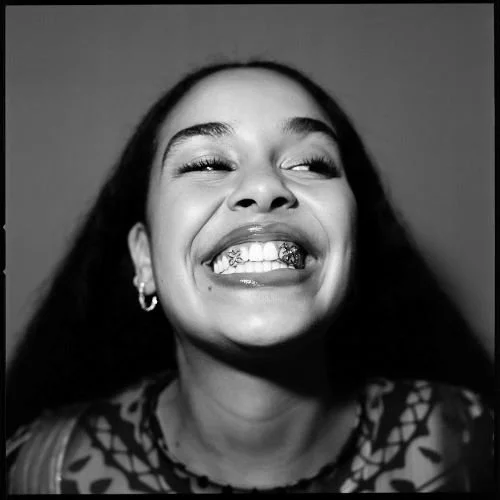
the captivating and simply brilliant Jorja Smith recently, because she was getting a lot of abuse and nasty comments online regarding her body. I wanted to return to that, not as a way of exploiting something quite toxic and personally damaging, but to ask why there is not celebration of body positivity and better attitudes. An issue that mostly affects women in the industry, there are so many degrading and cruel comments posted on social media if a woman has a body shape or size that is not stick-thin or what many perceive as ‘normal’ or ‘desirable’. It is part down to the industry and the way women have been marketed and promoted. We still live in a time when attitudes from the past exist regarding body image and weight. Body positivity is an amazing thing, but it is often met with so much poison and abuse. I have been reminded of it again because, as Smith is promoting her upcoming album, falling or flying, she has been discussing recent online negativity and toxicity – something, as she states, that is pretty hard to get away from. I wanted to start with the huge positives. I think that Jorja Smith’s second album – following 2018’s Lost & Found -, will be a huge success. That debut was nominated for the Mercury Prize, and I think that falling or flying will be in contention next year. Out in September, this album will confirm Smith as one of the music world’s most extraordinary talents. With a voice like nobody else, everyone needs to check out the album! She is this artist that got a lot of attention when she released her earliest singles. She has since put out a steady strong or brilliant music. Growing stronger and more confident with each release we are going to hear a lot more from the Walsall-born treasure.

I do want to get to an interview from The Guardian, where Jorja Smith was talking about her new album. She also mentioned comments she has to read about her weight and body image. In addition to talking about falling or flying and the changes from Lost & Found to now, Smith did spend a moment addressing the negative comments about her body and how she has dealt with it:

When we last spoke, in 2017, she said she would post on Instagram, then close it without endlessly scrolling. What does she make of social media now? “I hate it,” she says – apart from TikTok, which is “a nice place. But Instagram … Someone else is doing my Instagram,” she says, now cross-legged on a sofa in a secondhand Nike T-shirt. “Sometimes, I’ll wish I gave myself a different artist name or something, so at least I could detach myself.” Using her real name for work has made it harder to separate herself from any negative comments. It also means she saw the recent wave of online commentary about her weight, enough of it for her to trend on Twitter for two days.

IN THIS PHOTO: Smith on stage with Stormzy at the O2 Academy, Brixton, in 2018/PHOTO CREDIT: Joseph Okpako/WireImage

Unprompted, she starts to talk about it. “It’s funny, my friend said: ‘I thought you didn’t read comments?’ And I was like” – she puts on a faux-whiney voice – “I don’t, but sometimes it’s like I can’t escape it.” In mid-June, a video was posted on social media of her performing the junglist Nia Archives remix of Little Things – a single that has dovetailed with these hot recent weeks and is heading towards the Top 10 – and joy emanates from it as she winds through the song’s groove. But in the comments, she says: “There’s loads of talk about my weight, which is actually crazy. Because, right, I’m 26. I’m not 18. I’ve never ever been super-skinny – I’ve been slimmer, but I’ve also been younger, and a kid.”

She had already been feeling more aware of how her body has changed. “Coming into the campaign, I felt a bit like, I’ve been busy, I haven’t done as much gym. I am eating healthier, but I was chatting to some friends from school and saying that maybe I’ve gotten to that age where I put on weight a bit more easily now. Things change, don’t they, with your body?” She says she is hard on herself anyway: “I’m like, damn, I feel a bit insecure about it, and now people are commenting on it.” She smiles cheekily. “I have to think: ‘What are they going through?’ No one’s ever said anything in person, never. It’s very interesting”.

Smith, as she has never been super-skinny. She looks amazing and is clearly someone who wants to promote body positive. Healthy and happier than she has ever been seemingly, there is always this view that women in music should be very skinny or conform to some very damaging and prehistoric attitudes. Smith has remained on social media and has not lowered herself to the level or attacking or striking back against those who comment. As she also said, people don’t say anything to her face about her weight. Even so, why would people go there in the first place?! I have written about this before, but so many women in the industry have to read such vile and personal comments about their bodies. From Lizzo to Billie Eilish, so many incredible artists have had to face bullying, judgement, harassment and nastiness relating to the way they look. Jorja Smith is one of the very best artists, and we need her in the industry. Her online presence means she gets to connect with the fans. We do not want a day when she quits social media or pulls back from recording or promoting her music! She is very strong and has this resilience, but it must still get to her too. She looks phenomenal but, and it is a relatively small number, she is the recipient of horrible comments. Like so often is the case, the majority of the poisonous comments are from men.

Attituded definitely need to change. Different body shapes and sizes need to be accepted and celebrated. This weird idea that all women should be really skinny is so outdated and problematic. We have heard stories from female artists in the ‘90s how they were told to be skinny or a certain weight so they could be considered sexy. Gracing magazine cover and music videos, weight and how they looked was a big deal. It is a horrific and controlling pattern that still has some legacy today. Not as problematic as it was, there is an ideal that exists regarding women and their bodies. Not many articles or magazines that celebrate body positivity. Jorja Smith no doubt inspires a lot of women and girls who realise that they can be natural and do not have to confirm with whatever wrapped stereotypes still do the rounds. With every case of an artist feeling defined or criticised because of how they looked, it sends out this very damaging message! How many women follow these stories and feel reluctant to enter music because of what they might face. It is hard enough maintaining a career and making money, without having to answer to trolls and online bullies. Jorja Smith is a legend who is going to keep on delivering wonderful albums. falling or flying is going to score amazing reviews and earn Smith awards. A titanic talent who should be embraced and loved, she – like women throughout the industry – should not have to read comments about their weight. Our music queens are making this industry so much better and more interesting! They should have agency and not feel abused and attacked because of their bodies. Vitally important humans who are giving the world so much, body positivity and changing our attitudes towards women need to change. As much as anything, people really need to…

FOCUS on the music.

FEATURE: sleep at night: Cat Burns and Her ADHD and Autism Spectrum Disorder (ASD) Diagnoses

FEATURE:


sleep at night


Cat Burns and Her ADHD and Autism Spectrum Disorder (ASD) Diagnoses

_________

THE more that artists are open…

and they bravely discuss mental health issues and other illnesses, the more we get an understand of the industry at large and what many artists go through. Many artists have struggled with touring and the demands it places on them. Lewis Capaldi is one of the most recent musicians to do so. He also revealed the struggles of his Tourette’s Syndrome. Other artists have anxieties that mean they cannot tour a lot. It is hard today because there is so much competition for relevantly few gigs and radio playlists. Maybe that feeling that, post-pandemic, there is catching up to do. To get seen and keep a momentum going, so many artists play on through clear struggles and obstacles. The fabulous Cat Burns has been hailed as an immense talent to watch closely. A breakthrough talent who many hope will bring us an album soon, she has recently discussed her ADHD and Autism Spectrum Disorder (ASD) diagnoses. The BBC reports on what the situation is:

If you're a Cat Burns fan, you'll know her lyrics are honest.

It's something she wants to extend to her personal life too - which is why she's opened up about her recent ADHD and autism spectrum disorder (ASD) diagnosis.

The singer tells BBC Newsbeat the diagnosis has left her with a better understanding of herself, saying life now "makes sense".

But like lots of people, Cat's route to being diagnosed wasn't straightforward and she's sharing her story in the hope it helps others.

In 2021, the 23-year-old was told she had ADHD and then in April this year she tweeted to say she had also been diagnosed with ASD.

In the days after her ADHD diagnosis, Cat says she did a lot of reflecting on life leading up to it.

"It was non-stop, thinking about experiences in school like revising and studying and all the other things I struggled with daily," she says.

ADHD affects people's behaviour, resulting in symptoms like restlessness and trouble concentrating.

Although Cat's diagnosis was one step further to understanding herself, she still felt her brain was "different".

"I knew I had ADHD but I still felt there was a difference in my brain that I wanted to understand and explore.

"So once I got my autism diagnosis that helped me understand myself and just how much I've had to do in order to get to where I am."

Cat believes her road to diagnosis was harder because she's a woman and person of colour.

"I think it comes from the research that's out there and the idea lots believe women can't have autism, and then on top of that adults can't have autism," she says.

"It [research] needs to be across the board, but especially with women and black women."

Like most conditions, there are lists of symptoms for ADHD and ASD but Cat says they'll present differently depending on who you are.

One sign of autism is fidgeting, but, she points out, how a black woman fidgets will be different to a white man for example.

"I guess being a black woman, there's certain experiences we have that people won't be able to pick up on.

"For a black girl, it could be taking out her braids and putting them back in or something else to do with her culture that's overlooked."

Another way autism can manifest is a feeling of being overwhelmed when exposed to bright lights or loud noises.

You might think that would make performing difficult, but that's when Cat goes into "auto-pilot".

Many other artists, fans and those in the industry will either have a similar diagnosis or they have symptoms – and Cat Burns’ revelation will get them to get an official diagnosis. It is commendable that she has revealed her ADHD and ASD. I wanted to write about it, as someone who feels very similarly to Cat Burns and it has a big impact on my workload and life in general, it is very encouraging and inspiring to read her words. Of course, she will have to adapt slightly when it comes to gigs. Having recently written about Touring and Mental Health: The Music Industry Manual by Tamsin Embleton, not only is that a very useful and relevant guide for so many right now. I wonder if there is a documentary or podcast that reacts to artists taking time from the stage and revealing illnesses. Time was when many would either live with something like ASD or Tourette’s and that would either be part of their ‘art’ or it would be dismissed. Now, there is healthy conversation about a variety of conditions. That honesty is very brave and refreshing. It also means that many fans who might be similarly affected find the courage to open up. I think that there is perhaps a stigma or pressure cancelling gigs.

Maybe artists feel like they are letting fans down or will lose too much. Actually, I am not sure whether Cat Burns will cancel gigs or take things down a bit. At the very least, she understands her better and it puts a lot of things into context – which, in turn, will affect her career and songwriting (for the better) going forward. If there does need to be dispensations for some artists depending on their illnesses, there is this movement where more are either seeking a diagnosis and/or discussing it with the media. I think there is this ideal or perception that artists power through and do not have vulnerabilities. Everyone wishes Cat Burns well. I think that she is going to be one of our most celebrated and successful artists for years. Burns revealing her ADHD and ASD, I think, gives the listener and wider world a new perspective on her music and lyrics. I don’t know whether her touring will be affected, but there is going to be some impact at the very least. It will be fascinating to see…

WHERE she heads next.

FEATURE: Revisiting... Sabrina Carpenter - emails i can't send

FEATURE:


Revisiting...


Sabrina Carpenter - emails i can't send

_________

WHEN considering…

PHOTO CREDIT: Vince Aung

which album to include in this Revisiting…, I came to an artist that some may not know about. Sabrina Carpenter is one of the most promising voices in Pop music. The Pennsylvania-born sensation released her fifth studio album, emails i can’t send, last year. Whilst it won some acclaim, I am not sure that it is played enough. Plenty of people do not know about the album. That is a shame, as I do not feel it is one for Carpenter’s fanbase solely. There is plenty in there that many people will enjoy. I am going to come to reviews for the album soon enough. Before that, there are interviews that I want to get to. This feels like a debut album. Her first on Island, many noted how emails i can’t send is Sabrina Carpenter at her most honest and personal. The deepest and most realistic portrait of her so far, there is a great importance and weight behind her fifth studio album. Rolling Stone spoke with Carpenter last year. Almost tackling perceptions of herself on the first four albums, emails i can’t send is her telling her own story and looking ahead:

IT’S NOT THAT Sabrina Carpenter was putting up a front in her music before, it’s just that she — a Disney Channel actress since age of 13 — was “programmed” to be confident “till the day I die.” With her new music, Carpenter changes out the Disney-girl chip and lets the unfiltered thoughts in her brain run free, even if it places her in a place to be judged. She’s gotten used to that, anyway.

“I had to fight the urge to do what I normally do — cover it up with confidence — and instead just actually feel those feelings,” Carpenter says of her fifth album, Emails I Can’t Send, out Friday. “The tolerance for bullshit in the last two years really minimized for me.”

She adds, “When you’re younger, it’s a lot easier to let the words and labels that people put on you affect you and become part of who you are. Once you start to rebel against that, it starts to feel a little bit scarier, but also a bit more freeing. That’s why it felt like growing pains the whole time that I was making it.”

Along with facing heartbreak, the new album deals with the perceptions and sometimes-harsh assumptions that she faced after fans made her into a tertiary villain in a Disney-actor love triangle with Olivia Rodrigo and Joshua Bassett.

“Now I’m a homewrecker/I’m a slut/I got death threats…” she sings. “Tell me who I am, ’cause I don’t have a choice/All because I liked a boy.”

The LP, which features singles “Fast Times,” “Skinny Dipping,” and “Vicious,” shows a deeply vulnerable version of the singer confronting her feelings, and coming to terms with the fact that she doesn’t — and never — had control over what people think about her. She feels that her best work comes when she sheds the need to be relatable or fully understood.

“I’m fully aware that even if you try to break it down, really really break it down for people, they still might not understand,” she says.

Most important of all, she’s now seeing things in hindsight, unlike when she dropped her track “Skin” as the Rodrigo-Bassett fire blazed around her in 2021. “I’m not in that exact place anymore,” she says.

“People can say whatever they want to say, but I was lucky to be able to verbalize an experience that some people have been through,” she adds. “Hopefully it has helped them get through their experience with a little bit more strength and understanding. If I can do that, then I don’t have regrets”.

I am going to come to some reviews soon. Before that, Vogue asked Carpenter about emails i can’t send. The radical honesty of it is amazing. With many of the songs written from emails that she was going to send herself; it is no wonder that Rolling Stone voted it one of their favourite albums of last year. Not that Carpenter’s first four albums lacked something personal, but it is clear that we get to know much more about this remarkable artist on her fifth outing. I would urge anyone who has not heard it to give it a listen:

While Emails I Can’t Send is, somewhat remarkably, her fifth album – the first four, which leaned more pop, were all released via Disney’s Hollywood Records, while Emails is her first outing since moving to Island Records early last year – there’s something about it that feels like a new beginning for the musician. As was the case for so many, the pandemic forced a stark reevaluation of what mattered to Carpenter – and when it came to music, that meant tapping into a frankness and candour (mostly the product of writing songs at home alone), as well as a greater sense of autonomy as she shaped the sound and aesthetic of the record.

“One thing that experience did do was that it stripped back a lot of layers of tolerating anything that’s less than real, because I didn’t really have the energy to tolerate anything that was less than genuine and authentic at that time,” she says. (Another factor in Carpenter’s willingness to let down her guard may have been the tabloid maelstrom that followed the release of Olivia Rodrigo’s “Drivers License”, the lyrics of which some interpreted as a response to her ex, fellow Disney actor Joshua Bassett, embarking on a new relationship with Carpenter.)

Where Emails I Can’t Send departs from Carpenter’s heroes from decades past, however, is in its sprinkling of very Gen Z references (from unread texts to lying to your therapist to anonymous online death threats), among more timeless, heart-on-your-sleeve elegies to lost love. It feels like the most fully realised vision of Carpenter the musician – and the most rounded portrait of Carpenter the human being – yet. “I would hope that if someone had never listened to my music before, and they listened to this album, they would leave it feeling like they know me better as a person,” she says.

Here, Carpenter tells Vogue about the unusual writing process for the album, balancing heartbreak with humour, and why she can’t wait to get back on the road and perform live.

When did you start writing the record? Was there a clean break between the songwriting for Singular [Carpenter’s previous album] and Emails I Can’t Send?

I was doing a run on Broadway [in Mean Girls] right before the pandemic, and once the shutdown happened, I sort of went into this mode of... I mean, everybody has their way of coping. Some people were like, I’m not going to do anything for however long, and I’m just going to take this time off for myself and recuperate. But for me, I was like, I’m going to start this process [of writing a new album]. I knew that it would take a long time, because I really wanted to take my time with this project in particular. I signed with a new label in the middle of the pandemic, and I think there’s so much that changes between the ages of 18 to 21, so I knew that this project would be very different. But the process kind of started there. It incorporated a lot of living life as well as it did actually working on the music – I was really writing through everything that I was experiencing.

You’ve said that in some of your previous records, there were aspects of yourself you covered up with confidence, and this record is a lot more confessional. Was there any specific turning point for you where you thought, hey, I’m going to be a bit more candid this time around?

I think I’ve always been someone that likes to change things up, and no project I’ve ever made has been the same as the one before it. But honestly, I feel like the reason I couldn’t write some of those more vulnerable, some of those more insecure, some of those more forward songs before is because I just hadn’t felt those emotions. I think when you’re younger, it’s very easy to see the world and think that you can take it on – you have all the confidence required to do that. And then once you start to get humbled by the world, it’s very easy to be like, oh, never mind, backtrack, backtrack. And that’s where these feelings started to creep in. I was worried for a second that it wasn’t the fully confident pop record that fans who have been following me for a long time might be coming to my music for. I didn’t know what to expect, to be honest, but if anything, I realised that there’s far more strength in vulnerability and insecurities, because they are the emotions that I think we’re all kind of scared to face – even if that doesn’t make them any less real.

PHOTO CREDIT: Vince Aung

How literal was the title? Did any of the lyrics actually originate as emails you couldn’t send?

Yeah, totally. I think the hardest thing for me has always been naming the album. I don’t know why, but I think it’s just the fact that you have so many stories in one place, and you’re expected to slap one word on it. That’s a lot of pressure. When I wrote the actual title track, I was [using] one of the emails that I had written to myself, and I just said out loud: “That’s the name of the album!” Then every song kind of came from that place. Every song came from those emails or messages or whatever my way of coping was at the time. I think it captures a really important time in my life.

How do you decide which aspects of your personal life to include and which to leave out, especially given the intense scrutiny about your lyrics online?

It’s funny, because I look back on songs that I wrote when I was 16 and 17. The first time I ever got sued, I wrote a song called “Sue Me.” Taking personal situations in my life and being able to turn them into art was always a way of healing myself, and also understanding those situations a bit better. And so nothing changed in that sense. I’ve always been writing from that very real place. But I’m also not naïve, and even the songs that are literally about nothing at all, I’m sure people would be able to take all kinds of things from them and run with it, because I think that’s just what people do, they love the dramatics and the theatrics of it all. But personally, I don’t ever write from a place of thinking about people hearing this, and thinking about what they might assume. Otherwise, I don’t think the songs would feel honest. I think that the whole thing behind this album was really to do with me writing those emails. I was never writing emails to myself and thinking about actually sending them, or thinking about what other people would think about them, because I really was just doing it for myself, and it was a way to cope. So I kind of tried to stick with that through the album and just write songs thinking, I can say whatever I want, because no one’s ever gonna hear this. And then, yeah, I’ll just have to throw my phone in the ocean when the album comes out. [Laughs.]

It feels like you really get a fuller picture of your personality on the record, including your sense of humour.

I do think that a lot of the time, as a person, I deflect with humour, so it was only natural that a lot of the things that I was writing about – even some of the most painful moments of my life – were just so stupid, honestly, that it made me laugh. I was able to take these situations that really hurt me and use humour to cope with them. Someone that listened to the album said, “It’s almost like your music is a romantic comedy.” It felt like a weird way to describe it at first, but I guess it makes a lot of sense. I think as a songwriter I do romanticise, but at the same time, those moments of innocence and humour are the moments that I find really special. Most of the time I think, Nobody will find this funny, I’m just doing it for myself. But I think that’s all part of making something that feels a little bit closer to me”.

I am going to get to some reviews. The Indiependent provided their take on one of the most important and memorable albums from last year. Even though it was a chart success in the U.S., it didn’t get the same sort of sales and success in other parts of the world. I think that more people should have snaped up this incredible album. There is no doubt that emails i can’t send is a powerful listening experience:

After a three-year hiatus, Sabrina Carpenter finally hit the send button on her highly-anticipated fifth studio album, emails i can’t send.

As suggested by the American singer-songwriter herself, the 13-track record is her most personal project yet. It invites the listener to take a ride on an emotional roller-coaster, exploring the inner corners of Carpenter’s mind; whereas her previous records Eyes Wide Open, EVOLution, and the two-act Singular exude innocence, self-reliance, and confidence with the occasional melancholic track in-between, emails i can’t open contains grit that simply can’t be matched. It’s a story of Carpenter’s perseverance and a much-needed step towards reclaiming her narrative.

The title track is arguably Carpenter’s best-written album opener to date. “There’s no us in us when I’m lackin’ trust / You wanna discuss, ugh, you disgust me,” she sings from the perspective of a daughter who finds out about her father’s affair; she also elaborates on how such infidelity has negatively impacted her own perception of relationships. In less than two minutes, the song packs a punch that perfectly sets the tone for the rest of the album: raw, multifaceted, and self-reflective.

With the help of fading out piano melodies and a reference to the 1975 musical Chicago, the song smoothly transitions into one of the album’s singles, ‘Vicious’, where Carpenter continues to explore a failed relationship. However, this time it’s her own, which explains the song’s somewhat heated and intense approach (and the sudden 86-to-130 BPM change between the first two tracks).

The album’s third track, ‘Read your Mind’, is almost like a farewell to the dwindling Singular era. It’s upbeat. It’s sassy. It’s got gorgeous vocal layering that Carpenter is known for. But it’ll probably be the only track for the foreseeable future to remind her listeners of the previous project. Even though it contains a fragment of whom Carpenter used to be musically, it also offers a glimpse of what’s yet to come.

The next track, ‘Tornado Warnings’, confirms that. In a rather poetic take on lyricism, Carpenter ignores her significant other’s red flags and then tries to convince herself that she doesn’t… essentially lying to herself, her audience, and the therapist she sings about. Quite ironically, she’s aware of that.

Some things don’t need explanation. And that’s exactly the case with ‘because i liked a boy’, the record’s most straightforward offering lyrically; a sincere narration of the 23-year-old Carpenter’s efforts to navigate public scrutiny. It effortlessly pulls at one’s heartstrings, leaving no room for interpretation, especially when it comes to the song’s double-bridge. And rightfully so, for it’s solely her story to tell.

‘Already Over’ and ‘how many things’ mark the end of the record’s first half. One vastly different from another, they testify to love’s miscellaneous nature. The former of the two contains some of Carpenter’s most paradoxical lyricism yet, with underlying Dolly Parton and Kacey Musgraves influences; “I say I’m done, but I’m still confused / How am I supposed to close the door when I still need the closure?” Carpenter wonders, describing the fragility of a relationship that should’ve ended long ago. The latter, on the other hand, portrays an extremely vulnerable side of her as she opens up about feeling worthless in the eyes of her former lover.

The second half of emails i can’t send swaps the reflective melancholy for playfulness and hopeful nostalgia. The seventh track, ‘bet u wanna’, is certainly one of the project’s biggest standouts, bringing back the bold and daring side of Carpenter’s sound. And this resurfaced confidence bleeds right into the following track, ‘Nonsense’, with sexual innuendos, catchy soundscapes, and raspy-to-silky smooth vocals that attest to the singer’s extreme versatility.

The album’s sentimental lead single and its infectious successor ⁠— ‘skinny dipping’ and ‘Fast Times’ ⁠— further investigate the aftermath of a relationship. In yet another experimental approach to music, Carpenter abandons all formulas and leans into spoken word for ‘skinny dipping’, taking a detour from the radio-friendly songwriting; as confirmed by the artist herself, the single’s oddly-specific verses resemble an awkward encounter with an ex-partner, which further adds to the project’s conceptual undertone. Both of the singles feature instrumental bridges with laid-back, euphonious melodies perfect for the lounge (just like the rest of the album).

Despite the fairly cheerful production, ‘Bad for Business’ embodies one of the most dangerous aspects of love: fixation. “He’s good for my heart but he’s bad for business / Tears me apart when he grants my wishes,” Carpenter sings carelessly, while the song’s lyrics gradually unfold as acceptance of uncontrollably flying into the face of danger. Similarly to ‘Already Over’, this song also seems to be influenced by country music and allows Carpenter to test out brand-new waters, which she does successfully.

Ultimately, the album’s final track, ‘decode’, is a sombre but hopeful conclusion to the 39-minute long record. And this is where Carpenter shines as a songwriter; when she isn’t afraid of letting go and acknowledges the hurt she’s experienced. One of the most beautiful things about this track is how subtly Carpenter takes the base of the first half and then turns it around in the second, giving the story a new allegory; from “I’m so tired / Reread every single undertone” to “I’m so tired / Unpacked every single word you wrote.” Amongst the subtle lyrical changes and heartwarming ambience produced by string instruments, the track ends with an audio clip of two individuals laughing right after Carpenter insists on recording their past selves for the future ahead, without a single clue of what awaits there. And through such an indefinite send-off, emails i can’t send isn’t just a draft anymore. It’s now an open letter to those who are ready to read it, embrace it, and live through it.

Although this is Sabrina Carpenter’s fifth studio album, it could be referred to as her actual debut. It takes on the role of reintroducing the singer to the world, and it does it in the most genuine way possible. It doesn’t sweep hurt under the rug and, in fact, welcomes the cathartic cleanse that can seem like the scariest thing sometimes.

Now, this is where Carpenter’s journey actually begins; 13 of her most personal stories have been sent. Only one question remains: are you ready to press the send button yourself?”.

I will finish off with AllMusic’s take on Sabrina Carpenter’s phenomenal emails i can’t send. One of the best of 2022, do go and seek it out when you can. I don’t think you even need t be a Pop fan to appreciate what Carpenter is saying. It is very accessible and varied. There was a lot of love for it:

The fifth studio album from singer and actress Sabrina Carpenter, 2022's Emails I Can't Send is as charmingly ebullient as it is candid. Her first full-length release since moving to Island Records, the record builds nicely upon the upbeat dance-pop of her early work while also displaying her growing strength and honesty as a songwriter. It also finds her drawing inspiration from the classic singer/songwriter style of artists like Carly Simon and Carole King while fitting well alongside the contemporary work of artists like Conan Gray. Much of the album is loosely conceptualized around emails she wrote to herself. For example, the title track, "Emails I Can't Send," is a yearning piano ballad in which a daughter excoriates her father for his infidelity to her mother. Similarly, "Vicious" is a hooky, acoustic guitar-driven anthem in which Carpenter addresses her quiet anguish over a particularly toxic relationship. More upbeat is "Read Your Mind," in which she ruminates on a wishy-washy lover on a hooky track that evokes the sparkling disco-pop of the Cardigans. With Emails I Can't Send, Carpenter has crafted a record that reflects her emotional maturity five albums into her career, which also feels like a refreshing new start”.

An album that I was keen to spotlight and revisit, Sabrina Carpenter’s emails I can’t send confirms her as one of the best and brightest names in Pop. She actually released emails I can’t send fwd: this year. It contained some extra tracks that added more depth and story to the original album. I am interested to see where she heads for her sixth studio album. Having completed an international tour for the album, I am sure that she has been busy working on new material this year. In the meantime, go and listen to a superb album that ranks alongside…

THE best of last year.

FEATURE: Spotlight: Maeta

FEATURE:


Spotlight


Maeta

_________

I am going to source a couple of…

older interviews before I bring things more up to date promotion-wise. Following the phenomenal 2021 mini-album/E.P. Habits, Maeta (Maeta Hall) produced what I think is one of this year’s best albums: the stunning and unforgettable listening experience that is When I Hear Your Name. In a year – like the past six, seven or eight – that has been dominated by women, there are those mainstream and near-mainstream artists delivering sensational work! There is a plethora of newer female artists that are on the radar or just under it that are mesmeric icons of the future. I think that the staggering Maeta is one to watch. Before getting to interviews and a review of her wonderful new album, here is some biography concerning an American wonder:

Maeta's dreamily seductive take on contemporary R&B incorporates touches of loungey jazz and pop. She first introduced her satiny voice and style on a series of short-form releases culminating with the Kaytranada-produced "Teen Scene" featuring Buddy in 2020. It was included on her Roc Nation debut, the Habits EP, in 2021. Ty Dolla $ign and Lucky Daye were among the guests on her first full-length, 2023's highly collaborative When I Hear Your Name.

Hailing from Indianapolis, Indiana, Maeta Hall posted songs on social media and music-sharing sites as a teenager before moving to Los Angeles in 2019 while in her late teens. Late that year, she released her debut EP, Do Not Disturb, on her own label, Maeta's World Music. The opening track, "Babygirl," made waves, and she next teamed up with Ambré for the collaborative single "Color Blind." Produced by Kaytranada, "Teen Scene" featuring Buddy appeared a few months later in September 2020 and soon garnered millions of streams across platforms. After a featured spot on the James Fauntleroy track "Mistletoe," she followed it with "Toxic" featuring BEAM in March 2021. That recording was executive-produced by Skrillex. Signing with Roc Nation, Maeta returned a month later with the seven-track EP Habits, which contained "Teen Scene" and "Toxic." A set of Habits remixes followed that August, and before the end of the year, Maeta was featured on Tone Stith's single "Something in the Water."

After a relatively slow 2022 that included some festival appearances and the stand-alone single "Frank for You," Maeta came back with even more star power in January 2023, appearing alongside Thundercat on the Vic Mensa track "STRAWBERRY LOUIS VUITTON," following it two months later with her own "S(EX)." The S(EX) EP offered several different mixes, including sped up, slowed down, and instrumental versions. The original edit was among the 13 tracks that comprised her debut album, June 2023's When I Hear Your Name (Roc Nation). In addition to some familiar names from years prior, it included performances by Ty Dolla $ign, Lucky Daye, Free Nationals, and others, and songs or additional writing from the likes of SZA, Demi Lovato, Kehlani, and The-Dream”.

Let’s go back to 2020. This was pre-Habits. I have discovered Maeta’s music in the past year or two, so I have gone back and got a sense of where this stunning young artist got her inspiration; how her music has evolved through the years, and what her ambitions are. Around the time of the Do Not Disturb E.P. (which came out in November 2019), The Young Folks who capitalise her name (though I have seen it mostly written as ‘Maeta’), wanted to know more about this hungry and talented rising artist:

Stop what you’re doing and watch the art that is #MaetaMondays. Honestly, Mondays have been our favorite as of late since R&B artist Maeta started dropping a series of videos based on songs from her debut EP Do Not Disturb. Each video takes you on Maeta’s journey from heartbreak to overcoming the feeling from beginning to end.

#MaetaMondays is not a new concept either. Rooted from her days on SoundCloud, Maeta continues to hold her tradition strong even after captivating the hearts and ears of her growing fanbase week after week. Consider us included in that fanbase. We had a chance to chat with Maeta to talk all about her start in music to even share a few words on her very latest single “Boyfriend.”

The Young Folks: First off, how are you doing in this climate? What are you doing in the meantime through all of this? 

Maeta: Hi! I’m honestly doing pretty well, I’ve been spending a lot of time working on new music, watching movies, taking baths, and anything to waste some time. I started playing sims which is kind of becoming an addiction, so hopefully this ends before it gets bad.

TYF: For those of our readers who are just getting to know you, can you tell us a bit about yourself and how you got your start in music? 

Maeta: I am from Indianapolis, 20 years old, moved to LA when I was 18 and have been working on music since. I’ve been singing since I was 5 and always knew this is what I wanted to do. I have one EP out called Do Not Disturb, and am currently working on a new project!!

TYF: What was the very first song you made? Do you remember what that was like to release it out on the internet for literally anyone to hear? 

Maeta: The first song I ever made was called “Headlights.” I put it out when I was 16 and ended up hating it a year later, so I got it taken off the internet.

TYF: How would you describe your debut EP Do Not Disturb? (LOVE IT, by the way!) 

Maeta: Thank you!!! I started Do Not Disturb when I was 18 and first moved to LA. I was in a darkish place at the time, I had left home and moved here alone and didn’t really have anybody. I think that rubbed off into the EP for sure. The songs are kinda moody, and about different aspects of love. They all helped me get through the loneliness. I will always cherish it!

TYF: Can you tell us a bit about what the process was like for you when putting it together? 

Maeta: It took about 11 months to make, I spent that time working with all different writers and producers, and figuring out what I wanted it to be. I met amazing people and lifelong friends during the process, it was so much fun”.

I am going to move things onto the majestic Habits of 2021. Another confident step from a growing and blossoming artist, I think that this was a point where a lot more attention was coming her way – and you can really see why! I have listened to the E.P., and what strikes me is how eclectic yet personal and individual it is. I think my favourite song on the E.P. is Sending My Love. Whether you categorise a seven-track release as an E.P. or mini-album (technically, I think it falls short of being an album), it is undeniably a hugely impressive work. Maeta was on the radar of FLAUNT. They were curious to dig deeper with an artist making her imprints on the industry:

Maeta is your new favorite Alternative R&B singer, and she’s here to bless the masses with her inner and outer beauty. Hailing from Indianapolis, but now residing in sunny Los Angeles, the singer-songwriter creates heartfelt ballads inspired by real-life experiences, touching on everything from the toxicity in relationships to everyday struggles we all face as we navigate this thing called life.

There are two versions of Maeta: one inspired by Indianapolis and the other inspired by Los Angeles. The former is loud, seeks attention, loves to sing, always has her shoes off, and is wild at heart—while the other version is moody and trying to figure out her life. She speaks on the latter, “I overanalyze things, I fantasize all day. I love food and wine in life. There’s a kid version and grown version.”

Now, the latest Roc Nation signee returns with her newest EP titled Habits, showcasing a more comfortable, confident Maeta than fans have ever seen before. The body of work chronicles the trials and tribulations of adulthood, spearheaded by lead single “Teen Scene” featuring Buddy and produced by Kaytranada. The second single “Toxic” features Beam and is produced by Skrillex.

Flaunt caught up with Maeta via Zoom to discuss her roots in Indiana, biggest influences, moving to Los Angeles, what inspired “Toxic”, working with Kaytranada and Skrillex, her new EP Habits, studio essentials, goals, singing the National Anthem back home, and more!

You’re from Indianapolis, what was the household like growing up?

My household was always wild. My house was the house that everyone was always at. My mom didn’t care, I’d invite people over without telling her. There’s always people at my house. Always had music playing, it was loud. We always had the doors and windows open, we’re running in and out all day. When I was a kid, my dad always had camcorders recording us. We’re always in the spotlight. Indiana was fun, I loved growing up there. I had a very free childhood.

Who were your biggest influences?

Beyoncé of course, Rihanna of course. My parents listened to a lot of John Mayer and The Eagles. I got into R&B because all my friends listened to it in middle school and high school, so it became my thing.

At what point did you realize this music thing was forreal?

My dream of being a singer started at 6 or 7. I didn’t realize I could do it for a living until I was 12 or 13 when I got my first manager and then it became more about business and more serious. I was flying to Atlanta all of the time because that’s where he lived. I’d go there for meetings and record and started making it a serious career.

What have you learned since then?

One thing I’m proud of myself for is never giving up. It can look like there’s no hope, but things always turn around. Never giving up is one thing, staying consistent, which I struggle with. Also trusting myself, that’s been a thing I’ve been working on for a while and I still am. Sometimes, there’s so many people around me. I could get really lonely and tell strangers what I’m going through, and everyone has an opinion. But I’ve learned to keep my mouth shut and trust myself, trust my team. I’m still working on that.

How did you get your name?

Maeta’s my real name. I’m named after my great great grandma from Germany.

You moved to LA two years ago, how is it coming from Indianapolis?

I love It. When I left Indianapolis it was like, “Ooooo LA.” It was this big thing. Now, it feels normal. When I first moved, it was a wake up call. This isn’t what you think it’s going to be, you have to pay rent. I had no friends here. It was really hard at first because I had nobody, I was so so lonely. I was in this toxic relationship. It was really hard but two years later, I finally have friends. I have a lot of my team here, it’s starting to feel like home. I still think I’m not completely my full self here. When I go to Indiana, that’s when I let go and everything’s natural. L.A. is where everything I’m meant to be doing is  happening now.

PHOTO CREDIT: Sam Leviton

What do you like about LA?

First of all music, there are barely any studios in Indiana. I love making music, that all happens here. My whole team is here. I like the chaos, I live downtown. It’s loud, there’s people everywhere. I like that it’s hot, I can go to my rooftop now and tan. That’s what I’ve been doing the past few days. The food’s good. I was in New York for a few weeks, the food’s a lot better there.

What did you like in New York?

Pasta. I got so much pasta, I gained 10 pounds at least. I don’t care, I was eating a lot of pasta and drinking wine. I love taking myself out to dinner. Sometimes in LA it can feel weird, especially when I run into people. In New York I didn’t know many people  so I’d take myself on dates every night. I loved it, it was so fun. I spent way too much money.

What inspired your new EP, Habits?

Habits is about a toxic relationship I was in. It’s a bad habit I have going back to this person that I swear I’m done with. They text me, I immediately started getting ready for any plans. It’s that thing that’s really hard to get over. I’ve been dealing with it for the past two years, that’s what this project is about. It’s about every aspect of the relationship. There’s songs about how much I love this person. There’s songs where I’m mad, I’m so pissed and so over it. There’s song about sex, it’s all aspects”.

Chronologically, I want to work my way to When I Hear Your Name. There is one more interview that I want to come to. There is an interview about the album that incorrectly calls it an ‘E.P.’. At thirteen-tracks, it is 100% an album – and, as E.P. is normally up to about five or six tracks, I am not sure what they were thinking! Anyway, Schön! spoke to the then-twenty-one-year-old Maeta about the awesome Habits. Undoubtedly a brilliant, confident and incredibly rich work, you just know from reading the interview that she has her sights set on taking her music right across the world:

The past decade has seen an electrifying resurgence in alt-R&B. The latest rising starlet on the scene is 21-year-old Indianapolis native Maeta. Recently signed to Roc Nation, she’s crafted a signature sound of crystalline vocals and sultry production. On 30 April the world will get to hear her latest offering Habits. The EP reflects on a toxic relationship and was written while Maeta was in the midst of one. Her lyricism is open, relatable and reminiscent of alt-R&B contemporaries like PARTYNEXTDOOR and Jhené Aiko. Beyond the personal perspective, Maeta’s EP radiates an undeniable tone of hopefulness over pain.

The project’s opening track Teen Scene featuring rapper Buddy and produced by Grammy-winning Kaytranada feels like a balmy summer afternoon. Maeta’s voice is saccharine and silky capturing the warm heartiness that makes R&B female voices so memorable. Her latest single TOXIC is a minimal acoustic number that shows off the crystal notes in Maeta’s vocals.  If you’re craving a new addition to your in my feels playlist, Maeta’s EP Habits is worth exploring.

Congratulations on your record deal with Roc Nation. How did you first get your foot into music?

Thank you! Music has always been a huge part of my life. I’ve been singing since I was little as most singers say. My family had music playing at home all day long. I sang in my church choir [and]  took piano lessons since I was five.

Where did you grow up and how do you think it influenced the type of music you make?

I grew up in Indianapolis, Indiana. A lot of my friends listened to R&B and I was always around it. I think that definitely affected what I listen to and what I always gravitate towards.

You now live in LA. As a young artist what are some of the perks and downfalls of the city?

Yes, I’ve been living there since I was 19 – about two years. As an artist it’s amazing because music is everywhere and most of my team is there. But of course it’s expensive, hard to make friends, especially outside of music. Not having my drivers license, Ubers get expensive! Especially since everything is so spread out.

Do you think creating during a pandemic has helped or hindered your creativity?

I think it hindered [my creativity] to be honest. I feel most inspired when I’m around people so having to isolate was really hard. But I think it stripped me from distractions forcing me to be alone with myself. I found inspiration from that.

Let’s talk about your new EP. What themes do you explore?

My EP Habits is about toxicity and everything that comes with a toxic relationship. I was finding my way through one during the making of this project so it was like therapy for me during that time. I sing about love, anger, sex, and every aspect of it.

How do you feel social media has impacted the way young people navigate relationships?

I think it’s made people become a little lazy in relationships. I feel like all you gotta do is like an old picture to send a sign which can honestly be a plus to people like me who don’t feel like doing all that!

PHOTO CREDIT: Jackie Dimailig

Where do you usually find inspiration for your songs?

Usually from my own experiences. I fall in love so easily and that can often get the best of me which always ends up falling into a song. Everything I sing about on my project I went through.

Is there a song on the EP that feels the most sentimental to you?

The one that feels most sentimental to me is a song called Gift. It’s a song about how much I love the person I’m singing about. I poured my heart into the song while recording it and I feel it every time I listen!

You’ve already collaborated with some amazing talent like Kaytranada and Skrillex. Can you share a few of your dream collabs?

My two dreams are SZA and John Mayer. I love SZA so much now and I grew up listening to John Mayer. If I ever worked with him it would make my family so proud! My dad used to play him in the car every day so he is a big part of my childhood.

Lastly, what do you hope to get out of the rest of 2021?

I hope to just live in the moment! One thing I’m working on is letting go and letting life take me where it does without feeling like I need to control every detail. I think it’s more enjoyable that way!”.

Let’s come to the first of two interviews (I found one more that is useful!) around the breathtaking When I Hear Your Name. Rated R&B, who refer to it is an E.P. as opposed an album (grrrr!), were none the less excited to spotlight one of music’s most truly interesting and inspiring prospects. I would urge anyone not currently following Maeta on social media to give her a follow and check out her latest happenings:

The rising singer is in Washington, D.C., having lunch outside at a restaurant near her hotel. She’s reflecting on her current love story, the driving force behind the music she’s been creating over the last couple of years.

Her new EP, Where I Hear Your Name, out now on Roc Nation Records, continues the trajectory set on Habits. “The project’s about the same person,” Maeta reveals before noting how things have changed since Habits. “We had a couple years of just getting a lot closer.”

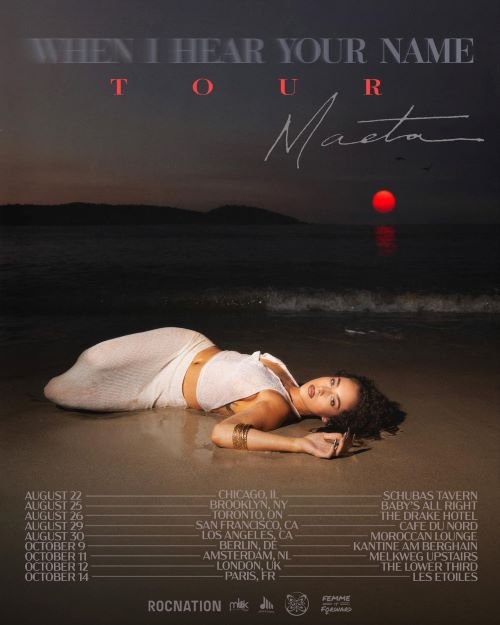
The cover art for When I Hear Your Name shows Maeta, wearing a white knit skirt and top, as she lays languidly on a U.S. Virgin Islands beach during sunset. In the backdrop, a blood moon emerges, possibly symbolizing a profound immersion into Maeta’s emotions that takes place throughout the project.

Maeta chose to shoot the cover in the U.S. Virgin Islands to represent a cherished trip she went on with a love interest that brought a sense of calm to their storm. “We went on this trip to an island and it made us really close. We got to be away from the world, be with each other and be in love,” Maeta reflects.

When I Hear Your Name takes on a noticeably more sensual tone compared to Maeta’s previous works, Habits and her independently released project, Do Not Disturb. Captivating songs like the opener, “Sexual Love,” featuring James Fauntleroy, and the soulful “Though The Night,” featuring Free Nationals (co-written by Lucky Daye), capture intimacy in the bedroom.

“ASMR,” penned by BEAM, is lyrically more explicit than the other two as Maeta finds herself in a heightened state of pleasure with her partner exploring the depths of her treasure trove. “That foreplay got me out my mind,” Maeta sings over a pulsating beat.

There’s enough steam on When I Hear Your Name to loosen up the impurities of Maeta’s complex relationship — and there are certainly songs that echo this sentiment.

On the Ambré-assisted “Control Freak,” Maeta finds herself falling for someone who is showing signs of insecurities: “He can’t see me with nobody better than he / Got a problem with me taking authority.”

Then, there’s “Clarity” featuring Daye, where Maeta sings about receiving mixed signals in her situationship. After calling off their relationship, they move on to “Kissing New People” featuring Ty Dolla $ign.

Despite the excitement surrounding this fresh start, she still feels some type of way about her ex. “I hope you don’t see you around / Can’t let you see how much I miss you,” she sings in “See You Around,” written by The-Dream.

When I Hear Your Name includes additional writing and production support from Ant Clemons, Camper, Demi Lovato, DIXSON, Elijah Blake, Fallon King, KAYTRANADA, Kehlani and more.

In Rated R&B’s interview with Maeta, the rising singer recalls her musical upbringing, guides us through the complexities of When I Hear Your Name and teases future projects.

PHOTO CREDIT: Roc Nation Records

What was your soundtrack growing up?

I’m from Indiana, so it’s like folky, country-ish music. I didn’t listen to a lot of country music, but my family played a lot of soft rock like The Eagles and John Mayer, who I still love to this day. My dad would play random stuff. We would go on a lot of road trips and he’d always pick an album and play it. I remember him playing Corinne Bailey Rae. I got into R&B in middle school and I was like “I love it.” My friends played all R&B like Jazmine Sullivan and Keyshia Cole. I was obsessed with Dondria [and] Alicia Keys. I always knew I wanted to sing since I was a kid and have been working towards that since then.

Now, here you are a singer signed to Roc Nation Records. You dropped your official debut EP, Habits, in 2021 and you’re back with When I Hear Your Name. How would you describe the journey between both projects?

Honestly, the project’s about the same person, but I’ve reached a new level with somebody. Habits was about toxic love. You like somebody, but you guys are messing with other people, and it’s messy. We had a couple of years of just getting a lot closer. We went on this trip to an island, and it made us really close. We got to be away from the world, be with each other and be in love. Our relationship is very complicated but on this trip, nothing mattered. So, I took a lot of inspiration from that trip. [When I Hear Your Name] is about complicated and deeper love. Musically, it’s a lot more advanced. I worked with huge people for this project and pushed myself in ways that I haven’t.

As you mentioned, you worked with a lot of big names on this project, from James Fauntleroy and The-Dream to SZA and Lucky Daye. Was there anything you kept in mind or communicated to the various collaborators to make this project flow cohesively?

Honestly, there was no plan for this project. We knew we wanted to make it more musical. I wanted to sing more. Some of these songs I had before I put out my first project like [“Anybody”] with SZA. I’ve had that for four years. When I got signed, that was one of the first songs I cut. It just never made sense to add it. The-Dream song that I have [“See You Around”] is two years old. I got that before Habits came out. There’s a lot of songs that we had that I knew I wanted to be out one day. It just didn’t make sense. Now it feels right. Once we decided we were working on the project, it kind of molded itself”.

I am going to finish up soon. After great singles like S(E)X were dropped earlier in the year, there was this building tension and curiosity as to what the album would offer up. In June, VIBE spent some time in Maeta’s company and asked about this highly-anticipated and personal album. I think the more you listen to When I Hear Your Name, the more that you get out of it. Even though they too put in their headline that When I Hear Your Name is an E.P., they correct themselves and mention it as an album (seriously, what is wrong with people?!). It may seem nitpicking, but it does need to be clarified that what we got this year was a full-length outing from Maeta:

“The 23-year-old may not be lowkey about her habitual desire to love and be loved, but she’s learning balance and not to aimlessly neglect herself for someone else. Her new EP, When I Hear Your Name, is the next chapter in a four-year romantic saga that loosely began with 2019’s Do Not Disturb.

Maeta and her beau met in the process of her moving to Los Angeles from Indianapolis; she had just signed to Roc Nation. By the time she released her major label debut Habits in 2021, Maeta confessed to being “deep” in the situationship. “This was a bad habit, going back to this person, and it was kind of fun, exciting, toxic as hell,” she explained. “But I would say now, it’s just gotten a lot deeper. This is love. I don’t think Habits had a lot of love in it, but [now] I just feel it 10 times harder.”

As a Pisces sun, Maeta innately romanticizes almost everything and gets lost in a sea of her own daydreaming. With age, she hopes to get more “logical and realistic,” but where’s the fun in that? We caught up with the songbird during a lunch break as she opened up about her muse, what she defines as “disgusting love,” and making her own sound.

VIBE: Going back to the moment when you were praying for the album to come out, what was going through your head as you’re preparing?

Maeta: I feel like with projects, my life is whatever I’m working on, and I think that I’m just ready to move on and just reach a new level or a different place in my life. The project not being out was pulling me back from that. I think once it’s out, it’s going to feel like a weight lifted off my shoulders. These songs [were] the soundtrack of my life for the past two years, I’m just ready to let them go.

When I Hear Your Name sounds very personal. There’s a story behind that.

The project’s about this relationship that I’m in. He’s not my boyfriend, but there’s this person that I just keep going back to. I’ve been going back to them for years, and honestly every project has been about them, but this one just goes more into depth about that relationship and being young and in love and not knowing what you’re doing. And I think that we all have one person that we go back to, and it’s just when I hear your name.

Is the theme about the toxic side of the relationship? The fun side or just every single aspect of that relationship?

Everything. It starts off very passionate, sexual, exciting. Then halfway through, we kind of get a little toxic. We break up for six months, and then it ends with “Through The Night,” which is like, let’s just—f**k it, be in love. It just takes you through the ups and downs, and I think that love is not a textbook thing where there’s an answer for everything. Love is such a crazy feeling, and I don’t think that you choose who you love. I think love just comes in like, boom, I’m here. I keep saying I’m young and in love, but maybe I’ll feel like this for the rest of my life, I don’t know. Does anybody ever figure out what love is? I don’t know, so I’m kind of trying to solve that.

Would you say that this signifies a chapter closing in the relationship, or it’s just something that you had to go through to get to the next step of the relationship?

Honestly, maybe this signified closing? I don’t know. I thought when Habits was over that that was me releasing him, and it didn’t happen. I think I’ll say that I’m releasing him with this project, but I’m definitely not.

Still in thick of it?

Still in the journey. I’m dating elsewhere. I’m not with this person, but when I hear their name, it’s just something about them that I can’t let go of. So I’ve been struggling with it for years, but all I can do is sing about it, honestly.

That’s healing in and of itself, honestly.

Yeah, exactly.

How do you stand out in the midst of everyone sounding and looking the same?

Somebody yesterday said I’m bringing back bridges, which is like, okay, I guess there’s no bridges to talk of anymore. I just have an interesting take, and I take a lot of influences from different places. And I’m from Indiana, so I have that influence. I think that all that together just makes me stand out. What I’m proud of with this project is that I’m not trying to sound like anybody else. I’m making my own sound, but I’m proud of it”.

There are other new interviews that I have not had time and space to source. Ones to Watch were among those keen to have their say about a sultry, sexy, revealing, deep and entrancing musical encounter. When I Hear Your Name is right up there with the best albums of 2023:

“Featuring production from Pharrell and KAYTRANADA and impressive features from the likes of Lucky Daye, Ty Dolla $ign, and Free Nationals, Maeta takes us back to the bare bones of R&B in her sultry love-drenched project, When I Hear Your Name.

Signed to Roc Nation, the Indianapolis native is a promising voice in the genre, using this album as an opportunity to distinguish herself from up-and-coming to fully arrived. Opening with the James Fauntleroy-assisted ballad “Sexual Love,” Maeta wastes no time letting the world know she’s not concerned with feigning humility; she’s a powerful vocalist, and her pen is mighty.

Living at the intersection of pop and soul, When I Hear Your Name doesn’t shy from exploring the depths of a heart brave enough to confront the jagged edges of love, even when it’s accompanied by fleeting bliss. If you’re falling in or out of love, surviving it, or peeking hopefully through its haze, there’s a part of yourself you’ll find in Maeta’s unraveling. She’s a student of love, telling stories of every wrong corner turned.

“S(EX)”, which reimagines Floetry’s “Say Yes,” is a cleverly written story of that one lover stained in your sheets, one you’re not even sure you want to scrub away in the first place. “Cool Cat” pays homage to QUEEN’s original rendition, while the KAYTRANDA-produced “Questions“ is an infectious dance track, yet not at the expense of a narrative riddled with longing and desire. Every song presents a different shade of intimacy, whether at its most potent or painfully fading.

“Through The Night” closes out the album, showcasing Maeta delivering vocals so commanding it’s difficult not to be entranced. In a genre saturated with acts fighting to prove why they’re the most worthy of peering eyes, Maeta has let her talent speak for itself in When I Hear Your Name”.

I think that everyone, regardless of musical tastes, needs to invest some time in the music of the magnificent Maeta! She is a wonder that is going to go on and have a very long and successful career. I hope she comes to the U.K. at some point to hang. There are plenty of folk over here that would jump at the opportunity to witness her on the stage. It looks like she is coming to London on 12th October, so I hope that she returns here maybe next year. Go and spend some time today immersing yourself in the music of…

AN exceptional young artist with a golden future ahead.

__________

Follow Maeta

FEATURE: Sobering: Lucy Spraggan’s Memoir, Process: Finding My Way Through, and the Darker Side of Noughties Celebrity Culture

FEATURE:


Sobering

PHOTO CREDIT: Bonnier Books


Lucy Spraggan’s Memoir, Process: Finding My Way Through, and the Darker Side of Noughties Celebrity Culture

_________

A story that really provoked shock…

and questions recently, Lucy Spraggan has revealed that she was a victim of sexual assault when she was in The X Factor. The reality music show has given the music world some big artists. Even though there is a lot of sensationalism and it is quite ruthless, it has also been a platform for current stars to highlight their brilliance. In today’s scene, it does like a little bit of a queue jump when it comes to making it into the industry – with so many artists struggling to get heard, talent shows are a fast-track that is not always deserved. One of the best artists that has come out of The X Factor is the amazing Lucy Spraggan. The Canterbury-born artist’s revelation in an interview that she was raped during her time on the ITV show led to so many people coming out in support. It was a shocking thing to read. It makes you wonder about safeguarding on talent shows, and whether women especially are protected. On a show where these hopeful artists are looking to crack into the music industry, there is that sense that they can be exploited and taken advantage of. After Spraggan stated she was raped whilst on the show, it is clear that there needs to be changes. People definitely need to explain how this happened and why she was left to cope with it almost on her own! Spraggan’s memoir, Process: Finding My Way Through, explores her time on The X Factor, where she candidly and bravely talks about what happened. You can pre-order the book here. Spragggan has talked about her relationship with alcohol and finding sobriety. After being raped by a hotel party during Rylan Clark's (who has been a great friend and support to her) twenty-fifth birthday at the Mayfair nightclub in 2012, it has obviously had a catastrophic impact on her. She has had to deal with this trauma and process what happened. For years, when asked about her departure from the show – Spraggan said it was due to illness that she left -, she had to cover what happened. Revealing such a huge thing could have had this devastating effect. She has had this successful recording career and, at all stages, this horrific event has not been known. I wonder whether she ever felt secure and comfortable talking to someone on The X Factor about what happened. It seems like there was this culture where the artists were almost seen as commodities. How much personal care and safeguarding happened? You do wonder whether other artists experienced something similar to Lucy Spraggan.

I shall come on to asking what needs to happen going forward. Things that so many people have raised and pointed out in the past day or two. There is an interview from The Guardian that has been highlighted and is causing a lot of discussion. It is shocking to hear what Lucy Spragggan went thorough in 2021. Before that, I wanted to bring in parts of an interview from The Irish Times, where Spraggan was discussing her career and forthcoming album, Balance. This interview was back in April. This was before we knew about what occurred in 2012:

Square peg, round hole. You could see it immediately when Lucy Spraggan stood in front of the judges for the first time for the ninth (2012) edition of The X Factor. In the context of the reality contest, her audition song was also an unconventional choice, an original song no less – Last Night. The judges were charmed if a tad flummoxed – where was the version of an Adele or a Beyoncé song that auditionees usually belted out?

As the first contestant in the show’s history to have had a UK Top 40 single (Last Night) and album (Top Room at the Zoo) before the live shows aired, it was clear that Spraggan had stepped into the wrong lane. She stayed on the show for several more weeks, interspersing original material (Tea and Toast, Mountains) with covers (Maroon 5′s Moves like Jagger, Kanye West’s Gold Digger) but neither her heart nor head were in it and she walked away.

Did she feel that she didn’t match The X Factor’s commercially strategic view of what pop stars should be like? Too right, she did. Was she too niche for such a crowd-pleasing audience? Too right, she was. It is, she admits, a much bigger topic to chat about right now (she goes into it in lengthier detail in her forthcoming memoir, Process), but she says she played the game somewhat more than she might have thought.

“When you go into something like X Factor, the powers of the company that runs it and how you’re treated, the bubble you’re in telling you how it’s your biggest opportunity and how you must do certain things in order to move forward – that’s just the way it is. Looking back, I think I stuck to my guns quite a lot, and as for that square peg, round hole feeling, well, that’s me for the entire time I’ve been in music.” Spraggan’s voice sags a bit here, half-resigned, half-regretful. “But, yes, rolling over in the show? I did that quite a lot.”

Fast forward 10 years, and the songwriter has long since put that experience behind her. She has had other personal issues, of course, but she has rallied in an admirable and instructive way. After steering a course through a separation, and giving up her dependence on alcohol, she has embraced a dedicated health and fitness regime that has, she says, transformed her life.

“When sobriety marched through my front door I discovered a newfound respect for myself, compassion for myself, and the realisation that I enjoy things other than alcohol, other than music. Being sober introduced all of that into my life. Alcohol is a super-easy way to make you feel good – you know, let’s have another one, why not – but when I took that away my body was asking where was it going to get dopamine now? For me, exercise is such a huge part of my life because I’m being nourished with it.”

Spraggan also engaged with therapy, but finding a therapist that worked for her was not straightforward.

 “There are all different kinds of therapists out there and it takes people time to find one that works for them, but as in any relationship – especially in a relationship where you have to share a lot of personal details – they’re not always going to work. The difference between therapists and friends is the level of professionalism.

“Friends and family always try to provide solutions based on what they know about you and what they build their life experiences on, but a good therapist will offer you not necessarily a solution but methods of coping, of thinking, that have been studied for years. They will offer you the ability to reconstruct the way you navigate things, and help you to be less defensive and less reactive, whereas people close to you can often inspire defensiveness and/or reactiveness because they know so much about you!

“For me, therapy is having an entirely different dynamic, a professional dynamic, with somebody. Vulnerability is one of the things that being in therapy has helped me with and to learn about, and that’s been great.”

She also viewed the enforced isolation of the pandemic as generally a positive thing. It afforded her much-needed respite from being an extremely busy touring musician (“it can consume your whole world”) and it enabled her to become much more self-aware (“I hadn’t spent any time doing that”). In turn, her creative development and productivity levels increased.

Since The X Factor, she says, she has been surrounded by the music industry, “which despite being a constant in my life, can be a very lonely place. As with anyone, you use whatever makes you avoid looking at yourself, so when touring was removed I was left with this person – me – and I had to work out exactly who and what I was. As an artist, you can confuse working every single day with being productive, but over the past few years, I have found that real productivity requires you to be a little bit more restrained with your time.”

It helped that during the pandemic she lived in the northern UK countryside “about 30 minutes’ drive from a supermarket, so it was me and lots of fields and trees”. Songs for her forthcoming album, Balance, were written during this enforced period of seclusion and while some might consider them niche there’s little doubt as to their confessional nature.

“They’re all about the development of myself and other stuff I have learned or observed over the years,” she says. One of those observations is that she will persevere through anything. “Longevity in music – or any area, for that matter – doesn’t exist without perseverance, so clinging on to it is crucial. What’s hilarious is that now I think I’m a professional because everybody else thinks I am! However, in reality, I just persist”.

I want to come to the interview from The Guardian. Lucy Spraggan is extremely brave during the interview. Talking about such a hard time must have been hugely emotional but also cathartic in a sense. It is upsetting learning about the effect the rape had on her in terms of her mental health. Fans often asked her why she left The X Factor. She did not want to be defined as ‘that girl’. It is a fascinating interview that I would urge everyone to read:

Having successfully commodified herself for the cameras, Spraggan played her role with gusto. She soon found an ally in another queer contestant, Rylan Clark, and together they revelled in causing mischief – staging unsanctioned breakouts from the luxury London hotel where contestants were holed up, and being papped pretending to flag down a stationary bus after a night out. Their antics attracted welcome press for the show. “We were always told to tell the publicist anything that worried or concerned us,” she writes. “But once you did, as if by magic, it was those stories that ended up being printed [in the tabloids].” Mostly, she writes, it was harmless.

In the fourth week of the live shows, Spraggan and Clark were told by production that they were being kicked out of the hotel, ostensibly for bad behaviour. “I remember thinking, ‘What? We haven’t even done anything!’ Nothing that would’ve warranted being chucked out of the hotel. Rylan is the most polite, respectful person in the world and he tried to get to the bottom of it, and got the impression that it was all helpful to our storyline [for the show].” While the other contestants would remain on a private floor at the Corinthia just off Whitehall, with 24-hour security provided by the show, Spraggan and Clark were exiled to a hotel on Edgware Road.

 PHOTO CREDIT: Laura McCluskey/The Guardian

Soon after, Clark celebrated his 25th birthday at Mayfair nightclub Mahiki. The drinks were free and unlimited, and X Factor crew, journalists and paparazzi were all there to capture the ensuing chaos. “By this stage, I knew my role: get drunk, do something funny, appear in the headlines the next day,” Spraggan writes. Pictures duly appeared of her picking up a beer bottle with her teeth and downing it, hands free. Some of the production team were drinking, too. “It was inappropriate for anybody – including contestants – to be drunk,” she says. “How can you fulfil your duty of care when free alcohol is involved?”

Spraggan ended up passing out. She was escorted back to the hotel by a member of the production team, where a hotel porter offered to help get Spraggan back to her room. As they left, the porter flipped the security latch on her door to prevent it locking behind them. Some time later, Clark checked in on an unconscious Spraggan and made sure that her door was locked when he left. His decision meant that when the porter later returned to Spraggan’s room in order to attack her, he had to use a traceable keycard. “I woke up the next day with this sense of sheer dread,” she says. “I don’t think I’ve ever felt that level of confusion since. I knew that I’d been raped, but I could not process that. So I put my clothes on and went into autopilot.”

Clark was the first person whom Spraggan told about her rape, and he became her fiercest advocate (they remain friends today). The police were called by the production team, who took Spraggan to a specialist unit. An arrest was quickly made thanks to the keycard, but she believes that the production team was “unprepared” to deal with what had happened.

Spraggan’s mother recalls standing in the street outside a restaurant when a member of the production team informed her over the phone that her daughter had been raped. The news was quickly leaked to the press, Spraggan believes by the Met police. Her right to anonymity prevented her from being named, and cyber experts were employed to delete rumours circulating on Twitter and comment sections. During her attacker’s trial the next year, the gallery was full of journalists, but reports referred obliquely to a “television star”.

PHOTO CREDIT: Laura McCluskey/The Guardian

The few days after the assault passed in a blur, and the side-effects of Pep (Pep – post-exposure prophylaxis – a drug that, if taken within 72 hours of exposure, prevents HIV) made Spraggan too unwell to consider continuing with the competition. She remembers being initially sequestered in a room on the 11th floor of the Park Lane Hilton. “That evening, I had to relentlessly shake away the constant pull to go towards the balcony doors,” she writes. “‘All of this could go away so quickly,’ I thought.”

Initially, Spraggan wanted to make public the reason for her exit from the competition. “At first I said, ‘Just tell them what happened.’ But I realised straight away that it wasn’t going to be so simple. I remember various people saying, ‘You have your whole career ahead of you and you can’t retract this.’” [Independent privacy and criminal lawyers, and the police, advised her of the implications of deciding to waive her anonymity.]

Tulisa Contostavlos, the X Factor judge assigned to mentor Spraggan, paid her a visit. In the book, Spraggan writes that, “I was grateful that she’d come to see me, but I felt like I had no independent advice.” Contostavlos said how sorry she was, before telling her: “This will stay with you for the rest of your life.” I’m curious to know whether Spraggan interpreted her comment to mean that the trauma would stay with her (as with any survivor), or that speaking out would mar her career? “I got the impression that she was saying that it would be a stain. But I don’t know if she was regurgitating something someone else had told her to say. I had no idea until I started writing the book that she was only a couple of years older than me. It was fucking inappropriate that she was called into that situation.” [A representative for Contostavlos told us that she visited Spraggan of her own accord and was “referring to the trauma Lucy would personally feel”.]

These days, Spraggan works hard to maintain her mental health. “People say, ‘Is it your sobriety?’ But my sobriety is me, it’s my choices. Once you feel worthy, you see things for what they are. You see success for what it is, because it’s so subjective. At one point, success for me meant getting out of bed. Then it was playing Glastonbury. Now it’s being a lesbian succeeding in the music industry. I’m really happy with the things I’ve achieved, and I have to attribute my successes to me. I’m not just ‘that girl’.” She lives in Manchester with her girlfriend and her dog – “Eve and Steve” – although she’s eyeing a move to the countryside. In August, she will release her seventh album, and will support Robbie Williams on his next tour.

More than anything, she wants to make sure other contestants are offered more support. “I have no interest in tearing anything down. Rebuilding myself taught me that the most powerful thing you can do is build. My goal is for the introduction of an industry standard where reality-production companies take a percentage of their budget and deposit that into a mental health pension scheme that production staff, presenters and contestants can access for the rest of their lives.” As well as Flack, she refers to Sophie Gradon and Mike Thalassitis, two Love Island contestants who killed themselves after appearing on the show, and Steve Dymond, a guest on The Jeremy Kyle Show, who also took his own life. “Let’s put some more preventive measures in place to stop this happening. Let’s stop people dying, let’s stop people being raped. I’m an expert in being a reality TV contestant and having a shit time. So if anybody would like to have a conversation about positive change based on my negative experience – let’s do it”.

Whilst it was unprecedented and there was no ideal way for The X Factor to deal with this, you wonder whether they were thinking more of their ratings and the smoothness of the production, rather than connecting and empathising with Spraggan as a person! Maybe feeling like she was partying too hard or was showing a lack of discipline, it is horrible to imagine what was going through her mind in the direct aftermath of the rape. She was on the show to showcase her songwriting talent and originality. Someone who wanted to go further in the industry and connect with people around the world. Talent shows were there to provide this opportunity, but you get the feeling that there was not a great human element. No sufficient measures to ensure that the contestants are kept safe and there is that duty of care. It is the aftercare that seemed to be lacking. Whether an artist was struggling with a mental health issue or had suffered an attack, was there a team in place to ensure that that person was taken seriously and taken care of?! It seems like Spraggen had to shoulder so much herself. At a precarious time when she did want to take he music further but also had to think about her own wellbeing, at such a young age, she was processing something life-changing and traumatic. It is obviously not her fault of The X Factor that the rape happened, but there is that feeling she was let down. In the years since, Spraggan has rebuilt and gone through recovery, though it is a pain that never goes away. From finding sobriety to divorce from her wife, one of our finest artists has had some challenges and huge life changes. The strength she has shown to discuss her experiences will open doors and conversations. I do think we will hear from other reality show contestants who have either been through something similar or have experienced a trauma.

Music talent shows are still on our screens, so it is going to be hugely important that Lucy Spraggan’s words resonate and lead to change. To ensure that there is aftercare and that there is more focus and priority on the people rather than the process and production. Lucy Spraggan prepares for Process: Finding My Way Through to hit the shelves. You can read an extract here. There will be new music coming soon too. It is a big time in her career. There has been a lot of support and sympathy for her online since she revealed what happened to her in 2012. There has also been a lot of anger at The X Factor and reality shows in general. How Spraggan only feels comfortable (enough) discussing her rape over a decade on from the event. The fact that was suicidal and had addiction issues is sobering and shocking in equal measures. We are thankful she is with us still and will inspire others. It shouldn’t have come to the point where she was only able to talk about her trauma so far down the road. There needed to be that network and safe space directly after the event. Wherever support was implemented for the show, it doesn’t feel sufficient. The fear she wouldn’t be believed or that the press would blow the story up and that would be the end of her career – before it had even really started. On Thursday, one of the most important music memoirs in years hits the shelves. Process: Finding My Way Through sounds like it will be…

A phenomenally powerful read.

FEATURE: In Harmony: Why the Music Industry Needs to React to the Writers Strikes in the U.S.

FEATURE:


In Harmony

PHOTO CREDIT: Freepik


Why the Music Industry Needs to React to the Writers Strikes in the U.S.

_________

THINGS are very difficult…

 IN THIS PHOTO: Earlier this year, RAYE spoke out about how songwriters are underpaid and deserve better respect/PHOTO CREDIT: Callum Walker Hutchinson for British Vogue

and changeable in the entertainment industry in the U.S. That sounds rather vague and understated! Whereas writers were striking before, they have been joined by actors. It seems that television and film are going to massively impacted in the short-term. It will have big ramifications when it comes to new films and T.V. shows. The BBC reported on the latest developments:

Jason Sudeikis, Susan Sarandon and thousands of other actors have joined screenwriters for Hollywood's biggest strike in more than six decades.

Actors will not appear in films or even promote movies during the stoppage.

Major films in production including the Avatar and Gladiator sequels may be affected by the shutdown.

The actors are joining writers who walked out in May, concerned about pay, working conditions and the industry's use of artificial intelligence (AI).

Brian Cox, the lead actor on HBO's Succession, told the BBC the strike could last "until the end of the year".

"The whole streaming thing has shifted the paradigm," the Scottish star told BBC Newscast.

"They are trying to freeze us out and beat us into the ground, because there's a lot of money to be made in streaming and the desire is not to share it with the writers or the performers."

Talks for a new contract with studios and streaming giants broke down on Thursday, with the Screen Actors Guild (SAG) accusing the Alliance of Motion Picture and Television Producers (AMPTP) of being "unwilling to offer a fair deal".

About 160,000 performers stopped work at midnight, joining the 11,500 members of the Writers Guild of America (WGA), who walked out on 2 May.

By noon on Friday, union members and their supporters had gathered outside the offices of major studios and streaming services in Los Angeles, New York and other cities.

The demonstrations have received support from some of the biggest celebrities in the movie and television business, including the stars of the upcoming Oppenheimer movie, who walked off the red carpet on Thursday night.

The two guilds want studios and streaming services to offer better pay, increased royalties, higher contributions to their pension and health plans, and safeguards on the use of AI in the industry.

Productions likely to be affected include sequels to the Avatar, Deadpool and Gladiator franchises, as well as upcoming seasons of shows such as Stranger Things, Family Guy and The Simpsons.

Red-carpet premieres, promotional interviews, and events including the Emmys and Comic-Con, have already been halted, rescheduled or scaled back.

The strike action is driven in part by an uncomfortable transition to the era of digital streaming, as well as by broader technological changes.

"AI will affect everybody," Academy Award winner Susan Sarandon told the BBC from a picket line in New York.

"There's definitely always been the feeling that if it isn't solved now, how do we ever solve it in the future?" she said.

"If you don't have the foresight to put something in place for the future, then you're screwed. It's clear that nothing is going to change from the top down, it's going to be up to us at the bottom."

Both writers and actors have complained that they make far less money than they used to make and that contracts have been undercut by inflation.

For actors, pay for individual roles has declined, forcing them to seek several more roles to make the same amount of money as they did a few years ago.

Writing contracts have become shorter and more perilous, with payment often not included for writers' work on revisions or new material.

"We are being victimised by a very greedy entity," Fran Drescher, the current SAG president, said on Thursday. "I am shocked by the way the people that we have been in business with are treating us."

PHOTO CREDIT: Frederic J Brown/AFP/Getty Images

The failed negotiations between the unions and the AMPTP marks the first tandem strike in the industry since 1960. The last actors' strike, in 1980, lasted 10 weeks.

A third union, the Directors Guild of America (DGA), is not participating in the strike after successfully negotiating its own contract in June, but the group has said it "strongly supports" those who are picketing.

With the prospect that the strike could roll on for months, cinemas could face problems, and viewers may be left with nothing new to watch bar reality TV and live sport.

In a statement on Friday, the White House said President Joe Biden "believes all workers - including actors - deserve fair pay and benefits".

"The President supports workers' right to strike and hopes the parties can reach a mutually beneficial agreement," spokeswoman Robyn Patterson said.

Actors represented by SAG's sister union in the UK - Equity - must continue to work as normal, due to UK employment laws. That includes stars of HBO's House of the Dragon.

The union has however told US companies it will be keeping a "very close eye" on any attempts to move US productions to the UK”.

I have seen so many posts around the U.S. strikes and why there needs to be reaction in the U.K. when it comes to music. Maybe not just here. Actors are supporting writers and their rights. Making sure they get their dues and are heard. There is not really anything like that in music. There are not the same movements and unity. Whether it was the lack of #MeToo movement in music or anything else that has appeared in Hollywood and brought about change, it has not been mirrored in music. I think that the strikes in entertainment show that there is this anger and need for improvement. There is so much going on in music that needs to lead to strikes and unity. A.I. is taking over. In terms of imposing and being too dominating, A.I. is a real concern. There is this thing and feeling that it is going to have a negative impact. It is useful in terms of its technological brilliance. It can be a real advantage and asset for songwriters and producers. Unfortunately, there is a nervousness that replicated songs are taking over. Artists are being mimicked and impersonated by A.I. That feeling that people won’t tell the difference or we are going to get this tsunami of fake songs and A.I.-led sounds. A.I. can never really sound exactly like a human voice, as it does not have the same depth, layers and nuance. There is no telling right now how damaging and dominant this trend could be. Away from that, there are a lot of issues impacting songwriters. Not only are many artists being underpaid, and streaming sites like Spotify still do not compensate them properly. There is also an issue of royalties for many American songwriters. This article explains more:

If you love songwriters and hate the many ways songwriters are underpaid, paid slowly, or not paid at all, please read the following: There is between $700-$800 million of mechanical-royalty income related to songs that were streamed between 2018 and 2022 that has not been paid — and there is no guidance on when it will.

Why? Eyes down.

The Mechanical Licensing Collective (“MLC”) is an organization responsible for receiving mechanical royalties from streaming services, matching the royalties for songs to the appropriate songwriters, and distributing that income to songwriters and publishing companies accordingly. The MLC is currently holding $373 million dollars in mechanical royalty income for songs streamed between 2018 and 2022.

In simplest terms, the MLC can’t distribute this money because the mechanical royalty rate for that period still has not been finalized.

The statutory rate for mechanical royalties is set every five years by the Copyright Royalty Board (“CRB”). This rate hadn’t moved very much in decades; however, in a 2018 proceeding before the CRB that is known (anachronistically) as Phonorecords III, songwriters and publishers finally received an increase to the compulsory mechanical royalty rate, from 11.4% to 15.1%, for the 2018-2022 period. Four streaming services appealed this decision, causing a long and expensive back-and-forth in the courts. Finally, in July of 2022, the increased rate was preliminarily upheld — the decision was heralded as a long-awaited win to songwriters. In addition to the royalties held by the MLC, if these preliminary rate increases are finalized, streaming services will owe hundreds of millions in royalty payments to songwriters for those past periods.

In total, finalizing the Phonorecords III rates could lead to additional payments of up to $700-800 million in royalties.

Unfortunately, it has been a hollow victory for songwriters thus far. For the monies to be released, the CRB must publish a final determination on the mechanical royalty rate for the 2018 to 2022 period. Once it is set, streaming services will have six months to report and pay the MLC additional royalty payments based on the increased rate. The CRB, presumably dealing with other important matters, has still not issued its final determination.  Obviously, this is frustrating, but it is especially painful in a time of economic uncertainty and heightened inflation. Mechanical royalties are a critical source of revenue for songwriters, particularly as streaming has become the dominant format for music distribution”.

 PHOTO CREDIT: Marcela Alessandra/Pexels

That is really the tip of the iceberg. There would not be a single strike or campaign in the industry. It is the case that songwriters and producers are not as heard and represented as artists. Not that there is this deliberate division between them. You do not really see producers and songwriters compensation and spotlighted as much. They contribute to these incredible songs and albums’ success, but they are not compensated and highlighted enough. From being underpaid to not being nominated and seen as award ceremonies, you do feel like there needs to be a moment when there is this real commitment to change. I have seen social media and read about so many artists feeling we need this strike and Hollywood-style coming-together when there is this change. As I say, there has not really been a #MeToo movement in music like there was in Hollywood. Because there is inequality and this discrepancy between artists and songwriters/producers, a fear of A.I.’s role and future potential and so many other things that need to be addressed. The Hollywood strike might go on until the end of the year. Let’s hope that it leads to change. We do need something similar in music. I know the industry is a lot larger than the acting one, but there could be this connection and protest. We have come to a time when technology is actually having a negative effect. From A.I. trying to replace humans to the way steamed music pays so little to artists, right through to how songwriters are owed so much compensation, what is going to happen? We can talk and write about it, yet there does need to be something bigger and more active. At a time when Hollywood is seeing this revolution, the music industry needs…

 IN THIS PHOTO: Some Hollywood writers have brought levity to their signs on the WGA's picket lines/PHOTO CREDIT: Frederick J. Brown/AFP via Getty Images

TO follow suit.

FEATURE: Major Feelings: Saluting the Incredible Rina Sawayama

FEATURE:


Major Feelings

PHOTO CREDIT: Olivia Lifungula for The New York Times 


Saluting the Incredible Rina Sawayama

_________

I will end with a playlist…

PHOTO CREDIT: Han Yang for Who What Wear

featuring some of her best songs, as the amazing Rina Sawayama celebrates her birthday on 16th August. There are a few reasons why I want to discuss Rina Sawayama. In addition to it being her birthday soon, she has made the music news recently. One big reason is that she has called out another artist on the Dirty Hit label, Matty Healy. The 1975 lead is not short of controversy. This is not the first time that Sawayama has taken a shot against Healy. Here is a history of their changing relationship. It is clear that, whilst Matty Healy has some musical influence and has been important when it comes to the career of artists like Rina Sawayama, he is someone who needs to be taken to task. With so many different controversies surrounding him, he is still seen in the media as a bit of a hero. Not many articles take against him or ask him to explain himself. Since he was exposed for making racist and sexist comments he has, rather weakly, said he will change – that he is not that same person as he was then. I don’t think many people believe that for a second! There is a lot about him that is quite unsettling. Whilst many do love the music of The 1975 and they are a very popular band, how many high-profile artists like Healy are challenged and punished for their problems and controversies?! Rina Sawayama recently called out Healy again during a recent performance:

During her Glastonbury performance, Rina Sawayama took a moment before playing her song "STFU" to address controversial comments that Matty Healy had recently made.

“I wrote this next song because I was sick and tired of microaggressions," she said. "So, tonight, this song goes out to a white man who watches [pornography series] Ghetto Gaggers and mocks Asian people on a podcast. He also owns my masters. I’ve had enough."

In a fan-captured video during their performance at TRNSMT Festival on Sunday (9 July), in the part of The 1975's set where Healy begins to say something controversial before being cut off by his bandmates, he appeared to acknowledge Sawayama's video.

Towards the end of "STFU", with the intro of Limp Bizkit's "Break Stuff" playing in the background, Sawayama spoke out against Healy for the second time.

“So I was thinking a lot about apologies. It’s just funny how some people get away with not apologising ever, for saying some racist shit, for saying some sexist shit... Why don’t you apologise for once in your life without making it about your fucking self?”.

Not that this applies only to male artists, but there is a certain leeway applied to them if they are accused or racism, sexism or misogyny. Whilst there is plenty of judgment and attack against Healy on social media, there is not a huge amount of condemnation from the industry. Not too many other artists calling him out. That seems a shame! Not that he is being protected but, as a famous artist, is there this sense that he is untouchable and is just being a Rock star?! That is just his way, isn’t it?! He is this rebel and outspoken figure, so what does it matter if he does a few things that raise eyebrows?! This does seem to be such a casual attitude from many. I don’t think it should take a labelmate like Rina Sawayama to almost stand alone in the industry in challenging Healy. There are other artists around at the moment who are equally unpleasant and offensive. It annoys me how it is always women who have to challenge and speak about male artists’ offenses and prejudices. There does seem to be more awareness from male artists and other men in the industry – even if there have been a few that have come out and spoke against Matty Healy. Rather than make this all about one musical minnow, I wanted to celebrate Rina Sawayama. She is an amazing and inspiring artist who, in 2020, was excluded from the Mercury Prize shortlist and BRIT nominations for her debut, SAWAYAMA. The rules have now changed, so that artists who have been a resident in the U.K. for five years or more, even if they are not a British citizen, are eligible.

That means, I think, that artists such as BC Camplight are eligible for Mercury inclusion. I hope that he is, but I am not 100% sure about how long Brian Christinzio has resided in Manchester. I suspect that it is more than five years now. He would be eligible (“2.1 Artists must be of British or Irish nationality. Artists are considered to be of British or Irish nationality if (i) they hold a passport for either the United Kingdom or Ireland and/or were born in the United Kingdom or Ireland (“British” or “Irish” respectively) or (ii) they have been permanently resident in the United Kingdom or Ireland for more than 5 years”). I now need to revise my Mercury predictions list, as BC Camplight’s The Last Rotation of Earth would be eligible and worthy. Whereas Rina Sawayama was excluded in 2020, she is obviously eligible now. I think that her second album, Hold the Girl, is going to be one of the dozen shortlisted. It is surely going to be one of the favourites if it makes the list! One of the best albums of last year, it confirmed that she is one of our very best artists. I wanted to highlight her amazing work. Hold the Girl is an album that you really do need. I want to quote a review for that album, before getting to a recent interview. This is what CLASH said about the awe-inspiring Hold the Girl:

Rina Sawayama is an artist consistently pushing the boundaries of what pop music can be, blending a myriad of styles from hyperpop to nu-metal, all while juggling collaborations with everyone from Elton John to Charli XCX. Debut album, 2020’s ‘SAWAYAMA’, encapsulated this genre-fluid ideology and was executed extremely well. Critical acclaim ensued, among Mercury Prize dramata. 2022 delivers (the dreaded) sophomore LP ‘Hold The Girl’, which is once again an album that refuses to play by the rules and has Rina Sawayama doing whatever she wants. And the result is one of the best pop records of the year.

‘Hold The Girl’ ignites with sombre opener ‘Minor Feelings’, which shows Sawayama crooning over delicate guitars and synths, before exploding into an anti-climax. No loud drums or screaming guitars solos like we’ve become familiar with (see debut opener ‘Dynasty’), but a choral-tinted outro (very of the time). It transitions into the title track ‘Hold the Girl’ via some fountain sounds, and the title track has Sawayama kicking the pop factor to one hundred. Centred around a 2-step rhythm and classic garage vocal chops, Sawayama blazes through some of her best vocal performances to date and the track delivers hooks galore. ‘This Hell’ also delivers infectious hooks and is clearly a track created for a live environment.

While Rina Sawayama continues to rule as Dirty Hit’s pop princess, she is also refusing to do only that. Cuts like ‘Catch Me In The Air’ and ‘Forgiveness’ lean more into soft and pop rock territory, without ever losing her pop polish. ‘Forgiveness’, especially, crashes into a raucous breakdown, balancing delightful theatrics with crunchy guitars and synthesisers. Contrastingly, she also knows how to write a great ballad. ‘Send My Love To John’ is the token ‘slow song’ on the record but supplies arguably Rina Sawayama’s best studio vocal performance ever. ‘Send My Love’ balances folky guitars, and has some amazing riffing work vocally from Sawayama. The Cohen-esque melody lifts adds a nostalgic element, an unexpected but welcomed juxtaposition to the high-intensity modern sounds of the rest of the record.

Closer ‘To Be Alive’ seems to a track that is bridging the gap between hyperpop and mainstream pop – an event that many have been awaiting. The melodies are inherently pop, but the glitchy and beautifully jarring aspects of the beat tease the realms of hyperpop. The sporadic snare hits toward the back end of the track are reminiscent of the late SOPHIE’s incredible work, and the plucky synths wouldn’t be out of place on a PC Music project.

‘Hold The Girl’ is a record that holds something for everyone. Rock riffs, club beats, saccharine melodies, 2000s pop… it truly covers a lot of ground. Like debut record ‘SAWAYAMA’, this sophomore LP does a bit of everything, but this time around feels more refined, consistent and polished: exactly what a follow up should be. And on a label roster saturated with enormous amounts of talent, Rina Sawayama is making a pretty good claim to being the ruler.

9/10”.

For their July Issue, British Vogue caught up with Rina Sawayama. Not only did she get the BRITs and Mercury Prize to change their rules about eligibility. She has always opened doors for other queer Asian artist. A definite role model and inspiration for so many people out there. Ahead of a possible Mercury nomination on 27th July (and her birthday next month), we need to celebrate this incredible artist:

Since blasting down pop fans’ doors with her breakout 2017 EP, Rina – an exhilarating blend of bubblegum melodies, industrial guitars and lyrics charting the anxieties of online life – Sawayama has established herself as part of a new generation of pop stars reshaping the industry model to fit their own Mugler-clad mould. (So much so, in fact, she convinced the Brit Awards and Mercury Prize to change an arcane set of rules that excluded her, as a Japanese citizen but a near lifelong British resident, and others like her from competing.)

Next came her debut album, Sawayama, in 2020, which received overwhelming critical acclaim – oh, and led to a much-deserved Brit nomination in 2021. “Everything was so exciting,” she recalls of her head-spinning ascent, which saw her return to live shows after the pandemic to play venues 10 times the size as before, decked out in avant-garde cowboy gear and kaleidoscopic Vivienne Westwood bodysuits.

“When the world started to open up, everyone just did everything they could – with work, with their social lives… I went full force.” That also included a role in John Wick: Chapter 4, opposite Keanu Reeves, a collaboration with self-confessed superfan Elton John and taking her chopped-and-screwed Y2K style all the way to the front rows of Schiaparelli and Balenciaga at Paris Fashion Week. (“In my day-to-day life, I could honestly just have a capsule wardrobe and I’d be happy,” she says of her style. “But on stage, I’m all about the gag.”)

It’s not surprising, then, that she began to hit a wall while promoting her second record, Hold the Girl, last autumn. “I think I did over a hundred interviews, almost,” she says of the lead up to the album, which charted more personal terrain, including the re-parenting therapy she’d recently undergone to address childhood trauma. “It was not OK. I was just saying the same shit over and over – and when you repeat the same thing, even if you’re saying it in different ways, you start muddying what the actual record means to you.”

When I meet Sawayama, at a west London café, however, she’s feeling upbeat: perhaps because she’s been spending her time a million miles away from the flurry of stages and red carpets that have defined her year so far. “I’ve mostly been in Wickes,” she says, describing her latest obsession – powerwashing her deck – over a plate of potato waffles. “I’m a DIY girl now.”

The time she’s been able to spend with her tight-knit circle of queer friends during this current two-month break, she explains, has been especially grounding. While Sawayama came out as bisexual to that same group upon graduating from the University of Cambridge – “Having them, my chosen family, and being able to express myself… my body and my mind, was like, I feel safe to come out now,” she remembers – it was the release of her 2018 single “Cherry”, a butterflies-in-stomach ode to infatuation, that saw her introduce herself as pansexual to the wider world. “It doesn’t really matter what your gender expression is to me,” she explains of the term, adding that her understanding of it was prompted, in part, by close friends coming out as nonbinary. “Because it’s a new-ish term, people are still coming to grips with what it exactly means – but if I’m attracted to you, then that’s it, really.”

The weight of expectation placed on Sawayama as one of the few queer Asian musicians in the public eye has come to feel like less of a minefield than it once was too – a shift she describes as “freeing”. “Now, I don’t really think about it,” she says. “Although recently some guy I met in the music industry in America said, ‘You should be getting more commercial opportunities, because you tick so many diversity boxes.’ And I was like…” Sawayama pauses between a bite of waffle to pull a bemused side-eye.

“We’re still not where I want to be, but I think even since I started in music there’s so much more representation now,” she continues, reeling off a list that includes Parasite and Squid Game. “Seeing Blackpink headline Coachella… I could not have imagined that as a teenager – it’s huge. It’s nice to not have that pressure and just enjoy all the art that Asian people are making”.

From calling out a labelmate in need whose opinions and disgraces need to be put under the microscope, to a phenomenal second studio album, to the way she has inspired change and progress in the industry, the stunning Rina Sawayama should be treasured and cherished! Mixing the high-octane and thrilling with intimacy and personality, there are few out there like her. The phenomenal Rina Sawayama is definitely…

A modern icon.

FEATURE: The Digital Mixtape: Mick Jagger at Eighty: The Best of The Rolling Stones

FEATURE:


The Digital Mixtape


Mick Jagger at Eighty: The Best of The Rolling Stones

_________

ON 26th July…

 IN THIS PHOTO: Mick Jagger photographed in 1964 by David Bailey

one of music’s icons turns eighty. There are few band leads as mesmeric, influential, legendary and enduring as Mick Jagger. As the voice of The Rolling Stones, he has been delivering such electric and brilliant music for over sixty years. As he is eighty very soon, I wanted to do a few features around that. I will start off with a playlist of the best cuts from The Rolling Stones. Before I get there, AllMusic gives us some details and biography regarding the sensational Mick Jagger:

As the lead singer for the Rolling Stones, Mick Jagger virtually invented the concept of the rock & roll frontman. Taking his cues from soul singers, bluesmen, and Elvis Presley, Jagger crafted a magnetic, carnal persona that retained its charisma even after it was mimicked and expanded by countless singers who followed in his footsteps. He may have been surrounded by disciples, but Jagger never left the spotlight, touring with the Rolling Stones until he was in his seventies. Unlike his lifelong collaborator Keith Richards, Jagger always seemed eager to explore territory outside of the Stones, releasing a solo single called "Memo from Turner" in 1970 and launching a full-fledged solo career in 1985, 21 years after the band's debut. When he released She's the Boss, it appeared that the Stones may have been approaching the end of their career, but it soon transpired that Jagger's solo career would run concurrently with that of the band's. Over the ensuing decades, he released a string of solo albums and formed a supergroup called SuperHeavy with David A. Stewart, and while none of these projects commanded the attention that the Rolling Stones achieved, they nevertheless showcased a restless talent with an interest in pop, dance, and world music.

Mick Jagger met Keith Richards when they were attending the Dartford Maypole County Primary School as children. They met again as teenagers in 1960, discovering they shared a love of American blues, rock & roll, and R&B. At the time, Jagger was a student at the London School of Economics and was playing with a London band called Little Boy Blue and the Blue Boys. Within two years, Jagger and Richards had formed the Rolling Stones. During the course of the '60s, the Stones were the only rock & roll band to rival the popularity of the Beatles. In the process, they cultivated an image as the most dangerous band in rock & roll, a status that was confirmed not only by the band's reckless, decadent behavior, but also by Jagger's lyrical obsessions with sex and violence.

In the early '70s, Jagger began to break away from the group. He had become the most famous member of the Stones, partially due to his role as the band's lead singer, but also due to his immersion in the jet-set lifestyle, where he became a familiar figure in New York art circles and Hollywood. Jagger began acting toward the end of the '60s, first in the Australian film Ned Kelly and then in Performance, which contained his most celebrated performance. After his brief foray into film, Jagger concentrated on singing with the Stones and being a celebrity, appearing in mainstream gossip columns as frequently as music publications.

During the early '80s, Jagger and Richards conflicted over the musical direction of the band. Jagger wanted to move the band in a more pop and dance-oriented direction while Richards wanted to stay true to the band's rock & roll and blues roots. By 1984, Jagger had begun recording a solo album where he pursued a more mainstream, dance-inflected pop direction. The resulting album, She's the Boss, was released in 1985. Jagger filmed a number of state-of-the-art videos for the album, which all received heavy airplay from MTV, helping propel the record's first single, "Just Another Night," to number 12 and the album to platinum status. "Lucky in Love," the second single from the album, wasn't quite as successful, just scraping the bottom of the Top 40. In the summer of 1985, Jagger and David Bowie recorded a cover of Martha & the Vandellas' "Dancing in the Street" for the Live Aid organization. The single peaked at number seven on the U.S. pop charts; all the proceeds from its sale were donated to Live Aid.

Around the same time that the Rolling Stones released their 1986 album, Dirty Work, Jagger released the theme song from the movie Ruthless People as a single (it peaked at number 51) and told Richards that the Stones would not tour to support Dirty Work. For the next few years, Jagger and Richards barely spoke to each other and sniped at one another in the press. During this time, Jagger tried to make his solo career as successful as the Rolling Stones, pouring all of his energy into his second solo album, 1987's Primitive Cool. Although the album received stronger reviews than She's the Boss, only one of the singles -- "Let's Work" -- scraped the bottom of the Top 40 and the record didn't go gold.

Following the commercial failure of Primitive Cool, Jagger returned to the fold of the Rolling Stones in 1989, recording, releasing, and touring behind the Steel Wheels album. Steel Wheels was a massively successful venture, and after the tour was completed, the Stones entered a slow period, where each of the members pursued solo projects. Jagger recorded his next solo album with Rick Rubin, who had previously worked with the Beastie Boys and Red Hot Chili Peppers. The resulting Wandering Spirit was released in 1993 and received the strongest reviews of any of Jagger's solo efforts. The album entered the U.S. charts at number 11 and went gold the year it was released. A year after the arrival of Wandering Spirit, the Stones reunited for Voodoo Lounge, supporting the album with another extensive international tour. The Stones repeated this pattern with 1997's Bridges to Babylon before entering a quiet phase.

Jagger welcomed in the 21st century with 2001's Goddess in the Doorway, his fourth solo album; despite a glowing review from Rolling Stone, it failed to generate much attention. The Rolling Stones celebrated their 40th anniversary in 2002 with the compilation Forty Licks and an accompanying tour, then Jagger turned his attention to collaborating with Dave Stewart for songs for the 2004 remake of the classic 1966 Michael Caine film Alfie. Mick duetted with Joss Stone on Alfie, thereby laying the ground work for the Jagger, Stewart, and Stone supergroup SuperHeavy, which also featured A.R. Rahman and Damian Marley. SuperHeavy would release their lone album in 2011, and during the gap between that eponymous record and Alfie, Jagger kept himself busy through his film production company and with Stones projects, including the release of a new album called A Bigger Bang in 2005 and a number of tours. Following the Stones' 2016 blues album, Blue & Lonesome, Jagger returned his attention to his solo career for the first time in 16 years”.

To celebrate a huge birthday for one of the all-time greats, I have assembled a playlist featuring the best of The Rolling Stones. You will know most of these songs – though there may be a few that surprise you. Whether you are a fan of the band or not, it is hard deny the impact Mick Jagger has had on music. Still inspiring artists to this day, I know that fans will come together on 26th July to mark his eightieth. Still touring with The Rolling Stones, there is no slowing this titan! Long may we see him on the stage! I know there have been whispers the band are working on their twenty-fourth studio album (which would follow 2016’s Blue & Lonesome). I think we all hope that The Rolling Stones bring us…

SOME new music soon.

FEATURE: Watching Her With Them… Looking Ahead to Kate Bush's Before the Dawn at Nine

FEATURE:


Watching Her With Them…


Looking Ahead to Kate Bush’s Before the Dawn at Nine

_________

I find it hard to believe…

 PHOTO CREDIT: NME/Getty Images

that this time next year, we will be looking ahead to the tenth anniversary of Kate Bush’s Before the Dawn! Her only live residency, she performed a series of twenty-two days at Hammersmith’s Eventim Apollo. The same venue where she performed several dates of The Tour of Life in 1979, it was the first time Bush returned to a large-scale live commitment – a gap of thirty-five years no less! I am going to drop in some details I have sourced before, but I wanted to react to that live extravaganza and return all these years later. Unfortunately, it was an event I did not attend. I could not get a ticket before all the date sold out. It is one of my biggest regrets! I can remember, back in March 2014, the excitement that was felt when Kate Bush announced that she would be taking to the stage:

Announced on 21 March 2014, Before The Dawn was the first set of live dates by Kate Bush since the Tour Of Life in 1979. Originally, 15 live dates were announced. A pre-sale ticket allocation took place on 26 March for fans who had signed up to her website in previous months (and years). After this pre-sale, a further seven dates were added due to the high demand. Tickets went on sale to the general public on 28 March and most of them were sold out within 15 minutes. All dates took place at the Eventim Apollo in London (UK). The tour was a critical and commercial success, with all shows sold out.

Before The Dawn was a multi-media performance involving standard rock music performance, dancers, puppets, shadows, maskwork, conceptual staging, 3D animation and an illusionist. Bush spent three days in a flotation tank for filmed scenes that were played during the performance and featured dialogue written by novelist David Mitchell. Also involved with the production were Adrian Noble, former artistic director and chief executive of the Royal Shakespeare Company, lighting designer Mark Henderson and Italian Shadows Theatre company Controluce Teatro d'Ombre. The illusionist was Paul Kieve, the puppeteer Basil Twist, the movement director Sian Williams and the designer Dick Bird. The video and projection design was by Jon Driscoll”.

Given the title, Before the Dawn, I guess you could have guessed the concept would unite Hounds of Love’s The Ninth Wave and Aerial’s A Sky of Honey. Both conceptual suites, the former came out in 1985; the latter arrived in 2005. Joining these songs cycles that occurred twenty years apart, The Ninth Wave takes us from the night darkness to the dawn. A woman that is adrift at sea and perilously close to death, the does she survive question has been a hot debate. In the show and on the album, the heroine is rescued – though there are clues and lyrics suggestion she drowned and was seeing herself from above the world. A Sky of Honey is the second disc of Aerial. Going through the course of an entire summer’s day, that idea of the dawn being represented and important in two different ways is striking. Whereas The Ninth Wave is turbulent, haunting and occasionally beautiful and heavenly, A Sky of Honey is calming, set in nature and inspiring. Before moving onto thoughts about the anniversary next month and some thoughts regarding Kate Bush’s live future, there are a couple more things I want to drop in. Going back to the Kate Bush Encyclopedia:

Band

The band playing with Kate Bush on stage consisted of David Rhodes (guitar), Friðrik Karlsson (guitar, bouzouki, charango), John Giblin (bass guitar, double bass), Jon Carin (keyboards, guitar, vocals, programming), Kevin McAlea (keyboards, accordion, uilleann pipes). Omar Hakim (drums), Mino Cinélu (percussion). Backing vocalists were Sandra Marvin, Jacqui DuBois, Jo Servi, Bob Harms and Albert McIntosh. Some actors were involved as well: Ben Thompson played Lord of the Waves, Stuart Angell played Lord of the Waves and the painter's apprentice, Christian Jenner played the blackbird's spirit, Jo Servi played witchfinder and Albert McIntosh appeared as painter. Supporting actors were Sean Myatt, Richard Booth, Emily Cooper, Lane Paul Stewart and Charlotte Williams.

PHOTO CREDIT: Ken McKay

Set list

Act 1

Introduction

Lily

Hounds Of Love

Joanni

Top Of The City

Running Up That Hill

King Of The Mountain

The Ninth Wave

And Dream Of Sheep (video)

Under Ice

Waking The Witch

Watching You Without Me

Jig Of Life

Hello Earth

The Morning Fog

Act 2

A Sky Of Honey

Prelude

Prologue

An Architect's Dream

The Painter's Link

Sunset

Aerial Tal

Somewhere In Between

Tawny Moon (lead vocals by Albert McIntosh)

Nocturn

Aerial

Encore

Among Angels

Cloudbusting”.

On 26th August, 2014, DIY were among those who gave their thoughts about the majestic, theatrical, epic and applauded Before the Dawn. It is clear that everyone who was part of the twenty-two shows will never forget that experience:

While you try to catch your breath and reorganise your sense of reality after three hours of an astonishing, immersive and utterly singular show, the one thing that instantly becomes apparent through the mist is that Kate Bush is not one to cede to your run-of-the-mill expectations.

The whole night feels unreal and unravels in a dreamlike fashion – even attempting to put it into words here it seems to dissolve on the screen. That’s not just because of the feverish speculation that came before the show or the fact that Bush hasn’t performed in concert since 1979, but also because whatever your hopes or anticipations for this show – one of the most eagerly awaited pop performances in history – Bush turns them on their head and pours them away in an avalanche of artistic contrariness and outlandish theatre which sees the stage filled with a wooden mannequin, fish skeletons, sheets billowing like waves, a preacher, a giant machine that hovers above the audience pounding like a helicopter as well as lighthouses and living rooms, axes and chainsaws.

Yet through all the theatrics and artistry one thing remains constant, and it’s the thing that shines through the most: the rush of humanity that ties all the ideas together; the one thing that takes Bush to that other place. It’s the innate heart that pulses through all this theatre and all these ideas: the simple truths of love, hope and family life that hold all her ideas together.

‘I feel your warmth,’ she says appreciatively as the crowd passionately cheer and clap her every move and gesture. And it’s her shy but generous smile at the response from the crowd which shows exactly what this means to her.

PHOTO CREDIT: NME/Getty Images

This is the weight of 35 years being lifted – thrown off with the skilfulness and heart that shows Kate Bush is no ‘mythic’ artist but a very real, supremely talented original. Tonight is an unequivocal demonstration that she’s a one-off: only she has the ambition, nerve and imagination to pull off the ideas that had filled her mind.

Yet at first it seems she’s going to play it pretty straight. Barefoot and dressed in elegant black, she strolls around the stage gently, occasionally twirling. It begins with ‘Lily’ as she leads a small group of backing singers that includes her son Bertie (who, she says, has given her the “courage” to return to the stage). The band that line up behind her are as tight as you would imagine. They play ‘Hounds Of Love’ and ‘Running Up That Hill’. They sound huge, they sound brilliant. If there’s one thing you notice most it’s that her voice is remarkably powerful and it’s brilliant on ‘King Of The Mountain’ which brings the opening ‘scene’ to a close, heralding a storm as a bullroarer fills the air and cannons fill the theatre with confetti.

It’s now time for the drama of ‘The Ninth Wave’, the second half of ‘Hounds of Love’. Here we see a story of resignation and resurrection played out in the most theatrical of ways. We see Bush in a lifejacket floating in water, looking up at the camera as if waiting to be rescued (she’s reported to have spent three days in a flotation tank at Pinewood Studios to create the special effects). At one point fish skeletons dance across the waves, at another a helicopter searches the crowd, before a living room (yes, a living room) floats across the stage in which a son and his father – played by Bertie and Bush’s husband Danny McIntosh – talk at length about sausages.

It’s hard to comprehend exactly what’s happening but the band skilfully navigate the pastoral prog and Celtic rock. Even when the music isn’t captivating, the sheer sense of spectacle means you can’t avert your eyes for a second. As the ‘The Morning Fog’ brings the performance to a close with another standing ovation.

After a twenty minute interval – during which time the bars buzz with delirium – the third act sees her play out ‘Sky of Honey’, the entire second half of ‘Aerial’. It’s so intricately detailed that you get the feeling Bush had always planned to perform these two scenes live.

‘Honey’ is a grandiose daydream moving through a summer’s day. Again the scope of her vision is immense – even when the songs don’t enthral the enormous paper planes and human birds do, as we see a wooden mannequin finding himself lost and alone. Bertie plays a major part throughout dressed as a 19th-century artist – and at one point telling the mannequin to “piss off”. It ends, as only it could, with Bush gaining wings and flying.

She returns to earth to perform a solo version of ‘Among Angels’ on the piano, before the band return to help close the show with a joyful ‘Cloudbusting’. “I just know that something good is going to happen”, she sings as a now even more euphoric crowd jump to their feet.

Then she’s gone. You’re left with the image of a singer who has managed to retain her mystery and surprise. An enigma, the mythic artist who is intensely human. It’s overblown and preposterous and brilliant. All its startling achievements, magical highs and am dram faults – its relentless ambition and human imperfections – make it the only document you could possibly have asked for from such a unique artist. Before the Dawn is everything you would expect but couldn’t imagine”.

 PHOTO CREDIT: NME/Getty Images

There are a few thoughts I had. One relates to books and podcasts about the night. I have not seen either. Whilst the live album provides you with some of the spectacle and atmosphere of being in attendance in Hammersmith, I guess it can’t replace the feeling of being there. Kate Bush spoke with Matt Everitt for BBC Radio 6 Music in 2016 (when the live album was released). She put a lot of time and effort into mixing and producing the album. That 2016 interview was the last time we heard Bush in a promotional audio interview until last year – when she spoke with Woman’s Hour about the success of Running Up That Hill (A Deal with God). I wonder if there will be a book or podcast about Before the Dawn. Thoughts and reactions from people who were there. Including many famous faces, it would be awesome to hear them all compiled in a podcast. I think the same could be said of a book. Combining photos, and introduction maybe from Bush, we’d have the build-up and background, the reviews and performances, sketches about the stage and concept, in addition to a conclusion. That would be very popular, as next year is ten years since Bush brought us Before the Dawn. It is a pity that not that much has been done regarding Before the Dawn and its impact. Someone could tie it back to 1979 and mention The Tour of Life. I think there would be a lot of people keen to read and hear more about a phenomenal residency.

I wonder, above all, what this nine-year-gap means in terms of Bush and her next steps. I have speculated we may get news soon of an eleventh studio album. She always surprises us, so you can never predict what will come and when. Was Before the Dawn her live farewell? I guess the scale and effort involved mounting the production could not easily be repeated. Bush is sixty-five on 30th July, so maybe she doesn’t have the same impetus and energy as she might have done a decade ago. That said, Madonna is taking her Celebration Tour on the road soon. She has recently been hospitalise, though the sixty-four-year-old will be on the stage very soon. You can never totally rule out further livre work, though it is unlikely she will do another residency. Anything where she performs live would be a blessing. I can see a few songs being performed from Abbey Road Studios. I have mooted this before. I do feel, rather than look back at Before the Dawn wistfully, there should be projects about it coming to light. Immortalising this wonderful and unexpected event. In August 2014, Kate Bush fans flocked to the Eventim Apollo to catch the icon on the big stage. Even though the show has been filmed and there is a DVD, we might never get to see it. I hope more is explored and exposed from the awe-inspiring Kate Bush. She proved that there are few performers as incredible as her. Wha a vision she brought to the stage! For that reason, ahead of its ninth anniversary, we need to explore further…

THE stunning Before the Dawn.

FEATURE: A Modern-Day Icon: Recognising the Brilliant Broadcaster and Free Your Mind Label

FEATURE:


A Modern-Day Icon


Recognising the Brilliant Broadcaster and Free Your Mind Label

_________

ONE of the finest and most important…

voices in broadcasting belongs to Arielle Free. As presenter of the essential Radio 1’s Future Artists, she is part of this vital group of tastemaker broadcaster introducing us to the finest talent of the future. Alongside her station-mate Clara Amfo, Free lets us know about the sounds that we need in our life. The most interesting and innovative rising artists around. There have been some recent changes at BBC Radio 1. Arielle Free used to present Early Breakfast, but that has been shifted. One of the reasons that I am writing about her is that I think she is on the cusp of getting a huge presenting role. Having shown her value and incredible talent at BBC Radio 1, of course she will continue there, but I see her going to another station like BBC Radio 6 Music or Apple’s Music 1 schedule. A huge reason why I tuned into BBC Radio 1, she has this wonderful future ahead. In March, she peddled across the U.K. in a gruelling challenge to raise money for Red Nose Day. It was an amazing challenge that raised a load of money! Born in Stirling, Scotland, Arielle Free is a major talent who is a successful artist and D.J. I have recently posted a feature asking why there is not another music T.V. show to sit alongside Later… with Jools Holland. I think that Free would make an excellent co-presenter on a new format. She has that passion for music that is infectious and undeniable. I did feature her relatively recently but, since there have been developments and things I missed out, I wanted to return. I shall come to her music label soon enough.

Before getting there, there are some interviews that I want to bring in. You might not know about Arielle Free and where she has come from. Undoubtably a modern broadcasting icon, I think she has so many years ahead. Big success and huge shows. An extraordinary producer, Free spoke with Headliner last year about an exciting new single:

Esteemed BBC Radio 1 DJ, presenter and now producer Arielle Free chats to Headliner about her recently released debut single, Soul Full, featuring Joe Killington with Mortimer via Defected’s D4 DANCE label, and her excitement about returning to the stage for some big festival sets this summer…

Despite only just starting her music production journey during the first UK lockdown, Arielle Free’s trajectory from radio DJ to beatmaker is one that makes a whole lot of sense.

Released on Defected’s D4 DANCE label, Soul Full is a big, unapologetically fun, soulful house number that is sure to get feet tapping – a track that its creator likes to think all generations can enjoy. But how does Free feel about kicking off her career as a full-fledged producer?

“It’s a bit weird,” she responds. “Because when I first started dabbling, I felt like I was hitting my head off a brick wall. I was using Ableton at the time, and then a friend recommended I try Logic, which I just got a lot better at and allowed me to learn more. I was working with my friend who works for Community Music, an organisation based in Brady Arts Centre on Brick Lane, and I was really lucky because I used to do pirate radio in that building…

“I did a few lessons online, and I was put in touch with an amazing mixer in Bristol who I went to learn with in the studio. We soon started a little project, and by the end of day we had Soul Full, just without the vocals.”

When it came to finding someone to sing on the track, Free had just the person in mind.

 “I love Joe Killington, and he’d just done vocals for the Disciples track Solid Gold, so I slid into his DMs and he was up for it!” she recalls excitedly. “Rather than getting a deep, gravelly vocal like on Solid Gold [she proceeds to give an excellent impression of this lyric], he actually sent me more of a falsetto vocal with a house/disco edge. It just took the track to another level.”

Soul Full has received a lot of love on the radio, and although you’re unlikely to find Free on any kind of underground lineup, “I’ve never been one of the cool kids”, she’s accepted that she works best sticking to what she knows and loves: big, uplifting vocal house and disco numbers.

“I'm learning so much and getting such lovely feedback from my peers and friends [including Calvin Harris!], so I feel really blessed,” she continues. “I think the track helps people, who’ve maybe never seen one of my DJ sets, to understand what they should expect from my gigs.

“I'm a big percussion fan, and I like to lean towards latin house and sometimes afro house vibes, but I also really enjoy vocals leading me down a path. It's been great to get those muscles working again.”

Around five or six years ago, things were quite different for the palpably ambitious producer; she would host her own radio shows every week for no pay and with hardly any break in an attempt to build her online audience. Testament that natural talent and hard work quite often pays off, she eventually found herself working the early morning slot on BBC Radio 1.

“During covid I went down to just one live show, we got a pre-recorded show for Saturday, and I lost my Sunday show completely, but I was really lucky that I worked within the BBC because we really became a public service during that time,” she laments. “It really showed me how valuable it was to people's lives. In the morning, our listeners used to be the straight through crews; delivery people, people on their way to the airport for their holidays, and those who had been out clubbing. We almost lost that audience entirely, and gained listeners who were up in the early morning who were anxious, or maybe were sitting on their own terrified of what this thing was, that none of us knew about at the time.

“Keeping everyone company and making things entertaining for people to provide a bit of a distraction, and then coming out of that feeling more united and hopeful was a real journey. It felt like we really needed the listeners as much as the listeners needed us.”

Already in-demand on the live circuit with her own label and club night, ‘Free Your Mind’, Free reveals that things are starting to move when it comes to festivals this summer. Her Parklife journey has been one of the particular highlights so far.

“I played one of the smaller tents a few years ago, and that’s where you learn resilience and gain an understanding of what you should play in a festival environment when it could be pouring with rain and there’s headliners you’re competing with,” she says. “This year is the first time I’ve actually made it onto the artwork of a festival bill.

“I’m also playing One Out which is one I've always wanted to be on, and that's alongside my pal Chloé Robinson – we've never been at a festival together on the same bill so I’m buzzing for that. I've got all these ambitions for places that I want to play, so I'm really hoping that 2022 is just another year of going to cool places far and wide, including Ibiza…” she trails off with anticipation.

Free is currently working on getting a sample cleared in time for her next summer track, and is also working on the follow up to Soul Full, “which is a wicked sample of an old ‘60s track, and is very me,” she says. “I’m also excited to put out more tracks on my label, because we put a bit of a pause on that, but now everything's set up”.

I have not really seen or heard an extensive interview with Arielle Free. She has achieved so much, and she has such a versatile career. Surely, it must only be a matter of time before we get this deep dive into the life and times of an amazing broadcaster, D.J., producer, T.V. presenter and hugely influential and inspiring person! Sunday Post interviewed Free last year:

So, it’s a case of choosing a job you love and you’ll never work a day in your life?

I love being on the radio, I love DJing and I love music, so I think I’m really fortunate. I know how much of a privilege it is to be my position, where I can broadcast and DJ on the radio and gig all weekend. It hasn’t felt like hard work. There’s been occasions where I’ve been tired, but I just look forward to the next one.

Your remix of Gorgon City’s Tell Me It’s True is out this month. How did that come about?

Amazon are doing this amazing series where they get DJs to remix other DJs and producers they have always really aspired to or idolised. I’ve been the biggest fan of Gorgon City, so it’s been just a total privilege. Tell Me It’s True is a song I fell in love with from the album Olympia, and I’ve given myself a bit of a reputation for loving it.

PHOTO CREDIT: ITV

Is it true your vocals are on the record, too?

Yes! I couldn’t find the “woops” that I wanted to highlight points within the track, so my friend helped to record me doing them!

You supported Calvin Harris at Hampden Park in July – was that a career highlight?

It was pretty surreal as Hampden is huge. When I did Glastonbury this year, I was in a tent with the crowd pretty much on top of me, it was so electric, amazing – I knew instantly that gig had gone well. But because Hampden is so big when I came off stage, I couldn’t tell. It wasn’t until people tagged me in videos after and I saw the sea of people that I knew they had enjoyed it.

It was also so special as I was able to invite my whole family along. Having my grandpa come and witness what I do on a daily basis, in Hampden, was really huge because he’s a big football fan. He couldn’t believe that I was playing in Scotland’s national stadium!

You also host Love Island: The Morning, the official podcast. Can we expect you back for the winter series in January?

I don’t know, actually – but I hope so! We had a really nice summer spending eight weeks together on the show. It was a really great series, so I’m keen to see what the winter one is going to be like, whether it’s going to be in South Africa and who is going to be hosting”.

Apologies for shifting around a bit in terms of subjects but, before I get to one of the big reasons for writing this feature, I want to mention Free’s incredible D.J. work. It takes her around the world however, she is a bit of a legend on Ibiza. DJ Mag profiled Arielle Free last year and asked her about her experiences and time on the island:

Future Rave is currently one of the biggest nights on the island, how did you get your residency there?

“Last year, when there were still restrictions in place, Ushuaïa were doing a thing called Palmarama, and it was tables only. At that point you could dance at your tables, but you weren't allowed to mix and whatnot. It was their way of trying to open up in some capacity. I was invited out to play for David — it was me, Riton and him. Riton was running a bit late and I played for about two-and-a-half hours, and my set went really well. I was only meant to play for an hour-and-a-half I think. And honestly, for this I will forever be grateful to the Ushuaïa family, the staff fed back to the booker on how they loved my set and how good I was, and they told me that I had really impressed the staff and that they would like to book me. Word got back to David, and here we are.”

What advice do you have for other up and coming DJs to land a slot like this?

“I really wish I knew the answer to that. I think it's just being in the right place at the right time, or just constantly playing to the best of your ability. Hustle — I think just taking those opportunities that are given to you. And you do have to do that thing, say hello and thank you to everyone you speak to. You really do have to make the most of the opportunities that you are given, regardless of if you are playing to 50 people or 6,000 people, and going out of your way to say how much fun you had. You've got to really stand out by giving the most of your time and seizing the big opportunities that you find yourself in.”

How have the nights been going?

“It is a brand-new night on the island, we are there for 18 weeks every Friday. Friday night in Ibiza is a really busy night on the island, you’ve got Marco Carola’s Music On, Trick at DC-10, Amnesia also — we’ve been fortunate as to how good the crowds have been.”

 What are your favourite nights on the island?

"If you ask me what is one of my favourite nights in Ibiza, I have to say Glitterbox at Hï. It has to be one of the most amazing nights on the island — the detail that goes into it, nothing beats it for me. There's the mix of the disco and the classics, and also you get the harder stuff in the second room — and the dancers and the spectacle. It’s such a visual experience as well as a sonic experience. I love it. I mean, not just because of the production levels — visually it blows my mind. They change it every week. This is what blows my mind, the fact that they change the production every week. Every week they’ve added something to the visuals, they do something different that is just going to make it pop even more. It's just a huge production. I'm impressed by it all. I mean, I know I do sound like I'm shouting up Hï, but they blow my mind every time with the production — and not just at Glitterbox, at the other nights as well. They really put so much into it.”

What would be the perfect weekend in Ibiza for you?

“Okay. We're landing. I don’t know, say Thursday, shall we say I dive straight into the club? What happened Thursday? I mean, you’ve done Tale of Us, which is huge and an experience like no other. Then it is Friday morning, you want to get up, get out to the beach, go for a nice swim in that gorgeous ocean. Soak up all the energy. Get ready, maybe treat yourself to a nice dinner or something like that late Friday evening.

“I've recently discovered Terra Masia, which is like a farm to table experience — just beautiful. I’m a big fan of actually just doing the classic Cafe Mambo sunset, and dinner and drinks. Afterwards, then you’ve got to get yourself down to Future Rave, obviously. If you've got time before maybe pop into Calvin Harris at Ushuaïa, because it's such a huge show and the production levels blow my mind.

“Then on Saturday you’ll be a wee bit hungover, so feel like you just need to have a pool day. Get yourself some jamon flavoured Raffles, and some Fanta lemon and lots of fizzy water, agua con gas, then dive into Ants late in the afternoon when it's not too hot, and get yourself dancing. If you do have some energy, you can always pop into Black Coffee if you wanted. Then there’s the Sunday, you want to get yourself down to Bora Bora beach, and then you're going to go into Glitterbox because Glitterbox is the only way to wind up the Ibiza experience. When I say you need to have your energy for Glitterbox, you will need to have your energy because you'll go thinking, ‘I'm probably not going to make it because everyone's burst by the time they get to Sunday’. But no. There you are and you're alive, it is one of the most thriving, most wonderful sensational experiences on the island. And if you are still there on Monday night, maybe pop in to see Danny Howard at Amnesia.

"I mean, it's going to cost you a fortune, but if you can do, go down the street and grab yourself some discount tickets from the promotional teams — that will help. You've got to do the full Ibiza clubbing experience as much as you can, especially if it's your first time — you’ve got to dive right in. Oh, and if you do get a chance, you've obviously got to pop into Pike’s for a little cheeky cocktail, because Pike's cocktails are absolutely delicious”.

I am going to round things up soon. I would suggest you check out this brilliant playlist Free suggested recently. Her Free Your Mind label is a home and haven for the best uplifting new House and cuts. I can see this label expanding and having a big impact on the scene. There is also her Free Your Mind  club. Olivia Stock from DJ Mag spotlighted Free and an amazing new single, Technicolour Kenny, where she joined Jake Shears. It is clear that the BBC Radio 1 legend is breaking out into the world and has this phenomenal future ahead:

BBC R1’s Arielle Free has teamed up with Jake Shears for a new single, ‘Technicolour Kenny’, released via her new house imprint, Free Your Mind. Listen to it below.

The single, which samples Kenny Loggins 1977 track ‘I Believe In Love’ and features vocals from Scissor Sisters’ Jake Shears, is the first release on the new label. Described as a “massive slice of summery disco house”, the track sees the BBC Radio 1 Dance and R1 Early Breakfast host venture further into the world of production.

Speaking on the origins of the tune, Free said: “Technicolour’ was the first track I ever made. I fell in love with the original after hearing it on a US Radio station on the way to my brother's wedding. It samples a Kenny Loggins track, the yacht rock radio station my car was stuck on played it THREE times and every time I heard it, I thought this would make an unbelievable dance track!”

The Glaswegian creative force made her producer debut in 2022 with a string of highly collaborative releases including ‘You Can’t Stop Me’ on Eats Everything’s Edible label, and ‘Release I Need’ out on Nervous Records, featuring London-vocalist, Kelli-Leigh.

With her new label and club night, Free hopes to “provide an all-encompassing home that will support house and electronic producers from across the spectrum… I’m so happy this moment is finally here. There’s been a lot of blood, sweat and tears but the Free Your Mind record label is a go and I couldn’t think of a better track to launch than the first production I ever made.” Releases on the imprint are already in the pipeline from Jenn Getz & Alfie, Toriah, and fellow radio host, Tiffany Cornish”.

A magnificent D.J., broadcaster, producer, label owner and all-round music queen, I wanted to salute the awesome Arielle Free. She is someone I have immense respect for. I can see her going on to manage a stable of artists changing the face of Club and House music. One of the most respected D.J.s out there, her BBC Radio 1 work also keeps her busy. Beyond this, she will be in demand from other stations. Apart from Love Island, there will be other T.V. work too. It is a moment where these new possibilities and avenues will be ahead. An exciting time for someone everyone should follow. She also recently did some presenting from the Glastonbury Festival. This amazingly nimble, broad and effortlessly talented presenters and broadcast, it is not long until queen Arielle Free conquers the world. I wanted to salute one of this country’s…

GREATEST and most important talents.

FEATURE: Tickled Pink: Welcome to Barbie Land! The Promotional Whirlwind of Greta Gerwig’s Upcoming Blockbuster

FEATURE:


Tickled Pink

IN THIS PHOTO: Barbie’s director and co-writer, Greta Gerwig/PHOTO CREDIT: Ellen Fedors for Rolling Stone


Welcome to Barbie Land! The Promotional Whirlwind of Greta Gerwig’s Upcoming Blockbuster

_________

THERE is no doubt that…

 IN THIS PHOTO: Margot Robbie and Nicki Minaj at the premiere of Barbie, held at Shrine Auditorium and Expo Hall on 9th July in Los Angeles/PHOTO CREDIT: Michael Buckner for Variety

when Barbie is released into the world on 21st July, it will be one of the highest-grossing and popular films of the year. I have already predicted five-star reviews – and I will bring in a review that has already been written – and Academy Awards (Margot Robbie and maybe Rylan Gosling for acting; Greta Gerwig for direction; costumes and cinematography perhaps). As a music journalist, of course I have an interest in the soundtrack. Some of music’s biggest names have contributed songs. From Dual Lipa to Lizzo, there have been some amazing songs added to a soundtrack that everyone should pre-order. It is out on the same day as the film - and, of course, it available on neon pink vinyl! I am pumped about that, but I wanted to look at some of the promotion or the film. When I recently wrote about Barbie going up against Christopher Nolan’s Oppenheimer, I did include an interview involving Greta Gerwig, plus one from Margot Robbie. Because there has been some cool video interviews and features together with press, I will bring that together. I will end with a review of Barbie. The film is undoubtably going to be a masterpiece! More than any other film this year, there is this whole world and brand. This Barbie blitzkrieg has taken the world by storm. So many people getting into the spirit. Although it must be exhausting for stars Margot Robbie and Rylan Gosling, and director and co-writer Greta Gerwig, there is also this thrill of unleashing a huge film into the world. One that is probably primed for a sequel at some point, one would imagine.

I am thrilled that this comedy is out soon, as the genre does not often get this much attention. Such a huge film as Barbie will bring so many people to the cinema. Many who do not have any connection with Barbie. It is a film that has crossed boundaries and borders and seems to have conquered the world! The marketing for the film is terrific. And I mean terrific. It is another reason why Barbie will win awards and massive box office receipts. I shall start with a couple of interviews about the film. I am going to come to some Margot Robbie press, as she is the iconic Barbie in the new film. In one of her most important and impressive roles so far, she has confirmed herself as one of the most iconic and inspiring actors of her generation. I want to start off with a beautiful and brilliant interview Rolling Stone conducted with Greta Gerwig. She discussed making the film and what it was like immersing herself in Barbie Land for several years:

I know you tend to resist autobiographical interpretations, but when Barbie says, “I don’t wanna be an idea anymore,” something about that really reminded me of your transition from a much-discussed actress to a writer-director.

You know what? It’s so funny. That did not occur to me at all. But now that you say it, of course! When you’re directing something, you have to be a bit stupid about yourself, or a little bit unconscious. And, yes, you’re totally right. And also, I had no idea. But that’s true. It’s completely true.

There are things like I grew up in Sacramento, and Ladybird takes place in Sacramento. But so many of the things that are personal that come through your movies are never the things that are the most obvious to you. The things where you really feel unconsciously seen are things like that, where you realize, “Oh, man, I didn’t hide anywhere.” And that’s always part of the joy of making art for people, is sometimes they understand it more than you do, which is unsettling.

IN THIS PHOTO: Ryan Gosling, Greta Gerwig, Simu Liu, and Marhot Robbie on the set of Barbie/PHOTO CREDIT: Jaap Buitendijk/Warner Bros

Sorry!

No, but it’s good.

How did you come to decide on Barbie’s arc in the movie?

I hope two things made that journey feel surprising but inevitable. I started from this idea of Barbieland, this place with no death, no aging, no decay, no pain, no shame. We know the story. We’ve heard this story. This is an old story. It’s in a lot of religious literature. What happens to that person? They have to leave. And they have to confront all the things that were shielded from them in this place. So that felt like one thing.

There’s a lovely scene where Barbie sees an older woman — a sight she’d never encountered in Barbieland — and tells her she’s beautiful.

I love that scene so much. And the older woman on the bench is the costume designer Ann Roth. She’s a legend. It’s a cul-de-sac of a moment, in a way — it doesn’t lead anywhere. And in early cuts, looking at the movie, it was suggested, “Well, you could cut it. And actually, the story would move on just the same.” And I said, “If I cut the scene, I don’t know what this movie is about.”

Yeah, I kind of thought that was an absolutely key moment for Barbie’s journey.

That’s how I saw it. To me, this is the heart of the movie. The way Margot plays that moment is so gentle and so unforced. There’s the more outrageous elements in the movie that people say, “Oh, my God, I can’t believe Mattel let you do this,” or, “I can’t believe Warner Bros. let you do this.” But to me, the part that I can’t believe that is still in the movie is this little cul-de-sac that doesn’t lead anywhere — except for, it’s the heart of the movie.

Margot said when she first saw the screenplay, she loved it, and was positive that the powers that be would never let you make it. How do you think you got it all through?

The movie in its conception and even from the script stage was always a wild ride. But I think that in the execution of it and the directing of it, it allowed me to go even farther, and to make it even more like a candy-colored explosion of things that people didn’t necessarily think would be the Barbie movie. But, yeah, I can’t account for it. But I’m thrilled to bits that they let me do it this way.

How did you craft the moment where Barbie finally learns that some women in the real world hate her and find her oppressive?

It felt like we had to give the counterargument to Barbie, and not give it short shrift, but give it real intellectual and emotional power. And Mattel was incredibly open to it. I said, “We have to explore it, because it’s a lie any other way. And we can’t make it a lie.” I think they heard it.

The feminism in this film comes out so naturally, just by placing Barbie and Ken in the real world. It starts the moment they arrive in Venice Beach. Ken feels that people are suddenly looking at him with respect, and Barbie doesn’t have the words for it, but she feels she’s being objectified. Did that flow out as naturally as it seems?

I think of the film as humanist above anything else. How Barbie operates in Barbieland is she’s entirely continuous with her environment. Even the houses have no walls, because you never need to hide because there’s nothing to be ashamed of or embarrassed of. And suddenly finding yourself in the real world and wishing you could hide, that’s the essence of being human. But when we were actually shooting on Venice Beach, with Margot and Ryan in neon rollerblading outfits, it was fascinating because it was actually happening in front of us. People would go by Ryan, high-five him, and say, “Awesome, Ryan, you look great!” And they wouldn’t actually say anything to Margot. They’d just look at her. It was just surreal. In that moment, she did feel self-conscious. And as the director, I wanted to protect her. But I also knew that the scene we were shooting had to be the scene where she felt exposed. And she was exposed, both as a celebrity and as a lady. To be fair, Ryan was like, “I wish I wasn’t wearing this vest.” [Laughs.] But it was a different kind of discomfort.

When I hear you use the word “humanist,” I feel like I need to gently push back on behalf of the fans who are going to love this movie and perceive its message as unabashedly feminist.

Of course, I am a feminist. But this movie is also dealing with [the idea that] any kind of hierarchical power structure that moves in any direction isn’t so great. You go to Mattel and it is really like, “Oh, Barbie has been president since 1991. Barbie had gone to the moon before women could get credit cards.” We kind of extrapolated out from that that Barbieland is this reversed world [where Barbies rule and Kens are an underclass]. The reverse structure of whatever Barbieland is, is almost like Planet of the Apes. You can see how unfair this is for the Kens because it’s totally unsustainable.

Now that you’ve entered this world of big franchises, how will you balance your directing career going forward, between huge commercial films and smaller ones?

I think probably every director has a fantasy baseball league in their head of what movies they want to make. And there’s some movies I’d like to make that require a big canvas. At the same time, I’ve seen so many directors move between bigger movies and smaller movies: Chloé Zhao doing Nomadland and making Eternals. Or Steven Soderbergh, or even my weekend buddy Chris Nolan. He made the Dark Knight trilogy — and they’re wonderful — and then made The Prestige, which is not a tiny movie, but it is also not the same thing. I want to play in lots of different worlds. That’s the goal.

There’s footage out there of you directing the garden scene in Lady Bird, and you seem so joyous. It feels like you love being a director.

I love it so much. I love every part of making a movie, soup to nuts. And Margot is the same way. For us, it’s Disneyland every day. I honestly can’t believe I get to do this”.

I already sourced this interview for a recent feature regarding comedies and how the very best and most ambitious of this year have been made by female directors and screenwriters. I want to come back to The Guardian’s interview with Greta Gerwig, as we discover new sides to the director and writer. She seems like a joy to speak to! It is almost a shame that the Barbie excitement and build will die not long after the film comes out on 21st July:

Gerwig was invited to write Barbie by the actor Margot Robbie who, with Warner Bros, had bought the rights to the film. (Robbie stars in Barbie as Barbie.) Gerwig has said she was terrified to accept the job. “It’s not like a superhero, who already has a story. It felt very much like it was going to be an adaptation. Except what we were adapting is a doll – an icon of the 20th century.” Before writing the script, Gerwig thought: “It felt complicated enough, sticky enough, strange enough, that maybe there could be something interesting there to be discovered.” She didn’t know she was going to direct the film until after the script was written. “I kind of had two thoughts: I love this and I can’t bear it if anyone else makes it. And: they’ll never let us make this movie.”

To pitch Barbie to executives, Gerwig wrote a poem so strange and “surreal” that she will not read it to me now. When I ask what it concerned, she says, “Oh, you know, the lament of Job?” before adding, “Shockingly, it does actually communicate some vibe of the movie.” Gerwig wrote Barbie with her partner, the filmmaker Noah Baumbach, though for a while she didn’t tell him she’d enlisted his help. (“He was like, ‘Did you sign us up to write a Barbie movie?’ And I was like, ‘Yes, Noah, get excited!’”) They worked on the script during the pandemic, when doubt plagued the future of the communal cinema experience.

“There was this sense of wanting to make something anarchic and wild and completely bananas,” Gerwig says, “because it felt, like, ‘Well, if we ever do get to go back to cinemas again, let’s do something totally unhinged.’” The anarchy of Gerwig’s Barbie comes from “the deep isolation of the pandemic,” she says – “that feeling of being in our own little boxes, alone.”

Barbie was conceived in 1959, by Ruth Handler, who co-founded the doll’s manufacturer Mattel. Barbie has since occupied a complicated position in the lives of her owners. On one hand, she has been terrible for girls’ body image, a fact Gerwig acknowledges playfully in the film’s opening 20 minutes. (On discovering Barbie’s flat feet, several other Barbies, and at least one Ken, heave mawkishly and knowingly in disgust.) But according to fans she has empowered, too. In more recent times, Mattel has produced dolls with different skin colours and in different shapes. While researching Barbie, Gerwig toured the company’s headquarters. “The kind of amazing thing is that Barbie went to the moon before women had the ability to get credit cards,” she says. “That’s crazy. She was always a kind of step ahead.”

At Mattel, Gerwig saw an image of an all-female Barbie presidential ticket. “I was like, ‘Huh, so Barbie’s done it, but we haven’t?” (The first presidential Barbie appeared in 1992; in the film, president Barbie is played by Issa Rae.) Gerwig was fascinated. “As an icon, she’s always been complicated,” she says. “She has always had these two sides to her.”

Growing up, Gerwig had a tangled relationship with the doll. “I was always intrigued,” she says, because, “Barbie was, if not exactly forbidden in our house, well, it was not encouraged.” Why not? “Oh, the usual criticisms. ‘If she was a real woman, she wouldn’t even be able to stand up; she wouldn’t be able to support her head.’ My mum was a child of the 60s. She was like, ‘We got this far, for this?’” Eventually, Gerwig’s mother relented. “She got me my own,” Gerwig recalls. “Fresh out the box.” It replaced the neighbourhood hand-me-downs she had been playing with.

But Gerwig already had a strong connection to other dolls, the kind you mother, and she had a vivid imagination. “I played with dolls until… I don’t want to say too late, but I played with them long enough that I didn’t want kids at school to know I still played with them. I was a teenager. I was about 13 and still playing with dolls. And I knew that kids at that point were already kissing.” She smiles. “I was a late bloomer.”

Gerwig has said that Barbie’s story mimics that of a girl’s journey from childhood to adolescence. “I always think that 8, 9, 10 years old is peak kid. I was brash and unafraid and loud and big. And then, you know…” Puberty. “It’s a shrinking. Wanting to make yourself smaller, less noticeable, take in all that spikiness and bury it. And you’re profoundly uncomfortable, because you’re going through metamorphosis, literally.” You begin to introspect. “But also, you’re getting tall. You’re getting your period. You get spots.” Gerwig describes childhood as being at peace with the world and adolescence as being suddenly not. “My experience of it was wanting to hide.”

I ask, “Is the film about growing up?”

“It’s not about growing up, exactly,” she says. “But in a way… This is about Barbie, an inanimate doll made out of plastic. But the movie ends up, really, about being human”.

In many ways, the themes in Barbie chime with those Gerwig has tackled previously, not least in Lady Bird, her loosely autobiographical directorial debut, and a 2019 adaptation of the Louisa May Alcott novel, Little Women, which the critic Anthony Lane said, “may just be the best film yet made by an American woman”. Both films star Saoirse Ronan and feature adolescent women becoming new, more complicated versions of themselves. Gerwig was nominated for best director at the Oscars for Lady Bird – she became only the fifth female director to be nominated for the award. If Lady Bird announced Gerwig as a top-tier filmmaker, Little Women confirmed it. Plaudits followed. Hollywood invited her in. But Barbie is different altogether: bigger budget, bigger anticipation – what might be the first true summer blockbuster, post-pandemic. When I ask Gerwig how she feels about the film’s release, she says, “I’m just so nervous. I’m so nervous. I’m excited! But I’m so nervous.” And then: “I just can’t believe, like, here it is… Let’s go!”.

Again, I will source an interview that I have used before. Vogue spent some time in Margot Robbie’s company. Getting to the heart of the film and the actor, it is wonderful interview with some fantastic photos. One reason I wanted to revisit these interviews is because there is so much detail and some incredible images! It is always captivating and wonderful when you get these immersive and thoroughly in-depth interviews. I have selected parts from the Vogue interview to highlight:

LuckyChap wanted Gerwig and Baumbach to have full creative freedom. “At the same time,” Robbie says, “we’ve got two very nervous ginormous companies, Warner Bros. and Mattel, being like: What’s their plan? What are they going to do? What’s it gonna be about? What’s she going to say? They have a bazillion questions.” In the end LuckyChap found a way to structure a deal so that Gerwig and Baumbach would be left alone to write what they wanted, “which was really fucking hard to do.”

Gerwig and Baumbach did share a treatment, Robbie adds: “Greta wrote an abstract poem about Barbie. And when I say ‘abstract,’ I mean it was super abstract.” (Gerwig declines to read me the poem but offers that it “shares some similarities with the Apostles’ Creed.”) No one at Lucky­Chap, Mattel, or Warner Bros. saw any pages of the script until it was finished.

IN THIS PHOTO: Margot Robbie photographed by Ethan James Green for Vogue, summer 2023

When I ask Gerwig and Baumbach to describe their Barbie writing process, the words “open” and “free” get used a lot. The project seemed “wide open,” Gerwig tells me. “There really was this kind of open, free road that we could keep building,” Baumbach says. Part of it had to do with the fact that their characters were dolls. “It’s like you’re playing with dolls when you’re writing something, and in this case, of course, there was this extra layer in that they were dolls,” Baumbach says. “It was literally imaginative play,” Gerwig says. That they were writing the script during lockdown also mattered, Baumbach says. “We were in the pandemic, and everybody had the feeling of, Who knows what the world is going to look like. That fueled it as well. That feeling of: Well, here goes nothing.”

Robbie and Ackerley read the Barbie script at the same time. A certain joke on page one sent their jaws to the floor. “We just looked at each other, pure panic on our faces,” Robbie recalls. “We were like, Holy fucking shit.” When Robbie finished reading: “I think the first thing I said to Tom was, This is so genius. It is such a shame that we’re never going to be able to make this movie.”

IN THIS PHOTO: Margot Robbie photographed by Ethan James Green for Vogue, summer 2023

LuckyChap did make the movie, of course, and it’s very much the one Gerwig and Baumbach wrote. (Alas, that joke on page one is gone.) If you saw the trailer released in December, you’ve seen the opening of the film. It’s a parody of the Dawn of Man sequence from 2001: A Space Odyssey. But instead of apes discovering tools in the presence of a monolith, little girls smash their baby dolls in the presence of a gigantic Barbie. Robbie-​as-​Barbie appears in a retro black-and-white bathing suit and towering heels. She slowly lowers a pair of white cat-eye sunglasses and winks.

I saw more of the movie one morning at the Warner Bros. lot. After the Kubrick spoof we go on a romp through Barbieland, “a mad fantasy of gorgeousness,” as Sarah Greenwood, the film’s set designer, puts it later. Barbie wakes up in her Dreamhouse and embarks on the Perfect Day, accompanied by an original song that serves as soundtrack. (I am not allowed to say who sings it.) Everything everywhere is infused with pink. “I’ve never done such a deep dive into pink in all my days,” Greenwood says. Barbie’s perfectly fake, color-​saturated world retains many of the quirks and physical limitations of the toy version. Her environment isn’t always three-dimensional, and the scale of everything is a bit off. Barbie is a little too big for her house and her car. When she takes a shower, there is no water. Her bare feet remain arched.

IN THIS PHOTO: Margot Robbie photographed by Ethan James Green for Vogue, summer 2023

Stereotypical Barbie was a tough nut to crack. Usually Robbie finds something called “animal work” helpful. Tonya was a pit bull in life and a mustang on the ice. Nellie, Robbie’s character in Babylon, was an octopus and a honey badger. An octopus because they are survivalists; they have a lot of nerve endings; there’s a fluidity to them; and they change their appearance. A honey badger because they have square backs and thick skin. “They’re such an insane animal,” Robbie says. “You can hit a honey badger with a machete.” With Barbie, animal work wasn’t useful. Robbie tried a flamingo but didn’t get anywhere. At one point she was really struggling. “I was like, Greta, I need to go on this whole character journey. And Greta was like, Oh, I have a really good podcast for you.” Gerwig sent Robbie an episode of This American Life, about a woman who doesn’t introspect. “You know how you have a voice in your head all the time?” Robbie says. “This woman, she doesn’t have that voice in her head.”

To sort out the sexiness question, Robbie had to break it down. “I’m like, Okay, she’s a doll. She’s a plastic doll. She doesn’t have organs. If she doesn’t have organs, she doesn’t have reproductive organs. If she doesn’t have reproductive organs, would she even feel sexual desire? No, I don’t think she could.” Therefore: “She is sexualized. But she should never be sexy. People can project sex onto her.” Thus: “Yes, she can wear a short skirt, but because it’s fun and pink. Not because she wanted you to see her butt.”

I do glean a few details about the rest of Barbie. The arc is partially inspired by something Gerwig read when she was a kid, in the 1994 bestseller Reviving Ophelia. “My mom would check out books from the library about parenting, and then I would read them,” Gerwig says. The book describes an abrupt change that happens in American girls when they hit adolescence and begin to bend to external expectations. “They’re funny and brash and confident, and then they just—stop,” Gerwig says. This memory bubbled up early in the writing and Gerwig found it “jarring,” the realization that this is where the story had to go: “How is this journey the same thing that a teenage girl feels? All of a sudden, she thinks, Oh, I’m not good enough.” There’s a completely different color template for the real world, Prieto mentions when we speak. Techni-​Barbie is only for Barbie’s world. “We wanted to create a distinctive look for Barbie, for her world, as opposed to the real world,” Prieto says.

Also, Robbie’s speech patterns change. She brings this up when describing Barbie’s non-accent. (Barbie shouldn’t sound like she’s from anywhere in particular, therefore: “General American accent. It’s called GenAm.”) At the start of the movie, Barbie speaks in a higher register, and: “Everything is very definite. There’s no second thought. There’s no hesitation.” Later, her voice lowers, and there are more pauses”.

I am going to finish with a review for Barbie. Go and see it if you get the opportunity. It comes out on 21st July. The official site is here. That will give you more details regarding its social media channels and all the information that you need. No doubt this is going to be the cinematic event of the year! The reviews that have come out already are hugely positive. I literally don’t think there will be anything less than five and four-star reviews from across the board. It is going to be impossible to find much fault with a film that will delight and blow the senses. In fact, rather than hunting a single review, let’s get a selection of opinions. Variety presented a selection of the opinions about the superb Barbie:

A select few humans got a glimpse into Barbie World on Sunday night at the world premiere of Greta Gerwig’s highly anticipated “Barbie,” starring Margot Robbie and Ryan Gosling.

Social media exploded with reactions. ScreenRant writer Joseph Deckelmeier called the film “funny, bombastic and very smart,” adding that “Greta Gerwig aims for the fences and hits a home run.” Deckelmeier praised Robbie’s performance as “great” and noted that Gosling and Simu Liu are “pure entertainment.”

Collider writer Perri Nemiroff praised the craftsmanship of the film, particularly the costume and production design. When it came to the story, however, she had more mixed opinions, stating: “I think the film serves Margot Robbie’s Barbie and her journey especially well, but there are other characters experiencing important arcs that needed more screen time to really dig into and explore to the fullest.”

Jamie Jirak of ComicBook.com called the film her “favorite film of the year,” writing: “Greta Gerwig somehow exceeded my expectations…Give Ryan Gosling an Oscar nomination, I’m dead serious!”

“Pay Or Wait” host Sharronda Williams called the film “witty, heartfelt and downright fun,” particularly complimenting Gosling as a “scene stealer delivering most of the laughs.” Williams also stated that the screenplay “feels bloated at times.”

Variety‘s social media editor Katcy Stephan called the movie “perfection”: “Greta Gerwig delivers a nuanced commentary on what it means to be a woman in a whimsical, wonderful and laugh-out-loud funny romp. The entire cast shines, especially Margot Robbie and Ryan Gosling in roles they were clearly born to play”.

A film that everyone will need to go and see, I wanted to have a look at some of the promotion around Barbie. I wanted to especially highlight Greta Gerwig and Margot Robbie. I think that Ryan Gosling is fantastic and he may well get a lot of award buzz for his role as Ken. He is a natural comic actor and I hope he pairs with Robbie again soon, as the two have this instant chemistry and clear affection for one another. It is the command and star quality if Margot Robbie that she brings to the role of Barbie. Directed by the phenomenal Greta Gerwig, it sounds like it was a really fun and exciting set to be a part of! With a terrific soundtrack accompanying the film on 21st July, the marketing has been brilliant. One of the best campaigns in living memory. Not that this alone will make the film a spectacular success. It will pull hundred of millions of dollars/pounds in the box office and, as I have predicted, earn awards for Robbie, Gerwig and probably Gosling too! On 21st July, so many of us will be spending time immersed in Rodrigo Prieto’s cinematography and Greta Gerwig’s fine direction. Stepping into Barbie Land. This film has brought people together and created so much conversation – not just around the film and a series of films based around Mattel figures, but also feminism and reappropriating Barbie and her impact. It has most definitely left us all…

IN the pink.

FEATURE: Speaking Words of Wisdom: Will We Get a Second Get Back Documentary from The Beatles and Peter Jackson?

FEATURE:


Speaking Words of Wisdom

 IN THIS PHOTO: The Beatles in January 1969 during their legendary rooftop gig in London/PHOTO CREDIT: Apple Corps


Will We Get a Second Get Back Documentary from The Beatles and Peter Jackson?

_________

THERE is always something going on…

 ILLUSTRATION CREDIT: Madison Grosvenor

when it comes to The Beatles! In terms of news, exhibitions, auctions, reissues and general news, we are never short of action! Whilst we Beatles fans are blessed and lucky to have access to their music and new information about them so many years after they broke up, there are certain questions and what-ifs. I think many people wonder which album of theirs will be reissued. The previous one was Let It Be. Many would want the next reissue to be for 1965’S Rubber Soul. Giles Martin, the arbiter and super-producer in charge of all of this, has made no announcements yet. I suspect that we will get an album reissue in the next year or two. They are always so exciting to hear! I saw a recent article from Rolling Stone about the recording of Let It Be and that Peter Jackson Get Back documentary that came out in 2021:

Producer/engineer Glyn Johns recorded the whole of the Let It Be sessions for the Beatles in 1969, and mixed a raw version of the album that wouldn’t be released for another 52 years —  so he’s far from a fan of the Phil Spector-embellished album that came out in 1970. “He did a terrible job,” Johns says on the new episode of Rolling Stone Music Now. “Don’t misunderstand me — I respect Phil Spector for his early work tremendously. But somebody like Phil Spector shouldn’t ever be allowed near a band like the Beatles, in my view. Phil Spector was always the artist in the records that he made. He treated the artists like parts of the machine to make the end result. I don’t think the Beatles ever require that kind of input.”

The new episode, which also includes an interview with Ringo Starr, was recorded live at the Rock and Roll Hall of Fame on Starr’s 83rd birthday, with Rob Sheffield and Hall of Fame vice president of education Jason Hanley joining host Brian Hiatt to interview Johns about the making of Let It Be and more. To hear the whole episode — which also includes some of Johns’ memories of working with The Rolling Stones, the Who, and Led Zeppelin — go here to the podcast provider of your choice, listen on Apple Podcasts or Spotify, or just press play above. A few highlights follow:

Johns thinks the Beatles improved tremendously as players from their early days. “I had the good fortune to be present on a recording for a TV show they did in the very early sixties called Around the Beatles, and it was done at the studio where I was working,” Johns says. “And the backing tracks sounded pretty average, like any band really. I actually think they all developed tremendously as musicians from there, George in particular. George was not the most instinctive guitar player like Eric [Clapton] George needs time to sit and work stuff out, and when he does it is phenomenal. It’s just phenomenal. Ringo, I didn’t pay much attention to initially, but by the time I got to record them, it became apparent to me what an astonishing drummer he is, and I don’t think he gets nearly enough credit to this day. He really is quite remarkable. His feel. I’m talking about his feel. His technical ability is average, but his feel exceptional. Also, what he does, where he puts what he plays is quite remarkable. And without him, they would not have been the same band. I don’t care what anybody says.”

Starr has no idea where he got the beat he plays on the released version of “Get Back.”

In early rehearsals, as shown in Peter Jackson’s Get Back documentary, “it’s just straight rock,” Starr says. “And then it’s on the roof and I’m, I’ve got that shuffle-swing march going and I don’t know what came into me to do that. I just felt good at the time doing that. That’s how most of my drumming was actually. It’s a feeling kind of playing, not an absolute restrictive type of drumming.”

When George Harrison temporarily left the Beatles during the making of Let It Be, it felt “very real,” Johns says. “Extremely real! He even took his eight track back. Talk about throwing your toys out the pram! I was really upset: ‘Bloody hell. I’ve waited all these years to work with them. I’ve been in it for two minutes, and it looks like it’s all over already.’ And of course, that turned out not to be the case, but it was pretty disappointing”.

Reading some of that Rolling Stone article casts my mind back to Get Back. In terms of its importance, that documentary recontextualised our understanding of The Beatles’ relationship during that time. The perceived wisdom prior to that documentary was that there was a lot of in-fighting and disharmony. Many assumed that Yoko Ono added to a lot of the tension – like she was in the way or, absurdly, broke up the band. In fact, whilst there was some argument and bad moments (George Harrison walking out), there was a lot of relaxation, happiness and great moments. The bond between John Lennon and Paul McCartney is particularly striking. They still had that mutual respect and love for one another.

It was a great gift to get the documentary and the 468 minutes of the band rehearsing and recording new songs. I do wonder whether more from that time will come out. By all means, Peter Jackson would have kept material aside. There were many more hours originally filmed and directed by Michael Lindsay-Hogg. The more we understand from those latter days, the more we can appreciate them anew. Future generations will also get more context and truth. We do not necessarily need a further three-part series, but more footage from those sessions would be a treasure! I think that there is a lot of curiosity regarding what was left out and how much is left. It is always brilliant to know that people around during the time The Beatles: Get Back are still with us and will talk about it. I know fans were so appreciative to Peter Jackson for bringing us this footage and, in the process, giving us a new perspective on a very important period in the band’s history! I have the feeling that there is a lot more to be seen. More than will add new layers to the greatest band ever to have lived. Let’s see what the future holds. If nothing comes about, then we can let it be. I know there will be books, albums and various other Beatles bits arriving in the coming years. It is just that the impact of that three-part documentary in 2021 was profound. If it could happen all over again, then that would really be something. From the more boring moments in the studio when the band were noodling, to that epic and iconic rooftop gig, it was a hugely emotional watch! I know Beatles fans around the world would love to spend some more time with The Beatles as they put together wonderful songs. We can never say never, because none of us know…

WHAT the future holds.

FEATURE: Personality Crisis: New York Dolls’ Sensational Eponymous Debut at Fifty

FEATURE:


Personality Crisis


New York Dolls’ Sensational Eponymous Debut at Fifty

_________

A classic case…

 PHOTO CREDIT: P. Felix/Daily Express/Hulton Archive/Getty Images

of a genius debut album selling poorly but being met with critical acclaim – or the other way around in some cases -, the New York Dolls’ eponymous album was released on 27th July, 1973. Recorded at The Record Plant in New York, there is something very loyal to the city. Hailing from New York City, they gained huge local respect and re by playing shows through Lower Manhattan in the lead-up to cutting their debut album. There was reticence from record labels to push ahead signing and recording New York Dolls due to their outlandish and excessive lifestyle. The vulgarity and outrage they stirred from the stage. That was part of the deal. They were a genuine Rock band who were stirring things up! Also, as there was a lot of homophobia in New York City (and the wider world) in the early-1970s, concerns were raised. Maybe they inspired David Bowie to an extent (who developed his Ziggy Stardust persona more or less around the same time as the release of New York Dolls), the band donned an extravagant and eye-catching wardrobe, high heels, eccentric hats, satin, makeup, spandex, and dresses whilst performing. Perhaps there was a fear they would be ostracised and attacked releasing an album. No doubt their stage performances inspired artists both in the U.S. and U.K. They were a terrific cult band who were so different to everything around them. Whilst a lot of Rock from the 1960s and 1970s (and beyond) was very male-driven and sexual, there was this androgynous aspect to New York Dolls which stood them about. The fact the band dragged up for the album cover of their debut is part shock value - but also sent a message that they would not be censored or discriminated against!

Recording their phenomenal debut album with Todd Rundgren – who, renowned for his sophisticated Pop tastes was not overly keen on New York Dolls’ sound -, he got down their live sound on the debut. Although there would have been disagreements whilst recording, the partnership did yield a classic. New York Dolls is so impactful and enduring, as it talks about  urban youth, teen alienation, adolescent romance, and authenticity. The band - David Johansen, Arthur ‘Killer’ Kane, Jerry Nolan, Sylvain Sylvain and Johnny Thunders – created this vital album. Reappraised as one of the most important debuts ever, it certainly ignited Punk Rock and more beside. Defining and shaping New York music with their distinct sound, many consider New York Dolls to be a better Glam/Rock album that anything that followed from David Bowie or Marc Bolan (T.Rex). I want to round off with a couple of reviews for the mighty New York Dolls. Writing in 1973, this is what Rolling Stone had to say:

THE ALBUM COVER hits with a stark black and white photo, title scrawled in lipstick red aross the top. The boys appear on a white satin couch with a strange combination of high pop-star drag and ruthless street arrogance. There’s lipstick, eyeshadow and platform boots, but there’s also some sinister slipstream flowing here. Remember the earliest Stones’s publicity photos? What was scruffy and outrageous then looks so commonplace now — in ten years will this photo seem as quaint?

But the Dolls are a lot more than just another visually weird band. In much the same way that the Stones and the Who began as symbols of and for their club audiences, the Dolls, in their series of legendary gigs at the Mercer Arts Center came to be the forefront of a new creature/clan. Somebody once described them as “the mutant children of the hydrogen age”: boys and girls of indeterminate gender, males with earrings and flashing orange hair, females with ducktails and black leather, interchangeable clothes, makeups and postures, maybe gay, maybe not — and what’s it to ya, mothafuckah? (Wistful lost children with battery acid veins and goldbrick road dreams … how hard it is to be outrageous these days …)

Interesting sociologically, but it could get pretty deadly on a music level, if it weren’t for the Dolls’s street sense. They don’t take their movie any more seriously than they take anyone else’s, and they play it with a refreshing and sardonic sense of humor.

In fall of last year the Dolls Toured England, where their first drummer died of chemical complications. They returned to the US and added friend Jerry Nolan, who seemed to spark a tightening-up and surprising musical growth. The band attracted a lot of record company interest, but most executives went away mumbling and snarling — with the exception of Paul Nelson, who kept coming back. In time a contract was signed and work began, with whiz-kid producer Todd Rundgren at the board. At first the combination seemed not only bizarre but unworkable: Todd, ace of complex board work and over-dubbing sessions versus the driving but basic dead-end kids of the Seventies. But strangely enough, the compromise between live raunch and studio cleanness and complexity seems to work about 90% of the time.

Generally, the Dolls’s live sound is the traditional two-guitar, bass and drums, with occasional harmonies behind lead vocals, and for the most part, it is maintained here. As is often the case with first albums, the group got too hung up with the toys of the studio — a few lead lines are all but buried in overdubs, some vocal choruses are just a bit too rich — but on the whole, it’s mostly straightforward power rock.

Lead singer David Jo Hansen wrote most of the lyrics, and his keen sense of the absurd comes through on the opening cut, “Personality Crisis,” a driving rocker. “With all the cards of fate mother nature sends, your mirror’s always jammed up with all your friends…. You got so much personality, you’re flashing on a friend of a friend of a friend …” The cut is a jumping companion piece to classics like “20th Century Fox” and “Cool Calm and Collected.” After finishing the screaming end of the take David sauntered into the control booth at the Record Plant. “Was that ludicrous enough?” he asked earnestly.

“Looking for a Kiss” is many people’s favorite Dolls song. It’s another full-power rocker with contemporary slice-of-urban-life lyrics: “I did not come here lookin’ for no fix — ah, uh-uh, no! — I been out all night in the rain babe — just looking for a kiss.” Guitarists Johnny Thunders and Sylvain Sylvain (he’s the one with the roller skates and clown rouge on the cover shot) lay down a suitably harmonic-cacophonic city sound behind David’s sincere plea — “I mean a fix ain’t a kiss!”

“Vietnamese Baby” is a love song, and Todd’s magic fingers turn the drums into occasional bursts of machine gun fire. “Now that it’s over baby — whatcha gonna do?” “Lonely Planet Boy” is a comparatively acoustic ballad with a great late-night smoggy city feel, as close as the Dolls get to being ethereal. David’s voice is almost a whisper over the Ice Dog saxophone of Buddy Bowser. Although just a taste too busy, the cut has a mood of drifting solitude that’s just right at the end of a strange sad night when the manholes have been trying to bite you.

“Frankenstein (Orig.)” — it was written before Edgar Winter’s — is the album’s “bad acid” song. It builds an air of oppressive and droning inevitability, helped along by Todd’s droog-ing on the Moog. In an interview David explained, “The song is about how kids come to Manhattan from all over, they’re kind of like whipped dogs, they’re very repressed. Their bodies and brains are disoriented from each other … it’s a love song.”

“Trash” has an infectious rhythm riff, and uses Stones and Beach Boys quotes as well as old R&B lines: “How you call your loverboy? Trash!” It’s a nonsensical, good-rocking ass-shaker. Probably the most easily accessible song here is “Bad Girl” (“A new bad girl moved on my block/I gave her my keys, said don’t bother to knock”). The guitar break by Johnny is short, catchy and effective. Nobody takes any long solos anywhere; what counts is the song, words and music and the arrangements are lean and mean, put together with craftsmen’s ears.

“Subway Train” is a personal favorite. The charging guitar phrase that keeps running throughout has all the metal banshee mania of the Seventh Avenue IRT, and the riff is equally relentless. “I seen enough drama just riding on a subway train,” David sings, and if you’ve ever been there you know just what he means.

“Private World” is another favorite, about your own fantasy retreat from it all (“Shut the door!”) — with an oddly familiar and infectious riff, and nice honky-tonked piano by Todd and Syl. The album closes with “Jet Boy,” mostly words on a swooping riff; Marvel Comics meets the Lower East Side. Throughout, the rhythm of drummer Jerry Nolan and bassist bad Arthur Kane is solid and pulsing, the guitars fast and slashing, the structures simple but effective”.

If it shocked and stunned back in 1973, it lost none of its impact and brilliance years later. Like any cult album, the sales were not terrific. Critics could identify this band who would instantly change the music world. You only need to hear the opening track, Personality Crisis, to tell that New York Dolls mean business! AllMusic sat down with New York Dolls’ debut and noted the following:

When the New York Dolls released their debut album in 1973, they managed to be named both "Best New Band" and "Worst Band" in Creem Magazine's annual reader's poll, and it usually takes something special to polarize an audience like that. And the Dolls were inarguably special -- decades after its release, New York Dolls still sounds thoroughly unique, a gritty, big-city amalgam of Stones-style R&B, hard rock guitars, lyrics that merge pulp storytelling with girl group attitude, and a sloppy but brilliant attack that would inspire punk rock (without the punks ever getting its joyous slop quite right). Much was made of the Dolls' sexual ambiguity in the day, but with the passage of time, it's a misfit swagger that communicates most strongly in these songs, and David Johansen's vocals suggest the product of an emotional melting pot who just wants to find some lovin' before Manhattan is gone, preferably from a woman who would prefer him over a fix.

If the lyrics sometimes recall Hubert Selby, Jr. if he'd had a playful side, the music is big, raucous hard rock, basic but with a strongly distinct personality -- the noisy snarl of Johnny Thunders' lead guitar quickly became a touchstone, and if he didn't have a lot of tricks in his arsenal, he sure knew when and how to apply them, and the way he locked in with Syl Sylvain's rhythm work was genius -- and the Dolls made their downtown decadence sound both ominous and funny at the same time. The Dolls were smart enough to know that a band needs a great drummer, and if there's something likably clumsy about Arthur Kane's bass work, Jerry Nolan's superb, elemental drumming holds the pieces in place with no-nonsense precision at all times. "Lonely Planet Boy" proved the Dolls could dial down their amps and sound very much like themselves, "Pills" was a superbly chosen cover that seemed like an original once they were done with it, and "Personality Crisis," "Trash," and "Jet Boy" were downtown rock & roll masterpieces no other band could have created. And while New York Dolls clearly came from a very specific time and place, this album still sounds fresh and hasn't dated in the least -- this is one of rock's greatest debut albums, and a raucous statement of purpose that's still bold and thoroughly engaging”.

A blazing and seismic debut album from the New York Dolls, this eponymous album definitely inspired bands like Kiss, Ramones, Sex Pistols, The Damned, Mötley Crüe, Guns N' Roses, and The Smiths. Its impact and influence can still be heard in new bands. I am not sure whether there are anniversary plans ahead of 27th July. If there is no reissue of New York Dolls, at least people need to dig it out and let this incredible album do its work. It may have been recorded in New York City by a New York City band, but this landmark and hugely influential debut album was very much…

FOR the world!

FEATURE: Under My Skin: Kate Bush in Japan, June 1978: The Iconic Koh Hasebe Shot

FEATURE:


Under My Skin

IN THIS PHOTO: Kate Bush in Japan in June 1978/PHOTO CREDIT: Koh Hasebe (Shinko Music/Getty Images)


Kate Bush in Japan, June 1978: The Iconic Koh Hasebe Shot

_________

YOU can see the actual…

 PHOTO CREDIT: Koh Hasebe (Shinko Music/Getty Images)

photo here of Kate Bush in Japan back in 1978. It is one that is hugely significant to me. The shot was taken by Koh Hasebe when Bush visited there in June of that year. Only four months after her debut album, The Kick Inside, was released into the world, Bush was in a new country with a very different way of life. Not used to something that was a culture clash compared to the U.S., I wanted to revisit this period for one reason. I have a couple of Kate Bush tattoos already, but they are both lyrics – from two songs on The Kick Inside. I wanted something of her face. It was a hard decision to make but, looking through some iconic early shots of her, I was struck by the photos in Japan. Dressed quite casually, Hasebe captured this teenage artists quite relaxed but curious. Even though she is smiling in some of the photos, it is the ones of her looking more pensive and mysterious that moved me. You can see another article, where the image is front and centre. There is something about the shot of her looking on with flowers in the foreground that is especially beautiful and striking. Other than it being a fantastic composition, that photo is taken half-way through one of her busiest years. In fact, apart from maybe 1985, Bush was not to experience a year quite as hectic as 1978! It was a dizzying time where she went around the world promoting her album and performing. Still new to the music industry, it was an exciting, confusing and packed year where she went to new places and really hit the ground running!

EMI, with their new prodigy having already had a number one single (Wuthering Heights) and a debut album that was a chart success, were keen to show her off and see if she could conquer the globe. Bush had released Moving in Japan in February, 1978. Them Heavy People was released in Japan in May 1978. Gaining hype and momentum there, she went on this trip that saw her perform at a music festival, film her one and only advert (for Seiki watches), sing songs by The Beatles, and be met with huge acclaim from a loving audience. Maybe there was some slight cultural appropriate from Bush when in Japan – such as the outfits and looks in general. You can read more about that trip in this article. I love the fact that she was popular in Japan. In fact, Moving reached number one there. Them Heavy People went to number three. It was only to be expected she would visit Japan. I am not sure how much time she had to relax and explore the country. It was important that she promoted her music whilst there. Even if the itinerary was a bit strange, perhaps it was a hard country to crack. In terms of interviews, there would not be many interviewers who spoke good English. No music shows like we had in the U.K. Trying to break through language and cultural borders, something about Moving and Them Heavy People resonated with audiences in Japan. Both quite spiritual and beautiful songs, I am not sure whether Wuthering Heights would have been as successful there – even if Japan is known for being a bit strange and bold.

Another reason for doing this feature is to get people to think more deeply about Kate Bush. There will be fans that want a tattoo of her. It is always a hard choice. Maybe you go for something based on Hounds of Love (1985). You may want Kate Bush a bit later in her career. Whatever you go for, it has to mean something and be more than skin deep. Even if it is literally on your skin, the meaning and relevance of that tattoo does have to go beyond that. I love the shot I chose by Koh Hasebe as, like Gerd Mankowitz, John Carder Bush and Guido Harari, he managed to capture Kate Bush in a very deep and extraordinary pose. Whilst it may seem like an ordinary photo, there is so much interesting context. Taken during this wild and unusual trip to Japan, Bush looks thoughtful and almost sullen. I am not sure what the directions were like for Hasebe. With a limited time with her, he had to capture this range of shots that expressed different sides and moods. The one of Bush with flowers in the foreground is compelling and arresting. With that eye shadow/mascara and long brown hair, it is a stunning look! I was intrigued by her pose and what she might have been thinking when the photo was taken. More than anything, it captures Bush at a pivotal moment. She was thrust into the world and hitting the scene hard. EMI were hardly allowing her time to breathe. June 1978 was in the middle of a busy time. The previous month, she took her first promotional trip to the U.S. By July, she was in France to start recording of her second studio album. It was a mad and whirlwind time. I can only imagine what it was like when she was in Japan. Exciting in many ways, there must have been a feeling and longing for home. Excited to make her second album, she was not given too much time to write new material. I do think about that and how that made her feel. Both beautiful and stirring, that Koh Hasebe shot of Kate Bush in Japan looking on really compelled me. It is truly a remarkable and…

MEMORABLE photo.

FEATURE: Waking Up: The Queens Highlighting and Fighting Sexism and Misogyny During the Britpop Era

FEATURE:


Waking Up

IN THIS PHOTO: Elastica (Justine Frischmann, Justin Welch, Donna Matthews and Annie Holland)


The Queens Highlighting and Fighting Sexism and Misogyny During the Britpop Era

_________

I have been inspired by a new series…

 IN THIS PHOTO: Garbage (led by Shirley Manson) in 1998/PHOTO CREDIT: Maryanne Bilham Photography/Redferns

on BBC Sounds that explores The Rise and Fall of Britpop. Presented by Jo Whiley and Steve Lamacq, it is a fascinating look at one of the most important yet divisive music periods. I think that there was some division when Britpop started around, let’s say, 1993 – though I don’t think there is an official date, the likes of Suede launching their debut this year cemented the term. Dividing people into groups and clans, there were those who liked Oasis or Blur. You also had Pulp, Suede, and those a little on the periphery like Menswear, Supergrass, and Cast. Big bands at the time like Radiohead never realty fitted into Britpop. It was a particular sound that still exists to this day. There is no denying the fact that it was a huge time. These amazing British artists ruling and producing the best music. Whilst there was a combination of division and unity, there seemed to be this divide between male and female artists. I am going to end with a collection of songs from some of the finest women in the Britpop era. With bands led by the likes of Shirley Manson (Garbage), Justine Frischmann (Elastica) and Louise Wener (Sleeper), there were these captivating and powerful women singing timeless and hugely inspiring songs. There was this relatively lack of exposure and acclaim. Sexism and this rise of the lad culture. In the fourth episode of the BBC Sounds episode, Louise Wener, Shirley Manson, Miki Berenyi and Justine Frischmann discuss their experiences.
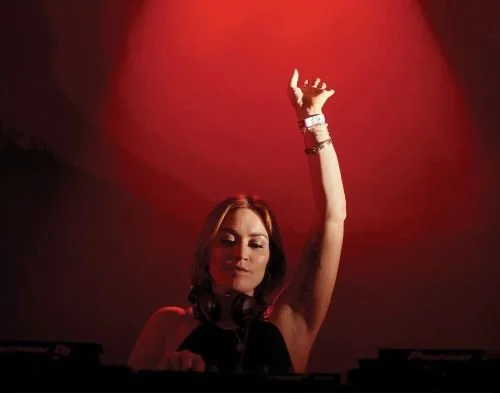
Among the interviews for the show, this notion that women were seen as sex objects. Reduced to their bodies. double standards regarding women talking about sex and being open, and this cliched version of masculinity. Whilst female artists of the time were playing as well, partying as hard and making as big an impact as their male counterparts, they were still not gracing as many magazine covers, getting as much acclaim and respect, or being discussed as much in terms of their musical brilliance. Often there are poisonous attitudes when women talk about sex and love. Dismissed as sex-obsessed or dirty, men were celebrated and idolised for saying the same things. Many of the great bands with women in (or comprised of women alone) were not featuring in magazine or in interviews. When many still talk about Britpop, women are frequently kept at the outskirts. Not put at the centre like Blur and Oasis. There were so many amazing women who could not make the covers unless there was a level of sexuality and explicitness. Blur’s video for Country House – the song that went up against Oasis’ Roll With It in the big battle of Britpop in 1995 – was meant to be ironic, but it sort of highlighted how many viewed women. Seen as sex symbols and bodies, it is an unfortunate casting of women. An in-joke that not everyone got. Lad mags, as is explored in the documentary, took the industry back to darker times. Women were often expected to talk in a certain way and fit into this very regressive narrative.

The Britpop world celebrated the horrid page three and porno ‘fun’ of the time. This weird and insulting representation of working-class culture. These amazing women making music and trying to be seen were often leered at. Shirley Manson said in the documentary how society is tougher for women. There is this impossible standard. The music industry, especially during Britpop, wanted women young. If they dressed like women and were comfortable in their own skin, they faced this sexualisation and view that they were meat. Many had to dress more like men to get attention or for this sort of thing to stop. Women were often marketed as sex objects or expected to be very revealing in a very bad and toxic way. If the industry has changed slightly, I think there is still a perception that women are objects. They do not have depth or real meaning beyond their looks and bodies. This was something that existed before Britpop, but the movement enforced this very dangerous and dismissive attitude. Britpop, as the documentary concludes with, saw women pave the way for change. For new artists to come through. Some of the absolute best singles and albums from that Britpop reign – 1993 to about 1998 – came from bands like Lush, Sleeper, Garbage, Skunk Anansie, Elastica and those with phenomenal women at the helm. Even today, so many women – including Garbage’s Shirley Manson – at loggerheads with magazines about the way they are presented. There are still huge challenges. We romanticise Britpop and forget about women’s experiences. Sexism is only half of the story when it comes to women and their role in Britpop.

There was so much misogyny too. I am going to reference a few articles that discuss how women were perceived during a high time where men were celebrated and seen as music heroes. Far Out Magazine wrote late last year about the misogyny that was rife and somewhat undiscussed during the Britpop period. If we have happy memories of the brilliant music and uplift of that time, we do tend to sweep away or forget how women were viewed. Things like the Country House video definitely didn’t help things:

“Another respected figure from the time is Sleeper frontwoman Louise Wener, whose hits such as ‘Inbetweener’ and ‘Sale of the Century’ are hailed as Britpop highlights. Despite these hits, Wener faced ample sexism, and it’s something she hasn’t forgotten. “The music press was so leaden and serious back then,” Wener told Long Live Vinyl. “It was hard to get any humour across. There was a basic sexism, too; this fake shock of, ‘Oh, it’s a woman at the helm! Writing the songs!’ Because of that, the men in the band had to be diminished in some way.”

Much of this manifested itself in the term “Sleeperbloke”. Originally used to describe Wener’s bandmates, guitarist Jon Stewart, drummer Andy MacLure and bassist Diid Osman, it soon became a way of depicting the apparently forgettable men in a female-fronted band. Later in the interview, MacLure said of the term: “Only female-fronted bands had Sleeperblokes in the ’90s. It was a terrible, misogynistic way of operating.”

One moment in Britpop that has long been the subject of intense criticism is the video of Blur’s 1995 single ‘Country House’. Although the single is most famous for being the band’s offering in the fierce media spectacle ‘The Battle of Britpop’, against Oasis hit ‘Roll With It’, the misogyny contained within is more significant.

The accompanying music video of ‘Country House’ was directed by artist du jour Damien Hirst and depicts the song’s narrative of a man – played by Keith Allen – who escapes the rat race of the city for a big house in the country. However, it also features models Sara Stockbridge, Vanessa Upton, and Page 3 girl Jo Guest in an objectifying way. The women involved are used as sexual objects and nothing else.

Blur guitarist, Graham Coxon, has been particularly critical of the video, labelling it “demeaning to the girls” who appear in it. In his 2022 memoir, Verse, Chorus, Monster!, he wrote: “It made me angry because here I was, finally in a band, and the experience seemed to be getting cheapened by Page 3-type imagery, a revival of sexism and football hooliganis”.

Of the objectifying, he added: “I was clashing heavily with the Britpop thing and didn’t feel the need to refer to women’s body parts in a rude way.”

This begs the question, why wasn’t Britpop more heavily protested against at the time? Despite all the promises of the liberal 1990s, outdated social mores were yet to change, and #MeToo was still a long way away. Ultimately, Radiohead put it perfectly – Britpop was “backwards-looking”.

Before coming back to a more serious side of the debate, Caitlin Moran wrote a feature for Stylist imagining what it would have been like if Britpop was dominated by women. Instead of wall-to-wall men, it would have been a very different world. One, I think, vastly more interesting! I have selected a section of her funny, honest and often thought-provoking feature that caught my eye:

Rejoice in a female Supergrass – so young they’re still almost children, wildly hairy, pedalling away on their Chopper bikes in the video to Alright. Stoner lady- monkeys with one of the greatest drummers, Dani, Keith Moon-ing (sorry, Kate Moon-ing) so hard and wild behind her kit, she ends most gigs just in her bra, beaming, exhilarated, at the crowd.

The odd, appealing innocence of Caught By The Fuzz – which is essentially the origin story of Ilana and Abbi from Broad City, in which some young women try to buy some marijuana, but it all goes wrong in the most amusing way possible.

If a band as hairy as Lady Supergrass had existed when I was a teenage girl, there’s every chance the female moustache would have become a fashionable look. I could have saved myself 20 years of waxing. We would all have lady moustaches now.

As for Jarvine Cocker – that gangly, sexy nerd of Pulp, kung fu kicking in their charity shop suit – well, overnight, it became OK for everyone to wear glasses. I would never have bought contact lenses if I had seen Jarvine Cocker sing Common People at Glastonbury in 1995 – glasses steaming up and howling, “I wanna live with common people like yoooooou!” jumping in the air like a praying-mantis. And I wasn’t the only one.

 A week later, the cities of Britain were filled with elegantly shabby types in suits and glasses, talking about class war, carrying bottles of cherry brandy around in their battered satchels, and busting their demented dance moves at parties, while boys swooned at their geeky insouciance.

Now look, I don’t wish you to get me wrong. I loved the Britpop we actually had. Man, you could live the life of a Number One pop star by simply getting up, going out, having a fag, putting it out, seeing your friends, seeing the sights and feeling aaaaaalright.

A parallel world

But we can admit, now: when Damien Hirst is eventually commissioned to make a Britpop sculpture, it will be a 60ft high pile of cocks and balls, with, like, four tits stapled to the side.

As someone who was there at the time, it often felt like that bit in Game Of Thrones’ Battle of the Bastards, where Jon Snow is slowly being crushed under a pile of hundreds of hairy men-soldiers. But, in this case, all the men are in vintage Adidas tops, shouting, “Oi oi, mate! Nice one!” at each other.

That’s why it’s fascinating – something new and diverting for the eye! – to see, just for a second, what it would have been like in a parallel world. A world of women.

To imagine – as the great Johanna Lennon might have put it – there’s no Stephen. It’s easy if you try.

Just imagine what Titpop’s finest might have looked like…”.

Articles such as this explain how memories and books have been released that highlight how imbalanced and toxic Britpop was for women. Many of thew major players of the time – including Lush’s Miki Berenyi - have spoken honestly and candidly about their experiences. Women were written out of Britpop. There are horrifying testimonies from women in bands at the time. I want to finish by looking at a couple more articles. To be fair, there are essays, books and many more examples where the misogyny and sexism of Britpop is explored. The Quietus’ feature from 2013 took an extract from Clampdown: Pop-Cultural Wars on Class and Gender by Rhian E Jones. The extract was about Britpop culture - via Shampoo and Kenickie – and social class and gender:

Kenickie's brassy, breezy self-expression was also presumed to signify an 'easy' sexuality, making them the objects of an unstable mixture of lust and disgust:

We were asked if we were in anyway like Viz's Fat Slags, 'only thinner', and these were the journalists who liked us! The interviewers seemed bemused by our hostility to their question - 'So what you're asking us, then, is, are we slags?' replied Lauren [Laverne, vocalist/guitarist] coolly. The asking of such a question demonstrates the reduction of all their assumptions about our perceived class, gender and regional roots to the grotesque parody of North East women in the Fat Slags comic strip. This ignored our own statements about our identity in our music.

This lack of understanding by a middle-class media of how such a comparison might be received highlights the frequent intersection of sexism and classism, whereby all women who are perceived as working-class are implicitly 'chavs', and all 'chavs' are explicitly easy. Kenickie's female frontline, like Shampoo, had an earthy, cartoon-glam aesthetic, half Old Hollywood starlets, half explosion in Claire's Accessories. Their particular brand of glamour was, as Susan Sontag wrote of Camp, 'a variant of sophistication but hardly identical with it'. Their towering heels, aggressively revealing outfits and lashings of makeup were worn on their own terms; a Pink Ladies-inspired protective covering rather than a puppeteered provocation. Tangled up with the roots of this look was the history of glamour as a means for 'ordinary' girls to dress 'above their station' through artifice, lavish and luxurious but popularly accessible, which did not require the backing of 'good breeding'. In its more recent forms, this kind of glamour has become identified with either 'vulgar' appropriation or defiant class drag, in both cases serving to emphasise rather than disguise the class of its wearer. Carol Dyhouse's history of the term, however, traces how glamour's possibilities for transcending class and gender barriers generated predictable anxiety, cloaked in snobbery and appeals to national loyalty: at the height of 'glamour' as emulative and ambitious artifice and excess, a signifier of the upwardly-mobile and autonomous woman 'on the make', British Vogue encouraged its female readership to forsake this brash, democratic and over-the-top aesthetic in favour of a 'natural English look'”.

I’ll end with an article by The Guardian from last year. Lush’s Miki Berenyi’s Fingers Crossed: How Music Saved Me from Success is an essential memoir that, among other things, sees her discuss her time in music when Britpop was celebrating men and not embracing edgy and alternative women who were doing things their own way and looking to be heard and respected:

James does in fact offer Lush the chance to plug Lovelife in Loaded, but only if Emma and I strip down to bikinis. It takes me a moment to realise he’s serious. And why shouldn’t he be? Plenty of others have no issue with baring the flesh, so why shouldn’t he assume that I’m up for it, too?

Emma and I do a photo shoot for Dazed and Confused and are presented with a rack of clothes selected by a stylist. The photographer picks me out a black top and a leather mini. It’s only when I put them on that it becomes apparent that the skirt is the width of a football scarf and barely covers my arse. As we walk through the magazine’s busy offices, I tie my jumper around my waist to cover my rear and make sure I walk bolt upright, lest the skirt ride up any further.

This kind of sexist bullshit is becoming commonplace and reframed as “edgy”. I’m recommended a hot new photographer who is hailed as a visionary genius for shooting underage models in white underwear having a pillow fight on a bed. The snapper’s brilliant creative idea is to have Emma and me pose in a toilet cubicle. We position ourselves in our usual stance, but now he’s telling me to stick one leg against the door or push my hip out and stretch an arm up the wall. Any shift in my posture has the microskirt riding up, so I cautiously comply only as far as dignity will allow. When he indicates that he wants me to bend over the toilet, legs splayed and look back at him over my shoulder, I realise that this whole set-up is an elaborate ploy. The magazine isn’t interested in Lush, they just want some wank fodder for their readers. I firmly tell him no and we finish the shoot. The piece ends up relegated to an eighth of a page with about 40 words of text.

At one of the Soho House soirees, while I order drinks, a drunk comedian slurs at me to either suck his cock or fuck off. As I stand chatting to friends, Alex from Blur is sprawled on the floor making “phwoarr” noises and sinks his teeth into my arse. The Carry-On Sid James impersonations are a common theme. I fall into conversation with Keith Allen and try to ignore him sweeping his eyes around my body, twitching with overheating gestures and tugging at his collar to show he’s letting off steam. Another comedian sharing a cab ride suggests he come in for a bunk-up, despite having spent the entire night excitedly chatting about his imminent fatherhood. Liam Gallagher shuffles around me, wondering aloud when I’ll be ready to fuck him in the toilets.

This isn’t flirting, it’s constant, relentless sexualisation. And there’s a nasty edge to it, implying that it’s me, not them, who is asking for it.

IN THIS PHOTO: Lush in 1994/PHOTO CREDIT: Gie Knaeps/Getty Images

I recall Suzanne Vega once pointing out that Madonna may be breaking boundaries, but every teenage girl who dresses like her is still treated like a slut. I’m experiencing a similar uncomfortable side effect with the supposed androgyny of Britpop. While Justine from Elastica and Sonia from Echobelly and Louise from Sleeper, wearing suits or jeans and T-shirts, get treated as one of the boys, my long hair and short dresses are now a signal that I’m gagging for it. I’ve been doing what I do for years and now I’m being reframed as happy to be objectified.

I’ve been reading feminist texts since college, however unfashionable that might be right now – and to be fair, Chris always found it a bit tiresome. My education, both at North London Poly and from the politicised bands I’ve followed, has taught me to see through the “harmless fun” to the misogyny that drives it. I’m not militant about it. I don’t crucify people for crossing a line, I just recognise there is one. And I need to know someone well enough to accept that they’re “just joking”; I’m not going to swallow it as an excuse from a bloke I’ve just met.

I tag along to the NME Brats awards and the only women to take the stage all night are some semi-clad dancing girls and Candida Doyle, keyboard player in Pulp. Of the 17 categories, with 10 entries each, there are just seven women included and four of those are in the solo artist category: Madonna, Björk, PJ Harvey and Alanis Morissette (Paul Weller wins). The claim that Britpop celebrates sassy women in bands is a veneer. I saw it before with riot grrrl, where (in the UK, at least) the press consisted mainly of pitting women against each other. It spawned a host of “women in rock” debates that to my shame, I got dragged into, badmouthing Kylie Minogue when it was the men comparing every other female musician disparagingly to her sexy pop”.

I do love a lot about Britpop. At its best, it saw some sensational artists go head-to-head. There was this sense of celebration and hope. This is something hard to imagine today. We do not often look at the darker and more regressive side of Britpop: one where women were sexualised and overlooked. This misogyny and inequality is explored in an episode of the brilliant The Rise and Fall of Britpop on BBC Sounds. I would urge everyone to listen to the series! To end, I wanted to combine together the amazing women of Britpop. Those pioneers and hugely influential figures whose music will endure for decades! If they were not given their dues and respect in the 1990s, I think that there has been a correction and fonder retrospective attitude. It is clear that these amazing women gave such much to the music scene at pivotal and celebrated time in British culture. More importantly, they opened doors and have influenced a whole wave of female artists coming through. For that alone, they should be offered…

ETERNAL respect, gratitude and thanks.

FEATURE: Enable Repeat: The Addictive Nature of Streaming Music

FEATURE:


Enable Repeat

PHOTO CREDIT: Danish Saifi/Pexels


The Addictive Nature of Streaming Music

_________

THIS might be a bit of a personal thing…

 PHOTO CREDIT: cottonbro studio/Pexels

but there are other people who will surely be able to relate. I actually want to discuss a few things when it comes to streamed music. Even if physical music is booming and sales are looking really impressive, there is still that limitation regarding affordability. We cannot buy as many albums as we would like. As physical singles are no longer a thing, artists have to rely on streaming alone to get people to listen to them. I still think people should buy albums, though one has to be selective and reign themselves in. Streaming in beneficial, as you get to hear albums and sample them before you buy. Singles are easily available to hear, and there is no doubt that a balance between buying albums and listening on streaming sites is best. Whilst artists are not paid nearly as much as they should for being on streaming, I think another problem exists when it comes to the listener. I pay Premium on Spotify, but I often think that this is not enough to pay. When you consider the fact you can listen unlimited to whatever music you like ad-free, it seems £9.99 is far too little! Considering I pay this sort of money for streaming T.V. – Disney+, Paramount etc. – and I use that comparatively little, it does seem that I (and everyone else) should pay more for music. Not to suggest a cut-off point but, as I pay very little to stream, I wonder whether I am getting as much out of it as I can. I tend I play the same songs over and over again. This addictive nature means that I can rinse a track and saturate it and it loses some value. You can do that with a physical single, but I am exploring less than I should do – leaning on these few songs and playing them to death. There is this addictive nature to streaming music. Whilst it is good to love a song and want to play it, there are one or two I cannot seem to stop playing. I wonder whether this is a healthy thing, and whether there should be some cut-off.
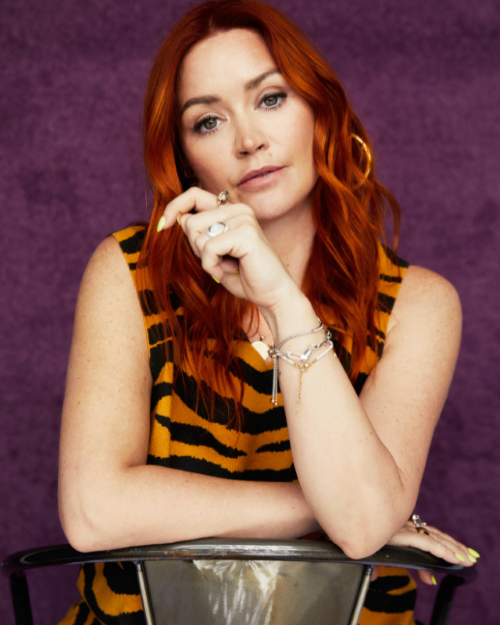
 PHOTO CREDIT: Philip Boakye/Pexels

Spotify has the Daily Mix playlists. This is based on what you listen to. They will then create various mixes and playlists by genre and type of artist. It is good for prosperity and reference, but it is easy to rely on those and, again, play the same songs. Because there isn’t this streaming limit, I do wonder whether many of us are playing songs we know and love and not exploring enough. It can be very hard to open people eyes to the full extent and variety of new music. Even if there are weekly playlists of new music, so many artists and songs get missed out. It is vital there is older music and I can make playlists of my favourite songs, I feel Spotify and other streaming platforms should do more to highlight artists that do not get that many streams. I find that the Spotify interface is quite useful and easy to navigate. There is a choice of podcasts and music, but I find something is missing. Maybe an option to limit older songs you play regularly. A chance to pay a little bit more per month and ensure that some of that money goes to new artists. Perhaps integrating some of the features you get on Bandcamp. Being able to stream unlimited, but also there being a section where you can buy singles and albums from artists. Maybe it would not be the full amount, though a small fee – rather than streaming the music for very little – I think would change our listening habits. I do love older music, but I am getting hooked on the same artists and songs. I wonder how healthy it is going back to the same songs over and over again.
 PHOTO CREDIT: master1305 via Freepik

What I think needs to happen is for Platforms like Spotify to emphasise new music more. They could have a legacy section, but more playlists of new music and lesser-heard artists would be really rewarding. Radio is great for new music discovery, though I do miss out on so much. I have got into this very reductive and destructive habit of spinning the same songs and staying in a bit of a cycle. Not expanding my horizons and embracing newer sounds. Spotify and other platforms are great and give us so much access to all music. Perhaps it is just my listening habits, and yet other people I know get into the same routines. If you can get all this music for £9.99 a month, I tend to find you will utilise that and play your favourite music over and over. Rather than spreading out more with new music and podcasts, I am trying to drag myself out of a rut. Spotify and similar streaming sites are so vast and full of options. It can be a case of being overwhelmed and not missing out on so much. I feel we should all be paying more for streamed music. The reason for writing this feature was to sort of unburden myself a bit! Rather than keep on top of the best new music, I am relying on suggested mixes, my old playlists and these few songs time and time again. Because there are no limits and I can play a song over without paying music more, I am getting lazy. Perhaps people would bulk if there was a new payment structure and a raise. I kick myself for overlooking certain songs and artists, though there aren’t many guides or daily playlists that highlight them. That combination of repeating the same songs and not diving too much into new music tied to that low cost of streaming in the first place is affecting all of our tastes and habits. It has made me realise that I need to stop recycling and taking the easy option and spend more time exploring the full and wonderful array…

 PHOTO CREDIT: Jess Bailey Designs

OF new songs and artists.

FEATURE: Spotlight: eee gee

FEATURE:


Spotlight


eee gee

_________

EACH week…

 PHOTO CREDIT: Joacim Fougner

I am coming across great rising artists that slipped me by. The remarkable eee gee is someone that everyone should know about. I am a recent convert, but she is definitely someone who stands apart. There are not many recent interviews with her. Instead, I wanted to provide various bits of detail and information from features that teach us more about an incredible young artist with a bright future. Here is a bit of background about eee gee:

eee gee is the project of Danish singer/songwriter Emma Grankvist. She released her debut album Winning in February 2022, which received multiple five-star reviews and it was since elected ‘Best Album Of The Year’ by multiple music medias like Soundvenue and GAFFA.

eee gee’s elegant universe is one of paradoxes – things are not always what they seem. Searingly honest, she writes songs about heartbreak and not feeling good enough while calling it “winning” and knowing just how lucky she actually is in the scheme of things. She lives in the complex world of a young woman trying to find her way. Her compelling storytelling about love, life and everything in between creates a relatable moment in every song”.

Her debut album, Winning, was released early last year. One of the best debuts of the year, it brought her music to the attention of the wider world. A perfect demonstration and representation of her magnificent talent and sound. Ones to Watch had their say on Winning. If you have not heard eee gee, I would recommend that you check out her debut album, as it is a great place to start:

Life has a way of teaching us hard lessons from time to time. The key is to manifest what you've learned from your journey, and not hold your past against you. Wisdom is not an attribute doled out lightly, maybe because it is rarely justified. But every now and then, an artist comes along to share with us wisdom gained from their life lessons so that maybe, just maybe, we won't have to learn the hard way.

Brooklyn-based Danish artist Emma Grankvist, more popularly known as eee gee, has crafted an intimate, daring, and honest album with her latest release Winning. Masterfully demonstrated throughout the album is Grankvist's ability to tell a story, her story. Singing honestly about recollections of her past and revelations about her character are what make this album so captivating. It also helps that her voice is so euphonious. This album oozes confidence in all the right ways, a feat evident on tracks like "Killing it" and "Favourite Lover." You could pull a line anywhere off this album and use it as an inspirational quote.

With a delightfully eclectic mix of indie-pop, folk, and soul, Winning is a thoroughly fantastic listening experience, not only for the nuggets of wisdom you can mine from the lyrics but because it contains a range of tracks that will move you, as well as make you want to move. On the track "Favourite Lover," Grankvist states, "I don't care what you're saying about me" - but after listening to Winning, it will most assuredly only be good things”.

Before getting to a feature about eee gee’s amazing new single, ghost house, Rolling Stone UK wanted to find out more about an artist who refuses to put her music into one. Someone had to compare with anybody else, it is great that she got this nod and spotlight. Let’s hope that even more people discover her music. It is a true revelation:

“It’s a ghost house, dating’s haunted, everyone’s scared, to catch feelings,” comes the snappy chorus of ‘Ghost House’, the commitment issues synth pop banger that marks the first taste of She Rex, the latest album from Danish star eee gee.

The singer, real name Emma Grankvist, deals in whip-smart lyrics and striking melodies that offer a refreshing perspective on the world around her, all wrapped up in a package that’s brilliantly tough to pigeonhole.

“There was a big moment for me when I started realising that I could write songs in different genres, because I love Banks, but I also love Joni Mitchell,” she tells Rolling Stone UK.

Now, She-Rex will take that sound in further directions, with the singer promising a disco-tinged element too.

We first you saw supporting in Arlo Parks on the Rolling Stone UK stage at The Great Escape earlier this year. How was that experience for you?

It was amazing, because it was our first show outside of Denmark where we didn’t bring all of our equipment, so that presented the challenge of having to play on a smaller setup which was really fun. We’ve always been curious about that was going to work, but it’s a fun way to do things.

You were raised in Denmark and you’ve said that singing in your native tongue could help you go to the top there? Why didn’t you choose to take that path?

Phonetically it suits my personality better to sing in a language that’s a little softer, Danish can sound a little harsher on the syllables and the vowels. It’s a beautiful language, but singing in your own language means there’s no filters between you and the audience. Personality wise I’m more of an introvert so having a small sense of a cloak between me and the audience helps a little bit. But now I’ve lived in New York for two years, I actually feel more connected to the language which is interesting as I’m growing a little bit more mature and a bit more confident in music. That cloak is starting to fade away, so I do feel that I’m beginning to connect with people even though it’s not my native tongue.

There’s multiple sides to your sound. Some parts are full pop whereas others are perhaps a bit folkier. How did you land on these sounds when first writing?

It’s funny because I had a project before this one with a producer that was definitely leaning way more towards like alternative pop. And I remember we started out writing and sounding like acts like Beach House, but we really wanted to start writing more commercial pop and I listened a lot to Banks in that time and I was really into like that very melancholic dark electronic pop thing.

But when we started playing live – I don’t know if it was a combination of the key and the chords and the production and the melody – I just, it just didn’t feel like it was vibrating with me.

So when we ended that project, I just knew that I had to start over again and really investigate what genre felt authentic to me and where I’m from and really make sure that it felt like an extension of me instead of just being something that was trending or felt cool. There was a big moment for me when I started realising that I could write songs in different genres, because I love Banks, but I also love Joni Mitchell.

Also, I started thinking about how Copenhagen and Denmark takes in so many global influences, because we love Beyonce and Frank Ocean and Adele. We’re so influenced by all of these genres that are not really authentic to where we’re actually from culturally.

So I just really felt the need to, to investigate more of like the folk genre which I feel like is way more, you know, authentic to where we’re actually from.

It’s funny that people have been saying it sounds like Lana Del Rey because I love Lana but it was never like a thing I was going for.

Do your live shows help that connection to grow?

Yeah. I’d played my first shows and festivals for a year and it’s very easy for me to feel a strong connection when I’m on stage. Look, I wouldn’t necessarily put my music on for like, you know, going out and the peak of the party, but it definitely could be there at a pre party or coming down from a party. That’s the same vibe I’m really going for at festivals.

Your second album She-Rex arrives in September. Where does it take your sound and what can you tell us about the title?

It’s interesting because on my new album I’ve experimented with disco, so maybe I am getting closer to the songs that get played at the peak of the party and the peak of festivals!

The title is a rather sarcastic response to my first album, that was a very emotional record and about never really knowing where you’re standing with yourself. You know, trying to work with all the self care and self awareness in a world that is trying to pull you apart.

It’s an extension of that and, you know, T-Rex represents a primal and aggressive instinct. There’s a softer touch on the record too, but it has that I want to conquer the world feel, which felt very appropriate for a second album.

It’s also funny that Rex in Latin is king, because of course they had to give the biggest dinosaur male characteristics. I thought it was funny to make it into a She-Rex. The She King! It’s a fun word play and it has a strong base in humour and tongue in cheek lyrics”.

You might be aware of eee gee’s new single, ghost house. I hope that you do go back and listen to her previous music. Another awesome cut from the Danish innovator, maybe we will get an E.P. or another album fairly soon. There is definitely a huge demand for what she is putting out there. CLASH had this to say about her latest gem:

Danish alt-pop voice eee gee has shared new single ‘ghost house’.

The songwriter’s 2022 debut album ‘Winning’ was a supremely intelligent dose of synth pop, blending witty lyrics with some superb melodies. She’s on a hot streak, too, with eee gee set to release a follow-up this year.

New album ‘SHE-REX’ will be released on September 1st via Future Classic, and it finds the songwriter – real name Emma Grankvist – broadening her vision. As she puts it: “I make music for the introvert, who is constantly pushed into the uncomfortable extrovert way of how the world works.”

Take new single ‘ghost house’. Out now, it blends superb word play with rippling electronic melodies, building to something irresistible. A song about love and betrayal, she sings: “Did he just use me as a build-up in a song / That never gets to where it could belong…?”

eee gee explains…

“I have a good friend who fell in love with this guy – a cliché of a cool, free-spirited surfer-dude with nice hair and that one-in-a-million look. They went all in on what seemed to be a match made in heaven. He even talked about her on the phone with his mom. However, one day my friend found out that he was actually dating several other girls and that he was anything but ready for a serious relationship,”

She continues: “Dating is haunted. If anyone should ever have a chance to find real love when looking for it, you probably need to break up with your own bad habits and expectations of what you think you need first. Ask yourself, why do you want to fall in love? If you find the answer, I believe you’re most likely able to meet new exciting people with the right intentions”.

Although I am new to eee gee, I have been listening back and getting a better and bigger sense of what her music is about and who she is. This is an artist I can confidently and thoroughly recommend. In a very busy and varied scene for new music, she is someone who stands out. If you are in search of some fascinating new music to get your ears around, then I would like to point you in the direction of…

THE brilliant eee gee.

____________

Follow eee gee

FEATURE: From a House in Nebraska… Why Ethel Cain’s Social Media Experiences Should Give Pause to Music Fans Around the World

FEATURE:


From a House in Nebraska…

IN THIS PHOTO: Ethel Cain


Why Ethel Cain’s Social Media Experiences Should Give Pause to Music Fans Around the World

_________

IT can be risky…

 PHOTO CREDIT: Tim Gouw/Pexels

for any artist being on social media. Whether it is Twitter, Threads, Instagram or any other platform, they are followed by a huge and anonymous number of people that have this very direct and unfiltered access to an artist’s accounts. Many of the accounts from bigger artists are run by a team. You do have artists who look after their own accounts. Whilst most of the feedback and comments are kind, there is a lot of toxicity and dangerous remarks - as pretty much anyone can follow any artist. Many have quit social media or pulled back because their fans’ comments have taken a toll. Either that or it is too much having to maintain the accounts and keep the career going. One wonderful artist everyone should know is Ethel Cain. Florida-born Hayden Anhedönia is a hugely inspiring and incredible transgender artist whose 2022 album, Preacher's Daughter, was one of the best of that year. She is someone who has been on social media for a while. Someone who interacted with fans and reacted to memes, videos and posts. That has changed slightly. Feeling that she is more a performing monkey, The Guardian highlighted her relationship and changing interaction with social media platforms during a recent interview (as Ethel Cain is touring the U.K. next month):

Part of Anhedönia’s popularity – she has nearly 300,000 Instagram followers, and was the face of recent Givenchy, Miu Miu and Marc Jacobs campaigns – can be attributed to the fact that she is extremely internet literate, and became known online for a sharp Twitter feed on which she participated in jokes and memes about her public image. It soon began to feel as if she was “a dancing monkey in a circus. It’s very like, ‘Oh, she’s so funny on Twitter, she’s so relatable’ and then it becomes this big weird joke cycle,” she says. Although she stresses that she loves the support and adoration of her fans, she says it can become demoralising to not have her art met on the level she’d like it to be: “Don’t get me wrong, laughter and memes and jokes are always really fun. But when you want to post something to be consumed seriously, people are still joking – and then you get like, thousands of comments that are like, ‘silly goose’. All of a sudden, you start to feel like you can’t turn off the memeable internet personality thing.”

IN THIS PHOTO: Ethel Cain on stage at Coachella 2023/PHOTO CREDIT: Enoch Chuang

Live, Anhedönia is a captivating, remarkable performer: during a show at the London club Omeara last year, you could hear a pin drop as she shepherded an audience of thrilled young fans through her largely hushed setlist. But at concerts, Anhedönia will sometimes be trying to perform her quietest, most intimate songs, only to have people yell jokes at her, breaking the spell. “I had a show recently where I was singing the really quiet intro to Sun Bleached Flies,” she recalls. “I went to hold [a fan’s] hand and they began sort of screaming, ‘I didn’t even know who you were two weeks ago, I found you through a meme on TikTok.’ It’s almost like heckling. I don’t think any of them are mean spirited, but it’s a little jarring.”

Earlier this month, she deleted her Twitter, leaving fans aghast. “I always kind of conflated openness with honesty and I thought that if I was completely transparent and bared every aspect of my soul that people would think I was relatable and kinda cool,” she says. “Then I was like, I don’t want to know you. I don’t want to be friends with you. I don’t want to have all of my personal business and every innermost thought just out there on the internet for the world to see.”

Another part of the reason Anhedönia pulled back from social media was the way that her fans began to demand access not just to her, but to her friends and family. “I really had no idea the full nature of [my success] until I had those closest to me kind of half-joking, half actually kind of complaining, being like: ‘People are DMing me and asking me questions about you and trying to become my friend only to find out months later that they’re really just trying to get to you through me,’” she says. “I always thought that success would exist in a vacuum for me but it did start to affect my family. And my closest friends and even just acquaintances of mine. I’m not Britney Spears, but it was noticeable for them and it created a really weird dynamic between us for a while.”

Part of the problem, Anhedönia thinks, is the fact that she is often classed as a pop artist, and therefore becomes part of the stan economy, wherein teens treat female artists “like fantasy football teams”, arguing “about streams and stats and followers and almost using them as like Pokémon to fight each other”.

 IN THIS PHOTO: Self Esteem (Rebecca Lucy Taylor)/PHOTO CREDIT: Suzie Howell for The New York Times

It made me think about other artists who have deleted Twitter or spend less time there. From Self Esteem (Rebecca Lucy Taylor) to Nadine Shah, there are great artists who, for various reasons, spend less time on there or have let their team run their accounts. Maybe Instagram seems like a slightly safer space, it is that vulnerability and enormous weight that means it is overwhelming. Negative comments can have a devastating impact on mental health. From sexism to sexual harassment to insults and hateful remarks, too many artists have to detach from their fans this way because you cannot filter and block out that negativity – unless you read the comments and then block that user. Fans wanting more access and invading the private lives of artists’ families is scary! You do wonder how many other artists have to face this sort of thing. It is sad that Ethel Cain has had to take the step of deleting her Twitter account – though you feel like it might be the best move. It is such a shame too. If you get rid of accounts, it potentially deprives people of news and updates about an artist you love or may not yet know. But, at the end of the day, the health and wellbeing of the artist is paramount. There are Ethel Cain update and news sites, so the fans have that resource. I think it is important that everyone in the music industry should be able to post on social media without having to process a lot of bullying, negativity or unrealistic demands. Being allowed limits and not having to show too much of themselves and give too much away.

 IN THIS PHOTO: Nadine Shah/PHOTO CREDIT: Fraser Taylor

Stories like the one Cain has shared should give pause to music fans around the world. Think about that dialogue and interaction you have with artists. There is that hard balancing act. Do artists need to post all of the time and give too much away? By sharing personal details and updates, it strips away mystery and can feel far too open and revealing. If they just stick to updates and sharing news, many will accuse them of not interacting with fans or being boring. If they delete social media accounts, that can also have a big impact. It is an impossible situation! Even smaller artists have that conflict between creating this almost friend-like and warm nature with fans, but they are also susceptible to people they have never met stomping their privacy, asking too much of them, or even asking about their families. Whether they are posting from a house in Nebraska, and office in London, or somewhere in Australia, you feel like it is impossible to balance, navigate and create a healthy relationship with fans that has boundaries. It is a shame that Ethel Cain has deleted her Twitter account. I know other artists will be in a similar position. I can appreciate fans have this direct contact and might want to know more about an artist, but they have to realise what effect that has. It can be really shocking, pressurising and uncomfortable when there are so many people wanting so much. Let’s hope that Ethel Cain’s words and testimony opens music fans’ eyes across the world. The privacy, wellbeing and mental health of artists should be…

THE main priority!

FEATURE: Various Shades of Blue and Pink: Inspiring Women Directors, Writers and Actors Injecting Originality and Invention Into the Comedy Genre

FEATURE:


Various Shades of Blue and Pink

IMAGE CREDIT: Lionsgate Films 


Inspiring Women Directors, Writers and Actors Injecting Originality and Invention Into the Comedy Genre

_________

I will take a slight detour…

IN THIS PHOTO: Barbie’s (the film is out on 21st July) director and screenwriter (with Noah Baumbach), Greta Gerwig/PHOTO CREDIT: Leeor Wild/The Observer

for this feature. Whilst I am going to start off by mentioning something musical, it will then divert into comedy. This blog is mostly about music, but I do bring in other topics and themes from time to time. One of the most interesting and excellent soundtracks of the year is for the Barbie film. Lizzo, Charli XCX, and Dua Lipa are among the artists around included. There are a couple of T.B.A. artists. We have been promised something quite big in that regard. At the time of writing this (9th July), we do not know who those missing pieces are. Maybe it will be Britney Spears, but nothing has been confirmed still. Out on 21st July, the Barbie film is going to be one of the biggest box office draws of this year. I think that it will be viewed as one of the best comedies in a very long time. I want too quote from an interview by The Guardian/The Observer from today (9th July), where Barbie’s director Greta Gerwig spoke with Alex Moshakis:

To pitch Barbie to executives, Gerwig wrote a poem so strange and “surreal” that she will not read it to me now. When I ask what it concerned, she says, “Oh, you know, the lament of Job?” before adding, “Shockingly, it does actually communicate some vibe of the movie.” Gerwig wrote Barbie with her partner, the filmmaker Noah Baumbach, though for a while she didn’t tell him she’d enlisted his help. (“He was like, ‘Did you sign us up to write a Barbie movie?’ And I was like, ‘Yes, Noah, get excited!’”) They worked on the script during the pandemic, when doubt plagued the future of the communal cinema experience. “There was this sense of wanting to make something anarchic and wild and completely bananas,” Gerwig says, “because it felt, like, ‘Well, if we ever do get to go back to cinemas again, let’s do something totally unhinged.’” The anarchy of Gerwig’s Barbie comes from “the deep isolation of the pandemic,” she says, “that feeling of being in our own little boxes, alone.”

Such are the levels of secrecy around Barbie that I was only allowed to watch the first 20 minutes of the film, which I did in a large screening room, alone but for a projectionist, a Warner Bros employee, and a man who sealed my phone in an opaque bag. Watching 20 minutes of a film is not enough to say if it is good or not, but it is enough to confirm an early vibe, which is anarchic. There is colour and artificiality, fun and chaos. There are many Barbies and many Kens. It has the atmosphere of an over-the-top gender-reveal party during which various things go wrong. Barbie’s feet become flat, not stiletto-arched. Her shower runs cold. Her breakfast burns. She develops neuroses. A once perfect-seeming life becomes not perfect.

PHOTO CREDIT: Leeor Wild/The Observer

Before filming, Gerwig organised a Barbie sleepover at Claridges, the London hotel, and invited a number of the film’s female cast: Robbie, Rae, America Fererra. The Kens were invited, but asked not to spend the night; the Barbies wore pyjamas and played games. “Honestly, it just felt like it would be the most fun way to kick everything off,” Gerwig says. “And it’s something you don’t get to do that much as an adult. Like, ‘I’m just going to go have a sleepover with my friends…’”

Behind the lens: directing Lady Bird. Photograph: Moviestore Collection/Alamy

Gerwig is known for creating open, democratic sets. And she describes part of her job as “creating an atmosphere of acceptance, no wrong answers, no judgment. It allows people to feel safe, to bring wonderfully wild things to the table, which they otherwise might not want to.” (“She’s into things arising,” the actor Jamie Demetriou, who appears in Barbie, told me.) That everyone on set bonds is important to Gerwig – hence the sleepover. Before Little Women, she asked the film’s primary cast – Ronan, Florence Pugh, Emma Watson and Eliza Scanlen – to memorise a poem, and to later recite it to each other. “These were professional actors,” Gerwig recalls, “but there was something about the fact they had to select a poem and then recite it… It was very intimate and amazing, and they were very vulnerable. It instantly felt helpful in creating that connection.” She later adds: “As a director, you have the job of dreaming up the movie, and then you have to get everyone else in the movie – hundreds of people – to have that same dream, too.”

Demetriou recalls the Barbie set being full of positivity. “A lot of the film I spent with Will Ferrell and Connor Swindells talking about how there was this magical drip-down effect from her,” he told me, “this positive vibe that everyone wanted to keep going.”

Barbie is what I wanted to use as a springing board. The comedy genre is one that has always struggled in terms of consistency. Most of the classic films are in the past. We are in a time when other genres are producing the most original and memorable concepts. There have been some good comedies released over the last few years, though nothing that stands out as a classic. This year sees at least a couple which provide hope. Barbie is one of them. Although there are dramatic elements and it is more than a straight-out comedy, its tone and ambition means that it is going to be a huge smash! I think a bigger budget and a director that has this incredible vision can make a comedy an enduring success. Barbie has that ambition and budget. That is not the only reason comedies are limited.

I think many filmmakers are repeating what is out there. Not showing enough endeavour and bravery. So many lazy comedies come out that sag the shoulders. This year has seen some truly awful comedy attempts come to the screen. This recent one is part of a growing list. In terms of the ‘failures’, it comes down to the tone being misjudged, Not being sufficient laughs or a strong enough cast. I know comedy is very hard but, in many cases, there is that potential for it to be something at least passable. More than any genre, when comedy fails or gets it wrong, it makes that massive and unmistakable dent. It is a deafening silence! Other comedies like No Hard Feelings have been getting a drubbing. Jennifer Lawrence is one of the most versatile and talented actors of her generation. She is lumbered with this misjudged and weird script that is very questionable in terms of its ethics! Playing a woman who is paid to give a teenage son a good time – essentially have sex with him -, it is quite an odd place to go to. Seemingly belonging to another time, even though No Hard Feelings has got some okay reviews, many have slammed it. One of the most divisive films of the year, it just shows that when comedies get it wrong it is incredibly noticeable! There have been many more comedies that have not stood out or had anything good to say about them.

I am not down on comedy - far from it! It is a wonderful genre that, when done right, can be amazing. I have written several times about my 1980s-set concept set in a high school that has a unique edge. A rare comedy that would need a massive spoiler, I am always frustrated I cannot get it off the ground, as objectively it would be much more interesting and funny than most comedies that have come out this year. But that is not the way the industry works! Even if you have a great idea, so too do countless other aspiring filmmakers. It is almost impossible to get your script to anyone with any pull and leverage. Regardless, something that is always in my mind, it makes me think about the successes. Barbie is going to be a terrific film that undoubtedly will get five-star reviews. I have already predicted massive things for it (three or four Oscar nominations among them). A new film that is bringing something raunchy and risqué to the plate is Joy Ride. The title implies theft and frivolity, but it clearly about a road trip that has an X-rated element. A clever title is backed up by an excellent script from Cherry Chevapravatdumrong and Teresa Hsiao, with superb direction from Adele Lim, it is incredible Asian women writing and directing incredible Asian women. It is almost a first in terms of a comedy film. Groundbreaking and highly regarded, its plot I will crib from Wikipedia:

Audrey Sullivan, an adoptee with white parents, lives in White Hills, Seattle with her childhood best friend, Lolo Chen. Audrey is an overachiever who works as a lawyer at a prestigious firm, while Lolo makes sex-positive art. Promised a promotion to Partner if she can close a deal with a Chinese businessman, Audrey and Lolo take a trip to China, joined by Lolo's cousin Vanessa, nicknamed "Deadeye", who is socially awkward but obsessed with K-pop. In China, Audrey meets her college roommate and close friend Kat, who is an actress on a popular daytime show, and despite being sexually promiscuous in college, is engaged to her co-star and Christian fiance Clarence who is saving himself for marriage.

The group meet Chao, the Chinese businessman at a party, where Audrey vomits on him. Chao claims that in order for him to do business with Audrey, he must meet her birth family, whom she has never met. Lolo lies to Chao that Audrey is in close contact with them. Prior to the trip, Lolo had called Audrey's adoption agency and tracked them down. Audrey resolves to meet her birth mother and take her to Chao's party to close the deal.

The quadruple board a train to Audrey's adoption agency, where they are seated next to a drug dealer. They are forced to consume various amounts of cocaine after a train inspection — the drug dealer then steals their luggage and has them kicked off the train. Stranded in the middle of rural China, Lolo contacts former NBA star Baron Davis, who is currently playing in China. The four women injure several players in sex-related accidents the following night, causing the basketball team to refuse to drive them to their destination.

The group makes it to their destination. There, Audrey discovers that her mother is not Chinese but rather Korean. In a last ditch effort to secure the deal, one of Deadeye's online friends secures them a private jet to Seoul, but without their passports, they pretend to be a new idol group to pass the border. Lolo livestreams their idol performance on Instagram Live, only for Kat's skirt to inadvertently fall off, revealing a large devil tattoo on her vulva. They are forced to instead take a boat into mainland Korea.

Lolo's livestream inadvertently goes viral, with hundreds of millions of people seeing Kat's vagina. Chao calls Audrey to inform her that the deal is off, and then Audrey is fired from her job, while Kat is at risk of losing her television deal. The quadruple have a fight and split. Audrey learns that her birth mother has passed away and visits her grave, but meets her birth mother's husband there. Her husband shows Audrey a video recorded by her birth mother before her passing. Audrey returns to Seattle and makes up with Lolo and Deadeye.

One year later, Audrey, Lolo, Kat, and Deadeye are in Paris for a best-friends trip. Audrey started a new law firm, Lolo has begun waiting tables and selling her art, while Kat is engaged to Clarence”.

There have been X-rated comedies that are daring and push boundaries. A lot of times they can be very crude and ‘blokey’. I think the fact that this film is led by women has this empowering and fresh take. A lot funnier and more endearing than many like-minded comedies, Joy Ride is going to be the pinnacle of comedies this year – depending on what Barbie serves up perhaps. Having to answer to ridiculous criticism that it is anti-white, it is blatantly sexist and misogynistic attack that male directors and screenwriters would not get! I want to bring in one of the many wonderful reviews for Joy Ride. This is what The New York Times had to say:

The new “Joy Ride” offers a modern-comedy bingo card with pretty much all the squares checked: mismatched besties, an oddball crashing a group outing, said outing going wildly off the rails, freewheeling sex, projectile vomiting, unhinged debauchery involving booze and drugs, and a crucial plot point hinging on an intimate body part.

This film, directed by the “Crazy Rich Asians” co-writer Adele Lim, may not reinvent the raunch-com wheel (see: “The Hangover,” “Girls Trip,” “Bridesmaids”), but it does change who’s driving the car. And, most importantly, it is really, really funny.

“Joy Ride” processes all of its familiar ingredients into a sustained, sometimes near-berserk, barrage of jokes, interspersed with epic set pieces. That is, up until the two-thirds mark, when the movie paints itself into a corner and presses the “earnest sentimentality” eject button before managing a narrow escape. It’s a small price to pay for the inspired pandemonium that precedes.

The mismatched friends here are Audrey (the brilliant Ashley Park, from “Emily in Paris”) and Lolo (a deliciously acerbic Sherry Cola), who have been best friends since childhood, when they bonded over being the only two Asian girls in their Pacific Northwest town.

IN THIS PHOTO: Adele Lim/PHOTO CREDIT: Nicholas Sutjongdro

Audrey, who was adopted from China by a white couple, grows up to become a prim, career-obsessed lawyer. She is sent to Beijing to close a deal, with a promotion hanging on her success. Since her Mandarin is practically nonexistent, she brings along the irrepressible Lolo. Completing the comic superteam are Lolo’s socially awkward cousin, Deadeye (Sabrina Wu), whose superpower is extensive K-pop knowledge, and Audrey’s college roommate Kat (Stephanie Hsu, from “Everything Everywhere All at Once”), now a screen star in China and engaged to her very hunky and very Christian co-star (Desmond Chiam).

Eventually, Audrey decides to find her birth mother, and the four women set off on an odyssey that immediately devolves into a series of mishaps. The shenanigans come at breakneck speed, and peak with a repurposing of the Cardi B and Megan Thee Stallion hit “WAP” that could become a late-night-karaoke staple in its own right.

The film is especially sharp around identity and assimilation, and the screenwriters Cherry Chevapravatdumrong and Teresa Hsiao have fun with the expectations and stereotypes placed on Asians and Asian Americans — including those that are self-imposed. The seams show only toward the end, when the film’s pace slackens, but even then, the cast’s chemistry and flawless timing hold steady.

As the straight arrow protagonist, Park expertly pulls off a trick similar to Kristen Wiig in “Bridesmaids”: Her character serves as the narrative engine, while also setting up comedy opportunities for the others.

If there is any justice, Park will soon be a marquee name. But this applies to all of the central quartet, who so effectively take advantage of the movie’s many opportunities to shine. With “Joy Ride,” summer has truly arrived”.

 IN THIS PHOTO: Florence Pugh/PHOTO CREDIT: Peter Lux

I did want to spotlight a comedy that is a success and has taken risks. The fact that it is an Asian cast and has these inspiring women creating and acting in the film is refreshing when you look at a lot of the very boring, homogenised and uninteresting comedies that have come around. With plenty of spark and memorable moments, Joy Ride, I hope, will open the door to raunchy comedy that have heart, intelligence and, importantly, laughs (and diversity)! It succeeded where No Hard Feelings failed. There has not really been a British/American equivalent of Joy Ride. Maybe with American directors, producers and setting, I looked at Joy Ride and its central quartet and I instantly thought about something similar. I think that a British quintet that is in America and has a similar arc to Joy Ride’s heroines would succeed. In terms of cast and chemistry, I thought that Florence Pugh, Gemma Chan, Jameela Jamil, Amelia Dimoldenberg and Phoebe Waller-Bridge would make an amazing central cast. Friends escaping a life in their own country and taking a trip together in the U.S. could be an amazing comedy. With at least two of the cast (Dimoldenberg and Waller-Bridge) being comedians and comedy writers, it could be directed by an amazing female director. I think that a successful, bold and brilliant comedy like Joy Ride could turn the tide. I think, more than anything, the fact that it is led by women is a major reason for its success. I also think that this is something one can apply to Barbie. Even though actors like Ryan Gosling are in the cast, writer/director Greta Gerwig and stars like Margot Robbie (Barbie) and Issa Rae (Madam President Barbie) are in standout and vital roles.

I don’t think that it is a coincidence that two films that are standout comedies in terms of their laugh rate, visions and brilliance are from women. Ones essentially led by women. I am not against male-focused comedies, but most of the finest comedies this year have been directed by women. Take Rye Lane. A British comedy directed by Raine Allen-Miller, it has won some of the most awe-struck reviews of the year. Starring Vivian Oparah alongside David Jonsson in the lead roles, I think that Oparah and Allen-Miller could win awards for their work on Rye Lane. It is an extraordinary success at a time when there have not been a slew of great British comedies. Injecting something new, funny and heartwarming into the genre, there have been some brilliant comedy films among a mass of average, questionable or downright flat ones! Even though I am a male writer (primarily, obviously, a music journalist), the film idea I had is one I want to co-write with a female screenwriter; with a female director and a crew consisting of many brilliant women – and a teenage and adult cast with phenomenal female talent. It is always a shame that there are so many films made by women that have to face criticism and sexism. Joy Ride is not the first of last incident. Barbie goes up against Christopher Nolan’s Oppenheimer on 21st July. I think Greta Gerwig’s film will win the box office, awards race and audience vote when it comes to this ‘battle’ – the films are pitted together in a loving way where there is a lot of mutual respect.

I did want to use this feature to step away from music briefly. Although Barbie is going to have an amazing soundtrack including some sensational women and an as-yet-unnamed music icon (or two), there are these films coming out this year that showcases some phenomenal female talent. From the wonderful ensemble of Joy Ride and Barbie through to Rye Lane, I think that so many eyes should be on amazing women doing such incredible work. Even if a film like Cocaine Bear got a few mixed reviews, the fact that Elizabeth Banks’ direction was so awesome marks her out as a director who is going to helm some huge projects very soon. A wonderful comic actress herself, she is someone who will inspire so many women coming through. Banks is a producer on Bottoms. Due on 25th August, it also has a connection to Barbie, as Charli XCX composed the music for the film alongside Leo Birenberg. Canadian director Emma Seligman helms a film that has already won enormous plaudit. A high school sex-comedy wonderfully released by Metro-Goldwyn-Mayer – who haven’t distributed many films like this! -, it is about two high school senior girls set up a ‘fight club’ to hook up with cheerleaders before graduation. With a screenplay by Emma Seligman and Rachel Sennott, and Sennott, Ayo Edebiri, Havana Rose Liu, and Kaia Gerber leading the cast, it is another wonderful and year-best comedy that is helmed and led by women!

I might expand on this concept and notion more, as I genuinely believe women are revitalising comedy at the moment. Not to discount the great male directors and screenwriters, but 2023 is showcasing some truly brilliant women who are going to produce many more phenomenal films. From great talent already out there to a theoretical cast/crew I put together – Waller-Bridge, Pugh, Chan, Jamil and Dimoldenberg -, there is this very exciting revolution happening. I wonder whether there will be any articles published that interviews and spotlight directors like Greta Gerwig, Raine Allen-Miller, Elizabeth Banks and Adele Lim with writers such as Cherry Chevapravatdumrong, Emma Seligman and Rachel Sennott and actors like Stephanie Hsu and Margot Robbie. Comedy has been rather patchy for many years now, but you can see these green shoots! From raunchy new comedies and fresh takes on old formats through to these bigger-budget successes, there are some golden comedy flicks standout out. As I said, they are largely led by women. Alongside some rather questionable, lumpen and downright lazy comedies, they are providing such a sense of hope, brilliance, laughs, heart and…

HUGE relief and release!

FEATURE: Flowers in Full Bloom: The Brilliant Women Dominating 2023

FEATURE:


Flowers in Full Bloom

IN THIS PHOTO: Miley Cyrus/PHOTO CREDIT: Steven Meisel for British Vogue


The Brilliant Women Dominating 2023

_________

IT is not a shock…

 IN THIS PHOTO: PinkPantheress/PHOTO CREDIT: SKIMS

that female artists have been dominating music this year. In terms of the best albums so far, I think most of the high positions are occupied by them. It is always wonderful seeing magnificent female artists release incredible and original music. In an industry still dogged by imbalance and inequality, news that most of the biggest-selling singles of this year so far will help to open eyes to the fact that things need to change. When it comes to radio playlists to festival bookings, more and more proof is out there that shows women are more than worthy of inclusion and the bigger stages. The BBC’s Mark Savage recently reported on some incredible chart news:

Miley Cyrus's Flowers is the biggest single of the year to date, says the Official Charts Company.

The break-up anthem, which spent 10 weeks at number one earlier this year, has achieved 147 million streams and more than 80,000 downloads.

Raye's Escapism is 2023's second biggest-seller, while SZA's Kill Bill is in third place.

The Weeknd's two-year-old greatest hits collection, The Highlights, is the most popular album so far this year.

Taylor Swift's Midnights is in second place, followed by Harry Styles' Harry's House.

However, new releases are largely crowded out of the album chart, due to the enduring popularity of classic tracks on streaming services - which now account for 86% of music consumption in the UK.

Greatest hits collections by Elton John (at number five), Eminem (seven) and Fleetwood Mac (nine) are among the year's biggest-sellers, after establishing a semi-permanent residency in the weekly countdown.

Only two albums released in 2023 feature in the Top 10 biggest-sellers list: Lewis Capaldi's Broken By Desire To Be Heavenly Sent, at six, and Ed Sheeran's Subtract, at eight.

Taylor Swift, meanwhile, has five albums in the Top 40, with Midnights joined by 1989 (16), Lover (19), Folklore (23) and Reputation (34).

Top 10 singles of 2023 (year-to-date)

  1. Miley Cyrus - Flowers

  2. Raye ft 070 Shake - Escapism

  3. SZA - Kill Bill

  4. PinkPantheress - Boy's A Liar

  5. Taylor Swift - Anti-Hero

  6. Rema ft Selena Gomez - Calm Down

  7. Calvin Harris and Ellie Goulding - Miracle

  8. Libianca - People

  9. Harry Styles - As It Was

  10. Miguel - Sure Thing”.

The top five best-selling singles of the year are all by female artists - incredibly, the first time this has ever happened in chart history.

The top 10 also features two Afrobeats artists, Rema and Libianca, both of whom had breakout hits at the start of the year. And Ed Sheeran is missing from the Top 10 for the first time since 2016.

Miley Cyrus's Flowers, meanwhile, was the star's first number one since 2014's Wrecking Ball.

The song was heavily rumoured to be about the end of her marriage to actor Liam Hemsworth, including a reference to their Malibu home that burned down in a wildfire in 2018.

She released the track on Hemsworth's birthday, 10 March, and was said to be wearing one of his suits in the video.

Fans also speculated that the lyrics were an interpolation of Bruno Mars's When I Was Your Man, which was reportedly played at the couple's wedding.

Where Mars sang, "I should have bought you flowers / And held your hand", Cyrus replied, "I can buy myself flowers... And I can hold my own hand."

Whilst this chart news is a bit of a rarity, I don’t think that it will be a one-off. In terms of women dominating and delivering those chart-busting hits, this is going to continue through the year and into next. If you search for the best and most popular albums of 2023, you will see so many phenomenal works from female artists. Like the previous few years, I have found that the songs and albums that have stayed in my head longest are from women. I think that reports like the one above should once and for all expel any myths or assumptions that women cannot headline festivals. Radio playlists are still unequal, and we still have to see massive sexism and inequality throughout the industry. Things do have to change. News that the singles charts have been enriched by women will definitely help move things in the right direction.

I do think that 2024 will be a year when big steps are taking in terms of equality. There have been tiny steps in some areas but, by and large, we are seeing the same reports and outcomes – women being overlooked and having to fight harder than men to be heard and respected. I wanted to react to this awesome news about female artists’ chart success. If many people were to compile their top ten albums of this year so far – which I have done myself -, female artists would be heavily represented. We are definitely not done with 2023, so it will be fascinated to see what comes in terms of singles and albums. Maybe yet more chart honours for female artists. If this is the first year in a long while the singles chart has been defined by female artists, I think that we will see this continue…

INTO next year.