FEATURE: Spotlight: METTE

FEATURE:


Spotlight


METTE

_________

HAVING just…

appeared on (and completely stormed!) Later… with Jools Holland last night (22nd October), there are even people looking the way of METTE. She has some November dates in the U.K. It is a chance for us here to catch a sensational artist definitely on the rise. The moniker of Minnesota-born actress (she was the Barbie Video Girl in Greta Gerwig’s recent film), dancer, artist, songwriter and future icon, Mette Towley is someone who is going to blow up! Perhaps previously best-known as the dancer for Lemon by N.E.R.D. and Rihanna, METTE is now stepping out solo and embarking on a solo career. In fact, her stunning E.P., METTENARRATIVE, came out last month – and it won more than its share of acclaim. I will come to one of those reviews at the end. I am keen to get to some interviews with an amazing and hugely promising artist. If you need some background on the mesmeric METTE, then the below should be of assistance:

For METTE, the route to music was circuitous, but destined. In 2023, she has found herself ready to emerge with music that explores tender emotions, complex feelings, and her life’s narrative.

Growing up, she railed against the small town monoculture of Alexandria, Minnesota. The daughter of two ‘army brats’ (both of her grandfathers served in the U.S Army), her familial home instilled in her not only a disciplined work ethic, but a passion for music. Anita Baker, James Taylor, Chaka Khan, Pink Floyd, Lauryn Hill, and The Delfonics were the soundtrack to METTE’s younger years. With an eclectic musical taste, METTE began taking musical theatre classes, learning to play the bassoon, and attending youth choir, where she felt the first firm draw towards performance. It quickly became clear that performing was the end game. “I didn’t have the confidence to do music straight away, but dance just came more quickly to me,” she says. Identifying as a Black woman of mixed-race heritage, METTE didn’t see herself often mirrored in the live performance space growing up. But suddenly in 2014, with one single phone call inviting her to audition as a dancer for Pharrell, her direction started to change.

After traveling the world with Pharrell performing concerts all over the globe, METTE won the coveted starring role in the N.E.R.D and Rihanna ‘Lemon’ video. This opportunity hurtled her towards fame. After years of grueling touring, METTE found herself in London working on a film project and was inspired to explore her musical dreams. And then Covid hit. “I was going through something when lockdown hit. I hadn’t seen my mom for 18 months, and out of my longing came a song about mothering, birthright, and her legacy… a celebration of imperishable bonds.” The outcome was what would later become her single, Mama’s Eyes; a track that has filled dance floors across the world with its syncopated dance beat that gradually heats up into a celestial gospel choir preaching the chorus.

METTE has been having a standout 2023 since the release of ‘Mama’s Eyes’. The track hit #1 in the UK Club Chart, amassed over 3 million streams, and garnered key tastemaker support from BBC Radio 1, Clara Amfo, The Face, NME, Clash, Elle, The Line of Best Fit, DIY, The Fader, The Guardian and more. Not stopping there, 2023 has also seen METTE grace the covers of Notion, BEAT and Hunger.

Away from dance and music, METTE recently played as ‘Video Girl Barbie’ in the box office record breaking, star studded cast of Greta Gerwig’s ‘Barbie’. If that wasn’t enough, she also partnered with Alexander McQueen for the Sprint Runner and SS23 campaigns, by Grammy Award winning directors, Sophie Muller and Jonas Åkerlund, respectively.

METTE’s most recent single ‘VAN GOGH’ came out August 10th and is poised to propel METTE another bold leap forward on her artistic journey. Co-produced by Mike Sabath (Raye, Lizzo) and Jonny Lattimer (Rina Sawayama, Joy Crookes), ‘VAN GOGH’ fuses catchy pop melodies with danceable funk and R&B grooves to create an upbeat feel. Lyrically, METTE cites icons like Janet Jackson as she sings of finding creative inspiration through a muse. The accompanying music video, directed by Camille Summers-Valli, puts METTE’s stunning dance and movement talents to the fore, evoking a continuous feel with synchronized moves whilst switching between various eye-catching characters throughout.

METTE’s music is sensual and sweaty – music to move your body to. Unrestricted by the need to align with one genre, she finds her sound at the crossroads of dance music and a myriad of possibilities. Her fans will undoubtedly want to see her dance and express herself through movement, and they can and will get that. But METTE has been on a journey – and with the ability to tap into these creative outlets – she has found the true essence of herself. And not only is she dancing to that essence, she’s turned it into music, too”.

I am not sure whether METTE is in London continuously until her November dates and will head back to the U.S. – or whether she is going back home briefly in-between -, but it is clear that she does feel a sense of comfort here. She has a lot of fans in the U.K. As such, press here have reacted to her and tuned in. The Line of Best Fit spoke with METTE about her (as-then) forthcoming E.P. This is someone caught at a time (September 2023) when she was ready to strike and reveal something she has been working on for a long time. The revelation of a wonderful artist who is making this quest for independence and self-expression:

Being alone during the pandemic proved hard for Mette, specifically in the absence of her mother over 18 months. That time inspired “MAMA’s EYES”, her breakout single that captures the tenuous love between two strong willed women that is as instinctive and honest as it is rhythmic and celebratory. “I’ve always found a mirror in her; I have her eyes but I have her spirit, so I feel that sense of mirroring with her. Not being around her, I felt very lost, so I wrote the song from this place of hollow longing and turned it into celebrating the closeness of the relationship. It’s the ultimate respect that I have for her.”

While her mother proved her muse in “MAMA’s EYES”, Mette turned inward for latest single “VAN GOGH”. The videos for the two represent two sides of her journey, from the family home videos of her dancing as a child in the former to the stylised, multi-character experience of the latter. “I have a lot of the family archive videos on my computer and sometimes I do look back at these videos just to make sure that my authentic voice is still resonating in the work that I’m doing now.” With “VAN GOGH”, Mette was at a loss for inspiration before she found it within herself; the end result is a carefree and buoyant ode to the multitudes one person can embody. “All humans are multi-faceted, and sometimes putting myself in a box has been some of the saddest of my life. I truly want to live fully self-expressed.”

 The video for “VAN GOGH” sees Mette embodying a range of different characters, from a yuppie banker with a black eye to a femme popstar, a Lover God and many in between. “Those are all qualities that exist within me. Some days there’s a duality.” She references the pop-star at the beginning of the video. “Femininity and sex appeal is an amazing tool, but sometimes it comes from playing up certain archetypal roles to get what we want. I’m interested in that intellectual femininity and how we use make-up or clothes to carve out spaces for ourselves and distort the male gaze a bit. Fluidity is in my work, and I’m very much interested in dismantling my own ideas about femininity.” Mette turns to the masculine character in baggy jeans and a goatee. “I was so into the king look and what attributes of my own character come out when in costume. I can be handsome too; it’s within me. When I took off the moustache, my stature changed, and then I was giving ultimate femme with a 17-inch ponytail - these are all sides of me and I want to live in harmony with every facet of my being. I’ve admired a lot of different kinds of people in my life,” she adds. “People that codify themselves in different ways, and gender in terms of performance has always been something that I enjoy playing with.”

That’s not to say Mette hasn’t been on the receiving end of critical comments online for her multitudes of gender expression within the video. “It’s crazy to me that folks will employ some of the darker sides of themselves in order to tell people what they can and can’t do with their bodies. Right now we’re talking about my performance, but there are a lot of folks that are going through some incredibly challenging periods because there’s so much hate in the world, and that’s in their real life.” She is clear to honour the distinction between her exploration of gender expression and others lived experience.

Whether it be performance or expressing her vulnerability in songwriting, Mette is on an ongoing quest for self-expression and learning how to be her most authentic self. “The goal in life for me is to be in that sweet spot where anything is possible and all can coexist, but also being comfortable in the in-between spaces and being fluid in terms of that I’m going to discover more about myself as life continues to unfold. I still have questions. The unknowing, to me, is the greatest adventure”.

I will take it back to August and an interview from British Vogue. In each case, I am selecting parts of the interview that add something new. Apologies if there is any repetition! This triple-threat (or more, even!) was back and very much ready to conquer the big leagues:

The journey to reach this sense of self-assurance has been a long one. It began, of course, in childhood, growing up in Minnesota, where Mette “was in band choir, I went to musical theatre camp, all of that”. After moving to Los Angeles, she auditioned to become one of Pharrell’s backing dancers, and spent over five years on the road with him, absorbing everything she could. “I actually got to watch them work in the studio, and it was because I could see the process in real time that I realised I could identify with musicians,” Mette says. “Before, I would write poetry for songs, and make voice memos, but I didn’t know how the collaborative process in the studio worked, so that was a huge influence for me. Seeing how whole worlds of inspiration could flow through an artist, vocally and lyrically, and it can become real.”

It was this same sense of freedom that she tried to channel when she first entered the studio in 2019 to write her own music, not long after she decided to retire from dancing professionally. “I was literally just chucking everything at the wall,” she says. “I’ve always wanted the studio to feel like a place where anything was possible.” Still, given the extraordinary rigour it took for her to reach the heady heights of her career as a dancer, it’s not difficult to imagine that her approach to music is driven by a similarly fierce dedication. “I take it very seriously,” she confirms. “I have a set of habits, and I make sure to stay disciplined. But you also have to find the freedom and the risk within it all, because that’s what makes things interesting. If I want to be creative, I also have to be unbounded. Discipline can’t get too in the way – it has to be a balancing act.”

PHOTO CREDIT: Terence Bikoumou

With “Mama’s Eyes” and “Van Gogh”, the fruits of that balancing act are finally coming to light. (When we speak on the day before the release of the latter, Mette is all but ecstatic about finally being able to share this long-gestating project with the world.) It was also announced that she’s been signed to RCA in both the US and the UK, and the unveiling of her tour dates in the fall is imminent. “There’s nothing like being on stage and being witnessed in that moment,” says Mette. “I can’t wait to be back on stage and have that feeling again.”

Now, all of the moving parts of her varied career – the dancing, the acting, the songwriting, the performing – are coming into laser focus. “I have nothing to prove,” she adds, smiling from ear to ear. “Only to share”.

 PHOTO CREDIT: Pascal Arnaud

I guess METTE will always be labelled as a ‘triple-threat’. Often implied as something slightly negative I think – as if she is showing off -, as she explains, she is just being herself. If she happens to be multi-talented, then that is a real asset and credit to her! It is clear that music is her main drive and focus. The British press particularly has been really invested in METTE. The Standard spoke with her last month and got a better understanding of an artist who I feel is going to release a lot of acclaimed and rich studio albums:

You’re already a successful dancer and actress, was pop star always part of the plan?

It’s always been a part of the dream. I actually had a friend of mine message me on Instagram and he was like, ‘You’re doing everything you said that you were gonna do!’ There’s still impostor syndrome, that happens every once in a while, but I’ve been working toward this goal for over a decade. So it’s tangible now. It’s finding its way into my reality, but it’s always existed in my consciousness.

What was the moment that you knew you wanted to be a dancer?

Justin Timberlake’s Future Sex/Love Sounds tour. The dancers were amazing.

How has training as a dancer influenced the music you make today?

My music is an amalgamation of a few different genres. But at its core, I must be able to dance to it. I must be able to have the music lift me and lift my spirit. I also think the discipline of dance gave me a decent amount of discipline to step into my artistry. For me, it’s finding the ways in which my music can near my experience as a dancer, and then just build, build, build, build physical and aural language together. ​​Any music I listen to I have to be able to move to. That’s imperative.

Did you ever feel pressured to be good at everything?

Oh, absolutely. I’ve even had people in my life say ‘just pick something!’ I’m not trying to do everything. I’m just trying to be myself. I was never one for competition. I lose myself when trying to compete with others, I lose myself and my essence. I really struggled when I was in dance competitions because I just couldn’t get it. If I’m just myself there’s no winning and there’s no losing. There’s this availability to be free. And that is why I’m an artist.

What’s something you can’t do that you wish you could?

I really wish I had better hand eye coordination. I would love to play tennis.

Snog, marry, avoid: dancing, acting, music?

Wow, my three children. Ok. I would say snog dancing - if we’re talking about the best physical movement in the world. That’s hot. Marry music. Music is my love forever and through dance I can become closer to it. And I would avoid acting at the moment because I’m a SAG-AFTRA member.

What’s something you learnt from working with Pharrell?

I shadowed him in the studio and I watched him make music. That was one of the most amazing experiences that I’ve ever been gifted. Because before that, I didn’t know how records were made, or how people collaborate in the studio. So he kind of gave me a little gaze into what my life as an artist would entail. And also how to have grace in the studio with other artists and collaborators. I watched him create time and time again. Bring whole worlds from his mind into the world for us to experience in tandem. That was probably one of the most amazing experiences of that time for me.

Who’s someone that you’ve never worked with who you’d like to?

Oh, gosh. I would really love to work with Christine and the Queens. Charli XCX would be really cool. Daniel Caesar. Jacob Collier. Robyn. Andre 3000. I would love to work with Janet Jackson.

Do you feel nervous about being in the spotlight now rather than dancing backup?

I think nerves are good. Because they give me this kind of inkling that I’m doing something that’s challenging myself, or something that is exposing me, or teaching me something. So I like that. Right now is such an exciting time because I am learning so much about myself and what I want to say to the world. I don’t feel nervous like, ‘can I do this?’ I don’t feel that. I know I can do it. But that’s also something that I didn’t always believe. So it feels like a success for me to even say that to you right now.

What can we expect from you over the next few months?

The EP, METTENARRATIVE comes out today, then I have my own live show. On the 28th of September at The Lower Third here in London. Next year, I really want to go out and meet the people who listen to MAMA’S EYES, VAN GOGH or CHOCOLATE CITY [another track from the EP]. Like, who are the folks that make those songs the soundtrack to their life? Those are the people that I want to meet and perform for. So next year I really hope to tour a tonne”.

There are other interviews - such as this one - that I think are worth digging out. The final interview actually takes us back to May. I want to do that as, five months later, we can see how far METTE has come. HURS caught up with METTE as she was about to take centre stage. I know, in the coming months, there will be a whole new wave of fans coming her way:

Mette Towley was a force long before she starred in the video for the Rihanna and N.E.R.D song “Lemon.” The American triple threat singer, dancer and actress was a member of Pharrell’s dance group The Baes since 2014, starred in Hustlers alongside J. Lo, will be in the upcoming Barbie Movie and recently walked the runway for British luxury house Alexander Mcqueen.

Under her artist name METTE, Towley is ready to enter the music industry on her terms. After years of being cast into other performer’s narratives, she’s had the time – and experience – to develop one of her own. Determined to redefine what a female pop star is and the image of perfection that often goes with it.

Her single ‘Mama’s Eyes’ was released earlier this year, followed by a music video directed by artist and fashion photographer Camille Summers Valli. “Camille is always working at the intersection of dismantling archaic structures which we as women live under,” METTE told HURS. The partnership between the two women makes for an ideal starting point to share METTE’s message as an artist. And an opportunity for us to speak with the fearless performer.

The video for your single Mama’s Eyes launched on the 3rd of May, right?

Mette: Yes, I chose a woman to direct it. Obviously Camille [Summers Valli] is incredible and I don't want any of her work or POV to lay solely on her gender. However, to be seen through the female gaze felt like such an opportunity as much of the work I've done in the past has been through a male gaze. Luckily as an actress – out of the four projects I've done – three of them have been [with] female directors. That's unheard of.

Absolutely, that’s special.

Mette: Moving into this video was pretty astounding in the sense of self that I felt because I have creative control. I love to play on standard gender roles in terms of what I wear. The first scene in the video is really at an intersection of gender. I feel like I've always lived at intersections

In what way?

Mette: I’m from a small town in Minnesota. I moved there when I was young from a more suburban area around Baltimore. I grew up with a multicultural background. I grew up with a lot of different influences. I never saw myself as one-dimensional. Now being able to put that into my work is incredible for me.

Completely. It seems like there’s more opportunity to build that full universe around yourself as an artist now.

Mette: Human beings I don't think are one-dimensional in any way. It's part of our evolutionary journey to learn to accept all sides of ourselves and the influences that we have. My musical and visual influences are quite broad. I'll listen to James Taylor, Tina Turner, Robyn, I love Underworld.

 We're moving away from a place where you have to fit into this one box or one genre. I don't think that works anymore.

Mette: It doesn't work. When people ask me what kind of music I make, I just have to press play and say welcome to my world.

You mentioned before about being casted for certain roles. Has it been difficult to develop your own identity as an artist and what you want to say within this new ‘role’?

Mette: My call to action right now is to stay so true to myself. Creating art is full of effort, and that's not to be taken lightly. I make a lot of mood boards and video references. I draw from these folders on my laptop that are filled with things I adore. It could be a particular video clip of a dancer at Prince's tour that moved me but it doesn't need to be a moving body or a performer. It can also be art, sculpture, a sunrise. I start to pull it into my editing app, and then I'll make these edits around the song so I can build the world based off of things that influence me. It has to come in the moments where I'm not under pressure to deliver a reference. In the quiet moments where I can sit with an idea, is where I choose how to articulate it to the world.

Going back to Camille. How did you find out about her work?

Mette: It was pretty serendipitous. It involved two Kats, one who works at the label and a friend of mine who’s a director in Paris. I had initially been speaking to my friend about the video. I told her I wanted it to be something unique, something that questions what a female pop performance is. And my friend suggested Camille, who was on the initial list Kat from the label shared. Camille and I got on the call and we instantly clicked.

And what was the starting point for creating the video?

Mette: We wanted to draw out this idea of what mothering is and how many ways we mother ourselves. How we accept mentorship and motherhood but also mothering through art making or conceiving an idea.

I love that. A couple of months ago Santigold, Lykke Li and Arlo Parks spoke out about the music industry’s grueling schedule. Have you ever felt the pressure to keep up with the pace of the industry

Mette: The “seizing of the moment” narrative, is a real narrative. As a backup dancer, if you're one of the dancers of the moment and you're getting booked on a ton of jobs, burnout is most likely going to happen. After five years, I asked myself: What am I even saying anymore when I step on stage? I lost what I loved about dance, which was putting myself at the forefront of the politics of representation. I felt more like an accessory. I was in this hamster wheel of getting on stage, looking hot, wearing something skimpy and shaking my bum. I took time away from dance and got re-grounded in my point of view. That’s when ‘Lemon’ came along. I know how important it is to say: let me take a beat and let me reconnect. There's so much inspiration we can get when we're not working.

You can’t keep going constantly. Rest is undervalued in the society we live in.

Mette: The American dream is propped up by this constant we must do more. If we're not doing actively, pressing ourselves to the limits or truly hurtling over a boundary, then we're not doing enough. But I also really want to go on tour and have those moments of being on stage consistently and meeting fans. To be witnessed and seen in the moment in real time, unedited. That's a part of live performance that I love”.

I am going to finish off with a review of METTENARRATIVE. HASTE. were keen to have their say about a remarkable talent. Someone, as I have said, who is going to put out some great albums. With support coming in from her native U.S. and her adopted second home – commercially and musically anyway – of the U.K., there is a lot of love out there for METTE:

With the release of her dance evocative album ‘METTENARRATIVE’, Minnesota-born Mette Towley moves away from her dance troop days and departs on her next solo endeavour. Having made her name as the star of N.E.R.D and Rihanna’s ‘Lemon’ music video in 2017, Mette has continued to dominate the dance world since. Now using her faculty as a dancer turned actor turned musician, her upcoming album is set to soundtrack club dancefloors and conquer the music sphere. Taking inspiration from powerhouses like Prince, Janet Jackson and Robyn, Mette also credits ‘spaces’ as being an integral part of the process for this release. From festivals to bars and clubs, ‘METTENARRATIVE’ embarks on creating a forum, born in the depths of the 2020 lockdown, for where her music can live.

Opening with the humbling sound clip of a young Mette and her father introducing her name to the world, the album’s first track is the leading single ‘FOR THE PEOPLE’. Combining afrobeat rhythms with hauntingly powerful vocals, Mette initiates ‘METTENARRATIVE’ as an album with movement and energy at the forefront. Following this is the second release ‘VAN GOGH’, a pop-dance ballad with an infectious beat that will ensure a lively audience, thanks to the production of Mike Sabbath and Johnny Latimer. As she chants out her motif “I could be Van Gogh’, she reflects the true artistry and skill that has gone into this hit. Accompanied by the camp and eccentric music video, she demonstrates her “multifaceted” and “multi fabulous” range of personas. Next up is ‘CHOCOLATE CITY’, a homage to her heritage as a mixed-race American performer. This track departs from the upbeat pop tone of the album and functions as a thoughtful break, while still maintaining the overall dance aesthetic of her work. ‘PSYCHO’ embodies the it-girl power of Mette, as her dominant and bold attitude evokes a confidence and reclamation of “crazy” that assures to empower women alike. As the album launches into ‘ACID RAIN’ with the chorus’s refrain “I Can Feel Love”, she augments this idea of harmony, both emotionally and physically, as womanhood and dance combine to create a symphony of unity. Finally, Mette closes the album with the first single of ‘METTTENARRATIVE’, “MAMA’S EYES’. Fusing the themes of empowerment, movement and vigour heard across the album, this song defines Mette as a sophisticated talent writing from both the heart and the dancefloor. It’s no wonder it has already hit No.1 on the dance charts.

After 3 years in the studio, ‘METTENARRATIVE’ has been born out of pure emotion and grind, coming together in a moment of triumph for Mette. Her voice as a solo artist has been found and presented to the audiences, and is assured to get everyone through the coming winter months”.

Following a remarkable appearance on Later… with Jools Holland last night, I am seeing more people online talking about METTE. She is on a path to superstardom! An astonishing dancer and actress, I know we will see her on the small and big screen more in years to come. For now, and with METTENARRATIVE out and some tour dates ahead (where she supports Jessie Ware), it is a very big and busy time for METTE. As of now…

ALL eyes are on this amazing artist.

_______________

Follow METTE

FEATURE: Spotlight: Leigh-Anne

FEATURE:


Spotlight


Leigh-Anne

_________

KNOWN better…

as Leigh-Anne Pinnock, you will know her as a member Little Mix. The girl group achieved nineteen top-ten singles and five number-ones on the U.K. singles chart. They went on a hiatus in 2022. Many girl group members embark on solo careers (as do, obviously, boyband members). They have varying success. It can be hard stepping away from a group with a particular sound and dynamic and doing something alone. Fans might find it unusual and a bit of a transition. It is a little strange, I guess, isolating girl group members. Thinking Little Mix are best when harmonised, each member has extraordinary talent and unique promise. Leigh-Anne is someone I am tipping and highlighting as a solo artist. She (Pinnock) is noted for advocating for various racial issues and for racial equality. This has earned her a National Diversity and Visionary Honour Award. Her extraordinary 2021 documentary, Leigh-Anne: Race, Pop & Power, was nominated for Best Authored Documentary at the 26th National Television Awards. Two extraordinary singles from Leigh-Anne, Don’t Say Love and My Love, mark her out as an incredible solo talent. The latter track found her hooking up with Ayra Starr. I am not sure when her debut solo album is coming out. Despite her previous success with Little Mix, I see Leigh-Anne as a brand-new solo venture – so she is someone more than worthy as being highlighted as a new artist and someone kind of starting with a blank canvas. Of course, Leigh-Anne will take that experience from Little Mix and bring it into her solo material. I am really looking forward to a solo E.P. or album from the wonderful artist. Someone loved by so many people already.

I am going to move to some interviews with Leigh-Anne. One from The Guardian this week particularly caught my eye. There are five different interviews I want to source from. I will keep it as brief as possible. There has been a lot of interest around Leigh-Anne post-Little Mix – if, indeed, they have called time and parted ways. One of the inspiring things I have seen is from this article from The Independent. As a Black artist, Leigh-Anne Pinnock has faced isolation and fewer opportunities compared to her peers. The majority of her creative team is Black:

Leigh-Anne Pinnock has spoken out about her choice to make her solo creative team “60 per cent Black” after previous experiences of feeling isolated in the music industry.

The singer’s rise to fame came as part of her time in Little Mix, the 2011 X Factor-winning girl group that achieved five UK No 1 singles and won three Brit Awards.

After Jesy Nelson’s departure from the group in December 2020, Pinnock, Perrie Edwards and Jade Thirlwall continued as a trio before going on an indeterminate hiatus in 2022. Pinnock released her debut solo single, “Don’t Say Love”, in June, and is slated to release her debut album next year.

In a new interview with Rolling Stone UK, Pinnock spoke about how her Blackness is a central part of her output as a solo artist, following years of being the “only Black person in the room”.

“Now I’m on my own, I have the control to make sure 60 per cent of my team is Black, ’cos why not?” she explained.

“Music is so heavily influenced by Black culture, so why are all the people at the top white? I can control these little things. I don’t have to be the only Black person in the room now, that just doesn’t have to be my reality.”

In 2021, Pinnock fronted the BBC Three documentary Leigh-Anne: Race, Pop & Power, in which she expressed her struggles as the only Black member of Little Mix.

Among discussions of industry colourism (the preference for lighter skin tones) and racism from fans of the group, Pinnock opened up about insecurities she felt when not seeing people who looked like her in powerful positions in the music business.

In the Rolling Stone UK interview, published online on Thursday (31 August), Pinnock also discussed how the group’s decision to take a break was the catalyst for her wanting to perform alone.

“It wasn’t really until we started having those conversations about bringing this to an end where I was like, ‘I can do this.’ I wasn’t ready to not sing,” she explained.

“And once upon a time, my dream was to be a solo pop star. I went into something else, and I had the best time of my life, and I don’t think I could have done it any other way. But I feel like I owe this to the younger me. I owe her more”.

Such a beautiful and inspiring artist, I think that all eyes should be on a Pop/R&B artist who is going to make changes and affect change – not just in her music and on the stage, behind the scenes and right across the industry. I will move to an interview from Rolling Stone from earlier this year. I guess, with Little Mix, Leigh-Anne Pinnock was unable to explore Black music and create something original and personal. Part of this bigger machine and organism, a solo career offers her room to breathe. By using her first name only, you can hear how important identity and distinction is to her:

At the end of 2021, almost a decade after their debut album was released, Little Mix announced their hiatus. Nelson had left the group in 2020, and the remaining trio felt that it was time to pause, recharge and focus on solo projects. And so, for Pinnock, it was her time. “When I got in the group, that’s all I ever saw; I didn’t ever see beyond it, because I just wanted us to be massive, I wanted us to be huge,” she says of those early years. “It wasn’t really until we started having those conversations about bringing this to an end where I was like, ‘I can do this.’ I wasn’t ready to not sing. And once upon a time, my dream was to be a solo pop star. I went into something else, and I had the best time of my life, and I don’t think I could have done it any other way. But I feel like I owe this to the younger me. I owe her more.”

Of Jamaican and Bajan heritage, Pinnock grew up with parents who were incredibly supportive of her ambition, with her dad driving her to stage school at the weekends. “He really put his time into that for us,” she smiles. “He just wanted us to be able to do whatever we wanted to do.”

PHOTO CREDIT: Mariano Vivanco

Maybe this is why Pinnock has always been determined: she had been surrounded by people who encouraged her and told her there were no limits. Though she was shy as a kid and battled with her confidence, she never saw that as something that should hold her back.

British pop music is a notoriously difficult space for Black women, and it is only in the past few years that attention has been drawn to how disproportionately white and male the British music industry – and the pop world, especially – is, particularly at a senior level. In turn, that often impacts how young people of colour are treated in these spaces, with countless stories of artists being dropped by labels because the predominantly white teams just haven’t known what to do with them. Even with plenty of examples of singers who have had a few hit singles or a successful album, it is genuinely difficult to think of any Black and British female pop artists (especially darker-skinned women) who have achieved longevity in their music careers.

She asserts that much of the music she’s been working on is a celebration of her Caribbean roots – particularly her long-standing obsession with romantic reggae aka Lovers’ Rock, cemented by her cousin in Jamaica burning CDs for her when she was younger. When she decided she wanted to start working on her own material, Pinnock joined a song-writing camp in Jamaica, a country she affectionately describes as her second home. “My grandad lived there, so we used to go to see him every year,” she recalls. “It’s a part of me, it’s my favourite place in the world; it’s somewhere I can go and just breathe and be. So, the fact I got to make music there – and make music inspired by my culture – was just an amazing feeling.”

PHOTO CREDIT: Mariano Vivanco

Her celebration of her Blackness is not bound to the islands either. Aesthetically, this new era finds Pinnock experimenting with her hair. “Beautiful styles like braids and locs and up-dos, and whatever, hair is a massive thing for me,” she says, and this is displayed to full effect in her Rolling Stone UK shoot.

“I think it’s interesting how eclectic my upbringing has been in terms of music styles and where I’m gonna go with that,” says Pinnock. In a reflection of that, her songwriting team includes Tayla Parx, Khris Riddick-Tynes, Kassa, Abby Keen and Dyo (known respectively for their work with the likes of Ariana Grande, Rick Ross, Stormzy, Normani and Nao). “Musically, I think I just wanted to be able to explore Black music in a way that I’ve never been able to do in the group before,” she says. “It’s music that I love, that I love to listen to, and that is me. I want to create something that is unique to me.”

One of the tracks she’s most excited about is her effervescent, euphoric second single, ‘My Love’. Featuring Nigerian star Ayra Starr, it pays homage to Pinnock’s love of Afrobeats – she’s a particularly big fan of Asake, she notes. “I remember messaging my A&R being like, ‘We’re doing something insane in the studio right now, it’s folky with Afrobeats. I don’t know what’s going on but it’s so good!’ It just sounded so different – it was the first time I got this feeling that something really incredible was happening. Like, something clicked: ‘This is Leigh-Anne.’” Her love of the single was reaffirmed by her kids: “At the minute, the babies are loving ‘My Love’, and they keep saying ‘See mama dancing!’ and I have to keep playing the video for them. Honestly, they are obsessed, so that’s how I know this is the one, ’cos they just love it so much”.

In an interview last week, Glamour  chatted with Leigh-Anne. Even though she misses the sisterhood and camaraderie of Little Mix, this is very much her time now. Someone ready to step out and put her own stamp on the music industry. It is going to be a huge deal when her solo album does come out:

“Leigh-Anne’s excitement is palpable, a giddy enthusiasm often seen when artists step out on their own after years as a cog in the pop-band machine. Understandable, given that her solo venture is backed by the same record label behind Dua Lipa and Cher, and producers such as Hit-Boy, who works with Beyoncé and Rihanna.

“I’m putting out work that I’m so proud of and that I’m so happy with. I absolutely loved the music we made in the band, but there was always that little thing inside of me that was trying to get out but couldn’t; that was held back. But now she’s unleashed, you’re getting the full Leigh-Anne experience,” she laughs.

It’s difficult to disagree with her. In her new music, beneath her characteristically honeyed vocals, is a diversity of musical textures woven with catchy tempos that perhaps wouldn’t have been embraced by the bubblegum-pop group powers-that-be. “I’m bringing in all those genres that make me me – reggae, R&B, we’ve had a bit of garage as well,” Leigh-Anne explains. Then there’s My Love, an anthemic Afrobeats-inspired track featuring Nigeria’s up-and-comer Ayra Starr. The video was filmed on the bustling streets of Lagos with a cast of (mostly female) local dancers and actors. Was it important to Leigh-Anne to pay homage to Black culture and talent?

PHOTO CREDIT: Rasharn Agyemang

“Definitely. I think not being able to explore my culture fully in the group has made me…” she pauses, considering her words carefully. “I want to show people who I really am. A lot of my fans might not realise how beautiful that side of the world is, so it was important to me to show that. I’m so grateful for the old [Little Mix] fans who have come along, but with the type of artists I’m going to be working with and the type of music I’ll be releasing, I think it will lend itself to a new fan base,” she says. “I’m excited to gain a bigger Black fan base, because it wasn’t something we really had in the group.” In the white- and male-dominated mid-2010s UK music industry, Leigh-Anne tells me she became used to being one of the only Black faces in the room.

While Leigh-Anne and I discuss her time in the band in relation to the music industry and everything she endured as a result, it’s easy to forget that at the heart of Little Mix were four – later three (more on Jesy Nelson’s departure coming up) – young women whose undeniably close bond resonated with and brought great comfort to millions of girls around the world. The band announced their hiatus in December 2021, with Leigh-Anne signing to Warner Records in February 2022. I wonder if she’s missing anything about being in the group?

“We did so well; it was definitely a security blanket,” she muses. “Going from that to now being on my own… If I get No.1s or I’m high on the charts, then great. But at the same time, I’m a new artist, and I’m OK with just releasing good music and being proud of what I’m doing. It’s a hard transition and I definitely miss the security of it. But this is my time now.”

PHOTO CREDIT: Rasharn Agyemang

And does she miss the girls? “Of course, I miss them, Jade and Perrie are my sisters,” Leigh-Anne smiles affectionately. “There is something to be said about being in a group and just laughing all the time. Doing it on your own can be quite a lonely thing. We always felt so lucky to have each other and go through it together. No matter what, you always felt supported because you had each other. I’m able to express more of who I am now, but at the same time, I do still miss that sisterhood.”

Before the Leigh-Perrie-Jade trio, the Little Mix sisterhood was a quartet. I’m sure almost all GLAMOUR readers will remember Jesy Nelson’s shock departure in December 2020, citing the toll that being in the band had had on her mental health.

“It felt like a breakup, to be honest. It was really, really sad,” Leigh-Anne says. “I think that was normal, after us all being in the group together for so long. It was definitely something that took a lot of getting used to. It was a really hard time,” she says with a matter-of-factness that surprises me. Leigh-Anne is normally extremely reticent about her strained relationship with Jesy after a widely publicised feud in 2021. Leaked Instagram messages allegedly from Leigh-Anne accused Jesy of blackfishing in her solo music video for Boyz, which resulted in Jesy partaking in a scathing Instagram Live with collaborator Nicki Minaj, who seemingly accused Leigh-Anne of only speaking out at that time because Jesy was no longer helping Little Mix make money, and repeatedly referring to her – albeit without naming her directly – as a ‘f*cking clown’”.

Two more interviews before I round off. British Vogue spoke with Leigh-Anne in the summer. In addition to discussing motherhood, she revealed her confidence and desire to forge this meaningful solo career. It is clear that love, community, visibility and acceptance drives her. That sense of control that she did not have in a girl group. Making a difference in the music industry. Reaching as many fans as possible with her solo work:

The pop industry is very white, we did have a predominately white fan base. It took me so long to understand why I was feeling so undervalued. I just blamed myself. My family would be like, ‘Oh, Leigh, you’re getting the same money. It’s fine.’ I just couldn’t accept that.” A tour stop in Brazil, where Black fans told her how big an impact she had had on them, changed her life. “Fans were chanting my name – I’ve never had a response like that and we’d been in the group for nine years,” she says.

This new record – which mixes R&B, amapiano, garage, and afrobeats into pop – gets into rediscovering her confidence, solo. One song, “I Did That”, reflects on her accomplishments. “I had these incredible girls around me, holding me and even though sometimes they might not have understood, they still had me,” she says, her voice wobbling as she tears up. “Oh, here she goes again getting upset, I knew it was going to happen!” The album will also discuss the trials and tribulation of motherhood and her relationship with Andre Gray. “Things aren’t perfect, and I get a bit deep with that.” But, building this family has grounded her. “It puts it all into perspective and changes you. Things don’t phase me as much, in a good way,” she smiles. “Now I feel so resilient.”

PHOTO CREDIT: Yiğit Eken

Your first three singles are about love. What do I need to know about them?

The first single, “Don’t Say Love” is about wanting to be loved wholeheartedly, [like] the love that I have for myself. If it’s not that, then I don’t want it. That’s a journey, getting there. Within the group and in my career, I really felt like a lot of the time I was overlooked and undervalued. I really wanted to get that emotion across in the video: frustration, sadness, anger. I wanted to get that across in my first single, so I could just leave that girl and that feeling in the past. “My Love” is a celebration of every type of love: owning who I am and stepping into my solo career and this new being, who gained all of her confidence back and knows who the fuck she is.

What about “Stealing Love”?

With the album, I really wanted to be as honest as possible with everything: motherhood, the highs, the lows, my relationship. Everything on Instagram looks perfect and nothing is. I wanted to show that in my relationship. It’s about somebody stealing love away from you – you give so much and they’re taking it and not giving enough in return. There’s stuff that I’m going to be unveiling about our relationship that’s scary. I’m getting married, he’s the love of my life, but we’ve been through shit. Fully showing something for what it is is a really vulnerable thing to do and that does petrify me, but at the same time, it’s life. Relationships are frickin’ hard work. If something is good enough to fight for then that’s the main thing.

PHOTO CREDIT: Yiğit Eken

Is it nerve-wracking to start again, without that security blanket or safety net?

Yes! Yes! It’s so nerve-wracking. [When I did a] release with them, I had their hands to hold, we all were in it together. If it didn’t get number one, it was okay because we were going through it together. But as I said before, I’m so confident with the music. I’m proud and happy, so I’ve already won in that sense – that’s what I have to keep reminding myself of. Yeah, there’s a lot of pressure on it when there’s so many voices that want it to be a success and it’s all on me to make that happen. And nobody knows what a hit is anymore, it can be anything. But I think as long as you have the passion behind it, confidence, you work hard and persistence, anything’s possible in this industry.

What are your dreams for your solo career?

I just want to make music that people are inspired by and people are empowered by and to continue to use my voice and platform. Because I just think, why am I here otherwise? I would love to have my own tour. I don’t care if it’s two people in the audience – knowing that they are there because they love and value me and love what I do, I will be happy with that. I’m excited to have my babies there as well to witness it. They’ll be at an age where they understand it. That’ll set me right off”.

I am going to round off now. Actually, and apologies, there are two more. I know this will be an epic and very long feature. Such is the status that Leigh-Anne already has, this is a more detailed Spotlight than normal! Chatting with Matthew Whitehouse for THE FACE podcast (which I have included above), Leigh-Anne talked about life after Little Mix:

OP: What has it been like being in the studio on your own and without being in a band? How have you found that?

LP: It just was a compromise, as I say. Just being able to write about my feelings and my experience is just very liberating. Yeah, so I did a big camp in, my first camp was in London actually, in Portobello.

MW: And a camp, for listeners at home, you’re not literally going camping, just to clear it up for the listeners at home.

LP: Yeah, so a camp is I guess, at a writing camp, you can gather as many or as little writers and producers as you want. Then you just all make music, but it’s good because it’s not forced. The creative juices just flow and people can go into different rooms, and everyone’s hanging out and relaxed. It’s better than having a one-off studio session because everyone is just chilled and getting on. Yeah, I prefer them to doing one-offs.

PHOTO CREDIT: Hugo Comte

MW: And what a liberating experience, I bet, as you say, after so many years in the group, to be doing this for your own project and for yourself. It must’ve felt absolutely incredible.

LP: It really does and this is why I still feel like I’m still on this cloud, because I’m promoting my song and it’s just, to me, it’s like my mind is just blown. I don’t know, I guess that comes from literally being in something for so long and now stepping into something that is so different, like this is my world now and my creation and it’s all on me as well. Before, if a song didn’t do well in the group or whatever, we’d have each other to lean on or it wouldn’t really matter as much, if that makes sense, because we’re going through it together. But I think that’s the hardest thing to deal with, knowing that it literally is just me. As much as they’re on the other end of the phone, it’s just different.

MW: How much have you kind of shared with them about what you’re working on and how much have you wanted to keep for yourself?

LP: I feel like we’ve all kept things close to our chest just because we’re all perfectionists – I think that’s why anyway. We are, we knit-pick everything, so I think we probably wanted to save it until it was done. I actually played Jade stuff on my hen-do for the first time”.

PHOTO CREDIT: Hugo Comte

OP: Yeah, given you also did your documentary Race, Pop & Power and you had Keisha Buchanan on it and people like Raye. Do you feel like the industry has actually changed since that moment that so many people were putting out these promises? And do you feel like you have the power, now that you’re a soloist, to be more vocal about those situations?

LP: Do I think anything has changed… I definitely think that there is more awareness, for sure. But I don’t think enough has changed, no. Even after the documentary, I remember when we were doing some of our videos and I was still walking into just all white rooms. I’m like ​“Why?” Like, I’ve spoken about this, I literally like said to everybody involved this has to happen, it has to be diverse. There is no reason as to why it wouldn’t be, so just do it. And for the couple of videos after, it just wasn’t. It was just so infuriating, because it was just like… it’s just frustrating. I guess it got better towards the end. I think it’s going to be interesting just navigating it on my own and seeing the changes, and seeing what still needs to be done.

MW: And presumably now, as Olive said, as a solo artist you can now kind of shape your career in that light, and surround yourself with the people that you want to surround yourself with.

LP: Yeah, definitely. I do call the shots now. I have the ability to be able to make sure that a certain percentage of my team is Black. Even for me, I wonder how I would’ve felt in the group if I would’ve had more Black people to turn to, if that makes sense? Because how could I go for so long not understanding why I felt the way that I did. Like, it was just like how could it be so long and I just don’t know. It was really rare for me to be around other Black creatives. It wasn’t [there in] spaces that we would ever be in. But I found so much comfort when I was in that space, just because I could relate and we could talk about experiences. I guess that’s why in the documentary, with all the artists in the room, Keisha and Alex[andra Burke] et cetera, that was so important because I would’ve never been able to do that before. I wasn’t ever in a situation to do that. But I took a lot of comfort from it, I guess”.

As we await news of a solo debut album release date and future plans, enjoy the music Leigh-Anne has already dropped. Grace Medford, writing for The Guardian, spoke with Leigh-Anne this week (the interview was published yesterday). It takes us right up to date. An artist going solo, she is looking ahead to the next stage in her career:

Today, Pinnock is in a new phase of life, personally and professionally. In 2021 she and her then fiance, footballer Andre Gray, welcomed twins – the couple were married in Jamaica this past summer. After Nelson left the band in 2020, the three remaining members of Little Mix went on indefinite hiatus after wrapping up a sold-out arena tour in the summer of 2022. Earlier this year, Pinnock signalled a new musical direction by launching her solo career, with the garage-influenced Don’t Say Love.

Like many pop group members who have struck out on their own, Pinnock is relishing the fact that she no longer has to compromise with other people. “Five years ago we had no plans to go solo. We loved the group, we thought we were going to be in Little Mix for ever,” she says. “But after so long, you do start to wonder what it would be like to do something of your own, I guess. I can write whatever I want to and do whatever I want to do.”

Understandably, Pinnock is now keen for fans to hear “different sides” of her artistry. She is immensely proud of her latest release, My Love, a dynamic, Afro-pop anthem produced by PRGRSHN and frequent Ariana Grande collaborator, Khris Riddick-Tynes. The song also features Nigerian artist du jour – and Little Mix fan – Ayra Starr.

PHOTO CREDIT: Lucy and Lydia

“I was listening to the radio the other day and [My Love] really does stand out. I feel like I’m carving something out here,” says Pinnock. The video for the track, shot in Lagos, Nigeria, is a riot of colour and movement with Black people front and centre throughout – a marked difference from Pinnock’s time in Little Mix, where she was often the only Black person in the room. “I went through so much of my career not being able to be around other Black creatives, not being able to offload or relate,” she says. “I felt like I was alone a lot of the time. That’s why it’s so important to me now.”

Although she has made great effort to re-establish her roots, Pinnock is now struggling with a new kind of disconnection. She recently learned that decision-makers at a major UK radio station had deemed her solo efforts “too pop”, and declined to add her single to their playlists.

@leighannepinnock For anyone who needs to hear this right now 👏🏽 #blackgirlmagic ♬ original sound - Let’s Goal Up

Once again, she finds herself adrift. “Where do I sit now?” Pinnock asks. “I’m still a pop girl at heart, but I want to explore the music that I love – music I grew up listening to, that is a part of me – and incorporate that into my work. I want the Black community to know me, and I want to be accepted in those spaces, without being put in a box.” Her story is a vivid illustration of the unavoidable race trap – how it limits and constrains Black people, and our society at large. “I want to be able to speak about it because it needs to be spoken about, but I don’t know if we’re gonna see a change in our lifetime. That’s what’s tiring about it,” Pinnock says.

Fortunately, everything Pinnock has endured so far has set her in good stead to face the future. The confused young woman who contorted herself into impossible shapes, trying to fit into the mould, is far more inclined to break it these days than agonise over why it doesn’t accommodate her. “I know that not everyone is going to love me, or buy into me as an artist and that’s fine, because I’m so proud of what I’m doing,” she says. “I feel like I’m owning who I am more than ever. I wouldn’t be able to do what I’m doing now if I wasn’t”.

Someone who warrants a lot of respect and airplay, I know future singles and tracks that will form her debut solo album are going to cross into different sonic territory. Maybe more R&B edge and swagger. It is a shame some major stations deem her ‘too Pop’. I feel that Leigh-Anne is tremendous and distinct. She is walking her own path. That needs to be respected! When the Leigh-Anne solo album arrives, the results are going to be…

SIMPLY extraordinary.

_______________

Follow Leigh-Anne

FEATURE: Christmas Brandy and the Holiday Spirit: The Importance and Choice of Original and Interpreted Festive Music in 2023

FEATURE:


Christmas Brandy and the Holiday Spirit


The Importance and Choice of Original and Interpreted Festive Music in 2023

_________

AS we are heading into November…

 IN THIS PHOTO: Mariah Carey in the 2019 video for All I Want for Christmas is You (Make My Wish Come True Edition)

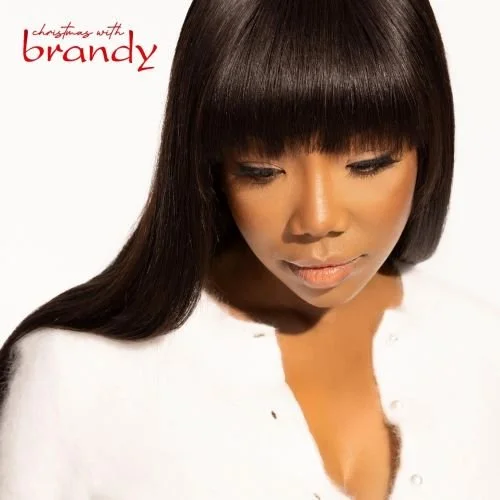
the intensity and regularity of holiday music played in stores will be notable. That will translate to radio by December. I know it is a way of making people think about Christmas and get them to buy stuff early. My thoughts always go out to stores and the employees who have to hear the holiday classics countless times before we even get close to the big day! I do love Christmas classics from Slade, Wizzard, Paul McCartney and, of course, Mariah Carey. One of the ultimate Christmas songs, All I Want for Christmas Is You, there are some that are timeless and you do not mind hearing them – though there is that element of overkill considering stores around the world are already playing these on rotation! I mention these songs, because we are also going to get holiday albums coming along. Every year gives us a range of Christmas records. They either have original holiday-themed songs from that artist. Normally, they are either covers of Christmas songs – normally classics prior to the 1970s -, or there is a mix of interpretations and new songs. One that was announced recently that I am excited about is from Brandy. She is one of my favourite artists. Her first holiday album, Christmas with Brandy, arrives on 10th November. VIBE are among those who reported on the news. It is going to be fascinating to see what she gives us (in terms of her interpretative instincts). With a soulful and powerful voice, there are some traditional standards and less-known songs all mixed with a warming and beautiful shot of Brandy. It seems like a project she is really invested in:

Brandy is set to release her first holiday album, Christmas With Brandy, just in time for the festive time of year.

The 11-track LP will debut on Nov. 10 and is her first release since 2020’s B7.

Her new offering will include Christmas classics such as “Have Yourself A Merry Little Christmas,” “Santa Baby,” “The Christmas Song,” “Jingle Bells,” “Someday At Christmas,” and “Deck The Halls.”

However, fans will be most thrilled about the Vocal Bible‘s original tunes like the album opener, “Feels Different,” which is described as a “holiday breakup anthem,” in addition to “Somebody’s Waiting,” and the album’s sole feature — “Christmas Gift,” a duet with her daughter, Sy’Rai.

Fans can hear a preview from the project in the visual teaser Brandy shared on Instagram late Thursday night (Oct. 19). When making the formal announcement after a month’s worth of speculation, the 44-year-old expressed, “I feel so blessed to be able to create an album surrounding joy, Family, love and quality divine time with the ones you love.”

The project was first hinted at back in September when A&R executive Jaha Johnson wrote on his Instagram stories, “One of my favorite things to do is sequence the album. Christmas will never be the same.” The post included a handful of songs with Brandy’s rendition of “The Christmas Song” playing in the background.

Christmas With Brandy comes the week before she stars in the Netflix original film, Best. Christmas. Ever. Brandy stars as Jackie who reunites with her longtime frenemy, Charlotte (Heather Graham), during the holidays in a comical twist of fate”.

I do like a Christmas-themed album! Maybe it can be a little samey if artists cover the usual songs. I think, more than that, it is a way of getting a new perspective from a traditional studio album. Rather than play the same holiday songs, you get these new compositions and fresh takes on familiar songs. One of last year’s best Christmas albums, Santa Baby by Alicia Keys, saw her take on songs like Happy Xmas (War Is Over) and Ave Maria. It is always curious which songs artists select. There are so many Christmas-themed and scented songs to choose from. It can be harder covering a song that doing an original one, as so many people know the original. I am writing this feature on 21st October, so I am not yet sure which song Brandy has selected for single/teaser release. Her selection of album songs looks to balance well-loved festive tracks and some rarer/more personal ones. A few artists are embarking on their first Christmas album. Cher’s Christmas was released on 20th October. Thirteen tracks where Cher duets with some iconic artists – such as Cyndi Lauper on Put a Little Holiday in Your Heart -, you can feel the pride and passion in her voice! For artists like Cher and Brandy, there is a realisation of a childhood dream. Something that means they can connect with millions of fans at an important time of year. That need for togetherness and happiness is more needed this Christmas than any in recent memory! The festive treats will continue to come in the lead-up to December.

You can see other Christmas albums that have been announced. They are a mix of reissued ones, plus some originals by a variety of artists. Samara Joy’s new Christmas E.P., A Joyful Holiday, is one that I am especially interested in – as she is a wonderful artist who has a magical voice. Quite a fertile and eclectic market, the festive/holiday/Christmas albums/E.P.s are going to appeal to so many people. If you do not like an album purely where carols are covered, then you are going to be catered for in some other way. I think that Brandy’s upcoming Christmas with Brandy is among the must-hear festive albums of 2023. Releasing these albums with weeks to go until Christmas, it does get you in the mood! I know more will be announced soon. Having offerings from Brandy, Cher, Samara Joy and, as we can see here, Gregory Porter is going to be a real festive treat! I am going to check out Brandy’s album. I am intrigued to see what Gregory Porter offers too. I guess there is this wishlist of artists we’d love to see release a Christmas album. Personally, The Staves or boygenius putting out Christmas albums would be heavenly. Perhaps some left-field with Björk. It would be interesting to explore how an artist such as Father John Misty or John Grant might fare on a holidays album.

Whatever promotes a festive spirit at a difficult time is all fine by me! As The New York Times wrote in their feature from last year: “Holiday albums are more than background music played in the weeks between Thanksgiving and New Year’s Eve. They offer artists a chance to recontextualize themselves, play around in a nostalgic format, reinvent traditions and even strike gold in what’s become a lucrative season for the music business”. These Christmas albums do mean that entrenched songs that we all know are being given a new take – even if there is a proliferation of artists tackling Silent Night and those kinds of songs. It is a chance for lesser-known holiday songs to get into the cannon. So future generations get to hear them. I think it is a chance to make people aware of Christmas tunes that might have passed them by or are from another generation. There are so many carols, classics and other Christmas-themed songs that have not really been given a proper modern reinterpretation. It seems that there are some gold options already when thinking about Christmas albums this year – with more likely to come to fruition very soon. Maybe not as profitable as a standard studio album, it is a nice opportunity for an artist to take a different approach and have this nice sorbet between studio releases. Christmas with Brandy sounds like it is going to be a perfect album to enjoy by the fire as it snows outside. As gifts are being opened, or you are watching people in the street sing carols. It seems to have a romantic and traditional heart; with a modern twist and contemporary takes on older tracks. It is an album that many of her fans will want…

IN their Christmas stocking.

FEATURE: Second Spin: Slade – Slayed?

FEATURE:


Second Spin


Slade – Slayed?

_________

AN album that you can get on vinyl

 IN THIS PHOTO: The classic lineup of Slade in November 1973 (left to right: Jim Lead, Don Powell, Noddy Holder and Dave Hill)

rather than put this in Vinyl Corner, I wanted to highlight Slade’s Slayed? as a Second Spin candidate. The 1972 album from the mighty Slade, I have been reminded of it following the news that their lead, Noddy Holder, was diagnosed with cancer five years ago. Produced by Chas Chandler, Slade’s third studio album ranks alongside their very best. This amazing album reached number one in the U.K. It remained on the chart for thirty-four weeks and was certified Silver in early-1973. Even though Slayed? is an amazing album, I don’t think it is known and played as much as it should be. I wanted to put it back in the spotlight for a bit. With one of their biggest songs, Mama Weer All Crazee Now, in the mix, Slayed? is an album that will connect with fans of the band - and those who might not know much about them. If you want to get Slayed? on C.D. then you can buy it here. I can’t see any making of features or anything that looks at the background of an album that came out on 1st November, 1972. I am going to come to a review of the reissue of the album in 2021. First, this is what AllMusic wrote about the stunning Slayed? It is surely near the peak when we think of the Midland band’s cannon:

Slade might have built its everywhere-but-America fame upon a succession of gut-tearing hit singles, but the band's true rocking credentials were on display elsewhere, in the second to none stage show that had already been preserved on the epochal Slade Alive! earlier in 1972 and across the chain of storming B-sides that had accompanied the smashes so far. Slayed? may have been only the band's second studio album in four years, but it reinforced that barrage with enough mighty stompers that the band could have taken the next year off and still not run out of steam. Even if one excises past hits "Gudbuy t' Jane" and "Mama Weer All Crazee Now" from the equation, Slayed? is a nonstop party, from the riotously self-fulfilling prophecy of "The Whole World's Goin' Crazee" to the down-key but still eminently stompalong-able "Look at Last Nite," the latter a reminder that, even at its loudest, Slade was still capable of some fetching balladry.

Or should that be the other way around? The tomahawk riffing of "I Won't Let It 'Appen Again" is another highlight -- a similar arrangement was later borrowed, to excellent effect, for sometime support band Blue Öyster Cult's version of another Slade favorite, the rocker anthem "Born to Be Wild," while "Gudbuy Gudbuy" lurches like a battalion of tanks and matches a stirring Dave Hill guitar break to one of Noddy Holder's coolest-ever vocals. A couple of covers break the Holder/Lea songwriting domination. A bass-heavy blues boogie through Janis Joplin's "Move Over had graced a Slade BBC session earlier in the year, and provoked such a great response that they had no option but to re-record it, while the closing medley of "Let the Good Times Roll" and "Feel So Fine" was the closest you could come to the mania of a Slade live show without actually going out and buying a ticket. Of course, listeners don't have that option today. But stick on Slayed?, crank the volume well up -- and the whole world will be going crazee all over again”.

The Guardian reviewed Slayed? when it got a reissue in 2006. I was not aware of that. In their five-star review, they heralded the influence of the album. How it impacted bands like Oasis. Echoes and Dust discussed the 2021 reissue that introduced Slade’s Slayed? to a new generation. I think that more people need to investigate the album and spread its brilliance far and wide:

BMG gave a reissue to Slade’s 1972 album, Slayed? on splatter vinyl last month. It’s yellow and black and looks like a giant squashed banana, perhaps a suitably tragi-comic coincidence.

Slayed? was the band’s third album and it went straight in at Number 1 when released that November and remained in the charts for 34 weeks. Of course at the time Slade strode across Europe like a tartan-trousered Godzilla, blasting out hit singles and albums like the giant reptile’s fiery breath after a particularly heavy night on the sake. And yet despite Slayed? being just one of three chart-topping albums, and the band being a cherished institution for any rock fan over a certain age, you’ll never see any of their studio album’s listed in Top 100 Best Of’s… so beloved of the music press. My teenage son is familiar with the works of Nirvana and Led Zeppelin, but he’d never heard of Slade and the only tune he seemed to recognise was the Christmas single. I’m sure many a keen young rock fan has been lead to Spotify to check out the ‘canon’ of albums; Led Zep IV, Exile on Main Street, Nevermind, The White Album, Back in Black etc etc. – but it’s unlikely many have been encouraged to check out Slade’s back catalogue by their peers. Why is that? Well, I suspect it’s partly that Slade made, maintained and even resurrected their reputation as a live act. Slade were the good time had by all. The original album liner notes on the back by music journo states as much…

Also main songwriter Jim Lea had a genius for penning catchy melodies to the extent that virtually every song the band put out in the early seventies could have been a Top 40 smash. As a consequence the band’s studio albums can feel like single collections or slightly cleaned up documents of what the band were playing live at the time. That’s certainly the case with Slayed? which by the end abandons any pretence of being a self-contained piece of art and barrels out with a medley of ‘Let the Good Times Roll/Feel So Fine’ which I imagine is as near as dammit to seeing the band encore in a club at that time. A studio album feels like second prize to the main event of witnessing the Black Country boys tear it up amidst a sea of sweat, denim and beer.

There are, however, some great songs on Slayed? – the boisterous, groovy opener ‘How D’You Ride’, the Motown meets psych rock of ‘I Won’t Let It ‘Appen Agen’, and the sardonic and downbeat ‘Look at Last Nite’, a song already forecasting the bands fall from the heady heights of fame. Then of course there’s the actual hit singles – ‘Mama Weer All Crazee Now’ and ‘Gudbuy T’Jane’. To these ears ‘Mama…’ is now rather stale and conjures grisly images of Oasis, but ‘Gudbuy…’ is still a corker, a sort of Status Quo meets The Rolling Stones in Wolverhampton Town Hall knees up, with Dave Hill providing some lovely Stonesy licks throughout.

‘Super Yob’ guitarist Dave Hill, (now the only remaining original member since the controversial dismissal of Don Powell) looms large in the legend of Slade, but what is surprising is how restrained his appearances are on this album. In fact on the opening numbers it’s Jim Lea’s bass that leads the songs and adds the heavy, thumping atmosphere to the darker, less glam numbers. Although Slade’s lyrics seldom match their knack for a tune, with the songs mostly being classic rock life on the road and woman-done-me-wrong laments, there are some subtler moments found in ‘Look at Last Nite’ and ‘Gudbuy Gudbuy’. It’s these, less familiar songs that will draw you in if you’re now immune to the big singles.

Ultimately though, these songs were written to be performed and enjoyed live and now that the classic line-up of the band’s heyday is an ever-fading memory, that’s what the purpose of Slayed? is – a chance to hear one of the UK’s greatest musical acts at the top of their game. Turn it up loud and Feel the Noize”.

If you have not heard the superb Slayed? then go and check it out! Slade were in my mind when I heard about Noddy Holder and his cancer diagnosis. I am not sure whether there is going to be any new music from Holder in some form in years to come. It is the time of year when we will hear Slade’s classic Christmas song, Merry Xmas Everybody. That song was released not long after Slayed? Written by Holder and bassist Jim Lea, it was produced by Chas Chandler. It was the band's sixth and final number-one single in the U.K. It won them the U.K. Christmas number one slot in December 1973. It beat another Christmas-themed song, Wizzard's I Wish It Could Be Christmas Everyday. If you are in the mood for a great album that is celebrated but not heard that much, go and seek out Slade’s 1972 gem, Slayed? It is an album that will definitely…

LEAVE impressions in the mind.

FEATURE: Bandwidth: The Longevity and Passion of Our Best Broadcasters

FEATURE:


Bandwidth

 IN THIS PHOTO: Steve Lamacq/PHOTO CREDIT: Jason Joyce


The Longevity and Passion of Our Best Broadcasters

_________

YESTERDAY saw the departure…

 PHOTO CREDIT: BBC/Ray Burmiston

of one of Britain’s greatest and most respected broadcasters from BBC Radio 6 Music. To be fair, Steve Lamacq is coming back to the station in January. Rather than working a six-day week, Lammo is doing a weekly Monday show (from January). It was an emotional final weekly show for someone who has backed and championed so many bands. Such a variety of artists! Through his twenty years there, Lamacq has been at the forefront of modern music. Ensuring that some incredible artists reach us. It is his passion and commitment to the role which is inspiring! Radio seems to be one of those professions where you see this decades-long commitment. I am going to carry on in a minute. First, The Independent reported the news of the grand Steve Lamacq’s departure (full-time) from BBC Radio 6 Music:

Steve Lamacq, a BBC stalwart known for discovering and championing new music, is quitting his Radio 6 Music drivetime show after almost two decades.

The broadcaster and tastemaker, 57, has hosted the slot since 2005, and his final broadcast for the weekday show will fall on Friday 20 October.

Lamacq has taken the decision to step back to spend more time with his family – he is married to psychologist Dr Jen Wills; the couple share one daughter.

Instead of his daily show, Lamacq will return in January 2024 with a new programme, Steve Lamacq’s Teatime Session, which will air weekly on Mondays.

Lamacq said: “It’s been terrific doing six shows a week, but what with all the prep work for the programmes and the ever-increasing volume of new music to listen to, there’s not been nearly enough time left over for my family. And to be honest, after nearly 40 years at the coalface of new music, I think I need a bit of breather.

“Plus, there are other things I’m keen to do. Not least seeing if there’s a more practical role I can play in supporting the live music circuit and the venues across the country that I owe so much to.

“But of course, my heart still lives for discovering and nurturing new bands, so I’m really pleased that these changes mean I can stay at 6 Music, while allowing more time to go searching for emerging artists, who I’ll be channelling into the new Monday show. There’ll be live sessions, interviews, some amazing archive and fingers crossed, at some point, the future of rock and roll.”

BBC radio regular Huw Stephens, who is replacing Lamacq, called taking over from the presenter “an honour”, adding: “Steve has been a music mentor to all of us, his recommendations, thoughts and guidance in music is a huge part of who I am today and to call him a friend as well as a colleague means a great deal.

“I look forward to spending time with the 6 Music listeners every day, sharing new music and celebrating the music we love. So to everyone who’s asked me over the years, ‘When are you getting your own show on 6?’, the answer is, ‘Soon!’ See you on the airwaves!”

The BBC described Lamacq’s move as a “well-deserved” change.

Lamacq, who started out as a journalist at NME, has presented on Radio 1, Radio 2 and 6 Music. He has played an instrumental role in the careers of many artists over his career, including Blur, Pulp, PJ Harvey, Coldplay, Florence + the Machine and Fontaines DC”.

 IN THIS PHOTO: Radio pioneer and BBC Radio 1 mainstay, Annie Nightingale/PHOTO CREDIT: David Levene/The Guardian

Look across the airwaves and we see that there are so many broadcasters who have been at the station for decades. Tony Blackburn, Zoe Ball, Annie Nightingale, and fellow BBC Radio 6 Music stablemates of Lamacq, Chris Hawkins, Lauren Laverne and the weekend duo of Mark Radcliffe and Stuart Maconie, have been there for many years. All phenomenal talent who could work at any station, it is clear that they find comfort in the bandwidth they get regarding recommending music of multiple genres. The chances to expose some terrific music. What is clear, when listening to Steve Lamacq speak, is how much is means having the listeners connect! How meaningful it has been for him to discover all these amazing artists through the years. Maybe it is something specific to broadcasting. I have found that there is this passion and sheer dedication to what they do. It is sad that Steve Lamacq is not going to be such a regular fixture on BBC Radio 6 Music! As he has spent so long working all week listening to music, attending gigs and championing music around the country, he does need to spend time with family and take a step back. The fact he remains at the station and will keep broadcasting proves that that desire never goes away. His Monday show will see him return with eagerness, a new perspective and fresh energy. I listen to stations like BBC Radio 6 Music and BBC Radio 2 and I am amazed by the energy and continued desire and commitment broadcasters have still. From Lauren Laverne’s weekday breakfast show on BBC Radio 6 Music to Zoe Ball’s breakfast show on BBC Radio 2, you have these legends still going strong. Ken Bruce going from BBC Radio 2 to Greatest Hits Radio. It seems radio is an industry where you get this endless and undying passion. Whether it is simply the listeners and the relationship formed with them, or the great music new and established, it is always inspiring to hear – and kind of heartbreaking when an iconic broadcaster steps back or is not in our lives in quite the same way after so long!

 IN THIS PHOTO: Shaun Keaveny/PHOTO CREDIT: Press via GQ

Another legendary broadcaster – and an erstwhile colleague of Steve Lamacq on BBC Radio 6 Music – is Shaun Keaveny. He is a classic example of someone who has that unquenched thirst and passion. At BBC Radio 6 Music for over a decade, he has appeared on BBC Radio 2, BBC Radio London, and Greatest Hits Radio. He has his own independent radio station, Community Garden Radio, that has been on air for almost one hundred editions. Set up with producer Ben Tulloh, it is a more liberating and less restrictive way of broadcasting compared to the BBC. A bit more freedom in terms of the music choices and what he can say on the air. Keaveny does a Wednesday afternoon show on the station, in addition to a daily podcast, Shaun Keaveny’s Daily Grind for Radio X. In a recent interview with Jessie Atkinson for GQ, Keaveny discussed his latest venture:

Daily Grind, like your former BBC Radio 6 show, is all about celebrating the mundane moments in life. What do you think the value in that is?

It goes without saying that the news cycle gets more upsetting everyday, and we don’t want to pretend stuff like that’s not happening, but we do want to look at smaller aspects of life and try and bring some pleasure out of them. It’s this lower stakes business that we’re interested in the most.

What are the pedestrian minutiae of your mornings?

I’ve got a load of kids to get out of the house, so I’ve got to get the dependents out of the way first before I can concentrate on anything else. Our youngest, she has a little owl alarm that lights up, so the first thing I always hear is her flutey little four year-old voice saying: “My owl’s awake, daddy.” The central crank of my getting out of the house and making it a good day is making stovetop coffee. And then I’m going to come to the studio…

What’s it like?

It’s a proper place. My only stipulation was the light had to be quite low. Not off but really toasty and moody like an elderly gentleman’s front room.

No big lights!

People think I’m mad at home; I go around flicking all the big lights off. I understand you need them in an operating theatre — you can’t have smoky lamplight when you’re having a heart bypass — but the rest of the time when you’re just sitting around having a glass of wine you’ve got to turn them off.

Do you have any middle-aged shout outs?

My life is just one long middle-aged shout out. The most obvious recent example is that almost overnight, my eyesight went shitter. The next step for me, I think, is to make the writing bigger on my iPhone. Then I’ll be in the pantheon of late middle-age.

How are you preparing for daily recording again?

I’m not good at giving up things that are bad for me. I’m not Slash in 1993 or anything, but I do like to nip out for a couple of pints here and there. Burn the candle at both ends. Stay up watching music documentaries when I should be in bed. All of that wild and crazy stuff. But in recent times, I’ve been trying to save up my energy a bit because I can instinctually tell that the next few weeks and months are going to be an onslaught.

What will you be drinking while recording?

I’ve got to be careful that I mitigate and limit the amount of caffeine that I drink because otherwise it could be very destructive to my career. But the problem is that I’ve got no willpower at all and the other problem is that there’s a decent coffee machine next door with the Clooney-style pods.

What music have you been listening to lately?

On Community Garden Radio I choose an hour’s worth of music. We just played a fantastic young artist called Lola Young. Glass Beams are really good, and the new Stones album is bloody good, too. People like Young Fathers blew me away at Glastonbury. CMAT: she’s absolutely fantastic as well.

Is there anything you’re convinced people are just pretending to like?

The latter albums of Bob Dylan. And cold brew coffee: I’ll never understand that.

Hopefully you won’t be on a similar list for too many people.

I think sometimes you’ve got to keep doing something until either people accept and enjoy it or leave it and move onto something else”.

 IN THIS PHOTO: Lauren Laverne (centre) photoed with Annie Macmanus and Nick Grimshaw/PHOTO CREDIT: BBC

I have the utmost respect for broadcasters who have been where they are for years. Some of my absolute favourites – from Chris Hawkins, Lauren Laverne, Shaun Keaveny, Steve Lamacq, Annie Nightingale, and Zoe Ball – have been in the industry for decades. Radio seems to have this allure that makes it near-impossible to say goodbye to step away from! I think it is the endurance that these broadcaster have that amazes me the most. In a role that is tiring and takes up a lot of your time, they remain there. Always committed to their craft and audience! It is that knowledge that there is a loyal audience listening to them that fuels them. Unlike most professions, you get that direct connection with the audience. I think it is that chance to bring new music to people. The thrill of uncovering a small band who will then go on to be a big thing. Maybe, as Steve Lamacq has said, that band might not go anywhere. That does not mean they are no good. They mean something to someone! We get the impression that music discovery and radio is about the big artists. A lot of it is about the underground sounds. Catching an artist in their first phases. It seems almost like a duty. I can understand why it is so hard to step away from that! I wanted to salute the brilliant Steve Lamacq and his tireless service to radio. I also wanted to nod to some of the country’s most respected broadcasters and the years they have already committed to radio. We offer huge thanks to these amazing broadcaster who…

MEAN so much to us.

FEATURE: Hackneyed or Diamond? Can The Rolling Stones’ New Studio Album Help Shine a Light on the Value of the Compact Disc?

FEATURE:


Hackneyed or Diamond?


Can The Rolling Stones’ New Studio Album Help Shine a Light on the Value of the Compact Disc?

_________

FEW people would have expected…

 PHOTO CREDIT: Mark Seliger

The Rolling Stones to put out a late-career gem in 2023. Not that it ranks with their very best albums, though Hackney Diamonds has received some rave reviews. Most sources I have seen give it a four-star nod of approval. Quite fresh in some ways, there are moments that they hark back to their 1970s peak. It is a fun and at times edgy album that shows there is plenty of life in them. There is no decision as to whether it will be their final album. If it is, it is a hell of a way to depart! The Guardian shared that view; Variety felt that The Rolling Stones produced something magnificent; The Independent got the impression Hackney Diamonds was a career closer; MOJO gave a positive verdict when assessing the band’s twenty-fourth (British) album. The Times gave Hackney Diamonds five stars; The Telegraph also did. In a year where the most essential, memorable and impressive Rock has been made by younger and newer artists, The Rolling Stones – whose debut album came out in the early-1960s – show that you can never write off artists based on their age and past. Hackney Diamonds will nestle alongside the best albums of 2023 when critics publish their lists in a couple of months or so. You can buy Hackney Diamonds here.

Rather than write a feature about the album, its success, or even the endurance of iconic bands and artists – though I may do that in a few weeks -, I wanted to pick up on something that appeared in a Music Week about C.D. sales. There is always talk that the format is in decline. I think that it may be exaggerated slightly: there is a stable hold at the moment but no real upturn and boom like we are seeing with vinyl. It is a format that will always struggle when we pit it against vinyl. The chart success of Hackney Diamonds undoubtably will boost C.D. sales for this month. Many of The Rolling Stones’ fans have got the album on that format. I wonder whether at least the appeal of the fantastic C.D. version of Hackney Diamonds will at least put the decades-existing format in a more positive public headspace. That it has value. I will continue on that thought soon. Here are parts of the feature and interview with Polydor’s head of marketing Ali Tant (who was discussing the long-term ambitions for Hackney Diamonds):

Polydor’s head of marketing Ali Tant has spoken to Music Week about the the Rolling Stones’ campaign for Hackney Diamonds – their first album of original material in 18 years.

The Stones played a surprise show in New York last night at Racket NYC. The album launch featured a guest appearance by Lady Gaga during the encore.

The band have just unveiled their huge partnership with Spotify for the Stones lips logo on Barcelona shirts. It’s just one of many components to a global campaign that includes DSP partnerships, branding deals and international pop-up stores.

The Rolling Stones revealed their comeback plans with a Hackney Empire launch event last month, which was broadcast globally on YouTube. Lead single Angry became their first Top 40 hit since 2005.

Within the huge global campaign, there will be a lot of attention on the week one UK sales. The Stones’ 2016 covers album Blue & Lonesome was released in December that year and opened at No.1 with sales of 105,830.

Hackney Diamonds has been released alongside Polydor and Universal Music’s catalogue campaign for the band, following the release of 40 Licks on DSPs in the summer. It’s all part of a wider strategy to boost streaming for the band with big DSP partnerships set to roll out for the campaign.

With 12 tracks over 48 minutes, it’s a substantial new body of work…

“Yeah, you've got the more single tracks, Angry, Mess It Up, Depending On You, which is a really strong track that feels a little more fragile in terms of subject matter. It's about relationships, it's about friends, it's about the relationship that they've had with each other. When we sat down and heard the album in full, I wasn't sure what to expect. You go into these situations and you're nervous because you want it to be brilliant. You're also conscious that you're being looked at because your reaction to the songs is being monitored. But yeah, it was just incredible. I came out smiling for about four days.”

In terms of a career highlight, what was that like listening to the record with the band?

“It just didn't feel real. I've met a lot of people in my career, and I never take it for granted. I came back and told my wife, ‘I've just been sat in the studio listening to the record [with the Stones] and I can't tell anyone!’”

The UK is actually leading on this campaign, which is fantastic for an iconic British band. How are you working with international partners?

“The UK has, historically, always led on the Stones. The UK isn't necessarily the biggest market for the stones – arguably the US and Germany are bigger, Germany's a massive market for the Stones. The work that Victoria [Fonfe] and Nickie [Owen] do in the international team is incredible to make sure that everyone feels super-served and gets what they need. It's just been an absolute honour to work on this one. When Tom [March] went over to Geffen, it was a very natural place for the Stones to go. The Stones have been with Interscope anyway, so Tom, Adrian [Amodeo], Steve Berman [vice-chairman] and John Janick [CEO/chairman], are incredible and bring a huge amount to the campaign in terms of partnership activations.”

 Although you said it’s not just a week one record, what ambitions do you have for the opening result, particularly with the vinyl?

“We’ve made sure that we've got a really good suite of products. Each key retailer has got their own exclusive, be it Amazon, HMV, indies, e-commerce, they all have exclusive products. I'm very intrigued to see how CDs sell on this record. Whatever people say about the CD market going into decline, the Stones audience always buck that trend. Yes, vinyl is going to do well on this record, but the CD is going to do very well. So we  needed to make sure that we had good products for both vinyl and CD.”

What do you think is going to be key to keeping this album going into next year? It sounds like the band are hungry for success as well…

“Yeah, they expect the best. They expect us to work really hard on it. They're working really hard as well. We're sort of getting into the plans for next year. But the plan really is that this is 18 months [of activity] that will keep this album buoyant – but not just the album it’s the catalogue as well. The Stones’ catalogue has ticked over nicely, it's done well. We've had moments like the Goats Head Soup reissue and Tattoo You reissue, where we've seen spikes and brought new audiences in. But if you take Blue & Lonesome out of the equation, this album is the first time in 18 years since they have put out a studio album. It’s the first time in the streaming era that they have put out a proper studio album. I genuinely think this album is going to be a rocket for the catalogue. This album will bring new fans in, but everything we’re doing is not just about this album. The Spotify-Barcelona partnership is about exposing the Stones and their iconic branding to a billion people. It’s not just going to be all focused on the new album, it’s going to be focused on everything”.

 PHOTO CREDIT: cottonbro studio/Pexels

The fact is that artists really do have a love for all physical formats. It is not only the case that they want to put stuff out on vinyl. I think the success of The Rolling Stones’ Hackney Diamonds on C.D. will show that there is an appetite out there. Fans of all ages are still buying them. Even if they cannot realistically compete with vinyl, it is not only an act like The Rolling Stones helping to boost C.D. sales. They, at the very least, show that there is very much life left in them. The C.D. version of the album is less than half the price of the vinyl equivalent. The Stones released a £50 Limited edition boxset, which includes the standard album on C.D., a Blu-ray disc with hi-res 24/96 audio and Dolby Atmos versions of the album, plus a 64-page book with exclusive essays and photos of the band, and lenticular cover art. It shows that they really want to get people invested in compact discs! I do hope that there will be this debunking around attitudes where people feel C.D.s are obsolete or crap. Even, if by their sheer lack of size and physical presence, few are going to say they are more appealing than vinyl, they still provide the cheaper alternative. I do not know how many units Hackney Diamonds will shift on C.D., as I this feature is going out two days after the album was released. It is expected to be very high numbers. The label and marketing team would not put so much effort into pushing the C.D. and providing multiple versions if they felt it would fail. Even though there is more of a push on the various vinyl options, you can see that the C.D. is very much there too. I am surprised they did not put out a cassette option. Maybe feeling that would be overkill and too expensive considering how many options there are already!

I guess vinyl always does well and unites people because of the browsing experience. You have these big items that you can hold. Scanning through the shelves and racks. There is this tangible and sensory experience. The physical product itself is satisfying and has that sense of feel and value. C.D.s are different. Not quite as exciting and on the same level, fewer people have the technology and means to play them on too. I do think there will be more of a revival soon. If a major band like The Rolling Stones helps to increase C.D. sales and there is a lot of thought into giving various price options, I feel this could continue with other acts. In fact, look at kylie Minogue and Tension. Not only did she provide a range of different C.D. options with some extra tracks on one, there was also a real push for cassettes. Having different colours helps, though there are other ways to make C.D.s appealing and engaging. Various tiers in terms of prices where you get slightly more the more you pay; the ways you can add something cool to the packaging (a holographic cover or something interactive makes it quite engaging and cool). Including a detailed booklet too. The combination of range and lower price (compared to vinyl) will mean the C.D. is an essential alternative if you want an album but can’t spring for a vinyl. Artists who are really proud of their albums and want them to be as accessible and available to as many people as possible will have C.D.s in mind. Maybe a lot of smaller acts will not have the chance to do as many versions and coloured options. Although I sound like a broken record, the only way C.D. sales cannot only hold on and even see a steady increase is to make sure there are the means to play them on. Artists are making them available and offering a range of C.D. choices for fans. This needs to be met with commitment and drive when it comes to manufacturing devices to play them on. The C.D. has a lot of value and longevity. There will never be a huge boom, yet I think that recent examples like The Rolling Stones and Kylie Minogue really making the format attractive and accessible means they can never be seen as hackneyed or old-fashioned. I think that the compact discs is…

A pure diamond!

FEATURE: Joni Mitchell at Eighty: The Gallery: Five Essential Books By or About the Icon

FEATURE:


Joni Mitchell at Eighty

IN THIS ILLUSTRATION: Art by Joni Mitchell, from Morning Glory on the Vine (2019)/ILLUSTRATION CREDIT: Houghton Mifflin Harcourt 


The Gallery: Five Essential Books By or About the Icon

_________

THIS is my final feature…

 IN THIS ILLUSTRATION: Art by Joni Mitchell, from Morning Glory on the Vine (2019)/ILLUSTRATION CREDIT: Houghton Mifflin Harcourt

about the wonderful Joni Mitchell. She turns eighty on 7th November. I have covered her best albums and influence on other artists. I am going to end this run by recommending books about Mitchell. Whether they are by the legend or written about her, diehards and new fans alike might want some guidance or suggestions as to which books are worth getting. I suppose more Joni Mitchell books will come to light in the next year or two – as she is turning eighty; there is a lot of fresh interest around her following her recent live performances. If you want an insight into Joni Mitchell’s genius, there are articles and feature online that are worth digging into. Visit the official Joni Mitchell website, as there is a great archive that you can access. There have been a few Joni Mitchell books published through the years. I am linking to Waterstones for most recommendations (except for Amazon for the final choice). Ones you can order online through them – though you can also collect in-store. In all cases, you can search other book sellers and shops if you struggle to order a copy. Below are five Joni Mitchell-related books that everyone needs to check out. They give you a lot of detail and depth about…

A beloved and fascinating artist.

___________

Morning Glory on the Vine: Early Songs and Drawings

Author: Joni Mitchell

Release Date: 22nd October, 2019

Publisher: Cannongate Books

Buy: https://www.waterstones.com/book/morning-glory-on-the-vine/joni-mitchell/9781786898586

Synopsis:

A beautifully detailed reproduction of a Christmas present that Joni Mitchell created for her close friends, Morning Glory on the Vine is a tantalisingly intimate snapshot of the great singer-songwriter circa 1971. Bursting with some of her earliest lyrics and illustrations from her sketch books, this is an eminently collectable volume to treasure forever.

In 1971, as her groundbreaking album Blue emerged as a singular commercial and critical success around the world, Joni Mitchell puzzled over what gift to give her friends that Christmas.

The result was a handmade book, with only one hundred copies produced, filled with Joni's hand-written lyrics and reproductions of many of her stunning drawings - portraits, abstracts, random concertgoers, and more. Each was given to a friend and, until now, the edition has remained private.

Today, with Morning Glory on the Vine, Joni's long-ago personal Christmas present is a present to us all”.

Review:

Like most anything Mitchell touches, her book is a stroke of genius. Fans will find enthralling the opportunity to see some of Mitchell’s most famous songs outlined in her handwriting—some already having been recorded by the time of the book’s creation, and others still in developmental stages. Newcomers to Mitchell’s oeuvre will find similar inspiration in the same words, absorbing the artist’s creations in a melody-free forum that may lead to closer first-listens of her music than if never before read on paper.

Each page manifests a life of its own—from culturally-omnipresent images (i.e., the famous Court and Spark album artwork), to random but undoubtedly sumptuous diversions, such as an abstract portrait of Georgia O’Keeffe, or a still life study of Mitchell’s sun-dappled Laurel Canyon dining room. Content and form operate in revelatory ways. The arid, sun-soaked palette of which Keeffe’s visage is comprised, rendering the artist inseparable from the desert landscape that surrounds her, speaks volumes of the inseparability between “creator” and “creation”. This is a quality integral to Mitchell’s own work.

This visual smorgasbord is anchored effectively by her writing, which begins in 1960 with the poem “The Fishbowl”. It’s about Mitchell’s disdain for show-business, and continues through the advancing stages and albums of the artist’s lived experience.

There is an ethereal confluence about the material, which aligns all of Mitchell’s skills into a single, unfettered platform for expression. The music couldn’t exist without the poetry, and the poetry couldn’t exist without the art, and the art couldn’t exist without the music. In fact, and unbeknownst to many, they have been inseparable all along. Legendary songs (i.e. “River”, “Ladies of the Canyon”, and “You Turn Me on I’m a Radio”), whose lyrical exceptionalities lend them an artistic wholeness that would seem stifled by any kind of supplement, are granted drawings that provide the layers of comprehension and complexity we didn’t know we needed. It is a mosaic equal parts fulfilling and thrilling, Mitchell’s canon inhabiting a newer, more tactile life before our eyes.

But Morning Glory on the Vine is not only a book of synthesis; it, too, is a work of deft confessionalism akin to an album like Blue. Some of the art validates our deepest contemplations about certain songs, like “Blue”. long believed to be Mitchell’s tragic love letter to James Taylor. One cannot help but recognize Taylor’s silhouette in the lyrics’ accompanying drawing—a long-haired guitarist, bedside, head bowed, staring at ocean waves through the window. It is in these moments that we feel Mitchell has brought us full circle, and that we may never have understood “Blue” in its entirety without this missing puzzle piece” – PopMatters

Joni Mitchell: Lady of the Canyon

Author: Michael A O'Neill

Release Date: 17th September, 2020

Publisher: Danann Media Publishing Limited

Buy: https://www.waterstones.com/book/joni-mitchell/michael-a-oneill/9781912918249

Synopsis:

"This is the story of one of the most important female recording artist of the last 50 years. Joni Mitchell began singing in small nightclubs in her hometown of Saskatoon, Saskatchewan before busking in the streets and nightclubs of Toronto, Ontario. In 1965, she moved to the U.S. and began touring. Settling in Southern California, Mitchell, with popular songs like "Big Yellow Taxi" and "Woodstock," helped define an era and a generation. Mitchell's fifth album, For the Roses, was released in 1972. She then switched labels and began exploring more jazz-influenced melodic ideas, by way of lush pop textures, on 1974's Court and Spark, which featured the radio hits "Help Me" and "Free Man in Paris" and became her best-selling album. With roots in visual art, Mitchell has designed most of her own album covers. She describes herself as a "painter derailed by circumstance" – Jonimitchell.com

Joni: The Lyrical Life of Joni Mitchell

Author: Selina Alko

Release Date: 16th April, 2020

Publisher: HarperCollins Publishers Inc

Buy: https://www.waterstones.com/book/joni-the-lyrical-life-of-joni-mitchell/selina-alko/selina-alko/9780062671295

Synopsis:

Colors burst across each page, with layers of collage-work emphasizing the richness of Mitchell’s influences and imagination. Will speak to readers just starting their own exploration of artistic expression." —Booklist (starred review)

Celebrate the captivating life of Joni Mitchell, the world-famous songbird who used her music to ignite and inspire an entire generation, in this stunning picture book biography from award-winning author and illustrator Selina Alko. This nonfiction picture book is an excellent choice to share during homeschooling, in particular for children ages 4 to 6. It’s a fun way to learn to read and as a supplement for activity books for children.

Joni Mitchell painted with words.

Sitting at her piano or strumming the guitar, she turned the words into songs.

The songs were like brushstrokes on a canvas, saying things that were not only happy or sad but true.

But before composing more than two hundred songs, Joni was a young girl from a town on the Canadian prairie, where she learned to love dancing, painting, birdsong, and piano. As she grew up into an artist, Joni took her strong feelings—feelings of love and frustration, and the turbulence that came with being a young woman—and wrote them into vivid songs.

Brought to life by Selina Alko’s rainbow collages and lyrical language, this heartfelt portrait of a feminist and folk icon is perfect for parents, children, and music lovers everywhere.

Back matter includes a letter from the author and Joni’s full discography.

“An inspired and creative ode to the inimitable Joni Mitchell.”—Kirkus

“Layered mixed-media collages featuring cut paper, found images, and colorful smears of paint effectively evoke the richly rendered emotional landscapes of Mitchell’s songwriting.” — Publishers Weekly”.

Review:

Selina Alko (Why Am I Me?, Can I Touch Your Hair?) introduces readers to Roberta Joan Anderson “before the songs” in Joni: The Lyrical Life of Joni Mitchell, the first picture book biography of the folk music icon.

Living in a small town in Canada, young Joni felt like “an upside-down bird on a wire” in a family who didn’t share her creative ambitions. The book chronicles her bout with polio at age 10; her interest in painting and poetry; her discovery of music and songwriting in art school; her marriage to and subsequent divorce from folk singer Chuck Mitchell; and the launch of her career in Greenwich Village. Alko sketches brief stories of the inspirations behind several of Mitchell’s most beloved songs and albums, including “Big Yellow Taxi” and Blue. She also includes portraits of the handful of musical luminaries who were contemporaries to Mitchell—Bob Dylan, Mama Cass, Leonard Cohen and more.

The illustrations, rendered with acrylics, collage, found objects and even wildflowers, are busy with occasional skewed angles, but Alko always keeps Joni their focus. Vivacious colors swirl in melodies, music notes and lyrics that undulate across the pages in banner-like waves. A wing motif dominates with birds, butterflies and winged insects. The final spread notes that the truth Joni shared in her music gives us freedom, and “freedom gives us wings to fly”—here, Joni herself is painted in flight. The color blue dominates, perhaps a nod to Joni’s most iconic album.

Alko, who in the backmatter relates a personal anecdote of having first heard Joni’s music at age 9, shares Joni’s life story with affection and drive” – BookPage

Joni Mitchell On Track: Every Album, Every Song - On Track

Author: Peter Kearns

Release Date: 24th September, 2020

Publisher: Sonicbond Publishing

Buy: https://www.waterstones.com/book/joni-mitchell-on-track/peter-kearns/9781789520811

Synopsis:

In her long career, Canadian songstress Joni Mitchell has been hailed as everything from 1960s folk icon to 20th century cultural figure, artistic iconoclast to musical heroine, extreme romantic confessor to outspoken commentator and lyrical painter. While some criticised what they viewed as her seeming dismissal of commercial considerations, she simply viewed her trajectory as that of any artist serious about the integrity of their work. But whatever musical position she took, she was always one step ahead of the game, making eclectic and innovative music

Albums like The Ladies Of The Canyon, Blue , Hejira and Mingus helped define each era of the 1970s, as she moved from exquisitely pitched singer songwriter material towards jazz. Her past influence was obvious in the 1980s when hoards of assuming successors (some highly respectable) gathered her exotic breadcrumbs with a view to distilling their illusive compounds, while Joni simultaneously forged ahead.

This book revisits her studio albums in detail from 1968’s Song to a Seagull to 2007’s Shine, providing anecdote and insight into the recording sessions, an in depth analysis along with a complimentary level of lyrical and instrumental examination”.

Review:

Joni Mitchell may have limited prog-rock credentials but during the 1970s her albums were essential listening, regardless of musical preferences. Although I lived on a staple diet of prog in those days, the 1975 The Hissing Of Summer Lawns album is one of my personal favourites from the period. Fish was similarly smitten, when a decade later, he adapted lines from the title song for Marillion's Lavender (which isn't mentioned in this book). When Joni started out in the 60s, her acoustic songs were inevitably tagged as "folk", but over the years she's embraced various styles including world music and jazz.

Author, journalist, musician and producer Peter Kearns hails from New Zealand and has two previous On Track books to his credit; on Elton John and 10cc. At 158 pages, plus a 16 page colour section, this is one of the longest books in the series and discusses all of Joni's studio albums up to and including Shine from 2007. This is followed by a single page Epilogue, which brings things almost up to date. I say almost because the book was completed before the October 2020 release of Archives - Vol. 1: The Early Years (1963 - 1967) therefore missing out a good deal of previously unreleased material.

Unlike many books in the On Track series, separate chapters listing live recordings and compilations are not included, although these are referred to in the general narrative. For American artists of a certain vintage, orchestral re-recordings of familiar songs have become very much in-vogue of late but Joni was ahead of the game. Accordingly, individual chapters are dedicated to the Both Sides Now and Travelogue albums from 2000 and 2002 respectively.

Kearns is clearly musically literate, with an almost academic approach when discussing the music with references to tritones, keys and chords. This will undoubtedly appeal to the serious musicians out there, although fundamental aspects of the songs like melody, mood and tempo are sometimes sketchy. Instead, the lyrics and the stories behind the songs are the main focus of attention, which is not surprising given Joni's often autobiographical approach to her song writing. To support his analysis, Kearns includes extracts from the lyrics for many of the songs.

This is a book that will appeal to Joni Mitchell devotees who will appreciate Kearns' analytical approach and erudite writing. Even die-hard fans may discover something new about a favourite song that may have otherwise passed them by. As such, it's recommended reading” - Jonimitchell.com

Reckless Daughter: A Portrait of Joni Mitchell

Author: David Yaffe

Release Date: 17th October, 2017

Publisher: Sarah Crichton Books

Buy: https://www.waterstones.com/book/morning-glory-on-the-vine/joni-mitchell/9781786898586

Synopsis:

Joni Mitchell may be the most influential female recording artist and composer of the late twentieth century. In Reckless Daughter, the music critic David Yaffe tells the remarkable, heart-wrenching story of how the blond girl with the guitar became a superstar of folk music in the 1960s, a key figure in the Laurel Canyon music scene of the 1970s, and the songwriter who spoke resonantly to, and for, audiences across the country.

A Canadian prairie girl, a free-spirited artist, Mitchell never wanted to be a pop star. She was nothing more than “a painter derailed by circumstances,” she would explain. And yet, she went on to become a talented self-taught musician and a brilliant bandleader, releasing album after album, each distinctly experimental, challenging, and revealing. Her lyrics captivated listeners with their perceptive language and naked emotion, born out of Mitchell’s life, loves, complaints, and prophecies. As an artist whose work deftly balances narrative and musical complexity, she has been admired by such legendary lyricists as Bob Dylan and Leonard Cohen and beloved by such groundbreaking jazz musicians as Jaco Pastorius, Wayne Shorter, and Herbie Hancock. Her hits—from “Big Yellow Taxi” to “Both Sides, Now” to “A Case of You”—endure as timeless favorites, and her influence on the generations of singer-songwriters who would follow her, from her devoted fan Prince to Björk, is undeniable.

In this intimate biography, drawing on dozens of unprecedented in-person interviews with Mitchell, her childhood friends, and a cast of famous characters, Yaffe reveals the backstory behind the famous songs—from Mitchell’s youth in Canada, her bout with polio at age nine, and her early marriage and the child she gave up for adoption, through the love affairs that inspired masterpieces, and up to the present—and shows us why Mitchell has so enthralled her listeners, her lovers, and her friends. Reckless Daughter is the story of an artist and an era that have left an indelible mark on American music” – Amazon.co.uk

Review:

Reckless Daughter” takes us from the Canadian town — Fort Macleod, Alberta — where Roberta Joan Anderson, born into a conventional household in 1943, loved nature and hated school. Childhood polio damaged her left hand, a handicap that would later inspire her to use the open guitar tunings that became her trademark. Her family moved to Saskatoon, and she attended art school in Calgary, where she performed in folk clubs, and where she became pregnant after a brief affair. She married a singer, Chuck Mitchell, who agreed that she should surrender her infant daughter for adoption, a decision that would haunt her. Still in her 20s, she outgrew Mitchell after their move to Manhattan, where she played in downtown clubs and had her first major hit when Judy Collins recorded her song “Both Sides, Now.” Professional and artistic triumphs followed, as did love affairs with, among others, Cohen, Graham Nash, James Taylor, Sam Shepard, Jackson Browne and Jaco Pastorius.

We hear about the influences that included Dylan, Piaf, Nietzsche, Brando, Mingus and Mitchell’s seventh-grade teacher, Mr. Kratzmann. Yaffe, a music critic and a professor at Syracuse University, has immense respect for his subject’s stamina (“Joni became Joni through the ten-thousand-plus hours she put in on the road”) and for the talent that Cohen recognized even in the speed with which she tuned her guitar: “Just to hold all those tunings in her mind indicates a superior intellect. I remember being overwhelmed by the fertility and the abundance of her artistic enterprise, because it was so much more vast and rich and varied and seemingly effortless than the way I looked at things.”

As “Restless Daughter” tracks Mitchell’s musical development and her battles for creative control on tour and in the recording studio, its readers come to understand how much integrity was required for her to allow her love for jazz (never the most lucrative genre) to exert an increasing influence on her work. Equally admirable is her resilience in overcoming setbacks — dimwitted reviews, disappointing sales, an unproductive flirtation with 1980s synth-pop — and her struggles with substance addictions, among them a four-pack-a-day cigarette habit that affected her voice.

In a preface, Yaffe describes the enchanted night, in 2007, when he stayed up talking to Mitchell for an interview for The New York Times — and the ensuing warmth that stopped cold when the article appeared. “There were things about it that felt to her like an invasion, a betrayal.” Years later, a mutual friend brokered a rapprochement, and throughout “Reckless Daughter,” one senses Yaffe’s reluctance to make the same mistake twice. I can’t think of another biography in which I felt so strongly that the writer was worried about preserving the good opinion of his subject.

Perhaps as a consequence, Yaffe declines to question some problematic choices, such as Mitchell’s appearance in blackface on the cover of her 1977 album, “Don Juan’s Reckless Daughter,” and dressing as a black pimp for Halloween. While admitting that “what was troubling was that her desire to be the black man on the street superseded the unsettling history,” he ascribes it to her innocence of the “historical baggage” of minstrelsy. This sounds a little dubious. I was alive in the 1970s, and no white person with any brains was unaware of the “baggage” of blackface. Yaffe assures us that “Chaka Khan, who, as a teenager, had been a member of the militant Black Panther party, had no problem with the cover of the album for which she provided vocals.” And Yaffe manages to make things even worse when he attempts to explain Mitchell’s behavior by quoting W. E. B. Du Bois on the “double consciousness” experienced by black people: “Joni in her own way was pushing back against the limitations of a society that didn’t know quite what to do with her mix of creative muscle and distinctly feminine sensibility.”

Yaffe staunchly defends his subject from criticism; Rickie Lee Jones’s accusation that Mitchell “didn’t walk on the jazz side of life,” Yaffe writes, prompts an outraged rebuttal: “Rickie Lee Jones sang with a fake black accent. Wasn’t that pretentious?” Only at rare moments does the biographer let Mitchell’s dark side — evident, for example, in how pitiless she can be toward former lovers and spouses — speak for itself. Chuck Mitchell was a “major exploiter,” Leonard Cohen a “phony Buddhist” and “the high prince of envy.” Mitchell’s second husband, Larry Klein, was one of several “puffed-up dwarfs.” James Taylor “was incapable of affection. He was just a mess.”

Uncritical admiration can make “Reckless Daughter” seem like a 400-page fan letter, though one certainly prefers Yaffe’s approach to that of biographers who despise their subjects. Championing Mitchell, right or wrong, and trying to stay on her good side is not exactly the same as taking her seriously as a composer and performer. Ultimately, it hardly matters. The person who wrote and sang “Blue,” “Court and Spark” and “Hejira” doesn’t need protection from readers who, decades after those albums appeared, remember Mitchell’s songs. Anthems not only of restlessness and heartbreak but also of intelligence, insight and courage, they are tributes to the power of music to imprint itself indelibly on the consciousness of its listeners” – The New York Times

FEATURE: Inspired By… Part One Hundred and Four: Peter Gabriel

FEATURE:


Inspired By…

PHOTO CREDIT: Nadav Kander


Part One Hundred and Four: Peter Gabriel

_________

AS far as I can tell…

 PHOTO CREDIT: Felix Clay for The Guardian

I have not included Peter Gabriel in my Inspired By… feature. I am correcting that now! There is a big reason why I am doing that. He has announced that a new album, I/O, is coming soon. It is his first since 2011’s New Blood. Pitchfork share details about one of the most exciting bits of album news this year:

After releasing a string of singles throughout 2023, Peter Gabriel has revealed the release date for I/O, his first album of new material in over two decades. The new album is out December 1 and features contributions from Brian Eno, XL Recordings owner Richard Russell, guitarist David Rhodes, bassist Tony Levin, drummer Manu Katché, pianist Tom Cawley, and others. Find the album art and digital tracklist for I/O below.

Gabriel shared his first I/O single, “Panopticom,” back in January, marking his first new song since 2016. He continued by issuing a new I/O cut with each month’s full moon.

“After a years-worth of full moon releases, I’m very happy to see all these new songs back together on the good ship I/O and ready for their journey out into the world,” Gabriel said of his new album in a press release. He has reportedly been working on I/O for the past 20 years. It is his first album of all-new material since 2002’s Up.

The new album was predominantly recorded between Real World Studios in Bath, England, and Gabriel’s home studio. Each I/O song got separate stereo mixes: the “Bright-Side Mix,” handled by Mark “Spike” Stent, and the “Dark-Side Mix,” executed by Tchad Blake. A third Dolby Atmos mix—aka the “In-Side Mix”—was handled by Hans-Martin Buff, and will be included with the three-disc version of I/O”.

I am keen to explore the legacy and influence of Peter Gabriel. One of thew most innovative artists of his generation, it is no surprise that so many other artists have been influenced by him. I am going to come to a playlist with songs from artists who have definitely been impacted by Peter Gabriel’s music. First, AllMusic provide a detailed biography about the master:

As the leader of Genesis in the early '70s, Peter Gabriel helped move progressive rock to new levels of theatricality. He was no less ambitious as a solo artist, but he was more subtle in his methods. With his eponymous debut solo album in 1977, he explored dark, cerebral territory, incorporating avant-garde, electronic, and worldbeat influences into his music. The record, as well as its two similarly titled successors, established Gabriel as a critically acclaimed cult artist, and with 1982's Security, he began to move into the mainstream; "Shock the Monkey" became his first Top 40 hit, paving the way for his breakthrough So in 1986. Accompanied by a series of groundbreaking videos and the number one single "Sledgehammer," So became a multi-platinum hit, and Gabriel emerged as an international pop star. Instead of capitalizing on his sudden success, Gabriel founded the Real World label, which proved an invaluable channel for international artists of every stripe to ply their trade. All this and his shepherding of political causes such as Amnesty International gained him a reputation as a true nobleman of the pop world, a role he has continued to fill well into the 21st century. In early 2023, Gabriel issued the lead single from i/o, his first album of new material since 2002.

Following his departure from Genesis in 1976, Peter Gabriel began work on the first of three consecutive eponymously titled albums; each record was named Peter Gabriel, he said, as if they were editions of the same magazine. In 1977, his first solo album appeared and became a moderate success due to the single "Solsbury Hill." Another self-titled record followed in 1978, yet received comparatively weaker reviews. Gabriel's third eponymous album proved to be his artistic breakthrough, however. Produced by Steve Lillywhite and released in 1980, the record established Gabriel as one of rock's most ambitious, innovative musicians, as well as one of its most political -- "Biko," a song about a murdered anti-apartheid activist, became one of the biggest protest anthems of the '80s. "Games Without Frontiers," with its eerie chorus, nearly reached the Top 40.

In 1982, Gabriel released Security, which was an even bigger success, earning positive reviews and going gold on the strength of the startling video for "Shock the Monkey." Just as his solo career was taking off, Gabriel participated in a one-shot Genesis reunion in order to finance his WOMAD -- World of Music, Arts and Dance -- Festival. WOMAD was designed to bring various world musics and customs to a Western audience, and it soon turned into an annual event, and a live double album was released that year to commemorate the event. As Gabriel worked on his fifth album, he contributed the soundtrack to Alan Parker's 1984 film Birdy. His score was highly praised and it won the Grand Jury Prize at Cannes that year. After founding Real World, Inc. -- a corporation devoted to developing bridges between technology and multi-ethnic arts -- in 1985, he completed his fifth album, So.

Released in 1986, So became Gabriel's commercial breakthrough, largely because his Stax homage "Sledgehammer" was blessed with an innovative video that combined stop-action animation with live action. So climbed to number two as "Sledgehammer" hit number one, with "Big Time" -- featuring a video very similar to "Sledgehammer" -- reaching the Top Ten and "In Your Eyes" hitting the Top 30. As So was riding high on the American and British charts, Gabriel co-headlined the first benefit tour for Amnesty International in 1986 with Sting and U2. Another Amnesty International Tour followed in 1988, and the following year, Gabriel released Passion: Music for The Last Temptation of Christ, a collection of instrumentals used in Martin Scorsese's film. Passion was the furthest Gabriel delved into worldbeat, and the album was widely acclaimed, winning the Grammy Award in 1989 for Best New Age Performance. In 1990, he released the hits compilation Shaking the Tree.

Gabriel labored long on the pop music follow-up to So, finally releasing Us in the spring of 1992. During the recording of Us, Gabriel went through a number of personal upheavals, including a painful divorce, and those tensions manifested themselves on Us, a much darker record than So. For various reasons, not the least of which was the fact that it was released six years after its predecessor, Us wasn't as commercially successful as So, despite positive reviews. Only one single, the "Sledgehammer" knockoff "Steam," reached the Top 40, and the album stalled at platinum sales. In 1993, Gabriel embarked on the most ambitious WOMAD tour to date, touring the United States with a roster including Crowded House, James, and Sinéad O'Connor, with whom he had an on-off romantic relationship. The following year, he released the double-disc Secret World Live, which went gold. Later in 1994, he released the CD-ROM Xplora, one of many projects he developed with Real World. For the rest of the decade, Gabriel concentrated on developing more multimedia projects for the company and working on a new studio album.

Up was released in 2002, a full decade after Gabriel's last studio effort. Dense, cerebral, and often difficult, the record peaked at number nine but failed to sell well in America. It fared slightly better in Canada, where it went gold. He then turned his attention to a host of different projects, although the release of Big Blue Ball -- a compilation of collaborative performances recorded at Real World Studios during the '90s -- helped placate fans while Gabriel focused his energies elsewhere. He eventually returned to the studio for another album, 2010's Scratch My Back, which featured orchestral covers of songs originally performed by Radiohead, Arcade Fire, Paul Simon, David Bowie, and others. Gabriel uncharacteristically delivered the sequel to Scratch My Back quickly, releasing New Blood -- a collection of orchestral reinterpretations of his own songs -- in the fall of 2011. The following year, Gabriel held a lavish celebration of the 25th anniversary of So, releasing several deluxe editions of the record -- the largest being a four-CD, two-DVD, two-vinyl box -- and launching the Back to Front tour, where he played So in its entirety.In 2014, Gabriel was inducted into the Rock & Roll Hall of Fame as a solo act, joining Genesis, which had been inducted four years earlier. He also released the concert album Back to Front: Live in London that year. Gabriel rounded up a bunch of his stray songs in 2019 via the compilations Rated PG and Flotsam and Jetsam; the former contained songs he gave to films, the latter focused on B-sides and non-LP tracks. After a 2022 appearance on the Blue Note-issued Leonard Cohen tribute, Here It Is, Gabriel kicked off 2023 with "Panopticon," the first single from his next studio album, i/o”.

With I/O a matter of weeks away, it will be a fascinating new release from Peter Gabriel. An undeniable genius who has been at the top of his game since the 1970s, it is amazing that he is still putting out music of the highest order! So many artists have elements of Peter Gabriel in their own music. Below is a playlist of songs from those who have a touch of Gabriel…

IN their work.

FEATURE: Spotlight: Lily Williams

FEATURE:


Spotlight

PHOTO CREDIT: Bryce Glenn


Lily Williams

_________

IN March…

Lily Williams released her debut album, How the Story Ends. Originally from London, she moved to Los Angeles. Her latest single, Learning Curve, was released on 18th October. I think that Williams is an artist that should be on everyone’s radar. I am going to come to some interviews with Williams. Maybe an artist you have not heard, I think that she is terrific. With elements of Dream Pop, Folk and a truly beautiful and captivating voice, you are drawn into her stories. Before continuing, here is some detail about the exceptional Lily Williams:

Lily Williams is a singer and songwriter from London. She has been writing songs for over ten years and has enjoyed collaborating with many talented musicians from all around the world. She recently graduated from Berklee College of Music and has been releasing music for the past couple of years, influenced by the likes of Nina Nesbitt, JP Saxe, Bruno Major and Norah Jones. Lily spent the past year split between sessions in Norway and London, and has been mentored by the likes of Fred Ball, Emily Warren and Sarah Hudson. After a great year she has just moved to LA to continue pursuing her songwriting and artistry.

Last year, Lily Williams teamed up with Euan Allison to release “Lego Bricks” via Frequency Recordings, a tender ballad that has since amassed over 1 million streams on Spotify. Her music has been featured in a large number of Spotify editorial playlists, among them The Most Beautiful Songs in the World, Easy, NMF Deutschland, NMF Switzerland and more”.

I shall bring in a few interviews where Lily Williams discussed the extraordinary How the Story Ends. With a couple of singles out since the album was released earlier in the year, it is clear that she is looking ahead to the next chapter. I feel that How the Story Ends is one of the best and most impressive debut albums of this year. Hazze Media spoke with her about moving from the U.K. to U.S. and the differences between the two nations:

How would you introduce yourself in one sentence?

I'm Lily. I feel very British in who I am. I think my British roots despite living in California plays a huge part in who I am. My heart feels like it's in England. 

I read that you grew up outside London and came to study here. What was it like transitioning from England to America? Do you think the industry is different between the two places or even the type of audience?

I came straight from the UK to come to Berkeley in Boston to go to college. That was definitely a big transition. Also, I hadn't done a lot of music. I did classical music in school, so I'd played a lot of orchestras, but I really wasn't in the songwriting artist world very much. Going to Boston was really my first exposure to the industry. It was definitely scary and big but also it was just very exciting. That's where I discovered my passion, and my desire to really pursue music as a career. Just growing up, I had no idea whether it was possible and whether I would do it or not. I just loved music in every form. I was really exposed to the industry once I moved to the US and then even more moving to LA.


Do you like music culture in the US or would you rather later on in life go back to the UK to pursue music? 

I honestly love living here. California is just such a beautiful place to live, except for the rain, which we've been having for three months straight now. It reminds me too much of England. I feel very grateful to live here. I do love London as a city. It just trumps LA every time. Maybe in the future I could see myself moving back to London. No plans to move back yet, but in the future it's definitely something that could be on my mind.

Who is your biggest inspiration? Are there any artists you would love to collaborate with?

My dad loved The Beach Boys growing up, so I loved their songwriting. Then, I loved writers like Joni Mitchell, Billy Joel, and Randy Newman. Honestly, Randy Newman is one of my biggest inspirations in terms of the way that I write. Right now, I'm listening to Layvey all the time. I'm just obsessed with everything she does. Collaborating with her would be so fun. Her artistry is beautiful, and I love what she creates. She's definitely someone that I look up to and inspired by.

You were recently signed to Overall/Atlantic Records. How has that journey been? Did you expect that? Has it changed the way you create your music?

Honestly, it really came out of the blue. I'd been out in LA for about a year and 10 months when that happened. Pursuing music is such an up and down journey. I have had meetings with labels and different A&Rs and publishers before. I learned you can't really expect anything. You just gotta go see what happens. When we had our first meetings, I really had no expectations. As things just kept moving forward, it just felt like the door opened at the perfect time. I'm just really grateful that I got that opportunity. I really couldn't have imagined that would've happened. I don't think it's changed the way I create. They're really great in giving me a lot of creative freedom. I pretty much had this whole project, “How the Story Ends”. When we signed, it was almost done. Moving into what's coming next, I'm excited to see how the relationship develops and figure out what project is coming next.

Recently, I’ve been searching for new music to listen to. I listened to the whole project, How the Story Ends. I love all of it. It’s totally what I listen to. What was the creative process for this project?

It was a really crazy process because when I began, I was still living in England. I had moved back to England because of COVID. I began really just writing songs and having no idea that some of those would end up on like this 10 song project. I think I kind of just wanted to release a small EP. As time went on, I hit a lot of obstacles. I moved out to LA, and things were moving really slowly with the EP. I was frustrated. It turned out to be a blessing in disguise because in 2022, at the beginning of the year, one of my songs, “I Hope You Think of Me”, kind of had a moment on TikTok. That's what really brought my audience to me. That's what spiraled us into our first release. The project to me feels like it is one story. It's really cohesive but the process was not really well planned out. It was very like changing and moving. Honestly, I just felt like I had to really go with the flow. When we wrote “How the Story Ends”, the title track is really telling the whole project. It's just a kind of serendipity. It just came together perfectly”.

EUPHORIA. featured Lily Williams in March. Heralding the debut of one of the finest lyricists around, it is clear that storytelling is key to her. Painting pictures and writing these incredibly evocative and powerful songs for the listeners. Even though there are a lot of artists in the Singer-Songwriter and Folk genres, Williams definitely stands aside and distinguishes herself:

If people read one question from this interview, let it be this. Tell me about your album How The Story Ends. What’s the story behind it? Why listen?

My gosh, so it’s actually been a two-year process. When I started it we were still in COVID, and the first songs I wrote came during that time of uncertainty. Along the way, there had just been a lot of setbacks, which at the time were frustrating. This was originally meant to be a four-song project that was going to come out, but then due to delays and different things happening, things were actually a blessing in disguise.

In 2021, I started posting my music on TikTok and my listeners found me and the song “I Hope You Think Of Me”, which then basically started this whole project of How The Story Ends. It really began to unfurl and it all just came together. I’m so grateful for my listeners because they actually shaped this project into what it is today, and so many more songs were added because it had been so much time since I started writing it. So now it’s a ten-song project, but it’s one story, which is what I love. And even though it was a very chaotic and stressful process, it’s been so cool to see how cohesive it is, how much I just really believe it to be one story, and that the timing is perfect. It’s really cool how it all just worked out.

If we put all songs you’ve ever written into a single room. what do you think How The Story Ends would tell your older music?

I almost feel like it’s like an older sister of the stuff I used to release, and I feel as a person, that I’ve grown. There’s that TikTok trend at the moment of having that little girl still living inside you–the one with the photo of you when you were younger–and I’m so grateful for the people I get to work with and the music I get to create. I think it just shows how much I’ve grown since then. And I think I would have my song “How The Story Ends” tell my younger songs, ‘look where we got to.’ I feel that the core element of who my older songs are is still inside How The Story Ends. I don’t think the core personality has changed, but it’s evolved. There’s more collaboration and more depth to the production and to the overall feeling of the song.

The single “How The Story Ends” came alongside a video. I thought it was super cute and super creative, similar to a romance movie, so I want to touch on that. What was the process of creating the video like? How does it visually aid what you aim to communicate in the song?

Yes! I loved creating the video! I got to go back to Boston where I met my husband. We went to Berklee, we had actually met there, and I hadn’t been back since I left school. And going back, I feel like it gave the whole project this nostalgic feeling. Probably just because I’m such a nostalgic person, honestly. It, to me, has this nostalgic emotion to it and I felt like the whole project had an East Coast vibe.

I also feel like the train played such a big role in the songs. And growing up in England, we were on the train all the time. It’s where I would think and look out the window. There’s a really big line in “When All the Love Is Gone” which is talking about love: “Where did all the love go? / Is it sat on the orange line staring blankly out the window?” So I wanted this video to be in Boston with the orange line playing a huge part. And also we wanted to create the idea of alternate endings. The song “How The Story Ends” does end in heartbreak, but the very last line of the song is, “I don’t regret how the story ends.” So we wanted to create with the video this feeling of, “oh, did they really break up? Or is there, like, some hope at the end?” So the very last scene of the video creates this mystery Was that all in her head? Was she making it up? I wanted the listener to feel like they had some say in that.

Love that! I also think vulnerability is a really big takeaway thematically from your recent releases. What is the most important thing that you’ve learned on your own journey toward finding a voice amidst being so raw and vulnerable? How had vulnerability given you power?

Oh my gosh, I think vulnerability just gives you so much power in life in general. Being able to share your story with your friends just lets you know that you’re not alone. And that’s something that I’ve seen with posting my music online too, especially with the heartbreak. “What If I Still Miss You?” has a line about crying in CVS, and the cool thing was that so many people started commenting, ‘Oh my gosh, I cried so many times in a CVS parking lot too!’ There’s just solidarity in sharing your most vulnerable and hardest moments with people, and you just realize we’re all human. And actually the more vulnerable you are, the more people will connect to your music because they feel that it’s true and authentic. I think vulnerability brings you a lot of power in your life and it just frees you.

Totally agree! So when you think about the album, how do you hope it makes people feel? What do you want them to take away once they’re done listening?

I really wanted it to tell one story. I love reading, I love the highs and lows, and the journey it takes you on. I wanted it to feel like a book, and to feel like you start with the crush and then the falling madly in love, and then the ending. The project does end with heartbreak as I said, but the last two songs, I think they provide a glimmer of hope. I don’t want people to leave just feeling utterly heartbroken. I more want people to feel like they just experienced this whole love story. Even if things end in heartbreak, there is still a little good left to find and hope in the hardest situations”.

There are a couple of other interviews I want to highlight before wrapping up. Unclear Mag put her in the spotlight earlier in the year. Soothing and dreamy, Lily Williams’s music can score a film. Maybe a hazy summer flick or a coming-of-age flick. It has that potent quality that seeps into the skin and stays in the head. Williams is definitely one of our best young songwriters:

Who inspires you the most to songwrite?

Lily: “This is such a hard question because there are so many people! However if I had to just pick one person I'd have to say myself!!! At the end of the day, I started writing as a way of processing hard and beautiful things that happened in my life. And I think that even if no one else ever listened to one of my songs again, I would still be songwriting for myself (and for my mum, so maybe it's her!).” 

Do you have a favorite song/lyric you’ve written so far? Why?

Lily: “I feel like this changes all the time! In ‘A Little Good Left’ the last line says, ‘If you're still feeling, there's some type of meaning, in these days that number life. And I'm convinced there's still a little good left to find.’ I wrote this song in the middle of a Covid lockdown, I was feeling so hopeless and stuck. This song reminds me that no matter what, there is always a reason to keep going and a little good left to find!” 

Are you planning anything else for yourself this year? Touring?

Lily: “I'm so excited about working on my next project! I'm also looking forward to performing more and hopefully at some point doing an opening run for someone on tour!” 

Life outside of music is surely different, what does yours look like?

Lily: “I live a little outside of LA, in Huntington Beach! My husband is a worship pastor so we spend a lot of time at church (first ones in, last ones out type of deal) which I honestly love! We have such amazing friends and love hosting people for dinner (where I do none of the cooking aha), going to the beach (all year round), grabbing coffee, and I am obsessed with reading! Being born and raised in London, I love the weather here, so when I'm not working you will probably find me somewhere laying in the sun!” 

Is there any advice you would give to young artists up and coming?

Lily: “My main advice would be to keep going! Pursuing a creative career isn't always easy, and honestly there were so many times that I felt like giving up. But I truly believe that if you keep going and keep working hard the right door will open at the right time”.

I am going to finish with The Luna Collective and their interview. Published this month, the interview revolves around a recent single, Things That Fall. It is a tender and personal song that talks about the pains and ups of love. The vulnerabilities and realities. It is one that resonates with a lot of different people. Lily Williams has that innate ability to open her heart through song, in addition to discussing universal truths. How there is fragility in things that seem so pure and powerful:

GRAVITY MAKES FALLING INEVITABLE — and on her latest single, “Things That Fall,” Lily Williams sings about love being just as grasping.

The British-born, Southern California–based singer-songwriter, composer, and multi-instrumentalist wrote “Things That Fall” with Dan Gleyzer. Among the various images within the song, audiences fall for a joke and the sun falls into the sky at the end of the day, both of which act as brilliant metaphors describing what it means to fall in love. The music video, directed by Lisa Morel, places Williams in a tranquil domestic environment as she hangs up laundry in sunlight. It’s utopian, reinforcing the dreaminess of the track itself.

At the same time, a great strength in Williams’ songwriting is her honesty about both the pleasures and the pains of romantic love. In “Things That Fall,” she introduces a flash of uncertainty in the final verse: “If you break my heart then we’ll fall apart / And it all ends too soon / Still none fell as hard as I did for you.”

While the song is sonically reminiscent of a perfect dream world, Williams creates space for a whole representation of relationships. Still, her songwriting has a promising quality that can bring belief to any reverie.

“I hope this song reminds you of late summer, new beginnings, novels, sunsets, and falling in love,” Williams says.

Luna chatted with Williams about the new track, how literature inspires her, and what it was like to film the music video. Read the interview below.

PHOTO CREDIT: Andrew Barajas

LUNA: How are you feeling about the release of “Things That Fall”?

WILLIAMS: I’m so excited. This is sort of the beginning of a new chapter and it’s the start of getting ready for the next project. It was really cool to turn the page and start something new. I’m just so excited for all the songs I’ve been writing. [“Things That Fall”] really feels like the start of that.

LUNA: “I Hope You Think Of Me” was a viral moment. Now, after having released your album How The Story Ends, do you feel that the experience of that viral moment informed your songwriting in any way going forward?

WILLIAMS: It definitely did, especially in that first project, [How The Story Ends], because “I Hope You Think Of Me” was just something I wrote on the piano one day. [I] posted it on TikTok and it had this viral reaction, but [the song] wasn’t even planned to be part of the first project. Obviously it informed that whole project and … moving forward, I [thought] about what my fans connect to and what the people that listen to my music love and connect to. Seeing what resonates definitely informs some of what I do now. But mostly, I think what that moment did is it made me more confident to trust my gut and to release the things that I love. I loved [“Things That Fall”] from the moment I wrote [it]. I guess it helped me … really trust my vision and go for it.

LUNA: Also on social media, you shared a poem from Pinterest that inspired your new release. Morgan Harper Nichols’ writing also inspired your song “July (Later On).” Do you often seek inspiration in literature?

WILLIAMS: All the time, and I definitely always try to make sure the authors are credited. Someone commented on “Things That Fall”: “I love when art inspires art.” I thought that was such a beautiful way to put it because it’s so true. Art inspires me all the time. Even when I’m on TikTok and I see a beautiful, cinematic video [that has] nothing really to do with songwriting … it could inspire a song in me. Or when I’m on Pinterest reading quotes, or when I’m reading fiction. I’m always absorbing. It definitely inspires what I write and how I write.

Seeing that poem on Pinterest, I immediately was like, “That’s how I feel, and it would be such a good song.” As soon as I saw that, I was making my own list of things that fall and thinking about the song after I saw it.

LUNA: There’s definitely a unique filter that artists have when looking at the world. They pick up on things that other people don’t store the same way in their minds.

WILLIAMS: I agree. Even when I hear conversations, I’m like, “That would be such a good lyric.” It inspires my mind to start thinking of a concept, and I love that. I love just using things that come up in my real life as inspiration for my music.

LUNA: I love the lyric “It’s funny how the city lights make you fall for a dream.” There’s inspiration there again, but this time in one’s environment, rather than in literature. I know certain places have informed your songwriting, like Boston, where you studied and met your husband. Do you often find yourself in a moment of inspiration where you pause to note down some images for your writing? Or are you first present, then reflect later?

WILLIAMS: I try to be present, but I’m always taking photos. I’m a very nostalgic person so I’m always looking [at the photos] when I’m sitting by myself or I’m traveling. I look back and think about the memories. I think having those images in my mind, and taking so many pictures solidifies all those little images that I have.

I love that line, too. And it actually makes me think of Boston and also of LA, because when I first moved out [to LA], you meet everyone chasing a dream, which is beautiful and scary. But it’s the city of dreams — it’s where everyone comes to pursue their dreams. So I love that line, too. I’m really glad it stuck out to you.

PHOTO CREDIT: Andrew Barajas

LUNA: The music video for “Things That Fall” was filmed at Kindred Spirits Care Farm in California, which creates a serene atmosphere in the video. What was the filming experience like?

WILLIAMS: Oh my gosh, it was so cute (laughs). Initially I had thought of laundry. I had [on] Pinterest [saved pictures of] shadows, the image of laundry falling off the line, or the image of the sun falling into the sky. That was kind of my vision — it was just going to be sort of simple. Then Lisa Morel and the amazing team that made the video scouted the location and saw the little lambs, the horse, and the train tracks. It was such a dreamy place, so they were like, “Whatever you’re comfortable with, but we would love to film you with the lambs and the horses to create this world of falling in love.” It was just so cute.

The most interesting moment was when I was walking with the horses and they were getting a little close. One of the horses sneezed all over me, and black stuff came out of its nostrils! [I was in a] white dress and I was so scared, but we got the shot so it was worth it. I’m not too much of a farm girl, but it all worked out fine!”.

If you are new to Lily Williams then go and listen to her music. I am not sure where you can get a physical copy of How the Story Ends. It is an album that would sound incredible on vinyl - so I hope that it does come to that format soon. In any case, the U.K.-born, U.S.-based artist is one that warrants a huge audience. With Learning Curve out there, it shows the consistency of a fabulous young artist. Things will only get better for her from here! It will be exciting what next year holds in store. Even though she is based in the U.S., here music belongs…

TO everyone.

___________

Follow Lily Williams

FEATURE: Queens of the Scene: Highlighting the Music Week Women in Music Awards 2023

FEATURE:


Queens of the Scene

IMAGE CREDIT: Music Week


Highlighting the Music Week Women in Music Awards 2023

_________

THERE is an important ceremony approaching…

IN THIS PHOTO: Claire McAuley (EVP, Global Rights Management, Warner Chappell Music) is included in the Roll of Honour at this year’s Music Week Women in Music Awards/PHOTO CREDIT: Jonathan Weiner

that recognises and highlights important and inspiring women in music. In an industry brimming with amazing women, it is encouraging that there is a moment to recognise those across the industry doing incredible and important work. That is not always the case where you look across the industry. I will come to Music Week’s Women in Music Awards. You can follow Music Week on Twitter and Instagram.  I am going to come to that in a minute. Why the WIMA are really important. There is particular interest on this year’s Roll of Honour. These are exceptional women across music who are game-changers. Women (including anyone who identifies as a woman) celebrated because of their essential work and progress that has resulted because of them. Look at particular areas like women in studios and they are still hugely underrepresented. When it comes to women behind the scenes too, there is definite work to be done. Look at this report from 2019 to see the issues present and still visible today. In 2021, these figures showed the percentage of women in positions of power across the industry. The industry remains biased across women and female creators. There are small steps being made. One would look at the statistics we get each year and feel that a pipeline issue is to be blame. There definitely should be greater opportunities for an exposure of vital female talent. From inspiring artists and producers through to label bosses and campaigners, much more needs to be done. That is why the Music Week Women in Music Awards is truly essential. It gives tangible evidence of the inspiring and incredible women across music that are making change.

 IN THIS PHOTO: Alice Levine/PHOTO CREDIT: Hanna Hillier

The host of this year’s MWWIM Awards is Alice Levine. An award-winning presenter and hugely respected broadcaster and D.J., she has won acclaim across comedy, podcasts, entertainment and documentaries. An incredible and influential figure across music, radio and beyond, Levine returns for the eighth edition. Before coming to the Role of Honour for 2023, here are some details about Women in Music and how the award ceremony came to be. It recognises a wide range of women in various areas:

We launched “Women in Music” in 2014 and we were overwhelmed by the reaction we received. Our aim was to shine the spotlight on some of the most inspirational and influential execs in the music business – who just happened to be female.

We also wanted to showcase the full range of roles that women were tackling within the business: highlighting how vital they are to the industry overall. The event has gone from strength to strength since its launch, with new categories and new supporters added every year.

Music Week works with our Founding Committee, The Association of Independent Music & UK Music to put the event together, and we have succeeded in building a place for the music industry to gather and celebrate the most important and influential women from all sectors of this vibrant business.

The Music Week Women In Music Awards, staged in association with The Association of Independent Music and UK Music, returns on Friday, November 10, 2023 at the Park Plaza Westminster Bridge, London.

The awards recognise the great careers of women and female-identifying people in the music business. We are proud to be trans and genderqueer inclusive.

Music Week aims to showcase the full range of roles that women and female-identifying people are tackling within the business: highlighting how vital they are to the industry overall.

The categories are broad and acknowledge women through live music, business and broadcasting (you can see last year’s winners here). There are new categories this year. It is an opportunity to show the wealth of female talent that is already in the industry. Encourage growth, acceptance, celebration and parity when it comes to women and ensuring their voices and contributions are recognised - and it helps lead to change and balance:

“Rising Star

Music Champion

Music Creative – Spirit Of The Studio sponsored by Downtown

Campaigner sponsored by Spotify

Live Music Inspiration

NEW: DE&I Initiative of the Year

Businesswoman Of The Year

Entrepreneur Award

International Woman Of The Year

NEW: Special Recognition sponsored by YouTube

Women In Music Roll Of Honour in association with TikTok

Inspirational Artist (no nominations taken) sponsored by Vevo

New Artist Award (no nominations taken) sponsored by PRS for Music and PRS Foundation

Outstanding Contribution (no nominations taken)

Overarching criteria:

The Judging period for this year’s Women In Music Awards is from  August 2022 - June 2023

All nominees / businesses must be based in the United Kingdom (except for International Woman of the Year)

We welcome all women and female-identifying people. We are proud to be trans and genderqueer inclusive.

Rising Star

Nominees for the Rising Star award will be under 30 years old and have been working fully in the industry (as a whole) for seven years or less (inclusive of full time internships). The Rising Star award serves to highlight emerging female talent in the music business, across all disciplines and functions, except artists, who will be recognised via the New Artist Award.

Nominations should include details regarding:

-  Exceptional Achievements: Please provide examples of exceptional achievements as part of this person’s role.

-  Consistent Contribution: Please include details of projects the nominee has contributed to, with examples of how their input ensured success.

Nominations should include case studies/examples of the above, and testimonials from her colleagues and/or clients in support of the nomination.

Music Champion

The Music Champion Award shines a light on women working in a public-facing capacity who encourage the use of music as a force for change, inclusion, education or improvement. Nominees will successfully occupy the space between the industry and the consumer, influencing the perception of the music industry by the rest of the world.

In particular, nominations should include details regarding:

-  Positive promotion of music: The nominee’s involvement in positively promoting the music industry in the mainstream media via multiple channels and mediums

-  Force for change: Evidence of the contribution of the nominee’s efforts to use music as a force for change, inclusion, education or improvement

Nominations should include case studies/examples of the above, and testimonials from colleagues and/or clients in support of the nomination.

Music Creative – Spirit Of The Studio

The Music Creative Award recognises a woman who has made a significant contribution to the making of music behind the scenes, through songwriting, studio production, or studio technology.
                 This nominee should have demonstrated a commitment to the following ideals throughout their career/the qualifying period from August 2022 - June 2023:

-  Exceptional Achievements: Please provide examples of exceptional achievements as part of this person’s role

-  Consistent Contribution: Please include details of projects the nominee has contributed to, with examples of how their input ensured success.

-  Campaigner: Proven examples of encouraging equality and changes in the culture towards women in the music industry on a global scale.

IN THIS PHOTO: A musician, broadcaster and chair of BPI, YolanDa Brown won the Music Champion award last year

Campaigner

This is a special award for either an individual woman or women co-founders working for, or with, a music related charity or similar organisation, or who has dedicated themselves to pushing for change, inclusion and acceptance within the music industry.

In particular, nominations should include details regarding the nominee’s commitment to:

-  Campaign cause/impact: Evidence of a public commitment to raising awareness and impact of their campaign through a variety of platforms.

-  Courage, dedication & passion: nominees should embody the values that they are campaigning for in their personal behaviour and brand.

Nominations should include case studies/examples of the above, and testimonials from colleagues and/or clients in support of the nomination.

Live Music Inspiration

The Live Music Inspiration Award recognises a woman who has made a significant contribution to the live music industry in the UK. 

Nominations for individuals working across all disciplines and functions within the live/touring sector will be considered, but entries must demonstrate the nominee’s commitment to at least three of the following ideals throughout their career, and with particular reference to the qualifying period from August 2022 - June 2023:

-  Exceptional Achievements: Please provide examples of exceptional achievements as part of this person’s role.

-  Consistent Contribution: Please include details of projects the nominee has contributed to, with examples of how their input ensured success.

-  Role Model: Mentoring, succession planning, pushing boundaries, ability to motivate others, relationship building with colleagues/employees, especially for other women.

DE&I Initiative of the Year

Replacing the Company Award, this category focuses not on an overall business but a specific initiative from a business or organisation that has gone the extra mile to champion diversity and inclusion both internally and externally.

Nominated initiatives must be able to show evidence of demonstrable results to the following:

-  Widespread Diversity – evidence of initiatives and policies that actively promote diversity, equality and inclusion of all kinds, including gender parity

-  Equal Opportunities – evidence of a commitment to diversity and equality at all levels within the company, from board level through to entry level

-  Education & Evangelism – examples of how the initiative is leading the way in highlighting the benefits of diversity in business
Whichever aspect of diversity this nomination focuses on, the initiative must have delivered proven and demonstrable results towards improving diversity, equity and inclusion.

Nominations should include case studies/examples of the above, and testimonials from employees and/or clients in support of the nomination.

PHOTO CREDIT: Music Week

Businesswoman Of The Year

The Businesswoman Of The Year category is open to senior women working in the music industry in a commercial capacity. This is defined as someone who regularly brokers and concludes partnerships and deals involving the exchange of money for goods or services. They should have enjoyed considerable commercial success through the qualifying period from August 2022 - June 2023.

They should have direct budget control of at least £500,000.

This woman should have demonstrated a commitment to the following ideals throughout the qualifying period from August 2022 - June 2023;

- Entrepreneurship: Founder/leader of a business, driving force behind success through pioneering approach, business acumen, dynamism, innovation, audacity, tenacity

- Financial Success: Sustained profitable business growth and healthy balance sheet with a minimum turnover of £3M in the most recent completed financial year.

Nominations should include case studies/examples of this woman’s commercial success, and testimonials from her colleagues and/or clients in support of the nomination.

Entrepreneur Award

The Entrepreneur Award recognises a woman or women co-founders who have been the driving force in founding and/or building a business, displaying considerable innovation and success. Nominations for individuals/co-founders working in any sector of the music industry and at any stage of their career will be considered, but entries must demonstrate the following throughout their entrepreneurial career, and with particular reference to the qualifying period from August 2022 - June 2023.

- Entrepreneurship: Founder/leader of a business, driving force behind success through pioneering approach, business acumen, dynamism, innovation, audacity, tenacity

- Success: Identifying or developing a new market or generating considerable new value in existing markets through innovation, and evidence of substantial impact on that market.

- Vision: Evidence of understanding and capitalising on opportunities, taking risks, overcoming challenges

Nominations should include case studies/examples of this woman / women’s entrepreneurship and success, and testimonials from colleagues and/or clients in support of the nomination.

IN THIS PHOTO: Hazel Savage (VP, Music Intelligence, SoundCloud, Musiio by SoundCloud) received the  Entrepreneur Award at last year’s Music Week Women in Music event

International Woman Of The Year

The International Woman Of The Year Award recognises a woman* who has made a global contribution to the music industry over the course of the qualifying period from August 2022 - June 2023.

This woman must be able to demonstrate a commitment to at least three of  the following ideals throughout their career/the qualifying period:

-  Entrepreneurship: Founder/leader of a business*, driving force behind success through pioneering approach, business acumen, dynamism, innovation, audacity, tenacity

-  Financial Success: Sustained profitable business growth and healthy balance sheet with a minimum turnover of £500,000

-  Corporate Social Responsibility: Genuine commitment to responsible and sustainable business practices such as environmental policies, employee benefits, workforce diversity, and community schemes/relationships

*Nominees/businesses must be based outside the United Kingdom

NEW: Special Recognition Award

The industry has many unsung heroes, and we want to celebrate those whose roles may not always take centre stage in the industry or necessarily be covered by the other categories at our ceremony.

New for 2023, then, is the Special Recognition Award, which has been conceived to honour an individual who has excelled in their chosen field – spanning any job in any sector of the industry – over a long period of time and who has made a critical and palpable difference to their company. 

Women In Music Roll Of Honour

The Women In Music Roll Of Honour was established in 2014, and now has over 100 members. Every year more women are inducted into the Roll Of Honour in recognition of their work for the music industry. Nominees for any of the above awards are automatically also considered for the Roll of Honour, however nominations can also be made solely for the Roll of Honour.

The Roll Of Honour aims to highlight the breadth, depth and variety of individuals who are ‘game changers’ in the music industry, with one common theme; they are either female, or their activities consistently benefit women, or focus on female empowerment/gender disparity

IN THIS PHOTO: Last year’s winner of the New Artist Award, Nova Twins

Inspirational Artist

(no nominations taken)

sponsored by Vevo

The Inspirational Artist award is for an artist who has had a stellar career over a long period of time. The winner of this category will have, or have had, a record deal, and will be a recognisable public face through both their music and their commitment to equality and female empowerment in music.

Nominations will not be taken for this category; the winner of the award will be selected by Music Week, AIM, WIN and UK Music.

New Artist Award

(no nominations taken)

The New Artist award is for an up-and-coming artist who is using their initial success to draw attention to female empowerment and equality. The winner of this award does not have to have a record deal.

Nominations will not be taken for this category; the winner of the award will be selected by Music Week, AIM, WIN and UK Music.

Outstanding Contribution

(no nominations taken)

The Outstanding Contribution category aims to recognise a woman who has been working in the music industry for 10+ years, with considerable success and profile. The recipient will have demonstrably pushed the boundaries within their chosen field, and will have contributed positively to driving change and equality in music throughout their career in the music industry.
                    
Nominations will not be taken for this category; the winner of the award will be selected by Music Week, AIM and UK Music in consultation with the expert judging panel
”.

The Roll of Honour lists the women who will be added to the over one hundred. Those who are part of a prestigious group. Taking its names from across music, we can see the seventeen women who will join other inspiring figures. 2022’s Roll of Honour recognised queens like broadcaster, D.J. and new music champion, Mary Anne Hobbs:

ROLL OF HONOUR

Music Week's Women In Music Roll Of Honour was established in 2014 and now has over 100 members. It aims to highlight the breadth, depth and variety of individuals who are ‘game changers’ in the music industry, with one common theme; they are either women or female-identifying, or their activities consistently benefit women, or focus on female empowerment/gender disparity.

Music Week Women In Music Roll Of Honour

Music Week’s Women In Music Roll Of Honour aims to highlight the breadth, depth and variety of individuals who are game-changers in the music industry, with their activities consistently benefiting women and non-binary people, or focusing on empowerment/gender disparity.

This year’s event will see the continuation of our Women In Music Roll Of Honour, which was established in 2014 and now has over 100 members.

2022 ROLL OF HONOUR

Stephanie Achigbu, marketing director, AWAL

Deborah Annetts, chief executive, ISM

Charisse Beaumont, chief executive, Black Lives in Music

Vicky Dowdall, founder & CEO, VDM Music

Shani Gonzales, EVP, managing director, UK & head of international A&R, Warner Chappell

Claire Haffenden, director of artist relations and events, Universal Music

Mary Anne Hobbs, broadcaster, DJ, curator, Mentor, writer

Eve Horne, founder, campaigner, songwriter, producer, creative mentor & advisor,

PeakMusicUK & We Are The Unheard

Jennifer Ivory, senior vice president, Warner Records UK

Yasmin Lajoie, A&R executive, manager and activist (posthumously awarded)

Meenal Odedra, founder, The Music Assistant

Christine Osazuwa, chief strategy officer, Shoobs; UK director, Shesaid.so; founder, Measure of Music

Ellie Prohan, DJ, presenter, radio host

Sarah Slater, vice president, music & festivals, Ticketmaster”.

I wanted to highlight the annual Music Week Women in Music Awards. It is a time of year (10th November this year) where there is a dedicated evening for women throughout music who are making change and hold that influence. Some might say an award ceremony that only recognises women is exclusionary and sexist. Consider the industry as a whole and the fact that is it sexist and is slow to recognise women. How many other occasions are there to spotlight talent that would otherwise be ignored?! I started by dropping some article links that show imbalance across the music industry. With the likes of MWWIM in the world, it is actually motivation and impetus for recognition. Not only of the female talent out there. Also, the incentive to be more inclusive and change aspects that keep leading to imbalance and a lack of parity. It is obvious that there are so many game-changing women in the industry. Thinking about them all together under one roof at the Park Plaza, London is…

REALLY inspiring and amazing.

FEATURE: Relief at a Difficult Time: A Playlist of Songs from Lockdown and Quarantine Releases

FEATURE:


Relief at a Difficult Time

 IN THIS PHOTO: By 6th April, 2020 Charli XCX had announced that she was going to make an entire album (how i’m feeling now) in quarantine/PHOTO CREDIT: Atlantic Records


A Playlist of Songs from Lockdown and Quarantine Releases

_________

IT may seem like an odd choice…

IN THIS PHOTO: Paul McCartney/PHOTO CREDIT: Mary McCartney 

for a feature and playlist, I know! I am thinking back a few years when we were in a position where we could not really go too far. Earlier in 2020, we were in lockdown. It was an unprecedented time that was strange and disconnecting. Whilst I am not sure whether we will ever go back into lockdown because of COVID-19, there is something interesting about studying the albums/E.P.s either recorded or released during lockdown. The way the music was recorded and how we responded to it. Whether it is an album we got earlier in 2020 that provided comfort, companionship or something different, or one that was recorded during that time and the artist was isolated and working in a new way, it is fascinating! Artists have in the past worked in isolation or with little technology and other musicians. In 2020, there was no choice! Many had to adapt how they worked and were worried as to whether this music would see the light of day. I think the best and most compelling albums of 2020 + 2021 were either released during lockdown or recorded at that time. I wonder if those same albums, if released now, would have the same impression and significance if they came out now. Our relationship with music in 2020 especially was emotionally intense. The playlist below has songs from albums that were affected by lockdown and quarantine. Albums and E.P.s that maybe artists did not want to put out at the time but felt we needed. Others that were put out early so that people could get music to get them through a tough time. Work that has lockdown at its heart; a certain sensation or feeling to them. I know albums are coming out now that were made during lockdown. I am included releases that arrived in 2020 + 2021. Even if COVID-19 is still with us and is back on the rise, we can look back at 2020’s lockdown with a certain sense of relief and detachment now – knowing we are unlikely to go back there! These songs in the playlist were included on releases that provided us with some…

 IN THIS PHOTO: Taylor Swift in 2020/PHOTO CREDIT: Beth Garrabrant

MUCH needed company and strength.

FEATURE: To Conjure Mr. Wilde, Into the Silent Night… Kate Bush’s December Will Be Magic Again at Forty-Three

FEATURE:


To Conjure Mr. Wilde, Into the Silent Night…


Kate Bush’s December Will Be Magic Again at Forty-Three

_________

I have written about this song before…

 PHOTO CREDIT: Jill Wellington/Pexels

but, as we are nearing Christmas – and shops are already playing Christmas music! -, I thought I would spend time with a Kate Bush Christmas song. She did release another, Home for Christmas, in 1992. Her best Christmas effort was released on 17th November, 1980. December Will Be Magic Again is one of those deep cuts and lost songs that people don’t rank with her best. You do hear it on the radio pretty much as soon as December starts. Even so, there is not a lot written about this jewel. I think it is really beautiful and evocative! Recorded in 1979 and premiered for her Christmas Special in December 1979, it was held back and released as the next single after Army Dreamers (from Never for Ever). I wonder why it was not put out as a single in 1979. Perhaps, as Bush was working on her third studio album, she wanted that to come out first. Perhaps the label didn’t think it was time to release a Christmas single. It is a track that deserved a bit more faith. No music video was made for the single. That was a new thing for Kate Bush at that point. It was a decision that cost it a few chart places for sure! Kate Bush performed December Will Be Magic Again for the Christmas Snowtime Special, broadcast by the BBC on 22nd December, 1979. Dressed in a red suit, there is some imitation snow to convey the wintery atmosphere. In her Kate Christmas Special, she is sat at the piano and sings to camera. I could image a really nice video of her at home, or her surrounded by family. Maybe looking up to the skies as it snows. Walking the streets as lovers embrace and there are carols being sung. It is a missed opportunity to not only create a great music video but also to add something to the song.

Even if the lyrics are fairly standard in terms of their imagery, it is a rare opportunity to hear Kate Bush in this setting. Like all of her songs, there are distinct lyrics that set her aside from contemporaries. My favourite lines are these: “Ooh, dropping down in my parachute/The white city, she is so beautiful/Upon the black-soot icicled roofs/Ooh, and see how I fall/See how I fall/("Fall!") [backwards]”. December Will Be Magic Again is a song that could still have an animated music video. It is a song that gets played every year, yet most people know very little about it. This is one of quite a few Kate Bush numbers not available on Spotify. It would be nice to see this track given more exposure. Perhaps not in her top twenty songs of all time, I still have a lot of affection and time for December Will Be Magic Again. Why did this song only reach twenty-nine here in the U.K. I wonder? Whilst Bush does not break moulds when it comes to Christmas songs, I feel it is stronger than it is given credit for. The Dreams of Orgonon website, writing about December Will Be Magic Again in 2019, looked back forty years to the recording of a track that might have worked better if it was mixed and produced differently – maybe take some layers away and make it sounds more live:

Finally there’s the single version of the song that made it to #29 in the UK (it fared better in Ireland, a consistent supporter of Bush, where it reached #13) and it gets the final say on how this song gets read. Released two months after Never for Ever, it’s a standalone single that clearly wants to fill the “Wuthering Heights” and “Wow” archetype. Never for Ever is decidedly less a pop record than its predecessors, and pointedly lacks a sweeping dramatic single about the power of youthful precocity. Releasing a nostalgic paean like “December Will Be Magic Again” in its wake is an odd move, one that feels like Bush is pushing against the current trajectory of her songwriting in order to revive a song that debuted before “Babooshka.” That’s understandable — serious artists get to do silly holiday anthems as well. The problem with the single recording of “December Will Be Magic Again” is that it’s convinced the song merits the same seriousness as “Wuthering Heights” and “Wow.” It’s overproduced to hell, sounding more like a Phil Collins track than a Christmas ballad with its slow, powerful drumming, soaring guitar solos, and agonizingly overstated backing vocals from Bush. It’s hard to figure out why Bush recorded this song so many times — perhaps her perfectionism took over for a while. Whatever the case, it’s much easier to imagine this song working as a quiet piano-driven B-side for, say, “Army Dreamers,” which already had “Passing Through Air” for backmatter. The single is mistimed, needing to be set back a year or so for it to work.

IN THIS PHOTO: Kate Bush photographed in 1979 for her one-off BBC Christmas Special, Kate/PHOTO CREDIT: TV Times/Future Publishing/Getty Images

Yet with “December Will Be Magic Again,” we see the end of a certain kind of Bush song. It’s her last track that can be feasibly reimagined as hailing from her pre-Kick Inside years, with its relish for childhood delights and simple attributes of a domestic environment. That approach has reached a breaking point. From now on her quiet songs will be more adult and introspective. She’s going to do silly songs in the future, of course — but even the silly stuff often carries plenty of weight. Bush’s earlier work is an ambitious testament to what youthful artistry can accomplish. Few songwriters are particularly mature early in their career. With Bush, a lot of her recurring themes from across her career are already in place on her first couple albums. For all its shortcomings, “December Will Be Magic Again” signals the end of Bush as prodigy as she moves into the era of the Fairlight, global conflict, and becoming a masterful singer to rival Peter Gabriel. Farewell, last of the Phoenix tradition. You’ve carried us far.

Recorded at London AIR Studios in 1979. Performed on 22 December for BBC Snowtime Special and 28 December for “Kate” special. Single version recorded in November 1980. Released as a single on 17 November 1980”.

It was an interesting period for Kate Bush. 1980 was a year when her third studio album was released. The first that she co-produced (with Jon Kelly), it came out in September that year. I would encourage people to read a feature Bush wrote in 1980. She looked back on a busy year. Looking forward to Christmas! Twenty-two when December Will Be Magic Again was released, she was a young woman still making her first steps through music. Developing her work and becoming more ambitious. As Bush loves Christmas so much, you can feel how much December Will Be Magic Again means to her! It was not just a commercial move or something she felt that she had to do. As it is forty-three on 17th November, I wanted to spend time with a beautiful gem that does not get the love it deserves. It would have been nice to have a music video for it. Regardless, the fact that the track is played to this day means it can rank alongside the essential Christmas songs. The images and themes of snow would be explored more by Bush in her most recent studio album, 2011’s 50 Words for Snow. In 1979, she recorded something truly magical that I feel sounds gorgeous and touching to this day. We are only a few weeks away until we will hear December Will Be Magic Again. I, for one…

CANNOT wait.

FEATURE: Under the Skin: Why Are There Still Expectations and Judgments Against Women of All Ages in Music Regarding Their Appearance and Conduct?

FEATURE:


Under the Skin

PHOTO CREDIT: Valeriya Sharuk/Pexels


Why Are There Still Expectations and Judgments Against Women of All Ages in Music Regarding Their Appearance and Conduct?

_________

I came across an article…

 IN THIS PHOTO: Pamela Anderson/PHOTO CREDIT: WWD/Pamela Anderson

recently that made me think about the way women are judged in music. When it comes to their looks and bodies, maybe there is not the same level of scrutiny and scorn as there was years and decades ago. I do still feel there is a lot of criticism for women who go makeup-free or are not seen as ‘acting their age’. Whilst, of course, a sexy image can be very empowering for women, I wonder how much the media expects female artists to look like that. To be sexy and glamorous rather than natural. How much guidance and say do they have when it comes to controlling their own narrative?! Certainty, when you look at women over forty or fifty in the industry, there is a whole different level of criticism and expectation. It brings me to an article from The Guardian from earlier this month. Madonna, seemingly always criticised by the media for her actions, looks and body, it shows that women in music are expected to act and be a certain way. When they are provocative, confident or take risks, there does seem to be that sense of outrage. A sexism (and ageism in this case) that you do not get with male artists – not to the same degree anyway. The article also mentions Pamela Anderson. She recently did a photoshoot for PAPER makeup-free. Seen as brave and defiant, is there still this feeling that women should be made-up and look at their very ‘best’?! It should open up a dialogue through music and film regarding standards and clichés about women. Think about the red carpet and the routines and procedures women have to undertake regarding posing. Almost like models! I think there is some of that in music too.

IN THIS PHOTO: Madonna during her Celebration Tour/PHOTO CREDIT: Getty Images

Anyway, I shall come to that. First, I want to get to an article where Zoe Williams stated this “A woman in the public eye will be judged by an ever-changing standard: too strident, too provocative, too predatory, too thin, too fat, too muscly and very soon too old. The only dignified answer? Smash the patriarchy”:

Madonna arrived at the O2 for her Celebration tour last weekend, and “Oh Madge,” the columnist Sarah Vine wondered aloud in the Daily Mail, “isn’t it time you grew up?” Madonna had already answered that, of course, by dressing in a broken mirror catsuit, a cowgirl corset and another corset, and by cavorting with topless dancers. It all amounted to a pretty comprehensive statement of: “Take your idea of what a grownup 65-year-old should wear and how she should comport herself, and shove it.”

If I were Madge, that would be the kernel of my celebration, an entire career lived as the lightning rod of the conundrum of female sexuality. Who gets to decide what it looks like, what is attractive, what is off-putting? Who gets to police what is too much, what is too old, what is too scary, what is too slutty? Is it men, and if so, which men? Just the loudest ones? Is it socially constructed by an unstable but vocal alliance of sexist men and disapproving women? Do feminists get a say, and if so, do we all have to agree first about where we stand on fishnet tights? Where do conical bras fit, in the long pantheon of “shapes you’re apparently pretending your breasts might be”?

Vine’s harshest take on the performance came when Madonna performed Erotica, recreating the notorious masturbation scene, surrounded by boxers (Queensberry rules, not the dogs) and with an alter ego dressed as her younger self. “I think we can all agree,” Vine concluded, that this “takes onanistic self-indulgence to a whole new level.” But do we all agree? Would it have been less self-indulgent not to have had a younger alter ego, or would she then have been pilloried for daring to still onanate, at her age?

At the risk of sounding too Barbie movie, hasn’t that been the ongoing discovery of Madonna’s entire career: that a woman in the public eye will be judged by an ever-changing standard – sometimes too strident, sometimes too provocative, sometimes too predatory, sometimes too thin, sometimes too fat, other times too muscly, very soon too old? It is not possible to meet a patriarchal ideal whose shape keeps shifting, and much of whose power, in fact, lies in its mutability. Quicker and more dignified just to smash the patriarchy, even if Madonna has been working flat out on that for 44 years, and it took us ages to notice, and you still wouldn’t say her mission has been totally accomplished.

Meanwhile, at the other end of the “What’s a woman supposed to look like?” spectrum, Pamela Anderson has kicked off a debate about ageing gracefully by going out and about without makeup. Jamie Lee Curtis called it an act of “courage and rebellion”, which is, OK, true, but also weird: it is objectively peculiar that a woman of 56 would be expected to camouflage in a predetermined way (too much makeup would also represent some obscure social challenge), and not to do that would be considered throwing down a gauntlet. In fact, the only real difference between Anderson and Madge is practical: it must take Pamela much less time to get out of the house. Philosophically, they are saying the same thing, which is: “Take your beauty ideal, and shove it”.

These ideals and expectations. The ever-changing ‘standard’ and lens by which women are viewed and perceived. It is great where women in music, of all ages, can feel comfortable in their own skin. Whether that is by being sexy or glamorous, or by being natural or not feeling the need to, it is, as the article says, “camouflage in a predetermined way”. Even in 2023, there are articles and social media posts where certain women in music are ever seen as too sexy or feminine. Others, if they wear little or no makeup are attacked and subjected to vile insults. If they dress confidently and sexily then they are, again, open to trolling and discrimination. If they are dressed in a more business-like or natural way, that is seen as prudish or too cold. It is clear that they can never win! It is not a measure and ideal set by other women in music. It is a hangover from decades ago. The way the industry in general perceives women. Still so many artists - especially teens and those in their twenties - are promoted based on their looks and physicality. Many artists have a say on this and want to project that image - though there are many who are naturally expected to act a certain way to sell their music. Using beauty and a standard of beauty to get noticed. It is not only Western culture and arts that seem to have a definition of what women should look like. These changing rules of how they should act. What defines sexy or even acceptable. Different cultures have their own ideals and standards.

 PHOTO CREDIT: 𝐕𝐞𝐧𝐮𝐬 𝐇𝐃 𝐌𝐚𝐤𝐞- 𝐮𝐩 & 𝐏𝐞𝐫𝐟𝐮𝐦𝐞/Pexels

For instance, take K-Pop and J-Pop coming from South Korea and Japan respectively. A lot of great Chinese female artists and female bands are being marketed depending on the male gaze. There are those rebelling and breaking away from that. CHAI’s lead singer Mana was recently featured in the Huffington Post. A discussion around how Kawaii (the culture of cuteness in Japan. It can refer to items, humans, and non-humans that are charming, vulnerable, shy, and childlike) a much-needed rebrand. If women in the West are expected to be sexy and alluring in a more mature or adult way, there does seem to be this lingering and unsettling ideal in parts of Asia where young women are supposed to be cute and playful – in a child-like and rather submissive way:

Mana loves all things colorful and cute — to a certain extent. As she gives me a tour of her bedroom via Zoom, the Tokyo-based singer and lead vocalist of the Japanese pop band CHAI points to a figurine of a character from ’ Haikyuu,’ her favorite animated series, hanging above her electronic keyboard. She then holds up a pink Furby doll in front of her chest. “Isn’t this one so lovely?” she asks.

Mana’s giddy energy almost makes me want to describe her as ”kawaii” — best translated as “cute” — in Japanese. But to Mana and her bandmates, kawaii is a word that is in desperate need of a rebrand.

“The ultimate compliment for a Japanese girl is to be called ‘kawaii,’” Mana tells me. “It’s used to describe girls with big, round eyes, pronounced noses, long silky hair and a smaller frame.”

Through bright pop vocals, unexpected fashion choices and feminist lyrics in English and Japanese, Mana and her bandmates — Yuuki, Kana and Yuna — are attempting to create a more progressive version of “kawaii” that rejects the infantilization of women and instead seeks to celebrate what are traditionally seen as imperfections. They call it “neo-kawaii.”

IN THIS PHOTO: Pop group CHAI are redefining beauty standards through their fashion and music (From left to right: Yuuki (bassist and lyricist), Yuna (drums), Mana (lead vocals and keys) and Kana (guitar)/PHOTO CREDIT: Kana Tarumi

Kawaii’s origins can be traced back to postwar Japan; it was popularized through describing objects that emulate innocent, purity, and hyperfeminine qualities — think anime characters or colorful, bubbly writing styles, which were popularized among Japanese youth in the 1970s. Eventually, kawaii culture permeated the country’s fashion, cosmetics and even food industries, as seen from Lolita fashion aesthetics in Harajuku to colorful, petite food and drink options, mainly targeted towards women. By the late 90s and early 2000s, kawaii would eventually become the country’s ubiquitous (and often painfully unattainable) beauty standard.

Mana tells me that she’s not conventionally perceived as kawaii — yet her wide smile and roaring giggle implies a vibrant confident in her beauty. It’s also evident throughout CHAI’s self-titled fourth album, released last month, which exudes this unmistakably neo-kawaii philosophy. With classic rock-influenced singles like “We The Female!” and “I Can’t Organizeeee,” CHAI’s latest project is an invitation to experience being an empowered, self-possessed neo-kawaii woman.

Mana didn’t get to this place of self-love without an arduous journey because, as in so many Asian cultures, there was a constant Eurocentric beauty standard looming for women. “In high school, I would put on eye-puchi every morning.” Mana says, recalling her teenage life in Nagoya, Japan. “It’s a liquid eyeliner glue that would temporarily transform monolids into double eyelids.”

Face-modifying cosmetics like eye-puchi are commonly found in Japanese convenience stores and pharmacies, and are as accessible as eyeliner or mascara. Its ubiquity is no surprise, as double eyelids are an integral characteristic of the kawaii aesthetic. Japan was the first country to develop the double eyelid surgery as a cosmetic procedure in the late 1800s. Centuries later, the practice remains the country’s most popular procedure.

For Mana and her twin sister Kana (CHAI’s guitarist), music and performance were respites from the all-consuming pressures of Japanese beauty standards because it was an arena for them to rebel against these standards.

CHAI’s neo-kawaii mantra of embracing one’s most authentic self struck a chord with their Japanese fans, which they’ve amassed since their debut in 2016. Jasmine Bruinooge, a 25-year-old half-Japanese woman who grew up in Tokyo, found the band to be refreshing outliers from Japan’s societal attitudes towards women. “[CHAI] is a huge contrast from what I saw on TV when I was younger,” Bruinooge recalls.

In Japanese pop culture, women who fit traditional Japanese standards of kawaii —J-pop idols like Morning Musume and AKB48, for example — are, by and large, depicted as hyperfeminized and desirable. And women who didn’t fit into those characteristics were often treated as purely comedic, undesirable characters to the male gaze, like comedians イモト (Ayako Imoto) or ハリセンボン (Harisenbon)”.

 PHOTO CREDIT: RF._.studio/Pexels

It seems like a minefield for all women. If Asian women are labelled a certain way and have to fight against standards that are outdated and somewhat creepy, there are other challenges for Black women. Different ones too for women with fuller figures who want to be confident and show their sexiness – at a time when culture still defines beauty as being slim and, usually, white. I am going to sum up and offer thoughts soon. Music has been hyper-sexualised for years. The objectification that women face. This piece from 2019 asked whether sexualisation in music was liberation or objectification. Definitely, in many music videos from male artists, women are still seen as objects. Very much there to add sex and controversy. A lot of powerful women are using videos to be provocative on their own terms. To show the spectrum of beauty. There is a lot of depth from women in terms of the themes and visuals of their videos. I still think a lot of times it is the industry casting women as sexual and emphasising beauty – rather than a lot of women themselves. There are women striking out and speaking against the combination of sexualisation that still happens in the industry, together with these definitions of how women should behave and look. This article from the Jamaica Star this year featured Shuga. Her single, Strike a Pose, called out social media. How those platforms are holding women to impossible and often sexist standards:

In 2019, singer and songwriter Shuga launched her Femme Phenomenal foundation which supports women and girls who have experienced abuse.

Though the organisation's activities were hampered during the pandemic, she still continued her advocacy through music. Now her newest single Strike A Pose is tackling how social media is holding women to unnatural beauty standards.

"The song represents for the natural women because when you go into the dancehall space, it is all about the 'dolly' dem and the 'chromazz' dem, the silicone breast and the BBL [Brazilian butt lift] body. But natural women are also in the spaces. However, no song nuh out there weh a represent them. Like when Buju Banton made Browning, he went back and made Love Black Women on the same rhythm because is not only brown women out there, you have black women too and both want to feel respected," she told THE WEEKEND STAR.

Strike A Pose is under Penthouse Records' promotion on the 'Media Dolly' rhythm. Shuga won the Digicel Rising Stars title in 2009, and since then has been making her way in the business with reggae tunes such as Ebony and Dear Mr Government. Often using her talent for social commentary, she said Strike A Pose is also for her.

"When you enter the social media space, it is a little bit tricky with trends and it plays with the psyche. If you don't know what you doing, you turn fool on social media. You want to trend too. And when we think about a young girl coming up now in this type of society, everything that she sees trending makes her feel like 'Okay, I want to do this. But in order to, I have try these things to reach dere so'. So you really have to be strong and not everyone will have the kind of strength," she explained”.

 IN THIS PHOTO: Christina Aguilera/PHOTO CREDIT: Zoey Grossman/PAPER

If Madonna, at sixty-five, is still smashing the patriarchy and battling against continued misogyny and offence when it comes to her live shows and looks, look at the other end of the spectrum. How young girls look online and see what beautiful means. What standards there are for beauty in the modern age. More and more told to wear make-up at a very young age. Last year (twenty years after its release), Christina Aguilera released a new music video for her anthem. Beautiful. It was updated to reflect modern beauty standards imposed on girls and young women:

Christina Aguilera has released a new music video for her iconic song 'Beautiful'.

Twenty years after she debuted the heart-wrenching track that exudes the message of 'love yourself', the pop star is back with a modern version.

While the song has remained unchanged for this new video, Aguilera has exposed today's brutal beauty standards and the way kids are fed an almost unrealistic expectation on what 'beautiful' means.

The video shows an array of young girls with faces full of makeup staring into a ring-light and camera, seemingly trying to look pretty for their social media followers.

Another clip shows a girl put breast cups into her top to try and boost her cleavage.

But it's not just girls and women who are subjected to impossible beauty standards.

The 2022 music video for 'Beautiful' also shows a skinny young boy standing opposite and absolutely jacked bodybuilder lifting weights.

He looks overwhelmed at the idea of trying to become as big as the man he's standing near.

As the song reaches its legendary crescendo, the kids who have been burdened by the concept of being perfect break out of society's moulds and you get to see them frolicking in a park.

They're climbing trees, running through the grass and doing what kids have done for decades.

Christina is clearly taking a dig at social media's influence on a child's mental health and their perception on beauty.

Fans have flocked to the comments section to praise the pop star for sending out an important message.

One wrote: "I’m not a cryer but this had me sobbing thinking about how much my childhood was wasted comparing myself to other kids, magazines, artists, living on my phone. Love yourself people! You are so loved and perfect the way you are. Thanks Christina for this."

Another added: "I find myself listening to this song when I’ve been having bad days and the fact that a woman with a powerful voice like yours and a creative mind to show visuals of issues like this that f up the young lives today is a true artist, a honest artist. I absolutely love you for speaking and showing real issues in the world."

A third said: "Her first video for 'Beautiful' was a big thing back then. I'm happy to see another version of this video that perfectly shows what so called 'beauty standards' people, especially children/young people, are exposed to via social media”.

It is a complex and multi-layered debate. Take a gender-fluid/neutral artist like Sam Smith and how there is judgment against them. Their video for I‘m Not Here to Make Friends was heavily criticised because Smith was sexy and confident. Not obscene or explicit, it showed that there are even standards when you compare slender cis women and non-binary artists who are not super-skinny. A few years back, Tweet discussed how a new breed of female rappers are almost expected to be overly-sexual and are overly-sexualised in order to win. The way they can overtake their male peers. I think raw talent will do that, yet there is some truth in what she said. How many women across Pop, Rap and other genres can make videos where they are not overly-sexual and pushing their bodies and beauty?! For those women who want to project that aspect, there are so many others who feel obliged to do that. It is clear that there needs to challenges on social media that stop video that can influence impressionable young women and children. This earlier indoctrination about beauty ideals. The music industry needs to challenge how it markets women. If we do have women at the top of music winning on their own terms, has this always been the way?!

 IN THIS PHOTO: Tweet

So many today have to promote their sexuality in order to get the same attention and focused as many. Some are seen as celebrated purely because of how they look. Although things have improved since the darker days of the '90s and '00s, there is still a long way to go. It takes me back to that article from The Guardian where I started out. How Madonna shows flesh and produces this engaging, sexy and alluring performance and is seen as obscene; subjected to ageism and misogyny. How women who go bare-faced are applauded. Rather than it being seen as acceptable enough to be the norm. It is always that debate and line as to women who want to look and dress how they want and do things on their terms. That can involve dressing sexily and confident in their own skin. Many other women might not want to do this. I still feel there is a perception in the industry and wider society that urges women to configure to their expectations. The standards always shift and mutate, so it is impossible for women at all times! Standards that men do not have to be held to. In music, the older the female artist is, the more obstacles and criticisms they have to face. Trailblazers like Madonna have paved the way for generations of artists to push boundaries and break conventions. It is angering and depressing women are held to different standards as men. How many cannot do right for doing wrong. Judged if they want to be natural and who they really are. Judged if they are sexy and more provocative. On the other hand, the industry still does have this ideal. Not only with how female artists should be represented and act. There are these extra barriers for trans women, women of colour and women are not seen as ‘thin’. This unchanging narrative that is over-sexualised and sexist gets under the skin. It is infuriating. When it comes to how women in music should act, look and conduct their careers, those decisions should entirely be firmly…

IN their hands.

FEATURE: Spotlight: Ren

FEATURE:


Spotlight

PHOTO CREDIT: Joseph Flack


Ren

_________

AN extraordinary talent…

that I am perhaps a little late to, Ren is someone that everyone should know. One of the most hypnotising and powerful voices in Rap, here is someone who is not only connecting with people via his music. Ren is an advocate for mental health awareness. Someone who is helping and reaching people in another way. Real name Ren Gill, the Bangor-born artist was formerly a member of the Indie Hip-Hop band, Trick the Fox. Last year, Ren released Hi Ren. The video for the song went viral. Ren played Glastonbury this year, in addition to other major U.K. music festivals. He has put out several E.P.s and singles. Ren has released two albums to date: Freckled Angels (2016) and Sick Boi (2023). It is wonderful and important that someone who lives with mental health issues is using his platform to help others are raise wider awareness and conservation. I think that Sick Boi is one of the most striking, stirring, moving and emphatic albums of the year. Such a terrific vocal and lyrical talent, Ren is shining a light on Welsh Rap and Hip-Hop – perhaps not a nation we would associate with that sort of sound. One of the most essential young voices in the U.K., I wanted to spend some time with his music. I will end with a review for the exceptional Sick Boi. I will come to a couple of interview with Ren from this year. Rolling Stone UK spotlighted and featured a brave and brilliant songwriter finding light in the bleakest situations:

Dark topics don’t always have to be ugly and there can be a lot of beauty and richness to be found in those moments,” says Ren of ‘Suic*de’, his latest track which emerged yesterday. “Sometimes by facing them fearlessly maybe we can understand them better…”

The need to understand each other and find beauty in the bleakest of situations is a thread that runs deep through the Brighton-based singer’s music. For the last few years he’s undergone treatment for auto-immune conditions including Lyme disease, after years of misdiagnoses including depression and chronic fatigue syndrome.

But after years of shying away from discussing his own condition, Ren found that daring to speak out proved to be a game-changer. In December last year, he released the stark ‘Hi Ren’, which sees him discussing his own struggles through the guise of a voice in his head. It’s struck a serious cord on YouTube, where the video – which sees him wearing a hospital gown and performing in a wheelchair – currently boasts a staggering 14 million views.

Similarly, his own updated take on The Verve’s Bittersweet Symphony, which tackles the realities of modern Britain, was even endorsed by the group’s bassist Simon Tong.

You’re currently in Canada to undergo treatment for auto-immune illnesses. How’s that process been for you?

It is helping. There’s a lot of ups and downs, like the nature of auto immunity is that it’s not like you get a broken arm, you can put it in a sling and then they say this is how long it’s gonna take.

There’s never any windows of like how long it’s taken the average person to kind of get to a place where it’s more controlled. It’s been very sort of up and down.I mean, I’ve been sick for about 10 years.

So there’s a lot of trial and error because with this autoimmunity as well, it’s like trying to find a place where your body can kind of reach a level of homeostasis a bit easier.

But, we’re trying out a lot of new meds and sometimes those meds come with their own side effects. So it’s like a lot of trial and error of swapping some around until we find a good one. On the whole it’s positive, I found that my, my mind has, has started feeling clearer. My mood started feeling better. It’s all moving in a positive direction.

Have you had a chance to focus on music as well when you’re out there?

It’s impossible for me not to man, that’s basically the thing that helps me get through this. I’ve got my little set up here. I’ve got my mic set up and my monitor. I basically brought like a little home studio with me. I’m always writing and I’m always recording. It’s kind of the main thing that gives me purpose and makes me feel happy during these processes to be honest.

So music has been your guiding light through all of this?

100 percent. Because I feel like as human beings, we all want to feel purpose, right? When I was at my worst and I couldn’t do anything, I think the fact that I had some degree of success in music beforehand helped me. I felt like if I give up now I’m throwing all of this opportunity away, that could be there in the future if things turn around. Without that, I would have just been like I don’t know what I want to do when I get better.

Does it give you more drive to succeed and create music?

It’s a funny one. Because when you’re chronically ill, you will have these windows of opportunity to create and my windows are shorter than those that a normal healthy person will get. So when they come, I intensely pour myself into the creative process rather than wasting that moment.

I think it really does drive me in the sense that if all this treatment goes well, I’ll be gifted with good health and the possibility and opportunity to create whenever I want. I think that I’m gonna carry that feeling with me as well. I just don’t want to waste any time when I can create.

You’re an unsigned artist, but you’ve managed to foster an incredible sense of community. ‘Hi Ren’ came out earlier this year and it’s sitting on over 14 million YouTube views. Why do you think that is?

It’s so gratifying to know that people have struck a chord with my music. It’s a funny one because for a while, this health condition was almost something like I’d never really talk about it with my friends.

I didn’t want it to define me and, and the same with my music, like it would always find ways to leak in, but I wouldn’t speak about it so transparently.

And then one day I made a decision that, you know what, I’m just gonna write something, just put it out there. It’s funny that the second I stopped almost like hiding a part of myself was the second I started really, really connecting with people because I wanted to just make that as raw as it could be.

Particularly the monologue part at the end of that song. What I found beautiful was how many people from different experiences found a way to relate to it, whether they were coming from a place of addiction, depression, loss, or just health conditions.

It was really nice to see that so many people were brought together by this very human thread and it inspired me to up up my level of writing as well just because I thought it shows the world that a lot of people want something like this right now. They need something like this.

But there’s been misunderstandings too. CNN did a report that cited ‘Hi Ren’ as proof of TikTok content that glamourises suicide.

Yeah, they did this piece where they were showing just how easy it was for kids to come across content that wasn’t suitable for them, but they didn’t do enough diligent research and they basically used my clip as an example of a song promoting suicide when it was actually doing the opposite of that.

It was actually promoting an acceptance of your darkness so that you could live a life where suicide wasn’t a viable option. I uploaded a response, a video response to that and then so many of my fans got behind it. They flooded CNN’s comment section and CNN actually ended up retracting this thing. They put out a statement from me and we actually kind of made a dent in what I thought was quite biased reporting, which I thought was really cool.

I think it shows the power of people and I think it shows the power of independent art.

That shows the power of the fanbase behind you though…

It’s a crazy thing. But the community has just gotten so strong and that’s what I’ve noticed about YouTube, Discord, all of these things, is that there’s such a feeling of community within the fan base and they’ve spoken to me a lot about it and I think it’s because I’ve kind of adopted this like rising tide mentality where I’m just trying to uplift as much many people as I can.

There’s a grassroots level of promotion too from people who have decided to make these YouTube videos and they’re reacting to my songs. And then a lot of my subscribers will go over to them and it’s just kind of this mutually beneficial.

I haven’t shied away from talking about my views on mental health politics, anything like that. And I think within that, it created this hub of quite positive positive politics, positive mediation between people, a positive space where people can go and meet each other free of judgment. And I think that’s been a beautiful thing, man”.

I will get to that review for Sick Boi. One of the albums of this year, I do think that it is going to be shortlisted for the Mercury Prize next year. Such is its instant impact and importance. Because of his health problems, I am not sure how viable international touring will be. There is a lot of demand out there for one of the very finest and most original rappers in the country. I was interested in an interview that Ren did with NPR’s Ayesha Rascoe. She chatted with an artist whose Sick Boi album is rooted in medical pain. Someone putting his pain and fight on the page. I have selected some extracts from that chat:

REN GILL: I wake up. I take a bunch of medication. I go to the doctor's five days a week to get IVs.

AYESHA RASCOE, HOST:

That's Ren Gill. He has a number of chronic health problems. As the rapper Ren, he delves into the agony of his struggles on a new album called "Sick Boi."

GILL: (Rapping) I lay broken on the kitchen floor. I clawed at the laminate. Pain wandered my body - an uninvited guest. Bones of a home where the devil could rest. I cursed the gods, cursed my messiah, cursed my maker. I cursed all of creation. There I lay, feeble and thin, sick boi, sick boi, seven my sins.

RASCOE: Ren says his pain can be a gift.

GILL: It's a decision, at the end of the day. Like, I can either decide that this is the worst thing that could happen to me, and I can start pitying myself. Or I can go, OK, this has given me a perspective that most people don't have, and I can take that perspective and I can alchemize it, and I can turn that into music. I mean, after a while, you just adapt. And you're like, well, if I'm going to keep being the victim of this story, my life's not going to be a happy story. So you've got to take it, and you've got to change it into something that makes you feel like you're in control. Like, it helps you. It helps form the character that you are.

GILL: (Rapping) Pain that twists you, the heavens dismiss you. The Father, the Ghost, and the Holy Son.

RASCOE: You make many references to God in your music, and it seems like the illnesses you describe in your music aren't just medical, but maybe they're spiritual. Is that some of what you're delving into?

GILL: Yeah, I've always had quite a turbulent relationship with my idea of God. Obviously, because if you're waking up and your body's in pain every day, there's a lot of questions, do you know what I mean? So you want answers, and sometimes they're not right in front of you. So you have to create them for yourself. So I love the mythology behind a lot of different religions. I love diving into the stories 'cause I think there's a lot of powerful meanings that we can extract from them, and it helps me try and piece together whatever the hell I think that this weird thing called existence is all about, you know?

RASCOE: Is there a song on the album that you feel like exemplifies that to you?

GILL: The track called "Lost All Faith," which is actually a metaphor for losing faith in the medical industry, where you feel like you're not getting the answers or justification for something that's causing you a lot of suffering.

GILL: (Rapping) Oi (ph), I'm a charming fella. I like drinking cans of Stella. See, I'm living for the weekend, bad kebabs and salmonella. Cinderella story, rags to riches, spin it full propeller. I'm Nigella Lawson, stacking mozzarella. Only joking. I'm an introvert, alone inside my room because my insides hurt. I contemplate existence with consistence in my polo shirt then reassert my confidence with compliments I don't deserve. I calm my nerves by plotting for the day that I might leave this Earth.

RASCOE: I mean, you know, listening to your flow on this album, like, kind of calls back to earlier eras in hip-hop. I mean, I did think of battle rap. Like, I hear that you are from a small village in Wales. So how did you find your way to rap music?

GILL: (Laughter) Yes, it's a strange place to start, isn't it? I don't know. From a very early age, I just became obsessed with hip-hop and with drum and bass, as well. And obviously, growing up in a small village, there was nobody who was doing it. And I wanted to be a producer. So I'd sit at home making loads of beats and stuff? And I was like - being like, all right, mate, do you rap? And, like, nobody rapped, so I could never find anyone to do it. So I just started doing it myself. And when I first started, I was pretty terrible, I'm not going to lie. And I just - I was just persistent.

GILL: (Singing) I got what you want. I got what you need. Old-school kicks with a new school twist banging on my MP3.

RASCOE: Who were some of the people that you loved to listen to?

GILL: Back in those early days, man, it was, like, a lot of old-school stuff. Like, I really liked all, like, Tribe Called Quest, KRS-One, early Eminem stuff. I mean, one of the first albums that I bought was "2001" by Dr. Dre. And I just - there was the beats on that - particularly, I loved the beats on that. And then a lot of U.K. artists like Plan B, Dizzee Rascal, Ghetts and Skepta and stuff like that. It's just - yeah, all sorts of stuff.

RASCOE: You really seem to value, like, just telling stories, narratives.

GILL: (Rapping) Let me tell you a story about a boy named Jimmy. One years old, and his first words were mine, mine, gimme (ph). Two years old, he was walking; 3 years old, walking quickly; 4 years old, he was running around the pavements of his city. Five years old, and his daddy told him, listen here, son. You got to learn to be a man, a man, he works for what he want. Six years old...

RASCOE: Who is Jimmy, and what does he represent?

GILL: Well, OK, the thing for me that I think movies do amazingly - right? - movies will create a whole character, make you emotionally invested in them, maybe more emotionally invested in those fictional characters than you are in characters in your real life - the movies like "Scarface" or the series like "Breaking Bad," where you have this story of, like, innocence to corruption, to the point where you almost emphasize with the protagonist, right? You almost feel like you're on that journey so you can see all the steps that happened that made that person end up into a life of corruption. And I hadn't seen that done in music very much. So for that song, I was like, you know what? I want to do the same thing. I want to create a character, and I want to start at the very start, at the moment of innocence, and I want to tell his story from the moment so that everyone can see the little steps that brought him to a life of corruption, a life of misery. And, yeah, it was a really exciting challenge. I thought I'd have a go at it.

GILL: (Rapping) Twenty-three - a life of luxury, crystal and cocaine. Twenty-four - he makes the Forbes list, they're applauding his name. Twenty-five, and his daddy told him, listen here, son. While you are sitting in that palace, that don't mean that you won.

RASCOE: What happens to him at the end of your song?

GILL: You're going to have to listen to it to find out. I can't spoil the ending. That'd be, like, telling you what happens at the end of "Breaking Bad."

RASCOE: You don't want to say. OK.

GILL: Yeah, 'cause if I just tell you the end, if I just give you the pudding without having the main course, then it's going to ruin the meal, do you know what I mean? So you've got to listen to the end”.

Go and follow Ren. Go and show lots and lots of love for his music. I am going to end the feature in a bit. Before that, if you are in two minds as to whether investigate Sick Boi, then the reviews will help. The eighteen-track album was produced by Ren. Genre-hopping but always focused and unique to him, this is someone who is going to ascend to new heights. If you want to know more about the tracks, then Ren has discussed them and gives his insight. There are great interviews like this one, where Ren reveals his health is improving and heading in the right direction. All really positive! An album that should have been on the radar of some really big publications and sites, it is a shame that it slipped by so many. The fact that a Welsh rapper was not seen as essential as other types of artist. The sheer quality of Sick Boi means it definitely was worthy of more focus. Louder Than War were very keen to say some nice things about a biblically good album:

Hip hop is evolving all the time and Ren has  probably produced the most ambitious album we’ve heard for years. The word genius comes to mind. Wayne AF Carey reviews.

Fuckin ‘ell! When you’re slapped by an album like this you know it. How many people do you know who has over a million followers on YouTube and a song with 8 million hits on Spotify? Ren has done all this on his own and self produced it and he’s only on album number two. Jesus. Last time I reviewed a hip hop album it was Slowthai which was highly respected as a debut but this is something else. Ren covers the whole spectrum of hip hop and then some. Not bad for a young lad from Anglesey with high ambitions and major health issues. What impresses most is he’s producing himself and releasing videos with the quality of Childish Gambino with a budget of fuck all.

This is a mammoth album of the best futuristic hip hop you’ve ever heard, knocking everyone else out of the park. Opening track Seven Sins screams his Welsh roots and gives you an insight to his health issues. Sick Boi is a harsh tale of his health and is angry as fuck with the funkiest hip hop beat going. Animal Flow is a growling number that bounces along with it’s George Orwell inspired theme and some intricate lyrics that have Eminem stylings that rage in beauty. He’s clever.

Money Game Part 3 is just classic. Before you listen to this have a listen to Plan B and watch the video for This Is America by Childish Gambino and you’ll get my drift. Best tune and story I’ve heard in years. Brilliant. Lost All Faith is the hip hop singing tune that bends all genres with the skill of a young master. “Halitosis with psychosis”? Fast as lightning rapping and a quality chorus. Genesis kicks in with a lovely guitar lick then lifts with a quality hip hop beat laced with some of the best rapping you’ll hear these days. He makes Kendrick Lamar sound like an amateur. Murderer is hip hop at it’s best. This guy obviously knows what he’s doing. Barrington Levy’s Murder was an influence as you can hear throughout with the reggae vibes. Also a nod to Eminem again. Who the fuck has done something like Eminem for years? Ren has.

Suicide is dark. Losing a friend must be hard and he lays it all out on this track. A low bass line and some great sound going on. The mellowist track on here and sad as fuck. Illest Of Our Time goes all acid house trip hop and could be a take on Ill, or Ill as being sick. The rapping on this is intense and gripping in equal measures showing his skills as a contender for the fast as hell rapping of Busta Rhymes. Love Music Pt.4 goes all old school with some classic samples and great lyrics that I’ve not heard for a while which is an eye opener. “I’m a reprobate, I’m in a public park while I masturbate” Excellent line that Eminem would twat him for! Uninvited is THE pop song on the album with risque lyrics about shagging without a relationship. It’s got all the hallmarks of a soul version of The Mondays Loose Fit. Full of innuendos and a right laugh!

What You Want is a lyrical bit of genius backed by Beastie Boys / House Of Pain attitude laced with a bit of Cypress Hill and some great scratching to make it sound old school. The Hunger is a proper angry bastard with hundred mile an hour lyrics that stun me every time I hear it. Proper bang on stuff! Down On The Beat is a massive banger which shows how talented this guy is. He dabbles with techno to great effect and could probably fill a dancefloor with this funky bastard! It’s fucking massive and takes me back to the late eighties house / techno scene.

Masochist is probably the only tune on this that starts with the ‘motherfuckers. “Don’t trip, I’m a motherfuckin’ masochist” A dark as track that just sounds mental and talks about destroying stuff. His rapping is immense and flows like an overflowing waterfall. Loco is just clever as fuck with the Lord Of The Rings references and lines like “I watch too much Scarface I think I’m Hispanic” It’s beautiful angry rap with a touch of reggae thrown in. Wicked Ways is fucking brilliant. 100 mile an hour rap delivery spitting clever lyrics yet again with venom. Closing track Sick Boi Pt 2 is another dark number which goes all grime in a KRS One way and shits all over some of these crews that claim to be from the bad streets. Classic.

What I love about Ren is he’s not trying to be part of a wannabe hard grime gang of “I’m hard as fuck’ rappers. He’s the real deal. Coping with a crippling array of health issues, living in Brighton via his home of Anglesey he’s the real deal. An astonishing artist who is up there with best hip hop acts of our times. A contender for Album Of The Year”.

An artist I have only recently found via BBC Radio 6 Music, I am now compelled to follow him closely. Ren is a powerhouse of a talent! So thought-provoking, personal and brave, his musical, lyrical, vocal and production talent is stunning!Sick Boi is definitely one of the best albums of the year – and I hope that is reflected as such at the end of the year when people choose their finest of 2023. Best of luck with regards his physical and mental health. Everyone wants the best for Ren. He is someone who is going to go very far and produce staggering music…

FOR so many years to come.

______________

Follow Ren

FEATURE: Ghosts of the Past and Present: An Alternative Halloween Playlist

FEATURE:


Ghosts of the Past and Present

PHOTO CREDIT: T Leish/Pexels


An Alternative Halloween Playlist

_________

RATHER than compile a playlist…

 PHOTO CREDIT: Karolina Grabowska/Pexels

of classic Halloween songs and party songs from other compilations, I was more interested in arranging some more modern songs. Twenty-first century tracks that are either scary in sound or nature. They might be spooks/Halloween-adjacent. Either there is something chilling or unnerving in the lyrics, or the song has a sentiment or vibe that means it is perfect for Halloween. There are some more upbeat/party-ready songs in the mix - yet most have something a little more unsettled or colder at heart. There are some terrific modern-day icons like Olivia Rodrigo and Halsey in the playlist. If you need something a bit more alternative for this Halloween, then the songs below should do the trick (and provide a treat!). Many others will be sharing their Halloween playlists for this year. I hope that my choices will give you…

 PHOTO CREDIT: cottonbro studio/Pexels

SOME form of inspiration.

FEATURE: 1 More Hit: Why Co-Headline Tours Have Multiple Benefits

FEATURE:


1 More Hit


Why Co-Headline Tours Have Multiple Benefits

_________

SOMETHING that is not new…

IN THIS PHOTO: The Smashing Pumpkins

though it is still very much relevant and in demand, the joint/co-headline tour is fascinating. This is when two big acts tour together. The idea of a co-headliner tour is really interesting. At a time when tickets to see major artists can be really steep, it seems like this is a way of getting better value. A way of filling big venues when it can be hard for even the biggest artists to do so. You see two massive acts at the same time. It would be divisive and separate if the bands were very different in terms of sound. The latest duo to hit the road together, whilst different, do share some things in common. I think that The Smashing Pumpkins and Weezer co-headlining is a real treat that will merge fans of both bands. It is a chance to get this unique experience. It will be interesting to see how they make the show work. How the duties are shared, so that both bands get equal time and there is that blend. I assume they will have more or less equal stage time. Here are details about the upcoming tour:

The Smashing Pumpkins and Weezer have just announced a UK and Ireland co-headline tour.

The two legendary bands will be hitting the road together in summer 2024, kicking things off at Birmingham’s Utilita Arena before stopping off at London’s The O2, Dublin 3Arena, Glasgow OVO Hydro, Manchester Co-op Live and finally wrapping up their tour at the Cardiff Castle.

“Today is the greatest day we’ve ever known,” say Weezer. “UK and Ireland we’re coming back around to co-headline a handful of shows next summer with Smashing Pumpkins.”

“SP is excited to announce we will be touring UK & Ireland next year with Weezer,” add the Pumpkins.

Tickets go on general sale this Friday, October 20 at 10am. Get your tickets here.

Catch them together at the following:

June 2024

7 Birmingham Utilita Arena
8 London The O2
10 Dublin 3Arena
12 Glasgow OVO Hydro
13 Manchester Co-op Live
14 Cardiff Castle

Get your tickets here.

Next year, two bands who helped define the music of the 1990s and are legendary acts in their own right are hitting the road together. Manic Street Preachers and Suede are iconic bands that will bring their iconic music to a new audience. NME provide more details about the co-headline tour:

Manic Street Preachers and Suede have announced details of a joint UK and Ireland tour for summer 2024. Check out full dates and ticket details below.

The two indie giants first toured Europe together back in 1993, before last year they recreated the line-up for a US jaunt – with upcoming joint dates to follow in Japan this winter.

Now, they’ve announced details of bringing the tour to the UK and Ireland next June and July, with each act playing for approximately 75 minutes of about 16 songs, and taking it in turns to play last each evening.

“We’ve both got a dedicated fanbase, but we do share a gene pool and a rabid denomination of fans,” Manics bassist and lyricist Nick Wire said on BBC Breakfast this morning. “It’s because we never belonged to anything apart from ourselves. We were never part of grunge, we never part of Britpop.”

He added: “And we just looked better than anyone back then anyway.”

Suede frontman Brett Anderson said: “It’s really inspiring to have a band that you love playing with you. It’s like a friendly competition.”

Both bands are survivors of the ’90s – as well as alumni of the NME Godlike Genius Award. Last year, Manics frontman James Dean Bradfield explained a greater “symmetry” between the Manics and Suede.

“A lot of bands were quite short on glamour at that point [in the early 90s],” he said. “They shared the same DNA with us of trading on an underground customised glamour. They had these dystopian, J.G. Ballard landscapes in a lot of the songs, so along those lines we definitely fitted. We were both quite visceral live bands too. Brett is one loud motherfucker on stage! They kind of share the same path as us. They’ve been through a few things and they’re still here.”

The Manics and Suede were also lumped in with the Britpop movement of the ’90s. Suede had always vocally rejected their place in the genre, while Bradfield said they were able to “switch off to stuff like that”.

“We’d been around before most of those bands, except Blur,” he said. “We knew that ‘Motorcycle Emptiness’, ‘La Tristessa’, ‘Faster’, ‘Revol’, ‘Motown Junk’ and ‘You Love Us’ had existed way before Britpop had ever been a twinkle in anyone’s reproductive systems. We knew that we were apart from it, but when we got co-opted into it we weren’t bothered at all. It meant that we played to bigger audiences, sold more records and reached more people. Then all these people knew the lyrics to ‘Faster’ and ‘A Design For Life’.

“In politics you say you need to win the middle ground, you need to give up a part of your soul. Suddenly we were winning the middle ground and hadn’t given up any part of our soul.”

The full tour dates for the Manics and Suede joint UK and Ireland tour are below. Tickets are on sale from 9am BST on Friday October 13 and will be available here”.

As I said, it is not something that is a new phenomenon. I would like to see it more. Maybe with solo artists or duos inviting other solo artists/duos on the road. Back in 2013, NME listed some awesome co-headline tours. A lot of these collaborations are centred around anniversaries. A way for bands to mark important occasions/albums and also show their music to a new audience. I am going to come to some articles that explore the benefits of joint tours and why they are so popular. Maybe less common now than they were in years previous, everyone has their dream duo. What is Billie Eilish and Lana Del Rey co-headlined?! Maybe boygenius and Taylor Swift?! Perhaps Radiohead and Blur joined together?! These would all be phenomenal. I guess that it is something that is going to happen more with older/legacy bands. Those who may want to use the chance to celebrate an anniversary and do so in an interesting way. It is not only Rock, Pop and more mainstream genres where artists are combining. It is something that happens with Classical music. As this article from last year explains, there are benefits to joint concerts. The music crosses over and an audience discovers something they may not have heard or seen live before. I guess artists save on travel costs and expenses if they share a stage and tour. It shows that music can cross over and there is this room for two distinct acts to share an audience.

 IN THIS PHOTO: Billie Eilish/PHOTO CREDIT: Jamie McCarthy/Getty Images

Beside nostalgia or cashing in on anniversaries or anything else, there are actually benefits for the fans of seeing two great and big bands together. Something I hope we do see more of next year, as there are so many tantalising combination fans would love to see come to fruition. Tune Core, writing in 2017, explored ways in which joint tours/headline tours are beneficial for fans who get a ticket:

Heading out on tour with your band has the potential to bring everyone in it closer together. Co-existing and constantly collaborating, playing together night after night—becoming a tight-knit troupe in the process is almost inevitable. But why not double the bonds you could solidify by bringing another group into the picture? Organizing a joint tour means you’ll connect with even more fellow musicians—and that’s not the only benefit, either.

The notion that there’s strength in numbers is inarguably true for independent and DIY bands. Touring is one of the toughest parts of the gig; in that effort especially, you’ll accomplish more working together.

1. You’re sharing fans

Even if you hail from the same city, chances are you don’t share the exact same fanbase with any other band. That means pairing up in any capacity is an opportunity for exposure to new listeners; touring together is a maximized version of that.

Whenever possible, tag your tour-mates in related promo and other posts—and they should do the same, of course. Collaborate as much as you can: Both bands should be reflected in promo material like tour posters, promo videos announcing dates, Facebook events, and so forth. Every time you promote together is another chance to appeal to each other’s fans.

One result of two separate camps collectively pushing the promo could be increased show attendance, and there’s some strategy within that for increased effectiveness. If either group has toured before, include spots in your schedule that one has played and the other hasn’t; the band visiting for a second time can help carry the newcomer in terms of pull. Even if both bands are embarking on first-ever tours, though, you can also use Insights on your Facebook page to learn about the demographics of your fans. Their locations could help you choose which cities you visit, or what kind of marketing effort will work best based on your existing (or yet-to-be-built) audiences.

PHOTO CREDIT: anna-m. w./Pexels

2. You can pool resources

Lug around less by sharing gear, particularly the bulkier items like amps and drums. Go in on groceries together to save money, and share the burden of cooking and preparing meals by rotating responsibilities. Depending on how big your group is, you might even travel together in a single vehicle, so there’s only one gas tank to fill to be split among all of you. And when you’re reaching out to friends and acquaintances as you line up places to crash on tour, more musicians in the mix means a greater potential number of generous hosts.

3. Two networks are better than one

Maybe one of you knows a booking agent in a particular city and the other doesn’t, or perhaps you’ve established a rapport with certain outlets that your touring mates haven’t. Knowing the right people in any given city can be a boon to a DIY tour. Whatever the effort, your connections combined are obviously doubly powerful.

PHOTO CREDIT: Pixabay/Pexels

4. Collaborating sparks creativity

Working together on any type of creative strategy, the sharing of influences and obscure discoveries, even casual conversations about art and music—something special happens when separate imaginations meet. New ideas pop up seemingly from nowhere; you gain fresh perspectives about other people’s work and your own.

Creativity fuels creativity, and in the close quarters of tour life, there’s no doubt you’ll find inspiration in collaborating—and practically living together—throughout the trip.

5. Through the camaraderie, you strengthen community bonds

Touring together is one of those shared experiences that facilitates deep connections and meaningful, lifelong friendships. The struggles, triumphs, exhaustion—incredible shows, bad turnouts, strategizing for press, the perpetual uphill battle of financial sustainment—are all collectively endured or celebrated.

Camaraderie develops naturally, and that, in turn, helps you strengthen your overall ties to your scene, whether that community is local or built around a genre and spread throughout different cities”.

I will finish off in a minute. I saw something the Miami New Times from 2019. A year in which many had had occurred already and many more were coming up; this year has not been quite as prolific. I do think that the major double acts of Weezer/The Smashing Pumpkins and Suede/Manic Street Preachers are incredible! It would be awesome to see some female-led bands or female solo artists/bands do a similar thing in the coming months. Even so, one cannot deny how happy fans of each of those four bands are. The rewards will be multiple:

It’s not just rock bands that are employing the coheadlining tactic anymore. Mary J. Blige and Nas are touring together, as are 311 and Dirty Heads. A practice that began with classic-rock acts such as REO Speedwagon and Styx quickly spread across the musical spectrum. Now unique cross-genre teamups are happening, such as this summer’s Blink-182 and Lil Wayne coheadlining tour.

Is this growing trend a good or bad thing for an industry that used to be built on massive headlining shows? For every act that can consistently sell out arena tours around the world, such as Foo Fighters or Drake, there are a dozen that have seen their draw swiftly diminish as traditional methods of exposure have become more ineffective. Basically, there just aren’t many artists left who can attract enough fans to fill these venues.

Jesse Stoll, a senior talent buyer and promoter for AEG Presents, explains that “the days of acts selling out amphitheaters and arenas are getting more difficult.” He adds, "Teamups help acts take the step up to a larger venue and create an angle to vie for ticket buyers’ money.”

Indeed, many of these acts have begun to employ the strategy of coheadlining with another band of stature in order to play larger stages than it would be able to command on its own. Take, for example, the Pixies, a beloved and massively influential band that could likely sell out a theater of 3,000 to 5,000 fans in the right market. Rather than spend the summer playing theaters, the group last year opted to coheadline with fellow alt-rock stalwart Weezer and tour at significantly larger venues.

One of the clearest benefits of the team-up strategy is that more exposure is provided by playing larger venues with a greater diversity among the fans in attendance. As artists each year rely more heavily on revenue from touring, they’ve been pushed to find new ways to draw people to their shows. Blink-182 and Lil Wayne’s tour is a perfect example, with both acts likely to gain a new audience of fans who wouldn’t normally have gone to see each act separately. It certainly doesn’t hurt that promotions such as Live Nation’s $20 lawn tickets to certain summer shows will lure even more fans.

Perhaps the constantly growing festival landscape has something to do with this trend. In an age of seemingly endless proliferation of massive music festivals, maybe it’s becoming increasingly difficult for traditional shows to sell tickets. Why would you spend $100 to see one band when you can spend $250 for a full weekend of music that includes that band? With more and more festivals popping up across the nation, and the accompanying radius clauses that some of them carry, it’s more difficult than ever for single acts to plot profitable tours.

Though the team-up trend seems to indicate an increasing struggle to sell tickets, industry insiders such as Stoll say the exact opposite. “The state of the industry is superhealthy right now,” he says. “It’s becoming a more competitive space, and there’s room for it; supply and demand is rising, and ticket sales are rising”.

I think there should be more modern co-headline tours simply because of the savings. Rather than paying quite a bit to see one band, you do get more (in terms of variety and the overall experience) for the same price. Ticket costs will vary, however it does seem like an affordable option. Suede fans gets to dig some Manic Street Preachers classics. Weezer diehards will be turned on to some of The Smashing Pumpkins’ best work. Unifying the fans and creating this joint spectacle should definitely be encouraged. It doesn’t need to be an entire tour. Whether these artists combine for a country or two or just do the one gig, I know there are some co-headline tours already announced. Mastodon and Gojira have done theirs. Beck and Phoenix recently completed their tour together. There are smaller co-headline tours approaching. I am not sure whether there are logistical or commercial challenges with artists co-headlining and not doing a solo tour. What fans will find out when they see heavyweights such as Suede and The Smashing Pumpkins co-headline, that that joint experience will be…

A night to remember.

FEATURE: The Beatles at Fifty-Five: Revolutions, Re-evaluation and Reduction: Why a Single Album Would Not Have Worked

FEATURE:


The Beatles at Fifty-Five

IN THIS PHOTO: The Beatles during the ‘Mad Day Out’ shoot on 28th July, 1968/PHOTO CREDIT: Stephen Goldblatt


Revolutions, Re-evaluation and Reduction: Why a Single Album Would Not Have Worked

_________

AT thirty tracks…

and a running time of about ninety minutes, you definitely get your money’s worth from The Beatles. The 1968 eponymous album from the Fab Four, there was a lot of division and disagreement within the once-tight ranks. Not as close and connected as they once were, often songs were recorded in different studios by different members of the band. In spite of that, there was this incredible creativity and prolificacy! If George Harrison did not quite hit the strides he did on Abbey Road, he did produce two of The Beatles’ best tracks: Long, Long, Long and While My Guitar Gently Weeps. John Lennon produced more than his fair share of gems – among them, Happiness Is a Warm Gun. Paul McCartney’s Blackbird is among his very best works. Ringo Starr wrote Don’t Pass Me By. Whilst many of us have out favourite tracks, I don’t think that there is a lot of agreement regarding the best ten or so songs! You might get some similarities, yet most of us favour different cuts. There are double albums that are quite bloated and have more than their share of filler. There are classics like Led Zeppelin’s Physical Graffiti (1975) that, whilst not constantly brilliant and up to their peak, is regarded highly because everything works together. You embrace the tracks that are not quite as strong as the others because everything fits. You would not separate the songs and try and slim things down to a single album! That would take something away and ruin the flow. Also, even if you do not like some songs on a double album, the fact that you get all of these songs and the group/artist goes to so much trouble is to be commended. A double album can be a very risky thing! Not that many are as celebrated as a more focused single album.

Maybe people were expecting something different to The Beatles in 1968. The band produced the epochal Sgt. Pepper’s Lonely Hearts Club Band in 1967. Quite a bit had changed since then. Cracks were starting to form – at least more visibly than there were previously. They could have released a single album and be done with it. It is clear their trip to Rishikesh was instrumental. In terms of strains forming and intensifying between the group. Also, in terms of providing a creative backdrop and outlet. It was a pivotal trip that would start the process of one of their best albums. The Beatles is always placed alongside the very best of the band’s work. Even if some people discount various songs and think there is filler, the history and backdrop of the album create an impact. The legacy and importance of it. Even the less-strong songs work when you hear them in context. You get a fuller flavour and feel of The Beatles and where they were in 1968. A broader and deeper feeling of what the album is trying to say. The Beatles turns fifty-five soon. Released on 22nd November, 1968, a debate has been raging since that date. People always ask whether The Beatles would work better as a single album. Maybe cutting a thirty-track album down to, say, fifteen. You could definitely have a leaner experience. One where you could include fifteen of the stronger songs and make them work. If you do that, there are going to be a fair few classics lefty aside. You might not get Back in the U.S.S.R. or Long, Long, Long. The charm of Ob-La-Di, Ob-La-Da or the beautiful Honey Pie. Objectively, at least two-thirds of the album is either very strong or superb. That would be longer than a single album. Perhaps thirty tracks is a lot…though I don’t think it is possible to realistically cut it to a singe and say that everything left out is not worthy.

It is the sprawling nature of The Beatles that makes it is a genius piece of work. All four members contributing so much. The objective nature of music means that every conceivable single album – fifteen tracks – would mean many would be angered. You would never lose the fifteen ‘worse’ tracks, as there are going to be wonderful songs not in the mix that should be. Look at this poll from 2018:

Though I've presented on The White Album several times, I had never done so collaboratively before yesterday. With its 30 stylistically diverse tracks, it is particularly well-suited to multiple interpretations and perspectives. And last night at the Arthur J. Miller library in Warren, MI, I paired up with Beatles expert Bob Koski to discuss and debate the merits of all 30 songs, before letting the audience decide by vote which half to keep and which half to discard.

When it was all said and done, here are the 15 tracks the audience voted to keep:

Back in the USSR

Dear Prudence

Ob-La-Di Ob-La-Da

While My Guitar Gently Weeps

I'm So Tired

Blackbird

Rocky Raccoon

I Will

Julia

Yer Blues

Mother Nature's Son

Everybody's Got Something to Hide Except for Me and My Monkey

Helter Skelter

Revolution 1

Cry Baby Cry

That means they threw out these 15:

Glass Onion

Wild Honey Pie

The Continuing Story Of Bungalow Bill

Happiness Is A Warm Gun

Martha My Dear

Piggies

Don't Pass Me By

Why Don't We Do It In The Road?

Birthday

Sexy Sadie

Long, Long, Long

Honey Pie

Savoy Truffle

Revolution 9

Good Night”.

Look there. Three of the album’s best tracks are left on the cutting room floor: Long, Long, Long, Happiness Is a Warm Gun, and Revolution 9. Maybe Wild Honey Pie, Piggies and The Continuing Story Of Bungalow Bill could go. Though I do like the latter, as it was the song I first hard as a child. The one that introduced me to The Beatles. Also, a few tracks that would be in many people’s top ten of The Beatles are in the rejected pile. The wonderful Sexy Sadie, Martha My Dear and Glass Onion. You see the issues we come up against! I would also say you could swap Yer Blues and even While My Guitar Gently Weeps out and take a couple of the discarded songs and make a stronger single album. Think about where those ‘dud’ tracks fit on the original album and how they work. A bridge between other songs. I think those songs left out of the single album are worthy because they add to the story. They make tracks around them stronger – not in an insulting way! -, in addition to adding gorgeous and rich texture. I think you would get a colder and more rigid single album. One that seemed like a greatest hits collection and not a fully-fledged story.

In 2008, MOJO had their say on what would be an ideal single-disc The Beatles. They left out both Revolution 1 and Revolution 9! No Why Don’t We Do It in the Road (to me, one of the most underrated songs on The Beatles). Again, a different opinion and some inexcusable omissions:

Sequence a single-disc version of the album, in keeping with producer George Martin’s famous complaint that it should not have been stretched to two records. Mojo offers several such suggested versions.

Of course, Paul McCartney’s equally famous defense of the double album, as heard in The Beatles Anthology, was “It’s the bloody Beatles White Album. Shut up!” Certainly one of the charms of the White Album is how sprawling it is, though there are certain songs I never again need to hear.

Still, whittling the White Album down to 15 tracks, as instructed, is pretty tough.

Here’s my best stab at the single-album version of the White Album, with Side 1 and Side 2 designated because this was a classic record long before CDs came along:

Side 1

Back in the U.S.S.R.

Dear Prudence

Glass Onion

Birthday

While My Guitar Gently Weeps

Mother Nature’s Son

Happiness Is a Warm Gun

Side 2

Blackbird

Piggies

Everybody’s Got Something To Hide (Except for Me and My Monkey)

Sexy Sadie

I Will

Julia

Helter Skelter

Long Long Long

Toughest deletions: “Cry Baby Cry,” “Yer Blues,” “Savoy Truffle,” “I’m So Tired”

Next tier: “Martha My Dear,” “Ob-La-Di, Ob-La-Da,” “The Continuing Story of Bungalow Bill,” “Revolution 1,” “Wild Honey Pie,” “Why Don’t We Do It in the Road”

Easiest deletions: “Honey Pie,” “Rocky Raccoon,” “Revolution 9,” “Good Night,” “Don’t Pass Me By” (sorry, Ringo)

This exercise confirms that my two favorite sides of the original album are Side 1 (which I always liked) and Side 3 (which grew on me as an adult). Paul’s cutesy material doesn’t hold up nearly as well as John’s harder-edged songs, though the toughest rocker remains Paul’s (“Helter Skelter”).

I’m tempted to substitute “Yer Blues” for “Birthday” or to put “Sexy Sadie” in that spot on Side 1 and add “Cry Baby Cry” or “I’m So Tired” to Side 2 but the “Birthday” riff and drumming just can’t be denied, even if the song is slight.

I also almost dropped “I Will” but just couldn’t; it’s an especially sweet song to sing to your kids. Then again, so are “Ob-La-Di, Ob-La-Da” and “Good Night,” and those didn’t make my cut.

Paul was right: A single album just loses too much essential material.

Here’s the real solution: The Beatles should have added “Hey Jude” and the harder-rocking single version of “Revolution”—both of which were recorded during the White Album sessions but released separately as a single—and removed “Honey Pie,” “Rocky Raccoon” and the pokier “Revolution 1.” You’d still have the divisive 8-minute sound collage that is “Revolution 9,” but, hey, it’s the bloody Beatles White Album. Shut up!”.

To prove the inconsistency and futility of deciding on a single album for The Beatles that would trim any fat, Far Out Magazine gave their take in 2021. They kept lesser tracks like Piggies and Not Guilty (which is a track that was not included on the original album):

For full disclosure, I already disagree with the premise I’ve set for myself. I’m one of the people that defends the album, through thick and thin, as a piece of art that should be kept whole. Every piece of filler, every ridiculous song, every moment of the album creates a very specific feeling, and listening to the record in its entirety is a completely unique experience that is felt differently by anyone who takes the time. There are plenty of reasons why ‘Wild Honey Pie’ should not have been included on this LP, but taking it off ruins the spirit of the recording, which is that of a warts-and-all expression of artistic discontent. The Beatles were so dysfunctional during this period that Ringo Starr quit during recordings and was replaced by Paul McCartney’s drumming on the first two songs. The Beatles starts off with only 3/4ths of The Beatles!

Much has been said regarding the band dynamic at this time: Paul McCartney, unwilling to yield his artistic vision, would create whole songs in solitude, playing all the instruments himself. John Lennon, largely uninterested in his own recordings, much less anybody else’s, threw out half baked ideas along with genuinely good songs as if to mess with the group. George Harrison, struggling to show his prominence as an equal contributor to the band, was only allotted a few songs to express his own growth as a musician and songwriter. Ringo Starr, constantly feeling underused and underappreciated, mainly waited around the studio while the others tried to pull their pieces together. Often, the band members would be working in separate studios.

The atmosphere was tense and territorial, something that would worsen to the point of eroding the band’s working relationship on later projects. George Martin, once the master organiser and instrumental contributor to ideas and compositions, would now try to organise four disparate artists. Personnel would sometimes simply not show up for sessions or spontaneously go on holiday. The strain of recording under frayed relationships led longtime recording engineer Geoff Emerick to cease his partnership with the group. The once tight-knit working unit was infiltrated with wives – most prominently Yoko Ono – whose from then-on constant presence in the studio only further strained relationships (although it did not cause the breakup of the group, as is commonly misconstrued). Morale was at a low, but that led to a creative hotbed of ideas, some of which received extensive polishing, and some of which were left raw and uncut.

The results speak for themselves: a bizarre, brazen, unconventional collection of rock, pop, music hall, blues, hard rock, exe will never be another White Album, and there’s always something new to take away when you listen to it. Its legacy is set, so now all we can do is ponder what maybe could have been, for better or for worse.

The Beatles (Single Album)

‘Back in the U.S.S.R.’

‘Dear Prudence’

‘Savoy Truffle’*

‘Martha My Dear’

‘While My Guitar Gently Weeps’*

‘Yer Blues’

‘Blackbird’

‘Happiness Is a Warm Gun’

‘Birthday’

‘Julia’

‘Not Guilty’*

‘Glass Onion’

‘Helter Skelter’

‘Long, Long, Long’*

‘I’m So Tired’

‘Good Night’

All songs written by Lennon-McCartney, except * written by Harrison.

So there it is! Not bad, huh? OK, chances are very good that you disagree with at least one, if not some or most, of my decisions. Yes, I did include ‘Good Night’. No, I didn’t include any ‘Revolutions’, or any ‘Honey Pies’. Yes, I did include ‘Not Guilty’, a song that wasn’t even on the original double album. Yes, most of the ridiculous songs that I previously said made the album what it is are gone, but give me the chance to explain.

First, some statistics: the length of this single album is 49:52, reducing the original 93-minute cut by about 44 minutes. Lennon has six songs with ‘Dear Prudence’, ‘Yer Blues’, ‘Happiness Is a Warm Gun’, ‘Julia’, ‘Glass Onion’, and ‘I’m So Tired’ all making the cut, giving him a 37.5% stake.

McCartney, meanwhile, has five songs with ‘Back in the U.S.S.R.’, ‘Martha My Dear’, ‘Blackbird’, ‘Birthday’, and ‘Helter Skelter’ all included, giving him a 31.25% stake. Harrison has four songs with his creations of ‘Savoy Truffle’, ‘While My Guitar Gently Weeps’, ‘Not Guilty’, and ‘Long, Long, Long’, allowing him a 25% stake. Starr has one song (‘Good Night’), giving him a 6.25% stake in the album.

While ‘Good Night’ was written by Lennon and arranged by Martin, Starr sings lead and is therefore given credit as his song. Even though songs written by either Lennon or McCartney are given the Lennon-McCartney tag, the lead singer is the one who wrote most or all of the song, so they’re given credit appropriately”.

The fact that everyone has their own order and opinion when it comes to that theoretical single-disc The Beatles just goes to show that it would be a crazy thing! I can see why some find thirty tracks too much. Maybe not favouring some of the tracks. Feeling they are filler and not really crucial. There are songs on The Beatles that I am not keen on. As I say, I feel they all have their place. Wild Honey Pie and The Continuing Story of Bungalow Bill form this odd filing between Ob-La-Di, Ob-La-Da and While My Guitar Gentle Weeps. They give the first side a bit of eccentricity and playfulness. Levity and different colours that are required. I think Blackbird and Piggies as a one-two work well. It is crucial the second side has Ringo Starr’s Don't Pass Me By. He definitely could not be left off the album as a songwriter! I think the third side is the strongest. Even if it opens with Birthday and Yer Blues, these songs offer different sides to the band. Sonic variety that compliments the rest. Placing the heavy and brutal Helter Skelter right before the gorgeous and serene Long, Long, Long showed that The Beatles were very much leaning into an unorthodox way of sequencing! Cresting different moods and shifts. Reduce the thirty songs to fifteen and you get something lacking and far emptier. The fourth and final side finishes with the odd-yet-perfect one-two of Revolution 9 and Good Night. For argument’s sake – and to offer my view… -, I have included my single album. Fifteen songs from The Beatles that I feel are very strong. Maybe not my favourite fifteen, mind. They are the ones I think would hang together best in a single album. As I have said, it is wrong to cut this incredible double album down to one. It is what people have been debating for decades. Ever since 1968 I guess! On 22nd November, The Beatles is fifty-five. The fact that no two people can agree on an ideal single album goes to show…

WHAT a masterpiece it truly is.

FEATURE: Spotlight: Jalen Ngonda

FEATURE:


Spotlight

PHOTO CREDIT: Rosie Cohe


 Jalen Ngonda

_________

UNDENIABLY one of the greatest voices…

of his generation, Jalen Ngonda’s debut album, Come Around and Love Me, is among this year’s very best. Such a soulful, powerful and memorable live performer, there is so much to admire about the U.S.-born, U.K.-based artist. Born in Maryland, Jalen Ngonda chose the city of Liverpool as the place in which he would flourish as a musician. He has just been touring in the U.S. He is back in the U.K. and will play King Tuts Wah Wah Hut on 1st November. I am going to come to some interviews with him. A review too for his spectacular album, Come Around and Love Me. I have arrived at his feet after the love wave that greeted his stunning debut. I feel I am late to the party though, as he has received such buzz and so much admiration far and wide, I wanted to point anyone unaware of his talents in the direction of an artist who could rank alongside the Soul greats. This, from his official website, gives you a sense of what Jalen Ngonda is all about:

Truly life-enriching soul music is an indomitable force of nature. No matter what sub-genre our current crop of musicologists may cite in the very near future to describe Jalen Ngonda’s riveting nu-soul approach, he’s unequivocally the real deal, blending classic and contemporary soul influences to create a sound that’s all his own.

Clearly a keen student of the genre’s revered pioneers, Jalen possesses a rich, nuanced voice that sets him miles apart from the crowd. Yet Ngonda is as fresh and contemporary as anyone gracing today’s scene. Inspiration for his compositions derives from a variety of places. “Everyday life. Anything, really,” he says. “To a stranger, I would say my music is soul/R&B, while trying to fit in the Beach Boys and the Beatles somewhere in between.” Recently having joined the mighty Daptone Records roster new music is imminent!”.

If you have not heard of Jalen Ngonda’s debut album, I would urge everyone to check it out. It is not an understatement to say that he is a revelation! One of those voices that seems to define a generation. Much like Amy Winehouse did with Frank in 2003. It is amazing to see how people are reacting to his music. Rough Trade gives us some more details:

Artists like Jalen Ngonda come around once in a lifetime, so it is our privilege and distinct pleasure to announce the release of his debut album Come Around and Love Me. Anyone who has had the pleasure of seeing Jalen perform live knows that he is one of the most captivating performers on today's soul scene. His voice, equal parts raw feeling and elegance, exudes confidence and charm - disarming packed rooms of rowdy concert goers, leaving them silent as they hold fast to every syllable sung. Now it's your turn to come around and love one of the finest soul albums of the decade.

Plans for the album were struck just months before the COVID 19 pandemic shut the world down. Notwithstanding, Jalen eventually made it to Hive Mind Studios in Brooklyn, NY where he began writing and recording with the help of producer/arrangers Mike Buckley and Vincent Chiarito (both members of Charles Bradley's Extraordinaires) and a crack team of a-list musicians from the Daptone family. The team skillfully blends heavy arrangements and introspective lyrics with motown sophistication, leaving the listener in a blissful wash of wonderment. Jalen has been writing songs since he was 14, and his compositions are also very much of these times.

He explains, “I love music from the 20th century— I listen to it all the time, but Iʼm in this world and the 21st century. ...to a stranger, Iʼd describe my music as modern soul and R&B, while trying to fit in the Beach Boys and the Beatles somewhere in between.” Come Around and Love Me reveals how he creates a classic approach that is rooted in the sounds of revered pioneers, without falling into imitation–leaving no doubt that Jalen will continue to shine within the superlative, timeless musical tradition that is Daptoneʼs hallmark”.

Jalen Ngonda has been on the scene and on the radar for a little while now. Even though Come Around and Love Me came out recently, he has been supplying wonderful music for a fair few years now. In fact, The Mind Map spoke to the rising artist in 2018:

Originally from Maryland in the US, Jalen N’Gonda moved to Liverpool to study at the Liverpool Institute of Performing Arts. Recalling James Brown and modern days acts such as Leon Bridges, his music fuses the best elements of soul, rock ‘n’ roll and jazz. We chatted to him about moving to Liverpool, Marvin Gaye and taking a deep breath when the good times go bad.

Hello Jalen, what are you working on at the moment?

Hello, I’m currently working on new music with fellow songwriters in London and Liverpool.

What are you listening to, reading and watching at the moment?

I’m listening to Marvin Gaye’s What’s Going On, Burt Bacharach, The Beach Boys. Just loads of 60s early 70s stuff. I’m not really reading at the moment, but I should! And I’m watching Mad Men TV series. I love it!

You hail from Maryland in the US, but moved to study in Liverpool. Did it take a while to settle in your new surroundings?

I quickly grew accustomed to living here actually, with a little help of new friends.

What do you like about Liverpool, and what do you miss about home?

I like the parks, nightlife, neighbourhood pubs and the cheap taxis. But I do miss the food from home and the TV shows there.

Do you have any advice for those who are living away from friends and family?

My advice would be to keep in touch with friends and family from home and embrace the new friends and family at the same time.

What would constitute a ‘perfect’ day for you?

Waking up on a warm sunny day with the smell of a full cooked breakfast waiting for me. Then going outside with friends and family to a trip to the pub for a few drinks. Then we go to a record store and discover a copy of a record called Guess I’m Dumb by Glen Campbell in mint condition sold cheap. Then we all go back to mine to dance to the record several times. Soon afterwards we order loads of food together while watching Mad Men.

For what in your life do you feel most grateful?

My friends and family.

Complete this sentence: “Ace mental health for me means…”

Not having to look in the mirror too long.

What do you eat to stay healthy?

Fruit. Tomatoes, the occasional salad.

Do you have a daily routine of exercise or do you make it up as you go along?

I get up and do 20 push ups before jumping in the shower then 20 push ups before going to bed.

Here at The Mind Map we remember playing football and ‘tag’ – running around the playground everyday and loving it – can you share a similar memory?

I did the exact same thing as a child but played American football and basketball.

What three songs lift your spirits?

What’s Going On – Marvin Gaye, I Just Wasn’t Made For These Times  – The Beach Boys, Guess I’m Dumb – Glen Campbell”.

I am going to come to interviews from this year. Before coming to an interview from DIY, I want to drop in some excerpts from NPR. Scott Simon spoke with an artist who has been compared (quite rightly) to the Soul legends of the 1970s. I think that you can hear some of the pioneers in the bones and blood of Ngonda – though he very much puts his own stamp on the genre:

SCOTT SIMON, HOST:

Jalen Ngonda's music brings us back to a time when pop tunes were filled with soul. His songs teem with longing and appreciation for that special human being that's at the center of a song.

JALEN NGONDA: (Singing) Please give a sign that I am yours and you are mine. Don't keep me guessin' about others before. Oh, come 'round and love me.

SIMON: The native of Washington, D.C., is out with his debut album. It's called "Come Around And Love Me." Jalen Ngonda now lives in Liverpool. He came back home to join us in the studio. Thank you so much for being with us.

NGONDA: Thank you.

SIMON: How did you develop your sound?

NGONDA: Well, you always develop something when you don't know you're developing it, you know?

SIMON: Yeah.

NGONDA: I didn't wake up and say, I'm going to develop this sound. I just grew up, ages 11 till to this day - I've been living as someone who just loves all types of music, but particularly music from the '60s. And as I'm growing as a person and a musician and writing, you know, I - that sound and everything's going to reflect on my writing.

SIMON: Well, I love the way it sounds. Let me ask you about the song and title track...

NGONDA: Yeah.

SIMON: ..."Come Around And Love Me." All of us come around and love you? What?

NGONDA: No. You know, this song is not aimed at anyone specifically. It's just rhyming schemes, you know? It's like - you know, like, when you write, you just try to find rhymes.

SIMON: The album begins with a song about a singer interested in someone else. And then the song seemed to follow a storyline of two people who - not giving anything away - do become involved. You're trying to put together a kind of - start to finish - an endurance love story...

NGONDA: Not really.

SIMON: ...On this album?

NGONDA: No structure, you know? It's - a lot of those records that you hear now, like, you know, the - from trap to rap to rock to EDM, they're all love songs, too, unless they're just talking about money.

SIMON: That's a kind of love song for some people. But I take your point.

NGONDA: Yeah, which is a love song for a lot of people. But...

SIMON: Yeah.

NGONDA: ...You know, they all write - we all write of the same thing. We write about who we're into, whether they are there and if they're going to call you again. I think it's just paid attention more with soul music 'cause of the sort of image it has, you know, like Otis Redding and Sam Cooke and the Marvin Gayes. They wrote the most beautiful love songs. So when you think of soul, you think of love songs. So I'm really just writing a song. And I think love is a topic because we all - not all of us have money and riches, and not all of us have, say, problems that are significant, but we all have love. And I think that's why it's so easy to write a love song.

SIMON: Yeah. Let's listen to a little of your song "If You Don't Want My Love."

NGONDA: (Singing) Keeps us close and keep us dear, not just today but every year. You were made to be a focus in my mind. But if you don't want my love and if you want somethin' more, said if you never wanted my love, let me know, oh.

SIMON: If you don't want my love, let me know. Boy. Very much classical soul here. Is that what songs can do sometimes, give us the way to say things that are difficult to bring out of ourselves?

NGONDA: I think so, yeah. Depends on the person in the situation. I think when it comes to something, if it's a deep love or a deep feeling, it's hard to bring it out because you treasure and you hold it so much, because if you feel like if you let it out and show someone else that side of you, you could get hurt.

SIMON: I've got to tell you, if my opinion's worth anything, I do hear a suggestion of Sam Cooke - which, by the way, no higher compliment - and Mary Wells.

NGONDA: Sam Cooke and Mary Wells, they both grew up in church...

SIMON: Yeah.

NGONDA: ...In the Black church. So, like, Mary Wells, Sam Cooke, Otis Redding, Curtis Mayfield to Marvin Gaye to - there's hundreds of singers to list - Percy Sledge - they all grew up in the church where they were singing in a certain way and a certain style. And so I think you can compare all those soul singers together because it's a - it's just a way of singing. But that's the way of singing that I've listened to the most. I'm going to sound like that, too, probably, just in my own way.

SIMON: What do you think you learned from some of your listening to great artists of the past?

NGONDA: Well, I mean, I've just learned how these songs get crafted. I feel like in terms of in life, like, if I learned anything from my own peace of mind and well-being, I feel like a song can show you the ways of love or whatever, but you learn that stuff in real life. I was not equipped for heartache by listening to heartbreak songs, you know? It was because I got my heart broken by someone in the past. But what I've learned from these songs is it's - we keep saying it's a universal language - and I guess I learned that it's these love songs that make hits”.

Let’s come to the U.K. and some love from DIY. If some feel his soul and spirit is based in 1970s Soul, others feel it goes back a decade further. It is clear that his parents’ music and Soul greats are a big source of inspiration to him:

The last thing Jalen Ngonda’s father thought he was doing when he bought his 10-year-old son a DVD copy of the landmark TV series Roots was starting him on a path towards a life in music. However, it just so happened that the disc included adverts for other titles in the production company’s catalogue - one of which was a documentary about The Temptations.

“I was glued to the screen,” he recalls. “For the next couple of months, I would put on Roots just for that preview. It changed my world. My dad then bought a CD of theirs and I haven’t been the same since.”

The young video game nerd from Maryland soon became transfixed by the soul, R&B and psychedelic rock of the late ‘60s and early ‘70s, voraciously consuming and learning the cultural history of the art form. Performing, beyond the occasional solo in front of a church congregation, was limited to his bedroom, however, and he claims not to have seen any potential in himself as a vocalist.

Anyone listening to ‘Come Around and Love Me’ - Jalen's debut album, released this month - will find this hard to believe. The record is a pristine iteration of the styles with which his teenage self became obsessed; his mellifluous, limitlessly rich vocals soaring above a Funk Brothers-flavoured backing, courtesy of the legendary Daptone Records. If the label had claimed to have unearthed an unreleased 1972 demo, you’d have believed them.

PHOTO CREDIT: Rosie Cohe

“It’s jarring to call it old music,” he notes, however, about his sound. “It’s just the music that I like. People have often wanted to make me sound more contemporary, but I am contemporary. I’m alive and I’m making music that hasn’t existed before.” By the age of 19, Jalen had developed an interest in songwriting, citing Burt Bacharach as a career model that he admired. A chance application to the Liverpool Institute for the Performing Arts resulted in a surprise offer, and he made the huge decision to accept. “I’d never left the country, I didn’t have a passport,” he says. “Most of life before that was just unfilled promises, so it was like, this isn’t going to happen. Even when I was accepted, I thought there was going to be something to prevent it. No one leaves where I’m from; I was convinced I was just one of those people that would always stay in the area.”He soon settled in Liverpool and, after releasing some of his own songs on SoundCloud, began to play local shows. Within a couple of years, he had multiple label offers, was playing London’s Royal Festival Hall, and supporting bona fide legends Martha Reeves and Lauryn Hill.

Left to his own devices, Jalen's instincts are to push his music into the margins, embracing his love of ‘Sgt. Pepper’-like tremolo and wah pedal effects. But for this debut, he was conscious not to scare listeners away. “I try not to be too stubborn,” he explains. “But if I did go down that route, I’m pretty sure the album would’ve been very psychy. I don’t want to make it too avant-garde, especially for the first thing that people hear. We’ll see what happens in the future”.

I will round off with a review for an album that has blown people away. No doubt among the most essential and mesmerising debuts of this year, NME had this to say about Come Around and Love Me: an album that will honestly move the senses and stay long in the mind and heart:

Jalen Ngonda’s music is inextricably linked to the soul records of his childhood, but doesn’t want to be chained to them. The Washington DC-raised, UK-based artist takes his cues from traditional and much-loved records from the scene, but says he’s determined to push them into something fresh.

“To a stranger, I would say my music is soul/R&B, while trying to fit in The Beach Boys and The Beatles somewhere in between,” Ngonda has said of his sound, and the prioritisation of melody from the music of both of those reference points is also written all over his debut album, ‘Come Around And Love Me’.

Released via the legendary Daptone label, ‘Come Around And Love Me’ is a wonderfully smooth, dramatic album of modern soul and R&B, all brought together by an exhilarating, hair-raising voice. Sometimes, like at the start of the shuffling ‘That’s All I Wanted From You’, he’s stretching his voice into an almost shout with superb power. Elsewhere, ‘Lost’ sees him swing effortlessly between near-spoken word and soft, melodic singing.

Other highlights come in the form of the irresistibly smooth ‘It Takes A Fool’ and comparably energetic closer ‘Rapture’, all bound together by a voice that’s constantly surprising, fresh and technically superb.

It’s this virtuosic singing and the pure charisma bursting out of every sinew that sets the album, and Ngonda, apart. With the music staying at a largely similar tempo across the album, it’s his voice that provides the power, variety and a focal point. Some of the singer’s reported contemporary influences, such as Angel Olsen, Fleet Foxes and Arctic Monkeys, don’t cut through quite enough into the album’s sound, and furthering the experimentation on future projects is an exciting prospect.

The future for Ngonda is unknown, but if ‘Come Around And Love Me’ shows – with expert precision and huge reverence – where he came from and the music he fell in love with as a child, album two might be the one to push things forward into new territories. As it is, the debut album sets the table for a vibrant new soul singer with the world at his feet”.

A British-based artist with a heavenly voice and a singular talent, expect to hear a lot more about the wonderful Jalen Ngonda! He has been highlighted and tipped by the likes of The Guardian. I would love to see him live soon. Playing the Jazz Café in Camden on 7th November, that is a show that will get a lot of London bouncing and vibing! A spectacular talent that everyone needs to be across, make sure that Jalen Ngonda is…

ON your radar.

__________

Follow Jalen Ngonda

FEATURE: Washing Machines and a Small Brown Jug: The Domestic and Homely: Kate Bush’s Aerial at Eighteen

FEATURE:


Washing Machines and a Small Brown Jug


The Domestic and Homely: Kate Bush’s Aerial at Eighteen

_________

I may have touched on this…

 IN THIS PHOTO: Kate Bush in 2005

when writing about Kate Bush’s Aerial before. It turns eighteen on 7th November. Her only double album, it arrived twelve years after The Red Shoes. If that album was sort of personal but had flaws in terms of the sound and consistency – it is a great album but there are a couple of filler songs -, then Aerial was a mighty return. More revitalised and refreshed, it is one of Bush’s most celebrated and finest albums. What always strikes name about Aerial is how close to home it is. That thread of domesticity and the home seeps through all the songs. It is like Kate Bush opening her house and garden. If there are few explicitly personal songs, you do get more of her than in other albums. I will highlight a few songs in particular where that is true. It is a masterful work from an artist who announced her eighth studio album when few expected her to. After twelve years with no album, to get this double gem was a real pleasure! Produced by Kate Bush and reaching three in the U.K., Aerial still sounds remarkable and so accomplished. With its first disc, A Sea of Honey, providing tracks like the single, King of the Mountain, plus real highlights such as How to Be Invisible, it is an album that stands up to repeated listens. A Sky of Honey is Bush utilising a concept. Like she did with Hounds of Love’s The Ninth Wave, Aerial’s (conceptual suite) pertains to something less dramatic and tense. We get the joys and varieties of a full summer’s  day. That may sound boring, though when you immerse yourself in the suite and really let the music take you over, it is very powerful and beautiful!

I want to spotlight a few songs that have a domestic heart. That relate to family and the home. I think that Bertie is the most personal and pure song on Aerial. Bush’s son was a toddler when Aerial came out. It is a paen to him. I think that a lot of Aerial is Bush reflecting on the simplicity, importance and pleasure of being at home. Surrounded by loved ones and the comfort of a garden and nice home. There is a more fantastical domesticity on the album. Bertie is a lot more direct. The Kate Bush Encyclopedia has sourced part of an interview where Bush discussed a song that obviously has great weight and personal significance to her:

He's such a big part of my life so, you know, he's a very big part of my work. It's such a great thing, being able to spend as much time with him as I can. And, you know, he won't be young for very long. And already he's starting to grow up and I wanted to make sure I didn't miss out on that, that I spent as much time with his as I could.

So, the idea was that he would come first, and then the record would come next, which is also one reasons why it's taken a long time (laughs). It always takes me a long time anyway, but trying to fit that in around the edges that were left over from the time that I wanted to spend with him.

It's a wonderful thing, having such a lovely son. Really, you know with a song like that, you could never be special enough from my point of view, and I wanted to try and give it an arrangement that wasn't terribly obvious, so I went for the sort of early music... (Ken Bruce show, BBC Radio 2, 3 November 2005)”.

Maybe others will see Aerial as a less clear-cut album in terms of themes and an arc. I think this was Kate Bush reacting to past albums that were a little less open. Maybe more experimental and broad in lyrical terms. Whilst there is some of that through Aerial (π and Joanni spring to mind), even the single and lead-off track, King of the Mountain, seems to be as much about Kate Bush and this so-called reclusiveness that the media tag onto her. Less about Elvis Presley and more about her as this mythical figure who has sort of returned from the mountain and was perhaps assumed to be past or disappeared. One song that does have a familial connection is A Coral Room. In fact, there is a lyric about a little brown jug that belonged to her late mother (who died in 1992). A lot of the songs on The Red Shoes were written before Hannah Bush became ill and died. Maybe A Coral Room was an important side closer. A song that would end that first half/disc with something a bit weighty and heavier in a sense. Even so, the imagery and imagination through the song is amazing! Once more, the Kate Bush Encyclopedia collected part of an interview where Kate Bush revealed more about the song:

There was a little brown jug actually, yeah. The song is really about the passing of time. I like the idea of coming from this big expansive, outside world of sea and cities into, again, this very small space where, er, it's talking about a memory of my mother and this little brown jug. I always remember hearing years ago this thing about a sort of Zen approach to life, where, you would hold something in your hand, knowing that, at some point, it would break, it would no longer be there. (Front Row, BBC4, 4 November 2005)”.

I feel a general mood of contentment and the security of being at home runs right through A Sky of Honey. There is a lot of home and domesticity in various forms. Whether that is admiring family of new and those lost, or simply revelling in a sense of happiness from being at home, Aerial is quite an uplifting and nuanced album. The songs might seem quite straightforward on the surface, though I feel they offer so much richness and detail. My favourite song on the album, like King of the Mountain, seems to be about someone else. I think there is a bit of Kate Bush in there. Mrs. Bartolozzi is a woman doing the housework. Cleaning the floor and the laundry. Looking out of the window at clothes blowing in the breeze from the line. Maybe drifting ingo fantasy as she watches the clothes entwine and dance in the washing machine. A quintessential line of inspiration for Kate Bush, I do picture her as this new mum attending to all the things that need to be done around the house. If A Sky of Honey is about summer and the garden and nature, A Sea of Honey seems more spring-like perhaps? Perhaps the build-up to this glorious summer’s day we experience later. Anyway, again, the Kate Bush Encyclopedia give us some interview insight where Bush talked about one of her most fascinating songs:

Is it about a washing machine? I think it's a song about Mrs. Bartolozzi. She's this lady in the song who...does a lot of washing (laughs). It's not me, but I wouldn't have written the song if I didn't spend a lot of time doing washing. But, um, it's fictitious. I suppose, as soon as you have a child, the washing suddenly increases. And uh, what I like too is that a lot of people think it's funny. I think that's great, because I think that actually, it's one of the heaviest songs I've ever written! (laughs)

Clothes are...very interesting things, aren't they? Because they say such an enormous amount about the person that wears them. They have a little bit of that person all over them, little bits of skin cells and...what you wear says a lot about who you are, and who you think you are...

So I think clothes, in themselves are very interesting. And then it was the idea of this woman, who's kind of sitting there looking at all the washing going around, and she's got this new washing machine, and the idea of these clothes, sort of tumbling around in the water, and then the water becomes the sea and the clothes...and the sea...and the washing machine and the kitchen... I just thought it was an interesting idea to play with.

What I wanted to get was the sense of this journey, where you're sitting in front of this washing machine, and then almost as if in a daydream, you're suddenly standing in the sea. (Ken Bruce show, BBC Radio 2, 1 November 2005)

Well, I do do a lot of washing [chuckles]. I'm sure I would never have written the song if I didn't... You know, just this woman, in her house, with her washing. And then the idea of taking the water in the washing machine with all the clothes, and the water then becoming the sea... and I also think there's something very interesting about clothes. They're kind of people without the people in them, if you know what I mean? [Kate laughs] They all have our scent, and pieces of us on them, somehow. (Front Row, BBC4, 4 November 2005)”.

It is only natural that family should inspire a lot of what goes into Aerial. Life has changed substantially for Kate Bush since 1993. King of the Mountain was written around 1998, so she had ideas and intentions long before the album was released. Whereas some songs that are not about family or home, there are quite a few where I can see family, memories and daily duties infused into the lyrics. It is one of the most warming and memorable aspects of Aerial. Throw in some superb and stunning compositions. The always-fantastic production from Kate Bush, together with that extraordinary voice of hers. Sounding wonderful and full of emotions. On 7th November, it will be eighteen years since Bush released Aerial. The final album to be solely released through EMI – she set up her label, Fish People, and released her albums through that after -, I can imagine the combination of excitement, intrigue and a sense of tension from the label. Wondering when this much-needed album was going to arrive! What we did get was worth the wait. We are almost in the same situation as were in back in 2005. Another twelve-year wait between albums. No worries. We have heard from Kate Bush a lot over the past year or two, so we can be thankful of that! One of her most adored albums, I would say that new fans and old alike should listen. Maybe you will get the elements from the songs though, to me, family and her heart being at home is a dominant aspect. It is one which makes the album not only personal to her but relatable to the listeners. How things have changed once more since 2005! Older, wiser and in a slightly different frame of mind, I hope that Bush thinks about Aerial on 7th November and smiles. She gifted the world…

SOMETHING very special indeed.

FEATURE: Imposer Syndrome: The Challenges and Doubts Around Monetising My Music Writing

FEATURE:


Imposer Syndrome

PHOTO CREDIT: Pixabay/Pexels


The Challenges and Doubts Around Monetising My Music Writing

_________

I suppose anyone who provides a service…

 PHOTO CREDIT: Andrea Piacquadio/Pexels

should be compensated for their work. That is obviously true of anyone in the music industry. Though I do not consider I am ‘in the industry’, I am adjacent to it – in the sense that I am a journalist and write about music and artists. We all know that most artists are underpaid. Having to gig endlessly to make any sort of money, there is hardly any money to be made through streaming. So many have to rely on merchandise sales and physical sales. In addition to many artists struggling to make ends meet or running at a loss – especially when they go on tour -, they also have to face mental health challenges and the sort of stress that comes with a career in music. It is really tough. For journalists, the situation is a little different. I follow and regularly read a lot of music blogs and websites. I am forever indebted to so many that I get a lot of information and news from. Whether using a feature from a website to put into one I am writing or sharing posts that I want to show my followers on social media, they are a really vital source of inspiration and information. They all have to incur costs. Not the same as artists, there is still the cost of going to gigs and employing people. Even smaller websites and blogs have operating costs. One thing that I have been wrestling with for a long time is whether it is possible to monetise what I do – and, indeed, whether it is the right thing to do.

 PHOTO CREDIT: Pixabay/Pexels

I have been a music journalist for around about twelve years now. Although I have not spoken to any massive artists or had that sort of exposure and opportunity yet, I have been writing consistently and hard through that time. I have featured a great many artists on my site. In terms of workload, I am going seven days a week. Thousands of posts have been shared. I never get paid for anything I do. In total, the ‘loss’ incurred running the website has been in four figures. This is a reality that many face. I am lucky that I have a full-time job though, as so much of my free time is spent doing something I actually enjoy doing, there is that balance between work and ‘passion’. Again, something that afflicts so many of us. I never get too angry about websites where there is a paywall. It can be frustrating at times, as if you only want to read an article and they do not give you one free one, that does seem excess. Also, if you subscribe to a few music websites already, it can be steep having to subscribe to others. I have a subscription with The New York Times and The Guardian. I regularly use free sites like NME and The Line of Best Fit. Most of the more independent music websites are free. I also regularly read Pitchfork. A big website that could monetise what they do but choose not to. On the other hand, there are plenty of sites – such as Rolling Stone and The New Yorker – where you need to pay to read.

 PHOTO CREDIT: cottonbro studio/Pexels

I can understand why people would balk at paying for content. As I said, if you want to read a feature and see if this is the sort of writing you want to invest in and read long-term, that option is not often provided. Every site has costs that they need to cover. For the huge sites, unfortunately they have to rely on a lot of advertising. This could mean people get a lot of spam mail or navigate a website and are bombarded with adverts and distractions. It is the cost of operating a website now. Those in music are always told it is a gamble. That you cannot make a living out of it. Whilst there is not that regular paycheck and safety you might get from most jobs, most in the industry can do what they love and just about make a living of some sort. Even so, with many artists having to take second jobs or it not being sustainable to stay in the industry, one feels if they cannot make it and there is not enough money in it, what is the future of music journalism? I guess, if you can make your work free and not make too much of a loss, then that is kind of okay. I have been doing it since I started in 2011. It is not ideal by any means. I never really get to many gigs, as the cost of going is quite a bit. I also have no budget for something more ambitious like a filmed series of regular podcast. Throw into the mix the lack of time to really deciare to something like that and it is a bit of a head-scratcher. The thing is, as I put in so many hours a week and a lot of content is shared (and, in my view, quite good for the most part), there is that tussle in my head and heart. Do you find a way to monetise what you do, or do you give people open and free access to my journalism?!

 PHOTO CREDIT: Keira Burton/Pexels

If I was commanded big numbers in terms of people who interacted and read what I do, I could get some numbers together and figure out some sort of scheme. Some of my posts do get a good reaction and a lot of views. That is usually when I write about an artist with a lot of followers or someone within music who shares my post on Twitter and that then leads to a lot of people opening and reading that piece. That is quite rare! Most of what I write gets some engagement and maybe the odd link click or two. Some stuff gets nothing at all! That can be disheartening. I suppose you cannot force people to open your stuff, yet when you put in the effort, do the research and share a good feature, it is frustrating when nobody looks at it! That makes the whole debate around charging complex. If very few people relatively speaking are interacting as much as I would like, how profitable and valuable is it asking people to pay? I could set up something on Patreon, although that could be risky. If nobody signs up or there are only a few, it does seem like a wasted venture. If people have been getting content for free until now, why then pay?! I would have to offer videos, regular updates; things that are extra to what I usually do. Exclusive content for subscribers. As my music journalism does not use video interviews, podcasts or anything that interactive, it would be a case of adapting and expanding what I do. I know you have to spend money to make money through, as I would need to invest quite a bit of my own money and find a regular quiet space where I can film and record content, would I be running at a loss?!

 PHOTO CREDIT: Eli Sommer/Pexels

I have over three thousand followers on Twitter. If most do not engage with my journalism most of the time, the chances of getting a big following or any notable revenue from charging would be very low. I don’t buy that every penny makes a difference and that it all counts. At a time when the cost of living is sky-high and journalists like me want to make an actual living on what we do, the time spent and personal cost incurred to make a little bit of money – or even not break-even! – does not seem worth it. I do feel that people should be able to use Patreon or Substack, so that they can give content to people for a small fee. Many of us in music who dream of working for a big publication or website and being able to make a living from that have their hopes dashed pretty early on! This whole feature came about when I considered how much I actually do. I do like that I can give people stuff for free and there is not that responsibility of having to subscribe and be tied down. Even so, as I share over a dozen features/articles a week and there is consistent and varied content, there is that niggle. That battle between wanting to earn something from journalism but, realistically, it amounting to probably about a tenner or so a month. In an ideal world I would charge my 3,000 or so followers a quid a month and I would have enough money to make a living and really expand what I do. That sounds like a dream. It is unfeasible and unrealistic! It is a shame really - though I do appreciate that times are tough for everyone. I also do not actually know how many of my followers have active accounts, regularly are online, or even keep abreast of what I do. There are so many things to consider when you make a pitch to set up on Patreon and ask whether it is ‘doable’.

 PHOTO CREDIT: Godisable Jacob/Pexels

It is a lot to weigh up. If, in theory, there was a £2 charge every six months for my followers/subscribers, that would be more than affordable. How much realistically would that earn me?! Would it be worth it?! There is no magic number or way of knowing who would want to pay for my journalism and whether it would be incentive enough to be more ambitious. Many websites struggle to stay afloat because they cannot get revenue and subscribers, or they are spending a lot making sure the content is consistently, varied and engaging. I know many artists face these same problems. At the same time as all of this, if I did in the future think about asking for subscribers, that might elevate me. Make me think I am worthy of doing that. I am in position where I feel like an imposer. You get Imposter Syndrome: people who make it feel like they are frauds and not who people think they are. I guess, if you had Imposer Syndrome, that would be getting in the way of ‘real’ and popular journalists. I do have that feeling a lot! I know I shouldn’t though, if you stack up what I do against a bigger name and how good their features are and how they write, it seems like a different world! If they can operate for free – or not have to rely on paywalls – then surely I cannot complain?! I am most likely going to keep everything free going forward, as I do feel that access and availability will help me get more followers and traction – so, years from now, I may have enough cause and readership to make charging worthwhile. I was compelled to write to discuss and unpack a difficult position so many of us in the music industry – again, if you can say I am ‘in the industry’! -face on a daily basis. That guarantee and stability of regular payments from people who want to read your work and can afford to support you. This is an ambition that so many of us hold. Although there is a bit of guilt associated with charging people for reading my stuff, it would mean I have the means to at least do a bit more than I do now without losing too much of my own money. It would be a dream and honour to…

 PHOTO CREDIT: Min An/Pexels

GET that promise in writing.