FEATURE: You See a Sight That Almost Stops Your Heart: The Music Video As Cinema: Is It Possible in the Modern Age?

FEATURE:


You See a Sight That Almost Stops Your Heart

PHOTO CREDIT: Pavel Danilyuk/Pexels


The Music Video As Cinema: Is It Possible in the Modern Age?

_________

I ask that particular question…

 PHOTO CREDIT: Douglas Kirkland/Glitterati Incorporated

as perhaps the greatest music video of all time premiered forty years ago on 21st November. Michael Jackson’s Thriller was given this cinematic treatment:

On November 21, 1983, a nearly 14-minute music video for Michael Jackson’s “Thriller” premiered in Los Angeles. Directed by John Landis (An American Warewolf in London, Three Amigos, Trading Places), the ghoulish visual paid homage to some of Hollywood’s biggest horror films, including a voiceover from the genre’s original icon, Vincent Price. Michael Jackson’s Thriller saw heavy rotation on MTV, helping to make its namesake album become the highest-selling LP in history”.

I think one reason why it is so revered is because of its length. Michael Jackson was no stranger to epic videos. During the Bad (1987) and Dangerous (1991) eras, he would put out these long and conceptual videos where you almost got short films. I am going to come to a couple of features relating to Thriller. The title track from the 1982 classic album, few videos before had this sort of cinematic approach. Maybe because of costs and the fact that most music videos were a lot shorter, Thriller seems like a breakthrough. At a time when MTV was new and artists liker Michael Jackson were struggling to get played, Thriller helped to change that. I am going to come to other videos that are pretty epic and tell this longer story. I want to focus on whether, at a time when music videos are not as desired/popular and very few modern artists can afford to do that, whether we are losing something. I’ll move to a detailed article from Vanity Fair. They told the story of an iconic video. A behind-the-scenes look:

Michael Jackson, a shy pixie in a red leather jacket and jeans, stands in shadow in the theater’s entryway, talking with actress Ola Ray and director John Landis. The camera crew is making final preparations for a crane shot that will pan down from the marquee as Jackson and Ray, playing a couple on a date, emerge from the theater. Judging from the saucy looks she is sending his way, Ray is clearly besotted by her leading man, who responds by casually throwing an arm around her shoulders.

I am on set covering the shoot for Life magazine. Landis says that he needs a “ticket girl” in the background and orders me to sit in the booth—a prime spot from which to watch the performances.

Just before calling “Action,” Landis fortifies his actors with boisterous encouragement.

“How are you going to be in this shot?” he shouts.

“Wonderful,” Jackson chirps, barely audibly.

Seconds later Jackson steps into his nimbus of light, and it is as if he flips on an internal switch: he smiles, he glows, he mesmerizes. Landis executes the long crane shot, then moves in for close-ups and dialogue. “It’s only a movie,” Jackson reassures his date. “You were scared, weren’t you?”

Landis calls for another take and coaxes: “Make it sexy this time.”

“How?” asks Jackson.

“You know, as if you want to fuck her.”

The star flinches and licks his lips uncomfortably, then gazes earnestly into Ray’s eyes. Landis gets the shot he wants and calls for the next setup, satisfied. He whispers to me, “I bet it will be sexy.”

The world certainly thought so, and apparently still does. The campy horror-fest with dancing zombies that is “Michael Jackson’s Thriller,” originally conceived as a 14-minute short film, is the most popular and influential music video of all time. In January of this year it was designated a national treasure by the Library of Congress, the first music video to be inducted into the National Film Registry.

Unlike forgotten favorites from MTV’s heyday (Duran Duran’s “Hungry Like the Wolf,” anyone?), “Thriller” is thriving on YouTube, where one can view, along with the original, scores of “Thriller” dance tutorials and re-enactments by Bollywood actors and Bar Mitzvah celebrants. The dance has become an annual tribal ritual in major cities around the world, with initiates in ghoul makeup aping Michael’s moves en masse; the current record for largest dance of the undead is 12,937, held by Mexico City. A YouTube 41-million-hit sensation features more than 1,500 inmates in a Philippines prison yard executing the funky footwork as part of a rehab program designed to “turn dregs into human beings”; the prison, in the city of Cebu, has become a T-shirt-selling tourist attraction.

None of this was imaginable back at the Palace Theatre 27 years ago. Jackson then was a naïve, preternaturally gifted 25-year-old “who wanted to be turned into a monster, just for fun,” as Landis recently told me—and had the money to make it happen. “Thriller” marked the most incandescent moment in Jackson’s life, his apex creatively as well as commercially. He would spend the rest of his career trying to surpass it. “In the Off the Wall/Thriller era, Michael was in a constant state of becoming,” says Glen Brunman, then Jackson’s publicist at his record company Epic. “It was all about the music, until it also became about the sales and the awards, and something changed forever.”

It was the “Thriller” video that pushed Jackson over the top, consolidating his position as the King of Pop, a royal title he encouraged and Elizabeth Taylor helped popularize. “Thriller” was the seventh and last single and third video (after “Billie Jean” and “Beat It”) to be released from the album of the same name, which had already been on the charts for almost a year since its release, in November 1982. The video’s frenzied reception, whipped up by round-the-clock showings on MTV, would more than double album sales, driving Thriller into the record books as the No. 1 LP of all time, a distinction it maintains today. But, for anyone paying close attention during the making of the “Thriller” video—and Jackson’s collaborators were—the outlines of subsequent tragedies were already painfully visible.

But in June of 1983 the album, after four months as No. 1 on the Billboard 200 chart, was bumped from the top slot by the Flashdance soundtrack. It briefly regained the top position in July, then was toppled again, this time by Synchronicity, by the Police. The three remaining planned singles—“Wanna Be Startin’ Somethin’,” just released in May, “Human Nature,” scheduled for July, and “P.Y.T.” for September—were not expected to drive album sales as “Billie Jean” and “Beat It” had, nor were they suitable for videos.

Jackson was upset. Obsessive about tracking his sales figures, he compared them constantly with those of his competitors in the top echelon, including Prince and Madonna. “He enjoyed being on top,” says Larry Stessel, Epic’s West Coast marketing executive, who worked closely with the star. “He reveled in it. He didn’t like it when it ended.” With his own album making history, Jackson yearned to shatter records held by the Fab Four. “It was all about the Beatles,” says Stessel. “He knew in his heart of hearts that he would never be bigger than the Beatles, but he had such tremendous respect for them, and he certainly wanted to come as close as he could.”

In the summer of ’83, Yetnikoff and Stessel answered calls at all hours of the night from Jackson. “Walter, the record isn’t No. 1 anymore,” Yetnikoff remembers Jackson saying. “What are we going to do about it?” “We’re going to go to sleep and deal with it tomorrow,” Yetnikoff told him. It was DiLeo who first mentioned the idea of making a third video, and pressed Jackson to consider the album’s title track. “It’s simple—all you’ve got to do is dance, sing, and make it scary,” DiLeo recalls telling Jackson.

Jackson had known episodes of real-life terror. His father once put on a fright mask and crawled into Michael’s bedroom, screaming.

In some ways “Thriller,” written by Rod Temperton, is the album’s sore thumb, a semi-novelty song with sound effects of creaking doors and eerie footsteps and bwah-ha-ha narration by Vincent Price. Horror was a genre with which Jackson had an ambivalent relationship. As a child, he had known episodes of real-life terror. Michael’s biographer J. Randy Taraborrelli recounted that Joe Jackson had once put on a fright mask and crawled into Michael’s bedroom through a window at night, screaming; Joe Jackson said his purpose was to teach his son to keep the window closed when he slept. For years afterward Michael suffered nightmares about being kidnapped from his room, and said that whenever he saw his father he felt nauseated.

Jackson had reason to be fascinated by scary disguises and things that go bump in the night, but he didn’t want them to seem too real. His tastes generally ran to benign Disney-esque fantasies where people were nice and children were safe. “I never was a horror fan,” he said. “I was too scared.” He would make sure that the tone of his “Thriller” film was creepy-comical, not genuinely terrifying.

In early August, John Landis, whose most successful films had been National Lampoon’s Animal House and Trading Places, picked up the phone and heard Jackson’s wee voice on the line. The star told Landis how much he had enjoyed the director’s horror spoof An American Werewolf in London. Would he be willing to direct Jackson in a music video with a spooky story line that had him transform into a werewolf? At the time, making music videos was not something feature directors did. But Landis was intrigued enough by Jackson’s entreaty to take a meeting.

On the afternoon of August 20, Landis and his producing partner, George Folsey Jr., drove through the gates of Hayvenhurst, the high-walled mock-Tudor estate in Encino where the family had moved when Jackson was 13, and where he still lived with his parents and sisters LaToya and Janet. In 1981, Jackson had purchased the house from his parents and rebuilt it, installing such diversions as an exotic-animal farm stocked with llamas, a Snow White and the Seven Dwarfs diorama, and a 32-seat screening room with a popcorn machine. In the corner of his second-story bedroom suite stood his “friends,” five life-size, fully dressed female mannequins.

At the time, Jackson was a practicing Jehovah’s Witness who obeyed his religion’s mandate to spread the faith by knocking on doors in his neighborhood, wearing a crude disguise of mustache and glasses. He attended services at the local Kingdom Hall and abstained from drinking, swearing, sex before marriage, and, supposedly, R-rated movies. The gregarious Landis teased Jackson about having watched the R-rated An American Werewolf in London. “I said, ‘Michael, what about the sex?’ He said, ‘I closed my eyes.’”

Landis told Jackson that he would not direct “Thriller” as a music video, proposing instead that they collaborate on a short narrative film that could be released in theaters—reviving that endangered species, the short subject—before it went to video. Landis would write a story line, inspired by the song, about a cute young guy on a date who turns into a monster. The short would be shot on 35-mm. film with feature-film production values, including great locations and an impressive dance number. Landis would call in a favor from Rick Baker, the Oscar-winning makeup wizard who had created the title creature for An American Werewolf in London, and get him to design Jackson’s transformation makeup. Jackson was enthusiastic about Landis’s vision and immediately said, “Let’s do it.”

Although CBS/Epic had ponied up $250,000 for the “Billie Jean” video, Yetnikoff had refused to underwrite “Beat It,” so Jackson had paid $150,000 out of his own pocket. When Folsey and Landis worked up the budget for “Thriller,” they put it at an estimated $900,000. Landis and Jackson placed a call to “Uncle Walter,” as Jackson referred to him, to explain the “Thriller” concept and what it would cost. Landis says that Yetnikoff screamed so loudly that the director had to hold the phone away from his ear. “I’ve only heard three or four people swear like that in my life,” he says. When Landis hung up the phone, Jackson said calmly, “It’s O.K. I’ll pay for it.” Eventually Yetnikoff agreed that the record company would contribute $100,000 to pay for the video, but that left a long way to go and Jackson’s collaborators didn’t want the star to be on the hook”.

It is clear that Thriller changed music videos! It showed that they can be artform and cinematic. A new school and wave of music videos influenced by Thriller’s impact came about. Given Michael Jackson’s legacy and reputation now, there will be fewer celebrations of the Thriller video on its fortieth anniversary. That is a shame to something that remains truly astonishing. I am going to move on. Before that, The Guardian ran a feature in 2013 - marking thirty years since Thriller was first shown in public. Some hugely popular and innovative filmmakers were impacted by the video:

Nevertheless, the Thriller video was set to be so expensive – $900,000, to pay for not just the filming and effects but 10 days of dance rehearsals – that Landis and Jackson had to find a way to fund it (Jackson had paid the $150,000 cost of the Beat It video himself). It was Landis's producer George Folsey Jr who came up with the idea of the making-of video, which could be sold to networks as bespoke content. MTV paid $250,000 and Showtime $300,000 for the rights to the documentary, Jackson would take care of upfront costs, and the video was able to go ahead, with the label coughing up $100,000. When the documentary was released on VHS, selling for $29.95, it attracted more than 100,000 advance orders in its own right.

Trudy Bellinger was studying art in Brighton when it first shown and it inspired her to start making music films herself. "It was really groundbreaking to have such a long video, and it helped to shape the future of music videos, which previously had been more performance-based," she says. "I recall everybody at college talking about it; about how it was like a mini-movie and how much it had cost. It really opened our eyes to music videos as a creative form of film-making, and a potential career." Six Girls Aloud videos later and Thriller is still part of Bellinger's life. Her 10-year-old son recently learned the routines at a holiday kids' club in Turkey, reminding her of the huge impact it had on kids in the 1980s.

One such kid was Spike Jonze, who was 14 in 1983. "I loved it," he says. "It had some magic that made it shine. When I started directing videos myself a few years later, it was like a touchpoint. I didn't have this thought intellectually at the time, but when I watch it now I realise that there's no reason for a lot of it; it's so free and loose. There's the car running out of gas and it's like a movie, then it just keeps going, as if they're saying: 'That'd be cool, let's do that.' Michael Jackson seems like this kid who loves music, horror films, special effects, makeup, zombies and wants all of those things in the video. It has that spirit to it that must have been contagious; it spoke to other kids."

Jonze took the freedom he sensed in Thriller – and also its eccentricity and humour – and ran with it, creating some of the 90s' most famous music videos, including the Beastie Boys' Sabotage and Praise You by Fatboy Slim, which also get continually spoofed. "When I made videos, whether it was with the Beastie Boys or Björk, we weren't chasing anything," he says. "It was never like some marketing thing. I just wanted to create something that would do justice to the song and I was excited about making, and I think Thriller was the same way."

Perhaps that's Thriller's ultimate legacy, and it's also why Jonze has become a key influence on film-makers creating videos for YouTube. As Psy's Gangnam Style proved, films shot relatively cheaply and quickly, and which don't require pluggers, or for the artist to necessarily have an existing profile, can have a global impact comparable to Thriller. The rules have been rewritten, unleashing a new surge of creativity.

"For nearly three decades, music-related projects had to conform to TV's rules," says Giorgio Testi, who makes artful, elegant films with bands like the Killers and Savages that are not related to a single's release, yet clock up hundreds of thousands of views online. "Then YouTube came along and that suddenly brought film-makers back to a more unconventional way of thinking, which I see as a totally positive thing."

In fact, says Dave Ma – another up-and-coming film-maker who's worked with Foals and Delphic – directors now have no choice but to be as unconventional as Landis 30 years ago, because their work needs to rise above all the junk online: "The emergence of YouTube has given us a plethora of mindless throw-away 'content'. Love it or hate it, labels are obsessed with it and it's here to stay. The flipside of all these interviews, sessions and phone footage is that it takes the heat off music videos, making the traditional performance video completely redundant."

"People are making great videos again," Jonze says. "Romain Gavras – he did M.I.A.'s Bad Girls and that's got to be one of the best videos ever. Ray Tintori, who did MGMT's Kids is really good, too. And Chris Milk – the [interactive] stuff he's doing, like The Wilderness Downtown with Arcade Fire and The Johnny Cash Project could never have been done in the 90s. He's taking things to a whole new place."

Jonze doubts Thriller has had a direct influence on the new school of music video directors, but he is nonetheless convinced it will survive – as a portrait of an artist on the mountaintop. "Above all, it's just this amazing documentation of Michael Jackson at his most electric," he says. "Even him bantering with the girl after they come out of the movie; you're seeing him at this incredible age and at this moment in his life. It's like he's disconnected from everything and everyone, and that's exciting”.

IN THIS PHOTO: Taylor Swift/PHOTO CREDIT: Kevin Mazur

I guess, in today’s music scene, we do not have that many artists who can command the same sort of focus and spotlight as Michael Jackson did in 1983. Maybe the modern-day comparison when it comes to musical brilliance and these epic videos is Taylor Swift. Even though MTV does not play music videos much and there is not that same culture today, Swift has put out some short films of her songs. Again, few can afford to do this. I do think we miss something. Not only are videos less popular and viewed as they once were; they are definitely made to a budget. Few artists have the sort of money to rival the all-time greats. I know you can make a genius video with little money though making something like a short film takes money. I think that the most effective videos are less to do with being a background to the song and more to do with a narrative and distinct aesthetic. The music as a jumping off point to a more engrossing central focus. I will come to Taylor Swift as someone who is among those pushing boundaries and still keeping the epic, cinematic music video alive. In 2021, Hollywood Insider observed how there have been some wonderfully bold, clever and epic videos in the twenty-first century. Here are a few:

Arcade Fire – “My Body is a Cage

The pairing of a great film and great music does not happen too often. And matching two, completely different works of art from different ages of film and music is even more difficult to accomplish. Still, that’s exactly what happened when Sergio Leone’s mashup with Arcade Fire hit YouTube.

Chicago-based designer & music fan J Tyler Helms took it upon himself to edit a music video for the Arcade Fire song “My Body Is A Cage” using clips from the classic Sergio Leone film ‘Once Upon A Time in the West’. Not only does the edit amplify the church-organ-driven, somber tone of the song remarkably well and intensify its lyrics, but the slow-motion movements and extreme close-ups match the rhythm of the song so organically that you almost begin to doubt whether this really is an edit or an actual reenactment.

No wonder that when the video was brought to the attention of someone associated with the band, they contacted Tyler straight away and requested his permission to use his work on their official site.

Jay-Z – “The Story of O.J.

The animated video obviously hints at America’s long history of racist cartoons from major studios. In the video, Jay reads the lyrics as an animated cartoon character Jaybo, whose name is a reference to both the racist ‘Little Black Sambo’ books and cartoons from the early 20th century and to the story of ‘Dumbo’, a Disney cartoon with its own set of racist caricatures.

DJ Shadow & Run The Jewels – “Nobody Speak

This brilliantly executed video gives us the opportunity to satisfy our wildest fantasies of how debates behind the closed doors of political summits could go – instead of stone-faced diplomats making cunning statements and meticulously undermining each other’s interests, we see politicians spitting insults, dissing, and finally engaging in an all-out brawl with each other. What really amplifies the build-up of tension is that the actors nailed every character and their body language. The two leaders of the groups are played by Igor Tsyshkevych and Ian Bailey as the video was filmed at the Narodniy Dim Ukraine exhibition center in Kyiv, Ukraine.

“We wanted to make a positive, life-affirming video that captures politicians at their election-year best,” DJ Shadow said in a prepared statement. “We got this instead.” No wonder that the present political climate of discord and animus in and outside of the US had its influence on the video production, which has definitely rendered a not-so-subtle allegory on the disappointing state of diplomacy and the dysfunctional political leaders of recent years.

Jamie XX – “Gosh”

This 2016 Romain Gavras video strikes the last chord in our list because there is simply nothing else quite like it. Firstly, the location: In the early 2000s, China began to build imitations of Western cities and ended up constructing replicas of English, Swiss, and American towns in China – and if you go to Tianducheng, you’ll find yourself in Paris. Its central feature is a 300-foot-tall replica of the Eiffel Tower and 12 square miles of Parisian-style architecture, fountains, and landscaping.

However, the city didn’t live up to expectations and was somewhat close to being a ghost town for some time. And that’s where the main character – an albino young man (Hassan Kone) – wakes up from virtual reality and leads an army of yellow-haired devoted younger followers, who finally form a synchronized, marching circle that revolves around him as a worshipping, ego-boosting baptism wheel.

The video is loaded with allegories and metaphors that can be interpreted a few hundred ways, but to me personally, one ritual clearly depicted there is coming of age. It’s obvious that the main character’s time has come, and he is about to make the transition to a new state; the younger kids circling around him are perfectly aware of this and, under the watchful eye of his elders, they respectfully give him their last goodbye though this awe-inducing choreography of camaraderie”.

Taylor Swift is someone whose videos are primed for feature-length treatment. Her videos are praised for their cinematic quality and great concepts. I think she is going to lead other artists to combine film and cinema in a more expansive and ambitious way. I don’t think that it is wealthier mainstream artists this luxury is reserved for. A stunning and long music video can create its own legacy. It can go down in history. Not that artists need to do it all of the time…yet there are very few in the modern day. I am thinking about the fact that, on 21st November, 1983, Michael Jackson’s Thriller premiered and created this huge reaction. I don’t think we have seen many music videos since then that have almost been their own film. It had this whole language and story that distinguishes it from more conventional, short-form videos. As someone who loves music videos and how there is this direct link with cinema, Thriller is in my mind. Despite its stars blackened name and problematic status, it takes nothing away from a video often seen as the best ever made. There are still artists pushing limits and taken music videos to new places. Will we get anything like Thriller again?! This historic short film that tells this story and has a distinct arc. I think there are even greater possibilities to make something even more striking and memorable than Thriller. I suppose it comes down to the status of the artist, the budget they can pull, plus people’s willingness to share and discuss it. A major station like MTV does not have the same influence today. Maybe videos that are Thriller-esque fear being lost - or they will only be shared on social media. I live in hope that we will see more artists – such as Taylor Swift – who experiment with videos and create something longer. Might we see a modern-day Thriller? Perhaps so. That would truly…

BE thrilling to see.

FEATURE: catch me or I go... Dua Lipa, and the Allure, Complexity and Mystery of the Social Media Teaser Campaign

FEATURE:


catch me or I go...


Dua Lipa, and the Allure, Complexity and Mystery of the Social Media Teaser Campaign

_________

IT is not a new thing…

 PHOTO CREDIT: Magnus Mueller/Pexels

but there does seem to be this allure and fascination when it comes to the social media tease. On Friday (27th October), Dua Lipa posted a photo to her social media that suggested a new song. With the caption saying, ‘catch me or I go…’, that may be an album or song. There is that sensuous and rather mysterious photo of her with a key between her teeth. I am going to go into more depth about social media tease campaigns and how effective they are. First, NME reacted to Dua Lipa’s cryptic posts:

Dua Lipa has hinted at the imminent release of new music with teaser post shared to social media today (October 27).

Earlier this month, fans predicted that a new era could be on the way from the ‘One Kiss’ singer after she wiped her Instagram profile and uploaded a new profile picture.

Now, the artist has suggested that a new single could be arriving very soon, sharing a close-up picture of a small key between her teeth with the caption “catch me or I go…”.

The singer’s anticipated follow-up to 2020’s ‘Future Nostalgia’ has been teased for a few years. In March last year, she told Elton John that the album was “50 per cent done”, before walking the statement back in December. “When I was speaking to Elton I really felt like I was halfway done,” she said.

In an interview with New York Times Magazine in August of this year, it was then revealed that the album will be released in 2024.

The same profile also appeared to suggest that Tame Impala’s Kevin Parker has worked on the album. When discussing the collaboration, the writer of the piece said it’s “a rumour [Lipa] all but confirms by denying.”

As for what fans can expect, artist said last year that her third album has “taken a complete turn”, adding: “The album is different – it’s still pop but it’s different sonically, and there’s more of a lyrical theme. If I told you the title, everything would make sense – but I think we’ll just have to wait.”

The singer’s Barbie collaborator Mark Ronson also revealed that he’s heard some of Lipa‘s new album, describing it as “incredible”.

 IN THIS PHOTO: Beyoncé in a promotional image for Renaissance (2022)/PHOTO CREDIT: Carlijn Jacobs

Some artists black out their social media before an album or single is release. Before the Internet and social media, you had T.V. and radio adverts but not too much. Some print media promotion. There wasn’t this multimedia format and access where you could build up this huge intrigue. I think that the modern promotional cycle is interest. I think every artist wants to maximise impact and use social media to the maximum. There are guides that gives steps as to how to get your music out there and keep the pressure on. Platforms like Instagram, TikTok and YouTube mean artists can engage across multiple forums and spaces in different ways. I feel digital and visual promotion is much more effective than anything written or even spoken. Having a photo or tease like Dua Lipa gets people talking. Maybe a silent short clip on TikTok or YouTube adds to that mystery and hype! There is that pre-release stage where artists are finding new ways to grab fans’ attention. Once a song or album comes out, artists and teams are still ensuring that there is engagement and discussion. Music promotion is a business and market as much as anything. With a particular cycle in place, it is as very complex and competitive routine. I can emphasise with independent artists especially. They have fewer number and followers compared to mainstream artists. I will come back to Dua Lipa. I think that the latest images might be part of a wider marketing campaign. These initial and fascinating seeds are part of a much larger cycle and thought process. I want to highlight incidents where artists and their teams and have utilised a marketing campaign to full effect. Going outside of social media when it comes to branding and promotion, ICMP highlighted ten astonishing and memorable music marketing campaigns:

Beyonce | ‘Renaissance’

Beyonce is perhaps the biggest megastar in contemporary music. As befits her status as the 'Queen of Pop', her marketing tactics continually raise the bar for how artists interact with audiences and grow their following.

In 2013, she changed the game with her self-titled fifth record. Many artists have followed her lead and releasing a surprise album is now a common tactic.

Then in 2016, she released 'Lemonade' on Tidal for the music and HBO for a visual album, something few stars of her stature had tried before.

‘Renaissance’, released earlier in 2022, has again set the path for others to follow. The story is multi-faceted as indeed Beyonce is an artist.

From working with a plethora of brilliant, cutting edge producers (A.G. Cook and Honey Dijon - we’re looking at you) to the tracks themselves and the musical splash it caused (she’s 'saving' house music, according to the media narrative), this release positions Beyonce as a cultural centre around which everything else orbits.

The album cover is as out there as some of the music - and suggests that now Beyonce can do whatever she wants. Rather than taking over the pop universe, she is now a universe in herself that we are all in awe of...

IN THIS PHOTO: Stormzy/PHOTO CREDIT: Adidas

Stormzy | 'This is What I Mean' and Adidas

As an artist and creative, Stormzy, like Beyonce, is writing his own rulebook with his music marketing strategy. While his musical roots are in the abrasive rhymes and beats of UK grime, he’s launched his own Merky Books publishing house and launched a scholarship at Cambridge University.

Like Beyonce, he turns his hand to any method and all platforms are all up for grabs to fuel a powerful marketing strategy.

His new record, ‘This is What I Mean’, has seen Stormzy using heavyweight promotional tactics somewhat removed from his early career. Its release has been propelled by a high-profile BBC interview with Louis Theroux, and an online video where Stormzy plays the record to the inspirational and inspired producer, Rick Rubin.

Alongside the record, Stormzy has long-been associated with Adidas and features in the brand's ‘Impossible Is Nothing’ recent World Cup 2022 campaign.

The ‘Family Reunion’ film follows Stormzy as he unites with a number of football heroes including Lionel Messi, Jude Bellingham and more.

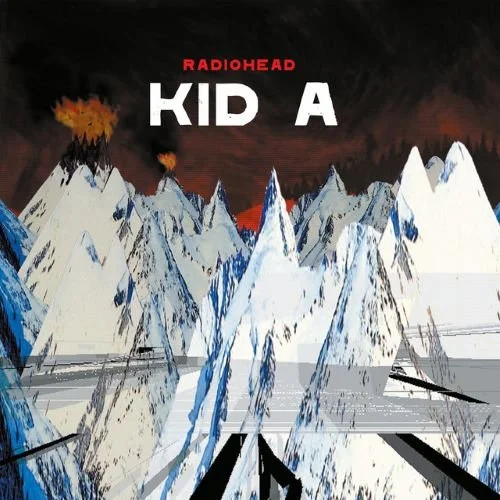
Radiohead | 'Kid A'

As we all know, the online world dominates all aspects of our lives.

However, back when Radiohead’s ‘Kid A’ was being teased at the end of the nineties, the internet and streaming services did not exist in the way they do now.

Getting music heard was very much about the physical format and marketing strategy rather than anything digital.

Radiohead, who feature ICMP alumnus Ed O'Brien on guitar, have always been known as future-facing and their decision to market the album entirely online made it the first album to be promoted like this.

Not only did they overhaul how albums were marketed, Radiohead also changed the way albums were bought with their 2007 album 'In Rainbows'.

This was self-released and fans had the option to purchase online and pay whatever they wanted - even nothing.

The record went on to sell three million copies across all formats...

Lewis Capaldi

Scottish singer songwriter Lewis Capaldi is one of our biggest stars - not only for his music but also the way his marketing emphasises his self-deprecating sense of humour.

To promote his new music, ‘Forget Me’, released in September 2022, the acclaimed singer songwriter posed in his underwear for a series of massive billboard ads in cities around the world.

Lyrics to Lewis’ new track appeared alongside the image: ‘I’m not ready to find out you know how to forget me,’ along with his name.’

Announcing the unique promotional ads, he wrote on Twitter, said: "Took my clothes off and traumatised the general public all in the name of shameless self promotion.

By including the not-so-glamorous moments, his social media platforms and accompanying music video both show how he's just as normal as you or me”.

 PHOTO CREDIT: Andrea Piacquadio/Pexels

I think that there is so much to consider when it comes to social media! The more platforms there are, the more artists and labels need to consider ways to attack that. Coming up with a plan that maybe starts with photos and teasers. Then it goes to various different online filters, gimmicks and teaser videos. The singles get promoted with lyrical videos and tease videos. I think it is the idea of engaging fans and sending out unique and tailored messages is what caught my eye about Dua Lipa’s new announcement and photos. This article salutes some iconic music marketing campaigns through the years:

1. Ariana Grande’s Sweeten

When reality meets music social media campaigns, it just couldn’t be sweeter. At least that’s what Ariana Grande proved with the release of her album, Sweetener, in 2018.

The popstar’s music marketing campaign team gave “Arianators” quite the adventure. In partnership with Landmrk, a location-based VR platform, fans were sent on a treasure hunt across the UK to find “Sweet Spots.” At each of these spots, billboards containing codes that needed to be deciphered were found. These had to be entered on the official website to win prizes like official merchandise, Sweetener albums, and even tour tickets. And for the fans who couldn’t go to the billboards in person, virtual billboards were created too.

Ariana proves that you can never go wrong with interactive campaigns and treasure hunts for new music releases.

2. BTS’s “Dynamite”

BTS’s song, “Dynamite” (2020), holds the YouTube record for having the most views ever (over 100 million!) within 24 hours. The song is, without a doubt, a total bop with a colourful burst of energy.

One aspect that contributed to its record-breaking stature is its genius music marketing campaign. One month prior to the release of the song, a new BTS website containing nothing but seven countdowns was launched. Whoever thought of relating the song “Dynamite” to a ticking timer deserves a standing ovation, honestly.

Each timer was counting down to 12 midnight (KST) but corresponded to different dates spanning one month. The mystery surrounding these countdowns made millions of people stay up at night to see what each timer would reveal.

For each countdown completed, BTS released various content on almost every social media platform. This included pre-order links for vinyl and cassette versions of “Dynamite,” their promo schedule (including surprise TV show performances), and a music video teaser on YouTube, to name a few.

The art of mystery works. Humans are a naturally curious species, and when you put enigmatic timers on a blank website and social media, the anticipation within just thrives.

3. Ed Sheeran’s “Bad Habits”

Ed Sheeran’s new music releases always leave “Sheerios” wanting more. And when he went flying around as a glamorous vampire in his music video for “Bad Habits” (2021), everyone already knew it was a look worth copying.

The singer-songwriter’s music marketing campaign team saw this coming for sure, and released a “Bad Habits” Snapchat filter that allowed fans to rock their own set of digital fangs.

After all, who could resist trying out filters? It’s a habit this generation won’t be breaking any time soon.

4. The Weeknd’s After Hours

The Weeknd’s music marketing campaign for the release of After Hours (2020) was pretty much a blast from the future.

The album was hyped by Spotify using some incredible artificial intelligence (AI) technology. To provide fans with a personalized way of experiencing the singer’s brand new album, a site featuring a one-on-one chat with The Weeknd’s AI self was launched.

When Spotify users landed on AloneWithMe.ai, they were instantly greeted by the singer who would address each person by name. Next, this alter ego would mention the statistics on how often the specific fan has streamed his music on Spotify through the years. Then, the intimate listening party of After Hours began.

Are you thinking what we’re thinking? The future of music social media campaigns has officially arrived.

5. Billie Eilish’s Happier Than Ever

If there’s one thing that defined Billie Eilish’s Happier Than Ever era, it was golden fabric.

To honour the release of the singer-songwriter’s brand new album, Instagram and Facebook gave fans the option to switch to a Billie Eilish chat theme with a gold fabric background. Who doesn’t love music social media campaigns that come with some shimmer?

6. Carrie Underwood’s Cry Pretty

One of the sparkliest music social media campaigns on our list is Carrie Underwood’s Cry Pretty.

To amplify the conversation on the country star’s new album, her team tapped four popular Instagram influencers to share makeup looks inspired by the album title. These social media personalities then encouraged their followers to create their own Cry Pretty-inspired looks, which automatically entered them into a contest to win a signed album.

It turns out, you actually can look pretty when you cry — and even gain some cool prizes for it in the process.

7. Taylor Swift’s Reputation

There’s no denying that Taylor Swift is one of the queens of teaser tactics.

Her music social media campaign for the release of Reputation in 2017 began with the “great wipeout” of her entire Instagram feed. This was followed by various cryptic (and unsettling) images of snakes — considering Taylor Swift is well-known for her colourful and “America’s Sweetheart” image, fans knew this was marking the countdown to a brand new era.

You guessed it right: “Swifties” everywhere quite literally lost it on every social media platform. And just like that, it went down in history as one of the campaigns that changed the way the music industry promotes new music releases”.

Something that should be part of a larger book or documentary, the modern-day music promotional cycle and social media teaser. We may learn as early as next week what these images of Dua Lipa leads to. Maybe it is an album. Perhaps her next single. Artists who are new might not know about a teaser campaign and how to start one. There are articles that gives you some insight and explanation. You get some more ideas here. In such a hectic, competitive and fast-paced social media world, artists large and new need to target and impact their audience as effectively as possible. It is so difficult to make an impression when so many other artists are in the same situation. I love the fever and speculation you get when someone like Dua Lipa posts a photo. Taylor Swift might put out a short video. I know these are huge artists - though even newcomers and rising artists can really do something memorable. It is an interesting phenomenon the social media teaser campaign. How far you go and how many stages you implement. It can be overkill at times. All eyes are on Dua Lipa’s social media sites. We will hold our breaths to see…

WHAT comes next.

FEATURE: Now, Then and Everywhere… The Final Beatles Song, and the Mix-Filled ‘Red’ and ‘Blue’ Hits Collections

FEATURE:


Now, Then and Everywhere…

PHOTO CREDIT: Apple Corps Ltd.


The Final Beatles Song, and the Mix-Filled ‘Red’ and ‘Blue’ Hits Collections

_________

THERE is a real treat…

 PHOTO CREDIT: Apple Corps Ltd.

in store for fans of The Beatles. Two in fact! So close to Christmas, news broke that the iconic ‘Red’ and ‘Blue’ albums that compiles the best of the band from their start to end, is to be reissued fifty years after the original editions. With new mixes and extra tracks, I wonder how new fans of The Beatles will react. Those of us who grew up with these compilations and this was almost a first point of call had a distinct impression and arc regarding The Beatles and their music. With the extra tracks, young listeners will have a different view and narrative. Out on 10th November, here is the pre-order link. With various different format options alongside merchandise, it is a chance to explore a new version of the career-spanning collection from The Beatles. Before then, tomorrow (2nd November) as it happens, the ‘final’ song from the band, Now and Then, is released. With assistance from AI and support from Ringo Starr and Paul McCartney, it is this finalisation of a John Lennon song. The fact that we get this a week before The Beatles’ ‘1962-1966’ (The Red Album) and ‘1967-1970’ (The Blue Album) collections with expanded tracklists is a real bonus! Here are some details from Variety:

Although the material, apart from “Now and Then,” is all familiar, these aren’t just fresh playlists. All of the songs on these two collections that had not been previously remixed by Giles Martin for previous deluxe editions have gotten the full treatment now — adding up to a total of 36 brand-new remixes across audio formats: 30 on “1962-66” and six on “1967-70.” (Additionally, a Dolby Atmos release has its own new, immersive mixes of those same 36 tracks, plus another seven remixed for songs Martin had previously updated only in stereo.)

Collectors who say “I wanna hold my physical single” will be happy to know that “Now and Then” is getting a stand-alone release on vinyl, and even cassette, apart from its place as an addition to the reconfigured “1967-70” album. The newly completed track will come out on vinyl in four different 7-inch or 12-inch variants. It’s being described as a “double A-side single,” with the new stereo remix of the Fabs’ first single, “Love Me Do,” on the flip side. (Note, however, that some variants of the single and two hits collections will only be available via the Beatles’ own webstore.)

A 12-minute documentary about the making of “Now and Then” will premiere on Nov. 1. Written and directed by Oliver Murray, the mini-doc includes footage of Paul McCartney, Ringo Starr, the late George Harrison, Sean Ono Lennon and Peter Jackson (whose technology was put to use in the track’s unique creation). A 34-second teaser for the mini-doc went up on YouTube today. Watch that trailer here:

Beatles fans have been curious about the credits for the “Now and Then” song, and those were released in full Thursday. As was previously known, the tune has its origins in a John Lennon solo demo from the ’70s that Yoko Ono made available when the surviving members decided to add fresh tracks to the “Anthology” collections in the mid-’90s. While Paul, George and Ringo finished “Free as a Bird” and “Real Love” with producer Jeff Lynne at the time, they set aside “Now and Then,” in part because Lennon’s rough home-cassette vocal lacked the fidelity to easily mesh with what the other members were attempting to graft on two decades later.

IMAGE CREDIT: Apple Corps Ltd.

It was McCartney’s idea last year to re-approach “Now and Then” and pull a usable version of Lennon’s vocal using the same technology that’d been used to separate music or conversation from background noise for Peter Jackson’s “Get Back” documentary film. The new single has a telling credit for the New Zealand company WingNut Films Productions Ltd. for “source separation”; the press announcement notes that Jackson’s sound team was led by Emile de la Rey, who was charged with taking Lennon’s low-fi demo and setting his vocal apart from his piano and other noise.

Otherwise, most of the “Now and Then” credits read straightforwardly, leaving fans to figure out which parts were recorded in the ’70s, ’90s and 2022. McCartney and Giles Martin are credited as the producers, with an additional production credit for Lynne. Lennon and McCartney are credited with primary vocals; all four members are credited with background vocals, McCartney’s and Starr’s being new additions. Harrison, who died in 2001, has electric and acoustic guitar parts recorded in 1995 on the track — although a slide guitar solo that bears an unmistakable similarity to his trademark style was actually laid down by McCartney, “inspired by George,” during the 2022 sessions. McCartney also is credited with brand new bass, piano and electric harpsichord, and Starr’s drum playing is a fresh addition as well … and both get credit for playing shakers.

A new string arrangement was written for the song by McCartney, Martin and Ben Foster and overseen by McCartney at Capitol Studios in L.A. The press announcement says that “Paul and Giles also added one last, wonderfully subtle touch: backing vocals from the original recordings of ‘Here, There and Everywhere,’ ‘Eleanor Rigby’ and ‘Because,’ woven into the new song using the techniques perfected during the making of the ‘Love’ show and album.” Spike Stent mixed the McCartney/Martin production.

“There it was, John’s voice, crystal clear,” McCartney said in a statement. “It’s quite emotional. And we all play on it, it’s a genuine Beatles recording. In 2023 to still be working on Beatles music, and about to release a new song the public haven’t heard, I think it’s an exciting thing.” Added Starr, “It was the closest we’ll ever come to having him back in the room, so it was very emotional for all of us. It was like John was there, you know. It’s far out.”

Olivia Harrison co-signed on the effort to revive the track. She said, “Back in 1995, after several days in the studio working on the track, George felt the technical issues with the demo were insurmountable and concluded that it was not possible to finish the track to a high enough standard. If he were here today, Dhani and I know he would have whole-heartedly joined Paul and Ringo in completing the recording of ‘Now and Then.’” Sean Ono Lennon added his imprimatur to the project, too, saying: “It was incredibly touching to hear them working together after all the years that Dad had been gone. It’s the last song my dad, Paul, George and Ringo got to make together. It’s like a time capsule and all feels very meant to be.”

What choices do collectors have in picking up “Now and Then” (and B-side “Love Me Do”) in stand-alone, physical form? Apart from its online digital release in both stereo and Dolby Atmos, retail outlets will be selling it in both 7-inch and 12-inch form on black vinyl, along with light blue and clear 7-inch variants. A cassette version is exclusive to the Beatles’ store. A blue-and-white marbled 7-inch was also announced as a Beatles webstore exclusive, although it will apparently be available at independent record stores too, as those retailers were solicited on the release Thursday morning.

The sleeve art for the single was designed by the noted artist Ed Ruscha.

As for the 2023 editions of the “1962-66” and “1967-70” albums, choices abound there, too. Retailers everywhere will offer both collections as separate two-CD or three-LP 180g black-vinyl sets. But if you want them bundled together in a slipcase, and/or want colored vinyl, those are limited to the Beatles’ store and described as limited editions. The webstore offers a four-CD set that bundles the two collections together in a slipcase. More tantalizingly, the Beatles’ store offers the “red” album on red vinyl and the “blue” one on, yes, blue — either individually or bundled together in a slipcase as a six-LP set. A bundled six-LP set on standard black vinyl in the slipcase is also exclusive to the Beatles’ store.

The track listings for the vinyl editions are in a different order than what appears on the CD and digital/streaming versions. In the case of the three-LP “1962-66” and “1967-70” sets, the first two records in the set follow exactly the same order of the sequence that appeared on the 1973 double albums, with the third LP devoted to all the material that has been added for 2023. Those who want to remember the song orders as they existed for 50 years will surely be pleased by that decision, while still getting the additional material. However, the editions that do not break things up by sides — that is, the digital and CD versions — dispense with that and present all the material in chronological order, with the fresh additions sprinkled in along the way instead of segregated.

In answer to the question that inevitably comes from many audiophile fans: No, there is no BluRay audio option; the Atmos mixes are not being issued on discs but are available for download or streaming.

Although the printed material is not expected to be as elaborate as what accompanied the “Sgt. Pepper,” White Album, “Abbey Road,” “Let It Be” and “Revolver” deluxe editions, the new red and blue hits editions will include new essays written by author John Harris.

Many fans had expected “Rubber Soul” to be next in what has become a mostly annual series of deluxe sets, if the Beatles were to start working backward from last year’s “Revolver.” But they’ll get an awfully good head start on that anticipated project via “1962-66,” since it includes brand new Giles Martin remixes of no fewer than seven of the 14 tracks from the original U.K. version of “Rubber Soul”: “Drive My Car,” “Norwegian Wood (This Bird Has Flown),” “Nowhere Man,” “Michelle,” “In My Life,” “If I Needed Someone” and “Girl.”

But Beatles fans will be at least as curious, when “1962-66” comes out Nov. 10, to hear what Martin has done with the rest of the material dating back even further. It’s long been considered a challenging task to make full-sounding new stereo mixes of early ’60s track that essentially glued together multiple vocal or instrumental parts on one of two channels. But Martin had said recently that he believed the time and the technology for that were at hand, mentioning the kind of separation that Jackson’s “Get Back” team had been able to pull off. Now fans will get a huge sampling, all at once, of just how effective those newly realized techniques are at making stereo (or immersive!) mixes that sound far less bizarre to the modern ear.

“Love Me Do” in Dolby Atmos: It’s about to be a thing.

While the lion’s share of the previously unheard Giles Martin stereo mixes will arrive with the “red” album, it’s surprising to see how many songs on “1967-70” had not yet been given the updated treatment till know — either selections from the “Magical Mystery Tour” soundtrack EP, or assorted non-album singles or B-sides. Those new remixes for songs from the later period include “Revolution,” “I Am the Walrus,” “Magical Mystery Tour,” “The Fool on the Hill,” “Hey Bulldog” and “Old Brown Shoe.”

Among the songs making their Atmos debut next month, meanwhile, are “All You Need Is Love,” “Strawberry Fields Forever,” “Hello Goodbye,” “Hey Jude,” “Lady Madonna,” “The Ballad of John and Yoko” and this version of “Get Back”.

I was very pleased to talk with the amazing Roxanne de Bastion about Now and Then and The Beatles’ Red and Blue album expanded reissues. As a wonderful musician and massive fan of the band, it was insightful and interesting hearing what she had to say:

Hi Roxanne. I know you are a massive Beatles fan. Do you remember when they came into your life, and whether it was a particular album or song that caught you?

My love for The Beatles precedes my memory - but my mother tells me that it all started when she showed me the animated Yellow Submarine movie when I was four. Apparently I was so enthralled with the songs that I ran to my room, got my little Fisher-Price cassette recorder and asked if I could have the songs on that (how I knew about music pirating at that age, I do not know).

What it about The Beatles that especially captivates you? Their melodic and experimental sensibilities, the kinship between the four lads - or is it just the sheer quantity and variety of their catalogue?

There is no band that comes even close to achieving the depth and breadth of creativity, quality and historical significance as The Beatles, and I don’t think there ever will be. I mean, let’s not discount Taylor Swift, yet with all her genre hopping and record breaking…but she’s just one person - the fact that The Beatles featured three brilliant songwriters, each with their own interests and sensibilities, has a lot to do with their magic. It wasn’t one thing that captivated me, it was very much the whole package: the melodies, the harmonies, the lyrics, the visuals, etc. Ultimately, I fell in love with The Beatles at such an early age and they are such a constant in my life that to me, their music is my home.

Perhaps rather predictably, I got very emotional watching the trailer. I cannot wait to hear it

As a musician yourself, how important have they been regarding your journey and passion for music?

They are very much the foundation to my whole life, never mind my career. But it was certainly because of The Beatles (and John Lennon in particular) that I wanted to start writing my own songs. I spent hours in my room listening to their albums on loop and trying to sing the songs perfectly - emulating every breath and memorising every word. My favourite thing to do was sit in the kitchen and sing The Beatles together with my dad - he was usually Lennon, I was McCartney.

Their final song as a band, Now and Then, is out tomorrow (2nd November). How excited were you when you heard the news?! In terms of a ‘finale’, is this going to be a perfect way to wrap things up do you think?

A NEW BEATLES SONG!! Perhaps rather predictably, I got very emotional watching the trailer. I cannot wait to hear it. One of my favourite John Lennon songs, Real Love, was released posthumously, and so I have no doubt that there’s potential for Now and Then to be very special. As for wrapping things up, I somehow don’t think this will be the last treasure to be unearthed. The four Beatles created (and continue to create) so feverishly throughout their respective lives, I think we have many more decades of surprises, unfinished songs and unheard recordings to look forward to.

Of course, the ‘Red’ and ‘Blue’ albums are being reissues and remixed. Were the original albums played when you were a child?

I spent much more time listening to the original albums and the BBC live album (which was an early favourite of mine, as it captured The Beatles’ electric live energy, their charm and their humour). I did own both on CD though and have a really strong memory of hearing We Can Work It Out for the first time. I remember being fascinated by the conversational tone of the lyrics (“Try to see things my way” is such an arresting opening line). I will forever associate that song with my dad explaining to me how clever it was that the time signature changed from a straight 4/4 to a waltz at the end of the chorus.

As a child, I was also fascinated by the Red and Blue album artwork. Firstly, I loved how they look down and straight into the camera. It somehow made it feel as though they were smiling down and looking directly at me. To my childlike eyes, they looked so much older on the Blue cover than they actually were at the time (beards are definitely deceiving!), so to me it seemed magic that they were photographed in exactly the same spot, almost as if they were time travellers. But they may as well have been - the Red and Blue albums are extraordinary evidence to just how much the band evolved musically and visually in the span of just a couple of years.

I like the fact this reissue is a more complete and comprehensive account of their early and later career. Are there extra songs - that were not on the originals - particularly important or standout when it comes to defining or redefining their importance and brilliance?

It’s interesting that the reissue includes some cover songs (Roll Over Beethoven and Twist and Shout), but I suppose interpreting Rhythm and Blues and Rock ‘n’ Roll classics was an important part of their career and their development. I’m thrilled to see that the reissue features This Boy, which is just such a stunning example of their harmony work. It’s also one of my favourite Lennon vocal deliveries ever. I’m equally excited to see Harrison’s If I Needed Someone added to the Blue Reissue and, hey, if there’s a new mix of Tomorrow Never Knows, the song responsible for the sound of countless bands that followed, I’m here for it!

Isn’t it just amazing that sentences such as “It has been a busy past few years for The Beatles” can be totally true in 2023?

It has been a busy past few years for The Beatles. Quite a bit to see and listen to. Why do you think the band remain so important and in demand?! I think it is also great that Paul McCartney and Ringo Starr are still with us and get to actively have a say in this incredible music.

Isn’t it just amazing that sentences such as “It has been a busy past few years for The Beatles” can be totally true in 2023? If I could be at a Paul McCartney concert every day of my life (like, you know, eight days a week) I would! It’s incredible that he performs three hour sets with just as much showmanship, charm and musicality as he did half a century ago. I think the answer is simple: Great music is timeless. Every generation will discover them anew (I’m sure somewhere in the world there’s a wide-eyed four-year-old watching Yellow Submarine for the first time right now) and that’s a beautiful thing. The Beatles and all their songs about love and how it is all we need are well and truly immortal and that, in today’s world of doom-scrolling and twenty-four-hour news cycle, is a very comforting thought to me.

Finally, as look ahead to next year, people might ask what album will be reissued or remixed. What would you personally like to see come out? Maybe Rubber Soul or A Hard Day’s Night expanded reissues?

The film A Hard Day’s Night is so iconic, it would definitely be fun to see what’s in the vaults, both audio and visual - perhaps some kind of mixed-media re-release? I’m here for it all :)

The final link in this feature is an interview with Will Hodge. He is the Zine Editor for vinyl reissues Bandbox and a freelance music journalist with bylines for Rolling Stone, the Grammys, No Depression, and a variety of other publications. It was fascinating and wonderfully getting his views and impressions regarding two very important Beatles releases. It is quite a seismic moment. We will never get another Beatles song! There will be reissues and new releases in terms of their albums. I am not sure what studio album will get the remix and remaster treatment from Giles Martin (perhaps Rubber Soul). I love the sixth side of The Beatles’ ‘1962-1966’ (The Red Album) and ‘1967-1970’ reissues, as you get Then and Now plus Hey Bulldog. I think one of the criticism of the original red and blue selections is that stuff was omitted. Rather than it being an update of the originals, it looks more like an expanded greatest hits. Something for new fans to get, though diehards will also want to add these reissues to their collection. I think most eyes are on the new, final track from The Beatles. Whether it is going to be any good or up to expectations. Maybe one of the most hyped or important songs of this generation, we will hear a moment of history. Regardless of how the song comes out and how people react to it, this is a moment of history. The greatest band ever might have split up over fifty years ago, yet there is no shortage when it comes to the archives and new mixes of older material! That expansive reissue that is available in various formats together with the new single – available digitally and physically – gives us a nod to the past but also the future. What now for The Beatles’ music?! We will never get another track, though there are going to be many who want a studio album reissued or a new book. It will be exciting to see what arrives next year. It is clear, though, that this year has been an exciting and huge one…

FOR fans of The Beatles.

FEATURE: Now and Again: Forty Years of the Iconic Compilation Series: The Digital and Physical, and Its Incredible Legacy

FEATURE:


Now and Again


Forty Years of the Iconic Compilation Series: The Digital and Physical, and Its Incredible Legacy

_________

ONE of the most recognisable brands in music…

the Now That’s What I Call Music! series is forty on 28th November. The makers announced some special anniversary releases. You can get some information and history about the iconic and beloved series. I wanted to discuss the digitisation of the compilations, plus a suggestion regarding making some of the editions physical. It is great that there is a decades-spanning release for the fortieth (here is another link). There are a couple of features/articles that I want to bring in before getting to thoughts about the archives and making everything digital and physical. I also have some interviews coming from very special people who will discuss their experiences and memories of the Now That’s What I Call Music! series. It is important to first recognise one important milestone (you should check out the Now That’s What I Call Music! official site, YouTube, Instagram, Twitter and Facebook). Even if I don’t buy most of the Now albums on C.D. anymore, I keep track of them through streaming. I feel a special connection with the compilation series, as it was launched in the same year that i was born. It is in very rude health ahead of its fortieth birthday. On 28th November, I think that a lot of people will share their memories of the compilation album and when they came to it. I might have chance to do another feature/something special before the big day.

When the one-hundredth instalment of Now That’s What I Call Music! arrived in 2018, Music Week spoke with Virgin boss Richard Branson. The first Now That’s What I Call Music! was released through Virgin/EMI. Branson reflected on the legacy of the celebrated and iconic compilation series:

Today’s the day. Now That’s What I Call Music 100 hits stores, cementing its place in music business folklore as the UK’s longest-running and best-loved compilation series.

Somewhat ironically, back in the day, bosses were concerned about numbering each edition, fearing teenagers wouldn’t be interested in the brand once it passed Now 21. Such worries proved unfounded, and Now 100 has attracted widespread publicity, not least in the form of an all-encompassing feature in the current print edition of Music Week.

Music Week was there at the start for Now, back in November 1983, when the concept was dreamed up by Stephen Navin and Jon "Webbo" Webster and the brand was launched by Richard Branson’s Virgin Records in a blaze of curious pig-themed marketing. So Branson – now Sir Richard, founder of the Virgin Group and Music Week’s Strat Award winner in 1991 – sat down with us Music Week to talk through the birth of a compilations phenomenon – and, of course, the historic significance of that pig…

How did Virgin come up with the concept for Now That's What I Call Music?

“At the time Virgin was dominating the charts with our singles, but I was fed up with third party labels like K-Tel ringing us up for our hits and making fortunes out of our hard work. So I went to see EMI and said, ‘Why don’t we both create our own label together which would put out ours and other’s hits?’. The only thing was, we didn’t have a title.

“I’d fallen in love with a beautiful girl called Joan who worked in a shop in Westbourne Grove that sold ephemera. The owner of the shop made it clear that I had to buy something in order to spend time with her in the shop. One day, I saw this wonderful poster for Danish Bacon with the words ‘Now, that’s what I call music’ written on it. We had our name and the rest is history. As for that beautiful girl in the shop? She became my wife…”

Did you think it would be anywhere near as successful/mould-breaking as it went on to be?

“I knew from its initial success that we had created something very special. However, I don’t think anyone would have predicted the 35-year-long success of any brand, especially in the record industry. The music business is fast-changing and ephemeral at the best of times, which makes Now That’s What I Call Music’s success even more extraordinary.”

How important were the compilations to Virgin, financially and creatively, at that time?

“The Virgin label was going through an enormously successful period in the early ‘80s with UB40, The Human League, Culture Club, Phil Collins, Genesis, Simple Minds, OMD, and many more. The success of the Now compilations allowed us to invest more into the business to help maintain Virgin as the premier label it was.”

What is the secret to the series' enduring success?

“I suspect it’s the attractive combination of quality, value, and of course that great brand title: Now That’s What I Call Music, which resonates so well with everyone. And of course Now is always current yet, at the same time incredibly nostalgic, which is an unusual and very positive combination. They represent a host of emotions and memories; as well as some great music it’s those memories that people hold with such affection, whether they bought it on a CD or via streaming. It is the thoughtful curation that ensures every album evokes such memories and becomes a soundtrack of a time in our lives”.

So, how did Now That's What I Call Music! get its start? How did it get its name? The Oxford Blue looked at the story behind a series of compilation albums that remains popular to this very day. I honestly cannot see it ending or becoming less popular in years to come. It flourishes at a time when digital music succeeds and dominates still:

If you were anything like me as a child, you vividly remember the Now! compilation albums. I can recall hours upon hours spent listening to these albums, which would be playing from the pink flowery CD player which sat proudly upon my desk. A huge amount of time would be spent singing along to the radio edits of songs such as Katy Perry’s ‘Firework’, Cee Lo Green’s ‘Forget You’, and Taio Cruz’s ‘Dynamite’, to name just a few. It was always a treat to receive the newest Now! album for Christmas, which would never fail to encapsulate the pop scene of the time through an eclectic mix of the biggest releases from the last few months. Looking back at the tracklists today is like looking into a time capsule. Now! is a brand which has endured the test of time, still going strong today after more than 100 numbered album releases since its inception in 1983. Spin-offs and other Now! series such as Now Dance and Now Decades take the total number of releases past 250. Their success can be contextualised by considering the musical landscape of the time and the potential to exploit a gap in the album market.

In 1983, compilation albums existed, but they were often seen as tacky. They were cheap and nasty, with songs which had been messily put together to create disarrayed and generally poor albums. This all changed when Stephen Navin and Jon Webster at Virgin Records, the top selling singles label in the UK at the time, had an idea. Companies were repeatedly asking Virgin to buy tracks to use in their compilation albums, and Navin and Webster realised how lucrative it could be to simply create their own compilation albums instead. Virgin spoke to EMI about this to see if they would get involved, as EMI were a larger and older establishment which could help out with getting big bands on board. Together, they resolved to create a brand which would give music lovers compilation albums which they could genuinely enjoy listening to. They were much more elegantly compiled and were made to look very different to other compilation albums, with sleeker packaging which contrasted with the basic black and white or black and red sleeves which were seen with previously existing compilation albums. From the beginning, the product was presented as a more luxurious product, evoking excitement in the general public.

The name Now That’s What I Call Music! came from a 1930s poster for Danish Bacon which was hung in the office of Simon Draper, Navin and Webster’s boss. It was bought for Draper by Richard Branson, Draper’s cousin, and depicted a pig listening to a hen singing, with the caption “Now that’s what I call music”. The poster was a joke, referring to Draper’s early morning irritability – Branson said that he was “notoriously grumpy before breakfast”. On seeing this poster, Navin decided that the phrase said exactly what they wanted to say and so the name was chosen.

The first album was released on 28 November 1983, compiling 30 UK hit singles from that year by artists such as Phil Collins, Duran Duran, and Rod Stewart. The album went straight to number one, selling 1.1 million copies. Webster has said that it was difficult to convince some artists to get involved to begin with, due to concerns that it could affect single sales and reputations, but once the album sales took off, everyone was keen to be a part of it. David Bowie and Eurythmics refused to be on the first one, but after its triumphant release, they agreed to feature on Now 2. Three Now! albums were released in 1984, and a pattern was established. The albums were released just before every Christmas, Easter, and during the summer, just as they are today. Polygram and Universal began to contribute tracks to Now!, but other labels got involved in another new compilation brand known as Hits. This new brand was able to get big American acts involved, but Now! was known for maintaining a notable sense of Britishness. Many people seemed to like this, and Now! reached much greater success. As Draper said to the BBC in 2018, Now! “wiped out all the opposition”. Along with the numbered series, some of the spin-off albums have also reached huge success. The Now! Christmas album is the seventh best-selling album of all time in Britain, having sold four and a half million copies and outselling even Pink Floyd’s (The) Dark Side of the Moon

The rapid decrease in the number of people owning CD players, the rise of digital downloads and the increased popularity of streaming services have meant that sales have been gradually declining. Every Now! album released prior to 2018 received platinum or multiplatinum certification, but none of the albums released from 2019 onwards achieved this. However, it would be unfair to claim that there is not still a large amount of interest in the releases, as most of these later editions still received gold certification, meaning that over 500,000 copies were sold. However, the downward sales trajectory shows no sign of stopping, so the brand will have to evolve and adapt to changes in technology and the listening habits of the general public. I really do hope that the album series is able to continue – it is simply too iconic to lose”.

The first track that opened the first Now That's What I Call Music! is Phil Collins’s You Can’t Hurry Love. The second, released in 1984, opened with Queen’s Radio Ga Ga. It is amazing to think that, forty years ago, the public saw adverts for a compilation album that united chart hits. Nobody knew that it would run for so long! This interesting 2014 interview featured the co-creators, Jon Webster and Stephen Navin. It does seem like the launch day for Now That's What I Call Music! was pretty chaotic! You can get recent Now That's What I Call Music! albums on Spotify if you want to see how it has evolved. I can appreciate why there might be a reluctance to put them there, as you want people to buy instead. Get them on C.D. As most people listen to music digitally, I suppose it would be a gamble to do a physical-only release in 2023. I do wonder whether every one of the Now That's What I Call Music!  series will be on streaming platforms like Spotify. I think the majority are, though I have noticed some gaps. Also, I cannot see a dedicated profile or page where you can see every album listed chronologically. There is this profile where you can get quite a few compilations, mind. I know that users put together their own compilation of various-numbered editions so you get the same tracks in the same order – but not officially part of the Now That's What I Call Music! Spotify page. I think you can get most of the series through Spotify, though there are some gaps. It can be hit and miss. Maybe it is a case of having a website where you get every number in the series where you have a link to the Spotify album/playlist. I hope that the archives are fully brought to streaming. It will mean it is more accessible to future generations. There was a Now That's What I Call Music! app announced in 2016.

In terms of the physical releases, you can go to Amazon or HMV and get the compilation series on C.D. You can even get the original 1983 release on C.D. and vinyl. As the prices vary between the editions, I wonder whether the official website would stock all of them at the same cost. Maybe a special Now That's What I Call Music! store of shop with every edition is available on a range of physical formats. It might be financially and logistically impossible to do but, as I have posed before, how about a cassette, vinyl and C.D. option for each? Maybe also a digital link to that album – going to Spotify, Apple or Deezer etc. As it stands, you can get some digital Now That's What I Call Music! albums. You can get a great deal of them physically. However, as mentioned, the prices vary. I don’t know if you can get every one of the Now That's What I Call Music! albums on a physical format new. You can see which albums are available on vinyl. An affordable range of C.D.s too. As far as I understand – and maybe owing to the number of tracks and it would be unwieldy – you can’t get any/most on cassette. Perhaps it would need to be three cassettes to fit all the tracks in. That said, I do remember buying Now That's What I Call Music! 24 on cassette back in 1993. I think a lot of people would love the option of owning their favourite Now That's What I Call Music! albums on cassette, vinyl or C.D.

<

I am going to include a few interviews with some wonderful people who tell me about their experiences with the NOW/Now series. It has been really interesting getting some different and unique perspectives on this timeless and legendary compilation album. In some way or another, I feel most of us have a love of Now That’s What I Call Music! Maybe people do not share them today the same way that they did years ago, though it is clear there is still a lot of demand for the album. First is the magnificent journalist Lee Campbell. He currently writes for UTR, The Guardian, Belfast Telegraph, Rolling Stone UK, Hot Press, and Sunday Times Ireland. You can catch Lee’s incredible recent Danse Macabre interview with Duran Duran’s Nick Rhodes for Under the Radar. He also has an upcoming interview with Holly Johnson from Frankie Goes to Hollywood (which will be published in the next month). Also, please do check out the leecampellwrites Linktree link. It was a most enjoyable experience speaking with him and getting his unique insight into a compilation series that is very dear in my heart.

My penultimate interview is with someone who knows the NOW series better than most people. The fantastic Iain McDermott runs the tremendous Back to NOW! podcast. A podcast that is all about “celebrating the variously compiled world of pop”, he chatted to me about his love of the compilation series and some of his impressions about its impact, importance and future:

The Now That’s What I Call Music! series was launched in the U.K. on 28th November, 1983. What are your earliest memories of the series? When did you hear the very first edition?

I have a vivid memory of the T.V. advert for the first NOW, around Christmas 1983. I was 11 the day after the first album was released that year. Tracey Ullman did the voiceover for it and it looked very glamorous featuring those (very '80s graphics) tracks and images from the album. I don’t remember asking for it for Christmas that year, however I did borrow a copy from a friend’s big sister early in 1984 and ‘may have’ accidentally copied it to cassette. I certainly remember making an inlay sleeve for it, faithfully recreating that iconic first NOW white font on black background, with plenty of felt tips. But my first purchase was a cassette copy of NOW3 in the summer of 1984. WH Smith, I think - holiday money. Having all of those songs in their entirety, the ability to rewind, fast forward and play repeatedly, pouring over the chart stars in the fold out inlay, that cover with the pig in sunglasses (for the first time) and the Day-Glo colour scheme was so exciting.

I was born six months before NOW was launched. It seems strange being the same age. My favourite compilation is 1993’s NOW24. Have you got a personal favourite or a top three?

NOW24 is a great entry to the series! And happy 40th to you too! Some of the albums are more special for different reasons, and whilst I drifted a bit from the NOW series in the mid-to-late-1990s (purchased them all since!), there are some that I would call favourites. * NOW3 - the first for me as stated above. * NOW7 - 1986 often gets a raw deal when people review the '80s (post-Live Aid, cynicism of the record industry, C.D.s evolving etc), but for me this album is awash with my 13-year-old Pop heaven. * NOW Dance 901/902/903 - (is this cheating, picking three here?) - My first year as a student (1990) and also starting out DJing, these three albums highlighted NOWs interest in the dance scene and featured 12’ mixes (which I loved) and actually, for me, say more about 1990 than the actual numbered NOWs of that year - 17 and 18. Blissful!

Duran, UB40, Culture Club et al were all relatively new acts, but in 1983 they all seemed to move up a gear in image and sound

It was quite revolutionary in 1983. Why do you think that that year was the right one for NOW to come about? How did it change the way we looked at chart music?

I think that 1983 marked a point where the ‘80s found their identity. The first three years of the decade had been full of swagger, excitement and experimentation in Pop, and by 1983 there was a genuine '80s legacy starting to emerge. Duran, UB40, Culture Club et al were all relatively new acts, but in 1983 they all seemed to move up a gear in image and sound. I also think that EMI/Virgin had such a presence in the singles chart that it made perfect sense to pull forces and celebrate their success (as opposed to licensing out to other compilation companies). It kind of equates to a decade earlier in 1973 when singles sales were equally huge and similarly the '70s got into their stride properly too.

The NOW brand signified a new quality for compilation albums; not just the biggest hits but also how the landscape was producing new and exciting acts too that could easily sit alongside no.1s of the year (enter The Cure, Simple Minds and, on NOW2, The Smiths, Big Country etc). Chart music was obviously big business by this point of the '80s, but it was also a huge part of our lives. T.V., newspapers and the media at large were just as interested in the likes of Simon Le Bon and Boy George as Smash Hits were. For me, NOW captured that presence and excitement in that glossy, colourful gatefold vinyl.

I am not sure whether any specific plans are afoot for the fortieth anniversary? How will you be marking it?

I am currently pulling together the annual end-of-year review episode with regular guests and great supporters of the podcast Ian Wade, Mark Wood and Johnny Kalifornia. But, as well as reviewing 2023 and the NOW releases, we are planning to celebrate the 40th anniversary too, with some special guests contributing and general pop nostalgia sprinkled across the episode!

Before carrying on, tell me about the Back to NOW podcast and why that was set up. Are there any new episodes in the offing?

The podcast started back in 2020. The idea had been floating around for a couple of years, and the pandemic probably gave me more time to get it up and running. The premise of the podcast is for guests to select a NOW compilation L.P. that reminds them of important time in their life. Guests don’t have to have owned it…because as well as discussing the tracks, of equal interest is to discuss the wider cultural contexts of the chosen L.P. or time period in Pop: memories of the time, track anecdotes, sequencing of songs and cultural contexts of the music and the world around it at that time. The U.K.’s love of compilation L.P.s means that we have a rich tapestry of curated time capsules representing the changing sounds and styles of our Pop listening landscapes - warts and all!

Episodes have been just as interesting (if not often more so) with the stories of how particular times in our lives are so memorably soundtracked by the music we listen to and often influence our own musical journeys. I’ve been hugely fortunate to have some great guests so far such as Pete Paphides, Alexis Petridis, Bob Stanley, Siän Pattenden, Jude Rogers, Michael Cragg and Will Hodgkinson. More than anything, it has been great chatting with guests who share a love of both Pop music (in all its forms) and pop culture - and have been generous enough to give over an hour or so of time to chat about it over Zoom. As long as I can continue to find interesting guests who are happy to share their memories, and an audience happy to join us, then hopefully the podcast will continue to find its place in peoples’ listening spaces. I’m always incredibly grateful to everyone that connects and chooses to come along with us.

I guess the NOW albums document the best of that year’s chart music. The series has broadened from year-based albums to concentrate too on genres. It has got more thematic. How do you see NOW expanding and evolving through the years?

I have loved the diversification, and I know from speaking to listeners and other fans that the evolution of the brand has been well received. I believe that one of the strengths of the brand is its identification with quality. Whether it was picking up a cassette copy in 1984 or a C.D. in 1994 or a new vinyl retrospective in 2023, the logo/name always lets people know that the content will be well-curated, the correct versions, thoughtfully sequenced. Plus, the team at NOW know their audience and are keen to provide a range of genres, themes etc. based on what people want. The genre-hopping also enables the team to really get creative with their sequencing and track selection. This, and the fact that music can always be viewed through ever- evolving sets of lenses and new contexts, I think creates a vibrant template (with such recognisable brand identity) for so much music to be revisited.

This emotional response is harder to replicate on a streaming service!

In a streaming age, it is remarkable that the series continues to flourish and remain in the consciousness! Why do you feel people of all ages keep on buying the physical NOW albums when they could stream the songs individually?!

I suppose, connected to the point above, there is still (to many music lovers) something tangible about physical product. If it is high quality (and I believe that the NOW albums are), then it will always be desirable. The recent expansion into Yearbook editions has been wonderful example of that. Coloured vinyl, hardback C.D.s with sleeve notes and photos - these have highlighted a real love for Pop nostalgia and sparked a great response in fans. Personally, there is still something very exciting about unwrapping a new NOW record/C.D.! This emotional response is harder to replicate on a streaming service!

The NOW series is available on vinyl and C.D. I don’t think that every edition is on those formats. Is this something you feel would be beneficial? Maybe transferring some to cassette – or would it prove too expensive?!

I think the team at NOW have done a great job in expanding the offer for compilation fans in recent years. I think that you will always find someone, somewhere that would find something else they’d like! But for me, the choice is fabulous. No return to VHS compilations that I can see! (I have a box full of them in the loft, so no worry there!). On that note, the NOW TV channels are also worth mentioning as an interesting addition to the brand. Channel-surfing and finding a show called ‘Every Track from NOW2’ or likewise will always catch my attention!

Wow, I’m getting goosebumps just thinking about it

Looking back on forty years of Now That’s What I Call Music!, how important has it been in your life in terms of your childhood and teenage years and, indeed, your adulthood? What does it mean to you and your love of music in general?

Huge. NOW always makes me smile for different reasons. Growing up into early-teens, the NOW albums were a massively exciting (and accessible) touchpoint for pop culture throughout the years. In a pre-social media/Internet world, anticipating the double-page glossy advert spread in Smash Hits the week before release was (for me) like nothing else. First chance to see the artwork and tracklist. What songs had made it, how were they sequenced, what surprises were included. Wow, I’m getting goosebumps just thinking about it. As an adult they mean different things. Memory time capsules - as I said earlier with warts and all - which make them even better! I have fond memories of (early-2000s) filling in gaps in my collection via eBay. Now, it’s a joy to see how decades, years, genres etc. are revisited and celebrated again. Often, different tracks are highlighted.

Finally, and maybe an impossible question, you can choose any song from any of the NOW albums and I will include it here. What shall we go for?

I CANT ANSWER THAT! Actually, I can. The Reflex by Duran Duran. NOW3. Side 1, Track 1. Unbridled Pop joy. (As celebrated with great gushing with BBC Music correspondent Mark Savage earlier this year - shameless episode plug! – I hope these rambles are useful. That was a blast! lain x

In the final interview before I wrap up this feature, I have been asking journalist and writer Cath Holland about her experience and memories of the iconic Now That’s What I Call Music! series. You can follow her on Instagram and Twitter/X. It has been fascinating discovering her impressions and perspectives about a compilation that means so much to so many people. We all have different takes and favourites. Like me, the compilations of the 1990s are particularly dear to Holland:

Hey Cath. I hope you are well. As the Now That’s What I Call Music! series turns forty on 28th November, I wondered if you could tell me when you first discovered the series.

For me, it was the compilations of the 1990s that was the most impactful and enduring.

When do you think the peak was? Do you have a favourite number in the series?

The 1990s would be for me, too. I think the value of the series is that each album is a summing up of the Pop hits for the weeks or months each compilation covers. Because the content is largely mainstream and mass market, the quality of each depends on what we each individually view as quality Pop! In the 1990s the sort of music nearer the top of the charts broadened away from cash cow teen fodder, which makes it more interesting, I guess.

PHOTO CREDIT: amyofdarkness

I remember discussing the latest Now That’s What I Call Music! series at school. Was it a big part of your childhood and social circles?

I like the way Alternative music – in its broadest sense - sneaks in: The Cure, Blur, Skunk Anansie, Radiohead, The Sundays, Gorillaz making unexpected appearances.  It allowed me to feel smug and knowledgeable because I knew who they were, and others in my social circle had no idea. If you listen to the 1980s Now albums, they are largely glossy and quite horrible, but then an artist like Yello pops up, bonkers and defiant. Square peg, round hole. I like the anarchy of that, creators of innovative and influential works sharing a space with the disposable, and the idea those buying the Now albums would happily consume something musically and creatively quite different simply because the music was included within the brand. Whether many people went on and did a deep dive into the work of many of the more left-field artists featured and became/become enthusiasts, I wouldn’t know! It’s nice to think that might be the case.

I think it would have been pretty monumental having a compilation of chart hits on an album in 1983. It is still popular today - when we can make our own playlists. Why do you feel Now That’s What I Call Music! remains and has this relevance in 2023?

Sometimes it’s quite an experience to close your eyes, run your fingers along a row of albums at home, feel the cardboard of the vinyl spine, stop at a random one, pull it out and play it. It’s like a luky dip, even if it’s one of your own purchases. To sit there and be presented with a series of songs curated by someone else, Now or not, reminds us of music and creators’ authority - something which we should respect but don’t. Rather than us as individuals putting together a playlist and becoming dependent on the familiar and having the arrogance to believe we are the true tastemakers!

I kinda like the thought of a Wham! song right in the middle, confusing everyone

I guess the quality fluctuates. It may not be as exciting today as in past years. Even so, would you say people still buy Now That’s What I Call Music! because it has that almost nostalgic quality?

If I was 14 now, I’d probably think contemporary compilations are the best. That’s the way it should be at that age.

Nostalgia is definitely a substantial part of the Now identity for adults in contemporary times. I see well-thumbed copies in charity shops and car boot sales which makes me a bit sad, a piece of someone’s teen years lashed into a Sally Army shop, left to languish, covered in dust, its glory days of being excitedly played at parties well behind it.

I am not sure what is planned for the fortieth anniversary. What would be the most fitting way to mark its big birthday?

A gloriously Alternative Now compilation would be an inspiration, and great fun. I kinda like the thought of a Wham! song right in the middle, confusing everyone.

The series has a different meaning to every person. What does it mean to you personally?

Each album is a time capsule of sorts. A musical encyclopaedia of the most commercial Pop.

This is a harsh question, but choose your favourite song from a Now That’s What I Call Music! album and I will play it here.

The Smiths – What Difference Does It Make?

As the sensational, legendary and hugely important Now That’s What I Call Music! series celebrates its fortieth birthday/anniversary forty on 28th November, ensuring that this phenomenal series is committed to streaming sites and is availably physically would be a real treat for the fans. I am curious whether this is something the makers are considering that for the future. I was going to just have this feature discuss that point. I thought about expanding it and speaking to different people and learning their opinions about the compilation album. We all have our own memories, so thanks enormously to Lee Campbell, Iain McDermott and Cath Holland for taking the time to go into depth about Now That’s What I Call Music! and what it means to them. After forty years, it is still this exciting and curious yearbook of the best Pop around! I am curious to see how many more years it will survive. I think that we all hope that it will endure…

FOR decades more.

FEATURE: New Discoveries, and Artists Who Have Impacted Me: Marking a Terrific Year in Music

FEATURE:


New Discoveries, and Artists Who Have Impacted Me

IN THIS PHOTO: Iraina Mancini/PHOTO CREDIT: Kirk Truman


Marking a Terrific Year in Music

_________

AS we are near the end…

 PHOTO CREDIT: cottonbro studio/Pexels

of another great year in music, I wanted to celebrate the fact that some terrific new artists have come through. Whether they have been recording for a while and have released their best music now, or they are fresh on the block, I think that 2023 has been one of the best for many years. There are a few artists I want to mention. All the Spotlight features I have published through this year has introduced me to an artist that is going to go a long way. Those that have added to the variety and brilliance of 2023’s music. There are some lesser-known U.S. artists like UPSAHL (Taylor Cameron Upsahl) that I would recommend. I am going to get to a selection other artists before finishing off. I just want to represent a small section of the wonderful and eclectic sounds that have come into my life this year - or songs from last year that have impacted me in 2023. UPSAHL was interviewed at Lollapalooza back in August:

Q: Can you describe your style of music to our readers who may not be familiar with Upsahl ‘s sound?

A: “I grew up listening to a lot of, like, punk music because my dad was in punk bands. So, that was kind of, like, the source of inspiration for me. That’s what got me into playing guitar, and like, learning piano, and just being around the punk scene was really inspiring as a kid. And then when I turned, like, I don’t know, 16 I decided I wanted to be a pop star, but I wanted to be punk as f*** about it. And I think just, like, my childhood has definitely had a really big impact on my sound now, which is this, like, alt-pop thing. I love, like, playing bass and guitar, so I try to, like, incorporate that as much as I can”.

Q: How many instruments do you play?

A: “I do just, like, guitar, bass, and piano. I’m trying drums but I can’t get the hang of it. I’m working on it. We’ll get there one day”!

(I sit there and stare at her for a few seconds. The casualness with which she tells me she plays three instruments and is learning a fourth as of it’s the most common talent in the world was mindblowing!)

 Q: Did you always know that this was something going to do as a career or did you kind of fall into becoming Upsahl?

A: “I guess it was really kind of both. I mean it was never really a decision or like, a moment where I was like, ‘Oh, like, I want to do music’ you know? It was always just the biggest part of my identity. Like, as a kid I was always just that, like, random ass b**** just singing or playing an instrument. I was the one being annoying playing instruments in the corner. And then I started going to a performing arts school when I was 10 and stayed there until I graduated high school. So it was always just, like, the biggest part of my life was music. So it was pretty natural for me to like…. I moved to LA right after high school. I, like, started doing

Q: So the music came naturally to you. Did performing as Upsahl come naturally to you?

A: “In the beginning, I would always play instruments. So, I didn’t really have to, like, move around. And then once I was like, ‘maybe I’ll, like, just sing for a song’. The freedom of being able to, like, work a stage was, like, so exciting to me. And I think also coming from, like, a punk background, the level of, like, high energy that those shows are, I try to incorporate into my shows. So now, I think over time I’ve become more and more of, like, a high-energy performer. But I think it came naturally at first and it’s only just progressed I guess”.

Q: Where do you pull inspiration from in your music?

A: “A lot of inspiration from my own life. I write about my life pretty much solely. So that is a big part of it. But musically, like, Gwen Stefani, and No Doubt, to me it’s, like, the f****** blueprint. I’m obsessed with her, so I listen to a lot of that. Outkast was a big one for me growing up, and Weezer. Their pop melodies and, like, guitar riffs are always something that I turn to if I’m ever, like, not feeling inspired, or like, need some ‘umph’. Weezer is what I always go back to”.

Q: So can you walk me through the creative process of writing an Upsahl song?

A: “I mean normally, whenever I’m not on tour, but in LA or wherever doing sessions every day. So normally I just go in with, like, an emotion or like, a feeling or sometimes if I’m feeling really inspired I’ll have, like, a concept or like, a title ready. But normally the session just starts with, like, me and my co-writers just talking about whatever it is I want to write about that day. And then just, like, somewhere along the line of the conversation, someone will just accidentally say what the title of the song is going to be and then everyone stops and it’s like, ‘Wait you just said it’, like, ‘That’s what we’re going to do!” And then the song just kind of, like, happens naturally from there. But I find, like, production-wise, and musically I love going into making a song with another song as a reference. Being like ‘We should do something that’s this tempo’ or ‘Have a bass tone that sounds like this song’. So I pull a lot from, random playlists I make”.

Q: What’s a favorite Upsahl song of yours?

A: “Oh, well I think my favorite song I’ve ever written is coming out in a couple of weeks. Which I’m really excited for, it’s called “0 to 100”. Yeah, I’m very very excited for that. But I think my favorite song I’ve released is probably “Drugs”. Just because it changed my life. But yeah, probably “Drugs”. Because it was the one song that I was, like, genuinely so scared to put out, and then years later it became the song that people seem to relate to the most which is really cool”.

Q: How does it feel to be here for Upsahl’s second Lollapalooza?

A: “It feels crazy. I mean I played Lollapalooza in 2019 on the BMI stage. And, like, it was my first time ever playing a music festival. And I rode that high for months. I was like, ‘That was the best day of my life’. So now, a few years later, getting to be back with a few tours under my belt, it feels just like a cool full-circle moment to be here. I’m really excited. I also feel like the lineup is insane so as a fan I’m, like, slay! I get to go watch all my favorite artists. It’s such an honor”.

Q: What’s the biggest takeaway you’ve learned from your time as a rising star in the industry?

A: “Probably just to, like, trust your instincts. I feel like being young too and getting into the music industry so young, in the beginning, I cared so much about what other people thought. And whether it was, like, my fans or my team, I was so easily swayed. And I think finding your voice and like, trusting it is, like, the biggest thing. Because at the end of the day, like, that’s what people I think are going to relate to the most. And that’s how I as a fan relate to the music, is when the artist is really feeling it. So, yeah, I think that’s the biggest thing that I’ve learned is just to trust my gut and do what I feel”.

I think one of the most impressive new artists I have heard this year is CMAT (Ciara Mary-Alice Thompson). The Irish songwriter released her album, Crazymad, For Me, and it was met with huge acclaim. She is someone who writes with such openness and wit. One of the most relatable and instantly popular young artists, she is going to go a very long way! DIY chatted with a spectacular and hugely talented in August:

“Born in 1996 in Dublin, Thompson spent the majority of her youth in the tiny commuter town of Dunboyne before moving back to the Irish capital to study, and then across to Manchester with her then-boyfriend to pursue music. Throughout these periods, the constant thread was a feeling of frustration at the lack of opportunity afforded to her. “A lot of loneliness came from feeling like I was trapped in poverty, in the sense that I felt I was really talented and good at writing songs, but no one fucking listened to me because I was working in a TK Maxx,” she says. “Nobody had any time of day for me. I wrote 75 million songs and a lot of them were good, and I’d be bringing them back and forth to London but no one cared because I wasn’t interesting enough because I didn’t have any resources to be interesting.

PHOTO CREDIT: Jenn Five

“I felt like, for a lot of years, there was a thing I wanted to do but I literally couldn’t see a way of executing it. I had two jobs - I was also a sexy shots lady - because I just wanted enough money to get the Megabus to London to do writing sessions and gigs, and all of my spare time and effort and energy went into trying to be a musician and a pop star. I was so angry and frustrated all the time that no one was paying attention to me because I didn’t have any money. And that was how it felt, that there was no way to get my foot in the door because I didn’t have any connections or resources.”

Eventually, she would crack the door open by leaving her old band Bad Sea, splitting with her partner, moving back to Dublin and beginning to put her songs on YouTube where she was scouted by a management team. The flights of fantasy coupled with feelings of extreme isolation that populated last year’s full-length debut ‘If My Wife New I’d Be Dead’ capture the intensity of this time, while October’s forthcoming follow-up ‘CrazyMad, For Me’ acts as a potted document of that breakup and the years of anger, questioning and resentment that would follow. However, where CMAT’s poetic leanings and tendency for the swooning epic might lend a romantic hue to many of these offerings on record, the reality was far less rosy.

“I find it funny, because I get a lot of people telling me I should write a book but my life was not fucking interesting,” she explains. “I didn’t do anything. All my drug-taking was sad and weird and not that social, and that’s another thing - that entrapment directly leads to substance abuse and that was very much the same for me. I was stonked out of my brain on hash the whole time that I lived in Manchester because I did not want to be in my reality. So temporarily getting out of it for a bit was like, ‘Great, love it’.”

Still, however, Ciara wouldn’t let herself give up. Upon leaving Manchester, she remembers landing her dream proper job as an auctioneer’s assistant but acknowledging that, if she was ever going to make an album, she would have to turn it down for fear of being “too content”. “In an alternate universe, I’m itemising Tupperware from the 1960s - I could have been a contender!” she laughs. “But even when I was working in a shop, and had no money, and was a normal girl by textbook definition, I also wasn’t relatable because I was a fucking freak. I was selling cigarettes and scratchcards on the till and in my head I was like, ‘None of these people know how good I am at writing songs…’ I’ve never been humble in my life”.

One artist I have been shouting about a lot is Antony Szmierek. The Manchester-based Indie Hip-Hop artist is an incredible wordsmith and performer. Like CMAT, another relatable and down to earth artist who has won support form stations like BBC Radio 6 Music. I know he has an E.P. coming out very soon. With a string of incredible and distinct singles under his belt, he is an artist who has had a magnificent 2023. Whynow spotlighted Antony Szmierek near the start of this year. Someone who was already gaining a lot of traction and acclaim:

How does it feel now things are taking off with the music: overwhelming, exciting?

A bit of everything. I’d be lying to say that it felt real, to be honest. It’s been relatively quick. I’ve been writing poetry and spoken word for years, so I didn’t expect it to take off. I think it’ll feel a bit more real after the summer, but my life hasn’t changed. I’m still in the same flat, and I’m still skint.

Well, as you said, you’re working six days a week. How are you finding the balance between your job teaching and music?

I’m lucky the people I work for are super understanding, but fingers crossed, [music] is the path, and this is the way, and I get to help people differently and share the music and entertain. [Working as a teacher] keeps me grounded because the kids don’t give a shit how many YouTube views I get.

You’ve been writing poetry for years, as you say, and you’ve written novels. How, in your own words, did you jump to making music?

It’s always been my first love: watching bands and watching artists, that’s what I do to relax. A few gigs a week is standard, and Manchester’s great. It’s the thing that calms me down when I’m not on my phone. It’s always been there. I just never did anything with it. I thought I’d missed the boat of being in a band or anything. So I did things accessible to me; I wanted to write novels and long-form stuff, and my writing just got shorter: novels, short stories, then poems.

You were trying to synthesise meaning down further and further…

I think so. It’s funny; I had a conversation with myself, asking, ‘What do I want people to take from my writing?’ And it was little soundbites or quotes in a one-liner. With everyone’s attention spans being so small, even my own, I think it was just bringing it all together and making it accessible and digestible.

Finding my own sound was difficult because I always wanted to be in an indie band; I like singing, showing off, and melodies. I still try and do a bit of that: [my track] ‘Rock and a Calm Place’ does that. I play with a band live, and it feels like a band: electric guitar, bass, keys, but no drum kit”.

Another great artist who has come to my attention this year is Madison McFerrin. Her album, I Hope You Can Forgive Me, is one of the most soulful, hypnotic, rich and atmospheric of the year. She is a remarkable artist who I am going to follow closely. Even if she has been recording music a little while now. This year has been a real breakthrough. 15 Questions spoke with her earlier in this year:

For you to get started, do there need to be concrete ideas – or what some have called a 'visualisation' of the finished work? What does the balance between planning and chance look like for you?

There’s very little planning that goes into my creative process. I just go with the flow and see where it takes me.

Oftentimes when I try to force the creative process. It ends up taking a lot longer than when I’m in a natural state.

Is there a preparation phase for your process? Do you require your tools to be laid out in a particular way, for example, do you need to do 'research' or create 'early versions'?

No, I just go to my piano or my computer and start to create.

Do you have certain rituals to get you into the right mindset for creating? What role do certain foods or stimulants like coffee, lighting, scents, exercise or reading poetry play?

I don’t, but maybe I should start! I love some green tea. Baking also gets me in a zone.

I’ll try writing a song after the next time I make scones.

What do you start with? How difficult is that first line of text, the first note?

I always start with the groove, be it the chords or the drum beat. Having that flushed out makes the rest of the writing process flow much easier.

When do the lyrics enter the picture? Where do they come from? Do lyrics need to grow together with the music or can they emerge from a place of their own?

Lyrics come last nine times out of ten. I really love writing melodies, that’s where I try and challenge myself. A great example of that for me is my song “Know You Better.”

I purposefully wrote a melody that explored my range. You can’t always force words or sounds into certain melodic phrases, so my lyrics tend to grow from the melody I’ve created.

What makes lyrics good in your opinion? What are your own ambitions and challenges in this regard?

I really enjoy writing lyrics that seem like one thing on the surface, but are really about something else. It gives a sense of mystery and requires a little extra digging for the listener.

My song “Hindsight” sounds like a breakup song, but it’s actually about being sad that Bernie Sanders didn’t win the US Democratic nomination for President.

I always write from my soul, my lyrics are definitely the closest someone else will get to reading my diary.

Once you've started, how does the work gradually emerge?

It varies. I’ve had songs that emerge immediately and others that take weeks or months.

I think it’s all about letting the song reveal itself to you instead of forcing it to be something it’s not.

Many writers have claimed that as soon as they enter into the process, certain aspects of the narrative are out of their hands. Do you like to keep strict control over the process or is there a sense of following things where they lead you?

I definitely follow where the narrative wants to go. Lots of times, lyrics or melodies reveal themselves to me in a way that I wouldn’t have been able to find had I gone searching for it.

It’s also a fun game for me to explore where a song is taking me – it’s a special kind of journey”.

I am going to come to a remarkable trio of artists who are very different but equally compelling. Among the great groups who have emerged and cemented their potential is Panic Shack. One of the most hard-working, authentic and authoritative bands around, I have been delighted and hooked by their music. Even if they have not released new music this year, their live performances and presence in the industry has been strong. They are going to have a remarkable and busy 2024. In August, The Skinny chatted with a group who are keeping things real. A group who graft and work tirelessly:

“With a name like Megan Fretwell, it should have been a giveaway that she might make a perfect punk guitarist. Despite racking up slots at Primavera and Glastonbury this summer though, Fretwell and her punk peers that make up Welsh DIY fem group Panic Shack only began playing together a few years ago. She dials into our call with a brew alongside fellow bandmates Romi Lawrence and Em Smith (the latter is considered the group’s 'real' musician having played bass in bands since she was 18). The trio are lined up on Smith’s leather couch like the opening credits of Friends.

Completed by Sarah Harvey on vocals and David Bassey on drums, the band deserves a bit of a sit down after a whirlwind ride since forming at the tail end of 2018. The last few years have seen them appear on the BBC Introducing stage at Reading and Leeds, supporting Northern lot Yard Act and earlier this year they sold out their own string of headline dates across the UK. But it was Worthy Farm that made the biggest impression so far. “We felt lucky to be able to go to Glastonbury and then the fact that people turned up!” jokes Fretwell. “We weren't mentally prepared. We went on for soundcheck and they were like, 'Okay, just start!'” jokes Lawrence, clearly flummoxed.

PHOTO CREDIT: Ren Faulkner

It was in a different verdant setting that the catalyst for the group sparked after years of feeling frustrated watching their male peers perform. “It was the first time that the four of us had gone to Green Man Festival together,” explains Smith. “When we got back, we had a buzz going on [our] group chat. We were like 'Shall we do it?'” Like the 70s spirit of punk, Panic Shack channel that do-it-yourself resourcefulness in spades. Even if Lawrence was tentative about fully embracing the role. “I used to get shy and nervous, especially about playing guitar. But then I thought, 'There's no way I can watch my best friends be in a band and not be in it!'”

Getting to grips with bar chords, the foursome quickly began songwriting together. Early single Jiu Jits You was a BBC 6Music mainstay with its Kill Bill cool wandering basslines and scrappy guitars. Alongside their kung fu capers, Panic Shack’s Baby Shack EP sketches relatable stories of young adults scrimping and saving, even if it’s dressed up with a hefty dose of satire. Who’s Got My Lighter? conjures up balmy evenings passing the Amber Leaf pouch around the pub garden. While the touring band service station staple gets a nod in Meal Deal, as Harvey exclaims: 'I’m going out for a meal deal because my flat is fucking freezing / I can’t stand it any longer / Can just about afford my heating'.

PHOTO CREDIT: Siân Adler

Even with the band’s obvious hard graft and modest incomes, their working-class credentials have been criticised in the past. “We had this thing on TikTok, where people were saying that we were private school girlies [and] that we were cosplaying the working class,” says Smith. “You can call me an ugly slag and I'll be fine. Yeah, whatever. If you call me posh, I'm like ‘No.’” The Britpop era of the 90s boomed with working-class heroes like the Gallagher brothers and Madchester kingpins Happy Mondays. In the noughties though, certain pop artists (looking at you, Jamie T and Lily Allen) were called out for their hammed-up cockney characters only to confess they’d both attended private schools. So where are we with the middle-classification of music in 2023?

“Now more than ever, the playing field is off balance. Everyone gets a leg up,” believes Smith. But the tension is being magnified as rising artists are facing a whole new level of background checks, not unlike the towering touring policies for bands in a post-Brexit EU. “The discourse has changed now where people have to prove that they're not posh. Like with the whole nepotism discussions, it's starting to become a little bit nasty.”

There’s nothing more telling of the band’s current situation though than their output so far. There’s a reason why they’ve spent close to the last 52 weeks on the road. “Class is a much harder barrier to get into music,” reflects Lawrence. “It's why we've still not released an album yet,” interjects Fretwell. “Everyone's like, 'Where's the album?' Do you know how much it costs to put an album out? We've got rent to pay!” So much so that when Panic Shack packed down the rigs from their heroic set in the Shangri-La fields this summer, they headed home to Wales the next day and back to work. “You need a lot of money to be able to do this and we don't have anything we can fall back on,” says Fretwell. “We've got to work our arses off to do this [but] we're at this tipping point where we can't stop now. And I don’t want to”.

I will quickly round up soon. Actually, before coming to two final artists, I need to mention Iraina Mancini. This year has been her biggest yet. Her debut album, Undo the Blue, is my favourite of the year. I have seen her perform several times. She is a sensation who so many people love and admire. Mancini spoke with House Collective in promotion of Undo the Blue. Without doubt one of the most talented and fascinating artists around, her debut album has so many different sounds working alongside one another. Mancini is such a captivating and imaginative composer and lyricist. A voice that holds so much beauty and power, here is someone else who is going to go a very long way:

What set you out on the path to be a musician?

I grew up in a very creative household, my mother was a photographer and my father was a music producer, so I was surrounded by the importance of expressing yourself through art as a kid, whether it was watching my mum develop film in dark rooms or sitting in on music sessions at my dad’s studio. My dad used to sing with David Bowie back in the day, from Aladdin Sane through to Station to Station, so I used to listen to old tapes and watch videos of him on stage – all of that had a huge impact on my life. My love of singing started at a super young age – I used to do vocals for dad in the studio when he had an advert or film to write for, so, even at the age of four, I was singing on a song he wrote for an Italian clothing brand, hilarious! I also had a music teacher at school that really believed in me. I used to write songs, and he used to push me to sing them in church in front of the whole school. When people started to ask for copies of the songs afterwards, I knew that perhaps I was okay!

PHOTO CREDIT: Kirk Truman

Why is musical expression important to you?

If I have gone though a bad patch, I tend to need a way to vent those feelings, and emotion and tension can be expressed so beautifully through melodies and harmonies. I have always had a crazy love affair with music, though. There have been times when I have had long breaks from writing, then, all of a sudden I will get a creative burst and won’t be able to stop. It was actually during the pandemic when my music seemed to take off the most, which was interesting. I really had time to focus on it. I released my first single ‘Shotgun’, and that did really well – it got picked up by lot of radio stations and was playlisted on BBC Radio 6, so that was kind of when I thought, oh, okay, hold on, this is kind of working. Then I really buckled down, and, as with all things in life, when you really focus on something, it kind of works out.

How would you describe your music?

I would describe it as psychedelic pop. I am very inspired by the 60s and French singers, I love the style of that era. I discovered the album Melody Nelson by Serge Gainsbourg in my 20s and I just fell absolutely in love. I love all the music Serge made. I love the grooves. I love all the girls who he picked to be on the records. I mean, probably chosen because he liked pretty women as well, right? But I don't know – that's one of those things, isn't it? (Laughs) I mean, he was obviously a bit of a player, let's say, but I'm not particularly interested in that side of him, more just the music he made. I think he was a bit of a genius. Nowadays, of course, it's as much about the personality and the way that they choose to live, as well as their art, which can cause problems. I think pre-social media you could actually have some mystique”.

Hak Baker is a London artist new to me. He blew me away the first time I heard him. His album, Worlds End FM, is one I felt should have been nominated for a Mercury Prize this year! Mixmag shone a light on a stunning champion of the people who was taking down the power-that-be through his stirring and enormously important music:

“As a direct descendent of the Windrush generation, Hak Baker has an intrinsic understanding of the struggles of his predecessors while also embodying the modern-day struggles that still pervade throughout society in the UK. Hak grew up on the Isle Of Dogs in East London, a notorious British National Party stronghold. In fact, 30 years ago in 1993, the BNP won its first-ever seat in a council by-election in the Millwall Ward, which covers the Isle Of Dogs. For Black people living there, and surrounding areas, it was a potentially dangerous place to live, as it was across London and the rest of the UK. Hak has emerged as a voice of the people - the working class, the downtrodden - writing and performing “rebellion music” in the tradition of his Jamaican heritage. His song ‘Windrush Baby’ highlights this lineage, celebrating the position he now holds. “‘Windrush Baby’ is a celebration of the fact that we are now able to embrace our culture,” he explains, sitting outside a pub in Liverpool. When we talk, Hak is midway through a mini tour of the UK, playing several in-store gigs at record shops from Nottingham to Leeds, Dublin and more. “And to attack any atrocities and call it out for what it is without being cast aside or people saying, ‘Oh, well, come on, you should be grateful and all that bollocks’,” he adds.

Windrush heralded the arrival of the first post-war Caribbean immigrants to Britain. With them came a myriad cultural influences, which are still being felt now. Sadly, they were also met with hostility from the communities they lived in, and the authorities. Police harassment and brutality were rife, with little support or sympathy from the judicial system. “It would have been a great positive if they actually removed their pompousness when we came here,” Hak says. “It still exists now. I don’t know why people pretend racism, which is institutionalised and systematic, doesn't. It still exists now, but we're in a better position than our forefathers, grandmothers and ancestors.”

Hak’s music is rooted in the rebellious nature of the island that makes up part of his DNA. Songs like ‘PC Plod’, featured on his 2020 mixtape ‘Babylon’, pull no punches when it comes to his view of the authorities. For those who are unaware, the term Babylon originated in Rastafarian culture as a reference to governments and institutions that are seen as in opposition to the will of Jah (God). This thread of Rastafarianism, Jamaican culture and the lineage that stretches back beyond Windrush landing in the UK, runs through Hak’s music and ethos. He was made aware of the struggles his predecessors went through from a young age, his mother instilling in him resilience and tenacity that remain inherent to his identity today. “My grandmother passed away quite recently, and [before she died] we spoke about things that I would never have spoken to her about,” Hak confides. “She let me know how difficult things was when she was working. She was told she had to do labour that was fit for men.”

Hak’s music embraces diversity, and while the guitar features heavily in a lot of his songs, the term indie, which has been used by some publications to describe his music, does it a disservice. For Hak it’s rebellion music, echoing the feeling that has emanated from Jamaica for decades. During the slave trade, many of the enslaved Africans in Jamaica rebelled and resisted their captivity. Most famous of those who fought hard for their freedom were the maroons (moors), who escaped and fled to the island’s interior mountains, where slave owners found it difficult to recapture them. Reducing Hak’s music to one trite genre category is misleading as he shifts between folk and roots reggae influences (“the unsyncopated guitar strums,” he says), to drum’n’bass and modern electronic styles. All of which represents his own personal tastes and experiences. “Roots reggae was about rebellion and fighting the power, that’s what my music is all about,” he states, explaining that he’s making Rasta music in his own way. “What I do is difficult, I’m not following trends. I’m trying to write my own story. I know a lot of people would have taken a deal, given up, conformed… I don’t have to do that, ‘cos I know what it’s like to have nothing anyway”.

I will finish off with The Last Dinner Party. A group who have gained a huge amount of attention in a short space of time, they have put out three amazing singles this year. Their debut, Nothing Matters, got a wave of love and interest. Sinner and My Lady of Mercy built on that incredible debut and expanded their musical and lyrical palette. The group are primed for greatness. Their anticipated debut album, Prelude to Ecstasy, is out on 2nd February. It is one that everyone will want to snap up! They spoke with Billboard in September. It is clear that these amazing women mean business:

Although British rock band The Last Dinner Party scored a top 10 alternative hit with their debut single, for the five women that comprise the group, they’d been preparing for this moment for years. Just before beginning university in 2020, lead singer Abigail Morris, bassist Georgia Davies and vocalist/guitarist Lizzie Mayland crossed paths and became fast friends, bonding over musical interests. (Morris and Davies attended King’s College London; Mayland at Goldsmiths.) “We would go to gigs all the time, researching and thinking about starting a band,” Morris explains. “We were very intellectual about it for a long time.”

They soon recruited lead guitarist Emily Roberts and vocalist/keyboardist Aurora Nischevi, both of whom were involved in the local music circuit. The five began writing music together at the height of the COVID-19 pandemic, though their first release wouldn’t come for nearly three years — but the wait paid off. “Nothing Matters,” the cinematic alt-rock debut single that arrived in April has become a force at radio, reaching a new high of No. 8 on Billboard’s Adult Alternative Airplay chart dated Sept. 23.

While fleshing out its sound, the group built a fan base by testing its material in pubs and small venues around London. “In the age of TikTok, people thought unless you have a song go viral, there’s no way of generating a following,” Morris says. “Ours just felt like a more natural thing. We had much more of a jumping off point from playing shows to seven people who don’t give a f–k to [then] playing much larger shows.”

PHOTO CREDIT: Nicole Nodland

With a debut album expected sometime in 2024, The Last Dinner Party’s members seem completely in sync: Morris and Davies finishing each other’s sentences multiple times during our interview, including when discussing what keeps the band’s emotional bond so strong. “I think what’s missing in a lot of artists [is] a commitment to themselves because they want to seem cool or ironic,” says Davies. “I want people to see our sincerity and be themselves too.”

“We advise them, but at the end of the day, they know what they’re doing,” says Richardson. “They have mood boards — everything has already been discussed. Excuse the French, but they’re not f–king around”.

I have selected some of the artists who I have really been invested in this year. Examples of the brilliant artists rising and coming through in 2023. As I said, it has been such a strong year for music. Every artist I have spotlighted through the year is worth following. They will all go on to great things. Even though every year produced some tremendous artists and future legends, I think that the quality we have seen in 2023 will be…

HARD to beat!

FEATURE: Changing the Headlines: Glastonbury 2024: Speculation, Hopes and Progress

FEATURE:


Changing the Headlines

IN THIS PHOTO: Is Olivia Rodrigo a possible Glastonbury Festival 2024 headliner?/PHOTO CREDIT: Théo de Gueltzl for Vogue


Glastonbury 2024: Speculation, Hopes and Progress

_________

EVEN if we have…

 IN THIS PHOTO: Glastonbury 2023/PHOTO CREDIT: Andy Ford/NME

just had Glastonbury Festival, there is a lot of excitement and speculation around next year’s event. Although Glastonbury this year was great, one thing that was highlighted was the headliners. A female headliner was originally booked for the Saturday – whilst organiser Emily Eavis has not named who it is, one suspects it was Taylor Swift -, though they pulled out. As it was, there was an all-male line-up. Lizzo performed an incredible set that was headline-worthy. So too did the sublime and genius Lana Del Rey. I am miffed as to why these two modern queens were not headliners on the Pyramid Stage, as the sets blew people away! Not that there was anything wrong with Arctic Monkeys and Guns N’ Roses (Elton John was brilliant and really did have to be a headliner), though one feels Del Rey and Lizzo would have been much better and more memorable! In any case, there are rumours and speculation as to who will play next year. Even if the ‘legends slot’ is not technically a headliner, a female legend has been confirmed. Emily Eavis also says that two actual female headliners have been confirmed. As we look to next year and wonder whether music festivals will actually affect progress and do more to make women headliners – there is ample choice and no barriers to booking them! -, let’s hope that Glastonbury sets an example that others follow. I will go on in a minute.

 IN THIS PHOTO: Emily Eavis/PHOTO CREDIT: Dave J Hogan/Getty Images

First, NME report on news and information that Emily Eavis revealed to Annie Macmanus and Nick Grimshaw on their BBC podcast, Sidtracked. It suggests that, after a male-heavy line-up this year, things will improve in 2024:

Emily Eavis has teased line-up details for next year’s Glastonbury Festival, hinting once again that there could be two female headliners.

The 2024 edition of the legendary Worthy Farm event will take place between June 26-30, with the first batches of tickets due to go on sale next week. No acts have been announced as of yet.

Speaking on the latest episode of Annie Mac and Nick Grimshaw’s Sidetracked podcast, Glastonbury co-organiser Eavis spoke about the progress the team has made in putting the bill together.

“2024 is still a little up in the air. I thought it was kind of taking shape and then last week I just got a call, and this is what happens if you wait a little longer, because quite often we’ll be booked up from July,” she began.

“This year we’re holding out for a little bit longer, and last week I got a call from a really big American artist saying this person’s around next year. And I was like, ‘Oh my God, this is incredible’. Thank God we held the slot.”

Eavis went on to reiterate that she is “really passionate about gender split” on the line-up, having faced some criticism in regards to last year’s all-male headliners (Arctic Monkeys, Guns N’ Roses and Elton John).

“Our problem was that I’d been so outspoken about it that having a year where there wasn’t a female [headliner] sent people a bit mad, or some people,” Eavis continued. “And actually, we did have a female [but] she pulled out and we replaced them with Guns [N’ Roses] on the Saturday.”

She added: “I’m always trying to make it the most balanced, diverse bill. It is difficult with female artists because there aren’t enough headliners. But we’re also creating them. We’re putting the bands and female artists on smaller stages and bringing them through all the time so I feel like the pool is going to be bigger soon.

“And who knows? Next year we might get two [female headliners]. And certainly, I can say that the legend [slot] is female.”

Back in 2019, Eavis promised that she was aiming to ensure “as close to” a 50/50 gender split as possible on the Glastonbury line-up. “I think there’s a light at the end of the tunnel,” she said in 2018 on the strive for gender equality at the festival and in the wider music industry.

Acknowledging this year’s all-male bill-toppers during an interview in March, Eavis attributed the lack of viable female headliners to an industry “pipeline” problem.

Fans are currently speculating over whether Madonna could headline Glastonbury 2024 after Eavis shared an image from a ‘Celebration Tour’ concert in London. The Queen Of Pop is available next June as it stands, with her run of North American dates scheduled to end in April.

Rhianna has also been long rumoured to headline Glastonbury, and has recently been reported as planning a new album and live return for 2024.

Other rumoured artists include Dua Lipa, Coldplay, Foo Fighters and Blur. The first line-up poster is traditionally revealed in March”.

I can appreciate that some artists pull out and others are unavailable. I am not convinced by any argument that suggests there were no suitable female headliners available! I have named two that were already booked that could have done it. There were so many other options too. Even though Glastonbury is incredible and the best festival in the world, there is still that issue with not really doing enough to ensure that there are female headliners. Emily Eavis is really trying, that is clear - though this year was a huge, missed opportunity. Two brilliant women stormed their sets lower down the bill, whereas at least two of the male headliners were not exactly mind-blowing and at their best. In any case, we do get to look ahead - and, let’s hope, genuine progress is created that will stick and not be a one-off. That is always the danger. Almost a novelty booking female headliners, only for things to be returned to their former state! I think that, as she is on such a high, Olivia Rodrigo is going to be one of the headliners. The twenty-year-old, like Billie Eilish in 2019, could well be a case of this young artist commanding the world’s biggest festival stage. Both of these American modern icons are among the most important artists of their generation. I don’t think Madonna will headline, given the fact her Celebration Tour is going to be exhausting and extensive. I do think that either Dua Lipa or Rihanna are more likely. It would, of course, be wonderful if all three headline slots were given to women. That said, if we had Olivia Rodrigo, Rihanna and someone like Blur headlining in 2024, that would be pretty amazing!

 IN THIS PHOTO: Corinne Bailey Rae

There are plenty of options when it comes to the legend who will fill that converted slot. It is a woman, as has been confirmed. I do feel like the rest of the bill will also tip ion the favour of women. With incredible new artists like The Last Dinner Party almost guaranteed to get a slot, they join a wave of other solo artists, duos and groups who have made such an impact this past year. Most of the best albums and singles this year have been made by women, so you will see that reflected at Glastonbury 2024 – and I feel everyone from Nadine Shah, Iraina Mancini, boygenius, Mitski, RAYE, Jessie Ware, and Corinne Bailey Rae will be included, alongside newer artists like Panic Shack. Whilst Glastonbury is far from the only festival who have been put under the microscope when it comes to gender balance, on the plus side, they have always been ahead of so many others when it comes to balance and at least getting close to a fifty-fifty split. It is that issue of the headline acts and ensuring that there is female representation there. It will definitely change in 2024!

 IN THIS PHOTO: The Last Dinner Party

That leads us to ask whether other festivals, fully capable of doing the same, will. As more and more amazing women come through the industry, it becomes more apparent that many festivals are not doing all they can. Quite angering when you get a lot of male headliners who are far less worthy than their female peers. I do feel that all festivals need to commit to equality across the bills, including female headliners. It is something many other people want to. Glastonbury 2024 is already shaping up to be pretty exciting. We shall hold our breath to see who is announced when the poster comes out early next year. You know that Emily and Michael Eavis are going to be leading the way when it comes to gender representation at festivals. I do think Olivia Rodrigo is going to be one of the headliners, though it is a personal wish rather than anything concrete. In any case, two female headliners plus a woman in that legend’s slot means that we definitely have…

SOMETHING to look forward to.

FEATURE: King on Queens: Inside the New Podcast, Where It’s At: A Short History of Girlbands

FEATURE:


King on Queens

IN THIS PHOTO: BBC Radio 1 presenter and former member of The Saturdays. Mollie King, will present a new podcast for BBC Sounds, Where It’s At: A Short History of Girlbands


Inside the New Podcast, Where It’s At: A Short History of Girlbands

_________

THIS is the second time…

 IMAGE CREDIT: BBC

in fairly short succession that I have discussed girlbands/groups. Whether you see them as dominating in the past yet less significant now, or that the best coming through right now are more innovative and fresher than their older sisters, one cannot deny that there is a lot of variety and legacy. A new BBC Sounds series, Where It’s At: A Short History of Girlbands, will be presented by Mollie King. The Saturdays’ member has this podcast coming out that looks at the history of girl bands. Rather than looking back to the 1960s, it seems like the series picks things up from the late-1980s and 1990s. Nodding to girlbands of her generation such as Girls Aloud and Little Mix, it will be a chance to see how the music and dynamic of girlbands has changed through the decades. You can get a flavour of what to expect here. The series officially launches on 6th November. Here is some detail about the new BBC series:

Mollie King will host BBC Radio 1’s brand new podcast Where It’s At: A Short History of Girlbands, premiering exclusively on BBC Sounds on Monday 6 November, with the teaser episode launching on 25 October

The podcast will chart the evolution of the Nineties and Noughties’ iconic girl bands with contributions from some of the nation’s favourite female pop-group sensations, including TLC, Girls Aloud, Little Mix and the Sugababes.

In each episode, Mollie will look at how girl bands – including her own, The Saturdays – have become a cornerstone of music history and how groups like FLO, BLACKPINK and Say Now are redefining girl power for a new generation.

Mollie King says: “When the BBC asked me to choose some of my favourite girl bands from the last few decades for a new podcast series, I knew this would be the most fun project EVER and it really didn’t disappoint.

“I’ve had such a great time chatting to some of the women behind a few of my favourite girl bands. From the fashion - the crazy outfits, the high heels and the even bigger hair - the dance routines and the fun of big budget music videos, through to the lesser known lows of what it’s really like to live in the non-stop girl band bubble - it’s been brilliant to remember those times, whilst also looking forward to the future of girl band pop talent.”

Mollie King has been a member of the girl group The Saturdays since 2007, achieving thirteen Top 10 hits and four Top 10 albums before going solo in 2015. She is now better known for being a host on BBC Radio 1 presenting Future Pop (Thursdays, 8-10pm) and weekends (1pm-4pm) alongside co-host Matt Edmondson.

The teaser episode of Where It’s At: A Short History of Girlbands will be available on the 25 October on BBC Sounds, with the first four episodes launching on the 6 November and the remaining four available from the 13 November.

Where It’s At: A Short History of Girlbands is a Spiritland Creative production for BBC Sounds. The series is written and produced by Kate Hutchinson and the Series Editor is Joe Haddow. It was commissioned by Executive Will Wilkin for BBC Radio 1”.

I am going to end with a playlist containing songs from girl bands from the '90s to present time. There had been quite a few years where we did not see many new girlbands/groups. The past few years have seen FLO, Say Now, a raft of K-Pop groups and the odd U.S. export coming onto the market. Even if the scene is not as celebrated, fertile and busy as it was, there is still a role for girlbands. Maybe messages and dynamics have changed since the ‘golden days’. It is still great seeing a group of strong women putting out these powerful anthem. Medium published an article in 2015 where they discussed how girl groups, unlike their male counterparts, were critical because of their appearances and messages. A sexism and misogyny that is starting to erode (thankfully!). Even if there is still a snobby and dismissive attitude to girlbands from some, the fact that we have a new breed of empowering women putting out incredible songs and inspiring girls and women (and other genders/ages) is to be commended! I think that the best girlbands are the ones who can captivate and inspire a young female demographic; also speak to a larger audience in terms of the appeal of the music and lyrics:

Girls-whether in the entertainment industry or simply posting a picture on social media-are subject to the response of being seen as “too sexy” and “trying to hard”. A member of a boy band can post a shirtless picture and gain many “likes” and compliments, while a member of a girl group posts a picture in a swimsuit and receives harsh criticism. This is because girl groups aren’t targeted to male counterparts, but to girls who have proven they will buy music and merchandise of people they like. Society is quick to judge girl groups on image, but instead of millions of boys stopping the hate because they enjoy the group, it is millions of girls being ignored by the media attempting to stop the hate because they enjoy the messages being sent by the group.

With being international superstars comes the price of fame, and Little Mix is no stranger to bad press. Just today are they making headlines for storming out of an interview, and have been known as “little rebels” in the media. But the group moves forward with their heads held high, with hopes of making more music and making an even bigger difference in our emerging feminist culture.

Girl groups throughout the years have been down played because it was only about their looks, but now with feminism becoming more apparent and stronger in our culture we see many activists through many platforms attempting to spread the word of an important cause. Girl groups are needed for the growth of feminism and female empowerment, giving young girls (and boys) role models that teach of the importance of equality and working for your future, whatever it entails. Stopping this growth because of looks and an image is harmful not only to the performers, but to the fans who want and need to hear these messages that give strength and hope for whatever struggle they are going through. Fans are dedicated, and want to be active in the causes of their favorite celebrities and performers. Taking away their opportunities is the exact opposite of the lessons these girl groups teach.

The next time you see or hear about these girl groups and their goals of helping others and feminism, take the time to read or listen to it. What they are seeing is important not only to them, but to their fans who are shaping the world and our culture, one hit single at a time”.

 IN THIS PHOTO: Little Mix

I know the BBC Sounds podcast will explore the history of girl bands. Seeing how they developed and impacted popular culture. It is clear that there were distinct periods where the girlbands flourished and were at the forefront. Other times, such as the 1970s, where there was perhaps less success and attention. Udiscovermusic.com charted the history of girl groups earlier this year. It does seem that from the 1990s onwards particularly, there was a revival and renaissance:

The 80s and beyond

Things improved for girl groups in the 80s. From America, the likes of Sister Sledge and Mary Jane Girls cleaned up in the discos during the first half of the decade, and the harder-edged, self-contained band Klymaxx brought a more funky attitude to their take on dance music. The Bangles enjoyed a series of smash hits in the second half of the decade, including a cover of Prince’s “Manic Monday” and the international No.1 “Eternal Flame.” In the UK, Bananarama, a group initially criticized for unison singing in a monotone, grew into a major pop act with the likes of “Shy Boy” and the witty “Robert De Niro’s Waiting.” The group carried on when Siobhan Fahey left to form Shakespears Sister with Marcella Detroit, a duo with a darker sound that scored heavily with the single “Stay” in 1992, from the album Hormonally Yours.

Bananarama had drawn influence from The Go-Go’s, a Los Angeles band fronted by Belinda Carlisle and Jane Wiedlin, who hit with “Vacation” and “Head Over Heels” in the early 80s, plus the song Wiedlin wrote with Fun Boy Three singer Terry Hall, “Our Lips Are Sealed.” Hall’s group had been instrumental in putting Bananarama into the public eye when the two trios cut a pair of hit singles together. In turn, Bananarama were an influence over the next wave of UK girl groups, who had grown up watching them become stars; this included Spice Girls. But there was another US girl group which had considerable input into the expectations of the Girl Power generation, though their fine records are not often cited as an influence: En Vogue.

The funky foursome from Oakland, California, were the brainchild of Foster-McElroy, who’d produced hits for Timex Social Club and Tony! Toni! Tone!. Though known for creating the sound of New Jack Swing, the production boffins yearned to build an act that echoed the late 50s/early 60s girl groups in a modern context. Deciding that elegance, looks and brainpower were as important as strong voices, auditions were held, and the result was En Vogue, who hit big with the highly harmonious funk groove “Hold On,” in 1990. This debut single put them on a hit run that lasted 10 years in the US.

Foster-McElroy’s formula worked – so it was copied. British foursome Eternal enjoyed 15 hits from 1993; All Saints grabbed five No.1s between 1997 and 2000. There were many more acts formed this way. The biggest by far was Spice Girls, whose image of a gang of five ordinary young females having fun and expressing power through their music – and, above all, attitude – had a profound influence on a generation. Their 1996 debut “Wannabe” was a No 1 in every major music market.

In truth, their motto of Girl Power was a dilution of the politics, anger, and energy of the riot grrrl movement which had emerged from Washington state in the early 90s, but Spice Girls’ message was more easily accepted than the likes of the musically more credible Bikini Kill, Huggy Bear, and Sleater-Kinney. Girl Power delivered at least an idea – if not the reality – of feminism to millions of adolescent females. Spice Girls’ initial hitmaking career was no longer than four years, just two of which were spent as a five-piece. Some of their records seemed short on substance, but the marketing of Posh, Ginger, Sporty, Baby and Scary, using the group name as surrogate surnames much as Ramones had during the punk era, was nigh-on perfect, and they became the pop act of second half of the 90s.

American black music continued to bear female fruit: TLC made beautiful records in the first half of the 90s, justifiably selling 65 million of them, a figure more or less matched by Destiny’s Child, the leading trio who followed them and launched the career of the biggest female star of the new millennium, Beyoncé. In the UK, Sugababes and Girls Aloud in turn gave rise to Little Mix; the last two groups were formed through TV talent shows.

It’s a long journey from The Andrews Sisters to Little Mix, but the route is surprisingly direct. For each group mentioned here, there are dozens more, each with something to say. Generations of girls admire them – teenage boys do too. They deliver a different voice to pop: an emotional expressiveness, often surprisingly direct, that male acts cannot – and cannot even hope – to deliver. If that’s the real meaning of girl power, more power to them”.

I am going to finish in a second. Not only will the Mollie King-fronted series celebrate the queens of the past. She will also shine a light on modern girlbands and their value. I want to highlight an article from The Guardian from last year. I think FLO and Say Now are leading a charge for the modern girlband. If some are still formatting and galvanising their music to something strong and long-lasting, there are others that are a little pale. I do wonder why there are not as many girlbands now as before. Maybe, with all-female groups and female-led bands, the form and genre is diversifying. What we now terms a ‘girlband’ does not necessarily mean five or more women doing Pop/R&B and presenting themselves a particular way. It must be quite hard keeping fresh and alive the girlband at a time when there are other genres and groups taking the spotlight:

But for every success story, there followed half a dozen failed attempts to capitalise on it. After the Spice Girls’ ascent the major label machine pumped out various groups, but, despite some decent hits, the likes of Atomic Kitten, B*Witched and Honeyz never achieved the same cultural dominance. The situation is worse post-Little Mix: the girl bands hoping to fill the void are, frankly, lacklustre.

SVN, a group made up of the original cast of the musical Six plus an understudy, are peddling trite girlboss empowerment anthems that, in an era of Billie Eilish and Olivia Rodrigo’s weighty emo pop, feel dated. The atrociously named CuteBad, a new group backed by Girls Aloud hit-makers Xenomania, feel as if they’re desperately chasing K-pop maximalism but are already struggling to keep hold of band members. Another Xenomania outfit, Unperfect, split up before they got going, while groups like Ring the Alarm and Four of Diamonds have tried and failed to capture pop fans’ attention.

IN THIS PHOTO: SVN

Only the London trio FLO have sparked any excitement. Their debut single, Cardboard Box, produced by MNEK, is a fun hit of nostalgic 00s R&B, although it lacks the sizzling originality of Overload by Sugababes, a group that FLO are heavy-handedly styled after. It might be unfair to write these groups off before they’ve had a chance to thrive: a large part of their failure is down to a simple lack of good tunes. Yet they also seem to have a fundamental misunderstanding of what makes a girl band great.

Spice Girls wouldn’t have mattered if their music was garbage, but, unlike the Hi-NRG dance pop and new jack swing that typified most pop bands of the time, their music spanned groove-filled R&B, disco, funk, 60s girl groups and, later, Latin-inflected pop. Aside from FLO’s throwback R&B, an outlier in a pop landscape that now favours moody singer-songwriters and 00s samples, all other recent UK girl bands have produced music without any identity. CuteBad’s You Don’t Really Wanna lacks any discernible melodic thread, while Gots to Give the Girl, the debut single by Unperfect, attempted relaxed California breeziness to the point of narcolepsy.

British girl bands conceived in the wake of the Spice Girls often failed to capture their lawless ebullience. This was sometimes by design: All Saints, with their sophisticated trip-hop, were like a Silk Cut and a glass of wine compared with the Spice Girls’ candyfloss. Effortless cool was the initial MO for Sugababes, too, although they also arrived with an angsty sense of disaffected ambivalence and an innovative sound in the shape of Overload. (You wonder whether the Spice Girls’ anarchy – stealing their master tapes pre-fame, sacking their manager – made the record industry exert a tighter grip on the doggedly kid-friendly girl bands who came in their wake, such as B*Witched.)

Only Girls Aloud came close to recapturing the spirited chaos of the Spice Girls. Their music was often idiosyncratic: while they weren’t immune to bland covers, songs like Biology and Sexy! No No No … stitched together disparate hooks and textures. Distinct identities helped sell these pop curios: Cheryl Tweedy and the late, great Sarah Harding became tabloid fixtures, famous not only for their late-night antics but also their gobbiness (like Cheryl’s criticisms of other pop stars such as Nicole Scherzinger and Lily Allen). Again, they all felt like individuals who could come together to form something greater.

So in the era of the solo artist, the closest we have to a girl band is when these solo artists collaborate. Sometimes, such as Charli XCX, Christine and the Queens and Caroline Polachek’s various team-ups, these are explorations of simpatico pop sensibilities; others, like Dua Lipa and Megan Thee Stallion’s collaboration Sweetest Pie, are calculated positioning exercises. Supergroups such as US-based Boygenius, comprising Julien Baker, Phoebe Bridgers and Lucy Dacus, could also signify the next iteration of the girl band: the thought of Bree Runway, Raye and other UK pop stars going full Avengers is certainly appealing. K-pop, of course, is a space where the girl band is thriving: groups like Blackpink, Twice and Everglow offer whiplash-inducing choreography, bombastic bangers and luminescent visuals with astonishingly high production values that make UK efforts look embarrassingly budget by comparison.

IN THIS PHOTO: boygenius/PHOTO CREDIT: Chantal Anderson for WSJ. Magazine

But a new girl band is what Britain needs. If the Spice Girls took the lairy masculine energy of 90s Britain and powerfully feminised it, whoever follows Little Mix needs to similarly tap into the spirit of the age. They will require chemistry, strong personalities, irreverence, a cache of bangers, and an ability to commune with the mood of the country: one that has now been ravaged by a decade of austerity, the fallout from Brexit and vicious culture wars. Bleak times, currently soothed by the sad girls of bedroom pop, also need brightening with bold, dynamic talent, not the second-guessing of major labels. It is a mighty task, but only then will the UK spice up its life once more – Lord knows, we need it.

I am really looking forward to Where It’s At: A Short History of Girlbands. Taking that classic All Saints song as the title, it will be shining a light on the bosses and queens. How fans have formed these tribes. How the music speaks to a particular generation. I feel, at a time where the new breed is taking shape, this is very timely and relevant. I am going to end with a playlist featuring the best girlbands from the 1990s to today. You will hear some amazing and timeless music – a lot of which will be covered and discussed by Mollie King. If you have even a passing interest in the history of the girlband, then you will not want to miss…

THIS amazing series.

FEATURE: Spotlight: Jessica Winter

FEATURE:


Spotlight

 PHOTO CREDIT: Nan Moore


Jessica Winter

_________

EVEN though I have…

 PHOTO CREDIT: Grant James-Thomas

included the music of Jessica Winter in weekly playlists, I have not included her in Spotlight. That needs to be corrected! I have been a fan of hers for a while now. Earlier this year, Jessica Winter released the incredible E.P., Limerence. I am going to come to some recent interview with Jessica Winter. There is one from last year I will start with. Before I get there, here is some important information and background about a tremendous artist:

Jessica Winter is an artist who doesn’t belong to one genre, scene or group.  She is not confined by sound but by song.  Much of her childhood was spent looking out of the window from her hospital bed which enabled a very vivid imagination to grow.  Jessica Winter takes inspiration from every life experience and explores sounds from the 80s, to trap, to indie and back around to pure pop. She is currently residing in Brixton but originally from Portsmouth.

Having been in bands for the past few years and currently one half of the duo PREGOBLIN, Jessica has a habit of never stopping and consistently curious of writing and producing music for herself and others. Most recently Jessica has been working with Jazmin Bean, polish singer Brodka, LYAM, S-Type, Paul White & Remi Kabaka (Gorrilaz) and previously featured on CID RIM’s track, ‘Is This Love’.

After years of writing with people for joint projects Jessica started to write soley for herself in her garden shed come studio releasing her first solo project in 2018 catching the attention of Death Grips who quickly asked Jessica to support them over Europe.

From there Jessica amassed a huge collection of music for her own solo project, fine tuning her works with label friend Redinho, additional productions from Jonathan Snipes of Clipping, plus additional performance from Alex White (Fat White Family) on saxophone and Jason Cooper of The Cure on drums”.

Prior to getting to some 2023 press, there is a great 2022 chat with Rolling Stone UK. They spoke to Jessica Winter around the release of Limerence. Chatting with the London-via-Portsmouth artist about her Experimental Pop music and influences, it is a good starting place for anyone who wants to know more about one of our finest and most exciting young talents:

‘Limerence’ describes a state of obsessive infatuation, where the intensity of one’s feelings for a person can become intrusive, all-consuming, and downright agonising. The psychologist Doroty Tennov, who coined the term with her 1979 book Love and Limerence, likens it to an addiction, with limerent people doing unusual and out-of-character things in order to get closer to the object of their affections. In recent years the concept has exploded — you can find Reddit communities full of self-appointed coaches and experts who are devoted to helping limerent people get over their crushes.

The UK musician Jessica Winter explores this theme across her new EP, Limerence. “There are three stages of limerence,” she explains, speaking over a Zoom call from her current home in east London. The first is infatuation, where you start to notice a person and feel they’re special; the second is crystallisation, the obsessive response; and the third is deterioration, where you begin to accept that the idealised object is a human being with flaws and the all-consuming feelings start to abate. “The EP’s five songs go through those stages.”

Winter grew up in Hayling Island, Portsmouth. She was born with hip dysplasia, a condition where the hip joint does not properly form. Going in and out of hospital for hip operations from 11 months old, the only place where Winter could only adequately sit with her brace was at a piano stool, and with little else to do but to play the instrument and follow her imagination, she began to cultivate her musical talents. When she was 16, she left Portsmouth and moved to Brixton, where she began to pursue a music career of her own, though a series of bad management arrangements during that time left her feeling pulled in different directions.

It was only when she formed the band Pregoblin with fellow musician Alex Sebley and concurrently began developing her solo project that she refined the musical identity she has today. It’s pop music, and unashamedly so (musical theatre and Barbara Streisand are key influences), but Winter often deals with far stranger subject matter (it’s not for nothing that she previously toured with Death Grips). “I’m obsessed with pop music,” says Winter. “I want to see how far I can take certain sounds, and how I can encapsulate weirder messages, in a pop song.”

She explored those weirder messages on 2020’s Sad Music EP (and its accompanying ‘Chambermix’ piano version) and its follow-up, 2021’s More Sad Music. But outside of her solo songwriting, Winter has built a career as a producer for other artists, recently working with Phoebe Green and The Big Moon (not to mention producing a rework of Metronomy’s ‘I Lost My Mind’, due for release on the UK band’s special edition of Small World later this month). “I feel like I can make people calm in a studio,” Winter says. “I have such a crazy bunch of characters in my family that I know how to deal with people who are up and down, which most artists are.”

We caught up with Winter to learn more about the EP and her upcoming plans for the year ahead.

How did growing up in Hayling Island influence your relationship to music and creativity?

Jessica Winter: Hayling Island is quite a small, depressed town. It’s where people go to die. It’s a bleak atmosphere, and I think in the bleakest atmospheres, you need some kind of imagination to enjoy life. Being surrounded by the sea, too, is something you can’t escape. When I came to London I really missed the sea — maybe there’s a natural rhythm to it.

Your uncle was a local punk hero, and your mother was a glamour model. What impact has your family had on the music you make today?

Jessica Winter: There’s a big punk scene in Portsmouth and Hayling Island. My uncle is in a punk band, so growing up I saw him play. My mum was a glamour model; my mum’s brother is also an artist — Uncle John, he’s called — they all inspired me visually and lyrically. That’s probably where all my sad songs come from.

What sort of things did you hear around the house growing up?

Jessica Winter: My dad was a New Romantic. My mum loved S-Club, Kylie, and Madonna. But my biggest influence was probably the Sex Pistols and 70s punk bands from my uncle. And musical theatre, obviously! I got really into musical theatre and wanted to be a dancer from when I was born, but I couldn’t dance as I’d had so many hip operations and was always in and out of hospital.

I guess punk-rock and musical theatre are both big expulsions of energy, although theatre is choreographed whereas punk is spontaneous.

Jessica Winter: But they’re both very dramatic.

When you were in and out of hospital, you played the piano a lot. But did you pick up any other instruments during that time?

Jessica Winter: I picked up the guitar. I tried a bit of violin; that was really bad. It was the piano that stole my heart. When I was about 11 months old, I couldn’t do anything, as I had a back brace that put me in the splits, so my mum would fix me onto the piano stool with each leg through the hole so I was really secure to this chair, and that would be my entertainment. My only entertainment, really, because I couldn’t walk or crawl. So I’d tinker away for a few hours, and she’d be able to get some chores done.

You moved to Brixton aged 16. That’s quite a mad thing to do at that age.

Jessica Winter: I knew I wanted to be in London. It wasn’t that brave of me, because I went to move in with my uncle. I went up there to try it, and I never left. Brixton was full of interesting sights and smells and culture. Now everyone is being moved out — it’s horrible. But it was such a culture shock going from Portsmouth to Brixton. You’re so in a bubble in a small town.

Did you have a plan in London?

Jessica Winter: When I first wrote a song at 16, it all suddenly clicked into place. I’d love creative things but didn’t know what I wanted to do — I thought I wanted to do acting or dancing or art. But as soon as I wrote something, I was like, ‘This is the best feeling in the world.’ With dancing you have to learn a piece, and with acting you have to learn someone else’s lines, but with a song, you’re creating from the heart.

I got a driving licence, and I had a keyboard and drove everywhere to play gigs. I played in Bournemouth, Portsmouth, Southampton, and London. I got spotted. I thought, then, that that’s how you did it — you get spotted by a man with money. I signed with this manager who ended up trying to get me into the porn industry. That was for five years, and I never put any music out. The management company itself was good — they gave me money every few months so I could spend it crafting, writing, rehearsing, and gigging, but never actually putting music out — but this specific manager… He tried to get me to do something like that, and I thought, ‘That doesn’t seem right.’ My mum had taught me all about that, as she was in the glamour industry and knew all about it. I’ve had a few incidents with people I’ve worked with in studios, producers, people in famous bands, and there was a moment where I felt enough is enough. Now, I’ve put a team around me which is not like any of that and it feels right and nice and like a family. It’s a shame that it has to take these experiences to realise. I’d love to start something for young girls getting into the music industry to recognise the warning signs, like an HR programme.

How did you go from being inside this nightmarish part of the music industry to where you are today?

Jessica Winter: I just stopped working with everyone. You have to do a reset. You get told so many things — ‘You need to do this,’ ‘You need to be like that,’ ‘What about this?’ — so it was good doing that. I met Alex Sebley from Pregoblin at a Harry Merry concert, this German avant-garde artist. Alex is also from Hayling Island [although we didn’t know each other beforehand]. He told me how terrible his music career had been, and I was really angry, and we said ‘Let’s just write a song.’ And then we had Pregoblin. That gave me some confidence. I started my solo artist project around the same time, so it was nice that we could do it at the same time”.

There have not been that many interviews since the release of Limerence. I hope that there are other chats very soon. I will drop in a few, since they give more context and colour to this incredible musician. I feel that 2024 will be a huge one for Jessica Winter. Even though some people may just be tuning into Jessica Winter, she has been in the industry for over a decade. Someone who has been honing her sound and making her way through. The Forty-Five spoke with Winter earlier in the year. They noticed that her sound has evolved through recent years:

“The last time you spoke to The Forty-Five, back in 2020, you were all about the sad banger. The tracks you’re releasing now have a more empowering spirit – still bangers, less sad. Are we entering a new era of your music?

That’s really encouraging to hear that because maybe that means I’m mentally, getting better? I’ve definitely had a few revelations over the last few years. I’ve been in lots of different headspaces that I’ve not been in before so I would hope that all my songs aren’t going to be sad bangers. In your late teens and early 20s, your mind opens up at different times. I’m in that next stage: I’ve had another fishbowl moment where you take the bowl off and you can actually see things way more clearly than you have before. I can look at myself from a different perspective now. I never understood why I was ending up in quite traumatic relationship patterns and it’s only with a lot of digging deep with therapy, that I’ve had some huge revelations. I think it’s going to help me be a bit more balanced in the world.

You work with a lot of other artists (Jazmin Bean, Phoebe Green, The Big Moon) as a songwriter as well as being an artist in your own right. The Big Moon’s Jules credits you for helping her to get over writer’s block after the birth of her baby. Tell us about the experience of working on ‘Wide Eyes’ with her.

I’d heard through the grapevine that she’d had a baby but she didn’t actually tell me until the day. It was so exciting for me to be able to try and think up a song of what it would feel like to have a baby. It’s such an alien concept and I don’t know if I ever want to do it myself, so I just think it’s so exciting to think about how that would feel when you don’t know what they’ll turn out like or if you’ll like them! So because I was just like ‘Wow’, it happened so easily. We literally wrote that in four hours, because she had to get back and feed the baby!

You’ve been in the music industry for close to a decade. What are some changes you’ve noticed over that time?

I do feel like algorithms have ruined a lot of individuality. We’re in an individualistic age but the algorithm is creating a format and a system that everyone must follow in order to be seen and heard. It’s ruining the mystery and the magic of music because you have to be a constant content provider. Sometimes songs can take months and months but now because we’re in a technological age, you can’t really do that. But it is what it is. We just have to accept it.

What are you most excited about in 2023?

I’m going to [Texan new music festival] South by Southwest for the first time. It will be my first gig in the USA. I can’t wait. And then after that I’ll be going to LA to finish off doing some writing and recording for the album. I think it will be released towards the end of this year. It’s a really exciting time. I’m getting so many amazing opportunities which I’ve not had before. I’m particularly excited to play with Rebecca Black in Heaven on Friday. We haven’t spoken much yet. I was in LA working last year and went to a Dorian Electra show. Rebecca was there and we were all just hanging out. We didn’t really talk or anything but then she came through with the tour support, so I don’t know if I maybe impressed her with a dance move or something”.

PHOTO CREDIT: Daisy Jones for DAZED

Let’s move on to DAZED. Having come back from supporting Rebecca Black on tour – that must have been quite a double header! -, Winter led them through the hands of a slightly wild night in East London. We get an even deeper connection and impression of one of our most remarkable talents:

Winter had been making her own stuff alongside everything anyway, and in 2020 she released her Sad Music EP, followed by More Sad Music in 2021. Most recently, she put out Limerence, an exuberant, paradoxical slice of pop about love, loss and relationships. In “The Love Song” she sings “When I hear you in the morning, it makes the demons go away” over a chugging guitar riff that warps and bends like a heartstring. Why is she so drawn to writing about love’s melancholy, twisted shadow? “I’ve never been very successful at it,” she says. “I do think [romantic] love is possible, it’s just taking me a bit longer. Maybe because I had such an unhealthy teaching growing up. I’ve had to relearn a lot of what healthy love looks like… I was drawn to wild, unstable characters. But I’m not ruling love out yet – don’t worry.”

Winter blames part of this feeling on the “difficult landscape” we’re in now. “Everyone is a bit lost,” she adds. “We’re ever more separated from intimacy than we think we are – it’s really hard to connect. So I just sing about these things that upset me a lot. I’m desperate for something different. If no one says how they really feel, how is anyone supposed to change?” At this point, she casually drops in the fact that she got married at 22, and that she’s currently in the process of getting divorced. It feels fairly typical of Winter – just another odd addition to what’s already been a comparatively colourful life. “I’ve been in codependent relationships, it’s been up and down, like romance in a film and then it’s terrible, traumatic. I didn’t know who I was, or what I wanted.”

Suddenly it’s 10pm and the night is closing in on us, or at least on the cusp of turning. The air outside is thin and spring-like, warmer than you’d expect for February, and we spend some time walking the streets, snapping photos in a local off-licence and hanging around the bin-studded Dalston alleyways. Winter says that after vomiting the other night she’s learned her lesson about touring: you always party at the end, never at the beginning. She won’t be doing that again. The next day, while performing in Bristol, she’d thought she was going to drop down dead, or at least vomit again. Torturous.

So what next for Jessica Winter? She tells me that she’s supporting someone cool very soon, but it’s not confirmed yet, so I can’t reveal anything in print. Other than that, she’s working on a debut album, hopefully out before the year’s through. She doesn’t know what it’ll sound like, but she has some ideas; each song tends to unfurl itself as an individual creation, untethered to genre or the past.

As I leave to catch the overground, I’m thinking about what Winter told me earlier, about becoming solo, and taking control of her own creativity. “I needed to have something that was mine, that was sacred,” she’d said. “I was like ‘fuck it, I can’t rely on anyone. I can only rely on myself.’ I had to take a moment to be like: who am I, what am I and who do I want to be.” Right now – from the outside at least – it looks as though she’s found out”.

I will finish with an interview from DORK. They highlighted the fact Jessica Winter has inspired a load of other artists. She is someone primed to be a star very soon. I would urge anyone who has not checked out Winter’s music to get involved now:

Jessica Winter is your favourite artist’s favourite artist. Even Robert Smith has voiced his approval. It’s taken her a long time to get here, time spent trying on a variety of styles in a variety of bands. Now she’s striving for success on her own terms, under her own name, as the musician she’s always wanted to be, and the music she’s making is nothing short of magical.

The magic she possesses is never more apparent than when she performs. Dancing under the stage lights at her live shows, singing and spinning in the rain in the music video for ‘Choreograph’, pulling shapes against a stormy sky in the music video for ‘Clutter’, it’s when she’s breathing fresh life into her songs that Jessica shines the brightest.

“I just live for that, actually,” she enthuses of performing. Forging the unique kind of catharsis that comes from dancing away your demons in the dark, her live shows are an exploration of gleefully freewheeling abandon. “It’s a craft, for sure,” she describes. “I feel like I’m at a point now where I’ve felt the audience change with me.”

Having spent more than half a decade cutting her teeth in bands – from the punk stylings of Rotten Luck when she was 16, through turns as Hall Of Mirrors, Glass, and Pregoblin – before starting out as a solo artist, her live show is something she’s reinvented several times over. “You’re always trying to get people’s attention,” she contemplates. “That’s what you’re doing. You’re going out, and you’re going ‘these are my songs! Listen!’”

PHOTO CREDIT: Patrick Gunning

Her innate understanding of who she is as an artist and how to express that to an audience has been hard-won. “I remember looking around just thinking, ‘I don’t even know what I’m doing anymore’,” she recalls of a band she was in back in 2017. “I remember just thinking, ‘do I even like doing this? Do I even like music?’” While she was fronting her own project at the time, writing and performing her own music, she felt disillusioned with where she found herself. More particularly, she felt disillusioned with the industry she found herself in. “It’s like the Wild West,” she describes. It was a moment like this one that prompted the decision to release and perform music under her own name. “What you realise is that you just don’t like the industry,” she clarifies. “Music is healing.”

“I’m obsessed with the juxtaposition of light and dark,” Jessica enthuses of her songwriting. It’s something you can hear in every song she makes. Take recent single ‘Funk This Up’, for example: with its sledgehammer of a beat and glimmering chorus cry of “we can be different,” the track takes the guise of a rallying call to the dancefloor, while the lyrics tell a tale of bad habits and addiction. “That’s what the beauty of pop music is, for me. It’s having the boundary and then trying to push as far as you can go within the boundary.”

PHOTO CREDIT: Patrick Gunning

Playing with elements of light and dark, of directness and poetry, one thing Jessica’s committed to is not holding back. “I’m always trying to find the perfect balance between saying something as directly as possible in the most poetic way,” she describes of her writing process. For her, making music is less about pinning down the direction you’re going in, and more about understanding where you’re creating from. “I think it’s about going back to why you do it in the first place, and not thinking about what you need to do to get somewhere,” she conveys. “It’s trying to find out why you love music and what makes you want to make music and what makes you want to write songs. Once you get focused on that, everything else falls into place.”

And fall into place it has done. ‘Limerence’ has just been released, she’s just wrapped up a UK tour with Rebecca Black, she’s got her first US performances ahead of her at SXSW, and she refuses to slow down any time soon. “This is the beginning now, and I’m not gonna stop putting stuff out for a long time,” Jessica enthuses, “hopefully.” With promises of “a larger body of work” in progress (*cough* debut album *cough*), the alt-pop world is hers for the taking.

“I’m still writing everything at the moment. I haven’t gone into the production stage yet,” she details, before continuing with the magic words, “but I really feel quite confident with a few bangers that I’ve got now.” This, dear reader, is exactly what we’re here for. As for how the new music’s shaping up, it’s early days yet, but her goals are simple ones. “I’m singing from the heart. And hopefully, people will feel that”.

Such a staggering talent who I think is going to go on to some very big places and stages, take some time out and listen to Jessica Winter’s music. What 2024 holds in store, I am not sure. You know that we will get yet more stunning music from your new favourite artist. Coming to the end of a successful 2023, we can see how Winter has attracted the attention of some pretty big stations, magazines and websites. All well deserved. This is an artist that needs to be…

SHARED far and wide.

__________

Follow Jessica Winter

FEATURE: The Digital Mixtape: Nordoff and Robbins' Northern Music Awards: Newcomer of the Year

FEATURE:


The Digital Mixtape


Nordoff and Robbins’ Northern Music Awards: Newcomer of the Year

_________

ONE hugely important award ceremony…

 IN THIS PHOTO: Melanie C will receive the Special Recognition award at the Northern Music Awards for her incredible contribution to music/PHOTO CREDIT: Mary McCartney

the Northern Music Awards shines a light on amazing talent through the North. There is a split between Industry categories/votes and Public. In the Industry, we have categories like Inspirational Venue of the Year and Industry Icon 2023. The Public categories include Artist of the Year and The Northern Music Award 2023. In partnership with and backed by Nordoff and Robbins (Britain’s leading music charity), the legendary Spice Girl, Melanie C, is set to receive the Special Recognition award for her outstanding contribution to music. She will perform at the awards show. There are going to be other acts and nominations mentioned soon. As it is said on the official website: “And we’re going to raise a lot of money for music therapy, so that Northern communities can have access to its transformative power. We want to reduce social isolation and enhance connection for local people, through music”. It is a noble and worthy aim and mission statement. A chance to celebrate the vital Northern music legacy and recognise all the influential and important artists, spaces, festival and D.J.s that create that richness and legacy, I wanted to highlight the Northern Music Awards and the great work of Nordoff and Robbins. As the Newcomer of the Year nominees have been named, I am going to end with a playlist featuring two songs from each nominee. Before that, here is some detail about the essential Northern Music Awards:

Making a stand for Northern Music

Welcome to the Northern Music Awards (NMAs). The one and only major awards show celebrating the best of music from the North.

As Britain’s leading music charity, Nordoff and Robbins is turning up the volume with some of the biggest stars and rising talent that belongs to the North of England. Together, we’re hosting the most influential music awards event that Greater Manchester has ever seen.

And we’re going to raise a lot of money for music therapy, so that Northern communities can have access to its transformative power. We want to reduce social isolation and enhance connection for local people, through music.

More artists announced soon

The best of Northern Music

The biggest names of the North. Right here, performing at the Northern Music Awards.

The legendary Spice Girl, Melanie C, is set to receive the Special Recognition award for her outstanding contribution to music, and will perform at the awards show, with many more acts to be announced

We’re promising some of the greatest talent that the North has to offer. The line-up of live performances will be announced in stages and will only continue to get bigger and better”.

IN THIS PHOTO: Antony Szmierek

Newcomer of the Year

This act is the ‘next big thing’ and will have a growing fanbase and social media presence. They will have played some busy grassroots venues in their hometown and beyond. Although the winner of this award will not be signed to a label, they may well have management.

The shortlists for the Newcomer of the Year Award are…

Antony Szmierek – Manchester

Manchester-born and bred wordsmith Antony Szmierek’s latest single ‘The Words To Auld Lang Syne’ was released in 2023. With its pulsating production and impeccable lyrical flow, the song has become a firm favourite for fans who have caught Szmierek and his band at Glastonbury Festival and their first European Festival Down The Rabbit Hole, where they played to packed out crowds.

English Teacher – Leeds

With acclaimed debut EP ‘Polyawkward’ heralding their extraordinary rise in 2022, English Teacher’s biting social commentary and unique musical soundscapes have positioned the quartet as influential figures within the emerging indie elite.

IN THIS PHOTO: Mica Millar

Mica Millar – Manchester

Mica Millar has quickly become one of the brightest new stars of British Soul music, picking up Jazz FM’s prestigious ‘Soul Act of The Year 2022’ award and featuring on the front covers of iconic Blues & Soul Magazine, amidst international radio support and an array of five-star reviews and acclaim from the likes of Echoes, The Daily Express, Record Collector, Music Week, The Official Charts and Word Play.

OneDa – Manchester

She’s on the rise with high-vibration collaborations (Gabe Gurnsey, Mr Scruff) that combine catchy wordplay and gold-plated flow, all fired by an empowered philosophy that she shares in her regular Pussy Power talks. The music bumps and rolls, bringing pumped-up basslines, spare drums and grimey synths that provide the perfect landscape for her vocal vibe energy.

IN THIS PHOTO: Otis Mensah

Otis Mensah – Sheffield

Otis Mensah is a musician and multidisciplinary artist exploring the intersection of poetry and experimental music(s). Taking influence from the rhythmic and expressive freedom of Jazz, Otis’ work uses aesthetic language as an instrument to solo through themes of race, identity, gender and the body. 

Phoebe Green – Manchester

Following the release of a run of successful singles, Phoebe Green released her debut album “Lucky Me” in August 2022. The tracks ‘Crying In The Club,’ ‘Just A Game,’ ‘Make It Easy,’ ‘Lucky Me’ and ‘Sweat’ all received widespread acclaim across national press and radio with extensive support from 6Music (including an appearance at the 6Music Festival) and Radio 1 (including 2 worldwide premieres and a Maida Vale session).

Pip Millett – Manchester

Born and raised in Greater Manchester, Pip Millett shares that her early experiences of loss and grief played a huge part in her resonating with and being obtusely aware of her emotions from her infancy. Remaining centred and a vigorous source of strength for her meant that musicality organically found its way into Pip Millett’s ether, before she realised that she wanted to become a professional vocalist.

IN THIS PHOTO: Pip Millett

Seb Lowe – Saddleworth

Seb Lowe, a talented 19-year-old wordsmith hailing from Oldham, has been making significant waves throughout the UK. With a substantial following of over 430,000 on TikTok which gained the attention of TikTok itself awarding Seb their #Altmusic featured artist of July. Seb and his merry band of misfits have garnered considerable attention.

The Goa Express – Burnley

Teenagehood, brotherhood and a genuine love for alternative music have united THE GOA EXPRESS from the off. Together, brothers James Douglas Clarke (Guitar + Vocals) and Joe Clarke (Keys), along with Joey Stein (Lead Guitar), Naham Muzaffar (Bass) and Sam Launder (Drums) all contribute to a fuzzy wall of diverse sound, becoming harder to pin down with their constantly evolving, psych-umbrella’d, rock and roll.

The Pale White – Newcastle

At the time devoid of fresh blood, Newcastle quickly became alight with buzz around The Pale White upon their formation in 2016. After enduring a global pandemic and concluding a career-best run of headline shows, Dave Barrow injected newfound excitement into the line-up as the new bass player. The revitalised outfit spent much of 2022 realigning themselves before returning to introduce the next era properly, with the ‘A New Breed’ EP truly declaring The Pale White’s rebirth”.

Here are some details as to when the awards take place and what will transpire on the day. Visit the official website so that you can get early bird access and details regarding getting tickets. Follow Nordoff and Robbins on Instagram and Twitter. I am excited to see all the artists, venues and people and organisations in the industry who will be represented and shortlisted. We know who is up for the Newcomer of the Year so, to celebrate these amazing artists, below is a playlist with examples of...

THEIR sublime work.

FEATURE: Saluting the Queens: Catherine Marks

FEATURE:


Saluting the Queens

PHOTO CREDIT: Mix with the Masters 


Catherine Marks

_________

IN addition to features…

spotlight great female artists in music, I am also running a feature where I highlight those women in the industry who are inspiring and creating change. Those who are icons and doing phenomenal work. I will look at those running labels, broadcasters, D.J.s, engineers and pioneers. First, and one of a few producers I am keen to include, is someone I have included before. Catherine Marks produced (with the group) boygenius’ the record. One of my favourite albums of the year, you only need to look at her official website to see what a résumé she has! A phenomenal producer and engineer, Marks recently featured in an edition of Sound on Sound. Fronting and leading ‘The Change Makers’, as a skilled and hugely respected mixer, engineer and producer – and she is the Executive Director of the Music Producers Guild -, Marks wanted to create visibility for those killing it in the industry. To show there is a wide and diverse pool out there. Whilst the issue did not mention women and non-binary professionals, it was male-free. Showcasing the incredible women and non-binary people in studios and in the industry who are there for all the decision makers to see. I am going to slightly detour before getting to some interviews with Catherine Marks. I think that Marks is one of the best and most important producers in the world. Billboard recently ran an article that showed how there is dismal representation across all genres when it comes to women and non-binary producers/engineers:

The authors of a new report that paints a dismal portrait of gender diversity in recording studios are calling on major labels to step up their efforts to hire more women producers and engineers.

Published by Fix the Mix — an initiative launched in 2022 by nonprofit We Are Moving the Needle and official music credits database Jaxsta — the first annual report, created in conjunction with Middle Tennessee State University and Howard University and released Tuesday (April 11), found that women and non-binary people are drastically underrepresented in audio producing and engineering roles in recording studios.

PHOTO CREDIT: Pixabay

Analyzing 1,128 songs from 2022, the report (Lost In The Mix: An Analysis of Credited Technical Professionals in the Music Industry Highlighting Women and Non-Binary Producers and Engineers Across DSP Playlists, Genres, Awards, and Record Certifications) found that only 16 of the 240 credited producers and engineers (6.7%) on the top 10 most-streamed tracks of 2022 across five major digital service providers (Spotify, Apple Music, Amazon Music, YouTube and TikTok) were women and non-binary people.

The levels of representation varied across genres. Among the top 50 songs across 14 genres examined in the report, metal had the lowest percentage of women and non-binary people credited in key technical roles at 0.0%, with rap and Christian & gospel coming in at 0.7% and 0.8%, respectively. On the other end of the spectrum, electronic stands out for its relatively high representation of women and non-binary people in producer roles, accounting for 17.6% of all producer credits on the top 50 songs of 2022, while folk & Americana was close behind at 16.4%.

“While this research notes the genres that have the best and worst gender representations, it is important to note that every genre needs improvement in representation of women and non-binary people,” said report co-author Beverly Keel, dean of Middle Tennessee State University’s College of Media and Entertainment, co-founder of Change the Conversation and co-founder of Nashville Music Equality. “It is difficult to fathom that representation remains so pitifully low in 2023. In any other industry, these low percentages of the genres that have the best gender representation would be an embarrassment, so I hope these ‘high achievers’ are not resting on their laurels.”

PHOTO CREDIT: Hendrik B/Pexels

Analyzing data from streaming services that report assistant credits, the report also found that women and non-binary people are better represented in assistant roles, which have 12.6% percentage points more women and non-binary people on average than key technical roles. The report suggests that, “while this higher concentration of women and non-binary people in assistant roles may indicate a growing pipeline of these contributors rising into key levels, it could be indicative of a glass ceiling preventing this demographic from an upward trajectory.”

This year’s Grammy Award nominees didn’t fare well in terms of representation either. Of all winning albums in the 28 “best in genre” categories in 2023, 17 credited zero women or non-binary people in the key technical roles of producer and engineer. A total of eight projects listed women and non-binary people as producers (representing 11.5% of all producers) and three projects listed women and non-binary people as engineers (representing 3.9% of all engineers). The total number of women and non-binary people credited in technical roles was 19 out of 249, or just 7.6%. Across the eight Grammy Award categories that honored people in technical roles, only one woman was recognized versus 30 men.

To offer a wider look at the music industry, the report also analyzed the RIAA diamond-certified list (songs that have achieved 10-times-platinum status) and the Spotify “Billions Club” (songs that have received 1 billion streams on the streaming platform). Of the top 50 songs on the RIAA diamond-certified list, there are a total of 248 key technical roles credited. Of those, 224 (98.4%) are filled by men while just 4 (1.6%) are filled by women or non-binary people. Of the four women and non-binary individuals credited, three are producers (two of which were the main artist on the track), while one is an engineer. Among the top 50 songs included on Spotify’s Billions Club, women and non-binary people make up only 2% of key technical roles”.

 PHOTO CREDIT: Wallace Chuck/Pexels

Back in October 2021, Professional Sound suggested ways that real change could be affected. There are amazing women and non-binary people in studios. There is still this culture that excludes them. Many professional studios still male-dominated. What are some of the reasons why there is this massive gender imbalance? The article posited some theories and explanations:

The next obstacle women face within this industry, which likely deters many from entering or staying, is the continual presence of sexism. Of course, environmental and social obstacles are not uncommon in any workforce, but when someone's qualifications and abilities are dismissed daily due to their identity as a woman, there’s clearly an issue. Imagine you're doing your job as a producer when someone walks in and rudely points you out, asking if you're the girlfriend or wife of the studio owner. It’s not only incredibly upsetting, but also unbelievably common, even today. It, of course, doesn’t end there. Several women have also shared stories of being considered studio secretaries and cleaning ladies. Pangsaeng sums up the experience, explaining when a man walks into a recording studio everyone looks to him, thinking of course he’s the producer or engineer.

“If I'm there, the first thing people look for is a man in a room. They’ll just sit there and wait for the engineer, while I’m right there asking if they’d like to get started,” says Pangsaeng. “So, when I wanted to be taken seriously, even though I wasn't aware of it at the time, I began to bury my gender and my sexuality. I think especially as a woman, you instinctively just stack the odds in your favour.”

Sadly, the display and effects of sexism in the industry don’t stop there. Many women comment on how the hostile environment for women breeds a sort of disdain between women in the studio.  “We're really conditioned to accept that there's not a ton of space for more than one woman in the room,” explains Pangsaeng. “Looking back, I definitely made that normal and acceptable in my mind, sometimes even taking pride in being the only woman in the room. That's problematic. However, normalizing women's presence in the studio will change that perspective.”

Winston furthers this point, adding, “There is damage this environment has created and I feel sad, because I know they have weathered an enormous amount of sexism, so I remind younger folks, they're doing it to survive as they have more to lose.”

Another unavoidable issue can be found in the social qualities of a very male-dominated field. In Rogers’ past observations of women starting in the business, she comments on the absence of the pervasive competitive spirit commonly seen in men. “When I teach at the Berklee College of Music, some young female record-makers, engineers, mixers, producers, hit the wall hard trying to interact with men in a competitive environment. We need to model that more for young women – how to continue in the face of that competitive drive. Of course, sometimes due to a lack of self-confidence they’ll feel reluctant to express their opinions and keep up. But other times they're perfectly competent and it's just intolerance from a guy”.

I think Catherine Marks is someone who is genuinely affecting change and progress. From her continued amazing work through to the recent Sound on Sound issue that saluted these change-making women and non-binary icons, Marks is an example of the immense talent out there. Studios do need to be more inclusive and diverse. If recent findings show that only 5% of music producers are women, I do feel that we will see that figure rise (improve). Even so, toxicity and a lack of support is holding back real and quick parity. You can read more about Marks’s background here. Marks won for Best Producer in the prestigious MPG Awards in 2018. I am returning to Marks’s feet, as she continues to grow in stature and importance. Before coming up to date, I actually want to go back to an interview from 2014. Marks, then, was a rising and promising producer. In almost a decade since, she has established herself as an industry leader. Tape Op spoke with someone who was an Australian architecture student that bumped into the legendary producer/engineer Flood while studying in Ireland. She returned home to start playing in bands, before eventually moving to London and become an in-demand engineer and producer. It is an incredible story:

You'd studied classical piano when you were younger?

Yeah, from like four to 15. I'm not really that good anymore, but I think it helps to be able to communicate notes and chords, at the very least.

I heard that you studied architecture in Melbourne.

When I did architecture at Melbourne uni, I had to do a compulsory year at a firm before I went on to finish my degree. For some reason, I thought it would be a good idea to do it in Ireland, because my mum's Irish. Dublin was full of amazing musicians, at the time. I started going to see bands, which I'd never done before. I met Flood maybe halfway through the year of my time there. It was at a Nick Cave concert, and we got along really well. Someone had mentioned that he was a music producer. I don't think I understood what that was, at that point. I think at my going-away dinner I asked him if he'd produce me, and he said no. I think he was working on a U2 record at the time. He said, "I won't; but if you are really serious about working in music, I'll help you. Go back, finish your degree, and work out if you want to do what I do. It's a big sacrifice."

It's overwhelming. So you went back to Melbourne to finish your degree?

Yeah, I joined a couple of bands playing keyboards. The first band I was in was called The Wreck. I would say it was kind of ethereal indie-pop. Then The Wreck broke up, and I joined this band called The Harlocks.

Was there kind of an open invitation to come to London and work with Flood?

No. In his mind he thinks I pestered him, but in my mind I think that he called me regularly to make sure I was still coming. Either way, we had stayed in contact over those four years. When I eventually moved to London, I became the assistant to the assistant engineer, Andy Savours. But I didn't know what it was to work in a studio. I'd never personally recorded anything. I was not technically savvy, at all. But I was so excited about making music, and being involved in making music. Even the things that I found difficult I was determined to figure out. There's a real dynamic in the studio, which I definitely know now and it's incredibly crucial, but I really didn't understand it then. I'd been working at an architecture firm, and I had people who were working underneath me.

How did you approach learning some of the technical side?

I asked a lot of questions; probably annoyingly. I still constantly apologize to Flood now for the way I was. But Flood and Andy also had this thing they called the "war of attrition." I'd ask a question when I thought it was the appropriate time, but it obviously wasn't. They'd reveal a little bit of information, which of course made no sense to me, at all, because it had no context. I'd ask, "What does compression do?" They'd go, "Well, it does this... but this is all we're going to tell you, for now." I still joke to Alan Moulder that I think I've finally worked out the difference between attack and release. He knows that I know things, but we don't have those kind of discussions. He laughs at me because I don't profess to be overly technical, but I do actually know all this stuff. The technological side of things is, like, 25 percent of it.

How did you get up to speed though?

After three months of shadowing Andy, Flood gave me the keys to this project studio up in Kilburn, which he called The Boys Bedroom. It was a mess. All his mates had been using it. I started sorting things out and repatching. I slowly started teaching myself all the equipment. He just kept throwing me in the deep end. "There's a session here, and the band wants to record 25 tracks, in six days." Things would break down; I'd just stay calm and work it out.

I agree that the technical is a small percentage of what you have to do to get a record done.

I say all this stuff, but recently I engineered the Foals' Holy Fire record for Flood and Alan. I was really nervous about doing that, because you're working with two of the greatest producers and engineers in the world. It was an amazing opportunity, because they rarely work together, and Foals is an incredibly talented band. It was not only keeping the ship running, but also managing the technical side of things as well.

PHOTO CREDIT: Headliner

How much do you end up editing and tuning material?

I don't think I'm particularly fond of comping drums or Auto-Tune. I'm very reluctant. I don't think it's out of laziness, but it's much easier to get them to play again. It saves time. All that stuff is really time consuming. But I know that everyone has a different process. I was talking about it with a band yesterday who was asking if I was going to comp the drums. I said that I'd like to not have to do that, unless they want it to be a creative thing where they'd like things to sound cut-up, or to sound like a drum machine. They said that they worked with people before who just did one drum take and then spent hours cutting it up. I can understand that. It's a process that some people might have to go through. When I'm mixing, the last thing that I do is draw out the esses on the vocals; whether it really needs it or not. It's these things that people do to make them feel like they're doing their job.

You've gone back to Australia and produced and engineered since moving away. How did that come about?

I think that people had heard of me; they heard about this "young Aussie chick" who'd gone to London. I'd gone back to Australia and asked my manager, Karen [Ciccone], to organize some meetings. Because I've worked with Flood and Alan, that opened a lot of doors. I would love to eventually make more records in Australia, and to be close to mum and dad. Through those meetings, I found people who had particular things that I could do. I worked on a Buchanan album. I worked with Paul Kelly, who's an Aussie hero — an incredible musician and songwriter.

What do you see in the future?

I'm working so much at the moment that time is just getting compressed, more and more, into ridiculous schedules. I feel like I'm now coming back to working around the clock. I have a couple of weeks off coming up, which I'm really excited about. I'm just going to sleep. But I don't know what's next. Hopefully I can maintain the interest there is, with the people who want to work with me. Some of the productions I've been doing over the past few years are coming out now, which is exciting. I don't get offended if I don't get chosen for a job though. I think it's so much about personalities, and the dynamic that you have with the band. You're going to be spending loads of time with them, so they need to respect and trust you”.

Apologies if I repeat myself here at all regarding any details and biography. I think that the 2021 interview with Kerrang! provides some great insight into how Marks’s career has bloomed. She gives useful advice to women looking to get into production. Published at a time when the pandemic was restricting movement and work for many in the music industry, Marks was able to keep going. She is definitely one of the most determined, defiant and influential producers and engineers in music:

In the last decade Catherine has become one of the most in-demand producers, mixers and engineers in the recording industry. In 2018, she won the prestigious Music Producer Guild award for Producer Of The Year, becoming the first woman to do so. The following year she triumphed at the GRAMMYs for her work as a mixer when St. Vincent’s Masseduction won Best Rock Song.

Catherine’s love affair with music stems back to her school days, and her recent successes are the result of a 20-year journey, which began with a chance meeting in 2001 with producer Flood at a Nick Cave show in Dublin. An introduction to Flood’s collaborator Alan Moulder followed later. The pair – who’d helped define modern production aesthetics from the ’80s onwards through their work, both individually and collectively, with the likes of U2, Depeche Mode, Nine Inch NailsSmashing Pumpkins, PJ Harvey and Thirty Second To Mars – became Catherine’s mentors.

Learning her craft as an assistant engineer, Catherine worked alongside Flood on PJ Harvey’s White Chalk in 2007 and its 2011 successor Let England Shake. A slew of further engineering projects followed involving Foals and The Killers, a number of them initially at Flood and Alan’s Assault And Battery Studio in Willesden, North West London, where she was instrumental in rebuilding Studio 2.

Since then, the Melbourne-born producer has worked at a relentless rate. Her key charges include Wolf Alice and The Big Moon alongside the likes of Frank Carter & The RattlesnakesThe Amazons and Frank Turner – Catherine producing the latter’s 2019 concept album, No Man’s Land, which celebrated the lives of a number of women whose work was overlooked by history due to their gender. Last year Catherine produced Alanis Morissette’s first album in eight years, Some Pretty Forks In The Road, and completed work on the Manchester Orchestra’s forthcoming album, The Million Masks Of God.

As the fourth subject of our We Run The Scene series of short films – an extension of our celebration of International Women’s Day – Catherine is a gregarious and often self-deprecating individual. While she may be slow to boast about her own achievements, she comes armed with sage advice for those looking to follow in her footsteps. We begin our conversation by discussing her unlikely route into the production world…

You didn’t start out wanting to be a producer, did you?

“No, I started as an architect. Coming out of school there was no clear path to working in music and I really loved art, maths and science, so architecture seemed like a natural fit. I was into music and I’d played a lot at school, so in the back of my mind I wanted to be involved in music, but I had stage fright so it couldn’t be as a performer.

“Through my architecture degree I moved to Ireland and I worked in a firm as an intern. In my year there, I met so many wonderful musicians, producers and engineers – the kind of people I hadn’t been exposed to in Australia. I also went to see a lot of live music, which I hadn’t done living in Melbourne.

IN THIS PHOTO: St. Vincent/PHOTO CREDIT: Chad Wadsworth

You’ve worked with some genuinely pioneering and strong women, too: PJ Harvey, St. Vincent, Alanis Morissette and Ellie Rowsell from Wolf Alice. What unique qualities do they bring to what they do?

“That’s a good question. I first worked with Ellie from Wolf Alice on an early EP [Creature Songs in 2014]. We were hyper-aware of the fact that women in music – or the lack of women in music – had become an issue in the press and we were getting asked a lot of questions about that. It was not something we had thought about. We were both very driven, determined and at the start of our careers. The fact that we were women was not going to stop us and we were not aware that we were some kind of rarity. As we thought about it more and more, we discussed it, and we realised that we did have to do a bit more to prove ourselves, but we both agreed that being women was not going to be something that was going to get in our way.

“When I worked with PJ Harvey, that was different. When I first worked with PJ Harvey, I was more in awe of her at the end of the project than I was at the start. I had known her work before I worked with her and I was a big fan. Watching her in the studio and seeing how clear she is with her ideas, how free she is with her expression, I found that so inspiring. Her strength and her vulnerability were two things I really took away from my experience of working with her. It’s something that I’ve carried with me. Having strength and vulnerability is a real asset in the studio." 

That’s maybe because you’re trying to balance time pressure with the creative process, and you’re trying to capture something unique.

“Yes. To me, the most exciting thing about making a record is feeling that ‘thing’ that's in the room and trying to capture it. If I’m successful in capturing that then I feel as if I have made a great record, whether anyone likes it or not. If that feeling is coming through the speakers or you can capture the fact that the air in the room has heated up, or there’s that little air of tension, or complete emotional collapse – if you can capture those things in the room, that’s what matters and makes the difference.

“It’s about creating an atmosphere and capturing it. With The Big Moon record, there is a sense of joy about [it] because we made it quickly and we made the studio feel as if we were on holiday. We had [inflatable] flamingos and palm trees, and we wore Hawaiian shirts and lays to make it feel like we were on holiday. We laughed heartily during the making of that record.”

IN THIS PHOTO: Catherine Marks giving her speech at the 2017 #MPGAwards

What advice would you give a young woman wanting to become a producer?

“There’s still no obvious path for any job in this industry. A lot of things are built around who you know and building your reputation. Having said that, technology is changing and it is very easy now to get hold of technology where you can start making music and producing your own music. It’s like anything creative: there’s always going to be difficult moments, but if it’s something you really want to do then it’s also really rewarding so you should just do it. No matter what barriers are in the way, you should just climb over them. That’s kinda what I did but I never saw them as barriers… it was more of a little obstacle course (laughs). Little mini challenges that I needed to overcome to get to the finish line. And I still experience that. That’s what’s so great about this career: there is no end point. Every day is a constant learning experience. If it’s something you really want to do, you should just do it.”

So what needs to change in order for more women to enter in the world of making records?

“I feel there are certain elements of the industry that need to change, but I think that we’re experiencing and living through the change right now. One of the biggest things I’ve noticed – and I think is incredibly encouraging – is how women are supporting other women in the industry. When I started there was no-one I could look up to or talk to who was a woman in the world of production. There is a wonderful community of female mixers, producers and engineers who I’ve got to know recently, and I feel like we’re supporting the next generation that’s coming through, and to me that’s very exciting. I’m sure there’s a lot more that needs to change and I understand that the conversation needs to continue. But to me that is very positive”.

I am going to end with an interview from this year. Speaking to Music Business Worldwide, Catherine Marks spoke about what she wish she’d known. Those lessons that she has gained from her many years of experience:

But, actually, it’s about making your own opportunities, working hard and having the right attitude. Had I been more conscious of that, I probably would have stuck to my guns a bit more. When people were telling me, ‘This is the way things are’, I should have said, ‘No, I’m going to explore all of these opportunities that I have’. There was an element of waiting for the big thing to come along to help create my success.

When I was assisting, there would be long chunks where I wasn’t in session. I’d do writing sessions instead and was offered a publishing deal as a songwriter. Someone said, ‘No, you’re Flood’s assistant, that’s not your discipline, you can’t explore that avenue’. I took heed of that and thought, perhaps they’re right, perhaps I do need to focus on learning the craft of engineering and being a good assistant before accepting those kinds of opportunities.

I was 25 at that point and so brand new to the industry. I was learning how it worked and didn’t have the confidence to say, ‘Actually, this is something I would like to do’.

I often look back on that and wonder if I missed an opportunity. It was at the time when there was a transition in the way the industry was working; budgets were getting smaller and the defined roles of a producer, engineer and writer were being blurred. Often, I would be working with people who wore all those hats and I felt that was something I needed to learn, not just the specific role of my mentor, who was a producer/engineer.

At that time, I didn’t want to step on anyone’s toes or seem overconfident. I would often play a little bit of the bumbling idiot in order to not come across as being a particular way. I never behaved like that with the men I worked with and I think that had a lot to do with the culture of women in the industry.

There were a lot of female producer managers or songwriters and there was a culture back then, around 2005, of women not necessarily supporting other women and having to fight for their positions. I regressed and didn’t assert myself in the way I would now, to make myself seem unthreatening. That culture has changed drastically — there is a lot more generosity, solidarity and support amongst other women in the industry.

Taking control of my career came with experience and confidence. Ultimately, this is my business and I have to stand by my decisions. It’s not about someone telling me what I should do, it’s about taking advice and making an educated decision on what I think is best for me.

The final thing I wish I’d known is to trust your instincts. Early on, if something didn’t feel right, I would carry on in that situation because I felt like I had an obligation to someone. Now, if a project doesn’t feel right, we’ve created a situation where we’re able to test the waters. Even if it has the potential to be the most successful thing ever, I just say, ‘I don’t think I’m right for that’. That’s totally okay — I don’t have to say yes to everything.

I’d rather enjoy my experience every day, which is not to say that there aren’t some shitty days, of course. But I’m more conscious of what my gut is telling me now and I think that comes from confidence and experience”.

A queen of the music scene; a change maker and icon, I wanted to start this series with Catherine Marks. With one of the most diverse and impressive C.V.s in music production and engineering, she is someone inspiring a new generation of women coming through. I did start with the stats. They are still quite grim regarding equality and opportunities for women. Things will change. I think people like Catherine Marks are helping bring about progress. When it comes to pioneering and go-to producers, Marks is…

ONE of the world’s very best.

FEATURE: The Smuggler’s Defiance: Kate Bush’s Night of the Swallow at Forty

FEATURE:


The Smuggler’s Defiance

 IN THIS PHOTO: Kate Bush in 1982/PHOTO CREDIT: Steve Rapport 


Kate Bush’s Night of the Swallow at Forty

_________

ONE of the truly great ‘lost’ singles…

from Kate Bush, Night of the Swallow is from her fourth studio album, The Dreaming. It was the final single released from the album. Only released in Ireland, the song is one of the finest from that album. I think that it should have got wider release. It has a quintessential Kate Bush angle when it comes to the story. The type of song no other artist was making, I feel we get a glimpse into the Irish sounds that would come into future albums like Hounds of Love (1985) and The Sensual World (1989). Working with Liam O’Flynn (uilleann pipes, penny whistles), Seán Keane (fiddles) and Donal Lunny (bouzouki), this is Bush letting her imagination take flight, though it is also her nodding to her Irish heritage. There were hints of it prior to Night of the Swallow, though this is the first song where it really comes to the fore – future tracks, Jig of Life (Hounds of Love) and The Sensual World (The Sensual World) would put the Irish sound heavily into the mix. I am going to continue in a minute. First, and thanks to the Kate Bush Encyclopedia, here are some interview snippets where Kate Bush discussed the inspiration behind Night of the Swallow:

Unfortunately a lot of men do begin to feel very trapped in their relationships and I think, in some situations, it is because the female is so scared, perhaps of her insecurity, that she needs to hang onto him completely. In this song she wants to control him and because he wants to do something that she doesn't want him to she feels that he is going away. It's almost on a parallel with the mother and son relationship where there is the same female feeling of not wanting the young child to move away from the nest. Of course, from the guys point of view, because she doesn't want him to go, the urge to go is even stronger. For him, it's not so much a job as a challenge; a chance to do something risky and exciting. But although that woman's very much a stereotype I think she still exists today. (Paul Simper, 'Dreamtime Is Over'. Melody Maker (UK), 16 October 1982)

Ever since I heard my first Irish pipe music it has been under my skin, and every time I hear the pipes, it's like someone tossing a stone in my emotional well, sending ripples down my spine. I've wanted to work with Irish music for years, but my writing has never really given me the opportunity of doing so until now. As soon as the song was written, I felt that a ceilidh band would be perfect for the choruses. The verses are about a lady who's trying to keep her man from accepting what seems to be an illegal job. He is a pilot and has been hired to fly some people into another country. No questions are to be asked, and she gets a bad feeling from the situation. But for him, the challenge is almost more exciting than the job itself, and he wants to fly away. As the fiddles, pipes and whistles start up in the choruses, he is explaining how it will be all right. He'll hide the plane high up in the clouds on a night with no moon, and he'll swoop over the water like a swallow.

Bill Whelan is the keyboard player with Planxty, and ever since Jay played me an album of theirs I have been a fan. I rang Bill and he tuned into the idea of the arrangement straight away. We sent him a cassette, and a few days later he phoned the studio and said, "Would you like to hear the arrangement I've written?"

I said I'd love to, but how?

"Well, Liam is with me now, and we could play it over the phone."

I thought how wonderful he was, and I heard him put down the phone and walk away. The cassette player started up. As the chorus began, so did this beautiful music - through the wonder of telephones it was coming live from Ireland, and it was very moving. We arranged that I would travel to Ireland with Jay and the multi-track tape, and that we would record in Windmill Lane Studios, Dublin. As the choruses began to grow, the evening drew on and the glasses of Guiness, slowly dropping in level, became like sand glasses to tell the passing of time. We missed our plane and worked through the night. By eight o'clock the next morning we were driving to the airport to return to London. I had a very precious tape tucked under my arm, and just as we were stepping onto the plane, I looked up into the sky and there were three swallows diving and chasing the flies. (Kate Bush Club newsletter, October 1982)”.

It is a shame that this is a song that was never played live or given much of an outing. Without reading too much into it, I think the heroine’s need for freedom and that defiance. That wanting to break free. I get a feeling Bush felt a bit like this by 1982. Wanting to establish herself as a producer and an artist without constraint, I feel there is some personal projection from Bush through Night of the Swallow. Maybe this artist who is seen as diminutive or bird-like it terms of her fragility, I always sense this track is Bush maybe talking with herself. This article explores the track in more detail:

"Night of the Swallow" by Kate Bush is a song that delves into themes of escapism, rebellion, and the desire for freedom. The lyrics present a narrative of a person who is determined to defy authority and take flight, symbolized by the imagery of a swallow. The song's protagonist seems to be addressing someone who disapproves of their plans, possibly a lover or a figure of authority.

In the verses, the protagonist expresses their determination to prevent the other person from doing "what they want to do." There is a sense of defiance in their refusal to let the other person proceed with their actions. The refrain, "I won't let you do it," reinforces this resistance.

The chorus further develops the theme of escape and rebellion. There is mention of a planned flight, orchestrated with secrecy and anonymity. The hired plane and absence of names emphasize the covert nature of the operation. The protagonist confidently states that they will be over the water like a swallow, indicating a swift and liberated journey.

Throughout the song, there are references to Malta, suggesting a specific location for the flight. Swallows are seen as migratory birds, capable of crossing borders effortlessly, which reflects the protagonist's desire to defy boundaries. They aim to free the guilty, symbolized by catching a swallow. The wings beating and bleeding could represent the sacrifices made to achieve liberation.

The bridge reveals a plea for freedom and a desire to break free from the monotony of life. The protagonist seeks something meaningful to justify their existence and yearns for a chance to fly, paralleling the swallow's ability to soar through the sky.

In the final repetition of the chorus, the protagonist directly asks to be released, emphasizing their longing for escape. The mention of pigs flying serves as a metaphor for the impossibility of their true identity being discovered. The song concludes with a realization that the other person is not capable of embracing the same liberation.

Overall, "Night of the Swallow" explores themes of rebellion, defiance, and the longing for freedom. It emphasizes the desire to break free from constraints, both external and internal, and to pursue a life of independence and autonomy”.

With the incredible B-side of Houdini, you wonder why Night of the Swallow did not make a bigger impact. This is a song that means a lot to Bush. Her mother was Irish. There was a lot of traditional Irish music played in the family house. Her brother Jay (John Carder Bush) had a love of Planxty (of which Dónal Lunny and Liam O'Flynn were members). Their music no doubt influenced that decision to use Irish music in her own. Not something that was common or especially mainstream. One of the first two songs to be recorded for The Dreaming, Bush put this down at Abbey Road Studios in the spring of 1981. Bush travelled to Ireland – like she did for Hounds of Love – and recorded those musicians there. Showing dedication and passion for the song, she quickly travelled back to London (after spending the night recording in Ireland; what she would have given for Zoom and the Internet back then!) and completed mixing the song in London. The fact that it was two years after she recorded it that it was released must have been a bit frustrating. I wonder what would have happened if Night of the Swallow was released wider. Rare that the song has no music video and was barely promoted, it is one of those singles that just fell away. The Dreaming was an album where the singles struggled. I feel Night of the Swallow might have been a bit esoteric and Folk for the Pop mainstream to appreciate in 1983. As it is forty on 21st November, I wanted to spend some time with an amazing song. Night of the Swallow is a gem that warrants…

MORE love and attention.

FEATURE: Smoke and Mirrors: Why Are There Fewer Political and Protest Songs At Such a Divisive and Dark Time?

FEATURE:


Smoke and Mirrors

PHOTO CREDIT: Chris LeBoutillier/Pexels


Why Are There Fewer Political and Protest Songs At Such a Divisive and Dark Time?

_________

THIS is such an intense time…

 PHOTO CREDIT: Alfo Medeiros/Pexels

where there are conflicts around the world that are horrifying to hear about and see. Regarding Palestine and Israel, there are so many opinions being expressed online. Which side people support, and who is to blame for latest casualties and attacks. It is a very divisive and scary time. It can be complicated getting into the debate and sharing a take. Of course, the right one is to show support for the Palestinians who are being killed and displaced. It does seem that there are so many different voices attacking or coming under attack. There is the war between Ukraine and Russia. Ongoing fears around climate change and what damage that is doing – and what impact it will have in all of our lifetimes. A tonne of anti-trans sentiment and hatred still swirling. That is having a really harmful effect on the community. A time when a lot of awful stuff is happening, there is not really that common voice or wave of change and hope. Maybe it is impossible to easily affect a ceasefire and end to hostilities. Regarding bigotry and misinformation, how easy is it to affect some quick, real and long-lasting change?! In any case, there are subjects and stories that are being discussed and argued online on a daily basis. It is coming into music a little, though there is not really a political or social wave of awareness and debate. Maybe it is hard for artists to say something quite big on political issues. Even when it comes to something as universal as climate change, one does not hear as many songs about that as you should.

The same goes with trans rights and the L.G.B.T.Q.I.A.+ community as a whole. Again, perhaps there is a worry that there would be backlash or some fans would not agree. That is always a risk an artist has to take. I do think that, with so many big issues at the fore, there needs to be more mobilisation and activation from the music community. I am aware I have beat this particular drum a few times now. An artist does not need to take a firm stance regarding which side to sympathise with when it comes to Israel and Palestine. It is about expressing a dismay and disgust that is out there. Perhaps a feeling is the music will be quite heavy and grim. Once more, it is a sacrifice that an artist has to make. It would also put the message out there memorably and clearly. The composition and tone, whilst serious, does not have to be matched with an incredibly serious or morbid composition. There is flexibility and scope to ensure that the message is one of support/outrage – depending on what is being talked about –, whilst the music can be lighter and more flexible. I feel, the more we see on social media and the news regarding conflict, climate change, sexual abuse, anti-L.G.B.T.Q.I.A.+ attacks and violence, the more there needs to be something in the way of musical response and documentation.

 PHOTO CREDIT: RDNE Stock project/Pexels

I guess music is mostly personal. In the sense the majority of artists will write about their lives. What they know. Plenty write about global causes and concerns, yet that continued risk of criticism and ‘getting on the wrong side of the argument’ can create repercussions and damage. The more I see vitriol thrown at L.G.B.T.Q.I.A.+ people and the more we see the news and all the horror going down, the more it compels me to seek out artists who are discussing it. There are not a huge amount doing it. Not at the moment anyway. Protest and shining a light on some dark truths has always been a part of music. Whether Hip-Hop artists discussing violence and brutality against the Black community, or Folk artists writing about war, artists compelled to react to something that needs be addressed. The power and influence music has can make people aware of what is happening in the world and what we need to do. It also allows insight into a community. Issue affecting particular people. Whether social media, in a way, has taken on some of music’s role in terms of protest and highlighting ills and big issues. I am hearing a few songs on the radio and playlists where artists look at climate change and trans rights etc., though they are few and far between. Not quite enough focused anger and essential songs that remain in the mind and help provoke change. In a social media age, there is that instant and widespread reaction to music.

 PHOTO CREDIT: Shane Aldendorff/Pexels

Are artists wary of the feedback they might get?! If they talk about war and gender issues, is that going to create a storm and harsh reaction from some?! We are living through one of the darkest periods of modern history right now. I think music can heal and guide in addition to teach and act as a political voice. It needs to react to what is happening in the world. Give a voice that those whose voices are being ignored and vilified. I think that the music community should be a bit more vociferous and visible standing up to injustice and alongside those in need of allyship. If there was a lot of protest songs in 2020, some asked whether protest and political songs are affective anymore. I am not suggesting that music alone and the power of a song will change the word and inspiring immediate change. The role that these songs have always played is to educate and touch listener. Change starts with the listeners. Music, as a great and universal communicator, has that relevance and role today. I don’t think people are less willing to listen to these songs or take anything away from them. Maybe the songs are too oblique or indirect. Perhaps artists are holding back slightly. Whatever the reason, this is a moment when more artists need to address big themes and darker subjects.

I want to end with a 2019 feature from the Washington Post. In a year where American artists especially might be motivated to rally against corrupt politics and a President (Donald Trump) corrupting the country, they argued how protest music of the year was stuck in the past:

These are wild and anxious times for our wild and anxious planet. So why do the most visible protest songs of the Trump era feel so inert? From the numb thud of “This Is America” to the woke winks on the new Taylor Swift album, contemporary protest pop feels increasingly prominent, deeply unimaginative and embarrassingly insufficient.

As it stands, the two most widely applauded protest anthems of Trump’s presidency are “Love It If We Made It,” by the British band the 1975, and “This Is America,” by Childish Gambino, the nom-du-rap of Hollywood polymath Donald Glover. The former was named the best song of 2018 by Pitchfork in December. The latter won record and song of the year at the Grammys in February. “Love It If We Made It” recites the ugliest global headlines of the past few years while flashing a hopeless smile. “This Is America” holds a mirror up to our violent, racist, violently racist system, then gives a blank shrug.

What are these songs trying to achieve? Both offer hyper-topical verses, flanked by titular refrains that radiate heroic despair — and by setting those feelings of total powerlessness to such patently urgent music, the effect becomes strangely self-canceling. You feel seen, but you also feel small.

During the civil rights movement — our country’s most sterling model of social change — marchers sang “We Shall Overcome,” a larger-than-life gospel song that promised victory just over the horizon. The watchword of Trump-era protest aspires only to a stalemate: “Resist.” It’s a defensive posture, a declaration of inertia, and it feels apt for these times. In a society so profoundly stuck in its own cultural nostalgia, it’s become impossible to envision what tomorrow should look like.

PHOTO CREDIT: SHVETS production/Pexels

This paralysis of imagination is the crisis of our century. It poisons everything from our politics to our pop culture. You can see it in every Hollywood franchise reboot, every MAGA hat, every episode of “Friends” on Netflix, every hour we spend online celebrating the 20th anniversary of everything we refuse to let go. Even Beyoncé, with all of her vision and political power, chose to spend her summer shoring up the immortality of a 25-year-old Disney franchise.

“American glory faded before me,” Swift sings. “Now I’m feeling hopeless.” Her message — that our democracy is not living up to its promise — is painfully basic, and yet the song has been greeted with reflexive star-worship. Variety recently ran a headline: “Taylor Swift’s ‘Miss Americana’ May Be the Great Protest Song of Our Time.” What a joke. A great protest song can’t just surf the waves of dissent. It has to help create waves of change.

The other great protest song of the century doesn’t have an expiration date. It’s Kendrick Lamar’s “Alright,” an anthem from 2015 that asserts that (black) people must first survive this world in order to change it. At the height of the Black Lives Matter movement, activists sang its astonishing refrain in the streets — “We gon’ be alright!” — proof that a protest song could still synchronize a crowd and consecrate a movement.

That’s how every protest song should be measured — by its empathy, its imagination and its utility. It has to be compassionate enough to get inside your head, visionary enough to help you dream up what’s possible, powerful enough to shake the public airspace. It can’t just turn the tides inside your mind. It has to get your body out onto the street.

Songs don’t change the world. Listeners do”.

We look at the news and social media and it is very scary and confusing! There are so many artists out there who are either keeping their music personal and too narrow, or they are writing about subjects like climate change and war, yet the messages and lyrics are either buried slightly or there is some camouflage and holding back. Even through the world of Hip-Hop and Rap, there is not the same rage and range of incredibly potent songs that awaken a generation and bring politicians and world leaders to task. I do feel there is a time now where music can play a role. So many things that need to be tackled and spoken about. With so much misinformation, division and hatred, there is a common sense, potency, passion, guidance and revelation…

ONLY music can provide.

FEATURE: Awake and Unashamed: The Case of Lauren Mayberry, and Band Members Who Embark on a Solo Career

FEATURE:


Awake and Unashamed

IN THIS PHOTO: Lauren Mayberry (lead of CHRVCHES and now solo artist)


The Case of Lauren Mayberry, and Band Members Who Embark on a Solo Career

_________

YOU get plenty of cases…

 IN THIS PHOTO: Hayley Williams (Paramore)/PHOTO CREDIT: Lindsey Byrnes

where leads/members of bands go solo and embark on their own careers. There are some bands that go on hiatus and comes back together (like Paramore and their lead Hayley Williams after she released solo material). Think about those artists who cut their teeth in groups and then went solo and found a new level of success. Perhaps the best-known examples are Beyoncé (Destiny’s Child) and Harry Styles (One Direction). Notable in their first incarnation, they then found space and a new voice going solo. Sometimes you get artists who need to do something by themselves and step away from a group but then return. It can be a difficult situation. Look back at The Beatles. They had members planning and releasing solo material before they split. Maybe sensing the end, that awkward timing and balance did result in some dispute and hostility. One can appreciate how there is a certain commercial commitment and pressurise to stay in a group. It can be healthy doing solo work alongside band material. There are modern-day examples. Supergrass are an ongoing concern. You have Gaz Coombes releasing solo material. Same with Blur and their members. Radiohead too. These are legendary and established bands, I know, though it is far from rare. From Gwen Stefani (No Doubt) to Belinda Carlisle (The Go-Go's) through to, well…this artist who is going her own way. The Scottish band CHVRCHES formed in 2011. Their most recent album is 2021’s Screen Violence. They are hugely successful and celebrated. Their lead, Lauren Mayberry, is releasing solo material.

I will come to an interview recently where she has talked about this new venture and forthcoming solo album. I do feel like it can be restrictive or defining being in a group. Different voices and directions. You might have to play in a particular way. Write about certain things. A solo career allows for personal direction and versatility. In the case of Lauren Mayberry, she is letting her voice and perceptive come to the fore. CHVRCHES did allow for some of that though, as part of a trio, there is only so much independence she could have. You can check out her official website. I am going to bring in an interview she recently gave. A couple of live reviews too. Some group members might feel nervous or guilty about going solo. Rather than a betrayal to fans or a sign of unhappiness, it is an awakening and quite natural for some. Being in a group is pretty tiring and can get routine and uninspiring. There are no plans for CHVRCHES to call time. I feel Lauren Mayberry, instead, needs to write and perform in a different way. Let a different voice and narrative come to the spotlight. I will start with some live reviews. It must be a bit odd not having her usual crew around her. Being on stage but not being part of CHVRCHES. With singles like Shame and Are You Awake? under her belt and winning acclaim, there will be a lot of anticipation for the album. This is what The Skinny wrote when they caught Mayberry play at SWG3, Glasgow, on 5th October:

“Introduced by Liza Minelli’s Maybe This Time squawking through the sound system, the rolling synths of Bird rumble forward, and Mayberry comes to stage, tee emblazoned with ‘Safety, dignity and healthcare for all trans people’. The combination of sound and visuals command urgency, Bird’s chorus ending ‘When I burn down the house / You’ll know why I did it’. It’s musically familiar given the performer, but when the synths largely drop out as she and her band move into the chorus, it becomes clear why it’s the set opener: there is absolute focus on Mayberry, in identity and in voice.

This feels like the show’s main thesis: the musical inspirations and aspirations of Mayberry’s exploration, without the tether of her associated band's musical diplomacy. A choice of cover at the midpoint of the set is a signifier of this; Madonna’s Like a Prayer provides some aspect of familiarity that the audience can sing back to Mayberry, whilst also acting as intended pastiche. Changing Shapes and Crocodile Tears embody the 80s pallet absolutely, both audibly and visually (purple and yellow spotlights spinning from the ceiling of the compact stage) recalling Madonna's 1984 performance of Holiday on Solid Gold, while directing the audience to a clear difference between the artist being presented and the identity as frontwoman that we previously knew of Mayberry.

Genre and mode vary: Mayberry takes to a stage riser for Mantra, dark and bubbling, infinite repetitions of ‘I want it’ becoming increasingly, meditatively sinister. Sorry, Etc. brings the rage, a screaming Mayberry invoking the electro-backed anger of Peaches or Karen O, the song somewhat reminiscent of Yuk Foo/Play the Greatest Hits-esque Wolf Alice. Second single Shame is a highlight; angular electronic pop interpolated by an earworm guitar riff.

PHOTO CREDIT: Allan Lewis

It is unavoidable that the CHVRCHES ethos is echoed in both the audience – it's there in the audience wearing the band's T-shirts, and has brought in and cultivated the wall-to-wall crowd – and in Mayberry, though no CHVRCHES songs are found here; a conscious choice of hers to separate ‘her solo era’ from the band’s past and future. She states early in the show that dualism in this instance is possible: there can be love and support for the collective and the individual in parallel.

The hometown environment is palpable. Mayberry’s feelings about the current Conservative government and their deplorable actions this week creates a sweeping, resounding ‘Fuck the Tories!’ chant; all of this before an ovation of adoration, prior to the final song, renders Mayberry emotional. It feels like the only unrehearsed moment; Mayberry is a consummate professional whose shows run like clockwork, and, despite a smaller stage than she would usually inhabit, her spins and silhouettes mark the familiar iconography of her decade fronting CHVRCHES, with humorous asides as topical and wry as ever. All of this contributes to a performance that is ephemeral but genuinely exciting, and a preview of the second form of one of synth-pop’s most consistent songwriters and performers”.

 IN THIS PHOTO: Lauren Mayberry at KOKO, London on 9th October/PHOTO CREDIT: Emma Swann

On 9th October, Lauren Mayberry played KOKO, London. NME were in attendance. Even, understandably, as her sets are short at the moment – I guess she can’t really do a load of CHVRCHES numbers! -, Mayberry is displaying the fact that she is an impactful and stunning solo artist:

It’s rare to come to a show of this size and not have a clue what to expect. It’s a big room to fill for an artist with just the one single out, and as Chvrches’ frontwoman turned solo star Lauren Mayberry tells the packed-out KOKO herself: “This is very generous of you, because I know no one knows any of the songs at all.”

After a playlist packed with Madonna and the fittingly cinematic intro of ‘Maybe This Time’ by Liza Minelli, the darkness lifts to show Mayberry dramatically poised centre stage under the spotlight. She begins with ‘Bird’, a slow-burning earworm, much less sugary than Chvrches and with more of a sinister but electro-noir grit.

Each song is presented between clean scene changes. The set is framed by spoken word narrative from Mayberry telling of the horrors and pitfalls of body image in the “paranoid parade” of the social media age. Speaking to NME pre-show, she promised of a “more theatrical” concept, and one “born out of things that I couldn’t or wouldn’t write in the band” with men. We enjoy the spoils of Mayberry’s new universe – from surefire future single of ‘Change Shapes’ (driven by the energy Sugababes at their most streetwise via some pop-pomp ‘80s glory days Depeche Mode) and the industrial glam-stomp of ‘Shame’.

PHOTO CREDIT: Lorne Thomson/Redferns

She promises ‘Under The Knife’ will be a “depressing banger” to appease the “99 per cent Chvrches fans” in the room, and while a sombre and slow-revealing gem, the bangers are elsewhere: namely in the Billy Joel meets Tears For Fears ‘Crocodile Tears’ (the kind of jam of that should come with a single fingerless leather glove) and the Nine Inch Nails ferocity of “shouty, screamy, angry” closer ‘Sorry Etc’. While the tender piano ballad of launch single ‘Are You Awake’ goes down a treat, Mayberry wasn’t lying when she told us that it couldn’t be less representative of what else she has in the bag.

She chucks in a mega and bombastic rendition of Madonna‘s ‘Like A Prayer’ to “pad out” the setlist, and keeps up her tradition of a new cover for each city she visits with a gorgeous outing of Spice Girls’ ‘Viva Forever’, as well as teaching us that saying “space ghetto” with an American accent is the easiest route to the Scottish pronunciation of ‘Spice Girls’… ensue the KOKO crowd having a go at a mass elocution lesson.

It’s a thrilling reminder of her beginnings: “I did a Google and found a Chvrches show from 2012 where we only played seven songs,” she offers. The eight new originals on offer tonight pack one heck of a punch, and if this is just a test drive then we’re in for one hell of a ride”.

I am going to wrap up with a bit more about group members who go solo. It is an interesting phenomenon that yields mixed results. Your Robbie Williams (Take That) types can be successful and even outshine their group. Same with Peter Gabriel (Genesis). If solo success from various Spice Girls members has been mixed, others in successful groups can add their own stamp. CHVRCHES have a huge reputation and fanbase. I can completely see why Lauren Mayberry wants to do her solo thing. I can see many albums coming from her. There is a debut solo album in the works. With no set release date yet, I know that many are going to be really excited to hear that. Earlier this month, NME’s Andrew Trendell spoke with Lauren Mayberry ahead of a run of U.K. and European tour dates. She talked about what to expect from a solo album - in addition to a freedom of writing and working outside of her band:

There’s always nervousness,” she told NME. “For any frontperson in a band, but especially a woman, as soon as you say the words ‘solo material’ people get very upset with you. I feel like every second sentence is, ‘I’m not breaking up the band, guys, however…’

“But we’re lucky enough to have fans that care so much that they don’t want it to break up. I feel grateful, but I’m trying to be reassuring to them – ‘Just give us a couple more years guys, it’s going to be fine’.”

With experience that’s often “very different” to that of her bandmates Iain Cook and Martin Doherty, Mayberry explained that she would often be left feeling that the things she wanted to write about from a female perspective were unlikely to “resonate with them”.

PHOTO CREDIT: Press

“There are a lot of specific things about the female experience that won’t apply to Iain and Martin,” she told NME. “Obviously they have been very supportive of some of that making its way into Chvrches’ music, but sometimes I don’t want to sing about certain things or perform in a certain way when I’m on stage with men – if that doesn’t sound terrible. They’re the nicest men, but sometimes it’s not a conversation that I’m comfortable having fully in that context.”

Explaining her inspiration across her upcoming debut solo album, the singer revealed how she was looking to make sense of the “isolating” experience of being a woman in a male-dominated music industry.

“I was 23 when Chvrches started, and from minute one it felt like all anyone wanted to talk about was my gender,” she said. “A lot of the narrative was around what I looked like, what the guys didn’t look like and how that fit into the context. It felt odd, and it gives you quite a strange psychological separation from your physical self.

PHOTO CREDIT: Scarlett Casciello

“Everyone was having this conversation about me, at me, and I wasn’t really involved in it. If you spend most of your formative years in those environments, how do you psychologically stitch that back together to have a more connected experience with yourself, your life and your writing?”

While Mayberry “very much enjoyed being part of that touring circus”, she said she had always imagined what that world would have been like if genders were “code-switched”.

“Since I was 15, I’ve been in bands with boys and men,” she said. “That’s been wonderful most of the time, but it would be quite weird if a male musician was in an environment where they were only surrounded by women all of the time. So much of the time, people talk about Chvrches and they talk about feminism, but I was still the only one in most of those rooms in most of those experiences.”

She added: “To me, it was about trying to zoom in on the things that I wouldn’t if I wasn’t standing next to two guys in a band. That was the brief to myself.”

Beyond the lyrics, Mayberry’s newfound “freedom” has always inspired the look, aesthetic and live show of her solo outing to be “more theatrical”.

“Especially on the last Chvrches album [‘Screen Violence‘], we went into that more with the aesthetic and the live shows,” she said. “Even then, it was trying to fit it into a pre-existing format. I used to find the performance stuff so uncomfortable and unpleasant because I felt like I didn’t know what I was doing. I had been a drummer and keyboard player and never a singer, then all of a sudden I was in this position where I was 23 and being looked at and told I wasn’t very good at it.

IN THIS PHOTO: Lauren Mayberry captured performing at August Hall in San Francisco, California on 28th September/PHOTO CREDIT: Steve Jennings/Getty Images

Fans have had an early taster of the upcoming album at Mayberry’s US dates, which included support slots with Death Cab For Cutie and The Postal Service celebrating the 20th anniversary of their seminal albums ‘Transatlanticism’ and The Postal Service’s ‘Give Up’, respectively. “This tour offer came through and it seemed too good to be true,” she explained. “Obviously I love both those bands, both those records, and I love Jenny Lewis and Rilo Kiley. I feel like a bit of a creep because I’ve been lucky enough to be in and around the Death Cab cinematic universe for a while now.”

She admitted tat it was “quite poetic” that she should launch her record on the road with The Postal Service as they were a band that “Chvrches talked about a lot right in the beginning” when they were forming. The trio are currently celebrating the 10th anniversary of their debut album ‘The Bones Of What You Believe‘ with an expanded reissue, but Mayberry said that fans shouldn’t expect any further Chvrches activity for a while.

“Everybody has things that they’re working on,” she said. “It would be weird to be in any job for 12 years and not do anything else. Four albums in a row is pretty solid, so it’s important to get new stuff into our brains. Then, as and when we come back for the fifth album, it has to be moving the conversation forward – it can’t just be a different version of the same thing.

“After 10 years and four albums, this is a good time to take a minute. Everyone go on your own adventure so when we come back we’re not just having the same musical conversations over and over”.

 IN THIS PHOTO: Robbie Williams

Being in a band gives you that support, community and sense of togetherness. It can seem less isolating…though there is also less flexibility when it comes to a member putting their print on things. Having to work to the same end, many do feel that they need to go solo. It can be met with a lot of expectation and criticism. Some lambasting that artist for leaving a band – even if they are still together and this is a side-step for now. Others get a lot of support behind them and come up with something magnificent. It is an odd dynamic and moment. That adaptation from working in a group to being on your own. I am really interested seeing how Lauren Mayberry’s solo career goes. CHVRCHES will be back in a couple of years or so but, for now, their incredible lead needs to write and deliver songs that seem more truthful and meaningful to her. That desire for her to write in a more female way. Tell the experiences of her and other women. So far, live and single reviews have been really positive! When an album does come out, that will give more of an impression of what Lauren Mayberry the solo artist is about. I know that there will be other groups who will see one or more of their members go solo soon. Perhaps that will spell the end of the group. Some groups like Little Mix are on hiatus and there are solo works from current or former members. It can be a disastrous adventure for some. In the case of Lauren Mayberry, she has already proven herself to be an incredible songwriter. This is continuing into her solo career. The CHVRCHES lead is…

WIDE awake and ready.

FEATURE: Angels and the Wild Man: Kate Bush’s 50 Words for Snow at Twelve: Ranking the Tracks

FEATURE:


Angels and the Wild Man

 IN THIS PHOTO: Kate Bush in a promotional photo for 50 Words for Snow/PHOTO CREDIT: John Carder Bush

Kate Bush’s 50 Words for Snow at Twelve: Ranking the Tracks

_________

THERE are no weak moments…

on 50 Words for Snow. But, as I am doing an anniversary feature, I thought I would use this opportunity to rank the seven songs. I am going to come to that in a minute (thanks to the Kate Bush Encyclopedia for information about each song). Released on 21st November, 2011, I am looking ahead to twelve years of a masterpiece album. The most recent Kate Bush studio album, we all hope something else comes soon. Reaching number five in the U.K., it ranks alongside her very best. I think all the tracks, which are set against the backdrop of snow (except Among Angels), are magnificent and so rich. With fewer tracks that other album, the emphasis is on mood and detail. It is an album where songs unfurl and go on this quest. As such, the listener can get really immersed. I think people should check out the album and explore it for themselves. You may be new to it. For those who do know about 50 Words for Snow, you may have your own idea regarding song rankings and which are the best. Below are my opinions when it comes to…

THE very best of the best.

__________

SEVEN: Snowed in At Wheeler Street


Position on the Album: 5

Track Details:

Kate about 'Snowed In At Wheeler Street'

The idea is that there are two lovers, two souls who keep on meeting up in different periods of time. So they meet in Ancient Rome and then they meet again walking through time. But each time something happens to tear them apart. (...) It’s like two old souls that keep on meeting up. (John Doran, 'A Demon In The Drift: Kate Bush Interviewed'. The Quietus, 2011)

Credits

Featured vocal: Elton John

Drums: Steve Gadd

Bass: John Giblin

Guitars: Dan McIntosh

Piano, keyboards: Kate

Interview Snippet:

Now, ‘Snowed In At Wheeler Street’ features the vocal talents of Sir Elton John and I was wondering, was the track written with him in mind?

KB: Yes. Absolutely.

How long have you known him?

KB: Oooh. I’ve known him for a long time. He used to be one of my greatest musical heroes. He was such an inspiration to me when I was starting to write songs. I just adored him. I suppose at that time a lot of the well-known performers and writers were quite guitar based but he could play really hot piano. And I’ve always loved his stuff. I’ve always been a fan so I kind of wrote the song with him in mind. And I’m just blown away by his performance on it. Don’t you think it’s great?

Yeah, he really gives it his all.

KB: He sings with pure emotion.

It’s good to hear him belting it out. Back when you were 13 years old and practicing playing the organ in your parents’ house and just starting to write your own songs and lyrics, what was the Elton John album that inspired you?

KB: Well, I love them all and I worked my way through them but my absolute favourite was Madman Across The Water. I just loved that record. I loved the songs on it and the production. It’s a really beautiful album” – The Quietus

Standout Lyric:When we got to the top of the hill we saw Rome burning/I just let you walk away/I've never forgiven myself/I saw you on the steps in Paris, you were with someone else/Couldn't you see that should've been me?/I just walked on by

Mark Out of Ten: 7.7

SIX: Wild Man


Position on the Album: 4

Track Details:

Formats

Despite being released as a single from the album, it was never issued on any format other than digital download. However, promotional CD-singles exist and are changing hands at the collectors market.

Music video

There was a short (2 minutes and 24 seconds) animation to accompany a segment from 'Wild Man'. It was published on 16 November 2011 as part of the promotion of the album.

Versions

There are three versions of the song: the album version and a radio edit were released in 2011, whereas a version with 'remastered shimmer' appeared on the album The Art Of Peace: Songs For Tibet II in 2015.

Kate about 'Wild Man'

Well, the first verse of the song is just quickly going through some of the terms that the Yeti is known by and one of those names is the Kangchenjunga Demon. He’s also known as Wild Man and Abominable Snowman. (...) I don’t refer to the Yeti as a man in the song. But it is meant to be an empathetic view of a creature of great mystery really. And I suppose it’s the idea really that mankind wants to grab hold of something [like the Yeti] and stick it in a cage or a box and make money out of it. And to go back to your question, I think we’re very arrogant in our separation from the animal kingdom and generally as a species we are enormously arrogant and aggressive. Look at the way we treat the planet and animals and it’s pretty terrible isn’t it? (John Doran, 'A Demon In The Drift: Kate Bush Interviewed'. The Quietus, 2011)

Standout Lyric:From the Sherpas of Annapurna to the Rinpoche of Qinghai/Shepherds from Mount Kailash to Himachal Pradesh found footprints in the snow

Mark Out of Ten: 8.2

FIVE: Snowflake


Position on the Album: 1

Track Details:

Song written by Kate Bush. Originally released on her tenth studio album 50 Words For Snow in 2011. The track details the birth of a snowflake in the clouds until it falls down onto the ground or into a person's hand. It features Kate's son Albert on lead vocals.

Credits

Lead vocals: Albert McIntosh

Chorus vocal: Kate

Drums: Steve Gadd

Bass: Del Palmer

Guitars: Dan McIntosh

Piano, basses: Kate

Interview Snippet:

The album’s opening track, Snowflake, sets the scene with flurries of meditative piano and sparing, hushed percussion and strings. Written from the perspective of a falling snowflake, it features a vocal from Bush’s then 13-year-old son, Albert McIntosh.

Bush told Jamie Cullum that she had always intended to have Albert sing the song. “When I wrote the song it was something that I wrote specifically for him and for his voice, and I guess there was a very strong parallel in my mind between the idea of this transient little snowflake and the fact that Bertie at this point… still has a really beautiful high, pure voice which soon he will lose… there seems to be this sort of link between the brief time that his voice will be like this and the brevity of the snowflake.

“I think his performance on this is really powerful, and obviously I’m quite biased because I’m his mother,” she continued. “But it’s interesting how many people have reacted so powerfully to his performance, it’s, you know, I think it’s really something.” Bush’s simple, soulful chorus, “The world is so loud/Keep falling/I’ll find you,” offers calm and reassurance in the blizzard” – Dig!

Standout Lyric:We're over a forest, it's midnight at Christmas/The world is so loud, keep falling, I'll find you

Mark Out of Ten: 8.7

FOUR: Lake Tahoe


Position on the Album: 2

Track Details:

Music video

Kate wrote and directed a short animated video to accompany Lake Tahoe, entitled Eider Falls at Lake Tahoe. It features five minutes from the 11 minute track, and contains elegant shadow-puppetry.

Kate about 'Lake Tahoe'

It was because a friend told me about the story that goes with Lake Tahoe so it had to be set there. Apparently people occasionally see a woman who fell into the lake in the Victorian era who rises up and then disappears again. It is an incredibly cold lake so the idea, as I understand it, is that she fell in and is still kind of preserved. Do you know what I mean? (John Doran, 'A Demon In The Drift: Kate Bush Interviewed'. The Quietus, 2011)

Credits

Featured vocals: Stefan Roberts, Michael Wood

Drums: Steve Gadd

Piano: Kate

With special thanks to James

Standout Lyric:No-one's home/Her old dog is sleeping/His legs are frail now/But when he dreams

Mark Out of Ten: 9.0

THREE: Among Angels


Position on the Album: 7

Track Details:

Versions

There is only one studio version of this song.

A live version appears on the album Before The Dawn.

Performances

The song was performed live as the last encore on Kate's Before The Dawn shows in London, 2014.

Credits

Prof. Joseph Yupik: Stephen Fry

Drums: Steve Gadd

Bass: John Giblin

Guitars: Dan McIntosh

Keyboards: Kate

In the Spotlight:

50 Words For Snow ends with Among Angels, a spare and celestially beautiful solo performance that was the first song written for the album. Immediately ranking among the best Kate Bush songs, it’s also the only track from the record to be performed live, during encores for her 22-night Before The Dawn residency at London’s Hammersmith Apollo in 2014. 

Over a decade on from its release, 50 Words For Snow is the last collection of new music we’ve heard from the pioneering singer, songwriter and producer, who remains one of the most influential female musicians of all time. There are still not enough words to describe its beauty” – Dig!

Standout Lyric:I can see angels standing around you/They shimmer like mirrors in summer/But you don't know it

Mark Out of Ten: 9.3

TWO: 50 Words for Snow


Position on the Album: 6

Track Details:

Song written by Kate Bush. Originally released on her tenth studio album 50 Words For Snow in 2011. Features the voice of Stephen Fry for the 50 words for snow.

Kate about '50 Words For Snow'

Years ago I think I must have heard this idea that there were 50 words for snow in this, ah, Eskimo Land! And I just thought it was such a great idea to have so many words about one thing. It is a myth - although, as you say it may hold true in a different language - but it was just a play on the idea, that if they had that many words for snow, did we? If you start actually thinking about snow in all of its forms you can imagine that there are an awful lot of words about it. Just in our immediate language we have words like hail, slush, sleet, settling… So this was a way to try and take it into a more imaginative world. And I really wanted Stephen to read this because I wanted to have someone who had an incredibly beautiful voice but also someone with a real sense of authority when he said things. So the idea was that the words would get progressively more silly really but even when they were silly there was this idea that they would have been important, to still carry weight. And I really, really wanted him to do it and it was fantastic that he could do it. (...) I just briefly explained to him the idea of the song, more or less what I said to you really. I just said it’s our idea of 50 Words For Snow. Stephen is a lovely man but he is also an extraordinary person and an incredible actor amongst his many other talents. So really it was just trying to get the right tone which was the only thing we had to work on. He just came into the studio and we just worked through the words. And he works very quickly because he’s such an able performer. (...) I think faloop'njoompoola is one of my favourites. [laughs] (John Doran, 'A Demon In The Drift: Kate Bush Interviewed'. The Quietus, 2011)

Credits

Prof. Joseph Yupik: Stephen Fry

Drums: Steve Gadd

Bass: John Giblin

Guitars: Dan McIntosh

Keyboards: Kate

Standout Lyric:19 phlegm de neige/20 mountainsob/21 anklebreaker/22 erase-o-dust/23 shnamistoflopp'n

Mark Out of Ten: 9.5

ONE: Misty


Position on the Album: 3

Track Details:

Music video

There was a short (2 minutes and 24 seconds) animation to accompany a segment from 'Misty', entitled Mistraldespair. It was published on 25 November 2011 as part of the promotion of the album.

Kate about 'Misty'

Well, I think in that particular song obviously there is a sexual encounter going on… (John Doran, 'A Demon In The Drift: Kate Bush Interviewed'. The Quietus, 2011)

It's a silly idea. But I hope that what has happened is that there's almost a sense of tenderness. I think it's quite a dark song. And so I hope that I've made it work. But in a lot of ways it shouldn't because... It's ridiculous, isn't it, the idea of the snowman visiting this woman and climbing into bed with her.

But I took him as a purely symbolic snowman, it was about...

No John, he's REAL (laughs). (BBC4 Radio, Front Row, 2011)

Credits

Drums: Steve Gadd

Bass: Danny Thompson

Guitars: Dan McIntosh

Piano: Kate

Special thanks to Joel for his guitar

Standout Lyric:And his creamy skin/His snowy white arms surround me/So cold next to me/I can feel him melting in my hand

Mark Out of Ten: 9.7

FEATURE: The Digital Mixtape: The Best New Music from October

FEATURE:


The Digital Mixtape

IN THIS PHOTO: Nadine Shah


The Best New Music from October

_________

IN a new feature…

 IN THIS PHOTO: IDLES/PHOTO CREDIT: Tom Ham

I am going to end each month with a playlist of the best singles. Pulling in selections from my Weekend Mix playlists, below is all the great and good from this month. It has been an extremely strong month for music. If you have missed out on all the musical happenings from October, then I think that this inaugural Digital Mixtape ‘best of the month-specific’ collection should give you a good idea about what awesome music has come out. I am looking forward to seeing what we get in the run-up to Christmas. Maybe December will be a little less quiet than other months – though I know there will be plenty of great tracks from this month. Covering a range of genres and artists, this is a chance to acquaint (or reacquaint) yourself with all the awesome music that has come this month. From the mighty Nadine Shah through to The Last Dinner Party, it has definitely been a packed and varied October. Let’s hope that November offers…

 IN THIS PHOTO: The Last Dinner Party

THE same degree of treats and gems.

FEATURE: Revisiting… Snoh Aalegra - Ugh, those feels again

FEATURE:


Revisiting…


Snoh Aalegra - Ugh, those feels again

_________

I have been following the career of…

 PHOTO CREDIT: Jillian Sollazzo/WWD

the wonderful Snoh Aalegra for years now. I was especially interested when she put out her second studio album on 16th August, 2019. Following her 2017 debut, FEELS, - Ugh, those feels again is a really accomplished and memorable album that I think should have got more attention. Her latest album, and possibly her most acclaimed, is 2021’s TEMPORARY HIGHS IN THE VIOLET SKIES. Cinematic, sweeping and soulful, maybe some people have not heard of - Ugh, those feels again and Snoh Aalegra. The U.S.-based artist was born in Uppsala, Sweden. She is an artist who has named the likes of Brandy, Prince and Whitney Houston as influences. Someone everybody needs to follow. I want to spotlight -Ugh, those feels again, as this is an album that I really love. It peaked at number three on the Billboard R&B Album Sales chart, number six on the Billboard Top R&B Albums chart, and number seventy-three on the Billboard 200 chart in the U.S. I am going to come to a couple of the positive reviews for -Ugh, those feels again. I want to come to a couple of interviews around the time first. I will start with an interview from Elle in September 2019:

Last month, the Iranian-Swedish singer-songwriter returned with -Ugh, Those Feels Again, the follow up to her 2017 debut, FEELS. Over gleaming, jazzy melodies and somber piano arrangements, Snoh spills her guts in a smoky, feather-soft voice that walks the line between Amy Winehouse and Sade, soaked in a vintage VSCO filter-Ugh's fourteen tracks capture, by turns, the wavy adrenaline of a crush, the weightlessness of love that's fully matured, and pit-in-your-stomach agony of heartbreak. Her self-described "cinematic soul" sound is deliciously dramatic and, to me, it's already the unofficial soundtrack to Sad Girl Fall.

Snoh Aalegra laughed when I told her this, shortly after -Ugh's release. “I’m Sad Girl Queen?” she said, “I’ll take it.” Talking from her home in Los Angeles, where she is on doctor-ordered voice rest, Snoh, 32, explained that she views making music as "scoring [her] own life." “I’m heavily into movie soundtracks," she said. "I'm very involved with production—live instruments, the arrangements and every little sound that you’re hearing. I'm in the mixing room tweaking every little sound." Her influences include the movies of her childhood—The Neverending Story, Aladdin, Beauty and the Beastand the choir arrangements, strings, and synth pads of Michael Jackson.

Those filmic sounds get paired with Snoh's heart-wrenching lyrics, which are so intimate it feels like she's handed over her iPhone passcode. "I know that I don’t make things clear," she sings on the breezy lead single, "I Want You Around. "I fall for you every time I try to resist you." The next track finds Snoh stuck in a "Situationship," with lyrics that sound like wine-drenched, late-night texts that you'll regret sending in the morning. "The moments that I’m with you I forget about the issues," she pines. Other songs offer catharsis, like when Snoh chucks up her middle finger to a former lover on "Nothing To Me" and "Njoy."

Heartbreak feels vivid and fresh on -Ugh, but Snoh said it took a long period of self-reflection to get there." The previous album, Feels and the EP Don't Explain were about this one relationship I was in that ended over a year ago. On this new album, I just took my time being on my own, just becoming my own best friend in a way," she explained. "Writing about the feelings I've been having and reflecting back on the old relationship made me feel really great. I feel good."

Ahead, Snoh Aalegra opens up about her upbringing, heartbreak and how to stay optimistic about love.

When did you fall in love with music?

I want to say I was six or seven years old. Music always made me feel so emo. I think I was very young when I started to feel these emotional, deep feelings. I've always been a sad girl—I'm just going to own the title now. I very vividly remember how Whitney Houston made me feel when I saw The Bodyguard and when I heard "I Have Nothing." I was glued in front of the TV, just watching and dreaming away that one day I would make other people feel that way that music made me feel.

You grew up in Sweden and were raised by Iranian parents. What was it like melding these two worlds together?

The Iranian culture is very warm and lush and 'more is more,' and they love beauty; the language is so warm and poetic and the culture very welcoming. It's very open. But the Swedish culture is very 'less is more,' very simple. I get my taste from both. I love simplicity. I love simple cuts even in how I dress. My taste is more Swedish. Coming here to US, I really embraced this culture here because here I feel like no dream is too big or too crazy. In Sweden, you're not allowed to dream big.

Did you find it difficult to find your own sound and identity in music or did it just come organically?

I had a hard time. Maybe it was my upbringing and culture but honestly, I was very naive when I was younger. I was a big dreamer and I always love to see the good in people. I got a bit used when I was younger by people that said they were trying to help me out, but they really didn't. It was a long journey for me to really find my real sound and really trust myself and stop being a people pleaser. I was scared to say no.

You sing about all the stages of love, from the honeymoon phase to the rocky periods, to heartbreak. Did one relationship inspire this album or a mix of experiences over the years?

They're about a few different experiences and different people, but mainly about my previous one-and-a-half-year relationship. Once that relationship ended, I started to talk to people. Love became fun again because the first phases are always exciting. That's how songs like "I Want You Around" and "Situationship" came about. I started seeing somebody and, literally, he tried to kiss me and I told him, "I don't want to kiss you yet. I just want to feel you." We were out in a club. He jokingly said, "You should put that in a song," and I did. If I'm seeing somebody, even if it's just a flirt, whoever it is, they become my muse.

On other songs—"Whoa," and "Find Someone Like You"—I wasn't writing about anybody. Those songs were the first time I was imagining what I want for myself, which is a mix of my love for love and my love for music, how music makes me feel. I've never put the same effort into visualizing what I want from a man in a relationship [the way I do with music]. I've always been in toxic and bad relationships and been with the wrong type of person. I decided one day I had enough and I was like, "Let me just visualize what I actually want and grab onto that feeling”.

PHOTO CREDIT: I.P.W

I am going to move on to Wonderland. from August 2019. They asked Snoh Aalegra how she wanted people to feel when they heard the album. – Ugh, those feels again was undoubtedly one of the best albums of 2019. I am glad that it got a bit of press, though I feel more sites and sources should have tuned into it. A beautiful and evocative work from a remarkable artist:

Congratulations on the album release! Does its title – Ugh, those feels again follow on from your previous project FEELS?

Yeah, it’s definitely a continuation of my last album. It just felt right, and it was a little bit funny at the same time…

What’s changed for you since then?

When I did FEELS and the project before, I was in this really long relationship with one guy for about three years and now that relationship is over. So this whole year of being single, I took time to do some soul searching and really analyse myself, kind of trying to understand why I took so much shit in the past. I’ve found myself in some really toxic situations when it comes to relationships. I really took the time to become more at one with myself.

Is that reflected in the new music?

My music is like a time capsule – you really know where I am in life and what I’m going through. I’m making music the way I usually do, but I just noticed I’ve never been more free. I’ve been having so much fun in the studio and laughing so much making this music. Two of the three singles I [first] put out are happy and more positive, and that’s because I’ve been in a more positive place. I’m also going to touch on other subjects in the album, so it’s not all jolly and happy.

Is it intimidating to put such personal material out into the world? Or therapeutic?

It’s therapeutic to me to reveal more and more layers about myself. I’ve had panic attacks for ten years that I live with, severe anxiety that started when my Dad passed away. That’s something I never really talked about, so I talk about that on the album as well and express those feelings. Its a mixture of everything.

What inspired the track “Find Someone Like You”?

When I wrote “Find Someone Like You”, I was in the really toxic relationship and I kind of had enough one day. I wanted to do something I’ve never done before, which is to visualize what I actually want in a relationship. I’m so good at visualizing what I want out of my career, but I’ve never really visualized “what do I do deserve from a guy in a relationship?” So the song is basically about meeting the opposite guy of what I usually attract. “Find Someone Like You” is dedicated to that future man that I haven’t met yet. It’s not that I’m with someone now and I’m super in love, because that’s what people seem to think…

What do you want people to feel when they listen to the album?

When I listen to music, I love something that I can cook to, that I can listen to in bed, that I want to have on when I do my makeup, or when I’m out. My own taste is very broad, I love everything. But as a musician, I like to think “ok, what should a fan take away from it?” Hopefully it will help them in some kind of way. It will make them feel something, just like the title… Hopefully it makes you feel good or you can relate to something I wrote about; it can comfort you or help you. Honestly whatever you take away from it, I appreciate it. People can do their own thing.

PHOTO CREDIT: I.P.W

What’s your process for creating the visuals?

Most of my videos – almost all of them – are shot on real film. Texture is always important to me, that’s where I go from. Also, what will make the song feel better when you watch a visual for it? How do you make the song come to life even more? I think like that, and don’t overthink it much more. Sometimes you can just keep it super simple.

Are you excited to perform the album live on your upcoming tour?

Absolutely, yeah. I can’t wait.

What else have you got planned next?

Preparing for tour! Hopefully I get to go to Sweden soon to visit my family really quick before I start touring. Swedish summers are so beautiful. And I have a dream that I want to visit Japan this year, I want to go to Tokyo”.

Let’s finish off with a couple of reviews for - Ugh, those feels again. I really am fond of this album, and I would confidently recommend it to anyone, regardless of your tastes. CLASH had their say about an engrossing and wonderful album from Snoh Aalegra:

Snoh Aalegra’s sophomore release, ‘Ugh, those feels again’, probes further into the forward-facing synthetic soul of her 2017 debut ‘FEELS’, better expounding her emotional psyche post-relationship. The heady high and fragrant evocations of love in full bloom are tempered by a charged melancholy, with interdependency, isolation and self-worth coming into play as a breakup looms. On ‘Ugh…’ Snoh humanises her feelings, her experiences and ingratiates the listener to her brand of heartbreak soul, hence the album title.

Aalegra and long-time collaborator No I.D. – at the helm as executive producer and label head – keep the beats bare and distilled, an augmentation of Snoh’s virtuosic, versatile voice. Yearning has never sounded more heartrending and Aalegra knows which strings to tug at.

From the one-two guttural punch of the intro ‘Here Now’ seamlessly transitioning into the velvet majesty of ‘I Want You Around’, the strength of this set is that succeeds in meticulously threading together doo wop, nu jazz, neo soul and gauzy R&B, all the while foregrounding the delicate contours of Snoh’s incredible voice.  Sparse, low-slung number ‘You’ – where Snoh can best express and emote her angst through a lattice of galactic chords and strings – encapsulates the overarching soundscape of the record, threaded together by UK’s Joel Compass.

‘Ugh, those feels again’ isn’t a maudlin affair, however. ‘Toronto’, the strongest track on offer, reins in the heartfelt elicitations, instead ramping up the sexual tension as Aalegra vocally climbs the octaves to mirror her climax, on the brink of overflowing. ‘Nothing to Me’ is a much-needed placeholder for Snoh’s feistier side, where internal affirmations come by a confrontational takedown of an ambivalent ex, a snarling Snoh listing all the areas he came up short. It’s a Snoh we need more of.

What’s most admirable about ‘Ugh, those feels again’ is that Aalegra isn’t seeking dominion over the charts. Creative self-sufficiency and artistic integrity, instilled in her by her mentor, Prince, has meant she’s eschewed big label money and payola deals. Her output speaks for itself; authenticity is her calling card. With adistinct indie sheen, Aalegra navigates her way out of starry-eyed amorousness into self-cultivated autonomy, where a sense of permanency has to come from within.

Album closer, ‘Peace’, embodies the appeal and evolution of Snoh Aalegra – a bridge between the referential sounds of monolithic icons with the corporeal face of contemporary R&B. She’s past and future, concurrently. With that in mind, the Swedish-Iranian singer may have released one of the definitive breakup records of the year - 8/10”.

Highlighting the insightful lyricism and Aalegra’s reflections on commitment and the ambiguity of complex relationships, there is a blend of the very personal and universal that runs right through - Ugh, those feels again. If the album’s title suggests that reluctance to fall in love or go through a potentially difficult relationship and tough commitment, there is plenty of endeavour, openness and searching through the album from our heroine. The Line of Best Fit said this when they sat down and reflected on the strength of - Ugh, those feels again:

The Iranian-Swedish singer-songwriter first broke out with 2017’s FEELS, an exploration of identity that encouraged praise from critics and musical contemporaries alike, one shining example being Prince who mentored her before his passing away. Two years later, she returns with a collection of songs that conjure the image of an outsider coming into their own and learning to love oneself while others slip away.

The album’s title says it all: - Ugh, those feels again is an immediately relatable sentiment, a reluctance to put oneself through the difficulty of falling in love once more. Aalegra vocals are characterised by sultry tones and an old-school R&B husk, paired with an effortless coolness. Yet there’s a vulnerability to her lyrics from the beginning, as filtered vocals open the album with the line, “Even if we catch the sunrise/ It's only a moment passing us by.”

This theme of uncertainty carries throughout. The track “I Want You Around” features smooth jazz instrumentals while Aalgra’s voice glides through singing, “All I wanna hear is Innervisions on replay / And sit right next to you, you / I try not to show how I feel about you / Thinkin' we should wait, but we don't really want to.” The anxiety of letting a guard down seems echoed in “Situationship” which draws on images of ambiguity, and not wanting to make a wrong move, “The moment I met you, I knew I would let you down/ And so many times you and I made love in my mind, don’t wanna regret you.”

Nevertheless, there are moments of strength that shine through. “Nothing to Me” acts a conversation, as she reassures herself, “Why you always say you ready for me? That ain’t it / When you know you ain’t ready for me. That ain’t it / We aint friends, if we fucking homie. That ain’t it / Come around and don’t do nothing for me. That ain’t it.” Playing with repetition and stop-start pacing to really, she creates an anthem of consolation and self-worth.

With buttery vocals and perfectly-paired suave jazz instrumentals, - Ugh, those feels again is slick in its depiction of enigmatic love. While it may not be breaking boundaries sonically, the album’s saving grace is Aalegra’s thoughtful lyricism in which she encapsulates fear, loss, heartbreak and self-growth with tenacity and an empathetic tone”.

I was eager to spotlight - Ugh, those feels again. It got some deserved acclaim and attention when it came out in 2019. Some of the songs did appear on radio playlists, though I feel there are plenty of tracks on the album that should be played today. Some really incredible cuts that would enrich any playlist. - Ugh, those feels again is Snoh Aalegra near the absolute peak of her powers. Such a staggering talent who I have been a fan of for years now. Her second studio release is…

SUCH a brilliant album.

FEATURE: Spotlight: Delilah Bon

FEATURE:


Spotlight


Delilah Bon

_________

A queen and bona fide bad-ass…

Delilah Bon is an artist I have respected and loved for a long time. As the lead of Hands Off Gretel, I first heard her incredible talent years ago. In her new incarnation, Delilah Bon (Lauren Tate) is someone everyone should know about. I love her mix of influences, her amazing songwriting, in addition to her incredible voice and passion. She is an artist who warrants mainstream exposure and big stages. I am going to come to some more recent interview. I want to take things back in a second to a 2021 interview. First, and in her own words, here is what you need to know about a truly magnificent and empowered (and empowering!) artist:

Who the f*ck is Delilah Bon?

#hiphop #alternative #newmetal #rap #punk

Delilah Bon began her venture into Punk-fuelled Hip Hop in the summer of 2020. 'I was touring with my punk band at the time (Hands Off Gretel) and night after night I was hearing stories from young girls getting harassed in my crowds. When I spoke out online I was met with resistance and it infuriated me. I had all of these words flowing out of me too fast to write down, I programmed a beat and started rapping for the first time; it was my motivation during a dark time.'

Taking to her home studio to write and self-produce her music, Delilah began writing about social issues, in particular how women are treated within today's society. 'I'd be walking down the street paranoid some guy was following me, holding my hand over my drink in the club, worrying my friends wouldn't make it home. it's all been said before, women have been fighting since way back before I was born but the same issues remain and we've got a long way to go'.

Coming from a Punk Rock background Delilah fuses Nu-Metal guitar riffs and screaming vocals with Melodic Rap and trashy Hip Hop beats, creating a sound that's hard to categorise. 'The music I make is like Cardi B fronting Slipknot, it's a mesh of all the styles that have influenced me leading up to now. I flow between two personas - sometimes I'm sweet and sassy, sometimes I'm screaming at you with an axe'.​

SO WHO ARE YOU DELILAH BON?

I'm the singer-songwriter, producer, rapper, artist, all round boss b*tch DELILAH BON! Creating music & empowering all your daughters to take no sh*t in this world, that's who!

& HOW WOULD YOU DESCRIBE YOUR MUSIC?

I call it Brat Punk influenced Hip Hop. Fusing Punk & Rap together, with driving fuzz bass, rapping & throaty screaming. My lyrics address womxns' issues with female empowerment as a main theme throughout my songs!​

WHO ARE YOUR INFLUENCES?

I'm influenced by Y2K Nu-Metal, Pop & Hip Hop. Think Korn meets Salt N Pepa or 2000's P!nk meets Otep. I love the fashion and glam of Y2K Pop which I blend with my love for everything gritty & gross in metal!

WHAT IS YOUR MUSICAL HISTORY?

I've fronted the alternative rock band 'Hands Off Gretel' since my teen years, playing hundreds of punk shows and releasing multiple albums that I also wrote & co-produced. Alongside that I've released multiple alternative rock/pop solo albums under my name 'Lauren Tate' before creating Delilah this year, all of which I wrote & self-produced.

My music career began at 12 years old on YouTube performing rock and pop covers that quickly became viral, gaining millions of views worldwide.

IS THIS PROJECT JUST ALL YOU?

I write, record and produce all of my own music and edit my own videos. I also design all of my merchandise & artwork. It's a small team here at Delilah HQ!”.

Let’s get to that 2021 interview from Guitar.com. Undoubtably then one of the most potent, original and striking women in modern music – I don’t think that is an over-exaggeration! -, Delilah Bon was this phenomenal voice breaking through and putting out absolutely awesome music. I think that 2024 will be her most successful year yet:

How does your song writing differ as Delilah Bon from Hands Off Gretel?

“Every idea of my Delilah songs start as hummed basslines or hooks into my phone before I even pick up an instrument. It’s really transformed my writing style, being able to visualise the track before I even write it. Sometimes it starts with a topic, or a music video idea, then I hum a riff and pick up my short-scale Fender bass to bring it all to life. Producing as I’m writing means I can layer many different instruments to create unique sounds for each song which sets it apart from recording as a band. The sound I make is a mesh of all my influences; old-school Salt N Pepa girl gang vocals, fuzzy nu-metal guitars with occasional metal-style scream vocals, Rico Nasty style snarl and Eminem sarcasm.”

What was the experience of self-producing the entire album like?

“I’ve always had an ear for production. Many times, producers have found my input to be annoying. I’ve had to push for a lot in the studio, particularly with effects and how I like to hear my vocals. Producers tend to use a lot of auto-tune and reverb, aiming for that perfect, smooth vocal and it’s always a battle having to fight for any creative input. Naturally, I had no intentions of involving a producer when I created Delilah, it was my chance to really see what I could achieve without them. I hope to work with the right producers eventually, I wouldn’t rule that out, I just need to prove to myself and the many people that have doubted me throughout the years.”

What influenced the fuzzed out tones on the record?

“My teenage years were Nirvana and Hole, Babes In Toyland and Mudhoney; the grungier the better. I loved the chaos of their guitar tones, the offsets and Big Muff pedals. Meeting Sean, the guitarist of my band, really made me fall in love with fuzzy guitar pedals even more. The Boss DS-1 was the first I owned because of Kurt, then the Way Huge Swollen Pickle and of course Sean’s favourite, the Electro Harmonix Big-Muff. In my studio set up right now I have the Positive Grid Bias FX 2 guitar preset which I use for heavier tracks, but mainly I use the standard Logic presets and tweak the crap outta them!”

Tell us about your main guitar and pedal set up…

“Over the years I’ve had a Squier VM Jazzmaster, a Fender HH Mexican Jazzmaster, a Squier VM Mustang… Now I mainly use my relic’d American Stratocaster with a Suhr humbucker in the bridge and two Fender Texas Special single coils. I mix it up between the Swollen Pickle by Way Huge and the Boss DS-1 on tour with my band, though lately after upgrading to my Fender Twin amp I tend to just use the clean and drive channels.”

Tell us about a guitarist who inspires you…

“Kurt Cobain, obviously, but I’d like to mention Kat Bjellend from Babes In Toyland, too. Her playing style is ferocious and just bonkers, I love it so much. The way she holds her guitar, up on her tip toes as she screams, made me want to play when I was a teenager, seeing a woman as wild as that.”

What’s interesting about your approach to playing guitar?

“What I always loved about Nirvana songs was the fact I could actually play them when I started out. I try to keep the riffs simple and fun, especially with my bass lines. I imagine young girls starting out and buying their first guitar, I wanna be the first songs they learn and play with confidence. I’ve never been interested in playing solos or learning to shred, my style of guitar sits alongside the vocals, doesn’t distract, just acts as fuel to the vocal fire when I need it. I love stomping on that fuzz pedal and blowing up the chorus. Thank you, Mr. Cobain.”

Which song off the new album are you most excited about playing live and when can we see you play next?

“I’m so excited about playing Chiquitita live. Whilst writing and producing this album I’d take breaks every few hours to just hit play and dance around the room, fantasising a crowd in front of me. I wrote Chiquitita about an older woman who wants to let her hair down and go wild but feels held back by her husband. I get shivers just thinking about what the live show will be like when I eventually hit the road. I’m touring the UK with my band this year but hopefully after that Delilah can have a turn.”

What does the future look like for Delilah Bon?

“There’s just so much music to come as I evolve as an artist and continue to scare and challenge myself every day. I want to do a horror project, star in my own movie, create the Delilah comic book series, tour with my own Delilah Bon circus of boss babes… the list is endless. I’m so grateful thatI have so many ideas, the future is mine!”.

 PHOTO CREDIT: Courtney Turner

There are some good 2022 interviews you should check out. I will finish with a few from this year. On the radar of some particularly big names, it is obvious that Delilah Bon is someone you cannot ignore. Get her on your playlist as soon as possible! Hard Beat spoke with Delilah Bon in August. There are bits of the interview that struck me and I wanted to bring in. It is particularly relevant and interesting what she says about her relationship with social media:

Speaking of your lyrics, are they usually all based on real-life events?

Yes, I think most of my songs are personal. The only time it’s not personal is if I’m talking about trans rights or something like that. I sing about other people, I sing about my friends. When I first started Delilah Bon, my lyrics were personal to me, but then it’s from conversations I’ve had with friends during sleepovers, and we’ve spoken about how it feels to be a woman walking down the street, and holding the keys between your knuckles, just dreading the worst and living afraid of men. The music I make is personal, but it’s also about so many others, I think so many of us feel the same.

You blew up on social media, which can feel like marmite at the moment, how do you feel about social media and how do you use it for your music?

I can enjoy social media, and I can hate it aswell – it depends what mood I’m in. Sometimes I love it, and I love that I can connect with people, especially since I grew up not having many friends at all. Now I’ve found a community, and I wouldn’t have that without social media, so there’s a plus! And obviously, when my music started to do really well on TikTok, I’d never seen so much engagement before, when a video blows up it’s the most exciting feeling. You can always feel like you’re in competition with people, or you’re in competition with yourself. I try to keep the blinkers on, not look at what anyone else is doing, and I don’t compare myself to anyone else. I compare myself to myself, so that’s the hard part of social media. When you look back and you’d think ‘a year ago my videos were doing better than they are now’. That’s hard, and I think my relationship with it is, while it serves me and I’m enjoying it, I’ll stay on social media. As soon as it’s not fun anymore, I just put my phone down and do something to distract myself.

I think that’s the best way to be! There’s a real mix of genres within your music, what do you listen to for pleasure?

Well I mainly listen to music when I’m in the gym. I listen to a lot of nu-metal, I mainly listen to Slipknot and Korn. Angry songs! I’ve always listened to Pink, she’s my comfort. My favourite artists right now, I’d say are Cassyette, Nova Twins, Alt Black Era, those kinds of artists that are new-ish that I enjoy listening to, whenever I have a chance to! I’m usually listening to myself, my demos. I’d be walking around, and I’d just be listening to me!”.

I want to come to an interview from Messed Up Mag, where we get to hear from the two other queens in Delilah Bon’s live-set up – the amazing Ruena and Hela. One of the most exhilarating, close-knit and amazing live acts out there, there are parts of the August-published interview I wanted to spotlight:

Opening the first day of Sheffield’s biggest music festival, TramlinesDelilah Bon brings the wake-up energy needed. ‘Brat punk influenced hip-hop’ is the genre coined by Lauren Tate, the creative mind behind the artist, which is substantially unique in the sea of indie and Brit-pop that festival goers usually expect from Tramlines. Her appearance certainly caught my eye, as Delilah Bon’s three-piece live act exuded fearlessness in their midday performance, unafraid to dance and twerk and scream Delilah’s defiant feminist lyrics to the event’s first arrivals. Up against the barrier, young people grooved and headbanged along.

Lauren Tate is well known in punk and alternative circles for previously fronting the band Hands Off Gretel. However, Delilah Bon was born after Lauren wanted to pursue the more overtly political side of her personality and has since enjoyed success on her landmark tracks ‘I Wish A Bitch Would‘, ‘I Don’t Listen To You‘, and of course, ‘Dead Men Don’t Rape.’

Delilah Bon is decidedly unapologetic in her songwriting and on stage, alongside her bassist Ruena, and DJ and general hypeman (I use that term gender-neutrally) Hela. Yet, talking with her reveals someone carefully sensitive to the issues that her audience faces, and her love for being creative beyond the goal of fighting misogyny and hate.

You’re connecting with those people through your music, but do you have any advice for those who maybe want to come out of their shells but are struggling?

Delilah: “For me, speaking about things that have happened in my life, writing has been the best thing. I wrote a zine – which is like a mini book – just about things that had happened and things that I felt too shy or too embarrassed to open up about. Or things that I still felt shame about. Things that I didn’t want to tell my mum. I wrote about it. It’s so much easier to write it all down and let someone read it, sometimes. And words are scary – I’m bad at talking, that’s why I sing.

I struggle with interviews because they want me to speak about my songs, and that’s the part I struggle with, that’s why I sing. So, when I sing, I can really think about my words, and I think, in music, in art, and all those kinds of areas, that’s where you can express yourself in your own little bubble, and when you’re ready, you can share it with people.”

PHOTO CREDIT: Courtney Turner

I suppose some people can do it non-verbally, as well, like through painting. Do you write stuff down by hand? Or do you type?

Delilah: “A bit of both.”

Do you find that matters?

Delilah: “Erm…”

Ruena: “I like writing in pen.”

Delilah: “See, I’ve been cheating lately.”

Ruena: “Have you been on the computer?” (laughs)

Delilah: “No, no – worse: phone notes!”

Ruena: “Voice notes – that’s another one.”

Delilah: “I used to write my lyrics on my laptop. So, when I’m recording myself in my studio, I’d have my laptop. But then my eyes would be killing me because I’d be trying to look down at my laptop and sing like that. So then, I’d put them on my phone notes so I can hold them when I’m singing. I don’t always sing while reading, but sometimes if I’ve just written something I’ll read it in front of my face.”

You have a lot of positive stuff going on as well, especially in your performance. I like the bubble gun. I can tell you’re having fun with it, as well.

Hela: “I mean, we just go and have fun. Like, if we’re having fun, then everyone else is going to have fun!”

Ruena: “It’s a big part of it.”

Delilah: “There’s obviously the punk element of it, which is the politics and the anger that I’ve got in my voice and my lyrics, but then I want to make it accessible. So, if people are not really into punk, and if they’re not really that angry about politics, they can come in and have fun. There are songs where we’re like, ‘We’re going to give it a break now, and we’re going to have fun on this song.’ “

Ruena: “You need a bit of everything. When you’re aging and catharting all this time, you need a bloody break!” (laughs)

Delilah: “You do need a break. It keeps it fun for us as well. It’s not too straining on my voice, either.”

You did an interview a while back and the magazine described you as a ‘guitarist’, but you do everything. You’ve already talked about the songwriting and production. What do you consider yourself?

Delilah: “I started as a singer. That’s all I wanted to be, a singer. I never wanted to be a songwriter, I just wanted to sing other people’s songs. [Ruena stage-whispers ‘What!’] I know! I know! Crazy! I didn’t really care about songwriting, and then this guy started writing songs for me, and I thought ‘I hate these songs.’ I thought ‘Crap! I need to write my own because this doesn’t represent me at all! It’s totally the wrong style.’ And so I started writing my own songs.

And then, when it came to production, other men would then produce my songs and I wouldn’t like them. And I would think ‘I need to now produce my own songs.’ All I wanted to be was a singer, but I’ve ended up a singer, a songwriter, producer”.

The latest interview is a biggie. Speaking with Kerrang! no less, Delilah Bon was discussing her new single, WITCH. In collaboration with ALT BLK ERA, this single is one of the best things Delilah Bon has ever put her name to. I think she is going to be a massive name - and I am confident that she will get to Glastonbury. Maybe headline tours around the world. Who knows. She deserves all the success in the world:

You’ve said that WITCH is about the ‘forgotten women in history that were killed on suspicion of witchcraft during the 14 – 17th century witch trials’. What inspired you to tackle that subject?

“I knew around Halloween I wanted to release something Halloween-themed. And I had been watching a [YouTuber] Bailey Sarian episode on witches, and reading about them. I never knew it was across the UK and America – I had heard of the Salem witch trials, and that was it. I started going down this rabbit hole, reading everything I could, and thinking, ‘Why have I never learned about this huge crime that happened to so many women?’ People seem to think a witch is just on a broomstick, so I wanted to channel the anger that you would feel, because it really happened. I put myself in the position of if that were happening to me, or to people I knew, and put the rage behind the words if I were a witch.”

What do you hope that people will take from it?

“I hope it’s cathartic, because you can apply it to modern times. When you listen to it, it’s also about the witch-hunt of women, and I hope that women will really connect with it. The song touches on misogyny and white supremacy, as well. Although it is about witches, it is about women now. Now, women are blamed, not believed, and accused. Back then, women were accused of witchcraft, and now they’re accused of lying when it comes to sexual assault. I feel if [the system] could have their way, and they could burn you at the stake, and get rid of women because they’re becoming too powerful, they would do it. They’re afraid.”

How did you come to work with ALT BLK ERA?

“First of all, because I love them. I found them on TikTok, and they supported me on my tour last year. I think they have something so special, and with this song, I wanted to work with women, like Nyrobi, whose voice is so angry. And with Chaya’s voice, it’s the mixture of ethereal and angelical. I thought the textures between our voices, and lyrically, they brought a lot to the song. It’s been on my bucketlist – it’s my first collab, I’m glad it was with them.”

How have your messages as an artist changed or developed between Hands Off Gretel and now?

“The entire time with Hands Off Gretel, I was held back. And now I’m free to speak about what I want to speak about, and get angry because I think women are afraid of being angry. We’re told to be pretty, be approachable – and I tried to be… ish. Not really – I tried to be pretty, and then I did Hands Off Gretel. At shows there were usually lots of men, between the age of 50 to 70. I used to look out and wonder why there were no girls in my crowd. And when there were, they would go away feeling uncomfortable, or they’ve been groped. It felt horrible. How can I get up there and sing and be a voice for women, but then look into my crowds, and not see any women? When I started Delilah Bon, I wanted my message to be so clear: I wanted to scare men away who think they can come to my shows and grope girls. Now, I’m unapologetic, and loud, and scary.”

You recently supported Scene Queen in the UK. Both of you are incredibly powerful women, and are part of a rising group of impassioned artists. How does it feel to be sharing a stage with someone who shares your mission?

“I’ve followed Scene Queen for years, and I think it’s a perfect match. When she announced me [as her opener], our mutual fans got so excited. I had played two shows with her before, last year, it was a last-minute thing, and she had been saying she wanted to get me back as an opener. Our messages are so similar. It’s perfect!”.

The majestic and inspiring Delilah Bon is someone who, as I say, I have loved for years now. I know that she is fairly new into her solo venture. We will get albums and a lot of highlights from the Yorkshire-born icon. If you have not discovered her music then make sure you get onto it and…

HEAR her loud and clear!

_____________

Follow Delilah Bon

FEATURE: These Women in Us: Britney Spears’s Extraordinary Memoir, and Why There Is Sexism When It Comes to Expectation and Levels of Revelation

FEATURE:


These Women in Us

IN THIS PHOTO: Britney Spears/PHOTO CREDIT: Michelangelo Di Battista/Sony/RCA via Getty Images


Britney Spears’s Extraordinary Memoir, and Why There Is Sexism When It Comes to Expectation and Levels of Revelation

_________

I hope that debate is sparked…

when we consider the celebrity memoir. Britney Spears’s The Woman In Me is out tomorrow (24th October). It is one of the most anticipated memoirs in many years. Maybe it affects some male public figures too. Prince Harry’s SPARE was met with some criticism. Like he was cashing in or bad-mouthing The Royal Family. I think any backlash was to do with his status and the somewhat awkward and divisive subject of saying anything bad – or honest it seems – against such an esteemed and loved institution. It seems different for women. Jada Pinkett Smith has released Worthy. At a time when we hear that her and her husband Will Smith have been living separately for years, some see this memoir as salacious, opportunistic or capitalising on that news – coupled with continued controversy Will Smith caused when he slapped Chris Rock at the Oscars last year. Even though it doesn’t mine any trauma for cheap celebrity and money, there is, instead, something deeper there. The memoir poses big questions – and sets the record straight regarding her marriage to Smith. It has received some kind words and attention, though others have viewed (the memoir) as too gushy and lacking any gritty and juice.

 IN THIS PHOTO: Jada Pinkett Smith/PHOTO CREDIT: Erik Carter for The New York Times

Something I am especially interested in is how the world reacts to Britney Spears’s The Woman in Me. Extracts have been released already. I think many expected the memoir to be Britney trying to regain fame and credibility. Maybe a way of reviving her career and getting some attention. Many have framed The Woman in Me as something that is going to dish the dirt and be controversial. Exerts relating to Spears getting an abortion when her then-boyfriend Justin Timberlake didn’t want children; her shaving her head as an act of defiance and clarity, rather than it being this tabloid juice and scandal…it is her being very honest and open about some traumatic events. Ones that the press have skewed and misrepresented. I think that many women in the public eye, when they write a memoir, are expected to be explicit, revealing and give the paying public something tawdry. In the case of Spears, The Woman in Me is the first time she has been able to write honestly and without pressure from her family or a level. As TIME noted in their review: Britney Spears is suspended between childhood and adulthood. Someone who was deprived of a childhood and any normal structure and space. Los Angeles Times commend the self-resurrection of the memoir. The New York Times discussed the glimmer of optimism that Spears reveals amid the darkness and harrowing details:

Throughout the book, Spears repeatedly portrays her relationship to creativity as a kind of pure soul connection, a private communion with godliness independent of outside forces and opinion. Details on the actual salient process of music-making, though, are scant: a little nugget early on about listening to Soft Cell’s “Tainted Love” the night before recording “…Baby One More Time”; high praise for the kindness of collaborators like Elton John and the Swedish producer Max Martin.

The mostly linear narrative in “The Woman In Me” tends to treat these moments and many other well-documented highlights of her career as passing or ancillary, a distant cacophony muffled by the much louder noise of her personal struggles. Still, the facts of it are presented so cleanly and candidly that “Woman” seems designed to be read in one sitting. It’s nearly impossible to come out of it without empathy for and real outrage on behalf of Spears, whose admitted bitterness over the dire circumstances of the last decade-plus of her life — she no longer speaks to her family, and says she has no immediate plans to return to recording — is tempered by an enduring, insistent optimism”.

Edward Helmore, writing for The Observer noted how juicy revelations are required when it comes to celebrity memories: “To produce a bestseller, stars must hold back on confessional social media posts and save explosive details for the page”. This is something I think applies more to women. They are held to a different standard. It got under my skin because, you can see from the reviews, Britney Spears is not using her memoir as a way of being revealing and scandalous! She is active on Instagram and connects with her fans in a very open way. She is always pretty frank with her followers. Although there is a limit as to what she can reveal and what she can say as an artist and someone in the public eye, it is not the case that she was holding all these controversial bits back for a memoir and is now reaping the rewards. Instead, she has this platform when she can tell her true story for the first time. There are section of that article from The Observer that caught my eye:

Britney Spears drank daiquiris with her mother in Biloxi, Mississippi, aged 14. They called the cocktails “toddies”. Jada Pinkett Smith sold crack on the streets of Baltimore and her marriage to Will Smith was over long before he got to know about it. Barbra Streisand did her own makeup for the screen test for Funny Girl. Julia Fox says dating Kanye West was “unsustainable” because it felt like having “two babies”.

All these things and more are contained in memoirs hitting the shelves this month and into next. The publishing industry is hoping they will fly off the shelves – the equivalent of summer box-office hits – or at least recoup their advances. But will they?

Sales of non-fiction books since the pandemic peak have been soft, so publishers want more authentic and newsy memoirs. The market is crowded, and stars are able to speak directly – and with ever greater personal transparency – to fans via social media. The celebrity memoir is in a tough spot, say authors’ agents, and celebrities are being pushed by publishers to go further, in part because of pressure from social media.

IN THIS PHOTO: Julia Fox/PHOTO CREDIT: Amir Hamja

Before the release of Spears’s The Woman in Me next week, several excerpts have been released. We’ve learned that she and Justin Timberlake agreed not to have the baby after she became pregnant. “It was a surprise, but for me it wasn’t a tragedy,” she writes. The singer of Baby One More Time and Oops! … I Did It Again also shared glimpses of what’s to come. “There’s a lot that people don’t know that I want them to know,” she said in a video posted on X.

“That’s the perfect set-up,” says Robert Thompson, media professor at Syracuse University. For a tell-all memoir to be relevant it has to offer something that hasn’t already been given away for free. “Social media is a promiscuous medium, so celebrities are on a minute-to-minute basis trying to maximise their audience. So they have to do something they’ve held back and that’s a tough thing to do,” says Thompson.

Publishers were given a wake-up call by memoirs that hardly made it out of the gate. They include comedian Amy Schumer’s 2016 The Girl with the Lower Back Tattoo, which perched on the US bestseller list for two weeks, but not long enough to warrant a $9m advance.

The book’s Amazon page was targeted by trolls delivering one-star reviews, the New York Post reported, angering Schumer so much that she cancelled promotional events. Publisher Simon & Schuster denied that, saying the cancellations were because of illness, and said the book was ultimately profitable.

Earlier this month, Hidden Gems star and former dominatrix Julia Fox released Down the Drain, a memoir previewed in the inside cover with the words: “Sometimes you have to say f*ck it and throw your life down the drain just to see where you’ll come out on the other side.” Fox is currently selling $100 tickets for her book launch/show at a Times Square theatre next week.

Many celebrity autobiographies also have the helping hand of a ghostwriter, although they are equally able to advance or destroy the exercise. Pamela Anderson’s autobiography manuscript is said to have been much better before a ghostwriter intervened.

Either way, says one New York publisher, the next few weeks will tell who is successful – and who less so – in the constructed authenticity of the memoir. They’re celebrities, they want attention, and they’re doing what they can to get it, but the field is more crowded, and the bar is higher, because of social media, they say”.

I know that Britney Spears’s The Woman in Me will sell a huge amount. Her fans supporting her. People, rather than seeking juice and gossip, actually have followed Spears and know how trapped she has been. Having lived under a guardianship agreement for thirteen years, it was a harrowing time where she was living under extreme pressure and control. As an artist, she could not speak about her trauma and secrets. I don’t like any perspective or expectation that frames a memoir as money and fame-chasing. There has been some of that around Britney Spears. Again, it seems to impact and apply to women more. That perception of them as attention-seeking or victims. I am glad that reviewers have seen The Woman in Me for what it is: this brave and important memoir that sees Britney Spears sets the record straight. Maybe it is more the publishers and this need to get something headline-grabbing to make them money. Women like Britney Spears, Julia Fox, Jada Pinkett Smith or, as The Observer also mention, Barbra Streisand (My Name Is Barbra is out on 7th November), seem to get a different ride and deal compared to men. There is this sexist culture where women need to reveal their psychic, physical and spiritual pain. The fact of the matter that a new breed of memoirs are brilliantly-written. Some previous celebrity memoirs were quickly written or used ghostwriters. The first-person voice is demanded now. Something that reads well and is personal - as opposed something that is spun as a tell-all or cash-grab. There is one more section from that Observer article that seems relevant to finish on:

There’s definitely a big appetite for celebrity memoirs, but I think there’s been a correction in recent years after some publishers paid huge advances based on a name that haven’t earned out as anticipated,” says Eve MacSweeney, a principal agent with Calligraph. “It’s clear that the quality – and level of disclosure – needs to be strong, and you’re seeing that in this new round of memoirs in which addressing the difficult stuff is a big selling point.”

“Three hundred pages is a long time to spend being addressed individually in the celebrity’s first-person voice,” says media studies professor Hannah Yelin, who notes the demands on women for personal revelation are appreciably higher than for men.

“Audience appetite, genre convention and economic formula all conspire to demand juicy revelations, and this is especially so in our sexist contemporary media culture which demands women’s exposure whether psychic or physical,” she says”.

Really positive reviews are coming in for Britney Spears’s The Woman in Me. It is out tomorrow. It will fly off of the shelves! I think a lot of people going in assumed there might be a lot of anger. This being Spears rallying and railing against her past. Quite the opposite! The exerts we saw gave a false impression. They were among the most revealing and ‘tantalising’. More to do with shock and something quite tabloid. If you read the book, you learn that there is so much more than that. It is Spears displaying such bravery and focus. Balancing the lows and horrible moments with some optimism and hope for the future. This new strength that she has acquired from being free of a conservatorship and the shackles of the past. Whether there will be new music coming I am not sure – though the two most-recent images on her Instagram seem like they might be tied to a song or new album. With incredible and inspiring women like Britney Spears, Jada Pinkett Smith, Julia Fox, Barbara Streisand being very thorough and open with their memoirs/autobiographies, I hope the narrative changes. That women in the public forum are not there for headlines and scandal. That their voices and experiences should be treated with respect and support. Britney Spears’s The Woman in Me is a memoir that is personal, yet it also speaks for so many other women who have had to live under a shadow or had their voices taken away. Living in darkness for so many years, the world is glad and grateful that Britney Spears has told her story…

IN her own words.

FEATURE: Right By Your Side: Eurythmics’ Touch at Forty

FEATURE:


Right By Your Side


Eurythmics’ Touch at Forty

_________

ARGUABLY one the best album by Eurythmics…

 IN THIS PHOTO: Eurhythmics in 1983

the stunning Touch turns forty on 14th November. Featuring classics Right By Your Side, Who’s That Girl?, and Here Comes the Rain Again, it is an album that ranks alongside the very best of the 1980s. To make its forthcoming anniversary, I wanted to dive a bit deeper. The third studio album by Annie Lennox and David Stewart, Touch became the duo's first number-one album on the U.K. Albums Chart. It peaked at seven on the U.S. Billboard 200. It has since been certified Platinum in both the United Kingdom and the United States. Touch was listed 500th on Rolling Stone's The 500 Greatest Albums of All Time in 2003, and again on a revised list in 2012, at number 492. I think it deserves an even higher place. It is an album that arrived in the same year as Sweet Dreams (Are Made of This). The fact that this Eurythmics album is so cherished and celebrated might take something away Touch. I do feel that Touch is a slightly more accessible and stronger album. In any case, there are not as many features online about Touch than you’d hope for. I am going to bring together some reviews that give us some context and insight. In 21017, SputnikMusic gave their take on an album that, whilst not the very best from Eurythmics, has plenty of wonderful moments:

When last we left Annie Lennox and Dave Stewart (collectively known as Eurythmics), they had survived a stint in the failed British band The Tourists and a mostly-ignored debut album (In the Garden) (1981) to release Sweet Dreams (Are Made Of This) (1983), the LP that put them over the top. Touch, released late in 1983, was the album that would make sure they'd stay there for the next decade and beyond. It was a #1 album in the U.K. and a #10 album in the U.S., and was eventually certified as Platinum in both countries, also going Double-Platinum in Canada and Gold in Germany. Additionally, it was named as one of Rolling Stone magazine's Top 500 Greatest Albums of All Time in 2003, and again in 2012 when they revised their list. Touch made Eurythmics international superstars.

The sound here is a continuation of the direction they moved in on Sweet Dreams, mixing Lennox's dominating R&B voice and her various yips, grunts and vocal sound effects with Stewart's textured synthesizers, programmed drums and understated guitars. When I reviewed Sweet Dreams, one Sputnik reader commented that that album was "bereft of soul, devoid of depth", and while I wouldn't state it that harshly, he has a point. Eurythmics as a band was a triumph of form over feeling. Stewart wanted to take advantage of the new technologies of the time to reimagine and remake pop rock music, while Lennox was in many ways as much an actress as a singer, trying on personas and characters the way a young girl might try on the clothes in her mother's (and father's) closet. When the band toured in support of Touch, Lennox had herself carried onto the stage on a litter by several burly men like a modern Cleopatra, and during the course of the show, she engaged in various wig and costume changes, her singing all the while supported by a pair of impressive female backup singers. The music on Touch is fun and interesting. What it isn't is packed with emotions, or with big thoughts, unless we're talking about thoughts regarding instrumental structure and expression.

There are only nine songs on Touch, but three of them were hit singles, all of which are still pretty well known today almost thirty-five years later. "Here Comes the Rain Again", the first track on the LP, is one of my favorite Eurythmics songs. It opens with swirling synthesizers that somehow evoke the feeling of rain, and contains one of Lennox's best, if most understated, vocals, as she continuously pleads with her lover to "Talk to me/Like lovers do". Of the three singles, "Here Comes the Rain Again" was the most successful in the U.S. However, the highest charting single in the band's native Britain was the one exception to that "form over feeling" thing I talked about, "Who's That Girl?". While the video for the song was playful, featuring Lennox portraying both male and female characters while Stewart cavorts around with a gaggle of beautiful women on his arm, the lyrics tell the story of a woman deeply hurt by her lover's insincerity and infidelity: "Dumb hearts get broken/Just like china cups/The language of love/Has left me broken on the rocks". (I don't know if the lyrics were written from personal experience or not, but it's worth noting here that Lennox and Stewart were once a couple, although by this time, they had been broken up for several years.) The third single was the most whimsical of the three, "Right By Your Side". This one features a calypso music background, complete with synthesized steel drum and marimba sounds, as Lennox whistles, tweets, barks and plays the jungle girl who needs to "swing from limb to limb" as she explains to her lover how much she needs "to be right by your side".

Most of the other tracks are pretty solid as well. "No Fear, No Hate, No Pain (No Broken Hearts)" is one of Eurythmics' most underrated songs. It's a slow, ominous number that really lets Lennox cut loose with those powerful tonsils of hers. "Paint a Rumour" and "Cool Blue" are also particularly strong tracks. The first features some of Stewart's most interesting synthetic percussion, as Lennox plays call and response with herself: "I have heard a whisper/(What did it say?)/I have heard a whisper/(Make it go away)". "Cool Blue", on the other hand, boasts a higher-pitched synth pattern layered over some nice bass, and even gives Stewart a chance to showcase some popping guitar and bass during the break.

Touch was one of the more preeminent albums of the 1980s. It was also the culmination of Eurythmics' synthesizer period. Although they would continue this experiment for one more album, 1984's 1984 (For the Love of Big Brother) soundtrack album, that LP was less successful and less consistent than either Sweet Dreams or Touch. Having established themselves as one of the most successful bands in the world by then, their sound evolved to more of a straight R&B sound on 1985's Be Yourself Tonight. But that's a tale for another day. In any event, if you are someone who likes their music steeped in emotional depth, chances are that Touch will leave you cold. But if you can live without that, there are a lot of treats to be had in this album, ranging from Lennox's compelling vocals and theatrical presentation to Stewart's various experiments in musical architecture. Touch continues to be Eurythmics' highest-rated album on this website, and for good reason”.

I do think there needs to be more evaluation of Touch. More David Stewart’s (or David A Stewart as he is listed) has some of the worst hallmarks of the time in terms of some cheesy and sickly compositions. Without the same New Wave thrills, chills and sultriness as Sweet Dreams (Are Made of This), I think that Touch is still fascinating and has more than enough to recommend. This is what Classic Pop offered when they listed and dug into the catalogue of Eurythmics back in 2019:

The Sweet Dreams album spawned a phenomenon, with Annie and Dave swept away in the eye of a pop hurricane. Now one of the most iconic duos on the planet, Touch was written on the road during Eurythmics’ global Sweet Dreams Tour, then recorded and mixed in just three weeks at their London studio, The Church.

If this was something of a rush job when compared to the leisurely pace of its predecessor, then the pair made it look easy. Their lo-fi approach meant that the synths and drum machines needed in the writing process were easily transportable; hotel rooms around the world became their new testing grounds.

Always the masters of starting albums on a stand-out track, opener Here Comes The Rain Again was no exception. With dramatic stabbing strings courtesy of arranger Michael Kamen, the lyrics were inspired by an argument that Dave and Annie had while on a songwriting retreat at the Columbus Hotel in New York.

The wriggling electro groove of Regrets is fleshed out with slap bass and, gradually, the introduction of bursts of Latin brass; the duo’s sonic horizons were changing as they took on influences gleaned from traversing the globe on tour.

Similarly influenced by their live work is the joyous Right By Your Side – a departure for the duo – which incorporates calypso elements including synthesized steel drums, a marimba and a horn section.

Dub textures add interest to Cool Blue although the song is dwarfed in statue and relegated to relative filler when measured against next track Who’s That Girl?, a gorgeous, poised synth ballad with Lennox cast in the role of a jealous lover interrogating her cheating partner. The First Cut is an exercise in sinewy 80s white funk and the detached Aqua another example of an eviscerating Annie laying bare a relationship in crisis or decay. Lennox’s inimitable vocals pair wonderfully with the Kraftwerk electronica of epic closer Paint A Rumour. Despite the pressures of writing to such tight schedules, Annie and Dave rarely drop the ball here. A strong effort”.

I will round off with a review from AllMusic. Touch is definitely worthy of a new audience. You do hear songs from it on the radio. They tend to be the singles. That is fair enough! I feel a few of its deep cuts, that never get played, should be given more exposure. Cool Blue and Aqua come to mind. In any case, as it turns forty on 14th November, I think it is only right we spotlight a mighty work:

Eurythmics followed their 1982 breakthrough album Sweet Dreams with the superior Touch, which yielded three hit singles and kept the innovative duo at the forefront of the 1980s British new wave explosion and MTV phenomenon. Mixing cold, hard, synthesized riffs with warm, luscious vocals, the duo crafted some of the most unique and trendsetting music the 1980s had to offer. Subsequent albums found the duo leaning heavier toward straightforward rock -- this album found them at the height of their electronic incarnation. The lead single, "Here Comes the Rain Again," is a melodramatic opus, complete with pre-techno beats, sweeping strings, and Annie Lennox' rushing, cool vocals. The soulful "Who's That Girl" is an icy, steamy throwback to the torch songs of yesteryear, with Lennox oozing sensuality from every syllable emitted from her lips. The final hit, "Right by Your Side," finds the duo in a cheerful, Caribbean-inspired mode. Other standouts include the seven-and-a-half-minute disco trance of "Paint a Rumour," the driving "The First Cut," and the icy, spellbinding, and sparse "No Fear No Hate No Pain (No Broken Hearts)." The cool, sophisticated musical experimentalism all over Touch cemented Eurythmics' reputation as one of the most innovative duos of their time; the hit singles solidified their reputation as dependable 1980s hitmakers and MTV mainstays. Touch is a testament to what Eurythmics were at the height of their electronic-techno phase and, without doubt, is a milestone in 1980s pop music”.

The brilliant Touch is an album that I first heard when I was a child. Songs such as Right By Your Side made an impression straight away. It took a while longer for the rest of the album to reveal its charms. I have a lot of love for Touch. Maybe not as celebrated as Be Yourself Tonight (1985), I feel Touch is a lot stronger than it has been given credit for. If you have not heard Touch in a while, then do make sure that you…

LISTEN to it today.

FEATURE: Spotlight: METTE

FEATURE:


Spotlight


METTE

_________

HAVING just…

appeared on (and completely stormed!) Later… with Jools Holland last night (22nd October), there are even people looking the way of METTE. She has some November dates in the U.K. It is a chance for us here to catch a sensational artist definitely on the rise. The moniker of Minnesota-born actress (she was the Barbie Video Girl in Greta Gerwig’s recent film), dancer, artist, songwriter and future icon, Mette Towley is someone who is going to blow up! Perhaps previously best-known as the dancer for Lemon by N.E.R.D. and Rihanna, METTE is now stepping out solo and embarking on a solo career. In fact, her stunning E.P., METTENARRATIVE, came out last month – and it won more than its share of acclaim. I will come to one of those reviews at the end. I am keen to get to some interviews with an amazing and hugely promising artist. If you need some background on the mesmeric METTE, then the below should be of assistance:

For METTE, the route to music was circuitous, but destined. In 2023, she has found herself ready to emerge with music that explores tender emotions, complex feelings, and her life’s narrative.

Growing up, she railed against the small town monoculture of Alexandria, Minnesota. The daughter of two ‘army brats’ (both of her grandfathers served in the U.S Army), her familial home instilled in her not only a disciplined work ethic, but a passion for music. Anita Baker, James Taylor, Chaka Khan, Pink Floyd, Lauryn Hill, and The Delfonics were the soundtrack to METTE’s younger years. With an eclectic musical taste, METTE began taking musical theatre classes, learning to play the bassoon, and attending youth choir, where she felt the first firm draw towards performance. It quickly became clear that performing was the end game. “I didn’t have the confidence to do music straight away, but dance just came more quickly to me,” she says. Identifying as a Black woman of mixed-race heritage, METTE didn’t see herself often mirrored in the live performance space growing up. But suddenly in 2014, with one single phone call inviting her to audition as a dancer for Pharrell, her direction started to change.

After traveling the world with Pharrell performing concerts all over the globe, METTE won the coveted starring role in the N.E.R.D and Rihanna ‘Lemon’ video. This opportunity hurtled her towards fame. After years of grueling touring, METTE found herself in London working on a film project and was inspired to explore her musical dreams. And then Covid hit. “I was going through something when lockdown hit. I hadn’t seen my mom for 18 months, and out of my longing came a song about mothering, birthright, and her legacy… a celebration of imperishable bonds.” The outcome was what would later become her single, Mama’s Eyes; a track that has filled dance floors across the world with its syncopated dance beat that gradually heats up into a celestial gospel choir preaching the chorus.

METTE has been having a standout 2023 since the release of ‘Mama’s Eyes’. The track hit #1 in the UK Club Chart, amassed over 3 million streams, and garnered key tastemaker support from BBC Radio 1, Clara Amfo, The Face, NME, Clash, Elle, The Line of Best Fit, DIY, The Fader, The Guardian and more. Not stopping there, 2023 has also seen METTE grace the covers of Notion, BEAT and Hunger.

Away from dance and music, METTE recently played as ‘Video Girl Barbie’ in the box office record breaking, star studded cast of Greta Gerwig’s ‘Barbie’. If that wasn’t enough, she also partnered with Alexander McQueen for the Sprint Runner and SS23 campaigns, by Grammy Award winning directors, Sophie Muller and Jonas Åkerlund, respectively.

METTE’s most recent single ‘VAN GOGH’ came out August 10th and is poised to propel METTE another bold leap forward on her artistic journey. Co-produced by Mike Sabath (Raye, Lizzo) and Jonny Lattimer (Rina Sawayama, Joy Crookes), ‘VAN GOGH’ fuses catchy pop melodies with danceable funk and R&B grooves to create an upbeat feel. Lyrically, METTE cites icons like Janet Jackson as she sings of finding creative inspiration through a muse. The accompanying music video, directed by Camille Summers-Valli, puts METTE’s stunning dance and movement talents to the fore, evoking a continuous feel with synchronized moves whilst switching between various eye-catching characters throughout.

METTE’s music is sensual and sweaty – music to move your body to. Unrestricted by the need to align with one genre, she finds her sound at the crossroads of dance music and a myriad of possibilities. Her fans will undoubtedly want to see her dance and express herself through movement, and they can and will get that. But METTE has been on a journey – and with the ability to tap into these creative outlets – she has found the true essence of herself. And not only is she dancing to that essence, she’s turned it into music, too”.

I am not sure whether METTE is in London continuously until her November dates and will head back to the U.S. – or whether she is going back home briefly in-between -, but it is clear that she does feel a sense of comfort here. She has a lot of fans in the U.K. As such, press here have reacted to her and tuned in. The Line of Best Fit spoke with METTE about her (as-then) forthcoming E.P. This is someone caught at a time (September 2023) when she was ready to strike and reveal something she has been working on for a long time. The revelation of a wonderful artist who is making this quest for independence and self-expression:

Being alone during the pandemic proved hard for Mette, specifically in the absence of her mother over 18 months. That time inspired “MAMA’s EYES”, her breakout single that captures the tenuous love between two strong willed women that is as instinctive and honest as it is rhythmic and celebratory. “I’ve always found a mirror in her; I have her eyes but I have her spirit, so I feel that sense of mirroring with her. Not being around her, I felt very lost, so I wrote the song from this place of hollow longing and turned it into celebrating the closeness of the relationship. It’s the ultimate respect that I have for her.”

While her mother proved her muse in “MAMA’s EYES”, Mette turned inward for latest single “VAN GOGH”. The videos for the two represent two sides of her journey, from the family home videos of her dancing as a child in the former to the stylised, multi-character experience of the latter. “I have a lot of the family archive videos on my computer and sometimes I do look back at these videos just to make sure that my authentic voice is still resonating in the work that I’m doing now.” With “VAN GOGH”, Mette was at a loss for inspiration before she found it within herself; the end result is a carefree and buoyant ode to the multitudes one person can embody. “All humans are multi-faceted, and sometimes putting myself in a box has been some of the saddest of my life. I truly want to live fully self-expressed.”

 The video for “VAN GOGH” sees Mette embodying a range of different characters, from a yuppie banker with a black eye to a femme popstar, a Lover God and many in between. “Those are all qualities that exist within me. Some days there’s a duality.” She references the pop-star at the beginning of the video. “Femininity and sex appeal is an amazing tool, but sometimes it comes from playing up certain archetypal roles to get what we want. I’m interested in that intellectual femininity and how we use make-up or clothes to carve out spaces for ourselves and distort the male gaze a bit. Fluidity is in my work, and I’m very much interested in dismantling my own ideas about femininity.” Mette turns to the masculine character in baggy jeans and a goatee. “I was so into the king look and what attributes of my own character come out when in costume. I can be handsome too; it’s within me. When I took off the moustache, my stature changed, and then I was giving ultimate femme with a 17-inch ponytail - these are all sides of me and I want to live in harmony with every facet of my being. I’ve admired a lot of different kinds of people in my life,” she adds. “People that codify themselves in different ways, and gender in terms of performance has always been something that I enjoy playing with.”

That’s not to say Mette hasn’t been on the receiving end of critical comments online for her multitudes of gender expression within the video. “It’s crazy to me that folks will employ some of the darker sides of themselves in order to tell people what they can and can’t do with their bodies. Right now we’re talking about my performance, but there are a lot of folks that are going through some incredibly challenging periods because there’s so much hate in the world, and that’s in their real life.” She is clear to honour the distinction between her exploration of gender expression and others lived experience.

Whether it be performance or expressing her vulnerability in songwriting, Mette is on an ongoing quest for self-expression and learning how to be her most authentic self. “The goal in life for me is to be in that sweet spot where anything is possible and all can coexist, but also being comfortable in the in-between spaces and being fluid in terms of that I’m going to discover more about myself as life continues to unfold. I still have questions. The unknowing, to me, is the greatest adventure”.

I will take it back to August and an interview from British Vogue. In each case, I am selecting parts of the interview that add something new. Apologies if there is any repetition! This triple-threat (or more, even!) was back and very much ready to conquer the big leagues:

The journey to reach this sense of self-assurance has been a long one. It began, of course, in childhood, growing up in Minnesota, where Mette “was in band choir, I went to musical theatre camp, all of that”. After moving to Los Angeles, she auditioned to become one of Pharrell’s backing dancers, and spent over five years on the road with him, absorbing everything she could. “I actually got to watch them work in the studio, and it was because I could see the process in real time that I realised I could identify with musicians,” Mette says. “Before, I would write poetry for songs, and make voice memos, but I didn’t know how the collaborative process in the studio worked, so that was a huge influence for me. Seeing how whole worlds of inspiration could flow through an artist, vocally and lyrically, and it can become real.”

It was this same sense of freedom that she tried to channel when she first entered the studio in 2019 to write her own music, not long after she decided to retire from dancing professionally. “I was literally just chucking everything at the wall,” she says. “I’ve always wanted the studio to feel like a place where anything was possible.” Still, given the extraordinary rigour it took for her to reach the heady heights of her career as a dancer, it’s not difficult to imagine that her approach to music is driven by a similarly fierce dedication. “I take it very seriously,” she confirms. “I have a set of habits, and I make sure to stay disciplined. But you also have to find the freedom and the risk within it all, because that’s what makes things interesting. If I want to be creative, I also have to be unbounded. Discipline can’t get too in the way – it has to be a balancing act.”

PHOTO CREDIT: Terence Bikoumou

With “Mama’s Eyes” and “Van Gogh”, the fruits of that balancing act are finally coming to light. (When we speak on the day before the release of the latter, Mette is all but ecstatic about finally being able to share this long-gestating project with the world.) It was also announced that she’s been signed to RCA in both the US and the UK, and the unveiling of her tour dates in the fall is imminent. “There’s nothing like being on stage and being witnessed in that moment,” says Mette. “I can’t wait to be back on stage and have that feeling again.”

Now, all of the moving parts of her varied career – the dancing, the acting, the songwriting, the performing – are coming into laser focus. “I have nothing to prove,” she adds, smiling from ear to ear. “Only to share”.

 PHOTO CREDIT: Pascal Arnaud

I guess METTE will always be labelled as a ‘triple-threat’. Often implied as something slightly negative I think – as if she is showing off -, as she explains, she is just being herself. If she happens to be multi-talented, then that is a real asset and credit to her! It is clear that music is her main drive and focus. The British press particularly has been really invested in METTE. The Standard spoke with her last month and got a better understanding of an artist who I feel is going to release a lot of acclaimed and rich studio albums:

You’re already a successful dancer and actress, was pop star always part of the plan?

It’s always been a part of the dream. I actually had a friend of mine message me on Instagram and he was like, ‘You’re doing everything you said that you were gonna do!’ There’s still impostor syndrome, that happens every once in a while, but I’ve been working toward this goal for over a decade. So it’s tangible now. It’s finding its way into my reality, but it’s always existed in my consciousness.

What was the moment that you knew you wanted to be a dancer?

Justin Timberlake’s Future Sex/Love Sounds tour. The dancers were amazing.

How has training as a dancer influenced the music you make today?

My music is an amalgamation of a few different genres. But at its core, I must be able to dance to it. I must be able to have the music lift me and lift my spirit. I also think the discipline of dance gave me a decent amount of discipline to step into my artistry. For me, it’s finding the ways in which my music can near my experience as a dancer, and then just build, build, build, build physical and aural language together. ​​Any music I listen to I have to be able to move to. That’s imperative.

Did you ever feel pressured to be good at everything?

Oh, absolutely. I’ve even had people in my life say ‘just pick something!’ I’m not trying to do everything. I’m just trying to be myself. I was never one for competition. I lose myself when trying to compete with others, I lose myself and my essence. I really struggled when I was in dance competitions because I just couldn’t get it. If I’m just myself there’s no winning and there’s no losing. There’s this availability to be free. And that is why I’m an artist.

What’s something you can’t do that you wish you could?

I really wish I had better hand eye coordination. I would love to play tennis.

Snog, marry, avoid: dancing, acting, music?

Wow, my three children. Ok. I would say snog dancing - if we’re talking about the best physical movement in the world. That’s hot. Marry music. Music is my love forever and through dance I can become closer to it. And I would avoid acting at the moment because I’m a SAG-AFTRA member.

What’s something you learnt from working with Pharrell?

I shadowed him in the studio and I watched him make music. That was one of the most amazing experiences that I’ve ever been gifted. Because before that, I didn’t know how records were made, or how people collaborate in the studio. So he kind of gave me a little gaze into what my life as an artist would entail. And also how to have grace in the studio with other artists and collaborators. I watched him create time and time again. Bring whole worlds from his mind into the world for us to experience in tandem. That was probably one of the most amazing experiences of that time for me.

Who’s someone that you’ve never worked with who you’d like to?

Oh, gosh. I would really love to work with Christine and the Queens. Charli XCX would be really cool. Daniel Caesar. Jacob Collier. Robyn. Andre 3000. I would love to work with Janet Jackson.

Do you feel nervous about being in the spotlight now rather than dancing backup?

I think nerves are good. Because they give me this kind of inkling that I’m doing something that’s challenging myself, or something that is exposing me, or teaching me something. So I like that. Right now is such an exciting time because I am learning so much about myself and what I want to say to the world. I don’t feel nervous like, ‘can I do this?’ I don’t feel that. I know I can do it. But that’s also something that I didn’t always believe. So it feels like a success for me to even say that to you right now.

What can we expect from you over the next few months?

The EP, METTENARRATIVE comes out today, then I have my own live show. On the 28th of September at The Lower Third here in London. Next year, I really want to go out and meet the people who listen to MAMA’S EYES, VAN GOGH or CHOCOLATE CITY [another track from the EP]. Like, who are the folks that make those songs the soundtrack to their life? Those are the people that I want to meet and perform for. So next year I really hope to tour a tonne”.

There are other interviews - such as this one - that I think are worth digging out. The final interview actually takes us back to May. I want to do that as, five months later, we can see how far METTE has come. HURS caught up with METTE as she was about to take centre stage. I know, in the coming months, there will be a whole new wave of fans coming her way:

Mette Towley was a force long before she starred in the video for the Rihanna and N.E.R.D song “Lemon.” The American triple threat singer, dancer and actress was a member of Pharrell’s dance group The Baes since 2014, starred in Hustlers alongside J. Lo, will be in the upcoming Barbie Movie and recently walked the runway for British luxury house Alexander Mcqueen.

Under her artist name METTE, Towley is ready to enter the music industry on her terms. After years of being cast into other performer’s narratives, she’s had the time – and experience – to develop one of her own. Determined to redefine what a female pop star is and the image of perfection that often goes with it.

Her single ‘Mama’s Eyes’ was released earlier this year, followed by a music video directed by artist and fashion photographer Camille Summers Valli. “Camille is always working at the intersection of dismantling archaic structures which we as women live under,” METTE told HURS. The partnership between the two women makes for an ideal starting point to share METTE’s message as an artist. And an opportunity for us to speak with the fearless performer.

The video for your single Mama’s Eyes launched on the 3rd of May, right?

Mette: Yes, I chose a woman to direct it. Obviously Camille [Summers Valli] is incredible and I don't want any of her work or POV to lay solely on her gender. However, to be seen through the female gaze felt like such an opportunity as much of the work I've done in the past has been through a male gaze. Luckily as an actress – out of the four projects I've done – three of them have been [with] female directors. That's unheard of.

Absolutely, that’s special.

Mette: Moving into this video was pretty astounding in the sense of self that I felt because I have creative control. I love to play on standard gender roles in terms of what I wear. The first scene in the video is really at an intersection of gender. I feel like I've always lived at intersections

In what way?

Mette: I’m from a small town in Minnesota. I moved there when I was young from a more suburban area around Baltimore. I grew up with a multicultural background. I grew up with a lot of different influences. I never saw myself as one-dimensional. Now being able to put that into my work is incredible for me.

Completely. It seems like there’s more opportunity to build that full universe around yourself as an artist now.

Mette: Human beings I don't think are one-dimensional in any way. It's part of our evolutionary journey to learn to accept all sides of ourselves and the influences that we have. My musical and visual influences are quite broad. I'll listen to James Taylor, Tina Turner, Robyn, I love Underworld.

 We're moving away from a place where you have to fit into this one box or one genre. I don't think that works anymore.

Mette: It doesn't work. When people ask me what kind of music I make, I just have to press play and say welcome to my world.

You mentioned before about being casted for certain roles. Has it been difficult to develop your own identity as an artist and what you want to say within this new ‘role’?

Mette: My call to action right now is to stay so true to myself. Creating art is full of effort, and that's not to be taken lightly. I make a lot of mood boards and video references. I draw from these folders on my laptop that are filled with things I adore. It could be a particular video clip of a dancer at Prince's tour that moved me but it doesn't need to be a moving body or a performer. It can also be art, sculpture, a sunrise. I start to pull it into my editing app, and then I'll make these edits around the song so I can build the world based off of things that influence me. It has to come in the moments where I'm not under pressure to deliver a reference. In the quiet moments where I can sit with an idea, is where I choose how to articulate it to the world.

Going back to Camille. How did you find out about her work?

Mette: It was pretty serendipitous. It involved two Kats, one who works at the label and a friend of mine who’s a director in Paris. I had initially been speaking to my friend about the video. I told her I wanted it to be something unique, something that questions what a female pop performance is. And my friend suggested Camille, who was on the initial list Kat from the label shared. Camille and I got on the call and we instantly clicked.

And what was the starting point for creating the video?

Mette: We wanted to draw out this idea of what mothering is and how many ways we mother ourselves. How we accept mentorship and motherhood but also mothering through art making or conceiving an idea.

I love that. A couple of months ago Santigold, Lykke Li and Arlo Parks spoke out about the music industry’s grueling schedule. Have you ever felt the pressure to keep up with the pace of the industry

Mette: The “seizing of the moment” narrative, is a real narrative. As a backup dancer, if you're one of the dancers of the moment and you're getting booked on a ton of jobs, burnout is most likely going to happen. After five years, I asked myself: What am I even saying anymore when I step on stage? I lost what I loved about dance, which was putting myself at the forefront of the politics of representation. I felt more like an accessory. I was in this hamster wheel of getting on stage, looking hot, wearing something skimpy and shaking my bum. I took time away from dance and got re-grounded in my point of view. That’s when ‘Lemon’ came along. I know how important it is to say: let me take a beat and let me reconnect. There's so much inspiration we can get when we're not working.

You can’t keep going constantly. Rest is undervalued in the society we live in.

Mette: The American dream is propped up by this constant we must do more. If we're not doing actively, pressing ourselves to the limits or truly hurtling over a boundary, then we're not doing enough. But I also really want to go on tour and have those moments of being on stage consistently and meeting fans. To be witnessed and seen in the moment in real time, unedited. That's a part of live performance that I love”.

I am going to finish off with a review of METTENARRATIVE. HASTE. were keen to have their say about a remarkable talent. Someone, as I have said, who is going to put out some great albums. With support coming in from her native U.S. and her adopted second home – commercially and musically anyway – of the U.K., there is a lot of love out there for METTE:

With the release of her dance evocative album ‘METTENARRATIVE’, Minnesota-born Mette Towley moves away from her dance troop days and departs on her next solo endeavour. Having made her name as the star of N.E.R.D and Rihanna’s ‘Lemon’ music video in 2017, Mette has continued to dominate the dance world since. Now using her faculty as a dancer turned actor turned musician, her upcoming album is set to soundtrack club dancefloors and conquer the music sphere. Taking inspiration from powerhouses like Prince, Janet Jackson and Robyn, Mette also credits ‘spaces’ as being an integral part of the process for this release. From festivals to bars and clubs, ‘METTENARRATIVE’ embarks on creating a forum, born in the depths of the 2020 lockdown, for where her music can live.

Opening with the humbling sound clip of a young Mette and her father introducing her name to the world, the album’s first track is the leading single ‘FOR THE PEOPLE’. Combining afrobeat rhythms with hauntingly powerful vocals, Mette initiates ‘METTENARRATIVE’ as an album with movement and energy at the forefront. Following this is the second release ‘VAN GOGH’, a pop-dance ballad with an infectious beat that will ensure a lively audience, thanks to the production of Mike Sabbath and Johnny Latimer. As she chants out her motif “I could be Van Gogh’, she reflects the true artistry and skill that has gone into this hit. Accompanied by the camp and eccentric music video, she demonstrates her “multifaceted” and “multi fabulous” range of personas. Next up is ‘CHOCOLATE CITY’, a homage to her heritage as a mixed-race American performer. This track departs from the upbeat pop tone of the album and functions as a thoughtful break, while still maintaining the overall dance aesthetic of her work. ‘PSYCHO’ embodies the it-girl power of Mette, as her dominant and bold attitude evokes a confidence and reclamation of “crazy” that assures to empower women alike. As the album launches into ‘ACID RAIN’ with the chorus’s refrain “I Can Feel Love”, she augments this idea of harmony, both emotionally and physically, as womanhood and dance combine to create a symphony of unity. Finally, Mette closes the album with the first single of ‘METTTENARRATIVE’, “MAMA’S EYES’. Fusing the themes of empowerment, movement and vigour heard across the album, this song defines Mette as a sophisticated talent writing from both the heart and the dancefloor. It’s no wonder it has already hit No.1 on the dance charts.

After 3 years in the studio, ‘METTENARRATIVE’ has been born out of pure emotion and grind, coming together in a moment of triumph for Mette. Her voice as a solo artist has been found and presented to the audiences, and is assured to get everyone through the coming winter months”.

Following a remarkable appearance on Later… with Jools Holland last night, I am seeing more people online talking about METTE. She is on a path to superstardom! An astonishing dancer and actress, I know we will see her on the small and big screen more in years to come. For now, and with METTENARRATIVE out and some tour dates ahead (where she supports Jessie Ware), it is a very big and busy time for METTE. As of now…

ALL eyes are on this amazing artist.

_______________

Follow METTE