FEATURE: Dark Blue Hour: The Desire for New and Challenging Music Documentaries in 2024

FEATURE:


Dark Blue Hour

PHOTO CREDIT: Ketut Subiyanto/Pexels


The Desire for New and Challenging Music Documentaries in 2024

__________

THROUGH this year…

 PHOTO CREDIT: Donald Tong/Pexels

I have been writing features about gender inequality and discrimination. I have written about it in the past couple of weeks, in fact. It is another year when there is this imbalance still across the industry. I do feel that there needs to be more action from the industry when it comes to ensuring that female artists are provided bigger stages and more acknowledgement. That they are not overlooked when it comes to festival slots and the headline places. In terms of radio playlists and production studios, there are issues there regarding equality. To different degrees, obviously! There is a lot of work to be done - though there are always tiny steps being made. It needs to be tackled harder and faster. A definite priority for next year. The fact that so many in the music industry and tipping a wave of female artists for success in 2024 shows that the talent there is ready to go! Is that going to be mirrored when it comes to opportunities, festivals etc.?! You would hope there are no excuses now. Who knows! I just hope the music industry wakes up and stops dragging its heels regarding balancing things. Women still being sidelined in a lot of cases. It got me thinking about ways in which quicker progression could be made. Maybe awareness needs to be raised through a documentary. I know there are those in the industry that could come together and talk about their experiences. The statics are out there and we can put that in features and podcasts. I just wondered whether there needs to be something more visual. I don’t think there have been many music documentaries in the past decade or so regarding gender inequality. Pairing that with women who are ruling music and dominating. Asking why things are still as they are.
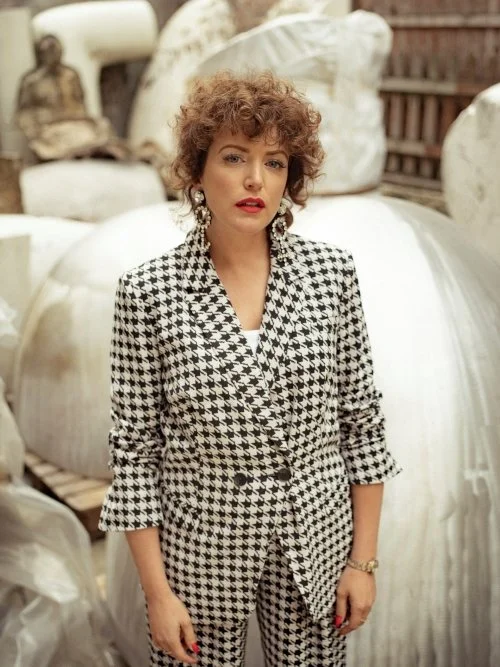
 IN THIS PHOTO: Annie Macmanus/PHOTO CREDIT: Stephanie Sian Smith

One of the more disturbing things we are noticing is more and more cases of sexual assault and harassment. From Sean ‘Diddy’ Combs to LA Reid to Michael Greene, there are prominent men in the industry being accused of assault or rape. The U.K. Government is asking women who have been victims of sexual assault in the music industry to come forward. Artists such as Axl Rose have also been accused of assault. It is not only a case of prominent men being accused. There are still issues at music festivals. Hard to police and monitor fully, there is a lot to consider and address. We know of cases that are reported, as women are coming forward and telling their stories. There are many more afraid of not being believed or feeling that there would not be justice or a prosecution. It is a complex subject that we need to ensure is addressed. There is, as I have written before, a massive issue. Annie Macmanus recently spoke to the House of Commons committee about a tidal wave of abuse cases in music. It is a moment when as much is being done by women to get progression and ensure that the industry is not rigged against women. That they are not silenced. It got me thinking about documentaries. Maybe something that is already in progress, it does seem like the recent cases of high-profile men in the industry being accused provides an opportunity to hear from women and those in the industry who have experienced assault and abuse.

 IN THIS PHOTO: Sean ‘Diddy’ Combs/PHOTO CREDIT: Jordan Strauss/Invision/Associated Press

One of our best documentary makers who has experience with bringing very difficult conversations to screen is Zara McDermott. Currently on Strictly Come Dancing, there is this side to her career that many might not know. Beyond Made in Chelsea and Love Island. Zara McDermott: Revenge Porn was announced in February 2021. This was an emotion and raw documentary where McDermott discusses sexting and her experiences of revenge porn with fellow victims. Many might not have expected her to turn to documentary making. Someone who might have otherwise been in tabloid columns and paid for an exclusive interview and gone down that route instead brought out an acclaimed and powerful documentary. Credit to her for the bravery to do what she did. This is what i said when they reviewed the documentary:

“The morning after Zara McDermott left Love Island in 2018, she was informed by a press officer that explicit images of her had been widely shared.

“I wanted to die,” she said, in the documentary Zara McDermott: Revenge Porn. Initially the show hit the expected beats as the reality TV contestant described her guilt, shame and anger, and explored the collateral damage to her distressed family and friends.

But it is the revelation that this was McDermott’s second experience of revenge porn – the first came when she was a bullied 14-year-old schoolgirl – that allowed the documentary to really excavate how this particular crime can annihilate someone’s sense of self-worth. It was heartbreaking to hear her ask: “How could I have been such an idiot… again?”

The show covered the many ways in which revenge porn stories can play out. There was McDermott’s narrative of building a career based on total control of her image; there was Sarah, whose ex-boyfriend was convicted for secretly filming and distributing images of her; and there was the devastating story of Damilya, who took her own life after an abusive partner threatened to share a video of her.

Commendably, the programme engaged with nuance around the issue, particularly the idea that some victims are more deserving of sympathy than others. Still, it would have been interesting to see a little more scrutiny of the judicial process and how common a conviction actually is.

McDermott herself was impressive, smartly engaging with the perception of her sexy image, movingly discussing the school incident with her parents for the first time and bravely attempting to contact the men who shared her image (neither responded)”.

In more recent times, she has made a documentary, Zara McDermott: Disordered Eating. McDermott discussed trolling she received about her body when she was in Love Island. She met with numerous young people suffering from eating disorders. I think one of her most important and enduring documentaries was Zara McDermott: Uncovering Rape Culture. Broadcast in 2022, it was another acclaimed documentary. Bringing her own experiences in together with a compassionate approach to those who have been through similar things, it is no wonder that it was lauded. The Independent said this:

“In her documentary Uncovering Rape Culture (BBC Three), McDermott is speaking publicly about the assault for the first time. She is on a mission to find the root of sexual violence against women and girls. McDermott thinks her “freckly, boyish” attacker – who was never found by police – could only have been about 15. Her first port of call, therefore, is schools.

McDermott is a compassionate interviewer. She meets dozens of schoolgirls who have been pressured by their classmates into sending nude pictures and told they are “frigid” if they don’t. She holds the hand of one survivor of sexual assault, Mary, who was left with internal bruising after unwanted touching at a house party aged 15, and comforts a mother whose 12-year-old daughter, Semina, took her own life after being raped.

The reality star is intrepid, too. In her interviews with children, one word keeps coming up: porn. Schoolboys tell her they started watching pornography as young as 11. At the time, they say, they had assumed it was a healthy, realistic depiction of sex. But, as shown in this programme, a seemingly innocent search on Pornhub brings up violent videos tagged with words like “destroy” and “barely legal teen”. McDermott wants to ask the company why they don’t stop children watching their content. Unable to get through on the phone, she tracks down the HQ of MindGeek, the tech company that owns Pornhub, and turns up at their offices. They’re on the edge of a roundabout opposite a Kwik Fit. She is dismissed from the premises”.

That may seem roundabout, but my intention is to show that we have talented documentary makers like Zara McDermott who could help bring to life a documentary exploring something dark and toxic in the music industry. Toxic masculinity and assault. Harassment women face online. Maybe her interest might not extend into music though, as she has helped bring to life such important documentaries that have resonated with many people, she would be a point of call. A source of influenced in terms of tone and scope of a documentary. There are other documentary makers that could be considered. It does not necessarily have to be a woman. Also, when it comes to abuse and assault in the industry, I also know that men and non-binary people experience it too. Perhaps to a lesser extent, there are still quite a few cases. Body-shaming and judgment is also something that is aimed at so many women. Again, features are written and some artists discuss their experiences. Billie Eilish shared her experience of being body-shamed online. I think, particularly, it is a rise of sexual assault and abuse claims that is worrying. A point where we need some action and activation. I know it will take more than a documentary to have a huge ill and evil quashed and under control. There needs to be a multi-limed approach in terms of educating and informing men. Ensuring that organisations like Safe Gigs for Women are highlighted. The great work they do. With sexual harassment still rife in music, many women are afraid or hesitant to report. There is insufficient protection and safeguarding available. I think a powerful and uncompromising documentary would bring to life vividly the stories and statistics which should give pause for thought. As we end a great year for music and a time when so many women are being tipped for success next year, we also thank those throughout the industry who are so valued and essential. On the other side of the coin, women are also being assaulted, abused, threatened, harassed and made to feel unsafe. It is cleat that how things are right now cannot…

 IN THIS PHOTO: Is Zara McDermott a perfect choice to help bring to screens a documentary about abuse through the music industry?/PHOTO CREDIT: Gareth Cattermole/Getty Images

GO on for much longer.

FEATURE: Saluting the Queens: The Forty-Five

FEATURE:


Saluting the Queens

PHOTO CREDIT: Bobbi Rich for The Forty-Five


The Forty-Five

__________

IN the final two Saluting the Queens features…

PHOTO CREDIT: Louise Mason for The Forty-Five

of 2023, I am going to dedicate some time to a great broadcaster, and a fantastic photographer who is doing some really incredible work. I am also going to spotlight journalist Hannah Ewens next year (she is offline until then it seems). It is an unusual situation when I am featuring someone/something who is not an artist or broadcaster. The reason is there are very few words from them in terms of interviews. In fact, rather than highlight a single person, I want to shout out a team. Well, a publication/website in fact! Comprised of some terrific female journalists who are highlighting amazing women in music, this Saluting the Queens is all about The Forty-Five. A terrific U.K.-based website. Rather than pull in interviews from those who write for The Forty-Five, I will instead drop in some of their recent features and interviews. I still feel we are in a situation where women in music journalism are not afforded the same opportunities as their male counterparts. Maybe not as respected. Things have changed from years previously, though there is still a way to go. The Forty-Five not only celebrates incredible female artists. There are some wonderful journalists working passionately and having their voices heard and seen. Before I come to some examples of their amazing work, Music Week spoke with The Forty-Five’s founder, Charlotte Gunn, in 2020.

“Charlotte Gunn has told Music Week that she hopes to change the landscape of music journalism with the launch of new online platform The Forty-Five.

In an exclusive interview, the former NME editor has opened up about the thinking behind her new publication, which will launch its first monthly digital cover story on June 17 and has an all-female base of contributors.

“The mission of The Forty-Five is to give female creatives a platform, tell untold music stories and to help connect fans with their new favourite artist,” said Gunn of the website, which will house interviews, reviews, opinion and playlists.

The site was developed by Gunn’s former NME colleague Jo Weakley, while journalists including Leonie Cooper, Rhian Daly and Jacqui Swift are among its contributing writers. Jenn Five – who recently photographed The 1975 for Music Week’s cover – is among the photographers.

“Long-term, I want it to be a trusted destination for music fans around the world, providing hyper-local coverage about the scenes they’re immersed in,” said Gunn. “But for now, I’m just excited for people to see what I've been working on.

The Forty-Five will focus on new music and in-depth editorial rather than music news, while Gunn has assembled a team of tastemakers to curate weekly playlists, and is running a podcast series called Trash In The Attic.

Here, Gunn opens up about her new project, reflects on her time at NME and looks ahead to the future… 

“The percentage of women working in music journalism is still embarrassingly low and it stands to reason that if music has been critiqued from a predominantly male perspective for decades, it's played a part in creating the male-dominated artist landscape we see today”

What are the driving factors behind starting The Forty-Five?

“I’ve pulled together a network of talented female journalists and photographers who make up The Forty-Five. Its aim is to tell music stories, through a different lens. The percentage of women working in music journalism is still embarrassingly low and it stands to reason that if music has been critiqued from a predominantly male perspective for decades, it's played a part in creating the male-dominated artist landscape we see today. Things are changing for the better, but within my corner of music, it's still a boys’ club, with sexism, bullying and an under-appreciation of female voices being the norm. Battling that is exhausting – it exhausted me – and gets in the way of the creative output. I wanted to make a platform where young female writers can be heard, have opinions and speak freely without all that bullshit. I am proud of the success I’ve had despite these challenges. I want to see a new generation of female writers achieve even more without age-old sexism holding them back.”

What kind of music media landscape are you entering into?

“It's incredibly challenged with publications and jobs under threat every day. A lot of publications that were once solely music-focused have diversified into new areas to try and attract more readers. There are a lot of blogs and zines run by brilliantly talented individuals, but they are lacking the industry experience to take them to the next level. I think we've found a niche. We're an entirely independent youth publication, with a slick aesthetic and a focus on trying to rebalance the industry. We've also identified the best journalists in music media to write for us and the best tastemakers to curate our playlists. Although there's an important message behind what we're trying to do, music is supposed to be fun, so we don't take ourselves too seriously.”

Several music publications are under threat at the moment, can you bring some good news?

“I hope so. It's hard to see peers struggling and I really hope everyone gets through this. Music media needs a diversity of voices and opinions otherwise it's pointless. I can't pretend to have all the answers. Quality journalism needs funding and we are no different, paid-for content is likely something we'll be moving towards long-term. For now, we are interested in working with brands aligned with our vision.”

 How do you want The Forty-Five to impact the music business?

“We’re open to working on new ideas and formats to tell artists' stories. First and foremost, we are fans too, and we want to celebrate musicians we like and showcase acts who are getting overlooked by traditional media. If you can offer us access, we can create unique and beautiful content with your artists that isn’t swamped by ads and clickbait links. I am not pretending this is the only outlet for women to write about music, but aside from the editorial output, I want to create a supportive environment for female creatives to learn from each other. I’m excited to see how the conversation and focus start to shift.”

What are your main goals going into the launch?

“It’s simple, really: to connect with music fans and create content that they enjoy. For the labels and artists, I hope The Forty-Five becomes an outlet they want to be a part of and support. And for my contributors, to provide some faith there are still some people who value your work.

Does music journalism need to change?

“Yes. It needs to put music discovery and fandom at the forefront of everything it does and be more adaptable. There’s also an obsession with print being the holy grail. I get it – I like seeing my words on a page as much as the next person and I understand that reading an article on your phone will never be the same as reading a magazine. I really do get it. But we do need to move past it because young music fans have. There is still a place for print media – and it's something I'm considering – but as so many titles are proving, great journalism is great journalism, whether printed or on screen. Being adaptable is key and, as boring as it sounds, so is living and dying by the data. What are people reading? What are they not reading and what can you do better next time? My challenge is to make the emerging artist I know is something special interesting to people skimming headlines on a page. It’s something that often takes a few tries but when I’m passionate about something, I keep trying”.

PHOTO CREDIT: Koto Bolofo

It is hard to include all of the best work produced by The Forty-Five. I am going to select a few examples from different journalists. Before that, go and follow them on Instagram and Twitter. Apologies for the length of this feature. It is just that The Forty-Five do such great work, I wanted to represent that with a selection of some of their incredible recent work. Every writer they have on staff is amazing – so apologies for any I have missed out. I am going to start off with an interview Lisa Wright and her amazing interview with Corinne Bailey Rae. Her latest album, Black Rainbows, is one of the most powerful and best of the year. A sound very different to what many would associate with Bailey Rae, it is extraordinary how there seems to be this element of freedom in her music. Not concerned anymore with writing radio-friendly hits and chart positions. An artist liberated:

“Across the game-changing record, Bailey Rae goes from futuristic robo-pop on ‘Earthlings’ to vitriolic rage on ‘Erasure’; the eight-and-a-half minute ‘Put It Down’, meanwhile, moves through transcendental neo-soul to a throbbing dance pulse. Throughout, the 44-year-old singer sounds enlivened and completely reborn. On aggregate site Album of the Year, it is the second highest rated from the whole of 2023 so far, with an average review score of 9.1 out of 10.

Undoubtedly, ‘Black Rainbows’ will live as the record that, 17 years after her debut, changed the Leeds singer’s career trajectory entirely. Which makes the fact that she initially deemed the album a commercially un-viable side project all the more telling.

“Having been on labels for a really long time, I’d definitely started to police my own ideas as I created,” Bailey Rae explains, Zooming in from a hotel room in Nashville, midway through tour. “I’d sit there and come up with something and I’d say, ‘Well there’s no point even finishing that because it’s not gonna be three minutes long, it doesn’t have a catchy chorus, it’s not gonna get played on the radio…’ I’d started to think like an A&R person.

“I think that [mainstream success] was definitely the expectation after the first record did so well – which was not what I imagined would happen because I saw it as an indie-soul record. And I was thrilled, and I got to fly in a private jet to Oprah and play at the GRAMMYs, and it opened the door. But it’s like that Coen Brothers film [The Ballad of Buster Scruggs] that’s about a musician in the ‘60s,” she continues. “He plays this beautiful ballad to a man for criticism, and it’s a magical moment, and then at the end the man just says: ‘I don’t hear money here’. And I got that response a few times where I’d have the beating heart of a song and they’d go, ‘Yeah it’s good but it’s not a single…’”

 PHOTO CREDIT: Koto Bolofo

Bailey Rae recalls the process for 2016 third album ‘The Heart Speaks In Whispers’ being one where she “almost made several records and had a load of it rejected – either by the structure or by myself – before I’d even finished it”. An unsustainable path, when it came to starting her next work, she decided to think of it as something away from the constraints of what a Corinne Bailey Rae record ‘should’ be. “I think the side project [notion] was a good place to escape to because I thought, let me completely disregard all of those aims that I’ve been trying and failing to achieve and just MAKE,” she nods.

The catalyst for what would be made came when Bailey Rae discovered the Stony Island Arts Bank in Chicago. A broad and deep encyclopaedia of Black history, the building and its contents were a revelation like no other. Over the past seven years, she would visit as often as possible and describes feeling like “all roads lead back [there]”; “I just felt like it was speaking to me,” she says.

The bank comprises more than 26,000 Black literature books on every aspect of history and society dating back more than two hundred years, as well as vast collections of items both celebratory and problematic. There’s an entire vinyl collection from house music godfather Frankie Knuckles, but then 16,000 “derogatory objects, anti-Black propaganda stuff” that forms the Ed Williams collection – an attempt to remove the items from public circulation whilst also highlighting the generational depth of the issue.

“I’d read all the Black books in my school library and a good amount of them in my University, and I had wider questions, but when I spoke to other people they’d say it’s kind of oral tradition so it wasn’t written down,” Bailey Rae remembers. “Or they’d say those stories weren’t documented, or people weren’t literate or the documents had been lost. So I had this thought that so many of the things I’m interested in were just lost to history, and then to walk into this bank and see the volume of literature on these subjects… that just blew my mind.”

A keen researcher, the discovery not only whet the musician’s appetite on an intellectual level, it also finally started to redress the balance of Black representation (or the lack thereof) that she had encountered her whole life. “I remember school history books where there’d be two or three photographs [of Black people] in the book, and one might be Martin Luther King but the other one – I distinctly remember it – was the charred body of a victim of racial violence; someone who’d been lynched and set fire to,” she recalls. “I was 13 or 14 and this was in the school textbook. And I understand why it was in the book, but there was no sensitivity to the fact that there were Black children in the class, and also there was no balance.

“I describe [what was presented then] like a circus mirror,” she continues. “It’s white-imagined Blackness. But at the same time, as a Black person, there was so little visibly reflected back in the culture that you would – one would, I would – stare in that circus mirror to try and see my reflection”.

 PHOTO CREDIT: Charlotte Gunn

I will stick with interviews and actually come to one from The Forty-Five’s founder, Charlotte Gunn. She chatted with the amazing Blondshell (Sabrina Teitelbaum) in October. Blondshell’s eponymous album was released earlier in the year. It is among the best of this year. A phenomenal work from an artist that everyone should know about! I do like the conversations and questions you get from an interview by The Forty-Five. Bringing something from artists that others have not:

“You finished up your first headline tour a little while ago. I know that you wrote much of the album alone. What was it like having these quite personal songs, sung back to you?

Surprising? I knew people were gonna go to the shows, because I was privy to ticket sales but then it’s a different thing when people actually show up. It’s one thing getting to talk to people on social media, which is still nice. But then it’s another thing to be in the room of people who have connected to the music. It’s really special.

The album touches on a lot of heavy themes. Do you manage to disassociate from the traumatic memories associated with them when you’re performing the songs live every night?

I don’t feel like I’m always singing about the thing that I wrote it about, right? So if I’m singing any of the songs on this album, more often, I’m singing about the stuff that happened that day, or whatever’s on my mind. I’m not thinking about that breakup, or that person or whatever it is – I think it would be difficult for me to try to conjure that up. Someone told me a long time ago that it’s easier to just put whatever you’re actually genuinely feeling now into the performance rather than trying to find an old emotion.

You’re about to release a deluxe version of the album including three new tracks – ‘Street Rat’, ‘It Wasn’t Love’, ‘Cartoon Earthquake’ – and two demos of ‘Kiss City’ and ‘Tarmac’. Where do these songs fit in the Blondshell story?

I wrote ‘Street Rat’ the day after we finished recording the album so I wanted to put it out because it’s very much part of the same world. There’s a version of ‘Tarmac’ on the deluxe version that’s coming out on the Deluxe that’s really gentle. That’s the one I’m most excited about because it shows a different side to the song.

‘It Wasn’t Love’ was later. I think the album feels like: ‘Isn’t this what love is? It’s painful and it’s really hard and yeah, it can be horrific’. But that song is about looking back and saying, ‘I thought that that was love but that’s not what that is.’ It can be a little painful, but it doesn’t have to be this twisted thing. That’s its own kind of heartbreak, in a sense, looking back at a relationship and realising you weren’t in love.

I loved your cover of ‘Charm You’ by Samia. It seems that a common theme in both your and Samia’s music is saying the ugly thoughts out loud – sharing things that others might be ashamed to say. I wondered if that was something you’d bonded over?

I don’t remember talking about that but something I do remember talking about with her recently is, when you’re someone who’s written about heartbreak so much, how do you continue to write songs when you’re in a stable relationship? She and I are both in relationships, but then I realised, well, [Wilco frontman] Jeff Tweedy has been married for so long. And they put out an album every year, so…

I think women get a harder time with that. People want you to fit into a Sad Girl box.

They don’t want you to be on a beach, loving life. But they also don’t want you to be devoid of any joy. It’s a hard balance. There’s not a lot of joy in the songs on my album because I was having a hard time when I made it. I could understand if someone felt like maybe there should be some more uplifting songs. That’s why I was so excited to cover ‘Charm You’. You it felt like such a fun opportunity. It felt like a joyful song. But the biggest thing for me, when I was writing this album was just that I had to take all these things seriously. I was allowed to feel really intensely”.

Prior to getting to some features, there is another interview worth spotlighting. The brilliant Olivia-Anne Cleary was in conversation with Sophie Ellis-Bextor in June. Chatting about her remarkable new album, Hana, and what comes next, it is a brilliant interview that you need to check out in full. I have included sections (of the interview) where Ellis-Bextor discusses family and music. The importance of that connection. It is interesting reading about her earlier years in music and some of those experiences:

“For now, however, Ellis-Bextor’s attention is firmly on the release of her seventh studio album entitled ‘Hana’, the Japanese word for “Blossom.” It’s her third and final offering with collaborator Ed Harcourt. The record holds a great deal of sentiment and purpose, documenting a journey of adventure, loss, and renewal. “For want of a better word, it’s quite a ‘sweet’ album. It’s melodic. It’s got quite a lot of synths, it’s quite foggy in places, a bit psychedelic. It’s a dream world I wanted to go into,” she explains. “Thematically, there’s a lot about sunshine… a bit of being gentle to yourself as you go into a new chapter. Then there’s a song about aliens, just for the hell of it [laughs].” Tracks such as ‘Lost In The Sunshine’ and ‘He’s A Dreamer’ certainly exude the warmth and dream-like qualities Ellis-Bextor envisioned during the creative process.

In early 2020, during the beginning stages of writing the album, Ellis-Bextor took a trip to Japan, which proved to be a transformative experience. “My eldest, Sonny, was supposed to go with my mum [TV presenter Janet Ellis] and my stepdad [John Leach], but my stepdad was being treated at the time for lung cancer, and when it came to it, he couldn’t travel. I was drafted in last minute,” she admits. “It was three generations, and there was an undercurrent of knowing it was a really special trip, with sadness around the edges, because of what was happening with my stepdad.” Shortly after the family returned to England, the world went into lockdown, and the trip became the epicentre of the album’s creation. “Japan was this rich, inspirational landscape to go to in our heads, which took on more significance when we suddenly couldn’t go anywhere.” 

In July of that year, Ellis-Bextor lost her beloved stepdad, and the grief, along with a desire to celebrate John’s life, added a whole new layer of retrospection to the album. One album track entitled ‘Until The Wheels Fall Off’ includes lyrics taken from a letter John left behind. “He said to my mum that he had all his best adventures with her and how they had travelled, laughed, and loved until the wheels fell off. I just thought that was really gorgeous,” she recalls. “The song is a tribute to their marriage, because they were very happy together.”

When it comes to her own marriage, Ellis-Bextor works closely with her husband of 18 years. “It’s always Richard,” she tells me, when I ask who gets the first listen of her new tracks, “When I was younger, I’d play all my demos to my girlfriends. Now, I’ll bring the music home and play it to Richard and the kids. He’ll play stuff to me from his band, as well. We’re both really curious about what the other thinks.

Music is very much a family affair for Ellis-Bextor, who has her brother Jack as her drummer. The community aspect of having a band in the studio and on stage is a big draw for the singer. She credits this to her early days singing lead vocals in her band Theaudience. Despite enjoying success with their first record in 1998, they were dropped before a second album materialised. For Ellis-Bextor, the experience served as a reminder to enjoy her successes when they come. And she did just that when she featured on Spinner’s hit track ‘Groovejet (If This Ain’t Love)’ in 2000. “That song lifted me out of feeling blue and gave me back a career. I was learning about this whole new world of pop music and I realised that I can do a bit of everything. I can have my indie roots and lean into dance. I’ll forever be grateful for that.”

Reflecting on those early years, Ellis-Bextor notes that the music industry wasn’t always the friendliest of spaces for female artists. “When I was writing my [2021] autobiography, I was looking back at old diaries and press cuttings, and I was like, ‘Oh, it wasn’t in my head. It actually was quite a toxic environment in lots of ways.’ After I spoke about it, I found that a lot of my peers had felt exactly the same way,” she reveals. The musician feels that people are now able to express themselves in a way artists previously were not. “I didn’t really have the language to articulate what wasn’t quite right. It wasn’t binary — being treated well or badly — it was those things in the middle,” Ellis-Bextor tells me. “We’ve got much better language now about what makes us feel good and what doesn’t. We’re encouraged to articulate those boundaries in lots of different ways.”

For Ellis-Bextor, social media has played a big part in helping her reclaim her voice. “It’s double-edged, but I like the fact that I can have a clear stream of communication between me and the world,” she explains. “When I started out, everything had to go through all the press teams. You might hope to get something [a message] out there in an interview, but it might be twisted or you could be misquoted”.

 IN THIS PHOTO: Victoria Monét/PHOTO CREDIT: Amy Sussman/Getty Images

Throwing it forward now to last month. The fabulous Jenessa Williams, like most of her colleagues who writes for The Forty-Five, also writes for other publications (including NME and DIY). She has written some great features this year (including this brilliant piece). I loved her piece about Victoria Monét scooping a load of GRAMMY nominations. How this is her moment in the spotlight. And how these nominations have come at the best time. Monét’s much-anticipated extraordinary debut album, Jaguar II, came out in August to huge critical acclaim. Take a look at this feature, as there are some brilliant perspectives and words that celebrates one of modern music’s queens:

“A day that gets everyone scrolling through aeons of tiny font and gnashing their teeth at the absence of their favourite, The 2024 Grammy nominations are out, in all their pomp, glory and categorical complexity. This year’s reveals were mostly business as usual, with both SZA and boygenius reigning high at the top of the leaderboard, as well as the ritualistic snubs of K-pop and regional pop that have become sadly familiar in recent years.

There was one triumph in particular though which felt like a real treat: R&B singer-songwriter Victoria Monét scoring seven nominations (tied for second-most overall), including Best New Artist, Record of the Year for ‘On My Mama’, Best R&B Performance for ‘How Does It Make You Feel’ and Best R&B Album, for ‘Jaguar II’.

Being close to Monét also appears to pay dividends: longtime collaborator and producer Dernst Emile II (known as D’Mile) has been nominated for Non-Classical Producer of the Year for the second year in a row, whilst Monét’s two-year-old daughter, the impossibly cute Hazel, has become the youngest ever Grammy nominee for her appearance on the song ‘Hollywood’, featuring both her mama and R&B legends Earth, Wind & Fire. Blue Ivy, it’s time to set up that protegé training scheme…

In many ways, this level of recognition for Victoria feels like true vindication, a sign that the mainstream can no longer ignore what those in the know have argued for years — a woman with the skills and catalogue to be remembered as one of the most influential players in our current R&B ecosystem. Though she has long has ambitions of being a front-and-centre star, her early success as a songwriter for other artists has seen her pen some of the most memorable recent hits of the genre — ‘7 Rings’ and ‘Thank U Next’ by Ariana Grande, ‘Do It’ by Chloe x Halle, and ‘Ice Cream’ by BLACKPINK and Selena Gomez.

When she finally did make a real solo go of it in 2020, The Forty-Five were right there with her, learning about how her experiences of being in girl bands and working with others all led to the quality and confidence of her debut E.P, ‘Jaguar’.

“Everything happens in the right time – a lot of the things I do in my artist career, I’ve learned from seeing other artists operate,” Monét said in an interview with us. “It’s been a long but necessary journey.… I didn’t feel comfortable to say what I really wanted to say for a long time…but I’m also trying to encourage other people to kind of skip over some of the hesitations that I originally had.”

When it comes to musical self-empowerment, Victoria Monét’s work shows none of that early uncertainty. Her best songs swing with a loose, carefree energy, the sonic equivalent of a friendly pick-me-up right. In a genre that often relies on simple metaphors to explore common tropes of love, loss, confidence or infidelity, her pen feels refreshingly playful, capturing a true sense of how millennials (particularly millennials borne of black culture) speak with each another. Whether it’s ‘On My Mama’s insistence that “I’m so deep in my bag/Like a grandma wit’ a peppermint”, or ‘West Coast’s observation that it “feel like a Thursday, how I’m throwing it back”, she reminds us that the best musical humble-brags are often silly as well as sexy, leaving room for personality to shine through”.

PHOTO CREDIT: Constantine Spence

A couple more reviews/features to include before I wrap things up. Holly Humberstone is one of my favourite artists. An amazing British talent whose debut album, Paint My Bedroom Black, came out in October. Turning twenty-four on Sunday (17th December), it has been a big year for her. One where this anticipated album has come to light. Announcing her as one of our very best young artists. Rhian Daly shared her thoughts in a thoughtful and incredible review of an album that sits alongside the very best of 2023:

“Some things are worth the wait. When Holly Humberstone was named the recipient of the BRITs Rising Star award back in December 2021 – and then appeared on every ones-to-watch list going a month later – it seemed like things could be about to snowball for her. They have, but she’s also shown restraint and stayed true to who she is as an artist, waiting for her debut album to be just right rather than rush it out with undercooked songs that don’t represent her.

‘Paint My Bedroom Black’ arrives nearly two years after that victory and, largely, it is just right. It’s a cohesive statement of the Grantham-born singer-songwriter’s artistry – vivid, dark, almost made for sharing confessions under the safety of night – and full of brilliant, electronic-tinged pop songs.

Of course, having received such a groundswell of attention early on meant that Humberstone had to write these songs on the road and between seemingly never-ending tours. It’s a lifestyle that has fed into her creations, these songs allowing her space to process the extreme highs and lows of a life on tour and all the emptiness and guilt that comes with that. On ‘Ghost Me’, she begs her friends not to forget her, recalling “singing ‘Angels’ at karaoke on the most chaotic night” before throwing down her challenge: “And if you try to ghost me and quit being in my life / Don’t you dare.”

The soft acoustic strums of ‘Room Service’ offer a deal to those friends – when this whirlwind pauses, Humberstone will bring flowers and a calendar packed full of plans. ‘Elvis Impersonators’, minimal in layers and melancholy in tone, changes its target to one of the artist’s sisters, now living in Japan. “I can’t be without you,” she sighs longingly, depicting her sibling with “cherry blossom in your hair” in the early hours in Tokyo.

The 23-year-old is at her best when it feels like she’s fighting for something. On ‘Lauren’, that’s an old friendship to be revived, even if maybe that person shouldn’t have trusted “a girl who sleeps on a mattress on the floor / And has a thousand unread messages”. The sombre ‘Antichrist’ finds her fighting with herself, regretful over the way she treated an ex and wondering: “Am I the antichrist? / How do I sleep at night?”

Best of all, though, are ‘Flatlining’ and ‘Kissing In Swimming Pools’. Entirely opposite from each other, the former battles the spectre of an old lover over electronics collaged to mimic a heart monitor. The latter, meanwhile, fights for a more positive thing – to be able to spend as much time as possible with a new love. In it, Humberstone details those first rushes of romance in stunning, relatable, small detail: “I’ll steal a glance as you’re singing your heart out to something embarrassing / I wanna know if you think about me that way.”

The star’s lyricism is the crowning glory of ‘Paint My Bedroom Black’, her descriptions often supremely evocative. On ‘Into Your Room’, she projects herself standing outside someone’s window in the rain “with a freshly ripped human heart from my ribcage and a boombox”. One song later, on the brighter-sounding ‘Cocoon’, she likens her inability to get out of bed and tend to chores to becoming “a taxidermy version of myself”. At times, though, she does become repetitive – there are several references across the record to needing to be next to someone or wanting to fix them.

As debut albums go, Humberstone’s is a triumph – one that perfectly captures her sound and distils her experience of musician life in a way that doesn’t make you want to pull out a tiny violin. ‘Paint My Bedroom Black’ is majestic and should serve as the first step in a very illustrious career”.

 PHOTO CREDIT: Beth Garrabrant

There is one particular feature I want to finish off with. Written by the amazing Celia Almeida, it concerns, perhaps, the artist of the year: the sensational Taylor Swift. Almeida, like many, was sceptical when Swift announced in 2019 she would be re-recording her first six studio albums. These new ‘Versions’ releases are Taylor Swift making the albums she always wanted to. Free from the label, rights and any sort of control issues. An artist now in a position to have full say in what her albums sound like and how they are released. Ceilia Almeida shared her take in July. Someone who has not fully come around to the newly-reissued/recorded early albums from the legendary Taylor Swift:

“THE VAULT TRACKS

Calling these albums re-recordings doesn’t tell the whole story. Though most of the songs on the records have been familiar to fans for the better part of two decades, Swift’s decision to include unreleased tracks on Taylor’s Version albums was a mastermind move. Releasing new songs has elicited interest outside of Swift’s hardcore fanbase, and it’s added some worthy entries to the list of her best songs.

Swifties know she has a habit of relegating some of her best songs to deluxe versions of her albums (see evermore’s ‘Right Where You Left Me’ and 1989’s ‘New Romantics’). The Vault tracks showcase some of the finest work she left on the cutting room floor during previous eras. On one standout, ‘Nothing New,’ off of ‘Red (Taylor’s Version)’, Swift recruits Phoebe Bridgers to elucidate her fears of fading relevance in an industry that prioritizes youth, particularly when it comes to women. “And someone else lights up the room,” Swift sings, lamenting, “People love an ingénue.”

Other fan favourites from the Vault include ‘Fearless (Taylor’s Version)’ track ‘Mr. Perfectly Fine’ and ‘I Can See You’ a paean to repressed adolescent desire and immediate standout on ‘Speak Now (Taylor’s Version)’.

FULL-FLEDGED ALBUM CYCLES FOR YOUNGER SWIFTIES (AND LATECOMERS)

Some of Swift’s younger fans weren’t yet born when she made her debut back in 2006. In fact, the youngest Gen Zers were born four albums into Swift’s career, during the ‘Red’ era. These fans have benefitted from her full-fledged re-recorded album rollouts, which include new album art, previously unreleased radio singles, and Vault track music videos—precisely the kinds of experiences that make the most impactful albums of our youth so indelible.

‘Red (Taylor’s Version)’ was particularly fruitful in this regard: The twangy, Aaron Dessner-produced country kiss-off ‘I Bet You Think About Me’ was released as a single, with a music video directed by Blake Lively. But the highlight of the release was the short film for the 10-minute version of ‘All Too Well’, starring Sadie Sink and Dylan O’Brien as Her and Him, a couple doomed by an age gap and differing stages of maturity; and Swift as the older version of Her, an author who uses the experience as inspiration for her writing.

MATURING VOCALS

‘Mean’, the sixth track on ‘Speak Now’, was famously written in response to a critic (believed to be Bob Lefsetz) who disparaged Swift’s undeveloped singing voice. “At that time, it levelled me,” Swift writes of the critiques in the vinyl liner notes for Speak Now (Taylor’s Version), adding she “underwent extensive vocal training” ahead of recording the original version of the album. For those for whom Swift’s teenage vocals were an impediment to digging deeper into her early songcraft, the ‘Taylor’s Version’ recordings are a welcome redux.

While there are charms to the impassioned, eager vocals of her early catalogue (and some idiosyncrasies that simply can’t be replicated, such as Swift’s bated breath on Speak Now’s ‘Last Kiss’), Fearless (Taylor’s Version) songs like ‘Change’ and sleeper bonus track ‘Superstar’ greatly benefit from Swift’s smoother, deepened vocals. The same can be said of Red (Taylor’s Version) highlights ‘State of Grace’ and ‘Treacherous’. With imperfect, immature vocals no longer an obstacle, Swift sceptics will appreciate lyrical gems like, “Nothing safe is worth the drive.”

A CONVERSATION BETWEEN TAYLOR (ADOLESCENT VERSION) AND TAYLOR (ADULT VERSION)

Speaking about her All Too Well short film at a Tribeca Film Festival screening last year, Swift expounded on one of the major themes in her songwriting. “I really do write about girlhood a lot,” she explained at the time.

Indeed, one of the most thrilling aspects of Swift’s re-recordings has been listening to the interplay between the older, wiser Swift and her adolescent self, with ‘Fifteen’ being the clearest example of this dynamic. Swift was just 18 when she first released the cautionary tale about her friend Abigail, who “gave everything she had to a boy who changed his mind.” It’s always been a heart-rending song, but her words carry even more weight on the re-recording when Swift, now in her 30s and at the apex of critical acclaim and popularity, sings, “I didn’t know who I was supposed to be at fifteen.”

‘Speak Now (Taylor’s Version)’ offers two poignant examples of Swift in conversation with her younger self, on ‘Dear John’ and ‘Innocent.’ Swift was 32 when she re-recorded the album—the same age Mayer was when he dated a 19-year-old Swift, and the same age Kanye West was when he famously interrupted her at the MTV Video Music Awards, prompting her to respond with ‘Innocent’.

Vault track ‘Castles Crumbling,’ about a public fall from grace, paints a more complete picture of the story of the album. Listening to it in conjunction with ‘Innocent’, it becomes clear that when Swift sings, “Wasn’t it beautiful when you believed in everything/And everybody believed in you?” she’s not just singing to her former nemeses—she could just as easily be singing to herself”.

I was eager to show some appreciation for The Forty-Five. Though many music websites and magazine feature underground and established female artists, The Forty-Five is all about female (and non-binary) artists. With interviews, features and reviews from women. It is providing this amazing platform that everyone should know about. An indispensable bounty of phenomenal writing about some incredible artists, you support them on Patreon. It is essential that we support music journalism and ensure that we do not lose valuable sites and magazines. I would say that The Forty-Five is among the very best and most important. Some incredible journalists giving us wonderful work. Follow them on social media, share their journalism and, importantly, check out the artists they feature! From single picks to interviews with legends, there is always something intriguing and must-read coming from The Forty-Five. Every success for them in 2024! A website celebrating queens run and featuring journalist queens, I really love what they do – and I have been following them for a long time now. I wonder if its founder Charlotte Gunn knew, back in 2020 when she set up The Forty-Five, it would become this hugely respected and known source. From an interview with Self Esteem (let’s hope that Maddy Smith writes more for The Forty-Five soon!), to Hollie Geraghty’s 45s of the week features, there is an array of exceptional content waiting to be discovered! If you are unfamiliar with the brilliant The Forty-Five, then go and check them out and discover…

 PHOTO CREDIT: Jenn Five for The Forty-Five

SOMETHING truly wonderful and irreplaceable.

FEATURE: Spotlight: Memphis LK

FEATURE:


Spotlight

 PHOTO CREDIT: Jack Craig

Memphis LK

__________

IF you have not heard…

of the amazing Memphis LK, then make sure that you follow her. The Australian artist fuses Dance/Electronic. She is a wonderful artist and D.J. True Love And Its Consequences is her latest E.P. That came out in November. A remarkable work from an artist that will be on a lot of people’s minds as we head towards 2024. She is someone that I am new to though, instantly, I was intrigued by her music and story. Memphis LK is an extraordinary vocalist, songwriter and producer from Melbourne. She was influenced by the early sounds of Chicago House, in addition to U.K. Garage and Detroit Techno and Breakbeat. The young Memphis LK was raised on the music of strong female artists. R&B legends and Pop queens from the 1990s. Bonding with Synth and Electronic music has led her to this moment. I am going to bring in a few interviews with this amazing artist. Music Tech featured her back in February. It is interesting that, growing up, she would try to sleep but would hear kick drum and the pulse of a club/Electronic event. Years later, she would understand the cultural significance. Something that enticed her so young is now what she does as a career:

“Having grown up in an industrial part of Melbourne during the late-90s/early-2000s rave scene, Memphis LK developed a unique insight into electronic music from an early age. “I remember being really young and I could hear this pulsing four-to-the-floor kick drum every night, and I could never sleep,” the producer, vocalist, songwriter and DJ says. As Memphis got older, she understood and appreciated the cultural relevance of her experience: “It must have been such an interesting era of dance music… and I just had no idea that it was going on right next door!” This early exposure to club sounds helped to shape the artist that Memphis would go on to become. “Maybe, on some weird level, that’s infiltrated into my psyche and made me love dance music,” she says.

After abandoning her childhood dream of becoming a marine biologist, she started focusing on making her own music. Inspired by the likes of Four Tet, Burial, Overmono and Bicep, she started making loops on GarageBand and singing over them.

“I had all of these sounds in my head that I wanted to be able to make, but I didn’t know how,” she says. Although she’d performed in indie bands as a teenager, Memphis adds: “[indie] music was fun, but it was never the music that I really wanted to make.” However, everything changed when a friend got her onto Ableton Live. “I got a crack of it and was like ‘whoa, this is crazy’.”

Watching tutorial videos and teaching herself the basics six years ago was a big turning point for Memphis. “I was like ‘this is it. This is what I’m supposed to be doing.’ I realised that I could literally make any sound on my computer, and I didn’t have to rely on other people. That was a really exciting moment for me, and I started taking music really seriously.”

Three years later, when COVID-19 lockdowns hit, Memphis had another realisation. “I was pretty good at production and getting my songs to a point where I was happy, but not quite satisfied with them because I was always handing them off to another producer,” she says.

“I guess I just had this idea in my head that ‘I’m a girl, so I can’t finish my songs’, which sounds so ridiculous when I say it out loud.” Memphis says this thought process was “holding me back, and I think it’s something that holds back a lot of people. But I thought to myself ‘there’s no reason that I can’t be as good as the people that I admire; I have all the time right now to do it, and the only thing that’s holding me back from doing that is myself’.”

It’s exciting that genres from the 90s rave era are having a resurgence and people are reimagining them in new ways. And I think it’s cool that, although TikTok can be kind of annoying, it can be a way for people to discover music they might never have heard before.”

Memphis is also part of the Australian rave scene’s new generation, which also includes producers and DJs JamesJamesJames and Pretty Girl. “The dance and electronic scene right now in Australia is just going crazy,” Memphis says. “There’s a real vibe; so many artists are doing really cool things and it feels like people really want that kind of music right now. I’m not sure why, but everyone wants to be at the club and have fun”.

Urban List chatted with Memphis LK in February too. An artist that gives back and has shared her knowledge and skills with women in her community, here is this amazingly giving and inspiring artist who is setting such a fine example. That collaborative and bonding nature comes through in her music. Sounds that are designed to get people together:

“Can you tell us a little bit about your music journey to date?

When I was like 15, I started discovering artists like Four Tet, James Blake and Burial and became obsessed with electronic music—particularly the more experimental stuff. I started out making loops in GarageBand and singing over them. Then when I was about 18, I found out about Ableton (a music production software) and realised I could create literally any sound that I wanted all on my own, without having to rely on anyone else and it blew my mind. I was in a couple of bands before I started releasing solo music in 2019. I spent pretty much all of 2020-2021 working on my production (in lockdown) and feel like I’m in a place now where I’m so confident in what I’m doing. My EP is coming out in January and it feels so good to be releasing music I’m really proud of.

What has been your most memorable or rewarding moment so far in your career?

The day after I released my track, 'Whip', I played a show and people were screaming the words and I nearly cried on stage. Also, the messages from people saying my music inspires them will always be an amazing feeling.

Music runs in the family, have you always wanted to create your own music?

I’m lucky that I grew up in a house where creativity was encouraged, so music always felt like it was an option for me—that’s something I’m really grateful for. I’ve pretty much made music in some capacity since I can remember and really became extremely obsessed with it when I started producing my own music. That was the moment everything clicked and I was like, 'oh, okay—this is what I’m meant to be doing'.

Your music is a captivating mix of dreamy lyrics and fast-paced layers, does this contrasting combination reflect how you see the world?

When making dance music I’m drawn to sounds that have conflicting moods. I like to contrast the hard and the soft, the dark and the light. I’m a Libra and quite sensitive so I guess I feel a lot of the darkness in the world but I also feel the light—corny. I  also feel like that’s probably just my personality too, a little bit nice and cute but don’t mess with me.

Who or what has been your biggest influence in creating your unique sound?

Four Tet. I’ve always been so inspired by how he is able to put so much emotion into dance music.

Walk us through the music writing process for you; are you a creature of habit,  or do you thrive in spontaneity?

I’ve learnt over the last few years that my creativity thrives through routine and repetition so I try to be pretty disciplined with it. The spontaneity and magic are more likely to arise if I set myself up properly to receive it.

You’ve already given back so much to your community, organising free DJ  workshops for women and gender-diverse folks in Melbourne and playing  Mildura’s first pride event—how important is giving back to the community for you?

It’s really important to me, and I can only speak from my own experience, but as a young female in a male-dominated industry it’s so easy to think you’re not good enough, or you’ll never have the skills to be at that top level, so I’ve always wanted to help people build those skills and that confidence in any way I can. On a  broader note, I feel like community is something that’s taken a bit of a backseat in general. Our society feels pretty “me” centric, people seem to focus a lot on themselves but often aren’t extending that care and compassion to others. I hope we can get back to a place where we all value community and connection more”.

I am going to stick with interviews from February. That is when Memphis LK was promoting her E.P., Too Much Fun. I am sort of playing catchup in a lot of ways. Listening back to older work and discovering this artist with such amazing command and depth. Purple Sneakers spent time with Memphis LK and asked her about her transition from the earliest days to now:

“When was the moment you started to begin to love the energy and power of dance music? What were the experiences that made you feel like I want to make this type of music?

It was when I started discovering more experimental artists. People like Four Tet, Burial and Nicolas Jaar. Even early Grimes. The way that it was electronic but more experimental. The thing I love about those artists is how much emotion they can put into dance music. That’s always something that I’ve strived to do with my music. That was the moment for me that was most inspiring to me. It was the most inspired I’d been listening to music.

How did that transition to music making?

I started from there playing around with looping stuff on Garage band and singing over it. From there I was shown Ableton and that blew my mind. Oh my god, this program can do everything. Despite playing in bands before I started producing, I always had a certain sound in my head that I wanted to be able to make but I didn;t know how. That was the moment where I realised I could make this music now. It was such a cool feeling because I realised I could do it all myself without having to rely on other people.

That was also the moment that I decided I wanted to do music. If I can make it work, this is it.

In 2021 you dropped your first solo EP 1 which really introduced your sound well but it feels like with Too Much Fun you’ve taken that musical foundation and perfected it. How do you reflect back on 1 now?

It was definitely a necessary step in involving my project. I definitely look back on those songs and to me, that was a full on exploration phase for me. I had no idea what my direction was or what my sound was. I was just trying all these different things and seeing what would stick. That was also a period of time where I wasn’t so confident in my production. I was getting my songs to a certain point and getting another producer to finish them for me.

The years that followed that were COVID and lockdowns and that time I didn’t put any music out. I just wanted to get really good at producing so that I don’t need to give my songs to other people then not being happy with the result. Too Much Fun is where I’ve come out the other side with so much clarity in my sound, confidence in my production. I had to take all of those steps to get to where I am now so I’m really grateful for that time. It’s so important to have that stage of exploration and just figuring stuff out. It helped me grow.

How challenging was it to find that balance between pop and dance on Too Much Fun. Was it completely off instinct or was it something you consciously had to balance?

A lot of it is just based on instinct and the sounds that I like. I’ve always loved songwriting and telling stories through songwriting. I want my music to make people feel things. I’ve also been very involved in the club scene and being very inspired by underground sounds. That’s the music that I listen to. So it makes sense my production veers towards those sounds, with the rave and club influence.

On that though, I feel like a song doesn’t feel finished until it evokes an emotion. That’s when I know whether a song is worth following through with, when I’ve found a chord progression, melody or lyrical idea that I’m feeling emotionally.

The project lands at such a perfect time in the context of global dance music. People have become really accepting of underground dance influences in pop music. What do you think has triggered that? What’s changed in the water?

I feel like it is the aftereffects of lockdowns. People want music that makes them feel great. People are craving fun. That’s been my mindset as well with making music. I just want to make fun music that people can have a good time with. Obviously TikTok is a big factor in dance music. It has benefitted so much from it. The whole 90s dance/rave culture sounds and feeling has been blowing up on TikTok for the last couple of years.

The title for me is definitely a double meaning. At first glance it’s very Oh so fun! but when you listen to the music, there’s some obvious shit going down. Too Much Fun on face value has been my approach to making music in the last year or so. Just having so much fun with it, making music that I enjoy and not overthinking it.

Supporting Tove Lo must have been a crazy experience. What did seeing an out and out pop star like her perform and kill it on stage teach you about making and performing art generally. What were your reflections after walking out of those shows?

It’s so inspiring seeing a big pop artist do their thing. To have a live show that is so dynamic, well thought out, high energy is just so inspiring and something that I want to have at some point with my live shows.

Also the crowds were really lovely and supportive. That made those shows so much fun. I was pretty nervous for those shows because they were all sold out and when I walked out on stage I had never performed for a crowd that was so attentive. Being used to performing clubs and stuff like that and then to go onto a stage and see everyone silent, watching and present. I was not used to it. It was really cool.

You were the spotify EQUAL ambassador for January, which led to you having a Billboard in Times Square. You spoke extensively while entering the industry about the lack of representation in dance music and now that advocacy has led you to the most visible you’ve ever been. How do you reflect on having the billboard for that reason? How does it make you feel?

I can’t believe it. I still feel like that photo is Photoshopped. It’s surreal. It feels really amazing having put in so much work over a long period of time and a lot of the time it feels like despite putting in that work you don’t get a whole lot back. It can be extremely hard to keep pushing. As I’ve said in other interviews, there can be a lot more self doubt when you’re a woman or non-binary person in the industry for a multitude of reasons. Both from a lack of representation and visibility on the artist side but also the lack of belief in those artists. We are wired to assume that a man has produced a female’s work for some reason.

For that reason I feel really grateful and happy and proud I kept pushing through and now it is the ultimate blessing”.

I am going to finish up with some of the most recent press. There are not really any interviews around the release of True Love and Its Consequences. We might get some more interviews with Memphis LK soon enough - but, for now, here is some background and detail about one of the best E.P.s of the year. It is a phenomenal work that everyone needs to listen to. An incredible aural experience, it is clear that Memphis LK is primed for big things next year:

“Idiosyncratic producer and DJ Memphis LK releases her second EP of the year titled True Love And Its Consequences via Dot Dash / Remote Control Records, a true lesson in beat-making set to cement her at the forefront of Australia’s dance scene.

The addictive focus track ‘Black and Blue’ leads the omnibus which offers an angelic soundscape that dissolves into her signature driving beat paired with her most unique production yet, utilising space and classic piano elements with euphoric electronic elements.

True Love and Its Consequences sees Memphis LK at her most concise and developed, sitting comfortably at the intersection of underground club and bubbly pop music. Conceptualised between the UK and Australia, True Love and Its Consequences is Memphis’ second EP for the year, channeling pure feeling and boisterous fun over five tracks of emotive dance music ranging from the introspection of Burial to the brightness of Charli XCX. That sense of instant euphoria is abundant on ‘Closer To You’, a true love ballad echoing the nostalgia of dance music from the early 2000s. The duality of love is expressed in full through the duality of Memphis LK, her artistry communicating a range of feeling through her unique approach to music.

As a producer, songwriter, vocalist, and DJ, Memphis’ approach echoes the bedroom pop sentiment of the 2010s with an intentional dance spin, a DIY artist in full control. Memphis is part of a diverse new wave of pop artistry, inspiring those around them and the next generation with artistic agility and plurality. She seeks to elevate femme voices like her own, who deserve to be seen for all that they are without being boxed in as women in dance music often are”.

Go and check out this Australian treasure. I hope that she gets to play around the U.K. next year. There is a lot of love for her here. It is wonderful seeing how she has grown and where her music has traveled to. Regardless of how you’re feeling and what sort of mood you are in, there is something about the music of Memphis LK that puts you…

IN a better frame of mine.

___________

Follow Memphis LK

FEATURE: Saluting the Queens: Kara Jackson

FEATURE:


Saluting the Queens

PHOTO CREDIT: Lawrence Agyei/New Yorker


Kara Jackson

__________

I have featured…

PHOTO CREDIT: Brennan Bucannan for The Line of Best Fit

the amazing Kara Jackson before. I feel, as an artist, she is someone worthy of further spotlight and love. This feature salutes queens of music. Whether they are an inspiring and important artist, a woman doing incredible work on radio, production, at a label, organisation or anywhere else in the music industry. I am going to select a few artists for special consideration. The previous inclusion, Little Simz, is a British Hip-Hop icon and modern-day idol. Kara Jackson hails from Illinois. In various features, I have highlighted albums by women. The strongest work of the year from some of the best female artists around. I realise, in the course of my writing, I have not given enough space to a tremendous artist who I feel is one of the most distinct and important voices in modern music. Whilst some label Kara Jackson’s music as ‘Folk’, I think it is much harder to pin down. I shall come to a couple of reviews for her stunning debut, Why Does the Earth Give Us People to Love?. That was released on 14th April through the label, September. As a producer and writer of all the tracks, there is so much of Kara Jackson in the sound and the songs’ themes and tones. She is an exceptional artist I just had to salute! In the next couple of features, I am looking more at broadcaster and those behind the scenes. In the case of Kara Jackson, she is someone who is at her most powerful and impactful when it front of people. Delivering that incredible music to adoring and captive fans. I think that her fanbase in the U.K. has grown through this year.

Recently, The Line of Best Fit named Why Does the Earth Give Us People to Love? as their favourite album of the year. For those who do not know why Kara Jackson is such an important artist whose music is must-listen, I hope that this feature helps in emphasising and augmenting a music queen. I shall come to some sections of the interview The Line of Best Fit conducted with Jackson in regards them honouring her stunning debut album. I am going to come to the incredible recent interview from The Line of Best Fit. As we are almost at the end of the year, many people are putting out their albums of the year lists. Kara Jackson’s Why Does the Earth Give Us People to Love? is worthy of riding high in every single one of them! I want to bring in first some of an interview The Guardian published back in October. They say – as does Jackson – that many female songwriter are labelled ‘confessional’. That their music is diaristic. It seems rather cliché and a little sexist that this tag is always applied. Kara Jackson refutes and refuses this idea that her music is confessional:

“Critics have long labelled female writers, artists and musicians as “confessional”. It was once the case for Kara Jackson’s idol Joni Mitchell and it is now the case for Jackson herself. “I push back against this idea that what I’m doing is diaristic,” she says, suspicious of the gendered framing. “A lot of women are pigeonholed by this idea that they’re confessing. Mitski talks a lot about that. She’s like: ‘I don’t just draw something in my journal and sing it. I construct verses.’”

PHOTO CREDIT: Lawrence Agyei for The Guardian

While each song of the US folk musician’s debut album Why Does the Earth Give Us People to Love?, sung in her uniquely cavernous voice against somber guitar arrangements, does feel like the distillation of a deep memory or emotion, Jackson is more often a narrator than a protagonist. From dates to funerals, she is a master of world-building and creates landscapes and narratives that feel immersive and soberingly real. As a result, the record has rightly become one of the year’s most critically acclaimed. “As much as people think I’m being so vulnerable, sometimes I listen back to the album and think, ‘I’m actually not really giving away that much,’” she says, wearing pink braids, jeans and a face mask as we chat in her label’s office in Notting Hill, west London.

Born and raised in Chicago, Jackson got her first guitar for her 11th birthday and learned to play piano: “My mom had a rule that we had to play piano before we left the house at 18.” Raised on Jim Croce and Charley Pride, Jackson fell in love with folk music as a child. “Folk has a big history of political commentary,” says the 23-year-old. “My mom works for a labour union so I learned a lot of my favourite folk songs from protesting with her. Pete Seeger [and others].” Nina Simone and Joni Mitchell, she says, are the “blueprints”.

Jackson joined a spoken-word club in high school and began taking part in poetry slams. She released her debut poetry collection, Bloodstone Cowboy, in 2019 and served as the US national youth poet laureate from 2019-20. “I’m not as prolific as a poet now, but I do think that it provided a foundation. I love how concise it can be. How nonlinear.” That poetic foundation seems especially apparent in the rhyme pattern of the album’s striking opener Recognized – “some people get high to be recognised / some people roll dice to be recognised” – that makes it more poem than song. “A lot of people are really struck by the non-traditional structures of the songs. I’ve been accused of not writing choruses, but that’s just me. I’ve never really thought about those formalities.”

There are many years ahead for this young talent to stretch into, and Why Does the Earth Give Us People to Love? offers a rich introduction to her vision and voice. Though Jackson tells me her next project is going to be “a little different”, here’s hoping it retains the essence and beauty of folk that she has mastered so authentically. “I come from people in the south. There’s something really spiritual about folk music to me. Where it comes from. The way that it brings people together. The acoustic pulled-back aspect of everything. I’ve always loved the way that it feels to hear someone just singing and playing their guitar”.

There is no doubt in my mind that Kara Jackson is a name that we will be hearing about for many years to come. In future features, I may explore and highlight contemporaries like Jamila Woods, boygenius, and the wonderful Mitski. I am going to come to The Line of Best Fit’s interview with the magnificent Kara Jackson. I feel she is an artist that deserves a lot of focus. The way she writes. Her experiences and inspirations. Having released one of this year’s finest albums, I feel that 2024 will be another huge one for her. The Line of Best Fit caught up with Jackson as she was booked to play a sold-out performance at Pitchfork Festival in London:

“The debut album of Chicago singer-songwriter Kara Jackson is negotiated out of that old pact between love and loss; it bears the weight of those unwelcome lessons and endures despite it all like a flower rising from cracks in concrete, a defiant act of humour. Why Does The Earth Gives Us People To Love? – that central question around which everything orbits – is not a manifesto of grief as much as it is a receipt of her love.

Jackson’s tools are simple. Her voice, exceptionally rich at a low simmer, belies her twenty-three years; when you listen, you feel like she knows, heavy with the kind of experience we call ‘soul’. Her guitar is more of a light sketch, shaded with only occasionally with meandering piano and strings which seemingly creates more space for Jackson than they take up. And then there are her words: the sharp, funny, devastating things that seem to find her like iron filings to a magnet.

PHOTO CREDIT: Parri Thomas for The Line of Best Fit 

She's here in London to play a sold-out performance at Pitchfork Festival; two nights ago she played Pitchfork Paris. The applause at her London show stretched out longer than the we might have instinctively let it, caught a second wind that teased a bashful smile on Jackson’s face. People are paying attention.

“I’ve always been an introvert, but I feel like since the album has come out, I’ve been more introverted, honestly,” she tells me. After shows, she prefers to be alone. “Sometimes,” she admits, “I just want to blend in and be normal.” There’s a sense of visibility following the release of the album that borders on over-exposure: “I didn’t know if it was gonna reach anybody. I’ve had to start considering myself as a public figure, in a way, which is strange because I’ve been so used to just doing my own thing and just being a jokester on Twitter, or whatever. People interact with me as their perception of me from the album.”

Jackson has had to navigate presumptions and combat comparisons that are as baffling to her as they are ill-fitting. “The weirdest part about putting my album out is people’s random opinions about it that just feel based on nothing. I’ve had so many comparisons to Frank Ocean, and I don’t know why. Someone commented on ‘no fun / party’ and said something like, ‘The Frank Ocean production style needs to end’ – and no hate to Frank Ocean at all, but I’m so confused.

"Or, people always compare me to Tracy Chapman, which I think is lazy. She’s someone I respect, but my songs don’t sound like hers at all. I feel like the way people engage with Black artists who are women is so different. The standards and random formalities are so ridiculous: looking a certain way, talking a certain way; ‘We don’t want to hear your political opinions’, or, ‘Don’t bring race into it all the time’. But people do project a lot, and that is the nature of the game,” she says shrewdly. “Also, you know, I feel like people are just really unwell these days, on a mass scale. People are looking for places to put their hurt, and that’s fair. Times are hard.”

PHOTO CREDIT: Parri Thomas for The Line of Best Fit

Jackson’s music, at first, was met with caution. “I feel like my label was very nervous about my album; they made me feel insecure about my songs because of their length, or because I can’t market them on TikTok, or whatever,” she recalls. “It’s been interesting to see the reception in real time, though, and know that people have engaged with these really thoughtful things that I didn’t think anyone was going to give a shit about. I feel like something is happening. People are hungry for something real. We’re on the verge – if not in the thick of – a folk resurgence. People are getting into the earthiness of their music. Because as much as I love hip-hop and pop music, I think people are becoming really alienated from the same message. It’s like, ‘Hey, I’m with your bitch!’, or whatever, and that’s all there is. People want real stories from straight-up real people. The cult of celebrity is dying. In 2020, people got really fed up: when people were dying, celebrities were complaining about how bored they were in their mansion. People want something real."

PHOTO CREDIT: Parri Thomas for The Line of Best Fit 

In the Black experience, Jackson tells me, their grief has always been conflated with transactional entertainment. “It’s particularly true in the United States,” she shares. “There’s our history with minstrelsy in the United States and people expecting Black folk to exist for amusement. Even in our death, people would watch lynchings for entertainment and bring their children. I think in every facet of our lives, we’re performing. But I also refuse to be the kind of artist who stays silent just to make people comfortable. My friend McKinley Dixon, he also has struggles presenting his stories of loss,” she shares, “and I feel like Noname’s most recent album [Sundial] articulates it in a better way than I ever could, this idea of voyeurism from a white audience. I’m very lucky to have a community of Black artists and friends where we can commiserate together and lean on each other – it’s something I think I really needed.”

When I ask Jackson how this year, this album, have changed her life, she tells me: “I’ve prayed more than ever.” Growing up has given her a certain kind of grace, and more than that, gratitude. Already, Jackson has appeared on Kevin Abstract’s latest album Blanket alongside MJ Lenderman on the tender closing track “My Friend”, her name appearing in spaces beyond that which she carved for herself. For now, though, she is studying; she is watching and learning. “I’ve forgiven myself a lot more, and I’ve learned to accept my limitations as strengths,” she shares. “I know that I don’t have to prove myself to anyone. I’ve always been concerned with the doom of life, but I’ve never felt more optimistic”.

I will end up with a couple of reviews for the essential and unforgettable Why Does the Earth Give Us People to Love?. There has been so much love aimed in the direction of an album that everyone needs to listen to. Loud and Quiet shared their thoughts when they spent some time with Kara Jackson’s debut album:

“Every man thinks I’m his fucking mother,” bemoans Kara Jackson on ‘Therapy’, with the bluntness and sardonic wit that defines the Illinois musician’s debut album.

Recorded in her childhood bedroom during the pandemic, much of the material retains a lo-fi quality. Opening with the sound of a cassette being clunked into a deck, an acoustic guitar or simple piano note are often the integral backing. This is despite her subsequently reaching out to friends such as Nnamdï and Kaina to re-record the demos, shape the production, and add strings to several tracks.

Largely sidestepping conventional verse-chorus-verse structure, there’s a focus on words that’s to be expected from someone who served as the third US National Youth Poet Laureate. Influenced by poets Sharon Olds and Lucille Clifton as much as Fiona Apple and Megan Thee Stallion, the arrangements shift around a world-weary delivery that was designed for cheap bars and cigarettes.

There may not be any big choruses, unless you count devastating one-liners that double as self-help manuals, but this music has substance. There are alt-country slide guitars on ‘Pawnshop’, jazzy piano ripples on ‘Free’, and ‘Dickhead Blues’ twists into a Broadway number halfway through. The astute use of instruments to emphasise lyrical delivery is typified on ‘No Fun/Party’, which turns on a knife edge from strings to sparse banjo for its dénouement.

A collection of songs about love and relationships, the album is also about self-discovery. She’s not far wrong when she has the revelation that, “I am pretty top-notch”.

I am going to finish with Pitchfork’s review for Why Does the Earth Give Us People to Love?. Undoubtedly one of the most original and accomplished modern artists, it is going to be so exciting seeing where Kara Jackson heads next. It is clear that her debut album has really impacted people. Everyone has not heard it needs to listen to it as soon as they get the chance:

“Kara Jackson doesn’t just wear her heart on her sleeve, she offers it to you in her palms after cutting it from her chest. In the music video for “no fun/party,” the lead single to her debut record, Why Does the Earth Give Us People To Love?, the 23-year-old Chicago native and former National Youth Poet Laureate straddles a double of herself and pulls the organ from the doppelganger’s body. “Isn’t that just love?” she sings ironically, placing her heart, still slick with blood, delicately on a table of makeshift wires. It’s a striking visual that speaks to Jackson’s commitment to painful vulnerability, her recognition that agony and adoration must stem from the same source.

That love and suffering often go hand in hand is conventional wisdom by now, and one that Jackson herself tackled in her 2019 EP, A Song for Every Chamber of the Heart. On her latest record, the singer-songwriter has both refined her musical capabilities and pushed her existential questions into rockier terrain. Why Does the Earth Give Us People to Love? is an album about love, certainly, but none of its tracks are love songs. The music is neither sweet nor loving; many of the songs are harsh and disorienting, probing and uncomfortable. Where others might posit that it’s better to have loved and lost, Jackson argues that love is loss.

Her storytelling is masterful, filled with earnest lyricism and a knack for arresting imagery. On “no fun/party,” she describes the banality and repetition of finding the one: “It’s hard to have patience when you’re waiting on luck, like a postal truck, like a postal truck…” Jackson also flexes her wide vocal range to drive home the emotions behind her words. “Don’t you bother me,” she warns her ex-lover on the meditative, breakup ballad “Free,” the deep rumbling of her voice adding a menacing edge. On the title track, Jackson pitches her voice high and childlike, almost as though her philosophical questioning—“Why does the earth give us people to love then take them away from our reach?”—soars toward the heavens.

Jackson is a guitarist whose instrument functions not as an appendage to her words, but the very skin that holds her music together. On “no fun/party,” she rarely deviates from a five-note lick which cradles her lyrics and maintains the song’s pensive undertones. These songs introduce lusher arrangements—piano, banjo, xylophone—and a few hometown guests—KAINA, NNAMDÏ, Sen Morimoto—into her repertoire, which let her melodies shift and meander; just when you think you’ve grasped one, it wiggles out of your fist. On the outstanding “Dickhead Blues,” her lackadaisical guitar changes shape when layered with frenetic drums and then disappears altogether, drowned by the layered voices of a choir.

The cost of love comes up repeatedly on Why Does the Earth, and it’s never clear if it’s one Jackson feels is worth paying. “Have you thought about the price of my mouth?” she asks her lover cheekily on “Free.” On “Rat,” Jackson sings of a man who “couldn’t buy compassion cause it’d cost him 40 dollars.” “Price,” “cost,” “bargain,” “pay”; her frustration with transactional relationships is palpable, as is her desire to devote herself to someone without giving away parts of herself. The record captures the dangers of living with an open heart at a time of diminished personal connection, massive overwork, incessant productivity, and constant grief: To prioritize love one must give up something else.

But real love is never free. bell hooks said it best in her landmark 1999 text, All About Love: “To be loving is to be open to grief. To be touched by sorrow, even sorrow that is unending. The way we grieve is informed by whether we know love.” Throughout these 13 songs, Jackson never answers the question she poses in the album’s title. But she does have some breakthroughs. At the end of “Dickhead Blues,” as she finishes recounting her tumultuous love affair, she affirms the value in herself in a way her partner never could. “I am pretty top notch, I’m useful!” Jackson cries, her layered falsetto drifting into the ether. Though much of the loss that accompanies love is outside of our control, there is one thing Jackson’s certain of: She will not lose herself”.

Affirmative, inspiring, emotional, open, strengthening, always remarkable and moving, Kara Jackson’s Why Does the Earth Gives Us People to Love? is dedicated to her childhood best friend, Maya-Gabrielle Gary – who sadly died in 2016 after a brief battle with a rare muscle cancer. Someone I was never going to leave out of my Saluting the Queens feature, everyone needs to know about Kara Jackson. Follow her on Instagram and Twitter. You can buy her debut album and experience something truly transformative. There are some fine wordsmiths, poets and lyricists in music. You only need to read and hear the words Kara Jackson sings throughout Why Does the Earth Gives Us People to Love? to understand that she is one of the finest songwriters…

OF her generation.

FEATURE: Cinematic Renaissance: Highlighting Beyoncé’s Immense Talents and Influence as a Filmmaker

FEATURE:


Cinematic Renaissance


Highlighting Beyoncé’s Immense Talents and Influence as a Filmmaker

__________

I have always felt…

 PHOTO CREDIT: Julian Dakdouk

how Beyoncé is a natural filmmaker. Rather than being an artist who has her visuals and aesthetic controlled and dictated, she is very much in charge! From her concert tours to documentaries, here is someone who is this hugely talented director and creative. There is a lot of interest around her following the Renaissance World Tour. The documentary film has been released and has broken box office records. It is a wonderful documentation of one of the greatest concerts of the past few years. An icon at the peak of her powers, the fact that Beyoncé wrote and directed it shows that she is someone who can ably blend between being this incredible and hard-working artist to a filmmaker who can create something hugely engrossing and big – but, also, it is a documentary with personal moments and intimacy. It is a hard job almost trying to distil something like a worldwide extravaganza into a documentary-film. A lot of filmmakers would misjudge things or would get the tone wrong. This is not the case with Beyoncé and her films. I will bring in reviews for Renaissance: A Film by Beyoncé. I also want to finish by thinking about Beyoncé as a director and actor who could have this separate and really lucrative future in cinema. Like contemporaries such as Madonna and Taylor Swift who have also completed world tours this year – Madonna’s is still going -, Beyoncé has this cinematic passion and crossover. Swift’s film about her Eras Tour is another box office-breaking success. She has some more dates next year but, in the meantime, maybe some film work or another album. One suspects that Madonna’s The Celebration Tour (which runs until April) will be made into a documentary soon enough. When it comes to Beyoncé, I feel that there is more to Renaissance: A Film by Beyoncé than an artist visualising a concert tour. It is a seeks to be a celebration of Black queer joy. Creating this safe space.

With a lot of new conversation out there about Beyoncé being this acclaimed and commercial filmmaker who has transcended from the stage to the cinema and is this wonderful auteur, it is worth highlighting not only how good she is at the moment – the fact is that she has been a talented filmmaker for many years. In 2020, The Guardian, highlighted the fact that she has always been a visually impressive and inventive filmmaker. Her cinematic résumé - though some of her acting roles were not quite right for her – is really impressive:

“Back in 2002, 20-year-old Beyoncé was appearing as Austin Powers’s love interest in Goldmember. She’s come some way since. In fact, as her visual album Black Is King drops, it’s safe to say that Beyoncé is now not just one of the biggest pop stars on the planet but one of the most significant film-makers too. Perhaps that hasn’t been recognised up to now due to her collaborative approach, which doesn’t fit into familiar “auteur” boxes, or because her visual work is not narrative-led, or presented through the usual cinematic channels, but as well as music, it’s clear Beyoncé has significant clout in film these days.

Exhibit A would be her outstanding Lemonade visual album of 2016 (as with all her work, she is credited as co-director). The film fused an array of influences – from Yoruba mythology to civil rights history and Afrofuturism – into a lush assertion of black femininity. It also demonstrated her deep knowledge of avant garde cinema. Among its references were Julie Dash’s pioneering 1991 indie Daughters of the Dust, Swiss video artist Pipilotti Rist, Jonas Mekas, David Lynch, Kasi Lemmons, Terence Nance and Terrence Malick (with whom co-director Kahlil Joseph worked). Another co-director, Melina Matsoukas, went on to direct last year’s Queen & Slim.

It hasn’t stopped there. Beyoncé and Jay-Z’s Apeshit video, shot in the Louvre, saw the couple brazenly claiming their place at western culture’s top table. The poster for their 2018 On the Run II tour – the couple astride a motorcycle with a horned cow’s skull on the front – referenced Senegalese director Djibril Diop Mambéty’s landmark 1973 film, Touki-Bouki. Even her 2019 Homecoming concert movie was a critical triumph that left no doubts as to Beyoncé’s creative clout.

Black Is King continues this journey. The film is a spin-off from last year’s album The Lion King: The Gift (itself a byproduct of the Disney film), intended to “celebrate the breadth and beauty of Black ancestry”. Beyoncé has, she says, spent the past year filming, editing and researching it, and her collaborators include creatives from Ghana, Nigeria, South Africa and Peckham (Nigerian-British director Jenn Nkiru).

At the outset, some on social media were critical of the film’s vision of a homogeneous, stereotypical Africa of animal skins and facepaints, as opposed to, say, traffic jams, skyscrapers and people griping on social media. Beyoncé has “Wakandafied” Africa, say her detractors. But, you suspect, that’s kind of the point. Reviews are praising Black Is King as “a love letter to the black diaspora” and “designed to create debate, discourse and aesthetic iconography”. Beyoncé is not trying to capture the state of the continent; more to give black identity some utopian, universal form of visual expression. In the current moment, that’s a valuable undertaking. Once again, she’s sticking her neck out and putting her money (or at least Disney’s money) where her mouth is”.

I want to come to a feature that looks inside the Renaissance film and Beyoncé as this director/filmmaker who has control. That was not always the way when it came to her wishes and directives. First, Pitchfork looked inside a remarkable concert film:

“You see Beyoncé exchanging notes with stage hands, getting post-show leg rubs from physical therapists, and lounging with her children and husband JAY-Z, but the clips are never shown just to show off. Much like the tour itself, the film is organized into thematic sections, and its narrative moves at a steady clip across a multiyear timeline. Early on, Beyoncé highlights the importance of the stage crew, who wore reflective chrome jumpsuits so the audience could see how many hands it takes to keep things running. This pays off while watching the first two numbers, swooning renditions of “Dangerously In Love 2” and “Flaws and All,” and later when a blackout happens during “Alien Superstar.” Bey and the crew scramble to fix the problem, do a quick wardrobe change, and have her back onstage before the momentum sags; her face never breaks.

Moments like these make the times when Beyoncé does break character hit even harder. Vérité shots of her sitting in boardroom meetings find her at odds with creative teams one minute and warmly workshopping live arrangements the next. A decent chunk of the film’s second act is devoted to her hesitance at bringing daughter Blue Ivy into the show, and the fallout from her less-than-stellar debut performance—Blue unwisely reads the social-media comments—leaves Beyoncé visibly flustered. Later, a section devoted to a tour stop in Bey’s hometown of Houston blends old haunts and ruminations over plates of fried food with clips of conversation with her mother Tina about her late Uncle Johnny, a guiding light on Renaissance. Beyoncé has relished the roles of mother, daughter, and niece on record before, but the blessings and stresses of those relationships are on display more candidly here.

This familial warmth and good pacing extends to the Black queer community highlighted in the film. Beyoncé takes time to linger on the dancers and queer and femme figureheads of the Renaissance tour team during the show’s ballroom segment, including testimonials from head choreographer Fatima Robinson, dancers Honey Balenciaga and Jonté Moaning, and ballroom legend Kevin Jz Prodigy. When she stares into the stage cameras during her renditions of “Heated” and “Church Girl,” surrounded by the dancers and musicians who complete the show, the energy makes it easy to believe her when she extolls the virtues of community and creating spaces to “celebrate all of our differences”.

I will come to a review that likens Renaissance to a superhero film. One with a narrative and cast of characters. In addition to their being this celebration of the Black queer community and a salute to pioneers of the past, there are cameos from Blue Ivy Carter (her daughter), Megan Thee Stallion, Cardi B, Kendrick Lamar, Diana Ross, Jay-Z (her husband), Tracee Ellis Ross, Kelly Rowland, Michelle Williams, LeToya Luckett and LaTavia Roberson (her former and ‘current’ Destiny’s Child bandmates). Beyoncé is a unique and phenomenal filmmaker. Someone whose direction and producing is as passionate and compelling as her performances from the stage. The fact that Beyoncé is so invested in Renaissance makes it so wonderous and meaningful. This is what The New York Times wrote when they reviewed a visual spectacular:

“But what makes “Renaissance” unique among other great concert films is that she did not just star in it the way the Talking Heads did in Jonathan Demme’s classic “Stop Making Sense” or Madonna in Alek Keshishian’s provocative “Truth or Dare.” Beyoncé also wrote, directed and produced the film. In fact, she has created some of the past decade’s most memorable cinematic musical experiences and should be considered an auteur — in terms of both this film and her career.

In this way, “Renaissance” is the culmination of her film projects, beginning with the visual albums “Beyoncé” (2013) and “Lemonade” (2016); her intimate documentary “Life Is but a Dream” (2013); the 2019 Coachella concert film “Homecoming”; and “Black Is King” (2020), the visual companion she and Blitz Bazawule made for the soundtrack “The Lion King: The Gift.” But by offering the most in-depth document of her vision, preparation and personal sacrifice, the new film goes further than these productions”.

And yet even in “Homecoming,” she points out how her team tried to ignore her directives in the lead-up to Coachella. At one point, she expresses her frustration to a film crew that isn’t listening to her when she describes what it will take to translate the energetic performances from the stage to the screen. “Until I see some of my notes applied,” an exasperated Beyoncé warns, “it doesn’t make sense for me to make more.”

But in “Renaissance,” she explains her crew’s dismissiveness. “Communicating as a Black woman, everything is a fight,” she says, and adds, “I constantly have to repeat myself.” In back-to-back scenes, she shows what that looks like when she tries to buy two pieces of camera equipment to film her show. A team member informs her that a lens is unavailable, only to eventually admit that he can find it after she doubts him. In the next scene, she readies herself for the pushback. When someone else tells her a camera track does not exist, she reveals she has already found it online, so it just needs to be purchased. While this exchange is humorous, it is not minor. It is the frequency that makes the second-guessing larger-than-life and, unfortunately, far too relatable, especially for many Black women in positions of authority.

After these exchanges, “Renaissance” opens up more and allows its star to reject the idea of solitary genius. Through archival footage, photographs and shots of dancers onstage, Beyoncé showcases the Black queer ballroom culture that inspired her album and concert choreography. She also pays homage to iconic Black women like Diana Ross and Tina Turner, who influenced her career, and to her hometown, Houston, where she was a founding member of the girl group Destiny’s Child. By exploring her indebtedness to a people and place, she confidently embraces her own contributions alongside those of her community and her collaborators. The payoff: She paints a more transparent portrait of the creative process”.

There is no doubting the fact that Renaissance is a film that resonates beyond Beyoncé’s fan community. Its mix of celebration and this new beginning. A new era. Joyous love and togetherness mingles with some intimate moments with the superstar. I think that, as a filmmaker, Beyoncé grows more impactful and accomplished as the years go on. It does beg the question as to whether she will appear more in conventional films and confidently step behind the camera. I will end with that thought. First, Rolling Stone provided their take on the divine and epic Renaissance:

“Beyoncé’s Renaissance is so much more than a concert film. It’s a superhero epic—as if Bey is filling the void left by The Marvels or Ant-Man and the Wasp: Quantumania. It’s a glorious three-hour tour of the Queen in all her creative splendor, on her record-setting Renaissance World Tour from this past summer. The movie would be a blast if it were merely a jubilant live performance, but it’s also a documentary of a year in Bey’s life. “I spent so much of my life a serial people-pleaser,” she says at one point. “And now I don’t give a fuck. I have nothing to prove to anyone at this point.”

Beyoncé wrote, directed, and produced Renaissance: A Film herself. It’s not aimed to be a musical blow-out like the relentless 2019 Homecoming, one of the most astounding concert movies ever. Instead, it’s half live, half behind-the-scenes footage. It’s self-consciously designed as a celebration of her community, where the dancers, the audience, the whole creative team is as important as the star. “My ultimate goal,” she says, “is to create a space where everyone is free and no one is judged, and everyone can be their childlike selves, their sexiest selves. They can all be on that stage. They are the vision. They are the new beginning. That’s what Renaissance is about.”

The tour, like her instant-classic 2022 Renaissance album, is her celebration of Black music and dance culture through the decades, paying tribute to the queer ballroom legacy, honoring different styles and generations of club life. The tour drew controversy by refusing to settle for a greatest-hits tour: Queen Bey was not out to rest on her laurels or rehash her oldies.

Renaissance covers the whole 56-show tour, with nearly every song from the set list. It’s got appearances from the stars who joined her onstage, with Megan Thee Stallion in Houston, or Kendrick Lamar and Diana Ross, who joined for her 42nd birthday show in L.A. It has loving tributes to her late great heroes Tina Turner (“River Deep, Mountain High”) and Donna Summer (“Love to Love You Baby”). She even ends it with a great new song, which is why nobody runs out during the end credits: “My House,” a hard hip-hop banger with The-Dream. It’s a musical departure from the club sound of Renaissance, but as always, Beyoncé does everything her own way.

The movie chronicles how she brought the whole tour and concept together. So if you’re the kind of Bey fan, like most of us, who really loves seeing her give orders, there’s plenty to cherish here. She has a classic description of her management style, when she’s dealing with disobedient underlings: “Eventually, they realize this bitch will not give up.” She also gives tantalizing hints about her artistic process, like how she goes onstage after a ginseng shot and a “pregame sandwich.” We needs to know what the hell is in that sandwich—recipe, please?

Renaissance is the rare concert film to get a theatrical release, instead of debuting on HBO or Netflix. It comes six weeks after Taylor Swift’s Eras Tour movie, and it’s perfect how both megastars have treated the moment like a joint venture, making the scene together at Tay’s premiere in L.A. and Bey’s in London, bonding like the mutual fans they’ve always been. It’s another peak in the long sage of Tayoncé. Both were teen stars initially dismissed as flash-in-the-pan fads, but check on them now—in 2023, they’re the only two supernovae massive enough to get away with dropping their concert movies on movie screens.

One of the best scenes in any movie this year: Beyoncé meets up in Houston for a brief yet fascinating reunion with her old bandmates from Destiny’s Child—not merely Kelly Rowland and Michelle Williams, but also the long-gone LaTavia Roberson and LeToya Luckett. Despite all their conflicts in the past, they’re presented as one big lovefest. Do they sing? Of course not—just a quickie hug. “It was like a new birth for us,” Beyoncé says. “And a lot of healing.” We don’t know how healed the other four feel, since none of them get to speak a word. It’s a delightful flashback to the Survivor “I’m better than that!” era. Oh, for a documentary on this hug alone.

She devotes much of the movie to her family, with her husband Jay-Z, their kids, her parents. There’s a long-running subplot about her 11-year-old daughter Blue Ivy, who beguiles her into letting her dance onstage to “My Power,” becoming a regular part of the show. Most poignantly, she speaks about about her late Uncle Johnny, a gay disco fan who schooled her early in house music, then designed costumes for Destiny’s Child before his tragic death from AIDS. He became her major inspiration for Renaissance.

IN THIS PHOTO: Kelly Rowland

She’s got lots of love for her collaborators—especially her dancers. Not since Madonna’s Truth or Dare has a concert movie given so much screen time to the dance squad, especially her MC, the ballroom legend Kevin JZ Prodigy. Beyoncé also undergoes surgery on her knee, for an onstage injury that goes back 20 years, and we see her work through her rehab to get back up to fighting form. “Usually I only rehearse in heels,” she says. But because of my knee, I haven’t gotten that far yet. It’s hurting like crazy, but the best thing to do is to just get back on the horse.”

In classic form, she’s the most obsessively private and emotionally self-controlled of stars. “The biggest growth in my artistry has come from overcoming failure, conflict and trauma,” she says, though if she’s had creative or commercial failures, they’re well-hidden. She speaks movingly about feeling free in her forties. “The next phase of my life, I want it to come from peace and joy,” she explains. “It’s the best time of my life. I thought I was there at 30, but nah—it’s getting better. Life is getting better.”

Renaissance feels like two films in one. There’s Beyoncé offstage, trying to show how she’s just another member of her big happy creative family—as she says, “There’s so many bees in this hive.” She wants to be a team player. But then there’s Beyoncé onstage, transforming into a goddess and proving why she’s an absolutely unique life form in the universe. On the movie screen, as on the stadium stage, Beyoncé is always the presence who reminds you exactly why you’re here. Renaissance is her tribute to the community around her, and the dance-culture legacy that inspired her. But as soon as she steps in front of a crowd and the spotlight hits her, there’s no doubt about who’s the queen”.

All of this focus on Renaissance and Beyoncé achieving something wonderful and life-affirming as a director, writer and producer makes me think about her as a director. In fact, she is a super actor who has not been afforded the opportunities she deserves. Maybe because of prioritising music and being busy there, she has had less time to act. I can see her in a range of different films and genes. Someone who is naturally magnetic in front of the camera, she would also make a tremendous director and producer. A woman who could helm inspiration films and be responsible for some of the most empowering and powerful cinematic scenes of this generation. I don’t think it is a big leap to come from directing Renaissance and achieving something similarly impactful and popular on a feature film. Millions would love to see that foray! Many see Beyoncé solely as an artist. Not that many appreciate her influence as a visual artist and her gifts (and consistency) as a filmmaker. Think about the critical reaction from other sources. How much praise has come the way of Beyoncé:

“In a five-star review for The Independent, Roisin O'Connor wrote that the film "shows a level of perfectionism beyond any other artist" through "a rare and remarkable" inside-look into the tour's production, comparing Beyoncé to filmmaker Steven Spielberg. O'Connor also lauds the "staggering" and "extraordinary" live performance segments of the film, concluding: "The tempo and sheer spectacle of it all leaves you breathless. No one compares." Philip Cosores of Uproxx described Renaissance: A Film by Beyoncé as "masterful, brave and affecting" filmmaking."

IN THIS PHOTO: Beyoncé onstage during the Toronto stop of her acclaimed Renaissance World Tour/PHOTO CREDIT: The New York Times

The Guardian's Steve Rose praised the "affecting" and "intriguing" documentary segments of the film, which successfully "strip back the façade of perfection Beyoncé perpetually exudes" and provide insights into the "staggeringly accomplished" tour. Mark Olsen of the Los Angeles Times described the film as "startlingly candid", with the "notoriously guarded" Beyoncé revealing behind-the-scenes insights from the tour and intimate moments with her family. Writing for The Hollywood Reporter, Angie Han praised the innovative editing and maximalist set design, making the film "feel like a spiritual experience unto itself".  Katie Campione of Deadline also likened the film to a religious experience, with its "immersive" visuals and "breathtaking" performance. Today's Arianna Davis agreed, writing that the film "stands apart in its breathtaking visuals" and noting that it was "made for the big screen".

I am not sure what next year holds in store for Beyoncé. It would be great to think that, after so much affirmation and celebration around Renaissance, that she embarks on film projects. Maybe as an actor. Though I think of Beyoncé as a director and producer who can bring to life films about social history and division. A modern-day inspiration who will compel other filmmakers. Someone who clearly has an eye for visuals and storytelling, there is nothing to stop her taking her talents to the big screen. The world would definitely embrace and support Beyoncé and…

HER cinematic renaissance.

FEATURE: Type Writer: A Brighter Future for Music Journalism That Should Be Built on Inclusiveness and Greater Visibility of Women

FEATURE:


Type Writer

PHOTO CREDIT: Godisable Jacob/Pexels


A Brighter Future for Music Journalism That Should Be Built on Inclusiveness and Greater Visibility of Women

__________

I hope that I can do this subject justice…

 PHOTO CREDIT: Min An/Pexels

as I read a fascinating feature on Rolling Stone’s website recently that really compelled me. It was originally published in October. Relating to the way newsrooms, including music journalism, are still mostly reserved for white men. There are more women critics than we have seen for a long time but, mostly, music journalism and criticism is male-heavy. You wonder whether things have improved in the past year or so. Last year, writing for The Quietus, Jude Rogers shared her experiences of a woman in music journalism. The barriers her and so many of her female peers face. Rogers was discussing her fascinating and brilliant book, The Sound of Being Human: How Music Shapes Our Lives. Her hopes are that, moving forward, women of all ages are embraces, included and not written off:

“Some people will never like my style, and that's absolutely 100% fine. What’s not fine is that so many female writers like me experience similar treatment on social media, or experience similar attitudes from editors – although I hope this continued rush of music books by women starts to cut through. Perhaps we'll finally be allowed into those closed-off arenas. Perhaps even the most impenetrable territories will slowly become welcoming.

Until that distant day that I still can't quite countenance, I will dream of Jen’s utopian magazine cover. I’ll let the image of so many of us female writers having fun – lounging around, with smiles on our faces, Smash Hits-style, in boss threads – linger long in my mind.

I also know a new generation of women is following writers like me who are squarely in midlife. If they embrace their enthusiasms with joy, rather than sink themselves simply in seriousness, they will make the future of music writing bright. They’ll be writing all the cover lines, dictating the narratives in their 21st-century equivalents of bold, punchy typefaces. I pray to them being listened to by everyone, properly, at full volume, embracing their similarities and many differences, having a ball”.

IN THIS PHOTO: Jude Rogers/PHOTO CREDIT: Brian David Stevens

I think about some of my favourite journalists like Laura Snapes, Hannah Ewens, Jude Rogers, and Elizabeth Aubrey. Phenomenal publications/websites like The Forty-Five, which are led by women. So much of the most essential and interesting music journalism is coming from women. Charlotte Gunn, a former NME writer who set up The Forty-Five, talked to The Quietus in 2020. She said that, although the site encourages female/non-binary creatives and that, in the industry, there is progress in terms of a new wave of creatives opening up progress and inclusiveness, there is still a boys’ club mentality at the top. That seems to be especially true across Rock criticism. Coming to that Rolling Stone article I mentioned, it is even more difficult for women of color to succeed and get their voices heard. In the U.S. and music journalism there, it is still a widespread landscape of white men. There are pioneering and talented women who have helped create conversation and change:

“PLEASE ALLOW THIS ASIAN AMERICAN music writer to articulate this at the level it deserves: Egregious racism and misogyny have a long history in rock & roll — from those on the industry side who have appropriated Black artists’ work to those at the top of the publications who dictated what has been featured. The gatekeepers have always been a boys’ club — specifically a white boys’ club.

Among the earliest influential U.S. music magazines, Rolling Stone was helmed by Jann Wenner from 1967 to 2018; Barry Kramer launched Creem in 1969 and published it until his death in 1981; and there was Spin, run by Bob Guccione Jr. from 1985 to 1997. So, many of us weren’t surprised when RS founder Wenner said he didn’t include women and Black artists in his recent book, The Masters, because they just don’t “articulate at that level” philosophically like the white male artists he highlighted.

Despite the narrow lens from which decades of music magazines were culled, women and BIPOC voices have been there, often behind the scenes, doing the work.

The historic bias speaks for itself, but there’s still a lack of diversity across newsrooms; a Digiday analysis published this year found several major U.S. publishers are still hiring primarily white people. Worldwide, women represent only 22 percent of the 180 top editors across 240 brands, Reuters Institute found.

Yet, despite the narrow lens from which decades of music magazines were culled, women and BIPOC voices have been there, often behind the scenes, doing the work.

IN THIS PHOTO: Percussionist Ollie Brown relaxing with a copy of Rolling Stone magazine in 1975/PHOTO CREDIT: Christopher Simon Sykes /Hulton Archive/Getty Images

Even in the early days, women were changing the paradigm. As Jessica Hopper wrote in Vanity Fair, in RS’s first decade, women made inroads on the masthead. In Detroit in 1972, Jaan Uhelszki was one of the women who defined Creem; and in 2022, she resurrected it alongside the co-founder’s son, JJ Kramer. In the Nineties on the East Coast, Kandia Crazy Horse covered Southern rock with a feminist sensibility and an eye toward its African American roots; she edited the 2004 anthology Rip It Up: The Black Experience in Rock ’n’ Roll; and she’s an artist herself, making what she calls Native Americana music. In the late Nineties on the West Coast, author and Yale professor Daphne Brooks co-launched what would become the template for the definitive music-critic/journalist event of the year: Pop Con; her recent book, Liner Notes for the Revolution: The Intellectual Life of Black Feminist Sound, was published in 2021. Brittany Spanos wrote for RS in 2014 as a freelancer, and rose to senior writer in 2019. In addition to writing groundbreaking covers, beginning with Cardi B in 2017, she’s helped shape our coverage, pushing RS’s focus to include younger and newer artists.

As for me, growing up as a first-generation Filipina American, music was the language through which I most connected with my family, and later, as a defiant teen with conservative parents, music was rebellion, freedom, and community I found at indie record stores and sneaking out to concerts. Despite not seeing people like myself on covers or in stories, let alone penning the articles, I wanted to write about music. I got my chance when I became the first woman editor-in-chief of the magazine Illinois Entertainer. In 2005, when I joined the Chicago Tribune’s music-critic team, I was one of two women and the only one of color (the late, great Chrissie Dickinson, who began before me, primarily covered country). And I helmed a “Women Rock” column for the now-defunct zine UR Chicago. From sexism experienced from interviewees and co-workers to fighting for more than what my friends and I dubbed “the vagina assigna” — because the choice assignments were often gifted to men — it wasn’t an easy or comfortable journey (and it’s still painful to recall). But I had allies and mentors, including men, without whose support I wouldn’t be here. Today, I’m senior news editor at RS.

There are many more women who forged a path and enriched coverage in a predominantly male space — and every day, exciting young women, BIPOC, and underrepresented voices enter the fold. I wish I could include them all here. For now, I’m honored to share the stories and insights of Brooks, Uhelszki, Crazy Horse, and Spanos.

IN THIS PHOTO: Daphne Brookes/PHOTO CREDIT: Joe Mabel

BROOKS: My parents were civil rights educators — they escaped the Jim Crow South in 1950 to the San Francisco Bay Area. Being able to hear music in the house, from my parents’ big-band and bebop music to my older brother’s passion for the Temptations to my sister’s American Bandstand,Soul Train era — [it all] trickled down to me. But then, I’m going to integrated schools, discovering punk rock and New Wave. Nobody wanted to talk to me about that in my house, even though I was so deeply passionate about the Police and the Clash.

I start going to Tower Records — moving from the bins over to the magazine racks, and that’s where I discover Rolling Stone and Hit Parade and Creem, but really Rolling Stone. Those covers were so intriguing to me, and it was about making sense of the music. I knew there was something about the Police sounding a little bit like Bob Marley — I was making those connections, trying to put it all together. So that leads me to rock-music journalism, and it became a side passion that twinned with my passion for African American literature. I really followed it, and I also struggled with it because I didn’t see myself in it, even though I wanted to be in the room.

CRAZY HORSE: I didn’t grow up wanting to be a rock critic. I really wanted to be a record producer when I was a little kid in the Seventies, because I read liner notes and I got fascinated with the process of making a record. I used to go to record stores and talk to the guys who work there — guys, of course. And I didn’t know any other women who were as caught up in music. It was just my isolated thing to do.

In the Nineties, I moved from Ghana to New York City to attend art school. Then I worked at the United Nations. And by the later Nineties, I [applied for] an internship at The Village Voice. I got the internship, and that’s where my career started to take off.

Being a Black female journalist covering rock music, it takes stamina, passion, and patience, because there’s loneliness in it and cultural isolation. I just pushed forth on what I wanted to do.

IN THIS PHOTO: Brittany Spanos

UHELSZKI: When I heard music, I understood. I understood what musicians are saying, how they’re tapped into something we’re not. But I’ve never had an ambition to do rock or to write music.

SPANOS: I was really of a one-track mind with becoming a music journalist from the time I was 12. My first full-time job was at The Village Voice. I started an internship, and then that morphed into assistant for the music editor. While I was there, I was freelancing [at] Rookie magazine, where I was brought in by Jessica Hopper. She connected me with editors at Spin and Vulture, and I eventually began freelancing for Rolling Stone in the summer of 2014.

BROOKS: We all develop thicker skin, right? My thicker skin came in the form of a style of writing. I went through stages of being combative and defensive — I needed to work to not center these voices of domination who don’t see me, but to be able to stylistically engage with them. And to also keep generating a kind of writing that acknowledged the bigness of the world that exists outside of their narrow viewpoints. That’s what a lot of my writing has been about. I had to model this for my students, to find a way to still speak to these people who I felt very entangled in battles with — to speak to them in a way that was not just respectful, but that could acknowledge and dissect the terms of who they were brd upon how they had come into the world as a cisgendered, white male critic. And to be generous in offering these alternative ways of being able to read and reckon with the music that they oftentimes heard through only one particular lens about Blackness and about gender”.

 IN THIS PHOTO: Hannah Ewens/PHOTO CREDIT: Emilia Paré

Reading words by Kandia Crazy Horse and Brittany Spanos about their experiences and what they have contributed to music journalism. Breaking through that boys’ club. It is inspiring to see! It made me think about the racial and gender breakdown in music journalism today. Things have improved since the extremely male-heavy days of the '90s and '00s even. I do wonder, in terms of a dynamic, ideal or perception of what a music/Rock journalist looks like, it is still dominated by white men. Class issues/ceilings still exist in the music industry - which does extend to journalism. In terms of inclusiveness and diversity, there does need to be more of a drive next year to ensure that more women – and women of color – are heard and included. Steps have been made. Some inspiring female journalists have definitely opened doors. Even so, there is a racial discrepancy across music journalism. Particularly potent and visible when it comes to Rock journalism. A problematic past is being tackled and corrected. Female journalists looking ahead to a future they created. Even with this great work done, I do hope that next year is one where there is a lot more space and opportunity for women. That sites like The Forty-Five are both noticed and also seen as a sign that there are incredible and diverse voices that are not as present across music journalism as they should be. Maybe not quite as ragingly boys’ club as years past, we are still seeing some of it in 2023. We shouldn’t! It is evident and very obvious that there are tremendous and extremely vital female voices that are still labelled, sidelined and overlooked regarding cover stories, big interviews and being at the forefront. From a racial problem in Rock criticism that still has a little way to go before things are equal, through to the U.K. press, which is still largely white and male. Class-wise, there is a slightly less middle-class-heavy viewpoint, though I do feel there are far fewer working-class writers being hired and spotlighted. Music journalism is not about men. Not about white men. Not about middle-class men. It is at its strongest and most inclusive when women and women of color do not have to face barriers and discrimination. Music journalism should definitely not be something that is reserved for…

 PHOTO CREDIT: Min An/Pexels

A particular type.

FEATURE: Women’s Hours: The Feeling of Discovery in a More Inspiring and Safer Space

FEATURE:


Women’s Hours

PHOTO CREDIT: Gary Barnes/Pexels


The Feeling of Discovery in a More Inspiring and Safer Space

__________

THAT title might sound quite vague…

PHOTO CREDIT: Chris F/Pexels

but, when thinking about this feature, I was struggling to distil things and put my thoughts into words. I recently put out my third feature of the year about The Trouble Club. It is a member’s club comprised mostly of women – though not exclusively. One of the most inclusive member’s clubs based in London, it appealed to me because I get to be in this space composed mostly of women. That is not to say I dislike being around men. I feel, from social perspective, bars  around London can be rather loud and anti-social. There are gigs and events you can go to but, when it comes to a club or place where you meet and hang out, there are few that mix lovely conversation and events – without their being too much noise and this vibe that things could get out of hand. Rather than this being entirely music-related, I wanted to discuss how being in spaces and venues where most of the company has consisted of women has made me think more deeply about music in general. One of the most important part of my music journalism is focusing on gender equality and spotlighting female artists. In an industry where there is still imbalance and inequality in spite of an embarrassment of riches (from female artists), it is important to highlight faults and also spotlight great talent. Not to say there is a direct connection; though my deep and continued investment into addressing gender inequality and women’s rights in the industry can be traced to events I have attended (as part of The Trouble Club) and hearing women speak. A variety of events and venues where conversation from the stage and chat with fellow members has really opened my eyes and revealed so much! I have become a lot more conscious and engaged with so many struggles that women go through. That can be applied to the music industry. It has been rewarding for me!

There are some great women’s only members clubs in London. When attending events for The Trouble Club, there has been some crossover. AllBright is a venue that I have been to a lot and members from there attend events with The Trouble Club. Looking at the event calendar and what they do, it is wonderful that there are these safe and inspiring spaces. I know it is women’s-only – when it comes to many societies and clubs in London like this -, but I have been in the company of those who are members of women’s-only clubs and I am always so moved and feel connected. As I said in my recent feature about The Trouble Club, these rooms are full of an energy and mixture of people that I have not experienced anywhere else. I know there are gentleman’s clubs and societies all around London. Very few take my interest. I am very lucky and proud to be part of The Trouble Club, although the curious part of me also wonders about many of the fine women-only clubs there are. I can understand how it is paramount that there are these spaces. As a music journalist – and I consider myself to be a feminist – who writes a lot about gender equality and women’s rights, I often wonder what it would like being a fly on the wall at these clubs. The things I would learn and the conversation I would hear! One reason for writing this feature is, as the music industry still suffers so much from toxicity, controversy, sexism, inequality and misogyny, there is a great deal to be learned from incredible women’s clubs where some incredible events are taking place. Some powerful and hugely important people are speaking. Where there is this engaged and bonded community.

 PHOTO CREDIT: Pixabay/Pexels

There are a few men’s clubs in London especially, where there are events around social change and progression. In a lot of cases, these clubs are about exclusivity and prestige. I wonder how much cross-pollination there is between men and women’s clubs. I know there will be mixed clubs and hugely inclusive societies, but the influence and naturally warming and encouraging – and inspiring and compelling – nature of many women’s clubs does not really impact spaces for men. Of course, women’s-only clubs should remain that way. It is wonder the likes of The Trouble Club offers access for all – though men will be outnumbered most of the time (which is a good thing). Thinking about some of the negativity and horrible noise and tone you get around big cities, I am quite thankful that there are retreats and safe spaces where there is a mix of decorum and the laidback. Where you can hear so many interesting conversations and instant bonds taking place. Spaces for socialising, learning and amazing moments! I listen to Woman’s Hour as much as I can. A long-running and iconic BBC Radio 4 series that one can hear each weekday morning, its hosts are Emma Barnett and Anita Rani. Again, when it comes to my music journalism and the things I write about, I take so much from the programme. Writing about women’s equality and issues through music, Woman’s Hour is such an invaluable source of guidance and education – even if the guests, for the vast majority of times, are women.

Again, like Woman’s Hour, there seems to be little male option that has this constructive, broad, important and progressive sound. I do think that I write in an industry that could definitely benefit from greater progression. If things are improving when it comes to female artists being tipped and some radio stations balancing their playlists, there are still so many eras of concern. Sexism and misogyny across large swathes. Sexual abuse and assault still being quite common. Not that this issue applies to all men, yet there are relatively few that are reacting and voicing concerns and calls for change. It is largely because of the clubs and radio shows I have just written about that I have become even more engaged and proactive when it comes to documenting tough and darker subjects - and then asking what could be done. Every year, we read so many grim and, sadly, unsurprising reports about toxicity and inequalities through the industry. A dynamic and narrative where women are still not being fully embraced and supported. Where there is so much misogyny that detracts from all of thew wonder and positivity music provides. Rather than this being a call for therapy and all men learning from women, I wanted to share my thoughts and experiences. There definitely does need to be, in 2024, a much more proactive and impassioned approach from men in power – and right through the industry – to ensure that there is a greater understanding and commitment when it is sorely needed.

 PHOTO CREDIT: Sebastian Ervi/Pexels

In addition to men being in rooms together tackling issues and working together to get clearly problematic aspects of the industry addressed and improved, I do feel that there is something hugely beneficial and enriching about women’s societies. Not even a formal club. Their voices and conversations, in my experiences this year, have been hugely moving and self-improving. Living in London, when it comes to men’s spaces, there is either the pub/club environment or something exclusive or rather stuffy. You get men’s clubs and various music-related organisations and events. If anyone does know of a space and organisation like, say, AllBright, where we get these very considered, collaborative and enriching spaces and communities/events, then it would be great to know! My life has been transformed by my exposure of speaking with those in all-women’s clubs and, as I say regular, being part of The Trouble Club. As small and slight as changes are in the industry when it comes to gender imbalance and sexism, I do think that there are no natural barriers in place. It is either an unwillingness for those in power to do much. No incentive for quick action. So few male artists to say anything. That does need to change going forward! As the clear and unstoppable dominance of female artists is being highlighted by so many sites and publications, you do wonder if this is going to be reflected in the industry in terms of opportunities and equality. The ongoing position of abuse and assault that so many in music face. With mainly women fighting for their own rights, something major needs to occur so there is a lot great collaboration and allyship for men. That understanding of why things need to change and how they need to change urgently. Of course, there are more things that need to be done than ‘seeing things from a woman’s perspective’ as my words may suggest. What I am saying, from a personal angle – and what you can see in a lot of my writing –, is I have been so compelled to tackle and call out the industry’s ills (and celebrate women’s works) by being in spaces where women are sharing their experiences. Where their voices are being heard and celebrated. The industry is making changes and moving forward gradually. There is still a long way to go. Let’s all hope that next year kicks off a process and movement that offers the music industry…

 PHOTO CREDIT: Daniel Xavier/Pexels

A more equal and positive future.

FEATURE: Down to a Fine Art: The Importance of a Great and Distinct Album Cover

FEATURE:


Down to a Fine Art

IN THIS PHOTO: The cover for Glüme’s 2023 album, Main Character/PHOTO CREDIT: Andrea Riba


The Importance of a Great and Distinct Album Cover

__________

I have suggested in the past…

 IN THIS PHOTO: The cover for The Beatles’ Abbey Road (1969)/PHOTO CREDIT: Iain Macmillan

how album art has become less important. In terms of artists doing something innovative and eye-catching. Maybe that assumption most people stream albums and there will not be much artistic appeal or need. A thumbnail or an album cover that is wonderful and genius might get overlooked. I feel, as vinyl sales continue to rise and people are buying more and more albums to keep and play over and over, we are seeing artists react to this. The Best Art Vinyl 2023 has announced a longlist. It is going to announce their winner in January. There are some really amazing covers to behold. Compared to songs and albums, you do not get that many lists that spotlight the best album covers. Still this feeling they are not relevant today. I would disagree! Even if they do not stand the test of time the way the music will, an original and appealing cover can bring people to an album. It is part of the whole package. I have been put off by great albums with a terrible cover. I have bought others on the strength of their cover! I guess it is entirely subjective what a ‘great album cover’ is. Is it is impact with minimal intrusion and details?! Is it about having a striking single image or a composite that attracts the eye?! I don’t think there is a secret ingredient that makes an album cover stand out. Think about the classics and how different they are. Whether The Beatles’ Abbey Road or Nirvana’s Nevermind, each artist can make their mark with their own image. I feel the artwork and cover defines an album. They very much go hand in hand with the music. That relationship between the songs and the cover art.

I do know that there are a lot of music fans who think highly of album art. You have these albums – usually vinyl but also C.D. – in your collection. That is the first thing that you see! I would like to see more celebration and spotlighting of great album art and why, with vinyl and physical sales increasing, it should be a new priority for artists. Dig! have ranked their favourite album covers of this year. The top five are all very different equally striking:

“5: PARAMORE: ‘THIS IS WHY’

Five years after the release of their pop-inspired fifth album, After Laughter, Paramore erupted back on the scene with This Is Why, which plucked influences from 2000s Britrock, leaned back into the group’s own infectious guitar hooks and traded in the delicate lyricism frontwoman Hayley Williams has displayed across her solo projects. Written on the back of a global pandemic, the album is awash with paranoia, impatience and fear. Picturing Williams and her Paramore bandmates, Taylor York and Zac Farro, slammed against a condensed shower screen, This Is Why’s artwork earns its place among the best album covers of 2023 for encapsulating the chaotic pressure everyone has been under in the years leading up to the album’s release.

Photographer: Zachary Gray

 4: ASHNIKKO: ‘WEEDKILLER’

The follow-up to their electric 2021 mixtape, DEMIDEVIL, Ashnikko’s debut album, Weedkiller, charts a journey to selfhood, introducing audiences to every shade of the songwriter’s inner turmoil, but with a healthy helping of fun and whimsy. One of the best album covers of 2023, the portrait image echoes the vulnerability and mythology that the US artist has woven into the album’s subject matter, as Ashnikko cradles themself while entombed in an extraterrestrial egg surrounded by earth and burning skies. It suggests an inhospitable alien world resides within, but Weedkiller embraces listeners from the very first listen.

Photographer: Vasso Vu | CGI: @razorade

3: MELANIE MARTINEZ: ‘PORTALS’

Melanie Martinez’s third studio album, Portals, showcases the US singer’s unique and unconventional art-pop style as she sings of swamp-dwelling faeries and alien-like embryos. One of the best album covers of 2023, its sleeve boasts a striking image of dream-like surrealism, for which Martinez was photographed wearing pink prosthetics that give her a feline appearance. Remarkably, the album’s title is crafted from real-life hair, adding an eerie touch that’s both alluring and unsettling.

Photographer: Jimmy Fontaine

IN THIS PHOTO: The cover of Ashnikko’s Weedkiller

2: YOUNG FATHERS: ‘HEAVY HEAVY’

Straddling the line between hip-hop and rock, Young Fathers have never paid attention to typical genre boundaries, and Heavy Heavy is, as its title suggests, pretty heavy-heavy. Reverberating with thundering drums and gospel choruses, the album aims to leave listeners with wild thoughts and outrageous questions the likes of which its artwork does little to address. A truly arresting entry among the best album covers of 2023, the sleeve pictures an obscured figure pierced with sharp objects; it is based on the Nikisi figures found in many West and Central African cultures, which are believed to have spiritual capabilities that can banish evil.

Designer: Tom Hingston

1: GORILLAZ: ‘CRACKER ISLAND’

Returning after a three-year gap, Gorillaz remain in ultimately wacky form on Cracker Island, adding a raft of new collaborators to their roster, among them Tame Impala, Thundercat and Fleetwood Mac’s Stevie Nicks. Continuing to develop the group’s image, Gorillaz co-creator Jamie Hewlett has worked up one of the best album covers of 2023, drawing on themes in Damon Albarn’s lyrics as he reframes the group as members of a cult somewhere on the edge of the world.

Illustrator: Jamie Hewlett”.

I think that things have changed in the past few years. Maybe the pandemic had something to do with a shift. People turning more from streaming and getting music digitally to wanting to be at a record shop and buying an album. I think this will be the case going forward, as Spotify is laying off staff and is driving people away from their service. If buying albums is expensive, there is still true value to be found in them. They are an investment and something that is physical that you can keep for years. This feature/podcast asked about the use/need for cover art in a ‘post-album’ age. That was in 2019. A new appetite for physical albums means that album art is very much back in focus. I don’t like it when an artist does not take much time or thought to create an interesting album cover. It is very disappointing. The cover gives an idea to the content of an album so, if yours is boring or simple, how appealing is that going to be?! I will finish by returning to this year’s best album covers. There have been some fairly recently. This blog explains why album art is absolutely crucial in the modern age. That was published in 2022. Great album art can draw listeners in. They also reveal hidden meanings and symbolism. That means, years from now, discoveries can be made about some albums that bring them back to public attention.

In a modern age, there are more and more options when it comes to art. Whether using AI to generate unique and unusual images, making the cover animated or interactive, you can turn it into this moving and memorable experience. Last year, Parma Recordings went deep with the album art. Ways in which it is important:

“A Symbiotic Relationship

The relationship between music and artwork is symbiotic in that they both inform each other. Just as a painting is an extension and reflection of its creator’s influences and ideals, album art reflects the personality of the artist and the tone of their music.

The artwork on TELEMANN FANTASIAS from Navona Records uses a unique juxtaposition of photography, a popping color palette, and geometric shapes that all work in harmony with each other, a deceptively simple yet complex cover that’s reflective of the baroque works featured on the album.

Featuring mezzo-soprano Megan Marino, Evan Mack’s THE TRAVELED ROAD from Ravello Records features the singer’s silhouette fused with the titular concept on the cover, marrying the multiple facets of the album into a compelling visual presentation.

With so many musical genres and artistic voices contributing to music these days, the range of artistic styles in album art has expanded tremendously. Additionally, the tools needed to produce album art have greatly improved with better cameras, graphic design software, and an ease of access to sources and information through the internet.

This growing industry of musical expressions paired with modern technology has created a limitless world of possibility and originality for the visual side of music.

Illustration in Album Design

Even with all of these digital tools at our disposal, the use of illustration in album design still remains a prominent and viable way to stand out in the industry today.

There are a number of different directions a pen and hand can travel. Illustrated by Christopher St. John, the GRAMMY nominated album THE ARC IN THE SKY from The Crossing utilizes a neutral color palette for its cover, its focal point a cascading and imaginatively-drawn bird arcing its wings in flight.

An album title like HIPSTER ZOMBIES FROM MARS surely needs cover art that captures all of those enticing characteristics. Look behind the album’s arresting presentation to find interesting and musically complex works from composer Nicholas Vines.

Having unique, eye-catching visuals that both attract and hold the attention of your ideal audience is essential to making your work stand out from the crowd. Before streaming music digitally was the norm, consumers were thumbing through racks of cds and vinyls that grabbed attention far easier. Now that album covers are exposed to listeners in thumbnails on streaming platforms, developing artwork that draws the eye is as crucial as ever in garnering attention. 

Animated Cover Art

Streaming music has generated a wide array of options for visual mediums, most notably with the use of animated cover art. Animation adds another layer of originality to albums and can help them stand out in a sea of static covers. With Spotify Canvas for example, animated artwork can play along with a track in a three to eight second loop on the platform akin to a short music video. Additionally, opting for animated artwork in conjunction with a release can be directly applied to social media networks, making it an enticing asset for digital promotion.

In an ever-expanding, ever-evolving marketplace, nothing matters more than staying on top of shifts in the industry and culture. Even as trends trickle in and out and new technologies begin to surface, creating eye-catching, meaningful visual media for your music will always remain a vital part of the equation”.

One good point regarding why album covers are vital and should be a big consideration applies to new artists and getting attention. At a time when albums on streaming services might make them very little money, making the cover as good as possible can drive physical sales. When people might be less patient when it comes to listening to entire albums on streaming services, the artwork and cover can help convince people to listen. Stand one artist out from the rest! Also, as this 2022 article explores, album art is part of an artist’s brand and identity:

“Streaming Services And Dwindling Attention Spans

We all know the popular saying “never judge a book by its cover”, and many might argue that the same should apply to music. After all, listening to music is primarily an auditory experience, and as such, nothing is more important than the quality of the sound itself. Nevertheless, we also know that people do judge books by their covers, and certainly do the same with music. In fact, our cluttered, visually-dense social media timelines have created an environment in which we judge a ‘book’ by its cover several times a day.

Studies have shown that we’re living in a time when our attention spans are considerably low. And if an artist or musician wants to stand out from the crowd, they have to come up with elaborate new visual “hooks” to catch the viewer’s eye within seconds, since people only have that amount of time to be instantly attracted to what they see before scrolling on to the next thing. For decades, the cover artwork’s main purpose was to compete for attention with other albums on the same rack in the store. Now, not only does an album’s art have to compete with other covers from around the globe, it also has to stand out next to memes, innumerable selfies, TikTok challenges, animal videos, and everything else vying for attention on crowded timelines!

For upcoming artists that don’t have a big name or solid fan base yet, capturing the attention of listeners can be a daunting, but crucial task, and even the more popular artists still have to make the effort to retain the attention they have already garnered. When it comes to streaming services like Spotify (for example), the numbers are mind-boggling and go a long way in helping us understand the importance of impactful, well-considered album art. Take, for instance, the statistics that show that in 2021, United States users streamed over 900 billion songs. This means that album art popped up over 900 billion times as well, which is really where the aesthetic design takes hold: because people will almost always see something before they hear it, if an artist doesn’t make a lasting first impression with their artwork, then the connection is already lost.

PHOTO CREDIT: cottonbro studio/Pexel

More Than Just Packaging

Thus, it goes without saying that album art is more than just the picture on the front of an album — it’s part of an artist’s online brand, which will forever be associated with them and their work. The importance of album art itself cannot be overstated, since the artwork can add to (or subtract from) the overall quality of music. Depending on what kind of cover it is, it can either spark interest or put off someone who is searching for something to listen to. From a listener’s perspective, it pushes the personality of the album to the fore, giving a glimpse into the content and flavor of the album, while simultaneously providing the listener with imagery that can be twirled around in their head while they listen. On a more aesthetic level (which many of us can confirm), if an album cover gives off a certain vibe or feeling, many listeners will be interested to hear how the music presents it.

Long gone are the days when cover art was simply a form of packaging per its original function. In 2022, it serves a much broader purpose in helping to curate an overall experience. Since music is spread along with the artwork, the two are intertwined in such a way that the art can retain interest and heighten the listening experience. Just as the title sets the tone before the listener even presses play, the album cover functions in a similar way.

So while it is true that music will always be the ultimate representation of an artist’s work, cover art should not be taken for granted. Although physical packaging is no longer considered a serious part of the equation when it comes to an album’s commercial success, the presentation of the album cover plays an increasingly crucial role in attracting potential listeners and ensuring the memorability of the work”.

 IN THIS PHOTO: The cover for Steve Mason’s Brothers & Sisters (2023)/PHOTO CREDIT: Tom Marshak/DESIGN CREDIT: Matthew Cooper and Paul J Street

I love thinking about the classic album covers and whether there are modern competitors that can match the best from time. It is interesting that the album cover size and dynamic has changed through the decades. Often now viewed as a small square on a screen, I think that there is this return and reversal. As physical music is increasing in popularity, the appeal and importance of the album cover is clear. If some wrote good covers off as irrelevant in a streaming age it is not the case anymore. I am going to finish with a feature from Far Out Magazine from August. They ask how important album artwork is. Even if the reason why artwork is important now is different today than decades ago, it all still comes down to standing out and capturing the senses:

“That doesn’t mean that album artwork has lost its spark, though, far from it. In fact, its significance has surged to new heights as artists must increasingly leverage visual elements to establish their identity and cut through the noise. Platforms such as Spotify have, in a sense, both equalised the field while somewhat muting creativity: in the past, albums thrived within the cocoon of their own artwork, blessed with graphics and fonts specifically chosen to epitomise their sound. Now, however, streaming sites have standardised works, confining them to a narrow spectrum of categories, all sporting the same font and presentation as the next title.

PHOTO CREDIT: cottonbro studio/Pexels

So, even though album artwork may seem a smaller task – literally, given the fact that sites present them within tiny squares – it’s actually still as important as it ever was, if not more so. In the midst of platforms where uniformity reigns, artwork stands as one of the few opportunities to truly distinguish yourself. In an environment that often leads to snap judgments, artwork frequently becomes the initial arbiter of our impression of a musical piece. For example, if a cover bears the hallmarks of amateurish 1990s aesthetics, coupled with a questionably composed photo of the artist, you’re probably going to assume the music is lacking in quality, too.

In reality, artwork is the bridge between that first engagement and diving deeper into the musician’s artistic realm. Artwork is a veil that should be treated as the gateway that it is – it’s a powerful way of extending creativity into something that holds profound visceral power. Then, if a fan really likes a piece of music, buying a physical copy of an album is akin to crafting a world around those interests.

Album art has evolved beyond being a mere image gracing a record’s front. It now stands as an integral facet of online brands. Within the realm of streaming, a visual dimension profoundly impacts a musician’s trajectory toward success: this is a void that needs to be elegantly filled with accompanying album art”.

Maybe a discussion we would not be having in 2019 or 2020 concerns the new relevance of the album cover. I think that we are almost going back in time. To a point when vinyl sales were big and, with it, so many great covers were there to be discovered. Features and lists like this highlight some really compelling covers. I have always loved the album cover but, in the past, I have asked whether it is still important. Many people felt that great album covers were pointless in a digital time. That is now shifting. It is wonderful to see some exceptional, memorable and enduringly original albums covers…

PHOTO CREDIT: Martin Parr

STILL being produced.

FEATURE: Uniting the Fish People: The Continuing Influence and Importance of Kate Bush’s Music

FEATURE:


Uniting the Fish People

IN THIS PHOTO: Kate Bush at her home in Eltham, London, on 13th September, 1989/PHOTO CREDIT: Kevin Cummins/Getty Images


The Continuing Influence and Importance of Kate Bush’s Music

__________

I am not sure about anyone else…

 IN THIS PHOTO: Kate Bush received the Editors Award at the Evening Standard Theatre Awards at the London Palladium on 30th November, 2014/PHOTO CREDIT: Alan Davidson/Rex/Shutterstock

but my past week or two has been pretty depressing. Without going into detail, it has not been an ideal one leading up to Christmas! I think that music in general is a good way of channelling frustration and depressing. It can be very therapeutic embracing good music at hard times. I think that our favourite artists are a natural go-to. One thing that has been noticeable the past couple of years is the influence and importance of Kate Bush. Last year saw Stranger Things catapult Hounds of Love’s Running Up That Hill (A Deal with God) back into the spotlight. I have written about it so much, so I won’t repeat myself here! Kate Bush was interviewed by Woman’s Hour. This year has been one where her albums have been reissued with new designs by Bush herself. There has been more momentum and exposure of her music. Through these past couple of years, Kate Bush has posted updates to her website. She has been thankful for the support and new love, in addition to making sure that her existing work reaches these new fans. It is the crossover between Gen Z embracing her work more fully and the younger Generation Alpha who are also discovering her. Kate Bush was inducted into the Rock & Roll Hall of Fame this year. There has been all this new exposure. Platforms like TikTok have taken her music worldwide. Younger generations being awoken when it comes to her influence and power. I will write about the healing and uplifting aspect of her music. The Kate Bush fan community, unofficially, is Fish People (that is the name of Kate Bush’s own label). If we are using this as a standard, the pond of Fish People is expanding. So many new fans discovering the wonders and delights you get from Kate Bush’s music.

One article I come to a lot when research Kate Bush is Brianna Holt’s 2020 piece for COMPLEX. It highlighted how, although Kate Bush had disappeared, her influence was everyone. I took issue at one point with the assumption Bush had ‘disappeared’. I guess, in terms of engagement with fans, there has not been a lot. In a digital age, the fact is that this is a common way to communicate with fans. I do agree that a lack of album news or engagement with fans via videos or audio can be frustrating when so many new fans are discovering her work. In terms of her influence, Holt noted how – even in 2020 -, it was pretty important and huge. What about this clash between this artist growing in popularity every year and someone who is very private:

“For fans, it can be quite frustrating to admire someone who is so distant, especially in the digital age. Very little is known about Bush’s day-to-day life, and social media doesn’t provide a stance on her political views or evolving taste and perspective. It isn’t even certain when and if another Kate Bush album will ever come, leaving fans with no choice but to be patient with her timeline and dive deeper into music that already exists. Luckily, powerful art coupled with a mystifying personality has left a lot to explore since the release of her debut album in 1978. Maybe that is why Bush has continued to persist over time. After all, an artist who is not yet fully understood can often be the most compelling.

“I think when you don’t give people anything, they make things up. It’s both flattering on lots of levels... The fact that people are still concerned about writing about me,” Bush said in a 1992 interview. “The fact that they still remember me and are hanging onto me, it’s very flattering.“ While her low profile has kept her out of the public eye, the public ear will continue to wait for the groundbreaking musician that is Kate Bush to reappear, whenever she decides it's time”.

As an artist who started her career in the 1970s, it is perfectly understandable that Kate Bush has earned the right to privacy. Not having to be out there and giving loads of interviews. She has been updating us via her website. Lots of retrospection and looking back. That is quite a positive thing, as it means that new fans of here work – who may not have been aware of her albums – now are being made conscious of her incredible body. It is a cannon of music among the most distinct in all of music. I find it amazing (though not surprising!) that Kate Bush’s popularity keeps growing and expanding. Twelve years after her current album (50 Words for Snow), she is influencing artists and being talked about so much. From established legends who are inspired by Kate Bush to a whole new wave of artists discovering her music and either covering her songs or being compelled by her sound, there is a real explosion happening! For listeners, there is a comfort knowing that Kate Bush is in the world and very much engaged with her music! Even if most new listeners are going straight for Hounds of Love and not venturing too far and wide, I hope that the new reissues will at least compel them to check out some of her other albums. There does need to be this new documentary or celebration of her career. Something that gives a great documentation of her importance and distinct talent. Maybe that will come next year.

For me and so many other people, the music of Kate Bush grows in strength and comfort. I can go back to my favourite songs of hers and have this instant sense of safety and assurance! A strength that can help lift the mood and provide guidance. I am spending more time exploring deeper cuts and going back in the archives. Not only her music. I am digging through interviews and looking at as much as I can. Getting a bigger impression of the artist. It is such a rewarding experience! Hearing from so many Kate Bush fans, it is evident how much she means to them. In spite of some radio silence and uncertainty regarding the future of her music and whether she will ever release another album, the continued relevance of Bush means that there are these rewards and talking points. We get to celebrate achievements like her Rock & Roll Hall of Fame induction. Look at the album reissues and how they are being discussed. I am going to write a feature about next year and whether we will get anything in the way of books, documentaries or anything that reacts to the new popularity of Kate Bush. The fact the past few years have been especially prominent and distinct. The fanbase is broader and more engaged than ever. I would urge anyone new to Kate Bush to check out this excellent podcast. The Kate Bush News website keeps you abreast of all the developments concerning the icon. As we await a Christmas message from Kate Bush, we are all thankful for everything she has given us. The more fans that find her work and the more artists that coming through are learning about her, the more Kate Bush’s legacy and importance will be cemented and highlighted. Someone who, as Brianna Holt wrote, might have disappeared from public view – though her influence is everywhere! It is going to be fascinating imagining what we may get from Kate Bush…

IN 2024.

FEATURE: Names to Remember… Inside BBC Radio 1’s Sound of 2024 Longlist

FEATURE:


Names to Remember…

 IN THIS PHOTO: Tyla is among the ten fabulous names selected by BBC Radio 1 in their Sound of 2024 longlist/PHOTO CREDIT: Anne Reid


Inside BBC Radio 1’s Sound of 2024 Longlist

__________

I will end with a playlist…

featuring two songs each from the ten longlisted artists who have just been announced for BBC Radio 1’s Sound of 2024. It is a time of year when lists are being made that tip artists who are going to blow up next year. The ones we should all know about. The BBC Radio 1 (you can follow them on Instagram and Twitter) annual announcement is an exciting one, as it does signal to some very important artists who are going to be huge. A reliable insight into the very best rising artists. This year saw a hugely respected and judging panel decide which ten names should make the longlist. BBC Radio 1 Sound of 2024 Live will take place on Monday, 8th January. Before getting into the longlist more, here are details of the names who have made the longlist this year:

“The longlist for BBC Radio 1’s Sound of 2024 has been revealed, tipping ten new artists for success next year.

This year’s longlist has been chosen by a panel of over 140 industry experts and artists, including Olivia Rodrigo, Declan McKenna, Chase & Status, Mahalia and more.

The acts are (in alphabetical order):

  • Ayra Starr

  • Caity Baser

  • CMAT

  • Elmiene

  • Kenya Grace

  • The Last Dinner Party

  • Olivia Dean

  • Peggy Gou

  • Sekou

  • Tyla

Last year girl group FLO were crowned the winner ahead of a strong longlist featuring the likes of Fred again.., Asake, Dylan and Cat Burns. Artists named on the list over the years include Stormzy, Adele, Lady Gaga, Dizzee Rascal, The Weeknd, Dua Lipa, Billie Eilish and Lewis Capaldi.

The countdown of the Top 5 will kick off across Radio 1 on Monday 1 January 2024. The winner will be revealed on Friday 5 January 2024 on Radio 1.

Radio 1 will also host a special event – BBC Radio 1 Sound of 2024 Live – which will be held at Maida Vale on Monday 8 January with performances from artists on the longlist. The application for tickets is now open on the BBC Shows and Tours website.

Jack Saunders says: "The Sound Of list continues to flex as a diverse list of music’s most exciting artists to watch out for over the next 12 months. All ten names are set to have an impact in 2024 and I’m really looking forward to celebrating that over the coming weeks with interviews and live performances."

Chris Price, Head of Music for Radio 1, says: “With so many female artists on the Sound Of list this year, I’m really encouraged about the next generation of festival headliners. The list is as diverse as ever, reflecting the genre-agnostic nature of BBC Radio 1, which has supported every single one of the acts on the longlist. 2024 promises to be a great year for new music!”

The list was compiled using recommendations from 149 influential music experts, including artists, DJs, radio and TV producers, journalists, streaming experts and festival bookers. All were asked to name their favourite three new acts, who could be performers from any country and any musical genre, whether or not they are signed. They cannot have been the lead artist on a UK number 1 or number 2 album or more than two UK top ten singles before 12 October 2023. They also must not already be widely known by the UK general public (for example, a member of a hit band going solo or a TV star) or have appeared on the Sound Of… list before.

Further details of the panel and how the list was compiled are available on BBC Radio 1’s Sound of 2024 website”.

Ayra Starr

"Ladies and gentlemen, I am Ayra Starr and I am the future”, declared the Benin-born newcomer in a 2022 speech, after winning the Viewer’s Choice at the Headies awards. Her self-confidence is not misplaced - at a time when new Afrobeats talents are emerging at breakneck speed, Ayra is one of the most exciting.

The Nigerian artist turned heads with ‘Rush’, a delicately-constructed slice of Afropop that showcases her one-of-a-kind, commanding vocal; instantly identifiable in a crowd.

Caity Baser

Few popstars arrive as unapologetic as Caity Baser, a Southampton-raised force of nature whose ascent shows no signs of stopping.

Her super-upfront style of songwriting has won her plenty of adoring fans (dubbed the “Slaysers”). And if Caity wasn’t already in their good books, she took things to new levels when she capped ticket prices for a recent UK tour, to reflect the cost of living crisis.

She is a rare pop force in that she seems to be 100% in tandem with those who love her music. A new mixtape, ‘Still Learning’, awaits in early 2024.

CMAT

Ciara Mary-Alice Thompson’s (CMAT’s) unique take on country-tinged pop is in a world of its own. Take this year’s ‘CrazyMad, For Me’ as an example; an album about a 47-year-old woman who goes back in time to stop herself from entering a toxic relationship that would eventually turn sour.

The album itself is just as engrossing as that plot might sound, filled to the brim with whipsmart storytelling and instant hooks. Both of the Dublin-born star’s albums have topped the Irish Albums Chart, and 2024 looks set to be the year she goes global.

Elmiene

Dubbed the future of UK R&B, Elmiene has already found himself praised by BBC Radio 1’s own Benji B, in the studio with Justin Timberlake, collaborating with Sampha, and remixed by Canadian electronic-jazz wizards Badbadnotgood. And back in 2021, his song ‘Golden’ ended up soundtracking the late designer Virgil Abloh’s final Louis Vuitton show.

His sugar-coated vocal is the calling card, capable of holding up just about any instrumentation and taking an intricate, studio-penned song into an intimate jam within seconds.

Kenya Grace

Greg James called Kenya Grace’s breakthrough track ‘Strangers’ a “rare example of a TikTok song actually being better in real life.”

The track, inescapable in summer 2023 whether you were browsing TikTok or not, is a glistening, drum-and-bass-fused slice of pop vulnerability; perfect as a snackable 10 second snippet, but even more enticing fleshed out into a full song. It topped the UK Official Singles Chart, making Grace just the second female artist to score a #1 hit as a sole writer, producer and performer. The first? Kate Bush.

The Last Dinner Party

2023 was a pure headrush for The Last Dinner Party. They released debut track ‘Nothing Matters’, played a packed-to-the-brim Woodsies tent at Glastonbury, sold out shows in the States and announced a headline gig at 3,000-capacity London venue Roundhouse - all in the space of a frantic few months.

While talk surrounding the five-piece increased to an extreme, they were busy behind the scenes recording debut album ‘Prelude to Ecstasy’, which showcases, in their words, “an archaeology of ourselves”. It's due out in February 2024.

Olivia Dean

“I enjoy imperfection,” Olivia Dean told Rolling Stone earlier this year. Her debut album ‘Messy’, rather than being a perfect realisation of youth or some coming-of-age stroke of genius, is enjoyable because it sees life for what it is - complicated, full of contradiction and unpredictable at every turn.

It deservedly earned itself a Mercury Prize nomination and a debut in the Radio 1 Live Lounge (where Olivia performed a seriously assured cover of Beyoncé’s ‘Cuff It’).

Peggy Gou

Following years of underground fame via house-inflected 12” singles, South Korean-born producer Peggy Gou went stratospheric in 2023 with the single ‘(It Goes Like) Nanana’. The instant earworm was arguably this summer’s standout song; a staple of clubs, house parties and radio playlists around the world.

After this brush with the mainstream, she followed it up with the ‘90s-nodding ‘I Believe In Love Again’, a collaboration with rock superstar Lenny Kravitz. Her next step is anyone’s guess.

Sekou

Every so often, a distinct voice marks an artist out as a superstar-in-waiting. Ashby, Leicestershire-raised newcomer Sekou has one of those voices. Recent ballad ‘Time Will Tell’ strips things back to showcase that vocal, gliding over minimal, reverbed guitars. 

At just 19 years old, his phone is probably reaching boiling point from the number of producers, rappers and pop overlords who want a piece of him.

Tyla

Johannesburg, South Africa-born star Tyla truly announced herself earlier this year with ‘Water’, a spirit-filled single that navigates the fast-growing sound of Amapiano, alongside Afrobeats and heart-on-sleeve R&B.

It landed a top five spot in the UK Official Singles Chart, before picking up a re-version with Travis Scott and a remix from Marshmello.

Now signed to Epic Records, a debut album of globe-spanning pop is poised for 2024.

I do like the fact that longlists like that feature a lot of female artists. BBC Radio 1 is a great station, yet it still struggles to balance its playlists when it comes to gender. I hope that lists like that show that there is incredible female talent out there who can make the playlist and show that inequality and imbalance in 2023 is hard to excuse. Maybe there are one or two artists on the Sound of 2024 longlist who have been around a while but may be newer to BBC Radio 1 – Peggy Gou has been putting out music for many years now -, but there is a good spread when it comes to genre. We will get the shortlist announced in January. The top artist named. Looking at those names, there are who particularly who stand out. In terms of them having particularly busy years. The Last Dinner Party and CMAT have been getting a load of kudos through 2023. Especially The Last Dinner Party. Award-winning and sure to be pretty much on everyone’s lists of the names to watch next year, I would be surprised if they did not make the shortlist. Regardless of who does and which artist is named the winner, the longlist is a great reference. I think all of the artists are going to have massive years ahead. It is the fact that some incredible women are named that gives me most hope for progress next year. At a time when radio playlists struggle to balance their playlists, having these longlists with incredible women means that things naturally will become more balanced. Anyway. Congratulations to all of the great artists named by BBC Radio 1 as those to look out for in 2024. It shows that the future of music is...

IN very good hands!

FEATURE: Saluting the Queens: Natasha Gregory

FEATURE:


Saluting the Queens


Natasha Gregory

__________

FOR this outing of Saluting the Queens…

I wanted to talk about the amazing Natasha Gregory. She is the co-founder of Mother Artists (you can follow them on Instagram). Without doubt, one of the most important figures in the music industry. I am going to drop in a playlist at the end from artists who are signed to the Mother Artists. There is a good reason for this feature. In addition to being a hugely inspiring woman in music, Natasha Gregory was a winner at the Women In Music Awards 2023 for Live Music. I am going to drop in a couple of interviews where she has spoken about Mother Artists and the ethos and ambition behind the live agency and artist management. In 2021, IQ Live Music Management spoke with Natasha Gregory and her brother Mark Bent (boss of Mother Management) about the then-new venture:

“The company – which is the latest in a legion of new UK agencies including Marshall Live Agency, One Fiinix Live and Route One Booking – brings together the pair’s combined four decades of experience under one roof, with Natasha spearheading the company’s live division and Mark heading up management.

Having taken their artists with them (Natasha’s live roster includes the likes of Cate Le Bon and The Magic Gang, while Mark manages Idles and Heavy Lungs among others), the pair have hit the ground running and have already expanded the team with Natasha’s former assistant James Tones.

Now, the pair tell IQ why they’re employing a no-bullshit policy, what kind of company they’re determined to build and how the pandemic created the perfect storm in which to launch. 

IN THIS PHOTO: IDLES

How did Mother Artists come to fruition? Was joining forces inevitable?

Mark: “We’ve always talked about working together as a kind of dream thing to do, but there was never any plan about when or how. And with everything that’s happening now and our situations, the timing felt serendipitous.”

Natasha: “Timing-wise, I feel like we’ve both got to the same level in business so that neither of us is carrying the other. We’re both strong in our own positions and in our own knowledge and skills…we’re on an even playing field. Mark and I are extremely similar in ethos and mind and ideas and we trust in each other.”

Given the current climate of the industry, why is now the right time to set up shop?

Natasha: “Obviously it’s a really, really tough time for the live industry – for artists, managers, agencies, agents, crews…it’s catastrophic. But we’re glass half full people.

“For 18 years, I didn’t ever have the time to think about anything but the job at hand because the live industry is so fast-paced so there was just never any time to make Mother Artists happen.

“The advantage of the pandemic is that neither of us is travelling so we have the space and mindset to get our heads together and make sure that Mother Artists is really the best to our ability.”

Mark: “Mother Artists is something that never would have happened without this pandemic.”

IN THIS PHOTO: CMAT

Why did you decide to stick with the name Mother? Is there a philosophy behind it?

Mark: “When I was a tour manager, I saw some artists being pushed to the limits for the sake of people’s goals and we’ve never wanted to have that approach. I had a full-blown breakdown halfway through a tour and everyone was telling me it was gonna happen but I didn’t listen but my artists stuck by me through that when they could’ve so easily moved on.

“That’s why the name, Mother Artists, is so important because we want the company to be like a family and, within a family, you can have those moments where you all have a difference of opinion or you drive each other crazy but that trust and that belief is always there in the background which is so important.”

Now you’re both running the show, what kind of company do you want Mother Artists to be?

Natasha: “We’re ripping up the old school contracts and the old school way of working, and really trying to be diverse in not only who we work with, but who comes on board in our team. It’s not only about clients but it’s about us and creating a company that – in my mind, wherever I’ve gone – always thought should exist. A place where ourselves, our families and those who decide to join in the future are really well looked after.”

What will you change about the status quo of the agency/management business?

Natasha: “This has always been quite a magical industry and that you know there’s this smoke and mirrors approach to what you do. When I started as an agent and there weren’t very many women, the only way that I’ve built this roster over 18 years is through hard work, kindness, respect and being honest with myself about who I am and what my capabilities are.

“Enough bullying. Enough shouting to get what you want – that doesn’t work so much anymore and actually that you should be proud of your differences and your vulnerability. Everyone is going to have bad days. Mistakes happen. Our number one rule is you put your hand up straight away so we can talk about it and deal with it. No ‘Oh my god I got that wrong, I’m going to be sacked’. We all pull in, sort it out, and it’s fine because we’re human.”

Mark: “You can achieve amazing things by being human. Besides, everyone’s winging it. If you’re not learning if you’re sitting there thinking you know everything, then it’s game over really.”

IN THIS PHOTO: Lily Moore

You’ve been vocal about Mother Artists having a ‘no-bullshit policy’. What does this mean to you

Natasha: “What we mean by no bullshit, is that there aren’t any shortcuts to being good at what you do. For example, when you pitch for a band. I can’t promise my bands that they’re going to get on another band’s support because I grow my artists to be in a position to pick their own supports. There’s no shortcut to building a great band – we deal with career artists.”

Mark: “Honesty is such a massive thing, especially on my side. Every artist I’ve worked with knows that they will get an honest answer out of me every time. Whenever we work with anyone, it’s never about the quick buck. The no-bullshit approach is the best way to achieve a long term career with anyone. Because if you don’t have the trust with the artists you’re representing, if you don’t have the trust of the team you’re working with, you’re not going to have those long term relationships with it which is exactly what you need for long term careers.”

How do the artists on your rosters reflect the ethos and business model of Mother Artists?

Mark: “[The business model] can’t be led by us, it needs to be led by our artists. So we’ll just have to see where their careers go and how they want them to go and then we’ll make sure all the pieces fall together when they need to. We want to make sure that we’re representing our artists in both of our fields, as well as they were before, but ideally better than they were before.”

Natasha: “The rosters that we both represent have very strong-minded artists in their own right. They’ve got something to say and they stand for beliefs that we have to be a reflection of that and do it ourselves”.

When thinking about the queens of the music industry and those who are affecting change and doing amazing work, Natasha Gregory should be part of the conversation. One of the winners at November’s Women In Music Awards 2023, I will come to an interview that she gave to Music Week in reaction to being awarded Live Music Inspiration. Someone whose Mother Artists homes a roster of incredible and acclaimed names. That stable will broaden and strengthen next year I am sure:

“How do you feel about winning the Live Music Inspiration Award?

“It’s actually the most important award I’ve ever received, because it’s about the human side of this business. We so often focus on the biggest gig that’s been booked or who is the best agent… I like work and working hard is a given if you want to do well in business. But to be called an inspiration is special. I can sometimes feel alone in how I do things and what I stand for, so to be given an award like this, to actually have someone say, ‘We see you, we hear you,’ is something of a relief, to know that you can have the right positive impact on the right people.”

You set up a live business in December 2020. Did that feel like a risk?

“I remember lots of people saying, ‘Oh, you’re so brave,’ and being fiercely independent, I remember thinking, ‘Are you saying this to the guys who are setting up businesses?’. But in hindsight, I was brave. The whole industry was in turmoil. The whole world was in turmoil. But also, what I was doing was also about self-protection and self-preservation. We all had time to consider what was important to us during that period. I thought the best thing to do was focus on my family, my kids, as a priority and to protect myself by making everything smaller around me. I had a small roster of artists I love, who loved me back and I could give them all the attention needed without burning myself out in the process. I was in business with my brother who is also my best friend and biggest cheerleader.”

You have said that you will only contribute to panels that create positive change in the music industry. Does that still stand, do you see change?

“There has been a big awakening to mental health, to the more human side of the industry. The pandemic has catapulted that up as a priority, and there are a lot of artists who are choosing their health first, which didn’t used to happen as much. But in terms of panels, we’re still in the small rooms. In the main room people will be talking about festivals and the business side. So we’re still in the small room, but we do have the panel there.”

IN THIS PHOTO: Alex Amor

What state do you think the live industry is in post-Covid?

“It isn’t like it was before. There’s still an immense collective trauma. There’s exhaustion from an incredible pressure to deliver in a time of immense stress. I mean, the list is endless. Nobody has any money, at all levels. Top acts will always do well, but for smaller bands breaking, they can’t afford to tour. The costs have gone up astronomically. Brexit has added visa costs. There are crew wages, production wages, trucking costs. But people can’t raise the ticket prices too much because the ticket buyers have no money. It’s really tricky. And that’s another reason I’m glad we’ve kept the roster small, so that we as a team can deliver on the clients we work with. There's a lot more pressure on people. “

Live is often seen as a sector where women are underrepresented. Do you agree with that?

“There aren’t a lot of female promoters. The women promoters I do know are fucking awesome. I absolutely love women, and I love men as well. I think having women at the table, as well as men, brings greater depth in conversation and opinions that you can't have when it's just men, or it's just women. That's what representation means”.

In addition to the mighty IDLES being signed to Mother Artists, there are other artists on the roster that I am familiar with such as Violet Skies and Alex Amor, in addition to names I am new to, such as Benjamin Booker and Durry. There are these terrific artists that I am now compelled to follow and spotlight. Such an impressive range of talent under this roof. With Natasha Gregory – alongside Mark Bent – supporting these amazing artists and also paving the way for other women who want to become involved in live management, I was really keen to salute this industry queen. Prior to Mother Artists, Gregory held positions as a booking agent at The Agency Group, UTA and Paradigm. Not only is she actively involved with expansion of Mother Artists' team; she also joined the newly-formed board at Independent Venue Week to help steer the event into 2024 and beyond. I have so much respect and admiration for…

 IN THIS PHOTO: Maruja

A hugely admired and important figure.

FEATURE: The Digital Mixtape: Keith Richards at Eighty: His Essential Licks

FEATURE:


The Digital Mixtape

PHOTO CREDIT: Richard Burbridge for GQ


Keith Richards at Eighty: His Essential Licks

__________

ONE of music’s colossus talents…

 PHOTO CREDIT: Dave Hogan

celebrates his eightieth birthday on 18th December. The mighty Keith Richards is, of course, guitarist and songwriter with The Rolling Stones. The band brought out their twenty-fourth studio album, Hackney Diamonds, earlier in the year. In honour of his big birthday coming up, I wanted to pull together some of his best work. Those tasty riffs and essential licks. His immense guitar work on full display. Before I get there, here is some biography about the one and only Keith Richards:

“If any one person could be said to embody all the glories and excesses of rock & roll, it'd be Keith Richards. During the heyday of the Rolling Stones -- the blues band he co-founded with life-long partner Mick Jagger -- Richards steered the group back to their roots in blues and rock & roll, writing such indelible riffs as "(I Can't Get No) Satisfaction" and "Jumpin' Jack Flash." During the 1970s, Richards began to favor ringing open-chord tunings along with an absurdly decadent lifestyle, qualities that could overshadow how he encouraged the Stones to experiment with country, reggae, and dub, not to mention his sharp songwriting skills and quick wit. How Richards complemented Jagger's strengths as a vocalist, conceptualist, and songwriter was key to the ongoing success of the Rolling Stones, but their close partnership occasionally fractured, most notably during a period in the '80s when Jagger was eager to carve a niche outside of the Stones. Keith countered by launching his own solo career with Talk Is Cheap, a record that celebrated his devotion to rock and blues basics. Richards supported the set by forming a backing band with drummer Steve Jordan called the X-Pensive Winos and they supported him on 1992's Main Offender before the Stones settled into a productive, profitable third act with 1994's Voodoo Lounge. The Rolling Stones proved so reliable over the next few decades that Richards rarely stepped away from the band, but he did pursue other projects, eventually releasing Crosseyed Heart, his third solo album, in 2015.

Keith Richards was born December 18, 1943 in Dartford, Kent on the southern outskirts of London. When he was just an infant, his family had to be temporarily evacuated from their home during the Nazi bombing campaign of 1944. In 1951, while attending primary school, Richards first met and befriended Mick Jagger, although they would be split up three years later when they moved on to different schools. By this age, Richards had already become interested in music, and was an especially big fan of Roy Rogers; in his very early adolescence, he sang in a choir that performed for the Queen herself, although he was forced to quit when his voice changed. Around that time, he became interested in American rock & roll and began playing guitar with initial guidance from his grandfather. Behavior problems at school led to Richards' expulsion in 1959, but the headmaster thought he might find a niche as an artist, and Richards was sent to Sidcup Art School. There he met future Pretty Things guitarist Dick Taylor, who at the time was playing in a blues band with Jagger. Discovering their new mutual interest, Richards and Jagger struck up their friendship all over again, and Richards joined their band not long after. Over the next couple of years, that trio evolved into the Rolling Stones, who officially debuted on-stage in the summer of 1962 (by which time Richards had left school).

The rest was history -- initially a blues and R&B covers band, the Stones branched out into original material penned by Jagger and Richards. The duo took some time and practice to develop into professional-quality songwriters, but by 1965 they'd hit their stride. "(I Can't Get No) Satisfaction" made them superstars in the States as well as the U.K., boasting one of rock's all-time great guitar riffs, which Richards played into a tape recorder in the middle of the night and didn't recall writing when he heard the tape the next morning. With their menacing, aggressively sexual image, the Stones became targets for British police bent on quelling this new threat to public decency, and Richards suffered his first drug bust in 1967 when police raided his residence and found amphetamines in the coat pocket of Jagger's girlfriend, singer Marianne Faithfull. Richards was convicted of allowing the activity on his premises and sentenced to a year in prison, but public furor over the trumped-up nature of the charges and the purely circumstantial evidence prompted a hasty reversal of the decision. The same year, Richards hooked up with bandmate Brian Jones' former girlfriend, model/actress Anita Pallenberg; although the two never officially married, they remained together (more or less) for the next 12 years, and had two children (Marlon in 1968, and Angela in 1972).

After the death of Brian Jones in 1969, the Stones became a more straightforward, hard-rocking outfit, and Richards' guitar took center stage more than ever before. By this era, he'd taken to calling himself Keith Richard, simply because he thought it sounded better without the s. Privately, the band was sinking further into decadence, clearly audible on its early-'70s masterpieces Sticky Fingers and Exile on Main St. However, Richards' burgeoning heroin addiction began to affect the consistency of the band's recordings for the next few years. Additionally, he ran into more legal troubles; his French villa was the subject of a drug raid in 1972, as was his British residence the following year. (Rumors dating from this era that Richards had all of his blood drained and replaced in a cleanup effort, while entertaining, were not true.) In 1976 and 1977, Richards entered the studio for a few solo sessions, but the only result to see the light of day was the Christmas single "Run Rudolph Run" (issued in 1978). Perhaps the lack of productivity was due to the fact that Richards was in the middle of the most difficult period of his life.

In 1976, Richards' infant son Tara, his third child by Pallenberg, died suddenly; the official cause was Sudden Infant Death Syndrome (SIDS), although unsubstantiated rumors that the couple's drug abuse was a factor circulated as well. In early 1977, Richards was busted for possession of cocaine, and faced the most serious charges of his life when, in Toronto, he was caught in possession of heroin. He narrowly escaped serving jail time, agreeing to perform a charity concert for the blind and enter drug rehabilitation in the United States. The scare convinced him to clean up, and when the Stones returned in 1978 with Some Girls, it was acclaimed as their strongest, most focused work in years, and helped rejuvenate their popularity as an arena rock attraction. Things went sailing along smoothly for the next few years, and Richards even officially married for the first time in 1983, wedding Patti Hansen, who would bear him two more daughters, Theodora and Alexandra (he and Pallenberg had finally split in 1979). However, around the same time, Jagger decided the Stones should take a new direction more in line with contemporary pop; Richards refused, and Jagger embarked on a solo career that began to take priority over the Stones. It ignited a very public feud between the two, and rumors of the Stones' imminent demise swirled over the next few years.

When Jagger refused to tour behind 1986's Dirty Work in order to record his second solo album, Richards retaliated by going out on his own, forming a backing band he dubbed the Xpensive Winos.

Richards released his first solo album, Talk Is Cheap, in 1988. Both critically and commercially, it was a far greater success than Jagger's Primitive Cool. Reviews were generally quite complimentary, calling it a solid rock & roll record; and, buoyed by the minor hit single and MTV favorite "Take It So Hard," Talk Is Cheap went gold. Richards embarked on a supporting tour that produced the concert album Live at the Hollywood Palladium, released three years later, and his success convinced Jagger to return to the fold (of course, the relative failure of his own solo venture helped). Their future thus seemingly assured, the Stones had their biggest success in some time with the 1989 album Steel Wheels and its blockbuster supporting tour. In the early '90s, Richards and Jagger once again began working on solo projects, but this time with the understanding that nothing took precedence over the Stones; Richards' second studio album, Main Offender, was issued in 1992, and again received fairly solid notices, although it didn't get quite the same commercial exposure.

Richards returned to the Rolling Stones for 1994's Voodoo Lounge and then spent the better part of the next two decades within the Stones' orbit as they regularly toured and sometimes recorded. During his downtime from the band, Richards indulged his interest in Rastafarian culture by producing and playing on the 1997 album Wingless Angels with reggae veteran Justin Hinds, documenting Rasta spiritual music that falls outside the strict boundaries of reggae. After 2005's A Bigger Bang, studio work for the Stones slowed -- they'd polish up some outtakes for deluxe reissues of Exile on Main St. and Some Girls in the 2010s -- allowing Richards to pursue some extracurricular activities. He appeared on various records, usually ones made by his blues or rock heroes, and had a cameo as Johnny Depp's pirate father in 2007's Pirates of the Caribbean: At World's End. His next big project was the publication of his weighty autobiography Life in October 2010. Acclaimed as one of the best rock memoirs, Life was a best-seller and helped shore up Richards' reputation as a sharp, incisive musician and raconteur. The Rolling Stones began to celebrate their 50th anniversary in 2012, playing a handful of big shows, and they continued touring into 2015. During all this, Richards began work on his third album, once again playing with his band the X-Pensive Winos. Entitled Crosseyed Heart, the record saw release in September of 2015, accompanied by the release of a documentary called Under the Influence. A bit more than 30 years after its release, Richards brought out an expanded edition of Talk Is Cheap that included six unreleased bonus tracks from the original recording sessions. His second solo album Main Offender received a similar deluxe reissue treatment in 2022, appearing in a multi-disc variation containing a previously unreleased live London performance from the X-Pensive Winos from 1992. Richards celebrated its release by reuniting the band for a surprise concert in New York”.

To honour one of the greatest guitarists ever, and part of the legendary The Rolling Stones, I was keen to explore Keith Richards’s amazing guitar work ahead of his eightieth birthday on 18th December. One of the most characterful and distinct people in all of music, below is a selection of the master’s great work. There is no denying that there are no other guitarists…

QUITE like Keith Richards.

FEATURE: Spotlight: Ryan Destiny

FEATURE:


Spotlight

PHOTO CREDIT: Micaiah Carter for Elite Daily


Ryan Destiny

__________

I have been reading about…

the wonderful Ryan Destiny. Someone who I feel is more than worthy of inclusion in this feature, I wanted to look back at some older interviews before bringing it more up to date. Here is someone who is a hugely positive role model for Black girls and women. You may know her best as an actress. She is perhaps best known for her roles in the Fox TV musical drama, Star, and the Freeform sitcom, Grown-ish. I am going to come to some interview from the past few years. She has released a few singles so far. There is that question when a debut E.P. will come out. I think we will see this next year. I am going to start out with a 2020 interview form Coveteur:

“Protecting our mental health, especially for Black women in the public spotlight who are constantly facing criticism, is essential during these racially and culturally trying times. Prior to the pandemic erupting within the nation, Ryan Destiny closed out 2019 on a strong note—joining the cast of Freeform’s Grown-ish, announcing her starring role in Flint Strong, and releasing new music. “Honestly, I have no idea. I’m taking it one day at a time,” Destiny says, laughing but serious, about how she’s been holding up mentally. Lucky for her, she has the luxury of being quarantined with family and has been using this time to recharge and give herself grace when it comes to productivity and work ethic. “Trying to find a balance with a lot of different things helps, for sure.”

A wise person once said, “With great power comes great responsibility”—it’s either Voltaire or Spider-Man’s uncle. In any event, Ryan Destiny has used her role to speak out against the various injustices of Hollywood and the music industry against Black culture and communities. “The beautiful thing about this whole time, and everything that we’ve been going through, I really feel like there’s an actual shift this go-round. It’s inspired a lot of people within our community to speak out about a lot of the things we’ve gone through and we experience in our work spaces,” Destiny says. She sought to use her voice to speak out against negative behaviors and encourage the Black community to no longer tolerate disrespect within entertainment. “I just hope that with me speaking up, along with so many other actors, singers, entertainers, it just helps the next wave of people and inspires to not take anymore crap from people and not hide what we feel anymore,” Destiny says passionately about being over the fear of being blackballed in the industry and transforming her fright into fight for the greater picture.

Born in the home of Motown Records, Ryan Destiny Irons can already be considered a millennial staple for Black Girl Magic in the industry as a talented singer, actress, and budding influencer. The Detroit native discovered her own unique talents at the age of 10, but decided to pursue her passions in the entertainment industry full-time at the age of 12. “I wasn’t one of those kids who flipped back and forth with what I wanted to do. I always knew it was this, I just didn’t know in what capacity,” she admitted. At a young age, she was involved in performing arts-centric extracurricular programs that ignited her fire to become who she is today. “Being from Detroit and my experiences in Detroit only helped shape me more, and I think luckily the people out of there who were part of my journey, they were super supportive,” she says about her Motown hometown in addition to praising its musical history. “To know who has come out of it is always something that helps you believe that it’s possible if you keep going and keep at it.”

Her father, Deron Irons, who was one half of the ’90s R&B duo Guesss, was a major musical influence in her earlier years of childhood, which gave her a taste of what would be to come in the following years for her own career. “His dreams kind of connected to mine,” she said of her father’s empathy for her vision for herself. Destiny was fortunate enough to have the everlasting support of both parents, which she further recognized as a staple once she saw that some of her friends did not have the same positive experience. “Without them, I literally would not be here. I would not be in this position where I’m at right now. They’ve been such an important part in my whole journey,” she praises her parents.

She also stresses the importance of reshaping and deconstructing the definition of “Black is beautiful” while empathetically pulling from her own experiences. “I know what it feels like to feel like you’re not being seen, heard, or validated. It’s a journey, and I don’t want people to feel alone in that,” says Destiny. She continues to tell me the importance of including as many young girls into the conversation as she can and how her purpose lies within creating positive narratives for young Black girls. Destiny recognizes her influence beyond her own age bracket and feels good to be part of a narrative that’s bigger than herself. “Young girls are always sending messages to me and telling me how much I’ve inspired them, and that’s what it’s all about. My mission is to hopefully open more and more doors like people have opened the door for me.”

Though we see Ryan Destiny the role model presented to us on screen and on social media, her self-love journey has taken a bit of time to create the confident brown-skinned beauty we see on our explore pages. She shared that her journey started at the age of 18 or 19, when she had an epiphany of sorts about acknowledging her feelings, how she had been perceiving herself, recognizing that she was not alone, and how to combat insecurities. Now 25, Destiny finds serenity in her journey to understanding, acceptance, and patience with herself as a human being who will not always have it together at every given moment. “Understanding that and being OK with the time where I’m not OK was something that helped me in those times. It’s OK to be that as long as you address it and then snap out of it as soon as you can,” she revealed. The industry, Destiny discloses from her personal experience, has taught her to have a strong mind due to the possibilities of being taken advantage of, manipulated, or controlled. “You need to keep a tight circle and understand that people are not always for you,” she says.

PHOTO CREDIT: Amber Asaly

Luckily, in her forthcoming debut EP, On One’s Own, fans can expect a potpourri of genres. According to the songstress, On One’s Own will be a clear reflection of her growth organically through her vocals and lyrics. “I never really want people to tie me down to one thing, and I think a lot of people do that with Black people, but Black women and darker women in general. I didn’t want that to happen with this.” Destiny’s latest throwback-inspired breakup bop and accompanying music video, “Do You,” has clearly been demonstrating to fans that she is here to stay. “I’m really excited for people to hear all of it and hopefully see the world that I’m trying to create within it. I just really wanted it to be a great introduction to who I am. It’s not all of me, but it’s part of me,” she said about her upcoming music.

“I see myself in more control of it all,” Destiny said about her plans within the next few years. Coming full circle in our conversation to discuss the mishaps of 2020, she is making the most out of what’s left of the year by being more introspective and challenging her independence. “Within everything that I’ve been learning, doing on my own and trying to figure out here while at home, I’m hoping there’s some type of liberation and feeling that a lot of other people are feeling like we’re unstoppable ourselves,” Destiny said calmly, proud of the strength of the community during these unprecedented times.

PHOTO CREDIT: Charlotte Rutherford

I want to take things back to 2021. Speaking for Wonderland. with one of her heroes, Brandy (Brandy Norwood), this was an actress-musician speaking with another actress-musician. The two share similarities for sure. It was an interesting exchange between two influential and hugely important cultural figures. Ryan Destiny discussing her career and how music is her first love:

“The 25-year-old started outperforming in girl groups throughout her teens, and after breaking away from her band Love Dollhouse in 2015, she auditioned for STAR — a musical drama that followed a trio of artists navigating their rise in the music industry. In many ways her character’s storyline mirrored her own experience, which at first put her off accepting the role at a time when she was looking to lean into her newfound independence. But rather than keeping her in patterns of the past, STAR propelled Destiny into a new spotlight where she could act, sing and dance on the same job every day, surrounded by co-stars and mentors including Naomi Campbell and Queen Latifah.

Since then she’s appeared in Freeform’s Grown-ish alongside Yara Shahidi, Luka Sabbat and Chloe x Halle, released her first singles as a solo artist and landed her first starring film role in Flint Strong, a Barry Jenkins-written biopic about boxing champion Claressa Shields. While filming has been postponed, Destiny has focused on finishing her upcoming EP “On One’s Own” — a fitting debut for an artist who’s carving out a multi-faceted career entirely on her own terms.

With clear 90s and early 00s influences, Destiny cites Brandy, who she got to know on the set of STAR, amongst her long-time inspirations — not just for her iconic music and films, but because she has created her own inimitable legacy in both worlds. Here, from their homes in the last heatwave of the summer in LA, they catch up over the phone to reflect on their experiences balancing acting and singing, refusing to compromise artistically and empowering their fans to do the same.

BN: I’m so happy to talk to you, and just first tell you how beautiful I think you are and how amazing I think you’re doing in your work, with your craft. I’ve always remembered being around you and you just being such a focus. Your work ethic is amazing, so I just wanted to acknowledge that.

RD: Thank you so much.

BN: I’m happy for everything that’s happening for you. Like, you’re doing it all!

RD: I’m trying!

BN: How do you feel?

RD: I feel cool. I mean, obviously this year is weird. But I’m just happy I’m here and still get to do the little things I can do. So I feel good.

BN: You should. I mean, I think that people [that] can see what you’re doing get inspired. It’s just like the people that you watched when you were coming up. Who were some of the artists and actors that inspired you?

RD: I was super intrigued by the artists that obviously combine the two. It wasn’t even on purpose, that’s just what happened, I just gravitated towards those people. And literally every single time someone asks me this question, I truthfully say your name every single time…

BN: Awww!

RD: Because it’s true! Aaliyah, Diana Ross. You guys all lived careers that have allowed you to blossom in different ways and not just one. Of course there’s a lot of other people I’ve looked up to in both fields, but your names pop up immediately and I just think that’s inspired me to want to pursue the things I do now. It’s just really, really real.

PHOTO CREDIT: Charlotte Rutherford

BN: I love that. Thank you for telling me that, that feels amazing. It makes me want to keep going, so I appreciate that. And that’s why you do what you do, right? To help somebody else realise that they can do it too?

RD: Exactly

BN: That’s why we’re here. I know it takes balance to be able to do both, and to do both very well and sometimes simultaneously. So how do you balance acting and singing?

RD: I think by just letting both flow the way they do naturally. Sometimes when I’m working on a project for acting it can get super time-consuming, so it gets a little tough trying to record and plan stuff out […] I try to plan out as far as possible when I know something’s about to come up and it’s gonna take months out of my year. So it’s a challenge! I mean, you know.

BN: It is!

RD: It’s different every time, too. Each project is a different type of challenge, it’s interesting.

BN: It’s almost like a part of your journey, and probably being the work of your life because you can do both. You can act, sing and dance all at the same time, so you might have to just juggle it all because you’re that talented, you’re that gifted. You know, it comes with great responsibility! Did you ever feel like people wanted to put you in a box or make you just choose?

RD: For sure, and I think people still try to do it now. But it was a blessing doing STAR because I think the way it introduced me was in a multi-type of way, where I was singing and dancing and acting. So it was easier for people to see that and not just see one thing. But I think people are always trying to box you in and make you pick something, whether it be somebody from your team or somebody from the outside. It’s hard for some people to see somebody do more than one thing. I just think as humans we have so much to give, so it’s just weird to me to just do one thing. It just doesn’t make any sense.

BN: No, and you should always do everything you can do. Give it everything you have. I feel like no one should put you in a box at all, because you don’t deserve to be in a box.

RD: Definitely

BN: So music, do you think it’s your first love?

RD: Well it started because my dad was a singer, is a singer. He was signed when he was younger and when he had me, so it was just naturally a part of me. I think looking up to him and seeing his journey with it… You know he didn’t, unfortunately, make it-make it how he wanted to, so a lot of it feels like I need to like finish it out for him. I feel like I’m inspired by him to continue to push and do what I do and just make sure I almost finish the dream off for him, in a way. It just was like a bug that bit me, and since I was super, super young it’s all I remember […] And being from Detroit, I think Motown was a huge part of me too, and just feeling inspired by the city itself.

BN: When did you know, like hear in your own ears, with your own feeling, ‘Oh my god, I can sing! I can do things that everybody can’t do?’
RD: Probably like around 15 years old when I was just entering high school. I think it was honestly because my parents started taking me serious.

BN: Because they’re your first audience, they’re your first believers. I get that. That’s amazing to have the support of your family, because it’s almost like if you can do everything upon your family, or tell your family an idea and they get it, you feel like you can go forward.

RD: Yeah, it’s so important. I’ve seen other people not have that support system, and how sort of rare it is, which is so crazy to me. I’m super thankful for it because I see now how much of a blessing it is.

BN: That’s awesome. Do you see what your future and your career and your life path is? Do you have this vision forward? Or do you trust that there’s a purpose that’s already happening, without you having to know exactly what you’re going to do next?

RD: Because of how the last 10 years of my life has panned out, I now definitely see that God has a divine plan for me. Things that I thought I was gonna do didn’t happen and it turned to a whole different route, which I’m super thankful for now, looking back. So I definitely think that there’s a higher purpose for me and it’s kind of already in the cards.

BN: Absolutely

RD: I don’t want to deny it and I don’t ever want to question it. I’m just trying to live and do what I can on my end [to] be the best version of myself”.

 PHOTO CREDIT: Gladimir Gelin

I want to come to a 2023 interview from Elite Daily. If many know her best as an actress, like peers such as Brandy and Coco Jones, music is very much a love that sort of takes priority. Someone who is going to put out a lot of new music. She is someone who be a huge name very soon. I think that people need to get involved with her music. Ryan Destiny is a name that will be spotlighted and highlighted as one to watch next year by many:

“If you’ve slept on Destiny, no biggie. The 28-year-old treads the same sonic waters as other silky-saucy R&B girlies like Normani and Coco Jones, and she’s also known for her work in Star and Grown-ish. Impressively, she booked a lead role in the forthcoming Claressa “T-Rex” Shields biopic, Flint Strong, what she calls “her greatest challenge so far.” Destiny truly is that girl, and she’s on a roll. On the heels of her two spicy singles, “How Many” and “Lie Like That,” Destiny now has plans to release her long-awaited debut EP. But there’s just one elephant in the room: When?

Whether she’s writing from her own POV (“Do You”) or that of her hella-unbothered alter ego (“Lie Like That”), ya girl has so far delivered honest love songs that contain sharply playful lyricism with the kind of honesty that’ll make you unironically go “Dang, she’s so real for this.” It’s for this reason — her attention to detail — that she’s not in a rush to drop just anything.

“I feel like every time I do try to rush things, it feels a bit forced and it doesn’t come out exactly how I feel like it should have — and because things do live on the Internet forever, pretty much, you do want to make sure that it’s something that you’re really proud of,” Destiny says. “So naturally, I am going to take my time with [my music]. And it is hard, because of the times that we live in now, there’s so much content constantly [being put out]. So that can get in your head easily as a creator feeling like you’re not doing enough.” 

Destiny refuses to treat her art as a cog in a content-creation wheel, and the story behind her latest single illustrates the R&B princess’s mentality perfectly. “I recorded both of those songs, I want to say … in 2020 and at the end of 2019,” Destiny says. “I knew ‘Lie Like That’ was special to me, so I sort of wanted to take time with putting it out and make sure everything was right.”

Destiny explains one reason she drops less music than others is she’s largely doing this ish — wrangling resources and funding projects with her personal coins, which “makes things go at a different pace” — on her own, as in *without* major-label budgets. (She’s currently signed to November Yellow, which represents a small-yet-curated roster of rising R&B and rap acts.)

An example of how she makes lemonade out of lemons: the music video for “How Many,” which has amassed more than 650,000 views on YouTube alone. Despite setbacks like budget restrictions and her own internal war with perfectionism — issues she’s been super real about on TikTok — Destiny blessed the culture with a visual packed with dynamic choreo and a fly, Y2K pop star-esque blue leather ensemble.

For Destiny, the stakes for the “How Many” shoot were especially high since she did the dang thing solo: no backup dancers, no opposite. “I knew that I wanted to dance from start to finish, which can just be intimidating in general,” Destiny says of the video, which was choreographed by Sean Bankhead, the mastermind behind iconic Cardi B, Normani, and Doja Cat projects. “Just being in this box by yourself and having it all weigh on your shoulders — it’s just a little scary. But Sean believed in it. He believed in me, thank God. And I think we came up with something really special. It is a very simple video, and I kind of went into it knowing that — and loving that aspect of it, how minimal it was, and just sort of letting it all speak for itself.” 

Destiny’s genuine admiration of her creative peers (FLO, Tems) and iconic forerunners (Beyoncé, SZA) is an essential part of her refreshingly careful approach to her craft. Bey waited six years after Lemonade to drop Renaissance, while a five-year gap sits between SZA’s Ctrl and SOS, yet both 2022 LPs have broken chart records and received acclaim from critics and fans alike. “A lot of artists I look up to are kind of notorious for also taking their time,” she says. “And I think that sort of makes me be a little more at ease — and [I try] to recognize and understand that everyone’s path is different.” Indeed, patience pays off.

So when, exactly, is Destiny finally going to release her own debut project? “That's been the goal of mine for the past four years, honestly,” Destiny says. “When I was on Star, I was in a specific deal that didn’t allow me to put out music. So as soon as that was up, things just sort of started up for me creatively. Again, of course, the pandemic hit — that did something. So it’s just been a lot of different things that have happened in the meantime. But that’s always been the goal; an EP is supposed to finally come out this year”.

I shall round off there. A brilliant young artist whose first few singles shows that she is someone worthy of a lot of affection and respect, do not let her pass you by! As we look to next year and get a sense of the artists who are going to release great music and are names that stand out, I feel that Ryan Destiny is going to be among them. An inspiring role model and exceptional talent, the Detroit-born actress and artists will have her…

DESTINY fulfilled.

______________

Follow Ryan Destiny

FEATURE: Spotlight: Kiana Ledé

FEATURE:


Spotlight


Kiana Ledé

__________

MAYBE one of the more…

known and popular names I will include in Spotlight this year, I wanted to spend time with Kiana Ledé, as she is an artist I feel will do incredible things next year. Even if she has a big fanbase and is known to a lot of people, I still feel that she has not reached as many ears as she deserves. Some radio stations in the U.K. unaware of the brilliance of Ledé. I am going to bring together some 2023 interviews with the Arizona-born R&B artist. Someone whose latest album, Grudges, came out in June. A superb release that needs to be heard by everyone, it took her work to the next level (her 2020 debut, Kiki, was released during the pandemic, so it did not get the same attention and touring opportunity that it deserved). That is different now. With a wonderful second album out, Kiana Ledé is touring at the moment. By the time this feature is out, she will be near to wrapping things up. There are a few interviews I am going to drop in before I get to a review for the sensational Grudges. I am going to start off with the interview from FAULT. They spoke with Kiana Ledé in June about a hotly-anticipated album:

“As we gear up for the release of Grudges, what’s the biggest takeaway you want listeners to have from this body of work?

I want listeners to feel like it’s ok to feel emotions – to get them out and let them go. I want listeners to know that healing isn’t linear and to give yourself grace. But most of all… that men are trash.

What would you say was the most emotionally challenging song to write on the album?

I would say the most challenging to write was “Deserve.” I had to go back to the time I got raped and process all of the complexities of the situation. I had to choose to forgive myself for some of the choices I made following my rape. Including keeping in contact with the person who did it to seek some sort of closure since I know I wasn’t in a space to seek justice. I realized that putting the blame on myself was more about having control to protect myself. I had to release the grudge I held against myself and really put the blame on him. This song is the closest to revenge I’m gonna get and I am comfortable with that.

PHOTO CREDIT: Bonnie Nichoalds

What would you say has been the biggest change you’ve observed this album compared to your other bodies of work?

I think this album is just more grown. I have lived more life and processed my experiences from a more mature perspective. (Even though some shit still be toxic – ha.)

When you look back on your creative journey, both as an actor and musician, what’s been the most challenging hurdle you’ve had to overcome?

The most challenging hurdle I’ve had to overcome is not overthinking everything I write. It’s something I’m still working on because I want my stories that are personal to me to also be relatable to other people so they can feel the same healing I feel when I write the song. I always end up finding the right words at the end of it all.

What do you think the biggest misconception people have of you?

I don’t think I’ve given people an opportunity to have misconceptions about me because I am always just 100% me.

PHOTO CREDIT: Bonnie Nichoalds

With the music and film industry moving so fast, do you ever find yourself caught up in the rush of it all? How do you stay grounded if so?

I stay grounded by keeping genuine people around me. I love my little community I’ve built and we all are loyal as fuck and hold each other accountable.

What’s one piece of advice you would give to your younger self?

I would tell my younger self that the “no” is not a bad word. I got caught up in a lot of shit I could’ve avoided if I had the courage and the confidence to say no. Now it’s my favorite word.

KIKI was such a massive success, do you feel added pressure to meet and exceed that success with Grudges?

I definitely feel pressure to ATLEAST meet the expectations people will have of me with grudges.  I have to remind myself everyday that I do this to hopefully aids in the healing of the fans and myself. The industry shit and the money comes second.

What’s your biggest fear as it pertains to your music?

My biggest fear is being too happy to make good music. Some of my best songs come from heartbreak so I get nervous when I’m happy and have to stop myself from self-sabotaging.

What is your FAULT?

My FAULT is being too vulnerable with the wrong people in my personal life. I am learning how to create boundaries with how much I share right off the bat. I love connecting with people but it should not come before protecting myself and my piece.

If you do not know about the wonderful Kiana Ledé, then do spend some time looking up interviews and listening to her music. This is someone who will grow even stronger and more remarkable in 2024. In a brilliant interview with VIBE from June, Ledé explained how her second album was like a form of therapy. It is definitely a very open and cathartic album. One that will move every listener in some form. The songs throughout Grudges are so compelling and immersive. They deserve to be heard by as many people as is possible:

“Ask Ledé and she’d consider the album to be “one big journal prompt.” Grudges was a means to process pent-up anger and bitterness from her private life, including a romance with a “true Gemini man.” Life had been life-ing over the past few years and recording this project was her way through.

“The album was actually going to be called Closure, which is also one of the songs,” she shared. “And it felt like that song wasn’t true to me at that time. It was more wishful thinking and looking into what I want my future to look like.”  She realized she needed to give her problems a name in order to confront them—and did.

Grudges navigates through a series of what Ledè describes as “introspective reflective conversations.” With tracks aptly titled “Bitter B**ch (Introlude),” “Damage,” “Deserve,” and “Magic,” the Phoenix-bred songbird is rising from the ashes and into the light.

We caught up with Ledé to talk about her grudges, rebuilding herself from rock bottom, and the beauty in choosing her own ending.

VIBE: Grudges is a really solid sophomore album. Why this title?

Kiana Ledé: Grudges actually has multiple meanings in this album. Obviously there’s the [literal one]. I’m a bitter b**ch [who] definitely [has] grudges. I hold them very well. I’m working on it. I’m in therapy.

First step.

So grudges towards relationships, also grudges just in my life. It’s something that I feel like we all constantly have to work on, whether it’s relationships or within ourselves, within the world. But the album was actually going to be called Closure, which is also one of the songs. And it felt like that song wasn’t true to me at that time. It was more wishful thinking and looking into what I want my future to look like. I was definitely on my way there, but I didn’t feel complete closure until the album was actually done. I think you have to name what the problems are first before you work through them. This album is basically just me talking about all the grudges, so I can get to that real closure.

With the evolution from Selfless and Myself to Kiki, then Unfinished and Grudges, what was it like learning yourself throughout all of those different musical eras?

I wanted to tell a story with these albums. Selfless was really about my lack of—honestly, self— not knowing who I was and just giving whatever I didn’t have to everybody else, especially in my relationships. And then Myself was very much me doing the pendulum swing all the way to the other side and saying, ‘All I know is myself and I need to make everything about myself, and this is what this is.’ I got diagnosed with bipolar a little later on after that. But at that time, I realized I was in a manic state and I was pendulum swinging, because I am an extreme person. Not only because of my mental health, but also that’s just how I am. So I really wanted that to be true. I really wanted to feel like I was making my life about myself.

I guess me shouting that out to the world was a way to cover up all the things that I was really feeling inside and all the s**t that I was really going through. For Kiki, I needed to find a middle ground in between the two and really take a look at who Kiki is in an honest and authentic way, while also valuing myself. I wanted people to look at me as I was looking at myself and being like,  ‘You know what? I don’t f**king know, and that’s okay. We’re just going to start from zero again. Try to get rid of all the fake s**t and go from there.’ The next story I’m telling is just more mature. Gone through a lot more therapy. I can still be my toxic little self, but it’s more about holding myself accountable. I mean, even from the first song, “Bitter B**ch Interlude.” I am calling myself out. Now I have to look at myself and be like, damn.

Do you feel in some ways that you are protecting your vulnerability through what you choose to tell and how you choose to tell it?

I think the easiest way for me to write things is when [I’ve] processed it a little more. One thing that I wrote about in this album, that it took me years to be able to process, was being raped. “Deserve” is about that. The voicemail at the end of the song is a voicemail I had my friend recreate, word for word. That was something that I wouldn’t have been able to talk about before, let alone write it in a song. So there’s definitely some things where I can be vulnerable about and there’s things that are deeper than most. Music is a way for me to be vulnerable, yes, but there’s definitely some things that it takes me a little bit of time”.

I will get a review of Grudges soon. I am going to finish the interviews portion with one from UPROXX. It seems that the title of her album is a way of moving forward. Someone who is a hopeless romantic, Grudges sort of put a full stop there. A new chapter being embarked upon. I am compelled to follow Kiana Ledé and what she delivers next. One of the most fascinating young artists on the scene. Quite big in her native U.S., there is still a large proportion of people in the U.K. and elsewhere maybe not as familiar with her work. Let’s hope that this changes very soon:

“I went through a breakup actually, during COVID I went through two breakups, so I don’t know if I got the world record for modern relationships you can have in quarantine,” Ledé recalls with a laugh. “Was in both of them, and clearly they did not go so great, but it’s okay. It left me with great music.” Though it wasn’t immediately that Ledé knew these songs would become what we now know as Grudges.

“Maybe [after] a year, a year and a half of making the album we were just like, these are grudges,” she says. “It wasn’t just about me having a grudge about my [exes], it really just created this perfect headline of the grudges I hold against the world and everything that it encompasses.”

Kiana Ledé’s growth from her early days helped her reach this point of vulnerable and sheer honesty about herself and others. Even throughout Grudges, there isn’t a point where she is spiteful toward those who contributed to qualms in love. It comes from a level of accountability that exists in these situations, especially ones that the singer herself had a hand in creating.

“I think as I’ve gotten older, no matter how big my role was, in those relationships, and this way, I can acknowledge and accept the part that I played,” she notes. “Too Far” is a perfect example of this as she acknowledges the effects of crossing the friendship barrier to explore the once-forbidden fruit of intimacy.

Though spite and retaliation were absent, a loss of faith in love, people, and trust took its place for some time as she details on the album’s title track. “I went through so much and was put through so much pain by the people that I thought loved me the most,” she remembers. “When that sort of betrayal happens, it’s really hard to think – like if these people were supposed to love me, how will this person that I met on Tuesday that I think is a good person and could be a good friend, how are they not gonna screw me over?” In naming and eventually freeing her grudges, Kiana also found it necessary to do the same to overcome doubts.

“I realized that you can build a good community by just trying,” she says. “I had to accept that with love of any kind, is going to come pain, and we can’t escape loss. That’s just a part of life.” Here, Ledé speaks of having hope, hope that tomorrow will be better, hope that you’ll receive what you prayed would be eventually, and hope that it’ll all be okay. “My friends and my mom are like you just are hopeful,” she says. “I just hope that people are who they say they are. There’s gonna be that one in a million that really is, so there is some hope and love somewhere.”

Despite all that she goes through on Grudges, this hope comes alive to conclude the album with “Magic.” It plays a role similar to that of “No Takebacks” on Kiki, a record that pours out the hopes for a forever romance, and while “Magic” looks to do the same for Grudges, it does so with a new sense of reality.

I label Ledé as a bit of a hopeless romantic, a title she fully accepts and credits for her ability to hold a grudge so well. However, when Grudges comes to a close, we’re left with the feeling that Ledé wants to be more of a hopeful romantic – optimistic about love’s potential while being a bit more practical about its arrival. Look no further than “Where You Go” with Khalid for evidence of this transition Ledé wants to make in the future. Though that record is certainly romantic on the surface, underneath that is the reminder of an unhealthy codependence that Ledé used to have in a previous relationship.

“I do hold a grudge against my younger self that was codependent with people that I was in a relationship with,” she admits. “It feels so good to be able to rely on someone right? But once it gets a little too codependent, like ‘I go where you go,’ it can be a lot.” Simply put, recognizing your faults is the first step in eventually correcting them”.

Grudges is among the finest albums of this year. It got a lot of praise upon its release in the summer. I want to finish this feature off by sourcing one such review. We Plug Good Music did just that in their effusive and deep review of Grudges. A sensational and must-hear release from Kiana Ledé:

“When confined in a creative corner, Kiana creates diamonds. The Grudges album is truly a testament to raw talent. Picking up from where she left off with Selfless EP in 2018, this project strikes into a convivial “Bitter B*tch INTROlude” as presented.

It unloads an unfinished situation with an ex-lover that triggered her offensive side. Although it may seem she is still hung up on the ex, the track is a certifiable closure that sets the record straight about certain things. Like “I really tried to let it go and be bigger / You made a mess and it left me so bitter / You telling everybody lies on Twitter”.

Miss Ledé further clarifies her intent in writing the song: “don’t take it wrong / I can’t have you thinking I’m still in love.” Yes, she’s bitter and still hung up on the wrongs of the ex-partner.

This is her time to be petty and go below the belt. She succeeds in this, with help from breathy singing and lightly composed instrumentals. The pairing adjoins perfectly, making his intro a fitting opening to the album.

Track two titled “Irresponsible” also lead single for this album features reputable producers in the music scene. Kiana joins forces with Cardiak & WU10 – Cardiak who draws an impressive portfolio working with H.E.R, Drake, Kendrick Lamar etc; and WU10 who is Grammy-nominated.

The song narrates a one-sided love for a man who seems to not be ready to settle down. Her mellow register for this track coordinates with her deep thoughts-turned lyrics. She wastes no time admitting jumping blindly into her feelings, “I dove in blind, took a chance on us / Gave my trust (Trust), so in love”. Though she is heartbroken, she manages to call out the recklessness of his ex with perfectly balanced words and vocals.

In “Promise Me” Ledé changes gears to a toxic space, slightly so. Still talking to her ex, only this time pleading repeatedly that even if he finds someone else, “Promise me that you’ll always find me”. So of course, this is a natural back and-forth between a recently broken up couple that can’t fully let go.

And with just two minutes of asking, it’s almost an unintentional genius move. If you really think about it, these moments in real life happen infrequently. Hence the 2-minute filler goodness. I wanted more of this track, It ended too soon.

The album takes us to one of my personal favorites. Bryson Tiller synergizes with Kiana in this follow-up “Gone” track that exhibits the male vs female perspective of a convoluted fallout. And with Tiller offering vocals that don’t overpower the beat assortment, allowed Kiana to meet him in that vocal range.

Their back and forth between Bryson rapping-singing to her clean chanting. The song surprised me a lot, due to how it started, it switched up unexpectedly from the offbase beginning. I have no doubt “Gone” will be a streaming playlist favorite.

Kiana showcases her range on “Jealous”, “Grudges” and “Where You Go.” Duo collabs tend to become repetitive and too recycled, however, Kiana pushed her creativity on these tracks. Her pairing with Ella Mai on “Jealous” made sense sonically and style-wise. They both have similar vocal ranges that blended well.

In “Grudges” featuring Kiki & Friends, the production style almost mimics a ballad mixed with modern beats. I was a tad bit thrown off by the emotion on this one. She managed to take the “Grudges” theme to another level. And at this juncture of the album is when I realize Kiana isn’t on the aggressive delivery she was onto in the first half.

It becomes clearer on “Where You Go” featuring Khalid. Although the song is an unsurprising “Grudges” the album consists of various nuances that stick to the overall theme throughout.banger, you sense her letting go of the grudge she has held onto since track one. Now, she is finally getting closer to her closure.

She sings on the next track, “overcoming all my pain/close to saying I’m okay / A little more and more everyday”. Kiana wraps up the project with an opening to a new chapter. “Magic” is a little window that leaves the listener hanging, yearning for more. As I sit here on my last second, I fail to wrap my mind around it being the closing track.

As a whole, Grudges the album consists of various nuances that stick to the overall theme throughout. She took the listener on a voyage of emotions that led to closure. The project wasn’t rushed, or lazy in overrated instrumentals.

In fact, it is the rawness and the ability to “to call it, name it and work on it” – as she pointed out in her recent interviews that resonated with me while I was unpacking the album. Grudges is a must listen, a self-help artwork and therapy. Get into it”.

You all need to go and spend time with Kiana Ledé. This is an artist putting out music of the highest calibre. Someone, I feel, who will take massive strides next year. With a few dates to go on her current tour, I hope she gets time to unwind and look back on a successful and important year. With Grudges out, it has been a remarkable successful one! Such a strong and essential album, it is going to be exciting seeing where she heads next. If you have not got Kiana Ledé on your music radar, then make sure that this is righted…

STRAIGHT away.

___________

Follow Kiana Lede

FEATURE: Spotlight: City Girls

FEATURE:


Spotlight

PHOTO CREDIT: Joshua Kissi for Pop Sugar 

City Girls

__________

AN established…

 PHOTO CREDIT: Marcelo Cantu

duo that some might have heard of, I don’t think that City Girls are known to everyone. Maybe less acknowledged and played in the U.K., they are an American Hip-Hop duo consisting of Yung Miami and JT. Hailing from Miami, Florida, they came to prominence following an uncredited guest appearance on In My Feelings, Drake’s 2018 chart-topping single. Signed to Quality Control Music prior to their current album, they released one mixtape, 2018's Period, and two studio albums: 2018's Girl Code; 2020's City on Lock. Their latest album, October’s RAW, is one of their best work. Their most accomplished and diverse album so far, I hope that it brings them to the attention of more people around the world. With a huge U.S. following, I would like to hope that City Girls translates more in the U.K. With their sound quite intense and bold for many commercial radio stations, maybe that limits their playability. I want to wind back to 2020 and an interview with Rolling Stone. In spite of the fact one half of City Girls was incarcerated for a lot of 2019, this was a rebirth and fresh start:

“ALL THROUGH 2019, Jatavia “JT” Johnson tracked the rise of her duo, City Girls, by watching the size of the jewelry worn by her musical partner, Caresha “Yung Miami” Brownlee, in their frequent video calls. “Things were getting bigger,” she says with a giggle.

JT spent most of last year in a Tallahassee, Florida prison, serving out a sentence for credit-card fraud that began the day after City Girls’ feature spot on Drake’s smash “In My Feelings” introduced them to the world, in 2018. Hearing from Yung Miami, who handled all of the duo’s performances and promotional work on her own during JT’s time behind bars, was a lifeline.

The challenges didn’t end with JT’s release from prison in October. First she moved into an Atlanta halfway house, where she remained under travel restrictions until her sentence reached its final end earlier this month. She jumped back into her paused career at the soonest opportunity, recording and dropping the freestyle “JT’s First Day Out” and getting to work on City Girls’ second album. Yung Miami, meanwhile, had just given birth to her second child, so she spent most of her time back in their shared hometown of Miami, flying frequently to Atlanta to record with her best friend.

While their lifelong bond was the same as ever — “All we do is laugh, joke, play,” Yung Miami says — their recording process changed significantly since they made their two full-length 2018 projects (Period, a mixtape, and Girl Code, an album).

Back then, JT recalls, everything “was really stressful for me because I was indicted.” The pair had made their debut in late 2017 with the single “Fuck Dat Nigga,” which sampled Khia’s playful, sexual “My Neck, My Back”; JT was arrested a week later on charges of using stolen credit card numbers to buy clothes and shoes. Their lives were further flipped upside down when the track caught the attention of Kevin “Coach K” Lee and Pierre “P” Thomas, the founders of Atlanta’s influential Quality Control, who signed City Girls to join Migos and Lil Baby on the label’s roster that November.

Quality Control helped arrange a postponed start date for JT’s sentence, but that mean the pair of rookie rappers had to move swiftly to take advantage of their limited time. They recorded their first two projects in a hurry during what was technically 60 days, though JT says that their lack of seriousness meant it was more like 30.

“I was battling other stuff in my mind,” she says. “I’m not saying people didn’t have sympathy, but there was no sympathy. It was do or die, for real.”

JT was able to witness some of their work paying off with the release of Period in May 2018. “In My Feelings” arrived that summer with Drake’s Scorpion, and the simultaneous start of JT’s sentence spurred a movement. The song became a breakout hit, topping the charts as Yung Miami appeared solo in the video. Later the same year, Girl Code spawned the Cardi B-assisted “Twerk” and the surprise meme hit “Act Up.”

PHOTO CREDIT: Diwang Valdez for Rolling Stone

All the while, Yung Miami held down the business, touring and promoting City Girls’ budding career and keeping them a part of the conversation even while they were down one half of the duo.“It feels like a job now. It feels normal,” she says.

The first time the duo’s fame really hit her was on a Jamaican vacation, where she found that DJs recognized her and played their music. “The City Girls is really international!” Yung Miami says. “I didn’t expect people in Jamaica to know who I am.”

The pair have  lot to live up to, and it doesn’t help that they feel like their sound has been bitten and over-saturated by other artists before they could reunite. “I’ve been sitting back and looking for our sound,” JT says. They’ve recorded a number of tracks they’re excited to release, all on theme with the rest of their discography.

“It’s still women empowerment,” Yung Miami says. “City Girls don’t take no ish from a man”.

By 2022, City Girls’ JT (Jatavia Johnson) and Yung Miami (Caresha Brownlee) were back in the spotlight. Harper’s Bazaar spoke with the fierce Miami Rap duo. They, as Harper’s Bazaar wrote, have worked for everything they've ever wanted. Now, they're out for what they deserve. Two years after the release of City on Lock, the phenomenal duo were taking on new projects and reaching new heights:

“The City Girls push back against limited notions of who is deserving of luxury and stand as bosses in their own right. They are recognizable to women groomed in inner cities, who are inclined to speak with bravado to ensure survival. The pair's connection to Miami's rich hip-hop history runs deep. Their debut music video, "Fuck Dat Ni**a," features cameos from hometown heroes DJ Khaled and Trina (who is Yung Miami's godmother), and the song samples vocals from "My Neck, My Back (Lick It)" by another Florida emcee, Khia. Last year's breakthrough bop, "Twerkulator" (a callback to the 1992 house hit "The Percolator"), was even sanctified by another legendary East Coast emcee, Missy Elliott, who directed the video. A mega-popular mixtape, two albums, and prominent collaborations propelled City Girls to the Coachella Festival stage earlier this year. "We showed people we could work an audience," JT says matter-of-factly.

It was a triumphant return to performing for JT, who was arrested in 2017 while shoe-shopping at Nordstrom and charged with buying clothes and gift cards using stolen credit card numbers. She was ultimately convicted of aggravated identity theft and credit card fraud, and served 24 months in a federal correctional institution. (Her incarceration inspired the song "Intro (#FreeJT)" and an accompanying social media movement).

Fans rallied around her while she was in custody, and she and Yung Miami stayed focused on the next steps of their career. "When Caresha was on tour with [her] baby, she would send pictures of her costumes and with her dancers. I was always saying, 'Dang! I can't wait for us to go on tour together,'" JT explains. "This show with Jack Harlow will be my first time going on tour with her."

In addition to the Come Home the Kids Miss You Tour, City Girls have an album on the horizon. Their latest single, "Good Love," features Usher and interpolates "I Wanna Rock (Doo Doo Brown)" by Miami legends Luke and 2 Live Crew's track. "I'm excited," Yung Miami says of the era ahead. "Fans can expect a whole lot of City Girls shit and a lot of ass shaking. It's going to be the whole City Girls experience." Adds JT, "City Girls shit—fun, elevation, and bars!"

Each of their previous records is a master class in finessing. The City Girls get what they are supposed to acquire, and they are not shy about their expectations. That consistent "Nothing comes for free" doctrine rouses City Girls' core fan base, even if it might offend the listeners incapable of financing their lovers.

On "Top Notch," JT raps, "Say you gotta pay for this … I just got my hair did, then shit on hoes like it's a hobby … I ain't goin' there, that's an opp party / I'm a bad bitch, I'm a Black Barbie." When asked to elaborate, she says, "I really feel like everybody should know their worth. If you want somebody to pay for it, make them pay for it. If you are cool with whatever agreement y'all got going on, be cool with that too. But for me, I stand for getting what I deserve. I require a lot, because I give a lot. I feel like there are women out here that give so much of themselves and don't get much in return”.

RAW is the most authentic album from City Girls. More in control and released with fewer obstacles and issues, it seems like a new era. They are going to go on to be included in the pantheon of Hip-Hop queens. AP News discussed one of this year’s most potent albums. One that is among the very best Hip-Hop releases of 2023. Such a remarkable work from an astonishing duo:

“LOS ANGELES (AP) — You’d be hard pressed to find a rap duo doing it like City Girls. They’ve been bringing life-affirming, pretty-girl scam rap to the masses since they were featured on Drake ’s “In My Feelings” and launched into superstardom with their 2018 debut “Girl Code” and its hit single “Act Up.”

A lot has changed since then. Three years ago, the Miami-based duo of JT and Yung Miami released their sophomore album, “City on Lock” shortly after it was leaked. They’ve worked to make sure things move as smoothly as possible with their third full-length album, “RAW.” It’s City Girls, as fun as ever — with marked growth.

“‘RAW’ is just being authentic and being ourselves,” says JT, who did most of the speaking in their interview with The Associated Press.

Of course, that doesn’t mean the album — true to their spirited party records and moments of real vulnerability — came easy. Across the last three years, the duo hasn’t felt immune to the pressures that accompany fame and influence creativity.

“I feel like, when creating music, it relates so much to your life, and as your life change, your music change. So, it’s a lot of pressure from different sides, like people saying, ‘Oh, you don’t sound like your old self. Or people just basically saying, ‘I want to hear growth in the music,’” she continues. “It’s a line of division as an artist, when you’re creating.”

Of course, there’s a lot to celebrate here, from the NSFW club banger “Piñata” and “Tonight,” which samples Lil Kim, to the JT freestyle “No Bars,” her first solo single since 2019’s “JT First Day Out,” which led to the launch of a No Bars Reform initiative, created to provide resources to other formerly incarcerated women and help them rehabilitate into society.

There’s also an all-star list of collaborations on “RAW,” from the dizzying trap of “Static” featuring Lil Durk to the Dr. Luke pop record “Flashy,” with Kim Petras. “Kim Petras is beautiful. I love her songs. I love her music,” says JT. “(When) she sent the demo back in, she sounded amazing.”

Then there’s their track with future Super Bowl halftime performer Usher. “Originally Chris Brown was supposed to get on ‘Good Love,’ but I don’t know what happened with that,” says Yung Miami. “So, I personally reached out to Usher, I sent the record, he sent it back, and that’s how ‘Good Love’ came about.”

And a collaboration with fellow Floridian Muni Long on the sexy R&B tune “Emotions.” “I just hear her voice on it,” JT says. “She writes great music so we felt like she would be perfect for that song.”

That track follows the sing-along rap record, “Show Me the Money,” emphasizing the no-skip, smooth transitions of “RAW,” what JT refers to as “turn down, turn up, turn down, turn up” sequencing.

The math is working. When asked about their place in hip-hop — on its 50th anniversary, no less — JT is acutely aware of City Girls’ position. “Every time I think about, like, us being rappers, I always feel blessed. Like, damn, we are really rappers. We are really a part of hip-hop,” she says, expressing particular gratitude for being “the only female rap group right now. “And I think we were the first female rappers to go platinum since Salt-N-Pepa, and to chart over than Salt-N-Pepa... It’s a great feeling. I feel like we doing our thing and we will continue.”

As for their listeners: “I want them to feel good, you know, liberated,” she says. “I want our album to kind of be an escape from this world because it is always so serious and it’s always so stressful”.

I am going to finish with an interview from Variety. A lot of eyes were on City Girls this year. With a fierce and accomplished album out in the world, it is clear that there is nobody out there like them! I am fairly new to their work, so that is a reason why I was keen to spotlight them here:

“RAW” is precisely what its title suggests: a record comprised of classic City Girls, from the X-rated lyrics down to the familiar samples (like Snoop Dogg’s “Drop It Like It’s Hot” and Willie Hutch’s “I Choose You”). They also take new swings, swerving into the pop lane on the glitter-bombed “Flashy” featuring Kim Petras. “We never really did a pop record,” says JT, who explains she heard a few different people on the hook before deciding Petras was the best fit. “It’s an experiment for the both of us. You just never know, and I feel like it’s just us trying something new.”

The Miami natives, who got their mainstream start in 2018 after an uncredited feature on Drake’s “In My Feelings” raised their profile, have reached a point in their career where music may be the focus but their every move is scrutinized. The internet is constantly chattering about their relationships — Miami with Diddy, JT with Lil Uzi Vert — and they’re no strangers to a TMZ headline. But “RAW” is an attempt to recenter the narrative that they’re artists first — not social media talking points.

“Right now, it feels like there’s a lot of people doubting us,” says JT. “It’s just a bitter time for a lot of people coming out of the lockdown and people feel so entitled and opinionated and it’s just popular to be hateful right now. I won’t say that people are just hating on us, I just see a lot of hate in the world. I hope that this album puts fun back into music from our direction. I hope it makes them fall back in love with us.”

To that, JT and Miami are locked in on City Girls, and how to keep up the momentum. They’re planning their first headlining solo tour, complete with backup dancers, and hope to close the gap between this album and the next. Miami is feeling the love for her side hustle as host of the podcast “Caresha Please,” which has spawned countless viral moments since its launch in June 2022. She lets JT do most of the talking here but opens up about recently winning best hip-hop platform for the second year in a row at the BET Hip-Hop Awards.

“It feels good to do something outside of [music] and to be able to win an award so early and soon and to express something outside of my box,” she says. “I never saw myself doing a podcast, but now that I’m doing it, I’m starting to love it and I feel like that’s my lane.”

With “RAW,” City Girls remind listeners what they’re all about. They’re frank, and unapologetic, and hope that comes across in their latest body of work. JT says it plainly: “Shut the fuck up and enjoy the music and consume the music and love the music. That’s what I hope they take away from this — just the music”.

RAW is one of the most remarkable albums of the year. City Girls are going from strength to strength. Among the most importance voices in Hip-Hop, you need to follow this mighty duo. It is going to be interesting to see where they go now. I hope they do tour in the U.K. at some point. There are going to be plenty of people who would love to see them in the flesh. I will wrap it up here. If you are new to City Girls, go and play RAW and see why they are being heralded as…

LEADERS and queens of Hip-Hop.

____________

Follow City Girls

FEATURE: Big Gifts and Stocking Fillers: A Selection Box of Christmas Classics and Alternative/Smaller Christmas Tracks

FEATURE:


Big Gifts and Stocking Fillers

PHOTO CREDIT: Arsham Haghani/Pexels


A Selection Box of Christmas Classics and Alternative/Smaller Christmas Tracks

__________

LOTS of people…

 PHOTO CREDIT: Julia Volk/Pexels

are sharing their Christmas playlists. It is a time of office parties and a week when many are looking to Christmas and seeing what tunes they will add to their playlists. I have been thinking of how many playlist to put out. Rather than do one of classics and a separate one of alternative Christmas tracks and those lesser-known gems, I thought I would combine them. A selection box of the established and hallowed Christmas songs, together with ones that are underrated or send out a different Christmas message. It is a time of year where not everyone will want cheer and that same sort of sound. They should be catered for here. Whatever your preference when it comes to Christmas music, there are various options out there. Some wonderful modern options sitting alongside those that have been ruling the airwaves for decades now. I have assembled some Christmas gifts together in a…

 PHOTO CREDIT: Ioana Motoc/Pexels

FESTIVE playlist.

FEATURE: Headline Font: At a Time When They Are Struggling with Available Options, Why Festivals Need to Take Risks Regarding Their Main Artists

FEATURE:


Headline Font

IN THIS PHOTO: Florence + The Machine in 2023 (they headlined Glastonbury in 2015 when Foo Fighters pulled out)


At a Time When They Are Struggling with Available Options, Why Festivals Need to Take Risks Regarding Their Main Artists

__________

WE are starting to hear…

a number of headliners announced for festivals next year. Primavera Sound have announced headliners including Lana Del Rey and SZA. Reading and Leeds announced some names. Their headliners also include Lana Del Rey. Other festivals have declared some names, though one of the big differences between Primavera Sound (Spain) and our Reading and Leeds is the gender discrepancy. The former booking female headliners. The latter only the one. It got me wondering how festivals decide who should headline. What budgets are in place and why a festival like Glastonbury this year featured three slightly older male acts. Not many fresh legs on that stage. I thought Lana Del Rey could have headlined Glastonbury, as she appeared at the festival. Gender equality is something all festivals should be mindful of next year. One issue that might affect things is budget and the availability of artists. I don’t think women are more likely to prefer solo tours to festivals or ask for a bigger fee. Though it is clear that many festival organisers are not taking risks when it comes to artists. Younger or less headline-looking acts that could be booked and make a big impression. I shall expand more on this. A week ago, The Guardian wrote a feature where it is reported festivals are struggling to book headliners. A range of issues that are limiting choices and causing some headaches:

“Set on the front meadow of the Irish Museum of Modern Art, minutes from the Guinness brewery, it is no surprise the first wave of tickets for Dublin’s Forbidden Fruit festival sold out within days.

The line-up – a heady mix of veterans, newcomers and nostalgia acts – is one of many festivals currently being announced for next summer. “We’ve got Nelly Furtado, who hasn’t played in Ireland for 24 years, Bicep and Barry Can’t Swim, who’s from that generation of artists with ironic names that audiences love” says festival booker Will Rolfe.

But behind the scenes, he says, it’s been a “real challenge”. The festival confirmed 90% of its first-choice artists, but that is rare. “The industry is struggling with a shortage of top headliners. The biggest and best artists are doing their own tours rather than festivals because it’s more lucrative.”

Forbidden Fruit is not alone. Festival organisers are reporting that the UK is no longer an appealing destination for global headline acts. With huge numbers of green spaces being given the go-ahead to hold events, organisers say there are struggling to find bands to fill them, and Brexit border delays are making matters worse.

Securing US acts is especially difficult. Many American shows operate a “dynamic” ticketing model, where the cost adjusts according to demand. As a result, prices can be astronomical. US tour tickets for Bruce Springsteen can go for several thousand dollars. For Taylor Swift, it is just shy of $900. Although an A-grade festival headliner in the UK can expect a fee of £2m-plus, financial expectations for US acts are far greater than this.

There will always be exceptions for artists who just want to do the show, such as Glastonbury, or who want the exposure and understand there is a fee difference. “Some will make less money and be OK with that,” says Rolfe.

The fear is that the UK is becoming irrelevant. “The UK just isn’t an attractive offer at the moment,” says Sacha Lord, co-founder of Parklife festival and night-time economy adviser for Greater Manchester. “When you’re booking these huge global artists, you’re competing with the rest of the world. It’s really tough out there.” 

Noah Ball, programmer for Dorset’s We Out Here festival and Cross The Tracks in Brixton, says getting headliners locked in is trickier for next summer than it has been in previous years. “The cost of events has gone up 30-40% over the last few years. It was always a risky business and it’s become even riskier. It’s very important for events to hit the nail on the head and really get the line-up right.”

Artists may be asking for more money, but it is more expensive than ever for them to tour, says Claudio Lillo, booking agent for A$AP Rocky, Playboi Carti, Priya Ragu and Ezra Collective: “Festivals are saying they don’t have the budget, but artists’ costs have increased too.”

Sarah McBriar, founder and creative director of AVA festival in Belfast, which is in its 10th year, says people still want to go to festivals and their tickets sell quickly, but the weekend they are on at the end of May, there are now “four or five others at the same time”.

Although electronic star Fred Again has managed to go from backroom pop producer to headline the Reading and Leeds festival in a couple of years, for most it takes years of touring to cultivate a fanbase. The problem, says Ball, is festivals want proven ticket-sellers. “There’s a disparity between the number of acts that build to a large scale and the number of events that have capacity for huge crowds.”

One of the big criticisms is that line-ups look similar, but Lillo thinks festival bookers are not taking risks: “They say there aren’t enough headliners, but how are you going to become one unless someone takes a chance on you?”.

I can appreciate how the factors and drawbacks mentioned in the feature are limiting some headliner choices. Maybe not enough budget for huge artists. Solo tours offer more in the way of sets and design. You can play in many countries and reach more people. You also get to design your own stage and create something intimate and spectacular at the same time. Festivals seem less personal and unwieldy. I can understand why the U.K. is not as attractive as, say, the U.S.. or Spain. I think our track record regarding a lack of female headliners also does not help when it comes to attracting women to play. I do feel like there are problems which need addressing. I am not sure an artist like Lana Del Rey would have been out of Glastonbury’s budget this year as a headliner. She is headlining Reading and Leeds next year, so I don’t feel a potential Glastonbury headliner set would be too expensive and lavish – so instead she played a more stripped back one. That last paragraph of the feature is especially standout. No festival has a measure when it comes to what a headliner is. I think that many assume an artist needs to have been playing for decades and is this monumental success. Too many festivals book the same headliners because they are safe, commercial and tried and tested. It is that lack of bravery and thought that leads to this ‘issue’ with headliners we are seeing now. Maybe some of the bigger acts like Taylor Swift prefer to tour and have sort of outgrown festivals (or feel they are limited and less fulfilling).

If you are going to be book the same headliners or have the same unnecessary standards, of course there will be pipeline issues! It is not the case a headliner has to be this legendary artist that everyone has known for years. Billie Eilish headlined Glastonbury in 2022. She was twenty and had released two studio albums. The youngest artist to headline the festival, that was a risk and chance that very much paid off. I suspect that Glastonbury may do the same thing next year and book Olivia Rodrigo as a headliner (who will be twenty-one when Glastonbury happens next year; she has released two studio albums). How many great artists still coming to their best are booked as headliners?! I posted to Twitter recently with a link to that article from The Guardian. It was pointed out that a few legendary headline slots came from artists booked last moment. Pulp replaced The Stone Roses at Glastonbury in 1995. Without doubt one of the most iconic headliner replacements came when The Stone Roses had to call off their headline set after guitarist John Squire broke his collarbone in a cycling accident. At that point, Pulp had established themselves - though maybe they were not seen as worthy headline material. I am going to mention Glastonbury a lot, though only because it is one of the best festivals in the world and most people will recognise it.

Also, in 2015, Florence + The Machine headlined Glastonbury spectacularly when Foo Fighters cancelled. Dave Grohl broke his leg, so it was a late replacement that truly delivered. Another case of an artist maybe not seen as commercial or stadium-sized as Foo Fighters proving that they were headline-worthy. Epic, passionate and exceptional, one would have hoped that iconic 2015 set from Florence + The Machine showed that unexpected headliners are everywhere. Artists that you may feel are better on other stages, in fact can command that headline slot with aplomb. They do not need pyrotechnics, lavish sets and a lot of set design and dramatics. Just their music connecting with the audience in a very real and powerful way! Right now, all major festivals need to take a chance. I think smaller festivals have more options, as their headliners are often artists not especially massive or on the same level as someone like Taylor Swift for example. It is not a case of promoting a tiny artist to this prestigious slot. Instead, as we have seen with a couple of classic examples, realising there are incredible artists who have produced exceptional music that smashed their headline slots. They were not considered at the time but, owing to unfortunate circumstances, they got drafted in. If artists are not considered and risks are not taken, then that shows festivals are not willing to take chances. They are sticking with the same type of artists. I can appreciate how things are hard and all manner of factors is restricting the options available. However, by opening up their horizons and maybe being less stringent when it comes to their ‘gold standard’, they will find that there are…

PLENTY of headliners out there.

FEATURE: December 25th Will Be Magic…Again: The Kate Bush Christmas Gift Guide

FEATURE:


December 25th Will Be Magic…Again

PHOTO CREDIT: John Carder Bush


The Kate Bush Christmas Gift Guide

__________

IT is December now…

IN THIS PHOTO: Kate Bush photographed in 1979 for her BBC Christmas television special, Kate/PHOTO CREDIT: TV Times/Future Publishing/Getty Images

so many people are getting their Christmas presents ordered. Of course, there are many Kate Bush fans out there. I am going to recommend a selection of websites and gifts that could suite the Kate Bush lover in your life. These are books, albums, merchandise and rarities/miscellaneous. I did a gift guide last year but, since then, there have been new reissues and merchandise announced. It is an exciting – if quite expensive! – time to be a Kate Bush fan. These book recommendations might be familiar and ones I have spotlighted before. It is worth coming back to them. There has not been a new Kate Bush book this year – in terms of biographies etc. -, other than Bush re-releasing her lyrics book (which I will recommend). I want to start out with four books that are a cornerstone. There are a selection of books by Laura Shenton that I want to highlight first. A great writer who has penned album dives into The Kick Inside and The Dreaming. One of the essential biographies about Kate Bush, Kate Bush: Under the Ivy (2019), is a wonderful and fascinating book from Graeme Thomson:

“This latest edition of Under The Ivy is fully updated to include analysis of Bush's stunning return to live performance in August 2014. Her run of London concerts was the most unexpected and eagerly awaited pop event of the 21st Century. An acclaimed study of one of the world's most enigmatic artists, Under The Ivy combines a wealth of new research with rigorous critical scrutiny. Featuring over 70 new interviews with those who have viewed from close quarters both the public artist and the private woman, this compelling biography offers numerous fresh perspectives on a unique and elusive talent. Under The Ivy examines Bush's unconventional upbringing in south London, the youthful blossoming of her talent and her evolution into one of the most visually and sonically creative artists of the past 35 years.

It focuses on her unique working methods and pioneering use of the studio on landmark albums such as The Dreaming and Hounds Of Love, her core influences and key relationships, her profound influence on successive generations of musicians, and her most recent releases: Director's Cut, on which Bush reworked 11 songs from her back catalogue, and 50 Words For Snow, her first album of new material for six years”.

Someone who knows Bush’s work more than pretty much anyone else, I know there is an audiobook available via Audible. I wonder, given everything that has happened since the publication, there might be a revision at some point. For any diehard or new fan, you need to get this book.

A brilliant Christmas present! In terms of wonderful Kate Bush biographies, I would also urge you to seek out Tom Doyle’s Running Up That Hill: 50 Visions of Kate Bush:

“Kate Bush: the subject of murmured legend and one of the most idiosyncratic musicians of the modern era. Comprising fifty chapters or 'visions', Running Up That Hill: 50 Visions of Kate Bush is a multi-faceted biography of this famously elusive figure, viewing her life and work from fresh and illuminating angles.

Featuring details from the author's one-to-one conversations with Kate, as well as vignettes of her key songs, albums, videos and concerts, this artful, candid and often brutally funny portrait introduces the reader to the refreshingly real Kate Bush.

Along the way, the narrative also includes vivid reconstructions of transformative moments in her career and insights from the friends and collaborators closest to Kate, including her photographer brother John Carder Bush and fellow artists David Gilmour, John Lydon and Youth.

Running Up That Hill: 50 Visions of Kate Bush is a vibrant and comprehensive re-examination of Kate Bush and her many creative landmarks”.

In all cases when it comes to these books, you may find them less expensive on Amazon. I am linking to other sites as a personal preference, though do shop around so that you can get the best deal for you. A book released in 2015 that was recently reprinted and back on the market is John Carder Bush’s wonderful coffee table volume, KATE: Inside the Rainbow. I think, when it comes to any artist, photography give you a real insight. They are always fascinating and say something unique. Who better than her own brother to capture her at her most natural or comfortable:

“MUST-HAVE COLLECTION OF RARE AND UNSEEN PHOTOGRAPHS OF KATE BUSH.

WITH ESSAYS BY HER BROTHER, JOHN CARDER BUSH, ABOUT KATE'S LIFE AND CAREER.

Stunning and unique images from throughout Kate Bush's career including:

Outtakes from classic album shoots and never-before-seen photographs from The Dreaming and Hounds of Love sessions

Rare candid studio shots and behind-the-scenes stills from video sets, including 'Army Dreamers' and 'Running Up that Hill'

Includes original essays from Kate's brother:

From Cathy to Kate: Describes in vibrant detail their shared childhood and the whirlwind days of Kate's career

Chasing the Shot: A vivid evocation of John's experience of photographing his sister

'For me, each of these images forms part of a golden thread that shoots through the visual tapestry of Kate's remarkable career. Storytelling has always been the heartbeat of Kate's body of work, and it has been a privilege to capture these photographic illustrations that accompany those magical tales' John Carder Bush”.

With photos from her early career up to 2011, this is a great chronicle and loving selection of photographs from someone who knows Kate Bush better than anyone. For fans, you get to see behind the scenes snaps and some wonderful portraits. It is a beautiful book that you can treasure and keep for many years.

The final book that is well worth getting – and would make a lovely Christmas present – is How To Be Invisible: Selected Lyrics. This is Kate Bush choosing lyrics from a range of her amazing songs. It must have been an impossible choice narrowing things down. Rather than it being a dry collection of song lyrics, you do get this beautiful and detailed book with illustrations. It was republished this year featuring a new introduction from Kate Bush. You do really need to add this to your collection. I feel it is a perfect present for anyone just getting into Kate Bush who wants to know more about her music. Perfectly illuminating her wonderful and unique words:

“Selected and arranged by the author, How To Be Invisible presents the lyrics of Kate Bush in a beautiful new paperback edition featuring a new cover by illustrator Jim Kay.

'The greatest singer-songwriter of the past 40 years, whose work is complex, ethereal and filled with so many secrets that one can listen to the albums for decades and still discover new delights every time[...] there's not a spare word anywhere in Bush's work. Everything means something.' - Irish Times”.

Take a look here when you need guidance and a reference point for Kate Bush’s studio albums on vinyl. She did bring her albums back to vinyl in 2018. This new reissue is special, as there are specially designed/coloured vinyl by Bush. She has created new looks and vibes for each album. There is a whole range of Hounds of Love (1985) reissues that I will come to. It is hard to say which albums you should own. I would say that it is a personal preference, though many might go straight for Hounds of Love:

“All ten of Kate Bush’s studio albums are being re-released through her new label The state51 Conspiracy on vinyl and CD, with special coloured vinyl editions being available via independent record shops.

The Kick Inside (1978), Lionheart (1978), Never For Ever (1980), The Dreaming (1982), Hounds of Love (1985), The Sensual World (1989), The Red Shoes (1993), Aerial (2005), Director’s Cut (2011) and 50 Words For Snow (2011) boast new ‘Ecopak’ CD packaging with booklets and reseable poly-sleves. All CDs feature the 2018 remastering by Kate and James Guthrie.

The vinyl editions also use the 2018 remasters, but with new lacquers cut by Bernie Grundman. These have been pressed at the Record Industry plant in the Netherlands.

The ‘indie editions’ are pressed on coloured vinyl which is sympathetic to the original album artwork and feature new Fish People label designs and special OBI strips with the pressing date on them. They are protected in resealable poly-bag liners with a ‘Fish People Reissue’ sticker, bottom right. Refreshingly, these coloured vinyl pressings are described as “unlimited editions” and will be in production constantly. The only thing that will change is the pressing date on the OBIs.

Sadly, the first three albums are USA-only, which is why you won’t find them in the selection on the SDE shop. It’s worth noting that the Hounds of Love that forms part of this reissue campaign is not the “special presentation” we were promised earlier this year, so we have to presume that that will emerge at some point in the future”.

Maybe a very special Christmas present, there is this new and big focus on Hounds of Love. This is understandable. Last year, Stranger Things helped elevate Running Up That Hill (A Deal with God) to the top of the singles chart and, with it, Hounds of Love also found a new audience. Even if these special reissues are quite expensive, they are more of an investment. Something we will never get again:

“Kate Bush has delivered on her promise of ‘special presentations’ of her classic 1985 album Hounds of Love with three new editions, none of which offers any new audio.

The Baskerville Edition is a gatefold vinyl presentation with entirely new artwork by Glasgow-based design studio Timorous Beasties (who delivered some of the illustrations for Before The Dawn). Inside the gatefold is a LED light (“little light…shining”) which doesn’t require batteries since it’s powered via a solar panel on the rear of the product! Oh yes. You can see clearly what the product is like from the video below. There are no bonus tracks or anything like that and indeed this edition uses the same 2018 remaster as the recently announced black and coloured vinyl reissues. Interestingly, ‘The Big Sky’ is no longer indicated as the ‘single mix’ even though it must be, if they are using the 2018 version. The Baskerville Edition is retailing for £138 from Kate’s newly-designed website.

The other two editions actually split the album in half. The Boxes of Lost At Sea Edition consists of two boxes, each containing one side of the album. Each disc features a UV printed illustration on white vinyl and a battery powered LED light. Kate says: “The idea was to create a hybrid of an album and a piece of artwork you could hang on the wall. They’re based on something I designed for an auction for the charity War Child”. (In 1993 Brian Eno asked Kate to contribute to an auction for War Child, and she came up with the idea of two identical box frames, each containing a flashing red LED with text on brass plaques). A donation will be made to War Child from each new box that is sold.

These boxes are £285 each, so that’s £570 for the album, although there’s a bundle edition of this hybrid album/art edition available which costs £500.

All three new editions of Hounds of Love will be released on 1 December 2023 via The state51 Conspiracy. They appear only to be available via Kate’s site. Don’t forget you can order the standard coloured vinyl indie editions from the SDE shop as an alternative to the above!”.

You can get more detail on these album reissues via Kate Bush’s official website. I will wrap up soon. There is a lot of cool merchandise that is available. Ranging in price, I think that every Kate Bush fan should be accommodated and satisfied. It is an amazing array of prints, goodies and T-shirts. Some real rare gems alongside playing cards and other bits. There are some other Kate Bush bits available here and here. You can get memorabilia and some other cool things here. There are options depending on your budget. Maybe you already have your Kate Bush-related gifts sorted out. If you need any more guidance and late inspiration, I hope that the albums, books and merchandise I have mentioned above help out. You may just want to get a gift for yourself. I am going to publish a few other Kate Bush features before the end of the year. I am going to predict what may lay ahead next year. What sort of things might come along. It is exciting to see how next year differs to this one. As it is almost Christmas, we are not far away from getting the now-annual Kate Bush Christmas message that she posts to her official website. A chance for her to offer thanks and provide reflection. For any Kate Bush fan out there, there are ample options and great gifts that can fit neatly…

UNDER any Christmas tree.

FEATURE: Spotlight: Jazzy

FEATURE:


Spotlight

PHOTO CREDIT: Claire Boshell for Wonderland.


Jazzy

__________

I am at that point…

where I am trying to run as many Spotlight features as possible before 2024. Tipping artists who are going to make some big moves then. This takes me to the wonderful Jazzy. She is quite new on the scene, so I hope that she gets a Twitter, TikTok (there is one but no videos or content) and Facebook page. You can follow her music on the links at the bottom. I am sure that will change in 2024. The Jamaican-Irish artist is someone that everyone should check out. Signed to Polydor, she has already been highlighted as one of Vevo’s DSCVR Artists to Watch. I am going to come to interviews that she has been involved in. To be fair to her, Jazzy has only released a bit of material so far. Some singles and an acclaimed E.P., Constellations. It has been a busy year, mind. She was recently interviewed by The Times. Giving Me, her debut single, broke records recently. I am going to start with an interview from HotPress, where they celebrated what a remarkable feat this was. Showing, perhaps, what a male-dominated thing Spotify’s Ireland Top 50 is, Jazzy will pave the way for other Irish female artists:

“Currently sitting at No.2 in the Irish Singles Charts, DJ Jazzy's debut solo single 'Giving Me' has made the Dubliner the first Irish female artist to hit No.1 on the Spotify Ireland Top 50.

Achieving this incredible milestone, Jazzy knocked Calvin Harris and Ellie Goulding’s 'Miracle' off the top spot this week. Thumping dance banger 'Giving Me' was released in March and has already been streamed 1.7 million times in Ireland and been certified platinum.

Arriving on the solo stage with a bold statement, the Irish-Jamaican newcomer Jazzy’s debut is soaring in the Irish and International Charts, with Jazzy earning the No.1 spot on the Homegrown Irish charts.

'Giving Me' is a club-ready slice of Irish house with lyrics that see Jazzy relinquishing the responsibility for the hurt experienced from a past relationship and getting back out on the town after having healed from all “the sunshine in the rain”.

On writing the track, Jazzy shares “my solo debut has been a really long time coming, so we made sure that we edited and tweaked the track until it felt perfect. I’ve been anticipating this moment for some time now and am buzzing to share 'Giving Me' with you all”.

Jazzy is no stranger to the dance music scene, having already graced massive collaborations with the likes of Irish dance duo Belters Only on their hit singles ‘Make Me Feel Good’ and ‘Don’t Stop Just Yet’. Her entrance into the music world has turned heads and connected internationally.

With over 1.2 million monthly listeners on Spotify, as well as a Top 5 Platinum certified single in the UK, it looks as though this will be the year that see’s Jazzy bring Irish house music to the masses. Having already built a community around her sound through consistent releases of her ‘GEWAH’ DJ mixes on Soundcloud, the release of ‘Giving Me’ see’s Jazzy entering a new sonic chapter; one that will see her create a musical legacy of her own”.

There are a few interviews that I want to cover off. The Irish Post spent ten minutes with an artist who is doing the country proud. One of the big and exciting names to watch closely next year, it has been a truly remarkable year for her. I suspect that a debut album will come at some point very soon. Her awesome debut E.P., Constellations, came out in October:

“What are you up to?

Right now I am spending as much time in the studio as possible - making new music!

Which piece of music always sends a shiver down your spine?

Everything But The Girl - Missing

Which musician has most influenced you?

Lauryn Hill would have been one of the first who influenced me to start singing. As of late we have so many amazing artists who inspire and influence me too though; RAYE, Eliza Rose, Carla Monroe, Hayley May, Karen Harding… the list goes on!

Who would be in your ideal band?

My ideal band would be with my friends because I’d just love to spend that much time with them messing about and working together, but sadly none of them sing.

How did you get started in music?

The school I attended had an amazing music programme so everyone had the chance to learn a string instrument. I went on to do all my grades in violin before I started to sing because of that, so actually I guess I started on the classical side

If you were told musicians are no longer welcome where you live, where would you go?

Anywhere with a temperature over 28 degrees. Answer inspired by the miserable Dublin weather as I’m writing this.

Where are you from in Ireland, and what are your roots?

I’m from the south side of Dublin - born and reared. My mam is originally from Swords

What’s on your smartphone playlist at the minute?

It’s Your Time - Bklava

Take It Easy - Spencer Ramsey

Shinin - Ethan Healy

More Money Girls - Joshwa

Pantomime or opera?

Pantomime for sure. I’m not an opera kinda girl!

What is your favourite place in Ireland?

Dublin is my home so that will always be my favourite, but if I had to say somewhere else it would probably be Galway. I love visiting, it always feels super homey and the people are so nice.

What would be your motto?

“Live in the now”

Which living person do you most admire?

My niece Savvanah, she’s more like a little sister to me to be honest. She’s only 4 but she could teach us all a thing or two I swear”.

The wonderful NOTION recently spent some time with an artist who, as they say, is just getting started. Such a fresh and original talent who is distinct and memorable - it is going to be exciting to see how she steps into 2024. I would imagine a mix of solo tracks and some collaborations to happen:

“Striking a friendship with DJ duo Belters Only helped Jazzy become the breakout star she is today. A few years ago, she tasted her first dose of mainstream success when their collaboration “Make Me Feel Good” soared to number 1 in Ireland and reached platinum-selling status in the UK. It became an overnight hit and announced Jazzy’s equally imposing and alluring vocal range to the world. Despite the instant triumph, she’s been biding her time, waiting in the wings to release her debut solo single. No one, not even the 26-year-old could have imagined what came next.

Where do you go after a number one debut single? For Jazzy, it’s a question with a simple answer. The Jamaican-Irish singer is hungry for more success, hungry for more chart-topping singles, and eventually, to produce a debut project with the same trajectory. But before she accumulates more accolades, Jazzy sits down with us to speak about Dublin’s music scene, reaching new heights and why she’ll always keep herself grounded.

Taking it right back, what were your experiences of music growing up? Can you remember your early musical infatuations?

I started to learn music at the age of 10 and quickly became eager for it to be my career. I also studied violin, which introduced me to the classical world.

PHOTO CREDIT: Jasmine Engel-Malone for NOTION

We read that you fell in love with clubbing and house music as a teenager. Where was good to go out in Ireland growing up and what are some of your fondest memories of that time?

There were so many amazing places to go out in Dublin a few years ago. Some of my favourites included the Hanger, and District 8. Going to see Kerri Chandler live was definitely one of my fondest memories.

And now, you’ve just played Longitude festival, pulling a massive crowd. How did it feel to play to such a large audience in your home city?

Honestly, I don’t know how to put it into words. It’s such an amazing feeling hearing everyone sing the lyrics back to you, and so loudly that you can barely hear yourself! I’m so grateful to have everyone’s support; it’s been amazing.

PHOTO CREDIT: Jasmine Engel-Malone for NOTION

When you made “Giving Me”, did you know that you had a hit on your hands?

I don’t know if you ever know when something will be a hit. All I know is that I absolutely loved it! So, I guess it’s about going with your gut, which seems to be working for me.

You now have two Irish number one’s under your belt. When working in the studio, what do you listen out for?

When I’m in the studio, I’m just vibing and hoping to create another Jazzy track, keeping with everything I have done so far.

An act you’ve worked very closely with is Belters Only, how do they bring out the best in you when in the studio and why do you think that you both work so well on tracks?

The first time I went into the studio with Belters Only, it was such a good vibe! We have worked so well together from the beginning, I’m a big fan of their style and everything they’ve made. They are super talented and I was delighted to be able to work with them. I think we go really well together in the studio and always come out with a banger!

From the underground to the mainstream, Dublin has a thriving electronic music scene. What do you think makes the city so special?

I’m so proud of everyone on the Dublin scene right now, there’s so many amazing Irish acts killing it and we love to see it. Dublin always gets behind their own and that’s something you don’t always see.

PHOTO CREDIT: Jasmine Engel-Malone for NOTION

Jazzy rules the world for the day, what’s going down?

It depends on how much power I have exactly. I’d want to get the biggest group of dogs together that the world has ever seen. And more generally, free flights for everyone who wants to participate and bring their dog to visit me.

Where do you see yourself in five years’ time?

In five years’ time, I’d like to have two albums under my belt, to be working on a third, a European tour, breaking America and just doing my thing!

What’s next for Jazzy? Do you have any music, festivals or gigs coming up that you’d like people to know about?

I’ve got lots of gigs over the next few weeks and I’m in Ibiza rocks this weekend! You can find all the info on my socials. A new single will be coming out really soon, and an EP is in the works! I’m really excited to share with everyone!”.

Let’s come to an interview with Wonderland. They spoke with the extraordinary and rising D.J., producer and singer about the Irish scene, her introduction to the industry, and a truly and memorably busy summer. If you are compiling names of artists to follow through next year, there is no doubt that Jazzy should be on there:

“How would you describe your essence as an artist?

Passionate and fun. 

What’s your opinion of the Irish scene?

I absolutely love it, it’s amazing, there’s so much talent going in Ireland right now I’m super proud!

Do you think that the UK industry should be paying more attention to the scene over there?

Yes absolutely, I feel like it’s already drawing attention so it won’t be long before it happens!

You announced yourself to the industry with your work with Belters Only. How did that collaboration come about?

My partner grew up with Conor from Belters, and they had seen I was doing some singing bits, so he mentioned to me that he invited us to do a session with them, so we went, ended up recording make me feel good!

Was it a conscious decision to wait till now to release solo material after working on the collaborations?

I think this was the start of something new for me and it definitely happened organically!

Your debut solo single, “Giving Me”, went #1 in the Irish charts, how did it feel to achieve that, and why do you think the song resonated so widely?

Honestly it was such an amazing thing to happen to me on my first single, words can’t describe how it made me feel!

We love “Feel it (Club Edit)”! Talk us through the creative process of the track?

Feel it was a song that came around by chance, and when I heard it I fell in love! I knew it had to be a jazzy track.

What does the song mean to you?

This song is my second single as a solo artist, so it means a lot to me as I begin to grow.

Where do you want to take your artistry? 

Right now I’m just going to keep doing what I’m doing, stay in the studio as much as possible and be consistent with the music that I’m releasing

What else is to come from you this year? 

I have lots of gigs and festivals coming. And also working on my EP right now for towards end of the year so lots going on!”.

A brilliant and stunning Irish talent, this artist and D.J. is going to be on the radars of many publications as they share their list of artists to look out for in 2024. It is interesting seeing which artists appear and whether there are standout names that feature on several. Jazzy is going to be one who will score a lot of kudos from a variety of publications and websites. On the evidence of what she has achieved so far this year, there is no denying the fact that she is…

PRIMED for greatness.

___________

Follow Jazzy

FEATURE: The Digital Mixtape: Songs from the Best Albums of 2023

FEATURE:


The Digital Mixtape

IN THIS PHOTO: Kylie Minogue


Songs from the Best Albums of 2023

__________

I already put out…

 IN THIS PHOTO: SZA/PHOTO CREDIT: Gianni Gallant for Rolling Stone

a playlist featuring songs from the best debut albums and E.P.s of 2023. This might be a subjective thing but, when it comes to the best albums of the year, there is some consensus. I am using Album of the Year, Time Out, The New York Times, Rolling Stone, and PopMatters. I have also put in a couple of my own selections. We are going to get a few other lists coming out before the end of the year. It has been another really tremendous year for music. I think that this is one of the strongest year for music in quite a long time! You might agree with the selections below, though this is what critics are saying is the very best of 2023. Such a strong and varied year for music, the playlist below collates some gems from wonderful albums released…

IN THIS PHOTO: Gabriels/PHOTO CREDIT: Atlas Artists/Parlophone Records

IN 2023.