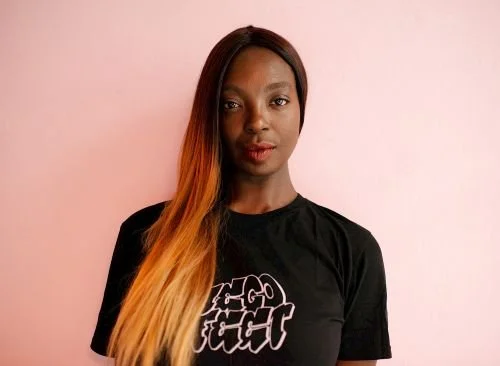
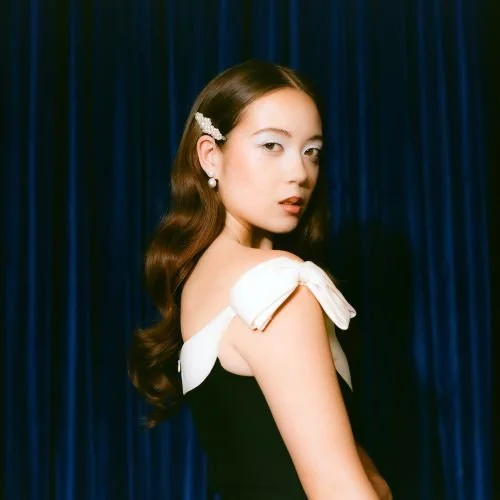
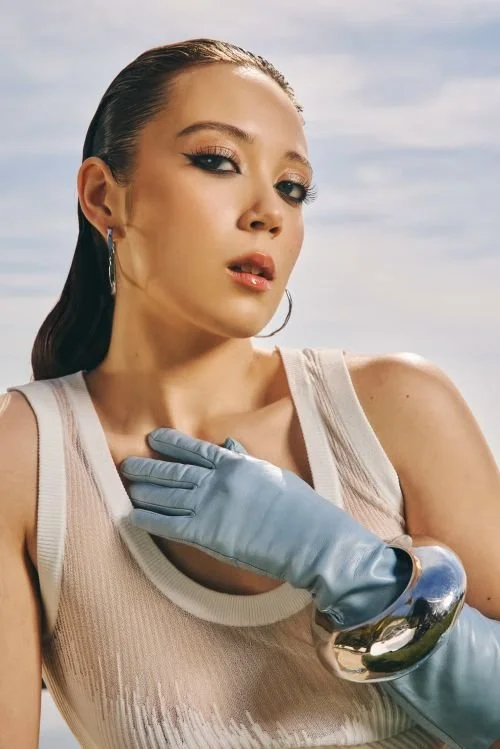
The last interview I am including is from ELLE. As she reveals in the interview, her audience very much are a reflection of her. She can look out at them and see people that relate to her and who give her strength. This is someone whose music has clearly connected with so many people across the world. I am excited to see what comes next for Laufey. An artist I have been following for a while, she is one of these artists who will not get the same fanfare and attention as the biggest Pop artists in the mainstream. I think Laufey’s music is stronger and goes deeper. Maybe that sort of exposure and spotlight would be too intimidating and exposing:
“Women obviously create great music every year, but the last year felt like a notable moment when they were really dominating the mainstream. How did that feel for you?
I just think it’s such an incredible time to be a woman in music. It’s not only that women are dominating, but that they’re dominating in every single little corner of music as well. Everyone is so different. Doechii is making completely different music from Sabrina Carpenter. And Sabrina, Chappell Roan, and Charli xcx are pop princesses, but in such completely different ways. That is really, really beautiful, and it speaks to how modern audiences are so open to different types of music. I think women are more versatile than we’re given credit for. That’s the main thing that stood out to me this past year....Though I’m so happy with the progress that women have made in music and how much they’ve been in the forefront of driving culture, there’s such a long way to go when it comes to women in the background.
Why is it important to uplift women songwriters and producers?
You can really see when there’s a woman writing with a woman, the magic that it creates, because there’s a level of honesty. Like, a man could never get into my head, never understand what I’m going through. That’s one of the main reasons that female producers and writers should be highlighted, because nobody understands the female experience like a woman.
How do you feel about being called “Gen Z’s jazz icon”?
It’s weird, because I don’t really see myself as one genre or the other. I think when I started, I needed something to tell people. I’m a trained jazz singer, and when I was younger, before I started writing music, I only sang jazz music. I started my career singing jazz standards on TikTok, so I could see why that would be the thing that people gravitated toward saying. But as I’ve grown as a songwriter and a musician, it’s so much more than that.
How would you describe your fan base?
They are genuinely the funniest people I know. They’re so kind. Growing up, I really struggled finding a group of people that I really understood and that understood me—whether that was coming from mixed cultural backgrounds, or having mixed interests that weren’t as simple as soccer or reading. The fact that I’ve kind of summoned an audience of exactly that—it just makes my younger self really, really happy.
For fandoms, there’s this stereotype of crazy fan behavior and cultlike behavior. And though they’re [Laughs] definitely, in a way, a cult, it’s a really, really positive, happy, cute one. Very wholesome. I very, very rarely see or experience toxic behavior. It seems very friendly. I’ve heard so many stories of fans making friends with each other at concerts. It’s the best part of being a musician.
They look like me. I look out into the audience, and I just see direct reflections of me. I didn’t think I could ever gather such a big audience of Wasians. I didn’t know that was possible, but somehow it is.
They dress like me, too. Oh, my God, when it’s little girls, they’re so adorable. I feel such an immense joy, but also a deep understanding of what I am to them and how I should carry myself. It really gets me through anything”.