FEATURE:
Modern-Day Queens
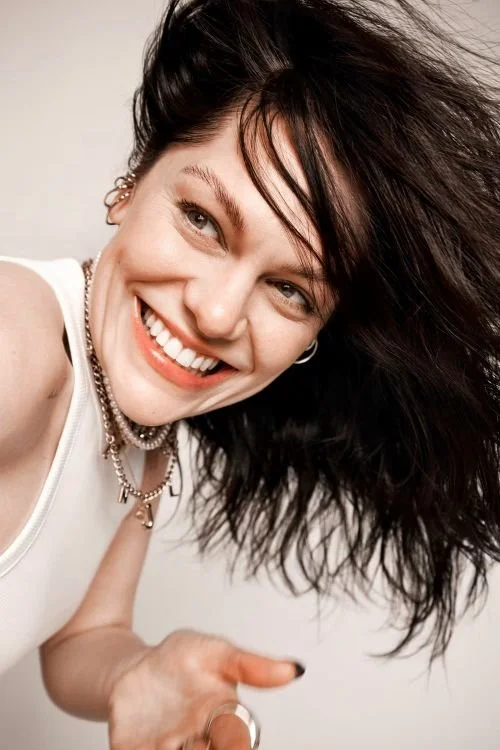
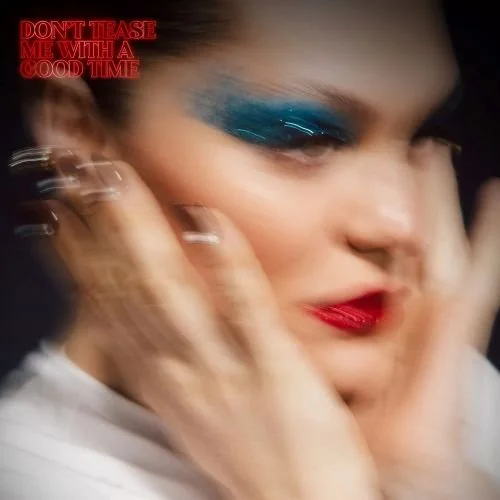
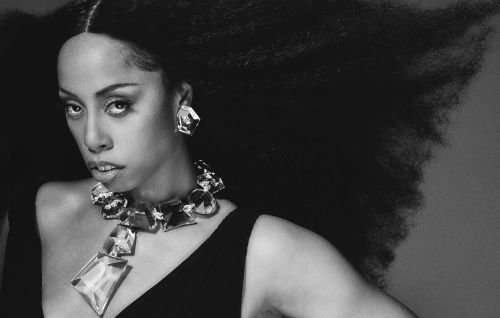
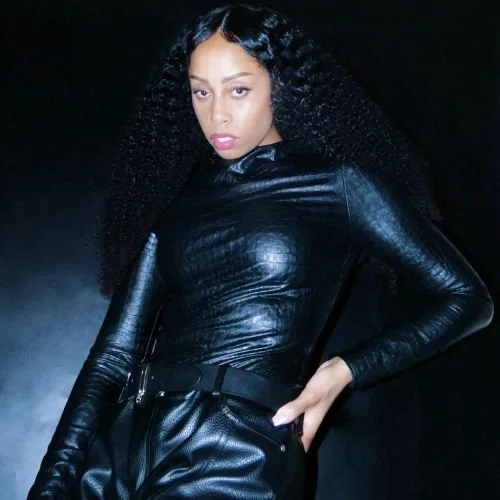
to get to an exceptional interview from The Guardian in a second. With her new album, Don’t Tease Me with a Good Time, Jessie J has been speaking about her career. She also talks about “Endometriosis, miscarriage, failed relationships, suicide and gaslighting”. Subjects that make their way onto her new album. I have selected parts of the interview to highlight, but it is a long and fascinating read. Born Jessica Cornish, many might know her best for her earliest singles like Price Tag, and Domino (2011). This year has seen some incredible women in music release these hugely open and brave albums. Bold, fearless, funny, frank and ambitious, I have already commended albums by Lily Allen, Florence + The Machine, and Hayley Williams. However, Jessie J has released possibly the most powerful album of 2025. I will come to a review for Don’t Tease Me with a Good Time. It is an album that has plenty of joy and positivity, though it does have its challenging and personal moments that take you aback. I want to get to that interview with The Guardian. Starting with a moment that changed Jessie J’s life:
“Cornish was preparing for an appearance at the Baftas when she found a lump. “I immediately went to get it looked at, had an ultrasound, and they were, like, ‘It looks like nothing; you’ve got really good dense breast tissue.’ And I was, like, ‘But I can feel it. I’ve got an achy arm and pins and needles in my hands whenever I wake up.’ And they said, ‘Well, let’s just do a biopsy.’ That was 28 March, the day after my birthday.” It was a Friday. The doctor told her if it was bad news she’d call on the Monday. By then Cornish had convinced herself it was nothing. The way she tells it, it was simply too inconvenient to get cancer when she had so much on.
“We’re two weeks away from launching this thing after eight years without an album and four years without a single. And she [the doctor] texted and said, ‘Are you free at six?’ And I was, like, ‘Oh, it’s a Zoom, it won’t be anything.’ So I jump on the Zoom thinking it’s all going to be good, and she goes, ‘Are you sitting down?’ You know that sad tone they use? And she says, ‘I’m so, so sorry, but your test results have come back as high-grade cancer cells.’” How did you respond? “I said, ‘Oh, that’s not ideal, is it? That’s not fucking great timing.’ The first thing I thought was, ‘I can’t die because my son needs me.’”
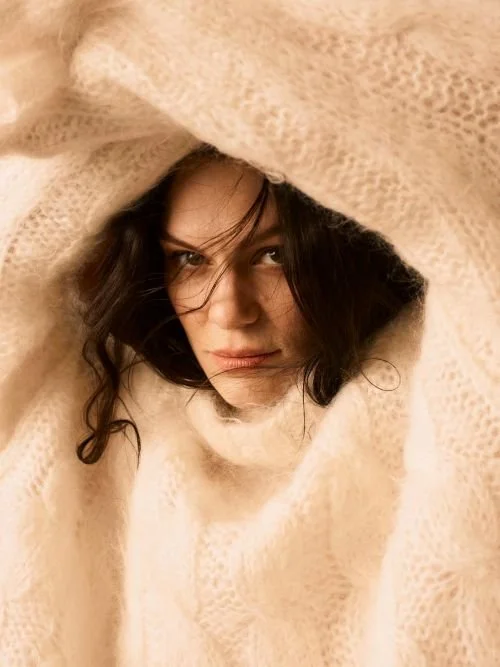
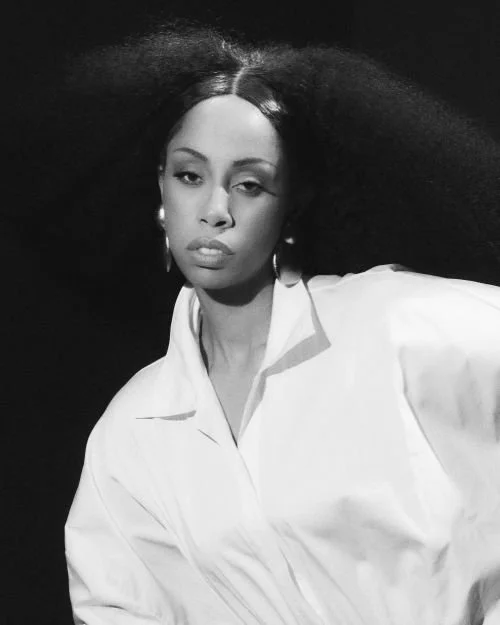
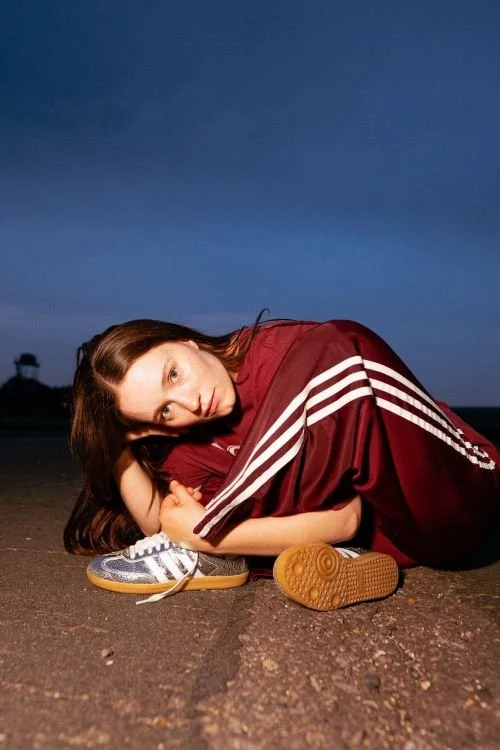
PHOTO CREDIT: Felicity McCabe
She found the surgery terrifying and absurd. “I hate being put under. They walk you down. You know when you have emergency surgery you roll down in a bed, but this time I just strolled down with a gown on and my bum hanging out. You feel like you’re in an episode of Black Mirror.” But, Cornish says, she’s been lucky. No chemo, no radiotherapy, just the op. “Cancer sucks, man, but you know what? Thank fuck I found it early. I had the mastectomy four months ago and my right breast now looks like a grapefruit under a tight bedsheet.” Another grin. “I got to keep the nipple, though.”
The next operation is both medical and cosmetic. Her boobs, she notes, are now “different sizes. They didn’t do an implant as small as my original. How rude! I thought, no need to bully me, I’m already having a rough time. So rude! It’s funny because I said I’d never get my boobs done because I’ve got OCD, and I know they’d never be perfect. Cancer ruined that plan.”
Cornish is no stranger to illness. She thinks her perspective on the cancer has been so positive because she’s familiar with health crises. They have often coincided with career highs, serving as a tap on the shoulder, or punch in the stomach, to remind her not to take anything for granted. “Honestly, I feel life goes, ‘You having a good time? Sit down.’ Ever since I was a child, it has always gone alongside moments of success for me; something severe or obscure has happened to my health.”
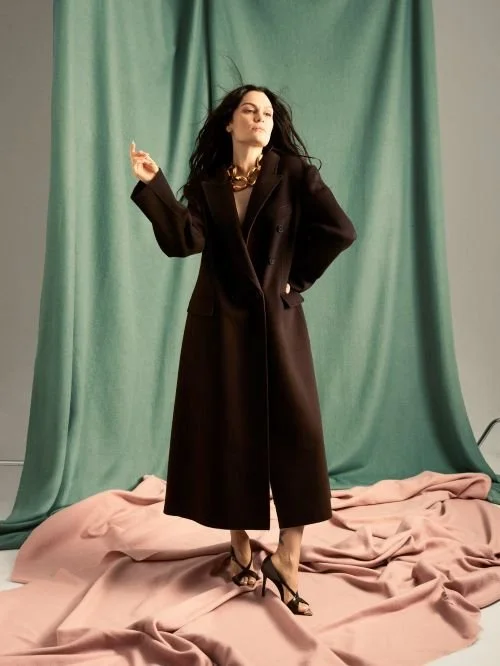
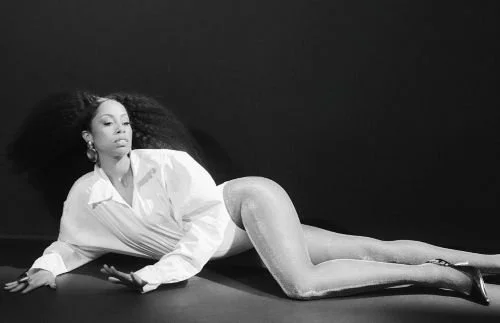
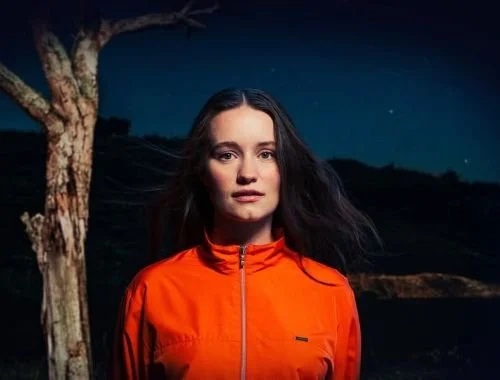
PHOTO CREDIT: Felicity McCabe
Last year, she moved back to Britain with her partner, the Danish-Israeli basketball player Chanan Colman, and Sky. “I just felt the new chapter was going to be here. It was the day that Trump got elected that I left. It was the day we planned to leave, so it felt aligned.” Did she want to be far away from him? “As far away as possible, please. I feel awful for the people who are still there. So many of my friends are struggling mentally with America right now. It actually scares me that I can’t even get into that mindset to try to understand what he does. It’s the polar opposite of what I believe in, which is equality and love and everybody having the freedom to enjoy the life they want to.” Does she think Trump is stopping them from living that life? “Of course he is, yeah. So many of my friends in America are scared because they’re not what he wants them to look like and be like and feel like.” And what is that? “Him!”
Two of the songs on the album are about the death of loved ones. Comes in Waves addresses the baby she lost, with Cornish singing: “I hate how much I miss the future we never made.” In 2021, when she didn’t have a partner, she got pregnant by IVF, and miscarried after 10 weeks. Was it a tough decision to become a single mother? “No, I wanted to be a mum, and I wasn’t in a relationship. I had endometriosis and I’d done all these tests, and they said, ‘Your egg count is low and if you don’t get pregnant in the next year it’s highly unlikely that you will be able to conceive naturally.’
Obviously, that wasn’t true, because I did in the end.” The lyrics to Comes in Waves are so raw, Cornish wearing her vulnerability like gossamer armour. But it’s also a song of defiance that anticipates the birth of Sky, promising “Next time you come to me I’ll make a place for you to stay”. Again, she sings the line for me. “And I did. I fucking did it. I’m so proud of myself. I went full term. I had a C-section, which I didn’t want, but it didn’t matter.” Does she feel the baby she lost is still with her? “Always. Always. They say the DNA of a baby stays within you, so the bit of that DNA will be in Sky and in me for ever. But I do feel it didn’t happen because I wasn’t meant to do it on my own.”
The song I’ll Never Know Why is equally painful. Here she berates herself for not seeing that an unnamed friend was “lost and hopeless”, and she asks him: “How could you say goodbye without saying goodbye?” In 2018, soon after she won Singer, her bodyguard and close friend Dave Last died unexpectedly. I ask her if this song is about him. She nods. Silence. Did he take his own life? Again, she nods, struggling for words. “I miss him so much, man. He was my guy for seven years. He was like my big brother. It makes me so sad that there was a loneliness there that meant it got to that before he would call me. I hope it’s a song that can help people who are left behind. And I also hope it helps people who are thinking of doing it to see a different perspective of what they would leave behind and how much they’re loved and wanted.”
Cornish kept herself together while talking about her miscarriage and cancer, but now the tears come. “He was one of my favourite people in the world,” she says. When they were on tour, he was the first and last person she saw every day. “After every show we’d go for a walk and he’d always ask, ‘Have you got your hoodie?’ I’m performing the song at the Royal Variety Show and I’ll be wearing a hoodie.”
She calls the album her journey through grief. Although it concludes on a positive note (with songs Living My Best Life and H.A.P.P.Y), it ends before the giddy high of having a baby with Colman. Cornish can’t wait to write about this on her next album. She says she’s never loved in the way she loves Colman. “Birthing someone’s child is so unique. It’s for ever engraved in our relationship because I’m looking at my son and it’s literally his and my face mashed together. That’s a different kind of love.”
And doubtless she’ll be reflecting about the cancer on her next album. She’s been given the all-clear, but she knows there’s a chance of it returning. Life’s too short to worry about that, though, she says. There’s so much to be getting on with – motherhood, touring, writing, recording, standup comedy. “I’ve just got to hope it doesn’t come back,” she says. “And if it does, then we’ll fucking deal with that when we get to it”.
Not to be downbeat or morbid, but Jessie J’s cancer diagnosis is a big part of her life now and obviously impacts her music too. I want to bring in The Times and their interview from August. Jessie J discussed how devastating the diagnosis was. Now, she is in a place where she needs to heal. I did not know that Jessie J was diagnosed with ADHD after the birth of her son. There has been turbulence and challenges along the way. However, you hope that next year is going to bring nothing but success and happiness:
“But, as anyone who’s been through cancer treatment knows, emotions can veer wildly between being able to cope one minute and crying uncontrollably the next. “The other night,” she says, “Mum was massaging my boob for me, because I can’t touch the scars. And I started sobbing, ‘I can’t believe this has happened.’ She was like, ‘I wish it was me,’ and then I’m crying, she’s crying …” She pauses, pulling herself together, then adds, “I’m so glad it’s not her.”
Shortly after Sky was born Cornish was diagnosed with ADHD. “No one was surprised,” she says, smiling. “I’ve got no filter. I was asked to do Big Brother and my whole family said, ‘No way!’ I would just tell everybody everything.”
She talks fast, pivoting in random directions. Her mum is staying with her, and they’ve been having a clear-out. Tidying calms her brain. “Some people run, some people draw, I shed,” she says with a laugh, before suddenly announcing: “Every time there’s a full moon I want to shave my head so bad! Mum has to stop me.”
In 2018 Cornish took part in the sixth season of Singer, a Chinese TV singing competition. When the offer came she was feeling low. “I was about to turn 30 and didn’t know what to do with my life,” she remembers. “I love China, so I said yes, and my manager said, ‘Do you want to know what this actually involves?’ I was like, ‘Nope! I’ll do it.’”
She turned up in Changsha, Hunan, not realising that she was a contestant. “I thought I was going on as a guest,” she admits. “It was a plot twist — but it turned out to be one of the best experiences of my career.” Impulsively agreeing to such a thing feels very ADHD — and arguably quite brat. In any case, Cornish went on to become the first non-Chinese contestant to win the series, with about a billion viewers watching the live final.
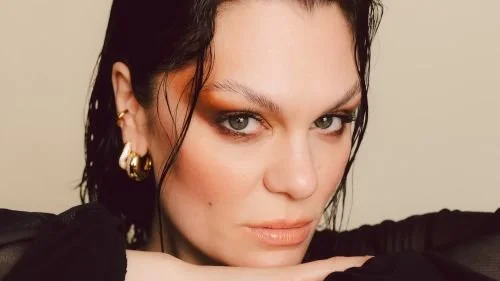
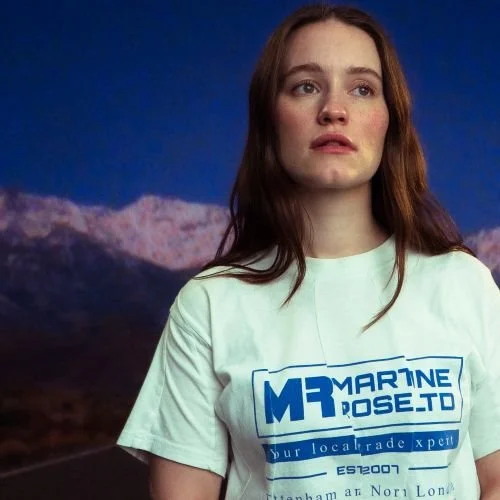
PHOTO CREDIT: Ashley Osborn
It’s a long way from hunkering down to recover from breast cancer surgery, which has delayed the release of her sixth album to later this year. The pathology report after her mastectomy showed that the surgeons had got all of the cancer, so she’s feeling cautiously confident. “People think, once you’ve got the all-clear, now it’s done,” she says. “But I’ve got another surgery [to improve the symmetry of her implant with her other breast] and I need to heal, so I have to figure out the rest of this year.” As for worrying about the cancer returning, she’s pragmatic. “There’s a one in two chance,” she says, quoting the statistic that is true for all of us in the UK.
Part of her thinks that the cancer came along to remind her to look after herself as she emerges back into the high-pressure world of pop. “Maybe this has happened to go: slow your roll, girl, let’s have a little reassessment,” she says. Serendipitously her new music seems to speak to what she’s going through. “It’s weird,” she says, nodding. “The next song is called Believe in Magic and I wrote it in 2022 when I was pregnant. But the lyrics resonate so much with now: ‘If I die today/ wanna know that I made it/ such a waste being jaded/ see all the little things that fix a broken heart.’”
Cornish is enjoying being Jessie J again. Performing for 80,000 people at Capital’s Summertime Ball in London — a week before her mastectomy — was a highlight, and she’s looking forward to a big show in September, performing at Radio 2 in the Park in Chelmsford.
But she also loves the smaller gigs where she can really see and speak directly with her audience. “Ever since I was a child I’ve loved connecting with people,” she says. “Everything I’ve been through, whether it’s a miscarriage or breast cancer, is deepening my experience, to connect with more people.” As we wrap up she tells me with characteristic frankness that she’s off post-mastectomy bra shopping. When she says that more career success doesn’t matter, I’d usually be inclined to be cynical, but I believe her.
“It’s obviously great to achieve stuff,” she says, shrugging. “But if I die tomorrow, it won’t matter where my songs have charted. What matters is how I’ve made people feel”.
Apologies if the order is a bit scattered, but the final interview I want to source is from Elle from April. Jessie J released NO SECRETS. A song that references a brutal period where she suffered a miscarriage, “‘I lost my baby, but the show must go on’ - the opening line from No Secrets cuts straight to the heart of it all. Jessie is not here to pretend – not about fame, not about motherhood and certainly not about pain”. I do love this interview. Jessie J is so honest and open. Having to recall some traumatic moments, she is such a strong and inspiring person:
“’This doesn’t feel like a comeback,’ she muses. ‘It feels like a celebration of everything I’ve done up to this point. I don’t feel like I’ve had a hiatus from success. I’ve just had a hiatus from putting out an album in the UK and worldwide. People kept saying to me today, “You know you’re legendary?” And I’m like… I don’t feel that way.’
She doesn’t say it with false modesty – more like someone still learning how to live inside their own legacy.
If you were around in the early 2010s, you didn’t hear Jessie J, real name Jessica Cornish, so much as feel her – usually through the soles of your feet or the back of your skull, depending on how loudly Domino was playing at your local Topshop.
Do It Like a Dude was her swaggering, bisexual, take-no-prisoners debut. Price Tag made her an overnight international star - and bought her her first house. And by the time Bang Bang dropped with Ariana Grande and Nicki Minaj, she was pop’s resident power belter, known for making every note sound like it had something to prove.

PHOTO CREDIT: India Fleming
‘Bang Bang still haunts me because I always have to sing it, and it’s so high,’ she interludes. ‘As much as it’s wonderful to have that success, it’s also complicated. I don’t want it to be misconstrued that I dislike the song or the experience – it’s been one of the most joyful times of my career - but with big hits, you always feel like you’re fighting them.’
‘I think it’s my best work,’ she says. ‘It’s been a long journey with lots of people in and out, but me being the main thread. I wrote all of it. It really represents the layered human. We’re all happy, sad, grieving, joyful. We all want a dance. We all want to cry. I feel so lucky to hold people’s hands through moments they’re struggling in.’
‘I lost my baby, but the show must go on’ - the opening line from No Secrets cuts straight to the heart of it all. Jessie is not here to pretend – not about fame, not about motherhood and certainly not about pain.
“A product of the BRIT School - the South London comprehensive/pop breeding ground of Adele, FKA Twigs, Amy Winehouse and RAYE (who quit after two years due to feeling ‘confined’) - she was one of the few who blew up worldwide overnight. Watching RAYE dominate the BRITs last year - seven nominations, six wins, and a long-overdue industry embrace - she felt something snap into focus.
‘I saw it happening to her and it reminded me of 2010,” says Jessie. ‘Honestly, it’s even bigger for her. But that same feeling, that whirlwind, I recognised it.’
So she did something quietly lovely: she messaged RAYE offering her support. ‘I said, if you ever want advice or just a chat, I’m here. I get so protective, really protective of artists, because I know what that feels like – to be young and swept up in something massive. It’s amazing, but it’s a lot.
There’s a connection you have with other people who do this job that just get it.
‘I think there’s an understanding and a respect when you communicate with other artists – whether it’s on text, in person, or DMs – there’s a connection you have with other people who do this job that just get it. That’s really lovely, especially with women. And I have a lot of those kinds of connections that I wouldn’t say are friendships, but they’re respectful and very open. Like, they know they can come into my world and talk to me, and I can talk to them. But obviously, a lot of the time, we’re all just travelling so much.’
It’s this sense of understanding that makes her recent shift away from the structure of major labels even more significant. Her 2023 split from Republic Records was a conscious decision to pursue something more authentic.
‘It was amicable,' she says. 'I think I’ve realised I like things to be personable. I’m not a chain restaurant. I’m home-cooked! Do you know what I’m saying?’ I had major success, but I also got into a lot of debt. I just think, for who I am – I wake up at 5am, I cook, I do housework, I do my own socials - I’m very micromanaging and I’m quite controlling. I’m like a Duracell Bunny.’
Now, after years of living in Los Angeles, Jessie has returned to the UK, where she’s raising her son and embracing a different kind of rhythm. ‘The first year of my son’s life, I was super hands-on,’ she says. ‘Now it’s just us – me and my boyfriend – with help from my mum and his, who lives in Denmark.’
And her homecoming has been grounding. ‘I missed the honesty, the sarcasm,’ she grins. ‘It’s so different here. I’m still adjusting but I'm ready – personally, mentally, energetically – to come back and face the music. Literally”.
I am going to wrap with a review for Don’t Tease Me with a Good Time. Shatter the Standards gave a four-star review to an album from an artist no longer chasing the charts. Balancing themes around loss, illness, motherhood and independence, I have seen some criticising women like Jessie J and Lily Allen for what they refer to as ‘airing their dirty laundry’. Whether talking about break-ups and not holding back when it comes to their former partners or being very open about their struggles, it is wonderful that we have these artists in our midst. Music that will give so much strength and solace to countless people:
“In the past few years, Jessie J has lived publicly through events that would flatten most people. She told fans on her Instagram page she had suffered a miscarriage in November 2021 and wrote bluntly about how the grief still overwhelmed her nine months later. She details lying on the floor after the scan and feeling lonelier than ever, then choosing to perform anyway because she needed the distraction. Not long after, she was diagnosed with Ménière’s disease, and at the end of 2020, she was temporarily deaf and unable to walk in a straight line, had to stay silent, and admitted she had to put her voice on hold. The year after, she developed nodules and acid reflux that made singing painful, as doctors told her the nodules would return if she kept performing. She went public about her diagnosis of obsessive‑compulsive disorder and ADHD last year, saying motherhood exposed the conditions and that talking about them helped her feel less alone. Fast forward to the present, she publicly announced her breast cancer diagnosis, cancelled tour dates, and underwent surgery; she later told fans that the cancer was all gone, but she was still healing.
During all of this, she left Republic Records after seventeen years, explaining that being signed no longer felt right and that she wanted to release music on her own terms. Against that backdrop, a new Jessie J record is not just a “return.” It’s an artist refusing to be defined by catastrophes or by the industry’s narrative about her. That refusal shapes Don’t Tease Me With a Good Time. Instead of front‑loading big guest features or showy vocal runs, the album is built from blunt writing and personal confession. The central song, “No Secrets,” shows Jessie J’s decision to share her miscarriage and other traumas rather than let tabloids package them. She starts by recounting losing her baby and immediately having to perform: “I lost my baby/But the show must go on, right?/No if, ands or maybe/Can I cry for just one night?/I’m standing here naked, but I chose the spotlight.” The rhetorical question “Am I addicted to the honey?” hits as a genuine self‑interrogation: does she stay online because she wants to, because she wants to be seen, or because she’s been conditioned to perform transparency?
The first song, “Feel It on Me,” doesn’t bother with a commercial hook. It opens with the lines “Falling from my eyes/Have to heal this in the darkness, so turn off all the lights.” The chorus flips the common pop motif of someone carrying your love by complaining about how a partner’s unresolved mess spills back onto her: “It was okay when I could feel it on me/But it ain’t okay if you can feel it on me.” The dynamic is less about production than behavior: verses linger over shame and co‑dependency, then the rhythm snaps into a stiff bounce when she recognizes that she won’t be someone’s emotional sponge. “I Don’t Care” continues the theme of separation. She delivers a speech to anyone who’s been manipulated by gaslighters or abusers, toasting those who leave and warning any future aggressors not to “tease me with a good time.” It’s a bracing moment that refuses to sugarcoat pain. There is no attempt to make her story universal because she addresses them directly and raises a glass with survivors.
When she turns outward, the results range from striking to forgettable. “If I Save You” is an effective look at rescuing people at the cost of your own life. “Boundaries have come and gone/My empathy was strong, I was in the wrong, by doing too much,” she admits over a minimal groove, then asks, “Are you gon’ learn how to swim?/If I save you, I save you,” as if bargaining with herself. The chorus is wordy but purposeful, with scattered questions (“Do you, can you, will you, come through?”) that mimic the frantic inner voice of someone who can’t stop worrying about another person’s growth. The repeated line “We’re both keeping us down” is an elegant summary of codependent cycles. By contrast, “Believe in Magic / Joy,” an interlude, operates in airy platitudes about listening to Sade, being “tired of the detox, tired of the talking,” and seeing “all the little things that fix a broken heart.” It’s sweet but feels like a reprieve rather than essential writing. The “Joy” segment, a brief lullaby telling someone they are joy, doesn’t develop the idea beyond the line “I didn’t write this song for me.” As an emotional breather, it works, but its lyrics don’t carry the weight of the surrounding songs.
With the help of Jessie Boykins III (who seems never to get credit for his sleeper contributions), he helped co-write most of Don’t Tease Me With a Good Time, the album’s grief songs are its strongest. “Comes in Waves” is startlingly direct about a pregnancy loss: “It comes in waves, like I’m drowning in a love I crave that you gave to me, and I hate/How much I miss the future that we never made.” Jessie J apologises to a child she never met and vows not to forget them. When she sings, “Next time you come to me I’ll make a place for you to stay,” it’s an arresting moment of hope and superstition. “I’ll Never Know Why” shifts from her own grief to that of losing someone else to mental illness or suicide. She confesses she never walked in their shoes and won’t pretend to understand, but still wonders, “How could you say goodbye without saying goodbye?” She casts herself as a flawed witness rather than a martyr. The song ends without resolution, reflecting the reality that some losses remain mysteries.
Produced by Ryan Tedder, “Complicated” is the album’s autobiographical linchpin. It takes the form of a timeline: she talks about singing loudly and insecurely in 2010, breaking up with a girlfriend in 2012 while the press dismissed it as “a phase,” being told she couldn’t have children in 2015, taking 2016 off to grieve, and meeting a Magic Mike (oops, Channing Tatum) in 2018. She also mentions a particularly cutting comment from a colleague: “Katy told me that they all hate me, that I do too much.” The songwriting here isn’t subtle, but it’s vivid. She names the years like chapter headings and collapses a decade of public embarrassment and private heartbreak into a couple of verses. The chorus (“Ooh, that’s life for you/A rollercoaster not everyone rides with you”) lands as a shrug rather than a big chorus, and it doesn’t have to be. The purpose isn’t catharsis so much as refusal to apologize for being “too much.”
Motherhood and love lighten the narrative. “Sonflower” is a cute corny pun on sunflower and son, but the writing is earnest: “I’m me when I’m with you/It’s everything you do/You keep me in my truth/I’m winning when I lose.” The track’s behaviour is unhurried, radiating contentment without the usual big‑note theatrics. “California,” a mid‑album pivot, is a hustler’s anthem about surviving the state’s ups and downs. She wants to be somebody, not the person who merely knows somebody; she sings about swaying palm trees, bills that won’t get paid by showbiz glamor, and dreams that “burn hotter than the fireplace.” It’s not profound, but it’s specific enough to feel lived‑in. “Living My Best Life” could have been trite, yet the writing is anchored by the acknowledgement that turning pain into “deeper love” is work: “You taught me how to turn it around and kiss away the fear/No looking down as long as I’m here.” The declaration, “No more tears, I’m not wasting time being sad tonight,” is a choice to take joy where she can. “H.A.P.P.Y” is essentially a children’s chant (“Laugh till I cry, dance, I know why, ‘cause I’m H‑A‑P‑P‑Y”), but she precedes it with the line “I can’t take it, tired of faking my smile,” hinting at the work behind the cheer. Still, the spelling‑out hook is simplistic and diminishes the track’s emotional potential.
Some records feel disposable. “Colourful” lists moods and slang like a mood board: “Happy, sad, sassy, mad/Bougie, angry /Shady, fast, stackin’ up this cash/Hangry, class, put your hands on my (ass).” The track leans on the “you are my sunshine / so I’ll be your rain” cliché, and repeating color names (“Blue, red, orange, yellow”) doesn’t add meaning. A similar thinness hampers “Threw It Away,” whose entire premise is summarized by its title. Jessie J recounts being welcomed to Los Angeles, being called “honey,” giving her heart, and having her love tossed aside; she makes a Beauty and the Beast joke and warns that karma will come for her. The lack of detail means the song could be about anyone. “For This Love” is at least vivid in its lust. “Drop to my knees for this love” and “Prove to my body you know what to do” make no attempt at coyness. The second verse tries to conjure a larger story—“Playing pretend in this lost happy home/Breaking all curses, how you haunt my soul”—but doesn’t develop beyond a string of romantic clichés. When she demands not to be teased with foreplay and wants the guilt and glory, the directness is refreshing, but the writing lacks the specificity that powers the album’s best songs.
The record ends with “The Award Goes To,” a song that flips the award‑show trope into a personal send‑off. Over an exiguous accompaniment, she sings, “I’ve been fighting my wars/But I’m weighing my words/I’m good to lose, the award goes to you.” The repeated “You, you, you” is delivered with a mix of exhaustion and sarcasm. The second verse clarifies that she’s giving the award to someone who felt her pain and then got in her way. It’s a formal declaration that she’s done performing for them. The song’s chorus is simply the word “You” repeated over and over, emphasizing her need to point a finger without embellishment. There’s humor too: after telling someone with a bruised ego that they’re through, she says she dares to breathe “not for you but for me.” Ending on this anticlimactic note is deliberate. She refuses to provide a rousing finale or moral. She’s handing the trophy off and walking away.
What materializes over the album’s sixteen tracks is a writer who has stopped trying to prove she can sing, where she knows she can and chooses to use that instrument to say things she once shied away from. The emotional core sits in the intersection of grief and resilience, giving voice to experiences many people carry quietly, while the rest charts the years of public scrutiny that led to this moment. Outside of so-so writing in certain tracks, when the writing is specific, the songs land with force. There’s snark too—naming the album after a warning to abusers is equal parts humor and threat. Jessie J may still crave applause, but she’s less interested in playing along with the narratives others have written about her. She’s releasing music on her own terms and talking plainly about the fallout of fame, illness, and loss”.
I will leave it there. If not the most structured feature ever, I did want to include some recent interviews with Jessie J. An artist I have been following for many years and have boundless respect for, Don’t Tease Me with a Good Time is an album that easily sits with the best of this year. It is another one of these albums that will hit you the first time you hear it! A shame that more people have not reviewed it, as it truly stunning. One of the finest singers, songwriters and performers in the world, I wanted to show love for the amazing Jessie J. As I said earlier, I hope that next year delivers her…
NOTHING but success, happiness and peace!
____________
Follow Jessie J
Official:
Instagram:
https://www.instagram.com/jessiej/
TikTok:
https://www.tiktok.com/@jessiej
Facebook:
https://www.facebook.com/jessiej/
Spotify:
https://open.spotify.com/artist/2gsggkzM5R49q6jpPvazou?si=BMwBHCwBQ_6MEdIVfDm6BA
YouTube: