INTERVIEW: Fergus McKay & Nothing Concrete

INTERVIEW:

1.jpg

Fergus McKay & Nothing Concrete

___________

THERE is nothing ordinary and boring…

3.jpg

when it comes to Fergus McKay & Nothing Concrete! I have been speaking with Fergus from the group about their new single, Old Black Crow, and wondered where they head from here. I was keen to know how the band got together and whether, being based in the Pyrenees, there is an active music scene and source of inspiration.

Fergus recommends some upcoming artists and discusses whether there are any tour dates coming up; what their live set consists; the advice he would give to artists coming through – I discover why this past week or so has been especially eventful for the band!

____________

Hi. How are you? How has your week been?

We’re all pretty tired from a pretty intense and eventful week on the road. We left France with a great gig at a craft beer brewery then headed to Italy and Slovenia but, on the way, stopping for petrol we found we couldn’t turn the van off - even with the key out and batteries disconnected the engine kept running. It was meant to be a fourteen-hour journey but, with one thing and another, it ended up being seventeen-hour-straight without being able to cut the motor; no air conditioning, the whole band; double bass and a disable dog in an eight-seater minivan…after driving through the night, we had two gigs in Slovenia, one of which we got held up on the motorway for three hours in non-moving traffic, so arrived an hour after our sound-check.

4.jpg

Then, we had three gigs at Floating Castle Festival in the south of Slovenia. It’s an amazing vibe there; a real melting pot of styles, cultures; World music, Classical; Rock, Jazz; abstract stuff, puppetry; poetry street shows and so on, all around a beautiful medieval castle in the forest. Leaving there, the alternator on the van gave up so we got towed off the motorway; had to find a replacement battery to get to where we are now while we wait to play at PUF festival in Koper near the sea.  We’re still alive and still talking to each other, so it’s good.

For those new to your music; can you introduce yourselves, please?

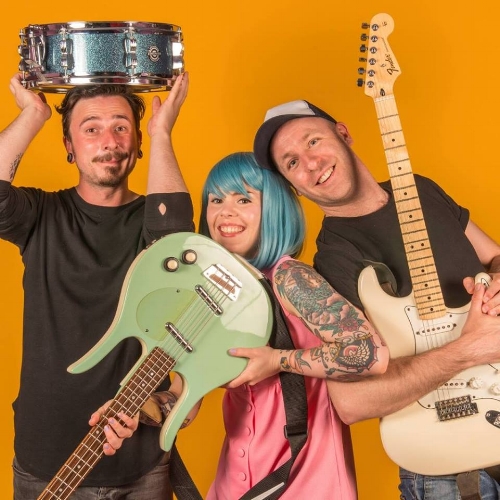
Well. It’s a mix of styles and influences: people have compared us to various acts like The Waterboys, Ronnie Lane (ex-Small Faces); Dexys Midnight Runners, Woody Guthrie; Bob Dylan and so on. There’s a big slice of Folk music from both sides of the Atlantic that form the basis of our songs but we try and bring in elements of World music, Swing; Jazz and Blues to create something unique and exciting with it all…then we are lucky enough to have three ladies who tap dance in the band, so we add that into the mix for good measure!

What can you tell me about the new single, Old Black Crow? How did it come together?

I had just read Conrad’s book, Nostromo, and I wanted to write something that captured the same kind of feeling I got from that book. It tells the story of a bunch of renegades making a getaway, but we don’t know what they did or why. I was listening to a lot to Dylan’s album, Desire, and some of my favorites of his songs take this format which isn’t the standard verse-chorus-verse-chorus, bridge; verse-chorus, but just tell a story that continues to develop. So, I decided to not write a chorus or a hook, but just let it be a story which, perhaps, makes it an odd choice for a single but we really get a good reaction to it live and we tried to give it some swing, keep it upbeat and dancy so we hope it can grab some people’s attention!

Is there going to be more material coming later in the year? What are you working on?

Well. Old Black Crow is the first song we are putting out from the new album, which is nearing completion, and the band has been evolving during recent months and we’re trying to get some of the newest ideas into the arrangements of the songs we’re playing in our live set. The album will be pretty eclectic, including a Swedish-style Polska (a traditional dance tune), a couple of rootsy numbers; something I wrote inspired by travelling around the Balkans and playing with different time signatures and some other surprises. 

The last album, Ever the Forager, had a lot of Scottish and American Folk in the blend; banjos, fiddles and mandolins. This time, I’ve been working with three saxophones, writing and arranging for baritone, tenor and alto for our live show so there’s more brass, which is leading to a slightly harder, edged and jazzier sound, which I think suits the songs that we’re putting on this album.

2.jpg

How did Fergus McKay & Nothing Concrete find one another? You have a pretty eclectic line-up there!

Well. I had been travelling around Europe as a traditional one-man band, like Bert from Mary Poppins, and Gaia, who’s now my wife, and I came to a party in the South of France where I played…but we met so many cool people over one weekend we decided to stay forever! Gradually, we came across more and more people with the same or similar stories. There’s something about the region that makes people want to settle there; it’s like stepping backwards in time, out of the rat-race. It’s easier to create a simple way of life there that still fulfils all our needs. 

I guess it does seem like a huge coincidence that we all ended up living within a few miles of each other in the middle of nowhere and all have complementary skills and musical interests. Have to put it down to cosmic magic, I guess!

7.jpg

Being based in Pyrenees (Southern France); what is the music scene like there? Is it quite an ideal and quiet spot to create and play?

The music scene is surprisingly vibrant; bearing in mind this is an area traditionally populated by small-scale subsistence farmers. In the last thirty years or so, more technology and farm machinery meant that lots of these kinds of areas became depopulated as kids of farm workers had to move to the cities and retrain to find work in industry instead of agriculture.

But, this also meant that lots of old farmhouses and small villages were abandoned so the artists moved in and, with the artists, the artisan cafés and market stalls started to grow; then the artists learn to use the land and develop their own communities and the area became rich in a new way. So, there’s a huge mix of people and nationalities here: people from every corner of the world seem to end up settling in this little huddle of ten or twelve little picturesque villages. That creates a great environment for many things, especially music; predominantly folky, rootsy and acoustic stuff, but not only. We have a couple of really nice small festivals - and people love to go out to see live music here.

12.jpg

Does the fact you have a few different nationalities working in the band provide the music with greater variation and flexibility, would you say? Do you find the songs take in different sounds from around the world?

Definitely. This has been one of the main musical objectives for Nothing Concrete all along: to broaden my cultural horizons and learn from the people I work with and then try and bring that into the songs. In the world of Pop, Rock or other mainstream music, the sound, instrumentation and production values are fairly generic no matter where you go in the world...but the richness of musical styles when you start to look into traditional music cultures from different countries is mind-blowing. So, when you work with musicians that have these different cultural backgrounds, it’s inevitable that some of this comes out in the music.

11.jpg

The more we travel as a band the more we learn from other musicians we meet en route, hence being in Slovenia right now. It’s a kind of gateway country between our Western European cultures and the musical traditions of the Balkans and Eastern Europe. The more musicians we get to play with from different cultures the more we realise how much there is to learn. It makes you feel like you’re constantly just at the start of an amazing musical journey.

Which artists are you influenced by? Who are the musicians who have made the biggest impact on the band?  

Growing up, I listened to a lot of stuff my dad liked: Dylan, Tom Waits; Van Morrison, Paul Simon and, particularly, the Faces and Ronnie Lane. I still love that rough-and-ready feel; the sound of people having fun playing acoustic music together. Then, the Celtic stuff in the '80s, like Dexys Midnight Runners; The Waterboys and Hothouse Flowers were all doing the stuff I wanted to be doing. But, later I discovered a whole new world through the music from the Tony Gatlif film Latcho Drom. Watching that was a watershed moment; a must-see for anyone interested in music!

13.jpg

Do you think there will be touring dates? Can we catch you play?

We have no U.K. dates in the diary at the moment: we’re continuing to tour in Europe until October this year and we have a number of dates in France but are planning to put together some dates for 2019. Watch this space. We always announce our tour dates on our Facebook page as soon as they’re confirmed.

What does your live set consist? Describe a typical Fergus McKay & Nothing Concrete gig…

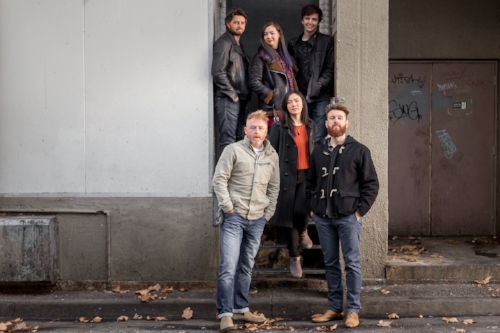
It’s all about engaging with our public. We’re usually six on stage: three ladies, three guys. The songs are mostly upbeat with a Swing/Folk feel. Everything is very live; no technology except the P.A. system and lighting rig. We’ve brought a number of new elements into the show in recent times, including several tap dance and lindy-hop routines from the girls and, even, an appearance by Gromanich, our monster mascot! By the end, we usually aim to have everyone up on their feet dancing. I think it’s a pretty fun gig to go and see!

6.jpg

Have you each got a favourite memory from your time in music – the one that sticks in the mind?

Angie: Seeing Jeff Buckley live in a small, intimate venue. It was a life-changing moment, being around such musical passion and it made me reevaluate what was important to me.

Saskia: When I was a student, I had a quite high-up studio. The weather was perfect. I could sit in the sun and a song by Funkadelic played. Perfect bliss.

Gaia: My two children love a song from Boban Marković, an amazing trumpeter from Serbia. We regularly put it full volume in the house and dance like crazy. My mum and me used to do the same with quite bad Pop, Italian music and Dance in the living room whilst rolling on the floor.

Fergus: I left the U.K. in 2009 to play pubs and busk in the street, but ended up at a Folk/World music event called etno HISTeRIA, with sixty musicians from all over the world learning tunes and songs from all these places; arranging them for an ad hoc World music orchestra who played concerts all over the country. It was nine days or so that changed my life. Incredibly intense; not much sleep but a magical, emotional experience

jj.jpg

If you could support any musician alive today, and choose your own rider, what would that entail?

Van Morrison, almost certainly!

As for the rider...we’re pretty happy with some good, organic food (mainly vegetarian) and a beer or two - homebrew best!

What advice would you give to artists coming through?

Play lots and lots and lots of gigs, get out there and meet other musicians and learn from them; learn to live well with minimal income!

old.jpg

IN THIS PHOTO: Old Salt

Are there any new artists you recommend we check out?

Old Salt is a mix of Americana and World music with a fairly intercultural mix of musicians. Kate in the Kettle from Scotland; Tygroo from the Czech Republic are full-on Turbo-Folk with lots of brass; loads of attitude and an amazing live show.

kate.jpg

IN THIS PHOTO: Kate in the Kettle

Do you get much time to chill away from music? How do you unwind?

Music is always there but, sometimes, we’re using it to unwind. Sometimes it’s work, but home life is great; just hanging out with the kids in the garden, or camping in, the Pyrenees…or just reading a book!

Finally, and for being good sports; you can each choose a song and I’ll play it here (not any of your music - I will do that).

Fergus: The Poacher - Ronnie Lane & Slim Chance

Angie: Natalie Merchant - Kind & Generous

Gaia: Pizzicarella mia (traditional southern Italian tune) – the version by Officina Zoè

Saskia: Maceo Parker - Children’s World

____________

Follow Fergus McKay & Nothing Concrete

5.jpg

FEATURE: Sisters in Arms: An All-Female, Summer-Ready Playlist (Vol. XVIII)

FEATURE:


Sisters in Arms

DEV.jpg

IN THIS PHOTO: DEVMO/PHOTO CREDIT: @_delsoul   

An All-Female, Summer-Ready Playlist (Vol. XVIII)

__________

STRAIGHT after I produced one list…

fall.jpg

IN THIS PHOTO: False Advertising/PHOTO CREDIT: Chris Patmore Music Photographer

another batch of incredible female-led songs came to my ears! I have been looking through some recent releases – and a few cuts from last year - and compiled them in a handy rundown. It is always impressive discovering the sheer width and breadth of female-made music; seemingly more variation and depth than their male peers. As the rain is still lashing, and we need a bit of sun back, I thought these tracks would help bring a bit of joy. I am sure I will compile another feature/list next week but, before then, enjoy this assortment of music that is perfect for…

pp.jpg

IN THIS PHOTO: Pinky Pinky/PHOTO CREDIT: @erina_uemura

A drizzly Thursday.  

ALL PHOTOS (unless credited otherwise): Getty Images/Artists

_______________

ron.jpg

RonikaLose My Cool

MY.jpg

OhHeyMy Numb

pu.jpg

Pussy RiotBad Girls

min.jpg

PHOTO CREDITLauren Kallen 

MinkeMaybe 25

CHL.jpg

Chløë BlackSpaceman

pale.jpg

PHOTO CREDITShervin Lainez

Palehound Room

SOP.jpg

Sophie MeiersSomething About You

DjRFdpMXsAUERu4.jpg

CAGGIEHere We Are Again

devv.jpg

DEVMO Kylie Jenner

pi.jpg

Pinky PinkyMargaret

LINN.jpg

Linn Koch-EmmeryWires

vOX.jpg

PHOTO CREDITStevana

Vox SomniaTremor

KAT.jpg

Kathryn JosephFrom When I Wake the Want Is

NERVOUS.jpg

PHOTO CREDITLizzie Coombes

Nervous TwitchPromised Me the World

PAN.jpg

PHOTO CREDITCarl Farrugia

Panic PocketDon’t Get Me Started

CR.jpg

PHOTO CREDITMatthew Attard

Cryptic StreetLet’s Go Suki

JU.jpg

Julia CarlucciTake Me Down

STEF.jpg

PHOTO CREDITShannon Stew

Stefana FratilaSwallowed Seeds

ELLA.jpg

Ella HooperTo the Bone

lu.jpg

PHOTO CREDIT: Elissa Graddy

Lunar VacationThe Basement

tiff.jpg

Tiffany YoungOver My Skin

fra.jpg

PHOTO CREDITDerek Bremner Photography

The Franklys - Too Tall

pe.jpg

Peach Club - Cherry Baby

ms.jpg

Ms. Mohammed - Pandora

wolf.jpg

Wolf Girl - Toast for Dinner

FEATURE: The Times They Are a-Changin’ Why the BBC Radio 6 Music Schedule Shift Is Good News

FEATURE:


The Times They Are a-Changin’

marys.jpg

IN THIS PHOTO: Mary Anne Hobbs

Why the BBC Radio 6 Music Schedule Shift Is Good News

__________

THE expected disappointment, moaning and…

shau.jpg

IN THIS PHOTO: Shaun Keavney

confusion has greeted the news that, from the start of next year, some of the much-loved BBC Radio 6 Music presenters will change to a new slot (and that, the moaning, was just from Shaun Keaveny!). You’d imagine people had lost their jobs and had been forced to drink toilet water in order to survive! One of the only complaints I have had regarding BBC Radio 6 Music is the rigidity and the fact there have been few changes since its start. It is great to see the same personnel and there is clear brand loyalty and passion among the ranks. I am thrilled we get to wake up and, through the day, hear from D.J.s who we know will put a great show together. That is alright for a while but can be a bit samey – you are listening to the same routines and songs at the same time of day. I can imagine, for D.J.s like Shaun Keaveny and Lauren Laverne, it has got a bit familiar and safe. I know Keaveny, especially, will enjoy some extra time in bed. He moves to the 1-4 P.M. slot; Mary Anne Hobbs, who usually presents the weekend breakfast show, comes into the 10:30 A.M. to 1 P.M. slot; Lauren Laverne takes Keaveny’s show – starting half an hour later at 7:30 A.M. Chris Hawkins gets an extra half-hour in his regular slot and RadMac (Mark Radcliffe and Stuart Maconie) move to weekend breakfast (see the official BBC Radio 6 Music Twitter for all the changes and times).

save.jpg

IN THIS PHOTO: Lauren Laverne

Those who are used to Keaveny greeting the morning with his unique blend of suicidality and anger will adapt to him coming into a later time. Maybe he will be a brighter and changed person – delivering something more Chris Evans in terms of speed! That is unlikely but the man has been in the breakfast slot for over a decade and deserves some time to sleep in! I know he will appreciate the later start and things, apart from that, will not change too much. Matt Everitt is still by his side – not sure who they are getting to do the early music news?! – but all the usual features, I assume, will be in place (and the same jingles, beds and dynamics). It is not as though the show is having a complete face-lift and it is a new thing! Fans and ardent listeners will have to acclimatise but those loyal will come along and, in fact, realise change is good. Ironically or not, Keaveny has had to endure an early wake-up all this time and it is good he gets a later start. Laverne, children and husband an all, will get more time later in the day to be at home and bring her vitality, personality and stamp to the breakfast show.

Df-r8glWkAAoh3r.jpg

IN THIS PHOTO: Matt Everitt with Sir Paul McCartney

It will be good to wake up with her voice and see how she approaches her new position. I am unsure whether the BBC Radio 6 Music honchos will introduce new features for Laverne but let’s hope we get Memory Tapes, Desert Island Disco and The People’s Playlist. There is no physical or time-related reason why that would not work! The biggest shift and decision is whether there will be live sets during her show. Right now, she hosts musicians just after lunch. I do not know whether they are going to bring that with her when she does early mornings – maybe Keaveny will take that on?! I am pumped Chris Hawkins get an additional half-hour to his show because he is a warm and incredible talent who, I feel, does not get enough airtime. He is always hunting for great new artists and putting important work into the ether. I feel he has a lot to say and deliver, and so, when he is allowed some more time, that will benefit us all. The biggest change is the ‘demotion’ of RadMac to the weekend show. It is not really a bad thing as the weekend breakfast show is a great slot but it will mean they will not have their usual weekday show. I was surprise by the decision and would have preferred another D.J. to go to that timeframe.

Dih3z_UXcAAvPSL.jpg

IN THIS PHOTO: Chris Hawkins (left) and Stuart Maconie (right)

The fact they are still gainfully employed, as they say, is a good thing. Their partnership remains and I know their fans, myself included, will follow them with eagerness. The best thing to come out of this is the definite elevation of Mary Anne Hobbs to weekdays. She is always great when standing in for Keaveny or Laverne and has a definite hunger to bring the best artists around – championing female artists heavily –; it means we will get a more curated and personal playlist in the afternoons. Her sensual, velvet tones are a difference to the voices of RadMac but it will be a good thing for radio. There are so few female D.J.s in afternoon and evening slots so it is nice to see her there – the fact she and Laverne are both on during the weekdays is a great improvement. I have discovered so many different artists from Mary Anne Hobbs and cannot wait to hear her in a full-time capacity. The fact I am moving to Manchester – she is based in the Salford studio – is great and I can, I hope, get to see some of her local-promoted artists live and up-close. It is great to see two incredible female broadcasters being given new opportunities on the station. I think it will benefit them both and provide a stronger angle to BBC Radio 6 Music.

rad.jpg

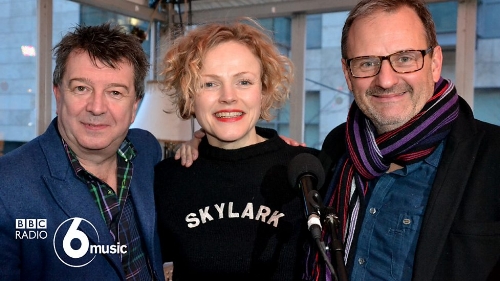
IN THIS PHOTO: RadMac with Maxine Peake

All the other runners and riders are unchanged and it is going to be some minor changes. There are complaints and those who are scared the station will blow up and suck but, in fact, these are necessary alternations. It is great, as mentioned, the same D.J.s remain there and love their jobs so much. Even the best shows can suffer or seem tired if they endure for years and moving them to new times can add something that will benefit everyone. The simple fact is they are not recruiting D.J.s and replacing those we love – maybe some fresh faces in other slots might be a benefit?! We still get to hear Laverne and Keaveny in London (although the latter will not hand over to the former or vice versa) and Hobbs’ more-regular appearance is a necessary reaction to the call for change – having more female D.J.s in the weekday, big shows. Maybe the sleep patterns and changes will impact some of the on-air talent, but the fact they are in new slots will add energy and a sense of the new. I am excited to see how Shaun Keaveny sounds with a bit more kip and time to refresh; what Lauren Laverne brings us for breakfast and how Chris Hawkins uses an extra half hour – hearing Mary Anne Hobbs five-days-a-week means we get to hear (with Laverne) some newly-championed artists and unexpected tastes the earbuds.

DkGhVC4W0AML5Pg.jpg

I wonder whether, between now and the start of January, there will be further plans to change slots. It might be interesting to see if they do bring in more D.J.s – female and it would be good to see greater diversity in terms of race – but the same lovable and dependable BBC Radio 6 Music is there. I am pleased and glad ‘we’ (the BBC Radio 6 Music family) are not losing anyone. It is sad RadMac have a reduced role but they are still with the station and it will be tough for them for a bit! A station that holds onto its staff is great but when the schedule is unmoved and unflinching for so long means there is a risk of losing some listeners. You need to change things a bit and try new ideas. I guess Laverne will have to cope with a bit less sleep but she is relishing the chance; I know Keaveny will still find things to moan about (got to love the guy!) and, with the latest RAJAR figures showing the station is growing and more popular than ever; the bosses have the consider how to keep that pace going and how they will move into the next year. The fact BBC Radio 6 Music continues to recruit new fans and grow – where other stations are stagnant or decline – is a sign of great music, wonderful staff and a sense of loyalty and love! That, in turn, will be thrown back to the brilliant D.J.s and producers who embark on new challenges. The rest of this year will see them carry on as normal but, as we ring in 2019, we will have a slightly changed BBC Radio 6 Music that is…

6.jpeg

GOOD news for all!                               

__________

ALL PHOTOS/IMAGES: Getty Images/Press Association/BBC Pictures      


FEATURE: Sisters in Arms: An All-Female, Summer-Ready Playlist (Vol. XVII)

FEATURE:


Sisters in Arms

RAY.jpg

IN THIS PHOTO: RAY BLK

An All-Female, Summer-Ready Playlist (Vol. XVII)

__________

I said I would resist the urge to publish…

kros.jpg

IN THIS PHOTO: Kris Angelis

another one of these all-female lists for a while because the weather has taken a turn. Whilst it is rather wet and un-summer-like, I felt a good dose of summer-suited music would help keep the heat and good vibes alive. I have collated the best new music from some fantastic female artists/female-led bands. From various corners of the musical map; there is something to satisfy everyone. No matter what the weather is doing, this assortment of talent is guaranteed to bust the clouds, bring the sun and…

skat.jpg

IN THIS PHOTO: Skating Polly

GET you in a better mood.                         

ALL PHOTOS/IMAGES (unless credited otherwise): Getty Images/Artists

______________

skati.jpg

Chelsea ShagFunk Love

Djr3KKVXsAE_2et.jpg

LIONOh No

rra.jpg

RAY BLKRun Run

shh.jpg

ShennaConversation

zz.jpg

Zuzu All Good

pet.jpg

Petal Tightrope

war.jpg

PHOTO CREDITAnia Shrimpton Photography

She Makes WarDevastate Me

CAO.jpg

Caoilfhionn RoseAwaken

NI.png

Nicole Bullet Nicotine

FOLL.jpg

Folly RaeYou Don’t Love Me

Dj5AXB6V4AAnDsd.jpg

SashaWaterworks

skatiiki.jpg

Skating PollyCamelot

laure.jpg

Lauren DaigleYou Say

TS.jpg

TS GrayeTake Notes

tinx.jpg

TinxFMLU

bnnb.jpg

Kris AngelisBravest

kate.jpg

PHOTO CREDITAbby Weeden Photography & Design

Kate KellyHoney

nya.jpg

Nya Hollywood Hills

lad.jpg

L.A.DMy Toy

SlxUe0aO.jpg

iamhillPhuk Wit You

girl.jpg

PHOTO CREDIT: Tommo

Girl Ray - The Way We Came Back

FAL.jpg

False AdvertisingHey You

GOLD.jpg

Goldilox Very Best

ork.jpg

ORKID Wasted

MIL.jpg

Militant GirlfriendLetters

INTERVIEW: Nina Smith

INTERVIEW:

10.jpg

Nina Smith

___________

I have been speaking with Nina Smith

si.jpg

about her new single, Run Out, and how it came together. The Nottingham artist discusses the scene there and recommends some artists to check out; if, given the chance, the artist she'd like to support – I ask if any more material will be coming and what we might expect going forward.

Smith talks about the music she grew up around; what advice she would give artists coming through; if she finds time to unwind; gaining success on the iTunes chart – she tells me what she wants to achieve before the end of this year.

____________

Hi, Nina. How are you? How has your week been?

Ya know what; this week has been great. I’ve just come back from the beach on my first trip to Wales. I feel refreshed.

For those new to your music; can you introduce yourself, please?

I’m a singer-songwriter from Nottingham. I’ve been writing and recording for about eight years but properly working full-time at it for the last five years.

This new music is taken from my debut album (due to be released later this autumn).

Run Out is your new single. Can you recall when it came together and what inspired it?

The song itself discusses my personal relationship breakdowns with family or friends; with certain individuals I’ve spent a lot of time with trying to help and fix. But, I’ve found that it wasn’t returned when I’m in trouble - and that’s where the notion comes from of ‘running out’ of my life at bad moments.

You signed a production deal with Yoad Nevo. How important was that moment? Did that change your career in a lot of different ways?

It complexity changed my career, yes. I’ve written three albums with Yoad; two of which were for other artists. The first commission I got through Yoad was writing for Ukrainian Popstar Tina Karol. She’s a multi-platinum and extremely talented artist who I have a lot of respect for. So, to be working with that calibre of artist provided me with all the confidence tools I needed for my own record.

4.jpg

Your latest E.P. has reached number-four in the iTunes RnB Chart. How did that make you feel hearing the news?!

I think I was actually on stage at the time playing a show for iluvlive in London when I heard the news. It was quite surreal to be honest as It already knocked me back finding out it reached the top-twenty. I still think it’s crazy when I think about it.

Nottingham is where you are based. Is there a pretty active and varied music scene up there right now?

It’s a vibe! There’s plenty of Notts. expats to talk about; the obvious being Jake Bugg and Sleaford Mods. But, I’ve always been fans of Ady Suleiman, Rob Green; Joel Baker, Georgie; Ronika and Liam Bailey. There’s actually so many more I could mention.

7.jpg

Do you recall the artists you grew up listening to? Which musicians inspired you to write your own stuff?

I remember, one Christmas in the ‘90s, begging my mum and dad for a C.D. player. We had a cassette player, but all of the cassettes were old and didn’t interest me. When I finally got one, I bought a NOW That’s What I Call Music! C.D. and fell madly in love with two songs on there. One was George Michael’s Jesus to a Child and 2pac’s California Love. I would listen to the songs over and over again in my room, much to the annoyance of my parents.

What do you hope to achieve by the end of 2018?

I release my debut album, White Feather, in autumn (2018). It’s an album that has taken me three years to record and is ten years in the making. Everything I do will be centred in trying to get this new music heard. I hope to play a few more special gigs and share this music to my fans.

9.jpg

Have you got a favourite memory from your time in music – the one that sticks in the mind?

For me, this year has a few key moments. But, just last month, I played Splendour Festival which is a local. It was pretty incredible. It’s a 25,000-capacity festival, so the main stage was overwhelming when looking out to at least 10,000 faces. Me and the band made sure we made the most of the experience and just had so much fun.

If you could support any musician alive today, and choose your own rider, what would that entail?

I think Anderson .Paak. I’ve hung out with him and his band a few times and they have the most amount of fun. They are so, so talented but then have such crazy times after the shows. He’s one cool dude!

What advice would you give to new artists coming through?

I’d say that it’s all about the songs. Anyone can wear a sh*t-load of make-up, put on a bangin’ outfit and sing a song that’s manufactured to fit the times…but, writing a good, timeless song (successful or not) that people can relate to and feel the emotion from is a gift that is unreplaceable.

be.jpg

IN THIS PHOTO: Betsey Bircumshaw

Are there any new artists you recommend we check out?

Well…funny you ask. I’ve just launched a youth record label actually called First Light. There are six amazingly talented artists I’ve signed. Check out www.firstlightlabel.com.

Do you get much time to chill away from music? How do you unwind?

I don’t ‘give’ myself enough time off. I think that’s part of my problem. But, I’m slowly learning to have days off away from my laptop. So far, I’ve had a four-day break (last week) and I feel like a new woman.

Finally, and for being a good sport; you can choose a song and I’ll play it here (not any of your music - I will do that). 

Ya know what; an artist I love at the minute is Jordan Rakai - Nerve

____________

Follow Nina Smith

6.png

INTERVIEW: Mikaela Davis

INTERVIEW:

3.jpg

PHOTO CREDIT: Jacalyn Meyvis

Mikaela Davis

___________

THE brilliant Mikaela Davis has been discussing…

5.jpg

her album, Delivery, and what sort of themes inspired it. I ask about working with John Congleton and how she got into music; how she feels about coming to the U.K. to perform; what sort of music she is inspired by – Davis recommends some artists worth a follow.

I was eager to learn which musical memory stands in her mind; the three albums that mean the most to her; the advice she would give artists emerging – she tells me what the music scene is like in Rochester (New York) right now.

____________

Hi, Mikaela. How are you? How has your week been?

Hi! Doing well. My week has been just fine. How about you?!

For those new to your music; can you introduce yourself, please?

I am Mikaela Davis - current musician and former baby.

Delivery is your new album. Can you talk about the sort of themes and stories that inspired the record?

Most of the record is very personal…songs about writing songs and being frustrated with myself. I don’t want to give away too much of course because I love hearing how other people connect these songs with their own life, which is what they are for!

You worked with producer John Congleton. What was that experience?! Did you learn a lot from him?

It was a great experience for my band and me. John works quickly (so quickly it scared me at times!) and is super-efficient. I was at this weird crossroad where I doubted myself too much and was worried no one would like my music. John taught me to go with what feels right to ME and not give a f*k (as best I can. Hehe).

How did you get into music? Were there particular artists who inspired you to get into the industry?

Well. I climbed out of the womb, screaming and got tangled in harp strings almost immediately. I’ve been a music lover all my life, but my uncle Franky inspired me to become a musician most of all. He brings his guitar to every family function and plays original songs and covers. I used to think he wrote Working Class Hero until sometime in high-school. Ha!

2.jpg

 PHOTO CREDIT: Jacalyn Meyvi

The harp is your instrument of choice. What drew you to it?

I started taking harp lessons at my public elementary school and, soon after, was studying with Grace Wong. Later in life, I found out that my mom was listening to a lot of Andreas Vollenweider when she was pregnant with me, so maybe that’s why I was drawn to the harp (and Zelda).

You are a native of Rochester, New York. Is there a pretty good music scene there at the moment?

Yes! There’s a cool Rock ‘n’ Roll/Punk scene going on. Joywave is Rochester-based as well. Everyone is pretty supportive of each other here. I am in multiple Rochester bands - Ben Morey & the Eyes, August West and The Vinaigrettes.

Is there more material coming later in the year? What are you working on?

It’s anyone’s guess. I have a bunch of new songs that will most likely be saved for L.P. number-two.

Who are the artists that inspire you and led you to get into songwriting?

I started writing songs when trying to figure out a Vanessa Carlton tunes on piano in middle school. Recently, I’ve been listening to Neil Young, every Beatle; Aretha Franklin, Melody’s Echo Chamber; Harry Nilsson, Lake Street Dive; Emmylou Harris…

What do you hope to achieve by the end of 2018?

How the heck to make a daily schedule and stick to it.

NBN.jpg

PHOTO CREDIT: Julia Drummond

Have you got a favourite memory from your time in music – the one that sticks in the mind?

While I was on tour with Bon Iver in Europe, Justin asked me to sit in on harp AND sing the second verse of Flume. That was pretty crazy.

Which three albums mean the most to you would you say (and why)?

Journey in Satchidananda - Alice Coltrane

This album with Pharaoh Sanders is amazing. I didn’t know the harp could have so much emotion and life. Alice inspired me to try improvising.

John Lennon/Plastic Ono Band - John Lennon, Yoko Ono

I listened to this on-repeat before recording Delivery. It’s so raw and so real.

This Girl’s In Love with You - Aretha Franklin

Aretha’s voice is so transcendent and powerful. I wish my voice could do what hers does. The songs she chose for this record especially resonate with me.

1.jpg

PHOTO CREDIT: Jacalyn Meyvis

If you could support any musician alive today, and choose your own rider, what would that entail?

Easy. Neil Young!

My rider would include an eighth of the region’s finest weed to enjoy his set every night; a block of your finest sharp cheese; cutting board and knife. No crackers.

Can we see you on tour soon? What dates are coming up?

Yes! Touring Europe and North America this fall. Check mikaeladavis.com for details.

OLD.jpg

You are coming to the U.K. in October. Is this your first time here? Do you like British music?

I heard a pretty good band the other day; I think they’re called The Beatles. Saw Black Sabbath a few years back. Can’t hear a word Ozzy is saying but I’m sure it’s gold.

I’ve toured in the U.K. multiple times! First, with The Staves who are also an amazing British band! Again, with Bon Iver I’ve played Bushstock Festival, The Great Escape…excited to come back!

What advice would you give to new artists coming through?

Some days, I wake up asking myself why I chose this path. I’m sure it happens to all the greats, though I can’t be sure. When you’re frustrated, remember why you started performing in the first place. Wake up and try harder.

wid.jpg

 IN THIS PHOTO: Wilder Maker/PHOTO CREDIT: Chris Weiss

Are there any new artists you recommend we check out?

Wilder Maker, Katie von Schleicher; Gruff Rhys, Adron; Melody’s Echo Chamber, Hiss Golden Messenger; Gia Margaret…SO much good music coming out right now! (Smiles).

ad.jpg

IN THIS PHOTO: Adron/PHOTO CREDITBrock Scott

Do you get much time to chill away from music? How do you unwind?

When I can I like to hang with my friends, my family and my cats.

Finally, and for being a good sport; you can choose a song and I’ll play it here (not any of your music - I will do that).

Closer to God - Wilder Maker

____________

Follow Mikaela Davis

4.jpg

INTERVIEW: Dutchkid

INTERVIEW:

DSCF3055.jpg

Dutchkid

___________

I have had a great time speaking with Dutchkid

dut.jpg

as the guys tell me about their upcoming E.P., Empires. I ask them what sort of themes and ideas enforced the music; how the band came together; whether their vast and eclectic creative experience aids their music; which artists they are influenced by – they reveal whether there will be any tour dates.

I ask which upcoming acts we should get behind; what it feels like getting backing from Apple Music and Fickle Friends; the advice they would give to musicians coming through; whether they get time to unwind away from music – the guys select a song each to end the interview with.

____________

Hi, guys. How are you? How has your week been?

DK: Hey! It’s been a great week, thanks. This weather is something else though! 

How are you taking to the heat at the moment? Is it encouraging songwriting and creativity?!

Not sure about that. Haha...do you think we’ll ever see the rain again?! Definitely feel we’ve been more inspired and productive in the winter. 

DSCF3983.jpg

For those new to your music; can you introduce yourselves, please?

We are ‘Dutchkid’; an Alternative-Pop collective based in London:  

Jordi van Dyk | Vocals & Bass

Pete Coggan | Vocals & Keys

Chris Smyth | Samples & Synth

Jack Kircher | Drums

Josh Hailes | Technical Director

Jordan McGregor | Manager

DSCF3096.jpg

How did Dutchkid come together? Was there a moment when you knew everything had clicked and the band was cemented?

Dutchkid is what happens when mutual friends decide to bridge the gap. Haha! 

Pete and I were actually introduced to each other by Chris. On introduction, I realised the two of us had a mutual friend back in South Africa: we enjoyed the same music and we both shared a love for songwriting. I guess you can say it wasn’t going to take long for us to hang out and write. With the writing came the realisation that we had to do something with these songs.

From the start, it was clear to us that Chris would be a part of the collective. He was super-passionate about the songs, just killer with samples and synth and, being from a design background, brought a strong brand identity to the collective. The forward-thinker. 

DSCF3125.jpg

We always imagined having a drummer join the line-up and Jack was the man! When Pete isn’t doing music he works in film and these two guys connected in the industry over this shared passion. It felt like the right fit. Incredible guy, tight drummer; heads up his own studio and is a fantastic mix engineer. Shortly thereafter, I asked Josh if he’d be interested in joining. We knew that, in order for us to do this project well and bring the live aspect to life, we’d need him in our corner. The Josh-of-all-trades. Our very own Phil Harvey. 

Lastly, Jordan McGregor. The man with a strategy and the multiplication skills to make sure we’re headed in the right direction. He’s always keeping us on our toes. We pride ourselves in that we are a collective of creatives; all contributing to what eventually becomes a DK offering. Most days it feels like we are The Avengers. Haha! 


Empires, your E.P., is out next month. What are the lyrically and musical inspirations behind the songs?

Lyrically, we are often inspired by the dynamic within relationships and write from the perspective of different characters. I guess, if you find humans intriguing, you’ll always have something to write about. 

DSCF3973.jpg

A really good melody or progression also inspires us! There are so many incredible bands that have had an impact on us and that have left a mark on our sound. We have created a playlist on Spotify with a few of our favourite artists. If you’re interested, check that out!  

Seeing as the band source members from different nations and creative fields; does this eclectic and multimedia makeup account for your varied and strong sound?!

Definitely. Diversity has had a major impact on our music. It’s a beautiful thing! 

You have been backed by Fickle Friends and Apple. Is it quite humbling and encouraging to get such big backing?

Yeah! Apple Music have been so good to us...thank you! 

The Fickle Friends tweet was completely unexpected and a big surprise for us. We’ve been fans of Fickle Friends for a while now. We love what they’re doing and the great music they consistently keep putting out. It’s pretty funny how such a simple gesture has really encouraged us. They are awesome. 


Which artists do you count as idols? Do you listen to the same sort of music?

Yeah. I’d say we are into the same music and there’s always new sounds being shared. There are so many artists we love…to name a few: 

Sylvan Esso, Billie Eilish; Fickle Friends, Sigrid; Portugal, the Man, Bleachers; Jungle, Kanye; Foster the People, Glass Animals; Fyfe, Kimbra; Bombay Bicycle Club, LANY; Twenty One Pilots, Sigur Rós; Civil Twilight, Justin Vernon; Chris Martin, Dan Reynolds; Ryan Tedder, Donald Glover; Maggie Rogers, The 1975; The Japanese House, Miike Snow...the list goes on! 

DSCF3987.jpg

What do you hope to achieve before the end of 2018?

We are so excited for people to hear these songs and for these tracks to finally be out there. We can’t wait to play shows and meet the people that have connected with the music.

Do you think there will be touring dates? Can we catch you play?

Definitely! We have loads of exciting things happening in the pipeline. Be sure to keep the eyes on the socials for all info coming soon. 

DSCF3874.jpg

Is it important for all of you to get on stage and connect with the people? Can you describe the feeling of being on stage and playing?

There’s something so beautiful and yet powerful about a venue filled with complete strangers from different backgrounds and, in that one moment, they all have something in common. It really is the best feeling and yet so strange because you blink and, in an instant, it’s all over until next time. There’s nothing quite like it. 

Have you each got a favourite memory from your time in music – the one that sticks in the mind?

Hearing your music on the radio for the first time is pretty special. 

DSCF3982.jpg

If you could support any musician alive today, and choose your own rider, what would that entail?

Is there really enough time for this question?! So. Many. Possibilities. Haha!

What advice would you give to new artists coming through?

Be kind...failure is never the final destination; it’s just a pit stop. Keep going. 

ban.jpg

IN THIS PHOTO: OUTLYA

Are there any new artists you recommend we check out?

There’s this London based band called OUTLYA. They are incredible. Every chorus is an anthem. Also; Only the Poets and WOWH are killing it.

OTP.jpg

IN THIS PHOTO: Only the Poets

Do you get much time to chill away from music? How do you unwind?

We enjoy each other’s company and a good pint. Our families and friends are good at keeping us busy and grounded too. 

Finally, and for being good sports; you can each choose a song and I’ll play it here (not any of your music - I will do that).

Jordi: Live in the Moment - Portugal. The Man


Pete: Vallis Alps - Serity


Chris: Gold Rush (Trooko Remix) - Death Cab for Cutie, Trooko

Jack: Years & Years - Sanctify

Josh: BROCKHAMPTON - 1998 TRUMAN


Jordan: The 1975 - Somebody Else 

____________

Follow Dutchkid

DSCF3906.jpg

FEATURE: Magnum '66: Revolver at Fifty-Two: The Beatles’ Greatest Work and Its Endless, Mind-Bending Firepower

FEATURE:


Magnum '66

original_449(1).jpg

IMAGE CREDIT: Klaus Voormann 

Revolver at Fifty-Two: The Beatles’ Greatest Work and Its Endless, Mind-Bending Firepower

__________

IF you think the title of this piece is a little unwieldy…

band.jpg

IN THIS PHOTO: The Beatles recording Revolver at Abbey Road Studios (1966)/PHOTO CREDIT: Getty Images

then you’ll forgive me going for baroque! Although The Beatles’ Revolver arrived fifty-two years ago to the day in America – it arrived a few days earlier here in the U.K. - I felt it ripe for new spotlight and appreciation. There are so many revolver/gun-related lines one can go down when it comes to America but, rather than go off on an armoury tangent; it is a great opportunity to focus on an album whose legacy and potency continues to exert and stun. This year, in November, we will all witness the fiftieth anniversary of The Beatles' eponymous album (better known as 'The White Album'). That record, like Fleetwood Mac’s Rumours, was created at a time of great interpersonal stress and strain within the band. Whereas Fleetwood Mac’s resulting album floored critics with its consistency and incredible cohesiveness; The Beatles proved to be a more scattershot and expansive album. It is the sound of four musicians, at once bonded, now headed in different directions – even if the album itself remains extraordinary and fascinating. I feel The Beatles’ last real year of togetherness and harmony was in 1966. Maybe there were cracks starting to appear but there were definite strains by 1967. It is no surprise, therefore, many feel Revolver is the height of their critical power. My favourite Beatles album is Rubber Soul (which came a year before Revolver) but many see the two albums as part of the same – Revolver is the more daring and experimental brother.

beat.jpg

IN THIS PHOTO: The Beatles travelling through Europe by train in 1966/PHOTO CREDIT: Getty Images

If The Beatles were forging their own path as unique songwriters and a band reshaping Pop by 1965; only a year later they were upping their game and, yet again, taking music in new directions. Those who feel Sgt. Pepper’s Lonely Hearts Club Band (1967) is The Beatles’ finest hour must remember a few things. I love the album but feel it is more influential than quality-laden. It seems more a Paul McCartney project – he devised the concept and has most of the songwriting credit – and the album has one or two weak moments (George Harrison’s Within Without You is among them). Whereas that was a case of an album signifying a time in history and a movement of free love and colour; Revolver is a much more focused, nuanced and crack-free (or should that be weed?!) effort that showed what promise there was on Rubber Soul. The writing is a bit more balanced in terms of the band’s contributions – Lennon and McCartney, I think, wrote five songs each; Harrison takes three (Taxman, Love You To and I Want to Tell You) whilst there is a co-write in Yellow Submarine – maybe more in the McCartney camp. The fact that Harrison’s Taxman opens the album – and has that immense McCartney bass work on it! – proves there was greater equality and boldness in the group. It is, in fact, the perfect way to start the album. Revolver has perfect programming; some of their earlier work suffered from the odd track being in the wrong place – I feel Rubber Soul and A Hard Day’s Night could have done with a reshuffle.

The sort of studio experimentation and effects that would mark Sgt. Pepper’s Lonely Hearts Club Band was coming through on Revolver. Backwards effects and tape loops – personified on the closer, Tomorrow Never Knows – added another dimension to the band’s exceptional work. If the band were still indulging in substances – LSD was taking more of a role in their creative meetings than other drugs – the fact they had taken a break from professional commitments meant there were free to write at their peace and not be hurried into touring. You can hear the band pulling together and still very much a unit. If there were slight signs things were not as rosy as their beginnings; the material does not show the strain that would define albums like The Beatles and Let It Be (1970). The extraordinary Rain and Paperback Writer were also penned during that time (non-album singles in the same way Strawberry Fields Forever and Penny Lane were created, but not released, when Sgt. Pepper’s Lonely Hearts Club Band was taking shape) and the band were moving from a more traditional, if ground-breaking Pop band, to the psychedelia and mind-bend that would take their sound in new directions. One of the reasons Revolver deserves big acclaim and birthday (if a couple of days late) is how it changed Pop music in 1966 – it is advanced and rare today, even! There is nothing in modern music, or has been, that pushed music as far; nothing from a Pop band that garnered such a huge reaction.

john.jpg

IN THIS PHOTO: John Lennon during Revolver's recording/PHOTO CREDIT: Getty Images

The band were not only talking about love and leaning on lyrical themes that defined their earliest work. The guys were representing the countercultural movement and addressing Tibetan Buddhist ceremony practice and, with Harrison making his first foray into Asian/Indian music, sounds beyond the U.K. and U.S. Rubber Soul gained a fantastic critical wave and, it seems, gave The Beatles the confidence to take their music to the next level. Creative control pre-Revolver was more in favour of Lennon – that would change after only one album – and it might be the only Beatles album since their start where the two lead songwriters had equal billing. New styles and genres were coming into their work; the boys were almost inventing and developing their own movements; the studio was less a place to record and more a temple where they could tamper, wonder and change the rules of popular music. With George Martin, of course, in the producer’s chair; The Beatles were vibing from the swing and cultural reputation of London. The band would often visit plays and shows and take inspiration from them; the buzzing streets and wave of art that was flooding the city fed into their blood. It was a moment when the band were completely together and there was no ego control – although an argument during the recording of Lennon’s She Said She Said saw McCartney walk out of the studio – and Martin was given more trust and a bigger role (often adding new elements to songs and realising their full potential).

bn.jpg

IN THIS PHOTO: The Beatles in 1965/PHOTO CREDIT: David Mcenery/REX/Shutterstock 

Compression and tonal equalisation added fresh nuanced into the band’s music; a greater range of instruments was brought into the mix – from Harrison’s locker of Asian instruments to sound effects and horns – and The Beatles were taking more risks. The backwards effects one hears on I’m Only Sleeping – the backmasked guitar solo – was new to Pop music; McCartney’s bass was given more prominence and influence on the recordings; the closed-mic orchestrations on Eleanor Rigby and the biting horns on Got to Get You Into My Life were all new to the band – they were breaking from the past and almost reinventing themselves. Lyrics, as such, rarely touched on love and, instead, looked at death, dreams and spirituality. Maybe drugs and the culture of the time had a big role in that decision: the fact the band were confidently together and as hungry as ever meant another Rubber Soul was not on the cards! From Harrison’s protest at increased taxes by Labour P.M. Harold Wilson (Taxman) to Eleanor Rigby’s perils of loneliness – after only two songs, The Beatles have subverted expectations and introduced their fans to subjects they were not used to hearing. Although some of the subject matter deals with deal and isolation; there is a lot of beauty and fizz to be found. Revolver is a more expressive statement than any work they had done to that point.

pa.jpg

IN THIS PHOTO: Paul McCartney during the recording of Revolver/PHOTO CREDIT: Getty Images

Got to Get You into My Life has jubilant horns and Stax/Motown-like qualities (certainly, there is an air of America) whereas Here, There and Everywhere and nods to The Beach Boys’ Pet Sounds – Brian Wilson, in turn, was inspired to write that album after marvelling at Rubber Soul! There was the old (love and tender songs) but a more expansive and brash Beatles. Bob Dylan, the English summer and Tibet influenced the album’s second-half. In fact, that extra-terrestrial closer (Tomorrow Never Knows) remains the band’s most progressive and astonishing offering. Not only had The Beatles never produced anything as radical and progressive: look around music and it sounds like an alien from another planet! It was the moment that closed an album that took The Beatles to new heights. The title came from a typical Ringo Starr malapropism (in the same way A Hard Day’s Night and Eight Days a Week came to be) but the composition seemed to take from sources all around the musical and physical world. There is the spiritualism and haunt of the lyrics: the physicality and audio head-fu*k of the composition creates a balance that is uneasy, eye-watering and psychotropic. McCartney’s laughter was magnified and sped to sound like seagulls; Lennon wanted his voice to sound like the Dalai Lama singing from the top of a mountain – the band were on a different plain and, in yet another way, was changing music forever.

The fact Revolver has shifted critical and public opinion this century is because of the way it has influenced music today – in terms of the studio experimentation, genre-hopping and lyrical themes. Sgt. Pepper’s Lonely Hearts Club Band was always considered the master and most important Beatles moment. Many say the album is only as revered because of the epic closer, A Day in the Life. Revolver is a more complete work and it is hard to pick out any weaknesses. It was only natural the band would take another leap from Revolver to Sgt. Pepper’s Lonely Hearts Club Band but the shift they took from Rubber Soul to Revolver is immense. This article (written to celebrate the album’s fiftieth anniversary) – drills down to the essence and brilliance of the album/period:

But in and of itself, Revolver is quite an achievement, a testament to the collaborative power of what was, essentially, a simple four-piece rock band. The Beatles were always a collective—even when they were at their most frayed in the late ‘60s, the band’s chemistry shone through on their best recordings. And on Revolver, the complementary dynamic between John Lennon, Paul McCartney, George Harrison, and Ringo Starr reaches its creative zenith, buoyed by an eclectic set of songs and, in George Martin, a producer eager to realize his proteges’ ever-expanding creative vision.

But from the moment you hear that fake count-in that opens the ornery “Taxman,” along with it’s jagged guitar solo (played by McCartney, not Harrison), punchy rhythm, thumping bass and off-kilter backbeat, it’s clear that the Beatles weren’t just far away from their Beatlemania sound, they were also uninterested in rehashing what they’d so successfully mastered on Rubber Soul. That album was barely six months old when Revolver was released, and two albums have rarely been so close chronologically but so disparate sonically and musically”.

Greg Kot, writing for the BBC in 2016, stated why he felt Revolver exceeded Sgt. Pepper’s Lonely Hearts Club Band’s reputation:

It does everything Sgt Pepper did, except it did it first and often better. It just wasn’t as well-packaged and marketed. The hype that preceded Sgt Pepper had a lot to do with the leaps in imagination, the studio-as-instrument adventurousness, that flourished on Revolver in half the time: the sessions for the 1966 album spanned two-and-a-half months whereas Sgt Pepper took an unprecedented five months to record”.

There are a couple of reasons why The Beatles’ magnum opus deserves year-in-year-out investigation and hoopla. For one, it is the creative and personal harmony/height of the greatest band in music. Pre-Revolver, there was a bit of rush and occasional creative disparity; post-Revolver, the band started to splinter and dissolve. Their 1966 masterpiece is them as a band with no leaders and bitterness: it is four friends taking everything music was about then and turning it on its head. I mentioned how modern Pop/music does not push boundaries like The Beatles did then. I have not heard anything in the last couple of decades that has pushed music to such an extent. Even though there is not an album to rival Revolver’s calibre; from its production and techniques to its musical and lyrical eclecticism, it is a record that is very much alive and well today – various acolytes, cousins and embers infused into all corners of the modern market.

3.jpg

IN THIS PHOTO: Recording of Revolver at Abbey Road Studios

If it were not for Revolver, who knows when we might have experienced something as giddy – outside of The Beatles’ minds, that is! Another reason why the album should be marked is how seamless and faultless it is. Many argue albums are irrelevant and people only listen to singles these days. That is a tragic thing to hear and maybe there are few albums you want to listen to from the start to end. Revolver offers no weaknesses and, instead, provides an emotional and sonic banquet that will leave you arrested and smiling. In fact, the album sort of whizzes by and you are compelled to put it on again – perfect in vinyl form when you need inspiration and calming. It is what albums were made for and, fifty-two years after its release, has yet to be equalled in terms of its sheer quality (many might argue but I would refute anyone).

You have that variety and musical variation; the incredible cover (by Klaus Voormann) and two world-class songwriters at their peak; the fact Yellow Submarine doesn’t sound out of place – you cannot forget the guys were experimenting with no instruments and felt their work growing stronger and more ambitious. The band spent longer on Yellow Submarine than the entirety of their debut, Please Please Me; most of the tracks are three minutes or under; all four band members contribute lyrics to Eleanor RigbyRevolver seems ultra-complex and simple all at the same time! The guys knew Revolver was a big step (in the dark) but they were unafraid to shed the odd fan or two for making an album that did not repeat or conform. They wanted to blow minds, change music and stand ahead of all competitors – they did all of that and some! I hope Revolver’s fifty-second (and-a-bit) birthday means younger fans discover the album and those who are familiar pick up their copy and play it to death! It was a record that surpassed anything The Beatles had created (and would go on to create) and, in many people’s mind, it’s an L.P. whose innovations, wonderful songs and sheer brilliance…

bnbnbb.jpg

IN THIS PHOTO: The Beatles in Washington, D.C. on 13th August, 1966/PHOTO CREDIT: Getty Images

HAS not been equalled since!                  

INTERVIEW: Shenna

INTERVIEW:

1.jpg

PHOTO CREDIT: Curtis Bryant 

Shenna

___________

IT is always interesting speaking with Shenna

sh.jpg

and finding out what she is up to. The American songwriter has been telling me about her new song, Conversation, and how it all got started. I ask her whether we will get more cuts next year; which artists inspire her the most – she tells me whether she takes strength from the best of the female mainstream right now.

Shenna talks about a favourite musical memory; which three albums mean the most to her; if there are tour dates coming up; what the chances are of a U.K. trip – she ends the interview by choosing a fantastic song.

____________

Hi, Shenna. How are you? How has your week been?

I am great! Getting ready for a big show this weekend. Thanks for interviewing me!

For those new to your music; can you introduce yourself, please?

Yes! My name is Shenna and I am an Indie-Pop artist from Virginia, currently based in the busy city of New York. I create music that expresses embracing individuality and self-expression.

Conversation is your latest single. What is the story behind the song?

My new single, Conversation, is about putting all distractions aside and making sure both people are on the same page to continue a healthy relationship. A lot of times we hide behind social media and words getting mixed up by others passing along the gossip. This song is about a face-to-face conversation with those two people addressing their feelings.

How do you think your music has evolved since the start? Do you think you are a more confident and bold artist now?

My music has evolved by becoming confident with more depth in my lyrical expression over time. I am definitely more vocal and bolder now with my statements!

Is there going to be more material coming later in the year do you reckon?

Yes, of course, and I am so excited for you to hear and see it! My music video for Conversation is currently in-the-works!

6.jpg

PHOTO CREDIT: Malcolm Fong

There are some strong women in the Pop mainstream. Would you say you take a lot of power from them?!

I definitely study who is dominating the top-40 on the Billboard charts. I study their growth but, most importantly, I watch new artists like Dua Lipa and the steps they took to get to the next level

Who are the artists that inspire you and led you to get into songwriting?

I love Corinne Bailey Rae. Her lyrics and vibe captivate me and make me feel like I am in a different setting. I also love Bruno Mars and Rihanna because they stay true to who they are and make their following feel as if we truly know them.

5.jpg

PHOTO CREDIT: Curtis Bryant

What do you hope to achieve by the end of 2018?

I want to grow my fan base dramatically! I would love to go on tour with a major artist or, at least, secure a slot for 2019!

Have you got a favourite memory from your time in music – the one that sticks in the mind?

I think one of my favourite memories was my band taking a thirteen-hour bus ride to Toronto from N.Y.C. to perform at the Virgin Mobile Mod Club. The venue has had many national acts perform there and the responses we received made us feel like we already made it. It was definitely a moment.

7.jpg

Which three albums mean the most to you would you say (and why)?

These are all so different, but I will start with Corinne Bailey Rae’s self-titled project because that is when I realized she was my favourite artist due to her expression in telling the story of her lyrics.

I love Mariah Carey’s The Emancipation of Mimi because every song on the project was a hit in my opinion - and so well written.

Last, but not least, I have to say my album, Made of Gold, because each song told a different story of how I felt during that time - and showed my growth from Dream in Color until now.

If you could support any musician alive today, and choose your own rider, what would that entail?

Wow; that is a tough one. Well. I would have to pick Beyoncé because her fans are so loyal and she is amazing! Not to mention I could have anything in my rider!

Even if I got to choose things I am not that high maintenance so I think just sparkling water, fruit; hot jasmine tea, a humidifier and possibly a massage chair (laughs). It is crazy because I do not get stage fright at all but I do over-think before I hit the stage, so I like to try my best to relax before a show.

4.jpg

PHOTO CREDIT: Curtis Bryant

Can we see you on tour soon? What dates are coming up?

Yes! I know you’re in the U.K. too so I plan on coming back out soon in the fall or early-winter!

What advice would you give to new artists coming through?

Work as hard as you can and make sure you always set a value to yourself. If this is your career, protect your brand like your life depends on it because it kind of does!

al.jpg

IN THIS PHOTO: Alex Vargas

Are there any new artists you recommend we check out?

Yes! He is not super-new but some people may have never heard his music: Alex Vargas is amazing!

Do you get much time to chill away from music? How do you unwind?

No. I go crazy if I do not do music, honestly, or something in the music business realm. The only way I unwind, sometimes, is by reverting into adult-child mode (I like to call it) and watching cartoons like Rick and Morty and Family Guy for a mental break-day (or few hours).

Finally, and for being a good sport; you can choose a song and I’ll play it here (not any of your music - I will do that).

Still Woozy - Goodie Bag

____________

Follow Shenna

2.jpg

FEATURE: Re-Birth of the Cool: Is the Jazz Revival Here to Stay?

FEATURE:


Re-Birth of the Cool

cool.jpg

PHOTO CREDIT: Unsplash 

Is the Jazz Revival Here to Stay?

__________

THERE are still a lot of people…

zjazz.jpg

PHOTO CREDIT: Unsplash 

who have a limited impression of what Jazz music consists. They assume it is all rather ponderous, pretentious and, for the most part, boring. Many of us do not have the patience to sit through music without vocals. Submitting yourself to music that requires you to provide words can be a bit strange. We live in a time when music is constantly available and in front of us – most of what we hear on a daily basis has a vocal element of some sort. Jazz is a genre that relies, for the most part, on instrumentation and texture. There are great Jazz singers like Billie Holiday but we often associate the genre with these trumpet-heavy passages and sprawling songs. There are so many different styles of Jazz and we do not really have a handle regarding its depth and brilliance. If you want a classic by Miles Davis or John Coltrane then you have choices; if you want something more modern then there are some fantastic artists ready to excite the ear. Maybe it is hard reappropriating Jazz’s ‘reputation’ and how it been on the outside for a very long time. Whilst it is not toppling the mainstream and swinging in with the swagger of Britpop; Jazz is back in the news...

man.jpg

PHOTO CREDIT: Unsplash

It seems the genre’s popularity is starting to hit the new generation. We may not see the popularity it acquired in the 1920s but I can see a definite upswing – I will look at why many, in recent years, have slated Jazz and feel it is dead. Before I look at artists bringing Jazz into the mainstream; it seems there is a lot of stuffiness and futility swirling. We have seen the shortlist for this year’s Mercury Music Prize announced and, like every year, there is that ‘token’ Jazz album. Last year, we saw Dinosaur nominated; The Comet Is Coming were nominated the year before – this year, Sons of Kemet have made the cut with their record, Your Queen Is a Reptile. Even before people have heard a note, they are writing off the Jazz albums and assume they are there to make up the numbers! I feel the Jazz albums included on the Mercury list warrant a lot more acclaim. Modern Jazz is among the most exciting and innovative we have ever seen. Some purists prefer Jazz to be true to its roots and not modernise itself. Many modern Jazz artists, like Sons of Kemet, bring in other genres to give the music much more life and adventure. They fuse Rock and Caribbean Folk together; some African strands and stir it all together.

Critics praise Your Queen Is a Reptile’s killer charts, tightness; the great improvisations and how it tackles racism, immigration and troubling political times. Ecstatic, fulsome and endlessly inventive; not only have Son of Kemet shown British Jazz is thriving but they prove what can happen when you bring new ideas to Jazz. I doubt the album will win the Mercury but its genius and quality warrants recognition and celebration. One of the reasons why Jazz is starting to gain popularity and traction is how diverse and exciting it is. I mentioned how we have this impression of soothing, smooth and one-dimensional Jazz songs. The days of beard-stroking players noodling for hours still seems to pop into our minds. Look at the modern breed and you are treated to something heady, fantastic and vivacious. Whilst Jazz bands like Sons of Kemet are helping change minds and show Jazz’s flexibility; one has to look at U.S. artists like Kamasi Washington and Kendrick Lamar – two of the pioneers who are mixing Jazz sounds with political and social messages. Washington, in a recent interview with The Guardian, was asked about his upbringing and how Jazz came into his life:

The cheerful ease with which he can bowl into a club and take over the stage is partly down to these links with jazz’s legacy. Up-and-coming musicians in the field often talk of the pressure they feel to not only appease the gatekeepers of tradition but to live up to the greats. Washington never felt daunted. “It wasn’t alien to us,” he explains. “[Jazz] comes from poor black neighbourhoods, so because of that foundation we thought of it as a support. It feels more like a horse that you can ride out on than a weight, the horse that’s taken all your forefathers around the world and allowed you to express yourself”.

Listen to Washington’s new (double) album, Heaven and Earth, and there are meditations on black identity and brutality: big social themes and powerful messages are mixed with gentler, spiritual codas. Modern Jazz artists are using the genre to deliver something hard-hitting and thought-provoking. Whilst Pop and Rock have a big role and are more popular than Jazz; I wonder whether artists are providing anything substantial and observant. Genres such as Post-Punk and Jazz, instead, are platforms where artists can discuss what the world is like and the problems out there. Washington, on his latest record, blew critics away with his epic soundscapes and immersive brilliance. Some noted a slightly limited scope in terms of improvisation – little harmonic momentum in his solos; pentatonic pattern-work harking back to Jazz’s traditions rather than reshaping them. The biggest compliment, mind, was levied at how he creates frameworks so his bold and expressionistic style can rouse battle-cry and buckle the knees. Rather than rip up the rulebooks and forensically evolve Jazz’s structure and core; Washington uses music as a way of creating transcendence, talking about his struggle and making Jazz accessible to the masses. More than anything, modern Jazz artists are making (the genre) easier to appreciate and love – rather than the academic and rather technical form that drove some away.

ka.png

IN THIS PHOTO: Kamasi Washington/PHOTO CREDIT: Nina Corcoran

Returning to that aforementioned interview; Washington was asked whether he could see modern Popstars like Rihanna employ Jazz in their music:

Yeah, if she wants her show to be great,” he says, laughing. “I mean, I think it’s already [begun]. Even at Coachella, seeing Beyoncé with a brass marching band, people are learning the value of what jazz represents: ideas of musicianship and allowing multitudes of people to express themselves within your show. It’s growing. Once you kind of get a taste of that, it’s hard to go back”.

Jazz is registering and resounding because of the messages coming through. Washington talks about police brutality and the role of the black citizen in America (in the world) in a way other artists aren’t. Aside from black musicians like Childish Gambino; there are fewer revealing what it is like in modern America; what life is like for the black population. That sort of honesty and harsh truth is speaking to people all over the world – not only the black population of the U.S. Look at Kendrick Lamar’s 2015 masterpiece, To Pimp a Butterfly, and that can be seen as a catalyst for the modern Jazz revival. Kamasi Washington was involved with that record and helped bring Jazz to the mainstream. Artists like A Tribe Called Quest and De La Soul did that years before but, at a time when Jazz was struggling and not a populist force; Lamar reshaped our opinions regarding Jazz’s flexibility and promise – spicing incredible compositions with lyrics that hit the heart and made you think.

Other artists, such as Thundercat, are keeping Jazz’s flame and elasticity firm and fluid. I wonder whether we get caught up in clichés and stereotyped views regarding Jazz. Why, then, has the genre acquired a bad name? This feature goes back and time and tries to explain where Jazz went wrong:

When jazz trumpeter Nicholas Payton wrote a famous essay about the demise of jazz, "On Why Jazz Isn't Cool Anymore," he made a curious declaration:

"I create music for the heart and the head, for the beauty and the booty."

When, however, was the last time anyone associated shaking their booty to jazz music? Probably not since the swing and big band era of the 1930s and '40s, when people actually danced to jazz.

They also sang along to jazz tunes. Vocal standards like "Summertime," "Alone Together" and "Days of Wine and Roses" were written for Broadway or Hollywood. Jazz offered accessible melodies that anyone could hum along to.

Then bebop came along after World War II and fans had trouble keeping up. Titans like trumpeter Dizzy Gillespie and saxophonist Charlie "Bird" Parker played music that was hyper-fast and fiendishly complex. The focus was on the virtuoso soloist -- not a catchy melody. People stopped singing and dancing to jazz; bebop supplanted the booty.

ch.jpg

 IN THIS PHOTO: Charlie Parker/PHOTO CREDIT: Getty Images

Jazz also became more esoteric, its leaders becoming self-indulgent and playing primarily for themselves. If you were too square to follow, too bad. So when trumpeter Miles Davis started turning his back to the audience while performing live, it symbolized what jazz had already done -- it tuned out its audience”.

Modern Jazz, in the U.S. and U.K., is starting to reconnect with the audience and gain a sense of cool. That rather stuffy and elitist attitude to Jazz is turning. The genre does not require listeners to be experts or have a great knowledge of the form. Modern artists are not turning audiences away; they are eager for them to experience the music, hear their words and discover something wonderful. If political and socially-aware artists in the U.S. are trying to spearhead a Jazz revival; there is a wave of British artists who are getting under the radar:

In the UK, a new and thrilling jazz movement has evolved. As with Lamar, Thundercat and Washington, it is born out of fresh experimentalism, is reaching far younger, more diverse audiences and doesn’t care for snootiness. Unlike in previous waves, these musicians are in their 20s and early 30s, come from diverse backgrounds and, as with grime, have created their own community outside of major labels and concert halls”.

jaz.jpg

PHOTO CREDIT: Unsplash

“…Their music, meanwhile, pulls liberally from other genres, whether hip-hop, neo-soul, UK club sounds such as broken beat, or from the African and Caribbean diaspora. And it’s not just at gigs that you can hear it but, much like in the acid jazz days, nightclubs too. British DJs such as Bradley Zero and Floating Points have liberated jazz for the dancefloor to the extent that it’s now not unheard of for a 10-minute Pharaoh Sanders odyssey to be spun on the decks to an appreciative, twentysomething crowd.

Notable, too, is how prolific this wave is, with jazz musicians infiltrating summer music festival listings, signing to indie labels or taking their sound abroad. The sheer volume of talent is being recognised across the world. “Wherever I’m travelling, whether it’s in the States, Argentina, Japan, or all over Europe, everyone is talking to me about the British invasion,” says DJ and broadcaster Gilles Peterson, who himself helped usher in the acid jazz sound of the mid-80s. “I’ve had people talking about Courtney Pine and Steve Williamson in slightly hushed tones, but I’ve never had this before. They feel this is a very important movement”.

New British Jazz stars like Moses Boyd have seen the changes in Jazz coming. He looks at technology’s role and how it has brought the music to a wider audience. We are now allowed to see the personalities of Jazz artists through social media – audiences get a better grasp of the inner-workings and how the music comes together; where it comes from and the sub-genres it brings in.

They (modern British artists) are not playing to standards and repeating what has come before: they are taking the history books from the masters and rewriting it in their own vision. Jazz allows British artists to talk about their culture and upbringing; add a distinct and personal stamp to a style of music that is still misunderstood and maligned. Sheila Maurice-Grey, in the article I have just quoted, talked about her experiences:

She says the jazz world at large is closed off “and that’s a big problem”. She belongs to a seven-strong, mostly female collective, Nérija, and says, “most of our audience is basically white, middle-class [and] upper-class, elderly people. It’s cool, but that’s not what we want to do. In the next five years, we want to play to people our age.” But the jazz establishment is finally waking up to her generation, and Kokoroko are themselves due to play London jazz club Ronnie Scott’s in May. Maurice-Grey thinks there’s still a way to go; Scott’s is “trying to develop a new relationship with different artists, it’s interesting,” she says, one eyebrow raised – but she’s ready for the test of trying to make a seated dinner club get up and dance. “The audience is very much part of the show,” she says. “There’s no us and them. It’s more about collaborating to make it magical. We’re all part of this journey”.

There are, also, differences between the London and Manchester Jazz scenes. In Manchester, the genre is more spiritual and has a different ethos. Artists here have a different style and character; Jazz is a genre that can change its shape and aura depending on which part of the country you travel to. Many of us associate Jazz with male players. Nubya Garcia is one of the few female brass players who one can see in the contemporary Jazz movement. She reacted to this statistic:

People do look at you, and it used to bother me a lot, but I’m trying to learn how to deal with it,” she says. “If you get comments like ‘Whoa, it’s so nice to see a woman on stage’ every time you gig, which I do, eventually you’re like, ‘Godammit!’ It’s not a negative thing, it’s just that person one doesn’t know that person 30 is also saying that. It’s just normal to me, but not normal to everyone else”.

It is clear there is a way to go until Jazz reverses opinions and gets full acceptance. Like Folk and Grime; it is still on the outskirts and has its particular audience. From great U.S. Jazz artists like Kamasi Washington, Thundercat and Kendrick Lamar (Jazz and Hip-Hop) to the British wave; it is clear there is an appetite and new view of Jazz – one not being widely reported in the media. Modern Jazz is much more engaging and political; it has variations and there are so many different cultures and choices. It is not about cold readings and rather listless solos: there is so much energy, story and motion one can discover! If you take a look at the artists defining modern Jazz and evolving its name; you will find something wonderful, intriguing and…

nn.jpg

IN THIS PHOTO: Nubya Garcia/PHOTO CREDIT: Jim Aindow

INCREDIBLY moving.

INTERVIEW: Muddy Wolfe

INTERVIEW:

1.jpeg

Muddy Wolfe

___________

I have been speaking with…

2.jpeg

Steve from Muddy Wolfe who talks with me about the band’s latest single, Hide Away. I was keen to know whether more material is coming from them; how the group found one another; what the music scene is like in Canberra – Steve tells me the artists he grew up around and is inspired by.

He reveals what he wants to achieve before the end of this year; which musical memory stands in the mind; which uprising artists we should get behind – Steve ends the interview by selecting an excellent song.

____________

Hi, Steve. How are you? How has your week been?

Hi, Sam! It’s been great! We just released our third single and have been busy trying to promote that. We’ve also been busy rehearsing with the new line-up and things are coming together nicely.

For those new to your music; can you introduce yourselves, please?

Well, we’re a relatively new band; I actually started Muddy Wolfe at the end of 2016 when I was living in Taiwan. One of our vocalists, Caitlin, was in Taiwan at the same time and we did some Jazz gigs together. She ended up joining Muddy Wolfe near the end of my time there.

We’ve both since moved back to Canberra and we’ve started up Muddy Wolfe 2.0! We started out as a Blues band, and we do still do play some Blues, but we’ve been moving in a more Indie Folk direction with tinges of Country and Gospel in the mix.

Hide Away is your new single. Can you reveal the story? What is its background?

I started writing Hide Away when I was still in Taiwan. It’s about being away from home too long and missing my family. It took a long time to finish (like all of our songs) and evolved a little more when we rehearsed it and played it live. It’s our third release and it’s the first song to have a bit of collaboration with the other members.

Do you think there’ll be more material this year? Are you working on an E.P. or other singles?

We’re always working on something new. I’d like to record a few more tunes and release an E.P. that has two of the singles we’ve already released.

Being based out of Canberra; is there a pretty varied and interesting music scene?

Canberra’s scene is pretty good. It’s a small city, so there are only a handful of venues for original bands - which there are a lot of - so it’s hard to get lots of gigs. Metal and Rock is pretty popular as well as Country and Folk music. But, the music scene in general in Australia is great. There are some amazing up-and-coming bands and there are a ridiculous amount of music festivals along the East Coast these days - so we look forward to playing at some eventually.

3.jpeg

Can you recall the artists you grew up listening to? Which musicians sparked your ears?

Michael Jackson was, and will always be, a big inspiration for me. The Grunge era was also pretty significant for me as it was what made me want to play guitar. My favourites were Stone Temple Pilots and Pearl Jam. By the end of high-school, I was into some slightly heavier stuff like Metallica, Tool and Deftones. After high-school, I studied Jazz and got into the Blues and Hendrix.

My main influences these days are Doyle Bramhall II and Tedeschi Trucks Band. The rest of the band are different ages and from different backgrounds so we all bring something different to the table - and I hope we will collaborate more in songwriting in the future

What do you hope to achieve before the end of 2018?

We’d like to release the E.P., play some festivals and good support gigs for big-name touring bands.

Do you think there will be touring dates? Can we catch you play?

Once we get some momentum going, we may do a little tour here and there but, for now, we’ll focus on gigs in Canberra and, perhaps, Sydney.

6.jpeg

Will you come to the U.K. and play this year or next?

Haha. Who knows! If we’re super-successful, maybe. The U.K. is very far away!

Have you got a favourite memory from your time in music – the one that sticks in the mind?

For me, one highlight was playing with one of our vocalists, Caitlin, on her first jazz gig in Taipei, Taiwan. She killed it and has since become a big name in the Jazz scene in Taipei. Very lucky to have her back in Australia to join us again.

4.jpeg

If you could support any musician alive today, and choose your own rider, what would that entail?

Would love to support Tedeschi Trucks Band. They’re such humble and amazing people and I’d love a good selection of IPA beer and single malt whisky.

What advice would you give to new artists coming through?

Do music that excites you the most and embrace your uniqueness. Don’t try to be someone else.

rees.jpg

IN THIS PHOTO: Rees Lucia/PHOTO CREDITMartin Imrie

Are there any new artists you recommend we check out?

Rees Lucia from Sydney is pretty amazing and so is Georgia State Line from Melbourne.

GEOR.jpg

IN THIS PHOTO: Georgia State Line/PHOTO CREDIT: Bailey McNicol

Do you get much time to chill away from music? How do you unwind?

Camping when we get the time. Playing music is actually how I unwind.

Finally, and for being a good sport; you can choose a song and I’ll play it here (not any of your music - I will do that).

Midnight in Harlem by Tedeschi Trucks Band is a favourite of ours. We cover this song at most gigs

____________

Follow Muddy Wolfe

5.jpeg

INTERVIEW: Olga Polikowska

INTERVIEW:

1.jpeg

Olga Polikowska

___________

THE stunning Olga Polikowska

SIN.jpg

has been chatting with me about her new track, Ulatuje. I ask the Polish artist about the song’s videos and whether she had a big hand to play in its visuals/direction. She talks with me about her musical tastes and what she plans going forward – Polikowska recommends some upcoming musical talent to look out for.

I ask her whether we will see more material coming; which albums mean the most to her; what she hopes to achieve before the end of the year; whether she relaxes away from music – the songwriter ends the interview by selecting a cool track.

____________

Hi, Olga. How are you? How has your week been?

Hi! I’m more than good. The previous week passed so quickly and many good things have happened that I couldn’t imagine before. It is still happening and the whole excitement from the premiere is emerging. My mailbox, Facebook messenger and IG inbox are full of messages. I am spending most of my time responding to friends and fans who've heard my debut single and watched the music video.

For those new to your music; can you introduce yourself, please?

For those who don’t know me and my music, I can say that the best way to get to know me closer is to listen to my single. I can assure you that future songs will be more surprising, fun and moving.

Ulatuje is your debut song. What is the meaning behind the song? Is there a story behind it?

The song was brought to life in about two years. The song evolved with people that were surrounding me and many many situations that had happened during the process. In the meantime, I met a producer, Łukasz Maron, who finally understood my vision of the song. He’s crazy about old-school synths - that’s why you can hear a bit of retro sound in those modern tunes. The whole magic in the song was added by co-producer, Szatt (known from Kroki,) who put together everyone’s vision. For me, the most important thing was to keep the balance between sounds.

The title, ‘Ulatuje’, was not chosen by accident. The next single will be strongly connected with Ulatuje, but you have to wait for that so keep an eye on my socials (smiles).

The video’s visuals captured me! It mixes Goldfrapp and Daft Punk. Was it fun shooting the video?! Did you have a lot of say regarding the concept?

I’m glad that you like it! Thank you for the comparison. I love Daft Punk’s Random Access Memories so it's an honour for me.

What can I say? It’s my first video so I was really stressed about it. To be honest, I’m not really interested in music videos; I don’t need to watch them to feel the music. Firstly, I had to do my homework so I watched YouTube for many hours. On the video set, I felt that this is a once-in-a-lifetime opportunity so I have to do my best. I wanted it to be perfect, so as you can imagine it was stressful and really hard work.

Regarding the concept; every decision was common. I spent many hours with my manager, Ania, disputing regarding inspirations - more importantly, my opinions with regards to the best choreographers and dancers, Adam and Anita. Thanks to them, the video is stunning.

7.jpg

How important is producer Szatt regarding your current direction and sound?

The presence of Szatt is invaluable. He was sent the tracks and he just spiced it up. I already knew his style and sounds he produces, so I knew that my ‘work’ was in good hands. Mainly, though, he added freshness and took out details which I didn’t find interesting. He took a third look at our compositions.

Is there going to be an E.P. following next year? Might we hear more material?

We’re planning to release my E.P. early next year. I hope that, next year, you’ll be able to buy my C.D. Time will tell (smiles).

6.jpg

I get a sense you are inspired by Pop of the 1980s and artists like Moon Boots. What sort of music influences your own sound?

I truly can’t specify what sort of music influences me. When I was younger, I loved to listen to Polish Hip-Hop f.ex., Fisz or Łona. My favorite artists are Andreya Triana, BANKS; Gregory Porter or Kwabs. But, I like to chill listening to Paul Kalkbrenner or Quantic. As you can tell, I am inspired by a variety of sounds.

4.jpg

What do you hope to achieve by the end of 2018?

I’m truly happy with what I achieved in 2017 that I don’t want to be overly-demanding towards fate and karma. A year ago, I’d set a goal to myself to make this year a breakthrough and it happened! I wanted to be sure that I’m in the right place at this stage. I hope that next year I’ll be standing at big and small stages playing gigs. Although, I’m kind of an artist who loves connecting with a small audience in intimate surroundings.

Have you got a favourite memory from your time in music – the one that sticks in the mind?

The first one that I can think of is when I was six and I won a toy truck in a singing competition (winks). But, the biggest break of my life was when my boyfriend bought me a real microphone on my twenty-fourth birthday. He made me believe that I have a voice and he supports me. I’ve got a lot of memories but I’m looking forward to making some new ones.

3.jpeg

Which three albums mean the most to you would you say (and why)?

Only three?! It’s impossible for me (smiles).

My first absolute favorite would be Bonobo. The albums Black Sands, Animal Magic; The North Borders, or Migration can’t be passed by indifferently. They’re my absolute love. I’m crazy about the combination of Electronic music with real instruments, unpredictability of sounds or looping, pulsing pitches. It’s so, so damn good.  

Secondly, my heart belongs to Jose James. I adore his chill and deep voice. Jazz and Hip-Hop grooves are the perfect combination. The last album is Mirrorwriting by Jamie Woon. A mix of Soul singing, modern R&B and a bit of melancholy gives a nice piece of music art.

9.png

If you could support any musician alive today, and choose your own rider, what would that entail?

For now, my dream is to meet Sohn. Recently, I was at his concert and it was awesome. Every single part of it was perfect. It’s the best way to learn from the best ones! So, I set the bar really high.

Can we see you on tour soon? What dates are coming up?

I hope so! For the musicians, the most important thing is to showcase their talent live. So, we’re looking forward to the moment to be on a real stage. Stay tuned (smiles).

What advice would you give to new artists coming through?

I don’t think that I’m the right person to give any advice. But, the most important thing is to listen to yourself and keep your eyes open.  

so.jpg

IN THIS PHOTO: So Flow/PHOTO CREDITLen La Lune Photography

Are there any new artists you recommend we check out?

Of course! If we’re talking about Polish debuts, check So Flow! They’re amazing and I’m a true fan of them. Do I have to introduce Kasia Lins or Rosalie.?

KA.jpg

IN THIS PHOTO: Kasia Lins/PHOTO CREDITSonia Szóstak

Do you get much time to chill away from music? How do you unwind?

I don’t have to unwind because music relaxes me! At this moment, there is a lot going on around me but I’m planning some quick time off to boost up my batteries and to be close to nature.  

 Finally, and for being a good sport; you can choose a song and I’ll play it here (not any of your music – Sure!

Rhye - Count to Five

____________

Follow Olga Polikowska

5.jpeg

INTERVIEW: Kate Kelly

INTERVIEW:

1.jpeg

Kate Kelly

___________

I have been speaking with…

7.jpeg

the incredible Kate Kelly as she discusses her new single, Honey, and what its story is. I ask her what it is like being in Nashville and whether she gains inspiration from the city; what we can expect going forward in terms of new material – she recommends a rising artist worth keeping an eye out for.

I ask Kelly what she hopes to achieve by the end of the year; what sort of music she grew up around; whether there will be any tour dates coming up; if she will come to the U.K. at some point – she provides some useful advice for artists emerging.

____________

Hi, Kate. How are you? How has your week been?

Hi, Sam! I’m doing great; thanks so much for having me. It’s been a super-busy week with the release of Honey, but so exciting to put new music out into the universe.

For those new to your music; can you introduce yourself, please?

Kate Kelly here - singer-songwriter in Nashville, TN, but originally from Mobile, AL. I’ve loved honest songwriting for as long as I can remember - music that tells a story but also has a sweet groove. So, I try to accomplish exactly that in my own sound; merging Jazz, Blues and Folk styles with heartfelt lyrics.

Honey is your new single. Can you reveal the story and how it came together?

Honey came along at a time when I needed her most. I was in a place where I was taking myself a little too seriously and longing to feel at home within my own person. So, writing Honey was so much more than writing a new song- it was writing a new feeling into my life experience.

When Honey appeared within me, I found a version of myself I didn’t know existed. The song brought with it a new-found sense of self that was sassy, independent and empowered in her truth. I still use Honey to remind myself to embrace my authenticity and independence, which is my biggest hope for listeners as well.

2.jpeg

Do you think there will be more material coming in the next few months? How far ahead do you look as a songwriter?

Oh, yes! I’ll be releasing two more singles in the next few months and then my first full-length album in October. Keep your ears open!

I try to keep a balance of planning ahead while also letting life and luck run their course. I typically set musical goals for each month of the year and, as I meet them, I let them evolve based on what life throws my way.

6.jpeg

I hear elements of R&B on Honey. Do you take a lot of inspiration from R&B artists past and present? What sort of music did you grow up around?

I was listening to a whole lot of R&B when I wrote Honey, hence the inspiration you hear. But, I really feel inspired by several genres of music, which I think you’ll hear in my upcoming album. I grew up with parents who loved '70s Folk and so that will always have a deep place in my heart.

Though, as I grew up, I began developing my own musical taste and I found a deep love for Jazz, Blues and Soul. All of the above weave their way into my sound in unique ways.

Nashville must be a great city to perform and write in! How much do you take from the sounds and people around you?

I truly can’t believe the talent in this city! I feel SO lucky. I go to see live shows a lot and it’s a huge source of inspiration for me. I’m especially moved by the badass women making music here!

9.jpeg

What do you hope to achieve by the end of 2018?

I hope to be touring my upcoming album The Wonder of It All which is in the works as we speak! Wooohoo!

Have you got a favourite memory from your time in music – the one that sticks in the mind?

I work as a music therapist in a psychiatric facility as my day job. It’s incredibly moving to see music work its healing nature into people in such emotional agony. I’ve had so many moments where music brings people out of their pain and into a new perspective and I wouldn’t trade those memories for anything in the world.

3.jpeg

Which three albums mean the most to you would you say (and why)?

Joni Mitchell - Blue

Norah Jones - Come Away with Me

Feist - The Reminder

These three albums have shaped me and my writing more than any other musical influence. All three represent such a feeling of catharsis and solace to me. They are so dear to my muse that I can barely put what they mean to me into words.

hg.jpeg

If you could support any musician alive today, and choose your own rider, what would that entail?

I think what Laura Marling is working on is really neat and I’d love to tag along on tour.

The only thing I’d put on my rider that I can think of at this moment is some mint chocolate chip ice cream. Priorities, right?! Haha. I’m notorious for seizing any opportunity that involves ice cream.

8.jpeg

Can we see you on tour soon? What dates are coming up?

YES! I am so excited for a tour. I kick things off in October and will be going all over the Southeast and Northeast U.S. to start. More dates to come in 2019. All tickets at katekellymusic.com

Might you come to the U.K. and play in the future?

I’m hoping to do a Europe tour in the summer or fall of 2019. No details yet but it's been a dream of mine for a while now and I’m ready to make it happen!

What advice would you give to new artists coming through?

Don’t be afraid to be honest and vulnerable. Especially lyrically. There is an indescribable power in this that is worth seeking.

ju.jpg

IN THIS PHOTO: Julianna Zachariou/PHOTO CREDIT: Caia Grace Matthews

Are there any new artists you recommend we check out?

Check out my friend Julianna Zachariou. Her songs will blow you away!

Do you get much time to chill away from music? How do you unwind?

I wind up with music and wind down with music. I don’t really feel like I need any time away from it! But, I do love yoga and taking mindfulness walks.

Finally, and for being a good sport; you can choose a song and I’ll play it here (not any of your music - I will do that).

Sleepwalker (Demo Version) - Emily King

____________

Follow Kate Kelly

5.jpeg

FEATURE: You Ain’t Seen Nothing Yet… Big Albums Due Before the End of the Year

FEATURE:


You Ain’t Seen Nothing Yet…

wom.jpg

PHOTO CREDIT: Unsplash 

Big Albums Due Before the End of the Year

__________

WE have already witnessed some pretty meaty…

anna.jpg

IN THIS PHOTO: Anna Calvi

albums and been treated to some right beauties in 2018! We are in August and, whilst the summer looks like it might be slipping away very soon, we have music to keep us warm and occupied for as long as we need. If you are getting ready to collate your end-of-year ‘best albums’ list already then you might want to stop in your tracks and consider music’s golden rules. For one, you can never decide which albums are the best of the year until the start of December – artists do not really bother that close to Christmas and many wait until the following year! You can also never trust the ‘expected releases’ lists because, as the name implies, they are the ones that have been announced. You always get these sneaky artists that drop something from nowhere or give you no notice. You never know who might release an album before the end of the year! We might get a retiring icon bringing something out; another album from someone who has already released one this year – you never can tell what will happen. That said, given this might need to be revised at some point, here are the known and expected albums that you need to save your money for. Get out your pennies, note the dates in the diary and ensure you keep your 2018 music horizons…

idles.jpg

READY and open!

ALL PHOTOS/IMAGES: Getty Images

________________

queen.jpg

Nicki Minaj Queen

Release Date: 17th August

an.jpg

Animal Collective Tangerine Reef

Release Date: 17th August

deahj.jpg

Death Cab for Cutie Thank You for Today

Release Date: 17th August

alice.jpg

Alice in Chains Rainier Fog

Release Date: 24th August

mark.jpg

Mark Lanegan & Duke Garwood Wild Animals

Release Date: 24th August

al.jpg

Anna Calvi Hunter

Release Date: 31st August

nn.jpg

Tash Sultana – Flow State

Release Date: 31st August

idl.jpg

IDLES - Joy as an Act of Resistance

Release Date: 31st August

len.jpg

Lenny Kravitz Raise Vibration

Release Date: 7th September

alb.jpg

Paul McCartney Egypt Station

Release Date: 7th September

paul.jpg

Paul SimonIn the Blue Light

Release Date: 7th September

st.jpg

St. Paul & the Broken BonesYoung Sick Camellia

Release Date: 7th September

pall.jpg

Pale WavesMy Mind Makes Noises

Release Date: 14th September

ttrt.jpg

Paul WellerTrue Meanings

Release Date: 14th September

chris.jpg

Christine and the Queens – Chris 

Release Date: 21st September

cy.jpg

Cypress HillElephants on Acid

Release Date: 28th September

cat.jpg

Cat PowerWanderer

Release Date: 5th October

j.jpg

John GrantLove Is Magic

Release Date: 12th October

el.jpg

Elvis Costello & the ImpostersLook Now

Release Date: 12th October

war.png

Yoko OnoWarzone

Release Date: 19th October

aaa.jpg

The ProdigyNo Tourists

Release Date: 2nd November

FEATURE: Sisters in Arms: An All-Female, Summer-Ready Playlist (Vol. XVI)

FEATURE:


Sisters in Arms

ARXX.jpg

IN THIS PHOTO: ARXX/PHOTO CREDITJessie Morgan Photo

An All-Female, Summer-Ready Playlist (Vol. XVI)

__________

THIS might be the last playlist…

sn.jpg

IN THIS PHOTO: Snoh Aalegra

for a little while. Before moving to something else, I wanted to collate some great female artists/female-fronted bands that have produced some great songs from this year – there are some ace cuts from 2017, too. I have been looking around the musical world and looking for those songs that express the contrasts of summer: the blazing heat and warmth combined with the cooler moments and night-time relax. Have a listen to the selection of tunes and, hopefully, there are some tracks that will catch your ear and…

oca.jpg

IN THIS PHOTO: Ocean China

MAKE your day.

ALL PHOTOS/IMAGES (unless credited otherwise): Getty Images

______________

kiss.jpg

PHOTO CREDIT: @violetfoulk for Hooligan Magazine

Kississippi Mirror Kisser

trac.jpg

Track Not FoundScience (Gone Wrong)

jena.jpg

Jena RoseBoy with the Balloon

arrr.jpg

PHOTO CREDITRosie Powell Freelance

ARXXIntervention

AL.jpg

Snoh AalegraSometimes / Worse

1.jpg

PHOTO CREDIT: Katie Gatt

Colour Me WednesdaySad Bride

ANNA.jpg

Anna ClendeningBoys Like You

MU.jpg

PHOTO CREDIT: Robin Christian

Muncie GirlsLocked Up

JAE.jpg

Jade HollandDrive Thru

TI.jpg

Tiana Major9Mr. Mysterious

LUCY.jpg

Lucy NevilleShameless

ESS.jpg

Essie Holt Magnetise

dan.jpg

Danielle Bradbery Worth It

HER.jpg

H.E.R. Against Me

jam.jpg

Jamilah BarryCLOSER

ell.jpg

Ellie RosePlastic City

ga.jpg

Gazelle TwinHobby Horse

ee.jpg

PHOTO CREDITElliott Arndt

Emma-Jean Thackray - Make Do

DEL.jpg

DelaireSomething More          

HOL.jpg

Holander Smoke

bet.jpg

Beth McCarthyMr and Mrs Brown

oc.jpg

Ocean ChinaTreasure

ch.jpg

Chloe FoyAsylum

re.jpg

The Regrettes Helpless

INTERVIEW: M. Rivers

INTERVIEW:

3.jpg

M. Rivers

___________

THE brilliant M. Rivers

sin.jpg

has been discussing his new single, Don’t Drink the Water, and how it came together. I ask the L.A. artist how it differs to his hit, Champions; whether Los Angeles is a great city to create music in; when he began his career  - the songwriter tells me how it feels having a large and impassioned fanbase.

M. Rivers talks about a precious memory from his time in music; which upcoming artists are worth seeking out; the advice he would give to artists coming through; what he hopes to achieve by the end of this year – he selects a song to end the interview with.

____________

Hi, M. Rivers. How are you? How has your week been?

Absolutely busy and exciting - a single released; an article in Billboard; being played on the radio nationwide; an interview with you. All good.

For those new to your music; can you introduce yourself, please?

I’m a recording artist from Los Angeles, CA. I create. I am but a messenger and a storyteller for the human condition and I stand for equality and love.

Don’t Drink the Water is your latest cut. Is there a story and history attached to the song?

Yes! I wrote this song for everyone who contemplates the reality we are presented by the media and our institutions. I want us to think for ourselves and recognize the manipulation by mass media and the one percent who control us and keep us down. Power to the people.

How do you think it differs to Champions? Did you feel pressure to follow the success of that release by providing something even bigger and more memorable? 

Every song I create has a different purpose and a different existence for the listener. Champion is an idealistic song that plays with the ego and manifests a certain type of destiny. Don’t Drink the Water is a very down-to-earth expression of the suppressed culture that we have grown up with and the cover-up of a somewhat perfect society that Americans have sold to their own people. It simply questions our integrity as a people and the education process and information we have been given.

You have won a lot of fans and seen your music spread around the world. How does that make you feel?!

I’m no-one's hero: I am simply a voice for the people. It feels good when people identify with that message; it gives me purpose. There’s plenty of resistance and I’m okay with that too. I don't have a solution to our social and economic problems: I’m simply creating art that reflects what I believe to be our human disposition.

4.jpg

When did you begin your career? Was there a moment when you knew music was what you were meant to do?

No specific moment, but a visceral gut feeling I had a connection with people. I always manifested playing in front of audiences. I studied great lyricists and performers that impacted people’s lives. Thirdly, keeping it real; not singing with character in my voice or anything that was a put on; to be able to go out there and speak to people on a real and personal level - the likes of Bill Withers and Tom Petty. To be able to totally teleport to another dimension; communicating with an audience on another plane.

That is the ultimate goal for me as an artist.

There is a lot of great music coming out of Los Angeles. Is it the best place in the world to create and release music do you think?! Is there a great buzz in the city?

It doesn't matter where you come from or how many people you know. After fifteen years and four record deals; after two-thousand shows and being bankrupt twice, I can honestly tell you that, for me, it only matters that you write a great song: relevant, important and cool. The rest is bullsh*t.

What do you hope to achieve by the end of 2018?

I want to become visible. I want guys like Beck and Jay-Z saying: “Who the fu*k is this guy?!

6.jpg

Will there be any tour dates? Where can we see you play?

There will. Please follow me on my socials: @m.riversofficial for Instagram and @mriversofficial for Facebook.

Have you got a favourite memory from your time in music – the one that sticks in the mind?

I have lots. Mostly connecting with fans. I’ve played so many shows and I had a moment at Rock on the Range where we were a tad behind and the crowd was chanting. About eight-thousand people. I took my time; I didn't want that moment to end. The moment I walked out, the crowd started surfing and flipping out.

I had waited for that moment for a long time and I enjoyed it; my fans and fellow music-lovers showed me love and respect that took me a lifetime to earn. It was a good day.

Which three albums mean the most to you would you say?

For me, it’s all about the songs, not the albums. There are, like, thirty or forty songs that mean the most to me. It’s so cool to me when people exist with albums but I’m a song guy through and through.

2.jpg

If you could support any musician alive today, and choose your own rider, what would that entail?

Ray Charles…and we’d need a '59 Cadillac.

What advice would you give to new artists coming through?  

Don’t get caught up in the hype. At the end of the day, we sing songs.

mad.jpg

IN THIS PHOTO: Mad Hawkes

Are there any new artists you recommend we check out?

Definitely check out Mad Hawkes; Rows; Fitness; Lost Beach; Desi Valentine and Davey and the Midnights.

lost.jpg

Do you get much time to chill away from music? How do you unwind?

Working on old cars and riding my old Harley helps me unwind for sure - but I never need to chill away from music.

Finally, and for being a good sport; you can choose a song and I’ll play it here (not any of your music - I will do that).

Play Fantasy by Mad Hawkes

____________

Follow M. Rivers

7.jpg

INTERVIEW: OPEN ARMS

INTERVIEW:

1.jpg

 OPEN ARMS

___________

IT has been great…

4.jpg

speaking with Ben of the band OPEN ARMS. He has been telling me about their latest single, Honey, and what its story is. I ask him about their upcoming Sunflowers E.P. and what sort of stories impacted its creation; how the band got together and what music they grew up listening to – Ben chooses some upcoming artists we need to get involved with.

I was keen to learn whether the guys, being based out on Birmingham, have a lot of opportunities; if there are any gigs coming up; whether Ben (and the guys) find time to unwind – each band member ends the interview by selecting a track.

____________

Hi, Ben. How are you? How has your week been?

Ben: Hi! It’s been pretty crazy this week. Things are starting to pick up ahead of our new release.

For those new to your music; can you introduce yourselves, please?

We are OPEN ARMS - a four-piece Pop band from Birmingham. We are influenced by a mix of Michael Jackson, Madonna; Journey, Walk the Moon, The 1975 - and pretty much everything in-between.

Honey is your new single. Can you tell me its story and how it came together?

We wrote the song about eight months ago. The songs can stem from lyrical or musical beginnings but this one was kind of a mixture of the two. We had worked on the track at a similar time that I wrote the lyrics for it and somehow the two married together really nicely. We spent some time working on it in a closed environment, which is usually how we write, and we just fell in love with it.

What I love about it is that it took us in a totally new direction - one that we knew would be commercially viable but still an interesting Pop tune that stands out. It got stuck in our heads and has been ever since, at which point you know you’ve got something.

3.jpg

It is from the Sunflowers E.P. In terms of themes and stories, what has impacted the writing and direction?

I think the main driving force for this body of work is the fact that we’ve been writing solidly for months and months and we kind of got engulfed by it. The last record we put out was Telescope last February and it’s been frustrating to only have that in our repertoire in terms of released music for over twelve months. It put us in a really emotive state where we’ve just wanted to take everything we’ve done in that year and make something that can summarise it - which is not an easy thing to do.

We’ve had a lot of personal stuff going on - huge celebrations and devastating losses - and I think you can hear that in this upcoming EP. It’s almost a soundtrack to what we were going through. The title track (Sunflowers) was written around the same time as Honey and carries quite personal messages. It’s my late grandma’s favourite flower but it became a metaphor for that feeling of trawling through so much and coming out of the other side.

Anyway; I’m a firm believer in not giving everything away where music is concerned because I think the best records are those that develop a personal meaning to the listener…so I guess the rest is up to you!

6.jpg

How did OPEN ARMS get together? When did you come across one another?

The three of us (minus Sam the guitarist) grew up together in secondary school and played in various cover bands and line-ups. We started writing music back in late-2014 and the results weren’t as bad as we thought they would be. Saying that they wouldn’t stand against our current music but they weren’t horrific. We got Sam in by around September 2015 and really started writing and playing live as a unit. It was as if we just knew from that point we were doing something right.

The songs even at that point managed to connect with people and we developed a decent fanbase of really passionate people, all learning lyrics and such. It was very surreal.

What sort of music did you all grow up listening to? Are there particular bands who have inspired you to write your own music?

We were all brought up on Classic Rock funnily enough; bands like Queen, Thin Lizzy; Guns N’ Roses and, of course, Journey. We’ve always prided ourselves on being sixty-year-old souls because we love all music and we’ve learnt so much. I don’t think there is one music genre that we haven’t grown up loving and this has helped massively in writing our own stuff.

I think Michael Jackson has always been in the forefront of music, along with Prince and Queen. We’ve learnt so much from those artists. They do music as a package and a brand - not just a few thirteen-track albums.

2.jpg

Do you think there will be touring dates? Can we catch you play?

We are just organising a winter tour - provisionally from mid-October through till Christmas, but time will tell. There will be odd shows before then though so it’s worth keeping an eye on our socials.

What has the reaction been like to your gigs? Is it still quite scary so early in the career playing songs to the people?!

From the start, we managed to suss out what was required to put on a show. We managed to learn pretty early on what makes people tick and we’ve always been known to offer something to audiences of all ages and backgrounds.

The scary ones are the intimate ones - if we do a festival it’s difficult to pick out the man shaking his head thirteen rows back, whereas in the basement of a club you’re all on each other’s laps. However you do sometimes get some intimate shows where the whole room is on one wavelength and that can be just as incredible as playing to a few thousand people at a festival, so it’s a gamble really.

Our love for playing live has translated massively into how we pull off our songs live. We have quite ambitious multitrack synth anthems that require a lot of planning to make sure we can get across the sound we want.

8.jpeg

You are based out of Birmingham. What is the scene like there right now? Does the area get the attention it warrants?

Honestly, not great. We’ve found that when it’s good it’s great - but that’s very rare.

It’s all down to who you work with, what ‘promoters’ will work best to what you need them for. You would think that, with Birmingham being such a big name in the U.K., its music scene would be the next step down from a place like London...but it’s just not. The walk-up audience is non-existent, but we have kept our head above water by going all-out and making the most of everyone we meet. Birmingham’s music scene isn’t what it should be - we want to be a part of changing that.

If you had to select the album that means the most to you; which would it be and why?

Escape - Journey

I don’t think there is a more diverse and significant body of work than this. It boasts the impressive Don’t Stop Believin’ as its feature track but, in fact, that’s my least favourite song on it (and I love that song) which is a testament to how great the album is. It gave us our name and it’s been an anthem for our family events since I was little. I would highly recommend it to anyone.

9.jpeg

Have you got a favourite memory from your time in music – the one that sticks in the mind?

It has to be when we opened the Solihull Summer Fest. We met some incredible and prestigious musicians such as Lulu and Peter Andre and just had the best day.

A close second was our first play on BBC Introducing.

If you could support any musician alive today, and choose your own rider, what would that entail?

The 1975 have played a massive part in our development and we identify with them heavily, so that would be a dream come true.

I’d like to say the rider would be something like cocaine and vodka but actually it’s more along the lines of white wine and pretzels. Sam would have Smirnoff Ice and Josh would have Jack Daniel’s and Coke (Coca-Cola). Drew, on the other hand, will have whatever is going. There would probably be a speaker on it as we love listening to music before we go on stage - and something daft like a poster of Ariana Grande… like I say, we aren’t very cool.

What advice would you give to artists coming through?

Just get a game-plan that’s inspired by those around you but full of your own ideas - and stick to it. But, it’s dependant on what you want out of it. We’ve always known that we want to go to the top and to do that it’s got to be your life.

walk.jpg

IN THIS PHOTO: Walk the Moon

Are there any new artists you recommend we check out?

Walk the Moon are huge in America and have had a few hits over here but they are another band who I promise have never done a bad song. You won’t be disappointed.

Also, there’s a very new artist called No Rome who signed to Dirty Hit recently. We like him a lot.

no.jpg

IN THIS PHOTO: No Rome

Do you get much time to chill away from music? How do you unwind?

We try and balance it the best we can but we find our social lives revolve around the band anyway. Since mid-May, we’ve had about three full weekends off and that’s it. We always try and go for a night out to unwind. Otherwise, it’s giving a little time back to your family and friends who can get a little neglected with the line of work we do. They help us so much, so that’s really important we give back to them when we can.

Finally, and for being good sports; you can each choose a song and I’ll play it here (not any of your music - I will do that).

If it’s not our music, we will go with the following:

Ben: Heart Out - The 1975

Sam: Everybody Wants to Rule the World - Tears for Fears

Drew: City Of Angels - Miguel

Josh: Kamikaze - Walk the Moon

____________

Follow OPEN ARMS

7.jpg

FEATURE: In Vogue: Madonna at Sixty: How the Pop Icon Has Remained Untouched and Ever-Inspirational

FEATURE:


In Vogue

madssa.jpg

IN THIS PHOTO: Madonna in 1994/PHOTO CREDIT: Bettina Rheims

Madonna at Sixty: How the Pop Icon Has Remained Untouched and Ever-Inspirational

__________

IT is rather wonderful…

NNN.jpg

IN THIS PHOTO: Madonna in 1995/PHOTO CREDIT: Mario Testino for Versace

that I get the chance to wish a happy sixtieth birthday to two female music icons in the space of a couple of weeks! Although Madonna does not hit the big six-o until the 16th of this month; many publications and fans are coming out and wishing her all the best. The other artist who I paid tribute to was Kate Bush – it seems strange far fewer people have celebrated her birthday and contribution to music! I will bring in other articles, that mark Madonna turning sixty, but I wanted to put my thoughts together; two different periods where Madonna’s music has made an enormous impact on me. It is undeniable they (music) make fewer genuine personalities than they used to. When talking about Kate Bush, I was keen to explore her attachment to literature and nature; her love of dance and how her personality and unique edges fed directly into the music. I will talk about her more a bit later this year but, right now, it is the turn of Madonna. We all know about her musical talent and her activism; the way she fights for gender rights and, alongside that, you get the raunchy, controversial and always-exciting star – who has not tamed or dimmed since she announced her musical presence in 1982. I was born, literally, a year after Madonna was (musically).

mad.jpg

IMAGE CREDIT: Getty Images

Although I did not truly connect with Madonna’s music until, say, 1987-ish; I was instantly aware of who she was and why people were crazy about her. True Blue had been out a year – Like a Prayer was a couple of years down the track! Having True Blue as the first taste of Madonna is a rather eye-opening and in-at-the-deep-end revelation. The album was dedicated to her then-husband Sean Penn but if you think it is all matrimonial bliss and safe music, you’d be very wrong! Unlike her earliest work, which I will track back to, there was something unapologetically raunchy and direct. Songs like Papa Don’t Preach showed she was not a crowd-following Popstar or someone playing it safe. Looking at subjects like pregnancy, sex and true love (explored on the album’s title-track); there was a lot more for eager ears than what the mainstream was providing. It is the album where we saw the Popstar Madonna dubbed an icon and legend. Taking more control as a writer – fewer cooks in the kitchen than previous records – everything about the young superstar caught the media’s eye. From her rebellious fashion – she managed to mix sexy and alluring with stylish and chic – and songs that sparked conversation and debate…this was all very exciting for a child who was not used to an artist like Madonna.

Whilst, in 1986, Madonna was joining the ranks of music royalty like Prince and Michael Jackson; I was making up for lost time and discovering her previous albums (through my parents plaing them). I feel her first ‘big’ hit, Holiday, is a bit of a red herring. It is undeniably catchy and populist but it shows Madonna in a more traditional Pop mould. It is amazing to think the artist who performed that song in 1983 would, very quickly, ditch the cutesy clothing and choruses to produce something much rawer and adult. Madonna’s eponymous album (1983) contained blistering songs like Borderline but, as a writer, a lot of other people were telling her story. Even in 1983, Madonna had her own style and sense of flair – more on that later. Like a Virgin, in 1984, saw the controlled and directed Madonna take more control and call shots. She was unhappy regarding her debut and the men making calls – too many songs written for her and producers like Reggie Lucas exerting too much influence. For Like a Virgin, she selected Nile Rodgers to produce. She was impressed by his work with Chic and felt he would allow her more control (Madonna is listed as a co-producer on the album). The reason the record struck me was that self-expression and strength come through. Look at the changing fashions and sonic shifts; the way her music retained its catch and memorability but employed more sass, funkiness and tautness – a true artist coming into her own and shining a light for female musicians and artists.

Tracks (from Like a Virgin) like Material Girl and Like a Virgin showed a transition and what was to come: the awakening and revolution from the put-upon and slightly muted artist taking a stand and standing out. If materialism and sexual revolution were, by her later standards, a bit tame; one cannot deny how Madonna’s rise and popularity changed music. I am too young to remember the album when it first came out but was discovering it when I was at school. The reason why Madonna’s early music made such an impression on me was, like Kate Bush, because of her immense talent and strength. So many artists of the time were being directed and moulded to be rather average and boring. These incredible artists, like Madonna, inspired generations to come and show female Pop artists could write and plan their own music. My female role models, outside of my family, were limited at that age. Music took over and, in the 1980s, most of the music I was being exposed to male-recorded; a lot of band stuff and musicians like Michael Jackson and Prince. Female empowerment was being explored and brought into the limelight on 1989’s Like a Prayer. I remember that album arriving and being blown away by this blonde-haired (although, she might have been slightly brunette at that point) siren whose Like a Prayer video caused all sort of shocks and headlines.

Independence, power and family were playing big roles in her music. Like a Prayer talks about Madonna’s mother, father and her Catholic upbringing; female empowerment and this young woman growing up in a very saucy and brilliant way. As a boy, I was struck by the music but was aware of her iconography and consistency. The U.S. artist was changing her fashion once more and lyrical themes. I had never encountered an artist as chameleon-like and primal. Her 1990s work like Erotica (1992) and Bedtime Stories (1994) kept up that move from traditional Pop artist to a sexualised and emancipated woman. Songs from those albums like Erotica, Rain and Human Nature were the talk of the playground for boys and girls alike! I will return to my love of her music and the second stage of her career that caught my mind. But, right now, I want to bring in a few other like-minded features that talk about the icon turning sixty. This article charts the fashion progression and how Madonna’s looks inspired other musicians and fans alike. It is clear that sex and female expression were big areas for exploitation:

More than anyone, Madonna knows that sex sells. From her early performance at  the first-ever Video Music Awards in 1984, writhing on the floor in a wedding dress while she sang Like a Virgin, she knew that shock was the surest route to superstardom. Her stylist at the time, the much-overlooked Maripol (Madonna is better known for working with the stylist Arianne Phillips), was one of the few people close enough to witness the backlash she received, recalling how ‘they [MTV] tried to destroy her that day… they went under her skirt with the camera, trying to intimidate her’. If this early example of upskirting was intended to break Madonna, it actually did the opposite. It made her”.

fa.jpg

IMAGE CREDIT: Getty Images/The Guardian

Even for a boy at school, I was aware of the ‘Madonna effect’. So many girls were copycatting her fashion during the 1980s and 1990s. In the 1980s, there was the teenage/young woman with all the excess of the period. There were bangles and hair tied back; lots of makeup and plenty to catch the eye. The more raunchy and revealing her albums became, so too did her fashion choices – much more provocative and rebellious. We all remember the 1990s conical corset that become part of Madonna’s Blond Ambition tour. That iconic fashion was designed by Jean Paul Gaultier and made a huge impact. Although that look was not mimicked at school – an unwise decision that would see many being expelled! – other artists were taking chances and liberating themselves. Madonna’s sexual pride and feminism has caused a stir throughout her career:

Equally revolutionary, of course, is Madonna’s refusal to ‘put it away’. Feminism may have come a long way, but the vitriol aimed at Madonna’s sexuality as she ages is a stark reminder that when it comes to equality, we still have a long way to go. Slammed by some commentators at the 2016 Met Ball for wearing a gown that showed her (very pert) breasts and butt, it’s little wonder that she used her speech at the 2016 Billboard Women In Music Awards to highlight age discrimination.

‘Thank you for acknowledging my ability to continue my career for 34 years in the face of blatant misogyny, sexism, constant bullying and relentless abuse,’ she said. ‘Do not age. Because to age is a sin. You will be criticised. You will be vilified. And you will definitely not be played on the radio’”.

cone.jpg

IN THIS PHOTO: Madonna during her Blond Ambition tour of 1990/PHOTO CREDIT: Sandy Hill/AP

Look at this piece in The Guardian and there is a lot of evidence to suggest Madonna’s fashion and iconic looks have managed to remain to this very day:

In truth, popular culture still reeks of Madonna’s influence for a good reason: she’s earned it. Far from being a shallow shape-shifter, she always knew her way around a pop classic (her oeuvre is full of them), and developed a flair for choosing talented collaborators to keep her music fresh. Moreover, back when she could have played it safe, Madonna called herself an artist and acted like one, tirelessly reinventing herself. From plonking a black saint in the Like a Prayer video to putting out a book called Sex, at the peak of her fame, just about everything Madonna did alienated middle America, because she wanted to define the zeitgeist, not merely reflect it”.

Madonna managed to establish real change for women and shone a light on feminism (and not being controlled). She was the engaging and always-hungry artist who spoke out and represented those whose stories were not being heard. Madonna was a big supporter of gay culture and gay rights. At a time when the Aids epidemic was in the news (in the 1980s) Madonna was seen as irresponsible – often promoting gay culture and shining a light for the community.

rig.jpg

IN THIS PHOTO: Madonna in 1982/PHOTO CREDIT: Gary Heery for the album, Madonna

If some saw her patronage as a catalyst for sexual expression, good times and recklessness; in actuality, she was representing members of a community hidden and cloistered. Gay rights have improved since the 1980s but artists like Madonna openly discussed the scene and gave many gay people a voice and sense of confidence. If it were not for her then many would have, as I am reading reports, taken their own lives or hidden their sexuality. She provided that flame and fire in order to bring to the masses the warmth, energy and togetherness of the gay community. Many also argue Madonna has helped advance the cause of L.G.B.T.Q.I.A. rights and opened many doors. Before I move on and conclude; I want to bring in an article where SOPHIE talks about Madonna’s impact on her – one of many modern artists who has been inspired by the icon - whether it is her fashion, boldness or music:

Whatever is the established, easy‑to-consume current thing, Madonna always seems to push past that. I think anyone who has struggled with having their voice heard can relate to what Madonna stands for and feel empowered by her story and her music. She is not buying into people’s bullshit.

I think what I’ve learned from her is that you can work hard and still be a good person. Anyone who fights so long and so hard deserves to be an important figure in music.

And she looks like she’s having more fun than a lot of people I know at that age, so whatever she’s doing, in my opinion she’s doing it right”.

ray.jpg

IMAGE CREDIT: Getty Images

After I had digested all the brilliant 1980s and 1990s work from Madonna – I shall fill some audio gaps in with a playlist at the end of this feature – it was her 1998 work, Ray of Light, that opened my eyes once more. Madonna has, since then, produced some brilliant albums and continues to be a major and always-changing force in music. Ray of Light, to many people, is her finest hour – I cannot argue against that declaration! I adore all the fashion, awakenings and perfect moments you get on records such as Like a Virgin and Bedtime Stories: Ray of Light was the rebirth and reinvention of a legend. There was a period, between 1994-1998, when many asked what Madonna would do next. She had not really put a major musical step wrong since her introduction to music – there was a lot of pressure to create another album that looked at sex, liberation and after-dark themes. Although Ray of Light does have its saucier moments; the album is more noticeable because of its sonic surprises and new maturity. Bringing in producer William Orbit meant Ray of Light effortlessly fused Pop (a Pop icon) with Electronic music. Ray of Light is the first album to truly fuse disparate genres like Trip-Hop, Pop and Dance and have it articulated by such an established and famous artist. Madonna had given birth to her first child and was embarking on a new phase in life...

Still in her thirties (just) when the album was released; it is an incredibly mature (that word keeps coming up!) record that remains her highest-rated and celebrated work. It won four Grammy Awards and has sold over 16 million copies; helped break new ground and, as you’d expect, inspire generations and change music. I was fourteen when the album came out and was still in high-school. British Dance music was a bit limited and tame – it was another year or so before Basement Jaxx came out and shook things up – and me, as a Madonna fan already, was not expecting what was to come. I think Frozen was the first song from the album that caught me. Its captivating and stylish video was a perfect accompaniment to a song we had never heard from Madonna – a complete change of pace but, still, distinctly her. By 1998, Madonna’s attachment to spirituality was making the news. We can all recall her talk of Kabbalah and how much mocking that accrued (The Simpsons even had a little dig!). In fact, it is the more spiritual and meditative moments of Ray of Light that stick out. Transcendent and beautiful songs such as Mer Girl and Shanti/Ashtangi showed Madonna in a new light and added new dimensions to her music.

More traditional and Madonna-like tracks such as Ray of Light and Nothing Really Matters sat alongside gems lik Candy Perfume Girl and The Power of Good-Bye (I am quoting from the U.S. version of the album). I was amazed at how an artist who had been in the public eye since 1982 has managed to not only sustain a career but seemingly hit a peak some sixteen years later! This article explored Ray of Light on its twentieth anniversary (earlier this year):

The 41st edition of the awards properly reflected the female energy coursing through late 90s mainstream music. Only one out of 10 nominees for the record and album of the year categories was male-fronted, while Shania TwainSheryl Crow and Garbage’s Shirley Manson were all in their mid-30s; The Miseducation of Lauryn Hill ran out eventual winner in the album bracket. Madonna, snubbed in any meaningful category for so long, also finally got her dues. She took home three for Ray of Light and its title track. But, if anything, the album’s stock was modest then compared to now.

…For one, the themes tackled are more complex than your usual dance-pop smash. She reconciles her complicit role as a bratty star in a male-controlled industry (Nothing Really Matters), the breakdown of love with Lourdes’ father, Carlos Leon (Frozen), and, purportedly, her stormy marriage to Sean Penn (The Power of Good-Bye). For Anna Cafolla, the Quietus pop critic who had an Irish-Catholic upbringing, the stark closer Mer Girl, wherein Madonna lets loose the weight of witnessing her mother’s overgrown grave, hit home hardest: “Lush, haunting, one I still feel particularly close to as a woman now … It also makes me want to give my own mum a really big hug”.

rebel.jpg

IN THIS IMAGE: Madonna in a promotional shot for the album, Rebel Heart

Although post-Ray of Light Madonna albums have varied in quality – from the below-par American Life (2003), Hard Candy (2008) and MDNA (2012) to the brilliant Music (2000) and 2005’s Confessions on a Dance Floor…I am still undecided which camp to put Rebel Heart (2015) in! – it has been an interesting period for her. I love the fact she managed to follow up the critical success and enormous impact of Ray of Light with the very different Music a couple of years later. Brilliant tracks like Music and Don’t Tell Me – with William Orbit still on board – became big hits and cemented her new-period reputation for reinvention and glory. Genre-hopping, curious and endlessly experimental; Music was another critical success and proved the Queen of Pop was not going to grow older with disgrace or any sign of retreat.

odl.jpg

PHOTO CREDIT: Carl Timpone/BFA/Rex/Shutterstock

Now, in 2018, there is a lot of talk as to whether Madonna will release another album. She has said, in recent interviews, how she is not going to perform on her sixtieth because she is enjoying semi-retirement. I am sure we will see more material from Madonna but she continues to speak her mind and enjoy she is in the public eye. Whether you are drawn to her fashion and changing styles or her feminism and political activation; her incredible music and the way she manages to change skin and remain essential and world-class – her sixtieth birthday is a good time to look back at her glorious back catalogue and discover why she remains timeless and ageless – someone with no equals and one of the most innovative talents from all of music! Let us, on the 16th, raise a glass for Madonna but, as it is her, make sure it is full of booze, in a glittery and provocative glass...and, once we have downed the contents, smash the bloody thing and…

1987.png

IN THIS PHOTO: Madonna in 1987/PHOTO CREDIT: Bert Stern for Vanity Fair

DANCE the night away!

FEATURE: Sunshine After Clouds: Joni Mitchell: 1970-1976

FEATURE:


Sunshine After Clouds

jon.jpg

ALL IMAGES/PHOTOS (unless credited otherwise): Getty Images 

Joni Mitchell: 1970-1976

__________

THIS article looks at Joni Mitchell

clouds.jpg

and her golden run of album from 1970 through to 1976. So many artists have this chunk of albums where they hit a wonderful stride; get into the groove and find hidden inspiration. I wonder whether (that run) is because of the time in their life or what is happening around them. In the case of Joni Mitchell; she was on that ‘difficult second album’ when Clouds arrived in 1969. Mitchell’s 1968 debut, Song to a Seagull, was released with little fanfare. The American songwriter was twenty-four when the record arrived and critics were not expecting much. The reviews for the album are good – nothing that compares to the wave of praise and adoration that occurred a couple of albums in. Clouds was released the year after – Mitchell showing, as she would later in her career, how prolific she was – and gained more praise. Whereas the debut contained nothing that rivals her career-best work; Clouds contains two (at least) peaches: Chelsea Morning and Both Sides, Now. Although fans consider songs like Both Sides, Now and Chelsea Morning to be among her best work; some critics back in 1969 considered those songs a little weak – other artists have done it better elsewhere. Standouts like Roses Blue and Tin Angel make the ten-track album a curious and intriguing work.

Mitchell was coming to maturity and still trying to find her voice. The subtle expressionism of the vocals and the confident songwriting was a step up from her debut. Others felt Clouds-era Joni Mitchell was a little young to be talking about disillusionment and heartache. Other female songwriters – who wrote their material and had the same confidence – would prove that myopic and odd assumption faulty. Mitchell was an innovator and portrayed an older-and-wiser tone compared to her peers. She was sprinkling humour in and showing much-improved chops and sunshine – breaking through the clouds, as it were! Even on her sophomore disc; we were getting more than commercial pomp and traditional Folk. Mitchell explored lovers and intimacy on The Gallery; The Fiddle and the Drum talked about Vietnam and warmongering; I Think I Understand spoke of mental illness – a subject that was unusual at the time (and still is in many ways). The evolution and maturation from sensual hippy to the prosodic-styled poet – as critics and commentators noted – was taking shape. That early promise, whilst not fully-formed, was to change when Ladies of the Canyon arrived in 1970. Mitchell was starting to get outside exposure so, one feels, that attention and confidence led to more risks and boundary-pushing songs. Maybe she was a little reticent and shy on her debut; exploring new ground and ideas on Clouds – one could forgive Mitchell a break after releasing two albums in as many years!

j.jpeg

IN THIS PHOTO: Joni Mitchell at her Laurel Canyon home in October 1970/PHOTO CREDIT: Henry Diltz/Henry Diltz/CORBIS

It is amazing to see the one-album-a-year songwriter continuing to push herself and embolden her songwriting in such a short space. Many modern songwriters are lucky if they put out one album every few years; many artists leave huge gaps and it is rare to see a popular artist putting out an album every year! One cannot argue there is simplicity and a lack of complex production: Mitchell’s music, as was then and is now, is packed with colour and nuance; plenty of texture and substance – something that does not come easily and overnight. Ladies of the Canyon (1970) does not get the same billing as Blue but is an important stepping stone and point d'appui. Written for Laurel Canyon – an area popular with artists and musicians of Los Angeles in the 1960s – it is a phenomenal achievement. Maybe the confidence and critical backing gave her the impetus to be brave and open with her music. I feel her age – she was twenty-six when the album was released – played a part. She was transcending from a woman embracing the hippie scene and embarking on the sensuality of the times to a mature and inquisitive woman who was keen to look beyond the horizons of weed, free love and community. Not that Mitchell was ever a weed-toking, freedom-for-all type of artist: matters of the heart were making a bigger impression on her music.

There were still abstract impressions and vignettes of lovers and those who she had introduced in previous songs. Mitchell was reacting from critical and public feedback but was exploring the world more, literally and creatively, in terms of subject. Ideas like the weight of celebrity – obese gods sitting on wicker chairs – and its aesthetic demands were spliced alongside observations regarding the ‘Woodstock generation’. Leitmotif and candour were a stepping stone from her traditional Folk albums to what would be a more poignant and affecting cannon. Even pre-Blue; Ladies of the Canyon was unafraid to look at hard-hitting subjects and balance wit with pathos. Mitchell was taking inspiration from her friends, Crosby (David), Stills (Stephen), Nash (Graham) & Young (Neil). Their songs, renowned for their wordless vocals and dense harmonies, were making an impact on Joni Mitchell. The title-track and The Arrangement are standouts from the opening half: Big Yellow Taxi and Woodstock, her two-most-famous tracks from her career (to that point) ensured the album ended with real bang and brilliance. Mitchell was reacting to conservationism and urban planning; the perils and ennui of her generation and the lies of the U.S. Government – these were themes that spoke to her audience and were a lot more compelling the usual mainstream fodder. It seemed, after only a couple of years, Joni Mitchell was hitting her stride. Critics agreed with that assessment.

Allmusic, in a retrospective review, provided their thoughts on Ladies of the Canyon:

Mitchell sings more clearly and expressively than on prior albums, most strikingly so on "Woodstock," her celebration of the pivotal 1960s New York rock festival. This number, given a haunting electric piano accompaniment, is sung in a gutsy, raw, soulful manner; the selection proves amply that pop music anthems don't all have to be loud production numbers”.

The ‘golden era’ for Joni Mitchell got her into the public mindset and amazed critics. The songwriter, as you would have guessed, was eager to follow up on Ladies of the Canyon’s success and get another album out there. In fine form and starting to write the material that was natural to her, Blue (1971) is regarded as her finest-ever album. I will come to the reaction and legacy of the album but, around the time period (1970), there was a lot of change happening in her life. Mitchell decided to take a break from performance – despite her success and songs like Woodstock being played on the radio constantly – and set off on a trip around Europe. With the continental air in her lungs, ideas were starting to take shape. Her travels around Formentera provided a canvas for tracks like Carey and California. Graham Nash, a sonic and vocal inspiration for Ladies of the Canyon, provided a much more direct and lyrical muse for Blue.

blue.jpg

The two songwriters were romantic paramours from 1968-1970 and it crashed into the waves as she was relaxing by the rocks on Formentera. Nash sent Mitchell a telegram – oddly romantic and hard to conceive in this modern time – to say the relationship was over. I often feel like Blue is the film that has never been made. One can imagine these once-enraptured lovers separated by emotional distance and geographical divides. Nash was moving on with his career whilst Mitchell was about to write her finest record. Many modern songwriters, upon learning about a breakup, would not be able to discipline themselves to write anything productive and coherent. Mitchell, instead, injected suggestions and embers of the relationship into songs like My Old Man and River. I feel the resurgence/creative shift can be explained by the role relationships, broken and good, played. James Taylor, another sweetheart of Mitchell, provided influence and respite. Transitioning from a bad breakup from Graham Nash and leaping into an intense bond with James Taylor; we can see Blue as an album of two halves. There is the nostalgia of a former love and having to adapt to life in a new milieu: balance that against the rush of fresh love and flowers blooming once more. This Flight Tonight, Blue and All I Want reference the relationship with Taylor at the time.

Blue was formulating and brewing in January of 1971; the two lovers very much as-one and, in Mitchell’s mind, destined for old age and marriage. Taylor’s mounting fame meant friction came into the relationship by March. When they broke up, a devastated Mitchell had new inspiration and, once more, had to adapt to life alone. At the time, Mitchell had personal defences and was writing in a more distant and less evocative manner. Blue is her at her most overt and the artist being unveiled and stripped naked. There was nowhere to hide and, as such, her material reflected all the pains and pleasures happening at the time. Mitchell was employing new chord sequences and alternate tunings; the rawness and revelations in the album shocked many – some felt she would not be able to follow that milestone! Critics now consider the album to be one of the finest from all of music: back then, there was amazement that such a young and relatively new artist could create something so sublime and personal. Rolling Stone, reviewing the album in 2003, had this to say:

“…And yet, despite the title song. Blue is overall the freest, brightest, most cheerfully rhythmic album Joni has yet released. But the change in mood does not mean that Joni's commitment to her own very personal naturalistic style has diminished. More than ever, Joni risks using details that might be construed as trivial in order to paint a vivid self portrait. She refuses to mask her real face behind imagery, as her fellow autobiographers James Taylor and Cat Stevens sometimes do.

In portraying herself so starkly, she has risked the ridiculous to achieve the sublime. The results though are seldom ridiculous; on Blue she has matched her popular music skills with the purity and honesty of what was once called folk music and through the blend she has given us some of the most beautiful moments in recent popular music”.

It would be understandable to think Mitchell would take a couple of years off to mend her heart and find some space. She was, as she admitted, in a new stage of life and unable to hide her scars. As a result, For the Roses was released in 1972. Court and Spark was released two years later – showing how prolific and determined Mitchell was. I prefer the sounds and range of Court and Spark. For the Roses looked at the breakup with James Taylor formed the basis for some songs but, at this point, Mitchell was adapting to life as a solo artist – in every sense – and finding fresh inspiration. The best-known song from the album, You Turn Me On, I’m a Radio, was a response to the record company’s need for a ‘radio-friendly hit’. Ironically, the song became a big hit and made a big impression on the charts! In any case, Mitchell was keen to leave herself in the open and be as connected to the listener as possible. Never a writer to hide behind pillows and metaphor; commentators noted how For the Roses brought the listener into the record and made them feel like they were less alone. Mitchell, perhaps less keen to stick to formula and expectation, was exploring new genres and patterns. Cold Blue Steel and Sweet Fire is a look at heroin addiction with Jazz semblance; Judgment of the Moon and Stars hints to Beethoven – much more than one might expect from an artist (still) being labelled ‘Folk’. Many noted the vocal phrasing and acting – bringing personality and filmic characterisation rather than merely singing songs – was beyond compare; the way she could elongate and emphasis single words…all of this impressed critics and made her music so special.

court.jpg

Court and Spark, whilst placed second – in the minds of most critics and fans – to Blue, remains her most commercial-successful work. It reached number-two in the U.S. and number-one in Canada; it was a top-twenty success in the U.K. and topped many critics’ end-of-year polls. Again, unlike many modern stars and peers back in the 1970s; Joni Mitchell did not find commercial success and popularity to be a negative thing. Rather than conform and provide something more akin to what was out in the world; Mitchell actually took a little time to record Court and Spark (1973 was the first year since 1968 where she had not put an album out) and was concentrating more on the material. Performances were scarcer and Mitchell was investigating and studying Jazz. Again, she was doing things her own way and keen to create an album that was truly hers but did not repeat what went before. Whereas touring might have given her the audience reaction to make an uplifted and open album; her focused writing and new-found obsession with Jazz saw a different L.P. enter the market. SLANT, when reviewing Court and Spark in 2004, paid tributes to its spirit and identity:

“…Mitchell is, with Court and Spark, represented at the peak of her talents for crafting song-stories that are simultaneously inventive, intricate, and unfailingly melodic. And while many of today’s artists have exhibited shades of such talent, not many—of either gender—have been able to match such a dizzying height. Thus, also taking into consideration its mid-‘70s California dreaminess, Court and Spark is not only the best soundtrack to a Sunday morning ever made, it’s also an essential, timeless artifact of an era when pop could be both popular and personal, and would be rewarded critically and commercially for such qualities”.

jonnn.jpg

IN THIS PHOTO: Joni Mitchell in 1975/PHOTO CREDIT: Norman Seeff

The Hissing of Summer Lawns (1975) does not have the same reaction as Court and Spark but shows new inventions and wonder. Mitchell remained in inspired mode and was taking her pen in new directions. In France They Kiss on Main Street, a Jazz-Rock song about coming of age in small-town 1950s, uses Rock ‘n’ Roll as a frame; The Jungle Line uses field recordings from Africa of the Drummers of Burundi; Edith and the Kingpin is Jazz-fused and paints a picture of a gangster’s new moll arriving in his hometown. Mitchell, at this point, was bringing in stream-of-consciousness and lyrics that looked at patriarchy and women stand up to male dominance. The album looks at female stereotypes – whether modern-day moulds or the southern belle discussed in Shades of Scarlett Conquering – and the role they play in life and the home. The Hissing of the Summer Lawns’ title cut is about a woman seen as an extension of her husband’s portfolio; The Boho Dance talks of commercial compromise and surrender; Sweet Bird is a more confessional track that harks back to Mitchell’s earliest days. Some critics felt the record betrayed Mitchell’s romantic outlook and nature; it was a distinct shift and a departure from what she does best. Retrospective reviews have shown how good the album is and the bravery of the subject matter.

Pitchfork, when looking at the record in 2012, assessed how audiences and critics perceived Mitchell:

Mitchell had never made a record that wasn't bigger than the one before and was shocked that her fans and many critics saw her new sound as an abandonment and misguided move, respectively. Reviewers chastised her for her ego. While the album went gold and brought her a Grammy nod, as her 1974 live album Miles of Aislesattests (a wonky fiasco, skip it) there were still plenty of people shouting for "Big Yellow Taxi". But that Joni didn't live here anymore. Hissing was proof. The era of Mitchell doing no wrong was over and if her audience couldn't hang, she wasn't about to do anything to reel them back in”.

If there were some shaky comments; there was still plenty of genius and brilliance to be found in the record. I feel, mind, that Joni Mitchell’s diamond regency was slightly less-gleaming by 1976. Many consider Hejira to be the last of her early-career gold. The lyrics (on the album) are denser and the songs sprawl and stretch. Jazz was playing a bigger role and travels were affecting her songwriting. The album was written during three journeys she took in late-1975/early-1976. Mitchell was going through a fractured relationship and using cocaine regularly.

Whilst songs like Coyote and Song for Sharon prove Mitchell had lost none of her spark; reviewers were noting new sides to her work:

But if Mitchell is not always inviting, she is never complacent. With Hejira she redefines the elements of her music with as much courage as when she scrutinizes her aims and motivations. And despite the songs of love lost and plans changed, despite the urgent, often stark consciousness of mortality and the absence of comfortable solutions, Hejira is a curiously optimistic album. In “Black Crow,” Mitchell sings, “In search of love and music/ My whole life has been/ Illumination/ Corruption/ And diving, diving, diving, diving…,” her voice swooping and spiraling on the repeated word. That is what Hejira is about: it is not the answers that are most important but the search itself”.

Maybe Hejira, the transliteration from the Arabic word ‘hijira’ (journey) proved to be an important album in the sense it was Mitchell embarking down a more Jazz-orientated road; there was still the flecks and brilliance that was evident on a work like Clouds. Unlike that record, Hejira is a more complete and solid work and, despite addiction and cancelled tour, it stands the test of time. It ends a glorious run of albums that put Joni Mitchell in the mainstream and marked her as the finest songwriter in the world.

mm.jpg

Joni Mitchell, today, is still seen in public but has not recorded an album 2007’s Shine (her nineteenth). She suffered a brain aneurysm in 2015 and has fought her way back to health. I am not sure whether we will see another album from the seventy-four-year-old songwriter. If we do not, then we have seen more than enough brilliance from her to mark down in the history books. I wanted to look at the period between 1970-1976 because it upped her game and brought her music to another level. 1969’s Clouds was a brilliant hint at what was to follow; Don Juan’s Reckless Daughter gained mixed reviews in 1977 and ended a brilliant collection of records. We have seen other brilliant albums from her since then (including 1994’s Turbulent Indigo) but she had never hit the giddy heights of that early period…I doubt whether any other songwriter has or will we see anything like it. There are other bands/artists that have distinct periods where they can do no wrong: maybe a faultless run of albums that can be attributed to commercial success, personal circumstances and newfound creative outlets. In the case of Joni Mitchell; she moved from a slightly reserved songwriter to someone willing to reflect the pains of relationships and depression alongside fictional motifs and impressionistic sketches.

nwwqa.jpg

PHOTO CREDIT: New York Magazine

Her songwriting, during that time, explored politics and gender issues; politics and corruption – she also looked at her generation and her role in society. The boost she got from great reviews and certain inspirations – lovers and close associates – created that explosion and led to a purple patch. I feel the six-or-so years where Joni Mitchell ruled music should act as an example to all songwriters regarding form, inspiration and evolution. Mitchell was not expected to create the albums she did follow Clouds – many felt she was promising but could not predict where she was headed. However you explain that golden era – maybe maturity and greater confidence played their part – you cannot argue it is a fascinating and beautiful time. The fact she barely dropped a step over the course of those six albums is amazing. It is something you only really see from the real legends of music – The Beatles and Bob Dylan among them. Their story is for another day. For now, I wanted to put Joni Mitchel under the spotlight and focus on a songwriter who still makes a huge impression on artists. She has released many wonderful and enduring albums but, for my money, she was at her very finest…

song.jpg

BETWEEN 1970 and 1976.

INTERVIEW: Leila Lopes

INTERVIEW:

top.jpg

Leila Lopes

___________

THIS is the first time…

6.jpg

I have interviewed a businesswoman on this site. I have been speaking with Leila Lopes about her record label, The Uprise, and why she set it up; the artists on the label we need to look out for – I ask whether more attention is being paid to female business owners.

Lopes talks about her work in Angola and transitioning from beauty pageants to music; what she hopes to achieve before the end of this year; what advice she would give to anyone wishing to follow in her footsteps; where the Uprise label is headed – she picks a classic tune to end the interview with.

____________

Hi, Leila. How are you? How has your week been?

Well. My name is Leila Lopes and I would say I’m a humanitarian/entrepreneur that also has a love and deep passion for music!

The Uprise is your record label. What inspired you to set it up?

The Uprise came about coincidentally. I have always loved Funk music. In Angola, we are heavily influenced by Brazil and Portugal - and Baile Funk is huge there. One day, about three years ago, I started playing these Funk songs for my husband and he absolutely loved it - but he had never heard that sound before and he is a big music lover also.

So, the idea occurred to me to bring those same beats and rhythms and mix them with more conventional music and see if it sounds great. So, we now started the long process of trying to discover great artists who could produce the specific sound and also perform. It took us over two years of looking and researching but, finally, we found the artists and producers.

Mikespro.jpg

IN THIS PHOTO: Mikespro

What is the ethos of the label, would you say? Which new signings should we keep an eye out for?

Our ethos is to connect various cultures through music. It’s the universal language. We are mixing Brazil with Europe with America and Africa to create one sound. That’s what we want for the world: to be brought closer together

We have Grace Rhodes and Andi Mcernest as artists as well as Mikespro and Zeeko as our producers. We also have a French artist named Wizzy. They are all very good.

5.jpg

As someone who has competed in beauty pageants; have you faced any judgements and doubts from those in the industry?!

Of course. There are always judges and doubters. People want you to ‘Stay in your lane’; be a beauty queen and that’s it. But, I did nothing to achieve beauty. It’s superficial. I actually worked super-hard on my other interests and I’m trying to do so much more for people and humanity than just being a beauty queen.

You are an Angolan native. How did you get into business and music? Was there a moment when you decided to move into the industry?

Music, I’ve always been into. For as long as I can remember. Business, I got into because of the various opportunities that presented themselves. For instance; I own a company that produces diapers and sanitary pads in Angola. We take the profits from the sales and give them to charity. These are the types of things I love to do for the people.

4.jpg

Where is the label heading? What are the ambitions behind The Uprise?

We are headed in a global direction! We want this music heard all over the world because that’s what this music is. It incorporates elements of music from so many different cultures.

Do you think there is still little awareness about female business owners and those creating huge innovations?

I think there is but day by day it is definitely increasing. The world is finally taking note of the contributions and, honestly, it’s about time.

7.jpg

What do you hope to achieve by the end of 2018?

We just hope to get the music heard and for people to give it a chance. It’s very unique but sounds so good. There is so much of the same stuff out there: we need something new…and that’s The Uprise.

Have you got a favourite memory from your career so far – the one that sticks in the mind?

I would say it was the day my products were launched in Angola. That was a great day; knowing how it would help people.

What advice would you give to those coming through who want to follow in your footsteps?

I would say belief in yourself and what you’re doing is the most important thing. People will doubt. People will judge. But, if you believe wholeheartedly in what you are trying to do, go for it. You can never regret it. You will only regret the things you didn’t try to do.

DchwiUqWAAEwMY-.jpg

IN THIS PHOTO: Grace Rhodes/PHOTO CREDIT: Grace Rhodes

Are there any new artists you recommend we check out?

Yes. My artists! Grace Rhodes and Andi Mcernest.

an.jpg

IN THIS PHOTO: Andi Mcernest

Do you get much time to chill away from music and business? How do you unwind?

Not much time, honestly. Those are twenty-four-hour-a-day kind of jobs. But, fortunately, I don’t consider it work. It’s passion. So, I’m able to do it and still enjoy myself.

Finally, and for being a good sport; you can choose a song and I’ll play it here (not any of your music - I will do that).

Not any of our songs?! (Laughs). Ok. I’Il go with To Zion by Lauren Hill (ft. Carlos Santana). One of my favorites