FEATURE: The March Playlist: Vol. 4: Two Titans, One Anthem

FEATURE:


The March Playlist

IN THIS PHOTO: Missy Elliott/PHOTO CREDIT: ELLE 

Vol. 4: Two Titans, One Anthem

__________

IT is a pretty good week for music…

 IN THIS PHOTO: MARINA

and there are some rather tasty selections in the pack! Not only have Lizzo and Missy Elliott teamed up for a mighty song but we have new music from MARINA, Jenny Lewis; Lucy Rose, Fat White Family and Grimes. It is pretty eclectic and potent week for music so it is best you dive in and listen to the newest edition of this playlist. I do wonder what else is coming in 2019 and how it will match against 2018. This year has already started pretty strongly but I am hearing more strength and variation than the past few years. This week is stronger than last week and it is great seeing some powerhouse songs rubbing shoulders. To get this weekend kicked and upbeat, check out these amazing songs and carry them with you. There is plenty in here to keep you entertained and make sure you are not short…

 IN THIS PHOTO: Lucy Rose

OF terrific tunes.  

ALL PHOTOS/IMAGES (unless credited otherwise): Getty Images/Artists

__________

Lizzo (ft. Missy Elliott) – Tempo

v.jpg

MARINA – Orange Trees

l.jpg

Jenny Lewis – Dogwood

Lucy Rose – What Does It Take

PHOTO CREDIT: Eli Russell Linnetz

Grimes – Pretty Dark (Demo) 

Circa Waves – Passport

PHOTO CREDIT: Kathryn Vetter Miller for MOJO

Weyes Blood – Movies
PHOTO CREDIT: Roger Sargent/NME

Fat White Family – Tastes Good with the Money

Two Door Cinema Club – Talk

7.jpg

PHOTO CREDIT: Noel Vasquez/FilmMagic

Tame Impala - Patience
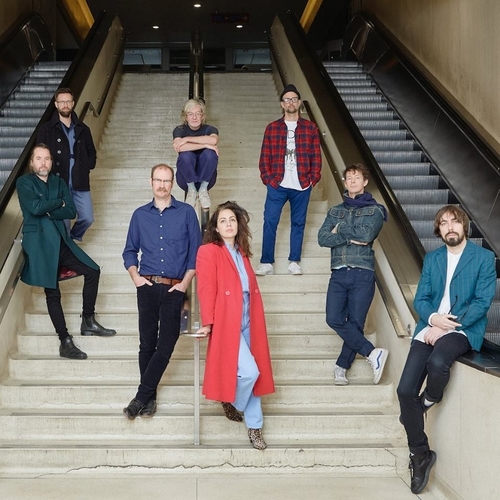
PHOTO CREDIT: Richmond Lam

Broken Social Scene – Can’t Find My Heart

Catfish and the Bottlemen – 2all

The Cranberries – Wake Me When It’s Over

Guy Chambers – The Road to Mandalay

MM.jpg

Lighthouse Family – My Salvation 

Pia Mia – Bitter Love

VC.jpg

PHOTO CREDIT: Amanda Demme

Andrew Bird – Proxy War

HRVY - Told You So

Peggy Gou – Starry Night (Original Mix)

Post Malone –Wow.

Panic! at the Disco – Dancing’s Not a Crime

cc.jpg

Foster the People – Style

Sofi Tukker – Fantasy

hg.jpg

Kailee Morgue - Headcase

Sara Bareilles – Saint Honesty

Jessy Wilson – Clap Your Hands
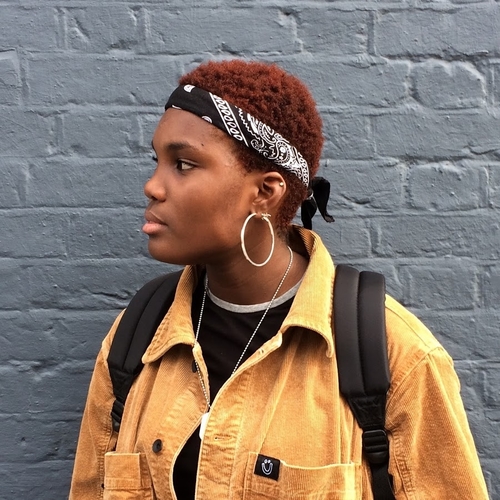
Arlo Parks – Romantic Garbage

lj.jpg

Liv Dawson – Pushing 21

Ady Suleiman – Best Friend

za.jpg

Molly Hammar (ft. Big Narstie) – No Place Like Me

Mosa Wild – Night

Nemi – Can’t Get Through to You

CLAVVS – Violet Sea

PHOTO CREDIT: Bridie Florence Cummings

Gaffa Tape Sandy – Headlights

gg.jpg

Ina Wroldsen, Dynoro – Obsessed  

Glowie – Cruel

TRACK REVIEW: Jenny Lewis - Wasted Youth

TRACK REVIEW:


Jenny Lewis

1.jpg

 PHOTO CREDIT: Autumn De Wilde

Wasted Youth


9.6/10


The track, Wasted Youth, is available via:

https://www.youtube.com/watch?v=ZY8bdQRpmGU

ORIGIN:

Los Angeles, U.S.A.

GENRES:

Indie-Rock/Alternative-Country/Folk

The album, On the Line, is available here:

https://open.spotify.com/album/2AHG3vkC3H7zqHbYdgCCcy?si=V_S0HXeHR_OLBbHWd9_ueg

RELEASE DATE:

22nd  March, 2019

LABEL:

Warner Bros.

__________

THIS is where I get to study an artist who is...

 PHOTO CREDIT: Pamela Littky

nearer the mainstream than a lot of the music I look at. On this occasion, I am looking at Jenny Lewis’ music and the song, Wasted Youth – from her terrific album, On the Line. I will talk about a few things but, among them, I will address age in music and how we perceive artists of a certain age; women and the fact they are creating the best albums this year; subjects that can make an album standout and resonate; relationships and how they can affect the aspect and dynamic of your writing; artists that stand out and can inspire – Jenny Lewis and how her career has developed through the year; where she can go from here. Lewis will probably not forgive me for mentioning age and starting with that but I have been thinking about it a lot. There are radio stations who, when an artist reaches thirty or thirty-five, they stop playing their music. Even though Jenny Lewis is in her early-forties, there is this sense that one is only relevant and cool when they are in their twenties – even getting into your thirties seems like a bit too much! Artists have spoken out against this a lot but, the more I think about music and the finest words out there, they are coming from artists who are not in their twenties. By that, I mean a little more world experience and maturity makes for the best music. On the Line deals a lot with family, addiction and change but it is not an album I could ever expect from someone younger than Lewis. The Rilo Kiley star has been in the industry a long time and I think where she is now, and what she writes about on her current record, is her strongest work. Why is it that the industry deems artists insignificant or not as cool when they get to a certain time in life? Maybe it is a problem more common here but it is a shame that some would reject Lewis’ music before they even hear a note – knowing that she is in her forties.

 PHOTO CREDIT: Wendy Redfern/Redferns/Getty

The album cover, in a way, acts as a sort of sign that she is as stunning as potent as ever. Her last couple of albums have not featured her face but the fact there is a shot of her cleavage, in a sense, is her showing that age does not matter and that she is still very young. It is something I wanted to mention because so many of the fantastic albums I have heard the past couple of years have come from artists who would be considered a bit past-it by the ‘cooler’ stations. That is not to say young artists are irrelevant but, when it comes to music, every station and outlet should judge people on their talent and sound rather than their age. Now that On the Line is out in the world, it is picking up fantastic reviews and amazing fans. Lewis has tackled some hard subjects on the record but there is light and plenty of charm underneath something a little more affecting. I feel it is Lewis’ maturity and time of life that makes her latest album so strong. I listen to her work and feel that, strangely, the best work might still be ahead of her. I will come to look at another subject but consider the career Lewis has experienced so far. She is on her fourth album but has worked in other bands and made such a huge impact on the industry. I love how her sound keeps evolving and the fact she seems to get stronger and more striking with every release. Lewis, as I shall explore, has experienced some loss and change recently and that all goes into On the Line. The fact Ryan Adams worked on the album – the maligned and controversial artist is in the news for the wrong reasons – does not add any sour tones at all. Lewis, in fact, has revealed in interviews how she felt uncomfortable around Adams and was never really that happy in his company. His contributions are not that evident and, fortunately, it is Lewis’ voice and tones that stand out the most.

I want to address some Lewis-specific things in a bit but I am amazed by the quality of albums that has arrived this year. From my experience, the best and most ambitious albums usually come out towards the second-half of the year. I wonder whether it is a planned thing but we tend to see things improve by the time we get to summer. Look at the albums already out and it is clear that 2019 is a very big and exciting year. I have raised this subject before but it is women, in my mind, who are creating the best work around. We have not even heard what Lizzo will give us with her upcoming album, Cuz I Love You, but it has the potential to be a year-defining record! This week has also seen Lucy Rose release, No Words Left. It is her most affecting and stunning work and is picking up four and five-star reviews – the British artist has grown through the years and, like Lewis, seems to get stronger with every release. Other huge records from the likes of Julia Jacklin, Little Simz and Sharon Van Etten have surpassed most of what the men are putting out there. All of the albums have a sense of the personal and depth to them. Artists are starker and more revealing with their music; willing to explore themes beyond the mainstream’s lust and create something challenging. I do wonder, as I keep saying, whether this quality is going to be mirrored with some festival bookings. This year, in the U.K., there is a sense of the predictable: a gender imbalance and most of the headliners are men. I do wonder why the same tired and inferior acts get booked and why women are being ignored. It is something that needs sorting out but, looking at this year’s best, how long can the industry look away? I do hope that the likes of Jenny Lewis are considered for headline slots next year because she would be a really popular choice.
Women have always been treated differently to male artists but I am noticing a split between the genders. Aside from a few male acts here – I think about IDLES and The 1975 – the subject matter addressed (by women) is a lot more stirring. So many male-made albums are not really breaking from the conventional or offering depth. I find the best female singers more nuanced and captivating whilst their lyrical approach has more heart, variety and intelligence. All of this combines into music of the highest order indeed – 2019 is very much the year of female music. It would be foolhardy to assume that men will completely suck-out this year but I can see this female dominance continue for the rest of the year. Jenn Lewis has also created an album that could be, already, considered one of the very best of the year. I love what she is putting out into the world and I am amazed (but not surprised) by the incredible quality women in music are creating. I shall move on in a second – as we need to dig deep into Jenny Lewis’ world – but she is this human that is very inspiring and brave. She has not long ended a long-term relationship and experienced the death of her mother. In interviews, she is charming, open and engaging and she is a definite role model for generations to come. It makes me angry when we promote men above women without reason and tend to ignore the best artists around. The passionate reviews Lewis is already accruing for On the Line should give pause for thought and, let’s hope, 2020 is the year when artists like her are rewarded with headline slots and industry aplomb. I have been scanning a few interviews she has provided and, when probed about the album’s themes, Lewis is quite frank and willing to share her story. Rather than being this very personal and dark record, there is a lot of character, story and light.

po.jpg

Whilst there are some great positives regarding On the Line – she collaborated with Ringo Starr! – Lewis had to channel tragedy and loss into her songs. She had to deal with the end of a twelve-year relationship with musicians Jonathan Rice and discovered her mother was dying. Little White Dove relates to Lewis visiting her mother in hospital whilst other moments address the moments after. In this interview with The Independent she revealed her feelings regarding a rather challenging relationship with her parents; how her mother’s death affected her:

“When you get the call that someone’s not well, you have a choice to be there or not,” she says now. “I decided to be there, and I’m so happy that I did. You feel their true essence in that setting, where they can’t get up and bounce. In those moments, you just see people for who they are, and they’re just like you. They are you. They’re just souls in a body that’s done. They’re just humans. They’re your parents. They tried their best.” There’s a long, heavy pause. “They weren’t great at it,” she adds with a husky snigger. “But we all have our issues with our folks”.

Despite the fact that ending a long-term relationship is, in a weird way, an achievement – Lewis noted how she had never been in a bond that lengthy! – there was the obvious heartache and pain:

“You think it’s never gonna end, you wanna erase the memory of the person, you’d do anything, you’d take a pill, you’d get surgery, you’d move away… and then one day you don’t think of them all day long. And the next day, you think of them less. And then you’re better. And you forget what it feels like to be heartbroken. And you like someone else. Hopefully. And certainly you can experience that in your twenties, but I think thirties heartbreak has a whole other level of weight. It hurts. It really hurts. Physically. I wonder if men feel the same heart hurt in that way”.

PHOTO CREDIT: Ali Seib for the Los Angeles Times 

I do feel 2019 is a year when the best artists are being a lot braver regarding personal loss and relationship struggles. Lewis’ music is never too hard and oppressive. Instead, she can mix funkiness and energy but does not shy away from the realities. In this interview with The Times, she was very candid:

““We all go through it. And it’s beautiful to witness life and death — it’s incredible. But it’s heavy shit too, man. I hadn’t seen my mom in years. And there we are, hanging out, and we have the same sense of humour. We laughed at the same jokes. The same facial expressions. We were just... the same. Nothing else mattered. All that time and space, and we thought the same things were funny”.

Relationships, physical and familial, are important and play a huge part in On the Line. Lewis is never too flippant about her mother’s opiate addiction but there are moments when she sighs and feels like a lot of her time has been wasted coping with the chaos around her. It is obvious her mother’s death hit hard but one feels like the years living around an addict took a lot from Lewis. Lewis also – when speaking with journalists  - states how she has not had many boyfriends so the fact she was with Jonathan Rice for twelve years was very new. That separation caused a lot of heartache and Lewis takes all of these pains and puts them into her music. One might feel like On the Line is a dark and suffocating album but it is more about Lewis being honest and never being too heavy. There is humour and light, as I say, in her music and you get this nice clash of the uplifting and heartaching. The music is so eclectic and the compositions so deep and rich. Lewis’ voice is a weapon that continues to strike and get right to the heart. She has been in the music industry for decades and, I feel, is stronger than most of her peers. It is amazing how many standout moments there are throughout On the Line.

Reviews have been great and it is clear that many people have been affected by Jenny Lewis’ latest album. I do not usually bring in other reviews – as it seems to detract from what I am writing – but NME offered their feelings:

“‘On the Line’ frequently throws up surprises. Taking the piss out of the West Coast’s reoccupation with horoscopes as she scours the house for Bourbon, Lewis taps into a droll and dark humour. Amid the sadness of ‘Party Clown’, Lewis invokes a surprising source of metaphor: “When I cry like Meryl Streep, when I crack my head wide open, I wanna be next to you,” she sings. And ‘Heads Gonna Roll’ ends on a particularly searing couplet: “A little bit of hooking up is good for the soul / Heads gonna roll”.

‘On the Line’ toes many tightropes. Hedonism is liable to osmose its way into escapism at any cost. Comic relief is a close bedfellow of total desperation; the darkest, bleakest moments in life can often arrive coupled with a strange kind of laughter. On her fourth solo record, Jenny Lewis skewers all of these tensions with astonishing ease. It’s up there with her greatest work to date”.

There is that dark humour and instant sense of relief throughout the album. One moment you might be laughing and bowled over by great line; the next, you might get caught out by a bit of searing emotion or something quite dark. These contrasts are wonderful and it makes On the Line such a rewarding and fulfilling album. The Las Vegas-born, Los Angeles-based artist has dealt with a lot over the past few years so I do wonder where she will go from here. Let’s enjoy Lewis’ current album and, trust me, you will need quite a few listens for everything to settle in. I have heard a lot of great records in 2019 but very few have matched the beauty and revelations of Jenny Lewis’ On the Line. A remarkable and utterly engrossing album from one of the finest songwriters in the world right now.

 PHOTO CREDIT: Ismael Quintanilla (Getty Images for SXSW)

Wasted Youth is the second track from On the Line and begins with a rather waltz-like rhythm. It is charged and open-chested and then, before too long, sort of goes into Folk/Country calm. Such a fulsome and intriguing introduction gets the mind working and you start to wonder what the song will relate to. Lewis talked about “slidin’ down a bong” and recalling her father – when her dad used to sing her songs but now he has gone. Whether talking to her sister – a sister is mentioned – or a message to her mother, too; there is this sense that things used to be pretty tough. Lewis wasted years on “a poppy” – referring to her mother’s opium addiction – and there is this stark mix between honesty and a rather causal sing-along style. After talking about drug addiction and seeing a broken home, Lewis projects these wordless coos, almost child-like and like a nursery rhyme. Lewis has grown up around drug addiction and a home that was not as stable and loving as it should have been. Maybe she was subject to waste and drugs herself but it seems like the younger Lewis had a rather tough road. She had to watch her family split and there is this balance between innocence and this little song – when things were easier and settled - and the realisation that things have been out-of-whack for a while. Lewis’ voice remains composed and sturdy throughout and there is so much depth and nuance in every line. Her vocal is packed with emotion and passion and the tone alone captures you and get into the heart. I mentioned how the composition started life as this twisting and unusual thing but, throughout the song, it supports Lewis and creates its own story. There is an odd sense of catchiness in Wasted Youth as Lewis does not want to make it too heavy and bleak. The melody and rhythm hypnotises and gets into the bones but you are moved by the story and its emotions.
It is clear that her mother’s addiction and downfall denied Lewis a proper youth and upbringing. There is not really anyone to blame – as addiction is complex indeed – but one gets a sense of anger and fatigue from the heroine. Things have been wrong for a while and one can only imagine the daily scenes and clashes at the Lewis household. It seems like her father’s departure and absence added to the instability and tension. Lewis never drags the listener into how but neither is she pretty casual and remiss. Wasted Youth is a stunning song that brings you into Lewis’ world and gets into her soul. I love so much about the song but the combination of composition and vocals is exceptional. There is this mixture of the joyful and striking; the band drives Lewis and her vocal responds and adds to the composition. A lot of singer-songwriters deal with topics like addiction and family strife with a rather dark tone and lack of energy. Jenny Lewis injects some passion and energy into the music and its gives it an extra layer. It means the song is accessible but never throwaway. Indeed, the story Lewis tells comes from a very bad time but I feel Wasted Youth will give other songwriters inspiration and bravery when they want to talk about similar things in music. There are many more moments like this (on) On the Line. The album gives us a glimpse into Jenny Lewis’ life: the pains and relationship woes; her familial troubles but, above all, there is hope and a sense of moving forward. Wasted Youth is a definite standout and a song that continues to amaze me. I love the way she adds these wordless vocals that clashes against these visions of isolation, pain and addiction. There are not many songwriters who would take this approach and it is fantastic to see. By the end of Wasted Youth, you want to go back and listen again and again. Lewis herself has this addictive quality where she gives so much of herself to the music but holds a little something back. If anyone is new to Jenny Lewis then Wasted Youth is actually a great place to start. Make sure you also listen to the rest of On the Line and let it seep into the bloodstream. Every album from Jenny Lewis is marvellous but On the Line is particularly strong and rewarding. Although songs like Wasted Youth are challenging and serious, Lewis’ incredible emotional blend and songwriting keeps you invested and never appears too stark. Such a fantastic and incredible blend from a truly amazing songwriter!

 PHOTO CREDIT: Autumn De Wilde

As is common with my reviews, I do not get the time to assess an entire album – as I would have to give each song a few words; that would do them a disservice – but you need to hear every moment. I selected Wasted Youth as I feel it is the best distillation and representation of On the Line. Most songs are around the four-minute mark but nothing feels too long and expendable. Lewis packs so much into songs and you definitely want more by the time you reach the finale, Rabbit Hole. I do feel this year will see some great band-made music but it is solo artists who are releasing the best work right now. I have mentioned how women are leading the charge and, whilst Lewis would not exclusively want to be labelled a female artist – get rid of the label; be more gender-fluid, perhaps – there is no denying her and her female peers are producing the best music of 2019. It does make me wonder how long it will take artists like her to be recognised wholly. I have already mentioned age and how there is ageism at some stations; how festivals seem to headline men and ignore the women – all things that need to be challenged and remedied. I would love to see Jenny Lewis play a U.K. festival and I know she holds love for the people here. I think she would make an amazing headliner has so has this glorious back-catalogue from which to take guidance from. On the Line comes off of the back of relationship termination and dealing with her mother’s death – in addition to coping with her addiction and declining health. One would see Lewis as this rather lonesome figure that has been abandoned, whether through death or separation, but there is so much wit and strength in her music. She uses On the Line as a form of release and therapy but, as with all her albums, there is plenty of wit and strength.

8.jpg

It is another astonishing record and one that will continue to pick up impassioned reviews. Check out her social media channels regarding tour dates and footsteps. There are U.S. tour dates happening right now – she is in Long Beach tonight – and it looks like she has a full diary until later in the year. In fact, Lewis looks to be booked and occupied for the foreseeable future. I do hope she gets time to come to the U.K. and, importantly, time to chill and reflect. She might want to think about another relationship and a new bond; she will be thinking about personal space and her next move and I do wonder whether there are plans regarding new music projects and bands. I shall move on and let you get about your day soon but I want people to gravitate towards Jenny Lewis and On the Line. Her new album is great but I would advise people to search through her previous albums and see how this exceptional artist has grown and blossomed. I hate to bring up age again but, at forty-three, Lewis is providing more wisdom, glory and quality than most artists half her age. One needs to pay more attention to artists like Lewis: those who have had more life experience but she have a lot to offer. She is still a young woman and who knows what the future will hold. In some ways, her latest album is the end of a rather challenging period in her life. One can feel a catharsis when listening to songs throughout On the Line. The album will give guidance and hope to those experiencing similar woes but, above all, there is that hope and beautiful bouquet that gives us wit, brilliant stories and some fantastic songs. Another stunning record from Jenny Lewis, expect On the Line to be among the frontrunners when it comes to the best albums of 2019. I shall leave things there but I would urge everyone to get hold of On the Line and listen to it the whole way through. Jenny Lewis has proved, even this far into her career, that she is full of surprises and you can never really predict she will head. I know we will get many more years of staggering music from...

THIS sensational human.

___________

Follow Jenny Lewis

FEATURE: Transpositional: Why Creating a Pose-Type Show in the U.K. Would Fill a Huge Gap and Bring L.G.B.T.Q.+ Culture/Discussions to the Mainstream

FEATURE:


Transpositional

IMAGE CREDIT: FX

Why Creating a Pose-Type Show in the U.K. Would Fill a Huge Gap and Bring L.G.B.T.Q.+ Culture/Discussions to the Mainstream

__________

I am not against all T.V. shows in this country...

111.jpg

 PHOTO CREDIT: @sveninho/Unsplash

but I think are better when it comes to theatre and music. I have never been a fan of our iconic comedy shows - and feel they relied more on gentle humour rather than anything sharp and genuinely memorable – with a few exceptions. The same goes for our sitcoms. We are not great at family/friend-based shows and I find them so formulaic, laboured and lacking in humour. We have a couple of wonderful comedies/comedy-dramas, Fleagbag and This Time with Alan Partridge, but the former is more synonymous with its dramatic elements and the latter, I feel, relies too much on a sense of discomfort and rooting for this lovable loser – something British comedies have become more known for since The Office. Both provide moments of brilliance but neither is a patch on the best from the U.S. Brooklyn Nine-Nine is returning for a sixth season; Family Guy still has plenty of juice left in the tank and The Goldbergs is a sharp and warm show. I also love The Marvelous Mrs. Maisel and, whilst we are waiting a third season, this comedy-drama is much funnier than most of our ‘comedies’. There are some bad and average U.S. comedies – including Schooled and The Big Bang Theory: they have some pretty s*it others, too – but the best from the American stable is much stronger than anything we are providing. The same is true of drama. I think this is where the biggest discrepancy exists.

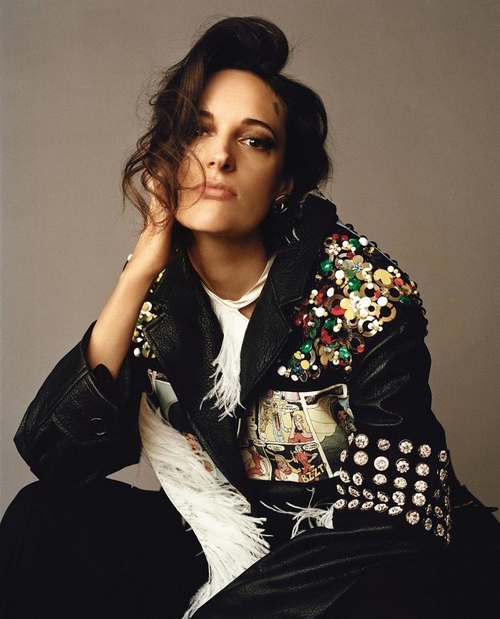
 IN THIS PHOTO: Fleabag creator/Killing Eve writer Phoebe Waller-BrIdge is one of Britain’s finest talents/PHOTO CREDIT: Scott Trindle for VOGUE

We are excited about seeing Line of Duty back on our screens but, essentially, it is not that inventive and different to any police/criminal dramas. Killing Eve – written by Fleabag creator/star, Phoebe Waller-Bridge – is a genuinely great drama and one that we need to model the rest of our work on. Look at the rest of our schedules and it does not vary much between criminal dramas, family tensions and the same old thing. Every new trailer than comes along bores me and I wonder why we lack such imagination and originality. We are obsessed by family dramas and focusing on very narrow themes. Most of the T.V. I am watching and enjoying is American and I feel we have the talent in the country to rival their best but the concepts that keep coming through are predictable and completely uninspiring. Music is an area that has always been under-exposed when it comes to drama and I do not know why. We have a lot of the same sort of dramas about but not a lot that goes beyond the same friends-family-deceit constructs that T.V. broadcasters are obsessed with! Big themes like teaching L.G.B.T.Q.+ lessons in school and political tensions makes me wonder whether this is being represented on screen. How about a drama that uses music/a music theme as its core and builds from there? How long since we have seen something like that on T.V. at all?

What I find when it comes to U.K. drama and comedy is how lifeless and beige it is. We are ultra-serious and struggle to make anything that is colourful, bold and has a great leap of imagination. The sooner we get out of the same moulds and formats; we can actually then expand the palette and create something startling. It is a shame this happens because we have some great actors and directors but I do find our comedies and dramas are somewhat unspectacular. I would not normally be attracted to a show like Pose but, within a few minutes of watching the first episode – last night on BBC 2 – I was hooked. The show was created by Ryan Murphy, Brad Falchuk and Steven Canals and it is a huge-hearted, queer drama that has these amazing scenes and colours. Its budget is huge – which may mean it is hard to replicate here; we do not have such deep pockets and established studios – and features a large trans cast and set of writers – the largest in T.V. history, I understand. If its story is not exactly mould-breaking – a fairytale-like narrative where characters can be themselves and express themselves freely – then its script and look definitely is. In the first episode, we were introduced to the House of Abundance where it was led by the ‘Mother’ (Dominique Brebner plays the Elektra Abundance): a formidable leader who rules with a strict fist but is an inspirational figure.

She and her house compete in underground ballroom competitions before one of her ‘children’ breaks away to form her own house – she recruits her own members and they compete with the House of Abundance (they lose in the first face-off but have plenty of talent and fire in the ranks). Blanca Rodriguez-Evangelista (Mj Rodriguez) is the character who forms her own house after she discovers she is HIV-positive. By day, she works in a nail-bar but she harbours dreams of stardom and making something of herself. Ryan Jamaal Swain plays Damon Richards-Evangelista, a gay dancer who is abused and rejected by his family when he reveals his ambitions to become a dancer. He lives on the street and is discovered by Blanca; she takes him in and, before long, new members come into the house. He amazes judges and committee at a New York dancing school – after being reluctant to audition – and we sort of end the first episode with hopes that this House of Evangelista will square up to the formidable House of Abundance and gain fame in the clubs. I have summarised the plot but we see looks inside a Trump-era business – maybe a satire against the current U.S. President – and an office worker (Evan Peters plays Stan Bowes; he works in Trump Towers and his boss, Matt Bromley (James Van Der Beek), is all kinds of off-putting) who gets this big job but cheats on his wife with a trans prostitute; a look at late-1980s New York and how gay culture was largely confined to the underground.

 IN THIS PHOTO: Angel Evangelista (Indya Moore) is a trans sex-worker (in Pose) and craves a more settled and normal existence/PHOTO CREDIT: BBC/FX/Pari Dukovic

Pose even managed to squeeze in a Kate Bush tune in the first episode – Running Up That Hill (A Deal with God) was played a few times throughout! Critics were amazed by the liberating and unique vision of Pose. This is how The Guardian assessed the opening/pilot episode:

“New York City. 1987. Glitterball. Vogue hands, as any Madonna fan of my generation will know them. Sometimes the right television series comes along at the moment you need it and Pose (BBC2) is just that: shimmering balm for the Brexit-eroded soul. For an hour and a bit, all the cynicism and rage evaporates and you rise from the sofa on a cloud of killer lines dropped from the hard-won lips of black trans women; the sound of Donna Summer; and sheer, fishnet-tights-clad resilience.

But this show is far more sophisticated than escapism. It’s like falling in love: heightened, revelatory, bruising. Pose is that good.

Above ground, we enter the stultifying world of straight, white, executive conventionality, embodied by Trump Tower, which is even more monstrous considering what the man who built it presides over now. Stan Bowes gets a job there while falling for trans sex worker Angel. In a masterful scene that could be straight out of Mad Men, he asks Angel what she wants from life and while she whispers the answer in bed – “I want a home of my own. I want a family. I want to take care of someone and I want someone to take care of me. I want to be treated like any other woman” – the scene cuts to Stan arriving home to his wife and kids. The life of conformity, of passing, that Angel craves is killing him. How does the scene close? With the opening synths of Kate Bush’s Running Up That Hill...

Pose treats with respect, pathos and love both the glamour of the ballroom and the guts of the Aids crisis, transphobia, sexism and racism. It’s a charismatic dance-off between appearance and reality, in which both sides are equally matched. Pray Tell might say “the category is … paramount realness!” The pose, in other words, is the realness.

Abundance by night: one of several teams competing in the underground ballroom scene, populated mostly by black and Latino trans and gay people. The houses are run by formidable “house mothers”, defiantly and poignantly recreating the families that once rejected them. Then there’s New York, the most iconic house mother of all, who welcomes everybody into her bosom and stands for both nurture and danger.

When Blanca finds out she is HIV-positive, she tells ballroom MC, Pray Tell, “At least now something in my life is for sure.” He replies, “You ain’t dead yet”.

It is early days but Pose has been met with huge affection in the U.S. – where more episodes have been featured – and I know it will succeed here. There are a number of reasons for me believing in this. For a start, against the sometimes-brutal and shocking scenes – domestic assault and young creatives struggling to find acceptance in America – there is an actual spirit of hope and togetherness. The music side of things is why I am including this feature in my blog.

 IN THIS PHOTO: The standout Ryan Jamaal Swain stars in Pose as Damon Richards, a gay, homeless dancer/PHOTO CREDIT: Lexie Moreland/WWD

I cannot recollect the last time we showcased something as giddy, bright and original on our screens when it comes to drama. The performances are uniformly excellent and the fact there are trans actors/writers gives Pose authenticity and insight. The interaction between the lead actors is incredible and the script mixes pathos/tragedy with lighter moments brilliantly. I love the arc of the pilot episode and how, in just over an hour, we got a great insight into the gay scene in 1980s New York. It is about the clubs and the freedom of the underground; the way trans performers (and queens) had a space where they could be themselves and not have to hide it. Even today, society is not as accepting and open as it should be and shows like Pose are going to be positive and powerful when it comes to changing attitudes. Against rather dry lessons and literature, T.V. shows like this provide a genuine experience and education. I have seen a lot of tweets recently regarding to schools and whether they should include L.G.B.T.Q.+ themes in their curriculums. A lot of children are scared of revealing their sexuality because there is not enough tolerance, discussion and love. Music is at the heart of Pose and, together with dance – the show is, in essence, about dance culture and voguing (a little bit before Madonna helped bring it into the mainstream with her Vogue single in 1990) -, we get this captivating and catchy world. You do not need to be trans or gay to appreciate the show and what it is trying to communicate.

 PHOTO CREDIT: @paul_1865/Unsplash

Pose beautifully unleashes this world that does not need to lecture and pander; it does not assume the viewer is aware of ignorant of the world in which it lives: instead, we get a really accessible look at gender politics and life in late-1980s New York. I am a heterosexual male and it definitely spoke to me. Great dramas like this can appeal to a wide demographic and create that balance between education and entertainment. Looking head-on at the HIV/AIDS crisis in America and the glamour of the ballroom is a difficult thing to do when it comes to hooking people in. The realness and authentic voice of Pose makes every scene come to life and get into the head. It is the giddy mix of sounds and movements that appeals to the artist and journalist in me. I love the selection of songs employed and we had a nice balance of dance-worthy jams and, as I said, Kate Bush. One does not need to know about the ballroom scene and the Disco elements; the glitz and camp to appreciate the show. I think L.G.B.T.Q.+/trans issues are as important in music as they are society at large. I know quite a few L.G.B.T.Q.+ artists and still feel there is a stigma and lack of recognition. Think about the mainstream and how easy would it be for a queer artist, let’s say, to get their voice heard?!

l.jpg

 IMAGE CREDIT: iStock

Maybe a U.K. show that walks the same as Pose would not need to explicitly tackle that but I think there is a lot of talk and discussion happening regarding L.G.B.T.Q.+ areas in schools and the nature of sexuality. Aside from particular playlists and fringe plays, I do not think we get a real sense of the sexual spectrum and different identities in this country. One could argue that the U.S. is not so open-minded when it comes to sexuality but I think they are ahead of us. At any rate, their studios are more adventurous and willing to open up conversations. I know Pose is groundbreaking but we need not look at trans/gay artists in the U.K. It (a drama) could explore sexuality among school-aged children or roll the clock back to the 1990s and the culture then. Queer as Folk is still talked about and that was first broadcast back in 1999! Music would play a central role in any venture: the heart and soundtrack that need not be specific to that culture. By that, I mean the music does not merely need to be popular to the trans/L.G.B.T.Q.+ communities. Instead, there could be a blend of commercial/traditional music and LG.B.T.Q.+-focused songs. With so much political chaos and talk going on, I wonder how long it will be before the dust clears and we can have a chat regarding matters such as trans dancers/children; the L.G.B.T.Q.+ experience and bring that to the screen.

Pose is capturing the American population with its mix of heart, inspiration and hard-hitting authenticity. I feel we are too mired in the same old ruts and niches here. Every advert for some domestic drama makes me think the same: the fact we have seen this all before and we are not pushing boundaries. It’s great Line of Duty is coming back but look at all the other police/crime dramas and it is the same mix of plots and characters. The same can be said with comedy and I know, with talents like Phoebe Waller-Bridge about, we can create our own Pose. There are other great writers/wits, such as Caitlin Moran, who could write a great show; maybe Russel T. Davies – a gay screenwriter whose iconic shows include Queer as Folk – who could help bring about some sort of revolution. I feel it on the fringes and there is the desire for mainstream exposure and revelation. In terms of setting/period, why not London or Liverpool during the 1980s/1990s. We would be spoiled for choice when it comes to great songs and, though we do not have the same budget as U.S. studios, we could turn in something decent. One of the other strengths of Pose is the fact that it is a largely-black cast.

 IMAGE CREDIT: Getty Images

There are few dramas/comedies in the U.S. or U.K. that have a large black cast so, in another way, Pose is ground-breaking. I do get bored of our T.V. and, although some Alan Partridge awkwardness is entertaining, I am looking for something bigger, more glamorous and important. We need to laugh and come together but we can do that in a comedy-drama that wears its heart and fabrics like Pose. A U.K. drama does not need to look at a particular scene or culture: instead, it can fictionalise or look at trans/L.G.B.T.Q.+ characters finding their way against the changing music/club scene in the U.K. – maybe trying to form an underground following against House, Rave or Britpop. There are endless possibilities but they are not being explored enough. Pose’s following, popularity and five-star reviews show that, if done right, there are plenty of accepting, passionate and committed viewers who have been looking for a show like this for a long time! I don’t know. I do love our biggest T.V. shows and feel creators like Phoebe Waller-Bridge are incredible. She is one of the best writers and actors we have and I feel she could help spearhead something Pose-like here with her blend of cutting wit and dramatic flair. A lot of our dramas seem stuck and rigid; we are too samey and grey and, when we look at the U.S. and what their brightest minds are coming up with, it seems like the time to make that change and...

0990.jpg

 IMAGE CREDIT: FX

STRIKE a pose!

FEATURE: Sisters in Arms: An All-Female, Spring-Ready Playlist (Vol. IV)

FEATURE:


Sisters in Arms

90.jpg

IN THIS PHOTO: Erica Cody/PHOTO CREDIT: @anouskaphotography  

An All-Female, Spring-Ready Playlist (Vol. IV)

__________

WE need something to push us...

76.jpg

 IN THIS PHOTO: Anteros

into the weekend and get the energy rising! The weather is not too bad but I feel that extra little bit of spirit is needed. We are comfortably into spring so it is time for another edition. I have been looking at all the new songs – and a couple of older ones – that are female-led and selected a few here. It is a great selection that has a variety of moods and genres. I know there will be something in there that captures your imagination and stays in your mind. If you need a bit of inspiration and motivation to get you into the weekend then I recommend that you start by listening to some terrific female-led tracks that will...

2.jpg

IN THIS PHOTO: Rose Gray

STAY in the mind for a while.

ALL PHOTOS (unless credited otherwise): Getty Images/Artists

____________

 PHOTO CREDIT: Louis Browne

Sølv – Bittersweet

Abby Anderson – GOOD LORD

Cate Le Bon – Daylight Matters

98.jpg

PHOTO CREDIT: Briana Davis

Post-Dusk – Overgrown

Ess_Gee – Bubble Queen

Erica Cody – Where U Really From

Anteros – Ring Ring

Liv Dawson – Pushing 21

h.jpg

flora cash – Indie on Loud

PHOTO CREDIT: @hasselblad

Rose Gray – good life

PHOTO CREDIT: SHOT BY PHOX

Suzi Wu – Error 404

Maggie Lindemann – Friends Go

Sinead Harnett – By Myself

oiioio.jpg

Nilüfer Yanya – Angels

fd.jpg

Chandler Juliet – hide and seek

Greta Jaime – Indecisive

8.jpg

PHOTO CREDIT: Zoe Rain/Whitney Middleton/MUA by Krystyn J Johnson

Jamila Woods – EARTHA

PHOTO CREDIT: @christiantjandrawinata

Emily Muli – Rhythm & Truth

PHOTO CREDIT: Sylvie Weber

Laurel Halo – Oneiroi - Mixed

Lucy Spraggan – Lucky Stars

Rose Elinor Dougall – Take What You Can Get

Bianca Bazin – Heartbroken Fool

Clare Maguire - Vibe

Mari Dangerfield – Dear Admirer

Irini Mando (ft. KYZE) - MVP

PHOTO CREDIT: Chris Almeida for The Line of Best Fit

JGrrey – Notice

22222.jpg

lennixx – Bad Bird

INTERVIEW: Mason Ashley

INTERVIEW:

9.jpg

PHOTO CREDIT: Allie Leith

Mason Ashley

___________

I am ending the week of interviews...

 SINGLE ART: Sophie Mazzaro

by speaking with Mason Ashley about her recent track, Ever Had You, and whether there will be more coming. She reveals whether music provides catharsis and when she decided to follow music; which artists she grew up around and which rising artists are worth exploring.

I ask when the U.S. artist will come to the U.K. and whether she gets time to chill away from music; if she has a standout memory from her career so far – Mason Ashley selects a classic gem to end things with.

____________

Hi, Mason Ashley. How are you? How has your week been?

Hi! I’ve had a great week. I got to do some snow skiing in Utah, so I’m happy. 

For those new to your music; can you introduce yourself, please?

I’m Mason Ashley. I’m twenty-years-old and I’ve been writing songs and playing for half my life now. 

Ever Had You is your new track. Is there a story behind it?

I wrote Ever Had You in a matter of minutes after realizing I was in a toxic relationship. There’s a long, dramatic story behind the song...but let’s just say that the song came right as a realized that I had given out my last, last straw to this person. 

Might there be some more material later in the year?

I am currently back in the studio working on new music right now. You’ll definitely be hearing more from me later in the year and I can’t wait!

Is music a good way of getting out emotions and feelings in a healthy way? How important is music in that respect?

I have always used music as a form of therapy. Even as a kid, I found writing as a way to sort through my emotions and figure myself out in a sense. I think music is a great outlet for getting those feelings out. 

PHOTO CREDIT: Allie Leith

Can you tell me what sort of sounds you grew up around as a child?

I grew up on all kinds of music. I basically listened to whatever my parents were listening to. I loved early John Mayer, Van Morrison and Matchbox Twenty. I really just enjoyed music as a kid. I discovered Bob Dylan when I was twelve or thirteen and I think he heavily influenced my writing for years after that.  

When did you realise you wanted to pursue music? Was it quite an easy process going from there to where you are now?

I honestly think I knew from around the age of twelve. I started recording demos and performing by the time I turned thirteen and then really started taking that passion seriously. It’s definitely been a long road of trial-and-error since then. Trying to make a career in music is by no means easy. There are no certain steps you can follow or things you can do to guarantee success. It’s a lot of just putting yourself out there and hoping that the right person, or people, will hear what you have to say and appreciate it. We can’t all have the Justin Bieber story. 

Do you have a standout memory from your time in music so far?

I have a few big milestones so far: over one-million views on YouTube; someone using one of my tracks in their wedding and attending my first award show. I think my favorite story, so far, is the first time I heard myself on the radio. I was sixteen and had just released my debut E.P. I wrote more Folk/Americana music at the time.

My family and I were in Dallas, Texas at a lake house for a min-summer vacation and I remember getting a tweet from a radio D.J. - IN DALLAS of all places - saying that they would be featuring one my songs the next morning at seven. We all woke up early the next day to listen and I remember feeling so overwhelmed and proud. It was one of the most memorable and monumental moments so far.  

PHOTO CREDIT: Allie Leith

Which three artist albums mean the most to you would you say (and why)?

Bob Dylan - Bringing It All Back Home 

The first Dylan album I ever listened to from start to finish. My thirteen-year-old self sat there on my bedroom floor listening to She Belongs to Me and Mr. Tambourine Man wondering how anyone could ever want to be anything other than a songwriter. 

The 1975 – The 1975

Shortly after my Bob Dylan movement, I started broadening my musical horizon. I fell in love with all kinds of music and loved listening to anything I could find. The 1975 released their debut, self-titled album and I was hooked. Thoughtful lyrics with Brit-Rock vibes and electric guitar...the album had me listening on-repeat so I could hear all the little aspects in the production that gave it its sound. Robbers is still one of my favorite songs. 

La La Land Soundtrack 

Because...if you haven’t listened to it, you are missing out. Just the most beautifully poetic and bitter sweet soundtrack I’ve heard. If it doesn’t evoke some kind of emotion inside of you, you might be heartless. 

If you could support any musician alive today, and choose your own rider, what would that entail?

Wallows or The 1975. French press coffee and/or chai tea. Just tons of caffeine. I can out-drink anyone when it comes to coffee.  

099087.jpg

PHOTO CREDIT: @TheMasonAshley

Are you planning any gigs in the coming months?

I don’t have any shows on the books at the moment. I’ve mainly been focusing on getting more songs done in the studio, but definitely stay tuned because I plan to start playing live later in the year.  

How important is performing? Do you prefer it to life in the studio?

I think performing is so important. It helps solidify who you are as an artist and overall just get more comfortable with your music. I love creating and hearing a song or project come together. I absolutely love being in the studio, but I started on stage at a young age and have a very special place in my heart for performing. I love both for different reasons. 

Will you come to the U.K and play at some point?

I would love to come to the U.K. and play someday! I’ve never been and that would be a dream. 

ds.jpg

 IN THIS PHOTO: Wallows

Are there any new artists you recommend we check out?

One of my favorite bands right now is Wallows. Definitely check them out and try to catch them on tour because they are fantastic. I also love James Vincent McMorrow and Jack Garratt.

ytt.jpg

IN THIS PHOTO: James Vince McMorrow

Do you get much time to chill away from music? How do you unwind?

I do have some free time to chill as of right now. I’ve been into yoga for years but I haven’t been good about sticking with it regularly until recently, so I’ve enjoyed that. I love coffee so sitting in coffee shops and people watching is also very relaxing to me. 

Finally, and for being a good sport; you can choose a song and I’ll play it here (not any of your music - I will do that).

She Belongs to Me - Bob Dylan 

___________

Follow Mason Ashley

FEATURE: Vinyl Corner: Bob Dylan – Bringing It All Back Home

FEATURE:


Vinyl Corner

8.jpg

IMAGE CREDIT: Spotify/PHOTO CREDIT: Daniel Kramer  

Bob Dylan – Bringing It All Back Home

__________

TOMORROW is also the anniversary...

 IN THIS PHOTO: Bob Dylan in 1965/PHOTO CREDIT: Everett Collection/REX

of The Beatles’ debut album, Please Please Me, but I have featured that before. It is a great record to buy and listen to on vinyl; sit back and let everything wash over you. It is an immediate and incredible album that, fifty-six years after its release, still sounds amazing. Another great record that celebrates an anniversary tomorrow is Bob Dylan’s Bringing It All Back Home – it turns fifty-four. It is one of those records that, in the great bulk of genius Bob Dylan albums, is not given the same attention and celebration as Blonde on Blonde and Highway 61 Revisited. Dylan’s early career sounds are noted for their acoustic sounds but, by 1965, Dylan was incorporating more electronic elements into his work – to the chagrin of some people in the Folk community who felt he was betraying its roots. Bringing It All Back Home is divided between electronic and acoustic sides and, on the first side, Dylan is backed by an electronic band. This caused consternation among those who felt Folk was acoustic and Dylan was making a huge mistake. I am not sure what the thinking was but maybe the thought of Dylan becoming more Rock was a sell-out; a sense he was abandoning Folk and trying to fit in with the mainstream. It is hard to think that his electric ambitions would cause outrage in the 1960s but, in many ways, Dylan opened up Folk and showed there was potential to cross-pollination and broaden its scope.

Listen to a lot of the Folk albums that followed – and how Folk sounds today – and one can hear Dylan’s influence. Dylan, by the middle of the 1960s, was moving away from his role as the protest singer – another move that irked and led some to believe he was betraying his roots – and writing more from an abstract perspective. Look at songs (on Bringing It Back Home) such as It’s Alright, Ma (I’m Only Bleeding) and one can definitely detect a stylistic shift. His delivery, on some numbers, is more fast-paced and his lyrics more personal and, in places, surreal – he would create these bigger, more surreal songs by the time Highway 61 Revisited arrived later in 1965. During 1964, Dylan was based in Woodstock and, as peer Joan Baez recalled, he was sat at the typewriter with a red wine near; getting down his thoughts and, in the middle of the night, would sometimes be heard staggering towards the typewriter to get something urgent down. It was clearly a fertile time for Dylan and the peace and scenery of Woodstock definitely inspired him. Still only twenty-three, Dylan was still concerned with world affairs and political ills but was looking in avenue avenues; broadening his songbook and integrating different sounds into the palette. There was this definite shift from the personal and political to the more surreal and fantastical.

09.jpg

 IN THIS PHOTO: Bob Dylan in 1965/PHOTO CREDIT: Harry Thompson/Evening Standard/Hulton Archive/Getty Images

Dylan was writing more in a stream-of-consciousness mood and he even influenced The Beatles – he met them in August 1964 and inspired a more introspective writing style; they, in turn, inspired a more electronic sound in Dylan. Look at the work Bob Dylan and The Beatles were putting out between 1965 and, say, 1968 and there is this sort of rivalry. It is hard to say who edges the battle but Dylan brought out Blonde on Blonde in 1966 whilst The Beatles would deliver Revolver that year and Sgt. Pepper’s Lonely Hearts Club Band the following year – if Dylan was edging it in 1964 and 1965, The Beatles overtook him by the latter-half of the 1960s. There was a bit of experimentation before Dylan and Bringing It All Back Home’s producer, Tom Wilson, decided on a set sound. They tried versions of Rock and Folk music but, having few guides and other artists doing the same thing, it was not overly-successful. Dylan and Wilson eventually recruited an electric band – including Al Gorgoni and Bruce Langhorne – and set to working on the album. The songs were captured quite quickly and, boasting a loose, live-sounding flair, these epic songs soon formed. It is amazing to think how quickly the master takes came together and how few takes were needed. Whereas some of Dylan’s earlier albums were a little limited when it came to sound and lyrics, Bringing It All Back Home was a much more eclectic and broad record.

Subterranean Homesick Blues has that intense and passionate delivery and talked about anti-establishment politics – Dylan was still reflecting political aspects but not in the same way as he did at the start of the 1960s. Bohemian lovers and breaking away from the protest Folk movement were all covered. Dylan’s incredible wordplay and indelible poetry infused every track and here was a man, still fresh-faced and making his way, who was producing these incredibly accomplished and nuanced songs. The 1960s was not short of genius writers but, when you listen to the words on Bringing It All Back Home, they sink in and take you somewhere extraordinary. The richness and maturity of the songs; the way Dylan pushed against rigid Folk values and structures. He worked with a variety of musicians and was moving away from mere protest songs. This was seen as somewhat revolutionary in 1965 but, today, it means Folk as a genre is much bolder and unafraid to adventure. A lot of the puritans were unaccepting of Dylan’s new phase but there were many new followers who latched onto his music. The wonderful It’s Alight, Ma (I’m Only Bleeding) opened doors and minds for Folk singers and Pop bands alike. Looking at the futility of politics through a series of incredibly vivid and entrancing verses, Alight, Ma (I’m Only Bleeding) is considered one of his finest-ever songs.

Dylan would delve deeper into love and tangles relationships later in his career but even at such a young age, Dylan has a fond understanding regarding the human heart and the complexities of love. It’s All Over Now, Baby Blue, as the title suggests, looks at the end of a long relationship and the sadness that has emanated from a once-happy bond. The eleven tracks from Bringing It All Back Home were recorded during a few days in January 1965 and it is amazing to discover how fast the whole process was. What we get is this live-sounding record that is raw and honest but filled with complex lyrics and gorgeous performances. The record is regarded as one of the best ever. Combining aspects of The Beatles and The Rolling Stones alongside Chuck Berry, it was a new form of Rock & Roll expression. Its influence is hard to calculate but it definite made a big impression on bands such as The Beatles who, themselves, inspired greatly a great deal of other bands – including The Beach Boys among many others. The reviews, both at the time and since 1965, have been near-spotless: I cannot think of anyone who had anything but pure admiration Bringing It All Back Home (although, there are always some who turn their nose up at anything!). AllMusic, from this 2016, review, show how Bob Dylan moved from 1964 and 1965 and the effect his fifth studio album had:

“With Another Side of Bob Dylan, Dylan had begun pushing past folk, and with Bringing It All Back Home, he exploded the boundaries, producing an album of boundless imagination and skill. And it's not just that he went electric, either, rocking hard on "Subterranean Homesick Blues," "Maggie's Farm," and "Outlaw Blues"; it's that he's exploding with imagination throughout the record. After all, the music on its second side -- the nominal folk songs -- derive from the same vantage point as the rockers, leaving traditional folk concerns behind and delving deep into the personal. And this isn't just introspection, either, since the surreal paranoia on "It's Alright, Ma (I'm Only Bleeding)" and the whimsical poetry of "Mr. Tambourine Man" are individual, yet not personal...

And that's just the tip of the iceberg, really, as he writes uncommonly beautiful love songs ("She Belongs to Me," "Love Minus Zero/No Limit") that sit alongside uncommonly funny fantasias ("On the Road Again," "Bob Dylan's 115th Dream"). This is the point where Dylan eclipses any conventional sense of folk and rewrites the rules of rock, making it safe for personal expression and poetry, not only making words mean as much as the music, but making the music an extension of the words. A truly remarkable album”.

This 2016 article from Rolling Stone looked at the impact and genius of Brining It All Back Home and how Bob Dylan helped transform music and

“He conjured performances that would completely reimagine how pop music communicated – not just what it could say, but how it could say it. “Some people say that I am a poet,” he wrote coyly in the prose-poem notes on the back cover. Now, he was ready to test the limits of what that meant, rewiring himself for a singularly revolutionary moment. The fallout-shelter sign in the cover shot was on point: Bringing It All Back Home was the cultural equivalent of a nuclear bomb.

“The thing about Bringing It All Back Home was his words,” says David Crosby. “That’s what Bob stunned the world with. Up until then we had ‘oooh, baby’ and ‘I love you, baby.’ Bob changed the map. He gave us really, really good words”.

It is a seismic album that, in 1965, was battling some truly mighty artists! Who knows how inspiring Dylan would have been if he had stayed with protest politics and traditional Folk – would he have ever changed course?! There was a reaction against him going electric but, as we have seen in the ensuing decades, that decision was right. Bob Dylan knew what he was doing and has a plan in mind:

“As Dylan put it in his memoir, Chronicles, “What I did to break away, was to take simple folk changes and put new imagery and attitude to them, use catchphrases and metaphor combined with a new set of ordinances that evolved into something different that had not been heard before.”

Dylan also got final takes of “Mr. Tambourine Man,” “It’s Alright, Ma” and “It’s All Over Now, Baby Blue,” one of the finest kiss-off songs ever recorded and a contender for Dylan’s prettiest song. “Baby Blue” reads as a barbed fare-thee-well to a lover, but also to Dylan’s old core audience. It was an acoustic song, just guitar and harmonica, excepting the beautiful forward-tugging countermelody played on electric bass by Bill Lee. But its heart was rooted in the rock & roll. “I had carried that song around in my head for a long time,” Dylan said. “When I was writing it, I remembered a Gene Vincent song. Of course, I was singing about a different Baby Blue.” Another instant classic, it would be covered by the Grateful Dead, Van Morrison, Bryan Ferry and many others”.

It is amazing to think that, fifty-four years after its release, Bringing It All Back Home can be heard in the work of modern artists. Maybe nobody has hit the heights Dylan did but mixing Rock and Blues tones within Folk is almost commonplace; stretching beyond the political and bringing more personal aspects into music. Folk would not suffer a huge blown when Dylan changed his sound but, rather than betray the genre, he offered other songwriters a possibility that was not known; a new direction and horizon. If you have not discovered Bringing It All Back Home then trying grabbing it on vinyl and letting its magic do the work. Bob Dylan would go on to create bigger and more celebrated works but Bringing It All Back Home is one of his most important records. Take the time to celebrate an incredible work that, in my view, grows in importance and stature by the year. In a year when The Beatles released Rubber Soul (after Bringing It All Back Home) and The Who gave us My Generation, Bringing It All Back Home seems more revolutionary and revelatory than both. It is a remarkable album and I hope it continues to find willing ears for many decades to come. I am going to play the album soon and reacquaint myself with the staggering and evocative songs that are almost breath-taking in their scope and quality. It is no shock Dylan could create such an album but I do not even think he himself could predict how important and influential...

fd.jpg

 IN THIS PHOTO: Bob Dylan captured by Daniel Kramer in 1965

BRINGING It All Back Home would become.

FEATURE: British Beef: Is Drill, Rap and Grime Music Responsible for a Rise in Knife-Related Crimes in Britain - and Is It as Simple as Blaming Certain Genres?

FEATURE:


British Beef

IN THIS PHOTO: 67 are one of the rawest and most exciting crews in British Drill/Rap/PHOTO CREDIT: Blaow

Is Drill, Rap and Grime Music Responsible for a Rise in Knife-Related Crimes in Britain - and Is It as Simple as Blaming Certain Genres?

__________

WE are meant to live in a more developed...

 PHOTO CREDIT: @takeshi2/Unsplash

and conscientious world than decades ago and one would think, as we become more aware of different people and forms of music, we develop a sense of understanding. It seems appalling how many times I need to write about racism and judgement in music. I did so recently when speaking about the way Rap and Hip-Hop are still overlooked at award ceremonies – here and in the U.S. – and, without taking too much time to forget about that and hope things move on, it seems some of our best black artists are facing a rough time. We all know the knife-crime statistics in this country are shocking. I heard on the news that, interestingly, the past week has been a bit quiet – shocking when that means no-one has been killed; others have been injured or threatened – but the number killed on our streets in 2019 is insane. Most of the deaths have occurred in London and it makes me wonder what has caused this rise. I think there is a sense of disconnect among many youths and, whilst knife-crime is not a black problem, we often associate the problem with black youths. There are statistics to show regional variations and types of crimes involving knives but I think there is a lot of anger in the country and sense of tension. In London, I do feel like there is this sense that the country is falling apart; people are not being listened to and, when it comes to the young men in estates, they are being ignored.

I cannot pardon any knife deaths but the gang-motivated deaths seem to stem from a number of things. There is a lack of education and awareness being brought to estates and problem areas. I feel many are frustrated in school and not being reached out to; there might be struggles at home and it is felt the only way to belong and feel heard is through crimes such as this. Maybe the harsh alternative of crime and murder is the result of years of gentrification, alienation and ignorance that has affected many in the communities. Recently, Ciaran Thapar wrote in GQ about the experiences he has faced and the fact that we cannot link knife-crime to Drill music:

“In his spring statement, chancellor Philip Hammond promised an extra £100 million to police for combating violence. The number of police on our streets has become the topical nucleus around which all other comment and argument has been orbiting (close competitors of the recent past are drill music and middle-class cocaine users). But this obsession with law enforcement and punitivism feels like yet another move away from trying to solve root issues. And even this focus is being reductively reported.

“Police officer numbers must be a factor, but not the factor. If you look back to the latter years of the noughties, knife crime was high and police numbers were high. Both fell, but now police numbers are low and violence is high again,” says Gavin Hales, an independent researcher and the former deputy director of the Police Foundation think tank. “So in some sense there is no direct correlation between officer numbers and violence”.

I have seen this worrying thing happening: Drill and Grime music being linked with knife-related deaths. Many assume that, because most artists in the genres are black, then they must be responsible for fanning the flames of hate. The music in the genres, too, is aggressive and there must be a correlation. One can also see a link between the way Hip-Hop and Rap are ignored: the feeling they perpetuate messages glamourising knife-crime and incite people to commit murder. I have been listening to Grime for the last fifteen years and Drill music for the last few. From early innovators like Wiley and Dizzee Rascal (Grime) to modern Drill artists like Ioski and SL; these guys are not promoting attacks and crime. Most artists at the forefront of British Grime and Drill are men – this is a problem in itself – but there is nothing to suggest that there is a link between these genres and the rise in deaths on the streets. Venues are suffering and police/the Government are putting pressure on them to respond to the rise in violence. Listen to genres such as Drill and Grime and there are very few messages regarding revenge attacks and violence. In fact, you can listen to any genre of music and there is always going to be an element of physicality and aggression – that is not to say those who listen to Pop and Folk will take that as motivation to attack someone!

cc.jpg

 IN THIS PHOTO: Rap artist Dave has created one of the year’s most important records with PSYCHODRAMA/PHOTO CREDIT: Elliot Kennedy for CRACK

Black music in Britain is more successful than ever and, with great Grime and Drill artists alongside brilliant Rap acts like Little Simz, there is this incredible new wave of talent. A lot of these artists have to hustle for attention and gigs; they have to be self-made and are not afforded the same opportunities as artists in other genres. Consider the decline in venues especially for Grime and Drill and it is clear that there is this sense of prejudice. A lot of gentrification and changes mean so many artists are pushed to the outskirts and struggle to integrate into the mainstream. Why has Drill music risen in popularity and why is it receiving heat in the press? Again, writing for The Independent this time, Ciaran Thapar tells the story:

“Instead, drill music in particular comes after years of Conservative austerity. A sense of demonisation felt amongst the working class, predominantly black British young men who leverage the unapologetic genre as a medium of expression has persisted. Compared to grime, drill is the sound of an additional two decades of suppressed anger, normalised territorial violence, claustrophobic housing and exclusionary schooling. And its rapid growth has been enabled via the shareability and democratic hypervisibility of social media”.

A lot of artists, such as Dave (who released the sensational PSYCHODRAMA recently), are talking about black identity and perceptions; the state of the streets and, rather than add to the problem of violence, are actually against it and sending out positive messages.

The thing is, the young men we see in the news who are killing and adding to the shocking knife-crime statistics are not being fed and groomed by Drill, Rap and Grime. The artists are not urging their fans to act in an appalling way and, in fact, the messages coming out condemn violence and ask for rationale, sanity and greater harmony. I know there are a few bad apples who, invariably, will be glamourising a violent culture but they are in the minority. Thapar, writing yesterday, talked about the findings regarding British ‘urban’ music and how there is a prejudice:

“This week, a Digital, Culture, Media and Sport (DCMS) committee report has warned of the prejudicial treatment against black British music. It found that “institutionalised” racism still plagues the “urban” music sector, as “unfounded” concern from police and local councils continues to place pressure on venues to increase security (and therefore costs), or cancel shows altogether, if artists are affiliated with grime and rap. “Prejudices against grime artists risks stifling one of the UK’s most exciting musical exports,” says the new report”.

The decades-old habit of politicians and the police lazily linking genres like Hip-Hop and Rap to a rise in gang violence and street killings is continuing and there is no evidence whatsoever. I have watched the news over the past few days and there have been reports where black Drill artists have been interviewed and talked about the realities of their gigs.

People are there to be part of this community; to witness something thrilling that speaks to them and who they are. They are not right-wing followers who then spill into the street and act out their frustrations. Instead, the rise in knife-related deaths is because of changes in the country and the fact that, more and more, black youngsters are suffering the most. Thapar talked about his experiences at gigs:

“And what evidence are they going on? I’ve been to countless concerts by grime and rap artists over the last decade and have seen infinitely less violence and provocation take place than while on nights out in comparatively whiter, more middle-class socialising spots across central and greater London. In 2019, with even fewer staff and resources after years of cuts, combined with an existing legacy of racialised methods such as stop-and-search or the “gang matrix”, police forces are unlikely to use a proportional and measured approach while dealing with venues showcasing music being made by the very same black people they intimidate, criminalise and imprison every single day”.

There are tough sentences for knife-related crimes but no sense of education and rehabilitation. Stop and searches have decreased but, more often than not, black men are being targeted without proof – fuelling a sense of anger and racism. Most knife-related attacks are carried out by men over the age of eighteen and the reason behind the shocking rise is complicated, as I said.

 PHOTO CREDIT: @neonbrand/Unsplash

This article speculates that rising school standards might be responsible: those in certain areas feel frustrated because they are slipping behind and do not have support in their communities. They might feel isolated at school and this anger filters into violence. I feel continued Brexit drama and the fact, the longer the Tories are in power, the less attention and understand there is regarding the young black population in the U.K. There is a link between a certain social standing and poverty of expectation in schools. Rather than blaming genres like Grime and Drill; rather than laying down prison sentences and not actually educating and raising awareness of the problem and alternatives, we are not going to see an end to this cycle. I feel music is actually a good way of bringing together the gangs and boys that are involved in knife-crime. Venues that host Drill and Rap, for instance, are not known for drug and violence issues and, conversely, they are this free and safe space where people can go and connect through their love of the music. Certainly, there have not been reports of flaring trouble and attacks outside Drill gigs so I cannot fathom why authorities are tightening curfews and coming down harsh. Music has the power to bring everyone together and, whether educational and leisurely, so many young men can turn their ways and learn a new way of life through this music.

 PHOTO CREDIT: @josephbalzanodev/Unsplash

One reaction to the rise in knife attacks is to bring music to neighbourhood and schools and give these young men – who feel estranged and ignored – a way of expressing themselves. A lot of these crimes are linked to men who are over school age and struggling to find work and acceptance. The messages and lessons need to happen at school level and those in power need to realise that music from Drill and Grime artists have an important role to play. They understand their audience much more than anyone in any government and they know full well that the problems we are seeing is nothing to do with music. The phenomenon linking Drill and violence is nothing new. Here, in this article from last year, it was suggested that a certain “emotional charge” in the music might urge others to carry out attacks or it might normalise the issue. In another article, the opposite was suggested: things are more complex and one cannot hold to account artists. NOISEY suggested the Government need a scapegoat and they came up with a very clear conclusion:

“More than anything the marginalised in society need to stop being ignored; they deserve the opportunity to be seen as more than the group of people at the end of the tracks, away from the city, out of sight and out of mind until it’s too late, as is the case here. Ostensibly, the rise in youth killing isn’t a UK music issue, it’s a UK government issue. Saying otherwise is mad”.

Yeah, I know there have been songs that document knife attacks and domestic violence. Not all Drill, Grime and Rap artists are producing clean and inspiring music that sends out a positive message. There is a big difference between artists discussing it in their songs and compelling others to follow them like clones and brainwashes acolytes. One cannot blame lyrics for moulding these young minds in a negative way. Everyone is responsible for their own actions and there is a lot more positives to be taken from Drill music, for instance, than negatives. If there are cases where violence-promoting Drill songs did result in a gang or person committing a crime then it is not a problem with the genre rather than particular artists. Drill and Rap are hugely popular and one feels that, given the state of the country and how many black men are being ignored, perhaps there is a chance to use the platform for genuine good. I still maintain Drill and Grime cannot directly be linked to crimes but it is clear these artists hold sway and influence. Many have spoken out and say that, when it comes to gigs, they are peaceful and trouble-free. I do think our bodies in power need to look at things beyond Drill when it comes to knife-crime. Say if, like, ten-percent of knife problems were related to the music then it would still be a minority. I think, in most incidents, these young men are frustrated they cannot get work or are struggling at school; they are being judged and feel that they are being signalled out. Many feel they do not have a voice and are being overlooked by the better-offs. In any case, the issue is very complex and I do feel greater action needs to be taken. Blaming Drill, Grim and other genres for a rise in deaths and violent attacks is irresponsible and unfounded and, given the fact many artists in the genres are suffering as a result (of venues being stricter), it is definitely...

>

THE wrong way to go about things.

INTERVIEW: DONSKOY

INTERVIEW:

PHOTO CREDIT: Ray Burmiston  

DONSKOY

___________

MANY thanks to Daniel (DONSKOY) for chatting...

IMAGE CREDIT: Spotify/PHOTO CREDIT: Ray Burmiston 

about his current single, Cry By the River, and I ask what comes next for him; how the German-born artist feels about his music connecting with so many people and the sort of sounds he grew up around – he provides a few new names worth taking a gander at.

I ask whether there will be tour dates and what comes next; whether there have been changes in Germany’s music scene through the years and how important it is for DONSKOY to get onto the stage – he picks a great track to end things with.

____________

Hi, DONSKOY. How are you? How has your week been?

My week has been incredible. I spent it in London, where I haven’t been home in a while due to filming in Germany and my studio being in Berlin. I got my indefinite leave to remain in the U.K. sorted and had some very inspirational songwriting sessions.

Could I even ask for more?

For those new to your music; can you introduce yourself, please?

Well. Seeing that usually everyone’s first question would be “Where are you from?”, I’ll start with that. I’ve had the privilege to grow up, live and love in so many different countries. I was born in Moscow, grew up in Berlin and Tel Aviv and spent the majority of the last eight years in London. All the moving in-between countries and cities, different languages and cultures have inspired my music majorly.

Privately, I am a bit of a loner who loves to eat out and spend my Sundays a little bit hungover; writing songs whilst drinking coffee and smoking cigarettes.

Cry By the River is your latest track. Is there a story behind it?

It truly is a song about me meeting up with somebody close to my heart, taking our time to sit down and cry with no fear of it being construed as weakness; never scared to be vulnerable with each other. In this day and age, when everyone is trying to scream their positivity to the world and tell us how wonderful their lives are, it is not easy to show your weaknesses.

But, I know that I feel so much better if I have a good cry. Our bodies were designed to let frustration out through tears. It’s a wonderful, near-genius mechanism - and I’ve had the privilege to have someone to cry with.

Might we see more music later in the year?

Yes. I am so excited as I just finished recording my E.P. called Didn’t I Say So with Berlin-based producer Mic Schröder. It’s coming out on 3rd May. In autumn, I’m expecting to go on tour for the first time in Germany, Austria and Switzerland. This year is all about music and I am full of inspiration to keep working on my first album.

PHOTO CREDIT: Sven Serkis

Your music has gained a lot of love from fans around the world. Does that make you feel good?

The beauty of music is that it connects people regardless of their mother tongue, sexuality; gender or heritage. It is a way for me to express my deepest and most honest feelings and thoughts. I am so thankful for every listen, share and concert ticket bought. My first concert in Berlin earlier this year filled me with enough energy I couldn’t sleep for two days. I very much hope to play my first gigs in the U.K. soon, too.

What sort of music did you grow up around as a child?

A very varied catalogue, indeed…

My parents listened to Sting and Queen obsessively. From very early age, Classical music played a big part in my life as my grandmother was also my first piano teacher. Chopin still makes me cry. But, the different countries I got to live in also left a big stamp on my musical taste. I love Russian Folk songs (they give me goosebumps!); old Yiddish songs I heard my great-grandmother hum. It was wonderful to get so much musical variety from a very early age.

77.jpg

PHOTO CREDIT: Ray Burmiston  

In terms of Germany’s music, do you think there have been changes and evolution through the years?

Yes, absolutely. There has been a move towards many more acts singing in German. German Hip-Hop/Rap rules the German Spotify playlists. German Pop is on the rise again. I have to say I prefer the Neue Deutsche Welle, but it’s great that the market is full of young and aspiring talent that gets to sing in their mother tongue.

However, my heart beats for music in English.

Do you have a standout memory from your time in music so far?

The first time I got to hear the master of Cry by the River was such a special moment. We had worked on the most freakish deadlines; I left my Christmas visit at my dad’s in Switzerland after just one day to finish recording the track and when it was all done, it felt glorious. Everything from writing the song in the summer during the Munich Film Festival to recording it with my amazing band was such a fulfilling process. I cannot wait to go into the studio again to start working on my first album.

uy.jpg

 PHOTO CREDIT: Sven Serkis

Which three albums mean the most to you would you say (and why)?

Wrong Crowd (East 1st Street Piano Tapes) by Tom Odell

A true masterpiece of songwriting. One rarely hears true and honest storytelling like that with such gripping melodies. I felt like I was sitting right by his piano when I first heard it. Truly amazing.

Horses by Patti Smith

Every time I’m in a new city, I put this album on and start walking the streets. It inspires me so much. I’d love to meet her one day and ask her all about the time back in Hotel Chelsea with Robert Mapplethorpe.

The Times They Are a-Changin’ by Bob Dylan

Can’t explain why but I never could stop listening to it.

If you could support any musician alive today, and choose your own rider, what would that entail?

I’d love to support so many amazing artists. I’ve recently been to a Justin Timberlake concert and I can only say he is a true entertainment king. The audience was so remarkable. I’d have loved to support him. Also supporting The Rolling Stones, Tom Odell; James Bay, Tash Sultana…oh man, what a question - now I can’t stop dreaming!

Might we see you on tour in 2019?

Yes. I am going on tour in autumn. I just signed with a booking agency in Berlin and I am so psyched for it. It’s going to be my first tour so I’m also slightly scared to lose my tour virginity. Can it be autumn now, please?

 PHOTO CREDIT: Sven Serkis

Will you come to the U.K. and play at some point?

Although I started my music career in Germany, I have been living in London since 2011 – so, of course the goal is to come to the U.K. to play - and I hope 2020 will be all about that.

How important is performing? Do you prefer it to life in the studio?

I think it’s the combination that is the most important. The songs get developed in the studio to make them the versions I get to play on stage, so one thing couldn’t exist without the other for me. The studio is the safe space where I get to explore the essence of the music - the stage is my playing field where I explore the music’s effect on the audience and me. Playing live is, of course, the best feeling in the world...so I hope there will be much more of that soon!

 IN THIS PHOTO: Hamzaa

Are there any new artists you recommend we check out?

I recently discovered Hamzaa and Celeste. I love their soulful sound and lyrics that truly go under the skin. Especially You by Hamzaa and Lately by Celeste. In the last couple of weeks, I’ve also listened a lot to Tommy Cash - totally different but it makes me happy.

 IN THIS PHOTO: Celeste

Do you get much time to chill away from music? How do you unwind?

Not really: I am also a working actor and just finished shooting for a German T.V. show called Sankt Maik and a feature film called Crescendo (about an Israeli-Palestinian youth orchestra whilst being in the studio) so, sadly, there wasn’t much time off during that.

But, I’d love to go visit my family soon. They live in five different countries, so it would make quite a trip! I need a week in Tel Aviv on the beach to see my mom and little sister and a trip to Swiss mountains to see my dad and little brothers.

Finally, and for being a good sport; you can choose a song and I’ll play it here (not any of your music - I will do that).

Let’s go with Lately by Celeste. Love it!

Thank you for the interview. Daniel.

___________

Follow DONSKOY

66t.jpg

FEATURE: Always Look on the Bright Side of Life: International Day of Happiness: The Playlist

FEATURE:


Always Look on the Bright Side of Life

PHOTO CREDIT: @seteales/Unsplash 

International Day of Happiness: The Playlist

__________

IT definitely feels like spring now...

 PHOTO CREDIT: @priscilladupreez/Unsplash

and we are definitely moving into a more positive state of weather! It is nice to see the temperature go up and people feel a bit cheerier. Today is, rather cynically, International Day of Happiness and, whilst I have not noticed people being brighter and in a better mood, it is a good excuse to play some happiness-inspiring music. I think, given all the Brexit crap going on, we are all fed up and need something cheery! Because there is still light in the International Day of Happiness and the weather is a bit overcast, I have assembled a collection of songs that should get the smiles going and the energy levels rising. Have a listen to these tunes and, if you are in need of a boost and extra spritz of joy, then these songs should get you...

yt.jpg

 PHOTO CREDIT: @ramillesoares/Unsplash

IN the mood.

FEATURE: Madonna’s Like a Prayer at Thirty: A Landmark Record That Is a Reminder of a Bolder Time

FEATURE:


Madonna’s Like a Prayer at Thirty

IN THIS PHOTO: Madonna appeared in SPIN magazine in April 1989/PHOTO CREDIT: Herb Ritts

A Landmark Record That Is a Reminder of a Bolder Time

__________

I have already written one article...

 IMAGE CREDIT: Spotify/ALBUM PHOTO: Herb Ritts 

regarding Madonna’s 1989 album, Like a Prayer, turning thirty. I looked, extensively, at the album before and covered the period from 1986 and 1992: when she released True Blue (1986) and followed up Like a Prayer with Erotica (1992). I will not write at such length now but, when reading back on what I had written for that piece, I was struck by the fact that, in many ways, Like a Prayer represented a new height for Pop music: in some ways, the mainstream has softened and would do well to rediscover this album. There were more progressive and daring albums released in 1989 – this was during the golden era of Hip-Hop, let’s not forget! – but look at 2019 and is Pop really as bold and inspiring as it could be? I could say the same about all of music, in fact. I cannot claim to be a Madonna mega-fan – I am probably not part of her key demographic – but I love her aura and the fact that she seems like a relic of a past time. Not in any insulting way, you see: she is almost film star-like in her gravitas and life. Around the time of Like a Prayer, Madonna’s marriage to Sean Penn was in a state of crisis and she was channelling familial issues and domestic stories into her work.

Here was someone who was taking inspiration from around her, good and bad, and making this very challenging and open album. There are those who claims that Like a Prayer has filler in it – one cannot argue Love Song is an essential cut – and records like Ray of Light (1998) and True Blue (1986) are most consistent. There is snobbishness regarding Like a Prayer and the attention it gained. Maybe those who slur it are looking for the same old Madonna: peppy Pop hits that get you dancing. That is the beauty and strength of Like a Prayer. There are fresh and youthful songs like Express Yourself but, as one of the world’s biggest artists, she was not afraid to tackle subjects that were more meaningful. It is because of albums like Madonna’s 1989 gem that artists today are bolder with their material. It is not common to hear about domestic issues and bigger themes like AIDS in modern music but look at how Pop changed from 1989 and the artists that came through. Whether it was greater expression regarding sexuality and personal matters; making albums less commercial and more thought-provoking...a lot of this quality can be traced back to Madonna. Madonna, also, is a star then and now who does not run her words by a publicist or manager. Not to say she was reckless but, if she was as cautious as some artists today, would she have put together material that was much more progressive and challenging than her peers’ work?!

I do think there is far too much caution today and, in this social media age, are the best of the mainstream taking risks and standing out? Look at the images for Like a Prayer, the title song’s video and how Madonna created this piece of art. Musicians today are pushing the album concept and joining together art and music – again, many can trace that debt back to Madonna. Even though Like a Prayer is three-decades-old, I feel like it is still inspiring the Pop scene. In a way, mind, it remains a rare and unique thing. I have talked about artists who take to stage and screen but, aside from Lady Gaga – who has often been compared to Madonna – there are not many multi-disciplinary artists who one can see gracing the screen and cranking out top albums. No names spring to mind and, in an age where everything is so calculated and controlled, does the bigger artists have the same work ethic? Even though there was a three-year between True Blue and Like a Prayer, Madonna was in films, on the stage and hardly resting! That concept of this all-conquering Popstar, I feel, stopped with Madonna. There have been some mighty artists since 1989 but I feel like we do not have icons anymore.

oi.jpg

 IMAGE CREDIT: Peter Seminck

Like a Prayer was part of this narrative: the birth and rise of a star that was conquering music and turning heads wherever she went. Whether you are a fan of the album or not, the sheer excitement and publicity that was out at the time was incredible. I know Madonna, like artists today, has a team behind her and she was not truly solo but, in the way she acted and how she portrayed herself, this was someone trying to stand out and inspire. I mentioned how Madonna helped bring certain subjects into the mainstream and, in 2019; I wonder whether we have stepped back. Although she has inspired countless artists with Like a Prayer, I feel like an anti-Madonna campaign that greeted her in 1989 (the likes of Rolling Stone are responsible) remains still. I hope people listen to the album on its thirtieth tomorrow and discover a very rich and rewarding album. There is a depth and sense of conviction throughout that is missing from so many albums today. Madonna was considered a poor singer by some because she lacked belt and that raw power. As we still celebrate talent show clones and waste our time supporting them, those who appreciate singers with greater subtlety and colour know where Madonna’s strengths lie. Madonna would make bolder albums than Like a Prayer (such as Erotica) and better-reviewed ones (like Ray of Light) but, on 21st March, 1989, she added this bomb to the Pop scene.

In a year that was more synonymous with other genres and breakthroughs, Like a Prayer was this event and extravaganza that confirmed Madonna’s place as the Queen of Pop. Think about the controversial Pepsi ad – she was pulled after the Like a Prayer video received flack – and the fact Madonna was this spokesperson. The documentary, Madonna: Truth or Dare, was not far away and she would soon embark on her Blond Ambition tour – this huge, worldwide sensation that, once more, showed she could never slow down! So many of the artists we see today straddling huge tours, various mediums and what not must consider Madonna a role model. She was so different to anything in music in the 1980s and her impact was clear. I do love the fact that she inspires artists and has been responsible for changing music (in her own way). I do wonder whether, in a rather bittersweet way, Like a Prayer is a happier memory from a different time. Certainly, apart from a few artists in the mainstream, there are few that write genuinely optimistic Pop songs – how many can write songs that have no negativity or anxious undertone?! I do miss the idea of a genuine icon that has these evolutions between albums (and reinvents themselves). It is hard to detect icons and unique artists today. We could clearly see Madonna changing before 1989 and, after the success of Like a Prayer, she would take even bigger steps and become even more extrovert and boundary-pushing.

ju.jpg

 IN THIS PHOTO: Madonna in the controversial Like a Prayer video/PHOTO CREDIT: Mary Lambert

There are Madonna-like artists but nobody who carries the same kind of weight and gravity. Maybe there was greater room for boldness and momentum in 1989. Perhaps it is hard to stand out today and have the same sort of trajectory as Madonna. It is not worth dwelling on any negatives or nostalgic areas when it is clear Like a Prayer influenced generations. Madonna pushing the envelope visually; the concept of music-as-art and the way she used her songs to talk about gender equality, domestic scenes and lesser-covered themes has definitely been carried through the ages. Perhaps the electronic age and the packed music scene mean we can never see another Madonna come through and enjoy this film-like career. Maybe that is not a bad thing. The risks Madonna took and the way the music endures and compels three decades down the line – who knows where music would be were it not for albums like that? Like a Prayer creates discussion when it comes to picking her best album but one cannot refute the importance and place it holds. It is both a sign of a time and culture that has ended but, in so many other ways, it was the dawning of a future: a more valorous style of Pop that went beyond the cliché themes and predictable chart hits. And, even though some overlook and criticise the album, you just know everyone will have their favourites from the album. From the jewel-wearing, jean-grabbing cover; the standout and iconic videos through to the sheer range of sounds and themes throughout, Like a Prayer deserves its place in Pop history. We do not really give iconic albums enough weight and exposure when they celebrate anniversaries but, in the case of records such as Like a Prayer, they definitely deserve...

BIG respect.

FEATURE: Common Sense Against Poor Decisions: Why BBC Radio 3’s Late Junction Cuts and Changes to Its Schedule Will Be a Blow for Musical Diversity

FEATURE:


Common Sense Against Poor Decisions

IMAGE CREDIT: @BBCRadio3 

Why BBC Radio 3’s Late Junction Cuts and Changes to Its Schedule Will Be a Blow for Musical Diversity

__________

THERE are not many corners of the dial...

 PHOTO CREDIT: @christianchen/Unsplash

where we can find genuine diversity regarding music. There are specialist stations where you can find your daily dose of Hip-Hop and Pop but what about sounds that are rarely played on the radio – those that often are seen as fringe or are on the rise? I listen to BBC Radio 6 Music and consider that diverse but, in terms of genres, it is not as broad as it could be. I know it is not likely to play Classical music but when you think of the great Experimental sounds and Jazz emerging right now, are they represented as much as they should? I look at the schedules for a lot of the BBC stations and a lot of the shows feel the same. There is this feeling that, if one wants something away-from-the-obvious then they need to turn into a station like BBC Radio 3. I have been dipping into the station for a while and do find it is bolder when it comes to taking risks and putting on shows you would not hear anywhere else. There have already been cuts – and there are more planned – that could threaten the diversity of BBC Radio 3. This article from The Guardian reacted to the decision to cut their popular show, Late Junction. The BBC are planning on cutting the show from three nights per week to a single two-hour broadcast on Friday evening.

This will happen in the autumn and is part of a bid to make savings on the BBC. It is a case of the current Government putting pressure on the BBC and making these cuts – to formats they deem inessential and needlessly costly. One never assumes those in power know much about modern music and shows like Late Junction: maybe BBC Radio 4 would be more up their street and they would be safe. It seems a shame that the more interesting and ‘niche’ avenues of music are suffering. As the Guardian article explains, there is a great demand for Late Junction; its loss (or slow demise) is going to be a big shame for those who like their music more experimental and left-field:

“At the end of February, hundreds of people packed into the artfully dilapidated surroundings of Earth, a former art deco cinema in east London, for the inaugural Late Junction festival. Over two sold-out nights, it showcased exactly the kind of programming that makes BBC Radio 3’s flagship experimental music show great: a stunning set by revived post-punk pioneers This Is Not This Heat; the fractured state-of-the-nation techno of Gazelle Twin; the first ever performance by doom-jazz troupe Pulled By Magnets; and a new project featuring singer Coby Sey and Under the Skin soundtrack composer Mica Levi”.

In a music scene and radio culture that seems to play it safe and is not really willing to throw in too many unusual selections; what was the reasoning for such cuts?

It seems that, ironically, this cut has been made so that BBC Radio 3 can continue to offer rich and interesting shows for those who prefer something a little different. It seems a bit ironic that one of their most popular shows is being given less time on air:

“In a statement, Radio 3 controller Alan Davey said that the changes to the schedule had been made “to make sure we continue to offer a rich mix of music and culture to existing and future audiences” – Late Junction’s raison d’être. It has recently broadcast incredible sets from its festival, an innovative, spoken-word documentary on Brixton by dub poet Roger Robinson, a set of Somalian disco, a playlist of music for plants, an in-depth interview with composer Laurie Anderson and a show devoted to bagpipe music from across the globe. The slightly woolly promise of a Late Junction replacement in the form of “a new classical music programme designed for late-night listening” summons up visions of snore-inducing Spotify playlists featuring artists like the tasteful yet bland Nils Frahm.

What makes Late Junction so exciting is its presenters’ love for their selections: the programming is never self-conscious or apologetic for its strangeness, as mainstream culture often is when it confronts the left field. In its eclectic broadcasting, jazz sits alongside throat singing, contemporary classical, odd pop, folk and noise. Crucially, this has a huge impact on the diversity of the show’s programming: artists from around the world aren’t pigeonholed into a “world music” ghetto, but treated with the same seriousness as their western peers”.

h.jpg

 IN THIS PHOTO: Holly Herndon/PHOTO CREDIT: Ronald Dick for CRACK

There is nothing new regarding the feeling music is not taking risks and there are fewer spots where one can experiment and take leaps. In a related article, a selection of musicians spoke out against modern music and the fact that it is safer than it used to be. Holly Herndon was one such artist interviewed:

“When I was in high school, I went to music for ideas and to understand what my identity could be – and I think that’s shifted. I’m not sure music is the place where radical thought is happening any more. I’m interested in the crypto community, people who are interested in radically changing the infrastructure that organises our society. Those kinds of totally out-there ideas and thought processes I don’t really encounter in music quite so much.

Everything is documented and immediately public now, so I don’t feel like people in the underground have the ability to mess up and experiment in the same way they once did, because there’s such scrutiny on people at a really early stage”.

There has been a reaction to Luke Turner’s article regarding Late Junction and the cuts it will experience. Consider how hard it can be for Jazz and Classical artists to get exposure in the mainstream. One hardly hears them on BBC Radio 1, 2 and, even though it is a broad church, BBC Radio 6 Music merely flirts with a lot of experimental sounds.

 IN THIS PHOTO: Nubya Garcia is one of the finest British Jazz musicians of the moment/PHOTO CREDIT: Mahaneela

Where does one turn if they want to hear the latest upcoming Jazz artists or musicians who are travelling in wonderful and weird directions?! Late Junction, in a sad way, seems to be the only real place that all these wonderful sounds can be heard. Not only is BBC Radio 3 cutting back on one beloved show: there are changes coming in that will sacrifice key Jazz shows that are providing this voice to the new generation. There are booms happening and, as a reactionary article from The Guardian shows, there is a revolution happening:

“British jazz is experiencing a renaissance. Folk acts are attracting broader audiences. Electronic and experimental music is thriving, and boundaries between genres, media and scenes are being dissolved and swirled into ever more exciting permutations. It is staggering, therefore, that, in the month of its sold-out festival in London, Late Junction is being reduced from three shows a week to one. Jazz Now and Geoffrey Smith’s Jazz are being “rested”. Music Planet, Radio 3’s only dedicated programme exploring music from around the world, is having its running time cut by half. We welcome new show Unclassified, but it has only an hour in the schedules. This is not enough.

bv.jpg

IN THIS PHOTO: Musician and D.J., Carla Dal Forno/PHOTO CREDIT: @BBCRadio3

Our culture benefits so much from these programmes. Music lovers tune in to make new discoveries and build new creative communities. Music makers rely on these shows as lifelines to support and share their music with enthusiastic audiences, nationally and internationally. New works and unexpected collaborations have happened either directly or indirectly due to these shows. This flourishing cultural ecosystem will be damaged, and musicians’ careers profoundly affected, as opportunities for their work to be experienced by the mainstream will be drastically reduced, at home and abroad”.

Given the fact that we may soon be leaving Europe - although this is in the air! - I do wonder whether that will dent the proliferation of influence from the continent. There is not enough Jazz played on a lot of the bigger stations so I do wonder, with these changes and moves, what will happen - whether a lot of the new breed will still get a say and the attention they warrant.

b.jpg

IN THIS PHOTO: Radiohead’s Ed O’Brien is one of hundreds of names that has a signed a letter protesting cuts and schedules changes at BBC Radio 3/PHOTO CREDIT: Dimitri Hakke/Getty  

It is clear shows like Late Junction and Jazz Now give a home to artists that are normally neglected by other stations. That article I have just quoted is actually an open letter that has gathered more than five-hundred signatures. Many across music and broadcasting have added their names to this plea; the need to get BBC Radio 3 to rethink their decisions and keep one of its finest shows as it is (is) urgent. I have heard Late Junction a few times and can attest to its broadness and quality. I hear a few radio stations that are embracing the new wave of cross-pollination and growth of genres like Jazz and Folk. These genres are splicing together and widening: they are no longer as we imagine and it is time for reappropriation! What is the impact of limiting exposure for shows that offer a platform for those who provide us with something genuinely more interesting than what is commonly sold? If we ration shows and stations then, like venues closing, it means artists will struggle to get their voices heard. Unless another big BBC radio station takes on the show or creates an equivalent, what is going to happen? I understand there are equivalents to be heard – Stuart Maconie’s Freak Zone is fairly similar – but there is this great love for Late Junction.  The BBC kept BBC Radio 6 Music open when it was threatened with closure back in 2010; one hops that there will be hope Late Junction can remain where it is and not be limited to one weekly slot.

I am worried there is not the sort of variation and boldness on the radio as we need. I know it will be difficult acclimatising everyone to a bit of change but why should we rely on single shows to offer this area for creativity, experimentation and brash expression? I love a lot of the British Jazz coming through and wonder were it not for stations like BBC Radio 3 (and 4, perhaps) whether I would hear it. There is so much out there in terms of choice and sounds and this is not being reflected across radio. Some find the sort of music played on Late Junction a bit dark and stark and not what you’d want to hear during the morning commute. I can appreciate there are some who want something a bit brighter and accessible but, if we integrate carefully and slowly, before long, people will become sued to it and we will not notice the difference – like getting a reluctant child to eat their vegetables; not realising that it is actually good for them. So many young artists are knocking down doors and trying to get their music heard. It is tough if you are producing something not immediately commercial. The underground is an area where we can discover truthful, astonishing and different sounds and, for the most part, artists here struggle harder than those who are delivering music that is less challenging and provocative.

Social media and the Internet allow artists the platform to sell and spread their music but radio is a hugely powerful medium. Often, social media can be a bit restrictive - and people are unwilling to share tunes they like. I have listened to stations and, without warning, been introduced to this great artist that slipped my attention. They might have been grafting on the Internet but, in the tide and sea of other artists, not been able to penetrate everyone’s view. Radio allows music the chance to get by retweets and shares; to instantly hit the masses and deliver that instant punch. So many underground and experimental artists are grafting hard and not getting their dues in the mainstream.

Radio stations are reluctant to play something that is not, in their view, popular and marketable and that is creating a real sense of dread and anxiety. Shows like Late Junction offer a certain sanctuary and golden platform where we can witness the most daring and colourful sounds around. Let us hope BBC Radio 3 reverse their decision to limit Late Junction and the Government do not put too much pressure on them. It would be a real shame to see the move happen and I do wonder how this will affect the popularity and prosperity of underground/experimental music. If one lesson comes out of this controversy then it should be that radio stations need to rethink their approach and accept the fact there are so many great Jazz, Folk; Experimental and underground artists who are creating brilliant and music – a lot of us do not get to hear it. Against the bad decision that has been made and will impact Late Junction (and its listenership) I do hope that BBC Radio 3 listens to the protest – and the open letter that has just been published – and adopts some form of...

COMMON sense.

INTERVIEW: Night House

INTERVIEW:

Night House

___________

I have been speaking with Night House...

about his new single, Unfold, and how he arrived at that interesting moniker. I ask whether there is more material coming and what the scene is like in Brighton right now; which approaching artists we need to watch and what sort of music he grew up around.

I wanted to know how he feels his music has developed through the years and if there are gigs coming up; which artist he’d support if he could and whether there is a standout memory from his career so far – he selects a cool song to end things with.

____________

Hi, Night House. How are you? How has your week been?

I've just been attempting to jump-start my friend and fellow musician Michael Baker's van - sadly, unsuccessfully. Other than that, great week so far planning tours and the next releases.

For those new to your music; can you introduce yourself, please?

I'm Nick Williams, A.K.A. producer and songwriter, Night House. I adopted the name, Night House, after my Folk songwriting took a turn for the more electronic. I love blurring the lines between electronic and acoustic sounds. There are two other key players in the Night House family: Amy Squirrel on cello and Alfie Weedon our double-double bassist.

Where did the moniker, Night House, come from?

Searching for a name that fits your sound is a real challenge. I decided to turn to my favourite albums and artists for inspiration. I've always been a huge Joni Mitchell fan and, strumming through her records, I saw the track, Rainy Night House...well, you can guess the rest.

Unfold is your new single. Did it stem from a personal story?

I wrote Unfold for my best friend who was going through a very tough break-up. I wanted the song to comfort him and let him know that pain he was feeling was only temporary. Both the lyrics and the video - directed by Elliot Tatler - draw from this breakup.

Might there be an E.P. later in the year?

I'll raise you an album! We were lucky to work with producer Dan Brown (Massive Attack, Jerry Williams) on our debut-album, Everyone Is Watching from Afar, which will be out later in the year.

How do you think your music has mutated and developed since 2015?

One of the biggest changes was embracing electronic drums and the new orchestral sound brought by Alfie and Amy. Our Night House E.P. had more of an Indie band line-up, whereas this new album is far more adventurous with its arrangements. Despite embracing synths and drum machines, it still has Folk songwriting at its core with a real focus on lyrics.

Is Brighton a pretty great place when it comes to music, inspiration and people?

Brighton has an incredible music scene; one I feel fully emerged in! I could recommend hundreds of acts who deserve to be huge. It really does have that much talent here but I'll keep it to just three. Ellie Ford, harpist songwriter and all-round Brighton musical hero. We collaborated on my previous single, The Roots in the Wires. Michael Baker. We run a small promotions company together, Back in the Woods, putting on shows in Brighton - and he is one of the best songwriters out there. He's releasing his second album this year. I've been lucky enough to hear it all and it's incredible.

I've been addicted to Trip-Hop/Jazz band Bledig's debut E.P. which came out last month. We were lucky to have them as our main support for the Unfold single launch show at St. Nicholas' church and they blew everyone away!

When did music enter your life? Can you remember the first album you bought?

My parents were really into Fleetwood Mac and Simon & Garfunkel, so this really influenced my early years. I remember when all my friends were getting into heavy Metal and Rap, I was singing the praises of Rumours and Bridge Over Troubled Water - not cool at the time but they have definitely stood the test of time.

Do you have a standout memory from your time in music so far?

Supporting both Willy Mason and Ben Howard on the same night was a big highlight! But, really, often the smallest shows are the most memorable. There's a tiny town in Germany called Sohren, which we've played every time we toured Europe. They put on an incredible show and we're always so warmly welcomed back - and it's amazing to see the same faces and catch up with their lives.

33.jpg

Which three albums mean the most to you would you say (and why)?

That's a really hard one, as there is too much music that I love, but today it would be...

Joni Michell – Hejira

This is a very special album to me; lyrically it's perfect. It documents Joni's solo road trip across America, reflecting on relationships; growing older and the deeper meanings of life. Musically, Joni's Jazz-tinged atmospheric guitar work, mixed with Jaco Pastorius' fretless bass, is impeccable.

Radiohead – In Rainbows

I was just listening to this whilst trying to jump-start Michael Baker’s van. On this album, I think they perfectly combined the electronic elements of Kid A with their more classic Prog-Rock sounds of OK Computer. The final track, Videotape, with its simple piano and swirling electronics was a huge inspiration to me.

Sun Kil Moon - Benji

I was introduced to this album by my friend Paul Murray, the singer-songwriter of Bee and Jackrabbit (an incredible Brighton Queer-Folk band). We were both supporting Warsaw Radio on an Irish tour and Paul put this on as we were driving home to Brighton. I was completely blown away by the naked, diary-style lyrics and it's had a big impact on my own writing.

If you could support any musician alive today, and choose your own rider, what would that entail?

I saw James Blake live a few years back and I think he's one of the most brilliant and underrated live acts. I don't really like to drink too much when performing but a good whiskey never goes wrong.

Are you planning any gigs in the coming months?

I'm going on a short joint-headline U.K. tour with Ellie Ford in April. We're playing:

03/04/2019: Sofar Sounds Southampton (venue not yet announced).

05/04/2019: St Martin’s Church, East Horsley, Guildford.

06/04/2019: The Space, Keynsham, Bristol.

Tickets available now. Head over to www.facebook.com/nighthouseuk for ticket links

How important is performing? Do you prefer it to life in the studio?

I often feel I can't really get into a song until I’ve played it live, so I often book in shows to try out new material. However, this being said, the title-track of the album, Everyone Is Watching from Afar, was made completely in the studio. We cut-and-pasted beats, synth and piano parts then overlayed so many intricate cello and string parts; so much so that it's almost impossible to play live without an orchestra! The time signatures for the verses is a technical nightmare!

 IN THIS PHOTO: Ellie Ford

Are there any new artists you recommend we check out?

From Brighton, my top picks are Michael Baker, Ellie Ford; Bledig, Bee & Jackrabbit; AK Patterson, Jouis and Yumi and the Weather. Not a new artist, but one I've just discovered is Lucy Dacus. I've been listening to Night Shift on-repeat all week.

IN THIS PHOTO: AK Patterson

Do you get much time to chill away from music? How do you unwind?

Not really! I've always been pretty bad at taking time off but, in the summer, I live to swim in the sea.

Finally, and for being a good sport; you can choose a song and I’ll play it here (not any of your music - I will do that).

Let's go for my good friend and touring buddy, Michael Baker, and my one of my favourite tracks from his first album, Anywhere Anytime Soon. Thanks!

___________

Follow Night House

FEATURE: The Immaculate Conception: Madonna’s Like a Prayer at Thirty

FEATURE:


The Immaculate Conception

IMAGE CREDIT: Spotify/ALBUM PHOTO: Herb Ritts 

Madonna’s Like a Prayer at Thirty

__________

I have a fond admiration...

7.jpg

 IN THIS PHOTO: Madonna, in her Portugal home, posing for a selfie on 22nd February, 2019/PHOTO CREDIT: @Madonna

for legendary and decades-lasting artists who are keen to look back at their best work and are not stuck in the present. There is nothing wrong with looking ahead and only wanting to concentrate on that but I love when artists can mark album anniversaries and get a bit nostalgic! There is no danger when it comes to Madonna: someone who is often caught in the hot breeze of reminiscence and willingly celebrates her big achievements. This year sees two more Madonna albums celebrate important anniversaries. Like a Virgin (it turns thirty-five on 12th November) and Bedtime Stories (turning twenty-five on 25th October) give music lovers a reason to cheer later in the year. Whenever an exciting Madonna-related event pops up, the Queen of Pop herself is there to get on social media and ask her followers where they were at the time. I guess a lot of her fans are young and do not remember the first bloom of her success. It seems that there is still a massive love of her older work.

Mötley Crüe have just, for some reason, covered Madonna’s Like a Virgin – one can only imagine what their motivation is! It is a track from the soundtrack from their upcoming biopic, The Dirt. For those who prefer her 1998 album, Ray of Light, another title-track has been captured - this time by the band, POND. It is great that artists, so long after album releases, are still vibing to Madonna and keen to have their say. I am wandering off the path of focus here and, as Madonna has a new video is in-the-works featuring drag queens (not an acoustic ballad, one suspects!), there is a lot of action in her camp. Included in her plans is an appearance in this year’s Eurovision but, as some are reporting, it might not yet happen:

 “Madonna’s participation in the Eurovision Song Contest is currently unclear, after production officials reviewed the songs the singer was preparing to perform and found one of them to be inappropriate for the audience and expected atmosphere of the competition, according to Ynet.

A new replacement song has not yet surfaced, and it is unclear if it will.

A number of sources located within the Eurovision contest itself expressed their dismay with the intended performance of the song, while others said that artistic freedom should be respected and to leave the choice to Madonna herself. The acting director-general of the public broadcasting corporation is in favor of the latter and directed production not to interfere with her artistic expression.

Meanwhile, Israeli media unofficially reported that Madonna filmed a political advertisement that would “lead to controversy.” It is unclear if this is in any relation to the controversial song choice
”.

IMAGE CREDIT: Spotify/ALBUM PHOTO: Herb Ritts 

It is a very big year for Madonna because she has new material coming. The album she is working on, Magic (not confirmed but looks like it will be), is taking shape and Madonna keeps dropping teasers and clues as to what the album will contain and when it will come. But, in 2019, we also get to mark three huge albums celebrating important anniversaries. The heftiest of them all happens on Thursday: Like a Prayer turns thirty. I will concentrate on the album itself very soon but, before that, it is worth looking at the period before 1989. It is fair to say that Madonna revolutionised and transformed Pop through the 1980s. When her eponymous debut arrived in 1983, she was not at her very best but definitely showing true promise and something different. Like a Virgin (1984) was a quick follow-up and, again, an album packed with danceable tunes and Pop flair. There were signs that she was becoming bolder as a songwriter and not just writing about usual subjects: matters of the heart, the perils and unpredictability of relationships and, at times, the need to get everyone together in celebration. Her first big leap occurred in 1986 when she released her third studio album, True Blue. In some ways, it is an album from her early-career that people forget. Not because it is bad – it is far from that! – but, if you had to name five Madonna albums, it is one people forget. True Blue marked a new phase in Madonna’s career. She has ascended from this rising Pop artist to someone who, whilst not quite queen of the scene, was making moves towards the throne!

If the first couple of years’ work was synonymous with these big and bold Pop tunes, True Blue was Madonna mixing loftier themes into her work. The album was released on 30th June, 1986 and co-written and co-produced alongside Stephen Bray and Patrick Leonard (there were a few other writers in the mix as well) – the trio would also work together on Like a Prayer. The young Madonna was blossoming as a songwriter and showing many of her peers – who had teams writing their songs and were essentially cogs in a machine – that she was a cut above. Although a lot of True Blue looks at love’s spectrum - visions of relationships and the highs and lows – there is a definite edge that runs throughout. The title cut is about her then-husband Sean Penn and it is great hearing a very revitalised, positive and happily-in-love Madonna writing these paens to a healthy and life-affirming bond.

 IN THIS PHOTO: On 20th September, 1986 Madonna attended the Second Annual ‘Commitment to Life’ Gala to Benefit AIDS Project Los Angeles at the Wiltern Theatre in Los Angeles, California./PHOTO CREDIT: Ron Galella/WireImage

There was this definite aspect of Madonna trying to engage with an older audience. Classical elements came into True Blue and, on Papa Don’t Preach, there is this distillation of proactive and rare themes, a more mature and less predictable sound and the Pop-queen-in-waiting taking a leap. Papa Don’t Preach, the standout from the album, is indication of where Madonna was heading to on Like a Prayer. Tackling teen pregnancy, pro-choice and dealing with reactions from her family and boyfriend, it was like nothing else in music. The album cover of True Blue also reflected an artist who was growing in maturity - and did not want to be just as another young and bright-eyed Popstar.

Madonna was producing more ambitious music and, at the same time, becoming this fashion icon. She was always a pioneer but, with every album, a new look would come in. Look at the video for Papa Don’t Preach and there is this more Punk-like, short-haired star that was very different to the Madonna who greeted us earlier in her career – more bangles, longer hair and a traditional 1980s look. If Madonna and Like a Virgin flirted with weightier themes and taking on important issues, True Blue was a definite seduction. Maybe La Isla Bonita’s characterisation of certain races and people would not be considered P.C. today but Madonna was adding new sounds and ideas into the modern Pop scene. Open Your Heart’s video is like a peep show and voyeuristic look that portrays Madonna as a stripper. Madonna was experimenting more with sexuality and freedom; it retained a sweet and naïve vibe due to the fact that outside of the strip joint was a young boy waiting for Madonna. It is clear that, since her 1983 debut, Madonna had grown and was becoming more daring with her subject matter and image. All of the signs were there regarding Like a Prayer’s look and sound. Madonna was working non-stop and, when one project ended, she would embark on another one. She launched into the Who’s That Girl tour in 1987: a thirty-seven-date event to promote the film and soundtrack of the same name.

Madonna was no stranger to acting – having appeared in Desperately Seeking Susan in 1985 – and, whilst Who’s That Girl (film) would receive mixed reviews in 1987, her real big flop would occur when Shanghai Surprise reached cinemas. Featuring the then-newlyweds of Sean Penn and Madonna, the 1986-released film looked like it was cinematic gold. Combining huge names on the poster and a plot that had promise – Penn played Glendon Wasey, a sleazy conman struggling to sell glow-in-the-dark neck-ties in Shanghai; Madonna a missionary nurse (Gloria Tatlock) who wants to procure supplies of opium to ease the suffering of her patients; the two unite on a quest to obtain these supplies – it was panned by critics and was a commercial bomb. Most of the criticism came, one suspects, from people wanting to tear Madonna down: at that time she was the biggest artist on the planet and this was a way of kicking her a bit. The slew of bad reviews did not deter her ambitions and visions. If anything, film roles and more prolific touring allowed Madonna the chance to play with personas and naturally inhabit these characters. Within the space of six years, this bubbly and bright new Pop artist had risen through the ranks; performed in several films and brought her music around the world. True Blue went on to sell over twenty-five million copies and, before Like a Prayer was released on 21st March, 1989, Madonna was becoming this global icon.

 IN THIS PHOTO: Madonna, Joe Mantegna and Ron Silver on stage performing in Speed-the-Plow in 1988/PHOTO CREDIT: Brigitte Lacombe

Whilst many artists struggle to manage all their touring and recording demands, Madonna was capable of balancing album duties and her acting desires. She wanted to be a big star on and off of the screen and she was even stepping into theatre. In 1988, she appeared in David Mamet’s Speed-the-Plow and, whilst there were some negative reviews, there was some praise for her performance. It was this break-neck and restless work ethic that amazed people when Like a Prayer arrived – how could someone who was appearing in films and on the stage (not to mention touring the world…) manage to create an album, no less one that redefined Pop as we know it?! True Blue is marked by a sense of happiness and contentment with this new love, Sean Penn. However, by the time Like a Prayer hit shelves, the couple’s divorce was almost finalised – the signatures would be dry by the end of September 1989. Every album saw a Madonna revolution and Like a Prayer was no different. True Blue was this big leap that was unafraid to go off the traditional Pop map regarding its subjects and sounds: Like a Prayer augmented that and, from the cover alone, one could tell Madonna meant business. Together with Herb Ritts – who also was the photographer for True Blue – we had a cover that was fully colour (rare for Madonna) and, whilst it did not feature Madonna’s face (that was a first), it was a lot more striking and artistic than anything she has released.

 IN THIS PHOTO: Madonna pretty looking chic in a 1989 shoot/PHOTO CREDIT: Herb Ritts

Some have compared the album’s cover to Bruce Springsteen’s Born in the U.S.A. – he is wearing denim jeans on the cover but is facing the wrong way round; one hand in his back pocket with a pink/red rag hanging out. That cover was sort of Springsteen as this grafter and rebellious figure. Madonna’s denim-sporting cover was a more mystical, culture-fusing and less sexual thing. Some also feel that Like a Prayer is similar in tone to The Rolling Stones’ Sticky Fingers. That cover is overtly sexual – as the album title suggests – whereas Madonna sports Eastern jewellery and has playfulness to it. When the album came out, she infused it with patchouli oil so that it has this scent of exoticness, eroticism and the peaceful. Let’s pan back a bit and look at Madonna in Speed-the-Plow. She turned thirty during its run and was thinking about her time of life. As Caroline Sullivan discussed in her excellent book, Madonna: Album by Album, other big artists born in 1958 were changing their musical dynamic when they hit/were approaching thirty. Prince experimented with spirituality on Lovesexy (and lost sales) in 1988 whilst Michael Jackson was rallying against injustice and the plight of the world – this would surface on his 1991 album, Dangerous. All three artists (including Madonna) were born relatively close to each other in the Midwest of America and it is interesting seeing these artists transform and evolve by the summer of 1988.

Given the dislocation of her marriage and other problems, Madonna’s Like a Prayer was her most introspective and personal album to date. Songs on the album dealt with her mother’s early death (Promise to Try); her reaction to her father as he dealt with his wife’s death (Oh Father) and the importance of family (Keep It Together). It is hard to say whether the impending divorce from Penn or their decision to have children – the idea was mooted for 1989 but fraught and confrontational issues at home added more nails to the coffin – was the biggest factor when it came to songs about family. It is clear Madonna was moving away from the throes of love and youth and more concerned with something deeper and more important. She addressed AIDS on Pray for Spanish Eyes (on some editions of the album it is just called Spanish Eyes) and domestic abuse on Till Death Do Us Part. Working alongside Stephen Bray and Patrick Leonard, Madonna engrossed herself in work and wrote a lot of the album’s biggest songs over a productive two-week period. Madonna would turn up in the studio with a notebook and, as Patrick Bray told Chris Heath of Smash Hits, she wrote in a stream-of-mood; taking a few hours for song fragments and impressions to turn into fully-formed lyrics. She was still learning but exerting more influence and control over the songwriting. In an age where, today, a lot of artists are too safe and rely on teams to dress and direct them, write their songs and keep them focused…Madonna was not going to write an album that was too safe and commercial.

Like a Prayer was a different beast to anything Madonna has ever produced. She was placing the importance of experimentation and texture over mere beats and easy tunes. Aside from personal circumstances and growing older…the biggest change in Madonna’s music from her True Blue period was the tone. On the album, there is far less of the anthemic and sing-along songs that defined her reputation. If anyone was looking for an album packed with Holiday, Like a Virgin and Borderline-like merriment, they would be in for a disappointment. If anything, Like a Prayer was a much more varied and broad album that anything in Pop at the time. If one was looking for a jam then they had the title-track: God being symbolised as a lover saving Madonna; the icon at her most overt, challenging and bold. Cherish is a simpler song but one that, against her relationship problems, was about embracing love and its wonders. Express Yourself is a thrilling and hugely-catchy song that reminds me of her Madonna/Like a Virgin oeuvre. Every one of Like a Prayer’s eleven tracks has weight - and there is such a huge range of themes and sounds throughout. Madonna continued her sonic endeavour and was mixing more into the pot. The album would receive huge reviews but, almost before things began, momentum was almost derailed. Madonna signed a five-million-dollar deal with Pepsi to promote them…

She was intrigued by this project that mixed commercialism with something more challenging – not merely an artist cashing it in to promote their latest project. Pepsi won the right to broadcast Like a Prayer’s title offering before anyone else and they would also sponsor her tour. The single was due for release on 7th March but the public got an early taste five days previous. The advert was a celebration of inclusiveness and, with Joe Pytka directing (he also helmed Michael Jackson’s Pepsi adverts), it all looked safe on paper. The advert was promoted heavily and almost hyped as this worldwide event! The advert aired during America’s top-rated sitcom, The Cosby Show, and saw two-hundred-and-fifty million people across forty nations tune in. The commercial soon took on a sour tinge when the video for Like a Prayer received backlash from various corners. Most of the antagonism came from churches and religious bodies who felt the image of burning crosses was blasphemous and in support of groups like the Ku Klux Klan.

222.jpg

IN THIS PHOTO: On 21st September, 1989 Madonna was featured on the cover of Rolling Stone magazine for the second time that year (she was also featured in March)/PHOTO CREDIT: Herb Ritts

The sight of Madonna kissing a black man in the video was seen as controversial and many were uncomfortable with what she was putting out. This reaction caused Pepsi to pull their deal and, whilst they had no idea what the video was like and how it would be perceived, they bore the brunt of the negativity – many complaining to them rather than MTV (who aired the video and knew what it contained). The furore and fallout from the Pepsi/Like a Prayer debacle could have backfired regarding the album’s perception and success. The fact that the video for Like a Prayer threatened to overshadow Madonna’s album of the same name is remarkable. As this article from 2016 shows, the video got a lot of attention - not the kind of focus that it should have received:

“As one might expect, the “Like a Prayer” video was talked about incessantly upon its release, which was great in terms of inspiring record sales, but it also led to the cancellation of the contract that Madonna had recently signed with Pepsi to use the song in a commercial. More impressively, the Vatican actually took time to condemn the video.

v.jpg

IN THIS PHOTO: Madonna entrapped in the epic Like a Prayer video/PHOTO CREDIT: Mary Lambert

“I knew that we were pushing some big buttons, but I sort of underestimated the influence and bigotry of fundamentalist religion and racism in this country and the world,” director Mary Lambert told Rolling Stone. “I always think that, if my work is successful, it goes beyond my intentions and in this case it definitely did. The most important thing was to force people to reimagine their visual references and really root out their prejudices. Using burning crosses to reference racism to religion. Why not a Black Jesus? Why can't you imagine kissing him? I wanted to speak about ecstasy and to show the relationship between sexual and religious ecstasy. I think that subconsciously a lot of people understood this and were either enthralled or outraged by it”.

A few reviews felt that the material lacked conviction and was a tad pretentious. To be fair, there were moments of pretention (if you consider she was this boy toy-like figure before Like a Prayer) but Madonna’s delivery and songs were at peak levels of emotion and conviction! Madonna never faked a moment and to call her anything other than true and authentic was an insult. Other critics (rightly) lauded the material as being brave and ambitious: against a Pop scene that was changing in 1989, Madonna was confirming her place as its leader and spiritual guide.

If Madonna’s range was not huge and as impactful as singers like Mariah Carey and Whitney Houston, it was a lot deeper and stronger than it was at the start of her career. Madonna has always been an underrated singer and Like a Prayer is a perfect demonstration of how expressive and rich her voice is. We live in a time when T.V. reality shows promote and celebrate singers who can belt out a tune with power but very little appeal and nuance. Madonna is an artist who has always stunned with her conviction and natural abilities. Six singles were taken from Like a Prayer and, apart from Oh Father (which was the first single not to crack the top-twenty since Holiday), she kept having hit after hit. It seemed that before one hit could die and fade, another was released and creating a storm! In fact, Express Yourself went to number-two and it was helped by its Metropolis-inspired video: based on the Fritz Lang film, the huge-budget video featured Madonna playing the boss of enslaved young men; she then becomes a slave - lots of futuristic scenes and gorgeous looks. It rightfully won three MTV Awards and remains one of her most striking promotional videos ever.

 IN THIS PHOTO: Madonna praying in a fantastic-looking shot/pose from 1989/PHOTO CREDIT: Eric Kroll

Perhaps the only song on Like a Prayer that seemed expendable was/is Love Song. It is one of two songs featuring Prince (his backwards-guitar would feature on the charming, funny and interesting Act of Contrition) but it was not a great showing. There is steaminess and some French vocals; two massive stars on the same song but, when all is said and done, neither added anything great! The fact Love Song is third in the tracklist – behind the massive Like a Prayer and Express Yourself – showed Madonna held hopes it would be a big hit. Most reviews are tepid regarding the song and, whilst it is interesting, it is not Madonna’s best moment. Against minor controversies and missteps, Madonna was ending the 1980s on a huge high. Enormous reviews (as I shall mention soon) gave her confidence and kudos and publications frequently included her in the best-artists-in-the-world lists. Madonna completed the 1980s with a fifty-seven-date world tour (Blond Ambition) and she was the biggest star in the world.

Madonna, on Like a Prayer, was shaping how music videos and Pop music should be; how the 1980s should have been away from the slightly cheesy and kitsch offerings. From 1989 onward, magazines and critics ranked Like a Prayer as one of the most important and influential albums ever – not just of the 1980s. The transformation from Madonna the Pop contender to the uncontested Queen of Pop was complete. She was opening discussions regarding religion and tackling subjects like domestic abuse and AIDS in a very inspiring, open and personal way. It was a turning point where Madonna was being taken much more seriously. One feels her incredible work ethic contributed to a stronger and more assured album. I still struggle to get my head around the fact that Madonna was appearing in various productions whilst still able to produce one of the best albums of the 1980s. Many critics were also stunned when they realised that, not long after she was being reviewed in a film, people were turning their attentions to a fresh album.

Like a Prayer, in many ways, was Madonna blossoming into womanhood. Her fans were willing to follow and she was not shedding them off: the same girls who fell for her in 1983 were with her but Madonna was picking up new acolytes. Like a Prayer was a pioneering album and one of the first Pop records to tackle sexuality, religion and gender independence. One can look at the biggest Pop albums from the past few decades and you can hear Madonna’s influence and see her fingerprints – although none have been as transformative and groundbreaking. The risks Madonna took in 1989 inspired bold albums from the likes of Beyoncé and Lady Gaga in the 2000s. Although Pop has changed a lot since 1989, one can still feel the tremors of Like a Prayer. Contemporary reviews were very positive but Like a Prayer has won its fair share of love since. Pitchfork, when assessing the album in 2015, said this:

 “So maybe Madonna’s protests that Like a Prayer wasn’t autobiographical were a bit of a ruse—or just another way to keep the minds of America’s pop-watchers thinking about her music as she gave them an album where she was less afraid to show her flaws, more willing to try on new personas that had bits of her selves attached. After all, as she told The New York Times in 1989, “What I do is total commercialism, but it’s also art.” Like a Prayer straddles those two ideals with gusto, with even its less satisfying moments adding to the heat given off by the MTV era’s brightest star”.

This is how Blender perceived Like a Prayer in 1989:

“Her divorce album,” says producer Pat Leonard, with the post–Sean Penn fallout most evident on the anguished “Till Death Do Us Part” (“You’re not in love with me anymore”). From the ethereal-metal guitar and globe-shaking drum boom of the title track’s intro onward, Like a Prayer is Madonna’s most touching, least strident record. “Dear Jessie” does “Strawberry Fields Forever”; “Express Yourself” is a mood-elevating pop thrill; and the lavishly orchestrated, dad-baiting “Oh Father” brings mist to the eye. Madonna’s ex-boyfriend Prince turns up on “Love Song,” presumably to piss off Penn”.

One cannot assess the impact and place of Like a Prayer without considering the before and after. We have already looked at True Blue and the transition from 1986-1989 but, between 1989 and 1992, Madonna stepped up and evolved once more. The soundtrack, I’m Breathless (from the film, Dick Tracy, which came out in June 1990) was another foray into film - and one better-received than some of her earlier efforts. The standout track from that album, Vogue, was Madonna promoting gay culture and creating an iconic video. Employing some House elements, Madonna was reacting to the changes in music during the early-1990s. There was this rise in House music and European innovators transforming the landscape.

>

The 1991 documentary, Truth or Dare, was a revealing look at Madonna’s life: the superstar we all knew and the person away from the spotlight. There were darker and difficult moments – her arguing and clashing with her Dick Tracy co-star Warren Beatty among them – but it was a well-received and illuminating look at the world’s biggest music star (I omitted to mention Madonna appeared in the 1989 film, Bloodhounds of Broadway. It was another performance that garnered mixed reviews but further proof she was a work-machine!). The success of singles such as Vogue and Justify My Love (a non-album track; it was included in her greatest-hits collection, The Immaculate Collection, in 1990) indicated how she was transitioning from Like a Prayer to Erotica.

IMAGE CREDIT: Spotify/ALBUM PHOTO: Stephen Meisel  

The album arrived on 20th October, 1992 and, one day later, her Sex book hit the shelves.Vogue sold six-million copies and put gay ‘ball’ culture in the spotlight; Justify My Love sold one-million - and there was no stopping Madonna’s momentum! Erotica marked one of the most divisive periods of her career. Unmarried and entering a different phase of her life, the shift from the more spiritual and introspective Madonna to the bolder and more sexual artist was complete. People loved Justify My Love and it was felt that more of the same (in the form of Erotica) would be a big success. Even though Erotica sold six-million copies – compared to fifteen-million of Like a Prayer – it was seen as a comparative disappointment. It was clear Madonna was pushing the envelope and not willing to repeat what had come before.

She wanted something grittier and tougher than the cleaner and more polished Like a Prayer. She was no longer working with Patrick Leonard and Stephen Bray. Instead, writers like Shep Pettibone were brought in to give her work more oomph, House influences and something sexier. Madonna wanted something tougher for the 1990s and turned in her most club-friendly record since her debut (in 1983). If Madonna was entering a new stage and following her instincts - perhaps the public were unprepared for the sex-heavy nature of her work. The video for Erotica certainty turned heads: risqué and sensual, its myriad eye-opening images and visions might have enticed some viewers…but some critics were not impressed. To Madonna (Erotica) was about everyone being able to express their sexuality with freedom and without judgement. She was not trying to corrupt America or lead people astray: instead, her aim was to create these brilliantly expressive and evocative tracks that opened up conversation and inspired the people. If some of the songs sound impersonal - Rain and Bad Girl could have been released by any other artist of the day one feels - the songs get into the head and stay with you.

This blend of softcore porn and artistic expression was another evolution from Madonna but some felt Erotica was a cold and controversial album that contained little in the way of warmth or anything sexy. The Sex book featured images slightly tame by today’s standards but, at the time, Madonna was ruffling feathers and seeing her sales drop. In retrospect, Erotica inspired Pop stars during the 1990s and 2000s. It welcomed in a bolder and more sexually-expressive sound that has been cited by some huge artists. The reviews were not all bad but they were not as glittering as (for) Like a Prayer in 1989. I love Erotica and there are some fantastic songs on the album – including Erotica and Rain – but it was clear, after the attention from the groundbreaking Like a Prayer, Madonna wanted to take her music in new directions and conquer the world. It would take until 1998’s Ray of Light to get Madonna back in the critics’ good books (she received acclaim but nothing as heady as Like a Prayer or Ray of Light) but one can see this fantastic Pop artist exploring and evolving by 1992. I keep using the word ‘evolving’ but it is rare to see an artist change so frequently and boldly! Madonna would face new challengers and Pop-queens-in-waiting during the 1990s but her constant sense of movement and confidence kept her ahead of her peers.

 IN THIS PHOTO: Madonna, looking seductive, only has eyes for Steven Meisel during a Vanity Fair photoshoot in October 1992

Nothing, to me, in the Madonna cannon is as important and iconic as Like a Prayer – even though I feel Ray of Light is her defining album –, and it is an album that, even now, is still being played and celebrated. Musicians have taken it to heart and, whilst we can definitely thank Madonna for opening up discussions regarding religion, darker themes and uncommercial avenues, I do not think an album as bold and brave has been created. It is strange that, in a way, Madonna created this benchmark that has not been equalled. The Queen of Pop is still going strong and is preparing to release her fourteenth studio album, Magic (as I said, it is not 100% confirmed but looks likely), very soon. I believe a new music video is being shot and Madonna has posted photos of her posing with Pharrell and Snoop Dogg; singing with female vocal groups and hinting at a record that will be a mixture of textures, cultures and genres.

IN THIS PHOTO: Madonna gives Pharrell Williams a cheeky little touch as an always-cool Snoop Dogg smokes a cigar in a photo posted by Madonna to her Twitter account on 27th February, 2019. She captioned the photo with the words “With The Godfather and his Consigliere”, perhaps signalling that they might appear on her fourteenth studio album, Magic/PHOTO CREDIT: @Madonna

She is now sixty but is not keen to rest and compromise. Madonna is active on social media and not someone who is stuck in the present: she commemorates big anniversaries and is happy her music is still inspiring and reaching new people. She is posting new tweets every day and it is great seeing this iconic artist engaging so wholly and personally with her fans, whether that means posting photos of her children or keeping people in the loop regarding music. Maybe her insane work rate has declined slightly (lest it kill her) but Madonna is definitely not looking to retire: she loves what she does and, as a Pop innovator, excited to fuse sounds and different cultures. I do hope there are many more years of Madonna albums because one thing she cannot be accused of is being boring! Even now, she is still more brash and organic than most of the music world - one would forgive her if she became a little more settled and cosy but, sh*t, this is Madonna, bitch! We look forward to fresh material and her next chapter but, thirty years on from the biblical sermon that is Like a Prayer, it is worth taking a moment and recognising this incredibly inspiring, popular and milestone album.

Everyone will have their favourite tracks from the record (mine is Express Yourself) but, if you are new or familiar, spin the album in full. 1986’s True Blue hinted at this artist who would become a Pop queen but Like a Prayer confirmed her place and moved the music world. Why was Like a Prayer so important and why does it remain so in 2019?! In this Huffington Post article from 2017, some interesting theories are explored:

 “A Rolling Stone review by J.D. Considine from April of 1989 correctly noted that Like a Prayer was “as close to art as pop music gets.” The album touched on topics such as childhood innocence, childhood loss, child abuse, spousal abuse, women’s rights, and spirituality. It mixed all of these themes together to not only make the listener think and dance, but ask questions as well — some of which were risky to ask in 1989. Like a Prayer proved that an artist can mix style and substance in order to break societal and musical barriers. 28 years later, many pop artists, including Madonna herself, are trying to hit all the correct spots Like a Prayer hit, but they just don’t have the same effect”.

It is a titanic and hugely important album that cannot be ignored. As the A.V. Club explain in this 2014 feature, Like a Prayer was a pivotal moment for both Madonna and Pop music as a whole:

“Like A Prayer was Madonna’s first truly substantial record, the dividing line between her chirpy club-kid days and the mature sounds and themes that increasingly marked her ’90s work. The album’s sustained run at No. 1 buoyed her self-assurance and bravery, and validated that people were willing to follow her even as she transitioned into adulthood. And even today, Like A Prayer remains provocative and progressive: The racial tension alluded to in the “Like A Prayer” video is striking, while the album’s themes of religious and sexual oppression still feel all too relevant. Madonna dictated pop’s future direction while also being firmly in control of her own fortunes”.

There are articles dedicated to how Madonna has changed the world; how Like a Prayer had these unique edges and was a definite progression from the superstar. A lot of Pop from the 1980s and 1990s can date and sound a bit tired when played today. Listen to any Madonna record and that is never the case: Like a Prayer is, perhaps, the album that gives us the most through time and changed music the most. Critics noted how Like a Prayer was as close to art as an album could get.

 IN THIS PHOTO: An alluring and pensive Madonna captured in 1989/PHOTO CREDIT: Herb Ritts

From the huge and moving videos to the album cover and Madonna the fashion icon inspiring legions, this was a music leader laying down an incredible testimony that was far deeper and more important than anything coming from Pop in 1989 - aside from a few other bold artists (like Kate Bush), the year was more defined by other genres and revelations, including a couple of Hip-Hop classics. Many media sources will overlook Like a Prayer or merely nod to it in musical form. One suspects the title offering will be played a lot but what of the lesser-exposed songs such as Promise to Try and Pray for Spanish Eyes?! If the album’s creator was looking deeply at her life at the age of thirty and seeking to make changes, I hope the thirty-year-old masterpiece that came from Madonna creates a similar effect regarding the music scene today. We do it a proper nod of respect and there are so many songs on the album that get overlooked. Till Death Do Us Part mixes something more serious with a spirited and driving composition; Promise to Try’s elegance captures your heart and mind whilst there is a certain audaciousness placing the candid and intoxicating right next to the stately and emotional Oh Father! Really, Like a Prayer is an album so packed, eclectic and nuance that, even now, I am shifting my top-five-songs-on-the-album list!

IN THIS PHOTO: A bubbly Madonna is photoed by Alberto Tolot in 1989

There are numerous why Madonna inspires and guides the scene today but, as Barbara Ellen wrote in The Guardian when celebrating Madonna’s sixtieth birthday last year, she instinctively knows how to write an amazing song!

“In truth, popular culture still reeks of Madonna’s influence for a good reason: she’s earned it. Far from being a shallow shape-shifter, she always knew her way around a pop classic (her oeuvre is full of them), and developed a flair for choosing talented collaborators to keep her music fresh. Moreover, back when she could have played it safe, Madonna called herself an artist and acted like one, tirelessly reinventing herself. From plonking a black saint in the Like a Prayer video to putting out a book called Sex, at the peak of her fame, just about everything Madonna did alienated middle America, because she wanted to define the zeitgeist, not merely reflect it”.

It is evident Pop is strong but nowhere near as strong and compelling as it could and should be. Let’s raise a glass to Madonna (I am sure she will be doing likewise at her home in Portugal!) and, if you have it on vinyl or loaded on Spotify, play the record from its start to finish. The sheer range of moods, subjects and experiences seems like Madonna laying her heart, soul and bones on the table for all to see.

22.jpg

IN THIS PHOTO: The Queen of Pop cryptically posted this image on Twitter on 18th March, 2019 with a message regarding “A taste of things to come”, perhaps signalling new material was afoot/PHOTO CREDIT: @Madonna

It is the nakedness and revelation from her that makes the whole experience so breathtaking. Like a Prayer is a rare musical gift that keeps on uncovering new revelation and surprises. I do hope that journalists make an effort to mark thirty years of Like a Prayer because it is a seismic album and one that changed the foundations of music. Even in 2019, you get the feeling Madonna can shake Pop to its core and deliver something truly staggering. This is an artist who is always moving forward and not willing to follow the herd. In a year where music, I feel, is becoming so closed-off and lacking in optimism, there is plenty on Like a Prayer that can get us in a better mood! This enormous album rose to the top of the Billboard 200 within a few weeks and kept that position for six consecutive weeks - making it her longest-running number-one album. The album spent a total of seventy-seven weeks on the charts and laid down this incredible marker for musicians of the 1990s. Pop artists have been learning from Like a Prayer ever since its release; whether that be tackling controversial themes or showing an incredible, eclectic spirit. Its influence and impact is almost impossible to quantify but I am sure various websites will try and calculate that over the next couple of days. Like a Prayer, as I said, sounds as fresh and exciting today as it did on 21st March, 1989. It is an album that, thirty years after its birth, remains daring, human; passionate, unique and, above everything else, a Madonna who was unafraid to...

EXPRESS herself.

INTERVIEW: Anin Rose

INTERVIEW:

Anin Rose

___________

THE fantastic Anin Rose has been telling me...

1.jpg

about her new single, No Apologies, and how it came together. I ask what the reason was for featuring an all-female choir on the song and whether there is new material/gigs coming later in the year – Anin Rose selects a few albums that mean a lot to her.

I ask whether there are any approaching musicians we need to look out for and how the German-born artist unwinds; what the differences are between the music of Hamburg and London – she selects a great song to end the interview with.

____________

Hi, Anin Rose. How are you? How has your week been?

I am very well, thanks, and my week has been filled so far with some wonderful things. So, happy days!

For those new to your music; can you introduce yourself, please?

I am a London-based, German-born singer-songwriter and am obsessed with choirs. I started singing in gospel choirs at the age of fifteen, so my style is Pop with a Gospel twist!

No Apologies is a great track. How did it come to you?

I had a very intense period of writing with and for a friend of mine, Jamie Grey. At that time, I wrote songs on the bus, in the train and in every free minute I had cause it felt like we were on a mission. But, we could never be sure if what we were writing was good enough and actually presenting Jamie’s most authentic self. So, in one evening, I wrote the chords and the first line, “Heaven knows we fall”, at home and brought it into the next session. It was like saying; that we have got nothing to lose and that we can just be ourselves and do what we are good at - and we might fall, but at least we fell sticking to who we are. Everyone loved the idea but, as much as we tried, we couldn’t continue writing this particular melody.

So, the beginnings of the song were on my laptop for another nine months until I went into a session with Anders Hojer alone, who was part of the songwriting team. He is an incredible writer and producer with whom I had a lot of talks about my artist identity and style. We both have strong opinions about what kind of music we want to be doing and what not, which was pretty much the inspiration for No Apologies. From a young age, I was judged for my height, my loud voice and my inability to keep opinions to myself. This song was like standing up to my past but also to my future; promising myself that I wouldn’t let anyone reform who I am and that it’s time to stop questioning myself.

It features an all-female choir – one does not see that much in music. What was the reason for that incorporation?

I am one of the musical directors of the London International Gospel Choir. I am working with them now for three-and-a-half years and gotten pretty close to a lot of the singers. But, during that time, I was also involved in a lot of female-led projects or met feministic role models like that time when I was the stand in for Gwendoline Christie in Star Wars and saw a tall woman in shining armour float over the film-set like she owns the place.

My photographer and closest friend started the project, Too Much of a Person, where she interviewed one-hundred women and non-binary people to speak about what they have been called too much of and how they might have turned those stories into their power. I got involved in the project and hearing the stories whilst watching the new Wonder Woman movie made me want to create my own female army. That’s how the all-female group came to life and I put on a headline show with just them and a pianist backing me. Our chosen cover was, of course, a mash-up from Destiny’s Child.

You clearly have a love of vocals and harmonies. Has that always been the case?

Yes. I started singing in a Gospel choir at the age of fifteen and sang in a vocal band (just voices) for years in Germany. We had a beatboxer and used effects so we were able to imitate guitar sounds, but we also sang Jazz harmonies and were touring through Germany, kind of like Pentatonix. At the age of nineteen, I lead my first choir in a school for special education and these days I conduct several choirs whilst arranging and performing for other artists.

Do you think there will be more singles coming later in the year?

Yes. My second single, Stand for Something, is on its way - to be released in April before the E.P. comes out, hopefully, in May!

You were born in Hamburg but are based in London. Are there big differences between the cities in terms of music?!

Yes. I believe London is very unique. Not always in a good sense. The living costs are enormous so you struggle more as a musician here and well-paid gigs as an artist are less usual here than in Germany. So, when I meet my musician friends in Germany, they ‘hassle’ less and they generally don’t play in a corner of a pub where no one listens. In Hamburg, people go to concerts and give their full attention - and I’d say you are respected a lot more as an upcoming artist.

Can you tell me what sort of music you grew up around as a child?

I grew up with parents, who are obsessed with music. I got C.D.s for every occasion and our house was never quite. At times, it was Sting, Tower of Power or Michael McDonald but, at other times, I’d turn the volume right up and sing along to S Club 7, Alicia Keys or Natalie Cole. We always had a massive C.D. collection and my mum still asks me at times where some of her dearest pieces went. I was very blessed to be taken to gigs from a very young age: from Jazz concerts I didn’t like back then to Soul and Funk concerts like Incognito.

Do you have a standout memory from your time in music so far?

I think performing at the O2 Shepherds Bush and throwing roses in the audience was a stand-out moment as well as the headline show last year at St. Giles-in-the-Fields.

Which three albums mean the most to you would you say (and why)?

Alicia Keys - The Diary of Alicia Keys

Because it was the perfect mixture of musicianship, vocal excellence; harmonies and good Pop melodies.

Sting - All This Time

It’s a collection of songs with incredible lyrics. Sting is a storyteller and he is excellent when translating those stories into music and the most breathtaking arrangements.

The Script – The Script

When I heard those songs I knew this would be something I could do. Everything else I listened to I loved and admired but would not strive to be or replicate. Those guys are seriously underestimated and undervalued in the music industry I believe.

7y.jpg

 PHOTO CREDIT: Marina Chichi

If you could support any musician alive today, and choose your own rider, what would that entail?

A German needs efficiency and a working stage set up, so I think my rider would implement tech specs but in absolute detail. Besides that, I think food makes people happy and a place to breathe before a show. A musician to support would be One Republic, cause who doesn’t want to get to know the master of songwriting, Ryan Tedder? But, personally, I think I could connect well with Maggie Rogers, Jessie J or Tori Kelly as these are some kickass women I could learn a lot from.

Are you planning any gigs in the coming months?

I am performing at the launch of Too Much of a Person on the 27th April at Omved Gardens, which is an incredible venue and I am super-excited about the event. Otherwise, I am planning a couple of female-led showcases - which are sadly still in progress - but which will happen in May. October will be my usual headline show, so watch out for that!

How important is performing? Do you prefer it to life in the studio?

I think both are essential and important for me. A good balance is perfect I’d say. Writing songs is most rewarding, but performing is the most magical experience. When you write a song, you’ve written something off your chest and it feels often very therapeutic. Playing the songs live is sharing that message and shouting it out in the world; until it becomes several people’s message and then the magic happens; when people connect with what you say. I could cry every time I feel it in the room, when people tune in with what you are singing.

 IN THIS PHOTO: Rothwell

Are there any new artists you recommend we check out?

Yes! I am a big fan of Rothwell. I had a writing session with her and her voice is unbelievable! Great songwriter. If you like harmonies and Folk, check out I’m With Her. I will see those three wonder-women live this month and am massively excited!

hy.jpg

Do you get much time to chill away from music? How do you unwind?

I unfortunately don’t have that figured out yet. I really have to force myself to book a holiday or a weekend off. But, I am very strict with my morning Yoga sessions - to start the day in the right way - and we started playing board-games recently. I think it’s a great and social way to get your mind stuck on something else then melodies.

Finally, and for being a good sport; you can choose a song and I’ll play it here (not any of your music - I will do that).

Maggie Rogers – Light On

____________

Follow Anin Rose

FEATURE: It’s Time to Get Animated! As The Simpsons Nears Thirty: The Music Inside the Humour

FEATURE:


It’s Time to Get Animated!

IN THIS PHOTO: U.S. Pop artist Katy Perry (with Mr. Burns) appeared on an episode of The Simpsons, The Fight Before Christmas, in 2010/PHOTO CREDIT: Nicole Wilder/FOX

As The Simpsons Nears Thirty: The Music Inside the Humour

__________

ONE can hardly believe that any T.V. show...

y.jpg

 IN THIS PHOTO: Lady Gaga (she appeared in the episode, Lisa Goes Gaga, in the show’s twenty-third season)/PHOTO CREDIT: Collier Schorr

could run for nearly seven-hundred episodes. The Simpsons first aired on 17th December, 1989 and its debut episode, Simpsons Roasting on an Open Fire, is full of charm and a rare mixture that would define the show’s glory days. That opening episode saw The Simpsons find their loveable pooch, Santa’s Little Helper – a treasured Christmas gift that came about when Bart and Homer (Simpson) went to the local dog track and, having bet on a loser (Santa’s Little Helper), instantly fall for him. Look at the show now – its thirtieth season, I believe! – and the animation is so much more advanced; the ambitious larger and the feel a lot different. It is almost thirty years since the record-breaking show (the show became the longest-running prime-time scripted series (beating out Gunsmoke) when it passed six-hundred-and-thirty-six episodes back in April (2018)…and there are debates whether the quality is high enough. The reason I wanted to talk about the show before its thirtieth anniversary is because of the way it blends musical guests and original numbers. In many ways, The Simpsons is as synonymous with its great tunes and musical feel as it is the laughs and memorable characters. Many feel that the show was at its peak between the third and tenth seasons (1991-1999): that 1990s’ gold-run that brought the sharpest scripts, best musical numbers and classic moments. Maybe things have changed because Homer has: sharpest and crueller as opposed his more bumbling and loveable days.

It is hard to say but, throughout its long run, The Simpsons has delivered some wonderful musical moments. Even though they are removing one guest (Michael Jackson) from syndicated episodes, look back from the start and there have been guests from all corners of the musical numbers. The top image features Katy Perry: The Simpsons gave her a role during their Christmas special: a rare excursion into live-action that parodied A Christmas Carol. It was quite a raunchy episode in places – for an animated comedy, at least! – but it was great to see a larger-than-life figure transposed and transported into this legendary comedy. One of my favourite music-related episode of The Simpsons is when Home ran for Sanitation Commissioner of Springfield (Trash of the Titans was the show’s two-hundredth episode) after seeing trash build up on the street. Steve Martin appeared as his rival – the current job-holder who was a nice guy but replaced after Homer promised crazy thing that won over the idiotic town – and, before long, Homer descended into crime and illicit ways when it came to hiding the mountain rubbish. U2 appeared in places: we saw them at a concert and, when Homer tries to come on stage to deliver a message, he is pummelled down: another moment sees them at Moe’s Bar, singing a song with their arses hanging out.

8.jpg

IN THIS PHOTO: Sonic Youth appeared on The Simpsons in the 1990s in the musician-heavy fest, Homerpalooza/PHOTO CREDIT: Getty Images

The show has not only been confined to mainstream stars when it comes to guests. I love the fact that they have included The White Stripes and The Rolling Stones; The Who and Britney Spears in some pretty memorable episodes. There are lists that celebrate the best musical moments and, to me, the artist-filled episodes such as Homerpalooza stand out. There, the acting was not up to much but we got to see big acts of the 1990s such as Smashing Pumpkins and Sonic Youth feature and interact in a rare way – in the episode, Homer gets a gig on the music circuit after discovering he can take a cannonball to the gut! Whether it is Linda Ronstadt going into business to rival Homer’s snow-plow endeavour (Mr. Plow) or Homer going to a Rock Camp and meeting the likes of Tom Petty, Mick Jagger; Keith Richards, Lenny Kravitz and Elvis Costello (How I Spent My Strummer Vacation); we have seen these wonderful episodes that combine the worlds of music and comedy. I love the latter episode because we see these iconic musicians brought together and little rivalries form – Lenny Kravitz reveals Kenny Loggins puts a sock down his pants; Mick Jagger and Keith Richards are crunching the numbers rather than rocking-out. Some of the appearances have been crow-barred and a bit fake but some of them, including Lady Gaga appearing in Lisa Goes Gaga (season twenty-three), used a big star to portray a powerful message: Gaga comes to Lisa, who is very depressed, and teaches her the meaning of happiness in the Tim Long-penned episode.

It is wonderful when this influential artist comes into a big T.V. show like The Simpsons and is not nearly there to boost ratings! Perhaps packed episodes like Homerpalooza were not full of great acting moments but when stars get a bigger role, like Lady Gaga, it shows them in a new light. I think some of the best appearances and scenes from The Simpsons have involved musicians. Most of these are during that golden run during the 1990s but Katy Perry’s yuletide raciness is definitely a highlight! Look at when Johnny Cash voiced a coyote – a hallucination Homer had after eating a super-psychedelic chili pepper at a cook-off – and how he added to the show. The late icon brought his authoritative and deep voice to this role and, whilst Cash did not sing, it was a classic moment seeing Cash voice this character. Look back even further when the classic episode, Flaming Moe’s featured, among others, Aerosmith. There, Homer discovered this drink by accidentally mixing cigarette ash, cough syrup (its secret ingredient!) and other assorted liquids when the family ran out of booze after Marge’s sisters, Patty and Selma, were showing holiday slides - much to the ire of the bored family. He confided in Moe and, when the bartender realised this drink would put him on the map, his tavern brought in big musical artists like Aerosmith – everything was ruined when an incensed Homer revealed the secret ingredient just as a businessman was about to lure Moe with a multi-million-dollar contract!

hy.jpg

 IN THIS PHOTO: Green Day appeared in The Simpsons Movie in 2007/PHOTO CREDIT: Getty Images

It is hard to say which moment tops them all but, if I had to select two standout episodes, it would be Krusty Gets Kancelled (the season-four episode united big musicians like Bette Midler and Red Hot Chili Peppers during a special show to get Krusty the Clown back on the air after his kids’ show is cancelled). Another one that leaps to mind is when Spinal Tap played a special gig in Springfield – which was fraught with disasters and delays – during The Otto Show in the third season. The show keeps bringing in stars – Green Day appeared in The Simpsons Movie (2007) - and there is a whole list you think should be included. I wonder who else is left to come because, through its near-thirty-year run, The Simpsons has featured everyone from Beyoncé (not a voiceover appearance but her music has featured) and David Byrne to George Harrison. There are many more years left in this iconic show but I look back at all the music appearances and, although it is a brief turn, when Paul McCartney appeared in Lisa the Vegetarian, the show hit its peak. The seventh season episode revolved around Lisa becoming a vegetarian and questioning why she eats meat. She is ostracised and ignored by her family and, when running away from home, she goes to Apu’s Kwik-E-Mart and there, on the roof, is Paul and Linda McCartney. They do not sing – although they tease that a new song is about to arrive – but it is a great use of a famous musician to give the show an extra twist and moment of heart.

large.jpg

IN THIS PHOTO: Linda Eastman (1941-1998) talks to Paul McCartney at the press launch of The Beatles’ album, Sgt. Pepper's Lonely Hearts Club Band, on 19th May 1967. Linda and Paul appeared in The Simpsons episode, Lisa the Vegetarian, in 1995/PHOTO CREDIT: John Pratt/Keystone/Hulton Archive/Getty Images

Whether you love the moment the Ramones are threatened with death by Mr. Burns after performing a raw version of Happy Birthday; you idolise the time Cypress Hill appeared stoned and accidentally hired the London Symphony Orchestra (Homerpalooza) – there are so many wonderful occasions when artists have appeared on The Simpsons. Not only is the animated comedy great when it comes to assimilating musicians into their world but, rare for a comedy, they are nifty when it comes to penning originals. I think about some of the best Simpson-esque songs and I look at when Marge appeared in a local version (with serious flaws) of A Streetcar Named Desire and there was a song called New Orleans - a number dedicated to all the trash and corruption in the city. How about when Homer joined the secretive sect, The Stonecutters (like The Freemasons but less shady!), and there was this hugely catchy song, We Do (The Stonecutters Song) - where members admit that, among other things, they rob cave fish of their sight and keep the metric system down! The wonderful composing and razor-sharp words make these musical numbers almost as standout as the funniest scenes. Of course, The Simpsons’ theme-song (composed by Danny Elfman) is legendary and, love it or not, we can all whistle it! Even if it is a little ditty (Homer singing about the time he was seventeen, got a fake I.D. and sat up listening to Queen whilst drinking beer; an episode, Duffless, where he gave up drink) or it is a more ornate number like we saw in Homer’s Barbershop Quartet.

This was the episode where George Harrison appeared at the end – the story of Homer forming a band followed the arc of The Beatles; when Homer’s band started to fall apart, the show parodied The Beatles’ fraught recording of Let It Be – and the original songs were great. The standout was Baby on Board, a Doo-Wop-like 1950s-inspired number inspired by Marge buying a baby on board sticker to stop other motorists intentionally ramming their car off the road! How about Linda Ronstadt giving Homer’s Mr. Plow jingle a special touch?! Who can forget the rapturous slander, Señor Burns, when Latin-Jazz musician Tito Puente is a suspect in the attempted murder of Mr. Burns. When questioned by the police, Puente admits to hating Burns but denies shooting him. Puente says he prefers an act of musical revenge to violence.

If you had to pin me down to the occasions when The Simpsons got all the ingredients right in a musical number than I would choose Dr. Zaius (A Fish Called Selma) and The Monorail Song (Marge vs. The Monorail). Both songs are performed by the late Phil Hartman. The former is during a production of Planet of the Apes; him revitalising his broken career after a scandal comes out – he marries Selma and gets all these big offers when people realise he is a family man (rumours of him having sex with fish dogged his reputation!). The song is a spoor of Rock Me Amadeus (Falco) and a brilliantly goofy and misplaced song in a very strange theatre production.

The latter song is Hartman playing this shady man trying to sell Springfield a monorail after he learns they have come into some money. He persuades them to buy his dodgy plan after starting this great song. All the townspeople join and add lines; a real musical extravaganza with its catchy melody and superb construction. Maybe that is the best musical number but, when it comes to The Simpsons, we are spoiled for choice! This article has a different view when it comes to the number-one musical number: Why Springfield, Why Not? during season twenty-six’s Walking Big & Tall:

“The new Springfield anthem was created and performed by the town’s children after residents realize the original song was mass-produced for multiple cities. As luck would have it, when Hans Moleman was mayor, he bought the original song from a traveling salesman, as did half the cities in America.

After the town exiles Moleman, Bart and Lisa set to writing and come up with a song that perfectly describes what Springfield is all about.

Sure, our cops are easily bought,
And our dentists are all self-taught
but, Hooray for Springfield.
Give two cheers,
Smallpox free for seven years.
Why Springfield, why not?
”

Other comedy shows have used music and original songs – including Flight of the Conchords (who actually appeared on the show) – but The Simpsons has this edge and unique charm. Maybe it the fact it is an animated show and they can bring so many big artists into crazy episodes. Perhaps a guest is there to make the episode stand out or, when done right, they are an integral part of the soul.

The Simpsons turns thirty at the end of the year and it is scary to think that I remember watching the first episode as a six-year-old back in 1989! Nobody thought the show would last past the first season, let alone thirty! There are many reasons why the show has survived and has no end in sight but, to me, one important component is the music. I love every celebrity appearance but get an extra burst of excitement when I see someone big from the world of music inhabit The Simpsons’. I do love the way the show can have these original songs that take episodes in a new direction. I have only mentioned a few but I think about all those earworms from episodes-past that you sing along to and know word-for-word! I watch the classic episodes and I love those times when you hear this big and brash number when characters of Springfield all come together and perform this bold and often-ridiculous song!

From Paul McCartney being instrumental regarding Lisa forgiving Homer for judging her and, similarly, for her being harsh to Homer, right through to Homer having his Rock & Roll dreams fulfilled by heroic musicians, The Simpsons has provided us with countless moments filled with music stars and instantly memorable numbers. Whether you are a bigger fan of the original numbers or prefer the times when well-known artists have made their way into the show, one cannot deny that, at the beating heart of The Simpsons, is this love of music in all forms. I have not even mentioned the late Bleeding Gums Murphy: a fictional late, great Jazz musician who is Lisa’s hero and gives him her saxophone! There are so, so many and I will get all nostalgic and teary-eyed listing them all off! When The Simpsons hits thirty later in the year, there will be multiple celebrations and events around the world. For me, as a music journalist, I am going to mark fondly a show that, through its run, has mixed the worlds of animated comedy and music in...

 IMAGE CREDIT: FOX/Matt Groening

EXTRAORDINARY ways.

FEATURE: Mardy Bum: Is Genuine Joy Escaping from Music?

FEATURE:


Mardy Bum

c.png

IN THIS PHOTO: Tom Walker/PHOTO CREDIT: Getty Images 

Is Genuine Joy Escaping from Music?

__________

THIS is something I have raised before...

and it seems that, with every passing month, there is no real improvement. I am thankful we have artists like Lizzo around right now: someone who brings a festival to music and can definitely make you smile. She is not the only one who brings funk and sass to the table. There are others in the mainstream who, rather than mopping or opening their bleeding hearts are genuinely trying to say something positive. I understand it is important being pure and honest and, in fact, two albums I have recently written about, Like a Prayer and The Velvet Rope, had positive and upbeat moments but there were a lot of deeper moments. From domestic abuse to AIDS, they are not exactly light albums. I love both of them and I always approve of artists who put their all into albums and can stray away from the obvious themes of love and heartbreak. Big musicians like Janelle Monáe certainly have a lot of drive and there are plenty of bands out there who can put us in a better mood. A few articles caught my eye over the last few days that seems to suggest that, largely, artists are becoming a bit downbeat and defeatist. I have reviewed some great mainstream albums this year and loved what they were about.

 IN THIS PHOTO: Little Simz (her album, Grey AREA, is one of the top-rated of the year)/PHOTO CREDIT: Vicky Grout for TRENCH

From Julia Jacklin’s Crushing through to Little Simz’s GREY Area, these records are terrific and pack a huge punch. The reason these albums resonate is because the artists are discussing their lives and not shying away from its harshness and realities. There are breezier moments in both albums but, largely, it is a more confessional and stirring listen. One must distinguish between music that is down and slightly negative across the board – in terms of lyrics and music/vocals – and those tracks that have slightly heartbroken lyrics but can build up a real storm with the composition. Many artists are still using love and its sting as their major stock so, invariably, we are seeing a lot of songs that are slower, more repetitive and have that haunting sound. It seems that, especially with male solo artists, there is this rather rigid and predictable sound. Most of them are white and heterosexual; they are quite cosy and, in these troubled times, providing music that is pretty safe but, when you listen to it, somewhat dour. The vibe is not especially captivating and, led by artists such as Ed Sheeran and Tom Walker, we have these samey and identikit men who are willing to talk about their lives with real honesty but you never feel joyed or happier hearing them. This illuminating article from The Guardian talked about this new trend and how a rather boring and unspectacular brand of artist is storming the charts:

“In this moment of international pop utopianism, Britain, naturally, has gone the other way. Our current pop stock-in-trade is a school of male singer-songwriters with exceptional voices and wilfully unexceptional images that entrench an impression of authenticity. They are all white, despite their soulful vocals, which sing of safely secular salvation (they’ll provide it), epic loves (they’ve had and lost them) and struggle (broadly defined). These ordinary boys bolster their yearning with a sound that homogenises sturdy rock heft, EDM dynamism and delicate electronica, with occasional intimations of hip-hop. And hats...

IN THIS PHOTO: Ed Sheeran/PHOTO CREDIT: Getty Images 

“That direct appeal to men has also fostered an environment where these artists can connect by discussing mental health. “There’s an idea in society that men have to be really masculine, tough and unemotional and put on a hard exterior,” says Grennan, who started playing guitar as part of his recovery from a violent attack and the depression that ensued. “I’m sometimes spoken about as being a ‘geezer’, which is weird to me as I’m just a product of my environment – a working-class lad from Bedford. But if that helps other ‘geezers’ talk openly and drop the bravado, then great”.

Look across most genres now and is there one that stands out regarding happiness and something more positive? We used to have a great House and Dance scene that was all about joyfulness; a British Pop movement that, if you see it as crap or not, was definitely determined to make people come together – there has been a massive shift in terms of subject matter and mood in music. I look at the Pop mainstream and even when one looks at some of the biggest artists like Dua Lipa and Ariana Grande; their music might be quite poppy and bouncing but their words, for the most part, are about heartbreak or challenges in life. It is important to have your audience identity with you but I fear, at a time when we need a more positive wave in music, artists are going in the wrong direction.

Look at Country and Folk and, yes, there are happier times to be had but not a huge difference. I listen to a lot of Country and do appreciate that one can definitely find greater energy and excitement when it comes to the compositions at least. Big artists like Kacey Musgraves can get one kicking but, look closely at what is being sung, and there is still an element of being trampled or having to overcome difficulty. I am not suggesting we have this sad-free culture that urges people to come together but I wonder where the chink of light will come from. Another article from The Guardian investigated how a more confessional and revealing style of Hip-Hop is coming about. The genre has always been pretty strong regarding tougher subjects and talking about stuff like suppression, depression and violence in the streets. Now, with so many performers suffering from poor mental-health, this is coming into music a lot more:

“The data – amassed from lyrics in songs featured in the end-of-year charts from 1958 to 2017, using a computer program called TextBlob – reveals that the most popular music genre in the US may also be its most depressed. A rise in rappers discussing mental health has led to a significant spike in the number of tracks mentioning suicide, depression, anxiety and prescription drugs.

The study, run by marketing agency Take 5, found that 24 of the 100 singles overall across rock, pop and hip hop in 1958 mentioned mental health, compared with 71 in 2017. The data also backs the huge popularity of what has been dubbed SoundCloud rap, an offshoot described by the New York Times in 2017 as “the most vital and disruptive new movement in hip hop”...

From the very beginnings of hip-hop, rappers have reflected on difficult lives; in 1982 Grandmaster Flash delivered one of the most seminal verses in pop history with The Message. The lyrics – “Don’t push me ‘cause I’m close to the edge, I’m trying not to lose my head/ It’s like a jungle sometimes, it makes me wonder how I keep from goin’ under” – are just one example, says Dr Carson, that show hip-hop has always been about more than the cliches around gangsta rap”

I have advocated, for a long time, for artists to be more honest with regarding mental illness to ensure that we raise awareness. I have also been keen for political matters to be tackled and, largely, artists have done this – not that I had anything to do with any of it! I appreciate that music is this platform where artists can discuss important and life-threatening issues but is there too much reliance on seriousness and drilling the point home? It would not distil the cocktail and take away from the gravity of subjects like mental-health concerns and drugs if there was some humour and light. So many artists – from be-hatted British mainstream artists to Rap and Hip-Hop stars – are unable to find anything positive and fun to talk about. There is a school of thought that suggests we are beholden to the music we grew up around and modern music is a bit rubbish.

c.jpg

 PHOTO CREDIT: @brucemars/Unsplash

I grew up on artists who would talk about heartbreak and splits and was not immune to the pains they were going through. That said, whether it was The Beatles or Oasis, there was always something upbeat to be found. Whether it was a hands-in-the-air chorus or a beautifully-crafted Pop song, I always had that sense that things would be okay. I do not think I would be invested in music and where I am now were it not for all the sunshine and energy I found growing up. Have we, now, had to settle for a compromise regarding mood? Are we happy enough if a song has a spirited aesthetic and sound even if the lyrics are melancholic. I have hope that a lot of the more promising Pop artists, such as Sigrid and Robyn, are going to keep injecting energy and bangers into the mix. In fact, Robyn was the focus of a recent Pitchfork article. She is unique in this age and has a lot of passionate fans. So many modern artists, such as Carly Rae Jepsen, adore her because of her passion and how her songs make you feel. Even if the lyrics cover something quite sad and heartbroken, Robyn sort of combats that with the sense that things will be okay; that there is light and hope to be found. Jepsen is definitely a convert regarding Robyn’s objectives:

“When I ask Jepsen which of her own songs feels most indebted to Robyn, she picks the airy and yearning “Love Again,” a bonus track on E•MO•TION. “It has that same sad-but-hopeful message, that idea that you get back up and keep going even when it feels like you’re heartbroken,” she muses. Jepsen’s lovestruck, wondering songs on E•MO•TION are full of imprecations to take her to the feeling. That feeling, in her songs, seems closely related to the tropical-house vibe that shimmers out of Robyn’s songs like bodysuit spangles. This is, in many ways, the Robyn Feeling: sad, exultant, vanquished, triumphant. Human romantic longing as epic unstoppable tide, something that might start from within but quickly engulfs from without”.

I do love Robyn’s music and suggest you seek it out if you want to hear pure Pop made by a singular artist. What is it about Robyn’s music that gets to people, though?

“Robyn’s music prioritizes seamlessness and unity. Her tracks feel like Robyn’s moods, her internal weather made manifest. When she sings, “Don’t go messing with love, it’ll hurt you for real/Don’t you know that love kills,” she sounds determined, grim, and defensive, and so does the track. When she walks you through the process of breaking up with your girlfriend so you can be with her instead on “Call Your Girlfriend,” she sounds sly and winsome and flirtatious and empathetic, and so does the track. You can wrap the whole thing around yourself, live inside of it, and still dance to it.

Dance music has a long history of unleashing exultant energies, but Robyn brings an element to that cresting wave that is less common: melancholy. Melancholy, historically, is largely an emotion that makes you drop your arms, hang your head, feel like a coat hanger holding up your own body. But in Robyn’s world, melancholy is blown up, glittering, transfigured. Her music acknowledges the weight of melancholy and pulls against it with apposite weight. The feeling Robyn’s songs want you to have is hard-earned glory: Glory within your own body, however gawky or awkward or weird you believe it to be; glory in your life, however lonely or sad you feel”.

There does seem to be this split between artists who always project something boring, moody or routine – I refer to the British male solo artists who seem incapable of finding light anywhere. Maybe I am being harsh but there is a trend here towards something a bit sunken, confessional and samey. Look at modern Pop and Hip-Hop and, whilst we have some thrilling artists to be found, there is a greater weight regarding the introspective, confessional and quite unhappy. We do not have the same explosive Dance scene we once had and even Hip-Hop is producing fewer of these kaleidoscopic and colourful acts that could bring some wit and humour to the party – I do miss the glory days of De La Soul! Even a treasured artist like Robyn, as we all know, can get people dancing with her tunes and, whilst her messages project hope, there is still that base of something more melancholic. I understand how vital it is for artists to understand what we all go through and write something relatable. We all need to know that artists go through the same s*it and we will all come together. That is great but I do worry, as I have theorised before, music has lost its smile, sense of joy and colour. Surely, as we are more torn and broken, a new wave of House and European invention – that brought us the likes of Deee-Lite, among others -; some innovative and joyous Hip-Hop or Pop that has no agenda and genuinely has a positive outlook in all respects...this is what we need more than ever. The reason I listen to more older music and stuff I grew up around is not because of nostalgia at all but, rather, that I know I can get a hit of fun and positivity with no sour core. We all need something delirious, inspiring and positive to get us through but does that mean, more often than not, we need to...

STEP back in time?

INTERVIEW: Reeps One

INTERVIEW:

Reeps One

___________

HUGE appreciation to Harry Yeff (Reeps One)...

for talking about his involvement with the docuseries, We Speak Music, and its concept; working alongside Nokia Bell Labs’ Experiments in Art and Technology and what it is all about – he also recommends an artist that is worth watching out for.

I ask him about his beatboxing career and how he got started in music; what he has planned coming next and, indeed, whether it is easy to get into beatboxing – Reeps One selects a precious memory from his time in music.

____________

Hi, Reeps One. How are you? How has your week been?

Good. I was in N.Y. at the start of the week and now I’ve just arrived in Seoul Korea – it’s beautiful here.

How are you enjoying the weather right now? Does the warmer climate inspire you, creatively?

I love the cold. That truth tends to confuse people but my mind and body just work better in a cold climate. You don't have time to be anxious and lazy in the cold: you zone in and hyper-focus on your goals. That’s as true for myself as it is in nature: the cold inspires survival and precision. I like that.

For those new to your work; can you introduce yourself, please?

My artist name is Reeps One. I'm a multi-disciplinary based in London - most of my work centers around the human voice and the lateral technologies surrounding it. The last two years my job has been to do two things: push my voice as far as it can possibly go and explore how the human voice is evolving on a global level. Last year, I completed my third Harvard Uni residency and have since become and E.A.T. artist with Nokia Bell Labs and a Culture Leader with The World Economic Forum.

But, the short answer is I make music and art.

We Speak Music is a docuseries you are involved with? What is the concept behind it?

The strange thing is the human voice is that it’s as old as humanity itself; you would think it would have been explored inside and out by now but that’s simply not the case. In the last ten years, there has been an explosion in voice culture. New techniques and peak physical capabilities are emerging and that has the artistic academic worlds scratching its head. I wanted to champion why this evolution actually impacts people’s lives. You can’t talk about the human voice without connecting it to communication, sense of self; sense of place and expression.

It’s how we connect with ourselves and each other.

What was it like working with Nokia Bell Labs’ Experiments in Art and Technology (E.A.T.)?

Incredible to be a part of their history. I would be here all day If I were to list all of the technologies they invented - but the E.A.T. program was an innovation in culture and the arts which was very rare coming from a tech-based institution in the ’60s. In 1968, Bell Labs paired artists like Robert Rauschenberg with top engineers for an event called The 9 Evening.

It was miles ahead if its time. Being the newest E.A.T. artist, I was asked to create a piece that fuses voice and emerging tech and I'm very proud to say that’s how the documentary ends. I created an A.I. second voice that I can collaborate with and I couldn't have predicted the results.

Is there an episode or part of the docuseries that stands as a favourite? Were there standout moments that took you by surprise?

Episode four. I had the pleasure of visiting Lavelle School for the blind in N.Y. There they are using the practicality of beatboxing to teach a class of young people to learn how to better control their voices. The kids are all on the spectrum in different ways and vocal experimentation is the first group activity the school has found that they can all take part in. The results are astonishing: some kids have gone from hardly articulating to being able to speak with flow for the first time. Beatboxing is teaching young people to speak. Who would have guessed?

Do you think the human voice is undervalued? Have we experienced all it has to offer or are there new spaces and places it can reach?

It’s not undervalued because we indirectly gain so much value from it. But, with more direct awareness we can gain even more; we can improve our quality of life by simply being mindful of our voices. They are the gateway from our subconscious to the physical would. It would be a shame to not use them to their full potential. My job is to make people think about that.

It seems, as technology takes over and we are all addicted to our phones, we use our voices less. Is there a worry many young people are less connected with the voice and communication and favouring electronics?!

It’s simple - we need a healthy communication diet. The efficiency of information-transfer in the digital is undeniable, but can’t have that as the sacrifice of fundamental human connection. Our ideas are sown by the contexts we share within and we are at the risk of losing certain types of intimacy and accountability we get from simply speaking to one another. 

What comes next for you? What does the rest of 2019 hold in store?

I’m currently in Korea. I head to H.K. Art Basel in a couple of weeks followed by speaking at The United Nations in May about art and technology. It’s such an exciting time and I want to try and push for artistic and progressive discussion on a global level. But, of course, I will be releasing a lot more art and much in the coming months - so that’s what I’m the most excited about. (Typical artist).

Do you have a standout memory from your time in music so far?

Very tough. A simple one was playing the Arcadia Stage at Boomtown to nine-thousand people. The rest of the line-up was D.J.s so, to feel that power and to be speaking music in a way that made people dance for an hour was a huge moment for me. The booth was so high up that the audience couldn't see me. They didn't know it was just a human voice and they didn't need to. We were all just together enjoying music. That was a benchmark for me.

When did beatboxing come into your life? When did you realise you had a natural talent?

It actually started from being around early-Grime and Dubstep producers. I had always experimented with making beats with my voice but it was the London sound that I connected with. Then things really started to evolve. 

Is it easy to learn beatboxing? How would you sell it to anyone interested?

If you are speaking, you can make music with your voice. Don't think of it as beatboxing; see it as a way to write and make music all the time. A nonstop music tool. Most people will realise they do that anyway - it's just up to them if they want to make people dance. 

Which three albums mean the most to you would you say (and why)?

Aphex Twin - Ambient Works 11

It changed how people view electronic music and opened up a new type of listener. It's an amazing album to think to. 

Daphne Oram ‎- Electronic Sound Patterns

The original sound pack and an incredible woman Electronic music pioneer.

The Prodigy - Music for The Jilted Generation

The legendary masters of high-energy Electronic music that brought together all parts of U.K. music. R.I.P. Keith Flint.

IN THIS PHOTO: Gene Shinozaki/PHOTO CREDIT: @zach.mov

Are there any new artists, beatbox or not, you recommend we check out?

Gene Shinozaki is a really interesting vocal talent. He's just released a new album fusing new-school beatboxing Jazz and Electronic. I look forward to seeing what he does.

Do you get much time to chill away from music? How do you unwind?

I never stop. Ever...but, if I do, musically painting and writing…. 

Finally, and for being a good sport; you can choose a song and I’ll play it here (not any of your music - I will do that).

Anything by Squarepusher

___________

Follow Reeps One

FEATURE: No April Fools: The Best Albums to Own Next Month

FEATURE:


No April Fools

IN THIS PHOTO: Fontaines D.C./PHOTO CREDIT: Richard Dumas  

The Best Albums to Own Next Month

__________

WE have seen a lot of great albums come out...

 IN THIS PHOTO: Aldous Harding

this month but I feel April is going to be another hot one. There are a couple of weeks left but I wanted to look at some of the records you will want to own! It is always hard to get to grips with all the great music coming out but there are some definite standouts from the April-due records. If you have some spare pennies and are looking for what to own next month, I have collected together the essential releases. The days are getting warmer and longer so it is a great time to invest in music. That might sound strange but we are happier when the weather is finer and I feel this season is conducive to a lot of musical passion and fresh investigation – less fatigued than we are in the winter time. As I say, it is challenging deciphering the best from the average but here, in this assortment, are the albums you need to get involved with...

 IN THIS PHOTO: SOAK

IN April.

ALBUM COVERS/PHOTOS: Spotify/Getty Images

____________

 Circa Waves – What’s It Like Over There?

Release Date: 5th April, 2019

Label: Prolifica Inc.

Standout Tracks: What’s It Like Over There?/Movies/Passport

Pre-Order Link: https://circawaves.com/#home

Key Selection: Times Won’t Change Me

PRIESTS – The Seduction of Kansas

Release Date: 5th April, 2019

Label: Sister Polygon Records

Standout Tracks: Jesus Son/I’m Clean/Control Freak

Pre-Order Link: https://priests.bandcamp.com/album/the-seduction-of-kansas

Key Selection: The Seduction of Kansas

Anderson .Paak – Ventura

Release Date: 12th April, 2019

Label: Aftermath Entertainment

Standout Tracks: Make It Better/Winners Circle/Jet Black

Pre-Order Link: https://buy.andersonpaak.com/collections/music/products/ventura-2xlp-webstore-exclusive

Key Selection: King James

Fontaines D.C. – Dogrel

Release Date: 12th April, 2019

Label: Partisan Records

Standout Tracks: Too Real/The Lotts/Boys in the Better Land

Pre-Order Link: https://www.normanrecords.com/records/174852-fontaines-d-c-dogrel

Key Selection: Big

The Chemical Brothers – No Geography

33.jpg

Release Date: 12th April, 2019

Label: Virgin EMI Records

Standout Tracks: No Geography/Got to Keep On/Gravity Drops

Pre-Order Link: https://www.thechemicalbrothers.com/

Key Selection: Free Yourself

Cage the Elephant – Social Cues

Release Date: 19th April, 2019

Label: RCA Records

Standout Tracks: Black Madonna/Ready to Let Go/The War Is Over

Pre-Order Link: https://www.cagetheelephant.com/2019/01/31/social-cues/

Key Selection: House of Glass

Fat White Family – Serfs Up!

Release Date: 19th April, 2019

Label: Domino Recording Company

Standout Tracks: I Believe in Something Better/Fringe Runner/When I Leave

Pre-Order Link: https://fatwhitefamily.bandcamp.com/album/serfs-up

Key Selection: Feet

Jade Bird – Jade Bird

(NOT ACTUAL ALBUM COVER)

Release Date: 19th April, 2019

Label: Glassnote Records

Standout Tracks: I Get No Joy/My Motto/Uh Huh

Pre-Order Link: https://www.banquetrecords.com/jade-bird/jade-bird/GLS-0242-02

Key Selection: Lottery

Lizzo – Cuz I Love You

(NOT ACTUAL ALBUM COVER)

Release Date: 19th April, 2019

Labels: Nice Life/Atlantic

Pre-Order Link: https://store.warnermusic.com/cuz-i-love-you-digital-album-1.html

Key Selection: Cuz I Love You

Aldous Harding – Designer

k.jpg

Release Date: 26th April, 2019

Label: 4AD

Standout Tracks: Fixing Picture/Treasure/Heaven Is Empty

Pre-Order Link: https://www.normanrecords.com/records/175059-aldous-harding-designer

Key Selection: The Barrel

Peter Doherty & The Puta Madres – Peter Doherty & The Puta Madres

09.jpg

Release Date: 26th April, 2019

Label: Strap Originals

Standout Tracks: All at Sea/Someone Else to Be/A Fool There Was

Pre-Order Link: https://www.amazon.co.uk/Peter-Doherty-Puta-Madres/dp/B07N47DRWJ

Key Selection: Who’s Been Having You Over

SOAK – Grim Town

lkl.jpg

Release Date: 26th April, 2019

Label: Rough Trade Records

Standout Tracks: Everybody Loves You/Crying Your Eyes Out/Scrapyard

Pre-Order Link: https://store.roughtraderecords.com/products/soak-grim-town

Key Selection: Knock Me Off My Feet

INTERVIEW: Jack Rua

INTERVIEW:

PHOTO CREDIT: PureGrand  

Jack Rua

___________

IT has been interesting learning about Jack Rua...

OO.jpg

and his ascent into the music industry. I wanted to know about his recent single, Scarlet A, and what will come next; the sort of artists that inspire him and which artist he’d support if he could – he selects a few albums that have helped shape him.

The Dublin-based artist talks about the scene where he is and picks a few approaching acts to watch; how he spends time away from music and where we can see him play next – he selects a pretty good track to end the interview with.

____________

Hi, Jack. How are you? How has your week been?

Hi! My week has been great. Thanks for asking! It’s been busy because my song is coming out on Friday and I’m working very hard to make sure it’s getting as much attention as possible - but it’s all very exciting and I also just played a great gig last night with my friend and collaborator LOGUOS.

For those new to your music; can you introduce yourself, please?

Hello. My name is Jack Rua. I am a Pop singer and songwriter from Dublin, Ireland. I have been hibernating for the last two-and-a-half years writing and producing music with my friends.. and now I’m finally here to show you what I’m all about.

PHOTO CREDIT: PureGrand  

Scarlet A is your debut single. What inspired the song?

Well. Musically, Scarlet A draws inspiration from a number of sources. It’s easy to hear the kind of late-noughties influences like Lady Gaga, Goldfrapp and Sam Sparro; however, initially when writing the song, I was listening to a lot of Glam-Rock and that’s how the song started out: when I was writing it and rehearsing it with my old band. As I evolved and started embracing Electronic music, then that’s when the Gaga-ness started seeping through! Lyrically, the song talks about the nature of human attraction.

In a way, I’m questioning the idea that human beings are meant to start going out with someone; marry them, die with them and never have eyes for someone else. The song sings of lust and feeling seduced by someone when you’re already in a relationship.

A lot of shame goes with those ideas but, in this song, I’m wearing that shame as a part of my costume, just as in The Scarlet Letter (the book that the song is inspired by). The main character had to brand herself with a red letter ‘A’ to show to everyone that she was an adulterer. The song certainly isn’t advocating acting on impulses. I think, if you commit to being monogamous with someone, you obviously have to follow that through; it’s more just admitting that a wandering eye is a common side-effect of being human.

The video is definitely arresting and bold. What was the idea behind it?

Well. My friend and collaborator PureGrand directed the video and we both developed the idea together based on the story and the mood of the song. I would say that the main idea behind the video is the dichotomy between lust and guilt that one might feel in the situation that I previously described. There are these dark scenes in a bedroom that represent the temptation and the danger where I’m rolling around on a bed and flirting with my dirty thoughts...and then this is juxtaposed by a scene in a bath where I’m trying to wash myself of these temptations and feelings of lust.

My co-star and lover Narcissus, a mannequin head, also makes an appearance. You’ll be seeing more of her over the coming months. We have a really strong connection that is established in this video.

8.jpg

 PHOTO CREDIT: PureGrand

Now you have a single out, might there be more coming later this year?

Absolutely! I have been collaborating with a couple of really talented artists including my buddy LOGUOS, a talented dance producer from Dublin. We’ve written a song together that I’m so excited to release. I also have a collaboration with a rapper from Cork called Darce which is another really exciting project. I’ve been working with my good friend Porridge who I met in college…

I really can’t wait for people to hear all of this music. It’s going to be a busy year. I’m also doing a podcast with my friend Jack called The Anatomy of Pop!

Can you tell me what sort of music you grew up around as a child?

Well. When I was a kid, my dad would always be playing artists like The Beatles, Bowie; Stevie Wonder, Prince; Talking Heads, Bruce Springsteen…but, when I was a kid, I hated all that! I loved the Spice Girls and Britney Spears...like L-O-V-E-D them. Obsessed. But then I kinda went off Pop music; I was doing a lot of music theatre and singing in choirs as a kid, so that’s the kinda stuff I listened to. I loved the music from Oliver, High School Musical; Little Shop of Horrors, Chicago…

Then, when I kinda became a teenager, I really started to connect with music for the first time. I loved Amy Winehouse’s album, Back to Black, and Duffy’s Rockferry. This all lead to Lily Allen. I remember the first time I heard The Fear and that’s when I knew I wanted to make music.

 PHOTO CREDIT: PureGrand

You definitely have your own style. Is there anyone from modern music you particularly identify with?

I mean, I don’t wanna say I’m SIMILAR to her because she’s a worldwide icon but Lady Gaga is one of my biggest inspirations. I don’t try and base myself off her because I think she’s very different but I love her creativity and artistic freedom and how she injects art and theatre into her music. I’d say, lyrically, my biggest influence is Marina + the Diamonds and, musically, I really identify with the music of Leland and Allie X.

As a Dublin native, what are you opinions regarding the music coming from there now?

It’s great. I’ve been kind of on the scene for a number of years and, in my opinion, it’s reaching its strongest and most varied point. Funnily enough, as I write these answers, I’m actually sitting really close to the singer of one of my favourite bands called Barq (she doesn’t know who I am though so I feel like a massive weirdo). But, like, one of the greatest things that’s emerging out of the city and the country right now is a massive Hip-Hop scene fronted by artists like Kojaque, Tebi Rex and Jafaris.

Also, it’s great to see friends of mine in bands like ZaPho and Vernon Jane absolutely slaying. It’s really in a great place. And hopefully I can wedge myself into the market as that weird Pop singer who doesn’t give a f**k about what people think of him!

PHOTO CREDIT: @jackruamusic

Do you have a standout memory from your time in music so far?

Hmm. I’m going to be super-pessimistic and mention a BAD memory, which is when I was performing a showcase gig to a packed out venue (I’d say like 150-200 people). I had planned this super-extravagant performance with costume and choreography and I was performing as an alter-ego and the performance started with a long and dramatic piano instrumental.

I was staring out into the audience and then I would start singing a capella. The whole room was silent because I’d grabbed their attention, so I went to start singing, picked up the wrong microphone and I had actually picked up the wrong one and it was off. And, when I realised this, I muttered “ah, s***e” but, just as I said those words, the microphone came on and echoed through the entire room.

Bad memory, but a funny one.

PHOTO CREDIT: PureGrand

Which three albums mean the most to you would you say (and why)?

Hunky Dory by David Bowie

I remember listening to this album start to finish for the first time so clearly. The album opens with Changes and it was the first Bowie song that I’d ever listened to as a ‘David Bowie’ song, if you get me, and it just made me fall in love with him. The songwriting is so intricate and comes from one of the best songwriters of all time and yet it sounds so simple and organic.

ARTPOP by Lady Gaga

I’d never heard Pop music like this before and I never thought that it could be like that. I remember when it came out, I was like “Eh, W.T.F. is she on about; HoW iS tHiS aRt”. As a fan, I was kind of disappointed but then, as I got older, it became the album that spoke to me the most out of all of them. I love the message and the ethos behind it. Music can be at once both a personal manifesto AND a spectacle. I love that.

No Shame by Lily Allen

I don’t think I have ever needed an album so much in my life - and I didn’t even realise it at the time. I have been stanning Lily for years and this album came out like five years after her previous one, so I was so ready for it. It came out at a point in my life where I was feeling lost, heartbroken; a little bit ashamed of myself. It was like a breath of fresh air. One that hit my lungs cold and sharp but, after the pain, it filled me with a new energy.

If you could support any musician alive today, and choose your own rider, what would that entail?

Lady Gaga, obviously. I would do a cover of Marry the Night as my final song. I would ask for my dressing room to be decorated with red and blue velvet furniture. I’d like a grand piano to be there (adorned with candles and roses, obviously) with a portrait of David Bowie on the wall. And I’d ask for peppermint tea; a supper of soup and a bottle of Picpoul de Pinet, half for before I go on and half for afterwards.

PHOTO CREDIT: PureGrand

Are you planning any gigs in the coming months?

Yes, actually! They’re all in Dublin. On 22nd April, I’ll be performing my first headline gig in The Workmans Club. This will be the first time I’ll be doing a full set of my Electronic music, so I’m nervous and excited for that.

How important is performing? Do you prefer it to life in the studio?

I love performing. I hate to say it outright, because I feel like it’s a cliché, but I really do feel at home on stage. I just absolutely love the feeling you get when you know that you’ve entertained someone. I love the applause at the end of a performance; when you KNOW from the energy in the room is genuine. As for life in the studio, I do love that too. It’s one of those things where it’s a labour of love: it can be incredibly tedious and boring and then it can be really frustrating and really, really hard work.

But, at the end of it comes something tangible and something beautiful and it’s all worthwhile. Performing and being in the studio are two different highs - and I love them both.

 IN THIS PHOTO: Zapho

Are there any new artists you recommend we check out?

Yeah! As I said, Zapho is someone y’all should check out. She just released a song called Water Me. They’re not necessarily new artists but Vernon Jane are bringing out incredible music...so are MUNKY and SIIGHTS. I also love an artist called Andrea di Giovanni - who I recently discovered on Twitter.

IN THIS PHOTO: SIIGHTS

Do you get much time to chill away from music? How do you unwind?

NO. MUSIC CONSUMES ME. I LIVE AND BREATHE IT…just kidding.

Honestly, music is how I chill and unwind whether it’s listening to, playing or writing it. But, aside from that, I love playing tennis, playing and watching football (I’m a massive Liverpool fan, so maybe ‘unwinding’ isn’t the right word for watching them this season).

I love walking my beautiful dog around Howth, which is the town I’m from, and I enjoy reading. To unwind at the end of every day, I do ten minutes of meditation and then fall asleep listening to ASMR videos - which is slightly creepy, but, whatever.

Finally, and for being a good sport; you can choose a song and I’ll play it here (not any of your music - I will do that).

Delirious - Susanne Sundfør

She is honestly one of my biggest influences and this album (Ten Love Songs) is one of my favourite albums of all time; criminally slept on in my opinion. I, one day, hope to be as extra as Susanne in this song. The last minute of this song is PERFECTION.

___________

Follow Jack Rua

TRACK REVIEW: Elles Bailey - Little Piece of Heaven

TRACK REVIEW:


Elles Bailey

Little Piece of Heaven


9.4/10


The track, Little Piece of Heaven, is available via:

https://www.youtube.com/watch?v=ZfiWOdLbEMw

ORIGIN:

Bristol, U.K.

GENRES:

Country/Americana/Blues

RELEASE DATE:

13th March, 2019

The album, Road I Call Home, is available here:

https://open.spotify.com/album/7rooTZehVu9pdUIirCwA0a?si=rAtrfIV6T0eydF8dPp3iIg

RELEASE DATE:

8th March, 2019

__________

I realise I have included quite a few women...

PHOTO CREDIT: Alex Berger

in my review section and will definitely be bringing more men into things soon! The reason I have been featuring more women is because, largely, they are given less attention than the men. I will talk about Elles Bailey very soon but I wanted to talk about a few different things before then. I wanted to address Country music and whether there is gender equality; how the scene differs here from the U.S. I will also come on to investigate Bristol and why there are plenty of areas outside of London that warrant fondness; D.I.Y. artists and those who get to tour around the world; a bit about fusing genres and how that can lead to something incredible – I’ll end by talking a bit about Bailey and where she might head. Because my reviews are not your average cut-and-paste jobs you get from most sites, I might be repeating myself to an extent. That is why I choose a bigger artist to review on Saturdays: I can go in a different direction and it is easier to create a bigger review. That is nothing against the new breed but you tend to find less stark diversity and sonic invention than you will with those who are closer to the mainstream. The stories can be very similar and you find yourself struggling for words. In the case of Elles Bailey, there are some interesting new angles I can explore and work from. I have known about her music for a while now and have been following her. She plays Americana and Blues but, at its heart, I detect a great influence regarding Country. This is a genre I am keen to talk about more because it is not really as huge here than it is in the U.S. I will come to that soon enough but it seems, around the world, there is inequality when it comes to the genre. Look even at Blues and there is still that dominance by men. By that, I mean there are plenty of female artists but how many of them are being featured on the radio?

 PHOTO CREDIT: Eric Hobson

In America, there is definitely a problem regarding women on the radio. Many stations feel that playing two women in a row will drive people away and it will turn people off. The fact that big artists like Kacey Musgraves and Carrie Underwood are famed and celebrated should, you think, give them a free pass and passage. It seems that there is that discrimination and feeling that men are more commercial and popular. Maybe it is not as rife here but look at the songs played on the radio in general and how often does one here Country music featuring? We do not really have any specialist stations and I feel, even when I hear Country, most of it is women being played. Artists like Elles Bailey look to Nashville and the scene there for inspiration. It is only natural that Country artists here look at the bigger U.S. scene and what is happening. If they see that radio stations are mostly playing men – despite the fact that there are a lot of great women playing – then that does not reflect well. We want to encourage a new breed of Country artists forward and I do worry a lot of women will feel the scene is against them. Bailey is not pure Country, I know, but she is someone who takes guidance from America and the best artists there. Even though there are these wonderful artists like Miranda Lambert, there is this dominance on U.S. radio when it comes to men. If anything, I feel women can bring more emotional diversity, texture and interest to Country than the men. They are not being represented fairly and that is something that bothers me. Look at Elles Bailey and she is certainly on a rise right now. She is getting her music played on the radio here but I wonder, if she ever moved to the U.S., whether life would be a bit harder. Those aspirations might be in sight so I do hope things change and there is more balance in years to come.

aa.jpg

Like Country music in the U.S., a lot of the best artists here are melting in other genres. I have mentioned Kacey Musgraves and one can see Pop and Americana mixing alongside all sorts of sounds. Maren Morris is another big artist who is not beholden to a single sound and is taking Country in new directions. Whilst there is Nashville in the U.S. and a huge base for Country artists, we do not really have anything as grand in the U.K. Country music is no longer about Stetsons and naff music. Maybe there was this idea that, years ago, you had to play something a bit corny and it was all twang and no real substance. Now, in a modern age, Country has moved on. Big shows like Nashville have not only inspired American artists – the British have taken note and been compelled. We have stars like Catherine McGrath and Ward Thomas; a new wave coming through that is showing how broad the genres is. As this article from The Guardian last year showed, big festivals and mainstream artists are helping make Country more accessible and interesting:

“Midland are one of the acts performing at the Country 2 Country, a vast annual festival held simultaneously in London, Dublin and Glasgow over three days, celebrating a music genre that has gone from decidedly cringeworthy to undeniably cool in a few short years. The inaugural C2C, a one-day event held in London in 2013, sold 17,000 tickets: this weekend more than 80,000 people will descend on C2C, many of whom weren’t born when the 1992 Billy Ray Cyrus hit Achy Breaky Heart put a nail in the coffin of country music in the UK.

Former One Direction singer Niall Horan worked on his debut solo album with country artist Maren Morris, while Ed Sheeran’s work has been hugely shaped by the genre, and he’s written a track, Stay the Night, for the Shires’ new album, Accidentally on Purpose, out in April. Adele consistently cites Alison Krauss as a major influence, and has recorded a track by Chris Stapleton, who performed at last month’s Brit Awards alongside Justin Timberlake...

PHOTO CREDIT: Alex Berger

Rebecca Allen, president of Decca UK, Musgraves’s label, says: “The British love her because she is a maverick. She wasn’t frightened of the [country] old guard and stayed true to herself, and as a result appealed to the new guard of fans”.

Stars like Kacey Musgraves are giving British artists food for thought and it seems likes there is a growth in British artists over in America:

“It’s not just British fans who are growing in numbers: there’s a rise in UK country acts making waves, here and in the US. Crissie Rhodes, one half of homegrown act the Shires, said: “When Ben [Earle] and I first started making music together in 2013, there wasn’t much of a country scene in the UK; now it’s a massive community and still growing”.

Elles Bailey is one of the names who is bringing British Country to new lands and, one feels, takes a bit of influence from the U.S. newcomers and giants. On her new album, Road I Call Home, she has worked with hit-maker Roger Cook, Nashville giant Bobby Wood and Dan Auerbach (of The Black Keys). That is a pretty impressive roster and, when you listen to the songs, there is so much happening. I do feel like there is a growth regarding Country music in the U.K. and we might soon challenge the U.S. I am not sure whether U.K. artists will get the same focus as the Country stars in the U.S. as we do not have the same popularity and options. I shall move on and look at other things because I am quite keen to look at a great song from Elles Bailey. Before I come to that, I want to look at areas outside of London that are worth checking out. Bristol is an area that has always produced great music and I feel more people need to keep their eyes trained there.

 PHOTO CREDIT: Alex Berger

Not only is there that great history of Trip-Hip music and artists like Massive Attack but you have greats like Portishead and The Cortinas. IDLES are part of the new breed that are putting Bristol back on the map and, from everything I have heard, it is a wonderful city to be based in. I am seeing venues close in London and it is quite hard to predict how sustainable it might be for some artists to remain here in years to come. Great sites are closing and there are more and more people coming along. It seems like the musicians-to-venue-ratio is quite high but one wonders how easy it is to get attention and stand aside. Bristol seems to be freer regarding the crowds and there is great variation to be found. Spaces like Colston Hall, Thekla and The Exchange provide spaces for new artists but I feel, with new acts like Elles Bailey and IDLES adding to the city’s history, whether there are plans for development and expansion. So many artists I know love playing in Bristol and always love going there. The city itself is magnificent and provides so much interest and warmth. I would like to see more venues coming in so that the best musicians there are not tempted to come to London. Bristol is a great space for musicians and there is so happening. In terms of genres, it is not confined and limited: one can experience clubs that cater for Trip-Hop lovers and there are venues that host Pop, Folk and Country. It is a very vibrant scene and one that is always growing. I do hope there is more investment in Bristol and we will see a raft of great new artists come from the city. I hope Elles Bailey has no immediate plans to move because she seems to be comfortable right now and, listening to her music, picking up different colours and genres with it. It is the way she splices together different sounds that fascinates me and makes her stand out.

PHOTO CREDIT: Alex Berger

Bailey is someone who is inspired by American music and the Country scene but there is Blues and American involved. Americana and Country are different. The former is a collection of shared traditions and sounds that define America. It is not purely Country and can bring in Folk and Blues. There are Blues touches to Bailey’s music and she has that Country skin. It all comes together wonderfully and you get this very rich and rewarding blend. I will finish by talking about Bailey’s D.I.Y. approach and her touring but I do like the way she mixes together genres and takes her music in different directions. If you listen to songs on Road I Call Home, there is plenty of stomp, swagger and Blues funkiness alongside something more tender and introspective. One can hear America in her bones but Bailey is keen not to be limited and too beholden to one sound. Throughout the album, we get this very eclectic selection that gives the songs such weight and fascination. I do think that a lot of artists are not being daring when it comes to unifying different genres and taking chances. Although there are more British artists looking at Americana and Country, I still feel like there is an over-reliance on other genres such as Pop. Growing stars like Elles Bailey have shown what can happen when you sprinkle all these different avenues together. She has created this very personal and appealing brew that not only makes her music strong but gets you interested in different genres. I feel Blues has changed through the decades and there are not that many artists keeping it alive. The same can be said for Americana. We do not have that many British artists playing Americana and looking at that genre. I do feel like Elles Bailey and her peers are trailblazers in that sense because, in a homogenised scene, we need artists who are bolder and more innovator. I think things are okay in modern music but it would be good to see the mainstream a bit more varied and not just rely on what we hear right now.

Elles Bailey is someone who has her own dynamic but she is always growing and looking to strengthen what she does. Her fanbase is growing and I know she has one eye on the U.S. Right now, there is every possibility she could be a big name there which makes me wonder whether she will move there soon enough. That is a big decision but, right now, Bailey is enjoying touring and making music. It is her D.I.Y. approach and determination that impresses me. She is always promoting herself and gigging around the world. Whereas a lot of artists are not too active on social media, she is always putting her music out there and looking for gigs. What is amazing is the sheer tenacity and determination of Bailey. There is no stopping her and you get this feeling that music is everything to her. Even though she has collaborators when it comes to putting her music together, there is not this huge army regarding promotion and bookings. Bailey is the one who connects with fans online and gets her music out there. Many big artists have teams pushing their stuff around the world but Bailey takes care of business and, as such, seems like a much more personable and accessible artist. It is no surprise that her music has connected with the masses and her streaming figures are huge. That is not usually an area that bothers me – I look for quality rather than big figures – but Bailey is someone who deserves every single streaming figure. She keeps working relentlessly and this is translating into success and plaudits. I alluded to the fact Bailey might look to the U.S. very soon and her fan numbers are growing there. It would not be a huge leap of faith to assume that she would want more celebration there so I will keep my eyes open. At the moment, she has tour dates around the U.K. and will be busy as we head through spring.

PHOTO CREDIT: Cam McMillan

It is actually Elles Bailey’s birthday – I hope this review is a nice addition! – and she has been reflecting on the touring she has done. It is clear that Bailey wants to connect with people around the world and very proud of what she is putting out into the world. Road I Call Home is a terrific album that will appeal to those who love Country and Americana but there are great Blues and Rock moments to be found. It is a great album that is easy to love and one will find songs they fall for easily. I want to look at Little Piece of Heaven because it is new and a great little slice of Road I Call Home. When thinking about Bailey and what makes her stand out, it is a combination of everything. She has that boldness when it comes to genres and sounds and, when you hear her sing, every note rings with conviction and passion. I love her delivery style and how she manages to bring you into her heart. There are few songwriters who have that sort of power but, with Bailey, she does that easily. Her songs have her own stamp on them but each one is quite different and explores new ground. Because of that, you are invested throughout and her music has that broader appeal. I have mentioned how there is sexism in American Country radio but I feel there is this British explosion that can remain where they are and make their way onto the bigger stations. Bailey has a great foundation here but she is respected around the world. It is her determination and spirit that keeps her moving; brilliant songs that are connecting with people and that mutual love. I am keen to move onto her new track and show you why she is such a strong and promising artist. This year has already been busy and eventful and, with Little Piece of Heaven out, proof she is among our strongest and most promising artists.

hg.jpg

There is a discernible strut and movement when you listen to Little Piece of Heaven. The guitars scratch and strum as the song whips up its own storm and brings sunshine. Our heroine is at the microphone and her soulful and impassioned voice shines through. One reason why I love artists such as Elles Bailey and her peers is because you get something soulful and big. Many Pop artists have very limited voices and they can seem rather empty and vacant. In the case of Bailey, there is so much strength and shiver when you hear her sing. She apologies to her sweetheart for making him feel that way. It appears that there have been some issues in the past or the two have not always seen eye to eye. There is a bit of mystery regarding the opening of the song and where the lovers stand. It seems that Bailey was looking for companionship and someone to hold onto. She never meant to push him away and the two have gone through a bit of tension. Love, she says, is complex and never can be predicted. Even though, as I said, there is something quite revealing coming out, the song is never morbid at all. Bailey investigates her place and situation but never dowses it in whiskey and gasoline. She is trying to piece things together and, as the song’s title suggests, things are not all bad. I instantly looked at the title itself – Little Piece of Heaven – and was expecting a distinct sound and narrative. Instead, the heroine is fighting against these tides and forces. She does not care what people say and is keen to keep her sweetheart by her side. I get the view that people might try and split them up and there are some disapproving tongues. Bailey apologises for being very casual and like she is not invested but she is deeply passionate about the relationship. The lyrics are very clear and understandable and, rather than hide her feelings behind obfuscation and obliqueness, we get these very striking and stirring sentiments.

I am not sure why others are willing to see bad sides but the two will not be broken. The love Bailey receives is her Heaven and she is not going to let that get away! Maybe it is the case that some think the man is not right for her but, as one looks at the song’s video, they seem like a great fit – he is not someone you’d associate with trouble and strife. It is interesting to guess who the man might be in the song and whether the two are still involved. Bailey pours her heart out and knows that life is not as simple as it should be. The composition keeps quite simple and unobtrusive and you get this nice combination of Country and Blues. One can hear Country themes in the lyrics – the lovers who fight against separation; the guitar definitely has a Country vibe – with the sophistication and soul of Blues. It is an intoxicating cocktail and one that gets right into the blood. Even the most casual of listeners will be interested to see where the song goes and how the two work out. I cannot figure why their relationship is facing tests and what has happened – I guess that is part of the mystery! There is a lot of hokum theory (fate and destiny bringing them together: no such thing, you see) and some tenderhearted compassion and romance. It seems like the two are a great fit so it makes me worried as to the prognosis of the relationship. They are strong against the wind but having to fight this suppression. I do like the strength in Bailey’s words and how she is not going to let the negativity get to her. It is her voice that really captures me at every stage. It is so full of life and passion; one cannot ignore the wonder arriving from Bailey. She is one of these singers that can take you off your feet and make every song shine and explode. There is a lot of spirit and uplift to be found in Little Piece of Heaven. Bailey is seduced by this love and she is never going to let anyone break them down. In a music scene where there is still too much negativity and anger, it is good to hear an artist who has that faith and keeps their eyes focused.

Touring continues for Elles Bailey as we head through March. She heads to Bridgwater on 21st and makes her way back to Bristol; then down to Southampton and Horsham before coming up to Bath and back down to Bournemouth. In terms of itinerary, it is quite up-and-down – she moves in different directions rather than a straight line – but it will give her a chance to see new places and faces. The travel will be quite brutal and exhausting but the rush she gets from the stage is hard to fault. At the moment, she is playing a lot of smaller/medium-sized venues but it cannot be too long before she is commanding the bigger stages. Her numbers continue to rise and her music is being featured on radio. There are not that many artists like Elles Bailey in the U.K. and I know she will be a big name very soon. What amazes me about her is how she manages to craft this very personal and unusual sound that is completely fresh yet strikes a note of familiarity. Her music is busy and bold and it takes you to wonderful places. Her songwriting is wonderful and she is not an artist who deals with a lot of clichés and tropes. Instead, you get a true storyteller and performer who is puts all her emotion and soul into the music. Bailey is tirelessly promoting her music and eager to play where she can. I do hope she gets time to recharge – especially today of all days! – and has some moments to unwind. With a new album out, there is that demand but it also means she can, when touring ends, look at her next moves. I speculated about America and I do wonder whether that is in her sights. She would fit in very well and there is a place for at multiple venues. Her live sets are lauded and that sort of confidence will easily translate to the U.S. market. Let us see what she has planned and what is in mind for the rest of this year. I am troubled by the fact certain genres are not as receptive to women as others. Maybe things will change but progress I stubborn and slow. With great artists such as Elles Bailey shining, stations must take notice and change their ways. I shall leave things here and let you get about your day but I would urge people to seek out Elles Bailey – one of our best young artists right now. The Bristol-based musician is already making big moves in 2019 and she will not want to let up anytime soon! Listen to Road I Call Home and I guarantee there will be something in there for everybody! I have featured her latest single because it struck my ear hardest and there is a video out there right now. As she takes a breather on her birthday and enjoys the spoils of the day, Elles Bailey can be proud of everything she has achieved and look forward to…

A very bright future.

___________

Follow Elles Bailey

vvccf.jpg