FEATURE: The June Playlist: Vol. 4: Positive, Summer Vibes in a Difficult Week

FEATURE:


The June Playlist

IN THIS PHOTO: Cassius’ Philippe Zdar/PHOTO CREDIT: Getty Images 

Vol. 4: Positive, Summer Vibes in a Difficult Week

___________

THE music world lost Cassius’ Phiippe Zdar…

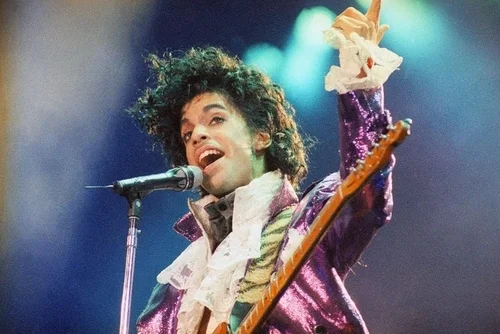
IN THIS PHOTO: Prince

in an accident this week and, with two albums out involving the maestro – from Hot Chip and Cassius -, it is sad and tragic. The fact Zdar is not around to see the reaction to his new albums is heartbreaking but, as we mourn his passing, we have his wonderful music burning bright. Alongside Zdar on this week’s playlist is Prince, Foster the People; Robyn, Fontaines D.C. and Stormzy. There is a great mix of sounds and artists that is guaranteed to give your weekend a kick, eclectic swagger and kiss. It is a brilliant array of music and one that is going to put a spring in your step. Turn the volume up, let the music swim in the blood and…

 IN THIS PHOTO: Robyn/PHOTO CREDIT: Ana Cuba

SIMPLY unwind.  

ALL PHOTOS/IMAGES (unless credited otherwise): Getty Images/Artists

__________

Cassius – Summer

Hot Chip – Positive

PHOTO CREDIT: Getty Images

Tove Lo - Glad He's Gone

9909.jpg

Prince – Manic Monday

iiii.jpg

Metronomy – Salted Caramel Ice Cream

PHOTO CREDIT: Harriet Brown

Black Honey - I Don't Ever Wanna Love

Mark Ronson (ft. King Princess) - Pieces of Us 

Robyn - Ever Again

y66.jpg

PHOTO CREDIT: Daniel Topete

black midi - Reggae

Foster the People – Imagination

Two Door Cinema Club – Once

Sharon Van Etten - No One's Easy To Love

The Raconteurs – Live a Lie

The Night Café – Finders Keepers

Freddie Mercury – Time Waits for No One

8j.jpg

PHOTO CREDIT: Nathan Whittaker

Fontaines D.C. - Sha Sha Sha

Michael Kiwanuka (with Tom Misch) - Money

Nicki Minaj - MEGATRON

P!nk (ft. Wrabel) - 90 Days  

Nilüfer Yanya – Paradise
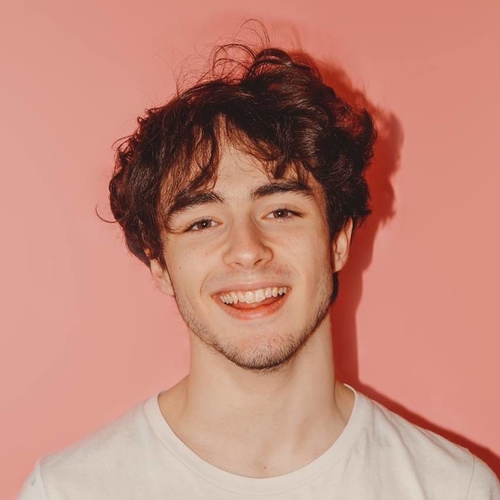
Alfie Templeman - Stop Thinking (About Me)

Migos – Stripper Bowl

Stefflon Don (ft. Lil Baby) – Phone Down

 PHOTO CREDIT: Vanessa Heins

Leif Vollebekk - Hot Tears

Stormzy – Crown

Hatchie – Kiss the Stars

Titus Andronicus – Hey Ma

PHOTO CREDIT: Zachary Hertzman

Richard Reed Parry – In a Moment

Alex Cameron – Divorce

Cold War Kids – Complainer 

Gerry Cinnamon – Canter

PHOTO CREDIT: Jonathan Weiner

Sum 41 – Never There

The Regrettes – I Dare You

TRACK REVIEW: Fontaines D.C. - Sha Sha Sha

TRACK REVIEW:


Fontaines D.C.

PHOTO CREDIT: Daniel Topete 

Sha Sha Sha


9.6/10


The track, Sha Sha Sha, is available via:

https://www.youtube.com/watch?v=IayA-pUG22k

GENRE:

Post-Punk

ORIGIN:

Dublin, E.I.R.E.

RELEASE DATE:

19th June, 2019

LABEL:

Partisan Records

ooo.jpg

The album, Dogrel, is available here:

https://open.spotify.com/album/1i9PDv6BO8c8Y5lxMG6Lej?si=zTYw6XiFSdeR2k6-mTzV_A

__________

THIS year has been an action-packed one…

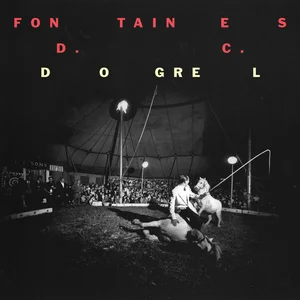
for music and, in the midst of all this excitement, there have been some truly staggering album. I have written (many times) how women are leading the way and, to me, they are right at the top of the tree. That is not to say the guys are lacking clout and quality: in fact, Fontaines D.C. have produced a real masterpiece with their latest album, Dogrel. I will look at the latest single from that album soon but, before I get there, I wanted to talk about bands and the state of affairs there; this year’s collection of sounds; Irish music and creating more balance in the industry; deeper themes being tackled in music and genres like Post-Punk – I shall end by seeing where Fontaines D.C. are heading and what their future holds. One might look at that plan and feel that I have covered a few of these themes before. That is true but, to be fair, I have not examined Fontaines D.C. and this year has evolved and shifted so quickly that, inevitably, themes do reoccur and I can add new light to an older topic. Whilst the band market is no way as strong and popular as it was years ago, there is this feeling that it is making a comeback. Perhaps there is not the dominance in the mainstream as there once was. I am tracking my mind back and trying to figure the last time bands were ahead of solo artists in terms of popularity. Maybe we have to visit the 1990s to discover all those rich and iconic bands who were uniting us all and providing this sensational music. Certainty now, there is this proliferation of solo artists and, whilst it is not a bad thing, one feels that bands warrant a bit more focus. With exciting acts such as Squid and IDLES providing something kicking, raw and fresh, there are bands out there to get excited about. Perhaps, when we think about bands now, certain genres come to mind: gone are the days when the great Rock and sophisticated Pop bands had a real place in the industry.

 PHOTO CREDIT: Daniel Topete

That said, this week has seen new releases from Two Door Cinema Club and Hot Chip. There are sensational groups playing but, in terms of the wider landscape, the solo artist rules. That dominance was more pronounced a couple of years back and, fortunately, there has been a revival recently. Although Fontaines D.C. have been kicking around a little while now, they have made a real stand with Dogrel.  I, for one, do miss the days when bands used to headline festivals and the mainstream. I know The Cure and The Killers are headlining Glastonbury but I mean newer bands. In a couple of years, one might imagine IDLES and Fontaines D.C. topping bills. Both bands have played on the same bill as one another and they both have this electricity that is hard to resist. I love what solo artists are putting down but, in order for a good mixture to form, we do need bands to exist. I feel Fontaines D.C. are one of the strongest around and provide that great blend of directness and energy combined with a grace and accessibility that means you do not need to be a Post-Punk fan to get what they are about – more on that a bit later. I shall move on in a second but, first, think about Fontaines D.C. and how they make you feel. There is something about the vocal accent; the way the play and how their songs make you feel that gets into the blood and stays in the head. They are one of the most exciting groups of the past few years and, with Dogrel getting smash reviews, the boys should prepare themselves for a very busy and prosperous future. What with so much music bubbling around, it is always going to be the case that there is an imbalance between bands and solo artists but, at a time when solo artists are really striking out, I do like the fact there are bands challenging; some big players that prove the industry is not reliant on solo artists foe gold.

I have talked about bands and why Fontaines D.C. excite me but, looking further, and you can see all the sounds and genres popping. I do not think I have lived through a year where so many ideas have been spliced together. Even as a Post-Punk band, there are so many lyrics themes, nuanced and compositional touches injected into Fontaines D.C.’s locker. The mainstream Pop scene might not have progressed as much as one would have hoped but, away from that, one can find so much eclectic brilliance and sonic invention. I have been struck by the female artists of 2019 and the music being made. From the great Folk of Billie Marten to the Neo-Soul of Jamila Woods; the great Hip-Hop of Little Simz and the exciting Pop of Self Esteem – 2019’s very best is a lot stronger and more compelling than previous years. I am not sure what has accounted for this real rise in quality but I think, with women biting harder and showing how strong they are, the scene is much more assured and bold. That is not taking anything away from men but, alongside these multifarious female artists, great bands like Fontaines D.C. are making their mark. With the political scene being in a state, I do feel solo artists and bands are addressing that through their music. I will discuss Fontaines D.C. and their political bent but, when one investigates the spread of music this year, it is mind-blowing. It has been a huge year for music and I cannot get my head around everything. Not only are artists documenting what is happening in the wider world and the nature of politics right now but, when it comes to splicing sounds together, artists are making a huge leap in 2019. Maybe this subject is appropriate of nothing but I think Fontaines D.C. are defining 2019 and what artists are made of. The reason I wanted to bring up this point is because, in previous years, the scene has been a bit limited and narrow.

It is only June now and, when you consider what has come already, it is remarkable. I am bracing myself for the storm and it will be amazing. All of this diverse music will act as inspiration to artists emerging. Maybe that is why bands sort of took a back seat: the fact there were a few that sounded the same and it did not give music the depth and variety it was shouting out for. Now, bands are broadening a bit but I do still think that the most challenging and genre-hopping music is being made by solo artists. The real strength of Fontaines D.C. is their words and how they mix the political, social and personal. I am a big fan of escapism and something not overly-serious but, in a year that has been blighted with upheaval and division, we do need artists to document that. I will talk about Fontaines D.C. and some of the issues they address in their music, but it is thrilling hearing them perform and the power they provide. It is clear that 2019 (so far) has been epic and I expect that to carry on unabated. I think another thing that marks 2019 out for special consideration is that sense of boldness artists are showing. So many are stepping away from convention and giving their music all sorts of possibilities and angles. It is remarkable watching it unfold and, in terms of what Fontaines D.C. are doing, they are a band that have taken the rulebook and ripped it up. They can give us these big choruses that get the people singing but they use their platform to speak about something important; making you think and getting into the head. They mix fun and the serious and they are an exceptional live act. I shall move on but I wanted to discuss 2019 and why, to me, it is a year that is going to be hard to beat.

 PHOTO CREDIT: Andrea Gonar

Most of the music I have covered this year has been from British or American acts. I think, as is common, most people tend to focus on these two areas. Although Fontaines D.C. are performing all around and travelling far, there are based in Dublin and I think the city is teeming with terrific music. I feel there is a part of us that still assumes the only great music is in the U.K. or U.S. In fact, if you listen to what is happening in Australia, you are spoiled for choice regarding terrific music. Sweden is always ripe and brilliant and I love what one can find in Canada. The world is not limited to the U.K. and U.S. but I think the media doesn’t spend enough time with other areas of the world. Dublin is a wonderful city that has not been shy regarding legendary acts. Girl Band and Fontaines D.C. are the two best contemporary bands from Dublin but, if you look back, there is a wealth of talent to be found. I do think Dublin’s music has a distinct tone and flair. Maybe there is a rawness and physicality in the air but I always associate the city with genres like Punk and Rock. Can one link that to a music history in Dublin or a personal preference? Whatever the reason, Dublin should not be overlooked regarding the new wave of artists to watch. The nation has splendid people and there are some truly great venues to be found. This great feature from 2017 highlighted some great Dublin acts to watch and many of them are storming it right now. I am not sure whether there is a more updated article but, looking at the feature above, and you can see the variety of music coming from the city. The feature sort of disproves my theory that Dublin is heavy with heavier sounds: there is some wonderful Pop and Folk to be found. I shall keep the theme going in the conclusion but, right now, I wanted to look at Fontaines D.C. and an interview that struck my mind.

When speaking with The Guardian, Fontaines D.C. discussed why there is something liberating in Irish music; why gentrification is robbing cities like Dublin of their identity and how Brexit is creating splits between Ireland and the U.K.

 “There’s a natural rebelliousness to Irish trad music,” says Deegan, the band’s bassist. “That combined with punk feels really natural. I think singing in an Irish accent on top of punk, it just doubles down on that sense.”

Chatten’s rugged vocals are key in defining the Fontaines DC sound. In person, he spins the streetwise wisdom of a beatnik balladeer, his conversation delivered in a gripping drawl through a sleepy exterior. This classic frontman allure has helped make Dogrel the most hyped Irish rock debut in years – a quick ascent for a group of twentysomethings whose initial desire was to form a kind of “punk Beatles”.

This very Irish album arrives at a time when Anglo-Irish relations are as strained as they have been in years, with Brexit negotiations pitting the nations in opposite corners. “The only thing that concerns me about that is the state of Northern Ireland,” says Deegan. “I don’t really care what Britain does. That’s kind of the whole point of forming a republic in the first place.”

The album ends with Dublin City Sky, a lament to the end of a toxic relationship and the fracturing of the city’s bohemian character under the weight of capitalism and gentrification. “It feels very important to explore the dying culture that’s being murdered by gentrification,” Chatten says. “It’s casting a shadow on what we love about the city and that gives us the impetus to write about what’s in that shadow”.

That is just a few quotes from the interview – I urge you to read the whole piece – and it shows that, like I said, the band is eager to tell it like it is. In terms of an Irish sound, there is definitely a liberation and rebelliousness that is lacking elsewhere.

iooioi.jpg

From the wilder and more charging acts like Fontaines D.C. to the arresting sounds of Wyvern Lingo, there is plenty happening in Dublin. I love what the city is giving the world and the sheer character running rampant in the music. It is clear E.I.R.E. (and Northern Ireland) warrants greater affection and coverage. The other parts of that interview – concerning gentrification and political struggles – stood out. If you have never been to Dublin, you might not know how the landscape is changing and what is happening there. It is clear capitalism and gentrification is changing cities like London but one might have this romantic image of Dublin in their minds. It is clear there is history and tradition still standing but, more and more, money is changing things and tearing down tradition. It is sad to see and, for artists, that must cause pain and upset. Raising this point in music gives us all an insight into cities like Dublin and what is going on. Also, regarding gentrification in general, does a more generic skyline lead to a diminished quality in music? It is the personality and history of a city that stirs something in the blood. If that is eroded then, in my view, you lose that spark and influence. Gentrification is not often discussed in music and I am glad Fontaines D.C. have covered it. Their tackling of Anglo-Irish relationships right now hits the hardest. The ongoing border issues with Ireland mean that there is a definite strain right now and we are unsure whether both E.I.R.E. and Northern Ireland will be trading with the rest of the U.K. post-Brexit. It is a sorry situation and I hope there is some resolution soon enough. Dogrel is an album that holds a lot of truth and opens eyes. You do not need to know about Ireland and the politics of the country to be able to identify with the songs. The guys are laying things out on the table and are giving us some of the most striking and memorable songs of the past few years. Let us move on as it is time to review the latest single from Fontaines D.C., Sha Sha Sha.

 PHOTO CREDIT: Molly Keane

There is a percussive pummel and build-up that, oddly reminds me of Guillemots’ Trains to Brazil – a little heavier but still in that same vein. Anyway, the song does have that strict and exciting heartbeat that suggests something quite intense is brewing. With a gorgeous kick and some strutting riffs, we transform from this somewhat close and brooding beat to a song that opens out and seemingly dances. It is almost like someone dancing in the rain; merriment mixed with this real sort of grit and defiance. When the lyrics come through, there are pictures and instant images projected. Our hero talks about (his subject) being “so real” – he is a “show reel”. I love that wordplay and contrast that suggests the heroine is someone – I assume, in the early phases we are talking about a relationship – who is grounded and a bit too real whereas our man is a bit of a dreamer. She, it is told, works hard but steals; she is someone who runs wild whereas the hero feels a bit like an “old tattoo”. I get the feeling of racing hearts and hidden desires. In terms of placing the song, it has a sort of homely feel whereas the band is documenting scenes around them and the realities of their daily lives. Like any Fontaines D.C., it is not long until there is some humour thrown into the blender. The first verse, to me, is about a sense of lust between these two very different people. The girl seems a bit like a freewheelin’ sort who takes risk and is bringing the best from the hero – and some of the worst elements, too. When the song progresses, we are introduced to a cabbie who pees over his steering wheel; heads are hitting the pavement and there is this feeling of chaos and drunkenness. Sha Sha Sha is under three minutes and has that sense of economy and tightness. There is little time for soloing and excursion as the guys have something important to get out.

I do like how Fontaines D.C. can pack a lot into a pretty short song. I am not sure whether there is a linguistic important to the ‘sha’ of the song or whether it is the name of the girl – maybe a shortened version of Charlotte. Whatever the origin of the title, the word is repeated just before the verse about cabbies losing control of their penises and unrest in the streets. There are men pumping up tyres, dimly lit and there is always this sense of un-rule and spool. Maybe it is a look at the Dublin nightlife or it might be another location. We can all relate to that rather vivid and illuminating aspect of the city and what it hides when the lights go down. Despite the fact there are good things happening, there is always going to be that contrasting sense of dirt and reality. Juxtaposed against these romantic ideals and passionate thoughts, one can almost smell the oil and pee that threatens to take the beauty out of everything. Fontaines D.C. are brilliant when it comes to descriptions and painting these very real scenes. They do not disguise their words or use clichés: everything they put onto the page comes from their own experiences and, to ensure the songs hit hard, they do not feel the need to disguise and hold back. The fact that there is a clear Irish accent at the forefront – rather than something Americanised – gives Sha Sha Sha its authenticity, beauty and grit. It is one of the more underrated songs from Dogrel and one you will keep coming back to time and time again. That triumphant and dogged beats gives the song an endless thrill and toughness that guides the vocal and gives it extra clout. The band is terrific and always in-step. Every song Fontaines D.C. touches turns to gold and their songs have such variety. I use that word (variety) a lot and, with the Irish band, that comes in spades. They keep their identity strong but they can take these Post-Punk songs and add so many different shades and colours. Sha Sha Sha is a fantastic song from one of 2019’s very best year – the mighty and all-conquering Dogrel.  

 PHOTO CREDIT: Kevin W Condon

Fontaines D.C. have come a long way in their careers. Recently, they supported IDLES on the road but, with Dogrel scoring high, the boys are causing a storm all on their own. I guess that exposure with IDLES helped regarding international gigs and, right now, the lads are planning U.S. dates. In fact, they head to Seattle in September and there is all sorts of things happening up until that point. They are a fantastic live acts and, like their IDLES buddies, Fontaines D.C. have this vibrancy and passion that scores songs with a real sense of purpose and importance. I do think, considering Fontaines D.C., we need to look closer at Irish acts and actually investigate bands in more depth. There is still that reliance on solo acts and, whilst this is good, many terrific bands are not getting the focus they deserve. I do feel like there is this rising and wave right now that is worth getting excited about. Maybe we will not quite see the same sort of wonder we did back in the 1990s but there is nothing to say that, in a few years, solo artists will be the go-to when it comes to brilliant music. I have mentioned a few bands in this review but there are many more emerging. It is a great time for new music and I cannot wait to see what the rest of 2019 holds! We have seen some remarkable albums thus far and I do think Dogrel is right near the top of the stack. I shall end things in a minute but I just wanted to stand back and take it all in. I do think Fontaines D.C. are one of the finest bands right now and a mighty force in music. They are a sensational live act so go and see them perform if they are near you. Go get Dogrel and discover an album that is just what modern-day Britain needs.

The Dublin-based band is showing how politicians in our country are impacting them and, in a wider sense, there are huge problems bubbling. I do not think we should ignore what is happening and bury it. Music is this terrific forum where artists can speak the truth and ask for change. From gentrification to border issues, Fontaines D.C. are definitely speaking more truth than many of the politicians out there. That seems to be the thing with music right now: so much uncluttered and direct messages; nothing like you’d hear our Government spewing! I shall wrap things up in a bit but I wanted to talk about this incredible band and the awesome music they are producing. 2019 has been synonymous with variation and bravery from all corners. This sheer variety is a really good thing and will impact the next year of music and, in fact, the next generation of artists. Although my favourite albums of the year (so far) have been made by women, I do love Fontaines D.C. and what they are doing. They are a wonderful act that we need and, in terms of the music, they are setting the scene alight. Their gigs are legendary and I do think we will see them headline festivals soon enough. I do not say that lightly and I am sure many music journalists will agree with me. Dogrel is a masterful work and the newest cut, Sha Sha Sha, is a mighty thing. Let us take things down there. I want to end by quoting (again) from that Guardian interview; some interesting points that were raised:

“If there’s any justice, Fontaines DC’s debut album Dogrel will enter the canon of classic dramatic depictions of Dublin. The city is unalterably embedded in the record’s DNA – it is as quintessentially Dublin as the work of James Joyce was a century ago. “I think a lot of our music sounds, to me, like buses and trains and just hordes of people on particular streets in Dublin,” says frontman Grian Chatten, who is sitting opposite me in the Clarence hotel, flanked by his bandmates Conor Deegan III, Conor Curley, Carlos O’Connell and Tom Coll.

The band’s punk licks and brogue-heavy narration present an unvarnished but undeniably romantic version of the city: this is music that sounds like Dublin feels. Chatten’s heavily accented vocals play a part; there are references to specific areas, pubs and landmarks, plus a cast of characters who populate the songs. But there is something more than just portraits. The rough production and rickety rhythms conjure familiar Dublin moods: bustling markets, rain-streaked cobblestones and the rumbling of cold early-morning commerce. “I think of Dublin and our music as one and the same, because it was written by people who were intensely absorbed by the city,” says Chatten. “We were just really consumed by it; it influenced us in just the way street corners looked and how people spoke, and absolutely every aspect of it filtered through”.

Dogrel, to be truthful, is a masterpiece and one that is so rich with meaning, visions and life. I would be shocked if it was not named in the best albums of this year in December. Make sure you embrace these guys and follow their career very closely. They might have started life on modest foundations but, with exposure and tremendous music under their belt, these boys are about…

TO conquer the world.

___________

Follow Fontaines D.C.

bb.jpg

FEATURE: Safe from Harm: Why We Need to Increase Security at Music Venues

FEATURE:


Safe from Harm

po.jpg

PHOTO CREDIT: @josephtpearson/Unsplash

Why We Need to Increase Security at Music Venues

_________

ALTHOUGH the atrocious attack at the Manchester Arena…

oii.jpg

 IN THIS PHOTO: Martyn Hett (right) was among the twenty-three people who died as a result of the terrorist attack at the Manchester Arena on 22nd May, 2017/PHOTO CREDIT: @martynhett

happened two years ago, the reverberations and smoke remains. Twenty-three people died in the attack of 22nd May, 2017 and it left scores injured. It was a horrible thing to see happen and, out of nowhere, a peaceful concert (fans were there to see Ariana Grande) turned to chaos. I remember hearing the story break and following the developments. It was an enormous shock to see a suicide bomber enter the foyer of the venue and create a moment of sheer madness. Apart from the dead and immured, questions were raised. There is not a lot anyone could have done in that situation regarding the attacker and what he did. He walked in to the venue and, in this very quick moment surrounded by people, detonated an explosive. It is understandable that, in the wake of the tragedy, people asked whether more could have been done. How did this happen and why did it happen? Unfortunately, one can never prevent every horrific event from occurring but, recently, there have been calls for greater security at venues. This BBC article explains how there is movement/call for great action:

“A former National Counter Terrorism Co-ordinator has told the BBC the government is not doing enough to ensure that venues are secure.

Nick Aldworth has warned new legislation is needed to reduce the impact of any future attack.

He is supporting a campaign for more rigorous checks at venues, under the name Martyn's Law, after Martyn Hett, a victim of the Manchester Arena attack.

IN THIS PHOTO: Ariana Grande/PHOTO CREDIT: Getty Images 

He said such a law could have prevented the spate of attacks in the UK in 2017.

At the time, Mr Aldworth was a Metropolitan Police chief superintendent in charge of keeping Londoners safe.

"People died on my watch when I was responsible for trying to keep London and, more subsequently, the UK secure," he said.

At the moment, venues such as theatres, cinemas, and concert halls do not have any legal obligation to put counter terrorism security in place, or to plan for what they would do in the event of an attack.

"I think that without being specific - because there are coroners' inquests under way at the moment - I think there are definitely some places that could have benefitted from some infrastructure," Mr Aldworth continued.

"But one of the things I was told after one of the attacks by a survivor... was she was in a restaurant and nobody knew what to do."

Many places do have bag checks and security screening but Mr Aldworth said it was not the case everywhere, and that some venues were "reckless and negligent".

Responding to the calls for Martyn's Law, security minister Ben Wallace said: "Going to concerts, exhibitions, shopping centres, watching sport and other events are part of the fabric of life, things that should be enjoyed without fear”.

Through the years, there have been few wide-scale tragedies such as the attack in Manchester. An attack at the Bataclan in 2015 left many dead and, again, it would have been hard to detect attackers.

nnnnnnnnnnnnnnnnnnnnn.jpg

 PHOTO CREDIT: @ev/Unsplash

That said, there were questions raised suggesting security was not tight and vigilant enough. Even if we are talking about smaller attacks or sexual assault, in areas where there are hundred/thousands of people, ensuring there is more security is key. In the cases of the Manchester Arena and Bataclan, perhaps having bag searches at the very front of the venue would have deterred attacks and any chance of a tragedy happening. It sounds quite strict and severe but, with that barrier being placed in the street, as it were, you sort of reduce the chance of anything happening. I know that sounds simplistic but these tragedies occurred because the attackers were able to get into the venues and mingle with the crowds. It might be unfeasible to impose strict and heightened security checks at all venues but, in terms of the large arenas, there does need to be this initiative. One might say that, if there was this imposing and very present vision of security, it might make people more nervous; like something was about to happen or they should be worried. I do agree that, if we go too far, it does give this sort of rather daunting impression but, with people still scared to attend big gigs through fear of attack, increasing security and bringing in new guidelines is a good thing. Fortunately, we do not experience attacks that often at venues but, on a smaller scale, there are cases of violence and assault.

l.jpg

 PHOTO CREDIT: @yvettedewit/Unsplash 

Music should be a safe space and, at concerts, we should be able to attend without worrying about trouble and disruption. It is hard to police so many people and keep everything safe but, in order to make venues safer and create a feeling of safety, action does need to take place. In the wake of the attacks in 2015 and 2017, police forces and venues pledged to step up security and make things safer. There has been improvements but, as the report at the top of this article suggests, there is this vulnerability and nervousness that lingers. I have also heard about cases of sexual assault at venues. We assume security is needed, primarily, to avoid major catastrophes but, on a simpler level, there are incidences where women are being assaulted and attacked. Again, it might not be the easiest thing to eradicate but there are too many cases where women are being made to feel unsafe. Manchester is the first city to sign up Martyn's Law and it will mean, going forward, there are tighter checks at venues. Whether it is increased intelligence surveillance or increased C.C.T.V. Maybe there will be more security guards and police at venues or simple bag checks at the entrance to venues – all of this will make a big difference. Although there are fewer attacks at outdoor events, the same sort of measures there are needed, I think. I am not surprised Manchester has signed up and is leading the way.

98899.jpg

 PHOTO CREDIT: @5tep5/Unsplash

I am not saying that because of the Arena attack in 2017 but (because) there is this proactive and conscientious nature. It is about time and, with our Government not doing enough, let’s hope this example leads to change. I think, as we all become more anxious and unsure, having counter-terrorism officers and checks put in place will make us all feel safer and less worried. We all, essentially, want to enjoy the music and come together as people. If we all have to look over our shoulders or forsake gigs because of attacks, that creates a really worrying situation. It is not just music events that will benefit from the new measures: theatres, smaller spaces and cinemas are also vulnerable. We remember those killed and injured in Manchester (and other attacks) and the right thing to do is honour them and ensure such awful events do not happen again. If we can make venues and public spaces feel secure and tight then that would provide peace of mind. I know it is not possible to avoid every incident and accident but, by making a concerted effort and promising greater security, it will definitely make a difference. Largely, luckily, venues are safe spaces but it only takes one attack to rock the foundations and create a huge setback! Let’s hope that does not happen and, in the meantime, these new calls will (one hopes) provoke venues and public spaces throughout the U.K. to think hard and promise increased protection. Ensuring we are all safe from harm is paramount and I, like so many people, know that the safety of gig-goers and the general public is…  

poop.jpg

 PHOTO CREDIT: @lifesimplyrocks/Unsplash

THE most important thing.

FEATURE: Setting the Record Straight: 2019 and the Dominance of Female Artists

FEATURE:


Setting the Record Straight

IN THIS PHOTO: Little Simz (whose album, GREY Area, is one of 2019’s finest so far)/PHOTO CREDIT: Vicky Grout

2019 and the Dominance of Female Artists

_________

ONE can forgive me for repeating a subject…

IN THIS PHOTO: Julia Jacklin/PHOTO CREDIT: Nick McKinlay

but I feel the ongoing imbalance and sexism in the music industry juxtaposes the sheer weight and depth of music being made by women. There is, as I have said before, a sense of moving in the right direction relating to gender inequality and improvements – if some areas are slow to reform, others (such as festival bills) are starting to strengthen and tip the scales. I still think there is this lack of awareness regarding women in the music industry. In a recent piece, I argued how many radio stations still have too many men on the playlist and, with such great female artists past and present, why is that the case?! Also, this year has been an immense one and that needs to be reflected. It is not just the more visible mainstream where women are dominating this year. I keep up with what is happening in Country music in the U.S. There is a real problem, regarding radio stations and attention, getting women to the forefront. There are so many strong female Country artists having to fight for prominence because it (the genre) is so skewed towards men. Getting back to the subject at hand and, when we list the best albums and singles of this year, I think the majority has been made by women. A couple of recent singles that have spiked my attention are Sampa the Great’s Final Form and Sleater-Kinney’s Hurry on Home. The Center Won’t Hold, Sleater-Kinney’s tenth album, is coming soon and finds the majestic St. Vincent handling production.

Sampa the Great has more material coming soon, but I was blown away when I first heard Final Form – it is a song that packs in so much and has such a vibrant, raw soul. It is confident and cool; it is cultured and vulnerable. It is my favourite single of the year and, looking forward, I think we will see more revelations and year-defining cuts from women. Whether it is the mysterious SAULT – a female-led band where not a lot is known about them – or the excellent Hannah Cohen, there is something fantastic happening right now. In fact, Hannah Cohen’s new album, Welcome Home, has received warm applause – it is her first album in four years. AllMusic, in this review, highlighted its merits:

“Contrasts between likewise light, billowy sonics and clean snare and guitar tones fill the space beneath Cohen's ethereal, yearning vocals with elegant texture on the majority of the album. She does strip things back, though, midway through the album on the existential cabaret ballad "What's This All About." It offers one of Cohen's more haunting melodies with only time-keeping piano chords as accompaniment. Later, "Return Room" features just voice and arpeggiated acoustic guitar until gentle, sustained synths reinforce the repeated "I won't let you down" before the song evaporates into the ether. Cohen's voice maintains the album's consistently floaty quality through these sparser tracks, making for a relentlessly dreamy set that's lost in thought and desire”.

IN THIS PHOTO: Billie Marten/PHOTO CREDIT: Katie Silvester

Charlotte Adigéry is another really great name to watch. She released the Zandoli E.P. earlier this year and it has received praise. Her music deals with everything from sexual experiences and spectrums to a call against despair; an embrace of hope and finding light. These varied and deep subjects are scored with incredible vocals and highly memorable lyrics. I think Adigéry is one of these women who will be making music for years to come and, in a music landscape packed and competitive, she stands ahead. Not only have there been some great E.P.s and singles from women in music but, crucially, the album output has been fierce! I am torn between Billie Marten’s Feeding Seahorses by Hand and Jamila Woods’ LEGACY! LEGACY! as the finest L.P. of the year. I was the first (I think) to review Marten’s sophomore record and I was, like many, mesmerised by her exquisite voice and songs. A broader and more mature/political album than her 2016 debut, Writing of Blues and Yellows, Feeding Seahorses by Hand is the young, Yorkshire-raised teenager moving to London and addressing the wider world. The Line of Best Fit, in their review, summed up the album perfectly:

“This collection of softly sung songs forms nothing short of a gentle and reserved masterpiece. It would have been easy for Marten to have made this record with the same restricted tool set she used on her debut, however she opted for a riskier route that has certainly paid off. Throughout the album Marten refuses to place restrictions on herself, but manages to never go too far, and add more to a track than it needs.

On Feeding Seahorses, Marten has managed to skilfully navigate a true artistic tightrope by developing and building on the sounds of her minimalistic debut, without losing any of its original essence. Nothing is lost, only gained”.

In regards Jamila Woods, LEGACY! LEGACY! is a tribute to legends and icons who has inspired her. This Pitchfork feature allows one to see all the songs broken down and explained. I love the blends of Neo-Soul and Soul/R&B; the warm-yet-powerful vocal coming from Woods and the way one immerses themselves in the songs. I recommend people get the album as it is enormously impressive and accessible – one does not need to know about Woods’ subjects to appreciate the songs. Little Simz’s GREY Area is another album that has been dropping critical jaws. In an exciting and bold year for British Rap/Hip-Hop, Simz is standing ahead of the pack. Her flows and lines are wonderful; her sheer confidence and passion is electric…and one is helpless to resist the effect! I would not be shocked to see GREY Area walk away with the ‘best album of 2019’ award from all critical outlets. In fact, in most genres, women are showing more bravery, intentional and quality compared to the chaps. I have mentioned a great female singer-songwriter, Billie Marten, but one has to also mention Julia Jacklin and Sharon Van Etten. The latter’s album, Remind Me Tomorrow, is a personal and arresting collection of songs. On this album, Van Etten wanted to reconcile light and dark and create something fresh. Remind Me Tomorrow is an extraordinary album from one of the world’s best songwriters. I have been a fan of Julia Jacklin for a while and, on Crushing, she has poured her heart and soul out.

Crushing is definitely in my top-ten albums of the year and, again, the critical reception has been very encouraging. Rolling Stone were deeply impressed by Crushing:

“Jacklin seems fascinated by corporeality and consciousness, the ways in which she can learn from and communicate with her own physicality. On “Body,” an overwhelming sensory experience leads to new emotional awareness: “I felt the changing of the seasons,” she sings, “all of my senses rushing back to me.” By the very next song, the standout “Head Alone,” she’s disputing Descartes’ “I think, therefore I am” formulation, employing clever metaphor to center her bodily existence: “Give me a full-length mirror/So I can see the whole picture,” she pleads. “My head alone gives nothing away.”

When Jacklin isn’t waxing philosophical on mind-body duality, she’s simply showing the special way she processes the world around her. The result is a profound statement that stands as an early candidate for this year’s strongest singer-songwriter breakthrough”.

Not only are female solo artists dominating: the female-fronted band is doing sterling trade! Hands Off Gretel are one of the most-talked-about bands of this year and I recommend you check them out. Another couple of female-fronted bands that are making waves are Amyl and The Sniffers and YONAKA. Different in terms of style, the former’s eponymous album has been getting some positive press. They were formed in Australia and offer something visceral and scintillating.

IN THIS PHOTO: YONAKA/PHOTO CREDIT: Press

YONAKA are more Pop-Punk based but, once more, their latest work has been hitting the mark – Don’t Wait ‘Til Tomorrow has won its fair share of positive reviews (this NME review is one such example). If you want toms great Pop then Billie Eilish and Ariana Grande offer very different worlds. The former’s album, WHEN WE ALL FALL ASLEEP, WHERE DO WE GO?, has been thrilling people and, from a teenage artist, it is extremely mature, developed and striking. NME, when reviewing the album, could not find fault:

“There’s little to plausibly fault on the record. Previous singles are included sparingly (2018’s ‘When The Party’s Over’ and ‘You Should See Me In A Crown’), and there’s a real level of intrigue waiting on every song, partly as only two new songs (‘Bury A Friend’, ‘Wish You Were Gay’) got a pre-release. It’s an album that moves with purpose and knows when to hold the listener tight, or grab them by the scruff of the neck and drag them into her world. That said, one nitpick is the pacing towards the end, with the final three songs – ‘Listen Before I Go’, ‘I Love You’ and ‘Goodbye’ – providing an melancholy end close to an otherwise thrilling album.

‘When We All Fall Asleep…’, then, ticks all the boxes for a memorable and game-changing debut album. It’s enjoyable and familiar, but retains Billie’s disruptive streak. It’s a brave and resounding first step for an artist with bags of potential and over the next decade, you’ll no doubt see popular music scrabbling to try and replicate what this album does on every level. There’ll always be copycats, as Billie noted on her 2017 song of the same name, but none will be able to reach these heights any time soon”.

556.jpg

IN THIS PHOTO: Ariana Grande/PHOTO CREDIT: Theo Wargo/Getty Images

Aside from her not being a fan of different cases – in terms of lettering – Ariana Grande’s thank u, next has also won hearts and plaudits. It is a very solid and eclectic Pop album that is a lot deeper and more nuanced than a lot of what her rivals produce. Whilst male-led guitar bands are still being favoured as festival headliners, I wonder why Grande has not been considered as an alternative – in this country, at the least. Other terrific 2019-albums from Stella Donnelly (Beware of the Dogs) and Solange (When I Get Home) show what variety and mesmeric vibes there are emanating from female artists. This is not to say the men have been lacking this year – top albums from Dave, James Blake; Loyle Carner and Slowthai will all be hustling for that albumof the year nod – but I think women in music are leading. Maybe it is because their work is more personal and real; perhaps it is their sheer weight, clout and passion; maybe it is the fact there is a tangible air of change in the air – whatever it is, I feel 2019 is a year where we have to recognise the brilliant women in music! Before I finish, I want to mention the other albums and singles created by women; those that are owning 2019! I shall come to the other artists on my mind but, with Madame X out, Madonna is very much in the spotlight. Following a couple of less-than-her-usual-best records, Madame X is a brilliant and genre-hopping return-to-form.

It is an album I expect to see challenging for this year’s best and, as The Line of Best Fit explain, it is good to have Madonna back at her most evocative and provocative:

“Her provocateur credentials are revitalised to an extent on Madame X, with socio-political themes embedded in its essence and current societal discord interpreted through an inimitable dystopic lens. A chameleon-like reputation for reinvention is secured and self-referenced, as she occupies various personas, such as a head of state, a freedom fighter and a spy in the house of love. This consistent transience extends beyond its premise to a multilingual scope; fluidly flitting between English, Portuguese and Spanish, delivering lyrical wit with an economy that has proved a definitive trait of her oeuvre”.

A near-namesake of Madonna…Madonnatron, is a band well worth exploring. I have just featured the band - but they are getting a lot of buzz from radio stations and fans alike. Their new album, Musica Alla Puttanesca, is a bounty of colours, instant tunes and wonderful images. The band have such a tight connection and, like YONAKA, there is a bit of Pop-Punk happening…but Madonnatron throw even more into the mix. I love what they are throwing out and, not only are they are one of the most exciting bands of 2019, but they have the potential to become festival legends. I am also a huge fan of Honeyblood and their album, In Plain Sight, crackles with energy and brilliance. Listen to the album in full and you will see what I mean! Stealing Sheep, again, are a band I have recently feature; their new album, Big Wows, is a stunner. Bright, danceable and wondrous tracks; this is a band that we need to embrace – bringing the fun but, with it, a mix of the serious and personal.

If we want to talk about album that have defined 2019 then one must include Weyes Blood’s Titanic Rising into the conversation! It is one of my favourites and is a gorgeous, spellbinding record that stays with you long after it has finished. This is what Pitchfork had to say about Titanic Rising:

“The truth that lies beneath Titanic Rising is that love blossoms and love wilts. This law of nature is mirrored in the emotional arc introduced by “A Lot’s Gonna Change.” “Everyone’s broken now/And no one knows just how,” she murmurs on the monumental “Wild Time.” The songs are more stoic and elegant even when Mering sings of apocalyptic imagery like a “million people burnin’.”

But Mering’s business is not of misery, but of faith. She suggests dystopian images, but insists that with action, beautiful results are possible. Titanic Rising comes full circle with the instrumental closer “Nearer to Thee,” which borrows the string arrangement from “A Lot’s Gonna Change.” The song’s title alludes to the hymn that the Titanic’s house band supposedly played as the ship sank. Here, as it was then, Weyes Blood can’t help but offer one last breath of hope as she gazes towards an uncertain future”

Other great albums by women this year include K Á R Y Y N withTHE QUANTA SERIES – one of the more ‘outsider’ albums but one that is full of interesting moments and ideas. Jenny Lewis, too, has produced a swaggering and epic-as-hell album with On the Line. It is a breakup record that, instead of looking for sympathy and dragging you down, lifts you up with its defiance and strut. The reviews (for On the Line) have been incredible and Lewis is one of the best artists out there right now.

IN THIS PHOTO: Cate Le Bon/PHOTO CREDIT: Getty Images

Although a few men will feature in the end-of-year lists regarding the best albums, I think artists such as Cate Le Bon and Holly Herndon will be up there. Le Bon’s album, Reward, is a masterful work that is hard to put into words, such is the quality on display. Herndon’s PROTO has been turning critical eyes and is a record you definitely need to own! I have been mentioning top albums from women but, adding to terrific singles from Sampa the Great and Sleater-Kinney, one must acknowledge Róisín Murphy and FKA twigs. Murphy has put out a few singles this year I think but her latest, Incapable, is one of her very best offerings ever. I love the way Murphy goes about her business and how nuanced her music is. You listen to Incapable and it is so different to anything else out there! The same is true of FKA twigs’ Cellophane. Lizzo’s hotly-desired album, Cuz I Love You, is definitely one of 2019’s biggest and most alluring reveals. It is packed with stunning songs and the sort of physicality only Lizzo can provide! Vulture, in this positive review, gave their take:

“Lizzo resists labels, both creatively and quite literally in the second verse of the food/sex rap workout “Better in Color.” You don’t have to try to figure out how to file her music, her gender, or her sexuality. You just have to watch her work. Cuz I Love You is a playground for a phenomenal talent reaching the peak of its powers.

Lizzo whoops and chortles through these beats with unnatural ease. Keeping up is like beating back the wind, like Jon Snow getting whipped through stony Winterfell peaks trying to ride a dragon. Gucci Mane can barely keep up on “Exactly How I Feel.” Lizzo is a joy, and Cuz I Love You is an impressive portfolio, showcasing the chops of a singer who nails all the notes, a rapper with alchemical control over words, and a songwriter holding nothing back. She can make lounging around in underwear sound revelatory. She can make masturbation seem like a political act. If you’re having a rough week watching the rule of law crumble, let Cuz I Love You rebuild your mettle”.

I might have missed some notable names out of this feature but, as you can imagine, it is impossible to include everyone! The fact I have to make that disclaimer is down to the sheer volume of wonderful female artists who have provided 2019 with something truly great. I have not even scratched the surface and there is one realisation that comes to mind: the fact that it is only June! Who knows what will come before the end of the year and who will be making headlines. I do think the trend of women soundtracking 2019 will continue and, with Lana Del Rey preparing to release Norman Fucking Rockwell very soon, there is plenty to get excited about. Del Rey is teasing new material and I think she will challenge the movers and shakers when the year-end album years arrive.

IN THIS PHOTO: Lana Del Rey/PHOTO CREDIT: Getty Images

I have missed some female artists out when it comes to the best songs of the year so far - and there are articles that highlight the hottest tracks you need to investigate. Rozi Plain is an artist that comes to mind; so too does a current BBC Radio 6 Music favourite, Mattiel. There is this huge world of music from women that is, I think, broader and more exciting than anything else around. Whether you prefer the Pop of Taylor Swift or the magic of Hatchie, there is something for everyone! In fact, I have only really talked about those in the mainstream or close to it: in the underground, there are so many great solo artists, female-led bands and duos doing incredible things. I am not dismissing the men of music but, as I stated earlier, there is this sexism that threatens to linger for a while yet. I do feel there is a general belief that, as the festivals are still dominated by men, that is a reflection of quality – in other words, the men are stronger and more worthy. That has never been the case and it is especially untrue right now. From daring and brilliant young artists like Billie Eilish to great British Hip-Hop stars like Little Simz, 2019 has been an extremely rich and promising year, thanks in a very large part because of the women (of music). Caroline Polachek has a new single out, Door, which is one of the most intriguing songs of the year.

I have omitted (rather rudely, mind) to mention another of the strongest female artists in the world: the always-wonderful Kate Tempest. Her latest album, The Book of Traps and Lessons, is surely in the top-five best albums of this year so far – it is definitely in my top-five! Tempest is a polymath and all-round genius who deserves all the respect in the world. The Book of Traps and Lessons has been gathering massive love. This review from The Guardian is a typical example:

“Super-producer Rick Rubin brings a new restraint to Tempest. From the beginning of the record, the music is peeled away like orange skin, leaving a spine-chilling a capella at its centre. All Humans Too Late features Tempest’s voice alone, her stark vocal mirroring her poetic theme of isolation; humans separating themselves, not saying hello on the train platform, yelling at each other on the internet. She reckons with the crisis that humanity as a whole is facing right now (“We’re dead – all of me knows it”), reels at the magnitude of it, expresses wonder that we’re not grieving this emergency.

By the following track, Hold Your Own, simple synth chords bolster Tempest as she leans forward into a shaft of light, a new sense of optimism. Her manifesto demands that the listener stop chasing capitalist fantasies – “this whole thing thrives on us feeling incomplete” – and look for the warmth in each other instead. This energy builds towards Firesmoke, a campfire love song that reduces the rest of the world to “ripples in the middle distance” in comparison to the sight of a lover, dancing. “There is something in this tenderness that makes me want to live.” This record is a living poem that captures the angry tension of being alive in 2019: trying not to look directly at the oncoming crises, trying to love and give and dance in the midst of firesmoke”.

I expect this to continue and, as intimated, who knows what more is to come in terms of red-hot singles, albums and E.P.s! We are only (just over) half way through 2019 but, as the best and brightest releases have proven, women are very much…

IN THIS PHOTO: Billie Eilish/PHOTO CREDIT: Getty Images

AT the forefront.

FEATURE: Dreams and Rumours: Will Fleetwood Mac Ever Play Glastonbury?

FEATURE:


Dreams and Rumours

y.png

IN THIS PHOTO: The ‘new look’ Fleetwood Mac (including Mike Campbell (far left) and Neil Finn (third from the left)/PHOTO CREDIT: Getty Images 

Will Fleetwood Mac Ever Play Glastonbury?

_________

THIS year had lots of speculated acts…

 PHOTO CREDIT: Getty Images

primed to play Glastonbury. To be fair, The Cure were odds-on favourites to get a headline slot and they have one. It is an understandable booking as they have a big fanbase and there are many who want to see them perform. I am a bit surprised the likes of Fleetwood Mac missed out because, again, they were favourites with the bookies. Next year is the fiftieth anniversary of Glastonbury and there will be some huge acts planned, that is for sure. In terms of headliners, one feels the organisers will omit newer acts and go for legends. One feels having the very biggest and best on the bill is the only fitting tribute to such a great festival. Fleetwood Mac have always been circulating and hovering near the top of the pile regarding the ‘must-book’ acts. I am not sure why they have not been invited but, in the past couple of days, there are indications Fleetwood Mac might yet rock Glastonbury. Fleetwood Mac are touring at the moment and, with Lindsey Buckingham out and Mike Campbell and Neil Finn in, the band are still having loads of fun. This review from The Independent shows the band have no intention of slowing down:

“It’s unbelievable that we’re all still doing this,” announces Mick Fleetwood from behind his vast drum set onstage at Wembley Stadium. The “all” isn’t quite accurate – for one thing, guitarist Lindsey Buckingham was unceremoniously ousted from the band last year, reportedly after smirking at Stevie Nicks – but he has a point nonetheless. Fleetwood Mac have come to the brink of self-destruction more times than there are people in this enormous stadium.

Fifty-one years after the band first formed (though Mick Fleetwood and John McVie are the only founding members remaining), this is “the 61st show of a long trip we’ve been on since September”, announces Stevie Nicks. She says so with just a hint of weariness – the energy, at first, is a little fatigued, the first few songs sung seemingly by rote. But things take a turn by the time “Second Hand News” comes around, taken from their seminal 1977 album Rumours, which was recorded when the band were tied up in romantic knots and barely speaking to each other. Nicks, an occult leader all in black, suddenly clicks into gear, air drumming along to Fleetwood’s hugely impressive percussion”.

I am a huge fan of Fleetwood Mac and it is great that they are still together. Even though Buckingham is not in the fold anymore, the rest of the ‘original’ band – Mick Fleetwood, Stevie Nicks; John and Christine McVie – are bonded and they seem as strong as ever. It is testament to the strength and connection they have (that) the music keeps flowing and they can still pack venues. So, then…does this mean that Glastonbury is on their to-do list? There have been mutterings and rumours for years and, whilst they have not yet played the iconic festival, there is every chance 2020 might be their year. NME, in this article, explains how the band are dropping some pretty big hints:

“The rock icons dropped hints during their huge show at London’s Wembley Stadium last night, with drummer Mick Fleetwood offering some not-so-subtle clues.
According to fans in attendance at the show, Fleetwood told the crowd that the band still “had a big field to play”. Other Twitter accounts added that Fleetwood made reference to “a rained out festival in England next year”.

IN THIS PHOTO: Stevie Nicks/PHOTO CREDIT: Getty Images

While any performance from the band is yet to be confirmed, it would see them taking top billing at the festival’s 50th anniversary – with previous reports claiming that Paul McCartney could headline the iconic festival too.
Fleetwood Mac, meanwhile, recently admitted that they would “burn in hell” if they didn’t get the chance to headline Glastonbury.

“Of course, we’ve been asked to play and it’s never worked out,” Mick Fleetwood told The Independent.

I think the legend of Glastonbury and Fleetwood Mac will come true. “I think I’ll burn in hell if we don’t do it one day”.

There are some huge names that I would love to see at Glastonbury that would make for biblical headliners. There were also rumours Paul McCartney was headlining this year so, in 2020, will we see both Fleetwood Mac AND Paul McCartney?! That would be an unbeatable combo but, with a band like Fleetwood Mac, you never quite know what you’re going to get! There are scores of articles online that suggest that, yes, Fleetwood Mac are set to play Glastonbury 2020. This is speculation right now but I see no reason why it couldn’t happen. To start with, the band are touring extensively and there is a solid connection in the ranks. If you had to list the artists that would create a perfect Glastonbury headline set, surely Fleetwood Mac would be near the very top?! Of course, this is all a year away so things can change.

llklk.jpg

 IN THIS PHOTO: Lindsey Buckingham/PHOTO CREDIT: Winslow Townson/Invision/AP/REX/Shutterstock

There is this question around Glastonbury with Lindsey Buckingham and one without. There are many who feel a Buckingham-less Fleetwood Mac is strange and wrong – considering many of their best-know hits were written by him and from his perspective (can one realistically swallow Go Your Own Way sung by anyone else…or not at all?!). It does seem like bridges have been burned and there is no way back. This article, from early in the year, explains in more depth:

 “In an exclusive interview with MOJO magazine, Christine McVie has now said there was “no way” Fleetwood Mac could continue with Buckingham still in the band.

Speaking before Buckingham underwent emergency open heart surgery in February, McVie said of his departure: “It was the only route we could take, because there was just too much animosity between certain members of the band at that point, and there was just no way it could’ve gone on as a five piece, a group with Lindsey in the band. So, it was either just completely break up the band, or try and make the best of it.”

McVie, who released the ‘Lindsey Buckingham Christine McVie’ collaborative album in 2017, added: “It was a really bad time. I had really no bones to pick with Lindsey, I loved working with him, but I did see the point, and I did see what the problem was.

“And you know, we’re a democracy, and we had to kind of make the best of a bad job, really. As it turns out, what we have now is better than what we ever had before, I believe.”

Mick Fleetwood commented to MOJO: “We were not happy and I can use the ‘we’ word. It is no secret that Lindsey and Stevie are in a continuum Liz Taylor/Richard Burton type of life, and it went in and out of valleys and mountaintops and God knows what through the years – and that support really could not be given to ask the situation to continue. It was too challenging.”

Refusing to call Buckingham’s exit a ‘firing’, Fleetwood added: “The truth is, call it what you want, a ‘parting of company’ took place, and it had to take place, and it was supported by the remaining band members around something that for sure was a major problem to two people – which was Lindsey and Stevie”.

I, myself, think that Fleetwood Mac should include Buckingham but it seems like that possibility is slim. Although this might be Fleetwood Mac hyping things up and creating a bit of buzz, I do feel like Michael and Emily Eavis have to consider them for next year! Next year will be a perfect time because the band have their new line-up and you wouldn’t bet again them having an album out by that time, too. Maybe it is a dream that will never be realised or rumours (I shall dispense with the song-based puns!) but, with excitement building the press salivating, 2020 has to be the year…

FLEETWOOD Mac play Glastonbury!

FEATURE: Vinyl Corner: Lana Del Rey - Honeymoon

FEATURE:


Vinyl Corner

9.jpg

ALL PHOTOS/IMAGES: Getty Images

Lana Del Rey - Honeymoon

_________

THERE are many different reasons why I recommend…

f.jpg

certain albums for inclusion into Vinyl Corner. In the case of Lana Del Rey, she is making news at the moment because her upcoming album, Norman Fucking Rockwell, is starting to shape up. There are snippets and teases out and, typical of the modern promotional cycle, you never really get anything fully-formed right away: one must wait for weeks and months before the actual album arrives! In any case, there is an album on its way and it is always exciting. I like Lana Del Rey because she has this very mature altitude and is someone that inspires. Her previous albums have gained critical acclaim and I love the smokiness of her voice. She is almost like a 1950s heroine or classic singer; someone who sounds like they are crushing down the French Riviera but, with a bit more of a sassy outlook. In lyrical terms, Del Rey is much more compelling than a lot of her peers. She talks about love and the ups-and-downs of heartache is a refreshingly honest and unfiltered way – yet she can throw in poetic images and incredible images when you least expect. I am not sure what we will get from Norman Fucking Rockwell but, as we have seen from her previous albums, it will be a mixture of sensual and cinematic. Released in 2015, I think Honeymoon is an album that does not quite get the credit it deserves.

The fourth studio album from the American artist, Honeymoon was produced by Del Rey alongside Rick Nowels and Kieron Menzies. Unlike her more guitar-driven album, Ultraviolence, the tempo and sound on Honeymoon is more dreamy and Pop-based – similar to what she provided on Born to Die (2012) and Paradise (E.P., 2012). Maybe there was a sense Ultraviolence was a move too far or it was not quite the album she imagined; perhaps, as Del Rey is prone to do, she just likes to keep it fresh and change it up between albums. Although there is quite a luxuriant and Baroque sound to Honeymoon, lyrics take ion themes of torment and heartbreak; lust, wanting to escape and feel alive – pretty much what we came to expect from Lana Del Rey! The period before Honeymoon seems to have been rather productive and fruitful. I have seen interviews Del Rey has conducted and her creative process is a lot different to other people. She is compelling to listen to and, in her interviews, she is as revealing and striking as her music. One reason why Honeymoon is perfect for vinyl investigation is because it transports you somewhere else. The front cover – a 1950s-looking Del Rey looking set to hit the road – grabs you but the music has that epic and cinematic flourish that reminds you of film scores and stunning vistas. The sonic blends are terrific, too. In terms of general, Del Rey experiments with Trap, Blues; Pop, Jazz and Soul. There are elegant, snaking guitar liners, hushed vocals and songs that are easily memorable yet deeply personal.

Throw in some sliced-up samples and beautiful soundscapes, Honeymoon is a pleasure for the senses. The slightly shinier and glossier production was very different to Ultraviolence’s gritty and darker hues but, as I explain, Del Rey is always moving and pushing herself. Honeymoon, to me, is a more accessible work and one that reaps rewards time and time again. Some claim Del Rey’s voice is quite detached and uninvolved with the subject matter; as though she is not interacting with her lyrics and showing necessary emotional awareness. In fact, that smokiness and dreaminess is pretty effecting and striking. She can go from resonant to hazy; switching between the potent heroine to someone who is more laid-back and observant. The themes and stories tackled through Honeymoon are a far cry from the rather commercial and conventional subjects addressed by many of Del Rey’s peers – samey interpretations of love and destruction; a rather unchallenging and straight take on something quite complex and interesting. Lana Del Rey approaches her words with the same director’s eye she gives to the music. There are visions of bad lovers and domestic abuse; a yearning to get to the sea and dark nights of the soul. One can close their eyes and let the strange and intoxicating world of Del Rey waft into the mind. The Trap and Hip-Hop elements give Honeymoon requisite kick and physicality whilst luxuriant strings and elements give us grace and nostalgic kiss. Whether she is discussing teenagers staying out all night or digging into the recesses of her soul, Lana Del Rey is always compelling and original.

o.jpg

Songs, as many reviewers have noted, seem to be in slow-motion: like time is stopping and the heroine is trying to take it all in; a sort of druggy haze or dream-like state. There are some who are never likely to gravitate towards Del Rey but, for the most part, her work finds critics hungry and accepting. Honeymoon was well-received and got a lot of effusive nod. The Guardian, in this review, gave their thoughts:

“The fruition of Honeymoon smacks of strict creative control: there was minimal press – one notable interview with friend/superfan James Franco – the album’s public playback took place at Urban Outfitters, and the production team was confined to Del Rey herself, long-time engineer Kieron Menzies and Ultraviolence/Born to Die producer Rick Nowels. The resulting album is naturally self-indulgent, but her most sophisticated and refined yet. Her score-like songs are self-sabotagingly slow, striving for Rat-Pack romance and often succeeding. Familiar themes feature: Hollywood legends haunt Terrence Loves You while morality troubles God Knows I Tried (“I’ve got nothing much to live for / Ever since I found my fame”), and she still fraternises with dodgy men, but instead of bonking bikers against pinball machines, she’s now skulking around with the mafia. With a little chopped-and-screwed modernity, hints of jazz and Morricone-like soundscapes, there’s a timelessness to Honeymoon, and an intrigue that should linger longer than her previous LPs”.

AllMusic, in their review took a slightly different approach:

“Apart from the syncopated chorus on "High on the Beach," any lingering element of the hip-hop affectations of Born to Die have been banished and so have the shade and light Dan Auerbach brought to Ultraviolence, a record that feels cinematic in comparison to Honeymoon. What's left behind is the essence of Lana Del Rey: iconic images of days of Los Angeles passed, all plasticized and stylized, functioning as lighthouses in stoned, sad daydreams. Mood reigns over all on Honeymoon -- melodies and tempos certainly aren't prioritized over feel; all the originals are purposefully languid, which is partially why the Nancy Sinatrasample on "Terrence Loves You" and "Don't Let Me Be Misunderstood," a cover allegedly in the vein of Nina Simone's original but bearing an organ out of the Animals, stick -- but underneath the dragging beats and austere arrangements, there's something approaching triumph. Where Lana Del Rey seemed weighted down by existential sorrow on her first two albums, Honeymoon seems comfortingly melancholic and that's the truest sign that it is the fullest execution of Lana Del Rey's grand plan yet”.

FADER raised some interesting points when they reviewed Honeymoon:

“This album is Lana Del Rey at the most self-aware and self-realized she’s ever been, but it will leave you as bemused as ever as to who she really is. Honeymoon literally opens with Del Rey singing we both know it’s not fashionable to love me, a strikingly incisive line from the mouth of a retro pop star. But this is Lana Del Rey speaking, and so even at her most self-realized, she’s non-committal and impenetrable; one second she’s throwing herself on the ground to worship your never-ending love, and the next she’s watching boys skate by over the top of her cat-eye sunglasses…

hy.png

In the throes of the devil-may-care Honeymoon, it makes sense that Del Rey would be vague when asked if she stands for feminism, because this Del Rey is the queen of nihilist pop. She stands for absolutely nothing.

On the cover of Honeymoon, Del Rey sets you up to expect her coolest, most distant embodiment of this persona yet. She looks down on the world from above, hidden behind hat and shades, sharply removed from the portraits that covered her first two records. But the new vantage point she occupies on this album—everything looks better from above, she sings over the breezy march of “Salvatore”—feels, in some ways, more intimate than ever. She breaks away from having—as Eliot writes in “Burnt Norton, ”the poem Del Rey quotes on the album—the look of flowers that are looked at. Instead, she becomes the looker: for the most obvious example, there’s the female gaze pop song “Music To Watch Boys To.” With a multi-tracked vocal the reflects a split personality, she says in one breath I like you a lot, while admitting in the next, more distorted line to putting on my music while I’m watching the boys. Even more unnervingly, she then warns you she’s been sent to destroy. Rather than presenting a straightforward image of a submissive woman in desperate love, as she’s been accused of doing in the past, she adds the crackling undercurrent of her own desire and power. After playing the victim for a lot of Ultraviolence, suddenly she’s dangerous”

The ethereal and beautiful Honeymoon is a great work and one that is as destined for the hipsters and dreamers as it is the romantics and the daring. It blends it sounds wonderfully and there is so much to enjoy. From a compositional viewpoint, Del Rey integrates so many different sounds without overcrowding songs or merely chucking everything into the blender – she has a great ear and eye for what works and what a sort requires.

vv.jpg

Lana Del Rey gave a few interviews when Honeymoon was released/just after and she was asked about her love life and inspirations. When she spoke with Billboard she was candid regarding heartbreak and her ambitions:

“When was the last time you got trashed by a love affair?

The last one -- before the boyfriend I’m with now -- was pretty bad. It wasn’t good to be in it, but it wasn’t good to be out of it, either. He was like a twin. Not a facsimile twin, but a real twin.

So maybe finding the same person doesn’t work. Are relationships hard for you?

For someone like me -- and it’s not a codependent thing -- I just like having someone there. I’ve been alone, and that’s fine. But I like to come home and have someone there. You know, to say, “Oh, he’s here. And this other thing (Mimes a table.) is there. And this (Mimes setting down an object on the table.) is there. (Laughs.) I’m very methodical. I have to be. I’m like that in the studio too. Mixing and mastering can take four more months after we’re done -- three to mix and one to master. I like having a plan. Though I do leave spaces for ad-libbing in the studio when I write.

Do you want to be in the movies?

Well... I’m open to it all. James Franco asked me to be in three films that were going to be directed by a Spanish director, and I was hesitant. I think he heard my hesitance and got scared. Someone wanted me to be Sharon Tate. I thought, “That’s so right.” At that time, there were three Manson movies being talked about, but none were ever made. So maybe that was the answer”.

v.jpg

Lana Del Rey would follow Honeymoon with 2017’s Lust for Life. Aside from the slightly disappointing title – one will always associate Iggy Pop with that album title – it was another bold and brilliant work that was so different to what was plaguing the charts that year. That is a key in Del Rey’s arsenal: the fact she is so much more interesting, pioneering and inventive than her peers. I think everyone should grab a copy of Honeymoon on vinyl as it is a great record and perfect for the format. You can put it on, lie down and just let the music carry you off. The album also warrants greater listening; nuanced and interesting as it is, you will find yourself coming back and picking up on new things. I am looking forward to Norman Fucking Rockwell because it sounds like it will be a blend of the harder-edged Ultraviolence and what we witnessed on Honeymoon. Norman Rockwell was a popular American author and painter who produced these brilliant cover illustrations that depicted everyday American life. I think Del Rey will blend her representations of American life with a bit of a sharp tongue – the fact that, with Donald Trump as President, the view of modern America lacks any romance and hope. Lana Del Rey always keeps people guessing and there is (rightly) a lot of interesting surrounding her forthcoming album. I think, with so much banal chart music around, we need her pretty quickly to wash away that sound and replace it with her sense of wonder and beauty. I am excited to see what comes next but, in the meantime, get a copy of Honeymoon on vinyl and…

CHERISH every note.

FEATURE: Spotlight: Stealing Sheep

FEATURE:


Spotlight

Stealing Sheep

_________

I still maintain modern music…

is more concerned with making us reach for the tissues than it is making us feel alive and free. I am not down on all artists but there is a lot of heavy music about right now. Whether it is the bearded songwriters strumming away their heartache or the more vibrant Pop artists revealing their hurt with synths and machinery buzzing in the background – there is a lot of grief and bummer-vibes working away. That is fine if you need catharsis and a sense of release but, for those who want to get moving and feel a bit happier, there are fewer options. To be fair, Stealing Sheep do bring some weighty subjects into the fold but they always top it off a glisten and shine that makes you smile and gets you singing along. Before I come to their latest album and the reaction that is garnering, it is probably worth introducing the band. More accurately, I shall let Heavenly Recordings introduce them:

“Rebecca Hawley - Vocals and synthesisers

Emily Lansley - Vocals, keyboards, electric guitar and bass guitar

Lucy Mercer - Vocals, drum machines, percussion and acoustic drum kit

Stealing Sheep are an electro pop band from Liverpool, England, who formed in 2010.

The debut studio album ‘Into the Diamond Sun’ was released in 2012 by Heavenly Recordings

The band’s second album, ‘Not Real’, was released in the spring of 2015.

The band return with their third record, ‘Big Wows’ on Friday 19th April, 2018.

“Big Wows is heavier, harder and weirder than Stealing Sheep’s previous work. Bold neon pop songs with rave percussion, steelpans, dreamy segues and breathy experiments. The *fsszzt* sound of lemonade opens the album with a hyper-real sense of optimism that progressively reveals the cracks of dystopian irony amidst sugar–coated pop; held together by Emily Lansley’s bass guitar, Luciana Mercer’s drum kit, Rebecca Hawley’s synths, and the trio’s swooning steely vocal harmonies.

Stealing Sheep describe Big Wows as “a slow rush”; taking shape over a period of nearly three years spent working out exactly what they wanted it to be and creating an album that levitated their identities as individuals as well as merging them into one unit “We’re each finding our own creative intuition,” says Bex “..and then we come together…and we back each other up” adds Lucy.

Just as the title suggests, Big Wows is both cynical and optimistic: dreaminess and pop dance rhythms are cut With eye rolling vocal styles inflected by heartfelt lyrical messages “We hit upon this conversational-style between the vocals and have alternating lead melodies. There’s a sarcastic tone to some of the music but there is always a strong wilfulness to incorporate honest integrity, which is hard to do but refreshing when it finally comes out.”

Side one opens with a burst of shimmery synths as ‘Show Love’ and ‘Back in Time’ lead you heart first into the headier feels of ‘Jokin’ Me’ and upbeat bounce of ‘Why haven’t I?’ following into the more progressive grooves for ‘Girl’ then fading out with the narcoleptic comforts of ‘Just Dreaming’.

Side two digs deeper into a dreamworld, with the manias and hallucinations of ‘Breathe’ and ‘True Colours’ as well as the gorgeous disillusionment of the title track and ending with an unexpected tropical club banger ‘Choose Like You’.

Running through the whole record is a response to living in a tech era: “We wanted sounds to represent TVs, computers and everyday glitches” says Bex “We started to have this feeling that life is like a game and how you can malfunction when you’re blasted with too much information…”

As well as composing with traditional instrumentation they also started songs solely on the computer; sequencing, building sounds, drum machines and responding to that non-emotional binary world. “The big challenge,” continues Bex “is making machines sound organic, emotional, finding their flaws. That’s why Delia Derbyshire is so important to us. All the effects that she uses serve to humanise the machines.”

Since the release of their last album, 2015’s surreal and fantastical ‘Not Real’, they’ve been in demand as multidisciplinary public artists as well as musicians – on projects including Wow Machine, which brings to life another more conceptual strand of ‘Big Wows’; in a mechanical light up stage with dancers and live music.

This summer they also performed at UK festivals with a 15 strong all-female procession to celebrate the centenary of Suffrage. “Being female has become more of a theme in our work” the band say. “It’s obviously always been there but now we’re playing with it more conceptually and thinking about empowerment”

This greater confidence and rock-solid aesthetic mean that Stealing Sheep can take greater risks and reap more wonderful rewards. They have a broad range of influences – St Vincent, Michael Jackson, The Knife, Kraftwerk, Drake, Little Dragon – but they remain so resolutely and richly themselves. “We try new things out and we get more confident about what we like.” says Bex. “There’s a really good thing Grayson Perry says about developing your creative intuition. You get to a level as an artist where you know on a gut level what you like and what you don’t like. It takes a long time to feel comfortable in that place, to know your palette, to know you like these drum sounds or whatever it is.”

Lucy is working with a full drum kit now instead of just toms, Emily is playing bass guitar, Bex is making her own synth patches and they’re all using new equipment: they are developing and experimenting and moving forward together. “We wanted the machine sounds to be juxtaposed against a full kit and bass guitar, which we tracked live to feel intentionally loose in places. We like the idea of placing robotic tech next to real life energy.”

I have cribbed a lot from the band’s record label’s website but it is a good illustration of who Stealing Sheep are, where they have come from and where their album, Big Wows, takes them. To be fair, I think Heavenly say the album was released in April 2018 whereas it actually came out this year – a minor detail but important in terms of context. The album is a sensational mix of their earliest sound and new layers. You still have looseness and energy from their previous work but the new equipment that has come in add something special and nuanced. I particularly love 2015’s Not Real but I feel Stealing Sheep have hit their stride on Big Wows. The reviews for Big Wows have been largely positive. In this Loud and Quiet piece, there were some very pleasing observations:

“We’re all living in perpetual boredom and only with access to an endless supply of consumable content are we truly satisfied. For the past three years, Liverpool’s all-girl three-piece Stealing Sheep have been pondering such an impatient habitual nature, and on their third album, Big Wows, they try to map out our machine co-existence through more than just a confused face emoji.

Big Wows is heaving with the sort of bold neon pop production that’s symbolic of the information overload we like to cram into our brains on a daily basis. Each track is a well-woven mesh of sharp synths, cyber sung vocal harmonies and thumping rave percussion. During the music video to lead single ‘Joking Me’, each member features as their own pixelated avatar in a distinct image of the kind throwaway digital culture Big Wows consistently refers to”.

gf.jpg

The Quietus were full of love for Stealing Sheep’s latest album:

“Amid their task of blowing up the pop form to bold, voltaic proportions, Stealing Sheep are packing a new punch in more ways than one. Paired with their fresh, candy-coloured sound is a matching new image, exemplified through the glittery album art, a series of collaborative 8-bit music videos with artist Pastel Castle (Emily Garner) and their recent live performances. Donned in matching gold sequined jumpsuits both on the album art and on stage, they’ve got the urgency of Devo with an organic, living heartbeat beneath it all. This goal may have been on their agenda for some time, as Becky Hawley foreshadowed their transition into this new era in an interview with the Quietus in 2015, “It is still all evolving as we haven't got a definitive image. But it is something we are genuinely into – looking at the visual aesthetic and how we can make that complement the music.” They’ve made a drastic but smart move here, ushering in a new freedom to play in the dynamic between the natural and digital, and it all feels like a bit of a knowing wink.

Big Wows is a risky, but remarkable move for the trio – even the weaker songs in the lineup offer a buzzy dance break, densely layering up the punchy synths and calculated, sharp percussion. Stealing Sheep may have retired the pagan folk for now, but they fling themselves into the future with a respect and appreciation for where they came. They colour their version of pop with a pumping life force, ending the album on the lingering sound of a heart thumping, a nagging reminder to soak up the time we’re offered and dance it out on our every whim”.

It seems that things have been pretty busy in the camp for Stealing Sheep. They have been in-demand and their music has been reaching various parts of the world; they have been preparing their latest album it has been a bit mad. Big Wows seems to be this unleashing of tensions and a realisation of their next stage. I will end this feature with a look at where Stealing Sheep are heading but, to me, they are producing some truly amazing work right now. It has been a bit hectic, it seems, so they are probably relieved a new album is out there in the world. I want to bring in this interview from The Skinny, where Stealing Sheep bassist Emily Lansley talks about the previous few years and making Big Wows:

"We’ve been juggling a lot of different things over the past few years, so it’s taken a little bit of time to put together," says bassist Emily Lansley of the group’s protracted studio lay-off. "We ended up working quite independently, which was new for us, coming up with our own ideas and then bringing them together at the end. It felt like something we needed to do, just to rediscover our own creative processes a little bit after so long doing things so collaboratively between the three of us. By the time we got together to record it, it all sort of melds together and becomes Stealing Sheep, but it seemed like a good idea to chip away on the initial stages of these songs by ourselves."

In the three years since Not Real, the world around Stealing Sheep has become more turbulent socially and politically; rather than strive to look for answers as to why, they instead spend Big Wows holding up a mirror to the role of technology in fostering the present climate of uncertainty. "Culturally, it seems as if we’re surrounded by the internet more and more all the time," says Lansley. "We were trying to speak through the language of how everything – and everyone – is so easily accessible, especially with the rise of social media. We were thinking about how you’d describe this moment of the internet age with sound, and create a landscape, and that’s something that’s spilled over into the videos we’ve made so far, because the visual side of our creativity has always felt crucial to the music. Hopefully, that’s obvious to an outsider from the videos for Jokin' Me and Show Love".

There is something captivating and infectious about Stealing Sheep. They are a group we need right now: one who can give us thrills and fun but also convey something serious and timely. They have just played Brudenell Social Club in Leeds and it seems like they are just winding down a bit at the moment. The band have been busy touring but, with Big Wows turning heads, it seems like there will be a lot of demand coming through.

zzz.jpg

I do wonder if they have played much abroad and whether they fancy a stint in the U.S. I can imagine them going down a storm there. Even though Stealing Sheep have been going a little while, I still feel there are areas of the planet where their music and name is unknown. I have spoken to a few people who are not aware of them and I feel excited telling people about them. They are a brilliant live act and, when you look back at their catalogue, you can see how they have developed and grown through the years. Big Wows is one of my favourite albums from 2019 and I am not the only one who holds that opinion. Long may the girls keep on stealing sheep – no idea where their name came from! – and producing music this good. They are a brilliant force in the industry and, as I said at the top, we sort of need positivity and something fun right now. If you are looking for a great act to follow and check out, you can do a lot worse than Stealing Sheep. From their tender days to where they are now; there is a bright road ahead of them and I cannot wait to see where they head. The group project plenty of energy and colour into the world and know how to have a bit of fun. When it comes to their success and how darned good they are, well, then…

THAT’S certainly no joke.  

______________

Follow Stealing Sheep:

FEATURE: A Bicentennial Celebration or a Genius Recharging His Batteries? Rolling Thunder Revue: A Bob Dylan Story by Martin Scorsese

FEATURE:


A Bicentennial Celebration or a Genius Recharging His Batteries?

lo.jpg

IMAGE CREDIT: Netflix 

Rolling Thunder Revue: A Bob Dylan Story by Martin Scorsese

_________

I am always fascinated by music documentaries…

and that moment when a filmmaker captures a particular moment in time. Some documentaries tell a life-story and the full narrative of an act; some concentrate on little periods of time and go into more depth. There is a lot of talk and attention on the music biopic right now, what with the Elton John picture, Rocketman, doing well – the Queen biopic, Bohemian Rhapsody, scooped some Oscars. There is a great new documentary, Rolling Thunder Revue: A Bob Dylan Story by Martin Scorsese, that one can see on Netflix. There are two schools of thought when it comes to that tour. I shall come to that but, when it comes to its origins, the 1975 tour was a new step for Dylan. It was largely a Dylan tour but he took with him a rotation of musicians and collaborators. Dylan was playing in smaller venues for the tour and, after a busy year that saw the release of one of his most popular albums, Blood on the Tracks, he wanted to scale things down slightly. The tour was definitely quite intimate and Dylan was able to have a great connection with his fans. Some of the artists that he brought on the road with him included Joan Baez and Joni Mitchell – some of the biggest artists in the world sharing the same stage must have been an insane treat for fans! The tour reached Canada by the autumn of 1975 and reached the South-West by the spring of 1976 – Dylan released another album, Desire, between two legs of the tour (that sounds a bit smutty but you know what I mean!).

 PHOTO CREDIT: Netflix

There are a couple of different reasons why Dylan took the Rolling Thunder Revue on the road. It was a great way to play smaller areas and venues; to get away from a lot of the pressure and try something a bit small-scale. Some say that Dylan was showing signs of fatigue and it must have been pretty busy in his camp before 1975. Also, the U.S.A. was celebrating its bicentennial in 1975 and there was a lot of cause for cheer. I do not really buy the fact Dylan was showing his patriotism: more that he needed to cut loose from some of the bigger gigs and pare it down a bit. Bob Dylan was, and is, an ordinary guy who is humble and wants to please his fans. A lot of the larger venues and stadiums seemed impersonal and it was hard to feel that contact with the audience. As such, his new venture was a perfect way to get back in touch with his fans and not have quite so much on his shoulders. That said, Martin Scorsese’s documentary is definitely exciting, revealing and memorable! With all those musicians and artists with him, I can imagine there were some logical nightmares and debates! I have heard some say that the new documentary has its flaws and it is not really a cohesive and satisfying film. There are others who rightly say Scorsese has affectionately and passionately documented a key time in Dylan’s career.

A load of work went into the documentary and, as this feature in The New Yorker explains, one is definitely in for a treat!

“For the concert footage alone, Scorsese’s “Rolling Thunder Revue” is exhilarating and even essential viewing. (I’d estimate that about half of the movie, which runs two hours and twenty-two minutes, features musical performances by Dylan and others.) The shows reflected the carnivalesque tumult that surrounded them, and the musical reinvention was even more extreme than that of “Before the Flood.” The collaborations add distinctive new flavors to Dylan’s music (Rivera’s violin seems, all by itself, to turn the large group into an orchestra), and the musical reunion with Baez displays their exalted sense of shared artistic purpose.

IN THIS PHOTO: Mick Ronson and Bob Dylan trade licks/PHOTO CREDIT: Ken Regan

Yet there’s much more to Scorsese’s film than the concerts, and not for the better. The film’s most tantalizing, frustrating elements are scenes of Dylan and the group in rehearsal, which are all too brief. It is as if Scorsese were illustrating the mere fact that they rehearsed rather than looking with any curiosity at the processes behind the group’s real-time development of musical ideas. By contrast, the most exciting scene in the film features Mitchell jamming on her song “Coyote” with Dylan and Roger McGuinn—rather, teaching it to them—in Gordon Lightfoot’s Toronto apartment; that impromptu performance continues in a tightrope walk of an unexpected, extended take that catches the miracle of spontaneous artistic inspiration.

There is a cliché that has regained currency with the release of Scorsese’s film: Bob Dylan the trickster, the slippery and malleable figure whose first trick may have been the pseudonym under which he made his fame. In “Rolling Thunder Revue,” Scorsese seems eager not only to highlight this side of Dylan but to participate in his tricks. Interspersed among the film’s authentic interviews, for instance, are mockumentary scenes that concoct fictional details about the tour. Martin von Haselberg plays the role of Stefan Van Dorp, a fictional director who is presented as responsible for filming the archival footage. The real-life movie executive Jim Gianopulos plays Jim Gianopulos, the (fictional) businessperson behind the tour. Sharon Stone plays herself and talks about her (fictitious) acquaintance with Dylan in the course of the tour. Dylan himself takes part in these games, referring on several occasions to Van Dorp’s and Stone’s presence and actions during the tour. Scorsese even places these characters amid the archival footage, dubbing the voice of Van Dorp into documentary sequences, blurring the historical record to match the fictional conceit”.

The reviews have been largely complimentary and (the documentary) is a pleasure for fans and new followers alike! There is so much to enjoy regarding Rolling Thunder Revue: A Bob Dylan Story by Martin Scorsese. There is a mixture of interviews, rare footage and performances that tells this wonderful and exciting story.

SLANT reviewed Rolling Thunder Revue: A Bob Dylan Story by Martin Scorsese and talked about all the mixtures and ingredients that make it so epic:

“The footage of the Rolling Thunder Revue has a wandering, druggy intensity, with explosively lurid colors and smoky jam sessions that are occasionally punctuated with a sharp close-up that allows an icon to reveal an unexpected element of their persona. Initially, we see Dylan, Ginsberg, and Baez hanging out in clubs, seemingly patching the Rolling Thunder idea together in between beer and joints and poetry. In a hypnotic image, Dylan and Patti Smith, framed through bars that suggest a prison, discuss the mythology of Superman, with Smith suggesting that the character could crush coal into a diamond. The two artists are clearly playing the role of flake pop-cultural shamans, but they’re also revealing the obsession with power and influence that drives performers of all kinds, including flower-child liberals.

Scorsese culls various images together to offer a startlingly intense vision of America as place that, to paraphrase Dylan, essentially believes in nothing, following one demoralizing crisis after another. Rolling Thunder Revue gradually collapses, mutating from a freeform document of the concert into a series of essays and anecdotes, such as on the origin of Dylan’s Rubin Carter tribute “Hurricane.” The film attains a shaggy shapelessness that suggests the haze of travel, as Dylan and his cohorts push on, delving deeper into their micro worlds.

m.jpg

IN THIS PHOTO: Bob Dylan and the band rehearsing during Ken Regan’s first shoot in New York City in October 1975/PHOTO CREDIT: Ken Regan 

The true shock of Rolling Thunder Revue, however, is in how good, how alive, Dylan is on stage. All of the make-up and masks he wears—other allusions to reinvention, to the essential, simultaneously nourishing and damaging textures of pop culture—seem to liberate him. On this tour, Dylan performs quite a bit of material from Desire, and his singing is clear and urgent and stunningly divorced of his ironic parlor games; he’s connecting with these songs, using the revue concept to channel his canniest and most sincere instincts as an actor and storyteller. And Scorsese frequently contrasts this full-throttle Dylan with the aloof sex symbol who lingers at backstage parties—a pose that’s startled by Joni Mitchell and Baez, two of the rare people who appear to be capable of humbling the maestro”.

IN THIS PHOTO: Bob Dylan in New Haven, Connecticut, in his dressing room. Dylan declares this to be the best photograph anyone has ever taken of him/PHOTO CREDIT: Ken Regan

As an accompaniment to Rolling Thunder Revue: A Bob Dylan Story by Martin Scorsese, have a look at this fantastic article that has some great images and candid shots of Dylan at work. Make sure you catch Rolling Thunder Revue: A Bob Dylan Story by Martin Scorsese because it is another example of why Bob Dylan is this incredible genius. The seventy-eight-year-old is still on the road and thrilling the crowds. Dylan is one of those artists you never want to stop. He is this legend that has provided the world with some of the finest music ever created and, in Martin Scorsese’s latest project, we get to see Dylan at his very best. For that reason alone, you need to make Rolling Thunder Revue: A Bob Dylan Story by Martin Scorsese…

 IN THIS PHOTO: Joan Baez takes centre stage with the Rolling Thunder Revue in full swing/PHOTO CREDIT: Ken Regan 

A definite priority.  

FEATURE: Female Icons: Part Seven: Amy Winehouse

FEATURE:


Female Icons

PHOTO CREDIT: Charles Moriarty 

Part Seven: Amy Winehouse

_________

ONE might have their own definitions…

jj.jpg

 PHOTO CREDIT: Phil Knott

as to what constitutes an ‘icon’. Some say that a certain amount of time needs to have elapsed. Others say impact and influence is more important. Although Amy Winehouse died at the age of twenty-seven, in her short career, she managed to create some truly stunning music. It is not only the music she left behind that marks her as icon: the force of her personality and the power of her voice captivated the world and inspires artists to this day. Born on 14th September, 1983, Winehouse departed the world on 11th July, 2011. It is so sad she is no longer with us but, in the brief time she was, Winehouse made her mark on music. Born in North London to Jewish parents, music came into her life at a young age. School was never something she grew to love. As a child, there was that sense that she was meant for something else; something less disciplined and structured. The young Winehouse would find more comfort and inspiration in music. Many of her maternal uncles were musicians as was her paternal grandmother, Cynthia, who was a singer and artist. Not only was there music in her bloodline but her family would sing songs to her; music was played around the house so it is understandable this budding talent was bitten by the bug very early on. Spending several years at the Susi Earnshaw Theatre School before attending the Sylvia Young Theatre School.

 IN THIS PHOTO: A relaxed Winehouse on Cariblue Beach, Saint Lucia in 2009/PHOTO CREDIT: Blake Wood

The rebellious streak that would mark some of Winehouse’s life in the media started life earlier on. Perhaps a sense of structure and focus was a little too rigid and boring for her. Listen to the music Winehouse was creating from her debut and it is clear that she was not following guidelines and rules. Despite the fact her schooling years were not overly-fruitful, Winehouse did learn a lot and it gave her a distinct focus and hunger. Eventually, Winehouse was signed to Simon Fuller’s 19 Management (in 2002).The story of how Winehouse came to prominence and was set on a course is sort of an accident. She was with Fuller’s management company and was performing regularly at the Codben Club. To start, her set consisted of Jazz standards; small surprise given that a lot of her favourite artists, including Dinah Washington, were Jazz icons. There was this sort of silent tussle between Island and EMI. Her future Island A&R man, Darcus Besse, heard of Winehouse by accident and was allured by this fantastic voice. There was a degree of secrecy around Winehouse’s identity so, for a while, Besse did not know who this incredible singer was. Winehouse was already with EMI (where she signed a publishing deal) and had struck up a working relationship with Salaam Remi. There was, soon enough this bidding war; bosses from companies such as EMI desperate to sign Winehouse.

l.jpg

 PHOTO CREDIT: Valerie Phillips

Her debut album, Frank, was released on Island in 2003 and, whilst it did not gain the same critical attention as Back to Black in 2006, there was a lot of chatter around her. With Winehouse co-writing throughout Frank, there was a lot of personal input and direction from the start. Following all this bustle and hustle to get Winehouse’s signature, she was at the stage where her debut album was out and she had transitioned from a promising club/bar singers to someone about to be thrust into the world’s gaze. There is this constant cool, control and style on Frank; a sense of comfort and ambition that marked her out for stardom. One listens to the opening few songs on Frank and you are transported to this marvellous world. It is unsurprising there is Jazz influence on Frank and, rather than remould herself as a new Sarah Vaughan or Ella Fitzgerald, Winehouse adopted her own style but had a bit of her influences in the mix. Winehouse would mature and hit her peak on her second album but, right from the off, it was clear here was a true star that was unlike no other. Never too commercial or inaccessible, there was a this blend of someone who could be appreciated by the masses but there was something a bit exclusive – a definite edge and nuance that dug deeper and hit a certain few.

As mentioned, there was plenty of praise directed her way when Frank was released. AllMusic, in their review, were blown away:

“What lifts her above Macy Gray is the fact that her music and her career haven't been marketed within an inch of their life. Instead of Gray's stale studio accompaniments, Winehouse has talented musicians playing loose charts behind her with room for a few solos. Instead of a series of vocal mellifluities programmed to digital perfection, Winehouse's record has the feeling of being allowed to grow on its own -- without being meddled with and fussed over (and losing its soul in the process). Simply hearing Winehouse vamp for a few minutes over some Brazilian guitar lines on "You Sent Me Flying" is a rare and immense pleasure. Also, like Nellie McKay (but unlike nearly all of her contemporaries), Winehouse songs like "Fuck Me Pumps," "Take the Box," and "I Heard Love Is Blind" cast a cool, critical gaze over the music scene, over the dating scene, and even over the singer herself. With "In My Bed," she even proves she can do a commercial R&B production, and a club version of "Moody's Mood for Love" not only solidifies her jazz credentials but proves she can survive in the age of Massive Attack”.

The A.V. Club had this to say:

“Frank traffics in bratty attitude and retro sounds, but instead of Black's almost oppressively catchy Motown/girl-group stomp, the album features languid, wide-open neo-soul grooves and jazzy vamping: Think Erykah Badu with Nancy Spungen's Neanderthal taste in men. On the first song, "Stronger Than Me," Winehouse admonishes an Alan Alda type overly in touch with his feelings to stop being so thoughtful, considerate, and sensitive, and start behaving like a man. The songcraft is looser and more organic than Black's, but also more ramshackle and meandering, with Winehouse's fluid cooing filling in the empty spaces and doodling airily in the margins”.

k.jpg

 ALBUM PHOTO: Mischa Richter

Three years later, Back to Black was released to the world. Influenced more by 1960s girl groups than Jazz, her follow-up was a bolder and more accomplished effort. With producers Salaam Remi and Mark Ronson alongside her, Amy Winehouse was about to release one of the greatest albums of the decade. Recorded between Instrumental Zoo Studios in Miami, Church King Studios and Daptone Records in New York, the album received impassioned reviews. Inspired by her turbulent relationship with her future-husband, Blake Fielder-Civil, a lot of songs on Back to Black revolved around infidelity, heartbreak and betrayal. Rather than, like so many new songwriters do, make the music sound too depressing and dry, Winehouse brought so much emotion and spark to the music. With brass, beats and incredible confidence, Back to Black inspired a wave of artists, including Duffy and Adele. Back to Black won Best Pop Vocal Album at the 50th Annual Grammy Awards and took Winehouse to new levels. Female artists were awoken to this new icon who put attitude, panache and fashion into her music; a sense of determination and emotion that was missing from music. When you consider the rawness of Back to Black and the stunning arrangements, it is not a surprise Winehouse’s masterpiece influenced so many others. A couple of choice reviews show why Back to Black resonated and why it was so different to anything else in 2006.

The Independent, in this review, made some interesting observations:

“That directness applies equally to her lyrics, whose sexual frankness and pottymouthed articulation leaves no room for misunderstanding. Lines such as "He left no time to regret/ Kept his dick wet/ With his same old safe bet" act like turbochargers on the emotion, bringing an unmistakable modern slant to the loping Fifties R&B of songs such as "Back to Black" and "Me & Mr Jones", an ironic Noughties equivalent of Billy Paul's affair anthem. When the same candid attitude is applied to female sexual obsession in "Wake Up Alone", the result is like Millie Jackson crossed with Peggy Lee, a blend of unashamed assertiveness and languid vocal power.

PHOTO CREDIT: Charles Moriarty

The lack of shame is probably the album's defining characteristic. From the opening "Rehab" to the closing "Addicted", there's none of the blame-shifting or hand-wringing apologia that American singers routinely employ. In the former - all fat horns, R&B feel and tubular bells punching up the lines - she refuses flip, therapeutic explanations for her melancholy and drinking ("There's nothing you can teach me/ That I can't learn from Mr Hathaway" - Donny, presumably); and in the latter, she gives equally short shrift to a flatmate's lover who smokes up all her stash without offering to replace it. If a man has treated her badly, as in "Tears Dry On Their Own", she doesn't whinge, just chides herself for placing too much faith in him: "I should just be my own best friend/ Not fuck myself in the head with stupid men"; and it's clearly hard for her to feel too guilty, in "You Know I'm No Good", about keeping two lovers on the go”.

AllMusic had their own take on Back to Black.

“Winehouse was inspired by girl group soul of the '60s, and fortunately Ronson and Remi are two of the most facile and organic R&B producers active. (They certainly know how to evoke the era too; Remi's "Tears Dry on Their Own" is a sparkling homage to the Motown chestnut "Ain't No Mountain High Enough," and Ronson summons a host of Brill Building touchstones on his tracks.) As before, Winehouse writes all of the songs from her experiences, most of which involve the occasionally riotous and often bittersweet vagaries of love. Also in similar fashion to Frank, her eye for details and her way of relating them are delightful. She states her case against "Rehab" on the knockout first single with some great lines: "They tried to make me go to rehab I won't go go go, I'd rather be at home with Ray" (Charles, that is). As often as not, though, the songs on Back to Black are universal, songs that anyone, even Joss Stone, could take to the top of the charts, such as "Love Is a Losing Game" or the title song ("We only said good bye with words, I died a hundred times/You go back to her, and I go back to black")”.

If Frank was a promising start and brought together Winehouse’s influences, Back to Black took another direction in terms of genre and subject matter. More personal and heartbreaking, that switch from Jazz of the 1950s to a blend of 1960s female Pop and R&B gave her work new edges, possibilities and beautiful moments.    

 PHOTO CREDIT: Phil Knott

Back to Black is more than one woman’s struggles and unpredictable love-life being put onto page. To so many other people, it is a relatable album and something that speaks to them directly. This article in FADER is a perfect example of why Back to Black stands the test of time – the article was written ten years after Back to Black was released:

“But Winehouse did make the album. And, perhaps owing to the turbulence in her life at the time, it’s one of the truest, most devastating pop albums of the 21st century. As a teenager I was drawn to its sticky-eyed sadness and macabre glamor; as an adult, I keep returning to its emotional honesty. “A lot of the stuff that’s out, it’s not heartfelt,” she told an interviewer with shrugging candor while promoting her first LP in 2003. “I just wanted to write music that was emotional, and that people would...connect with.” In other interviews, she insisted “I always write autobiographically” about “things that conflict me”; she would disarmingly disclose that she was a “manic depressive.” In an interview with The FADER in 2008, she said, “I wrote songs about relationships that almost ended me. When you write about stuff that’s so personal, you don’t have to dig that deep.”

Back To Black depicts a woman struggling with temptation, misery, and loneliness. Though it’s told — and was promoted — in the context of heartbreak, the album is actually more self-reflexive; it’s not just a woman singing to an ex-lover, but a woman wrestling with herself. 

Back To Black describes depression, addiction, and self-sabotage, in ways that are startlingly unusual for a Grammy-winning, chart-topping, 21st century pop record. (What other recent number one single by a woman contained a line like, I’m gonna lose my baby/ So I always keep a bottle near?) It’s important to acknowledge the singular way Back To Black treads this dark territory despite — perhaps even because of — what happened to Winehouse after its release”.

There is a few things one must consider when talking about Amy Winehouse and Back to Black. Early in her career, Winehouse had a more grounded and girl-next-door look but, by Back to Black, she had adopted the beehive – made famous by girl groups of the 1960s – and this more mature, smoky and confident look. Winehouse’s look and fashion is almost as synonymous as her music. Not only did we have this incredible artist putting out music that was opening eyes. Alongside it, there was this vivacious, stunning and amazing woman who sort of united the looks and sounds of the 1960s with something modern and urgent. Of course, with the acclaim, awards and press attention came demons and addiction. I do not want to talk too much about it and cast blame but one can link the press’ attention and hounding with the pressure that was on Winehouse. Those who knew her remembered her as a sweet and shy woman who was very relatable and honest; funny and kind but, at moments, a bit wild. This woman who wanted to have a career in music but was not chasing fame was soon in everyone’s sights and it took its toll.

Winehouse’s live performances used to be the thing of legends but, as addiction to alcohol grew, they were becoming more erratic and unreliable. Before long, Winehouse’s derailed moments were overtaking her music in terms of press coverage. You can draw a line from Amy Winehouse to newcomers like Jorja Smith and Halsey. Winehouse is one of the most original and striking singers of the past couple of decades and the impact she made in her short life is incredible. There is so much good about her: from her great and candid interviews to her incredible tracks and brilliant live performances. Maybe some misguided romantic choices led her stray but there is this feeling that, if the press had left her alone and she was allowed some space, she would not have died. Sadly, alcohol did contribute to her death in 2011 and it is heartbreaking thinking where Winehouse could have headed and how big she could have been. We have not seen anyone like her and, do you know what, I don’t think we will. You get these artists that come along so rarely and we are all so lucky for having experienced the magic of Amy Winehouse. Before signing off, I want to bring in the last interview Winehouse ever gave. There is a mix of honesty, sweetness and star quality that makes her death all-the-sadder and more poignant.

In The Telegraph, there are passages of conversation and observation that take the breath. The interviewer was covering an album of duets Tony Bennett had recorded and Winehouse duetted on Body and Soul. She was asked about her love of Tony Bennett and the two seemed to have this mutual respect and natural chemistry: 

“In mini-dress and patterned cardigan, she looked good, healthier than I had seen her in years, tanned and fuller-figured, big hair sculpted around her striking face. The year before, a producer I know described Winehouse as a write-off, creatively stuck and unable to function for ten minutes without resorting to drugs. The comment had offended her father, Mitch. “She’s not a write off,” he insisted. “She’s a recovering addict.”

“I’m my own worst critic,” she told me afterwards, “and if I don’t pull off what I think I wanted to do in my head, then I won’t be a happy girl.” Her sulky demeanour she put down to nerves. “I’ve got Tony’s voice right in my ear and that’s so much for me that I can’t look up and see Tony the person as well. I sound so stupid but it’s hard.”

Winehouse’s surprising self-criticism, and her unease in the situation, was revealing. “I’m not a natural born performer. I’m a natural singer, but I’m quite shy, really.” She said she always fought nerves before a performance.

She also opened up the possibility of studying music. “I would love to study guitar or trumpet. I can play a lot of different instruments adequately but nothing really well. If you play an instrument, it makes you a better singer. The more you play, the better you sing, the more you sing, the better you play.”

This was all in the future. She may have had a hedonistic and self-destructive streak, and she was an addict battling deep problems, but at 27, I think Amy really believed in her own future. She told Bennett that, after the session, she wanted to go home and put on one of his records. “I’d rather hear you sing than listen to my own voice.”

She was relaxed and laughing by the end, a warm, loud, dirty laugh, full of pleasure. “I’m so happy to be here,” she told Bennett. “It's a story to tell my grandchildren, to tell their grandchildren, to make sure they tell their grandchildren.”

“Tell your daddy I said hello,” smiled Bennett.

“He will cry,” said Amy. “He will cry”.

I think that is a good place to leave thing. Winehouse may have had her troubles and dark moments but she left the world with this mix of stunning work and a huge void. On the good side, we are lucky to have recordings from her and indications of where she was heading. On the sad side, she was primed to enter the next phase and was looking forward – something she was not able to realise. Rather than remember the troubled artist – some of that was brought into her work and was important – let us remember a great young icon whose music has enriched and touched…

 PHOTO CREDIT: Getty Images

SO many lives.  

FEATURE: Always the Sinner, Never the Saint: Will the World Ever Get Off of Madonna’s Back?

FEATURE:


Always the Sinner, Never the Saint

nv.jpg

PHOTO CREDIT: Getty Images 

Will the World Ever Get Off of Madonna’s Back?

_________

I have raised this point a few times…

but it seems, through the years, Madonna has received her fair share of criticism! In fact, most of the criticism and flack she gets is not warranted at all. It makes me wonder what an artist needs to do in order to get proper respect. It is true that, since 2000’s Music, her album output has been impressive but the quality has not been at her high level – 2005’s Confessions on a Dance Floor is an exception. Her new album, Madame X, is out and it has received a lot of love. The Guardian claim Madonna’s fourteenth studio album is her weirdest yet:

“Throughout, there is more density and musical adventure than at almost any other point in her career (perhaps this is the influence of Mirwais, who produces numerous tracks here and gave Music its fiendish intricacy). Her voice is remarkably plastic, pitched down one minute and up the next, into a Sia-like bleat and out into robotic polyphony. Often, around the seabed of the mix, is a swirl of aqueous psychedelic sound, profoundly different and much more interesting than her earlier R&B and EDM minimalism.

Killers Who Are Partying ends with the questions: “Do you know who you are? Will we know when to stop?” The untamed, batshit Madame X suggests that Madonna doesn’t have the answer to either – and that her strength is in never knowing”.

In this review, more positive vibes are put Madonna’s way:

“Her resulting 14th album implores us to take a ride with her new persona and her many and varied guises – “a secret agent… A dancer. A professor. A head of state. A housekeeper. An equestrian. A prisoner. A student. A mother. A child. A teacher. A nun. A singer. A saint. A whore. A spy in the house of love. I am Madame X” – and the results are at once stupefying and tremendous. This record is a true cathartic journey from the expert of such travels, with brilliant past collaborator Mirwais doing much of the driving. Most of this sprawling album, sung variously in English, Portuguese and Spanish and with an astonishing array of musical flourishes, is truly experimental, and captivating with it.

Tracks precursing the album’s release include the retro and slick R&B lick Crave, with Swae Lee, and the dark and trippy Future featuring Quavo, which has Diplo‘s fingerprints all over it. Elsewhere, Killers Who Are Partying is likely to be one of the more controversial moments. Madonna has always been a champion of minorities and name-checks a good many of them here, from Africa to Islam via Israel to a woman who was raped, with some hard-hitting lyrics in support. The starkly defiant and beautiful Extreme Occident explores a push and pull between herself and her critics. Even now, while often praised for her ability to reinvent, this is now something she is derided for. The hypocrisy of her detractors in this regard is astounding”.

That last review raises an interesting point: how Madonna is celebrated because she reinvents herself yet derided for it at the same time. This time around, when she was putting singles out, there were some who were turning up their noses; of the opinion Madonna was going too far or the sound wasn’t quite right. She has collaborated with a few artists on Madame X and there is a definite modern sheen; a pulsating and energetic vibe but throughout, there are unexpected moments of tenderness and darkness. If she had released an album like American Life (2003) or Confessions on a Dance Floor (2005) then critics and fans would go at her for repeating herself. Her more-recent albums – such as 2016’s Rebel Heart – have been received well but not gained the sort of kudos she is used to. In a way, Madame X is this throw-down to those who have written her off and claimed she is ripe for retirement. I remember when the Madame X trailer was out and we saw this new persona take shape. There was a lot of online criticism and cruelty; those who felt she was ridiculous and what was the point of doing all of this. I have not seen any other artist who has received the same relentless scathing and mockery through their career. Madonna recently appeared on Graham Norton’s chat-show and there has been criticism relating to that.

Some say she was rude and dismissive; a bit cringey and cold. Others ask why she was wearing an eyepatch. The latter, obviously, can be explained because she is Madame X: a new figure who, as part of her wardrobe, wears an eyepatch. We have heard Madonna being interviewed since the early 1980s (or before) and we know how she approaches interviews. She is quite guarded and can appear standoffish at times but that is a way of shielding herself. The abuse and comments she gets on social media is appalling and I do not see why people have an obsession with putting her down. There have been occasions where she has been the creator of her own downfall – some unwise comments online and some odd award speeches – but these in the minority. A new album is out and it has gathered incredible praise. I think Madame X is her most well-received album since 2005’s Confessions on a Dance Floor and one would hope Madonna would get some rest. Madonna has also received a lot of negative response because, in an interview, she had some negative words about Instagram:

“You get caught up in comparing yourself to other people. Should I be like that, act like that, look like that?” she told the Sun.

“Will that make me more popular, or more successful? People are a slave to winning other’s approvals. I refuse to bend a knee to convention and what society expects of me as a woman. 

Madonna, 60, added: “I think Instagram is made to make you feel bad.”

Social networks are expected to soon encounter tighter laws amid growing concerns about child safety online, with companies being urged to prioritise the protection of their users over commercial interests.

In the interview, the “Queen of Pop” said social media culture “runs people’s lives” and she was fortunate to have grown up in the pre-social media era”.

It is inevitable that every big artist, at some point, will get some criticism and they are not going to have an easy ride. From her earliest days, she had to face abuse and the constant media glare. When she was expressing sexuality and confidence in her music, she was accused of being a slut or setting a bad example. There is more than one example of her being taunted and abused at an award ceremony; sexist comments being thrown her way by male bands. At other times, the media have maligned her and discredited her records because there is mention of sex. Even during her Like a Prayer (1989) – Erotica (1992) phase, there was never anything in the albums that could be considered overly-offensive. The music world had never seen anyone like Madonna and she became an easy target. Sexism has followed her around for decades and, as a leader in Pop, she has opened doors and horizons for female artists.

Not only that but, as the music industry does sort of judge and limit artists when they get to a certain age, Madonna has rebelled against that. Her albums are always vibrant and fresh and, even though she is now sixty, there are some stations that refuse to play her music because of her age. Madonna, in this interview with Vogue, talked about ageism and how she has fought against it:

“People have always been trying to silence me for one reason or another, whether it’s that I’m not pretty enough, I don’t sing well enough, I’m not talented enough, I’m not married enough, and now it’s that I’m not young enough,” she tells Aitkenhead. “So they just keep trying to find a hook to hang their beef about me being alive on. Now I’m fighting ageism, now I’m being punished for turning 60.”

She’s motivated by the thought of paving the way for women to come, but Madonna’s duty of care to younger generations is often overlooked by the celebrity gossip narrative. “People got very excited about [the thought of Lady Gaga and myself as] enemies, when we never were enemies,” she sighs of society’s tendency to pit women against each other”.

In the list of things Madonna gets grief about we can put her gender, age and music to the list. She is criticised when she is interviewed and when she talks about anything; when she gives speeches and when she dares to reinvent herself or do something new. Where does all this stem from? The wave of attention sort of presented itself by the time of 1986’s True Blue; it heightened in 1989 with Like a Prayer and hasn’t really let off since. Is it because the industry has not seen anyone like her and does not know how to process her personality and music?

This illuminating article in The Independent, written by Helen Brown, offers an apology to Madonna; the attitudes many aim her way regarding retiring with dignity and going on for so long:

“If you’re a girl, you have to play the game. You’re allowed to be pretty and cute and sexy. But don’t act too smart. Don’t have an opinion that’s out of line with the status quo. You are allowed to be objectified by men and dress like a slut, but don’t own your sluttiness. And do not, I repeat do not, share your own sexual fantasies with the world. Be what men want you to be, but more importantly, be what women feel comfortable with you being around other men. And finally, do not age. Because to age is a sin. You will be criticised and vilified and definitely not played on the radio.”

In her Billboard speech, Madonna said: “I remember wishing I had a female peer I could look to for support. Camille Paglia said I set women back by objectifying myself sexually. So I thought, ‘oh, if you’re a feminist, you don’t have sexuality, you deny it.’ So I said ‘f**k it. I’m a different kind of feminist. I’m a bad feminist.’

Journalist Fiona Sturges, who normally writes this column, has previously suggested we all back off on Madonna’s age and just judge her on the music alone. I certainly agree with Sturges that women are judged much more harshly and I’m equally furious with those who tell Madonna to “put it away, grandma!”

But I also love her endurance, her wit, her ongoing embrace of fresh, new sounds and ideas. I love that she continues to speak up for women and named Simone de Beauvoir, Anne Sexton, Sylvia Plath, Carson McCullers, Dorothea Tanning, Leonora Carrington, Frida Kahlo as inspiration for her most recent incarnation: Madame X”.

ll.jpg

PHOTO CREDIT: @Madonna 

In this interview with The Guardian, Madonna also talked about the sort of unwanted attention she experienced early in her career:

“She has recently spoken of how Harvey Weinstein was “incredibly sexually flirtatious” with her and “crossed lines and boundaries” when they worked together on 1991 tour documentary In Bed With Madonna. “Harvey Weinstein was untouchable. His reputation was universal – everybody knew he was, you know, the guy that he was. I’m not into name-calling, but it was like: ‘Oh, that’s Harvey, that’s what he does.’ It just became accepted. And I suppose that’s the scary thing about it. Because if people do things enough, no matter how heinous and awful and unacceptable it is, people accept it. And that certainly exists in the music industry, too.”

She came up against it herself in the years when she was trying to get a record deal. “I can’t tell you how many men said: ‘OK, well, if you give me a blow job’, or: ‘OK, if you sleep with me.’ Sex is the trade, you know? I feel like maybe there isn’t a movement so much because we’re already used to expressing ourselves in a way, or fighting for things, although I do wish there were more women in the music business that were more political and more outspoken about all things in life, not just … the inequality of the sexes”

PHOTO CREDIT: Galella/WireImage 

Against all the judgement and pressure that is put her way, Madonna continues to forge her own path and stand up. I do hope she never retires because, as Madame X shows, she has plenty of life and inspiration in her. It is sad that some radio stations ignore her and it is exhausting seeing endless articles about Madonna with a negative spin. Do a quick search on Madonna and you will see more press inches regarding her age, fashion and comments than you will her music, messages and legacy. I have only skimmed the surface regarding the sort of attention Madonna gets. Many people forget about the music and all she has given the world. Maybe this will never change and, regardless of the music she is putting out, someone is going to have a go. It just seems like she has been facing constant scrutiny for decades and you wonder when it will stop. Madonna is not ever going to back down but it seems disheartening to see so much agro and negativity go her way. Sure, there have been times where she has divided opinions and not always been sensible but, when it comes to a Pop megastar, this is what we should expect, surely? This is the second of three features today where I am ending with a playlist. I am doing so to highlight the incredible music Madonna has put out and how, over thirty-five years since her eponymous debut album, she continues to inspire and push music forward. Just listen to the tracks below and realise why Madonna deserves…

PHOTO CREDIT: @Madonna

A lot of respect.  

FEATURE: The Day After Yesterday: How The Beatles Soundtracked Our Lives and Changed the World

FEATURE:


The Day After Yesterday

IN THIS PHOTO: The Beatles/PHOTO CREDIT: © Apple Corps Ltd. 

How The Beatles Soundtracked Our Lives and Changed the World

_________

SAY what you like about…

m.jpg

 IMAGE CREDIT: Universal Pictures UK

Richard Curtis and his films – I guess there is a bit of a gender split regarding popularity – but, in his latest flick, he poses a very interesting possibility: what would the world be like if The Beatles never existed! Of course, the concept of a hopeless songwriter waking up to find that he is the only one who remembers The Beatles – and claims ownership to their songs – is a far-out and impossible predicament. The film itself, Yesterday, is out on 21st June and I have heard some mixed reaction to it (Danny Boyle directs). On the one hand, fans of The Beatles will have an interest because the band’s music is played. Of course, I like everyone else is a massive fan of theirs but I do think that the modern-day pitch and scenario is not as appealing as one would hope – and I have heard Ed Sheeran appears at some point! In any case, it brings The Beatles’ music to new ears and it is always great hearing Beatles music being performed. Peter Bradshaw, writing in The Guardian gave his thoughts regarding the film:

“Maybe it shouldn’t be any sort of evaluative factor, but the simple fact of hearing Beatles songs, the simple thought experiment of pretending to hear them for the first time, does carry a charge. And, although this film can be a bit hokey and uncertain on narrative development, the puppyish zest and fun summoned up by Curtis and Boyle carry it along. It’s ridiculous and indulgent at all times, like Russell Crowe shouting his “Are you not entertained” line from Gladiator wearing a Beatles wig. Yet there is a weird and heavy backwash of sadness at the end, a kind of melancholy comedown, and I can’t quite decide if that was intentional or not.

Arguably, the story as it pans out is a bit straightforward: there is no question of, say, some Beatles songs going down better than others in the present day. Moreover, Curtis scholars will see how Yesterday is a gender-switch version of Notting Hill, featuring an ordinary guy getting a brush with uber-glamour, with Joel Fry in the Rhys Ifans role of stupid best mate. There wasn’t much for Kate McKinnon to get hold of in the role of the nasty LA manager, but the onward rush of silliness compensates.

Of course, we’re heading for a colossal final cameo(s), and I was reasonably sure I knew what form this was going to take – but I was wrong. This big walk-on moment is every bit as sentimental and extravagantly sugary as everything else. For the first millisecond, though, it really will take you aback. As fab as it could reasonably be expected to be”.

Of course, the vision of a Beatles-less universe is a bone-chilling one! Imagine what music would be like without them. Not only would Pop be in a worse state but think of all the albums that would never have been recorded. Paul McCartney is seventy-seven on Tuesday and, kicking arse on tour as he is right now, it seems like there is no slowing him. In addition, The Beatles’ Abbey Road turns fifty in September. There is still a tonne of hunger for the classic Beatles hits.

Every one of us, to some degree, has exposure to The Beatles. I grew up listening to the music and albums like Abbey Road, Revolver; The Beatles and Rubber Soul were crucial discoveries. In Yesterday, there is this absence of The Beatles and, aside from a lone man, their music does not exist anywhere. The review above posits an interesting notion: what it is like hearing Beatles songs for the very first time. The band is ingrained into the psyche and, naturally, we all know their material back-to-front. There is a generation growing up that are hearing The Beatles for the first time. It was strange to me hearing them first in the 1980s, over a decade after they split. My parents experienced them the first time around in the 1960s and there are those who are just being born who will not hear a Beatles note for several more years. How different is the experience of The Beatles now compared to that first flash of excitement?! I regret I was not born when they started out; to experience that giddiness and delight. I love the fact that both Paul McCartney and Ringo Starr are still performing and, with anniversaries and new films, we are never too far away from a Beatles song! I cannot envisage life without The Beatles’ music and they have made a huge impact on me. To me, The Beatles’ music revolutionised how we experienced an album; the fact that they made these complete albums rather than just a single – people more drawn to an album as a piece of work in general.  

 IN THIS PHOTO: The Beatles at a press conference held at the West London home of their manager, Brian Epstein, on 19th May, 1967/PHOTO CREDIT: John Pratt/Keystone/Getty Images

How, then, did The Beatles change the world? There are a lot of great articles around but this feature lists the ways The Beatles transformed the music industry. There are some interesting points raised:

“Questioning the taste of America’s youth is a pointless endeavor (it’s a matter of record that in the 50s, Pat Boone rivaled and occasionally exceeded Elvis Presley in teen popularity polls), but certainly the Beatles were a blast of cool air into a somewhat arid teen idol landscape. Not only were they intriguingly exotic with their Liverpudlian accents and unusual looks, but they were also like four teen idols wrapped up in one gleaming package. There was Paul, the cute and adorable one; John, the smart and slightly dangerous one; George, the quiet and shy one; and Ringo, the fun and goofy one. There was something for all teen tastes, made all the more enticing by the “all-for-one, one-for-all, lads” uniformity of their presentation: the matching moptops, collarless button-down suits, and Cuban-heeled ankle boots.

The Beatles were more self-aware than their previous pop sweepstakes aspirants. They recognized a certain absurdity to the pop game and seemed determined to go their own way. This attitude was always apparent in their dealings with the press. During such encounters, they would good-naturedly turn questions back to reporters or answer them with nonsense. The Beatles made it clear that they were independent thinkers who were going to do what they wanted to do, whether the world approved of them or not. Teens had cottoned on to the rebellious stance of James Dean and Elvis Presley a few years earlier; the Beatles adopted this stance, but they conveyed it in a more sophisticated and subtle way. Never as docile as Elvis, who was unfailingly polite to all adults no matter how crass they were, the Beatles’ quips during their press conferences could have genuine bite to them. It was one of many ways that they showed their awareness of the showbiz apparatus that they operated in and how deserving it was of lampooning. The resultant anarchy was confusing and charming to adults in equal measure.

Although this was the accepted way that the record industry functioned, the Beatles did not see themselves as a singles machine, even though they released some of the most successful singles in music history. They tried to make all of their songs worthwhile at a time when album releases were mostly filled up with lesser material included to bolster sales of a hit song. There had been exceptions to this rule before the Beatles, such as Frank Sinatra, who assembled many LPs of songs that related to a theme, or various jazz artists, whose sound evolved with each record release. But the Beatles were the first pop musicians to craft consistent albums in which each song was an important part of the whole. They worked to make each Beatles album high quality, beginning to end. They began to stress the primacy of the album over the hit song.

It is clear that The Beatles changed things and caused this great explosion. In terms of studio techniques and the album as a concept, they were hugely instrumental and vital. The songs themselves, of course, helped with their popularity. Whether writing tight and catchy Pop songs at the start of their careers or experimenting more from Revolver onward, The Beatles’ legacy and place in history cannot be doubted. It is not only the loss of their music and influence we would feel if they were not around. Consider the hysteria that greeted them and the Beatlemania sensation. Fans chasing the boys and that incredible wave of affection they garnered.

llo.jpg

 PHOTO CREDIT: Mark and Colleen Hayward/Getty Images

The Beatles did so much in a relatively short career and it is breataking discovering all the music they put out. From album tracks to rarities and demos, there is a wealth of material out there! I want to bring another article in that talks about The Beatles and how their legacy continues to this day:

“It can easily be said that the Beatles are the most influential band of all time. What sets them apart from everyone else is the continuing legacy they have left in music. As one of the decade-defining bands of the 1960s, the Beatles fully immersed themselves in anything and everything. They embodied what the "swinging sixties" were all about. It was one of the loudest and audacious decades in forms of art, music, culture, and news and the Beatles were smack dab in the middle of it. They absorbed everything around them and set off in their own direction: one that would define a generation. They changed the lifestyle of youths across the nation—something that history proves does not happen overnight.

The Beatles became the best friends of a generation and beyond. Despite two members having passed on, the power of their music has reached out to a new generation of fans that had not grown up with them. There is never-ending Beatles content to explore, whether it is music, promotional videos, interviews, or documentaries—there is something for everyone. They are a band the listeners could never bore of, only excitedly intrigued to hear more about.

n.jpg

PHOTO CREDIT: Getty Images 

It's time to look at how the Beatles constant impact on music and their long-lasting success make them the most influential music group of all time. How the world saw an explosion of a mass group of fans that had not been seen since Elvis, their inspiring fashion, the growth between albums that accumulated a back catalog like no other and their influence in the 1960s compared to today.

It is impossible to get into the history of music without listening to the Beatles. The four members we've grown to love have left their mark on countless bands and artists and still do today. They managed to influence a wide audience as not only a commercially successful and critically acclaimed band but at the head of cultural change”.

So many artists today owe a debt of gratitude to Paul McCartney, John Lennon; Ringo Starr and George Harrison. The Beatles seem supernatural in their talent and ability; above everything else in music and on their own planet. To even consider a world without them sort of chills the blood. I think Yesterday will give young fans an insight into the world of The Beatles; it is always good to see The Beatles represented in film, regardless of the context. I will end with a playlist because I think, more than anything, the music itself proves why The Beatles were so beloved and important. It is lucky Yesterday is fiction because, without The Beatles, the music world would be a…

MUCH poorer place.  

TRACK REVIEW: Miles Davis (ft. Ledisi) - Rubberband of Life

TRACK REVIEW:


Miles Davis (ft. Ledisi)

Rubberband of Life


9.5/10


The track, Rubberband of Life, is available via:

https://www.youtube.com/watch?v=ayx93w3dyrI

GENRES:

Jazz/Neo-Soul/R&B

ORIGIN:

U.S.A.

LABEL:

Rhino Entertainment Company

The album, Rubberband, will be released on 6th September. Pre-order the album here:

https://rhino.lnk.to/Rubberband19

__________

IT is not often that I get to look at…

a Jazz artist - no less an icon who has helped redefine and revolutionise the genre. Before I talk more about Miles Davis and why this posthumous project is exciting, it is worth talking about a few other subjects. I wanted to look at Jazz in general and how, for years, it has been a maligned genre – and one that is coming back and has plenty of potential. I also wanted to address posthumous releases in general and an artist’s life after they have departed; a general look at broader music tastes and widening horizons; a sense of where Jazz can go in years from now and music that contrasts the mainstream with something much more satisfying and rich – I will look at ahead to the Miles Davis album, Rubberband, and what it might contain. It is worth looking at Jazz legends and how they have inspired the genre but, right now, let’s investigate Jazz. I do think many of us get into our heads this impression of Jazz that is quite old and limited. I have raised this subject when reviewing Jazz in the past but I think we all associate the genre with something quite stuffy, dry and long-winded. Rather than the exciting and varied style we have today, many still link Jazz with noodling, a certain impression and something they will not like. To be fair, there are still some corners of the Jazz world where improvisation rules and it can be quite hard to digest. Other Jazz artists tend to be quite plain and do not really allow much imagination to come out. For the most part, Jazz today is broadening and there are some terrific artists emerging. In Britain, there are some fantastic Jazz players coming out of London and, when you think about how Jazz is integrated into other styles of music, one can appreciate the genre in some form or other. I think the likes of Miles Davis represent an old order that, whilst inspiring, are part of the past.

The newly-charged and evolved Jazz we hear now is a different beast altogether. I am not a huge fan of Jazz that goes off on tangents and consists of wild freestyling but, if you look hard enough, there are plenty of options. It is a shame that, to many, Jazz is this limited genre that is for the outsiders and cannot integrate into the mainstream. Maybe people feel that, like Classical, Jazz is vocal-less and not something that is easy to get to grips with. True, a lot of Jazz is instrumental but there are Jazz artists who have singers and, with modern artists like Kamasi Washington mixing instrumentals with singer-fronted pieces, Jazz is a lot more eclectic than you’d think. I love how Jazz has changed and always had time for the genre. I do like the more composed and calm pieces that are pretty easy to appreciate but I like how artists such as Miles Davis took Jazz in new directions with longer, more psychedelic experimentations. There are modern Jazz artists who are mixing in other styles like Pop and Hip-Hop; some that are merging cooler Jazz with something more fired and exciting. I do not think we can easily define any genre but Jazz always gets this bad reputation. It is hard to convert everyone to Jazz but have a listen to what is coming out now and you will love something, that is for sure. Consider Sons of Kemet and The Comet Is Coming, They are splicing together different genres and providing this very tangible-yet-oblique music that paints pictures without words. It is Jazz that thrills the blood and hooks you but, rather than rely too much on traditional Jazz instruments, there is a fusion of genres. One might say that modern Jazz, then, is not that pure and is having to assimilate other styles of music to become credible. I think there is some truth in this but, like every genre, Jazz has developed and changed through the years. At the core, there is still this very traditional sound but, with so many different kinds of music available to the world, it is only natural that modern Jazz artists would sprinkle that into the pot.

I am going to be talking about Amy Winehouse later and, when considering her, there are all sorts of plans regarding her material and touring – despite the fact that she has been dead for years. It is understandable fans want to hear more material from artists after they have departed but where do you draw the line? In the case of Winehouse, there has been posthumous material released and there are plans for her to go on tour – in the form of a hologram. It is a bit ghoulish and weird considering that and I do think there needs to be lines drawn. Prince is another artist who has been gone for years but there is new stuff coming out regularly. In his case, there is this archive of material he recorded that will satisfy fans for many years to come. Some say there is almost a century’s worth of music that is available. That is quite an impressive haul but you have to ask how much is going to be relevant and whether you release everything or stop at some point. It is the case with any big artist that has gone. Do you mine every inch of their archives to see what can be sold or do you simply accept that, now that they have gone, that is the end of their recording life? It is a hard balance and situation but I do feel like only the most worthy and quality-driven material should be released. In the case of Miles Davis, Rubberband of Life has already been put out into the world but it is a first taster of what is to come; an album called Rubberband that he started recording back in 1985. Here, Pitchfork explain the situation:

 “In 1985, Miles Davis began recording an album called Rubberband, which was set to be his first album for Warner Bros. Records following his departure from longtime label Columbia. That record was ultimately shelved; his first album for Warner would be 1986’s Tutu. Last year saw the title track to Davis’ album, “Rubberband,” released on an EP of the same name.

Today, it’s been announced that Rubberband will now be released in its entirety, completed by the original producers—Randy Hall and Zane Giles—alongside Davis’ nephew, Vince Wilburn, Jr., who performed on the original album sessions. It arrives September 6 via Rhino. Find a tracklist below.

Featured on the album are Lalah Hathaway and the R&B/jazz singer Ledisi, who guests on an alternate version of the title track, “Rubberband of Life,” which appeared on last year’s EP. Find that below as well. In April, it was announced that Davis’ full recordingsfrom his sessions around Birth of the Cool would be coming to vinyl”.

It is great that we have this new release coming because I don’t think Davis is one of those artists who has a lot of scrappy stuff lying around that could be released just to cash in. Maybe I am wrong but, with some deceased artists, there are half-baked songs and demos that estates put out just because it is there. It can somewhat distil the legacy of an artist and is a shame to see. I can appreciate why people want to keep an artist alive but there has to be this point where you have to weight things up and consider whether the unfinished material is really worth putting out. Mile Davis always intended this full album and, for various reasons, it is only seeing the light of day now. It is interesting that we get to hear contemporary singers front Miles Davis songs. In his lifetime, he released few albums where there were singers on. For the most part, his music was instrumental so it is quite refreshing seeing these arrangements with singers on. Rubberband is the realisation of Davis’ work from the 1980s but it has that modern twist to it. With Ledisi scoring the current single from the album, there is that mixture of generations and, as I explained before, Jazz and other genres melting together – in the case of Rubberband of Life, there is some Soul and R&B in the mix.

One cannot listen to artists like Miles Davis, Sons of Kemet and Jazz artists such as Nilüfer Yanya and say that there is limitation. Jazz is always changing and moving in fresh directions so, if you do not like one form of Jazz, have a look around and there will be something out there for you. I feel we underestimate how important Jazz is and how, in terms of moving Hip-Hop on, it is essential. So many of the classic Rap and Hip-Hop artists cite Jazz as key; their albums incorporating Jazz in a very primal and affectionate way. Maybe pure, un-distilled Jazz is still resigned to specialist radio stations but so many modern artists are bringing in touches of Jazz to heighten their own music. Without realising it, most of us are listening to Jazz on a daily basis and actually enjoying it! It is easy to get into a habit where you only listen to stuff you grew up around or stick with a particular genre. Sometimes, we let our tastes widen but so many of us do not take leaps and experience something different. I think a music consumer is richer and happier when they listen to as much as they can. I do feel like it is impossible to like everything and embrace all music but I myself have started to investigate genres that I ignored until now. It can be very boring listening to the same music so, when you can, have a listen to something else and I am sure you will enjoy it. Maybe some of what is coming from the Jazz will not strike your mind but I am willing to bet that there is something from the world of Jazz you will like. I know it is hard to sort of break from a listening pattern and bring something new into the fold. Many of us, as mentioned, do stick with what we know and feel that anything we do not listen to isn’t worth the time.

xx.jpg

 PHOTO CREDIT: Chris Cameron Photography

I have started to listen to a lot of modern Country and Folk – something I have neglected for some time. I have also checked out a few Drill artists and, whilst it is not a genre I can see myself truly getting behind, there are some interesting sounds coming through. Before long, this natural sense of investigation reveals some fresh treasure and your music collection will be broader. I feel like the more aware we are of music’s spectrum and full extent, the more enriched and educated we are. Not all music is great and worth the trouble but few of us actually step out of our comfort zones and discover something fresh. Maybe this has to change and I am not sure what is responsible for this trend. Perhaps it goes back decades but I do feel modern playlists and streaming sites do not do quite enough to bring classic sounds to new listeners; a lot of genre-specific playlists are not broad enough or they are too concerned with promoting new music and neglect older sounds altogether. We do need to change practices and ensure that as many people as possible are exposed to more music. What bothers me is how people dismiss genres without ever listening to it and knowing what it is about. Jazz is one of those genres that gets a brunt of ignorance with people turning up their noses. It is not the only genre that gets a sniffy response but I feel like, if we all spend a bit more time expanding our tastes, then we will all be better for it. I shall move on now because I am aware there are other things to talk about. It just perturbs me that, with so much music out there, so many are unwilling to embrace this wave with any real interest and determination. One of the greatest joys imaginable is stumbling on a terrific song or artist that you were not aware of; discovering a genre that was foreign before and having this new obsession.

I have already mentioned Jazz and the fact that it sort of gets this rather cold reaction. Away from the true fans and aficionados, trying to dispel the myth that Jazz is pretty boring is a hard job. Aside from exciting British talent, there is a lot of variation and choice for those who are new to Jazz. I do feel like the world of Jazz that Miles Davis inhabited is a lot different to the one now. Back when he was reigning, there wasn’t the same scope and variation we have now. Maybe he was a pioneer in the sense he opened up Jazz and took it to new places. Look at an album like Bitches Brew and it has hallmarks of Prog-Rock. The way songs (on that album) went in all directions and were longer than traditional Jazz pieces; one can draw a line from Miles Davis’ more experimental songs and Prog-Rock. I do love Jazz in general but I admit that, back in the 1940s/1950s/1960s it was a little restrictive. Geniuses like Davis shook Jazz up and, with it, inspired generations of musicians in all genres. I do love the fact there is this new album coming; something that will introduce Jazz to new listeners and shows that, yes, Jazz is not as one-dimensional as you thought. I think the mid-1980s was a period where, to be fair, he was not producing his best work but there was still that determination and passion there. Davis died in 1991 but one cannot understate his impact and influence on the Jazz scene. He was at the forefront of stylistic changes in Jazz and, like all the best influencers, ensured that Jazz still has a voice today. If it were not for the likes of Miles Davis, maybe Jazz would have been relegated to the side and not have been taken to heart but so many Hip-Hop leaders.

They, in turn, have made Jazz accessible to the new generation who are bringing other genres into Jazz. All of the time, Jazz is changing its chemistry and shape but, at its heart, it remains true. Jazz is a genre that will never die and, in fact, with modern broadening things out, I feel like Jazz will become much more integrated into the mainstream. It may sound a little compromising but, the more accessible Jazz is, the more likely it is to be employed by modern artists. By that, I mean splicing other genres together with Jazz creates this more arresting and popular sound and it means people can experience Jazz in a new way. Direct, unfiltered Jazz still has its place but I do worry a lot of people are unwilling to accept it and spend the time listening. Instead, there is this strand of modern Jazz that is captivating, physical and deeply impressive. This will continue for many years and, as new sub-genres spring up, Jazz will integrate them and compel the next generation. Jazz is a genre that is moving forward all of the time and is a part of the fabric. One might say that, the more Jazz steps away from its roots, the more it betrays the original pioneers. Look at any genre and one can see how it has changed through the years. Modern Folk and Country is a lot different to what was being produced in the 1960s. Modern Punk is a different thing to the original movement in the 1970s; Pop today is completely different to what was out there decades ago. Music is always changing and that is a good thing. It might be hard convincing everyone that Jazz warrants your energy and time but we need to dispel these myths regarding its limitations and past. Even if you are a little unmoved by the older Jazz from the likes of John Coltrane, the modern breed is a lot different. Miles Davis has been responsible for Jazz’s continued appeal and place; the way it has changed and how it has helped reshape music in general.

n.jpg

IN THIS PHOTO: Ledisi

It is harder to review a track that relies more on instrumentation than vocals. That said, there is plenty of life in Rubberband of Life. Opening with Davis repeating the word ‘rubberband’, there is a rumble of percussion and the sound of traffic. In terms of Davis’ playing, there is more in common with Kind of Blue and Birth of the Cool, I guess, compared with his more experimental work. The trumpet work has a definitely spiciness and heat but it is tempered compared with what we saw on his more groundbreaking albums. In a way, that style suits the song a lot better. One detects suaveness and cool emanating from the song. You hear the drums roll and this sass filter through the speakers and are transported somewhere special. When Ledisi comes to the microphone, she talks about making sacrifices if you want to make a life. Looking at the song’s title, you get impression of flexibility or being this rubberband – stretching in different directions and being subjected to the unpredictable forces of life. Ledisi’s voice is gorgeous but holds a lot of power and strike. Backed by insatiable horns and this strange groove, Ledisi offers this gravity and seamlessly blends into the brew. Her cool and uplifting vocal is almost like a mantra. One has their own impression regarding the lyrics and will paint their own scenes. It seems that struggle is part of the agenda; the way we all have to battle in order to make a successful life for ourselves. I mentioned how Jazz, great Jazz, is not restrictive and is not solely for certain people. We have the backbone of Miles Davis and his brilliance but we get the sensational and vibrant vocals of Ledisi. I am not sure how the partnership of Ledisi and Davis came about but there is this perfect partnership. Of course, that decision was not made by Davis himself but the chemistry between them is wonderful.

 PHOTO CREDIT: @rontyoungphotography

There is a fire burning inside, it is said, and it is wonderful how the Neo-Soul and R&B of Ledisi creates this warm wave against the hotter and more forceful tones coming from the back. Redemptive, inspiring and resolute, Rubberband of Life is a call of strength and fortitude against the rocks. The heroine talks about burning in the soul and how you want to make a life? If you do, then you need to show that determination and realise that there is greatness inside of you. Although the combination of Ledisi and Davis was not intended back in 1985, this new recording is incredible. We hear snippets of Davis and, of course, his incredible playing drives the song forward. It is often difficult pairing two different worlds in music but, on Rubberband of Life, the combination is successful. You are hooked by the smooth and sensuous rush of the foreground and attracted to the blasts and elements from the back. It all blends together marvellously and it is impossible to hear the song and not be moved. In many ways, I feel Rubberband of Life has a lot in common with the great R&B/Neo-Soul songs of the 1990s and early part of the last decade. That is no bad thing and, actually, one gets this blast of nostalgia and old-school vibes. I have listened to Rubberband of Life several times and, each time, new stuff is revealed. The inspiring spirit of the track will lift you up and brightens your mood. The song does calm a bit past the half-way mark; where there is a bit more chance for the composition to breathe and for the images to sink in. The heroine sings about letting it go and, maybe, she is referring to the tension of a rubberband and how we need to let that go. Whether you are familiar with the work of Ledisi and Miles Davis or not, this is a song that has its own spirit and brilliance. Originally released on the Rubberband EP, it will feature on the Rubberband album, as the opening tracks, and is an interesting combination of new vocals and Davis’ older input. I love the track and have heard many positive comments regarding it. Have a listen to it and feel all the stress and strain of life fade away.

  PHOTO CREDIT: @rontyoungphotography

Rubberband is out on 6th September so make sure you pre-order it. The album features these Miles Davis sketches with some great modern singers on them. Ledisi fronts the amazing Rubberband of Life but there are other terrific tracks (on the album) that will stick in the mind. It is weird to think that there is new material coming from Davis, almost thirty years after he died. I guess, like Prince, there was a certain amount of material left in the vaults when he died. It is intriguing to consider there might be other Davis works that are begging for release. Maybe there are fewer songs in the Davis vault compared to Prince but I would be interested to see more Miles Davis music. It goes back to my line regarding posthumous albums and whether there is a line one needs to draw. If you release everything and do not consider the quality then it is a disservice to the artist. I do feel uncomfortable that certain artists – such as Amy Winehouse – are being talked about in regards new material and touring…despite the fact that she has no say in any of it. I guess fans will always demand new work but there is a point where you have to say enough is enough. Miles Davis is a different case altogether. He has been dead for a long time and there has not been a huge amount of posthumous work. Now, a new generation can discover the master and see that fusion of modern artists with slightly older blueprints. This is the point of a review when I look ahead and see where the artist is going. Obviously, we cannot do the same with Miles Davis but I do urge people to listen to his work and see how amazing it is. From the peerless Kind of Blue and Birth of the Cool through to Sketches of Spain and In a Silent Way. There is so much to enjoy and, when it comes to styles, you cannot pin the man down. He was genuinely at the forefront and one of those people who wanted to take Jazz to new worlds. Because of that, if you are a bit picky when it comes to Jazz, Davis is a perfect artist. There are raw and exhilarating moments and those more cool and collected. Even though his songs are, largely, instrumental, there is so much imagery and texture projected. I shall leave things here but I want people to give Jazz a bit more time and affection and, if you can, get a copy of Rubberband – it is a fantastic album and will provide much delight. It is not often I get to review Miles Davis but, along with Ledisi, we have this Jazz treasure that shows what an exciting genre (Jazz is); how amazing it can truly be and what power…

IT holds.

___________

Follow Miles Davis

FEATURE: Vinyl Corner: The White Stripes – The White Stripes

FEATURE:


Vinyl Corner

PHOTOGRAPHY: Ko Melina Zydeko/Heather White 

The White Stripes – The White Stripes

_________

THERE are a couple of big music anniversaries…

crewq.jpg

 IN THIS PHOTO: The White Stripes in 1999/PHOTO CREDIT: Doug Coombe

that are happening today. Not only is Joy Division’s Unknown Pleasure forty; Nirvana’s debut, Bleach, is thirty. Running another decade down is another debut: The White Stripes’ eponymous gem. The White Stripes was unveiled to the world on 15th June, 1999 - and it was a bit of a minor success. Think about what was happening at the end of the 1990s in the U.S. and U.K. We had seen Britpop and Grunge die; Alternative sounds were coming through but I don’t think there was a huge movement to end the 1990s the same way Hip-Hop ended the 1980s and Grunge started the 1990s. There was a burgeoning Garage movement happening in the U.S. towards the turn of the century. In many ways, The White Stripes helped spearhead and popularise the scene. Although it would take another couple of years for proper exposure to come the way of Detroit Garage – The White Stripes were formed and based out of Detroit – the debut from the duo was extraordinary. It was produced by Jim Diamond and Jack White (lead/guitar) at Ghetto Recordings and Third Man Studios, Detroit. Although Jack White would take over production duties very soon, he and Meg (White) were relatively new to the scene and did not have the commercial respect they soon gained. I look at bands around today and the raw sound they provide. Whether it is Post-Punk bands like IDLES or the likes of Fontaines D.C., I think there is a slight nod to The White Stripes.

I have been looking back at the late-1990s and how, in a way, The White Stripes was completely different to what was happening here in the U.K. Whereas we were seeing a new wave of Dance music, it seems strange to think there was something as bare and basic as The White Stripes in the world. Taking its cues from the classic Punk albums, the Detroit duo’s debut consisted of short songs with stripped production values and very few instrumental touches – The White Stripes would add more instruments to the fold later but, here, it was mainly guitar and drums (with a bit of piano here and there). One of the finest tastemakers the music world has ever seen, John Peel, was attracted to The White Stripes right from the off. He was drawn to the cover and the song titles; he developed an instinct and would be a big part of their success in the U.K. To be fair to Peel’s prescience, one looks at the cover photos of Jack and Meg; their what-would-become-standard kit of red-white-and-black and this rather minimal design – like a local band selling their debut record, with little money, at a local shop. Opposed to a lot of the glitzy and big artists of the day, The White Stripes’ introduction was pretty modest and under-the-radar. The songs on the debut mix in a few well-selected Blues covers (including a great rendition of Robert Johnson’s Stop Breaking Down), a Dylan cover (One More Cup of Coffee) and the remaining originals.

Jack White would take more of a songwriting role after the debut – in the sense there would be fewer covers – and he clearly had a vision of where The White Stripes were headed. The White Stripes is a relatively brisk and concise album, even though there are seventeen tracks on it – most are under three minutes and a few are under two minutes. Even though the songs are Garage/Blues-based, there is a lot of variation and nuance. Jack White’s incredible licks and natural abilities fuse with Meg White’s minimal-yet-essential percussion work. One almost feels like they are in a living room hearing the duo lay down their tracks, such is the style of production. From the rumble and rawness of the opener, Jimmy the Exploder, to the interestingly-named and memorable closer, I Fought Piranhas, The White Stripes is an incredible debut. The White Stripes would widen their palette with 2000’s De Stijl; they would score massive reviews and acclaim with 2001’s White Blood Cells and hit their peak with 2003’s Elephant but, to me, their finest hour happened right at the start! The sparse production allows this live-feeling album to resonate and strike. My favourite songs include Wasting My Time and Screwdriver: you could see that classic White Stripes sound developing and, with just guitar and drums (the duo never used bass at all), it is breathtaking to hear. Of course, the duo had been playing gigs before they laid down their debut but nothing on the level they would achieve.

For the most part, they were playing sets locally so it was sort of hard to gauge whether their material – a blend of early workings of their tracks and covers – would translate in the studio. Everything about The White Stripes is pretty lo-fi and low-key. Jack and Meg would tour more on their second and it wasn’t until White Blood Cells when they really became involved in music video-making. If critics prefer the duo’s work from White Blood Cells onward, one cannot deny the importance of the debut. It is simpler and less ambitious than their later work but, in my mind, The White Stripes is the birth of one of the last great Rock acts. Have we seen many bands since them that could make you feel like they did?! The White Stripes were not concerned with hitting the charts and following what was popular in 1999. About to head into a new century, Jack and Meg were putting down an album that meant a lot to them and was true to their roots. The stories throughout are original and rare; the chemistry between them is tight (not a surprise considering they used to be married) and the production allows that balance of live-sounding and studio-set. Also, like a lot of Rock and Punk bands today, the sound was not one-dimensional. Listen to their take of Bob Dylan’s One More Cup of Coffee and compare it to The Big Three Killed My Baby; match that with Slicker Drips and then place it with Astro. They all come from the some act but the songs are very different. Even though The White Stripes limited themselves in terms of instruments, the songs’ subjects and the sheer scope was definitely not confined.

 PHOTO CREDIT: Getty Images

The White Stripes is an amazingly confident and complete debut that definitely hinted and a golden future. AllMusic, in this positive review, highlighted the blend of sounds and genres:

“Singer/guitarist Jack White's voice is a singular, evocative combination of punk, metal, blues, and backwoods while his guitar work is grand and banging with just enough lyrical touches of slide and subtle solo work to let you know he means to use the metal-blues riff collisions just so. Drummer Meg White balances out the fretwork and the fretting with methodical, spare, and booming cymbal, bass drum, and snare cracks. In a word, economy (and that goes for both of the players). The Whites' choice of covers is inspired, too. J. White's voice is equally suited to the task of tackling both the desperation of Robert Johnson's "Stop Breakin' Down" and the loneliness of Bob Dylan's "One More Cup of Coffee." Neither are equal to the originals, but they take a distinctive, haunting spin around the turntable nevertheless. All D.I.Y. punk-country-blues-metal singer/songwriting duos should sound this good”.

The White Stripes’ debut gave us this unique and promising force that was very different to everything in the music world. Jack and Meg would go on to pretty much conquer the planet and seduce people around the world. In this great feature from Consequence of Sound, they talked about how The White Stripes defied expectations and added something truly special to music:

“Beginning with their debut self-titled record in 1999, spanning the likes of White Blood Cells and Elephant, and on into 2007’s Icky Thump, the duo made gigantic strides in the world of music. Riding the wave that was the garage rock revival, The White Stripes music was just as simple and grungy as the likes of The Strokes or The Von Bondies, but it transcended the confines of the genre by being so much more.

Stripped to the core and as minimalist as possible, the simplistic drumming of Meg White kept the steady rhythm for the wild guitar antics and virtuosity of Jack White. It was country, it was punk, it was blues, it was gospel; whatever it was, it rocked hard and quick and true. Every note was important, yet each sound created was free to interpretation”.

Stereogram are one of the few sites that have marked the twentieth anniversary of The White Stripes - and discuss the way the duo sort of saved the Indie-Rock scene from itself and provided much-needed guidance:

 “The White Stripes is an album of a band trying to understand itself by briefly attempting to become everyone it loves, and that works, too. Sure, they’re Son House on “Canon,” which uses a portion of House’s song “John The Revalator” for lyrical inspiration. And they’re Robert Johnson on a rendition of his old tune “Stop Breaking Down,” which, by the way, is a killer choice for track two on a debut album for a band. An introduction, and then an immediate stepping out of themselves. They’re also Dylan on a trembling and howling version of “One Cup Of Coffee.” But beyond the covers, there’s the sound and spirit of many, jumbled up into the music. They’re a bit of the Kinks, the wailing vocals of early AC/DC or Led Zep, the loud-quiet-loud dynamic of Pixies.

The White Stripes arrived in the middle of 1999 to save indie rock from its own self-analyzing. The band took its presentation and myth-building seriously, of course. But the songs themselves were playful, even when meditating on conventional or simplistic ideas…

This, too, is the blues. The blues aren’t just a musical mood, but also the way the mood looks when turned on its ear. The sad songs are also funny. The funny songs are sometimes about death. The blues is, among other things, an understanding that so much of living is absurd, and must be seen through as many lenses as possible in order for it to make sense.

For all of the other things about it The White Stripes is also an album made by a band that fell in love with songs, and then did their homework around those songs. It is an album that tips its hat to the past while restructuring old sounds for new audiences. Lineage fades when no one chooses to act as a lighthouse. More than just a great debut album for a band that would go on to invent and reinvent, The White Stripes was potentially also a starting point for someone who had never known what the blues were, and then found Son House, or Robert Johnson, or Ma Rainey. Someone who later bought a new amp, and stopped going to church as much as they used to”.

To me, there are few albums that sound as good and natural on vinyl. Jack White is a huge lover of vinyl and he is someone who you can imagine, even now, surrounded by records from the Blues masters. Because of that, there is something organic regarding the sound of The White Stripes. That attachment and knowledge of the Blues scene, combined with a ready-born genius means the debut from the Detroit duo will continue to intrigue for years to come. Make sure you grab yourself a copy on vinyl and allow this twenty-year-old treasure to…

fdff.jpg

 IN THIS PHOTO: Jack White at the Gold Dollar in Detroit on 27th November, 1999/PHOTO CREDIT: Doug Coombe

STUN the senses.

FEATURE: Comfort in An Age of Anxiety: How Portable Music/Audio Is Less About Blocking Out People and More About Silencing the Noise

FEATURE:


Comfort in An Age of Anxiety

PHOTO CREDIT: @thefakebhogra/Unsplash 

How Portable Music/Audio Is Less About Blocking Out People and More About Silencing the Noise

_________

ON 1st July…

v.jpg

 ILLUSTRATION CREDIT: Michael Ziska

the Sony Walkman turns forty and it is a great excuse to celebrate a breakthrough in music. Before then, music was not portable and one could not take their sounds around with them. People could carry stereos and devices but they were largely cumbersome and not especially slimline. To be fair, that way of life was great when it came to sharing music and taking it into neighbourhoods. Away from the radio and restrictive playlists, people could bring their own music with them and share it with others. It sounds pretty idyllic and not something we really see too much of these days. The Sony Walkman was a revolution: it opened up a new world and meant that people could walk around with their cassettes and not have to bother about disturbing people. One could listen to music on the move and enjoy all their favourite artists without lugging around something heavy. After 1979, technology companies were keen to take the Walkman to new heights. Various other versions were released and, before long, the C.D. version came about: the brilliant-yet-flawed DiscMan. It was a device that made it possible to listen to C.D.s on the go and, years later, technology took its next steps. The Walkman did not survive the turn of the century and, when C.D.s and cassettes started to decline, there was this move into digital music. Through the years, we have seen this switch from portable music that one could take anywhere to, well, the modern-day version of that. One can take a library of music around with them and shut out the world.

There are people that miss the older days…where you would have a boom-box or stereo and could play it to friends. I am old enough to remember those days but I was mesmerised by a device I could carry around with me and immerse myself in music. People say that we have come to the point where we are blocking out the world and not really focused on others. That debate as to whether people are blocking out the world or escaping noise has its representatives. I do like the fact that music is readily available and we can stream it on our phones. To be fair, I prefer portable devices and bespoke equipment rather than Smartphones. I love the older players where you could listen to music and not be distracted by visuals and have to block out people. I think people need to differentiate between technology that is distracting the eyes and attention and that which allows us to relax and feel comforted. I do agree that Smartphones, for the most part, are irrelevant and needless. We use them for various reasons but we can do without them. One walks down the streets and is greeted with a line of people all staring down at their phones and not looking where they are going. Not only is this practice rude and dangerous but it is completely needless. There is nothing people need to do when walking down the street other than the actual business of walking.

 PHOTO CREDIT: @le_buzz/Unsplash

I grew up seeing technology change and evolve but, at no point was there this lack of communication and sense of isolation. Nobody, anywhere needs to check emails, text others and play any games or look at the Internet! We are finding ways of avoiding eye contact and humans; unable to simply walk the street without grabbing our phones and avoiding the world – I never take my phone out and, instead, I only use it briefly and for the odd text and call. The likes of the Walkman never saw a future like we have now. Instead, it was only about music and the ability to be free and unleashed. One cannot link the Walkman to the sort of hell we have now: where eyes are always down and very few people can exist without constant staring at screens and texting. We need to differentiate between the Smartphone and useless distractions and what the likes of the Walkman has led to: a world where we can take endless music with us and actually block out the noise of the world. People that stare at their phones and do not look where they are going are avoiding the world and not concerned with the people around them. Those who have headphones on or earphones in – when listening to music – are silencing the noise around them. One can say that, with music and sound in their ears, people are unable to converse with others and help others out.

 PHOTO CREDIT: @sonance/Unsplash

If someone asks for directions or wants to strike up a conversation, can someone who is listening to music hear them? I do agree that, in towns and villages, that is more of a problem. If you take a big city like London, you do see a lot of people listening to music on the Tube and walking down the streets. In most cases, people are still looking around them and are not blocking out the world – the same way as people do when on their phones and not concerned with what is around them. I see people conversing in London and these interactions taking place but, with so many people around and there being a load of noise about us, we all need that sense of privacy and relief. If someone were listening to music and did not want any contact with others then that would be a different matter. The best thing about portable music and sounds is the fact we can feel inspired and energised; we can have anything from audiobooks, podcasts and radio in our ears and still be aware of the world around us. I see people listening to all manner of things and they can see other people; they can take their earphones out if someone approaches and they can balance interaction with escape. Forty years (almost) after the Sony Walkman revolutionised things, I still think its best aspects are present today.

 PHOTO CREDIT: @hyingchou/Unsplash

Maybe technology has moved music from the physical to the digital but where would we be without it? If we all had to sit at home and were unable to take music/sounds around with us, it would be restrictive and limiting. The freedom that we were given in 1979 exists today but the problem exists with the argument of ignorance/rudeness and escapism. If you, like me, live in a noisy and stressful city such as London, it can be very unnerving and anxiety-making. From the spate of ill people spreading germs (loudly) to the roar of traffic and the clamber of voices in the crowd…everyday life can be very distressing and tiring. I do admit that we need to be aware of people around us and actually be part of the world and, when you see people gawking at screens and not looking up, it is hard to achieve that. Even in a digital age, one need not stare at their phones and always be distracted – you can play an album through and select songs without glancing down too much. There is no way of bringing music into the modern age without putting it onto phones and into our ears – unless you want to annoy everyone around you. Not only can one listen to the radio or anything they want wherever they want but, indeed, they can rid themselves or distractions. People that say we are becoming less connected as a society and have lost the human touch are referring to, I would imagine, the stare-at-the-screen culture: those who are listening to music as they go fall in a different camp.

 PHOTO CREDIT: @antonio_dicaterina/Unsplash

The problem with trying to connect and interact with the masses of people around is that, more and more, there are more and more people in the world. People who feel we all need to be open to conversation need to differentiate between the crowded cities and how stressful that can be and less populous regions that allows one a sense of space and movement. Even those who are dedicated to sound and seem to shy away from human connection are not always slaves to muting the world – I do think there is a lot of misunderstanding. It is great having your ears and eyes open to roam and see the world, but one cannot ignore the size and busyness of things. So many people feel anxious and stressed walking the streets and travelling; having to listen to humans at their least considerate and negotiating with all the weird sound and effects that can be bamboozling, tiring and confusing. It is key that we are conscious of sounds we need to hear – people asking us for help and instructions – but there are myriad noises that can get into the brain and cause a lot of damage. More and more of us are suffering depression and anxiety and one wonders if it is possible to travel around and avoid that when you are not kept busy with music and sounds. I do feel like moments of quiet and calm does not require endless music and sound but look at the effects of modern life when it is shoved in our faces all of the time.

 PHOTO CREDIT: @stage7photography/Unsplash

Portable music and sounds can never completely cure and evaporate anxiety - but it does help an awful lot. I know a lot of people that run after work and they often take music with them. That was one of the things with the Walkman: it helped popularise aerobics and meant that people were more active because they could take music out with them. This same quality remains today and, if we can get more people out and about, that is a good thing. Being able to blow off steam after a long day is terrific and, if you are bringing music and sound around with you, that can provide release and inspiration. There is this ideal that you can take a walk or run and things are peaceful and calm – that is not always the way and, really, the distractions and noise can be unsettling! Making sound portable means that we can become more well-rounded and educated. Maybe someone is not a big reader but they can have an audiobook in their ears. Someone can erase the squall and slam of modern life without having to be too anxious and tired. Anything that can make modern life more bearable and tolerable is good in my books. We can listen to news on the move and we can also listen to the radio. I think this is very important. If we still lived in a time when radio/music was a less isolated and personal thing, it would cause ruction and offend people.

p9.jpg

 PHOTO CREDIT: @thoughtcatalog/Unsplash

Now, we can stay informed and delighted all of the time and, at the same time, we are able to look at people and are not completely closed away. I still prefer people carrying books around with them but if you can have everything on one device, it seems more economical and less awkward. Personally, I do think the mere act of commuting and walking around can be very tough. There is a lot of noise around and the effect this can have over time is daunting. If one can take some of that ache away and learn something as they do, who are we to judge? Just listening to music as you walk about can inspire more curiosity and adventure; promote physical exercise and also make us want to go out more – rather than being kept inside and ignoring all people. On 1st July, we mark forty years of the Walkman and the way it transformed lives. I agree that the Smartphones we have now have made it easy to block out the world and spend insane amounts of time being distracted and mindlessly wasting time. The ability to still be aware of the world around us and having a way of muting the worst aspects of cities and busy communities – the traffic, noise pollution and irritations – can improve mental-health and make it much easier to cope. Everyone will have their own opinions but, from those who listen to music whilst running to the commuter who can experience a documentary without disturbing someone else, there are advantages to the rise in technology and what it can allow us. Freedom and choice is not the same as rudeness and isolation. If one chooses to listen to music/audio and ignore humans then we cannot blame technology companies – it is very much the responsibility of the individual. The experiences, joys; the possibilities and relief that portable music/audio has given us has helped enrich and improve…

 PHOTO CREDIT: @juja_han/Unsplash

SO many lives.  

FEATURE: The Beginning of a New Dawn: Joy Division’s Unknown Pleasures at Forty

FEATURE:


The Beginning of a New Dawn

b.jpg

ALBUM COVER: Peter Saville 

Joy Division’s Unknown Pleasures at Forty

_________

THERE are a few albums…

 IN THIS PHOTO: Joy Division/PHOTO CREDIT: Getty Images

that are celebrating big anniversaries this year but, when it comes to impactful albums, there are few that hit as hard as Joy Division’s Unknown Pleasures. The album was released on 15th June, 1979 and it was recorded/mixed over three successive weekends at Stockport’s Strawberry Studios in April 1979. Produced by Martin Hannett, it was a record that made a big impression upon release and is considered one of the most influential albums ever released. Guided by Hannett’s production techniques and with that iconic cover from Peter Saville, it is amazing to see how many people are discovering Unknown Pleasures to this day. The album is the only one released during Ian Curtis’ lifetime and many fans considering Unknown Pleasures to be the greatest achievement from the band. Joy Division formed back in 1976 and they came together during Punk’s first wave. Inspired by the speed, simplicity and effectiveness of bands such as the Sex Pistols at that time, it planted the seeds for Joy Division. Terry Mason on drums, Bernard Summer on guitar and Peter Hook on bass – Ian Curtis was the last addition to the ranks. The band made some changes and, when Stephen Morris joined by August 1977, the set was complete. Many have tried to encapsulate the sound of Unknown Pleasures and what it represents.

At a time when Punk was coming through and grabbing people – it would not last too long – this great alternative was around. True, Joy Division encapsulated some of Punk’s spirit but one cannot directly link the likes of Sex Pistols with Joy Division. Instead, the northern band’s music was more sophisticated; maybe a bit gloomier but it seemed more real and nuanced. Hannett’s production emphasised space and opened up new possibilities. Bands had not worked in this way before and the revelations that came out on Unknown Pleasures rocked the world. Some members of Joy Division wanted something more intense and guitar-based but, when you listen to Unknown Pleasures and the emotions that it evokes, the production is perfect. Unknown Pleasures initially started with a run of 10,000 copies and half of the copies were sold within the first two weeks of release. Things started slow and, boosted by the non-album single, Transmission, Unknown Pleasures caught on and ignited a new flame. There is guilt and claustrophobia in the album; a sense of looking at the future with feet very much in the present; a huge debut and emphatic statement that resonates and echoes to this very day. Whether you gravitate towards the classic interplay and connection within the band or Ian Curtis’ grave-yet-incredible vocals, Unknown Pleasures was unlike anything else in 1979 – it still sounds amazing and otherworldly forty years down the line.

Reviews in 1979 were positive and praise-filled and, when it comes to retrospective acclaim, there is plenty to choose from. AllMusic, in this review, beautifully articulated the qualities and threads of Unknown Pleasures:

“Songs fade in behind furtive noises of motion and activity, glass breaks with the force and clarity of doom, and minimal keyboard lines add to an air of looming disaster -- something, somehow, seems to wait or lurk beyond the edge of hearing. But even though this is Hannett's album as much as anyone's, the songs and performances are the true key. Bernard Sumner redefined heavy metal sludge as chilling feedback fear and explosive energy, Peter Hook's instantly recognizable bass work was at once warm and forbidding, and Stephen Morris' drumming smacked through the speakers above all else. Ian Curtis synthesizes and purifies every last impulse, his voice shot through with the desire first and foremost to connect, only connect -- as "Candidate" plaintively states, "I tried to get to you/You treat me like this." Pick any song: the nervous death dance of "She's Lost Control"; the harrowing call for release "New Dawn Fades," all four members in perfect sync; the romance in hell of "Shadowplay"; "Insight" and its nervous drive toward some sort of apocalypse. All visceral, all emotional, all theatrical, all perfect -- one of the best albums ever”.

Pitchfork, in an effusive piece, talked about the relevance and beauty of Unknown Pleasures:

“And then there's the music, a conflation of tribal primitivism and sophisticated art-rock that set the template for those twin poles of post-punk. A lot of credit goes to eccentric producer Martin Hannett, and it's the production-- not Curtis's well-parsed words or the band's suddenly ubiquitous biopic cachet-- that benefits most extensively from cleaned-up deluxe reissues of the band's two utterly essential albums, Unknown Pleasures and Closer. Simply put, the group's debut full-length Unknown Pleasures, released in 1979, sounds like little that came before it. At its most familiar, it vaguely approximates the cold claustrophobia of Iggy's The Idiot or David Bowie's Low, but from the first notes of "Disorder" on, the music is almost as alien as its iconic cover art.

It's one of the most perfect pairings of artist and producer in rock history, but that shouldn't undersell the band's input. Joy Division, like many of their Manchester peers, were inspired by the DIY anti-ethos of the Sex Pistols; they just didn't know what to do with it at first. So, shaped and prodded by notorious provocateur Hannett (who would turn the heat in the studio down low enough for everyone to see their breath), the group embraced space, ambience, and an imposing austerity. It's noteworthy how many songs on Unknown Pleasures fade in like something emerging from the shadows. It's also worth noting how heavy songs such as "Day of the Lords", "New Dawn Fades", "Shadowplay", and "Interzone" are, while sinewy anthem "Disorder" and the discordant anti-funk of "She's Lost Control" are glorious anomalies in both their precision and concision”.

I do love all of Joy Division’s work but there is nothing that rivals Unknown Pleasures. It was almost as if the band knew they had created a masterpiece and were onto something special. Maybe it was because Punk was raging (in 1979) or there was this transition period. All genius and iconic albums fulfill a need or kick-start something that needed to exist. Some say Unknown Pleasures is the sound of an industrial estate and machinery; others feel it is the emotional bleeding of Ian Curtis whereas others struggle to put their feelings into words.

There are a lot of tributes and features running today that try to drill to the core of Unknown Pleasures. The Independent compliment the playing throughout the album and the way Hannett added fresh dynamics, possibilities and techniques:

“Drummer Stephen Morris’s percussive instinct gives it the feel of a muscled beast poised to spring, and the battle for its melodic soul has been won, right from the start of the opening track, “Disorder”, by Hook’s bass, with notes played high up on the neck of the instrument. Sumner’s guitar comes in like an alarm, ringing with anxiety. There are no places to settle, no comfort zones, anywhere on Unknown Pleasures.

Aside from the electronic effects on “She’s Lost Control”, Hannett used techniques that created a sense of the music existing in a real, if empty, echoing space; the closing doors and smashing glass on “I Remember Nothing” create an atmosphere of creeping unease and violence. That same sense of fear pervades “Insight”, on which Curtis’s vocal was famously recorded down a telephone line. “I’m not afraid any more,” he sings… “I keep my eyes on the door”, he adds, suggesting otherwise.

Unknown Pleasures in some ways is still a bridge between the band they were – “New Dawn Fades” is surely the apogee of Joy Division as a rock band – and the more ambitious sound of Closer, but it remains utterly unlike anything else before or since”.

IN THIS PHOTO: Joy Division in 1979/PHOTO CREDIT: Pierre Rene-Worms 

NME spoke with members of Joy Division to celebrate forty years of Unknown Pleasures. Peter Hook was asked about Ian Curtis’ lyrics and whether, indeed, the late frontman ever revealed his inspirations:

“Did Ian ever talk about what his lyrics were about?

Hook: “No. In fact, the ‘Unknown Pleasures’ session was the first time I’d actually heard Ian’s lyrics. You could never hear them live and we just couldn’t listen to the demo version we did for RCA because it was so horrible. So when I heard what Ian was singing, I was just really proud. It was a wonderful feeling of power and contentment to know that you had that in the band’s arsenal. I think people were very touched by Ian — his lyrics, his personality, and unfortunately his untimely demise. It struck a chord with a lot of lonely, depressed people who felt they didn’t quite fit in life. That connection started with ‘Unknown Pleasures’. It was me that used to handle the fan mail. And as time went by there’d be some horrific letters that got sent to us. After he died, we even got some that were written in blood.”

Did you expect the reaction to ‘Unknown Pleasures’ to be so positive?

Morris: “A lot of times when we did an interview, the journalist would say things like, ‘Oh well, there obviously is a deep symbiosis between the music you produce and the bleakness of your environment,’ and we’d look at each other and think, ‘What did he say? Symbiosis? What’s he on about?’ I think a lot of people had got into their heads that this album had come from the heart of darkness. We did try and contradict that idea but it didn’t do too much good, really. We’d rush out and buy NME because it was great that people were writing about us, but quite often we could only understand every 10th word! Sometimes, Rob would say to us, ‘We’ve got an interview, right, so here’s my idea: just let Ian do the talking.’ It was so people wouldn’t realise we were basically a bunch of idiots”.

I wonder how long the majesty and magic of Unknown Pleasures will last and how much of an impact it will make on future generations. It is clear that there are bands out there who take guidance from Joy Division; there are other albums that take their lead from Unknown Pleasures and have the same combination of sounds. In many ways, nobody has been able to match the immediacy, sense of surprise and brilliance of Unknown Pleasures. If you are new to the album then make sure you discover it now; if you are already aware and in love with it them use today as a good excuse to get the album back out and revel in all its triumphs. It is a marvellous album and one that has no equals or direct comparisons. There is not a lot else to say about it but, if you are curious still, look online because there are a lot of articles around and pieces that mark Unknown Pleasures’ fortieth. It has aged well and, as I said, it sounds as fresh now as it did back in 1979. Everyone will have their favourite tracks from the album but (Unknown Pleasures) is about the whole; the experience that is unveiled and how it makes you feel. I reckon Unknown Pleasure influence a whole new wave of artists and we will be talking about it in another forty years. There are not many albums that can boast that kind of acclaim and importance but, as I mentioned, I think Joy Division knew they had something special under their belts. Unknown Pleasures’ title suggests something mysterious and isolated but, forty years from its release, it remains adored and…

A big part of music’s history.  

FEATURE: Sisters in Arms: An All-Female, Spring-Ready Playlist (Vol. XVI)

FEATURE:


Sisters in Arms

xz.jpg

IN THIS PHOTO: Anna of the North 

An All-Female, Spring-Ready Playlist (Vol. XVI)

__________

AS it is that time of the week again…

bb.jpg

 IN THIS PHOTO: Little Boots

let’s get to grips with the best female-led songs around. From great solo artists through to female-fronted bands, there is some awesome music around right now that deserves to be heard. Whether you prefer Soul, Pop or something with more grit, you will be sorted here! I have been searching around and listening to the best new songs around – and a few that are a few weeks old – and have put them in this playlist. Have a listen through and I am sure there is something in here that you will love. It is typical spring weather right now: rain is never far away and you are never quite sure whether it will be a washout or warm. In any case, here is some great music that will make the day…

IN THIS PHOTO: Black Honey

A lot brighter.

ALL PHOTOS (unless credited otherwise): Getty Images/Artists

____________

Gold Mass – Fade Out

222.jpg

lennixx – Swimming 

oppopopo.jpg

Evan Petruzzi – Warrior

dfffffff.jpg

PHOTO CREDIT: @amdo_photo

Charly Bliss – Chatroom

Anna of the North – Thank Me Later

Marika Hackman – the one

Snoh Aalegra – Find Someone Like You

nn.jpg

Wallis Bird – As the River Flows

Kelsea Ballerini – Better Luck Next Time

Lizzy Land – Braids 

fddd.jpg

King Princess – Cheap Queen

Anna Lunoe – 303

Jade Imagine – Big Old House

Annie Drury – Daughter of the Moon

PHOTO CREDIT: CLASH

Lola Coca – The One

n.jpg

Luna Bec – Over

Little Boots – Secret

PHOTO CREDIT: Portia Maae Hunt

Tallsaint – Skin Deep

PHOTO CREDIT: Katie Cook Photography

Nikita Alfonsa – Good Morning, Sunshine

PHOTO CREDIT: Gwenaëlle Trn

Sinead O’Brien – Taking on Time

hhfd.jpg

JoJo Worthington – Argument

PHOTO CREDIT: Nick Dynan

Alice D – Offline

Little Sparrow – Corner of the Room

h.jpg

Naaz – TAPED

Sasha Brown – How Far (Are You Willing to Go)

te.jpg

PHOTO CREDIT: Flore Diamant

Tusks – Mind

PHOTO CREDIT: Morten Rygaard

Kill J – Silver Spoon

Ruby Duff – Moon and Back

Arlo Parks – george

Daniella Mason – Girl in the Box

PHOTO CREDIT: Cáit Fahey

Sorcha Richardson – Crush

tes.jpg

PHOTO CREDIT: Guðlaugur Andri Eyþórsson

Glowie – Body

pp.jpg

Rachel Chinouriri – Adrenaline

Black Honey – I Don’t Ever Wanna Love

FEATURE: The June Playlist: Vol. 3: Shockwaves for the Kids in the Dark

FEATURE:


The June Playlist

df.jpg

IN THIS PHOTO: Liam Gallagher 

Vol. 3: Shockwaves for the Kids in the Dark

___________

I always say how there is this switch between…

 IN THIS PHOTO: Bat for Lashes

weeks that are pretty calm and nothing too special to those that are explosive, packed and memorable. This is a week that belongs in the latter category! Not only is there new material from Liam Gallagher, Bat for Lashes and Madonna; there are tracks from Shura, Bruce Springsteen, Kate Tempest and The Raconteurs; Taylor Swift, Sampa the Great and Noel Gallagher’s High Flying Birds! It is a distinctly awesome week for music where some of the world’s biggest artists are rubbing shoulders with one another! I am struggling to get my head around all the brilliant music out this week and, if you need a perfect playlist to get the weekend kicking and jumping, this is the one you want – where the very best is separated from the merely promising. Enjoy the music and take it with you; turn the volume up and cherish these…

IN THIS PHOTO: Noel Gallagher/PHOTO CREDIT: Mitch Ikeda

HUGE tunes!  

ALL PHOTOS/IMAGES (unless credited otherwise): Getty Images/Artists

__________

 PHOTO CREDIT: @anttran/Unsplash

Liam Gallagher - Shockwave

PHOTO CREDIT: Francesca Allen

Bat for Lashes - Kids in the Dark

Sleater-Kinney – The Future Is Here

PHOTO CREDIT: Valheria Rocha

Taylor Swift - You Need to Calm Down

Madonna – Crazy

Shura - religion (u can lay your hands on me)

Sampa the Great - Final Form

Noel Gallagher’s High Flying Birds – Sail On

Little Mix – Bounce Back

Night Moves – Recollections 

fd.jpg

Bruce Springsteen – Western Stars 

The Raconteurs - Bored and Razed

zzz.jpg

Kate Tempest – Three Sided Coin

bh.jpg

PHOTO CREDIT: Michaela Quan

Jorja Smith – Goodbyes

tt.jpg

Amber Mark - What If

cc.jpg

Anna of the North - Thank Me Later

Dermot Kennedy – Outnumbered

Miles Kane - Can You See Me Now

Marika Hackman - the one

-98y.jpg

Charly Bliss - Young Enough

Little Simz - 101 FM

PHOTO CREDIT: Hamish Brown

The Chemical Brothers - Eve of Destruction

744w.jpg

Honey Harper - Strawberry Lite

PHOTO CREDIT: Cara Robbins

Jackie Cohen – Yesterday’s Baby

gt.jpg

Marshmello – Rescue Me

IN THIS PHOTO: London Grammar

Flume, London Grammar – Let You Know

PHOTO CREDIT: Rahi Rezvani

Editors – Frankenstein

lbvc.jpg

IN THIS PHOTO: BANKS

BANKS, Francis and The Lights – Look What You’re Doing to Me

Bastille - Another Place

Kelsea Ballerini – Better Luck Next Time

Crumb – Jinx

King Princess – Useless Phrases

KEHLI – One Last Kiss 

TRACK REVIEW: Sampa the Great - Final Form

TRACK REVIEW:


Sampa the Great

Final Form


10/10


The track, Final Form, is available via:

https://www.youtube.com/watch?v=H2lvgKDpiSA

GENRES:

Hip-Hop/Pop/Soul

ORIGIN:

Melbourne, Australia

RELEASE DATE:

5th June, 2019

LABEL:

Ninja Tune

__________

THIS is an exciting weekend...

for reviewing because I get to look at, tomorrow, an old Jazz legend who has a new song out – Miles Davis is, it seems, still producing great songs long after his death! It is an interesting project and revival ad one I shall expand upon in more detail when I get there. Today, I am with Sampa the Great. I want to talk about a few things before I get to her latest single, Final Form. I wanted to talk about sound fusions and mixing genrews together to huge effect; Melbourne and the reasons why we need to look outside areas like London; potential singles of the year and what is defining this year’s music; more optimism and drive in music and the memorability inherent in that; a bit about upbringing and music coming into your life early – I will end by seeing where Sampa the Great is heading and what might be next for her. One listens to the opening bars of Final Form and you know it is going to be a great song. There is something about it that gets you moving and involved. I love the song because it gets you grooving and there is so much working away. What I love is how Sampa the Great has managed to fuse 1960s Soul and Pop with some modern Hip-Hop and global strands. I do think there are some artists mixing different sounds together and doing so in an effective way. I do think that music, too, can be a bit too simplistic and doesn’t rouse the spirits like it should. By that, I mean there needs to be a bit more boldness and experimentation regarding genres. Listen to Sampa the Great and she is s daring and original. Her songs seem to hop boundaries and borders and you are instantly intrigued by what she puts out. On Final Form, there is this incredible blitz that fuses with something more soulful and chocolate-rich. I do think that artists, for some reasons, are not putting together disparate and interesting sounds together.

y565.jpg

 PHOTO CREDIT: Ying Ang

Maybe it is difficult to realise something quite ambitious or it comes down to sampling. Listen to Sampa the Great and you imagine you are hearing this song with loads of samples running through. I recognise that there are artists who take big steps and can integrate genres but what Sampa the Great is doing is amazing. I love her work and do thing that others should take a lead from her. I think it is important artists combine different genres and decades but it means listeners will be curious and go back to the original source, as it were. From Final Form, I was compelled to have a listen to Soul records and try and see where Sampa the Great was coming from. I think her eclectic nature and fusions result in an itinerant musical upbringing and living in an area of the world where there was this freshness, excitement and colour coming from music. I will look at optimism in music soon but, before then, listen to all the beats and rhythms that are in Final Form and one can only imagine the kind of music Sampa the Great grew up around. You listen to the song and are transported to a new world; a place that is full of life and adventure. Music’s physical power is amazing and Sampa the Great is one of those artists who can move people and get reaction. I do feel that certain areas of music, especially the mainstream, are becoming a bit stale and there is not quite the life and ambition you’d hope for. Away from the Pop core and the radio-friendly artists, you get a lot more fire and chemistry. Listen back to Sampa the Great’s catalogue and she has always had this sense of wonder and dare. A lot of artists might mix together genres and sounds and it would come off reckless and lazy. Sampa the Great has a great knowledge and passion and, in every song, she is in control and wonderful. From an artist so young, it is amazing to hear such ambition and quality.

That might sound a little bit patronising but I am always blown away by artists who sound complete and on top of their game so early on. In any case, Sampa the Great is based in Melbourne and, when it comes to musical areas of the world, do we look at Australia? I think that, still, London and New York are favoured when it comes to the best music around. Kylie Minogue, The Avalanches and Courtney Barnett are all from Melbourne and, dig deeper, and there is this wave of new talent emerging. It is understandable why there would be so many great musicians working in Melbourne. The city mixes art and history together but it has a contemporary vibe. That effortless assimilation of the classical and new inspires the mind and the mixture of people provides different accents, languages and movements. Great music venues such as The Tote are around and, if you walk around, there are brilliant spots to watch gigs and all sorts of music coming through. Maybe Melbourne is not quite on the same level as London when it comes to options and big venues but it is a city that has a huge quality of life and it is keeping native artists there. I do feel that too many concentrate on the U.S. and U.K. and forget that there is music coming from all areas of Australia. From Darwin and Hobart through to Sydney and Perth, there is so much to see and hear! Melbourne is a wonderful area of Australia and a naturally inspiring place in which to write and create. Sampa the Great was not born in Melbourne but she has adopted it as her new home. I do feel people get an impression that there is not the same sort of eclectic spirit in Australia; that the music is more narrow and predictable. You only need do a bit of research to understand that Melbourne is this happening and rich city that is among the most exciting in the world.

987h.jpg

 PHOTO CREDIT: Koury Angelo

I am desperate to get to Melbourne because it is a place that calls to you; it gets into the mind and you cannot forget it. In musical terms, there are brilliant acts emerging but I feel like people need to be a bit bolder regarding their music tastes. We do get too fixed on what is coming from the U.S. and U.K. and this can limit our horizons. Aside from artists like Courtney Barnett and Kylie Minogue, we are not spending enough time with Australian artists. It is hard for musicians in Australia to get credit and recognition in the U.S. and U.K. because, obviously, travelling here to perform is not always possible. They have to rely on radio play and, a lot of times, there are few eyes trained their way. It is a shame that cities such as Melbourne do not get the credit and attention they deserve because, as I said, there is a rich seam running through the place. The artists here are strong and passionate and I do feel like they warrant more time. Sampa the Great definitely helps regarding putting new Melbourne music on the map. I think she brings together her childhood and musical upbringing with what is happening in Melbourne right now. Instead of following the mainstream pack or copying everyone else, she is trusting her gut and pushing boundaries. It is thrilling to see and I’d be willing to bet, if you spend some good time in Melbourne, you’ll hear other artists like Sampa the Great working away. Let’s move on in a bit because I am eager to talk about this year in music and what is going on. If you do get a chance to check out some Melbourne-based music, make sure you do – it is definitely rewarding and you might discover some new favourites. It seems that, with every week that passes, a potential ‘single of the year’ is born and blows me away.

cvcxcx.jpg

 PHOTO CREDIT: Ying Ang

This year has been especially strong for music and I am damned to figure out why. I guess you can never predict what is going to happen or who might come through but, in sheer quality terms, 2019 has been a blockbuster. You only need look back at all the singles released so far and you are not short of quality and brilliance. I think Final Form is making a bid for the best single of the year so far and, to be fair, it might be hard to shift! I feel that women are leading the pack this year and showing why the industry needs to pay more attention to them. What amazes me is how varied female-led music is and how we often assume women will be quite limited. The music industry has never been too receptive regarding women and giving them a proper place but 2019 is a year where the finest female artists are stepping up and showing why they warrant proper respect. There are other reasons why 2019 has been a big one for music. I do feel like the new artists around are naturally building on what came before and trying to be different. If you repeat what has come before then it creates a stale scene but, in terms of the best and brightest, they are taking more risks and looking away from the tried and tested. Conventional mainstream music has its place but I am always attracted to artists that have a rare scent and special way of working; that ability to transcend the ordinary and go deeper. In terms of themes, artists are addressing what is happening in the world and the chaos around us. It is a tough time for us all and, more and more, musicians are bringing that stark reality into the fold. The striking and eye-opening nature of their work is resonating and people are discovering something potent and stirring. Also, there is a lot of the opposite: artists who want to provide some catharsis and distract us from the turmoil swirling around.

This blend and clash means that we have very evocative and real music that is getting into the head but we have the relief of release. I am not saying that disconnection and stress seems to breed quality but there is something in it. As the country and world is splitting and becoming less united, there is this force in the music industry that is bringing us together. Artists are speaking louder than politicians ever could and they are ensuring that the power of their work makes us feel better, more clearly or, at the very least, just makes us think. I do wonder where the rest of 2019 will take us and what we have to come. In terms of the genres that are ruling, it is hard to pin it down. Listen to Sampa the Great against the music of Fontaines D.C., Little Simz and others and there is difference. It depends what you like and go after but I just think there is an amazing vibe and electricity running through music. I will move on again but I have been bowled over by all the brilliant sounds that 2019 has produced. I do feel like Final Form can mix it up with the very best and will be challenging for the best single of the year. This rate of progression – and explosion of quality – leads me to believe that next year might be stronger still. I am not putting down last year and what has come before but 2019 is particularly awe-inspiring and memorable. It is rewarding to hear so much terrific music around of all shapes and genres. I will return to Sampa the Great and her fusions but, when I think of the best tracks of the year so far, I am drawn to the textures and sonic weaves as opposed the lyrics and anything else. I wanted to nod to Sampa the Great and where she started life but, on the theme of quality music and what defines it for me, a sense of optimism and fun must come into the fore.

Last week, I was reviewing The Divine Comedy and, whereas the Office Politics album looks at the workaday world and the annoyances we all have to encounter, there was so much brilliance and fun to be discovered. It is no surprise where you realise how great a songwriter Neil Hannon is but, in every track, there was something to turn the head and heart. Sampa the Great, right from the opening notes on Final Form, gets the head spinning and the body moving. One of my biggest complaints regarding music is how fun seems to be on the back-burner. Maybe things are changing this year but, in years past, there has been too much seriousness and not enough excitement. I do think we need to address what is happening in the world but there is a definite need for something escapist and thrilling. We all need to feel better and adopt a more positive outlook and I think music has that power. Sampa the Great, again, does focus on some bigger themes but the composition and vocal delivery has so much energy and spirit that you cannot help be intoxicated and drawn into it. I love that and I do feel more in the industry need to follow her. As an example of what can happen when you fuse sounds and go for something positive, the effects are spellbinding. Final Form, for that reason, is a song that stays in the mind for ages and, as I suggested, is one of the best singles of the year so far. Again, maybe it is Sampa the Great’s early years and roots that naturally grew into this positive outlook. If you are brought up around music that has a definite verve then that is going to inspire you and impact what you write yourself. If you do need to be lifted and discover your smile, may I suggest you investigate Sampa the Great and all she has to offer? It is a perfect tonic and blast of sunshine that will get you motivated and refreshed.

I do need to crack on with reviewing itself and the song in question but, before I do, it is worth mentioning that Sampa the Great was born in Zambia. She was raised in Botswana and she discovered Hip-Hop at an early age. Like she does on her recent cut, her earliest work was defined by heavier themes given a lighter touch. She moved to Australia where she has found acclaim and love but, listen back to her music and how she approaches things, and one can definitely hear her African roots running right through. I think it is that love of Hip-Hop and its naturally powerful, eclectic and fantastic nature that has influenced her the most. In this interview with HUCK, Sampa the Great was asked about Hip-Hop and when it came into her life; living in different areas and whether, truly, she feels like she has deserved the applause she has garnered:

 “Do you remember your first introduction to hip hop?

I went upstairs to my cousin’s bedroom and he was playing ‘Changes’ by Tupac. Everything stopped. It sounded like poetry and music together. Then ‘Until The End Of Time’ played and I was like, ‘Woah… what is this?’

Why do you think it resonated so much?

It was different but familiar as well. I guess I saw the similarities with music that I listened to, where it sounded like people were speaking on top of a song, rather than singing. That is what rap is to me: poetry spoken over beats. I was hooked.

You’ve travelled and lived in a number of different places. How has hip hop played a role in those moves and transitions?

I think the one thing I found within these culture shocks was that laughter and music were universal languages. Everybody knows how to speak them. Hip hop crosses all these borders and boundaries – it’s this language already.

I remember reading a past interview in which you spoke of “imposter syndrome”. How did you overcome that?

At the beginning there were times when I struggled with imposter syndrome. I don’t get those feelings anymore. You overcome that fear by taking stock of the work you’ve put in. Just because you didn’t do it professionally, or it wasn’t in the public view, doesn’t mean the skills were’t being refined. Knowing you actually did the work is enough”.

 IMAGE CREDIT: Beats 1

The head is mixed and shaken right off the bat with Final Form. There is, what sounds like samples working away (but they might be original cuts) and there is this phat beat that gives the song plenty of swagger and boost. The horns work away and there is this combination of Hip-Hop, Soul and Jazz that gives the introduction such weight and authority. You are hypnotised and moved by the incredible flair and panache of the introduction; the way it makes you feel and the body move. It is an incredible opening that brings to mind the classic Hip-Hop records. When Sampa the Great comes to the microphone, the lyrics definitely make you wonder. “The lace lady/Travel with grace baby/I can’t afford to cover the costs of course maybe/Settle that one in court ‘cos/Judging by the basics/Y’all already comfortable stuck up in the matrix”. One gets that mix of oblique and direct with Sampa the Great so you might know what she is trying to say but there is always that doubt. Her worldplay is great and I like the fact there is a bit of mystery. Rather than convey something personal and overly-clear, there is this room for interpretation and configuration. One is amazed by the flow of the song and the way Sampa the Great seamlessly blends in and guides the song forward. Part of your mind is hooked on the foreground and what Sampa the Great is laying down whereas another part of the brain is focused on the electricity and joy from the back. The video is shot in Zambia and there is colourful cast of dancers who all look splendid. Production by SILENT JAY and mixing by Jonwayne, it is amazing song that manages to unite the very modern and traditional with Sampa the Great’s heritage. The sheer confidence of her voice and the way she can make every line pop and crackle…that is the sign of a truly great artist! There does seem to be this insecurity and lack of confidence from the artist; maybe she feels like she has tried to find her place in the world but, in terms of sheer conviction, she is laying down a new classic.

 PHOTO CREDIT: Ying Ang

That slight feeling of being lost is replaced by a sense of purpose and ambition that is hard to ignore. Never boastful or showing ego, you are behind Sampa the Great as she strides forward and lays it all out there. One does not need to be a huge fan of Hip-Hop or know where Sampa the Great is coming from to appreciate the song. There is vocal scratching and samples (I am not sure whether the voice you hear in the background are from old records or created in the studio) that gives Final Form that vintage edge; spliced with the very raw and modern sound coming from the vocal and beats, it is a dizzying revelation that gets every sense fired and flamed. The beat is superb; the backing vocal (a bit Prince-like) adds shiver and rush whilst the sounds deployed makes Final Form a real cracker. At the front is Sampa the Great and, if you watch the video, you can see her own and rule. Sampa the Great talks about black power and the hope that Africa will replace America in terms of ethics, passion and kindness; black artists and voices getting more of say, perhaps. She also nods to Zion and Bob Marley and, again, one hears the combination of classic roots and leaders and what is happening in the world now. Whether you are thrilled by the chorus or generally stunned by the song as a whole, I would be very shocked if Final Form was not named the best track of 2019. It hits you instantly and will stay with you for a very long time! Blending classic Hip-Hop and epic beats with a patented blend from Sampa the Great, this is a titanic song that cannot be ignored. Instantly, it makes me curious whether there is more material coming and whether it will sound anything like Final Form. It is obvious Sampa the Great is in inspired form and there is no stopping her – who would want to, frankly! An amazing song that will put you in a better frame of mind and bring to your thoughts this incredible artist, Final Form is a masterpiece.

 PHOTO CREDIT: Maya Adjeley

It seems that Sampa the Great is always moving and it is her sense of transit that makes her songs so feel alive and exciting. Even though she is in Melbourne right now, what is to say she will remain there? Maybe she will live in New York and bring her unique blends to the scene there. Maybe she’ll come to London for a bit or she might favour a stay in Berlin. I do like the fact Sampa the Great has this energy that makes her music so wonderful and memorable. Final Form is her latest gem and one hopes that there is more music coming very soon. Keep abreast of all her happenings via social media and I am sure there will be more music coming along. I do really love the way Sampa the Great works and how far she has come. In a music world where it can be hard to stand aside and find footing, here is an original that has very few equals. It might be too early to call the single of the year so far but I do think Final Form is definitely in with a shout! What comes next is down to her. I know there will be people around the world who want to see her perform and get to witness the music up-close. This special artist is definitely hitting a peak right now and it is thrilling hearing these incredibly vibrant and vivacious songs. I am sure Final Form will be in my head for many more weeks and, to be fair, I do not want it shifted anytime soon! Let me wrap things up now but, after you have done reading and listening, make sure you do keep informed regarding what Sampa the Great is doing and where she steps next. Many people are new to her work so it is important to look back and get involved. There are very few as great and powerful as Sampa the Great and I do hope that many, as I keep saying, realise that the strongest music right now is being made by women – let’s hope this translates to greater recognition and equality. On a sunny Saturday, Final Form sounds like the perfect accompaniment as you head into the day. I keep saying how it is early to predict the singles that will grab the critical headliners but, when it comes to pure brilliance that rides high, Final Form, right now, is very much…

ew.jpg

PHOTO CREDIT: @Theol_Home

THE song to beat.

___________

Follow Sampa the Great

FEATURE: The Original: Prince and a Golden Vault That Keeps on Giving

FEATURE:


The Original

e544.jpg

 Prince and a Golden Vault That Keeps on Giving

_________

IN music…

tr5.jpg

 PHOTO CREDIT: Getty/Virginia Turbett

there are these rumours, extraordinary things and reliable stocks that endure for years. I briefly mentioned Prince when talking about Radiohead and the fact that, after material from their OK Computer sessions was hacked and held to ransom, the band put all the recordings out anyway – rendering any threats worthless and, in the process, providing fans with something terrific, personal and revealing. Whether all of the material from those days is worth listening to – I bought the recordings on Bandcamp and most of what is up there is solid – is down to the listener but, to me, that decision from Radiohead was a big one. It makes me wonder whether there are artists out there who have a lot of material sitting on the studio floor that they did not feel was album-worthy – maybe other people would like to hear it. Prince died back in 2016 and, as people know, the man was not exactly quiet - and, in his day, produced album after album of pure brilliance. It seemed like, just after one album was unveiled, another one would be working away and he’d be on a world tour or something else. He was a relentlessly hard-working artist who was always looking to push himself and put incredible music out into the world. After an artist dies, there is debate as to whether you should release anything that was left; if there is an ethical choice and whether the artist would have wanted it out there.

This debate has come into play when posthumous material from Amy Winehouse and Michael Jackson has been released and, in the case of Prince, some quarters have questioned whether he would want all this music out there. There is this legendary ‘vault’ that Prince has that, it is said, contains all manner of unreleased cuts and interesting sounds. There is information about the vault and, with loving and loyal people ensuring that the vault is kept safe and material from it (is) treated with respect, it seems like there is no end what it will give us. In fact, back in 2018, Consequence of Sound ran an article that talked about this amazing treasure trove and the fact, unbelievably, Prince has stored enough material so that a new album can be released every year for a century!

“According to Prince’s former sound engineer, Susan Rodgers, the vault pre-dates the release of 1984’s Purple Rain and was already at capacity she left three years later. “When I left in 87, it was nearly full,” she explained in an interview with the Guardian. “Row after row of everything we’d done. I can’t imagine what they’ve done since then.”

As Prince’s death was unexpected and he left no will, his estate had no way of accessing the vault as only Prince knew the door’s key code. After drilling it open, the estate’s archivist discovered enough unreleased music to release a new album every year for the next century.

PHOTO CREDIT: Associated Press 

The first batch of this discovered material has begun to see release, including a reissue of Purple Rain, the 1999-era “Moonbeam Levels”, and the original version of “Nothing Compares 2 U”, which surfaced last week. The estate has also struck distribution deals with Warner Bros. Records and Universal Music with plans for more unreleased music to be unearthed in the months and years ahead. An early draft of Prince’s handwritten memoir is also on the way”.

Check out the article and have a look at some of the photos. It is this mystical and eye-opening space where the late Prince stored all this material. Given the amount of albums he released in his lifetime, it is mindblowing thinking he had the time to keep all this unseen material away. Prince, I guess, wanted to ensure that, in the case of death, there was material we could hear and enjoy (which is cool). That is kind of tragic but it would be a shame if there was nothing – you always wonder what could have been and where he would have headed if he had of lived. The latest album from the vaults is Originals. There have been other albums from Prince’s archives, but this is the first collection of original songs.

“Originals is the first posthumous stand-alone album of previously-unreleased studio material by Prince, and the fifth posthumous album release overall. The album is a collection of Prince's original versions of songs he gave to other artists for release. As a result, all songs on the album had been released by other artists. The final track had been previously released in the same form on the Nothing Compares 2 U posthumous single in 2018, at which point it was a stand-alone single.

PHOTO CREDIT: John Leyba/Denver Post 

Recording Process

The album is a compilation of tracks recorded between 1981 and 1990. Recording information is listed in chronological order below:

Chronologically, the earliest written track on the album is Wouldn't You Love To Love Me?, which is also among Prince's most-recorded songs. Initially the track was recorded in 1976 as a home recording on a basic cassette recorder, featuring some lyrics that were changed or removed for later recordings. It was then re-recorded twice in Summer 1978 at Prince's France Avenue Home Studio in Edina, Minnesota; once with Prince on vocals and once with Sue Ann Carwell on vocals. It was re-recorded again on 1 April 1982, at Sunset Sound in Hollywood, California, which is the version featured on this album. This version was worked on further in 1986 and was submitted to Michael Jackson for use on his album Bad. When it did not get included on Jackson's album Prince offered it to Taja Sevelle, who for her version simply replaced Prince's own vocals from the 1986 recording. It was released in 1987 as the second track on Taja Sevelle's first album Taja Sevelle and, in early 1988 was released as the album's second single.

Make-Up was originally recorded with Vanity 6 in mind, to be sung by Susan Moonsie. While specific recording dates are unknown, basic tracking took place in Summer 1981 at Prince's Kiowa Trail Home Studio in Chanhassen, Minnesota. It was released as the sixth track on Vanity 6's first and only album Vanity 6. The track was included as the b-side of He's So Dull, the album's third single, and soon after also the b-side of Drive Me Wild, the album's fourth and final single.

Gigolos Get Lonely Too, although written solely by Prince was intended for The Time and was credited to Morris Day when it appeared as the fifth track on their second album What Time Is It?, and was released as the album's third single. Basic tracking likely took place on 11 January 1982 at Sunset Sound in Hollywood, California”.

The reviews for Originals has been hugely positive and, as I said, where did Prince get the time to record all of this new stuff?! At his Paisley Park residence, it must have been a hive of activity and constant invention. NME have given their thoughts regarding Prince’s latest album:

 “Capable of upstaging Eric Clapton on guitar, releasing powerful pop that toed the line between apocalyptic and sexy, and contorting his voice to do just about anything, there was no limit to Prince’s abilities. But not everybody is aware the purple one was also a prolific ghostwriter, penning hits for everyone from The Bangles to Kenny Rogers and Stevie Nicks.

Prince nails the deep nasally vocals of a country singer on ‘You’re My Love’, a track he tellingly penned for Kenny Rogers, while his effeminate vocals channel the experience of being an independent black woman on ‘The Glamorous Life’, the hit single he wrote for frequent collaborator Shelia E. Hearing. Prince, singing two songs that are so different stylistically, reminds us just how insanely talented he was, with the artist possessing a chameleon-like ability to master practically any genre of music.

PHOTO CREDIT: Alamy  

‘Prince: Originals’ is at its best when Prince lets loose and embraces his cheekier sider. The phallic symbolism of ‘Sex Shooter’, which contains the playful lyrics “I need you to pull my trigger babe / I can’t do it alone”, is one hell of a ride, while the absolutely bonkers ‘Holly Rock’ sees Prince talking slick over a beat that sounds like it was crafted from a psychedelic pinball machine. Honestly, it’s a shame Prince ever gave these tracks away to other artists.

A lot of the songs on this collection have a playful innocence to them and it’s clear Prince enjoyed writing music for other artists, seeing it more as an opportunity to be experimental and loose, rather than a coldly technical chore. You can almost feel the beaming smile Prince was rocking while singing the original ‘Manic Monday’ (the smash, which he penned for The Bangles, is one of the highlights here) while ‘Jungle Love’ (a hit Prince wrote for The Time) is reflective of an era where music was about making you dance first and think second.

Both tracks are infectiously joyous, and if this collection is any indicator of the quality of the thousands of hours of unreleased music Prince still has in the vaults, then don’t be surprised if we’re still partying to new Prince music in 2099”.

Originals is, appropriately, Prince taking back songs he wrote for other artists; the master singing them how he envisaged and, when compared to the more popular versions, it is amazing to see the difference!

We know there is this vault out there and who knows how many albums, scraps and notes there are that will see the light of day. It is haunting to think that people will keep releasing Prince material after I have died – I am thirty-six and the next generation will be old before the Prince legacy starts to dry! Albums like Ultimate Rave and Piano & a Microphone 1983 have already been released this year and I wonder how many albums are coming in 2019. To be fair, Originals is new Prince material and, largely, what has been released is already familiar or reworkings of his existing songs. Released in December 2015, HITNRUN Phase Two was the last studio album Prince put out in his lifetime (Prince died on 21st April, 2016) and I can imagine there are other albums of original material that are yet to be unshackled from his legendary vault. Not only is there this possibility of new music but, as has been rumbling for some time, a Prince documentary could be coming. This story has been brewing for a long time but, as Joe reported last year, the wheels are definitely turning:

 “One of the more enigmatic musical stars of all time, shedding some light on his life would be fantastic for the millions of fans he has around the world, and currently Netflix are working on bringing a documentary series about his life to their streaming service.

According to Variety, "the project has the full cooperation of the late artist’s estate, which is providing [the documentary] with interviews, archival footage, photos and archive access", which includes some of his currently unreleased music.

The multi-part documentary series is currently in production, with no set release date on Netflix yet announced, but it has been confirmed that the project will be directed by none other than Ava DuVernay.

The Oscar-nominated director is best-known for her work on Selma, as well as directing the Netflix documentary series 13th.

The in-demand director is also currently working on the Central Park Five documentary series for Netflix, superhero movie The New Gods for WB and DC, and fashion show drama Battle of Versailles for HBO.

Despite having a full slate, DuVernay is reportedly overjoyed to be working on the project, especially as Prince reached out to her specifically about working together:

"Prince was a genius and a joy and a jolt to the senses. He was like no other. He shattered every preconceived notion, smashed every boundary, shared everything in his heart through his music. The only way I know how to make this film is with love. And with great care. I’m honored to do so and grateful for the opportunity entrusted to me by the estate".

I am not sure how close to completion the documentary is but, with fresh Prince material out now, we are not short of our fix! All of this makes me wonder if, at some stage, the public will be allowed to see his vault and have a look around. Maybe that would encroach the privacy of the recordings but I can imagine it would be a huge popular experience.

Also, three years after Prince’s death and it is heartbreaking the creator himself is not around to see this work resonate and delight the people. I am sure he would have been heartened seeing so many people discover his work and the impact his material continues to have. There is nothing we can do about the master’s departure but, as we look forward, it seems like there is this endless bounty in his personal vault. What will the next album give? Will there be more originals or some alternative versions of songs that we all know? Whatever is coming, it will be interesting and I am still stunned at the size and capacity of the vault! Years and years from now, it will still hold music we have not heard: songs Prince recorded a long time ago and, you’d imagine, was always planning on sharing with the world. Make sure you get Originals (the physical version is available from 21st June) if you have not already and the world will wait with baited breath; anticipating what is coming next. I am not sure whether the much-hyped and anticipated documentary is coming this year and what is happening with it – it is going to be fascinating watching it unfold and, when it does arrive, seeing whether the wait has been worth it. Even after his death, Prince is keeping people guessing and offering these sensational moments. With his vault crammed with treasure and endless brilliance, there is a lot more magic to come from…

rrtt.gif

 IMAGE CREDIT: Helen Green Illustration

THE Purple One.

FEATURE: OKNOTOK…OKINTHEEND: Radiohead’s Victory Against Hackers Raises Some Interesting Questions and Possibilities

FEATURE:


OKNOTOK…OKINTHEEND

IN THIS PHOTO: Radiohead captured in 1997/PHOTO CREDIT: Danny Clinch 

Radiohead’s Victory Against Hackers Raises Some Interesting Questions and Possibilities

_________

THERE are not many musical events…

 IMAGE CREDIT: Radiohead

that turn the head and get you standing to attention! The normal daily news consists of album releases and the odd bit of gossip but, when Radiohead announced they had a lot of material stolen from their OK Computer sessions, it shocked people. Not only did hackers take the material but they held the band to ransom! If you did not hear about it, The Guardian have provided the details:

 “Radiohead have released a vast collection of unreleased tracks made during the sessions for 1997 album OK Computer, after a MiniDisc archive owned by frontman Thom Yorke was hacked last week by an unnamed person, who reportedly asked for a $150,000 ransom to return the recordings.

The band have now made the 18 MiniDisc recordings, most of them around an hour in length, available on Bandcamp for £18. Proceeds will go to climate activists Extinction Rebellion.

The band’s guitarist Jonny Greenwood confirmed the hack, and said: “Instead of complaining – much – or ignoring it, we’re releasing all 18 hours on Bandcamp in aid of Extinction Rebellion. Just for the next 18 days. So for £18 you can find out if we should have paid that ransom. Never intended for public consumption (though some clips did reach the cassette in the OK Computer reissue) it’s only tangentially interesting. And very, very long. Not a phone download.”

Thom Yorke wrote of the 1.8 gigabyte collection: “It’s not v interesting. There’s a lot of it … as it’s out there it may as well be out there until we all get bored and move on.”

The hack was first discussed on a Radiohead page on website Reddit a week ago, where a user described being offered the files for sale. “We originally considered pooling our money together, as our enthusiasm over the rare opportunity to share material of such high historical interest for a band we love peaked, but were concerned about the ethics of the situation,” they wrote. “According to [the leaker], they got the whole 18 hours of material by trading some other rare/unreleased material for it”.

It is egregious and downright outrageous for anyone to hold a band to ransom like this. The fact the hackers stole some hardware makes the story both shocking and oddly old-fashioned. Now, we assume – if there is hacking to be done – people will have data stolen online but, in a strange way, the fact music hardware was involved makes it kind of odd. It is no surprise but I love the fact Radiohead would not be held and cornered. A lot of artists might pay the money or not know what to do but Radiohead, knowing the full spread of material is not all 100% gold, relented and just put the music out there. I do not think we realise how much material is recorded during an album’s session. We assume there is one or two outtakes and B-sides but, when it came to 1997’s OK Computer, there is this wealth of other material.

Radiohead tried longer versions of some songs; acoustic renditions of others and there are these rare cuts that only saw the light of day a few years ago. In 2017, Radiohead put out OKNOTOK - that celebrated twenty years of OK Computer but allowed fans the chance to discover songs that had been, until then, in the vaults. Now, with everything on Bandcamp, it is wonderful to see people react and get behind the band. Not only have the hackers been foiled but, actually, there are some realty great tracks in the sprawl. I would urge people to spend the money on Bandcamp (I have paid over twenty pounds for the material so, in case anyone is wondering whether I am embedding tracks without paying, I have already made the purchase) – the link is in the quoted feature above – and dive into OK Computer’s heart and bones. If you want to separate the gold from the bronze, Pitchfork selected a few songs that are worth serious investigation:

“Lift (Alternate Version)” [MD125; starts at 9:46]

The fabled “Lift”—the song Radiohead chose not to release as the first single from OK Computer because it would have made them “too big,” the song with a story longer than this leak—was finally heard in studio-recorded form on 2017’s 20th-anniversary reissue, OKNOTOK. This alternate version is even better. It’s not mixed very carefully, but it sounds scrappy and untamed, like the band is pushing it into the red unselfconsciously. It lives up to the myth. –Jeremy D. Larson

“Hurts to Walk” [MD112; 52:23]

This previously unreleased track is pure yearbook-photo material, equal parts embarrassingly awkward and sweet. A simple, near-Britpop strummer, it sounds very nearly like Del Amitri’s inescapable 1995 hit “Roll to Me,” slowed down to half-tempo. Polished up in a studio, it could have soundtracked a late-’90s teen comedy, and you wouldn’t have blinked. –JG

“Airbag (Mellow Version)” [MD111; 38:00]

This version removes the big old Tommy Iommi-style riff as well as the DJ Shadow-influenced stuttering beat from the center of OK Computer’s monolithic opener, and lo and behold, it becomes airy, sweet, nearly weightless—something an alternate-universe Radiohead could have performed on another MTV Spring Break. –JG”.

Instead of using a difficult situation to make money for themselves, Radiohead are donating all of the money to Extinction Rebellion. There are a few things that come out of this spectacle/controversy that have made me think and question. The first concerns protecting and making sure artists are not put in this situation again. I guess, if one steals a laptop or external hard drives then there is little way of getting them back. Back in the 1990s, one did not quite have the security we have now but, even in 2019, are artists vulnerable to hackers? The short answer would be ‘yes’, but I think there should be ways of ensuring recording material is safe and, if it falls into the wrong hands, artists are not blackmailed.

09y.jpg

 IN THIS PHOTO: Thom Yorke at Glasgow Barrowlands in November 1995/PHOTO CREDIT: Murdo Macleod/The Guardian

Radiohead are a rare case but what if a big band/artist steps into the studio to record an album and, from the sessions, material falls into the wrong hands and then is used to blackmail? There are few cases of this happening…but I do feel like Radiohead were put in an impossible situation. If they paid the blackmailers then that would have been awful and the material would, I guess, still have had to be put out due to curiosity and pressure. I guess there was no real intent to release what they did before this all happened but, actually, it does give fans a chance to discover something that would have passed them by ordinarily. I do wonder how many other artists have this trove of material from album sessions that are yet to see the light of day. Many argue that, as Radiohead have sort of said themselves, the quality is not always there so there are few gems in the trove. That said, I am interested in the big albums and hold them dear. What if there are rarities and alternate versions from artists such as Oasis, Paul Simon and Madonna that would provide fascinating insight? Maybe a Radiohead-like banquet might only allure the die-hard fans but you never know what you’d find when all that material is out there. Some might say (this approach) is over-exposure but the songs have been recorded and it seems senseless keeping them secret.

zz.jpg

 COVER CREDIT: Stanley Donwood

Even if an artist is ultimately unhappy with various versions of a song, fans might feel differently. I have checked out some of the songs on the Radiohead Bandcamp link and, yeah, there are some really good tracks. I like these special edition releases that have studio conversation and outtakes because they give fans a deeper insight into an alum’s creation and, I think, that means the material hits harder and stays with you longer. The as-God-intended album is wonderful - but I am always curious what was recorded at the same time and what was left on the cutting room floor. The Beatles put out fiftieth anniversary editions of Sgt. Pepper’s Lonely Hearts Club Band and The Beatles in 2017 and 2018 respectively - and it gave people an opportunity to hear these cool outtakes and embryonic versions. Maybe only the proper-big artists will get this sort of attention and would one realistically want a smaller artist to put everything out into the world? I think there is a lot to be said for giving people extra material and stuff that might otherwise have been scrapped. There are going to be people that are asking whether other classic Radiohead albums – such as 2000’s Kid A and 2007’s In Rainbows – are going to get the OK Computer treatment. I would happily pay money to hear all the off-shots and scraps from the Kid A sessions because, as I said, I think it does provide context and paints a more variegated picture.

 IN THIS PHOTO: Colin and Johnny Greenwood in 1997/PHOTO CREDIT: Danny Clinch

Another thing that impressed me about Radiohead’s rebellion is the fact that, ironically, the money raised from this released material is going to Extinction Rebellion. I think it is funny that the words ‘extinction’ and ‘rebellion’ could be applied to the blackmail situation and the rebellious Radiohead are giving their earnings to ecological rebels. One might feel a tad uneasy if Radiohead had put the music out and all the money went to them but, rather than do that, they are giving it to an organisation that are doing great work. Radiohead have always been innovative regarding their work and promotions. We all remember their pay-what-you-like strategy for In Rainbows: fans could pay what they wanted for the record and had no complaints regarding the high prices of C.D.s and vinyl. Now, for under twenty quid, people can get hours of unheard material and can make their own playlists from the songs. One way of justifying artists releasing albums of rare material might be to tie it in with charity. I genuinely believe fans would buy this rare material because it does give you something unexpected and wonderful. Not all the songs are going to be great but the process of listening to everything and deciding what is great and what is not has its own pleasures. I am writing a feature about Prince tomorrow because, three years after his death, more and more material is coming out.

 PHOTO CREDIT: @iamjiroe/Unsplash

He recorded so much in his life and there is so much music we have not heard yet. One has to believe other established artists have these vaults and it would be great to see them explored. We all have a list of artists we adore and would like to hear more from. From the classic Hip-Hop albums of the late-‘80s to the classic Beatles albums, it is exciting to think what might be out there we have not yet heard. I do think Radiohead’s charity angle is great and they did something genuinely classy. Not only does it mean fans are doing something great but awareness is raised and there is that ethical dynamic. I love the sound of that and think it should be a way forward for bands. There is a lot of chatter regarding Radiohead’s latest move and how significant the archives are; whether what we have is a work of genius or mere curiosity. I have listened to a lot of the material and I love all the in-studio interactions and the false-starts. It is a window into, debatably, one of the best albums of the 1990s. I think Radiohead’s hacked MiniDisc opus expands OK Computer and provides new context and nuance. You already know the studio album but, with what is out now, you get more background and reveal regarding how these near-perfect songs ended up how they did.


The Guardian have written a short review and recommended a couple of other tracks to seek out – just in case you needed more convincing!

“Yorke and Greenwood are absolutely wrong though. This is the holy grail – or perhaps Ark of the Covenant – for hardcore Radiohead disciples, and even has merit for less nerdish fans. It reveals the inner workings of what is regarded by many as the greatest album of the 1990s, showing how they walked alongside and then turned away from the brash Britpop that surrounded them. Here are some of the songs to look out for.

Unknown title (57:01 on MD113)

A peculiar jam that – truth be told – needs a lot more time in the oven. But it’s notable for the bright, crude synths, recalling Vangelis’s synthetic brass lines for the Blade Runner soundtrack, and there’s something seductive about its constant loping gait: it hints at the more purely electronic experiments that eventually ended up at Idioteque. This track comes off the back of what fans have called Thom’s Screechy Song, a pleasingly rough, ill-disciplined and noisy unreleased track with shades of Sonic Youth.

I Need a Job (22:10 on MD117)

There’s shades of 90s alt-rockers like Sebadoh to this choppy, strikingly straightforward tune – the kind of thing a conservative subset of Radiohead fans wish the band had continued to make instead of broadening out into OK Computer and Kid A. And to be fair, Yorke’s high, girlish voice does pair strongly with rather more knuckle-drugging guitars. Similar but not so good is MD115’s When I Get Bored Give Me One of Those, which, could easily have ended up as a bad Oasis imitation – but it equally could have been a National Anthem-sized experimental rocker”.

Not only have Radiohead bested the hackers but they have caused a stir! I love this new wave of OK Computer material but it makes me wonder how much more Radiohead have in the cupboard regarding all their other landmark records. Not that we all demand every album be stripped and available on Bandcamp but one wonders what an expanded Kid A or Amnesiac might contain. Radiohead have also raised awareness regarding privacy, protection and security when it comes to files and music – are artists safe and, if they are in a similar predicament, do they succumb to a ransom demand or release the material? Radiohead pulled a huge power-move and stymied the hackers but I do feel concerned about modern artists and whether, in an age where hacking is known and we are all vulnerable, more music will be kidnapped. Also, there will be calls and queries aimed at artists as to whether they will release rare material from their big albums; maybe not to the same extent as Radiohead but something along these lines. Maybe, with a charity tie-in, they could get people interested and it would start a new revolution. Others fear that giving too much away is excessive and unnecessary. I do not think that is the case and I for one welcome what Radiohead have put out there. Get onto Bandcamp and get their new crop of material because there is only sixteen days or so to go. The band might be a little jokey regarding the consistency and quality of all they have put out but, as an accompaniment and addition to one of the finest albums of my generation, their salvaged and hacked nuggets of sonic gold are…

bcv.jpg

 IN THIS PHOTO: Radiohead circa 1997/PHOTO CREDIT: Danny Clinch

WORTH every penny!