FEATURE: Scouts’ Honour: Thiago Silva and Pockets of Gold: The Problem with the Get-Famous-Quick Artist and How the Music Industry Overlooks Black Artists like Dave and AJ Tracey

FEATURE:


Scouts’ Honour

IN THIS PHOTO: Dave is one of the U.K.’s fastest-rising artists and released the sublime PSYCHODRAMA earlier this year/PHOTO CREDIT: Vicky Grout 

Thiago Silva and Pockets of Gold: The Problem with the Get-Famous-Quick Artist and How the Music Industry Overlooks Black Artists like Dave and AJ Tracey

_________

CERTAIN fads happen in music…

 IN THIS PHOTO: Glastonbury sensation Alex Mann rapped Thiago Silva with Dave last week and gained a lot of attention and praise/PHOTO CREDIT: Getty Images

and you sort of grit your teeth and try and get through it. We had the New Romantics and all of that; there was the Crazy Frog song and Peter Andre…but one thing that is not going away anytime soon is this quick-success story; the ‘viral star’ who is given a booster seat at the table of musical accomplishment without any sense of graft or purpose. I don’t know if anyone saw Dave perform at Glastonbury last week(end) and caught his amazing performance. After the release of his incredible album, PSYCHODRAMA, earlier on this year, critics and fans alike are unified in their praise and respect for the London rapper. One can argue the Streatham artist has seen his Spotify streaming figures rise because of what happened at Glastonbury. During one of his tracks, Thiago Silva, he called out to the crowd and asked if anyone would like to come up to the stage and sing with him. The set-up could have gone drastically wrong and a nervous fan might have been embarrassed in front of thousands of people. Unbeknownst to those in attendance, Alex Mann climbed onto the stage and delivered a knockout performance. To be fair, I do not want to crap over Mann and discourage him from pursuing a career in the music industry. I am sure he has a talent for writing and rapping but he came onto the stage and performed a Dave song that many other people knew.

That would be okay if he got some buzz and then sort of went away. He would have had the confidence to pursue his own path and discover that confidence but, as is the way with modern music and the way record contracts are handed out to those who have hardly worked, the viral star (dubbed ‘Glastonbury Alex’) has got himself signed. One cannot blame Dave for the outcome because he gave this rare opportunity to Mann and is now responsible for this unknown teenager being elevated to rare heights of celebration and fame. I can respect the fact that Mann is perfectly entitled to be an artist but, considering a week ago he was anonymous and has now got a record deal does not send out a good message. I have forgotten to mention the fact that AJ Tracey also appears on Thiago Silva and, as such, should get full props. There is a debate as to whether Alex Mann has actually signed a solid deal but, as this article explores, the boy is not short on offers! Many have taken to social media to laud Mann and underline the fact he stepped onto this huge stage and delivered confidently. That is fine but consider the fact that, essentially what he has done is recited some lyrics on stage…the same way someone would at a talent show or drunkenly at a pub. The fact that record labels are sniffing around Mann after a single, high-profile performance raises interesting questions.

Music scouts are in the world to, one hopes, discover the best artists around; those who have grafted and deserve their big shot. I have attended gigs where labels have been in attendance and there have been scouts looking to get a wet signature from a great new band or solo artist. That is the traditional, correct impression of music and connecting rising talent with labels. Of course, there is inherent issues regarding signing with management and labels so early. One is never sure whether the contract is favourable to the artist or whether the deal will be fair. In any case, talent scouts and those responsible for uniting musicians with labels should be at gigs and on the toilet circuit – seeing the moment when an as-yet-unknown artist gets that rapturous explosion of love from the crowd and seems to tasty to turn down. One question I have is whether, in an age where social media and streaming is dominating, whether it is easier scoring a viral hit and getting a record deal that way – compared to doing things the honest way and grafting your way to that platform. Are those who are responsible for marrying artists to record labels looking for genuine talent and longevity or are factors such as hype, novelty and quick financial turnaround more important? Even if Alex Mann shapes up to be the next best thing (which he won’t be!), he has not put in the requisite hours to warrant a record deal and does not have the experience to navigate pitfalls, hurdles and the demands of the circuit.

Artists who get contracts after years have played the circuits and they have won their stripes. Consider Dave and AJ Tracey and how they would have hustled, slogged and performed all around the place to get their voices heard. Dave was not on that Glastonbury stage because he won a talent contest or became an overnight hit on YouTube – the festival does not operate that way and books artists on the basis of merit and not because of some noxious fad. Now that Mann has got record companies chomping, one feels his resolve with dissipate soon and we will soon see a debut album – one presumes with generic Rap songs written by committee; an album that will be slaughtered by the press and, after that, one assumes natural entropy. Not only is that cruel to a boy who, one feels, is already looking ahead to headline festivals but it sort of send the message that all one needs to get a record deal is to be in the right place at the right time – so long as they can hold their nerve on the stage and, essentially, deliver someone else’s words. That is setting the bar pretty low and it does a disservice to those busking to get heard; bands sweating around the land and artists who have been plying and plugging for years! I do begrudge Mann his time in the sun and respect he is getting because, let’s face it, he got people together and talking – there is a big difference between letting that adulation fade and that experience leading to a record contract!

I came across an excellent article from The Independent that raises another question around music and race. Consider the fact Thiago Silva was performed by two black artists and, between them, they have a respectable and loyal fanbase. Dave and AJ Tracey are fantastic artists to watch and have got to where they are because of their innate talent, steely determination and mettle. Now throw in a third, white name into the pot and Alex Mann – who did not write the song or have any hand in it – is becoming more talked-about than the men who crafted the tune. If a black teenager came to the stage then would record companies be knocking down his door? I doubt it. There is this perception that the nervous white kid who beams cutely is a lot more appealing and marketable than a black artist who is far less sell-able and ‘chart-friendly’. One feels, if Mann does make an album, it will be far less gutsy and authentic than what Dave and AJ Tracey have created. Not too much is known about Mann but he does not strike me as someone who has lived the same reality as Dave and AJ Tracey: his narrative seems far more comfortable and, when you translate that into the studio, will people see right through that?! The Independent’s piece highlights how there is this instant divide between black and white artists: how the white artist is talked about in fond terms and is commercially viable whereas, in the case of black artists like Dave and AJ Tracey, they are seen as a bit dangerous, suspicious and, to be fair, no way as adorable as a teenager like Alex Mann:

“Meanwhile, Alex was invited onto Good Morning Britain, where Piers Morgan – who usually only acknowledges rap during debates on knife crime and gang violence, or else to insist white people should be allowed to use the “n” word – gushed over how Alex had supposedly “slayed” Glastonbury (no mention of Dave’s performance or Stormzy’s explosive headline show).

“That’s what the youth of today should be doing more of,” Morgan proclaimed, fawning so much he turned even redder than usual, “taking their chance and slaying it.”

IN THIS PHOTO: AJ Tracey/PHOTO CREDIT: Mike Prior

It was excruciating, not just for the fact that everyone watching will have known that, until now – and perhaps even after that interview – Morgan had no idea who Dave and AJ Tracey were. The same praise he was lavishing on this white teenager from Somerset would never be applied to the artists who actually put in the work, who made the beats and came up with the flow and the lyrics, and who both achieved top 5 albums this year. Interestingly, Morgan didn’t bring up the lyrics of “Thiago Silva”, which reference gangs and violence, in reference to Alex rapping them.

Dave and AJ Tracey are both independent artists who have capitalised on live performances and streaming, along with raw talent and hard work, to build their own careers with little support from traditional platforms. Just this month, it was revealed that AJ’s music has been streamed more than half a billion times, marking him out as a growing number of artists pursuing commercial success on his own. The only person he splits the profits of his music with is his mother. He’s a talented businessman as well as an artist, but without label support he has to work 10 times as hard as someone signed to a major”.

There is a lot to study and discuss when it comes to the perception of black artists today – and I cannot do it full justice – but I think it is glaring that Mann, without a sufficient backstory and collection of original tracks, is gaining far more traction and less distortion than Dave and AJ Tracey – two artists who have an impressive catalogue and are inspiring youngsters around the country.

 PHOTO CREDIT: @dizzyd718/Unsplash

Maybe it is that misguided impression we have of genres like Rap, Hip-Hop and Drill; the assumption that its proponents and supporters are out to conspire and cause trouble; they are promoting bad messages and are morally suspect. It is not a surprise that Piers Morgan did not know who AJ Tracey and Dave were and was fawning over Alex Mann. We know the man (Morgan) is a toad and someone who is completely ignorant and uneducated when it comes to genres like Rap and the black community as a whole. There are artists, sure, who will promulgate negative messages and perpetuate stereotypes; brag about wealth and celebrate violence in the neighbourhoods. That sort of music needs to be addressed and censored at a time when knife violence in London is running high – that is a different argument and, again, is more complex than the black-and-white. Dave and AJ Tracey are delivering the sort of music that Britain needs right now: truthful songs that dig down and expose the truth. The tracks go inside council flats and they walk the streets with caution. Dave, on PSYCHODRAMA, runs a gamut of emotions and shows no fear when it comes to creating these bold and exciting compositions. Critics and fans have lauded his work – quite right! – but he has had to work so hard to get there and, when it comes to publicity, are some press outlets a bit cautious when it comes to spotlighting a young black artist in modern Britain?

I am sure Alex Mann is actually reacting the same way many people are: surprised he is being offered a deal and, if he wants to get into music, step back and respect the fight his heroes have had. He is not the villain in this because he has not asked to be signed and he has not created all the publicity. My problem comes with labels and the media who put people like Mann on a pedestal when genuine artists like Dave and AJ Tracey are afforded less kudos and are producing brilliant original music. I think everything comes down to the fact that we live in a time when the panacea of talent shows provides false idols and one-album-worthy artists who are generic, commercially manipulated and exposed to the gaudy pantomime and excruciating sob stories of talent shows. I admit that some YouTube artists are worthy of greater respect (such as Dodie) but so many are getting famous because of cover versions of viral videos when there are hard-working and years-grafting artists who are getting overlooked. In today’s music scene, is getting a record contract easy when you are on a talent show or Internet but much harder if you go down the conventional routes? I do think we need to do away with talent shows and sending out the message that this is the way to get into the industry.

We still need record label representative and scouts at gigs but they need to follow artists who deserve record deals: this idea of seeing someone do a single turn on T.V. and then send record contracts their way is an insult to every artist who has toiled in anonymity in order to get a deal. I do hope that some of the approbation this Alex Mann story is getting opens eyes and means that, the next time some hopeful gets onto a stage and recites a few bars, record labels calm down and we can contain the brief fire – nip it all in the bud and not give any more thought to something that was good in the moment but has no potential or place in the world beyond that. I do think we also need to ask why genuine, genius black artists are being talked about in minor tones whereas white artists are given a lot more credit and positive attention. From Piers Morgan drooling over Alex Mann to AJ Tracey being given a slightly rough ride on the Victoria Derbyshire show back in February – where she did actually say the following: “Some of your other videos we were playing earlier on, you know, it’s almost like a bit of a shout-out to kind of gangs in London; I’m not suggesting you’re advocating gangs, but there do seem to be a lot of guys hanging out – is that a conscious message, or is that just the scene that you’re in, the music scene that you’re in?” – we need to tackle this discrimination, stereotyping and ignorance. Seeing the furor Alex Mann’s Glastonbury performance has caused has delivered a very bad message into the world and what it takes to get famous and noticed. It has also opened eyes to the fact that the men responsible for launching him to the public (Dave especially) are being comparatively ignored and seen in a very different light. Talent scouts, record labels and the media need to be aware of how they book talent and who they promote. Let’s hope Alex Mann is not given a deal and gets to think about his career on his own terms but, although this story/situation will dissolve (let’s hope!), I am afraid so much damage…

 PHOTO CREDIT: Getty Images

HAS already been done.

FEATURE: Une Belle Âme: The Intoxicating Spirit of Christine and the Queens

FEATURE:


Une Belle Âme

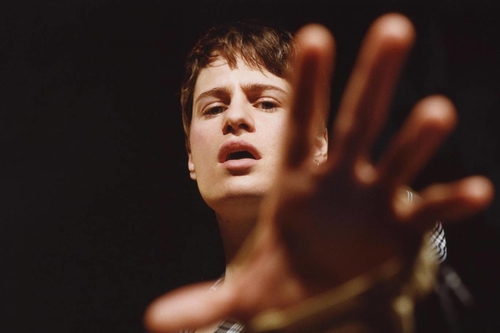
IN THIS PHOTO: Christine and the Queens (Héloïse Adelaide Letissier)/PHOTO CREDIT: Alex Lake (www.twoshortdays.com) for GQ

The Intoxicating Spirit of Christine and the Queens

_________

THIS might seem like a feature...

 PHOTO CREDIT: Getty Images

that is out of the blue or, perhaps, is designed to fulfil personal tastes and affection. In fact, when thinking about Héloïse Adelaide Letissier and her moniker Christine and the Queens, one can never really say enough nice things! She was one of the artists who played Glastonbury over the three-day weekend and played the Other Stage on the Sunday, 30th June. Not only did she look fantastic and put in a commanding performance - but she begged the question as to why there are not more female headliners at Glastonbury. Not only did we have Lizzo and Kylie Minogue whipping up the crowds and owning it but, with Christine and the Queens and Janelle Monáe producing these epic, physical sets, surely it is only a matter of time before we see more female headliners – let’s hope so, anyway! I am a particularly big fan of Letissier because, for one, she is so articulate and passionate when she speaks. I caught her chatting with Matt Everitt at Glastonbury (via BBC Radio 6 Music – I was sat there spying on them!) and, as he said after the interview played out, Letissier is more articulate and intelligent when speaking her second language than most people are in their mother tongue. One listens to Letissier discus her music, her progress and process and it is almost poetic! I promise I am not going into dewy-eyed, wide-smiled adoration: this is a feature that demonstrates and outlines why Christine and the Queens is a force to be reckoned with.

Check out Christine and the Queens on Twitter to see where she is heading next. In terms of bossing, truly moving performances, Christine and the Queens’ Glastonbury set will live long in the memory! Letissier bonded with and charmed her audience but managed to deliver this spellbinding, almost theatrical set that was beautifully choreographed and realised. I think a lot of artists are still beholden to rigidity and a very formulaic way of performing. They expose little in the way of conversation and biography from the stage and one can tell they are running through the motions a lot of the time. In the case of Letissier, she puts her everything into every performance and each time she takes to the stage we get a slightly different take. There is so many nuances in her performances and it makes her/Christine and the Queens a must-see. I will catch her next time she is around London because, as NME outlined in their review of Christine and the Queens at Glastonbury a week ago, this is an experience you cannot afford to miss:

“At times, the set breaks with captivating dance routines, first to Travis Scott’s ‘Sicko Mode’, and later to ‘I got 5 on it’ and Janet Jackson’s ‘Nasty’. “I just had to do it!” she says joyfully,  charming the crowd. Reminiscing about her first Glastonbury performance she tells the audience how much she loved it, before adding: “And I’m not even being nice to you! Since then I’ve been bragging about you, actually back in France I was like “Glastonbury!” and they were like “…okay”, I was like I want to call him back but I don’t have his number, and there you are again!”

It’s humbling to see an artist who’s so excited to be playing the festival, and throughout she clearly relishes every second of her time on stage. “Glastonbury! I’m going to say it until you get sick of it…” she tells the crowd.

The staging is more theatrical than that of a festival set, with elegant pyro raining down on Chris, dazzling lights strobing throughout and a rig that elevates her above the stage during an emotional version of ‘Saint Claude’. Further performance highlights come in an emotional cover of David Bowie’s ‘Heroes’, a welcome respite amongst the rest of the high-octane setlist, and an euphoric version of ‘The Stranger’ that ends with an apocalyptic light show”.

The Independent were full of praise when they reviewed Christine and the Queens’ headline slot at All Points East recently:

“The whiff of danger is in keeping with a somewhat apocalyptic evening. Just as Letissier was due to arrive on stage, a rainstorm erupted. Now, after a few songs from her excellent Eighties funk-inspired second album Chris, it has given way to a dramatic red sky. Whenever the singer steps out onto the walkway that stretches into the crowd, a forceful breeze causes her unbuttoned shirt to billow like a cape.

Letissier, for her part, is a potent performer, thrusting and flirting her way through a set full of sexual tension and premature climaxes – halfway through, a confetti canon showers the air with gold. During the gender-bending anthem “iT” from debut album Chaleur Humaine, she thrashes around on the floor, and then squares up to a female dancer in a display of lust and hostility”.

Not only is Héloïse Adelaide Letissier one of the finest and most scintillating, natural live performers out there but the music is so engrossing, rich and deep.

My first exposure to Christine and the Queens was back in 2014 with the debut album, Chaleur humaine. The very different-looking lead is on the album cover holding flowers, her hair longer and air of grace and romance lingering in the air. The 2015 edition of the album contains the phenomenal Tilted but, to be honest, the original version of the album is crammed with so much brilliance and life. It is an affirmative and gorgeous album but there is personal revelation and exposure that draws you closer to Letissier. I adore the debut album and think that it is one of the most confident and compelling from the past ten years. The press were keen to heap praise on Chaleur humaine. In my opinion, there was nothing like Christine and the Queens in the music world in 2014: this combination of keen intelligence, sophisticated emotional blends and sensual, sexual mixes that inflame the intellect, body and soul. The Guardian, when reviewing the record, define Chaleur humaine more succinctly:

“Chaleur Humaine is a rich and rewarding album that works whichever way you slice it. If you want to take it as an extended musical treatise on queer identity and non-binary sexual orientation, there’s plenty here to keep you occupied. Take, for example, the opening track iT’s declaration of “I’m a man now and there’s nothing you can do to stop it.” (Later in the song, an unconvinced Greek chorus suggest: “She draws her own crotch by herself but she’ll lose because it’s a fake.” Or take Half Ladies’ defiance in the face of abuse: “I’ve found a place of grace … every insult I hear back darkens into a beauty mark,” she sings, before another fantastic chorus – one on which her love of Michael Jackson shines through – sweeps the song along.

It’s informed by a sharp musical intelligence – Paradis Perdus takes an exquisitely orchestrated, vaguely Pink Floydish track from a 1973 album by French singer Christophe and Heartless from Kanye West’s 808s and Heartbreak, identifies a common mood between the two, and melds them together seamlessly – but one that it chooses to wear lightly. You never find yourself in the presence of music that sounds self-consciously clever. Everything flows easily, nothing jars.

“A song is like a virus,” Letissier told an interviewer last year, “everyone can have it.” It’s a lovely sentiment, and Chaleur Humaine bears that line of thinking out: for all the seriousness of the issues the lyrics explore, it always feels like a pleasure rather than hard work. The question of whether it will prove as infectious in the UK as it has on the continent is a tough one: the innate conservatism of mainstream British pop sits pretty uneasily with an artist who clearly thinks pop music can be both an unalloyed pleasure and a conduit for ideas, a means of provoking thought, a world in which you can reinvent yourself at the same time. The question of whether it deserves to be is more easily answered”.

Like Kate Bush adopting a more muscular and expressive sound on Hounds of Love (compared with, say, The Kick Inside), Christine and the Queens became Chris in 2018. The titular album is a bolder revelation and one where we see a marked difference on the cover – from the long-haired heroine holding flowers to the shorter-haired Chris providing a complex look to camera, one can see the changes.

 PHOTO CREDIT: Dustin Condren

I guess, to Letissier, Chris was a new persona; a reinvention who she could base her songs on. Chris is one of 2018’s best-reviewed albums and it is a staggering record. One can feel the changes and the shift in terms of personality but, at its heart, Chris is Letissier taking on new challenges and moving in new directions. The Independent, when reviewing Chris, had this to say:

“Letissier makes her vintage synths snap, crackle, pop, fizz, freeze, squelch, shimmer and soar. There’s even a shattered glass effect (on “Stranger”) to complete the Old Skool Electronica bingo card. Treble notes bounce from air-cushioned soles. Bass lines lasso your hips. Chiffon layers of Letissier’s Anglo-French vocals glide around your neck and shoulders and roll them back. It’s ridiculously danceable.

The quirky lyrical pleas for understanding of early hits like “Tilted” has been replaced by the empowered seduction of “Girlfriend”, on which lines “Don’t feel like a girlfriend/ But lover/ Damn, I’d be your lover” simmer over flickering flames of funk-guitar”.

I want to finish up with a couple of interviews – one from late last year and another that is more recent. In the 2018 interview, Letissier talked with The Independent about her sexuality, how she helped (men she dated) deconstruct their own masculinity – she also reacted to the way some journalists perceived her new ‘Chris’ persona:

“In her life off stage, Letissier sought love from a multitude of “macho men”. She’s said before that she learned how to be a woman from the drag queens she met. Did she learn anything about masculinity from these men? “I learnt about intricacy,” she says. “[All my life], I had to deconstruct my femininity because of how I felt, and who I loved... but people all deal with that complexity. I deal with it out in the open, because in a way I was forced to, but some people deal with it more secretly, and sometimes it creates wounds that never stop bleeding.”

For some of the men Letissier dated, she was the catalyst they needed to deconstruct their own masculinity. “They were confiding in me about those things they couldn’t deal with. And also I was taking a bit from their masculinity to [put] on my femininity. I feel like a weird composite. It’s one of my kinks to explore that. And the more I explore it, the freer I feel. But even in relationships that were supposed to be ‘woke’, with people who were as queer as I was, there were systems of oppression that were lingering. I’m just learning that actually, nothing is simple.”

More upsetting was the way certain journalists sneered at her new persona. “Sometimes when people interview me, there is a slight smile of like, ‘Oh so now you want to be called Chris?’ And I’m like, ‘How can you make me feel sorry about that? It’s all about reinvention and freedom. Come on, man. It’s playful, man. How come it’s violent enough for you to try to defuse it with mockery?’ It’s also fun. It’s also entertainment. Sometimes I read things and I’m like, ‘Sh*t, I’m not that solemn.’”

In this second interview, there is a feeling that Letissier feels more at home, focused and safe on the stage compared with her actual life. It is interesting seeing her talk about her styles of performance and the way she is pushing live music:

“On her most recent tour, she used her background as a theatre student to present a show that was a long way from standard arena pop dazzle but still visually unforgettable: grand painted landscape backdrops, a gentle snowstorm, falling lines of sand, a surprise balcony appearance, and dancers who eschewed formation routines to tell a story in movement.

“Some people were surprised at the theatricality of it. There were points where they didn’t know whether they should clap. I wanted to invite people in differently. It was an interesting challenge to think of big venues as something fragile. I wanted something really bare and exposed and naked”.

The amazing Héloïse Adelaide Letissier is different things to different people. Whether you associate her with the image and sound of Christine and the Queens’ debut or think her modern-day incarnation if a truer representation, that is the beauty of the artist: she is not restricted and is always looking to explore and evolve. She can captivate and allure in French and is far wiser, sharper and smarter than most native English speakers – a truly inspiring artist who is pushing down boundaries and barriers and delivering something unique and utterly fascinating. Keep a check of Christine and the Queens’ social media channels for tour dates and updates but, right now, the heroine is on a roll. Fresh from two big festival performances in the U.K., I don’t think there is a live performer as spellbinding as Letissier – maybe Lizzo and IDLES would run her close. In any case, Christine and the Queens’ figurehead is an exceptional human and musical package. An accomplished musician, a role model for women and the L.G.B.T.Q.I.A.+ community and, for everyone else, someone who drops the jaw and opens the mind, I felt compelled to salute Letissier. Whether you gravitate towards her earliest work or cannot get enough of Chris’ jewels; whether you adore her sense of boldness or gravitate toward the more vulnerable artist, it is clear Christine and the Queens’ Héloïse Adelaide Letissier is someone…

ADORED and respected around the world.

FEATURE: Female Icons: Part Ten: Annie Lennox

FEATURE:


Female Icons

p.jpg

PHOTO CREDIT: Annie Lennox/Getty Images 

Part Ten: Annie Lennox

_________

NEXT week...

 PHOTO CREDIT: Getty Images

I am featuring Aretha Franklin in this feature because, to me, she defines what an icon is: the grace and power she projected; the timelessness of her music and how her messages spread further than something commercial and obvious. In so many ways, she helped change the industry and provided the world with some of the most stirring songs ever. Although the Queen of Soul is no longer with us, she will continue to inspire and move people for decades to come. Today, I have been thinking a lot about Annie Lennox and how her music has impacted the music industry. Whether part of Eurythmics or as a solo artist, one cannot deny the sheer wonder of Annie Lennox’s voice. Born in 1957, Lennox caught the attention of the public in the late-1970s as part of the band, The Tourists. She was a member alongside future-Eurythmic Dave Stewart - and the two would go on to achieve huge acclaim and success through the 1980s. The 1980s was a wonderful and underrated decade and, to me, it is not defined by its great solo artists as it is bands. That might be a sweeping statement but, aside from a few obvious legends, I think more people talk about bands than the solo artist. Look at the greatest voices from the decade and, to me, Annie Lennox is right near the very top. If Eurythmics’ debut album, In the Garden, did not quite have the same impact and great reviews as their later work, it was a pretty impressive introduction and Lennox’s songwriting and vocal gifts were at the forefront.

I was born in 1983 and it was in that year when Sweet Dreams (Are Made of This) was released to the world. The title track is one of the best-known tracks from the album and I think it is Lennon that makes it shine. Listen to the way she projects the lines and the emotions she puts into the song. Lesser singers would do a very straight rendition but Lennox has her own dynamic; much more an actor projecting lines; ensuring every ounce of emotion and intrigue is put into the song. SLANT, when reviewing the album in 2008, highlighted Lennox’s soulfulness and natural abilities:

“Not only did the Eurythmics’ breakthrough Sweet Dreams (Are Made of This) give the genre a distinctly feminine voice, it helped give it soul, marrying the intentionally artificial, repetitive elements and robotic rhythms of techno to more organic sounds (a cornucopia of live flute, scat-like vocals, and synthesized organ creates a jungle milieu on the brief “I Have an Angel”; trumpets sound a lover’s forced departure on “The Walk”), not to mention Annie Lennox’s smooth, soulful voice. This was no more evident than in the title track (the album’s final single and the duo’s first U.S. hit), an ode to masochistic desire in which Lennox’s supple vocal takes on the stern, dominant tone of a taskmaster—and, mirroring the androgynous, Grace Jones-inspired dual personas of many of the group’s music videos, she is also the subordinate”.

Again, lesser bands would take a bit of a break before releasing another album - Eurythmics’ follow-up, Touch, came later that same year! With each album, Lennox was growing as a singer. Listen to Here Comes the Rain Again and the melodrama and cool vocals from Lennox turns the song into a masterpiece. There is no other singer that would give the track so much verve and personality, I feel. Contrast that was a slightly icier turn on Who’s That Girl and, whilst soulful and deep, Lennox adopts a different persona. Of course, the success of Eurythmics was down to the partnership and chemistry between Lennox and Stewart. With Stewart’s incredible compositional drive and direction, Lennox was free to roam in all manner of directions. An album like Touch does not stay still or have a singular sound. Right By Your Side is a more tropical, Caribbean vibe that shows how dexterous Lennox is as a performer. The 1980s was a huge and busy year for Eurythmics. Before 1985’s Be Yourself Tonight, the duo had already recorded a soundtrack (1984 (For the Love of Big Brother) and were riding a huge critical wave. Touch saw Lennox reach new peaks but I think her voice hit new plains on Be Yourself Tonight. There Must Be an Angel (Playing with My Heart) and Sisters Are Doin’ It for Themselves (with Aretha Franklin) are incredible songs and, when on the same track as Aretha Franklin, Annie Lennox does not sound inferior at all – she manages to match the Queen of Soul seamlessly.

The reviews, again, for Eurythmics’ music was impassioned. AllMusic, when reviewing Be Yourself Tonight, highlighted Annie Lennox’s incredible vocals:

“The second single, which was a huge chart topper in Europe, "There Must Be an Angel," is nothing short of shimmering beauty, with Lennox providing truly angelic vocals and Stevie Wonder lending an enchanting harmonica solo. Aretha Franklin lends her powerhouse pipes for the duet "Sisters Are Doin' It for Themselves," which has gone on to become an immortal feminist anthem. From the soulful electronic beats (a rarity) in "It's Alright (Baby's Coming Back)" to the beauty of the Elvis Costello duet "Adrian" to the pain and longing of the sorrowful rocker "Better to Have Lost in Love (Than Never to Have Loved at All)," this album runs a wide array of musical styles, each song standing tall on its own two feet”.

Perhaps Be Yourself Tonight was the last huge Eurythmics album – although 1986’s Revenge and 1987’s Savage had their share of fine moments. We Too Are One was the last album the duo recorded until 1999 and, in 1989, there were signs that Annie Lennon wanted to move in her own direction. Consider the big albums of 1989 and perhaps Eurythmics’ sound was not as striking and original as it once was; tastes where changing and, whilst Annie Lennox remained this pivotal force and unique singer, it was clear that a change was afoot.

I love Eurythmics and grew up listening to their music. Although I am a big fan of Dave Stewart, it has always been Annie Lennox’s lead that has won my heart. When she went solo, even though I was not even nine when her debut album was released (in April 1992), I latched onto her music and was transfixed. Entering a new decade, it would have been understandable if Lennox took a bit of time out and struggled to assimilate. Coming from a successful duo, Annie Lennox effortlessly mastered solo life. Diva is a classic and hugely memorable album that went to number-one in the U.K. charts and sold over a million copies in the U.K. alone. Diva won the Album of the Year award at the 1993 BRIT Awards and was nominated for Album of the Year at the Grammys that same year. Any album that opens with Why and Walking on Broken Glass is impressive but Diva is much more than the sum of its opening duo of tracks. In Eurythmics, Lennox had shown her vocal prowess and multiple sides; she was blossoming as a songwriter but I think her debut solo album unified everything and took her to new heights. SLANT, in this review, marks Diva as one of the finest albums of 1992:

“The song, "Why," is hardly the sort of melodramatic setting we'd imagine from an album whose very name evokes histrionic pretense. But Annie Lennox isn't and has never been a representative pop diva. Her body is lanky and angular instead of curvaceously plush. Her exaggerated facial features (capped off with a most spectacular set of cheekbones that she wisely never allowed her hair to grow long enough to cover) are matched in androgen-fabulousness only by her tremulously guttural alto.

The first album Lennox released after the Eurythmics called it quits, Diva's relative quietude is reflective of a woman in full awareness—if not complete control—of the occasional ostentation of her emotional whims. It's musically analogous to All About Eve's ferocious Margo Channing during those rare moments when she's alone and contemplating the social consequences of her violent temper. It speaks exactly what she (Margo, Annie, every woman…) wished she could convey, but the music underneath most of the album's tracks is filled with the rumbling turbulence that betrays her best intentions. Practically speaking, the music video for Lennox's baroque dance hit "Walking On Broken Glass" harnesses this stress to a T. Dressed in Amadeusboudoir finery (not to be confused with the Vegas headdress crowning Lennox on the album's disingenuously gaudy cover), the clip's heroine finds her flirtations ignored until she gets her paramour alone in her chambers. He mistakenly reads her interest as sexual heat and, outraged, she casts him away, banging her fist against the wall in synchronization to the song's rimshots. "Every one of us was made to suffer," she reasons. "Every one of us was made to weep." One of the most brilliant singles of the era, "Walking On Broken Glass" and its video cast a suspicious eye on the deliberate façade-maintenance of modern pop by playing up the same mixed signals that equips Diva with its power”.

1995’s Medusa is an album of cover versions but, unlike so many covers albums, Lennox seems to have a real attachment to each track and makes the music her own. No More I Love You’s is, perhaps, the best-known track from that album but some did find the choice of covers unusual and wrong-footed. It took until 2003 before another album came about. Bare is one of Lennox’s most affecting and emotion records ever. No singles were released in the U.K. and, whereas that might have meant commercial suicide, there wasn’t anything as immediate and chart-friendly as previous album. Bare is best enjoyed as a single experience; playing the songs together and seeing it as one body of work – rather than dividing songs and choosing certain ones for special treatment. Just when you thought Annie Lennox could not get better and more accomplished as a writer and singer, she managed to outdo herself on Bare. AllMusic summed up the album like this:

“But it's in the lyrical paradox where the grain of her voice goes straight for a truth and need that the listener almost feels she's peeled off one layer too many -- not hers, ours: "I wanna hold you/And be so held back/Don't wanna need you/But it's where I'm at/Thinkin' about you every day/How come I was made that way...God it makes me so blue/Every time I think about you/All of the heat of my desire/Smokin' like some crazy fire/Come on here/Look at me/Where I stand/Can't you see my heart burning in my hands?/Do you want me? Do you not?"

The previous track is a guitar-kissed ballad with limpid choruses that sear with the truth of having believed -- perhaps willingly -- each lie a lover ever told; it is destined to be played in every post-midnight, brokenhearted, half-empty bedroom for decades to come. And though the previous examples come from near the middle of the album, they don't begin to tell the whole story, as each track fits hand in glove with another. It not only can be taken as a whole, it must be, for it rains down on the heart of the listener with such a fierce life force, despite the depleted spirit exhibited in many of the cuts. There are no more words for the ravaged, triumphant Bare -- the truth of its fineness and devastating beauty is in the hearing”.

Annie Lennox’s most-recent album, 2014’s Nostalgia, is another covers album but one that fared better with critics. I do wonder whether Lennox has plans for another album because there is always that demand. It is not only her phenomenal music that leads me to believe she is a true icon. Lennox is a social activist and has raised money/awareness for AIDS/HIV (and how it has affected women and children in Africa). She was awarded an OBE in 2011 and constantly features in the lists of ‘greatest singers ever’. Small wonder that so many artists look up to her and she is revered so much.

One only needs to look at the awards Lennox has won and the accomplishments that makes her C.V. so hard to beat. In 2007, Lennox performed at the Nobel Peace Prize Concert in Oslo and she appeared the following year at Nelson Mandela’s 90th Birthday Tribute. In 2009, Lennox opened the Edinburgh Festival of Politics and condemned Pope Benedict XVI’s approach to AIDS and HIV prevention in Africa – the Pope denounced condoms and, quite rightly, Lennox highlighted how this was hugely irresponsible. Lennox received the Music Industry Trusts Award for her music and charity commitments in 2013 and, yet again, it was a well-deserved nod of recognition. Not only is Lennox a political and social activist but she is a big supporter of the L.G.B.T.Q.I.A.+ community and, as a result, Lennox is a gay icon. From the eye-catching videos with Eurythmics through to her solo work, she has helped shape popular culture and change attitudes – alongside peers such as Madonna and Michael Stipe. Lennox, like all icons, is more than a musician. She strives to make the world a better place and affect change. She is not using her fame to get ahead and see change but, instead, tirelessly working and raising awareness where she can. As a feminist and activist, she has helped bring about discussion and break down walls. Before rounding things off, I want to bring up an interview Annie Lennox conducted in 2011.

She spoke with High Profiles and talked about her start as a singer and the importance of campaigning:

“Had your heart always been set on being a singer?

No. I always sang, always, but I never thought of it in any other terms than [being] just for my own pleasure. No, actually I was fairly proficient at the flute and I had an idea that I would become a classical flute-player; but the standard is so high and so specific, I quickly realised… You know, I was the best in my town, as it were, but there are hundreds of towns like that full of people who are far more gifted than you.

I get the impression that you were quite a shy person – and yet only a few years later you were this exuberant performer sporting a man’s suit and dyed orange hair…

Oh, I am a shy person. I’ve always been a shy person. I don’t think it’s that unusual to find that a performer off-stage is not the person you might assume they are. A stage persona allows you to work in a very different way from [what you are like] in normal circumstances.

Has campaigning made you less melancholy?

Well, if I’m less melancholy… I would say yes, I would definitely say so, because I have to say that the wake-up experience of being face-to-face with people who have absolutely nothing and then coming back to a Western world that is so fully resourced – whenever one might slip into a ‘Poor me!’ state, you’re swiftlyreminded that, wait a minute! this kind of pain – anguish – you bear is just negligible compared with people whose whole life…

PHOTO CREDIT: Mike Owen 

If you were born into chronic abject poverty, you have a very small, small chance of getting out of it – that’s a fact. And the only way, the only way, you could possibly take a step towards, you know, the exit would be [through] education. But if you can’t get food in your belly to help you to concentrate through the day, that education isn’t going to help. And then if you get an education and you can’t get a job even so, that’s also a problem. The odds are so stacked against people, and that is – that’s the injustice that I can’t bear.

If you had to give up either the campaigning or the music, which would it be?

Well, that puts me in between a rock and a hard place, really. I would… I would be a campaigner, yeah. But at the moment I’m so fortunate because I can do many things, and so I’ll just continue doing what I do until I can’t do it any more.

And when you can’t do it any more? Does that worry you?

Ah, you mean getting older? Well, it is what it is. Does it worry me? I don’t think it helps to worry about getting older, so I tend not to – I look on it as a journey, and I think that I’m very fortunate to be 56 and to feel like a – you know, my mind is incredibly inspired and driven to engage with things that I feel passionately about.

I mean, I’ve lived a long life and I’ve had the benefit of youth and I often look back on it and it seems like there was a lot of vanity in it (but no one realises that until maybe they’ve lived a bit longer). They say that youth is wasted on the young, and very often it is; but the trouble is, people keep seeking eternal youth as if that would be the solution, and I don’t think it is – I feel that you must move, you must keep flowing, you must grow old graciously and – actually, almost with excitement. Being older, I can let go of things that once were so important to me. It’s like: Do you ever look back on your childhood and think how obsessed you were with sweets and wish you were still that person? I don’t”.

Annie Lennox is the type of human who will not rest until there is equality and progress in the world. She is this amazing spirit and campaigner who is inspiring to watch and, as an artist, Lennox has been responsible for some truly staggering songs. Her voice is unlike anyone else’s and, whether with Eurythmics or working solo, Lennox has inspired and influenced so many other artists. One only needs to listen to a single Annie Lennox track and you realise how much music means to her and what her voice can do. I think Lennox is a treasure and let’s hope there are more albums from her in the future. If you have not listened to her solo work or are new to Eurythmics, make sure you right that and investigate immediately. There is nobody like the wonderful Annie Lennox and, for that reason, there was no doubt in my mind that she belonged in my…

FEMALE Icons feature.

FEATURE: Spotlight: Hatchie

FEATURE:


Spotlight

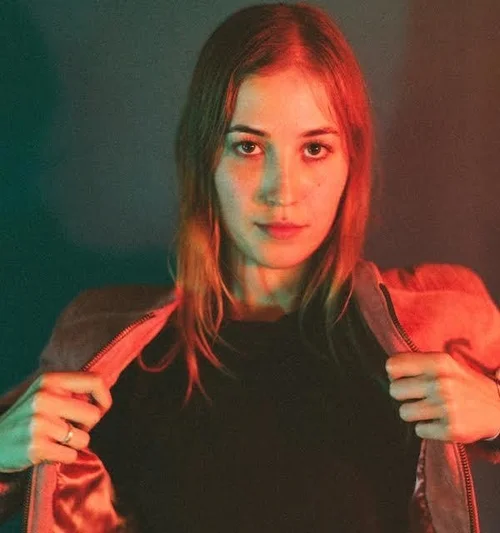
PHOTO CREDIT: Sophie Hur 

Hatchie

_________

THERE are a lot of great female artists emerging...

 PHOTO CREDIT: Sarah Louise Bennett

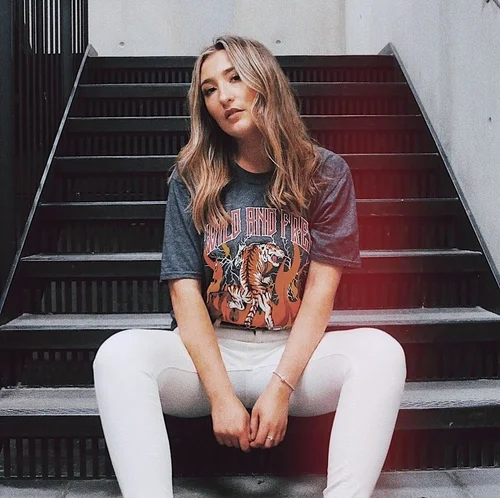
at the moment but, to me, Hatchie is one to watch closely. I think 2019 has been a really exciting year for music and so many great albums have been put out already. Hatchie is someone who definitely needs to be on your mind. She sort of combines the sounds of Kylie Minogue; Cocteau Twins, Kate Bush and Wolf Alice to create this stirring and evocative sound. She is sort of Dream-Pop  but there is Shoegaze and Alternative blends working alongside one another. The twenty-six-year-old, Brisbane-based artist has released one of 2019’s best albums – I shall come to that soon – but has been turning heads since her debut E.P., Sugar & Spice. Hatchie (Harriette Pilbeam) started singing as a child and fell in love with music from a young age. One can only imagine the range of sounds and records that the young musician would have experienced in her house. Hatchie picked up the guitar and bass in her teen years and the piano and clarinet later on. It is clear that there was a clear curiosity and desire burning. Early singles such as Sure (her second single released in 2017) tuned heads and announced her as an original talent and, in January 2018, Hatchie signed with Double Double. The Sugar & Spice E.P. arrived on 25th May, 2018 and received hearty critical praise. The five-track release (four previously fresh tracks and an additional track, Bad Guy) is terrific to listen to and contains many highlights.

Here, in this review from DIY, we hear about some of the musical influences that would have guided Hatchie:

“‘Sugar & Spice’ cements her as the modern day successor to dream pop titans Cocteau Twins from the get-go. Robin Guthrie had already blessed her with a remix of ‘Try’ in 2017, but his influence shines through even more with the opening bars of ‘Sure’, as shimmering guitars wash through in layers. ‘Sleep’ is a climactic follow-up built around shuffling beats and heroic choruses, with a smoky hook that recalls Depeche Mode’s ‘80’s classic ‘Just Can’t Get Enough’. Later, the title track’s shoegazey guitars closely mimic the iconic, ethereal sound of My Bloody Valentine.

Harriette doesn’t possess the unique, wobbly vocal style of Elizabeth Fraser, instead opting for pure, uplifting pop hooks (it’s telling, then, that she counts Kylie Minogue among her influences). It comes naturally to her - “all my songs start with singing,” she says - which makes sense given the vocal strengths present across these five tracks. With a finessed production tying everything together, the end result is pretty ecstatic”.

In a year that has seen so many great women emerge and own, Hatchie can definitely be added to the conversation. She writes about love and heartbreak but can do it in a very fresh and original way – and ensure that it resonates and connects with the listener.

 PHOTO CREDIT: Kristina Wild

The incredible Australian artist is definitely hitting a high right now. Her album, Keepsake, was released on 21st June and it has definitely collected some big reviews. Here, in AllMusic, there were plenty of impassioned words:

“On the album's luminous second half, Hatchie returns to the more familiar terrain of Sugar & Spice with the strummy ballads "When I Get Out" and "Kiss the Stars" as well as the irresistible finale "Keep." She also finds new nuances within her blend of dream pop and pop with a capital P -- somehow, "Without a Blush"'s swooning guitars and vocals have as much in common with Curve's "Coast Is Clear" as they do with Taylor Swift's "Wildest Dreams," while "Stay with Me" proves she's as capable of epic emotional climaxes as any chart-topping artist. Throughout Keepsake, Pillbeam develops the flair for pairing widescreen sounds with down-to-earth lyrics that she hinted at on Sugar & Spice. "Obsessed" is a standout, not only for its nagging arpeggiated synth hook, but for the clever way she dismisses her feelings while hinting at how deep they run. By contrast, "Her Own Heart" is unabashedly earnest and, with its clouds of guitars and piles of harmonies, one of the album's prettiest moments. As Hatchie exceeds the expectations set by Sugar & Spice, Keepsake reflects her growth into an even more confident and varied artist”.

DIY were back for another taste and were deeply impressed by Keepsake:

“As Hatchie, Brisbane native Harriette Pilbeam provides the soundtrack to falling in love. She floods your ears with dreamy melodies, sugary tones and lush vocals, nestled in a perfect middle between Cocteau Twins and Alvvays - though commanding an artistry entirely her own. Having already released a slew of strong singles, the debut LP from the Australian musician veers away from the sometimes-sickly sweet sound of her older work.

She ventures out into pulsating basslines and deeper, darker ‘80s synthpop while still being able to turn virtually every sigh of a melody she breathes into an earworm. “If I could kiss you one more time, would it make everything alright?” she wonders on ‘Without a Blush’, before pleading “Give it a try,” on ‘Unwanted Guest’. She writes and wears her heart on her sleeve, half-singing, half-sighing through her songs with wide-eyed candour, shining through such swoon-worthy dream- pop. At some point, you’ll wonder if it was Hatchie’s heartache and pain that was written about, or your own”.

Maybe it is the dreaminess of her music or the fact, as some reviewers have noted, Hatchie provides comfort and wide-eyed gaze at a time of turbulence…it is very good she is in the world and providing music that can lift us but make us reflect at the same time. Even though Hatchie is writing beautiful music, her subject matter has changed and she has definitely evolved since her debut E.P. In an interview with Rolling Stone, Hatchie explained how her music has altered in the last year or two:

“During the past year or two, Pilbeam became acutely aware that her music was being viewed primarily as a vehicle for expressing romantic infatuation. Early songs like “Sugar & Spice” and “Sleep” were bright, synth-heavy depictions of the near-delirious early rush of love. “Just come see me in my dreams,” she sang in the latter, “No wonder I’m smiling in my sleep.”

But when she began writing Keepsake, Hathchie knew she wanted to change course.

“As a young woman, I was like, ‘What is this saying about me that all my songs are about this?'” she says. “There’s nothing wrong with that, but I put a lot of pressure on myself to not write about that, which is silly because it’s what everyone writes about.”

Some of the best songs on Keepsake make explicit Hatchie’s ongoing process of sorting out the parameters of her own work. “You can call it an obsession/Call it anything you want to,” she sings on the opening standout “Not That Kind.” It’s a line of winking self-awareness for an artist who’s become increasingly aware of the importance of self-definition, even as she’s realized that her creative persona is ever-evolving.

“I feel like I’m changing so much every six months,” says Pilbeam. “Even this new album feels like a past version of myself.” Since the recording of Keepsake, she’s found herself writing unadulterated dance-pop. She enjoys these early stages of writing, before she needs to conceive of her work within the framework of her career to date”.

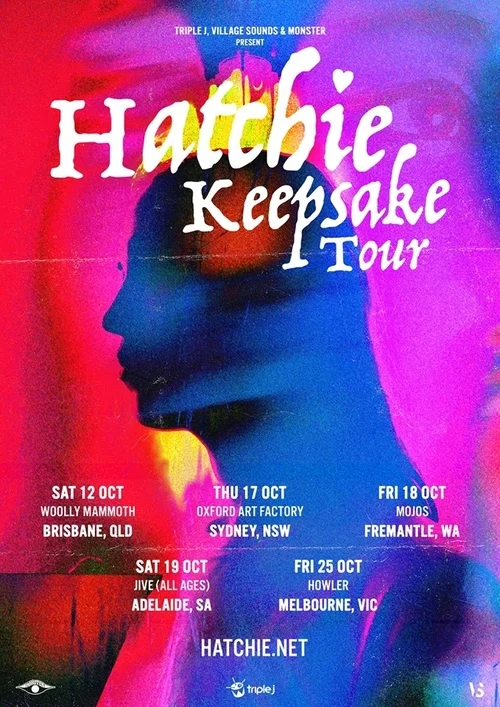
In some ways, Keepsake is Hatchie starting over or discovering who she is. It is clear that her new album has been taken to heart and the author cannot help but feel pleased with what she has accomplished. Hatchie has an Australian tour coming later in the year but I hope there are dates in the U.K. coming up.

 PHOTO CREDIT: Getty Images

Many people here would love to see her perform and, with Keepsake still fresh, hearing those songs live and in-person would be an amazing experience. I am going to follow Hatchie closely but, if you are new to her work, go back and listen to Sugar & Spice. Although Hatchie has since adopted a new lyrical and musical approach, I maintain the E.P. is fantastic and a great window into an artist who was making some early, impressive moves. This year has been a competitive and thrilling one for music and it will be hard to call the best albums of 2019 come December – I do think Hatchie’s Keepsake needs to be in the mix. She has this wonderfully rich and engaging voice that brings you into the mix and, in a way, sort of unites you with other artists; musicians she grew up around and still adores. She is only just begun and I do think there will be a lot of great albums coming from Hatchie. It is clear she is doing something different and wonderful and, at a very angry and divided time, Hatchie is giving us music to soothe the soul and warm the heart – although there are tears and soul-baring moments to be found. The spectacular Hatchie crosses boundaries and genres and you cannot help but fall in love with her music. If she does come to the U.K. and plays some shows, make sure you go and see her as it is an experience…

 IMAGE CREDIT: Hatchie

YOU will not want to miss.

________________

Follow Hatchie

TRACK REVIEW: Skunk Anansie - What You Do for Love

TRACK REVIEW:


Skunk Anansie

t.jpg

PHOTO CREDIT: Tom Barnes

What You Do for Love


9.2/10


The track, What You Do for Love, is available via:

https://www.youtube.com/watch?v=Kvg88K6JshI

GENRE:

Alternative-Rock

ORIGIN:

London, U.K.

RELEASE DATE:

5th July, 2019

LABEL:

100% Records

__________

I have not got a lot on today…

c.jpg

and, rather than put out a lot of work, I thought it would be good to consider a few great artists and things happening in music right now. That might sound pretty vague but I mean I want to take a bit of time to ponder the new single from Skunk Anansie. There is a lot to cover when we think of the band because they have been on the scene for so long. I want to discuss their legacy and why they are a favourite band of mine; why Skin is a particularly inspiring figure and why she is a role model to many; why bands like Skunk Anansie will remain in the heart and how they are compelling newcomers – a bit where they might head next and what is in their future. I have been checking out Skunk Anansie and their movements recently and, sort of coming between their gig plans and excitement is a story involving them and Stormzy. We all know Stormzy was the first black rapper to headline Glastonbury – and he did so last weekend in true style! There was a lot of anticipation when Stormzy was announced as the headliner and many wondered whether he would be able to pull off such a huge gig. By all accounts, he smashed it and the dust has just about settled. There was a bit of an error on his part when he claimed he was the first black British artist to headline Glastonbury. Sky explains more:

“Ahead of his history-making Glastonbury set, Stormzy was understandably proud to share its significance with the world.

However, while he is the first black British male solo performer and rapper to headline the festival's famous Pyramid Stage, he actually got it wrong when he said he was the first black British artist - as Skin, the frontwoman of 1990s rock band Skunk Anansie, has pointed out.

Skunk Anansie, famous for hits including Weak, Hedonism (Just Because You Feel Good) and Brazen (Weep), were Glastonbury headliners in 1999, along with REM and Manic Street Preachers.

After realising his error, Croydon-born Stormzy, real name Michael Omari, has now apologised to the singer for his mistake.

222.jpg

He tweeted: "Skin from the band Skunk Anansie was actually the first black artist to headline glasto she done it with her band in 1999 no disrespect intended and MASSIVE salute to you - my apologies! @skinskinny."

She wrote: "Sorry Stormzy but we beat you to it in 1999! 20 years ago! And while we're on topic, I was the first black Woman too! @beyonce Wishing you an awesome nite tho, Kill it! You're amazing and we're all very proud. ps. Real question is why it took 20 years!"

It is only write Skin corrected him and, as the lead of Skunk Anansie, she was the first black British headliner – the first black woman to do so, too. I think things between Stormzy and Skunk Anansie are okay and, to be fair, it was an honest mistake. It is great that Stormzy made history but one wonders whether festivals like Glastonbury are doing enough to put black artists higher up the bill. Certainly, strong black artists like Lizzo, Janelle Monáe; Dave, Stormzy and Janet Jackson provided these incredible sets and newcomers like Grace Carter showed they were definitely worthy of greater exposure. I guess there is still a problem in music regarding race and whether black artists are given the credit they deserve. Modern icons such as Beyoncé have helped pave the way but there is still so much to do. I looked at that Twitter interaction between Stormzy and Skin and it sort of struck me how few black artists have headlined festivals. Skin was the first black woman to headline back in 1999 but, apart from Beyoncé a few years back, there has been a surfeit of black women appearing as a headliner. The same can be said for the men. Both Skin and Stormzy are pioneers, in a way, because they have helped raise awareness and open eyes. I have mentioned a few brilliant black artists but, to be fair, there are so many more who could headline a major festival.

u.jpg

Next year is Glastonbury’s fiftieth and I do wonder we will see another black artist headline the Pyramid Stage. Maybe Beyoncé will return or we will see Stevie Wonder play; perhaps Lizzo will be promoted and get to headline or there might be a new act that gets the same sort of platform as Stormzy. In any case, there is a real issue I think regarding black artists and a relative lack of support. This is something I want to cover in more detail at a later date but I think it is interesting to see Stormzy and Skin, without knowing it, discuss race and how rare it is to see a black artist headline. I will talk more about it in time but I do think more needs to be done to facility greater racial balance. Before I come to look at Skunk Anansie’s  latest track, I want to raise a few other points. I have been following Skunk Anansie since they started out in 1994 and, right now, they are touring Europe to celebrate twenty-five years together. Albums such as Paranoid & Surnburnt (1995), Stoosh (1996) and Post Orgasmic Chill (1999) followed me through my school years and I was awakened to this wonderful band. I especially love Post Orgasmic Chill because tracks such as Charlie Big Potato and Lately were huge tracks. Listen to the early work of Skunk Anansie and it still sounds so fresh and exciting. I think the band were a bit of a revelation in the 1990s because, when they arrived, Britpop was still raging. They offered something alternative and harder-hitting for those who wanted to experience a more thrilling and visceral form of music. Of course, emotion and vulnerability was always part of Skunk Anansie’s make-up and they have continued that to this day. I was especially captivated by Skunk Anansie because they were mixing Alternative sounds of America with British Pop and making it sound so natural and effortless. With a strong, black female leading the band, one could not help but notice this band that were inspiring others and captivating a generation.

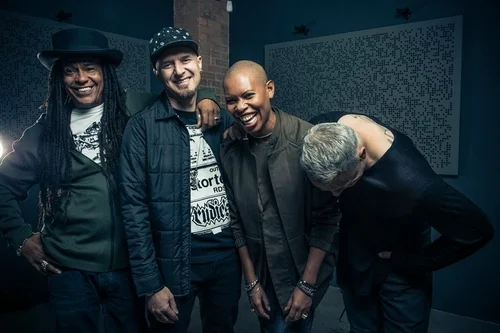
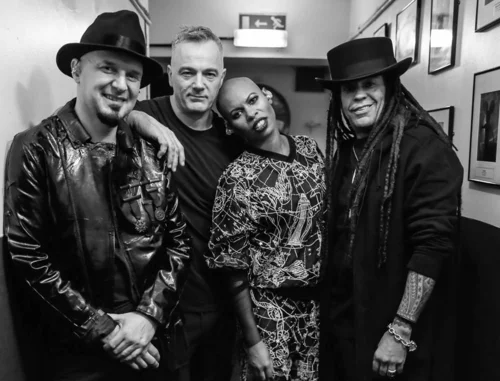
Some might say that is a strong statement but there was so much love out there for Skunk Anansie. There is still that affection and, the fact they are embarking on this anniversary tour shows there is so much love out there for them still. I think, when Skunk Anansie arrived in the 1990s, they helped bring Britrock more to the fore and gave guidance to a lot of bands coming through at the time. Now, we listen back and there is such a rich catalogue of material that, as I said, sounds completely wonderful and original. I can listen to albums like Stoosh now and I am taken back to a great time but I also listen to music now and wonder whether there is anyone quite like Skunk Anansie. For sure, there are many bands who have been inspired by Skunk Anansie and have followed them closely but, at a time when there is still too much Pop and not enough proper Rock around, I feel Skunk Anansie play an important role. We are in a difficult time right now and, whilst great Post-Punk bands such as IDLES and Fontaines D.C. are providing some release and guidance, I do think there is a place for bands like Skunk Anansie – those who can provide political anger but also emotional outpouring. There is a definite gap in the market and the fact that we have the original band still putting out music will, I feel, compel bands in the underground to come through. Skunk Anansie are Skin (lead vocals, guitar), Cass (bass, guitar and backing vocals); Ace (guitar, backing vocals) and Mark Richardson (drums and percussion) but, to me, Skin is the standout member. That is no disrespect to the rest of the band but I find Skin utterly engrossing and fascinating. At a time when there are not that many black women at the forefront, she is someone who is still talking about imbalance and the need for change.

I do feel things need to change in the industry as a whole and it is great we have artists like Skin opening up and laying it down. I will bring in an interview she conducted this year with VICE where she discussed her sexuality, twenty-five years of Skunk Anansie and her relationship with anger through music:

“Skin – and her signature rasp, as blared out of many a CD player – is punk not only through her words, but in her very presence. As an openly queer black woman heading a band that thrived in the whiteness of the 90s English rock scene, she stirred up a cocktail of vulnerability, anger and a refusal to conform that spoke to her fans across age groups and time zones.

When you look back at 25 years of Skunk Anansie, which challenges are you most proud of overcoming as a band?

I think that the most challenging thing about being in a band, a rock band in particular, is maintaining it. There are moments when you’re having hit singles, but then when you don’t have an album out you almost disappear to people, you know?

If I stop and think about the most successful thing we’ve done, it would be able to maintain success over a 25-year period, even though we, for eight years, weren’t even on tour. We’re still here! And very few bands from the 90s are still relevant, making music, still liked and all those kind of things. Most British bands that came out in the 90s don’t exist anymore. Or if they do, they exist in a way that I find really cheesy and nostalgic.

There’s been a lot of different labels given to your sexuality over the years. How do you identify?

It moves. Sexuality really moves. At one point I was very bisexual: one minute I was with a guy, the other minute I was with a girl. Now I feel much more lesbian, because I’ve been in a relationship with a woman for two years. But guys are still cute; I still fancy them. I see myself as queer, because I think sexuality is much more fluid. I feel like I don’t need to sexually identify with one thing or the other anymore. The term ‘queer’ is much more honest and gives me some space to manoeuvre. If I say I’m bisexual then that’s me defined. if I’m say I’m a lesbian then, “what are you doing snogging that guy?” I feel like I’m not entrapping myself if I just say I’m queer.

What’s your relationship with anger in your music?

Anger is very good for you, it’s a very powerful thing. Aggression isn’t. You can be angry and it can be quite forceful, because we’re living in a world that needs anger to get things done. You need to rile people up and get them angry to get things done. That’s the intellectual use of passion. But when people just get aggressive and violent, I feel like you’ve lost.

I’ve always tried to use anger as a positive force – it gives you a bit of a shiver up your spine when you read certain things and think, ‘That’s not right.’ I never go, ‘That’s not right, I’m going to write a song about it’ – that’s not really how I roll. Things just come out spontaneously, and as a consequence, they come out in your voice, in the right way. When you are truly angry about something and a song comes out of it, it’s really powerful and useful”.

I think Skunk Anansie have changed through the years and some can say that their modern material is a little calmer and not quite as fired as their earlier work. That is a natural progression I think but there is still plenty of grit and emotion at the heart. Skin has not changed a lot (thankfully) and I am so glad Skunk Anansie are still playing together. So many bands who have been playing for so long split up or they take long breaks but, whilst they did take time out between 1999 and 2010, it seems like the band are solid and continuing on. They are such an important part of my early listening experiences and I think the band will carry on motivating the new generation and inspiring those coming through. I shall move on to reviewing What You Do for Love in a minute but I amazed there is so much love out there for Skin and the guys. It is not surprising but, often, when a band has been performing together for years, the attention fades after a while. Skunk Anansie have retained followers who were with them in the 1990s but they are picking up new fans and have this great mix of generations at their gigs.

Skunk Anansie are a great band who helped change the landscape in the 1990s and, twenty-five years since their formation, I can hear their essence in others. Skunk Anansie are touring with Allusinlove and this is a band who takes guidance from Skunk Anansie. There are many more bands around who take inspiration from Skunk Anansie and that is humbling to see. I think Skunk Anansie have many more years left in them and, although they are slightly different to the band we knew back in the 1990s, their core principles and sounds remain true. If they were to change too much then they would risk alienating fans but I do think the band have kept a lot of that rawness but are bringing in new maturity and themes. It has been a little while since we saw any album action. 2016’s Anarchytecture was the last album from them and I do wonder whether they have plans for a new album. I believe there are plans to release an album to mark twenty-five years of Skunk Anansie but, going forward, has that provided them fresh impetus? I am excited to see where they head and what their future holds. Right now, What You Do for Love is out and people are it is a pretty great track. It took me a few listens to adjust because, recently, I have been looking back and checking out the early albums from Skunk Anansie. There is that unmistakable Skin-led energy and physicality but there are new shades and colours, as I said, in their current work. That is a good thing because it shows the band are moving forward and not willing to trade on their past glories. It is about time I got down to reviewing their latest track because it is corking and shows that there is still nobody in music quite like them.

I have mentioned how the latest Skunk Anansie slice is less feral and wild than their classic work but, to be fair to them, the opening stages are pretty intense. The guitars squall and the percussion charges and it is clear that the band mean business. In terms of sound, there is actually a little bit of the Pixies and a sort of Grunge tone; a slight reworking of their Britrock/Alternative sound. When Skin comes to the microphone, she talks about someone in her life that, perhaps, is causing a bit of trouble. She asks them to step into her life; a life where they hold nothing but fire. It seems like the heroine has fire and rage in her heart and something has caused a bit of a rift. Her face is unfazed and there is no blame on Skin’s shoulders but there is still a sense of aggression and upset inside of her. It is interesting unpicking the words and trying to decode the background to the song. There is a sense of desperation biting and it appears this love is struggling. Whether it is based on personal experiences or comes from a slight sense of detachment, one cannot deny the conviction in Skin’s voice. She is presenting all these troubled visions and emotions and it looks like she is going through something quite rough right now. The chorus refers to this person and what they are doing for love. It seems like the two are on different pages and have different interpretations of what love is. There is a lack of trust and breakdown in communications. As the song progresses, Skin talks about someone trying to see the world from different sides; see things from his and her perspective. It got me wondering whether Skunk Anansie are talking less about a personal relationship and more about something wider. The band have always had a political mind and been conscious of the world around me – it got me thinking whether What You Do for Love is more an observation of the world right now and how change needs to happen.

The lyrics, to start, sort of steer you towards something personal and isolated; a sort of tension in a relationship that is threatening to bubble to the surface. As things move on, I sort of feel like something bigger is in focus. Maybe Skin is talking about love in general and how we all need to be more cooperative and sensitive. Maybe she is referring to the anger out in the world and how people in power have the chance to alter the world for good – and they are doing things to serve themselves and not the people. Everyone will have their own interpretations regarding the lyrical meaning but, to me, there is a mix of personal struggle and a call for action. It seems like the heroine is facing a bit of a challenging relationship and there are clichés flying all over the place. Rather than take time away and cool things down, she is asking for communication and wants things to be different. The band is still pretty impressive after all of these years and, whilst that sounds a bit harsh, bands that have been playing for as long as Skunk Anansie often soften and change their sound. It is a relief to hear plenty of force and meat in the bones of Skunk Anansie. This bodes well for the future and, if they have more material coming, I wonder whether it will sound similar to What You Do for Love. The chorus has a great heat and catchiness and the band are tight and focused throughout. I love how Skin’s voice has got a little huskier through the years and she sounds incredible. The driving force behind the band, she puts so much life and passion into the performance. The more you listen to What You Do for Love, the more you uncover. My interpretation changed from the first listen to the second and my perceptions changed. I shall end the review there but I would urge people to check out the new Skunk Anansie track. Those who are expecting something like Hedonism (Just Because You Feel Good) might be disappointed but, in truth, the band has not altered that radically. At a time when we do need a bit of anger in music, it is pleasing to see Skunk Anansie have not reined things in and have gone all acoustic! The band are touring and gathering great reviews and I do hope there is more material coming from them in time. After twenty-five years on the scene, the band are still going strong and have that closeness that comes through in the music.

Skunk Anansie are in Europe at the moment and, with fans across the continent flocking to see them, it seems like there is so much passion and love available for the band. They have so many loyal supporters but fresh faces are discovering their music and are keen to see the band in the flesh. I know that there are a few more dates on the tour and you can keep updated if you head to Skunk Anansie’s social media pages. It seems like, from the photos and tweets, the band are having a great time and they are vibing off the crowds. The band still sounds tight and potent and it makes me wonder where they head from here. They are celebrating twenty-five years together and there are a lot of fans who are seeing them because of their past material. It is evident there is a lot of affection within the band and I have been wondering whether more studio albums will arrive. I mentioned earlier how there are few bands like Skunk Anansie and the band are very much a source of influence for many. They were a huge part of my teenage years and it was a revelation hearing their music for the first time. Their 1995 debut was an awakening to me and I was hooked by their incredible songs; they dug into the skin and stayed in the head. Naturally, the music scene has evolved and changed a lot since they were first around but I still think there is a general absence of bands who sound like Skunk Anansie. We do have Post-Punk bands and some great Pop-Punk acts but what about the sort of sound Skunk Anansie put out into the world? Maybe the band are true originals and it is never a good idea to speculate.

I have spoken a lot about the band but, as a role model, Skin is still hugely important. Apart from commenting on Stormzy’s tweet and bringing race at musical festivals to the fore, she is this incredibly strong and compelling lead that has inspired so many artists. I should leave things there and let you get about your day but, if you can, check out What You Do for Love and follow Skunk Anansie closely. I know the band are busy with touring at the moment but, when they are off the road, that will give them chance to plot their next move and decide what they want to do. Many will want another album but, actually, re-releasing some of their big albums on vinyl might be a good idea. It is definitely a fertile time for Skunk Anansie and I wish them all the very best. They are a terrific band who, twenty-five years after they came onto the scene, are still exciting and utterly wonderful. If you can see them perform live then do so but, as there is new material out, have a listen but also check back on their older material. It makes for terrific listening and will definitely open your eyes. I shall leave it there but, as I have shown in this review, Skunk Anansie are a very special musical force. They have been going for twenty-five years now and, let’s hope they will keep powering on…

e.jpg

FOR many more years yet.

___________

Follow Skunk Anansie

6.jpg

FEATURE: Vinyl Corner: Stevie Wonder – Songs in the Key of Life

FEATURE:


Vinyl Corner

Stevie Wonder – Songs in the Key of Life

_________

AS the legendary Stevie Wonder is...

 IN THIS PHOTO: Stevie Wonder in 1995/PHOTO CREDIT: Jeff Christensen/Reuters

exciting the crowds at Hyde Park right now, it seemed only fair to bring one of his albums into Vinyl Corner. I have already covered Innervisions so, when we think of the best Stevie Wonder album, is Songs in the Key of Life far from our minds?! (Make sure you buy it on vinyl). Wonder released Fulfillingness' First Finale in 1974 and, in this classic period, he was simply unstoppable. By the time 1976’s Songs in the Key of Life was released (on 28th September), Stevie Wonder was one of the most revered artists in R&B. He was scoring these chart successes and winning critical applause all around the world. Actually, by the time 1975 came to an end, Wonder was actually considering working with disadvantaged children in Africa and quitting music. Maybe there was a sense of expectation and weight around him…that it was getting a bit too much or, after such a busy creative time, it would provide a perfect contrast. Instead of emigrating to Africa for a bit, Wonder signed with Motown and, by 1976, he had created a signature album; a work that was instantly loved and respected. Over one-hundred-and-thirty people worked on Songs in the Key of Life and the sheer depth of the material is staggering. Wonder has, in interviews after the album’s released, claimed the period around Songs in the Key of Life was especially happy and he was in a very good place.

One can hear that freedom and inventive spirit running right through Songs in the Key of Life. At the time, the album was a big success but it has since gone on to inspire legions of artists. Everyone from Elton John, Michael Jackson and Mariah Carey have name-checked the album and have cited it as an influence. Not only has the album’s power and depth moved artists in terms of their own material; tracks from Songs in the Key of Life have been sampled and appropriated by other acts. Pastime Paradise was adapted by Coolio for Gangster’s Paradise; Will Smith used I Wish as the base for the hit, Wild Wild West, and (the album) continues to impact and resonate. Upon its release, sales exceeded expectations and Songs in the Key of Life became a blockbuster. It was certified diamond in the U.S. alone and was the biggest-selling album of 1977 behind Fleetwood Mac’s Rumours. It was not a shock that Songs in the Key of Life was a success. Think about some of the reviews that have arrived since 1976; the effusive words that have been paid to this masterpiece. I will borrow the words of two much-trusted sources on this blog: AllMusic and Pitchfork. The former, in their review, discuss the balance of love songs and social commentary:

“Though they didn't necessarily appear in order, Songs in the Key of Life contains nearly a full album on love and relationships, along with another full album on issues social and spiritual. Fans of the love album Talking Book can marvel that he sets the bar even higher here, with brilliant material like the tenderly cathartic and gloriously redemptive "Joy Inside My Tears," the two-part, smooth-and-rough "Ordinary Pain," the bitterly ironic "All Day Sucker," or another classic heartbreaker, "Summer Soft."

Those inclined toward Stevie Wonder the social-issues artist had quite a few songs to focus on as well: "Black Man" was a Bicentennial school lesson on remembering the vastly different people who helped build America; "Pastime Paradise" examined the plight of those who live in the past and have little hope for the future; "Village Ghetto Land" brought listeners to a nightmare of urban wasteland; and "Saturn" found Steviequestioning his kinship with the rest of humanity and amusingly imagining paradise as a residency on a distant planet. If all this sounds overwhelming, it is; Stevie Wonder had talent to spare during the mid-'70s, and instead of letting the reserve trickle out during the rest of the decade, he let it all go with one massive burst. (His only subsequent record of the '70s was the similarly gargantuan but largely instrumental soundtrack Journey Through the Secret Life of Plants.)”.

Pitchfork talked about Songs in the Key of Life’s success and how some objected to the sheer size and ambition of the record – and how the magnitude and cohesiveness of the album won big sales and awards:

“Almost everyone understood the magnitude of Wonder’s achievement, but there were some objections, mostly having to do with the length and sprawl of the record. “[I]t has no focus or coherence,” wrote Vince Aletti in a wildly mixed but mostly favorable review in Rolling Stone. “The eclecticism is rich and welcome, but the overall effect is haphazard, turning what might have been a stunning, exotic feast into a hastily organized potluck supper.”

But to complain about the excess was to miss the point—any great double-album (The White Album, Exile on Main Street) could easily be edited into something tighter and more consistent, but the all-encompassing aspiration is the whole idea, the desire to contain multitudes and to cover as much ground as possible during a revved-up creative groove. Sometimes, more is more.

Certainly, the public understood. Songs in the Key of Life entered the album charts at No. 1, only the third record to hit that spot straight out of the gate (after Elton John’s two previous releases). It then stayed there for the rest of the year; to understand just how ubiquitous the music of the mid-’70s could be, consider that it knocked Frampton Comes Alive! out of the No. 1 slot, and was finally bested in January of 1977 by Hotel California. Inevitably, Wonder won his third straight Album of the Year award at the Grammys (he missed the ceremony because he was visiting Nigeria at the time)”.

There are countless highlights on Songs in the Key of Life but, to me, Pastime Paradise, As and Another Star are the finest tracks. To be honest, there is an embarrassment of riches and everybody is justified to argue with me. If the album sounds radical and truly breathtaking now, Songs in the Key of Life transformed R&B back in 1976 – as this article explores:

“Broadening the genre: The record was influential because it completely blew apart the confines of R&B. It features a tremendous amount of experimentation that dig into striking new sonic and lyrical territory. The meter-defying "Contusion" is essentially a jazz fusion standard. "Village Ghetto Land" is a slice of Baroque classical that presents an uncomfortably visceral exploration of ghetto life — "Families buying dog food now / Starvation roams the streets / Babies die before they're born / Infected by the grief." And "Black Man" is essentially a master class in race relations and alternative history set to surging funk.

It was a near miracle, and Wonder did it almost entirely on his own. Wonder wrote dedications and thank yous to more than 150 people, but he alone wrote, produced, arranged and composed pretty much everything on the album himself. That idea of the R&B auteur has left a significant legacy in modern music — you can see it clearly in artists like Prince and D'Angelo”.

It is obvious Wonder was on a mission in 1976. Buoyed by the success of previous albums, Songs in the Key of Life shattered predictions and any notions of what Wonder was capable of. Not only was his eighteenth studio album a revelation in terms of quality and scope but, in composition terms, it was a chance to broaden his range. Here, as Rolling Stone write, Wonder was definitely aiming high:

“For Wonder, the banner was a personal dare to expand his compositional range. “I challenged myself [to write] as many different things as I could, to cover as many topics as I could, in dealing with the title and representing what it was about,” he says in Classic Albums. “The title would give me a challenge, but equally as important as a challenge it would give me an opportunity to express my feelings as a songwriter and as an artist.”

It was a challenge he met head on, working to the point of obsession. Nonstop sessions stretched across two-and-a-half years, two coasts, and four studios: Crystal Sound in Hollywood, New York City’s Hit Factory, and the Record Plant outposts in Los Angeles and Sausalito. More often than not, he could be found in one of those spaces, sometimes for 48 hours at a time, chasing his muse with a rotating crew of engineers and support musicians. Over 130 people were involved in the recording, including Herbie Hancock, George Benson, “Sneaky Pete” Kleinow and Minnie Riperton. “If my flow is goin’, I keep on until I peak” became Wonder’s mantra”.

 PHOTO CREDIT: Getty Images

In terms of the songs and how they make you feel…are there any other albums that contain the same powers, scenes and effects?! It is amazing experience listening to Songs in the Key of Life now because the songs sound so fresh and relevant. I love the fact that he is playing in Hyde Park now and many people will get to hear moments from Songs in the Key of Life for the very first time – almost forty-three years after its release! It is hard to believe that any album would endure for so many years. Maybe that is me being sceptical in a digital age but, when one mentions Stevie Wonder, naturally people will talk about Songs in the Key of Life. Different people have their own reasons for adoring the album. I love the sheer width of the material and the fact there is so much happening! I have already noted how Wonder’s magnum opus affected musicians after the fact and, in this article from The Daily Beast one can hear Stevie Wonder impact modern icons and true legends:

“You can hear Stevie’s legacy throughout music today. Pharrell’s Stevie-isms come through all the time, from his approach to drumming to his melodies. Kanye’s early soul-driven productions owe a lot to Stevie (the bass on the intro to Common’s Be album) and ‘Ye himself admitted in 2005 that Stevie was his barometer for greatness: “I'm not trying to compete with what’s out there now. I’m really trying to compete with Innervisions and Songs in the Key of Life.”

Even Paul McCartney hailed Stevie’s “genius” after enlisting him for a song on his 2012 album Kisses on the Bottom, 30 years after the pair created No. 1 hit “Ebony and Ivory”: “Stevie came along to the studio in L.A. and he listened to the track for about 10 minutes and he totally got it. He just went to the mic and within 20 minutes had nailed this dynamite solo. When you listen you just think, ‘How do you come up with that?’ But it’s because he is a genius, that’s why”.

Stevie Wonder’s most-recent studio album is 2005’s A Time to Love and, one hopes, there will be more albums from him. There was this golden period from Stevie Wonder that, to many, sort of ended after Songs in the Key of Life. Here, The Quietus explain how material post-Songs in the Key of Life was not quite in the same league:

“Still, this was 1976, this was Stevie Wonder, this was Songs In The Key Of Life, and there was no reason to think he would only step up to even higher ground from here. And yet . . . that was pretty much it. Next up, two years later, was the largely instrumental album Secret Life Of The Plants, which made a good pitch for the affections of Prince Charles but otherwise baffled critics. 

1980 saw a partial return to form with Hotter Than July, and the bountiful, bouncing ‘Master Blaster’, which optimistically heralded a bright future to come for newly free Zimbabwe. But thereafter? He attained even greater commercial success in the 1980s but on the back of more sporadic and distinctly weaker material; ‘Ebony And Ivory’, his facepalm duet with Paul McCartney which marked the decline of two towering artists into granny-friendly balladry long before their time and ‘I Just Called To Say I Love You’ are but two examples of how he’d cooled from black hot to tepid. ‘Happy Birthday’, meanwhile, calling for a National Holiday in honour of Martin Luther King. It’s as if Stevie Wonder himself had passed from innovator to national institution, answerable to nobody, retired from the responsibility of making decent records. Songs In The Key Of Life would turn out to be his last major stand”.

One can argue, perhaps, Stevie Wonder peaked in 1976 - but Songs in the Key of Life was not the last remarkable album he put out. Many switch between Innversions (1973) and Songs in the Key of Life as his finest moment. To me, the sheer beauty, intensity and ambition of Songs in the Key of Life wins the day! You can put the album on any day with any weather behind you and you are instantly transformed and immersed. It is a hugely powerful creation and, decades after its release, the songs keep on revealing fresh secrets and qualities. That is the mark of a genius album and, if you can get it on vinyl and spend some time with it, then I am sure you will agree. The staggering Stevie Wonder is in London right now and I know those who are watching him tonight will take away memories they will never forget! He is this timeless hero whose music has touched and enriched…

SO many lives.

FEATURE: Peace, Beats and Love: Saluting the Incredible Ringo Starr at Seventy-Nine

FEATURE:


Peace, Beats and Love

hhh.jpg

IN THIS PHOTO: Ringo Starr in the 1960s/PHOTO CREDIT: Getty Images 

Saluting the Incredible Ringo Starr at Seventy-Nine

_________

IT is hard to know where to start when it...

 PHOTO CREDIT: Getty Images

comes to Ringo Starr! The recently-knighted icon turns seventy-nine tomorrow and, ahead of his birthday, it has made me think about all he has given to music. On a purely personal level, there are few out there as cool and inspiring as Starr. One only needs to look at his Twitter and Instagram feeds to realise he is one of the nicest and coolest people around. From the 1960s, we have opened our hearts to a man who promulgates peace and love. The positivity he sends out into the world is infectious and you can always rely on him to brighten your day and, of course, put out those peace-loving vibes. As a member of The Beatles, Starr was part of the Summer of Love back in 1967 and loved through a time where there was this spirit and harmony in the air – set against political turmoil and disconnection. Back then, in the U.S., the people came together and, here in the U.K., The Beatles very much took that notion to heart. There was this feeling that, through their music, they were bringing people together and sending out these incredible messages. I especially love The Beatles’ Sgt. Pepper’s Lonely Hearts Club Band because I can sense a certain harmony and magic. The psychedelic colours and iconic album cover, together with what was in the air in 1967 is absolutely magical. When one thinks of The Beatles, you have to consider Ringo Starr and how essential he was to their success…

We all talk about John Lennon and Paul McCartney because they wrote most of the hits and were at the front. George Harrison’s guitar work and incredible talent was a key ingredient and he wrote two of the biggest Beatles songs – Something and Here Comes the Sun (both from 1969’s Abbey Road). In terms of Starr’s songwriting contributions, well, I have always had a soft spot for them. Many claim Starr’s Beatles songs are a bit silly and, when you listen to the likes of Octopus’s Garden, there is a definite whimsy and originality. I love Don’t Pass Me By from 1968’s The Beatles but it is the Starr-sung songs that really strike me. Consider what he brings to The Beatles’ closing track, Good Night, and what a wonderful vocal performance it is. Track back to The Beatles’ debut album, Please Please Me, and a song like Boys – Starr was, in my mind, a stronger singer than George Harrison at that time. Yellow Submarine is a pretty silly song, to be fair, but it sounds utterly irresistible when you have Ringo Starr singing it! He turns the song into something almost transcendent – that might be pushing it but his voice is perfect for the song. Consider, perhaps, his greatest vocal contribution to The Beatles: Sgt. Pepper’s Lonely Hearts Club Band’s With a Little Help from My Friends. I have been thinking a lot about The Beatles. In a few days (on 10th July), A Hard Day’s Night turns fifty-five: it is one of the best albums from The Beatles and a key turning point for them.

Also, on this day in 1957, a young Paul McCartney met a slightly older John Lennon at the Woolton Village Fete and, as they say, the rest is history! One can talk about some pretty incredible Ringo Starr vocals – What Goes On (Rubber Soul), Act Naturally (Help!) and I Wanna Be Your Man (With The Beatles) among them – but it is his drumming that has inspired the masses and helped score some of the greatest songs ever written. Let’s get one thing right straight off of the bat: Ringo Starr is one of the greatest drummers there has ever been. I will end with a collection of his best performances but you only need listen to songs like Rain and Ticket to Ride to realise what a player Starr was – and remains to this very day. Watch videos of him performing these classic tracks and he looks positively relaxed at the kit; giving songs these epic chops that other drummers would struggle to match. I guess the inter-band ribbing (I am not sure which Beatle said Ringo was not the best drummer in the world; he wasn’t even the best drummer in The Beatles) but we all know how good Starr is. Some of the earlier tracks (1963-1964), maybe, was a case of him finding his feet and style but he was already cemented and realised by 1965’s Rubber Soul – in many ways, it is a drumming album and it is Starr’s passion that defines the songs.

Right from the rush and explosion of Drive My Car to the powerful performance on Think for Yourself to the excellent beats of If I Needed Someone…Starr’s unique D.N.A. is all over the album! One can look at some of the early songs and see Starr was adding so much to the music back then. Would She Loves You and I Feel Fine be the same in another drummer’s hands?! I want to bring in article from Drum Magazine that supports the case that Ringo Starr is one of the best drummers ever. They started by defining Starr’s technique and style:

“This fact cannot be overstated, as Starr has taken some hits over the years from fans and even fellow drummers who make meritless claims that he wasn’t so great; that he “played for the song” and nothing more. Part of the reason for this notion is because what Starr did was so deceptively simple. It didn’t sound difficult—it wasn’t exhaustive or athletic enough—so it couldn’t have been hard. But what he achieved was more seamless and meaningful than mechanical flash: He played the perfect part at the perfect time.

Beyond that, there’s the inescapable matter of sheer style, and Starr radiated wondrously idiosyncratic flair. Whether he was tossing his shaggy fringe from side to side behind the drum kit, crooning forlornly on tracks like “Yellow Submarine,” or tossing off random malapropisms like “it’s been a hard day’s night,” “tomorrow never knows,” or other weird, head-scratching phrases that magically became catalysts for Beatles songs, he was always—inevitably—“just Ringo.” And The Beatles were the better for it”.

There are four songs that, I feel, are turned from gems to masterpieces by Starr – with Drum Magazine providing the commentary:

“For those who disparage Starr as an unadventurous drummer, “Rain” should prove to be an ear-opener. After firing off bracing snare shots, he’s all over the kit by the halfway point of the first verse, and he stays that way through the entire song, free-forming fills and never repeating a phrase. The Beatles cut five takes of the rhythm track, recording them at a fast tempo but then slowing down the tape, which resulted in lower tones and a more disorienting drum sound.

Rather than a standard-issue guitar solo, there’s a break at 2:24 during which McCartney performs a booming, squiggly run. Starr locks in with him, matching every note on the snare before taking off wildly into the song’s psychedelic coda, replete with Lennon’s drug-induced backward chants. Summing up his own work on the track, Starr is anything but humble, at one point calling it “the best out of all the records I’ve ever made.”

“Tomorrow Never Knows” is about as radical as a pop song can be. It is primarily the work of Lennon, who composed the lyrics after reading Timothy Leary’s Psychedelic Experience: A Manual Based On The Tibetan Book Of The Dead. And, oh yes, he was consuming a whole lot of LSD during this period. There are tape loops galore—seagull sounds, an orchestra droning on a B-flat chord, a finger rubbing the rim of a wine glass—along with backward guitar solos and other bits of aural experimentation. Underneath Lennon’s almost unrecognizable sneer (altered by a Leslie speaker and artificial double-tracking) is a pounding, hypnotic, and utterly sensational drum performance by Starr. Playing on slackened tom heads, his minimalist pattern of eighth-notes on the crash (with a subtle variation on his snare-and-tom work from “Ticket To Ride”) barely waivers. Paired with McCartney’s equally repetitive bass line, it’s the perfect underpinning for this daring musical free-for-all.

The resulting single (Strawberry Fields Forever) features a cavalcade of musical riches—brass and cellos, backward cymbals, swarmandal (an Indian zither), pitch-shifting—and Starr matches the moods and dynamics with the precision of an orchestral percussionist. He’s a long way from being that basher at the Cavern as he glides thoughtfully and tastefully on a snare-and-bass-drum backbeat through the song’s first verses, his rolling tom fills foreshadowing the same masterful approach he would use two years later on Harrison’s “Something.”

With each new verse, he opens the kit up more, laying down a furious sixteenth-note groove on the floor tom while increasing the intensity of his fills. By the final verse, taken from the “harder” second take, he’s bearing down like he’s in a drum line. After the innovative fade-out/fade-in fake, Starr is in full freak-out mode, performing some of his most flamboyant and sophisticated licks before the whole thing ebbs away with Lennon’s infamous “cranberry sauce” line, which many listeners thought was “I bury Paul,” one more element of the “Paul is dead” hoax.

The penultimate track on Abbey Road—and the last song recorded collectively by all four members—gave us something we’d never heard before: an honest-to-goodness Ringo Starr drum solo. “The End” gives us something else too: a chance to hear the other three Beatles trade guitar solos. It features a wicked display of the other three Beatles’ individualistic six-string chops in a blistering section of hard-rock glory; the three go at it with a series of two-bar blasts. (For those keeping score at home, it’s McCartney, Harrison, and Lennon, in that order.)

Starr famously hated drum solos—he’d always preferred to function as a crafty accompanist—but he was swept up in the spirit of the band to end their career on this extended instrumental spree. In truth, Starr’s section didn’t start out as a true solo; he originally played to guitar and tambourine accompaniment, both of which were muted in the final mix.

He begins with a forceful eighth-note pattern on the bass drum and keeps it going while hitting a dramatic series of tom fills, alternating his sticking approach (left to right when working his way down, right to left when moving up) before wailing on the floor tom. With his drums now wide in the mix, he opens the door for the other three Beatles to rush in like gangbusters for their fiery axe gunfight”.

Before wrapping things up, I want to bring in an article from The Guardian from back in 2017 that, again, explained why Starr is such a great drummer – and why so many people (who think he is not) are wrong:

“Most drummers recognise this. “Define ‘best drummer in the world’,” Dave Grohl said in a tribute video for Starr’s Rock & Roll Hall of Fame presentation. “Is it someone that’s technically proficient? Or is it someone that sits in the song with their own feel? Ringo was the king of feel.”

What this means is that many of Ringo’s best performances go unnoticed. These are beats designed to enhance the song rather than show off the drummer’s abilities. Take She Loves You, the song that kicked off Beatlemania. Ringo’s brief introductory tom roll is the shot of adrenaline that gets the heart of the song thumping; it is teen mania in sound, and one of the most important drum rolls in recorded music history.

Some people consider Ringo to be a terrible drummer because he doesn’t play solos. But who, apart from other drummers, really enjoys a solo? Ringo knew this and for years resisted all attempts to get him to play them, eventually giving in for the 15-second break on Abbey Road’s The End. It’s not flashy or difficult, but it has an understated funky charm and when it turned up on Beastie Boys’ The Sounds of Science 20 years later, it was hard to resist a smile.

In fact The Sounds of Science, which also borrows Ringo’s strident drum beat from Sgt Pepper’s Lonely Heart’s Club Band (Reprise), shows just how funky Ringo’s drums could be when recontextualised. One

At 77, being the butt of drumming jokes is certainly not going to faze the famously phlegmatic Ringo Starr. But underestimate him at your peril. Because if you don’t get Ringo Starr, then you’re only getting three quarters of the Beatles – and that’s no laughing matter”.

It seems that Starr has had to battle off these uneducated ears and tongues for most of his career. A man who is so laidback and love-focused does not let that get to him because he and everyone else knows that the drumming beats he puts down are insane – and have inspired countless other artists. There are articles out at the moment that give you some cool facts and, as he turns seventy nine, there are new interviews about. I want to quote from one because, right now, I do not think there is anyone cooler than Sir Ringo Starr!

 PHOTO CREDIT: Getty Images

“How do you stay in such great shape?

I get up in the morning and I meditate. I go to the gym and I have a trainer, and I work out myself too, when I’m on the road. I’m a vegetarian. When we’re on tour, to get out of the hotel, I usually go to the local organic shop just to see what they’ve got. But I’m only a vegetarian, not a vegan. I eat goat cheese. A vegan is very hard, and they eat a lot of sugar. I’m careful about sugar.

You also have a sustained dedication to photography. Another Day in the Life is your third book of photos. What attracts you to photography?

There are only seven photographs of me taken from birth to 18 or 19. We never had a camera as a family. So when I got a camera, I just loved it! And I got better cameras as the Beatles went forward—eight-millimeter cameras, a lot of them.

In the same way that the Let It Be film was seen as a sad end to the Beatles, many originally saw 1968’s White Album [officially titled The Beatles] as a chronicle of a band coming apart. Was that accurate?

We were not falling apart at all until we split. We played together right up until that. I love the White Album. I mean, Pepper [Sgt. Pepper’s Lonely Hearts Club Band] was great, but there was a lot of sitting around. We were like studio guys. This time, we were back to being a band. People say, “What’s your favorite song on there?” I love “Yer Blues.” We’re in a six-foot room—amps, drums, vocal mics. No separation. It was like, “Yeah!”

What’s your favorite Beatles song of all time?

There are too many. I like to say “Rain.”

What’s your favorite Beatles song that was sung by you?

I think “With a Little Help From My Friends.” It’s given me a whole career. I’m thankful many a time for that”.

I have quoted from articles and interviews and, to be fair, that is only the tip of Ringo Starr. He is a legendary bloke and someone who, nearly every day, is spreading joy and love to the world. He looks ridiculously good – how the hell can he be seventy-nine and look so youthful?! – and there is no stopping him! I have not really covered his solo career and you can check out his work here. There is also a cool Starr-compiled playlist of peace and love that is worth checking out but, if you want an ultimate Ringo Starr solo album then I would recommend 1973’s Ringo. There will be lots of love for Starr tomorrow and, as we consider what makes him such an icon, we have to consider the drumming and singing; his tireless philosophy of peace and the way he keeps on making the world a better place. To me, Starr was the key ingredient regarding The Beatles’ compositions; the terrific beat and rush that made their early work shine and, later on, a blossoming and evolving player who was turning seemingly simple songs into these nuanced, golden cuts. There is nobody like Ringo Starr and, at seventy-nine, he is in a league of his own! If you want to discover more about Starr then you can look here but, really, it is the music that does all the talking. A drumming genius and all-round superstar, let’s hope we have many more years…

OF Ringo magic!

FEATURE: Born This Way: The Pride Playlist

FEATURE:


Born This Way

ggg.jpg

IN THIS PHOTO: People united for the 2019 World Pride NYC and Stonewall 50th LGBTQ Pride parade in New York/PHOTO CREDIT: Reuters 

The Pride Playlist

_________

I put together a Pride in London playlist last year...

 IN THIS PHOTO: Scenes from last year’s London Pride/PHOTO CREDIT: Getty Images for Pride In London

and brought together some classic cuts. Those across the L.G.B.T.Q.I.A. spectrum are united in London and it is a great day out there. I have been travelling around London and there is a lot of happiness, colour and togetherness. There is a lot more to come today and, if you are in London, you will see the crowds together; everyone with banners and the people in step. It is rare that we see this sort of mass descend on London for such positive reasons. It is, as this report from The Evening Standard shows, a year when we celebrate but also mark fifty years since the Stonewall uprising

“As many as 1.5 million people will descend on London today for what is being hailed as the UK’s biggest and most diverse Pride parade yet.

Those taking part will celebrate 50 years since the Stonewall uprising in New York, a moment which changed the face of the gay rights movement around the world.

Parade groups will honour five decades of activism, protests and victories, and those behind this year's march have said it is an opportunity for people to stand up against bigotry and hatred in all its forms.

From midday on Saturday some 600 groups, a 25 per cent increase on last year, will march through the capital's streets for the annual burst of colour, music and dance.

PHOTO CREDIT: Getty Images 

This year's parade is aiming to champion diversity, with the introduction of a new World Area at Golden Square in Soho, in a bid to increase the visibility of black, Asian and minority ethnic (Bame) LGBT+ people.

The event also has improved accessibility this year, including viewing platforms for the Trafalgar Square stage, sign language interpreters and captioning for all performances across two large screens, and accessible, gender-neutral toilets.

It is an important year for sure and it makes me wonder whether we have progressed. In terms of music, there are some fantastic L.G.B.T.Q.I.A. artists but one feels that their path to mainstream is not as smooth as it should be. There is a lot to unpack and discuss in the music industry regarding equality and visibility but, with this Pride celebration being so huge and timely, I do hope change and progression comes into music. Today is all about togetherness and pride, and so, I am focused on some great Pride anthems. From the classics through to those outsider hits, here are some great tracks that will soundtrack…

 PHOTO CREDIT: Getty Images

UNLIKE anything else.

FEATURE: Sisters in Arms: An All-Female, Summer-Ready Playlist (Vol. III)

FEATURE:


Sisters in Arms

IN THIS PHOTO: Kara Marni 

An All-Female, Summer-Ready Playlist (Vol. III)

__________

TODAY is Pride in London…

gg.jpg

 IN THIS PHOTO: Gabriella Cilmi

and I will put together a Pride playlist very soon. Right now, I want to collate some of the best female-led songs of the last week (a few are a bit older). In this selection are songs from various different corners of the musical landscape. It is another busy, exciting and varied week for music and, as you can see from the selection below, these songs are perfect for the warm weather we are having. The songs will get you in the mood and bring the energy. Have a listen at the wonderful artists below and, on this day of unity, awareness and pride, here are some tracks that will…

IN THIS PHOTO: Brooke Candy

BRING a smile to your face.

ALL PHOTOS (unless credited otherwise): Getty Images/Artists

____________

Jade Monet – Pineapple

Jess Thristan – The Old Man

Emma McGrath - Other Side

IN THIS PHOTO: Maliibu Miitch

Brooke Candy (ft. Charli XCX and Maliibu Miitch) - XXXTC

Lily Moore – Over You

99.jpg

BABYMETAL – Starlight

Kara Marni – Opposite

Jesca Hoop – Footfall to the Path

Blithe – Masochistic

Talulah Ruby – I Don’t Feel Like Me

Lily Mckenzie – Emotions

Au/Ra – Dance in the Dark

Ward Thomas – Breathe In

IN THIS PHOTO: Bree Runway

Bree Runway (ft. Brooke Candy) – Big Racks

Heather Findlay – Southern Shores 

laye – sicker 

PHOTO CREDIT: Pierre Toussaint

Olympia – First You Leave

Empress – Lovely I Am

vvvvvvvvvv.jpg

Skunk Anansie – What You Do for Love

Vera Blue – The Way That You Love Me

777.jpg

Gabriella Cilmi – Ruins

iif.jpg

PHOTO CREDIT: @meg.lavender

Tiiva – Make Me Pure

PHOTO CREDIT: Jordyn Taylor-Robbins

Sarah Jickling and Her Good Bad Luck - Saint

yyy.jpg

IN THIS PHOTO: Sarah de Warren

Sarah de Warren, Rodg - Fading

PHOTO CREDIT: Patrick Walker

Atelier Blue – Empty Lungs

CAGGIE – I Wish You Knew

bbgbgbgbgb.jpg

Magdalena Bay - Mine

pllplplpl.jpg

Empara Mi – Ditch

SIA BABEZ – Hit My Line

FEATURE: The July Playlist: Vol. 1: When the Time Is Right, I Guess…

FEATURE:


The July Playlist

IN THIS PHOTO: Sam Fender 

Vol. 1: When the Time Is Right, I Guess…

___________

THIS is, again, not one of those weeks stuffed…

 IN THIS PHOTO: Jesca Hoop/PHOTO CREDIT: Laura Guy

with huge releases and artists but, looking down the list, there are plenty of terrific songs to enjoy. It is a good weekend, what with Pride in London, and there is a lot of energy in the air. The weather is great and, for that reason, embrace the best new music around. We have tracks from Sam Fender, Jesca Hoop and The Futureheads in the pack. It is a pretty good selection and I think you’ll find something in there to love. New music goes through cycles and there is no telling what one week will provide – and how much different it is the next week! Whether you are in town and on the go or settling down for a quiet weekend, take these songs with you. Whether you want something urgent and raw or something a bit more chilled and collected, I think you will find what you need…

RIGHT here.  

ALL PHOTOS/IMAGES (unless credited otherwise): Getty Images/Artists

__________

Sam Fender – Will We Talk?

b.jpg

Bat for Lashes – Kids in the Dark

Ty Segall – Radio

Of Monsters and Men – Alligator

Jesca Hoop – 01 Tear

Michael Kiwanuka, Tom Misch – Money

Ride – Repetition

Mahalia (ft. Burna Boy) - Simmer  

rff.jpg

PHOTO CREDIT: Keith Klenowski

Daughter – Poke (from Tiny Changes)

The Futureheads – Good Night Out

Redondo Red - Dancing Dogs

aaa.jpg

IN THIS PHOTO: Brooke Candy

Brooke Candy, Charli XCX, Maliibu Miitch - XXXTC

Lethal Bizzle – Woah!

see.jpg

Skunk Anansie – What You Do for Love

blink-182 – Happy Days

Olympia - Come Back

Press Club – Thinking About You

PHOTO CREDIT: Peter Lindbergh

ROSALÍA – Milionária

Snow Patrol - Time Won’t Go Slowly

PHOTO CREDIT: Nick Mckk

The Teskey Brothers – So Caught Up

Belle & Sebastian - Sister Buddha

Marshmello – Proud

Emma McGrath – Other Side

Kara Marni – Opposite

Bonobo – Linked

CAGGIE – I Wish You Knew

Ward Thomas – Breathe In

aq.jpg

Lighthouse Family – Blue Sky in Your Head

Chrissie Hynde – Que Reste-t-Il De Nos Amours?

Louise – Lead Me On

435.jpg

Gabriella Cilmi – Ruins

TRACK REVIEWS: ROSALÍA - F*cking Money Man (Milionària + Dio$ No$ Libre Del Dinero)

TRACK REVIEWS:


ROSALÍA

F*cking Money Man (Milionària + Dio$ No$ Libre Del Dinero)


9.6/10


The tracks, F*cking Money Man (Milionària + Dio$ No$ Libre Del Dinero), are available via:

https://www.youtube.com/watch?v=eQCpjOBJ5UQ

GENRES:

Flamenco-Pop/Art-Pop

ORIGIN:

Barcelona, Spain

RELEASE DATE:

3rd July, 2019

LABEL:

Columbia Records

__________

THIS is a bit of an unusual…

review for me because I am tackling two different songs. To be fair, both are pretty short and they form a sort of concept. ROSALÍA is a fantastic artist who has just dropped a double-video for a project entitled F*cking Money Man. The visuals are accompanied by two songs and, whilst I could not split them up, it does bring me to a few interesting subjects. I want to talk about ROSALÍA in the context of daring artists and female artists who are really starting to strike; the different flavours of Pop and why we should not instantly write the genre off; those fighting for equality and the artists who bravely pioneer; a bit about last weekend’s Glastonbury and why ROSALÍA is a potential headliner – I will end by seeing where the Spanish-born artists might head next. It is actually quite unusual to see a Spanish artist near the mainstream and being talked about a lot. That is no disrespect to Spain and its musical output but I do feel like, maybe, Spain still fosters U.S. and U.K. sounds and there is no quite the same proliferation of artists we have here. Perhaps it is because more traditional Spanish sounds are not as integrated into the mainstream as they should be – perhaps it is something else. I do think we look at nations outside of the U.K. and U.S. and feel they lack the same promise and scope. I recently wrote a review where I expounded the brilliant Australian artists around and I think there are more great artists in Spain that are waiting to come through – the likes of ROSALÍA will act as a guide and inspiration. It is no surprise we are a bit blind to other nations because I think, even in 20019, we are still too reliant on the same sort of music and sources. Maybe we get it into our head that Spanish music is going to be World music: we are not aware of the fact there is Pop, Rock and other genres in the country being represented by some great artists.

I think the industry does need to incorporate some new flavours and tones in order to make it more exciting and promising. I have strayed a little from what I was going to say but, when it comes to ROSALÍA, there is so much to investigate and unpack. She is an artist who, like her boldest peers, is turning heads right now. I do feel like there are so many artists around right now that lack the necessary drive and punch to really settle in the mind. I hear so much generic Pop and lacklustre music; it does start to get boring and you yearn for someone who has that passion and sense of independence. I still feel the mainstream is too generic and the less soulful and meaningful Pop music holds too much power. Consider what those artists offer to the world. A lot of the lyrics on display are pretty formulaic and staid; many of the compositions are plastic and processed and the vocals lack soul and requisite appeal. It is a shame that a more commercial and easy-going Pop vibe is still ruling over everything else. I am seeing some changes come through. The fact that we have artists like ROSALÍA making waves and coming though means, I hope, the scene will break up and diversify very soon. I will mention Glastonbury in a bit but, when watching the coverage from last weekend, it was defined by strong female artists who, before, had not been given the credit they deserve. I loved what Miley Cyrus was doing and Billie Eilish had the crowd spellbound. It was a festival defined by strong and bold women emerging and captivating. I do feel like, in future years, we will see this trend continues and, in terms of the sound of the mainstream, artists like ROSALÍA are ready to shake it up. I am going to bring in a couple of interviews she has given because, when you read the extracts, you get a sense of someone who does not follow guidelines and really wants her music to stand out.

 PHOTO CREDIT: Roger Kisby for Rolling Stone

Just look at her new piece: Is F*cking Money Man (Milionària + Dio$ No$ Libre Del Dinero) a suite of songs or a double A-side? Is it a political statement or personal revelation? I do feel like there is much formula and marketing with modern music. Artists are too keen to stick to a pattern and not break from that. Looking at ROSALÍA’s latest tracks and we have someone who is certainly doing her own thing! I think the most interesting and exciting music being made right now is coming from female artists. I confess there are some great male acts doing their thing but when I consider all the best new sounds around, they are emanating from women. Look at what ROSALÍA is doing with Pop music right now. I mentioned Spain and, as ROSALÍA is Catalan-born, it is inevitable that sounds and flavours of her upbringing and home are going to show themselves in the music. That is not to say that there is a cliché vision of Spain in her work. Mixing in Flamenco and other genres, we have this original blend that is both cool and fresh but it has definite heat and intensity. Consider, too, what I was saying about modern Pop and the fact it is quite stale and machine-like. I hear so many songs that sound exactly the same and it seems rather pointless when you consider it. There is nothing wrong with commercial Pop but, if artists are not bringing something new to the table, the mind is going to look elsewhere. ROSALÍA has that blend of her native Spain but there are so many different colours and tones working through her music. What we get is something both daringly strident and accessible. Like Billie Eilish, ROSALÍA is remarkably accomplished and confident for someone so young. There is not this feeling (with ROSALÍA) that she needs to write about love and the same themes to attract attention and get acclaim. Sure, she has experienced heartache but that is not what drives her consciousness. Her new project is about money and the different sides of it; the greed and corruption that come with it and a sense of extravagance.

I do feel like we all get this idea of modern Pop and what it is all about. I have said how we should not dismiss it and associate it with negative impressions. The commercial artists who seem unable to project any personality and talent onto the page are the ones who are keeping this stereotype alive. Listen to ROSALÍA and Billie Eilish; take a listen to Lizzo too. Whilst these artists bring other genres together, they are very much at the forefront and gaining universal acclaim. These artists are talking about serious and less commercial ideas; they are splicing sounds together and delivering incredibly powerful music. Pop has been in a dire state for a few years now and it has been a while since there was this incredibly rich and promising mainstream. I do feel like there is a revival happening. Being led by brilliant artists like ROSALÍA, there is a lot to get optimistic about! What I love about modern Pop is the fact there is variation coming in. There are many reasons to love ROSALÍA’s work but one has to admire the boldness of her sounds and themes. F*cking Money Man (Milionària + Dio$ No$ Libre Del Dinero) captures you because it is slinky and cool but there is this cutting edge that keeps the song brash and alert. One can lose themselves in the song and does not need to speak Spanish to appreciate the brilliance of the music. In fact, she is actually singing in Catalan on the songs. How many modern artists do we hear that are singing in Catalan? Definitely, in Spain there are many but do we have this fear that, if a song is in a foreign language, it will not resonate and remain in the mind? I will explain the songs in more details soon but it is clear ROSALÍA is doing things differently and is a step ahead of her peers.

There is a lot to love about ROSALÍA but I especially admire her determination and independence. I want to bring in an interview from THE FADER that sort of underlines what I mean:

“Rosalía doesn’t like not being able to do something — and if anyone has said “no” to her in the last two years, it’s hard to tell. During that time, the 26-year-old has evolved from a budding flamenco vocalist in her native Spain into an international pop star and genre rebel, one who’s collaborated with James Blake, appeared on Kourtney Kardashian’s Instagram, taught Alicia Keys Spanish, and hung out with Dua Lipa at awards shows.

“I understand that a lot of people can’t connect with my music, because it’s a radical proposal and a personal proposal,” Rosalía says of her hybrid of flamenco elements and sparse electronics. “There will be people who can connect with it, and many that can’t. I understand the risk I take in making these decisions with my music.”

It wasn’t until Rosalía was 13 that the arrow of flamenco pierced her. It happened one day when she was hanging out by her school and heard a nearby car blasting a song with melismatic vocal runs and rhythmic palmas hand-clapping. “From the beginning, I knew,” she says, resolute and staring directly into my eyes. “I realized, This is my path.”

Rosalía knew very little about flamenco, a style of music and dance born out of the intermingling of Castilians, Moors, Sephardi Jews, and the Romani community in Southern Spain and codified in 19th-century Andalusia. She didn’t know about the sentimental howls of flamenco’s cante jondo style or its frantic zapateado footwork. But that didn’t matter. “It’s something I felt was important to my journey,” she says”.

There is no denying ROSALÍA is taking a few risks, I guess, in regards the personal aspect of her music and the fact that Catalan features. I feel she is being a bit hard on herself because, the more you listen, the more striking it becomes. Yes, the songs are quite challenging and new but it is quite easy bonding with them and admiring what ROSALÍA is doing.

ljhfd.jpg

ROSALÍA is someone who fights for equality and does not want to rest until there is balance in the industry. This year has been defined by female artists and the music they are producing. I think there is still a way to go before there is equality but, in studios and behind the scenes, there is this disparity that needs correcting. I want to bring in another interview where ROSALÍA discussed her start in music and then talked about gender disparity in the industry:

“How did you first get into making music?

Rosalía: Since I was a young girl, I have always felt a strong connection to music, in a natural way, without hesitation. I remember myself as a little girl dancing and singing around the house most of the time. When I was around ten, I decided I would devote myself and my life to music.

Barcelona is an open and multicultural city. It’s brimming with a very special creative energy. If you pay attention, you may be easily inspired by the places and people living there. I met my flamenco singing teacher in this city. He suggested I started a degree in music, and I had the opportunity to study and share eight years of my life with him in this city. El Raval, Poble Nou, or Gràcia have been essential spots where I have developed my music career.

For me, your music is about independence, especially from men. Is that how you see it?

Rosalía: The way I make music reflects the way I think. I’ll never get tired of fighting until I see equal numbers of men and women in a recording session, you know? In the studio, on the stage to companies. I’ll fight until all those women are given the same value as naturally as it is given to men”.

I do feel like 2019 is a year where female artists are speaking out more and looking to change things very quickly. In terms of music, the likes of ROSALÍA are pioneering and asking for improvement in music.

gg.jpg

ROSALÍA will act as a role model, not only for women in music right now but for the new generation who are looking around and wonder whether women will be on equal footing with men. I do think men in the industry are not doing enough to make changes and ensure there is balance in studios and in the forefront. Maybe this will change but it is women in music doing more of the heavy lifting compared to the men. I will come to the songs in question in a bit but, before moving along, it is worth tracking back to last weekend’s Glastonbury and the fact ROSALÍA performed a blinding set. You can listen to an example of her Glastonbury set here - and you can see the impression her music had on the audience. She was mixing Catalan with English and her set was a nice balance of the sensuous and the stirring. It was a physical performance but there was this accessibility that provides sunshine, coolness and something very alluring. The songs connected instantly and, in terms of performance, ROSALÍA proves she is fully able to handle the big stages. I do think she is a possible Glastonbury headliner. Some might say she is a bit new and it will not work out so quickly but consider the likes of Stormzy – who headlined the Friday at Glastonbury – and he pulled off a remarkable set. In any case, ROSALÍA is a fantastic proposition and there is a lot to unpack when it comes to F*cking Money Man (Milionària + Dio$ No$ Libre Del Dinero). Rather than release a conventional single, there is this pairing of songs that investigations money and greed. From investigating gameshows and that frantic grab for money the poisonous aspect of cash, these songs are very timely and highly-charged. One feels like she is taking a shot at the U.S. and the greed of Donald Trump but ROSALÍA is looking at the wider world and how money rules everything.

hh.jpg

From the first notes of Milionària, you are hooked and realise this is a very different artist to what is out there at the moment! ROSALÍA comes to the microphone and there is this instantly sense of authority and coolness. There is this big beat behind her and slinky electronics that gives the song a brilliant shake and rhythm! You are helpless to resist the fire and intoxicating sounds emerging but, it is ROSALÍA’s voice that resonates most. Before the chorus kicks in, ROSALÍA casts herself as this millionaire; someone who is traveling from Mumbai to Malta and, it seems, money is no object. She wants a couple of different Bentleys and there is this aspiration to be rich and not have to worry about things – she cannot have this until she gets a windfall. One might look at the song and feel like it is a young Pop artist yearning for fame and chasing something glamorous but, in reality, this is a look at vacant figures and the wealthy that do not see the struggle around and do not understand the true value of money. We hear plenty of songs where money is idolised and seen as this great thing but one senses ROSALÍA growing weary of those types who post snaps on Instagram and boast about their wealth. There are dollar signs in her mind and, whereas many of us are content with what we have, the heroine wants more and more riches. Every day, it seems, is her birthday and she can have leopards running through her garden; she can buy fine art and go wherever she pleases.

Whereas some artists might write about money in a very cliché and vacant way, there is a lot of nuance in Milionària. The coda of “F*cking money man” makes you wonder whether she means that in a rather casual and boastful way (put a comma after the ‘money’ and it has a more laidback vibe) or whether it is angered and bold – like she sees all this wealth and how it is corrupting people. That idea of chasing cash and having all this stuff you do not need builds very vivid images. Among the list of dreams/acquisitions – a yacht and star in her name; employing a kid to open her Christmas presents – there are so many big prizes and dreams that many people have. You feel that Milionària wags its finger at those who chase something empty and use their money to suit themselves and not change the world. In the song, ROSALÍA casts herself as the spoiled and money-chaser but one can tell that this life is something that she fears and hates. In terms of who the song is aimed at, maybe it is aimed at celebrities and those who so many people hanker after but, to me, it is a look at the world in general and how there is so much greed and wasted wealth. It is a truly fascinating song and one anyone can get behind. The fact the song is sung in Catalan should not put people off because, not only are there translations to the lyrics online, but the sound of ROSALÍA singing in her native song gives the song a romance and quality it would not have were it sung in English.

77.jpg

After Milionària and its talk of big-money spenders and those who chase after needless purchases, Dio$ No$ Libre Del Dinero is a more cautious and fearful song. The former song is about greed and people chasing dollars but, on the accompanying cut, the singer is asking God to free her and the world from the grip of money and how it corrupts people. Not only do we get two different sides to money but the tone is very different between the tracks. The former is a more spirited and fired-up song where Dio$ No$ Libre Del Dinero has more sadness and emotion on its breath. The track is gorgeous and imploring and, whilst it is hard to source English lyrics online, one enjoys the performance and the sheer potency of ROSALÍA’s voice. It is such a mesmeric instrument that gets into the head and provokes images. No$ Libre Del Dinero is ROSALÍA at her peak, I feel. It is a very short song that lasts less than two minutes but it packs so much in. The vocal weave and sound is incredible and you are spellbound by this very graceful and beautiful sound. The lyrics, as I understand, are much more cautious and wary than the vocal would have us believe. ROSALÍA is concerned about money and how it seems to dominate people; how it can corrupt nations and lead people astray. I do feel like Pop music is too beholden to formula and tradition and few artists are breaking away from that.

In the space of two songs, we have two very different stories around money. One can listen to both songs at the same time – both are part of this F*cking Money Man theme/concept. I do love both tracks and feel like they are powerful, incredible moving and memorable works. ROSALÍA shows she is one of the finest and most promising artists in music right now. Even if you not behind the lyrics and following them, the music and vocals will definitely connect. From the sunnier and more rousing spirit of Milionària to calmer and more cautious sound of Dio$ No$ Libre Del Dinero, ROSALÍA covers all the bases. I cannot wait to see where she goes next and whether we will get more releases like this in the future. It is clear that, the more she performs, the more confidence she accrues. It is scary to think how far along she will be this time next year considering the progress she has made in the last couple of years. If you have not listened to ROSALÍA’s previous work then do go back as well and discover so many wonderful, instantly memorable songs that will be in your mind for a long time to come!

I love the fact ROSALÍA can write a song where there are dangerous spiders, dangers and weird gameshow obstacles in the way! So many modern songs are predictable and concentrate on love and relationships. ROSALÍA has presented something a lot busier, more exciting and deeper than all of that. We see money every second of the day on screens and advertising billboards. I do feel like the importance of money is causing a lot of misery and divisions around the world. We all want more money but we look at big celebrities and figures that have a lot and aspire to be just like them. In many aspects, ROSALÍA is sending a message to those who aspire to that sort of life. That desperation to be famous and rich; the money dominates is put in the spotlight. Whether directly attacking politicians and businessmen or taking a shot at money and greed in general, ROSALÍA has created a very impressive feat with F*cking Money Man (Milionària + Dio$ No$ Libre Del Dinero). There is a sense of exasperation and anger in her voice but, this being ROSALÍA, she is trying to change the world and raise awareness. I shall leave things alone soon but I recommend people go and see ROSALÍA is they can. Check out her social media channels and, if she is playing near you, go and catch her! ROSALÍA is a stunning live performer and her songs are amazing. Her 2018 album, el mal querer, was lauded because of its freshness and memorability.

I am not sure whether there are plans for more music soon but make sure you check out what ROSALÍA has produced so far. She is an artist who will go very far and has many years ahead. I am captivated by everything she does and think that, in a few years, she might well headline Glastonbury. ROSALÍA is a role model and an artist that is not following the pack. Her songs are so addictive and powerful that it is hard to turn away and pass them by. Not that you’d want to because, after one listen of a track like Milionària and you want to go back for more. My next review will return to the single song but, as I could not separate Milionària + Dio$ No$ Libre Del Dinero – and they are part of F*cking Money Man -, that is the way things have to be today. The fact ROSALÍA has released two videos and not just been beholden to a traditional single shows that she is always pushing ahead and doing what she feels is right. Check the video(s) and you can see how much the visual nature of music means to ROSALÍA. This is a complete artist and someone who is going to go a very long way. Do not pass her by and, with new cuts out in the world, ROSALÍA is going to be on many…

uu.jpg

PEOPLE’S lips.

___________

Follow ROSALÍA

hhhg.jpg

FEATURE: The Misunderstood Child: Kate Bush’s The Dreaming

FEATURE:


The Misunderstood Child

PHOTO CREDIT: John Carder Bush 

Kate Bush’s The Dreaming

_________

IT is interesting looking at Kate Bush’s career...

 IN THIS PHOTO: Kate Bush in 1982/PHOTO CREDIT: Guido Harari

and how she went through these different, remarkable phases. The Dreaming is an album that split opinion when it was released. Fans who really got what she was doing loved the album – Bush experimenting and taking control of production – but many critics were not a fan of the shifting moods and the sense of the eccentric. To be fair, she hinted in the direction of The Dreaming’s sound on the previous album, Never for Ever. I do feel like 1982 – when The Dreaming was released – was a key year when Bush had been working with other producers and felt, more often than not, a cog rather than the person controlling the machine. 1980’s Never for Ever was a success and contained incredible singles such as Babooshka. It was a bold step from her previous album, Lionheart (1978), and we were seeing this confident and extraordinary artist growing and spreading her wings. One of the reasons The Dreaming gets negative press from some is because of the sheer intensity of the music. Whether it is the rush of Sat in Your Lap, Get Out of My House or the sense of heartache in All the Love – it is an album that consumed a lot of Bush’s time and energy. In 1981 and 1982, Bush was working hard on the album and, with newer technologies such as the Fairlight at her disposal, it gave her music fresh possibility and horizons.

If previous albums were more accessible and straighter, The Dreaming was Bush taking everything in; ranging from songs about aboriginal Australians (The Dreaming), crime capers (There Goes a Tenner) and escapology (Houdini). Taking on production responsibilities, Bush was working all hours and, to be honest, her health and well-being sort of took a beat-seat to the demands of the music. Her diet was not great and she was threatening to burn herself out. One can hear every morsel and ounce of Bush in The Dreaming. Upon its initial release, there was a mixed reception. Some were confused by the experimental tracks and how there was not a cohesive, singular sound. Others struggled to get behind the different sounds and instruments played – The Dreaming was definitely a busy album! Prior to The Dreaming, there was this feeling that Bush was being controlled to an extent; she was not 100% happy with her work or, at the very least, wanted to have a greater say. She wanted a rawer sounds that, whilst it was shaping up in Never for Ever, it was fully realised through The Dreaming. I think The Dreaming is one of Bush’s most exciting, varied and rewarding albums. There is this split between spiritual desires and the quest for love; songs about history and a sense of the classical and a great balance between fun and serious – the track order is perfect as to allow the listener breath when needed. Maybe critics were looking for a hit like Wuthering Heights or Babooshka: The Dreaming does not boast anything like that.

Those who are a bit unsure of The Dreaming highlight how much of a shift there is from Never for Ever in terms of songs and the general tone. EMI were not thrilled The Dreaming took two years to see the light of day (that was considered a long time back then!) but look at artists today and how long they take between albums – and how the resultant release is not nearly as striking and busy as The Dreaming. This review from Pitchfork highlighted how The Dreaming was a turning point for Kate Bush; a stunning work that is much less about commercial sense and more of a truly personal vision:

“The Dreaming was a turning point from Kate Bush, pop star to Kate Bush, artist: a fan favorite for the same reason it was a commercial failure. Part of the Athena myth around Bush is that she arrived to EMI at 16 with a huge archive of songs, and from this quiver came most of the material for the first four albums. The Dreaming was her first album of newly composed work and for it, her first real chance to rethink her songwriting praxis and to produce the songs on her own. Using mainly a Linn drum machine and the Fairlight CMI—an early digital synth she came to master in real time—she cut and pasted layers of timbres and segments of sound rather than recording mixing lines of instruments, a method that would later be commonplace among the producer-musician. At the time, it was still considered odd, especially for a first-time producer, and especially for a young woman prone to fabulous leotards.

ooo.jpg

IN THIS PHOTO: Kate Bush in 1982/PHOTO CREDIT: Steve Rapport Photography 

All this excess is her sound: a strongly held belief that unites all of the The Dreaming. Nearly half of the album is devoted to spiritual quests for knowledge and the strength to quell self-doubt. Frenetic opener “Sat in Your Lap” was the first song written for the album. Inspired by hearing Stevie Wonder live, it serves as meta-commentary of her step back from the banality of pop ascendancy that mocks shortcuts to knowledge. A similar track, “Suspended in Gaffa,” laments falling short of enlightenment through the metaphor of light bondage in black cloth stagehand tape. It is a pretty queer-femme way of thinking through the very prog-rock problem of being a real artist in a commercial theater form, which is probably why it’s a fan favorite”.

The Dreaming was the lead-up and first signs of what Hounds of Love would contain. After The Dreaming’s release, Bush moved to the countryside (and away from London); she took up dance again and changed her diet. She set up her own studio and, in the idyllic surroundings, created this masterpiece that is considered her finest work. There were reservations among those at EMI whether Bush should produce another album. Given the fact The Dreaming was not a huge commercial success and took a while to arrive, there were raised eyebrows – she proved everything wrong when Hounds of Love arrived in 1985.

iii.jpg

 IN THIS PHOTO: Kate Bush in 1982/PHOTO CREDIT: Steve Rapport Photography

I think The Dreaming is vastly underrated because it is crammed with texture and sounds. It is a busy album but one that never overwhelms and pushes one away. So many albums fall flat after a few listens but The Dreaming is one that unfurls and reveals new beauty after a few plays. Songs like Houdini are lush and graceful - almost classical and traditional -, whereas Sat in Your Lap and The Dreaming are more frenetic and charged. Bush married the technology and breakthroughs of the early-1980s with something more traditional and sparse. Listen to the real thrill and scares one hears on the album closer, Get Out of My House. This house, as Bush says, contains her mistakes and madness. Bush said The Dreaming was sort of her going a bit mad so, in a way, the closer seems like a perfect distillation of The Dreaming: the madness and intensity demanded but such confidence, talent and originality. Bush could have released something commercial that pleased the label but, instead, we have this very modern-sounding (it still sounds modern today!) record that was the work of an artist pushing boundaries and challenging conventions. Look at other albums released in 1982 – including Michael Jackson’s Thriller and ABC’s The Lexicon of Love – and there was nothing like it around. In terms of Pop, Madonna was emerging and would release her eponymous album the following year. The likes of Duran Duran and Yazoo were in the charts in 1982 so one can understand why critics were a bit taken aback by The Dreaming!

Many had followed Bush closely in 1978 and maybe were not expecting a leap like The Dreaming. Bush won back many with Hounds of Love and, without The Dreaming, Hounds of Love would not have happened. That may sound obvious but I mean Bush was moving away from convention and other producers; she was assuming more responsibilities and, whilst The Dreaming took a lot out of her, you can tell this record meant so much to her. This is the always-curious and ambitious artist letting her imagination run wild. In 2019, can one say we have any albums out that are as daring and bold as The Dreaming!? Sure, there are great albums around but nothing quite as eye-opening and hypnotic as Bush’s fourth. I think The Dreaming is one of those albums that took a while to resonate and win favour; modern critics have been kinder and underlined its importance. Drowned in Sound, back in 2016, had this to say:

“Perhaps the greatest joy of the record, though, comes from immersing yourself in the narratives that Bush presents, and realising how her words and the music have a symbiotic, almost dependent relationship. The Ninth Wave (her conceptual mini-record about a person drifting alone in the sea at night that formed the second side of Hounds Of Love) would later demonstrate that Bush could write a beautiful, focused narrative over the course of song cycle. But the individual tracks on The Dreaming show off some of Bush’s most fascinating short stories, spanning an ambitiously large range of subjects – it’s at times difficult to believe that she suffered from writer’s block.

The Dreaming is therefore tirelessly imaginative, asking the listener to submerge themselves in a wealth of illusory and semi-fictional realms. But it’s also remarkable for what happened behind the scenes as well. Bush had made steps into production before, on the EP On Stage and on Never For Ever, where she was aided by engineer Jon Kelly. Here though, she took the bold step to produce the entirety of the album alone. While she did collaborate to some extent with a few engineers (such as Nick Launay, who had previously worked with Public Image Ltd and Phil Collins), the control that Bush had on the record is plain to hear at every twist and turn. She extensively made use of the Fairlight CMI – one of the earliest workstations with an embedded digital sampling synthesiser – and a number of other state-of-the-art machines when recording.

The Dreaming, by contrast, remains the overlooked jewel in her canon. But while it may be challenging and uncompromising, it’s almost hard to imagine what Kate Bush would be like today if she hadn’t released it. A staggeringly bold step forward for her as a singer, songwriter and producer, The Dreaming was a milestone both for Bush herself and the wider world of music”.

The Dreaming was that wonderful bridge between the promise and bloom of 1980’s Never for Ever and the peak of Hounds of Love in 1985…                                

There is so much to enjoy with The Dreaming and, yes, it can be challenging at times and not every song is a success. The reason I think The Dreaming is underrated is because of the themes Bush addresses and how many sounds she brings to the plate. The Dreaming is so heady and fulsome; there is something for everyone and, to me, this was her most personal album to that point. Life would change noticeably for Bush post-1982 and she did undergo a sort of revival and refresh. Without the intoxicating madness and demands of The Dreaming, maybe we would not have got the Hounds of Love we have – a different-sounding record, perhaps. That time definitely gave Bush a taste of solo producing and it was clear that, from that point, she wanted to produce her own albums. If you are new to Kate Bush – where have you been?! – I would start with albums like Hounds of Love and The Kick Inside (1978) as they are more accessible. The Dreaming definitely needs to be in your thoughts. It is a remarkable work unlike anything else that can sit passion and love alongside the political and the plain insane! Any artist who ends an album with Houdini and Get Out of My House (very different songs that seem like they are from two different artists!) clearly warrants respect and appreciation. Maybe The Dreaming will not win everyone around but I still think it is seen as an odd child; a record that is a bit too scattershot and strange to truly grab the imagination. To me, The Dreaming is a record that opened a new world, not just for Kate Bush but the wider musical landscape. It is a fantastic album that, almost thirty-seven years after its release (it was released on 13th September, 1982), sound completely brilliant, underrated and…

UNLIKE anything else.

FEATURE: A Common Love: The Wisdom of Queen Lizzo and the Power of King Stormzy

FEATURE:


A Common Love

IN THIS PHOTO: Stormzy at this year’s Glastonbury

The Wisdom of Queen Lizzo and the Power of King Stormzy

_________

THERE are a couple of reasons I wanted to….

 PHOTO CREDIT: Samir Hussein/WireImage/Getty

bring up Lizzo and Stormzy but, for the most part, it all comes down to the inspiration they project from the stage. Both artists conquered Glastonbury and got everyone talking. I will talk in more specific detail soon but, in the case of Lizzo, she gaslvaised people and stirred us with messages of self-love and acceptance. Not only did she give this wild, exciting and supremely confident set at Glastonbury but she brought cheer and wonder to the crowd. These two artists, I feel, created something that went beyond the music. Sure, other acts like IDLES definitely got the people together and in fine voice but I feel there was something especially powerful from Lizzo and Stormzy’s sets. In Lizzo’s case, that positivity and need for people to love themselves could not help but register. The reviews were fierce and, as The Independent explained, Lizzo definitely captured the spirit of Glastonbury: “

“The 31-year-old’s music offers the perfect Saturday afternoon vibes – playful, rowdy, and so laden with personality that even the vulnerable moments are a joy to listen to. Two flute solos – which are very well played, but are special as much for the novelty as anything else – incite perhaps the most frenzied reaction of the weekend so far.

Lizzo is almost maniacally insistent that we all – every single member of a crowd she estimates to about “16 million thousand” – share in her self-love. There are motivational speeches aplenty littered throughout the set. Alongside rapper, singer and flautist, she could add motivational speaker to her resume.

During “Soulmate”, she instructs us to sing “I’m the one” over and over. “I need you to believe it,” she says. “If you can love me, you can love your goddamn self.” Amen”.

 IN THIS PHOTO: Lizzo holds the crowd spellbound at Glastonbury/PHOTO CREDIT: DIY

In a tumultuous and tense time, how often do we stand back and take care of ourselves? I do think music is aimed towards an anger or a sense of depression. We are still hearing too many artists who are exposing their wounds and, whilst this is brave and real, it does not necessarily provide the relief and positivity we need? I do feel like we are all so anxious and aware of the horror around us. Whilst we cannot (and should not) hide it away and deny its existence, the impact it has on our physical and mental health is clear. Lizzo’s mantra is simple but is might not be easy: learn to love yourself. That might sound like a wise notion but how easy is it at a time when we are all sort of feeling the strain?! Her mantra is one we all need to consider in order to live a much more enriched and positive life. I want to bring in a piece Lizzo wrote herself that does not shy away from the complexities and real-world challenges that, to some, seems like a product of the 1960s – that feeling of all being together and, in order to do that, we need to love ourselves and find the good inside:

“…I don't think that loving yourself is a choice. I think that it's a decision that has to be made for survival; it was in my case. Loving myself was the result of answering two things: Do you want to live? 'Cause this is who you're gonna be for the rest of your life. Or are you gonna just have a life of emptiness, self-hatred and self-loathing? And I chose to live, so I had to accept myself.

That's the first step: Acceptance. And acceptance is hard. I'm still accepting myself every day; I'm still working on it.

Sometimes, you need therapy to help you learn to love yourself. I know that therapy is some privileged sh**, and the fact that I'm financially able to afford it, and that I was also in a place where I could accept the fact that I needed it, is incredibly fortunate.

And I also know that there's a stigma around therapy in the black community, and there had been for a long time, especially for black women. We're so strong, because of all that we have been put through, and how little we're sought after and looked out for. So, black women end up like, I got it. I don't need help. I'm handling this. That's why I tried to be strong for so long”.

If you did not see Lizzo’s Glastonbury set then there are clips online (including her version of Juice) and it shows how much love there is for Lizzo. Whilst Lizzo recognises the fact we need to embrace ourselves, for better or worse, she is not promoting something magical or airy-fairy: the reality is that it will be hard and, for those in the black community, there is a sense of stigma. I have heard some social media comments that ask why Lizzo cannot be a ruler; a leader who has the common touch but is tough. It is interesting. I think Lizzo is more than an exponent of self-acceptance and love; she promotes body-positivity and is a figurehead for strong women everywhere.

I do feel we are getting more tired and depressed and, rather than hope for the world to change and bury our heads in the sand, there is something in all of us that can help make the world better. If we are not in touch with ourselves and have that weight on our shoulders then that can be really destructive. An artist who can deliver more than music should be applauded. Lizzo never preaches in a maniacal or insistent way: simply, she has this force and rush that one cannot help but love and admire. I admit there were many female role models at Glastonbury who will inspire for years to come. From Sharon Van Etten, Billie Eilish; Kylie Minogue, Little Simz and Christine and the Queens – so many bold and brilliant performers. I think Lizzo is the Queen of Glastonbury and she performed that near-impossible trick: raising and uniting people through joy and urging them to think deeply about themselves and loving who they are. If one wants to crown a King of Glastonbury then, again, there were options. IDLES played a blinding set whilst DAVE and slowthai cannot be faulted – the same goes for The Chemical Brothers and The Cure! There is no denying that people had reservations when Stormzy was announced as a Glastonbury headliner. For an artist who has only one album, Gang Signs & Prayer, under his belt, many were not sure whether the London-born rapper would be able to handle the pressure and deliver.

Apart from other random moaning about Glastonbury – was the BBC’s blanket coverage a good idea? among them – one cannot deny the quality on show. To me, the women owned the festival – including great sets from Miley Cyrus and Sigrid – but there was one man who seemed to represent what Glastonbury was all about: Stormzy delivered big messages and anger (arriving in a Union Flag bullet-proof vest and getting the crowd to give a middle finger to Boris Johnson) but, like Lizzo, there was this need for the people to gather and feel the love. If Lizzo’s message of self-love was more personal and intimate, Stormzy’s widescreen performance called for a large-scale movement and revolution. His Friday headline set gathered huge reviews. Here is one report from The Guardian:

“Iconic.”

“It’ll go down in our country’s cultural history.”

“An inspiration.”

Musicians, politicians and fans have hailed the rapper Stormzy after he became the first black solo British headliner at Glastonbury festival, opening to a spectacular pyrotechnic display on the Pyramid stage”.

In other review with The Guardian, Alexis Petridis explored the human side of Stormzy’s set. Here he writes how Stormzy, both humble and aflame, managed to deliver a huge high:

“For all the eye-popping, OTT aspects of the show, there’s something very human and touching at its centre. When not imperiously rapping, Stormzy looks genuinely overwhelmed by the size of the crowd he’s drawn on what he describes as “the greatest night of my life”. Another guest, fellow rapper Dave, congratulates Stormzy at length on his achievements before leaving the stage, and, under the circumstances, it doesn’t feel like hyperbole. As Dave seems to suggest, Stormzy’s sheer charisma and talent have elevated an entire generation of black British music. Stormzy himself pays tribute to a string of new-school British rappers as varied as Little Simz, Not3s and Slowthai – and all of them would not be in such a strong position without Stormzy”.

Before I round things off and explain why I feel Lizzo and Stormzy created such iconic sets, author Zadie Smith has penned a feature for The New Yorker that casts Stormzy as a king:

“Onstage, “killing it” is a thing always fated—a special kind of destiny—and yet simultaneously self-created, moment by moment. You have to earn what has already been given. “I feel like the twenty-five years of my life,” the young king insisted, visibly moved, as he looked out upon a crowd bigger than Agincourt, “have all led up to this moment.” It was the definitive line in a monumental drama, performed at a consistent hundred and forty b.p.m., with as many memorized verses as may be found in any of our great tragedies, yet with only one man onstage to say them all. Who managed to bring forth, upon that unworthy scaffold, a tale about the state of the nation, about the place of the black peoples within that nation, and his own place within both. Who used the stagecraft of the court—ballet, choral music, jesters doing wheelies, dancing acrobats—to tell the court he had arrived.

I think Smith articulated the strengths of Stormzy greater than anyone else. How she talks about his dignity and fire; the contrasts that make him both accessible but untouchable. Here, in this passage, she remarks (on Stormzy’s) human anxieties and his anger regarding those in power: 

All things are ready, if the mind be so—if the mind be merky. Covetousness, fury, passion, attitude, desire—the much maligned skills of the street—were now concentrated and trained upon the task at hand. Fair nature was disguised with hard-favored rage, which was itself harnessed and offered outward, to the people, as a kind of service, so that they might express their own feelings of wrath.

(Fuck Boris!) Yet the young king did not hide his own anxieties, nor shy from the resentments and harsh judgments of others. Once, such a man could walk cloaked and incognito through the field, listening to the people run him down and curse his name; now he lurks on Twitter, absorbing ego death by two hundred and eighty characters. Yet, if the crown is heavy, he wears it well. He pays his dues. He makes pragmatic alliances with red-headed kings of expedient countries. He references his elders without entirely bowing to them”.

It is true that Stormzy ascended to a higher plain after his Glastonbury set! He managed to echo the sentiments felt by the masses regarding the state of politics and delivered an almost sermon-like explosion that was spiritual, inflamed and raw. It was also human and very real. This was not an artist hiding behind ego and arrogance: instead, here stood a pioneer and leader, not only for the black community and his peers, but the nation (and world) as a whole. Catch Stormzy storm it here and, together with Lizzo, Glastonbury 2019 has to go down as one of the all-time great festivals! Lizzo’s insanely good set provided many musical highlights, yet it was her desire for the people to love one another that stood out – as she has explained in interviews, the way to realise self-acceptance and love is as much about seeking help and guidance as anything else. Both Lizzo and Stormzy are incredible role models. Lizzo’s empowerment, body-positive aesthetic and positivity goes beyond women and the black community – she is speaking to each and every one of us. The same can be said for Stormzy. Both has challenger when it came to the King and Queen of Glastonbury crown (for Stormzy, IDLES and The Chemical Brothers were near; Lizzo had Kylie Minogue, Janelle Monáe and a host of others) but all challengers were defeated. Both performers created a sense of harmony and strength but they made us think; they delivered their music with heart and soul and, during a particularly hot Glastonbury, Lizzo and Stormzy…

PHOTO CREDIT: DIY

LIT a fire that will burn for years.

FEATURE: Vinyl Corner: Sleater-Kinney – Dig Me Out

FEATURE:


Vinyl Corner

PHOTO CREDIT: John Clark/Robert Paul Maxwell 

Sleater-Kinney – Dig Me Out

_________

I don’t think anyone was expecting…

the news to come through regarding Janet Weiss’ departure from Sleater-Kinney. She has been the band for twenty-four years and it has come as a mighty shock. Here, as Pitchfork explains, it is a big revelation:

 “Janet Weiss has announced her departure from Sleater-Kinney. “The band is heading in a new direction and it is time for me to move on,” the drummer writes. Read her full note below. Weiss joined Sleater-Kinney in 1996, first appearing on the album Dig Me Out. She has played on every record since, including The Center Won’t Hold, their upcoming album produced by St. Vincent.

In a statement, Weiss’ bandmates responded to her announcement: “We thank her for joining us on this journey many years ago; we will always cherish our friendship and our time together.” Representatives for the band offered no further comment when reached by Pitchfork”.

I think Weiss has cited a new musical direction for her departure, but I am not sure what that means. Whether she is not keen on the current album or feels she has reached the end of the road, it is a big change for Sleater-Kinney. The new album, The Center Won’t Hold, is upcoming and, from what I have heard, it is going to be terrific. Perhaps there is a bit of St. Vincent in the album in terms of sound but I love the direction. It is hard to say what truly motivated Weiss to make that decision but I know the band will carry on and, with a new album to tour soon, they need to continue and stay strong.

88.jpg

 IN THIS PHOTO: Sleater-Kinney today (including Janet Weiss, right)/PHOTO CREDIT: Charlie Engman

Thinking about Sleater-Kinney and their new album has got me considering their past and when they arrived in my life. I have heard all of the band’s albums but, if you want their classic album, then you need to investigate Dig Me Out. Released on 8th April, 1997, the music is slightly different to 1996’s Call the Doctor but a lot of the same ingredients remain: a general lack of bass, killer songs and something pretty immediate and raw. If Call the Doctor was motivated, in part, by a bad job guitarist Corin Tucker had, Dig Me Out is more about survival, heartache and determination. If you have not purchased Dig Me Out on vinyl then make sure you right that and let it play. It is a fantastic record and, like its predecessor, recorded fairly quickly and burrows in the brain instantly. Lora Macfarlane drums on Call the Doctor and Janet Weiss joined for Dig Me Out. Not that there is a radical difference but one can sense a new drumming style and influence emanating from the back. Alongside producer John Goodmanson, Sleater-Kinney recorded the album in eight days and, whilst that sounds pretty rapid, it was actually quite a luxury for a still-rising band without a huge budget. Dig Me Out is a harder, rockier affair than Call the Doctor. It digs deeper and Weiss’ Classic Rock/Pop influences come to the fore – she was inspired by bands such as The Kinks and The Beatles.

At once, Weiss was a key element and brought in new Blues and unique edges. It was a bit of an eye-opening appointment and, as such, Sleater-Kinney broadened their music and hit new peaks. There is a greater connection between vocals and guitars on Dig Me Out and, in so many ways, Sleater-Kinney realised what was possible with their sound. Heartache and revival runs right through the album. Corin Tucker and Carrie Brownstein talk about their struggles and lives in a very relatable and honest way. The fact Brownstein and Tucker were dating was a bit of surprise to many – the media didn’t exactly hold back when it came to invading privacy! Dig Me Out is a very real album where Tucker and Brownstein are conversing, battling and consoling one another. In a year when The Chemical Brothers, The Prodigy and Radiohead were ruling the scene, Sleater-Kinney provided something alternative; a Punk-Rock kick that spoke to so many people. Dig Me Out is considered one of the finest albums of the 1990s and, to many, it is Sleater-Kinney’s breakthrough and finest moment. Pitchfork, when looking at the band’s back catalogue, talked about Weiss’ arrival and how things changed for them:

“In practice, Sleater-Kinney were humble, imageless indie-rockers; in song, they demanded icon status. This streamlined set, Start Together, captures that dichotomy, archiving the Sleater-Kinney canon with care: from the ideological-punches of thirdwave feminism to their post-riot grrrl classic rock revisionism, all seven albums have been remastered and paired with a plainly gorgeous hardcover photobook, as well as the surprise of a reunion-launching 7" single. In all, Start Together tells the unlikely story of how this band carried the wildfire of '90s Oly-punk to pastures of more ambitious musicality—a decade that moves from caterwauling shrieks to glowing lyricism, from barebones snark to Zep-length improv, from personal-political to outright (left) political.

Then, behold: Janet Weiss. She joined on 1997's breakneck Dig Me Out, an all-time great American punk statement, giving Sleater-Kinney the most crucial muscle a drummer can offer: not sheer force, but heart, taking the momentum to a new plane. Sleater-Kinney released their next four records with the larger Olympia feminist label, Kill Rock Stars, but none distilled the band's sound and attitude like Dig Me Out: sometimes brutal heartache, sometimes a menacing threat, always intelligent and extreme, there are enough hooks architected into these two- and three-minute songs to span several albums, but even the added dum-de-dum sugar seems as though it must be raw Portland agave.

The highlight of Dig Me Out and Sleater-Kinney's career, "One More Hour" is one of the most devastating break-up songs in rock. "Oh, you've got the darkest eyes," Tucker and Brownstein quaver in unison—the song is about their own short-lived romance—and the way Tucker extends the last word, it is like she can't let them go. There are complex feelings near clear ones, which is what break-ups are: someone wants to untangle the mess, someone wants to snip it apart. "I needed it," Tucker howls, hardly distinguishing where one word ends and another begins. "One More Hour" is sublime sadness, a kind one can only know when staring at the end of something and wanting desperately for it not to be so”.

ooo.jpg

IN THIS PHOTO: Sleater-Kinney (circa 1997)/PHOTO CREDIT: Getty Images

It was not just the chemistry and connection between the band members that defined Dig Me Out: a lot of the darker and more harrowing moments stand out – as Diffuser noted in their review:

 “Still, it’s the bleaker moments of Dig Me Out that garnered the most attention when it was released, and which still register today, like "The Drama You’ve Been Craving," with its breakneck pace, and the call and response of Tucker setting the scene and Brownstein providing the weary inner monologue. The chugging tandem guitar line that precedes the chorus amps up the tension that doesn’t break until after the second chorus, when Tucker shouts, "Kick it out, kick it in!"

The album still hits hard, even for those who made it.

"Any time I revisit Dig Me Out," said Brownstein recently, "I am struck by its velocity, how I feel almost trapped inside it. I think it's because the album sounds like it takes place in the middle of a much longer ache and scrawl, that there's a life before it and a life after it, that we captured not the launch or the landing but the trajectory itself. The trajectory of the band, of love, of escape, of rage.

"Maybe we were trying to provide a soundtrack," she continued, "both for ourselves and for anyone else who had little desire to go back to the places that haunted them; we'd stay aloft until we destroyed what held us back, or transformed what lay ahead".

jj.jpg

 PHOTO CREDIT: Anthony Pidgeon/Redferns

It is clear that Sleater-Kinney’s masterpiece was a breakthrough and you can hear so many elements in modern music. The band redefined what was possible for Punk-Rock and broke barriers; they tackled social assumptions and showed that they were not willing to compromise their ethics and beliefs; a rebellious and strong-willed band that provided inspirations for others coming through. To me, Dig Me Out was the introduction of this great band who were so different to anything out there. I was listening to female bands in 1997 but there was nothing as exciting and mind-opening as Sleater-Kinney. Everyone has their own reasons for loving Dig Me Out but, as musician and journalist Katie Harkin reported for CRACK, Sleater-Kinney were more than just music: they were a part of her fabric:

“Over time I have come to believe that, if you don’t see yourself reflected in the world, you can use popular culture as a kind of scaffolding. It’s especially true when you’re younger, while your identity is still emerging, and Sleater-Kinney were part of the scaffold that I built for myself as a teen. Now, a decade after first discovering them, I wondered about pulling the scaffold apart to try and look at it objectively, and to attempt to do justice to the opportunity I had been afforded. I wondered – if I started to dismantle the scaffolding, would the house would stay standing?

After the first show I played with Sleater-Kinney, I was genuinely speechless. I didn’t play every song, and the experience of switching between being in the show and watching the show felt like jumping on and off a moving freight train”.

Dig Me Out is an album that hits against the suffering women endure and asks for compassion. That sense of rage and anger is filtered into songs that are about survival and keeping going; a sense of betterment that cannot help but stir the senses. With Hurry on Home out in the ether, it seems like The Center Won’t Hold will wow critics and, with St. Vincent producing, new possibilities are coming out. Weiss’ departure casts a shadow - but I know Sleater-Kinney will continue regardless. Anyone who has heard Dig Me Out and subsequent albums featuring Janet Weiss realise how essential her presence is and how she transformed the band’s dynamic and sound. It is sad she has left but I wanted to feature (I think) Sleater-Kinney’s finest hour because it is a record that sounds amazing today. The band are going through transformation and I am not sure what lies ahead for them. The outpouring of shock on social media is understandable because so many people were reborn and understood when Dig Me Out was released – Janet Weiss was a key reason for that. It is a shame we will not get to hear her perform on future Sleater-Kinney albums but, for that reason, make sure you get The Centre Won’t Hold and experience Weiss’ magic for one last time. Sleater-Kinney’s Dig Me Out offered the music world something new and alive in 1997 and, twenty-two years later, they are still…

REWRITING the rulebook.  

FEATURE : A Perfect Vision: Glastonbury 2020: Looking Ahead to Its Fiftieth Anniversary

FEATURE:


A Perfect Vision: Glastonbury 2020

IN THIS PHOTO: Fleetwood Mac are a big name on people’s lips regarding possible Glastonbury headliners next year/PHOTO CREDIT: Kevin Mazur/Getty Images

Looking Ahead to Its Fiftieth Anniversary

_________

WELL, then!

u.jpg

IN THIS PHOTO: Revelers at this year’s Glastonbury Festival/PHOTO CREDIT: Getty Images

One is still calming down from the excitement of Glastonbury and everything that prevailed! The Cure closed the festival with an electric and memorable headline set on the Pyramid Stage and there have been ample highlights. From Stormzy storming his headline set on Friday to Kylie Minogue’s emotional return on Sunday – she performed a hit-loaded set that delighted a packed audience. It was great to see her back at Glastonbury and, since she was unable to headline in 2005 (after receiving a breast cancer diagnosis), she definitely delivered. There was a great headline set from The Killers on Saturday and notable sets all around the site. People loved The Chemical Brothers and Foals but, to me, if was the women who really delivered the biggest sets. Apart from the likes of IDLES and The Cure, everyone from Christine and the Queens, Lizzo; Kylie Minogue, Kate Tempest and Billie Eilish gave these hugely impressive and confident sets. It is hard to decide which was best but I am seeing loads of people raving about Sharon Van Etten’s set. By all accounts, it was thrilling, impassioned and moving. I loved Kylie Minogue’s slot but I also loved Lauryn Hill and Janelle Monáe’s sets and, to be fair, there were so many other women at Glastonbury who provided stunning moments. The BBC reported on some of the women who dominated the last day at this year’s Glastonbury:

“Billie Eilish, Janelle Monae and Christine And The Queens played across the site, bringing with them messages of liberation, empowerment and acceptance.

Monae, who headlined the West Holts stage, delivered a potent mix of sex and politics, encouraging the crowd to embrace their sexuality by declaring: "Say it loud, I'm dirty and proud".

A field away, Christine and the Queens' Heloise Letissier was also preaching tolerance, pronouncing the Other Stage "a safe space - because if there's no judgment, then anything can happen".

Both artists identify as queer or pansexual - and their placement at the top of the bill felt like an affirmation.

"I have to say it's quite emotional for me to be here," said Letissier, "because I didn't grow up used to winning. It feels like I'm winning something here and it scares me a little bit."

Earlier on the same stage, teenage newcomer Billie Eilish opened up with her hit single Bad Guy - a song that turns the tables on sexual politics - her every word reflected back by hordes of delirious fans.

The 17-year-old had been bumped up the bill, having originally been booked for the John Peel Stage, before her career took off at the start of the year.

"Damn, there's a lot of you," she declared, but Eilish was supremely comfortable playing to thousands - even lying flat on her back to sing When I Was Older.

She was watched from the side of the stage by fashion designer Stella McCartney (who dressed the star in a jumpsuit themed around The Beatles' Yellow Submarine) and festival organiser Emily Eavis, who, on the basis of this performance, could be eyeing Eilish up as a future headliner.

The one person who wasn't satisfied was Eilish herself. "There've been a lot of technical issues, which is why I look angry," she told the audience before she played Bury A Friend. "I've been angry the whole show. Thank you for not leaving. You could have."

The line-up of strong female performers on Glastonbury's closing day also included Kylie Minogue, Stefflon Don and Miley Cyrus”.

No matter who you were there to see or what you deem to be the standout sets, it is clear this year’s Glastonbury lived up to the hype and left everyone feeling very happy. The great weather helped and, as the clearing up continues, there are many looking ahead to next year. It might seem premature but, given Glastonbury turns fifty in 2020, it is inevitable there will be speculation regarding bookings. What can we expect from next year’s festival? I do think, given the wave of female acts who helped score some of Glastonbury’s best sets, gender equality will be on the lips. This year saw the bill comprise 58% men and 42% women but, following this year’s success and the fact 2019 is seeing so many female artists create wonderful albums, I do feel Glastonbury will hit that fifty-fifty gender split without much trouble. In terms of the make-up of 2020’s event, I do think there will be the same genre split. It is impossible to accommodate every style of music but, this year, Metal was represented and there were some great Country artists. With young Pop artists like Billie Eilish and Miley Cyrus playing, there was that platform for the newcomers - but there was plenty of room for the icons. Maybe there was less Folk and Jazz than you’d hope for but these genres were a lot better represented then recent years.

I think so much talk will revolve around the headline acts. Whilst I shall not dive in and ask whether 2020 will see a female headliner, I think the epic sets from Kylie Minogue, Lizzo and Sharon Van Etten will give organisers food for thought. The fiftieth anniversary is a pretty special thing so I think the headliners will be the biggest yet. There are rumours that Fleetwood Mac will play and they have dropped the odd hint lately. It is surprising the band has not yet played and I do think they will be favourites for 2020. One suspects that planning and discussions have already started for 2020 and I know there will be some sort of longlist in the office of Michael and Emily Eavis. It is almost a dream in regards who should play and, whilst Stormzy made history by being the first black Rap artist to take to the stage, I do not think next year’s Glastonbury will feature Grime or Rap – purely because it is a landmark year and, even though Little Simz would be a great headliner, one has to draw the line. I would love to see Paul McCartney headline and, alongside Fleetwood Mac, you have two of the biggest artists of all time. Maybe someone huge like Kylie will headline but I sort of feel she should have been asked to headline this year. I am seeing replies on the BBC Radio 6 Music feed – as they posed the questions as to who should headline – and some interesting names have come up: Depeche Mode, Madonna; Carole King and Bruce Springsteen are among them (any of them would be great; the choice is a very tricky one!).

 IN THIS PHOTO: Might Depeche Mode be in the running for a Glastonbury 2020 slot?/PHOTO CREDIT: Getty Images

It is an alluring proposition but there has been talk that, maybe, Kate Bush will play. I saw BBC Radio 6 Music tweet the possibility but I think, although it would be a dream, it is a long shot. For a start, she has not played a gig outside of London for decades and it is unlikely she will ever play a huge gig again. Bush has never indicated a desire to play Glastonbury, so I do think it is unlikely. That said, you never know with her and she has that ability to surprise! I do think we are still taking in all this year’s festival offered so it might be a bit premature to start guessing. Many people will already be saving up and I do feel like the line-up will be incredibly strong. It would be nice to think that the strongest and most popular acts from this year – including Billie Eilish, Lizzo and IDLES – might get another shot next year higher up the bill but there is so much talent emerging that it will be hard fitting everyone in. It makes me wonder whether, at fifty, whether a fourth day will be added or there will be new tents. It was tricky cutting people from the bill this year and one feels a lot of great names had to miss out because you cannot accommodate everyone. Maybe, for the special anniversary, Glastonbury will extend the celebrations and there is a chance for four headliners.

vv.jpg

IN THIS PHOTO: Kate Bush in 1978 (many would like to see her headline Glastonbury in 2020 but the possibility is a very slim one)/PHOTO CREDIT: Gered Mankowitz

Perhaps that is me getting carried away, but it would definitely be an idea. Not only will the line-up next year be blockbuster and busy but there will be celebrations and new features around Worthy Farm. I do wonder whether, as Glastonbury Festival turns fifty, there will be commemorations and a sort of archive section where one can see the classic performances through the years. Even though my dream headliners for 2020 would be Fleetwood Mac, Paul McCartney and Beyoncé (in that order), I know everyone will have their own views and suggestions. I think 2020’s event will bring in people who have never been to Glastonbury and, as it was jammed this year, will a lot of people miss out or be turned away? One cannot do much about the space and adding more but you can imagine just how fevered people will be when tickets go on sale. I am pretty keen to go there and, if there are some headliners that grab my fancy, it seems like a no-brainer. If you want a jump on getting a ticket, have a look here and there is information about how to register for a ticket. I feel there should be at least one female headliner because this year lined up a raft of possible inclusions. I do not envy the organisers because it will be the most hotly-anticipated festival line-up ever and you cannot please everyone.

Regardless, this year’s joy and spectacular fireworks will not be forgotten in a hurry and so many Glastonbury first-timers will be hooked and are determined to come back next year. Who can resist the temptation to look forward and envision what might be?! It is intriguing indeed and I feel next year’s Glastonbury will be the biggest yet. I feel 2019’s line-up was a step up from 2017’s (last year was a fallow year) so the festival continues to strengthen and diversify. Will we have another surprise booking like Stormzy who makes history or will we get an all-legends line-up as headliners? People are already talking about next year’s festival and I cannot blame them really. It has been a spectacular year for Glastonbury and the people who attended will carry those memories for the rest of their lives. It was a wonderful celebration and, to me, a togetherness and message of self-love came out. Stormzy brought people together and opened eyes with his blinding set whereas Lizzo wanted people to love themselves and unite. I do think that, in a difficult year, Glastonbury was a perfect tonic and release for many – it is a shame we have to return to the real world for a while. Maybe we should not jump ahead to 2020 and start compiling our dream festival bill/poster but, after such a successful and wonderful year…

CAN anyone blame us?!  

FEATURE: Do You Level Best: After Some Sound Issues at High-Profile Gigs, Is This Something That Will Put Off Music Fans?

FEATURE:


Do You Level Best

i.jpg

PHOTO CREDIT: @viennachanges/Unsplash 

After Some Sound Issues at High-Profile Gigs, Is This Something That Will Put Off Music Fans?

_________

I realise that there are thousands of gigs…

j.jpg

 IN THIS PHOTO: Janet Jackson/PHOTO CREDIT: Jeff Kravitz

around the world every year and there are very few big sound problems! To be fair, I have only been to a couple of gigs where the sound quality has been pretty poor. I raise the question because, after watching a weekend of Glastonbury two much-hyped artists were let down by sound problems. The situation with Janet Jackson was a little odd. It seemed, for a lot of her set, she was miming but it is clear there were problems with head headset and live sound. Some of her songs were turned down and the whole set could have been a lot slicker and less maligned if there was better sound. I am not sure what happened in that case but it is obvious Jackson was not happy – even if she did keep her professional façade and did not lash out. The same cannot be said, to an extent, for Lauryn Hill. Her anticipated set was let down with some very obvious sound hitches. It seemed like, through her set, Hill was signalling to the sound technician and was pretty annoyed. It was upsetting to see these two great artists have to suffer through some sound struggles. I guess these things happen and you cannot have everything running smoothly at a festival like Glastonbury. It was understandable Jackson and Hill were not happy with the situation and, on social media, the backlash was pretty intense.

I caught most of Lauryn Hill’s set and it seemed like she recovered to an extent, but Jackson’s set was fraught with volume and clarity issues throughout. I tipped her as a potential headliner and was excited to watch her perform. Whilst she did fuse together some of her biggest hits without dropping a step, the fact we could not hear so much of that was being performed left a sour taste. I was watching the tweets come through and there was not a great deal of love for Jackson. It was not something she could have foreseen and I do wonder what would have been if the sound was perfect – would she have received a much warmer reception? It is debatable whether perfect sound would have transformed both sets from average to world-class because, for both performers, other criticisms were levied. I do feel like the fact they were both women – and there was not sure a severe sound issue for male performers – has created a rather nasty reaction on Twitter. I saw a post that highlighted gender imbalance and the need for more women on the bill. Some, reacting to Janet Jackson’s sound problems particularly, were using that as ammunition against the claim – why would we want more women performing when this sort of thing happens?! Again, one cannot blame the performers for the technical faults and it was very bad timing it happened at a world-wide event like Glastonbury.

 IN THIS PHOTO: Lauryn Hill/PHOTO CREDIT: Getty Image

Both Lauryn Hill and Janet Jackson will keep touring and the sets at Glastonbury, in terms of the problems, will be forgotten. I am watching Kylie Minogue perform right now and, fortunately, she has no sound issues to deal with. Let’s hope the love she is getting means that, yes, we can start considering female artists as headliners. How can one resist Minogue and the sort of reception she is getting right now?! I can appreciate one cannot make everything go according to plan all of the time but so many fans of Jackson and Hill were left short-changed and disappointed. If you have saved and paid big money to see these artists particularly then one can appreciate their grievance when they have to watch a set blighted by sound problems. One can jump right to the joke that met news that Spice Girls fans complained of sound issues. Many were saying that, sure, the songs themselves are sound issues! It is a cruel jibe but, after this much-touted and built reunion, to have not one but two gigs fall flat because of sound problems seems a bit much. Again, if the Spice Girls have a lot more big gigs in the future, are people going to avoid going because they do not want to risk having a bad experience?! This report talked about the sound issues back in May:

“Fans have complained of sound issues for the second time on the Spice Girls' reunion tour.

The pop group's performance on Monday evening at the Principality Stadium did not go down well with some attendees, who claimed they could not hear the music properly.

It comes after similar problems were reported during their opening concert at Dublin's Croke Park on Friday night.

After disgruntled fans who paid £96 for tickets vented their anger online, Mel B acknowledged the issues and said she hoped "the vocals and the sound will be much, much better".

222.jpg

 IN THIS PHOTO: The Spice Girls/PHOTO CREDIT: Andrew Timms/PA Wire

Again, the Spice Girls have had plenty of gigs where they did not struggle with sound, but the fact that two massive gigs had to get criticism is a bit worrying. This BBC article, reacting to Spice Girls’ problems, theorised what might be behind the sound worries – and stated there are other acts who have had their share of bad luck:

“But it's not just the Spice Girls who have suffered from sound issues this week.

The Strokes were beset by problems when they played their first UK show in four years at the All Points East festival in London on Saturday, with one fan comparing the gig to "underwater karaoke".

The audience was filmed chanting "turn it up" during their set, while another festival-goer complained: "If you want to replicate the experience of going to @allpointseastuk put your laptop volume on 50% and stand two rooms away".

Over the last few years, outdoor shows by Eminem, The Killers, Blur and Paul Simon have all been criticised for low volume and poor audibility.

So what's going wrong? We asked some of the industry's leading sound experts.

"With a huge pop band, quite often the most important thing is the set, it's the lights, it's the video, it's the choreography," he says.

"So even though we design speaker systems by computer - if we can't put our speakers in the right place because of video screens, or because of walkways, or the stage, it makes it harder".

It is understandable that a lot needs to be considered when dealing with a huge show. There are set and lighting decisions but one feels sound is top of the agenda. People are there to HEAR the acts play and, if some lights fail or there is a choreography issue, is it as damning and noticeable as sound issues? I do not think so. Other problems can be styled out and some might not notice but, with sound, everyone there is impacted.

 PHOTO CREDIT: Andrew Timms/PA Wire

The article goes into depth regarding logistics and how it is hard to figure out all the sound logistics – especially if artists are mobile and go in and out of the audience:

“Allan, who's also a live sound specialist for technology company AVID, points out that the Spice Girls have a particular problem because they spend a large proportion of the show on walkways in the middle of the crowd - putting them in front of the speakers.

"And what happens if you have a microphone in front of a speaker? It feeds back. That's just basic physics.

"So that's the challenge in a show like that - the girls are in front of the speakers, they're dancing, they're not giving all of their attention to the singing.

"But it's an old roadie cliché: At the end of the day, nobody goes home humming the lights".

Do venues and the spaces artists are playing make a difference? In the case of Glastonbury, the sets were outdoors and they were physical. Janet Jackson and Lauryn Hill were both pretty energised and it is difficult, I guess, to nail sound when you have such a vast space. Stadiums and large venues, it seems, are naturally tricky customers:

“Dublin's Croke Park and Cardiff's Principality Stadium, which were the first two stops on the Spice Girls' tour, "are notoriously horrible for sound", says stage designer Willie Williams, who is best known for his work with U2.

"They're not ideal on many levels, never mind sonically."

The problems with playing music in sports stadiums are well known, agrees Scott Willsallen, an Emmy Award-winning sound designer who has worked on multiple Olympic and Commonwealth Games ceremonies.

PHOTO CREDIT: @bantersnaps/Unsplash 

"In an auditorium that's built for amplified sound, most of the surfaces are pretty soft and fluffy, so any sound that's fired at them is absorbed; whereas a stadium is meant to reflect those sounds to make it more exciting for the crowd.

"The reverberation that helps make a sporting event really exciting makes a mess of the intelligibility of a concert."

There are ways around it, says Willsallen, who has even gone to the expense of hanging drapes around stadiums to absorb echoes and reverberations.

"It's an exercise that can be done - but in that touring world, where it's such a quick turnaround between venues, I imagine that's a tricky bit of economics".

Maybe weather also play a role. Did the high humidity make an impression on the sound regarding the uncomfortable Glastonbury sets? I think that a combination of events contributed but there was a lot of heat in the air. That said, other acts were fine so it is difficult analysing the wreckages. If you have loud crowds then the noise of the people can drown the sound and make life difficult for sound technicians. One might say that these are a few isolated incidents and, like plane crashes, there is magnification because of the number of people affected – even though these things happen extremely rarely. Maybe that is a bad analogy but you get what I mean: we are not talking about this every day of the year!

vv.jpg

 PHOTO CREDIT: David Levene/The Guardian

It is not only the Spice Girls, Janet Jackson and Lauryn Hill who have recently had to deal with sound complaints. This article from The Guardian discusses sound problems at a recent Fleetwood Mac gig:

“When Virginia Board found out her favourite band, Fleetwood Mac, were playing Wembley Stadium this month, she knew she had to be there. She was so keen that she was prepared to pay £680 for four tickets, and to travel from Bristol for what she hoped would “be a once-in-a-lifetime experience – something I’d remember forever”.

But what happened on the night left her in tears, and ultimately demanding her money back.

Board was just one of a number of unhappy punters – there were so many complaints about the sound quality on social media that several news outlets, including Metro and the Evening Standard, ran stories on the issue. Board says when support act the Pretenders started their set, it was clear there was a major problem.

“There was a lot of sound reverberation, echoes and just a jumble of instruments. I hoped it would improve when Fleetwood Mac came on, but it didn’t. It was awful and certainly not what you’d expect when you pay £170 for a ticket,” she says.

Alexis Petridis, the Guardian’s head rock and pop critic, said in his review of the gig that “the sound at Wembley ... tonight recreates the experience of trying to listen to Fleetwood Mac with your head submerged in a tureen of soup”. So it would appear something may have been amiss”.

PHOTO CREDIT: @thisisramiro/Unsplash 

What does one do when they have shelled out a lot of money to see a gig like this? Although complaints at these gigs are not necessarily widespread (most will grin and bear it), those who have been affected need to know their rights:

“Consumer advice lawyers have told Money that concerts are no different to any other service and must be provided with “reasonable care and skill”, but promoters will often bat away claims in the hope that the consumer will give up.

Citizens Advice makes clear on its website that when it comes to events such as concerts and festivals, “you should complain if there’s a problem with the quality of the sound”. It says you should first contact the ticket seller or venue for a refund.

However, consumer law expert Jonathan Silverman from London law firm Laytons says his advice would be to bring a small claim against the promoter rather than the ticket seller.

“When you have paid to go to a concert, there is a reasonable expectation that you should be able to hear it. When you have paid £170 for a ticket, that expectation is even greater. If the promoter has failed to provide the concert it promised with reasonable care and skill, concertgoers have the right to be recompensed,” he says.

He advises claimants to produce as much “objective” evidence as they can, such as social media posts or press reviews. It would be up to the court to decide what proportion of the ticket price would be payable in compensation, he says”.

 PHOTO CREDIT: @purzlbaum/Unsplash

I have massive respect for sound technicians and know how hard they have to work. They have such a crucial role and they are often responsible for making sure these epic gigs sounds crisp and flawless – often to tens of thousands of people. I am anxious enough putting out blog posts without many mistakes but I know there are not thousands relying on me and, to be fair, nobody gives two sh*ts if I mess up! Venue organisers need to make sure the decibel level from performers is not too intense and there are reasons why gigs can sound bad. I know we live in a high-tech world where we can listen to perfect audio all of the time but there is a difference between a couple of glitches during a set and some pretty major sound problems. There was a lot of negative press after the gigs where the Spice Girls faced problems and, after Fleetwood Mac’s same nightmare, one got the feeling that lightning would not strike again so quickly! The fact there were two big sets at Glastonbury with sound problems might not seem big in the grand scale but it sort of piles on from these other gigs. That loop continues and I return to my point whether gig-goers will be put off after these experiences and whether the artists involved are bearing too much of the brunt (the hostility aimed at Janet Jackson was especially galling to see).

 PHOTO CREDIT: @josephtpearson/Unsplash

There is a line we need to draw between the expectations of fans and the scope of sound issues. Fans will react especially angrily to sound problems because they pay a lot of money, have to travel and are caught up in the heat and rabble of a gig. If you look at these sound-blighted gigs in hindsight then are they as bad as we assume at the time? Maybe not but there has this been this chain of bad luck affecting some huge gigs; where people have paid a lot of money so they are entitled to complain. I did stipulate how there are numerous facts that affect sound during a gig so one can never prevent all issues. The weather is always capricious and fans’ noise will cause some natural issues regarding audio clarity. I do think large venues and festivals need to look at the cases involving Janet Jackson and Fleetwood Mac and learn lessons from them. Are there ways to override sound issues, sort of like a back-up generator? Can we run more stringent tests on sound equipment and can venues be adapted so that fewer problems arise? I know there will be the odd gig where technical bloopers cause disappointment but one has to feel recent gigs have opened eyes. I would hate to go to a Fleetwood Mac gig or a Janet Jackson set and, after building up my excitement, struggle to hear what is being sung. It would taint my love of live music and that is not really fair on me or any other fan. Whilst solutions are hard and it might take time to examine what happened in the cases of the Spice Girls and Fleetwood Mac, I do think avoiding further cases is key. The artists and fans want perfect communication, harmony and connection and so, when the sound goes bad, that breaks the bond. I do not think most live music fans will be put off by some much-reported sound/gig troubles but it is clear that some…

PHOTO CREDIT: @kylewongs/Unsplash

HAVE already been put off and affected.

FEATURE: My Old School: 1994-1999: A Personal Musical Awakening

FEATURE:


My Old School

1994-1999: A Personal Musical Awakening

_________

MAYBE I have covered this before but I am feeling…

y.jpg

a little bit nostalgic. There is more to this article than mere nostalgia, I assure you. Actually it is twenty-five year since I started high-school and twenty years since I left. That makes me feel really old because, in many senses, it is almost like it happened yesterday. I think music has the potential to change us at all stages of life - but I do feel like the early teenage years are the most important. It is the stage where we have absorbed our parents’ music and we are stepping into a scary new phase of life. I remember when I started high-school in 1994. I was being exposed to a lot of the fantastic Dance music of the early-1990s and, the year before, I had my first Walkman. The groundbreaking device turns forty tomorrow and it has got me thinking about the Sony Walkman and how it made music more mobile for me. Although 1993 is a bit late to come across the Walkman, one of the first cassettes I bought was Now That's What I Call Music! 24. It was released in 1993 and it remains, sadly, one of my favourite albums ever – so many diverse sounds and artists in the same compilation! 1994 was a time when I left the relative safety of middle-school and went into ‘big school’. I was a bit scared and had to say goodbye to some old friends but, luckily, some old friends came with me and took a big step themselves.

Not only was it hard navigating a new environment but music helped me to tackle all the social cues, responsibilities and challenges of being eleven. The period between 1994-1994 saw Dance and House music continue but give way for Britpop, Grunge and other genres but, happily, by 1999 there was this new wave of Dance. I maintain 1994 is the best year of music ever because we had bands like Oasis and Blur battling it out. The former released their debut, Definitely Maybe whilst Blur brought out Parklife: two of the most iconic albums of the 1990s. At a time when I was opening my mind to music, the mighty clash of Blur and Oasis was wonderful. I was more in the Blur camp but, looking back, and it is hard to separate the bands. Before 1994, I was more used to chart music and Dance but I was discovering this new sensation. In Britain, there was a great thread of Britpop but there were also bands like Portishead bringing genius albums such as Dummy. In America, Grunge acts such as Soundgarden were rubbing shoulders with bands like Hole, Green Day and Beastie Boys. Music was a big part of the social contract and, with every massive release, me and my friends would excitedly chat and share the music. I might have graduated to a Sony DiscMan by 1994 but the Walkman was definitely in my life – I had the both and revelled in the portability of music.

The start of high-school was scary and uncertain but music helped me through and allowed me to bond with my peers. By 1995 and 1996, I was settling in, getting more confident and starting to find my feet. As I got a handle of academic demands and was playing more sport – an after-school football club – I was finding time outside of school incredibly beneficial. 1995, in the second year of high-school, brought great albums such as Pulp’s Different Class, Supergrass’ I Should Coco and Björk’s Post. If the daily life of school threw up some challenges and tough times (I have mentioned the bullying in other posts), then music was a balm and friend. As it is the anniversary of me leaving and starting high-school, I feel I need to nod to the music that shaped me. Elastica, Alanis Morissette and Leftfield all brought out big albums in 1995 and that clash of the Britpop outsiders/players and America’s best was truly inspiring. 1996 and 1997 were tough years because, aside from some struggles and getting closer to sixth-form college, there were some tragedies occurring in my life. Again, music soundtracked some of the best days and helped me cope with the bad. Beck’s Odelay and DJ Shadow’s Endtroducing..... took my mind somewhere special and helped foster a love of sampling in music – I was aware of Hip-Hop classics from the late-1980s but the newcomers mad me step back and re-examine the golden albums from that era.

1997 was a pretty bad year due to a couple of deaths but, away from that, I was turning fourteen and opening myself even wider to music. Music, again, was providing to be a social lubricant but it also gave me direction and peace in those moments when I needed it. Dig Your Own Hole by The Chemical Brothers furthered my curiosity of Electronic and Big Beat music; it seemed bolder and darker than the Dance music of the 1980s and early-1990s but was a nice bridge between the early innovators and what was coming in 1997. The Prodigy were another big band whose big beats and snarl got into my head. I had picked up on them prior to 1997 but The Fat of the Land provided a unique soundtrack. I cannot remember if I have mentioned it before but my after-school football sessions at a friend’s house around the corner where I lived were essential. It was a way to blow off steam and get that release. Anthems from The Fat of the Land, like Breathe and Firestarter, gave me a new lease of life and seemed to define a more mature and daring time in my life. I was getting older and facing the same challenges as most teenagers (hopeless crushes and troubles) and the music of 1997 provided me with stability and balance. The wonder of music heightened again in 1998 when I was getting nervous about leaving high-school.

 PHOTO CREDIT: Horst Diekgerdes

My favourite albums from the year were Madonna’s Ray of Light, Beastie Boys’ Hello Nasty and Fatboy Slim’s You’ve Come a Long Way, Baby. The big tracks and new sounds were a revelation. Around this time, there were school dances and events and I am so glad this all happened in 1998 – at a time when music was really smoking and memorable. Garbage’s Version 2.0 and Pulp’s This Is Hardcore were other big albums and I have remembered all the songs; they are all connected to these special times, both good and bad. As I entered high-school in 1994, I was looking out to music to give me some comfort and a link with people around me. It was rather daunting and unsure but music was invaluable. The same dilemma faced me as I left high-school in 1999. In fact, things were more nerve-wracking and that step from high-school to sixth-form college was a nervous one. There were particular albums that helped make the last months of high-school bearable and pretty inspiring. Blur’s 13 was released on 15th March, 1999 and this was a case of a band that scored my earliest days of high-school helping to end them. The Chemical Brothers’ Surrender came out in June and was one of the last albums I got a hold of before leaving high-school for the summer.

I was always into the music being made by girl groups but, when I needed some groove and uplifting music, great albums from TLC and Destiny’s Child were put into the world. TLC released FanMail: a banging album with hits like No Scrubs and Unpretty was a really helpful and important album when I was readying myself to say goodbye to some loyal friends. The same is true of Destiny’s Child’s The Writing’s on the Wall. That album was released in late-July and, whilst I was on the summer break, Bills, Bills, Bills was released the month before and it was a stone-cold hit that gave me a much-needed smile. If the start of high-school was notable because of testing the water and entering a new stage of life, there was this bittersweet aspect of saying goodbye in 1999. I mentioned how I was a fan of Dance music and 1999 provided two essential records. I sort of missed the beauty of the 1993 compilation and the brilliant House that followed me through middle-school. 1999 was a time of change and evolution and, until the likes of Basement Jaxx and Cassius came along, Dance was a little stale and colourless. I have memories of my leaver’s ball where we all had a dinner at a country club. It sounds fancy but there was this cool dancefloor and tracks of the day – including hits from Sixpence None the Richer among the pack – gave everyone there a last hooray.

I was especially enlivened and excited by Basement Jaxx’s Remedy. The new duo of Felix Buxton and Simon Ratcliffe paired Latin boogie and original expressions into Dance. Before, it had been a bit grey but Basement Jaxx changed things. Dizzying cuts like Rendez-Vu and Red Alert were intoxicating jams – the latter was another song that was played during my leaver’s ball. Remedy was released a day after my sixteenth birthday and it was a nice musical gift. Listen to songs like Bingo Bango and darker broods like Yo-Yo. Although some have been a little hostile towards Cassius’ 1999, it linked alongside British Dance innovators like Basement Jaxx. In fact, Cassius’ debut arrived a few months before Basement Jaxx’s. There is so much to enjoy on the album and I especially love the bubble and hypnotism of Cassius 1999. When I needed something warming and uplifting to end my time at high-school, the French duo of Phillippe Zdar and Boom Bass were up the task. 1999-2000 was another big leap where things got even bigger and scarier but I didn’t feel as anxious as I could have been. Not only did music soundtrack some of the best days, idle times and tough moments at high-school but the songs have remained to this day. I have been thinking a lot about entering and leaving high-school because of the big anniversaries – twenty-five and twenty years seems daunting but, as I say, the brilliant music makes the memories clear.

I am not sure whether there is any anniversary happening at my high-school but it seems like a shame if nothing happened. My old high-school is still standing and looks relatively unchanged after all of these years. Maybe the fact I am in London and entering another new phase of life has taken my mind back to high-school and the music that started my life there – and the brilliant stuff that was still fresh and relevant in 1994. From the Britpop and awakenings of 1994 to the new players in Dance music, a lot of sensational music made my best days wonderful and the worst days bearable. Of course, family and friends helped but music was so important to me. I do wonder whether I was still have memories of high-school a decade or two from now and whether the songs of the time will still be in my head. One cannot always look back and live in the past but one needs to acknowledge the past and its importance. Music has this immense power that can change lives and I think the most important discovery period is when one enters high-school. I wanted to look back to show which albums/artists were accompanying me from the ages of about eleven through to sixteen and, to anyone reading this, have a think about your high-school days and which albums were important to you. Whilst it is sad those school days are so far in the past, the memories from that time…

4.jpg

 PHOTO CREDIT: Mario Testino

ARE still with me today.

FEATURE: Female Icons: Part Nine: Björk

FEATURE:


Female Icons

1994.jpg

IN THIS PHOTO: Björk IN 1994/PHOTO CREDIT: Getty Images 

Part Nine: Björk

_________

I could well have chosen someone like Kylie Minogue…

IN THIS PHOTO: Björk in 1994/PHOTO CREDIT: Getty Images

for this week’s Female Icons but I think I will give it a couple of weeks. I am sure her Glastonbury set today will be a stormer so I am keen to include some clips from that if I can. Next week will see me focus on Aretha Franklin but, today, I wanted to include one of my favourite artists ever: the sublime and always-evolving Björk. Many might say that, compared to some of the legends of music, Björk is a bit new. Icon status can come after a relative short time; if someone changes music or makes that big impact then I maintain their status is correct. I also think that Björk has helped push music forward. Not only is she is of the most striking artists ever but her live performances are the thing of legend. I wonder whether Björk was considered for this year’s Glastonbury because I think she could have produced a truly beguiling set. Maybe she has date conflictions and would not have been able to attend but one hopes she is in mind for next year. I would love to see Björk’s many worlds transition to the stage at Worthy Farm. It would be immense to think of the possibility and what she could achieve. I do appreciate there is an irony starting the story with Björk’s 1993 album, Debut – she did release an album in the 1970s as a child but Debut is, effectively, her first proper release.

 PHOTO CREDIT: Jean-Baptiste Mondino

Debut is one of my favourites ever and I hold such affection for it. I know a lot of people gravitate towards the follow-up, Post, but I love the fact Debut introduced the world to this rare and truly unique artist; someone who would go on to change and keep her music fresh and inspiring. On her first outing, Björk brought together Trip-Hop, Pop; House and various other genres to create this eclectic and wide-reaching album. One can hear elements of Kate Bush’s vocal gymnastics – Björk actually cites Kate Bush as an influence – and Björk recorded a lot of Debut in England. She was drawn to the sounds and artists here. One time Björk was in Manchester and 808 State took her around the city; exposing her to Dance music of the time – and one can understand where some of the harder beats and elements might have come from. The Icelandic-born artist must have felt a little isolated in her home country and, whereas she was clearly inspired by sounds from the U.S., the Dance and House music of the U.K. around 1992/1993 clearly got into her bones. Debut, in a way, is Björk giving her version of the club culture in Manchester and London; the sense of joy and giddiness of the time with something personal to her – a shot of darkness, oddity and sensuous that took Dance and Trip-Hop in a new direction.

In some ways, Björk fitted seamlessly into a scene that was exploring love and together; at a time when music was aiming towards the positive and there was this great club culture. In many ways, mind, Björk stood outside of it. Her lyrics explored love in different forms but she was not a traditional songwriter. A lot her lines did not rhyme; there were unusual rhythms and her vocals soared, weaved and exploded. There are few songs on Debut that are traditional and dance-able – maybe Big Time Sensuality is an exception. I love Debut because there are so many different sounds and visions rather than this rather straight and obvious thing. This AllMusic review sums up the joy and complexities of Debut:

“Though Debut is just as arty as anything she recorded with the Sugarcubes, the album's club-oriented tracks provide an exciting contrast to the rest of the album's delicate atmosphere. Björk's playful energy ignites the dance-pop-like "Big Time Sensuality" and turns the genre on its head with "There's More to Life Than This." Recorded live at the Milk Bar Toilets, it captures the dancefloor's sweaty, claustrophobic groove, but her impish voice gives it an almost alien feel. But the album's romantic moments may be its most striking; "Venus as a Boy" fairly swoons with twinkly vibes and lush strings, and Björk's vocals and lyrics -- "His wicked sense of humor/Suggests exciting sex" -- are sweet and just the slightest bit naughty. With harpist Corky Hale, she completely reinvents "Like Someone in Love," making it one of her own ballads. Possibly her prettiest work, Björk's horizons expanded on her other releases, but the album still sounds fresh, which is even more impressive considering electronic music's whiplash-speed innovations. Debut not only announced Björk's remarkable talent; it suggested she had even more to offer”.

How does an artist follow up an album that gained such interest? Between Debut’s release in 1993 and Post’s arrival in 1995, music had evolved and changed in the U.K. Britpop was starting to take charge and Grunge was starting to fade a little. There was still Dance music but, perhaps, other genres were taking a hold. Post is a louder and brighter album than Debut and one that opened up commercial possibilities. Even though there were some bold artists in 1995, Björk was in a league of her own and gave license to more experimental and bold artists. You can hear her influence in artists today such as Lorde but, at the time, Post was a revelation. Produced alongside Nellee Hooper and collaborators such as 808 State’s Graham Massey, most of the tracks were written after Björk moved to London. In the icier and scenic numbers, one can hear Björk’s native Iceland: the clash between the two worlds works beautifully and leads to this rich and nuanced album. Post reflects a new chapter – essentially life ‘post’ Debut. This is Björk settling in a new city and trying to fuse all the sounds and sensations bubbling and bursting in the clubs. If Debut was Björk putting together years-old songs and undertaking quite a long production process, Post was freer and a more spontaneous affair; a sense of multiculturalism works in every track and, despite that, Post is accessible and cross boundaries.

oo.jpg

 PHOTO CREDIT: Stéphane Sednaoui

Before I bring in a review of Post, I want to feature an article from XS Noise that examined the album in 2016:

“Post” reflected changes in Bjork’s life. The most pronounced change was Bjork having moved home base from Iceland to London. The release mirrored the urban fast pace life of the city she now called home. Her goal with the release was to integrate experimentation into popular music while using a wide emotional palette. The themes that repeat themselves throughout are; strength, instinct, and independence. Additionally the release was darker and more aggressive than “Debut”. It channeled the restlessness of the city but also displayed a fine balance between experimental whimsy and pop sensibilities. The album kicks off with one of my all time Bjork favorites Army Of Me. The back story of the song was that it was written with her brother in mind. She wanted him to get on with his life and deal with things. That message comes through loud and clear, “you’re alright there’s nothing wrong, self sufficiency please and get to work.” The sentiment in the lyrics could be heard coming from the mouth of any parent of a teenager and is a sort of rally cry. The bombastic fuzz fest that is the accompaniment makes for one funky and driving work with its phenomenal beat. It is a perfect song for taking control and kicking the blues.

Like many artists following up a successful debut release, Bjork was under enormous pressure to deliver the goods. Many questioned if she would succumb to the dreaded sophomore slump that ensnares many performers. Post reveals that Bjork could exercise that demon and pull off yet another triumph with flying colours. Bjork again moves through so many genres, moods and sensations and comes out with a compelling timeless release. She would move on to record Homogenic in 1997 and complete the trilogy that marked her 90’s solo career. In the beginning of the new century she would move beyond the earthly concerns of musical popularity. Bjork would go on to shape-shift her way through the 2000’s and into her latest manifestation, 2015’s Vulnicura all the while retaining her solid fan base and critical acclaim. She has along the way become her own cloistered “genre of me” in a land where no one will ever unseat the queen. “Post” was her second step up to that lofty throne”.

SLANT made some interesting observations when reviewing Post back in 2003:

“For many, the delicate balance of Post represented the ultimate Björkian pop experience, and one that has yet to be topped. In fact, Björk’s next album, her 1997 glass-dragon Homogenic, indicated with one fell swoop that Björk had moved beyond pop into what one might call her own cloistered “genre of me.” The shimmering Vespertine, from 2001, suggested a move on Björk’s part to translate her own unique musical style back into the world of pop (with some fantastically emotional moments like “Undo” and “It’s Not Up to You”), but Post will likely always remain the Björk album that most successfully sustains her winning balance of experimental whimsy and solid pop magic”.

It was clear that post-Post, Björk has the critical ear and was determined to keep pushing her music and bringing in new sounds. Recorded in Spain, Homogenic came about in 1997 and, as Britpop and club culture has changed and slipped away, Björk was also moving in a new direction. Whereas her first two albums were pretty big and multi-coloured, her work at this point was simpler and more focused, musically. If Post is bright and luminous then Homogenic is more abstract, chilly and Icelandic. Geographical influence had shifted but the uncategorisable nature of her work remained; the apex of her Electronic and Hip-Hop passions cemented into something unique and wondrous.

I think Homogenic remains Björk’s best-reviewed album. Björk wanted the album to reference her native Iceland and there is this huge shift from Post to Homogenic. I shall not bring in a review for every Björk album but, when it comes to Homogenic, one must look at the critical reaction. Pitchfork seemed to explain and explore Homogenic as well as anybody:

“…You don’t need to know any of these details to connect with Homogenic, however; its emotional impact far transcends the biographical footnotes of its making. Lyrically, the record picks up themes she had already explored on her previous two albums—loneliness; sexual desire; desperate, even defiant love; the feeling of being a fish out of water—but her writing is more vivid than ever before. “I’m a fountain of blood/In the shape of a girl,” she bellows in “Bachelorette,” and later, “I’m a path of cinders/Burning under your feet.” The song is a kind of epic saga, and Björk has explained that it forms the third part of a loose trilogy with “Human Behaviour” and “Isobel”—a sort of Bildungsroman about Björk’s own adventures in the wider world.

But the main theme running through the album is the wish to rush headlong into a life lived to the fullest—an unbridled yearning for the sublime. “State of emergency/Is where I want to be” she sings on “Jóga,” a song dedicated to her close friend and tour masseuse, in which churning breakbeats and slowly bowed strings mediate between lava flows and Björk’s own musculature—a kind of Rosetta Stone linking geology and the heart. “Alarm Call,” the closest thing on the album to a club hit (the Alan Braxe and Ben Diamond remix, in fact, is a storming breakbeat house anthem) shouts down doubt with the indomitable line, “You can’t say no to hope/Can’t say no to happiness,” as Björk professes her desire to climb a mountain “with a radio and good batteries” and “Free the human race/ From suffering”. 

After three albums of very different tones, the question was where she would head next. Björk turned in a more domestic and intimate sound with 2001’s Vespertine. The beginning of a new century saw digital sounds and sites like Napster come to the fore. Björk used instruments (on Vespertine) that would not be compromised when played on a computer. As such, she brings in instruments such as harps and the celesta; creating ‘microbeats’ and using household sounds to create this very intimate-yet-expressive world. Again, sex and love were lyrical drives. Björk was motivated by her relationship with Matthew Barney and you can hear this sensuality, sense of freedom and exploration ruining throughout Vespertine.

IN THIS PHOTO: Bjork photographed by Craig McDean in 1997

Vespertine is an album as noticeable for its visual inventions and moves as the sonic. Just look at the music video for Pagan Poetry and it revolves around a woman preparing herself for marriage; preparing herself as she sews a wedding dress onto the skin. It is an eye-catching and jaw-dropping video from an artist who, since Debut arrived, was using videos and visual elements to truly bring her songs to life. Verspertine is both of-the-moment and vintage; it celebrates the quiet and intimate but it is hungry with lust and always close to something rapturous. It is no wonder that, again, critics were hooked and Björk was being spoken about in rarefied and lofty terms. Medúlla found Björk moving away from electronic instruments and creating an album almost entirely comprised of human vocals. Uniting singers such as Mike Patton of Faith No More and beatboxers Rahzel and Dokaka, it was yet another move into the wonderfully captivating world of Björk – where would she head next?

To me, her two finest ‘modern albums’ are 2011’s Biophilia and 2017’s Utopia. The former was composed as a concept album during the 2008-2011 Icelandic financial crisis and explored the links between nature, music and technology. Biophillia is a multimedia project that was released alongside a series of apps. Not only was the album pushing technology and showed Björk was at the forefront of the cutting edge but she used newly-designed instruments for the album – the Tesla coil was used an instrument on Thunderbolt. It is another album that moved in a new way and captured the imagination. The Telegraph, in this review, poured praise on Biophillia:

“So after the wild, tribal beach party of her last album, Volta (2005) she’s made a profoundly controlled, private and theory-driven record.

The science-themed Biophilia is a multimedia project pairing 10 songs with corresponding iPad applications on which Björk has collaborated with developers, scientists, writers, inventors, musicians and instrument makers. There will be a website, live shows and educational workshops.

But let’s just focus on the music here, which Björk has based on algorithms found in nature and fed through a combination of electronic and organic instruments.

It sounds, as she admits, like a recipe for disaster. But – shot through with Björk’s tangible sense of wonder – it’s surprisingly accessible, hypnotic and beautiful if you give it time and concentration: the audio equivalent of looking through a microscope at crystals growing.

The opener, Moon, is a melancholic stargazers’ meditation, which layers Björk’s idiosyncratic vocals over a brittle, icy harp. As she sings of cycles of rebirth, her voice is prayer-full of human yearning. Yet its peculiar, glottal angularity puts you in mind of astronomical charts”. 

 PHOTO CREDIT: Santiago Felipe

Utopia is, in a way, is Björk’s Tinder album – I think she described it as such. If previous albums have embraced existing loves, Utopia goes looking for new hope and enrichment. Most of the melodies on the album were written whilst Björk was walking in Iceland and you get this sense of the wilderness and Björk looking for new horizons. I think it is an underrated album and, whilst not as evocative and experimental as some of her earlier work, it is another stunning album. AllMusic raises some interesting points:

“However, Utopia's lightness isn't to be taken lightly, and she spends much of the album diving into the therapeutic work that makes happiness possible. "The Gate" sounds and feels like a sacred transformation ritual; over a deeply intoning flute, Vulnicura's wounds become openings for love to be offered and taken (later, "Features Creatures" borrows some of this mystery for its romantic déjà vu). "Body Memory" responds to the centerpiece of her previous album, "Black Lake," but where that song pulled her down deeper and deeper, here she trusts her instincts as she climbs over obstacles and hangups. Even as Utopia breaks free from pain, its songs are shaped by it, whether on the mournful "Losss" or "Courtship," where a cycle of online dating rejections leaves Björk wondering, "Will we stop seeing what unites us/But only what differs?"

PHOTO CREDIT: Tim Walker 

She focuses on how to make this unity a reality as Utopia draws to a close, most touchingly on "Tabula Rasa," a luminous wish that she burden her children with "the least amount of luggage" that she also extends to women to "break the fuckups of the fathers." Similarly, on "Future Forever," she urges listeners to turn off the loops of their pasts, but the bittersweet melody acknowledges just how big the gap between hopes and actuality can be. Utopia isn't quite as idyllic as its title implies, but its mix of idealism and realism makes it an even greater success as a manifesto for radically open love and as a document of thriving after loss”.

Before I come to the end – and bring in a review of her new live show – I wanted to highlight an interview she gave with The Guardian back in 2017 following the release of Utopia. It is a revealing and candid interview I urge people to check out. In the interview, Björk talked about Utopia and her dating life:

“Björk thinks of her utopia as an island, perhaps one that was created out of an eco-disaster, an island where plants have mouths or hover like hummingbirds or grow out of your hands. “Do you know the fish in The Simpsons, that has three eyes? Like that.” (This makes me laugh: Björk is funnier than she’s given credit for.) In her head, women arrive to create a new, better society. They bring kids and music and eco-friendly tech, “and then there is the everyday life on the island”.

How are you with “dating”?

“Oh for me, that word is so ridiculous!” she says. “In Iceland, especially in my teenage years, we didn’t date. You just went out and you got plastered and you woke up the next morning with someone and… And you married them! I definitely don’t date, like go to a restaurant all dressed up.”

In a recent interview, Björk called Utopia “my Tinder album”. “Yes, because I thought that was hilarious, but obviously I would never be able to be on Tinder.” What she’s talking about, really, is fresh experiences with new people: the excitement and sexiness and clumsiness of those encounters. “People trying things out, and rejection, both ways. We all have chapters, and then when you start new chapters, it’s like: ‘I’m walking down the same streets I’m always walking down, I’m wearing the same clothes, but it feels like I’m on Mars.’ In the best possible sense, but also in a scary sense. I missed being this emotional explorer, I enjoy it”.

Björk also talked openly about sexual abuse in music and the entertainment industry and whether we have taken any progressive steps:

“I think, perhaps no. But we’ve got another story going on now and it is important to address it. There’s this feeling in the air that if we address it now, in three years’ time it might be over.”

She is talking about sexual harassment and abuse. The night before I arrived, Björk issued a statement on Facebook in support of the actors who have spoken out about this. She said that she, too, had been sexually harassed while working in the film industry…

She named no names, though she was clearly talking about Lars von Trier, the director of Dancer in the Dark, in which she starred (Von Trier has since denied her claims). “My humiliation and role as a lesser sexually harassed being was the norm and set in stone with the director and staff of dozens who enabled it,” she wrote. Having long operated from a position of power in the music industry, she was shocked to find that actresses did not have such power. (In the cab on the way to this interview, I noticed that her first statement was the number one news item. It’s a reminder of how important Björk is in Iceland.)”.

In her latest live show, Cornucopia, Björk has yet again pushed the envelope but, in addition to visual and sonic innovations, she is keen to raise issues around the environment and promote change. This feature from Rolling Stone explains in more depth: 

“Björk’s Cornucopia was billed as the Icelandic pop-iconoclast’s “most elaborate staged concert to date,” and it would be a tough claim to refute. The world premiere of the concert-like multi-media piece, commissioned by the newly-opened New York City art temple The Shed — an avant-garde culture outpost that opened last month alongside the controversial Hudson Yards luxury real estate development — featured a spectacular surround-sound installation, a 52-member Icelandic choir that at one point swarmed through the audience, other-worldly costuming, and vivid staging, including a bounty of jaw-dropping, lushly layered video projections. If the show ever makes it to Denver, where psilocybin mushrooms were just decriminalized, its swirling phantasmagoria would surely find a receptive audience. But it did, too, in the singer’s adopted hometown of New York City, as she wove together songs from her catalog into a female-centric fable of environmental crisis and pitch for radicalized Earth-stewardship.

IN THIS PHOTO: Bjork performs onstage during her Cornucopia Concert series at The Shed on 9th May, 2019 in New York City/PHOTO CREDIT: Santiago Felipe/Getty Images  

For all the beauty on display, the production is gloriously angry the way Björk can be at her best, embodying a sort of punk-rock Valkyrian fury. And it’s telling that the show’s takeaway, and final word, comes not from Björk, but from 16-year-old Swedish climate-change activist Greta Thunberg, speaking in an unprocessed video message against a backdrop of silence. She said in part:

“We are about to sacrifice our civilization for the opportunity of a very small number of people to continue making unimaginable amounts of money. The biosphere is being sacrificed so that rich people in countries like mine can live in luxury. But it’s the suffering of the many which pays for the luxuries of a few. In the year 2078, I will celebrate my 75th birthday. If I have children, maybe they will spend the day with me. … Maybe they will ask why you didn’t do anything while there still was time to act. You say you love your children above all else, and yet you’re stealing their future in front of their very eyes. Until you start focusing on what needs to be done rather than what is politically possible, there is no hope. We cannot solve a crisis without treating it as a crisis … And if the solutions within this system are so impossible to find, then maybe we should change the system itself. They have ignored us in the past and they will ignore us again. They have run out of excuses and we are running out of time. But I’m here to tell you that change is coming, whether they like it or not. The real power belongs to the people”.

I do wonder where Björk will head next and whether a new album will arrive next year; if we will see her tour here how she will evolve. There is no predicting Björk but she seems to be in very fine form right now. I have followed her music since 1993 and I have seen few artists accomplish as much and change between albums. She is one of the most exciting and influential artists around today and her albums are bounteous with life, texture and feeling. You can put on an album like Post or Utopia and submerse yourself. I do think Björk is an icon and deserves an awful lot of credit. She is an artist who stands on her own and, during a time when there is still too much predictability, we know Björk will never conform or become boring. She is a wonder of the world and that rarest of artists. She is always capturing what is trending and relevant but she puts so much of herself into album that you cannot compare her work with anything else. I do feel we will hear more from Björk this year and next and something fresh will come from her. It is a shame she did not get the chance to play Glastonbury this year but, as next year is the fiftieth anniversary of the festival, one feels a lot of legends will be invited to play. Let’s hope that, when the elite list is being drawn up, Björk is right near…

PHOTO CREDIT: Getty Images

THE top of the list.

FEATURE: Glastonbury Queens: The Terrific Female Artists Illuminating 2019’s Festival

FEATURE:


Glastonbury Queens

IN THIS PHOTO: Lizzo delivered one of the best Glastonbury sets so far yesterday/PHOTO CREDIT: Getty Images 

The Terrific Female Artists Illuminating 2019’s Festival

_________

IT is a bit unfortunate that one of the biggest…

IN THIS PHOTO: Janet Jackson/PHOTO CREDIT: Getty Images

artists at Glastonbury, Janet Jackson (you can watch the set here), was let down by sound issues yesterday. I saw her set on the T.V. and, from the off, it seemed like there were technical issues. Some say she was miming throughout but, with such a high-intensity set, Jackson definitely had a lot of work to do. Despite the sound problems, I do think she gave a great performance and it was nice to hear all of her hits merged together so seamlessly. It was a very tight performance and proved why she is such an influence. Despite some technical issues, there were some great reviews for her set. The Guardian, in their piece, were keen to highlight the positives:

“When she makes her Glastonbury debut, three decades into her career, it is initially a discombobulating experience to witness the actual “Miss Jackson if you’re Nasty” standing on stage in a farm in Somerset in front of a mass of sunburn. It’s not helped by a weirdsound mix that means her vocals are weirdly buried on All for You album track Trust a Try, which she launches into after arriving on stage via a riser on to a raised platform flanked by eight dancers. Lewis Capaldi she isn’t.

PHOTO CREDIT: Mary Ellen Matthews 

The opening deep cut is a fake-out, as she then dashes out a medley of greatest hits taking in the sweaty R&B of If, basically all of Control’s huge singles (What Have You Done for Me Lately into Control into Nasty) and the throwback disco of All for You. If the crowd seem initially hesitant – perhaps kept at a distance by the high-gloss arena-show levels of production – then the undeniable bangers win them round. Janet also relaxes into it with a beaming “I could learn to love this Glastonberry (sic)”.

Seeing Jackson on the Glastonbury stage, at last, was a relief and I do hope we get to see her again. Another female artist who was let down by sound issues was Lauryn Hill. Although she performed her only solo album, The Miseducation of Lauryn Hill, there were these problems regarding sound – making me wonder whether venues and festivals needs to do more to ensure greater consistency and fewer hiccups. In any case, Hill was radiant and illuminating and she gave a wonderful performance. It would not be her without some punctuality issues (she turned up fifteen minutes late) but the icon definitely delivered. I will talk about some female artists who are going to make the final day of Glastonbury rock but, perhaps topping Jackson and Hill was the incredible Lizzo.

I caught clips of her performance and, between playing the flute and downing some alcohol, it seemed like she owned the stage! The movement and wonder she puts into her performances are mind-blowing and I think everyone in attendance could agree on the fact she killed it. From Hill’s performance on Friday to Jackson and Lizzo’s yesterday, fans were treated to incredible women slaying it. I loved Lizzo’s set because she brought so much life and standout moments to Glastonbury. The Independent, when reviewing the performance, concentrated on Lizzo’s messages of self-love and the insistence everyone gets behind that banner:

“Y’all ready to go to church?” asks the 31-year-old, as she arrives onstage dressed in a pink sequinned leotard and decadent ruff-cum-cloak. It’s an accurate analogy – Lizzo inspires such reverent enthusiasm among the crowd that when the camera pans away briefly, someone shouts, “PUT IT BACK ON HER!” Her dancers are the perfect apostles – they mean business to such an extent that they’re wearing knee pads. I suspect most churches wouldn’t include the command, “everybody f**king jump”, but frankly they’re all the poorer for it.

The crowd’s reverie is at least partly thanks to Lizzo’s unabashed messages of self-love. “I’m like chardonnay, get better over time,” she sings on the funk-pop banger “Juice”. “Heard you say I’m not the baddest, bitch, you lie.” For “Truth Hurts”, she dons a veil and announces that she’s taking herself on a honeymoon.

PHOTO CREDIT: Cameron Wittig 

Lizzo is almost maniacally insistent that we all – every single member of a crowd she estimates to about “16 million thousand” – share in her self-love. There are motivational speeches aplenty littered throughout the set. Alongside rapper, singer and flautist, she could add motivational speaker to her resume.

During “Soulmate”, she instructs us to sing “I’m the one” over and over. “I need you to believe it,” she says. “If you can love me, you can love your goddamn self.” Amen”.

One of the performances, perhaps, people were not expecting much from was Sheryl Crow (watch her set here). She played the Pyramid Stage on Friday and it was another staggering performance. I grew up around her music and hearing some of her big hits – like All I Wanna Do – played to the crowd was wonderful. As a performer, she moved around and went into the crowd. If Janet Jackson and Lauryn Hill were focusing on technical details and routine, Crow was more like Lizzo in her freedom and bond with the crowd. Crow was eager to bond with those in attendance and she definitely kicked off Glastonbury in style. I have seen so many great responses to her set and it is a shame that she is releasing her final album later this year. It is sad we will not get more material from Crow but I do hope she keeps touring as her Glastonbury turn was a real highlight.

If there was a lot of focus on some of the bigger female artists, a few that really took me by surprise were Jorja Smith (available to see here), Freya Ridings (watch her here) and MØ. I am familiar with all three female artists and they all have their different style. MØ is, perhaps, the less-well-known of the trio but the Danish artist thrilled when she took to the Other Stage on Friday. Ridings performed her richly emotional and personal songs and caused more than a few people to tear up! I think both women have the potential to become headline acts in years to come but one who seems a little bit closer is the awesome Jorja Smith. Her album, Lost & Found, was nominated for a Mercury and it was one of last year’s best. A confident and spellbinding debut, there are touches of Amy Winehouse and Nelly Furtado but, when you listen deep, this is a strong and unique woman who has stories to tell. Her voice is incredible and powerful and, when she performed on the West Holts stage, there was a huge reaction for her. Pop has not been represented too heavily this year but Sigrid (watch her perform here) definitely made a case for included more Pop acts. She performed a blinder yesterday evening and played songs from her album, Sucker Punch. Like artists such as Robyn, Sigrid can blend the personal and revealing with something fun and catchy. I hope Sigrid and Robyn get to share the same stage one day as they seem like they’d be a perfect duo.

IN THIS PHOTO: Sigrid/PHOTO CREDIT: Sarah Louise Bennett

In any case, she was wonderful and so too was Carrie Underwood (see her performance here) and Anne-Marie (check her out here). The former played the Pyramid Stage yesterday afternoon and the latter followed her. Whilst Underwood is more Country-based, Anne-Marie is pure Pop. Both artists played incredibly moving and energetic sets and I think they will bring more fans in next year. Many might have stumbled upon Anne-Marie and Underwood but both woman gave such commanding sets that they will be moving up the Glastonbury bill soon. If you want a couple of acts that were underrated but gained a huge reaction then ROSALÍA and Cat Power (see her performance here) definitely took some beating. The former is a rising Pop artist who blends in sensual rhythms and fire and definitely stands aside from her peers. If Cat Power’s set was more emotive in terms of tone, both women caused shivers and huge excitement. Again, I hope both have a chance to headline in the future. I have sort of raced through names – and I would urge people to check back on Friday and Saturday’s performances to see some great women I have missed out! I do apologise to any big artist that has slipped through.

That is the thing, though: there are so many great female artists that it is a bit dizzying taking it all in. If we have already seen some iconic sets so far, Sunday is going to be about the women. Apart from The Cure headlining this evening, it is a day for eclectic and inspiring women to take to the stage. Little Simz is on the Park Stage later and I know a lot of eyes will be on her. Her album, GREY Area, was released earlier this year and it is one of 2019’s very best. If Stormzy can headline after one album I do think one must recognise Simz and note that she is ready to headline. I know she will perform a huge set this year but I hope Glastonbury keeps her in mind for potential headlining soon. Although she is eighty next month, Mavis Staples is still performing and will showcase songs from her new album, We Get By this afternoon on the Pyramid Stage. If you have not heard Staples perform then try and catch some of her performance (if you are there) and there will be chances for people at home to check her out. I have not even mentioned Kate Tempest (watch here) and Sharon Van Etten (catch her set here) - but both women are at the top of their field. I am a big fan of both and I know they have received big acclaim for their sets. Both gave these wonderful sets and, as I keep saying, there is headline potential in both. Van Etten’s Remind Me Tomorrow is new as is Tempest’s The Book of Traps and Lessons – both albums are in the running for the best of the year.

 IN THIS PHOTO: Kylie Minogue/PHOTO CREDIT: Roy Rochlin/WireImage

Kylie Minogue takes on the teatime ‘legends’ slot today and it will be an emotional performance. She was due to headline in 2005 but was diagnosed with breast cancer and was unable to perform. I cannot wait to see which songs she brings out because, since the 1980s, she has been changing Pop and giving us these incredible hits. I know she will gather a huge crowd and, if she is not unlucky enough to suffer sound problems (can lightning strike three times?!) it will be a performance to remember for years. The weather is right and I know she will slay it the same way Lizzo did! Miley Cyrus is also playing later today and, whilst many might wrinkle their noses, her music is far richer and more appealing than a lot of the Pop out there. She recently appeared in an episode of Black Mirror and I cannot wait to see her perform. I imagine there will be pretty big sets and she is going to go all-out regarding design and lighting! Billie Eilish is another young talent that is destined to headline one day. Her album, When We All Fall Asleep, Where Do We Go?, gained a big reaction and many noted how she stayed away from the traditional Pop format. Her songs are more intense and experimental; how, as a teenager, she has this incredible confidence and ability. Expect her to give an outstanding performance and I know she will enjoy many more years at Glastonbury!

 IN THIS PHOTO: Christine Héloïse/PHOTO CREDIT: Getty Images

Christine and The Queens is on the Other Stage later tonight and it will be a great time for her to shine and explore. With Chris (2018) still fresh in many people’s minds, I know Christine and The Queens will bring it. If you have not seen her live shows then make sure you catch her at some point! Like Lizzo and Sheryl Crow, she is a performer that engages and gets in with the audience. Her performances are hugely impressive and I expect her to make it higher up the bill very soon. Hollie Cook is also playing today (this afternoon) and that will be a real treat. Also check out the amazing women who will be playing today. I have mentioned some of the best but, to be truthful, there are many more who have made Glastonbury so much richer. You can see Kylie Minogue today and then, later this evening, enjoy Janelle Monáe at the West Holts area. I think she will rival Lizzo when it comes to standout sets and I know her latest album, Computer Blues (2018), will get an airing. Monáe is a stunning live performer and she has so many big hits in her locker. There will be many new and established fans that will flock to see her and it will be a memorable set for sure. I have not even mentioned Neneh Cherry (she her performance here) and her fantastic set. You can catch up on iPlayer if you want to see Cherry’s set. Glastonbury is making big strides when it comes to gender equality and, with 42% of the acts female, they are heading in the right direction. As we have seen already – and will see today – the best women in music right now…

 IN THIS PHOTO: Neneh Cherry/PHOTO CREDIT: Getty Images

ARE a force to be reckoned with.

TRACK REVIEW: Brittany Howard - History Repeats

TRACK REVIEW:


Brittany Howard

PHOTO CREDIT: David McClister 

History Repeats


9.5/10


The track, History Repeats, is available via:

https://www.youtube.com/watch?v=RwD9S4onuQ0

GENRES:

Indie/Blues-Rock

ORIGIN:

Alabama, U.S.A.

RELEASE DATE:

27th June, 2019

LABEL:

Sony Music Entertainment UK Limited

The album, Jaime, is available from 20th September. Pre-order here:

https://store.brittanyhoward.com/

__________

I will talk about Glastonbury later…

 PHOTO CREDIT: Brantley Gutierrez

and, as part of that discussion, I wanted to look at the female artists who have played this year. It has been a busy and exciting festival and there have been so many highlights. In terms of the gender balance at the festival, yes, there is a little way to go but it seems Glastonbury is far ahead of most British festivals. I think a lot of the hesitation and holdback comes from the perception regarding women and whether they are headline-worthy. There is this feeling that women, for the most part, cannot play as hard and well as men and, with some big bands headlining Glastonbury this year, will policies change so that women are giving a better shot? There are some great female bands but, mostly, it is female solo artists that stand out. There is a lot to unpack regarding Glastonbury but I do think they have to make some big changes in the next couple of years. Whether we want to talk about roots and encourage more women to go into professions like engineering and producing – thus, female artists having fellow women in studios – or push the talented female artists emerging to the front, I am not too sure. I do think that there is this perception that women cannot perform as energetically and emphatically as men; maybe they are more Pop-based or less anthemic. This comes down to a subject that interests me: women who can shred it! We have the likes of St. Vincent and Anna Calvi and bands like Goat Girl but, if you look further, there are many more. Brittany Howard is an artist many of us might not know by name but, if you like Alabama Shakes, you will recognise her for sure! I will talk about other aspects of her music/personality - but I think her affinity for the guitar is key. Look at most photos of her online and you will see her holding a guitar! She is one of these role models who will help encourage more girls/women to pick up the instrument.

 PHOTO CREDIT: Billboard

There is a lot more to Howard than the guitar but I do like the fact that, at a time when many assume women can’t/do not play, Howard shows otherwise. In fact, Howard is a skilled musician and exceptionally varied songwriter. One cannot easily label a gender and this idea of limitation in women is eroding. More great female artists are coming through which means, more and more, we will see steps towards equality. I am fascinated by the gender split regarding guitar and, how recently, there is a lot more equality. It seems that role models and certain artists are compelling young women to play and I hope, in years to come, this will help bring about some greater balance regarding festival line-ups. There are so many strong and original female artists in music right now and Brittany Howard ranks alongside the strongest. I have been following Alabama Shakes for a while and I do love the band aesthetic but, to me, it is the power and brilliance of Howard that allures me. Her voice is magnetic and sensational and her playing exceptional. She is a complete musician and hugely interesting writer who goes beyond the ordinary and sticks in the mind. I will talk more about Howard and other sides to her but, as a lead and figure in music, I know she will be inspiring so many other artists. I have written a lot about gender imbalance in the industry but, with artists like Howard shining and exploding, I know we will see correction and improvement very soon. Not only has this year been synonymous with women powering through but black artists have been right at the top of the tree. I do think that, still, music is too homogenised but 2019 has been a far more eclectic and broad year regarding gender and race. Maybe I am wrong but I do think there are movements in the right direction and music is far richer than it was a few years ago.

The reason I say this is because some of the very best albums of the year have been made by black artists. We have just seen Stormzy nail his Glastonbury headline set and, whilst he has not released an album this year, he is the first black British artist to headline Glastonbury. In terms of the albums, big releases from Lizzo, Jamila Woods; Little Simz, Dave and Solange have all won big critical love. I am not suggesting that there is equality regarding race in music – that is another issue to unpack too – but this year, to me, has been noticeable because of these strong black voice emerging. Maybe it is the fact that artists like Dave and Little Simz have been talking explicitly about the state of the country and the reality of where they live; a certain authenticity that is not often fostered by the industry. I do sense this determination from black artists to get the respect they deserve and, like women, stop being pigeon-holed and labelled. Maybe it will take a while longer for black artists to get equality on festival bills like women but I can sense change and a slight shift occurring. Brittany Howard, again, is an inspiring role model for women but especially for black women who might feel that their voice will not be taken seriously. I have bonded with some incredible artists this year in terms of their stories but, when it comes to Brittany Howard, her background is especially stirring. If you want to talk about a fascinating story and one that seems almost impossible, then study Brittany Howard. This article talks about Howard’s childhood and when she first picked up the guitar:

“Brittany’s dad, K.J. Howard, repaired and sold used cars. The family ran a junkyard, and their home, a little trailer, was set in the middle of it. “[M]y mom was really good at making our home—no matter what our situation was—always felt like a home, always felt really nice,” Brittany told NPR in 2016…

PHOTO CREDIT: Alysse Gafkjen 

“We had a lot of different kinds of animals. . . . I grew up on a farm, in a sense.” It was a carefree time, but when Brittany was nine, things changed. Her older sister, Jaime, suffered from retinoblastoma, a rare cancer of the eye, and although Brittany adjusted—“Being a kid, it’s just how life is”—Jaime became blind and eventually died from the disease. (Brittany also was born with retinoblastoma, but as she explains, “They caught mine in time ’cause it was years later.” She’s lost most of the vision in one eye but wears glasses and is, she reports cheerfully, “fine.”) Shortly after Jaime’s death, K.J. and Brittany’s mom, Christi Carter Howard, split up. “[I]t’s hard to stay together when everybody’s grieving,” Brittany told NPR. “So they split, and I went to live with my mom. We moved to the city. In Madison [Alabama], we lived in a little apartment.”

That’s when Brittany really started playing guitar. Her mom was working, and music was something to figure out, something to do. Jaime had taught her little sister how to write poetry and play the piano, but Brittany had to figure out the rest on her own. She dug out Jaime’s old guitar: “I took it to my music teacher at school, she tuned it for me,” Brittany told CBS News. “And then I just took it home and wrote my own songs”.

I do think music has been missing these role models leading from the front who will inspire the next generation. Sure, we have the odd one popping up now and then but this year has been especially strong. From Howard to Stormzy; to Simz and Woods, some of the finest artists of this year are going beyond the familiar and actually writing music that matters. I have so much respect for artists like Brittany Howard because she is a pioneer and someone who will give strength to those similar to her; those who have a similar upbringing, that is.

 PHOTO CREDIT: Alysse Gafkjen

Let us move on because there are a couple more subjects I want to bring in. I want to talk about artists who move from bands and step out alone. It is interesting because yesterday saw me review Liam Gallagher’s new track and, with an album out on 20th September (like Howard), both emerge from very successful bands. Granted, Gallagher’s Oasis broke up years ago and they were a bit bigger than Alabama Shakes but my point is about adapting and being taken seriously as a solo artist. When I was reviewing Liam Gallagher, I sort of wondered whether there is this chance Oasis will play together again and how critics, when they approach his music, always mention the band. The same happens with Howard and, whilst Alabama Shakes are not over, Howard is stepping out on her own. Alabama Shakes are a great band with their own sound but Howard’s single, History Repeats, is a different thing altogether. She has been keen to imprint her own voice into the mix and not repeat what she has done with Alabama Shakes. I guess there is always something scary about moving from a band and launching a solo career. Through the decades, countless artists have done it – some with more success than others. I do feel like Howard has brought a lot of lessons and elements from Alabama Shakes and injected that into her solo work. Rather than show any nerves and sound a bit out of her element, she is completely assured and wonderful. Everything is building up to the release of her album, Jaime. I have talked about the background of Murphy and her musical affinity but, when it comes to her solo album, there is a personal tragedy/relevance. If one looks at her official website then you can see why Howard wanted to put Jaime out into the world:

“I wrote this record as a process of healing. 

Every song, I confront something within me or beyond me. Things that are hard or impossible to change, words and music to describe what I’m not good at conveying to those I love, or a name that hurts to be said: Jaime.

I dedicated the title of this record to my sister who passed away as a teenager. She was a musician too. I did this so her name would no longer bring me memories of sadness and as a way to thank her for passing on to me everything she loved: music, art, creativity.

But, the record is not about her. It’s about me.

It’s not as veiled as work I have done before.

I’m pretty candid about myself and who I am and what I believe. Which, is why I needed to do it on my own.

I wrote and arranged a lot of these songs on my laptop using Logic. Shawn Everett helped me make them worthy of listening to and players like Nate Smith, Robert Glasper, Zac Cockrell, Lloyd Buchanan, Lavinia Meijer, Paul Horton, Rob Moose and Larry Goldings provided the musicianship that was needed to share them with you.

Some songs on this record are years old that were just sitting on my laptop, forgotten, waiting to come to life. Some of them I wrote in a tiny green house in Topanga, CA during a heatwave.

I was inspired by traveling across the United States. I saw many beautiful things and many heartbreaking things: poverty, loneliness, discouraged people, empty and poor towns. And of course the great swathes of natural, untouched lands. Huge pink mountains, seemingly endless lakes, soaring redwoods and yellow plains that stretch for thousands of acres. There were these long moments of silence in the car when I could sit and reflect. I wondered what it was I wanted for myself next. I suppose all I want is to help others feel a bit better about being. All I can offer are my own stories in hopes of not only being seen and understood, but also to learn to love my own self as if it were an act of resistance”.

That is a lot to absorb but I do love the fact that there is this family connection with the title but, actually, Jaime is deeper than that. Self-love is very much what Howard is about and she has this great social conscience. 2019 has been a year where some very bold and aware albums have come out in terms of social poverty, politics and connection. Howard has travelled around the U.S. and seen so many varied sights. Her album is a testament to those visions and I cannot wait to hear it!

Before I move on, I want to bring in an article from Rolling Stone that talks about the album’s namesake, Jaime, and the relevance to Brittany Howard:

“One of those belongs to her older sister Jaime, the album’s namesake. “She taught me how to write a song, taught me how to draw, taught me about art,” Howard says of her sister, who died at 13 from a form of eye cancer. “I’ve always been connected to her spirit. This [album] was kind of my way of doing something together.” Howard thought about her sister’s tape collection, where Elvis stood next to the Supremes. Howard also listened to Brazilian artist Jorge Ben, who makes music “where there’s literally, like, 18 different things happening in the song.”

Throughout the album, Howard sounds relieved at the chance to speak her truth. “If people like the record, that’s amazing,” she says. “I’m just proud that I made the record.” She plans to tour with the people who helped her make it, including keyboardist Paul Horton (who has toured with the Shakes) and Shakes bassist Zac Cockrell, “because to me he’s, like, the best bass player.”

As for the band that made her famous, even Howard isn’t sure what its future is. “We’re a family,” she says. “Those are my bro-bros for life. But right now they’re just letting me do my thing. If I did the same songs and the same everything, I’d be so miserable. I’d be so bored. I wouldn’t care about heaps of cash, swimming in a cash swimming pool. It does not matter to me”.

I do think it is important to contextualise albums and learn a bit about the background. So many artists give very little away and it can lead to a very frustrating listening experience. Rather than give a few lines of information, Howard has told this story and it gives Jaime a much greater depth and weight, I feel. I think it is important to move on and get to the song in question. History Repeats is a fantastic track and one that will impress Alabama Shakes fans but also draw in those who are not aware of the band.

 PHOTO CREDIT: Alysse Gafkjen

Anyone who worries whether Brittany Howard going solo would take away some of Alabama Shakes’ percussive strut and physicality should not worry. On her single, History Repeats, things get off to a pretty physical and bold start. The percussion slams and rolls and, before she has even sung a word, you get this real sense of impending mood and force. It is a wonderful introduction and already gets you standing to attention. There is a real sense of scurry and busyness when one hears the vocals. Rather than it being a single layer, Howard layers her voice and sort of creates this conversation. There is percussion and guitar and all of this adds to the mix. After a building introduction, the heroine talks about a certain place and not wanting to go back there. Rather than pack too many words in and build a huge story, there are a few lines that show great economy; there are mantras repeated and this feeling that, if the words are said enough, they will stick. Howard’s lead vocal has this odd effect where it seems a bit lower down the mix and has this great quality to it. It is hard to describe and explain but I love what Howard does. The guitars mix between Blues and Funk and you get this nice little kick and guide coming from the strings. Howard talks about this ‘place’ constantly and she has already been. She has washed her hands and does not want to return that. Whether this is an emotional state and not wanting to return there or something else, I am not sure to start. Keeping a sense of mystery means listeners can make their own decisions and tell their own story. I get the feeling there is this struggle and Howard is seeing her country change. Having been raised with a certain degree of struggle, she is seeing so much poverty and inequality around her. Rather than change happening and people getting back on their feet, they are being put down. She has seen a degree of poverty and you know she does not want to go back to that place.

History Repeats, in many ways, is like a prayer or sermon. Rather than it having a traditional structure and form, it seems more freestyle’ and spontaneous. I mentioned how certain lines are repeated and I think that is what gives the song its power. Rather than forgetting the lyrics, lines will stick in the mind and you will find yourself repeating them over and over. I guess that is the point of the song: Howard wants people to take her words to heart and learn from them. Howard talks about history repeating itself and how we are defeating ourselves. Maybe this is a shot at politicians who are making the same mistakes and not helping those in need but it might be a wider call to the world. It is an intriguing thought and one that remained with me for a while. Whereas some Alabama Shakes songs put the guitar right at the front, although it is still prominent in the mix, the percussive element is the driving force. Maybe it is that need to summon avalanche and describe something hard-hitting – the drumming throughout is extraordinary. Howard’s licks and guitar work is, as always, essential and the entire composition is beautifully weaved and detailed. I do think you will need to check out History Repeats a few times because it is a pretty big song that will take a while to digest. This year has been a mighty one for music and, with Brittany Howard putting new material into the world, it has got even better! I am not making predictions just yet but I do feel Jaime will be regarded as one of the best albums of 2019. I have always loved Howard’s work but I think she has added something new to her work as she has stepped out solo. History Repeats is one of the strongest singles of the year and it bodes really well for Jaime. I shall end the review there but I have been amazed by Howard’s new single and it is one I cannot stop listening to at the moment. Make sure you investigate the track and let it get into the brain because, after a single spin, it will do its work and will open your mind.

Brittany Howard is playing across the U.S. in the coming weeks and months and will be preparing to release her album on 20th September. It will be one of the most anticipated albums of the year and I cannot wait to hear what other songs are going to be included. I have mentioned how it is tricky stepping away from a popular band and going out alone. I do not think Howard has any problems because, not only are Alabama Shakes resting at the moment, but going solo allows her to try something new and put more of herself into the music. I think the rest of this year will be very busy for her and it must be exciting embarking on this big tour and having an album on the horizon. Ensure you get Jaime when it comes out in September because I think it will be among the best records of 2019. I shall wrap things up pretty soon but I wanted to return to my points regarding strong role models and why artists like Brittany Howard are to be investigated. She is an amazing talent who has already put so much great music into the world but there is plenty more to come. As a guitarist, Howard will compel so many young women (and men) to play and I think that is really important. She has this incredible history and rise that is motivating and really inspiring to see. The music she is putting out into the world is immensely powerful and I cannot compare her to anyone else. 2019 has already seen so many great role models put albums out and here comes another one. The sensational Brittany Howard is hitting the road and make sure you go and see her. I wonder whether she has plans regarding U.K. dates and will be back with her.

She recently spoke with BBC Radio 6 Music and Lauren Laverne and I do think Howard is coming this way soon enough. There are plenty of people here who will want to hear her perform and see those incredible songs come to life. I am a big fan of what she does and I cannot wait to see where she goes next. An amazing band leader has stepped into the solo realm and, as History Repeats shows, she is a natural! Effortlessly transitioning from Alabama Shakes into her own light, who knows how far she can go. I also talked about festival bills and imbalance and I do think Howard is a natural headliner-in-waiting. Let’s hope she does have that opportunity soon because, now more than ever, strong women are showing festival organisers what they are missing. Let’s leave it there because I feel I have covered all I can but, as to end, I want to urge people to check out History Repeats and make sure you put in your order for Jaime.  It is a remarkable album and one that has so many different stories running through it. I have already, I think, decided what the best album of 2019 (so far) is but, with great artists like Brittany Howard still to come…one cannot predict the finest albums of 2019…

JUST yet.

___________

Follow Brittany Howard

yyy.jpg