FEATURE: She Can’t Love You: A Lost Treasure: Destiny’s Child’s The Writing’s on the Wall at Twenty

FEATURE:


She Can’t Love You

po.jpg

A Lost Treasure: Destiny’s Child’s The Writing’s on the Wall at Twenty

_________

I was just wondering…

 IN THIS PHOTO: Destiny's Child at the 1999 MOBO Awards/PHOTO CREDIT: REX/Shutterstock

whatever happened to girl groups and why the scene faded away. Maybe music has changed and evolved now, so that girl groups seem outdated. We have female bands…but perhaps focusing on gender is the wrong thing to do. At a time when there is gender inequality and a need for progress, are girl groups a sign of the past? It is a hard question to answer but I do feel like there has been a change from those brilliant girl groups of the 1990s and the first few years of the 2000s. There have been girl groups in music for decades but I think there was a real peak in the 1990s. With the likes of Destiny’s Child, En Vogue and TLC ruling the charts and crafting these sublime R&B/Pop cuts, it was a golden time. Destiny’s Child, I feel, get overlooked and are not as lauded as the likes of TLC and En Vogue – or British counterparts such as the Spice Girls and All Saints. Whilst Destiny’s Child’s definitive line-up would come after The Writing’s on the Wall, one cannot deny the brilliance and resonance of the group’s second album. The album was produced by Missy Elliott, Kevin ‘She'kspere’ Briggs; Rodney Jerkins, Eric Nealante Phillips and Beyoncé among others. When many think of the best Destiny’s Child album, they often look at 2001’s Survivor. Sure, that album has some of their biggest cuts but I think most gravitate in the direction of Survivor because it seemed like the group were on a solid footing after some of the problems that arose around the time of The Writing’s on the Wall – and how there were disagreements and problems within the ranks.

Destiny’s Child are R&B icons and have influenced so many artists around the world. They are one of the best-selling female vocal groups ever and combined a strong sense of independence, these huge anthems with a vulnerability – not to mention fashion sense and incredible power. Other girl groups would form after Destiny’s Child split but many have them to thank for forming in the first place. The incredible tracks and empowering messages have inspired the likes of Tinashe and Ariana Grande. I shall muse more on the girl group but I do think, as it is twenty today, The Writing’s on the Wall warrants new investigation. I think the album is more confident than their eponymous 1998 debut and there is a greater range of sounds; more hits and stronger vocals from the group - Beyoncé Knowles, LeToya Luckett; LaTavia Roberson and Kelly Rowland. At sixteen tracks, The Writing’s on the Wall is an ambitious record and there are a few fillers in the mix. Everyone will have their own favourite numbers but, to celebrate twenty years of a great album, Billboard ranked the tracks. I can agree with most of their selections and it is clear the mighty Bills, Bills, Bills, Jumpin’, Jumpin’ and Say My Name are the biggest hits – and the songs everyone thinks of when they talk about The Writing’s on the Wall. Rather than sugar-coating love, Destiny’s Child often employed a cynical and jaded view – never off-putting or negative; they were definitely striking out and not taking any crap.

On tracks like Jumpin’, Jumpin’, the fellas are in the club; they are “ballers” and their pockets are “full grown” – the group would have observed these cheaters on the dancefloor; the kind of guys they would have known and been let down by. One of the biggest hits of the late-1990s was Bills, Bills, Bills and it is genuinely one of my favourite tracks from that era. At that time in music, there was a lot of great R&B emerging; some brilliant Dance music and Pop nestling alongside one another. These brilliant groups like Destiny’s Child were providing a great blend of R&B, Soul and Dance and, in the process, put down these hugely addictive and memorable tracks. You only need to hear a few licks of Hey Ladies, Say My Name or Bug a Boo and you are transported back to that time. A lot of tracks from that period do not stand up to ageing but The Writing’s on the Wall sounds as compelling and fresh now as it did twenty years ago. Maybe girl groups have died out but the harmony-rich sounds of Destiny’s Child and their peers have found a new home; they have made their way into the new generation but I still think there is a potency that you only get with girl groups. That harmony and richness is all over The Writing’s on the Wall; there are those slamming hits and lesser-mentioned songs that deserve new ears.

I especially love She Can’t Love You. It is a gorgeous track that has been written off a token Latin song – something that girl groups and Pop singers were doing; maybe an attempt to be seen as varied and eclectic but not as authoritative and complete as you’d hope. I think She Can’t Love You is one of the best tracks on the album and it is a song that, once heard, gets into the brain and infuses every pore. Others disagree but that is the mark of a great album: everyone has their own opinions as to which are the strong and weaker tracks. In all honesty, most of the tracks on The Writing’s on the Wall are brilliant and the album never gets the full respect it has earned. In this Pitchfork review from 2017 they passionately assess the album and talk about what was happening behind the scenes:

“There is no better microcosm of what happened to Top 40 music between 1993 and 1999 than this. Bands like the “Star Search” winner were buried in a landfill of post-grunge, while R&B groups built out from soul and quiet storm to create a sound innovative enough to earn the “futuristic” label almost everything got in that pre-Y2K time. This bore itself out in the revival in the early-to-mid-’90s of excellent girl groups vaguely in the Supremes mold—TLC, En Vogue, SWV—but it would be Destiny’s Child who would become their true successors.

PHOTO CREDIT: Markus Klinko

The Writing’s on the Wall, one of the best-selling R&B albums of all time, is perhaps most known for what was going on behind the scenes. In spring of 2000, founding members LeToya Luckett and LaTavia Roberson fired, through an attorney, Mathew Knowles, the group’s replacement for late manager Andretta Tillman and, more importantly, Beyoncé’s father. They alleged that Mathew Knowles kept too much of the group’s profits and that the group’s attention was disproportionately allocated in favor of Kelly Rowland and Beyoncé, increasingly featured both as lead singer and in promo. “Ninety percent of the vocals you're hearing is Beyoncé and Kelly,” Mathew Knowles rebutted in the Houston Chronicle, “but they all got paid the same.”

The Writing’s on the Wall, by contrast, was recorded quickly, in about three weeks, and feels like it. Everyone sounds hungry, everyone has new ideas. You can tell from the intro alone: a Godfather-inspired sitdown, steeped in drama with a take of Spanish guitar from Andy Williams’ “Speak Softly, Love” and kept there by the four women styling themselves as Mafia dons—the capo di tutto capi played by, naturally, “Beyoncé Corleone, from the Southwest.” What seemed silly at the time coming from a barely established girl group makes more sense decades of concept albums and a world domination later.

The Writing’s on the Wall is presented with a loose religious theme—each track is introduced in the form of a Commandment, and the album ends with a prayer: “Amazing Grace,” dedicated to late manager Andretta Tillman. Specifically, its theme is confession: a catalog of relationships and the failings thereof…

This was, and is, fraught territory. Practically since the album’s release, Destiny’s Child have dodged accusations of man-hating. Beyoncé stood in front of that giant FEMINIST display at the VMAs not as a response to a couple of thinkpieces but to over a decade of misinterpretations of her work, starting here. Forget the dated technological references in “Bug a Boo,” its hapless-clinger archetype has stalked his way from pagers to cell phones to today’s social media. “Bills, Bills, Bills” was so vastly misunderstood the group had to patiently re-explain it in almost every interview”.

PHOTO CREDIT: Getty Images

The group were still in the teens when The Writing’s on the Wall was recorded so you can overlook minor flaws and some lyrical repetition; maybe some naivety regarding relationships and love. At the time, The Writing’s on the Wall received some muted acclaim but I think subsequent years have shown how influential it is. Its fusion of sounds and inspiring lyrical themes were carried into the next decade (the noughties) and Beyoncé especially would go on to huge solo success – not abandoning her Destiny’s Child roots; simply modifying the sounds and anthems to her own agenda. The confidence, quality and range on offer through The Writing’s on the Wall is amazing and I think that it is one of those albums that sort of got overlooked; it gained traction and relevance years after its release and, at a time when we do not really have girl groups like Destiny’s Child and fewer uplifting mainstream anthems, I think The Writing’s on the Wall is ripe for new reviews. It was a difficult period for Destiny’s Child and, whilst they would change line-up, the music on The Writing’s on the Wall is sensational! The big hits are timeless and instantly recognisable but there is more than the singles to get your teeth into. The Beyoncé-led group were providing inspiration and impetus to young women around the world but, in reality, The Writing’s on the Wall spoke…

TO so many more people.

FEATURE: Queens of the Underground: Part Three: Catherine Marks

FEATURE:


Queens of the Underground

Part Three: Catherine Marks

_________

I will feature other producers in this feature…

 IN THIS PHOTO: Marks wins the Breakthrough Producer of the Year at the Music Producer's Guild Awards in 2016/PHOTO CREDIT: Music Producer's Guild

but, so far, I have featured two fantastic D.J.s/presenters: Carly Wilford and Georgie Rogers. Both are remarkable and I believe they are going to be big names of the future. In a way, I am making a connection from Georgie Rogers to Catherine Marks. I have been a fan of Marks’ production work for years now and she is responsible for some of the best and more memorable albums of the last few years. Before I come to that, I want to talk about Marks and why she is such an extraordinary producer. She produced allusionlove’s single, It’s Okay to Talk – one of my favourite bands – and The Amazons’ latest album, Future Dust. There is something about each of these works that gets into the bones like nothing else. Maybe it is Marks’ feel and personality that helps shape potentially-great music into something essential and hugely memorable. Look at the work Marks has been involved with thus far and you can see the sheer range and quality on her C.V. She has mixed tracks for St. Vincent but, to me, her finest hour was producing and mixing The Big Moon’s album, Love in the 4th Dimension. Released in 2017, the album was recorded over twelve days and you can feel this very natural and pure album – the band did not give themselves enough time to second-guess and went with their guts.

It is an incredible record and, although the band’s music stands out, you can feel Marks’ hand guiding and getting the best from them. I want to talk about Marks’ chat with Georgie Rogers but, before I do, let me let Marks introduce herself (information is taken from official website):

“Catherine is a Producer, Engineer and Mixer.

- Winner of UK Producer of the Year 2018 MPG Awards

- Breakthrough Producer of the Year 2016 MPG Awards

-  Mercury Shortlisted Album 2017  for The Big Moon "Love In The 4th Dimension" (Producer)

- Grammy nominated for Wolf Alice "Moaning Lisa Smile" - Producer and Mixer

- Grammy Winner  2019 for St. Vincent - "Masseduction" - Best Rock Song  - Mixer

-  Grammy nominated 2019 for St. Vincent - "Massseduction" - Alternative Album - Mixer

Having long worked closely with legendary producers Alan Moulder and Flood, Catherine now has over 10 years of experience working in studios worldwide. Her production, mixing and engineering credits include Wolf Alice, The Amazons,  Manchester Orchestra, Blaenavon,

The Big Moon,  St. Vincent, Sunset Sons,  Foals,  Alex Winston,  PJ Harvey, Roman Lewis, Champs,  Kanye West, Ian Brown, MIA, Placebo, Ride, Killers, Mr Hudson and Frank Carter and The Rattlesnakes. 

Catherine collaborates with both new and established artists and  always seeks to get the best out of those she works with. Completely in tune with the mechanics of the studio environment, Catherine is calm, devoted to and passionate about each project she works on. As such, artists will feel the environment is right to develop and experiment with their sound”.

I was aware of Marks before she sat down with Georgie Rogers but, in the Super Women series (where Rogers highlights amazing women across various fields), Marks sat down and discussed her career. Listening to Marks talk and she has this deep passion for what she does - and helping artists get the most from their music. Catherine Marks talked to Georgie Rogers about her path and, as Marks explains, she is not a gifted performer but has this love of music. She met the producer Flood at a Nick Cave concert 2001 and was given some valuable advice. Flood gave Marks the keys to his studio when he went off to work on a Killers album and, by learning that way and playing around with the studio/ProTools, she got a feel for production. That makes it sound quite simple: Marks’ progress and rise to success was difficult but she has grown through the years and is always learning. Rogers asked Marks about gender and the fact that, when she came onto the scene, there were not many female producers. Marks sort of kept her head down but also said that, yeah, she is a woman but she is also very good – Marks has helped shine a light on female producers and inspired many to come into music. I suggest you watch the rest of the documentary and it shows just how incredible Catherine Marks is.

I love listening to her talk about her career and process – maybe it is the Australian accent that gets me – and her body of work is staggering. From Eliza Shaddad to Sunset Sons, Marks has produced across a range of genres – she was engineer/mixer on PJ Harvey’s phenomenal album, Let England Shake. Not only is Marks an accomplished producer but she is also an award-winner. Last year, she was crowned UK Producer of the Year at the MPG Awards and was interviewed following her win. Here, she talks about her job and how she blends producing, mixing and engineering:

 “I love [engineering, mixing and producing] equally for different reasons,” she enthuses. “I haven’t done as much engineering for a while now, but a few years ago I engineered for John Parish and it was so awesome to be let free to do some interesting sonic stuff without the responsibility of the producer role. But I love production and being at the beginning stage of a record when you can’t wait to hear how it’s going to sound at the end. With mixing I just get totally absorbed. It’s like this awesome exploration of someone else’s vision.”

According to Marks, this blending of roles makes not only for a more varied working pattern, but can also bring numerous benefits to the project in hand.

“All the roles are really fluid,” she explains. “For example, I’ve just been working with Sunset Suns and the engineer we were going to use unfortunately had to go to hospital, so I ended up doing that. How things sound is very much part of production for me and I love creating interesting sonic textures.”

555.jpg

 IN THIS PHOTO: Catherine Marks gives a speech at the Music Producer's Guild Awards in 2017/PHOTO CREDIT: Catherine Marks 

Marks discussed the variety of artists she works with and how her process changes from album to album:

“It varies from project to project,” she says. “With Manchester Orchestra the songs and the idea of the record had already been established, there was a real story thread that ran through the songs. What they were interested in was experimenting sonically and how far we could take it sonically. Whereas with The Amazons we loved going into the rehearsal room and ripping the songs to shreds and rebuilding them. Sometimes they had songs that were already written or they had an acoustic idea that we would transform into something else. It’s usually just me sitting on the floor saying to the drummer, OK play a Billie Jean beat, or let’s try this beat from Deus, and everyone just trying out different things with me basically directing a jam.”

With the clock winding down, conversation turns to the producers and engineers of tomorrow. In the space of just a few years, Marks’s reputation has transformed from up and coming star to contemporary studio icon. Though unable to reveal details as of yet, she currently has requests and projects piling up as her star continues to rise. Her advice to the next generation is simple: be yourself.

“I remember thinking, Why would someone want to work with me over someone else?” she concludes. “If you are unique you could provide something that someone else doesn’t have. Knowing how to set up mics and use software isn’t what people are interested in. They are interested in what you are as a person has to offer and what your personality will bring. I can’t be anyone else, I’m just me. It seems to work”.

I will end this feature by providing more of my thoughts regarding Marks but I have included her in this feature because she is such a pioneer; leading the way for women in the studio and breaking down barriers. I love her energy and attitude and the fact she is a definite leader. So many producers I know struggle to strike a balance between letting the artist get on with it and chipping in now and then and being too controlling. Marks’ talent is reading the room and knowing when to interject and how to perfectly work alongside a huge range of different artists. I think she is one of the best producers around and she is responsible for some of the best Rock and Alternative music of the moment. I actually interviewed her in December of last year and, among the questions asked, I talked about gender inequality and what was the most rewarding part of her job:

 “There are more female producers coming through, but the industry still is filled with male producers. Do you think it is harder for women to be accepted - and does more need to be done to turn the tide?!

I think we are in the process of the tide changing. There is, of course, always more that can be done. Having these kinds of conversations helps. The Music Producers Guild have also done a lot to give recognition to the women who are doing well in their field and hopefully that will inspire more women to be involved. I’m looking forward to the day when this isn’t a question that needs to be asked and it’s not about being male or female - just about being awesome at your job.

But, it’s important that we keep having these conversations to raise awareness but also to highlight those who are kicking ass and doing well to encourage and inspire. It’s a tough job irrespective of gender but can be incredibly rewarding.

Your job involves a lot of different aspects and roles. What is the most rewarding part of working on an album and seeing it come to life?

The most rewarding aspect is the relationships you build in this really unique context and usually in a really concentrated period of time. Watching an artist grow confidence or seeing what they had in their head all along fully realised.

It’s usually when the plan that I’ve had in my head comes together. Just making music that everyone involved loves!

Would you have any advice to anyone looking to become a producer? How does one get started?

There are many ways, but one suggestion is getting in touch with producers who you like and ask them if they’ll let you come and make them tea...learning on the job is how I started.

Also, don’t be discouraged if your first experience working for a studio or producer is a disaster. It’s all part of the learning process. It’s a very unusual working environment. People working in close proximity where emotions are much more magnified and heightened. Be prepared for your first situation to be horrible and trust me when I say the next person you work for will be infinitely better”.

Coming back to Catherine Marks’ talk with Georgie Rogers; she was asked about women in the studio and parental duties. Marks name-checked some great female producers when I chatted with her – “Olga FitzRoy, Marta Salogni; Heba Kadry, Steph Marziano; Anna Laverty, Laura Marling; Sylvia Massy, Linda Perry;  Rhiannon Mair, Lauren Deakin Davies and Alex Hope just to name a few...” – but she highlighted Olga FitzRoy as an inspiration; someone who is fighting for change so that women can have families and do not need to compromise their careers.

 PHOTO CREDIT: Zoë Jordan

There is this impression, still, that women are less reliable in the studio because of things like maternity leave and whether they can be relied upon. It is Stone Age thinking but there are still these attitudes that pervade. The likes of Olga FitzRoy are striking to make changes and ensuring great women like Catherine Marks are not discriminated against. I want to bring in one last interview, where Marks was asked about retaining big acts and how she works with high-profile artists; she was asked what advice she would give to people entering the studio for the first time – adding slightly new angles when I posed the same question:

“How do you get the high-profile acts to back to you?

I like to think I bring something different to the studio. Whenever I work with someone, it’s quite all-encompassing and absorbed. There are a lot of phone conversations, meeting up, and getting to know the person, getting to know what they want. Once I’m in the studio, they’ve got me, whether it’s for three weeks or six weeks. But that is my main focus. They’re getting 100 percent of me.

Have you got any advice for aspiring producers entering the studio for the first time?

I’d suggest the same approach as artists and don’t be afraid to use stuff. It’s also okay to ask questions about how something works, whether it be the best mic for drums or best amp for guitar on a particular sounding track. You don’t have to pretend to know how everything works. That’s basically how I learned. You’re not expected to know everything about every single bit of gear.

Just be well prepared, have an idea in your mind about what you want to achieve in the time that you’ve got the studio for. This means you  can be efficient because studios are expensive”.

Catherine Marks is an amazing talent and someone who has so many fantastic years ahead! Even though she has worked with the likes of St. Vincent and The Amazons, I know there are numerous acts out there who will have Marks on their mind – that sounds like a great game show or documentary, perhaps! I digress because, as you might be aware of from reading what I have included here, there is a lot of love for Marks. She is a respected producer, engineer and mixer and is helping encourage more women into the studio. I wonder whether we will get true equality in that sense but, with the likes of Marks influencing others, I think the day will come. Maybe there is still this perception regarding women in studios and some ridiculous stereotype. We need to highlight brilliant women like Catherine Marks. I shall end things soon but, three installments into this feature, and I am having my eyes opened to some music queens; incredible pioneers and professionals who are opening the door for their peers and are primed to become huge names. When it comes to inspiring figures, Catherine Marks definitely comes to mind. Her work is tremendous and she is part of this wave of wonderful female producers who are changing the game and opening up the discussion. Make sure you follow Marks on social media, check out her work and show her some serious love. There are some great producers out there in the world but none have the same qualities and talents as…

THE sensational Catherine Marks.

_______________

Follow Catherine Marks

Official:

http://www.catherinejmarks.com/

Twitter:

https://twitter.com/cjmarks

Instagram:

https://www.instagram.com/cjmarks/

UNCREDITED PHOTOS/IMAGES:

Getty Images/Catherine Marks

FEATURE: Spotlight: Penelope Isles

FEATURE:


Spotlight

c.jpg

Penelope Isles

_________

AS if a band like Penelope Isles…

 PHOTO CREDIT: Russ Leggatt

could get any more lovable and appealing, they go and appear on Shaun Keaveny’s show on BBC Radio 6 Music and kick ass! Not only did they perform on the hottest day of the year so far (Thursday, 25th July) but they came from Brighton (to London) and played a trio of songs that brought some serious cool. They were completely charming in conversation and came across as down-to-earth and funny. The sort of band you can hang out with and be mates with; this incredible crew that are providing some of the freshest and most original sounds around. Their Facebook biography is brief but, in short, Penelope Isles are described thus:

“Hailing from the Isle of Man, Penelope Isles is the sounds of Jack and Lily Wolter, with the help of friends Becky Redford and Jack Sowton. Currently based between Brighton and Cornwall, the band perform melodic fuzz pop with dynamics that will transfix and satisfy. Hypnotic, chiming bedroom pop music. For the lovers of Radiohead, The Magic Numbers and Deerhunter”.

Their music and live sets have this wide-eyed brightness and optimism that is impossible to ignore. On the surface, Penelope Isles’ music is sweet and bubbly but there is an underlying scuzz, scruffiness and rush that gives this sense of danger, the unexpected and complex. Their single, Leipzig, has been getting a lot of airplay on BBC Radio 6 Music and it is a track that seems to sum the band up: dizzying and twirling with a catchy chorus but it there is a raw core and punch that gets to the gut.

The band’s new album, Until the Tide Creeps In, is a ten-track gem that allows the band to breathe and venture. Although there are only ten tracks, a lot of tracks last over four minutes and there is incredible musicianship on display. Songs such as Not Talking display the dreaminess and haze that Penelope Isles do so well; a sense of floating in warm waters whereas Gnarbone is rushing, eclectic and lasts over seven minutes – although the song seems to fly by and you will come back time and time again. Although 2019 has produced some wonderful albums, I think Penelope Isles will compete for the best album award; they have the ammunition and songwriting brilliance in addition to range and natural chemistry. The reviews for Until the Tide Creeps In have been positive. This is DIY’s take:

“Brighton quartet Penelope Isles – centred around the brother/ sister duo of Jack and Lily Wolter – have never been particularly ‘cool’. Favouring pure melodies, and the classic, harmony-laden sensibilities of bands like The Thrills over the grungy riffs of many of their town’s fellow bands of note, it’s a viewpoint that’s made them hard to place in 2019.

Yet, on their debut, shying away from any kind of pigeonholing is a trait that works in their favour; moving between the heady sonic embrace of early track ‘Round’, ‘Not Talking”s fragile, swelling croon and the bigger, denser build of ‘Gnarbone’, it means the band can go wherever they like.

lk.jpg

What holds it all together, meanwhile, is this sense of something insular and emotional, of unashamedly bright melodies that throw you into the sunlight and make the darker moments even more striking. ‘Until The Tide Creeps In’ is a record totally out of step with any modern music scene, and all the more timeless and special for it”.

Underwater Record Store is my favourite track from the album because it sounds like the opening to a Quentin Tarantino flick! I can imagine a cool-ass heroine driving a classic car through the desert as the sun sets; a great shot that shows a trail of carnage behind her (as the camera pans back and, as the camera moves overhead (and does not look in front of the car), there is a pan to the windscreen where we can see a line of police cars and cops with guns pointing at her; a mischievous glint in her eyes as, looking into the backseat, we see someone tied up. Songs that provoke images like this and that sort of wild imagination should be applauded. Most artists do not managed to craft these songs often: Penelope Isles have done it ten times on their debut album! PASTE, when they reviewed Penelope Isles’ album, had these thoughts:

“Penelope Isles’ style ranges from psych pop to art rock, ringing with influences like Radiohead, The Hives, Grizzly Bear, Tame Impala, and maybe a pinch of the Flaming Lips. “Underwater Record Store,” the album’s fourth track, does sound like the kind of title Wayne Coyne would come up with for one of his own songs, after all; the image is evocatively bizarre, classic Lips, except it’s personal to the Wolter’s experience—it’s the only song on the record to make mention of their father…

It isn’t the first time the record references him, though: The cover boasts a picture of their dad building a sandcastle, taken when he met Jack and Lily’s mother, which reinforces the familial bonds woven throughout Until the Tide Creeps In.

“Underwater Record Store” is the Wolters’ sweet, ethereal ode to dad, Lily’s account of a childhood incident on a beach or perhaps, simply a dream. Given the plaintive and astral quality of the music, maybe it’s a bit of both, a yarn about the time she built a sandcastle and sat helplessly to witness the iniquity of passerby trampling her work. “My Dad took me to a real castle / To make me see that nobody’s got me down,” she sings in reflective appreciation of the lesson, of Dad, of the memory. Like so much of Until the Tide Creeps In, “Underwater Record Store” is space the Wolters have created to examine together their individual and joint pasts. It’s music to reminisce to”.

Have a look at the band’s website to see where you can catch them perform but, by the looks of things, they in Finland at the moment. It is great to see there is that demand out there and not only are they proving popular in Brighton but venues around Europe want to support them. It has been a busy past year for the band and, between completing their album and the media duties, there has been little chance to chill.

It is revealing reading interviews with Penelope Isles. Here, they talked with Brighton Source and they highlighted the band’s performance at this year’s Great Escape:

“On a breezy early-summer Saturday, at the Village pub in Hanover, we begin with reminiscences about the previous month’s Great Escape, where we first see Penelope Isles downstairs at the Hope and Ruin on the Friday afternoon. The set-up’s basic; the sound is edgy, but simultaneously lucid and vibrant. The band are fantastic: a sonic club sandwich filled with 60s-inspired harmonies, held together with cocktail sticks of synth ambience and topped with a fizzing, thundering, ten-minute motorik jam-out, called Gnarbone.

“It felt like going out with no make-up on,” says Lily Wolter (keys, vocals, bass) about the gig’s intimate, rough-and-ready nature.

We love them so much at the Hope that we go to see them again the following night, at the Sallis Benney Theatre. Surely they can’t be that good again? They are even better. This time, the sound is thick, warm and lush, and the place is rammed. To us, it feels like a turning point. And they appear to agree.

“I felt it was probably our most special Brighton gig,” says Lily. “But then I also felt that at the Green Door Store at the Great Escape”.

This interview shows that the band is a stunning live proposition and they can sort of transform depending on their setting: if there is a small space then they can do intimate whereas they are able to spread and expand where there is more room to manoeuvre.

Although the band love Brighton and know there is so much there for any musician – the venues and great people – they are thriving on the road and have this incredible connection. When speaking with DORK, the familial bond of the band was highlighted in addition to a stunning realisation: Penelope Isles have taken their first big steps and it seems like even better things are coming up:

“Also at the heart of Penelope Isles is of course family. Not for the Wolters any Gallagher-esque fisticuffs, instead it is an idyllic-sounding existence of shared hopes and experiences. "It's amazing", Jack admits, "It's a wonderful feeling, especially now we've started to travel. Neither of us have really done it before because when all your mates are doing it, we were skint because we used all our money to go on tour or something."

There's something infectious about his excitement for these upcoming travels, as well as the sheer pleasure and pride in finally having that debut under his belt. "We've fallen in love with it, we've fallen out of love with it and back again, and now I'm just really excited for people to hear it!"

With their largest ever headline tour in the bag later this year, and the first baby steps to album number two already begun, there is a sense that the tides are starting to swell for Penelope Isles. Bringing the seaside to a town near you, it's time to dive in”.

Penelope Isles have come a long way since their formation and, if you want to see how they sounded a few years ago, listen to Comfortably Swell and you can see the differences. They have always been excellent but I think the band have grown in confidence and have added more into their mix. The band is heading to the U.S. later in the year and it will give them a new audience; a fresh world and the opportunity to get their music played by new radio stations. They are definitely moving in the right direction and who can blame the world for latching onto this beautiful and dreamy sound? Penelope Isles are hard to describe and pin down because, as I said earlier, they mix the ethereal and calm with songs that fizz, blossom and burst. Until the Tide Creeps In is a fantastic record that warrants a lot of love and appreciation. The more you listen to it, the more the songs reveal themselves. They are so well-written and nuanced; fascinating, instantly appealing and accessible. You’d hate the band if they were jerks and made this great music but, as I started out with, they are sweethearts – they really are the complete package and everyone should throw their weight behind them. Check out their social media feeds (at the end of this feature) and keep an eye on Penelope Isles. These guys are going to be pretty huge very soon and, honestly, they deserve every ounce of credit and respect. Go and buy Until the Tide Creeps In if you can and go and support them on the road. Just one sip of their heady music and your mind wanders into this…

BEAUTIFUL and wonderful place.

_______________

Follow Penelope Isles

FEATURE: Sisters in Arms: An All-Female, Summer-Ready Playlist (Vol. VI)

FEATURE:


Sisters in Arms

lk.jpg

IN THIS PHOTO: Rico Nasty 

An All-Female, Summer-Ready Playlist (Vol. VI)

__________

IT doesn’t feel too summery out there…

 IN THIS PHOTO: Icona Pop

at the moment but the last few days have provided us with some great weather. These new tracks – a few are a few weeks old – should bring a sense of sunshine and heat and, when we need cooling down, there are some selections that will do the job. It has been a very exciting time for female-led sounds and I have tried to combine several genres and styles. As it is pretty rainy where I am (and maybe where you are), I do think we need something upbeat and energetic. Have a listen to the great tracks below and I am sure there is something that will catch your ear. It is another wonderful week with some seriously…

hh.jpg

IN THIS PHOTO: UPSAHL

TALENTED artists.

ALL PHOTOS (unless credited otherwise): Getty Images/Artists

____________

v.jpg

Freya Ridings – Holy Water

ccc.jpg

Bishop Briggs – Tattooed on My Heart

PHOTO CREDIT: Daniel Hildebrand

Tia Gostelow – Get to It

Caroline Polachek – Ocean of Tears

xxxx.jpg

Vivian Girls – Sick

6g.jpg

Rico Nasty – Time Flies

8n.jpg

G Flip – Stupid

aaa.jpg

Biig Piig – Sunny

PHOTO CREDIT: Lewis Parsons

Angie McMahon – And I Am a Woman

PHOTO CREDIT: Lauren Engel for C-Heads Magazine

Nina Kraviz – I Want You

Icona Pop – Next Mistake

Miraa May – No Shame

Tegan and Sara – I’ll Be Back Someday

UPSAHL – Wish You’d Make Me Cry

zzx.jpg

PHOTO CREDIT: Brynley Davies

Sans Soucis - Visible

SAAS.jpg

Hanne Hukkelberg – The Young and Bold and I

Emotional Oranges – Don’t Be Lazy

Mabel – Bad Behaviour

TWEN – Baptism

Rosalie Cunningham – Riddles and Games

PHOTO CREDIT: Marieke Macklon Photography

Rider – Jump

xxzz.jpg

Lauran Hibberd – Frankie’s Girlfriend

PHOTO CREDIT: Cara Robbins

Gothic Tropic – Drunk on a Rhythm

cx.jpg

JJ Wilde – The Rush

LAOISE – Seriously?

sasss.jpg

Emily Breeze – Work

Hushtones – Heart on Your Sleeve

PHOTO CREDIT: Amanda Leigh Smith

FRANKIIE – Compare

lkl.jpg

Chloe Tang - Take Care

FEATURE: The July Playlist: Vol. 4: Rocket Fuel to Get Us Away from This Burning Planet

FEATURE:


The July Playlist

ull.jpg

IN THIS PHOTO: DJ Shadow 

Vol. 4: Rocket Fuel to Get Us Away from This Burning Planet

___________

THIS week is a brilliant one…

IN THIS PHOTO: Taylor Swift

for new music…and we have some rather eclectic songs on display. The 1975 have released a new track with an environmental message; Taylor Swift has given us a new single and there is music out from DJ Shadow & De La Soul, Liam Gallagher and Rat Boy. As the weather has been so unpredictable and sweaty, I do think we need to cool down with some stunning music and relaxing vibes. This is a particularly strong week and I am glad there are so many standout cuts in the selection. Have a listen to the amazing tunes and I am sure they will give your weekend a kick-start. Settle down, turn it up loud and let the music…

DO its thing.  

ALL PHOTOS/IMAGES (unless credited otherwise): Getty Images/Artists

__________

 IN THIS PHOTO: De La Soul/PHOTO CREDIT: Roy Rochlin/Getty Images

DJ Shadow & De La Soul – Rocket Fuel

The 1975 – The 1975

Taylor Swift – The Archer

Ross from Friends – The Revolution

tgb.jpg

PHOTO CREDIT: Michele Yong

Metronomy - Walking In the Dark

Bat for Lashes - Feel for You

Liam Gallagher – Once

Rat Boy – Truth of the Youth

Feeder – Daily Habit

YONAKA - Rockstar

Marika Hackman – all night

YUNGBLUD – Time in a Bottle

PHOTO CREDIT: Dan Wilton

Friendly Fires - Run the Wild Flowers

LEISURE – Man

Broken Hands - Wrong Track

Aine – Dislocated

Bishop Briggs – Tattooed on My Heart

Mabel – Bad Behaviour 

Chrissie Hynde - How Glad I Am

rt.jpg

Blink-182 – Darkside

Sara & Tegan – I’ll Be Back Someday

H.E.R. – 21

Slipknot – Solway Firth 

hyy.jpg

Lykke Li – neon

Violent Femmes – Not OK

PHOTO CREDIT: Guy Eppel

Caroline Polachek – Ocean of Tears

Alessia Cara - Ready

Emotional Oranges - Don’t Be Lazy

TRACK REVIEW: The 1975 - The 1975

TRACK REVIEW:


The 1975

IN THIS PHOTO: Greta Thunberg and Matty Healty/PHOTO CREDIT: Getty Images/The 1975

The 1975


9.5/10


The track, The 1975, is available via:

https://www.youtube.com/watch?v=xWcfzAfuFyE

GENRE:

Spoken Word

ORIGIN:

Manchester, U.K.

RELEASE DATE:

25th July, 2019

LABEL:

Dirty Hit

__________

IT might be a bit unfair to claim that…

 PHOTO CREDIT: Anders Hellberg

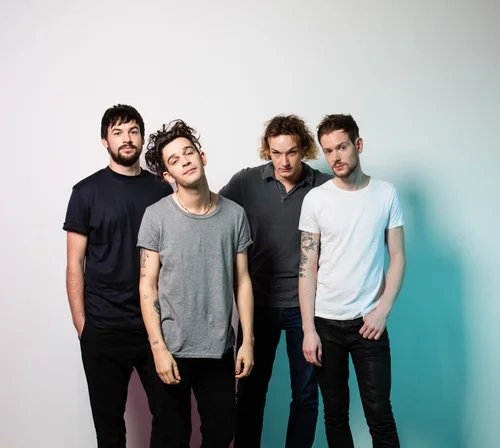
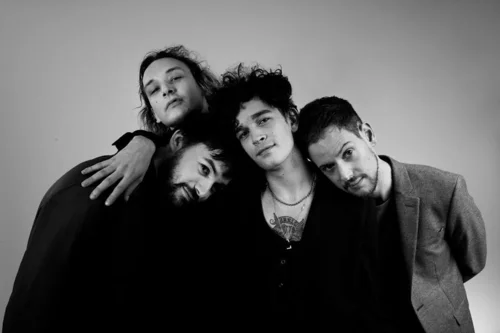
this new track from The 1975 is entirely the work of The 1975. Although it is called The 1975, it is an essay/speech read out by environmental activist, Greta Thunberg. She is the central aspect of the song but, before I get there, I want to talk about bands that expand and grow hugely over time; why environmental issues are at the fore right now and we should be taking more notice; how bands like The 1975 are going to inspire others to talk about big themes in their music; role models and artists that we should be looking up to; a bit about Pop and how some are helping to redefine it – I will end by stating where The 1975 are heading and what lies in their future. Let’s start by talking about The 1975 as this act who have really blown up through the years. I remember when they released their eponymous debut back in 2013 and how different it sounds to what they are producing now. The band consist lead vocalist and rhythm guitarist Matthew ‘Matty’ Healy, lead guitarist Adam Hann; bassist Ross MacDonald and drummer George Daniel. They have come an awful long way in a few years but I do like how they started. Maybe their self-titled album was not as ambitious and original as the work they are producing now but there were some hits and memorable numbers on the debut – no less Chocolate and Sex. They sort of upped their game by 2016’s I Like It When You Sleep, for You Are So Beautiful yet So Unaware of It and, whilst that titled annoyed many people (it is a bit stupid!), it was another evolution for a band becoming more confident and experimental. I think The 1975 really developed their sound and became a lot more ambitious as time went on. Maybe few would have expected them to survive after their debut but, lo and behold, they continued on and last year’s A Brief Inquiry into Online Relationships is their finest work. It has just been nominated for a Mercury Prize and many are tipping it to win.

 PHOTO CREDIT: Louise Haywood-Schiefer

This is a group who have come a very long way since the start of their careers and they seem to be growing stronger by the release. Listen to A Brief Inquiry into Online Relationships and it is a very different beast to The 1975. They are less reliant on pure love songs or straight numbers that have great hooks and make you sing along. They are introducing new sounds and formats; stretching what an album can be and are becoming more socially conscious and bold as they go along. That will lead me to their latest song but one only needs to listen to what they have released recently to see The 1975 are one of the biggest bands in the world. This is a time when solo artists are dominating so it is nice to see bands like The 1975 around. I would hate the music industry to become too reliant on solo artists and, as there is not the same level of Rock bands as we had years ago, maybe it is harder for bands to succeed. The 1975 are leading the way and are proving what can be achieved; how bands do not need to sound the same and I do think we will see a lot of new bands form that are inspired by The 1975. I wonder how far The 1975 can go because, very soon, they are bringing out their album, Notes on a Conditional Form. In fact, I think the album is coming out next year but I wouldn’t be surprised to see it pushed forward, given the momentum they have created. I am not sure what their upcoming album will revolve around but, if it is anything like A Brief Inquiry into Online Relationships, then it is going to be a smash – that album was one of the best-rated of last year. Touring and adulation on the road has helped when it comes to The 1975 growing and expanding their horizons but I think they are looking around them and writing the types of songs we need to hear right now.

 PHOTO CREDIT: Getty Images/The 1975

That brings me to the environment and other subjects that are not necessarily documented in music all that much. I know artists like ANONHI (4 Degrees) have talked about the changing climate and how serious it is but, largely, the mainstream still consists of artists talking about themselves. What this year’s list of Mercury-nominated artists shows is that we have some great British acts that are getting urgent and starting to talk about what matters. From Grime and Hip-Hop albums that investigate modern Britain and the realities of the street to artists tackling toxic relationships and gender imbalance, it is great to see something serious being injected into music. I know this is not new but I still feel like there is too much personal heartache and commercial sounds at the forefront. Given the fact the world is changing and the environment is under threat, I do think artists have a responsibility to talk about it and open eyes. I doubt there are many of us who want to experience too many days like we have done recently – especially the heat of Thursday! It was really unbearable and it is quite worrying to realise that this sort of heat will become more common. The problems with the environment are manmade and we need to do all we can to try and reverse climate change. Maybe it will be impossible to undo all the damage but it is imperative that we do all we can. It might be a bit scary talking about environmental changes in music and hard to articulate something moving but I feel more artists need to try. The 1975 are one of these bands who are not shying away from the big subjects and want people to react and take action. I do feel, as climate change takes hold, musicians have a very important part to play. I am not suggesting they can lead to revolution and solve all the problems around but I do not think the Government are doing enough.

If the Mercury shortlist shows anything it is that the best music at the moment strays away from the strictly personal and has a political edge. I do love artists that discuss their own lives but, as the world becomes more divided and there are so many problems around, artists are leading the way and doing what politicians should be doing. The 1975 are a fantastic band and, no doubt, will inspire people to make changes. The money raised for their new single is going to Extinction Rebellion – an environmental charity – and I do hope that our current Government are moved to take action and introduce measures…although that might be a bit of a stretch! Music is fine as it is right now but how many tracks open your eyes, move you and actually make you think?! There are not that many, I bet, and I do think that artists around the world need to start talking about big subjects. Many do already but I think we need a lot more recruitment and a louder voice. I am not surprised The 1975 have brought out this song that puts Greta Thunberg at the front because she is someone who is inspiring many. Only sixteen, she is an activist who is making speeches and calling for change. The 1975’s new track is less a traditional song and more Spoken Word; Thunberg delivering this impassioned and striking speech that calls for action and revolution. Some have claimed the messages are quite irresponsible and will provoke violence but it is clear what she is saying: we are being let down and the planet is in real danger at the moment. If we let things carry on as they are, it will mean extreme heat will be the norm and future generations will suffer. I am a bit worried how things will work out and what state the planet will be in (in) about twenty years. We all need to take action because we are reaching a point of no return – somewhere we do not want to be at all!

 PHOTO CREDIT: Jordan Hughes

I want to bring in a couple of interviews The 1975 gave last year when promoting A Brief Inquiry into Online Relationships. I do not think there are many bands out there at the moment you can call iconic or role models. I feel The 1975 transcend mere band status and have a much bigger role to play. Matty Healy, especially, is someone who speaks out against gender inequality and wants balance; he is concerned about the planet and wants to see changes there. So many musicians remain quiet because they fear the label will object or fans will turn away but music’s huge platform is not necessarily being exploited by popular artists. More and more, issues big and small are cropping up and I do think musicians have a duty to bring them up in their work. In this interview with DIY, Healy talks about how tough it is being a human and the fears he has:

 “Instead, ‘A Brief Enquiry…’ looks set to beat with a far more human and fallible heart than these early technology-infatuated movements might suggest. Of course, there’s an overly complex explanation about the renouncing of his previous postmodern songwriting tendencies (“always referencing myself, always referencing another song”) to explain it all, but really it boils down to a far simpler point: “Everything is so ironic because the idea of sentiment is more difficult to deal with. Being human is more difficult than being ironic.”

At a time where society is more politically polarised than ever, and a fear of being publicly burned on social media has the world treading on fearful eggshells, The 1975 want to tap into the real, human feeling at the centre of it all. “You look at the Right, and the Right has got Nazis in it, so we put that in a box and we know that’s not a good place to go. And then you look at the Left and you’ve got this whole group of people who just won’t stand for any nuance.

PHOTO CREDIT: Getty Images/The 1975 

So everyone’s scared. I’m scared. I think that people are scared to feel, and they don’t know what to say. So I think that going deeper is where this record’s come from,” Matty explains. Later in our conversation, these fears manifest themselves in a way that’s echoed by many conscientious males in the public eye right now. “Let me ask your opinion on something,” he cuts in. “I can be quite tactile, so am I deluded or paranoid to think, would it be good for me to always have a chaperone in interviews if the journalist is female?” he questions. “I’m worried about being myself and just chatting. I know that women are made to feel uncomfortable by men, so is it my moral duty to say, would you like another person around? Or does that make me seem guilty? I’m not a bigot, and I’m not a racist and I’m not sexist, but what if there was some ridiculous scandal that was not true but managed to really discredit me?”

There are very few leads who are as open and revealing in interviews and, whilst someone like Matty Healy is quite accessible, there is also something pretty amazing about him. He is a bit of a role model but his path has not always been clear and straight. Healy has had to overcome problems and challenges but, as he explained to GQ, excess and addiction is not a good path – almost eschewing the traditional mantras or Rock bands and that idea life:

 “He starts to tick them off, “Sex, drugs, done all of them, that’s not a path to salvation. Not that I don’t have a good sex life, not that we need to get personal about it, but art, drugs, sex, religion... Religion, unfortunately, [is] not an option, especially if you live in England. They’re all just forms of losing yourself and I think I see that at shows, kids having that moment of freedom. That’s one of the only times I feel really free, when I’m on stage, not because people are looking at me, but because I’m fulfilling my purpose.” He adds, “I’ve learned more from artists who signpost toward utopian ideals as opposed to politicians and leaders that actually try and create them and fuck them up. Artists have taught me way more than anyone else really”.

 PHOTO CREDIT: Jordan Hughes

Healy is a cleaner and more focused artist than he once was and many people should be looking up to him, I think. There are too many artists around with very little to say but The 1975 are almost like their own political party. They can craft music that is catchy and radio-primed but there are deeper messages and important themes being tackled throughout. In many ways, The 1975 are part of a movement who are redefining Pop and what it stands for. Even though there is a lot of commercial Pop flying about still, The 1975 are showing what direction it should be moving in. They are discussing themes around sex, politics and social issues but are pairing that with compositions and vocals that stick in the heart and has a lighter touch. Other artists like Billie Eilish are also taking Pop in new directions and it is pleasing to see innovators around who are not just following everyone else. I know other bands are compelled by The 1975 so it will not be too long until we see them make their way to the mainstream. Music is in a good state I think but there is still an absence of the biggest artists using their voice to actually talk about stuff that matters: still, there is this reliance on the commercial and personal. It is a bit sad to see but I guess it will be hard to override that. As we are made more aware of problems around climate change and the environment, I feel musicians will react and we will hear more songs that call for action and change. I shall move on in a second but I am glad The 1975 are riding high right now and delivering these very stirring and inspiring songs. I should probably stop with the gabbing and actually get down to reviewing The 1975’s eponymous track.

yh.jpg

 PHOTO CREDIT: Michael Campanella

The opening of The 1975 is soft piano and something quite tender. We hear a couple of voices (one of them belonging to Greta Thunberg) chatting and there is this delicate and tender piano line. It never really gets to the forefront but brilliantly scores Thunberg who comes to the microphone and, with a serious tone, she talks about what we are experiencing right now. Rather than get angry and fire the words out, there is this stern feeling but she never shouts or forces the issue. Instead, Thunberg talks about how we are living in an environmental crisis and we cannot hide from it. Many governments around the world are not calling it what it is and we need to start accepting that there is a huge problem that we need to face and rectify. We do not have all the solutions yet unless, as Thunberg says, we simply do nothing. It seems that there is this general apathy and inactivity that means the world is being destroyed needlessly. Nobody can ignore the facts and harsh truth and so, with that in mind, what are we to do? Thunberg states that the “older generations have failed” and this current climate battle is one we are losing. These words seem quite haunting and perilous but, rather than scare and put you off, they are designed to make you think and inspire. I do like the fact the composition is very much at the back and the attention is on the voice. Some artists, if they tried a song like this, would have electronics and all manner of sounds getting in the way. Thunberg outlines how political movements are failing but we as humans have not yet failed – and we can still turn this around if we want to. We need to recognise the failings of our systems and, if we do not do that, then we stand no chance. This sort of disaster has not befalling the world and we have seen nothing like this before. Now is the time to speak clearly and not be polite about things.

 PHOTO CREDIT: Getty Images

Thunberg recognises that this is a huge issue but we need to stop our emissions of greenhouse gases; it is a simple fix but so many of us are passive and ignorant. Maybe the track is not providing information we did not already know but, in this context, it sounds much more powerful and moving than it ever has. So many people are talking about the danger of emissions and the fact that nothing is being done to cut that down. One of the most emphasised and memorable parts of the song is the nature of black-and-white. Thunberg says that we are told nothing in black or white but, in the case of the planet and whether we continue, it very much is – we can either choose to go on or not. There are no grey areas regarding survival and the preservation of the planet and we can take transformational action to safeguard the world for future generations. Coming from the mouth of a teen, these words sound more moving and emotional than, say, an older person. It is almost like we have this girl who is fearful she will not live long enough to see old age because of the climate crisis. It gives The 1975 this very sad edge but, rather than drag the listener down, Thunberg is building us up and saying that we can make changes. Rather than sit around and accept that things are lost, we all can make that change and help keep this planet safe. Strings stir and build in the background and there is this symphonic quality to the track. Thunberg knows that individual change alone cannot redress the balance and reverse the damage done. There needs to be this systemic and widespread movement that pledges action and brings in laws. Cutting down on emissions and making sure we reduce pollution is key. Thunberg wants us to wake up and make the changes required because we can all do it and we have that power inside us.

 PHOTO CREDIT: Penguin

It might only be small changes – using public transport more and being more conscious of our environmental impact – but it needs to start now. There is clear emotion in her voice as the tracks nears the end. It might seem impossible but the facts are before us and we cannot ignore them. We are using so much oil and that alone is creating a huge impact. If we can recognise where the problems are starting and the main causes of climate change then we know what to do; how to make those changes so that we can start to make a difference. The final lines of the song are the most effecting. When it comes to keeping that oil in the ground, there are no rules and polices. Governments and big companies can do what they want and, because of that, greater intensity needs to happen; this is a moment to revolt and take to the streets. In the rather calm context, that sentiment hits you and it seems very extreme. Many will debate whether street-level protest can achieve that much but Thunberg is advocating something more extreme: it is time to rebel and create civil disobedience. The song ends there and you have to sit back and think. We need to take action today and, really, is the best way to see fast improvement and betterment hitting the streets and creating unrest?! It seems like all other methods have failed and maybe we have left it too long – revolution is the only solution to the problems we have caused. The 1975, with Thunberg, have created a track that will affect many people and let’s hope that there are people in power who have heard it and will be compelled to act. I do think we are in a situation where we cannot afford to wait and we do need to think about the next step. Whether it is making huge personal changes or civil disobedience, The 1975 is a song that you will not forget in a hurry.

The 1975 have been shortlisted for a Mercury for A Brief Inquiry into Online Relationships and they must rank as one of the favourites right now. Others are tipping Dave, Little Simz and Anna Calvi for their albums but I do think The 1975 have a lot of momentum at the moment. Make sure you follow them on social media to see where they are heading but the next few months are going to be very busy for them. Not only do they have to prepare for the Mercury Prize ceremony in September but their album, Notes on a Conditional Form, is coming along. There are touring demands and it is going to be pretty hectic for a little while. I do hope they get time to chill and relax at some point because they have been pretty full-on for a while now. They are, debatably, one of the biggest bands in the world and they seem to be on their own level. I still look back to where they came from and how much they have developed since their debut. They almost sound like a different bands and it is quite amazing matching their debut album to their latest. Maybe it is just a natural evolution but The 1975 of today are far more essential and urgent than the band of the past. They are on top form and you can never predict what they will come out with next. A Brief Inquiry into Online Relationships is an album very much of this time. Tackling some big issues and deeper subjects, bands like The 1975 show that you can mix the thought-provoking and serious with something more fun and catchy. The 1975’s new track will turn many heads and it will inspire some younger listeners. I do not think our current Government are truly aware of climate change and how serious things are now. I doubt they will take action and get involved like they should so, really, is it down to musicians to take their place?! That seems quite sad and alarming but I do know the likes of The 1975 and Greta Thunberg will compel many people out there to speak out and demand change. I shall end things here but it has been an unusual and great experience reviewing a track that is less musical as it is a stirring speech. I do not get to do that often so, when the opportunity arises, I am always keen. The 1975 is a song that will stun everyone and Thunberg really delivers this evocative and powerful statement. It makes me wonder whether other songs on Notes on a Conditional Form will be as original and bold but, as a potential first taster, it is stunning indeed. A track that gets into the head and stirs the blood, it is yet another arresting cut from…

zzz.jpg

ONE of the biggest bands around.

___________

Follow The 1975

FEATURE: Into the Groove: Trying to Create That ‘Ultimate’ Music Podcast

FEATURE:


Into the Groove

PHOTO CREDIT: Rex 

Trying to Create That ‘Ultimate’ Music Podcast

_________

THAT title at the top…

78778.jpg

 PHOTO CREDIT: @moco1384/Unsplash

is a bit of a placeholder and I am not sure whether that will be an actual reality – Into the Groove seemed to fit what I want to do but, inevitably, something more apt will appear and form closer to completion. There are some great music podcasts around and there are lists and features that point you the way of the best around – there is a podcast designed for every music-loving soul, it seems. I have been trying to set up my own podcast for the longest time and I have also tried to get a Kate Bush podcast going. That might take a little while to get going but there are few Kate Bush podcasts so I think I can fill a hole. In terms of broader music, it is harder being unique and providing something different. I think a long running radio show such as Desert Island Discs gets into the heart because it features interesting people simply choosing eight songs (or discs) that mean a lot to them. There are great podcasts/shows like Matt Everitt’s The First Time with… that brings together famous figures from music and they literally talk about their first times – records, gigs and memories. It is another simple and popular format that combines interviewing with personal musical choices. There are a lot of podcasts around that are similar and each have their own little touches and special fabrics.

zz.png

 IMAGE COMPOSITE: Vinyl Me Please

It is challenging coming into the podcast market with something completely fresh that will take people by storm. You also need to think about finance and paying for the thing. The initial set-up and equipment is affordable enough but, when it comes to song clearance/licensing and paying for that; sorting out guests and other expenses…that can add up and you need to look at the other end: getting some revenue back and being able to afford a podcast. One might look at advertisers and sponsors but, if you are new, you might not be able to command big sponsors and get that much from advertising revenue. I have thought of all of this and, with a small budget, I think I can put a first series together. I have pitched ideas before but I think the latest incarnation holds promise. It will be a ninety-minute show divided into two: like a record’s A and B side, guests would pick six tracks in the first half and four in the second. Like a lot of music podcasts, the categories (relating to the songs chosen) would be specific. It would start with the first song the guest remembers – they recall that special moment when music came into their life. They would talk about the first album they bought and select a song from that; their most-treasured/favourite album (and select a track); their favourite artist and band – ditto regarding songs – and, oddly, pick a song from their favourite NOW That's What I Call Music! compilation.

zzzzzz.jpg

 PHOTO CREDIT: @oceanswide/Unsplash

I wanted to choose a couple of categories that are unusual because, not only was NOW That's What I Call Music! born the same year as me (1983) but because it sort of joins us all. We all have the series in common and, whether at school or later/earlier in life, we have some degree of exposure to NOW That's What I Call Music! That would end the first side/half. Like a record, it would then end and we would flip over. Throughout the opening half, the interview/process takes the same sort of form as Desert Island Discs where guests talk about their musical tastes and upbringing. Unlike most other options, this podcast is purely about the music – there will be personal discussions but, for the most part, it is all about music! That first side would last forty minutes and, before the second forty minutes, there would be an intermission/pause. We would lift the needle up and there would be a chat/special section that would last ten minutes. I am still working on the idea in full but I think it is important to break up the music and usual format and provide that transition. When the second half comes on, there would be four more tracks and a ‘bonus track’. The first track off of the break continues where the first side left off: a rather unusual category and, again, I think it would join us all: a favourite track from The Beatles.

 PHOTO CREDIT: Wilma

Everyone loves The Beatles – or they will do if they are on MY podcast – so it is a chance to chat about the band and select a song from them. The next track selection would be a track from a film soundtrack – the guest chooses their favourite film soundtrack and, after brief discussion, they can select a cut from it. The guest would then move on to new music: talking about a band/act that is fresh to them and setting up a song. The last choice would be their favourite track; the song that means everything to them. The ‘bonus track’ that I allude to can last no longer than one minute. It can be anything: from a T.V. theme to an interview or a very short song – something that ends that guest’s ‘album’ and would add a lovely finishing touch. That would commence the show and, whilst the podcast is digital and all the music would be sourced online, each track is included onto a record the guest can take away with them – the selection of songs from each guest is included in a playlist; the podcast would have its own Spotify channel and all songs featured are on there. It has elements of existing formats but the concentration on music discussion and those different categories means that it would set itself apart from everything else. It – whatever I choose to call the podcast series – would have bespoke playlists where guests get to talk about their musical experiences and would take interviewees from all corners of the media.

bvbbv.jpg

 IN THIS PHOTO: Lauren Laverne (who would make a perfect guest)/PHOTO CREDIT: Boden Diaries

From radio presenters and actors to writers and directors, it would be an interesting mix. I have not considered all of the ten names I want for the first series but I am thinking about BBC Radio 6 Music/BBC Radio 4’s Lauren Laverne – as she hosts Desert Island Discs – and musician Hayden Thorpe (formerly of Wild Beasts); also The Guardian’s deputy music editor, Laura Snapes. The idea is to go in-depth with the guests and explore what music means to them and the artists they were exposed to. I am still concocting what will fill that between-sides segment but it is a chance to kick back with the guests and do something different. In time that will come but I have always wanted to put together a music podcast that has a similar feel to the best around but has its own skin and dynamic. Coming in at ninety minutes a go, it is not too long but would allow enough time to go deep and feature an array of great tracks. Everyone’s tastes are different so getting that ‘ultimate’ podcast made might not be possible. Perhaps it is too subjective a thing but I do feel that striking that balance of relaxed and detailed is hard but, if done right, it is a perfect blend. My podcast (I will have to decide on a title: maybe Self-Titled?!). I am quite optimistic and I think I can get some great guests on.

ccc.jpg

 IN THIS PHOTO: Hayden Thorpe (who would make another ideal guest)/PHOTO CREDIT: Phil Smithies

There are a lot of great music podcasts but, with so many music-lovers out there, you can find room and a market if you do it right. Just thinking about it, the guest can come up with their own album cover. During the conversation, they would reveal their favourite album covers and, when it comes to their own album (they take away at the end), they can design the cover – the album, as a possible title suggests, is self-titled and the album cover would be the cover image for each episode. I shall leave things there but, as I have been searching for a podcast I can invest in and push forward, I do think that this might be it. It is simple enough but has that deep conversation that urges a guest to look back to their childhood and when music arrived; bring it right up-to-date and really open up their vinyl collection. I have other ideas that I will add to the concept but I think, as it stands, it has legs. The guests are important and, whilst I have only two or three clear names in mind for the first series, I want to divide it between radio presenters, musicians; actors and directors/producers with a journalist and writer in there – making sure there is an even split of male and female guests. The podcast market is crowded but the demand is there and, when it comes to music, there is always going to be a place – if the idea has potential and the promise of longevity. The idea of chatting with a special guest, getting serious about music and playing some top tunes sounds like…

gffggfgf.jpg

PHOTO CREDIT: @brookecagle/Unsplash

PERFECTION to me.

FEATURE: Queens of the Underground: Part Two: Georgie Rogers

FEATURE:


Queens of the Underground

PHOTO CREDIT: Georgie Rogers 

Part Two: Georgie Rogers

_________

WHEN I started this feature yesterday…

 IN THIS PHOTO: Georgie Rogers recently interviewed Mercury nominated artist, Nao (she was shortlisted for her album, Saturn)/PHOTO CREDIT: BBC Radio 6 Music

I kicked off by talking about a fantastic D.J. and curator, Carly Wilford - and I am going to continue that into today. There is a lot to discuss when it comes to Georgie Rogers (as there was with Wilford) as she is getting busier and busier, it seems. There are a couple of reasons why I want to include her in this feature: for one, she is one of the best young D.J.s around and I love her work on Soho Radio and BBC Radio 6 Music – especially the latter. As stations like BBC Radio 6 Music remain fairly rigid with their personnel and talent, I do think there are great people like Rogers who could come to the station in a regular slot (maybe a late-evening position) and spin some tunes. I do like everyone who is at the station but I think she would add something fresh and exciting – and, I think, it would make her one of the youngest D.J.s there (it would help attract listeners from other radio stations and help bring more listeners in). That sort of decision is down to the bosses at the BBC but, as is always the way, recognition and progress takes a very long time! Go listen to Rogers on Soho Radio and you can also catch her on Beats 1 – a station, I feel, would benefit from Carly Wilford’s presence, as I argued yesterday.

PHOTO CREDIT: Georgie Rogers/Getty Images

Whilst she only occasionally gets to present the music news with Shaun Keaveny during the week – Matt Everitt is the regular presenter; Siobhán McAndrew also presents sometimes – it would be great to hear more of her on the station. Right now, Rogers has been interviewing the nominated artists for this year’s Mercury Prize. She has been chatting with Joe Talbot of IDLES and Nao (among others). There is a rapport and connection she has with interviewees that you do not get with anyone else which, as you can imagine, brings something out of them. Rogers has conducted some big interviews and, whilst it is great that she gets to talk with the Mercury shortlisted, hearing her on a more regular basis would be great. I often feel that, as there must be room at a station like BBC Radio 6 Music, there is a show in her; maybe something interview-based or similar to what she does at Soho Music. That might be a little way off but Rogers is one of the most dynamic and hard-working presenters around.  A naturally warm and friendly voice, Rogers has something that many stations can benefit from. I think she is worthy of inclusion into this feature because her shows (on Soho Radio) are so memorable and I am always picking up new tracks and suggestions from her. It is not just Electronic music that Rogers is attracted to: she covers all the genres and is keen to promote and uncover the best sounds from all areas of music.  

I have skipped forward a few steps and, really, I should have begun by introducing Rogers – or at least her do it:

“Georgie Rogers is an established broadcaster, music journalist, DJ and voiceover from London. 

A tastemaker and new music champion, she regularly contributes her warmth, knowledge and personality to BBC 6 Music, BBC Radio 2, Apple Music's Beats 1, Soho Radio and Monocle 24. 
BBC 6 Music has been her spiritual home for the past 10 years where she works as a broadcast journalist after being scouted on the red carpet at the NME Awards. She continues to indulge her boundless enthusiasm for music, musicians, culture, art and fashion within a national news team who both value her work and respect her attitude towards it.

Hear her regularly bantering with Shaun Keaveny on breakfast, Radcliffe and Maconie and several other presenters on the network and her interviews and investigative pieces with some of the biggest names in music. She's had the pleasure of time with many of her heroes Led Zeppelin, Mick Fleetwood, Sir Paul McCartney, Cat Power, James Murphy and even Ryan Gosling!

Following an English and Drama Degree and early work at XFM and BBC 6 Music Georgie started honing her skills as a broadcaster presenting for Jersey's Channel 103, Diesel U Music, Strongroom Alive, Brighton Festival Radio and Amazing Radio, with her national DAB Amazing Breakfast being featured in The Guardian by Elisabeth Mahoney and again by Miranda Sawyer, as well as Cooler Magazine.

From 2012-2015 she spent four years anchoring shows on XFM (where she had interned and got her first paid job in radio six years previously) with her own Friday overnight slot, long stints on the weekday 7-10pm specialist evening show, John Kennedy's X-Posure and covering across the schedule.

Two years on Virgin Radio followed her time at XFM until the end of 2017 with Georgie presenting, curating and self-producing a Sunday night new music show Music Discovery. Testament to her character, contacts, dedication and passion for great music her guest list included Death From Above, Jessie Ware, Blondie, Formation, Boxed In, Pond, The Maccabees, Wild Beasts, Joe Goddard, Sylvan Esso, All Them Witches. She invited so many fantastic artists to play sessions from Aldous Harding, Nadine Shah, Fink, Zola Blood, Juanita Stein, Nick Mulvey, Flamingods and Tame Impala's Cameron Avery.


Georgie is an entertaining host having compered and helmed festival stages, competitions or social media content for brands like Mixcloud, Vevo, Rolling Stones Exhibitionism launch at the Saatchi Gallery, Vevo, Fender, Barbour International at the Malle Mile, Record Store Day, Standon Calling, Festibelly, Youth Music, 7 Dials Soundtrack and The Selector for the British Council.

As a voiceover artist she has TV and digital campaigns with Avon, Mitchum, Pantene, Revlon, Wisdom, Film 4, BBC Four and 5SOS under her belt.

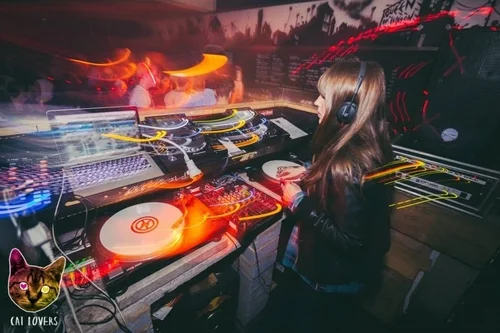
When it comes to DJing Georgie is well-versed at tearing up the dance floor. With a clear, uncompromising idea of what's popping. She was one of the small crew that put on successful deep house and disco club night Cat Lovers every month in Shoreditch for six years. It was a platform for breakout DJs and live acts booking the likes of Moxie, Monki, Wookie, TCTS, Strong Asian Mothers, Femme, Shura and Blaenavon. 

Georgie's DJ credits include spinning tunes for Whistles, Facebook, Topshop, Crack Magazine, Mac Cosmetics, Hunter, Benefit Make-Up, London Fashion Week, Little Gay Brother and Dr Martens at venues like the V & A Museum, Meadows in the Mountains in Bulgaria, Field Day, Dalston Superstore, The Lake Stage and Collosillyum at Secret Garden Party, St Pancras Renaissance Hotel, Rockness and the Ace Hotel.

Despite her rock roots and deep love of alternative music, her decks time is usually an opportunity to indulge in all things electronic.  Georgie is right at home mixing an eclectic bunch of house, deep house, techno, disco, nudisco, progressive selections, world beats & exotic grooves.  In her DJ bag you'll also find a far-reaching trove of tracks past and present; soul, funk, hip-hop, blues, R 'n' B, pop, anything that will make you get down, so wherever she's commandeering the decks she has all the tools to pull out all of the stop”.

I will move on to a new project Rogers has set up but, at the moment, I am minded to return to her interviews. When I talked about Carly Wilford yesterday, I discussed her interview style and how she D.J.s around the world; the fact she is a pioneer and businesswoman. All of these qualities can be applied to Georgie Rogers. Just listen to her interviews and there is, as I said, this natural chemistry that summons great answers from guests. Take a look at some of her other interviews and you get what I mean.

I think, for someone who has been behind the microphone for so long, it might be unusual for Rogers to give interviews herself. She is such an inspiring and evolving talent that I feel a few new interviews would be great; a chance for those who want to follow her lead to learn where she came from and how she got into the business. I want to bring in an interview she gave with We Are Mad to Live, where Rogers discussed her background and talked about women in the industry – and what she wants to accomplish in the future:

 “How did you break into the radio-presenting and the DJ industry?

After internships at BBC Birmingham, Channel 106 and Virgin Radio I started a placement doing music journalism for XFM. That led to my first paid job doing red carpet interviews, writing articles and putting together music stories for the website. It felt like my calling, I'd done English and Drama at Uni and I loved music, bands and gigs. A break came writing the news for the website at BBC 6 Music after a chance meeting at the NME Awards. I was a full-time music journalist there for three years, learning reporting and broadcasting skills on the job. I've been there ever since, freelancing regularly and occasionally popping up on Radio 2 to do Ken Bruce's Music News.

Hosting my own shows came when I got the Breakfast Show on national digital new music station Amazing Radio in 2010. That then led onto Strongroom Alive, cover on The Selector by The British Council and later a return to XFM as a DJ at the end of 2012. I had my own show on XFM on Friday mornings,. This year I started on the newly launched Virgin Radio. DJing is something that started as my bit on the side.  Getting people dancing and proving a release for them is a great feeling so once I started I got hooked.

How do you believe the female voice can be better amplified within the male-dominated radio-presenting/music industry?  Is it important to do so?

Someone once said to me an excuse for there being less women on the radio is because some stats revealed that women don't like listening to women on the radio. What a load of BS!

Most of my favourite broadcasters are female. There's certainly more women on air these days and I'm so proud to work at a national station with Edith Bowman in the coveted Breakfast slot. Edith, Kate Lawler, myself and The Mac Twins are on air regularly, there's lots of female producers and broadcast assistants and I can only speak for myself but I feel we are counted and appreciated. At certain stations it can still be a boys club as with much of the music industry. Just last year Pitchfork's Senior Editor Jessica Hopper asked the people of Twitter for experiences in music where you felt you didn't 'count'. She got hundreds of replies, so many of them infuriating examples of sexism. Since I started it's encouraging to be surrounded by more women in radio production, music production, presenting and Djing.

It's so vital to show young girls that it is possible to make it your career”.

MOST OF MY FEMALE CONTEMPORARIES KNOW THE VALUE OF SHOWING SUPPORT, STICKING TOGETHER AND HELPING EACH OTHER OUT. BEING COMPETITIVE WITH EACH OTHER IS POINTLESS. LOOKING BACK AT MY PLAYLISTS NOW, IT'S AN UNCONSCIOUS THING BUT I FEATURE SO MANY FEMALE ARTISTS SO I GUESS I CAN DO MY BIT THAT WAY.  WEBSITES LIKE THE POOL ARE DELIVERING INTELLIGENT CONTENT FOR WOMEN THAT NOT JUST ABOUT LIPSTICKS, BUT LIPSTICKS AND POLITICS, FEMINISM, FASHION, THE ARTS AND HEALTH. IT FEELS LIKE IT'S A BIG TALKING POINT AT THE MOMENT SO LET'S KEEP TALKING ABOUT IT.

What are your goals within your career for the future?

I'd like to continue doing it for a long time, for it to be my career. I've been filming some backstage videos with Vevo recently which has been so enjoyable so I hope to do more on camera bits next year. The daydream of presenting the Glastonbury BBC telly coverage doesn't seem to ever go away, or Desert Island Discs, but Kirsty's got that down for a good while and I'm in the queue of what... everybody else in music broadcasting!”

That interview was back in 2016 and, since then, a lot has happened for Rogers. I think there have been some small steps regarding women in radio/the industry – BBC Radio 2 made some big changes this year – and we have seen festivals, slowly, redress the imbalance on their bills. I think Rogers makes a good point when she talked about women not wanting to hear other women on the radio. Maybe that is true of some older listeners but radio is about personality and how you speak to the audience. If you are quite offputting or distant then, regardless of gender, that will be a fact. Some of the best female broadcasters of the moment are bringing in huge listener figures – from Lauren Laverne on BBC Radio 6 Music to Zoe Ball and Jo Whiley on BBC Radio 2; Maya Jama and Clara Annie Mac on BBC Radio 1. I know some of those broadcasters are long-established but they continue to attract new listeners and are inspiring for women who want to get into radio.

I do think that all areas of music have an issue when it comes to recruiting women. Maybe they feel women are not going to be as commercial and connective; they might not have the same clout as men and things are okay the way they are – none of that is even remotely true! Created alongside filmmaker Alice Smith, Super Women is a new series that spotlights pioneering women – not just in music but across all areas of society. The most-recent edition (there have been two so far) featured the brilliant producer and engineer, Catherine Marks – who has worked with the likes of The Amazons and The Big Moon. The series is fantastic and it is a case of a pioneering and inspiring woman interviewing others; a concept that is long-overdue and shows why we need to demand faster equality across all areas of society. I have seen interviews of Rogers online but it would be great to see her interviewed and, Desert Island Discs-style, choose some of the records that define her; select some heroes and heroines and talk about her career so far – maybe it is something I should kick off myself; maybe a podcast that features strong and brilliant women in music?! That is food for thought and, as I go off to scribble some notes, I would urge people to check out Georgie Rogers’ work. You can check out some of her videos and have a look at her official website; check out some of her choice mixes - and throw her some love on social media (the links are all at the bottom).

Like Carly Wilford, I know Georgie Rogers is inspiring women in music and helping bring about change and discussion. I know she wants to have her own show on a big station and I think that will come. I do feel radio bosses need to open their eyes and ears to talent like Rogers; someone who can offer so much passion and variety. I love the fact she is a brilliant D.J. but she is also this champion of great women; someone who wants to bring about improvement and parity – exactly what makes her an underground queen. Like her BBC Radio 6 Music colleagues Lauren Laverne, and Mary Anne Hobbs, Rogers tirelessly looks out for the hottest sounds around. She is this curator and D.J.-supreme; a budding documentary-maker (I do think there are other concepts in her) and general all-round-legend.

Rogers is still very young and she has decades more to give the world but I think, as radio/music still needs to do a lot when it comes to acknowledging talented women, she has to be in the mix; she has a lot to give and I think she can add new life and nuances to stations like BBC Radio 6 Music. I shall stop pushing her to the bosses but, when it came to this feature, I wanted to highlight the remarkable work she is doing. Her recommendations have helped rising artists find exposure; her interviews are unique and essential and, as a D.J., there are few that bring so much joy, heat and personality. As I head off to plan my own podcast, I am taking inspiration from Georgie Rogers and suggest that she is a big…

IN THIS PHOTO: Georgie Rogers chills with the legendary Nile Rodgers/PHOTO CREDIT: BBC Radio 6 Music/Georgie Rogers 

STAR of the future.

______________

Follow Georgie Rogers

FEATURE: Hardly a ‘Lucky’ Star: Madonna’s Groundbreaking Debut at Thirty-Six

FEATURE:


Hardly a ‘Lucky’ Star

ART DIRECTION: Carin Goldberg/PHOTO CREDIT: Gary Heery 

Madonna’s Groundbreaking Debut at Thirty-Six

_________

I was going to write a Vinyl Corner feature…

 IN THIS PHOTO: Madonna captured in 1983/PHOTO CREDIT: Getty Images

about Madonna’s eponymous debut as it turns thirty-six tomorrow (27th July). There are a number of reasons why the record is so special and has endured for so long. Madonna is a great album to hear on vinyl, mind, and it sounds as fresh and energetic as it did back in 1983. I wanted to go deeper than a mere nod to the sound of the record and why it is perfect on vinyl: there is such much more to Madonna than meets the eye! Her debut album is, in many ways, groundbreaking and unusual for Madonna. She established herself as a promising singer in New York during the early-1980s and she was signed to Sire by their President, Seymour Stein. Her debut single, Everybody (1982), was a success and he could clearly see she has potential, ammunition and momentum.

 IN THIS PHOTO: Madonna looking relaxed for Richard Corman in 1983

I think Madonna’s debut is quite rare in the sense that, on five of the eight songs, she is the sole writer – she would not enjoy this sort of freedom for quite a while. Madonna was used to working with other producers and writers but, right from the off, she was penning her own songs and had a sense of freedom. So many Pop artists would have been told to stand aside whilst producers/a committee wrote songs that, in their mind, would launch their new artist. Madonna would collaborate more on future albums which is a weird way around: usually, artists might start with others but break away; Madonna sort of did things the other way around. I like the fact Madonna is an album where the creator gets her say and it is not just another throwaway Pop album where there are endless credits and the artist is sort of buried in the mix!

It is staggering to think that Madonna is about to turn thirty-six! I was born the same year the album came out but I was being made aware of its hits when I was at school. I will talk more about the tracks but Borderline, Holiday and Everybody are among the most immediate and finest Pop tracks of the early-1980s. Madonna is also unconventional in the sense that her songs were not a conventional three minutes in length and necessarily primed for radio. Rather, the songs are suitable for discos and clubs; where D.J.s can let the song play and people are not concerned about running time. Many overlook Madonna’s eponymous album in favour of bigger works such as Like a Prayer and Ray of Light. That is fair but it is unfair to judge Madonna as an inessential record – considering the legacy it has and, in 2019, there is nothing that sounds quite as fresh and upbeat! Listen to Pop music now and it either sounds too processed and busy or it is experimental and darker. There are some 1980s-inspired artists like Shura but, for the most part, Pop has gone in new directions. If someone wants to sound Madonna-like, they tend to fail – maybe it is hard to reproduce an album that was of a particular moment. That said…there are so many artists around now that are taking from Madonna’s debut and being influenced by it.

It is small wonder as Madonna is rife with Disco sounds; made using technology of the time such as Linn drum machines and the Oberheim OB-X synthesiser. Madonna was not quite the singer she is now – or at her peak around the time of Like a Prayer (1989) – but I do think her debut sells and resonates because of the more girlish and bubbly delivery. If the vocals were too deep, dramatic and experimental then it would damage the songs. You get this very real and colourful burst of life coming from a singer who, whilst still learning and far from her best, was seducing people around the world with her incredible songs. Whilst the songs on Madonna are memorable and nuanced, they are relentlessly bright and youthful. There are deeper and more mature moments but I love the sheer sense of optimism and verve. If Madonna herself went on to dismiss her debut to some degree, its importance and legacy is clear – more on that a bit later. In 1982, a year before Madonna was released, Madonna was living in New York and trying to get herself signed. She performed in The Breakfast Club and was joined in the band by her then-boyfriend Steve Bray (who would write for Madonna from Like a Virgin (1984) onward; he was not working with her by 1992’s Erotica). The Breakfast Club were more Hard-Rock-driven and did go into Funk territory. The band continued without Madonna but it was clear, even then, she wanted to move in a different direction and was a clear star.

  IN THIS PHOTO: Madonna is snapped by Richard Corman in 1983

Singing for a band is great but, with such ambition and desire, Madonna was writing her own material and has dreams of making it on her own. Although Madonna worked with Steve Bray a lot after her debut, she chose not to do so on her debut – she opted to have a Warner Bros. producer, Reggie Lucas, helm the record. Maybe Madonna was looking for something New York disco-like; something quite free and not too complicated. As the demos started to develop, more instruments and layers were built in. Lucas eventually left because there were disputes between him and Madonna. She felt he did not listen and consider her ideas; there were too many instruments and she did not have enough control – showing the tenacity and boldness this new artist has right at the start! There is plenty for everyone on Madonna. She was a little disappointed there was not as much variation as she’d hoped; a bit too reliant on the Disco sound. It is understandable she’d pine for Disco considering that is where she started and that is what she was fascinated by. Future albums would see her spread her wings but, to Madonna and some, her debut is not as eclectic and variable as you’d hope. If there is an emphasis on more upbeat and danceable songs, there is sentimentality and emotion on offer.

Borderline is about a love that is never fulfilled; I Know It – an underrated track on the album – is gentler and has saxophone and unusual chord changes; Holiday is pure Pop and remains one of her defining tracks. There are few songs on the album but those that are on there are fulsome and fascinating. If there were more tracks then it might grow tiring: the fact there is so much energy means that you are pretty satisfied and exhausted by the end. Madonna would come to be defined as a style icon later in her career but she was definitely standing out in 1983. Shot by Gary Heery and directed by Carin Goldberg, the front cover is striking. Wearing a dog chain around her throat, rubber bangles on her hands and her hair blonde and short, it is an eye-catching cover that seems to show two sides of Madonna: the vulnerable and playful sparring with the tough and assured artist. Madonna would develop a more sexualised and provocative image before too long but she was not exactly she and holding back on her debut album – unlike so many peers who were far too safe, placid and bland. Madonna peaked at number-eight in the Billboard 200 and was certified five-time platinum by the Recording Industry Association. Critics at the time were positive (for the most part) but I think Madonna has gained greater attention and praise in the years since; seeing how it has influenced and the fact, unlike so many albums from that period, the songs do not sound overly-dated.

IMAGE CREDIT: Billboard Magazine 

In their review, AllMusic, had this to say about Madonna’s 1983 debut:

 “And her eponymous debut isn't simply good, it set the standard for dance-pop for the next 20 years. Why did it do so? Because it cleverly incorporated great pop songs with stylish, state-of-the-art beats, and it shrewdly walked a line between being a rush of sound and a showcase for a dynamic lead singer. This is music where all of the elements may not particularly impressive on their own -- the arrangement, synth, and drum programming are fairly rudimentary; Madonna's singing isn't particularly strong; the songs, while hooky and memorable, couldn't necessarily hold up on their own without the production -- but taken together, it's utterly irresistible. And that's the hallmark of dance-pop: every element blends together into an intoxicating sound, where the hooks and rhythms are so hooky, the shallowness is something to celebrate. And there are some great songs here, whether it's the effervescent "Lucky Star," "Borderline," and "Holiday" or the darker, carnal urgency of "Burning Up" and "Physical Attraction." And if Madonna would later sing better, she illustrates here that a good voice is secondary to dance-pop. What's really necessary is personality, since that sells a song where there are no instruments that sound real. Here, Madonna is on fire, and that's the reason why it launched her career, launched dance-pop, and remains a terrific, nearly timeless, listen”.

Writing in 2017, Pitchfork investigated Madonna and had this to say:

‘Disco and disco-adjacent stars like Donna Summer and Michael Jackson still were programming their hits, but the overall focus was back on a full-band sound. There’s no shortage of organic instruments on Madonna’s debut—“Borderline” wouldn’t be the same without the piano’s melodic underscoring, standout album cut “Physical Attraction” without its funky little guitar line—but the slinky digital grooves often take center stage. Through this, Madonna is able to achieve an almost aggressive twinkling that still feels fresh: the effervescent fizz at the start of Carly Rae Jepsen’s “Cut to the Feeling” seems cribbed straight from “Lucky Star.”

Madonna vaguely criticized her debut’s sonic palette while promoting its follow-up, 1984’s Like a Virgin, but its focus is part of what makes the album so memorable, so of a time and place. She would soon become known for ritual pop star metamorphosis, but with a clearly defined musical backdrop, Madonna was able to let shine her biggest asset: herself.

Maybe the New York cool kids rolled their eyes at the Midwest transplant after she blew up, but she had effectively bottled their attitude and open-mindedness and sold it to the MTV generation (sleeve of bangles and crucifix earrings not included). Innocent as it may look now, compared to the banned bondage videos and butt-naked books that followed, Madonna was a sexy, forward-thinking record that took pop in a new direction. Its success showed that, with the right diva at the helm, music similar to disco could find a place in the white mainstream—a call to the dance floor answered by everyone from Kylie to Robyn to Gaga to Madonna herself”.

 IN THIS PHOTO: Madonna shot by Deborah Feingold in 1982

There are numerous reasons why we should reinvestigate Madonna’s debut - seriously, though, snap it up on vinyl if you can. The sheer thrill of dropping the needle and listening to those songs burst forward is more exciting and evocative than listening through headphones or digitally. Madonna brought Disco vibes to the mainstream after Disco had sort of died – when Punk arrived in 1978, it was not long until Disco was declared dead and, on 12th July, 1979, Disco ended. If Madonna has been released in 1980 or 1981 then it might have suffered: it would be too soon to try and reintroduce Disco but, with a break of four years, Disco was back in the forefront – although it was not as widespread and popular as it used to be. Madonna’s debut helped bring Dance-Pop to the front, too, and it would also set her on a path; an ambitious and always-inspiring artist who paved the way for so many others. Everyone from Janet Jackson and Debbie Gibson can lay claim to having been inspired by Madonna when it came to their own direction. Maybe it was her sound of the fact she had this unique look but Madonna had star power in 1983 and instantly set herself aside from everyone else – more than a chart artist, she was a pioneer and it would not be long until she was crowned The Queen of Pop.

Not only did her fashion turn heads but the videos for Lucky Star, Borderline and Burning Up mixed this idea of Madonna being a girl-next-door type but introduced a tough edge: a woman who was accessible but definitely took no sh*t from anyone. The hits from Madonna became radio staples and so many girls/women around the world were introduced to this new role model. For men and boys, perhaps there was this attraction: this clearly tough and determined artist who was also quite mysterious and down-to-earth. Future albums such as Erotica (1992) and Like a Prayer (1989) would cause some ruffling of feathers and showed this bolder, more sexual Madonna – her debut has this charm and innocence that is hard to resist. Of course, critics took shots at her and were cruel about her voice – that it was high-pitched and Minnie Mouse-like – and claimed she’s a one-hit wonder.

 IN THIS PHOTO: Madonna stands tall for Richard Corman in 1983

Madonna took this in her stride and, with some impressive attitude and her distinct image, she definitely shut people up and proved she was not going to take it. This criticism spurred her on to become even bigger and more ambitious. It is strange how criticism and negativity can drive us on but I wonder how many of those who dared criticise Madonna in 1983 are sneering now – if they are even still alive, that is! I will end with a couple of features that pay tribute to a groundbreaking album from a future icon and megastar. This article talks about Madonna’s first exposure to the U.K. – it would take longer for people here to latch onto her sound/look than in the U.S. – and how one particular video seemed to define who Madonna was and who she would become:

“Madonna’s eponymous debut album was released on 27 July 1983 to largely positive reviews. It heralded a new era of dance music populating the mainstream, fusing irresistible pop and R&B hooks with club-friendly beats, utilising the latest technology. The album entered the Billboard chart at number 123 and climbed gradually as Madonna embarked on an extensive promo tour, often playing three clubs in one night. Her act consisted of singing along to backing tracks and performing a series of choreographed routines with her back-up dancers, Martin Burgoyne, Erica Bell and Christopher Ciccone (Madonna’s younger brother).

Following a trek across the US, which helped Madonna to peak at number eight in October 1984, having sold 2.8 million copies, Madonna made her first visit to the UK to promote the album. As well as a seemingly endless round of interviews and photo shoots for magazines such as Smash Hits, The Face, Sounds, Record Mirror and i-D, she performed a showcase at Camden Palace, and performed Holiday on Top Of The Pops and The Tube (famously filmed in The Haçienda in Manchester).

The video for her fourth single, Lucky Star, released in September 1983, served as the perfect introduction to Madonna. For many people, who were seeing her for the first time, it was a shocking revelation that the voice they’d heard on the radio wasn’t, in fact, a black artist but a white girl. The video’s iconic opening shot, a close-up of Madonna taking off her shades, gives way to the singer gyrating in front of a white background, exuding star quality and a potent sexuality, with Christopher and Erica dancing behind her.

The video gave the singer her first taste of controversy – something she’d court throughout the next three decades – with some viewers enraged that someone calling herself Madonna was emanating such a sexual image (little did they know at the time that Madonna was her birth name). Despite this, the video became one of the most requested on MTV and sent Lucky Star to number four on the Billboard chart, giving Madonna her first Top Ten single.

The video also highlighted Madonna’s unique sense of style. Her tousled hair, cropped tops, cut-off tights, rubber bracelets and lace gloves became synonymous with her, and she pioneered the underwear-as-outerwear trend. Her look was streetwise, provocative and attainable for her growing army of fans, who soon copied their idol’s every fashion statement”.

Popfection talked about the importance of Madonna and how it has endured over the years:

“Madonna was on the fast track to taking over the world, which would come with her second album. 34 years down the road, Madonna is hailed as one of the finest pop records of the 80’s and one of the greatest debut’s in the history of music. The album’s iconic cover, incredible singles, and watertight production have left behind a legacy that few other albums earn. Birthing the career of the woman that would go on to change the face of the industry, this album was a gamble that paid off. Obstacles lined the road to success, but Madonna never stopped and she persevered her way to the finish line. In the words of the woman herself, “I went to New York. I had a dream. I wanted to be a big star, I didn’t know anybody, I wanted to dance, I wanted to sing, I wanted to do all those things, I wanted to make people happy, I wanted to be famous, I wanted everybody to love me. I wanted to be a star, I worked really hard, and my dream came true.” No truer words were ever spoke”.

I also want to bring in a feature from CLASH who claimed, quite rightly, Madonna is a bold masterpiece:

“It's difficult to think of many more debut albums that, in retrospect, hint so boldly at the career that an artist would grow into and the reputation that they would subsequently cultivate - the only one that springs immediately to mind is U2's ‘Boy’, an album made in Dublin kitchens but destined to be played in the world's biggest, best arenas.

Throughout the course of ‘Madonna’, she discusses the tropes present on most pop debuts - the idea of love, loss and the struggles of early adulthood. The overriding presence of her lyrics here is her independence and her ability to challenge the preconceived ideas that others have of how she should act and the choices that she is making.

Whilst nowhere near as daring sonically or visually as Madonna’s later works would prove to be, her debut album is, nonetheless, a masterpiece. Offering something for everyone without ever selling her talents short, to say it’s a tone setter for the themes that she would come to personify throughout the rest of the decade would be a huge understatement.

 IN THIS PHOTO: Madonna shines for Richard Corman in 1983

It’s a record of immense power and longevity that feels as impressive today as it would have done upon first release and the contrarians who say otherwise are the kind of people that you’d never really want to bump into at a party”.

On Saturday (27th July) it will be thirty-six years since this bright, infectious and classic Pop debut arrived in the world. As the weather is so hot and sticky, it seems like Madonna is the perfect album to spin. That said, the sort of energy the album provokes might be a bit dangerous so it might be best to listen to it through headphones! That is what I shall be doing. Some critics turned their noses up at Madonna’s debut and Madonna herself sort of dismissed it – or does not see it as personal and important as some of her later work. They are all wrong because, when you listen closely, it becomes apparent that this incredible debut is one of the most important records…

cxxc.jpg

 IN THIS PHOTO: Madonna looking chic for Richard Corman in 1983

WE have ever seen.

FEATURE: A Move in the Right Direction: This Year’s Fantastic Mercury Prize Shortlist

FEATURE:


A Move in the Right Direction

IN THIS PHOTO: Anna Calvi gains her third Mercury nomination for Hunter - she is proving to be a very popular shortlisted artist/PHOTO CREDIT: Eva Pentel 

This Year’s Fantastic Mercury Prize Shortlist

_________

ALTHOUGH there has been criticism regarding…

 IN THIS PHOTO: slowthai has been shortlisted this year for his album, Nothing Great About Britain/PHOTO CREDIT: Phil Smithies

the Mercury Music Prize, it seems like the last couple of years have seen it move the right way. I think there has been a feeling that the ceremony does not award an album/artist that is the best; maybe they have been quite commercial and many have voiced their concerns. Whilst last-year’s shortlist pleased me and there was variation, there were some who felt that nothing had been learned: still leaning on the commercial and not taking any risks. In terms of the nominations, there were some excellent albums – Wolf Alice won with Visions of a Life – but there were some gaps, I guess. Writing in The Guardian, Laura Snapes reacted to the twelve nominated artists/albums (last year):

“Just as the Mercury gave grime its dues in 2016 and 2017 (this year limited to Novelist, for Novelist Guy), in 2018 we might have seen the token choice taken seriously, with – humour the thought – more than one jazz contender. Kamaal Williams’ The Return is oddly absent, and albums by Tenderlonious(The Shakedown featuring the 22archestra), Zara McFarlane (Arise) and Joe Armon-Jones (Starting Today) were similarly worthy of recognition.

If any genre gets an unusually strong showing, it’s pop. Lily Allen’s first Mercury nomination, for the intimate and exposing No Shame, is both overdue and welcome: if her 2014 album Sheezus felt like a misplaced attempt to pop a wheelie on the zeitgeist, her equally moving and acidic fourth record sounded like the work of an artist following her instincts and trusting that it would find its people.

But if the judges wanted to recognise real innovation in British pop, they would have chosen Charli XCX’s Pop 2 (technically a mixtape but still eligible), Sophie’s wipe-clean Oil of Every Pearl’s Un-Insides or Rae Morris’s inventive (and chronically overlooked) Someone Out There over Florence + the Machine’s High as Hope – the best album of her career, though not one of the past 12 months’ – and Jorja Smith’s conservative R&B debut Lost and Found.

If there’s anything approaching a scandal of omission, it’s the complete disregard for British dance music. Although it’s divided hardcore electronic fans, you would have thought Bicep’s breakout debut would have been in with a chance. Mount Kimbie, Powerdance, Nabihah Iqbal and Four Tet’s respective recent albums also had a place here – and it would be galling that Karen Gwyer’s Rembo came out on 21 July 2017, a day before the eligibility period began, if you thought there was actually any chance of it having been recognised. There’s a sharp drop-off in black British music too: Nines’ Crop Circle might have made the list, though again, Dizzee Rascal’s return to form Raskit was released a day too early to have been considered”.

Although the eventual winner was a quite popular choice, maybe some genres were excluded or not given fair representation. Many criticised a rather safe judging panel and, whilst there are some return judges this year (including Jamie Cullum), having Jorja Smith and Stormzy on the panel might have, you’d imagine, had an impact regarding this year’s list. Last year had some omissions – including Shame’s Songs of Praise – but I guess you can never really include everything when you are limited to a dozen albums!                 

I made my predictions recently and the shortlist has just been announced on BBC Radio 6 Music. Anna Calvi’s Hunter is in there; black midi are in the pack for Schlagenheim as are Cate Le Bon for Reward and Dave for PSYCHODRAMA. Also nominated are Foals for Everything Not Saved Will Be Lost – Part 1, Fontaines D.C. for Dogrel; IDLES for Joy as an Act of Resistance, Little Simz for GREY Area; Nao for Saturn, SEED Ensemble for Driftglass and slowthai for Nothing Great About Britain. Also in there is The 1975’s A Brief Inquiry into Online Relationships and, when speaking with BBC Radio 6 Music, Anna Cavli was buzzing. I predicted most of the shortlist and it is good to see Calvi get a third nod. I hope she wins this time but, with IDLES and The 1975 alongside slowthai proving to be favourites, it will be a close year! Many are tipping The 1975 to take the award away and I like the fact that there is a nice blend of genres this year. There is no pure Pop like recent years – Ed Sheeran and Lily Allen – and there are still more men nominated than women. I knew Rap and Hip-Hop would be key and I think Little Simz’s GREY Area is one of the best albums of the year. It is a strong year where guitars are high in the mix. I was not expecting black midi to get a nomination but they have come through strong and proving to be one of the most exciting British bands.

 IN THIS PHOTO: IDLES are on the shortlist for their much-acclaimed album, Joy as an Act of Resistance/PHOTO CREDIT: Lindsay Melbourne

The meat and teeth of IDLES sits alongside Fontaines D.C. and, whilst there is no nod for Sleaford Mods (and Eton Alive), I am glad there is some fantastic Post-Punk in the list. Whereas Wolf Alice won last year, will we see a similar act win in 2019? I think it will be a close call between strong female artists Anna Calvi and Little Simz and the trio of IDLES, slowthai and The 1975. Inventiveness and originality are ahead of commercial sounds and safety this year. Gone are the shock entries and, whilst there was no nomination for The Comet Is Coming, Nao and SEED Ensemble are worthy entrants. I must admit I am not overly-familiar with SEED Ensemble but, having heard their music, they are definitely a lot more daring and rewarding than so many artists we have seen shortlisted for the Mercury before. I would love to see a female solo artist like Nao, Anna Calvi or Cate Le Bon walk away with the award in September - but I feel it will be one of the male acts. That is not an easy thing to say but I feel there is so much attention the way of acts like The 1975, IDLES and slowthai right now that it is impossible to feel it will go any other way. If I was hoping for an outsider to win then it would be Anna Calvi and the excellent Hunter. Little Simz is also a worthy winner and I do think the competition is as hot as it has been for years. Maybe there have been stronger line-ups since 1992 but, when it comes to quality, variation and value, I think this is the best shortlist for a very long time indeed!

vv.jpg

 IN THIS PHOTO: Little Simz’s album, GREY Area, is Mercury shortlisted/PHOTO CREDIT: Getty Images

I know a lot of people will call for an Anna Calvi win – few can argue against her and it would be a great move. Considering the political mood and what is happening right now, the sounds of slowthai, IDLES and Fontaines D.C. will be right there. Dave is also a hot contender so I do feel this year’s winner will have a slightly political and social edge. Anna Calvi explored feminism, toxic relationships and deep subjects on Hunter but I do think a political record/political-minded record will be the winner (she has been nominated twice and this would be a much-deserved win, were she to triumph). The quality factor was a big problem before and many were wondering whether the Mercury judges were backing certain labels and really embracing the spirit of the Mercurys. Maybe there has been a problem with chart acts and something pretty safe being in the pack but this year’s dozen looks a lot healthier and stronger. There is always going to be an issue with some missing the boats – there is only a dozen albums on the list so you cannot please everyone! I wanted to see James Blake make the cut for his Assume Form album and I am a bit surprised Self Esteem was not nominated for her album, Compliments Please. A lot of articles will come through and I am sure there will be some not too happy. I think it is a solid list and, as you can see from my Mercury Shortlist Playlist, this year’s nominations are…

 IN THIS PHOTO: Dave has been shortlisted for his album, PSCYHODRAMA/PHOTO CREDIT: Lily Bertrand-Webb

PRETTY damn solid.

FEATURE: Queens of the Underground: Part One: Carly Wilford

FEATURE:


Queens of the Underground

PHOTO CREDIT: Jack Goodman 

Part One: Carly Wilford

_________

IN conjunction with my Female Icons feature…

 PHOTO CREDIT: Carly Wilford

I am looking at the women in the underground who are doing great work. For my Female Icons spot, I have selected some of the most-iconic female artists ever but, whilst it is great to spotlight them, there are a lot of great women in music at the moment doing terrific work. In future parts, I am going to be talking about other D.J.s and producers; other great women across all areas of music. To start things off, I am celebrating Carly Wilford. I have been a fan of hers for a long while now and, by the year, she seems to grow in stature and ability! Her magnetism and sense of ambition is admirable; her endless drive and desire is infectious. If you do not know about Wilford then, quoting from her official website, this gives you some good background and information:

“Pioneering brand new tastemaker radio platform & collective SISTER, Carly Wilford has become a trusted voice for the underground. A groundbreaking Presenter & DJ, she takes the artists she believes in and broadcasts their music to the world. With her daily radio show on Los Angeles based station Dash X, she strongly connects both the US and UK music scenes, her solid roots in the UK helping to bring through so many of the artists on today’s airwaves.

Not only is she a global tastemaker but a forward thinking A&R. Her confidence to take risks on artists from a very early stage has seen her build bonds with the likes of Sam Smith, Rudimental and Skrillex who have all spoken publicly about her unrivalled support. Having interviewed the likes of Nas, Kendrick Lamar, Annie Mac, A$AP Rocky, Zane Lowe, Alison Wonderland & J Cole and with recent guest mixes on BBC 1Xtra & BBC Asian Network her honesty and foresight helps to shape the music industry of tomorrow.

Her natural energy and lust for life shines through in her interviews. With millions of views across her YouTube videos you can see why the music industry is talking about her and why she is on speed dial for artists, manager’s, PR’s and key media figures within the industry.

Seen backstage at some of the Worlds biggest festivals she has she has interviewed the likes of Tom Cruise, Russell Brand, Eve and Usher to name but a few. As well as covering Glastonbury, SXSW, Ultra, Snowbombing, Sonar, EXIT Festival, V Festival, Wireless, BBC Radio 1 Big Weekend and Secret Garden Party. Hunting out the hottest artists, chatting to the crowds and dominating the press pit, on the Red Carpet she has presented at the MOBOS for sponsors HTC, The Brit Awards for VEVO and The EMA’s, The BAFTA’s and The Fashion Awards for Snapchat.

Carly is at the forefront of everything music related – from new artists to secret collaborations, if you need to know about it she has already got it covered. She films, edits, produces and presents her own work as well as having written for Hunger Magazine, Wonderland & Huffington Post. With big aspirations and infinite drive she is one to watch very closely. No ear piece, no ‘note cards’ and none of the fake attributes the industry is often full of – just raw ambition and real talent”.

With Shan McGinley, you can catch her on Subtle FM every other Friday as part of SISTER Radio. If you have not heard it then I suggest you check out the SISTER Collective and the incredible podcasts.

As a curator and interviewer, there are few like Wilford. She is an eager and always-busy talent-spotter who is a trusted voice in the underground; finding the best new artists around and broadcasting them. Although Wilford is based in the U.K., she has traveled the world as a D.J. and presenter and is one of the finest voices around. Having appeared on Kiss FM and Dash Radio, you are hooked by the sheer knowledge and passion coming from her; the perfect voice for radio – soft with dulcet tones but able to get pumped and energised when the mood calls -, I do hope she gets more gigs very soon. I know Wilford is very busy and always on the move but I reckon she could easily host her own show on a station like BBC Radio 1 and Radio 1Xtra. There are great female D.J.s across the stations such as Maya Jama and Arielle Free and I feel like a genre-specific show from Wilford would be a useful addition – maybe a collection of her favourite Electronic and House/Disco tracks from today and the past. Likewise, I think a station like Beats 1 would be a great fit and very lucky to have her. Maybe that is in her future (I hope so) but it seems like Wilford has her hands full right now. I have seen her give talks where she discusses her past life.

Having come from a very different lifestyle – a comfortable home, married; a successful business -, she made this change in life and decided something was not right; that she needed to pursue her dreams. Maybe, in terms of life chronology and dream-chasing, it is the other way around: do the D.J. work underground and radio; then progress to life away from the city and get married. It is inspiring that as one suspects she was comfortable in her previous life but not always happy. There are going to be many men and women out there in the same situation and, hearing Wilford’s story, they will be motivated. She is a bit of a role model, not just for artists and D.J.s but for ordinary people who want to break free. I will use a few quotes from an interview she gave to Huck last year where she discussed her situation now and how life has radically changed over the last decade:

“Or the time she was DJing in a big club in Cologne: “There were people hanging off the ceiling. I had sweat in my eyes. It was one of those moments where I had to really step up and hold the crowd, and it was one of the best gigs I’ve ever played.”

It’s hard to believe that, 10 years ago, she was on a much more conventional path. “I had the house in the country, the dogs, the business, the husband,” says Carly, reminiscing in a Shoreditch cafe. “All the things everyone thinks that you should go after, I had – and I wasn’t happy. I had to find that happiness within myself”.

 PHOTO CREDIT: Tom Jamieson for Huck

I will circle back to Wilford as a D.J. and future superstar but, when it comes to her defining characteristic, I think it is her sense of campaigning, awareness and desire for change. On Saturday, I am reviewing The 1975’s new track, The 1975, that is narrated by Greta Thunberg – it calls for civil disobedience and action regarding rapid climate change. The 1975 are a band that can shock and enlighten with their passion; Carly Wilford is someone who has a similar power. In terms of gender inequality and the fact that women in Electronic music and in the underground are relatively under-represented, Wilford knows there have been steps over the years and things are moving in the right direction – more can be done and we are not in the position we want to be. Returning to the interview and Wilford dispenses some useful advice to women out there who feel alone:

“Dance music hasn’t quite had its ground-shaking Time’s Up moment yet, Wilford says. The Forbes list of the world’s 10 highest paid DJs featured no women yet again last year; there was only one woman for every four male DJs on the worldwide festival circuit in mid-2017, according to a study by the group female:pressure.

“Know that however lonely you feel, you’re never alone,” she says. “Even if the people around you don’t understand you, your tribe is out there.”

The second lesson is to “know who you are: the bits you like and the bits you don’t. When you’re getting into any industry, you hear loads of advice from different people. But you might be here to do something completely groundbreaking and if you were to listen to [everyone] then it might throw you off track”.

I have written numerous articles – too numerous to link individually – regarding gender inequality and how there are fantastic women throughout music that are not having their voices heard. As part of this series, I am looking to highlight women in Electronic music and behind decks; those in studios and the fantastic writers who do not get the credit and acclaim they warrant; not the same level of respect as their male counterparts. I am someone who is keen to see change in all areas of music and I do know that, for the most part, things are moving along. Given that we have such pioneers and talents like Wilford gives everyone strength as she features women prominently and is calling for equality. From her curation and mixes to her interviews, Wilford is always looking to push things forward. Not only is her voice essential regarding equality but the number of rising artists Wilford has helped push through the ranks because of D.J. and radio work is key – so many can thank her for making their voices heard and getting their music out into the open. One suspects, as the weather continues to get hotter, she will bring us more sizzling bangers and epic anthems – let’s hope she keeps safe in the sun and does not have too many outdoor gigs (it makes me sweat thinking about how hot it would be D.J.ing outside!).

From playing at Citadel Festival to Latitude; talking to Danny Baldwin at Apple, Regent Street as part of Apple’s Pride series, there is no stopping Wilford. She is such a breath of fresh air in music. With greeny-blue hair (I am not sure what the exact colour/shade is called!) and an undying energy and focus, I predict really good things for her. There is so much going on with her right now that I do not feel I have done full justice in terms of her work and brilliance. I have included her social media links below and I suggest you check out as many of her videos, mixes and work as you possibly can. I do genuinely think Wilford could transition from where she is now to work on huge stations like BBC Radio 1 and BBC Radio 6 Music. Maybe she is happier where she is at the moment but I know she will continue to get bigger and more popular – would one bet against her rising to such giddy heights very soon? As a presenter and interviewer, maybe something on T.V. beckons too. I have always been arguing to get a proper music show on T.V. and I could well see Wilford fronting something like that. In terms of location, Wilford has traveled the world but I can imagine her rocking up to New York one day and living there for a bit; spinning some great tracks in a very different environment  - maybe the new Queen of Queens or the Don of Brooklyn?!

This is all speculation and prediction…but consider where Wilford came from (in terms of her more domesticated life) and how busy she is right now! As queens of the underground go, there is no better place to start than at the feet of Carly Wilford. A presenter-D.J.-businesswoman-innovator-boss, considering her tender years, it is scary seeing how far she can go. I do feel she also has a lot to offer on the business side and calling for changing; maybe setting up a label or body that asks for parity and represents artists around the globe; some documentaries and series – it seems like, when it comes to her, the sky is the limit! She is fantastic and I know for a fact there are so many female artists, D.J.s and creatives who are looking up to her. Who can ask for more than that?! In this extreme heat, there is not a lot of use going outside if you do not need to and, instead, check out this incredible woman who is adding her invaluable voice and colour to the music industry. A trailblazer, leader and innovator; I am excited to see what the rest of the year holds for Wilford. She is someone who is endlessly dedicated to music and bringing joy to people. At such a testing and strange time for our country – what with the horrible new Prime Minister and what is happening in Government – I think music can provide solace, escape and inspiration. Carly Wilford is someone some of you might not yet know but, trust me, it will only be a few short years before she is owning the waves on some of…

 PHOTO CREDIT: Carly Wilford

THE nation’s biggest radio stations!

_____________

Follow Carly Wilford

FEATURE: Flower of the Mountain: Kate Bush: The Uniqueness of a True Icon

FEATURE:


Flower of the Mountain

IN THIS PHOTO: Kate Bush in the photoshoot for Hounds of Love (1985)/PHOTO CREDIT: John Carder Bush 

Kate Bush: The Uniqueness of a True Icon

_________

EVEN though she has not released any new material…

 PHOTO CREDIT: Trinity Mirror/Mirrorpix/Alamy

for eight years (or just shy of), I am always fixated by Kate Bush and the fact that, even now, there is nobody quite like her! If I repeat myself then I apologise (or do I?!) but, when it comes to Kate Bush, there is always relevance and angles unexplored. I am writing this for two reasons. For one, it is her birthday on Tuesday and, I hope, it means more of her music is played and dissected. Another reason for doing this feature is to explore the uniqueness of Kate Bush and her incredible catalogue and ask, with such a body of work under her belt, why so many people only associate her with a few tracks. I will start with that point, actually. I am a huge follower of radio and feel that it is still the essential resource when it comes to discovering new artists and those classic tracks. I am not sure whether there are station guidelines and strict rules but, when it comes to certain huge artists, you only tend to hear a small selection of their songs played. Take Kate Bush as a perfect example. You occasionally hear her songs played but, when you do, you just know it is going to be the same tracks – usually Wuthering Heights, Hounds of Love; maybe Running Up That Hill (A Deal with God) or Babooshka. I understand one cannot play every song by every major artist but, when you think of Kate Bush, you think of this singular artist whose album tracks are as compelling as her singles.

Think about a song as intriguing and stunning as The Dreaming’s Houdini. Maybe throw in Symphony in Blue (from Lionheart) or, perhaps, a dash of The Infant Kiss from Never for Ever. We all know how brilliant Bush’s music is but I do not think she gets as much exposure as she deserves. So many great tracks are nestling on albums but do not get featured on radio playlists. That is a shame but, as I pitch a case for Kate Bush as this unique artist, go and buy her albums and discover just how fantastic she is. I do have a feeling we will hear news from Kate Bush at some point this year! It has been a while since 50 Words for Snow was released (in 2011), so I sort of think there will be movement. Listen to any Kate Bush song or see one of her videos and you cannot compare her to anyone! Her visual flair and inventiveness in front of the camera is striking; her music never sat with the sounds of the time and, when it came to lyrics, she was talking about subjects no other Pop artist was. From incest and menstruation her debut album, The Kick Inside, to warfare and nuclear destruction on 1980’s Never for Ever – not too bad considering, at that point, she was only on her third album! We have some pretty bold and daring artists in today’s music scene but, whilst none can really touch Bush for inventiveness and originality, there are artists who have shades of Bush.

 PHOTO CREDIT: PA

This Variety article mentions U.S. artist Billie Eilish and asked whether she is 2019’s Kate Bush:

“Eilish is an outlier who arrived at a time of need: Despite her couture-in-a-blender look, her songs represent a move away from verses full of conspicuous consumption. Rather than focusing on the well-worn territory of interpersonal transactions — “Me!” “You!” “We!” — the 17-year-old vital and visual artist twists our notion of gender.

Neither Eilish nor Bush are ruled by men. Rather, they thrive in their own versions of femininity.

She officially proved herself as a pioneer when, at 19, she released her literary first single, “Wuthering Heights” — based on Emily Bronte’s gothic romance — which topped the U.K.’s charts for an entire month. In so doing, Bush became the first female artist to score a No. 1 hit that she wrote herself. She went on to become the first woman in the history of the British charts to have eight records simultaneously in the Top 50. (To put this achievement in context, she’s now trailing Elvis and the Beatles for having simultaneous Top 40 records; Presley had 12, the Beatles 11.) Not bad for an artist who only toured twice in her entire career — with a 35-year break in between”.

It is true that both Bush and Eilish are trained dancers; both sort of keep their music in the family (Bush’s brothers, Paddy (Patrick) and John (or Jay), worked alongside her whilst Eilish writes with her brother, Finneas O’Connell); both are non-conformists regarding sound and lyrical content and both artists create strong albums rather than bang out a few commercial singles here and there.

I love the fact that there are (clearly) artists taking a lead from Bush but, even when the best of the new breed are moving in Bush’s direction, none can penetrate her golden circle (that sounds weird but, hey, I think Bush would approve…I hope!). To me and so many others, Kate Bush’s music is transformative and sense-altering. I can be in a really bad mood and I find Bush’s songs evoke emotions and feelings nothing else can. I will not go as far to say she is some sort of tonic and cure but, when you want to escape and truly immerse yourself in music then put on one of her albums and the effect is staggering. I guess many people associate her with 1985’s Hounds of Love and, when it comes to her high-point, few would argue against it. On her first couple of albums, Bush was definitely unique in regards what she was writing about and the vast maturity she displayed. That voice, the central weapon, was higher in pitch (than it would go on to be) and there was this very distinct and unusual sound. In interviews, Bush claimed not to listen to a whole lot of contemporary music (anything from, say, 1980-ish and the years surrounding it) and listened to relatively few female artists – as she did not want to be influenced or lead in that sense; she listened to artists like Elton John, Pink Floyd and David Bowie.

 PHOTO CREDIT: John Carder Bush

By the time Hounds of Love arrived, her voice moved in a different direction – slightly deeper, rawer and less flighty – and, as you’d expect, she was not about to go conventional and chart-friendly when it came to her tracks and concepts. This fascinating article from The New Yorker talked about Bush as an enduring talent and explained why Hounds of Love, and especially its conceptual second side, was a revelation:

““The Ninth Wave” is about a woman lost at sea after a shipwreck and awaiting rescue. As she floats in icy waters, she fights but intermittently succumbs to fitful sleep, longing for the ordinary human pleasures, wishing she had a radio (“I’d tune in to some friendly voices, talking ’bout stupid things”), and hearing the murmurings of her family, coaxing her back from the brink of death. The songs make poignant and musically ambitious use of spoken word and helicopter sounds, church bells and chopped-up vocals, Uilleann pipes and fiddles, and of a single whistle note at the end of “And Dream of Sheep.” The Irish folk musician Dónal Lunny said later that Bush had him play it over and over for three hours until it acquired the right “bend.”

On just a listen or two, the lyrics from “The Ninth Wave” worm their way deep. Take these, in which the woman, alone in the cold, dark water, imagines sheep in a meadow: “Oh their breath is warm / and they smell like sleep / They take me deeper and deeper / like poppies, heavy with seed.” Everything about those lines is right, down to the poppies, with all their layers of association: the field of sleep-inducing flowers in “The Wizard of Oz”; poppies as the source of opiates, and as symbols of remembrance for the dead, adopted after the First World War in Britain; poppies, which, because they have such wide, blowsy heads atop such tall, slender stalks, can look like they’re nodding off as they sway in a summer breeze”.

So many modern artists – and even some legends – sound too safe between albums; they never really push themselves and one wonders why that is. Maybe they are fearful of losing some of their fanbase or they might be aiming to keep a familiar sound in order to remain popular; maybe taking bigger risks further down the line. Kate Bush was moving tonally and thematically in every album. She was loathed to stand still and repeat herself. She never wanted to follow the commercial crowd and was (and is) this always-curious and ambitious artist who wanted to explore just how far she could take her music. Hounds of Love is the moment when her ambitions and life situation – she moved from London and set up her own studio in the countryside; after a tough period creatively and personally, she was definitely refreshed and revitalised – sort of meshed and peaked; there was this special time when everything sort of fell in line. Although albums such as The Dreaming (1982) are quite divisive, just listen to all the different sounds running rampant and consider how many other artists of the time were doing what Bush was! There were some great albums released in 1982 – no less Michael Jackson’s Thriller! – but there was nothing out there like The Dreaming; perhaps it was too experimental and intense for critics to handle. Even now, the album sounds mind-altering and, although Bush temporised and focused more for Hounds of Love, it goes to show that she was unique – in the space of two albums, it is almost like you are listening to two artists; or the same artist decades apart.

I will end this piece with a Kate Bush playlist – a slightly revised one; I have published others before – that shows how she evolved through the years. Not only has her music eluded convention and predictability but, when she arrived on the scene in the late-1970s, her demeanour and look was not exactly familiar and traditional. Whereas many artists then were embracing Punk and had a particular vibe, Bush’s more ethereal, mystical and spiritual bent caused some consternation in the press – as the article from The New Yorker explains:

“…(Graeme)Thomson (whose Kate Bush biography, Under the Ivy, is essential reading) contends that, at a time when musical camps were more fiercely armored than they are now (remember when people had to choose, absurdly, between punk and disco?), Bush got a bad rap from some music journalists for being a dreamy middle-class girl rather than an angry working-class bloke. There was grumbling about her tweeness, her witchy, unapologetic femininity. “Most of her records,” the jazz critic Richard Cook, writing about Bush in Sounds magazine, complained, “smell of tarot cards, kitchen curtains and lavender pillows.” That said, John Lydon—a.k.a. Johnny Rotten—loved her music. In a BBC documentary about Bush, from 2014, he allows that “a lot of my friends at the time couldn’t bear” Bush’s high-pitched, passionate warbling on “Wuthering Heights” and other early songs. “They just thought it was too much”—and, indeed, Bush is the high priestess of too much. “But that,” Lydon said, “was really what drew me in”.

Bush’s music videos, like her music, were fantastical and unique. Many people’s first exposure to Bush was the video for Wuthering Heights  - a transcendent debut single that was backed with a video (two, actually) of Bush dancing in a dress; a simple but beguiling choreography that could not but transfix. Again, I look at so many modern artists and, whilst they might put out one or two truly moving and special videos, there is very little that catches the eye and stays in the mind. The first video I saw featuring Kate Bush was her single, Them Heavy People (from The Kick Inside). Maybe it is her facial expressions – exaggerated and playful – or the way she is moving – I was stunned as a child and this was, literally, the first time Bush’s music entered my mind. Go check out Bush’s videos because they are as inspiring and dream-like as her music. Everything about Kate Bush was original when she arrived in 1978 and, in 2019, I still cannot see anyone who comes close to capturing her essence and unique cupboard of potions, spells and scents. That said, as this article explains, so many modern artists have a lot to thank Kate Bush for:

“Little Boots joins a small army of musicians to have saluted Bush: everyone from Grimes to Florence Welch, and Bloc Party’s Kele Okereke to Outkast’s Big Boi has hailed her. “What caught me [about Bush] the most was, first, the production and the voice of course, but also the different meanings behind the stories she was telling,” Big Boi told Rolling Stone in 2011. New York-based Brazilian musician Yann similarly describes himself as a Bush super-fan.

PHOTO CREDIT: Getty Images 

“If it wasn’t for Kate, I’m not even sure if I’d be a musician today,” he tells me. “The way she’s able to convey such vivid imagery through songwriting is masterful. The song and video that made me a huge fan at such a young age was Babooshka – the storytelling and visuals really mesmerised me. Growing up gay in a conservative culture as I did can be extremely isolating. Kate’s unapologetic weirdness felt like a safe space to me: she didn’t sound, look, dress, sing, or even dance like anyone else”.

We have just seen the annual flashmob: where Bush fans dress up as she did in the Wuthering Heights video:

“Inspired by a one-off flashmob organised by British performance artist Shambush in 2013, “The Most Wuthering Heights Day Ever” has grown to become an annual event where people in over 30 cities unite to celebrate Bush’s most famous song and video.

“There’s something liberating about spinning with abandon dressed in a flowing red gown in a field, and I think that resonates on some profound level with her audience,” Belinda Burton, who organises the Sydney event, tells me. “I’ve heard people say time and time again that they would kick aside their lounge room furniture and spin to Wuthering Heights whenever it came on. For other people, they see it as a ‘reclaiming’ of their personal power from past relationship traumas. In an increasingly grey and punitive world, you could even say it’s an act of defiance. I know it’s an overused word these days, but there’s an authenticity to Kate Bush that’s inspirational. And I think that’s her legacy, really”.

It is clear that there is such devotion and love for Kate Bush! Another reason, I guess, for penning this piece now is because I can sort of sense the desire for new Kate Bush material. Maybe it is the political climate and the fact Boris Johnson is now Prime Minister; maybe it is the weather or the fact one always needs Kate Bush music. There is nothing on the horizon at the moment but, as an artist who normally released albums around September through to November, there is still time. If nothing comes this year then that is okay: just listen to what Bush has put out and you cannot help but marvel. I have not even mentioned her interviews and how engaging they are. Always full of intelligence, light and warmth, she is a fascinating and charming subject. She gave quite a few interviews when she released 50 Words for Snow and hearing the then-fifty-three-year-old discuss her music and comparing that with her earliest interviews is…well, you can hear the difference but that Kate Bush charm and beauty remains. In six days, it is her birthday so I hope there will be new articles and fresh appreciation for an artist whose career has spanned over five decades and, as I have stated, there is nobody quite like Kate Bush. In this very hot and sticky weather, it is best (if you can) to stay inside or as cool as possible – listen to some Kate Bush and that will definitely do you the world of good! Go buy her albums, go stream her music; watch her videos and read up about a woman who, since 1978, has delighted the world. It is clear that, when it comes to Kate Bush and her multiple gifts, she is an artist…

IMPOSSIBLE to rival.

FEATURE: Vinyl Corner: Traveling Wilburys – The Traveling Wilburys, Vol. 1

FEATURE:


Vinyl Corner

Traveling Wilburys – The Traveling Wilburys, Vol. 1

_________

I guess the idea of a supergroup was appealing…

j.jpg

 IN THIS PHOTO: The Traveling Wilburys (left-right:Tom Petty, Bob Dylan; Roy Orbison, George Harrison and Jeff Lynne (centre)/PHOTO CREDIT: Alberto Tolot (Courtesy of Concord Records)

in the 1970s and spawned the likes of Cream (who released their debut album in 1968). I am not sure how the phenomenon started but I guess, when you have these big artists that need a new creative lease, it makes sense they would look around and, in a close-knit community, reach out to musician friends. Here is a list of some epic supergroups - and I am a big fan of a lot of them. If you want the ultimate supergroup, look no further than the Traveling Wilburys. If your least famous members are Tom Petty and Jeff Lynne then who the hell are the MOST famous?!  In the case ofthe Traveling Wilburys, we have Roy Orbison, Bob Dylan and George Harrison! Whilst Harrison was recording his 1987 album, Cloud Nine, the idea was sprung: Harrison and Lynne started the endeavour after the five Wilburys recorded a bonus track for the European release of Cloud Nine. Handle with Care was seen as too strong for such inclusion and the band was set. It is amazing to think that you could bring all these world-class musicians together for a one-off track for the European market – would we ever see anything like it today!? It is clear that Dylan, Orbison; Harrison, Lynne and Petty held great respect and affection for one another; so it was understandable an album would come.

Bringing together such eclectic and fantastic artists might have been a bit of a mismatch and failed experiment. There have been some botched supergroups because people – mainly labels – think you can shove famous artists together and magic will happen. There needs to be chemistry and friendship and, with the Traveling Wilburys, the connection was clear from the debut album. Not only did The Traveling Wilburys, Vol. 1 help revitalise the careers of Dylan and Petty but it provided this sensational sound that was effortless across ten tracks. Released in 1988, Harrison was keen to record an album with his mates and, when one of your mates is Bob Dylan, how could it go wrong?! A lot of groups have ego struggles but, with the Traveling Wilburys, there was this carefree writing and partnership that you rarely find. Although certain members took the lead on each track, the rest of the gang would pitch in – Dirty World is a prime example of each member chucking in a line! Harrison and Lynne became friends with Tom Petty in late-1987 when Petty’s band, The Heartbreakers, toured Europe as Dylan’s backing band; Lynne was working with Petty on his debut solo album (Petty), Full Moon Fever, and Harrison has enormous respect for Dylan. Rather than it being this unwieldy coalition of mates, the criteria for being in the band was the ability to hang out; each member had to get on – for one, they all bonded over their love of Monty Python’s Flying Circus.

I believe, as the story goes, there was an awkward moment where Bob Dylan was singled out. Being, perhaps, the best solo composer of the group, there was a conversation around status – the band would treat him like anyone else and not put him on a pedestal. Happily, Dylan responded by saying he was in awe of the other guys and, so, this remarkable band was cemented. Although Harrison was the band leader and sort-of-manager, Lynne helped direct the recording sessions – there were no power struggles and it was as carefree as you would hope. I shall come on to some reviews and my personal experiences with the album but, in order to get that relaxed and natural flow, the songwriting sessions for The Traveling Wilburys, Vol. 1 was pretty casual. The group would meet at lunch and have some coffee; they would pitch ideas and exchange lyrics and they would finish at around midnight – often made golden by Roy Orbison who would captivate his bandmates with stories of his Sun Records days. It wasn’t too long after the album was released on 17th October, 1988 that I first heard it. It might have been a couple of years after but, as I was driven to my grandparents every Sunday – the family and I would visit them and, along the way, stop off for a cheeky MacDonald’s – The Traveling Wilburys, Vol. 1 was played.


I adore every song on the record but the opener, Handle with Care, is a perfect thing: Harrison leading vocals (with Orbison joining in), and the song rising and flowing; some great guitar twangs, a catchy chorus and this instant sensation. Last Night is a great song that utilises Orbison’s vocal gifts – Petty leads but Orbison swoons in to add some shiver and power – and Not Alone Any More is Orbison solo on one of his most affecting and quivering performances. Heading for the Light and End of the Line are exceptional group performances and Tweeter and the Monkey Man – a bit of a Bruce Springsteen homage/dig – is one of Bob Dylan’s finest songs of the 1980s…and the song from the album that made the biggest impression on me growing up. Although every song but one (Rattled is only a second shy!), only one of them lasts over four minutes (the aforementioned Dylan gem). It is almost like the band knew that a perfect song has time to breathe but never goes on too long: they had this set formula and left you wanting more. At ten tracks and with that great pacing and running time, one is in awe. The tracklisting is perfect so it starts and ends with these group performances and easygoing melodies (Handle with Care and End of the Line); each songwriter has their moments in the spotlight and the finest tracks – a subjective measure but I think many critics agree – are scattered evenly so The Traveling Wilburys, Vol. 1 is neither top of bottom-heavy.

There were a load of great reviews for The Traveling Wilburys, Vol. 1 upon its release. It could have been a bad idea bringing together such renowned musicians but the bond was obvious and people responded! The retrospective reviews have been hugely positive and, in a year when U.S. Hip-Hop and epic Dance/House music were dominating (1988), there was this appetite for a Folk/Country-Rock album – maybe its simplicity and casual vibes was a perfect balance against the more aggressive and energised styles of the time. AllMusic, in their review, had this to say:

“Looking back via The Traveling Wilburys, the group's success seems all the more remarkable because the first album is surely, even proudly, not a major statement. Even under the direction of Lynne, who seems incapable of not polishing a record till it gleams, it's loose and funny, even goofy. It's clearly a lark, which makes the offhanded, casual virtuosity of some of the songs all the more affecting, particularly the two big hits, which are sunny and warm, partially because they wryly acknowledge the mileage on these rock & roll veterans. "Handle With Care" and "End of the Line" are the two masterworks here, although Roy's showcase, "Not Alone Anymore" -- more grand and moving than anything on the Lynne-produced Mystery Girl -- comes close in the stature, but its stylized melodrama is a ringer here: it, along with Dylan's offhand heartbreak tune "Congratulations," is the only slow thing here, and the rest of the album just overspills with good vibes, whether it's Tom Petty's lite reggae of "Last Night," Jeff Lynne's excellent Jerry Lee Lewis update "Rattled," or Dylan's very funny "Dirty World," which is only slightly overshadowed by his very, very funny Springsteen swipe "Tweeter and the Monkey Man."

These high times keep The Traveling Wilburys fresh and fun years later, after Lynne's production becomes an emblem of the time instead of transcending it. (The album contains two bonus tracks in this reissue, the excellent Harrison song "Maxine" -- a low-key waltz that should have made the cut -- and "Like a Ship," a folky dirge that builds into ELO-esque pop which is pretty good but doesn't have the effervescence of the rest.)”.

Uncut were similarly impressed by The Traveling Wilburys, Vol. 1:

“Recorded in L.A. in just 10 days, the supremely accomplished Volume 1 now seems like a boxful of revelations. Dylan submits to the novelty of placing his unruly voice amid Lynne’s scrupulous, glossy production on “Dirty World,” “Congratulations” and the captivating “Tweeter and the Monkey Man”. Orbison absolutely blows the roof off what would be his last rock aria, “Not Alone Any More”. Petty’s “Last Night,” suffused with bonhomie, and the synth-meets-horns production number “Margarita” exemplify the extremes of his longstanding partnership with Lynne. And the reinvigorated Harrison’s “End of the Line” returns him to the form of his early solo work, while coming off as both more poignant and more life-affirming in retrospect”.

I recommend people listen to the debut from the Traveling Wilburys on any format but, if you snap it up on vinyl then do so. The band would record a follow-up album, 1990’s The Traveling Wilburys, Vol. 3, without Orbison (he died in December 1988). It was not as successful and, whilst there were a couple of good songs – New Blue Moon and 7 Deadly Sins -, maybe it suffered because of a lack of Orbison’s presence. In any case, one cannot overlook a remarkable debut that, in my view, does not get talked about enough! I would continue but, having written about The Traveling Wilburys, Vol. 1 for a while, the songs are stuck in my head so I am now off to allow these wonderful tunes to…

DO what they do best.

FEATURE: “And the Award Goes To…” The Best Mercury Prize-Winning Albums

FEATURE:


“And the Award Goes To…”

IN THIS PHOTO: Wolf Alice won last year’s Mercury Prize for their album, Visions of a Life/PHOTO CREDIT: Wolf Alice 

The Best Mercury Prize-Winning Albums

_________

THE shortlist for this year’s Mercury Prize…

t.jpg

 IN THIS PHOTO: Dave is expected to make this year’s shortlist with his debut album, PSYCHODRAMA/PHOTO CREDIT: Lily Bertrand-Webb

happens on Thursday (25th July) and many are predicting their shortlists. I have already made my suggestions and I feel that there will be the odd surprise in the pack. I expect big Pop acts like The 1975 to get nominated and it would be shocking were IDLES to miss out – I have actually tipped them to win this year for 2018’s Joy as an Act of Resistance. I do feel like it is hard to get a good handle on what will be nominated because each judging panel has their own views and tastes. There are odds out there and it seems like some of the names I tipped are included – Dave and Slowthai are riding high in the pack and it seems like Self Esteem is worth a shot; I would be very surprised if Rebecca Taylor’s moniker was not included. After Wolf Alice won last year’s award for Visions of a Life, many people are wondering which album will win this year. I have been looking back at the Mercury Prize’s history and the albums that have won the illustrious prize – from 1992’s introduction to last year, it has been a fantastic and unpredictable ride. PJ Harvey is the only artist to have won twice whilst Radiohead have been nominated five times and never won; M People caused an upset in 1994 with their album, Elegant Slumming, and every year seems to throw up these surprises and shocks. I shall react to the Mercury nominations on Thursday but, for now, I am dipping back into the archives and collating, in chronological order, the best Mercury-winning albums. Everyone will have their own opinions but, to me, these are the finest-ever…

ooo.jpg

IN THIS PHOTO: Jorja Smith was nominated for a Mercury last year for her debut labium, Lost & Found/PHOTO CREDIT: Getty Images

MERCURY Prize-winning albums.

ALL ALBUM COVERS: Getty Images

________________

Primal Scream – Screamadelica

22.jpg

Winning Year: 1992

Release Date: 23rd September, 1991

Labels: Creation/Sire

Producers: Andrew Weatherall/Hugo Nicolson/The Orb/Hypnotone/Jimmy Miller

Biggest Mercury Challengers That Year: The Jesus and Mary Chain – Honey's Dead and U2 – Achtung Baby

Standout Tracks: Moving’ On Up/Higher Than the Sun/Come Together

Key Cut: Loaded

Review:

“This is such a brilliant, gutsy innovative record, so unlike anything the Scream did before, that it's little wonder that there's been much debate behind who is actually responsible for its grooves, especially since Andrew Weatherall is credited with production with eight of the tracks, and it's clearly in line with his work. Even if Primal Scream took credit for Weatherall's endeavors, that doesn't erase the fact that they shepherded this album, providing the ideas and impetus for this dubtastic, elastic, psychedelic exercise in deep house and neo-psychedelic. Like any dance music, this is tied to its era to a certain extent, but it transcends it due to its fierce imagination and how it doubles back on rock history, making the past present and vice versa. It was such a monumental step forward that Primal Screamstumbled before regaining their footing, but by that point, the innovations of Screamadelica had been absorbed by everyone from the underground to mainstream. There's little chance that this record will be as revolutionary to first-time listeners, but after its initial spin, the genius in its construction will become apparent -- and it's that attention to detail that makes Screamadelica an album that transcends its time and influence” – AllMusic

Portishead – Dummy

333.jpg

Winning Year: 1995

Release Date: 22nd August, 1994

Labels: Go Beat!/London

Producers: Portishead

Biggest Mercury Challengers That Year: PJ Harvey – To Bring You My Love and Oasis – Definitely Maybe

Standout Tracks: Mysterons/Sour Times/Numb

Key Cut: Glory Box

Review:

“It’s possible to hear in Dummy a collection of gratifyingly sad-but-sexy gestures, and plenty of Portishead’s followers—Lamb, Morcheeba, Olive, Alpha, Mono, Hooverphonic, Sneaker Pimps, and dozens of other acts forever lost to the cut-out bin of history—did just that. Whole retail empires flourished and collapsed while Portishead and their ilk were piped through the in-store speakers. Is Dummy stylish? Of course it is; you don’t evoke ’60s spy flicks without some deep-seated feelings about aesthetics, panache, the proper cut of a suit. But style, stylishness, is only the beginning. None of Portishead’s imitators understood that it’s not the blue notes or the mood lighting that make it tick—it’s the pockets of emptiness inside. Like Barrow once said, it’s the air” – Pitchfork

Pulp – Different Class

Winning Year: 1996

Release Date: 30th October, 1995

Label: Island

Producer: Chris Thomas

Biggest Mercury Challengers That Year: Manic Street Preachers – Everything Must Go and Oasis – (What's the Story) Morning Glory?

Standout Tracks: Mis-Shapes/Disco 2000/Sorted for E's & Wizz

Key Cut: Common People

Review:

“At first, it appears to be a memoir of the tense and skint years, plotting and honing some kind of spangly pop masterplan to perfection; Pulp, as so many glowing features have told us, have been wannabe stars in the indie chart relegation zone since round about the Battle Of Balaclava. But then it all swings open and reveals itself to be much less glib, much more insidious and vindictive and so, so precise. "I've been sleeping with your wife for the past 16 weeks," Cocker gloats, Smoking your cigarettes/Drinking your brandy/Messing up the bed that you chose together". Simple revenge on some Year in Provence-toting prick isn't enough. When you've been wronged as deeply and consistently as Cocker, only a connoisseur's savouring of the invasion of someone else's privacy - a euphoria of humiliations - will do” – NME

Gomez – Bring It On

Winning Year: 1998

Release Date: 13th April, 1998

Label: Hut (Virgin)

Producers: Gomez

Biggest Mercury Challengers That Year: Massive Attack – Mezzanine and Pulp – This Is Hardcore

Standout Tracks: Tijuana Lady/Get Myself Arrested/The Comeback

Key Cut: Whippin’ Piccadilly

Review:

“This much-hyped Brit fivesome would be more at home trading licks with John Popper on the H.O.R.D.E. tour than sharing a stage with Tricky, Fatboy Slim, or others of the English leading edge. While their retro pastiche of swampy guitar, Vedderesque vocals, and goofy lyrics is initially bewildering, Bring It On slowly grows into sonic shapes that are as dense and oddly beautiful as wild kudzu” – Entertainment Weekly

PJ Harvey – Stories from the City, Stories from the Sea

c.jpg

Winning Year: 2001

Release Date: 23rd October, 2000

Label: Island

Producers: Rob Ellis/Mick Harvey/PJ Harvey

Biggest Mercury Challengers That Year: Goldfrapp – Felt Mountain and Zero 7 – Simple Things

Standout Tracks: Beautiful Feeling/This Mess We're In/This Is Love

Key Cut: Good Fortune

Review:

“On the album's best tracks, such as "Kamikaze" and "This Is Love," a sexy, shouty blues-punk number that features the memorable refrain "I can't believe life is so complex/When I just want to sit here and watch you undress," Harvey sounds sensual and revitalized. The New York influences surface on the glamorous punk rock of "Big Exit" and "Good Fortune," on which Harvey channels both Chrissie Hynde's sexy tough girl and Patti Smith's ferocious yelp. Ballads like the sweetly urgent, piano and marimba-driven "One Line" and the Thom Yorke duet "This Mess We're In" avoid the painful depths of Harvey's darkest songs; "Horses in My Dreams" also reflects Harvey's new emotional balance: "I have pulled myself clear," she sighs, and we believe her. However, "We Float"'s glossy choruses veer close to Lillith Fair territory, and longtime fans can't help but miss the visceral impact of her early work, but Stories From the City, Stories From the Sea doesn't compromise her essential passion. Hopefully, this album's happier, more direct PJ Harvey is a persona she'll keep around for a while” – AllMusic

Dizzee Rascal – Boy in da Corner

Winning Year: 2003

Release Date: 21st July, 2003

Label: XL

Producers: Dizzee Rascal/Chubby Dread/Moulders/Mr. Cage/Taz/Vanguard

Biggest Mercury Challengers That Year: Martina Topley-Bird – Quixotic and Radiohead – Hail to the Thief

Standout Tracks: I Luv U/Jus’ a Rascal/Do It!

Key Cut: Fix Up, Look Sharp

Review:

“…Presumably, they haven't heard Boy in da Corner, which appears to borrow from nothing other than the terrifying sound inside Mills's head. Disjointed electronic pulses pass for rhythms. Above them lurch churning bass frequencies, disturbing choruses of muttering voices, clattering synthesisers that recall police sirens and arcade games, and, on forthcoming single Fix Up Look Sharp, bursts of rock guitar. In contrast to the macho swagger of most garage MCs, Mills delivers his rhymes in a frantic, panicked yelp. The overall effect is shocking and unsettling in the extreme.

Shocking and unsettling people may be the point. The lyrics of Boy in da Corner deal with teenage life on an east London council estate, a world of "blanks, skanks and street robbery... pregnant girls who ain't got no love, useless mans with no plans". There is much talk of stabbing and shooting - "We used to fight with kids from the other estates," says Mills on Brand New Day, "now eight millimetres settle debates" - and a distinctly queasy humour on display. I Luv U tackles the subject of underage sex with mordant wit: "Pregnant? What you talking about that for? 15? She's underage, that's raw” – The Guardian

Arctic Monkeys – Whatever People Say I Am, That's What I'm Not

Winning Year: 2006

Release Date: 23rd January, 2006

Label: Domino

Producer: Jim Abbiss

Biggest Mercury Challengers That Year: Richard Hawley – Coles Corner and Muse – Black Holes & Revelations

Standout Tracks: The View from the Afternoon/Fake Tales of San Francisco/When the Sun Goes Down

Key Cut: I Bet You Look Good on the Danccefloor

Review:

“The knock-out punch is saved for the finale, though. And when it comes, it smacks you three times. Just to make sure, like. ‘When The Sun Goes Down’ is the sound of the streets long after the Ritzy has kicked out for the night, ‘From The Ritz To The Rubble’ is a three-minute blast that dares to take on that most grotesque of creatures (nightclub bouncers, not Kerry Katona). The clincher, though, is ‘A Certain Romance’. As perfect a pop song as you could ever hope to hear, it rivals even The Streets in its portrayal of small-town England, a place where “there’s only music so that there’s new ringtones”. Alex’s message is compact yet delivered with dazzling poetic flair: “All of that’s what the point is not/The point’s that there ain’t no romance around here”.

By the time it finishes, you don’t feel sorry for Arctic Monkeys any more. They might have been swamped in more hype than Shayne Ward ballroom-dancing across the set of I’m A Celebrity… but all of that’s what the point is not. The point’s that there ain’t no disappointment around here” – NME

Elbow – The Seldom Seen Kid

Winning Year: 2008

Release Date: 17th March, 2008

Labels: Fiction/Polydor/Geffen

Producers: Craig Potter/Elbow

Biggest Mercury Challengers That Year: Laura Marling – Alas, I Cannot Swim and Radiohead – In Rainbows

Standout Tracks: Starlings/The Fix/One Day Like This

Key Cut: Grounds for Divorce

Review:

“"I'm asking you to back a horse that's good for glue," sings Guy Garvey on "Starlings", the opening track of Elbow's fourth album – though on the evidence here, this band is far from ready for the knacker's yard.

Admittedly, it's a ponderous opening, with Garvey's intimate vocal punctuated by blasts of blaring synthetic horns; but "The Bones of You" and "Grounds for Divorce" allay fears, the former a lilting indie waltz, the latter resembling a modern chain-gang chant. The diversity expands with the subdued brass-band hook of "Weather To Fly" and the uncategorisable "An Audience with the Pope", with its quixotic jangle of zither or dulcimer.

"The Fix" employs suitably furtive organ while Garvey and Richard Hawley wield racing-fraud imagery ("Too many times we've been posterly pipped/ We've loaded the saddles, the mickeys are slipped"), before "One Day Like This" concludes things with a celebration of life's small mercies: "Throw those curtains wide/ One day like this a year will see me right". An absorbing, life-affirming set” – The Independent

PJ Harvey – Let England Shake

Winning Year: 2011

Release Date: 14 February, 2011

Labels: Island/Vagrant

Producers: Flood/Mick Harvey/John Parish/PJ Harvey

Biggest Mercury Challengers That Year: Adele – 21 and Anna Calvi – Anna Calvi

Standout Tracks: Let England Shake/The Words That Maketh Murder/On Battleship Hill

Key Cut: This Glorious Land

Review:

“Her musical allusions are just as fascinating and pointed: the title track sets seemingly cavalier lyrics like “Let’s head out to the fountain of death and splash about” to a xylophone melody borrowed from the Four Lads’ “Istanbul (Not Constantinople),” a mischievous echo of the questions of national identity Harvey sets forth in the rest of the album (that she debuted the song by performing it on the BBC’s The Andrew Marr Show for then-Prime Minster Gordon Brown just adds to its mischief). “The Words That Maketh Murder” culminates its grisly playground/battleground chant with a nod to Eddie Cochran's anthem for disenfranchised ‘50s teens “Summertime Blues,” while “Written on the Forehead” samples Niney's “Blood and Fire” to equally sorrowful and joyful effect. As conceptually and contextually bold as Let England Shake is, it features some of Harvey's softest-sounding music. She continues to sing in the upper register that made White Chalk so divisive for her fans, but it’s tempered by airy production and eclectic arrangements -- fittingly for such a martial album, brass is a major motif -- that sometimes disguise how angry and mournful many of these songs are. “The Last Living Rose” recalls Harvey's Dry-era sound in its simplicity and finds weary beauty even in her homeland’s “grey, damp filthiness of ages,” but on “England,” she wails, “You leave a taste/A bitter one.” In its own way, Let England Shake may be even more singular and unsettling than White Chalk was, and its complexities make it one of Harvey’s most cleverly crafted works” – AllMusic

James Blake – Overgrown

vb.jpg

Winning Year: 2013

Release Date: 5th April, 2013

Labels: ATLAS/A&M/Polydor

Producer: James Blake

Biggest Mercury Challengers That Year: David Bowie – The Next Day and Laura Marling – Once I Was an Eagle

Standout Tracks: Overgrown/Take a Fall for Me/Digital Lion

Key Cut: Retrograde

Review:

“James Blake’s uniqueness has much to do with the middle path he walks between folk and pop. His penchant for straightforward crooning (at full force when he covers, say, Joni Mitchell) lends itself to a narrative style. But he dabbles equally in other pop forms and emotional collage. “Life Around Here” nods directly at Timbaland, with a beat that sounds like it could have come out of a basement in New York circa 1994, Blake plucking sensory tidbits from the ether and patching them together. Hip-hop rears its head, too, with the RZA-assisted “Take A Fall For Me” sticking out as the most straightforward and naked lyricism on the album by a stretch. James Blake’s talent is in his ability to smoothly synthesize disparate influences; his willingness to grow and develop while doing so is fascinating and frequently rapturous” – The A.V. Club

Sampha – Process

Winning Year: 2017

Release Date: 3rd February, 2017

Label: Young Turks

Producers: Rodaidh McDonald/Sampha

Biggest Mercury Challengers That Year: Loyle Carner – Yesterday's Gone and Stormzy – Gang Signs & Prayer

Standout Tracks: (No One Knows Me) Like the Piano/Timmy's Prayer/Incomplete Kisses

Key Cut: Blood on Me

Review:

“Sampha's vocals can be an acquired taste, but they're instantly identifiable and heartfelt. They're all the more compelling when detailing interpersonal ruptures, drawing imagery like "I took the shape of a letter, slipped myself underneath your door," or in a state of agitation, "gasping for air." The album reaches its most stirring point in "Kora Sings," built on an alternately serene and jittery production, over which Sampha sings to his dying mother, trailing off after "You don't know how strong you are." None of it is particularly light. Sampha's exquisite melodies and detailed productions nonetheless make all the references to longing, disturbed sleep, injurious heat, and shattered glass go down easy. "Reverse Faults," sparkling low-profile trap with a dizzying combination of smeared glints and jutting background vocals, might be the best display of Sampha's skill set. Another marvel is the hurtling, breakbeat-propelled "Blood on Me," its last 40 seconds juiced with some of the nastiest synthesized bass since Alexander O'Neal's "Fake." In a way, this all makes the previous output seem merely preliminary” – AllMusic

FEATURE: Bittersweet Symphonies: Are Female Composers, Conductors and Performers Being Excluded from Classical Music?

FEATURE:


Bittersweet Symphonies

PHOTO CREDIT: @gwundrig/Unsplash 

Are Female Composers, Conductors and Performers Being Excluded from Classical Music?

_________

IT is appalling when looking at some areas of music…

 PHOTO CREDIT: @larisabirta/Unsplash

and seeing discrepancies and massive gulfs in terms of gender. If some major festivals are closing the gap when it comes to line-ups and committing to a fifty-fifty split, there are others corners of the industry where progress and visibility is a massive issue – Classical music seems to one of them. I have been a Classical music fan for many years and know full well that the genre is not male-dominated when it comes to talent. I know that the vast majority of legendary composers were men but, as every style of music opens and evolves, that is not the case anymore. There are articles dedicated to highlighting great women in Classical; another here that outlines some great artists whilst here is another great feature. There are clearly some fantastic women in Classical music and I do think we get this very rigid impression of the genre. Classical music has changed a lot through the years and it is not just confined to a particular mood and style – Electronic sounds are being mixed in and spliced to create something vivid and expansive. The accessibility of Classical music is clear; there are more and more artists embracing it as a foundation but, still, there seems to be an issue regarding gender. I do not think it is the case women do not want to get into Classical music and have very little interest. Look at most concerts, recitals and big events and there is still a sea of male faces.

 IN THIS PHOTO: Karina Canellakis/PHOTO CREDIT: Getty Images

The fact Karina Canellakis just made history by becoming the first women to conduct the First Night of the BBC Proms underlines why we need to address gender disparity and celebrate women in Classical music:

“Karina Canellakis has made history, as the first woman to conduct the First Night of the BBC Proms.

The US musician led the BBC Symphony Orchestra and Chorus and BBC Singers in a stirring and dramatic programme culminating in Leoš Janáček's utterly unique Glagolitic Mass.

The landmark performance came just two years after Cannellakis's conducting debut at the Proms.

"I'm honoured - and I'm very sweaty," she said after leaving stage.

The 38-year-old New Yorker started her career as a violinist after graduating from the Julliard School.

The seeds of her conducting career were sown at the BBC Proms in 2008, as she performed Mahler's emotional 6th Symphony as part of the Chicago Symphony Orchestra.

"I was playing second violin, and I played my heart out," she told BBC Radio 3, "and I remember just looking up and thinking I had never seen the ceiling so far away".

I am not one of these people who gets lured in by the view that genres are male-heavy because that denotes natural inclination, talent and popularity, Festival bills are not male-dominated because men are better and more commercial; Classical music is not being overrun with men because that is what people want to listen to - and women will cause people to look elsewhere.

00.jpg

 PHOTO CREDIT: @samthewam24/Unsplash

These sorts of ‘arguments’ and theories are ridiculous. The simple truth is (that) there are more men in charge than women who are not doing enough to create balance and augment the great voices of female composers and Classical artists. There is also a problem with Electronic music and, again, the perception that men are superior or more accessible. Look at this article from Soundfly and there are some fantastic composers/artists we need to get behind. Here, we can see the amazing women who have helped shape and promulgate Electronic music - and here is further proof that some amazing and bold women have brought Electronic music to where it is now – yet they are being denied and overlooked. I am mainly focusing on the imbalance in Classical music but, truthfully, Electronic is just one genre among many where women are being seen as less worthy and valuable – one can also look at Country and Hip-Hop. Before moving on, this article from The Guardian shows that a new album, Collaborations, is meant to represent the best of modern Electronic and Classic but is largely skewed in favour of men:

“Collaborations, which will be released by Mercury KX – a label that claims to cross “the borders between electronic, ambient, classical, alternative and modern music” – is compiled by choreographer Wayne McGregor and was billed as “a collection of music from the biggest names in modern classical and electronic music” in a tweet sent by the label. But the dearth of female artists was immediately picked up on – with footwork artist Jlin and Finnish contemporary composer Kaija Saariaho the only women represented over the 15 tracks.

IN THIS PHOTO: Hannah Peel/PHOTO CREDIT: Getty Images 

Composer Hannah Peel tweeted: “Biggest names in modern classical and electronic? Makes me feel a bit sick in 2019” and then listed female artists who were not on the record, including FKA twigs, Gazelle Twin, Poppy Ackroyd, Holly Herndon, Mira Calix (who McGregor has collaborated with) and Anna Meredith.

McGregor said the record was inaccurately promoted by Mercury KX, and that the selection is taken from work he has commissioned over the last 25 years to accompany dance pieces.

“Clearly these are not the most important contemporary and electronic composers in the world. That’s just a ridiculous thing to say,” explained McGregor, who included two tracks each from Max Richter and Jon Hopkins. “When I’m commissioning I’m not just looking at music. I’m thinking about commissioning in context of the whole [dance] piece. In isolation … I realised that in terms of gender parity it is not great and we want to do better with that, definitely,” he said. “I was horrified by how few women we’d commissioned.”

In 2018, research found that only 76 classical concerts among 1,445 performed worldwide included at least one piece by a woman, and at those concerts 3,442 (97.6%) of all performed pieces were written by men and only 82 (2.3%) by women. Analysis from the Guardian in 2017 found that on a single October night over two-thirds of the music acts performing in the UK were all-male, with the pattern continuing for the rest of the year. In the same year the feminist music network female:pressure released research into electronic music festival bookings and found that for the period from 2012 to mid-2017, only 14% of all acts were female, 79% were male, 7% were mixed acts and 1% had unidentified gender”.

IMAGE CREDIT: Soundfly

I have included figures and statistics because it outlines the problem and you do not need to know music to understand that, in music colleges, programmes and playing in orchestras around the world, there are so many talented women. In fact, a lot of the great women emerging are being denied entry into orchestras because, as many have claimed, there seems to be a quota – if there is a woman or two in the orchestra then that is enough! I want to bring in a couple more articles because, before moving forward, I feel it is important to show the problem at hand. The first was published a few months back and talks about the lack of female faces at the BBC Proms:

“Your editorial (23 April) rightly argues for more representation of female composers at the BBC Proms. As you mention, the BBC last year committed to 50% of commissions for women by 2022 (although without explaining the four-year wait). However, its current programming policy in this regard remains woefully inadequate.

Thirty female composers are featured in this year’s Proms, as against 128 men, so still only about 19% of the total. But the men are frequently represented by multiple pieces, or large-scale works occupying a whole evening, while the works by women are generally fewer and shorter – only four are scheduled to last over 15 minutes, compared with 10 works by men lasting over an hour. Hence the total playing time of women’s music in this year’s Proms will be less than 6% – a pathetic figure.

PHOTO CREDIT: @jan_strecha/Unsplash 

Also, while it is good to see many living female composers being performed, women from the past continue to be ignored: only six pre-20th-century women are featured. Why not perform Francesca Caccini’s La liberazione di Ruggiero, the first opera by a female composer and the first opera of any sort to be performed outside of Italy, or maybe a symphony by Louise Farrenc or Emilie Mayer? There is a growing awareness that there is plenty of music by women from the past which has been suppressed: the BBC has a responsibility to bring this music back into the light and perform it at the Proms.
J”.

Maybe there is an historical impression that feels Classical music is for men and women are not suited. Last year, The Guardian published this article which caught my eye; talking about the way women were put down and discouraged from being Classical performers and composers:

“Almost every portrayal of a woman in the entire regularly performed opera repertoire is constructed through male eyes. The dominance of male composers is, today especially, staggering

But this is not just a story about the husbands or patriarchal decision-makers in music. Society at large also stifled women; being a female composer or performer was seen as a highly questionable profession – often implying, in earlier centuries, sexual availability. As a woman, your options were limited, so marriage was a critical economic decision for most, and disregarded at peril. One of the very few alternatives was to take the veil , a direction which, through chance, the 12th-century writer and mystic Hildegard von Bingen took. Through this vocation she found a support system and platform for her prodigious creative intellect. Even so, moves were made to mute her. At one point, Hildegard rebuked an archbishop, and as punishment was forbidden to sing”.

I have lobbed a lot of research and statistics out there…but it is clear there is a problem. At a base level, there is an issue regarding featuring female composers and whether they are worthy of study; so many orchestras are blindly turning their eyes away from women and, whilst some orchestras are moving in the right direction, many are not doing enough. There is no research in any genre that supports the fact men are better than women and more commercial. Whilst festivals and label bosses are having to do more and explain themselves, it seems there is this ignorance in Classical and Electronic music; an unwillingness to recognise female poisoners and encourage more women into orchestras, concerts and performances. Maybe there is a bit of a split between the old order who want to keep their line-ups male-focused and some new labels/orchestras/event organisers who are keen to embrace equality. It is always distressing and disheartening to see any genre dominated by men because it is not representative of reality and sends a bad message out to any women who want to get into that genre – and it is really boring seeing male faces when music is at its strongest and most harmonious when you have male and female performers sitting alongside one another. I know so many upcoming Classical performers and Electronic artists who are doing amazing work and setting their goals out but, when they see articles like the ones I have quoted, are they going to keep determined or feel like there is no point trying?!

It is depressing to consider and, whereas festivals and some parts of the music landscape are making bigger steps, Classical music especially seems doggedly determined to remain still and uncompromising. Maybe my headline question has too obvious an answer: perhaps I should have asked, given we know women are not being included in Classical (and Electronic) music, what needs to be done. I do think we need to keep music on the curriculum from primary to high-school level and, when it comes to music schools and programmes, women need to be promoted and included more. I know there are a lot of great female composers and players right now but they are looking out at the reality of modern music and not having their voices heard. Orchestras, organisers and everyone in the Classical music sector needs to drop ridiculous quotas and commit more to equality – perhaps a widespread fifty-fifty balance will take years but, like festivals in the U.K., a pledge need to occur and those in power (mostly men) have to get real. No style and area of music should be male-heavy and to suggest there are very few women able to slot into orchestras and appeal to the masses is ridiculous. From great street performers through to women in orchestras, one cannot deny the talent is out there but the notion that very few women should be allowed access and consideration is patently absurd.  The sooner we can redress imbalance and make changes the better. Not only will gender equality make the industry stronger and send a positive message out to girls and women but it means, as it should be, Classical music will be…

111.jpg

PHOTO CREDIT: @iamtheoldmanbythesea/Unsplash

FAR more harmonious and fair.

FEATURE: Female Icons: Part Twelve: Kylie Minogue

FEATURE:


Female Icons

PHOTO CREDIT: Kylie Minogue 

Part Twelve: Kylie Minogue

_________

I have penned several features regarding the legend…

 PHOTO CREDIT: Kylie Minogue

that is Kylie Minogue (this is an especially timely one), but I have never really covered her in too much detail. Don’t get me wrong: I love her work and grew up listening to her…and she is definitely someone I would love to interview soon enough. Last week, I featured Aretha Franklin in my Female Icons section and there is no doubt that she deserves that accolade: to me, there is nobody as powerful as Franklin. Many might ask whether Minogue, as one of the queens of Pop, is worthy of such attention. Absolutely. Not only has her music inspired many other artists and changed lives but her recent appearance at Glastonbury brought people to tears and it made me wonder why she was not afforded a headline slot on the Pyramid Stage – she was doing the ‘legends’ slot but could easily have made for a memorable headliner. Regardless, Minogue is touring at the moment and I will talk more about that in the conclusion. The fact she was diagnosed with breast cancer and had to cancel her scheduled Glastonbury headline set in 2005 is reason enough to mark her as a bit of a legend. She battled back and stayed resilient; it was not long until she was back recording and, let’s hope, there are many more years left to come…

I do think that she gets overlooked when it comes to the iconic Pop artists of the past few decades. Sure, one can name Madonna and Kate Bush as leaders but where does Kylie Minogue fit in?! Let’s sort of go back to the start (step back in time?!) and I shall mention when Minogue arrived in my life. Like many people, perhaps her debut album, 1988’s Kylie, passed us by. I recall hearing The Loco-Motion (written by Gerry Goffin and Carole King), and I Should Be So Lucky. Whilst Minogue would go on to create deeper and more substantial songs, one cannot deny the 1980s brilliance and memorability of those early tracks. I was aware of Minogue and her debut from, I think, about the age of six or seven (at the end of the 1980s or right at the turn of the 1990s). I love the innocence of the cover and the fact that the songs have this youthful and spirited sound. It is understandable that Mike Stock, Matt Aitken and Pete Waterman’s songwriting factory would be favoured by Minogue. They were masterful when it came to cranking out hits but, rather than Minogue being a generic Pop artist, she was already establishing herself as someone to watch. To me, she started to develop by the time her follow-up, Enjoy Yourself. With hits such as Hand on Your Hand and Wouldn’t Change a Thing, the album was a success.

Although her first couple of albums provided a footing and found Minogue establishing herself as a definitely contender, I definitely think 1990’s Rhythm of Love is a strong album. There are few Pop albums with a better one-two than Better the Devil You Know and Step Back in Time. The sheer infectiousness of the tracks and the effusiveness of Kylie Minogue means these songs were a success then and have remained favourites now. The joy of hearing Minogue today belting out these tunes today resonates with fans old and new. I was a child when the Rhythm of Love album arrived but I recall the best songs being played loud and constantly; from serious radio-play to my friends playing the songs through various boom-boxes and radios, it meant that I was well aware of Minogue from the start of the 1990s. The first few albums from Minogue had a definite pattern and style and, from the start through to 1994, a string of radio-friendly hits arrived. Like I said, these songs were more memorable than a lot of what was arriving in the charts. Maybe it was the delivery and panache of Minogue or the fact that the Stock, Aitken and Waterman machine was a perfect fit for Minogue. In any case, the partnership was over by 1994’s more serious and deeper Kylie Minogue. Notice the fact Minogue named 1994’s breakthrough ‘Kylie Minogue’ whereas she just used ‘Kylie’ on her debut – the covers are very different and you can see this definite transformation from the ingénue who was making her name to an artist who was making strides to be taken more seriously.


Minogue broke away from her previous tenure and contract and signed with Deconstruction in early-1993. She was allowed more creative freedom and, having earned that freedom because of her previous success, Kylie Minogue is a more satisfying, varied and experimental album. Minogue definitely had a feeling that 1993/1994 was a blank canvas and she could reinvent herself – without compromising her reputation and breaking too far away from her foundations. If some of her earlier albums opened with a rousing and commercial Pop blast, Confide in Me is a different beast altogether. More alluring, sumptuous and layered than her previous hits, it sounds more natural and loose. It is a fantastic song but not the only peach on Kylie Minogue! Rather than discuss all of her albums in chronological order, I will highlight two distinct phases that occurred after Kylie Minogue.

PHOTO CREDIT: Kylie Minogue

A reinvention would occur at the turn of the century but, after the changes and evolution on Kylie Minogue, Impossible Princess showed that this was not an artist willing to repeat herself or stay still. The experiments and boundary-pushing songs continued aplenty in Impossible Princess but some critics were a bit lukewarm. I guess when it arrived – in 1997 – one could hardly expect Minogue to produce an album like Kylie Minogue: it would sound jarring against the changing landscape and might get overlooked. Despite the fact Minogue was adding Techno, Dance and unusual strands into a Pop album, it took a fair few years before critics responded to the complexities and merits of Impossible Princess.

In this retrospective review, AllMusic had this to say:

“By 1997, much of the pop music landscape had changed. The music papers were declaring the "Techno Revolution" was on, Oasis and Manic Street Preachers were ruling the charts, and simple dance-pop seemed to be the domain of teenage girls. So what does the dance-pop diva of the '90s do? She recruits Manic Street Preachers' James Dean Bradfield, Sean Moore, and Nicky Wire, starts writing unaided, and completely changes musical direction. Enter Kylie Minogue's Impossible Princess (the title was changed to Kylie Minogue after the death of Princess Diana). From the trippy cover art to the abundance of guitars and experimental vocal tracks, this was her "great leap forward." The move got her in the papers, but, unfortunately, critical acclaim was lacking (and so were sales). Critics called it a mistake, and the public was less than impressed. Which is sad, because this is a pretty damn good record. Unlike her early work, this album sounds stronger and has a more natural feel. Her songwriting abilities have come a long way, and Impossible Princess actually flows together as an album. Worth another look”.

 In a musical climate with U.S. Rock and the tail-end of Britpop, it is understandable some were a bit slow to attach themselves to Impossible Princess – even though artists like Björk were splicing the same sort of genres as Minogue.

Although the iconic Pop artist would take a few more years for her reputation to be cemented, Impossible Princess’ average reaction and retrospective regard meant that another reinvention was needed. Rather than continue to push Techno and Dance, 2000’s Light Years was more focused on Pop and Disco. There were some darker shades and tenser songs but, on the whole, Light Years is an updated and more ambitious version of her first few albums – the song quality is better and Minogue is a stronger and more adventurous singer. New writers and producers (including Guy Chambers and Robbie Williams) added to Minogue’s cannon and I think Light Years ranks alongside the best Kylie Minogue albums ever – it might just be her best record.

PHOTO CREDIT: Kylie Minogue

Other artists in her position might have suffered a lack of confidence after some bad reviews or taken their music in the wrong direction. The experience and savvy Minogue knew what was needed and constructed an album with some growers - but there were plenty of instant hits. Spinning Around and On a Night Like This is another potent one-two; Your Disco Needs You is one of the best Dance tracks of the early-2000s and Kids is a track that is impossible to forget – a duet with Robbie Williams, it is a winner that is brimming with sexual chemistry and confidence. Spinning Around definitely lodged in the public mindset, helped in part by the eye-opening video of Minogue in gold hotpants dancing in/on a bar.

Mixing sleek and sophisticated tracks with camper and more throwaway numbers, Light Years is a perfect bridge between her early career and the more experimental albums of 1994 and 1997. I have mentioned atomic one-two Minogue album tracks but let’s talk about the quick follow-up to Light Years: 2001’s Fever is a fantastic offering and surprisingly complete and different considering it was released a year after Light Years. Consider, also, the cover art for both albums, too. The first few Kylie Minogue albums were sweet and innocent: projecting the singer as accessible and the girl-next-door type. In a reverse of what one might expect, the more mature Minogue is a sexier and more risky artist on Light Years and Fever’s covers – indication that these albums are sexier, more assured and physical. Before I move on to Fever and its potential benchmark status, The Guardian were impressed by Light Years:

“There's the fantastic Kids, a duet with Williams also featured on his new album, and Loveboat, a homage to the 1970s TV show of the same name. The latter is a female response to Williams's Millennium - it sounds very similar but has a less cynical approach to love. The familiar references to martinis, bikinis and 007 are all there - Williams really should try joining a new video club - but so too are the verbal come-ons that'll either make you squirm or laugh out loud. "Rub on some lotion," Minogue pleads breathily, "the places I can't reach." More amusing still is Your Disco Needs You, a call to arms that the Village People would be proud of. Minogue has her tongue firmly in her cheek for this camp slice of epic disco that will doubtless become the obligatory soundtrack to every Christmas office party.

It's only when Minogue deviates from the fun that the album falters. Bittersweet Goodbye is an overblown ode to love that seems like an excuse for a video featuring satin sheets, while the title track is suitably spacey, though it still left me singing Brotherhood of Man's Angelo at the end. Ultimately, Minogue shines brightest in the blinding lights of a club and Light Years is an album that should be played as you force your boob-tube into place and drain the remnants of that can of hairspray before you go out. This time round Kylie's got it right”.

I love Fever and its quality tracks but, as you get with critics, there are those who will find fault and be snobbish. A lot of Kylie Minogue’s albums get the two best tracks done right away but, rather than go in with the best material right at the off, Love at First Sight, Can’t Get You Out of My Head and Come into My World are songs two, three and seven respectively. There is a great weighting when it comes to the big hits but Fever has a nice distribution of bangers and slower, more nuanced tracks. In my view, the two-album explosion of Light Years and Fever was Kylie Minogue at her peak. AllMusic, in their review of Fever, explained how Minogue was on this golden run:

“The first single, "Cant Get You Out of My Head," is a sparse, mid-tempo dance number that pulses and grooves like no other she's recorded, and nothing on Light Years was as funky as the pure disco closer of "Burning Up."

And while it's hard not to notice her tipping her hat to the teen pop sound (in fact, on this record she works with Cathy Dennis, former dance-pop star and writer/producer for Brit-teen pop group S Club 7) on songs like "Give It to Me" and "Love at First Sight," her maturity helps transcend this limiting tag, making this a very stylish Euro-flavored dance-pop record that will appeal to all ages. Not one weak track, not one misplaced syrupy ballad to ruin the groove. The winning streak continues”.

I shall talk about some of her albums post-Fever but, in my view, that sense of recovery (after Impossible Princess) and domination between 2000/2001 is what makes Minogue an icon and ever-evolving star. Like Madonna post-True Blue (1986) and post-Erotica (1992) (and on 1998’s Ray of Light), Minogue was capable of these turns, leaps and unexpected triumphs. 2003’s Body Language continued her fine run and gave us the fine single, Slow, whilst X (2007) and Aphrodite (2010) were lauded because of Minogue’s impressive writing, versatility and, to an extent, it was more of a return to the Pop sound – breaking a little from the Dance and Disco of her previous couple of records. I think the mark of a truly great artist is one who can keep producing hit albums but not do the same thing; keep the style and sound fresh but retain that core sound. That might sound like a hard balancing act but Minogue has managed to achieve this time and time again – growing stronger and more surprising as her career has developed.

Her latest album, 2018’s Golden, finds her moving into Country territory. Rather than produce another Pop album or something with Dance overtones, Golden is a more mature, soft and reflective – are there artists as chameleon-like as Minogue?! It seems that every album has been a chance for Minogue to take her music and imagination to new genres and, owning them all, one wonders where she will head next. This sort of takes us to where she is now. The ever-popular and stunning Kylie Minogue has not long let the dust settle from her triumphant Glastonbury set and she seems to be in a really happy place right now. Not only will her Glastonbury appearance remain in the hearts of her existing fans whilst bringing in new followers but one suspects Minogue herself will struggle to get over it for some years. The poise, power and passion Minogue has put into her music since the late-1980s is inspiring and impressive to say the least! Right now, one can enjoy a Kylie Minogue retrospective with her new greatest hits collection, Step Back in Time and it is a perfect assortment of Pop gems for those who know Minogue inside out and for those who are fresh to her work. Before wrapping things up, I want to bring in a couple of interviews Minogue has conducted over the past few months.

 PHOTO CREDIT: Jackie Nickerson for The Times

The first, with The Times is illuminating and revealing. She is very open and frank and, in this exert, discusses her cancer diagnosis and feelings regarding motherhood today:

“It’s remarkable that Minogue has the stamina to dance until 5am at an age when many women are experiencing the menopause. Indeed, she’s already been there, done that. As is common with younger breast cancer patients, her menopause was medically induced when she had treatment, to suppress her oestrogen levels. On Desert Island Discs, she stated that she would love to start a family. It’s a difficult subject to broach, but I wonder if she feels the chance to have children has passed. “I can definitely relate to that,” she answers. “I was 36 when I had my diagnosis. Realistically, you’re getting to the late side of things. And, while that wasn’t on my agenda at the time, [cancer] changed everything. I don’t want to dwell on it, obviously, but I wonder what that would have been like. Everyone will say there are options, but I don’t know. I’m 50 now, and I’m more at ease with my life. I can’t say there are no regrets, but it would be very hard for me to move on if I classed that as a regret, so I just have to be as philosophical about it as I can. You’ve got to accept where you are and get on with it”.

PHOTO CREDIT: Kylie Minogue

The second interview I want to source from is with PAPER. Again, it is a revealing piece but Minogue is asked about particular time periods in her career and how she responded to the ups and downs:

“There was an awkward phase in your career between 1991 and 1994, when you released Kylie Minogue and Impossible Princess. What were you seeking during that period?

Perhaps if I'd been at that stage of my life and career at a different point in time, it definitely would have been different. That was the mid '90s, and you can hear that I am being influenced by Björk and Garbage, and indie pop, and people like Tricky. That was where I was trying to fit in. It turns out that wasn't exactly my lane. I think for fans, they love seeing and hearing something different, and it definitely was a learning curve for me, which I am thankful for. It wasn't successful, but strangely moved in its own way. But I think the start of that we got right, which was "Confide in Me"

IN THIS PHOTO: Kylie Minogue performing at Edinburgh Castle in July 2019/PHOTO CREDIT: Alan Rennie 

I always wondered about how insanely quickly you followed up Light Years with Fever then Body Language. What was the timeline like for you? You must have felt unstoppable.

It was all very noughties. I don't know about unstoppable, but it was all happening. Like I said before, before "Spinning Around," I just didn't know what the future held for me. So, yeah, it was busy. Through that period, I got back into live touring. That's the one thing I will be thankful for Impossible Princess. It made me go on the road in Australia. I had to fight for a measly projector and two dancers! Basically, the set was cardboard and lycra. We had literally nothing, but it just kind of got me on stage and connecting with the audience and doing small gigs. That led to 2001, the tour which was for my Light Years album. Then we went stratospheric with Fever and did the Fever tour, and really nailed that. Then Body Language, so right, it was busy.

In 2018 you released Golden. Country music is having a huge moment right now — you were one of the first pop artists to get on that resurgence.

That was thanks to my A&R, who incidentally was the same A&R who did "Spinning Around." In the initial part of recording for Golden, we didn't really have a direction. It was going in with some of my old favorites and new people and just seeing what would happen and what the collision brings out creatively. We kept trying to get a country element but we couldn't quite get it until I went to Nashville, and then it all made sense…

That place must have particular lay lines or something. There's a spirit there, and it would have been totally disingenuous to suddenly be country, but definitely taking the inspiration from the songwriting point of view and putting stories into the songs. It was good at that point in my life to explore that. I don't think that will leave me, moving forward. Although God, if another "Can't Get You Out of My Head" came my way, I would take it, thank you very much. I would write it, or I would take it.

There is no stopping the iconic Minogue and, having won fans across the world, the demand for her music and live performances is still huge. It seems like she is a far better situation than she was back in 2005 and, clear of cancer and having delivered one of her career-best sets at Glastonbury, might this extend into a burst of new creative energy in the form of an album?! One feels Minogue is owed a rest and I guess she might want to return to her native Melbourne for some family time and relaxation.

PHOTO CREDIT: Kylie Minogue

I opened by asking the question as to whether Minogue can be seen as a musical icon alongside such stellar artists like Aretha Franklin, Beyoncé and Joni Mitchell. There is no denying the fact these women have all made a huge impact on music in their own ways. I know of many modern artists who look up Kylie Minogue and, whether through performance or fashion, Minogue has definitely inspired close followers and those aspiring to be like her – the mark of any idol. Throw into the mix that instantly recognisable catalogue of songs and the fact Minogue is one of the nicest people in music – with a determination and sense of control – and you have someone who have a bona fide legend and icon. Long may her brilliance continue but, when you think about it, Kylie Minogue has already given the world…

SO, so much.

FEATURE: “The Love You Take/Is Equal to the Love You Make”: Will The Beatles’ Abbey Road Receive the Celebration It Deserves?

FEATURE:


“The Love You Take/Is Equal to the Love You Make”

PHOTO CREDIT: Iain Macmillan 

Will The Beatles’ Abbey Road Receive the Celebration It Deserves?

_________

IT is not often that I revisit a subject…

bh.jpg

 IN THIS PHOTO: The Beatles captured in August 1969/PHOTO CREDIT: Ethan Russell and Monte Fresco

a few months after the first post. I wrote a feature back in February that stated how important the upcoming fiftieth anniversary of The Beatles’ Abbey Road is and why we need to give the album a lot of love. I shall try not to tread over the same ground as I did back then – although someone has just commented on one of my blog posts and said I repeat myself too often – but I think, given the gravity of Abbey Road, such a fine album warrants another spin. On 26th September, 1969, The Beatles released Abbey Road and it was the final album they recorded together. Their final photoshoot happened on 22nd August, 1969 and the band were very much about business after that point – they would not step into the studio again the great harmony they shared at the start of their career had definitely faded. The fact that Paul McCartney and Ringo Starr recently played together means there is a lot of love between the two surviving Beatles. Back in 1969, the face and feeling of The Beatles was very different to the one in 1962/1963. Although the band were happy with a lot of Let It Be (recorded before Abbey Road but released in 1970), there was a lot of tension and there were some blow-ups in the studio. Abbey Road, sure, was not an entirely smooth process – at least George Martin was back as producer after Phil Spector helmed Let It Be – but there was a feeling of the band uniting for one final, stunning push.

I shall get to the good points regarding Abbey Road but, with any classic album, there were one or two kinks. Alongside the torturously long recording process of Paul McCartney’s Maxwell’s Silver Hammer and a few tensions, one has to look at the remarkable music made between February and August of 1969. Many fans debate as to which Beatles album is the best but, over time, Abbey Road has made its way near to the front of the pack – I think it is one of their most important albums and definitely one of the best albums the band ever produced. I know everyone will pick one or two songs that are not quite perfect and can be overlooked but I look at Abbey Road as a whole; a complete statement from the world’s greatest band – the final time they would do so. In a couple of months, we will see Abbey Road marked but I think most of the coverage will revolve around articles online; journalists marking fifty years of this gem; perhaps one or two little features on the radio. In 2017, Sgt. Pepper’s Lonely Hearts Club Band received a lot of love and there were discussions on various stations – I even appeared on one for BBC Radio 5 live. Last year, BBC Radio 6 Music (and BBC Radio 2)’s Matt Everitt and a selection of musical peeps gave a very insightful and illustrative nod to The Beatles’ eponymous album.

Joined by musicians, journalists and Giles Martin (George Martin’s son remastered the album and dug up some demos and rarities), it was a great event that had a live studio audience (it was live-streamed on Facebook and YouTube). I can understand the need for an event like that because The Beatles is a double-album and there is a lot to unpack. Forgive me, as I say, for repeating myself – I have been told I do that too often – but I do wonder whether there is anything happening behind the scenes right now. I can imagine there was a lot of planning behind the scenes when it came to the Everitt-led stream regarding The Beatles; a lot when it came to marking fifty years of Sgt. Pepper’s Lonely Hearts Club Band, I would also assume. I think Abbey Road is the most important Beatles album and, as I said back in February, its fiftieth anniversary is monumental – I do not think we will see another anniversary as important this generation! Was Abbey Road a masterpiece? Was it seen as such in 1969? This article highlights some of the album’s reviews and, yes, the fact Abbey Road is not flawless:

 “However, Chris Welch, writing in Melody Maker, felt just the opposite: “The truth is, their latest LP is just a natural born gas, entirely free of pretension, deep meanings or symbolism.” Similarly enthusiastic, The Record Mirror said that Abbey Road was “every bit as good as the last three” albums by the group. History, too, has been much kinder, with many now citing this as their favourite Beatles album.

 What is it that makes Abbey Road a masterpiece? Well, the breadth of the musical vision, the sheer scale of the band’s collective musical imagination, and the audacity of it all, at a time when The Beatles were coming to the end of their time together.

And then there are the two George Harrison masterpieces, ‘Here Comes the Sun’ and ‘Something’; both rank alongside the best songs the band ever recorded. Of the former, uDiscover’s Martin Chilton, writing in the Daily Telegraph, says “it’s almost impossible not to sing along to” – and he’s right.

Opinion is divided among some fans and critics about some of the remaining tracks. However, there is no disputing the power, no denying the magnificence, of two of John Lennon’s compositions. ‘Come Together’ is one of the great opening tracks on any album. Likewise, ‘I Want You (She’s So Heavy)’ just takes the band to a place they had never been before… towering”.

The Orion talked about the album last year and had their say:

“In two parts, this sprawling album represents how far The Beatles came throughout the decade. With such multifaceted work clear in each song, the amount of effort put in by all four members seems monumental. Even by today’s standards it represented yet another step forward for music from The Beatles.

Even on their way out, The Beatles were leaders to the future of music. The album covers a wider variety of topics and ideas, yet at the end, it is telling that the band concludes with a simple message about love (after all, so much of their catalog was concerned with the many facets of love). Perhaps we would all do well to remember their final line to the world, at the end of an incredible career, focused instead on that love: “And in the end, the love you take is equal to the love you make”.

I shall bring in one or two reviews to end this feature but there are a number of reasons why Abbey Road warrants some big love and focus. Not only are there some of the best Beatles songs on that album – Come Together and You Never Give Me Your Money among them – but George Harrison reached his peak as a songwriter. He was always a great songwriter but Something and Here Comes the Sun are the best songs he ever created. Ringo Starr – a drummer that has very few equals – got his first solo on The End and the band even threw in a hidden track: Her Majesty is short and sweet but not many other artists were putting hidden tracks onto their albums. Abbey Road also has that conceptual suite in the second side where smaller songs are woven together into this elegant, diverse flow. Maybe Paul McCartney was exerting more influence in 1969 – I feel he took on the role of the band’s leader from Sgt. Pepper’s Lonely Hearts Club Band onwards – but one cannot discount the efforts of John Lennon (his majestic I Want You (She’s So Heavy) is titanic!), George Harrison and Ringo Starr (Octopus’s Garden). From the lush and romantic Something to the harmony-golden Because; the brevity of Polythene Pam and the classic final few songs, Abbey Road has something for everyone and I actually like every track. Maybe Maxwell’s Silver Hammer, Octopus’s Garden and Oh! Darling get unfair criticism but I feel all the songs work beautifully together.  

 PHOTO CREDIT: Ethan Russell and Monte Fresco

It is hard to say why Abbey Road has grown in stature since 1969 and moved up the ladder regarding the best Beatles albums but I do think that the fact it is the last album they recorded is a reason. Also, I think there is so much to enjoy in Abbey Road; it is a more complex and interesting album and you could tell that, although the band were ending their time together, they were still capable of producing these genius songs. The album cover alone has spawned endless parodies, replications and spoofs through the years. It is a simple shot of the band walking across a zebra crossing but is perfect. The fact Paul McCartney is bare-footed led many to assume he was dead; others just appreciate it for its sheer cool and class. It is a great shot to look at and shows a breeziness and calm that was not always evident during the recording of Let It Be and Abbey Road. Also, we have two surviving Beatles and the fact they will both be around the mark fifty years of Abbey Road is really important. I do think there will be some articles and features written about Abbey Road but I wonder whether we will see anything as good and authoritative as celebrations of other Beatles albums. I am drawn back to that stream last year where Matt Everitt and team unpacked and discussed The Beatles.

If anything, I think Abbey Road deserves an even longer discussion and, as I know I have said before, it could be a chance to hold a once-in-a-lifetime event where someone, maybe Everitt, and musicians/journalists/fans assemble at Abbey Road Studios and dissect all the great tracks. I would love to see the album cover analysed by photographers and other artists; maybe someone like Giles Martin returning and, if he is remastering Abbey Road, talking about this classic. It would be good to hear from journalists/artists and their experiences of Abbey Road; see some artists jam in the studios and play songs from the album. I would love to see a stripped-back version of I Want You (She’s So Heavy); I would love a new take on Maxwell’s Silver Hammer or a new cover of Something. Imagine an all-star group performing the song suite from the second side or witnessing the entire album being performed by a range of different artists. In that iconic studio, it is tantalising imagining which artists could perform the songs and how that would sound. I do think every major Beatles album deserves its moment in the sun and, when it comes to a fiftieth anniversary, Abbey Road’s should definitely get the full works. Maybe there is something happening right now and we might be treated to a televised show; maybe something on the radio or a big documentary. Rubber Soul is my favourite Beatles album but Abbey Road was a revelation. I listen to it now and it still sounds completely daring, ambitious and together.

t.jpg

 PHOTO CREDIT: Ethan Russell and Monte Fresco

Each track has its own life and I adore the way the album makes you feel. It is hard to put into words but there is something magical about Abbey Road. Knowing Abbey Road was the final album The Beatles would record together adds emotional resonance and an extra sting. Rather than mourn the fact we would not see another Beatles studio album (recorded, not released), we should celebrate this album and give it all the love it deserves. The reviews for Abbey Road speak for themselves: there were very few who had a bad (or average) word to say about it. Pitchfork had this to say when assessing it back in 2009:

“Paul McCartney's "Maxwell's Silver Hammer" and Ringo Starr's "Octopus's Garden", two silly, charming, childlike songs in a long tradition of silly, charming, childlike Beatles songs, round out side one. But then, oh: side two. The suite that runs from "You Never Give Me Your Money" through "Her Majesty" finds the Beatles signing off in grand fashion. Gathering scraps of material that had piled up, McCartney and Martin pieced together a song cycle bursting with light and optimism, and this glorious stretch of music seems to singlehandedly do away with the bad vibes that had accumulated over the previous two years. From the atmospheric rip of Fleetwood Mac's "Albatross" that is "Sun King" to the sharp pair of Lennon fragments, "Mean Mr. Mustard" and "Polythene Pam" (the former given a line about "sister Pam" to join the pieces), and on through the explosive, one-climax-after-another run of "She Came in Through the Bathroom Window", "Golden Slumbers", and "Carry That Weight", the nine fragments in 16 minutes add up to so much more than the sum of their parts.

The music is tempered with uncertainly and longing, suggestive of adventure, reflecting a sort of vague wisdom; it's wistful, earnest music that also feels deep, even though it really isn't. But above all it just feels happy and joyous, an explosion of warm feeling rendered in sound. And then, the perfect capper, finishing with a song called "The End", which features alternating guitar solos from John, George, and Paul and a drum solo from Ringo. It was an ideal curtain call from a band that just a few years earlier had been a bunch of punk kids from a nowheresville called Liverpool with more confidence than skill. This is how you finish a career”.

I shall leave the Abbey Road celebration/speculation there but it is only just over two months until we mark fifty years of this great album. Naturally, people will play it and talk about it but I wonder whether there will be a party; a concert or documentary that introduces Abbey Road to a new audience. There is a generation that might not be aware of Abbey Road and I do hope that someone, somewhere will give it an anniversary bow. There are few albums ever recorded that deserve such a big celebration when they turn fifty but anything by The Beatles should be marked – Abbey Road, I feel, needs to be right near the top. On 26th September, the world will praise this remarkable album at fifty. It is amazing that Abbey Road got made and sounds so exceptional but the fact we are still talking about it shows what a magnificent swansong…  


ABBEY Road was.

TRACK REVIEW: Leon Bridges - That Was Yesterday

TRACK REVIEW:


Leon Bridges

PHOTO CREDIT: John Midgley

That Was Yesterday


9.6/10


The track, That Was Yesterday, is available via:

https://www.youtube.com/watch?v=wAgh1CI4By4

GENRES:

Soul/Neo-Soul

ORIGIN:

Texas, U.S.A.

RELEASE DATE:

19th July, 2019

LABEL:

LisaSawyer63, Inc. (under license to Columbia Records)

__________

ON this outing…

I am moving onto an artist who I last reviewed a year ago. He has not exactly been quiet since then but last year’s Good Thing was a revelation. I was amazed by the smoothness of Leon Bridges’ voice and the class of the songs; the sheer power and agility of his voice and how he can transport the listener to somewhere very engrossing, comforting and evocative. Now that he has a new track out, I want to talk about Bridges’ style of Soul and how we need to hear more of it in the mainstream; what an artist can do in terms of emotional resonance and reveal; the importance of black artists and how, still, we are not seeing balance and parity regarding exposure; those that can inspire the next generation and have that star quality – I will also talk about Bridges and where he might head next. Let us discuss Bridges in the context of Soul and Neo-Soul. I am going to bring in an interview he gave with GQ last year (when promoting Good Thing) that sort of shows how he has evolved and how his music has shifted over the past few years. When he released his debut, Coming Home, in 2015, I was instantly hooked and it was so refreshing hearing a young artist who mixed modern Neo-Soul (in the sense of putting a twist on Neo-Soul) and retaining that old-school Soul sound. There are soulful artists around like Michael Kiwanuka, but I do not really think we have as many out there as we should. I am not sure why that is but maybe it is something to do with translating to certain audiences and maybe trends have moved on. Soul is no longer as prevalent as it once was but, as Leon Bridges proves, a voice that is steeped in history and beauty is a rare thing. I love the way he can remind one of Soul greats like Sam Cooke but has a very modern touch. Listening to him sing and one is relaxed but empowered.

b.jpg

This GQ interview found Bridges talking about his debut album and the audiences it was reaching:

“Coming Home, Bridges says, found predominantly white audiences. "It's uncomfortable live to look out into the crowd, and during my song 'Brown Skin Girl'—that's part of my patter, the whole thing is like, 'Where's my Brown Skin Girls at?'—and...there aren't any." People didn't seem to think Bridges' music was black, or black enough. "There are people who say ignorant stuff like that," he says. "Which is a crazy thing to hear." The new songs are sexier, more authentic and original and aware; Bridges explicitly changed his sound to find a more diverse audience. If you're a fan of Coming Home, you'll recognize that smoked-honey voice. The music, however, is something different—wholly modern, though visited by the ghosts of the past. You can hear a parade of Bridges' inspirations all over Good Thing: "Fuckin' Usher, Ginuwine, James Blake, Portishead, R. Kelly, Townes Van Zandt, Willie Nelson," he says”.

Maybe his debut was a little commercial in a way but the songs definitely had Bridges’ D.N.A. all over it. There is always that problem, when you start out, that the music might not reach as wide an audience as possible. I have seen other Soul artists around and the sound is very dumbed down and designed to hit the commercial market. Maybe that means writing songs that are less personal and are more designed for the charts. On his follow-up album, Bridges moved through the gears and created more authentic tracks. Now, his voice seems richer and sharper whilst his songs explore new ground and territory. It is exciting to see Bridges grow and I know that his brand of Soul/Neo-Soul will attract those who have not heard the genres before. Whilst genres like Pop are still prevalent and they are not budging anytime soon, I would like to see other artists like Leon Bridges emerge. I think the Texas-based artist is shining a light and standing out as an idol of the future.

kkk.jpg

In terms of the power and prowess of Leon Bridges, I do think that he has also evolved since his debut album. Coming Home had its fine moments and standouts but I do think that Good Thing contained more texture and emotions. The effect of that album is still reverberating in my head. I want to (briefly) return to the interview I just sourced that documents how Bridges has grown since his debut and how he grew from his debut to the follow-up:

“By his own admission, Bridges was a "baby" when Coming Home dropped in 2015. He was in his early twenties when he recorded it, down in his hometown of Fort Worth, Texas. "I was very sheltered," he says. "I wasn't in a relationship, any relationships at the time. I didn't really, um…go out and drink and all that kind of shit." In the three years since, Bridges has toured the world, been nominated for two Grammys, attended President Barack Obama's last birthday celebration at the White House—"surreal," Bridges calls it, before launching into a surprisingly excellent impression of our former president—and returned with another album, Good Thing, which is due out early this May. The new stuff shows just how much Bridges has grown up: He's debuting a new, contemporary sound, one that more accurately reflects who he's becoming. That person is more mature, more in control, and more aware of himself and the way the world sees him”.

If Leon Bridges was slightly shy and alone on his debut album – in the sense he did not have the same confidence he does now – there was this blossoming and realisation on Good Thing. The voice, the songs and the music: it was more of the true Bridges and did not have to be compared with contemporaries and who was trending in the charts. The greatest gift Bridges has is that voice. The purity and passion that pours from it is immense and captivating. If you find an artist who can uncover hidden emotions and make you feel better, they should be taken to heart. So much of today’s music is about emptiness and commercialism. Leon Bridges is one of those artists who digs deep into the soul and can make the heart swoon.

s.jpg

 PHOTO CREDIT: Rambo Photography

I will keep the interview quotes low but, before moving on, I want to bring in an interview from CLASH that backs up my point regarding Bridges’ voice and how he grew in confidence and intent – thanks to personal decisions and relentless touring:

“I just kinda felt this weight of expectation from the fans - a lot of my fans, they want that specific sound, and they’d be content if I made that same sound for the rest of my life,” he says of the pressures he faced when considering change, and attributes a realisation he experienced at the 2016 Grammy Awards, where he was nominated for Best R&B Album, as the catalyst for the new musical direction he’d take. Considering his fellow nominees, he noted: “I just thought to myself that I have the talent to be in the same conversations with the Brunos and the Ushers and all those guys, but still stay unique. So that was the whole motivation behind this project: how can we take the elements from the first album but evolve the sound?”

Despite any trepidation during its creation, ‘Good Thing’ is dripping with self-assurance. The cultivated dynamics of Leon’s voice, honed after three years of constant performing, are confident and engaging, particularly on the suggestive ‘Shy’, which also introduces this intriguing sexuality that exudes throughout ‘Good Thing’ - a facet hitherto unexplored by the self-confessed shy loner”.

On his latest track, That Was Yesterday, that vocal brilliance and shine is augmented and has reached new levels. The song is slated to appear in the Season 2 finale of Big Little Lies and it will mean his music reaches new ears. It is clear Bridges is a star and he keeps getting stronger and more impressive. I talked about Soul and how we do not really have too many artists like Bridges. I listen to Bridges and I am calmed but, at the same time, his voice reveals so much and is filled with nuance.

 PHOTO CREDIT: Rambo Photography

Maybe it is a risky subject to bring in but, in 2019, I wonder whether there is a discrepancy when it comes to promoting black and white artists. There is a horrible feeling that Leon Bridges, on his debut, was told to make his music more accessible and commercial. He did not abandon his roots and tastes but one feels that the comparative lack of authenticity and his pure self was a move to appeal to white audiences. I loved that album but did feel that Bridges was holding back and the true him was being kept back until the album hit and was taken to heart. I am glad Bridges was given a greater lease of freedom on Good Thing and he was allowed to create material with greater verve, personality and width. It is slightly worrying that, in order to be seen as commercial and popular, black artists are not allowed as much freedom and scope as they should; when they do achieve success, the rewards and exposure is not the same as for white artists. It is a bit dangerous bringing up these theories but I am concerned that we are not giving the same rights and opportunities to black artists. Some festivals are breaking ground and, of course, I am not saying black artists are underground and lack visibility at all. What I mean is that, when it comes to letting an artist be themselves, musicians like Leon Bridges are being held back. I know there are so many great black artists in various genres that are promising but, as they are not as accessible and commercial as some artists in the mainstream, their path is being held back. It seems a shame but I hope we are making strides and things will change very soon. I do think artists like Leon Bridges will inspire change and, as he has shown with his personal growth, providing artists the ability to be who they are is most important.

I shall move on to his latest track very soon but, even though his latest album was released last year, I do think we will hear more from him in time. Good Thing was one of the most affecting albums of 2018 and I am still listening to it now. The songs, whilst they did have an aspect of Soul greats, struck and stunned because this was Leon Bridges coming out of the shadows and revealing all his different sides and qualities. The songwriting is exceptional and the vocals are among the most alive and striking I have ever heard. This year has seen so many great female artists come through and, when it comes to artists that are going to inspire the next generation, we have plenty of options. I think that Leon Bridges has shown why we need more Soul/Neo-Soul artists right now. The effect of his music and how it makes you feel…it is much more potent and wondrous than so much of what is out there at the moment. It is not just Bridges’ voice and his music that gets to you and opens the eyes but it is clear he has determination and a plan for the future. That determination he had – after his debut – to move on and improve his music; that is something that will compel other artists and shows he was not willing to repeat himself. I keep mentioning his debut album in slightly negative terms but, in truth, it was a wonderful release and a fine achievement. You look at Bridges and the fact that he pretty much pops from the page. The man is seriously cool and is a bit of a style icon. Bridges talks so fondly about his musical idols and where he came from. He is a complete package and someone who is a mile away from the usual Pop artist. Bridges is a perfect example of someone who has come from quite humble beginnings and has become this popular and inspirational artist.

The trouble Bridges found earlier in his career that he was not seen as a relevant black artist. He was living in Texas but his music, to anyone who had sense and good ears, was stunning. He was receiving criticism because some felt he did not fit in with the black community and there were some who felt his music lacked any relevance and realness. He was not getting booked as much as he should have been and this was disheartening for Bridges. Maybe it was the material he was performing and the fact it lacked the breadth of his later work. Another reason why I feel Bridges is inspiration is because he moved from the more traditional basis of love on Coming Home and incorporated more politics on Good Thing.  Bad Bad News was a clear shot against society and how there are limits imposed on people. Maybe there were some, when it comes to politics, who wanted him to write about President Trump and what is happening in America. That was not what he was about; he did not want to attack and write political songs like everyone else. Having experienced discrimination and disappointment, that notion that society (including music) has these notions and ideals was more important to him. Bridges writes songs he is passionate about so, if he was expected to write a certain way, that would not seem real and it would not get the same reaction. Bridges will encourage other artists who want to write about what they know and what resonates within them – rather than following the herd and being a commercial shill. One of the changes I have noticed in Bridges is how he has to work slightly less hard to impress. There is more space in his music and, even though he has developed in terms of compositional ambition and vocals, the music seems more economical. You see these artists who have an almost film-like quality to them. Bridges started life with ambitions and dreams of becoming a big artist. His early gigs and recordings were promising but Bridges has seen his stock rise. Now, with potential for another album, I wonder just how far Bridges can go.

ssa.jpg

That Was Yesterday begins with strutting strings; an acoustic start that is beautiful and graceful yet has a definite energy and punch. It is a brief introduction but one that perfectly opens the mind and gets images projecting. In a way, the song seems to be about Leon Bridges and where he has come from. He did not know whether he would amount to anything and whether he would succeed. Whether talking about personal achievements or making a success of his career, Bridges looks back and takes the listener to his childhood; maybe the years before he was signed and dreamed of bringing his music to a bigger stage. Bridges’ voice is less rapturous than it was on some of Good Thing’s best moments but this is what the song calls for. There is contemplation and wistfulness but also the sound of the man now looking at where he started and taking stock. Bridges had holes in his shoes and coat (only yesterday, as he says) and he was just a boy “living amongst children”. There is this vision of him in a struggling scene where he has very little and the only dream he has is surviving and making sure he can stay afloat. Ideal of success and musical dreams were miles away and seemed impossible. Whether Bridges is talking about his own experiences and childhood or is employing a fictional edge, I do not know. I do get that sense of personal experience because Bridges’ voice cracks with emotion and you can tell he means every word! Even though Bridges has come a long way and is no longer in the same place he was, he is still learning the game and learning his trade. Listening to the song – and reading the title – there is this feeling that Bridges has not left bad memories and his beginnings in the past.

They are still impacting him but the worst times are behind him. It is sobering to think that this man had a hard start and was a very different person to who he is now. Investigating the song closely, I get the feeling Bridges is talking about his career and how he used to be under the surface. Maybe he was not being heard and things were not going swimmingly. I get this feeling Bridges is also talking about his personal life and how he has come a long way. All of that was yesterday but there is this lingering pain and emotion that comes out. If Good Thing was synonymous with musical boldness, a sense of crackle and energy; here, there is greater emphasis on the bare and controlled. It is almost like That Was Yesterday is a prayer and recollection. Whether Bridges will employ this sound/direction on a new album is up for debate but the strength of his latest song is its sparseness; the fact that his voice is not held back and having to compete with instruments. The power is there but there is this huge emotional purity and tenderness that brings the words to life. He had no direction in his life once upon a time but now, able to look back, things are moving in the right direction. Many people will be able to relate to Leon Bridges’ messages and where he is coming from. We do not share the same experiences but we all can appreciate how things are different today compared to yesterday; how dreams can be realised and how we can go from humble beginnings and make our way. All of these bad times were yesterday and they are all in the past. Bridges brings in backing vocals – a gorgeous, rich harmony – that adds Gospel tones to the song. Bridges realises that he has done well and has changed but he will never forget where he has come from. The roots are strong and firm but Bridges does not want to look back too much and let it affect him. The future is now and he wants to keep moving. Although Bridges has felt lost and worked tirelessly to get where he is, the future is open and he is not taking anything for granted. Every line and expression will impact someone out there and all listeners, as I say, will be able to relate to what Bridges is saying. That familiarity is inspiring but you also hear this deeply personal song from a man who has a lot more to say. That central message – things being in the past and life now being different – is key but it also acts as a springboard for Bridges. That Was Yesterday is a marvellous song and I do hope that it forms part of a new album. Bridges’ debut was brilliant but Good Thing saw Bridges explore new areas and sounds. Now, there is another direction and it shows that Bridges is always exploring what is possible and where his music can take him. That is the mark of a truly remarkable artists and someone, as I said, who is an idol of the future. I am a big fan of Leon Bridges but am amazed at how far he has come and the quality of the music he is putting out there. If you need your soul uplifted but also want to ponder and look deep inside yourself then you need to listen to That Was Yesterday and have your heart and mind opened to something exceptional, moving and spellbinding.

zs.jpg

PHOTO CREDIT: Tom Oldham

That Was Yesterday is a song that could be standalone or could be the start of his third album. I hope there is more material coming but Bridges has been working hard since Good Thing arrived last year. He has been gigging a lot and he does not want to rush into a new album. There is always that pressure, when you release a great album, to bring something out soon to capitalise on that wave. That can often damage momentum and can affect an artist. I do think Leon Bridges has moved on from his debut album and has grown in stature and confidence since his earliest days. Born in Atlanta, Georgia; he moved to Fort Worth, Texas and now…this young artist can take on the world. Bridges played countless open-mics whilst he was working at Del Frisco’s Grille in Fort Worth. Having been signed to Columbia Records in 2014, this young man has tackled disappointment and matured as an artist. These are still early days for Leon Bridges but I just know he will continue to conquer and release exceptional music. Many will want a third album pretty quick but I think it is better he takes his time and prepares something that is meaningful to him. So many artists feel the pinch and they will get pushed by their label. With each gig and tour, Bridges learns something new and grows in confidence. That leads to stronger material and new colours. I will end things very soon but I would urge people who have not heard Leon Bridges to check out his music and listen to this truly amazing artist. I know Soul is a hard genre to tackle because, on the one hand, people have these ideals of what Soul is (legends like Sam Cooke and Aretha Franklin) and will want artists to follow them. So many young Soul artists idolise the legends but, if they just replicate them, it might lead to limited appeal and longevity.

j.jpg

If they stray too far away from the Soul template then it might not sound as authentic and certain audiences might feel alienated. Leon Bridges came into music and found that there were some unwilling to embrace his sounds and influences. Breaking away from that and adding in new shades, Bridges has perfectly mixed classic Soul’s power with something individual to him. His audience base has widened and he has managed, I think, to unite black and white audiences. Those who doubted him at the start must be eating their words! I shall end it now because we all need to get on but, really, you need to get behind Leon Bridges because I predict he will go on to become this megastar. When another album arrives, it will show what he has learned over the past year and whether he will add new ideas into his music – maybe he will talk about new political themes given the way the U.S. has changed and divided. That Was Yesterday is an exceptional song it is great to have Leon Bridges back in the music world – not that he ever left! There are so few Soul/Neo-Soul artists operating at the moment and I do think they are difficult genres to bring to the mainstream. On this sunny day, bring Leon Bridges’ new song with you and let it do its work. It is a magnificent song and shows that Bridges is one of the strongest artists…

WE have right now.

___________

Follow Leon Bridges

FEATURE: Just WHO Was Johnny Ryall? Beastie Boys’ Paul’s Boutique at Thirty

FEATURE:


Just WHO Was Johnny Ryall?

h.jpg

Beastie Boys’ Paul’s Boutique at Thirty

_________

YOU get these albums that come along…

 IN THIS PHOTO: The Beastie Boys in 1989/PHOTO CREDIT: Paul Rider

and they sort of pass under the radar without too much fuss. Although the Beastie Boys’ Paul’s Boutique is regarded as a classic now, it was not revered as such back in 1989. Recorded in Mike Dike’s apartment and at Record Plant in Los Angeles between 1988 and 1989, Beastie Boys’ second album was a chance to prove that they were not one-hit/album wonders. There was this feeling that Licensed to Ill (released in 1986) was a bit jokey and the trio were not born for great success – a few of the songs were sexist and there was homophobic content (it was clear they needed to make changes and retune their vocabulary at the very least!). The intrepid threesome of Michael ‘Mike D’ Diamond (vocals, drums), Adam ‘MCA’ Yauch (vocals, bass) and Adam ‘Ad-Rock’ Horovitz (vocals, guitar), perhaps, created one of the most dramatic about-faces in musical history. In terms of the leap of ambition from their debut to their second album, there have been few other artists who have done something like this. There were hints of samples and ambitious threads of Licensed to Ill - but Paul’s Boutique is such a different beast. Even though Licensed to Ill is one of the lesser-celebrated albums in the Beasties’ back catalogue, sales were good and they were buoyed with some chart success – singles such as (You Gotta) Fight for Your Right (to Party!) and No Sleep till Brooklyn were class cuts.

At the time of Paul’s Boutique’s release, it was not met with much celebration. Who can imagine that, on 25th July, 1989 that there would be so little celebration and love for an album that changed the face of Hip-Hop?! Maybe it was the thick samples and the complexity of the music; perhaps the vast difference between their debut and Paul’s Boutique threw fans and critics. I shall not quote some of the meaner reviews of 1989 but it is safe to say some critics were lining up to kick the Beastie Boys and an album that, to them, was strange, scattered and stupid. Soon enough, Paul’s Boutique would be regarded as a classic; some saw it as the Sgt. Pepper’s Lonely Hearts Club Band of Hip-Hop; others marvelled in its cross-pollinating sounds and bold lyrical jumps. I shall talk about (the album’s legacy) and the reviews for Paul’s Boutique shortly but, in terms of the sound of this album, The Dust Brothers are the unsung heroes. The production team were, at first, charged with making a hit album but they took Beastie Boys in a new direction. A much bolder and experimental album, over one-hundred samples are deployed through the album. Contrary to belief, most of the samples used on Paul’s Boutique were cleared amiably and easily; consider how hard it would be to do that today – a sign that we have taken a step back when it comes to encouraging art and sampling through music. The lack of litigious delay meant that The Dust Brothers and Beastie Boys could create this masterpiece.

The fact that The Dust Brothers had a lot of music sorted before they met with the Beastie Boys, coupled with the relatively low-cost samples, meant that there was this harmony and excitement in camp. The lyrical fire and confidence throughout is brilliant but, to me, it is those samples that take Paul’s Boutique from great to a stone-cold classic! The stunning Shake Your Rump is a standout of the album but it fuses Harvey Scales, Foxy and James Brown in the same song. I think Johnny Ryall’s mix of Paul McCartney, Pink Floyd and Kurtis Blow provides the most arresting and risky combination but, when you hear the song, it all works! I have posted a video of the samples used on Paul’s Boutique…but look at this article and they provide more details. Hey Ladies is crammed with samples and the closing wonder of B-Boy Bouillabaisse goes into hyperdrive with its collages and invention! We live in a time when artists are struggling to get sample clearance because of laws and copyright; the fact samples are expensive means many are going without or facing lawsuits if they negate the traditional clearance paths. Some of the finest albums ever have been ripe with samples and I do think it is a shame that we will never see anything quite as fulfilling and vast as Paul’s Boutique – can you see an album with so many samples today making its way to the market without lawyers and estates hounding the artists for royalties/money?!  

In this review, The A.V. Club explained the beauty of the samples and the fluidity of Paul’s Boutique:

“So why would anyone buy this exquisitely redundant version of a stone-cold classic? Perhaps because it’s just about perfect, an essential product of a golden age of creative freedom where inspired crate-diggers like Boutique producers The Dust Brothers could get away with sampling anyone and everything, from The Beatles to Johnny Cash, without paying prohibitively expensive licensing fees. Boutique flows together like a single cohesive track: It takes such a trippy, kaleidoscopic, immersive ride through its creators’ pop-culture-warped minds that it’s hard to believe the journey lasts a mere 53 minutes. Those who don’t own Boutique should by all means pick it up. They might also want to pick up Sgt. Pepper’s Lonely Hearts Club Band and Thriller while they’re at it, and consider moving out of that cave. Then again, unlike with the recent Thriller botch (is anything improved by the addition of Will.I.Am?) the Boys know better than to mess with perfection”.

That comparison to The Beatles’ Sgt. Pepper’s Lonely Hearts Club Band might walk perilously close to blasphemy and hyperbole but consider how The Beatles tore up the rulebook in 1967 and then, twenty-two years later, the Beastie Boys did it with an equally kaleidoscopic, colourful and rich album. The Beastie Boys’ masterpiece is not just full of diverse sounds that see artists conversing with one another but the tracks flow effortless and supremely.

Anyone can put loads of samples together but will the songs move and flow naturally? Will we hear something cohesive and original? With The Dust Brothers by their sides, the Beastie Boys helped to create one of the defining albums of the 1980s – just as the decade was sort of coming to a close. To mark thirty years of Paul’s Boutique, the Beastie Boys are releasing some rarities – as NME explain:

“Six new EPs, including remixes and B-sides, will arrive over the next month

Beastie Boys‘ classic record ‘Paul’s Boutique’ celebrates its 30th birthday next week (July 25), and the band are lining up a host of special releases to mark the occasion.

Six new digital EPs will be released over the course of the next month, featuring 21 rare remixes and B-sides that will be digitally released for the first time.

Three EPs, ‘An Exciting Evening At Home With Shadrach’, ‘Meshach And Abednego’ and ‘Love American Style EP’ are released today (July 19), while remix EPs of the singles ‘Hey Ladies’ and ‘Shadrach’ will come out a week today (July 26)”.

Make sure you snap those up but, on Thursday, it will be thirty years since Paul’s Boutique landed. It remains one of the finest Hip-Hop albums ever but, if it were not for some keen critics and some sharp ears, it could have been commercial suicide for the trio.

The relative lack of hoopla Paul’s Boutique received in 1989 is shocking but, as the album is so dense and epic, perhaps it took a while for many to see its true value. The samples are magnificent but one cannot overlook the performances of the Beasties themselves! Pitchfork, when reviewing a twentieth anniversary edition of the album highlighted the boys’ evolution and standouts:

“And, of course, there’s Ad-Rock and MCA and Mike D themselves. Where the aesthetic of Licensed to Ill could have permanently placed them in the crass dirtbag-shtick company of “Married With Children” and Andrew Dice Clay if they’d kept it up, Paul’s Boutique pushed them into a new direction as renaissance men of punchline lyricism. They were still happily at home affecting low-class behaviors: hucking eggs at people on “Egg Man”; going on cross-country crime sprees on “High Plains Drifter”; smackin’ girlies on the booty with something called a “plank bee” in “Car Thief”; claiming to have been “makin’ records when you were suckin’ your mother’s dick” on “3-Minute Rule.” But they’d also mastered quick-witted acrobatic rhymes to augment their countless pop-culture references and adolescent hijinks. “Long distance from my girl and I’m talkin’ on the cellular/She said that she was sorry and I said ‘Yeah, the hell you were’”—we’re a long way from “Cookie Puss” here.

After years of post-Def Jam limbo and attempts to escape out from under the weight of a fratboy parody that got out of hand, they put together a defiant, iconographic statement of purpose that combined giddy braggadocio with weeded-out soul-searching. It’s the tightest highlight on an album full of them, a quick-volleying, line-swapping 100-yard dash capped off with the most confident possible delivery of the line “They tell us what to do? Hell no!”

This article adds to the argument the Beastie Boys upped their game and changed the dialogue:

“Lyrically the Beasties had also flipped the script. Their raps were as hilarious as ever, but this time they were witty. Even the notoriously brusque critic Robert Christgau gave them props for “bearing down on the cleverest rhymes in the biz” adding “the Beasties concentrate on tall tales rather than boasting or dissing. In their irresponsible, exemplary way they make fun of drug misuse, racism, assault, and other real vices fools might accuse them of.”

Paul’s Boutique gave the Beastie Boys the critical acclaim they desperately desired. Rolling Stone manoeuvred a U-turn and brazenly called it, “the Pet Sounds / The Dark Side of the Moon of hip hop.” But more importantly, it also earned the group respect with their peers and idols. Miles Davis claimed he never got tired of listening to it, and Public Enemy’s Chuck D even said, ‘The dirty secret among the Black hip hop community at the time of the release was that Paul’s Boutique had the best beats.” ‘Nuff said”.

I am about to write an article on another huge album celebrating a big anniversary this year – The Beatles’ Abbey Road turns fifty in September – but I think a lot of attention should go the way of Paul’s Boutique on 25th July. Even if you were not around to experience the album the first time around, picking it up now is almost like stepping into a new universe; a world created by the Beastie Boys that is full of clashing sounds, slick jokes and supreme confidence. The fact the album lasts under an hour bellies the scope and magnificence of the songs. The drama that unfolds; the addictiveness of the songs and the feeling one gets from listening to Paul’s Boutique – everything is present and very much correct! Many argue as to which album was the best of Hip Hop’s golden era (1986/1987-1991/1992) but, to me, Paul’s Boutique would be right near the top; perhaps slightly overshadowed by De La Soul’s debut, 3 Feet High and Rising. Whether you prefer Egg Man, 3-Minute Rule or Looking Down the Barrel of a Gun (my favourite from the album), one has to accept that the completeness, unity and eclecticism of Paul’s Boutique is what makes it…

 PHOTO CREDIT: Getty Images

A truly biblical record.

FEATURE: Sisters in Arms: An All-Female, Summer-Ready Playlist (Vol. V)

FEATURE:


Sisters in Arms

IN THIS PHOTO: Hey Violet 

An All-Female, Summer-Ready Playlist (Vol. V)

__________

THIS time around…

y.jpg

 IN THIS PHOTO: Maven Grace

I have taken from different genres and, I think, created one of the most eclectic playlists for quite a while. The weather is pretty warm right now and the sun is shining. I think we all need great music and those tunes that keep us lifted. Here is an assortment of great new tunes (some from a week or two ago) that will definitely get you in the mood and raise the spirits. From great new Pop through to something nostalgic and some great hard-hitting sounds, there is something in the pack for everyone. Have a listen to the songs here and I am sure you will agree that these female-led sounds and pretty…
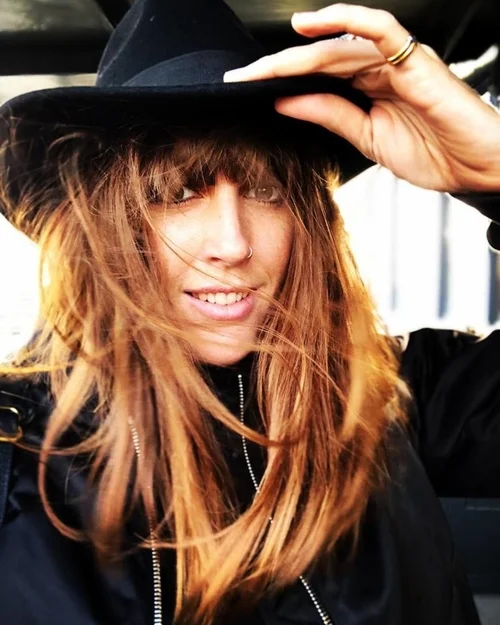
popop.jpg

IN THIS PHOTO: Lingua Ignota

DAMNED fine.
ALL PHOTOS (unless credited otherwise): Getty Images/Artists

____________

 PHOTO CREDIT: Winters Photography Co. -Mickie Winters Art

Joan Shelley – Cycle

2.png

Camille Christel – Chicago

PHOTO CREDIT: Shell Daruwala

Bloom de Wilde – Soul Siren

Baker Grace – Sad Summer

Charlotte Lawrence – Why Do You Love Me

Tierra Whack – Unemployed 

Ada Lea – the party

jjj.jpg

Maven Grace – Me vs. the Volcano

Sasha Sloan –at least i look cool

Bleached – Kiss You Goodbye

Lingua Ignota – DAY OF TEARS AND MOURNING

Laura Jurd – Companion Species

PHOTO CREDIT: W Magazine

King Princess – Prophet 

vc.jpg

Sabrina Carpenter – Pushing 20

PHOTO CREDIT: Loroto Productions

Frankie Cosmos – Windows

lll.jpg

PHOTO CREDIT: Lela Wright

Davina and The Vagabonds – I Can’t Believe I Let You Go

Jess and the Bandits – Don’t Let Me Take You Home

Miranda Lambert – Locomotive

vc.jpg

PHOTO CREDIT: Ade Udoma & Michelle Janssen

IDER – Body Love

jkjkkj.jpg

Zee Avi – Saya, Kumau

Molly Sarlé – This Close

PHOTO CREDIT: Alex Millichamp

Gazel – Rain Is Coming

Wildwood Kin – Beauty in Your Brokenness

k.jpg

Hey Violet – Queen of the Night

Grace Lightman – Aztec Level

girl in red – i’ll die anyway.

kk.jpg

PHOTO CREDIT: Glass House Productions

Freja Frances – The Wolf

ROCH – All Time Favourite Girl

Hayley Kiyoko – I Wish