FEATURE: Footprints in the Sand: The Music Industry: Climate Change and the Environment

FEATURE:


Footprints in the Sand

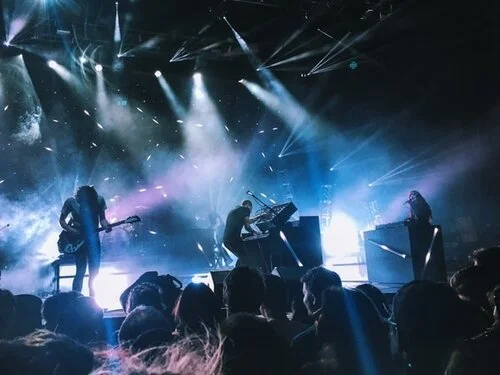
4444.jpg

PHOTO CREDIT: @aplaceforcreation/Unsplash 

The Music Industry: Climate Change and the Environment

__________

NOBODY can ignore the seriousness of climate change…

uuu.jpg

 IN THIS PHOTO: Radiohead

and how action needs to be taken. Obviously, when it comes to making decisions and acting, the buck stops with politicians. There are artists out there – from Radiohead to Grimes – and organisations that are raising awareness and speaking out. It is a tough time where we are ruled by people who seem uninterested in making change and addressing the severity of climate change. I know those who can make improvements are. From individuals using public transport more to companies using less plastic and being more conscious, we are seeing small steps. In terms of the music industry, festivals are urging people not to use single-use plastic bottles; they are providing water on site and everyone is aware what impact air travel has – for a lot of musicians, it is hard to be like Greta Thunberg and go by boat. I will end by discussing whether artists who speak out can affect politicians but, after reading about streaming music and the environmental impact, can artists and fans do more?

“This fall in the relative value of recorded music becomes more pronounced when you look at the same prices as a proportion of weekly salaries. Consumers were willing to pay roughly 4.83 per cent of their average weekly salary for a vinyl album in 1977. This slips down to roughly 1.22 per cent of the equivalent salary for a digital album during its 2013 peak.

pppp.jpg

PHOTO CREDIT: @fimpli/Unsplash

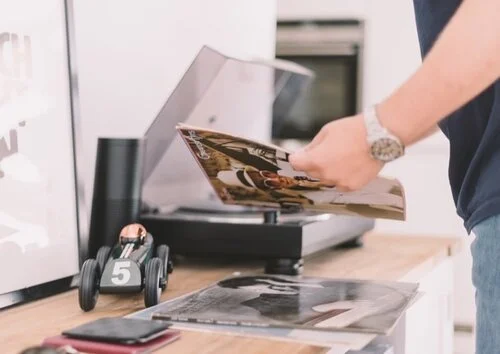
With the advent of streaming, of course, the business model of consuming recorded music changed: what used to be a commodity industry, where people bought copies to own, is now a service industry in which they buy temporary access to a music experience stored in the cloud. For just $9.99 – barely 1 per cent of the current average weekly salary in the US – consumers now have unlimited ad-free access to almost all recorded music ever released via platforms such as Spotify, Apple Music, YouTube, Pandora and Amazon.

Yet if consumers are paying an ever lower price for their music, the picture looks very different when you start to look at environmental costs. Intuitively you might think that less physical product means far lower carbon emissions. In 1977, for instance, the industry used 58 million kilograms of plastic in the US. By 1988, the peak year for cassettes, this had dipped slightly to 56 million kg. When CDs peaked in 2000, it was up to 61 million kg of plastic. Then came the big digital dividend: as downloading and streaming took over, the amount of plastics used by the US recording industry dropped dramatically, down to just 8 million kg by 2016.

But if these figures seem to confirm the notion that music digitalised is music dematerialised – and therefore more environmentally friendly – there’s still the question of the energy used to power online music listening. Storing and processing music in the cloud depends on vast data centres that use a tremendous amount of resources and energy.

PHOTO CREDIT: @othentikisra/Unsplash 

It is possible to demonstrate this by translating plastic production and the electricity used to store and transmit digital audio files into greenhouse gas equivalents (GHGs). This shows that GHGs from recorded music were 140 million kg in 1977 in the US, 136 million kg in 1988, and 157 million kg in 2000. By 2016 it is estimated to have been between 200 million kg and more than 350 million kg – and remember that this is only in the US”.

When we think of digital music, I guess we never really think there is much of an environmental cost. One assumes that everything is conducted online and there is no carbon footprint. One of the reasons we are buying fewer C.D.s is because there is a very visible problem regarding plastic packaging. Does that mean that we all need to stream less? It is hard when you are looking at an industry as large and growing as music. Artists need an accessible and universal platform on which to put their music; physical formats are valid, yet streaming is more impactful and easier. It is not quite as simple as people streaming less or artists balancing between releasing physical copies and digital. I do think platforms like Spotify need to be conscious when it comes to the amount of energy used to store digital files – and what that is doing to the environment.

sss.jpg

 PHOTO CREDIT: @snowjam/Unsplash

Every aspect of production, distribution and performance needs to be considered whilst we tackle climate change and try to reduce the damage being done. There are different problems when it comes to international stars and your smaller act. The former might have to be flown around the world and, as you can imagine, that leaves a big footprint. It is difficult to get around that, but I wonder whether, when scheduling tours differently so there are fewer cities visited and miles covered would help. I know a lot of acts who fly between nations and cities that are commutable by train; others who have a schedule that seems to take them in all sorts of directions; sort of illogical in terms of plotting and scheduling. If air travel is one of the biggest problems when it comes to big acts, smaller artists have vehicle travel between venues; there is another issue, mind: merchandising and mailing out to fans. I have seen Twitter posts from artists gleeful when a vinyl of their music is out, or they can send merchandise to fans around the world. One cannot undermine that thrill and connection, yet the environmental cost of small, regular shipments is evident. This article from 2016 explains more – and proffers a possible solution:

“Another big cost to the industry, consumer, and environment: shipping merchandise. And let’s think beyond just the t-shirts. Some artists ship in large quantities, but most don’t have the scale to mass-produce. They produce small batches, and then ship them around the world from where they live. It would arrive at your home or a local pick-up point. What if instead, you order something, it’s produced at the nearest 3D printer and you can pick it up from there.

PHOTO CREDIT: @andrewk/Unsplash 

Not only are there less emissions involved, but it might be faster too. There are still questions about whether the amount of energy required offsets the carbon emissions, particularly for mass production, but some printers are performing great.

Services like 3D Hubs are already providing over 1 billion people with access to 3D printers within 10 miles from their home.

A lot of festivals are powered by diesel generators, costing around half a billion euros each year, just in Europe. As much as three quarters of the UK music industry’s greenhouse gas emissions come from live performances.

Tents get left behind, a lot of water is used to clean, and cars queue up for hours to get into parking lots.

One of the most interesting music-related startup accelerators has to be Open-House. They look at how events can be made more efficient, but also how festivals can be used as a case study for how we organise humanitarian aid, or solving other societal issues.

Their startups include Kartent, a recyclable cardboard tent, Sanitrax, which makes the toilet experience more efficient, and Watt-Now, an energy monitoring system for festivals”.

I have raised a couple of environmental concerns but, from digital storage/destitution through to packaging, travel and festivals; people are doing their best - but more can be done. The fact fewer plastic bottles are being taken to festivals is good. Others are combating vehicle emissions and urging public transport.

ssss.jpg

 PHOTO CREDIT: @paucasals/Unsplash

I do think every artist can do their part in many ways. From using public transport as much as possible to thinking about the distance covered when touring…there are little steps that can make a big difference. Whilst the industry and artists – and fans, for that matter – can help reduce the environmental impact music creates, I think, obviously, politicians need to do more. There is that obvious outlet of publicity and interviews; time at gigs where artists can step aside and talk about the environment. Is it easy for an artist, especially a big one, to ‘go off script’, and discuss something like the environment? This article from Vice discusses some of the issues faced; they also address travel and how it might be hard to reduce the impact immediately:

“The first thing is to speak about it, whether in interviews, on social media, or referencing climate change in their songs. Of course, thanks to those previous efforts from Mr Bono and the conscious uncoupling dude, these efforts have the potential to come across as corny and overly sincere. Or even preachy. The BBC covered this in a 2015 piece titled 'Where are all the climate change songs?', where they ran the historical gamut of songs about the issue: from Joni Mitchell's "Big Yellow Taxi" (put up a parking lot!) to Paul McCartney's "Love To The Earth" – a UN-approved song released that year featuring Sean Paul, Sheryl Crowe, Leona Lewis, Fergie and more. Think of it like Kanye's "All Of The Lights" with a BBC Radio 2 cast. But that was three years ago, and this is now. And though it might be naive to think songs about climate change will never be anything less than a hard sell, the issue is more pressing than it has ever been.

IN THIS PHOTO: Grimes/PHOTO CREDIT: Getty Images 

Grimes is one musician choosing to dive headfirst into the topic. In an interview with The Washington Post last week she announced that her upcoming fifth album will be a concept record about “the anthropomorphic Goddess of climate Change”. In practice that might not be so overtly calling for environmental action, but at least it is focusing on the issue. The same goes for Foals, who talk about the state of the world on their most recent record Everything Not Saved Will Be Lost Part 1. Speaking to us about the issues that fed into the record, frontman Yannis Phillipakis said: “What scares me right now is what scares you, right? … the bee population that’s going, environmental collapse, biodiversity collapse – the fact that on an aesthetic level there’s a plastic flotilla the size of France in the Pacific.”

Of course, when it comes to touring there’s also the problem of travel. Huge international bands often fly not only themselves but loads of equipment across the world. So where does this problem sit? And who can fix it? There are no easy answers. We can't expect bands to stop touring – first CD rips, then downloads, then streaming have all slashed the money they make from selling recorded music. Touring and merch have become vital revenue streams. So bands starting to push beyond their local circuit certainly can't buy up personal, electric-powered airplanes, while looking for a way to make enough money to survive as artist. And aviation companies themselves haven't yet figured out how to get a battery that isn't too heavy for an airplane but can hold enough charge to carry it.

kiii.jpg

 PHOTO CREDIT: @maxwellridgeway/Unsplash

I understand there are logistical and professional challenges when it comes to reducing travel and merchandise but, from the smallest artist to the top of the mainstream, concerted efforts, concessions and constructive changes, when combined, can lead to a big difference. I do think the most effective channel of change is the human voice. There are a few artists directly addressing climate change through their music, but I think many are avoiding as they feel it might be too edgy, divisive or lacks commercial appeal. I do think, in general, so many artists tackle politics; there are many more artists aiming their lyrics at politicians compared to the environmental struggles – making more noise through song would be a good step. Although the charts are gloomy, I think a lot of that is to do with personal malaise or a bad pattern. I think singing about the environment need not be morbid and preachy.  I will wrap up soon but, just before, I found a Finnish article that outlines a few things happening in the country that is making a difference:

“Audiences can be reached both by using public authorities and rhetoric, and directly through art. Even small actions matter, but the largest responsibility falls on those who enjoy the greatest public authority. One recent example is the rap group Gasellit who lent their support for a campaign titled Korvaamaton [Irreplaceable] during the recent Finnish parliamentary election. The campaign was run by various environmental and development organisations in order to identify the climate crisis as the number one issue in the election.

eeee.jpg

PHOTO CREDIT: @genon2/Unsplash 

EDM artist Darude, Finland’s representative in this year’s Eurovision Song Contest, played his part through his contest piece Look Away, urging people to take action in order to solve our big global problems. Darude is also involved in a UNICEF campaign which illustrates the effects of climate change on children and young people around the world.

Although the American online magazine Pitchfork recently remarked that songs on the current pop charts are anything but upbeat and fun, we still have not seen many songs about climate change hitting the charts.

Tiainen from Greenpeace points out that in addition to using their public authority, music makers can directly influence gig presenters and festivals, for example: “Musicians, too, have to be active in sending a message to their presenters about the importance of environmental responsibility through actions such as using renewable energy or offering more plant-based catering options.”

Bands in the beginning of their career hardly dare to bite the hand that feeds them, which means that all eyes will be on the most influential stars to lead the action.

In 2014, Europe Jazz Network partnered with Julie’s Bicycle, a pioneering charity working on environmental sustainability in the arts. Their joint initiative “Take the Green Train” has mapped the environmental challenges in the arts industry and endeavoured to find solutions through seminars and conferences, among other activities. In conjunction with the initiative, saxophonist Evan Parker undertook a pilot green tour in 2016, choosing the most environmentally sustainable transport methods, creating a “green” rider and coming up with more sustainable ways of organising and marketing his concerts.

PHOTO CREDIT: @joshrocklage/Unsplash 

One of the problems in the arts industry could be as basic as the lack of information. Help can be found through various associations and organisations. Julie’s Bicycle maintains a website with many practical guides towards more environmentally conscious practices in the creative industries. Festivals are another forum for sharing information and searching for solutions. For instance, Stockholm’s Baltic Sea Festival this August will present a program with many music or spoken word events focusing on sustainable development.

I do agree it is hard to make sweeping changes, but new and regular information regarding small changes would start a chain that would lead to big improvement. It is a scary situation we are in, but not all hope is lost – it is just a case of acting and trying to be as economical as possible. I do have faith things can be turned around and action will lead to change and commitment from governments around the world. Every industry and human needs to be conscious of their environmental impact and legacy. The music industry is not the biggest offender, yet there are problem areas and, when it comes to something like streaming, many of us were probably unaware of the environmental damage it is doing. There is so much to be said for the power of people and how, when we pull together, something remarkable can occur. The music industry is taking steps every day (regarding climate change); there is still more do be done, but I do think current actions, steps and pledges are…

 PHOTO CREDIT: @roxannedesgagnes/Unsplash

HITTING the right notes.

FEATURE: Sisters in Arms: An All-Female, Autumn-Ready Playlist (Vol. IV)

FEATURE:


Sisters in Arms

l.jpg

IN THIS PHOTO: Rose Elinor Dougall

An All-Female, Autumn-Ready Playlist (Vol. IV)

__________

IT is time for another collection…

IN THIS PHOTO: Sudan Archives/PHOTO CREDIT: Alex Black

of the best female-led artists. I have been looking around and have put together some of the most varied cuts around. I think we are definitely settling into autumn and things are getting a bit cooler. The days are getting shorter and many of us are already looking to winter. Because of that, I am looking for songs that have a bit of warmth and those that can calm and cool when needs be. I am excited to bring these great songs to you; a spectrum of sounds that shows what talent is out there. Have a listen to these songs and I am sure there is something in the pack that will…

IN THIS PHOTO: beabadoobee/PHOTO CREDIT: Blackksocks

GRAB your focus.

ALL PHOTOS (unless credited otherwise): Getty Images/Artists

____________

sa.jpg

Allie X - Rings a Bell

www.jpg

 PHOTO CREDIT: Jonathan Roensch

Kate Bollinger – No Other Like You

ZZZ.jpg

Foundlings – I Love You All

QWW.png

Katy J Pearson – Tonight

WWW.jpg

Becky G – PELEAS

QAAA.jpg

PHOTO CREDIT: Mark Peckmezian

Matana Roberts – In the Fold

Tate McRae – all my friends are fake

Alice Merton – Funny Business

Kiana Ledé – Easy Breezy

Sasha Sloan – Thank God

Josie Dunne - Stay the Way I Left You (ft. Dahl)

KHF.jpg

Grace Carter – Fired Up

Emotional Oranges – Sundays

ZA.jpg

Lilla Vargen – Solitary

Rose Elinor Dougall – Natural State

SASSAS.jpg

Lola Marsh – Only for a Moment

AAAA.jpg

Skott – Midas

beabadoobee – Space Cadet

Bella Boo - Tuesday

PHOTO CREDIT: Jennifer Latour

Louise Burns – Cheers

VÉRITÉ – think of me

SDF.jpg

FRANKIE – Underdog

Thandi Phoenix – Diggin’

PHOTO CREDIT: @tonjethilesen

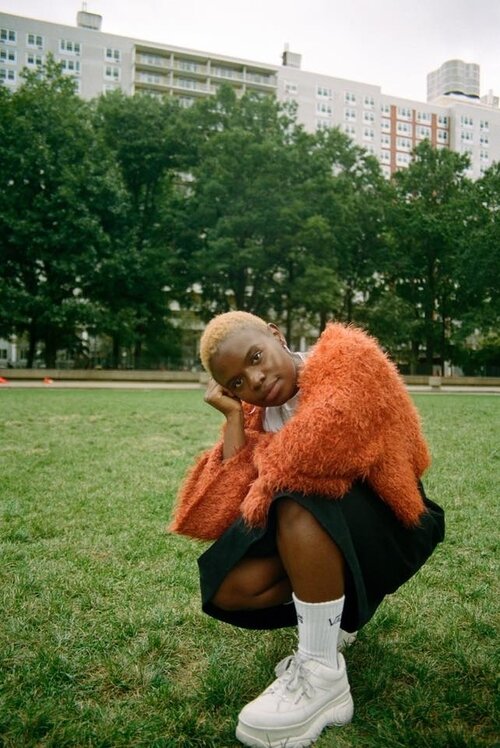
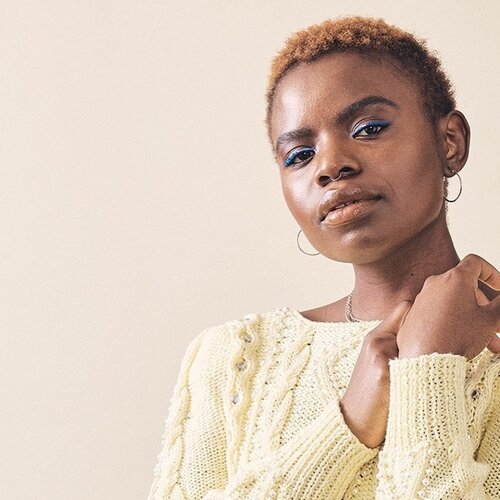
Vagabon – Full Moon in Gemini

Grace VanderWaal – I Don’t Like You

kjk.jpg

L Devine – Peachy Keen 

JGrrey – Dreaming Fool

ILL – Kick Him Out the Disco

dd.jpg

PHOTO CREDIT: Theo Jemison

Sudan Archives – Glorious

DDDD.jpg

Katy Perry – Harleys in Hawaii

FEATURE: The October Playlist: Vol. 3: Hyperlife in the Piano Joint

FEATURE:


The October Playlist

ZASAS.jpg

IN THIS PHOTO: Michael Kiwanuka/PHOTO CREDIT: Olivia Rose 

Vol. 3: Hyperlife in the Piano Joint

___________

THIS is a relatively quiet week for music…

IN THIS PHOTO: Foals/PHOTO CREDIT: Sam Neil

where there are a big artists in the mix, but the rest of the assortment is relatively minor. That is not to say there is a lack of great stuff out this week. There is some terrific music from Beck and Michael Kiwanuka; new cuts from Floating Points, Missy Elliott and Katy Perry. It is definitely an eclectic week and one that should appeal to everyone. With songs from Foals and Marilyn Manson to Vagabon and Sudan Archives, there is enough to get stuck into! Have a listen to the songs below and I hope you find enough to give the weekend a bit of a kick and spark. It has been a long week for many of us, so we need music to give that sense of uplift and rejuvenation. It looks like there is plenty in the playlist to…

IN THIS PHOTO: Missy Elliott/PHOTO CREDIT: Marie Claire

LIFT the mood.  

ALL PHOTOS/IMAGES (unless credited otherwise): Getty Images/Artists

________

Michael Kiwanuka – Piano Joint (This Kind of Love)

Beck – Hyperlife

Missy Elliott (ft. Sum1) - DripDemeanor

PHOTO CREDIT: Chris Shonting

Battles – Fort Greene Park

Matt Berninger (ft. Phoebe Bridgers) - Walking on a String

Gengahr - Everything & More

PHOTO CREDIT: PEROU

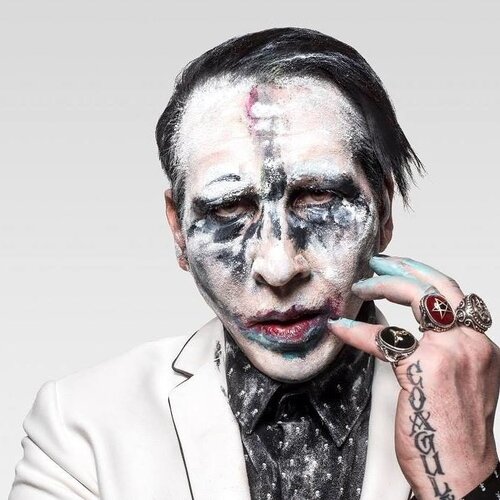
Marilyn Manson – God’s Gonna Cut You Down

Katy Perry – Harleys in Hawaii

Pond - Hand Mouth Dancer

Floating Points – Bias

Of Monsters and Men - Wild Roses

Two Feet – You?

Spector – Simplicity

Rex Orange County - Pluto Projector

Jimmy Eat World – 555

BBB.jpg

Vagabon – In a Bind

Gang Starr – Bad Name

MMMGFDF.jpg

Caroline Polachek – Look At Me Now

YUNGBLUD – casual sabotage

ZZ.jpg

Foals – Like Lightning

Alice Merton – Easy

Grace Carter – Fired Up

Sudan Archives – Glorious

Grace VanderWaal – I Don’t Like You

aaa.jpg

Perfume Genius – Pop Song

The Snuts – Juan Belmonte 

wsww.jpg

PHOTO CREDIT: Neelam Khan Vela

Declan Welsh and the Decedent West – Never Go Home

Skott – Midas

Dana Williams – Hard

Nasty Cherry – Music with Your Dad

TRACK REVIEW: Beck - Uneventful Days

TRACK REVIEW:


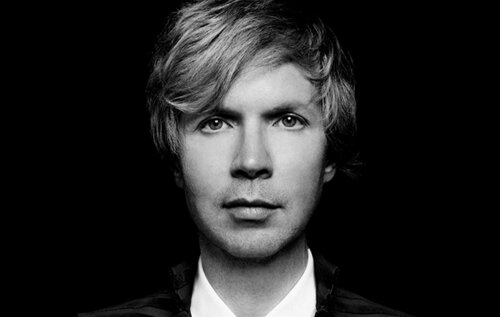
Beck

1.jpg

Uneventful Days


9.5/10


The track, Uneventful Days, is available via:

https://www.youtube.com/watch?v=uu8u_6BQsMo

GENRE:

Art-Pop

ORIGIN:

California, U.S.A.

RELEASE DATE:

16th October, 2019

The album, Hyperspace, is available from 22nd November, 2019. Pre-order here:

http://beck.to/HyperspaceWe

LABEL:

Capitol

__________

THERE is never any telling where an artist like Beck…

PHOTO CREDIT: Peter Hapak

will head when it comes to his music. We will receive his album, Hyperspace, on 22nd November but, before then, he has released two tracks – I am reviewing Uneventful Days; the other is Hyperlife. I am looking forward to Beck’s fourteenth studio album. I will discuss a few things in this review. Included will be the maverick and restless nature of Beck; working with renowned producers and how they can bring something fresh to the party; collaborators and how, even though it distracts from a singularity, there is an interesting point Beck raises; the endurance and legacy of the Los Angeles-born artist and where he might head from here. Before I get there, I want to bring in a bit of a personal story…a couple in fact. I think it is interesting how Beck transforms and moves between albums. 2017’s Colors was a bit of a departure from the more introspective and dreamy albums Beck was producing before then. Colors brought, well, a sense of colour and brightness back; it seems Hyperspace will be a balance of a record like Sea Change (2002); some shades of The Information (2006) and some slight touches of Guero (2005). That last album, in fact, was one that awoke me when it was released but has provided great comfort and guidance since. I think one could apply that to a lot of Beck albums; how he can ‘speak’ to people or open their minds. I bow down to the majesty of Odelay (1996) and Midnite Vuiltures (1999), but there was something about Guero that really struck me. I could hear the passion in the album and something I had not experienced before. Having graduated the year before, 2005 was a year when I was a little directionless and scared. I was not sure where my life was going, and I was looking for structure. I cannot attribute Guero for completely transforming my life, but I was sparked and infused by this kaleidoscopic, bold and heartfelt album that mixed Hispanic and Latin sounds with so many other genres. I was well aware of Beck’s cannon pre-2005, naturally, but Guero was a shot in the arm.

The beauty and rawness sitting beside one another; how the album made me feel (and still does) and the way it moved me. Not long after the album arrived, I started taking up journalism and thinking about it. Although I did not launch my blog until 2011, I began plotting and becoming more immersed in what I could do as a writer. Up until then, I had been interested by journalism and the chance to assess albums and talk about various sides to music. After Beck’s Guero came to me, I was even more motivated to pursue that path, as (that album) was so different and remarkable. Even though Guero is not seen, by many critics, as one of his best, it is my favourite. I am now charged with looking at his current offering, yet I felt it was important explaining my love of Beck and why a particular album resonated. I shall move on in a minute but, before I do, I wanted to stay on the subject of Guero and apply it to the rest of Beck’s catalogue. There are so few artists who can change colours like a chameleon; to inhabit a new sonic world so authoritatively and sublimely. Look at all of Beck’s albums and you’d be hard-pressed to compare them. Guero was a moment when I was given drive and momentum; when I looked back at Beck’s music with new insight and got more heavily involved with the true depths of the music industry. It might sound weird saying an album can do that; it owes a lot to Beck’s curiosity and ambition – which I shall expand on more later. If you are relatively new to Beck or dip in and out of his work, I would recommend you have a listen to his albums, and I guarantee there will be plenty that will affect and move you. I guess my love of Beck stems from his inability to stand still and the sheer variety he gives to us. That sonic hunger and desire makes him one of the most surprising and inspiring artists in the world.

 PHOTO CREDIT: Lauren Dukoff

Even before Odelay arrived in 1996, Beck was experimenting and stepping into new territory. I love 1994’s Mellow Gold; the intriguing and excellent One Foot in the Grave (1994) and how Beck was always moving forward and not willing to be tied down. I want to bring in a couple of interviews that concern Beck’s past and present work. To start, I will source from a Los Angeles Magazine interview from 2017 that raises an interesting point: Beck’s work can be divided into a couple of camps: the vivacious and freewheelin’ and the more collected and structured:       

“One could roughly divide your albums into two piles: loud/fun/upbeat/digital and quiet/serious/downcast/analog. Which feels better to let loose into the world?

It’s strange because the way the world receives it is rarely how you intend it, and so be it. But it is satisfying when people get what you’re trying to do. Morning Phase was a rare thing. If I put that record out 20 years ago, people would be like, “Oh, this is too slow. This feels too pretty.” It came at a time when people were in the same place, ready to have the same conversation. There’s always a sense of “I don’t know if this is gonna connect,” but I’ve done it long enough to know, even if it falls flat and nobody likes it, there will be a point when people are ready for it.

In a way that’s been your role the entire time. You arrived smack-dab between the manly arts of grunge and rap-rock, in all of your lanky, dancing, kazoo-blowing dweebiness. Did you feel the odd man out at festivals or awards shows?

Yeah, I was the white part of the Oreo. My whole first decade and a half was confrontation—people in the front with middle fingers at me for the entire show, booing and throwing things. Going to Lollapalooza and nobody’s clapping when I play “The New Pollution.” It was years and years of the audience laughing at me. And journalists saying, “Well, you don’t really write songs. This isn’t really music per se. It’s more like a concept, right?”

1.jpg

I wasn’t in the club. So this was happening, and then it was me and Radiohead and Björk and a couple of others exploring the idea that it doesn’t have to be guitar, bass, and drums; we can expand the palette—the idea of what music is or isn’t. That was maybe inspired by jazz and classical and hip-hop. It’s been sweet the last five or ten years watching the opening up of what’s acceptable in alternative music and even pop. Like, “Damn, I don’t need to try to fit in. I can just do what I do”.

It can be hard switching gears and directions and keep focused and relatable. There are artists who throw new stuff into the mix with every album and it can sound rather cluttered and scattershot. Beck has such command and does not want to be this artist who repeats himself or chucks everything into the blender for the sake of it. Instead, each album has that sense of craft and meaning. I love both of his sides, and I think it is unusual seeing an artist produce an emotional and more personal album at once, moving to a big and outward-looking album the next! It is testament to his inventiveness and commitment that means Beck always keeps us guessing; never predictable and always stunning. The interviewer for Los Angeles Magazine asked Beck about his sonic curiosity:

“One thing your fans value about your body of work is its unpredictability. When you look back at 25 years of music, what fuels your sonic restlessness?

There’s a period of time when bands do their records that are relevant or necessary. I’ve always wondered, “Is there a point where you stop?” But on tour, seeds are constantly getting planted, influencing the next album. You’re engineering this thing that’s very difficult to put your hands on: resonances and vibrations of air, pieces of sound. It’s this beautifully maddening experiment of trying to translate this feeling you have about how you want to connect with people in the real world. Sometimes you get 20 percent there, or 50 percent. I’ve been lucky to get all the way there a few times—to that place where people let go of their niceties, of their default personality and the way they conduct themselves in life, and all of a sudden they’re just in a field somewhere yelling, “Fuck yeah!”

 PHOTO CREDIT: Amy Harris/Invision/AP-REX/Shutterstock

Beck has always had a hand in producing his albums. The music is his visions, so one would expect Beck to be a big part of the final product. I see artists who hook up with renowned producers and you get the sense they do this because they want to be seen as cool or relevant. Some do it because they know that producer will add something necessary to the music; something that pushes it forward. One example that springs to mind is Madonna hiring Nile Rodgers to produce Like a Virgin (1984). One can look at what he brought to the table and how it helped bring Madonna’s work to a new level; gave her fresh impetus and motivation. Beck worked with Nigel Godrich for Sea Change in 2002. As the name implies, Sea Change was a very different beast to 1999’s Midnite Vultures. On that album, Beck worked with The Dust Brothers (who produced Guero) and they helped bring Beck’s fevered and exciting songs to life. Sea Change would have sounded very different if Beck had produced it or drafted in another producer. In this case, Beck had seen the work Godrich was producing for the likes of Radiohead – Kid A was released in 2000 – and knew that he (Godrich) would take his music to the next phase. Godrich added something essential to Beck’s work and provided him fresh ears and eyes. In the case of Colors, Beck worked with Greg Kurstin. You can see who Kurstin has produced for - but I think his reputation and expertise, again, helped Beck stay relevant and progressive. Colors is as bright as Odelay but is not the same in terms of sound and lyrical themes. One can argue another producer would have done a good job, but I think Kurstin’s sheer experience and range was essential when it came to helming an album like Colors. Again, when it came to a big-name producer to help give the music new lease and personality, Beck recruited Pharrell Williams.

There are a few producers who helped bring Hyperspace to life; Pharrell is someone Beck always wanted to work with and, as he explained to NME recently, the results speak for themselves:

“‘Hyperspace’ – which Beck teased last week in a cryptic Instagram post – comes two years after his last record, 2017’s Grammy award-winning ‘Colors’. The album is due out November 22 via Capitol Records. Seven of the album’s 11 tracks, including the previously released ‘Saw Lightning’ and the new single ‘Uneventful Days’, were co-written and co-produced by Pharrell.

“I’d always wanted to make a record with him,” Beck told NME. “We had been friendly over the years and had got together and talked about making some music back in 2012, but around that time he ended up putting out a song with Daft Punk, then ‘Blurred Lines’ and ‘Happy’.”

“I was not expecting the songs to come out how they did. I was going in thinking of songs like ‘Drop It Like It’s Hot’, y’know?” Beck said of working with Pharrell. “He felt very strongly that spending a little time with me, that ‘You need to be doing singer-songwriter type of songs’. So that was more of the direction we went in”.

As I said…I think there are big artists who hire these iconic producers because they just want the hype and feel like it will make their music more popular. In Beck’s case, he is looking around and seeing who can elevate his music and give it new spin. I am interested to see what Hyperspace sounds like and whether the two new tracks are representative of the rest of the material. One cannot find much common ground between Colors’ sound and what we can hear on a song like Uneventful Days. One can credit this originality and shape-shifting to producers, but Beck’s savviness and restlessness is a big part of the equation. I want to move on to a new point; one I had not really considered before today when it comes to collaborators on an album.

It is clear that Beck has created this legacy and is one of the most fascinating artists ever to grace music. He has released this incredibly busy and different albums that have so much feeling and brilliance. Whilst Beck works with other producers and musicians, there are few other voices on his albums. Even the biggest artists combine with others to add something to their songs. We live in a time when there are so many needless collaborations; artists packed into a song and, really, it adds nothing at all. I do not like cluttered songs where there is this feeling that people are on the track just to boost their profiles. Beck has always seemed quite singular and solo when it comes to the vocals; making sure his voice is the one guiding the music. Even though there are other people in the studio with him, he does not get to collaborate and welcome other artists in. It seems that, on his latest album, he has brought some friends into the ring. I want to return to the NME article; they explain more about the more collaborative nature of Hyperspace:

 ‘Hyperspace’ is also one of Beck’s most collaborative efforts to date. Guests to look out for include Coldplay’s Chris Martin, who provides back-up on ‘Stratosphere’, and Sky Ferreira, who sings backing vocals on ‘Die Waiting’. A few days ago, Martin joined Beck onstage for a rendition of his 1994 hit, ‘Loser’.

Colors’ producer Greg Kurstin co-wrote and -produced ‘See Through’, while Adele collaborator Paul Epworth worked on ‘Star’. The title track ‘Hyperspace’ features guest vocals from newcomer Terrell Hines.

“A lot of my albums, there aren’t many guests,” Beck told NME. “I have memories about albums I’ve made that are just really lonely. I’m in there 12 hours a day just trudging through this production, so it’s a great joy to bring people I know into my music. I’m hoping to be able to do this more often”.

xxx.jpg

PHOTO CREDIT: Larry Hirshowitz 

I never really considered that solitude can be seen as loneliness when it comes to recording. One of my bugs regarding other artists on albums is that the central artist gets distilled and you yearn to hear more of their voice. There is nothing wrong with using other artists, but so many artists cram their albums and it can be a bit much. When it comes to Beck, he has always sort of done things on his own and, as I said, it is rare you hear too many other voices. He has come to the point where he has been in the studio doing vocals by himself for too long. Rather than load the songs with as many people as he could find, Beck has chosen great producers and artists to give his work a bit more company. The fact he has brought in Sky Ferreira and Greg Kurstin suggests Hyperspace has Pop elements and may be closer in tone to Colors than an album like Morning Phase (2014). It is, as I reiterate, hard to pin Beck down and predict what the next album will contain. I like the fact there are some familiar names on board this time around. Rather than have every track featuring a different artist, instead there is some well-chosen partnership. After decades of putting out fantastic music, Beck has realised that it gets a bit lonesome carrying the music himself. Maybe this will lead to future albums having other artists involved. In any case, Hyperspace is another big move from Beck and sign that he is never going to slow or settle. The world would be so much more boring without his music; I cannot wait to see what his latest album contains. 

 PHOTO CREDIT: Peter Hapak

If Colors was a vibrant and luminous album set in the here and now, the energy and vibe of Uneventful Days seems to take its inspiration from the 1980s. The synths, delightful plinks and the rush of the opening seems to suggest Beck is nodding back to a decade that never goes out of fashion. What you have, rather than repeat what other artists do with the decade, is a blend of the delightfully spacey and atmospheric. One feels this lightness and a floating quality; there is also a slight heaviness that comes through. When Beck steps to the microphone, he talks about “Uneventful days, uneventful nights/Living in the dark, waiting for the light”. In relation to contrasts, Beck’s vocal has a slightly process quality, but it also sounds quite soulful and casual. What we hear is an almost machine-like tinge but there is little anger and foreboding in the delivery. Even when he sings of changing landscapes and battle lines, one never feels overwhelmed and saddened – even though the lyrics point to something quite serious. There is ambiguity in the lyrics. One could attribute them to modern politics and how there seems to be this huge divide; far worse than previous years. Maybe there is a personal sadness and realisation that the world around him is changing. I was instantly engrossed by Beck’s intriguing words and his vocal style. The combination is fantastic, and one is involved in the evocations and realisations. In some ways, the track has elements of modern R&B alongside 1980s’ touches. The clash of the modern and bygone; the fusing of something quite of-the-minute and hip with a nostalgic side gives Uneventful Days real depth and variety. When singing “I know, I know, I know…”, that coda seems like a sense of understanding or naivety: Beck pining for stability and hope but realising there is too much division around him.

Many modern artists are expressing anxiety and fears regarding the world in a very charged, depressed or heavy way. Beck manages to inject beauty and calm as he allows the lyrics to move and infiltrate the senses. When Beck sings about not getting things right and making mistakes, I get the feeling he is talking less about predictions regarding the world and is, rather, looking at his own life and the choices he has made. It makes me wonder whether Beck is expressing a feeling of stagnation or downward shift at a time when the world is moving in all sorts of directions. Perhaps he is unable to make sensible choices and find a semblance of calm in his own routine because of what he is seeing and hearing. For those expecting Beck to be the same as he was on any other song/album, you will be surprised. On Uneventful Days, he switches between 1980s Pop/synth, but one can hear current chart-based R&B/Pop; he even gets a bit funky in places. It is a concoction of time periods and genres that melts together superbly in a song that moves Beck’s sound and story on. More and more, as the song progresses, I feel there is some strain or personal burden that Beck is trying to make sense of. When he speaks of these never-ending days and nights, I feel there is a domestic component rather than a political one. The composition is busy but never too hectic. There are some skiffling beats and machine-fed moments; a breeziness and urgency that makes Uneventful Days complex and contrasting. I detect, perhaps, a tinge of irony when Beck sings of the uneventfulness of the days. Maybe he wants something good to happen or he is in a rut where he needs to figure things out and go back to how things were. Like every fantastic track, you will think one thing when you hear it first before your mind and opinions change. Everyone will have a slightly different perspective. The more I listen, the more my mind changes and I flip between love breaking down and a look at the world – Beck trying to get his head around it all. Uneventful Days is one of the most interesting songs has produced for a few years. That is no slight: quite the opposite in fact! What I mean is that, when you listen to the track, it seems quite simple and direct. Instead, the song brews and bubbles in the mind and will resound in the imagination. It is another terrific song from one of music’s true originals. It is hard to say whether Uneventful Days is typical of Hyperspace’s direction. Whatever we get from the album, it is likely to be one of 2019’s very best.        

PHOTO CREDIT: Lauren Dukoff

I have discussed a lot of different elements regarding Beck and his music. He is an artist both binary and completely across the spectrum. By that, I mean his music can be separated into the crazy and colourful but also the more emotive and sweeping. Within these sectors, there is so much diversity, character and difference. When he is putting out an album that is quite evocative and deep, the music and vocals are really arresting and nuanced; the lyrics paint these incredible images – one can never accuse Beck of being boring and one-dimensional. I also love his more variegated approach, where Beck marries disparate sounds into this collage. Beck is touring at the moment, so keep an eye out and catch him if you can. He is one of the most important artists we have in music and I hope there are albums for many more years to come. Odelay was the first time I heard a lot of different genres fused in such a daring way; Guero gave my life a sense of renewed purpose and, since then, I have followed his work and devoured every track. The rest of this year will be a mixture of touring and promotional interviews as we ready ourselves for Hyperspace next month. I do wonder what 2020 holds in store for Beck. There are going to be gigs, but I am already looking at the next album and what it might contain. We have artists that simply appeal on a single level and have a particular sound. There are those who go further and occasionally shift gears as time goes by. Then, there are those who always move and ensure that their music keeps on growing and evolving. Beck is in that very rare group; one that is reserved for the elite. Beck’s latest track(s) is another assured, different and compelling slice that will be in the head for a very long time. He is a true master and ever-evolving writer who is in his own world and league. We need to preserve, promote and promulgate Beck because, when it comes to artists of his stature, they come around…   

xxx.jpg

 PHOTO CREDIT: Richard Burbridge

SO rarely.

________________

Follow Beck

xxx.jpg

FEATURE: The Class of ‘20: The Rock & Roll Hall of Fame: The Nominees, Notable Snubs and the Ongoing Lack of Female Inclusion

FEATURE:


The Class of ‘20

IN THIS PHOTO: The Notorious B.I.G. has been announced as one of the longlisted artists for induction into the Rock & Roll Hall of Fame/PHOTO CREDIT: Clarence Davis/NY Daily News Archive via Getty Images

The Rock & Roll Hall of Fame: The Nominees, Notable Snubs and the Ongoing Lack of Female Inclusion

__________

WHILST some claim it is outdated…

and has a misleading name, the Rock & Roll Hall of Fame has opened its doors to some true legends. You can have a look at the illustrious names that have been inducted through the years. I will mention a few names that have not been inducted but, earlier this week, the longlist for 2020 was announced:

 “The Rock & Roll Hall of Fame has announced its long list of nominees for the class of 2020. First-time nominees include the Notorious B.I.G. (in his first year of eligibility), Whitney Houston, Soundgarden, T. Rex, Motörhead, Dave Matthews Band, Thin Lizzy, the Doobie Brothers, and Pat Benatar. Nine Inch Nails, MC5, Kraftwerk, Depeche Mode, Rufus with Chaka Khan, Todd Rundgren, and Judas Priest have been nominated again.

Artists who became Rock Hall eligible for the first time this year but weren’t nominated include Oasis, Weezer, Aaliyah, Daft Punk, Elliott Smith, Sleater-Kinney, and Wilco. An artist becomes eligible 25 years after their first commercial record was released.

Previous nominees who didn’t make the cut this year include Rage Against the Machine, Kate Bush, the Replacements, Bad Brains, the Smiths, Eric B. & Rakim, Jane’s Addiction, John Prine, Eurythmics, LL Cool J, and Gram Parsons. The Rock & Roll Hall of Fame class of 2019 was Radiohead, the Cure, Janet Jackson, Roxy Music, Stevie Nicks, Def Leppard, and the Zombies. Most of Radiohead declined to show up for the ceremony, Jackson urged the Rock Hall to “induct more women,” and Stevie Nicks shared the stage with Harry Styles.

IN THIS PHOTO: Trent Reznor/PHOTO CREDIT: Getty Images 

Nine Inch Nails’ Trent Reznor has, in the past, expressed his lack of interest in the Rock Hall. When he was asked last year about being snubbed, he replied, “I don’t give a fuck.” Months later, he gave a speech at the Rock Hall ceremony inducting the Cure. “I remember distinctly saying to myself, among other things, how can I even take this awards ceremony seriously if they’ll open their doors to X, Y and Z and not acknowledge the Cure,” Reznor said. “Let’s just say I’ve never been as happy to eat my words as I was tonight.”

Rock & Roll Hall of Fame Class of 2020 Nominees:

Pat Benatar

Dave Matthews Band

Depeche Mode

The Doobie Brothers

Whitney Houston

Judas Priest

Kraftwerk

MC5

Motörhead

Nine Inch Nails

The Notorious B.I.G.

Rufus featuring Chaka Khan

Todd Rundgren

Soundgarden

T.Rex

Thin Lizzy”.

That is a pretty varied and impressive longlist. I guess one cannot really claim the nominees are Rock-based or exclusive to a genre. It is a bit late in the day to change the name – the Rock & Roll Hall of Fame is more a church for a very special flock; those in music who have made a huge contribution to music and have influenced others. There are some acts in the longlist that I am surprised have not been inducted before. I have been looking online and, out of the names, it seems Nine Inch Nails are a popular shout.

 IN THIS PHOTO: Depeche Mode/PHOTO CREDIT: Anton Corbijn

Depeche Mode and Whitney Houston are hugely popular artists that, whilst not Rock-based, are very worthy of induction. I always feel a bit sad because, invariable, there are artists on the list who are either deceased or have lost a member. Aside from the late Whitney Houston, bands like Soundgarden, Motörhead and T.Rex have lost their leads whilst The Notorious B.I.G. is finally eligible – I would be very surprised if he was not inducted next year. There are some heavyweights in that longlist and, whilst a few genres and time periods are represented, there is a relative lack of women to be seen. Of the sixteen on the longlist, there are only two female solo artists listed (Chaka Khan is nominated alongside/as part of the band, Rufus) and it calls to questions whether the Rock & Roll Hall of Fame is doing enough to include more women. Many were glad Janet Jackson and Stevie Nicks were honoured last year; it seems unlikely two women from the longlist this year will be honoured next year. The fact Kate Bush has not been inducted mystifies some (myself included), but there are articles out there that catalogue snubs and ask why some certain acts have not been inducted. I guess the Rock & Roll Hall of Fame cannot please everyone and, soon enough, a lot of the names that have not been inducted will be included. It is twenty-six years since Björk’s Debut was released; I am surprised she was not nominated this year.

There are sources that call out the lack of women and, whereas this article’s writer will be pleased Whitney Houston has an opportunity to be inducted next year, there is still a problem regarding the lack of women inducted and longlisted. The media has reacted and asked why, when so many legendary women have been excluded, is such a steely blind eye cast? I want to bring in a feature from 2017 that lays down some facts and, whilst one or two women mentioned have been nominated/inducted since, the truth remains: more needs to be done to recognise and celebrate iconic women – the article rolls to 2020 and highlights a few female artists are deserving of acclaim then:

“13.5% is not at all representative of female influence on rock and roll music throughout history but it’s not a surprise, as women have often been placed on the back burner when it comes to rock and roll. During the ’50s and ’60s when rock music came about, women were labeled as ‘groupies’ and limited to the status of obsessed fan [Editor’s note: Read an incredible corrective to that here, by Amanda Petrusich if you haven’t yet.] If a woman made it into a band, she was often told to learn bass, as this was considered the easiest instrument to pick up. And for the women who did gain popularity in the early years of rock and roll, they were rarely supported in the media, recognized amongst critics, or given awards, like their male cohorts were. If anything, they were made into sex symbols. Back in 2015, Jackie Fox of The Runaways shared an even more harrowing scenario, that of assault carried out by men in the industry with no consequences.

The Rock Hall overlooking women for their solo work isn’t really where the discrepancy ends, either. There are also countless female artists and groups who haven’t been recognized at all who definitely should be at this point. Take Pat Benatar, for example. I mean, come on, is there anyone who doesn’t sing along when they hear “Hit Me With Your Best Shot,” “Love Is A Battlefield,” or “Heartbreaker”? Even millennials know Benatar’s work. And what about Ella Fitzgerald, the Queen of Jazz? She won thirteen Grammy Awards during her lifetime and paved the way for African American women in music. Whitney Houston, arguably the most awarded female artist in history, hasn’t been awarded by the Rock & Roll Hall Of Fame.

Even though Kate Bush might have been passed up by Coachella, she doesn’t deserve to be passed up by the Rock Hall, particularly when you consider she was the first female artist to have an album reach number one in the UK album charts. Michael Jackson (2001) and the Jackson 5 (1997) are inductees, but their emblematic little sister Janet Jackson isn’t. Still others like Courtney Love’s badass grunge-rock band Hole, Kim Gordon with Sonic Youth, Sinéad O’Connor, and Björk are more than worthy of induction into the Rock Hall.

Moving forward, 2020 could also likely be a groundbreaking year for women inductees. 1995 was a huge debut year for many women of rock who would make a name for themselves in the remainder of the twentieth century, many of whom are still active today. Alanis Morisette will be eligible for her influential debut Jagged Little Pill.

ssssssssssssss.jpg

The alternative power-pop band Garbage, who released their sixth album Strange Little Birds just last year, will also most likely be nominated. With an extremely punk ethos, Garbage was one of the first all-female rock groups to advocate for unashamed female power and assertive aesthetics that challenged gender roles, and they are still doing it today. While Gwen Stefani’s new wave punk band No Doubt debuted their self-titled record in 1992, they didn’t receive major attention until 1995’s Tragic Kingdom which includes hit tracks “Don’t Speak” and “Just A Girl.” No Doubt gave Stefani the confidence to break out into her solo career and become a heroine for aspiring female rockers.

Indie rock trail-blazers Sleater-Kinney released their self-titled debut in 1995 and have championed twenty years in rock music with the release of the critically acclaimed No Cities To Love back in 2015. Pop rock singer-songwriter Jewel also had a strong debut in 1995 with Pieces Of You, which has sold almost 7.5 million copies in the US. Needless to say, 1995 was a year of unprecedented success for women entering into the rock canon; as such, the Rock & Roll Hall Of Fame class of 2020 should be filled with these female artists.

Whilst the article does name-check Stevie Nicks and Pat Benatar as artists criminally overlooked as not being included (that was rectified last year), there is no guarantee Benatar will be given her dues and inducted; there will be a scurry of articles listed big female artists omitted this year.

 IN THIS PHOTO: The late Whitney Houston is one of only three women on the longlist for induction into the Rock & Roll Hall of Fame/PHOTO CREDIT: Getty Images 

Let’s hope there is more balance next year. Last year, both Janet Jackson and Stevie Nicks highlighted a surfeit of female Rock & Roll Hall of Fame inductees and urged changed. I guess there will always be omissions and problems with every award ceremony and event such as the Rock & Roll Hall of Fame. It is encouraging to see a broad array of artists and, after some critical pieces, there are three iconic women longlisted this year; all of whom are deserving of induction. Stevie Nicks’ induction last year was long-overdue and it is clear there are still problems. Let’s highlight the fact that there is a competitive and eclectic longlist. In my view, the most deserving are Pat Benatar, Whitney Houston; MC5, The Notorious B.I.G. and Soundgarden but, as we know, one can never predict and get it right – that aspect of unpredictability is what makes things exciting. I would challenge those who want to keep the Rock & Roll Hall of Fame more geared to Rock and the more electric side of music. Others think the name needs changing, since all genres are considered. I think it is fine as it is and, as we predict who might win, ponder those who were overlooked and ask whether next year will see more women longlisted and inducted, I shall leave things there. The longlist is one that spans a lot of ground and it will be interesting seeing who people place as the frontrunners. I am excited to see which artists will be making themselves comfy in the Rock & Roll Hall of Fame…

 IN THIS PHOTO: Soundgarden/PHOTO CREDIT: Universal Music Group

THIS time next year.

FEATURE: Madonna’s Erotica: Beyond the Controversy: Celebrating a Truly Underrated Album

FEATURE:


Madonna’s Erotica

kkk.jpg

Beyond the Controversy: Celebrating a Truly Underrated Album

__________

WHEN one considers Madonna the Artist…

dddd.jpg

 IN THIS PHOTO: Madonna in 1992/PHOTO CREDIT: Steven Meisel

her name is never far away from some form of controversy or disagreement. Practically since her debut album in 1983, the media have been lining up to have a shot at her. From Like a Virgin in 1984 to Like a Prayer in 1989, Madonna was never too far away from criticism and detractors. Whilst many of her male peers were discussing sex in a very open and explicit way on records and at concerts, there seemed to be a very different set of rules when it came to female artists. Madonna, to be fair, was bolder than a lot of her peers, but she was hardly going out of her way to offend! I know I have covered Erotica before but, as it turns twenty-seven on Sunday (20th October), I want to look at an album from the Queen of Pop that is pretty underrated. The same could be said of Erotica’s follow-up, Bedtime Stories, which is twenty-five on 25th October. There is no doubt Madonna was on a career high after the success of Like a Prayer. Although the album courted controversy from some – religious groups unhappy about a lot of what was in the title track’s video -, it marked her as a true superstar. 1990’s Vogue (from the Dick Tracy soundtrack, I’m Breathless), put her on a new level and confirmed her place as the leader of modern Pop. Whilst not as positive and instantly commercial as Like a Prayer, 1992’s Erotica was a big move from an artist without constraints and limitations.

Recorded in New York City with Shep Pettibone and André Betts, whilst working on other projects, Erotica is an underrated masterpiece. I shall briefly mention her Sex book (which was released at the same time as Erotica); the direction of Madonna’s music shifted and, with it, there was some coldness and condemnation. Erotica is much more personal and deeper than a lot of her previous work. It is a loose concept album about sex, from the perspective of her alter ego, Mistress Dita (her latest album, Madame X, features the titular heroine; a spy-cum-dancer-cum-all-rounder that is sort of a development of her Mistress Dita figure). In terms of sound, there is more sweat and deeper grooves; genres like New Jack Swing and House are fused – I think Erotica is more varied and eclectic than anything she had produced until that point. From the off, Madonna/Mistress Dita is in control and teasing her lover; blending pain and pleasure and opening. I think a lot of the furore and criticism that greeted Erotica concerned the hang-ups of society. Very few female artists were talking about sex in such a refreshing and confident way and, as such, many felt Madonna was a bad influence – this was a period when the AIDS crisis was in the news too. From the steam and purr of Erotica to a brilliant cover of Fever; the Disco cool of Deeper and Deeper and the beautiful Rain, there is so much at work; so many different styles but, at heart, stories of longing, desire and reflection.

Even though, when we talk of Madonna’s best, Erotica is viewed as a little underwhelming and not as hits-packed, many consider the album to be one of the most revolutionary of all time. At the forefront of music’s sexual revolution, Madonna was bringing the rush of lust and the pain of shame together in an album like nobody else. Few female artists had taken this approach to music and so, when it arrived in 1992, there was a huge shockwave. Everyone can debate which Madonna album is her crowning glory – I maintain it is 1998’s Ray of Light -, though few can deny the power and influence of Erotica. You get lists that rank Madonna and, when we hear discussions about her defining releases, everyone discusses her debut and Like a Prayer; the reinvention on Ray of Light and the brilliant Confessions on a Dance Floor (2005) – few bring Erotica into the debate. By 1992, Madonna was untouchable and had released an album whose impact and importance would be fully felt years down the line. Madonna, on Erotica, talked about sex, desire and death in such a frank and fearless way. Those who wrote off Erotica as being too explicit and lurid missed the point. It was easy for certain sources to judge Madonna as being too provocative when, in actuality, she was spearheading a movement of sexual re-examination and confrontation. Gay rights issues were at the forefront, in addition to greater awareness regarding AIDS.

 IN THIS PHOTO: Madonna shot for Truth or Dare (1991)

Madonna shone a spotlight on kinkiness and querness; she put difference and diversity at the forefront at a time when it was largely marginalised. I will end with a look at the ways in which Erotica changed the scene and the artists who were inspired by it. This article from Rolling Stone talks about Erotica as a masterpiece and the importance of the Sex book regarding a change in the conversation and greater openness:

“Some loathed this classically trained dancer/DIY provocateur – a megastar peer of Prince and Michael Jackson since her 1984 blockbuster Like a Virgin – with a venom reserved for successful women forging their own path. But for her vast audience, she was nothing less than liberating, and her uninterrupted string of hits defined pop for a decade. What some considered violations of taste made her more commanding: Even the way she toyed with ordinarily unflappable talk show hosts like David Letterman was more rock & roll than actual rock stars.

But in much of what follows on the LP, the woman behind the vixen doesn’t get what she wants: Her relationships fall apart as she awakens from spells cast by deceptive lovers (“Bye Bye Baby,” “Waiting,” “Words”). Booze, chain–smoking, and anonymous sex can’t numb the pain (“Bad Girl”), and a friend steals her man (“Thief of Hearts”). Meanwhile, comrades die (“In This Life”) while kindred outcasts struggle (“Why’s It So Hard”). “I’m not happy this way,” she sings in “Bad Girl.” Sensuality was merely part of the picture: Erotica is Madonna’s concept album about love and intimacy under the shadow of plague.

“I think the problem is that everybody’s so uptight about [sex] that they make it into something bad when it isn’t, and if people could talk about it freely, we would have people practicing more safe sex,” she told Vanity Fair at the time. “We wouldn’t have people sexually abusing each other, because they wouldn’t be so uptight to say what they really want, what they really feel.” Maybe that’s a little simplistic, but it’s genuinely humanitarian. At a time when the straight media essentially characterized all sex as dangerous, Madonna tried to illustrate that it could be safe and stimulating, particularly if we open our minds, free our bodies, and try something besides standard intercourse.

Accordingly, Erotica is also filled with love. The album’s steamiest – and funniest – cut, “Where Life Begins,” celebrates cunnilingus with cheeky wordplay, but also sweetness and warmth: Crooning over Andre Betts’ hip-hop ballad beats, she beckons the listener, “Go down where I cannot hide,” as if to suggest her womanhood is this chameleon’s constant truth.

Maybe the double-header of Erotica and Sex was a lot to take for those who were not used to works so challenging and brave. In 1992, Pop music was fairly safe; Erotica sort of blew open the doors and liberated so many artists and fans. I agree that the songs on the album are not as chart-friendly and light as a lot of her best work, yet Erotica is a more nuanced album that is sophisticated, confident and incredibly powerful.

Look at artists today such as Lana Del Rey, Beyoncé and Frank Ocean and you can hear shades and aspects of Erotica in their work. Many would argue Madonna was the result of artists before her like Debbie Harry, but Madonna’s Erotica led us to artists like Britney Spears, Katy Perry and Lady Gaga: a new generation of artists who were empowered and free from restraints. One other reason why I wanted to revisit Erotica is because of Pop today. One can say that modern acts like Ariana Grande have been inspired by 1992-era Madonna, but I do think the album could help create a revival of Pop. I think the modern Pop sound is largely flat and lacking in anything that interesting. Erotica is not, as many claimed back then and do now, cold and soulless. It is an album that has warmth, vulnerability and incredible range. There is not a lot in today’s market that reaches the same heights and blows the mind – maybe Pop has become too safe or there is a fear of being too expressive. In any case, some of the best Pop artists of the past couple of decades are so revered and popular because of Madonna. Although Erotica is an enormously influential album I feel, twenty-seven years after its birth, Pop has sort of stepped back and become safer. There are plenty who felt Erotica was a career-ending album, but maybe that was just an overreaction of the time. As a result, there was not quite the level of appreciation and respect aimed at the album as there should be. Listen back now and it still sounds incredible and like nothing else. Madonna would go on to create a finer album in Ray of Light; nobody can deny the fact that Erotica remains…    

pppp.jpg

 PHOTO CREDIT: Getty Images

ONE of her greatest achievements.

FEATURE: Songs for the Hard of Hearing: Queens of the Stone Age’s Vinyl Reissues and a Chance to Inspire the Rock Scene

FEATURE:


Songs for the Hard of Hearing

988998.jpg

Queens of the Stone Age’s Vinyl Reissues and a Chance to Inspire the Rock Scene

__________

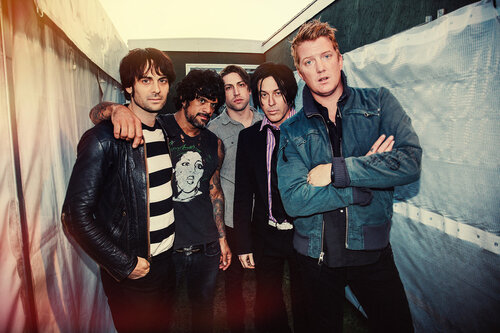
MAYBE it is hard to see a direct connection…

but I am looking around Rock at the moment and not seeing a lot of swagger and variation. There are some great Post-Punk bands and, aside from the likes of Foals, Sharon Van Etten and The Raconteurs, there has not been much in the way of interesting Rock. Perhaps there are some lesser-reviewed records I have missed; I do think Rock has taken a back seat to other genres over the past few years – which will fuel that eternal question: Is Rock Dead? I do not think Rock will ever die out but, when it comes to a band who have managed to compel and stand tall throughout their career, few hit harder than Queens of the Stone Age. Their eponymous debut arrived in 1998 and, since their last album (Villains in 2017), the band have hardly dropped a beat. I will talk about their music in a minute but, for those who have longed for some Queens of the Stone Age classics on vinyl, your prayers have been answered! Tone Deaf explain in detail:

“This year is turning into a big one for fans of Josh Homme, with the first four records from Queens Of The Stone Age set to receive a vinyl reissue.

Back in the mid-’90s, stoner-rock fans were undoubtedly heartbroken to learn of the break-up of genre icons Kyuss. Having delivered crushing riffs and melodic grooves for close to a decade, things found themselves looking up soon after when Josh Homme announced the formation of new band, Queens Of The Stone Age.

Releasing their self-titled debut in 1998, the band signed to Interscope soon afterwards and entered the mainstream with records like Rated R, and Songs For The Deaf, whose lead single ‘No One Knows’ topped the 2002 Hottest 100.

Now, a bunch of the band’s records are set to receive a special vinyl reissue, with these classic records coming to a turntable near you.

Announced via social media yesterday, the band’s Interscope discography is set to be reissued in the coming months, with Rated R and Songs For The Deaf dropping on November 22nd, while Lullabies To Paralyze and Era Vulgaris are planned for release on December 20th.

Released on high-quality, 180gram vinyl, these records are set to be a vital addition to the collection of any self-respecting stoner-rock fan. While there’s no word whether these reissues will contain vinyl-only tracks like ‘Ode To Clarissa’, ‘Bloody Hammer’, or ‘Running Joke’, we’re definitely hoping these classics will make an appearance.

In related news, stoner-rock fans are also in for a treat later this month, with Josh Homme set to release the first new music from his Desert Sessions collective since 2003 on October 25th.

After teasing the project’s return earlier this year, fans began to speculate something was up following rumours of Dave Grohl and ZZ Top’s Billy Gibbons working on the next Queens Of The Stone Age record.

As it turned out, these rumours were only half correct, with Gibbons soon being confirmed to appear to the newest record from The Desert Sessions, alongside an all-star cast of collaborators, including Stella Mozgawa (Warpaint), Jake Shears (Scissor Sisters), Mike Kerr (Royal Blood), Carla Azar (Autolux, Jack White), Les Claypool (Primus), Matt Sweeney and Matt Berry (The IT Crowd)”.

I am glad Josh Homme is working on new music and, although we might not see a new Queens of the Stone Age album for some time, it is great the Ginger Elvis is concocting some fresh tunes. As vinyl continues to grow and we are still buying it, you will get artists bringing out their older albums on the format. I love reissues, because there is something magical in vinyl. Hearing an album like Rated R (my favourite Queens of the Stone Age album) on vinyl is something I am not going to pass by – I am going to grab a copy. Whilst this news story might only appeal to fans of Homme and his crew, I think the release of these albums on vinyl should act as a guide to bands of the moment. I can’t remember when, but I wrote a piece years ago concerning Queens of the Stone Age; arguing why they were one of the last true Rock bands around. Look around now and there are few acts who have the same elements as the legends Queens of the Stone Age. It is good to see fired-up Post-Punk and Alternative bands; we have some great Indie-Pop and bands who are doing things their own way. I miss Rock music that is anthemic and sticks in the head. I am not sure what it is about Queens of the Stone Age, but they can get the hips wiggling with their mix of cool-cum-gritty.

Listen to classics like No One Knows (from Songs for the Deaf) and The Lost Art of Keeping a Secret (from Rated R) and these songs are ingrained in the brain. I think there was a cut off period when we had great Rock bands producing these timeless and incredible songs. We no longer have The White Stripes around – although Jack White is working with The Raconteurs -, yet the fact there is a new podcast available suggests there is an appetite for the superb duo. I am not suggested Rock has evolved to the point where it is too serious but, like Pop and other genres, there is a sense of fun and groove missing. Queens of the Stone Age have never lost that sense of the funny and cheeky, even when the amps are near explosion and they are threatening to set fire to the studio! They have barely calmed with age and Josh Homme remains one of the coolest leads ever. Maybe that is another thing: the absence of iconic and fascinating frontmen/women. Again, there are a few bands who seem to match the spirit and brilliance of Queens of the Stone Age. I think a lot of today’s Rock is either pretty negative or tries to hit the heavens and falls flat. Sure, artists can still pen hooks and melodies; what I am finding is fewer and fewer artists are able to write in an optimistic way but bring the noise – there are some more angered Queens of the Stone Age songs, but there is tenderness and cool in every beat.

I think it is that effortless cool and flow that has always defined the Queens of the Stone Age sound. Maybe the band are unique in that sense? If Pop music has fallen on its arse and has lost the art of being able to create big choruses and fun, maybe Rock has a bigger role to play now more than ever?! If Rock music exists and continues to move, it is clear there has been a transmogrification since the early-‘00s. This article from earlier in the year explains how Rock has stalled a bit – and the definition of a Rock star is changed:

“So what does this tell us? Well, for one, it's clear that people don't know what rock is anymore, and modern rock is in such a dismal place that listeners are revisiting Queen to scratch that itch. "For the last few years, the Billboard rock charts have been an abysmal slog of new pop artists that occasionally hold guitars like fashion accessories," wrote Noisey. The article goes on to cite the uncanny rise of The Guardians of the Galaxy 2 soundtrack, which dominated the chart for 22 weeks and eventually hit number one. At the 2018 and 2019 Grammys, they didn't even bother to air the Best Rock Album category. This year's winners, Greta Van Fleet, whose album Anthem of a Peaceful Army debuted at #3 on the Billboard 200, are only famous because they sound like a B-list Led Zeppelin. "Greta Van Fleet is all costume," read a scathing review on Pitchfork, referring to the band's cliche 70's fashion choices. "They make music that sounds exactly like Led Zeppelin and demand very little other than forgetting how good Led Zeppelin often were." The group's nostalgic appeal only adds to the stagnancy of modern rock and proves that even the genre's up-and-comers can't craft anything new from its ashes.

So what's next for rock and roll? Well, The Black Keys recently debuted their first new song in five years, but it's not exactly a groundbreaking addition to their discography. As for The Arctic Monkeys, their highly anticipated Tranquility Base Hotel & Casino polarized its fans, with many dismissing the project as melodramatic and self-indulgent. "Even a nice classic-feeling pop melody...devolves into a lurching drag," wrote Rolling Stone of the project. Critics had similar critiques on Jack White's Boarding House Reach. "Sadly, the years have steadily whittled the playfulness from White's material," wrote Pitchfork. "His work is now too lumbering and unmoored for anyone to take much pleasure in it."

Even the term "rockstar" is being pinned more frequently to rappers, with artists like Lil Uzi Vert and Danny Brown now claiming the title. As artists like Breaking Benjamin, Nickelback, Gerard Way, Slipknot, and Buckcherry continue to create carbon copies of their early 2000s sound, artists like Juice WRLD, XXXTentacion, and the late Lil Peep have fused rock with Hip-Hop influences – with the resulting concoction brandishing a whole new subgenre of music. Rock has officially retired, and the longer these dying acts hold onto the mantle (i.e. Adam Levine at the Super Bowl) instead of passing it over to where it belongs, the sadder they inevitably become. Let the greats be great, but can we stop pretending that "modern rock" exists?”.

Maybe, then, Queens of the Stone Age are one of the last surviving Rock bands who can genuinely hold a candle to the very best! I do think there has been a widening of the Rock scope and, in a bid to keep the genre fresh and expansive, some of the heart and purity has vanished.

Maybe tastes have altered, and we are favouring other genres. I look around at articles that ask whether Rock is dead and what has happened. I am not suggesting the reissues of Queens of the Stone Age albums will ignite a new Rock revolution…it might give upcoming bands some guidance and inspiration when they are penning their tunes. Maybe the pressures we feel in life and on social media is impacting the sound and feel of genres like Rock. It is a shame, but Queens of the Stone Age prove that Rock still can thrill and is not entirely dead. Maybe Muse are one of those bands who are still injecting fun, drama and something interesting into Rock but, largely, there are few thrills and standout moments. As we wonder when the next Queens of the Stone Age album will arrive, make sure you snap up their vinyl releases and enjoy the music. I know many out there are die-hards; some will be new converts, but everyone needs to check out the mighty Queens of the Stone Age. I think, as we celebrate some old/new arrivals, it will give impetus for artists; some charge and lightening that, let’s hope, resonates with artists out there. Rock is not completely doomed but, as we listen to what is out there, one cannot say it is overly fruitful. I think, with more bands like Queens of the Stone Age in the world, Rock music will be…

IN a much better state.

FEATURE: Spotlight: Vagabon

FEATURE:


Spotlight

Vagabon

__________

THERE have been some hefty tunes…

PHOTO CREDIT: Philip Cosores

flowing this year, but I do think that Water Me Down by Vagabon is among the very best! It is a gorgeous, spellbinding song from an artist who is growing and producing her finest work. I shall talk about her debut album and the transition to her upcoming eponymous record. Laetitia Tamko was born in Yaoundé, Cameron, but is based in New York. She made that move at the age of thirteen so that her mother could attend law school. Tamko attended the City College of New York and graduated from the Grove School of Engineering in 2015. It is amazing to see how Tamko transitioned from her childhood in Cameroon to the bustling New York. One can imagine there are few similarities to be found; maybe there is an energy and electricity in the air that made that switch fairly stress-free. It was inevitable the ambitious and curious Tamko would be drawn to the sounds and sights of New York. She was given her first acoustic guitar, a Fender, at the age of seventeen. By 2014, Vagabon was uploading videos to Bandcamp, and we had this intriguing moniker. It is not only the guitar that Vagabon bonded with: drums, keyboards and synths can be found across her 2017 debut, Infinite Worlds. I mist admit…I didn’t discover that album until this year; I had only just discovered Vagabon and was blown away by the music!

Although there are not a huge number of reviews online concerning Infinite Worlds, it did receive hugely positive feedback from critics. The album is rich with personality, depth and wonderful moments. In this review, AllMusic share their thoughts:

“The first sound heard on Vagabon's debut album Infinite Worlds is Laetitia Tamko's voice. Equal parts smoky croon and swooping shout, her vocals hook listeners right away and don't let go until the final notes of the album trail away. In between the opening indie rock-heavy "The Embers," which features grinding guitars and the kind of early-'90s dynamics that would make Tsunami proud, and the last song, "Alive and Well," a haunted indie folk ballad, Tamko takes on a wide range of styles and sounds. From electro folk ("Fear & Force"), surging punk pop ("Minneapolis"), and strangled post-punk ("100 Years") to waltzing indie pop ("Cleaning House") and drifting ambient electronic pop ("Mal á L'aise"), she pretty much gets everything she tries right; matching her intoxicating vocals with strong melodies and simple, but very sturdy, songs. Tamko makes most of the music on the album herself, playing guitar, drums, and keys with enthusiasm and skill. The few ringers who help out don't do much to sully the home-cooked feel of the album or make it sound any less intimate. Infinite Worlds is an inward-looking album, perfect for soundtracking quiet evenings spent pondering life choices and wondering what it all means. Tamko sounds like she's done plenty of each and that comes through clearly in her vocals, the expansive nature of her melodies, and the overall restless and questing spirit of the album. It's a very promising debut that definitely positions Vagabon as one to watch in the future”.

I would urge people to check out Vagabon’s debut, because it is a stunning work from an artist who had already found her voice and feet in 2017. When I heard news there was a sophomore album coming from Vagabon, I was very excited. Although Vagabon is almost here, there was some change and shift. The title has not always been Vagabon. As this Pitchfork article explains, Vagabon was going to call the album All the Women in Me:

“Vagabon is changing the title of her sophomore album. The record, previously known as All the Women in Me, is now called Vagabon. The LP is also getting a new release date. It was previously set to come out September 27, and will now arrive October 18 via Nonesuch. Below, check out the new cover art for Vagabon along with the updated tracklist.

“My original album title and two lyrics were inspired by and referenced poetry by a writer I greatly admire, Nayyirah Waheed,” Vagabon said in a statement. “When I learned that she preferred I not quote her words, I made changes out of respect for her wishes”.

Even though the title has changed from something that suggests a lot of different personality sides to something more linear and focused, perhaps, Vagabon is, obviously, a personal and important album. I cannot wait for it to arrive on 18th October. It is going to another one of these albums that challenges for the ‘best album of the year’ title. It has been such a wonderful, diverse year for music, and I do think Vagabon is just what we need right now! I love the soulfulness of her voice and how engrossing her songs are. One is entranced by the power of the vocal and the sumptuousness of the music. Each track has its own skin and flavour; each is very fulsome and nuanced that you are compelled to come back time and time again. I know there will be a lot of love put out there for Vagabon – let’s hope there are a few more reviews out in the world! The songwriter has been conducting some interviews recently. When speaking with Uproxx, she was asked about the adaption period from her debut to her upcoming release:

 “Walk me through the process after touring behind Infinite Worlds and how you started working on the songs for this self-titled record.

I had been on tour for two years behind Infinite Worlds, which is a long time. My life was planned out and I was just going, going, going. I wasn’t really think about doing another album, because I didn’t have a deal that forced me to do one, and I didn’t have that history as a musician to think about when you start doing another album. I was kind of beginner’s mind for the whole thing.

I had written little things here and there, but once tour started dying down I realized I really had to get serious, because to keep touring you need to keep making albums. Tegan And Sara asked me to write a song for their album, and it kind of put me in this mindset of writing again. I wanted to do a good job for them, so I wrote a song I felt really good about, and it kind of broke me open. I was almost thinking, if I tried to write songs again, it would all go away. You know, you’re only good as your last thing, and people were saying this album was good, so I wanted to stay on it.

But once I sat down and wrote something it was like okay, I know how to do this. I kind of got in my head that I had gotten lucky, or that I’d won some sort of lottery, or gotten into this position just by chance. Even though I don’t believe that. So for this one, I just wanted to make something that I was impressed by. I wanted to showcase the timestamp this time of my artist victory, and Infinite Worlds was timestamping another time. I just want to timestamp all the growth I go through in making music. And it’s still so early.

“Water Me Down” is another one of my favorite songs on this new album, because of the struggle in the lyrics versus the happiness of the melody. I wanted to hear about writing that one, and working with that contrast.

I’m glad you picked up on that! It’s the comfort of knowing I can deal with it. Like, when something really bad is happening, even as it’s happening, I don’t feel victimized. For the first time in my life, I feel like I can move past being the victim or the survivor. And I still feel so tiny in those hard moments, that’s why the lyrics are introspective and looking inward.

But it was an obvious moment where I was like ‘Aha, I don’t have to be stuck in this. It doesn’t have to be you did something to me.’ Through all the processing and healing I’ve done, I wanted to put that work into the music. So the song feels triumphant, that you can feel happy that something is ending. There’s never been a time in my life where I didn’t feel like one bad thing was a threat to my whole life.

I do love the fact Vagabon is writing music in a positive headspace. She is a strong woman who has seen challenges and hardships; she is writing songs that promote strength against the tide; resilience and wisdom when many others might retreat and submit. Such is her force and spirit, one is lifted by her heart and power. At a time when a lot of artists are quite angry and producing music that has cynicism and an air of defeat, Vagabon helps get the blood running and the smiles forming.

Sure, there are some dark and tough experiences assessed on Vagabon, yet there is that determination to come through the other side and not let anyone take her down. I shall end things in a minute bit but, whilst reading some interviews she has recently provided, I was struck by her upbringing and how important was early on. It seems like something primal and essential seduced Laetitia Tamko. In this feature with Pitchfork, we learn more about the young artist’s start and musical passion:

“Like many immigrant households, Tamko’s was fastidious and pragmatic. “My parents always told me, ‘You can love music all you want, but always have a Plan B,’” she recalls. Her fallback ended up being engineering school, for the uncomplicated reason that it required fewer years in the classroom than a medical or law degree. It wasn’t an obvious fit—Tamko isn’t naturally great with numbers, and she sometimes got 50s on her math tests in high school. Through sheer will and self-discipline, she muscled her way to graduation from her program at Manhattan’s City College of New York, and into a job as a computer engineer. Tamko doesn’t imagine ever returning to her former profession—she wants to make records for the rest of her life—but the rigor of her experiences in hard science has informed her practice as a musician. “I’m used to being tortured to be good at something,” she tells me, before clarifying, “I don’t want to romanticize being tortured.”

 PHOTO CREDIT: Jane Bruce

Tamko’s success is clearly owed to her talent, drive, and stamina, but she is right that her story stands out for its sheer improbability. As a teenager, her exposure to music came mostly from the radio and MTV, where she discovered the Avril Lavigne-era pop-rocker Fefe Dobson, who she recalls as the only guitar-playing brown girl to get much air time. She picked up a starter Fender around age 17, but put it back down for an extended period when she got busy with school. A guy in her engineering program was a guitarist who talked incessantly about his band, and the idea of people she knew playing music intrigued her. She eventually started sneaking her own instrument into the jazz practice rooms on campus.

Home, and being separated from it, comes up a lot on Vagabon. Its lyrics seem to point to relationships stretched thin by distance, but when asked if she was missing anyone in particular while she was out touring Infinite Worlds, Tamko demurs. She acknowledges that much of her new material came from a feeling of rootlessness, but says that “very few songs are about a person; it’s more just about a feeling of not being in place.” And, to be fair, this is hardly a new concept for Tamko—just look at her chosen stage name”.

There are a few tour dates ahead for Vagabon and, if you can go and see her, make sure you do! She is a wonderful live performer and artist who is filling hearts and dropping jaws around the world. I cannot wait to see what the next few years hold but, right now, grab Vagabon on pre-release and experience a truly sensational album. I cannot wait to see what the finished album sounds like but, knowing Vagabon’s music, it is going to be immense! Make sure you follow the wonderful Vagabon and step into her…

BEAUTIFUL world of music.

________________

Follow Vagabon

FEATURE: Vinyl Corner - Lianne La Havas - Blood

FEATURE:


Vinyl Corner

23323.jpg

Lianne La Havas - Blood

__________

AS it is Black History Month in the U.K.…

PHOTOS: Lianne La Havas

I am putting some amazing albums in Vinyl Corner from black artists around the world. Today’s feature concerns the brilliant Lianne La Havas and her second album, Blood. I would recommend you get it on vinyl as the album cover is fantastic, but there is a banquet of brilliant music to be found! Drop the needle on this brilliant album and you are brought into this wonderful space where your senses crackle and your imagination runs away! Released on Warner Bros. Records, Blood followed the success of her debut album, Is Your Love Big Enough? in 2012. Following Is Your Love Big Enough? coming into the world, La Havas performed at various venues and festivals; she visited Jamaica and, when there, it compelled her to connect with her roots and throw in some new sonic strands. La Havas met producer Stephen McGregor at the same time and one cannot underestimate her time in Jamaica regarding the inspiration for Blood. The title says it all, really: songs about her family and roots; what swims through her and makes her heart beat. Compared to her debut, there is more slink, syncopation and groove on Blood. The album benefits from a wider palette and the fact La Havas worked with a variety of producers. She took this amazing template we heard on Is Your Love Big Enough? and stepped away from the largely acoustic sound.

Blood is a bigger, hotter record that combines several different sounds. There are some beautiful Neo-Soul moments, but La Havas brings in some Pop, Jazz and Reggae. Songs sort of form a story, rather than stand separate. It is the cohesive flow and fluidity of Blood that makes it so fascinating, complete and appealing. We get some nice reversed drums, cool effects and unusual sediments on Blood. The production is altogether more ambitious; La Havas experimenting more with sound and emotional resonance. There are some huge, colourful moments that sit perfectly alongside the more delicate, introspective and emotional. Blood gained a lot of positive feedback when it came out in 2015 and it, to me, is one of the best albums of the year. With terrific singles like Unstoppable, Blood spoke to so many people and marked La Havas as a special talent. The combination of sounds on Blood – Reggae, Neo-Soul and Pop – was quite rare from a British artist in 2015…it is still not often employed. One gets some sweet vibes and dance, but there are rawer edges and plenty of electricity. AllMusic reviewed Blood and had this to say:

 “Among the collaborators here are Stephen McGregor (son of Freddie McGregor), retro-soul specialist Jamie Lidell, Disclosure's Howard Lawrence, and pop heavy weights Mark Batson and Paul Epworth. La Havas goes for a bigger, bolder, more produced sound without glossing over her singer/songwriter/guitarist origin. The point is made in the opener, a storybook love song about being swept away that is carried on a rhythm firmer than anything heard on the debut.

On "Tokyo," La Havas' yearning and state of disorientation is intensified by hazy effects and an appealingly chunky and slow groove that wouldn't be out of place on Jessie Ware's Devotion. "Midnight" and "Ghost" likewise wouldn't have the same resonance if merely sung and strummed, while "Never Get Enough" enters discretely but repeatedly veers into a dissonant stomp of lust and vexation. A few moments, like the wistful "Wonderful" and candid closer, are as hushed and restrained as the first album's highlights. The most vivid autobiographical song is "Green & Gold," a standout Lidell collaboration referencing La Havas' growth into an adult who is proud and understanding of her background and identity. This work leaves the debut, impressive as it was, in the dust”.

When they were reviewing Blood, Drowned in Sound discussed her artistic growth and fearless experimentation:

“One of the innumerable ways in which La Havas exhibits her maturation as an artist on Blood is through a manifest lack of hesitance when it comes to experimentation. On 'Grow', the instrumental commences with subdued, aural guitar strumming, then metamorphoses into an accelerated timbre on the chorus, dictated by vociferous drums. La Havas’s vocals equally become more clamorous to supplement the tempo, all the while displaying a causative command of the song. Infused with the concurrently clamorous and chaotic ambience of Kingston, Jamaica dance halls, La Havas’s invigorated artistry seems to be exhibited at every turn on the album.

‘Never Get Enough’ is an even more stunning example of La Havas’s experimental dabblings. Like ‘Grow,’ the verses are laced with a quieted, melodic essence until the instrumental abruptly discharges a flurry of distorted synths. Oscillating between delicate harmonising and howling, La Havas’s emphatic emotional paroxysms on the chorus enrich the song’s content, of a person craving a love interest to the point of addiction.

Although Blood only features ten predominantly short songs, the myriad flashes of brilliance render the album’s brevity irrelevant. Fittingly titled, ‘Good Goodbye’ is a sentimental ode to her listeners - inhabits of a “wondrous world.” Similarly to the ensuing tracks, Blood’s poignant finale simultaneously showcases La Havas’s burgeoning ingenuity and blossoming maturation as an artist. Concluding a cohesively stellar album, La Havas provides a 'good' sonic goodbye. Fans can only hope that the 25-year-old’s "goodbye” is not permanent, and she will keep releasing premium material”.

Earlier, I was mentioning how La Havas mixed genres on Blood; how she might be seen as a Neo-Soul artist. I have read so many reviews where she compared to others and you get those labels. I guess we do it to every artist but, when it comes to black artists, do we run the risk of stereotyping?! I think it is important to assign an artist to genres, but Lianne La Havas has experienced the same tags and descriptions her entire career. When speaking with The Guardian back in 2015, she addressed the subject:

“There are moments on Blood that recall the artistry and ambition of Jill Scott or Lauryn Hill, comparisons that have led to La Havas being described as a neo or nu-soul artist. These are not labels she welcomes.

“I eventually want to get rid of genre,” she says. “I don’t think it helps. The music is what it is. The 10 tracks on my album – none of them sound the same to me. Also …” She pauses. “I just think soul gets misused. Whatever you are singing about, you are singing about a real thing. So someone like Bon Iver could be considered a soul artist rather than folk because he plays acoustic guitar. So I would not be happy with ‘neo soul’.”

These generalisations are, she thinks, based on skin colour alone. “I have a big problem with it.I don’t know how deep I want to go into it now because I have a lot to say on it, but I just don’t believe you should be classed a certain genre because of your skin colour. It seems ludicrous because I don’t think people make stuff sound the way it does because of their colour.”

New tracks like Green and Gold and the majestic Grow are testament to this liberation. Beyond the stargazing and the odd moment of existential despair is hope. “I wanted it to be hopeful. I wanted it to be joyous, I guess. I seemed to feel better as I did each part of this album. I was using music to discover what I liked. Womanhood, feeling like an adult, but not being quite mature yet – I wanted to celebrate that.”

Blood is not without its moments of easy listening. But there is something unusual about her music compared to the rest of the millennials currently selling records. There is no trace of London Grammar’s quarter-life crisis, nor is there Sam Smith, Ed Sheeran and Adele’s hankering for long-term commitment, for joint bank accounts, for settling down. Lurking beneath the serenity, La Havas, with her astral love affairs and first-name terms with the most libidinous man alive, is a star. Floating through the darkest reaches of space”.

You can visit her website to get all the latest news but, as she recently signed back in to Twitter, it seems like there might be some activity. A pinned tweet from 2017 suggested it was time for new music so now, as she is sending out tweets, does this mean we might get some new music this year or in 2020? It does seem like something is brewing, and it will be good to have La Havas back. I love Blood and think it is an album that everyone should investigate. Throw away genres and labels and experience Blood as a pure, complete body of work from an artist who put her heart and soul into every song. Four years after its release, it still sounds so new and revealing – you listen and things you did not notice before coming through. As we look ahead and wonder whether album number three is just around the corner, ensure you pick up a copy of Blood. It is a stunning, beautiful album from…

ONE of Britain’s very best.

FEATURE: Tracks of My Years: A Revision: The One Song That Means the Most to Me

FEATURE:


Tracks of My Years

A Revision: The One Song That Means the Most to Me

__________

THIS is a subject that I am returning to…

 PHOTO CREDIT: @willfrancis/Unsplash

because, back in 2015, I first tackled this hard question. Back then, I selected Tears for Fears’ Everybody Wants to Rule the World as the track that matters the most to me. It is interesting pondering the songs that make up our lives and why they are so pivotal. That track was included on the Scottish band’s 1985 album, Songs from the Big Chair, and that huge hit was all over the radio. I must have heard that song for the first time when I was about three in 1986. It might have been slightly before that, but I know that song was my first memory of life – that is why I highlighted it as the most important song in my life. One cannot discount how powerful a moment like that is; when music comes into your life, that particular song holds huge power. If I was to be on Desert Island Discs – not that this would ever happen! -, the one record I would save from the waves if Tears for Fears’ Everybody Wants to Rule the World. Every time I hear the track, I am transported back to a very special time; the literal first memory of life. From the glistening, charging introduction to the incredible chorus, it is a song that stands up to the test of time and actually sound relevant today – tragic as that might sound (the track is about politicians vying for power and trying to wipe out one another). I do love the track and, if push comes to shove, it would be the one song I would save from a fire (or a wave).

I have been readdressing the subject because I saw a tweet where several personalities were talking in London at an event where they discussed the song that matters the most to them. Although Everybody Wants to Rule the World is my first life memory and one of my favourite tracks, I wanted to re-explore my feature from four years ago. There are other tracks that evoke hugely powerful memories and are vital parts of my life. As a massive Kate Bush fan, I think back to when I first encountered her music. That would have been when I saw the video for Them Heavy People (from her debut album, The Kick Inside, of 1978) when I was a child. There are songs from The Beatles that bring me back to my childhood and, through school, there are varied tracks that have scored some great days. From a unique and unexpected occasion in middle school to the sounds of The Shamen’s Ebeneezer Goode to my high school prom where Sixpence None the Richer’s Kiss Me and Basement Jaxx’s Red Alert, for different reasons, had a big effect on me. At every stage of life, there have been songs to soundtrack and score my growth and experiences. I am thankful for all of them, regardless of how minor they seem. I love that I can recall songs that were played when heading off to family holidays (and unexpected trips to Butlin’s in Bognor Regis where I was taken out of school by surprise) and those that were played in the family house.   

There have been few songs from recent times that have defined big moments, but I know there will be more to come. We all have songs that mean something to us for different reasons. Madonna’s Material Girl was one of the first music videos I saw; The Prodigy’s Firestarter and Beastie Boys’ Intergalactic take me back to a very happy time at school. There are so many more that, to anyone else, would not mean anything at all. One of the great things about streaming services and sites like YouTube is the fact we can all play those songs that give us that blast and memories. As memories fade and we lose a lot of our past, the music is still there and can help keep the past tangible. Why does it matter which song is most important and why update a line of thought from four years ago? Well. For one thing, we do not often focus our musical love to a single song. We live in a time where there is pretty much every song released available in some form or the other. There is so much music out there and, whilst we have tracks that are always in our head, how often do we sit back and think about the song that means the most?! I maintain the importance of Tears for Fears’ Everybody Wants to Rule the World, but I think there is a single track that not only takes me back to childhood but provides inspiration to this day: Steely Dan’s Deacon Blues. It is my favourite song ever and is from the band’s 1977 album, Aja. Again, a few years back, I wrote about the song in the same way as I did Everybody Wants to Rule the World.

The reason Deacon Blues is the most important song to me is because, as I said earlier, it connects me with my childhood but is giving me guidance and purpose now. Steely Dan were played in my house when I was young, but I always associate Deacon Blues with my late aunt – she would play them a lot and I think I first heard Deacon Blues whilst in her company. That period of my life was very special and I associate the song with some very important memories. Deacon Blues means a lot to me not only because of a sense of nostalgia but, in its lyrics, I sort of identified to an extent. I am going to bring in a feature where its creators Walter Becker (who died in 2017) and Donald Fagen talk about the song and its story. A lot of my favourite songs are in my head because they are fun and make me feel better: Deacon Blues means so much because I can find wisdom in the lyrics. That might sound a strange thing to admit because, as you can see from this feature, the hero of the track is not someone many would aspire to be:

“Donald Fagen: Walter and I wrote “Deacon Blues” in Malibu, Calif., when we lived out there. Walter would come over to my place and we’d sit at the piano. I had an idea for a chorus: If a college football team like the University of Alabama could have a grandiose name like the “Crimson Tide,” the nerds and losers should be entitled to a grandiose name as well.

Walter Becker: Donald had a house that sat on top of a sand dune with a small room with a piano. From the window, you could see the Pacific in between the other houses. “Crimson Tide” didn’t mean anything to us except the exaggerated grandiosity that’s bestowed on winners. “Deacon Blues” was the equivalent for the loser in our song.

Mr. Fagen: When Walter came over, we started on the music, then started filling in more lyrics to fit the story. At that time, there had been a lineman with the Los Angeles Rams and the San Diego Chargers, Deacon Jones. We weren’t serious football fans, but Deacon Jones’s name was in the news a lot in the 1960s and early ‘70s, and we liked how it sounded. It also had two syllables, which was convenient, like “Crimson.” The name had nothing to do with Wake Forest’s Demon Deacons or any other team with a losing record. The only Deacon I was familiar with in football at the time was Deacon Jones.

Mr. Becker: Unlike a lot of other pop songwriting teams, we worked on both the music and lyrics together. It’s not words and music separately, but a single flow of thought. There’s a lot of riffing back and forth, trying to top each other until we’re both happy with the result. We’ve always had a similar conception and sense of humor.

IN THIS PHOTO: Walter Becker (left) and Donald Fagen in Los Angeles in 1975/PHOTO CREDIT: Ed Caraeff/Getty Images

Mr. Fagen: Say a guy is living at home at his parents’ house in suburbia. One day, when he’s 31, he wakes up and decides he wants to change the way he struts his stuff.

Mr. Becker: Or he’s making a skylight for his room above the garage and when the hole is open he feels the vibes coming in and has an epiphany. Or he’s playing chess games against himself by making moves out of a book and cheating.

A mystical thing takes place and he’s suddenly aware of his surroundings and life, and starts thinking about his options. The “fine line” we use in the song [“So useless to ask me why / Throw a kiss and say goodbye / I’ll make it this time / I’m ready to cross that fine line”] is the dividing line between being a loser and winner, at least according to his own code. He’s obviously tried to cross it before, without success.

Deacon Blues, like so many other songs, takes me back to a period when I was discovering music and learning so much about myself. When I first heard Deacon Blues, I was fairly new to Steely Dan and was being exposed to this incredible sound; where musicianship was paramount and there was more than a catchy chorus or something commercial – it was so much about the feel and true depth of music.

 PHOTO CREDIT: @nickmorrison/Unsplash

Living in the city and trying to make a career out of music journalism, I can emphasise with the hero of Deacon Blues: a man who has no solid plan but has a certain optimism that is hard to ignore. I adore all the layers of the song and the fact it is so nuanced; a glorious combination of musicians performing this stunning song. Every time I play the track, I get something new from it. There is this feeling in the song that our hero will find his way and, as a bit of an anti-hero, there is something quite charming about his stumbling plight. Deacon Blues is a song that celebrates those who lose and, whilst that is not something to aspire to in life, I am inspired by the spirit of the song. I feel better when listening to Deacon Blues; I feel stronger and, at the same time, more reflective. Also, I strive to be better and not give in when listening to the track – what more could one ask for?! Maybe other songs will replace Deacon Blues as the most meaningful to me but, as it has struck me quite hard, I doubt anything can dislodge it anytime soon! After being inspired after seeing a tweet – regarding a few well-known people discussing the most meaningful song to them -, I was thinking about music and a song that holds power over the rest. We all play so much music of a day, and I do wonder whether we consider the power and importance of certain tracks. I have found catharsis and a sense of hope thinking about songs that matter the most to me and, ultimately, that one that stands out from the rest. If you get the time, have a think about those tracks you carry deep inside you and that special one that…    

 PHOTO CREDIT: @fimpli/Unsplash

MEANS the most to you.

FEATURE: The Whole Story? Why Now Is the Time for Another Kate Bush Greatest Hits Collection

FEATURE:


The Whole Story?

PHOTO CREDIT: Clive Arrowsmith 

Why Now Is the Time for Another Kate Bush Greatest Hits Collection

__________

THIS is not just me…

88778.png

 PHOTO CREDIT: John Carder Bush

finding any excuse to write another Kate Bush feature (although I don’t need much of a reason!). Whilst the world awaits Bush’s eleventh studio album – whenever that might be -, I do think it is a perfect time for another Kate Bush greatest hits package. Not only is The Sensual World thirty on 17th October – as we celebrate her classic albums, inevitably, we will cast our mind to her work in general and fondly remember -, but Bush has only really put out a couple of packages that collated her best tracks. The Whole Story was released way back in 1986 and was intended to capitalise on the commercial success Bush enjoyed following Hounds of Love’s release the previous year. The Other Sides was released this year and, as the title suggests, is a collection of B-sides and non-album songs fore the most part. Last year, we did get box-sets that not only included her studio albums but dd give us these B-sides and cover versions. It is wonderful we have the original albums in the world, and we can get hold of all Bush’s work in gloriously remastered condition! I never thought she would put her albums back out and, prior to last year, there were some albums that were not available on vinyl or were expensive to buy. I do think there are many coming to Bush’s work now who might want a narrower representation of her work.

Sure, everyone should consume as much of Bush’s work as possible but, with vinyl so expensive to buy, I do worry a lot of people are missing out. I think 1986’s The Whole Story was the best first musical autobiography but, as thirty-three years has past since then, a revision and update would be fitting. Consider the fact that Bush’s work has evolved since 1986 and she has released a lot of great material since. Some might claim that, as we are not streaming mostly, can’t we just get her music online and compile our own ‘Kate Bush’s greatest hits’?! That point is valid, yet I think a physical product that one can carry around and keep is much more special and less subjective. I do think, in terms of vinyl, we might be limited to about twenty tracks at the most, so it would be a squeeze narrowing things down. Even so, I think you could put out a pretty healthy spread that would be career-spanning and please most fans. Over ten studio albums, you’d roughly get two tracks per album. I think you could extend it to a four-vinyl, twenty-four track collection and not price people out. You’d imagine Wuthering Heights and The Man with the Child in His Eyes would be shoe-ins from The Kick Inside (1978); Wow from Lionheart (1978) and Babooshka, Army Dreamers and Breathing from 1980’s Never for Ever. There are familiar selections there and, to be fair, these tracks appear on other compilations.

Even as an ardent fan, I would buy a new greatest hits, because I think it would be fascinating seeing a track from 50 Words for Snow (2011) stacked up against one from The Kick Inside. Perhaps a further retrospective would encourage Bush to bring out a new studio album! I do think we will see new material from Bush in the next year or two, but there is an opportunity to bring Bush’s music to fresh ears; give her fans a collection of her best material. I can appreciate people saying that, when it comes to Bush, her albums are so rich and stunning that one could not break them up and it is impossible to distill her essence to a greatest hits package. Rather than see the endeavour as commercial, it is more a chance to put out a stunning body of work that shows how extraordinary Bush is; how she has captivated us and put out some of the most affecting music ever. Bush received a CBE in 2013 but, as I have argued in another feature, why has she not been made a Dame?! It seems an extraordinary oversight considering Bush’s career spans five decades. Lesser names have been made a Dame and I do think those in power – who can decide who is made a Dame – forget just how important and phenomenal Kate Bush is; what she has given to music and how inspirational her music is.

I do think some forget how many artists owe a debt to Bush and how unique she (Bush) is. We have all her albums out into the world, but a 2020 release of her essential songs – whether twenty-four tracks or a few more -, would underline and emphasise Bush’s brilliance and raw talent. When it comes to the brilliance of Kate Bush, one must look beyond the music itself. It is clear her visual aesthetic has inspired others; her sense of ambition and the boldness of her lyrics has changed the landscape of Pop. I do think a new greatest hits collection of Kate Bush’s work would help influence a whole new generation of artists coming through. I found this article from 2014, where Bush’s brilliance is celebrated. CHVRCHES’ valiast, Lauren Mayberry, talks about Bush’s influence on her and others:

“Yes, Bush has a distinctive aesthetic but this is another part of her as a performer – a furtherance of her art, rather than a tool to sell records as is, and has been, the case for many less talented artists. And talent Bush has. By the bucket. Her vocal – admired by nerdy singer types such as myself for its four-octave range – is instantly recognisable, beautiful, strong and cited as an influence by artists from Björk to Florence Welch. Her lyrics are deep, thoughtful, sometimes completely mad (she may well be the only artist to have reached the Top 20 with a song about James Joyce's Ulysses) but always idiosyncratic.

PHOTO CREDIT: John Carder Bush 

I have found in this industry that outside observers – be they label bods, critics or the public – often have a very strong idea of what they think you should be doing. It covers everything from what one should and should not discuss in interviews to how to dress, how to sing, what to sing about and how to perform. It is endless, but you have to drown it out. Bush is one of the many performers who taught me that being whoever and however you want to be is the most genuine thing that any artist can be. Just make sure that vision is completely yours, and protect it with everything you've got”.

There are a lot of people around the world asking whether we will get another Kate Bush album; whether it will be in the next year or so, or whether we will need to wait a bit longer. Even as we pine and speculate, the appetite and love of her existing music is so strong. I do think there are a lot of people either fresh to Bush’s music or not aware of its width and variety. I think a fresh greatest hits package would bring more people in and demonstrate just how consistent and original Bush is. In any case, one can find her music on Spotify, and I would encourage people buy her albums on vinyl. To listen to her music is to be taken away and transported into the song itself. There is no other musical experience like it and, since 1978, Bush has stood out on her own! You never know when an album will arrive and what Kate Bush is up to. You can bet your bottom dollar she is working on something but, as we well know, one never knows…

WHAT will come next.

FEATURE: Man in the Mirror: Following a New Michael Jackson Documentary, Is It Time to Put His Music Back on the Radio?

FEATURE:


Man in the Mirror

iii.jpg

IN THIS PHOTO: Michael Jackson in 1994/PHOTO CREDIT: Timothy White 

Following a New Michael Jackson Documentary, Is It Time to Put His Music Back on the Radio?

__________

IT was hard to ignore the…

 PHOTO CREDIT: Getty Images

furore and outrage that greeted the Leaving Neverland documentary from earlier in the year. You can see the documentary here, that revolves around allegations by Wade Robson and James Safechuck towards Michael Jackson. When the documentary came to light, the press and radio stations were keen to have their say. A lot of the focus, as you’d image, geared around the severity of the accusations and the outcome was clear: Jackson was guilty and his music/legacy should be reviewed. This article from The Guardian brought together contributors to give their opinions; whether Jackson was still valid and okay to listen to. Alexis Petridis had this to say:

“I thought about that remark when the furore around the Leaving Neverland documentary blew up. More compelling allegations that Jackson was a paedophile will undoubtedly lead to more calls for his music to be treated the way Glitter’s is – unofficially banned from radio and TV, never mentioned in public (even the Glitter fans I met would only talk to me under a veil of anonymity). I can see why, but I don’t think it’s going to happen. You can’t easily eradicate Jackson from history: too many people have too much of their lives bound up with his music. And perhaps you shouldn’t. Perhaps it is all right that his music continues to be heard, so long as it comes with a caveat: that it reminds us great art can be made by terrible people, that talent can be weaponised in the most appalling way, that believing an artist automatically embodies goodness because we like their work is a dreadful mistake that can have awful consequences”.

The difference between an artist like Michael Jackson and, say, Gary Glitter and Rolf Harris is that no evidence has been found regarding Jackson’s alleged assaults. Even if one were 99% sure that he was guilty, he id dead (Jackson died in 2009) and there is no way he can be brought to justice. Leaving Neverland was a very powerful piece but, following its release, there was a split between Jackson’s fans and the rest of the world. It is insane to think how judgmental people were and how they leapt to conclusions without any proof. Jackson was eccentric and troubled, yet he was always tarred with a brush from early on. It is clear that he has a child-like spirit and love for children; controversy dogged his career and it seems like the Leaving Neverland accusations stemmed from a case in 1993; allegations that Michael Jackson sexually abused a child, Jordan Chandler. This article from Rolling Stone charts the timeline; I have selected a few key dates:

“May 1992 – Jackson befriends Jordan Chandler

According to an October 1994 story in GQ, Jackson began a friendship with Jordan Chandler in May 1992 after the owner of a nearby car rental business offered him a free rental if the singer agreed to call his 13-year-old stepson, who was a fan of Jackson’s music. In February 1993, Jordan, along with his sister and his mother June, stay at Neverland — Jackson’s compound — for the first of several visits. In late March, the family begins traveling with Jackson to places like Las Vegas, Morocco and Paris. During this period, according to the Chandlers, Jordan and Jackson would often sleep in the same room.

IN THIS PHOTO: Michael Jackson with Jordan Chandler/PHOTO CREDIT: REX 

May 25, 1993 – The National Enquirer publishes a story entitled Michael Jackson’s Secret Family

Jordan’s parents were long divorced, and his father, Evan Chandler, a well-known Los Angeles dentist, was reportedly upset that the tabloid story portrayed Jackson as a father figure. Jordan’s frequent trips to Neverland and other travels with Jackson had caused a disruption to Chandler’s visitation schedule, and he allegedly became suspicious that something untoward might be going on.

September 14, 1993 – The Chandlers sue Jackson for $30 million

The lawsuit accused Jackson of sexual battery, battery, seduction, willful misconduct, intentional infliction of emotional distress, fraud and negligence.

December 20, 1993 – Michael Jackson is strip-searched by police

Jackson’s genitalia and body were photographed and videotaped by authorities so they could be compared to Jordan’s description. Two days later, on December 22nd, Jackson released a now infamous video statement in which he insisted he was innocent and described the strip search as “the most humiliating ordeal of my life.” No arrest warrant was issued.

On December 28th, Jordan gave a sworn declaration detailing the abuse allegations; the declaration was leaked online in 2003.

January 25, 1994 – Jackson settles with the Chandlers and agrees to pay them $22 million

After months of negotiations, Jackson chose to settle the molestation case out of court, with $15 million set aside for Jordan in a trust until he turned 18. June and Evan Chandler each received $1.5 million. (The remaining money went to the Chandlers’ legal team.).

IN THIS PHOTO: Jackson with his then-wife Lisa Marie Presley in 1994/PHOTO CREDIT: Stephane Cardinale/Sygma via Getty Images 

February-April 1994 – Grand Juries decline to indict Jackson

Grand juries in both Santa Barbara and Los Angeles were presented with the prosecution’s case against Jackson, including testimony from both Jordan and June Chandler, but declined to indict. Authorities said the case remained open, but in July, Jordan Chandler told prosecutors he would refuse to testify at a trial. In September, Santa Barbara District Attorney Thomas Sneddon and Los Angeles District Attorney Gil Garcetti admitted their 18-month investigation had failed to produce incriminating evidence, and without Jordan’s cooperation, they could not file criminal charges against Jackson.

Jordan Chandler went on to attain legal emancipation from both of his parents. June Chandler testified at Jackson’s 2005 trial and said she had not spoken to her son in 11 years. Evan Chandler, who closed his dental practice in 1994, killed himself in 2009”.

There is this camp of people who are keen to find Michael Jackson guilty, regardless of whether there is evidence or not. The fact he paid the family, to some, indicates culpability, but nothing was ever proven. If it had, I would have viewed Jackson differently and would have been uncomfortable thinking of him as an icon and positive role model. There is that debate as to whether we can separate the artist and the music and, if they are guilty of child abuse, does that mean we need to ban their music?

It is a hard call but, in the case of Gary Glitter, it seemed stations had no choice. Michael Jackson’s stature and legacy does not mean he is immune from the same rules as someone like Glitter. Again, even if one thinks he is guilty, that is not proof. Every individual can decide whether they want to play Jackson’s music; there was such an outcry from the media following Leaving Neverland that called for the music to be banned, for his legacy to be questioned and, essentially, for people to sort of forget about him. A  new documentary is out, Michael Jackson: Square One, that questions a lot of what was said in Leaving Neverland and highlights flaws – the fact the accusations seem to be financially motivated and, as only five accusations have been made against Jackson, he does not fit the profile of a standard paedophile (who abuses far more children). Regardless of what side of the fence you are on, two recent documentaries have sort of cancelled one another out. Again, as there is no definitive proof against Jackson, stations around the world have banned his music. I know North American stations took a pretty hard line; there are stations in Australia that blackballed his music and, here in the U.K., it seems like the BBC has made it clear. I cannot remember the last time I heard a Michael Jackson song on BBC Radio 2 or 6 Music, but it would have been before the Leaving Neverland documentary was broadcast.

In this article from March, we get the sense that, perhaps, Jackson will never be allowed back:

“With Michael Jackson’s legacy in tatters following new child sex abuse claims, BBC Radio 2 appears to have quietly dropped the King of Pop’s music from its playlists.

The decision is said to have been made last week in the run-up to the broadcast on Channel 4 this week of the controversial documentary Leaving Neverland. In the four-hour, two-part programme, James Safechuck, 40, and Wade Robson, 36, claim that as children they were groomed, sexually assaulted and raped by the pop star over a number of years.

In a BBC interview last week, Robson said the abuse started when he was seven, adding: “Every time I stayed the night with him, he abused me. Fondling, touching, my entire body and my penis.”

The last time Radio 2 played a solo Jackson track was last Saturday, when it broadcast the 1979 hit Rock With You. The BBC said: “We consider each piece of music on its merits and decisions on what we play on different networks are always made with relevant audiences and context in mind”.

It is worth correcting the article when it says Jackson’s legacy is in tatters. His reputation might be, but his musical legacy can never be! Despite a lack of Michael Jackson music on the radio, there is a new musical arriving.

“The new Michael Jackson musical Don't Stop 'Til You Get Enough has been making its controversial way towards Broadway, first announcing a Chicago run then cancelling shortly after the documentary Leaving Neverland premiered. The production wasn't deterred, announcing a cold open on Broadway in summer of 2020.

The musical, now titled simply MJ, is currently in the midst of a developmental lab.

The new musical Don't Stop 'Til You Get Enough will feature a book by two-time Pulitzer Prize winner Lynn Nottage and a score made up of some of the best-loved, top-selling songs in recording history. Tony Award winner Christopher Wheeldon will direct and choreograph”.

There is also a new Michael Jackson release coming:

“A small-batch box set of film, music and memorabilia will be released to celebrate the 10th anniversary of Michael Jackson’s This Is It, the movie that captured Jackson’s final concert rehearsals before his death. Only 1,000 numbered copies will be made of the set that is available for pre-order at the Jackson online store and will be released on Dec. 11, Sony Music and the Jackson estate announced Friday (Oct. 4)”.

There is still demand and love for Michael Jackson and, with a new documentary seeming to nullify a lot of what was claimed in Leaving Neverland, surely it is time for radio stations to redress their policy. Jackson can still be found on streaming sites and you can buy his music. I do think that it seems severe Jackson is banned on a lot of stations, considering he has not been found guilty of anything. I can understand it is hard from the position of radio stations. They do run the risk of complaints.

I think it is unfair that an artist should have their music banned without any form of review and consideration. A lot of time has passed since the Leaving Neverland documentary and there has actually been very little mention of Jackson and any allegations since. Maybe radio stations are sweeping Jackson’s music under the carpet or going quiet in the hope people will go away. I discovered Jackson’s music through the radio and I think the radio is the most powerful medium when it comes to influencing and connecting people. There are artists out there who will miss out on Jackson’s music. I can understand it is not as simple as reinstating Jackson back on the airwaves: there would have to be some sort of transitioning period. It does seem a shame he is being ostracised by radio stations and I do hope, soon enough, his music starts to make its way back. One can quibble with the man himself but his music can never be scrapped; his legacy will never be overlooked and ignored – maybe there is a slight tarnish but, compared to other artist, it is not like he is that much worse. There does need to be reappraisal and respect for an artist who, musically, changed Pop and has inspired so many people. Not only has Jackson inspired artists but he has lifted people around the world! It has been a rather challenging year regarding his music and reputation but, in light of new findings and challenges, it is time to give Michael Jackson’s music fresh investigation. To deny the airwaves Michael Jackson’s legacy would be a crying shame because, when you look at things, it is obvious how much…

GENIUS music he has left behind.

TRACK REVIEW: Kitt Philippa - Fahrenheit

TRACK REVIEW:


Kitt Philippa

Fahrenheit


9.6/10


The track, Fahrenheit, is available via:

https://open.spotify.com/track/7bkFfmVol3wYBhFzQTDrb1?si=89dUnBOPRwazC_VKR4sE7Q

GENRE:

Indie

ORIGIN:

Belfast, U.K.

The album, Human, is available via:

https://open.spotify.com/album/7ipnHJKBQdgjutJ3RnyABL?si=DCGeIZKuReueJAmZkpf3Cw

RELEASE DATE:

11th October, 2019

LABEL:

Paragon Records

__________

I have been familiar with the music…

of Kitt Philippa for quite a while now. Now only is the Belfast-based artist a stunning future prospect, they are raising a few subjects that I need to address. I want to discuss non-binary identification and making the music industry gender-blind; artists from Belfast and why I am drawn to E.I.R.E. and Northern Ireland right now; the upbringing of musicians and how that can change; the way early experiences and new discoveries can inspire something unique. I also want to address newer artists and social media coverage/spread; a little about voices and how powerful they can be; complete albums and how this year has been a really big one for the album – a little about where Kitt Philippa might head next. We are in 2019 and, still, there is this issue we have. Artists are divided by gender. There are male and female artists who do not mind being discussed in terms of gender but, in this modern age, I do think there is a stigma attached to artists who do not want to be referred to as ‘he’ or ‘she’. I have seen, through the years, artists calling for a scene that is accepting of the decision to be non-binary and not have these limiting pronouns assigned to them. A lot of times, it has been women speaking out and, by and large, not a lot has been done to progress things and ensure there is discussion. I know I keep talking about gender inequality at festivals and how more women need to play, yet my argument does not really regard that inequality: I am more concerned with the fact award ceremonies split categories in terms of gender. There are established artists like SOAK who do not feel happy and comfortable being labelled or referred to as ‘she’ or ‘he’. Kitt Philippa, likewise, does not want to be defined so rigidly. We do live in a time where gender fluidity is much more possible and acceptable, yet there is still this unsureness in the industry how to accommodate artists who do not ‘fit in’, in that sense.

It seems a shame there is not greater discussion and awareness; communication between artists and those in power in the industry. It seems recent remarks by Sam Smith have moved things forward in terms of gender divisions at award ceremonies. As this article explains, Smith’s desire to be referred to as ‘they’/’them’ means we could well see change occur:

“British singer Sam Smith on Friday asked to be referred to by the gender neutral pronouns they/them, citing “a lifetime of being at war with my gender.”

The Grammy-winning musician, 27, made the announcement in an Instagram post titled “My pronouns are they/them.”

“I’ve decided to embrace myself for who I am, inside and out. I’m so excited and privileged to be surrounded by people that support me in this decision but I’ve been very nervous about announcing this because I care too much about what people think,” the ‘Stay with Me’ singer wrote.

Smith’s Instagram posting swiftly got more than 400,000 likes.

Smith said it was too early to explain “what it means to be non-binary” but the announcement comes six months after the singer came out on social media as “not male or female” but floating “somewhere in between.” Smith won four Grammy awards in 2015 after releasing debut studio album ‘In the Lonely Hour’ about unrequited love.

Smith joins a growing number of people who wish to use they and them as pronouns, including Jill Soloway, the Emmy-winning creator of transgender series ‘Transparent,’ and ‘Billions’ TV series actor Asia Kate Dillon”.

There are a lot of artists who do not want to be referred to as male or female. This is not a new occurrence, mind. For decades, there has been this fight to get the industry for change and for people to stop being so rigid and unwavering. I do think it is positive we are going to see some progression in the BRIT Awards and I do hope that rolls out to other award ceremonies. Kitt Philippa is a vital artist who is adding to the conversation and ensuring there is greater evolution and acceptance.

I will stay on this theme for a bit, because I do think we are still not fully understanding and informed when it comes to non-binary artists. I agree award shows should change practices and stop separating awards in terms of male and female. The issue gets more complex when we address gender inequality on the radio and at festivals – whether we drop gender terms altogether or whether non-binary artists are separate from that. I am not sure exactly when Kitt Philippa had that epiphany and moment of certainty, but they will help other artists speak out. It does seem extraordinary that we are still a little unsure and shocked when an artist wants to move away from society’s conventions and tags and identifies as neither male or female. I do think, as a society, we are starting to become better informed and tolerant; I do still think the music industry needs to do a lot more. When it comes to music, one can claim that everyone is the same; it is about the music and gender divisions and labelling is just a division that creates problems. I want to bring in an article  that concerned MTV creating gender neutral VMAs and, although it is a bold move, there is another problem: the fact the music industry is failing women:

“As British singer-songwriter Marika Hackman points out, the notion that art created by men and women can’t be judged side by side is utterly illogical. “It’s not like we’re doing athletics and there’s a physical difference here. This is a creative, intellectual thing. My gender has nothing to do with that. I’m not afraid of being pitted against the men.”

Beneath that top tier, women still struggle to make an impact in pop, while genres such as rock and hip hop have always had a greater gender disparity. Declaring gender obsolete isn’t going to work until the entire music industry gets the memo. It needs more than just token gestures: it needs structural change.

ss.jpg

Still, when it comes to overlooking female artists, award ceremonies have nothing on music festivals  – particularly the ones that focus on rock and guitar music. Defending Reading & Leeds’ 90 per cent male line-up back in 2015, its organiser, Melvin Benn, also initially tried to play the “gender blind” card. “For me it’s never been about the gender of the band,” he said. “It’s been about the quality”.

It is quite a tricky situation but, with artists such as Kitt Philippa, Sam Smith and others speaking out and taking a stand, it will lead to a more natural and evolved scene. There is still the problem of gender inequality, but it is important we are all more aware of non-binary artists and the fact that, for too long, there have been needless divisions and some artists have been holding back who they really are. I am not sure whether I have fully covered the topic. I do feel dropping gender categories at award ceremonies will spill into other areas and it is wonderful seeing artists like Kitt Philippa help lead a charge. They are very important and I know there are people out there given strength by Kitt Philippa and what they are doing. In simple terms, mind…who is Kitt Philippa? I shall let them explain:

“Kitt Philippa (KP) searches for grace, and the luminous, in words met with music. Although raised on classical, the songs are strangely urban and often conveyed with digital sleight. An organ scholar and an experimentalist, KP plays piano, guitar, clarinet, prayer bowl and bicycle wheel. The songs may often reflect perilous times yet in so doing, KP takes us out of ourselves and into the most rarefied state. On a song like ‘Human’ the listener is being willed to be close, to rediscover that most beautiful denominator. “Times are troubling,” and while “…there’s an acknowledgement of that pain, somehow hope tries to rouse you”.

Bibiana Reis.png

 PHOTO CREDIT: Bibiana Reis

I think will come back to gender later in this review, but I wanted to talk about areas outside of London regarding music. We still get into this habit of focusing on London and seeing the rest of the U.K. as a separate entity. I do think there is a divide that needs to be addressed. I do think a lot of great music comes from London, but how often do the media focus on lesser-unearthed areas? I have covered a few Dublin artists recently and talked about the scene there and why the city is so productive right now. There is a lot of great Post-Punk emerging from the city, and I think that is a reaction to what is happening in London and the Government and the changing face of Dublin’s skyline. There is a lot of redevelopment and gentrification that is altering Dublin’s personality and history. When you look at Belfast, there is a slightly different sound emerging. I think Brexit and the political turmoil of the time are impacting artists like Kitt Philippa and they cannot help but be affected by what is to come. Will they be able to travel to the rest of the U.K. without border checks and boundaries? I know young musicians like them will want to venture into. How easy is that going to be? I will explore that more a bit later, but it is clear artists far and wide are being impacted by Brexit. In terms of the musical quality, I think Belfast is a jewel that needs to be promoted. We do not see too many articles dedicated to Belfast, but I know there are so many great acts playing from there – or who started life there and have moved on. From Sister Ghost and Brand New Friend through to Jealous of the Birds, there are plenty of brilliant acts who are making their way. Whereas I think Dublin’s best music is band-led, I do think the finest Belfast music is solo-based. That might seem a bit all-sweeping; it is clear Belfast is housing brilliant solo artists covering a wide sonic spectrum.

Charlene Hegarty.jpg

PHOTO CREDIT: Charlene Hegarty

I do want to move on and get to the nub and heart of Kitt Philippa. I want to stay on the subject of Belfast and great areas that are not given much focus. Maybe the industry’s narrowness and lack of understanding regarding gender and non-binary artists can be linked to a geographical stubbornness. Have we become too focused on London and music from here? I know social media allows artists from all over to get their music heard, yet the mainstream media is not really doing enough to shine a light on artists such as Kitt Philippa. They are a wonderful artists and someone who defines the eclectic nature of Belfast. I would urge people to step outside of their comfort zones and explore areas like Belfast for great music. It is a proud and vibrant city that has always spawned terrific artists. I do wonder whether Kitt Philippa will be remaining in Belfast or, as they get bigger, London will see like a more suitable base. That is down to them, but I do think Belfast and its wonderful musicians deserve more love and column inches. The Belfast artist has made big strides over the past couple of years. Clearly, there has been change for Kitt Philippa but they are really hitting a peak now and creating the most affecting music. I want to bring in a snippet of a review from The Irish Times, where we learn a bit more:

Philippa may not be a household name, but they already have form north of the Border. Growing up in a household predominantly geared towards music of a classical persuasion, they mastered the piano, guitar and clarinet before studying music at Queen’s University. At 21, they had played with the Ulster Orchestra; not bad going, all in all. A move toward the contemporary saw them participate in a talent development programme for young musicians at Belfast’s Oh Yeah centre; last year, they won the Northern Irish Music Prize for Single of the Year with the title track of this album. Even Hozier is a fan; after hearing their song Hosanna, he declared that “impressive is too weak a word” and rushed off to download the EP”.

It seems that Kitt Philippa had a rather structured and academic musical upbringing. Not that they were too formal or rigid, but there was a lot of discipline, focus and determination. It seems like music was always in the blood of the aspiring artist and they had that dream early on. The fact that the talent development programme in Belfast opened doors for them is brilliant. Kitt Philippa has already won an award for Human and the album of the same name is collecting some big reviews. I can only imagine what childhood was like for them. In terms of the records they listened to, maybe there was a bit of parental structure; they would have listened to a lot of them parents’ collection and got inspired to delve and explore. I think they mixed Classical music and something more refined with expansive and modern music. Listen to the Human album and there is the beauty and calm of Classical music with something more daring, diverse and eclectic. One gets this very fulsome, emotional and direct music that will seep into the soul and move the heart. I do think childhood musical experiences are pivotal when it comes to later sounds. Whilst artists like Kitt Philippa are inspired by what is happening now, the musical bouncing around the childhood house would have been instrumental for them. Before I come to reviewing a track from Human, I wanted to ask whether more will come online regarding Kitt Philippa. They have an official website already and there is some good information. Although there are a few photos out right now, I am curious whether there will be more soon and whether we might get a former window into Kitt Philippa’s life. We do know a little about them at the moment but, in terms of musical tastes, how they are bonded to Belfast and what drives them, there is a little mystery. Maybe that is for the listener to piece together, but I do think Kitt Philippa will guide other artists and provide a lot of inspiration.

 PHOTO CREDIT: Christopher Barr

There will be many out there who want to know more about them and what drives the songwriting process. I guess the music itself is important and we can extrapolate a lot from it. I know a little about Kitt Philippa, but I wonder whether they will give more interviews in the future. Certainly, one would love to know more about the Belfast scene and how Kitt Philippa has progressed; what they have planned regarding touring a little about the inspiration behind Human’s tracks. Although 2019 has been a big one for them, I do think 2020 will be a huge one for Kitt Philippa. They have put together this extraordinary album and one cannot help but be affected and stunned by the voice. They are/is a great songwriter and storyteller, but I do think the vocal performances throughout are remarkable. Listen to the beauty, strength and depth of Kitt Philippa’s voice and one can appreciate how important music is to them. I cannot think of anyone who has the same tones and layers as Kitt Philippa. When you put the album on and let the songs unfold, so much personality, potency and sheer wonder emerges from the voice. In a way, they project so much biography and story with the voice alone – maybe biographical words would distill and distort that?! In any case, one cannot find another artist quite as mesmeric as Kitt Philippa. I do not often bring in other reviews but, as I did yesterday, it is adding context and, as I am not reviewing Human, it adds a bit more depth to my own review. Although The Irish Times’ review offered some constructive criticism, they do raise some valid points. Kitt Philippa is relatable and writes about common themes but they do so in a wonderful rich and personal way:

“With the tried-and-tested songwriter’s themes of love, loss, time and place informing Philippa’s lyric sheet, many tracks read as messages of empowerment both to the writer and the listener. Human is a state-of-the-nation plea for understanding (“Humanity is all we need, unite people, less of the hate”) over a soulful melody and a whip-snap electronic beat. L insists that “I am worthy, I can be free”, while Lion’s emotional crescendo peaks with the line “Sometimes I’m dead from all this living/Dying just to feel alive”.

Stephen White.jpg

PHOTO CREDIT: Stephen White 

Amidst the keyed-up self-examination are several tender love songs, although some of them are streaked with heartache, such as You and Farenheit (“Forget about it/Can’t forget about her.”)

Many of these songs have an internationally commercial appeal; you could easily imagine hearing the title track on the radio anywhere in the world, for example. Similarly, a sense of experimentation is never far from Philippa’s songbook, whether it’s the subtle electronics that have earned them comparisons to James Blake, or the blurry atmospherics of 68 2/4, which draws parallels with Bon Iver”.

I have seen a lot of positive reviews from Human, and I think it is one of the best underground albums of 2019. I wanted to concentrate on Fahrenheit, as I feel it is the strongest track on the album and the one that best defines the gifts of Kitt Philippa. I shall move on in a minute, but I wanted to give a general nod in the direction of 2019. It has been a wonderful year for music and one where so many great albums have arrived. That can be said of any year, I guess. I think 2019 has been a very strong year because artists are thinking more about the album in general and how it flows. So many albums have been released in the past that concentrate on a few singles and there is very little thought given the album as a story. This year has been a year where artists are keen to tell a story and keep the listener hooked throughout. As such, I think we are becoming more attentive and falling back in love with albums as a concept – rather than streaming singles and cherry-picking songs. I think it is hard to divide Human and reduce it to a few songs. Although I have brought in one song for special attention, I would urge everyone to get Human and play every note. It is stunning work from an artist who has a very bright future.

ssaa.jpg

There is so much happening in the opening moments of Fahrenheit. Before a note is sung, one hears pulsing electronics that higher organ notes. There is a brooding from the background that is balanced in sharp contrast with a more urgent and spiked sound that provides this balance of pondering/romance and anxiety. You do get a chance to envisage what the song is about and what provoked its creation. Of course, when Kitt Philippa comes to the microphone, more of the story is revealed. They talk about a heart being spent and being left alone. They almost cries out in the opening lines; a plea not to be abandoned and this desire for salvation. Rather than a literal shipwreck, one can envisage the pains of a breakup or personal struggle. I am not sure what the truth is for them, yet it is clear Kitt Philippa is tackling a bad situation and trying to find stability. The vocal is full of longing and emotion; reminding me a bit of London Grammar’s Hannah Reid in terms of the way it can sort of buckle the knees with its passion and power. From the more linear and settled introduction, the song opens up and it is almost like we are being exposed to this wide scene and vista. Some have compared the song to the work of Billie Eilish, because there is so much happening in the composition. Kitt Philippa’s voice sways and moves; the music mixes in so many different shades and ideas, we are enticed and entranced by this wonder. When talking about the song, Kitt Philippa had this to say:

"There's a heaviness in the lyrics, and an intensity to their delivery. The cross-section of the track probably reveals difficulty interacting with self and others, at times. Looking at thermometers to understand how something feels is relatively simple; I interchanged the language to maybe try to view things in an easier way."

I wonder whether they are referring to struggles in terms of identification and identity, or whether there is a relationship that requires repair and recovery. One cannot help but listen to Fahrenheit and see it as a song about the struggles of communicating with the self and other people; the difference between Fahrenheit and Celsius…maybe the need for greater understanding.

ww.jpg

 PHOTO CREDIT: Charlene Hegarty

I guess we can all identify with what is being said in the song. Although many of us cannot directly identify with Kitt Philippa and the changes they have faced, maybe the song is a message to society and how we all have trouble with communication and acceptance. On a basic level, the subject of difficult communication can be appreciated and understood by everyone. I think we all have issues being heard and understood; Fahrenheit is a song that will help move and inspire others. I do love the blend of Kitt Philippa’s stunning, soulful and emotive voice and the always-moving and extraordinary composition. One needs a few chances to get the song in the head. There is so much happening that you are sort of blown away. I love the beat of the drums and how there is this organ sound that would not seem out of place on Radiohead’s Kid A. You get Jazz tones and clicks; Kit Philippa is pining and in need of an anchor.  When they speak of deciphering it and trying to understand, one wonders whether that refers to Kitt Philippa’s decision to become a non-binary artists and other people’s perceptions. Maybe there is wider meaning in terms of struggling to be heard and connect with others. Whatever the meaning, Fahrenheit is a stunning song from a remarkable album. I do think a lot of focus will be put on the vocal performance, but Kitt Philippa is an exceptional lyricist and composer. One could isolate the composition and you would have something that could score a film scene or big moment in a drama. There are so many different genres working alongside one another. You get some Chill and Jazz with Soul and modern Pop. Fahrenheit is a song that occurs in the middle of Human and, to many, is the finest track. It is a wonderful track from an artist who, before too long, will be a star. I do hope that radio stations play Fahrenheit to death and many cast their eyes the way of Kitt Philippa – they definitely warrant a lot of love and support.

zzz.jpg

Kitt Philippa has a few dates coming up, and they will be playing in Dublin and the U.K. I do wonder whether they will be playing in Belfast in the coming months or whether areas and locations are more beneficial for them. By that, I mean Belfast has an extraordinary live scene, but there seems to be more opportunities and avenues in places such as Dublin and London. I opened by talking about non-binary artists and gender fluidity. We are making steps in the right direction. I think there is a problem when it comes to women being overlooked. One applauds bodies like the BRIT Awards for introducing non-binary categories; I wonder whether that will create issues when it comes to sexism and gender inequality across the board. I do think it is very important non-binary artists are heard and proffered because, for too long, there have been these barriers and stifling labels that have restricted artists. People like Kitt Philippa are helping open eyes in the music industry and inspiring other artists. They might not know it: Kitt Philippa is speaking to so many people who, until now, have felt ignored and isolated. Of course, there are other non-binary artists around, but it is good to see progress. 2019, as I say, has been big for them and Kitt Philippa has released one of the best albums of the year. I love what we find on Human and it makes me wonder where they will go from here. Apart from some tour dates, many will have their eyes cast the way of Kitt Philippa. I know they will keep on moving in 2020 and I would encourage people to keep an eye out and celebrate this fantastic artist. As much as anything, I hope Belfast music gets a bit more acclaim and mainstream coverage. It is a fantastic city that continues to grow, expand and amaze. With artists such as Kitt Philippa releasing fantastic music, I hope it is not too long before Belfast is back…  

ON the map.

________________

Follow Kitt Philippa

FEATURE: Born at the Right Time: Paul Simon at Seventy-Eight: The Ultimate Playlist

FEATURE:


Born at the Right Time

PHOTO CREDIT: Frank Ockenfels 

Paul Simon at Seventy-Eight: The Ultimate Playlist

__________

TODAY is National Album Day…

IN THIS PHOTO: Paul Simon and Art Garfunkel/PHOTO CREDIT: Getty Images

and many people are explaining which albums mean the most to them. As the theme of this year’s National Album Day is ‘don’t skip’, I have been listening a lot to an album that I cannot skip through: Paul Simon’s Graceland. It is one of the finest albums ever and one that, every time I listen to it, brings something new and wonderful. Look back at Paul Simon’s solo career and work with Art Garfunkel and you are staggered by his genius! He is seventy-eight tomorrow and, to mark that, I have compiled a playlist that spans his entire career (his last album was 2018’s In the Blue Light; ten Paul Simon originals reworked by the master). Before then, I want to bring in an interview from late last year, where Simon was asked about his back catalogue and his legacy:

“With his most recent and possibly last album, "In the Blue Light," he has dusted off some of his back catalog, rearranging and revising some of his favorite songs.

"These are songs that I thought were well written -- good songs that were overlooked, or people didn't notice them when I put them out," he said.

If this indeed proves to be his last album, Simon considers that very much his own choice.

"It's not like I couldn't do another album now at the same qualitative level as I've done the last two or three albums -- which I think are as good as I can do, as I've ever been. I think I could do that, but I'm not sure that's the most interesting choice for me."

So, what of his musical legacy? It's an inheritance he's more reluctant to assess.

"I don't believe in legacy," he told Amanpour. "I don't believe that there's any importance to it.

"I've already left a great deal of my thinking. I just turned 77, so I've already left my thinking through these songs -- some of which are very, very well-known -- so it's good to stop and see what else will I think of. Or maybe I won't. Maybe I'll just take a rest".

Not only does it now seem that Simon has no plans to record music, we will not see the man tour again - he has not completely ruled out doing the odd performance, perhaps. Although he embarked on a farewell tour last year, I think has done one or two dates since then. When reviewing his ‘farewell’ show at Flushing Meadows Corona Park in Queens, NME quoted Paul Simon – he explained his reasoning behind the location:

“Explaining the reason behind his decision to play his final concert in Flushing, Simon said: “It feels more like fate than coincidence that I should do the final show on the final tour at Flushing Meadows Corona Park.”

He added: “I could have ridden my bike from home to the park in about 20 minutes when I was a kid. But this is less a goodbye than a farewell. Thank you all for the ride, I had a great time”.

It seems hard to accept we will not see him play and record anymore but, when one considers his music, just look at what he has given the world! From his early days in Simon & Garfunkel to his varied solo albums, there is no other songwriter like him! As we say happy birthday to the New Jersey-born legend, use the chance to play his music and experience Simon in all his glory. To experience his music is to immerse yourself in something safe, fantastic and utterly moving. When I listen to a Paul Simon song, I open my mind, close my eyes and…


FOLLOW wherever he goes.

FEATURE: Modern Heroines: Part Four: Kate Tempest

FEATURE:


Modern Heroines

ass.jpg

PHOTO CREDIT: Kate Tempest 

Part Four: Kate Tempest

__________

THERE are some big gigs coming up…

iuiu.jpg

 PHOTO CREDIT: Getty Images

and Kate Tempest plays London’s Eventim Apollo on Tuesday (15th October). It is small wonder she is in demand and is playing some truly huge venues! Tempest has worked hard and paid her dues in music. From the promising artist who brought us her first solo album, Everybody Down, to the creator of one of this year’s best albums, The Book of Traps and Lessons – there is nobody as honest and striking as Kate Tempest. I will look back at her previous work but, before moving on, one needs to address The Book of Traps and Lessons in the context of a pre-Brexit Britain. The album explores a number of subjects, but there is this feeling of being able to get through to the other side of a bleak and unsure time. I think Tempest’s current album is her most stirring yet and there is plenty of hope to be found. When she was speaking with Lauren Laverne last week, she was asked whether she has hope; if she can see hope. There was a slight side-step of the question, yet Tempest explained how music gave her clarity and hope – maybe other things are not giving her strength and positivity. It is clear other people have got a lot from The Book of Traps and Lessons. It has deeply romantic and tender moments but, whereas previous albums have had effects and been quite busy…this album is sparser and more direct.

The reviews have been wonderfully positive. Here is how The Guardian assessed the album:

“Super-producer Rick Rubin brings a new restraint to Tempest. From the beginning of the record, the music is peeled away like orange skin, leaving a spine-chilling a capella at its centre. All Humans Too Late features Tempest’s voice alone, her stark vocal mirroring her poetic theme of isolation; humans separating themselves, not saying hello on the train platform, yelling at each other on the internet. She reckons with the crisis that humanity as a whole is facing right now (“We’re dead – all of me knows it”), reels at the magnitude of it, expresses wonder that we’re not grieving this emergency.

By the following track, Hold Your Own, simple synth chords bolster Tempest as she leans forward into a shaft of light, a new sense of optimism. Her manifesto demands that the listener stop chasing capitalist fantasies – “this whole thing thrives on us feeling incomplete” – and look for the warmth in each other instead. This energy builds towards Firesmoke, a campfire love song that reduces the rest of the world to “ripples in the middle distance” in comparison to the sight of a lover, dancing. “There is something in this tenderness that makes me want to live.” This record is a living poem that captures the angry tension of being alive in 2019: trying not to look directly at the oncoming crises, trying to love and give and dance in the midst of firesmoke”.

It is clear the introduction of Rick Rubin as producer has brought new life and nuance from Tempest’s work. I think Tempest is looking around her and trying to make sense of what is happening. I will look back in a bit but, before then, I want to bring in an interview where Tempest talked more about the album and how there are a lot of positives. Take songs like People’s Faces and there is that simple message: there is beauty in the faces of people. When speaking with Pop Matters, Tempest talked about The Book of Traps and Lessons’ aims:

"It's about me trying to reconcile the ability to spot these negative behaviors with the ability to actually change them," Tempest says, "I'm telling myself not to live in such an obsessive, consumptive, damaging way."

The album, even with Tempest's steady stream-of-consciousness and sparse instrumental elements, hints at the trouble brewing in the recesses of one's mind. Such turmoil results in real-world consequences: "But total existence needs meaning and myth / Many misjudged the way and got lost in the mist / Your loneliness is the symptom, not the sickness."

"It's basically a daily thing in my life being blown away by how beautiful people are," Tempest admits. "There's something beautiful about sharing that, much more so than saying 'Europe is lost'"

I think there are few out there who can describe the collective feeling more succinctly and powerfully than Kate Tempest. She has a way of being able to take observations we all experience and elevate the words to poetic levels. It is no surprise considering Tempest is a poet and playwright someone who has that love and understanding of language and how to get the most from it. Even though a lot of people are turning on to Tempest for the first time in 2019, she has been making music for a very long time. As she explained in this interview with The Line of Best Fit, it is her passion and quest:

"I was always making music, I just couldn't get anyone to put it out. I couldn't get a record deal and I think that I took a break from pushing all my energies into making music and doing more spoken word stuff because I was getting booked for gigs. Essentially,” Tempest says, “it was that simple. I started getting all these bookings as a poet and they would be like fifty quid which, for me, at that time, was a huge amount of money to get for a performance."

“So, I worked it out that if I did three shows in a weekend, plus doing work in schools; if I could get two or three work shop days in a month and do two or three gigs each weekend, not only could I have my rent covered but I could also chip in to pay for a little bit of studio time with my band so we could keep our demos ticking over.”

sssss.jpg

PHOTO CREDIT: Jenna Foxton for Loud and Quiet 

Tempest has done her due diligence in the music world and beyond. Her first job was in a Lewisham record shop. She's also worked for charities and in schools. When she decided to transition to writing full time, she navigated her way through the opportunities that were available to her. One of those opportunities was writing poetry for a Deptford-based poetry organisation, Apples and Snakes. "It's like my local neighbourhood theatre and is just down the road from where I grew up."

Doing gigs there opened up Tempest's path to further opportunities such as writing for children's charity Barnardo's and some work, here and there, for the Royal Shakespeare Company. "For that Barnardo's thing," she says, "I was given a load of transcripts of young people and teenagers being interviewed about their life experiences and I was asked to kind of respond to that using these transcripts."

This shit was useful for me, because not only is this my deep inspiration and my calling and my vocation; this is also something I want to get better at. This is a craft and I had to do my apprenticeship".

I will discuss Tempest’s poetry and literature but, when looking at her latest masterpiece, one needs to head back and see where she started. Although Tempest was making music with her band, Sound of Rum, her first solo album, Everybody Down in 2014, is when she really broke through. With her friend and producer, Dan Carey, Tempest created this album that is familiar and accessible yet could only come from the mind of Tempest.

She announced herself as one of the most important British artists around and, even as far back as 2014, I knew she would go on to greatness. Some might say her best days are still ahead and, whilst that is true, Tempest played Glastonbury this year and, as I said, she plays Hammersmith on 15th of this month. Everybody Down definitely captured a mood back in 2014. In their review, AllMusic had this to say:

“Falling somewhere between John Cooper Clarke and Scroobius Pip, or the Streets and Samuel Beckett, London's Kate Tempest is a poet/rapper, and the real deal on both sides of that slash. Everybody Down, her debut album for the Big Dada label, could be considered performance poetry -- just like her piece Brand New Ancients, which was performed with orchestral backing at London's Battersea Arts Centre and won the Ted Hughes Award for innovation in poetry that same year -- but the music from Dan Carey is beat-driven, street stuff, plus if the urban characters that wind in and out of this story aren't wearing hoodies and sneakers, it must because they're taking their weekly bath. That's the problem with the aptly titled Everybody Down, as this concept LP deals with three characters who are so lonely, they've become spiteful, sullen, snide, and self-destructive while only speaking of hope as something encountered in dreams.

It's a drab palette with the only wash of color being how skillfully Tempest paints the picture. Besides, it's easy to slide into unattractiveness when your ex-convict uncle comes around and gives a look that says not "I love you" but "This is business and you should go" ("To the Victor the Spoils"), and while Brand New Ancients had its share of phoenixes, this one is all about the ashes. Even if Everybody Down is all thrills, pills, and bellyaches, and mostly the last, Tempest is only 27 and already dealing in pop music as high art. Forgive her for not raging against the darkness, and then delight in how she sings the fallen and forgotten's song so well”.

It is amazing looking back on that album and hearing how ready and alive Tempest was. There are few debuts that sound as complete and authoritative as Everybody Down. I love the fact that (the album) has this narrative arc and we look at the lives of three people, Becky, Harry and Pete. In this interview with The Guardian, Tempest talked about the concept of Everybody Down, working with Dan Carey and whether she thinks of herself as a poet:

“It was always really strange,” she says. “I never thought of myself as a poet. It just happened that I was doing more poetry gigs than other gigs. The same lyric that I could do with my band [the trio Sound of Rum], I could do without music and people would listen in a different way.”

She says the great thing about not making her solo debut album earlier (though she released one with Sound of Rum in 2011) is that only now does she have the narrative chops. When she hooked up with producer Dan Carey, who has worked with Franz Ferdinand and Bat for Lashes, she had the stamina and experience to tell the story of three struggling twentysomethings, Becky, Harry and Pete, over 10 riveting songs. “I think it could only have been made at that time in my life,” she says. “My whole brain had changed.”

The recording was interrupted by Carey’s other commitments, giving Tempest time to flesh out the trio’s lives in such detail that the challenge became what to leave out: the first draft of the four-minute Lonely Daze was three times as long. Some of that additional information will appear in her debut novel, The Bricks That Built the Houses, which picks up just after Everybody Down’s thrilling finale. (This might be the first album since the Streets’ A Grand Don’t Come for Free that requires spoiler warnings.)

She calls the album “fiction that comes from a very real place”. The characters live in her neighbourhood and face the obstacles her friends face. She designed the choruses to connect with listeners who weren’t following the complicated story. “It’s kind of a relief when you stop the narrative for a minute,” she says. “Thank God for that! I know that it’s quite a demanding listen, the album, so I’m amazed how well it’s done.”

She says the album’s key theme, “constructing a selfhood that you can be proud of”, also informs Hold Your Own: “acknowledging all the selves that you’ve been and want to become. I’m desperate to articulate how important it is to know your space and fill it”.

I guess, if one was to notice a change from her debut to where we are now, perhaps there is less fiction; Tempest is writing from a more personal place; perhaps more political. Although she is writing about everyday people, The Book of Traps and Lessons seems more direct and broader than an album like Everybody Down – which, I maintain, is one of the best debuts of the last decade.

In terms of progression and leaps, 2016’s Let Them Eat Chaos took Tempest to a new level! It is a staggering album and, again, looks at modern Britain in a way we can all relate to. Kate Tempest is one of these artists who never holds back when it comes to the truth; her words explode and challenge the senses, yet there is such warmth and hope in everything she pens. With every release, one can hear that confidence and passion grow. Let Them Eat Chaos was another big success and received a raft of love and support. In this review, DIY highlights Tempest’s incredible lyrical voice:

“Like ‘Everybody Down,’ ‘Let Them Eat Chaos’ presents an extended, narrative-driven polemic on modern Britain. This time, though, Tempest sounds even angrier and more confrontational, injecting the delivery of her words with a particularly poisonous venom. Producer Dan Carey also helps to create a haunting, downbeat trip-hop inspired landscape. For instance: The chiming bells on opener ‘Picture A Vacuum’ warp into unrecognisable, pulsating drones, letting you know there’s little joy to be found beyond.

There is, however, immense enjoyment to be had in listening to Tempest’s lyrics. She’s perfected the art of setting the scene, mentioning little details like the “black gatepost with the concrete frog” in ‘Ketamine For Breakfast,’ or the “boarded up independent record store” in ‘Pictures On A Screen’ that bring her visions to life. Alongside this minutiae, she deftly eviscerates everything that’s bringing the country down. Whether it’s the gradual gentrification of London on ‘Perfect Coffee’ (“since when was this a winery? / It used to be a bingo”) or the apathy of the general public on ‘Don’t Fall In’ (“all the half-hearted, half-formed, fast-walking half-fury”), nothing is safe from her crosshairs. On the incendiary ‘Europe Is Lost’ there’s even a reference to #piggate, pointing out the hypocrisy that “they fuck the heads of dead pigs/ But the hoodie with the spliff/ Jail him he’s the criminal”.

I think one reason why Kate Tempest gets to the heart and hits the mark is because of that honesty. She does not romanticise modern life and cities like London. She holds a lot of faith when it comes to people, but Let Them Eat Chaos is a truly eye-opening experience. I will round things off by looking at Tempest’s literature and plays but, regarding her second album, there is that sense of hope and the fact that things can move on. Tempest never writes in a pessimistic and downbeat way: her music is there to illustrate reality but say that, if we pull together and show more respect, things can improve. In this 2017 interview with The Guardian, Tempest was asked about Let Them Eat Chaos and its themes:

“Neither London nor the world come out of Let Them Eat Chaos looking good. For all its compassion, it’s a thoroughly damning indictment of modern life from root to branch. “Carcinogenic, diabetic, asthmatic, epileptic, post-traumatic, bipolar and disaffected,” she raps on the punitive Europe is Lost. “Atomised, thinking we’re engaged when we’re pacified/ Staring at the screen so we don’t have to see the planet die.” Britain, she adds, is “the land where nobody gives a fuck”.

When the album came out last October, many listeners assumed Europe is Lost referred to Brexit, but she’d written these songs months earlier.

“You might think it’s about that and it probably is, but it’s not a response to that,” she says. “It’s a response to some of the things that gave rise to that. This particular moment in history has not just fallen on us out of nowhere and if you feel this is a particularly dread time, then you’re late. You weren’t looking.”

I wonder where, in the bleak, broken terrain of Let Them Eat Chaos, she locates a glimmer of optimism?

“The whole thing is an exercise in optimism, because it’s a creative act,” she says. “The thing that drives you might be painful, but the minute it becomes a creative act, it becomes about love. It’s such a beautiful and generous practice to be able to write or perform. It’s just pure love”.

There is, as I said, much more to Kate Tempest than the music itself. From poetry/story collections such as Everything Speaks in Its Own Way (2012) to plays Glasshouse (2014) and Hopelessly Devoted (2014), Tempest is a true Renaissance figure and multi-talented figure who is not only among the best writers of this generation; she is inspiring artists, poets and playwrights all around the world.  There is no telling just how far she can go but, judging by the tour dates and popularity at her feet, she has little time to rest! I think Tempest will be an icon of the future; one of these legendary artists who headlines festivals and is talked about years from now. The Book of Traps and Lessons is proof Kate Tempest is a sensational talent and someone who speaks harder, more truthfully and beautifully than any politicians around. There is, in her music, wisdom and guidance; there is stark reality but there is hope and celebration. Kate Tempest is, in essence, just what we…

 IMAGE CREDIT: Kate Tempest

ALL need right now.

FEATURE: Brexit Wounds: What Is the Fate of Touring Musicians and Live Music in Europe After 31st October?

FEATURE:


Brexit Wounds

l.jpg

PHOTO CREDIT: @vishnurnair/Unsplash 

What Is the Fate of Touring Musicians and Live Music in Europe After 31st October?

__________

A lot of things are uncertain regarding…

ddddd.jpg

 PHOTO CREDIT: @vishnurnair/Unsplash

Brexit and what will happen. I think there are going to be definite problems regarding trade, commerce and jobs. It is all a bit unclear but, as our Government plough on and make an increasing mess of things, it does seem like we are going to feel the effect across the board. In terms of music, there is a strong relationship between the U.K. and Europe. Not only do we employ and utilise the talents of musicians from across the E.U., but artists rely on gigs and venues. The full impact is not clear, but artists I know are not booking gigs in Europe because they are not sure what will happen when Brexit is implemented on 31st October. On this ironically ghoulish date, we are taking a huge step, and I do not think Prime Minister Boris Johnson and his peers have considered the music industry and the impact leaving the E.U. will have. Obviously, travel will not be as smooth and there will be new visa and work restrictions. In essence, a lot of artists are worried because they feel they are not going to be able to play in Europe locations or they feel there will be too many borders and problems at hand. In this article, The Guardian explain more and outline how a no-deal Brexit will be especially punishing:

 “Music industry figures have said a no-deal Brexit would make touring “simply unviable for many artists”, after new government guidelines for cultural, heritage and sporting professionals touring Europe signalled a difficult future for DIY organisations.

The document from the Department for Digital, Culture, Media and Sport indicates touring parties would face extra issues with documentation, travel and the transport and sale of goods as they take their work to individual EU member states.

xxxx.jpg

PHOTO CREDIT: @anniespratt/Unsplash 

The chief executive of UK Music, Michael Dugher, told the Guardian: “Superstars who make millions and book their tours months if not years in advance are very much the exception. Most artists operate on tiny margins and the prospect of extra cost and bureaucracy would kill their ability to tour, develop their talent and build their fanbase.”

Dugher said British artists were already cancelling European tours and promoters were withdrawing planned investment. In September the British musician Imogen Heap announced she was cancelling her upcoming European tour, which was due to start in early November, citing “the extreme uncertainties of travelling throughout the EU so soon after Brexit has happened”.

Rob Challice, an agent at the music touring agency Paradigm, said he doubted the British touring industry was “anywhere near” ready for a no-deal Brexit. “The relevant information is generally unclear because it is dependent on information from other countries that is subject to change on 1 November.”

Challice expressed further concern about the need for ATA carnets to transport equipment. “It’s a complicated piece of paperwork and it does cost money to process. Furthermore, there’s no guarantee that the UK/EU ‘border’ will be set up to stamp them accordingly”.

At the moment, there is still not a clear deal and, if we do eventually leave without a defined deal, this will make touring hard or impossible for a lot of artists. Even if some sort of compromise is brokered, there is no guarantee that musicians who are used to playing in Europe and working with European artists and promoters will have the same security and opportunities.

cc.jpg

 PHOTO CREDIT: @marvelous/Unsplash

There are festivals and venues around Europe that will not be able to survive and flourish without British artists. Many have reassured artists they will supported, but it is evident – regardless of what deal, if any, we get before departing the E.U. – there will be tribulations and issues for artists and fans alike. This article details the various problems that may arise and why, for live music, Brexit will have some negative impact:
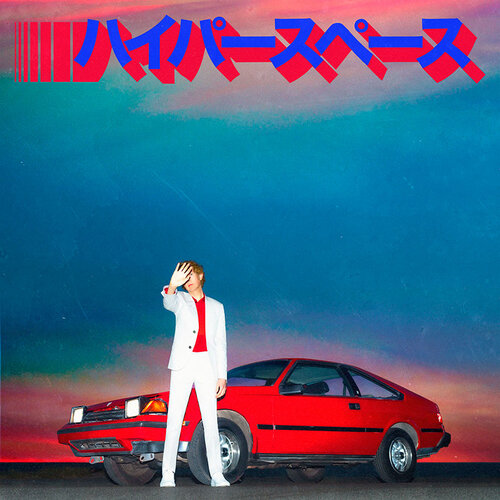
“Brexit’s greatest impact on music, though, looks likely to be on the live sector, both on British musicians going abroad, and on foreign artists and fans travelling to the UK. Take the carnet system. This allows people travelling on business to take merchandise from one country to another, where freedom of movement and goods does not apply – as it may well not for British artists travelling to Europe, post-Brexit. A carnet currently costs £325.96, but that’s not the end of it: it requires the holder to list everything they take into a country. For a touring artist that covers every guitar string, every drumstick, every cable, every T-shirt, every button badge. That has to be checked by customs officials on the way in, and then the same thing happens on the way out. It’s not just money, it’s time – which on tours run on shoestring budgets is another cost.

As well as carnets, musicians will need visas, too. The industry has been calling for special musicians’ visas, but there’s been no response from government. That despite the UK music industry being a multi-billion pound business (and despite the government’s own boasts last year of the creative industries being worth £101.5bn).

PHOTO CREDIT: @randomlies/Unsplash 

The visa issue will have a huge impact, warns Sammy Andrews, the founder of the industry group Music4EU. “We are about to suffer heavy losses for work for our UK road crew and engineers,” she says. “The people that make shows possible. Our lighting technicians, the sound engineers, guitar technicians, drum technicians, the roadies and the tour managers. Having to get extra visas for them means for certain that many bands will use local crews and not employ people from the UK for those roles, and this could have a devastating impact on that community. We know this for sure because it happens already for exactly those reasons outside of the EU”.

It is not only U.K. fans and artists going to Europe that might experience some restrictions and drawbacks: What are the repercussions of the Brexit regarding E.U. musicians hoping to play in this country? This BBC article tackles that question:

“Some of these issues could also affect foreign musicians trying to make a name for themselves in the UK.

Pavvla, a singer-songwriter from Barcelona who has played shows all over Europe, says: "Spotify UK put my songs in loads of playlists so I played a few London shows this Christmas."

"The next few times we go there [the UK] it will be for a small crowd.

"At least for Spain, the British industry is something people really look up to, it's a massive influence. I still want to give it a go."

3433.jpg

PHOTO CREDIT: @matthewkalapuch/Unsplash 

British music fans heading to festivals around Europe shouldn't be too concerned about a sudden lack of British names on the bill.

Primavera's co-organiser Alfonso Lanza adds: "It was a concern when the Brexit result came in.

"But we're in touch with the UK on a nearly daily basis. I don't know how it will raise the prices of production just yet.

"Even if that happens we'll go over it though. We can't do this festival without UK bands and fans".

It doesn’t matter if we get a deal or not by 31st October in regards the future status of the live music industry. Separating ourselves from the E.U., of course, if there is this No Deal outcome, it will be even more bleak. Kerrang! have written about the situation right now and how musicians’ lives will be changed; how underground artists might be affected:

 “The UK is a hotbed for live music and creativity, it’s been the driving force in rock and pop music from the start and a No Deal scenario dangerously threatens its future. Sure, you’ll still have all the manufactured pop you could ever want, but music isn’t born at the top. Music starts from the underground and if new UK bands can’t afford to take their music overseas and grow, they will die. Similarly, our live scene is very much populated with European bands, and if they decide to not play in the UK as it’s not cost effective, we could end up with vacuum in our venues.

aaaa.jpg

PHOTO CREDIT: @theunsteady5/Unsplash 

We have no idea what will happen after October 31. Whether you’re a musician or a fan, something we hold dear to us is in the hands of the UK government. Whether it’s voting, protesting, or simply having an opinion on the subject in a chat with your mates, please take on board the threat that cutting ties with the EU carries for music. Let’s also cross our fingers and toes in hope that the UK can continue to inspire and be inspired; and that today’s divisive politics don’t damage this wonderful utopia of music that we all love so dearly”.

There is a lot of talk in the media about the affect of Brexit, No Deal or otherwise, on commerce, Industry and financial security. It is clear that there will be this very difficult transition period, and I don’t think many people feel Brexit will be smooth and leave us in a better position than we are now. For artists and music fans, they are going to be hit. There are articles available that state that, even if we get a good deal, travel between borders will be difficult; the process of performing in Europe and getting a visa will be more tricky. If the Government continues to turn a blind eye to the music industry and how it will be affected post-Brexit, then it would leave a lot of artists vulnerable and anxious. And that, when we need the buzz and uplift of live music now more than ever, would have…

b.png

  PHOTO CREDIT: @firmbee/Unsplash

SOME big repercussions!

FEATURE: Sisters in Arms: An All-Female, Autumn-Ready Playlist (Vol. III)
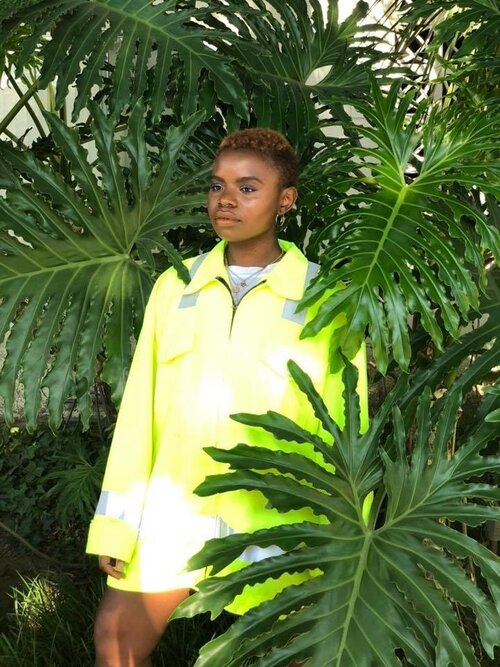
FEATURE:


Sisters in Arms

xxxxxx.jpg

IN THIS PHOTO: POLIÇA 

An All-Female, Autumn-Ready Playlist (Vol. III)

__________

AS today is National Album Day…

IN THIS PHOTO: Lil’ Kim 

a lot of people are digging into records that mean a lot to them. I think today is a perfect occasion to celebrate all music and, as we look to the past and some of the albums that shaped us, I am looking at the present best artists. In terms of the music being made by women, there is so much variation, wonder and strength. I do think we often associate music made by women as being a genre. There are still people who write off female artists and I feel, as this year has been so incredible, we cannot keep thinking that way. I feel the best music right now is coming from female artists and, as you can see from the playlist below, each week brings us fresh jewels and wonderful treats. Have a listen to the tracks and I know there is going to be a lot in there that catches the eye. We might be near the end of the year but, when we consider the music being made by female artists, it seems like there is no end in sight regarding…

WSSS.jpg

 IN THIS PHOTO: FKA twigs

TRULY wonderful tunes.

ALL PHOTOS (unless credited otherwise): Getty Images/Artists

____________

olol.jpg

 PHOTO CREDIT: Melanie Hyams

Drug Store Romeos – Now You’re Moving

Phoebe Coco – Sycamore Trees

Bishop Briggs – JEKYLL & HIDE 

3232.jpg

Geowulf – My Resignation

FKA twigs – home with you

POLIÇA – Driving

Hayley Kiyoko - Demons

Sharna Bass – Worth It

8.jpg

Jenifer (ft. Kylie Minogue) - On oublie le reste

Mary Komasa - Palermo

Nilüfer Yanya – H34T RISES

jjjj.jpg

Kara Marni – Lose My Love

dddd.jpg

JoJo – Joanna

Winona Oak – Let Me Know

bbb.jpg

PHOTO CREDIT: Mikey Buishas

Big Thief – Those Girls

Chloe Lilac – Special

EEE.jpg

Miranda Lambert – Tequila Does

2222.jpg

MisterWives – whywhywhy

Self Esteem – Rooms (Bonus Track)

Noémie Wolfs – On the Run

Julien Baker – Tokyo

PHOTO CREDIT: Michael Antonio

Lil’ Kim – Jet Fuel

88.jpg

Fantasia – Bad Girl

BENEE – Find an Island

4333.jpg

PHOTO CREDIT: Erika War

LIZ LOKRE – No Doubt

Starley – Lovers + Strangers

Brooke Bentham – All My Friends Are Drunk

FEATURE: The October Playlist: Vol. 2: Two Hands for Big Thief, Two Thumbs Up for Kim Gordon

FEATURE:


The October Playlist

IN THIS PHOTO: Big Thief/PHOTO CREDIT: Dustin Condren

Vol. 2: Two Hands for Big Thief, Two Thumbs Up for Kim Gordon

___________

THIS week is a big one…

 IN THIS PHOTO: FKA twigs

where there are some wonderful artists putting out music. Not only have Elbow got a new album out, Giants of All Sizes, but there is material from Big Thief, Self Esteem; FKA twigs and Poliça. In addition to that, we have new stuff from Cigarettes After Sex and the legendary Kim Gordon. I am especially excited to see new material from Kim Gordon who has brought out the album, No Home Record. It is looking like one of the best albums of the year so far and is a typically assured and stunning offering. It is a busy and varied week with plenty of gold and underrated gems. Make sure you get involved and have a listen to the intriguing and busy playlist. To start off your weekend, I have the tunes that will…

 IN THIS PHOTO: Kim Gordon/PHOTO CREDIT: Natalia Mantini

SET you on your way!  

ALL PHOTOS/IMAGES (unless credited otherwise): Getty Images/Artists

_________

 PHOTO CREDIT: Sebastian Kim

Kim Gordon – Hungry Baby

Big Thief – Shoulders

PHOTO CREDIT: Peter Neill

Elbow – Doldrums

FKA twigs – Home with You

PHOTO CREDIT: Howard Wise

Moon Duo – Lost Heads 

Cigarettes After Sex – Falling in Love

Poliça - Driving

PHOTO CREDIT: Laura McCluskey

Girl Ray – Girl

QQ.jpg

PHOTO CREDIT: Elizabeth Weinberg 

Liz Phair – Good Side

Panda Bear - playing the long game

PHOTO CREDIT: Olivia Rose

Michael Kiwanuka – Hero

PHOTO CREDIT: Mathew Parri Thomas

Self Esteem – Rooms

Harry Styles – Lights Up

Bodega – Knife on the Platter

Lil’ Kim – You Are Not Alone

887.jpg

Caribou – Home

Psychedelic Porn Crumpets – Mundungus

ddd.jpg

PHOTO CREDIT: Fryd Frydendahl

MØ (ft. Empress Of) - Red Wine 

Bishop Briggs - JEKYLL & HIDE

Green Day - Fire, Ready, Aim

Nilüfer Yanya – H34T RISES

Hayley Kiyoko - Demons

Jenifer (ft. Kylie Minogue) - On oublie le reste

Fantasia – Bad Girl

Waterparks – Watch What Happens Next

lo.jpg

BENEE – Find an Island

Gerry Cinnamon – Sun Queen

Luke Combs – What You See Is What You Get

Kara Marni – Caught up

oo.jpg

Cream with a K – Saving Face

DIIV – Skin Game

PHOTO CREDIT: Daniel Stark

The Pale White – Swim for Your Life

TRACK REVIEW: Elbow - White Noise White Heat

TRACK REVIEW:


Elbow

PHOTO CREDIT: Peter Neill 

White Noise White Heat


9.5/10


The track, White Noise White Heat, is available via:

https://www.youtube.com/watch?v=1zDMo40w5IA

GENRES:

Alternative-Rock/Indie-Rock

ORIGIN:

Greater Manchester, U.K.

The album, Giants of All Sizes, is available via:

https://open.spotify.com/album/4EqYFNisfHX1IPA0IoaKI2?si=bpUxOqbXTviguKeBH6ZjIg

RELEASE DATE:

11th October, 2019

LABEL:

Polydor Records

__________

I have held off reviewing Elbow…

8887.jpg

for a while, because I wanted to wait until the album, Giants of All Sizes, came out. Now that it is in the world, I have picked the latest single, White Noise White Heat, and will try to get to the core of Guy Garvey and his band. I wanted to start by talking about Garvey and his leadership; his fantastic personality and warmth. I will also move to look at Elbow and how they have progressed through the years; a bit about political climates and how, now, Elbow are rooting for change and understanding rather than attacking or sitting back. I want to address the reputation Manchester bands get for being miserabilists and how Elbow have never been that sort of band; a little about bands with renewed purpose and place. I am a big fan of Guy Garvey and he is one of those artists who is genuine and has a brilliant warmth. I have seen some articles and sources that claim Garvey comes across a little prickly or awkward but, in reality, every human being does! Garvey is one of the most engaging people to listen to and, as leader of Elbow, I am really interested to know where he came from and when music struck him. I will talk more about Elbow’s current moves in a bit but, before getting to that stage, I think it is important to study a songwriter as prolific and celebrated as Garvey. He is one of the most varied and brilliant songwriters of this generation. There is reality and truth in what he writes but, whether it is the Progressive-Rock moments on Giants of All Sizes or the more bombastic songs on The Seldom Seen Kid, Garvey brings out so much emotion and feeling. I want to bring in an interview from 2015 Garvey gave with The Guardian when promoting his solo album, Courting the Squall:

 “He can remember all the colours, sounds and smells of his childhood – the music blasting, his sisters singing and never walking down the stairs because they were always in such a rush. “They just jumped the length of the stairs, and every five minutes you’d hear this crash in the hall. They’re still manic when they’re all together now.”

PHOTO CREDIT: Thomas Butler 

Garvey excelled at school, until the age of 12, when his parents split up. He got two GCSEs, and was eventually thrown out of sixth-form college after enrolling three years on the trot without attending classes. He knows his family were disappointed in him. “I’m the only one who didn’t get a cap and gown photo on my mum’s wall. And then I was given an honorary doctorate in Manchester, which my sister Sam was furious about. She worked for her PhD.”

He was always a big lad, but despite his size he was bullied. “I was the tallest in school. But a couple of little shits made my life hell. I had massive, sticky-out ears. Huge. They tortured me about it.” When he was 12, he had his ears pinned back, got his first crew cut and thought he was making a new start. “I went back to school and within half an hour they were singing Holding Back The Ears. It’s kids: twisted, evil geniuses.” He finishes his pint. “Very nice stout this, by the way, mate.”

I ask how he manages to be so productive. “Most of the things I do for a living I can do drunk.” Does he worry about his alcohol consumption? “Yes. I drink too much. The one I’ve really got to watch is whisky. I adore it.” How much can he get through? “I’m ashamed to say I could polish off a bottle without a problem. I could have this conversation after a bottle of scotch.” How long would it take him to drink? “A couple of hours.”

Does the drinking help him write? Garvey smiles. “I used to think booze helped me write. It doesn’t at all. I used to convince myself it was a necessary part, but that’s bollocks.” Nearly all his best work, he says, is done sober. Why did he tell himself he wrote better drunk? “The drinking was all part of the garret, the romance of the swinging lightbulb, the dedicating my life to unpaid art idea. Tortured in my 20s – all part of that”.

I can imagine Garvey being hooked by music at school and chasing it. It is interesting to read this interview from a few years back and learning about how he is open about his childhood and harder times. Garvey is a great band leader and, in terms of his path to success, he has brought together all his experiences, battles and memories and injected them into he music.

I think the fact Garvey is so relatable and grounded means the music of Elbow has that extra degree of resonance and connection. Look back at an album like Asleep in the Back from 2001 and how they have evolved over the past eighteen years. I love their debut a lot – and so did the critics! -, but I think Elbow have become more experimental and bolder as they have progressed. One can say that, as Elbow have grown older and their bonds tighter, that is natural. I find a lot of artists tend to stand still or are not as progressive as you’d hope. Elbow continue to venture and search with each album. Giants of All Sizes is a mature album but, musically, there is so much happening. I think (the album) is one of their most eclectic and fulsome. Another thing that strikes me when it comes to Elbow is a comparative lack of interviews. They were in session for Shaun Keaveny at the legendary Maida Vale Studios and the band were in great form! I do wonder why there are not more press interviews out there. It would be great to hear more from the band about their current album and, as someone who has followed their work since the early days, I would be interested discovering what has inspired the latest album and how things have changed in camp through the years. I did find an interview Garvey gave to Under the Radar, where he was asked about Elbow’s changing sound and, interestingly, whether is a spirituality to the music:

“Is there a spirituality that sort of roots the music, or is part of the music-making process for you?

Well, I realized recently when somebody very, very close to me was very, very ill what I believe. Because I was brought up a Christian, but I haven't considered myself a Christian for well over half my life now. But I realized in the desperation of prayer—and it was the absolute desperation, I don't want to go into the details because it was just horrific—I found myself saying God, all the gods, anything anybody's ever believed in, every proton of good will that's forced the universe to change for the better, spare me a few scraps here, for this person I love.

IN THIS PHOTO: Elbow with Jesca Hoop/PHOTO CREDIT: BBC 

I suppose in that, you can't dispel somebody else's belief on account of not agreeing with them, because even if you don't believe in anything spiritual, any higher power, you don't have the right to take that away from people. And religion causes all kinds of bad things, of course it does. But it also gives people will, positive will. Martin Luther King said in a letter that he was a Christian before he was a black man, and it was his faith in Christ that gave him the impetus and strength to do what he did, knowing where he was going with it.

I don't believe in a deity. I don't believe in a physical embodiment or a creature. I believe in will because I see the effects of it all around. I believe in lives spent sharing and lives spent moving positively and thinking about people afterwards and doing it because it's right. In a nutshell, I believe in positivity. I believe in people. I believe in good will, and there are all kinds of energy that we're not aware of.

I'm not somebody who reads auras or believes in ghosts, any more than I'm a Christian or a Muslim, but I read atmospheres. I read atmospheres in a room. I always have. You walk in and you feel a prickle because a character's there that you shouldn't trust. It's probably an extension of my natural cowardice where physical violence is concerned. I've managed to not get punched my entire adult life. In fact, when I was in charge of a nightclub in Manchester for four years, there was never a punch thrown on my watch, because I could spot the problem makers before they could cause any trouble.

PHOTO CREDIT: Deirdre O’Callaghan  

How much does making music today feel like it did in the beginning?

Well, there isn't the same arguing, wailing, gnashing, endless insisting your point being the right point. We just rowed for 10 years about over what should happen next. Like storming out rows. That doesn't happen anymore. There's intense discussion, but it doesn't get personal. At the same time, that was an incredible passion.

I remember the first time we played as a band at St. Anne's Church hall when we were all 17 and Craig [Potter] was still at school. Craig was 15. We were playing a song and when we stopped at the same time, I couldn't believe it. I couldn't believe that we'd coordinated ourselves to the point where we could play a song and know exactly where it ended. [Laughs] And that feeling was the spark of the buzz.

Today, I've just moved house and I set up my speakers and I put the same record I always put on when I set up my hi-fi. It was put in storage for a year. I put Talk Talk's New Grass on the speaker as the sun went down, and my wife was on the stairs playing with our son, and I just bathed in the sound. Just got lost in the moment. I'm so passionate about other people's music, and consider it such an honor to be able to add to that great big beautiful cloud that is all music.

I really like the fact music is such a big and constant presence in Garvey’s life. I was listening to the band chat with BBC Radio 6 Music yesterday (10th October), and they had this brotherly connection and cheeky affection. They are a band who has that great love, and they are always looking to move forward. It seems there is greater stability in the band and an undying passion for what they do.

I am going to review a track that has a political element to it. White Noise White Heat is one of the most angered and emotional songs the band have ever created. Garvey has explained how the song is not about the tragedy at Grenfell, but it is a reaction to the fire which claimed lives and devastated a community. Seeing the smoke pour and the carnage on the news, that awful event from 2017 impacted us all. If the remainder of Giants of All Sizes has a sense of positivity and hope, there is more self-doubt on White Noise White Heat. Whereas Garvey and crew could find uplift and sanctuary in the face of other problems and events, the pain and rawness of Grenfell needed something pretty hard-going, evocative and honesty – less we downplay the seriousness of the fire and its horror. There is a change in musical approach/direction on White Noise White Heat, and you know the band mean every note and pained second. It is not an entirely bleak song, yet it does explore a very big tragedy. Addressing a subject like Grenfell allowed Elbow a chance to do something new and combine angrier lyrics with a composition that is more dislocated. I do wonder what Guy Garvey and Elbow make of Britain today. It is clear he is dissatisfied with the leadership of Theresa May and how she reacted to Grenfell. One feels he is dismayed at the current Government and everything that is happening with Brexit. One also feels he would like to see a stable Labour charge; politicians who can affect change. Back in 2015, Garvey was asked about Jeremy Corbyn and his thoughts: 

 “There’s so much he’s excited about, he says, not least politics. Is he optimistic about Jeremy Corbyn? “Course I am. I follow his fashion. I’m going to bust that blazer out with the patches on the elbow. I’ve got loads of that kind of wardrobe. The more successful he is, the more compromises he’ll have to make, and I hope people won’t be too disappointed when he does. He’s got every chance of being leader of the country. It’s brilliant. It made me very happy.”

Meanwhile, he’s getting increasingly involved in the politics of music, trying to ensure today’s musicians have a chance of making a living. A few years ago, he worked with the Musicians’ Union to get the law changed, so that landlords didn’t need a licence to have a couple of people play in their pub. Now, he’s trying to get the Noise Abatement Act changed, so that residents can’t move into an area and have established venues shut down. On his weekly Radio 6 show, he asks listeners to request songs he hasn’t heard, to boost the profile of little-known artists”.

It is clear that, then and now, Garvey is striving for justice and is someone who wants to help make a difference. I think Elbow are champions when it comes to lesser-championed souls, seldom seen kids and ordinary people. The band’s lyrics often reflect communities and neighbourhoods; various elements of Garvey’s own life and the sort of scenes the Elbow boys grew up around. Elbow never sit back when it comes to justice. Whether it is Garvey’s fighting with Musicians’ Union or Elbow assessing the Grenfell tragedy on White Noise White Heat, one feels they want to see radical political change and improvement very soon – as do we all! At a very difficult time for Britain, a lot of artists are putting into words their feelings regarding the situation and splits we are seeing. Giants of All Sizes has some fears and anxieties, but one gets a feeling and hope, that has always been evident in Elbow’s music. I think one can write in an optimistic way, even if it seems like there is a lack of hope in society.

That brings me onto an interesting consideration. I think Manchester bands have often been tagged with labels concerning tone and mood. Many are viewed as being quite miserable and downbeat. Look at legends like The Smiths and The Stone Roses, and many people feel like Elbow are forlorn or pessimistic. I don’t think the band have ever been like that. It seems like a lazy tag to apply to Manchester bands. Perhaps we feel like, as a lot of the bands there are working-class, they are reflecting a slightly grimmer reality compared to a wealthier South. Again, that is a flawed and stereotyped view. Cities like Manchester are thriving and buzzing and, whilst there are struggles and deprivations in various areas of the North, so many musicians from the area are producing positive, hopeful music. I think Garvey has been asked about the miserabilist tag in interviews and how he feels. Elbow are expansive and always-changing, they are always rooting for positive change and they are, I think, a band who have always been able to bring joy and strength to people. I usually do not bring other reviews into my own work, because I feel it sort of distracts from my own words. That said, The Guardian’s Alexis Petridis raised an interesting point regarding Elbow and Giants of All Sizes Is their warm music something that is alien at a time when many feel quite devoid of energy and optimism?

“The music similarly plays against type, or at least the popularly held view of type. When they first started attracting widespread interest, one of the most frequently remarked upon things about Elbow was the band’s unabashed love of progressive rock – still a ballsy thing for a hotly tipped alt-rock band to admit 20 years ago. Its influence has never really left them – on any given Elbow album you’re never that far from a song that sounds shimmering, aching but uplifting and suggestive of long teenage hours spent listening to The Carpet Crawlers by Genesis on repeat.

ee.jpg

But it’s more prevalent here than ever. It’s telling that Giants of All Sizes is being released as a limited edition single track CD, as if it’s a suite of songs, rather than a collection of them.

It’s debatable whether Elbow’s patent brand of warmth and optimism really is redundant in the current climate. One of the striking things about Nick Cave’s rapturously received Ghosteen was how empathetic and hopeful its songs sounded, potentiated by the fact that empathy and hope are two things in short supply at the moment”.

Before moving on, I wonder whether Elbow will use Jesca Hoop more. That sounds like a bit of a tangential leap, but she is featured on Dexter & Sinister (from Giants of All Sizes) and adds an ethereal boost. In fact, it is not such a deviation. What Elbow have done on their latest album is to mix the sort of dismay and confusion many of us feel, balancing that with their traditional blend of empathy and strength. I do think there is this assumption that, as we are going through some tough times, artists need to reflect that; something buoyant or optimistic might seem jarring or futile. With heavenly vocals from Jesca Hoop, I think Elbow have added new layers and colours to their music. I would love to hear her on future Elbow recordings as you get this lovely blend between her and Garvey. Maybe she would not be a full-time member, but I think Hoop balms wounds and elevates the senses. In any case, I think we do need music that goes beyond the achingly real and politically motivated. If all we hear is music that is downbeat or too concerned with addressing schisms and turmoil, the effect that has on us is quite evident. I do think we can all do with a sense of togetherness and uplift because, let’s face it, the world is not entirely bad, and positivity is just as relevant and factual than a feeling or division. Artists and generations have faced worse struggles than what we have now, and they have managed to combat that with music that gets the smiles formed and the blood racing. Elbow never shy away from reality and what is happening around us, yet one feels like they all want us to feel and express more empathy.

87mmm.jpg

When reviewing White Noise White Heat, one is struck by the lyrics and the impressions they leave. I shall come to that but, when White Noise White Heat starts up, there is this definite sense of energy and rouse. Whether the band were trying to articulate the sound of a brass band or a march, you are definitely stirred by an introduction that gets right into the blood. On other tracks across Giants of All Sizes, Elbow employ elements of different artists (they even go a bit Fleet Foxes at times), but I think White Noise White Heat is one of their most original creations. It begins with that kick and spark; a spirit that seems to have d dark edge to it. It is hard to articulate just how the introduction makes one feel but, instantly, images start to come out. When Garvey approaches the microphone, his voice carries a lot of weight, intent and emotion. He never cracks or gets too angered, yet you can sense this pain and sense of disenchantment. “I was born with trust/That didn’t survive the white noise of the lies” provokes all manner of possibilities. There is, as Garvey announces, the white heat of lies. Knowing that the events from Grenfell provoked the song and was on his mind, you sort of apply the lyrics to the Government and how they have (mis)handled things. Being Elbow, there is a mix of direct lyrics and the more oblique. After the incendiary and urgent opening lines, Garvey sings: “I tally catalogue and hold to the light/Forgotten scenes of love…”. Backed by a slightly off-kilter backing vocal, there is this eeriness that hangs behind; a spirit in the breeze that adds weight and chill to the song – also, there is a lot of beauty to be found. In some ways, one is reminded of John Lennon’s compositions for The Beatles (‘The White Album’) of 1968. Both sparse and almost choral, you have a track that is hard to easily define and absorb in the one sitting - it is advisable to listen to White Noise White Heat a few times through.

As one would expect from Elbow, the connection between lead and the band is incredible. Garvey turns in one of his most passionate vocal performances on Giants of All Sizes, whilst the composition provides endless nuance – so much is hidden on the first listen and you get these revelations as you keep listening. “I pick the broken dreams that hang in city centre trees” and “I just wanna get high” (the last time I heard that in a song is in Brittany Howard’s track, Get High, from earlier this year) are very different lines but are hugely powerful. The former seems to suggest a man who is looking through a wreckage and noticing debris that was once beautifully and hopeful; the latter indicates Garvey’s need to either be happy and return to a former state or just let things go. White Noise White Heat has an incredible percussive backbone, some tasty little riffs and stunning bass. The composition is so full of life, character and physicality, you listen to the song and transpose yourself into the scenes. The hero seems cast aside and helpless to save what is occurring. He tried to save the world and had a sense of certainty long ago. Things have changed and now he is a Blarney Mantovani (whatever that is?!); there is a degree of optimism escaping and how can one reconcile a stability and comfort against the atrocities happening around us; when leaders could act and make a difference. The sound of White Noise White Heat will be familiar with Elbow fans because, whilst the themes and feel of Giants of All Sizes is a little different to their previous work, you get a sound that is familiar and has Elbow’s hallmarks. Garvey, as I said, seems at his most emotive and impressive. The lads create this composition that has march and rain but there is plenty of rhythm and smoothness. It is a curious thing, and a sound that perfectly complements the lyrics. There are a lot of stunning songs on Giants of All Sizes but none that are as immediate and timely as White Noise White Heat.

sww.jpg

I do not have time or space to review their album but, if you can, go grab a copy of Giants of All Sizes (link is at the top of this review) and experience a treasure trove of exceptional songs and some of the best compositions I have heard ion years. Elbow are so together and as-one; they seem to be this single organism that continues to stun, flower and excel. The band will be playing around the U.K., so if you get the chance to see them, ensure you do. I have only heard them play live on the radio, but they sound absolutely incredible! Maybe it is the kinship and the fact the band know one another very well. I feel like, to Elbow, music means more than anything. It is a way for all the members (Guy Garvey, Craig Potter; Mark Potter and Pete Turner) to express something mere words cannot – I know songs have words but, what I mean is (songs) are more powerful than conversations. Giants of All Sizes is a triumphant work and one that is a little different to some of their earlier work. Some say they miss a slightly rowdier Elbow, whilst others think their current sound is better. Elbow are, as I said, always moving and cannot be predicted. At the heart of their work, there is a truth and sense of universality. We can all relate to their songs and get something from the magical music. I wanted to review White Noise White Heat, but there are so many other tracks on Giants of All Sizes that sort of knock you back and inspire a torrent of emotions. Go and get their album, go and see them live and celebrate a band who are…

 PHOTO CREDIT: @ShootTheSound

ALMOST like national treasures.

________________

Follow Elbow

FEATURE: National Album Day: Which Albums Will You Play?

FEATURE:


National Album Day

PHOTO CREDIT: @danedeaner/Unsplash

Which Albums Will You Play?

__________

TOMORROW…

National Album Day rolls around again. There are cynics that ask what the point of the day is. After all, should we dedicate a day to albums? Wouldn’t it be best if we celebrate albums all year round instead? There is a case regarding the perennial nature of album, yet I think most of us sort of skip through tracks and it is quite rare we appreciate the fullness of records. Consider how many of us still buy vinyl. I think there are a lot of people who buy vinyl and never play them; maybe they do not investigate the material as much as possible, so it means you have all these records piling up. We do not buy C.D.s as much as we did and, when it comes to streaming, I do think most of us are handpicking tracks and not really digging that deep. I know there are people who still play albums in full but, on Saturday, make sure you dedicate some time to listen to at least one album in full. The theme of this year’s National Album Day is ‘don’t skip’; albums you listen to without missing a track. I will end this feature by mentioning five albums I will be playing on Saturday and one of them, Graceland by Paul Simon, is one I listen to without missing a beat. There are lots of great events happening to celebrate National Album Day, and I encourage you to do what you can. Whether it is something as simple as streaming an album or buying that vinyl you have always wanted. I have set aside five albums to play on Saturday – details are below – and it will be fun to dig into them. Have a think of the albums you’ll play and, before Saturday, get them set aside and…

 PHOTO CREDIT: @crew/Unsplash

READY for some serious action.

______________

Paul Simon – Graceland

8.jpg

Release Date: 25th August, 1986

Producer: Paul Simon

Label: Warner Bros.

Standout Track: Graceland

Buy: https://www.amazon.co.uk/Graceland-VINYL-Paul-Simon/dp/B007P06DJ0/ref=sr_1_1?crid=N69IWLK11E01&keywords=graceland+paul+simon&qid=1570429846&sprefix=graceland+%2Caps%2C141&sr=8-1

Stream: https://open.spotify.com/album/6WgGWYw6XXQyLTsWt7tXky?si=qBG5C6ndQMG-4QQIDaGllw

Review:

“With Graceland, Paul Simon hit on the idea of combining his always perceptive songwriting with the little-heard mbaqanga music of South Africa, creating a fascinating hybrid that re-enchanted his old audience and earned him a new one. It is true that the South African angle (including its controversial aspect during the apartheid days) was a powerful marketing tool and that the catchy music succeeded in presenting listeners with that magical combination: something they'd never heard before that nevertheless sounded familiar. As eclectic as any record Simon had made, it also delved into zydeco and conjunto-flavored rock & roll while marking a surprising new lyrical approach (presaged on some songs on Hearts and Bones); for the most part, Simon abandoned a linear, narrative approach to his words, instead drawing highly poetic ("Diamonds on the Soles of Her Shoes"), abstract ("The Boy in the Bubble"), and satiric ("I Know What I Know") portraits of modern life, often charged by striking images and turns of phrase torn from the headlines or overheard in contemporary speech. An enormously successful record, Graceland became the standard against which subsequent musical experiments by major artists were measured” – AllMusic

Amy Winehouse – Frank

Release Date: 20th October, 2003

Producers: Commissioner Gordon/Jimmy Hogarth/Salaam Remi/Jony Rockstar/Matt Rowe/Amy Winehouse

Label: Island

Standout Track: In My Bed

Buy: https://www.amazon.co.uk/Frank-VINYL-Amy-Winehouse/dp/B001AR0DS6/ref=sr_1_1?keywords=amy+winehouse+frank&qid=1570430137&sr=8-1

Stream: https://open.spotify.com/album/3kGbxqlVl3LqjifxlubtcT?si=ogXJF1L7SY2v7hN9cXd0Sw

Review:

“Winehouse sounds as if she has performed a thousand times in smoky jazz clubs. So it comes as some surprise to learn that she is just 19 and was raised in north London.

Sitting somewhere between Nina Simone and Erykah Badu, Winehouse's sound is at once innocent and sleazy. She claims that she can only write about what she has already learned, but she makes some starkly candid and humorous social observations on the fun-poking Fuck Me Pumps and the brazen single, Stronger Than Me.

Standout track Take the Box is a stunningly soulful tale of returning an ex-lover's possessions and You Send Me Flying does just that, thanks to a colossal vocal talent.

October Song, meanwhile, forges uplifting jazz out of the death of a pet canary. There are contradictions - but it's hard not to hear the honesty and soul that resonates throughout this album” – The Guardian

The Beatles – Magical Mystery Tour

yh.jpg

Release Date: 8th December, 1967 (U.K.)

Producer: George Martin

Labels: Parlophone (U.K.)/Capitol (U.S.)

Standout Track: I Am the Walrus

Buy: https://www.amazon.co.uk/Magical-Mystery-Tour-VINYL-Beatles/dp/B0041KVWI4/ref=sr_1_1?crid=3RBV7NRI4BNQC&keywords=the+beatles+magical+mystery+tour+vinyl&qid=1570430448&sprefix=the+beatles+magical%2Caps%2C155&sr=8-1

Stream: https://open.spotify.com/album/2BtE7qm1qzM80p9vLSiXkj?si=6WQgnFoTSLifK8elCpSEPw

Review:

“Of the three singles, the undisputed highlight is "Strawberry Fields Forever"/ "Penny Lane", John Lennon and Paul McCartney's tributes to their hometown, Liverpool. Slyly surreal, assisted by studio experimentation but not in debt to it, full of brass, harmonium, and strings, unmistakably English-- when critics call eccentric or baroque UK pop bands "Beatlesesque," this is the closest there is to a root for that adjective. There is no definitive Beatles sound, of course, but with a band that now functions as much as a common, multi-generational language as a group of musicians, it's no surprise that songs rooted in childhood-- the one experience most likely to seem shared and have common touchpoints-- are among their most universally beloved.

The rest of the singles collected here are no less familiar: Lennon's "All You Need Is Love" was initially completed up for an international TV special on BBC1-- its basic message was meant to translate to any language. Harrison's guitar solo, producer George Martin's strings, and the parade of intertextual musical references that start and close the piece elevate it above hippie hymn. Its flipside, "Baby You're a Rich Man", is less successful, a second-rate take on John Lennon's money-isn't-everything theme from the considerably stronger "And Your Bird Can Sing". It's the one lesser moment on an otherwise massively rewarding compilation” – Pitchfork

Kate Bush – Never for Ever

ddd.jpg

Release Date: 7th September, 1980

Producers: Kate Bush/Jon Kelly

Labels: EMI (U.K.)/EMI America (U.S.)

Standout Track: Babooshka

Buy: https://www.amazon.co.uk/Never-Ever-2018-Remaster-VINYL/dp/B07HQ7HW19/ref=sr_1_1?crid=XM8S1621AX75&keywords=kate+bush+never+forever&qid=1570430666&sprefix=kate+bush+never+%2Caps%2C159&sr=8-1

Stream: https://open.spotify.com/album/4MYtX4Kta7FL4NVUE0FYws?si=Mvfz8bUwRLaECwLg3ot-sQ

Review:

“Never for Ever has Kate Bush sounding vocally stable and more confident, taking what she had put into her debut single "Wuthering Heights" from 1978 and administering those facets into most of the album's content. Never for Ever went to number one in the U.K., on the strength of three singles that made her country's Top 20. Both "Breathing" and "Army Dreamers" went to number 16, while "Babooshka" was her first Top Five single since "Wuthering Heights." Bush's dramatics and theatrical approach to singing begin to solidify on Never for Ever, and her style brandishes avid seriousness without sounding flighty or absurd. "Breathing," about the repercussions of nuclear war, conveys enough passion and vocal curvatures to make her concern sound convincing, while "Army Dreamers" bounces her voice up and down without getting out of hand. "Babooshka"'s motherly charm and flexible chorus make it one of her best tracks, proving that she can make the simplest of lyrics work for her through her tailored vocal acrobatics. The rest of the album isn't quite as firm as her singles, but they all sport a more appeasing and accustomed sound than some of her past works, and she does manage to keep her identity and characteristics intact. She bettered this formula for 1985's Hounds of Love, making that album's "Running Up That Hill" her only Top 40 single in the U.S., peaking at number 30” – AllMusic

Steely Dan – Can’t Buy a Thrill

55.jpg

Release Date: November 1972

Producer: Gary Katz

Label: ABC

Standout Track: Midnite Cruiser

Buy: https://www.discogs.com/Steely-Dan-Cant-Buy-A-Thrill/release/1580493

Stream: https://open.spotify.com/album/4Gh6pRaXqXTtJx4plAJbBw?si=z105nj3HQ5iTAMITHi1rmw

Review:

““Reelin’ in the Years” is a great jam all-around – piano, bass, drums, vocal harmonies and, of course, guitars led by New York session man Elliott Randall – it is a true classic rock classic. This became the second hit song from Can’t Buy a Thrill. Becker’s dryly sarcastic lyrics and thumping bass line made it one the most overtly sharp and heavy tunes in the Steely Dan catalog.

The rest of side two contains lesser known songs which are solid nonetheless. “Fire in the Hole” contains a nice choppy piano by Fagen and pedal steel guitar by Baxter. “Brooklyn (Owes the Charmer Under Me)” is the second song to feature Palmer on lead vocals and should be considered a great soft rock classic with a bouncy bass line by Becker. “Change of the Guard” is another pop-oriented song with great electric piano and a definite late 1970s Billy Joel vibe, while “Turn That Heartbeat Over Again” is like a mini-prog rock song with good extended lead parts and interesting effects. This last song is also notable as one that contains co-lead vocals by Becker, a rarity.

Can’t Buy a Thrill was the first of seven top-notch albums by Steely Dan that extended through the rest of the decade into 1980, the pinnacle being 1977’s Aja. Although the group ceased from touring altogether in 1975, they still produced enough critically acclaimed albums and radio hits to make them one of the top acts of the 1970s” – Classic Rock