
FEATURE:
Sisters in Arms

IN THIS PHOTO: Charlotte Dos Santos/PHOTO CREDIT: Nathan Bajar
An All-Female, Winter-Ready Playlist (Vol. VII)
__________
IT is another weekend…

IN THIS PHOTO: Emily Burns
and the weather is a little better than it was this time last week. Yet again, there are some phenomenal female artists putting out some sensational music. This week has been a really great one for music and, as you can see from this playlist, so many terrific tracks have come from women. As always, the variety is staggering; covering so many different sounds and genres. Have a listen to this packed playlist, and I know it will give your weekend a boost and buzz. Settle back, play these tracks and…

IN THIS PHOTO: Wye Oak/PHOTO CREDIT: Ryan Obermeyer
LET them work their magic.
ALL PHOTOS (unless credited otherwise): Artists
__________

Coach Party – Breakdown

PHOTO CREDIT: Rosie Ann Butcher
Sophie Morgan – Bar to Bar

Call Me Loop – Downhill from Here

Cameron Hayes – Drown

Orla Gartland – oh GOD

Emmi Elliott – Face to Face

PHOTO CREDIT: Eddie Chacon
Best Coast – Graceless Kids

Caylee Hammack – Small Town Hypocrite
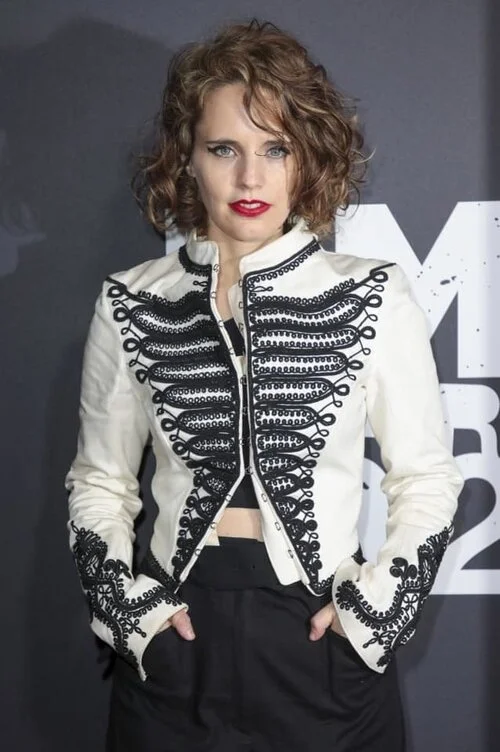
IN THIS PHOTO: Anna Calvi
Anna Calvi (ft. Charlotte Gainsbourg) – Eden (Hunted Version)

PHOTO CREDIT: Bao Ngo
Ada Lea – woman, here

PHOTO CREDIT: Alysse Gafkjen Photography
Katie Pruitt – Loving Her

Agnes Obel – Can’t Be

PHOTO CREDIT: Vanessa Heins
Sarah Harmer – Wildlife

PHOTO CREDIT: @cf.watkins
Wilsen – Wedding

PHOTO CREDIT: Aaron Lee
Yumi Zouma - Southwark
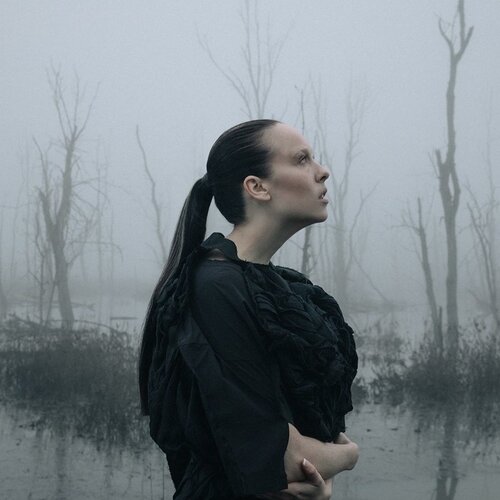
Allie X – Regulars

Pip Millett – Deeper Dark

Mae Muller – Therapist (Acoustic)

April – The Impossible Task of Feeling Complete

Grimes – New Gods
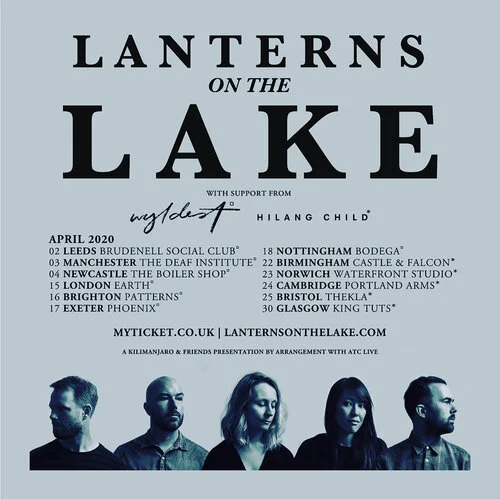
Lanterns on the Lake – Secrets & Medicine

Maggie Miles – WHATDOISAY?

PHOTO CREDIT: @rayana
Banoffee – Chevron

Charlotte Dos Santo – Helio

Gracie Abrams – 21

ShitKid – Always Amber

GRACEY – Gone

Emily Burns – Hello

Jessy Lanza – Lick in Heaven

Wye Oak – Walk Soft
FEATURE: The February Playlist: Vol. 4: Even If You Make Bad Decisions, We Will Always Love You
FEATURE:
The February Playlist

IN THIS PHOTO: Thundercat
Vol. 4: Even If You Make Bad Decisions, We Will Always Love You
__________
THIS week is not short…
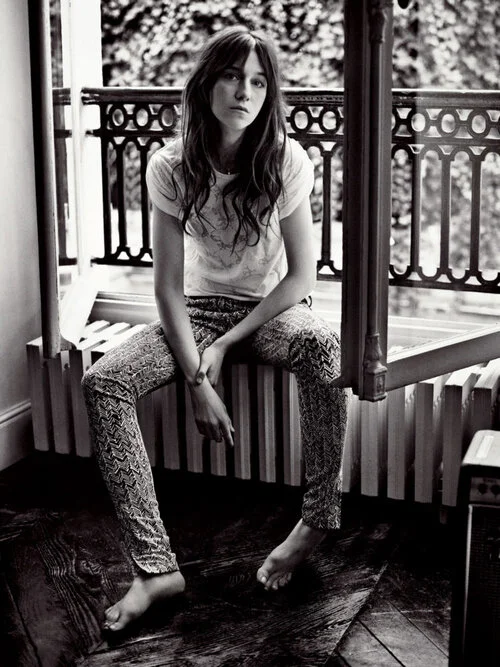
IN THIS PHOTO: Charlotte Gainsbourg/PHOTO CREDIT: Interview Magazine
of huge tracks from mainstream artists and those slightly away from the spotlight. We have fresh cuts from The Strokes, The Avalanches (ft. Blood Orange), and Anna Calvi (ft. Charlotte Gainsbourg). Thundercat, Grimes, and Agnes Obel have songs out, as does Morrissey, The 1975, the incredible Sparks, and Glass Animals. It is an impressively full and varied week of terrific music. No matter what your tastes, there should be something in the playlist that tickles your fancy! It has been exciting seeing some real great songs arrive this week from some of the world’s most popular artists. If you need something to give your spirits a kick and a bit of energy, get involved with the best tracks…

IN THIS PHOTO: Grime
OF this week.
ALL PHOTOS/IMAGES (unless credited otherwise): Artists
_________

The Strokes – Bad Decisions

The Avalanches (ft. Blood Orange) - We Will Always Love You

IN THIS PHOTO: Anna Calvi
Anna Calvi (ft. Charlotte Gainsbourg) - Eden (Hunted Version)

Thundercat - Dragonball Durag

Grimes – You’ll miss me when I’m not around
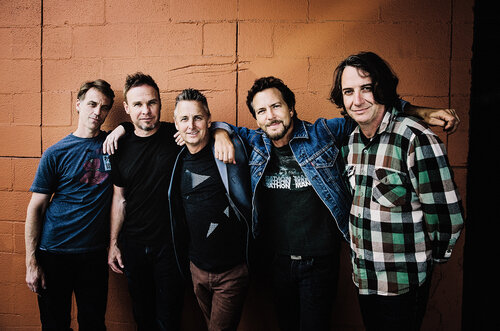
PHOTO CREDIT: Danny Clinch
Pearl Jam – Superblood Wolfmoon

The 1975 – The Birthday Party

Glass Animals - Your Love (Déjà Vu)

Agnes Obel – Broken Sleep

Sports Team – Here’s the Thing

The Districts - Velour and Velcro

Sparks - Self-Effacing
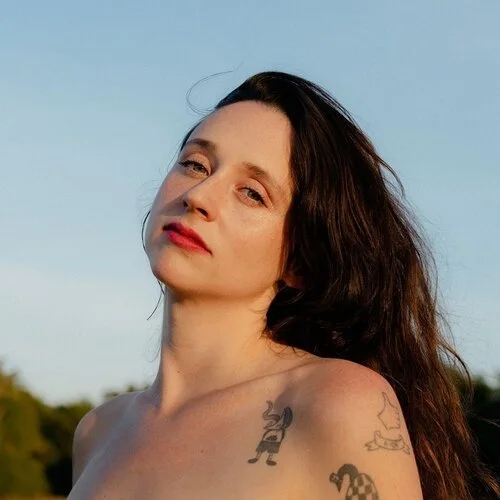
Waxahatchee – Lilacs

Morrissey - Knockabout World

Wye Oak – Walk Soft

PHOTO CREDIT: Alex Knowles
Saint Saviour (ft. Willy Nelson) - Rock Pools

Aitch – MICE

Orla Gartland - oh GOD

Ozzy Osbourne - Eat Me

The Weeknd – After Hours

Coach Party – Breakdown

Yves Tumor – Gospel for a New Century

Biffy Clyro – Instant History

PHOTO CREDIT: Eric Gyamfi
Moses Sumney – Neither/Nor

Charlotte Dos Santos – Hello

Best Coast – Wreckage
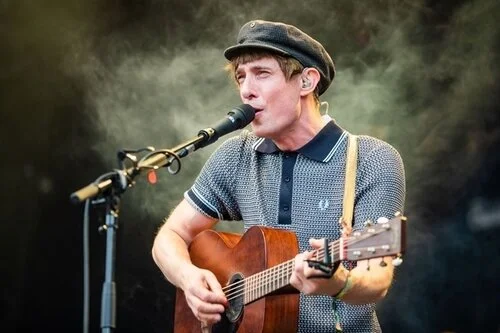
Gerry Cinnamon - Where We're Going

The Lottery Winners – Headlock

PHOTO CREDIT: Kerrang!
All Time Low - Sleeping In

Maddie Jay - The Peanut Butter Song
TRACK REVIEW: The Strokes - Bad Decisions
TRACK REVIEW:
The Strokes

Bad Decisions
9.2/10

The track, Bad Decisions, is available from:
https://www.youtube.com/watch?v=5fbZTnZDvPA
GENRE:
Indie Rock
ORIGIN:
New York, U.S.A.
RELEASE DATE:
18th February, 2020

The album, The New Abnormal, is available from 10th April, 2020. Pre-order here: https://smarturl.it/TheNewAbnormal?iq
__________
THIS is the first time I have…
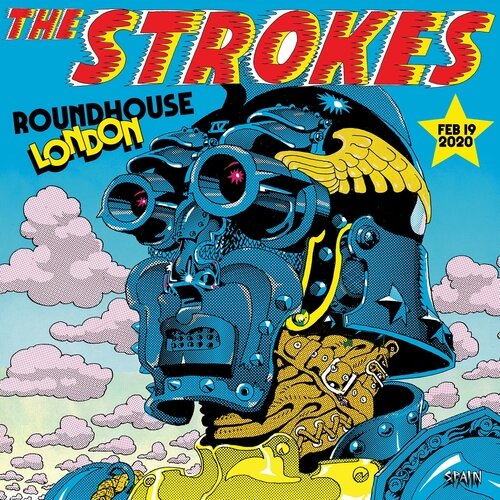
assessed The Strokes, but now feels like a perfect time to focus on the New York band. At the moment, The Strokes are preparing for a gig in Belfast on Monday, and they then head back to North America. Looking at their tour schedule, and it seems like the guys could slot in a performance at Glastonbury. The line-up is yet to come, but one wouldn’t bet against The Strokes being added! It seems strange to think that their debut album, Is This It, is almost twenty – it turns twenty in July next year. Right now, it is still a cool-if-unruly teen, and I will focus on that in a minute. I want, first, to discuss The Strokes as a live band, as they have just played London. I do not usually go to live gigs, but it seems like their performance at The Roundhouse was glorious. In terms of cool bands who can thrill the crowds and produce these epic sets, there are few who move like The Strokes! Granted, the band have been performing together for years, and they have more than enough hits under their belt to give the fans what they want. Bands who have been gigging for so many years could get complacent and phone in their set; they could just do a pared-down set and leave things at that. As it is, The Strokes give value for money and deliver something sensational. I want to concentrate on a couple of different subjects – one that I have featured a few times -, but here are a couple of reviews from their Roundhouse gig. This is what The Guardian had to say:
“After a terrific run through You Only Live Once, a song plucked from the place where classic rock bumped up against new wave, Julian Casablancas starts singing something unrecognisable. Albert Hammond Jr joins in on guitar, and gradually the other three try to work out something to do. It doesn’t seem to be a song from the forthcoming new album, The New Abnormal, given that three of the band are barely playing it, but in an example of work-to-rule that would have impressed a 1970s trade unionist, the band count it as one of their 15 songs for the evening, leave the stage one song before the end of the written setlist, and drop The Modern Age from the encore.
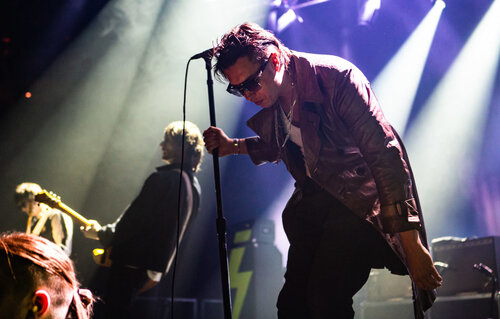
IN THIS PHOTO: The Strokes live at The Roundhouse, London on 18th February, 2020/PHOTO CREDIT: Jenn Five/NME
The two actual new songs played, though, are glorious. The Adults Are Talking begins, like some relic of an early 80s John Peel show, with skeletal drum machine and guitars so spindly that they seem barely able to support themselves, then builds until the guitars interlock like electrical currents tickling each other into life. Bad Decision is gloriously and expansively melancholy, camped halfway between Blondie’s Union City Blue and Generation X’s Dancing With Myself (Billy Idol and Tony James have been given a songwriting credit).
Inevitably, though, it’s the four songs from Is This It that set the crowd alight, even if the dancefloor is too packed for much in the way of movement. And you realise just how odd a proposition they really were: guitars so trebly they could pierce ice, Casablancas’s voice a dishevelled slur. There’s been greatness since, too. It hasn’t all been a 15-year decline”.
NME were in attendance to see Th Strokes kill The Roundhouse, and they took some cool snaps whilst there – The Strokes’ social media pages are not stuffed with great photos by and large. Here are a few snippets from the review:
“Good old London town,” smiles a typically laissez faire Julian Casablancas in full lounge lizard mode, before recalling to the sold-out Roundhouse crowd how the capital first took The Strokes to their bosom when they led the indie revolution at the turn of this century. “America had no love for us back then,” he purrs. “Only the sharp minds of the British could understand the nuances of our music.”
This last-minute show to celebrate the announcement of their long-awaited new album ‘The New Abnormal‘ does feel like something of a homecoming. It’s the party they deserve but weren’t fully allowed when they were last in town at All Points East, where they were dogged by sound issues (but still played an absolute blinder). But in high spirits and striking a fine balance between leaning on their legacy and showcasing promising new cuts with fire and compulsion, this is the most fun and vital that The Strokes have felt in 15 years. The chemistry is back, and we are here for it.

IN THIS PHOTO: Albert Hammond Jr./PHOTO CREDIT: Justyna Hammond Jr.
Let’s take a minute to talk about how good the new stuff sounded. ‘The Adults Are Talking’ has the free and easy spirit of anything from ‘Room On Fire’ but a little wiser, ‘Bad Decisions’ landed like an instant classic, and they also aired an unknown jazzy little number that suggests ‘The New Abnormal’ could take us down some very strange lanes…”.
It is remarkable that the band are still touring and giving us these fantastic performances. I am not sure whether The Strokes are coming back to London or the U.K. later in the year, but it would be nice if they appeared on a few festival line-ups. Bands like The Strokes are uniting generations. People like me (in their thirties) remember their debut album coming along and feeling this very raw and cool thing – I keep using the ‘cool’ word, but it is applicable in every case! There are older fans – the middle-aged – and very young fans who have either bonded with The Strokes recently or have been there since the start. Live performances can bond people in a way social media and the Internet cannot. Now that music is less about physical sharing and that social connection, I think there is something quite cold and distant about music-sharing; we do not chat about songs and artists the way we used to. I think gigs are one of the few remaining elements of the past that has remained pure. Sure, a lot of people are filming gigs on their phones, but there is that joy and magic of being in the same space as people, having this shared experience. I know bands like The Strokes realise how important live performance is, and how it touches people. A subject I have mentioned a few times in various reviews is the state of Rock. One cannot class The Strokes as purely ‘Rock’ – they fit into other genres -, but there was great excitement when they unveiled Is This It in 2001.

IN THIS PHOTO: The Strokes in 2001/PHOTO CREDIT: Phil Knott
In 2002, The Libertines released their debut, Up the Bracket, and were often compared to The Strokes. It was a rich time for Rock where young bands were mixing in the Punk sound of the 1970s but taking from the here and now and mixing this potent brew. Like The Libertines, The Strokes put out a debut that was fresh and basic, yet there was familiarity – some elements of bands like The Stooges and The Velvet Underground. The Strokes did not wear their influences too heavily; instead, they recorded an album that seemed to capture a spirit and desire in the air. There were other great Rock bands around in 2001 – The White Stripes (a duo) were at their peak -, so I don’t think it was wholly down to The Strokes to ‘save Rock’. There is this ongoing debate as to whether Rock is dead and who can save it. The Strokes arrived at a time when their U.S. contemporaries like The White Stripes and Queens of the Stone Age were ruling. Here, we had Muse and Radiohead showing that Rock was not only alive, but able to bring in other genres in a way a lot of the 1990s’ Rock did not. I do feel The Strokes are unfairly burdened with the responsibility of saving Rock; I don’t think they truly believed they were the only decent Rock band and they were saviours. I do think people unfairly criticise The Strokes for declining since their debut and not leading Rock to giddy heights for years. I will argue against the assumption The Strokes’ music was only relevant in 2001 but, before then, it is clear that the band helped ignite a new wave of Rock artists in the U.K. In fact, as this article shows, The Strokes caused a sensation and inspired musicians, fans, and label managers alike:
“Kelly Kiley (manager of Rough Trade Records): “I’ve never known a band to get security so quickly.”
Laura Young (blogger): “The first time I ever saw the Strokes, in the middle of the show, Julian started staring off into the distance. Then you just see him jump into the crowd, and there was a kerfuffle. He was getting into a fight. Very quickly, one of the bouncers came in and broke it up, but I was like: ‘Oh my God, this is so awesome.’ They had this reputation in the press of being bad boys. Drinking a lot, getting into trouble. That was their whole persona, cool New York, don’t-give-a-fuck type of dudes.”

PHOTO CREDIT: NME
Carl Barât (frontman, the Libertines): “They were on Rough Trade in England and that was a big thing. And we had been to see a gig in Liverpool. We jumped the train. Their EP had just come out and we stole it from the shop in the station and we were looking at the lyrics on the way up. We were like: ‘These motherfuckers from America – we wear those clothes! We do this!’”
Mark Ronson: “I remember asking someone what the Libertines were and they said that they were like the British version of the Strokes, and I remember being like: ‘Well, I have the Strokes, I don’t really need the British version.’ I know English kids who are seven years younger, who that band was so seminal for that they’d cry if Can’t Stand Me Now comes on at a certain point in the evening. It didn’t grab me, and like I said, if this is the British Strokes, well, we have the Strokes. I wasn’t super interested in it.”
Conor Oberst (frontman, Bright Eyes): “That summer, the summer of 2001, was really the summer of the Strokes over there. We were touring England and that’s where I first saw someone walking around with that original T-shirt. I thought: ‘The Strokes. Do they mean, like, have a stroke? Or a pool stroke?’ It kind of looked like the Storks if you looked at it wrong. The record wasn’t out in America yet but in every club we were playing, they’d be playing it as we walked in the door”.
A lot of people felt Rock sort of ended when the 1990s did, but the first couple of years of the new millennium were full of life and excitement. It was great being around, and I feel The Strokes are responsibility for so much of the great music around then – whether it was their own or another band’s. Listen to their latest track, Bad Decisions, and it is clear The Strokes are still hugely relevant and contributing something terrific to the scene. Maybe Rock has declined since the start of the 2000s – it definitely has – and there are far fewer great bands standing in the mind. Today, there are a lot of groups splicing genres and there are some promising newcomers, but the mainstream is not as alive with Rock giants like it used to be. That said, I am listening to so many bands today that owe a debt to The Strokes and one can hear their D.N.A. in so many newcomers. I am excited to see where The Strokes head next and what we can expect from their forthcoming album, The New Abnormal.

IN THIS PHOTO: The Strokes in New York City in 2001/PHOTO CREDIT: @CodeSmyth
Too many people seem to be of the opinion that The Strokes were all about the 2000s (the first decade of the twenty-first century) and that is it. Albums like Room on Fire (2003) and First Impressions of Earth (2006) have some great numbers on them, but there was so much pressure on the band’s shoulders after their debut – so many people wanting a repeat of Is This It. There was a lot of love for The Strokes when they broke through, but there was snobbishness from various corners of the press; the feeling that the band were all about style and attitude and had no substance. This is what NME wrote in 2011:
“Of course history is littered with brilliant albums made by rich people but I can guarantee you that none of them are the work of the indolently navel gazing, clothes horse, fuck puppet sons of the already famous who wouldn’t know what the word ‘struggle’ meant unless their amanuensis looked it up for them in a fucking gold-plated dictionary.
The malign influence of this album was twofold. Firstly, in real terms, it opened up the floodgates for dead-eyed, style over substance, stadium indie groups, who leaned heavily on classic music from the canon but with all rough edges smoothed off to make it more palatable for mass consumption. (Hello The Killers, Kings Of Leon, Black Rebel Motorcycle Club etc.)
Secondly, in aesthetic terms, their legacy bequeathed to the UK indie scene over the following decade cannot be underestimated either. They set a blueprint for lager-sodden underachievement, unthinking narcosis and the actual music being relegated to tertiary importance behind identikit thrift store clothing and studied urban ennui with a side helping of downward mobility.
Regardless of what they sound like, we can thank The Strokes for the ‘will this do’ imbecility of Razorlight, The Others, Dirty Pretty Things and many more to boot. There were loads of great NYC bands we could have clasped to our collective bosom a decade ago including Liars, Les Savy Fav, Oneida or Black Dice instead of Little Lord Fauntleroy And The Overdrafts (just as there were loads of better albums in 2001 by the likes of The White Stripes, Jay-Z, Prefuse 73, Lightning Bolt, Missy Elliott, Fantomas and Roots Manuva)”.
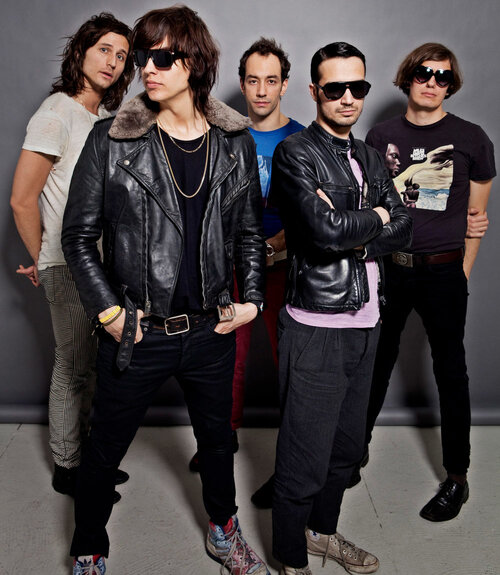
All brilliant bands evolve, and The Strokes churning out various approximations of their debut would have been met with criticisms and boredom. What they did was to move their sound forward and not replicate what came before. Maybe that is why The Strokes got so much unfair criticism:
“When a band represents a certain thing at a certain moment in time, our expectations of how they should sound and what they should do are crystallized. The Strokes were supposed to be scrappy New York dudes playing throwback, Velvet Underground-inspired garage rock; is it unreasonable for us to expect that they’d do that forever?
The thing that tanked the Strokes’ mainstream success is that they stopped wanting to make straightforward rock records. And could you blame them? They learned to play their instruments and began expanding their palette of influences. In a sense, the Strokes stopped pretending to be musicians.
Casablancas has historically been a brilliant songwriter, but his virtuosic tendencies pushed him to make music that was more complicated than it was listenable. His first solo album, Phrazes for the Young, has a few bangers on it (see "11th Dimension", which sounds like David Bowie’s “Rebel Rebel” tripping on synths). The follow up, Tyranny, is a dissonant hour of muddy guitars and drum machines. Releasing the ten-minute-long “Human Sadness” as the album’s first single feels a little bit like Casablancas giving the middle finger to anyone who yearns for the early days of the Strokes”.
Everyone is entitled to their onions, but I think The Strokes have released several brilliant albums, and their legacy and importance extends far and wide. The sort of urgency that we have in Grime and Hip-Hop used to belong to Rock. Now, Rock is either watered-down or sanitised. It has become less risky and, when you look at the bands out there, how many of them are as thrilling and cool as The Strokes?! How many bands today are singing about boozing, living whilst you’re young and the thrill of unexpected?

IN THIS PHOTO: Julian Casablancas/PHOTO CREDIT: Brett Rubin
The Strokes’ influence extended beyond their music. They were a band that the world needed in 2001; a return to the classic days of Rock and Punk where you could get these hot bands that could write tunes that were indelible. NME explain more in a 2009 article:
“Given that they also provided the noughties with one of its finest albums, to say The Strokes’ lasting legacy is that they gave indie a nice makeover might seem harsh. But it was WAY more important than that. Mirroring the mid-’70s, rock’n’roll post-‘Kid A’ had become awash with seriousness and everyone believing that the future, post-Britpop, was anti-image, anti-nostalgia.
But what they encapsulated and gave back to us for that first amazing couple of years was that sense of rock’n’roll being a 24-7, living-for-the-moment lifestyle choice comprised of clothes, fucking, snorting, drinking, dancing and great records in equal measure. To stand in an indie disco around that time, surrounded by folk who all looked as fabulous as you did, all singing the “Alone we stand/Together we fall apart” line from ‘Someday’ was truly joyous.
It meant something, and something that was to loom large over the whole decade. That so many of these people went on to form bands – Arctic Monkeys and The Libertines to name but two – is proof positive that it wasn’t all about the cut of the cloth. The Strokes’ gift to the world was to make it fall in love with rock’n’roll once again, in all its ridiculous glory”.
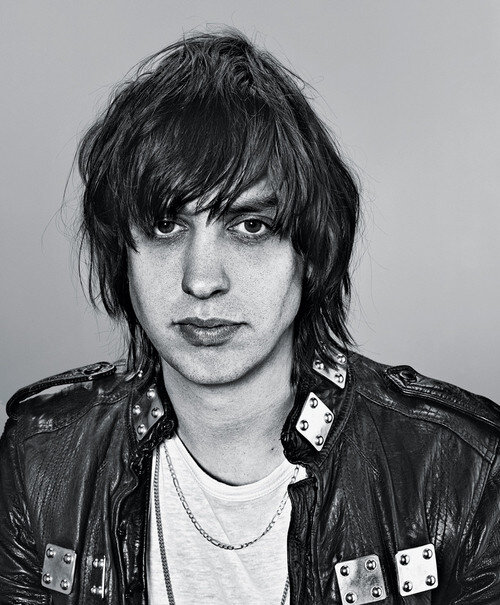
Before I get to reviewing The Strokes’ new single, Bad Decisions, I have not name-checked their lead, Julian Casablancas. He can be a divisive figure, but I think he is a really interesting person who has a lot to say. I think a lot of the flack that came the way of The Strokes resulted from this impression that the band were a bit empty and shallow; maybe they were just preening and did not have the wit and intellect of some of their heroes. I just quickly want to source from an interview Casablancas gave to Vulture back in 2018. He talked about the state of modern Pop music, and the role of the Internet today – and he hinted at the future of The Strokes:
“Why are you disappointed in the internet?
I really believed that the internet’s capacity to let people access the best of the best of music — from underground stuff to music from all over the world — would’ve been a positive influence, that music would’ve evolved like never before. Instead music has been co-opted by some kind of capitalist profit game. I thought the internet would help balance the relationship between quality and the mainstream, but it’s gone the opposite way. Quality is being sucked out of music. One Direction will have 4 billion views and the best artists of today will only see a fraction of that attention. I’ve talked about this before, but there’s an exact parallel between music and politics.
Why?
Because if you grew up in a world where Ariel Pink was popular then you would say “I don’t see how Ed Sheeran can be popular.” People grow up with norms knocked into their heads. And I’m not trying to diss Ed Sheeran or any pop star. Ed Sheeran seems like a nice, cool guy and I have nothing against his music. Let him sell a billion records. I’m just saying I don’t understand why there can’t be a world where Ed Sheeran gets 60 percent of the attention and Ariel Pink gets 40 percent. Now it’s almost like Ed Sheeran gets 99.5 percent of it. The creative bands have been pushed so far into the margins. But my bigger point is that whether it’s music or politics, right now we’re mired in whoever’s propaganda is loudest. I’m sorry — I’m not good at explaining things.

PHOTO CREDIT: Nigel Parry for Vulture
No, I understand you. Is the imbalance you just described discouraging? Or does it make you want to try harder to break through?
Well, here I am. I’m trying to convince someone who I think is smart that technology and algorithms don’t have to erase truth and quality. That’s all I’m saying to you. Because if you don’t think that’s what’s happening, you’re not seeing what’s going on. If you’re asking what’s personally interesting to me, this is it. I’m happy to talk music more if that’s what you want.
Given where your interests lie, is being in the Strokes at all inspiring?
That’s not where my focus is. To me, the Strokes — I was thinking about it earlier today. I may have been fooling myself but back in the beginning it was good and I was loving what we were doing. I just wanted to musically progress in certain ways. You have to be super hard with yourself. We would do demos and people would want to put them out and I’d be like, “This is not good. Let’s move on.” I did the same thing with the Strokes. I was like, “This is fine but I want to move forward.” I want to evolve and do something even more challenging: Black Sabbath, Nirvana, some Doors stuff — music that’s not mainstream but breaks into the mainstream”.
I have a lot of respect for The Strokes and Casablancas. I think, at a time when there are a lot of important artists speaking up and out, Rock is a little quiet on that front. I have not quite had the same thrill I experienced when the likes of The Strokes and The White Stripes came along. Maybe it was a result of the energy and influence of the 1990s, but there is a great opportunity to revive the sort of brilliance The Strokes gave to the world – and continue to do to this day.

Bad Decisions is The Strokes’ new track, and there is something reliably familiar about the track. It has a feel of their earlier work, and I love the video for the song – the band are projected from a T.V. and advertised as clones; the aesthetic mixes the present with the décor of the 1950s or 1960s. I am not sure how much the band have revealed about Bad Decisions’ origins and what motivated its creation. “Dropped down the lights/I’m sitting with you/Moscow 1972” is the opening statement and, instantly, one wonders what that refers to. Certainty, the video does not give too many clues. In terms of compositions, it springs along nicely and, again, is fairly familiar to some of their previous work. Maybe fans might have been expecting something a bit more cutting or different, but I think the composition works just fine. Casablancas is his reliably cool-yet-drawling self. The reason I have mentioned The Strokes’ debut album and their impact is that, here, they sort of combine elements of Is This It with something more modern. “Always singing in my sleep/I will leave it in my dreams/Oh, making bad decisions” sort of adds to an air of mystery, and I was wondering whether Bad Decisions in any way related to a relationship that was going through struggles or the hero was rueing a lack of ambition or bravery. The more you listen to the song, the more you appreciate the band’s performance and the lead vocal. The composition sparks and jumps. It is never too intense and, whilst Bad Decisions does not have a huge chorus, you are invested because of its coolness and intrigue. Casablanca broods and emotes; he seems detached at first, but it is clear he is wrestling with something. It is easy to get distracted by the video, but I think it adds something to the song. It is funny, but you think about replica bands and commercialism; one wonders what message the video is sending and, when paired with the song, maybe it takes your mind in different directions.

IN THIS PHOTO: The Strokes in 2006
I have heard the song a few times, and I keep re-evaluating my thoughts and impressions. It appears the hero is making bad decisions for someone – possibly his lover -, and, when lyrics like “I hang on everything you say/I wanna write down every word” are delivered, I wonder whether that is to do with adoration, or the hero is conscious of the mistakes and downsides. One is hooked by Casablancas’ vocal and the various different feelings one picks up on. I started thinking about a relationship where the two are in different places – “Never listenin’ to you” -, and it seems a breakdown in communication and ignorance is raising its head. I am not sure whether things are as simple as that. The video’s images of the band being cloned and there being this slightly eerier element makes me wonder whether global politics and the U.S. government are under the microscope – in the sense that there are different expectations and two different sets of morals. I would advise people to take a few listens to Bad Decisions, as it is one of those tracks that grows. It is not up there with the classic Strokes songs, but it does have plenty to recommend. As the band have an album coming up, many will ask whether the rest of the material has the same feel and flavour as Bad Decisions. I think The Strokes are producing, at the moment, some of their best material in a long time. I have been a fan of the band since the start and, whilst I have dropped out a bit here and there, it is great to have them back and producing great material.
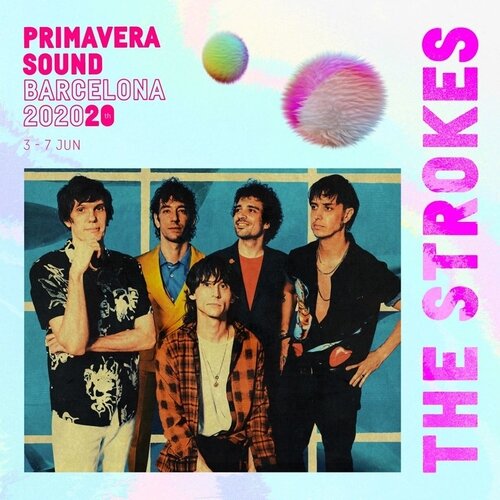
The Strokes are touring this year, and the highly-anticipated The New Abnormal album arrives on 10th April. Comedown Machine gained some praise, but I think the two singles we have heard from their upcoming album – At the Door is the other – show the band are hitting their stride again. The Strokes will never return to there Is This It debut because that album was a particular moment in time. I think The Strokes are far stronger than their debut, and they are still extremely important and relevant. Anyone who attended their gig at The Roundhouse a few days back knows the band are still phenomenal and join people together. They were leaders of a wave of brilliant Rock that emerged at the start of this century. Maybe they have had a few weak moments through the years, but the fact they are still together and releasing fantastic music is because they need to be heard and are important to so many people. If they had copied Is This It in order to gain commercial acclaim, I don’t think the band would be together today. I shall leave things here, but it is great to see The Strokes moving forward and looking into the future. As I said near the start, it is odd to look back at Is This It and realise it is almost twenty years since it came out. Whilst many of The Strokes’ contemporaries have faded away or do not have the same punch they used to, the New York band still burn bright (The Libertines, I understand, are planning a new album this year). Say what you want about the Julian Casablancas-led band but, over eighteen years after their debut album came into the world, the boys...

STILL sound so damn cool!
___________
Follow The Strokes

IN THIS PHOTO: The Strokes live at The Roundhouse, London on 18th February, 2020/PHOTO CREDIT: Jenn Five/NME
Official:
Twitter:
https://twitter.com/thestrokes
Facebook:
https://www.facebook.com/thestrokes
Instagram:
https://www.instagram.com/thestrokes/
Spotify:
https://open.spotify.com/artist/0epOFNiUfyON9EYx7Tpr6V
YouTube:
https://www.youtube.com/channel/UC28OQSWdiW7jkadedZRRyZA
ALL UNCREDITED PHOTOS:
The Strokes
FEATURE: Not Your Average Day Out… Why the World Needs an International Museum of Music
FEATURE:
Not Your Average Day Out…

IN THIS PHOTO: Stevie Wonder
Why the World Needs an International Museum of Music
___________
ONE of the problems with suggesting something…

PHOTO CREDIT: The Natural History Museum, London
as unwieldly as an International Museum of Music is, as you can imagine, that the world of music cannot be easily contained and explained in a single building. We have the superb National History Museum in London; one can also visit our Science Museum, and these facilities are invaluable in terms of education and delight – in fact, I have been meaning to return to the Natural History Museum for years now! They are great places to take the family because, not only is there the mix of interactive sections and displays; one can also enjoy time leisurely walking around in a calm and interesting environment. The fact one can also visit for free is another big bonus! One hopes these great institutions remains for decades and centuries more, as they benefit so many people. Whilst we house natural history and science in full wonder in splendid locations, what of music? There is an argument that one can stream and play music, whereas it is hard to get a tangible sense of natural history and science online. That is fair enough, yet there is the educational and tangible side to music that is either impossible to get online or very difficult. We have smaller music museums in this country; there is the British Music Experience in Liverpool, and there is the Universal Hip Hop Museum in the U.S. If you want a fix of music goodness, there are choices out there. The Internet is a valuable resource, but there is so much information out there and so MUCH music, one can miss out on a lot, and it can be tricky to hear and see it all!

PHOTO CREDIT: @mparzuchowski/Unsplash
If one does bring about an international museum for music, why not one for film too? That is another valid point, but I think music holds greater power and has made a bigger impact on the world than film. Music joins us all, and it is an international language. I have been wondering why there is not a museum as impressive and big as London’s National History Museum in the world as, surely, it would be a hit – apologies if there is an international music museum or something of that stature in the world (I have done a Google search and nothing comes up!). America is pretty well covered when it comes to smaller musicians that cover specific areas of music – including the National Museum of African American Music. Years ago, I wrote features mooting the possibility of a music café that mixed elements of a museum – interactive features and exhibits – with a traditional café. Maybe that concept is a slightly flawed design, but I think a museum could work really well. Of course, as I said at the top, one could not include every aspect of musical history in a building. That said, look at the size of bigger museums in London, and there is a lot you can pack in! In terms of what would be included, there would be different sections that focus on different areas and times - from Motown and Grunge across to Britpop and back to the Pop of the 1960s (The Beatles themselves deserve an entire wing!).

IN THIS PHOTO: Madonna in 1983
I think one gets complacent on the Internet, and we often do not have time to listen to a lot of music; if we do, it is either our reliable favourites or brand-new music. A museum of this size would not be only about older artists: indeed, new technology and music would be part of it. From exhibits about changing technology and devise – the Sony Walkman and iPod, for instance -, to big musical events, documentaries, and festivals, I think a lot of people would go. At the moment, we have some great music museums in the world that have incredible features such as instruments, classic costumes and albums. Even in America, I do not think there is anything as comprehensive as a National History-style museum. Just think about Hip-Hop itself and how much history there is there – whilst there is a Hip Hop museum in America, incorporating aspects of it into a one-stop museum would open fresh eyes to a genre and scene they might not be familiar with. There have been some iconic gig performances, music videos and music documentaries through the years and, rather than sift through YouTube or wait for them to appear on T.V., having access to them in a special space – either a cinema-type section or interactive displays – would be much more convenient. This weekend, I am writing a feature regarding new music discovery and whether a return to MTV’s classic dynamic – lose the reality T.V. shows and stick with videos and interviews – would help at a time when we are flooded with new music. The legacy and importance of MTV could also feature (in a museum).

IN THIS PHOTO: The Beatles in 1965/PHOTO CREDIT: PRNewsFoto/Apple Corps Ltd./EMI Music/AP Images
In terms of what, logistically, the museum would look like, I think it would be a three-floor space where there is a similar feel to somewhere like the Science Museum. Ranging from displays of music memorabilia and screens showing videos and documentaries, there would be bespoke areas that allow visitors to immerse themselves in a way that you cannot on the Internet. I think the Internet is so vast, and we can get overwhelmed by all the music and information out there. Having a single space where one could browse and digest information in a more ‘leisurely’ way seems like a good idea – I think there is a definite market and desire. As to where it would be based, logically it would have to be in the U.S. or U.K. – either in a city like New York/Los Angeles or London, Manchester or another big city (Glasgow and Liverpool are possibilities). As we move forward and become advanced, oddly, I think we are losing a bit of what made music special; at the very least, it is challenging taking in all the music, options and various websites around. Having a museum where one could learn, interact and have that physical side would, I feel, resonate and connect with so many people. It is in the concept stage, and I realise it would take – if it were to happen – years of planning and financing to bring it to life. I am always fascinated by music, but I find myself yearning for something more communal and interactive; a place I can go that would open my eyes and imagination in a way that has not happened for years. If an International Museum of Music were to see the light of day, I think it could stand…

PHOTO CREDIT: @milltownphotography/Unsplash
ALONGSIDE the best museums in the world.
FEATURE: Filter It Out: Instagram, Social Media and Protecting the Mental-Health of Musicians
FEATURE:
Filter It Out
PHOTO CREDIT: @anthonytran/Unsplash
Instagram, Social Media and Protecting the Mental-Health of Musicians
___________
MANY of were rocked by the news of…

PHOTO CREDIT: @freestocks/Unsplash
Caroline Flack’s suicide last Saturday (15th February). The former Love Island host was hardly allowed a moment to breathe by the press, and she was subjected to trolling on Twitter. There is no telling what exactly caused her to take her own life, though one can be sure the press intrusion, mocking and the nastiness she received online played their part. It is a desperately sad case, and the loss of a hugely popular figure and incredible human will, I hope, lead Twitter and other social media platforms to rethink the way they tolerate trolling. I am not saying there will be radical change, but social media sites and the tabloid press, between them, need to take their share of the blame – not to mention the trolls who perpetrated the abuse that, doubtless, would have impacted Flack considerably. Her death hit me very hard – despite the fact we never met -, and it, sadly, brought up the toxicity of social media and how it has allowed everyone and anyone to say anything they like. When it comes to online abuse and privacy invasion, artists are not immune. Nobody should have to face criticism or such ugliness on Twitter, and it shocks me so many artists have to shut down their social media account or had to come offline for a bit. Although Billie Eilish is a megastar whose has won awards and triumphed lately, one would hope that she would face very little negativity and unhappiness.
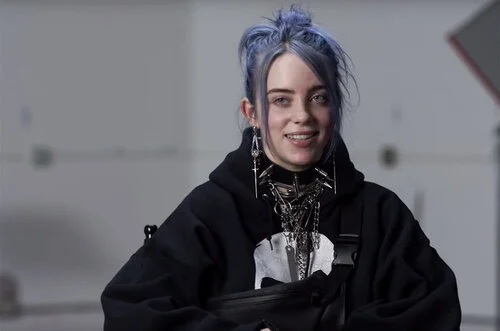
IN THIS PHOTO: Billie Eilish/PHOTO CREDIT: Vanity Fair
As this article explains, Eilish has had to step away from Instagram:
“Billie Eilish has announced that she is no longer reading the comments left on her Instagram account. Speaking to the BBC with her brother Finneas O’Connell about their Bond film theme song “No Time to Die”, the 18-year-old also shared some candid thoughts about the social media app and its affect on her mental health.
When asked whether she reads everything on Instagram, Eilish said she recently stopped reading comments, saying: “It was ruining my life, once again.”
O’Connell added: “I think you might see someone like a famous celebrity and you may think, ‘Sticks and stones, nothing I say is going to be potent to them… but it’s all very equal online.”
Eilish, who took home five Grammys this year for her debut LP WHEN WE ALL FALL ASLEEP, WHERE DO WE GO?, continued: “Cancel culture is crazy. The internet is just a bunch of trolls. A problem is that a lot of it is really funny. I think that’s the issue, I think that’s why nobody really stops”.
It is interesting that Eilish mentions humour and how people find online abuse funny. I guess, when there is no filter or punishment, people feel like they can write anything they want and feel protected. One bad thing about Instagram and Twitter especially is how many fans artists accrue, and how easy it is, despite lots of positive comments, to be affected by the bad ones.

PHOTO CREDIT: @burst/Unsplash
Many might say artists should come off platforms like this, but they are selling their music and want to connect with their fans. It is not fair for them to be forced off because some people offer nothing but hatred and idiocy! It is hard to say the true impact of social media trolls across the music industry, but a lot of artists have seen their mental-health impacted by trolls. It is hard enough staying on social media and promoting your music without the negative stuff; adding that into the pot is too much. Others will say people have the right to say what they want and, really, they are just words! I cannot fathom why anyone would post anything hurtful to artists like Billie Eilish or celebrities like Caroline Flack. Although it is good for artists to step away from social media as much as they can afford, it is not a practical solution having all artists remove themselves. They are not the ones spreading negativity and hatred, so why should they suffer? I do think a couple of things need to happen – especially in the wake of Caroline Flack’s death. I do think there should be stricter punishment for those caught trolling; bans need to be imposed too. Whilst it is hard to avoid trolling before it happens, maybe a filter of sort could be applied so that, before a comment is posted on Instagram or Twitter, it goes through moderators. That may sound extreme and unfair on those who are perfectly respectful, but it would mean artists do not have to face the sort of poison that is taking its toll.
PHOTO CREDIT: @tjump/Unsplash
Perhaps an easy solution would be to push adverts and campaigns that outline the effects of trolling; to encourage a kinder community by showing the damage harsh comments can cause. Maybe, when it comes to bigger artists, their label and management could moderate their pages and ensure the comments that reach their artists are free from the sort of bile that so many people have to read. It is clear a tough approach needs to be taken by those who run Twitter and other social media sites. In sheer terms of mental-health impact, trolling and online abusers probably do not realise just how bad it can get, and how their words make someone feel. I think lifetime bans from social media would deter a lot of people and, whilst one could easily make up a name and get a new Twitter account, every effort needs to be made to ensure trolls are not allowed to breed and return to the Internet. I am sure there is a way – it might be costly – to create a programme that can read a tweet or Instagram comment and detects negativity or offensive words; it would mean those words do not reach the Internet and, if someone is caught constantly abusing social media, they could be banned. It is heartbreaking seeing anyone pushed to such extremes by online trolling and a lack of kindness. Society needs to change, and we need to ask why it is okay to attack someone and abuse people we do not know – and ask whether people who do not care about anyone but themselves should be allowed on social media. We need to put first the welfare and mental-health of users above anything else. Big changes need to happen now in order to make social media…

PHOTO CREDIT: @lukeporter/Unsplash
BETTER for everyone.
FEATURE: More Love: The Iconic Smokey Robinson at Eighty: The Playlist
FEATURE:
More Love

The Iconic Smokey Robinson at Eighty: The Playlist
___________
IT is always great celebrating a music birthday…

and I could not pass up the chance to mark Smokey Robinson’s eightieth birthday today (19th February)! He is an artist that I grew up listening to, and was instantly fascinated by. As a solo artist or with The Miracles, there is nobody who has the same sort of range and talent as Robinson! Seen as The King of Motown, Smokey Robinson is credited with four-thousand songs, and thirty-seven Top-40 hits, including Tears of a Clown, Tracks of My Tears, and Love Machine. Robinson also served as Vice President of Motown Records, writing and producing hits for groups such as The Temptations (My Girl) and Mary Wells (My Guy). William ‘Smokey’ Robinson Jr. was born on 19th February, 1940, and is a truly legendary American singer, songwriter, record producer, and former record executive. Robinson is the founder and lead of the Motown vocal group, The Miracles. He fronted the group from 1955 until 1972, but announced his retirement from the group to concentrate on his role as Motown's Vice President. Robinson came back to music as a solo artist the next year - following the sale of Motown Records in 1988, Robinson left the company in 1990. Quite rightly, Robinson was inducted into the Rock and Roll Hall of Fame in 1987. There is no telling just how far his influence spreads as, as we have already discovered, he has written so many songs and his genius seems to know no limits!
I want to bring in an interview from 1968, where Rolling Stone declared Robinson the ‘reigning genius of the top 40’. It was clear, even then, how much music and creating meant to him:
“Smokey does four tunes an afternoon because he is a Top-40 hitmaker, a professional. He is Mr. Motown; small, agile, and very lightskinned, his physical presence is the opposite of the late Otis Redding‘s. In his dressing room after a show at a plush, white middle class club in San Francisco, he whipped off the orange handkerchief he had put over his closely razored process when he noticed pictures were being taken; the do-rag, apparently, is not the Motown image.
Interviewed, he was like a bright salesman for a progressive company. Yet his politeness, good nature, and respect for all performers, while the cliched public attributes of a showman, seemed also the virtues of a man beyond vanity. He and his group, he said, “just dig music, jazz, pop, rock and roll, folk, blues, or whatever.”
Up at the top of his great list (also on it are Henry Mancini, Bacharach and David, Otis Redding, baseball, basketball, swimming, and Motown – “one big happy, spiritual family, man”) are the Miracles. “We’ve stayed together because we legitimately love each other. Some groups, everything becomes more important to the group than the members. You see groups of cats, and they’re falling out about a different girl or this and that. It’s a drag.

IN THIS PHOTO: Smokey Robinson performs at the BET Awards on 28th June, 2015 in Los Angeles/PHOTO CREDIT: MPI10/MediaPunch/IPX
“Staying together has a lot to do with the way you treat people and the simple aspect of being lucky that people dig you for that long – because people don’t have to dig you. This is one thing that recording artists get off into where after they’ve had a few hit records they think it’s them. They think, ‘well, if I was the milkman, when I was coming down the street all the girls would come out of the house and say “oh, he’s coming with the milk,” and tear their clothes off’.
I wonder whether we will see another album from Smokey Robinson. He released Christmas Everyday (Amazon Original) through his Smokey Robinson label, and Smokey & Friends through Verve Records in 2015. As the wonderful, one and only Smokey Robinson celebrates his eightieth birthday, I have compiled a playlist below contained some of his best songs. I have skimmed his history and legacy, and I would encourage people to read up and look at interviews he has conducted to learn more about the great man. In this 2018 interview, Robinson was asked what it was like being a central figure of the Motown label:
“You were a central figure in the most important label of the century, in terms of music and in terms of social impact. What does that mean to you?
That means everything to me, man. That’s beyond our wildest dreams. Berry and I talk about it all the time. We never dared to dream that Motown would become what it has become. The very first day of Motown, there were five people there. Berry Gordy sat us down and said, “I’m going to start my own record company. We are not just going to make black music — we’re going to make music for the world.” That was our plan, and we did it”.
Just listen to Smokey Robinson’s amazing and decades-spanning back catalogue, and one realises there is nobody else in the world quite like this…
SIMPLY masterful songwriter.
FEATURE: Part of the Crowd: Making the Gig Experience Accessible to Everyone
FEATURE:
Part of the Crowd

PHOTO CREDIT: @marvelous/Unsplash
Making the Gig Experience Accessible to Everyone
___________
I was listening to the radio the…

PHOTO CREDIT: @chrisjoelcampbell/Unsplash
other day, and a caller was saying how his daughter, who has autism, was only really free and confident when she was going to gigs. The rest of the time – at home and out and about – she was a lot more nervous and anxious. There are great organisations like Gig Buddies that pair up those with learning difficulties and autism to ensure that they can go to events. It is a great organisation, and one that enables those who can feel isolated become more involved and part of a community. I think an initiative like Gig Buddies is brilliant. On their website, you can discover what they are about:
“The idea behind Gig Buddies is that we want to enable people with learning disabilities and/or autism to enjoy all the great things going on in their community, especially live music. Gig Buddies is a project that pairs up people with and without learning disabilities (and/or autism) to be friends and to go to events together. The Gig Buddies project aims to make volunteering easier for people in Sussex by enabling volunteers to go to gigs they’d already probably be going to anyway, but with someone with a learning disability.
This means they’ll be sharing their passions with each other and be able to fit their volunteering around their other commitments.
Gig Buddies people come from all over Sussex, including Brighton and Hove, Worthing, Chichester, Lewes, Uckfield, Eastbourne and Hastings”.
Whilst Gig Buddies is growing and is helping so many people, it got me thinking about my own predicament – and so many people similar to myself. It is wonderful for people who can go to gigs confidently and blend in but, for so many people, that is not a reality. I have been to gigs in the past, but I find it quite challenging contemplating gigs; the idea of a festival is appealing but, when it comes to navigating my way around and feeling comfortable, it is not something I can do alone. Last year, it was announced that Lewis Capaldi was making his gigs more accessible to those with anxiety and mental-health problems. Whilst it is not possible for every artist to do this for every gig, I do wonder whether a wider scheme can be run. There are plenty of dating websites and apps, but I wonder how many equivalent sites there are when it comes to partnering people for gigs. There are so many people who want to see an artist but have nobody to go with; there are others who feel intimated at gigs and would benefit from someone more experienced and confident partnering with them. It would be similar to Gig Buddies, but I think one could develop an app that catered specifically to gig-goers who have autism, mental-health issues, or feel isolated and in need of company.

PHOTO CREDIT: @timscreate/Unsplash
I think the status of live venues around the country will improve; more and more will be secure and get the funding they need. With that, so many acts are going to be out there and cutting their teeth. One cannot get the gig experience online, so they need to be in venues and at festivals. There are so many people in society that are made nervous at the thought of going to gigs alone, even if they sorely want to see that audience. Maybe it is a problem with social interaction or a sense of feeling trampled when in large crowd. In any case, I do think there is a market for a website or organisation that goes nationwide and provides gig companions – I’ll avoid saying ‘buddies’ to avoid copyright - for those who struggle on their own. Over the next couple of days, I am writing a couple of features that suggest ideas in the music industry – I am writing about an interactive music museum and the return of MTV (in its classic form) very soon. I know there are a lot of people who are confining themselves to home, because they cannot handle the gig/festival experience on their own. Whilst an app or national incentive might be great for pairing people together, what about venues and festivals in general? Whilst some big artists (like Lewis Capaldi) are ensuring there are safe spaces at their gigs for people with anxiety and other mental-health concerns, how realistic would it be for all venues and festivals to make similar accommodations?

PHOTO CREDIT: @aranxa_esteve/Unsplash
Some argue those with physical disabilities and restrictions are not catered for when it comes to big venues – another area that needs to be addressed. The live music scene is wonderful, and every artist wants as many people to see their gigs as possible. It is going to be costly and time-consuming making sure venues are comfortable for all gig-goers and, right now, the sheer power and importance of having someone by your side cannot be undervalued. I like the fact that Sofar Sounds host smaller gigs at random locations, which can be less intimidating – even then, those with autism and other mental-health problems can still feel exposed. I realise there are various forms of autism, and not just anyone can pair up and be able to cope with an illness that can be quite hard to understand. There is a lot to work out, but it all comes back to that radio call-in – that I mentioned right at the top – and how, wonderfully, gigs can be a lifeline to those with conditions like autism. I think there are short and long-term ways to make sure venues and festivals are open and accommodating to everyone. As festivals announce their line-ups and there are tantalising gigs happening all around the world, I have a desire to go and see a few – though I often feel worried about venturing out on my own or sort of getting lost in the crowd. That’s why I think new initiatives would help me and many other people feel…

PHOTO CREDIT: @maximebhm/Unsplash
INCLUDED and safe.
FEATURE: Spotlight: Ali Barter
FEATURE:
Spotlight

Ali Barter
___________
THIS year’s festivals are announcing their…

PHOTO CREDIT: Lindsey Byrnes
line-ups, and there are a few that have been in the press because of the lack of female representation – most recently, Reading & Leeds. My eye has been drawn to the ever-reliable The Great Escape which, down in Brighton each year, showcases the best new talent around. Make sure you catch Ali Barter at the festival alongside all the other great acts – a celebration of the finest rising artists and, with that, we get equality and variation in spades! Barter is one of these artists who can mix a more sugared Pop sound but provide deep and layered music with plenty of bite and edge; capturing you with her amazing voice and keeping you engrossed with her music, which seems to unfurl and reveal new things every time you listen. Barber was born in Melbourne in 1986. An internment childhood involved time in Lae, Papa New Guinea; the family then relocated to Cairns before ending up in Melbourne. Barter trained as a classical violinist and spend eight years singing as part of the Australian Girls Choir. Maybe that life and sound was too constrained, and Barber sound isolated herself from the choir – by her own admission, she did not contribute a huge amount. I have included all the Ali Barter social media links at the bottom of this feature – make sure you follow her and check out her music.
I will do a bit of a chronological look at her career so far, mentioning her two studio albums. Before her accomplished 2017 debut, A Suitable Girl, Barter put out the E.P.s Trip (2012), Community (2014), and the excellent AB-EP (2015). Although A Suitable Girl reached number-seventeen in the Australian chart, it did get coverage from media sources around the world. Singles like Far Away, Cigarette, and Please Stay are remarkable moments that formed part of a varied and personal album. Even before the album arrived in 2017, Barter was turning heads and shaping up to be a name to watch. In 2016, she was interviewed by Howl & Echoes. Barter was asked about her recording and preparation of her debut album:
“On Instagram, you have been sharing pictures from the studio. Is it ever a challenge getting your backing band on board with what you are doing musically?
I write all my own music, so I start off writing by myself and then I do some co-writing with other people before bringing it to the band. I’m lucky that they like what I bring to them, they are pretty chill. They just like to play music and they play with various other bands to so I’ve never had to deal with issues. They might think bad things but they never say it.
One of the highlights of 2016 for was collaborating onstage with Ecca Vandal for Triple J’s 10 years of Unearthed party. Are there any big collaborations coming up for you over the next 12 months?
I did some co-writing on the album I’m currently writing which was fun. Nobody is performing on the record, but Bertie Blackman and I did some co-writing, and I also some co-writing with Adalita which was a dream co-write, despite the fact that she had a horrible cold and was only there for two hours, with me feeling really bad that she had come such a long way just to write a song with me. She was amazing, though.
You’ve said in the past that “classic songwriting” is what you really love and aim for. How do you define this personally?
I grew up listening to Frank Sinatra, my dad and I would listen to him along with Cole Porter and Geroge Gershwin and all those old standard writers. When I think of classic songwriting I think of really simple structures, like “verse, chorus, verse, chorus, bridge, chorus.” Song. Done. I also love pop music so I love a catchy hook or a tag-line, similar to Sia in Chandelier. I guess they are two artists that I look to. Country music also has classic songwriting. Stuff that has a really nice melody and simple structure, plus a message”.
It is interesting reading Barter describe her influences and the combination of acts/sounds that influence her own music. Every artist grows up around different music, and it seems like Barter’s musical upbringing was a remarkably good and eclectic one.

PHOTO CREDIT: @charlesengelken
I stumbled upon Barter’s music just before she put out her second album last year, so I have been working backwards in a way and digging into her earliest material now! Although most of the reviews (by and large) for A Suitable Girl were from Australia and New Zealand, there was plenty of positive proclamation and support. This NZ Herald review is full of praise:
“Is it time for the grunge revival yet? What about Britpop? Ali Barter probably doesn't fit snugly in either pigeonhole, but the very notion should be enough to tell you where her sound is coming from.
The Melbourne-based singer songwriter's debut album is loud and proud, like Courtney Barnett turned up to 11.
But don't get lost in the catchy guitar hooks, Barter has a way with lyrics too. Her breakthrough single Girlie Bits details the treatment of women in the music industry: "Give us a smile, princess, it's better for business," she sings sweetly. "You don't understand what it's like to be a man," she repeats.
Another standout track is Cigarette, which asks questions about male superficiality, about the reduction of a woman to her looks. "If I shaved my head would you tell your friends you don't really care."
The album harks back to the 90s guitar pop era, with Barter's vocals a meeting of L7 and Veruca Salt, and the odd nod to Smashing Pumpkins in the music (she has cited Billy Corgan as an influence).
Beware: the heavy guitars can be a bit of an onslaught for the ears, but like all good rock music, that's what we're here for”.
I have scattered some songs through this feature, and you can see an artist evolving all the time; from her 2017 debut album to now, Barter has grown and gained new confidence. There was a lot of fascination from the media around the time of her debut album. Barter spoke with London in Stereo in 2017. Here, we learn more about her recording path and break into music:
“Her creative journey saw her develop first through open mic nights and then through a series of EPs. Tracing her songwriting lineage she describes a period of the latter as one where “at some point I thought I should be more creative and I should use more complex metaphors and it should be darker and moodier.” Listening to the songs that form 2014’s Community, there’s an undercurrent of widescreen nocturnal drama running throughout, a world apart from from the sharp bursts that have come to characterise the earlier offerings of recently released debut album A Suitable Girl. It’s a record that draws from personal experience to create a soundtrack to a romantic drama, and draws from a Barter wanting to write a pop-punk album. “When I was writing it I was listening to a lot of Weezer and I’ve always loved people like Katy Perry and Britney Spears. I just wanted to write in a pop style and for it to be immediate and ‘wham-bam-thank you ma’am’. Big choruses, big fun beats and short, sharp songs.” It also marks an about-turn in her songwriting practices, with Barter summarising her style as “closer to the ones I wrote when I first started, and in the middle. My work when I first started – as it is now – was built from a place of wearing my heart on my sleeve with simple chords and lyrical honesty.”
But if a greater appreciation of women in music history needs a serious overhaul, Barter thinks the current situation has improved with “many [more] women in the Triple J Hottest 100 compared to years gone by. There’s so much more awareness about it now – it used to be where women could either be a rock chick or a pop princess. They can still be, those things still exist, but now we’ve got people who work in a folk style or with beats or people like Camp Cope being quite grungey. We have women who combine so many different aspects of their femininity to their music in an incredible way and it’s great to see. It’s not perfect by any means but it’s certainly better than it was.”
Not one to stand still, Barter has ambitions overseas. “I love playing in Australia but I definitely would like to go playing overseas at somepoint too, [but] the timing has to be right for that kind of stuff. If there’s interest, I’d love to go,” she says. “I think everyone wants to go overseas because Australia’s quite a small market and it’s very difficult to break through over here. I think deep down everyone has big ambitions and the internet has made it so easy for people to know who you are without leaving the country”.
It is interesting hearing Ali Barter talk about her desire to play overseas because, from April, she is in the U.K. and playing a few dates. I am sure there will be U.S. dates before long, but the fact there is a lot of interest in Britain shows how her music has translated and resonated far across the globe.

PHOTO CREDIT: Kane Hibbard
I am going to skip ahead and bring things up to next year and the run-in to her latest album, Hello, I’m Doing My Best. I want to pick out a couple of interviews from 2019; I also want to source from a review of the album. Barter is, as I said, an artist who developed and incorporated new aspects into her mix from her debut to sophomore album. By the time Hello, I’m Doing My Best was released last October, there was a fresh wave of attention at her feet. When she chatted with XS Noize, that question of upbringing and influence came up; she was also asked about the songwriting process for the second album – and whether she had ideas ahead of the recording:
“Hi, Ali, can you remember when you first discovered your love for music?
AB: There was always music in my house growing up. My mum loved Patsy Cline and Fleetwood Mac but it was really my dad who played the most music. It was usually Frank Sinatra records and musicals, so I have memories singing ‘On My Own’ from Les Miserables in the mirror when I was very young. Music has always been my greatest passion.
Who were your musical influences growing up?
AB: I loved The Spice Girls and Sheryl Crow as a kid and then I moved on to Oasis and the Foo Fighters in my teens. I loved music with a strong melody and big anthemic choruses. I later discovered Cat Power and Liz Phair and found female songwriters and performers that I could relate too and emulate.
You release your second album ‘Hello, I’m Doing My Best’ on October 18th. Did you go into the recording with any preconceived ideas on how it should sound and the kind of songs you wanted to write about?
AB: I wanted this record to be less polished than the first one. More ‘band in a room’ style. I listened to the Weezer record ‘Pinkerton’ and lots of The Breeders. I wanted to have more space and fewer tracks, fewer guitars, and vocals mainly. I was intentionally writing songs that were more fun but the subject matter remained very autobiographical and honest. More so this time. Some of the topics are very raw.
What is your songwriting process for this record?
AB: I started out alone, getting my new ideas and intentions out, then I wrote with Oscar, my husband, and producer of the record to develop the sound of the songs. I also spent some time overseas writing with people I have written with before. I enjoy being out of my comfort zone when writing. It’s when all my feelings come up. When I’m home with all my safety nets, I don’t really write. I need to be lonely or scared or stressed to write”.
When she spoke with Stack, Barter was asked about why, when writing the album, she was pushing against herself:
“You also said that during writing, you discovered the “thing [you] were pushing against was [yourself].” That’s a pretty massive detection. Do you suspect that more of these kinds of personal revelations are coming in the future?
Haha, yes, always. I’m a very introspective person, so I’m always looking in to work out why I feel the way I do. It helps me to move forward. I’m definitely writing about stuff for the third record that is spinning me out a bit! But it’s all good and I enjoy digging out my flaws and letting them go. Or just accepting them, because some fears or flaws never leave – they just become quieter”.

I think Hello, I’m Doing My Best was one of 2019’s most-underrated album, and one that warrants a lot of fresh ears and investigation. I will wrap things up soon but, just now, I want to quote from The Line of Best Fit’s review of Barter’s stunning second studio album:
“A remarkable singer, Barter’s vocal confidence and skill is handed a refreshing lease of life throughout, and there is no doubt it is the right course of action. Plenty of high-pitched notes are delivered, and a balance is achieved with some of the deeper vocal range of her voice. “January” is an obvious, irresistible winner on this respect.
In terms of themes, there is plenty of consistency, and Barter is able to make sure a healthy amount of ground is covered. With her natural gift for the observational and the tragicomic, she tackles previous relationships, sobriety and people she has known. Sounding quite girlie at times, it is a record full of self-assurance and side-tracked by a brave, impossible-to-find honesty and vulnerability. Similar records may well have been made in the past, but they don’t project the same heartfelt vibe as this one.
It is possible to be fooled by the compelling, sugary pop song layers that unfold on this record, but there is so much more going on underneath it all and therein lies some of the complexity and fascination”.
Barter is coming to the U.K. very soon, and go and see her perform if you can. I am excited to see where Ali Barter might go and what lays ahead. Her music is the kind that definitely impacts when you first hear it – because of her amazing voice and knack of getting under the skin -, but one is compelled to keep listening, as these are tracks that bury themselves in the mind and grab the senses. If you are unfamiliar with Melbourne’s Ali Barter, take some time to get acquainted with this…
SENSATIONAL artist.
__________
Follow Ali Barter

FEATURE: Modern Heroines: Part Twenty: Grimes
FEATURE:
Modern Heroines

Part Twenty: Grimes
___________
MY twentieth edition of this feature…
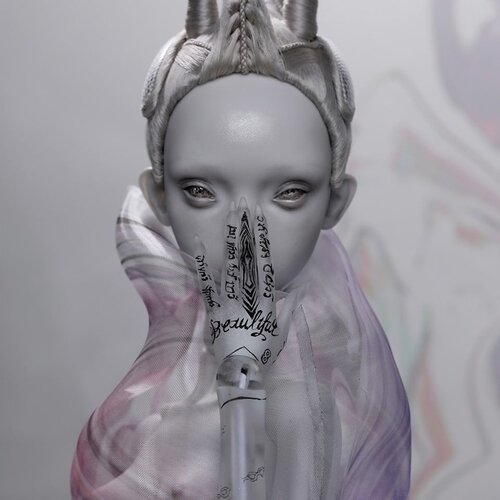
is quite timely. Whilst Grimes has only a few albums under her belt, I think she is an idol of the future. Certainly, she is someone who inspires others; she is an artist who does things like no other. Her album, Miss Anthropocene, is out on Friday (21st), and she has just released a new single: Delete Forever is an intriguing song and something she has not really done before. In terms of sound, it is a mix of Oasis and Country music and, if you know her previous work, it is quite a departure! She said that this was the first song that made her feel like she was a singer. Rather than experimentation and electronics, there is a more natural performance but, even if she has stepped away from her usual blueprint, it is a fantastic song that could only come from her mind! Miss Anthropocene is one of the most anticipated albums of this year, and I know it will be met with huge critical acclaim. Claire Elise Boucher is Grimes; born in 1988 in Canada, she is a multi-talented singer, songwriter, and producer – not to mention a visual artist! One reason why I think she is an idol is that her music mixes all sorts of sounds together. You get all these exotic tones and strange beats; it all melts together naturally, and you are transported into a new world.
Grimes was born and raised in Vancouver, and she began releasing material independently in the late-2000s. Grimes released two albums in 2010 – Geidi Primes and Halifaxa – more on them soon. Those albums were released through Arbutus Records, but she soon signed to 4AD. Just to track back a second…Boucher relocated from Vancouver to Montreal in 2006, where she attended McGill University; she studied for a double major in Neuroscience and Russian Literature – which might explain why her music is so damn smart and remains in the brain long after you have heard it! Although she left in 2011 before she got her degree, I can how her academic studies would have impacted her creativity and what she addressed in her music. Grimes released music on MySpace in 2007 – remember that great site?! – and her name came about because artists had to list their three favourite genres – ‘Grime’ was one of them Boucher chose! By 2010, Geidi Primes was out in the world. It was released on 10th January by Arbutus Records, and it was released in the U.K. the following year. As you’d expect from Grimes, her debut album was not conventional and lacking in depth. It is a concept album based on Frank Herbert’s novel, Dune, and David Lynch’s 1984 film adaptation. Despite the fact it would be a little while before Grimes accrued worldwide attention, her debut album did get a lot of positive reviews. This is Pitchfork’s reaction:
“As a vocalist, Grimes knows how to work her range. Though she's become known for her impressive falsetto (which she pushes to rapturous, Donna Summer-like heights on the Darkbloom single "Vanessa") and she can occasionally pull of a spooky low tone that's faintly reminiscent of Karin Dreijer Andersson, she spends much of Geidi Primes in mid-range, tuneful deadpan, which lends wry humor to the lines she coos to a lover on "Zoal, Face Dancer": "Everybody thinks that I'm boring/ Many people think I've got no clue." Just because she's spacey-- yes, nerds, those are Dune references scattered throughout the track listing-- doesn't mean she's without earthly wit. It takes a pretty good sense of humor to write an utterly gorgeous closer and call it "Beast Infection".
Given her restlessly prolific creativity (she followed up Geidi Primes with another solid 2010 release, Halfaxa) and the bounding artistic strides she's displayed with her recent singles, Grimes could very well be poised for a meteoric rise with the release of her next full length. But Geidi Primes shows that even her earliest recordings displayed a distinct point of view and an oddly mesmerizing quality. There’s something refreshingly "post-Internet" about that too-- a dreamy soundscape that invites an escape from the glitchy universe, a brief provocation to let go and just bliss out.
People spotted potential and brilliance back then, and it is over ten years since that album came out! I am not sure when I discovered Grimes, but it was probably around 2016 or 2017 – quite late to the party! After a successful and unique debut, Halifaxa cemented Grimes’ reputation as an artist to watch very closely. Grimes does mix a lot together and she covers a pretty large spread when it comes to genres. She is never reckless and scattershot when putting sounds together. Halifaxa is a superb album where Grimes is always in control and never sound disconnected. It is hard to describe the album; it is one that you need to come back to a few times as it has so much going on. In their excellent review, this is what the BBC wrote:
“But it’s not a difficult set, really, not after revisiting its tracks a few times. Constituents might echo from distant homes, spread across the genre spectrum, but Boucher’s quite the craftsman when it comes to weaving a common thread between the elements. Ultimately, one arrives at a clutch of comparison-worthy acts – Gang Gang Dance being the most obvious, though only when the New Yorkers have turns their beats down and their ambient weirdness up. Also crawling, rather than springing, to mind are Salem, whose robust production is summoned on occasion; and Toro Y Moi, in the occasional shaft of sunlight that breaches the otherwise all-consuming darkness. There’s also a retro feel to some of the more upbeat moments – not exactly Studio 54, but certainly brighter than some other ‘net-charming solo sorts recalling 70s and 80s dancefloors behind their digital haze.
Spend long enough in Boucher’s company and one could conclude that, actually, this isn’t as clever as it thinks it is. Not true, though: that she’s made such an initially impenetrable album come brilliantly to life after a second or third spin is a clear sign of (quite a singular) talent. Halfaxa is literally a grower: come back again, and again, and it spreads a second-skin over the listener, one that feels like it was always there. Highs are hard to isolate given the album’s well-designed overall arc, but nevertheless: Weregild breaks from 16-bit twitchiness to some arrestingly witchy vocals and surrounding atmospherics; Devon is a delightful drift that represents one of the record’s most accessible pieces – part Washed Out, part Enya, incredibly; and Hallways glitches and sloshes like Hudson Mohawke trapped in a haunted dungeon.
Persevere, then, and Halfaxa is quite the beguiling beauty – though it’ll likely have you waking in a cold sweat if enjoyed right before bedtime.
It was 2012 when Grimes started to really get into the consciousness of the worldwide media. Her albums in 2010 are brilliant, but it was 2012’s Visions that took her to a whole new level. It was her first album for the 4AD label, and Visions was recorded entirely on Apple’s GarageBand. Now, artists are recording albums on phones and using technology to replace the studio. It was happening in 2012, but not nearly as much as it is now. I am not saying Grimes inspired artists today to record in a less expensive and more accessible way, but the groundbreaking Visions definitely went a long way to change the way artists record and release their music.

With songs like Genesis and Oblivion, Visions is an album that was always going to garner a lot of praise and focus. Still, Grimes was this very original and experimental artist, but I feel like Visions is actually pretty accessible. One does not need to be steeped in any knowledge of a particular genre to appreciate the brilliance of the album. I am going to spend a bit more time – compared with her other albums – on Art Angels, but I want to introduce a couple of reviews of Visions, showing how critics felt about this remarkable work. AllMusic wrote a detailed and interesting assessment:
"Genesis" begins with what sounds like the ethereal atmospheres of old-school sounds of her label 4AD before coalescing into irresistibly bouncy pop. Boucher performs a similar trick on the brilliant "Oblivion," which sets lyrics inspired by a sexual assault to deceptively radiant synth pop buoyed by an insistent, instantly recognizable bass line. While Visions' songs are still largely free from obvious structures -- "Symphonia IX (My Wait Is U)" segues into a minor-key passage like a dream turning dark -- Boucher has learned the values of space and control, as the intricate layers within "Infinite Love Without Fulfillment" and "Visiting Statue" attest. And though "Know the Way" and "Skin" spotlight Grimes' flair for ethereal sensuality, Visions' most kinetic songs are the most distinctive, and allow her to draw on many different influences and sounds.
"Be a Body" boasts a surprisingly funky bass line; on "Circumambient," the song's shadowy R&B leanings are only heightened when Boucher busts out a super-soprano trill that would do Syreeta or Minnie Riperton proud. When she borrows from '80s pop, it never feels slavish, even when she uses frosty Casios on "Vowels = Space and Time" or lets "Colour of Moonlight (Antiochus)" ride on a beat that sounds borrowed from "When Doves Cry." Instead, these retro winks end up bringing out the darkly rhapsodic, kinetic heart of Boucher's music as much as the Asian-tinged melodies, harps, and operatic samples she uses elsewhere. Though little sounded like it when it was released, the impact of Visions' futuristic fantasies was felt, and heard, for years to come”.
Visions is a remarkable album, and one of the best releases of the 2010s. It is all the little details, voices and elements Grimes puts into an album that makes it so remarkable and interesting. I am excited to hear what her new album has to offer but, in 2012, she was riding a critical high. Actually, rather than bring in another review, I want to quote from an interview in The Guardian. They spoke to Grimes and we got to learn a lot more about this extraordinary musical talent:
"From an early age I knew I would be unhappy if I wasn't doing something creative," she says, settling into an old wheelchair that constitutes La Brique's most comfortable seat. "It could have been art, it could have been architecture. I was always really into painting but I didn't feel like I would be able to do anything new, whereas with music there's still so much to be explored."
A former goth kid from Vancouver, Claire originally moved to Montreal to study Russian literature at McGill University, before switching to the neuroscience course. Music never seemed like a viable option until she started hanging out at La Brique's predecessor Lab Synthèse, where she was encouraged to produce her own tracks by her now-manager and engineer Sebastian Cowan. When Lab Synthèse's co-founder David Matthew Peet killed himself in 2008, she decided that she owed it to him to submit to her to true calling.
"I was like: 'Fuck, I could die. We could all die, at any time. Why the hell am I wasting my time? I'm just going to do what I want to do for the rest of my life. I don't need money.'" To the mild horror of her parents, Claire turned her back on the world of brain biology to pursue Grimes full time. "I've completely fucked my life," she admits cheerily. "I don't live anywhere, I don't see my friends. You have to sacrifice a lot of things to do this. But the pay-off is this incredible freedom."
She concedes that this narrative might be difficult to glean from her lyrics, which are generally elusive and impressionistic, shying away from specifics. "I feel Visions could go a lot further emotionally. It worked for me at the time but now it does seem like I was hiding. I definitely want the next record to be a lot more direct."

PHOTO CREDIT: Ben Grieme for FADER
The names of Nine Inch Nails and notoriously uncompromising noise band Swans are mentioned. But then so is Michael Jackson. "I still want to make pop music," she assures. "I want the music to be more assaulting but more comforting at the same time." Claire gazes happily around the vibrant clutter of La Brique. "That's the basis of this whole Montreal scene. Everyone is really into pop music, everyone has a strong image and everyone is into branding. But everyone also does tons of drugs, makes really experimental music, does crazy shit and lives in a hovel with no heating".
The immense follow-up to Visions, Art Angels, took Grimes from an artist with a huge future to a modern-day idol. Released on 6th November, 2015 (digitally; 11th December on all other formats), Art Angels is a stunning work. I think, as time elapses, Grimes is becoming more accessible, but she is still on a different plain – an artist who can connect with many people, but she does not compromise her vision and ambitions. Featuring appearances by Taiwanese rapper Aristophanes and American singer Janelle Monáe, the album’s two singles- Flesh Without Blood, and Kill V. Maim - are phenomenal; they sport incredible videos! In their review of Art Angels, Billboard remarked the following:
“Throughout Art Angels, she equates love with derangement and disappointment: “Your love kept me alive and made me insane,” she sings in “Realiti,” italicizing the lyric by switching from her usual light and airy voice to something more nasal and choked. She punctuates other tracks with images of blood, destruction, death and defeat. Even though top 40 radio has gotten much weirder recently, as the The Weeknd or Major Lazer’s oddball “Lean On” proves, Grimes’ album probably doesn’t have a career-catapulting single, akin to Talking Heads’ “Burning Down the House” or the Tubes’ “She’s a Beauty.” Radio likes a vocal to be shockingly clear and loud in the mix, but Boucher prefers to hide and distort her voice, which is her least impressive, most commonplace tool.
Boucher directs her own videos, paints her album covers, exhibits drawings, curates a great Tumblr, and gives hilarious and nuanced interviews. Even discounting for the tendency of Americans to perceive Canadians as intellectually superior (Marshall McLuhan was a Canuck, but so were Bachman-Turner Overdrive), she’s a canny, self-aware performer. Grimes is an art project at risk of going mainstream, and Boucher knows it. She closes Art Angels with “Butterfly.” Boucher starts the beat, then briefly halts it. The lyrics seem to be about deciding to speak up, in addition to environmental damage. After an album that’s so happily angry, it’s soothing to float above nature. Butterfly is also the name of an out-of-the-cocoon album by Mariah Carey, whom Boucher loves, unironically, and the song feels like a coy, coquettish come-on from a pop star putting herself up for sale, especially when she repeats the sibilant line “Sweeter than a sugarcane.” But the last sound on the album is Boucher, softly vowing, “I’ll never be your dream girl.” Everything she is, she also isn’t”.
I remember hearing about Grimes not that long after Art Angels came out – maybe the year after -, and diving into this immersive and hugely intoxicating album. From what we have heard of Miss Anthropocene so far, it looks likely she has crafted another triumphant album. There was universal acclaim for Art Angels and, five years on, and it still sounds so fresh and interesting.
I will bring in one more review, because it is an album that won a lot of love. The Telegraph were keen to show some affection for Grimes’ fourth studio album:
“…Or SCREAM, which pits a whispered-punchy Taiwanese rap against a springy nu-metal groove and ends with military drums. This may make it sound like a difficult record, but the perfect polish of Grimes' s production enables listeners to surf her quick-fire tangents as easily as an aural internet.
As she opens windows of sound and then clicks them closed before boredom has a chance to settle in, you catch snatches of Taylor Swift, Madonna, Nicki Minaj, Prodigy, Aphex Twin and many, many more scudding past.
All the while, she is delivering her own big, melodic hooks (Flesh without Blood) and club bangers like feminist Venus Fly (featuring Janelle Monáe) with its haunting, gallic instrumental break. all adds up to a fearless and fascinating record”.
I am going to move on soon, but I want to bring in an interview from 2015, where Grimes she was very open and revealing. Not that she had been insular beforehand, but I think part of her magic comes from a sense of mystery. It is amazing to think how far Grimes came from that debut album in 2010 to Art Angels in 2015.
Her music was always outstanding, but her fourth album is a revelation. This interview from The Guardian is a fascinating read:
“With Grimes, 27-year-old Claire Boucher has never made any secret of the fact that what you see is not what you get. When she released her last album Visions in 2012 – a collection of phantasmal, banging electropop that sounded as if it had been fed through both a rasping old desktop and the prism of a dream – its rapturous reception took the Vancouver native from cult concern to internet darling (Oblivion, the album’s best known song, was last year named Pitchfork’s track of the decade so far). At the time, Boucher spoke of Grimes as a business venture – a sort of Svengali-meets-singer deal in which she played both parts, exploiting her own self for her own ends. It was an idea that highlighted her creative clout, but it was also a coping mechanism, forming a pop-star proxy to deal with the invasiveness of fame.
“There are things I would never say in interviews that are my opinions. I’m way more political than I am publicly – significantly more extreme,” Boucher tells me when I ask how the Grimes persona manifests itself on occasions such as this (that is, being asked questions by a stranger while perched on the bed of a London hotel room). “There’s lots of people I hate,” she says. But Boucher is struggling to keep up anodyne appearances.

PHOTO CREDIT: Chuck Grant for Interview Magazine
As an enterprise, Grimes has always seemed like a scuffle between creative abandon and calculated moves: what happens when a highly inventive mind attempts to construct a consumer product. The Grimes aesthetic – discordantly multi-coloured hair, not-quite-trendy clothes, album art that looks as if it was done on the inside of a ringbinder during double maths – I’d already describe as pretty unselfconscious-seeming. But Boucher insists her visuals are designed to appease the public.
“In my life, I’m a lot more weird than this,” she explains. “Grimes is more palatable for humans. If it was up to me maybe I’d wear a moustache or something,” she continues, as I start seeing her less as a hipster making bleeding-edge pop, more a kindred spirit of Vic Reeves”.
There has been quite a bit of activity since 2015, but Miss Anthropocene is her upcoming fifth album – it is out on 21st February. Make sure you pre-order the album but, before continuing on, I want to source from an excellent interview that Grimes gave last year. In it, she was asked about her relationship with Elon Musk and how she is perceived by others – especially the media:
“Alongside her artistic output, Boucher has consistently proved herself unafraid to speak out on the political issues that are important to her. In 2016, in the face of a Trump presidency, she recreated a 1964 Lyndon B. Johnson advert in support of Hillary Clinton, stating that in the coming election: “The stakes are too high for you to stay home.” The following year, after President Trump announced a travel ban on seven predominantly Muslim countries, she tweeted that she would match donations up to $10,000 for the Council on American-Islam Relations. Last year she joined protesters in British Columbia against Kinder Morgan's Trans Mountain pipeline expansion.
It was in this context that Boucher and Musk’s relationship was swiftly and mercilessly dissected in the press. Many publications were quick to link (Elon) Musk to Boucher’s decision to remove the phrase “anti-imperialist” from her Twitter bio. In an article headlined The Trouble with Elon Musk and Grimes, the New Yorker painted their pairing as nothing less than the final collapse of indie culture. “What if ideological distinctions still mattered and were not so easily swept away by a levelling torrent of information and capital?” asked staff writer Naomi Fry. “What if anything still meant something?”
It’s a difficult realisation for anyone who finds themselves in the public eye that they’re no longer in control of their own narrative. But it seems like a particularly cruel irony for Boucher after she worked so hard for so long to make sure she had complete artistic control over every aspect of Grimes. She self-produced every song on every Grimes album, drew her own artwork and directed her own videos, creating a distinct aesthetic universe influenced by Japanese manga and gothic dystopias but became something all of her own. She has never relied on anybody else. “For most artists if you’re not cool for 20 minutes then you can’t get in a room with a good producer and your career is fucking over,” she says. “I never want to be in that situation. I want to be in a situation like I am now where my reputation is at an all-time low and I can still make sick-ass fucking music because I don’t rely on anybody.”

Where does she go from here? The answer, to Boucher, is simple. “If I’m stuck being a villain, I want to pursue villainy artistically,” she says. “If there’s nothing left to lose, that’s actually a really fun idea to me. I think it has freed me artistically. The best part of the movie is the Joker. Everyone loves the villain. Everyone fucking loves Thanos. Let’s make some Thanos art.”
All of which goes some way to explain why the next Grimes album will be, in Boucher’s words, “an evil album about how great climate change is.”
I think Grimes has overcome a lot of judgement from certain quarters, but she has responded with grace and honesty. Her music is what matters most and, as we are less than a week away from her new album, I wanted to celebrate an artist who is on course to becoming a legend; someone that people will look back on years from now and mention alongside the greats. Some might find that rash of me, but one needs to only…
LISTEN to her music to find out.
FEATURE: A Wonderful Escape: The Superb Artists Confirmed for Brighton’s Festival for New Music
FEATURE:
A Wonderful Escape

IMAGE CREDIT: @thegreatescape
The Superb Artists Confirmed for Brighton’s Festival for New Music
___________
EVEN though I have already provided a…

IN THIS PHOTO: Sinead O’Brien/PHOTO CREDIT: Matilda Hill-Jenkins for Loud and Quiet
smaller playlist of artists booked for Brighton’s The Great Escape this May (13th-16th), more names have been added to the line-up. We are less than three months away and, whilst I may update the playlist, I wanted to put together all the artists that are confirmed so far – those that have their music on Spotify, that is! It is a marvellous festival and, as the weather is so horrid at the moment, I think staying in and checking out these artists is a good idea! Not only is The Great Escape a festival that is more varied and gender-aware than most of the bigger festivals in this country; one also gets to see and hear the acts that will define the coming year – these artists that you need in your life. Without further ado, here is a bumper playlist of artists that you need to go and see. Order your ticket now because, in this playlist are some seriously big stars…

IN THIS PHOTO: Odunsi (The Engine)
OF the future.
FEATURE: Black Diamond, Solid Gold: A New Era for Janet Jackson: Her Ultimate Cuts
FEATURE:
Black Diamond, Solid Gold


on this blog before, and I have collated playlists of her biggest hits. I think it is important to revisit a musical icon who has just announced her Black Diamond World Tour and album of the same name. Here are some more details from Pitchfork:
“Janet Jackson will be hitting the road this summer with her new “Black Diamond World Tour.” The shows will feature music from a forthcoming album called Black Diamond, as well as “a special performance of Rhythm Nation 1814,” according to a press release.
Jackson’s tour begins in June. Find her poster below. Get tickets here. (Pitchfork may earn a commission from purchases made through affiliate links on our site.)
On The Tonight Show, Jackson talked about the new album’s title in her interview with Jimmy Fallon. “It’s the toughest of the stones—of the diamonds—to cut. And I heard that immediately as it’s hardest to hurt and destroy. And I’ve come to realize in recent years that I’m incredibly strong. U see myself as this rock.” Watch the interview below.
Janet Jackson’s last new album, Unbreakable, was released in October 2015. She reissued Rhythm Nation 1814 last year to celebrate its 30th anniversary”.
The last year or so have been quite busy for Janet Jackson. She was inducted into the Rock & Roll Hall of Fame last year, and it was a well-deserved honour, as Jackson has been responsible for some of the most groundbreaking and spectacular albums in music history. Albums like 1986’s Control moved her a step closer to Pop domination and, to many people, Jackson is an icon. Certainly, she is someone who takes control of her music and legacy, and her last studio album, Unbreakable, was released in 2015. Jackson’s appearance at Glastonbury last year showed that she is one of the music world’s finest performers – even if there were sound hitches -, and she is heading full steam into the 2020s with a new tour and album. I will move on to a playlist, but I want to source from a BBC article from last year that argues why Jackson is one of Pop’s most underrated artists – something I completely agree with:
“Janet’s creative and commercial breakthrough came in 1986, when she teamed up with Minneapolis-based producers Jimmy Jam and Terry Lewis to make Control, a game-changing dance-pop-R&B album that paved the way for the new jack swing sound of the late-'80s. When Janet declared “this time, I’m gonna do it my way,” on the title track, she meant it: Jam and Lewis’s sleek, teak-tough beats gave her a state-of-the-art platform to establish her own powerful pop persona – that of a strong, self-assured young woman who had no time for “nasty boys”. Then, with 1989’s formidableJanet Jackson’s Rhythm Nation 1814 album, she became more overtly political. "Join voices in protest to social injustice," she sang on the title track. "A generation full of courage, come forth with me."
"Long before Beyoncé was flashing the word 'feminist' in the background while performing on stage, Janet was exploring how navigating the world as a black woman is never not political," says Dr Kirsty Fairclough from the School of Arts and Media at the University of Salford. "Her music and image melded to explicitly address racism and sexism with songs about trying to flourish as a person in an environment ruled by both. In a 1987 interview following the release of Control, Jackson responded to a question about being a feminist by saying, 'If it’s someone, a woman, who’s taking control of her life as well as her career, then I say that I am a feminist.'"
These two albums contain some of Janet’s most enduring songs, including What Have You Done for Me Lately?, Escapade and Nasty, on which she delivers an iconic rebuke to disrespectful males: “No, my first name ain’t baby – it’s Janet, Miss Jackson if you’re nasty.” They also established her as one of the most dynamic music video creators of all time. When I Think of You is a joyous homage to old-school Hollywood musicals directed by Absolute Beginners’ Julien Temple; The Pleasure Principle contains a dazzling dance performance from Janet that peaks with a famous chair sequence that Britney Spears referenced in her 2000 video for Stronger.
But in recent years, Janet’s reputation has definitely enjoyed a revival. Her 2015 album Unbreakable debuted at number one on the Billboard 200, and her recent tours have won appreciative reviews. “When [acclaimed French singer-songwriter] Christine and the Queens did a segment on my radio show called Your Song [in which guests select a song that is special to them], she chose Janet’s The Pleasure Principle and she was just so elated when she was speaking about it,” says Clara Amfo. “Janet has and continues to be a template for so many artists: Christine, Ciara, fellow Glastonbury performer Janelle Monáe, MNEK, Beyoncé, the list goes on”.
Let’s hope Janet Jackson comes back to the U.K. later this year, as there are many people here who will want to experience her Black Diamond tour and, ahead of the album of the same name, spend some time revisiting her incredible back catalogue; go and get classics like Rhythm Nation 1814 on vinyl, and witness a truly awesome talent. It is clear that Janet Jackson is one of music’s…

RAREST and most precious gems.
FEATURE: Forty-Five Years Gone: Celebrating Led Zeppelin’s 1975 Masterpiece, Physical Graffiti
FEATURE:
Forty-Five Years Gone

Celebrating Led Zeppelin’s 1975 Masterpiece, Physical Graffiti
___________
HOW many bands around…
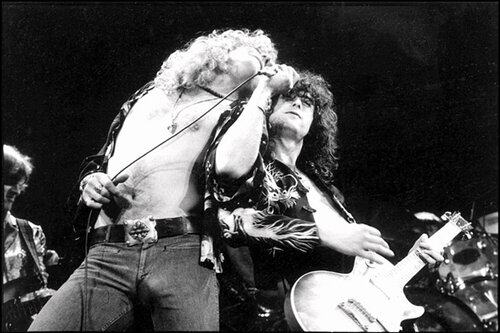
IN THIS PHOTO: Led Zeppelin at Earls Court in 1975
start so strongly and then barely drop a step until very late in their career?! In a way, Physical Graffiti was the final album in that golden run. Presence arrived in 1976 and, with it, an album that did not resonate as hard as previous works in the Zeppelin cannon. I am not saying that album is bad, but it had a lot to live up to after Physical Graffiti was unleashed into the world on 24th February, 1975! I look back at Zeppelin’s output prior to 1975 and the quality boggles the mind! Although Physical Graffiti, now, is seen as one of their greatest works, there were some at the time who could get behind their sprawling double album. Released through Led Zeppelin’s Swan Song Records, it had its detractors in 1975. The band composed and recorded eight new songs for the album in early-1974 at Headley Grange. The idyllic setting provided few distractions, so they were free to experiment more and write in a different way. They found, soon enough, that their efforts would take up three sides of an L.P., so this would be a double album. Alongside these new tracks were unreleased songs from the majestic Led Zeppelin III, Led Zeppelin IV, and Houses of the Holy. The fact Zeppelin were dusting off tracks not included in previous albums might suggest weaker material was coming onto Physical Graffiti. Sure, there are some less-than-biblical songs on the double album, but there is plenty of gold.
Look at a double album Like The Beatles’ eponymous album of 1968, and there are cuts on there that are not their finest – yet the album is heralded as a work of genius by many! What is startling about Physical Graffiti – among many other things – is the width of sound and ambition on the record. Whilst the band were never stingy regarding scope previously, they really dug deep and offered up a feast for the senses on Physical Graffiti – covering Hard Rock, Folk, and so many other styles. The origins of Physical Graffiti’s recording go back to 1973, where John Bonham (drums) and Jimmy Page (guitar and production) were stationed at Headley Grange – this is where they recorded their untitled fourth album (or ‘Led Zeppelin IV’). There was some motion and productivity, but the studio facility was turned over to Bad Company so they could record their debut album. There were tensions around the time, and John Paul Jones (bass and keys) became dissatisfied with touring and considered leaving the band. The band reconvened and set to work in January and February 1974 and, sojourned at Headley Grange, they recorded eight tracks for their new album – the improvisational nature of the sessions was new for Led Zeppelin, and they were given freedom to re-record tracks and spend longer on them. John Bonham especially was pivotal during the sessions; offering up suggestions and making a big impact throughout. Although I love the songs on Physical Graffiti, it is the iconic sleeve – designed by Peter Corriston (themed around a tenement block in Manhattan, New York) – that really wowed me as a child.
I think Physical Graffiti is still in my parents’ record drawer and, every time I look at it, I am intrigued by what is on the vinyl and whether any of the songs would represent different tales from that apartment block – like there is a song dedicated to each resident. Led Zeppelin’s sixth album contains some of their best material, and I think each of the four sides contains a nice blend of belters and songs that take a while to embed. Consider the first side, which, actually, is all gold! Custard Pie, The Rover, and In My Time of Dying is twenty-one minutes of brilliance that ranges from the tighter first two numbers and the epic side-closer! Side two, too, is a right classic – the first two sides are stronger than the second two. Houses of the Holy, Trampled Underfoot, and Kashmir are three of Led Zeppelin’s best works. All four members of the band agreed Kashmir is one of Led Zeppelin’s best compositions. it was written by Jimmy Page and Robert Plant (with contributions from John Bonham) over a period of three years - with lyrics dating to 1973. Although the final two sides contain fewer classics, we still have In the Light, Ten Years Gone, and The Wanton Song sitting alongside underrated gems like Night Flight, and Black Country Woman. There were, as I said earlier, some fans and critics who were a little tepid towards Led Zeppelin’s new release in 1975. Maybe it was the scale of the album, or the fact it was less tight than their previous work; more genres playing out.
Retrospective reviews have been even more positive than contemporary reviews; perhaps the passing of time and the influence of Physical Graffiti has led to this fresh wave of affection. Here is what AllMusic wrote in their review:
“Led Zeppelin returned from a nearly two-year hiatus in 1975 with the double-album Physical Graffiti, their most sprawling and ambitious work. Where Led Zeppelin IV and Houses of the Holy integrated influences on each song, the majority of the tracks on Physical Graffiti are individual stylistic workouts. The highlights are when Zeppelin incorporate influences and stretch out into new stylistic territory, most notably on the tense, Eastern-influenced "Kashmir." "Trampled Underfoot," with John Paul Jones' galloping keyboard, is their best funk-metal workout, while "Houses of the Holy" is their best attempt at pop, and "Down by the Seaside" is the closest they've come to country. Even the heavier blues -- the 11-minute "In My Time of Dying," the tightly wound "Custard Pie," and the monstrous epic "The Rover" -- are louder and more extended and textured than their previous work. Also, all of the heavy songs are on the first record, leaving the rest of the album to explore more adventurous territory, whether it's acoustic tracks or grandiose but quiet epics like the affecting "Ten Years Gone." The second half of Physical Graffiti feels like the group is cleaning the vaults out, issuing every little scrap of music they set to tape in the past few years.
That means that the album is filled with songs that aren't quite filler, but don't quite match the peaks of the album, either. Still, even these songs have their merits -- "Sick Again" is the meanest, most decadent rocker they ever recorded, and the folky acoustic rock & roll of "Boogie with Stu" and "Black Country Woman" may be tossed off, but they have a relaxed, off-hand charm that Zeppelin never matched. It takes a while to sort out all of the music on the album, but Physical Graffiti captures the whole experience of Led Zeppelin at the top of their game better than any of their other albums”.
When Physical Graffiti was remastered to mark its fortieth anniversary in 2015, there was a batch of new appreciation and reviews. In their spotlighting, The Guardian examined, perhaps, Led Zeppelin’s finest moment:
“Not many of those copies went straight to secondhand stores, because Physical Graffiti turned out to be a masterpiece. It’s not without its oddities: the second side of its vinyl iteration (and its pacing really does work much better across four sides of vinyl) might be the most monumental 20 minutes or so in rock. The heavy, riffy southern R&B of Houses of the Holy moves into the extraordinary, Stevie Wonder-inspired Trampled Under Foot, which manages to invent funk rock and – by virtue of John Bonham’s no-city-left-unrazed approach to drumming – be deeply unfunky at the same time, before concluding with Kashmir, the cod-mystic epic that defies you to laugh at it, but offers not a single dull moment across its eight minutes.

IN THIS PHOTO: Led Zeppelin in New York City, 1975/PHOTO CREDIT: Lynn Goldsmith
This is the Led Zeppelin that shouted from the top of mountaintops, the group you might reasonably expect to be announced as your new overlords were their private jet – the Starship – to land at your local airport. So why is it side two? It feels for all the world like a side four. It’s even odder on CD, where those three tracks are preceded by the equally towering In My Time of Dying, which rather overbalances the disc.
But some of Physical Graffiti’s best moments are the less dramatic ones. In the Light would be a standout on an album less frontloaded with the kind of songs that routinely crop up high on magazine polls. Down By the Seaside, originally recorded for the fourth album, on to which it would have fitted about as well as gatefold photo of Ken Dodd instead of that picture of the old hermit, is delicious. Though everyone who has ever listened to Led Zeppelin knows they were about far more than stürm und drang, they stürmed and dranged so persuasively that it’s easy to forget they could be nostalgic and wistful and utterly unpompous when the mood took them. Page’s mastery extended not just to studio techniques and soloing and making up riffs: he was fantastic at creating and changing atmospheres, and for all the musical themes that crop up again and again across the group’s catalogue, he rarely repeats himself”.
I really like all of the songs on Physical Graffiti and, through the years, journalists have ranked the songs; to be fair, it is hard to beat anything as majestic as Kashmir! In this interview, Jimmy Page reflected on the recording of Physical Graffiti:
“The essence of Physical Graffiti is the fact that we go back to this house, this residential house in the countryside called Headley Grange, where we recorded the fourth album. It's in a residential house and it's the equivalent of the sitting room, the lounge, the main formal room where you'd have your Christmases, in a large house. And there was a fire in there, you could put logs on the fire and it was all really, really nice. And you had a multitrack recording studio so you could actually get to work on this stuff without having to necessarily go into a studio and comply by other peoples' hours. With this you could just wake up in the morning, have your breakfast, get into the music. Have an evening meal. (I can't remember now what we used to have for lunch.) But I really, I just remember the sort of whole work ethic of this, and it was just so productive.
It was always a fascinating prospect going in to record, to be honest with you, because it was always gonna be a sort of summing up of where we were at any given point in time and where we were trying to push ourselves collectively. And in the process of that, because of the quality of these four musicians individually, let alone collectively, we were pushing the boundaries of music and [we were] aware of that. And on this album, I should say the double album Physical Graffiti, the whole thing is just full of character, sort of statements of music and numbers, and some are really, really groundbreaking. You get things which may be very sensitive and caressing. You get other things which are really hard and coming at you.
I always consider Led Zeppelin to be a perfect group, in so much as you have four supreme artists together that have few equals. From the impassioned and remarkable vocals of Robert Plant to Jimmy Page’s guitar wizardry; John Bonham’s immense drumming and John Paul Jones’ eclectic musicianship – not to mention Page’s role as producer and Jones’ compositional brilliance -, here is this staggering band who, in 1975, were at the peak of their powers. Led Zeppelin announced their split in December 1980 (two months after the death of John Bonham) and, although Physical Graffiti was not their final studio album as a four-piece (that would be In Through the Out Door of 1979), I don’t think they ever matched the genius of their sixth studio album. If you have not got this album in your vinyl collection, rectify that, and witness a musical banquet…
LIKE no other.
FEATURE: Vinyl Corner: Tears for Fears – Songs from the Big Chair
FEATURE:
Vinyl Corner

Tears for Fears – Songs from the Big Chair
___________
ON 25th February…

Tears for Fears’ second studio album, Songs from the Big Chair, turns thirty-five! It is an album that played a role in my very early life and, whilst it is not as celebrated as their debut, The Hurting (1983), it is a magnificent album. Tears for Fears formed in Bath in 1981 by Roland Orzabal and Curt Smith- Manny Elias and Ian Stanley are former members. Songs from the Big Chair is looser and more experimental than their debut – as many critics have remarked – and some felt that the band lacked real depth on the album. Regardless of some doubts and ho-hum reviews, the album reached number-two in the U.K. and peaked at number-one in the U.S. and Canada. If The Hurting boasted classics like Mad World, Songs from the Big Chair had more than its share of big tracks: Mother’s Talk, Shout, Head Over Heels, and the monster that is Everybody Wants to Rule the World among them. The album’s title derived from a 1976 television film, Sybil, which concerned a woman with multiple personality disorder; she feels safe sitting in ‘The Big Chair’. Even though I was too young to realise the messages and meanings behind songs like Everybody Wants to Rule the World, I was hooked and seduced by the incredible production (by Chris Hughes), and the catchiness of the songs. I am baffled why some critics felt (and still do) the album is not that deep and serious.
If you did not see the Classic Albums documentary about Songs from the Big Chair, you must see it, as it was illuminating and full of great insights. Although many songs on the album have a Pop sheen, the lyrics are pretty effecting. Shout is about the aftermath of The Cold War and an encouragement to protest; Everybody Wants to Rule the World is about desire humans have for control and power – not many Pop contemporaries were writing songs as political and serious. Regardless, I think Songs from the Big Chair is a perfect blend of observational and socially-aware lyrics and accessible compositions. Make sure you buy Songs from the Big Chair on vinyl and experience an album that is almost thirty-five years old. I think many of the songs seem more relevant now than they did in 1985, what with the rising awareness of climate change and politicians’ ignorance and zeal for power. I think there has been more love and respect for Songs from the Big Chair in the years since its release, as opposed to its 1985 launch. It is a terrific album that deserves a lot of attention as it approaches its anniversary. Here is what AllMusic wrote in their review:
“If The Hurting was mental anguish, Songs from the Big Chair marks the progression towards emotional healing, a particularly bold sort of catharsis culled from Roland Orzabal and Curt Smith's shared attraction to primal scream therapy. The album also heralded a dramatic maturation in the band's music, away from the synth-pop brand with which it was (unjustly) seared following the debut, and towards a complex, enveloping pop sophistication. The songwriting of Orzabal, Smith, and keyboardist Ian Stanley took a huge leap forward, drawing on reserves of palpable emotion and lovely, protracted melodies that draw just as much on soul and R&B music as they do on immediate pop hooks.
The album could almost be called pseudo-conceptual, as each song holds its place and each is integral to the overall tapestry, a single-minded resolve that is easy to overlook when an album is as commercially successful as Songs from the Big Chair. And commercially successful it was, containing no less than three huge commercial radio hits, including the dramatic and insistent march, "Shout" and the shimmering, cascading "Head Over Heels," which, tellingly, is actually part of a song suite on the album. Orzabal and Smith's penchant for theorizing with steely-eyed austerity was mistaken for harsh bombasticism in some quarters, but separated from its era, the album only seems earnestly passionate and immediate, and each song has the same driven intent and the same glistening remoteness. It is not only a commercial triumph, it is an artistic tour de force. And in the loping, percolating "Everybody Wants to Rule the World," Tears for Fears perfectly captured the zeitgeist of the mid-'80s while impossibly managing to also create a dreamy, timeless pop classic. Songs from the Big Chair is one of the finest statements of the decade”.
I think the passing of time has revealed the album in a new light and, as I said, Songs from the Big Chair seems more relevant now than ever. When they tackled the album in 2017, here is what Pitchfork said:
“Tears for Fears synthesize all of the threads on Songs From the Big Chair—intricacy, romance, psychology, and politics—on the album’s centerpiece, the everlasting “Everybody Wants to Rule the World.” Hughes says that he, Orzabal, and Stanley put the song together in a week, astonishing because the track has so many components: the twinkling synth at the beginning joined by a spider-like guitar, the snappy instrumental lead-up to the opening verse, the shuffling drum beat, the chorus, the galvanizing bridge, a moody instrumental passage, a guitar solo, a new melody for a verse afterwards, another guitar solo. And the genius of “Everybody Wants to Rule the World” is how it escalates, how each part increasingly amplifies the passion of the music.
More than any other Tears for Fears track, “Everybody Wants to Rule the World” most successfully transposes Janov’s psychological texts into a pop song with global resonance. Though “Everybody Wants to Rule the World” is obviously a meditation on power, you could project virtually every major issue of the 1980s onto the lyrics: the environment (“Turn your back on mother nature”), the fleeting nature of financial success (“Help me make the most of freedom and of pleasure/Nothing ever lasts forever”), authoritarian rule (“Even while we sleep/We will find you”), and the Cold War (“Holding hands while the walls come tumbling down”).
“Everybody Wants to Rule the World” is a song with a near-universal appeal, and likewise Songs From the Big Chair seemed to resonate with everyone—jocks, goths, pre-teens, adults. “At our gigs, you’ll get young girls at the front, the Joy Division fans at the back and even some hippies putting in an appearance,” Smith told Hall. “Our fan mail is certainly very varied, containing letters from everyone from twelve-year-old girls to mothers with five-year-old daughters”.
Make sure you buy the album if you have not heard it or, if you cannot afford it, go and stream it instead. It is a remarkable record that has so many huge numbers. I am not sure whether Tears for Fears are still touring, but one looks back at albums like the genius Songs from the Big Chair and listens in amazement! Its brilliance, legacy, and power still moves me…
TO this day.
FEATURE: Rage Within the Machine: Will the Touring Return of the Los Angeles Legends Lead to a New Album?
FEATURE:
Rage Within the Machine

Will the Touring Return of the Los Angeles Legends Lead to a New Album?
___________
THINK about the music scene when…

Rage Against the Machine arrived. Their eponymous album was released in 1992 and, at the time, they were heading into a landscape that was seeing Grunge acts like Nirvana rule. It was clear that there were these bands who could articulate a frustration that, perhaps, was not common at the time. Although Nirvana’s lyrics were more personal in nature, Rage Against the Machine were more political. George H.W. Bush was U.S. President in 1992, and it is not a surprise a band like Rage Against the Machine would appear and represent a fury and sense of isolation many Americans were feeling. Their debut remains one of the greatest ever, and it combines Zack de la Rocha’s intense and mesmeric vocals; there is Tom Morello’s insane and genius guitar work; Tim Commerford brings his epic bass chops to the party, whilst Brad Wilk’s percussion gives the album intensity and heartbeat. Songs like Killing in the Name became anthems for the disenfranchised youth, and it is a song that sounds relevant and timely today – police brutality, racism and oppression. Rage Against the Machine continued to impress, and they released Evil Empire in 1996; The Battle of Los Angeles came out in 1999, and Renegades (an album of covers) came out the year after – that was the last studio album from the band. 2020 is an important year, as it is twenty years since their last album but, as we are seeing political tensions and a lot of anger swell up, their return is very welcome!
There have been a lot of articles released this week, as the band has been announced as a headliner for the Reading and Leeds festivals. Here are some more details from NME:
“Rage Against The Machine have been confirmed as headliners of this year’s Reading & Leeds Festival.
The political rock icons, who’ve also announced they will top the bill at France’s Rock en Seine festival alongside a host of other dates, are set to play Leeds festival on August 28 and close Reading festival on August 30”.
It is not only Reading & Leeds Rage Against the Machine will play this year. It seems like they are in full frontal, and there are many other dates confirmed. In this feature from Pitchfork, we learn more about their plans:
“After announcing a string of reunion shows, Rage Against the Machine have unveiled a full tour, as Rolling Stone notes. Featuring support from Run the Jewels, they kick things off next month in El Paso, Texas and currently wrap up in Krakow, Poland in September. Their “Public Serve Announcement Tour” itinerary also includes a headlining slot at Coachella. Proceeds from the band’s shows in El Paso, Phoenix, and La Cruses will go to immigrant rights efforts, the band announced in a statement, according to the Detroit Free Press. Proceeds will go toward different activist groups in other cities.
According to a press release, Run the Jewels’ return to the road will accompany the release of their long-awaited new album Run the Jewels 4. It was recorded at Rick Rubin's Shangri-La Studios as well as Electric Lady in New York. While a specific date has not yet been confirmed, it is due for release this spring”.
It is excited the band are back, as there has been talk and speculation for many years. Although they did play a gig at Finsbury Park in 2010, there has been nothing as extensive as a tour since then. Tom Morello has done some work with his other band, Prophets of Rage, and the other members of the band have done bits here and there. There is that debate as to whether this is a sort of one-off tour and the band are getting back together to fulfil the dates they have committed to already. Many fans will ask whether this reunion means we will see another album. There have been no announcements made just yet, but one feels it will only be a matter of time before something comes to the fore. As much as anything, the music scene now is full of artists who are speaking against hate and have that Rage Against the Machine-like bite. With that said, does it mean the Los Angeles band is almost like the old guard in a sea of younger acts?! Is this nothing more than nostalgia, and can a band where its members are quite wealthy and a lot older than they were when they came through in the 1990s resonate and connect in 2020?

One can argue a case to state Rage Against the Machine’s salad days are gone, but it nice that they are touring again. I think there is as much appetite for this music now as there was in the 1990s. If anything, the world is in a worse state than it was in 1992, and age does not mean the band have lost their edge and meaning. Touring will sharpen their skills, and there will be so much love from the fans. Will that spark the imagination of the guys and lead to a new studio album? Certainty, there are plenty of bands who return after decades away and release albums that sound evolved but retain their spark. I do think there will be another album, because the guys are back together and it wouldn’t make much sense them returning for a few gigs and going their separate ways again. They are not short of cash, and I feel they are shaping up for something; maybe it will be a new track, but there are many who would love to see an album. Some have asked whether a band that railed against the government and were these acolytes of truth will stand out in a scene where they have plenty of competition. Is the ‘machine’ now something they are part of, in the sense artists have bandied together and are not this united organism for change and progress?
They are valid points, but I do think the band has inspired so many others, and a new album will definitely speak to other artists coming through. It is exciting, none the less, that Rage Against the Machine are a unit again, and they will be heading to Reading & Leeds this summer. I have been listening back to their classic albums and, as we look ahead, many will speculate what comes next. Will the band keep the touring juggernaut going, or will they head into the studio and pen a new album? If Trump remains President after the U.S. Election later this year, you just know the band will have something to say about it! That is what leads me to believe there will be an album coming soon enough. A band that shot into the consciousness because of their thought-provoking and powerful songs would not just reform to do a few dates, surely?! I think they have a lot to say and, as this year reveals surprises, great announcements, and stunning albums, will we hear more from the Rage Against the Machine boys? Those who doubt their purpose and motivation for touring need to listen back to albums like Rage Against the Machine and Evil Empire and realise how important these albums are. Their upcoming shows will be immense, and it provides an opportunity for those who did not hear the band back in the 1990s to get their first experience of Rage Against the Machine. If they do indeed head into the studio, I think the resultant album will prove…
JUST how relevant they still are.
FEATURE: Sisters in Arms: An All-Female, Winter-Ready Playlist (Vol. VI)
FEATURE:
Sisters in Arms

IN THIS PHOTO: PINS
An All-Female, Winter-Ready Playlist (Vol. VI)
__________
LIKE last weekend…

IN THIS PHOTO: Daughters of Reykjavík
there is a lot of wind and rain about. We have another big storm here, and most people are going to be affected around the U.K. As many will be staying in, have a listen to this great selection of tracks from some of the finest female artists (and female-led bands) around. It is another bumper week of terrific music that covers so much ground! This week has seen gender imbalance in the news. Reading & Leeds’ line-up is male-heavy and, like so many festivals, there is a long way to go. It is very obvious there are so many awesome women out there who would be perfect for any festival. As you can see from the playlist below, the women of music…
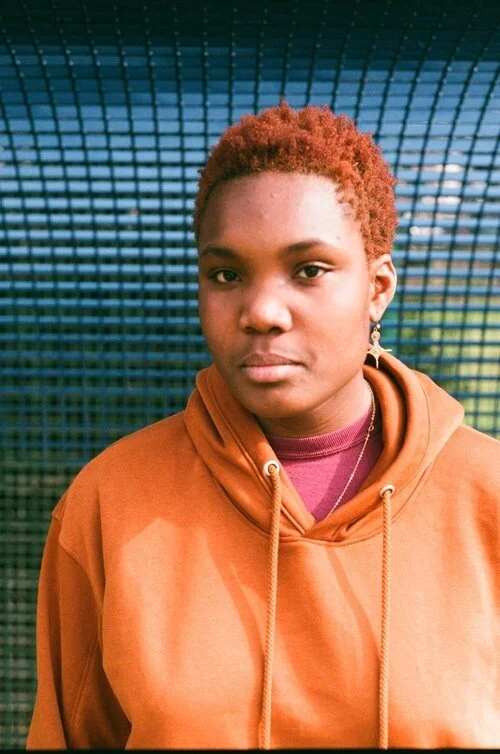
IN THIS PHOTO: Arlo Parks/PHOTO CREDIT: Pamela Boland for Love Letters Zine
DESERVE to be heard!
__________

I Break Horses – I’ll Be the Death of You

PHOTO CREDIT: Alex Lovell-Smith
Nadia Reid – Oh Canada

Harkin – Nothing the Night Can’t Change

Grimes – Delete Forever

Hilary Woods – Orange Tree

Daughters of Reykjavik – Fool’s Gold

Robinson – I Tried

Matilda Mann – The Loch Ness Monster

Bad Honey – Circles

PINS – Hot Slick

King Princess – Back of a Cab

Ingrid Andress – Life of the Party

Sabrina Carpenter – Honeymoon Fades

Katie Gately – Allay

Natalie Shay – Not the Girl

Madison Beer – Selfish

Nova Twins – Taxi

Store Front – You Gave Me

Laura Veirs – I Was a Fool

Arlo Parks – Eugene

BLOXX – Coming Up Short

Caroline Rose – Freak Like Me

PHOTO CREDIT: Laurie Barraclough
Wyldest – Quiet Violet - Redream

Becca Stevens - Feels Like This

PHOTO CREDIT: Colin Medley
U.S. Girls – 4 American Dollars

PHOTO CREDIT: Melanie Hyams
Drug Store Romeos – Frame of Reference

PHOTO CREDIT: James Hornsby
Alex Lahey – Sucker for Punishment

Kim Petras – Reminds Me
FEATURE: The February Playlist: Vol. 3: Heartbeats, a Slow Rush – and a Spy Who Doesn’t Love Me
FEATURE:
The February Playlist

IN THIS PHOTO: Tame Impala/PHOTO CREDIT: Neil Krug
Vol. 3: Heartbeats, a Slow Rush – and a Spy Who Doesn’t Love Me
__________
ALTHOUGH there are fewer tracks…

in the playlist than normal, there are some pretty hefty releases in the pack! Not only is there new material from Billie Eilish, Tame Impala, and Grimes; we have some cool tunes from Sam Fender, Mystery Jets, and The Strokes. It is a busy week, and one where some serious big-hitters have come out. In the mix are King Princess, Sam Smith, and Tim Burgess. If you need to get your weekend off to a pretty epic start, you could do worse than have a listen to this seriously good rundown. This year has got off to a flyer, and each week provides some serious gold and surprises. It is going to be pretty rough weather this weekend, so stay warm and listen to…

IN THIS PHOTO: Sam Fender/PHOTO CREDIT: Sarah Louise Bennett
THESE gems.
ALL PHOTOS/IMAGES (unless credited otherwise): Artists
_________

Mystery Jets – A Billion Heartbeats

Tame Impala – On Track

Billie Eilish – No Time to Die

Grimes - Delete Forever

The Strokes – At the Door

Tim Burgess – Empathy for the Devil

Sam Fender – Hold On

Arlo Parks – Eugene

Sam Smith – To Die For

King Princess – Ohio

PHOTO CREDIT: Melanie Hyams
Drug Store Romeos - Frame of Reference

PHOTO CREDIT: Gemma Dagger
Catholic Action – Another Name for Loneliness

Pumarosa - Lose Control

Inhaler - We Have to Move On

Gregory Porter – If Love Is Overrated

Caroline Rose – Freak Like Me

PHOTO CREDIT: Dan Monick
Cold War Kids - Who's Gonna Love Me Now

PHOTO CREDIT: Kevin Tachman
Jake Shears – Meltdown

PHOTO CREDIT: Photography by Daniel Stark
The Pale White – Polaroid

VC Pines – Bluebirds

David Gray – Walking in Circles

Kodak Black – Because of You
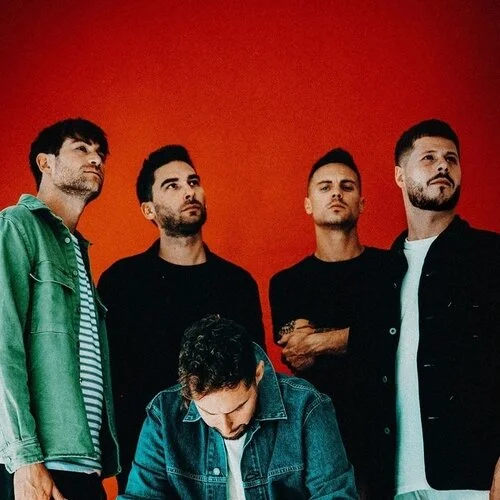
You Me at Six – Our House (The Mess We Made)

Sofia Reyes – IDIOTA

New Hope Club – Why Oh Why
TRACK REVIEW: Billie Eilish - No Time to Die
TRACK REVIEW:
Billie Eilish


The track, No Time to Die, is available from:
https://www.youtube.com/watch?v=GB_S2qFh5lU
GENRE:
Alternative Pop
ORIGIN:
Los Angeles, U.S.A.
RELEASE DATE:
14th February, 2020
LABELS:
Darkroom/Interscope Records
WRITTEN BY:
Billie Eilish/Finneas O'Connell
PRODUCED BY:
Finneas O'Connell/Stephen Lipson

The film, No Time to Die, is in cinemas from 3rd April (U.K.):
https://www.youtube.com/watch?v=a5SxyQ-9YDA
__________
EVEN though I reviewed Billie Eilish…

PHOTO CREDIT: Harley Weir for Vogue, March 2020
around this time last year, I feel it is worth returning as, since then, a lot has happened! She has just released the theme to the latest James Bond film, No Time to Die. The song of the same name is here, and it is gaining a lot of love! I will talk about James Bond and the themes; I also want to address Eilish as a modern Pop sensation and how people need to give her space – also, I want to look at artists and personalities that seduce; a bit about women in music and why Eilish is a born headliner. One is not supposed to quote other reviews when it comes to something like this, as it takes away from your opinion and, yeah, is not often done. People do not review singles these days but, as it is a special occasion, some have. I want to bring in a few reviews to show what people are saying and, with one of music’s most prestigious and toughest gigs at her feet – composing the Bond theme -, how Eilish’s effort is being assessed. This is how The Guardian judged Eilish’s efforts:
“Like her cover of Yesterday at the Oscars ceremony, No Time to Die sees Eilish taking a respectful approach. There’s a sense that this may all be part of a concerted effort to broaden her appeal to more mature audiences. It’s a moot point whether such an effort is really necessary – her multi-platinum debut album, When We All Fall Asleep, Where Do We Go? won praise from quarters that don’t ordinarily take much interest in music that appeals to teenage girls – but either way, the glitchy electronics of that record have vanished here, replaced by tasteful orchestration and nods to Bond tunes past.
There’s a vague hint of the opening of Diamonds Are Forever about the intro, an interpolation from Monty Norman’s James Bond theme and a guitar part that carries a distinct echo of Vic Flick’s iconic twang. Yet Eilish has stamped her own identity on the song. The tendency for vocalists tackling a Bond theme is to belt it out, as if in homage to the most famous Bond singer of the lot: Shirley Bassey is known for many things, but subtle understatement isn’t among them. Eilish, however, opts for her standard close-mic approach in which surliness does battle with vulnerability.

It fits what she’s singing. The days when the lyrics of Bond themes invariably came laden with woeful double-entendres pertaining to the hero’s sexual prowess are long gone. (It reached a deranged pinnacle on 1974’s The Man With the Golden Gun, which required Lulu to note “he has a powerful weapon” before wondering, “Who will he bang?”) More recently, the lyrics of Bond themes have occasionally tended to the baffling – the question of what on earth Adele is rattling on about hangs heavy over the otherwise great Skyfall.
No Time to Die, however, smartly refracts the Daniel Craig depiction of Bond – dark, solitary and tormented beneath the cool exterior – through Eilish’s signature brand of teen angst: “I should have known I’d leave alone – it just goes to show that the blood you bleed is just the blood you own.” What 007 himself would make of it is an intriguing question, but No Time to Die is a confident, appealing addition to the Bond theme canon”.
Reacting to the buzz and electricity around No Time to Die’s theme song, this is what the BBC wrote in their review:
“Eilish wrote and produced the title song with her elder brother Finneas O'Connell late last year. Speaking at the Grammys in January, she said working on the franchise had always been one of their goals.
"Subconsciously and consciously, we've been trying to write a Bond theme for our whole lives," she told E! News.
Shrewdly, the duo retain their dark, off-kilter style throughout the song, while incorporating several of the film series' musical touchstones - swelling strings, discordant brass, and, best of all, it finishes with the distinctive minor 9th chord that closes out Monty Norman's original Bond theme.
Lyrically, they touch upon the psychological toll of 007's licence to kill, with the observation: "The blood you bleed is just the blood you own".
But the song is very much about a romantic betrayal. "Was I stupid to love you? / Was I reckless to help?" asks Eilish in the bridge.
The musician is known for her intimate, designed-for-headphone vocal style, but she rises to the challenge of the song's soaring climax, with her early vulnerability transforming into strength and resolve.
It's easily the most audacious and atmospheric take on the Bond theme in living memory”.

IN THIS PHOTO: Billie Eilish photographed at The Geffen Contemporary at MOCA
So far, the reviews have been glowing. I am reviewing the song after a few listens, and I think a lot of people have reacted after the first listen. I feel the track grows stronger the more you listen but, when The Independent heard the song, this is what they thought:
But “No Time to Die” is a song that proves Eilish has a versatility that extends beyond the ghostly, ASMR-lite electronic sound of her debut album, When We All Fall Asleep, Where Do We Go?. She pushes her vocals further here than on anything she’s previously released – while she begins in her trademark style (something between a mutter and a quavering wail), she hits an impressive belt at the song’s climax.
The song is gratifyingly subtle compared to the try-hard nature of Sam Smith’s effort, “Writing’s on the Wall”, which threw every Bond trope they could think of at the wall in the hope that something would stick. It’s not as good as “Skyfall” (some would argue Adele’s indecipherable lyrics bring the song down), although the two share similar elements, such as a move from stark piano into tense, shivery orchestration.
The lyrics, meanwhile, cleverly play on Craig’s portrayal of 007, which has increasingly delved into the more toxic side of Ian Fleming’s character – Bond’s tendency to isolate himself, and how his cold, almost cruel treatment of those closest to him stems from a fear of placing them in danger. “I’d fallen for a lie,” she sings, “You were never on my side/ Fool me once, fool me twice/ Are you death or paradise?/ Now you'll never see me cry.” “No Time to Die” is by no means a bad song, in fact, it’s one of the better Bond themes we’ve had in some time.
I have brought in other reviews for two reasons. For one, the Bond theme is this esteemed and precious thing that is almost more important than the themes themselves. Everyone has their own opinions regarding what constitutes a classic Bond theme but, appropriately, I want to chat about the Bond theme legacy and how Eilish fits in.

Most people think the all-time best Bond themes are those that have belt and drama. Think of efforts by Shirley Bassey for Goldfinger and Paul McCartney & Wings’ Live and Let Die – these race and have all the excitement one would expect from a Bond theme. That said, not every Bond theme with energy and swell wows critics. Madonna’s theme for Die Another Day and Sheryl Crow’s excellent Tomorrow Never Dies were panned, but I think both are underrated – especially Crow’s effort. You can tell from the songs I have quoted that the word ‘die’ is a common theme and, through the years, the 007 spy has claimed more than his fair share of lives – and hearts for that matter! I think Bond has become darker and more serious as time has progressed. Yes, there are still the same cheesy jokes, the fast cars and women who fall under his spell, but the franchise has become tougher and less reliant on that classic image we have of Bond. Because of that, the Bond theme has had to adapt and reflect the modern Bond. I think Eilish’s theme fits perfectly with Daniel Craig’s portrayal as a more troubled and no-nonsense Bond. By the time this review is published (15th January), a lot of the early heat will have died down and it gives people a chance to hear the track again. I think No Time to Die is a great song that is not as rapturous as the very best Bond themes, but it is the best effort we have seen in many years – which seems to be the consensus among fans and critics. There is a lot of snobbishness concerning the Bond theme. Many want that epic sound that the likes of Shirley Bassey provided but, as the character has evolved through the years, it would be jarring having a big showy number. That is not to say Bond has become a house cat or lost his wit and cool. I think the biggest development through the years has been great, and it has brought James Bond to a whole new audience.

I think Eilish was a great choice to compose the Bond theme, as her music suits the new Bond; she can write a ballad that is very smart and cool – and it has plenty of nuance and arresting moments. Billie Eilish is barely eighteen; composing the Bond theme is a big honour – one that is richly deserved. I shall come back to Bond when reviewing the track, but I want to spend some time with Eilish. I am going to bring in a few interviews involving Billie Eilish because I think it gives her music context and, like all my reviews, I focus on the artist as much as I spotlight the actual song itself – a few paragraphs is not fitting for a huge artist who has a very bright and long future. Think of all the accolades Eilish has already accrued: Eilish's debut studio album, When We All Fall Asleep, Where Do We Go? (2019), debuted atop the Billboard 200 and became the best-performing album of 2019 in the U.S. It also reached number-one in the U.K. Her accolades also include five Grammy Awards, two American Music Awards; two Guinness World Records, and three MTV Video Music Awards. She is the youngest person and first woman to win the four main Grammy categories: Best New Artist, Record of the Year, Song of the Year, and Album of the Year in the same year. There are Pop superstars like Taylor Swift, Ariana Grande and Charli XCX, but Eilish is younger than then, and she has only released one album – and is already considered an icon and legend of the future. It is scary to think how far she can go and, whilst I have dismissed the notion that we will see icons like Madonna, Michael Jackson, and Prince again, is Eilish the modern times’ best shot? Certainly, she has already accomplished a huge amount, and I think this golden streak will continue. Eilish has a very cool and mature head on her shoulders; she is laidback and funny in interviews, so one knows she will not get too ahead of herself and take her time when it comes to her second album.

I have written a feature about Eilish recently, begging people to give her space and time to relax this year. At a point in history where an artist can get their music out there instantly and can be made a superstar before they blink, there is a lot of expectation and passion at Eilish’s feet. It is wonderful to see, but I hope people do not push too far and allow Eilish opportunity to enjoy normal life for a bit because, if not, her career could take a different turn and the pressure could get to her. I want to bring in the first of two interviews in this section that shows how Eilish is coping with social media and expectation – and how grounded she is. Early last year, NME sat down with Eilish at a time when she was blossoming but hadn’t become the much bigger star she is today:
“She’s a teen – she’s meant to be rebellious – but Billie has an endearing ‘fuck you’ attitude that only a handful of people can carry off. Want proof? After a long day of shooting, she’s been asked by US TV network NBC to film a spritely ‘Happy New Year’ message to be shown on their New Year’s Eve coverage. She tries and fails several times to nail the happy-go-lucky attitude the network wants. On the seventh try, she looks like she’s about to nail it. She reaches the end of the clip and blows a kiss to the camera to sign off, then immediately flips the bird directly to camera. Her mum, Maggie Baird, who’s been with us all day, is exasperated – the clip is useless. “You need to leave a beat at the end of the clip for them to edit away,” she tells Billie. “I did,” Billie replies. “This is my beat” – and she throws up the middle finger once more.
Billie grew up in Highland Park, an LA neighbourhood 30-minutes away from The Graceland Inn, West Hollywood, where NME’s shoot is held. When not on the road, she still lives there with her older brother Finneas, who co-writes and produces Billie’s material and has had acting roles in TV shows such as Glee in the past. Her parents, Maggie Baird and Patrick O’Connell, also both actors, follow Billie on tour as much as they can.

PHOTO CREDIT: Ethan James Green for Vogue, March 2020
Her home, then, was her sanctuary – and her school. It’s the only place where she reckons she could have become the artist we meet today. “If I went to [public] school, no one would take me seriously and that’s terrifying to me,” she says. “There are so many people who come to my shows, who bring their art of me, or video edits and I’m thinking, ‘Why aren’t you an editor? Or, ‘Why aren’t you a fucking video director?’ It’s not an age thing for me; you can have these ideas at any age. There are geniuses everywhere,” she says.
Billie is smart and hyper-aware of the conversations happening around her. But in the age of social media, which has been a part of her life for as long as she can remember, trolls, abuse and misconceptions are rife. Does she spend a lot of time reading what’s said and written about you online?
“There’s an article online about me and if you look at the comments they say: ‘the industry is ruining her! It’s killing her! She has no spark in her eyes! Her smile is not as big!’ Come on…”
Billie’s aware of everything that’s going on in her comment sections – almost to a fault.“ I used to read every single comment and every picture I was tagged in and respond to every single DM, but now I barely go on Instagram because I can’t handle that shit,” she says. “Fuck that shit. I just don’t wanna see all the horrible things people say. I don’t wanna see that I should have died instead of this artist. It takes not looking at my phone to stop myself from engaging. I had to delete Twitter in March because of it. Nobody is going to win. If somebody said something to me in person, I’d beat their ass”.
Eilish could easily crumble under the pressure and fame that has come her way but, as one becomes aware of when reading interviews, she can play the game and realises that her music will attract some negativity and unkind feedback.

She does not glorify death or pain, but her songs can get quite dark and, at a time when mental-health is in the spotlight, a lot of people – parents especially – might take umbrage and wonder whether the artist is a good role model. Eilish is a teen herself, remember, so she knows all too well about what she writes. Here, in this recent interview with Vogue, we learn more about a complex but accessible star:
“While Eilish has been open about her depression, which first struck at around this time, she insists that her penchant for dark material preceded and has generally been independent of her mood. For years she liked to say that “Fingers Crossed”—inspired by an episode of The Walking Dead—was the first song she ever wrote, as part of a songwriting class that her mother taught for a group of homeschoolers. But recently she came across a cache of songs she wrote at 11, including one called “Why Not,” a melody built from the only five chords she knew. The lyrics of the song had a simple, morbid premise: If she killed herself, everything would be the same; the stars would still shine, the sun would still come out, the seasons would still change. So why not? Her friends loved it. “That was the song, at 11,” she says, scarcely believing it now. “And I was totally happy. I had never felt suicidal, and I didn’t want to feel that way, but I liked the idea of writing a song about something I didn’t know about.”
While Eilish has broken away from pop’s recent sights and sounds, she is also playing the game according to the rules of the streaming era. She had already hit the one-billion-streams mark before her first full-length album debuted, and the singles she released leading up to it came out of good, old-fashioned artist development: naturally heterogeneous, they were coordinated by her team to hit multiple playlists at once, gathering a bigger and more varied fan base. Eilish is not embarrassed to admit that she yearned for pop stardom—“I realize now that it’s everything I ever wanted,” she says. And of her surprise Grammys sweep, she tells me, "That shit was fucking crazy. If anything it's an exciting thing for the kids who make music in their bedroom. We're making progress, I think, in that place—kids who don't have enough money to use studios." For all of her alt cred, she is increasingly at ease in the mainstream”.

I have incorporated a lot of words from others and, soon enough, I will come to the latest release from Billie Eilish. Eilish is a very relatable artist and, as Pop artists are being accused of lacking authenticity and any sort of personality, I think Eilish is someone who contradicts that. She is very likeable and down to earth; she is savvy and writes exceptional music and, like all hugely popular artists, there is a certain expectation from the media, her fans, and her label. I do think Eilish will release a lot more albums and enjoy a career that lasts decades rather than years. One reason I say that is because Eilish has won a lot of praise because she is a rounded artist that anyone can appreciate. So many Pop artists are limited, or they have a very narrow demographic. Eilish is someone who writes music that is deep and accomplished, but there is a purity and directness that cuts to the core. Her songs hold much more weight and memorability than most of her peers’ work, and I think Eilish will only improve with age. It is important the industry does not drain Eilish, and we need to give her chance to unwind when she needs because, as we have seen in the past, artists can burn out and it is heartbreaking. Eilish is very mature, so I know she will be alright. I will come to No Time to Die, because it is the latest remarkable step from one of the most popular artists of our time. I will try not to repeat what other people have said; I have listened to No Time to Die a few times and, after each listen, new things reveal themselves. Eilish has penned one of the best Bond themes of the past couple of decades; a song that elicits so many different emotions.

PHOTO CREDIT: Harley Weir for Vogue, March 2020
At the time of writing this review – 14/02/2020 at 08:07 -, No Time to Die has been viewed 3,170,427 times, and 18,523 comments have been left. I would not be surprised if Eilish’s track broke ten-million views by the weekend! If Bond songs of old were renowned for their swooping start and brassy kick, instead, Billie Eilish’s No Time to Die begins with a moonlight, glacial stillness. There are beautiful notes that are soft and delicate; you get the impression of the heroine standing alone in the night, watching the moon and wondering what happened. It is a great way to start the song, because it builds and you get this real hit of emotion and feeling, rather than needless energy or something empty. In this song, I think Eilish gives one of her best vocal performances. It seems that our heroine has been deceived: “I should have known/I’d leave alone”. The vocal trembles and quivers slightly with emotion. There is hardly any backing composition, aside from some electronic notes and this spectral feeling. One gets pulled into a song that is haunting, I guess, but there is this passion and tenderness underneath. It is fascinating speculating as to the backstory, as Eilish sings “Just goes to show/That the blood you bleed is just the blood you owe” – a clever line that takes your imagination in a couple of different directions. There is a nice balance of lines that are direct and open, and those that are more oblique and curious. It is going to be interesting seeing how the title sequence looks, and how a slower song is translated into graphics and effects. There have been slower Bond songs before, but nothing quite like Eilish’s track. The track starts to build layers and brass comes in the background; a squall and slight cry from the brass gives the next lines extra gravitas and emotion – as Eilish says “We were a pair/But I saw you there/Too much to bear”.

One suspects that there is going to be a gear change and acceleration soon but, in the opening half, Eilish provides this very gentle-yet-strong vocal that is hard to resist. Some of her songs have been criticised for being too breathy with lyrics that are hard to decipher but, here, I think there is that clarity and a sharper vocal – maybe a lack of drama from the composition means Eilish can truly step into the spotlight and let her voice shine like never before. The first shift in gears comes at the 1:36 mark, where there is a new element to the composition; a stirring of guitar or electronics that takes us into a new phase. Before getting to that point, Eilish asks whether she was stupid to love the hero, and whether she was reckless to help – maybe this danger was obvious to others, but she was blind to it. The chorus is where Eilish’s voice becomes more animated and there is more activity from the composition. “That I’d fallen for a lie/You were never on my side” is Eilish/the heroine having been double-crossed and left. I love how there is a twinkle and a mixture of the ethereal and stern in the composition. In a way, Eilish unites the romance and mood of Adele’s Skyfall theme with the grace and stature of the classic Bond themes. Eilish ensures the song oozes with class, but she puts her own lyrical and vocal stamp on the theme – “Fool me once, fool me twice/Are you death of paradise? Now you’ll never see me cry/There’s just no time to die” is one of the best/smartest choruses we have heard from a Bond theme. Eilish is a fantastic writer, and I think she is perfectly suited to James Bond and themes of cat-and-mouse, heartache and being the sweetheart of a spy. With every Bond, the theme performer needs to reflect the personality and attributes of the spy. Daniel Craig has brought a lot to the role, and I think it is a perfect farewell for him – a swansong that tops all the other themes/films he has been involved with.

At 2:02 – when the chorus ends – we get a rumble from percussion and the strings arrive. Eilish has not forgotten the heritage of Bond themes, and ensures there is appropriate symphony, romance and stir. Rather than belt out a vocal and let all her emotions pour out, she is restrained and holds onto that dreamy vocal; ensuring her words are heard and hit the mark because of their nakedness. “I let it burn/You’re no longer my concern (mmm)” shows that, with a tougher section of the composition, the heroine has gathered strength and is now defiant and determined to move on. Rather than the singer indebted to Bond or singing this paen to his charms, Eilish has learned from the lies and knows that Bond/the hero cannot be trusted. The chorus has this waltz-like catchiness that allows Eilish’s voice to elicit so much emotion and impact. Whilst we never get the pomp and charge of a theme like Live and Let Die, here is a different take. The strings add appropriate shiver and power as Eilish, having been stung and led astray, is wiser, yet she seems to carry some scars and regrets. People are already ranking where Billie Eilish’s No Time to Die ranks in the golden cannon of Bond greats. I still have my favourite three, but I would put Eilish’s track in the top-ten – and would be shocked if it was omitted from anyone else’s. When No Time to Die comes to cinemas in April, we will get to see how Eilish’s theme works and what reaction it gets from cinema-goers. It is a beautiful title theme, and another brilliant revelation from a songwriter who, at eighteen, shows she has endless talent; someone who seems more accomplished and confident than any other artist out there.

This year is still pretty fresh, but Eilish has already won awards and released a song that has got so many people talking. Where does she go from here!? I think she will put out more material later in the year, but I would be surprised if we saw another album before next year. Maybe she wants to capitalise on the success she has already, but following up When We All Fall Asleep, Where Do We Go? will take time. That album received universal acclaim, and she won’t want to simply repeat that album. Eilish has gone from this teenager who was on the verge of releasing her first album, to a name that most people know. At her heart, she is the same rooted person, but I wonder whether future music will document the changes in her life and her new celebrity. Reading & Leeds have just released their line-up this year and, predictably, there were very few women on there! It calls into question (once more) whether the industry takes women seriously and, when there are so many talented female artists around, why they are being ignored. Billie Eilish played Glastonbury last year and produced a stonking set. I would be surprised if she was not asked back this year, and I think she has already earned the right to headline festivals. When people say there are no women strong enough to headline festivals, one only needs to look at Billie Eilish. She could headline any festival and is a live performer who has won huge respect. This is what Thomas Smith of NME had to say when he saw Eilish perform at Glastonbury last year:
“Billie has long been a live-force to reckon with. Even at her first ever shows in the UK at London’s Courtyard Theatre a couple years back – which she remembers fondly halfway through this set – she’s been a captivating performer for songs both loud and quiet. She lays flat on the stage for the twinkling ‘When I’m Older’ and for ‘Ocean Eyes’, she wants people to live in the moment: “Hold your phones down and look at me in the eye. We’ll never be in this moment ever again.”. Her ballads are just as impressive, too. ‘Wish You Were Gay’ is simply majestic and the swooning ‘Xanny’ is as addictive as they come.

In a matter of months, she’s transitioned from Instagram icon to pop sensation – and this almost certainly won’t be her last time at the festival. From what we’ve just witnessed, there’s every chance that she lands the top spot on the Pyramid eventually. “It’s like the whole world is looking at me right now,” she says mid-set, both excited and wistful. It’s hard to imagine anyone turning away from this spectacle now”.
Eilish is coming to the U.K. in the summer, and there is going to be a lot of people desperate to see her perform. I wanted to write a fulsome review, because No Time to Die is part of a wider narrative; a side to a very intriguing and special artist who is inspiring others. I shall leave things be but, after being blown away by her Bond theme – like most other people -, it is onwards and upwards for the U.S. star. If you want to discover a Pop artist who can be popular without being mainstream and following trends, then investigate Billie Eilish. Last year was a huge one for her, but I have the feeling this one will be even bigger, better, and more successful. With No Time to Die, Billie Eilish has penned (with her brother, Finneas O'Connell) a Bond theme…
TO rank alongside the very best.
___________
Follow Billie Eilish

PHOTO CREDIT: Ethan James Green for Vogue, March 2020
Official:
Twitter:
https://twitter.com/billieeilish
Facebook:
https://www.facebook.com/billieeilish
Instagram:
https://www.instagram.com/billieeilish/
Spotify:
https://open.spotify.com/artist/6qqNVTkY8uBg9cP3Jd7DAH
YouTube:
https://www.youtube.com/BillieEilish
ALL UNCREDITED PHOTOS:
Billie Eilish
FEATURE: Spotlight: Dry Cleaning
FEATURE:
Spotlight

PHOTO CREDIT: Jody Evans for Loud and Quiet
Dry Cleaning
___________
I am going to break one of my cardinal rules…

PHOTO CREDIT: Ed Miles for DIY
when covering and investigating Dry Cleaning. I am one who does not include artists on my blog who are not on Twitter. Whilst, previously, I have included some non-Twitter users, I ensure that every musician included – whether it is a standalone feature or playlist – is on Twitter. Dry Cleaning’s reasoning for not being on Twitter is, I think, that there is no real upside; no benefit or point beyond being on there. I can understand why some acts would want to avoid being exposed, but for a new act these days, Twitter is invaluable. Whilst I empirically disagree with Dry Cleaning’s stance on social media – their Instagram is a bit crap too -, their music is pretty decent. Maybe, when they put together their debut album, they will reverse their Twitter embargo but, right now, I shall continue. I know their music but, really, I do not know too many details about the band themselves so, largely, I am going to bring together features and interviews to flesh things out – and include some key tracks to give you an idea of the band’s vibe. The band consists bassist Lewis Maynard, drummer Nick Buxton and guitarist Tom Dowse. Florence Shaw leads and writes lyrics that seem almost random and cut together but are incredibly meaningful and relatable. I think, when it comes to background and getting a taste of Dry Cleaning, The Quietus’ interview from October of last year does a pretty good job:
“Maynard, Buxton and guitarist Tom Dowse had been friends and musicians in various projects for a while before they packed in their respective groups and formed Dry Cleaning at a karaoke night. “The previous band me and Nick were in had got to the point where we were trying to bring a choir and a horn section on stage,” laughs Maynard of his time in wonky-slick indie quintet La Shark. “We had to make this one quite simple: let’s never have to do a soundcheck ever again.”
Dowse, who had been performing in hardcore band Sans Pareil (formerly Pariah), was brought in on guitar, and the three went lo-fi, cramming their equipment into Susan’s garage, made even more cramped because it had been double walled owing to a lack of planning permission. “It was such a small space so we were literally on top of each other,” says Buxton. “It was touch and go if Flo could join the band at all because we didn’t know if she could actually fit in the room.”
Florence Shaw, a visual artist, drawing lecturer and picture researcher, was recruited by Dowse, who she knew from art school. She had no prior experience in music, other than two years’ worth of piano as a child, but had incorporated the written word into her art. In a pub, after a friend’s exhibition, Dowse played Shaw some phone recordings of what he, Buxton and Maynard had been working on in the garage. “Something about it seemed to click, those two worlds meeting, Florence and the music.”
Shaw has a keen interest in language, especially the particularly close kind of weirdness that can occur in its most mundane forms, like advertising jargon and greetings cards. “There’s something really interesting about things written from a marketing perspective or written to a template, and how that makes up so much of what you actually read,” she says. “It tells you a lot about how people’s brains work. It’s that thing of ‘how do you write something that’s tantalising, and makes you want to know more, and doesn’t give you enough information, and is still a bit mysterious?’ I find that really compelling, I think so much writing on the internet is like that, or the opposite of that where there’s way too much information, YouTubers unboxing something for 50 minutes; you think ‘My god! I want less!’ Have you seen that video ‘all my pets’? It’s a girl showing off all her pets, she’s got like 80 pets. You’re intrigued for like 10 pets. That’s my pet threshold.”
The lyrics to ‘Goodnight’, the first song on their first EP, come from a selection of YouTube comments culled from an Aphex Twin YouTube binge, a particularly rich arena for witterings both inspired and insane. “During what was probably the longest two and a half months of my life after a near death experience, I could not sleep. I was on edge at all times and the only thing that kept me going was Saw 2,” comes the first. Then, without a shift in voice, we’re in the midst of another. “My cat died three months ago at 17 years old. When this song plays I can remember the good old days when I was a kid how we played together with my cat at home alone with my brother and all the good days I had with her...goodnight sweet princess.” Then again: “She said have you ever spat cum onto the carpet of a Travelodge?”
I think I have renewed my interest in Dry Cleaning because of their track of last year, Viking Hair. It has this sort of moody and gothic quality, but there is energy and tension bubbling through. It is hard to describe the song, which proves Dry Cleaning have their own sound and, as many people have predicted, they are primed for bigger things. I am going to come to their two E.P.s very soon but, now, one more interview from last year.

DIY put the band in their Class of 2020 feature: predicting the best acts of this year and those who we should know about – I think they are also included in NME’s list of ones to watch this year. This excellent feature from DIY makes for very interesting reading:
“Describing their early mantra as aiming to be like “a cheap date” (“We never wanted to soundcheck; we wanted to be as easy as possible, just play a few parties for friends”), Dry Cleaning happily puttered along for a year, penning their strange tales - a combination of sparse, propulsive post-punk music and idiosyncratic storytelling - for themselves. It was only after a friend heard an early demo and offered them a support slot at London’s Shacklewell Arms that the band began to properly entertain the idea of playing live - a development that brought its own preparation. “We definitely had a few chats around ‘what gigs are like’, which was for my benefit,” laughs Florence. “Before then, we hadn’t had that much feedback on what we were doing at all. I didn’t have much of a clue how it would go down, or if people would respond to it in any way, so it was nice. People stayed until the end... they clapped...
“I’m quite pragmatic so I’d thought about it in terms of ‘How do I deal with this problem?’” she continues. “I don’t really dance, and I’m not a natural performer in that way, so I was always like, ‘Oh crap’. I had all these problems in my head where I wasn’t traditionally that kind of person, so my main plan was that if I feel nervous, I’m just going to show it. If I feel worried, I’m gonna look worried; I’m not just going to smile my way through it and be fake. I can just think about how to deliver the words, and just look however the hell I ended up looking.”
“The sheer logistics of being in a band are crazy. The amount of shit you have to sort out could easily overtake the creative side, if you let it. And I think our mindset is that we’re quite protective of that, and up for whatever can help us to remain creative with the additional attention that we’ve got,” nods Florence. “This last year, when things have been picking up, we’ve said we just want to do whatever helps the band’s output progress. So if someone’s expecting us to tour for two-thirds of the year, which probably won’t help us write stuff, then that’s probably not the best idea,” continues Lewis. “We’re finding our feet with what brings out the best in us as a band”.

The Sweet Princess EP was released last August, and that was followed up pretty quickly with a second E.P. Some asked why the band did not just combine the two into an album. You can check it out on the band’s Bandcamp page, and it makes for very interesting listening. I think one or two of the songs were available before the E.P. arrived, but it is nice having the full thing and listening in a single sitting. I also love the artwork of their E.P.s, and one gets a real sense of identity from Dry Cleaning. I am interesting seeing what they produce this year but, whilst some were still unaware of Dry Cleaning when the Sweet Princess EP arrived, the people at Pitchfork were ready to review. Here is an example of what they had to offer:
“Enter Meghan Markle. From the Sex Pistols to the Specials, British punks have long rallied against their heads of state. But over spirals of guitar that conjure memories of the Raincoats or the B-52’s, first single “Magic of Meghan” offers a staccato accounting of Markle’s graces. The Duchess of Sussex is illustrated as if she’s a young guidance counsellor who lets Shaw call her by her first name, or a friend from school she admires from afar. On the day of Markle’s engagement, we learn, Shaw was moving out after a breakup. The way she writes about Markle is almost like fan fiction: a morsel of celebrity bent and manipulated until it forms a new narrative specific to its author. It’s so endearing that it could almost stand to be a touch more critical of, you know, the monarchy.

Like empty bottles melted down and repurposed as stained glass, Dry Cleaning’s assembled observations capture the distortion of life on and off the internet, of spewing our deepest emotions into an anonymous void but biting our tongue when we encounter a real person. Type what you really feel, then close the tab and delete your history—maybe Florence Shaw will find it”.
I remember BBC Radio 6 Music playing Dry Cleaning quite a bit when their first E.P. came out and, like all bands who have a bit of mystery, there was great fascination as to who they were and where they were heading. I was surprised Dry Cleaning released another E.P. a short time after their debut. The fabulous and engaging Boundary Road Snacks and Drinks EP came out in October, and it sort of continues where the previous E.P. left off, but I think the tunes are stronger and the band seem tighter – even if songs from both E.P.s were laid down pretty close to one another. I do recall seeing Prescription Music put out some details regarding the E.P. and I was intrigued:
“Lyrically, Sit Down Meal is about being lost for words; there is some reference to both the language of placeholder text and greetings cards throughout the song.
Vocalist Florence Shaw has said the following about the inspiration for the single:
"It’s set at the moment just after being suddenly dumped. You cling to details, things you did together and reel at their significance. If you smell their perfume on someone else you feel overwhelmed, but immediately and painfully aware of how lightning quick a relationship can evaporate into thin air."
Boundary's collection of songs takes its name from the location and context of a shared genesis, and marks a significant chapter for the band as the last tracks to be written in their original rehearsal space.
The offering displays a more evolved sound than its predecessor; more textured and confidently realised without overlooking the melodic subtleties or minimal approach implicit on their debut.
There is a pop sensibility to the lyrics and a sense that this writing process has become more fluid; words are consciously used with more economy and are often repeated.
With this new recording, Dry Cleaning are seeking to expand the palette of their sound without nagging the simplicity and directness of their songwriting”.
Viking Hair and Spoils are terrific tracks that are full of bite, keen observations and humour. I especially like Spoils, as it jabs at the sad men of the Internet who are ripe for condemnation and mockery. I love Shaw’s delivery, which goes from spoken word to singing. I know some people do not like talk-singing, but I think Dry Cleaning’s music is at its most affecting when delivered in this manner. As I said, I will bring in more reviews and bits and pieces. I love both of the band’s E.P.s, but there is an extra edge or quality to Boundary Road Snacks and Drinks EP that makes the mouth water for 2020 promise. Again, a few sites and journalists reviewed the band’s second E.P., and I hope more people tune into their music and get involved with them – maybe a lack of Twitter presence is a reason why they have not been shared and exposed as they should have been.
Here is what Under the Radar wrote when they assessed Dry Cleaning’s second release:
“The purposely off-titled "Spoils" taunts the comically inadequate men of the Internet, romanticizes video games pretty effectively, and even takes the time for a cruelly basic guitar solo that sounds like a middle finger to guitar solos. "What's your problem, huh?/Hot cuties ignore you," Shaw enquires, before demanding "Stream my favorite shows/Just tell me who dies, tell me who finds love," a numbed, tired request that rattles against the furious heat of Nick Buxton's drums, Lewis Maynard's bass, and Tom Dowse's guitar behind it.
"Bullshit masculine mountain conquering crap," she concludes harshly on the wonky post-punk-funk of "Jam After School," which skewers the mores of middle England's middle classes while Dowse just riffs gloriously all over it, painting it huge and red and angry.
"You're nothing but a fragrance to me now," Shaw dismisses a former dinner date as the band lurch into a heads-down doom groove sparked with spectacular splurges of guitar as exciting as the title "Sit Down Meal" is heroically banal.
It's this wondrous and simple-seeming clash of hefty, post punk with snarky sarcasm and stoic poetry that lifts the band out of the realms of the many soundalike new-New Wave UK bands and places them firmly in the territory of a band it's unwise to ignore.
Dry Cleaning's blend of American indie influenced music and strange, dissociated, listicle-like lyrics is a beguiling potion. The phrase "I could listen to them read from the phone book" could never be more applicable”.
If you have not seen Dry Cleaning do their stuff, they have some dates upcoming, so you might be able to go and see them if you are nearby. If you think the band sound great in the studio – and they do! -, then they seem to sound even stronger when they are on the stage. The band played Ramsgate last month, and Contact Music were there to catch the show. Here are their impressions:
“Shaw's ability to capture, or steal or recognise, a phrase and re-present it along with other seemingly random anecdotes is what sets Dry Cleaning apart from many other bands. Yes, the soundtrack is compelling, very well delivered, full of hooks and ear worms but it is the lyrical prowess of Florence Shaw that makes Dry Cleaning something rather special. Her understated delivery with a hint of a smouldering soulful undercurrent is the perfect vehicle for her very creative and inspired words. "You're nothing but a fragrance to me now", Shaw sings as she imparts the tale of a failed relationship in 'Sit Down Meal'. While the guitar whirls around her, the bass rumbles on and the drums pound out the beat Shaw remains calm and centred throughout as if somehow deliberately detached and distant giving yet more gravitas to the performance.

Dry Cleaning played one new, as yet unreleased, song on the night, 'Unsmart Lady'. With a fevered drum roll from Nick, who was playing through an injury to his hands incurred earlier in the week, Dry Cleaning unleashed another potent song on the audience. "Don't mess it up", came a shout from the partisan crowd. Penultimately, and poignantly, on the eve of the 'Sandringham Summit', Dry Cleaning played arguably their biggest song to date, 'Magic Of Meghan'. The two youngest members of the audience clearly enjoyed this song, in appreciation of Meghan Markle, the most. As Shaw whooped her way through the song. "She's a smasher, perfectly suited to the roll... Just what England needs, you're going to change us."
Florence and her band closed out the night and their set with another track from 'Sweet Princess', 'Conversation'. Shaw's ability to deliver the trill of the phone ringing was something quite amazing in itself! On the Kent coast Dry Cleaning gave a great account of themselves highlighting why they are garnering so much attention and critical acclaim. Their collective musical artistry is something quite extraordinary and the fascinating lyrical construction that Shaw has made her own is nothing short of genius at times. A short but very sweet set from a band that are surely destined for bigger and better things”
Go and follow them on Facebook; check out their music on Spotify and Bandcamp – links are at the bottom -, as you will hear a lot more from Dry Cleaning this year. They have already put out two strong and unique E.P.s, and I feel 2020 is a year when they will…
REALLY lay down their mark.
___________
Follow Dry Cleaning

FEATURE: Heart-Shaped Box: The Alternative Valentine’s Day Playlist
FEATURE:
Heart-Shaped Box

PHOTO CREDIT: @amyshamblen/Unsplash
The Alternative Valentine’s Day Playlist
___________
WE all know it is Valentine’s Day…

PHOTO CREDIT: @yirage/Unsplash
tomorrow, so that will mean a slew of romantic songs - from the classics to new love songs, we will be inundated with sounds that celebrate love and togetherness. Whilst I think it would be better to have a universal Valentine’s Day – throwing love at the world and those without others in their lives -, we have to endure another day of smoochy, cheesy love songs. There are many of us – myself included – who sit Valentine’s Day out as we are single; it is another day to us but, rather irksomely, there is an added element of rubbing things in. To honour those who are tired of the same love songs being played this time each year, I have compiled a list of edgier/alternative love songs and cuts that rally against love altogether. Some might find that combative and bitter – true enough! – but it is nice to speak for those without love and those not invited to the prom this year. Here, in all its glory, is a selection of tunes for those who…

PHOTO CREDIT: @jamie452/Unsplash
LIKE their love songs ‘alternative’.
FEATURE: Levelling the Score: The Importance of Hildur Guðnadóttir’s Oscar Win – and Why There Are Still Big Problems That Need Addressing
FEATURE:
Levelling the Score

IN THIS PHOTO: Hildur Guðnadóttir/PHOTO CREDIT: Timothée Lambrecq
The Importance of Hildur Guðnadóttir’s Oscar Win – and Why There Are Still Big Problems That Need Addressing
___________
LAST Sunday was Oscars night…

and it was a chance to celebrate the finest in the film industry. Most of the attention goes to the films, actors, and directors; few look further down the list and nod to the costume designers and composers. As a music journalist, I was particularly interested to see who would win the music categories. You can see all the winners here - but it was a good night for Bernie Taupin and Elton John – they won Music (Original Song) for (I’m Gonna) Love Me Again from Rocketman. The Music (Original Score) Oscar went to Hildur Guðnadóttir. It is a big deal, because Hildur Guðnadóttir is the first woman to win in the best Original Score category since the Academy of Motion Picture Arts and Sciences combined all of the Score categories into one in 2000. Guðnadóttir is one of only seven women to be nominated in any score composition category - only three have won. I have seen articles and tweets put up that highlight Guðnadóttir and, predictably, there is a mass of sexist comments that follows. People are either not bothered by the imbalance or they feel like women need to do better. The apathy and sexism are shocking, because there are plenty of talented women who compose, but are not given the same attention and opportunities and men. Before I move on, here is a statistic that outlines the problem we have:
“On the top 250 grossing films of 2019, women comprised 6% of composers. This represents no change since 2019. (Center for the Study of Women in Television and Film)”.

PHOTO CREDIT: @kaelbloom/Unsplash
It was a good night for Hildur Guðnadóttir and her remarkable score for Joker. Let’s hope that her accomplishment opens eyes and ears to the brilliant female composers out there: This Pitchfork article reacts to her win:
“Hildur Guðnadóttir has won the 2020 Oscar for Best Original Score. The Icelandic composer took home the trophy for her work Joker, which previously netted her the Golden Globe for Best Original Score. She won the Academy Award over John Williams (Star Wars: The Rise of Skywalker), Alexandre Desplat (Little Women), Randy Newman (Marriage Story), and Thomas Newman (1917).
“To the girls, to the women, to the mothers, to the daughters who hear the music bubbling within, please speak up,” Guðnadóttir said in her acceptance speech. “We need to hear your voices.” Watch her speech below.
Guðnadóttir is the seventh woman in Oscars history to be nominated for Best Original Score and only the fourth ever to win in the category. She’s also the first woman ever to win the Golden Globe for Best Original Score”.
Her score for Joker is sensational, and I suggest you listen to it when you can. Like all fantastic composers, Guðnadóttir uses instruments like the cello and characters and voices; she connects her music with the character in a way that heightens the performance and adds something remarkable to the film. In this BBC article, Guðnadóttir discussed her process and how she came to work on Joker:
"Joker is the story of basically one person, so it felt fitting that one instrument was leading the way into his head, leading us forward," she tells BBC News.
Of all the instruments at her disposal, she chose the cello. "It's my instrument, so it was convenient as I played it on the soundtrack," she says.
Hildur was lured into working on the Joker origin film by director Todd Phillips, and she recalls: "The script was just fantastic - it struck me very hard."
She collaborated on Arthur's transformation into Joker with Phillips and Phoenix, the favourite to win best actor at the Oscars.
"I fell in love with the film and wrote all the main themes before they started shooting, so they were able to use that music, and I was able to be a part of that."
Indiewire reported that Hildur's score became "the actor's muse" and "thereafter, he could be seen listening to the music in his ear piece on set throughout the shoot".
Hildur, whose work includes composing the score for last year's TV series Chernobyl, has already caused a stir with her recent winning streak at the award ceremonies.
So far she's notched up a Bafta and a Golden Globe for Joker and an Emmy for Chernobyl”.

PHOTO CREDIT: @jan_strecha/Unsplash
There are a few reasons why there are so few women being recognised and honoured for their work. The number of women in orchestras is pretty low, and I think there is this assumption that orchestras are a man’s domain; there is sexism and barriers that women have to face. The above article from 2012 highlights some problems:
“Is, then, the explanation for the low numbers of women in orchestras that of indirect sexism rather than outright prejudice? Women not wanting, or not being able to afford, to combine Kinder and Küche (if not now Kirche) with concert tours? It is surely no coincidence that the Berlin Philharmonic, the orchestra with the heaviest touring schedule of any in Germany, is only 14 per cent female. Sarah Willis, a horn player with the orchestra for the past 20 years (and thus part of the ostensibly clubbish boys' brass section), states that she has never been witness to any sexist behaviours within it – either day-to-day or during auditions.
She has, however, spoken to young female musicians who are put off by the lack of family-friendly working practices. This is surely why the thesis that over time the proportion of men and women will naturally continue to level out fails to hold water. Admittedly the number of women in the Bavarian Radio Orchestra has doubled since Schwaabe joined in 1994 – but that only takes the numbers from 14 to 29.

PHOTO CREDIT: @albertobigoni/Unsplash
An important building block in the argument that orchestras are moving naturally towards equality is the fact that, by and large, the gender split in youth orchestras is already 50:50 and this can be taken to signify that the gender balance of major orchestras will inevitably even out in the future. Sara Nigard Rosendal, a young female percussionist with the European Youth Orchestra, is adamant that she will make her career in symphony orchestras and will not allow children to get in her way”.
The numbers have slightly improved since 2012, but I feel like so many talented female players and composers are put off because of issues like a lack of family-friendly working practices. Look out at the music industry, and there are some fantastic composers and songwriters. Artists like Anna Calvi are crossing over into film and T.V., but are enough doors being opened for women!? I think a lot of film producers and studios hire men to compose their scores, because of history and the assumption there are very few good female composers out there. Now that women from mainstream music are showing they can compose fantastic scores; I think we need to dispense with the assumption that female composers can only be found in orchestras. Even in orchestras, there is a shocking imbalance that some would argue means there is a lack of girls and women who want to join orchestras. A lot of girls are directed to play instruments like violins and pianos; instruments that are considered appropriate and ‘girly’.
Maybe there is a feeling that they (girls and women) are limited in their capabilities and should stick to instruments that ‘suit them’. There are a lot of women in charities and working in orchestras but, when it comes to executives and those who can make the decisions, there are fairly few women. Work by women is being featured and celebrated more, but there is still a way to go. This illuminating article raised some interesting points:
“When we think of the great movie composers, these are the names that come to mind: Hans Zimmer; John Williams; Nino Rota; Danny Elfman; John Barry; James Horner and Alan Silvestri. All men. Most people can name one female film composer, but can you name two?
Zimmer, known for his work on blockbusters such as The Dark Knight Trilogy and Interstellar, has recently been hired for Patty Jenkins’ Wonder Woman 1984. This isn’t just a missed opportunity for a female oriented film to also employs a female for the soundtrack, but it’s also the latest example of women being largely unheard in the world of film composing. A study by the University of Southern California in 2018 found that, of the top 100 fiction films at the box office every year from 2007 to 2017, only 16 female composers were hired, in comparison to 1,218 men.
Additionally, a supporting report from the Center for the Study of Women in Television and Film revealed that 94 per cent of the top 250 films at the domestic box office in 2018 used male composers. In an era of Time’s Up, an organisation set up in support for equal pay and opportunities, female composers are still lingering in the shadows behind the men who hold domination in this industry”.
There are some brilliant women composing for film, and I think Hildur Guðnadóttir’s Oscar triumph will break down a lot of barriers and force the industry, orchestras, and film studios to work towards inclusivity and accept the fact that there are some remarkable women who warrant focus. As things stand, the figures are alarming:
“Another report, from the Center for the Study of Women in Television and Film, showed that of the top 250 films at the domestic box office in 2018, 94 percent were scored by men.
“The numbers are bleak, but the landscape isn’t,” said Laura Karpman, a veteran film composer (“Paris Can Wait”) and a governor in the music branch of the Academy of Motion Picture Arts and Sciences. “People are reaching out in a way that I’ve never seen it my whole career.”
Karpman was instrumental in expanding the diversity of her branch’s membership, which now includes the Russian composer Sofia Gubaidulina. Karpman also spearheaded the creation of a shortlist in the score category of the Academy Awards. “Had we had a voted-upon shortlist last year, I think we would have more diversity,” she said. Citing the composers behind “Get Out” and “Mudbound,” she added, “I want to see Michael Abels and Tamar-kali on Oscar shortlists.” (Karpman spoke before the shortlist was announced in December. It includes Terence Blanchard’s score for “BlacKkKlansman” — his first Oscar nomination if he moves to the next round — but, alas, no women.)
Tamar-kali is one of several new voices in a persistently white male milieu. “Mudbound,” directed by Dee Rees, was the Brooklyn artist’s first score, which she followed with the Netflix drama “Come Sunday.” She’s also reteaming with Rees for an adaptation of the Joan Didion novel “The Last Thing He Wanted.” As an Afro-indigenous woman in the New York punk rock scene, she said, she was already used to being “an outlier within the outliers.”
“It just kind of fuels your creativity,” she explained. “The ethos means even more to you, because you’re practicing it every moment — even in the pit, even at shows.”
The women interviewed for this article offered a variety of reasons for the longstanding inequality: institutionalized sexism; a lack of precedents and female role models to inspire girls to go into the field; and the social conditioning of women to be selfless caretakers and not seize the spotlight.
Increasingly, women are entering the profession, but are still outnumbered by men. The film scoring certificate program at the University of California, Los Angeles has produced 120 graduates since 2013, of which only 25 percent were female. Likewise, only a quarter of applicants to the film scoring graduate program at U.S.C. this year were female — although the school invited seven women to join its 20-student program.
(Portman suggested that universities pumping so many aspiring composers into such a small competitive field might itself be a problem.)”.
I know things will not change overnight, but there will be girls and women out there inspired by Hildur Guðnadóttir’s Oscar win who will strive to get to where she is. I feel the fact schools in the U.K. and U.S. are reducing music’s visibility on the curriculum, but, even with that aside, orchestras need to be a lot more welcoming of women and dispose of the culture of sexism. I know there are orchestras where there is parity and equality, but so many are male-dominated, when there are phenomenally eager and talented female musicians and composers. Just seeing someone like Guðnadóttir acclaimed and speaking out means people will open their eyes. I do not think we will wait very long before another female composer is celebrated at the Oscars or BAFTAs. I accept there are fewer female composers in general, but that does not mean that the talent pool is dry; orchestras need to do more and commission their work. The film and music industries have a problem with sexism, and those in charge need to work harder to foster women and make improvements. There are some fantastic women kicking down misconceptions and showing that they are as talented as their male counterparts. Maybe true equality is a way away, but we will still small steps and changes. Hildur Guðnadóttir’s Joker genius – and her female peers’ brilliant work -, will go a very long way to…
LEVELLING the score.