FEATURE: Second Spin: Beck - Guero

FEATURE:


Second Spin

Beck - Guero

___________

I have run a feature concerning…

xxx.jpg

Beck’s album, Guero, but I think it is very underrated and deserves new attention. Guero is fifteen today (29th March), and I think it is Beck’s best album. Sure, most people would highlight Odelay as being his defining moment, but I prefer the sounds and range on Guero. It is hard to pinpoint, but it is that combination of Odelay’s experimentation and the new, exciting Brazilian influences on Guero that makes things sizzle and pop! The album is awash with different moods and sides. Produced with the Dust Brothers and Tony Hoffer, Beck stepped away from the more desolated and personal sound that we heard onSea Change (2002), and he showed why he is such an innovative and unpredictable artist. So many critics overlooked Guero when it came out, and others unfavourably compared it with Odelay. Although his 2005 gem did get a lot of positive reviews, it is not mentioned alongside his all-time great albums – that is an oversight and shame. Guero warrants a second spin on its fifteenth anniversary. From the rush and electronic crunch of opener, E-Pro, to the bouncing Girl; the shimmering Black Tambourine to the Jack White-feature Go It Alone (he plays bass), Guero has it all! I will bring in a few reviews soon enough but, before then, one needs to look at Beck’s discography and marvel at his brilliance! Most artists stick to a certain style, but Beck never stands still! Indeed, each album provides something fresh, and I think Guero is its own boss and deserves a lot of love.

I remember buying the album in 2005, and I was not sure what to expect. When I played it the whole way through, I had to sit back and take it all in! One is treated to shifts and turns that you do not anticipate; there are some wonderfully-sung songs whilst others rely more on the composition. I think Beck wanted to return to a more fun and freewheelin’ sound after Sea Change, and a lot of the anxiety and gloom that lingered in the air following the terrorist attacks in America in 2001. In their positive review, this is what AllMusic had to say:

“Ever since his thrilling 1994 debut with Mellow Gold, each new Beck album was a genuine pop cultural event, since it was never clear which direction he would follow. Kicking off his career as equal parts noise-prankster, indie folkster, alt-rocker, and ironic rapper, he's gone to extremes, veering between garishly ironic party music to brooding heartbroken Baroque pop, and this unpredictability is a large part of his charm, since each album was distinct from the one before. That remains true with Guero, his eighth album (sixth if you don't count 1994's Stereopathetic Soul Manure and One Foot in the Grave, which some don't), but the surprising thing here is that it sounds for all the world like a good, straight-ahead, garden-variety Beck album, which is something he'd never delivered prior to this 2005 release.

In many ways, Guero is deliberately designed as a classicist Beck album, a return to the sound and aesthetic of his 1996 masterwork, Odelay. After all, he's reteamed with the producing team of the Dust Brothers, who are widely credited for the dense, sample-collage sound of Odelay, and the light, bright Guero stands in stark contrast to the lush melancholy of 2002's Sea Change while simultaneously bearing a knowing kinship to the sound that brought him his greatest critical and commercial success in the mid-'90s. This has all the trappings of being a cold, calculating maneuver, but the album never plays as crass. Instead, it sounds as if Beck, now a husband and father in his mid-thirties, is revisiting his older aesthetic and sensibility from a new perspective. The sound has remained essentially the same -- it's still a kaleidoscopic jumble of pop, hip-hop, and indie rock, with some Brazilian and electro touches thrown in -- but Beck is a hell of a lot calmer, never indulging in the lyrical or musical flights of fancy or the absurdism that made Mellow Gold and Odelay such giddy listens. He now operates with the skill and precision of a craftsman, never dumping too many ideas into one song, paring his words down to their essentials, mixing the record for a wider audience than just his friends. Consequently, Guero never is as surprising or enthralling as Odelay, but Beck is also not trying to be as wild and funny as he was a decade ago.

He's shifted away from exaggerated wackiness -- which is good, since it wouldn't wear as well on a 34 year old as it would on a man a decade younger -- and concentrated on the record-making, winding up with a thoroughly enjoyable LP that sounds warm and familiar upon the first play and gets stronger with each spin. No, it's not a knockout, the way his first few records were, but it's a successful mature variation on Odelay, one that proves that Beck's sensibility will continue to reap rewards for him as he enters his second decade of recording”.

Even if you are not a big Beck fan, you can appreciate Guero, as it is a blend of the more contemplative and upbeat. I don’t think there is a weak track on the album, and Guero gets stronger and more compelling by the spin! I never tire of the album, and I think more people need to hear it. When they reviewed the album, here is what Rolling Stone had to say:

 “Throughout Guero, Beck dips deeply into Latin rhythms, reveling in the street culture of the East L.A. neighborhood where he grew up. “Que Onda Guero” is a walk through the barrio, with traffic noises and overheard Spanglish voices over Latin guitars and hip-hop beats. Guero is slang for “white guy”; Beck’s an outsider here. The song ends with some stranger saying, “Let’s go to Captain Cork’s — they have the new Yanni cassette!” “Hell Yes” and “Black Tambourine” sound like they were knocked off in a session that began, “Hey, let’s do some of those wacky, zany numbers we used to do,” but they’re still pretty great.

Guero will get Beck accused of copying Odelay, but it has a completely different mood. Tune in “Missing” or “Earthquake Weather,” and you can’t miss the melancholy adult pang in the vocals. The closest he comes to a funny line on the album is “The sun burned a hole in my roof/I can’t seem to fix it.” Which isn’t too close. Beck is thirty-four now and can’t pretend to be the same wide-eyed, channel-surfing kid who buzzed with wiseass charisma on Mellow Gold, Odelay and Stereopathetic Soulmanure. On Guero, he sounds like an extremely bummed-out dude who made it to the future and discovered he hates it there. The lyrics are abstractly morbid — lots of graves, lots of devils. Nearly every song has a dead body or two kicking around. At times, Guero feels as emotionally downbeat as Mutations or Sea Change. But there’s a crucial difference: The rhythmic jolt makes the malaise more compelling and complex, with enough playful musical wit to hint at a next step. Beck isn’t trying to replicate what he did ten years ago; instead, on Guero he finds a way to revitalize his musical imagination, without turning it into a joke”.

I will wrap up in a second, but I wonder where Beck will head next. His current album, Hyperspace (2019), was another wonderful step, and it seems like this music great will never tire and stop producing genius music. If you are not sure where to start with Beck, I would say Guero is as good a place as ever.

As the album is fifteen today, I will definitely be playing it again and diving into its alluring and colourful waters. Before ending this feature, I just want to bring in one more review:

“There's a seriousness to many of the lyrics on Guero -- "E-Pro" is supposedly the return to happy dance music, yet it ends with the line, "There's too much left to taste that's bitter." Other songs find Beck feeling taunted by harsh memories, and anticipating death. But that isn't anything new. Even his earliest recordings were fascinated with death, discord and disappointment. But the tone and approach have changed; he's not inquisitively wondering about death, he's singing about feeling absolutely devestated and run-down, feeling like the end of the line is near. And even when the lyrics are playful, his voice has a solemnity to it which says that he's not just kidding around.

On one level, Guero is the quintessential Beck album, incorporating aspects of everything he's done. The music feels like the funky hip-hop-flavored pop music that everyone associates with him, yet there's also elements of at least some of the other styles of music in which he dabbles. "Missing" picks up on the bossa nova feeling which Beck indulged in on 1998's Mutations, "Black Tambourine" resonates with the echos of the lusty Prince jones that Beck exorcised so thoroughly on Midnite Vultures, and blues guitar pops up on tracks like "Broken Drum" and "Farewell Ride".

Yet in tone these songs all carry with them the heaviness of Sea Change, whether it's right on the surface or buried inside the sounds of his voice. This is the changed Beck: even when he's having fun he sounds serious about it. There's sadness in his voice even when he's being playful. One of the lightest songs in tone, the melodic, sounds-like-a-hit "Girl", balances infectious, breezy music with Beck singing darkly about making his girl die, stealing her eye”.

Guero is a wonderful album, and it – as I said – gets overlooked by many people and critics. If you are wondering what albums you should be spinning to keep you occupied at the moment, you cannot go wrong with…

THE sensational Guero.

FEATURE: Rhythm Is a Dancer: A Kitchen Disco Playlist

FEATURE:


Rhythm Is a Dancer

PHOTO CREDIT: @juantures12/Unsplash

A Kitchen Disco Playlist

___________

AS a lot of us…

ccc.jpg

PHOTO CREDIT: @honeyfangs/Unsplash

are adapting from gig-going and being sociable to having to entertain themselves from home, many of us are listening to music at home. It is a strange time but, by the day, we are becoming more used to things. From live-streamed gigs to playlists doing the rounds, music and radio and playing more of a role than ever, I think. I have been dipping more into older music and especially Dance and Pop. Rather than put together a Pop playlist, I thought I would compile a selection of great tracks that are suitable for bedroom and kitchen discos. From Disco music itself through to some classic cuts from the 1990s, here are some songs that should hopefully lift the mood and get you moving a bit – as it is harder to get as much exercise as we are used to! No matter where everyone is, I think the power of music is more potent and important than ever. Put the playlist on, clear some space and let the tunes…

PHOTO CREDIT: @alekzanpowell/Unsplash

GET the energy levels flowing.

FEATURE: Be Here Now: Could an Oasis Reunion Really Happen?

FEATURE:

Be Here Now

lkklkllk.jpg

IN THIS PHOTO: Oasis in 1994/PHOTO CREDIT: Kevin Cummins

Could an Oasis Reunion Really Happen?

___________

WITH so many of us stuck indoors…

IN THIS PHOTO: Oasis captured in Paris, France in November 1995/PHOTO CREDIT: Jill Furmanovsky

and looking for some entertainment, we are turning to music more and more. Whilst we are spinning more music, inevitably, our minds turn to bygone albums and classic times. One of the rumours that always flies around is that Oasis are getting back together. The brothers Liam and Noel Gallagher have been waring since the band broke up in 2009. Every now and then, one of the Gallagher brothers has a shot at the other – normally, it is Liam poking at Noel! I first heard Oasis when their incredible debut album, Definitely Maybe, arrived in 1994. The album is still being poured over, and Oasis ruled the 1990s. Whether they were battling Blur for the number-one spot in 1995 – Blur’s Country House triumphed over Oasis’ Roll with It to the top spot – or rocking Knebworth in 1996, Oasis were one of the finest and coolest bands around. Really, there is nobody like them today. Although various members have come and gone - Liam Gallagher, Noel Gallagher, Paul Arthurs, Paul McGuigan, Tony McCarroll, Alan White, Gem Archer and Andy Bell have all been in the band -, it is that central core of the Gallagher brothers that people are fascinated by. Because of the coronavirus and the hard work the NHS are doing, Liam Gallagher has taken to Twitter and demanded an Oasis reunion. This article explains in more detail:

“Liam Gallagher has vowed that an Oasis reunion concert to raise funds for the NHS will go ahead - "with or without" his brother Noel.

On Tuesday, the singer had set out a "demand" for the band to reform - adding that he was "sick of pleading" for the reunion to happen.

With his brother yet to respond, Liam Gallagher wrote on Thursday: "Wanna clear a few things up.

"Oasis gig for NHS charity as in all money raised goes to NHS not to me will happen with or without Noel Gallagher.

"It may not be the same but trust me it'll still blow your knickers off".

There are a couple of questions that have arrived off the back of Liam Gallagher’s statement. For one, is it possible for the band to get back together? For a start, I guess Noel Gallagher would need to approve a reunion, if he was a part of it or not. The second question is whether Liam and Noel will ever share a stage together. One would hope they’d bury the hatchet for a one-off gig, but Noel has yet to respond. A lot of people would love to see Oasis reform permanently, but that seems unlikely. Both Liam and Noel have successful solo careers, and I don’t think they could enjoy a professional relationship at all. What many of us would like is to see Oasis take to the Knebworth stage again and put on a gig for thousands of fans. When we are all allowed to be back out and go to gigs, it would be perfect to see Oasis on a big stage and blasting out their anthems. Maybe it would be near the end of the year we’d see a gig, so it might be a slightly colder gig than many of us hope!

Noel Gallagher has quashed any rumours of a reunion. Last year, as this article reveals, it appears Noel and Liam will never share the same stage:

“In an interview with The Big Issue, Noel said: "It’s strange behaviour for someone who is gagging for me to pick up the phone and say let’s do it.

"He’d put his whole life on hold to get Oasis back together. But every tweet he sends out, it’s another nail in the coffin of that idea.

"If you think for one minute I am going to share a stage with you after what you’ve said you are f**king more of a moron than you look."

The comments come after Noel recently admitted that he'd rather have Boris Johnson than Liam for a brother. “I would say Boris is more entertaining," he said. "His use of the English language is more superior."

Even if the Gallaghers cannot repair their relationship, a Liam Gallagher-led Oasis could still deliver the goods. He would need to think about who would take Noel’s role but, really, I think things could change in the next few months. I think there is a definite desire to see the band thrill the masses, and to raise money for the NHS in the process. Surely Noel Gallagher could not turn the chance to do one last gig for a very worthy cause?! In any case, I think Liam Gallagher will go ahead and get the band fired up regardless. If he can get permission to use Oasis’ songs without Noel, then it could mean a very welcome return. I know Liam Gallagher sprinkles in Oasis classics when performing solo, but a dedicated Oasis set would be fantastic! I have ended this feature with an ultimate Oasis playlist that shows why we need to get the band reunited and back on the stage. There are definitely…

NO maybes about it!

FEATURE: A Trusted Companion: The Good Podcast Guide

FEATURE:


A Trusted Companion

azzz.jpg

The Good Podcast Guide

___________

MAYBE this is not so much a guide…

PHOTO CREDIT: @austindistel/Unsplash

as a traditional rundown of the best podcasts - but I wanted people to realise the sheer range and brilliance of podcasts available. This is a period where a lot of us are seeking out great diversions and stuff to keep us entertained. I have written about radio, and how important it is to support musicians when they need it most. There are some upsides to be taken from what is happening now. Whilst we can only get some limited time outside, I think there is a lot of options if you want some audio company. Whilst I am planning my own podcast – and figuring out whether it will be possible at all -, there are enough out there to keep as us all lifted and informed. If you have your favourites and need some more expansion and guidance, there are a few websites and links that will guide you to some wonderful podcasts. I think we all need a laugh and some brightness in our life, so where do you go if you need to have your spirits raised? This article from Good Housekeeping makes some excellent points:

“When the world feels like a perpetually cold place, your boss is breathing down your neck, the kids seem possessed by demons, and nothing goes your way, you need a good laugh. One of those can't stop, can't breathe, can't speak, lose time for a few minutes kind of laughs feels like a workout for your soul. But if you think you've got to save the merriment for a special occasion, you're clearly not listening to enough podcasts. Our favorite comedy podcasts deliver those moments while commuting, when you need a distraction from mindless tasks, at the gym, or really any time you can pop on those headphones and get out of your own head.

Some of the funny podcasts we love come courtesy of comedians you may already love, like Nicole Byer and Sasheer Zamata, Marc Maron and Jason Mantzoukas. Others are basically audio versions of your favorite TV shows, complete with zany sound effects and theme songs. Then there are those that cover not-so-silly topics in more lighthearted ways. Of course, not everyone has the same sense of humor. What makes me cackle won't even get a snicker out of you. That's why we found a wide selection of hilarious podcasts, so every funny bone gets the same chance at a tickle”.

There are some great podcast recommendations there, and I think the excellent My Dad Wrote a Porno, and How Did This Get Made? are the two I would select particularly. The BBC – who I shall come back to later – are great when it comes to comedy podcasts. This link gives you some tips, but certainly investigate The Adam Buxton Podcast.

“From the jingles to the comedy royalty guests, Adam’s chats with comedians always start normal and work their way through surrealism to genuine mental health concerns and back to a delightful song. Previous guest highlights include Iain Lee and Kathy Burke – well worth a scroll back through the archive. You can also download old Adam & Joe highlights from their time at BBC 6 Music as a podcast – Black Squadron assemble!”

If you are more into your history podcasts, there are plenty of treats to check out. The BBC have you covered on that front and, when you look at their directory, there are plenty to select from! If you, like me, want a cool music podcast, sites like this can poke you in the right direction. There are two from the pack that I would handpick for special consideration:

“Explaining the creative process can be, well… a process, but hit podcast Song Exploder has succeeded in explaining the origins behind the biggest hits without getting lost in the weeds. Often copied but never replicated, Song Exploder lets the artists themselves break down their songs without getting in the way. Since 2014, musician and composer Hrishikesh Hirway (now musician Thao Nguyen) host and produce the show, revealing the creative process of artists as diverse as Lorde, The Mountain Goats and John Carpenter, to name a few.

Listen on Apple Music and Spotify”.

“It may be called Popcast, but the New York Times’ music podcast covers a wide scope of music. Hosted by music critic Jon Caramanica, you can count on the roundtable of critics to tackle every subject matter with rigorous enthusiasm, from the rise of Post Malone to Chris Cornell’s legacy, the bootleg merch trade, the future of jazz and the unfair hand dealt to Ashley Simpson. While each episode usually includes an expert guest (or guests) on the topic at hand, the dream team of writers Joe Coscarelli, Caryn Ganz, Jon Pareles and Caramanica each offer diverse expertise in genres and eras to keep the discourse piping hot.
Listen on Apple Music and Spotify”.

I would also recommend The First Time with… Matt Everitt, as he chats with some chats with some music icons in a funny, thoughtful and deep way.

There are enough options if you like true crime, but if you want a more general list of the very best podcasts, here is some instruction. No matter what genre and thing you are into, there is a podcast out there for you. It is a perfect time to explore; not just for amusement and to keep yourself occupied, but you can learn quite a lot and have your eyes opened. I am thinking about whether I can realistically create my own podcast, and I and I am getting inspiration from some truly excellent music podcasts. As a massive Beatles fan, I have been listening to the wonderful I Am the Eggpod, and I would encourage other people to listen too. If you are tempted to start your own podcast, there are guides that can help you on your way. Although there are a lot of steps involved, most of us can start our own, if we have a good idea. Whether you want to make your own, or you need some pointers regarding new podcasts and the very best out there, here is the time to explore. We are relying on avenues like podcasts to keep us all busy and, with that in mind, let us all…

a.jpg

PHOTO CREDIT: @austindistel/Unsplash

GET listening!

FEATURE: The March Playlist: Vol. 4: Foul Murder and Witches

FEATURE:


The March Playlist

IN THIS PHOTO: Bob Dylan

Vol. 4: Foul Murder and Witches

__________

ALTHOUGH things are getting quieter…

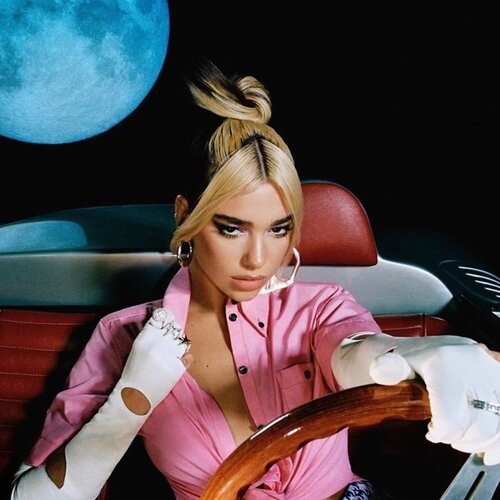
IN THIS PHOTO: Dua Lipa/PHOTO CREDIT: Zeit Magazin

in terms of album releases, there are still some great singles out there. In fact, with terrific new albums from Dua Lipa and Waxahatchee out, there is plenty to get excited about! In this week’s selection of hot new tracks, we have new material from Bob Dylan, Pearl Jam, M.I.A., and Nadine Shah. There are also cuts from Childish Gambino, and Bright Eyes. Some seriously big artists have come to play, and it means we have plenty of treats to keep us occupied whilst we are inside and confined. Get your weekend off to a flying start with some seriously big songs that should give you energy and motivation. Although it is a hard time, we still have some tremendous music to…

xccc.jpg

PHOTO CREDIT: Danny Clinch

KEEP us upbeat!

ALL PHOTOS/IMAGES (unless credited otherwise): Artists

_________

Bob Dylan – Murder Most Foul

M.I.A - OHMNI W202091

Waxahatchee – Witches

Dua Lipa - Break My Heart

Car Seat Headrest – Martin

Childish Gambino – 12:38

ee.jpg

Bright Eyes – Persona Non Grata

Nadine Shah – Trad

eee.jpg

PHOTO CREDIT: Vogue

Rosalía – Dolerme

aqq.jpg

PHOTO CREDIT: Danny Clinch

Pearl Jam - Alright

eeee.jpg

Bad Honey – Stillness

Run the Jewels -Yankee and the Brave

PHOTO CREDIT: Ariana Molly

Braids - Snow Angel

Nothing But Thieves - Is Everybody Going Crazy?

Yazmin Lacey – Own Your Own

PHOTO CREDIT: Maria Muriedas

Belako – The Craft

Little Mix – Break Up Song

Maisie Peters – Daydreams

Bishop Nehru – EMPEROR

Anne-Marie – Her

Pretenders – Hate for Sale

PHOTO CREDIT: Holly Whitaker

Squid – Sludge

IN THIS PHOTO: Sufjan Stevens

Sufjan Stevens, Lowell Brams – Agathon

Emily Burns – Terrified

hgghgh.jpg

Grace Ackerman - Blame

Little Dragon – Where You Belong

qqww.jpg

Sody – Charlotte

Hannah Jane Lewis – Love Letters

All Time Low – Melancholy Kaleidoscope

Vanessa Carlton – I Can’t Stay the Same

Natalie McCool – Closure

ssaas.jpg

PHOTO CREDIT: Ellen Offredy

Natalie Shay – Owe it to You

April – The Impossible Task of Feeling Complete

TRACK REVIEW: Dua Lipa - Break My Heart

TRACK REVIEW:


Dua Lipa

Break My Heart


9.7/10


The track, Break My Heart, is available from:

https://www.youtube.com/watch?v=Nj2U6rhnucI

The album, Future Nostalgia, is out now. Order it here:

https://www.dualipa.com/

RELEASE DATE:

27th March, 2020

GENRES:

Pop/Dance-Pop

ORIGIN:

London, U.K.

LABEL:

Warner

PRODUCERS:

Jeff Bhasker/Ian Kirkpatrick/SG Lewis/The Monsters and the Strangerz/Stuart Price/TMS/Andrew Watt

__________

ALTHOUGH I have reviewed…

fgg.jpg

PHOTO CREDIT: Cameron McCool for Vogue

Dua Lipa fairly recently, the fact she has just released her new album, Future Nostalgia, means that it is a good time to reassess and revisit a great artist. The title is a very apt one for someone who mixes the sounds of the 1970s and 1980s with a very modern attitude and aesthetic. She has collected some massive reviews already – including some five-star nods -, and I am not going to review the entire album myself – as I cannot do it full justice. Instead, I am going to look at Lipa’s current single, Break My Heart. Its video was released on Thursday (26th), and it sort of highlights all the assets and facets of Britain’s greatest modern Pop artists. I have a few subjects I want to address before I get to reviewing that track but, as we are a few months into 2020, there are some seriously good albums out in the world. Everyone will have their own opinions regarding the best of the year so far, and I really do think Future Nostalgia is among them. Right now, there is a very unsure and fearful cloud that hangs over the world. Life has changed immeasurably over the past few weeks, and it is a particularly tough time for musicians, creatives and the self-employed. I am not sure whether the Government are going to inject more money into the economy to help those who are out of work at the moment, but musicians are finding creative ways to stay busy and bring their music to people – even if they cannot tour and earn as much money as they would like. Although albums will still be made this year, there are going to be far fewer than we expected. That is understandable, as we all need to keep safe and put things on hold for a little while. I do feel there is a need now, more than ever, to produce something truly uplifting and unifying.

One of the reasons Future Nostalgia is being spoken about in such heated and passionate tones is because it has an energy and kick that was more common in past decades. It is a bit early to start calling the best albums of this year, but I would be shocked if Dua Lipa’s second album was not in the top-five of every critics’ end-of-year lists. I have nothing against more reflective and downbeat music, but I think there is this very real desire to hear something that is more joyful and uplifting. When things improve regarding the coronavirus pandemic, I think a lot more buoyant Pop will emerge. Ever since her eponymous debut album arrived in 2017, Dua Lipa has spliced more confessional and pained elements together with fizz and confidence. Whilst so many in the mainstream seem plastic and formulaic, Lipa is an artist who is forging her own path and not playing it safe. I think Pop has been in trouble for a while, and it has been lacking that essential catchiness, upbeat spirit and originality that we look for. Although modern Pop artists are more emotive and less rapturous than artists years ago, I think Dua Lipa could spearhead a revival and new movement. I will talk about that more a bit later, but there is a lot of attention trained at Dua Lipa right now. We all listen to big artists who storm the charts and appear in magazines, but I wonder how many of us stop and think about the sort of life they lead. For artists like Dua Lipa, one might assume things are pretty easy-going, and she can sort of kick back at the end of the day and does not have anything to worry about. Even now, when so many people are stuck indoors, it is hard for artists like her.

z.jpg

She would have been promoting her new album, maybe doing some gigs; there would have been this constant cycle of promotional events that, sadly, she cannot do – and I understand she pushed forward the release of Future Nostalgia as it was leaked online. There is great pressure, and it is amazing how artists like her handle it. In this Vogue feature from last year, she was asked about success and how she deals with expectation regarding releasing new material:

“You’re up there with the most streamed female artists in the world…

“Terrifying!”

Your songs collectively have been streamed over 5 billion times. How do you think about your success in these terms?

“I’m just grateful that people want to listen to my songs and play them at parties or while they’re getting ready. The numbers are crazy and while I’ve been in the writing process, I haven’t thought about it for a while so it’s… amazing. It pushes me to work harder. I just want to come back and make people proud. The last show I did was in December, so it’s been eight, nine months where I’ve just been writing in my little abyss, my little cave.”

Does that add extra pressure when it comes to creating a new record?

“Of course, but at the same time there’s only so much I can do. When I make music, I listen to it over and over again and when I do videos, I watch them over and over again. But the second it’s out in the world, it belongs to somebody else. That’s the way I see it. I like for people to be able to take my songs and have it make sense for them. The music has to live by itself. I’m reluctant to explain what a song means to me because I don’t want my story to influence that”.

It must be so difficult being in the public eye and being popular, knowing there is this standard and there is always going to be this commercial weight – the new song or album has to be bigger and sell better than the last. Whilst, as I mentioned, a lot of contemporary Pop artists are producing quite sad and slow music, Dua Lipa is sort of going the other way: the tunes you hear on Future Nostalgia are, largely, the perfect soundtrack for kitchen discos and feelgood times. Of course, as a young woman, she cannot ignore subjects like relationships and deeper issues – such as empowerment and sexism -, but she perfectly blends the more serious with the fun. I think a lot of fun has escaped Pop. You just know Dua Lipa grew up listening to a lot of great Pop music. She has revealed that artists like No Doubt and Prince have inspired Future Nostalgia. Whilst mature, the album does let loose, and one gets this funky and sassy collection of songs that critics and fans alike are going crazy over! Dua Lipa has always been an advocate of making Pop music as fun as possible. When she spoke with The Guardian in 2018, that subject arose:

 “You want to be as honest as possible in the music you make,” she says, thinking not so much of her smash single New Rules, which Lipa did not write herself, as of songs such as Blow Your Mind (Mwah) and IDGAF, Lipa’s blunt, sweary postscripts on unhappy love affairs. She continues: “But then there’s the other side of it, when you do want a bit of a personal life, and you get upset that you’ve opened yourself up so much.” She shrugs inside the cream jumper, which unlooses some of her hair. “I guess it comes with the territory – a figuring-out of the right balance, how to be really content, y’know, in this see-through box I’m now living in.”

sdsdds.jpg

Pop should be taken lightly, Lipa believes. “It has to be fun. You’ve got to enjoy it. You can’t get upset about every little thing.” Music after all is the escape – the real world has plenty of methods for upsetting us already.

And so we discuss geopolitics, and Lipa’s family history. She comes from a large family of ethnic Albanians, to whom “so much has happened”, she says, “in my grandparents’ lives, and my parents’ lives… When you try to come to it and grasp everything there, it’s a lot.” She does her best to boil down their complicated story.

Her mother, Anesa, was born to a Kosovan father and a Bosnian mother. In the 90s, war came first to Bosnia, where Anesa’s mother lived, and then to Kosovo, where by now Anesa was living with her fiance, Dukagjin Lipa. Dukagjin was the son of a well-known historian, Seit Lipa, who at that time was the head of the Kosovo Institute of History. When conflict began to brew in Kosovo, Seit’s career abruptly ended. As Lipa tells it: “Once the Serbians came in, they wanted a lot of the historians to rewrite the history of Kosovo. To change it – that Kosovo was always part of Serbia and never part of Yugoslavia. And my grandfather was one of those people who wouldn’t, so he lost his job, because he didn’t want to write a history that he didn’t believe to be true”.

I wanted to include a bit about her family, as we do not often consider that when we listen to artists and the music they produce. I like to go deep when reviewing, and I feel it is important to include (in a review) different sides of an artist. Although Dua Lipa’s music has always been fun, I think there have been some changes between her first and second album. In the Vogue feature, she explained more:

“Dua’s success isn’t simply accolade and awards driven; her self-titled album was – and remains – an absolute joy to listen to. The record delivers tune after tune, from heart-bursting ballads to self-empowerment anthems, with critics describing it as “a terrific debut” and the singer herself a “legitimate pop sensation”. Dua, who phones from LA on the morning of the Vogue shoot, is both considered and self-deprecating about her success, noting she wrote many of the songs as a teenager. “For the first record all I could do really was a lot of dance-crying,” she laughs (she does this often). “It was so much easier for me to write things that made me unhappy because they were things that stuck in my mind the longest.” Having just turned 24 in August, she promises her second album will be a little more “conceptual” and “mature”, before deciding with another exclamation that it’s also “like a dancercise class. It’s just fun!”. 

Not only is Dua Lipa bringing some much-needed fizz and kick back into Pop…she is also a role model that uses her platform to speak out. She has discussed sexism in the industry and how much harder it is for female artists. It can be a bit risky when it comes to talking about change and things one is passionate about, as record labels are very aware about the commercial consequences – a backlash on Twitter or a nervousness about an artist going off script or being controversial. Dua Lipa is not someone who will sit back and remain silent. She wants to see change in the industry, and this will give strength to so many artists. One of Dua Lipa’s biggest strengths is the fact that she is this big star, yet she can remain rooted and grounded. In this interview, Dua Lipa was asked about moving to London at a young age and how she managed:

“Lipa’s work ethic, down-to-earth nature and message of empowerment has made her a role model for girls and young women, and her background is just as inspiring. Her parents moved to the UK from Kosovo in 1990 after war broke out, and Lipa was born in Westminster in 1995. She lived in London until she was 11, when her father’s job took them back to the Kosovan capital of Pristina. Surrounded by an unfamiliar language and culture, she struggled to fit in but finally found a place she belonged in the city’s hip-hop scene. Determined to pursue a singing career in London, Lipa persuaded her parents to let her move back to the UK capital on her own when she was 15, where she stayed with a family friend and attended the prestigious Sylvia Young Theatre School – an institution which counts Rita Ora and the late Amy Winehouse as alumnae.

What was it like living alone in London at that age?

I loved the freedom I had and the fact that I could invite my friends home whenever I wanted to and without any restrictions on how late they could stay. But I hated having to take care of myself, preparing all my meals, doing my laundry and all those things because I didn’t have anyone else to do that for me.

What did you learn from the experience?

It made me become much more independent and helped me understand that if I wanted to make my dreams come true I had to get out of my shell and fight”.

Even though there have been changes and small steps regarding gender inequality in music, there is still a long way to go. Dua Lipa is someone who has experienced discrimination through her career. When she spoke with Vogue, the question of inequality came up:

“How else have you experienced gender disparity as a musician?

“There are so many incredible new female artists and so much incredible music coming from strong, amazing women that we’re making it too hard to ignore. It has been great seeing a lot more women being nominated at awards shows and winning really big. People are slowly starting to wake up but there is still so much inequality in the world. Sometimes I feel because I’ve been brought up in London I live in this little bubble. When I came to America, and travelled to other parts of the world, I saw it so much more. I get shocked that this is a reality. These are things I constantly speak out and fight for. Even when I have the understanding of inequality, it still shocks me”.

I think that Dua Lipa is a new type of Pop artist; a combination of the icons of the 1970, 1980s and 1990s, but she is doing things in her own way. I think a lot of big artists are confined and often live a very isolated life. I do not feel that is the case with Dua Lipa. It can be hard to live a ‘real life’ if you are a Pop star but, as she explained when she spoke with The Face last September, she manages to live a relatively normal life:

 “But isn’t partying with the festival masses and doing everyday things tricky when you’re famous? Lipa shrugs. ​“I just do it,” she says, adding that she thinks it’s important to ​“defeat the idea” that, as a celebrity, she can’t go out and do normal things. She considers fame to be something that she can simply relax her way out of. ​“In the beginning, I did find it a bit weird [being recognised]. I wouldn’t know how to act or what to say. Now I’m more chilled with it, it’s easier.” 

Even though she’s a mainstay of pop, only now does it feel like Lipa is unleashing the full force of her personality on the public. Beyond her engaging socials, compare her 2018 Billboard Music Awards and 2019 American Music Awards performances on YouTube and they seem worlds apart. A stiffer, more self-conscious performer has transformed into a fist-pumping powerhouse. More dramatic yet was her show-stopping, sapphic duet with St Vincent at this year’s Grammys, described as ​“really fucked up and sexy” by the American musician.

Lipa is something of a rarity right now as a British woman making global pop moves. She won a BRIT award earlier this year with Calvin Harris, for their summer banger One Kiss. Many singers in today’s charts only get a featuring on a producer’s track, but on One Kiss (as well as on the piano house single Electricity with Ronson and Diplo), Lipa isn’t a featured artist: she shares top billing with the producers. ​“As a featured artist, I’m there to add something to someone else’s sound, whereas I prefer to be able to create something with someone,” she says firmly.

Women in pop, unless they’re literally sitting at a piano – and often even then – are rarely given the credit they deserve as songwriters. ​“For so many years, people have claimed that pop is manufactured,” Lipa says, taking on a fighting tone of voice that indicates this is an axe she’s regularly been grinding. ​“But there have also been so many incredible pop artists. Gwen Stefani, P!nk, Alicia Keys – all these artists that were the it-girls of pop in the ​’90s and ​’00s, but were very much writing themselves. I would have hoped that the whole stigma of manufactured pop would have disappeared a long time ago, but it still exists. As women, I do feel like we always need to prove ourselves a little bit more, to earn our place”.

It is clear Dua Lipa is a role model for so many people. She has this powerful voice that asks for change; she writes incredible, exciting Pop, and she has this very relatable personality – not normally what you’d expect from a major artist.

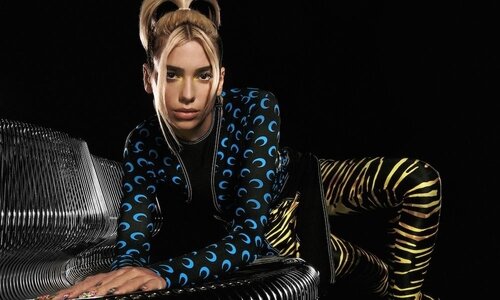
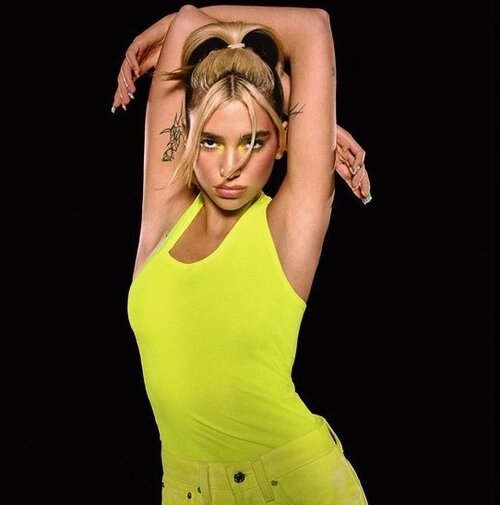
I will come to discuss Break My Heart in a just a moment but, to end this section, I wanted to talk about Dua Lipa and her changing fashions. I am not into fashion myself – as it would be obvious to anyone who ever saw me! -, but I do think that fashion and identity are less prominent in modern music. I think Pop artists of the past were much more conscious about crafting a look, whether it worked or not. Not that modern artists are bland, but I do feel like there is less personality and colour in the modern scene. This article from earlier this year explains Dua Lipa’s changing trends and fashions:

“We may have just entered the ’20s, but it seems fashion is still largely stuck in the ’90s. After making a huge resurgence last year, the decade is set to inform much of spring/summer 2020’s style agenda, with trends like chain necklaces. Bermuda shorts and clean nineties lines all proving prevalent on the runways.

The appeal spreads far and wide—from fashion editorial to Instagram—but if there’s one person who’s a poster girl for the movement, it’s without a doubt Dua Lipa.

In addition to her award-winning music, the songstress has long been impressing us with her sartorial wild streak, too. From mesh and thigh-skimming sequins to elegant ballgowns and sharp suiting—much like Sarah Jessica Parker or Alexa Chung, it seems there's no trend Dua Lipa can't turn her hand to.

While many of her archival outfits err on the ‘80s side of things, her latest ensembles are each in their own a tribute to the ’90s. From bucket hats and puffer jackets to bright eyeshadow and hair tendrils, Dua looks are becoming just as iconic as the ones that actually inspired them”.

I do feel there is some great Pop out there but, as Future Nostalgia shows, there is nobody quite as strong as Dua Lipa! Look online at the reviews that have come in, and they are all four or five-star pieces! I shall now move on to reviewing Break My Heart – a song that I wanted to focus on as it is fresh off the press.

cvv.jpg

The video for Break My Heart is pure 1980s. The song’s title (and Dua Lipa’s name) are on the screen, as we pan down to see her standing on a car roof. The entire video is full of giddiness, bright colours and these wonderfully cinematic scenes. A bad or unimaginative video can actually dent a song, and yet Break My Heart’s video is awash with beautiful colours and filters. The cityscape and sets look wonderful as the heroine moves around with this concentrated, slightly resigned look. With a bass line that reminds me of Queen’s Another One Bites the Dust; there is actually a sample from INXS’ Need You Tonight. One of the big strengths of Future Nostalgia is that it can splice in these samples here and there to beautifully add something familiar and bygone to a very modern and of-the-moment artist. Break My Heart is Dua Lipa assessing love and whether trusting again is such a wise idea. “I’ve always been the one to say the first goodbye/Had to a love and lose a hundred million times” shows the sense of defeat and exacerbation; that hyperbole and lack of clarity signals someone who has been messed around but wants to give her heart. She is falling, and the sweetheart says her name like she’s never heard before – and she wants to know whether he is falling too. The pre-chorus adds some tension, and one feels the composition shift and the scenery change. The heroine lets the guy know she can get whatever he wants from her, and there is this devotional and trusting nature that sits alongside history and a realisation that things can go wrong. All of this builds up to the chorus, which is as catchy and strut-worthy as any for many years. Using the bones of that INXS sample, you are helpless to resist its pull and allure. “I would’ve stayed at home/’Cause I was doing better alone/But when you said “hello”/I knew that was the end of it all” is delivered with that static rhythm and spring that makes the words pop and groove.

z.jpg

I think a great song can be taken to new heights with a brilliant chorus and Break My Heart’s compelling chorus definitely lodges in the head! It is great to see how the song shifts sonically and emotionally; the song continues to bump and shimmer as Dua Lipa rides the wave and goes deep. A lot of modern Pop is quite emotionally vacant, yet Lipa genuinely invests the listener. “I wonder, when you go, if I stay on your mind” she asks in the second verse; she looks at the past and its heartache but seems to be committed to this moment – even if giving herself fully could result in hurt. Whilst the lyrics are interesting and are personal, I think it is the combination and vocal and composition that really makes Break My Heart fly. The production is big, the beats are firm, and there is that glossy-cum-sexy underbelly that is aided by that nod to INXS. Right from start to finish, you are moved and kept moving by what is happening. The video is an experience in itself, and it is pretty amazing seeing all the different scenes hang together – it is almost like a mini film; so much is packed in! I wanted to select Break My Heart for review, not just because it is the latest single from Future Nostalgia, but I think it is the best song on the album and the one that hit me hardest – do check out every track on the album, as there is so much variety and quality. When you hear Break My Heart once, you will want to go back and spin it again and again, as it has that incredibly addictive nature. At a time when we all need a boost and some cheer, Break My Heart, whether it intended to or not, provides just that.

qaqqq.jpg

PHOTO CREDIT: Charles Dennington for Vogue Australia

I cannot add too much to what has already been said regarding Future Nostalgia. Dua Lipa has produced a visceral, emotional, fun and colourful album that blends together Pop from the 1980s and 1990s; it puts in some Disco, and mixes that in with something that is distinctly Dua Lipa’s. I think Future Nostalgia is one of the year’s best albums, and it will remain in that position for a very long time. I would encourage people to buy the album – there is a link at the top of this review – and there are tour dates that you can check out. Of course, things may well change given what is going on, but there is no reason to suggest Dua Lipa cannot fulfil the dates she has announced. There will be no/very few festivals this year, so do go and see her perform if you can. Whilst Dua Lipa’s second album is out in the world, I feel it gives other Pop artists an opportunity to look at what they are producing and, at this difficult time, ask whether they should be providing music that is more fun and together. We all need something uplifting, and you get that with Future Nostalgia. There is also a lot of personal revelation, some great attitude and plenty of confidence. Even though there are a few writers and producers in the kitchen, it is very much the command and force of Dua Lipa that shines through. It will be interesting to see where she goes from here, and how she moves on from her latest album. Right now, she will want to get back on the stage as soon as possible and ensure Future Nostalgia reaches as many people as possible. Although there is a lot of uncertainty in the air right now, the brilliance of Dua Lipa’s music strong and assured. It is great to have such a great album out from…

12222.jpg

BRITAIN’S reigning Pop queen.

___________

Follow Dua Lipa

FEATURE: The Second Arrangement: Could I Be Doing More to Help Artists Out?

FEATURE:


The Second Arrangement

xc.jpg

PHOTO CREDIT: @elishavision/Unsplash

Could I Be Doing More to Help Artists Out?

___________

MORE and more…

PHOTO CREDIT: @patrickian4/Unsplash

I am getting emails from artists asking I would consider reviewing or premiering their music. It is a tough time where exposure and connection is vital in order for musicians to survive and get heard. It is always heartbreaking when I turn people away because, with a heavy workload and a sense of conferment, I am only able to accommodate so much. Music journalism is one of the areas that can continue to run and get to people. A lot of sites offer subscriptions, so they can keep some money coming in, but a lot of sites do not charge readers. It can mean they have to rely on adverts or raise their own money. I am not sure how they are doing right now, but a lot of the bigger sites can publish features and do telephone interviews. We will see fewer articles out there, which gives everyone an opportunity to look away from the concerns of the mainstream and album releases, and spotlight new artists. Music journalism will survive and return to normal, but there is this weird period where journalists are having to hunt around for ideas and decide how best to use their platform. Whilst I am writing features – like this one -, it makes me aware that there are countless artists who have to perform from home and are in a sticky situation. It is not just me feeling a little helpless, but I guess there are things journalists can do in order to assist artists.

PHOTO CREDIT: @jmuniz/Unsplash

I have been thinking about a weekly Spotify playlist whereby a selection of tracks from new artists is included; sort of like the New Music Friday on Spotify but focusing on those with fewer followers and subscribers. It is always hard to know what can be done and whether enough is being done. I have so much respect for everyone in the music industry, as it is hard enough surviving with the amount of competition around as it is. Not only do sites like Spotify need to do more to help artists now, but I feel this is a perfect opportunity for music journalists to produce features, playlists and recommendations of great artists. I have rejected submissions for a while, as I have not had the time to accommodate them, and it was becoming overwhelming. As things are quieter regarding big releases and events, there is time to retune and help those who need it. I am wracking my brain as to the most effective way of assisting, because there are so many artists out there whose music deserves to be heard; who need financial aid and help. As this article explains, musicians have already lost so much already:

“UK musicians have already lost an estimated £13.9m in earnings because of coronavirus, according to a Musicians’ Union survey.

The organisation, which has 32,000 members and is the main trade union for the sector in the UK, surveyed its members over the impact of the outbreak, and received more than 4,100 responses. Ninety per cent of respondents said their income had already been affected.

The MU’s general secretary, Horace Trubridge, announced a new hardship fund that will pay grants of £200 to out-of-work musicians, saying: “We hope this fund goes some way to providing a small amount of relief to our members, but we urgently need the government to provide clarity on what wider support will be available, and we call on the record industry to play its part, too.”

Musicians being affected by the closure of live venues and schools, as well as other social distancing measures, with many making at least part of their income through teaching”.

It is tragic seeing information like this, and so many out there want to do more and wonder what can be done. It would be interesting to get some feedback (on social media) as to the best way people like me can best serve artists. Our wonderful artists – in all genres – give so much through the year (often for free), so going some way to repaying them is…

PHOTO CREDIT: @nickmorrison/Unsplash

THE least I can do.

FEATURE: Vinyl Corner: Culture Club – Colour by Numbers

FEATURE:


Vinyl Corner

Culture Club – Colour by Numbers

___________

WHILST there is concern and stress…

pooppoop.jpg

IN THIS PHOTO: Mikey Craig, Jon Moss, Boy George, and Roy Hay of Culture Club in 1983/PHOTO CREDIT: Ebet Roberts/Redferns

regarding the coronavirus pandemic, there is not as much music news as there usually is. In terms of thins to write about, I am looking at existing features and I will sprinkle in some features that recommend music/things to keep you occupied at this time. I am keeping Vinyl Corner rolling, as there are loads of albums that one needs to get on vinyl. Today’s entry is from 1983; it is Culture Club’s Colour by Numbers. Grab it on vinyl if you can as it is a wonderful album. I was born in 1983, so I have a special fondness for music released from that year. I am not a massive Culture Club fan, but I have a lot of respect for their second studio album. The hit single, Karma Chameleon, is one of the best songs ever, and its irresistible chorus stays in your head forever! That track reached the top spot in several countries, whilst Colour by Numbers topped the charts in the U.K. and sold more than ten-million copies worldwide. Whilst their 1982 debut, Kissing to Be Clever, has many fine moments – including Do You Really Want to Hurt Me -, I think its follow-up is a more satisfying and broader listen. Colour by Numbers is frequently viewed as one of the best albums of the 1980s, and it is a record that can lift, move, and inspire at the same time. You can stream the album, but there are rewards to listening on vinyl.

We think of the 1980s, and many sort of think it was cheesy and overrated. Others love the sheer quality of Pop music during the decade. I think Culture Club were at the forefront of the Pop movement. Led by Boy George – a singer with charisma, and a blue-eyed Soul voice -, Culture Club were a huge force in the 1980s – they are still performing today and look set to record for a long time to come. When we think of the biggest albums of the 1980s, maybe you consider artists like Madonna, The Smiths, and Michael Jackson, but Culture Club’s Colour by Numbers should definitely make everyone’s top-ten. I want to bring in a couple of reviews for the album, but this fascinating article from Classic Pop Magazine gave some great background to Colour by Numbers:

“This next album is going to prove that we’re very musical,” George said in an interview with The Tube in early 1983. “It’s a lot more mature and sophisticated than Kissing To Be Clever. We work very closely with Steve Levine, who is almost the fifth member of Culture Club. We all have the same idea of what we want the end result to be, which is essentially a well-structured pop song, and we have developed our own sound now. A lot of bands are wanting to work with Steve to achieve the ‘Culture Club sound’ but it’s not possible, because it’s a collaboration – it’s not a situation like a lot of bands who don’t know what they want to sound like, so the producer ends up taking over.

“Roy and Mikey love the new machines – the Fairlights, and the computers – while Jon and I prefer an acoustic sound, really rough and soulful. So we mix both to get a fine balance.”

Achieving that result had proved anything but smooth. “We’re very adult in our approach to the studio, but we fight a lot in the rehearsals,” George said. “There’s a lot of throwing coffee over each other and guitars being thrown, that sort of thing.” Years later, an insight into the machinations of Culture Club at this time was revealed when a recording taken during the making of Victims, in which the band tore into each other, was leaked onto the internet. Finding it hilarious in retrospect, the argument was entitled Shirley Temple Moment and released as a track on the band’s 2002 career-retrospective boxset.

While Culture Club’s music was a collaborative effort, the song’s lyrics were strictly George’s domain. “I write all the lyrics,” he said. “I never sing anyone else’s lyrics – they all come from a very personal basis and are about what’s going on in my life, in my relationships at the time – they’re deeply personal.”

Although George and drummer Jon Moss’ relationship wasn’t public knowledge by this point, their tempestuous union was the basis for much of Culture Club’s material. As millions of fans unwittingly sang along, their biggest hit, Karma Chameleon was a visceral depiction of a volatile relationship with lyrics such as: “I heard you say that my love was an addiction/ When we cling, our love is strong/When you go, you’re gone forever, you string along” and “Everyday is like survival, you’re my lover, not my rival”, a theme prevalent throughout the rest of the record”.

I have recently picked Colour by Numbers up after a bit of a spell, and it is full of wonderful performances and terrific songs. I have not seen a bad review for Colour by Numbers – one or two are not as euphoric as they should be! -, and this is what AllMusic said in their assessment:

“Colour by Numbers was Culture Club's most successful album, and, undoubtedly, one of the most popular albums from the 1980s. Scoring no less than four U.S. hit singles (and five overseas), this set dominated the charts for a full year, both in the United States and in Europe. The songs were infectious, the videos were all over MTV, and the band was a media magnet. Boy George sounded as warm and soulful as ever, but one of the real stars on this set was backing vocalist Helen Terry, who really brought the house down on the album's unforgettable first single, "Church of the Poison Mind." This album also featured the band's biggest (and only number one) hit, the irresistibly catchy "Karma Chameleon," its more rock & roll Top Five follow-up "Miss Me Blind," and the fourth single (and big club hit), "It's a Miracle" (which also featured Helen Terry's unmistakable belting). Also here are "Victims," a big, dark, deep, and bombastic power ballad that was a huge hit overseas but never released in the U.S., and other soulful favorites such as "Black Money" and "That's the Way (I'm Only Trying to Help You)," where Boy George truly flexed his vocal muscles. In the 1980s music was, in many cases, flamboyant, fun, sexy, soulful, colorful, androgynous, and carefree, and this album captured that spirit perfectly. A must for any collector of 1980s music, and the artistic and commercial pinnacle of a band that still attracted new fans years later”.

A lot of us are in a position where we need to stay in and will have more time on our hands when it comes to music. There are loads of great albums you should investigate, and I would add Culture Club’s Colour by Numbers to the pile! It is a tremendous album that sounds relevant and inspiring in 2020. I wonder whether new Pop artists pay as much attention to bands like Culture Club as they should. The power of the band’s work and how wonderful the music still sounds…there is a lot in there that artists can learn from! I will wrap things up soon. In their review, SLANT had this to say:

“Boy George sounded equally at ease whether singing flashy, upbeat numbers or somber ballads, and while his voice wasn’t the strongest in the world, he was able to find his inner Motown soul when necessary, especially when trading vocals with backup singer Helen Terry, whose captivating, gospel-infused voice is a highlight on “Black Money” and “That’s the Way (I’m Only Trying to Help You).” Boy George’s charisma and confidence as a frontman had grown remarkably since Culture Club’s debut, allowing him to carry songs like “It’s A Miracle,” a piece of sweet pop candy that, in another band’s hands, might have come off as a lightweight embarrassment. The same can be said of the album’s first single, the rousing “Church Of The Poison Mind,” in which a carefree Boy George sings, “Watch me clinging to the beat/I had to fight to make it mine/That religion you could sink in neat/Just move your feet and you’ll feel fine.” 

qaaaa.jpg

Flamboyant, vibrant and fun, “Church,” like the rest of Colour By Numbers, fits the very definition of what pop music is supposed to be, and there were few better pure pop albums made in the 1980s. Part dance, part new-wave, part white-boy soul, Colour By Numbers helped establish the blueprint for the boy-bands that would follow in Culture Club’s wake (the group disbanded in 1986 amid rumors of Boy George’s heroin addiction and his break-up with Moss). The album was re-released last year for its 20th anniversary, with five bonus songs, including the title track, which curiously did not appear on the original record. But, in the end, Colour By Numbers is an album that needs no tinkering”.

Go and grab a copy of Colour by Numbers – or stream the album if you like -, and you will discover an album that is brimming with genius. Life – credited to Boy George and Culture Club – was released in 2018, and it was the first album for the band since they reformed in 2014. I think there will be more albums, and there is a big demand for the legendary Culture Club. They have recorded several stunning albums, but Colour by Numbers is their finest hour. Enjoy this ace album as it is…

PERFECT if you want to unwind and feel uplifted.

FEATURE: Sat in Your Lap: Albums, Songs, Books and Videos: The Kate Bush Collection

FEATURE:


Sat in Your Lap

IN THIS PHOTO: Kate Bush during filming of The Line, the Cross and the Curve in 1993/PHOTO CREDIT: Guido Harari

Albums, Songs, Books and Videos: The Kate Bush Collection

___________

WHILST I am writing a bit more…

IN THIS PHOTO: Kate Bush at her home in September 1978/PHOTO CREDIT: Getty Images

than I normally would, I am going to include more Kate Bush features. Rather than pretend that I am going to limit my Kate Bush posts – and ensure there are not too many -, I feel there are relevant things to discuss and uncover. I have looked at Bush’s back catalogue before and pointed you in the direction of her best work. Today, I thought I would list her essential albums; the most underrated, and my personal favourite. I will also end with a complete playlist but, before, there are a few books that I can recommend - in addition to pointing to the very best Kate Bush videos. This is a little more expansive than previous, similar Bush pieces - to guide new fans and the diehards to avenues they might not have explored before. If you have some time and are not sure where to start with Kate Bush, I have focused down to the essential bits and bobs. Have a look and spend some time exploring…

IN THIS PHOTO: Kate Bush shot for the Babooshka single in 1980/PHOTO CREDIT: John Carder Bush

AN absolute icon.

________________

Must-Own Albums

The Dreaming

Release Date: 13th September, 1982

Label: EMI (U.K.)

Length: 43:25

Buy: https://www.amazon.co.uk/Dreaming-2018-Remaster-VINYL/dp/B07HQ14CLD/ref=sr_1_1?crid=1RBVTN6XM78HO&keywords=kate+bush+the+dreaming&qid=1585139846&sprefix=kate+bush+the+dreas%2Caps%2C183&sr=8-1

Standout Tracks: Sat in Your Lap/Suspended in Gaffa/Get Out of My House

Key Cut: Houdini

Review:

“The Dreaming was the real game-changer. Back in 1982, it was regarded as a jarring rupture. "Very weird. She’s obviously trying to become less commercial," wrote Neil Tennant, the future Pet Shop Boy, still a scribe for Smash Hits. He echoed the sentiments of the record-buying public. Even though the album made it to number three, the singles, apart from 'Sat In Your Lap', which got to 11 a year before, tanked. The title track limped to number 48 while 'There Goes A Tenner' failed to chart at all. It was purportedly the closest her record label, EMI had come to returning an artist’s recording. Speaking in hindsight, Bush observed how this was her "she’s gone mad" album. But The Dreaming represents not just a major advance for Bush but art-rock in general. Its sonic assault contains a surfeit of musical ideas, all chiselled into a taut economy.

And like that modernist masterpiece, The Dreaming glimpses at a very metropolitan melancholy. Bush would never make an album in London again, a city she felt had an air of dread hanging over it’. 'All The Love', a forlorn musical sigh, features percussive sticks imitating Venetian blinds turning shut. It climaxes with messages from Bush’s actual malfunctioning answerphone: all very modern alienating devices, straight from the same world of Bowie’s 'Sound & Vision'. This was after all, the year Time magazine voted the computer as person of the year. Palmer’s ECM-like drowsy bass almost sobs with regret.

Throughout The Dreaming, sound speaks. 'All The Love' is subdued relief. But its constituent parts hover desolately in the mix, pitching a ‘lack of love’ song with a choirboy, somewhere between Joni Mitchell’s road trip jazz on 'Hejira' and the void of Nico’s 'The End'. Full of space & loneliness” – The Quietus

Hounds of Love

Release Date: 16th September, 1985

Label: EMI (U.K.)

Length: 47:33

Buy: https://www.amazon.co.uk/Hounds-Love-2018-Remaster-VINYL/dp/B07HQ352CN/ref=sr_1_1?crid=1NCVDFW9MSB6I&keywords=kate+bush+hounds+of+love+vinyl&qid=1585139872&sprefix=kate+bush+hounds%2Caps%2C166&sr=8-1

Standout Tracks: Running Up That Hill (A Deal with God)/Cloudbusting/Hello Earth

Key Cut: The Big Sky

Aerial

Release Date: 7th November, 2005

Label: EMI (U.K.)

Length: 79:58

Buy: https://www.amazon.co.uk/Aerial-2018-Remaster-VINYL-Kate/dp/B07HPYHL17/ref=sr_1_1?keywords=kate+bush+aerial+vinyl&qid=1585139893&sr=8-1

Standout Tracks: King of the Mountain/How to Be Invisible/Nocturn

Key Cut: Mrs. Bartolozzi

Review:

“Domestic contentment even gets into the staple Bush topic of sex. Ever since her debut, The Kick Inside, with its lyrics about incest and "sticky love", Bush has given good filth: striking, often disturbing songs that, excitingly, suggest a wildly inventive approach to having it off. Here, on the lovely and moving piano ballad Mrs Bartolozzi, she turns watching a washing machine into a thing of quivering erotic wonder. "My blouse wrapping around your trousers," she sings. "Oh, and the waves are going out/ my skirt floating up around my waist." Laundry day in the Bush household must be an absolute hoot.

Aerial sounds like an album made in isolation. On the down side, that means some of it seems dated. You can't help feeling she might have thought twice about the lumpy funk of Joanni and the preponderance of fretless bass if she got out a bit more. But, on the plus side, it also means Aerial is literally incomparable. You catch a faint whiff of Pink Floyd and her old mentor Dave Gilmour on the title track, but otherwise it sounds like nothing other than Bush's own back catalogue. It is filled with things only Kate Bush would do. Some of them you rather wish she wouldn't, including imitating bird calls and doing funny voices: King of the Mountain features a passable impersonation of its subject, Elvis, which is at least less disastrous than the strewth-cobber Aussie accent she adopted on 1982's The Dreaming. But then, daring to walk the line between the sublime and the demented is the point of Kate Bush's entire oeuvre. On Aerial she achieves far, far more of the former than the latter. When she does, there is nothing you can do but willingly succumb” – The Guardian

The Underrated Treasure

Never for Ever

Release Date: 7th September, 1980

Label: EMI (U.K.)

Length: 37:16

Buy: https://www.amazon.co.uk/Never-Ever-2018-Remaster-VINYL/dp/B07HQ7HW19/ref=sr_1_1?crid=3VHQMLQCPOIQW&keywords=kate+bush+never+for+ever+vinyl&qid=1585139919&sprefix=kate+bush+never+f%2Caps%2C157&sr=8-1

Standout Tracks: All We Ever Look For/The Wedding List/Breathing

Key Cut: Babooshka

Review:

“If you think about it, Kate Bush could have gone in any direction after promoting Lionheart. Her second album had some high points and some cute vocal deliveries but ultimately came up short in quality. Kate's third album could have been another decline in quality. It could have just been Kate treading water with more adorable pop singles. Instead, the follow up was an important step into new territory. Never For Ever shows Kate Bush at a much more mature stage. While Lionheart had embraced maturity quite well in comparison to The Kick Inside, it didn't help Kate break out of her cute pop singer shell. Most people were still infatuated with her first single, Wuthering Heights. A new direction was something Kate needed to assert. She managed to do that just enough with Never For Ever.

The album features plenty of single worthy pop hits as usual but does offer much more collectively. Babooshka and Army Dreamers are examples of Kate exercising more of her descriptive lyrical style. On this record, Bush explores more concepts in her lyrics than previously. It's easy noticing the lyrical contrast with the album's opening and closing tracks. The opener, Babooshka is about a distrustful wife who ruins her marriage through seducing her husband under a pseudonym. The closer, Breathing finds Kate writing about her nervous actions through a more Bowie influenced style. From this point, Kate Bush adds even more variety to the mix. Musically, Never For Ever naturally expands thanks to a more layered sound. The album features a vibrant mix of wet fairlight synths, pianos, fretless bass and layers of strings. The performances of the album fit smoother than on previous records as Bush goes for a more varied final product.

Kate's third solo album was no masterpiece but a fascinating and necessary step in her discography. Bush's writing had finally evolved enough to the point where she could write without relying too much on image or style. Whether it's experimenting with her remarkable vocal range, creative arrangements, or vivid lyrics, Never For Ever shows Kate Bush improving in all the right ways” – Sputnik Music

My Favourite Kate Bush Album

The Kick Inside

Release Date: 17th February, 1978

Label: EMI (U.K.)

Length: 43:13

Buy: https://www.amazon.co.uk/Kick-Inside-2018-Remaster-VINYL/dp/B07HPZWG1R/ref=sr_1_1?crid=EJGS2R8KCB2Q&keywords=kate+bush+the+kick+inside+vinyl&qid=1585139947&sprefix=kate+bush+the+kick+vinyl%2Caps%2C166&sr=8-1

Standout Tracks: Moving/Strange Phenomena/The Man with the Child in His Eyes

Key Cut: Wuthering Heights

Review:

“She only fails to make a virtue of her naivety on “Room for the Life,” where she scolds a weeping woman for thinking any man would care about her tears. The sweet calypso reverie is elegant, and good relief from the brawnier, propulsive arrangements that stood staunchly alongside Steely Dan. But Bush shifts inconsistently between reminding the woman that she can have babies and insisting, more effectively, that changing one’s life is up to you alone. The latter is clearly where her own sensibilities lie: “Them Heavy People,” another ode to her teachers, has a Woolf-like interiority (“I must work on my mind”) and a distinctly un-Woolf-like exuberance, capering along like a pink elephant on parade. “You don’t need no crystal ball,” she concludes, “Don’t fall for a magic wand/We humans got it all/We perform the miracles.”

The Kick Inside was Bush’s first, the sound of a young woman getting what she wants. Despite her links to the 1970s’ ancien régime, she recognized the potential to pounce on synapses shocked into action by punk, and eschewed its nihilism to begin building something longer lasting. It is ornate music made in austere times, but unlike the pop sybarites to follow in the next decade, flaunting their wealth while Britain crumbled, Bush spun hers not from material trappings but the infinitely renewable resources of intellect and instinct: Her joyous debut measures the fullness of a woman’s life by what’s in her head” – Pitchfork

Stunning Books

The Photo Collection: Kate: Inside the Rainbow

Release Date: 22nd October, 2015

Author: John Carder Bush

Publisher: Little, Brown Book Group

Buy: https://www.waterstones.com/book/kate/john-carder-bush/9780751559903

Synopsis:

“KATE: Inside the Rainbow is a collection of beautiful images from throughout Kate Bush’s career, taken by her brother, the photographer and writer John Carder Bush. It includes outtakes from classic album shoots and never-before-seen photographs from sessions including The Dreaming and Hounds of Love, as well as rare candid studio shots and behind-the-scenes stills from video sets, including ‘Army Dreamers’ and ‘Running Up that Hill’.

These stunning images will be accompanied by two new essays by John Carder Bush: From Cathy to Kate, describing in vibrant detail their shared childhood and the early, whirlwind days of Kate’s career, and Chasing the Shot, which vividly evokes John’s experience of photographing his sister” – Kate Book

The Biography: Under the Ivy: The Life & Music of Kate Bush

Release Date: 11th April, 2012

Author: Graeme Thomson

Publisher: Omnibus Press

Buy: https://www.waterstones.com/book/under-the-ivy/graeme-thomson/9781780381466

Synopsis:

“The first ever in-depth study of Kate Bush's life and career, Under The Ivy features over 70 unique and revealing new interviews with those who have viewed from up close both the public artist and the private woman: old school friends, early band mates, long-term studio collaborators, former managers, producers, musicians, video directors, dance instructors and record company executives. It undertakes a full analysis of Bush's art. Every crucial aspect of her music is discussed from her ground-breaking series of albums to her solo live tour, her pre-teen poetry and scores of unreleased songs. Combining a wealth of new research with rigorous critical scrutiny, Under the Ivy offers a string of fresh insights and perspectives on her unusual upbringing in South London, the blossoming of her talent, her enduring influences and unique working methods, her rejection of live performance, her pioneering use of the studio, her key relationships and her gradual retreat into a semi-mythical privacy” – Waterstones

The Lyrics: Kate Bush: How To Be Invisible

Release Date: 6th December, 2018

Author: Kate Bush/David Mitchell (foreword)

Publisher: Faber & Faber

Buy: https://www.waterstones.com/book/how-to-be-invisible/kate-bush/9780571350940

Synopsis:

“Ivor Novello winner Kate Bush has long forged her love of literature with music. From Emily Brontë through to James Joyce, Bush has consistently referenced our literary heritage, combined with her own profound understanding of language and musical form.

How to Be Invisible: Selected Lyrics draws from her superlative, 40-year career in music. Chosen and arranged by Kate Bush herself, this very special, cloth-bound volume will be the first published collection of her work.

Accompanying the collection is an expansive introduction from Cloud Atlas author David Mitchell. ‘For millions around the world Kate is way more than another singer-songwriter: she is a creator of musical companions that travel with you through life,’ he said. ‘One paradox about her is that while her lyrics are avowedly idiosyncratic, those same lyrics evoke emotions and sensations that feel universal” – Waterstones

The Useful Addition: Homeground: The Kate Bush Magazine: Anthology One: Wuthering Heights to The Sensual World

Release Date: 10th March, 2013  

Authors: Krystyna Fitzgerald-Morris (editor), Peter Fitzgerald-Morris (editor), Dave Cross (editor)

Publisher: Crescent Moon Publishing

Buy: https://www.waterstones.com/book/homeground/krystyna-fitzgerald-morris/peter-fitzgerald-morris/9781861714800

Synopsis:

“HOMEGROUND: THE KATE BUSH MAGAZINE: ANTHOLOGY ONE: 'WUTHERING HEIGHTS' TO 'THE SENSUAL WORLD'

HomeGround is a magazine devoted to Kate Bush (born in 1958), a British pop star best-known for hits such as 'Wuthering Heights', 'Wow', 'Hounds of Love' and 'Running Up That Hill'.

This book is pure heaven for music fans. The HomeGround anthology includes material inspired by all periods of Kate Bush's musical progression. It is a book about the reaction to her work and how her unique music has touched the lives of so many people.

This is a unique book, a labour of love for hundreds of music fans who have contributed to HomeGround over its thirty-year existence. The book includes an enormous amount of information about Kate Bush, accounts of every release, album, single, pop promo and appearance, as well as memories and accounts of music fandom (such as conventions, meetings, hikes, stage door encounters and video parties). It also includes material on many other pop acts and events. It features poetry, stories, letters, reviews, interviews, memoirs, cartoons, drawings, paintings and photographs.

This is the first book of a two volume set, totalling over 1200 pages. The first book covers Kate Bush's career from 'Wuthering Heights' to 'The Sensual World' (from the late 1970s to the late 1980s). The second book runs from 'The Red Shoes' album to the present day.

The first issue of HomeGround appeared in 1982, four years after Kate Bush's dramatic debut with 'Wuthering Heights'. Starting with an ancient manual typewriter, and a pot of glue paste, the editors mounted articles on recycled backing sheets and added hand-drawn artwork to fill the gaps. The first issue was photocopied, the pages hand-stapled together and twenty-five copies were given away to fans they knew. Only later did they discover the magic of word processing, and desktop publishing.

From those beginnings HomeGround became a cornerstone of the 'Kate-speaking world', the editors going on to organise four official fan events at which Kate Bush and members of her family and band appeared, arrange at Bush's request a team of fans to be extras in two of her videos and organise informal fan gatherings at Glastonbury and Top Withens, the storm-blown ruin on Haworth Moor. Years before the internet, HomeGround became a place where fans could discuss Bush's music, and a place where they could publish creative writing and artwork that music inspired” – Abe Books

The Podcast

Who They Are: The Kate Bush Fan Podcast

Official Website: https://katebushnews.libsyn.com/

About: “A show for fans of the music artist Kate Bush put together by the people behind www.katebushnews.com and HomeGround Magazine! Chat, interviews, reviews and more on all things Kate and her amazing work” (The Kate Bush Fan Podcast)

Twitter: https://twitter.com/katebushnews

Facebook: https://www.facebook.com/katebushnews

Her Finest Videos

The Definitive Playlist

FEATURE: Down to a Trickle: Can Spotify Follow Bandcamp’s Lead in Assisting Artists During This Challenging Period?

FEATURE:

Down to a Trickle

zccc.jpg

PHOTO CREDIT: @christinhumephoto/Unsplash

Can Spotify Follow Bandcamp’s Lead in Assisting Artists During This Challenging Period?

___________

AS we all know…

1qqqq.jpg

PHOTO CREDIT: @fixelgraphy/Unsplash

the next few weeks and months are going to impact everyone pretty hard. For those in the music industry, finances are going to be hard to come by. I have seen a lot of people recordings gigs from homes and delivering music that way. There are bigger artists who are putting out albums still, and one can buy music as normal – although many record stores are closing; online delivery continues. It is an odd time, and the industry has had to adapt fast. I am not sure what state it will be in when it comes out the other end, but there will be a lot of damage and long-lasting losses. For artists who rely on streaming as their main source of revenue, I wonder whether platforms like Spotify need to do more. Although people are urged to buy albums and merchandise from artists, so many people are short of money and conscious about budgets when they are struggling for work or have to save their pennies. Last Friday (20th), Bandcamp did something pretty special: 

“The Covid-19 pandemic is in full force, and artists have been hit especially hard as tours and shows are being canceled for the foreseeable future. With such a major revenue stream drying up almost entirely, finding ways to continue supporting artists in the coming months is now an urgent priority for anyone who cares about music and the artists who create it. The good news is that we’re already seeing many fans going above and beyond to support artists across Bandcamp.

PHOTO CREDIT: @flaviewxvx/Unsplash

To raise even more awareness around the pandemic’s impact on musicians everywhere, we’re waiving our revenue share on sales today (Friday, March 20th, from midnight to midnight Pacific Time), and rallying the Bandcamp community to put much needed money directly into artists’ pockets.

For many artists, a single day of boosted sales can mean the difference between being able to pay rent or not. Still, we consider this just a starting point. Musicians will continue to feel the effects of lost touring income for many months to come, so we’re also sharing some ideas below on how fans can support the artists they love and how artists can give fans new, creative ways to provide support.

It may sound simple, but the best way to help artists is with your direct financial support, and we hope you’ll join us both today and through the coming months as we work to support artists in this challenging time”.

Although Bandcamp waved their revue cut for a day, it was a big gesture that helped a lot of artists out. With venues closed for the foreseeable future, streaming is going to be a large focus. Music will help so many people out and fill a gap that was once occupied by gigs and socialising. Even when we are allowed back out to socialise, it won’t be the case of venues opening up and gigs taking place right away – there will be a lot of rebooking and a slow transition and adaption.

IMAGE CREDIT: Bandcamp

Most of us use Spotify in some form or other. In this report from last month, there is information regarding Spotify’s royalties and how much artists are paid by the stream:

“Since its inception in 2008, royalties have been Spotify's largest expense, accounting for about $1 billion over its first five years.

The company once ranked as one of the industry's worst royalty payers, but it is steadily increasing its payments. Its per-play rate was 0.00437 cents in 2019, according to Digital Music News.

(The worst-paying platform historically is YouTube. Its rate in 2019 reportedly was 0.00069 cents.)

Per stream royalty payments are estimated to be .006 cents for basic service and .0084 cents for premium subscribers. However with large overhead costs, the Swedish company is still estimated to gross $1.2 billion from its 10 million paying subscribers alone. Spotify was recently valued at $8.3 billion”.

Most musicians are self-employed, so there is a petition online that is asking the Government for protection; to ensure that those who work in sectors like music are kept alive. Streaming has always been a source of debate, as the amount artists are paid is very low. It would seem appropriate for a service like Spotify to react to the pandemic and, for a few months at least, do what they can to assist artists and creatives at this hard time.

zx.jpg

IMAGE CREDIT: Spotify

With people, perhaps, watching live-streamed gigs and streaming music less – as there is not as much new music as possible -, it is a tough situation. This report from The Guardian from last week analysed the situation at the moment:

“Musicians are calling on Spotify to triple its royalty rates following the coronavirus pandemic. Due to government guidance, many venues have closed and tours have been cancelled, removing what has become a key revenue stream for the majority of artists.

An online petition posted by musician Evan Greer asked Spotify to triple its rates permanently and make a $500,000 (£432,140) donation to the Covid-19 fund of Sweet Relief, a California-based charity that provides financial assistance to musicians and industry workers.

A spokesperson for Spotify told the Guardian: “There’s no question this is a challenging time for our creator community and we are working to assist them through MusiCares’ Covid-19 relief fund to provide much needed assistance.”

Analysts for Quartz found that Spotify streaming figures appeared to have dropped during the pandemic. In Italy, one of the hardest-hit countries by Covid-19, the Top 200 most-streamed songs domestically averaged 18.3m total streams per day in February 2019. Since the national lockdown was announced on 9 March, that figure has not topped 14.4m. Quartz found a 23% drop in the Top 200 streams on 17 March compared to 3 March. It reported similar findings in the US, UK, France and Spain”.

azzz.jpg

PHOTO CREDIT: @sgcreative/Unsplash

I know there is not an inexhaustible supply of money, but organisations like Spotify have enough money to get by for the future. I think there should be an amended rate for streaming; an increase in revenue for all artists. Maybe some of the wealthier artists might think about compromising and funnelling some of their profit to help smaller acts, but I do think Spotify need to help cover artists who will struggle. On social media, artists are encouraging people to buy and stream their music more, and it is a perfect opportunity to listen to more music and experience a wider range of sounds. We are only a week or two into the self-isolation/social distancing stage of the coronavirus, so it will be a while before we can see just what toll a lack of streaming is having – clearly, there is going to be hardship for many. Artists rely more and more on Spotify and other services, and it is troubling to consider how little money most artists will get for the coming months. In a wider context, I think Spotify need to re-evaluate how much artists receive per stream, and maybe ensure that everyone who uses their platform pays a subscription fee – a larger one than they charge at the moment, too. For the rest of us, we can buy merchandise and physical music as artists cannot tour right now and, if you are streaming less at the moment, consider reversing that decision so that you can…

PHOTO CREDIT: @elijahhenderson/Unsplash

HELP artists who really need support right now.

FEATURE: Saluting a Bass Genius: The Wonderful Carol Kaye at Eighty-Five

FEATURE:


Four Strings to the Heartstrings: Saluting a Bass Genius

The Wonderful Carol Kaye at Eighty-Five

___________

I am not going to put too many…

zxx.jpg

PHOTO CREDIT: Robbie Augsperger

of my own words into this feature, as I think there is a lot of biography and interview extract that I want to include. Today (24th March) is the eighty-fifth birthday of a musician who is not as highly regarded as she should be. Carol Kaye is one of the most prolific and influential bass players in history. There are over ten-thousand recordings with her bass on that spans over five decades. Whilst more prominent and up-front bass players are spotlighted, it is rare for session musicians to get celebration and the attention they deserve. Paul McCartney revealed that Kaye was an inspiration regarding his bass playing on Sgt. Pepper’s Lonely Hearts Club Band – Macca was taking guidance from her work on The Beach Boys’ Pet Sounds. There are no bass players like Kaye, and it is hard to say just how far her influence and D.N.A. spreads. I think she herself never expected to be remembered because Pop was considered quite temporary and disposable. There is a list of songs Kaye worked on, and there is a feature where Kaye selected her favourite ten recordings – quite a feat narrowing over ten-thousand songs down to ten! If you are not sure who Carol Kaye is and where she came from, here is her biography from Kaye’s official website:

“Carol Kaye was born in Everett, Washington to musician parents, Clyde and Dot Smith, both professionals. She has played and taught guitar professionally since 1949, played bebop jazz guitar in dozens of nightclubs around Los Angeles with top groups (also in Bob Neal's jazz group with Jack Sheldon backing Lenny Bruce, with Teddy Edwards, Billy Higgins etc.), accidentally got into studio work late 1957 with the Sam Cooke recordings and other big recordings on guitar for the 1st 5 years of studio work in Hollywood.

In 1963 when a Fender bassist didn't show up for a record date at Capitol Records, she picked up the Fender bass (as it was called then) and augmented her busy schedule playing bass and grew quickly to be the no. 1 call with record companies, movie & TV film people, commericals (ads), and industrial films. She enjoyed working under the direction of Michel LeGrand, Quincy Jones, Elmer Bernstein, Lalo Schifrin, David Rose, David Grusin, Ernie Freeman, Hugo Montenegro, Leonard Rosenman, John Williams, Alfred & Lionel Newman, etc. as well as the numerous hits she recorded for hundreds of recording artists.

Beginning in 1969, she wrote her first of many bass tutoring books, "How To Play The Electric Bass" effectively changing the name of Fender Bass to Electric Bass and began teaching 100s of Electric Bass students, many of them now famous themselves.

Her tutors are endorsed by such notables as Professor Joel Leach, 10-year winner of the Pacific Jazz Festival Awards with his famous Cal-State Northridge Jazz Bands, and Plas Johnson, jazz/blues studio sax legend ("Pink Panther"). She stepped out to perform live with the Hampton Hawes Jazz Trio in the mid 70s, has given many seminars all over the USA, and is a leader in Electric Bass education”.

I will include a few songs that feature Kaye’s bass, and one can see the sheer range of artists she worked with! I think even today, female bass players are not as proffered and highlighted as much as one would like. There are some great female bass players around, and many owe a debt to Carol Kaye. I hope, on her eighty-fifth birthday (24th March), more people dig her work and look at the wonderful women of bass right now.

In 2018, Kaye was profiled and interviewed by Louder Sound. They paid proper tribute to a genius musician:

“Some folks have to pad their resumes, but in the case of Carol Kaye, who from the 1950s and into the 1970s was one of the busiest session musicians around, laying down distinctive bass and guitar tracks on scores of Top 10 smashes and literally thousands of recordings, even a bullet-point sampling of her accomplishments boggles the mind.

Phil Spector, The Beach Boys, Ray Charles, Simon & Garfunkel, The Monkees, Joe Cocker, Sam Cooke, Barbra Streisand, Frank Sinatra, The Supremes, Glen Campbell, Sonny & Cher, Lou Rawls…just some of the artists who benefited from Kaye’s low-end fretboard magic.

Next we have Kaye’s equally impressive work in film: In The Heat Of The Night, The Pawnbroker, The Thomas Crown Affair, In Cold Blood, The Long Goodbye, Butch Cassidy And The Sundance Kid and dozens more. As for the small screen, you’ve heard Kaye on themes like M.A.S.H., Mission Impossible, Ironside, Hawaii 5-0, The Brady Bunch, Hogan’s Heroes, The Addams Family – here, too, the list goes on and on.

How did you start playing sessions?

“I was a guitar player. I had been playing since the age of 13. By 18 or so, I was out there playing gigs - jazz and bebop. It was a good way to learn and improve my ear and my ability to improvise. When somebody looked at you and said, ‘Play!’ well…you had to play! [laughs]

Plus, the gigs paid well, so it put food on the table. My family didn’t have much money. I had gotten married very young, had two kids, and by the age of 21 I was divorced and was living back with my mother - with my two kids.

“At that time in Los Angeles, there were hundreds of clubs and places to play. It wasn’t like it is now. If you were good and wanted to play, you got your chance. I was a white girl with blonde hair, but I was welcome in the black clubs. If you could play, then you were welcome. And I was welcome.

“I wasn’t really looking to do sessions, because I was getting a good name in the jazz clubs. But this producer, Bumps Blackwell, came in and said, ‘You want to do a record date?’ By this time, rock ‘n’ roll was getting into a lot of clubs, so I figured I would do the session. It turned out to be for Sam Cooke.”

How exactly did you switch over to bass?

“I was playing a session at Capitol Records, and the bass player didn’t show up. So, they put me on a Fender bass - easy as that. I started creating lines that I always heard in my head, things that I thought bass players should play. I just provided what the music needed.

“This was pretty important during some of the early rock ‘n’ roll dates. A great singer like Sam Cooke, you didn’t have to do too much to what he did. But some of the rock sessions, if we didn’t add some interesting lines, the songs would’ve sounded very flat. The music needed a little help, and so did the singers.” [laughs]

What was working with Brian Wilson like? You did more than a few Beach Boys sessions.

“Brian was fabulous. What a dear, sweet man, and such a brilliant musician. He liked my bass playing. He was a bass player himself, but he was getting so busy writing material and producing that it was hard for him to think about playing, so he had to use other people.

“I was becoming known as the hit bass player. They had been hiring three bassists for sessions - a Fender player, a string player and a Dano player - but pretty quickly, people started finding out that they only had to hire me and I’d get all the sounds for them. Brian liked that idea, but he also liked my lines. He wasn’t just a sound guy, he was a concept guy.”

On something like California Girls, for example, what kind of direction would he give you?

“Brian would come in and play the song on piano. He’d sing it a little bit, but sometimes he didn’t have all the words. But he’d play through the tune and give you the idea. He’d have things written down, too. He was the one guy who had my parts written down.

“He would keep my bass sound way up in the mixes. On a song like California Girls, at times you can hardly hear anything else. He just liked my sound and the way I moved around the fretboard”.

I think every great musician deserves praise and fuss on their birthday, but the fact Carol Kaye is eighty-five almost passed me by. I was not aware of how far her brilliance stretched and the sheer breadth of her talent. Like all great session musicians, she could play a perfect bass line on a Pop song and then step into R&B and Soul. I think Kaye should be opened to a whole new generation, to show just how incredible she is. Have a listen to her songs and witness her pure genius. It is clear that Carol Kaye is…

A true legend.

FEATURE: Spotlight: Bessie Turner

FEATURE:

Spotlight

aaa.jpg

Bessie Turner

___________

THERE are a lot of great artists out there…

11111.jpg

whose lives are being affected dramatically. Whilst artists can record and release music, many are unable to perform, and there is a financial strain on all musicians’ shoulders. I think it will be a really tough time, and we need to go and support artists now more than ever. Bessie Turner is someone who I have been aware of for a long time now. She released her single, Donkey, last month, and she is a name to watch closely! Music has been in Turner’s life for a very long time, but she released her debut single in 2017. Big Sleep was released on Don’t Try Records, and it is a fantastic introduction from a unique artist. That track got picked up by BBC Introducing in Suffolk – Turner was born in Suffolk -, and soon enough stations like BBC Radio 1 were standing to attention. By the time her second single, Words You Say, was released in September of 2017, she was getting airplay from Jo Whiley on BBC Radio 2; festival appearances followed, and Turner was an artist few could ignore. I encountered her music when she released her third single, In My Room. I interviewed her in 2018 to promote her E.P., 22:22, and it has been up and up since then. Turner has performed her own headline shows, and she has performed at some of the biggest festivals around. BBC Radio 6 Music have supported Turner for years, and her latest track has got big backing from the station.

Many artists do not get to a position where they have the biggest BBC stations behind them. Turner is a rare talent, and someone who has a long future ahead. I am not sure whether there are album plans for this year but, what with everything considered, it might be 2021 when we see an L.P. Regardless, follow her on social media – the links are at the bottom -, and support her music as much as possible. I want to quote from an interview of last year, where The Line of Best Fit spotlighted this rising artist:

“This year has been super transitional; I didn’t have any of these foundations around me at the start of the year. The plan was to go with another song, but I think that I’m really one for going for the vibe that you think is right and what you’re feeling, rather than what you think you’re supposed to do.” The track was written with Justin Young of The Vaccines – but also with her friend, Will. Though Bessie Turner’s music grows in its sophistication with every new release, it’s by no means reared under the industry’s hothouse lights and is still reminiscent of a girl making music in her bedroom”.

Make no mistake, though: Bessie Turner is not the kind of woman to wait for things to fall in her lap. Since the beginning, she has been an independent DIY artist. Her debut single, “Big Sleep”, was entirely self-funded and released through her own record label, Don’t Try Records – a name that well-reflects Turner’s particular brand of humour, but is also something of a riposte to the challenges of being an independent creative.

“I don't know anyone that's not an independent artist,” she says. “Even people that are doing really, really well and excelling in music kind of still have this battle.” She toys with the idea, for a moment: “The highs and the lows… The highs are when people appreciate what you do – that’s mental. I started the record label and this kind of musical journey with a now ex-boyfriend. He was quite… paramount, in kind of pushing me and allowing me to kind of see that side of myself. I had… you know,” she hesitates, “I still don’t have tonnes of confidence at all, but I think that’s one of the highs: realising people want to listen to it, too”.

It is an exciting time for Bessie Turner, as so many new people are picking up her music spreading the words. Health problems, obviously, have been a drawback and something Turner has had to battle. Once we are back to normal and artists are back gigging, Turner will be thrilling the crowds. I am not sure how her plans have changed, and whether the gigs confirmed will go ahead. Keep an eye out for updates, as I am sure things will change. I will source from one more interview before wrapping this up. Turner recently spoke with the guys at BN1 Magazine about Donkey, and this year’s Great Escape Festival:

“You have just released your great new single Donkey, has it been well received?

Yes, it’s getting some radioplay, Steve Lamacq has been really good to me and given loads of support.

You were very ill early last year, are you fully recovered now?

I had pneumonia and sepsis and was in hospital for several weeks and was truly ill. I am better but I have a more healthy lifestyle now, I have been vegan for 2 years .I played Iceland Airways festival last Autumn and spent most of the time in bed, apart from playing the gig and didn’t see many bands or Iceland, but I feel ok now.

You are playing The Great Escape in May Are you looking forward to it?

Yes it’s a festival I haven’t been to before, and at the moment I don’t know what day or time I will be on but it should be fun, I love meeting people, I don’t really know anyone in Brighton so it will be a good chance to hang out in the city”.

I wonder whether we will get to enjoy The Great Escape Festival this year, or whether we will have to wait until next year. Regardless, Turner is a fantastic artist who deserves a lot of acclaim. Check out her music and, when gigs are cemented, get a ticket and go and see her. I will do all I can to highlight as many great artists worth following over the coming weeks. The remarkable Bessie Turner is…

A real treasure.

____________

Follow Bessie Turner

FEATURE: On Our Wavelength: The Importance of Radio During These Times

FEATURE:


On Our Wavelength

The Importance of Radio During These Times

___________

WITH no set date or timeline…

PHOTO CREDIT: Freepik

as to when we can return to normal, many people are finding ways to keep themselves busy and engaged in quite close confines. Our normal routines have been disrupted, and we are not going to pubs and cafes. Instead, the home has become a central hub for most of us. Of course, T.V. and the Internet are important, but radio is essential at this time. You can listen to live shows and podcasts on BBC Sounds, and we can all find something to suit our tastes. I want to bring in a fascinating article Jane Garvey penned for iNews on Friday, 20th March. I think there is a real divide between what radio offers and how the coronavirus is documented on social media. Of course, we need to keep informed of the facts and sensible information but, with few filters and a lot of panic out there, most of our feeds are crammed with anxiety-ridden images, posts and foreboding warnings. I have had to mute some people who continuously posted tweets regarding the amount of deaths being recorded and how we need to do more. Others keep posting angry tweets about panic buying and, whilst everyone is scared and in the same boat, I think there needs to be that balance of rational and sensible advice and compassion. The latter is very important. I have seen a lot of benevolence and love on social media – much more than usual -, but every morning fills me with sadness when I see the posts and pictures filling up my timeline on Twitter and Facebook.

1aaa.jpg

IN THIS PHOTO: Jane Garvey is one of the main presenters on BBC Radio 4’s Woman’s Hour (alongside Jenni Murray) - she also co-hosts Fortunately… with Fi and Jane with Fi Glover/PHOTO CREDIT: BBC

From musicians streaming free gigs to ordinary people offering help to those near them, the best of humanity has also been exposed on social media. Whilst heart-warming, I do miss the warmth of community and hearing people speak. That sounds odd, but the chatter of crowds and the busy commute, oddly, is what I yearn to experience once more! I have been relying on radio more and more to keep me running and on the level. Jane Garvey makes an interesting observation in her (excellent) feature:

“Social media’s frothing away, of course. Twitter offers me images of empty shelves and sharp elbows at Tesco. Instagram has posey images of perfect family lives (let’s see how you all feel about each other in September) and endless targeted ads for enormous bras. Although that may just be me.

No, this is radio’s time. And I mean live radio. Only we can see you through. TV news may well be rolling, but it can never be as fast, flexible, or friendly. And that latter is important. Particularly now. News radio used to be much mocked, but it never was just middle-aged men clamouring for the return of the death penalty. Now it’s a vital resource for millions. Necessarily ragged at times, free-flowing, unscripted, gripping and occasionally awful. Or wrong. But don’t worry, we can put it right in a minute”.

I am a huge fan of BBC Radio 6 Music, and I have been listening to wonderful broadcasters like Lauren Laverne, and Shaun Keaveny keeping us upbeat and loved. It must be hard for those in radio to get into the studio and broadcast with fewer people around them than normal. They feel isolated and lonely, yet they produce this familial hug and sense of compassion that speaks to everyone at this difficult time. Jane Garvey is one of the presenters on BBC Radio 4’s Woman’s Hour, and (the show) has a deep connection with listener and provides information, brilliant radio and unity – at a time like this, I think more people will be tuning in. From the Lauren Laverne-hosted Desert Island Discs to Sounds of the 90s with Fearne Cotton, there is an ocean of choice out there!

IN THIS PHOTO: Shaun Keaveny presents weekdays between 1-4 p.m. on BBC Radio 6 Music/PHOTO CREDIT: BBC

Most of the year, we are distracted by Smartphones and what texts we are getting; we waste a lot of time staring into the virtual abyss, and I wonder whether people are missing out on the ever-expanding rainbow of radio. It is not just the fabulous BBC stations that you need to investigate. There are some engaging, memorable and diverse podcasts around; Internet radio stations worth your time, and some great international options. To me, radio is about that live experience; the real-time conversation between broadcaster(s) and the loyal listener. I am not sure how long networks like the BBC will be able to allow their staff to come to work and broadcast, but we are very lucky we can enjoy live radio from our favourite presenters – I guess many could broadcast from home in some form. Whilst the severity of the coronavirus is on the news, life is much more than a pandemic: there is still so much to enjoy and look forward to. The embracing bosom that radio offers cannot be underestimated. There are a lot of articles out there that state why radio in important in terms of developing nations and those deprived – how it can give them a source of education and information. There are few articles that shine a light on the wonderful diversity of the medium and how, at a time when streaming and the digital are ruling, radio remains popular, invaluable and full of wonder.

azzz.jpg

ILLUSTRATION CREDIT: Freepik

When we come out the other end of the coronavirus pandemic – or the worst has ended -, I think we all need to seriously reappraise and re-evaluate what radio means. Even I have been a bit lax and restricted in my tastes. I listen to BBC Radio 6 Music during certain periods in the week and weekend, but I have been tuning my dial to other stations at times when I would normally (idly) surf the Internet or fritter my time. As I said, there is a lot of fearmongering and misinformation out there, which can add to the confusion and uncertainty we all feel now. Alongside the purples, pinks, and yellows of goodness, generosity of spirit and the deep-rooted human instinct to help are the blacks, mud-browns and bleak reds of alarm, catastrophising and morbidity. True, we will not get through this in the short-term, but we will get through it. So much pragmatism gets lost when we go on to social media and see what is being posted. Radio is like the staunch and respected Captain rallying the troops and providing wonderful leadership; it is the loving mother who sits us down, has a chat with a cup of tea and makes us feel reassured; it is the stranger who says something profoundly unexpected and connects with us in a very exciting way; it is all of these and so much more! If you want quality music covering all the genres, you are spoiled for choice. If you prefer documentaries, podcasts, and information broadcasts, there are ample options. Here is a list of radio stations in the U.K. Whilst many of us are consuming more calories and alcohol to help qualm and quash the lava of anxiety – the endless hunt to find toilet roll or healthy food is a struggle! -, radio is here to keep us calm, warm and heard. Once this thing is all over, I think we all need to give applause and thanks to…

PHOTO CREDIT: Dougal Waters/Getty Images

RADIO’S universal and powerful voice.

FEATURE: Where We Once Belonged: The Beatles: Get Back

FEATURE:


Where We Once Belonged

q.jpg

IN THIS PHOTO: On 30th January, 1969, The Beatles performed an unannounced concert on the rooftop of their Apple Corps headquarters at 3 Savile Row, London/PHOTO CREDIT: Getty Images

The Beatles: Get Back

___________

IN a brief break…

23.jpg

from coronavirus-related posts and subjects around that, I thought I would take another look at a very important album anniversary. Every big Beatles album anniversary is worth celebrating, but I think Let It Be is one of the most important. Released on 8th May, 1970, this was the last album to be released from The Fab Four. I will write a couple more features before the fiftieth anniversary, but it is hard to say whether anything music-related will happen - many dislike Phil Spector’s production on the album. I suppose, by May, we will be in a better position, so I do hope radio stations and fans mark the album with celebrations. It would be a great shame if Let It Be did not receive the same sort of acclaim and scrutiny as Sgt. Pepper’s Lonely Hearts Club Band (1967) or Abbey Road (1969) on its fiftieth. I know Let It Be is not as regarded and good as many of the other Beatles albums, but I think it is very important; as the guys would not release another studio album as a band, Let It Be is a closing chapter. Reviews in 1970 were pretty mixed: some adored the fact that the band were recording an album that had highlights, whilst others observed that Let It Be was not up to their usual level. I like Let It Be, and I think it is an album that sounds better and more nuanced all these years later. This is what Pitchfork had to say in their review from 2009:

“Outside of the title track, there's little here that feels consequential to the Beatles' legacy. The easy acoustic shuffle of the John Lennon and Paul McCartney duet "Two of Us" has appeal, though, as do the prickly rhythmic drive of George Harrison's "For You Blue" and the bubbling Booker T-isms of McCartney's "Get Back". The swampy "I've Got a Feeling", possibly reflecting McCartney's recent interest in Canned Heat, is intriguing because it sounds so classic rock 70s. And Lennon's "Across the Universe", recorded during the White Album sessions and sounding like it was beamed in from somewhere else, has a certain ringing brilliance. For balance, there's "Dig a Pony" and the boogieing "One After 909", the latter actually written by Lennon and McCartney as kids in the fifties. Still, for plenty of good bands, the best of these would be career highlights.

1qqq.jpg

PHOTO CREDIT: Getty Images

Recorded without joy, set aside for months while a better album was assembled, and finally remixed in a way that enraged one of the band's principals, Let It Be finally saw release in May 1970. But by that point, the Beatles break-up had been official for several weeks. There's since been a live album, compilations, digitization, trolls through the archives, and an ocean of ink spilled about this little band that made it very big. And now there are these CD issues, done beautifully. But there never was a proper reunion, and we can assume that there will never be another Beatles”.

I have asked a couple of times – in features I have written about the album – whether there will be a special anniversary edition of Let It Be – Giles Martin (son of The Beatles’ producer, Sir George Martin) has done this for other Beatles albums on their fiftieth. Maybe the fact Phil Spector produced the album means that there is reluctance from the Martin estate to rework or re-release it. Of course, we now know that the documentary-film, The Beatles: Get Back, is out on 4th September:

“The Beatles‘ final film, Let It Be, showed a tired band in the midst of a breakup. That didn’t mean the musicians weren’t having a good time. They were just concentrating on learning and rehearsing new music. Peter Jackson found the fun in the tedium of discovery and Walt Disney Studios bought the worldwide distribution rights. Executive Chairman Bob Iger announced that Disney will release the documentary The Beatles: Get Back in the U.S. and Canada on Sept. 4, 2020. Global release details will follow.

“No band has had the kind of impact on the world that The Beatles have had, and The Beatles: Get Back is a front-row seat to the inner workings of these genius creators at a seminal moment in music history, with spectacularly restored footage that looks like it was shot yesterday,” Iger said in a statement.

Jackson, probably best known for his The Lord of the Rings trilogy, compiled 55 hours of unseen footage from Let It Be director Michael Lindsay-Hogg’s cans and turned it over Park Road Post Production of Wellington, New Zealand. Editor Jabez Olssen will work the same restorative magic he employed on the World War I archival footage Jackson used in his 2018 film They Shall Not Grow Old. Jackson also has access to 140 hours of mostly unheard audio recordings from the Let It Be album sessions”.

A lot of public perception around the recording/making of Let It Be suggests The Beatles were at loggerheads and things were pretty tense. Although there were times when the band were conflicted – just like they were for other albums -, The Beatles: Get Back is a chance to set the record straight. Peter Jackson is not going to release a film that makes everything seem rosy, nor is he going to produce this rather grim portrayal of a band who were nearing the end. Many people view Let It Be as this quite limp and lifeless album from a band who were tired and uninspired. I think that is a small part of the story.

Paul McCartney and Ringo Starr have both said they are looking forward to the film being released, and it will be interesting seeing two of the band members reacting to events that took place over fifty years ago. Whilst McCartney himself was unhappy with Phil Spector’s work on Let It Be – he initiated Let It Be... Naked in 2003, which is the original album remixed – I think he will appreciate the new film. It is a shame Glastonbury was cancelled recently, so we won’t get to see Paul McCartney at the festival’s fiftieth anniversary. I still feel The Beatles’ Let It Be turning fifty is a very important event. It will give people a chance to not only discover an album they might otherwise have missed, but they can experience a documentary that takes us deep into the recording process. In the final features regarding Let It Be, I will look at various aspects of its release and how it stacks up against other albums from The Beatles. With so much affecting the health of venues, artists and other side of the music industry, I think there are things to look forward to still. I am a huge Beatles fan, so I cannot wait to see this long-awaited documentary-film. If anything, it will set the story straight regarding what the band were going through when Let It Be was recorded – maybe dispel some myths and much-held beliefs. By late-summer, cinemas will reopen (we hope) ,so do make sure you go and see…  

THE Beatles: Get Back.

FEATURE: A New Lodger: Might We See a Collaboration Between Kate Bush and Tony Visconti?

FEATURE:

A New Lodger

212121.jpg

IN THIS PHOTO: Kate Bush captured by Pierre Terrasson in 1982

Might We See a Collaboration Between Kate Bush and Tony Visconti?

___________

AS a lot of my features…

IN THIS PHOTO: The iconic producer Tony Visconti/PHOTO CREDIT: Cindy Ord/WireImage for NARAS

over the coming weeks are a reaction to the ongoing coronavirus situation, I wanted to break things up with other subjects. I realise that I have published a few Kate Bush-related features this year, but there is a possible collaboration in the air. I have been listening to BBC Radio 6 Music – like I do every day -, and it was revealed that Tony Visconti might be working with Bush - the two have been talking at the very least! This rumour has not been substantiated, so it might be the case that Visconti and Bush have been chatting and nothing else will come from it. The possibility of the two working together has got some wondering whether Bush might be about to signal the release of an eleventh studio album – perhaps there is a Visconti-led album that would feature the vocals of Kate Bush? There are a couple of reasons why I wanted to follow up on a possible Bush-Visconti partnership. Whilst most artists are not thinking of releasing an album at this time, Bush has traditionally put out her studio albums between September and December. It would not be inconceivable to think there is an album coming later in the year, but I wonder whether Visconti might be producing. From 1982’s The Dreaming on, Bush has handled production duties herself. That said, Bush did consider working with a big producer after 1980’s Never for Ever. Kate Bush and Jon Kelly co-produced Never for Ever, but Bush wanted to take a different approach for her fourth studio album.

Whilst re-reading Graeme Thomson’s Under the Ivy: The Life and Music of Kate Bush, pages 178-179 caught my eye. Tony Visconti is one of the greatest producers ever, and he has worked with artists such as T. Rex and Iggy Pop. It is his work with David Bowie that must people reference when highlighting his genius. Visconti co-produced most of Bowie’s stunning work during the Seventies, and he also co-produced (with Bowie) Scary Monsters (and Super Creeps) in 1980. According to Visconti’s recollection – somewhat vague by his own admission! – he and Bush were speculating working together. During the making of David Bowie’s 1979 album, Lodger, he was listening to Kate Bush’s (underrated) album, Lionheart (1978). Picking up something hugely powerful and interesting from the record, he wrote Bush a letter from his hotel room in Montreux. It was about a year or so after that letter was sent when Visconti received a phone call from Bush. The two met up with a real possibility of a working partnership – whether Visconti was in Bush’s mind to co-produce her next album or work on it in some form? Before their lunch meeting, Visconti worked up an astrological chart for Bush – he had been a dabbler for over a decade and, of course, this was the sort of thing that would have engaged and appealed to Kate Bush! They met at a restaurant near Bush’s studio in the West End (Bush recorded Never for Ever at Abbey Road Studios and AIR Studios, London). At this time, it must have been after Never for Ever but before The Dreaming, as Bush went on to record the latter album solo.  

Whilst the two lunched together, they discussed Bowie and Bush took Visconti to play him a couple of songs – presumingly a couple of tracks from Never for Ever. Humourlessly, Visconti’s most vivid recollection from that studio time was the sight of Bush leaning on the back of a chair. Visconti was on the sofa behind her and was distracted by her bottom swaying near his face – he admitted that he must of loved the music but, understandably, there was something more pressing on his mind at the time! There was a huge amount of affection between the two. Bush was blown away by how accurate Visconti’s astrological chart was. Bush phoned him later to say that she was going to produce her next album alone but, sweetly, said that there is no other producer she would rather work with (than Visconti). Although Visconti did not work on The Dreaming, one can hear the influence of Bowie/Visconti’s production on songs like Sat in Your Lap. David Bowie – alongside artists such as Bryan Ferry and Pink Floyd – was a hero of Bush’s. As we can see in this article from last year, Bowie was present in Kate Bush’s heart very early in her career:

“Another day and another reason we love Kate Bush. In this rare recording which has just surfaced to us online, Kate, back in 1975, gives a few words on her unreleased song ‘Humming’, a track which is widely assumed to be about the legendary David Bowie. Listen back to the song below:

In the bootleg clip, clearly recorded from somebody’s FM radio, a reserved and shy Bush talks about the clip as if it is the worst song ever. Written when she was 15 the song is fairly naive in construction but still holds all the values as Bush’s later work. The real naivety comes from the song’s subject matter: Kate Bush’s hero, David Bowie. 

Prior to it’s release in 2018 as an extra on a bumper vinyl box set, the song was floating around the airwaves known as ‘Maybe’ or even ‘Davy’. The latter of which a clear nod to the beginning of Bowie as Davy Jones. The track pays homage to the flame-haired alien from outer space, not through the music (which is actually more akin to Bush’s other hero Elton John) but through her wondrous, cheeky and very intelligent lyrics.

The track comes from a very exciting period for David Bowie. He had ditched the long-haired hippy vibe of Hunky Dory and was instead intent on establishing his incarnation Ziggy Stardust. The rock world was taken aback by the transformation and his output and it’s no wonder when people like Kate were caught up in his wake. Kate was even standing solemnly when at the Hammersmith Apollo in 1973 Bowie killed off his alter-ego Ziggy.

In fact, we’d go as far to say as that the song is about this very moment. The yearning in Bush’s lyrics, coupled with the song’s love-letter qualities, send a message of missing somebody special. Written at the age of 15, just a year after Ziggy was sent back up into outer space, it makes sense that a heartbroken Bush would pen a song for the moonage daydreamer.

It’s a wonderful song which not only is given an extra kick of gravitas by the small and sweet intro she gives the song on the radio but with it’s latest release in 2018, is given a modern face-lift. Kate Bush is very shy about most personal things in her life but she wasn’t shy about Bowie. Below is the message she wrote for David upon hearing of his passing. Below that is the two versions of the song ‘Humming’ or as we prefer to call it ‘Davy’.

a.jpg

IN THIS PHOTO: David Bowie shot in 1975 by Steve Schapiro

“David Bowie had everything. He was intelligent, imaginative, brave, charismatic, cool, sexy and truly inspirational both visually and musically. He created such staggeringly brilliant work, yes, but so much of it and it was so good. There are great people who make great work but who else has left a mark like his? No one like him.

I’m struck by how the whole country has been flung into mourning and shock. Shock, because someone who had already transcended into immortality could actually die. He was ours. Wonderfully eccentric in a way that only an Englishman could be.

Whatever journey his beautiful soul is now on, I hope he can somehow feel how much we all miss him”

There is no telling how hard Bowie’s death in 2016 hit her. This article from 2016 shed some light on the answer to that particular query:

“After an extended period of self-imposed media exile, the past months have seen Kate Bush offer more of herself to the public than she has for years. In a recent chat with Fader she opened up about her love and respect for David Bowie.

While she admitted that she doesn't really listen to contemporary music, she revealed how moved she was by the legend's final album. "One of the most powerful things that I heard recently was Blackstar by Bowie...I thought it was beautiful. Very moving of course, but I think one of the best things he's ever done."

1aa.jpg

IN THIS PHOTO: Tony Visconti and David Bowie

Following Bowie's death, the Hounds of Love singer spoke to The Guardian about their relationship saying: "He created such staggeringly brilliant work, yes, but so much of it and it was so good. There are great people who make great work but who else has left a mark like his? No one like him."

10 months on from his passing she adds, "He was one of my great heroes when I was growing up. He was such a brave artist, so unusual, and I loved his music...But I just sort of admired what he achieved creatively." When pressed over their dual ability to challenge traditional expectations of gender she continues, "I think when I'm working creatively, I don't really think of myself of writing as a woman. I just think of writing as me, as a person, if that makes sense"

I think Tony Visconti is a huge part of what made Bowie successful. One can drawn comparisons between Bush and Bowie in terms of their ever-changing art and image; the way they go beyond the ordinary and take music to new places. When speaking with Matt Everitt (of BBC Radio 6 Music) in 2016, she stated that this was not the end of her career – Everitt asked if this was a full stop in her career: “No, I don’t think so. I think it’s just a rather big comma”. Everitt was speaking with Bush to promote the album release of Before the Dawn - Bush returned to the stage after thirty-five years in a hugely celebrated and triumphant residency at the Eventim Apollo in 2014.

2011’s 50 Words for Snow was her last studio album and, since then, she has returned to the stage, remastered and released her back catalogue – including vinyl sets contained rarities and B-sides – and released her first book of lyrics. Maybe Bowie’s death – and the impact of 2016’s Blackstar – sparked something in her. Visconti co-produced that with Bowie, so this might have got her thinking about new work and injecting some of Visconti’s magic into her music. Kate Bush is an artist who has gained more control of her music since her debut album. She was in control of production by 1982, and she started directed her own videos from 1985’s Hounds of Love – although she has worked with other directors and creative since. She (amicably) parted company with EMI and set up her own label, Fish People, in 2011 - the label's first release was Director's Cut, quickly followed by re-releases of The Dreaming, Hounds of Love, The Sensual World, The Red Shoes, and Aerial. Later in 2011, Fish People released 50 Words for Snow. Nearly nine years after that album, one would not be surprised to find Bush looking for a collaborator. Although Bush has been alone in the producer’s chair for nearly four decades, I feel that lunch meeting with Visconti, tied with her life-long affection of David Bowie could lead to a new project. As I said at the start…the BBC Radio 6 Music discussion I heard was brief and there was a sort of whisper that Visconti and Bush were going to unite.

Any project involving the two of them would be a dream. Four years after David Bowie’s death, maybe Bush will contribute to a tribute album. The thought, though, of a new Bush studio album holds more allure. 50 Words for Snow is an album that mixed Jazz and Art Pop together. Bowie’s 2011 swansong fused Art Rock, Jazz, and Experimental Rock. It is understandable that the epic and emotional Blackstar resonated in Bush; it is no shock to think that her and Visconti have been discussing future work. I think we all need some good news right now but, without knowing whether there is a new album coming, it is all scuttlebutt. There has been this decades-lasting bond and understanding between Tony Visconti and Kate Bush. The two are both geniuses, and I am surprised they have not worked together on something big before! Visconti actually name-checked Bush in a speech at SXSW in 2016 (“…Visconti concluded that the music industry needed to be more adventurous when looking for new artists. “Look at those freaks out there, the really weird ones, because that’s what the public wants to hear,” he said. He added that labels need to spend time nurturing talent, citing the example of Kate Bush, who was developed over several years by EMI before she released her first single”). So many people are excited when there is mention of Kate Bush - me included -, so it is only natural to look forward and wonder what might be coming – if anything at all. It has been a tough couple of weeks, and things are going to be pretty rough for a while longer. I think the world would open its arms to news of a Bush-Visconti blend. Although the legendary producer was not involved in the making of The Dreaming, a collaboration with the iconic Kate Bush nearly forty years after that album’s release…    

IN THIS PHOTO: Kate Bush in 1979/PHOTO CREDIT: Gered Mankowitz

WOULD be a dream come true!

FEATURE: The Good Mixer: Could a Revision of Copyright Laws Regarding Sampling Lead to a New Revolution?

FEATURE: 

The Good Mixer

aa.jpg

 PHOTO CREDIT: @helloimnik/Unsplash

Could a Revision of Copyright Laws Regarding Sampling Lead to a New Revolution?

___________

I was writing about…

zxxx.jpg

PHOTO CREDIT: @schluditsch/Unsplash

sampling a while ago, and I mused as to why we do not see too much of it these days. There have been cases where artists have been sued for supposedly copying someone else’s work; there is an ongoing battle regarding Led Zeppelin’s Stairway to Heaven, and whether it infringes another song. Pop stars like Katy Perry have been in trouble because of copyright and plagiarism rows. Once was the time when music was awash with sampling. During the 1980s and 1990s, some of the finest Hip-Hop artists were bringing together a variety of sounds around their own words. Pop and Rock bands were also sampling and, whilst it is not so common now, there is a bit here and there. Not that sampling is the secret ingredient to a fantastic album, but I think there are so many artists out there who could create wonderful records if there was more freedom regarding other sounds. Maybe this is not timely, but I have been investigating more older music and artists I was not aware of before. I often wondered whether there could be a sampling app or programme where you could take a section of any song recorded and blend it into your own creation – so long as it is not released or made public, it would be a great treat for people. As I said, there are a few samples in songs, but there has been this decline.

q111.jpg

IN THIS PHOTO: Robert Plant and Jimmy Page of Led Zeppelin in 1971/PHOTO CREDIT: Jay Dickman

I wonder whether this constant fear of litigation and fallout means artists are not even bothering to think about samples. There are a couple of stages regarding obtaining permission to use a song/part of it, and it sounds relatively straightforward on paper. The problems arise when trying to contact those involved with the creation of a song. Often, there are many different parties involved, but the main problem is permission and fee. Many estates and labels do not want their music used, and if they do grant permission, they will charge a huge fee for the privilege. As I have said in past features, it is inestimable that they will want a fee, as an artist might make a lot of money from their song that samples – this is only really only true of mainstream acts. Smaller artists cannot usually afford to pay for a sample, and it does present a quandary. This is this gigantic archive of music that people share online and listen to, that would sound incredible when used by a contemporary artist. I feel genres like Hip-hop, which was awash with samples in its golden era, has had to evolve and change direction because of copyright laws and lawsuits. There are articles that explain when you need to ask permission to use someone else’s music, so there are no excuses out there. Look at ground-breaking albums that have been sample-based, and it is clear why these albums resonate.

zzz.jpg

PHOTO CREDIT: @proskurovskiy/Unsplash

Modern artists uniting various genres and artists not only makes a song sound bigger and gives it more voices; it is, as I have remarked before, a great way to introduce people to artists and albums they might not be familiar with. I do miss the days when albums were liberal with samples, but they still managed to retain focus and personality. Of course, a lot of the albums released that have featured samples have got into trouble; artists sued because they did not get clearance. What is to be done? Maybe it is not a huge thing for most people, but I do think there could be this is this possibility for all genres. I do think there could be some middle ground when it comes to laws and how artists are charged. If there is a mainstream artist whose song – that uses a sample – gets millions of streams, they will make a lot of money and, therefore, it is only right a fee is asked for. How about the smaller artists who have very little money, yet are intrigued by older sounds and want to blend that with their own music? Obviously, if there was a programme where you could access any part of any song and put it in your own, it could not allow artists to share that. I think there could be a channel whereby artists could get permission from labels and artists easier and, at a time when streaming does not provide too much money to artists, negotiations could take place. With big court cases and the fear of copyright infringement, it is natural artists are reluctant to sample. It is a pity because, when music new and old is shared to people, it can change lives and…  

axzx.jpg

PHOTO CREDIT: @jpvalery/Unsplash

TAKE music to brave new places.

FEATURE: The March Playlist: Vol. 3: All Together Now

FEATURE:


The March Playlist

211.jpg

IN THIS IMAGE: somegirlnamedanna 

Vol. 3: All Together Now

__________

IT is not often…

aaa.jpg

IN THIS PHOTO: Paul Weller

that I blend brand-new tracks with some numbers that have been out a little bit. At a hard time, I thought I would combine the best of the big tracks and a selection of slightly smaller artists. In this week’s Playlist are cuts from Duffy, Perfume Genius, and Hayley Williams. Also in the mix are Badly Drawn Boy, Paul Weller, and Mabes. It is a busy week and, given that things are pretty tough, many artists are still able to release music and find a way through. I wonder how the next few months are going to pan out regarding album releases. Maybe artists will hold back because they feel things are going to get worse, or maybe they will release albums anyway. In any case, this week has seen some great releases. Stay in, sit back, and enjoy some…

IN THIS PHOTO: Mabes

PRETTY epic music.

ALL PHOTOS/IMAGES (unless credited otherwise): Artists

_________

Duffy – Something Beautiful

wa.jpg

Låpsley – Speaking of the End

121121212.jpg

PHOTO CREDIT: Elliot Kennedy

Perfume Genius – On the Floor

Vistas – 15 Years

a.jpg

The Avalanches (ft. Rivers Cuomo, Pink Siifu) - Running Red Lights

reerer.jpg

PHOTO CREDIT: @ourbluehouse_

Dana Gavanski - Small Favours

Hayley Williams - Roses/Lotus/Violet/Iris

2.jpg

Waxahatchee – Can’t Do Much

Badly Drawn Boy - Banana Skin Shoes

John Legend – Actions

Paul Weller – Earth Beat

Morrissey - Jim Jim Falls

Mabes – Keeping the Noise Down

wwwewe.jpg

IN THIS PHOTO: Thundercat

Thundercat (feat. Ty Dolla $ign & Lil B) - Fair Chance

PHOTO CREDIT: Lucy Tibbs

Bryony Williams – Little Tree

Nick Byrne – Houses

The Weeknd – In Your Eyes

MJ Cole – 90 Miles

Wade (ft. KayFaraway) – Play Doe

Holly Humberstone – Falling Asleep at the Wheel

PHOTO CREDIT: Lottie Turner

KAHLLA – Sense of Self

PHOTO CREDIT: Luca Perrin

Sans Soucis – Make One from a Two

PHOTO CREDIT: Tré Koch/Early Morning Riot

Sevdaliza – Lamp Lady

Eyelar – Couple Hours

somegirlnamedanna – hello i am

Twinnie – Type of Girl

Rico Nasty – Lightning

oioioio.jpg

PHOTO CREDIT: Phil Randall

Half Waif – In August

I Break Horses – Neon Lights

Alex Jayne – 90s Dream

ARTWORK: Annelise Keestra

Emzae – Waste Our Time

PHOTO CREDIT: @leoandphoto

Scott Lavene – Modern World

FEATURE: #SelfIsolation: A Time for Music Discovery and Support

FEATURE:


#SelfIsolation

z.jpg

PHOTO CREDIT: @jakobowens1/Unsplash

A Time for Music Discovery and Support

___________

NOBODY is really sure…

apapapapa.jpg

PHOTO CREDIT: @paullywooten/Unsplash

when things will reopen, and everyone will be allowed to interact freely. I know there is advice that urges us to all be careful and not travel if we can help it; to stay away from pubs and busy areas and, whilst the coronavirus is taking its toll, it is a time for many of us to reconnect with music in a new way. I will just post features coronavirus-related but, as there is not as new music and activity this week as last, there is not too much else to write about. Lots of messages and tweets have appeared regarding ways to make people feel calmer and busy why they are self-isolating – even if you are not ill, there is less to do, so there is more time to explore and investigate. I do not have a complete list of what to watch and listen to, but there is a flurry of online activity regarding great apps, documentaries and new artists. I think supporting musicians at this hard time is paramount. Whilst gigs are being cancelled, artists’ music is available online and it is a good idea to support them. Of course, many cannot afford to pay for music – or too much music -, but streaming songs all helps. Also, when artists promote a live-streamed gig, go and watch and offer support. I am not sure what the Government are doing regards paying artists who cannot afford to lose money; there are many who are losing out because they cannot travel. I would say people should do what they can to help artists until things get back on track.

PHOTO CREDIT: @a8ka/Unsplash

In addition to that, use this opportunity to look through music documentary websites and revisit some great T.V. shows. I know there is a great Moog app that is available, and there are other nice offerings like that. Music biographies are a great way to spend some time, and I would advise people check out BBC’s excellent Top of the Pops archive for 1989. Ensuring current artists are supported and heard whilst digging into the archives and exploring is something that will make this hard time more pleasurable. Services like the BBC have great documentaries, as do streaming channels. The excellent Matt Everitt (BBC Radio 2, BBC Radio 6 Music) started a thread about ideas that we could all get behind. People have come back to him with suggestions regarding great music shows, articles, photos, and all sorts of other things. It can be hard to know what to do whilst we are not allowed to venture too far, but the Internet should be used for good at this time – it is a vast library of treasure and information. I think we spend so much of the year immersed in social media or getting stuck in routines and work. Now that many have been given more time to break from that, dispense with the negativity, and nourish the hearts and minds. Whilst doing so, spend some time (and money if possible) promoting musicians and ensuring they are heard and appreciated – as many will be without pay and gigs for a long time. When we have the time and really think about it, there is so many music-related treats…  

11aq.jpg

PHOTO CREDIT: @fixelgraphy/Unsplash

LEFT to stumble upon.

FEATURE: “I Know a Place Where You Can Get Away…” Madonna’s Vogue at Thirty

FEATURE:

“I Know a Place Where You Can Get Away…”

Madonna’s Vogue at Thirty

___________

ALTHOUGH it’s thirtieth…

does not happen until tomorrow (20th March), it is not far off! I have written about Madonna’s Vogue before because it is a track that marked a real moment in time. It is from the I'm Breathless: Music from and Inspired by the Film Dick Tracy soundtrack, and that film (Dick Tracy) was one of Madonna’s more successful film outings. It is strange that Vogue was on that soundtrack, as it does not really fit with the rest of the songs. Vogue is like this wonderful addition that could have appeared on a Madonna studio album. It is almost a shame it was not on Like a Prayer (1989), as it would have made a genius album even stronger. As it was, this 1990-released song ranks as one of her best moments. There is no denying Madonna was on top of the world by 1990. Sher released Like a Prayer the year before – her most acclaimed album to that point – and appeared in Dick Tracy; a film that received some muted response, but it/Madonna won plenty of acclaim – it hit the screens in June 1990 (the soundtrack was released in March 1990). Madonna would embark on her iconic Blond Ambition World Tour in June 1990, and she transcended from the rank of Pop queen to a global superstar. Although her career would take a turn when the remarkable Erotica arrived in 1992, Vogue shows what an accomplished and varied songwriter Madonna is. Vogue famously name-checked some real icons, and its black-and-white video (directed by David Fincher) is almost as revered and famous as the song itself.

It is said Madonna was inspired by vogue dancers and choreographers, Jose Gutierez Xtravaganza and Luis Xtravaganza, from the Harlem ‘House Ball’ community, the origin of the dance form, and they introduced ‘Vogueing’ to her at the Sound Factory club in New York City. I will look more at the social and lyrical importance of Vogue; but listen to the song now and it still sound remarkable fresh and strange. It never ages, as it is addictive and stunning, but it is a shame that the brilliant House and Dance tones are not more prevalent in today’s scene. There is an argument that says Madonna helped bring House to the mainstream; she definitely caused a sensation back in 1990! Vogue topped the charts in thirty countries, and it is an anthem that can be appreciated by anyone, anywhere. Vogue was 1990’s best-selling singles, shifting more than six-million copies! When we think of a song like Vogue, one does not really look at the writing and recording side. Madonna is someone who could nail a vocal and write a song very quickly. I feel she is very underrated as a songwriter, and Vogue proves her muscle! Produced and written with Shep Pettibone, Madonna flew to New York after finishing work on the Dick Tracy film and soundtrack, and she laid her vocals down in a twenty-four-track basement studio located on West 56th St., in a booth that, as it is said, was converted from a closet. Madonna was ruthlessly efficient; getting her takes done rapidly and showing huge discipline, that energy and urgency can be felt in Vogue.

Most of what we hear on the final version was recording in those first moments. Pettibone suggested the rapped section where Madonna name-checks icons like Rita Hayworth and Marlon Brando. Madonna went away and wrote that coda quickly, laying it down instantly. It was a really smooth collaboration between Madonna and Pettibone – the latter added piano and altered the bassline to fit her vocal. There are some who ask how authentic Vogue is, and whether it whether Madonna brought ballroom and vogueing to the mainstream. I am keen to bring in an article from last year, where the cast and creators of the groundbreaking FX drama, Pose, discussed Vogue, and how it was a starting point for the second season. The show’s co-creator creator Steven Canals begins:

"We introduce Madonna's 'Vogue' in the premiere and I think the presence of the song is really woven throughout season two. If we're looking at the history of ballroom and specifically that moment in time, what Madonna did was bring ballroom to the mainstream," Canals tells The Hollywood Reporter. "She introduced the world to this community who, up until that point in time, had been a subculture."

"Vogue" — inspired by the pioneering dance moves of ballroom leaders and their underground celebrations of self-expression — was a massive hit. Reaching No. 1 in more than 30 countries not long after its March 1990 release, the song soon became inescapable. Madonna's decision to include real-life ballroom luminaries in its accompanying music video — and, later, a world tour — seemed to signal greater opportunities for trans and queer people of color.

Writer, producer and director Janet Mock says that she was interested in exploring the commentary surrounding ballroom's sudden exposure. "What do these people think about the mainstreaming of something that had just been incubating for years in secret? A lot of the ballroom community felt they were stars," she says, adding that the Pose team conferred with in-house consultant and ballroom king Jose Xtravaganza, one of the lucky few chosen to be part of Madonna's "Vogue" era. "They felt like they had been preparing for years for their close-ups. This finally felt like their time."

Though Madonna, now 60, has been a visible ally and vocal advocate for the LGBTQ community since the very start of her career — and became one of the first notable names in entertainment to speak openly about the HIV/AIDS epidemic — critics have accused her of cultural appropriation and even argue that she erased voguing's original context as a creation of queer people of color. (Only white folks are mentioned in "Vogue's" spoken tally of fashionable Hollywood figures.)

"With 'Vogue,' Madonna showed us appreciation but I don’t think she understood how we could take the next step for the community," says Angelica Ross, who plays ballroom spitfire Candy Ferocity. "She included people from the community like the Xtravaganzas, and she did change lives. But I feel like there were maybe missed opportunities and that Madonna could have done more. It was a fleeting moment in pop culture and I wish she had worked with the ballroom community to make it last longer."

IN THIS PHOTO: Steven Canals

Steven Canals, co-creator

My experience in New York in 1990 was very specific to my upbringing. I was only 10 years old in 1990, but at that point we were still in the midst of the crack epidemic and it was a bleak period in the city's history. I certainly carry around the weight of a lot of that. However, there were also really bright moments and I think "Vogue," for example, was one of those moments. I still vividly remember my father coming home with the vinyl of the single, because he loves Madonna. And he was like, "Hey, I just got this new record. Let's listen to it." And we all just loved it. And then finally seeing the video, I think on MTV, I was so struck by what was happening. I didn't even fully understand and appreciate ballroom at that time, of course, and specifically what they were doing. But I think that's part of the reason why now, all these years later, this story and this show is so critically important for me.

Madonna, along with Paris Is Burning, really gave the ballroom community a spotlight. She added a vibrancy to the community because, all of a sudden, all eyes are on them and folks are watching. I would argue that that's what Madonna represents to ballroom — possibility. Because what ultimately happened in real-life on the heels of Madonna's "Vogue" is that she brought Jose Xtravaganza — who plays one of our judges and is one of our consultants on Pose — along on the Blond Ambition Tour with her, along with Luis Xtravaganza. For many people in the community, they felt like, "Wow, this huge pop star is aware of our community and is embracing us. What then are the possibilities — not only for our future, but for everyone else involved? Who else is paying attention to what we're doing and what else does that mean in terms of our aspirations and our goals?"

Dominique Jackson (Elektra Abundance)

When I first came into ballroom, it was all about "Vogue." It was like Madonna just took our culture and put it out there for the world to see. Now I'm an icon in the ballroom community and "Vogue" helped me with the confidence to get there. Watching the video allowed me to see that, yes, there was something different about me, but I could still make it. It showed the world that LGBTQ people were not only worthy but very talented.

Hector Xtravaganza was my house father. And Hector, who I consider my dad, would tell you that Madonna appreciated and loved us. She saw something, she took it and made it global. Hector worked with Madonna, taught with her, experienced a new life because of her. Many people in my community were able to be a part of it. It opened doors for so many people. You just have to understand that when doors are opened, it's up to you whether you want to go in and sit down — or go in and cause a ruckus”.

There are other fascinating articles that explore Madonna’s Vogue and its impact and influence. In this feature, there is a question as to whether Madonna was more concerned with commercial success, rather than providing voguing, the L.G.B.T.Q.I.A.+ community and the ballroom scene a platform:

“Although a global smash and voguing’s biggest breakthrough moment, Madonna was criticised by certain sections of the community for appropriating their culture for her own gain – something Jose dismisses. “She didn’t go to some Ivy League dance department and try to recreate voguing, she came to the club herself and sought us out,” he says.

iii.jpg

“What people seem to forget is the good that came from this great pop/gay icon taking voguing and putting it onto the world stage – giving it the platform it needed. She didn’t steal it, she came to the club and found two of the community’s own – myself and Luis – and took us with her. That was her way of honouring it, and giving it credit, and keeping it what voguing traditionally is”.

For those who grew up listening to the song, and those who could not directly relate to the lyrics of Vogue, it is a stunning song from a Pop megastar! That idea of self-expression and feeling free can be applied to pretty much anyone. That is why Vogue resonates and connects with so many people: that concept of coming together and being liberated. Nearly thirty years after its release, Vogue is this song that hits all the senses; one cannot help but be moved (emotionally and physically). Madonna was not using Vogue as a way to make money and use it to suit herself. She was bringing underground cultures intro the spotlight, as she was an artist who always gave back. She had this platform, and she wanted to shine a light. Vogue has been featured on the soundtrack of The Devil Wears Prada, as well as in The Power of Madonna episode of the Fox show Glee. Writers and critics have noted the video and the song's influence in bringing an underground subculture into mainstream popular culture through the postmodern nature of her power and influence, as well as the way in which it followed a new trend in which Dance music enjoyed widespread popularity. Ahead of its thirtieth birthday, I had to salute…

A hugely important and massive anthem.

FEATURE: Vinyl Corner: The Flaming Lips – The Soft Bulletin

FEATURE:


Vinyl Corner

The Flaming Lips – The Soft Bulletin

___________

I have spent a lot of time …

in the 1990s with this feature. The Flaming Lips’ ninth studio album, The Soft Bulletin, arrived in 1999, and it was a departure for the band. Critics hailed the album, and it was a step away from their guitar-heavy Alternative Rock; this was the band employing more layers and producing more intricate work. If some took a bit of time to readjust, the accessible and catchy songs definitely resonated soon enough; their previous album, Zaireeka, was an album of experimental sounds which, looking back, could not be more different to The Soft Bulletin! I am putting this album in Vinyl Corner, as a live album was released last year. The Soft Bulletin: Recorded Live At Red Rocks Amphitheatre is the vinyl I would recommend - or you can buy the original and compare the two. Maybe one would stream the original and buy the live vinyl. Whatever strategy you employ, The Soft Bulletin is an album that you need to investigate! In terms of listening experiences, there are few as spellbinding as listening to the album played by an orchestra and having this hugely magical sound come from the speakers! When The A.V. Club assessed the album twenty years after its release, they had this to say:

“Starting with Hear It Is in 1986, Oklahoma City outfit The Flaming Lips had a pretty routine schedule in their earliest years. Every 18 months or so, they’d put out a psychedelic, guitar-infused garage-rock record, with a few almost-single-worthy hits and maybe a fun cover. This output got the Lips signed to Warner Bros. by album number five, and number six, Transmissions From The Satellite Heart, contained the closest they had come to a hit single: “She Don’t Use Jelly,” which they even performed on the Fox teen hit 90210.

After Transmissions follow-up Clouds Taste Metallic, however, the Lips took a bit of a departure with 1997’s Zaireeka, which consisted of four CDs intended to be played simultaneously. Not only did that effort strain the band’s finances, as music journalist Jim DeRogatis points out in his 2007 Flaming Lips biography, Staring At Sound, but also it presented a considerable hurdle for live touring. Frontman Wayne Coyne attempted to solve the problem by creating the “BoomBox Experiments,” which involved the band carting around 40 boom boxes and drafting friends in several cities to help press all the buttons simultaneously during the live set.

guitars to tell the story of two dueling scientists in a race to save humanity. In Staring At Sound, DeRogatis says that Coyne describes the song as “his ideal combination of Frank Sinatra and Led Zeppelin, and which neatly encompasses several of his recurring themes: Seize the moment; dare to live life to the fullest; believe in yourself, work hard, and you can accomplish anything.”

In the press release sent out with the record, Coyne—very Brian Wilson-like—states, “If someone was to ask me what instrument I play, I would say the recording studio.” That’s the overall effect of Soft Bulletin from this very first track: Coyne and his bandmates culminating into a strange and melodious orchestra, led by Coyne’s purposefully nasal vocals. The band continues in that vein, throwing everything at second track “A Spoonful Weighs A Ton”—angelic voices and heavenly strings that are soon overpowered by powerful percussion underlining the song’s undeniable riff. Since their inception as a band, the Lips’ had always been able to weave an irrepressible hook into the middle of whatever bizarre musical concoction they were crafting, and that foundation makes the tracks on Soft Bulletin imminently listenable even amidst all the complex orchestration. With lines like “Heard louder than a gun / The sound they made was love,” the song further developed Soft Bulletin’s theme of the binding power of love, delivered via bracingly original instrumentation”.

It is an album that sounds extraordinary to this day, and it seems to unveil new surprises and joys each time it is played! I love the album, and I wonder whether The Flaming Lips will release another record soon – last year, they put out King's Mouth. It is clear that The Soft Bulletin remains their masterpiece. Maybe that is just my opinion, but there are plenty who share that view. In their review of The Soft Bulletin, this is what AllMusic wrote:

“So where does a band go after releasing the most defiantly experimental record of its career? If you're the Flaming Lips, you keep rushing headlong into the unknown -- The Soft Bulletin, their follow-up to the four-disc gambit Zaireeka, is in many ways their most daring work yet, a plaintively emotional, lushly symphonic pop masterpiece eons removed from the mind-warping noise of their past efforts. Though more conventional in concept and scope than Zaireeka, The Soft Bulletin clearly reflects its predecessor's expansive sonic palette. Its multidimensional sound is positively celestial, a shape-shifting pastiche of blissful melodies, heavenly harmonies, and orchestral flourishes; but for all its headphone-friendly innovations, the music is still amazingly accessible, never sacrificing popcraft in the name of radical experimentation. (Its aims are so perversely commercial, in fact, that hit R&B remixer Peter Mokran tinkered with the cuts "Race for the Prize" and "Waitin' for a Superman" in the hopes of earning mainstream radio attention.) But what's most remarkable about The Soft Bulletin is its humanity -- these are Wayne Coyne's most personal and deeply felt songs, as well as the warmest and most giving.

No longer hiding behind surreal vignettes about Jesus, zoo animals, and outer space, Coyne pours his heart and soul into each one of these tracks, poignantly exploring love, loss, and the fate of all mankind; highlights like "The Spiderbite Song" and "Feeling Yourself Disintegrate" are so nakedly emotional and transcendentally spiritual that it's impossible not to be moved by their beauty. There's no telling where the Lips will go from here, but it's almost beside the point -- not just the best album of 1999, The Soft Bulletin might be the best record of the entire decade”.

It was that shift from the experimental to the much more grounded that really surprised a lot of people. I guess there are bands who have provided similarly radical leaps between albums, but The Flaming Lips’ evolution on The Soft Bulletin is stunning. I will wrap things up in a bit, but I wanted to quote from a Pitchfork review of 1999 that mentions the role of producer Dave Fridmann:

“A big key to the success of The Soft Bulletin is producer Dave Fridmann. Fridmann's an aural genius who did wonders with his band Mercury Rev's last album, Deserter's Songs. As great as that album was, this is a bigger, bolder leap. Sure, the moment you hear the strings on the second cut, "A Spoonful Weighs a Ton", you're thinking 'bout the Rev. That's only half the battle, though:

The song alternates between pixie dust and angel dust-- first it flows, then it swaggers with a killer Moog-and-drum battle with the audience going Qui-Gon at the altar of the Bulletin. The following cut, "The Spark That Bled", is even more adventurous. Coyne's little boy vocals take on a philharmonic of yearning, tackling it down with its ambiguous "I stood up and I said 'Yeah'" chorus. 4AD used to be this dreamy-- now they're picking at leftover Red House Painters demos and wondering when people are going to like Kristin Hersh. (Never, by the way.) This is on Warner Brothers?!

Oh, but there's more. So much more. Drummer Steven Drozd gets mad props for his thundering percussion which, for the most part, was recorded on one microphone. Hard to believe during a dense number like my personal favorite track, "The Gash". As much as I giggled over the title, I was bowled over by the song. A gospel choir sings an inspirational (!) song of perseverance over tweaked synth tracks and louder-than-Christ funky drumming. I defy you to listen to it without seeing just how loud your stereo can get.

Drozd also makes quick work of "Waitin' for a Superman", another inspirational piece-- one that was inspired by the death of Coyne's father. The result is this band's "Losing My Religion". Seriously. If Top 40 gets ahold of this song, we're all going to be very, very sick of it. Still, it's an amazing track, a shuffling dirge with a few bells, and two amazingly well-placed trumpet blasts, but mostly just some slightly hungover piano.

Speaking of death, it's a lingering theme on The Soft Bulletin. "Suddenly Everything Has Changed" is a neat, twisty little ditty about how thoughts of mortality can attack you when you least expect it. "Feeling Yourself Disintegrate" is a more direct rumination on the subject, a dreamy blast of vacuum cleaner guitar and reverb, reverb, reverb! Again, hardly party music, but remember Dark Side of the Moon? Pass the bong. This is some good shit”.

Although it is a little expensive buying The Soft Bulletin on vinyl – the studio version -, it is well worth the investment. Alternatively, you can get the recent live edition, and revel in its magnificence. Whatever method you choose, ensure you make The Flaming Lips’ The Soft Bulletin part of your life. Over twenty years since its release, this album still…

HAS the power to move the senses.