FEATURE: The Lockdown Playlist: The Best of '66

FEATURE:


The Lockdown Playlist

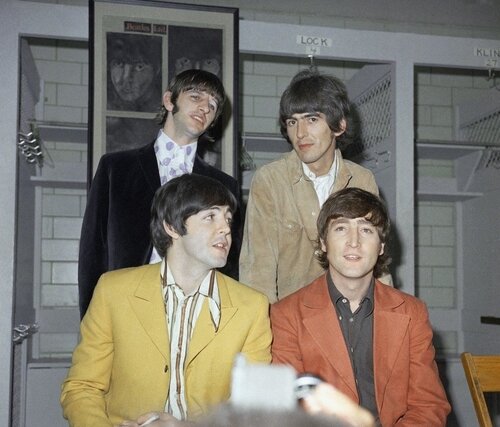
IN THIS PHOTO: The Beatles in Washington, D.C. on 13th August, 1966/PHOTO CREDIT: AP

The Best of '66

___________

THIS week has seen two albums from The Beatles…

IN THIS PHOTO: The Mamas and the Papas circa 1966

celebrating anniversaries. Although Help! turned fifty-five on Thursday (6th), one of their masterpieces, Revolver, turned fifty-four on Wednesday. I love both of these albums, but Revolver is seen as one of the best albums from The Beatles, and I have been re-listening to it. The Liverpool band put out so many tremendous albums, but did they ever fly as high as they did on Revolver?! That is up for debate but, when celebrating that album’s birthday, it made me think about the other albums released in 1966; who was around them at the time and what other gems were released. In honour of that, I have compiled a Lockdown Playlist comprising songs from the best albums of 1966 – I am including two tracks from each. This weekend is a pretty hot one, so it is probably best to stay inside and listen to some great music. I have you sorted because, in the playlist below, are some great cuts from 1966’s…

ssaa.jpg

IN THIS PHOTO: Bob Dylan in 1966

VERY best albums.

TRACK REVIEW: Glass Animals - Tangerine

TRACK REVIEW:


Glass Animals

Tangerine


9.0/10

The track, Tangerine, is available from:

https://www.youtube.com/watch?v=jB2tIfKpIuQ

The album, Dreamland, is available here:

https://www.roughtrade.com/gb/glass-animals/dreamland

RELEASE DATE:

7th August, 2020

GENRE:

Pop

ORIGIN:

London, U.K.

LABEL:

Polydor

TRACKLIST:

Dreamland

Tangerine

((home movie: 1994))

Hot Sugar

((home movie: btx))

Space Ghost Coast to Coast

Tokyo Drifting

Melon and the Coconut

Your Love (Déjà Vu)

Waterfalls Coming Out Your Mouth

It's All So Incredibly Loud

((home movie: rockets))

Domestic Bliss

Heat Waves

((home movie: shoes on))

Helium

__________

WHILST things are still pretty tough…

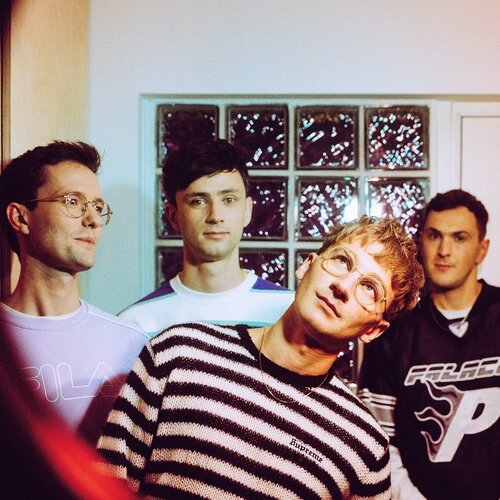
PHOTO CREDIT: Ollie Trenchard

and we are in lockdown, music is providing a sense of relief and stability. In this review, I am tackling Glass Animals. They have a new album out, Dreamland, and it is one of their best! It has been a hard time for the band, and I will discuss a terrible incident that affected Glass Animals and impacted their career. One of the things that impresses me is that, during lockdown, so many artists have been creating music and putting some fantastic stuff out there. Glass Animals’ lead, Dave Bayley, was interviewed by The Standard in April, where he talked about lockdown and creativity:

“Sitting in his home studio in Hackney, just out of two weeks’ quarantine and still a long way from his music life getting back to normal, Dave Bayley of Glass Animals is feeling optimistic. “Between me and the guys, we have a lot of ideas for how to keep things ticking — almost too many ideas,” he tells me. They include, as of next week, filling their website with downloadable music samples and images so that fans can make their own versions of Glass Animals songs and artwork. At the other end of the creative spectrum, the band have just begun selling two types of toilet roll in their online merch store, one dotted with the four Oxford school friends’ faces, the other printed with the words “Ass Glanimals”.

“I think everyone’s in an interesting headspace,” he continues. “Maybe the stress and the anxiety of all this, plus the isolation, could be quite healthy for people’s creativity in a weird way. Or maybe people have just run out of weed and started to be more productive”.

An accident involving Glass Animals’ drummer, Joe Seaward, almost threatened to derail the band and set them back. It came out of the blue, and it was a real blow for the Oxford-formed group. I remember hearing about the accident a couple of years back and being pretty shocked. One cannot really predict things like this, so Glass Animals had to adapt when the accident happened.

a.jpg

Now, a couple of years after it happened, things seem a lot better, even if Seaward is still feeling the effects. Glass Animals were interviewed by NME earlier in the year, and they were asked about the accident and how they have adapted since:

“It feels like a miracle to be talking to Joe Seaward, drummer of Oxford’s indie quartet Glass Animals. His bandmates tell NME it is a miracle. Seaward himself is certain it is. “I think that my accident shook everyone to the core,” he says, balancing his head in his hand, his fingertips tracing the outline of a deep scar on his skull. “Everyone was very close to losing a friend, a brother, a boyfriend, a son and a bandmate.” His eyes fill with tears.

In July 2018, Seaward was hit by a truck while riding his bike in Dublin. As well as a severely broken leg, Seaward suffered brain damage after a complex skull fracture: he required two lengthy, life-threatening operations to repair the damage. On waking, he found that he had no short-term memory. He couldn’t walk, talk, eat, read or write. “Everything that made me… me was taken away,” Seaward says. “And I couldn’t even remember why”.

It’s a bitter time for the group. After two years of rehabilitation, Seaward had returned to performing following a series of warm-up gigs earlier this year. Bayley says that being back on stage in February was the greatest feeling: “It felt like a miracle and it was a miracle really. At one of our first shows in Manchester, everything clicked again. I remember just being so thankful that we could still do this. I couldn’t stop thinking about how lucky we were”.

When any group is rocked by an unexpected setback, everything takes a backseat. I can only imagine what it was like for Glass Animals when they heard the news and what their lives were like; how they managed to keep going and change plans. Although their new album has been made with their drummer, I think the accident of 2018 has impacted their approach and feeds into Dreamland.

It is pleasing the band are a unit again, and that they are on the road to recovery and strength. Before moving along, I wanted to stick on the subject of Seaward’s accident and what the rehabilitation process was like. In this interview from Entertainment Weekly, the group talked about the period after the accident:

“For the 30-year-old singer, who first met the Glass Animals drummer when he was 13, the assuredness of his friend’s rehabilitation arrived after playing music for him a few days following brain surgery. When “Zombie” by Fela Kuti started up, Seaward began to tap his foot in time with the music. The moment served as one of the dummer’s only memories in the hospital. Concentration and recall were two of the biggest things impacted by his operation. But with steady progress and help from his bandmates, Seaward was able to recover quickly; he started walking again about a week later. Yet the dichotomy between the mental and physical recovery was clear from the outset. He had to be told multiple times that he’d even broken his leg.

“I was walking across the hospital thinking, ‘This f—ing hurts!’ Seaward says. “And I said to the nurse, ‘This is really hard’ and she said ‘You broke your femur’ and I remember thinking, ‘What the f—k?! Why didn’t anyone tell me?!’ They said ‘We did try, you just have no recollection of it.’” His bandmates were checking in the whole time. They even drove Seaward home from the hospital to Oxford in a tour van when they were supposed to be playing shows in America. “It was all very ironic,” MacFarlane says with a laugh”.

To sort of shift things in terms of direction, I think one of their band members being involved in such a horrible event has altered how they approach music and what they write. How to Be a Human Being of 2016 is very different to Dreamland, and I think the lyrics have changed notably. I have heard all of Dreamland, and one still hears all the hallmarks of Glass Animals’ sound, but one can tell that the past few years has really altered their mindset and outlook.

When Dave Bayley was interviewed by DIY, he discussed how Seaward’s accident was very potent regarding how he approached songwriting and what/who he wrote about:

“This process of complete life re-evaluation has also changed the outlook of their musical direction. As the band's lead songwriter and producer, the singer was already working on new ideas for another character-driven record when the accident occurred, sharply altering his lyrical perspective.

"I've always liked quite conceptual projects, and I did have a theme in my head for this new record; it was all about happiness and how that manifests," he explains. "But then suddenly, Joe was in the hospital. I obviously spent a lot of time there, and you're worried and exhausted and surrounded by a lot of dark things, and it makes you feel very reflective. You think about all the mistakes you've made, all the shitty things you've done… I think that's when the more personal approach started. I just started asking the questions that I asked of people on the last record about myself a bit, and this new record has evolved to become more introspective."

Looking inwards hasn't compromised any of the band's trademark upbeat sonic energy. Latest single ‘Your Love (Déjà Vu)’ is a slinky, slippery number that sits comfortably among their best work, summoning early ‘00s R&B to craft something that feels effortlessly Glass Animals. Once again finding himself drawn towards the personal, its origins began from his work outside of the band - producing songs for a range of pop and hip hop artists including Joey Bada$$, Flume, 6lack and Suzi Wu”.

I am bringing in a lot of articles and interviews, as it is interesting hearing the band speaking about their past and how the music of today has been affected thus. I am keen to come to my review of Tangerine but, before then, I want to investigate a few more themes that are important when illuminating Glass Animals in 2020 and Dreamland. Before moving on, I want to bring in another exert from The Standard, where Bayley continued on the theme of new lyrical perspective and how he is delving more into the personal:

“Describing the new music the band have already been playing on tour, he says he’s been writing from more of a personal perspective than ever before. On the previous album, he was telling stories of strangers he’d met on the road, apart from the ballad Agnes, which is about the death of a friend. He struggles to perform it live sometimes, he admits, but it is probably their best song, so it’s hardly surprising he might try to tap into that area again. “The new stuff is very personal, and I’m still a bit weird about it. I constantly feel quite selfish. Singing these songs the first couple of times, they really pulled on the nerves”.

I have talked about the past and how Glass Animals have had to move forward whilst dealing with a tragedy, but their new album is out, and has already gained a lot of positivity from the press. I think a new lyrical perspective and Dave Bayley revisiting his childhood are important factors on Dreamland. If one compares How to Be a Human Being, and Dreamland, there are definite changes one can detect. I am going to bring in interview text where the band have discussed a new lyrical path and the themes that define Dreamland, but I want to source from The Independent, where Dave Bayley talked about his childhood and what it was like growing up in a small town in Texas:

“Compared to its predecessor, the Mercury Prize-shortlisted How to Be a Human Being, Dreamland is autobiographical, shot through with memories of early childhood growing up in the small city of College Station, Texas. It tackles everything from formative relationships to masculinity, in particular the toxic expectations of young boys that Bayley – who is sensitive, emotionally intelligent, and occasionally quite shy – was confronted with. There are glimmering synths that rocket overhead like shooting stars, trippy hip-hop beats, bossa nova rhythms, warped electric guitar lines, the brassy horns of their 2019 track “Tokyo Drifting”, and a fantastic sample of “Deep Shadows” by Sixties Michigan soul singer Little Ann. All of this is interspersed with audio from home movies of Bayley’s youth, augmenting the album’s bittersweet theme of lost innocence.

“You don’t realise until later how dark it all is,” he says, of childhood gender stereotyping. “It’s so ingrained – being told to play American football and basketball and hide your feelings, and be this kind of macho superhero. That’s definitely not what I was, and I felt really s****y for not being that.” He addresses this on Dreamland song “Space Ghost Coast to Coast”, about one of his childhood best friends.

“We discovered everything together,” he says. “Dr Dre, Eminem... we used to pull up the aerial on our boombox to catch different radio stations.” When Bayley moved to England, aged 13, he and his friend drifted apart. Some time later, he heard the news that the friend had been caught trying to bring a gun into a local school. “The world can change people in ways you never thought were possible,” he says. “We need to start challenging that. It’s f***ing dangerous”.
If the accident of Joe Seaward influenced Glass Animals had a profound affect on Dreamland and how they approach music now, I also think that Bayley’s childhood and earliest memories are also very important. The band have tackled music from a character perspective on previous albums, and there has been a slight reluctance to write from a personal viewpoint. Maybe this is to do with Bayley and how he was raised. It can be quite hard putting yourself on the page, and you have to go on stage singing these songs in front of strangers. I can appreciate why it is not easy to open up in songs, and how a more detached perspective was preferable. Dreamland is a real evolution for Glass Animals, and I wonder whether the band will continue down this same path for future albums. I did not know about Bayley’s personal life and childhood before researching for Dreamland. In this NME interview, Bayley talked more about his early life and what it was like for him:

“‘Dreamland’ sees Bayley revisit his childhood. Going back to that time, he began to understand where his reluctance to write about himself came from: “I was brought up in Texas where you’re born male, you’re born with a penis, you play American football, you don’t talk about your feelings. That’s embedded into the psyche of men there from a very young age. People want you to be a hero, to be strong. To show any sort of vulnerability was a weakness. The title of the album refers to the fact I’d often totally zone out in class at school and start dreaming of weird things just to escape. I felt trapped.”

Vulnerability is palpable on ‘Dreamland’. It encompasses the full spectrum of human emotion on dreamlike songs that soar with lightness and nostalgia (Bayley recorded many of the songs on vintage equipment) but are often much darker lyrically. While still retaining the tropical tinge of their early Alt-J-meets-Hot Chip leanings, ‘Dreamland’ sees Glass Animals more confident in their musical identity, mixing styles assuredly, rather than tentatively, as in the past”.
I do not mean to stick on this theme, but I think many people approach reviews and music from a very narrow perspective. It is great to talk about the music how it makes you feel, but I love to hear context and factors that can direct a song or album. Although Dreamland is a more personal and revealing album than its predecessors, it is also a lot of fun and has a huge amount of spirit! I think that Glass Animals are tackling new sounds and genres on their third studio album. In this  DIY interview, we learn more about the sonic and thematic developments on Dreamland:
“The album is chock full of playful melodies and pre-school sounds, harking back to Bayley’s formative years. Take the bubbly synth refrain and xylophonic chimes of ‘Hot Sugar’, or the sweetly naive fantasy of two bickering pieces of fruit on ‘Melon and the Coconut’. And then there’s the endless pop culture references that litter almost every song: The Karate Kid, GI Joe dolls, ‘90s video games like Doom and Quake. The album is anchored, meanwhile, by Bayley’s mother’s voice - a recurring presence through a series of interludes ripped from home videos.

“Through all the ups and downs, the weird and confusing shit, she was always there to stabilise things,” says Dave. In this context, these audio snippets feel like a kind of hand-holding device that guides the listener through the childhood traumas and heavier subtexts that appear elsewhere.

Songs like ‘Helium’ and ‘Heat Waves’ explore past relationships with a heavy heart, while the brooding lament of ‘It’s All So Incredibly Loud’ peaks as Bayley repeatedly cries “I’m breaking down”. But the album’s darkest moments go even deeper. “I feel like I’ve gone really far into all the problems, torn all the plasters off, and those wounds are just there, all bloody, and that’s it,” he explains. Sometimes it’s liberating, but at other moments it’s more about acknowledging that “things are pretty fucked up”.

I am going to move forward in a second, but I want to end this section by discussing the band adopting new sounds and stepping into new genres. Not to say that Glass Animals’ first two albums were limited, but I think Dreamland is their biggest and more varied step yet. Reverting back to that DIY magazine interview, and the band’s collaboration with Denzel Curry on Tokyo Drifting is a particularly big moment:

“Landing a collaboration with Florida rapper Denzel Curry on recent single ‘Tokyo Drifting’ was undoubtedly a coup in legitimising Glass Animals’ genre-hybridising approach; with its trap-style hi-hats, rap verses and booming, brassy refrain, it almost borders on grime. But unlike Bayley’s other collabs in the hip hop world, many of which landed on his doorstep after the band’s 2014 single ‘Gooey’ became an unexpected hit in America, getting Curry involved took a lot of work. “Joey Bada$$ had got in touch when we were in New York playing some summer show in Central Park, and 6lack had reached out by just sending me a bunch of fire emojis on Twitter. But with Denzel it wasn’t easy,” he remembers. “I basically nagged him over the internet via every avenue possible until he replied. It turned out he doesn’t even check his own social media, but one of my friends played him the beat and he was like, ‘This is sick, what is this?!’.”

Dave is visibly still chuffed to have pulled it off. As the conversation drifts towards the album’s physical release, he unexpectedly brandishes a Denzel Curry nunchuk at the web cam, before listing off all kinds of merchandising miscellanea that the band have in the making: “We’ve got a cereal bowl coming, we’ve got spoons, PEZ dispensers with our heads on them… all these things I liked as a kid”.

On Dreamland, there is a real mixture of the fun and retro. There is the more oblique in terms of lyrics, but there is also the affecting and personal. I wanted to talk about Tangerine, as it is a natural highlight, and I do love the sound of the song and the images the lyrics project. Building off of a computerised beat and this real feeling of nostalgia, Bayley steps to the microphone and lets us into the song’s world: “As cold as an old ice cream sandwich/As focused as Mr. Miyagi/You poke at your phone postin' aerial photos/Of you with your smoothie”. Many bands and artists have discussed people being distracted and the addiction of technology, but none do it quite like Glass Animals! Bayley almost raps the lyrics as he pulls together these weird and wonderful images. I have always liked how Glass Animals approach songwriting, and you get this very fresh and original style. It seems that our hero cannot make the girl happy (“'Cause you got issues with your daddy”), and we are getting a peek into a relationship that has some issues and differences. On paper, the two seem very different, and there are some definite tensions. The chorus sees the hero in a more revealing mood: “But I wish I could show you more of yourself/I wish I could make you somebody else/But I left it way too late/Are you stuck in your own ways?”. In terms of vocal intonation, there is little in the chorus that suggests Bayley is regretful or that vulnerable, but there is an urgency to be found. Glass Animals are in a more reflective and personal frame on Dreamland, and it is interesting hearing a different side to them. There are some twisted electronic sounds and that beat; the band have their own sonic voice, and I really love the composition on Tangerine. There is pleading and desire from our hero – “Hands, knees, please/Tangerine, sugar, honey, sweet/Got what I need, Tangerine”-, and it does seem that he used to know this person well years ago, but things have changed recently.

aaa.jpg

PHOTO CREDIT: Ian Laidlaw

Lines like “You let the Devil in/And all you talk is money, money/Money, money, money” suggests that a sweetheart has succumbed to the lure of something shallow, but I look in a wider sense and wonder whether the song is about something more general and political. The chorus has this charm and energy that is hard to resist, and I do really like how there is a constant energy and flow to Tangerine. Maybe there was a sense of togetherness and future years ago, but something has happened that has altered the dynamic. “You've been dreamless and sleepin' for years/Super-clear since the late-1990s/You only look at me properly now/When you're drunk, watchin' movies” is an interesting image, and it sort of makes me curious whether we are talking about a romantic relationship that has gone through the motions, or it is a friendship that has sort of hit the rocks. The repeated mantra of “I'm beggin', hands, knees, please/Tangerine, come on back to me/You got what I need, Tangerine” gains extra momentum and importance the more it is said, and I wonder whether Tangerine is the nickname for his lover, or whether it is something else. The way Glass Animals write has always intrigued me. We get all of these terrific and rich lines that take the imagination in different directions. I think there is a lot more in the way of the personally raw and vulnerable on songs like Tangerine. Whilst we might not get a lot of background regarding this relationship and why things have gone awry, I think every listener can sort of tell their own story and have their own take on the song. I really like it, and it is one of the best cuts from Dreamland – and it is my favourite song of the record. It is great to have Glass Animals back and putting out incredible music!

Dreamland is a huge album from Glass Animals, and it has come off of the back of a particularly tough couple of years. The band probably did not think that they would continue on after Joe Seaward’s accident in 2018. They have shouldered that huge setback, and they have come through the other side renewed and more focused than ever. Dreamland is one of their finest albums, and it is another great album in a year that has seen more than its fair share. I am not sure what the band have planned regarding gigs going forward, and they will probably be looking at 2021 for any realistic promotion and exposure. I am glad to see Glass Animals are still together and making music. Not that Seaward’s accident has been all bad: in terms of lyrics and sonic direction, I think the band have forced themselves to make changes and widen their horizons. If you have not bought Dreamland, then go and get it – the link is at the top of this review -, and witness one of this year’s best releases! I am a fan of the band and, whilst I like their character songs, the more personal approach works really well on Dreamland. It is good to have them back and let us hope that the future is more stability and less fraught than things have been since 2018. I will finish now, but it has been great assessing their new music, and I am glad that a lot of other people have been digging Dreamland. On their third studio album, the band have created…

A terrific work.

___________

Follow Glass Animals

xzz.jpg

FEATURE: Second Spin: David Bowie - Lodger

FEATURE:


Second Spin

David Bowie - Lodger

___________

THIS is a rarity for me…

IN THIS PHOTO: David Bowie in London in 1979/PHOTO CREDIT: Duffy

because, normally, when I do a Second Spin, I include albums that were underrated or poorly-reviewed when they were released, or they are not talked about as much as they should. With David Bowie, there are definitely albums that were not reviewed highly – as the albums are not up to his best -, and I think there is a period in the 1980s and 1990s when Bowie was not as consistent and revered as he was in the 1970s and the latter period of his career. It is amazing to think about Bowie’s career and the sort of peaks and dips he experienced. Maybe there was a section of his career when the gold was starting to tarnish, but many have argued his final album, 2016’s Blackstar (released the same week as his death), is his finest album of all. With Bowie, the standard is so high, and the man put out at least half a dozen albums that rank alongside the very best ever! I think about these golden runs in music: where a band or artist releases sensational album after the next with no faults at all. The Beatles had it, debatably, through their entire career until Let It Be (the last album they released) but, realistically, we can apply it to Help! (1965), Rubber Soul (1965), Revolver (1966), Sgt. Pepper’s Lonely Hearts Club Band (1967), Magical Mystery Tour (1967), and The Beatles (1968) – a total of six albums. The Rolling Stones had their run between 1968’s Beggars Banquet, through to Exile on Main St. in 1972 – a total of four albums. With Bowie, I think that run extends even further than The Beatles, maybe!

It would be interesting, as a side-note, to see which artists enjoyed the longest golden run, and ask why they were so consistently innovative; whether it was to do with the climate at the time or something in their music that resonated with people. The reason I wanted to include Lodger in Second Spin is not because it is an album that is underrated – as it got great reviews and is seen as a classic -, but it is not necessarily seen as one of Bowie’s best; many exclude it from their top-ten Bowie albums, and they tend to consider the first two albums of his ‘Berlin trilogy’ -  Low (1977), and "Heroes" (1977) – as his best. Lodger completed that trilogy, and he would continue his wonderful run of albums with Scary Monsters.....and Super Creeps in 1980. Just think about Bowie’s majestic run of albums: 1975’s Young Americans, 1976’s Station to Station, Low, “Heroes”, Lodger, Scary Monsters.....and Super Creeps, Let’s Dance…and I would even add 1974’s Diamond Dogs at the start! That is a run of eight albums and, though The Beatles enjoyed that kind of consistency, I think Bowie’s albums were more wide-ranging, and he was writing most of the material either on his own or with Brian Eno – Lodger is one such album where Eno was co-writing. That is a remarkable run of albums and, considering Bowie was battling substance and drug issues and mounting expectations, the fact he managed to release so many flawless albums is majestic!

Also, I know I have missed Prince out when talking about album golden runs, but I must move on. Lodger, to me, should be heralded as much as “Heroes”, Low, or Station to Station. It was interesting seeing how Bowie transitioned from the 1970s to the 1980s and whether his material would shift dramatically. When Lodger was being recorded in 1978 and 1979, Punk was swelling and raging, and there was a definite change in the air. Bowie was always inspired by other sound and genres, never repeating himself and keen to keep moving. Also, he has always done things his own way, and you can never directly link him to other artists. If previous albums from the 1970s of his had big standout hits, Lodger is perhaps less obvious in that sense. His thirteenth studio album, it was recorded in Switzerland and New York City with collaborator Brian Eno and producer Tony Visconti. Lodger arrived two years after “Heroes”, and it was a more Pop-scented affair than previous work. Whilst Lodger lacked the instrumental splits of Low, and “Heroes”, Lodger has two major themes: that of travel (primarily side one) and critiques of Western civilisation (primarily side two). I think the album is a consistently brilliant and interesting work, and I love the elements of World music. African Night Flight was inspired by a trip Bowie took to Kenya with his son, Zowie. World music – if that is the most appropriate term? – was not heard a great deal in the mainstream in 1979, and one can look ahead to artists like David Byrne (Talking Heads), and maybe even Paul Simon (on Graceland, 1986).

Highlights on Lodger include Red Sails, Look Back in Anger, and Boys Keep Swinging – maybe they are not among his classic cuts, but they are terrific songs! I will bring in a couple of positive reviews soon, but I think Lodger is one of the albums that gained momentum years after its release; a more slow-burning record that rewarded people the more they listened – whereas the wonder and potency of albums like “Heroes” was clear from the start. Maybe Lodger is not underrated like, say, 1993’s Black Tie White Noise, but I do think Lodger should be rated as effusively as his very best records. In their review, this is what AllMusic had to say:

“On the surface, Lodger is the most accessible of the three Berlin-era records David Bowie made with Brian Eno, simply because there are no instrumentals and there are a handful of concise pop songs. Nevertheless, Lodger is still gnarled and twisted avant pop; what makes it different is how it incorporates such experimental tendencies into genuine songs, something that Low and Heroes purposely avoided. "D.J.," "Look Back in Anger," and "Boys Keep Swinging" have strong melodic hooks that are subverted and strengthened by the layered, dissonant productions, while the remainder of the record is divided between similarly effective avant pop and ambient instrumentals. Lodger has an edgier, more minimalistic bent than its two predecessors, which makes it more accessible for rock fans, as well as giving it a more immediate, emotional impact. It might not stretch the boundaries of rock like Low and Heroes, but it arguably utilizes those ideas in a more effective fashion”.

Perhaps the sonic and thematic shifts took people by surprise, or they were expecting an album similar to Low, or Young Americans. Lodger was Bowie being Bowie: this curious and ever-changing genius who seemed to be making music because of its worth and depth, rather than to satisfy the critics and commercial corners. I want to bring in an interesting segment from Pitchfork’s review of Lodger:

“The title alone reduces his myth to something banal and transactional: No longer the Lonely Starchild gracing us with his unusual point of view, we instead meet Safari Bowie, half-drunk tourist working out his masculinity issues by haggling with street vendors, Bowie the houseguest who can't stop talking about getting "authentic" tacos. The first half of Lodger especially, with its cartoon jungles and mysterious Bedouins and Englishmen too dumb to stay out of trouble but too powerful to ever really be in it, belongs more to the colonial satire of Evelyn Waugh than late-'70s art rock. (Bowie said that "African Night Flight" in particular was inspired by a trip to Kenya where he met a bunch of old German pilots who seemed to spend most of their time getting drunk and the rest doing profitable crime in the bush.) Lodgers aren't heavenly beings; they're people with enough money to rent a room.

All this didn't just humanize Bowie, it made him whole. By the time he'd released Lodger, he was 32, halfway divorced and trying to keep his drug thing in check, rich and famous and still staring down the long rest of his life. "Radical genius" would be nice, but so would making it to 1985 and having people still remember your name. In that sense, Lodger is an anxious, humble album, the sound of an artist ceding the wheel to a younger generation he'd be a fool to pretend he was part of. To let the culture take him out and chauffer him for a little while”.

If you have not discovered Lodger, or you are a David Bowie fan and consider Lodger to be one of his lesser works, I would advise people to check out this pearl from 1979. The album came near the end of this diamond run of classics, but the early part of 1980s saw Bowie in a creative and pioneering groove - Scary Monsters.....and Super Creeps, and Let’s Dance are both different but equally wonderful. If you talk about the best of Bowie, I think Lodger needs to be a part of the discussion! It is not as hits-packed as some of his albums, but I think the richness and textures throughout Lodger are so rewarding – one will find themselves coming back to the album time and time again. I have been revisiting a lot of Bowie’s albums, and listening to ones I have not heard in a while. Lodger, whilst not underrated or dismissed, definitely warrants fresh appreciation and augmentation. It is another staggering album from one of music’s…

GREATEST and most-loved souls.

FEATURE: The Lockdown Playlist: Epic Garage Tracks

FEATURE:


The Lockdown Playlist

IN THIS PHOTO: Ms. Dynamite

Epic Garage Tracks

___________

FOR a pretty hot weakened…

IN THIS PHOTO: MJ Cole

I felt that this Lockdown Playlist should be about epic Garage tracks. We still have Garage music today, but there was a period where the sound was blooming; British artists were at the forefront, and it was a great time for music. Most of the biggest Garage tracks arrived in the mid/late-1990s or the first few years of the next century, and I remember being grabbed and hooked from the start. It was a brilliant time to be around and, listening back, most of the best Garage tracks have endured and sound tremendous. In honour of the epicness of Garage music, I have compiled a playlist that should ensure that, on a hot day, the heat…

IN THIS PHOTO: So Solid Crew

RISES even further!

FEATURE: We Know All Her Lines So Well… From The Tour of Life, Through to Before the Dawn: What Might Have Been

FEATURE:


We Know All Her Lines So Well…

eee.jpg

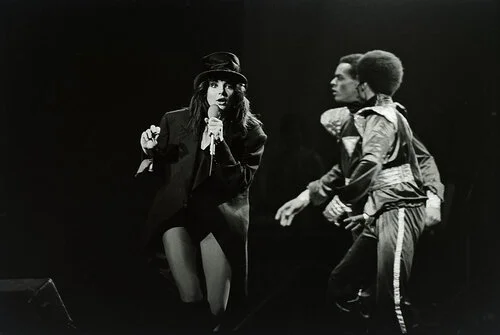
IN THIS PHOTO: Kate Bush and her band/performers take a bow during The Tour of Life in 1979/PHOTO CREDIT: Max Browne

From The Tour of Life, Through to Before the Dawn: What Might Have Been

___________

I am going to spend the next few weeks…

IN THIS PHOTO: Kate Bush and dancers performing Strange Phenomena during The Tour of Life/PHOTO CREDIT: Max Browne

focusing on features relating to Never for Ever, and Hounds of Love, as those albums celebrate big anniversaries next month – Never for Ever s forty; Hounds of Love is thirty-five. I am keen to explore those albums as they approach their birthdays but, now, I am minded to go back to 1979. I have written about Kate Bush’s The Tour of Life a few times before, as it was a remarkable spectacle, and it redefined what a Pop concert could be; it extended the realms of what a live show could be, and there were not many artists like Kate Bush really going beyond the ordinary when it came to shows – I guess David Bowie was the closest comparison in regards what he was doing in the 1970s at his shows. Before I move on, and in case you have not listened to it, Absolute Radio’s series, I Was There, aired a show regarding The Tour of Life recently. Kate Bush News provide further explanation:

“Absolute Radio in the UK is continuing a new season of documentaries called “I Was There“, introduced by Sophie K, with an episode about Kate’s 1979 tour featuring contributions from choreographer Anthony Van Laast, tour manager Richard Ames and writer Graeme Thomson. You can listen live at 8pm UK time on Sunday August 2nd here: https://planetradio.co.uk/absolute-radio/shows/i-was-there/

The series looks at the most iconic gigs in rock history, and also includes Woodstock, Live Aid, the Isle of Wight Festival 1970, Rolling Stones Altamont 1969, Pink Floyd, Bob Marley and more, all told by the people who were there; from the artists to the roadies, the producers to the fans.

From the episode description: “The first and (up until very recently) last tour of mercurial pop superstar Kate Bush. A show that aimed to combine music, dance, poetry, mime, burlesque, magic and theatre, was it too ambitious for its own good? Or did it change what could be achieved in pop?” Kate also features heavily in the series promo trailer below”.

There is a lot to unpack when it comes to The Tour of Life. Questions can be asked as to whether Bush bit off more than she could chew. Certainly, after 1978, there was a need to assert control over her music more and to do something that she was helming – she felt a little detached in the creation and production of The Kick Inside, and Lionheart, and the desire for command was there. 1978 was such a frenetic and non-stop year in terms of promotion and activity. Of course, Bush did want to perform and had these two albums out, but I think one of the main impetuses for The Tour of Life was to put herself at the forefront, rather than releasing albums where others were producing and Bush did not have as big a role as she hoped. Was The Tour of Life too ambitious? Certainty, one can watch the preparations for that tour, and Bush was pretty much involved in everything! From set designs and staging, through to the routines and costumes, she was there and making decisions – even though she had a dedicated and large team supporting her. I think it was crucial for her to embark on a tour like this, and it proved that Bush could definitely handle a lot more responsibility; she could see a gigantic show through from conception to execution, and the reception The Tour of Life received proved that the fans and critics loved it!

Some critics were a bit short when it came to their reaction; feeling the show was a bit overblown and there were few standout moments. Not a lot of great video exists from The Tour of Life period, but there are bits and pieces on YouTube. Some of the routines and sets are staggering. Watch James and the Cold Gun, and Bush stalks the stage with a gun as she fires down people and the percussion riffles behind her. The song is much more physical and vivid that it appears on The Kick Inside and, whilst I love Bush’s first two albums, some of the songs never reach full potential because of the limitations of the studio: to see them brought to life in such an explosive way is a reason why so many people were startled by the magnitude and resonance of The Tour of Life. All but one song from Bush’s first two albums were performed (Oh to Be in Love, from The Kick Inside, was the omission), and there were some songs that would appear on her next album, 1980’s Never for Ever – Violin, and Egypt were two terrific tracks that sounded fuller and more atmospheric on The Tour of Life as opposed the album! From the warm-up gig in Poole on 2nd April, through to the final show at the Hammersmith Odeon on 14th May, the sheer scale and ambition of the tour was stunning!

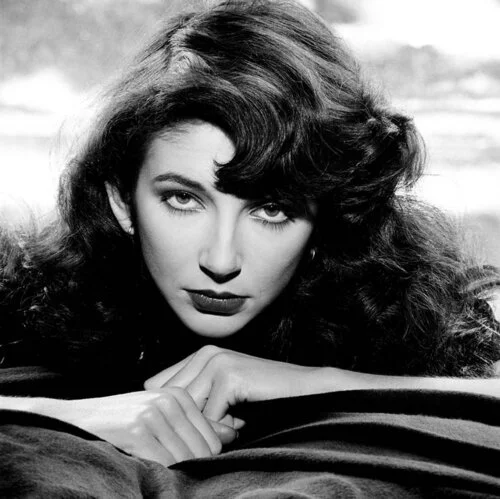
IN THIS PHOTO: Kate Bush in 1979/PHOTO CREDIT: Gered Mankowitz

I think, despite some flaws, The Tour of Life was a success. Whilst the urgency Bush felt to finally tour (she recorded her first songs for The Kick Inside in 1975, and this was her first real taste of larger live performance), maybe the fact she had only put out two albums was the biggest flaw. Today, artists pretty much tour after every album, but there was this gap between 1979’s The Tour of Life and Bush’s stage return in 2014 with Before the Dawn. She did perform between 1979 and 2014, but this was T.V. appearances and the odd stage appearance – never anything as full-scale and with the consistency as The Tour of Life! Before the Dawn was such a great return, as it brought Bush back to the stage in front of thousands of fans, but it was the first time Hounds of Love’s second side, The Ninth Wave, was performed. From 26th August to 1st October, Bush returned to the Hammersmith Odeon (or the Eventim Apollo as it is known today). Rather than travelling – which is a reason why she was so drained after many shows during The Tour of Life and was reluctant to perform again after that -, she was based close to home and was able to put her energies into each night. I love the fact that Bush incorporated The Ninth Wave, and Aerial’s second side/disc, A Sky of Honey, beside one another – The Ninth Wave was the second half of the first act, whilst A Sky of Honey formed the second act.

They complement one another gracefully, and it was wonderful to see her two conceptual suites of songs performed in 2014 – The Ninth Wave, and A Sky of Honey were released twenty years apart – to a loving crowd. Alongside Aerial, and Hounds of Love’s great moments - Hounds of Love (Hounds of Love), Joanni (Aerial), Running Up That Hill (A Deal with God) (Hounds of Love), King of the Mountain (Aerial), and Cloudbusting (Hounds of Love), as an encore track, were the other tracks from those two albums -, we had 2011’s 50 Words for Snow’s Among Angels as an encore track, and The Red Shoe’s (1993) Lily, and Top of the City were also featured. Bush performed for the BBC a few times between 1978 and 1994, and there are videos of her performing live between 1979 and 2014 – including spots on Top of the Pops. The Tour of Life is mainly about The Kick Inside, and Lionheart of 1978; there are some nods to Never for Ever, whilst Before the Dawn mostly covered Hounds of Love, and Aerial – with some bits from The Red Shoes, and 50 Words for Snow in the mix. With Never for Ever, The Dreaming, Hounds of Love (some of its first side), The Sensual World, The Red Shoes (most of the tracks), Aerial (its first side for the most part), and 50 Words for Snow (bar one song) still virginal in terms of tour/residency inclusion, one wonders what could have been – and what still might be.

xxx.jpg

IN THIS PHOTO: Kate Bush in 1989/PHOTO CREDIT: John Carder Bush

When Bush has been asked about the lack of touring after 1979, she explained how it was a great experience but it was exhausting. Also, if she spent a lot of time putting together tours every couple of years, she would not be able to record new material. It is a chicken and egg situation where she needs new music to perform on stage, but she also needs the time to record the music! Bush has always written quickly, whereas the recording process has been more gradual – not that she is a perfectionist; more that it does take time to make her songs as brilliant as they are. In 2020, there is no word whether Bush will return to the stage, either in a one-off gig or a residency like 2014. Maybe now, at sixty-two, it would seem odd to revisit music she released in her twenties and thirties, and I feel there is greater impetus in her to do something new rather than go back to the stage. One can never say never when it comes to Kate Bush, but I feel like the likelihood of her performing live diminishes by the year! It is one of the greatest tragedies in music that she never did anything like The Tour of Life for so long, but one can understand her reasoning and, if she did, would we have the albums we do?! I don’t think so. This feature is less about a push to Kate Bush for future shows, but a look back and imagine what could have occurred.

As Never for Ever approaches its fortieth (it turns forty on 7th September), just think about the songs that could have been mounted on the stage in a wonderful show! I will not muse and concoct imaginary setlists, but a show opening with Babooshka (from Never for Ever) would have been epic! I think, after seeing subsequent music videos, people could have envisaged what the songs would look like on the stage. Never for Ever also has The Wedding List – a great song that should have been a single -, and the two incredible singles, Army Dreamers, and Breathing! The whole album is so underrated, but the sheer power these songs would hold on stage is…well, one can imagine! Beautiful songs like The Infant Kiss, and All We Ever Look For are on Never for Ever, and I think there could have been this wonderful set where she combined Never for Ever, and the more progressive and experimental tracks on 1982’s The Dreaming. I know some of the tracks from these two albums were performed/filmed in some capacity but, like a splice of Hounds of Love/Aerial or The Kick Inside/Lionheart, a Never for Ever/The Dreaming combination would be something! I know that would mean that, in this imagined alternative universe, Bush would not have been able to start writing and recording for Hounds of Love – she was productive during 1983 and continued right through to 1985.

Again, if she did tour rather than record, I don’t think we would have had the albums we did, but one cannot help but dream a tour/show where two brilliant albums stood aside. The Dreaming is an album that has never been exposed on a large stage in any real way. Singles like Sat in Your Lap, The Dreaming, and There Goes a Tenner, whilst not as successful as the best cuts from Hounds of Love, and The Kick Inside, boasted terrific videos, and I can just imagine a wonderful story. Maybe it could have been a concept as Bush as this alter ego who travels from Australia (The Dreaming), to London (There Goes a Tenner), to other lands; maybe a two-tone show with harder and light songs, or a suite similar to her film, The Line, the Cross and the Curve, (1993) where other actors are involved. The Dreaming is still underrated, and Pull Out the Pin, Leave It Open, Night of the Swallow, All the Love, Houdini, and Get Out of My House are songs one hardly hears played, and I think they would have been staggering sets if Bush brought them alive on stage! I think Never for Ever, and The Dreaming are so great because Bush gained new confidence and ambition in 1979, and she brought this into the studio. Hounds of Love, though a lot of the songs have been performed on stage, warrants fresh inspection.

Two albums, again, that could have been paired, are The Sensual World, and The Red Shoes. I will not, again, predict what concepts could have been employed, but to see The Fog, Heads We’re Dancing, Deeper Understanding, and Rocket’s Tail (The Sensual World) entwined with Rubberband Girl, And So Is Love, Top of the City, and Why Should I Love You? (The Red Shoes) would have been quite an experience! I have not even mentioned B-sides between 1980-2013 and what could have appeared in live shows between then. Think about the interesting songs on Aerial’s first side - Mrs. Bartolozzi, and How to Be Invisible among them – that would be wonderfully realised on stage; terrific songs from 50 Words for Snow – the title track and Misty especially – that would be grand and stirring! As this NME article shows (where Bush was quoted after being interviewed by The Independent), there were always plans to perform live again after The Tour of Life:

“Asked about her lengthy hiatus from the stage, Bush told The Independent: “It wasn’t designed that way, because I really enjoyed the first set of shows we did [in 1979]. The plan at the time was that I was going to do another two albums’ worth of fresh material, and then do another show.”

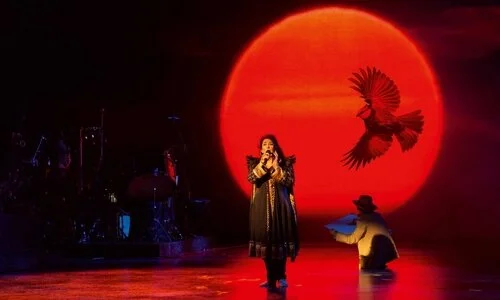
IN THIS PHOTO: Kate Bush during her Before the Dawn residency at the Hammersmith Apollo in 2014/PHOTO CREDIT: Ken McKay/Rex Features

She continued: “But of course, by the time I got to the end of what was ‘The Dreaming’ album, it had gone off on a slight tilt, because I’d become so much more involved in the recording process.

“And also, every time I finish an album, I go into visual projects, and even if they’re quite short pieces, they’re still a huge amount of work to put together. So I started to veer away from the thing of being a live performing artist, to one of being a recording artist with attached visuals”.

I know Bush scouted Wembley around the time of The Red Shoes as a venue for a possible concert/residency, but I can never see her performing at big stadiums! The reclusive tag has always been applied to Kate Bush, and many people have asked if she disappeared from live performance post-1979 and why that might have been. The main reason I wanted to write this feature was not to outline what a loss it is that Bush never brought so many of her albums to the stage, but to wonderfully picture these unfurled songs in a live setting; tracks that may have had videos or be non-singles, but would have been translated to the stage in such an original and evocative manner. As I said to start, one can never predict Kate Bush, and one cannot dismiss the notion that Before the Dawn was the final chapter when it comes to live performance. It is unlikely she will perform live again, but that decision is never set in stone. It all depends on how she feels and what the motivation is. Regardless, if you have not heard the Before the Dawn album, then go and buy it, and there are videos online of her performing at The Tour of Life. The sheer joy of watching Kate Bush on stage is addictive, but the world is thankful that she committed herself to albums and gave the world so much incredible music! Although Bush has only performed one tour and one residency in her professional life (in terms of bigger, longer performances), those two seismic events most definitely…

LEFT their mark on the world.

FEATURE: The August Playlist: Vol. 2: SULA’s Cosmic Day Through Nazareth

FEATURE:


The August Playlist

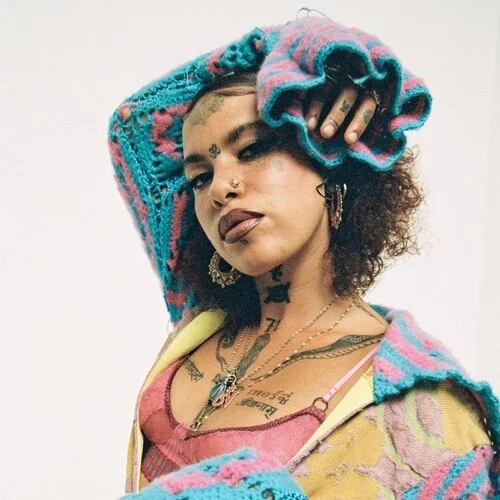
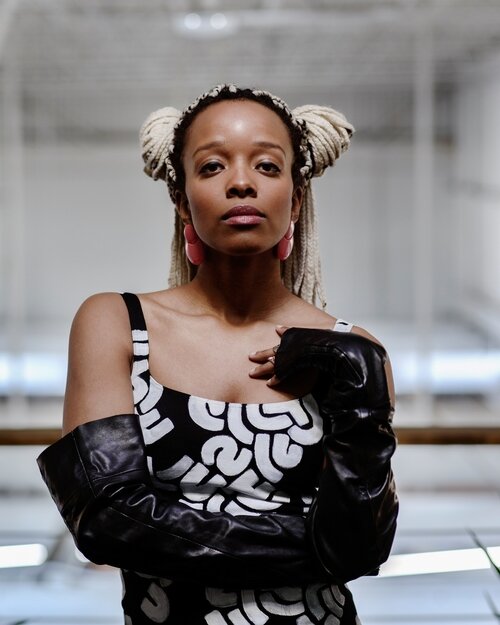
IN THIS PHOTO: Greentea Peng

Vol. 2: Hu Man, A Cosmic Day Through Nazareth

__________

WHEN looking at this week’s new tracks…

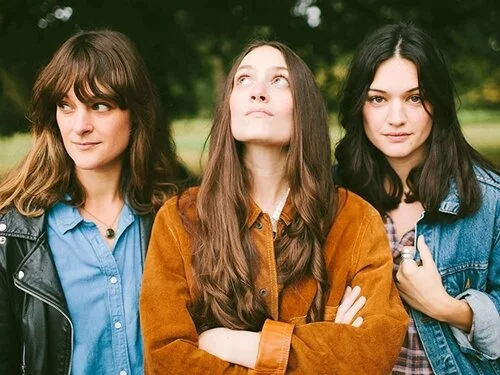
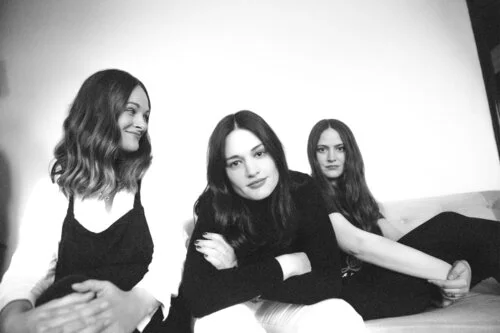
IN THIS PHOTO: The Staves

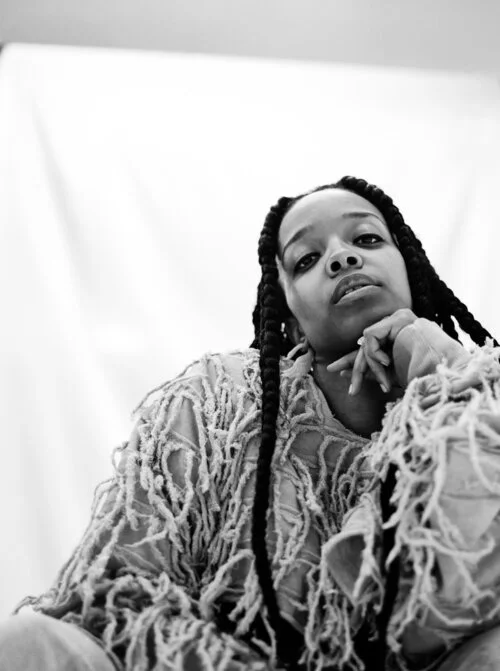
there is a real assortment and breadth of gold! There is new music from The Staves, Jamila Woods, Prince, and Greentea Peng. Throw into the mix Victoria Monét, Willie J Healey, Another Sky, Glass Animals, and beabadoobee, and it is another typically exciting and broad week! If you need some tunes to get your weekend off to a great start, I think there is enough below to get you fixed and sorted! It is a hot weekend, and the playlist below will definitely…

IN THIS PHOTO: Jamila Woods

RAISE the energy levels.

ALL PHOTOS/IMAGES (unless credited otherwise): Artists

__________

www.jpg

PHOTO CREDIT: Sequoia Ziff

The Staves – Nazareth

qqq.jpg

PHOTO CREDIT: Matthew Avignone

Jamila Woods - SULA (paperback)

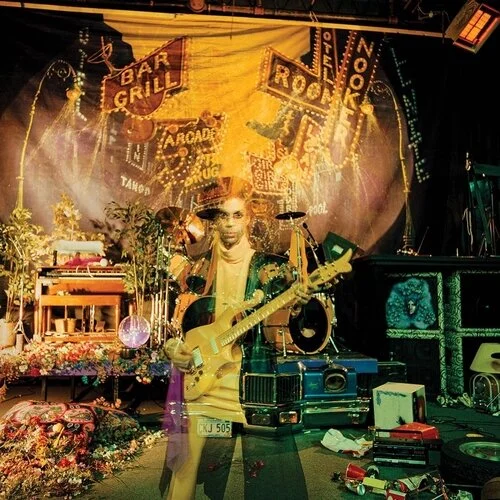
Prince – Cosmic Day

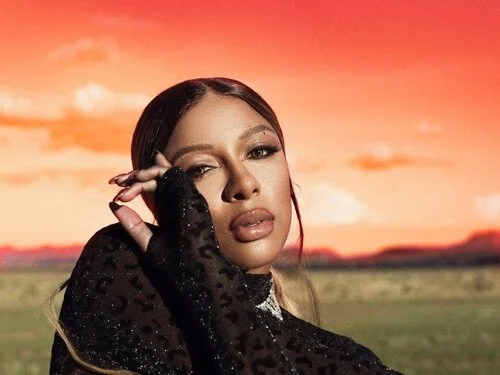
Victoria Monét - Jaguar

xxx.jpg

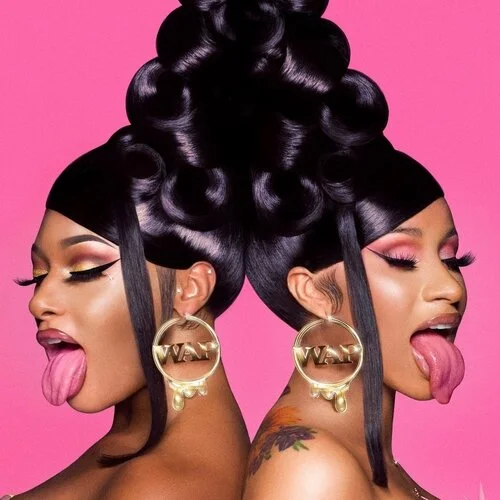
Cardi B (ft. Megan Thee Stallion) - WAP

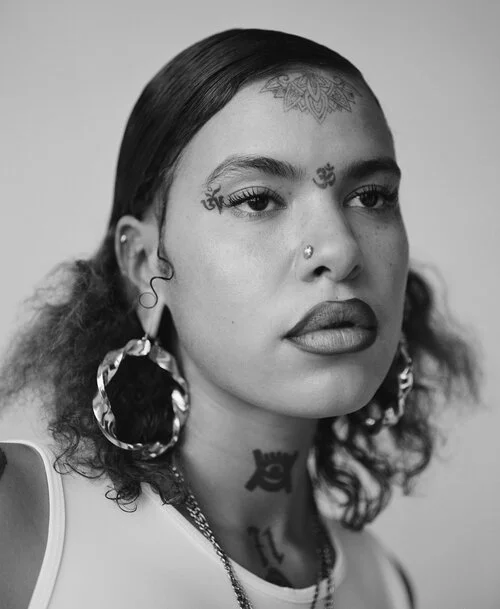
Greentea Peng – Hu Man

PHOTO CREDIT: Hollie Fernando

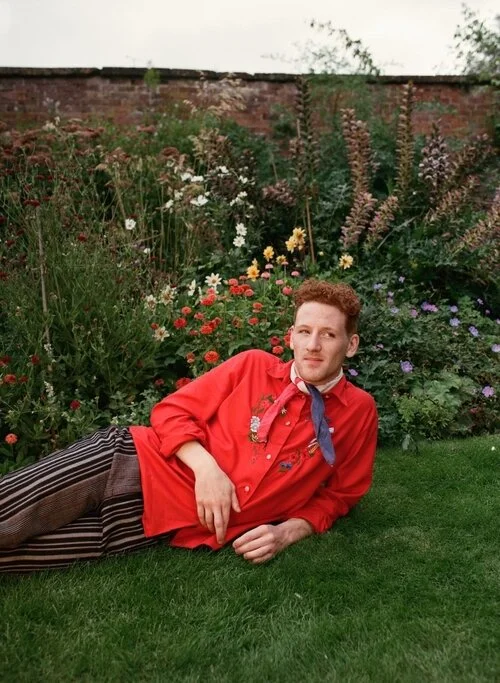
Willie J Healey – Big Nothing

PHOTO CREDIT: Ollie Trenchard

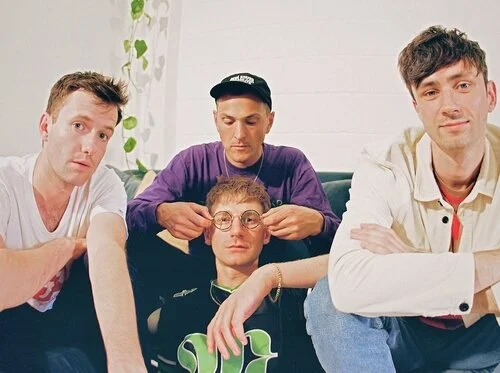
Glass Animals – Tangerine

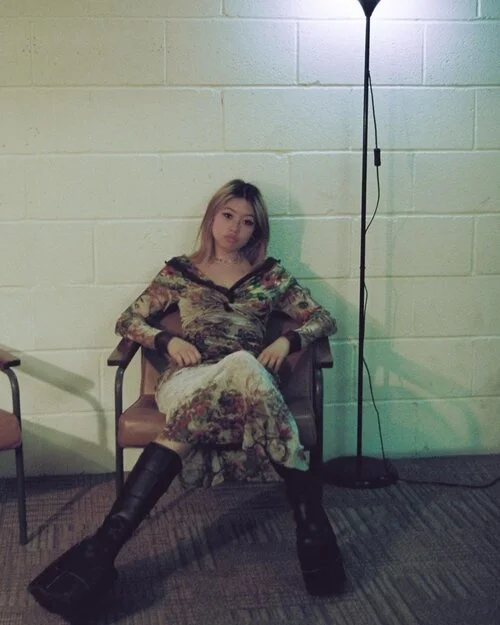
beabadoobee – Sorry

Another Sky – The Cracks

Declan McKenna - Be an Astronaut

Nadia Rose, Leon Jean-Marie - Higher

All We Are – Heart of Mine

Sasha Sloan - Lie

Kelly Lee Owens (ft. John Cale) - Corner of My Sky

lo.jpg

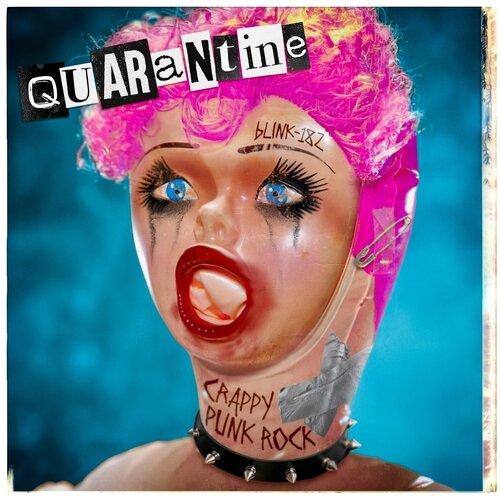
blink-182 – Quarantine

IAMDDB – End of the World

fss.jpg

PHOTO CREDIT: Charlotte Zoller

Bon Iver – AUATC

saa.jpg

PHOTO CREDIT: Melanie Lehmann

Gia Ford – Sleeping in Your Garden

JONES – Camera Flash

Cults - No Risk

Icona Pop – Feels in My Body

PHOTO CREDIT: Astrophe Magazine

GRAACE – Body Language

Tiwa Savage – Koroba

Remi Wolf - Monte Carlo

Olivia Dean – The Hardest Part

Doja Cat – Freak

zzz.jpg

Tiana Major9 – Real Affair…

Sea Girls – Forever

PHOTO CREDIT: Alex Barakat

Naomi Banks – Closer

PHOTO CREDIT: Paula Trojner

Kynsy - Cold Blue Light

Dylan Conrique – Baby Blue

PHOTO CREDIT: Matt Puccinelli

Psychedelic Porn Crumpets - Mr Prism

JoJo – What U Need

Zella Day – Only a Dream

FEATURE: #LetTheMusicPlay: What Now for Live Music and Those Behind the Scenes?

FEATURE:

#LetTheMusicPlay

IMAGE CREDIT: UK Music

What Now for Live Music and Those Behind the Scenes?

___________

WITH each passing week…

xxxx.jpg

IMAGE CREDIT: UK Music

the fate and stability of live music becomes less certain. There are drive-thru gigs that one can attend, and there are plans to try and get live music going in a smaller capacity than normal. Some recent socially distanced gigs have not been a major success, as venues cannot make profit with only a third or half of seats/spaces taken. Until social distancing is dropped – which may not be until the end of the year -, any notion that venues can open and operate as normal is absurd. I am pleased that there is live music happening and, through drive-thrus, virtual gigs and occasions where artists perform on their own at a venue and people buy tickets online, it does mean that we get some semblance of normality. What is worrying is that, at the moment, the security of the crews that help bring shows together is threatened. This article from NME explains more:

“Figures from the music industry are adding more volume to the #LetTheMusicPlay campaign to demand that the government share arts funding to protect the future live crew, musicians and the individuals working behind the scenes.

Last month, more than 1,500 artists and industry figures came together to call on the government to stop “catastrophic damage” to live music amid the COVID-19 pandemic in the launch of the #LetTheMusicPlay campaign. After months of campaigning from fans and the world of music, the UK government revealed plans for an unprecedented cash injection of £1.57 billion to help the arts, culture and heritage industries survive the impact of closures brought on by coronavirus – providing music venues, independent cinemas, museums, galleries, theatres and heritage sites with emergency grants and loans.

zzz.jpg

IMAGE CREDIT: UK Music

While the relief for venues was welcome, many warned that without urgent government clarity, support and action, the pipeline of talent that plays within them could be cut short – declaring that musicians and crew were facing their “biggest crisis since the 1920s” without support. 

Now, the #LetTheMusicPlay campaign seeks to highlight the size and scale of the jobs and companies that make up the UK live music industry which need urgent support and “ensure that the government cannot ignore the complex ecosystem that supports live music in their funding decisions”.
“It takes a lot of people to build a show,” wrote Enter Shikari on Twitter. “The live music industry is project to lose approximately 60 percent of its jobs due to COVID-19. Please share, show solidarity with the teams behind the scenes & call for further support for the live industry”

The fact that so many people could lose their jobs would result in huge infrastructure damage, and it would be extremely hard for the music industry to recover. We think of venues and consider the artists who play there, but many are not aware of all of the people at these venues that make them what they are; those who help bring live shows and festivals together. I know the Government cannot save every job in live music, but the fact that such a handsome fund was earmarked for the arts and music, I wonder how much, if any, has been stored aside for crew and venue staff?!

zzzz.jpg

PHOTO CREDIT: @sctgrhm/Unsplash

I have been looking online, and a lot of people have been sharing the hashtag #LetTheMusicPlay. It is important that awareness if raised and, as there is a kitty there to help the music industry, it is only right that, sooner rather than later, the Government can be more specific regarding who will receive the money and when. It is confusing for so many people and, as live music is being planned for 2021, without adequate support and financing, many venues might have to close, and so many jobs will be lost! The fact that £1.57 billion was eventually pledged by the Government was as a result of campaigning and a lot of great work from so many different corners, so the hope is that there will be a response and some sort of blueprint regarding the dissemination and distribution of that money. Nobody knows how next year will play out and whether live music will be able to return to its former self – or whether it might take another year for everything to ease and COVID-19 to subside. It is a frightening time for those who rely on live music, and I also feel for musicians who are doing their best to stay connected with their fans, but are having to adapt with a life without (or very little) live music. Things will gradually get better but, in order for the live music industry to flourish and sustain next year, we need to make sure that there is a guarantee to those whose jobs are vulnerable right now. If that does happen, then venues, staff, artists and fans can breathe a sigh of relief and looking forward to return to venues and festivals before too long! That would be wonderful, and it is something that…

PHOTO CREDIT: @roccocaruso/Unsplash

WE all really want!

FEATURE: A Buyer’s Guide: Part Fourteen: Björk

FEATURE:


A Buyer’s Guide

PHOTO CREDIT: Inez & Vinoodh

Part Fourteen: Björk

___________

I can’t think of many artists…

PHOTO CREDIT: Tim Walker

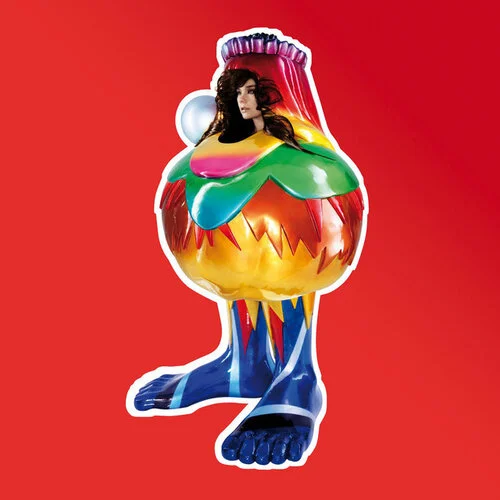
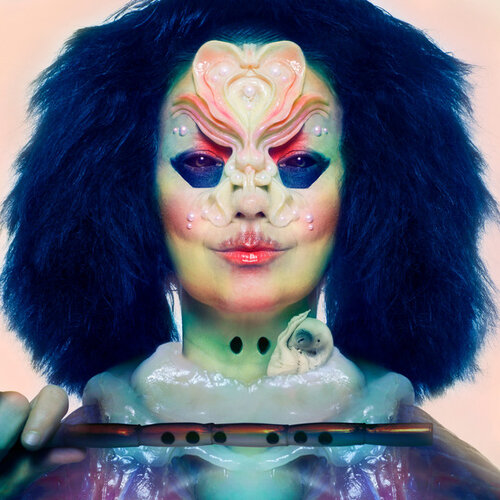
who are more original and influential than the Reykjavík-born pioneer, Björk. Since her 1993 debut solo album, Debut (which was actually her second album: her eponymous debut was released in 1977), she has created masterful album after masterful album. Her ninth studio album, Utopia, was released in 2017, and it was another astonishing work from Björk. Whether solo or as a member of The Sugarcubes, there has been nobody in music like Björk! She is an amazing artist and, if you need some guidance regarding her best albums, I have collected together her four essential studio albums (solo); the one that I feel is underrated, and her most current release – in addition to a Björk book that is worth consideration. I am such a massive fan of Björk, so it is a pleasure to include her in… 

A Buyer’s Guide.

_______________

The Four Essential Albums

Debut

sas.jpeg

Release Date: 5th July, 1993

Labels: One Little Indian/Elektra

Producers: Nellee Hooper/Björk

Standout Tracks: Venus as a Boy/Big Time Sensuality/Violently Happy

Buy: https://www.discogs.com/Bj%C3%B6rk-Debut/master/34486

Stream: https://open.spotify.com/album/5BTTaN1CMOdiPtJHagNCes

Review:

“Freed from the Sugarcubes' confines, Björk takes her voice and creativity to new heights on Debut, her first work after the group's breakup. With producer Nellee Hooper's help, she moves in an elegantly playful, dance-inspired direction, crafting highly individual, emotional electronic pop songs like the shivery, idealistic "One Day" and the bittersweet "Violently Happy." Despite the album's swift stylistic shifts, each of Debut's tracks are distinctively Björk. "Human Behaviour"'s dramatic percussion provides a perfect showcase for her wide-ranging voice; "Aeroplane" casts her as a yearning lover against a lush, exotica-inspired backdrop; and the spare, poignant "Anchor Song" uses just her voice and a brass section to capture the loneliness of the sea. Though Debut is just as arty as anything she recorded with the Sugarcubes, the album's club-oriented tracks provide an exciting contrast to the rest of the album's delicate atmosphere. Björk's playful energy ignites the dance-pop-like "Big Time Sensuality" and turns the genre on its head with "There's More to Life Than This." Recorded live at the Milk Bar Toilets, it captures the dancefloor's sweaty, claustrophobic groove, but her impish voice gives it an almost alien feel. But the album's romantic moments may be its most striking; "Venus as a Boy" fairly swoons with twinkly vibes and lush strings, and Björk's vocals and lyrics -- "His wicked sense of humor/Suggests exciting sex" -- are sweet and just the slightest bit naughty. With harpist Corky Hale, she completely reinvents "Like Someone in Love," making it one of her own ballads. Possibly her prettiest work, Björk's horizons expanded on her other releases, but the album still sounds fresh, which is even more impressive considering electronic music's whiplash-speed innovations. Debut not only announced Björk's remarkable talent; it suggested she had even more to offer” – AllMusic

Choice Cut: Human Behaviour

Post

Release Date: 13th June, 1995

Labels: One Little Indian/Elektra

Producers: Björk/Nellee Hooper/Graham Massey/Tricky/Howie B

Standout Tracks: It’s Oh So Quiet/Isobel/I Miss You

Buy: https://www.discogs.com/Bj%C3%B6rk-Post/master/36251

Stream: https://open.spotify.com/album/2Ul7B1LEHxXzYubtkTMENs

Review:

“It’s Oh So Quiet,” an instrumentally faithful cover of a 1940s Betty Hutton big band number, was Björk’s biggest crossover moment ever, and if it’s usually rejected by most Björkheads, well, then that’s another testament to the extent she implores people to open up their musical horizons. Each track on Post reveals another emotional extreme: “Possibly Maybe,” an almost masturbatory ode to the wax and wane of love affairs; “Enjoy,” a dark and dubby dalliance with the seedier side of sexuality; and “I Miss You,” which should resonate with anyone familiar with the “Amor Omnia” speech in Carl Dreyer’s Gertrud. And in case some odd ducks still hadn’t caught on to Björk’s lost-in-a-costume-shop approach to public guises, Post came fully equipped with another barrage of music videos (six of the little buggers!), many of which have gone on to become classics, most notably Michel Gondry’s industrial wasteland “Army of Me” and Spike Jonze’s clodhopping tribute to Busby Berkeley and Jacques Demy, “It’s Oh So Quiet.”

Collaboration has always been an important aspect of Björk’s work ethic. Testifying to this is the fact that she has had romantic affairs with a great many of her colleagues (Tricky, Stephane Sednaoui…though probably not Lars von Trier). She also suggested that the Post remix album, Telegram, is, if anything, even more true to her personal vision than the prototype, despite having an even wider range of styles and producers (a shrieking, classical Brodsky Quartet “Hyper-Ballad” mingles with a distorted, NIN-like “Possibly Maybe” and a ghetto-blasting hip-hop “I Miss You”).

For many, the delicate balance of Post represented the ultimate Björkian pop experience, and one that has yet to be topped. In fact, Björk’s next album, her 1997 glass-dragon Homogenic, indicated with one fell swoop that Björk had moved beyond pop into what one might call her own cloistered “genre of me.” The shimmering Vespertine, from 2001, suggested a move on Björk’s part to translate her own unique musical style back into the world of pop (with some fantastically emotional moments like “Undo” and “It’s Not Up to You”), but Post will likely always remain the Björk album that most successfully sustains her winning balance of experimental whimsy and solid pop magic” – SLANT

Choice Cut: Army of Me

Vespertine

Release Date: 27th August, 2001

Labels: One Little Indian/Elektra

Producers: Björk/Thomas Knak/Martin Gretschmann/Marius de Vries

Standout Tracks: Hidden Place/Pagan Poetry/Sun in My Mouth

Buy: https://www.discogs.com/Bj%C3%B6rk-Vespertine/master/37082

Stream: https://open.spotify.com/album/5vBpIxm8ws6pWyVmTWiGE1

Review:

“Vespertine ("occurring in the evening") is an apposite title for Björk's first studio album since 1997's Homogenic. Its stillness and space evoke the Arctic night - probably a fanciful impression now that Björk's corner of the Arctic has been overrun by British clubbers, but her music has always suspended reality. Her modish collaborators, including electro-duo Matmos and harpist Zeena Parkins, confect a world of crunches, crackles and celestial choirs, through which Björk flutters, unconstrained as ever by rhythm. Her least commercial effort yet, its impact derives from the enchanted union of that wild voice and intimate instrumentation. The odd lapse into tweeness (a tinkling instrumental called Frosti) aside, there's magic afoot: on the soaring Hidden Place, amid the whirrs of Undo, and near enough everywhere else”  The Guardian

Choice Cut: Cocoon

Medúlla

Release Date: 30th August, 2004

Labels: One Little Indian/Elektra

Producers: Björk/Mark Bell

Standout Tracks: Where Is the Line/Vökuró/Oceania

Buy: https://www.discogs.com/Bj%C3%B6rk-Med%C3%BAlla/master/39459

Stream: https://open.spotify.com/album/6bjGw9Clp684XTRPBI0h6K

Review:

“The more atmospheric songs on Medulla are arguably its most evocative and powerful. "Vokuro" (or "Vigil") is one of two songs sung in Björk's native Icelandic, and is in fact an adaptation of a piano piece by Jorunn Vidar. Björk sings its plaintive strains accompanied by a solemn choir, and brings out its inherently hymn-like qualities. Wyatt overwhelms "Submarine" with his ghostly, striking vocals, thickly layered and overdubbed. Björk doesn't even enter with the melody for almost a minute-and-a-half, by which time Wyatt has already made his redoubtable mark. Not to be outdone, Björk's collage of sighs, whispers, cries and otherwise indescribable sounds on "Ancestors" might scare fans accustomed to a steady diet of actual songs. It reminds me of the work of American experimental vocalist and composer Meredith Monk (Björk has performed her "Gotham Lullaby" in concert several times), though some folks may just hear it as the "unlistenable" song on Medulla.

Medulla is an interesting record. It continues Björk's run of releases that sound nothing like their predecessors, yet is, as ever, particular to her. Furthermore, she's found a way to bathe her immediately distinctive melodies and vocal nuances in a solutions that cause me to reevaluate her voice and her craft. I shouldn't be surprised: She's made a career of making me interested in her world of sound. And that she doesn't appear to be short on ideas 25 years into her professional career should end all speculation” – Pitchfork

Choice Cut: Triumph of a Heart

The Underrated Gem

Volta

Release Date: 1st May, 2007

Labels: One Little Indian (U.K.)/Polydor (Europe)/Elektra/Atlantic (N.A.)

Producers: Björk/Timbaland/Danja/Mark Bell/Damian Taylor

Standout Tracks: The Dull Flame of Desire/Innocence/Declare Independence

Buy: https://www.discogs.com/Bj%C3%B6rk-Volta/master/5500

Stream: https://open.spotify.com/album/71wEGvzOfEbIAtNnRIh9IK

Review:

“Wanderlust" follows and provides the yin to "Earth Intruders"' yang, its horns and brooding melody giving it the feel of a moodier, more contemplative version of "The Anchor Song." These two songs set the tone for the rest of Volta's pendulum-like swings between sounds and moods, all of which are tied together by found-sound and brass-driven interludes that give the impression that the album was recorded in a harbor -- an apt metaphor for how ideas and collaborators come and go on this album. Timbaland's beats resurface on "Innocence," another of Volta's most potent moments; a sample of what sounds like a man getting punched in the gut underscores Björk's viewpoint that purity is something powerful, not gentle. Antony and the Johnsons' Antony Hegarty lends his velvety voice to two outstanding but very different love songs: "The Dull Flame of Desire" captures swooning romance by pairing Björk and Hegarty's voices with a slowly building tattoo courtesy of Lightning Bolt drummer Brian Chippendale; "My Juvenile," which is dedicated to Björk's son Sindri, closes Volta with a much gentler duet. Considering how much sonic and emotional territory the album spans -- from the brash, anthemic "Declare Independence," which sounds a bit like Homogenic's "Pluto," to "Pneumonia" and "Vertebrae by Vertebrae," which are as elliptical and gentle as anything on Vespertine or Drawing Restraint 9 -- Volta could very easily sound scattered, but this isn't the case. Instead, it finds the perfect balance between the vibrancy of her poppier work in the '90s and her experiments in the 2000s” – AllMusic

Choice Cut: Earth Intruders

The Latest/Final Album

Utopia

Release Date: 24th November, 2017

Labels: One Little Independent Records/Caroline International/Universal Music Group/The Orchard Enterprises

Producers: Björk/Arca/Rabit

Standout Tracks: Arisen My Senses/utopia/Tabla Rasa

Buy: https://www.discogs.com/Bj%C3%B6rk-Utopia/master/1270127

Stream: https://open.spotify.com/album/037hz3oZyrgcJOheyhPMnC

Review:

“Earlier this year Björk smirkingly described her ninth record as her “Tinder album”, dealing with the process of falling in love again after experiencing monumental heartbreak. This is most evident on the twinkling harp-swathed ‘Blissing Me’, where she dreamily sings of “two music nerds, obsessing” and “sending each other MP3s, falling in love to a song”. In keeping with the ‘Utopia’ of its title, Björk has created a paradise-like world here, with birdsong dotted throughout the album, transporting the listener to a magical sonic rainforest, with tracks like ‘Saint’ having more in common with a David Attenborough nature documentary soundtrack than a pop song. Most evocative of all though, is the sound produced by a 12-piece Icelandic female flute orchestra, the lushness of which lifts every track with a lightness that is at once hopeful but haunting.

‘Sue Me’ gets more murky however, as crunchy electronics and scattershot beats gallop under her cooing lyrics about the “sins of the father”, likely a reference to her ex – the artist Matthew Barney – suing for custody of their daughter after their split. ‘Utopia’ is where art, real life and deep experimentation intersects, and it’s utterly compelling” – NME

Choice Cut: The Gate

The Björk Book

Björk: Archives

Authors: Alex Ross/Nicola Dibben/Timothy Morton

Publication Date: 2nd March, 2015

Publisher: Thames & Hudson Ltd

Synopsis:

“Bjoerk is a contemporary icon whose contributions to music, video, film, fashion and art have influenced a generation worldwide. Here, now, is the ultimate celebration of this multimillion-selling superstar. Designed by top design studio M/M (Paris) as a slipcased world of wonders, this publication - which accompanies spring's exhibition on Bjoerk at The Museum of Modern Art - is composed of six parts: four booklets, a paperback and a poster. Each booklet contains illustrated texts by, respectively, Klaus Biesenbach, Alex Ross, Nicola Dibben and Timothy Morton, while the poster features artwork of Bjoerk's albums and singles. The main book focuses on her seven major albums - Debut, Post, Homogenic, Vespertine, Medulla, Volta and Biophilia - and the personas created for each one. Poetic texts by longtime collaborator, Icelandic poet Sjon, are accompanied by shots of Bjoerk performing live; multiple stills from music videos made by directors including Michel Gondry, Chris Cunningham and Spike Jonze; images of Bjoerk in breathtaking costumes by designers such as Alexander McQueen and Hussein Chalayan; and shots by star photographers such as Nan Goldin, Juergen Teller, Stephane Sednaoui, Inez van Lamsweerde & Vinoodh Matadin, and Araki. All combine to form an extraordinary visual masterpiece, celebrating the magical world of Bjoerk” – Waterstone

Order: https://www.waterstones.com/book/bjork/klaus-biesenbach/alex-ross/9780500291948

FEATURE: Too Good to Be Forgotten: Tracks that Are Much More Than a Guilty Pleasure: Hanson - MMMBop

FEATURE:


Too Good to Be Forgotten: Tracks that Are Much More Than a Guilty Pleasure

Hanson - MMMBop

___________

MAYBE this will not turn into…

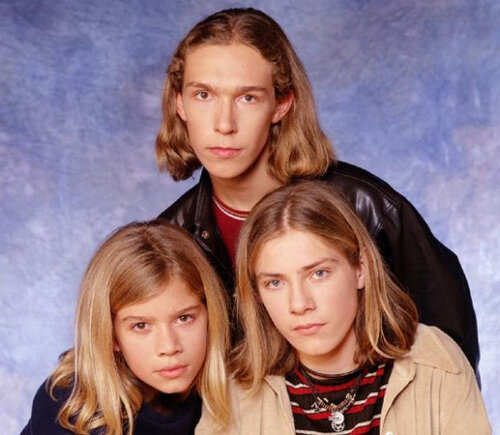
a regular feature, but there are songs that some people might consider guilty pleasures and, for that reason, they do not get much play on radio. Others might feel that the song is a bit out of step with modern sounds, so you do not hear much about it. To be fair, I think Hanson’s MMMBop captured a sound that we do need more of today! I was thirteen when the song came out in 1997 and, as a high school student, music was more than just something that was on in the background. To me, it was a way of life, a conversational centrepiece, and a way of making life a lot easier. In 1997, there were a few reasons why Hanson’s MMMBop hit me quite hard – and many people I knew. Look at the best albums of that year, and Hanson sound unlike anything really! We has Radiohead (OK Computer), Björk (Homogenic) and The Chemical Brothers (Dig Your Own Hole) putting out these albums that were a little darker and moodier than what was in the mainstream; Britpop was sort of declining and Oasis’ Be Here Now, whilst it received a rapturous reception when it was released, in hindsight, was not their greatest moment. In terms of U.K. singles, there was some Pop in the mix – the Spice Girls, Lisa Stansfield and The Cardigans all had singles out -, but it was clear that there was a change in the air. From the euphoria of late-1980s and early-1990s Dance and Rave to the Britpop movement, a noticeable transformation was a occurring. Because of that, I think I clung onto Hanson, as it was a sort of American injection of Britpop, at a time in my life when I still needed that uplift and optimism.

Politically, Labour came to power and there was optimism about the future, but it seemed that artists were reacting against Britpop and, as such, we did not see as many joyous anthems as we did between, say, 1991 and 1996. Taken from their excellent Middle of Nowhere (1997) album, MMMBop was written by band members, Isaac Hanson, Taylor Hanson, Zac Hanson…and that is pretty impressive in itself! Normally, when you have a Pop group that young – they were teens when that album came out –, there are other writers and producers crammed together who are charged with coming up with a hit. On Middle of Nowhere, that does happen on most of the tracks, but it is normally one or two writers on each song, rather than the horde you see on so many albums to this day! The Dust Brothers’ production turned MMMBop from a song that started out a lot softer and slower, and it was transformed into a Sunshine Pop monster! The song was nominated for two gongs at the 40th Annual Grammy Awards, and it is the band's most successful single to date. MMMBop was a major success worldwide, reaching number-one in Australia, Canada, Germany, New Zealand, the United Kingdom and the United States – it hit the top spot in twelve countries altogether! Whilst their album contained few songs as strong and catchy as MMMBop, they had Where’s the Love, another hugely catchy track, and Thinking of You.

sss.jpg

I think Middle of Nowhere is one of the more underrated albums of the 1990s, and a big part of its success is MMMBop. Even though some polls have placed the songs in their top-hundred tracks of the 1990s, I think MMMBop gets sneered at by some, whilst one hardly hears it on the airwaves! That is a shame. In an August 2004 interview with Songfacts, Zac Hanson explained the song's origins:

“That song started out really as the background part for another song. We were making our first independent album and we were trying to come up with a background part. We started singing a slightly different incarnation of what is now the chorus of "MMMbop." That sort of stuck in our heads and never really worked as a background part, and over a couple of years, that piece really has stuck in our heads and we really crafted the rest of the song - the verses and bridge and so on.

What that song talks about is, you've got to hold on to the things that really matter. MMMbop represents a frame of time or the futility of life. Things are going to be gone, whether it's your age and your youth, or maybe the money you have, or whatever it is, and all that's going to be left are the people you've nurtured and have really built to be your backbone and your support system.

They [the lyrics] weren't inspired by one artist in particular. The first music that we got into was '50s and '60s music. If anything, "MMMbop" was inspired by The Beach Boys and vocal groups of that era - using your voice as almost a doo-wop kind of thing. It was something we almost stumbled upon [3]“

I do think MMMBop is a Pop classic, and it is far more substantial than many people think. One hears the title’s word repeated and feels that it means nothing; they hear the sunny chorus and dismiss it as a sugary Pop song. Right from the first verse, the then-teen Hanson brothers were penning lyrics about love, ageing and the uncertainty of life with a lot of maturity and insight – “You have so many relationships in this life/Only one or two will last/You go through all the pain and strife/Then you turn your back and they're gone so fast”. The lyrics are delivered quite fast, so it can be hard deciphering a few of them – it makes me think that MMMBop would make a very interesting ballad! There is that contrast between the deeper and more image-provoking verses, and the chorus itself: an explosion of singalong bliss that, twenty-three years after its release, still sound so fresh and essential! A lot of Pop from the 1990s hasn’t dated that well and, to be frank, I can listen to the songs a few times and not need another look in for a while! I can spin MMMBop over and over, as it never outstays its welcome. That alluring and insatiable chorus keeps you coming back in; the nuanced and interesting lyrics mean the song demands repeated listens.

azzz.jpg

Consider lines like “Plant a seed, plant a flower, plant a rose/You can plant any one of those/Keep planting to find out which one grows/It's a secret no one knows”, and those are lyrics that puts one in a very philosophical mood! Not to hark back to their age, but those are some big and moving words from teenagers! I wonder, if MMMBop came out in 1994 or 1995, it would have been considered a sort of U.S. Britpop challenger!? The song got a lot of praise upon its release, but not many people I know look back on 1997 and rank MMMBop alongside the best music of the year. One cannot help get drawn to the song, and its video goes a long way to adding charm! The boys are seen in a variety of locations, just having fun and embracing the brevity of youth – we see them roller-skating, at a payphone, and even on The Moon! The pairing of that smile-inducing video and a song that is sunny and mature makes MMMBop a treasure. It is seen as a guilty pleasure by some, and others just ignore it as a minor track from the 1990s. It is so much more than that! Have a listen to it now, and I guarantee the song will put you in a better mood and, to boot, it will stick in your head for ages! The album, Middle of Nowhere, was an accomplished debut, and I like the fact that Hanson have performed MMMBop since then. It is a song that they feel very proud of, even if it is a little strange seeing the grown-up brothers singing this song that one associates with youthfulness and a past time! The mighty MMMBop deserves more love and reinvestigation as it is a…

BEAUTIFUL song that I can’t get enough of.

FEATURE: In My Life: Desert Island Discs and the Songs of Youth

FEATURE:


In My Life

aaaa.jpg

IN THIS PHOTO: Ian Wright appeared on Desert Island Discs in February, in one of the most celebrated and emotional episodes of recent years/PHOTO CREDIT: BBC 

Desert Island Discs and the Songs of Youth

___________

THOUGH I have written about nostalgia before…

IN THIS PHOTO: BBC Radio 6’s Lauren Laverne is the current host of Desert Island Discs - she took over from Kirsty Young in 2018/PHOTO CREDIT: Chris McAndrew for The Times

I wanted to approach it from a different angles. Through lockdown, I have been listening to a lot of Desert Island Discs, which is hosted by Lauren Laverne. I have been following the series for a while, but I love how there is an archive of the previous episodes so, amazingly, we can go back years and years and hear these vintage editions! That is quite rare as, for most other shows and radio stations, stuff is only archived for thirty days on BBC Sounds, and then it goes away. Explorer Steve Backshall was last on Desert Island Discs, and he was talking about his life experiences, but how music played into them, and what various songs mean to him. Although a lot of the castaways choose songs from more-recent times to score important memories, there does seem to be this window we all have, where music is formative and plays a much bigger role than it does later in life. I think we have all fantasised about appearing on Desert Island Discs, as we have these special songs that have meant so much. This article explains how Desert Island Discs has been studied, and research has shown that there is this band of time where music plays its biggest role in the lives of the castaways:

“Researchers at the University of Westminster and City University of London analysing the music record choices of guests on BBC Radio 4's Desert Island Discs programme has found that the music we listen to between the age of 10 and 30 define us for the rest of our lives.

Music from this time which the researchers call 'self-defining period' connects an individual to the people, places, and times that are significant to their identity. The study reveals that people imagining themselves in isolation not only prefer music reminding them of a time when they were aged between 10 and 30, but also they are most likely to choose music that reminds them of an important person playing to the sense that someone is with them, or an important turning point in their life as a powerful way to strengthen their sense of self.

PHOTO CREDIT: @denissadevy/Unsplash

In Britain's longest running radio programme guests are invited to imagine they are being cast away to a desert island and are asked to choose eight records to take with them. The researchers analysed the responses of 80 Desert Island Discs guests to reveal how people choose music that is important to them and whether they are more likely to select music from a particular time in their life if they can choose anything they like.

Half of all musical choices were seen to be important between the ages of 10 and 30, a period that has been commonly known as the 'reminiscence bump'. However, this new study reveals that it is more helpful to think of this period as a 'self-defining period' because it is characterised by enduring memories that support our sense of who we are. They suggest that listening to music is typically a key feature of this age and that music is also intrinsically linked to the developing self.

The power of music in identity formation is well-demonstrated through the reasons why people select certain records on Desert Island Discs. The most frequent reason for choosing a song (17%) was that it reminded the guest of their relationship with a specific person, such as a parent, partner or a friend, followed by a memory of a period of time (16.2%) such as reminding someone of their childhood or "remembering playing this at home over and over again". The third most popular explanation for choosing a record was the song's connection to specific memories relating to the formation of identity through life-changing moments (12.9%). Such reason was given by Bruce Springsteen, who said that the Beatles song "I want to hold your hand" had inspired him to pick up the guitar and start a band.

PHOTO CREDIT: @kpebedko_o/Unsplash

Professor Catherine Loveday, Neuropsychologist at the University of Westminster and Lead Researcher, said: "Guests frequently chose songs because they were related to important memories that occurred during teenage years. This extends previous findings by showing that music from this time has particular meaning, primarily because it relates to memories from this very important developmental period of our life. Unlike previous studies, this study shows that this occurs even in a completely naturalistic setting, where people are not constrained by experimental settings and have a completely free rein on their musical choices.

"Because the premise of the programme is that people imagine themselves in isolation, this research has relevance to anyone who becomes isolated, including during lockdown measures in the current coronavirus pandemic, or who becomes displaced from their everyday environment, such as residents in care homes, refugees or hospital patients".

I am pretty similar when it comes to music: the majority of the most impactful tracks to me occurred after the age of ten and before the age of thirty. I would say that my parameter is probably from the ages of eight to twenty, but it is clear that childhood and adolescence is a very vital period where music helps us through tough times - and it seems to burrow into the mind, whether obviously or subconsciously. One of the great things about Desert Island Discs is hearing how songs many of us love mean different things to very different people. Whether you have an actor or director on the show or an academic or sports personality, these tracks the likes of you and I love have a very special place in their hearts.

1aa.jpg

IN THIS PHOTO: Ruth Jones was a castaway on Desert Island Discs in 2019/PHOTO CREDIT: BBC

It is wonderful to have this sort of bond with the castaways, though thousands of people share it too! I do love the interview part of each Desert Island Discs episode, but I am always extra-curious about the musical choices, and why a particular song resonates. It got me thinking about that study and why music from castaways and, well, everyone matters that much more when we are young or moving through adulthood, rather than later in life or when we are in primary school. Perhaps we are a bit young and inexperienced to attach importance to music when we are very young, and our minds might not work that way. When one reaches middle age, I guess one forms fewer transformative memories, and we often go back to the tracks we grew up with rather than taking to heart new songs. That 'reminiscence bump' is important to me and so many people, because we can look back and think about how music moved and shaped us when we were younger. Maybe most of us are not going to make it onto Desert Island Discs but, secretly, we all have our eight discs, book and luxury lined up, just in case that call ever comes through! Think about the songs that I would select and, yes, they all come from the ages of ten and thirty – maybe there would be one that is a little more recent. I was keen to explore reminiscence and at what ages music really digs deep but, also, I want to salute the ever-brilliant Desert Island Discs which, decades after it started, remains…

aaaa.jpg

IN THIS PHOTO: James Rebanks appeared with Lauren Laverne on Desert Island Discs in 2019/PHOTO CREDIT: BBC

SUCH an institution.

FEATURE: Love and Anger: Why the Mystery and Tension Around Whether Kate Bush Will Release Another Album Is Pointless

FEATURE:


Love and Anger

sa.jpg

IN THIS PHOTO: Kate Bush in a promotional shot for 2011’s 50 Words for Snow (‘Creating Wild Man’)/PHOTO CREDIT: John Carder Bush

Why the Mystery and Tension Around Whether Kate Bush Will Release Another Album Is Pointless

___________

I am going to start with an article…

IN THIS PHOTO: Spotify’s CEO Daniel Ek

that I sourced from last weekend - as I talked about the demands and misguided expectations of executives in the music industry. The article has caused quite a stir in the music world, and rightly so! The suggestion was, from Spotify’s CEO Daniel Ek, that artists need to engage more with their fans and cannot rely on putting an album out every few years. Music Radar explains more:

“Despite the fact Spotify is still not making money, critics continue to suggest it's not paying musicians enough in royalties for the streaming of their music on its service. And Music Ally's new with interview CEO and founder Daniel Ek's is unlikely to win them around any time soon.

The interview followed the announcement of Spotify's Q2 numbers, and the billionaire Swede suggested that the royalties offered by company's business model are not the issue, and it's really a question of volume and marketing when it comes to musicians' output.

“There is a narrative fallacy here," said Ek, "combined with the fact that, obviously, some artists that used to do well in the past may not do well in this future landscape, where you can’t record music once every three to four years and think that’s going to be enough.

"The artists today that are making it realise that it’s about creating a continuous engagement with their fans. It is about putting the work in, about the storytelling around the album, and about keeping a continuous dialogue with your fans".

I can understand why some would feel putting an album into the world regularly would be possible and advisable. Look back at decades past, and some of the biggest artists ever would be releasing an album every year or so. If artists were to commit to an album or new music so regularly, they would not be able to tour, and there would be very little in the way of quality control. Whilst releasing one album every five years might seem excessively infrequent, what is the perfect time period!? It is hard to say, but it is rich for a very wealthy boss like Ek to say that artists need to step up when he is not an artist! Every artist, whether they are established or new, has their own plan, and I think there are definitely risks when it comes to leaving it too long before putting music out. I think some of the best and most rewarding albums produced have happened because artists have left things long enough so they can ruminate and take their time let the muse strike. This takes me, rather ineloquently, to the subject of Kate Bush. Last week (on 30th July), she celebrated her birthday, and thousands of fans took to the Internet to praise and pay tribute to her. It is amazing to see all the love that was poured forth! I don’t think there is any other artist that has received so much love on their birthday – maybe someone like Paul McCartney or Madonna, but there aren’t many!

a.jpg

IMAGE CREDIT: Lance Unrau

Not only was Bush’s birthday a chance for people to list their favourite songs and albums of hers but, at the same time, many were asking when she would be returning with a new album. I can appreciate why some fans would feel a little tense and, at times, angry that there has not been a new Kate Bush album since 2011. Complex wrote an article last week that highlighted Bush’s impact on other artists, but they also implied that she had vanished:

"My life and my work are very interlocked. That's partly why I like to keep my private life private,” Kate Bush said in 2005. Privacy is an integral part of the British pop star’s nature. She rarely updates her social media accounts, her latest published interview was in 2016, and her last tour was in 1979. When it comes to projects, Bush has always followed her own agenda. Her most recent album was released nine years ago and came six years after the album before that. In other words, being a fan of the singer-songwriter is a never-ending waiting game supplemented by diving into the 10 studio albums she’s produced so far. Bush’s extensive discography, which has been described as complex and ethereal, has the range to keep fans immersed, no matter how lengthy the waiting period.

For the last three decades, Bush has been crowned the queen of art-pop without ever winning a Grammy or touring after the releases of new albums. You won’t catch her in the audience at an award show or giving lengthy interviews on a talk show. In fact, it isn’t even certain where she is spending her time, but many fans assume she’s tucked away somewhere in South Devon. With her pioneering legacy of experimental sound, masterful storytelling, and unconventional lyrics and structure, Bush’s influence in the music industry has stretched across genres and borders. “Kate Bush has always been a typewriter in a renaissance," Boy George explained. "She appeared out of nowhere at the tail end of punk and sort of embodied the punk spirit by just being completely herself. She blew things apart with things like ‘Running Up That Hill’ because it defied the classic logic of pop.”

After Bush’s seventh album in 1993, The Red Shoes, she took a 12-year hiatus. The break can be attributed to the birth of her first son in 1998, which was even kept a secret until two years later when it was revealed by Peter Gabriel during an interview. A nine-year hiatus followed that, pushing the idea that Bush had become a recluse and was nearing her final years in music. Whether that be true or not, her eclectic music style has yet to go out of fashion.  

Even modern film has made space for the work of Bush. The iconic sex scene in Love and Basketball wouldn’t be nearly as steamy or moving without Maxwell’s cover of “This Woman’s Work.” More recently, “Running Up That Hill” was coined as a symbol of Angel and Stan’s relationship in Pose. Even “Cloudbusting” and Bush’s original “This Woman’s Work” helped set the tone in The Handmaid’s Tale”.

Whilst some media sources asked whether Bush had vanished others, like Graeme Thomson – the Scottish author wrote her biography, Under the Ivy: The Life & Music of Kate Bush, and he looked back at her productivity in the first and second thirty-one years of her life and asked what comes next. I think many are genuinely curious and patient, but there are those who feel like Bush has disappeared and will not return. I have been one of those people who has asked whether we will get a Kate Bush album in 2020. It seems unlikely considering it is August, but I feel the best thing about waiting for a new album is the impact it has when you finally get to hear it! Books have been written about Kate Bush’s life and how there is a long wait between some of her albums. - or how she seems to sort of fade into the mist After 1993’s The Red Shoes, there was a twelve year wait until Aerial. After that, there was six years until Director’s Cut. It has been almost nine years since 50 Words for Snow in 2011.


As we are lockdown-ed and there is no saying when things will return to normal, it seems like the perfect opportunity for Bush to concoct and percolate ideas. I can imagine that studio time has been a part of her 2020, and it would have been a shame if she felt rushed into releasing an album so soon after 50 Words for Snow. Returning to the opening paragraph regarding Spotify’s CEO and how artists need to constantly engage; I guess not everyone is in the same position as Kate Bush, but I think there is too much pressure on all artists to churn out albums and, if they had a hit with their last album, to get back into the studio and follow it up. Bush faced that sort of pressure at the start of her career, and she released two albums in 1978 – The Kick Inside (her debut), and Lionheart. She felt that this was a mistake and, after some degree of expectation and push from EMI, it led to 1979’s The Tour of Life: not only a chance to get her albums’ material on the stage, but chance for her to assume some control and have a say regarding the next step in her career. Between 1978-1993, Bush put out seven studio albums, toured the world in 1979, and there were countless T.V. appearances, interviews, and events. It was an exhausting for her, and that was a big reason why she stepped away from music in 1993 – her mother also died in 1992, and her long-term relationship with Del Palmer broke up not too long after: a twin blow for an artist who desperately needed a break.

Whilst Bush has said she feels frustrated at how long it takes her to release albums, the wait between The Red Shoes and Aerial was worth the wait! I am not the only one who thinks that, and it allowed Bush the chance to start a family (her son, Bertie, was born in 1998) and re-evaluate. The double album she gave to us in 2005 was incredible! The sort of impatience and speculation that accompanies any long pause between albums directly links into this misconception that Bush is a recluse. This is a tag that has followed her for most of her career. The fact she does not attend galas and court press attention is why some think that she is hidden away and does not go outside! The truth of the matter is much simpler: she is trying to lead a normal life and, after years of working tirelessly, Bush has earned the right to create and release albums at her own pace. In an interview with The Guardian in 2005, Bush tackled the subjects of being viewed as a recluse and why she takes so long between albums:

“So, do the rumours bug you? That you're some fragile being who's hidden herself away?

"No," she replies. "A lot of the time it doesn't bother me. I suppose I do think I go out of my way to be a very normal person and I just find it frustrating that people think that I'm some kind of weirdo reclusive that never comes out into the world." Her voice notches up in volume. "Y'know, I'm a very strong person and I think that's why actually I find it really infuriating when I read, 'She had a nervous breakdown' or 'She's not very mentally stable, just a weak, frail little creature'."

zx.jpg

IN THIS PHOTO: Kate Bush in 1993/PHOTO CREDIT: Guido Harari

This is how 12 years disappear if you're Kate Bush. You release The Red Shoes in 1993, your seventh album in a 15-year career characterised by increasingly ambitious records, ever-lengthening recording schedules and compulsive attention to detail. You are emotionally drained after the death of your mother Hannah but, against the advice of some of your friends, you throw yourself into The Line, the Cross & the Curve, a 45-minute video album released the following year that - despite its merits - you now consider to be "a load of bollocks". You take two years off to recharge your batteries, because you can. In 1996, you write a song called King of the Mountain. You have a bit of a think and take some more time off, similarly, because you can.

If the completion of Aerial put paid to one set of anxieties for Bush, then its impending release has brought another - not least, a brace of newspaper stories keen to push the "rock's mystery recluse" angle. It seems the more she craves privacy, the more it is threatened. "For the last 12 years, I've felt really privileged to be living such a normal life," she explains. "It's so a part of who I am. It's so important to me to do the washing, do the Hoovering. Friends of mine in the business don't know how dishwashers work. For me, that's frightening. I want to be in a position where I can function as a human being. Even more so now where you've got this sort of truly silly preoccupation with celebrities. Just because somebody's been in an ad on TV, so what? Who gives a toss?"

All of this considered makes me glad that there is no news of a new album! The past few months has been a very strange time, and a lot of changed in Bush’s life since her last studio album came out. Maybe she has written an album’s worth of songs, or there may be a couple of songs recorded. It is the distinctly unhurried approach to releasing albums that makes her so fascinating and admired. Rather than post tweets and teases regarding new songs and sharing silent videos ahead of an album coming out, Bush shuns the current-day promotional cycle where every morsel of an album needs to be shared and pushed to everyone! Bush’s last two studio albums – excluding Director’s Cut – have been, debatably, two of her strongest-ever albums, and they are more resonant and long-lasting than some of her material when she was at the peak of her career. That not only shows that Bush grows stronger with age, but time to cultivate and germinate at her own pace leads to phenomenal music of the highest order! The recluse tag will always follow her around, but Bush is the model of domesticity and normality.

IN THIS PHOTO: Kate Bush in 1989/PHOTO CREDIT: Guido Harari

At a time when artists are being judged by the CEO of Spotify and there is a certain level of expectation from fans and record labels, someone like Kate Bush no longer feels the need to promote herself endlessly and put albums out to please the label. The fact she has her own label, Fish People, also means that she will not be getting polite reminders from EMI that it has been a while since 50 Words for Snow came out! Whether she chooses to release another album or not is up to her, and there is a wonderful joy in imagining what Bush is doing, what her next release will sound like and what might be. In any case, I think the birthday wave of affection she received last week shows that Bush has won the hearts of millions and has earned herself the right to whatever she likes! The always-adored and intriguing Kate Bush remains the subject of conversation, appreciation, and speculation…

OVER four decades after her debut album.

FEATURE: Spotlight: Another Sky

FEATURE:


Spotlight

sssaakisis.jpeg

Another Sky

___________

I have said it in previous outings of Spotlight…

but the band market is one I have ignored for a while. I have always been more attuned to solo artists however, this year, there are some terrific bands emerging that have turned my head! Though Another Sky have been playing for a few years now, the fact their debut album is coming very soon is a big reason to highlight that – I shall end the feature talking about that. From the sumptuous, almost choir-like vocals to the delicate piano, All Ends is a song that suggests the album, I Slept on the Floor, is going to be one of the best from 2020! It is a bit early to say this, but I would not be surprised if the album is nominated for a Mercury Prize next year – the shortlist for this year’s prize has just been announced. In Catrin Vincent, Another Sky has an amazing vocalist: shades of London Grammar’s Hannah Reid can be heard, yet Vincent is much more haunting and striking, I feel. So, then…who are the band? Here is some useful biography:

“When you listen to Another Sky, it’s probably Catrin Vincent’s voice that’ll catch your attention first. It is a weapon – peculiar, androgynous, lurching and defiant – that she wields to beautiful, evocative effect. When Guardian music critic Caroline Sullivan saw the band perform at The Great Escape this year, she tweeted, “I'm almost dumbstruck by the singer – she has the strangest, most haunting voice I've heard in ages.” Catrin is delighted that people find it so strange. “A lot of people think I’m a man,” she laughs. “I think people are embarrassed when they initially think it’s one of the guys singing, but I love it. It’s like I’ve got two voices – there’s this soft, whispery voice that can go really high, and then suddenly there’s this angry chest voice. Somewhere along the way, I drew two voices together.”

Catrin’s unusual vocals certainly caught the attention of her future bandmates – drummer Max, bassist Naomi and guitarist Jack – when they were studying music together at Goldsmiths University. Before they came together to form Another Sky (which is named after an Emily Dickinson poem), “we were all just drifting,” says Catrin. But as soon as they found each other, something clicked. “We started by jamming, and songs would come out of just hours of jamming. Then I would put the melody and lyrics down. It’s really collaborative, no-one’s really in charge. I think that’s the best thing about it.”

Their varied but complimentary tastes helped create their inimitable sound. Max was inspired by electronic artists such as Four Tet and Bonobo; Naomi’s bass lines were influenced by Mutemath and Radiohead; Jack drew from bands like Coldplay and Talk Talk, and Catrin most connected to storytellers like Joni Mitchell. When they rehearsed, they would do so in total darkness. “The studio was on the main New Cross road, where ambulances and police cars go past all the time, and there was this really high window. You’d be in total silence and darkness, but there’d be blue lights flashing past. It was a gorgeous, atmospheric environment.” Until recently, they performed in darkness too. “I think it was just to place the focus completely on the music,” says Catrin, “so it wasn’t this spectacle of me being the singer at the front. We wanted to be anonymous, and just make it all about the music.” Now, they’re willing to let themselves be a little more visible – they’re no longer anonymous, and they show themselves on stage, albeit in silhouette – but that darkness still firmly resides in the music”.

I have been listening back to Another Sky’s previous work, and I am amazed by how far they have come. They were simply amazing to start, but their music has become even brilliant as time has progressed. If you need a band to follow that will, no doubt, unveil one of the year’s finest albums, then tilt your head in the direction of Another Sky. Looking online, and there is not as much press and kudos out there as there should be, in terms of spotlighting. I think Another Sky are going to go a very long way, and they are primed for massive success; I think they will definitely establish a big market in the U.S. Last year, in their ‘Class of 2020’ series, DIY spent some time promulgating the wonder of Another Sky:

“It’s not often that an unknown new band finds themselves plonked into the infamous rotating cast of Later… with Jools Holland, in amongst jazz supremos and chart-toppers. But back in October last year, that’s exactly where Another Sky made their first break into the public consciousness. Needless to say, it was a bit of a moment.

It’s in the time since, however, that the London-based quartet have found themselves growing all the more powerful. While they were quick off the blocks with a series of dynamic and intoxicating tracks – including the tirade against the 1% of the darkly driven ‘Chillers’ - it’s been over the last twelve months that they’ve spent time building themselves into an even more intense prospect.

“It’s just been non-stop, really,” reflects front woman Catrin Vincent. “We really had to get down and grind, as they say. Or no one says… I’ve never heard that before in my life!” she laughs. “We’re all still working, so it’s literally been [about] every chance we get, being in the studio, practicing for gigs, going on tour…”

A quick glance across their recent gig schedule and social media proves as much. Alongside the release of second EP ‘Life Was Coming In Through The Blinds’, the quartet have spent much of their year performing on both sides of the Atlantic. “[We went on] a US tour which was actually quite successful,” she continues. “We didn’t think anyone would turn up at the shows, but then there were people singing the lyrics. That was really, really cool”.

Looking at the band’s social media channels, and they are pumped the album is just around the corner and, more than a debut album, it seems like this has been a real dream for them. It will be interesting to see how their sound expands into a full release, as E.P.s such as Life Was Coming in Through the Blinds (released last year) showed immense promise. That E.P. was one that I heard and fell in love with! It gained some positive reviews and, as this one shows, their music is immersive and affecting, and it does reward repeated listens:

“The EP contains their two previous singles, the wonderful  ‘Apple Tree‘ and  ‘The Cracks’ alongside the EP’s title track and ‘ I Don’t Hate You’

The title track is probably their most disorientating track to date, and it does take a few listens to actually grasp it, it’s a swirling sonic soundscape that completely envelopes the senses. The EP finishes with the darkly brooding cinematic ‘ I Don’t Hate You’ which kind of sums up the Ep’s ethos which focuses on resilience and celebration in the darkest of times, loosely inspired by ‘The Wisdom Of No Escape’, by Pema Chodron. It also represents the next stage in Another Sky’s development as they continue to push the boundaries, challenges the listener’s expectations and in doing so make a sound that is uniquely their own”.

This sort of takes us to the here and now. The band have some gigs planned for later this year and next year, and I do hope they get to fulfill them, as their music is gaining a lot of traction, and they have an ever-growing fanbase behind them. I love their sound, and it has a dreaminess and weight that definitely remains in the mind and gets into the blood. I Slept on the Floor is going to be one of the most-anticipated albums of 2020, and I cannot wait to see the reviews pour forward. Go to the band’s official website to pre-order your copy now. DIY caught up with the band in June as they were preparing to release the single, Fell in Love with the City:

“Woohoo! Another Sky have announced that their debut album ‘I Slept On The Floor’ is set to land on 7th August via Fiction Records, and they’re sharing brand new single ‘Fell In Love With The City’ to celebrate too!

Speaking on the new single, Catrin Vincent explains, “I hate breakup songs. I don’t know why, it’s the most universal feeling. Maybe because the world has so many of them. Moving to London was a dramatic shift from small-town life where it didn’t even occur to me I could do music, where this vision of me as a housewife who never amounted to anything felt inescapable, in to a bigger world, of people from all over, of new ideas and a new version of myself.”

Talking more about the album, Catrin also shared the following statement,

“People say I sound like a man. Maybe that means they’ll listen.

‘I Slept On The Floor’ is an amalgamation of the ever-shifting life I have shared with Another Sky over the last six years, searching for resolution between my hometown-self and the self a new city brought me. It was why in 2017, at St. Pancras Church, Another Sky performed in the dark as silhouettes, big illuminated circles behind each of us.

People left asking if the singer was a woman or a man. I wanted to ask why it mattered.

I wanted the band to be a mirror, reflecting the darkness back at itself. I thought I had found myself in that darkness.

I grew up in a white picket fence town with a fear of beds, preferring to sleep on the floors of bathrooms in case I got sick at night. My anxiety was so suppressed, so unacknowledged by my environment that my body broke to get my attention. I became very unwell. My body tried to tell me, “you can’t mould yourself into their ideal,” but I didn’t know there was an alternative. I was malleable soil instead, filling a vase, growing into a shape I couldn’t see.

You can’t see the walls around you if they look like the edges of the Universe.

In 2013, I moved to London and thought I’d found a bigger, better vase. Suddenly I was exploding into a world of a million possibilities, but rather than finding myself bursting at the seams, I couldn’t find the edges of myself at all.

Just as my hometown had shaped me, so did London begin to. Among the rising rents and an increasingly hostile political landscape, the pressure to define my limits grew. The world didn’t stop breaking me down just because I had moved on from the confines of my childhood.

I Slept On The Floor documents the childhood rejection we carry with us into adulthood. This album is about only understanding a place once you’ve left it”.

I wish the band the best of success, but I am sure they will not need it! Their music is phenomenal, and they will only get stronger as the years go by. I feel their debut album is one you cannot afford to miss out on. If you need a new band to follow, then I think you can’t go wrong with the mighty Another Sky. This simply amazing act are preparing to release a stunning debut album, and I just know there is going to be a lot of success for them…

ON the horizon.

______________

Follow Another Sky

FEATURE: Vinyl Corner: Enya - Watermark

FEATURE:


Vinyl Corner

Enya - Watermark

___________

I can’t think of another artist…

quite like Enya! Perhaps people know her only for the hit, Orinoco Flow, but many do not know the album it came from. Watermark is the second studio album from County Donegal-born artist, and I remember, just about, Orinoco Flow, being everywhere when it came out. It was one of those songs that was entirely different from anything around. Maybe it is the mood of the piece, or the Celtic flows; the beauty of Enya’s voice, or everything combined! Whatever it was, I was hooked! I would encourage people to buy Watermark on vinyl, as it is a great album that not many people talk about now, but it is one of the best from the 1980s. Released on 19th September, 1988, Enya secured a contract with Warner following the release of her eponymous debut album of 1987. Her contract granted her the creative and artist freedom she needed. Unlike a lot of big labels, Enya was not being moulded and directed. There was not a deadline to have the album ready so, with few restrictions and pressures, she was not watching the clock or having her ideas rehashed or dismissed. Because of that, I think there is a real sense of consistency, authenticity and openness on Watermark. Enya recorded Watermark with her longtime collaborators, manager, producer and arranger Nicky Ryan and his wife, lyricist Roma Ryan. It was a bountiful collaboration and, within ten months, they had this masterful album on their hands! Evening Falls…, Storms in Africa, and Exile were also released as singles from the album.

Orinoco Flow hit number-one in many nations (including the U.K.) and, though the remaining singles did not chart as well, the album itself received acclaim and big sales. Few would have expected such an unconventional and uncommercial album to sell well. Even to this day, one might label Watermark a ‘World Music’ album, or something quite niche. Perhaps it was the popularity and accessibility of Orinoco Flow that helped make the album a success but, when you listen through, there are a lot of great songs that carry the same emotion and majesty as that track. Watermark reached number-five on the U.K. album chart, and it was certified quadruple platinum by the British Phonographic Industry (BPI) and the Recording Industry Association of America (RIAA) for shipments of 1.2 million and four-million copies across the United Kingdom and the United States respectively. I think there are a few aspects that define the album. The layered and gorgeous vocals from Enya are a big reason why her music is so addicting and striking. The influence of Celtic music was quite new to a lot of people in 1988, and it helped establish that style of music to a new audience. Away from the traditional sounds and mainstream tracks, Watermark is an album that provided a fascinating alternative. Many might know Enya from Clannad - her family's Celtic band, in the early-1980s –, and she was influenced by The Beach Boys and their vocal harmonies, in addition to Phil Spector’s Wall of Sound technique.

I think Watermark would be less mesmeric if there were few layers; the fact we get to hear waves of vocals raises the songs to heavenly heights. One can well imagine the number of vocal takes Enya would have gone through…not only to get the songs sounding how she wanted them, but to experiment and see just where she could take her voice! Watermark is one of those albums not necessarily defined by the singles. Whilst they are exceptional, there is so much gold to be found, with songs like Cursum Perficio, and Na Laetha Geal M'óige as appealing and memorable as the singles. It was that lack of a deadline that meant Enya was able to work on tracks and come back to them if needs be. Orinoco Flow was the final track recorded for Watermark, and it was a difficult one – with Enya taking a break and having to come back to it. Watermark is one of those albums that is not ranked with the best albums of the late-1980s, and that is unfair. If you have a moment spare and can afford the vinyl, it will not disappoint! It is a fantastic album, and it is both calming and uplifting. The reviews for Watermark – aside from a few mixed ones – have been glowing and positive. This is what AllMusic said in their review:

“Thanks to its distinct, downright catchy single "Orinoco Flow," which amusingly referenced both her record-company boss Rob Dickins and co-producer Ross Cullum in the lyrics, Enya's second album Watermark established her as the unexpected queen of gentle, Celtic-tinged new age music. To be sure, her success was as much due to marketing a niche audience in later years equally in love with Yanni and Michael Flatley's Irish dancing, but Enya's rarely given a sense of pandering in her work.

She does what she does, just as she did before her fame. (Admittedly, avoiding overblown concerts run constantly on PBS hasn’t hurt.) Indeed, the subtlety that characterizes her work at her best dominates Watermark, with the lovely title track, her multi-tracked voice gently swooping among the lead piano, and strings like a softly haunting ghost, as fine an example as any. “Orinoco Flow” itself, for all its implicit dramatics, gently charges instead of piling things on, while the organ-led “On Your Shore” feels like a hushed church piece. Elsewhere, meanwhile, Enya lets in a darkness not overly present on The Celts, resulting in work even more appropriate for a moody soundtrack than that album. “Cursum Perficio,” with her steady chanting-via-overdub of the title phrase, gets more sweeping and passionate as the song progresses, matched in slightly calmer results with the equally compelling “The Longships.” “Storms in Africa,” meanwhile, uses drums from Chris Hughes to add to the understated, evocative fire of the song, which certainly lives up to its name. Watermark ends with a fascinating piece, “Na Laetha Geal M’Oige,” where fellow Irish modern/traditional fusion artist Davy Spillane adds a gripping, heartbreaking uilleann pipe solo to the otherwise calm synth-based performance. It’s a perfect combination of timelessness and technology, an appropriate end to this fine album”.

I really love Watermark and, whilst Enya did not quite hit the same peaks on future albums, her latest studio album, 2015’s Dark Sky Island, shows that she still has plenty of terrific songs up her sleeves! Watermark is a tremendous album, and hearing it on vinyl is very special indeed. I just want to bring in one more review before moving along.

This article raises some interesting observations:

"On Your Shore" is a love poem about a past not easily forgotten. Enya's daydreamy trips to her homeland cause listeners to recall homes they have left behind. It's a bittersweet journey.

Enya may delve into folk and traditional harmonies, but that doesn't mean she can't get commercial. Her single "Orinoco Flow" is as catchy as anything on radio today. She sings of global travel while her overdubbed harmonizing urges her on: "Sail away, sail away, sail away”.

Enya's instrumental songs are simple and pleasant musical ideas but are overshadowed by the strength of her more fully realized vocalworks. Her singing is so strong that it is painfully obvious when she isn't singing.

Then there is "Na Laetha Geal M'oige," one of the most beautiful melodies recorded by anyone recently. Enya s breezy voice flows around subtle synthesizers, bridged by a mournful Irish piper. Although the lyrics are Gaelic, they are sung with such conviction and warmth that translations aren't necessary.

Enya is a hard-to-label artist. Although some of her work is New Age, her singing demands attention. You can't ignore her voice regardless of volume

The fact that this is a digital recording only heightens the ambiance she brings to the compact disc. Her every breath becomes an instrument that adds to her vocal orchestra. Watermark is more than an album of songs: It is a work of art”.

I will leave it there, but go and get Watermark if you can or, failing that, stream it. I think we all need a bit of soothing and calm, and you get plenty of that on the album, but there is ample spirit and rush! It is clear that Watermark is…

A wonderful aural treat.

FEATURE: Islands in the Stream: Will Spotify Ever Put Artists First?

FEATURE:


Islands in the Stream

IN THIS PHOTO: Spotify’s billionaire CEO, Daniel Ek, said this week that artists “can’t record music once every three to four years and think that’s going to be enough”; his comments attracted a huge backlash on social media/PHOTO CREDIT: Oru Yamanaka/Getty Images

Will Spotify Ever Put Artists First?

___________

BARELY a week goes by…

PHOTO CREDIT: @morningbrew/Unsplash

without Spotify upsetting artists, short-changing people, or making the news! I admit that I use it all of the times and pay a monthly fee, but I always have a sense of guilt thinking about how little artists are being compensated. Most artists put their everything into their careers, and they put out music as much as they can; keen to establish a continuing and close relationship with their fans. Daniel EK, the CEO of Spotify, came out this week and criticised artists who release albums every few years, arguing that they need to be more prolific if they want to connect with their fans and enjoy better revenues. This article from Far Out Magazine explains more:

“Daniel Ek, the CEO of Spotify, has waded into the debate about the financial status of the music industry amid major streaming platform dominance.

Artists have relentlessly spoken against the minimal financial gain from the creations, with a single stream typically earning a figure of $0,0032 per play which is then split between the record label, producers, artists, and songwriters.

Now, as part of new interview with Music Ally, Daniel Ek has voiced his opinion on the situation, urging artists to be more proactive in the continuous engagement with their fans.

“It’s quite interesting that while the overall pie is growing, and more and more people can partake in that pie, we tend to focus on a very limited set of artists,” Ek said in the interview before adding: “Even today on our marketplace, there’s literally millions and millions of artists. What tends to be reported are the people that are unhappy.”

xx.jpg

PHOTO CREDIT: @lgnwvr/Unsplash

His controversial comments continued: “In the entire existence [of Spotify] I don’t think I’ve ever seen a single artist [publicly say] ‘I’m happy with all the money I’m getting from streaming’,” he added. “In private, they have done that many times, but in public they have no incentive to do it. But unequivocally, from the data, there are more and more artists that are able to live off streaming income in itself.”

“You can’t record music once every three to four years and think that’s going to be enough. The artists today that are making it realise that it’s about creating a continuous engagement with their fans. It is about putting the work in, about the storytelling around the album, and about keeping a continuous dialogue with your fans”.

I think more and more, Spotify is isolating and marooning artists in the streaming sea - almost like dislocated islands with no real hope tourism. That may seem like a weird metaphor, but Spotify should be there to ensure that artists are connected to one another and their fans; that the artists are paid appropriately, and it shouldn’t be a platform where the mainstream artists are okay but everyone else has to struggle! At a time like this, your bigger stars will be okay financially, but they account for a very small percentage of the total market. It is the smaller artists not signed to big labels that rely on revenue from streaming, merchandise, and gig receipts. As artists are not touring and things have slowed down, streaming is becoming more relied-upon.

IN THIS PHOTO: Producer and musician Nigel Godrich is one of many who took to Twitter in response to Daniel EK’s remarks this week/PHOTO CREDIT: Kristy Sparow/WireImage

I know Ek and Spotify cannot afford to pay every artist a lot of money per stream, but to say that musicians need to be more productive and crank out albums regularly is insulting! It is unsurprising that so many people took to Twitter (and social media in general) to condemn Ek’s assessment. As a non-musician, he is unaware of the realities of the industry, and how artists struggle to make ends meet! When an album is out, artists need to tour it and, between records, they release singles and are out there as much as they can. If they were to put out albums every year, then that would mean they would not be able to play as much, and they would lose out financially. Maybe The Beatles were able to release an album a year, but the reality for the vast majority of musicians then and now is that they cannot do that! For one, they need to gather enough material and experience between records, rather than rush-writing whatever comes to mind – that would result in very poor albums. Also, touring can take a real toll on a musician, and Ek has little realisation what consistent gigging can do to an artist. Even though they love to bring music to the fans, there needs to be periods of downtime and recovery between tours, and it does not always mean that recording is the best next step. In any case, the negativity and anger that met his comments is quite right!

IN THIS PHOTO: The brilliant Nadine Shah took to Twitter to ask for change in light of Ek’s comments

This is someone who pays very little to artists when they release singles and albums but wants them to release them more regularly. Maybe an artist like Taylor Swift can benefit from releasing an album (folklore, 2020) so soon after her last (Lover, 2019) but even most mainstream artists leave it a couple of years or longer between records - the impact that releasing albums every year or two would have on their mental-health is worrying. For years, there has been questions as to whether Spotify needs to change its business model and think about the way it pays artists. Worryingly, I think Spotify is in danger of alienating musicians, who more and more are feeling like their voices are not being heard! This article from Music Ally discusses the subject of under-payment to artists, and how Spotify seem to be more invested in podcasts and the revenue they are bringing in from advertising:

“However, in 2020 more than any other year since Spotify launched, there’s been a surge of musicians talking publicly about their streaming royalties not being enough to live on – including a campaign in the UK (#BrokenRecord) that has trained its sights not just on streaming services, but on labels and the wider industry structures.

Labels and streaming services have been pretty quiet amid this debate, so we put the question to Ek: why is there this gap between Spotify’s stated ambitions, and the experiences of the musicians who have been speaking out? And what’s needed to bridge that gap?

IN THIS PHOTO: Whilst huge artists like Taylor Swift (pictured) can generate enormous streaming revenue (even if a lot of that is going to her label) through Spotify, the reality for most artists is very different indeed/PHOTO CREDIT: Beth Garrabrant

“There are two different trends here worth picking apart. We realise that a lot of artists are impacted in the short term by Covid and the impact it has on the live industry. As you very well know, a lot of the income today that artists are getting [pre-Covid-19] is from touring and live performances. A lot of artists are struggling because of that,” said Ek.

Earlier during the conversation, we also asked Ek about podcasts, and specifically about their role in the startling growth in Spotify’s market cap (value) this year: from around $29bn at the start of 2020 to $50bn now, including noticeable spikes accompanying some of its big podcast announcements.

What’s going on here, for investors? “I can’t really speak to why other people are valuing Spotify in the way that they are,” said Ek, before venturing an opinion.

“If I made a guess, we’ve been talking about this audio-first strategy for quite some time, and now people have started understanding what we actually meant by that strategy… and understanding that not only are we talking about the music business, we’re going after all of radio, which is obviously a much bigger addressable market.”

There has been some unease within the music industry as it watches Spotify’s strategy playing out, including references by some major label executives to the need to ‘ring fence’ their royalties from Spotify, rather than see them potentially cannibalised by podcasts. Are those the kinds of negotiations going on?

PHOTO CREDT: @convertkit/Unsplash

“I can’t really talk about the specifics around that. We renewed the Universal Music deal, and I’m pretty sure they wouldn’t have renewed that deal if they didn’t feel comfortable about where this was heading, and being happy about the economics they receive from Spotify,” said Ek.

With sites like Bandcamp proving a more sustainable, fair-minded, and compassionate platform for artists, Spotify really need to look around and realise that they need to make some big changes! Unfortunately, most artists cannot afford to jump ship and not put music on Spotify, as they need to get exposure for their music; so many of their fans use Spotify. To infer that artists need to be more proactive and release albums as often as they can is not only insulting and unrealistic, but it betrays artists and shows that there is a huge gulf between the wealthy and uninformed Ek and the musicians who are bringing his streaming site so much money and popularity! I do hope that the continued outcry and condemnation from artists and music lovers compels Ek to change his ways and realise that the answer (to artists struggling financially) is not to pump albums out every year, but for him to understand they deserve more for their work; that they should be paid more per stream and, as Spotify generates astonishing amounts of money, the balance needs to shift so that smaller artists are paid as much as the A-list, mainstream acts – or the minority who have massive fanbases and have huge labels behind them. Continuingly seeing artists shafted and overlooked by Ek and Spotify is…

PHOTO CREDIT: @fixelgraphy/Unsplash

SO heartbreaking to see.

FEATURE: The Lockdown Playlist: A Jazz Funk Workout

FEATURE:


The Lockdown Playlist

PHOTO CREDIT: @clemono2/Unsplash

A Jazz Funk Workout

___________

FOR a sunny Sunday…

PHOTO CREDIT: @stuchy/Unsplash

I thought we could do with some great tunes to keep the weekend spirit going! I have covered quite a few genres but, after seeing a T.V. documentary recently, I have been listening to Jazz Funk tracks and wondering what this style of music is not bigger today than it is! It really should be, as the genre combines the lifting mood of Funk and the spirit of Jazz: a great combination that has resulted in some seriously hot songs! To see us through into the next working week, I have compiled a comprehensive playlist with some Jazz Funk songs that will put a step in your walk and ensure that we end the weekend…

qqq.jpg

PHOTO CREDIT: @joshgordon/Unsplash

ON a real high.

FEATURE: Not a Bad Way to Start! The Best Debut Albums of 2020 (So Far)

FEATURE:

Not a Bad Way to Start!

IN THIS PHOTO: Jessie Reyez

The Best Debut Albums of 2020 (So Far)

___________

I have compiled various features…

IN THIS PHOTO: Moses Boyd/PHOTO CREDIT: Eddie Otchere

recently regarding the best albums of the year – whether they are from the U.K. or the U.S. Today, I wanted to look at the best debut albums of the year. The debut album is a scary thing, and getting it right is very hard! From an established star like Hayley Williams (Paramore) stepping alone, or Porridge Radio releasing their first album to a major label, to a hot British talent like Rina Sawayama striking hard, this year has seen some great debut albums burst forth. I have collated the ten best of the year so far and, as you will see, there is plenty of variation and quality! These artists have started extraordinarily, and I think they will continue to grow stronger! Have a look and a listen to these…

IN THIS PHOTO: Hayley Williams/PHOTO CREDIT: Getty Images

WONDERFUL debut albums.

_____________

Rina Sawayama - SAWAYAMA

Release Date: 17th April

Label: Dirty Hit

Producers: Clarence Clarity/Chris Lyon/Valley Girl/Bram Inscore/Danny L Harle/Rina Sawayama/Jonathan Gilmore/Kyle Shearer

Standout Tracks: XS/Bad Friend/Chosen Family

Review:

“There’s a nod to the early 2000s through much of the album. But rather than being nostalgic for the era, ‘Sawayama’ reworks and gives new life to the music Millennials and Gen Z’ers grew up to. It’s a fitting ode to that period: the album’s inspiration comes mostly from Rina’s experiences with growing up, family and identity.

Rina’s vocal presence is just as impressive as the album's genre span. Across the 13 track span of 'Sawayama' you’ll hear the powerful tones of a woman whose passion and fierceness is undeniable - never more than in uplifting tracks such as ‘Love Me 4 Me’ and ‘Chosen Family’.

The tracks ‘Akasaka Sad’ and ‘Paradisin’ specifically explore those memories of growing up between two places (for Rina, Japan and the UK) and the conflicting emotions that must come with that challenge, the first being about feeling displaced wherever in the world, and ‘Paradisin’ honing in on rebelling against authority, AKA… mum.

Although ‘Sawayama’ is a deeply personal album, the range of emotions portrayed throughout can be felt and personalised by anyone. The use of heavy metal, theatrics, synth and pop each have their hand in portraying so many varied emotions - from anger to guilt, confusion to elation. Each of these layers add to the melting pot, and these tough emotions have ultimately contributed to the creation of a flawless pop record.

Raw artistry paired with rich heritage makes for a magnificent, spine-tingling first album for Rina Sawayama” – CLASH

Buy: https://www.roughtrade.com/gb/rina-sawayama/sawayama

Stream: https://open.spotify.com/album/3stadz88XVpHcXnVYMHc4J?si=nuGPCvmaQ1yNpWmjJbBjgw

Key Cut: STFU!

070 Shake – Modus Vivendi

Release Date: 17th January

Labels: GOOD/Def Jam

Producers: Clyde Ellison/Dave Hamelin/dom$olo/Francis and the Lights/Harry Mejias/James Shaw/Juan Sebastian Brito/Kenneth Gamble/Leon Huff/Mike Dean/Myles William/Sarah Schachner/Sean Solymar

Standout Tracks: Morrow/Guilty Conscience/Under the Moon

Review:

“Among the few highlights from Kanye West’s 2018 album, ye, were two features from emerging New Jersey artist Danielle Balbuena – known by the moniker 070 Shake. Most notably, the bilingual singer-rapper’s guest verse on Ghost Town swam with a heady feeling of darkness and freedom – something that carries through to Modus Vivendi, Balbuena’s debut album. It’s a record that blends genres with assurance as 070 Shake interrogates her nihilistic internal monologues. “I don’t know if I’ll be here tomorrow,” she refrains, catchily, on the propulsive Morrow, before the beat dissolves into new age multi-harmony vocals that, surreally, recall Enya.

That tender glimmer of fantasy recurs throughout the album, not least as Balbuena considers drug use in a liberating, matter-of-fact way, playing with the classic associations of drugs with mental health and romance (on Microdosing, she could be singing about any of these). There’s a sheen of yearning throughout as she spins between bright, light and very dark, be that via the synthpop glaze on Guilty Conscience or the beguiling Bollywood sample on Come Around. Though at times songs and sentiments blur a little forgettably, this is an impressive statement of intent” – The Guardian

Pre-Order: https://thesoundofvinyl.com/*/Pre-Orders/Modus-Vivendi-Limited-Edition-Double-Orange-Marble-Vinyl/6GDI0JXN000

Stream: https://open.spotify.com/album/6Q2rUMVAKj1DaDh3xB0IEU?si=DWE_7I3zRUuQmuUfSfeFfg

Key Cut: Nice to Have

Jessie Reyez – BEFORE LOVE CAME TO KILL US

qq.jpg

Release Date: 27th March

Labels: FMLY/Island

Producers: Jessy Aaron/Fred Ball/Bizness Boi/Rogét Chahayed/Alexander Delicata/Björn Djupström/Eminem/Tobias Frelin/Andre Harris/Hennedub/Blvk Jvck/KamoLazuli/Mura Masa/The Monarch/P2J/Jessie Reyez/R!o/Tim Suby/VegynYogi/TheProducer

Standout Tracks: INTRUDERS/IMPORTED/KILL US

Review:

“Anyone familiar with the range Jessie Reyez has shown since 2016 was not taken aback by news that the artist fought the pressure to make her first album a cohesive one. The uncommonly versatile singer and songwriter went multi-platinum in her native Canada with a sparse heartbreak ballad, "Figures." Its parent release, the Kiddo EP, also featured the glass-rattling "Gatekeeper" -- an alarming account of her experience with a sexual predator -- in which she sang from her perspective, and rapped and sang from that of the offender. She has co-written simple love songs like "One Kiss," a U.K. number one, U.S. Top 40 pop hit for Calvin Harris and Dua Lipa, and has also worked with Romeo Santos, Eminem, and Sam Smith. All of this has indicated that Reyez is a complex figure not cut out for unloading unified, easily digestible LPs. Before Love Came to Kill Us simply, if in a deliberately messy way, expands on her EPs, singles, and collaborations. Reyez makes her entrance with "I shoulda fucked your friends" on the adult contemporary quasi-trap ballad "Do You Love Her," and just before the reappearance of "Figures" finishes with a comparably wholesome form of remorse on the gospel-tinged "I Do." The in-between highlights are just as scattered. Reyez uses her voice as a protean instrument -- the settings of which include crooning child, squeaky-swaggering hedonist, high-velocity rapper, and raging Gwen Stefani -- and on the haunted ballad "La Memoria," she sings in her first language. Unsurprisingly, the emotions are varied and unfiltered. Reyez is obsessed enough to "jump off the roof" (the Eminem duet "Coffin"), willing to pledge her allegiance to XXXTentacion's "Fuck Love" ("Deaf [Who Are You]"), steadfast and grateful in the traditional ballad sense ("Love in the Dark"), and assertive in dominance ("Ankles"). That covers less than one-quarter of what Reyez relates here. Although it's all over the place, Before Love Came to Kill Us radiates conviction from front to back, and is without doubt a true representation of its creator” – AllMusic

Buy: https://www.discogs.com/Jessie-Reyez-Before-Love-Came-To-Kill-Us/master/1710332

Stream: https://open.spotify.com/album/42MQxlJENU0xJORW7byNNS?si=ppfKO8foTf66RCve7cA-jA

Key Cut: FIGURES

Public Practice – Gentle Grip

Release Date: 15th May

Label: Wharf Cat Records

Standout Tracks: Cities/My Head/Leave Me Alone

Review:

“‘Gentle Grip’ presents some conundrums for both listeners and the band themselves. In its subject matter, it ruminates on the “moral gymnastics” of life in 2020 – one where we’re trying to do our best for the world around us, but are also still driven by material wants and desires. The early Blondie gleam of ‘Compromised’ finds York torn between the two sides over tumbling guitar hooks, spinning circles around herself as she whispers: “House is important/Car is important/Shoes are important […] Trees are important.”

Sonically, though, the album is also a puzzle – namely, where on earth is it going to go next? That unpredictability exists as it changes from track to track but also within each individual song themselves. Opener ‘Moon’ is a dark, swirling piece that puts Public Practice’s love of the theatrical at the forefront, York presiding like a mythical higher being over a thunderstorm of drummer Scott Rosenthal’s beats and McClelland and Citron’s spiralling, spiky accompaniments. Later, ‘Disposable’ metamorphoses from chunky Rapture riffs ready to soundtrack the grimiest of DIY discos to something more fragmented and eerie, like morning sun piercing through warehouse windows and shaking you out of party mode” – NME  

Buy: https://www.roughtrade.com/gb/public-practice/gentle-grip

Stream: https://open.spotify.com/album/5Q0eIN7O8l2D1boJlIc3CY?si=gW5_7udTSImmd_Onm8ABQQ

Key Cut: Underneath

Sports Team – Deep Down Happy

Release Date: 5th June

Label: Island

Producer: Burke Reid

Standout Tracks: Going Soft/Long Hot Summer/The Races

Review:

“London-based six-piece Sports Team managed to generate excitement from their inception. Packing shows as students at Cambridge University, they quickly drew the interest of indie labels like Nice Swan with their muscular guitar hooks and point-blank, chant-along choruses about class division, demagogues, friends who change, friends who won't, and actor Ashton Kutcher. Arriving on Island Records following a couple years' worth of independently released singles and EPs, their debut album, Deep Down Happy, delivers on the hype. Demanding attention from the start, simultaneous crashing drums, wailing guitar, and a yell (by guitarist Robb Knaggs) open "Lander," a frustrated rant about needing a job and maybe becoming a doctor or a lawyer -- "So, arthritis probably doesn't matter a lot/I've been thinking a little bit about that sort of thing." Alternating a raised voice over chugging, melodic guitars and bass with quieter passages that keep the syncopated rock groove going, the song's instruments carry rambling thoughts through to inevitable death ("wearing your nicest clothes"). There's no letdown from there, with the sleeker, spikier "Here It Comes Again" blowing by in two-and-a-quarter minutes. It's the second of 12 tracks in all that average three minutes apiece. Ear-snagging intros are another feature here, most notably on "Feels Like Fun," whose simple, two-chord dissonance makes it identifiable within seconds. A highlight among potential radio anthems is "Here's the Thing," an irresistibly catchy, takes-no-prisoners diatribe against the establishment: "If your parents worked to earn it then it's yours/(Here's the thing) And If you're barely getting by then that's your fault/(Here's the thing) Everything in life is fair and that's the rules/It's all just lies, lies, lies, lies...." Despite aggravated lyrics like these, the tone of Deep Down Happy is irreverent and fun, with rhymes like "friends" and "Thames" and "Thumblands" and "old bands," and lead singer Alex Rice's implied raised eyebrow keeping things in a playful zone. The album's length is just about right, going by in an efficient 36 minutes but feeling satisfying at the end, and while fans are bound to pick favorites, there's not a real dud in the bunch” – AllMusic

Buy: https://www.roughtrade.com/gb/sports-team/deep-down-happy

Stream: https://open.spotify.com/album/7IQGnVFNKh5oy8g6D1oq3y

Key Cut: Here’s the Thing

Louise Patricia Crane – Deep Blue

qa.jpg

Release Date: 15th May

Label: Peculiar Doll Records

Producer: Stephen Carey

Standout Tracks: Snake Oil/Cascading/Ophelia

Review:

“Painted World” starts with the amazing tone of Uilleann Pipes before a heavier sound takes over. Crane shows a full range of vocals here, which add to the depth of the song, and the mix of acoustic and electric guitar works well. “Cascading” would be at home on any Cocteau Twins album – with Crane’s haunting and mesmerising vocals it has a beautiful dreamy edge to it, and for me is one of the stand-out tracks on the album.

“Moon” starts with the title track “Deep Blue”. Carey’s beautiful piano mixed with viola and violin supplied by Shir-Ran Yinon blend wonderfully. A stripped-back love song with yet more atmospheric vocal. This is followed by “Ophelia”, the first single from the album. A darker song which sees the return of Anderson’s flute to add more atmosphere. The first appearance of Gibbons on bass and fretless bass adds depth too – to the song and seemingly to the water that the girl is laid in. Church bells introduce us to “Isolde” – a sad and sombre 6-minute epic which is very prog-like in mood and time changes. Still a beautiful song, again using Yinon’s violin to great effect. Closing out the album is “The Eve of the Hunter”. Danny Thompson’s bass still has tones of Gabriel’s material in it, and the song could easily be one of his epic film soundtracks. The song builds to a crescendo and surely leaves you wanting more.

Put all of that together and you have an amazing album, atmospheric and ethereal. It will transport you on a journey that you just may not want to come back from. I would thoroughly recommend adding to your collection” – HRH Mag

Buy: https://louisepatriciacrane.bandcamp.com/album/deep-blue

Stream: https://open.spotify.com/album/4HW2z4vvs15IggnPnhj3vq?si=wJBZ_GgkQxuWUGuJsCHd5A

Key Cut: Deity

Hayley Williams - Petals for Armor

Release Date: 8th May

Label: Atlantic

Producer: Taylor Yorke

Standout Tracks: Leave It Alone/Dead Horse/Roses/Lotus/Violet/Iris

Review:

“Hayley Williams' artful and deeply personal solo debut, 2020's Petals for Armor, reportedly comes on the heels of a period of deep self-reflection for the longtime Paramore vocalist, and it shows. Along with Paramore's breakthrough chart success with their 2013 self-titled album and 2017's After Laughter, Williams and the band endured three frought lineup changes. It was also during these years that Williams married, divorced, and saw her beloved grandmother endure a life-altering injury. She brings all of these experiences to bear on Petals for Armor, digging with poetic intensity into the depression and self-doubt that have often clouded her success. Joining Williams is Paramore guitarist Taylor York who also takes the helm as producer. A fluidly inventive instrumentalist and songwriter, York brings the same level of empathetic creativity to Williams' work here as he does with Paramore. Also on board are Paramore touring bassist Joey Howard (who shares at least half of the co-writing credits), drummer Aaron Steele (Ghost Beach, Fences, Ximena Sarinana), and cellist/violinist Benjamin Kaufman. Together, they've crafted a series of intimate mood pieces that pair Williams' candid lyrics (she also plays guitar and keyboards) with arty post-rock arrangements and evocative adult-contemporary flourishes. There's a palpable sense of exploration on Petals for Armor, as Williams includes nods to the progressive Baroque pop and funky dance music of artists like Kate Bush, Tori Amos, and David Byrne. Cuts like the opening "Simmer" and "Leave It Alone" have a narcotic dream energy, punctuated by menacing bass grooves and icy string accents. They also showcase Williams' continued growth as a singer, her resonant voice pulled down to a hushed lilt one minute and a soaring, mellifluous shimmer the next. While there's a sculpted precision to many of these songs, they are balanced with a frank emotionality. On the dancey, Latin-inflected "Dead Horse," Williams details a toxic relationship, singing "Every morning I wake up/From a dream of you/Holding me underwater/Is that a dream or a memory?/Held my breath for a decade/Dyed my hair blue to match my lips/Cool of me to try/Pretty cool I'm still alive." Also helping to illuminate Williams' softly cathartic sound are singer/songwriter's Phoebe Bridgers, Lucy Dacus, and Julien Baker who sing back-up on the flowing, downtempo orchestral track "Roses/Lotus/Violet/Iris." It's a textured, nuanced song, rife with an empowered and explicitly feminine eye for detail. Williams sings, "I think of all the wilted women/Who crane their necks to reach a window/Ripping all their petals off just cause 'He loves me now, he loves me not.' 'While there's certainly an audible sense of collaboration on Petals for Armor, it's Williams' ability to turn her dark, personal moments into anthems of survival that stick with you. As she sings on "Watch Me While I Bloom," "I'm alive in spite of me/And I'm on my move/So come and look inside of me/Watch me while I bloom” – AllMusic

Buy: https://www.roughtrade.com/gb/hayley-williams/petals-for-armor

Stream: https://open.spotify.com/album/4HXpQ5KQBVWN25ltjnX7xa?si=hYcOpgPLQta9V0EMhNw9WQ

Key Cut: Simmer

JARV IS… - Beyond the Pale

Release Date: 17th July

Label: Rough Trade

Producers: Jarvis Cocker/Jason Buckle

Standout Tracks: Save the Whale/Must I Evolve?/Swanky Modes

Review:

“With the group’s stated aim to explore the prospect of writing songs in collaboration with the audience, there’s a crackle of concert electricity at Jarvis’ fingertips throughout. ‘Children Of The Echo’ was recorded live at Primavera last year, and there’s a muscle, a tight-knit urgency that pushes JARV… IS forwards.

‘House Music All Night Long’ has that call-and-response festival feel, but it’s sense of missing out on the party - “God damn this claustrophobia / Cos I should be disrobing ya...” - is a wonderfully eloquent evocation of lockdown life.

A record draped in FOMO, it finds Jarvis Cocker resuming his role as the perpetual outsider. He’s tempted, but never fully gives in, by the cultural temptations around him; take album standout ‘Am I Missing Something’, and it’s waspish lyric “I don’t want to dance with the Devil / But d’you mind if I tap my foot?”

‘Beyond The Pale’ is bedecked in highlights, a project draped in fantastic moments. It’s a funny, theatrical, but intensely musical experience, with those curious flourishes and daubs of colour – the neat arrangement on ‘Swanky Modes’, the stop-start structure of ‘Sometimes I Am Pharoah’ - pushing JARV… IS out into a realm of their own.

It would be easy, given his illustrious catalogue, to judge Jarvis Cocker against his past, but that would unfair to what JARV… IS have achieved together. ‘Beyond The Pale’ stands alone – sure, there are parallels with his previous work, but neither should we expect the frontman to undergo some Doctor Who esque regeneration. Instead, JARV… IS grapple with fresh possibilities in a wry, recognisable, but incredibly fresh way.

‘Beyond The Pale’ is a triumph” – CLASH

Buy: https://www.roughtrade.com/gb/jarv-is/beyond-the-pale

Stream: https://open.spotify.com/album/11TCoFgFirZuNc0qjXyjmW?si=JJq9TDedSlCQoYfmX4UbTg

Key Cut: House Music All Night Long

Moses Boyd – Dark Matter

Release Date: 14th February

Label: EXODUS Records

Standout Tracks: Stranger Than Fiction/BTB/Shades of You

Review:

“Drummer Moses Boyd has always been a difficult musician to pin down. Half of the fiercely propulsive free jazz duo Binker and Moses, he was heralded as a poster boy of the London jazz revival when they won a Mobo for best jazz act in 2015. But his first solo offering, 2016’s Rye Lane Shuffle, was a dancefloor-focused 12-inch that was closer to the jazz-inflected house of Theo Parrish than any regular improvised setup.

Boyd followed this with two more Binker and Moses releases and a production credit on singer Zara McFarlane’s reggae-jazz 2017 album Arise, as well as a collaborative release in 2018, Displaced Diaspora. Dark Matter, his debut solo LP, is just as variable and no less confounding.

Opener Stranger Than Fiction begins with a twinkling roll call of keys and cymbal washes before descending into a bouncy, tuba-driven rhythm reminiscent of a snappy early 2000s grime instrumental. A soaring trumpet solo then takes over, disregarding the leaden weight of the groove, as if sound-clashing two tracks at once. That clash is a staple of the record, as with Poppy Ajudha’s crystalline vocals on the broken beat Shades of You sequenced next to Obongjayar’s earthen growl on dubby following number Dancing in the Dark” – The Guardian

Buy: https://www.discogs.com/Moses-Boyd-Dark-Matter/release/14826090

Stream: https://open.spotify.com/album/4XRA7yDYWSkO5BMvZinESW?si=6GJhcjWNRQWyWdH-xoC9xA

Key Cut: Dancing in the Dark

Porridge Radio – Every Bad (Debut Major Label Album)

Release Date: 13th March

Label: Secretly Canadian 

Standout Tracks: Long/Pop Song/Lilac

Review:

“Repetition is key to Every Bad. On lead track “Born Confused,” Margolin endlessly chants “Thank you for leaving me / Thank you for making me happy,” and it’s the first of many tidbits of blinding maturity on this album. “You will like me when you meet me” from “Sweet” is another mantra, delivered in Margolin’s sinister tone, and it comes after acknowledging several personal flaws. This kind of not-so-rosy romantic sentiment feels so essential right now, and Porridge Radio are masters of it.

Porridge Radio’s effective use of varied tempos, tones and levels of aggression is what makes their indie rock songs stand high above their peers. There’s a punk-ish, reverb-filled fury in the middle of “Don’t Ask Me Twice,” before the song’s relaxed conclusion. Not only do they channel emotions that change from minute to minute, but their songs are never stagnant either.

They might not be able to get away with such pummeling seriousness and instrumental intrigue if it wasn’t also aided by moments of charm and sheer magnetism. One such moment is the brutal, backwards outro of “Lilac” that bleeds into “Circling.” “Lilac” could hardly have a more fiery ending, but when “Circling” opens with light-hearted, nautical keys, it’s easy to grin and remember that everything is going to be okay (even if it is a song about how hiding away is sometimes necessary). Though spooky, Margolin’s voice is strangely easy to trust, and it cuts through the bleakness that she experiences in abundance.

Through scratchy indie rock (“Don’t Ask Me Twice,” “Give/Take”), grand punk (“Lilac”) and even auto-tuned pop (“Something”), Porridge Radio take pop songs much further than listeners might’ve thought possible. They want us to know that it’s okay to not have all the answers, and it’s okay to feel contradictory emotions. They shout repeated lines like they’re therapeutically screaming into the void, but surprisingly, listening to it is just as therapeutic. It’s one thing for a band to capture a world in chaos, but it’s much more difficult to accurately capture a mind in chaos—Porridge Radio make it look like a cakewalk. Every Bad is the nuanced album that indie rock has needed for years” – PASTE

Buy: https://www.roughtrade.com/gb/porridge-radio/every-bad

Stream: https://open.spotify.com/album/4DN3XbB33kHTJA7HhI0RFI?si=9OjbIj27RHeQcFGTzQFjAw

Key Cut: Sweet

TRACK REVIEW: Brandy - Borderline

TRACK REVIEW:


Brandy

Borderline


9.5/10


The track, Borderline, is available from:

https://www.youtube.com/watch?v=vr2r3H477uY

The album, B7, is available here:

https://www.roughtrade.com/gb/brandy/b7

RELEASE DATE:

31st July, 2020

GENRE:

R&B

ORIGIN:

Los Angeles, U.S.A.

LABEL:

Eone Entertainment

PRODUCERS:

Matthew Burnett/Darhyl "Hey DJ" Camper/LaShawn Daniels/Jordan Evans/Hit-Boy/Brandy Norwood/Cory Rooney/Alonzo "Lonnie" Smalls II/Joshua "YXSH" Thomas

TRACKLIST:

Saving All My Love

Unconditional Oceans

Rather Be

All My Life, Pt. 1

Lucid Dreams

Borderline

No Tomorrow

Say Something

All My Life, Pt. 2

I Am More

High Heels (ft. Sy'rai)

Baby Mama  (ft. Chance the Rapper)

All My Life, Pt. 3

Love Again (with Daniel Caesar)

Bye BiPolar

__________

IT is good to have Brandy back…

with a new album! I really love her music and her last album, 2012’s Two Eleven, was a success. There are various reasons why it has been a while since her last record but, with B7, we get some classic on her seventh album! Before I look at a few different aspects of Brandy and her music, I want to nod to one of my favourite songs of the 1990s: The Boy Is Mine. A duet with Monica, the song is taken from Brandy’s hugely admired second album, Never Say Never, of 1998. That entire album was a real breakthrough from Brandy, and it not only showcased her broad thematic range, but an incredible voice – she was crowned the ‘vocal Bible’ after that album. I have been listening a lot to music from the ‘90s, and there was something about the time that was electric and hugely inspiring! Some artists might feel slightly regretful being linked to just the one song or people talking about it so much but, for Brandy, it gave her some fresh exposure and took her music to new levels. In a recent interview with Billboard, Brandy talked about the legacy of The Boy Is Mine:

“Currently on the Billboard Hot 100, several female duets are hitting No. 1, a feat that only eight songs have ever accomplished, including “The Boy Is Mine.” Thinking back, did you have any idea how big of a hit it would become?

I didn't know how big it was gonna be; I had no idea that it would be No. 1 for 13 weeks. I didn’t know. But I did know that it was a special record. I knew that it was a special record before I got on it, before Monica got on it. I knew just with the way the track sounded, I never heard anything like that.

But then when the song was written on top of it, and then ... when it all came together, I was like, "OK, this is different." And then when Monica put her stamp on it, you just heard the contrast between her and I. I knew that it was gonna be something special, but I had no idea it was going to do what it did. I'm still blown away today. It was an incredible moment that I kind of wish we would have seized even more”.

To go in a slightly different direction, and it is amazing to consider where great singers started out; what was the root of their soulfulness and ability. For some, it is their peers or a particular place. In the case of many singers, they learned about singing and a different way of performance from the church. Many might assume it is just Soul and Gospel singers who are influenced by church music, but there are so many different artists who sang at church as a child and, from that moment, they were transported. From Aretha Franklin and Mavis Staples to P.P. Arnold, some of the real greats sang at church and things grew from there. I’d like to think that a lot of the new generation sang at church, but I think it is rare. Brandy definitely learned and honed some of her talent and promise from going to church when she was young. In this interview with The Guardian from this year, she discussed her bond with the church:

“Brandy Norwood was always destined to be a singer. As a young child she would accompany her dad, a gospel vocalist and choir director, to their local church in Mississippi. “Watching what people’s voices did to audiences, I wanted to see if my voice could do a little of that,” she recalls. When she was four, her family moved to LA. A talent show regular, her demo CD eventually found its way to Atlantic; when the label signed her, Brandy’s mum became her manager”.

I want to take a slightly chronological path from here because, as I consider the young Brandy singing at church to the successful artists she is now, one has to look at her earlier years. Brandy Norwood’s 1994 album, Brandy, was a great introduction to a wonderful vocalist. Though she only co-wrote a few songs on the album, I think her personality shines through, and that record is a lot more than a template for her voice.

dddd.jpg

PHOTO CREDIT: Tyren Redd

After that promising debut, a new team of writers and producers worked on 1998’s Never Say Never. The album established her smooth sound, and it afforded Brandy a way into film and T.V. The album combined R&B and Pop, and Never Say Never was impactful to artists like Christina Aguilera and Britney Spears who were about to break through. There are so many great tracks on that album, including The Boy Is Mine, Never Say Never, and Almost Doesn’t Count. In some ways, I think Brandy has incorporated some of the sounds of Never Say Never on her new album, B7. I remember that album coming out in 1998, and it was clear that a very authentic and accessible artist was in our midst! Whilst Never Say Never’s success cannot be defined by a single factor, it seemed that the discovery of Rodney Jenkins was a real boost. This article discusses the success of Never Say Never, and how Rodney Jenkins helped expand and strengthen Brandy’s music:

“Never Say Never was completed in the spring of 1998 and ready for a June 9 release. Brandy, Darkchild, Foster and so many others had no idea that this album would go on to be the singer’s best-selling album to date. Darkchild’s production mixed with Brandy’s complex yet controlled runs, effortless riffs, and dope background vocal arrangements were a musical marriage made in heaven. On top of all of this, the pair were so young, with Brandy being 19, and Darkchild 20 when the album was released.

Some music critics and Brandy aficionados argue that the singer’s third studio album Full Moon secured her place in R&B history and catapulted her into the greats category, complete with the "Vocal Bible" title. As Brandy stated in an August 2012 interview with Complex, “To find Rodney Jerkins was rare. They don’t come around like that every day. To find him, it was a match made in heaven, and it still is…. He helped me to be versatile…. He helped me find my voice.” Brandy grew confident as both an artist and a young woman on Never Say Never, creating an album that showed both personal and vocal growth. There was a sound that was created 20 years ago with Brandy’s vocals and Rodney’s production that is still unmatched. A sound that gave us Never Say Never, a sound that birthed the Vocal Bible.

After such a huge success, Brandy’s career did take a slight downturn after 1998. The aforementioned article from The Guardian documents the success of Never Say Never, and how Brandy navigated some difficult years that followed:

“For a period in the late 90s and early 00s it felt as if Brandy, AKA the fan-ordained “vocal Bible”, was being fast-tracked for Houston-level success. Her second album, 1998’s Never Say Never, sold 16m copies worldwide, thanks in part to its lead single The Boy Is Mine. A playfully confrontational duet with fellow R&B upstart Monica, it spent 13 weeks at No 1 in the US, finishing as the year’s best-selling single. Its opulent sound – fluttering harps, cascading backing vocals, elasticated bass – rewired the genre, with its then-unknown co-producer Rodney “Darkchild” Jerkins and co-writer LaShawn Daniels going on to craft era-defining hits for the likes of Destiny’s Child, Jennifer Lopez and Houston herself. A year later, now one of the biggest pop stars in the world, Brandy was given her own line of Barbie dolls. “A black Barbie with braids and little baby hairs coming out,” she smiles. “Truly unbelievable.”

While there were other hits – Have You Ever, What About Us?, Talk About Our Love – by 2005 Brandy’s commercial appeal had stalled. In 2006, she was involved in a fatal road accident (a topic very much off the table during our interview) that forced her to quit as a judge on America’s Got Talent. While subsequent albums showed flashes of brilliance, they were often undermined by her rocky relationship with music itself. “Sometimes you get caught up in being popular and relevant, and that makes you lose the reason why you’re connected to music,” she says. “I’m scared of that. I don’t ever want to get to a point where I’m doing music for the wrong reasons”.

I do not want to dwell on the rough years, but the fact that Brandy has just released one of her best albums and is still hugely important shows her incredible spirit and resilience! I think a lot of artists face struggles and pressures, and after such a blockbuster album like Never Say Never, I can only imagine what life was like for her. If an artist self-pens and produces material, I guess they can mould and progress their own sound but, in the case of so many R&B and Pop artists, they have teams behind them that help define the sound of an album. 2002’s Full Moon had a lot of the team and D.N.A. of Never Say Never, but it never reached the same heights, and there were few songs that had the same connectivity and magic as The Boy Is Mine. If Brandy has inspired a lot of young artists coming through, by the turn of the century, a lot of them were overtaking her and at the forefront – as the years progressed, it became harder for Brandy to establish a hit and find consistency.

As this article highlights, Brandy faced a low point and battled depression and disorientation:

“Despite working with everyone from Frank Ocean to Bruno Mars, by 2008 Brandy’s music career was flagging — even she recognised writer/producer Rodney Jerkins didn’t give her his best work on the project. The 2012 follow up, Two Eleven, fared even worse. She even dabbled with rapping as Bran’Nu on Timbaland’s Shock Value 2 album.

Brandy kept busy — judging on America’s Got Talent with David Hasselhoff, starring in a reality show with Ray J, competing on Dancing With the Stars and more acting work in both films (I Still Know What You Did Last Summer, Temptation — Confessions of a Marriage Counselor) and TV shows including Drop Dead Diva, 90210,The Game and this year’s Zoe Ever After.

The singer has been open about her battle with depression, following turmoil in her professional and personal life and a string of setbacks and missed opportunities.

Brandy admitted she renewed her faith in God and focused on daughter Sy’rai, who is about to turn 14 and regularly features singing on her mother’s social media.

“People would never guess the dark space that I was in about a year ago and how long I was sad and depressed. It showed in my physical frame and in my eyes,” Brandy said in 2014”.

I think it is great that, through renewed faith and direction, Brandy was able to regain strength. Brandy’s daughter, Sy'rai Iman Smith, is following in her mother’s footsteps, and she appears on a track from B7, High Heels. Though it is great that Brandy has a daughter with a flair for music, there comes with that a sense of protection: a need to make sure that she does not fall into the same traps as she did. Though the music scene is different to the one Brandy entered in the 1990s, there are definite hazards to navigate.

One can see parallels between Brandy and her daughter and, as she (her daughter) has the music bug, Brandy understands the business and wants to keep her daughter protected. When promoting B7, Brandy spoke with Rolling Stone and that subject came up:

“She’s the same age that you were at the peak of your ascent, as both a singer and actress. I can’t imagine what your teen years were like, especially having a foot in both those worlds. Do you look back on that time with fondness, or does it feel like a traumatic thing to have gone through as a young woman?

I think it’s a little bit of both. I got a chance to experience things that I’d never dreamt of, and then everything that I ever dreamed of. But then also, I had to grow up in front of the public. I didn’t get a chance to make private mistakes and really discover my own voice without having to deal with everyone else’s voices and thoughts and opinions about the things that I was doing. Trauma definitely comes along with that, but I was able to overcome that and I’m able to look back on my past with a lot of compassion and no regrets.

I’m also able to protect my daughter. I’m able to give her advice and let her know that she has a lot of time, she can grow up a lot without having to be in front of the public eye. She can take her time with it, she can be known a little bit right now and then grow in privacy and then come out a little bit later. She doesn’t have to come out at 18. She doesn’t have to come out at 21. She can wait until she’s in her mid-twenties. She doesn’t have to follow the same path. I can just teach her different things that I didn’t know at that time. I’m thankful for the life that I’ve had and for the things I’ve been able to experience”.

The discussion about gaps between albums is one that frequently comes up. Today, as in years past, there is this sense of expectation from fans and record labels. At such a competitive and busy time for music, taking a while between albums can be risky. If artists hurry and put out albums every year, they can rush and create something quite disposable and untrue to them! I do worry about the sort of pressure artists face to keep putting out material, and that is true of Brandy. She is in a different position to many of her peers, but 2012 was when her last album arrived, so many people have been asking whether she has disappeared, or her career has ended. Her first album came out when she was a teenager and, at forty-one, Brandy is still a young woman! It does seem insane that an artist takes a few years away and they are either forgotten about or people wonder whether their career has ended. I think rushing albums and releasing material that is not to her best could have been damaging. Instead, Brandy has come back with one of her best albums! That said, many people have been wondering about Brandy and what started the process for B7. When chatting with Rolling Stone, Brandy talked about the process of putting her album together:

“This is the longest between two albums for you in your career. When would you say that the process for this album started for you?

I feel like it started about three years ago. I was balancing television and studio time. I put everything I could into this project. It was so freeing for me, because I did get a chance to really dig in and write from my heart of hearts. I was able to really get a lot of things off of my chest, really use music as a way to escape and heal.

I really don’t like that it took me this long, but I’m glad that I didn’t rush it because when you’ve been absent from music for so long you want to make sure that it’s your best work. For me, I approached this album like this is my last project. What would I want it to sound like? How would I want to express myself? I took my time in that way.

What were the actions that you had to take in your life, besides getting out of that bad label contract, to feel that freedom on a day-to-day basis?

I went to Broadway, and Broadway was an eye-opener for me. [Brandy played Roxie Hart in Chicago during several stints between 2015 and 2017] I had never felt so inspired the way I felt when I was on Broadway, I felt so free every night when I was performing. Just being able to feel my voice in that way, being able to feel a crowd in that way, it opened up a lot of dreams that I didn’t know I still had. From there, I started to go into the studio again and record. I released a few songs, just for the fun of it, just to feel the interaction with my fans. From there, I really wanted to create a body of work”.

That last question-and-answer is quite striking! Another theme that keeps coming to mind, and one that I am really interested in, is how an artist’s music sounds when signed to a label, and how much freedom they have. Certainly, an artist cannot release albums at their own speed, and the nature and sound of their music might not be what they wanted. Labels, especially big labels, help get the music out there, but some of the autonomy and flexibility artists enjoy can be stripped. For Brandy, assuming assertion and taking her music where it needs to go was a big consideration when making this return.

This article from Entertainment Weekly talks of Brandy putting out B7 on her own label:

“B7, meanwhile, marks Brandy’s first independent release on her own Brand Nu Entertainment/eOne label (2012’s Two Eleven was released by RCA).  “I was inspired by the opportunity to have control over my music and be the ultimate decision maker of my career," she says. "It’s not that I had no creative control before but I was inspired to be more hands-on with this project because I was approaching it as if it could be my last time making music.” Brandy co-wrote and -produced all but one of the new project’s 15 songs, and worked with an impressive group of collaborators, including Kim “Kaydence” Krysiuk, songwriter/producer Darhyl Camper Jr. (H.E.R., Mariah Carey), and the late LaShawn Daniels, the Grammy-winning producer and "Boy is Mine" co-writer who died last September in a car crash. “He was such a light,” says Brandy of Daniels." “He knew how to bring out the best in me. He always made me feel comfortable to dig deep outside of my comfort zone. And I listened. I just pray he’s proud of what I was able to complete”.

This year has been an incredibly strong and varied one, despite the fact it has been a very challenging time, some truly wonderful albums have been released! As I have said many times, women have been leading and dominating the scene! From Haim and Phoebe Bridgers to Fiona Apple, Brandy, Waxahatchee, Dua Lipa and Jessie Ware – and so many others -, it is the album from women that has made the biggest impact, I feel. It is not the case that women from a certain genre have been leading the charge: artists from various corners have added so much brilliance. If R&B, in recent years, has seen men make big strides, 2020 is the year where women have regained assertion and power. As this Billboard interview with Brandy from this year highlights, 2020 has been a year when women have led; she also talked about the power of music:

“We’re going to remember 2020 for a lot of things, but it’s become the year that women led the R&B pack. Why do you think Black female R&B artists like yourself, Jhené Aiko, Chloe x Halle, Kehlani and Teyana Taylor have been showing up in such a major way over the past few months?

I believe that music heals. Music is the language that we all speak. It is what we all need, and I feel like we need it more now than we ever have. This is the year where we all need to feel like we have something to get us through. ... I was a little hesitant with putting out music in this time because, of course, you want to speak to the times. And I'm thinking, "My music is not about exactly what's going on right now." But then I thought, "But this is the time where people need to feel like they have something to just escape and just help them heal." ... So that's what made me feel better about releasing [the album].

And I think that we don’t want to feel alone. We need to feel community, we need to feel togetherness, we need to feel love right now. And I think music is the best way to feel that. It’s the shortcut to feeling that right away”.

Before reviewing a track from B7, I wanted to lead in with a positive aspect. I have looked at Brandy’s breakthrough in 1998, and the ensuing years which were more unpredictable and tough. Although Brandy has gone through some bad times, I think she has managed to gain new strength and focus. Her latest album seems like one of her most realised and personal. I have been sourcing from other sites and articles quite a lot, but I think it helps contextaulise the music and give more insight into a fantastic and inspirational artist. The last article I want to quote from is from The Guardian. Brandy spoke with them last month and, whilst she discussed how great it would be to collaborate with Enya (a dream collaboration for her), she also highlighted how music has acted like therapy and a source of guidance:

“For now, Enya can wait. While in many ways B7, released via her own label, is classic Brandy, off-kilter production anchored by a voice still deep enough to swim in, it also feels like a fresh start. No more placating egos, no more chasing commercial expectations. Having previously had her experiences distilled into other people’s words, she is now credited as a co-writer on every song, often alongside her early mentor LaShawn Daniels, who helped turn those burning ambitions into reality. Tragically, Daniels died last September during the making of the album.

“It’s a little scary because I had to finish it without him,” she says, dabbing away tears. “I just wonder: would he be proud of what I was able to put together?” She takes a breath. “Music is my therapy,” she nods, almost to herself. “I don’t know what my life would be without it”.

I will move on now, as I am keen to assess my favourite song from B7. Borderline is the latest single from the album, and it is a terrific track! Brandy co-wrote every one of the fifteen tracks on B7, and I think that is a reason why the album has resonated with so many people. The fact that she has a say and can put her own experiences and blood into the music makes the performances sound pure and natural. Borderline is a terrific song that packs a powerful video. The start shows Brandy being led into a padded cell by two members of staff at a psychiatric ward, and that cuts to images of Brandy alone on stage as she looks up with a tear in her eye. It would appear that the song is going to be quite heavy and something that reveals her scars, but it less about personal tragedy and depression and more to do with the perils and unpredictable nature of relationships. In terms of sounds, one can notice a definite shift from Brandy’s earlier work to now, not just in terms of the production but her voice. There is a duskiness that many might not be expecting if they are only aware of her from the 1990s. Looking at the video, and we get fast-forward scenes of Brandy in a cell and, whilst it is quite unsettling, there is something quite stirring and striking. Brandy is a great actor, and I think she proves that in the incredible video! After a wordless introduction – or one consisting of ‘ohs’ and ‘ahs’ -, the first verse definitely builds images and possibilities. “You're sorry, you're sorry (Sorry)/What would you do if you're alone? (Yeah)/Would you think about me?/I know there's something wrong with you” leads me to think that there was this relationship that has gone wrong, or there is a division between the two.

Looking at the video, and it is clear that the scenes of torment and psychological distress are more a metaphor; the padded cell is Brandy feeling trapped, misunderstood, and castigated, whilst her on the stage is a feeling of isolation and trying to connect. It appears that this man is on her mind all of the time and, whilst she is feeling crazy and losing her mind a bit (again, that is perfectly reflected in the video), she knows that he really belongs with her – “You can feel it, you can't help it, baby/I'll give you this heart of mine”. I do like the unconventional nature of the video, and how it helps bring the song to life in a way many people might not have considered! Although one cannot experience the same bounce and lightness in vocal terms as on hits like The Boy Is Mine, this more mature and different-sounding Brandy is wonderful – and, to be fair, there are so many different moods on B7, that we get an essence of who she is now, in addition to a nod to her past days (as I mentioned earlier on). Brandy is able to return, to an extent, to her previous days and be very much in the present without losing focus. The video becomes lighter, literally, as the sunlight cracks through, and Brandy’s once-tear-stained and upset face employs a smile and there does seem to be this realisation/uplift. That said, the chorus does offer some honest and insight that may explain why this current relationship is not working out as harmoniously as it should: “Don't wanna be schizo this time (Oh)Never ever cheat, never lie to meI'm the most jealous girl (Girl)”. It is very heartening and brave of Brandy being so honest, and I can genuinely believe that Borderline pertains to a real-life relationship and experience, rather than her approaching the romance from a fictional headspace.

I keep referencing the video, but it is a very powerful film, and it will stay in the memory for a while – kudos to director Derek Blanks and his team for creating a video where, for the most part, we just see Brandy on the screen (which gives it a very personal and, at times, claustrophobic feel). Cutting in from different angles and speeding the film up and stopping it, we get this real sense of motion and a racing mind! Brandy looks very striking and fantastic in the video, and the white background offers light, but it also seems like this blank canvas; the heroine almost reassessing herself and trying to start afresh. Brandy sings how she is all alone and, whilst Borderline does not offer a catchy chorus or big hook, I think its consistency and directness is much more powerful. Brandy’s voice is at once smoky and dark, but there is so much nuance and layers to be found. She is an incredible singer and puts so much emotion into the song. She explains how she is loving alone, and it seems like, for the moment, she is wrestling with herself and something that cannot be cured right away – though she does need love and connection, and you can feel that sense of desire coming through. The third verse, again, takes us into Brandy’s psyche and offers reason as to why she has found herself in a strange and lonelier space “I'm so dangerous, baby/I need you to see/Believe what you see/Feel what I feel/And my feelings don't die/It's why I cry (Cry)”. I do wonder whether Brandy is trying to ward off the man or, to avoid any pitfalls and conflict after they get invested, she is being pretty frank and letting him know what is going on. As the video cuts from Brandy in her cell – where soon she is wrestled and restrained – and her on the stage shedding tears, some of the most standout lines arrive: “Got another lady, havin' a baby/Goin' crazy, but I'll be your friend, baby/Take what I can, baby”. I wonder whether Brandy has experienced cheating and trying to come to terms with someone who has led her astray.

I do really love Brandy’s voice throughout Borderline, as it does take us deep inside her heart; the sheer conviction with which she sings cannot be faulted! Though it would have been nice to hear her voice really belt and strike in the chorus, that is not to say a more levelled and restrained vocal performance is less affecting and lacking! Conversely, it is impressive that she remains composed and does not succumb to the tension that is clearly there! There is little in the way of real anger and blame through the song. Instead, Brandy knows that her personal life is not as ideal and settled as it could be, so she provides some form of explanation in the fourth verse: “Maybe in another lifetime (Right place)/Caught me at the wrong time (Wrong time)/In the end, I'm the only one/Gon' get torn apart (Oh)”. Brandy’s voice does become more impassioned as the song nears its end. From a darker start, one can feel her open up more and, as I said, you get a combination of her more traditional R&B sound from the 1990s, and something more modern and a little darker. The song’s title, I feel, has more than one meaning. Maybe the ‘borderline’ refers to the two lovers being close to chaos and stability; teetering between the two, and maybe it is referencing to the two becoming too involved, and the fact that there will be problems if they do. It is interesting to speculate, and I think the simple-yet-effecting words that end the song offer some form of resolution: “We can't cross the line/Borderline/Schizo this time/We can't cross the line/Borderline”. B7 is full of gems and great Brandy songs and, whilst I would urge people to listen to the whole album, I wanted to focus on Borderline, not only because of its excellent video, but I feel it is Brandy at her most revealing, honest and brilliant. It shows that, eight years after her previous album, she has lost none of her authority, strength and passion!

I have talked a lot about Brandy and her impact. She has enjoyed major success, and there have been some years where things have been a little less stable. Right now, she has released one of her finest albums and things are looking very positive! It is good that, on her seventh album, Brandy is looking ahead and has found fresh spark. Before I wrap up, I want to  return to the article/interview from Entertainment Weekly. I think a lot of critics have not given her albums the respect and love they deserve. Maybe they are not aware of Brandy’s legacy and how important she is to other artists. Look at some of the biggest R&B artists of today, and those who owe a big debt to Brandy:

“That’s good news for the R&B community, which unabashedly stans Ms. Norwood. When her last album, Two Eleven, was met with unfavorable reviews from some music publications, Solange suggested that no one without extensive knowledge of Brandy’s catalog was qualified to review R&B music, tweeting, “Like you really should know about deep Brandy album cuts before you are giving a “grade” or a “score” to any R&B artist.” Jhené Aiko has cited Never Say Never as a favorite album and once told Billboard that Brandy has “the perfect voice.” And Erykah Badu has said that Brandy’s debut album was what she was listening to while working on her own first album, Baduizm. “Just musically, production-wise and the writing, it was really good,” Badu told ET in 2016. “I hadn't heard anything else like it”.

PHOTO CREDIT: Sam Tabone/Getty Images

Actually, I want to bring in an interview from Advocate as it discussed Brandy’s role in supporting the L.G.B.T.Q.I.A.+ community…but she was also asked about her legacy:

“These days, Brandy is well aware of her legacy and understands the importance of where it carried this generation’s young artists.

“I love being somewhat of an example to some of the artists that have really shown me love and respect, and it makes me feel that everything I’ve done and everything I’m doing, it serves a higher purpose than just coming out with music and topping the charts or winning awards,” she says. “It’s a deeper meaning as to the work I do, and I love that. I want to stay true to that because you never know who’s watching. You never know who you’re inspiring to become that next thing, or [if] someone’s dreams can come true because they’re watching you. I always want to be mindful”.

It is great to have Brandy back and, with her own label and a sense of personal control, I can imagine that future albums will come fairly frequently. I have seen some really positive reviews for B7, and a lot of people love what they are hearing! Brandy will not be able to tour this year, but there will be a load of fans who want to hear this new material in the flesh very soon. In the meantime, go buy or stream B7, as it is one of the year’s best albums and, as I said, women are dominating with so much variety and strength. Long may it continue! I will wrap up now but, if you have not heard B7 and wonderful songs like Borderline, then do so now and discover an iconic artist who…

PHOTO CREDIT: Maarten de Boer/Getty Images Portrait/Getty

HAS hit a new peak!

___________

Follow Brandy

FEATURE: You Can’t Always Get What You Want: Wait for the Green Light: Politicians and the Unauthorised Use of Artists’ Songs

FEATURE:


You Can’t Always Get What You Want

IN THIS PHOTO: Lorde

Wait for the Green Light: Politicians and the Unauthorised Use of Artists’ Songs

___________

I realise that this story…

IN THIS PHOTO: The Rolling Stones

has been out for a few days now but, as I can only publish so many articles a week, I have left it until now to talk about the issue of politicians using artists’ tracks without their expressed permission. This is not a new phenomenon at all, because politicians are a little lax when it comes to asking artists to use their songs for campaigns and speeches. The Guardian have reported the latest chapter in the story, and the artists who are taking a stand:

“Music stars including Lorde, Sia and Mick Jagger have signed an open letter demanding politicians gain clearance to their music before using songs in campaign advertising or events.

The letter, produced in partnership with the Artist Rights Alliance, urges political parties to “establish clear policies requiring campaigns to seek consent” from any artists they hope to feature.

Neil Young says Trump's use of songs at Mount Rushmore 'not OK with me'

 “This is the only way to effectively protect your candidates from legal risk, unnecessary public controversy, and the moral quagmire that comes from falsely claiming or implying an artist’s support or distorting an artists’ expression in such a high stakes public way,” the letter reads.

Using a song without going through the correct channels is called “dishonest and immoral” and publicised use “can compromise an artist’s personal values while disappointing and alienating fans – with great moral and economic cost”.

The letter also warns that improper use can “inevitably draw even the most reluctant or apolitical artists off the sidelines, compelling them to explain the ways they disagree with candidates wrongfully using their music”.

While it’s stated that this isn’t a partisan issue, its arrival comes after many artists have expressed outrage over their music being used by Donald Trump and his team. Stars including Pharrell Williams, Elton John and Bruce Springsteen have all made their displeasure known while most recently Neil Young has said he is reconsidering legal action after Rockin’ in the Free World continues to be played at rallies.

Other signatories of the letter include Sia, Alanis Morissette, Lionel Richie, Elvis Costello, Regina Spektor, Sheryl Crow and Steven Tyler. It calls for a request for a plan on how to deal with the issue in future by 10 August”.

It is not just Donald Trump who is culpable of using songs that he has not been given permission to do so, but he seems to be a repeat offender! I think a lot of leaders think that they can do what they want with music, and that the artist will be quite flattered. I can see why artists would want to be distanced from politicians like Trump because, not only has their work being used in an inappropriate setting, but it might suggest the political allegiance of that artist. Even if a British act like The Rolling Stones or a New Zealand artist like Lorde has their music used in the U.S., it still might offer the impression that they are supportive of Trump and back what he is saying.

IN THIS PHOTO: Regina Spektor/PHOTO CREDIT: Shervin Lainez

One cannot imagine too many artists stepping forward and being okay with Trump using their music. The same is true in this country – how many bands and acts would want Boris Johnson using one of their tracks?! There have been famous cases of artists refusing permission for politicians to use their songs, and it seems like this problem is not going away soon! Back in 2015, Rolling Stone reacted to the seemingly continued use of unauthorised music by politicians. It seems like, sadly, the law does sort of protect politicians playing songs in stadiums and bigger events:

“As Donald Trump recently demonstrated, when he blared Neil Young’s “Rockin’ in the Free World” and received a public rebuttal from Young himself, candidates often neglect little details when picking campaign songs – like, say, contacting the songwriters. Over and over, this leads to embarrassing situations, most famously when Bruce Springsteen upbraided President Reagan for planning to install “Born in the U.S.A.” as a backdrop for his reelection campaign in 1984, but also more recently, when union-bashing Wisconsin Governor Scott Walker prominently used “I’m Shipping Out to Boston” at an Iowa event and received a “we literally hate you!!!” tweet from pro-union punk band Dropkick Murphys.

Either way, the impact of such unauthorized use can be devastating for a songwriter. “The artist gets drawn into the question of whether or not to take any action, and run the risk of giving the politicians some additional publicity, or [allowing] the public for one second to think that someone like Neil Young was endorsing Donald Trump,” says Jon Landau, Springsteen’s longtime manager. “It’s kind of a reverse endorsement trap – Ronald Reagan declares Bruce as one of his own, and then Bruce has to either let it stand or actively disassociate. When the confusion gets big enough, most artists will, one way or the other, step in.”

IN THIS PHOTO: Donald Trump/PHOTO CREDIT: Al Drago/Bloomberg via Getty Images

Technically speaking, copyright laws allow political candidates to use just about any song they want, as long as they’re played at a stadium, arena or other venue that already has a public-performance license through a songwriters’ association such as ASCAP or BMI. However, the law contains plenty of gray area. If a candidate refuses to stop using a song in this scenario, an artist may be able to protect his “right of publicity” – Springsteen’s voice blaring over a loudspeaker is part of his image, and he has a right to protect his own image. “It’s untested in the political realm,” says Lawrence Iser, an intellectual-property lawyer who has represented the Beatles, Michael Jackson and many others. “Even if Donald Trump has the ASCAP right to use a Neil Young song, does Neil have the right to nevertheless go after him on right of publicity? I say he does.”

Iser represented David Byrne when the ex-Talking Head successfully sued Florida Republican Charlie Crist for using “Road to Nowhere” in a video to attack opponent Marco Rubio during a 2010 U.S. Senate campaign. He also helped Jackson Browne win a suit against John McCain in 2008 when the Republican presidential candidate played “Running on Empty” in an ad bashing Barack Obama on gas conservation.

“Why does it keep happening? I would say arrogance. Or because [candidates] want to use music in order to associate [with] fans of the artists whose music they’re using, and they think they can’t get permission,” Iser says. “What’s that expression? ‘It’s better to beg forgiveness than to ask [only] to get turned down’”.

A couple of songs have been used at rallies and events that have benefited politicians and artists alike. Fleetwood Mac’s Don’t Stop was a reason why the band reunited in 1993 to play at his inaugural ball, and Clinton used the song quite a lot afterwards. It seems like that was quite beneficial for both Clinton and Fleetwood Mac – showing that there are occasions where both parties are happy. Maybe it is all down to popularity and how Clinton was taken to heart by many in music, whilst Trump has very few supporters in that area. D:Ream’s Things Can Only Get Better was appropriated by Tony Blair for his campaign in 1997. That was a good match, as the song suggested a change in the wind and, after years of Conservative rule, the U.K. was about to embrace a new dawn and sense of hope. Again, that was a case of a popular politician using music to help propel a campaign that was matched by public approval. Back in 2018, Trump (again) was in the news for using songs by Guns N’ Roses and Rihanna. I can understand why artists would be aghast at having their music used by politicians they do not support, and there are loopholes that benefit politicians in terms of permission. Can artists really stop their music being used?!

“As intellectual property lawyer Danwill Schwender laid out in his 2017 academic article “The Copyright Conflict Between Musicians and Political Campaigns Spins Around Again,” most musicians assign their rights to perform their music to a performance rights organization (PRO), from whom venues and events can then license the songs. This means the artists don’t always need to be consulted, but that in turn leaves open the possibility of negative publicity. For instance, Trump played Neil Young’s “Rockin’ in the Free World” at his original campaign kick-off announcement in 2015. When Young’s management criticized this use of his music, Trump’s campaign team replied that they had “done everything legal and by the book,” licensing the song through the PRO known as the American Society of Composers, Authors, and Publishers (ASCAP). Even still, in the face of blowback from Young, they announced they would no longer be using his music going forward.

IN THIS PHOTO: Rihanna

In his article, Schwender wrote that another PRO known as Broadcast Music, Inc. (BMI) created a separate license for “political entities and organizations” in 2012. This license includes an opt-out clause allowing musicians to withdraw their music from the license “for any reason” before or after it’s been used in a way they don’t like. This was invoked by Queen after “We Are the Champions” was played at the 2016 Republican National Convention, where Trump was officially nominated as the party’s presidential candidate. However, this is not a definitive solution. Schwender wrote that “a venue’s blanket license could supersede a political campaign’s license.” This appears to be what’s happened to Guns N’ Roses. According to Rose, the Trump team is getting around their complaints by relying on venue licenses when playing songs like “Sweet Child O’ Mine” at events”.

The sheer stubbornness of politicians like Donald Trump suggests that the latest campaign by Lorde et al. will not come to much. He might stop using their songs but, when the election happens in November, you just know Trump will use someone’s song as jingoism or an attack against a Democrat competitor! I do feel for artists, and I think they deserve the respect of being asked to have their music used. It might lead to unpopular politicians being denied by everyone, but it is also unfair on artists to hear their music being used; it suggests they have okay-ed it and that they want their songs out there in that manner. Let’s hope that, going forward, politicians around the world wait for a green light from Lorde, or they ask The Rolling Stones if they can have what they want. It is only right artists are approached for any use of their material because, whether politicians like it or not, they do have…

THE right to refuse.

FEATURE: Second Spin: The Coral – Magic and Medicine

FEATURE:

Second Spin

The Coral – Magic and Medicine

___________

WHEN I think about albums that have been…

qqqq.jpg

harshly overlooked, The Coral’s Magic and Medicine instantly springs to mind! The Coral are a rock band who formed in 1996 in Hoylake on the Wirral Peninsula, Merseyside. They shot to prominence with their stunning eponymous album of 2002. That album was nominated for a Mercury Prize, and it spawned the massive single, Dreaming of You. The album is terrific and, with tracks like Shadows Fall, Spanish Main, and Skeleton Key, there is the right amount of eccentricity and romance! I think the reason that album hit people so hard is because it was so unusual and energetic. There is a weirdness and quirkiness that makes the song shine, but it is an easy album to love and understand. It is a fun album, stuffed with great moments and memorable songs. I think people were expecting a follow-up that was very much like the debut: another romp that was full of charm and infused the same sort of sounds together. Rather than copy their debut album, The Coral released Magic and Medicine in 2003. The album is more mature than the debut, and the sound is quite different. One can find ample oddness, but there is nothing quite as urgent and singalong as Dreaming of You, nor lovingly-bizarre as Skeleton Key. Despite the fact that some were not keen of the shift between The Coral, and Magic and Medicine, the album did get to number-one, and it earned them their first top-ten hits in Don’t Think You’re the First, and Pass It On.

I would encourage people to buy the album as Magic and Medicine sounds unlike anything that came out in 2003 – in a year that saw The White Stripes’ Elephant, OutKast’s Speakerboxxx/The Love Below, Blur’s Think Tank, and Dizzie Rascal’s Boy in da Corner unleashed into the world. Maybe there were people comparing Magic and Medicine to what else was out, and those who wanted the same as what they experienced on the band’s debut. To be fair, it is more the critical lack of love that bugs me rather than a lack of faith from fans. I think Magic and Medicine is one of these albums whose good sales and popularity was not matched by great reviews. There are a few better reviews but, for the most part, the album picked up three-star reviews and the feeling that, whilst there are some good moments to be found, it is a disappointing follow-up to The Coral; the band’s masterpiece, it seems, is not to be found here! The vibe is a little moodier and darker on Magic and Medicine, but the songcraft and writing is exceptional throughout. Don’t Think You’re the First, Secret Kiss, Bill McCai, and Pass It On are all natural standouts, whilst Talkin' Gypsy Market Blues, Eskimo Lament, and Confessions of A.D.D.D. are terrific! Whilst there are a couple of filler tracks on Magic and Medicine - Milkwood Blues, and All of Our Love are inessential – the same can be said of The Coral – I think, in fact, there are more weak moments on that album compared with Magic and Medicine.

I do feel that it is harsh that so many people who reviewed Magic and Medicine in 2003 had hopes that The Coral would produce something similar to their debut and, when that was not really the case, they were a bit let down. There have been a few retrospective reviews that have been kinder, but this Pitchfork review from 2004 is one of the contemporary reviews that was a little muted:

“It seems the jury is still out on The Coral. Though their self-titled debut was a schizophonic monster of noise, blues and Beatle-delic pop, effects peddles and stoner rock, it was lacking in substance and cohesion, and sounded more like a gang of kids on a school trip discovering what they could do in a recording studio than a creative tour-de-force. Furthermore, its songs were not the white-knuckle, feedback-fuelled stomps they were hyped as, but merely stitched-together fragments of ideas, upon which frontman James Skelly sketched some rough melodic framework. Still, where that album disappointed in its application, it at least astounded with its audacity. On Magic & Medicine, the band's frenetic freakout leanings have been stripped away in favor of a more humble approach, placing subtlety and songwriting above the sounds being produced. It all sounds far less interesting”.

As an aside, I would also urge people to check out 2004’s Nightfreak and the Sons of Becker, as it is a great mini-album and boasts some fab songs. Maybe The Coral were trying to move on from the sound and tone of their debut too quickly, but I would not have seen the benefit of them repeating that debut.

Despite quite a few slightly negative or average reviews from Magic and Medicine, there are a few positives ones that are a bit fairer towards the album. This is what AllMusic wrote in their review:

“Mixing equal bits Merseybeat melody, ragged Nuggets energy, and pure rock nostalgia, the Coral create one of the 21st century's finest odes to 1960s and 1970s garage rock. Not since The La's has a band more convincingly aped an era, and like that album, there's not a cringe-worthy moment in sight. If the lads were accused of being too bombastic and experimental on their debut, here they rein in their influences and just stick with the program of creating rocking tunes. The songwriting, playing, and production are so subtle, one almost imagines that these 12 songs are lost sonic treats from the Animals, Love, or some forgotten band of psych-pop dreamers. While a number of the songs stick out as highlights, particularly the catchy U.K. singles "Don't Think You're the First" and "Pass It On," a majority of the songs work as growers. While the band has abandoned the rousing loony attitude of its debut, and filtered out any ska influence, jazz, blues, and Spanish guitar motifs keep things varied.

Beyond the singles, every track works its own fine magic, but the spooky, chugging "Bill McCai" and the atmospheric ballad "Careless Hands" are particularly noteworthy. The album loses its bearings somewhat after "Pass It On," not because the final two songs are weak, but because they stray from the even tone of the previous ten songs. Remarkably authentic in recovering the vibes of early British rock, Magic and Medicine is a mature, solid throwback. Whether or not the Coral travel these same musical avenues in the future, for now they've definitely created an album that's a world unto itself, and one that's well worth repeat visits”.

I feel the departure from the slightly unhinged flavour of the debut was a brave mood, but I think Magic and Medicine is a more rewarding and accessible listen than The Coral, but it is also an album that possesses a lot of variation and incredible sounds. I have a lot of affection for Magic and Medicine, as it was released when I was at university, and I was already aware of The Coral. I bought Magic and Medicine, and I instantly bonded with the songs and would play the album over and over! It still sounds awesome today, and The Coral have since gone on to release seven more albums – their last, Move Through the Dawn, was released in 2018. I would prompt people to listen to Magic and Medicine again (or for the first time), as it was unfairly reviewed in 2003 and it is, in my opinion, an album…

WORTH spending some time with.

FEATURE: The Lockdown Playlist: Folk Rock Pearls

FEATURE:


The Lockdown Playlist

IN THIS PHOTO: Simon and Garfunkel/PHOTO CREDIT: Bettmann Archive

Folk Rock Pearls

___________

THIS weekend is going to be…

PHOTO CREDIT: @edwardeyer/Unsplash

a pretty hot one, and many of will be out and about! Although it seems like we are out of lockdown, there are still restrictions in place, and there is a long way until we can get back to some semblance or normality and the familiarity. Until then, I think music is providing a great comfort, and so many of us have been immersing our days in music. In the latest Lockdown Playlist, I have collected together the very best Folk Rock songs. It is a great genre, and one that has spawned some terrific tracks! Have a listen to the songs below, and I hope they will give your weekend…

IN THIS PHOTO: Joni Mitchell

AN extra sweetness.