FEATURE: The Lockdown Playlist: Tracks with Fairly Long, Incredible Outros

FEATURE:


The Lockdown Playlist

aaaa.jpg

PHOTO CREDIT: @justdushawn/Unsplash

Tracks with Fairly Long, Incredible Outros

___________

FOR this Lockdown Playlist…

zzz.jpg

 PHOTO CREDIT: @nate_dumlao/Unsplash 

I want to focus on songs whose intros are quite long but awesome. I have looked at outros in general, but not those that allow the song to breathe (or keep the energy) up to the end. I think intros and outos are really difficult, so it can be quite tricky deciding whether you should keep them short or stretch them out a bit (I am counting outros from over a minute long for this feature). Some of my favourite songs have quite long outros so, in a bit of a change, this Lockdown Playlist is a celebration of those artists who were not afraid to let a song run past the point most people were expecting! Sit back and enjoy a playlist of songs whose intros are…

aaaa.jpg

 PHOTO CREDIT: @icons8/Unsplash

PRETTY memorable ones .

FEATURE: Near Wild Heaven: R.E.M.’s Out of Time at Thirty

FEATURE:


Near Wild Heaven

a.jpg

R.E.M.’s Out of Time at Thirty

___________

WHILST one can easily name five R.E.M. albums…

qqqq.jpg

 PHOTO CREDIT: Frank Ockenfels III

that are classic and universal – I would say Murmur (1983), Reckoning (1984), Lifes Rich Pageant (1986), Document (1987), and Automatic for the People (1992) are obvious ones; there are a couple more that you can include -, many feel that there was this golden run by the band from Athens, Georgia that was sort of interrupted by Out of Time in 1991. Released after 1988’s Green and before 1992’s Automatic for the People, on 12th March, 1991, R.E.M. put out their seventh studio album. Maybe some feel the album is too commercial/less cult or not as raw or original as other albums in their cannon. As Wikipedia write, Out of Time took R.E.M. to the big time:

“With Out of Time, R.E.M.'s status grew from that of a cult band to a massive international act. The record topped the album sales charts in both the United States and the United Kingdom, spending 109 weeks on U.S. album charts and enjoying two separate spells at the summit, and spending 183 weeks on the British charts and a single week at the top. The album has sold more than four and a half million copies in the United States and more than 18 million copies worldwide”.

I really love Out of Time and, thirty years after its release, it has not lost any of its impact on me! Some dismiss the opening track, Radio Song; others do not like Near Wild Heaven, or Shiny Happy People; some feel that lesser-discussed songs like Low, Half a World Away, and Country Feedback do not get the attention they warrant. It is true that R.E.M. sounded very different on Out of Time compared to say, an album like Document. Maybe they were less political or innovative, though I refute claims that the band were consciously making attempts to be commercial or more successful. I feel Out of Time boasts some tremendous songs. Shiny Happy People is my favourite song from the album and, when it was released as a single in May 1991, it definitely lodged itself in my head. To tie in with the thirtieth anniversary of the critical highlight of the album, Losing My Religion, I dedicated a feature to it. I shall not go into depth regarding that song, but I did want to bring in a couple of features regarding Out of Time. Albuism revisited the album on its twenty-fifth anniversary back in 2016:

“In 1988, the band signed the first of two mammoth, multi-million dollar deals with major label Warner Bros. Records, who vowed to invest heavily in the group’s worldwide distribution and promotion. Featuring the noticeably more polished, radio-friendly singles “Pop Song 89,” “Stand,” and “Orange Crush,” Green (1988) was their first offering under contract with Warner Bros. and augured the mainstream breakthrough that was just a few years away.

Released in March 1991 amidst the burgeoning alternative rock movement, nearly 10 years after their classic debut single “Radio Free Europe” emerged, Out of Time proved transformative for the band. “It marked the transition from pretty big to really big,” Mills explained to The Guardian in 2014. “Although for us [fame] felt gradual. We were really lucky in that every record up to Automatic For The People (1992) and maybe Monster (1994), sold more than the one before it. So it felt very natural and organic, rather than this big avalanche of notoriety.”

Out of Time also demonstrated that mainstream success was indeed attainable for bands whose DNA and sensibilities were fundamentally indie, paving the way for early-to-mid ‘90s alt-rock megastars like Green Day, Nirvana, Pearl Jam and Smashing Pumpkins in the US, as well as British bands such as Blur, Oasis, and Pulp. In a 1994 Rolling Stone cover story interview, Kurt Cobain declared, “If I could write just a couple of songs as good as what they've written…I don't know how that band does what they do. God, they're the greatest. They've dealt with their success like saints, and they keep delivering great music.” While some fans and pundits admittedly accused R.E.M. of compromising their signature sound and indie-rock cred with Out of Time, Cobain’s sentiments were echoed by the band’s many other musical peers, who recognized and celebrated their undeniable influence, inspiration and integrity, both pre- and post-Out of Time.

Also notable across Out of Time’s eleven songs is the absence of explicitly political lyrics, which have been all but relinquished and replaced by love songs, a nuance that Stipe acknowledged to SPIN Magazine in a 1991 cover story interview: "As a lyricist I shouldn’t be shackled to this image that every song I write has to be about the plight of the homeless or the environment. You can only go so far writing songs like that and get away with it. I can’t do it all the time, and I don’t want to pigeonhole myself into being a political folk singer in a rock band. Every song on this record is a love song. Anything political is just an undercurrent. That’s something we’ve just never done before. I’ve written love songs, but they were pretty obscure and oblique. These songs deal with every kind of love—except maybe love of country."

Unveiled as the lead single three weeks before the album’s release date, the poignant “Losing My Religion,” which eloquently examines obsession and self-doubt in matters of the heart, still stands as R.E.M.’s most successful and recognizable song to date, albeit not necessarily the strongest track on the album. Both the band and Warner Bros. never expected the song to become as ubiquitous as it did, but radio and MTV latched on and propelled the song to stratospheric heights”.

I know that people will mark the album’s thirtieth anniversary as it is an important release and contains more than a couple of R.E.M. classics. In their review of Out of Time, Pitchfork definitely found some positives:

“Of course, Out of Time is sometimes remembered as much for its stylistic overreach as much as it is for all that elegance. It’s the album with “Country Feedback,” the rawest expression of sheer remorse the band ever captured on tape, but also the album with “Shiny Happy People,” a song that to this day many R.E.M. diehards would just as soon will out of existence. On one side it’s got bassist Mike Mills’ most sublime lead vocal turn on string-swept “Texarkana”; on the other it’s got KRS-One on “Radio Song” wailing like the Big Bopper over a wacky organ lick. Somehow, making one of the fiercest rappers of his era sound like such a colossal clown remains the album’s most perplexing legacy.

A quarter century removed from its release, though, those missteps are easy to write off as endearing period trappings. If anything, the album now sounds more like the masterpiece it felt just short of at the time, a work nearly on par with its more universally regarded, nocturnal sequel Automatic for the People. Warner Brothers’ anniversary reissue gives the album the usual deluxe treatment, with a second disc of demos mostly of interest for the glimpse they provide into the band’s process. “Losing My Religion,” for instance, is presented as both a somewhat uncertain instrumental and as a lean, string-less rock song. You can also hear Michael Stipe not quite hit the high notes on an early version of “Near Wild Heaven”.

If you have not listened to Out of Time for a while then go and give it a listen. Sadly, R.E.M. split in 2011, but their music lives on and their legacy is immense! Maybe Out of Time is not absolute peak R.E.M., but I feel Bill Berry, Peter Buck, Mike Mills and Michael Stipe are phenomenal throughout the album. Despite some mixed reviews and those who say Out of Time has its flaws, I feel it is important to make a fuss on its thirtieth anniversary. I really feel that Out of Time is…

AN essential and incredible album.

FEATURE: Some Say That Knowledge Is Something Sat in Your Lap: Could There Be a Kate Bush Degree Offered at Universities?

FEATURE:


Some Say That Knowledge Is Something Sat in Your Lap

xxxx.jpg

PHOTO CREDIT: Trinity Mirror/Mirrorpix/Alamy 

Could There Be a Kate Bush Degree Offered at Universities?

___________

I was writing about The Beatles…

jjj.jpg

 IN THIS PHOTO: Kate Bush in a promotional photo for the single, Sat in Your Lap (1981)/PHOTO CREDIT: John Carder Bush

recently regarding the news that the University of Liverpool is offering a Masters where one can study the Fab Four. It is exciting that one can dedicate a lot of time and passion exploring the world and impact of The Beatles. I remember I almost took part in a Kate Bush symposium, This Woman’s Work, back in 2019. It was a special two-day examination of her work where various people would take a topic/area relating to Kate Bush and present it. Everything from gender, sensuality and studio technology was discussed. It is a shame that I was not there, as I would have loved to have been involved – the fact that it was in Scotland meant travelling was a bit of a concern. I feel there will be other symposiums and celebrations in the future. Looking ahead, and one can see many artists and areas of society being moved and influenced by Kate Bush. One might scoff at the notion that Bush can be compared with The Beatles regarding legacy and cultural impact. I am not suggesting that a university offers a Kate Bush Masters; though a degree in her work would be justified. I know that students studying English, Music and other subjects can opt to write a paper or present something regarding Bush and her impact. I think that her brilliance and innovation warrants much deeper inspection.

To me, I think Kate Bush is as compelling and important as any other artist. Maybe she has not enjoyed the popularity of The Beatles, but I think her musical ambition is as broad. From fashion to film through to arts and so many corners of the world, Bush’s music and art has made an impact. I think there would be great uptake were there to be a Kate Bush degree or Masters. I know that one would  learn so much through enrolling in such an endeavour. Like The Beatles, Bush’s music is so varied. I feel she is one of these polymaths and multitalented people who is much more than a mere songwriter. The Beatles did more in terms of their touch on society and how they changed the world of music, but I think Kate Bush is a tremendous producer, creator and original who is inspiring so many people’s. Countless artists cite her as a guide; many people have quoted her as an influence regarding embracing their sexuality or being more expressive and free-spirited regarding their fashion or approach to life. Like the symposium that was held a couple of years back, there could be various modules that explore different aspects of Bush’s world. From her fashion and changing looks through to her production style, incredible vocals and how she is an inspiration to so many female artists, there is definitely a lot to investigate and study!

I shall round things off but, after being compelled by the news there is a Beatles Masters being offered by the University of Liverpool, I wondered about Kate Bush and whether she is on the syllabus at the moment. If not offering a degree course around her career, it would be beneficial if her music and lyrics were integrated into school syllabuses. I am not sure whether English classes include her music and lyrics already, but I do feel there is so much depth to her career; so many people can get so much from it. It might be a bit late for me to do a Kate Bush degree but, for musicians, writers and everyone else, it would offer so much. Over forty years since her career started, she is still influencing people and standing out as a true original. I think there are so many layers and nuances, people are discovering new things about Kate Bush all of the time! She is a truly in her own league! I will leave it there. There are some artists who are so important and fascinating that they are fit for academic study and further education. Maybe it will take a few years to come to fruition but, to me, Kate Bush is definitely someone faculties ands educational bodies should consider for highlighting. By establishing a degree around Kate Bush and her career would not only resonate with people studying it, but it would help bring her music and incredible work…

TO the future generations

FEATURE: The Lockdown Playlist: The Best of the JUNO Awards for Best Selling Album/Album of the Year/Best Album

FEATURE:


The Lockdown Playlist

aaaa.jpg

The Best of the JUNO Awards for Best Selling Album/Album of the Year/Best Album

___________

THIS Lockdown Playlist might appear…

aaa.jpg

to be slightly niche but on 10th March, 1996, Alanis Morisette’s Jagged Little Pill won Album of the Year at the JUNO Awards (it won five JUNOs in total). The JUNO Award for Album of the Year is an annual award presented by the Canadian Academy of Recording Arts and Sciences for the best album released in Canada. It has been awarded since 1975 (although it was the award for Best Selling Album from 1975 to 1979). From 1999 to 2002, it was awarded under the name of Best Album. To mark twenty-five years of one of the 1990s’ biggest albums being given a prestigious award in Morisette’s home nation, I want to compile a playlist of songs from albums that have been awarded the Best Selling Album/Album of the Year/Best Album at the JUNO Awards. This Lockdown Playlist is an interesting collection of tracks from albums that…

aaaa.jpg

WERE big in Canada.

FEATURE: The Lockdown Playlist: Neneh Cherry’s Greatest Cuts

FEATURE:


The Lockdown Playlist

ddd.jpg

PHOTO CREDIT: Sarah Lee/The Guardian 

Neneh Cherry’s Greatest Cuts

___________

I do like a birthday Lockdown Playlist…

qq.jpg

and, as Neneh Cherry, celebrates her birthday today (10th March), I want to compile her best songs. I a big fan and have been following her since the 1990s. I think her debut album, Raw Like Sushi of 1989, is one of the best of the decade. If you do not know much about Neneh Cherry, then here is some information:

“Neneh Mariann Karlsson (born 10 March 1964), better known as Neneh Cherry, is a Swedish singer-songwriter, rapper, occasional DJ and broadcaster. Her musical career started in London in the early 1980s, where she performed in a number of punk and post-punk bands in her youth, including The Slits and Rip Rig + Panic.

Cherry has released five studio albums under her own name. Her first, Raw Like Sushi, was released in 1989 and peaked at number three on the UK Album Chart, thanks in large part to the worldwide hit single "Buffalo Stance". Her second studio album was 1992's Homebrew. Four years later she released Man, with her next studio album, Blank Project, coming in 2014. Her most recent album, Broken Politics, was released in 2018.

In addition to releasing these studio albums, she formed the band cirKus in 2006 and has collaborated with The Thing, releasing an album entitled The Cherry Thing in 2012.

Cherry has won two Brit Awards and an MTV Europe Music Award (with Youssou N'Dour). She has also been nominated for a Grammy Award”.

To nod to one of the finest artists and songwriters in the world, this Lockdown Playlist is a collection of Neneh Cherry gold. I may have done a similar playlist before but, as I do not need much of an excuse to talk about Cherry, I wanted to put together a new playlist for her birthday. Sit back and enjoy some…

SERIOUSLY brilliant music.

FEATURE: After International Women’s Day… Greater Equality for Women in Music

FEATURE:


After International Women’s Day…

zzz.jpg

IN THIS PHOTO: Megan Thee Stallion is one of the brightest names in music. Her debut album, Good News, was released in November 2020 to huge acclaim/PHOTO CREDIT: Victoria Will/Invision/AP

Greater Equality for Women in Music

___________

YESTERDAY (8th)…

eeee.jpg

 IN THIS PHOTO: Dry Cleaning/PHOTO CREDIT: Ed Miles for DIY

was International Women’s Day. I was listening to BBC Radio 6 Music, as they dedicated the entire day to female artists. So many other stations were saluting great women in music. There were also a few articles published that caught my eye. Despite the fact we got this day of celebration for women, there was also call for equality and better representation. In music, there is no doubt that some of the best music of the moment is being made by women. In fact, I think that the finest music is coming from women. I was hoping that radio stations would balance their playlists a bit more after International Women’s Day. Whilst there has been some improvements on some stations, I don’t think many have a fifty-fifty split. Most stations, from what I can see, have two-thirds male artists/bands. There is some deviation on various shows, but one only need check the schedules of most radio stations to see that men outweigh women in terms of exposure. Some might say that Pop music’s biggest artists are men – or the most commercially successful at least -, so that would account for it. Most radio stations do not purely rely on the Pop charts and are more varied with their output. I listen to BBC Radio 1 a little bit and, whilst they are not as male-leaning as stations like Radio X, one could argue why more women are not included. I think there are so many great female Pop artists that are being excluded but, more than that, one can break away genres and realise that the way things are regarding radio playlists requires overhaul.

zzzz.jpg

 IN THIS PHOTO: Maren Morris/PHOTO CREDIT: Emma McIntyre/Getty Images

Others might contest stations play the artists who are most popular, so if men are in the majority then this reflects chart positions and sales. An article from The Guardian yesterday showcases how, even though we marked International Women’s Day, there is still imbalance in Pop and at award ceremonies:

“The music industry continues to marginalise women, according to the latest instalment of a landmark US survey on representation in pop.

In 2020, women were outnumbered on the US Billboard charts by men at a ratio of 3.9 to 1, according to the USC Annenberg Inclusion Initiative’s annual study of the Billboard Hot 100 year-end chart.

Women including Dua Lipa, Maren Morris, Doja Cat and Megan Thee Stallion made up 20.2% of the 173 artists that appeared on the chart in 2020, dropping from 22.5% in 2019 – and a high of 28.1% in 2016.

“It is International Women’s Day everywhere, except for women in music, where women’s voices remain muted,” said Dr Stacy L Smith, who led the survey. “While women of colour comprised almost half of all women artists in the nine years examined, there is more work needed to reach inclusion in this business.”

The number of women working among the 449 songwriters responsible for the most popular songs in the US in 2020 had also dropped to 12.9% from 14.4% in 2019. On last year’s year-end Hot 100 chart, 65% of songs did not feature any women songwriters – the highest level of exclusion since the survey began in 2012.

ddd.jpg

IN THIS PHOTO: Mariah Carey 

Women also remained woefully underrepresented as producers in 2020, making up just 2% of the 198 production credits on hit songs – compared with 5% a year prior, which was a high in the survey’s history.

Representation dropped further among women of colour, with only Mariah Carey – as co-producer of All I Want for Christmas Is You – credited with producing a song that made the 2020 Billboard Hot 100 year-end chart, albeit one first released in 1994.

The Inclusion Initiative report also surveyed Grammy nominations from 2013 to 2021 in the five major categories. The representation of women had increased fairly steadily year-on year, rising to a high of 28.1% in this year’s ceremony, which takes place in Los Angeles this Sunday.

There were nearly four times as many women nominated for a Grammy in the five major categories in 2021 as there were in 2013. The rise is potentially a result of the Recording Academy instituting in 2018 a task force to address anti-women bias after then-president Neil Portnow made widely criticised remarks on how women needed to “step up” if they wanted to be recognised on the same level as their male counterparts”.

Although there are positives signs at the Grammys, I feel that there is still a way to go. Many have argued dispensing with gender-specific categories at award shows. It is good news that some festivals are going ahead this year. One big fear is that many will not commit to a gender-equal bill. Glastonbury is not happening in 2021; this was one of very few festivals that announced a fifty-fifty split on their bill before the pandemic shut down live music.

aaa.jpg

 PHOTO CREDIT: @hannynaibaho/Unsplash

I hope things improve regarding radio playlists, as I think a lot of festival bookings are made off of the back of these stations. The statistics are alarming across the broad! From festival line-ups/headliners to playlists through to female songwriters seen in the Pop charts, not much has changed over the past few years. As this article explores, female producers (especially those of colour) are in the vast minority:

“Women producers – and particularly women of colour – are virtually erased from the music industry”, says Stacy L Smith, founder of the Annenberg Inclusion Initiative, commenting on the latest figures. “Only 5% of the songs in our sample spanning nine years of popular music had a woman producer. Harnessing the opportunity to showcase women’s talent and their creative contributions is essential if the record business wants to reach equality”.

The report also references the Women In The Mix initiative launched by the US Recording Academy, which encourages artists, labels and others in the industry to pledge that “at least two women will be considered in the selection process every time a music producer or engineer is hired”. This initiative seems to be having no effect when it comes to the hits, the new report concludes”.

Let’s hope that a lot of the unity and fantastic music we heard played on International Women’s Day will provoke changes in the industry; awareness raised of the statistics and an encouragement to bring more women into the studios. Radio playlists need to aim for gender equality, as do festival and award shows. There is a wealth of female talent out there across all genres. Those who say men dominate because they are creating the best and most important music. That is patently not true. The breadth, ability and variation of music made by women is out there but is not being played enough or featured on prominent Spotify playlists. Fantastic music made by women (and women of colour) is not being recognised; studios are still male-heavy. I hope that those in the industry and those who can make changes pledge to do so…

WHEN the pandemic is over.

FEATURE: Spotlight: The Lounge Society

FEATURE:


Spotlight

cccc.jpg

PHOTO CREDIT: Piran Aston

The Lounge Society

___________

I have been focusing a lot on…

zzzzz.jpg

PHOTO CREDIT: Piran Aston

solo female artists for many of my Spotlight features lately, so I thought it was time I introduced a great band. The Lounge Society are a terrific young band who are already making waves. It must be frustrating not to be able to play gigs and get the music out there. They are so energetic and fresh; one suspects this current lockdown has been a pretty tough time for them! With hopes that gigs can resume in the summer, I bet they are gearing up to make up for lost time! I want to bring in a few interviews they have conducted – just so we can get to know they better and see where they are heading next. In June last year, the band spoke with New Sounds Mag. We got to discover how they sort of got started: 

“Hailing from Hebden Bridge, The Lounge Society are a post punk group I caught merely by accident. They were supporting another group (The Wants), and blew them out the water (even if it was only to 30 people – shameful). Their set consisted of a myriad of sounds, collageing a number of influences atop of each other. I quoted the below about their performance:

‘One track sounds a bit like the Talking Heads covering The Beatles ‘Taxman’. The bass line is quite close admittedly, although it is made up for in their delivery. An erratic, off kilter, funky guitar is up centre, and the vocals are post punky. A bit like Mark E Smith of ‘The Fall’. No surprises when they are northern based. I don’t like to put names to it as they change faster than Bowie’s hair did. Another track has these psychedelicy, yet krautrockey sounds all over it in the guitar pedals. Try combining Neu with the opening cut on The Small Faces ‘Ogdens Nut Gone Flake’. All I can say is I think Dan Carey would get a kick out of recording them”.

I think that they are releasing the E.P., Silk for the Starving, on 18th June. That will be very interesting to hear. Their new single, Cain’s Heresy, is a terrific cut that signals great things for the guys. In another introduction feature, the band recall memories from their first show:

“FTR: For those who don’t know who are The Lounge Society?

Four misfits, from the West Yorkshire moors. The antidote to the 1975.

FTR: What can you remember about your first show?

Fucking awful haircuts. It was at our local ‘The Golden Lion’ in Todmorden which is a great venue. Musically we were actually quite ‘Loungey’ then which we certainly aren’t now. Safe to say both the trims and the tunes have improved. We owe that venue a lot, really set us on our path.

FTR: Why do you make music? Why not another art form?

To us music was the only real option. Done right, it can be pretty bloody powerful. It’s what we all love doing, and it’s a hell of a lot better than sitting on our arses in front of the telly”.

I would encourage people to follow The Lounge Society on social media if you have not done so already. All the links are at the bottom. I think that the northern band will have a very successful and productive 2021, despite the fact things are still on-hold for a few more months at least.

I was interesting to discover more about the group’s songwriting process and what it is like being based in an area of the country synonymous with great music. The band spoke to Gourmet Gigs about those points:

“Who is the songwriter and who writes the lyrics?

It’s a really collaborative process. Usually one of us will play a guitar riff at rehearsal and we just jam it until something comes of it and then over time we’ll change bits to get it perfect. The lyrics usually come last but we often spend months working on them. A lot of the lyrics to our songs that we’ve played live for ages have changed three or four times.

And where do you go to rehearse?

We rehearse up in Archie’s attic. We owe Archie’s parents (and neighbours) a hell of a lot for letting us make a racket.

Hebden Bridge and in general the Calder Valley has build up quite a rep for music. Do you feel this has had an influence on you? Do you feel like you are part of a music community? Why do you think that there is so much talent around where you live?

Local bands have definitely influenced us. Going to the early Orielles’ gigs at our local venue in Hebden Bridge, The Trades, inspired us all massively – that’s what made us want to be in a band really. The idea of getting out of the valley and into the cities like Manchester has definitely been a cause of young people to form bands to play at venues in Manchester.

ssss.jpg

Right now is it difficult while everyone is isolating… but how are you coping? Are you writing, or rehearsing via Zoom or whatever?

We’re all doing alright, we’ve been having sporadic video chats to discuss ideas and plans for the future. All of us have all been getting ideas together so that when we can get back to rehearsing again we can hopefully get some new stuff written quite quickly.

When lockdown is over, what’s The Lounge Society’s next step?

Getting back to gigging, writing and rehearsing is definitely our priority but also recording single two and hopefully getting that out as soon as possible.

If you could choose, which festivals would you like to perform at?

We’re all huge fans of Green Man Festival which has sadly just been cancelled but we’re hoping to play there, along with other festivals, next year”.

I shall wrap things up in a bit, but I want to bring in an interesting feature from NME. I think that The Lounge Society are one of those bands that can live up to the hype. They have their own sound and direction and, when it comes to making an early impression, the guys have definitely wasted no time in making themselves heard!

I think The Lounge Society are a quintessential live band. I reckon they are going to be feeling the stress of a lack of gigs more than most bands. That said, they are brewing great music in lockdown and, when gigs do resume, the demand to see them will be huge! I will finish by bringing in an NME interview. The band were asked about their connection to live music and what happens next for them:

“You mentioned making a dent in everything you do, that certainly comes through in the listen, you could say there’s a lot of bands sounding the same in the post-punk sphere…

“Absolutely and I think we’re trying to be as far from that as possible. We all believe that music should have an impact if you have that opportunity, music can be a real force for change or at least change within the listener at the very least. To try and have an impact was our goal, so we set out with the direct lyrics and the driving tune to get what we want to express as clearly as possible. We didn’t want to warm into anything, we wanted to get out of the gates as quickly and as dramatically as possible.”

Your identity as a band does embrace a locality, is that important to you?

“We try to filter our local geography and the nature of where we are into our music. From the physical landscape, especially in winter, the brutal rolling hills and the driving rain to being in the valley which obviously does have a disconnect from other areas, you can feel stuck at times however nice it can be, it does become a little bubble that you can feel trapped in. There is a sense of making your own fun, as a teenager it’s almost your duty. Rehearsing and writing songs was where we got most of our joy from, just being mates leaving school and focussing on the band felt amazing. We’ve tried to keep that energy and spirit through everything we do.”

xxxx.jpg

PHOTO CREDIT: Piran Asto 

Your music is very much written for live shows, have the circumstances made you more determined to keep that energy and spirit alive in the recordings?

“We’ve had to grit our teeth a little bit without having the energy of an audience in front of us and we’ve had to create that ourselves. Recently when we’ve been rehearsing we’ve essentially been gigging to one another and putting everything into it. When we’re writing and rehearsing tunes we have to imagine there’s an audience in front of us but we’ve doubled down and put as much energy into everything as we possibly can despite there not being anyone in the room.”

It’s still very early days but what are the next steps now?

“We want to build things up but we also want to keep people on their toes, we don’t have much intention of repeating ourselves and so if we can keep it fresh in most things we do then we’ve accomplished our main goal. I think we set out to make sure people can’t really put their finger on us, we like to keep people guessing while still being true to ourselves which is a big task but we give it a go. For example our first two tracks are both very separate in terms of the instrumentation and vibe, we’re hoping to do that a third time and forever really”.

Do yourself a favour and investigate the amazing The Lounge Society. I think they are one of this year’s most-promising acts. Judging what they have delivered so far, and I know they are going to be a band who endure and influence others in years to come! When the lockdown doors are unlocked and The Lounge Society are unleashed into the wild, that will be…

sss.jpg

QUITE something to witness!

___________

Follow The Lounge Society

aaaa.jpg

FEATURE: Two Bosses: The Renegades: Born in the USA Podcast

FEATURE:


Two Bosses

z.jpg

The Renegades: Born in the USA Podcast

___________

THIS is a little extra feature for a Tuesday…

zzz.jpg

 PHOTO CREDIT: Rob DeMartin/Spotify via AP

as I have been interested by the new podcast, Renegades: Born in the USA. It features ‘The Boss’, Bruce Springsteen, and another boss: the former President of the U.S.A., Barack Obama. Although it seems like an unlikely partnership, the two are compelling and comfortable with one another. Last month, the news was announced that the podcast was launching. This article from The Guardian explains more:

“Barack Obama and Bruce Springsteen have teamed up to produce a podcast, they announced on Monday, with the first two episodes available immediately.

Renegades: Born in the USA features the politician and the rockstar musing over their backgrounds, music and their “enduring love of America”, according to Spotify, which is hosting the podcast.

Given the name recognition of its two hosts, Renegades is likely to be the Obama family’s latest big podcasting hit, following the success of Michelle Obama’s podcast in 2020.

“On the surface, Bruce and I don’t have a lot in common,” Obama said in a trailer for the podcast.

“He’s a white guy, from a small town in Jersey. I’m a Black guy of mixed race, born in Hawaii. He’s a rock’n’roll icon. I’m … not as cool.”

Despite those differences, the pair formed a friendship after meeting during Obama’s 2008 presidential campaign, and have recorded eight episodes of conversation.

Spotify released the first two episodes of Renegades on Monday, along with a teaser video showing Obama and Springsteen sitting in front of microphones, surrounded by guitars and recording equipment.

“In our own ways, Bruce and I have been on parallel journeys, looking for a way to connect our own individual searches for meaning, truth and community with the larger story of America,” Obama says in the trailer.

“And over the course of a few days, all just a few miles from where he grew up, we talked.

“What we discovered during these conversations was that we still share a fundamental belief in the American idea. Not as an act of nostalgia, but as a compass for the hard work that lies before us”.

A few episodes have gone up already, and it is great to hear Springsteen and Obama discuss race, being outsiders, in addition to American music. Although I have seen a couple of reviews claiming the podcast is quite dull, I think it is really interesting and informative. It is a great podcast with two huge names. There is no ego or wrestling for attention during Renegades: Born in the USA. In their review, this is what The Times noted:

“Two instalments have been released so far from the eight-episode series which is part of the deal Obama and his wife have struck with Spotify. The format is familiar from a thousand other podcasts: two friends shooting the breeze about their lives and the issues of the day. When the two friends are a former president of the United States and one of the biggest rock stars in the world and the setting is Springsteen’s New Jersey farmhouse, it’s all a bit different.

One episode deals with race, the other with Obama and Springsteen’s “unlikely” friendship. The idea is that they get along because both grew up as outsiders: Obama because of his race and unconventional childhood in Hawaii; Springsteen because of the difficult childhood that sprang from his father’s schizophrenia and his grandparents’ eccentric child-rearing. However, as soon as they get on to politics it’s obvious this is the real reason they’re pals. Both share a pragmatic, optimistic, civically responsible liberalism. Springsteen’s idea that “you are a part of a general flow of history and as such what is happening and what has happened is part of your responsibility” is pure Obama and might almost have come from one of his campaign speeches.

Both are able to find the heart in a kind of liberal politics which may sound too technocratic or moderate to be really emotional. Springsteen also speaks convincingly about racism and the race riots he watched in his town as a teenager in a way that sounds sincere, unlike some of the blandly worthy stuff provided by some Hollywood celebrities on the issue.

The production is unimpeachably classy and unobtrusive use is made of the audio medium. Springsteen plays a fragment of his song My Hometown, which adds nice emotional heft. When Obama mentions playing by the sea as a child in Hawaii there is the tasteful sound of waves. This, inevitably, is part of the problem. You know before you listen that it will all be a little too slick. Obama is a master of trailing tantalising but uncontroversial details of his private life. So he recalls that his burgeoning friendship with Springsteen featured a night at the White House singing Broadway songs together, with Springsteen on the piano (“there were libations involved . . . there was drinkin’ ”). The trip the men took on a luxury yacht with Oprah Winfrey and Tom Hanks in 2017 is left unmentioned”.

I wanted to keep this fairly brief, only to recommend people listen in. I think it can be risky when a huge musician launches a podcast but, with Springsteen possessing natural warmth and gravitas, there is plenty to enjoy. Barack Obama is equally fascinating and natural. I hope that the run of Renegades: Born in the USA is quite long, and we get to hear many more episodes. Based on the episodes so far, Renegades: Born in the USA is born to run (sorry!). Not only is it a podcast where you will learn more and find out quite a bit about Springsteen and Obama; you will also keep coming back to the episodes and discovering new things. If you have not heard Renegades: Born in the USA, then check it out as it makes for…

INTRUIGING and essential listening.

FEATURE: Vinyl Corner: Lily Allen - Alright, Still

FEATURE:


Vinyl Corner

sssss.jpg

Lily Allen - Alright, Still

___________

IT seems hard to believe that…

xxxx.jpg

Lily Allen’s debut album, Alright, Still, is fifteen on 13th July! I remember it coming out and being struck on the album from the start. After being rejected by several record labels, Allen signed to London Records, who eventually lost interest in her, leading her to meet production duo Future Cut and sign to Regal Recordings. It is amazing, also, to think that there was not big interest in her from the start, as she has an amazing sound and songwriting style. I like how broad Alright, Still is. With mixings of Pop, Hip-Hop, Ska and Reggae, it is an album that appealed to a wide listenership. I will bring in a couple of positive reviews for Allen’s incredible debut album soon. Smile, and LDN are two bright and huge songs that were pretty much everywhere in 2006. Although it is quite hard to find Alright, Still on vinyl, I would encourage people to seek it out (Allen has discussed why she has not repressed her albums to vinyl). There are so many great tracks on the album. Apart from the big hits, Knock 'Em Out, Not Big, and Shame for You are also clear highlights. Alright, Still debuted at number-two in the U.K., selling 62,701 copies in its first week. The British Phonographic Industry (BPI) certified it triple-platinum on 14th  March, 2008. It is a fantastic album that everyone should pick up! Lily Allen released her fourth studio album, No Shame, in 2018 – it was justly nominated for the Mercury Prize. Alright, Still was nominated for Best Alternative Music Album at the 50th Grammy Awards; I am surprised it was not shortlisted for a Mercury Prize in 2006 (maybe it was released too close to the cut-off date for inclusion). This is what Pitchfork wrote when they reviewed Lily Allen’s incredible debut:

“But to say that Alright, Still is interesting because it's an accomplished mainstream pop debut made by somebody who started out with broadband and an internet addiction is perhaps too facile a reading. The other day a friend was talking about a development unique to this era-- the differences between peoples' carefully cultivated online personas and their real-life selves. One might inform the other, or reject it, or reform it, or cannibalize it completely, but there's always a push/pull at the center, and the task of managing and reconciling all that on a personal level is a relatively new thing. It's just a hunch, but I think maybe one of the bonus reasons Alright, Still is compelling is because it inadvertently makes gestures to that whole phenomenon.

It's a through-the-looking-glass trajectory that begins with a MySpacer who's got great tunes, good stories, and a funny way with commas, and it ends with a slickly produced pop album that isn't all that far apart from pretty much any other UK female pop singer in terms of packaging and presentation. Somewhere between those two points is truth, somewhere behind it all is real-life messiness, and I think people are enjoying figuring it out, not to mention having another familiar co-ordinate from which to put it all together.

Musically, ska, reggae, and calypso are her major touchpoints. From the dub-inflected kiss-off track "Not Big" to the skanking "Friend of Mine", there's not a lot here that doesn't use a horn sample or a guitar chug as its launching off point. As evidenced by the poison-penned "Smile" and the MySpace hit "LDN", Allen's appeal is in the way she combines those spacious, rolling sounds with A+ pop structures. When she operates outside of that comfort zone, the results are generally still of a high order, if not a bit more erratic. "Littlest Things" is a supple piano-tickler that provides one of Allen's sweetest lyrical moments while simultaneously leaving Ms. Dynamite in the dust on the R&B balladeering front, while "Everything's Just Wonderful" is the exuberant bit of cocktail pop that Geri Halliwell unsuccessfully spent her entire solo career trying to procure. Less favorably, the Madchester-flavored anthem-by-numbers "Take What You Take" reveals what Allen might sound like if she ever decided to make a run for the title of Britain's female Robbie Williams. (Perhaps not coincidentally, it's also the source of her weakest lyric.)”.

I will wrap things up soon. Before then, I want to source from one more review. AllMusic observed the following when they listened to Alright, Still:

“Like most British pop, Lily Allen's debut album, Alright, Still, overflows with impeccably shiny, creative productions. However, Allen attempts to set herself apart from the likes of Rachel Stevens, Natasha Bedingfield, and Girls Aloud with a cheeky, (mostly) amusing vindictive streak in her lyrics that belies the sugarcoated sounds around them. You know exactly what she means when she says her ex is "not big whatsoever" on "Not Big"; later, she revels in being the one that got away on "Shame for You." However, this nice-then-naughty approach is at its best on Alright, Still's singles, which open the album in a one-two-three punch. Another ex-boyfriend kiss-off, "Smile," has a silky verse melody that just barely conceals her spite, which finally spills over on the chorus: "At first, when I see you cry/It makes me smile." But even here, Allen keeps her revenge sweet -- she sounds like she's singing about how ice cream or puppies or being in love makes her smile, which gives the song an extra sting. "Knock 'Em Out" is an even sassier, more stylized battle of the sexes than the Streets' "Fit But You Know It" (and could very well be the response from the girl in Mike Skinner's song).

And "LDN" is a glorious summer confection, even if "it's all lies" underneath the Lord Kitchener sample and "sun is in the sky" chorus. Alright, Still's production and arrangements, courtesy of Greg Kurstin, Mark Ronson, and Futurecut, balance Allen's tart observations with a backdrop of pop-grime beats and freewheeling, feel-good ska that makes her sound playful and kittenish instead of just catty. While the album doesn't exactly go downhill after its opening salvo, it does lose some steam, particularly with "Take What You Take," a song that feels out of character with the rest of Alright, Still because it's uncharacteristically dull, and "Alfie," which falls especially flat as the album's final song. Allen softens her tough-girl pose more successfully on "Little Things," a ballad that celebrates the mundane moments of a dying relationship ("You'd take me out shopping and all we'd buy was trainers/As if we ever needed anything to entertain us") and "Everything's Just Wonderful," where "bureaucrats that won't give me a mortgage" are the targets of her ire instead of a previous (or soon-to-be previous) boyfriend. As with Nellie McKay (another young, opinionated woman eager to make herself the maverick in her chosen style of music), the dichotomy between Allen's sweet sound and ironic lyrics could be seen as either witty or clever-clever. Still, enough of Alright, Still works -- as pure pop and on the meta level Allen aims for -- to make the album a fun, summery fling, and maybe more. [The U.S. version of Alright, Still includes a remix of "Smile" and the 50 Cent parody "Nan You're a Window Shopper" as well as U-MYX software, which allows listeners to make their own remixes of "Smile" and "Knock 'Em Out" -- not an essential addition, but a surprisingly fun one nonetheless.]”.

Go and grab Alright, Still on vinyl is you can, as it is a wonderful album of many different moods and sounds. I think that it remains Allen’s best album. I feel that it is one of the best albums from the first decade of the twenty-first century. If you cannot find Alright, Still on vinyl then go and stream it or buy it on C.D. After almost fifteen years in the world, Alright, Still, remains…

SUCH a confident, busy and exciting album.


FEATURE: The Lockdown Playlist: Deep Pockets: Gaz Coombes at Forty-Five

FEATURE:


The Lockdown Playlist

zzz.jpg

Deep Pockets: Gaz Coombes at Forty-Five

___________

BECAUSE the fantastic Gaz Coombes…

xxxx.jpg

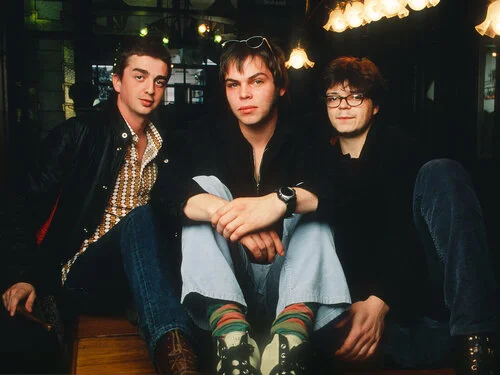
 IN THIS PHOTO: Gaz Coomes alongside Supergrass’ Danny Goffey (left) and Mick Quinn/PHOTO CREDIT: Gie Knaeps/Getty Images

turns forty-five tomorrow (8th March), I wanted to do a Lockdown Playlist of his best tracks. The lead of the Oxford band, Supergrass, I grew up listening to his music. The first single from 1997’s In It for the Money, Going Out, turned twenty-five recently. I get these pangs of nostalgia listening to classic Supergrass. That said, the band are still together, so that sense of loss is mitigated – let’s hope that Coombes, Danny Goffey, Mick Quinn and Rob Coombes will play together again soon. Coombes has enjoyed a successful solo career - I think that he stepped away from the Supergrass sound for his solo work. To honour a great songwriter and music legend, here is a selection of the best Supergrass tunes, together with a healthy smattering of solo Gaz Coombes tracks. Happy forty-fifth birthday to a tremendous songwriter and artist…

I respect greatly.

FEATURE: The View from the Afternoon: Looking Ahead to Shaun Keaveny’s Five-Hundredth BBC Radio 6 Music Afternoon Show

FEATURE:


The View from the Afternoon

xxxx.jpg

IN THIS PHOTO: Shaun Keaveny (right) with Matt Everitt (photo taken pre-social distancing)/PHOTO CREDIT: BBC

Looking Ahead to Shaun Keaveny’s Five-Hundredth BBC Radio 6 Music Afternoon Show

___________

I think this applies to other presenters…

on BBC Radio 6 Music like Chris Hawkins, Lauren Laverne and Mary Anne Hobbs. Because, when one listens to Shaun Keaveny’s show between one and four every weekday afternoon there is the episode number, I know that his five-hundredth episode is fast-approaching. As there was a line-up change from the start of 2019, a few presenters will be marking their five-hundredth show shortly. I might give a nod to Laverne and other broadcasters who have reached that big number in a new slot. It doesn’t feel that long ago when there was a schedule change at BBC Radio 6 Music. I remember going to Shaun Keaveny’s last breakfast show in 2018. It was held at Maida Vale Studios with a selected audience. Then, there was no idea how the new shows would take hold and what the new line-up sounds like. I start my mornings with Chris Hawkins, before staying tuned for Lauren Laverne and then Mary Anne Hobbs. I then listen to Keaveny until four, and I then sort of tune in and out for the rest of the afternoon. One reason why I wanted to specifically highlight Shaun Keaveny – apart from the fact we can tell the exact date he broadcasts his five-hundredth show in the afternoon (22nd March) – is that he has recently battled Coronavirus. I think that his stamina is amazing and, like everyone at the station, there is clear dedication and passion for the job! He would be the first to point out that he has not been present to record all five-hundred shows. Between illness and days off, he has a little way to go until he can mark five-hundred shows himself.

xxx.jpg

 IN THIS PHOTO: Lauren Laverne (who broadcasts between 7:30 and 10:30 every weekday morning) with actor, musician and activist, Riz Ahmed (photo taken pre-social distancing)/PHOTO CREDIT: BBC

I listen every afternoon because, whilst things are so hard and unsure, he is providing a lot of laughs and entertainment. I love the fact Chris Hawkins plays awesome music and lifts us in the early part of the morning. Lauren Laverne then raises the energy and is an infectious and hugely popular broadcaster. Mary Anne Hobbs keeps things eclectic and fascinating before things hand to Shaun Keaveny – there he hands the clammy baton to Steve Lamacq at four. I remember seeing Keaveny talking to audience members after he closed his final breakfast show at Maida Vale. He was emotional and tired, and I think it was the right time to move slots. I know that he has been grateful to have more sleep and time with his family. I am thinking of doing a salute to Lauren Laverne and BBC Radio 6 Music as a whole, as I think each broadcaster marking five-hundred shows should mark it with something special – whether that is with a cool playlist or something celebratory. It is a shame that guests cannot come to the studio to record episodes, though I am sure a lot of people online will give their thanks and messages to each presenter. On Monday, 22nd March, it might not seem like a big deal to Keaveny himself…but he and his team have delivered an incredible afternoon show over the past two-and-a-bit years! I think everyone at the station has had to adapt to a very tough situation regarding the pandemic. They have turned up and delivered these shows that have helped us all and brought us together.

zzzz.jpg

 IN THIS PHOTO: Mary Anne Hobbs hosts her show between 10:30 a.m. and 1 p.m. every weekday/PHOTO CREDIT: BBC

It would be great for everyone to give themselves a pat on their back on their five-hundredth show. Apart from Keaveny himself, there is the music news with Matt Everitt (check out his excellent, The First Time with… series). He is broadcasting from his home whilst there are restrictions. His daily dose of music news is always important and interesting! Seeing how many corners of the industry have struggled over the past year, there has been less positivity than usual. Whilst Everitt has not done face-to-face interviews and would, I am sure, prefer to meet musicians in the flesh, he has done a sterling job! When Everitt is away, Georgie Rogers presents the music news (sometimes Siobhán McAndrew delivers the news. She is also excellent and someone who deserves more time on the station). I hope that she gets more time on the station, as I really like her style. The entire time, whilst divided, have provided this sense of togetherness and family. With some old features – such as the listener-involving Small Claims Court – joining together with newer ones (the Gold Soundz half-hour goes from one to half-one), the show is always changing and strengthening….though it is the sense of familiarity that keeps so many tuned in. Whether it is Keaveny’s deliberate (or sometimes accidental) dead air and impressions, or the bond between him and Matt Everitt, there are many more years ahead! A larger congratulations to Chris Hawkins, Lauren Laverne, Mary Anne Hobbs and anyone else at BBC Radio 6 Music who is looking ahead to their five-hundredth show. Big applause to Keaveny ahead of a milestone. The entire station has been a real lifeline to us all during the pandemic. Listeners around the world are so grateful for…

jjjj.jpeg

 IN THIS PHOTO: Georgie Rogers and Shaun Keaveny sharing a touching moment at Maida Value Studios on 14th December, 2018 after Keaveny’s final breakfast show/PHOTO CREDIT: @GeorgieRogers

SO much energy, warmth and positive company.

FEATURE: The Lockdown Playlist: Songs About Hair

FEATURE:


The Lockdown Playlist

zzzzz.jpg

PHOTO CREDIT: @eugenechystiakov/Unsplash 

Songs About Hair

___________

BECAUSE an end to lockdown…

aaaa.jpg

 PHOTO CREDIT: @awcreativeut/Unsplash

has been announced for 21st June, many people are looking ahead. One of the earliest dates for relaxation is 12th April. That is when, among other businesses, hairdressers and barbers can reopen. After many months without access to a haircut, so many of us are excited about the possibility of sleeker and less messy hair! It is a small victory in a year that has been very difficult and without much optimism. Of course, things can change, and it may be the case that businesses have to wait longer to reopen (if infections rise and there is another spike). Let’s hope that things go according to plan! In honour of the announcement that we can get our hair cut soon enough, this Lockdown Playlist is about hair and songs associated with a good head of hair! I am not sure about anyone else, but the possibility of a haircut in a month or so is…

aaaa.jpg

 PHOTO CREDIT: @averieclaire/Unsplash

A big source of relief.

FEATURE: Too Good to Be Forgotten: Songs That Are Much More Than a Guilty Pleasure: Daryl Hall & John Oates - Maneater

FEATURE:


Too Good to Be Forgotten: Songs That Are Much More Than a Guilty Pleasure

ccc.jpg

Daryl Hall & John Oates - Maneater

___________

I have not included that many…

cccc.jpg

hits from the early-1980s in this feature. Whilst I always have to start by qualifying I do not believe in guilty pleasures, others certainly do. There are these songs that have a reputation as being a bit cheesy; like one has to feel slightly embarrassed about loving! I have seen Daryl Hall & John Oates’ Maneater appear on lists of guilty pleasure songs. To me, it is one of the best songs of their career; maybe one of the strongest songs from the early-1980s. Before going into more detail, here is some more information about the classic track:

“Maneater" is a song by the American duo Hall & Oates, featured on their eleventh studio album, H2O (1982). It reached number one on the Billboard Hot 100 chart on December 18, 1982.

Released on the duo’s 1982 record, H2O, “Maneater” is certainly one of the most well-known Hall & Oates songs of all time. To date, the track has more than 130 million views on YouTube. While the concept of the song on paper is dark and bleak, the song itself reads as more playful than film noir. The idea of a “maneater” is, in the end, cartoonish, of course. Nevertheless, the idea of danger runs throughout the track’s lyrics”.

Many people either do not know about Daryl Hall & John Oates, or they have avoided their music. H2O is a solid and endlessly intriguing album with hits like One on One, and Family Man. Maneater opens the album and ensures that the listener is hooked from the start!

I love Daryl Hall’s led vocal blending with John Oates’ backing and guitar. The video is pretty cool too. We see a woman walking down a red staircase. The band playing in a dimly lit studio with shafts of light projecting down on them. The members step in and out of the light for their lip sync. A young woman in a short party dress is shown in fade-in and fade-out shots, along with a black jaguar (hence the song line). It is a great video for a song which is far stronger than many have given it credit for! Last year, John Oates spoke with American Songwriter about the creation of Maneater and its enduring popularity:

“Maneater” begins with a bouncy bass line that immediately offers energy and joy. It’s a bit of an odd introduction but soft keyboards, a bright guitar and a crooning saxophone melody quickly follow the bass. Next, Daryl Hall’s voice sparks up, beginning the first verse. Hall describes a character worth steering clear of — the maneater. “Watch out boy, she’ll chew you up,” he tells us. But what, exactly, does he mean? What is a maneater?

We caught up with one half of the duo, John Oates, to ask him about the origin of the song and the meaning behind the song’s subject. We discussed the literal meaning of the chorus, whether he knows any actual maneaters and from where his gift of songwriting might originate.

There are lots of rumors, but I have to ask, is “Maneater” really about a woman or New York City?

Well, it was about New York City, after the fact. I got the idea for the song because there was a woman who was very — she was beautiful but had a very foul, you know, vocabulary. It was the juxtaposition of this great beauty with this foul mouth that really kind of sparked an idea to me that she would chew you up and spit you out. But neither Daryl nor I wanted to write a song that was anti-women or negative toward women. So, what we did was we transpose that initial idea and use New York City in the ’80s as a metaphor. New York City became the maneater, the city that would chew you up and spit you out. And that is really what the song is truly about.

When did you and Daryl start writing “Maneater”?

Well, I can’t tell you for sure, it was so long ago. One thing I will tell you, though, is that our natural schedule turned out such that we’d always seem to record in the late fall. There was a reason for that. Because we would tour in the spring through the summer and we would write in the late summer and early fall and then we’d record in the late fall. So, my guess is that song was either written in the late summer or early fall of 1982, the year the record came out. 

Is there something that’s particularly magical to you about the song “Maneater” after all these years?

That particular song? Well, all the songs are magical, in a way, because they all came from nothing. That’s what songwriting is all about. That’s why I like American Songwriter so much because the magazine can really get deep and delve into the psyche and the motivation that songwriters seem to have and really explain and expose songwriters on their process. And I think that’s interesting. The beauty that songwriters and the skill that songwriters seem to have is that they can take things that are happening in the world, whether they’re emotional or physical or literal, and they can somehow translate that into music and some sort of musical expression that people can relate to. That’s what songwriters do and that’s what makes it so unique”.

I am going to wrap up soon, but I found an interesting article from Stereogum. The feature discusses possible angles of misogyny in the song and reassess – not believing that there are any negative tropes that one would find in songs of that period:

“I don’t believe Oates. “Maneater” sure seems like an ode to a gold-digging femme fatale, a pop-music archetype that’s been at the center of plenty of songs. The woman, a lean and hungry type who only comes out at night, is ready to tear apart any guy with more money than self-control: “A she-cat tamed by the purr of a Jaguar,” “The beauty is there, but a beast is in the heart.” None of that sounds much like a city to me.

That whole image is a classic misogynist trope, but “Maneater” never really judges the woman at its center. Instead, it seems to admire her drive and her magnetism, maybe to the point of envy. Like Kim Carnes’ “Bette Davis Eyes,” “Maneater” is structured as a warning. But just as in “Bette Davis Eyes,” Hall’s narrator knows that he’s not going to convince anyone to stay away from this woman, and he seems to look at her with a kind of awe. “I wouldn’t if I were you,” Hall sings. I don’t believe Hall, either.

Musically, “Maneater,” just like “I Can’t Go For That (No Can Do)” before it, does great things with brittle, itchy minimalism. The song has mood and momentum in equal measures. It surrounds that big Supremes beat with delay-drenched keyboard tones and icy, skanky guitar strokes. Charlie DeChant’s saxophone solo, the closest thing that the song has to a bridge, is effective atmosphere — an eerily echoing growl-purr with its own sense of momentum and its own climax. The end of the song repeats the chorus a few too many times, and I don’t think much of Hall’s vocal ad-libs. But “Maneater” works. It’s hard, sharp, memorable pop music.

aaaa.jpg

IN THIS PHOTO: Daryl Hall & John Oates in 1982/PHOTO CREDIT: REX USA/Andre Csillag

The “Maneater” video builds on that atmosphere. Hall stares at the camera, his face half in shadow and his hair perfectly in place. He looks like a poster on a hairdresser’s wall. John Oates and GE Smith are the comic relief — leaning into the camera, their eyes suspiciously darting all over the place, to hit the backing vocals. We don’t see too much of the maneater herself — just some high heels prowling down a sidewalk, or a pair of eyes that fade into extreme close-up. Those eyes blur into the eyes of an actual panther, who also wanders around the set. 

I’ll tell you what, though: That panther looks cool as hell. In the moment that MTV was taking over pop music, little moments like that mattered.

“Maneater” stayed at #1 for longer than any previous Hall & Oates hit. It’s the duo operating at their absolute peak. Hall & Oates weren’t done after “Maneater.” They’ll be in this column again”.

I have a lot of time and respect for Daryl Hall & John Oates and songs like Maneater. I am writing various features about MTV’s fortieth anniversary before August. I will look at some of the best videos featured on the network. I think that Maneater was pivotal when it came to MTV’s image and popularity back near the start. Some of dismissed the song as defining the worst aspects of 1980s’ music; others (rightly) highlight what a strong and worthy song it is! The fact it is played and so popular almost forty years since its release shows that people have a real appetite and affection for Maneater. Rather than a guilty pleasure, this is yet another song one should play loud…

zzzz.jpg

AND sing along to!

FEATURE: Modern Heroines: Part Thirty-Five: Rhiannon Giddens

FEATURE:


Modern Heroines

xxxx.jpg

PHOTO CREDIT: Paola Kudacki for The New Yorker 

Part Thirty-Five: Rhiannon Giddens

___________

FOR this instalment of Modern Heroines…

xxx.jpg

I am including an artist who has not only produced some brilliant solo work; she has also worked in a number of different acts. I think that Rhiannon Giddens is already a legend, but I feel her stature will grow ever larger in years to come. She is a marvellous artist who has created some of the most beautiful and important music of the past fifteen years or so. If you are not familiar with Giddens, then hear is some Wikipedia information:

“Rhiannon Giddens (born February 21, 1977) is an American musician. She is a founding member of the country, blues and old-time music band Carolina Chocolate Drops, where she is the lead singer, fiddle player, and banjo player.

Giddens is a native of Greensboro, North Carolina, an alumna of the North Carolina School of Science and Mathematics, and a 2000 graduate of Oberlin Conservatory at Oberlin College, where she studied opera.

In addition to her work with the Grammy-winning Chocolate Drops, Giddens has released two solo albums: Tomorrow Is My Turn (2015) and Freedom Highway (2017). Her latest album, There Is No Other (2019), is a collaboration with Italian multi-instrumentalist Francesco Turrisi. She appears in the Smithsonian Folkways collection documenting Mike Seeger's final trip through Appalachia in 2009, Just Around The Bend: Survival and Revival in Southern Banjo Styles – Mike Seeger’s Last Documentary (2019). In 2014, she participated in the T Bone Burnett-produced project titled The New Basement Tapes along with several other musicians, which set a series of recently discovered Bob Dylan lyrics to newly composed music. The resulting album, Lost on the River: The New Basement Tapes, was a top-40 Billboard album”.

I am going to finish this feature with a selection of Giddens tracks. You do not need to be a fan of Bluegrass to appreciate her music. There are elements of Folk and other genres. Her lyrics are spellbinding and immersive, whilst her voice is one of the richest and most expressive in music. I will come to news of an upcoming album. First, I want to bring in an interview from The Guardian from back in 2018. They spoke to Giddens as she was curating the Cambridge Folk Festival. She discussed the issue of race in genres like Folk and Bluegrass; we learn more about a terrific songwriter, innovator and musician:

“‘We’re all racist to some degree,” says Rhiannon Giddens. “Just like we’re all privileged to some degree. I have privilege in my system because I’m light-skinned. I hear people say, ‘I didn’t have it easy growing up either.’ But when did it become a competition?”

As someone on a mission to bridge such divides, Giddens thinks about this stuff a lot. The Grammy-winning singer and songwriter was born to a white father and a black mother in Greensboro, North Carolina, in the late 1970s. Her parents married only three years after the landmark Loving v Virginia decision, which reversed the anti-miscegenation laws that had made interracial marriage illegal. Their union was still shocking enough that her father was disinherited.

While much has changed in the 40 years that Giddens has been alive, her latest album, Freedom Highway, is a powerful testament to the inequality and injustice that remain. It opens with At the Purchaser’s Option, a devastating track inspired by an 1830s advert for a female slave whose nine-month-old baby could also be included in the sale. “It was kind of a statement to put that one first,” says Giddens. “If you can get past that, you’ll probably survive the rest.”

One curious issue for the singer-songwriter is her audience: it’s largely white. “Trying to penetrate the black community has been really difficult,” she says. “It’s not enough to produce the work – you then have to connect it to the audience. Like the ballet: the lead ballerina is black. Here’s an opportunity for black girls to connect with someone on stage who looks like themselves. So what can be done to get them among this audience?”

To this end, she hopes to get more involved with the production side of the industry, just as curating the Cambridge folk festival gave her a way to exert some influence. She has often felt that Britain appreciates the breadth of American roots music more than the US. “I love the UK folk scene. In the States, nobody knows what to do with me. There’s still a very narrow definition of Americana.”

In a provocative speech at the bluegrass industry’s annual awards last September, she asked: “Are we going to acknowledge that the question is not how do we get diversity into bluegrass, but how do we get diversity back into bluegrass?” Giddens believes the true African American experience still isn’t taught in schools. “I made it through an entire year of North Carolina history and never heard about the Wilmington Massacre. It’s not a story people want to tell, because nobody wants to face the facts of how horrible it was”.

Whilst 2017’s Freedom Highway is my favourite Rhiannon Giddens work, I loved the collaborative 2019 album with Francesco Turrisi, There Is No Other. I want to source an interview from that album but, first, news of new work from the duo:

“Their last album together, There Is No Other, still regularly finds its way on to my turntable so news of another album from Rhiannon Giddens and Italian multi-instrumentalist Francesco Turrisi is worth celebrating.

The new release, titled They’re Calling Me Home, will be released April 9 on Nonesuch Records. Giddens and Turrisi, who both live in Ireland when they aren’t on tour, have been there since March 2020 due to the pandemic.  The two ex-pats found themselves drawn to the music of their native and adoptive countries of America, Italy, and Ireland during the lockdown.  Exploring the emotions brought up by the moment, Giddens and Turrisi decamped to Hellfire, a small studio on a working farm outside of Dublin, to record these songs over six days.  The result is They’re Calling Me Home, a twelve-track album that speaks of the longing for the comfort of home as well as the metaphorical “call home” of death, which has been a tragic reality for so many during the COVID-19 crisis”.

Aside from winning numerous awards and being hailed by so many people, I think that there is a very long future for Giddens. I think that she is going to inspire a lot of people to get into music. Let’s hope that she will be able to perform live this year, as there are so many people who want to hear her on the stage.

If you missed There Is No Other, then it is an album that is worth checking out. This is what The Guardian wrote when they reviewed the album:

“What There Is No Other resembles is a 21st-century version of Shirley Collins and Davy Graham’s Folk Roots, New Routes, the landmark 60s folk-rock record that showed how unusual musical connections on paper could sound utterly natural in the service of song. Giddens’ instruments are the minstrel banjo, octave violin, viola and her wide-open, rangy, contralto voice, which adds succour to songs such as civil rights activist Oscar Brown Jr’s Brown Baby (“As you grow up I want you to drink from the plenty cup”) and well-known traditionals such as Wayfaring Stranger, covered famously by Emmylou Harris and Johnny Cash.

Noticeably, Giddens swaps around its verses, putting the one about missing her mother upfront, leaving the father for later. She also revisits Little Margaret, a variant of one of the Child Ballads, Sweet William, which she used to sing with the Carolina Chocolate Drops. Again, the female protagonist is front and centre, with agency, and Turrisi’s glorious echoing rhythms on the daf (a Middle Eastern frame drum resembling an Irish bodhrán) provide extra menacing power.

Italian ballad Pizzica di San Vito and opera aria Black Swan fit seamlessly into the mix, and for an album recorded in only five days, it wallops with impact. Giddens is going supernova, and it’s a blistering thing”.

I shall leave things there, but I would encourage people to do some research and read more about Rhiannon Giddens and her story. Her music is incredible and, whilst I have included a selection of my favourite tracks (of hers), do some deeper digging and you will be hooked. Giddens, in my view, is definitely…

AN icon of modern music.

FEATURE: Groovelines: Eagles – Hotel California

FEATURE:


Groovelines

xxxx.jpg

Eagles – Hotel California

___________

IN the next part of this feature…

xxxx.jpg

I am going to spotlight a song from a female band. Today, I am investigating the most-famous song by the Eagles. Their fifth studio album, Hotel California, was released in 1976 – it celebrates its forty-fifth anniversary in December. I think its title track is one of the best songs ever. I will come to a couple of interesting articles soon but, first, some information from Wikipedia:

“Hotel California" is the title track from the Eagles' album of the same name and was released as a single in February 1977. Writing credits for the song are shared by Don Felder (music), Don Henley, and Glenn Frey (lyrics). The Eagles' original recording of the song features Henley singing the lead vocals and concludes with an extended section of electric guitar interplay between Felder and Joe Walsh.

The song is considered the most famous recording by the band, and in 1998 its long guitar coda was voted the best guitar solo of all time by readers of Guitarist. The song was awarded the Grammy Award for Record of the Year in 1978. The lyrics of the song have been given various interpretations by fans and critics alike, the Eagles themselves describing the song as their "interpretation of the high life in Los Angeles". In the 2013 documentary History of the Eagles, Henley said that the song was about "a journey from innocence to experience... that's all..."

aaaa.jpg

The Eagles won the 1977 Grammy Award for Record of the Year for "Hotel California" at the 20th Grammy Awards in 1978.

The song is rated highly in many rock music lists and polls; Rolling Stone magazine ranked it number 49 on its list of "The 500 Greatest Songs of All Time". It was named one of The Rock and Roll Hall of Fame's 500 Songs that Shaped Rock and Roll. At the induction of the Eagles into the Rock and Roll Hall of Fame in 1998, all seven former and present members of the band reunited to perform "Hotel California".

The song's guitar solo was voted the best solo of all time by readers of Guitarist magazine in 1998, and was ranked 8th on Guitar Magazine's Top 100 Guitar Solos.[38] The song was also included in the music video game Guitar Hero World Tour. It was ranked the number 1 in the list of the best 12-string guitar songs of all times by Guitar World magazine in 2015”.

There is so much to dissect and enjoy when it comes to Hotel California. Opening an album with a song that is six-and-a-half-minutes might not seem like the best idea in order to keep people interested! I feel many would have considered the Eagles to be a very different band prior to 1976. I know Hotel California took them in a slightly different direction; the title track was certainly more ambitious than anything they had put out before.

From Hotel Yorba to Hotel California, there have been songs written about different (somewhat unglamorous) locations. I have always wondered what the Eagles’ masterpiece is all about. The lyrics are so evocative and stunning. I often wonder what would happen if someone tried to make a music video about the song now – as Hotel California is so cinematic and begs for some classic scenes! I want to bring in an article from the BBC, where we get some more insight into a stunning track:

“The senior Eagles, Glenn Frey and Don Henley, quietly tolerated Walsh's destruction but when it was their turn to write about what life on the road meant to them, the result was much less literal - and it made an enormous fortune rather than costing a small one.

Don Henley had been playing with the phrase "Hotel California" for some time, but to become a song, it had to go through the regimented process the band had adopted by the mid-1970s. The Eagles were not yet at the point of communicating via lawyers, but they were referring to one another by surname.

Another Eagles guitarist, Don Felder, was tasked with recording instrumental snatches onto tape and submitting them to Frey and Henley in hope of their approval. He had been doing this at home in Los Angeles' Topanga Canyon, but while on tour he took a call from his wife Susan, who had recently given birth.

It was a short call: "We're moving." Relaxing in their garden, she had noticed that the blanket she was lying on with the baby was next to a nest of rattlesnakes. Susan and son flew immediately to a rented beach house in Malibu; Don joined them and that evening duly began recording a suggestion for a song.

A snake in an apparently idyllic garden is the kind of on-the-nose image that would have fitted right in with what his rhythm track was to become. The chords he strummed followed a pattern closer to flamenco than to rock, but played on the off-beat, which gave the song its working title of Mexican Reggae when Frey and Henley granted it the nod.

As for the words the pair added, they describe a weary traveller who's lured into a "lovely place" of grotesque characters: it's glamorous and creepy and it seems he can never escape”.

I want to end with an interview article from 2010. Sound on Sound went in-depth regarding Hotel California. They spoke with Producer Bill Szymczyk about the experience of recording such an epic and timeless track:

“Ostensibly, a song about a luxury hotel visit that crosses over to the dark side, but really an allegory about American materialism and excess — as well as the decadent LA lifestyle that many musicians experienced during the mid‑'70s — 'Hotel California' was a pivotal track for the Eagles.

At a time when punk was starting to explode and album‑oriented rock was all the rage, the song not only topped the US singles chart and scooped the Grammy for 'Record Of The Year'; it also established the theme of — and lent its name to — the Eagles' autobiographical, multi‑platinum LP that, courtesy of guitarist Bernie Leadon's replacement by Joe Walsh, saw the band make the transition from country rock to mainstream rock while achieving their greatest critical and commercial success. So, it's interesting that the track itself underwent three different versions before emerging in the form that everyone knows.

ccc.jpg

PHOTO CREDIT: RB/Redferns/Getty Images 

"The first version we recorded was just a riff,” says Bill Szymczyk, who earned a 'Producer Of The Year' Grammy for his efforts producing and engineering the album. "However, once Don Henley began to write the lyrics, it turned out to be in the wrong key. So, then we recorded it in the right key with largely the same instrumentation and a smattering of lyrics, but after we'd developed the song a little more and Henley and Frey had fine‑tuned the lyrics, we came to find out the tempo was too fast. When we recorded it the third time, that was the charm.”

The first two versions of 'Hotel California' were recorded in LA, the third and final one was cut in Miami, and as with the rest of the album, the band members recorded live together in both studios.

"Meisner's bass was gobo'd off and I'd take it direct as well as through a small Ampeg amp,” Szymczyk recalls. "Henley, on the other hand, I tried to keep as open as possible, so I didn't use a drum booth. However, I did use iso booths for the acoustic guitars and there were gobos for the electrics. The miking all depended on what the song and the sound called for. I'd change the mics constantly, and so when people ask me, 'What mic did you use on that?' I have no clue at this point. The only thing that was consistent was a pair of Neumann KM84s that I discovered to be the absolute best setup on acoustic guitars. As far as the guitar amps went, it was a case of whatever worked.'

xxxx.jpeg

PHOTO CREDIT: Trevor Dallen 

"For the drums, like everybody else I'd put a [Shure] SM57 on the snare. Then there'd be [an AKG] D88 on the kick and either Sennheiser 414s or perhaps [Neumann] U87s on the snare — I'd change every now and then to see if something else sounded better, and as I've said, I'd use a total of eight or nine mics on the kit. For vocals, I'd use 67s and 87s.”

Although Szymczyk shared the Hotel California engineering credit with Allan Blazek, Bruce Hensal and Ed Mashal, those three men were actually his assistants.

"Having come up as an engineer and gotten stiffed on many credits, I made sure that everybody got credit on the records I produced,” he explains. "And as with all of them, the Eagles recorded together as a band on Hotel California. Remember, this was before the days of build‑a‑record, where you start with a click track and then do things piece by piece. We may have gone back and replaced a guitar or keyboard part, but my way of doing things was to record numerous takes, select the five or six best ones and use the very best parts from all that. So I did a lot of two‑inch tape editing, and I know for sure that on 'Hotel California' there were 33 edits on the two‑inch master.

"By the time we recorded the third version, we'd pretty much refined what we wanted and everything was set, including the arrangement and the tempo. I had a system where I'd pull all five takes off however many reels there were, and I'd put them all on a master reel. Then I'd cue it up and listen to all five intros and pick one; listen to all five verses and pick one; and then go back and physically lop it together. The band members would be there to pick things, and then, when I started editing, I'd make them go play pool.

“At this stage in their career, the Eagles were pursuing perfection, and in the process of editing I'd hear, 'Well, see if you can do that, Coach,' which was my nickname back then. This might refer to replacing one drum fill with another fill that was a little better, so there'd be an edit at the front and an edit at the end. That's the kind of perfection we were dealing with — the stuff people now do in Pro Tools every day. Still, it wasn't hard to retain my objectivity. To me, the objectivity and the creativity went into the actual recording of the five tracks, then I'd turn from a creator into an editor, before we then took care of overdubbing lead guitars at a later date.”

Mixed in Criteria's Studio C, Hotel California was released in December 1976 and spent a total of eight weeks atop the Billboard 200 en route to selling more than 16 million copies in the US alone. 'New Kid In Town' topped the singles chart in February 1977, followed by the title track that May, which shifted a million units within three months of its release”.

I wanted to discuss a song that I have loved since childhood. I play it now and then and I am always riveted! The lead vocal by Don Henley is tremendous. The guitar work from Don Felder and Glenn Frey is exquisite, as is the backing of Joe Walsh and Randy Meisner. After almost forty-five years, the song still makes people wonder and speculate. With a mixture of Rock and Reggae elements, Hotel California is both inviting/laid-back and exhilarating. It was clear, with the song and Hotel California album, the Eagles were aiming and flying very high. Not only did they achieve that; I think that album is their greatest work. That is thanks, in no small part, down to its…

SUBLIME title track.

TRACK REVIEW: St. Vincent - Pay Your Way in Pain

TRACK REVIEW:


St. Vincent

aaa.jpg

PHOTO CREDIT: Catalin Kulczar/Redux/Eyevine 

Pay Your Way in Pain


9.6/10


The track, Pay Your Way in Pain, is available from:

https://www.youtube.com/watch?v=ZUTu65AXrJw

GENRE:

Art Rock

ORIGIN:

Oklahoma, U.S.A.

RELEASE DATE:

4th March, 2021

s.png

The album, Daddy’s Home, is available to pre-order via:

https://www.roughtrade.com/gb/st-vincent/daddy-s-home/lp-plus

RELEASE DATE:

14th May, 2021

LABEL:

Loma Vista

PRODUCERS:

Annie Clark (St. Vincent) and Jack Antonoff

TRACKLIST:

Pay Your Way in Pain

Down and Out Downtown

Daddy’s Home

Live in the Dream

The Melting of the Sun

The Laughing Man

Down

Somebody Like Me

My Baby Wants a Baby

… At the Holiday Party

Candy Darling

__________

IT in exciting…

zzzz.jpg

 PHOTO CREDIT: SCANDEBERGS

that St. Vincent released new music this week. I am a big fan of her work, so it is great to get a chance to spend some time discussing her. I am going to cover a few different themes and points before coming to her new single, Pay Your Way in Pain. Taken from her forthcoming album, Daddy’s Home, it is a terrific song – we would expect nothing less from Annie Clark! I think that people associate St. Vincent with her excellent songwriting and singing. As a guitarist she is hugely interesting and inspiring. I found an article that detailed the kit she uses. I know that she is inspiring so many upcoming songwriters and, more than that, compelling girls and young women to pick up the guitar. St. Vincent also teaches a creativity and songwriting masterclass, where you can watch video lessons and learn about the ups and downs of songwriting/creativity, guitar skills and a whole lot more. She is a complete artist who is keen to give something back. I want to start by linking St. Vincent to one of her music idols. Kate Bush is someone who I associate with being Art Rock. I have never seen her as a conventional Pop artist. Some artists feel being labelled as Art Rock is either pretentious or not a good thing. St. Vincent brings soul and passion to her music, but there is an experimentation and artiness that is deeply compelling and original. In an interview with the Irish Times from 2015 (she released her eponymous album in 2014), she addressed the somewhat negative connotations of being arty or Art Rock:

“Annie Clark makes joyous, angular, soulful pop music which is unashamedly arty.

“Why should I be ashamed of artiness?” she says, sounding rightly perplexed by my philistinism.

Clark is the genre-crossing genius and guitar-god behind the music of St Vincent. She released her eponymous fourth album last year (her fifth if you include the brass-filled Love This Giant which she created with polymath Talking Head David Byrne) and her head is filled with ideas. She’s driving her car and talking to me over the phone at the same time, pausing at length whenever she has to turn a corner or wants to have a bit of a think.

She started playing guitar at the age of 12, she says. “The first song I tried to learn, I think, was Jethro Tull’s Aqualung.”

“That’s hard,” I say.

“I know!” she says”.

aaa.jpg

 PHOTO CREDIT: Emma McIntyre/Getty Images

I want to discuss Annie Clark/St. Vincent and the musical side a bit later Before then, it is useful learning some background. I think that every artist has a different past and story; learning about it allows us to appreciate and understand their music in a deeper way, I think. In a Vogue interview from 2017, we get a little history regarding one of the finest musicians of the modern age:

“Raised in Dallas as one of eight siblings and half siblings, Clark says that the commotion of a big family allowed her the freedom to fall down artistic rabbit holes. After dropping out of Boston’s Berklee College of Music, she found herself in another huge family: the Polyphonic Spree, a sprawling, orchestral rock experiment that sometimes incorporated dozens of members, all dressed in matching floor-length robes. By 2007, Clark had moved to New York and released her first album as St. Vincent, Marry Me. The blend of her angelic voice, occasionally sinister lyrics, and complex songwriting created an uncanny sound that quickly cemented her in the vanguard of critically beloved indie rock. Her hybrid of musical virtuosity and high-minded aesthetic reinventions went on to earn her a Grammy, comparisons to David Bowie, and equal footing with such collaborators as David Byrne”.

I feel the artist who create the most arresting and fascinating are the ones who had exposure to a whole range of different sounds at a young age. That may sound flawed logic or wrong, but there does seem to be a correlation between these amazingly creative and curious artists and music entering their consciousness from a young age. As we learn from the Irish Times interview, St. Vincent (I will refer to as such from now on, rather than Annie Clark) definitely grew up in an interesting family:

“She always had access to music. Her aunt and uncle performed as a duo, Tuck & Patti, and young Clark carried their equipment and did her first gigs opening for them. She recalls her parents “thinking/hoping that I would be an architect” but she says that “they got it pretty early on that music was my thing”.

kkk.jpg

PHOTO CREDIT: Patrick Demarchelier 

So it was a cultured household? “Yes and no,” she says. “My folks were not well off but they were well educated and they had a certain curiosity for culture that definitely exceeded their means. They were big readers. [My father] was big into James Joyce and would go on the lecture circuits to talk about James Joyce.”

Clark first came to notice playing in the Polyphonic Spree, but she was already working on her first record, 2007’s Marry Me. “Sufjan Stevens heard it and asked me to play in his band and open for him and while I was opening for him in Europe, I got signed,” she says.

“I started off quite shy,” she says. “[I was] wary of ‘performance’. I think I was hung up on some idea of authenticity, of being just purely about the music and not about the persona and not about anything else. So I hadn’t embraced the more performance aspect of things”.

I want to stick on this theme for a little while longer. I am not sure whether one exists, but I would like to see a documentary of St. Vincent where she discusses her favourite artists and songs that have changed her life. I am also curious to know the guitarists who moved her because, as I say, she is a phenomenal player! There is a little bit of repetition regarding what has just been covered but, in an interview with The Line of Best Fit from 2017 (her fifth studio album, Masseduction, was released in October that year), we get a glimpse into the musical tastes and early musical experiences of St. Vincent:

“From Hendrix to Zeppelin, Jethro Tull to Nirvana at their heyday and the local record store nerd who gave her PJ Harvey and Nick Cave, Clark quickly learned to respect her “inner weirdo.”

She got her first experience of life on the road with her uncle Tuck Andress and his wife Patti Cathcart, better known as jazz guitar and vocal duo Tuck & Patti. Their ubiquitous tour hand, teenage Annie was responsible for everything from flowers in the dressing room to the voltage on stage. Maintaining that she’s never worked harder, the real value came from the deeply spiritual connection her uncle had with music. An exemplary finger-picking guitarist, his talent, he insisted, came from an undoing of ego rather than a propulsion of one. She remembers watching the way their fans would listen, really listen.

Perhaps a shred of this sentiment caused her to drop out of Berklee College of Music in her third year. She realised she was being taught “every potential style of music,” she says, rather than how to develop one of her own. Aged 20 she faked it as a booking agent and moved to New York to tour the East Coast. Three months later she was broke and back at home with her parents in Texas”.

JJ.jpg

To move on, and I wanted to fill a gap that runs between her eponymous album of 2014 and 2017’s Masseduction. Going back to the interview from The Line of Best Fit, and we discover how the St. Vincent album affected its creator with so many new opportunities – the Oklahoma-born musician definitely underwent a huge rise and change:

“In the three years since the success of St. Vincent her profile and passions have expanded to fit. She’s inducted Nirvana into the Rock N Roll hall of fame, hosted a Beats 1 radio show, made her directorial debut with a horror short, acted as official ambassador for Record Store Day and become one of few artists invited to design a signature Ernie Ball Music Man guitar. Beck, Dave Grohl, Josh Homme and Taylor Swift all have a St. Vincent six string somewhere in their collections.

Prowess proven, how did she tackle the enormous challenge of superseding her own infallible benchmark fifth time around?

“I more or less prepared myself to make another record by doing completely different things,” she says, referencing her recent extra-curricular activities. “But I knew early on that I wanted to make a record about power and seduction, in all kinds of forms. Political, personal, sexual”.

XXXX.jpg

 PHOTO CREDIT: Nedda Afsari

This sort of takes me to St. Vincent’s previous album, Masseduction. I wonder how her sixth solo album, Daddy’s Home (she released a collaborative album with David Byrne, Love This Giant, in 2012), is going to compare to Masseduction. I have covered an interview where St. Vincent addressed a, perhaps, negative viewpoint of being arty. I think what Masseduction did was to raise St. Vincent’s profile without her compromising. It is a tremendous album where she mixed Pop and Rock, though was very much herself. In a GQ for 2019, we find ot more about the impact of Masseduction and a slightly repurposed version of it, MassEducation, of 2018:

“Masseduction made the case that Clark could be as much a pop star as someone like Sia or Nicki Minaj—a performer whose idiosyncrasies didn't have to be tamped down for mainstream success but could actually be amplified. The artist Bruce Nauman once said he made work that was like “going up the stairs in the dark and either having an extra stair that you didn't expect or not having one that you thought was going to be there.” The idea applies to Masseduction: Into the familiar form of a pop song Clark introduces surprising missteps, unexpected additions and subtractions. The album reached No. 10 on the Billboard 200. The David Bowie comparisons got louder.

This past fall, she released MassEducation (not quite the same title; note the addition of the letter a), which turned a dozen of the tracks into stripped-down piano songs. Although technically off duty after being on tour for nearly all of 2018, Clark has been performing the reduced songs here and there in small venues with her collaborator, the composer and pianist Thomas Bartlett. Whereas the Masseduction tour involved a lot of latex, neon, choreographed sex-robot dance moves, and LED screens, these recent shows have been comparatively austere. When she performed in Brooklyn, the stage was empty, aside from a piano and a side table. There were blue lights, a little piped-in fog for atmosphere, and that was it. It looked like an early-'90s magazine ad for premium liquor: art-directed, yes, but not to the degree that it Pinterested itself”.

RRR.jpg

 PHOTO CREDIT: Nedda Afsari

To return to Masseduction (the album was stylised in capital letters), and there was a lot of speculation as to inspiration behind the lyrics. St. Vincent, as an artist/persona, is very different to Annie Clark. I think the thing that bonds both is the need to retain some privacy and mystery. A lot of journalists wanted to explore St. Vincent’s personal life when Masseduction arrived. In a detailed 2018 interview with NME, we are told how one song especially, New York, provoked a lot of intrigue and curiosity:

“Also put under the microscope, but not by Clark herself, was her personal life. Many a column inch was dedicated to analysing the lyrics of the vulnerable break-up ballad ‘New York’, for example – thanks to interest from tabloids and celeb glossies in her her relationship and split from actor and supermodel Cara Delevigne. Many poured over the likelihood of Delevigne being the aforementioned “only motherfucker in the city that can handle me,” during her dalliance at a “home run with some blue bloods”. Clark has remained reticent to spell anything out, however. As high concept as her work may be, ‘MASSEDUCTION’ is her most confessional, raw and devastating to date.

“It’s not my job to tell you what the truth is, unfortunately, but a lot of the time artists are the worst people to explain what they’re doing,” says Clark. “You’re following an intuition and just trying to make something that feel right in your core. When you’re so busy making these things you don’t really have time to stop and go, ‘What is this?’”

She continues: “My heart is in these songs completely. My whole life is in these songs. It’s not literal because then it wouldn’t be art necessarily. I also feel that once the song is written it’s not about me anymore. It’s not for me. It’s flattering that people would want to know about what inspired them from my life, but really the point of music is that it’s really supposed to be about the music at that point”.

I just want to spend a brief moment bringing things back to the guitar. It may sound a bit nerdy, but I think different guitars can lend the music with a different personality. I feel a lot of people just assume an electric guitar has a particular sound and there is not a lot of diversity and contours between different models and designs. In the interview from The Line of Best Fit, St. Vincent talked about one particular guitar that was all over Masseduction:

“Of the guitar that we do hear, how much of that can be attributed to her new Ernie Ball signature?

“I didn’t use any other guitar on this record!” she responds, gleefully. “And not for any other reason than I love it. I have all these vintage guitars. Obviously I love guitars. I have a lot of guitars! But this was just the most perfect, flexible, go to instrument. I did a lot of glam tuning with the slide!”

Is this the first time she’s only used one guitar across a whole album?

“It really is. I mean, on the last record I think I used like, Thurston Moore’s Jazzmaster – his signature from Fender. My old Harmony Bobkat. And my Music Man Albert Lee for a lot of the whammy bar stuff”.

lll.jpg

There are a few more things I need to tick off of the list before getting down to review Pay Your Way in Pain. I want to return to the 2019 interview from GQ, as the angle was to show how St. Vincent was never boring. I feel how an artist spends their time away from tours and off stage can be as important as anything. I was eager to learn more about this side of things; how St. Vincent spends time off of tour – or ways in which she can recharge and create this different headspace:

“Another thing Clark does when off tour is absorb all the input that she misses when she's locked into performance mode. On a Monday afternoon, she met artist Lisa Yuskavage at an exhibition of her paintings at the David Zwirner gallery in Chelsea. Yuskavage was part of a mini-boom of figurative painting in the '90s, turning out portraits of Penthouse centerfolds and giant-jugged babes with Rembrandt-esque skill. It made sense that Clark wanted to meet her: Both women make art about the inner lives of female figures, both are sorcerers of technique, both are theatrical but introspective, both have incendiary style. The gallery was a white cube, skylit, with paintings around the perimeter. Yuskavage and Clark wandered through at a pace exclusive to walking tours of cultural spaces, which is to say a few steps every 10 to 15 seconds with pauses between for the proper amount of motionless appreciation.

The paintings were small, all about the size of a human head, and featured a lot of nipples, tufted pudenda, tan lines, majestic asses, and protruding tongues. “I like the idea of possessing something by painting it,” Yuskavage said. “That's the way I understand the world. Like a dog licking something.”

Clark looked at the works with the expression people make when they're meditating. She was wearing elfin boots, black pants, and a shirt with a print that I can only describe as “funky”—“funky” being an adjective that looks good on very few people, St. Vincent being one of them—and sipped from a cup of espresso furnished by a gallery minion. After she finished the drink, there was a moment when she looked blankly at the saucer, unsure what to do with it, and then stuck it in the breast pocket of her funky shirt for the rest of the tour”.

zzz.jpg

 PHOTO CREDIT: Zackery Michael

Maybe this is tangential but, just before bringing things up-to-date and learning a bit of background regarding Daddy’s Home, I want to bring in a Variety article that details an interesting new Audible project, St. Vincent: Words + Music:

“As larger-than-life rock stars go, St. Vincent may be a slightly slippery character, but Annie Clark, the woman who records under that name, isn’t so much so. At least that’s the impression you’ll take away from the new audio project  that has just been released as one of the pilot projects for Audible’s new Words + Music series. If there’s an alluring mystique to the persona that Clark presents in her visually arresting shows or deep-dive-worthy albums, she seems almost surprisingly easygoing about deconstructing it all and discussing the personal meaning behind some of her fans’ most cherished songs in the new audiobook.

For as long as Clark is speaking, “St. Vincent: Words + Music” (available here) feels like an especially revealing episode of “Fresh Air,” minus the Terry Gross. (The singer was in fact interviewed for the project, by veteran rock journalist Bill Flanagan, but his probing voice does not appear.) She discusses how she decided on her stage name, childhood panic attacks, having jazz singers Tuck & Patti as her aunt and uncle, her desire to escape Texas, apprenticing with both Sufjan Stevens and the Polyphonic Spree, finding salvation in work with David Byrne, and how her father’s imprisonment and mother’s health scare affected her music. The candor carries through to the themes on her most recent album, 2017’s “Masseduction,” and how she engages with social media in the present (spoiler: reluctantly). If there’s anything she’s not eager to be as an artist, it’s “my own sweaty used car salesman”.

VARIETY: This falls kind of somewhere between an interview and an audiobook memoir, along with the fresh versions of songs. Did the idea of doing this for Audible appeal to you from the start?

ST. VINCENT: It did. For one, it sounded like a really fun challenge to take old songs and reinvent them. And it happened at a really auspicious time because it got raised at the beginning of this corona pandemic, so it meant that I had something really fun to do by myself, alone in my studio. And I mean, really most of the way that I ingest information now is through podcasts and audiobooks, so this is really a very natural, familiar way for me to get involved.

EEE.jpg

PHOTO CREDIT: Jeff Hahne 

There’s something interesting that you said in the Audible piece: “I am always talking to an audience like they’re f—ing geniuses. I think people are so smart — they’re smart with their brains, with their heart, with their gut. There is I think sometimes what can be perceived as sort of coldness or aloofness is actually my feeling that everybody’s equal…” You say that in the context of explaining why you don’t feel the need to constantly engage your audience with small talk or vegan recipes. But probably a majority of the artists feel the opposite way nowadays, that they need to put themselves out there online as much as possible to prove that they, too, are everyday people.

Shouldn’t the work that you make kind of prove that? You can’t make work about life if you’re not living some kind of normal life that isn’t surrounded by a cadre of yes-men. Like. when has that worked well… Because if there are really talented people surrounded by people who just tell them yes all the time, that’s not good for art. It’s not good for somebody’s soul, but it’s also not good for art. So yeah, I think that it occurred to me… Like, I’m a person who will tell you something really intimate or vulnerable in a way that’s not particularly vulnerable. There are other people who will seem like they are revealing all things, and it seems very emotional, but it’s not particularly vulnerable. So I’m kind of more on the first side of that. And that’s just who I am. Probably the second thing is the more popular way to be. [Laughs.]

In the Audible book, you talk about a lot of things we wouldn’t necessarily have expected you to talk about, as they have come up in the songs. And it’s interesting because these are things that maybe have been a little harder to discern than they would be from someone who’s writing in a really obviously, purely confessional vein.

The other thing about it is that, as a fan myself, I will listen to stuff and it means so much to me if it’s inextractable from my life, from a period of time or from a major seismic event in my life. And maybe this is just me being selfish., but I don’t really want to know what the artist was thinking. I kind of don’t care! And I mean that with all respect. I’m like, oh, I’m too selfish — I love this for me, and what it means to me. And for a long time, I think I didn’t want to talk too much about what the songs were personally about for me, because it felt like it was a little selfish to push all that into the way that somebody was interpreting or enjoying the song. It felt like micro-managing their experience. You kind of have to trust that if you say something that resonates with you, then it’s going to resonate with other people. But the records that I touch upon in the Audible piece, I feel far enough away from personally — and they’d existed in the world long enough — to where I feel kind of okay divulging certain things and hoping that it doesn’t interfere with anybody’s experience of just listening to it. Because it’s like not about me. You make the work so it can not be about you, so it can just be for other people. I know that might sound kind of Pollyanna, but it’s true. That’s the best way I know how to communicate… You know, that and talk therapy. [Laughs]”.

Z.jpg

Let’s drag things to the here and now and the much-anticipated album from St. Vincent. Daddy’s Home is out on 14th May. The lead single gives a glimpse into what we might expect in terms of sound and direction. The title might confuse a few people regarding its derivation and personal significance. For those who do not know about some family history and St. Vincent’s father, a very recent interview from The Guardian provides some more details:

“As her publicist counted column inches, Clark perceived the coverage differently. In 2010, her father was sentenced to 12 years in jail for his role in a $43m (£27m) stock-manipulation scheme. Inside, prisoners passed on clippings about his daughter’s flourishing career. “I always pictured it like I was throwing a little paper airplane over the gates,” says Clark, tracing the arc from her to him with her finger as she speaks over a video call from her studio in Los Angeles.

This is what lay behind the suffocated scream of Strange Mercy and its obsession with bondage. Clark never discussed her father’s imprisonment until the tabloids dug it up in 2016, during her 18-month relationship with Delevingne. A decade ago, she was terrified about protecting her family in Dallas and Tulsa – especially those of her eight siblings who were still children. “I wasn’t in any kind of place where I wanted that narrative to overshadow the music,” she says. “I didn’t have any perspective on it. It was just this horrible, festering wound.”

DDD.jpg

PHOTO CREDIT: SCANDEBERGS 

Clark has always dismissed the term “confessional” as diminishing artistry. But she says she didn’t need to dress up Daddy’s Home, a song about taking her father home from prison in 2019 and also the name of her disgustingly great sixth album. The title is trademark St Vincent – ambiguous and unsettlingly kinky – but there is a sea change in sound and spirit: the old adrenaline rushes are replaced by louche soul and world-weary tenderness, straddling Sly and the Family Stone’s degraded 1971 epic There’s a Riot Goin’ On, the sweet spots of Stevie Wonder and Steely Dan and the queer revelry of the 1974 Labelle concert at the Metropolitan Opera in New York that scandalised polite society.

Clark recalls visiting her father in an “edgy” medium-security institution before he was moved to a depressing camp that reminded her of primary school. During visitation, families could pose for photos in front of various backdrops. “Like, look, an inmate is at the beach. They just happen to be in an orange jumpsuit, but with their wife and baby. The one that I remember most vividly was a picture where the inmates – who are obviously disproportionately black and brown in America – could stand on a plantation veranda.” Her eyes pop. “That pretty much sums up this place.”

Humour and perspective gradually leavened a situation that had been “immovable and full of sorrow”. Clark had to laugh when prison guards sent her to Walmart to buy looser clothes (“Mind you, I wasn’t going dressed to the nines!”), or when other visitors asked her to autograph crumpled receipts. She has a nuanced take on her father’s conviction. “One takeaway could be: don’t go against the government, or don’t be the last person holding the bag. There’s a lot of layers to it”.

LLL.jpg

 PHOTO CREDIT: LeAnn Mueller for Rolling Stone

Pay Your Way in Pain begins with jaunty and skipping piano that has a sort of Beatles quality (maybe it could have been on their eponymous album of 1968). One thinks that the song is going in one direction but, with a brief vocal in the intro (“Ow)/Oh-oh-oh”), the song shifts. The chorus finds St. Vincent singing “You got to pay your way in pain/You got to pray your way in shame (Yeah, ow)”. We get layered vocals and a tempered, fairly measured delivery. I do like the vocals, as there is this eerie backing/choral effect. St. Vincent sounds incredible in the chorus, where we get this affecting and intriguing delivery that makes you curious from the off. There is a grooviness and sexiness to the pace and sound of the first verse. Everything St. Vincent puts out is pretty cool, though I was especially struck by her sound and delivery on the verse. The backing vocals punctuate the lines, and I like how there is this constant interjection and echo that heightens the lyrics and gives Pay Your Way in Pain drama, emotion, power and a slight darkness. The opening verse gets one thinking: “I went to the store, I was feelin' kinda hungry/But I didn't have the money and the shelves were all empty/So I went to the bank to ch-ch-ch-check my checking/The man looked at my face, said, "We don't have a record"/Oh no, you thought we had forgotten?/The show is only gettin' started/The road is feelin' like a pothole/Sit down, stand up, head down, hands up, and…”. The idea of the shelves being empty and the bank account being bare makes me think of the pandemic and how things are hard – maybe the heroine is struggling in these times. I also thought they could be metaphors for different emotions; perhaps something else. I have listened to the song a lot and, whilst I visualise that verse each time I hear the track, my interpretation changes.

xxx.jpg

 PHOTO CREDIT: Phillip Montgomery

Leaving the last line hanging, we then move into the chorus – “Pay your way in pain/You got to pray your way in shame (Uh-huh)” – that has this addictive punch and sense of breathing in and breathing out. The video is kind of trippy and blurry where St. Vincent is in a green jacket and a blonde wig. It is very ‘70s in its style, and I think really love how the videos fits with the song and gives it this class and incredible look (Bill Benz directed the video; Avigail Collins was responsible for styling). The bridge comes in and, as we move the story forward, the vocal changes. There is St. Vincent asking questions and a backing/response vocal being quite high-pitched and rapid: “Do you not remember me? (What do you want? What do you want?)/Do you know what I want? (What do you want? What do you want?)/You know what I want (What do you want? What do you want?)/Keep the rest, baby, ah, ah/I wanna be loved/Pay, pain/Pray, shame”. On the word ‘loved’, St. Vincent’s voice holds and reaches this emotional and emphatic crescendo. It is a wonderful moment that then dives into this brief chorus return. I love how the song changes pace and direction as we move through. It creates this nuance so that the listener keeps coming back. Whereas the opening verse was St. Vincent/the heroine going to the store and coming away empty-handed, the second verse creates more alienation and drama: “So I went to the park just to watch the little children/The mothers saw my heels and they said I wasn't welcome/So I, I went back home, I was feelin' kinda queasy/But all the locks were changed, my baby wouldn't see me/Oh no, you've put your finger on it/The stove is only gettin' hotter/The sun, it's gotta, gotta melt it/Stand up, sit down, hands up, break down”. I wonder whether there will be a short film about Daddy’s Home because, whilst the video for Pay Your Way in Pain is great, it would be interested to see the verses acted out and the scenes being visualised! It seems like Daddy’s Home has this conceptual arc…so I wonder whether St. Vincent is going to do some visuals/shorts around the tracks. There is some awesome woozy guitar before the final verse. I really like the composition throughout. We have some squelchy and spacey synths with a nice beat and these echoed/ghostly vocals – in fact, the range of vocal sounds is one of the highlights of Pay Your Way in Pain. Just as before, there is a dramatic vocal hold at a crucial moment (“I wanna be loved”). The song seems to be St. Vincent being castigated and looking for acceptance and love. The fact her voice rises and howls when she mentions wanting to be loved is certainly moving - and it seems to be the mission statement of the song. A tremendous first single from Daddy’s Home, Pay Your Way in Pain is a wonderfully rich, fascinating and stunning song – just what you’d expect from a pioneer and true original like St. Vincent!

KK.png

I am going to close this review up very soon. There are a couple of other things I want to look at before doing so. I am not sure what themes are going to be covered through Daddy’s Home, but there is one song that was highlighted by The Guardian in the interview I sourced from earlier. It seems that My Baby Wants a Baby provides one of the funniest and most arresting moments om the album:

“The funniest song on Daddy’s Home outlines Clark’s commitment to her cause: My Baby Wants a Baby starts with Clark seemingly playing a pouty 60s rocker (her “baybee” is very Jagger), annoyed because his girl wants to pin him down. Then her own fears break through: she predicts her prospective failures as a parent, when all she wants is to “play guitar all day / Make all my meals in microwaves / Only get dressed up when I get paid” – conscious, too, of how art made by women is judged by their mothering capacities, or lack thereof. “I couldn’t leave like my daddy,” she sings.

The song is “the most base, dirtbaggy version of my life”, she says. She can’t cook. After answering the door for a delivery, she returns with a utilitarian vat of salad that you suspect is always on hand to minimise time away from the studio. “If left to my own devices, I would just make a lot of music and barely survive.” She does not live with her girlfriend – “I’m a real Frida Kahlo/Diego Rivera kinda person: you have to have your own space to be able to work” – but she says they have had the kids chat. Clark demurs on the details, then does her best Texas accent. “Daddy’s home,” she shrugs, at once camp and sharp”.

MMM.jpg

I will finish by quoting from an article from Rolling Stone. We sort of learn that Daddy’s Home is St. Vincent coming full circle. There is this connection between 2011’s Strange Mercy (her third studio album) and Daddy’s Home:

“If her 2011 breakthrough, Strange Mercy, reflected the “pain and ambivalence” of her father’s arrest, as she writes in a comic that accompanies the new album, then Daddy’s Home is about coming full circle. Zooming in to chat about the record, Clark has ditched the super-streamlined aesthetic that accompanied the sleek pop of 2017’s Masseduction, instead opting for a head scarf and Seventies-style tinted glasses.

“I think that with my last record, I had gone as far as I could in a certain way with fly-out-of-the-speakers-and-grab-you-by-the-throat kinds of sounds,” she says. Daddy’s Home feels more human and lived-in, with echoes of Bowie, Sly Stone, and other Seventies artists. That era, she says, was “post-flower-child idealism, but it’s pre-disco. It’s this period of time that I feel like is analogous to where we are now. We’re in the grimy, sleazy, trying-to-figure-out-where-we-go-from-here period.”

The record careens from Prince-esque stompers like album opener “Pay Your Way in Pain” to the title track, which brims with bluesy jazz — especially with the addition of backup singers Lynne Fiddmont and Kenya Hathaway (daughter of late R&B legend Donny Hathaway), who croon on the chorus. “I’ve never done a record where I wasn’t singing my own backups,” Clark says. “I feel like there’s a specific meaning behind that, if you were the only one doubling your own voice or harmonizing. This record is way looser, way more about just performance”.

I am looking forward to Daddy’s Home, as St. Vincent’s work is always so wonderful and memorable. Pay Your Way in Pain is an incredible introduction. Many people will be wondering which song will be released next as a single. Having barely dropped a step (or created a weak moment in her career), the inimitable St. Vincent keeps evolving and moving forward. An Instagram video St. Vincent put out with the album announcement saw her in a Candy Darling (she was an American actress, best known as a Warhol Superstar and transgender icon) wig. She was creating this Andy Warhol/1970s vibe. I wonder whether St. Vincent will play this alter ego through the album or she is going to embody Candy Darling through the songs. Daddy’s Home’s final track is called Candy Darling, so it does seem that there might be an arc/concept. Judging on what we have learned and heard on Pay Your Way in Pain, it appears that Daddy’s Home is shaping up to be…

mmm.jpg

ANOTHER sensational album!

___________

Follow St. Vincent

zzzz.jpg

FEATURE: A Buyer’s Guide: Part Forty-Five: Mogwai

FEATURE:


A Buyer’s Guide

opo.jpg

PHOTO CREDIT: Antony Crook 

Part Forty-Five: Mogwai

___________

THIS is pretty timely…

nnn.jpg

 PHOTO CREDIT: Brian Sweeney

as Mogwai released their tenth studio album, As the Love Continues, last month. It was another terrific release from the Scottish band. Go and buy the album as it is really terrific. Just before moving on, here is some Mogwai information:

“Mogwai (/ˈmɒɡwaɪ/) are a Scottish post-rock band, formed in 1995 in Glasgow. The band consists of Stuart Braithwaite (guitar, vocals), Barry Burns (guitar, piano, synthesizer, vocals), Dominic Aitchison (bass guitar), and Martin Bulloch (drums). Mogwai typically compose lengthy guitar-based instrumental pieces that feature dynamic contrast, melodic bass guitar lines, and heavy use of distortion and effects.

The band were for several years signed to Glasgow label Chemikal Underground, and have been distributed by different labels such as Matador in the US and Play It Again Sam in the UK, but now use their own label Rock Action Records in the UK, and Temporary Residence Ltd. in North America. Mogwai were championed by John Peel from their early days, and recorded seven Peel Sessions between 1996 and 2004 Peel also recorded a brief introduction for the compilation Government Commissions: BBC Sessions 1996–2003”.

If you are new and need a bit of a guide to the Scottish band, I have recommended their essential albums, an underrated one that people should check out, plus their new studio album (as I cannot find a book about Mogwai, I have had to leave this usual section out). Here is a feature that suggests the best work of…

xddd.jpg

A legendary group.

_____________

The Four Essential Albums


Mogwai Young Team

aaaa.jpg

Release Date: 21st October, 1997

Label: Chemikal Underground

Producers: Paul Savage/Andy Miller

Standout Tracks: Like Herod/Tracy/Mogwai Fear Station

Buy: https://mogwai.bandcamp.com/album/young-team-deluxe-edition-digital-album

Stream: https://open.spotify.com/album/3sHB5AiFaJEOCAqh3taqGX?si=gv1p6y3zQciBRrGO-tM31Q

Review:

“Young Team, Mogwai's first full-length album fulfills the promise of their early singles and EPs, offering a complex, intertwining set of crawling instrumentals, shimmering soundscapes, and shards of noise. Picking up where Ten Rapid left off, Mogwai use the sheer length of an album to their advantage, recording a series of songs that meld together -- it's easy to forget where one song begins and the other ends. The record itself takes its time to begin, as the sound of chiming processed guitars and murmured sampled vocals floats to the surface. Throughout the album, the sound of the band keeps shifting, and it's not just through explosions of noise -- Mogwai isn't merely jamming, they have a planned vision, subtly texturing their music with small, telling details. When the epic "Mogwai Fears Satan" draws the album to a close, it becomes clear that the band has expanded the horizons of post-rock, creating a record of sonic invention and emotional force that sounds unlike anything their guitar-based contemporaries have created” – AllMusic

Choice Cut: Yes! I Am a Long Way from Home

Come On Die Young

aaaa.jpg

Release Date: 29th March, 1999

Labels: Chemikal Underground/Matador

Producer: Dave Fridmann

Standout Tracks: Punk Rock:/Kappa/Christmas Steps

Buy: https://www.roughtrade.com/gb/mogwai/come-on-die-young-eeb8bff5-98c5-4d58-9a54-8f866ac78fd6

Stream: https://open.spotify.com/album/2ge6eVAMFNWS5srqDbudEq?si=bE2_JbUJQ8uXg4_Per9uGw

Review:

“So much instrumental rock music is often described as “soundtracks to movies that don’t exist,” but Come On Die Young always felt like the unofficial score to a film that did. Four months after the album was released, The Blair Witch Project hit theaters, and my memories of each tend to blur into one: there’s the shared desolate woodlands setting (the album was recorded at Dave Fridmann’s Tarbox Road Studios in Upstate New York) and chilly, frosty-breath atmosphere (thanks to Fridmann’s uncharacteristically stark, I-can’t-believe-it’s-not-Albini production), never mind the fact that Come On Die Young’s eerie cover shot of bassist Dominic Aitchison could easily pass for a still from the film. And most tellingly, like Blair Witch, Come On Die Young moves at a slow, subtle, incremental pace that can test one’s patience and make one long for the high-voltage immediacy of Young Team, but oh-so gradually ratchets up the tension. The heart-palpitating payoff finally arrives in the form of late-album colossi “Ex-Cowboy” and “Christmas Steps”, which once again see Mogwai charting new extremes of effects-pedal abuse, but without overwhelming the songs’ expertly chiseled definition.

That sense of discipline is all the more apparent when wading through the bounty of bonus material on this deluxe edition. While none of the demos here differ dramatically from their finished versions, you get a clearer picture of just how much studious fine-tuning went into the final tracklist: in its original form, “Christmas Steps” was a couple of minutes shorter, before the band wisely decided to stretch out its nerve-wracking build-up even longer; a rough-sketch version of “Punk Rock:” suggests even this seemingly simple composition underwent a few passes before achieving the right spectral ambience. (“Hugh Dallas”, meanwhile, would have been a keeper on any other Mogwai release, but its breathy Braithwaite vocal and elegiac sway drift a bit too closely to “Cody”.) – Pitchfork

Choice Cut: Cody

Happy Songs for Happy People

zzzz.jpg

Release Date: 17th June, 2003

Labels: Play It Again Sam/Matador

Producers: Tony Doogan/Mogwai

Standout Tracks: Hunted by a Freak/Kids Will Be Skeletons/Stop Coming to My House

Buy: https://www.roughtrade.com/gb/mogwai/happy-songs-for-happy-people  

Stream: https://open.spotify.com/album/1k2uLH7mwB72zbepvM8rR4?si=OnwPfZQxQNW5ZpuS4Z4UAg

Review:

“So, is this fourth LP really the sound of the Scottish sound-sculptors going soft on us? Hardly. 'Happy...' is filled with paranoid song titles and a defiant refusal to compromise artistically. It tweaks the hushed blueprint of 2001's 'Rock Action' LP and the result is their most intriguing, beautiful and dazzling record to date.

'Kids Will Be Skeletons' is a good indication of where their post-rockin' heads are at. Melodies weave around a brewing fuzz-storm whilst chords collide and the whole thing slips in and out of consciousness like Slint having a rather nice wet dream. Elsewhere, 'Hunted By A Freak' and 'Killing All The Flies' weld lush electronic passages onto spiraling guitars whereas 'I Know You Are But What Am I?' sees digital beats cascading around lonely piano stabs.

It's often complex, but this isn't over-studied music that appeals only to people with a PhD in Beards. Mogwai aren't the sort of band to harp on about how they achieved a neat atonal effect by restringing their guitars with Jim O'Rourke's pubic hair. In fact, their melodies are often as simple as nursery rhymes because this what works best emotionally. Even when they do rock out and bully the FX pedal marked 'JesusChristThatHurts', the sonic peaks are woven into the fabric of the music rather than left to leap out at you.

By the time 'Stop Coming To My House' erupts, like Sigur Ros being buried beneath their own iceberg, you realise that Mogwai are special. They have that ability to experiment wilfully, yet still appeal to an audience beyond three beret-wearing twats down in Hoxton. Most importantly, they're still striving to recreate the beautiful sounds that bounce around their brains. And until they really do mellow out and release their 'Blur: Aren't Actually That Bad After All' clothing range, we're in for an increasingly thrilling ride” – NME

Choice Cut: Ratts of the Capital

Every Country's Sun

xxx.jpg

Release Date: 1st September, 2017

Label: Rock Action

Producer: Dave Fridmann

Standout Tracks: Party in the Dark/Crossing the Road Material/Every Country's Sun

Buy: https://www.roughtrade.com/gb/mogwai/every-country-s-sun

Stream: https://open.spotify.com/album/1cdL73aldXp2CEpdKXUcqP?si=cxECFf-gTlSR3NIgn0gJ8w

Review:

“New bands make great music in their third decade together, but  continues the particularly strong form they’ve been in since 2013’s  on their ninth studio album, Every Country’s Sun. It’s built, as ever, on the Scots’ familiar instrumental tropes. Sometimes the album is pensive or disturbing. Elsewhere, it’s hymnal and graceful (Coolverine), or brutal (1,000 Foot Face). It’s not so much as quiet-then-loud as the sound of transcendental near-silence gradually erupting into a sonic nuclear meltdown . However, their signature sound is constantly and slightly evolving, as they curate their canon-like sculptors, for ever chipping away to perfect the smallest detail. Synthesiser rhythms mingle with the trademark guitars. , the most outright pop song of Mogwai’s career, features rarely heard  vocals: the song blasts a New Order-like bassline through a psychedelic haze to reach a euphoric chorus (“Hungry for a peace of mind …”). As ever, it’s music that seeks to somehow navigate a pathway through life’s eternal chaos” – The Guardian

Choice Cut: Coolverine

The Underrated Gem

Mr. Beast

nnn.jpg

Release Date: 6th March, 2006

Labels: Play It Again Sam/Matador

Producers: Tony Doogan/Mogwai

Standout Tracks: Travel Is Dangerous/Friend of the Night/We’re No Here

Buy: https://www.roughtrade.com/gb/mogwai/mr-beast

Stream: https://open.spotify.com/album/12lwDzvs23w1e8EKa5zQoC?si=07udSY8NT1K-RSHrR_jO0A

Review:

“Possibly the most accessible yet sophisticated album Mogwai has released, Mr. Beast strips away most of the electronic embellishment of their recent work in favor of a back-to-basics sound that returns to and expands on the approach they pioneered on Young Team. Mr. Beast is also a surprisingly spontaneous-sounding album -- in the best possible sense, its freshness makes it feel like a recorded practice session and also helps give relatively delicate pieces like "Team Handed" the same amount of impact that heavy, searing tracks like the closer, "We're No Here," have. Interestingly, more of Mr. Beast tends toward the former kind of song than the latter; "Friend of the Night," "Emergency Trap," and the glorious, slow-burning album opener, "Auto-Rock," give the album an unusually refined, even elegant feel that is underscored by the prominent use of piano and lap steel in the arrangements. On songs like "Acid Food" and the magnificent "I Chose Horses" -- which features cavernously deep bass and spoken word vocals by Tetsuya Fukagawa from the Japanese hardcore band Envy -- Mr. Beast feels downright pastoral. However, Mogwai doesn't give up their heavy side entirely, as the aforementioned "We're No Here" and "Glasgow Mega-Snake" show; any song that has either "mega" or "snake" in the title should rock, and this one does, kicking off with a claustrophobic snarl of guitars that makes this one of the most intense pieces Mogwai has ever recorded. Mr. Beast manages to be immediate without sounding dumbed-down” – AllMusic

Choice Cut: Glasgow Mega-Snake

The Latest Album


As the Love Continues

xxx.jpg

Release Date: 19th February, 2021

Labels: Rock Action/Temporary Residence Limited

Producer: Dave Fridmann

Standout Tracks: To the Bin My Friend, Tonight We Vacate Earth/Dry Fantasy/Fuck Off Money

Buy: https://www.roughtrade.com/gb/mogwai/as-the-love-continues

Stream: https://open.spotify.com/album/7a6DbfLdir3tz1U8xmCzaM?si=tLvrdt8ISt-lM8pNTVjsSQ

Review:

“Mogwai are a busy band. Many acts nearing the end of their third decade would be forgiven for slowing their pace, for being selective in their output, and even for running out of ideas. Not Mogwai. This will be their fourth studio album in the last 10 years - a decade which has also seen them release three EPs, two live albums, a lovingly compiled six LP best-of, one remix album, and five original scores - albums which themselves have been critically acclaimed in their own right.

Originally set to be recorded in the US, the pandemic of 2020 saw the band relocate to the Worcestershire countryside, while producer Dave Fridmann worked remotely from across the Atlantic. An unusual setup, in an unusual year, but the results are startlingly focussed; ‘As The Love Continues’ sees Mogwai cover diverse sonic ground, drawing from many of their most interesting and successful creative peaks from previous albums.

Opening track ‘To The Bin My Friend, Tonight We Vacate Earth’ is as huge as they've ever sounded; taking a simple, dramatic melody and gradually adding layers upon layers of shimmering clamour, while ‘Dry Fantasy’ adds a glorious analogue synth lead to an albeit more tentative backing track. ‘Fuck Off Money’ is vast - distorted cymbals slowly and malevolentally overpowering the track in five and a half minutes of blissful noise - while ‘Midnight Flit’, featuring contributions from Nine Inch Nails' Atticus Ross, is a superbly crafted synthetic journey, built on a solid rhythmic structure but beatufully adorned with keys and pizzicatto strings. ‘Ceiling Granny’, possibly the best titled track of the year, isn't post-rock - it's ROCK, in capital letters - bringing to mind Scottish peers Teenage Fanclub and Idlewild more than Slint or Explosions In The Sky.

Penultimate track ‘Supposedly, We Were Nightmares’ recalls the less Krauty moments of sometime label-mates The Phantom Band, before the perfectly titled ‘It's What I Want To Do, Mum’ sounds exactly like a band who have been together since their teens, and are still creating music they are excited and energised by.

Over their 25 years as a band, Mogwai have grown self-assured in both their abilities and their limitations, and while some bands struggle to fit all their influences into a distinct whole, Mogwai confidently defy post-rock conventions and stick to what they're good at; taking simple melodies and rhythms and garnishing them with an epic grandiosity.

‘As The Love Continues’ is Mogwai at their best, and is possibly their most consistent record since 2006's ‘Mr Beast’. Their mums should be proud” – CLASH

Choice Cut: Ritchie Sacramento
FEATURE: Music Technology Breakthroughs: Part Twelve: The Solid-Body Electric Guitar

FEATURE:


Music Technology Breakthroughs

ssss.jpeg

IN THIS PHOTO: Les Paul and his namesake guitar 

Part Twelve: The Solid-Body Electric Guitar

___________

THIS is one of the more complicated…

uuu.jpeg

 IN THIS PHOTO: Les Paul with ‘The Log’

parts of this feature, as I am featuring an instrument that transformed the sound of music. Rather than take a look at the history of the electric guitar, I am interested in a particular innovator and period. I was grabbed when I read a Vogue feature concerning innovations and breakthroughs in music. Similar to my feature, they have listed a range of technologies – from modern revelations to classic pioneering movements. They raised an interesting period of the electric guitar:

“When, in 1941, Les Paul added a neck, strings, tuners, and homemade pickups to a 4-by-4 pine slab that he dubbed the Log, audiences balked. They weren’t prepared to see a musician wrest melodies from a solid block of wood, so Paul added false sides to give it a more familiar shape. That and the instrument’s rich, sustaining tone won over showgoers. It would take Paul another decade to convince the Gibson Guitar Corporation to mass-produce a solid-body electric guitar, but Gibson debuted a model in 1952, named, of course, for Les Paul. As rock ’n’ roll exploded, the electric guitar—cheap, loud, and relatively easy to play—became one of the most popular means of musical expression”.

I don’t think people realise just how important and transformative Les Paul was. Whilst there are claims others were working on the idea of a solid-body electric guitar in 1981/1982, I think many feel that Les Paul was the real force behind that guitar breakthrough. One can look at the artists who have used a Les Paul guitar through the years.

I will go into more detail regarding that side. First, a little bit of background regarding the origins of Les Paul’s solid-body electric guitar:

“Les was in New York in 1941 and his guitar-playing career had taken off but he was haunted by the beautiful sound of his rail guitar. He had friends at the Epiphone factory who let him have access to their guitar-making equipment on Sundays when the factory was closed. Les worked tirelessly on creating an electrically amplified guitar that didn’t have feedback and provided volume, tone and sustain that he could control.

Les took a 4 x 4 piece of pine and strung it like a guitar, added his homemade pickups, a bridge, a Virola tailpiece, strings and the neck of an Epiphone Broadway guitar. He got the sound he wanted and called it “the Log”.

When he took the “Log” to a nightclub to play, the audience was unimpressed. Les was determined and so he then took an old Epiphone guitar, sawed it in half and gave his Log Epiphone “wings” so it would look more like a guitar. He then took the Log with wings to the same nightclub, played a few tunes and the audience couldn’t stop talking about the “new sound.” Les concluded, “People hear with their eyes.”

Les was so confident after that with his “Log” guitar that he took it to show some of the Epiphone executives, but they weren’t interested. He later took his invention to Gibson, where they laughed and called the Log “a broomstick with pickups.” It took another ten years for Gibson to accept the idea of a solid body electric guitar. In 1951, Gibson called Les and worked closely with him to design and build what has become the Gibson Les Paul solid body electric guitar. The first models were sold in 1952, and remain one of the top selling guitars in the world”.

Les Paul died in 2009 at the age of ninety-four. As a guitar maker and musician, he left a huge legacy. The New York Times wrote about the great Lester William Polsfuss when he passed:

“Les Paul, the virtuoso guitarist and inventor whose solid-body electric guitar and recording studio innovations changed the course of 20th-century popular music, died Thursday in White Plains, N.Y. . He was 94.

The cause was complications of pneumonia, the Gibson Guitar Corporation and his family announced.

Mr. Paul was a remarkable musician as well as a tireless tinkerer. He played guitar alongside leading prewar jazz and pop musicians from Louis Armstrong to Bing Crosby. In the 1930s he began experimenting with guitar amplification, and by 1941 he had built what was probably the first solid-body electric guitar, although there are other claimants. With his guitar and the vocals of his wife, Mary Ford, he used overdubbing, multitrack recording and new electronic effects to create a string of hits in the 1950s.

Mr. Paul’s style encompassed the twang of country music, the harmonic richness of jazz and, later, the bite of rock ’n’ roll. For all his technological impact, though, he remained a down-home performer whose main goal, he often said, was to make people happy.

The Gibson company hired Mr. Paul to design a Les Paul model guitar in the early 1950s, and variations of the first 1952 model have sold steadily ever since, accounting at one point for half of the privately held company’s total sales. Built with Mr. Paul’s patented pickups, his design is prized for its clarity and sustained tone. It has been used by musicians like Led Zeppelin’s Jimmy Page and Slash of Guns N’ Roses. The Les Paul Standard version is unchanged since 1958, the company says. In the mid-1950s, Mr. Paul and Ms. Ford moved to a house in Mahwah, N.J., where Mr. Paul eventually installed both film and recording studios and amassed a collection of hundreds of guitars.

“Honestly, I never strove to be an Edison,” he said in a 1991 interview in The New York Times. “The only reason I invented these things was because I didn’t have them and neither did anyone else. I had no choice, really”.

The Gibson Les Paul has evolved through the years, and there have been various signature models and variations. Some of my favourite musicians wield a Gibson Les Paul – including Slash and Pete Townshend. Although the Fender Esquire is now regarded as the first solid-body guitar, I think that Les Paul’s 1941 design is one of the most important moments in music history. He was inducted into the National Inventors Hall of Fame. It is fascinating to read how Les Paul came across the idea for a solid-body electric guitar and how people reacted to it. It must have been quite startling and strange in 1941. With nothing like it on the market, it must have appeared quite unwieldy and impractical! Of course, there was refinement through the years…but one has to look to 1941 and a moment that would, eventually, change music. I shall leave things here. I have covered various pieces of hardware and software in this feature without touching on a particular instrument. I think we all take the electric guitar for granted and many do not consider it to be that much of a breakthrough. The fact that a musician and innovator suggested a solid-body electric guitar eighty years ago, to me, was a massive moment. Whether you consider Les Paul to be the creator of the first solid-body electric guitar or someone else, the design itself was an important concept. Now, guitar like the Gibson Les Paul is synonymous and played by musicians around the world. Few would have guessed in 1941 (or 1952 when the solid-body guitar became more of a commercial reality) that we would be talking so passionately about this invention after eight decades! Although many will pass it by, I think Les Paul’s 1941 solid-body electric guitar proposition is…

zzz.jpg

 IN THIS PHOTO: Les Paul at Carnegie Hall in 2005.PHOTO CREDIT: Colin Archer/Associated Press

AN anniversary worth celebrating.

FEATURE: Second Spin: India.Arie - Voyage to India

FEATURE:


Second Spin

ssss.jpg

India.Arie - Voyage to India

___________

I have featured India.Aria before…

j.jpg

when I covered her amazing debut album, Acoustic Soul, for Vinyl Corner. That was definitely a fantastic and huge memorable debut that has so many great songs on it! When it came to the anticipated follow-up, the results were perhaps not quite as immediate to some. I think that Voyage to India is a phenomenal album, and one that has been underrated. It was released on 24th September, 2002. Whilst there are no songs on the album quite as stunning as Video, or Brown Skin, I think that her second album has plenty of gems on it! I will bring in a couple of reviews for the album soon. If you are new to India.Arie, I would say to start with Acoustic Soul and then move on to Voyage to India. I think that songs like The Truth, and Get It Together are amazing. Voyage to India debuted at number-six on the Billboard 200 and at number-one on the Top R&B/Hip-Hop Albums chart, selling 109,000 copies in its first week. It was certified platinum by the Recording Industry Association of America (RIAA) in 2006. At the 2003 Grammy Awards, it won Best R&B Album; the single, Little Things, won Best Urban/Alternative Performance. Maybe there was a weight of expectation after the success and impact of Acoustic Soul – some critics feeling that India.Arie’s second album was not quite as moving and fresh. I have seen negative reviews for Voyage to India. Uncut gave it one star; Q gave it two stars.

It has received this weird mix of serious acclaim and others writing it off. In a three-star review, this is what Rolling Stone wrote:

“With her second album, Voyage To India. Arie seems more and more like a soulful, self-reflexive version of Tracy Chapman. As with her 2001 debut, Acoustic Soul, Voyage to India is all about the integrity of the acoustic guitar and saying Important Things about life. Arie produced or co-produced nearly all of these mellow, meditative songs -- a collection of bright acoustic guitars, sumptuous bass lines, earthy midrange singing and lyrics that often have the deep emotions and romantic notions of a teenage girl's diary. On "Complicated Melody," she says of her man, "If he were a song, he'd be a complicated melody/That complicated fellow he/I almost cannot sing it on key." The melodies on this album aren't so complicated, but Voyage to India has a similar proud beauty”.

I suppose there is this pressure with the second album. The artist has to prove that the debut was not a fluke and that they have the originality and consistency to come up with something special. Many want a repeat of that debut – so that they are not disappointed -, whereas others are critical if an artist copies their first album. India.Arie’s Voyage to India is a marvellous album and I think, if you have not heard the album, you will not be disappointed.

In a positive review, AllMusic had a lot of love for one of the best releases of 2002.

“Despite an excellent debut, India.Arie still had much to prove with her second record. Several of her neo-soul compatriots, from D'Angelo to Erykah Badu to Macy Gray, had faltered with sophomore albums, and it appeared she may have already said everything she had to say on Acoustic Soul. That anticipation, and trepidation, is exactly what makes Voyage to India such a beautiful surprise; it's a record that easily equals her debut, boasting better vocal performances but also better songwriting and accompanying production. As on her debut, there is a marked balance of organic and artificial: an acoustic guitar paces many tracks, though the edges are shorn off for a digital feel; the beats are often sampled, but there are still plenty of handclaps and fingersnaps; and the arrangements are simple yet obviously very polished. The improvement in her songwriting is most obvious from the first three tracks (after the short intro). The themes driving "Little Things" (keeping it simple), "Talk to Her" (the importance of honesty, warmth, and communication in relationships), and "Slow Down" (taking life one day at a time) certainly have been covered already, many times even, but India.Arie writes with a fresh perspective that makes it sound as though she's the first to broach the topic. And, finally, her delivery is the best of any neo-soul vocalist, barring only the incomparable Jill Scott, alternately earnest and playful and sexy and questing. It all adds up to one of the most glowing comebacks of the year (if she ever left), an important record whose stamp -- the Motown logo -- isn't the only thing it has in similarity with a classic LP by Marvin Gaye or Stevie Wonder”.

Rather than repeat what she did on Acoustic Soul, Voyage to India is India.Arie maturing and evolving as an artist. This is something the BBC remarked upon when they assessed the Colorado-born artist’s second album:

“Voyage to India was a strong follow-up. In 18 short months, its maker had matured. Although Arie often sings like a love-struck family-centered teenager, her vocals are confident and assured. This album’s 12 tracks are linked with short acoustic interludes: Growth, Healing, and Gratitude. Arie’s straightforward sincerity stops this all being mawkishly or new age.

The album’s lead single, Little Things, was based on a subtle phrase from the 1977 track Hollywood by Rufus and Chaka Khan. Like everything here, the lift is discreet and in the best taste. The Truth, a simple reflection on the contradictions of love, is arguably the album’s finest moment. Cataloguing the reasons she loves her partner, she lists, among others, the way her man treats his mother, before concluding, "Love from personal to universal, when most of all, it’s unconditional." When the digital beats step up a little on Slow Down, it comes almost as a surprise. Get It Together – subsequently to be heard in the 2004 animated film Shark Tale – is sweet and touching.

Arie won two Grammys for Voyage to India – Best Urban/Alternative Performance for Little Things and Best R&B Album. It was compared to the best work of her Motown predecessors Marvin Gaye and Stevie Wonder. She, like them, had complete artistic freedom at the label. Although it never really breaks a sweat and at times it sounds a little clinical – The Times once said that her records sounded as if they had been conceived in a laboratory – it’s a swooning, mellow hour in the company of a true talent. Supported by her freewheeling live performances, Voyage to India reached the US top 10, and, while only scraping to 89 in the UK, it bolstered India.Arie’s reputation as one of the finest singers and writers of the early 00s”.

I shall leave things there. I was disappointed when I saw some negative and mixed reviews for Voyage to India. One does not hear India.Arie played as much as she should be. Her music is beautiful and very much her own. I hope that stations play her more in the future! Voyage to India is a magnificent album that I would ask people to…

SPEND some time investigating.

FEATURE: The Lockdown Playlist: Discovery at Twenty: The Best of Daft Punk

FEATURE:


The Lockdown Playlist

mmm.jpg

PHOTO CREDIT: Sony Music

Discovery at Twenty: The Best of Daft Punk

___________

SOME may say I am very late marking…

ppp.jpg

 PHOTO CREDIT: Sony Music

the split of Daft Punk. After twenty-eight years together, Guy-Manuel de Homem-Christo and Thomas Bangalter are calling it quits. Many people have put out playlists to celebrate the duo; many others have paid tribute in their own way. This is how Pitchfork reported the news of the breakup on 22nd February:

“Daft Punk, the Parisian duo responsible for some of the most popular dance and pop songs ever made, have split. They broke the news with an 8-minute video titled “Epilogue,” excerpted from their 2006 film Electroma. Asked if Daft Punk were no more, their longtime publicist Kathryn Frazier confirmed the news to Pitchfork but gave no reason for the breakup.

Thomas Bangalter and Guy-Manuel de Homem-Christo formed Daft Punk in Paris in 1993, helping to define the French touch style of house music. Their debut album, 1997’s Homework, was a dance music landmark, featuring classic singles “Around the World” and “Da Funk.” By the release of its follow-up, Discovery, in 2001, the duo had taken to making public appearances in the robot outfits that became their trademark. The singles “One More Time” and “Harder, Better, Faster, Stronger” cemented them as global superstars. Their imprint in the popular imagination continued to deepen in subsequent years, with records including third album Human After All, live LP Alive 2007, and the Tron: Legacy soundtrack album.

Twenty years into their career, Daft Punk blew up once more with “Get Lucky,” the lead single of their 2013 album Random Access Memories. The ubiquitous track sold millions of copies around the world and won two Grammys for the duo and guests Nile Rodgers and Pharrell Williams, both of whom also featured on follow-up single “Lose Yourself to Dance.” Random Access Memories earned Daft Punk a further three Grammys, including Album of the Year, and the ceremony hosted one of the last stagings of their spectacular live show. “When you know how a magic trick is done, it’s so depressing,” Bangalter told Pitchfork in a 2013 Cover Story. “We focus on the illusion because giving away how it’s done instantly shuts down the sense of excitement and innocence”.

Not only did I want to pay tribute to the magnificent Daft Punk; I wanted to mark twenty years of their second album, Discovery (it was released on 12th March 2001). To me, it remains an underrated album and one that I would encourage people to check out. To mark both a big anniversary of a great album and the sad end of a legendary musical duo, this Lockdown Playlist is…

aaaa.jpg

ALL about the incredible Daft Punk.