FEATURE: The Lockdown Playlist: The Amazing Lorraine McIntosh: Deacon Blue Gems

FEATURE:


The Lockdown Playlist

ddd.jpg

The Amazing Lorraine McIntosh: Deacon Blue Gems

___________

NOT that I need much of an excuse…

xx.jpg

 PHOTO CREDIT: Laura Sturrock (Electrify) 

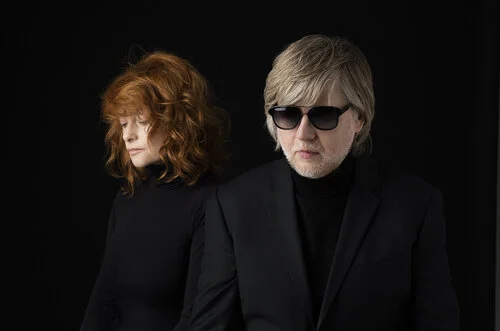
to include Deacon Blue in this feature, but there is a special reason to do so now. On 13th May, it is the birthday of Deacon Blue vocalist, Lorraine McIntosh. In my opinion, she has one of the greatest voices. I think her vocals are essential when it comes to elevating and underlining the brilliance of Deacon Blue’s music. As much as I love Ricky Ross’ lead vocals and songwriting (he and Lorraine McIntosh are married), I think the current band - Ricky Ross – lead vocals, piano, James Prime – keyboards, piano, Lorraine McIntosh – backing and lead vocals, percussion, Dougie Vipond – drums, percussion, Gregor Philp – guitar, Lewis Gordon – bass - are sensational. One of the reasons why I latched onto them so young and was hooked was McIntosh’s voice. Songs such as Twist and Shout, Real Gone Kid and Dignity are made stronger and more soulful because of her! Not only is McIntosh an incredible singer and musician. She is also an accomplished actor. She took a break from music to play the character Alice Henderson in the Scottish soap opera, River City. Her character first appeared in 2002 and was written out during May 2010. She has also appeared in a few films - including Ken Loach's My Name Is Joe. Not only that. McIntosh is also a campaigner. She is someone I find very inspiring. To mark the birthday of the amazing Lorraine McIntosh, I wanted to put together a selection of Deacon Blue songs. Following on from this year’s Riding on the Tide of Love, I hope that we see a lot more from the Scottish band. In this playlist, you will hear many examples of how McIntosh’s rich and beautiful voice shines through and stays in the head. A very happy upcoming birthday to…

A magnificent artist.

FEATURE: Vinyl Corner: Big Brother & The Holding Company - Cheap Thrills

FEATURE:


Vinyl Corner

sss.jpg

Big Brother & The Holding Company - Cheap Thrills

___________

I have not included many albums…

eee.jpg

 PHOTO CREDIT: Columbia/Legacy Recordings

from the 1960s in this feature. I was going to do a Janis Joplin solo album for this feature, though I could not find Pearl (her 1971 album) affordably on vinyl. Together with the band - Sam Andrew – guitar, bass on Oh, Sweet Mary, vocals, James Gurley – guitar, Peter Albin – bass, lead guitar on Oh, Sweet Mary, lead acoustic guitar on Turtle Blues, Dave Getz – drums -, Joplin is terrific through Cheap Thrills. The 1968 from Big Brother & The Holding Company is one of the best from the decade. It was their last album with Janis Joplin as lead before she started a solo career. On Cheap Thrills, the band and producer John Simon incorporated recordings of crowd noise to lend the impression of a live album – many assumed that the album was live! Go and get the album on vinyl, as it has some terrific songs and incredible vocals from Joplin. Released in summer 1968, Cheap Thrills arrived a year after the band’s debut. It stayed at number-one on the Billboard charts for eight weeks. Maybe the huge success of the album is one reason why Janis Joplin soon pursued her solo career. With songs such as Summertime, Piece of My Heart and Ball and Chain given a fresh and fascinating interpretation by Big Brother & The Holding Company, Cheap Thrills sounds both classic and modern. I think one of the album’s highlights, the Joplin-penned Turtle Blues, is one that many people overlook.

I am going to round things off with a couple of reviews. The first thing that I want to bring in is from AllMusic. They provide some history and background regarding the band - in addition to why the album is so strong:

“Cheap Thrills, the major-label debut of Janis Joplin, was one of the most eagerly anticipated, and one of the most successful, albums of 1968. Joplin and her band Big Brother & the Holding Company had earned extensive press notice ever since they played the Monterey Pop Festival in June 1967, but for a year after that their only recorded work was a poorly produced, self-titled album that they'd done early in their history for Mainstream Records; and it took the band and the best legal minds at Columbia Records seven months to extricate them from their Mainstream contract, so that they could sign with Columbia. All the while, demand continued to build, and they still faced the problem of actually delivering something worthy of the press they'd been getting -- Columbia even tried to record them live on-stage on the tour they were in the midst of when the new contract was signed, but somehow the concert tapes from early March of 1968 didn't capture the full depth of their work. So they spent March, April, and May in the studio with producer John Simon and, miraculously, emerged with something that was as exciting as anything they'd done on-stage.

When Cheap Thrills appeared in August 1968 -- sporting a Robert Crumb cover on its gatefold jacket that constituted the most elaborate album design ever lavished on a rock album from Columbia Records, as well as a pop-art classic rivaling the Beatles' Sgt. Pepper's jacket -- it shot into the charts, reaching number one and going gold within a couple of months, and "Piece of My Heart" became a Top 40 hit and helped to propel the LP to over a million sales. Joplin, with her ear- (and vocal cord-) shredding voice, was the obvious standout. Nobody had ever heard singing as emotional, as desperate, as determined, or as loud as Joplin's, and Cheap Thrills was her greatest moment. Not that everything was done full out -- there were relatively quiet moments on the album that were as compelling as the high-wattage showcases; her rendition of George Gershwin's "Summertime" was the finest rock reinterpretation of a standard done by anybody up to that time (though, in an incident recalled in his autobiography Clive, when Columbia Records president Clive Davis played it to Richard Rodgers to give him an example of some of the sounds that younger audiences of the late '60s were listening to, the 66-year-old Rodgers stomped out of the Columbia corporate offices in fury, vowing never to write another song); and Joplin's own "Turtle Blues" showed that she and the band could turn down and do credible acoustic blues, in something like an authentic period Bessie Smith (or, more properly, Memphis Minnie) sound. Big Brother's backup, typical of the guitar-dominated sound of San Francisco psychedelia, made up in enthusiasm what it lacked in precision. But everybody knew who the real star was, and Joplin played her last gig with Big Brother while the album was still on top of the charts. Neither she nor the band would ever equal it. Heard today, Cheap Thrills is a musical time capsule and remains a showcase for one of rock's most distinctive singers”.

WITH her incredible voice and energy.

FEATURE: You Still Believe in Me: The Beach Boys’ Pet Sounds at Fifty-Five

FEATURE:


You Still Believe in Me

aaaa.jpg

The Beach Boys’ Pet Sounds at Fifty-Five

___________

ON 16th May…

iii.jpg

one of the greatest albums of all-time turns fifty-five: the sublime Pet Sounds. The eleventh studio album from The Beach Boys, it is amazing to think that it was initially met with a slightly tepid raft of reviews and commercial performance! It peaking at number-ten on the U.S. Billboard Top LPs chart – this was lower than the band's preceding albums. It is strange how some albums fare better in different counties. Maybe it was the fact that The Beatles and other bands were experimenting and producing these similar albums that Pet Sound was taken to heart in the United Kingdom. The reviews were more favourable. Pet Sounds reached number-two on the album chart. One of the most progressive and astonishing Pop albums ever, the reception and reaction to the album has drastically shifted since 1966. Pet Sounds is now seen as one of the most important albums in music history. There are some parallels between The Beach Boys and The Beatles. As The Beatles quit touring largely by 1966/1967, they immersed themselves in the studio and challenged themselves. Produced, arranged, and almost entirely composed by Brian Wilson (with guest lyricist Tony Asher), he wanted to release the greatest album ever - one you could listen to and not encounter any weak tracks. I have written about Pet Sounds a lot through the years. I am going to bring in a couple of reviews and articles that helps give a sense of how important and groundbreaking the album is.

Just look at the tracklisting and it is wall-to-wall gold! God Only Knows ranks alongside the greatest songs ever. Wouldn’t It Be Nice (which Mike Love co-wrote with Wilson and Asher) is a perfect opener that still sounds so magnificent and spellbinding after all of this time! There is this wonderful balance between the more experimental and sunny songs and those that are more emotional and tender. Opening with the bright Wouldn’t It Be Nice and ending that first side with the effusive Sloop John B, there is this perfect start and end. Don't Talk (Put Your Head on My Shoulder) appears in the middle of the first half and is one of the most moving songs in The Beach Boys’ catalogue. After the spirited close of the first half, God Only Knows opens the second half. I think there is this brilliant sequencing so that you get these emotional hits and joyous rushes in equal measures. A great balance and blend, everything is in its right place! The vocal harmonies from Brian Wilson, Al Jardine, Bruce Johnstone, Mike Love, Carl Wilson and Dennis Love are rich, dreamy and reliably heavenly. Brian Wilson Wall of Sound orchestrations and layered vocals had never been heard in mainstream Rock/Pop prior to 1966. Mixing together so many interesting sounds and textures – including a bicycle bells and flutes -, one has to listen to Pet Sounds over and over to fully grasp and absorb it!

Before getting to the reviews, I would advise people to look at the Wikipedia page for Pet Sounds to get a sense of its background, recording and legacy. There are a couple of interesting articles that I feel are worth bringing in at this point. Last year, udiscovermusic. argued why Pet Sounds remains a work of art.

“When Pet Sounds was released in the UK, Capitol Records ran adverts in the music press calling it “The most progressive pop album ever! It’s fantastic!” Then, like now, it sometimes seems that British Beach Boys fans “got” the band – and, in particular, where Brian Wilson was trying to take his music – maybe more so than fans at home in America. It has so often been the case that no man is a prophet in his own land, and that old adage certainly applies to musicians and their music.

In the summer of 1966 there were some fans who were confused by The Beach Boys’ 11th studio album – where were the striped shirts and the surfboards? In the intervening five decades, however, Pet Sounds has been acknowledged as a masterpiece, a record that has topped countless polls of the greatest albums ever made, and is revered by musicians and fans alike as the pinnacle of Brian Wilson’s songwriting, production and all-round creative genius.

Brian began seriously working on his masterpiece on Tuesday, 18 January 1966, at Western Recorders, and continued for 27 sessions spread over three months at four separate Los Angeles studios. This was an unprecedented amount of studio hours to be devoted to one album, but Brian was in pursuit of perfection. Just take a listen to any of the tracking sessions released on the various reissues of Pet Sounds: Brian was totally focused and demanded nothing less from everyone who worked on the project.

‘Let’s Go Away For Awhile’ was recorded that first day, with Take 18 of what was then called ‘Untitled Ballad’ the master. Among those in the studio were guitarists Al Casey and Barney Kessel; saxophonists Jim Horn and Plas Johnson; Carol Kaye on bass; and the ever-present Hal Blaine on drums. The rest of The Beach Boys were over 5,000 miles away, in Sendai, Japan, on tour with new man Bruce Johnston, who had replaced Brian in The Beach Boys’ road band, but was also becoming an integral part of the studio group.

By 9 February, eight sessions had taken place, and on this day the remainder of The Beach Boys joined Brian in the studio for what proved to be a difficult day for all concerned. Brian was frustrated that they could not seem to handle some of the complexities of the vocals he was demanding from them, and some of the band thought this new music was too radical a departure from their “sound” – a hit-making concoction no better illustrated than on ‘Barbara Ann’, which had been released as a UK single that same week, having already been a No.2 hit to The Beatles’ chart-topping ‘We Can Work It Out’ on the Billboard Hot 100.

By the end of the month they were over halfway through the Pet Sounds sessions, including working on a song that a Capitol Records memo refers to as “‘Good, Good, Good Vibrations’, the preliminary track from the album”, though, in the end, the song was not included on Pet Sounds. The final session for the album was held on 11 April, when the vocals for ‘Wouldn’t It Be Nice’ and ‘God Only Knows’ were finally completed to Brian’s exacting standards.

Brian mastered the album five days later, and it was released in the US exactly a month after that. The album’s title was chosen by Mike Love, in reflection of the fact that the music on the record was very much made up of Brian’s “pet” sounds. Despite all the effort, the beauty of the record, its innovative nature and the brilliance of Brian’s creative genius, it stalled at No.10 on the Billboard album chart. Brian was mortified.

On Monday, 16 May 1966, the day of Pet Sounds’ US release, Bruce Johnston arrived at London’s Heathrow Airport carrying a copy of the album. The following day, in his suite at the Waldorf Hotel, Bruce played the album in its entirety for John Lennon and Paul McCartney – not once, but twice. After the two Beatles left the Waldorf they went straight back to Paul’s house and there, inspired by Brian’s incredible music, they worked on the introduction to their song ‘Here, There And Everywhere’, which later appeared on Revolver.

“Pet Sounds blew me out of the water,” Paul recalled in 2003. “First of all, it was Brian’s writing. I love the album so much. I’ve just bought my kids each a copy of it for their education in life – I figure no one is educated musically ’til they’ve heard this album.”

Just what is it that makes Pet Sounds so amazing? The vocals include Brian’s most poignant ever performance, on the sublime ‘Caroline No’; Mike Love shines on ‘Here Today’; and Carl Wilson turns in a heart-stopping tour de force, ‘God Only Knows’. If you get a chance, listen to the a cappella mixes of the songs included on the most recent box set reissue of the album. The complexity of the arrangements are staggering, and yet the band were all so young. Brian himself was still only 23; Mike, the oldest member of the group, had turned 25 during its recording; Carl Wilson was still only 19, Dennis Wilson was 21 years old; and Bruce Johnston and Al Jardine were also both 23”.

aaaa.jpg

  IN THIS PHOTO: Brian Wilson in an outtake from the Pet Sounds cover shoot at the San Diego Zoo

I want to highlight an article from Vox that was published in 2016. There are various sections that interested me greatly. The fact there was this production race between The Beach Boys and The Beatles is fascinating! After Pet Sounds, The Beatles tried to up the ante with 1967’s Sgt. Pepper’s Lonely Hearts Club Band. Depending on what side you on, you could say that The Beach Boys bested The Beatles and produced the best album with Pet Sounds – though Revolver must come pretty close in terms of the best albums of that time. The incredible songwriting and blend of sounds/emotions on Pet Sounds is still influencing artists today:

“Wilson also used better-known instruments in weird ways. For the intro to "You Still Believe in Me," Tony Asher, Pet Sounds' primary lyricist, helped Wilson get the sound he wanted by plucking the strings inside Wilson's piano as Wilson held down the notes on the keyboard. "I Know There’s an Answer" uses a harmonica as a bass instrument and for a solo — unheard of at the time.

And remember that eerie sound of the electric theremin in science fiction movies of the '50s and '60s? Its haunting wails turn up near the end of "I Just Wasn’t Made for These Times."

It’s impossible to say for sure where Wilson got his ideas for instrumentation, but what motivated his endless experimentation is unmistakable: his desire to beat the Beatles.

So when the Beatles began work on 1967's Sgt. Pepper’s Lonely Hearts Club Band, Pet Sounds was at the forefront of their minds. "Without Pet Sounds, Sgt. Pepper never would have happened. ... Pepper was an attempt to equal Pet Sounds," Sgt. Pepper producer Martin wrote in the liner notes for the Beach Boys' outtakes collection The Pet Sounds Sessions, released in 1997, a year after Pet Sounds’ 30th anniversary.

Paul McCartney himself has echoed that sentiment. "If records had a director within a band, I sort of directed Pepper," McCartney said in an interview he did in 1990. "And my influence was basically the Pet Sounds album." Sgt. Pepper marked a huge production leap over Revolver, and went on to win the Beatles a Grammy for Best Album.

That's essentially where the production race ended. While the Beatles were busy with Revolver and Sgt. Pepper, the Beach Boys' Wilson had been trying to up the ante even more with SMiLE, his intended follow-up to Pet Sounds.

SMiLE was an ambitious, high-concept undertaking; Wilson was recording everything in pieces, effectively experimenting with a physical version of digital editing about 20 years before the technology arrived. But due to the huge amount of effort involved and a breakdown in Wilson's mental health, SMiLE was not to be. The project famously collapsed and wasn't released — until decades later, when it was released officially in two different versions.

What’s remarkable, though, and what has seemingly been forgotten in the decades since, is the strong possibility that by the end of 1966, Wilson had finally managed to fight the Beatles to a near draw in terms of popularity — at least when considering the two groups' chart performance in the US and the UK.

Of the many themes and subjects Pet Sounds touches upon and tackles, the album is united by a sadness it never shies away from; at its core, Pet Sounds is about young, failed love.

"God Only Knows," like most of the songs on the album, functions differently as a standalone work than within the context of the album. By itself, the song explores a person longing for her romantic partner who has died. But in the context of the album as a whole, it feels like a pivot, signifying that point in a relationship when you suspect you’re falling out of love or can begin to imagine life without the person you’re involved with.

"Caroline, No" is Pet Sounds’ piercingly vulnerable finale. Far in the future, and thus much older, our teenage ex-partners meet once again. Expanding upon the premise of how people change as they get older, the song wonders if the love these teenagers once felt for each other could ever be reignited or felt again. But its tone implies it cannot, and mourns the loss of that first love.

The conclusion of "Caroline, No" can seem bewildering, especially to first-time listeners. The sound of an oncoming train accompanied by barking dogs might be confusing in the moment, but as the train approaches and accelerates, the barking dogs chasing after it, the metaphor becomes clear: It represents the loss of innocence after your first heartbreak.

What’s heartening to see, however, is that even though the production race between the Beach Boys and the Beatles ended nearly 50 years ago, in some ways it’s still going on. Both groups have charted among the top 10 on the Billboard 200 within the past four years — pretty good for 50-year-old bands. And it's common, on lists of the best albums of all time, to see Pet Sounds jockey with a Beatles album (like Sgt. Pepper or Abbey Road) for the top spot.

But to my mind, the Beatles never topped Pet Sounds. For all the Fab Foursome's admirable achievements, they never managed to wield an album so deftly united in subject matter, theme, production, and song-to-song quality”.

aaaa.jpg

 IN THIS PHOTO: The Beach Boys in a further outtake from the Pet Sounds cover shoot

I am going to round this off with a couple of reviews. It seems almost surplus to requirement, as I have not seen anyone give anything less than a glowing five-star review! That said, each critics has a different interpretation and angle. This is what AllMusic said in their review:

“The best Beach Boys album, and one of the best of the 1960s. The group here reached a whole new level in terms of both composition and production, layering tracks upon tracks of vocals and instruments to create a richly symphonic sound. Conventional keyboards and guitars were combined with exotic touches of orchestrated strings, bicycle bells, buzzing organs, harpsichords, flutes, Theremin, Hawaiian-sounding string instruments, Coca-Cola cans, barking dogs, and more. It wouldn't have been a classic without great songs, and this has some of the group's most stunning melodies, as well as lyrical themes which evoke both the intensity of newly born love affairs and the disappointment of failed romance (add in some general statements about loss of innocence and modern-day confusion as well). The spiritual quality of the material is enhanced by some of the most gorgeous upper-register male vocals (especially by Brian and Carl Wilson) ever heard on a rock record. "Wouldn't It Be Nice," "God Only Knows," "Caroline No," and "Sloop John B" (the last of which wasn't originally intended to go on the album) are the well-known hits, but equally worthy are such cuts as "You Still Believe in Me," "Don't Talk," "I Know There's an Answer," and "I Just Wasn't Made for These Times." It's often said that this is more of a Brian Wilson album than a Beach Boys recording (session musicians played most of the parts), but it should be noted that the harmonies are pure Beach Boys (and some of their best). Massively influential upon its release (although it was a relatively low seller compared to their previous LPs), it immediately vaulted the band into the top level of rock innovators among the intelligentsia, especially in Britain, where it was a much bigger hit”.

I am ending with a review from SLANT. They note that, whilst critics usually have something bad to say about an album or do not understand it, it was the rest of The Beach Boys who were not buying the buzz for Brian Wilson’s masterpiece:

“Whenever pundits, critics, and intelligentsia decide that some work of art or other is worthy of being designated “the absolute greatest painting/recording/novel/lint collection of all time,” there’s always someone with claws out, waiting to pounce on the pronouncement and rip the accolades to so many adjective-laden shreds. Oddly enough, in the case of Beach Boy Brian Wilson’s compositional masterwork Pet Sounds, it was the rest of his band who couldn’t figure out what all the fuss was about. Sure, the other Boys (Mike Love, Brian’s brothers Carl and Dennis, and Al Jardine) sang their parts (as written by Brian) beautifully, even if they were singing gobbledegook about “hanging onto your ego.” But these lush, symphonic, and baroque pieces were as far removed from the good-time surf ditties the band was known for as they could possibly be. For all the band knew, these tunes could’ve been beamed into Brian’s brain from another planet. And for all we know, they probably were.

Still, even with stiff resistance from his bandmates, his record label, and potentially even his fans, Brian soldiered on, pulling these pet sounds from his head and painstakingly putting them to tape. And we’re a much better world for it. Imagine a world without Carl Wilson’s sublime, gentle reading of “God Only Knows” (the first song to include the word “God” in the title, according to folklore). A world without the impossibly gorgeous vocal harmonies stacked sky-high in the closing of “You Still Believe in Me.” A world without the giddy, heart-bursting optimism of “Wouldn’t It Be Nice,” or the silly musical mischief of “Sloop John B.” I can’t imagine living in such a world, and thank God (and Brian Wilson) we don’t have to.

So while his band thought he was bonkers, and the American public didn’t quite get it right away, Pet Sounds did find an eager audience in the U.K., and in particular with those shaggy mustachioed mop-tops the Beatles, who proceeded to nick various aspects of the album for their own orch-pop opus Sgt. Pepper’s Lonely Heart’s Club Band. Wilson would hear that album and be tempted to recoil in defeat, and the Beach Boys’s days as summertime chart-toppers grew limited. But as time has crept on, the hosannas for Pet Sounds are still fervently sounded (hell, even Mike Love likes it now), you can buy several versions of the collection (including a lavish box set containing alternate versions, a cappella takes, and other goodies), and it’s widely regarded as perhaps the greatest pop album ever made. And still, somewhere on planet Earth, someone is experiencing the euphoria of these songs for the first time. To that person, I say welcome to a new and lovelier world”.

Ahead of its fifty-fifth anniversary on 16th May, I was keen to reinvestigate Pet Sounds and state why it remains this hugely important and peerless work. Go and buy the album on vinyl if you can, as this is an album that will be talked about for decades and decades to come! Whilst it has inspired so many artists – from Prog Rock acts in the 1970s to Indie bands of the 1990s and beyond -, I do not think anyone has managed to match the genius and gravity of Pet Sounds. I am not sure that anyone ever will! When it comes to albums, you can’t get higher praise than that. It is s staggering achievement and work of brilliance…

THAT moves all the senses.

FEATURE: The Lockdown Playlist: Alison Goldfrapp at Fifty-Five

FEATURE:


The Lockdown Playlist

ddddd.png

IN THIS PHOTO: Alison Goldfrapp shot for Vogue in 2006/PHOTO CREDIT: Mario Testino

Alison Goldfrapp at Fifty-Five

___________

I am keen to get to the music…

xxxx.jpg

 PHOTO CREDIT: Alison Goldfrapp

but, as Goldfrapp’s Alison Goldfrapp is fifty-five on 13th May, I feel it is important to know a bit about the incredible musician and producer. I am going to end with an essential selection of Goldfrapp (the duo consists of Alison Goldfrapp on vocals and synthesisers and Will Gregory on synthesiser) tunes – where we will hear and experience the beauty, power and breadth of Alison Goldfrapp’s voice. Before that, and bringing in some Wikipedia, a little bit about her career development and trajectory:

“In 1994, she featured on the Orbital album Snivilisation and recorded songs "The Good" and "The Bad" with trip reggae outfit Dreadzone, for their 'best of' album The Best of Dreadzone – The Good The Bad and the Dread. Performing with them live resulted in two songs on the limited edition Performance album released in 1994. In the same year Goldfrapp featured on trip hop artist Tricky's 1995 song "Pumpkin" and collaborated with Stefan Girardet on two songs on the soundtrack to the 1995 film The Confessional.

Goldfrapp was introduced to composer Will Gregory in 1999 after he had listened to her vocal contribution for "Pumpkin", they then formed Goldfrapp and signed to Mute Records.

In 2000 she was a featured vocalist on the songs "The Time Of The Turning" and "The Time of the Turning (Reprise)/The Weaver's Reel" from the release OVO, Peter Gabriel's soundtrack album to the London Millennium Dome Show.

The pair began recording their debut album over a six-month period, beginning in September 1999, in a rented bungalow in the Wiltshire countryside. The band's debut album Felt Mountain was released in 2000 and featured Goldfrapp's synthesized vocals over cinematic soundscapes. Goldfrapp released their second album Black Cherry in 2003. The band recorded the album in Bath, England. This album focused more heavily on dance music and glam rock-inspired synths than its predecessor. Black Cherry peaked at number nineteen on the UK Albums Chart and sold 52,000 copies in the US. Supernature, Goldfrapp's third album, was released in 2005. The album comprises pop and electronic dance music prominently featured on Black Cherry, but focuses more on subtle hooks instead of the large choruses that made up its predecessor. It has sold one million copies worldwide and earned the duo two nominations at the 2007 Grammy Awards for Best Electronic/Dance Album and Best Dance Recording for the song "Ooh La La". Seventh Tree, Goldfrapp's fourth album, was released in 2008 and debuted at number two on the UK Albums Chart. The album is a departure from the pop and electronic dance music featured on Supernature, featuring ambient and downtempo music. The band were inspired by an acoustic radio session they had performed, which led the duo to incorporate acoustic guitars into their music to create "warm" and "delicate" sounds.

In 2009, she was awarded an Honorary Doctor of Music degree by the University of Portsmouth.

Goldfrapp have released seven albums, most recently Silver Eye in 2017. Hits include "Strict Machine", "Ooh La La", "Lovely Head" and "A&E". The multi-platinum selling band have been nominated for the Mercury Prize, multiple Grammy Awards and won an Ivor Novello for "Strict Machine”.

Ahead of the fifty-fifth birthday of the iconic Alison Goldfrapp, below are a selection of tracks from the amazing duo (their latest album, Silver Eye, was released in 2017). In my mind, there are few vocalists who have the same pull and potency as…

THE amazing Alison Goldfrapp.

FEATURE: Inside the Actor’s Studio: Kate Bush’s Director’s Cut at Ten

FEATURE:


Inside the Actor’s Studio

cccc.jpg

IN THIS PHOTO: Kate Bush in a promotional image for Director’s Cut/PHOTO CREDIT: John Carder Bush 

Kate Bush’s Director’s Cut at Ten

___________

THIS is the penultimate feature…

aaa.jpg

I will put out regarding the tenth anniversary of Kate Bush’s Director’s Cut. The ninth studio album from Bush, it was released on 16th May 2011. I have covered various different aspects of the album and chosen a few songs from it that I especially like. The album consists of re-recorded songs that originally appeared on the albums The Sensual World (1989) and The Red Shoes (1993). Whilst a few elements of the originals remain, Bush stripped out these songs in order to give them more room. She felt that those albums were maybe a little too busy, lacking in room and not as she would have liked. Eighteen years after The Red Shoes came into the world, Bush set to work ‘retuning’ these songs. Rather than see Director’s Cut as an album of reversions or Bush covering her own tracks, one can almost view it as a new album. There is one particular aspect that I want to focus on for this Director’s Cut feature: the sound quality and how Bush’s high-tech studio gives these songs new clarity and quality. Rather than the studio creating a polished and too-clean sound, I think they sharpen the tracks. The original albums, to an extent, suffered because of the sound quality. Before coming to an interview Bush conducted with Pitchfork, I want to highlight a review from AllMusic.

Not only do they discuss the ways in which various songs on Director’s Cut differ from their original form; they also note how Bush’s home studio benefited the album and recording of these well-known songs.

“During her early career, Kate Bush released albums regularly despite her reputation as a perfectionist in the studio. Her first five were released within seven years. After The Hounds of Love in 1985, however, the breaks between got longer: The Sensual World appeared in 1989 and The Red Shoes in 1993. Then, nothing before Aerial, a double album issued in 2005. It's taken six more years to get The Director's Cut, an album whose material isn't new, though its presentation is. Four of this set's 11 tracks first appeared on The Sensual World, while the other seven come from The Red Shoes. Bush's reasons for re-recording these songs is a mystery. She does have her own world-class recording studio, and given the sounds here, she's kept up with technology. Some of these songs are merely tweaked, and pleasantly so, while others are radically altered. The two most glaring examples are "Flower of the Mountain" (previously known as "The Sensual World") and "This Woman's Work." The former intended to use Molly Bloom's soliloquy from James Joyce's novel Ulysses as its lyric; Bush was refused permission by his estate. That decision was eventually reversed; hence she re-recorded the originally intended lyrics. And while the arrangement is similar, there are added layers of synth and percussion.

Her voice is absent the wails and hiccupy gasps of her youthful incarnation. These have been replaced by somewhat huskier, even more luxuriant and elegant tones. On the latter song, the arrangement of a full band and Michael Nyman's strings are replaced by a sparse, reverbed electric piano which pans between speakers. This skeletal arrangement frames Bush's more prominent vocal which has grown into these lyrics and inhabits them in full: their regrets, disappointments, and heartbreaks with real acceptance. She lets that voice rip on "Lilly," supported by a tougher, punchier bassline, skittering guitar efx, and a hypnotic drum loop. Bush's son Bertie makes an appearance as the voice of the computer (with Auto-Tune) on "Deeper Understanding." On "RubberBand Girl," Bush pays homage to the Rolling Stones' opening riff from "Street Fighting Man" in all its garagey glory (which one suspects was always there and has now been uncovered). The experience of The Director's Cut, encountering all this familiar material in its new dressing, is more than occasionally unsettling, but simultaneously, it is deeply engaging and satisfying”.

I have talked about the reviews for Director’s Cut. Overall, the album scored better than The Red Shoes; perhaps fewer glowing reviews than The Sensual World accrued. Many were impressed with how the songs sounded and what Bush had done. In releasing the Director’s Cut album, Bush wasn’t disregarding The Sensual World or The Red Shoes. At the time of recording those albums, she was doing her best as a producer - and she would have been happy with the results. I think a lot of artists look back at various albums and feel that, given another shot, they could have made improvements.

ddfkfufufg.jpg

 IN THIS PHOTO: Kate Bush in a promotional image for Director’s Cut/PHOTO CREDIT: John Carder Bush

It is interesting learning about why Bush wanted to approach these two specific albums and her views on digital vs. analogue. I wanted to do a feature around the fact that Bush, alongside over one-hundred-and-fifty other musicians put their signature to a letter asking the Government to address how artists are paid on streaming sites. I might cover that in a week or two. Although Bush would rather people buy her albums and get them on vinyl, she understands how important the digital market is. Even an artist like her will not earn too much from streams. The situation is much bleaker for smaller acts. I digress. I am interested in Bush recording songs from Director’s Cut in her home studio. As the album title implies, having more control and being able to ‘cut’ the songs in a better way provided benefitial. I shall bring in that Pitchfork interview:

“Pitchfork: If you hadn't really listened to The Sensual World and The Red Shoes at all, how did you even know that you wanted to remake the songs?

KB: For a few years, I've wanted to pick tracks off both albums and make them sound the way I would want them to if I made them now. At the time, I was really pleased with them; I wouldn't have put them out if they weren't the best I could do. I thought the odd tracks that I did hear from The Red Shoes had a bit of an edgy sound, which may be due to the digital equipment that everyone was using then and that a lot of people still use now. But I've always been a big fan of analog, and I wanted to try and warm up the sound of the tracks from that album. Then again, it was interesting actually hearing the whole of Red Shoes-- it actually wasn't as bad as I thought.

I mean, I could find faults with all my albums because that's just a part of being an artist-- it's hard being a human being, isn't it? [laughs] With both albums, there were a lot of ambitious ideas as well, so I was working on top of work that had already been done. I didn't have to start from scratch, so it was really something I did for myself as a kind of exercise. Although the songs are old, it's like a new record to me.

Pitchfork: The Red Shoes came out in 1993, the heyday of the compact disc. Were you recording specifically for that format?

KB: Yeah, that's absolutely right. It probably was my first album that was specifically a CD as opposed to vinyl. Red Shoes was a bit long-- which was also a part of this whole problem with the change from vinyl to CD. I think that put a lot of strain on artists, actually. With CDs, you suddenly didn't want to let people down so you tried to give them as much as possible for their money. [laughs] I didn't really feel that there were any filler tracks on The Red Shoes, but if I were to do that album now, I wouldn't make it so long.

The great thing about vinyl is that if you wanted to get a decent-sounding cut, you could really only have 20 minutes max on each side. So you had a strict boundary, and that was something I'd grown up with as well. Also, you were able to have different moods on each side, which was nice.

Pitchfork: It kind of worked out because by the time you followed up The Red Shoes with Aerial in 2005, people were buying vinyl again.

KB: [laughs] I don't know about that. There was a resurgence, but it's certainly not the main format that people buy music on. In 2005, it was still CDs. I guess you're lucky if people actually buy a CD now.

Pitchfork: So you're still in the studio on a day-to-day basis?

KB: Yeah, I have been for a while now, because [Director's Cut] has been ready for quite some time. Although there were a lot of ongoing loose ends with this album, like the mastering and artwork, I went straight into making a new record when I finished it. I'm really enjoying working on new material. Director's Cut is kind of a one-off rather than a continuous revisiting of old stuff.

Pitchfork: You mentioned preferring analog to digital recording, but "Deeper Understanding" has a very modern-sounding vocal effect on the chorus. As a producer, do you keep track of what's going on now as far as tools and advancements?

KB: I try to. My studio is a fantastic combination of old and new, and that's how I've always liked to work. But now, the new is newer, and old remains old. I like to work with a combination of analog and Pro Tools. I love the sound of analog tape, but there's so many things you can do with Pro Tools that would be incredibly difficult and very time-consuming with analog.

When I originally did "Deeper Understanding", I wanted the computer program to have a single voice so that it was a single entity, but at the time, there was only a pretty basic vocoder so I had to use backing vocals to make the words audible. This time, I could use a truly computerized voice that would stand alone. This album would've been possible to do entirely analog, but it would've been really difficult”.

Whilst 2005’s Aerial would have been recorded largely at Kate Bush’s home, I think Director’s Cut was the first where she utilised her own studio and had that greater autonomy - the fact she had her own label by that point would have helped and provided comfort and a sense of authorship. I feel Bush establishing her Fish People label was a move designed to allow her further independence - not having to answer to a label or studio. Although The Sensual World and The Red Shoes are great albums, I think of Bush at Abbey Road Studios (The Red Shoes) and Wickham Farm Home Studio and Windmill Lane Studios (The Sensual World) and things being quite hectic and intense. The vision of Bush working with her small group of musicians – Paddy Bush – mandola, flute, whistle, backing vocals, Steve Gadd – drums, John Giblin, Eberhard Weber, Danny Thompson – bass guitar, Danny McIntosh, Eric Clapton – guitar, Gary Brooker – Hammond organ, Albert McIntosh – programming, backing vocals, Brendan Power – harmonica, Ed Rowntree, Mica Paris, Jacob Thorn, Michael Wood, Jevan Johnson Booth – backing vocals – and feeling comfortable and inspired in her home studio is wonderful!

zzzz.jpg

PHOTO CREDIT: EMI/Fish People

Ahead of its tenth anniversary, I was keen not to ignore an album that many others might. Whether you see it is part of her cannon and a new studio album or an inessential listen, Director’s Cut warrants some focus and investigation. I listen to the eleven tracks on the album as a fresh project. I think Bush sequenced the tracks very well (maybe Rubberband Girl is not the best way to end the album; This Woman’s Work seems like a stronger finale), and her vocals throughout are tremendous! In terms of sound, I feel she produced an album that sounds both vintage and modern. She achieved her goals or stripping back the songs and making them seem less cluttered. Overall, Director’s Cut is an album that was conceived for a good reason and delivers some great results. Not every reworked track hits the mark (Bush has said Rubberband Girl could have been taken out; despite Deeper Understanding being fine, I don’t think the computerised vocals improve on the original or sounds too good). I think Kate Bush’s ninth studio album is a satisfying, fascinating and fulfilling edition to her catalogue. It is one that gained some much-deserved positive reviews. I hope that, on its tenth anniversary on 16th May, people spend some time with…

THE superb Director’s Cut.

FEATURE: Spotlight: Stalk Ashley

FEATURE:


Spotlight

jjj.jpg

Stalk Ashley

___________

IT can be hard keeping on top…

sss.jpg

of all the talent and great artists coming through! One artist who has caught my ear recently is Stalk Ashley. Based in Kingston, Jamaica, I think that she is a name to watch closely. Creating this confident, sexy and compelling music, it is small wonder she has been causing a lot of buzz and excitement! I think that, in the years to come, Stalk Ashley will be a major international star. I want to bring in a few interviews – so that we get to know the rising artist a little better. In August 2020, NOTION introduced an artist who is primed for major things:

“Singer-songwriter Stalk Ashley may have only been releasing tunes for two years, but her sound is highly polished and confident.

Based in Kingston, Jamaica, Stalk Ashley’s style of R&B is blended effortlessly with strands of dancehall and reggae to create a concoction that is uniquely hers. Making her mark with addictive melodies and a self-assured delivery, Stalk Ashley’s lyrics are honest and often pretty steamy. On her track “Sin Sex” she sings: “By anything me mean anything/ See I’m flexible me can do many things, devil tings/ Put you Pon another level things.”

The young artist’s open and honest musical approach to female desire and independence is welcome and refreshing, and it’s something that’s attracting her attention from around the world as her success builds. At the start of “Young” she makes herself clear: “Me so young just a girl having fun sorry fi the misunderstanding jah/ Know mi just a forward mi no ready fi settle down.”

Last year, Stalk Ashley was recruited by Stormzy to cover Beyonce’s “Brown Skin Girl” alongside him at BBC Radio 1’s Live Lounge back in September. Recently, Stalk Ashley teamed up with “In2” hitmakers WSTRN for the song “Deserted”, as well as dropping “Open.” The songs are her first releases this year, following a trio of singles last year and a debut in 2018.

We spoke to the up-and-coming musician to hear about the way her relationship with music has changed over the years, the song that makes her smile, and what she’s planning next.

Growing up, what was your relationship with music like? Has it changed since then?

When I was growing up I didn’t really get to make my own decisions on the music I listened to, I just listen to what people around me were listening to I never had the opportunity to really build my own taste until I was much older mainly because I grew up in a really religious household. So my relationship has most definitely changed I have a much closer relationship with music now, I listen to music every single day. I’ve had the opportunity to discover music on my own and find sounds that I love.

If you could, how would you summarise your journey to becoming a musician?

I’ve been singing since I was really young, so I always believed in myself but I could have never guessed I’d be where I am today. I literally just took a leap of faith. I didn’t know anyone in the music industry, I didn’t have any advice from anyone. I just moved to Kingston (Jamaica) when I was 19 and just started to work, I met my team shortly after I arrived. I quickly started to learn more about writing songs and I practised my craft as best as I could, I just did that wholeheartedly. With that, I’ve met some amazing people and have been presented with some incredible opportunities. I’m still at the beginning of my journey I have so much more to do and learn, oh and I definitely want to learn to play instruments.

What are some of the best and worst things about the music industry – from your experience?

Best things about the music industry for me is being able to put out music that represents me and then seeing how people react to it. I love being able to connect to people and grown my supports. Also being able to travel and make and perform music in different places and meet people from different cultures. I’m very much a recluse so I’m cautious about the situation I put myself in and so I don’t really have a situation where I have necessary had any bad experience yet”.

I have not heard of many new artists being based out of Kingston. Many of the artists I feature in Spotlight are based in the U.K. or U.S. It would be interested to explore modern Jamaica and the potential superstars who are making incredible music there. I am not sure whether Stalk Ashley has plans to relocate in the future. It seems that Kingston is suiting her very well at the moment! In their interview from December, THE FACE asked Stalk Ashley about her sound and finding confidence:

“20%: What’s a piece of advice that changed your life?

A piece of advice, from me to me, that changed my perspective was that people are going to talk about you no matter what you do. There’s no way to escape criticism, fuck opinions and live your life the way you see it fit.

60%: When did you find your confidence as an artist?

I found my confidence when I found my voice and learnt its capabilities. I’m most confident about what I’m able to create with whatever resources I have, like making magic every time with just a basic set up in my room. My confidence continuously grows when I see the way people react to my music, and when fans religiously listen to my songs and feen for more.

100%: What kind of emotions and experiences influence your work?

Every single thing that happens in my life influences my work and work rate somehow, this is why I am very mindful of what I indulge in and is the very reason why I protect my energy the way I do. Everything translates into the music. This year has been an emotional rollercoaster for me, I’ve experienced everything from pain and sadness to disappointment with sprinkles of happiness in the midst of it. It’s influenced every song, every beat, every lyric that I have composed”.

I am going to round off things. Even though she is relatively new into her career, Stalk Ashley has admirers in Jorja Smith and Stormzy. It is clear that her music is resonating with fans and fellow artists alike. I wonder whether she has plans to tour this year when things get better. I know there are many in the U.K. that would love to witness her music up-close and personal. I will wrap up by bringing in NME’s recent spotlighting of the fantastic Stalk Ashley. Among other things, she talks about the rise of Dancehall:

“Mandeville-born Stalk Ashley is about to go global. Her reggae-infused tunes have already landed her on BBC Radio 1Xtra’s coveted Hot for 2021 list, while the likes of Jorja Smith and Stormzy have professed their love for the vocalist, the latter inviting Ashley to cover Beyoncé’s ‘Brown Skin Girl’ with him for Radio 1’s Live Lounge.

Kicking off her career with 2019’s hot and heavy ‘Sin Sex’, Ashley has been picking up momentum ever since. Last year she teamed up with fellow Kingston resident and dancehall heavyweight Alkaline on ‘Incognito’, as well as Shepherd’s Bush’s WSTRN on the slow-burning ‘Deserted’. She’s more than capable of going it alone too, releasing solo stand-outs ‘OPEN.’ and ‘TIP (The Party)’.

How did you find moving from the suburbs of Mandeville to Kingston?

“It’s a lot more fast-paced and that’s definitely how I operate and create music now. My mind is fast-paced.”

Are you proud of dancehall culture being on the rise?

“I am really proud. I think a lot of people are doing a lot of different things, which is nice. I like to see it because dancehall is usually some people following the books, and their mixes kind of sound the same. But it’s always nice to see new things like me. There’s nothing more exciting to me than when I’m listening to a playlist or when I’m just hearing music and it’s just so fresh. I get really excited. I like to see different things that people are doing right now. People are kind of bending the rules.”

What’s your contribution to Jamaican culture?

“I am just hoping for the best and wishing for the stars. And that’s as much as I can say, you know – I’m doing it for real. I hope I make a great impact. I want to leave my imprint on the world.”

In dancehall there’s a lot of overt sexiness – how do you feel about that kind of hypersexuality?

“It’s one of those genres where people are very forward with sex and I think it’s always been like that. You love it or you hate it. Personally, I feel that people should be able to express themselves. If you want to sing about that – great.”

What are your aspirations for the years ahead?

“I don’t think we can ever predict what’s going to happen, but in five years I really want to be in a different place. I would really hope that my music reaches its potential. I’m just looking forward to expanding and bettering myself. I feel like I could be an actor as well. I’ve always been interested in the arts. I feel like there’s a lot of things that I could do but the focus is music, totally. That’s my priority”.

These are early days, though there are signs Stalk Ashley is shaping up to be a huge name! Her music is hard to ignore and is very much her own – one cannot easily link her to anyone else (maybe there are hints of Rihanna here and there). A salute and nod to one of the most exciting and promising new artists around. If this is the first time you are hearing about Stalk Ashley, then get involved with her music and…

DON’T let it pass you by.

_____________

Follow Stalk Ashley

xxx.jpg

FEATURE: The Lockdown Playlist: Step 3 in England’s Roadmap

FEATURE:


The Lockdown Playlist

pp.jpg

PHOTO CREDIT: @emergeartistry/Unsplash

Step 3 in England’s Roadmap

___________

FROM 17th May…

zzz.jpg

 PHOTO CREDIT: Carlo Buttinoni/Unsplash

the next step of lockdown easing in England occurs. Among steps being brought in is that cinemas can open; weddings will be allowed a limit of thirty people. This will be the earliest date at which international holidays could resume. Indoor venues such as the inside of pubs and restaurants, hotels and B&Bs, play centres, cinemas, museums and group exercise classes will reopen. Also, indoor mixing will be allowed – there are one or two other relations that will be introduced. Because of this, this Lockdown Playlist combines songs that can score those relaxations. I know it is quite brought but, as there are a few different restrictions being eased, I wanted to do a wide playlist; songs that tip to cinemas, indoor mixing, weddings, and holidays etc. It ensures that the playlist is quite eclectic! Ahead of England’s next step in the roadmap, this Lockdown Playlist is a selection of songs that…

www.jpg

 PHOTO CREDIT: @ewitsoe/Unsplash

SCORE some further lockdown easing.

FEATURE: Modern Heroines: Part Forty-Seven: Jessie Ware

FEATURE:


Modern Heroines

sss.jpg

Part Forty-Seven: Jessie Ware

___________

ONE of my favourite albums…

zzz.jpg

of last year was Jessie Ware’s What’s Your Pleasure? The fourth album from Ware, she described the album as being one of escapism and groove. The tracks mix House, Disco ad Pop to magnificent effect! As she released the single, Please, on 28th April, it is timely to include Ware in this feature. I think that she will definitely be an icon of the future. As an artist, she has not put a foot wrong – in my estimation -; her albums are all brilliant. Her 2012 debut, Devotion, was a brilliant introduction to a fine British talent. Since then, Ware has explored her sound and crafted some of the best music of the past decade. I am going to focus on her current album. Though, as I always do in this feature, I will end with a career-spanning playlist. I am keen to get to a couple of reviews for What’s Your Pleasure? Just before, it is worth sourcing some interviews that Ware conducted around the time. Before getting to interviews specific to What’s Your Pleasure?, I wanted to drop one in from The Guardian. Ware, among other things, discussed her long-running podcast, Table Manners. We got a glimpse (in the interview) into Ware’s family and early life:  

“We talk over her life, her work and how she got here. She grew up the middle child of three in a busy, noisy, secular Jewish household in south London. “So Jewish, we put up our tree in November,” Ware said, recently. The household was dominated by her mother Lennie, a social worker, home cook and general mensch who gave as good as she got in boisterous conversations at the family dinner table.

Her father, John Ware, is a reporter for BBC Panorama. (Last summer he presented an episode about antisemitism in the Labour Party that made a lot of news.) “This is not to say my dad was a bad person,” Ware begins, carefully, “he just wasn’t the most present parent because he was working a lot. My mum made up for it in leaps and bounds.”

Her parents separated when she was 10, and there was a period when she and her father were estranged. “That lasted a long time. We do have a relationship now. It’s getting better and better. It’s that feeling of, life’s too short. And when he’s not being annoying he can actually be quite funny and informative.”

She went to Alleyn’s, a private school in south London, where she became friends with an Oasis-obsessed crowd that included Felix White and Jack Peñate, both of whom would become prominent musicians. Florence Welch was in the year below – the only one, in Ware’s memory, who looked destined for some sort of stardom. For herself, Ware could pick her way through a jazz standard. She was a good bet for the third- or fourth-best part in school musicals. Beyond that, she didn’t have much in the way of industry ambitions. “I was a scaredy cat. I didn’t write songs. Four albums in, it still seems odd that I make music like them.”

The foodie streak, the ravenous appetite, was always there, first evident publicly in the 1990s when Ware appeared with some school pals on a short-lived ITV children’s quiz show called Eat Your Words. As her friend White has recalled, the rules were such that if a contestant answered a question incorrectly, they could still get a consolation point by forcing down a plate of horrid food. (Boiled carrots and custard was one.) As White remembered it, Ware made a series of elementary mistakes, fluffing her counting and her alphabet… but ate her way out of trouble and won. It wouldn’t be the last time.

After graduation, White became part of a band, the Maccabees, while Peñate forged his way as a solo artist and Welch found the stardom they had all predicted. Meanwhile, Ware interned at the Jewish Chronicle. She had a degree in English literature and thought about training as a lawyer. Around 2010, Peñate asked her to join him on tour as a backing singer. Then a series of providential encounters led to Ware singing guest vocals for rising producers such as SBTRKT and Disclosure. She had been accepted on to a law conversion course when PMR Records, Disclosure’s label, offered her a deal. Devotion came out in summer 2012 and – impossibly, it seemed to her – was nominated for the Mercury within a month. “Everything was magical and romantic around that record. I guess I thought, this is just what it’s like!”

The new single, Please, and the What’s Your Pleasure? album shows that Ware has shifted direction since her debut. In fact, I think that her latest album is a huge transformation. I am interested to see if she will continue this sound and sensation into another album. Not that her previous work is weaker in comparison, though I really love the songs on What’s Your Pleasure? In this interview from The New York Times, we discover that, like quite a few artists in 2020, Ware drew inspiration from Disco. It is an interesting move that has resulted in some terrific albums. Will we see a lot more of this through 2021? The New York Times also spoke with James Ford – one of the album’s producers – about a musical highlight of 2020:

“That effusive personality did not exactly come across in Ware’s early music, which was minimalistic and icy-smooth. Her voice — at once muscular and vaporous, soulful and cool — first started drifting through the ether about a decade ago, as a featured guest on tracks by British electronic acts like Disclosure and SBTRKT. An excellent debut solo album, “Devotion,” followed in 2012; it went to No. 5 on the British album chart and was nominated for the esteemed Mercury Prize. Smith, a fellow breakout guest vocalist from Disclosure’s 2013 album “Settle,” described Ware’s music as “the soundtrack of my 20s.”

fff.jpg

PHOTO CREDIT: Ana Cuba for The New York Times 

Until she didn’t. After “Tough Love,” Ware experienced what she now refers to as her “weird ol’ time in the industry.” Her third album, the sleek, ruminative and highly personal “Glasshouse,” also hadn’t sold as well as her debut; the phrase “adult-contemporary” cropped up (though not necessarily derisively) in several reviews. An ensuing U.S. tour that she admits “hadn’t been planned well” put her an ocean away from her young daughter for nearly a month and left a dent in her own finances. Her fan base — which skews hip and indie-adjacent, especially in the U.S. — was geographically lopsided.

“I’d sell out two shows in Brooklyn,” she said, “and then I’d be in, where was I? Was it Kansas? And you had, like 25 people. Wicked, amazingly funny people, but it was very weird and varied and confusing.”

“This is not me getting my tiny violins out at all,” she added, “but I was losing a lot of money. It’s really expensive to tour. It was just a bit of a mess. I was like, Why am I doing this? It was a big old soul-searching moment.”

Ware made the entirety of “What’s Your Pleasure?” with James Ford, a member of the British electronic duo Simian Mobile Disco and an acclaimed producer for acts like Arctic Monkeys and Florence + the Machine.

“I definitely got the feeling that she wanted to make a record for herself, rather than trying to please other people,” Ford said over FaceTime, after providing a tour of his cozy, synth-filled attic studio where most of “Pleasure” was made. At the time, Ware lived within walking distance of Ford’s house, which gave their sessions a casual ease. Because Ford and Ware both have small children (Ware got pregnant shortly after starting work on the record), they recorded mostly during the day. Family life didn’t impede on the process so much as put it in perspective.

“What’s Your Pleasure?” is a sparkling highlight in a year that has found pop artists from Lady Gaga to Dua Lipa (a recent “Table Manners” guest) reimagining disco for the 21st century. Ford and Ware wanted to pay homage to what they lovingly call “wedding jams,” along with Minnie Riperton soul and “weirdo New York boogie/underground disco.” But “Pleasure” pulls from a varied palette: “Soul Control” has the kinetic energy of Minneapolis funk; “Ooh La La” struts like a long-lost ESG B-side.

“I wanted the sophistication that disco offers, and the melodrama,” Ware said. “It just felt like a bit of a fantasia, and a step away from my real life. Not because I was miserable in my real life — I love my life and my family. But I’d already said all that on my last record. I wanted instead to be a storyteller of these imagined, heightened moments that maybe I wasn’t being able to take part in, in that very moment.” (She and Burrows have been together since they were 18, which she admits does not always make for the most exciting autobiographical songwriting: “Not much salacious hardship. It’s pretty dull. I love it.”)

“It’s a time where people should be able to listen to music that can help them fantasize and move away from reality,” she added. “And that’s the record I made”.

I am going to finish off soon. The last couple of weeks has seen some huge music came out. From Billie Eilish to Self Esteem, the women of music have, as you’d expect, been leading the way and putting out the very best sounds! Jessie Ware, I feel, is among the greatest women in music we have. I do think that we will see so many albums from her - plenty more brilliance is to come. Moving away (slightly) from music, and Ware spoke with Glamour about balancing motherhood with music. We also hear from an artist who is not courting the spotlight and huge stardom:

“Add in the birth of her first child in 2016, and the huge pressure she was putting on herself came to its peak. “I worked way too hard when my daughter was born. I felt I needed to prove that I could do everything, I could balance everything. In hindsight, I absolutely was at breaking point by the end of her first year.”

Nevertheless, she still agreed to tour her third album Glasshouse, which despite giving her another Brit Award nomination for Best British Female and becoming her third top ten album, did not fare well sales-wise. It wasn’t until she performed at Coachella in 2017 for the second time, she reached a turning point in her life and career.

“That Coachella gig was disastrous. Everything that could've gone wrong went wrong. No one turned up to watch me, and to think that a few years before I’d had this heaving tent,” Jessie confides. “I felt like I was in this weird kind of Instagrammy, very immature popularity contest that I was very much losing. So I thought, OK, well, if no one wants to watch me, they're not interested in the music, I should probably sack this in. Why would I want to be in this world? I don't need to do this,’” she says, exasperated at the memory.

Since then, Jessie has shown little interest in courting attention and popularity. “I don't always play the game per se. I'm pretty private. My life is pretty dull,” she says before correcting herself. “No, it's not, it's wonderful, but you know, it's very domesticated. I'm with the same partner that I've been with since I was 18. There are no salacious things that happened to me as a popstar. I don't go to the opening of an envelope.”

I agree, if I was talking to a male star, we would never be having a conversation about how a working father copes with childcare and a career. Jessie thinks sexism is still rife in the music industry and beyond. “They don't ask men how they're going to tour with their children, do they? But you get used to it, you take it with a pinch of salt, and it's also something that I struggled to work out. I once got told that I was being really emotional (in a meeting), and I was being really not-emotional, and I wonder whether they would have said that to a bloke. I didn't rise to it, and I was very calm,” she states. “But you know, it happens. I definitely think there's more of a shelf life for women. I don't want to sound negative because actually I'm able to make the music I want to make, but I'm madly thought of as relatively old and I'm 35!”

I am rounding things off with a couple of reviews for the excellent What’s Your Pleasure? It is a stunning album that received positive reviews right across the broad. This is what AllMusic wrote in their review:

“Rhapsodic dancefloor intimacy became a new specialization for Jessie Ware with "Overtime," the first in a wave of tracks the singer released from 2018 up to the June 2020 arrival of What's Your Pleasure?, her fourth album. Other than "Adore You," a chiming glider made with Metronomy's Joseph Mount, each one in the series was either produced or co-produced by James Ford, consolidating and rerouting a partnership that started during the making of Tough Love. Unlike Ford and Ware's collaborations on that 2014 LP, the new material didn't merely simmer. Hottest of all, "Mirage (Don't Stop)" worked a ripe disco-funk groove with Ware's opening line, "Last night we danced, and I thought you were saving my life" -- sighed in a Bananarama cadence -- a sweet everything if there ever was one. The loved-up energy was kept in constant supply with the dashing "Spotlight," the Freeez-meet-Teena Marie-at-Compass-Point bump of "Ooh La La," and the sneaky Euro-disco belter "Save a Kiss." All but "Overtime" are included here. That makes the album somewhat anti-climactic, but there's no sense in complaining when the preceding singles keep giving and the new material is almost always up to the same standard. Among the fresh standouts, the bounding Morgan Geist co-production "Soul Control" and the dashing "Step Into My Life" recontextualize underground club music with as much might and finesse as anything by Róisín Murphy. Stylistic deviations are few, well-placed, and maintain lyrical continuity with references to the senses as they relate to emotional and physical connection. "In Your Eyes" recalls Massive Attack's "Safe from Harm" with its hypnotizing bassline, subtly theatrical strings, and aching (if less desperate) vocal. Moving in gradually intensifying and similarly slow motion, "The Kill" enables Ware to let down her guard for an unassured lover. "Remember Where You Are," a stirring finale, takes a little trip to cherish the daybreak in Minnie Riperton and Charles Stepney's chamber folk-soul garden, replete with a goosebump-raising group vocal in the chorus. One can almost smell the baby's breath”.

One of the most glowing reviews for What’s Your Pleasure? came from The Guardian. They were impressed by the album’s focus and the fact that Ware could mix the sleek and fun with something quite deep and substantial:

“Rare for a modern major-label pop album, What’s Your Pleasure? focuses on one sound. It feels more modern than Ware’s references to Earth, Wind & Fire and US R&B staple Teena Marie – closer to Moloko, or indeed Róisín Murphy in contemporary disco mode. It’s sleek yet intensely physical: Spotlight vibrates with momentum; the bell-like synths of Adore You are as cool as pond ripples. It also probably couldn’t exist without Robyn’s Honey, another grown-up disco album. (That album’s core personnel, Metronomy’s Joe Mount and Adam Bainbridge, both pop up alongside main producer James Ford.) In very Robyn fashion, Mirage (Don’t Stop) teases its own remix potential, as synth lens-flare, background party chatter and Ware’s silk drape of a voice melt into a juicy reverie. There’s a wealth of great Ware remixes, and What’s Your Pleasure? demands the full club revamp treatment.

Those idiosyncratic textures earn Ware her cheeky pastiches. The skittish Ooh La La is so brazenly rooted in early 80s New York that its insouciant funk not only echoes Rapture and Wordy Rappinghood, but its synth speckles wriggle like Keith Haring art works come to life. Last track Remember Where You Are jumps back earlier into the city’s music history, all velveteen disco gospel, golden vocal harmonies and crackling instrumentation. It’s the curtain call, Ware’s lyrics shifting from sex to comfort as the fantasy fades. “Why don’t you take me home?” she sings.

It’s a poignant final note. Home life, as in domesticity, doesn’t feature here as it did on Glasshouse: Ware has questioned whether people “want to hear about struggling mothers”. Pop should make room for such subjects, although given the industry’s confusion about what to do with older female artists, that feels a long way off. But the superb What’s Your Pleasure? makes a case to reimagine so-called comfort zones as potential lanes of expertise: free pop’s women from the pointless commercial burden to reinvent, let them hone their craft, and you get assured marvels like this”.

I will end things there. One of the best artists in modern music, I am excited to see where Jessie Ware heads. After the magnificent What’s Your Pleasure? last year, many are going to be eager to see Ware on the road – I am sure that we will see gigs soon enough. If you have not heard What’s Your Pleasure? then go and…

SEEK it out now.

TRACK REVIEW: Squid - Boy Racers

TRACK REVIEW:


Squid

qqqq.jpg

PHOTO CREDIT: Ashley Bourne for CRACK 

Boy Racers


9.6/10


The track, Boy Racers, is available from:

https://www.youtube.com/watch?v=bQsyUwziy4Y

GENRE:

Post-Punk

ORIGIN:

Brighton, U.K.

qqq.jpg

The album, Bright Green Field, is available via:

 https://www.roughtrade.com/gb/squid/bright-green-field

RELEASE DATE:

7th May, 2021

LABEL:

Warp

PRODUCER:

Dan Carey

TRACKLIST:

Resolution Square

G.S.K.

Narrator (ft. Martha Skye Murphy)

Boy Racers

Paddling

Documentary Filmmaker

2010

The Flyove

Peel St.

Global Groove

Pamphlets

__________

THIS review is all about...

one of Britain’s hottest and most exciting new bands. Hailing from Brighton, Squid have just released their debut album, Bright Green Field. I am going to work my way forward to a review of one of the songs from the album. I want to first look at the band’s history. Including their formation and the attention at their feet, there is quite a bit to cover. I think that it is important to look at the start of Squid and how they came together. When they spoke to DIY in 2019 (when their single, Houseplants, came out), we discovered more about their roots – and how their music mixes the manic and playful:

“Today, we find the Brighton quintet – completed by vocalist and guitarist Louis Borlase, guitarist Anton Pearson, keyboardist Arthur Leadbetter and bassist Laurie Nankivell - in a Wetherspoons just down the road from London’s fear-inducing US Visa office. It’s a Monday morning (don’t worry, they’re on the coffees for now) and they’ve all just had their passports stamped, ready to go and instil exactly the same sense of excitement over at SXSW. They might only be a couple of years into life as a band, but the momentum behind Squid over the last six months speaks for itself; unusual and idiosyncratic, theirs is an infectious sonic viewpoint that’s pricking up more ears by the day.

Even Squid's beginnings are typically upside down. Meeting at uni in Sussex, the band members had been vaguely making bedroom, laptop music when Anton noticed an ad for a "slightly weird place" looking for someone to start a young person's jazz night. "So we had to write loads of music to play this gig at the jazz bar," explains Ollie. "We booked the space first and then had to write a set," nods Anton. Soon bored of this traditional set up ("It was like, are we really just confined to always having to play the piano?! Fuck this," recalls Louis), the five pals started branching out to other venues and watched their output broaden in tandem. "There wasn't much cohesion, but it was something to do," shrugs Ollie.

aaaa.jpg

Obvious cohesion, you sense, isn't really Squid's primary focus; ask what's on their collective record players, and they'll cite influences ranging from '80s English eccentrics XTC to German kraut favourites NEU! and minimalist composer Steve Reich. "Arthur's so obsessed with Steve Reich; he's got a new app called the clapping game," begins Louis. "I strongly, strongly recommend the Clapping Music app - available on iPhone and Android," informs Arthur, very seriously. "If you get the highest score on the hard level, then you get to perform Steve Reich's 'Clapping Music' with the London Symphony Orchestra." "He's been really annoying people on trains, but you're having fun – that's all that matters," grins Louis to his bandmate.

But though their interests may land on the more technical end of the muso spectrum, Squid's own output rings with a sense of playfulness, fun and more than a little unhinged mania. "Every song that we've written in the past year has been written in about three hours," explains Ollie. "They come from that slightly pressured way of writing and it gives them energy." Take just-released new single 'Houseplants' for example. Bursting out of the traps with an immediate, propulsive riff, it bobs along merrily before some discordant brass kicks in and then the whole thing temporarily collapses in a vortex as Ollie repeatedly wails the track's title. Picking up frenetic pace over its four minutes, it's a wild trip of paranoia shot through with a glint in its eye. "We just finished uni two years ago and now all of our friends are getting career jobs, so it's a bit of a comment on that," notes Ollie, "but I don't ever think out a whole story. The words are just another instrument. I've got a book with loads of phrases written down." "A phrase book, you might say?" jokes Laurie. "Dos cervezas por favor!" calls out Louis”.

rrr.jpg

 PHOTO CREDIT: Holly Whittaker

There is a fun and quick interview that I want to bring in that gives us more a little more insight into the band. It is from a different DIY interview that was conducted back in 2018 – they released their debut E.P., LINO, the year before:

“Describe your music to us in the form of a Tinder bio.

8 minute songs and a stamina to match.

What’s your earliest musical memory?

Anton: The first memory of us working together to make music was Ollie and I awkwardly meeting for the first time in Louis’ bedroom in Kemptown to mess about with some instruments and laptops.

Ollie: You were very grumpy Anton, not a good first impression.

Louis: I was disappointed and couldn’t envisage a second hangout.

Anton: Arthur and I were also in a funk covers band around the same time. It wasn’t until we played our first gig as a four a few months later that we realised it was the sort of thing we wanted to keep doing together. We knew there was a lot of development needed musically to make something our own but luckily the lovely Laurie joined us a year after and steered us with his trumpet.)

Who were some artists that inspired you when you were just starting out (and why)?

Anton: When we were first collaborating we all in love with a lot of German bands like NEU!, Can etc. I remember us listening to a lot of Esbjorn Svensson and ECM type stuff along with a bunch of ‘ambient’ and post-rock artists, really just a load of instrumental stuff too.

Louis: Unintentionally I think, we started taking more from the current music around us and putting it into our own writing. This seemed to give our set a much higher energy which felt really good - or maybe it’s just that we started standing up on stage. Right now we’re especially loving Baxter Dury, Black Midi, DUDS, Tirzah.

You’re based in Brighton and London - do you feel like there are strong scenes in the cities at the moment? Are there other artists breaking through at the same time that you take inspiration from?

Totally! Seems like London is producing a new hot band every minute. It’s just cool to be on the fringes of exciting and diverse musical goings on in London. It is a big city but all these bands operate in a very inclusive way which is really great, and you’ll see a lot of the same faces whether you’re South or North of the river. In terms of Brighton, it seems like everyone has flown the nest somewhat, but there was always lots going on when we all lived there.

Bands like The Glugg, Leatherhead, Sealings, The Snivellers, Space Cowboys and Garden Centre (I’m sure I’m missing more) were always supportive of whatever was going on and are all such firmly grounded and nice people. We’re also really looking forward to the new Porridge Radio album. It’s being recorded with MJ from Hookworms and I’ve heard the working title is ‘Daddy’”.

qqqq.jpg

Let’s move this on and bring it a little more up-to-date. I think that one reason why Squid have harnessed this incredible sound and confidence is their association with producer Dan Carey. The band are signed to Warp now – which I shall touch on soon -, but they met Carey before he produced their debut album. This 2010 interview with CRACK explains more:

“Having worked exclusively with Speedy Wunderground for the past two years, Squid clearly have a special relationship with Carey. I wonder whether that’s because they think Carey is the only producer versatile enough to wrangle their scattergun ideas into some coherent shape. “I don’t think we really know that yet,” Louis replies. “But he has these Speedy Wunderground rules – like, record it in one take, with the lights off, with no lunch break – that definitely makes us work in a specific way.”

“We turn the lights off and have lasers on,” Anton expands, “and sometimes they go in your eyes and it’s hard to concentrate. So I think we haven’t always abided to every rule.” Arthur takes over: “You need someone who allows you to feel comfortable pushing your own boundaries, and who can help you create a new vision of what’s in your head. That’s what I think a good producer does, and that’s what Dan does. For that moment you’re in the studio, he’s the sixth member of the band”.

sss.jpg

PHOTO CREDIT: Matilda Hill-Jenkins for Loud and Quiet 

I want to keep things on Dan Carey for a bit, as the band have a lot of praise and respect for him. Although Squid have innate talent and ability, I think that Carey has helped them find their sound and capitalise on that. The band spoke with Loud and Quiet in 2019 about what Carey brings to their music:

“Funnily enough, I was reading Loud And Quiet a while back and I saw that Lottie and Rosy from Goat Girl did that ‘Bands Buy Records’ video thing. They were talking about recording their album with this guy Dan Carey so I Googled him and this Quietus interview came up with all this stuff about Speedy Wunderground. It just sounded like everything we were looking for so I sent him an email with ‘Changeover Terrestrial Blues’ attached. Obviously didn’t expect to hear anything back. A couple of days later I got a two sentence reply saying, ‘Sounds cool, could be recorded better. When you playing next?’ I couldn’t believe it. I told him we were playing at Off The Cuff and he just said, ‘Cool, I’ll be there. Put me on guest list.’” And that was it. Squid did what Carey dotingly calls a ‘Speedy’ and it seems they couldn’t be happier with the outcome. “In the studio, he doesn’t use a lot of words,” explains Ledbetter. “He does lots of listening and occasionally offers slight direction where he steers you and that’s when he catches it. He’ll say something like, ‘maybe just try this for a little bit,’ and then before we even feel like we’ve started back over again, he just says, ‘we’re done.’”

“Our trajectory would not be anywhere without Dan Carey,” says Judge, “and the fact that he took a punt on some unknown band with 500 likes on Facebook…”.

aqq.jpg

PHOTO CREDIT: Matilda Hill-Jenkins for Loud and Quiet  

The final Dan Carey-related interview that I want to bring in is from DORK. Ahead of the release of Bright Green Field, Squid discussed Carey’s working methods and how there is this sense of fun and looseness that comes from him:

“Some of that playful nature was aided and abetted by their producer and confidante Dan Carey, who is known for playing about with lasers, lights and just, well, being a bit of a ‘character’. “Dan has a playful persona and has been such a good companion to have and really complements our sound. We have a relationship as a friend with him now, so we can be really open about the music, and that’s resulted in us using some really cool recording techniques,” says Laurie.

The process of forming the album while working with Dan Carey came concurrently for signing with esteemed label Warp Records, something the band are very excited about. “Although Warp is seen predominantly as an electronic music label, it’s more an experimental music label in a broader sense,” says Laurie. “That’s what drew us to them. We wanted a home where we could experiment, to our hearts’ desires”.

Apologies to move back and forward regarding timeline and theme. I think that it is important to get a good spread of information; aspects that relate to Squid’s music and their rise. I am going to move on and address a subject that is quite relevant to their popularity and quality (their album has courted some terrific reviews).

qqq.jpg

Now they have found a good hope with Warp. They have been signed to Speedy Wunderground and other labels through their career. One can understand why labels would be interested in the band. Coming back to the CRACK interview…there was an interesting section that caught my attention:

“Considering how resolutely Squid swerve definitive readings of their work, it’s unsurprising that they’re as evasive when discussing how many record labels there are currently courting them. “There’ve been a couple of lunches here and there,” Louis concedes and Laurie quips, “some Greggs sausage rolls. Some incognito service station meetings.” Arthur insists, however, that the band’s priority is writing new music for the album.

“This week we’re going to a cabin near Bristol, doing a Bon Iver, but for three days,” Anton grins. “I’ll bring the craft beer,” laughs Ollie. They hope to have an album out at some point next year, but as for the shape that new material might take, well, your guess is as good as theirs. “Who knows, it might end up being so strange that we’ll be forced to self-release it,” Louis says semiseriously, causing Laurie to exclaim, “I’d quite like that!”

However the record ends up sounding, the audience eagerly anticipating its release already extends far beyond the British Isles. “Belgium seem to love us,” says a bemused-sounding Ollie, while Louis seems equally mystified recounting a fan encounter in Germany. “I remember walking through Berlin after playing a gig in some quite nondescript area of town, and this guy just walked past and hissed, ‘Houseplants!’ at us. Honestly, it was surreal.” You sense Squid wouldn’t want it any other way”.

I am going to keep to the same theme and bring in Warp. In another interview with Loud and Quiet, the band detail that Warp, whilst not the most obvious label for them, made sense:

“On paper Squid and Warp records may initially seem an unlikely pairing, given the label’s history of being synonymous with a lot of electronic music, but the band’s post-genre and experimental approach is a snug fit. “When we got the Warp offer it was a bit like, ‘Oh that’s weird,’” says Judge. “But it kind of makes sense. It wasn’t the most obvious choice but it kind of is at the same time. I’ve also been a fan of Warp since I was really young. We used to have a lodger at my parents’ house and he was super into Aphex Twin. I remember him giving me Come to Daddy and being absolutely petrified”.

qqqq.jpg

 PHOTO CREDIT: Emma Swann for DIY

The next section that I want to cover is the sense of solidity and equality in the ranks. I think a band succeeds or fails depending on the hierarchy and how it is structured. If there is inequality or poor communication then that shows in their music. In this NME interview from this year, the balance and democracy in the band is outlined and emphasised:

“Lots of bands talk about all members having equal say, but Squid’s musical meritocracy seems their greatest strength. Ask if any ideas were deemed too experimental to make the cut, and you get a unanimous ‘No!’, all three members on the call looking quite proud of the fact. Medieval racketts are just the tip of their iceberg – in 2019, the band introduced themselves to NME as sounding like “The Coronation Street theme tune played on flutes by angry children”, and studio anecdotes range from their wrangling with de-tuned instruments to setting out a sacrificial-style ring of amplifiers, all playing different sounds, a microphone swinging from the ceiling to capture the chaos”.

I want to come back to this Loud and Quiet interview. Not only has making a debut album enforced their bond and confidence; their sense of direction and identity has also been illuminated:

“The process of making this album has helped solidify a sense of identity in the band, too. “When you first start a band you just want to be a band and then as you progress you start to ask yourself what kind of band do you want to be,” says Leadbetter. “I think we started to realise what we want to do is to be in a position where we’re comfortable enough that we can just have as much fun and make whatever music we want. That means that we’re able to do things like this album where things are kind of drastically different.”

Despite some members worrying about how it may be received, there’s a natural confidence in the band in what they’ve created their debut. Leadbetter, who is endlessly positive in conversation, is also thrilled he managed to get his dad on the album. “He’s a professional musician and researcher,” he says. “He specialises in medieval rock and renaissance instruments, so he played the rackett on the album. Which is a bit like a squashed bassoon. We had this idea to layer him alongside the synths to create this mega drone.” There’s also a number of guest vocalists featured, although true to Squid’s form they appear in such a mangled, treated and distorted way that they aren’t recognisable”.

zzz.jpg

 PHOTO CREDIT: Titouan Massé

There are a few things that I need to go over before getting down to a review. Squid spoke to DORK (in the interview from them I brought in earlier) about making their anticipated album. Among everything else that was said, the fact that Bright Green Field is definitely not a ‘lockdown album’, really struck me:

“Squid are the kind of band who can do it all. The five friends from Brighton have established a reputation since they formed five years ago as a band capable of exciting and shocking in equal measure. You never quite know what you’re going to get, and that sense of uncertainty and ambition makes them a thrilling proposition. Their two previous EPs ‘LINO’ and ‘Town Centre’ set the scene for an idiosyncratic band forging their own path, but the long-awaited debut album arrives in the middle of an altogether unique set of circumstances. “It’s the record we wanted to make, and it’s a big thing for us,” begins Louis excitedly.

Despite the sense of excitement surrounding the release of the album, it’s tinged with a bittersweetness as a band so formidable on stage with a reputation founded on some incendiary live shows wistfully dream of what these songs could be like live. A dream that hopefully is now tantalisingly close. “We just can’t wait to play it to people,” says Laurie. “We did a session last week, and it was so much fun playing a couple of tracks, and that was just to a camera, so who knows what’s going to happen when there’s thousands of people there.”

aaaa.jpg

PHOTO CREDIT: Emma Swann for DIY 

In something akin to losing a leg, the band were forced to subtly change their creative dynamic as they embarked on making an album in which precious few of the songs were tried and tested live. It’s a challenge that they met head-on. “We did a bit of experimenting with different techniques,” says Laurie. “We had to do it just track by track. It was probably good to have space between us, but as soon as we could meet up again, we did. We met up in a pub in Chippenham, and they very kindly let us use their function room to write the remaining material.”

Despite the album being conceived smack bang in the middle of that most tumultuous year, it’s not defined by its circumstances. “It’s really important to note that it’s not a lockdown album,” stresses Louis. “A lot of the music was written before we knew there was a big old pandemic ready to swing around the corner. We were lucky in a way as a lot of the music on the album we wouldn’t have been able to dwell on as much if it wasn’t for the time we had to take it idea by idea and track by track in a whole summer of not touring.”

The album ‘Bright Green Field’ contains 11 brand new recordings with no old singles or anything tacked on. It’s all freshly squeezed Squid. “Get it  from your wanky coffee shop!” laughs Laurie. It’s indicative, though, of a band constantly driving forward. “There’s no drive from any of us to look back and regurgitate a style or revisit stuff,” says Louis. Propulsive ambition is at the heart of Squid’s music, and while it can be disorienting as it hops from one extreme of sound to the other, it comes from a place of innate creativity and a melting pot of influences from the five members. There’s a whole lot at work in the Squid sound, and you hear it all on ‘Bright Green Field’. “There’s never been a conscious decision to do something different,” Louis ponders. “Because we each listen to such a different variety of music and we love experimenting, then naturally the music that comes out is in that vein. That’s been a running theme since we started making music five years ago. What’s changed is it’s got a lot quicker and a bit more aggressive on the whole.” “We still make softer and slightly jazzier things as well,” chips in Laurie”.

zzzz.jpg

Many might wonder why Squid’s album is called Bright Green Field. They covered that in the same interview with DORK:

“Another thing that took a long time was finding the right album title before they settled on the evocative ‘Bright Green Field”.  “It always seems to be titles that we spend most time on,” laments Louis with a chuckle. “It came from a reference in a book we were all interested in. It ironically denotes this godforsaken island we find ourselves on and a pastoral self-awareness and self memory. The record and title feel hopeful.”

“We had a list of about 50 titles,” adds Laurie. “At one point, the album was called ‘On Demand’. We were talking about this theme of the uncanny valley where you have this sense of a field in England that denotes something positive in childhood memories, but there’s a brightness to it which makes it seem slightly strange. That fit the mood of the pandemic and a lot of things that happen today that you can’t explain why, like the rise of the far-right. Things that you’re slightly confused about”.

qqqq.jpg

The final thing that I want to mention is the songwriting themes that Squid tackle. Coming back to the NME interview, there are interesting observations regarding the songs on Bright Green Field and the subjects addressed:

“There are also personal fears among this state-of-the-nation stock-take. ‘Documentary Filmmaker’ was written about the experience of visiting a loved one on the same ward where Louis Theroux filmed a documentary about anorexia; the song doesn’t explicitly provide its context in words, but still swells with dissonant sax that perfectly captures the tumultuous feelings one goes through when willing a loved one to get well. It’s a real feat of emotional musicianship, and a display of their vitality as a unit, putting compassion into conversations that can be difficult to start. As the band’s main lyricist, Ollie doesn’t seem especially keen to unpack the more literal meanings of these songs with us, perhaps because he’s still working them out himself.

“If we’re doing anything that feels too familiar or like it’s a pastiche of something, we tend to move on,” he says, explaining that he doesn’t want to “give everything away” in a song. “When we were writing the album I watched a documentary about New Order, where Bernard Sumner said that he often writes lyrics and doesn’t really know what they’re about until other people start weighing in on them. It was a liberating thing to hear, because I think I was driving myself a little bit crazy thinking that everything had to mean a certain thing. It was a nice turning point for me, personally, to hear such a big star say that.”

“I don’t think, lyrically and musically, we’re really capable in some respects of doing a ‘conscious critique’,” Louis chips in. “There are five of us who have different approaches to writing music, and what makes society and reality so surreal is that there are so many different narratives going on, often at odds with one another. Whether it’s musically or politically or just in society, there’s always that sense of bizarreness. And I think we’re all aware of that”.

sss.jpg

Circling back to this Loud and Quiet interview, we learn that Bright Green Field is less of a concept of political album; it is more of a transitional, coming-of-age release:  

“However, despite being Ballardian in tone, both musically and lyrically, Bright Green Field isn’t a concept album, nor is it a warped reflection of the strange and unravelling times we find ourselves in during the pandemic. “It’s not usually a conscious decision to write a song about what the world is doing,” says Nankivell. “The way we compose is much more about listening to each other musically. Whether that’s been influenced by the world is usually a subconscious thing rather than being: ‘We’re gonna write a song about climate change, Brexit or Donald Trump.’

“There is a sense of real uncertainty and bleakness but it’s certainly not being reactionary to a microcosm of bad stuff going on. I think it’s kind of unspoken that the music we’ve been making has ended up having an atmosphere of a certain sense of dystopia. The new music just happened to pre-empt a certain feeling.”

Nor would the band go as far to call this a political record, despite it touching upon socio-political terrain. “I’m always kind of reluctant to describe our music as political,” says Judge, who writes the majority of the lyrics. “I’m not educated enough to be this kind of mouthpiece. I feel I’d be doing people a disservice. I’m definitely not the bastion of the disenfranchised youth. There are always going to be political references but it’s not the main talking point.”

What Squid would call the album is something of a coming of age record, with that period of quite profound and intense change that can come as you hit your mid-twenties and begin to reflect on things and see things changing all around you. “A big thing was definitely seeing friends really quickly achieving a lot of what they wanted to achieve in a short space of time,” Borlase says. “And then seeing the changes of lifestyle. It’s kind of a coming of age record but it’s also a kind of coming to terms album – more around the awareness of the reality that we’re living in”.

zzzz.jpg

Boy Racers is a song that contains relatively few lyrics. Its real strength comes from the composition. The introduction is one that twists and turns. I love how unconventional their sound is. You get a real sense of atmosphere and oddity in the composition. It is a wonderfully textured and original sound that builds so much emotion and atmosphere. One listens to the composition and starts to project their own images and possibilities. The first verse is one filled with arresting and interesting lyrics: “Were you mangled by a tree?/Were you a teen girl fantasy?/It's not okay that we can't sleep tonight/With boy racers in our dreams at night/Boy racers in our dreams at night/Boy racers in our dreams at night/Boy racers in our dreams at night/Boy racer, did you see that light?/No?/Okay”. The lead vocal has this phrasing and delivery that means the words and punctuated - and each is given a different approach. Rather than a conventional delivery, Louis Borlase injects every line with something new with the vocal. It sounds quite quirky, though it is fairly ragged and eccentric. There is a lot of passion and beauty, oddly, to be found too. Between the verses, the band summon a transitional composition paragraph that is packed with weight and nuance. Again, one can listen to the music and feel like it is part of the lyrics – a continuation of the story and a different voice. I do love the mix of romance and horror in the first verse. It may seem like a song about speeding teens, though I wonder if there is another angle that Squid were taking; something that is more oblique, perhaps? The second verse is equally evocative and mysterious: “Are you suspended in time?/Does anyone even know what you might look like?/It's not okay that we can't sleep tonight/With boy racers in our dreams at night/Boy racers in our dreams at night/Boy racers in our dreams at night/Boy racers in our dreams at night/Boy racer, did you see that light?”. Maybe a lyrics about dangerous lovers or thoughts. I think that every listener will have their own interpretation regarding the words.

aaaa.jpg

In a more contemplative and less frenetic delivery, the hero delivers something fairly sombre: “I always stayed at home/I always stayed at home/I always stayed at home/I should have stayed at homе”. As much as I love the instrumentation and how the composition evolves and delivers something new for each stage of Boy Racers, the lyrics have got into my head regarding the interpretation and truth. Just before the midway point, we get the best segment of the song. The lyrics stop for now and the band deliver a fade. Things go quieter and we get a section that is spacey and tense. There is a beauty and purity together with something quite strange. It is hard to describe. Showcasing their musicianship and inventiveness, perhaps this a section where the boy racer crashes or we go into a dream. It is such an unexpected and moving passage, one is barely prepared for it. To me, this passage represents a moment of finality. That said, the song is half-way done…so we know that much more is to come.

aaaa.jpg

Among the processed and echoed vocals and some intergalactic touches, one loses themselves and drifts away. In some ways, one can compare Squid with Pink Floyd. There is this experimentation and progressive sound that could have appeared on a classic album from Pink Floyd. Normally, when you get these extensive instrumental segments, you can lose interests and one feels it is to pad the song out. On this occasion, there is so much to be discovered. One is hooked and mesmerised by a disembodied voice and this feeling that we are seeing the carnage and strange feeling post-crash. Maybe the boy racer motif is a metaphor for ageing or people who do not grow up; perhaps those that live recklessly. If taken literally, it seems to be the quiet after the storm. There is this moment where the tension builds and we get this electronic swirl and vortex that hovers, twists and turns. It is another awesome and memorable moment where one can envisage so much and speculate. I love how Squid change gears and they have created this impressive and immersive suite! The composition ends the song and, by the end of things, one needs to process what they have heard! There are some lyrics that I have not already mentioned: “Your face/Doesn't age/And you'rе always small/And you're always small”; “They did things that you'll never know/Sounds that you'll never hear”. It makes me thinking of some people not ageing well; something about those that race ahead in life. Perhaps Boy Racers is more about those who are immature and are living life dangerously and without purpose. However one interprets the song, it is a clear highlight from an album overloaded with gems and diamonds!

aaaa.jpg

PHOTO CREDIT: Ashley Bourne for NME

I am going to wrap up soon. I will point to the future before closing things. Coming back to this Loud and Quiet interview, and one gets the sense that there is this incredible buzz around the Brighton-formed band:

“The band’s ability to digest and distil such a broad range of ideas, themes and topics makes Bright Green Field a bold and ambitious debut. One that is unafraid to take risks and keen to avoid coasting on previous successes, even if it’s resulted in some slight anxiety about putting it out into the world. “I’m a complete worrier,” says Judge, before Borlase adds: “And I’m a complete panicker. I’ve had bad dreams about negative reviews. I listen to the album occasionally and just think there’s so much in here to either love or hate.” While they have tried to ignore the fact they are something of a buzz band, from BBC Sound of 2020 Poll to a record deal with Warp within a year, it is something that trickles into their thought process. “People tend to be a bit more critical with hype bands,” ponders Judge”.

I will end with this DIY interview. One curious thing is how the band did not get to play live a lot prior to recording the album. Perhaps the pandemic has made Bright Green Field a little bleaker than it otherwise would have been:

“Featuring almost entirely unheard material (“I hate it when bands put tracks on albums that have been recorded for ages beforehand - it’s cheating”), influenced by dystopian sci-fi and written for the most part in a windowless barn in Ollie’s hometown of Chippenham, the record looks set to be as much of a journey into the stranger corners of the mind as that image might suggest. Having been forced to ditch their usual process of “write something, try it out live and then go back and tinker with it”, instead Squid had to solely embrace their situation.

aaaa.jpg

 PHOTO CREDIT: Holly Whittaker  

“We didn’t have the live aspect, so thinking about how different all of the tracks might have sounded if we’d have played them live is quite a strange thought,” he muses. “I think it would be a completely different record. Maybe it’s more bleak than it would have been…” But bleak though the end product may be, that’s not to say the band didn’t have their share of fun during its creation. Heading back to London, there’s more than a hint of the mad scientist to the way the band and their producer approached the recording. “There was one moment where we had a thing that looked like a seance. There was a ring of amps all facing the ceiling, maybe 10 in a circle, and then we had a microphone at the top swinging round with the amps all playing different sounds,” Ollie grins. “That was a good one. Arthur’s dad is an expert in medieval instruments and he came down with a wind instrument called a rackett, which literally makes a racket, so that’s on one of the tracks too."

Eccentric but esoteric, unexpected but also with “a nice push and pull to the poppy elements”, maybe Squid’s debut is actually exactly what they’d been pointing towards all along. “Pretty terrifying, a debut album!” Ollie grimaces. “I’ve been having anxiety dreams about it getting one star for ages…” Come 2021, Squid’s star should be rising far, far higher than that”.

I shall leave things there. There are a few exciting British bands emerging that have the potential to craft a long and successful career. Squid are very much among them. Bright Green Field has (rightfully) been lauded and magnified by critics. It is a stunning debut album that has to be among the favourites ahead of the Mercury Prize announcing their shortlist later in their year. If you have not discovered the band then go and check them out and listen to Bright Green Field. It is a phenomenal album from a wonderful young band. When it comes to Squid, I am looking forward to hearing…

aaaa.jpg

 PHOTO CREDIT: Ashley Bourne for NME

MUCH more from them.

___________

Follow Squid

zzz.jpg

FEATURE: Groovelines: Oasis - Champagne Supernova

FEATURE:


Groovelines

aaaa.jpg

Oasis - Champagne Supernova

___________

NOT that one needs much of a reason…

sss.jpg

to discuss Oasis’ Champagne Supernova…though there is one. Released as a single in the U.S. on 13th May, 1996, it is twenty-five year since the anthemic song was released in a country the band were trying to crack - though it never truly happened for them there. The final track (and single) from the Manchester band’s second studio album, (What's the Story) Morning Glory?, it is one of those songs that everybody can sing along to and bond with – despite the fact that the lyrics don’t make too much sense! In the way that they mean nothing; they mean everything! It would be good to think that the divided band could get back together one day and we could hear Liam Gallagher belting the song out to the festival masses. Written by Noel Gallagher and produced by Owen Morris and Noel Gallagher, Champagne Supernova, to me, is one of the best album closing-tracks ever. At just show of seven-and-a-half minutes, it truly is an epic! Normally, for this feature, I dissect a song that is treasured and has a very interesting story and background. One of the most interesting things about a song as good as Champagne Supernova is that its origins are not that clear. Certainly, the meaning behind the lyrics is not obvious to Noel Gallagher. Looking at this Wikipedia article, there does seem to be a little bit of mental mistiness:

“Noel Gallagher claimed in 2005 that he had still not made up his mind as to what the song actually is about, having previously told an NME interviewer in 1995:

It means different things when I'm in different moods. When I'm in a bad mood, being caught beneath a landslide is like being suffocated. The song is a bit of an epic. It's about when you're young and you see people in groups and you think about what they did for you and they did nothing. As a kid, you always believed the Sex Pistols were going to conquer the world and kill everybody in the process.

Bands like the Clash just petered out. Punk rock was supposed to be the revolution but what did it do? Fuck all. The Manchester thing was going to be the greatest movement on earth but it was fuck all. When we started, we decided we weren't going to do anything for anybody, we just thought we'd leave a bunch of great songs. But some of the words are about nothing. One is about Bracket the Butler, who used to be on Camberwick Green or Trumpton or something. He used to take about 20 minutes to go down the hall. And then I couldn't think of anything that rhymed with "hall" apart from "cannonball" so I wrote, "Slowly walking down the hall, faster than a cannonball." And people were like, "Wow, man." There's also the line, "Where were you while we were getting high?" because that's what we always say to each other. But the number of people who've started clubs called Champagne Supernova is fucking unbelievable. And the album isn't even released yet.

In a 2009 interview, Gallagher told the following anecdote:

This writer, he was going on about the lyrics to "Champagne Supernova", and he actually said to me, "You know, the one thing that's stopping it being a classic is the ridiculous lyrics." And I went, "What do you mean by that?" And he said, "Well, Slowly walking down the hall, faster than a cannonball — what's that mean?" And I went, "I don't know. But are you telling me, when you've got 60,000 people singing it, they don't know what it means? It means something different to every one of them".

Even though, to be fair, Champagne Supernova, is a little nonsensical and head-scratching, it is a song where one does not need to have any precise meaning and clarity. Its chorus is one of the most compelling and crowd-unifying of the 1990s. Maybe due to its length, the band did not put the song out here. There are many who say that Champagne Supernova should have been released as a single in the U.K. It may have needed an edit to get on the radio though, considering it went to the top of the Modern Rock chart, it looked like Oasis was going to break through in the U.S. Although, I think, Radio X get the release date wrong by a day in this feature, there are some good insights and recollections. I like how the song makes Paul ‘Bonehead’ Arthurs (rhythm guitar, melodica) cry:

“Champagne Supernova is one of the many, many Oasis tracks that "should have been a single". It was released as one in the United States on 14 May 1996, but for Britain it remained as one of the highlights of the mammoth (What's The Story) Morning Glory? album.

The song was part of the embarrassment of riches that was Noel Gallagher's songwriting catalogue in the mid-90s. He could afford to stick tracks like Half The World Away and Acquiesce on the b-sides as he was writing instant classic after instant classic.

Noel unveiled the song when the band were touring Europe in November 1994. He explained in 2006: "Just before we went in to record Morning Glory, we were sat on the tour bus in Germany. We'd got to the hotel early, so we sat in the car park.

"Somebody says, have you got any tunes for the new album. So I said, I'll play them for you if you want. I played Cast No Shadow and all that. I played Champagne Supernova in its entirety on acoustic guitar. At the end, I looked up and Bonehead was crying. He said, 'You've not just written that have you?' I was looking at him thinking, you f**king soft lad. Either that or its sh*t."

Ever since the release of the song in 1995, fans have wondered about the lyrics. What exactly is a Champagne Supernova? What does it all mean?

"Some of the lyrics were written when I was out of it," he told the NME in September 1995. "That's probably as psychedelic as I'll ever get. It means different things when I'm in different moods. When I'm in a bad mood being caught beneath a landslide is like being suffocated."

But other inspirations came from Noel's childhood. The memorable couplet "Slowly walking down the hall / Faster than a cannonball" was a memory from kids' TV.

"[It's] about Brackett the butler who used to be on Camberwick Green, or Chigley or Trumpton or something," Noel revealed. "He used to take about 20 minutes to go down the hall. And then I couldn't think of anything that rhymed with 'hall' apart from 'cannonball'.

"So I wrote 'Slowly walking down the hall/ Faster than a cannonball' and people were like, 'Wow, f**k, man'.

As for Bonehead, Champagne Supernova still makes him cry. When the guitarist join The Charlatans' Tim Burgess for one of his Twitter listening parties for (What's The Story) Morning Glory, he re-told the tour bus anecdote and revealed: "I'm crying now. Pure stress," before adding: "I can cry to order you know”.

zzz.jpg

 IN THIS PHOTO: Oasis playing at Knebworth in 1996/PHOTO CREDIT: Press Association

I shall leave things there. Oasis played their legendary two nights at Knebworth on 10th and 11th August in 1996. These are some of the best gigs ever; ones where the band maybe should have quit whilst they were on top in terms of quality and popularity. It would not be inconceivable for something to be done around that anniversary in terms of a reunion – even if it were for a single gig. Noel Gallagher has confirmed a documentary is being released to mark twenty-five years of the iconic gigs. I think that there are other Oasis songs fans hold up as being superior to Champagne Supernova. I don’t think there are many as timeless and crowd-pleasing as the closer of (What's the Story) Morning Glory?. It is a track that, as I said, means so much without revealing anything clear or personal. Just hearing the song played now elicits fond memories and shivers. One of those tracks that we will never hear the likes of again, it seemed to capture a moment in time. With Britpop still bubbling in the U.K. and Oasis being on top of the world, many people can relate to a sense of joy and confidence - I guess one had to be around in the 1990s to get the full hit and flood of memories. At twenty-five, the song has lost none of its charm and brilliance. It leaves me to end things by wishing Champagne Supernova…

A very happy twenty-fifth anniversary.

FEATURE: Too Good to Be Forgotten: Songs That Are Much Than a Guilty Pleasure: Taylor Swift - Shake It Off

FEATURE:


Too Good to Be Forgotten: Songs That Are Much Than a Guilty Pleasure

ssss.jpg

Taylor Swift - Shake It Off

___________

THIS is a feature…

xxx.jpg

where I want to quote a lot from other people. I keep saying how there is no such thing as a guilty pleasure song. There are many who would disagree. Taylor Swift is an artist who can divide people. She has a huge fanbase of loyal fans, that is for sure. I have turned onto her work over the last few years. I think that last year’s folklore (the surprise album she released) is phenomenally accomplished and memorable. I think that her albums before then have highlights, though I sort of dip in an out. 1989 is considered to be one of her greatest works. The lead single from her fifth studio album, Shake It Off, was released on 18th August, 2014. Some consider it to be a bad choice for a lead single. Shake It Off is the sixth track on 1989 - so it did seem unusual to announce the album with a song so far down the order! I am keen to bring in some critical reaction to show what a strong song it is. There are many who think Shake It Off is among a collection of Taylor Swift songs that are very much in the guilty pleasure category. I am going to use some Wikipedia information to give more context about a hugely popular track:

“Shake It Off" is a song by American singer-songwriter Taylor Swift. It was written by Swift and its producers, Max Martin and Shellback. "Shake It Off" is an uptempo dance-pop song featuring a saxophone line in its production. The lyrics are about Swift's indifference to her detractors and their negative view of her image. The song was the lead single from her fifth studio album, 1989, which Swift marketed as her first pop album. It was released for digital download worldwide on August 19, 2014, by Big Machine Records.

Contemporary critics found the song's dance-pop production catchy, but some believed the lyrics were weak. Retrospectively, critics have considered "Shake It Off" an effective opener for the 1989 era, which transformed Swift's sound and image from country to pop. The song featured on 2010s decade-end lists by NME and Consequence of Sound. In the U.S., the single spent 50 weeks–including four weeks at number one–on the Billboard Hot 100, and received a Diamond certification from the Recording Industry Association of America (RIAA). "Shake It Off" also topped charts in Australia, Canada, Hungary, New Zealand and Poland”.

I shall conclude by defending a song that many see as one that you should not admit to loving. Renowned for Sound gave their impressions of Shake It Off:

“Shake It Off begins with a kicking drumbeat, almost like a cheerleading chant; Toni Basil’s famous one-hit wonder Hey Mickey springs to mind. Before too long Swift’s vocal kicks in, with the steady beat and brass to back her up; she addresses issues commonly talked about in regards to her love and social life. “That’s what people say”, repeats Taylor in the first verse as she speculates about people’s speculations of her. The chorus is a fun, repetitive hook that you’ll learn easily so that soon you can sing along and hum to it without realising; you’ve heard Taylor do pop before, but not like this people!

In the second verse, Taylor tells us some of the things she’s great at and how people don’t notice those abilities because they’re too busy focusing on putting her down; the pre-chorus assures us twice that Miss Swift won’t stop being herself because the music in her head says so. The bridge kind of lost the meaning behind the song; it went from being about shaking off the disses to dissing her ex-boyfriend’s new girlfriend, only to call on the “boy over there with the hella good hair”, at least it’s still catchy so in the world of pop she’s forgiven. The accompanying music video is just as fun as the track itself.

Shake It Off will be popular amongst existing Taylor Swift fans and should make her some new ones, its catchiness soon develops an addiction that you just can’t shake. Just when you thought songs about the ‘haters’ were getting really old, Taylor comes out to reinvent herself once again and puts them in their places swiftly in less than four minutes. It will be interesting to hear what else is in store with the new album, bring on 1989!”.

xxx.jpg

 PHOTO CREDIT: Sarah Barlow

It is not just fans of Taylor Swift who have had a lot of good things to say about Shake It Off. Coming back to Wikipedia, and there has been critical acclaim. Some, mind, feel that Shake It Off is not as strong as other songs on 1989:

“Shake It Off" received mixed reviews from music critics. While some deemed the production catchy, others found the song repetitive and lacking substance compared to Swift's previous album Red, which was perceived to be her artistic peak. Critic Randall Roberts from the Los Angeles Times's lauded the song's energetic production, which they described as "perfect pop confection". Roberts, however, found the lyrics shallow, calling the song insensible to the political events at the time: "When lives are at stake and nothing seems more relevant than getting to the Actual Truth, liars and cheats can't and shouldn't be shaken off." Writing for The Daily Beast, Kevin Fallon described "Shake It Off" as "woefully depressing". While calling it "a great pop song", he criticized it as a generic song that failed to showcase Swift's well-known narrative songwriting.

The Guardian's Molly Fitzpatrick similarly lauded the song's music, but felt that the lyrics fell short of Swift's songwriting abilities. Giving the song a three-out-of-five-stars score, Jeff Terich from American Songwriter regarded Swift's new direction as "a left-turn worth following". While Terich agreed that the lyrics were dismissive, he felt that critics should not have taken the song seriously because it was "pretty harmless". In a positive review, Jason Lipshutz from Billboard wrote, "Swift proves why she belongs among pop's queen bees ... the song sounds like a surefire hit." In a review of the album 1989, Alexis Petridis praised the lyrics for "twisting clichés until they sound original". In the words of Andrew Unterberger from Spin, while "Shake It Off" was musically a "red herring" that feels out of place on the album, it thematically represents Swift's new attitude on 1989, where she liberated herself from overtly romantic struggles to embrace positivity. Swift herself acknowledged the song as an outlier on 1989, and deliberately released it as the lead single to encourage audiences to explore the entire album and not just the singles.

Retrospectively, Hannah Mylrae from NME considered "Shake It Off" an effective opener for Swift's 1989 era, which transformed her image to mainstream pop. While saying that "Shake It Off" was not one of the album's better songs, Rob Sheffield from Rolling Stone applauded it for "serving as a trailer to announce her daring Eighties synth-pop makeover". Nate Jones from New York agreed, but described the song's bridge as "the worst 24 seconds of the entire album". In his 2019 ranking of Swift's singles, Alexis Petridis ranked "Shake It Off" third—behind "Blank Space" (2014) and "Love Story" (2008), lauding its "irresistible" hook and "sharp-tongued wit". Jane Song from Paste was less enthusiastic, placing "Shake It Off" among Swift's worst songs in her catalog, writing: "Swift has a pattern of choosing the worst song from each album as the lead single".

One of the unfortunate things about Shake It Off is that it has been part of a lawsuit. One that has raged for quite a while now. This NME article explains more about a high-profile case that seems to exist on the flimsiest of pretences:

“A court case regarding Taylor Swift‘s 2014 song ‘Shake It Off’ is to go ahead, a Los Angeles judge has confirmed.

The case, brought forward by songwriters Sean Hall and Nathan Butler in 2017, alleges that Swift copied lyrics from the pair’s 2001 song ‘Playas Gon’ Play’, which they wrote for girl group 3LW.

The case was originally dismissed in February 2018, but the decision was then overturned last October by an appeals court.

Now, LA judge Michael Fitzgerald says that Hall and Butler “have sufficiently alleged a protectable selection and arrangement or a sequence of creative expression” and that the relevant parts of ‘Shake It Off’ that the pair have identified are “similar enough” to ‘Playas Gon’ Play’ for a court case to proceed.

The lawsuit concerns the chorus of ‘Shake It Off’, in which Swift sings: “Players gonna play, play, play, play, play” and “haters gonna hate, hate, hate, hate, hate,” while ‘Playas Gon’ Play’ reads: “Playas, they gonna play, and haters, they gonna hate.”

Hall and Butler are seeking a share of profits from the song. In a statement shared with Billboard upon the reopening of the case last October, Hall spoke for the pair and said: “We are happy the court unanimously sided with us. We simply refuse to sit still and have our creative work be culturally appropriated as if it never existed. This case is giving voice to all of those creatives who can’t afford to stand up and protect their work in the face of well-financed Goliaths.”

Representatives for Swift then replied: “Mr. Hall is incorrect, the court did not unanimously side in their favour, the court sent the case back to the lower court for further determination.”

The singer’s team also said that they considered ‘players gonna play’ and ‘haters gonna hate’ as “public domain cliches”. “These men are not the originators, or creators, of the common phrases ‘Players’ or ‘Haters’ or combinations of them,” a representative for Swift said”.

It is a shame that, in some ways, Shake It Off has been a little tarnished by legal issues. I admit that there are better Taylor Swift songs. For those who are uninitiated or have never bonded with her music, Shake It Off is a song hard to dislike. Swift has grown as an artist since 2014’s 1989 - though I feel songs like Shake It Off are the type that will endure and influence others for years to come. Last year, as Forbes write, Shake It Off received quite an honour:

“Taylor Swift is no stranger to critical and commercial accolades, and on Friday, she collected one that few artists ever achieve: a diamond certification from the RIAA for her smash hit “Shake It Off.”

A diamond certification represents sales and streams exceeding 10 million units in the United States. “Shake It Off” is Swift’s first single to reach this milestone, and it’s her second diamond certification overall behind her 2008 sophomore album, Fearless. The RIAA’s latest award makes Swift the first female artist in U.S. history to have both a diamond-certified single and album, per Chart Data.

Swift released “Shake It Off” as the lead single off her 2014 album, 1989. The song rocketed to No. 1 on the Billboard Hot 100, consummating the singer’s shift from country darling to global pop superstar, which she had begun on her previous album, Red. Its music video has also earned more than 2.8 billion YouTube views. 1989 spawned two more No. 1 singles, “Blank Space” and “Bad Blood,” which are certified 8x platinum and 6x platinum by the RIAA, respectively”.

If you are someone who feels Taylor Swift is a guilty pleasure artists and her music is for a teenage audience or has restricted appeal, then have a listen back through her albums. There is no denying her success, quality and popularity. Maybe ‘coolness’ is a factor that influences many when it comes to music. The much-streamed and loved Shake It Off is a pretty decent track that…

SHOULD be played loud.

FEATURE: Dreamtime: Going Beyond the Obvious: The Ultimate Kate Bush Interview Ambition

FEATURE:


Dreamtime

Koh Hasebe-Shinko Music-Getty Images.jpg

PHOTO CREDIT: Koh Hasebe/Shinko Music/Getty Images 

Going Beyond the Obvious: The Ultimate Kate Bush Interview Ambition

___________

MAYBE I have punted this out before…

mmm.jpg

 IN THIS PHOTO: Kate Bush in 1978/PHOTO CREDIT: Gered Mankowitz

but, like all superfans of Kate Bush, an interview with her would be the ultimate dream! I am not sure whether there is another album coming along and what her plans are regarding promotion in the future. One hopes that there is going to be a follow-up to 2011’s 50 Words for Snow. The likelihood of someone like me being able to score a prestigious interview is very slim indeed – in fact, I would say that it is virtually impossible! Rather than bury that dream or feel that it is not worth thinking about, I do often cast my mind to the scenario that would involve me speaking with Kate Bush. I am not sure how many interviews she has conducted since 1978. I would imagine we are talking triple-digits. It must have been exhausting when she first started out and having to adapt to the pressure and huge workload! I am going to drop a couple of interviews in (in video form) in this piece. There are a couple of print interviews that I really like. What I tend to find is that, when it comes to people interviewing her about an album, the same questions crop up. This is especially true for 50 Words for Snow. Maybe not quite as marked with interviews outside of the BBC; a lot of the BBC radio interviews comprised the same questions.

Whilst the interviewers had a lot of respect for Bush, I do wonder whether posing the same questions was the best idea when it came to eliciting information and something interesting. Of course, with an interview, you want to make sure that you are asking pertinent questions; not wandering too far from what she is promoting. Bush was generous with her time on her last album, so we did get to learn a few interesting things – beyond what she had to tell pretty much everyone who spoke with her. Lauren Laverne (BBC Radio 6 Music) got her to reveal the fact she (Bush) likes the film, Source Code, and is a fan of a good explosion. In other interviews, we learned how Bush was working on the album’s title track mere minutes before Stephen Fry came to record his vocal part – the 50 Words for Snow track is Fry (playing the part of Professor Joseph Yupik) reciting fifty made-up words for snow. I am going to bring in an interview Bush conducted to promote that album. Later, I want to quote from an interview that, I feel, should be considered by those who speak with Bush for any future albums. There were quite a few similarly-structured interviews for the 50 Words for Snow campaign. There were one or two that really caught my eye. I will wrap up by talking about how I would – if I was ever given such an incredible opportunity – approach an interview with Kate Bush.

zsee.jpg

  IN THIS PHOTO: Kate Bush in a promotional photo for 2011’s 50 Words for Snow

For The Quietus, John Doran was invited to chat with Bush. What I like about this interview is the fact that Bush and Doran are quite warm and casual with one another. I feel Bush is very inviting and open when she is interviewed. One always gets something interesting and memorable. I feel quite a few people, for 50 Words for Snow, approached with unimaginative questions. This naturally resulted in identikit responses. I will not drop in the entire interview. There was a particular segment that I wanted to show people:  

“I think that if I lived outside of London, maybe in the countryside where it doesn’t turn to a mixture of slush and hazardous black ice, I might like it more. Also, I’m very tall and for whatever reason I just fall over when it’s icy, I always have done. It’s very dangerous I think.

KB: [laughs] Are you a kind of glass half empty kind of guy?

My glass used to be completely dry. Now it’s half empty but I’m working on making it half full… No, I’m joking, of course I like snow, it’s simply marvelous stuff. But obviously there’s been a great thematic shift between Aerial and this album.

KB: Yeah.

So Aerial is full of images of clear skies, still water, warm days and it’s full of the bustle of family life and an easy domesticity. 50 Words For Snow is a similarly beautiful album but there is a chill to it - it lacks the warmth of its predecessor. I wondered if it represented another switch from an autobiographical to a narrative song writing approach?

KB: Yeah, I think it’s much more a kind of narrative story-telling piece. I think one of the things I was playing with on the first three tracks was trying to allow the song structure to evolve the story telling process itself; so that it’s not just squashed into three or four minutes, so I could just let the story unfold.

I’ve only heard the album today so I can’t say I’m completely aware of every nuance but I have picked out a few narrative strands. Would it be fair enough to say that it starts with a birth and ends with a death?

KB: No, not at all. Not to my mind anyway. It may start with a birth but it’s the birth of a snowflake which takes its journey from the clouds to the ground or to this person’s hand. But it’s not really a conceptual piece; it’s more that the songs are loosely held together with this thread of snow.

Fair play. Now some of your fans may have been dismayed to read that there were only seven songs on the album but they should be reassured at this point that the album is 65 minutes long, which makes for fairly long tracks. How long did it take you to write these songs and in the course of writing them did you discard a lot of material?

KB: This has been quite an easy record to make actually and it’s been quite a quick process. And it’s been a lot of fun to make because the process was uninterrupted. What was really nice for me was I did it straight off the back of Director’s Cut, which was a really intense record to make. When I finished it I went straight into making this so I was very much still in that focussed space; still in that kind of studio mentality. And also there was a sense of elation that suddenly I was working from scratch and writing songs from scratch and the freedom that comes with that.

I really like that interview! It would have been good to be a fly in the room – or listening into the phone conversation – and to have heard the chat first-hand. For me, it is the way Bush is very patient, polite and engaging – not that interviewers would do anything to incite ire!

zzz.jpg

 IN THIS PHOTO: Kate Bush in a promotional photo for 2011’s 50 Words for Snow/PHOTO CREDIT: John Carder Bush

What I feel is missing from a lot of interviews is a bit of fun and something outside of the box. Lauren Laverne sort of touched on it when she asked Bush about any films or T.V. she had been watching (after and around the time of recording and releasing 50 Words for Snow). Maybe people feel hesitant to be that loose; afraid, perhaps, that they will offend Bush. I think she has an amazing sense of humour and would welcome some slight playfulness. She had to deal with quite a lot of ignorance and sexism in interviews early in her career (and a bit later, to be honest). Perhaps a reason why she was not always overly-keen on interviews was the way some questions deviated from music and focused on her looks or private life. There is a little of that in the Q interview from 1993. What I will say about that interview is that the cover for Q bore the quote: “Booze, fags, blokes and me”. That seems to be very tabloid and misrepresentative of what Bush was discussing or like – as thought she was very wild and had entered a phase where she was pretty heady! She was promoting The Red Shoes at the time. there are some really interesting questions that allows for more general conversation and some intriguing revelations. Reaching Out have the interview on their site and say the following:

“Although she does briefly respond to questions about drinking and smoking, she never uses any of the above language, making the quotation marks completely unfair. The interview, which appears below, is however not bad. The photos also shows what may or may not be a Bush-owned property; there is no explicit identification of the locale for the photos (the interview is described as having taken place in a dubbing studio). Certainly Kate herself is making new statements, ones which in some cases wholly contradict things she has said in dozens of earlier interviews; and the general tone she manages to transmit (in spite of the journalistic filter) is fascinatingly different from that which has characterized her speech heretofore. Enjoy”.

xxxx.jpg

IN THIS PHOTO: Kate Bush in 1993 

“Would you make a good therapist?

"I really don't know. When I was little, I really wanted to be a psychiatrist. That's what I always said at school. I had this idea of helping people, I suppose, but I found the idea of people's inner psychology fascinating, particularly in my teens. Mind you, it's probably just as well I didn't become one. I would have driven all these people to madness. I'm better off just fiddling around in studios."

What newspapers and magazines do you read?

"I don't, really. I find them all slightly biased and angry in their own ways, and generally I prefer the radio or the television, especially where news is concerned. I know the television is biased too, but it doesn't seem as sort of characterised as the press. And magazines I don't read at all, I'm afraid. I did for a while and found them quite boring and slightly manipulative. I thought a lot of magazines were trying to -- or if not trying to, then ending up, making you feel inadequate. I didn't think a lot of healthy things were going on in them. I had friends who got magazines regularly and they were getting more and more concerned about them, more and more obsessed with the articles and the quizzes. It took me a long time to grow out of The Beano, though, so perhaps I'm just not grown up enough for magazines."

Could you manage on a croft in the Outer Hebrides?

"Yeah, I think I probably could. There'd come a point when I'd have to come up for air, but a lot of my ways would suit that kind of life quite well, particularly if you wanted to do some writing. You can quite handle a very introverted lifestyle, but when that's finished, it's nice to get out. Do something different. But I'd love to end up somewhere quiet in the country."

Maybe it is to do with the way journalism has changed or, as Bush was in her Thirties when that Q interview was conducted, perhaps people feel the questions need to be safer, more ‘mature’ and a little less personal. It is a shame there cannot be a mix. It would be good to see some quick-fire or random questions in the mix for new interviews. Perhaps one feels they need a closer relationship with Kate Bush before they can take such liberties. I don’t think it would be unprofessional to ask questions such as what is she binge-watching and what her favourite novels are. An exploration of how film and literature has influenced her through her career would be interesting. Perhaps a question around all the musicians and people she has worked with and, if she could compile a dream team in the studio for an imaginary album, who would she select. Broadcaster Geoff Lloyd – I may have mentioned this before – has interviewed Paul McCartney several times. Because Macca has been interviewed a fair bit and is asked broadly the same sort of questions, Lloyd thought he would mix it up for one interview and brought in a copy of The Sun. He got McCartney to guess the Dear Deidre (she is the in-house agony aunt who solves readers’ personal problems) answers. I am looking forward to a new Kate Bush album and having two questions answered: How many interviews will she conduct? Who is she going to speak with? I think interviewers can learn from the past and bring something fresh and a little offbeat to a discussion. If I had the chance to speak with Kate Bush, then I would splice in some album-specific questions (about the recording and various tracks), though I would also drop in some research and knowledge in order to provide a blend of fun questions and those that she has not been asked before. One usually only gets one shot with Bush, so I think a more memorable and less routine interview is the best tactic! Whoever she is talking with and whatever album she is being asked about, an interview featuring Kate Bush is…

ALWAYS a delight.

FEATURE: Bob Dylan at Eighty: His Albums in the 1980s

FEATURE:


Bob Dylan at Eighty

zzz.jpg

His Albums in the 1980s

___________

ONE cannot deny that…

kkk.jpg

 PHOTO CREDIT: Keith Baugh/Redferns

Bob Dylan enjoyed some incredible periods where he would release amazing album after amazing album. I think his output in the 1960s was beyond anything anyone else was offering. He had fertile periods in the 1970s and, in the last decade or so, he has released some of his best work. Ahead of Dylan’s eightieth birthday on 24th May, I am highlighting a decade that, maybe, was not among his best. Dylan did put out some great songs in the Eighties; there are clear and definite highlights.  I am going to source a couple of articles that discuss Dylan’s work during the Eighties and how his career went through this dip. Rather than use this opportunity to underline a rough period for him, I think it is important to assess and address various angles of his career. In future features, I am going to talk about my favourite Bob Dylan album; in addition to his lyrical genius. I think Dylan during the 1980s is a really interesting period. Dylan in the Seventies is a really fertile period. Blood on the Tracks (1975), The Basement Tapes (1975), Desire (1976), Street Legal (1978) and Slow Train Coming (1979) boast many of his greatest tracks. He began a ‘Christian trilogy’ of albums that started with Slow Train Coming. He continued this with 1980’s Saved – many people regard this as the start of a bit of a downward turn. By 1997’s Time Out of Mind, Dylan was back in fine form. As I said, the master has produced some of his best work in the past decade or so. It is interesting thinking about the 1980s and what it was about the decade that meant that his work was not as its usual genius level.

I guess all prolific artists experience weaker runs. Think about David Bowie in the mid-‘80s to the mid-‘90s and Prince’s albums during the 2000s. I think it is important to looks at the 1980s and examine Dylan’s output in closer detail. I want to source from a 2014 article Ultimate Classic Rock published. Rather than paste the entire thing, there are some illuminating sections that are noteworthy:

“Dylan's religious fervor produced some of his less-beloved albums, but with 1983's Infidels, he seemed to shake off the creative doldrums. Sadly, that respite would prove to be short-lived; in fact, that album presaged a period of profound creative drift that drove his recording career into a seemingly irreversible slump even as he managed to mount some of his more financially successful tours. To this point, new Dylan records had always been an event; by the time he eked out 1988's Down in the Groove, they were hard to even look forward to.

Part of the problem, he acknowledged, was simply coming up with new songs that could stand alongside all the towering classics in his back catalog. "There’s still things I want to write about, but the process is harder," he told the Sunday Times in 1984. "The old records I used to make, by the time they came out I wouldn’t even want them released because I was already so far beyond them."

He expanded on this problem in a 1985 interview with Bill Flanagan, saying, "When I'm making a record I'll need some songs, and I'll start digging through my pockets and drawers trying to find these songs. Then I'll bring one out and I've never sung it before, sometimes I can't even remember the melody to it, and I'll get it in. Sometimes great things happen, sometimes not-so-great things happen. But regardless of what happens, when I do it in the studio it's the first time I've ever done it. I'm pretty much unfamiliar with it. In the past what's come out is what I've usually stuck with, whether it really knocked me out or not. For no apparent reason I've stuck with it, just from lack of commitment to taking the trouble to really get it right. I didn't want to record that way anymore. ... About two years ago I decided to get serious about it, and just record."

"There’s never really been any glory in it for me," he insisted during his conversation with the Sunday Times. "Being seen in the places and having everybody put their arm around you, I never cared about any of that. I don’t care what people think. For me, the fulfillment was always in just doing it. That’s all that really matters."

A noble outlook, but one Dylan seemed to lose sight of during the drawn-out sessions for his 'Infidels' follow-up. Released on June 10, 1985, Empire Burlesque stitched together a patchwork of new songs that had been recorded in a variety of studios with a long list of session players – all of which were then polished by Arthur Baker, a prolific producer and DJ who'd risen to prominence as a house producer for the rap label Tommy Boy Records before branching out into 12" remixes for rock artists like Bruce Springsteen and Hall and Oates. Needless to say, many fans were taken aback by the album's polished sound.

ffif.jpg

As Dylan started working on what would become 1986's Knocked Out Loaded, he seemed to be searching for a way to recreate the jam-sparked sessions he'd had with the Band, with recent tourmates Tom Petty and the Heartbreakers initially serving as a sort of house band that could be augmented with session guests as Dylan saw fit. But that old spirit seemed to elude him on a more and more frequent basis; for instance, when Waterboys frontman Mike Scott peeked in on the process, he came away somewhat less than impressed.

"It was basically a free-for-all," Scott recalled. "Dylan turns around and says, 'Listen, you can play your heart out, just keep playing. It doesn't matter if you overplay, it doesn't matter what you do, just keep playing and we'll keep the best bits and we'll dump the other bits." As for what they were playing? "He had a verse, a chorus, a middle eight, and that was the structure," observed Scott. "Maybe he'd be humming along to himself, but he didn't actually stand at the mic and sing."

What proved most frustrating for fans and observers during this period was the perception that Dylan was still capable of periodic flashes of brilliance – it was just that, as often as not, he'd toss out his best material before anyone else could hear it. Journalist Mikal Gilmore recalled sitting in on several days of sessions for Knocked Out Loaded, and he described some of what he heard as "pretty wondrous," adding, "Sitting there in a studio, it didn't sound to me like he was somebody with a studio problem – he was working very fast, moving from track to track, and really directing the sound."

"There was enough stuff cut on Knocked Out Loaded to have put out a great album," agreed session player Al Kooper. "There was some really wonderful things cut at those sessions, but I don't think we'll ever hear 'em."

Whether or not they lived up to the expectations he'd created with his best work, the songs on Down in the Groove were what he had to offer at the moment – covers and all. "There's no rule that claims anyone must write their own songs," he reasonably argued in Bob Dylan: Performance Artist 1986-1990 and Beyond. "And I do. I write a lot of songs. But so what, you know? You could take another song somebody else has written and make it yours. I'm not saying I made a definitive version of anything with this last record, but I liked the songs."

More importantly, said Dylan, his own songs weren't flowing as freely as they used to. "Every so often you've got to sing songs that're out there," he noted. "Writing is such an isolated thing. You're in such an isolated frame of mind. You have to get into or be in that place. In the old days, I could get into it real quick I can't get to it like that no more”.

It is worth reading the whole piece. I feel that, when Dylan joined The Traveling Wilburys (a supergroup also consisting of George Harrison, Jeff Lynne, Roy Orbison and Tom Petty) and their released their first album in 1988, he had regained his spark and was writing some incredible material!

zzz.jpg

I think one solid album from the 1980s came with 1983’s Infidels. In 2014, The New Yorker re-examined Dylan’s 1980s and stated that, whilst there were some overlong or unfocused albums, there were some genuinely great moments. I think Infidels is an album where we saw a little more of the ‘old Dylan’:

“On closer inspection, Dylan’s work from the eighties isn't lacking in good material; rather, it suffers from a deficit of direction and distillation. Dylan’s eighties seem like three or four decades rolled into one: the early years represent the tail end of his Christian period, the middle is a mix of bracing returns to form and tossed-off roots rock that sounds like dispatches from a lazy wasteland, and the end is a retrenchment that paved the way for his full renaissance in the nineties and beyond. At the time, the period seemed like a mess. At a distance, it seems like a delirious mess, equal parts honest devotion to the songwriting form and cynical experimentation bordering on a perverse rejection of success.

Fans trying to make an argument that reclaims the decade usually start with “Infidels,” from 1983. It's the most traditional Dylan album of that decade, in the sense that its songs are melodic, structurally sound, and loaded with mysterious imagery. The tribute devotes two of its first four slots to “Infidels,” to great effect: Built to Spill covers “Jokerman,” and Craig Finn, from the Hold Steady, tries his hand at “Sweetheart Like You.” Both versions succeed wonderfully, in large part because they’re founded on unimpeachable source material. “Jokerman” remains a marvel: beautiful, scriptural, and surprisingly violent. “Sweetheart Like You” contains some of Dylan’s most vivid writing (“You know you can make a name for yourself / You can hear them tires squeal / You can be known as the most beautiful woman / Who ever crawled across cut glass to make a deal”)”.

It would be harsh to blame Dylan’s songwriting and more faith-based direction for a slight decline in quality and critical affection. Having released his debut albums in the 1960s, he underwent an electric shift by 1965’s Bringing It All Back Home. Dylan was ahead of his time, but he was also perfectly in keeping with the sounds of the times. His modern work marries his 1960s acoustic material and sharper and more fiery electrics. Listen to the music of the 1980s and there was a tendency for big synths, layers of sound and over-produced tracks. I really love the decade but, for someone like Dylan, were producers going to keep things stripped and pure - or would they try to update his sound to fit in with the tastes of the 1980s? Vanity Fair examined this point in a 2013 article. They highlighted a mid-‘80s album where the worst traits of the decade were all over Dylan’s music:

“That decade, alas, was the shoal upon which so many classic rock acts ran aground. Dylan, Paul McCartney, Neil Young, Stevie Wonder, the Rolling Stones—all released arguably their worst-ever music in the 80s. Why? I blame the unfortunate confluence of baby-boom artists reaching their mid-life crisis years at the precise moment popular music was staggering through one its most vapid eras. Surely it didn’t help that record producers were just learning how to use new digital technologies while they and musicians were simultaneously ingesting mountains of cocaine. And would you have had the courage to tell voices of their generation with declining record sales that they shouldn’t try to compete with Duran Duran and a-ha?

Empire Burlesque, 1985.

What Rolling Stone thought: “Affords Dylan more pure street-beat credibility than he has aspired to since . . . well, pick your favorite faraway year.”

This is the album where Dylan most fully engages the 1980s, in a sonic sense: processed drums, synthesizer washes, a pop-reggae beat on one song, electro squiggles and old-school hip-hop textures throughout. The producer was Arthur Baker, known for his work with Afrika Bambaataa and New Order, and for his club remixes of decade touchstones such as “Girls Just Wanna Have Fun” and “Dancing in the Dark.” One might argue that everything horrible about 80s pop is encapsulated in the notion that Dylan or anyone else felt he required “street-beat credibility” in the first place. It sort of worked, though: the album was generally well-received by critics though sales were lackluster. Needless to say, Baker’s sonic frosting hasn’t aged well. Underneath it, committed fans have detected a handful of first-rate songs and strong performances. To my ear, Empire Burlesque is best enjoyed as a clever parody of what it might have sounded like if Dylan had tried to cut a commercial album in 1985”.

I feel Bob Dylan produced a lot of great material in the 1980s. Entering his forties in 1981, I guess it was a period where was no longer a young man looking at the politics and events of the 1960s and 1970s. He was approaching middle-age and, with it, his music adapted. I feel Dylan in his sixties and seventies has produced some truly mesmeric and thought-provoking music. I will touch on this in future features. Ahead of the songwriting legend turning eighty, I wanted to address the Eighties themselves and why it was quite a ‘difficult’ decade. That said, a compilation album was released years ago that shed new light on a maligned decade. Perhaps we need to reappraise Dylan in the ‘80s and give his albums their due! There were definite flashes of genius in even his most ordinary records from that decade. Fans needn’t have worried too much. Before too long, the chameleon-like and hugely prolific Bob Dylan would…

fpfdijdidsiusddfjffkjfmfkfrlkf.jpg

BOUNCE right back!

FEATURE: Station to Station: Part Nine: Zane Lowe (Apple Music 1)

FEATURE:


Station to Station

zzz.jpg

Part Nine: Zane Lowe (Apple Music 1)

___________

FOR the ninth part…

aaaa.jpg

 PHOTO CREDIT: Michael Schmelling for The New York Times

of my Station to Station feature – where I highlight and celebrate inspiring broadcasters and D.J.s -, I am focusing on someone who has had a long and successful career in radio. Many might have first encountered Zane Lowe on BBC Radio 1. The Auckland-born broadcaster is one of the most respected and influential people in radio – and the wider media for that matter. Following an early career in music making, production and DJing in New Zealand, Lowe moved to the U.K. in 1997. He made a name for himself presenting on XFM and MTV Europe (MTV Two), going on to host a new global music show on BBC Radio 1 from 2003–2015. Now broadcasting on Apple Music 1, Lowe has come a long way. One feels he has a lot more to give; so many other opportunities will come his way. I would advise people to check out The Zane Lowe Interview Series, as there is a fascinating array of guests to be found! The plethora and quality of the guests Lowe interviews is amazing. I will come to a couple of different interviews that Zane Lowe has been involved in. One is from 2019 when he was at Beats 1 (now Apple Music 1). He was discussing how he was putting Hip-Hop in the spotlight. The second, from 2020, is with The New York Times. On Apple 1, there is a lot of talent and diversity to be heard. I think that Lowe is among the very finest. The interview with The New York Times is all about how Lowe is the sort of unofficial Pop therapist; how he can get so much from those he interviews (the station was still Beats 1 at the time of the interview, hence the mention of it throughout).

Before getting to that first interview, here is a bit of bio/information from the Apple Music 1 page regarding Zane Lowe and what he brings to the table:

“On his namesake show and New Music Daily, Apple Music 1’s flagship shows, host Zane Lowe brings users unparalleled music knowledge with headline interviews, breaking news, and emerging music from around the globe every day. It’s become the world’s go-to for the best brand-new music, sure, but it’s also popular music’s premier confessional booth: Day after day, Zane—who’s also Apple Music’s global creative director and co-head of artist relations—gets the biggest, most elusive superstars, from Justin Bieber to Taylor Swift ** to Kanye West, to let their guards down—laughs, tears, and news-making quotes are the norm”.

I want to drop in an interview with Music Business Worldwide, where Lowe talked about Beats 1/him getting exclusive interviews; how streaming music/sounds creates this sort of meeting place:

“Lowe, Apple Music’s Global Creative Director, says 24/7 radio station Beats 1 sets out to create a “club room” environment for artists; a place where they can hang out and express themselves – whether “on cycle” with a record or not.

It’s a pretty smart strategy: Build genuinely meaningful relationships with the world’s biggest artists, give them a platform to say and play whatever they want, and drive the global conversation around music in the process. And you only need look at Beats 1’s schedule from the past week to see the impact it’s having.

Case in point: On Saturday (October 19) Frank Ocean released his new single DHL on a new episode of his Beats 1 radio show, blonded, which aired for the first time in two years. The track marked the artist’s first new music since 2017.

And then, yesterday (October 24), Beats 1 grabbed the world’s headlines via Lowe’s two-hour long interview with Kanye West. It was the rapper’s first interview in over a-year-and-half, in which he discussed the making of his new album Jesus Is King  – released today.

This past week has also seen the launch of the first Beats 1 Rap Life Radio show with Ebro Darden, centered around Apple Music’s popular Rap Life playlist. In addition, there’s been a Gucci Mane interview, plus today’s debut of Lowe’s new, weekly New Music Daily show with guest appearances from Taylor Swift, Selena Gomez, and Chris Martin, bringing to life Apple’s New Music Daily playlist launched last month.

Says Lowe: “We are just trying to create lots of depth and lots of opportunities and not just be a conduit for one experience. We want artists to be able to do whatever they want, ultimately. That’s always been the dream.”

Here, MBW catches up with Lowe to find out about the new playlists, live shows and how Apple Music and Beats 1 are committed to super-serving artists and fans…

WHY ARE APPLE MUSIC AND BEATS 1 GETTING THESE EXCLUSIVE INTERVIEWS AND PREMIERES? AND WHY ARE SOME OF THE WORLD’S BIGGEST RADIO STATIONS… NOT GETTING THEM?

I can’t speak for anyone else. I know that we’ve really spent, coming up on five years, trying to build up what I would consider to be a deep and valued experience. We opened our doors from day one. We really relinquished as much of the control over the experience as possible, in terms of [not] asking artists to do things that benefited us more than them.

We were very, very transparent from the beginning in terms of wanting artists to be able to use Beats 1 as a function on Apple Music to be creative; to do what they want to do. To make radio shows or take over the station or play their projects in full or interview each other.  Or do one-off our specials about subjects or causes that mean something and mattered to them.

I hope there isn’t an artist, we’ve worked with, certainly when it comes to them making their own shows and seasons and content and creative, that would say that we’ve kind of put our own ideas or our own interests before theirs.

In terms of the distribution and the way that music reaches an audience now, streaming is the meeting place. It’s the club room, where artists and fans come together and share that really precious thing. The fact that we built this kind of environment within a streaming service, ultimately just kind of ticks a lot of boxes.

It creates a more eclectic experience and it actually fosters individuality more than, I think, driving individuals to a place where the brand is the star. I want to get away from a place where artists are [considered] lucky to be a part of a brand. It’s like, No. We are lucky to be around you.

And now we’re at a point where that idea of being able to distribute your own music, reach your fans, to DM artists and ask them for collaborations or ask them to support you, and just be very much in control ultimately of your environment, is so exciting.

I love it when an artist signs a record deal and they are happy about it. I love it when an artist finds a lawyer or a manager, an agent, or does an interview with me and they’re happy about it. More than ever, artists are in a position whereby they can do what they want, when they want, and decide how they want to expand their business model and who they want to work with.

We’re living in a time where the artists have so much more control over their own destiny. And [Apple Music is] in a space where we’ve been so artist-orientated from day one. I look at a streaming service like TIDAL and I respect them for the same thing. They came out very artist-orientated.

We’ve been quite exemplary at that. We’ve been very artist-focused, very supportive of their creative identity, and not really tried to compromise that for our own benefit.

We have a lot of space and an increasing amount of tools, playlists, shows, ideas, and creative that is there to support the artists and connect them to the audience because their audience are our subscribers. I am their audience, I am a subscriber. When I go on Apple Music, I want to have the best experience as a subscriber, not just because I work here. I want to have a deeper experience because that is the kind of music fan I am”.

It is interesting hearing what Zane Lowe had to say in that interview. Since then (2019), he has spoken with some of the biggest names in music and brought some incredible new music to the people. I like how passionate he is about music after so many years in the business! One of the great things about Lowe, besides his drive and restless curiosity, is how he communicates with musicians – how his interviews differ from other people’s.

When he spoke with The New York Times last year, we got a sense of Lowe’s gifts and how he can bring so much from his guests. It is an illuminating and fascinating interview:

“Justin Bieber cried. Hayley Williams too.

Sitting in a studio in Culver City, Calif., opposite Zane Lowe, the grey-stubbled Beats 1 host and Apple Music honcho, musicians tend to unspool, even shed a tear. They talk about their albums, but also their divorces and regrets, their influences and coping mechanisms. It’s therapy, but for an audience of millions, and with a propulsive, ever-enthusiastic host who also helps shapes the narrative, and the placement, of the songs we hear.

As one of the largest digital music services, Apple is a must-visit for musicians pitching a record, and Lowe — who, as Apple Music’s global creative director and co-head of artist relations, helps oversee programming for its radio station Beats 1, and anchors several shows — is its cheerleading emissary. With major artists increasingly eschewing interviews with traditional journalists, he still manages to reel in big names.

“I’m not really promoting,” Lady Gaga said when she stopped by recently to discuss “Chromatica,” her latest album. “I view this conversation as something that I would want to do anyway. You know how I feel about your perception of music and how it affects people and the world.”

Since 2014, when Lowe, now 46, was recruited from London and the BBC to join Apple in California, he has emerged as a trusted figure — a hyped-up fan stand-in who artists also view as a peer and a pleasure to talk to. But over the past year, Lowe’s role has shifted. His conversations started veering into how the creative process intersects with mental illness or emotional stability, and he leaned into it, using himself as an example: He has anxiety, he will freely tell you, and obsessive-compulsive disorder.

Lowe’s hourlong daily interviews are a promotional stop, for sure, but they don’t feel that way for performers. “Never once have I felt like I was selling myself or even selling an album while doing promo with Zane,” Williams said. “Thank God for that. There’s genuine curiosity in his voice, and the allowance for vulnerability means that nobody has to walk away feeling misrepresented.”

Lowe’s friend Mark Ronson, the musician and producer, said: “He’s extraordinarily perceptive. He’ll mention something to me or notice the way I’ve been acting the past month — just kind of notice something that I didn’t even notice in myself.”

Another friend, the country star Keith Urban, wrote in an email, “He knows I don’t wanna just be interviewed. I want a conversation.”

Talking with Lowe, said Trent Reznor, who helped bring him to Beats radio, “you feel safe.”

If a Beats 1 interview is a release valve for artists, it functions the same way for Lowe, especially lately. “I have these voices that I’m trying to bury through work and productivity, just like everybody else,” he said. In the past, “the simple thing for me was to go really deep into music — just pull the thread and go deep, deep, deep.”

He was introduced to music broadcasting early, courtesy of his father, Derek, a founder of Radio Hauraki, New Zealand’s pirate radio. (In the ’60s, “They fought the government for the right to broadcast and play rock ’n’ roll,” Lowe said, “and they won! It’s the kind of stuff Richard Curtis makes movies about.”)

One of his earliest memories — “I must’ve only been like 2”— is seeing a large cardboard cutout of the prismatic triangle from “Dark Side of the Moon” at his dad’s station. Then there was the rifling through his older brother’s record collection, where he discovered the Cure, and the influence of his mother, Liz, a career counselor, who introduced him to Joni Mitchell and Tom Petty.

Lowe has been broadcasting from the Hollywood home he shares with his wife, Kara Walters, and two sons, ages 11 and 14 — like all of us searching for the room with the most robust Wi-Fi and best angle for a video chat. (In his case he’s trying to position himself to block out an air vent: “I’m talking to Future the other day, he’s so intense and so amazing when he talks — he’s like jazz improv, like Charlie Parker — and I’m thinking, like, air vent! Jesus Christ, get your head in front of the air vent!”)

When Reznor, the Nine Inch Nails frontman, began working on Beats 1 with Jimmy Iovine, he had a vision for a radio show that was almost entirely cribbed from Lowe’s BBC program, on which he’d been a guest — “something that feels live, and it feels global,” Reznor said. “Let’s see if it’s possible to have a monoculture in this world.”

“He very much lived up to what I hoped for in that capacity,” Reznor added.

For Lowe, discovering that artists might be going through the same hurdles he had — and that they might be ready to share it with him, and his audience — changed his perception of their work. “I just started to listen to music differently,” he said, searching beneath the lyrics, “the melody and the energy — there were other things buried in there.” And, he realized, he was adept at excavating them”.

I think that Zane Lowe is one of the most important figures in modern radio. He commands a lot of respect and, with many years ahead of him, I am interested to see what is next. I know he will be at Apple 1 for a long time, and he will continue to interview fantastic artists and bring us terrific music. If you have not heard his show or checked out his interviews, then go and check them out and see…

WHY he is so revered.

FEATURE: Spotlight: Bleach Lab

FEATURE:


Spotlight

cccc.jpg

Bleach Lab

___________

HERE is another band that I really like…

zz.jpg

 PHOTO CREDIT: Isy Townsend

and should have spotlighted a bit sooner! On 19th March, Bleach Lab released their five-track E.P., A Calm Sense of Surrounding. It is a brilliant collection of songs that marks the band out for bright things. I will wrap up this feature with a review for that E.P. Comprising guitarist Frank Wates, bassist Josh Longman, vocalist Jenna Kyle and drummer Shawn Courtney, Bleach Lab are a great London-based band a very particular and excellent sound. This is a group that will be dying to get touring when venues reopen. With a growing fanbase, there are plenty who want to catch them live! There are a few interviews/features that I want to bring in - so that we can get a better impression of Bleach Lab. Earlier in the year, PRS for Music introduced a stunning young band:

“Bleach Lab originally hail from Buckinghamshire and released their debut single back in 2019 – a simpler time for many of us. The sense of loss and change that permeates much of their music seems rather poignant in today’s world, evoking a sense of reflection that has become familiar to many.

19 March will see the release of the band’s new EP, which explores the feelings of grief associated with the loss of a close family member and the dissolution of a long-term relationship. Their new single, Old Ways, explores the sense of anger that loss can entail. On the track, singer Jenna Kyle’s sorrowful yet elegant vocals take centre stage amongst a soundscape of intricate drumming and yearning guitar lines.

This band are not to be missed, so discover more below.

aaa.jpg

Who?

Bleach Lab

What?

Delicate yet impactful hook-laden guitar pop.

From where?

South-London based, Buckinghamshire-formed.

What’s the story?

Scouring their discography, it’s clear that the members of Bleach Lab arrived on the scene with a distinct intention for the direction the band’s sound. That sound marries Marr-esque, jazz-tinged guitar playing with the mournful vocal phrasing of singers like Hope Sandoval and Julia Jacklin. Though there’s certainly a dreamlike quality to Bleach Lab’s output, their stories of heartbreak and loss are firmly placed within reality, the band unafraid of laying it all on the line with honest, direct lyricism and fuss-free production.

Last year, the band released Never Be, the first single taken from their forthcoming EP to widespread acclaim from publications such as DIY, So Young and Gigwise, amongst many others. Speaking of the EP, Bleach Lab write, ‘The EP melds together two traumatic experiences of grief: the death of bassist Josh Longman’s father and the breakdown of singer Jenna Kyle’s long-term relationship.’

Subverting the model of the five stages of grief, with lyrics written jointly by Kyle and Longman, the EP explores the vast spectrum of emotions experienced during the grieving process. The next single to be released from the EP, Old Ways, explores feelings of anger, as Kyle explains, ‘Old Ways explores the angry side of the grieving process at the end of a relationship. Anger towards the way in which they treated you but also towards oneself for still missing them regardless”.

This year is a particularly tough ones for promising artists who were hoping to gig and get their music out there to people. No doubt Bleach Lab can get some dates under their belt later in the year. I have heard their music on BBC Radio 6 Music. I have checked out their Bandcamp page too, and I really like that they are doing. I think they are among the most-promising and interesting bands of this year. CLASH highlighted Bleach Lab as part of their Next Wave feature:

“Their debut EP ‘A Calm Sense Of Surrounding’ is set for release on March 19th. Fusing a myriad of musical influences from Mazzy Star to Wolf Alice, Frank Wates’ Telecaster provides much of the sonic backdrop for the EP while Kyle and Longman’s collaborative lyrical work enhances the record’s depth of character with each track offering a personal exposé around the five stages of grief - anger, denial, bargaining, depression and acceptance. “It’s not just the words for me that describe the world that a song is in… I think the music around it is just as important,” says Longman, while Wates adds that their “backwards” songwriting process involving rhythm first then melodies last plays an integral part to their sound.

Longman goes on to explain how the sea was subconsciously explored as a recurring metaphor within the EP’s varying and vivid soundscapes: “People can see water in many different ways; it takes so many different shapes and forms. You can be comforted by it but you can also be drowned by it.” Kyle also theorises that her regular long walks by the seafront may have played a part in the theme of water slipping into the EP and combined with its lyrically grief-stricken essences, these two elements make for a powerful musical combination.

“A lot of the content in the EP is very personal and of course you do question whether you want to put all of that out there in all its glory,” mentions Kyle. But having sat on the material for a while, being able to now let it out in the world, she feels, has offered her a sense of closure from the experiences and emotions she expresses on the record. “It’s important that we have that personal connection with our music for sure… I do feel like I’ve been able to put my thoughts to bed and let them go. It is closure in a sense.”

Bleach Lab’s debut EP, in many ways, is exactly what many of us need in our lives right now – to escape from the uncertainty and chaos of the pandemic and bask in a calmer sense of surrounding. Clearly, this is also resonating with an ever-growing listener base as the band recently sold out a socially distanced show at London’s Moth Club within a mere four hours of its announcement. “I think things are becoming increasingly more positive,” mentions Kyle on the current state of our lockdown-ridden world, and as anticipation for freedom looms ever larger on the horizon, so too, it seems, does Bleach Lab’s likelihood of future success”.

Although the entire band are terrific and have a very close bond, I especially love Jenna Kyle’s vocals. She has this dreaminess and smokiness that gives the tracks so much beauty, mood and atmosphere. I also really love the compositions. They have so much depth and colour, one keeps coming back time and time again. They sort of remind me of a Dream-Pop/Indie group of the 1990s; albeit it one with a modern twist.

zzz.jpg

  PHOTO CREDIT: Isy Townsend

The penultimate interview I will quote from is by Far Out Magazine. I learnt something about their writing process and the vocal dynamic of Bleach Lab:

“Bleach Lab’s music carefully uses emotional topics for currency, and each song has an underbelly of sentiment in it. This method of writing can be both a cathartic and heartbreaking experience as Langman can attest to: “I found elements of the lyrics hard to write, as parts of the EP are about me dealing with the death of my dad when I was younger,” he says to Far Out.

“I found it raw to talk about as this is never something I usually have done, so to share it with the band members, let alone whoever will stumble across this EP, was a daunting thing for me,” the bassist added. “But I found it really therapeutic, and I found it helped me a lot looking back at the experience creating this EP.”

The band democratically write tracks, and even though Kyle is the vocalist in the group we hear on the record, all their voices are etched into the words. The kindship that the band have built over the last few years has benefitted their songwriting process, forging an unbreakable bond that allows them to connect with intricate personal stories that are tackled on the EP.

While a lot of bands often claim that their song’s don’t carry a significant amount of meaning, Kyle’s view on the subject is entirely on the contrary: “I really struggle to write unless I am 100% emotionally involved in what I’m writing,” she explained. “It took an awful lot of strength to allow myself to go to the places that I had to go to, to write some of these lyrics. I’m glad I did though, it was hugely grounding and allowed me to look at things from new perspectives and let things go”.

In terms of some nice additional information, this interview from March is pretty neat. Bleach Lab were asked ten questions. I have selected a couple that struck my eye:

“What encouraged you to want to get into music?

Jenna – I used to be obsessed with SingStar on PS2. Not to brag but I was really good at it (especially my rendition of Bonnie Tyler’s Total Eclipse of the Heart) so my mum offered to send me to singing lessons when I was about 11. I never had much interest in any other subjects going through school so it’s always been my one thing.

Frank – I just really love playing guitar. I wanted to have a reason to justify to my friends why I spent so much time playing. Also, I think reverse psychology played a big part. Everyone I spoke to told me not to get into music and I think that just made me want to try it even more.

Josh – I got into playing an instrument later in my life and was playing around in the music rooms when I was in 6th form. I loved it so much I bunked all my classes with my friend to play guitar and bass for 6 hours a day. I got a C,D,E,U if you were wondering …… Mum was not impressed.

Kieran– My parents were always very musical. Both my dad and stepdad played in bands so going to gigs was a fairly regular thing for me. I got my first drum kit at around 7 and started picking up things from my incredibly talented stepdad, and my first gig quickly followed when I played a couple songs with his blondie tribute band. I wore an incredible flame shirt that night and absolutely smashed a rendition of teenage kicks (not a blondie song I know. Idk why that was in there), but it immediately made me want to do it more.

Best venue you’ve ever played and why?

Jenna- Bleach Lab’s gigging experience has been very limited thanks to covid, so I will go with blackbird leys shopping centre. I performed in a competition and lost- the crowd went wild! (not really).

Frank – Not in Bleach Lab but I played at the Kentish Town Forum once and it was wild and terrifying in equal measure. We had our own room backstage all to ourselves as well which was a delight.

Josh – Not in Bleach Lab but when I was about 10 I got to play the royal albert hall playing African drums with my class. Safe to say I stole the show. I am the mop head at the back in a yellow shirt.

Kieran- before Bleach Lab, I have previously played at the Camden Assembly. It was hands down one of the best gigs of my life, everyone loved us and then a couple of weeks later I went to see my favourite band at the time, the 1975, on the same stage. That experience was just insane and I’d love to be able to play there again, hopefully in the not too distant future”.

qqq.jpg

There are a lot of fans and media eyes turned the way of Bleach Lab. In a busy sea of new bands, I think they stand out and have the promise to endure and grow for years to come. It will be interesting seeing how they progress and grow as time goes on. A Calm Sense of Surrounding is an appropriately-titled E.P. It is one that got a lot of positive press. I will finish up by bringing in Riot Mag and their review:

“Bleach Lab‘s A Calm Sense of Surrounding was written as a collaborative effort, documenting two experiences of grief: the death of bassist Josh Longman’s father and the breakdown of singer Jenna Kyle’s relationship. The two work through the five stages of grief with intimate candour, each song on the EP representing one of the stages.

Opening track ‘Old Ways’ presents Kyle in the final moments with her partner. “Before you say it, I think I already know/ I never said it, you made it up on your own,” she sings, all the frustration and anger coming through the chorus like a transcription from their last argument. Guitarist Frank Wates quietly does a lot of heavy lifting in forming the atmosphere of the EP, creating calm lakes or raging white waters in the hypnotic soundscape of every track.

Even at a short 20 minutes, A Calm Sense of Surrounding still has the space to build upon its sound, ramping up tension and culminating in the dynamic ‘Flood.’ This is Bleach Lab at their darkest, dealing with the penultimate stage of depression. The rippling reverb from Wates’ guitar now conjures images of murky, ominous water. Kyle’s voice here is crystal clear and alluring, like a siren drawing you deeper and deeper into the unknown where Longman’s emotive, rip current of a bass line sweeps through the track. Bleach Lab form a harmonious relationship on ‘Flood,’ moving together almost effortlessly, each instrument complimenting the natural ebb and flow of the others. Kyle sings “I’m in his words, I’m in his mouth,” losing all sense of herself in the aftermath of her broken relationship, drowning into the song’s turbulent, enveloping climax.

Mazzy Star’s bluesy, country-rock influence on Bleach Lab is most clearly displayed in ‘Scars,’ closing out the EP with melancholic acceptance. Wates dials down the guitar effects, bringing a stripped-back and necessary clarity to this song. “I don’t want to hurt anymore,” Kyle sings, just waiting for time to heal her wounds. The stage of acceptance is not about restoring happiness — or even finding complete closure — for Bleach Lab. It’s about learning lessons and using them to move forward, forging a new path in life”.

Go and follow Bleach Lab and check out their music. I love what they are throwing out, as do so many other people by the look of things! Although they are really just starting out at the moment, I think Bleach Lab have the promise and talent to go..

SO far in music.

_____________

Follow Bleach Lab

xxx.jpg

FEATURE: Never Give Up on the Good Times: Will We See a Sequel of the Spice Girls’ 1997 Film, Spice World, and a Full Reunion?

FEATURE:


Never Give Up on the Good Times

aaa.jpg

Will We See a Sequel of the Spice Girls’ 1997 Film, Spice World, and a Full Reunion?

___________

EARLIER in the week…

aaaa.jpg

 PHOTO CREDIT: Alamy

news was circulating that there may be a sequel of the Spice Girls’ film, Spice World. Released in 1997 (the same year the Spice World album came out), it is a film that resonated with fans but received some negative critical feedback. Directed by Bob Spiers, the film was in the same vein as The Beatles' films in the 1960s such as A Hard Day's Night. Although it has some comedic moments and fun, maybe it was more about the relationship of the Spice Girls (Emma Bunton, Geri Horner (née Halliwell), Melanie Brown, Melanie Chisholm, and Victoria Beckham (née Adams). Released in December 1997, the film was a hit at the box office, taking in over $100 million worldwide. The film was panned by critics – though there has been reappraisal since 1997. As a minor fan of the group, I definitely listened to their music and was caught up in a lot of the popularity and tsunami. Their debut single, Wannabe, was released on 26th June, 1996. I do like a lot of their catalogue and play their music a fair bit. I think there were some really strong girl groups in the 1990s. I also think that, if there is a planned sequel to the Spice World film, then the earliest it will arrive is next year. That would tie in with the twenty-fifth anniversary of the group’s second album. Bringing in a Movie Web article, we get more details about a potential sequel to Spice World:

“According to a new report, The Spice Girls have approached an unnamed but "renowned" screenwriter to pen the sequel. Geri Horner, aka Ginger Spice, is said to be the one heading up the proposed project. An unnamed source with knowledge of the situation had this to say about it.

Are the Spice Girls getting ready to make a big screen comeback? Though it has yet to be confirmed by the members of the group, a new report suggests that the immensely popular musical act is gearing up to make Spice World 2. If this goes according to the alleged plan, the movie could be timed to line up with the 25th anniversary of the original next year.

According to a new report, The Spice Girls have approached an unnamed but "renowned" screenwriter to pen the sequel. Geri Horner, aka Ginger Spice, is said to be the one heading up the proposed project. An unnamed source with knowledge of the situation had this to say about it.

"The girls have been talking about how to mark the film's anniversary and are actively considering making a tongue-in-cheek sequel. They have approached a screenwriter who is considering working on the project and making tentative steps forward. It is still in the early stages but they are talking to established names in the business, which proves they are taking a big screen comeback seriously."

Melanie Chisholm (Mel C), Emma Bunton and Melanie Brown (Mel B) are said to be "tentatively" on board already. But the big question mark is Victoria Beckham, aka Posh Spice. She has been the big holdout in recent years, sitting out The Spice Girl's sold-out reunion tour in 2019. Beckham has stated that she is more focused on her family and business, as opposed to revisiting the past.

"It took me a lot of courage not to go on tour with the Spice Girls again, but to be the one who says, 'You know, I'm not doing it because things feel different now than they used to.' I'd rather concentrate on my family and my company."

Spice World was released in 1997 and was directed by Bob Spiers. Despite largely negative critical reviews, it earned $56 million at the global box office, making it the highest-grossing movie ever made by a musical group at the time. It featured high-profile cameos from other musicians such as Elton John and Meat Loaf. Meanwhile, all five members of the Spice Girls are going to reunite in animated form for a superhero feature being produced by Paramount. The movie was originally expected to arrive in 2020 but last year interrupted every Hollywood studio's plans in a big, bad way. We'll be sure to keep you posted as any further details on the possible sequel are made available”.

I have looked back at Spice World since its release. It is definitely modelled around The Beatles’ films and capturing the friendship of the band and the way their career took off. Less A Day’s Night and a bit more Magical Mystery Tour, there are highlights in Spice World. One can feel the warmth between the group members. The film itself is very much of its time. Those who disliked the Spice Girls took against the film. There has been enough time and distance since 1997 to allow re-evaluation. I think the film is a lot stronger than many gave it credit for. Each of the group turns in a good performance and, with comedic actors like Stephen Fry, Jennifer Saunders and Richard E. Grant popping up, there was a strong cast. I wonder how a second film would happen. It could not be the same sort of vibe and plot as the original. As it has been nearly twenty-five years since the original film came out, the group have gone past their peak and entered a new phase. Perhaps the project will be a more of a documentary – a sort of reunion piece, similar to the upcoming Friends reunion. Rather than Spice World 2 being madcap, bright and the group coping with fame and the rush of success, it might be something calmer and more grounded. I do like the idea of a sequel.

There will be a lot of anniversary features this year regarding the Spice Girls’ debut single and album (Spice). If anything, the Spice World album was even bigger. Having a new film would be interesting. The biggest question remains whether the current four-piece would reunite with Victoria Beckham. Before the group’s final/current album, Forever, was released in 2000, Geri Horner left the band. She came back to the group and toured with them in 2019. I think Victoria Beckham did not feel the need to tour and try and recapture the past. If there was a one-off film to mark the twenty-fifth anniversary of Spice World, I could see her coming on board. The reason for me covering these rumours is that the Spice Girls were huge back in the day - and I think that they did get more stick than they deserved. I think their music was a lot wider-reaching than a demographic of young and teenage girls. Listening back now and so many of their songs pop and get you singing along! Spice World is a film that has some great moments that hang together. One is definitely captured by the energy and fun of the film if nothing else. It is intriguing to see whether anything goes ahead. The bigger question would be whether the original five-piece come together for the first time (in a big thing like a film) in the first time in over two decades. Maybe Spice World 2 (or whatever it would be called) would be a modern-day look at the group and how they have progressed. That said, and for those who want a return to the 1990s and the peak of Girl Power, it would be a refreshing and vivacious…

BLAST from the past.

FEATURE: Inspired By... Part Nine: Aretha Franklin

FEATURE:


Inspired By...

zzz.jpg

PHOTO CREDIT: Michael Ochs/Getty Images

Part Nine: Aretha Franklin

___________

IN the next edition…

cfc.jpg

 PHOTO CREDIT: Fred A. Sabine/Getty Images

of Inspired By…, I may bring in a band and concentrate on artists influenced by them. For this part, I am featuring the sorely-missed Queen of Soul, Aretha Franklin. I am keen to get to a playlist containing songs from artists who have cited Franklin as important – or those who have some of her sound and majesty in their own music. Before then, I think it is important to source some biography:

“By the age of 14, she had recorded some of her earliest tracks at his church, which were released by a small label as the album Songs of Faith in 1956. She also performed with C. L.'s traveling revival show and, while on tour, befriended gospel greats such as Mahalia Jackson, Sam Cooke and Clara Ward.

Children

But life on the road also exposed Franklin to adult behaviors, and at the age of 12, she became a mother for the first time with a son, Clarence. A second child, Edward, followed two years later — with both sons taking her family's name. Franklin would later have two more sons: Ted White, Jr. and Kecalf Cunningham.

Albums and Songs

'Aretha'

After a brief hiatus, Franklin returned to performing and followed heroes such as Cooke and Dinah Washington into pop and blues territory. In 1960, with her father's blessing, Franklin traveled to New York, where after being courted by several labels, including Motown and RCA, she signed with Columbia Records, who released the album Aretha in 1961.

Though two tracks from Aretha would make the R&B Top 10, a bigger success came that same year with the single "Rock-a-bye Your Baby with a Dixie Melody," which crossed over to No. 37 on the pop charts.

But while Franklin enjoyed moderate results with her recordings over the next few years, they failed to fully showcase her immense talent. In 1966 she and her new husband and manager, Ted White, decided a move was in order, and Franklin signed to Atlantic. Producer Jerry Wexler immediately shuttled Franklin to the Florence Alabama Musical Emporium (FAME) recording studios.

"I Never Loved a Man (The Way I Love You)"

Backed by the legendary Muscle Shoals Rhythm Section, Franklin recorded the single "I Never Loved a Man (The Way I Love You)." In the midst of the recording sessions, White quarreled with a member of the band, and White and Franklin left abruptly.

But as the single became a massive Top 10 hit, Franklin re-emerged in New York and was able to complete the partially recorded track, "Do Right Woman—Do Right Man."

'Respect'

Hitting her stride in 1967 and 1968, Franklin churned out a string of hit singles that would become enduring classics, showcasing Franklin's powerful voice and gospel roots in a pop framework.

In 1967, the album I Never Loved a Man (The Way I Love You) was released, and the first song on the album, "Respect" — an empowered cover of an Otis Redding track — reached No. 1 on both the R&B and pop charts and won Franklin her first two Grammy Awards.

She also had Top 10 hits with "Baby I Love You,'' "Think," "Chain of Fools,'' "I Say a Little Prayer," "(Sweet Sweet Baby) Since You've Been Gone" and "(You Make Me Feel Like) A Natural Woman."

Dubbed the 'Queen of Soul'

Franklin's chart dominance soon earned her the title Queen of Soul, while at the same time she also became a symbol of Black empowerment during the civil rights movement.

In 1968 Franklin was enlisted to perform at the funeral of Dr. Martin Luther King Jr. during which she paid tribute to her father's fallen friend with a heartfelt rendition of "Precious Lord." Later that year, she was also selected to sing the national anthem to begin the Democratic National Convention in Chicago.

In 1987 Franklin became the first female artist to be inducted into the Rock and Roll Hall of Fame and was also awarded an honorary doctorate from the University of Detroit. That same year, she released the album One Lord, One Faith, One Baptism, which won the Grammy for Best Soul Gospel Performance.

Following another relatively quiet period in her career, in 1993, Franklin was invited to sing at the inauguration of Bill Clinton, and the following year she received both a Grammy Lifetime Achievement Award and Kennedy Center Honors. She would also be the focus of multiple documentaries and tributes as the decade progressed.

'A Rose Is Still a Rose'

Nearing its conclusion, Franklin reprised her former role in Blues Brothers 2000, released the gold-selling "A Rose Is Still a Rose" and stood in for Luciano Pavarotti, who was too ill to accept his Lifetime Achievement Award, with her rendition of "Nessun Dorma" commanding stellar reviews.

'So Damn Happy'

In 2003 Franklin released her final studio album on Arista, So Damn Happy, and left the label to found Aretha Records. Two years later, she was awarded the Presidential Medal of Freedom and became the second woman ever to be inducted into the UK Music Hall of Fame.

In 2008 she received her 18th Grammy Award for "Never Gonna Break My Faith" — a collaboration with Mary J. Blige — and was tapped to sing at the 2009 presidential inauguration of Barack Obama.

With 18 Grammys under her belt, Franklin is one of the most honored artists in Grammy history, ranked among the likes of Alison Krauss, Adele and Beyoncé Knowles. In 2011 Franklin released her first album on her own label, A Woman Falling Out of Love.

To support the project, she performed several concerts, including a two-night stint at the famed Radio City Music Hall in New York. With fans and critics alike impressed with her performances, she successfully proved that the Queen of Soul still reigned supreme.

'Aretha Franklin Sings the Great Diva Classics'

In 2014 Franklin underscored that point with Aretha Franklin Sings the Great Diva Classics, which reached No. 13 on the pop charts and No. 3 R&B.

In February 2017, the 74-year-old Queen of Soul told Detroit radio station WDIV Local 4 that she was collaborating with Stevie Wonder to release a new album.

“I must tell you, I am retiring this year," she said in the interview, adding: "I feel very, very enriched and satisfied with respect to where my career came from and where it is now. I’ll be pretty much satisfied, but I’m not going to go anywhere and just sit down and do nothing. That wouldn’t be good either.”

Death

On August 12, 2018, it was reported that a "gravely ill" Franklin was bedridden in her Detroit home, surrounded by family and friends. As news of her condition spread, more luminaries paid a visit to express their well wishes, including Wonder and Jesse Jackson.

Four days later, on the morning of August 16, Franklin succumbed to her illness, which her family revealed to be pancreatic cancer.

A public viewing was held later that month at the Charles H. Wright Museum of African American History in Detroit, with fans camping out overnight for the chance to pay their respects to the iconic singer. Her televised funeral was set to be held at the city's Greater Grace Temple on August 31, with Wonder, Khan and Hudson among the scheduled performers, and Jackson, Clinton and Smokey Robinson highlighting the list of speakers.

Movie

In January 2018, it was announced that Franklin hand-picked singer and actress Jennifer Hudson to play her in an upcoming biopic. After being pushed back several times, Respect will be released on August 13, 2021”.

Because an Aretha Franklin biopic is arriving later this year, and the late singer is so respected and revered, this Inspired By… is all about her. Listen to songs from artists who count the simply amazing Queen of Soul…

AMONG their influences.

FEATURE: The May Playlist: Vol. 2: Animal/Woman

FEATURE:


The May Playlist

aaaa.jpg

IN THIS PHOTO: LUMP 

Vol. 2: Animal/Woman

__________

IT is good that…

qqqq.jpg

 IN THIS PHOTO: Little Simz

the incredible LUMP (Laura Marling and Mike Lindsay) are back with a new track in the form of Animal. Also in the mix this week is new music from Little Simz (ft. Cleo Sol), Bobby Gillespie/Jehnny Beth, Coldplay, Frank Turner, Weezer, Inhaler, L’Rain, and Gracie Abrams. P!nk, Squid, J. Cole, Jake Bugg, Empress Of, The Black Keys, RAY BLK, and Fickle Friends are also in the mix. It is another busy and exciting week for music. If you require some additional energy and motivation to get you into the weekend, then I think that these tracks should do the job. As you can hear, there is quite a broad…

zzz.jpg

 IN THIS PHOTO: Squid

AND good assortment!

ALL PHOTOS/IMAGES (unless credited otherwise): Artists

__________

aaa.jpg

 PHOTO CREDIT: Steph Wilson

LUMP – Animal

kk.jpg

PHOTO CREDIT: Natasha Duursma

Little Simz (ft. Cleo Sol) – Woman

xxx.jpg

Bobby Gillespie, Jehnny Beth - Chase It Down

Coldplay - Higher Power

aaaa.jpg

Squid – 2010

qqqq.jpg

Weezer – All the Good Ones

aaa.jpg

Frank Turner — THE GATHERING

aqq.jpg

Inhaler - Who's Your Money On? (Plastic House)

eeee.jpg

L’Rain – Blame Me

wwww.jpg

Gracie Abrams - Mess It Up

aaaa.jpg

Baba Ali – Black Wagon

sss.jpg

Dayglow – Balcony

qqqq.jpg

Ashe - Me Without You

aaaa.jpg

Mabes – Sugarush

ttt.jpg

P!nk – All I Know So Far

zzz.jpg

J. Cole - i n t e r l u d e

aaaa.jpg

Cosha - Run the Track

aaa.jpg

RAY BLK - Dark Skinned

qqq.jpg

Rag'n'Bone Man - Talking to Myself

www.jpg

Fickle Friends – Won’t Hurt Myself

dsds.jpg

Saweetie - Fast (Motion)

skssk.jpg

PHOTO CREDIT: Jade Ang Jackman

YONAKA – Call Me a Saint

ttttt.jpg

Alfie Templeman - Wait, I Lied

zzz.jpg

dodie – Special Girl

PHOTO CREDIT: Pooneh Ghana

HARD FEELINGS - Holding on Too Long

aaaa.jpg

PHOTO CREDIT: David Reiss

DELPHii – Lilac

ddd.jpg

Hayley Mary – Young & Stupid

fff.jpg

Saint Sister - Oh My God Oh Canada

dddd.jpg

FLAVIA – Time Is Running Out

eeee.jpg

Conan Gray – Astronomy

Sophia Kennedy - I'm Looking Up

seeee.jpg

The Black Keys – Going Down South

ffff.jpg

PHOTO CREDIT: Dorian Lopez

Empress Of – One Breath

eeee.jpg

Hurry – It’s Dangerous

wwww.jpg

Matilda Pearl - Linger

aaaaa.jpg

Jake Bugg - Lost

ssss.jpg

Janette King - You Don’t Love Me

wwww.jpg

She Drew the Gun - Cut Me Down

aaa.jpg

Pillow Queens - When You’re Gone

FEATURE: The Lockdown Playlist: Philip Bailey at Seventy

FEATURE:


The Lockdown Playlist

qqqq.jpg

Philip Bailey at Seventy

___________

THIS is another birthday-related Lockdown Playlist…

zss.jpg

 IN THIS PHOTO: Maurice White and Philip Bailey of Earth, Wind & Fire perform during the inaugural Grammy Jam Fest at the Wiltern Theatre on 11th December, 2004 in Los Angeles, California/PHOTO CREDIT: Carlo Allegri/Getty Images

where I get to celebrate a great artist. Today (8th May), it is the seventieth birthday of the legendary Philip Bailey. Before rounding up with a playlist, it is worth bringing some biography for those who are not aware of who Bailey is and what he has achieved:

“Philip James Bailey (born May 8, 1951) is an American R&B, soul, gospel and funk singer, songwriter and percussionist, best known as an early member and one of the two lead singers (along with group founder Maurice White) of the band Earth, Wind & Fire. Noted for his four-octave vocal range and distinctive falsetto register, Bailey has won seven Grammy Awards. He was inducted into the Rock and Roll Hall of Fame and the Vocal Group Hall of Fame as a member of Earth, Wind & Fire. Bailey was also inducted into the Songwriters Hall of Fame for his work with the band.

Bailey has released several solo albums. Chinese Wall from 1984, which received a Grammy Award nomination for Best R&B Vocal Performance, Male, included the international hit, "Easy Lover", a duet with Phil Collins. "Easy Lover" won an MTV Video Music Award for Best Overall Performance in a Video in 1985 and was Grammy nominated for Best Pop Performance by a Duo or Group With Vocals.

In May 2008, Bailey was awarded an Honorary Doctorate of Music from Berklee College of Music at Berklee's Commencement Ceremony where he was the commencement speaker”.

I love his work with Earth, Wind & Fire, but I also really like his solo work. To honour him on his seventieth birthday, here is a selection of some incredible Earth, Wind & Fire tracks (where Bailey is either on lead or backing vocals), in addition to some of his best solo cuts. Many happy returns to…

qqqq.jpg

A true legend.

FEATURE: Second Spin: Billy Joel - Glass Houses

FEATURE:


Second Spin

cc.jpg

Billy Joel - Glass Houses

___________

I realise that I have…

fff.jpg

PHOTO CREDIT: Express Newspapers/Hulton Archive/Getty Images 

featured Billy Joel a few times on the blog. I would not usually put out another Joel-related feature so soon to the last one. As it is his birthday tomorrow (9th May), I thought that I would include an album of his that has not received the acclaim and airplay that it deserves. When we consider classics from Billy Joel, we think of 1977’s The Stranger and its follow-up, 52nd Street (1978). Arriving after that album is 1980’s Glass Houses. At ten tracks-long and with Phil Ramone producing once more (he produced Joel’s albums from The Stranger to The Bridge in 1986), it is an album that has plenty of quality. One of the reason why some have been mixed towards Glass Houses is because it is top-heavy. The opening five tracks are, debatably, the best. With It’s Still Rock and Roll to Me and All for Lenya in its top half, there are not many songs that reach the same sort of heights in the second half. That being said, the entire album is a satisfying listen. I do not think there are any weak tracks. There is a nice mix of obscure tracks and instant winners on Glass Houses. The album more of a Hard Rock tone than Joel's previous albums. The cover shows Joel poised to throw a rock through the two-story window of his real-life waterfront glass house in Cove Neck. I have seen a few negative reviews of Glass Houses (one was from Rolling Stone).

Whilst some saw Joel’s move into Rock territory to be quite uncool and weak, there are those who can recognise the value of the album. I will finish with a review from AllMusic. Before then, I wanted to source from a feature The A.V. Club published in 2014:

“For one thing, you could probably count Joel’s subtle lyrics on one ham-fisted hand, and even those are likely rife with clunky metaphors, clichés, and pretentious allusions. But somehow, those shortcomings—to us fans, anyway—seem earned. Maybe it’s the monstrous record sales, or maybe it’s the fact that Joel, even at his most awkward, rarely phones it in. His gaffes, like the Boomer-baiting “We Didn’t Start The Fire,” have some balls to them. He goes for his mistakes.

Which brings us to Glass Houses. Not because it’s a mistake, but because Joel was making what he thought was his ballsiest move yet. Released in 1980 after nine years of records (the two most recent of which, The Stranger and 52nd Street, had won a combined four Grammys and respectively reached No. 2 and No. 1 on the Billboard 200), Joel saw Glass Houses as a way to change his reputation from a soft-rock guy to something else entirely.

“I was taking quite a critical pasting by 52nd Street because of the commercial success that I had,” said Joel in a 2010 interview on the syndicated radio show In the Studio. “I was aware that there had been a great deal of, I guess we could call it, ‘Billy Joel Saturation’ for close to three years… Now I could have come out with a record that would have guaranteed a certain amount of sales. Just by repeating either The Stranger album or the 52nd Street album, by doing something similar… Frankly, I would have been bored to do that. I would have been a dead duck, career-wise. You have to discard an audience to pick up another one.”
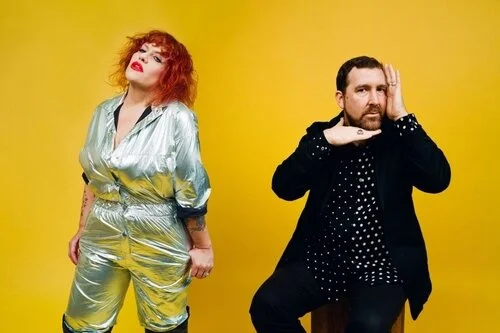
In his excellent profile of Joel in last week’s New Yorker, Nick Paumgarten theorized that his lack of coolness (and critical respect) was due to a combination of factors. “His default expression was a kind of petulant scowl. Onstage he could be enthralling, but he had the disadvantage of sitting at a piano. He often wore a jacket and tie—in earth tones.” As for sex appeal, he quotes Joel himself as “look[ing] like the guy who makes pizza.”

So: decidedly not cool, trapped, bored, tired of being treated as faceless, meaningless, and unattractive. What’s interesting about Glass Houses is that it doesn’t sound like the record someone in that position would make; it doesn’t sound like a reinvention. Maybe it’s just the benefit of years of radio-filled hindsight, but it sounds very much like Billy Joel. His rock “edge” is here (“All For Leyna”), as is his panache for a ballad (“Don’t Ask Me Why”). In many ways, Glass Houses is his most Billy Joel record. Sure, he’d never tried out the new wave stylings of “It’s Still Rock And Roll To Me,” the power-chord-fueled “Sometimes A Fantasy,” and “Close To The Borderline” before 1980, but the lyrical tics and affected accents, the crooned “oooooh”s and saxophone solos, they’re all here.

And they’re great. Simply put, Glass Houses is Billy Joel’s best collection of songs, even better than the hit-laden The Stranger. The aforementioned hits sound better in context than on his many best-of compilations (or on classic-rock radio), and the more obscure cuts are excellent. “Sleeping With The Television On,” with its propulsive pop edge, may be the most underrated Billy Joel song. “I Don’t Want To Be Alone”—with mic pops that make Joel sound like the bar-band singer he strove to be on Glass Houses—is a charmingly self-deprecating chronicle of loserdom.

And for a guy so concerned about shedding his balladeer image, Joel continued to write some damn excellent ballads. The Beatles-esque “Don’t Ask Me Why,” especially its sharp bridge, stands as one of Joel’s most offhandedly winning songs, and “C’Etait Toi (You Were The One),” though Joel’s French is undisputedly terrible (a fact that has since made him disown the song), is lovely. Album closer “Through The Long Night” is another fine McCartney workout; it wouldn’t sound out of place on Revolver alongside the similarly forlorn “For No One.” The production by Phil Ramone (who produced every Joel record from 1977’s The Stranger to 1986’s The Bridge) is clear and, refreshingly for Joel, straightforward”.

There is a lot to love and discover when it comes to Glass Houses. One of the positive reviews out there is from AllMusic. This is what they noted in their review:

“The back-to-back success of The Stranger and 52nd Street may have brought Billy Joel fame and fortune, even a certain amount of self-satisfaction, but it didn't bring him critical respect, and it didn't dull his anger. If anything, being classified as a mainstream rocker -- a soft rocker -- infuriated him, especially since a generation of punks and new wave kids were getting the praise that eluded him. He didn't take this lying down -- he recorded Glass Houses. Comparatively a harder-rocking album than either of its predecessors, with a distinctly bitter edge, Glass Houses still displays the hallmarks of Billy Joel the pop craftsman and Phil Ramone the world-class hitmaker. Even its hardest songs -- the terrifically paranoid "Sometimes a Fantasy," "Sleepin' With the Television On," "Close to the Borderline," the hit "You May Be Right" -- have bold, direct melodies and clean arrangements, ideal for radio play. Instead of turning out to be a fiery rebuttal to his detractors, the album is a remarkable catalog of contemporary pop styles, from McCartney-esque whimsy ("Don't Ask Me Why") and arena rock ("All for Leyna") to soft rock ("C'etait Toi [You Were the One]") and stylish new wave pop ("It's Still Rock and Roll to Me," which ironically is closer to new wave pop than rock). That's not a detriment; that's the album's strength. The Stranger and 52nd Street were fine albums in their own right, but it's nice to hear Joel scale back his showman tendencies and deliver a solid pop/rock record. It may not be punk -- then again, it may be his concept of punk -- but Glass Houses is the closest Joel ever got to a pure rock album”.

If you have not heard the album then go and give it a spin. Glass Houses divided some people back in 1980. Over four decades later, I think that it sounds amazing and packed with great songs! A lot stronger than many reviews would suggest, I would recommend Glass Houses to those who are fans of Billy Joel and those who are not. I shall end it by wishing Billy Joel a happy birthday…

FOR tomorrow.