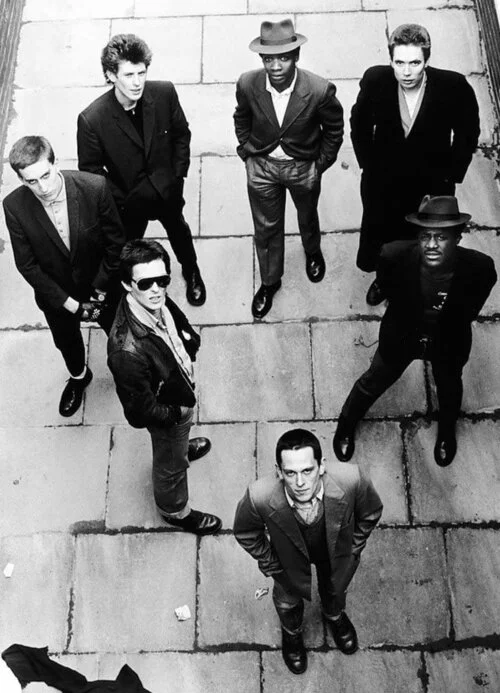
FEATURE: There Is a Light That Never Goes Out: The Smiths' The Queen Is Dead at Thirty-Five

FEATURE:


There Is a Light That Never Goes Out

qqq.jpg

The Smiths' The Queen Is Dead at Thirty-Five

___________

THERE are so many articles out there…

xxxx.jpg

 PHOTO CREDIT: Pictorial Press Ltd./Alamy

that celebrate The Smiths’ The Queen Is Dead. The third album from the Manchester band, it was released on 16th June, 1986. One of the finest albums of the 1980s, I have not heard news of a thirty-fifth anniversary release. I know that a lot of people will be revisiting it on its anniversary. I think that The Smiths were starting to hit their stride on 1985’s Meat Is Murder – though there are a couple of weaker tracks. The Queen Is Dead is them at their very best. With so confidence and brilliance in the songwriting and phenomenal production (from Stephen Street), it is no surprise that The Queen Is Dead is regarded as one of the very best albums ever. From the best-known songs like There Is a Light That Never Goes Out, Bigmouth Strikes Again, I Know It’s Over, Cemetry Gates, and The Boy with the Thorn In His Side, to Vicar in a Tutu and the exceptional title track, every track offers something stirring, striking and memorable. It is an album perfectly sequenced so that one finds this balanced and beautifully blended album.  I am surprised The Smiths only released The Boy with the Thorn in His Side and Bigmouth Strikes Again from the album. There are so many gems on the albums that would have made for great singles. The entire band – Morrissey, Johnny Marr, Andy Rourke and Mike Joyce – are incredible on the album. I think the greatest strengths are the compositions from Marr – that are so accomplished and evocative – and Morrissey’s witty and intelligent lyrics. They blend so beautifully on The Queen Is Dead.

I want to source a couple of features that look at the story behind the album. Before then, there is a review from the BBC that I wanted to include:

“Simply put, the greatest Smiths album. Locating Morrissey at the peak of his game, with his players surprisingly flexible, The Queen Is Dead did not disappoint when it was finally issued in summer 1986, after a legal dispute with Rough Trade had delayed its release from the start of the year.

From the excitement and rush of the title track, which was the Smiths' utmost combination of garage rock assault and music hall to the closing “Some Girls Are Bigger Than Others”, this was the Smiths working tightly as a unit, breaking new ground, with Morrissey taking his moment in the full glare of the limelight to act up accordingly, with puns ever more daring, sexual politics ever more ambivalent, his heart and his art on his sleeve. Johnny Marr obsessively worked on the sound and texture of the music. Together, it proves an irresistible combination.

It’s got hits – “Bigmouth Strikes Again”, “The Boy With The Thorn In His Side”; maudlin ruminations: “I Know It’s Over” (with the line: ‘Mother, I can feel the soil falling over my head’); “Never Had No One Ever”; witty interludes “Frankly Mr Shankly” and “Cemetery Gates”. It also contains “There Is A Light That Never Goes Out”, Morrissey’s most poignant lyric, matched superbly by the deftness of the musicianship.

Biographer Johnny Rogan said that with The Queen Is Dead, Morrissey emerged as ‘the most interesting songwriter of his generation’, and it is absolutely true. Few people can switch between high- and low-brow, vulgar comedy and poignant self doubt so convincingly and rapidly over 36 minutes”.

After thirty-five years, The Smiths’ The Queen Is Dead is still being unpicked and celebrated. I was interested learning a bit of background to the album and how it came together. Classic Album Sundays wrote about the creation of one of the very best albums the world has ever seen:

“After a two successful studio albums with Rough Trade Records, the then-leading record label of indie rock in Great Britain, fans and critics alike saw The Smiths to be at the top of their game in 1985. During that time, the band rumored their third studio album was on its way, but after a series of singles were released to lukewarm reception, distress began to arise. The Smiths aimed to be an indie band that crafted a prolific career like The Rolling Stones and The Who, something seen as irregular at the time, and these low-charting singles gave hints that goal may have been too farfetched. This infuriated the band, especially Morrissey.

As a result, Morrissey added controversy to his legacy, which makes The Queen Is Dead’s lead single ‘Bigmouth Strikes Again!’ appropriate. With The Smiths’ eponymous album,  the songwriter cemented his image as an emotional, lonely, and confused man who assumes multiple sexual orientations, wisdom from failures to find love, and overwhelming confusion concerning his path in life. This persona evolved during the writing process of the band’s sophomore album, Meat is Murder in which Morrissey continued to lament about his abused heart but also broke barriers in singing about larger than life topics, like abusive school teachers (‘The Headmaster Ritual’, ‘Barbarism Begins at Home’) and morality regarding the eating meat (‘Meat is Murder’). These songs are composed with dense poetry and put him at the face of these issues. He didn’t mind being flamboyant about it either, like if he “[dropped his] trousers to the Queen” in ‘Nowhere Fast’.

Morrissey struggled with people of power in many ways, mostly because he desired to hold a position of high influence himself. When the singles leading up to The Queen Is Dead, ‘Shakespeare’s Sister’, ‘That Joke Isn’t Funny Anymore’, and ‘The Boy With the Thorn In His Side’ failed to chart, he took it to the music press to make his opinions known. The singer’s pretty-boy face frequently appeared on magazine covers with extravagant headlines and costumes mocking himself as a sell-out or fraud in the eyes of mainstream media. In interviews, he accused radio DJs as fascists and Rough Trade for not caring and underselling their work. He felt nobody was listening to what he had to say about the world, and these loudmouthed statements were meant to grab the attention of his doubters to think again. Even though these statements were outlandish in many ways, it proved The Smiths were different and more human than these popular systems.

Contrary to the public’s distaste for these risky statements, bad press turned into great press for the band. The Queen Is Dead is the band’s most prolific musical statement both instrumentally and lyrically, especially for Morrissey and Johnny Marr as a team. They diverted from what was comfortable, transformed their styles to be more accommodating and confident, and ultimately reached a larger audience. The band picks apart society from the perspective of a self-aware human and native of Great Britain and accommodates it within their music without forgetting their roots with every song.

The Queen Is Dead starts with perhaps its most profound statement with the album’s self-titled song, thanks to Morrissey’s hilarious but bleak lyrics. In 1986, animosity arose between north and south Britain, and Margaret Thatcher had implemented many changes to the nation’s government. Morrissey saw her actions as negative contributions to the country’s environment, art, and leading industries, like manufacturing, and he was infuriated by her manipulation of the country’s livelihood. The songs introduction of ‘Take Me Back to Dear Old Blighty’ references The L-Shaped Shaped and states a wish to be taken back to a better Britain, one not led by Thatcher.

Johnny Marr stretches his instrumental muscle most on The Queen Is Dead. He took advantage of the studio to twist an assortment of wah-generated guitar feedback with producer Steven Street to build his parts for ‘The Queen is Dead’ and blended guitar tracks with multiple tunings to compose ‘Bigmouth Strikes Again’. He introduced the acoustic guitar to many of its songs, giving the album great texture and driving rhythm. He builds many of the melodies with his mastered chucking guitar-picking method but creates his most memorable moment with ‘Some Girls Are Bigger Than Others’, with an angelic riff that never gets old.

The Queen Is Dead made The Smiths’ dreams come true — to become a legendary rock band that is still an integral part of the conversation of modern music. They broke their own comfortable barriers to make grand statements about music and the world around them, and in return, they were passionately embraced and still are today. Morrissey may always be on a search for love, but when he feels the soil falling on his head, he can smile knowing that he and his band were heard”.

I have been listening to the album since I was very young. Although my favourite track from the album changes through the years, it is an album I can listen to the whole way through and not get bored of. Just before rounding up, there is another article. This one is from Far Out Magazine. They provide more details regarding the making of The Queen Is Dead – in addition to its legacy and impact:

“The album was produced by both Morrissey and Marr, who teamed up yet again with iconic British engineer Stephen Street. This has proven to be a now-legendary partnership, and Street had worked on the band’s 1985 classic Meat Is Murder, amongst many other of their earlier releases. Street later recalled: “Morrissey, Johnny and I had a really good working relationship – we were all roughly the same age and into the same kind of things, so everyone felt quite relaxed in the studio.”

The album, it has to be said, was also marred by an ongoing dispute with the band’s label, Rough Trade. In fact, ‘Frankly, Mr. Shankly’ is rumoured to have been addressed to Geoff Travis, head of Rough Trade. Travis has since accepted it as “a funny lyric”, outlining “Morrissey’s desire to be somewhere else”.

Furthermore, the line in the song about “bloody awful poetry” was a reference to a poem he had written for Morrissey. They also call Travis “a flatulent pain in the ass”, which together, seems a little rude. Travis must have really pissed Morrissey off with his prose.

Regardless, The Queen is Dead is classic Smiths. It features many of their most iconic songs including the likes of ‘I Know It’s Over’, ‘Bigmouth Strikes Again’, ‘Cemetry Gates’, ‘The Boy with the Thorn in His Side’, ‘There is A Light That Never Goes Out’ and ‘Some Girls Are Bigger Than Others’.

Apart from the music, The Queen Is Dead has become iconic for another reason; the album cover. The art features French actor turned businessman, Alain Delon, in the 1964 noir film L’Insoumis (The Unvanquished). Delon had written to the Smiths and gave them the approval to use his image. However, the offer came with one condition, as he revealed in his autobiography: “I told them my parents were upset that anyone would call an album The Queen is Dead.”

In classic Smiths fashion, having already disparaged their label head, this request was clearly ignored. It was also typical of the Smiths to use actors and elements of popular culture for their sleeves. The sleeve for ‘Big Mouth Strikes Again’ pays homage to the actor James Dean, depicting him riding a motorbike, and for ‘Panic’, actor Richard Bradford appears in a scene from his cult television series Man in a Suitcase.

It is this convergence of the Smiths and images from pop culture that adds to the band’s iconic stature. Every Smiths single and album cover has its own interesting backstory. A classic example of this comes with 1984’s release, ‘What Difference Does It Make?’. The band had initially intended to use an image of actor Terrence Stamp from the set of the 1965 film The Collector. The image that they wanted wasn’t actually used in the film, but remains a classic still. It shows Stamp smiling in an unhinged manner, holding a chloroform pad. Due to the violent composition of the image he initially declined to be used, so the Smiths had to find an alternative”.

On its thirty-fifth anniversary, I wanted to spend some time with a classic album. The Queen Is Dead is an absolute masterpiece that has lost none of its majesty and impact. I listen to the album now and the songs seem just as powerful and interesting. Go and buy the album if you do not have it already, as it is one…

THAT you need to own.
FEATURE: The Lockdown Playlist: Roy Harper at Eighty

FEATURE:


The Lockdown Playlist

ccc.jpg

PHOTO CREDIT: Alan Place/Press 22

Roy Harper at Eighty

___________

I enjoy…

qqqqqqqqqqq.jpg

putting together these playlists with regards marking big birthdays of musicians. On Saturday (12th), the legendary Roy Harper turns eighty. A hugely important artist who has inspired the likes of Jimmy Page and Kate Bush, Harper was awarded the MOJO Hero Award and, in 2013, a Lifetime Achievement Award at the BBC Radio 2 Folk Awards. His twenty-second studio album, Man & Myth, was released in 2013. I wonder whether any more albums from Harper. Before coming to a Lockdown Playlist of his greatest tracks, here is some biography about him:

“An idiosyncratic British singer/songwriter acclaimed for his deeply personal, poetic lyrics and unique guitar work, Roy Harper was born June 12, 1941, in Manchester, England. As a teen he tenured with De Boys, his brothers' skiffle band, before leaving home at the age of 15 to enter the Royal Air Force; he subsequently secured a discharge by faking insanity, resulting in a short stay in a mental institution (where he was the subject of an ECT treatment). His rebellious attitude eventually led to him spending a few months in prison. Harper later drifted throughout Europe, and by 1965 was a mainstay of London's Les Cousins folk club, performing alongside the likes of Paul Simon, Joni Mitchell, and Nick Drake.

In 1966, the tiny indie label Strike issued Harper's debut LP, The Sophisticated Beggar; the record brought him to the attention of Columbia, which released his sophomore effort, Come Out Fighting Genghis Smith, the following year. In 1968, Harper mounted a series of free concerts in London's Hyde Park, which greatly expanded his fanbase in preparation for the release of 1969's Folkjokeopus, which included "McGoohan's Blues," the first of his many extended compositions.

-

After meeting Pink Floyd manager Peter Jenner, Harper was signed to EMI's Harvest subsidiary, and in 1970 he issued Flat Baroque and Berserk, recorded with contributions from members of the Nice; that same year marked the appearance of Led Zeppelin III and its track "Hats Off to (Roy) Harper," a tribute penned by friend Jimmy Page. Upon relocating to the Big Sur area of California, Harper began writing 1971's Stormcock, regarded by many as his finest record (it featured Page playing under a pseudonym). The following year he starred in the film Made, releasing the music he composed for the picture's soundtrack in 1973 under the title Lifemask.

Valentine, a collection of love songs, appeared in 1974, and was quickly followed by the live album Flashes from the Archives of Oblivion, featuring appearances by Page, Keith Moon, Ronnie Lane, and Ian Anderson. In 1975, Harper formed Trigger, a backing group including guitarist Chris Spedding and drummer Bill Bruford; however, after releasing just one LP, HQ, the unit disbanded. In 1975 Harper also took lead vocals on "Have a Cigar," a track on Pink Floyd's Wish You Were Here. Two years later he resurfaced with Bullinamingvase; the single "One of Those Days in England," with guest vocals from Paul and Linda McCartney, nearly even became a hit.

With the same group of musicians who recorded Bullinamingvase, Harper cut another LP, Commercial Break, but the album went unreleased. Due to financial problems, he did not issue another album until 1980's bleak The Unknown Soldier. Upon leaving EMI, Harper founded his own label, Public Records, releasing Work of Heart in 1982; despite the usual good press, the album failed to sell, and Public soon went under. After selling the limited-edition 1984 set Born in Captivity at gigs, the next year he released the album Whatever Happened to Jugula? with Jimmy Page co-billed.

Harper re-signed to EMI in 1986, recording the double-live LP In Between Every Line. Descendants of Smith appeared two years later, and when the record stiffed he moved to the Awareness label, issuing Once in 1990. By 1991 his son Nick was performing with him regularly; upon the release of 1992's Death or Glory?, Awareness folded, again leaving Harper without label support. He soon founded his own company, Science Friction. The label issued the six-volume BBC Tapes in 1997. Resurgent was the label for 1998's The Dream Society, but lack of interest returned Harper to his cottage industry. His Science Friction label released 2001's The Green Man, and a month later Capitol released the oddball compilation Hats Off. Four years passed before the compilation Counter Culture appeared. In 2013, Science Friction began an ambitious reissue campaign of Harper's catalog; all of it, however, was merely a precursor to the release of Man and Myth, his first recording of new material in 13 years, issued in September on the 47th anniversary of his debut album”.

Here is a nod to the fabulous Roy Harper ahead of his eightieth birthday on 12th June. If you are not overly-familiar with his music or have not heard a great deal of it, then check out the playlist below and discover an artist who has inspired so many…

OTHER influential musicians.

FEATURE: The Lockdown Playlist: Duran Duran’s Eponymous Debut Album at Forty

FEATURE:


The Lockdown Playlist

ssss.jpg

Duran Duran’s Eponymous Debut Album at Forty

___________

IT is hard to keep on top…

eeee.jpg

of all the big album anniversaries coming up this year. That said, on 15th June, Duran Duran’s self-titled debut is forty. One of the biggest bands of their day, the band are still going strong. I think that their second album, Rio, is my favourite. I do have a lot of respect for their impressive debut. As the album opens with the unbeatable one-two of Girls on Film and Planet Earth, the guys definitely meant business. The incredible line-up - Simon Le Bon – lead vocals, Andy Taylor – guitar, John Taylor – bass guitar, Roger Taylor – drums, Nick Rhodes – keyboards, synthesizers – makes every song a winner! I feel that, even though it was released in 1981, Duran Duran has aged well. To mark four decades of the Birmingham band’s introduction, this Lockdown Playlist is a selection of their best cuts. Before then, Diffuser put out a great article about Duran Duran on its thirty-fifth anniversary in 2016:

“Duran Duran released its self-titled debut album worldwide on June 15, 1981. Produced and engineered by Colin Thurston, the record was recorded at London's Red Bus Studios and Oxfordshire's Chipping Norton Studios.

At the time, the quintet – vocalist Simon Le Bon, guitarist Andy Taylor, bassist John Taylor, drummer Roger Taylor and keyboardist Nick Rhodes – had been together in its current incarnation for a little over a year. Its ascent was rapid, however. Le Bon joined the group in May 1980; Duran Duran played its first gig in July and toured with Hazel O'Connor in November and early December; and the band inked a record deal with EMI soon after. (The man who signed the group, Dave Ambrose, had also signed the Sex Pistols and Kate Bush.) Sonically, Duran Duran was inspired by a melting pot of sounds, styles and approaches.

"My brother and I were importing all the new Giorgio Moroder-style records from New York," Duran Duran's first co-manager, Paul Berrow, told The Guardian in 2003. "We'd been to Studio 54 and heard how dance music was changing. The Duran aesthetic was influenced by that." In that same article, John Taylor added, "In 1978, it was the year of 'disco sucks', and I felt I should be at a therapist saying, 'I have this guilty love of disco.' I thought Chic were fantastic. That's why I became a bass player."

All of those influences – as well as elements of the music and look of David Bowie, Roxy Music and Japan – crop up on the very fine Duran Duran. (In fact, a glammy cover of Bowie's "Fame" ended up a b-side to the zig-zagging "Careless Memories.") Space-age keyboards, post-punk guitars, disco-inspired bass lines and Le Bon's vocal croon – which was at times yelping and enthusiastic, and at other times mysterious and edgy – collided for a decidedly modern sound. Duran Duran was unabashedly pop ("Friends of Mine," "Girls on Film," "Planet Earth"), boldly experimental ("Tel Aviv" and its swerving, orchestral-like backdrop) and grasping at just-out-of-reach depth (the clumsy "To The Shore," which was not actually on the U.S. version of the LP).

Still, the record was art-school unorthodoxy meets pop futurism, and it felt thoroughly modern—the idea of new wave (and New Romanticism) writ large. "Duran were among a new group of artists who provided a glittering, sexy contrast to the prevailing dull corporate pop-punk of the 1970s," Steve Dagger, then-manager of Spandau Ballet, said in 1997. "Taking their influence from the art-school underground of electronics/[Bryan] Ferry/Bowie, they came to prominence as the Birmingham ‘it’ band at the same time Spandau Ballet reigned over a similar scene in London."

In the U.K., this self-assurance (and some indisputable melodies) propelled debut single "Planet Earth" to No. 12 in the charts, while Duran Duran peaked at No. 3. In the U.S., the album was originally issued on the Capitol-owned label Harvest Records and, at first, made little impact; in fact, it didn't even chart. However, after 1982's Rio took off, Capitol reissued Duran Duran in the U.S. in 1983. The track list was different: New single "Is There Something I Should Know?" was tacked on, while the version of "Planet Earth" on the album is not the so-called "Night Version," but the regular one. This time, however, Duran Duran took hold, and the record peaked at No. 10 on the Billboard Top 200”.

I think it is important to celebrate the fortieth anniversary of a terrific album. As introductions go, Duran Duran is a pretty impressive one! I love how fully-realised it sounds. After forty years, it still sounds so compelling and brilliant. If you have not heard the remarkable debut then go and listen to a wonderful album from…

THE legendary band

FEATURE: You Always Taught Me Right from Wrong: Madonna's Papa Don't Preach at Thirty-Five

FEATURE:


You Always Taught Me Right from Wrong

zzz.jpg

Madonna's Papa Don't Preach at Thirty-Five

___________

I have already published a feature

ggg.jpg

regarding Madonna’s True Blue. Her third album turns thirty-five on 30th June. Its second single, Papa Don’t Preach, is thirty-five on 11th June. It is a song that, to me, is a highlights from the album. Although some are not convinced by the lyrics and feel it is one of Madonna’s less-awesome singles, I think it is one of her very best songs. Her previous album, 1984’s Like a Virgin, is a terrific release. I think True Blue was the album Madonna matured and expanded her vocal and lyrical horizons. It would be an album or two before Madonna’s voice really hit its stride and she grew as a songwriter. Papa Don’t Preach is a Madonna railing against The Pope, the Catholic Church or her father and his conservative, patriarchal ways. It is not clear exactly what the inspiration is behind the song - these are theories that and possible inspiration she has listed. Written by Brian Elliot and Madonna, I think the majority of the lyrics were written by Elliot. Madonna definitely added lyrics and put some of her personal experience into the song. There are a couple of features about the song that I want to bring in. Before then, here is some background regarding Papa Don’t Preach:

“Papa Don't Preach" is a song by American singer Madonna from her third studio album True Blue (1986). It was written by Brian Elliot with additional lyrics by Madonna, who produced it with Stephen Bray. The song's musical style combines pop and classical styling, and its lyrics deal with teenage pregnancy and the choices that come with it. It was based on teen gossip Elliot heard outside his recording studio. The song later appeared remixed on the compilation album The Immaculate Collection (1990), and in its original form on the compilation album Celebration (2009).

qq.jpg

Released as the second single from True Blue on June 11, 1986, by Sire Records, the song was a commercial and critical success. It became Madonna's fourth number-one single on the US Billboard Hot 100 and performed well internationally, reaching the top position in Australia and the United Kingdom. The song received positive reviews from music critics, who frequently referred to it as a highlight from True Blue. The music video, directed by James Foley and shot in New York City, shows Madonna's second image makeover, featuring her with a more toned and muscular body, and cropped platinum blonde hair. It portrayed a storyline where Madonna is trying to tell her father about her pregnancy. The images are juxtaposed with shots of Madonna dancing and singing in a small, darkened studio and spending a romantic evening with her boyfriend”.

Whereas there are standout classics from Madonna’s catalogue, songs like Papa Don’t Preach are a little more divisive. I think it is a hugely important track that showcased a new side and sound to her music. True Blue is an album with so many moods and sounds. Live to Tell, Open Your Heart and La Isla Bonita are all great singles that are very different to one another. Papa Don’t Preach definitely signalled a Pop superstar who was growing in confidence and ambition.

The first article that I want to source is from PBS. Despite Madonna not being hugely involved with the songwriting and production, I think her delivery really sells the song. Papa Don’t Preach is more nuanced and layered than her performances on earlier singles:

“Lost in the critical firestorm were the song’s technical triumphs. Her fourteenth single, “Papa Don’t Preach” represented Madonna’s increasing sophistication in the studio. The shrinking minority of detractors still won’t give her props as a musician — partly because she's a woman, but mostly because she worked with many unknowns whose talents she coaxed out. Co-producer Stephen Bray should have university student union buildings named after him for writing the music for “Into the Groove"; on "Papa Don't Preach," he brought those dance chops to a mid-tempo number, giving it pulse and sinew. The song begins with a string section, which accentuates the coming melodrama (all that's missing is an old school soap opera organ). Then comes the thud of Bray’s drum machines, darkening the track. A happy arrangement complements a rueful lyric — an old trick.

But the true marvel is Madonna herself. The expression of will, nourished by her symbiotic attachment to her fans, is the Madonna signature. This will exerts itself on "Papa Don't Preach." She’s crushed by the thought that she’ll disappoint Papa, yet willing to live with the consequences of a shrunken life. To project anguish and determination might exhaust a singer with subtler pipes; I suspect only an instinctive vocalist like Madonna — willing to try anything — could sell it. Pushing against her voice's natural grain when she gets to the pre-chorus, Madonna mirrors the stubbornness of the song’s character. Without her commitment, the lyrics just look unintentionally hilarious ("We're in an awful mess/And I don’t mean maybe"). The song’s most poignant moment — what caused Allred such consternation — is the key change in the chorus, when her voice crests over “And I’ve made up my mind” before coming down on “I’m keeping my baby.” Climax followed by resolution. Although Madonna got an “additional lyrics by” credit, I prefer to think she deserved it for “additional musical ideas by”.

I love Papa Don’t Preach, though I feel the introduction is one of its strongest points. It is so elegant, rousing and sophisticated. Stereogum dived deep into Papa Don’t Preach last year:

“Those strings on the intro are an announcement, an almighty flex. Madonna’s True Blue was her third album, but it was the first one she made when she was already a massive star, a foundational pop-music figure. Up until then, Madonna had been associated with a particular sound. Madonna made club music, post-disco dance-pop. Even her ballads nodded to that sound. So it must’ve been at least a little jarring for people to hear the fussy, rococo strings that open “Papa Don’t Preach” — or, for that matter, to hear those strings fade into a story-song about a pregnant teenager desperate for her father’s approval. The strings nod to classical, to baroque, and to the Beatles-style psychedelia that had made a big deal about incorporating strings like those a couple of decades earlier. Madonna was doing what she felt like doing, and the things she felt like doing were working.

“Papa Don’t Preach” wasn’t the first single from True Blue; that was “Live To Tell,” Madonna’s previous chart-topper. But “Live To Tell” was a movie-soundtrack ballad, and it came out months before the album. Masterful as it is, “Live To Tell” didn’t announce a great leap forward the way “Papa Don’t Preach” did. “Papa Don’t Preach” signaled that Madonna had enough juice to make a social-issue song that was also a stylistic left-turn. And for all its gutsiness, “Papa Don’t Preach” still worked as post-disco dance-pop. Its strings faded into jittery, propulsive synth-bass and big, mechanized drums, and this story about a girl begging her father to accept her big life decision somehow became escapist club fare. That’s a magic trick. That’s cowboy shit.

aaa.jpg

Madonna is credited as the co-writer of “Papa Don’t Preach,” but her contribution is apparently limited to a few added-on lyrics. And yet “Papa Don’t Preach” means more coming from Madonna than it would’ve meant from an artist who wasn’t yet established. Part of it is the production. Madonna co-produced “Papa Don’t Preach” with her old friend and collaborator Stephen Bray, who she’d known since before dropping out of college. (Around the same time as he was working on True Blue, Bray joined a reconstituted version of the Breakfast Club, the band that Madonna had been in before she got famous, and they peaked at #7 with 1987’s “Right On Track.” It’s a 7.) But part of it is also the way “Papa Don’t Preach” plays into the persona that Madonna had already established.

Naturally, “Papa Don’t Preach” became a political football. Anti-abortion groups claimed “Papa Don’t Preach” as an anti-abortion song. Tipper Gore, co-founder of the PMRC and pop-music boogeywoman, loved “Papa Don’t Preach,” calling it “an important song, and a good one, which discusses, with urgency, a real predicament which thousands of unwed teenagers face in our country.” The feminist lawyer Gloria Allred, meanwhile, said that Madonna should “make a public statement noting that kids have other choices, including abortion.”

For all the pathos of its story, though, “Papa Don’t Preach” still works as pop music. The beat is steady, but all the song’s flourishes — the strings, the quasi-Spanish guitar solo, the coos of the backup singers — float around that narrator, as if they’re consoling or encouraging her. (One of the backup singers, Siedah Garrett, will appear as a featured guest in a future column.) “Papa Don’t Preach” has hooks, too. It’s dainty and insistent and urgent, and it glues itself right into your brain the first time you hear it. If “Papa Don’t Preach” had been simply a message song, it would’ve aged like fine milk. But it’s not a message song. “Don’t Preach” is right there in the title. Instead, the song is a marvel of craft.

zzz.jpg

PHOTO CREDIT: Herb Ritts 

The video is pretty expertly crafted, too. Madonna made the “Papa Don’t Preach” video with director James Foley, the filmmaker who’d just directed her then-husband Sean Penn in At Close Range. Foley had directed Madonna’s “Live To Tell” video, but that one is really just Madonna close-ups and At Close Range clips. The “Papa Don’t Preach” video, on the other hand, is a whole mini-movie. Madonna tries out a couple of different styles — the hyper-styled dancer of the performance clips and the tough tomboy of the narrative scenes. But the video is way more of a showcase for Madonna’s acting than for her ever-evolving persona”.

Ahead of its thirty-fifth anniversary on Friday, I wanted to highlight one of Madonna’s greatest singles. I feel the True Blue album is underrated and does not get spoken about in the same way as Like a Prayer (1989) or Ray of Light (1998). Songs like Papa Don’t Preach are signals and signs of Madonna entering new sonic and lyrical territories. I hope that the song gets a lot of airplay on its anniversary. Later this month, True Blue turns thirty-five. Its second single is…

AMONG the very best Madonna tracks.

FEATURE: Vinyl Corner: 2Pac - Me Against the World

FEATURE:


Vinyl Corner

sssa.jpg

2Pac - Me Against the World

___________

I have not included as many albums…

dddd.jpg

from the world of Rap and Hip-Hop in Vinyl Corner as I should. I am reminder of 2Pac as, on 16th June, it would have been his fiftieth birthday. A controversial figure for sure, one cannot ignore his immense talent and legacy. Killed at the age of twenty-five, the world wonders how far he could have gone. I want so spend some time with his third studio album, Me Against the World. The title is pretty apt. I would urge people to buy it on vinyl, as it is a remarkable album from a rapper at the top of his game. In terms of the background to the album and the significance of its title, it does make for eye-opening reading:

“By 1994, Tupac Shakur, age 23, was already a prominent and controversial rapper. His second album, Strictly 4 My N.I.G.G.A.Z., going Platinum, had entered the top 25 on the Billboard 200, and offered two Gold singles, "I Get Around" and "Keep Ya Head Up", both entering the top 15 of the Billboard Hot 100. In rapid succession, however, he had become embroiled in one criminal allegation after another.

All for incidents in 1993, Shakur was sentenced to 15 days of jail for assaulting director Allen Hughes while filming Menace II Society, had seen the charges dropped after he shot two off-duty police officers, and was sentenced to 1.5 to 4.5 years in prison for, with two other men, sexually assaulting a woman.

According to Shakur, Me Against the World aimed to show the hip-hop audience his respect for the art form. Shakur purposefully made Me Against the World's lyrics more personal and reflective than previously. This was widely attributed to Shakur's growing maturity and perhaps an effort to reconcile with his troubled past”.

Perhaps his fourth studio album, All Eyez on Me, is a better-regarded album. Released in 1996, it was the final album released whilst 2Pac was alive (the rapper was murdered in September 1996). So Many Tears and Dear Mama are two of my favourite 2Pac songs ever. I love the album as a whole. Maybe the fact 2Pac was dogged by a degree of controversy affected some critics when it came to reviewing Me Against the World. I want to bring in a review before moving on. In their assessment, this is what AllMusic had to say:

“Recorded following his near-fatal shooting in New York, and released while he was in prison, Me Against the World is the point where 2Pac really became a legendary figure. Having stared death in the face and survived, he was a changed man on record, displaying a new confessional bent and a consistent emotional depth. By and large, this isn't the sort of material that made him a gangsta icon; this is 2Pac the soul-baring artist, the foundation of the immense respect he commanded in the hip-hop community. It's his most thematically consistent, least-self-contradicting work, full of genuine reflection about how he's gotten where he is -- and dread of the consequences. Even the more combative tracks ("Me Against the World," "Fuck the World") acknowledge the high-risk life he's living, and pause to wonder how things ever went this far. He battles occasional self-loathing, is haunted by the friends he's already lost to violence, and can't escape the desperate paranoia that his own death isn't far in the future.

These tracks -- most notably "So Many Tears," "Lord Knows," and "Death Around the Corner" -- are all the more powerful in hindsight with the chilling knowledge that he was right. Even romance takes on a new meaning as an escape from the hellish pressure of everyday life ("Temptations," "Can U Get Away"), and when that's not available, getting high or drunk is almost a necessity. He longs for the innocence of childhood ("Young Niggaz," "Old School"), and remembers how quickly it disappeared, yet he still pays loving, clear-eyed tribute to his drug-addicted mother on the touching "Dear Mama." Overall, Me Against the World paints a bleak, nihilistic picture, but there's such an honest, self-revealing quality to it that it can't help conveying a certain hope simply through its humanity. It's the best place to go to understand why 2Pac is so revered; it may not be his definitive album, but it just might be his best”.

If some reviews in 1995 were not wholly positive, since, there is the opinion that Me Against the World is one of 2Pac’s finest works. It is an important and hugely powerful Hip-Hop record that has inspired many other artists. It still sound compelling and utterly engrossing over twenty-five years since it was released.

To show that there was a range of critical opinions upon the release of Me Against the World, this Billboard article brought some of them in when marking twenty years of the album in 2015:

“Twenty years ago today, TupacShakur's landmark third album, Me Against the World, debuted at No. 1 on the Billboard 200. On that day -- April 1, 1995 -- the West Coast rapper was behind bars, just weeks into serving his sentence for a sexual abuse conviction (he maintained his innocence until the day he died).

While the album has become a hip-hop classic (many argue it's his best), response to Me Against the World was far more varied when it landed.

Here's what a variety of critics said about Tupac's Me Against the World back in 1995.

Entertainment Weekly, by James Bernard (publication date unknown):

2Pac does the black-man-backed-into-a-corner routine better than just about anyone because that’s largely who he is. When he says it’s ”me against the world,” there’s an urgency that only comes from experience. On record, the rapper-turned-movie icon’s vocals are buried deep in the mix. That’s a shame -- if they were more in-your-face, the lackluster beats might be less noticeable. B-

Chicago Sun-Times, by Jaleel Abdul-Adil (April 9, 1995)

2Pac's latest also mixes toughness and tenderness. Desperation follows raw anger on "Fuck the World" and "It Ain't Easy," but most tracks confess frailties beneath the rapper's tough exterior. "Dear Mama" is a tear-jerking tribute to his mother' "Lord Knows" discloses desperate considerations of suicide, and "So Many Tears" ponders a merciless world that wrecks young lives. 2Pac even includes a sorrowful "shout-out" to Joey Sandifer, the Chicago teenager whose brief life ended in a brutal shooting.

After earlier releases that lacked focus and consistency, 2Pac finally presents a polished project of self-examination and social commentary. It's ironic that it arrives as his sentence begins”.

Los Angeles Times, by Jerry Crowe (April 8, 1995)

Shakur's incarceration hasn't hindered the success of his third solo album, Me Against the World, which has been No. 1 on Billboard magazine's weekly sales chart since Interscope Records released the collection three weeks ago. Boosted by the success of "Dear Mama," which is No. 7 this week on the Billboard singles chart, Me Against the World has sold almost 500,000 copies.

Shakur, 23, and Interscope seem to have made the most of a unique situation, launching the album with a marketing program that was in part shaped by Shakur from prison”.

Before wrapping up, I want to bring in an article published earlier in the year. They highlight two sides of 2Pac. One where he is fearless and hard-hitting; the other where he is poetic and sensitive.

“Refusing to sugarcoat harsh realities

Nearly a quarter of a century later, 2Pac’s death is still one of the most impactful events in hip-hop history – arguably the root cause of the music’s wider paranoia and obsession with death. Me Against The World’s introduction sets the stage for this worldview, featuring a string of news broadcasts that are equal parts truth and fiction, recounting robberies, shootings, court drama, and the media storm that followed. Amid all this chaos and his looming prison sentence, 2Pac started laying the groundwork for the album.

Unafraid to speak his mind

On “Lord Knows” and “So Many Tears,” 2Pac is not the only one experiencing these societal ills – everyone around him is, too. But Me Against The World also reveals 2Pac’s duality: the gun-toting “thug” on “Heavy In The Game” and the street poet who wants to elevate his community and the women in it, as on “Dear Mama” and “It Ain’t Easy.” On the former, he empathizes with the difficulties his mother had raising him, while the latter is more of a nostalgic lament than an angry cry.

2Pac doesn’t shy away from his own inner turmoil, either. He’s shockingly candid about his own depression and pain on “Lord Knows,” while “So Many Tears” sees him understanding how cruel the world can be to other young lives. Set against these high-stakes situations, Dr. Dre’s production is all calm, low-riding bass and smooth synths that complement 2Pac’s flow.

Go and investigate Me Against the World. It is one of the most significant Rap albums ever released. Ahead of the fiftieth birthday of 2Pac, I think there will be a lot of articles published discussing his legacy and what could have been. On Me Against the World, we hear the New York-born rapper in full flight. After all of these years, this remarkable album still…

HITS all of the senses.


FEATURE: Spotlight: Zuzu

FEATURE:


Spotlight:

sss.jpg

PHOTO CREDIT: Phoebe Fox 

Zuzu

___________

ALTHOUGH she is not a newcomer…

aaaa.jpg

 PHOTO CREDIT: Ben Bentley for NME

and has been in the industry for a while, I was keen to shine the spotlight on Liverpool’s Zuzu. I have been a fan of her music for a few years now. I am always looking out for what she is releasing and where her career is heading. She is a terrific artist who keeps evolving and delivering sensational music. I will finish with an interview from NME conducted recently that relates to an interesting project Zuzu has been involved with. Before that, as I do in these features, I want to go back in time and produce some background regarding Zuzu. I will drop in a few of her songs through this feature, though I would encourage people to check out her catalogue and follow her on social media (all the links are at the very end). Apologies if there is some repetition regarding Zuzu’s background. She was tipped by The Guardian back in 2018

“Cilla Black. Sonia. Sporty Spice. Heidi from the Sugababes. While pop was made in Liverpool’s image, there have been scant female voices carrying forth its lineage. That’s one reason why 23-year-old Zuzu – no other names offered – is so captivating. “I don’t speak the language nor the tong-guh,” she sings on All Good, her scouse accent flying as proudly as Courtney Barnett’s Australian brogue does in her songs. Like Barnett, Zuzu excels at the kind of guitar music that shifts easily from hangdog to heroism, though she has a stronger inclination towards pop – her choruses tend to light up like a match dropped in a box of fireworks. Beauty Queen, in particular, has that electrifying Taylor Swift thing.

A sci-fi enthusiast, Zuzu’s songwriting is littered with space references. Dark Blue, a rich, slumping rock song, starts out maudlin but vaults into an unexpectedly euphoric chorus about shared self-pitying tendencies: “Just like everybody else on the planet, we just fell from the sky and act as if we found it,” she sings. It’s the lead single from her next EP, which she’s self-recording despite signing to Virgin earlier this year.

Zuzu learned her craft as a lonely kid, filling time: she also directs her videos, makes comics and promises a Cardi B cover and Christmas single before the year’s up. Why stop at carrying the future of Liverpudlian pop?”.

I think it is important learning about an artist’s upbringing and early life in regards their music and current aspirations. It can provide the listener with something they might not get from the music. I feel Zuzu is a fascinating artist whose story and experiences will resonate with many others. In this interview from The Independent from back in 2019, we discover more about the amazing Zuzu:

“The ways of the south have always felt a little alien to Zuzu. When she was 13 years old, her family moved from Liverpool to Oxfordshire. “I went to school in Chipping Norton, and David Cameron was the local MP there, just to give you a little idea of the political setting,” she says, rolling her eyes. “And we were Scouse kids from the north. My accent was so much stronger than it is now.”

She was furious with her parents, writing in her teenage diary about how her life had been ruined. “It’s so melodramatic, but that’s how I felt at the time,” she says. “A lot of people were really welcoming, but it was just weird. Honestly, I’d never really hung out with anyone southern. I thought everyone who spoke in a southern accent was rich, automatically. I remember my dad having to say to me, ‘Not everyone’s rich, that’s just how they speak!’” Being a newfound teenager in an unfamiliar place wasn’t easy. “I had like, no friends, so I just played a lot of Sims, watched a lot of Hannah Montana, and played a lot of guitar.”

That’s how she got into music – and with a little help from her older brother. “He was really into Arctic Monkeys, The Libertines, Blink-182,” she recalls. “I just wanted to be him. And he joined a band and started playing bass, and I was like, ‘I’m gonna play guitar too.’ He left his band after a few weeks, but I was like, ‘Nah, I’m digging this!’”

She doesn’t quite know why she spent her early twenties denying her “undying love for pop music”. “When I was a kid, it was like, ‘Oh we’re emo,’ or ‘We listen to indie bands’,” she says. “There’s less of that now. People listen to trap, rock and pop in the same playlist. Those days are kind of done, and I’m glad about it. Does it drop hard? That’s what people really want. Like whatever you want. There’s no rules.” She takes a final swig from her bottle. “What a world. What a time to be alive”.

2019 was an important and big year for Zuzu. She released incredible songs like Get Off and Money Back. I will pull in a review of her 2020 E.P., How It Feels, a bit later – to me, it is her most compelling release, as she collates songs from previous years into this cohesive and incredible whole. I reckon we will see quite a bit more music from Zuzu before this year is through. She will be aching and despereate to get on the road and reach as many people as she can very soon.

aaaaa.jpg

Before coming up-to-date, there are other interviews that make for engaging reading. The Line of Best Fit’s chat from 2019 gives us more information and revelation from an artist, even then, who was turning heads and being talked about as a wonderful talent with a clear future:

“In addition to Blink-182, Zuzu grew up listening to The Libertines and Arctic Monkeys, bands loved by the older brother she idolised, and mid-noughties pop-punk queens like Pink and Avril Lavigne. "I went to see her when I was ten, too," she says of Lavigne. "But even people like Kelly Clarkson had a rockier edge back then, and they were very popular, so it all made me wanna pick up my guitar."

So she got her first guitar when she was 11, a "heart-shaped bass guitar that I still have", and taught herself to play in her bedroom. When her family moved down south the following year, she struggled to make friends at her new school, and music became a kind of salvation. "A lot of the time I was kind of alone and just in my room learning stuff," Zuzu recalls. "So that's really how I started learning music – just by the will of wanting to be able to sing and play songs.

"I was obsessed with all of my favourite songs and it wasn't enough for me just to be able to sing along. I wanted to be able to play the songs, too."

Zuzu was clearly super-talented and made inroads into the music industry pretty quickly, but says she "was still trying to please other people" at this stage in her career. "When I was 16 I was doing some really weird pop-punk songs... and it wasn't me," she continues. "You know, I'd kind of just go along with what [other] people wanted or saw in me. It's weird when you're a kid, because people don't very often, and certainly with me, they didn't give me the opportunity to even know what I wanted to be. They already had this image in their head of what they thought I should be."

Even though music feels like Zuzu's destiny, it's clearly taken a substantial amount of grit to make that destiny into a reality. "Even in those darkest moments, I was just, like, 'I've gotten this far, so I'm not gonna give in now,'" she adds. "I always had it in me that I gotta turn this shit around. And in a way, I'm glad I went through, like, all that stuff when I was younger because I know who I am now and I know what I want."

sss.jpg

PHOTO CREDIT: Burak Cingi for The Line of Best Fit 

Zuzu's tattoo inspirations

Diana Ross: "I adore Diana Ross – she inspires me so much with her stage presence. She's just so fabulous, you know? I love the way that she uses her arms when she performs; she's such an expressive singer and performer. And she has a really unique [vocal] tone which I also love and can relate to. I've covered "Where Did Our Love Go" – check out my Instagram. And I’m dying to see her live. One day soon I’ll make that happen.”

Emmeline Pankhurst: "She helped to win the vote for women in the UK, so every woman in the UK has her to thank in some way. She starved herself in prison as a protest and they force-fed her – and she was well into her sixties at that point. She's just badass, d'you know what I mean? Who wouldn't want a tattoo of Emmeline Pankhurst on them?"

Audrey Hepburn: "I loved her growing up; I idolised her. I thought she was just the most beautiful, kind, cool woman in the world. And she wasn't just gorgeous on the outside; she did so much good stuff for UNICEF and humanity and animals. She was just a top, top woman."

Her mum: "She's literally the reason I'm here and my best friend in the world. I adore my mum more than anything. And she’s so supportive of my music”.

There is so much to unpack and love when it comes to Zuzu – one reason why I included that section about her tattoo inspirations! There are a couple of 2020 interviews that are crucial to include before I move on to 2021. I am a little late to the game when it comes to spotlighting Zuzu. Last year, Spotlight highlighted her ahead of the release of the How It Feels E.P. This was conducted not long before the pandemic hit the U.K. You can feel the buzz Zuzu gets from audiences who come and see her play:

“The future superstar is set to release her new EP ‘How It Feels’ early next month, with a live streamed launch party no less, and we caught up with her before her final night of her recent UK tour.

This tour saw her come to Newcastle in a headline slot for the first time, after playing in support of Gerry Cinnamon and Yonaka across one weekend previously in 2019.

“Support tours are important obviously because you pick up new fans and get your music out to new people, but headline shows are sick because people are out there to hear you.”

She said, before adding:

“It’s mad, it’s like the crowd knows all the songs which is crazy. I didn’t expect them to know every single song. The only song they don’t know is the one that’s new so that’s incredible, people singing your song back to you.”

Still at the early stages of an inevitably huge career, the indie-pop artist’s personality comes across so easily. There is no disputing the fact that she is set on making the atmospheres at her gigs unforgettable, and this is assisted by meeting every fan after her shows up and down the UK:

“I’ve had an opportunity to meet everyone as well. Everyone who wants to stop and say hello, I’m there until the very last person because it means so much to me.”

How It Feels, her 2019 single, is one of a plethora of new releases in a short amount of time but there are still older songs only being released now after years of sitting on them, one of which being her most recent single ‘Skin and Bone’:

“Some of the older songs have been re-released and are being put out that I wrote when I was a bit younger.”

“The newest song I wrote when I was like 14, 15 but it took me a long time to work up the courage to put that one out. But some of them, like ‘How It Feels’, I wrote last year. ‘Money Back’ I wrote the year before and some of the new ones I’m playing now I wrote a few months back”.

I think my favourite song from How It Feels is the second track, Skin and Bones. It is hard to say why. It just hits me for a reason. Because of that, I want to source this interview - as some time is spent around that song and why it is so resonant and important:

“With a new single out, Skin and Bone, there was the obvious starting place for our conversation.  If you have not heard it yet then Skin and Bone is definitely worth your time.  The track feels more personal than previous Zuzu releases due to the more elegant, dream pop musical overture, yet when you look at lyrics to songs like Beauty Queen and Money Back they dig straight into your heart.  “It’s way more personal and dark than anything I’ve released before for sure.  I started writing this song when I was fourteen, and I only finished it when I started looking at it again last year.  I’ve always had it there, but other people around me and the label heard me playing it and wanted to know why I’d never done this song before.  It’s taken a lot of time for me to pluck up the courage to do it.  It’s a weird way for me.

Zuzu 5“I was in a really intense mindset as a teenager, really intense, and looking back over that time and reading my diaries I was super emo.  I had a lot going on in more ways than one.  As well as all this, I was in the music industry at a very young age and people I dealt with then left me feeling trapped.  It was a far too stressful time for a fourteen year old girl to be involved in

“But this song has always been there from that time onwards.  I think it’s probably the first song that was written to try to put into words how I was feeling.  That song was the first song that felt special to me because of what it was about.  Weirdly though, as much as this song has been with me, it didn’t feel special or magical hearing back the full completed version.  Especially with this one, when the record was done that was the time for the fear to set in.  I start thinking ‘Oh my god, it’s going to be out there.  What will people say?  What will they be thinking?  Am I going to have to answer questions about it?”

“It brings on a lot of anxiety to be honest with you.  But you’ve got to be brave in life.  And if I can be brave, hopefully it’ll encourage others to be brave too.  This is what I want to do with my music.  I’ve grown so much from then to now through this song and all the other songs that I’ve put out in the last year.  I’ve gone from being shy and timid, only dressed in black to like a whole new person.  I feel like myself now more than I have ever in my life.  I did that through my music, and if it can do that for others too well…. I just want to give out Lizzo vibes to people.  Self-worth for all”

aaa.jpg

PHOTO CREDIT: Ellisha Jade 

This introspective, timid version of Zuzu is completely at odds to the young woman who has been blasting out and dominating on stage, and to the one I met at the front door of Motor Museum.  “I still have moments of complete insecurity and panic just like everybody else.  It’s important to accept and acknowledge those sides of yourself.  I am confident when it comes to music and telling people how I feel and what I think.  But we all have people in our lives who we respect and look up to, and the dynamics are different with those people.  You have to allow yourself to feel both ways.  It’s human.  Some days you feel shit, and other days you feel like a fucking queen.  And it doesn’t have to be days.  You can change hour to hour.  It’s the ebb and flow of being alive”Zuzu 4

Skin and Bone forms part of an EP due to be released soon.  “Skin and Bone is one of two brand new songs on the EP, with the rest being singles that have come out in the last year.  It’s called How It Feels which is obviously one of the songs on there.  That’s one of my favourite songs, and it really encapsulates what all the songs during this period are about.  It is how it feels to me.  My friend’s dad once told me that people shouldn’t get upset if you tell them how something feels to you as you’re not attacking them, but explaining it from your perspective.  All of these songs have made me feel something, or at the time I’ve been going through something”.

Just before coming to the 2021 interview/story, I am eager to spotlight this positive and insightful review of Zuzu’s E.P., How It Feels:

“Liverpool musician Zuzu released her debut EP ‘How It Feels’ this month and words cannot describe how good this EP is.

Since bursting out onto the scene in 2018 with debut single ‘Beauty Queen’, the gifted musician has crafted her spectacular grungy and melodic indie rock to perfection.

Hotly tipped as an ICM Ones To Watch 2020 artist, Zuzu confident, charming and charismatic in character as well as an accomplished songwriter, producer, director, actor and comic book illustrator; starring and orchestrating all her videos, recording a considerable amount of her music at her home studio in Liverpool to collecting vintage guitars.

Kicking off with ‘Cool With Me’, it’s one of Zuzu’s peppiest tracks with a penchant for Cardi B. It’s a cleverly written song about trying to break into the music industry when you don’t fit into a certain ‘box’.

Singles ‘Skin And Bone’ and ‘Get Off’ are personal, dark and super-snappy. Both tracks are meaningful and have been hiding in her music catalogue before they were released.

On ‘Get Off’, Zuzu said: “The sentiment of the song is about getting frustrated with other people’s judgements and criticism on how you choose to live your life… It’s me trying to speak my mind at a time when I felt super judged. It’s been an important song in my life for a long time and is just as relevant to me now as the day I wrote it.”

‘What You Want’ is a whirlwind ooh-ed harmonies, vivid riffs and heart-busting lyrics, Zuzu possesses a certain endearing oddity which manifests itself in all aspects of her art. Final track ‘How It Feels’ is an emphatic anthem that ventures into a slacker rock ethos.

Overall, How It Feels EP is boundary pushing for female musicians and guitar-based music. Zuzu’s concoction of styles and influences have put her above the rest. Filled with quick-witted lyricisms and hook-laden choruses Zuzu is certainly smashing 2020”.

This brings us to this year and a story that broke a couple of weeks ago. Not only have festivals been threatened this summer and there will be a deficit of big live events. Venues are also struggling and under threat. As NME reported, Zuzu contributed to a cover version in support of a very worthy cause close to the hearts of most music lovers:

“Zuzu is among the acts to have contributed to a new cover of The Farm‘s ‘All Together Now’ in aid of the Music Venue Trust’s #SaveOurVenues campaign – you can listen to it and read NME‘s interview with Zuzu below.

The Liverpool singer-songwriter, who opened this month’s Sefton park COVID pilot, joined The Lathums, Lottery Winners, Trampolene and more in recording a new version of the 1990 classic at Elevator Studios.

“There are so many cool musicians from Liverpool involved as well as it being for such a good cause so obviously I was down,” Zuzu told NME of the Artists United Collective song, proceeds from which go towards saving venues from closure post-coronavirus.

An enduring anthem of hope and union, ‘All Together Now’ was re-released by Everton F.C. when the club reached the 1995 FA Cup Final (they won 1-0 against Man Utd) and later re-emerged as part of England’s Euro 2004 campaign (we weren’t so lucky).

“My dad listens to that song: we’re big Evertonians and I guess he’s always associated it with Everton,” Zuzu said. “It’s a classic old Liverpool song by an old Liverpool band.”

While being inducted into the NME 100 at the start of 2020, Zuzu told us she was partial to “hug-pits” at her shows and getting up close and personal with fans – a concept sadly lost to the pandemic. How did she deal with this sudden change?

“I’ve been writing letters, I’ve got lots of pen pals now and there’s a very active group chat on Instagram with a bunch of people who listen to my music,” she told NME. “I know them all by name – I know their birthdays!

“It’s been really good because even though I haven’t had chance to physically hug anyone, I’ve actually gotten more of a chance to really get to know them than I think I would’ve if I was on the road and busy every day.”

Zuzu told NME that the first taste of her new material will emerge “very, very soon”, adding: “There’s something bigger coming afterwards and I’m putting out a big body of songs this year. I’m excited to get them out.

“It’s been a long time but I’ve just been busy writing and making some cool stuff.”

Meanwhile, Zuzu is set to perform at this summer’s Y Not, Neighbourhood Weekender, 110 Above Festival and Liverpool’s Festevol all-dayer”.

I am excited to see what arrives next for Zuzu. Yesterday, she announced via her Twitter that the first single from her debut album is arriving on Friday (11th June). The single is called Timing. She is such an engaging and fascinating artist who is not only carrying Liverpool in her blood. She is reaching the wider world and she has this amazing voice. Not only does it make her music so compelling. I feel she has this ambassadorial role regarding live music, venues and so many other important issues. Keep your ears peeled regarding new music and what Zuzu has up her sleeves. As one can hear from  her previous tracks, she always delivers…

SOMETHING wonderful.

_____________

Follow Zuzu

rrr.jpg

FEATURE: The Lockdown Playlist: Kim Deal at Sixty

FEATURE:


The Lockdown Playlist

xxcc.jpg

PHOTO CREDIT: Brantley Gutierrez 

Kim Deal at Sixty

___________

FOR this Lockdown Playlist…

xxx.jpg

 IN THIS PHOTO: The Breeders

I want to look ahead to the sixtieth birthday of Kim Deal. On 10th June, we get to throw some love at a music legend. Kimberley Ann Deal was bassist and co-vocalist in the Alternative Rock band Pixies, before forming The Breeders in 1989. I have put together a playlist featuring some of Deal’s best work. Before that, AllMusic provide some backdrop and biography about a hugely important musician:

“As the bass player for the Pixies, Kim Deal was lost in the shadow of leader Black Francis. In the late '80s, the Pixies were one of the most critically acclaimed alternative bands; however, Deal didn't receive much credit for helping to carve the Pixies' distinctive potpourri of punk, surf music, and hard rock. Deal joined the Pixies in 1986 after answering an ad searching for a bassist. In 1990, while the Pixies took a break from recording and performing, Deal formed the Breeders with Tanya Donelly (guitar) of Throwing Muses and Josephine Wiggs (bass) of Perfect Disaster, releasing an album called Pod. The Breeders were intended to be a side project, but it became a full-time outfit for Deal. After recording one EP and four albums, the Pixies crumbled in 1992, mainly because Deal and Francis were no longer able to get along. In 1993, the Breeders released Last Splash, and Deal was suddenly inundated with the attention she was denied while with the Pixies. In fact, Last Splash was more successful in America than any of the Pixies' LPs. The track "Cannonball" exploded on MTV and on alternative stations, and Deal paved the way for other aggressive female rockers like Shirley Manson of Garbage and Courtney Love of Hole to be played alongside angst-ridden male vocalists. Burned out from constant gigs, the Breeders went into hibernation in 1994. In 1995, Deal and a few of her friends released an album, Pacer, as the Amps. In 2000, Deal began recording material with a revised Breeders lineup”.

To celebrate Kim Deal turning sixty, below is a selection of her amazing work. Whether you are familiar with Pixies or The Breeders, you will definitely love the songs below. I think Deal is one of the finest bass players ever. This is a nod to…

wwww.jpg

 PHOTO CREDIT: Oliver Hadlee Pearch

HER undeniable talent.

FEATURE: A Perfect Partnership: Kate Bush on Peter Gabriel’s Melt

FEATURE:


A Perfect Partnership

wwww.jpg

IN THIS PHOTO: Kate Bush and Peter Gabriel at Townhouse Studios, London circa 1979 (part of Bush’s 1982 album, The Dreaming, was recorded there)

Kate Bush on Peter Gabriel’s Melt

___________

I have written about Kate Bush and Peter Gabriel…

sss.jpg

a few times before. I have already discussed their duet, Don’t Give Up, from 1986. Taken from Gabriel’s album, So, the single turns thirty-five on 27th October. Bush and Gabriel have combined a few times. I think one of the most interesting times for both artists was in 1980 when Gabriel released his third eponymous album. Often referred to as Melt, Bush appeared on two tracks. The album was recorded in the summer and autumn months in 1979 between Manor Mobile, Bath and The Townhouse/Townhouse Studios, London. At that time, Bush had completed The Tour Life (its final date was 13th May 1979). She recorded her third studio album, Never for Ever, between September 1979 and May 1980. It was a fertile period where she was producing (alongside Jon Kelly) for the first time. She was pushing herself in terms of sound and lyrical content. Although the impact of the Fairlight CMI did not fully materialise until late in the recording of Never for Ever, it was Gabriel who introduced Bush to it. She was curious when it came to the studio and technology. I can imagine it was interesting being around Peter Gabriel and picking things up from him in terms of production and the Fairlight CMI. Bush’s work with Gabriel was the first time she worked with another artist in such a deep way. Bush appeared on Roy Harper’s 1980 album, The Unknown Solider. She can be heard on the song, You.

That was released in 1980 (the same year as Melt). Having known Gabriel for a while and sung alongside him on Bush’s 1979 Christmas special, I think the most amazing thing about her contributions on Melt are how brief they are. I can imagine Gabriel wanted to remain the main vocalist in that stage of his career. By the time Bush duetted with him on Don’t Give Up, he was bringing more artists into the forefront. Before providing more thoughts, I better mention the two Melt songs Bush features on. The first (and thanks to the Kate Bush Encyclopaedia) is the fabulous Games Without Frontiers:

“Games Without Frontiers

Song written by Peter Gabriel. Originally released on his third self-titled solo album in 1980. Also released as a single from the album in February 1980. The song's lyrics are interpreted as a commentary on war and international diplomacy being like children's games. The track features Kate Bush on backing vocals, singing 'Jeux sans frontières', which is the title of the song in French, but also a reference to a European game show which ran from 1965 to 1999.

Versions

There are actually two versions of the original track. The album version of the song includes the line "Whistling tunes we piss on the goons in the jungle" after the second verse and before the second chorus. This was replaced for the single release with a more radio-friendly repeat of the line "Whistling tunes we're kissing baboons in the jungle" from the first chorus. There was also a German version, entitled 'Spiel Ohne Grenzen', in which the backing vocals by Kate are unchanged. 

On the B-side of Peter Gabriel's 1992 single 'Steam', there was a remix version of 'Games Without Frontiers' created by Massive and Dave Bottrill.

And finally, in 2010, there was a remix contest where stems of the song could be downloaded and contestants could create their own remixes of 'Games Without Frontiers'.

Formats

'Games Without Frontiers' was released as a 7" single only.

Highest chart positions

Australia: 44

Canada: 7

UK: 4

USA: 48”.

I love how Bush can make such an impact with only three words: “Jeux sans frontiers” (games without frontiers in French). I feel that this kind of experience was responsible for her becoming more experimental and studio-pushing on Never for Ever, but especially The Dreaming. One can hear elements of Melt across The Dreaming – in terms of the strange and compelling Fairlight use and vocal sounds. I don’t think many people knew that it was Kate Bush on Games Without Frontiers. It is a hypnotic and beautiful vocal delivery that warrants a mention. Her collaborating with Peter Gabriel on Melt as the start of a pretty productive and varied professional and personal friendship. As was the case with Roy Harper on The Unknown Solider, working with Peter Gabriel provided Bush with a way of bringing something new to her own work. It was useful experience. Harper featured on Breathing from Kate Bush’s Never for Ever.

The other songs from Melt that features Bush on backing vocals is No Self Control. It is a very different song - and, again, Bush’s minimal input makes a huge impression:

“Song written by Peter Gabriel. Originally released on his third self-titled solo album in 1980. Also released as a single from the album in May 1980. Prior to the song being recorded in the studio, it was performed live by Gabriel under the working title 'I Don't Know How To Stop'. The track features Robert Fripp on guitar, Phil Collins on drums and Kate Bush on backing vocals.

Versions

There are two versions of the song: the original album version and a German version, entitled 'Keine Selbstkontolle', in which the backing vocals by Kate are unchanged.

Formats

'No Self Control' was released as a 7" single only.

Highest chart positions

UK: 33”.

I shall leave it there. Quite a few people are unaware of the other artists Bush has worked with through her career. I think Peter Gabriel was very instrumental to Bush in terms of discovering new avenues for her music and opening her eyes to the Fairlight CMI. Whilst one might not notice her on Melt, I think her vocal contributions are fantastic. An artist who could seemingly fit into any sound and fuse with so many different artists, No Self Control and Games Without Frontiers are my two favourite songs from Melt. Not only because of Bush’s vocals. The songs are so different to anything else. Gabriel was very much ahead of his time and such a pioneer. I can see why he and Bush had such a strong and natural connection. Although there are other people in the mix on 1980’s Melt, I think that Kate Bush’s cameos are…

ESPECIALLY fantastic.

FEATURE: Too Good to Be Forgotten: Songs That Are Much More Than a Guilty Pleasure: Rebecca Black - Friday

FEATURE:


Too Good to Be Forgotten: Songs That Are Much More Than a Guilty Pleasure

aaa.jpg

IN THIS PHOTO: Rebecca Black in 2020/PHOTO CREDIT: Teal Management 

Rebecca Black - Friday

___________

SOME people might find it hard…

uu.jpg

to get behind and enjoy Rebecca Black’s 2011 song, Friday. Witten and produced by Clarence Jey and Patrice Wilson, it has been named as one of the worst songs ever by some sources. Even though, after a decade, Black might want to put the song behind her. I remember the reaction to the track in 2011. There was so much negative attention that I feel it did not deserve. I don’t listen to the song a lot, though I do feel like there should be new inspection and patience for Friday. There are some limitations in the vocals and the lyrics aren’t especially deep. One can explain the vocal limitations with the fact Black was thirteen when the song was released. I think it is a track that is a lot better than many people have given it credit for. I am going to come to an article about the track very soon. Before then, some background and critical reaction regarding a Pop song that divides people

"Friday" is a song performed by American singer Rebecca Black, written and produced by Los Angeles record producers Clarence Jey and Patrice Wilson. It is Black's debut single. The song was originally released as a music video single on February 10, 2011; it was officially premiered as a single on iTunes on March 14, 2011. The song features a rap verse from Wilson, which was uncredited on the single. Its music video caught a sudden surge of hits after Mystery Science Theater 3000 and Rifftrax comedian Michael J. Nelson called it "the worst video ever made" on Twitter and the song was featured on the Tosh.0 blog. The song's original reception was highly negative, and it was covered by numerous artists and comedians. It later gained a cult following.

The original music video was removed from YouTube on June 16, 2011, due to legal disputes between ARK Music and Black. By then, it had already amassed more than 167 million views. The song was re-released on September 16, 2011, when the music video was re-uploaded to YouTube. Since the growth in popularity of the song and video, there have been numerous parody videos and remixes. Forbes stated that the notoriety of the song is another sign of the power of social media specifically Twitter, Facebook, and Tumblr, in this instance in the ability to create "overnight sensations".

The song has received almost universally negative reviews from music critics, for its songwriting, instrumentation, Black's vocals, and the video choreography. Lyndsey Parker of Yahoo! Music asked if it could be "the worst song ever". On March 29, 2011, it surpassed Justin Bieber's "Baby" as the most disliked YouTube video, with 1.17 million dislikes, and once had over 3 million "dislikes", accounting for 88% of the total ratings of the video. The video was later removed, although it has since been officially re-uploaded. The co-writer and producer of "Friday", Clarence Jey, said about the song that "the concept we feel seems to have crossed a lot of boundaries, for the better or worse". Observers have called it "bizarre", "inept", and "hilariously dreadful". The song and Black herself were "savaged" on social networks across the Internet, while being seen as a "YouTube laughing stock". On YouTube, the video was met with negative comments and video responses, including comments interpreted as "violent". Kevin Rutherford, a columnist for Billboard magazine, wrote, "Black's video for 'Friday' is one of those rare occurrences where even the most seasoned critics of Internet culture don't know where to begin.

From the singing straight out of Auto-Tuned hell to lyrics such as 'Tomorrow is Saturday/And Sunday comes afterwards/I don't want this weekend to end' and a hilariously bad rap about passing school buses, 'Friday' is something that simply must be seen and heard to be fully appreciated." Many other reviewers also singled out the lyrics in particular for criticism, which were described as "overly simple and repetitive" by TNT Magazine. Jim Edwards of BNET and Doug Gross of CNN both noted that the rap break from the considerably older rapper was "creepy". Time magazine ranked it number two on a list of "Top 10 Songs with Silly Lyrics".

I listen to Friday now and I feel it hasn’t really got any modern soundalikes. Maybe it was a product of 2011. Despite the fact it has been attacked and mocked, it is a track that has energy and plenty of fun. The song itself is pretty good. I reckon the video is one of the worst parts of Friday. Perhaps the concept and direction is a reason why Friday received a lot more criticism than it otherwise might have. Slate revisited Friday last year. There are some portions of the article that caught my eye:

“Black was seeing the first of what would eventually be millions of comments slagging the video. “Friday” was on its way to becoming one of the biggest viral phenomena of the 2000s. Over the next three months, the song would be viewed 167 million times, making it the most-watched YouTube video of that year. But people weren’t watching because they loved it so much. Instead they were baffled, bemused, disdainful, confounded, and, in some cases, horrified. The song was dubbed “the worst video ever made” and became the most disliked song, to that point, in YouTube’s history. The entire internet seemed to unite in making fun of it and the then-13-year-old who sang it, whose whole life would be upended by its notoriety.

Just a few months before “Friday” took off, Black was a regular middle schooler living in Anaheim, California, a self-described theater kid with aspirations to go to New York University or Berklee College of Music and train to become a performer. Like lots of middle-class, college-bound kids, she knew getting into these schools would be hard, and she was always looking for anything that might boost her chances. Over the summer, one of Rebecca’s classmates did something that sounded perfect: She starred in a music video. “It sounded cool, and I wanted to try it out for myself. At that point we’re not gunning to be America’s next pop star,” she says. “We’re trying to just feel like we’re doing what we can in our own little charter school.”

ssss.jpg

The video was left online, and Black became famous overnight. She would go on The Tonight Show With Jay Leno and appear in a Katy Perry video. “Friday” would be performed on Glee. But if this sounds good, it wasn’t. In 2011, we were pretty much nowhere when it comes to an awareness of online bullying. It Gets Better, the LGBTQ anti-bullying campaign, had started some months before, but the general conversation around these issues was relatively rudimentary. The concerns that are so pervasive now just were not then. And a 13-year-old girl was deemed fair game by just about everyone. When Black went on Good Morning America, the interviewer, Andrea Canning, read mean comments to Black’s face, looking for a reaction. At one point she asks Rebecca to recall the comment that hurt her the most, and Black tells her about the comment that said, “I hope you cut yourself, and I hope you get an eating disorder, so you’ll look pretty. I hope you go cut and die.”

“I just remember this overwhelming feeling of just suck it up, smile, stay strong. Nobody can know that you’re hurting—just laugh with them,” Black says. “And as soon as I started doing that, people saw me as kind of in on it, and that at least felt better than feeling like the butt of a joke. All of the actual pain and embarrassment and shame that came with all of that just kind of got swept under the rug for a good few years.”

And those years were difficult ones—a lot of opportunity, but a lot of isolation. Black’s parents were there for her but also as overwhelmed and confused as she was. She started being home-schooled. The family’s relationship with Ark Music quickly fell apart, and lawsuits started flying. Black got a new agent and manager, and her first single after “Friday” did well enough, but the following ones petered out. In this period, she released one song that charted, peaking at No. 55 on the Billboard Hot 100 in 2013. It was called “Saturday.”

Wilson, who was mocked and harangued for his role in producing “Friday,” was trying pretty much the same thing, releasing “Happy,” the official sequel to “Friday,” among other songs. Neither this nor any of the other songs stuck. Ark Music Factory went defunct. Wilson started a new label, which tried to do what Ark Music had done inadvertently, creating so-bad-it’s-good viral videos on purpose. He had some success, but the shtick had become really calculating and heartless. And YouTube, which had once been the engine of online virality, was ceding that title to other social media platforms. It got harder and harder to make a living, and that combined with the online backlash took a toll on his mental health. Today, he still makes music and looks back on “Friday” fondly.

“I really liked the song,” he says. “I still listen to the song now to see what I did back then versus what I’m doing now. How did I make such a catchy song? I wasn’t thinking about, ‘Oh, my God, people are going to hate this’ or ‘People going to like it.’ It … just came naturally.”

After a few years, Black decided to put “Friday” behind her. “I just was doing everything based off of what somebody else told me to do, and I was just miserable,” she says. “So there came a point where everybody that I was working with, management, all of that, I let go of all of them, and I just stopped. My parents and I agreed: I’m going to go back to high school.” After she finished high school, she made a deal with her parents that she would try music again”.

I don’t think there are guilty pleasure songs – though there are people who would label Friday as such. I have a soft spot for the song and Rebecca Black. Her studio album, Rebecca Black Was Here, is out next month. I am looking forward to seeing what she comes out with. It must be strange looking back a decade for any artist. For someone so young who was met with a lot of negativity, I am pleased that Rebecca Black is still recording. Friday is a perfectly fine song. It is one that you can spin if you need a bit of a boost. If one were to go back and change anything, perhaps redoing the music video would be near the top of the list. Apart from that, there is not a whole lot wrong with it. If you have avoided Friday for years or felt that it was a guilty pleasure, then take a few minutes out and give it a listen. It is a song that certainly was given some unfair press…

BACK in 2011.

FEATURE: Knowledge and Happiness: Kate Bush’s Sat in Your Lap at Forty

FEATURE:


Knowledge and Happiness

 IN THIS PHOTO: Kate Bush in 1982

Kate Bush’s Sat in Your Lap at Forty

___________

I may do another feature…

eee.jpg

about Kate Bush’s Sat in Your Lap. There is a lot to spotlight and recommend. To me, it was a huge shift from what she produced with 1980’s Never for Ever. Perhaps it was Bush producing solo for the first time that meant she wasn’t as constrained. Maybe she felt the need to prove herself as a producer with a first single from The Dreaming that was different to anything that came before. On an album that has some accessible moments alongside a lot of experimentation, I feel Sat in Your Lap fits in the middle. It has an unusual edge and a peculiarity that mixes with something direct and easily digestible. I love the sheer energy and drive of the track. As it turns forty on 21st June, I wanted to celebrate one of Bush’s greatest singles. Arriving over a year before The Dreaming came out (13th September, 1982), this was nothing like her previous singles of 1980, December Will Be Magic Again and Army Dreamers (Babooshka and Breathing were also released that year). This is a more intense, hypnotic and percussive-heavy song that gave people a glimpse into what direction Bush was taking for The Dreaming. I am focusing, today, more on the video. Before getting to it, here is some information from the Kate Bush Encyclopaedia, where Bush discusses the inspiration behind Sat in Your Lap:

“ I already had the piano patterns, but they didn't turn into a song until the night after I'd been to see a Stevie Wonder gig. Inspired by the feeling of his music, I set a rhythm on the Roland and worked in the piano riff to the high-hat and snare. I now had a verse and a tune to go over it but only a few lyrics like "I see the people working", "I want to be a lawyer,'' and "I want to be a scholar,'' so the rest of the lyrics became "na-na-na"' or words that happened to come into my head. I had some chords for the chorus with the idea of a vocal being ad-libbed later. The rhythm box and piano were put down, and then we recorded the backing vocals. "Some say that knowledge is...'' Next we put down the lead vocal in the verses and spent a few minutes getting some lines worked out before recording the chorus voice. I saw this vocal being sung from high on a hill on a windy day. The fool on the hill, the king of the castle... "I must admit, just when I think I'm king."

The idea of the demos was to try and put everything down as quickly as possible. Next came the brass. The CS80 is still my favourite synthesizer next to the Fairlight, and as it was all that was available at the time, I started to find a brass sound. In minutes I found a brass section starting to happen, and I worked out an arrangement. We put the brass down and we were ready to mix the demo.

I was never to get that CS80 brass to sound the same again - it's always the way. At The Townhouse the same approach was taken to record the master of the track. We put down a track of the rhythm box to be replaced by drums, recording the piano at the same time. As I was producing, I would ask the engineer to put the piano sound on tape so I could refer to that for required changes. This was the quickest of all the tracks to be completed, and was also one of the few songs to remain contained on one twenty-four track tape instead of two! (Kate Bush Club newsletter, October 1982)

'Sat In Your Lap' is very much a search for knowledge. And about the kind of people who really want to have knowledge but can't be bothered to do the things that they should in order to get it. So they're sitting there saying how nice it would be to have this or to do that without really desiring to do the things it takes you to get it. And also the more you learn the more ignorant you realize you are and that you get over one wall to find an even bigger one. [Laughs] (Interview by J.J. Jackson for MTV, 1985)”.

I love the vocals and sounds on the single (Paddy Bush – bamboo sticks, backing vocals, Preston Heyman – drums, bamboo sticks, Jimmy Bain – bass guitar, Geoff Downes – CMI trumpet section, Stewart Arnold – backing vocals, Ian Bairnson – backing vocals, Gary Hurst – backing vocals), but the video is one that really stands out. Directed by Brian Wiseman, the visual representation of Bush’s music was also evolving and becoming more experimental and bolder. Not to say that her videos pre-Sat in Your Lap lack flair and cinema. I think Army Dreamers and Breathing marked a big step from the simpler videos on The Kick Inside and Lionheart.  Frenetic, mad and beautiful, it was filmed quite quickly at Abbey Road Studios. Going back to the Kate Bush Encyclopaedia, and we get some insight into the remarkable and memorable video:

“According to Kate, "The video was filmed over two days, one part at a video studio, the other at the audio studios. The former provided the quick, easy technical sides to be performed, the latter provided the space and presence. The large parquet floor was to be a feature, and Abbey Road's past, full of dancing and singing spirits, was to be conjured up in the present day by tapping feet to the sound of jungle drums - only to be turned into past again through the wonder of video-tape. The shots were sorted into a logical order: all long shots were audio studio, all others were video studio.

A storyboard was drawn up and was very closely worked to, being hung on the wall on days of shootings. The editing was a long, difficult job, as it was comprised of many sections which had to be edited together (just like the big musical one). The editor worked all day and into the next morning with great skill and patience, and only when someone told us did we find out it had been his birthday and he'd worked it all away. One of the exciting things about making the video was the "accessories" we used, such as the lovely costumes and props. The jerk-jacket which we used in 'Army Dreamers' was used again for a short sequence, and although there's a silver wire, it feels like flying. Out of the harness and into the light of a timeless tunnel, as a little magician's box springs to life and the room is filled with laser and skaters".

We celebrate album anniversaries, yet singles get less love when they approach anniversaries. To release the first single over a year before The Dreaming came out could have been quite risky. Clearly, Bush felt an immediacy with Sat in Your Lap and she wanted people to hear it. In 1981, there would have been a degree of expectation for Bush to keep the ball rolling and not leave too large a gap between singles. I think Sat in Your Lap might have struggled in the charts if it was released a couple of years earlier. Hitting number-eleven in the U.K., it arrived in a year where albums from Brian Eno, Kraftwerk, The Human League and Grace Jones were ruling. I especially love the video because it is a lot of fun and lodges in the mind. It was the firs visual sign that The Dreaming was going to be like nothing she had created before. I will put out one or two more features about Sat in Your Lap head of its fortieth anniversary on 21st June (though the Kate Bush website says the release date was 22nd June). I love everything on The Dreaming, though I think there is something very special and important about its first single (it was the most successful of the three singles released in the U.K. (the others being The Dreaming (forty-eight) and There Goes a Tenner (ninety-three). I was eager to give another salute to…

ONE of Kate Bush’s very best songs.

FEATURE: Modern Heroines: Part Fifty-Three: U.S. Girls

FEATURE:


Modern Heroines

PHOTO CREDIT: Steph Martyniuk for The New Yorker 

Part Fifty-Three: U.S. Girls

___________

LIKE I do with my Modern Heroines feature…

wwww.jpg

  PHOTO CREDIT: Colin Medley for Loud and Quiet

I am focusing on a terrific female artist who is one of the best in the world right now. I usually focus on their most-recent album. I shall get to some reviews of U.S. Girls’ 2020 album, Heavy Light (one of the very best from the year). U.S. Girls is a Toronto-based Experimental Pop project formed in 2007, consisting solely of American musician and record producer Meghan Remy. Remy signed to 4AD in 2015. She is a tremendous musician whose songwriting is among the finest in the world. There are a couple of interviews that caught my eye, because they are less about her creative process. For instance, the first is from Loud and Quiet of 2018. They took a tour of her wonderful and hugely interesting house. I wanted to highlight this first, because I think the home environment can impact and infuse the music artists make. There are some fascinating items in the home of U.S. Girls’ Meghan Remy. I have selected a couple for special focus:

“In far west Toronto, at one of the final stops on the subway, Meg Remy lives with her husband and collaborator Max Turnbull, who also records music under the name Slim Twig. Meg describes her quiet neighbourhood as “full of mostly old people” and she’s happy about how unhip it is.

Inside her place, there’s everything you’d expect to find in the home of US Girls – an outsider pop project that, over the course of ten years and six albums, has quietly and fully embraced a life of DIY creativity that goes hand in hand with Remy’s true rejection of consumerism and her fight for gender equality and fair pay for musicians.

To say there are books everywhere suggests there’s no order to them, but that’s not the case. The shelf above Meg’s computer is strictly for books that have already been read; the cupboard in her bedroom is for all those that haven’t. The stack on the right is of plays and scripts; the doorstep ones on the tree stump table are by other strong women like Yoko Ono and Clarice Lipsector. There are books for reading, books for studying, books for making flyers and T-shirts, books for elevating rubber plants. They’re partly responsible for why Meg and Max live without an Internet connection at home. “The conversations we have from reading are far greater than if we vegged out online,” she says.

Statues of Mary

These are a hangover of my Catholic upbringing. I’ve picked these up from all over the world, travelling. There’s a glow in the dark one from Portugal that’s super funny. You can always find a Mary somewhere, but I can’t explain how the Mary thing started. My grandmother had them and my mother had them and now it’s almost like a tradition… something that I feel guilty about, y’know what I mean? The Catholic religion is beyond anything that I can comprehend, and I’m completely against it, and yet I almost fetishise these little totems of this woman.

Bruce Springsteen portrait

I use to mention Bruce Springsteen in interviews and when I was onstage to put it out there that I’d love to meet him, but it’s still not happened. But my Bruce obsession has dwindled a bit – not with the music, but, y’know, he’s the perfect example of when art and commerce meet. I have a hard time getting over the fact that he’s stock-piled so much wealth, so don’t ever look up peoples’ net worth – that’s what I learned. I was like, ‘I wonder how much Bruce is worth,’ and then I looked it up and was like, ‘Oh fuck! It’s like 300 million. I’m sure he gives a lot, but you could give more, because the thing with all these people is it’s still coming in each year. Forget the new albums and tours, just the back catalogue! I just don’t understand why he’d keep so much. You can’t even spend it. It’s almost as if you could give everything away because it’s just going to be replaced”.

I am really interested in artists’ homes and how they work. Maybe it is a stretch to suggest that her home comes directly into her music. That said, reading the interview from Loud and Quiet, U.S. Girls (I shall refer to her as such going forward) has a great environment and space to imagine and create her beautiful music!

sssss.jpg

 PHOTO CREDIT: Colin Medley for Loud and Quiet

I will end with a playlist consisting of the best U.S. Girls songs. I am keen to get to reviews for Heavy Light. Despite the fact there are several co-writes on the album, it is very much the voice and spirit of our heroine who shines through. Before coming to an interview that is a little more music-specific, a Talkhouse interview from December of last year is another that struck me:

“Meghan Remy is the creative force behind U.S. Girls, and she released her latest album under the name this year, just as the pandemic took over everyone’s lives. Jack Name just released Magic Touch, his third album. The two have known each other a while, and U.S. Girls even covered a Jack Name song.

“Meg: Have you seen anyone during that time, during the major lockdown time?

Jack: Oh, yeah, yeah, yeah, yeah, yeah. I was dating somebody, but that was funny, too, because it expedited the whole thing where it was like you’ve been with somebody for three months, but it feels like you were together for three years. You’re pretty much living together. It’s a weird kind of way to do things.

Meg: Well, it seems that people were either breaking up or it just seemed to be a very revealing thing.

Jack: If you’re in somebody’s life and you’re excited about it, and then all of the sudden someone says, “Oh, you guys got to just stick together now.” It doesn’t seem like a big deal at all at first. And then a few months in you’re like, “Woah.” I’m grateful that that was a part of that experience for me. The people that I know that were completely alone through it felt like that it was a good realization after the challenge.

Meg: I know people that didn’t touch another human being for six months.

Jack: I know people that are still freaked out, like, “I’m not leaving my house.” And I get kind of nervous about some of my friends because they’re getting kind of weird.

Jack: I’m glad for the people that make it crazy big and they have mansions and everything. But I feel like music, in general, I feel like when I just have something that I’m doing that’s like this normal, totally unrelated thing, I feel it’s a little more sane, too. It can get kind of dark when it goes the other way sometimes.

Meg: For sure. I can remember a really fulfilling time in my life when I was cleaning houses and getting paid cash. I made my own schedule. I could pick up clients and drop them whenever I wanted. I could take time off and I could go play shows and go on tour. And then I had lots of free time to make music. And I had just enough money. And yet it was this separation in my work. I didn’t rage against it because it was the thing that allowed me to fund going on tour”.

I feel the next few years will see a shift where there is greater equality in terms of gender. I feel women will be put more at the forefront and rightly recognised. There are a lot of terrific rising artists worth watching out for. In terms of those who are more established, I feel U.S. Girls is one of the absolute best. I am intrigued to see what follows Heavy Light.

When promoting the album, The Guardian spoke with U.S. Girls. Not only do we get an insight into her songwriting and process; it seems that there is a lot of self-criticism and scrutiny:

“Her lyrics encompass abused women, global heating, political revolution. The Quiver to the Bomb casts the climate crisis as Mother Nature inventing humanity out of loneliness, then “kicking us off her land”. Remy says, “it’s going to get really interesting” when our social orders break down as a result, when “you can’t pay attention to them any more because your survival is so immediate. As a white western person, I’ve never been in a war zone. So we’ll see what that’s like.”

The single 4 American Dollars is a socialist anthem about the evils of accumulated wealth (“numbers on a screen mean nothing to me / We’re on the same boat, just different seats”), sounding like a 60s girl group anxiously entering the disco era. “You can’t take money with you,” Remy says. “But people want money, because it covers up all the stuff that should actually be your job, which is feeling, being curious, trying to know yourself, trying to know others.”

I don’t have an off switch when it comes to drinking – I just keep going. That’s the way my brain’s wired

This is Remy’s chief project. “It’s that cliche: if you can’t love yourself, you can’t love someone else. I’ve been in a relationship for 10 years now and I’ve found that is the case. The other person starts acting like a mirror for you and it’s so revealing.” What has she seen? “I don’t have an off switch when it comes to drinking – I just keep going. Because the way my brain is wired, it wants that, and my body’s not going to be the one to reveal it to me. Also, I have always had an inner monologue that’s always really negative about myself, and living intimate with someone means it starts coming out. It’s like a tic, I’m so hard on myself. And when someone who loves you is like, ‘Give yourself a break!’ … there’s nothing more powerful than someone feeling pain for you. It’s really healing.”

This relentless scrutiny of herself and others has left her with an almost supernatural-sounding ability to sniff out repressed feelings. “When I know that something doesn’t sit right, I feel it physically,” she says. “My stomach starts hurting and I know there’s something more there. Some things happened to me when I was a kid that broke that part of my brain, or implanted a bullshit detector. I have these really fine-tuned antenna, constantly picking things up because I’m trying to survive.”

This relentless scrutiny of herself and others has left her with an almost supernatural-sounding ability to sniff out repressed feelings. “When I know that something doesn’t sit right, I feel it physically,” she says. “My stomach starts hurting and I know there’s something more there. Some things happened to me when I was a kid that broke that part of my brain, or implanted a bullshit detector. I have these really fine-tuned antenna, constantly picking things up because I’m trying to survive.”

There is a long pause. “This is always the part in so many interviews where it’s like: do I want to go there or not? I’ve been dancing around it in my work for ever.” Her songs are full of lines like “we can never know the hands we’re in, until we feel them grip”, from MAH, which stands for Mad As Hell. “Do I want to be that vulnerable and tell someone exactly what happened? I feel everyone knows what happened.” It was an abuse situation? “Mm-hmm, yeah.” A physical one? “Mm-hmm. So when that happens to you, and you decide to acknowledge it for yourself, it’s a paradigm shift. I can’”.

I am going to finish off with a couple (of the many) positive reviews afforded Heavy Light. It is a remarkable album and, to me, one of the very best U.S. Girls releases. It establishes her as one of the finest songwriters and artists of this age. In their review, this is what AllMusic had to say:

“U.S. Girls isn't as much a band as an ever-mutating organism. Begun by experimental songwriter Meg Remy in the late 2000s as a noisy solo act backed by reel-to-reel tapes, the project grew into a monolith of larger-than-life pop. 2018's In a Poem Unlimited was one of Remy's finest moments, with her polymathic songwriting bending disco-funk, glam rock, and ambient composition into new forms. Heavy Light expands on the colorful complexities of In a Poem Unlimited, with Remy dipping her toes in different styles on almost every song but retaining the experimental intensity that has always been at the core of U.S. Girls. Album opener "Four American Dollars" juxtaposes a light, summery soul instrumental with lyrics about destitution, poverty, and the inevitability of death. It's one of several moments on the album where Remy is joined by a host of powerful backing vocalists, a technique that's been flirted with on previous albums but is utilized to its fullest on these songs.

This shows up in the form of girl group melodrama on eerie, beautiful songs like "IOU" and "Denise, Don't Wait" and theatrical synth-heavy glam rock on "The Quiver to the Bomb." The brief spoken interludes that showed up a few times on In a Poem Unlimited are swapped out here with several similar pieces, this time various voices stacked on top of each other answering survey questions about childhood memories. These interludes underscore themes of nostalgia and painfully looking back that become central to Heavy Light. "Woodstock '99" mulls over a stream of melancholic younger memories over a syrupy lite rock instrumental borrowed from late-'60s AM radio hit "MacArthur Park." Looking back also takes the form of several songs revisited from the U.S. Girls back catalog being reworked to various degrees of reinvention. Album standout "Overtime" takes on new life with the dramatic emphasis of newly added backing vocals, and album closer "Red Ford Radio," originally a dark smear of distorted vocals and looped drums on 2010's Go Grey, becomes a shockingly clear statement of fear and intensity. Remy takes a personal inventory throughout Heavy Light, sometimes contemplating the present but oftentimes remembering or returning to different threads from the past. It's another huge step forward for the uncontainable U.S. Girls organism, one that skillfully combines the immediacy of personal memories with Remy's uncanny ability to inject her singular creative voice into every sound she touches”.

 PHOTO CREDIT: Jeff Bierk

I will wrap things up with a hugely positive review from The Line of Best Fit. It is interesting reading the various perspectives and examinations of the incredible Heavy Light:

“Opening with “4 American Dollars”, it’s just heaven from there; a pure, ecstatic plastic soul, right down to the chiming Philly Soul guitars and rapturous backing vocals. “Born to Lose” is one of a handful of tracks that evokes Patti Smith’s largely-forgotten 1997 collection Peace and Noise; from Remy’s impassioned, Smith-esque vocals to the clear-eyed spiritual lyrical focus. The subdued atmosphere extends out to the bewitching, earnest longing of “Denise, Don’t Wait”, and the haunting glow of “IOU”, which may as well be lit by the Moon for all of its seductive romanticism.

The album also offers reinterpretations of three old tracks: “Red Ford Radio”, from the 2010 LP Go Grey makes an appearance in a new guise with a haunted, ghostly thunder trailing behind it. It closes the album on a startling, unsettling note – listen to how claustrophobic Remy’s voice is, and how clamorous the instrumentation is. “Statehouse (It’s a Man’s World)” first appeared on the third U.S. Girls LP, U.S. Girls on KRAAK, and now surfaces here in a rapturous gospel reworking.

“Overtime”, from 2013 EP Free Advice Column, is transformed into a slice of insistent, pulse-pounding funk – with a special saxophone appearance by Jake Clemons, current E Street Band member and nephew of the legendary, sadly missed Clarence Clemons.

The closest track to the sound of the previous record comes on “And Yet It Moves/Y Se Mueve”, filled with Latin tropicália and funky percussion. It’s an album highlight on a record full of them. Across the rest, Heavy Light covers topics ranging from the personal (on “Woodstock ’99”, where Remy’s narrator compares her experience of that disastrous day with her friends) to the ‘planetary’, even on the conversational interludes - which add their own nostalgic kick. On “The Quiver To The Bomb”, the focus is on how short human history is in the grand scheme of universal expansion. There’s even some suitably cheap-sounding sci-fi synths and a dizzying vocal crescendo.

From a personal perspective, you might miss the electric-burn intensity of the lead guitars from In a Poem Unlimited, or you might miss the Iggy’s The Idiot-meets-Marc Bolan-and-Madonna-on-a-Tarantino-soundtrack vibes, but ultimately, there’s just as much to enjoy here. Heavy Light is more subdued, more restrained, and certainly more beautiful than its big sister. God knows where Remy will go from here, but you can rest assured that it won’t be boring”.

I shall leave things there. I wanted to draw people’s attention to the incredible music of U.S. Girls. Since 2008’s Introducing... through to genius albums like 2018’s In a Poem Unlimited, Toronto’s U.S. Girls has continued to wow and distinguished herself as a future legend. She has put out so much incredible music, though we all know (and hope) that there is going to be…

SO much more.

TRACK REVIEW: King Princess - House Burn Down

TRACK REVIEW:


King Princess

aaaaaaaaaaaaa.jpg

House Burn Down


9.5/10


The track, House Burn Down, is available from:

https://www.youtube.com/watch?v=Ip6Suz5wHXs

GENRE:

Indie-Pop

ORIGIN:

Brooklyn, U.S.A.

RELEASE DATE:

1st June, 2021

LABELS:

Zellig Records, LLC

__________

AS it is Pride Month…

aaa.jpg

 PHOTO CREDIT: Lea Winkler for W Magazine

I am especially excited that I get to review King Princess. The genderqueer/gay artist (who uses she/her pronouns) has just released an awesome new single. Real name Mikaela Straus, King Princess is one of the most exciting young artists in the world. Her debut album, Cheap Queen, was released in 2019 to huge acclaim. I wonder whether she will follow that album this year. I want to spend some time discussing King Princess’ sexuality (as I think it is important to her identity and music) - but there are a number of other things to address. Before I get to anything else, I want to spend a little bit of time exploring King Princess’ (I shall refer to her as such rather than Mikaela Straus) upbringing. In an interview with FADER from 2019, we learn more about the earlier years:

“Straus was born on December 19, 1998 and raised in Williamsburg, Brooklyn. Her parents were in a metal band: her father Oliver played drums, her mom Agnes sang. “They’re divorced now so maybe the band dynamic wasn’t the best for them!” she laughs. Nevertheless, her mom did convince her dad to buy a house in Williamsburg — they would live upstairs and turn the basement into a recording space. Eventually Straus’s dad bought a proper studio nearby and founded Mission Sound, where everyone from Arctic Monkeys to Jack Antonoff to Animal Collective have recorded. “It was magical,” recalls Straus. “I would play with the console and it felt like a spaceship, and you know, if you’re a dykey kid, those are the right toys.”

zz.jpg

PHOTO CREDIT: Matt Salacuse for NME

Matt and Kim, who recorded there in 2009, remember Straus as a 10-year-old. “We started talking about how cool it must have been growing up in Williamsburg. She replied with something like, ‘It was way better before these condos started showing up!’” Matt recounts. “Kim and I were shocked, because she seemed like she was 30 years old already. She was really outgoing, and not nervous around adults like some kids are… she could just hang like she was any of our friends.”

Straus attended an artsy private school in Chelsea, Manhattan. Her early experiences in formal music class were “very kumbaya, very choral,” and her teacher kept yelling at her because she was singing too loud. Once upon a time she was cast in a production of Oklahoma, but was asked to leave for being too rowdy. Straus started off playing drums like her dad, before progressing to the guitar, piano, and bass. There are dozens of recordings of her from age five onwards, but it wasn’t until she was in high school that Straus wrote her first proper song. “That’s when I started being fully gay and eating pussy,” she says. “That’s when the songs started flowing out of me, because I had something to say”.

There was more from that interview that continued the story. There is another interview that I will get to soon that also discusses the young life (she is young now; I mean childhood) of King Princess. I am always compelled to look at the upbringing of artists, as I feel that feeds into their music and it is a very important consideration.

z.jpg

Many people might recognise King Princess from her awesome debut single, 1950. It is hard to make an impression right form the start. Most artists take a while to establish themselves and may take quite a while to reach a lot of people. It is tough in a very crowded and varied music industry. With King Princess, she came in very hot! It was not like the songwriter was fresh out of the blocks and got lucky. As we read in a High Snobiety interview, music was always around her:

“Although she seemingly popped out of nowhere with her debut single “1950” last year, she’s been surrounded by music all her life. The daughter of a recording engineer, Straus spent much of her childhood at her dad’s Mission Sound studio in Brooklyn, which she says was essential to her development as a multifaceted musician and entertainer.

“It was really helpful to just watch people be musicians and play instruments – the biggest part of me, as an artist, is that I just love to fiddle around and play instruments and produce,” the singer tells me. “If I hadn't had so many examples of incredible musicianship as a kid, I probably wouldn't have put an emphasis on that. I could have just been a singer, or a dancer.”

Even at a young age, Straus was captivating, and clearly had talents that needed to be shared with the world. At age 11, she was offered a record deal that she declined, wanting to develop her own sound before signing. Meeting her now, as a charmingly precocious 20-year-old, it’s clear she has a singular vision that has been crystalizing throughout her adolescence and young adulthood, which makes working with her a breezy pleasure.

But since the release of her debut single and its corresponding EP (Make My Bed), it’s been clear what King Princess is all about – an unmistakable sound with earnest, clever lyrics, expressing all the woes and wishes of a young 21st-century queer person. “Pussy Is God,” which emerged late last year, is a standout track. It’s a total earworm, but not the kind that relies on saccharine pop tropes. Instead, it’s got slap bass, catchy piano riffs, chopped up vocal samples, and almost gospel-like harmonies”.

qqq.jpg

I am going to jig the timeline slightly so that I can take us up to 2020 before going back to Cheap Queen in 2019. I am keen to cover biography and show how King Princess has risen and developed as an artist since the earliest days. Even though last year was tough for musicians to make an impression – because of the pandemic -, it was one where King Princess solidified her excellence and hit new heights. In an NME interview that I will source from a few times, we discover more about her 2020 – in addition to why the video for her single, Ohio, was so evocative and memorable:

“Nailing the particulars of love fading and falling to pieces, her 2018 EP ‘Make My Bed’ and last year’s full-length record ‘Cheap Queen’ ooze an aching sadness, harking back to old school balladeers laying their pain bare for a chattering, smoke-filled room. Yet new single ‘Pain’, released earlier this week, is a rollicking pop song that teams an upbeat melody with devastating lyrics (“I feel it now / Pain”).

She set the table for this new approach earlier in 2020 with ‘Ohio’; the song is a thrashing headbanger that captures the excess of classic rock. The accompanying music video shows King Princess first as a glamorous drag queen performing ballads for a room of cheering, shirtless men, before transforming into a prowling rock star. Delirious stage invaders are hoisted away by security. In between smashing up guitars, and getting her hairspray touched up mid-shredding solo, King Princess makes out with her girlfriend at the side of the stage, and runs around, as she put it to NME, “titties out”.

zzz.jpg

Before moving along, it is prudent to remain where we are in terms of discussing King Princess’ rise to prominence. Even though she didn’t just arrive out of the blue, she was quick to establish herself. A lot of people also knew about her before the arrival of Cheap Queen. Although her 2018 debut single, 1950, announced us to the remarkable talent, Cheap Queen was the big revelation and success. Grabbing from this interview in W Magazine, King Princess was thrust into the spotlight very shortly after the release of her debut album:

“In the last few years, Straus’s career has taken off: she broke through in 2018 with “1950”— an unhurried, melancholic pop gem—and followed up the next year with her debut album, Cheap Queen. The album’s heady mix of raspy rock songs and velvety, R&B-inflected ballads—at once viscerally tender and compulsively catchy—signaled Straus’s unflinching emotional vulnerability and gleeful sexual indulgence, not to mention a reserve of heartache beyond her years. Cheap Queen made Straus a rising star, even allowing her to crack the Top 20 on Billboard’s Top Alternative Albums list. But it was King Princess—with all her bawdy, winsome rock n’ roll charm, prowling the stage each night in a semi-transparent white tank top—who made Straus an industry darling overnight. Within months of the album drop, Straus released the mournful track “I Know” with Fiona Apple and announced a spring 2020 tour with Harry Styles. She became an artist’s artist, a scrappy beacon of old school rock grandeur who immediately set about ripping open the last fraying seams of a once tightly buttoned up industry. “A lot has changed in the last few years, but to be honest, I’ve been preparing for this my whole life,” she laughs. “I sat in this bedroom as a kid and planned out all my Saturday Night Live performances and Grammy speeches”.

qqq.jpg

 PHOTO CREDIT: Matt Salacuse for NME

That takes us to the remarkable debut album. With sexuality, soulfulness and funkiness, King Princess dissected and explored themes of sexuality and identity in a unique way. She definitely caught the attention of critics. Cheap Queen was crowded as one of the finest albums from 2019. Going back to the High Snobiety interview, King Princess reveals the process of writing the album:

“She describes writing her debut album Cheap Queen as “chronological” and “very feeling-based with just what was going down in my life.” Its lyrics are deceptively simple, often so straightforward that they land as if you’ve heard them before. There’s a balance between bangers and ballads, with many songs integrating both vibes at the same time. Interestingly, from a production standpoint – even on the level of the software she uses – King Princess’ music-making process revolves around the dichotomy of being a cheap queen. “It's a mixture of cheap and expensive, always,” she explains. “You want things to sound cheap, but very good, and that's hard to do. But I think Ableton allows me to do that”.

Over 13 tracks, the album presents another kind of juxtaposition, buried beneath caked-on makeup: strong vulnerability. On a very basic level, King Princess herself radiates a confidence that’s almost impermeable – but there are soft spots, too. “Tough on Myself,” the album’s opener, posits a vulnerable strength from the beginning, as Straus laments how hard she is on herself while longing after someone. Or, in her own words: “I think after this record cycle, I've become a lot less tough on myself, because I was making this whole thing and wanting it to be perfect. It was a hard thing to do, starting with a song like ‘1950’ and then all of a sudden being tasked with making a body of work that lived up to that. In reality, the album needed to be a step up in my artistic growth, rather than an album full of fucking hits. It just needed to be me”.

Straus’ favorite lyrics on the album display a good glimpse into the general atmosphere of Cheap Queen: “And I'm alone / Watching my phone / Thinking 'bout you, baby,” on “Watching My Phone,” and, “I could get you back / And we could probably reenact / But I’m a better fag, and you’re an amateur,” on “You Destroyed My Heart.” Both capture the notion of strength in vulnerability. They also happen to brilliantly communicate the zeitgeist of being a person in their early twenties at the end of the 2010s”.

zzz.jpg

In an interview with FADER, quite a bit was revealed regarding the themes and inspirations behind the songs. The story and history of Cheap Queen is really interesting:

“Released in late October, the songs that make up Cheap Queen chronicle a tumultuous year for the 21-year-old singer. At the beginning of those 12 months she was in love, and then she was heartbroken; when the year closed out she was in love again, but with someone new. It was the year Straus released her first piece of music and soon found herself squinting into the bright lights. She was a rising star in her own right, but also the plus-one to a romantic partner already established in the celebrity firmament. This was the year Mikaela Straus became King Princess. “I wouldn’t have this record without this last year and all the shit that went down,” she says, leaning in. “I never want to not write music about my life because it’s so painful and so cathartic. It’s because of the music that I’m fine. The music is the closure”.

“Straus says “Isabel’s Moment” is the record’s beating core, and while it’s true that the singer’s romantic relationships aren’t necessarily central to the work, the shards of her broken heart glitter and gleam all over Cheap Queen, because heartbreak is a motherfucker. Sometimes you feel it coming, unease creeping like fire curling the edges of yesterday’s paper; sometimes, even when you know you’re on shifting ground, you still feel blindsided, a suckerpunch that leaves you gasping. “Watching My Phone” is one of those crushingly relatable moments: A study in power, balance, and control, and how sometimes, even if you know that person isn’t your person, you love them anyway, and you love them too hard.

“Yeah that’s the one, let’s talk about her,” Straus says unblinking. “Tears, seriously. I wrote it three days before this break up. It was the darkest night. Sometimes I think I’m a demon-wizard who knows exactly what’s going to go down all the time and the music is my prophecy”.

www.jpg

 PHOTO CREDIT: Danielle Levitt for GQ

Not to necessarily emphasis this subject because it is Pride Month, though King Princess is definitely an L.G.B.T.Q.I.A.+ icon. She is someone who inspires others. Through June, so many L.G.B.T..Q.I.A.+ artists will be celebrated. As I said right at the start, King Princess is genderqueer. In the NME interview, we discover why King Princess neither identifies as male or female:

“King Princess (who uses she/her pronouns) is genderqueer, meaning that she doesn’t identify with either of the binary male and female genders. She sees herself as sitting somewhere roughly in the middle – but notes that “some people do not view being genderqueer as half-and-half”. She’s not interested in diluting this from her work.

“Rock’n’roll is about sex,” she continues. “When you see somebody being raunchy, sexy and dirty and doing it of their own accord, it hits this point in some people that makes them feel uncomfortable, because it’s not the type of manicured sexuality we have been fed. I’ve always sexualised myself, and I don’t think very much about what men think about my sexuality; it doesn’t even occur to me. I don’t exist in a world, luckily, where I have to be like, ‘Can I show my titties today?’ I just do whatever the fuck I want. Nobody on my team is being like, ‘Hey – tone it down.” She adds with a laugh: “Nobody would dare!”.

qq.jpg

  PHOTO CREDIT: Lea Winkler for W Magazine

Even in 2021, it is tough for queer artists to be themselves and be as expressive as they would like. There is greater visibility now than there was years ago, though there is still some way to go. Not to suggest that queer artists are not accepted. Conversations have grown and, especially during Pride Month, we are discovering so many L.G.B.T.Q.I.A.+ artists and hearing their stories. In an interview with GQ, King Princess touched on the nature of queerness and how it (as part of her identity and her career) has impacted her:  

“Being queer in and of itself is political, even when you don’t want it to be – a fact that Straus was forced to quickly reckon with as her career hit a sudden upswing. ‘I knew I was going to be politicised, but it wasn’t my thought when I wrote 1950. I was like, “This bitch broke my heart, I’m gonna need to write about it.”’

Straus wrote, performed and produced much of Cheap Queen, which she released in October. It’s a ripe, raw rumination on the wreckage of a relationship: what went right, what went wrong, and how you deal with it. As with any break-up, there are sobering flits of mourning and many manifestations of grief. The emotional spectrum of Cheap Queen is vast and messy, a lot like real life. Isabel’s Moment, featuring Tobias Jesso Jr, clings to the hope that a romantic flame might just reignite, while Do You Want to See Me Crying? lashes out: ‘I feel better with my heart out, and you’re probably just a fan now, babe,’ she sings. Hit the Back, which Straus describes as a ‘bottom anthem’, is about as frivolous as it gets, invoking the surrender of oneself not just to the rhythm, but also to a lover. The title track is littered with vocal samples of an anti-lesbian public service announcement from the 1930s, and finds solace in friendship when romantic love burns out, while You Destroyed My Heart takes a more sinister approach: ‘I could get you back and we could probably reenact, but I’m a better fag and you’re an amateur”.

‘I hate when they compare me to other gay people and they’re like: “These are the ones!” I don’t need you to compare me to all these gay people, honey, put me in the ring with some straights,’ she says. (Straus calls everyone ‘honey’.) But, she demurs. ‘Queer people are from this incredibly rich tapestry of artists and musicians. I’m so proud to be a part of that lineage. When I do get politicised in those moments, I think about that. I’m in a very lucky position to be where I am right now. I’m not in danger. People aren’t writing in disgusting tabloids about how I might be gay, because I’m literally like, “I eat puss!”’

xxx.jpg

 PHOTO CREDIT: Matt Salacuse for NME

There are more interviews that I want to quote from regarding King Princess and her sexual identity. Growing up, it was hard for her to identify with queer artists, as there were not to many out there. Maybe there were, though they were not as visible and assimilated as today. So many powerful queer artists have emerged in the past few years. Going back to the FADER interview, and this subject is explored more:

“Aside from Gaga, there weren't many role models Straus identified with when she was growing up. Now King Princess can be pinned to bedroom walls alongside queer pop icons like Christine and the Queens, Troye Sivan, Hayley Kiyoko (that’s Lesbian Jesus to her fans), Halsey, Shura, Kim Petras, and Kindness. These artists are leading conversations previously held only in hushed tones — if they were held at all. Straus explains that when she was younger she didn’t relate to women, but that finding a group of girls in high school where she felt accepted, not tokenized, was a game-changer. I ask her how she would describe her gender.

qq.jpg

PHOTO CREDIT: Matt Salacuse for NME

“I had a really long talk with my friend about this yesterday: I think I’m a gender-queer person — I’ve always liked being called she, and she for me is more like the royal she. I feel like I’ve never felt connected to my female body, I’ve never felt entirely female. I sometimes feel like I’m an observer to femininity more than a participant. It’s hard because for a long time you exist in this binary where if you’re not trans or fully transitioning, and you’re not cis, that middle ground isn’t considered real.”

She continues: “But it absolutely is because gender is a spectrum and I know how I feel when I wake up every day — it’s different, it changes, I’m in-between, and I’m so thankful because it’s such a beautiful perspective”.

“It’s when you’re asked, How does being gay influence your music? Imagine being asked that!” she exclaims. “How does being straight influence your writing? No girl. It doesn’t. It’s just life. Sometimes I see something that’s written about me and I’m like, Was it really that necessary to spend 90 percent of the interview talking about what it means for me to be a gay artist? Is it maybe more important that I’m producing my own music?”.

aa.jpg

 PHOTO CREDIT: Lissy Elle

The final interview that covers queerness and King Princess’ sexuality comes from TEETH. Among the topics discussed, King Princess talked about sexuality and how it can identify artists:

“Did you have role models who fulfilled this aspect for you growing up?

Yeah, I did, but when you don’t see people who look like you in mainstream media, you get diet forms. It’s important to hear same-sex language. Artists that we all go back to, like the Bowies, are people who seem to move seamlessly between gender. I’m like, wouldn’t that be fun if there were more people like that! It’s a no-brainer.

It would be nice to get to a point where the sexuality of an artist wasn’t definitive.

Totally, but we’re not there yet. It’s still a discussion because otherwise, people forget that it’s still an issue and there are still kids out there who aren’t safe. But there is a lot of great stuff coming out right now and the gays are killing the game. I’m happy to be a part of that movement.

You don’t want it to define you, but at the same time, it is a self-defining thing.

It’s also such a point of pride if you allow it to be. I knew I was gay from a young age and came out really young. I found people who are queer to fill that familial need in my friends, but not everyone does.

Do your friendships and community inspire your work?

Yeah! What I love about the people I surround myself with is that there is a commonality between us. We’ll go and see drag shows and freak the fuck out. We’ll go and see movies. I love having people that you can talk about art with. It makes me feel like I can fully be an artist and feel like I’m fully in it and supported by these people. I’m so inspired by my friends, I think that they are some of the best love stories that you can have”.

qq.jpg

One aspect of King Princess that is, perhaps, not covered and talked about that much is how she takes control in the studio. She would call herself a studio/tech geek. Someone who has a fascination and clear bond with production and the studio, alongside producers like Mark Ronson (who I will bring in soon), she helped to craft the sound and brilliance of Cheap Queen. Coming back to the NME interview, we discover more about King Princess and production:

“Deep down, Straus is a hardcore studio nerd: she waxes lyrical about Neve mixing consoles and Magnatone boutique amps. Growing up, acts such as Missy Elliott, Cyndi Lauper and The National would record at Mission Sound, and she found as many excuses as possible to loiter in the studio – when Arctic Monkeys came to record 2009’s ‘Humbug’ (and 2011’s ‘Suck It And See’) Straus would wander in to ‘borrow’ some milk. “I would make sure I was in there as much as possible, really,” she says. “That’s where I wanted to be. I didn’t want to be anywhere else.”

Straus co-produced every song on ‘Cheap Queen’. Misconceptions – particularly the sexist assumption that she wasn’t producing her own stuff – grated. “People will say: ‘So what’s it like having Mark produce your stuff?’ I get constant questions like that. Regardless of whether I’m collaborating or writing and recording stuff solo, there’s no Wizard of Oz figure making the music behind the scenes.”

She adds: “There’s obviously more pressure on female-presenting people to either sit back and do fucking nothing, or do everything. There’s no middle ground; you’re either the figurehead of this team of fucking writers per song, or you’re doing everything.” Of her own approach, she explains: “I collaborate, but at the end of the day it’s my ship”.

aaaaaaaa.jpg

There is not enough conversation regarding sexism in studios. There are vastly more men in the studio compared to people from other genders. How many genderqueer producers are out there!? Maybe things have evolved recently, though I suspect that studios are still very male-heavy. This is dissected and illuminated in a fascinating interview from The New York Times Magazine:

“The provocateur persona can seem a front, a superheroic avatar constructed to insulate Straus from a rough and sexist industry. Ronson notes that when they first met, Straus talked about gear on a level that was almost over his head. “She’s used to going into a writing session and people just condescending to her,” he says. “I think part of it was nerding out, and part of it was she needed me to know that she knew how to engineer and produce records.” But even if its roots are defensive, Straus’s attitude has evolved into something genuinely subversive. What she is crafting in King Princess, in and around all her bluster, is a potentially new kind of rock star, or at least an old kind of rock star for a new age”.

Straus all but grew up in a recording studio. “It was everything,” she says of Mission Sound, the Williamsburg spot her father founded in 1995 and still runs. “It looks like a spaceship,” she says. “I’m so horny for that. I just love gear and equipment.” As a kid, tucked away and playing with musical toys in that dark, womblike space, Straus could forget how isolated and friendless she was. The only child of divorced parents, a kid with “horrible authority issues,” Straus had good reasons to feel like an outsider. “I was confused why other people couldn’t understand that I just wasn’t a girl and I wasn’t a boy,” she says. “I was really confused as to what gender I was until … now. Until tomorrow.” Her future, though, seemed clear. “You know what’s not a fun person to be around at age 7, 8, 9?” she asks. “Someone who knows they’re going to be famous. That kid is challenging. I was a lot. I was brutal. I had a band in high school that I was brutal to, and I’m still that way, like James Brown — you get billed if you play wrong. That’s my vibe”.

qq.jpg

Just before getting to themes like Mark Ronson and New York (they are not connected), I want to spend a bit more time with King Princess as an artist. She has such a captivating personality. This has been covered in interviews. Bringing back the interview from The New York Times, there seem to be no barriers and limitations regarding what King Princess says:

“In the time we spent together, I saw her mime masturbation after talking about how hot she thinks the singer Rosalía is (“She gave me a hug, and I was like, ‘You smell good.”); declare that if she were a man, she would “have a small [expletive], but it would work good”; and announce that she wants to give her girlfriend a cast of her vagina for their anniversary. In between takes at the video shoot for “Ohio” — a slow-burn ballad that descends into an unhinged rock jam — she asked several members of her team to smell her armpits (noting that the left one was noticeably more rank than the right) and talked colorful smack about other artists, esteemed music-industry institutions and an ex-girlfriend’s new girlfriend. “I want you to come to my apartment after this,” she said, staring me down during a moment of tenuous calm as her makeup artist sprayed a fine mist of glittering fuchsia across her cheekbone, “because I can tell it’s inconvenient for you.”

“There’s a bit of a ­Gallagher-y thing to it,” says the producer Mark Ronson, who released Straus’s debut on his own Zelig Records, referring to the fractious Gallagher brothers from Oasis. “She’s talking so much [expletive]. But when you’ve got that razor-sharp wit, you can get away with it”.

xse.jpg

 PHOTO CREDIT: Arielle Bobb-Willis for The New York Times Magazine

I love how there is this confidence and attitude from King Princess. Rather than being outspoken, she is very honest and undiluted. In a social media age, so many artists are guarded regarding what they say, lest they risk being judged or criticised. As much as I love the music and the process behind her songs, it is really interesting finding out more about the personality of one of modern music’s most fascinating artists. Drawing in the W Magazine interview again, we learn a little more about the person behind King Princess:

“Straus may be a little cocky, but she’ll tell you that part herself. What becomes clear from talking to her is the depth of her obsession with—and her trade knowledge of—the less glamorous side of the industry. She’s a gearhead who spirals easily into enthusiastic soliloquies on the majesty of an out-of-production guitar amp or the artistic genius of a certain chewed-up session musician. Straus has a long list of the engineers and producers she’s wanted to work with since she was a tween, and these days she’s burning through it. “The truth is,” she jokes, “I only planned up to here.” Even after topping her own childhood expectations, the pressure to deliver release after release can be hard to manage. “This kind of career is so addictive, and if you’re after success you’ll only fail. But getting to work with all these insane people has reminded me that there is quite literally no wrong way to do this. I just want to constantly improve on my craft”.

Lissy Elle Photography.jpg

PHOTO CREDIT: Lissy Elle

Maybe some people are not aware that Mark Ronson was one of the producers on Cheap Queen. I am not sure how the two came to know one another. Although King Princess has innate ability and talent when it comes to production, it appears that Ronson has helped foster that and provide advice. We learn more about this in an interview from Los Angeles Times:

“Still, King Princess insists she’s glad she waited to link up with Ronson, who said her demo exuded a type of street smarts that reminded him of Lady Gaga and Alicia Keys when they were starting out. “No shade,” the singer said, “but if I’d been signed and developed from 15 or 16, I would not be a happy person. My parents were amazing about not selling me into child labor.”

The delay also gave her time to hone her sound, which on “Cheap Queen” seems to beam directly from her heart even as the music juggles varied beats and textures. Tobias Jesso Jr., the cult-favorite singer-songwriter who wrote several songs with King Princess and contributes backup vocals to a dreamy ballad called “Isabel’s Moment,” commends the “emotional honesty” of her stuff — the way she uses her powerful voice, with its dramatic swoops from low and throaty to high and breathy, to deliver “an undiluted-ness that feels real.” (Other pals featured on the album include Father John Misty, who plays drums on the swinging “Ain’t Together,” and Romy Madley Croft of the xx, who co-wrote “Homegirl,” a warmly sensual promise to “give you my body at home.”)

King Princess — based these days in L.A., which she called “a spooky town full of celerity demons” — said she thinks of herself as a producer and instrumentalist more than as a singer. But she acknowledged that the rawness of her voice is an asset, one she’s grown proficient enough with that when she records a first-take vocal, she makes sure to use a good microphone, since it’s likely to end up in a song’s final mix.

Ronson, with an eye on his protégée’s future, said he’s been trying to convince her to “get off the Juul” and “learn how to manage her voice so she doesn’t lose it 10 years down the road”.

qq.jpg

 PHOTO CREDIT: Ryan McGinley for Interview Magazine

It is not long now until I get to reviewing House Burn Down. As King Princess hails from Brooklyn, New York is very much in her blood. Sticking with Mark Ronson and the two spoke with one another for Interview Magazine in 2018. New York (and its different boroughs) was covered:

“RONSON: You strike me as someone who doesn’t have a problem ending it.

PRINCESS: Yeah, I was the one who wanted the final word. There is definitely a behavioral pattern where I can take it to ten. I think that’s the New York side, too. Kids here are confrontational and strong-headed.

RONSON: Did being a Brooklyn kid and going to school in Manhattan put a chip on your shoulder? Do you feel like it gave you the ability to adapt and blend into anything

PRINCESS: I definitely pretended to play the part for many years. Being from Brooklyn, it was like a little respite thinking that I would go home to a neighborhood the kids in my school were scared of. It also allowed me to isolate myself and work on new lyrics.

RONSON: Is there another moment in the history of New York that you ever wish you could time travel to?

PRINCESS: I definitely romanticize history, like being in the New York writers’ circle in the 1950s. But in reality, it would have probably been fucking horrible—to be gay and out then, trying to make a living in New York. I would love to have been in New York in the ’70s. I would want to see that type of debauchery”.

qqq.jpg

 PHOTO CREDIT: Jessica Lehrman Photography

Even though he is (thankfully) no longer President, I was interested discovering what King Princess though of Donald Trump. America will recover from Trump’s term, though I was curious to learn how King Princess felt about him and America under his rule. This was discussed when V MAGAZINE spoke with her last year:

“The problem right now [is that] I’m seeing so much negativity around our options [with] who to vote for. I’m seeing a lot of people on the Internet go— ‘Okay, Trump is evil, but Joe Biden’s evil too, so we’re going to lose either way.’ To that I say, ‘if you’re starving and your options for food is something you don’t like or poison—you’re gonna pick the thing that you don’t like, and you’re going to eat it to sustain your life instead of eating poison.’ That’s what this election is about; the lesser of two evils. It’s about taking something that is a shitty situation overall and using your voice to reclaim a semblance of power and equality in this country. We are at an imperative point where we can either choose not to vote because everybody sucks, or you can literally [choose to] do the right thing and vote for the betterment of this country. Because, quite literally, it can get worse.

“We are living under a dictatorship and basically everyone who isn’t a white male is at risk. Women’s reproductive rights are at risk. The protection of Black and brown individuals is at risk. The protection of trans and queer people is at risk. The protection of immigrants is at risk. Everyone is at risk unless you are a white man. We’ve never experienced so many different forms of heinous oppression in this country. We’re under attack, and there’s no better time [than now] to be unified”.

zzz.jpg

 PHOTO CREDIT: Meredith Wohl

Let’s get down to the awesome new song from King Princess, House Burn Down. I am not sure whether the song is going to form part of a second album – or whether it will be included in an E.P. or remain a standalone single. I think that King Princess writes some of the most expressive and exuberant Pop music. House Burn Down starts with a taut and funky beat and a cool guitar line. The pace is a little slower, but there is plenty of drive in her vocal performance. One can feel an explosion and rise imminently. The first verse is interesting: “Had me in the palm, had me in the palm of your hand/You could throw me down to see how I land/And I'm the type of bitch running 'till my next heartbreak/You still pull me 'round to see what I'll take”. The song becomes more layered and the guitar more squally and beefier as the chorus comes in. I wonder what inspired House Burn Down is about and whether it was affected by a former lover of King Princess. It does seem that, whomever influenced the track, they are quite challenging. I have come back to the song a few times to see if I could get a picture of the person behind the lyrics. The fact there is a little bit of mystery keeps you invested and guessing. The chorus is definitely striking and bold: “Oh woah-oh, I'm just waiting for this house to burn down/Oh woah-oh, and I'm just waiting for my luck to run out/Oh woah-oh, and if you tell me that you're leaving/Imma need a better reason than you hate the way I'm being oh oh/I'm just waiting for this house to burn down”.

q.jpg

I do like the contrast between the more soulful verses and the more Pop-orientated chorus. After the fiery and bright chorus, King Princess picks up the story. I have brought in interviews where we hear of quite a bold and confident person. House Burn Down suggests someone who, despite having these qualities, is not immune to hurt and heartache. Whereas things might have been good in the past, this relationship is getting harder and there are challenges in the way. It appears that things have taken a slight turn for the worse: “I'm the type of bitch always gotta dry her eyes/'Cause someone said somethin' I didn't like/Maybe I've been catching, maybe I've been catching good days/When you're sweet to me like lemonade/Oh woah-oh, I'm just waiting for this house to burn down/Oh woah-oh, I'm just waiting for my luck to run out/Oh woah-oh, and if you tell me that you're leaving/Imma need a better reason than you hate the way I'm being, oh oh”. I love how there is this dynamic where we get something calm and soulful, before one feels the build and there is this huge burst of energy! Before the chorus swings back in at the end, there is a section that speaks of contrast and complexity: “Damn, you're good when you say you love me/Damn, you're good when you give me nothing/Damn, you're good when you say you love me/Damn, you're good when you give me nothing (woo), ow”. I really love House Burn Down and have spun it a fair few times. It has a similar sound to tracks on Cheap Queen - though King Princess sounds more confident and assured than ever before. There has also been development in terms of her sound. I wonder whether the relationship being discussed in the song is stable or whether King Princess was talking about a rough patch that has resolved itself (or not_. It has this sense of mystery and tension that makes one return to the song to see if they can get to the bottom of it. House Burn Down is a typically fantastic song from the always-compelling King Princess.

a.jpg

 PHOTO CREDIT: Cal & Aly

I will wrap it up very soon. Just before signing off, there is one more thing I want to highlight. I am coming back to the GQ interview I quoted from earlier. It is evident that her fans love her and she commands so much respect. There is a passage from the interview that really stuck with me:

“That confessional honesty has resonated with her legions of fans. Backstage at Ogden, Straus keeps a shrine of gifts that listeners have given to her, including white sneakers with hand-painted roses and an empty bag of seaweed snacks, her favourite, pinned to the wall. Outside, the line snakes down the block as doors set to open, something that her tour manager Trevor says has happened every night of this headlining trek so far. The concertgoers themselves range in age and appearance – many present as female and queer – but their fandom gives them common ground. ‘I like that she just owns her shit,’ says Karen, a schoolteacher from Colorado Springs. ‘It’s honest, she’s telling her story, whatever that is. People are becoming more progressive and open-minded. It’s becoming more popular to just not give a shit.’

Around the block at a nearby bar, where the Super Bowl is now in the third quarter on the screens, some fans are waiting the queue out with a few beers. ‘She’s queer as fuck,’ says one ticketholder named Annabelle. Her friend Anna elaborates: ‘There’s not a strong representation of people who are people who are also genderqueer, and not just straight- presenting. The best [...] that millennials had was Katy Perry’s I Kissed a Girl, which was “fauxmosexuality”. Representation is trendy right now, but it’s great to see it be genuine and not just constructed by Netflix”.

I love House Burn Down, and I hope that we get more music from King Princess this year. She is such a tremendous artist that has a very long career ahead of her. If you are not aware of King Princess or only dip into her music occasionally then…

qqq.jpg

 PHOTO CREDIT: JALQ Photography

FOLLOW her now.

___________

Follow King Princess  

aaa.jpg

FEATURE: A Buyer’s Guide: Part Fifty-Seven: Laura Nyro

FEATURE:


A Buyer’s Guide

xxxx.jpg

PHOTO CREDIT: Michael Ochs Archives/Getty Images 

Part Fifty-Seven: Laura Nyro

___________

THERE is a lot of…

zz.jpg

good biography about Laura Nyro at AllMusic. The New York-born songwriter died tragically young at the age of forty-nine in 1997. Nyro was posthumously inducted into the Songwriters Hall of Fame in 2010 and into the Rock and Roll Hall of Fame in 2012. Artists from Elton John, Carole King, to Kate Bush, Steely Dan and Jackson Browne have cited Nyro as an influence and talked about her importance. I think, despite that, we do not hear her music all that much on the radio. Maybe the best-known songs will be played, though not deeper cuts. Before concluding, I wanted to bring in a little of that AllMusic biography:

“During the singer/songwriter movement in the late '60s and early '70s, Laura Nyro was one of the most celebrated tunesmiths of her day, penning soulful, literate songs that took the folky introspection of her peers and infused it with elements of soul, R&B, jazz, and gospel, giving them an emotional heat that set her apart. Nyro was a well-respected recording artist, whose confident piano work and rich, expressive vocals made albums like 1968's Eli and the Thirteenth Confession and 1969's New York Tendaberry classics, and she demonstrated how powerfully classic R&B and girl group material had influenced her on the all-covers set Gonna Take a Miracle, recorded in tandem with Labelle. However, while she made great records, Nyro's passionate style was considered too idiosyncratic for the Top 40, and her songs were better known in versions recorded by other artists; the 5th Dimension, Three Dog Night, Barbra Streisand, Blood, Sweat & Tears, and Peter, Paul & Mary all scored hit singles with her material. Nyro's frustrations with her lack of success as a performer, coupled with her desire to maintain her privacy, led to her periodically retiring from recording and performing, but latter-day efforts like 1984's Mother's Spiritual and 1993's Walk the Dog and Light the Light revealed she was still a compelling singer and pianist, while her social, political, and environmental concerns pushed her lyrics in new directions.

Laura Nyro was born Laura Nigro on October 18, 1947 in the Bronx section of New York City. Her father Louis Nigro was a jazz trumpet player who also tuned pianos, while her mother Gilda Nigro (born Gilda Mirsky) was a bookkeeper. By her own admission, Laura was not an especially happy child, and she retreated into music and poetry, teaching herself to play piano and soaking up the influences of her mother's favorite singers, among them Nina Simone, Billie Holiday, Judy Garland, and Leontyne Price. By the time she was eight years old, Laura had started writing songs, and she would later attend the Manhattan High School of Music & Art, where developed a greater appreciation for folk and jazz styles. (Laura would also attend meetings at the New York Society for Ethical Culture, citing the latter as a major influence on her progressive political views.) In her teens, Laura would enjoy the sounds of the harmony groups who would gather at parties and on street corners, and developed a special fondness for girl group sounds, soul, and the great songs that came out of the Brill Building.

More Than a New DiscoveryIn 1966, Artie Mogull, a veteran A&R man and music publisher, hired Louis Nigro to tune the piano in his office, and Louis persuaded Artie to listen to his daughter sing her songs. The next day, Laura sang "Wedding Bell Blues," "And When I Die," and "Stoney End" for Mogull, and he quickly signed her to a publishing deal, while Mogull and his business partner Paul Barry became her managers. Laura had been using a variety of assumed names for her music at that point, and she settled on Laura Nyro as her professional handle once she turned professional. Nyro's new managers got her gigs at the famous San Francisco night club the Hungry i, as well as the groundbreaking 1969 Monterey Pop Festival, and that same year, she released her first album, More Than a New Discovery, on Verve-Folkways Records. Sales were modest, but Peter, Paul & Mary scored a hit with their version of "And When I Die," and Nyro's career began to take off.

Christmas and the Beads of SweatDavid Geffen took over Nyro's management, successfully suing to void her previous contracts as they were signed when she was under 18. With Geffen's help, Nyro established her own publishing company and signed a new record deal with Columbia Records. Nyro's first album for the label, 1968's Eli and the Thirteenth Confession, was a more personal and sophisticated effort than her debut, in both songs and arrangements, and it received enthusiastic reviews in the rock press. Sales were good, though not up to the level of her critical acclaim, and the same was true for 1969's New York Tendaberry. However, Nyro was increasingly well regarded as a songwriter; the 5th Dimension had scored major chart hits with their versions of "Stoned Soul Picnic," "Sweet Blindness," "Wedding Bell Blues," and "Blowing Away," and Blood, Sweat & Tears hit the charts with "And When I Die," which drew discerning listeners to her original recordings of the songs. By the time Christmas and the Beads of Sweat was released in 1970 (which produced Nyro's only Top 100 single, a cover of "Up on the Roof"), she had sold her increasingly lucrative publishing company for $4.5 million, as more hits continued to flow from her pen; "Eli's Coming" was recorded by Three Dog Night to great success, and Barbra Streisand's album Stoney End featured three of Nyro's songs (and Streisand's version of the title track bore no small resemblance to the original recording on More Than a New Discovery)”.

To honour the great Laura Nyro, I have recommended her essential albums. I would encourage people to spend some time and listen to her entire catalogue if they can. If you need an idea of where to start in terms of buying her albums, then I think this feature should help you out. Nearly twenty-five years after her death, she is a hugely important artist who continues to inspire. As you will hear from the songs and suggestions below, she was…

VERY much a one-a-the-kind.

_______________

The Four Essential Albums


More Than a New Discovery (Reissued as The First Songs in 1973)

www.jpg

Release Date: February 1967

Label: Verve Folkways

Producer: Milton Okun

Standout Tracks: Billy's Blues/Wedding Bell Blues/Blowing Away

Buy: https://www.discogs.com/sell/list?master_id=199554&ev=mb

Stream: https://open.spotify.com/album/2k2Jh2d9QsDLb0ODrOSVkd?si=u2V5IGHfQWOXCjOXQXWkLg

Review:

“These 12 sides represent singer/songwriter Laura Nyro's earliest professional recordings. More Than a New Discovery was originally issued on the Folkways label in conjunction with Verve Records in early 1967. The contents were subsequently reissued as The First Songs in 1969 after she began to garner national exposure with her first two LPs for Columbia -- Eli and the Thirteenth Confession (1968) and New York Tendaberry (1969), respectively. Many of these titles became international hits for some of the early '70s most prominent pop music vocalists and bands. Among them, "Wedding Bell Blues" and "Blowing Away" were covered by the Fifth Dimension. "And When I Die" became one of Blood, Sweat & Tears signature pieces. Likewise, "Stoney End," as well as "I Never Meant to Hurt You," are both arguably best known via Barbra Streisand's renditions. Accompanied by a small pop combo, Nyro's prowess as both composer and performer are evidence that she was a disciple of both Tin Pan Alley as well as the Brill Building writers. Additionally, Nyro was able to blend the introspection of a classic torch ballad with an undeniable intimacy inherent in her lyrics. "Buy and Sell," as well as "Billy's Blues," exemplify her marriage of jazz motifs within a uniquely pop music structure. Also immediately discernible is that these were far from simplistic, dealing with the organic elements that tether all of humanity, such as love, death, loss, and even redemption. While artists such as Tim Buckley and Joni Mitchell were attempting to do the same, much of their early catalog is considerably less focused in comparison. For example, "Lazy Susan" incorporates the same acoustic noir that would become the centerpiece of her future epics "Gibsom Street" and the title track to New York Tendaberry. There are a few differences worth noting when comparing More Than a New Discovery and First Songs. After Columbia Records bought Nyro out of her contract with Verve/Forecast, they also issued this collection in 1973 as First Songs, boasting a revised running order, as well as a title change from "Hands Off the Man" -- as listed here -- to "Flim Flam Man." Beginning in 2002, Sony/Legacy began an exhaustive overhaul of Nyro's classic '70s albums. In addition to remastered sound and newly incorporated artwork and liner notes, the series also boasts "bonus tracks" where applicable. Both casual listeners, as well as seasoned connoisseurs, can find much to discover and rediscover on these seminal sides from Laura Nyro” – AllMusic

Choice Cut: Stoney End

Eli and the Thirteenth Confession

sss.jpg

Release Date: 13th March, 1968

Label: Columbia

Producers: Laura Nyro/Charlie Calello

Standout Tracks: Sweet Blindness/Eli's Comin'/Woman's Blues

Buy: https://www.discogs.com/sell/list?master_id=99400&ev=mb

Stream: https://open.spotify.com/album/533zqKatpy90jse2K5IaiQ?si=Ze70fbLjSnOKLyiV5qKC-g

Review:

“Nyro peaked early, and Eli and the Thirteenth Confession, just her second album, remains her best. It's not only because it contains the original versions of no less than three songs that were big hits for other artists: "Sweet Blindness" (covered by the 5th Dimension), "Stoned Soul Picnic" (also covered by the 5th Dimension), and "Eli's Comin'" (done by Three Dog Night). It's not even just because those three songs are so outstanding. It's because the album as a whole is so outstanding, with its invigorating blend of blue-eyed soul, New York pop, and early confessional singer/songwriting. Nyro sang of love, inscrutably enigmatic romantic daredevils, getting drunk, lonely women, and sensual desire with an infectious joie de vivre. The arrangements superbly complemented the material with lively brass, wailing counterpoint backup vocals, and Nyro's own ebullient piano”- AllMusic

Choice Cut: Stoned Soul Picnic

New York Tendaberry

qqq.jpg

Release Date: 24th September, 1969

Label: Columbia

Producers: Laura Nyro/Roy Halee

Standout Tracks: Time and Love/The Man Who Sends Me Home/New York Tendaberry

Buy: https://www.discogs.com/sell/list?master_id=99403&ev=mb

Stream: https://open.spotify.com/album/7x2WkwfDyXqrFxswIhlT6V?si=hv_cCJVxRUilCt6KKXStpA

Review:

“At the Post Exchange on base the next day, I found her new “New York Tendaberry” album; the cover just like in my dream. I listened to nothing else for weeks, months.

Her voice ached with intimate longing in pain or rang proud with love; in musical frames ranging from just her piano to big orchestrations that rolled like parades. Her songs, cinematic and sympathetic, portrayed characters in their deepest hearts, as if listening through a keyhole to secrets that can’t be said but must be sung.

She was deepest and most compelling in darker moods. Any album that starts “You don’t love me when I cry” promises a rough ride, perfect for that time when missing my first lost love surrounded me like air. In “Captain* for Dark Mornings,” she pleads in a long fade, “Captain, say yes,” but the song doesn’t console falsely. She has nearly rebuilt herself in “Tom Cat Goodby,” a blithe retelling of Frankie and Johnny’s deadly tale of betrayal and revenge that reaches for refuge but instead finds desperation.

In the next two songs, her voice itself becomes orchestral. She stacks it high in layered choruses in “Mercy on Broadway,” sometimes with the tile-walled echo of subway singers. Then she strips off the years in “Save the Country,” leaving it bare in childlike, hopeful innocence, a call to renewal, to goodness, to salvation in togetherness.

“Gibsom Street” lets the heart catch its breath and start to climb out of isolation. It’s springtime.

Whenever I listened to the album, this and the next tune, ”Time and Love,” always brought me a sense of relief, words of hope riding hand in hand with a melody of pure uplift.

“The Man Who Sends Me Home” has a wistful serenity that deepens as the arrangement fades to leave behind everything but voice and piano and longing. When the sound rebuilds as drums, bass then a heaven of flutes join in “Sweet Lovin’ Baby,” the sun comes out.

Captain Saint Lucifer” has a brash, swaggering sound, horns and woodwinds and the album’s most emphatic beats, but it curls back to a solitary piano.

“New York Tendaberry” makes love to her town, going big and brassy, then whispering in reverent tenderness” – Nippertown

Choice Cut: Save the Country

Gonna Take a Miracle (with Labelle)

qqqq.jpg

Release Date: 17th November, 1971

Label: Columbia

Producers: Kenny Gamble/Leon Huff

Standout Tracks: You've Really Got a Hold on Me/Spanish Harlem/Nowhere to Run

Buy: https://www.discogs.com/sell/list?master_id=99405&ev=mb

Stream: https://open.spotify.com/album/6867EFvLm4xENyg1pdcRdh?si=LgDMeck-SWiaPzLrIJDb5g

Review:

“This album comes at the nicest time within Laura Nyro's career, for like most of the other performers that have cut a swath through pop music over the past couple of years, she's lately had to deal with those problems which naturally come with artistic growing up. Her last record showed very direct leanings toward a tired reliance on old faithfuls, and it must have ultimately motivated her to try something different. This album of Laura's interpretations of R&B; classics is the result. And, if nothing else, Gonna Take A Miracle bears witness to the fact that Laura Nyro has the best record collection on Central Park West. She touches on quite a divergent span while remaining faithful to a single, very individual vision.

After all, when you open an album with "I Met Him On A Sunday," do "Dancing In The Street" and the Charts' "Desiree" right next to each other, toss up the reverse with "Spanish Harlem" and then sandwich another classic Fifties' group song ("The Wind") between two more Martha and the Vandellas' cuts ("Jimmy Mack," "No Where To Run") and end the whole thing with the above-mentioned title track–well, it's clear that you're not dealing here with the ninth repackaging of the RCA British Blues Archives.

In fact, if it just stopped at concept, timing and programming, it could've been said that Laura Nyro had constructed something akin to the perfect in-between album. But the actual show of force contained on the record skitters awry, and what's left is a collection of great songs that work on a hit-or-miss basis; there are times when her fabled magic takes over and does whole numbers on your sound system, and there are others where she just sounds weak and out-of-depth” – Rolling Stone

Choice Cut: I Met Him on a Sunday

The Underrated Gem


Smile

qwwqq.jpg

Release Date: February 1976

Label: Columbia

Producers: Laura Nyro/Charlie Calello

Standout Tracks: Sexy Mama/Stormy Love/Midnite Blue

Buy: https://www.discogs.com/sell/list?master_id=99406&ev=mb

Stream: https://open.spotify.com/album/6O0oYnqKEzeOiypkLwGbTX?si=TYScamcDShWpx0gyxZdCfA

Review:

“After a five-year hiatus, singer/songwriter Laura Nyro returned in 1976 with Smile. On this disc, Nyro's somewhat idiosyncratic writing and performance style is decidedly subdued. In its stead is a light pop and jazz feel similar to that of Maria Muldaur's mid-'70s recordings. Supporting Nyro instrumentally is virtually a who's-who of New York and Los Angeles studio stalwarts. While the prowess of folks like Will Lee (bass), brothers Randy Brecker (trumpet) and Michael Brecker (flute/sax), Hugh McCracken (guitar), and Rick Marotta (drums) certainly strengthens Nyro's already laid-back material, it likewise reduces her to sounding like a Joni Mitchell ripoff. The undeniable highlight of Smile is the maturity in the songwriting. It becomes obvious that the half-decade away has done some significant good in revealing a decidedly positive evolution in Nyro's approach to her own life. What's more is that the material on this album seems to come from a place of contentment. The influence of her work with the female soul vocal trio LaBelle on Gonna Take a Miracle -- prior to her mini-retirement -- also seems to be a source of inspiration throughout this disc. The high and tight vocal harmonies (all of which are credited to Nyro) are wholly rewarding and hark back to her R&B-induced "Wedding Bell Blues" and "Stoned Soul Picnic." This is most evident on the opening track, "Sexy Mama" (penned by Harry Ray, Joe Robinson, and Al Goodman), which was also a hit for the R&B vocal group the Moments. The intimate nature of "I Am the Blues" and "Midnite Blue" are reminiscent of older Nyro favorites such as "Emmie" and "Captain St. Lucifer." In all, Smile is much like a musical letter from an old acquaintance and casts a direct light onto the next phase in Laura Nyro's recording career” – AllMusic

Choice Cut: I Am the Blues

The Final Album


Angel in the Dark

wwwaa.jpg

Release Date: 2001

Label: Rounder Records

Standout Tracks: Will You Still Love Me Tomorrow/Serious Playground/Animal Grace

Buy: https://www.discogs.com/sell/list?master_id=379103&ev=mb

Stream: https://open.spotify.com/album/2yKqPEP0CpfyCRk39sdbHz?si=OOc3kKe1QpOfvC47F2JKDQ

Review:

“Angel in the Dark, released last week on Rounder Records, was recorded in 1995 when Nyro was undergoing chemotherapy, and she might well have chosen these songs as her way of leaving us with their timeless beauty. Sixteen tracks pay homage to her roots with loving covers of "Let It Be Me" and "La La Means I Love You," as well as Carole King's "Will You Still Love Me Tomorrow?" and Smokey Robinson's "Ooh Baby Baby." These songs form the core of the album, along with standards like "He Was Too Good to Me," "Embraceable You," "Walk on By," and "Be Aware." Together, these eight tracks represent Nyro's youth in the Bronx, her precocious understanding of composition, poetry, and art, and the intuitive way she had of channeling it all into a new song like "Sweet Dream Fade" with deft familiarity.

"Gardenia Talk" is another one of Nyro's seven new gems. Its cool jazzy flavor was a highlight in her last performances, and fans who were hoping for it on Walk the Dog and Light the Light will delight in its appearance. Here is Nyro skittering around with breezy assurance and easy familiarity. Similarly, "Serious Playground" is classic Nyro ("My boss is my muse," she sings without a hint of irony). It's as soulful and yearning as the title track "Angel in the Dark," so fresh and vibrant with her own translucent harmonies overlaid, as is the equally lush "Triple Twilight Goddess."

Nyro's conscience is evident to the end: "Animal Grace" reflects Nyro's public support of animal rights and "Don't Hurt Child" is her paean for children. And the album-closing "Coda" is just what it sounds like, a patch of the title track's ending with Nyro's lonesome harmonies calling, "Come back, baby, come back." If only life were as easy as the songs, and Laura Nyro could be called back.

Laura Nyro's stars rest not in the sky, but in the glinting grit of New York sidewalks. The city was her world, and she was an acute observer of its urban mystique. Nyro embraced that in her timeless music with an exuberance "Stoned Soul Picnic" expressed so poetically in shades of red, yellow, honey, sassafras, and moonshine. It remains as good as any a self-penned epitaph for the life and love of Laura Nyro: "There'll be trains of music, there'll be music” – The Austin Chronicle

Choice Cut: Gardenia Talk

The Laura Nyro Book


Soul Picnic: The Music and Passion of Laura Nyro

hh.jpg

Author: Michele Kort

Publication Date: 14th May, 2003

Publisher: St. Martin's Griffin/St. Martin's Press

Synopsis:

“Laura Nyro was a beloved and pioneering singer-songwriter of the 1960s and 1970s, whose songs were covered with great success by the Fifth Dimension; Blood, Sweat & Tears; Three Dog Night; and Barbra Streisand. This first biography uncovers previously never revealed details, including a love affair with Jackson Browne, and her relationship with painter Maria Desiderio.

Unappreciated in her time, Nyro's legacy is currently experiencing a revival. With her groundbreakingly honest and passionate lyrics, her unusual and innovative rhythms and melody, Nyro's influence is still felt by singers and songwriters today" – Macmillan Publishers

Buy:https://www.amazon.co.uk/Soul-Picnic-Music-Passion-Laura/dp/0312303181/ref=sr_1_1?dchild=1&keywords=laura+nyro&qid=1622023825&s=books&sr=1-1

FEATURE: Spotlight: Iceage

FEATURE:


Spotlight

zzz.jpg

PHOTO CREDIT: Fryd Frydendahl

Iceage

___________

IN this Spotlight…

ssss.jpg

 PHOTO CREDIT: Jonas Bang for Pitchfork

I am spending some time with Iceage. They formed in 2008, though I think they have risen and produced their best work this year. Since their 2011 debut, New Brigade, the band have grown in stature and impact. I will come to their new album, Seek Shelter, in a minute - as it is one of this year’s best albums. Before bringing in a couple of reviews for the album, it is worth sourcing some recent interviews. The Danish band consist Johan Surrballe Wieth, Dan Kjær Nielsen, Elias Bender Rønnenfelt, Jakob Tvilling Pless and Casper Morilla. The interviews I am sourcing from are conducted with the frontman, Elias Bender Rønnenfelt. The first interview I will bring in is from Pitchfork:

“Discussing controversies from the start of Iceage’s career, when music blogs called them out for using quasi-fascist imagery and the band curated a festival that included an act with a racist name, his body language is radically different. He huddles close to his screen, staring straight ahead, his eyes looking large and round. He pauses to gather exactly the right words when talking about the thorny topics, taking on a regretful tone. “When a lot of these allegations came out we were dumbfounded,” he says. “Now I understand that we hold a responsibility on our shoulders to make it clear what we stand for.”

You’re very interested in the idea that beauty can emerge from something that is not classically beautiful, or even something grotesque. Is the work you do with Iceage a form of sublimation?

There’s definitely an interest in taking things and turning them on their heads—that something seemingly beautiful can be degraded to something quite low or even pathetic, or something that’s quite lost and damaged can be glorious in itself. While I wouldn’t call our music overly complicated, it plays with the two-sidedness of a lot of feelings.

Do you think that interest in the uglier side of society informed the drawings you did as a teenager that surfaced in 2011, which some considered to be fascist and racist?

What some people took from it was not our intent. I hope that it’s very clear, and I think it is for anybody who has followed us, that we are most definitely not right wing and we don’t have any sympathy or leanings to that side. Very much the contrary. Back when I was like 16 and made those drawings, they were taken from an ’80s slasher flick called Roller Blade with this occult gang of rollerblading nuns wearing these hoods. And also Catholic Easter rituals that I’ve seen in National Geographic. We were interested in making this mysterious, occult, dangerous way of coming across, but when a lot of these allegations came out we were dumbfounded. We hadn’t seen that one coming ourselves. But of course we see why people would perceive it that way. And more so now I understand that we hold a responsibility on our shoulders to make it clear what we stand for. And I hope that comes across.

Around the same time those drawings came to light a decade ago, reports came out that Iceage also curated a festival that included a band called White N-word, who were known for wearing blackface and being violent. Do you remember what you were thinking when that decision was made?

Well, there’s no way of excusing this. They weren’t a band that had ever played before. They were some people that we knew were active in Antifa activism. I don’t know what the fuck their intent was with that [band name]—but I fucking deeply regret that we failed to speak up there and prevent it, and that we failed to see how fucked up and harmful having a band... I’m embarrassed to have shared a stage with a band with that name.

Are you saying you didn’t actually book the band, but just shared a bill?

No, no, we had part in curating that, and I think out of sheer ignorance and naivete—that’s not a sufficient word, because we knew that they were active in the left-wing scene. We thought that it was some kind of provocative thing that was trying to express something that was relevant, but none of that was relevant. It’s just fucking embarrassing that we let that happen. And I regret that.

What state of mind was that for Seek Shelter?

I have a tendency to live my life on shaky ground, and I felt like there was something in these songs that was out in a storm, but they were longing for a refuge that they didn’t possess. Shelter doesn’t have to mean a roof. It is something that you can perhaps find in other people or in yourself.

“Shelter Song” is such a huge track, and the first Iceage song to feature a choir. How did that come about?

It’s not something we thought about before, but we could hear that some of these songs were asking for it. I was also definitely surprised when the Lisboa Gospel Collective entered the studio and started singing. Because I come from such a non-technical background, and my own approach to singing is a complete trial-and-error thing, I felt a bit self-conscious or self-doubting working with people who can actually sing. And I was worried that the stuff that we’ve written would somehow not be able to translate or be understood. But of course, they understood it immediately and just started adapting into the songs from the first moment, naturally evolving into harmonies. It was a really grand thing. There was definitely that elevation of spirit”.

It is interesting reading interviews about a band who have definitely changed since their earliest years. I think that the recent interviews have been quite revealing and illuminating. When The Ringer spoke with Elias Bender Rønnenfelt, he talked about the songwriting process and the pandemic:

“But on Seek Shelter, Rønnenfelt and Iceage have changed in more than just outlook. They’ve also altered their composition. Before the new record, the band had consisted of the same four members for all of its existence—Rønnenfelt, guitarist Johan Surrballe Wieth, bassist Jakob Tvilling Pless, and drummer Dan Kjær Nielsen. (A group of teenagers sticking together for a decade-plus as they traverse the music industry is no small feat, mind you.) Seek Shelter adds a fifth person to Iceage: guitarist Casper Morilla, who Rønnenfelt says “became an integral part of these songs” immediately. The new record also enlists an outside producer for the first time in the band’s existence, as Peter Kember (better known as Sonic Boom of 1980s neo-psych gods Spacemen 3) helped shape the compositions. To hear the Iceage frontman tell it, Kember was instrumental in bringing the ideas in the band’s heads into the world. “He felt like a kindred spirit,” Rønnenfelt says.

Did you have the name set before the pandemic?

Yeah. It’s funny, really, talking to a lot of these journalists, as I do these days. A lot of them have thought it’s a record that came about within the pandemic, but things have a tendency to appear a bit Nostradamus-esque when the world changes like this. I know that there is a lot of vivid imagery on this record. I think as people, when we gather in culture, we have a way of applying these things to our immediate situation. Like when you’re heartbroken, every damn song in the world feels like it’s tailored specifically to you. It seems from people I’ve spoken to that there are things within this record that they apply to their existence the past year, through this pandemic. But the record itself knew nothing about no pandemics.

zzzz.jpg

So what makes an Iceage song an Iceage song if there’s so much evolution going on?

The individuals behind it. I would say that there’s some kind of internal logic to what makes an Iceage song, but it’s one that continues to break barriers. There’s a lot of things that, at a time, would have been a complete no-go for us, but also because we perhaps weren’t quite capable of at some point.

I can’t really try and sit down and calculate a song. You just sit down, you play or you write, and it’s almost like you get visited by the ideas rather than making it up from scratch. Sometimes it feels like you’re a bit powerless in terms of direction, because you only get so many good ideas, and they have a will of their own. You’re just there to facilitate them.

What’s it like being so young and having the music industry demand so much of you?

We were such a unit, and we were so unimpressed by the whole thing, had contempt for the business more than anything, and a complete lack of trust of people. We thought that everybody was a fucking snake that was trying to get a piece of us. The great thing about being courted by the whole music world and record labels and stuff is that when you don’t want what they’re offering, you have nothing to lose. I think it’s a healthy level of contempt for the establishment. It’s a way of protecting that core of something that hasn’t really fully developed yet, before anybody can exploit it.

What will Iceage in their 30s sound like?

The most important thing to me is that Iceage will sound like anything in their 30s. I started young with this, right? I’m still doing it. In a sense, I feel like I’m just getting started. That’s a great place to find yourself, I think. As to what’s going to happen, I can barely think one step ahead. Even thinking one step ahead is this really, really dense process. I haven’t got a fucking clue. I just hope that the excitement to do this will retain itself”.

Just before getting to reviews, the final interview comes from SPIN. If you have not heard of Iceage or have gaps in your knowledge, then the interview from them is essential reading. There are a couple of questions that caught my eye:

“SPIN: With the new record, the band entered into some uncharted territory for itself. It sounds less sinister and broody; at times, even lighthearted and there are even some slow songs. Some say you guys matured, whatever that means. So where did this shift come from?

Elias Bender Rønnenfelt: Fuck knows, I guess. But you mentioned more grown-up? I kind of hate that notion. If a little light has been allowed into the music and there’s a certain vulnerability for showing a degree of compassion, I hate that that automatically means that you matured somehow – that that should somehow mean that you arrived someplace. Maybe we come from a linear line of brooding. But I don’t think because there’s an element of nurture in the music that that sentiment [means] that you arrived someplace, that you achieved some kind of final, grown-up form. I think it’s just a broadening of palette rather than being some kind of individual that feels like “Okay, well now I’m seeing some sense of clarity,” because I haven’t.

It seems like you tune into all these different headspaces for this pretty variegated album. Are there certain headspaces you’re familiar with that you revisit to fish out a certain song you have in mind?

So far, all the compositions to an album have basically been written and I know which state entering the studio, and then I’ll take out 10 days, two weeks or whatever. Maybe I’ll go to another city, maybe I’ll borrow some kind of space within Copenhagen, and I’ll just sit down with it. Sitting with your notebook, you have all your troubles, your insights, your impressions or whatever you lived since the last album came by. That’s some kind of source material.

Maybe like in a case with “Drink Rain,” I’m not some sort of freak that lurks around at night drinking from dirty rain puddles in order to get closer to a girl I like or something, but that kind of deranged character can emerge from just sitting there. So you never really know what’s going to show up, but most of it tends to be rooted in whatever your mindset has been loosely flying

Your lyrics are steeped in symbolism, and the music videos are littered with symbolism. The band has its own icon. What is the purpose of using symbols?
We have a tendency to reach toward archetypes or stories, and I think that it’s something in my making sense of mundanity, in the same sense that there is an urge to reach for those kinds of comparisons. It’s like falling in love. Falling in love is mundane. It doesn’t mean anything. It’s arbitrary; it’s common. It’s, in the grand scheme of things, of no matter whatsoever. But yet somehow, every friend I ever had – you know, like when they’re in heartache – it means everything to them. It is the single most important thing. So we want to reach to almost biblical proportions to make sense of what is in the end completely normal. With the songwriting, I make more sense of mundane emotion if I can reach towards things that aren’t mundane
”.

aaa.jpg

Seek Shelter is an incredible album that has taken Iceage to new heights. I think that it will be among the most-celebrated when critics decide their best albums of the year in the winter. In their review, Pitchfork had the following to say:

“But as much as it draws on familiar influences of classic rock and Britpop, Seek Shelter is hardly the sound of a band settling into their Jools Holland years. The strobe-lit shuffle of “Vendetta” drops them in the middle of Madchester circa 1989, but the song is less an invitation to get lost on the Hacienda dancefloor than an account of the shady dealings going down in the back alley. By contrast, the spectacular “Gold City” imagines Nick Cave hanging out on E Street, outfitting its piano-powered “Tenth Avenue Freeze-Out” strut with impressionistic lyrics that, depending on your vantage, scan as either heartland reveries and apocalyptic premonitions.

For Iceage, Cave is not only the ideal model of a former punk nihilist turned dignified elder rock statesman, but also a useful guide in matters of faith. Beyond the gospel choir, Seek Shelter is awash in religious symbolism, which isn’t an entirely new look for a group led by a lapsed Bible student, but here the band seems more interested in veneration than subversion. As Rønnenfelt recently explained to Pitchfork, “Whether it’s religion or any kind of thinking that wants to make sense of things in a way that’s beyond the laws of the concrete—that’s a very basic human need, and I don’t think it is to be shunned.” And so “High & Hurt” stages a battle between the dirty and divine, answering gritty verses with a cloud-parting chorus that quotes the traditional hymn “Will the Circle Be Unbroken?” (which was, perhaps not coincidentally, also once half-covered by Kember’s old band). “Dear Saint Cecilia” salutes the patron saint of music through another act of worship—a reverential, open-road rocker that sounds like Definitely Maybe-era Oasis jamming on the riff to Booker T. & the MGs’ “Time Is Tight.”

Seek Shelter also reaffirms Rønnenfelt’s transformation into a true romantic, one who can convey the hot-blooded rush of desire without succumbing to the sentimental aftertaste. He pirouettes through the precarious chamber pop of “Love Kills Slowly” with the confidence of a red-wine drinker dancing on white carpet and channels the 1930s jazz standard “All of Me” on “Drink Rain,” delivering its grey-skied salutations (“I drink rain/To get closer to you!”) like a goth Ray Davies. For many once-unruly rock’n’roll bands, the shift to writing love songs is a tell-tale sign of maturation (if not outright stagnation), but even at its most sophisticated, Seek Shelter retains Iceage’s restless spirit. The album closer, “The Holding Hand,” is at once its slowest and most agitated track, a seasick spiritual whose crashing riffs and sinister orchestration hit like slow-motion tidal waves. “And we row, on we go, through these murky water bodies,” Rønnenfelt sings, “Little known, little shown, just a distant call of sound.” The future is uncertain; the beyondless beckons once again”.

Rounding off, and I think it is worth dropping in the review from DIY. They  were impressed by the mighty and hugely interesting Seek Shelter:

“The trajectory Iceage have followed over the course of the past decade has made for fascinating viewing: starting out as an incendiary punk outfit that sold branded knives at the merch table at their myth-making live shows, the then-teenagers from Copenhagen have matured before our eyes, and their sound along with it. Die-hard adherents to the nihilistic mayhem that came to characterise debut LP ‘New Brigade’ and follow-up ‘You’re Nothing’ might view the band’s arc since as one that’s involved a mellowing - a rounding off of sharp edges, and a gradual introduction of polish where once there was only scuzz. This fifth record, ‘Seek Shelter’, feels like a culmination of the journey they’ve been on since 2014’s ‘Plowing Into the Field of Love’. A rollercoaster ride of diverse influences, the album takes us everywhere from nods to the freewheeling indie rock of ‘90s Jesus and Mary Chain (‘Dear Saint Cecilia’) to glossy, sixties-inflected love letters (‘Drink Rain’), via handsome, string-backed introspection (‘Love Kills Slowly’) and, on the standout ‘High & Hurt’, there’s a thrilling rework at the midpoint of the classic hymn ‘Will the Circle Be Unbroken?’ that imbues it with moody menace. At the centre of it all is a thoughtful, almost earnest lyrical throughline from frontman Elias Bender Rønnenfelt - not something many of us ever expected to hear from the band who brought us ‘New Brigade’”.

If you have not discovered the band then go and check them out and follow them on social media. I think they will reach even more people when they are able to tour their new album later in the year. Everyone should spend some time investigating…

AN incredible group.

_____________

Follow Iceage

xxx.jpg

FEATURE: Nothing Compares to You: The Iconic Sinéad O'Connor

FEATURE:


Nothing Compares to You

q.jpg

PHOTO CREDIT: Ellius Grace for The New York Times 

The Iconic Sinéad O'Connor

___________

NOT that I need an excuse…

cxkdjd.jpg

 IMAGE CREDIT: Penguin Books Ltd

to feature the magnificent Sinéad O'Connor, but as she has a memoir out, it seemed like the perfect chance! Rememberings is a book that everyone should own. It is a personal insight into a fascinating artist and hugely inspiring person. I am keen to bring in segments from a couple of recent interviews O’Connor conducted. Before that, make sure that you order a must-read memoir:

“Outspoken, provocative and enormously talented, singer Sinead O’ Connor has lived her life very much on her own terms and, in this forthright and considered memoir, she reveals all about stardom, motherhood and calling out hypocrisy.

The landmark memoir of a global music icon.

Sinead O'Connor's voice and trademark shaved head made her famous by the age of twenty-one. Her recording of Prince's 'Nothing Compares 2 U' made her a global icon. She outraged millions when she tore up a photograph of Pope John Paul II on American television.

O'Connor was unapologetic and impossible to ignore, calling out hypocrisy wherever she saw it. She has remained that way for three decades.

Now, in Rememberings, O'Connor tells her story - the heartache of growing up in a family falling apart; her early forays into the Dublin music scene; her adventures and misadventures in the world of sex, drugs and rock'n'roll; the fulfilment of being a mother; her ongoing spiritual quest - and through it all, her abiding passion for music.

Rememberings is intimate, replete with candid anecdotes and full of hard-won insights. It is a unique and remarkable chronicle by a unique and remarkable artist”.

I have been a fan of Sinéad O'Connor since I was a child. I think that her voice ranks alongside the greatest ever. It has been troubling reading about her struggles with mental-health issues through the years. She is such a strong and resilient person. There has been a mix of success, highs, controversies and lows through O’Connor’s illustrious career. Her most-recent album, I'm Not Bossy, I'm the Boss, was released in 2014. Her 1987 debut, The Lion and the Cobra, ranks alongside the very best debut albums of all-time. From incredible imagery through to O’Connor’s peerless voice, it is an album that everyone should own. Today, she lives in rural Ireland and leads a less starry and hectic life compared to what she experienced at the height of her career. O’Connor has conducted quite a few interviews around the release of Rememberings. They make for fascinating reading. I will not quote the entirety of the interview with The New York Times, although there are some sections that are worth highlighting:

“Her cottage was appointed in bright, saturated colors that leapt out from the monotonous backdrop of the Irish sky with the surreal quality of a pop-up book. Bubble-gum roses lined the windows, and the Hindu goddess Durga stretched her eight arms across a blanket on a cozy cherry couch. When O’Connor, 54, gave me a little iPad tour during our video interview, the place seemed to fold in on itself: The flowers were fake ones she bought on Amazon.com, and her pair of handsome velvet chairs weren’t made for sitting.

w.jpg

PHOTO CREDIT: Ellius Grace for The New York Times 

“Deliberately, I bought uncomfortable chairs, because I don’t like people staying long,” she said. “I like being on my own.” But she disclosed this with such an impish giggle that it sounded almost like an invitation.

Now O’Connor’s memoir arrives at a time when the culture seems eager to reassess these old judgments. The top comment on a YouTube rip of O’Connor’s “Behind the Music” episode is: “Can we all just say she was right!” Few cultural castaways have been more vindicated by the passage of time: child sexual abuse, and its cover-up within the Catholic Church, is no longer an open secret. John Paul II finally acknowledged the church’s role in 2001, nearly a decade after O’Connor’s act of defiance.

But the book does not supply a tidy, cheerful sort of vindication. These moments of cultural reassessment can feel like the awarding of a consolation prize; the fallout of past judgments can never truly be reversed. Meanwhile, the same dynamics keep repeating, over and over again. In recent years, O’Connor’s mental health has become grist for the therapy-entertainment complex overseen by the likes of Dr. Drew and Dr. Phil, who thrive on casting illness as drama and converting pain into spectacle.

O’Connor has seen a little bit of herself in women who came after her — in Amy Winehouse and Britney Spears. “What they did to Britney Spears was disgusting,” she said. “If you met a stranger in the street crying, you’d put your arms around her. You wouldn’t start taking photos of her, you know?” It is not lost on O’Connor that the night Spears was roundly categorized as a crazy person, she shaved her hair off. “Why were they saying she’s crazy for shaving her head?” she said. “I’m not.”

O’Connor still shaves her head, herself, about every 10 days. “I just don’t feel like me when I have hair,” she said. She usually wears a hijab over it now; she converted to Islam several years ago and started going by the name Shuhada Sadaqat, though she still answers to O’Connor, too. She wrote the first part of her memoir in 2015, but after having a hysterectomy and “a total breakdown,” as she puts it in the book, it took time for her to revisit the project.

O’Connor is happy being on her own, with her garden and her Mayfair cigarettes and her iPads and her “imaginary boyfriend,” Taye Diggs, to keep her company via episodes of “Murder in the First.” “I haven’t been terribly successful at being a girlfriend or wife,” she said. “I’m a bit of a handful, let’s face it”

Just before rounding things off, there was another wonderful interview, this time from The Guardian that warrants a mention. Reading it – and how O’Connor is described -, I wonder whether there will ever be a biopic produced in the future. She is such an intriguing and fantastic figure whose life story is very varied and eventful:

“Perhaps O’Connor was always destined to be best known for simply being herself: the angelic skinhead who swore like a trooper and shocked the world with allegations of child sex abuse; a woman who played out her own mental health crises in public; who became a Catholic priest and then “reverted” to Islam; who had four children by four different men, when all these things were unheard of or taboo. Her albums have often been cussedly uncommercial – traditional Irish songs on Sean-Nós Nua, roots reggae covers on Throw Down Your Arms. There have been gorgeous, relatively poppy albums, such as Universal Mother, but even that featured a spoken-word polemic on why the Irish famine was not actually a famine, and compared the country to an abused child. O’Connor must be one of pop’s most reluctant stars. When she was told Nothing Compares 2 U was at No 1 she wept – and not out of happiness.

It’s not just her eagerness to stick two fingers up at convention that makes her endlessly fascinating. O’Connor is an enormously empathic figure; hers is a vulnerability we can all relate to. And she is often proved right, long after the event. Last time we met, 11 years ago, O’Connor was a Catholic priest (she had been ordained by a breakaway church in 1999) who had just been vindicated. In 1992, she had torn up a picture of Pope John Paul II on Saturday Night Live as a protest at child sex abuse in the Catholic church. At the time many people dismissed her as a loopy self-publicist. Two weeks later she was booed off stage at a Bob Dylan tribute concert, and her records were publicly smashed. But in 2010 Pope Benedict XVI issued an apology to the victims of decades of sex abuse by Catholic priests in Ireland, expressing his “shame and remorse” for their “sinful and criminal acts”. (She viewed the apology as wholly inadequate, calling the Vatican “a nest of devils and a haven for criminals”.)

Now, O’Connor is publishing her memoirs. The book, Rememberings, has been a long time in the making. For the first time, she has written about the childhood abuse she suffered at the hands of her mother. The book is a series of beautifully observed vignettes rather than a conventional autobiography: she takes us from the abuse to the kleptomania, reform school, pop stardom, pope-baiting, heresy, apostasy, breakups, breakdowns, kids, marriages and celebrity shags that have shaped her life. The writing, particularly when recounting her childhood, is lyrical, funny and anguished, and the revelations come thick and fast.

She was in America in 1991, soon after Nothing Compares 2 U had topped the charts. Although Prince had written the song for his side project, the Family, he’d had nothing to do with her recording. One day she got a call saying he’d like to meet her. A chauffeur-driven car arrived to take her to his house. From the off, she says, Prince acted strangely. He told her he didn’t like the language she used on TV and made it clear he was unhappy she was not his protege. Things soon got tense. She says the evening ended up with him locking her in his house, insisting they have a pillow fight, then hitting her with a hard object hidden inside the pillowcase. O’Connor says she managed to get away and he chased her in his car. Eventually she escaped. She has talked about this night before now, but previously she seemed to laugh it off. Not this time.

What does she think would have happened if Prince had caught her? “I think he would have beat the shit out of me.” Even talking about it after all these years, she looks shaken. What was the scariest moment? “When he was sitting on a chair by the front door and he wouldn’t let me out. His irises dissolved and his eyes just went white. It was the scariest thing I’ve seen in my life.” If he had still been alive, does she think there would have been a #MeToo moment about Prince? There still might be, she says. “I’m interested to see if that does happen because I know one woman he put in hospital for months. And she didn’t make a complaint. I think he was a walking devil. He wasn’t called Prince for nothing.” Did they ever meet after that? “No, I wouldn’t go fucking near him, no way. And he never attempted to meet me. I could have gone to the police and made a report, but I didn’t. I was just so glad to be out of it”.

Go and buy the new memoir from Sinéad O'Connor. Rememberings is a glimpse into the life and mind of one of the music world’s greatest treasures. Sadly, it appears that the next studio album from O’Connor will be her last. NME reported the news:

“Sinéad O’Connor has announced her retirement from music and touring in a series of new tweets.

Posted last night (June 4), O’Connor wrote: “This is to announce my retirement from touring and from working in the record business. I’ve gotten older and I’m tired.”

The musician went on to say that her upcoming album, ‘No Veteran Dies Alone’, will be her last album release”.

It is a shame that we will not get anymore music from O’Connor. That said, she has already provided us with so many wonderful songs. Lots of love to the amazing and truly inspiring…

MUSICAL icon.

FEATURE: In Discussion… Following This Woman's Work: A Kate Bush Symposium: Looking Ahead to Kate Bush Events in 2022

FEATURE:


In Discussion…

eeee.png

PHOTO CREDIT: John Carder Bush 

Following This Woman's Work: A Kate Bush Symposium: Looking Ahead to Kate Bush Events in 2022

___________

THIS is a drum that I am going to beat…

aaa.jpg

 PHOTO CREDIT: Mike Forster/ANL/REX/Shutterstock

quite a bit through this year. I think most of us are looking to the future and hoping that next year is a lot brighter than this one. One hopes that the pandemic will be far less of a problem when 2022 begins. For musicians, the chance to get back on the road and perform to crowds is paramount – in return, there is a huge demand and anticipation for live music from fans. I have no firm plans at the moment but, right now, I am looking to hold an event in 2022 that celebrates Kate Bush’s music. I have been speaking with various people but, essentially, it would mark some important anniversaries. Before going on, I have been thinking about the last time when there was a serious dissection and discussion of Bush’s work and her impact. That would be back in 2019. This Woman's Work: A Kate Bush Symposium was something I almost attended and spoke at. It might seem quite academic and formal but, as I have highlighted in a previous feature when I discussed the symposium, it was a fascinating and broad two-day event that was far less dry and formal as it sounds. The Kate Bush Encyclopaedia has more details:

“A two day conference devoted to the outputs and achievements of Kate Bush, featuring talks, screenings and performances at the University of Edinburgh, held on 12 and 13 December 2019.

The programme of the two days was as follows:

Thursday 12 December

9.00 – 9.40: Delegate arrival and registration

9.45 – 10.45: Keynote 1: D-M Withers (University of Sussex): Figures, Communities and Concepts: Kate Bush as a Multi-Faceted Pop-Cultural Phenomena

11.00 – 12.00: Panel 1 – National identities

Samuel Love (University of Edinburgh): ‘How Beautiful it is, Amongst all the Rubbish’: Kate Bush’s Oh England My Lionheart and the Iconography of Englishness

Daniel Pietersen (Independent scholar): Two Steps on the Water: Folk Horror in the work of Kate Bush

12.15 – 1.15: Panel 2 – Gender (I)

Kirsty Fairclough (University of Salford): The Fine Purple, The Purest Gold: Authorial Connection in the Collaborations between Kate Bush and Prince

Alison Mayne (University of Edinburgh): Plucked from Mrs. Bartolozzi’s Washing Line: Kate Bush, clothing and exchanging experiences

2.00 – 3.30: Panel 3 – Sensual worlds and art historical perspectives

Thomas Houlton (Independent scholar): Bushcraft: Exploring Kate Bush’s Sensual World

Molly Gilroy (Independent scholar): ‘Strange Phenomena’: Tracing Surreal Metamorphosis, Ballet and Keys in the works of Kate Bush, Maya Deren and Leonor Fini

Sandra Lockwood (Simon Fraser University): Kate Bush and the Romantic Sublime

4.00 – 5.15: Keynote 2: Graeme Thomson (author of Under the Ivy: The Life and Music of Kate Bush) in conversation with author, broadcaster and curator Hannah McGill

Friday 13 December

9.00 – 9.30: Intro: Max Browne, photographer, Shooting Kate in ‘79

9.30 – 10.30: Keynote 3: Ian Cawood (University of Stirling): Lionhearts and Fishpeople: Kate Bush on Stage

10.30 – 11.30: Panel 4 – Gender (II)

Levent Donat Berköz (Independent scholar): Swapping Places: Kate Bush’s Masquerade in Running Up That Hill

Usha Wilbers and Lara Severens (Radboud University): Into the Sensual World: Gender Subversion in the Work of Kate Bush

11.45 – 1.15: Panel 5 – Studio technologies

Amanda Feery (Independent musician): This Woman's Work: A Composer's Perspective on Vocality and Narrative in the work of Kate Bush

Paul Harkins (Edinburgh Napier University): Following the Auteurs: Kate Bush and the Fairlight CMI

Laura M. Zucconi (Stockton University): Deeper Understanding: Kate Bush in the Historical Context of Producers

2.00 – 3.15: Keynote 4: Rob Young (Independent author and former editor, The Wire): Sowing the Secret Garden

3.30 – 5.15: Panel 6 – Performance

Hannah Buckley and Catriona McAra (Leeds Arts University): Running with Wolves, Somaticizing the Text: Revisionary Feminism and Contemporary Dance

Harry Maberly (Independent artist): Kate Bush: Fiction, Fantasy and Fandon”.

The reason I bring up the symposium is two-fold. First, there will be an appetite for people to get together next year and discuss Kate Bush. Such has been the sense of activity and fascination regarding her work over the past year, we have seen books and magazines dedicated to her music. I think it has been busier than ever in that sense. 2022 is a year where a couple of Kate Bush anniversaries are marked. For one, it will be forty years (in September) since The Dreaming was released. One of her best albums, I feel that anniversary deserves to be marked and discussed. I am not sure whether there are plans afoot from another corner regarding a symposium-like event in 2022. I feel we will see magazine articles and, perhaps, a couple of books about her work.

wwww.jpg

 PHOTO CREDIT: John Carder Bush

Maybe not something like the symposium. Also, 2022 is forty-five years since Bush finished recording her debut album, The Kick Inside. I think that this is a milestone that warrants recognition and respect. I will put more details out when I have something concrete, but I have been thinking ahead to next year and marking that anniversary. It would be held in August. I was looking at something like the 2019 symposium, perhaps with a documentary feel. It would be a selection of people together, on a single day, that would explore Bush’s music and her impact. Taking the form of album dissections, discussions of various themes related to her work and clips of interviews and music videos, it would be a one-off event that marked an important occasion. I don’t think there would be a shortage of guests and options regarding contributors. Not only are there people who have written about Bush and have been fans for years; there are scores of artists and people across the arts that owe a debt to her. I am looking forward to. The biggest considerations are financing and locations. Of course, such a project is costly and would run into four figures. I am also not sure of the exact location. I have talked with a couple of music studios and, as we would need to seat quite a few people, there would need to be quite a bit of room. Of course, it doesn’t need to be a music studio though, though I thought there would be symbolism and relevance to holding it there. As I say, it is in the early stages right now. Through 2020 and 2021, there has been some impressive column inches dedicated to Kate Bush. It is heartening to see how important she remains to this day. For that reason, next year, I would love to get people together…

TO celebrate her work.

FEATURE: The Lockdown Playlist: Tony Levin at Seventy-Five

FEATURE:


The Lockdown Playlist

aaaa.jpg

PHOTO CREDIT: Juergen Spachman

Tony Levin at Seventy-Five

___________

I usually focus on…

www.jpg

 PHOTO CREDIT: Michele Russotto

a big mainstream artistwhen doing a Lockdown Playlist of songs. As the legendary bass player Tony Levin is seventy-five tomorrow (6th June), I want to put out a selection of songs he has played on. You may not know his name, though you would have heard his bass playing at some point! He is a multi-talented musician who has worked with some of the all-time great artists. He is a legend in his own right! Before getting to that playlist, here is some biography:

“Bass player Tony Levin has maintained this website since 1996, giving behind the scenes views of life on the road and featuring his photographs from stage and on tour.

His most notable bass playing albums and tours have been with: Peter Gabriel, King Crimson, John Lennon, Pink Floyd, Lou Reed, Alice Cooper, Buddy Rich, Peter Frampton, Gotye, Carly Simon, Judy Collins, Paula Cole, Chuck Mangione, Steven Wilson, James Taylor, Anderson Bruford Wakeman Howe.

Solo albums: World Diary, Waters of Eden, Resonator, Pieces of the Sun, Stick Man.

Collaborative groups: Bruford Levin Upper Extremities, Bozzio Levin Stevens, Liquid Tension Experiment, Levin Torn White, Levin Minneman Rudess, Levin Brothers.

Levin is currently a member of the bands King Crimson, Peter Gabriel Band, Stick Men, Levin Brothers

Books published: Beyond the Bass Clef, Road Photos, Crimson Chronicles vol 1. and (coming soon) Fragile as a Song.

Born in Boston, June 6, 1946, Levin grew up in the suburb of Brookline, starting playing upright bass at 10 years old. In high school he picked up tuba, soloing with the concert band, and started a barbershop quartet. But he primarily played Classical music, attending Eastman School of Music in Rochester, NY, where he had the chance to play under Igor Stravinsky and in the Rochester Philharmonic. Also at the school was drummer Steve Gadd, who introduced Tony to jazz and rock, leading to his trading in his upright for a Fender bass, later moving to New York, joining the short-lived band Aha, the Attack of the Green Slime Beast, and becoming a studio musician.

Having played on many albums in the 70’s, Levin jumped at the chance to tour with Peter Gabriel in 1977, switching to Music Man basses, which he still favors, and learning the Chapman Stick, which he played extensively in King Crimson from 1981, and led to his starting the band Stick Men.

In 1984 Tony released Road Photos, a collection of black & white photos taken during his travels with Crimson, Gabriel, and others. Soon following was the book Beyond the Bass Clef featuring stories and essays about bass playing. Another photo book, Crimson Chronicles, volume 1, the 80’s contains an extensive collection of his b&w photos of life on the road with the band.

2016 is another year filled with creative output and concerts for Levin. Stick Men has toured the U.S. and will play in Europe in the Fall. The Peter Gabriel / Sting tour in Summer will be a notable one. Joined by Adrian Belew and Pat Mastelotto, Tony will host the yearly Three of a Perfect Trio music camp in the Catskill mtns of NY State. King Crimson will tour in Europe from September. A new album release from Levin Minneminn Rudess is coming, as is the album “Prog Noir” from Stick Men. And in June, a book of Levin’s lyrics and poetry, titled Fragile as a Song.

2021 With the drastic changes of the past year, much less touring, but in the Summer a new album was written and recorded by Liquid Tension Experiment, for Spring 2021 release. And Tony completed a large book of his touring photos through the years, Images from a Life on the Road. Tours this year are booked, but marked as “tentative’ at this point”.

To mark the seventy-fifth birthday of a tremendous musician, I have put together some of his great bass performances (as you can see, Levin has worked on so many albums!). As you will hear, he is a dexterous, versatile and consistently brilliant bass player who deserves…

A birthday nod.

FEATURE: Spotlight: CHERYM

FEATURE:


Spotlight

sss.jpg

PHOTO CREDIT: Y-Control Photography

CHERYM

___________

I want to turn my attention to…

 PHOTO CREDIT: Nance Hall

a fantastic group who hail from Derry in Northern Ireland. CHERYM are a brilliant trio who are primed for big things. As I do not know much about their background and progress, it is best to bring in a few features/interviews that provide more details and explanation. In terms of a short overview, Breaking Tunes are on hand:

“CHERYM are Hannah Richardson, Nyree Porter and Alannagh Doherty.

Serving up a zingy, fearless new recipe for pop punk rock, Cherym are a three-piece from Derry in Northern Ireland with some seriously infectious songwriting credentials. Taking influence from The Smashing Pumpkins, Bikini Kill, American Football, PUP and Pixies, the trio formed after meeting in college over a joint love of garage rock, pop punk and a desire to be the biggest band in the world.

Starting out as a kick-back against the local music scene boys club, their relentless enthusiasm and boundless energy are the perfect antidote to the drudgery of life under lockdown—a very, very bright shining light for 2021 at the end of what’s been a long tunnel.

CHERYM signed with Alcopop! Records in January 2021 and ITB Booking Agents in April 2021. They have received support from BBC Radio 1 (Jack Saunders, Gemma Bradley, Phil Taggart), KEXP, BBC Radio 6 (Steve Lamacq, Tom Robinson), X Radio (Jack Kennedy) and glowing high profile online reviews from DORK, Alt Press, Upset, Vanyaland, Dead Press, The Irish Times, Punktuation, Louder Than War and more.

CHERYM have performed at The Great Escape, ILMC, Electric Picnic, Indiependence, Stendhal, Manchester Punk Festival and more”.

Before bringing in a recent interview, there is one that Nessymon conducted last year. It is interesting hearing about CHERYM breaking through and pricking ears:

“Hello! Who are you and where are you right now?

Hello we are CHERYM and we are all currently in our rehearsal space cos this is basically the first time we’ve been together since lockdown.

You guys released your first music in 2018. Was that your first foray into music? How did it all start?

Honestly, its difficult to pin point how/when it all started because I can think back to so many occasions were I thought “this is it, I think we can make this happen”. I think we were very lucky that we had some sort of appeal to people from the start, I don’t know why but were so grateful because they pushed us to keep going. To discover who we were as a band.
-Nyree

When you go to the studio do you have a definite idea of what you’re looking for or how much input does a producer have?

We have an idea but I think when we’re in the studio, we suddenly have more ideas to make it better. I think because Caolan is so cool and lets us explore ideas, we do get to make the song 100x’s better. And we are very open to any ideas that Caolan would have because he is a LEGEND.
-Nyree

Over the past while, there has been a lot of discussion in Ireland, trying to ensure that female musicians get as much air time as guys do. Why do you think it’s such a struggle for presenters (if they can choose their own music) or radio stations to acknowledge talented females?

I feel like there’s just always been a massive struggle for women in any career, even if we are being represented in some respects, it’s never to the point where there is accurate population representation for women in music. As well as this there’s always been an obsession for boy bands in radio so it’s hard to get away from the so called “norm” and to a more progressive social acceptance for women in the industry too. We are all acknowledged, but not as much as we should be.

-Alannagh

Your sound is huge recorded, fun, brash in your face. But, your live shows have gathered a lot of attention and over the past year, you’ve played a shed load of shows. What’s the best thing for you about a Cherym live show ?

I think the best thing about our shows is that we never really take ourselves seriously. It’s always good craic and a class atmosphere cause we just let ourselves go and really enjoy the time we get on stage. We just always be taking the p*ss and you’ll never see us being serious during a set, we just love having a good time.
-Alannagh
”.

As I say with every artist I spotlight who has started out quite recently, it must be one of the worst times to launch your careers. Although CHERYM have been on the block for a little while, they are planning an E.P. for later in the year. I hope that things are all opened up by then so that they can get their music out there. I am not hearing too many bands coming out of Northern Ireland at the moment. There is a lot of action in E.I.R.E., though not so much with their neighbours. I think that CHERYM will not only highlight how there needs to be more representation and focus on their country. They also prove that there is amazing talent to be found! Recently, the trio gave an interview to NME. They cover subjects like representation and how they were misinterpreted and portrayed early on:

“The members of Cherym had grown up in each other’s shadows, but it took the dream of starting a band for their lives to finally intertwine. Guitarist and vocalist Hannah Richardson, bassist Nyree Porter and drummer Alannagh Doherty had all lived within ten minutes of each other as kids in Derry, so when punk-loving Richardson decided to translate her passion into starting her own band, she didn’t have to look far to find the right people.

“We were the only couple of people that played music in the school, we were the only people that took it seriously,” Richardson says now, referring to herself and Porter. “But you were never there! You were always dobbing school,” Porter snaps back, before all three collapse into laughter. “That’s true,” Richardson replies, before pinballing off at warp speed into a manic stream of consciousness about her favourite bands.

The infectiousness and enthusiasm that Cherym have in person is only exceeded by the jubilation of their early singles. ‘Kisses on My Cards’ is a snarling, fizzing pop-punk jewel that lands somewhere between Bikini Kill and Yuck, while ‘Listening to My Head’ is anthemic, a rooftop power-chord call-to-arms. The whirlwind of energy that they harness took some time to develop, though.

They are used by now to being treated by the outside world as somehow unusual for being a guitar band comprised entirely of women, an industry-wide problem that paradoxically played a part in the band’s very formation. “The initial idea behind Cherym was to be a nice, creative hub for women,” says Richardson. “In Derry at the time, it was all fellas, all boys in bands and it was a bit of a sickener. I think the dynamic changes in bands with guys. I just had this idea that I would love to play in a band with other girls and that it would be so much more beneficial to how I write, it could just be a really cool, wee creative, safe space.”

Early reviews of the band have often misguidedly labelled them as politically-motivated as a result, despite the fact that they have rarely if ever written songs on the subject. “It’s weird to me that you would look at girls on stage and think they’re trying to send a message, just because they’re women,” says Richardson. “Even though we are all extremely tuned in politically and we would all consider ourselves feminists outside of the band, we’ve never really brought that into the music.”

“I do feel like the Northern Ireland music scene definitely lacks representation,” says Richardson. They point to New Pagans and Roe as standout names in the scene, while Porter has a theory as to why the spaces for young artists might be so limited: “There are bands from the 80s who are making comebacks and their music is shite now. You’ve done your time, give the fucking younger generation a go now. Fucking enjoy your retirement, seriously!”.

If you have not discovered CHERYM yet then get behind them and check out their music. They are incredible and I think they will help spotlight Northern Ireland and what is out there. At the moment, the country is still underappreciated and we do not often hear many groups and artists come out of there – it seems that there have been few breaking into the mainstream media over the past year. I love CHERYM and what they are putting out. They are a group who are guaranteed to…

STAY in the mind.

___________

Follow CHERYM

sss.jpg

FEATURE: Ranking Tracks from Kate Bush’s Albums… Aerial (A Sea of Honey)

FEATURE:


Ranking Tracks from Kate Bush’s Albums…

aa.jpg

Aerial (A Sea of Honey)

___________

THIS is the last Kate Bush album…

xxx.jpg

 IN THIS PHOTO: Kate Bush in 2005/PHOTO CREDIT: Trevor Leighton/National Portrait Gallery, London

I will include and rank the tracks from. Aerial is a bit more difficult than others because, as it is a double album, the second album is a conceptual suite. Consisting of nine tracks, there are different versions on Spotify. The original and 2018 remaster is A Sky of Honey. There was a version, An Endless Sky of Honey, that had all of the songs as a suite. The 2018 remaster includes spoken parts by Bush’s song, Bertie (Albert), as the original album featured Rolf Harris. Because I prefer to think of the second disc more of a single suite, I am going to look at A Sky of Honey/An Endless Sky of Honey next time around, as it is really interesting. In this ranking, I am taking Aerial’s first disc, A Sea of Honey – ranking the seven tracks in order of greatness. Before that, it is worth bringing in some album information from Wikipedia:

“Aerial is Bush's first double album, and was released after a twelve-year absence from the music industry during which Bush devoted her time to family and the raising of her son, Bertie. The anticipation leading up to the album's release was immense, with press articles devoted to Bush being printed months, even years before. Like Bush's previous album, The Red Shoes, Aerial does not feature a cover photograph of Bush, but rather one that is emblematic of the album's celebration of sky, sea, and birdsong. The cover image, which seems to show a mountain range at sunset reflected on the sea is in fact a waveform of a blackbird song superimposed over a glowing photograph.

Aerial is one of Bush's most critically acclaimed albums. Musically, the album is a multi-layered work, incorporating elements of folk, Renaissance, classical, reggae, flamenco, and rock. As with 1985's Hounds of Love, the album is divided into two thematically distinct collections. The first disc, subtitled A Sea of Honey, features a set of unrelated songs including the hit single "King of the Mountain", a Renaissance-style ode to her son "Bertie", performed with period instruments, and "Joanni", based on the story of Joan of Arc. In the song "{\displaystyle \pi }\pi ", Bush sings the number to its 78th decimal place, then from its 101st to its 137th decimal place. The piano and vocal piece "A Coral Room", dealing with the loss of Bush's mother and the passage of time, was hailed by critics as "stunning" in its simplicity, "profoundly moving"[6] and as "one of the most beautiful" pieces Bush has ever recorded.

The second disc, subtitled A Sky of Honey, consists of a single piece of music revelling in the experience of outdoor adventures on a single summer day, beginning in the morning and ending twenty-four hours later with the next sunrise. The songs are saturated with the presence of birdsong, and all refer to the sky and sunlight, with the sea also featuring as an important element. Beginning with blackbirds singing in the dawn chorus, a woodpigeon cooing, solo piano, and Bush's son saying, "Mummy, Daddy, the day is full of birds," the piece begins with an early morning awakening to a beautiful day of sun shining "like the light in Italy"; it proceeds through a visit with a painter who is working on a new piece of pavement art ("An Architect's Dream" and "The Painter's Link") and then passes on to a crimson "Sunset". The interlude "Aerial Tal", consists of Bush imitating various samples of birdsong, while "Somewhere in Between" celebrates the ambiguous nature of dusk. "Nocturn", features a pair of lovers bathing in the sea after dark under a star-studded "diamond sky". The song cycle ends with "Aerial" and its euphoric welcome of the following morning's sunrise with the refrain "I need to get up on the roof...in the sun.”

A Sky of Honey features Rolf Harris playing the didgeridoo and providing vocals on "An Architect's Dream" and "The Painter's Link". Other guest artists include Peter Erskine, Eberhard Weber, Lol Creme and Procol Harum's Gary Brooker. In one of his final projects before his death in 2003, long-time Bush collaborator Michael Kamen arranged the string sections, performed by the London Metropolitan Orchestra.

In the 2014 series of concerts in London, Before the Dawn, Bush performed "King of the Mountain," "Joanni" and the whole Sky of Honey song cycle live for the first time”.

I shall move on now. I think that it is interesting listening to the individual songs that make up An Endless Sky of Honey. They are superb on their own, though I feel one should listen to the album as a whole and consider it a long, multi-part track – even Kate Bush herself has been keen for people to hear the suite in one and not skip/overlook tracks. A personal favourite of Bush’s, Aerial is a remarkable album. Here are my opinions regarding which tracks from the second disc, A Sea of Honey, are the very best.

_____________

7. Pi

“Song written by Kate Bush. Originally released on her eighth studio album Aerial in 2005. The song described a man who has "a complete infatuation with the calculation of π". She actually sings the number to its 78th decimal place, then from its 101st to its 137th decimal place. The difference between the two works out like this:

Real Pi: 3.

1415926535    8979323846    2643383279    5028841971   6939937510

5820974944    5923078164    0628620899    8628034825   3421170679

8214808651    3282306647    0938446095    5058223172   5359408128

Kate Bush Pi: 3.

1415926535    8979323846    2643383279    5028841971   6939937510

5820974944    5923078164    06286208

8214808651    3282306647    0938446095    5058223

I really like the challenge of singing numbers, as opposed to words because numbers are so unemotional as a lyric to sing and it was really fascinating singing that. Trying to sort of, put an emotional element into singing about...a seven...you know and you really care about that nine. I find numbers fascinating, the idea that nearly everything can be broken down into numbers, it is a fascinating thing; and i think also that we are completely surrounded by numbers now, in a way that we weren't you know even 20, 30 years ago we're all walking around with mobile phones and numbers on our foreheads almost; and it's like you know computers...

I suppose, um, I find it fascinating that there are people who actually spend their lives trying to formulate pi; so the idea of this number, that, in a way is possibly something that will go on to infinity and yet people are trying to pin it down and put their mark on and make it theirs in a way I guess also i think you know you get a bit a lot of connection with mathematism and music because of patterns and shapes... (Ken Bruce show, BBC Radio 2, 31 October 2005)” – Kate Bush Encyclopaedia

6. Bertie  

“He's such a big part of my life so, you know, he's a very big part of my work. It's such a great thing, being able to spend as much time with him as I can. And, you know, he won't be young for very long. And already he's starting to grow up and I wanted to make sure I didn't miss out on that, that I spent as much time with his as I could.

So, the idea was that he would come first, and then the record would come next, which is also one reasons why it's taken a long time (laughs). It always takes me a long time anyway, but trying to fit that in around the edges that were left over from the time that I wanted to spend with him.

It's a wonderful thing, having such a lovely son. Really, you know with a song like that, you could never be special enough from my point of view, and I wanted to try and give it an arrangement that wasn't terribly obvious, so I went for the sort of early music... (Ken Bruce show, BBC Radio 2, 3 November 2005)

Credits

Viols: Richard Campbell, Susan Pell

Renaissance Guitar: Eligio Quinteiro

Percussion: Robin Jeffrey

Keyboards: Kate

String Arrangement: Bill Dunne” – Kate Bush Encyclopaedia

5. Joanni

“All the banners stop waving

And the flags stop flying

And the silence comes over

Thousands of soldiers

Thousands of soldiers

Who is that girl? Do I know her face?

Who is that girl?

Joanni, Joanni wears a golden cross

And she looks so beautiful in her armour

Joanni, Joanni blows a kiss to God

And she never wears a ring on her finger

All the cannon are firing

And the swords are clashing

And the horses are charging

And the flags are flying

And the battle is raging

And the bells, the bells are ringing

Who is that girl? Do I know her face?

Who is that girl?

Joanni, Joanni wears a golden cross

And she looks so beautiful in her armour

Joanni, Joanni blows a kiss to God

And she never wears a ring on her finger

Joanni, Joanni, Joanni, Joanni blows a kiss to God

And she just looks beautiful in her armour

Beautiful in her armour

Elle parle à Dieu et aux anges

Dans ses prières

Venez Sainte Catherine

Venez Sainte Marguerite

Elle a besoin de vous deux

Les voix, les voix du feu

Chantent avec ma petite soeur

Les voix, les voix, les voix” – Kate Bush Encyclopaedia

4. King of the Mountain

“Song written by Kate Bush. Originally released on 24 October 2005 as the first and only single from her eighth studio album Aerial. The song was first played on 21 September 2005 on BBC Radio 2. The song was written ten years prior to most songs on the album.

Music video

The music video was first aired on UK's Channel 4 on 15 October 2005. It was directed by Jimmy Murakami, produced by Michael Algar, edited at The Farm (Dublin) by Hugh Chaloner with flame and 3D effects by Niall O hOisin, Arron Inglis, Brian O'Durnin and Mark from Australia

Credits

Drums: Steve Sanger

Bass: Del Palmer

Guitar: Dan McIntosh

Keyboards: Kate

Additional Vocals: Paddy Bush” – Kate Bush Encyclopaedia

3. How to Be Invisible

“Drums: Stuart Elliott

Bass: Del Palmer

Guitar: Dan McIntosh

Keyboards: Kate

Accordion: Chris Hall

Sample Lyrics

“I found a book on how to be invisible

Take a pinch of keyhole

And fold yourself up

You cut along the dotted line

You think inside out

And you're invisible

Eye of Braille

Hem of anorak

Stem of wallflower

Hair of doormat” – Kate Bush Encyclopaedia

2. A Coral Room

“There was a little brown jug actually, yeah. The song is really about the passing of time. I like the idea of coming from this big expansive, outside world of sea and cities into, again, this very small space where, er, it's talking about a memory of my mother and this little brown jug. I always remember hearing years ago this thing about a sort of Zen approach to life, where, you would hold something in your hand, knowing that, at some point, it would break, it would no longer be there. (Front Row, BBC4, 4 November 2005)

Credits

Piano and Vocals: Kate

Solo Vocal: Michael Wood” – Kate Bush Encyclopaedia

1. Mrs. Bartolozzi

“Is it about a washing machine? I think it's a song about Mrs. Bartolozzi. She's this lady in the song who...does a lot of washing (laughs). It's not me, but I wouldn't have written the song if I didn't spend a lot of time doing washing. But, um, it's fictitious. I suppose, as soon as you have a child, the washing suddenly increases. And uh, what I like too is that a lot of people think it's funny. I think that's great, because I think that actually, it's one of the heaviest songs I've ever written! (laughs)

Clothes are...very interesting things, aren't they? Because they say such an enormous amount about the person that wears them. They have a little bit of that person all over them, little bits of skin cells and...what you wear says a lot about who you are, and who you think you are...

So I think clothes, in themselves are very interesting. And then it was the idea of this woman, who's kind of sitting there looking at all the washing going around, and she's got this new washing machine, and the idea of these clothes, sort of tumbling around in the water, and then the water becomes the sea and the clothes...and the sea...and the washing machine and the kitchen... I just thought it was an interesting idea to play with.

What I wanted to get was the sense of this journey, where you're sitting in front of this washing machine, and then almost as if in a daydream, you're suddenly standing in the sea. (Ken Bruce show, BBC Radio 2, 1 November 2005)

Well, I do do a lot of washing [chuckles]. I'm sure I would never have written the song if I didn't... You know, just this woman, in her house, with her washing. And then the idea of taking the water in the washing machine with all the clothes, and the water then becoming the sea... and I also think there's something very interesting about clothes. They're kind of people without the people in them, if you know what I mean? [Kate laughs] They all have our scent, and pieces of us on them, somehow. (Front Row, BBC4, 4 November 2005)” – Kate Bush Encyclopaedia

FEATURE: Groovelines: The Specials - Ghost Town

FEATURE:


Groovelines

aaa.jpg

The Specials - Ghost Town

___________

NOT many of my Grooveline features…

zzz.jpg

have a timely quality. I just like to select songs that have an interesting history that warrant fonder investigation. As The Specials’ Ghost Town is forty and there has been a new release this week, I thought I had to include the classic here. Released on 12th June, 1981, the song spent three weeks at number-one and ten weeks in total in the top 40 of the U.K. singles chart. It is a striking song that documents themes of urban decay, deindustrialisation, unemployment and violence in inner cities. Before bringing in a few articles that look at the song and why it is so significant, I would encourage people to buy the fortieth anniversary edition of Ghost Town:

“The Specials are one of the defining bands of the late 70’s / early 80’s along with Jerry Dammers iconic label Two Tone Records. They combined Jamaican ska and Rocksteady mixed with the energy of punk and launched a whole Ska Revival which paved the way for fellow likeminded bands Madness, The Beat and The Selecter to release their first singles.

Having had seven top 10 singles and two Gold albums over the course of two years, the band released Jerry Dammers’ Ghost Town in June 1981, backed by Lynval Goldings’ Why? and the Terry Hall penned Friday Night Saturday Morning. The beginnings of the song were written around the closure of the Larcano dancehall in Coventry, but also reflecting what was happening in other towns and cities with urban decay, unemployment and ongoing racial tensions of the period. Themes which are still relevant today.

The single, which was recently voted the second greatest UK single of all time by Alexis Petridis in the Guardian, reached Number One in the UK singles charts and stayed there for a further 3 weeks, becoming one of the biggest selling singles of 1981 and has remained one of the classic UK singles of all.

This 40th Anniversary Edition has been mastered and cut at half-speed by Miles Showell at Abbey Road Studios using the original production tapes for optimum audio quality”.

Many people might only know Ghost Town as a song from The Specials that is definitely catchy and superb. Some may not be aware of the significance and history of Ghost Town. Not only is it one of my favourite songs. I feel like it is a history lesson. A chance to look back at the late-1970s and early-1980s and the urban decay and unrest that was prevalent in areas like Coventry. The first article I want to source is from the BBC. They marked the thirtieth anniversary of Ghost Town:  

“If the band's ability to articulate the mood of the era can be traced anywhere, it is surely in Coventry, where they were based. The city's car industry had brought prosperity and attracted incomers from across the UK and the Commonwealth, meaning the future Specials grew up in the 1960s listening to a mixture of British and American pop and Jamaican ska.

But by 1981, industrial decline had left the city suffering badly. Unemployment was among the highest in the UK.

"When I think about Ghost Town I think about Coventry," says Specials drummer John Bradbury, who grew up in the city.

"I saw it develop from a boom town, my family doing very well, through to the collapse of the industry and the bottom falling out of family life. Your economy is destroyed and, to me, that's what Ghost Town is about."

With a mix of black and white members, The Specials, too, encapsulated Britain's burgeoning multiculturalism. The band's 2 Tone record label gave its name to a genre which fused ska, reggae and new wave and, in turn, inspired a crisply attired youth movement.

But, as a consequence, Specials gigs began to attract the hostile presence of groups like the National Front and the British Movement. When vocalist Neville Staple sighed wearily on Ghost Town that there was "too much fighting on the dance floor", he sang from personal experience”.

I love to look at the context of an iconic song and delve deeper. Certainly, when it comes to The Specials’ Ghost Town, there was so much happening in the band’s ranks. The Guardian did a run-down of the best number-one singles last year. They ranked Ghost Town at two:

“In early 1981, the Specials were both at the top of their game and in their death throes. They had enjoyed a dizzying, agenda-setting rise to fame. Seven top 10 singles and two gold albums in two years; an entire youth subculture formed in their wake; a record label, 2 Tone, that seemed to guarantee success for anyone who signed to it: Madness, the Selecter, the Beat, the Bodysnatchers.

But the Specials were falling apart. They were overworked and riven with internal disagreements about the jazz and easy-listening-influenced direction leader Jerry Dammers was taking them in. They were a band born out of political and racial tension. They had changed their name from the Coventry Automatics and started playing a punky take on ska, with lyrics pleading for racial tolerance and unity, after a 1978 gig supporting the Clash was disrupted by the National Front. But now political and racial tension was threatening to engulf them. Guitarist Lynval Golding was seriously injured in a racist attack in south London. Gigs on their late 1980 tour were marred by audience violence: in Cambridge, Dammers and vocalist Terry Hall were arrested and charged with incitement to riot after trying to stop the fighting. The band announced they would quit touring.

wqq.jpg

 Things came to a head in the studio while trying to record their next single, Ghost Town, a song Dammers had spent a year writing, horrified by what he had seen on the road: “In Liverpool, all the shops were shuttered up, everything was closing down. Margaret Thatcher had apparently gone mad, she was closing down all the industries, throwing millions of people on the dole. You could see that frustration and anger in the audience. It was clear that something was very, very wrong.”

Ghost Town was powered by despair and anger, both at the state of a country in which unemployment had risen by nearly a million in 12 months, and by 82% among ethnic minorities – “government leaving the youth on the shelf, no jobs to be found in this country” – and the state of the Specials (“Bands won’t play no more / too much fighting on the dancefloor”). It was all set to deeply unsettling, doom-laden music: a loping reggae beat topped with eerie, jazz chords, stabbing horns influenced by soundtrack composer John Barry and, instead of a chorus, a harrowing wail. The band fought so much during its recording that the studio engineer threatened to throw them out. Ghost Town was eventually completed and released in late June, around the same time the Specials played a benefit show in their home town of Coventry, inspired by the racist murder of a local teenager, Satnam Gill. The NF marched through the city on the same day; rumours they were also planning to attack the gig meant one of the biggest bands in the country found themselves playing to a half-empty venue”.

I have already brought in story regarding Ghost Town. There is one more article that gives us even more detail about the track. Far Out Magazine took us inside Ghost Town last year:

“Jerry Dammers, the man behind the song’s lyrics, has since said that although the song accurately depicted a country on its knees it was actually written about something a little closer to home: “Ghost Town was about the breakup of The Specials. It just appeared hopeless. But I just didn’t want to write about my state of mind, so I tried to relate it to the country as a whole.” Yet Dammers does such a fine job of vividly drawing his audience a picture they had become all too familiar with and moving the song’s message out of his mind and into the mainstream.

The Specials forged their career with a little help from their city, Coventry. The former auto-motive city used to be brimming with the car industry but a swift turn in economics had left it, and its inhabitants, without so much as a pot to piss in. With horrendously low-employment and thusly low quality of life, the city proved to be the perfect breeding ground for racism. “When I think about ‘Ghost Town’ I think about Coventry,” says Specials drummer John Bradbury, who grew up in the city.

“I saw it develop from a boom town, my family doing very well, through to the collapse of the industry and the bottom falling out of family life. Your economy is destroyed and, to me, that’s what Ghost Town is about.” It was this downturn that had sent many youths into the ranks of the National Front and consequently seen the tension within the city grow even greater. With the band actively rallying against such groups, they soon found trouble at their shows.

Soon enough members of the NF as well as the British Movement, would arrive at the band’s reggae-infused ska gigs and find fistfuls of anti-racist rhetoric. It would naturally lead to fights breaking out across the shows and cause Neville Staples to sing “too much fighting on the dancefloor”. It goes further too, guitarist Lynval Golding was brutally hurt in a racist attack which would inspire the song ‘Why?’ and end up as the B-Side to ‘Ghost Town’.

It meant that when the song was released, with the Brixton riots still barely in the rear view mirror, it exploded on to the radio and arrested audiences with every listen. While, of course, the potent nature of the song will have garnered fans it was the song’s musical power that really hit home.

Beginning with police sirens and confrontation you are immediately put on edge. It’s a dystopian sound of menace and confusion, the kind of fear that only strikes you too late. The Specials manage to convey not only the sense of impending implosion but the fragility of facing it all alone.

Looking back in 2020, the song feels as poignant today as it did in 1981. There are only a handful of songs that can resonate in whatever time period you hear it in and ‘Ghost Town’ is certainly one of them. It remains the anthem for the oppressed and the reflection of the modern dystopia they’ve been charged with keeping order in”.

I shall leave things there. On its fortieth anniversary, I feel Ghost Town still holds weight and tells the story of Britain at a very tough time. It even has a relevance today and can be applied to modern life in many areas of Britain. Coventry is a City of Culture 2021. Back when The Specials released their hit, things were very different indeed! As I said, I feel like the song provides history and social commentary about the state of affairs under Prime Minister Margaret Thatcher (and James Callaghan between 1976-1979). Whilst Ghost Town resonated with people back in 1981, it is a classic that has touched and moved…

A whole new generation.