FEATURE: Spotlight: Yola

FEATURE:


Spotlight

sss.jpg

PHOTO CREDIT: Alysse Gafkjen 

Yola

___________

I was convinced that I…

vvvcc.jpg

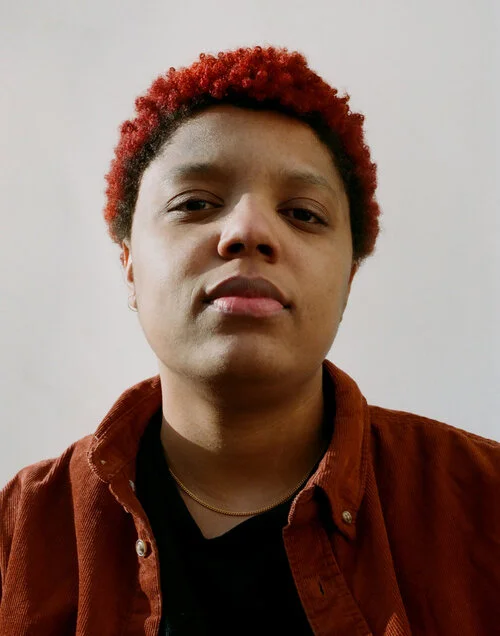
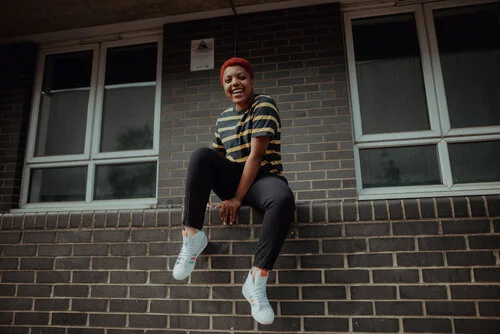
had included Yola in my Spotlight feature before. I have had a look through the archives and cannot find anything! No matter. She has been recording music for years, though I feel she is still being discovered by people and not quite at the mainstream. Yola is a Bristol- born artist now based in the U.S. She received four nominations at the 62nd Grammy Awards (2020), including the all-genre Best New Artist category. I will come to her 2019 debut album, Walk Through Fire, soon enough. There is so much fascinating detail and story when we think of Yola. I want to bring in some interviews where we discover more about a tremendous artist with one of the most powerful voices in modern music. The first article I want to bring in is from Rolling Stone. They spotlighted Yola in 2019. Having a big fan in the form of The Black Keys’ Dan Auerbach (who produced the album), it is clear Yola is a very special artist.. There are a few segments from the feature that are particular highlights:

“Yola was at home in Bristol in December of 2015 when she realized her kitchen was beginning to fill up with flames. “I was walking around burning like a human torch, and my first instinct was, ‘Ahhh!’” says the British singer-songwriter, who had accidentally set a new kitchen appliance on fire “But instinct two was laughter, because I was thinking, ‘What’s worse than this?’ And the thing that was worse was the life I had just managed to get myself out of.” The title track, which she wrote with Auerbach and legendary R&B songwriter Dan Penn, became the most obvious way for her to address the direct split head-on. “Fire is like an instant cleanser,” she says. “You immediately are propelled into a new environment of awareness, so there’s no doubt how bad something is, and how extreme it is, and why you need to get away.”

“I started with the idea of a tardy breakup record,” she says, “the idea of putting some things to bed. Saying goodbye to that past version of myself and the relationships inherent in that period of my life.”

The title track, which she wrote with Auerbach and legendary R&B songwriter Dan Penn, became the most obvious way for her to address the direct split head-on. “Fire is like an instant cleanser,” she says. “You immediately are propelled into a new environment of awareness, so there’s no doubt how bad something is, and how extreme it is, and why you need to get away.”

Both the song and the album, she adds, are about “the hurt before the walk and the hope you feel after it.”

The 35-year-old artist, born Yolanda Quartey, has spent the past decade or so shifting between various behind-the-scenes roles as a singer in Bristol and London. By the time she turned 30, she says, her central musical outlet, the Bristol-based band Phantom Limb, had become a toxic environment, a white boys’ club (“like True Blood, except guitars”) in which her own work and art was devalued and trivialized.

“There’s a lot of that patriarchal dominance in Bristol,” she says. “The word ‘feminist’ was a dirty word, and you couldn’t say it. It was this forceful, endless, exclusively white bro-athon, and that paradigm permeates people who are otherwise lovely.”

Back home in England, Yola’s musical skills were being limited exclusively to her vocals, so in order to begin making space for her musical departure from the Bristol scene, she began writing her own music.

“I got to this point of realizing that I could create something for myself by just being a singer-songwriter, like bloody everyone else,” she says. “It wasn’t that revolutionary. And the C, D and G chords really aren’t that challenging.”

pooppo.jpg

Her first attempt was her 2016 EP Orphan Offering, which introduced the singer as an up-and-coming singer-songwriter fusing roots in a new way, but the record’s songs didn’t have enough distance from the Bristol scene the singer had only just begun leaving. “The E.P. was about the agony of the situation,” she says.

Over the next few years, Yola plotted her next move, slowly assembling a team around her as she carefully plotted how she wanted to introduce herself to the world as a solo artist. After making a splash in the Americana scene with Orphan Offering, that meant turning down several high-profile offers to serve as a backup singer, a role that she feels has become one of the only ways in which dark-skinned women of color are given opportunities in music. “Try to think of somebody in pop who is my shade or darker who is a woman,” she says. “It takes work to think of someone. Doing backing vocals becomes this job that people try to coax you into doing all the time as a woman of color. It’s to the point where I’ve been places as the artist where people assume I’m doing backing vocals”.

I think that Yola has progressed as an artist since she started out. Walk Through Fire is a huge statement. With some fantastic singles release last and this year, there is going to be demand for another E.P. or a follow-up to Walk Through Fire. Stand for Myself (her latest single) is one of the best of this year so far.

I am eager to get to an album review. There were some great interviews conducted in 2019. For those who were not conscious of Yola and who she was, one had an opportunity to bond with a tremendous artist. The Guardian sat down with her. Her early life and family situation is especially complex and compelling:

“Yola doesn’t remember her Ghanaian father, who left before she was two. Her mother was of the “late Windrush generation”: a psychiatric nurse who emigrated on a one-way ticket from Barbados in the 1970s. Yola is certain she regretted it: “There’s a whole generation of people that did. It was the worst bait and switch. ‘You don’t want to be in Barbados! It’s really beautiful in Milton Keynes!’”

Yola’s mum was a practical, stoic woman who moved her family to the overwhelmingly white town of Portishead because she imagined a better life for them there. But work was hard to come by and Yola recalls her mum buzzing around on her motorcycle between dozens of different jobs. As well as nursing and care work, she was the Avon lady, and worked at the supermarket. When money was tight, she would plunder the bins behind the store for food that had been thrown out.

“The hustle was real,” says Yola. “We knew we were too poor for Santa. We used to get bath products for Christmas – end-of-line vibes, for a quid or so, that was the treat.” As almost the only black kid in town – aside from her older sister – Yola was never allowed to forget her otherness. “People might have seen us every day but they were still suspicious. They’d keep an eye out as you walked down the aisles to check you weren’t shoplifting stuff. I got used to being placatory and over-nice.”

Music was a place she could feel she belonged. Her mother’s record collection – Aretha Franklin, Marvin Gaye, Dolly Parton, Elton John – was a refuge and she was soon besotted. As a four-year-old, she told her mother she was going to be a singer when she grew up. “But because she was so practical, that was a fictional concept to her.”

Yola’s mother forbade her from pursuing her music, so when she was in her teens, Yola’s rehearsals and gigs became secret affairs, disguised as sleepovers with friends. She tried university, dropped out and, after her London crisis, returned to Bristol, where she became the frontwoman of a country-rock band called Phantom Limb”.

Although she has not performed live a lot during the pandemic, she was certainly busy and well-travelled through 2019. It is no surprise that people wanted to see Yola after she put out Walk Through Fire. The final interview I will quote is from PAPER. Not only do we learn details about Walk Through Fire. As a Black woman in America during a time of political turmoil, Yola’s experience must have been quite tough:

“For as many timeless tearjerkers as there are, Walk Through Fire is suffused with a defiant spirit like on its title track or on "It Ain't Easier." When making the album, Yola learned to play guitar and did so onstage before she was "ready," defying how she's long been told that "ladies shouldn't [play guitar]." Yola cites Dolly Parton, Ella Fitzgerald and Mavis Staples as examples of women whose lives have encouraged her to rebel against these types of expectations.

She's similarly outspoken, and a Black woman singing roots-based rock music during a political moment in America confronting its own hideously racist origins. "I will not be stopped by views that I should be in a role of service because I look how I look," she says. "Not when I have this much to say."

Now, there's no stopping Yola. She's only had a week off touring in the last six months. Just the other night, she was in Boston, and weeks before, she was buying expensive shoes in Milan. She wore them onstage the other night, and strummed her guitar before a packed house. Very intentionally, she closed by singing Aretha Franklin's recording of "You're All I Need to Get By." Franklin, another one of Yola's heroes, sang just about everything, regardless of genre.

Artistic flexibility and a desire to help others connect to their history is now what's most important to Yola — beyond seeing fans wear her merch or sing her lyrics back in sold-out venues, or being occasionally stopped in the street by people who thank her for being herself. For someone who never quite fit anywhere, those experiences are undeniably validating and something she'd now like to pay forward.

"I knew I was always going to be fighting to highlight the relationship of people of color to all of these genres of music," Yola says. "And I'm going to want to talk about the erosion of Black people in rock 'n' roll music, considering Sister Rosetta Tharpe and Big Mama being main creators. This career is about having an arc, and a long enough time to explore it all, instead of just being a one trick pony. That's what drew me to music: a need to tell that story in many ways. The story of where I come from... where we come from”.

I shall wrap things up in a bit. It has been enriching reading about Yola and her career. I think we will see a lot more albums and years of music from her. I feel she is one of the most promising rising artists – though some would say that she is already established.

Just before finishing up, it is worth introducing a positive review for Walk Through Fire. It was one of my favourite albums of 2019. Glide Magazine provided their take on a hugely impressive and stirring debut album:

“The debut full-length album from Yola, titled Walk Through Fire showcases her phenomenal vocals over lush retro-pop and light soul/country arraignments. Produced by Dan Auerbach with songs co-written by Yola, Auerbach, Bobby Wood, Pat McLaughlin and Dan Penn the album is a throwback to Nashville’s 60’s sound even going so far to recruit Wood who played piano with Elvis and Dave Roe who played bass with Johnny Cash.

Auerbach has been wading in these waters for a few albums now (his own Waiting On A Song, and Shannon Shaw’s Shannon In Nashville) but he has not worked with a vocal talent like Yola before as she luxuriates in the opulent musical surroundings. The opening song “Faraway Look” is a stunner, with her vocals soaring into the stratosphere around dynamic orchestral strings, harpsichord, crisp drumming and Broadway level drama. The gauntlet is thrown down directly at the start and while the following songs are all strong, nothing tops this dynamite performance.

A pleasant shuffle “Shady Grove” is more restrained vocally but chock full of surrounding instrumentation before the first single “Ride Out In The Country” delivers a sunny easy groove. The Nashville pop country of “It Ain’t Easier” fits Yola perfectly as her low key head shaking humming is just as affecting as her heartfelt straining pleas and falsetto flights which follow; a gorgeous tune.

While Yola is a survivor, the songwriting stays more surface level on the slow twang of the title track, never catching fire. “Keep Me Here” talks about flawed relationships but musically piles on the schmaltz, overdoing it towards adult contemporary while “Rock Me Gently” seems to be caught between genres and never fully coalesces.  These are minor quibbles though and don’t detract from the overall strength of this debut record.

“Love All Night (Work All Day)” gloriously melds gospel vocals with easy countrified 70’s Los Angeles sound, throwback “Lonely the Night” feels like a ‘20’s jazz song spectacularly redone and the production rich “Deep Blue Dream” stays warm and enveloping.  Yola shines on all tracks, she is the rare singer who doesn’t feel the need to display her powerhouse voice to its maximum affect each time out; sure she can blow the songs away with her pipes but displaying restraint and intimacy can be just as exciting.

The sweet brightness of “Love Is Light”, complete with dazzling rising horns, wraps up the impressive first offering from Yola as she announces to the world’s stage that she is a talent to be noticed immediately. Working with Auerbach and company fuses the robust production and instrumentation with her vocal charms making Walk Through Fire a rousing success on all fronts”.

If you have not discovered Yola yet then go and follow her on social media. I do think we will get another album pretty soon. I hope that she gets to tour and can do some U.K. dates along the way. There are few artists who have a voice like Yola! Such a tremendous artist with a long future ahead, there is no reason to overlook such a talent. Walk Through Fire is a stunning debut, though I can hear Yola growing even more confident and powerful. She is taking her music…

TO a whole new level.

______________

Follow Yola

TRACK REVIEW: Leon Bridges - Why Don’t You Touch Me

TRACK REVIEW:


Leon Bridges

www.jpg

PHOTO CREDIT: @rambo 

Why Don’t You Touch Me


9.6/10


The track, Why Don’t You Touch Me, is available from:

https://www.youtube.com/watch?v=TqgMx3eWdYg

GENRES:

Soul/Neo-Soul

ORIGIN:

Texas, U.S.A.

RELEASE DATE:

18th June, 2021

eee.jpg

PHOTO CREDIT: Justin Hardiman 

The album, Gold–Diggers Sound, is available from 23rd July, 2021. Pre-order here:

https://www.roughtrade.com/gb/leon-bridges/gold-diggers-sound

LABEL:

Columbia

__________

THIS is an interesting review…

ccc.jpg

 PHOTO CREDIT: Bobby Bruderle

as I am featuring a video which is the first of two parts. I am not sure whether the concept for the second part of Why Don’t You Touch Me will be vastly different from the first. The single is out in the world, yet it is interesting that there are two videos for the song. I am referencing the video that went live on Friday (18th June). Keep your eyes open for the second part next week. Why Don’t You Touch Me is the latest song from Leon Bridges. Ahead of the release of the album, Gold–Diggers Sound, we have this gem of a single. I last reviewed Leon Bridges back in 2019. I think it is important to talk about his latest track. Bridges (real name Todd Michael) was born in Atlanta, Georgia in 1989. After one year, his family moved to New Orleans, Louisiana. They spent a year there before moving to Fort Worth, Texas, where Bridges grew up. I am going to work some background into this review. Before I get to the song and lend my thoughts, I want to highlight Bridges and explore various sides of his career. It is worth noting when he discovered music. In this Under the Radar interview, we learn more about Bridges’ earliest musical tastes:

“Jake Uitti (Under the Radar): When did you first discover music as a young person?

Some of the earliest memories for me was when my mother would go pick up my father from work and she would play the Sleepless in Seattle soundtrack. There was a tune by Harry Connick Jr. by the name of “A Wink and a Smile.” I remember as a kid thinking it was kind of like an older tune, not knowing that was a modern record of the time.

sss.jpg

PHOTO CREDIT: Tom Schirmacher for GQ 

What do you think originally drew you to older sounds or aesthetics?

Man, I think a lot of that comes from—I would say the seed was planted initially through my parents. My father was really into Otis Redding, Curtis Mayfield, and Sam Cooke and my mother was into Anita Baker and Sade. It’s just one of those things—throughout our lives we store so much music and influences and it ultimately just pours out into the art. There was a time in my songwriting journey where I just felt compelled to shape my songs around soul music, along with the community of musicians I used to run with. So, it was a mixture of things I attributed to that sound.

You’re known for playing a million open mics as you were coming up. But where do you think your work ethic comes from in this way?

I think a lot of it, for me, was just like when I was in the restaurant industry. I think the motivation in that time was that I needed to get through the day. And then also not wanting to be deemed as lazy amongst my coworkers and managers. A lot of it is totally almost innate. Something that’s always been ingrained—my mother is a big factor in instilling that within me and my siblings.

I worked as a bartender, waiter, and line cook for many years. Did you work in the front of the house or back of the house?

I worked in the back of the house as a dishwasher. I mean, my whole job trajectory is pretty small. I worked at Six Flags amusement park in Arlington, Texas. I subsequently worked this place called Rosa’s Café and then Del Frisco’s and then I transitioned to doing music for a living. I think working in the back is humbling. It was humbling for me. Even now, I look at it like those types of people who are in those jobs, they keep the world going. So, I think it created that perspective to where I never belittle anyone based on who they are or what they do. I see the humanity within everyone”.

ccc.jpg

 PHOTO CREDIT: @Rambo

Although Bridges was born in Georgia, Forth Worth, Texas is his home. It is in his blood. In 2018, Bridges was interviewed by Schön!. He was promoting his second album, Good Thing. It is interested how living in Texas influenced his music and the attachment to the state:

“That’s too bad since you just bought a house in Texas as well! How do you feel Fort Worth and Dallas have influenced your music?

I think, being from Texas, I was lucky enough to fall into the music scene and meet some really awesome songwriters and musicians. To be around guys who were doing Rock ‘n’ Roll, Blues music and mixed country, that really made an impression on me when I was coming up into the music scene and that’s reflective in my music. I love to incorporate blues and country and that’s just what the South is about —that’s what Texas is about. I really like to incorporate that stuff [in my music].

Do you ever see yourself leaving Texas?

Texas is home but I do see myself that the further I progress in my career, it might be a little problematic to stay in my city — only because, I mean, it’ll be hard to really move around and stay incognito the further I progress. But I do want to keep it home for as long as I can…

So is it kind of sad or bittersweet that you feel you can’t stay? I mean I know home is always going to be there but…

Yeah… it will always be there but it is a bittersweet thing but, you know, it’s kind of a good problem to have. It’s awesome that people feel that way about me and my music but then it’s also a problem when I want to go to a grocery store but, you know, I’m just uninspired because I know that if I go by myself it’s going to turn into a thing. But it’s fun”.

xxx.jpg

 PHOTO CREDIT: Jack McKain

Just to go back to musical inspirations. I think one of the things that people noted with Bridges’ debut album, Coming Home, was that there was clear influence in there. Maybe he was wearing those influences on his sleeve too much. The same could be said of our very own Michael Kiwanuka on his debut, 2012’s Home Again. Not that this is necessarily a bad thing! The only problem is that it can be harder to craft your own identity and stand out. I will explore this topic a bit later. Before that, this interview with Esquire caught my eye. In it, they illustrate how the former dishwasher took off and was performing alongside some musical greats:

“Bridges, a native of Fort Worth, Texas, debuted in 2015 with the retro-soul rave-up Coming Home. The sepia-toned album took off, and suddenly the former dishwasher and community college-dropout was sharing stages with the likes of Paul McCartney and Stevie Wonder and performing for President Obama at the White House. He booked Saturday Night Live and earned a Grammy nomination for Best R&B album. And last year, his song “River” went viral thanks, in part, to a placement on the Big Little Lies soundtrack. (Cue his second Grammy nomination, this time for Best Music Video.) He became the newest savior of soul music. “Every tagline was, ‘Sam Cooke Reincarnated!’” he recalls. “I felt pressure. Out the gate, the expectations were high.”

But Bridges always saw himself as more of a disciple of Arthur Alexander, the lesser-known, country-soul pioneer of the ’60s, than Cooke. “His delivery was very subtle—and that’s actually what I’ve always been about,” he says. “I struggled with wanting to make it clear that [being a soul artist] doesn’t mean I have to be screaming on stage like a preacher.” As for that keeper-of-the-flame mantle, Bridges wishes we could all, well, relax: “I just want to let the music be music”.

ccc.jpg

 PHOTO CREDIT: Tommy Escobar

When Leon Bridges was promoting Good Thing, naturally he would look back on his debut and see how far he had come – and how he had progressed as an artist. There is a marked difference between what we hear on Good Thing and what the sound of Coming Home represented. Bridges discussed this more with CLASH in a 2018 interview:

“From Texas to the world; subsequently, his modern brand of authentic nostalgia was making waves - the debut album, ‘Coming Home’ arrived in the summer, its vintage tones proving irresistible, and Bridges found himself in demand across the board from radio, TV and the White House. After performing there at a Ray Charles tribute, Bridges was later personally endorsed by President Obama, who included Leon’s ‘Smooth Sailin’’ on his summer 2016 playlist. It was the crowning achievement of a first chapter that was frenetic and undeniably promising, yet one Bridges was committed to progress from.

“When I wrote ‘Coming Home’,” says Bridges, looking back from the vantage point of February 2018, “I felt that it was necessary to tell my narrative through that sound. I wanted to honour black music, and everybody knows that story, but that was what that was. But even at that time, I was always in love with modern R&B music, and so I had to make that decision. I didn’t want to make a ‘Coming Home Part Two’ because I knew that if I made a ‘Coming Home Part Two’ then I wouldn’t be able to gain a bigger fan base, or I’d feel like I wasn’t being true to myself if I would have made a ‘Coming Home Part Two’”.

ccc.jpg

The difference between his debut and its follow-up, ‘Good Thing’, is striking and immediate; the strapping falsetto in ’70s strings-laden opener ‘Bet Ain’t Worth The Hand’ is a remarkable departure, and stylistic surprises don’t stop coming - there’s the jazzy trip-hop of ‘Bad Bad News’, the clipped beats of ‘Lions’, and the synth-heavy pop-funk bangers ‘If It Feels Good, Then It Must Be’ and ‘You Don’t Know’, two moments certain to startle the retro fans.

“I just kinda felt this weight of expectation from the fans - a lot of my fans, they want that specific sound, and they’d be content if I made that same sound for the rest of my life,” he says of the pressures he faced when considering change, and attributes a realisation he experienced at the 2016 Grammy Awards, where he was nominated for Best R&B Album, as the catalyst for the new musical direction he’d take. Considering his fellow nominees, he noted: “I just thought to myself that I have the talent to be in the same conversations with the Brunos and the Ushers and all those guys, but still stay unique. So that was the whole motivation behind this project: how can we take the elements from the first album but evolve the sound?”

Every artist evolves between their first and second albums. Listening back to Coming Home, one can definitely detect signs that Bridges was a star. That was fully realised on the follow-up. Ahead of the release of the much-anticipated third album, Gold–Diggers Sound, we can see how Bridges has grown as a writer and performer.

xxx.jpg

 PHOTO CREDIT: Sasha C.

I do wonder what the sound of Gold–Diggers Sound will be. We have heard some material from it and, from what I can tell, it is another step on from Good Thing. There are fresh directions and sounds in the mix. Coming to an interview with GQ, Bridges noted that his debut album was selling to predominantly white audiences:

“By his own admission, Bridges was a "baby" when Coming Home dropped in 2015. He was in his early twenties when he recorded it, down in his hometown of Fort Worth, Texas. "I was very sheltered," he says. "I wasn't in a relationship, any relationships at the time. I didn't really, um…go out and drink and all that kind of shit." In the three years since, Bridges has toured the world, been nominated for two Grammys, attended President Barack Obama's last birthday celebration at the White House—"surreal," Bridges calls it, before launching into a surprisingly excellent impression of our former president—and returned with another album, Good Thing, which is due out early this May. The new stuff shows just how much Bridges has grown up: He's debuting a new, contemporary sound, one that more accurately reflects who he's becoming. That person is more mature, more in control, and more aware of himself and the way the world sees him.

Coming Home, Bridges says, found predominantly white audiences. "It's uncomfortable live to look out into the crowd, and during my song 'Brown Skin Girl'—that's part of my patter, the whole thing is like, 'Where's my Brown Skin Girls at?'—and...there aren't any." People didn't seem to think Bridges' music was black, or black enough. "There are people who say ignorant stuff like that," he says. "Which is a crazy thing to hear." The new songs are sexier, more authentic and original and aware; Bridges explicitly changed his sound to find a more diverse audience. If you're a fan of Coming Home, you'll recognize that smoked-honey voice. The music, however, is something different—wholly modern, though visited by the ghosts of the past. You can hear a parade of Bridges' inspirations all over Good Thing: "Fuckin' Usher, Ginuwine, James Blake, Portishead, R. Kelly, Townes Van Zandt, Willie Nelson," he says”.

ss.jpg

 PHOTO CREDIT: Fumi Homma for CLASH

After the arrival and success of Good Thing, there was an upswing in Bridges’ career. He was being seen more as an individual artist. Maybe there was this learning curve between his two albums. When he spoke with the Evening Standard, Bridges looked back and critically assessed his debut record:

“Bridges was weighing up whether to invite Obama to his 30th birthday party this month in Puerto Rico when he ‘ran into his older daughter, Malia, at this bar in New York and she was like, “Oh my God — Oh my God, I really love your music, I gotta come up to a show,” and I was like, “Yeah, bring your dad!”’

It’s a typical snapshot of Bridge’s dishrags-to-riches fairy-tale story: an everyman blessed with a voice so breathtaking it lifted him from small-town Texas, washing plates in a Tex-Mex restaurant, to the White House, then round the world on continent-spanning tours. But now that it’s calm and quiet he tells me that he really misses home.

xxx.jpg

‘That’s definitely my light at the end of the tunnel during touring, that I can go home and be with my friends and family,’ he says, pointing out the various tattoos on his body: 817, the area code of his home town, Fort Worth; an outline of Texas’s state line; his mother’s name, Lisa Sawyer (also a song title), which he had inked in New Orleans.

It has been a steep learning curve. Coming Home was a revival of the 1960s soul era sung by a young, modern man from the South — but critics wondered if he could write anything more original. And so came Good Thing last year: funkier, fresher, a ‘melting pot of different sounds’. Bridges has loved touring it, but bad reviews stay with you. When he played Brixton O2 last November, a major newspaper reported ‘a chant that struck up during a jazzy section mid-gig, urging Bridges to stick to his old material’.

‘It’s like, when I was doing their first stuff, it’s like I wasn’t authentic enough, like I was biting off the soul artists from the past,’ says Bridges, who also blames technical issues for the poorly received gig. ‘Then when I try to do something a little bit different, modern and more unique, in a way, it’s like people weren’t feeling that. But, you know, if the fans didn’t f*** with new s*** they wouldn’t go to the show.’ Making ‘an unpredictable move’ was vital to ‘just have longevity in my career’, he says”.

ccc.jpg

 PHOTO CREDIT: Tom Oldham

I am mentioning sonic and career development to show how far Bridges has come. The same can be said of how he has matured and changed since Good Thing. It is important to chart and examine his steps and rise. I want to bring in this 2019 interview, as we get a snapshot of how Bridges’ music has been used on screen. This is true of songs from both of his albums. He was preparing to record songs with contemporaries from Texas: the incredible Khruangbin:

“Much has changed over the past four years. Artistically, Bridges' sophomore album, Good Thing, released last May, saw the singer-songwriter deviate slightly from the kind of finger-snapping, retro-soul nostalgia that drew the requisite Otis Redding and Sam Cooke comparisons. Still, tracks from both albums continue to prove commercially successful, with songs like "River," "Better Man," and "Beyond" making cameos on HBO's Big Little Lies, the sci-fi film Pacific Rim: Uprising, and BBC's The Graham Norton Show, respectively. That's not to mention collaborations with Kacey Musgraves, Macklemore, and Odesza, a tour with Harry Styles, and several Grammy nominations (and a win). Next up, Bridges will return to his Texan roots with the release of two tracks with Houston-based trio Khruangbin. "It's like psychedelic-gospel-R&B-'70s," he says. "That's the best way I can explain it. I'm really excited." Before taking to the stage with fellow Afropunk headliners FKA Twigs, Rico Nasty, and Gary Clark, Jr., Bridges opens up to CR MEN about his biggest influences, the importance of black-oriented music festivals, and what punk means to him”.

ccc.jpg

I wonder whether there was a conscious moment for Bridges when he changed his writing style and wrote from a different perspective. Perhaps a sense of Bridges coming out of himself and experiencing the wider world resulted in a more open second album. Coming back to that CLASH interview, Bridges noted how his life and music changed drastically in quite a short period:

“Before [all] this, I was very sheltered. I was living at my mom’s house for so long and I had never really been a drinker or partier and all that kind of stuff,” he says. “I had to hide a lot of things, because that’s the kind of environment I grew up in - a religious household. I felt that even writing simple songs about love and all that kind of stuff was not going to be accepted by my mother (the subject of ‘Lisa Sawyer’ from his debut) and the community that I was in.”

“There is more of me,” he says of the album’s character, a true reflection of his personal growth over the last three years. “Instead of writing on the surface, I’m kinda being a little bit more vulnerable with these songs.”

Which all makes for quite a seismic shift, and one that he’s all too aware may leave some disappointed classic soul fans behind - a risk he’s willing to take in the name of evolution. “When I listen to an artist, I want to be surprised by everything they put out,” he reasons. “I just want to show people that I am no longer just the underdog of R&B. I’m a diverse artist and I feel like the album definitely reflects that. I made a statement with the first album, and this is definitely another huge statement, because I feel like people definitely won’t be expecting what we’re putting out”.

mnmn.jpg

I am moving things forward to properly explore Good Thing. One of the most impressive things about the album is how that there is something quite ordinary about it in terms of subject matter. It does not tackle big political matters. Given the Black Lives Matter protests recently, I wonder whether that will work its way into his Gold–Diggers Sound in some form. Bridges spoke with Esquire and talked about how, when it comes to music, everything does not have to be so deep and serious:

“If Good Thing is light on anything, then, it’s politics. Defiant lead single “Bad Bad News”’ sees Bridges stare down society’s preconceived notions of his limits, but otherwise, the set runs parallel to much of today’s conversations, never turning for an intersection. It’s not that Bridges doesn’t have his opinions—we’re living in a time of “bad leadership” he says, succinctly, before remarking that we’re also in a time of oversharing when it comes to our vitriolic stances—but it didn’t feel right here. “What do people want me to do? Write F-Trump songs? That’s not effective,” he says before cautioning, “The time will come and whenever I put that energy into a song, it’s because that’s right thing to do. It will be because I’m passionate about it.”

In fact, Bridges is, in some ways, trying to say less with his music. “It’s cool to accept that not everything has to be so deep,” he says, crediting Young Thug and Drake as masters in turning the Ordinary into Art. “It’s their own world and their own truth and they make it sound super profound,” he says. “Sometimes I feel pressure [to write high-concept lyrics], because I aspire to be like a [Bob] Dylan or a Van Morrison, but I like attacking topics that are relatable.”

That delight in the mundane works, time and time again, on Good Thing. He spools a phone call home to mom into a rapturous reckoning with a relationship’s potential on “Beyond” and considers shirking his friends’ advice and running back to an untrustworthy flame on reverb-lined “Forgive You.” And on the buoyant one-two punch of “If It Feels Good, Then It Must Be” and “You Don’t Know” he finds himself gripped with the thrill of new love and desire. But Bridges saves his best for last. On the stellar album closer “Georgia to Texas” the singer lays his origin story bare—his birth, his mother’s struggle, the hand-me-down-clothes, the lack of money—and in turn, crafts a moving testament to the power of a mother’s love”.

fff.jpg

  PHOTO CREDIT: Tommy Escobar

I love Leon Bridges’ debut album - though I was more struck by the sound and production on Good Thing. In an interview with GoldPlec, Bridges was asked about the production and sonic shift on his second album. Being a more popular artist by this time, he had to consider adapting his music for bigger venues:

“Good Thing' is certainly an album with a modern production ethos. Tracks like Forgive You and Bad Bad News incorporate a broad range of contemporary sounds. While not a total departure from the vintage R&B sound, there's an undeniable hip-hop and nu-soul aesthetic to the whole production, complete with less guitar centred song structures.

Are changes were the result of a new writing approach?

"This was definitely a different approach. In the past, I've done a lot of my writing on guitar. This one was different, the producer that we worked with, he had a big library of instrumentals. Some of the stuff we worked on from scratch but a lot of it was instrumentals that he had. He'd play about 20 of them and I'd pick out the one that spoke to me most. That would be the one we'd work on that day. It started off by just creating the melody and how I wanted the phrasing to be and from there we kind of just formed the lyrics. I would say that the whole concept of the song was really just an afterthought."

One thing that hasn't changed for Bridges is the intimate quality of his material. His tracks aren't anthems, nor are they filled with huge bombastic choruses. The beauty of Bridges' music is nuanced, appreciated more and more with repeated listens. However, considering the artist's leap in popularity since his breakthrough single, he's had to fill bigger venues on tour. Bridges shared his thoughts on that transition:

"I recently hired this guy Josh Johnson and this cat Josh Thumberly on the bass. We basically reimagined everything on the album and some of the older material too. There are these moments of funk and of jazz and psychedelia. It's great”.

vvv.jpg

 PHOTO CREDIT: Fumi Homma for CLASH

One thing a lot of people might not have considered when it came to Leon Bridges is how fame and new popularity would have impacted his mental welfare and life in general. He wanted his music to resonate and reach people. There are a lot of pressures and bad sides that come with that new attention. Coming back to the interview with the Evening Standard, we find out how newfound fame challenged Bridges:

“He was just 25, from a city with a population of less than 900,000. Suddenly, he was the centre of attention, and ‘everything from feeling inadequate in a way, to feeling I’m not a good enough singer, or songwriter, or handsome enough. All that s*** played into my depression.’ He couldn’t stand ‘billions of photos being taken’, he worried he wasn’t ‘smart enough to come across as articulate’.

He drank more. ‘I wouldn’t call myself an alcoholic, but, like, for me, I couldn’t perform without drinking because it made me less self-aware when I was on stage. It was just one of those things that, with the lifestyle, was just so easy, like, to drink every day. When I was out it was usually five to 10 shots, a beer, and that was happening every day. Maybe a couple of shots before the show, then after the show, more drinking. Then when I’m at home, more. So I made new rules when I was like, okay, don’t drink during the week’”.

vvvv.jpg

 PHOTO CREDIT: Daniel King for Esquire

I want to change gears and highlight something that defines Bridges in a way: his unique style and his extraordinary fashion! Befitting of someone who is a bit of an idol, he is the complete package. Not only is his music full of personality and different layers; the same can be said of his looks. Bridges is authentic when it comes to his fashion choices. As he explained to GQ (in the interview I sourced from earlier), there were some doubters to start off with:

“People have a history of thinking the things that Leon Bridges says and does aren't quite real. Take, for example, his style. "Coming out the gate, it kinda seemed like it was something that was fake and put together, because people don't normally see guys dressed like this," Bridges says. His look mashes up vintage pieces with things sourced from the '80s and '90s—he's got a freewheeling, omnivorous vibe. "I think people now are seeing that it's authentic," Bridges finishes. His inspirations run deep: The singer was moved to start dressing the way he does after he discovered Street Etiquette, the avant-garde style blog founded and run by Joshua Kissi and Travis Gumbs. "Like, I had never seen black men dress in that way," he says, meaning Kissi's and Gumbs' signature vintage-prep looks. "And also being a dancer. Back when I was studying dance in college, we would have to perform certain pieces, and so I was exposed to just a whole bunch of vintage styles and all that kind of stuff." As with his music, these days Bridges has found slightly more contemporary influences. "This cat named Tito Deller, he's from here. My friend Barrio Dandy out in L.A. I mean, I even fuck with A$AP Rocky's thing. I love the whole kind of nineties comeback as well," he says”.

xxx.jpg

 PHOTO CREDIT: Ryan Lowry for GQ

Leon Bridges recently spoke with W Magazine. Not only has it been hard to showcase music because of the pandemic. Bridges has not been on stage and rocking his different looks! That will change soon. In the interview, one can tell that Bridges has been frustrated by the pandemic and the limitations:

“You’re known for having a very strong and unique sense of style. How do you feel about getting dressed for public life again?

Man, that’s been a crazy thing about the pandemic—I haven’t really gotten to showcase the fashion. I’ve been ordering a lot of stuff. I’m trying to figure out what will look good onstage when I start touring again. I’ve recently been inspired by the ’70s. I always love something funkadelic, and I’ve transitioned into wearing more flared jeans. But I’ve also been doing a lot of monochrome, specifically all black”.

I am going to Why Don’t You Touch Me in a minute. I wanted to lead up to the song by presenting a bigger picture. Rather than leaping straight in, it is important learn more about Leon bridges and his story. It is clear that he is a fascinating artist who has transformed and grown since 2015’s Coming Home. There is going to be a lot of anticipation ahead of the release of Gold–Diggers Sound.

ccc.jpg

 PHOTO CREDIT: Sam Wilson

I think the music has grown bigger and more ambitious since Good News. That is reflected in the videos. Bridges has always released great videos, though there is something more cinematic and grander about them now. This can be seen in Why Don’t You Touch Me. In the first part of the video – whether the second part will have a completely different concept/scope has yet to be seen -, we start on a shot of a building that says ‘Gold Diggers Entertainment’ on it. A woman is outside smoking. We pan in on her as the camera tracks to the right where a man can be seen by a window looking pensive. It then pans back to the woman who throws her cigarette off the balcony and walks out of shot (and inside of the building). Even before the song kicks in, there is this intrigue and sense of tension. I feel the promotions for the singles on his new albums are more filmic and different to what he offered before. It seems that the video concept is this romance that is quite complex. We see black-and-white and colour shots of the lead actors, Alisha Boe and Jermaine Fowler (the video also features JJ (Joshua John), Joshua Crumley, Bill Malina, Nate Mercereau, Ricky Reed). The two leads are shot in black-and-white as they are chatting in a bar. Bridges is in colour as he can be seen on his own. He looks quite distracted and tense. Getting to the music, and there is a simplicity and soulfulness that hooks you in. We get a heartbeat percussion and a gentle electric guitar strum that perfectly accompanies Bridges’ silky and powerful voice. There is longing and questions from Bridges. In the first verse, it seems as though he has been cast aside: “I've been feeling way too undesired/Before the flame went out, all around us was all on fire/I can feel the distance go for miles/But cold is all you are, and it's causing chills/What's with all this?/You won't even talk about it”.

ccc.jpg

 PHOTO CREDIT: Alisha Boe

Whether the video represents a love triangle or not, I am not sure. The leads are vibing in a bar and there seems to be this natural chemistry. Our hero is left alone and he is trying to piece things together. Perhaps things used to be good but, as she has found someone new, it might be coming to an end. Although Bridges does not mention cheating and the relationship being over, one gets a sense from the video that that might be the case. Bridges is definitely looking for answers and clarity: “Can you be honest?/Is you just running out of thrills?/'Cause every time you put me second, yeah/Girl, make me feel wanted/Don't leave me out here unfulfilled/'Cause we're slowly getting disconnected, yeah”. In the video, the heroine can be seen (in colour) walking from an apartment in tears. Whether she has had a difficult conversation with Bridges or another man, I cannot tell. Things are definitely complex. Although our hero is trying his best to impress her, it seems like she has someone else on her mind: “If you still in love all like you say it/Then why don't you touch me? Yeah/I'm dressing to the nines and your eye's straying/Oh, why don't you touch me? Yeah/Why don't, why don't, why don't, yeah, yeah”. Bridges and Jermaine Fowler can be seen outside smoking together. Perhaps they are friends or unaware that they are with the same woman. Alisha Boe is in the bar as she approaches Bridges. There are these shots between the bar and outside to provide this sense of urgency and developing story. It is like a tense film where revelations are about to be revealed. Boe and Bridges are clearly emotional in each other’s company.

jj.jpg

It seems that their once-solid bond has been affected. “It's been so hard to stay close/If there's a problem, say so/Tell me why you never touch me no more/Maybe I've been too possessive/Maybe I get too aggressive/Maybe 'cause I bring up what we should've deaded/Hard to be real, but don't deny what you can't feel, girl/Maybe I just need attention/Maybe I'm not new enough to stay in love and so it's ending/Tell me it ain't ending, babe”. Bridges voice is gorgeous throughout! There is so much emotion to be discovered. He is putting his heart out there and feels genuinely moved. The video is wonderfully shot. Again, Bridges is seen alone as the two (new?) lovers meet on a rooftop. I think that the second version of the video might well push the story forward. Maybe it will be told from a different viewpoint and story arc. The truth become clearer as Bridges is on a bed alone and we see flashes of the Boe and Fowler kissing. It is heartbreaking that the visuals tell us that things are over. They play over words that suggest Bridges is trying to keep the relationship alive – even though he suspects that it might be futile: “Can you be honest?/Is you just running out of thrills?/'Cause every time you put me second, yeah/Girl, make me feel wanted/Don't leave me out here unfulfilled/'Cause we're slowly getting disconnected, yeah”. I wonder whether the ending of the second video might be different. In this one, it appears there may be a twist in the tail. We see Boe and Fowler together. The heroine wakes and leaves him alone in bed. There is a great shot of the two floating in the air as their fingers slip from one another. The heroine is walking away and ends up in the shot that we saw at the very start: her on the balcony smoking as her man is at the window. It is a great loop that you do not see coming! At the start of the video, we do not know who these characters are. We have this story that unfolds and ends. It is testament to the direction of Jackson Tisi. Why Don’t You Touch Me is a beautiful song and a very impressive song from Bridges. I think the video adds new elements. It is such an engrossing and stylish video with wonderful performances!

mmm.jpg

 PHOTO CREDIT: Nate Ryan/NPR

Not long now until we receive a new album from Leon Bridges. I am especially looking forward. In that interview from Under the Radar that I started out with, Bridges revealed the importance of continuingly moving in terms of his sound and direction:

“Let’s talk about the new album! It’s funny, we’ve talked about you being a subtle person, measured. And that’s how the new album is, in a way, too. There aren’t super high peaks and super low lows. So, what was the genesis of the new record and how did you go about crafting it?

So, I would say the inception of this album started with me sitting down with my good friend and producer, Ricky Reed, and we just talked about the success of my album, Good Thing. We talked about the direction I wanted to head. At that time, I saw that if I was to continue making retro music, essentially, then I would just continue to stay stagnant. I could have a good career doing that but I understood from a standpoint that I would have just hit a peak only doing retro music.

But at the same time I understood that my artistry is diverse and there are so many different influences in there. So, I really wanted to showcase that in this new album and so we felt the only way to unlock that was to create this fully immersive recording experience and invite some of the dopest musicians and writer friends to help cultivate this R&B style that was unique to me. So, the whole concept behind this album is basically like pushing my sound forward, pushing the envelope while still having those organic elements in there.

Because I want to be in the same conversations with some of my R&B counterparts, as well. I felt like how some people say, “He’s slept on.” I just felt like—basically, I want to create music that puts me in front of more people while still doing something that’s authentic”.

When you close your eyes and think about the future, what comes to mind?

I foresee for myself, I think I ultimately want to chill out a bit. At this point, I have at least three projects that are essentially done. Next year, I’ll be releasing another EP. I made some music in Nashville. So, Gold-Diggers Sound, it’s a great album but it’s totally not indicative of what the future me-style is going to be. I’m going to continue to experiment and redefine my art as I progress on this journey”.

jjkjk.jpg

 PHOTO CREDIT: Tommy Escobar

Just before closing things off, there is one more interview that is worth bringing in. Going back to W Magazine, they asked Bridges how the third album would be received by his fans:

“You have a new album coming out soon. Anything you can share about how it will sound?

The new project is titled Gold-Diggers Sound. Gold-Diggers is this unassuming little compound in East Hollywood. It’s kind of in a gnarly neighborhood, but on the inside, it’s a beautiful place. It’s like a hotel, a studio, and a dive bar. I wanted a sound that was R&B, but unique to me. We felt the only way to achieve that was to create a fully immersive experience, so I essentially lived at this place, and I think we were able to find that. There’s understated jazz, there’s more guitar-prominent songs, but it’s definitely more of an R&B-centric album.

How do you think listeners will react to this next phase of your music development?

I’m kind of challenging my fans, because a lot of times artists can be put in the confines of a certain genre, and it can be hard for fans to accept that evolution and growth. And so I just want them to accept the direction that I’m going in. That’s the thing—I always want to stay unpredictable. I don’t think people are going to see this coming, but I think they’re going to love it”.

It has been great reviewing Why Don’t You Touch Me. The first part of the video has been released. I am looking forward to the second part of it! Go and pre-order Gold–Diggers Sound. It is going to be a wonderfully captivating and memorable album from…

vvvv.jpg

A truly wonderful artist.

___________

Follow Leon Bridges  

xxx.jpg

FEATURE: A Buyer’s Guide: Part Fifty-Nine: Judas Priest

FEATURE:


A Buyer’s Guide

PHOTO CREDIT: Justin Borucki

Part Fifty-Nine: Judas Priest

___________

IN this A Buyer’s Guide…

eee.jpg

I am recommending the essential work of the legendary Metal band, Judas Priest. The band have been together over fifty years and their released their most-recent album, Firepower, in 2018. Led by the amazing Rob Halford, he is also an icon of the L.G.B.T.Q.I.A.+ community. Someone who helped break down barriers and walls by coming out. Before getting to the albums, here is some biography from AllMusic:

“Judas Priest were one of the most influential heavy metal bands of the '70s, spearheading the New Wave of British Heavy Metal late in the decade. Decked out in leather and chains, the band fused the gothic doom of Black Sabbath with the riffs and speed of Led Zeppelin, as well as adding a vicious two-lead guitar attack; in doing so, they set the pace for much popular heavy metal from 1975 until 1985, as well as laying the groundwork for the speed and death metal of the '80s.

Formed in Birmingham, England, in 1970, the group's core members were guitarist K.K. Downing and bassist Ian Hill. Joined by Alan Atkins and drummer John Ellis, the band played their first concert in 1971. Atkins' previous band was called Judas Priest, yet the members decided it was the best name for the new group. The band played numerous shows throughout 1971; during the year, Ellis was replaced by Alan Moore; by the end of the year, Chris Campbell replaced Moore. After a solid year of touring the U.K., Atkins and Campbell left the band in 1973 and were replaced by vocalist Rob Halford and drummer John Hinch. They continued touring, including a visit to Germany and the Netherlands in 1974. By the time the tour was completed, they had secured a record contract with Gull, an independent U.K. label. Before recording their debut album, Judas Priest added guitarist Glenn Tipton.

Rocka Rolla was released in September of 1974 to almost no attention. The following year, they gave a well-received performance at the Reading Festival and Hinch departed the band; he was replaced by Alan Moore. Later that year, the group released Sad Wings of Destiny, which earned some positive reviews. However, the lack of sales was putting the band in a dire financial situation, which was remedied by an international contract with CBS Records. Sin After Sin (1977) was the first album released under that contract; it was recorded with Simon Phillips, who replaced Moore. The record received positive reviews and the band departed for their first American tour, with Les Binks on drums.

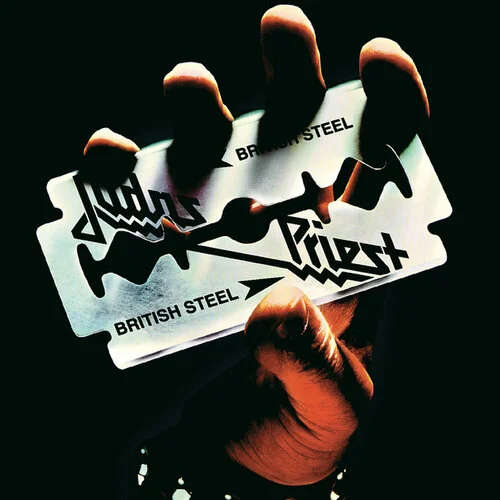
When they returned to England, Judas Priest recorded 1978's Stained Class, the record that established them as an international force in metal. Along with 1979's Hell Bent for Leather (Killing Machine in the U.K.), Stained Class defined the nascent New Wave of British Heavy Metal movement. A significant number of bands adopted Priest's leather-clad image and hard, driving sound, making their music harder, faster, and louder. After releasing Hell Bent for Leather, the band recorded the live album Unleashed in the East (1979) in Japan; it became their first platinum album in America. Les Binks left the band in 1979; he was replaced by former Trapeze drummer Dave Holland. Their next album, 1980's British Steel, entered the British charts at number three, launched the hit singles "Breaking the Law" and "Living After Midnight," and was their second American platinum record; Point of Entry, released the following year, was nearly as successful.

At the beginning of the '80s, Judas Priest was a top concert attraction around the world, in addition to being a best-selling recording artist. Featuring the hit single "You've Got Another Thing Comin'," Screaming for Vengeance (1982) marked the height of their popularity, peaking at number 17 in America and selling over a million copies. Two years later, Defenders of the Faith nearly matched its predecessor's performance, yet metal tastes were beginning to change, as Metallica and other speed/thrash metal groups started to grow in popularity. That shift was evident on 1986's Turbo, where Judas Priest seemed out of touch with current trends; nevertheless, the record sold over a million copies in America on the basis of name recognition alone. However, 1987's Priest...Live! was their first album since Stained Class not to go gold. Ram It Down (1988) was a return to raw metal and returned the group to gold status. Dave Holland left after this record and was replaced by Scott Travis for 1990's Painkiller. Like Ram It Down, Painkiller didn't make an impact outside the band's die-hard fans, yet the group was still a popular concert act.

In the early '90s, Rob Halford began his own thrash band, Fight, and soon left Judas Priest. In 1996, following a solo album by Glenn Tipton, the band rebounded with a new young singer, Tim "Ripper" Owens (formerly a member of a Priest tribute band and of Winter's Bane). They spent the next year recording Jugulator amidst much self-perpetuated hype concerning Priest's return to their roots. The album debuted at number 82 on the Billboard album charts upon its release in late 1997. Halford had by then disbanded Fight following a decrease in interest and signed with Trent Reznor's Nothing label with a new project, Two. In the meantime, the remaining members of Judas Priest forged on with '98 Live Meltdown, a live set recorded during their inaugural tour with Ripper on the mike. Around the same time, a movie was readying production to be based on Ripper's rags-to-riches story of how he got to front his all-time favorite band. Although Priest was originally supposed to be involved with the film, they ultimately pulled out, but production went on anyway without the band's blessing (the movie, Rock Star, was eventually released in the summer of 2001, starring Mark Wahlberg in the lead role). Rob Halford in the meantime disbanded Two after just a single album, 1997's Voyeurs, and returned back to his metal roots with a quintet simply named Halford. The group issued its debut in 2000, Resurrection, following it with a worldwide tour that saw the new group open up Iron Maiden's Brave New World U.S. tour, and issue a live set one year later (which included a healthy helping of Priest classics) -- Live Insurrection.

In 2001 the Ripper-led Priest issued a new album, Demolition, and Priest's entire back catalog for Columbia was reissued with remastered sound and bonus tracks. In 2003 the band -- including Halford -- collaborated on the liner notes and song selections for their mammoth career-encompassing box Metalogy, a collaboration that brought Halford back into the fold. Owens split from the group amicably in 2003, allowing the newly reunited heavy metal legends to plan their global live concert tour in 2004, with their sixteenth studio album, Angel of Retribution, to be released the following year. In 2008 the band released Nostradamus, a sprawling, two-disc conceptual piece that charted the life and times of the famous French seer. On December 7, 2010, Priest broke the news that their upcoming Epitaph world tour would be their last. The following month, however, they clarified that they were not disbanding, announcing that they were working on new material. Before the tour began, founding member Downing left the band over differences with the other members and their management; he was replaced by Richie Faulkner.

Priest worked on their new album during the tour, which ran until 2012. The album's release was delayed several times, but it was eventually announced that it would see the light of day in July 2014. Entitled Redeemer of Souls, it was described by Priest as a traditional, crowd-pleasing return to their roots, and went on to become the group's first Top Ten album in the U.S., landing at the number six slot on the Billboard 200 chart. A lengthy tour followed, and in early 2016 Priest issued the concert album/DVD/Blu-ray Battle Cry, which featured highlights from their August 1, 2015 performance at Germany's Wacken Festival.

Judas Priest began loosely demoing ideas for a studio album in 2016, but didn't enter the studio as a band until a year later. It wasn't until January of 2018 that they announced to the press and social media that they'd completed Firepower, their 18th studio album. They revisited their original, organic way of recording, with the entire band playing together at the same time in the studio. They underscored this by enlisting producers Tom Allom -- who worked on all of the band's records from 1979 through 1988 -- and Grammy-winning veteran Andy Sneap. In a press release, Halford explained, "Tom Allom has got this classic metal thing, and Andy is a bit more of a 'modern metal producer'," adding, "I think to get this balance between that classic old-school metal to what Andy's world is was just a remarkable coalescence."

In January of 2018, the band announced the March release of Firepower with a teaser video for the single "Lightning Strikes" and news of a forthcoming world tour. In February, guitarist Tipton -- diagnosed with Parkinson's disease a decade earlier -- announced that it had progressed to the point where he had to retire from touring. Sneap would fill his slot on the road. Former guitarist K.K. Downing, who claimed he was shocked that he wasn't asked to replace Tipton on tour, asserted in public that "Sneap's role was actually much more than as a producer on Firepower" -- i.e., he actually played Tipton's parts on the album. Halford took to the media to respond, saying that "everything that you hear from Glenn on Firepower is the amazing Glenn Tipton." He called Downing's accusation "completely superfluous" and "a thousand percent false." On March 2, Judas Priest released the lyric video for second single "Never the Heroes." Firepower was issued on March 9”.

If you need a guide to Judas Priest, then I have recommended their four finest albums, one that is underrated, the latest studio album. I also brought in a book suggestion that should serve you well. Here is my guide to…

THE epic Judas Priest.

_____________

The Four Essential Albums


Sin After Sin

www.jpg

Release Date: 8th April, 1977

Label: Columbia

Producers: Roger Glover/Judas Priest

Standout Tracks: Starbreaker/Raw Deal/Dissident Aggressor

Buy: https://www.discogs.com/sell/release/741024

Stream: https://open.spotify.com/album/2GXeHOkRouW0LnKBMUnVtv?si=NzHqBR01TeCl-H9TQwwE0A&dl_branch=1

Review:

“Judas Priest's major-label debut Sin After Sin marks their only recording with then-teenage session drummer Simon Phillips, whose technical prowess helps push the band's burgeoning aggression into overdrive. For their part, K.K. Downing and Glenn Tipton employ a great deal more of the driving, palm-muted power-chord picking that would provide the basic rhythmic foundation of all but the most extreme heavy metal from here on out. Sin After Sin finds Priest still experimenting with their range, and thus ends up as perhaps their most varied outing. Yet despite the undeniably tremendous peaks here, the overall package doesn't cohere quite as well as on Sad Wings of Destiny, simply because the heavy moments are so recognizable as the metal we know today that the detours stick out as greater interruptions of the album's flow. The proggy ballad "Last Rose of Summer" is the biggest departure here, with florid lyrics and "red blood/white snow" imagery that would be fully at home on any goth rock band's most depressing bedsit dirges. "Here Come the Tears" is musically dissimilar, with heavy guitars and Halford's downcast wailing, but it's just as lyrically mopey. These two sit rather uneasily against the viciousness of the more metallic offerings. Classic opener "Sinner" is packed with driving riffs, sophisticated guitar interplay (including a whammy-bar freakout during a slower middle section), a melody that winds snakily upward, and nifty little production tricks doubtless inspired by Queen. A galloping, fully metallic reimagining of the Joan Baez folk tune "Diamonds and Rust" is a smashing success, one of the most effective left-field cover choices in metal history. "Starbreaker" is the first of many "alien monsters from the sky!" tunes in the band's catalog. Proggy, churchy guitar intro "Let Us Prey" quickly leads into the speed-burner "Call for the Priest," which may just be the earliest building block in the construction of speed metal, and features some of Tipton and Downing's most impressive twin-guitar harmonies yet. "Raw Deal" is a less immediate metal offering that faintly recalls the band's blues-rock roots, though it may be most interesting for the blatant lyrical references to S&M bars and gay haven Fire Island, not to mention an unmistakable endorsement of gay rights. Things close on a high note with the utterly stunning "Dissident Aggressor," one of the heaviest songs in the band's catalog, so much so that it was covered (and not outdone) by Slayer. Once the bludgeoning main riff abruptly kicks in, Halford screams at what must be the very top of his range; a completely manic Phillips offers some of the earliest double-bass drumming in metal; and the crazed guitar solos prove that Tipton and Downing had more than just pure technique at their disposal. It's not a stretch to say that at the time of its release, "Dissident Aggressor" was probably the heaviest metal song of all time. It's the biggest sign here that as good as Judas Priest already was, they were on the verge of something even greater. In what must seem like a much bigger oddity now, the inaugural American tour that ensued found them opening for REO Speedwagon and Foreigner” – AllMusic

Choice Cut: Diamonds and Rust

British Steel

qqq.jpg

Release Date: 14th April, 1980

Label: Columbia

Producer: Tom Allom

Standout Tracks: Rapid Fire/United/Living After Midnight

Buy: https://www.roughtrade.com/gb/judas-priest/british-steel-3954bff0-1f56-40f1-abc6-5a75540ef3b6

Stream: https://open.spotify.com/album/4OwBaU87F1fKR9xAQ5qdhQ?si=5lpLSNe3R42G0zHHAduJng&dl_branch=1

Review:

“The mighty Priest are everything that makes heavy metal the last true youth tribe. To the uninitiated they represent the naffness of the genre: the leather, denim, studs and spandex uniform and the harsh, histrionic, almost operatic vocal delivery. To their legions of fans, however, they will always remain the most important of all heavy metal groups. They represent the bridging point between the heavy doom rock of Black Sabbath et al and the myriad forms of extreme metal that came after the late 80s. They basically laid the bedrock for thrash, death and black metal. Also aiding the genre’s longevity is the uniform, which was popularised and codified by the group who combined the Hells Angels uniform with Viking and fetish elements.

But if Judas Priest are the gatekeepers of real metal, even they have an entry drug and that is British Steel, which here receives the lavish 30th anniversary treatment. The band was already 11 years old and onto their second (and most famous) vocalist, Rob Halford, by the time they released this revolutionary album. In very loose terms it represented a new found maturity and individualism in metal, as it severed the last remaining links to the blues that had informed earlier albums by fellow Black Country bands Sabbath and Led Zeppelin.

The showy virtuosity of previous albums was replaced by the chugga-chug riffola of Rapid Fire. The twin guitar assault of Glen Tipton and KK Downing was promoted to the fore on tracks like Metal Gods – meaning this would be the first album which would break the New Wave of British Heavy Metal (NWOBHM) into the mainstream. But mainly it was Priest’s continued ability to pen stone cold classics like Breaking the Law, Grinder and Living After Midnight that saw them move into the 80s at the top of their game.

This is an essential heavy metal artefact, packaged here with a live disc and accompanying DVD, recorded in 2009. The bonus content gives an important album of the past some contemporary context, rendering it every bit as relevant as fare from today’s younger pretenders” – BBC (30th Anniversary Edition)

Choice Cut: Breaking the Law

Screaming for Vengeance

Release Date: 17th July, 1982

Label: Columbia

Producer: Tom Allom

Standout Tracks: Electric Eye/(Take These) Chains/Screaming for Vengeance

Buy: https://www.discogs.com/sell/list?master_id=26341&ev=mb

Stream: https://open.spotify.com/album/0V7mTTzioHiYIjfM8ATZBI?si=LO11w_hYS_m7kLUeWiImXg&dl_branch=1

Review:

“Judas Priest rebounded from the shaky Point of Entry with Screaming for Vengeance, arguably the strongest album of their early-'80s commercial period. Having moved a bit too far into simplistic hard rock, Vengeance found the band refocusing on heavy metal, and achieving a greater balance between commercialism and creativity. The results were catchy and accessible, yet harder-hitting, and without the awkwardly apparent calculation that informed the weakest moments of the album's two predecessors. Ultimately, Screaming for Vengeance hangs together better than even the undeniable landmark British Steel, both thematically and musically. There's less of a party-down feel here -- the remaining traces of boogie have been ironed out, and the lyrics return to the darkness and menace that gave the band its mystique. Sure, if you stop to read the lyrics, all the references to demons and devils and monsters can look a little gratuitous, but the music here is so strong that there simply aren't any seams showing. Even the occasional filler is more metallic this time around -- in place of trite teenage rebellion, listeners get the S&M-themed "Pain and Pleasure." In fact, "Pain and Pleasure" and "Fever" are the only two songs here that have never shown up on a band retrospective, which ought to tell you that Priest's songwriting here is perhaps the best it's ever been. The midtempo grooves that enlivened British Steel are here in full force on the band's signature tune, "You've Got Another Thing Comin'" (their only American chart single), as well as "Bloodstone," "Devil's Child," and unfairly forgotten single "(Take These) Chains," all uniformly great. But there's a nearly equal emphasis on uptempo headbanging, thanks to the classic "The Hellion/Electric Eye," the terrific album track "Riding on the Wind," and the stupendously high-velocity title cut, which is the closest they ever came to thrash metal (at least in the '80s). Despite a one-album misstep in between, Screaming for Vengeance managed to capitalize on the commercial breakthrough of British Steel, becoming the first Priest album to be certified double platinum, and reaching the Top 20 in America and the U.K. alike. Along with British Steel, it ranks as one of the best and most important mainstream metal albums of the '80s”- AllMusic

Choice Cut: You've Got Another Thing Coming

Painkiller

qqqq.jpg

Release Date: 3rd September, 1990

Label: Columbia

Producer: Chris Tsangarides

Standout Tracks: All Guns Blazing/Night Crawler/A Touch of Evil

Buy: https://www.discogs.com/sell/list?master_id=26296&ev=mb

Stream: https://open.spotify.com/album/7LgrhuKnAXpNEv8qzcVd2t?si=cajHQg0YToKSX7SS3qux6A&dl_branch=1

Review:

“Judas Priest finally released Painkiller on September 3rd, 1990. It was an instant classic. The band came roaring back into the heavy metal universe with perhaps its heaviest release yet. Painkiller was a speed metal masterpiece, and its take no prisoners style was very influential over the next decade and a half, especially to German power metal bands such as Primal Fear and Gamma Ray.

Unlike in previous albums, every song is strong on Painkiller. Whether it be the heavy, intense title track; the short but energetic Leather Rebel; The very metallic sounding Metal Meltdown; or the mid paced and dark Between the Hammer and the Anvil; each song is worth listening to. None of the songs could really be considered filler except for maybe Battle Hymn, as it is just a short introduction to the tenth track, One Shot At Glory. The two bonus tracks on the remaster: the ballad Living Bad Dreams, and Leather Rebel (Live), are also excellent, excellent tracks and very well deserve to be on the album.

Painkiller is full of many memorable riffs and leads from Glenn and K.K. Among the finest moments of the album come from the intense riffing combined with Halford's wailing vocals. In many of the songs, the guitar work is very aggressive, especially in the relentless title track. The songs found on Painkiller are very energetic from start to finish, and each member seems to feed off each other's performances.

If Painkiller had a weak point, it would be the lyrics that were put together for the album's songs. Judas Priest has never been known for writing deep or introspective lyrics, but what you'll find on Painkiller is some of the worst of their career. Silly lines such as "Faster than a lazer bullet / Louder than an atom bomb!"(Painkiller), "Cross cutting thundercharge / Blade of destruction / Flame throwing hurricane destroys the cage"(All Guns Blazing) or "Imminent Collision / Shockwaves all around / Generating energy / Screams so loud"(Metal Meltdown) can be heard throughout the album. The lyrics aren't bad enough to bring down an album Painkiller's stature, but at times they are very cringe worthy. This is my only complaint with Painkiller, however, and it isn't really that big of a problem.

Unfortunately, this would be the last album that vocalist Rob Halford would take part in with the band until 2005's Angel of Retribution, fifteen years later. Rob went on for form many projects such as Fight or his solo band, Halford in the coming years. Priest, on the other hand, layed low for seven years, before releasing their next album Jugulator with Tim 'Ripper' Owens. While this occurred, their 1990 release, Painkiller, flexed it's influential muscle, particularly in the field of power metal, where many band's tried to recreate it's intense riffing and unforgettable leads in their own albums. Painkiller is easily one of the all time great speed metal albums, and definitely ranks among Judas Priest's top 3 albums” – Sputnikmusic

Choice Cut: Painkiller

The Underrated Gem


Rocka Rolla

www.jpg

Release Date: 6th September, 1974

Label: Gull

Producer: Roger Bain

Standout Tracks: One for the Road/Deep Freeze/Run of the Mill

Buy: https://www.discogs.com/sell/list?master_id=26328&ev=mb

Stream: https://open.spotify.com/album/4AxwGk6EmqSZMadj39ZI3T?si=0lqbiSazTDqq8Ah4rdtKiQ&dl_branch=1

Review:

“A sketchy and underfocused debut, Rocka Rolla nonetheless begins to delineate the musical territory Judas Priest would explore over the remainder of the decade: frighteningly dark in its effect, tight in its grooves, and capable of expanding to epic song lengths. On the other hand, Rocka Rolla is also murkier, less precise and powerful in its riff attack, and more blues-based; the stylistic debts to Black Sabbath and Deep Purple are obvious at this juncture, although they would become much less apparent on subsequent releases. The compositions alternate between short songs and extended suites; some are decent, but overall they don't establish a real direction and tend to plod aimlessly in many of the longer pieces. Mostly a curiosity for hardcore fans, Rocka Rolla definitely hints at Judas Priest's potential and originality, but doesn't always suggest the quantum leap in vision that would occur with their very next record” – AllMusic

Choice Cut: Rocka Rolla

The Latest Album


Firepower

vvv.jpg

Release Date: 9th March, 2018

Label: Epic

Producers: Tom Allom and Andy Sneap

Standout Tracks: Lightning Strike/Never the Heroes/Flame Thrower

Buy: https://store.hmv.com/store/music/vinyl/firepower

Stream: https://open.spotify.com/album/7p3G0OCxtlWyJcPE1FxnyB?si=WWLo_idvQ7KGU69ybFR-_w&dl_branch=1

Review:

“What do you do when you made your name hitting notes high enough to summon all dogs within a 40-mile radius, but age takes your pitch down and puts the screech out of reach? It’s an issue particular to metal, and particularly relevant to Rob Halford of Judas Priest, who has responded to age by taking his smoke-alarm voice down an octave or two, into a stentorian baritone. Given that his voice helped define Priest, one needs to treat the assertions that this 18th album is a return to their classic late-70s and early-80s Priest sound with a pinch of salt.

It’s different in other ways: though Tom Allom – who oversaw their breakthrough albums – returns as co-producer, he’s joined by Andy Sneap, and the result is an album whose sound is far thicker and richer than British Steel or . Sometimes the updates are intrusive – the double kick-drums slathered across the first three tracks might be meant to be reminiscent of Exciter, but they’re so overbearing they start to irritate. But by and large it’s all done tastefully enough (if tasteful is the right word for a track like Necromancer, with its none-more-14-year-old boy lyrics: “Raising the dead! Cadavers consumed!”). 

Firepower’s success depends on the songwriting, though, and that’s pretty strong. At 14 songs, there is inevitably some sag – neither Rising from Ruins nor Sea of Red achieve the windswept epicry they are striving for – but the riffs are strong, choppy, hooky and powerful: Traitor’s Gate has one that James Hetfield would have killed for, even 30 years ago. Of course, Firepower could never sound as revolutionary as Priest did when they were codifying metal 40 years ago, but it’s often excellent. If only they’d release the  now, eh?” – The Guardian

Choice Cut: Firepower

The Judas Priest Book


JUDAS PRIEST: 50 HEAVY METAL YEARS

qqq.jpg

Publication Date: 1st February, 2021

Publisher: Rufus Stone Limited Editions Ltd

Synopsis:

“JUDAS PRIEST and Rufus Publications are pleased to announce the publication of the first ever official Judas Priest Photographic Book documenting the bands extensive history over the last 50 years -  JUDAS PRIEST - 50 HEAVY METAL YEARS, the book has been put together by David Silver, Ross Halfin and Jayne Andrews.

“I've photographed Judas Priest from 1978 until now and of all the bands I’ve worked with they are one of the most enjoyable to me - you have to love the mighty Priest,” Ross Halfin, August 2020

This huge, 648 page coffee table book chronicles the history of the world’s foremost heavy metal band using hundreds of unseen, unpublished photographs from Rock’s greatest photographers including Ross Halfin, Neil Zlozower, Mark Weiss, Fin Costello, Oliver Halfin and many more. With a linking text by renowned journalist Mark Blake the book explores the bands exciting history on stage and off in a unique photo documentary designed to excite fans and devotees of true heavy metal the world over. Current band members have all contributed to the book with written pieces detailing their love and passion for the band, making this an extraordinary artefact for their legions of followers. The book features an exclusive cover by Mark Wilkinson who has worked with the band for many years now.

Rob Halford comments "The photographs in this book capture the life of Judas Priest in all our glory!"

The Deluxe Leather Edition: 500 numbered copies 12” square - bound in black leather with a 3D lenticular to the front - gold foil in a beautiful, embossed leather clamshell box and an exclusive fold out poster. Each copy is personally signed by Rob Halford, Glenn Tipton, Ian Hill, Richie Faulkner and Scott Travis” – Rufus Publications

Buy: https://www.rufuspublications.com/jpleather

FEATURE: Too Good to Be Forgotten: Songs That Are Much More Than a Guilty Pleasure: Kenny Loggins - Footloose

FEATURE:


Too Good to Be Forgotten: Songs That Are Much More Than a Guilty Pleasure

aaa.jpg

Kenny Loggins - Footloose

___________

IT is hard to believe that some songs…

zzz.jpg

are dismissed or seen as guilty pleasures! I am selecting Kenny Loggins’ Footloose today, as I have seen a few articles where the song has been dismissed as being cheesy; something one should not admit to loving. It is a fantastically fun and memorable track. I especially love epic and timelessly brilliant songs from film soundtracks. Nominated for the Academy Award for Best Original Song (with music and lyrics by Loggins and Dean Pitchford), there is no denying that Footloose is a great track! Starring Kevin Bacon, if you are not familiar with the plot of 1984’s Footloose, then there are plot details online that should assist. One need not be familiar with the scene in which the title track plays. You can hear the song in any context and time and feel lifted and motivated! I am not one who believes in guilty pleasures, though I do think that there are songs that are a little cheesy. That is not the case with Footloose. It is a terrific song. I am going to end up with an article that tells how Loggins performed Footloose last year to raise COVID-19 response funds. Before that, AllMusic spoke with Footloose bassist Nathan East on the thirtieth anniversary of the song to share his memories:

“AllMusic: On to "Footloose." How did you start playing with Kenny Loggins?

East: It came abruptly in the early eighties when his bass player was either sick or had to leave suddenly, and I got a call from the road saying, “Can you get out here as soon as possible, we have some shows to do,” so I jumped out there on short notice and started doing some touring with him, which led to recording a few albums with him, one of which was the Footloose soundtrack.

AllMusic: What were you doing at the time?

East: I’ll never forget that the day I left to go tour with Kenny Loggins, I had just received my first call from Quincy Jones to play on a Michael Jackson album he was doing, Thriller, and I couldn't record the Thriller album. Around that time, I was starting to get the session career going, so I was working with Julio Iglesias, Whitney Houston and all these people who were going around then. Fortunately, the second time the call came around [for Bad], I was able to make it.

AllMusic: What was going on when the call came in to do a song for Footloose?

East: We had done one record, Vox Humana, and so we had been in the studio, and I was in there recording with Lionel Richie, I did a bunch of Pointer Sisters sessions around that time. On Vox Humana, I’d co-written some songs with him, and we were becoming brothers in music. It was prior to Live Aid that we went in and he got the soundtrack for Footloose, which won Song of the Year at the Grammys in 1985. I think by summer ’83 we were running around and practicing it on the road. Every day on the road we heard, “OK, we have this movie, Footloose—Footloose, Footloose…”
He started coming up with little bits and pieces at a time, and it was really pretty tedious, because over the course of a summer tour, everywhere we went, we’d have to find a place in the hotel, like a banquet room, where we’d go and set up our gear and run the song. I remember dialing in the part a little more each day, so when we went to the studio to record it, it was only one or two takes. We were glad to get that out of the way.

AllMusic: How much direction was given about the style of the song and how much it should tie into the movie?

East: The bottom line is since it was called Footloose, it was going to be a dance film, so it had to be an uptempo, active-feeling song. There was a screening after it was all put together, but not until then did we actually see the movie. Kenny probably met with the directors prior to going on tour, so he had all the intel on what he needed and wanted. A lot of times what they’ll do is have temporary beats in the film, and you can use that. I’m sure what they had at the time was the [sings “Footloose” beat], that was the direction they wanted. On my end, and maybe it was out of boredom, but every day I was trying to add more to this bassline so it becomes this driving, forward motion that made sense, and would be something that could be identified with the song as well.

AllMusic: How much of that was to actually serve the song and how much was out of boredom?

East: I think it was about 50-50. After a couple of weeks, when you’d be in rehearsal and see his lips form the word “Footloose,” you start to get a little twitch. We definitely knew that song inside and out when we went into the studio to record it, and that made it all the more solid for the film.

AllMusic: And was it a hit immediately?

East: Pretty much. Having a motion picture as your video for a song definitely doesn't hurt. At that point, the movie came out, the single came out, and it shot to the top, it was one of those times when you couldn't turn the radio on without hearing that song.

AllMusic: Even though you were a little tired of it, was it fun to play live?

East: We played it at Live Aid, and that’s one of the first times I met Eric Clapton. He was standing at the side of the stage, listening to the band, and then he immediately approached me when I got offstage about getting together. I think when we played it live, it was one of those undeniable home run hits where everyone was responding to it, and after all that hard work, it felt good. You’d break into it at the show, and it was like a hypnotic trance people would get in and just start dancing.

One fun thing with “Footloose” was that he included the band on the little breakdown section, we each got a line. Steve [Wood, keyboards] sings, “You've got to turn me around,” and I sing, “And put your feet on the ground.” That was a big line, the first record I ever sung on was a Number One record. And I do it live, too, as well. It was on the radio the other day, and my son said, “Wait, daddy, here comes your line!” He made us all listen to my little solo singing line”.

I don’t think Footloose will age in terms of its impact. Whereas the film is not talked about much these days, the song has taken on a new life and continues to thrill people. Kenny Loggins performed Footloose last year. This article explains more:

“The artist performed Saturday night at the iconic Hollywood amphitheater and sang some of his biggest hits, including "Footloose," the single he co-wrote for the hit 1984 Kevin Bacon film of the same name.

The unique concert was part of an ongoing fundraiser, RWQuarantunes, which takes place each weekend on a private Zoom call.

Talent agent Richard Weitz and his 17-year-old daughter Demi are the brains behind the concert series, which they say has raised more than $3 million for food banks, hospitals and related Covid-19 relief efforts.

"To think that two months ago when Demi and I started the RWQuarantunes that we would go from our kitchen to the Hollywood Bowl is not only surreal but very humbling," Weitz, a partner at William Morris Endeavor, told CNN.

Saturday marked the 10th benefit concert that RWQuarantunes has done but the first to use the Hollywood Bowl. Although the venue is shuttered for the 2020 season, Weitz managed to get permission for Loggins to perform there. Los Angeles mayor Eric Garcetti also attended.

Much to the delight of viewers, Bacon also made an appearance on the virtual fundraiser Saturday from his home.

"When we were making the movie, we didn't have the song yet," Bacon said while introducing Loggins. "In the middle of shooting, Kenny was still writing the song. It was just Kenny on an acoustic guitar, that was the demo ... I heard the song and was like, 'Yeah, That's cool.' It just hits you. I did what I could, but I don't think the movie would have been what it was without it".

If you are one of those people who thinks Footloose is a guilty pleasure song or that you can’t bring yourself to listen to it, I would advise you to get back into it. It has such energy and verve that one is helpless to resist! Songs from film soundtracks do not always endure, though Kenny Loggins’ smash will survive and get people moving for decades more. It is a song that has the power to lift the mood…

zzzz.jpg

NO matter what.

FEATURE: The Lockdown Playlist: Brandon Flowers at Forty

FEATURE:


The Lockdown Playlist

www.jpg

PHOTO CREDIT: Taylor Jewell/Invision/AP 

Brandon Flowers at Forty

___________

ANOTHER big music birthday…

sss.jpg

 IN THIS PHOTO: The Killers/PHOTO CREDIT: Robert Ascroft

is coming along in the form of Brandon Flowers’ fortieth. The Killers’ frontman is forty on Monday (21st June). To honour that, I am going to put together a selection of his best tracks – not only with The Killers but solo too. Before getting there, AllMusic help out with some biography about the incredible lead of The Killers:

“Brandon Flowers was the most popular frontman of the new wave revival, which swept through America and England during the early 2000s. As frontman of the Killers, he helped popularize a genre that hadn't been fashionable for nearly two decades, drawing influence from a number of '80s synth pop bands -- including New Order, Echo & the Bunnymen, and the Psychedelic Furs -- while writing the songs that comprised his band's multi-platinum debut, Hot Fuss. Flowers also proved to be a super-sized media personality, gathering headlines for his clothing choices (which ran the gamut from neatly tailored suits to bizarrely feathered shoulder pads) and controversial, outspoken opinions on rival bands. Although the Killers retooled their sound with each album, the group rarely subscribed to convention -- and Flowers, who launched a solo career in 2010, seemed happy to be the most unconventional of them all.

Flowers grew up in the Southwest, spending his first eight years in the Las Vegas suburbs before moving to Utah with his parents. He returned to Las Vegas several years later, where he finished high school and landed a job working as a bellhop at the Gold Coast Hotel. He began spending his free time playing keyboards in a synth pop band, although he lost his position in the group when his bandmates all relocated to Los Angeles in 2001. Flowers remained in Las Vegas and began working with local guitarist Dave Keuning, with whom he pieced together a new band that relied on guitars as much as keyboards. The Killers' lineup was officially cemented in August 2002 with the arrival of bassist Mark Stoermer and drummer Ronnie Vannucci, and their glossy debut album -- released on both sides of the Atlantic in 2004 -- made the Killers one of the decade's biggest pop bands.

With their open-armed embrace of synthesizers, icy atmospherics, and other trappings of the '80s, the Killers were placed into the same retro category as groups like Franz Ferdinand and the Rapture. For the band's second album, though, the guys shifted their focus to the heartland rock & roll of Bruce Springsteen. Released in October 2006, Sam's Town found Brandon Flowers modeling his performance after the Boss and Bono, and the album (although not as popular as Hot Fuss) went platinum across the globe. While on tour the following summer, Flowers had his first son with wife Tana Mundkowsky, whom he'd married two years prior.

After releasing a rarities compilation, Sawdust, in late 2007, the Killers began working on a third album. Day & Age arrived in November 2008 and became another worldwide hit, with "Human" hitting the Top Ten in several countries. Flowers' second son was born while he was on the road in support of Day & Age, and his mother passed away in early 2010. Both experiences inspired him to keep writing, and he decided to launch a solo career later that year while the rest of the Killers enjoyed a short hiatus. Flamingo, his first album of solo material, was released that fall. Flowers returned to the Killers for 2012's Battle Born but resumed his separate solo career in 2015 with The Desired Effect, a record produced by Ariel Rechtshaid”.

A happy fortieth birthday in advance to Brandon Flowers. As The Killers put out their sixth studio album, Imploding the Mirage, last year, they will be keen to bring it to the stage. Let us hope they will have the chance to do that later in the year. It leaves me to wish a very happy birthday to…

THE incredible Brandon Flowers.

FEATURE: Vinyl Corner: SOPHIE - OIL OF EVERY PEARL'S UN-INSIDES

FEATURE:


Vinyl Corner

aaa.jpg

SOPHIE - OIL OF EVERY PEARL'S UN-INSIDES

___________

IT is especially tragic…

qwqq.jpg

 PHOTO CREDIT: Charlotte Wales

that the world lost the pioneering and remarkably influential SOPHIE at the age of just thirty-four on 30th January, 2021. Her only studio album, OIL OF EVERY PEARL'S UN-INSIDES, was released in 2018. I have been meaning to include the album in Vinyl Corner for months. It has been hard to find it on vinyl. Rough Trade describe the album like this:

“Sophie’s debut album Oil Of Every Pearl’s Un-Insides is released via Transgressive Records. The album is the next step in Sophie’s incredible and unorthodox career, following the Product EP and is a bold artistic statement that establishes Sophie as a pioneer of a new pop sound. It is sprawling and beautiful, while still keeping the disorienting, latex-pop feel of her fascinating production technique. The worlds of commercial pop and electronic music have never converged in quite the way they have with Sophie. Oil Of Every Pearl's Un-Insides, Sophie's first proper album, presents her artistic vision in a purer form than anything she's done before. It is at times unapologetically poppy, beginning with the opening power ballad, It's Okay To Cry. But it's also utterly, defiantly weird, flouting conventions of rhythm, composition and, perhaps most of all, taste”.

There were copies available through Rough Trade until very recently. One can find a copy for not too much at Discogs. It is a little pricey, though I would recommend people spend some money on a future classic. Alternately, keep your eyes peeled in your local record store and sites like Rough Trade.

It is hard to define or categorise OIL OF EVERY PEARL'S UN-INSIDES. Such is its eclectic nature, one listens to it over and over and gets new things. An album that will inspire artists for many years to come, one wonders where SOPHIE could have headed and what she could have achieved. Rather than mourn or become too morose, it is worth celebrating an album that stunned critics in 2019. She released the compilation album, Product, in 2015 – so people knew kind of what to expect. I feel OIL OF EVERY PEARL'S UN-INSIDES is one of the greatest debut albums we saw in the 2010s. It is no surprise that there is an abundance of remarkably positive and effusive reviews. I want to bring in a couple. This is what AllMusic had to say about OIL OF EVERY PEARL'S UN-INSIDES:

“Considering SOPHIE's influence on electronic and pop music in the 2010s, it's hard to believe that Oil of Every Pearl's Un-Insides is only the producer's debut album. The music collected on Product emphasized whimsical artificiality, using it as candy-coated armor that expressed SOPHIE's queerness and originality in equally affected and affecting ways. On the producer's first proper album, SOPHIE juxtaposes shiny surfaces and what lies beneath them.

Oil of Every Pearl's Un-Insides begins with the manifesto "It's Okay to Cry," a single that, upon its October 2017 release, felt and sounded drastically different than the producer's previous music. Instead of the helium-pitched vocals, it features SOPHIE's own voice for the first time while softly unfolding synths turn small but profound realizations into something epic. While nothing else on the album is quite so vulnerable, or close to conventional pop, "It's Okay to Cry" is the perfect prologue to Oil of Every Pearl's Un-Insides. Working with pop stars ranging from Charli XCX to Madonna hasn't blunted SOPHIE's music in the slightest -- in fact, it's even bolder, particularly on the album's first half. On "Is It Cold in the Water?" and "Infatuation," the producer embellishes on "It's Okay to Cry"'s widescreen intimacy, transforming deep synth grooves and diva vocals into mutant pop ballads that are all the more gorgeous for their strangeness. SOPHIE complements these reflective moments with the hard-edged mischief of "Faceshopping," which uses ever-changing lyrics and torquing synths to express how an authentic identity can be created through aesthetic choices, and the raunchy "Ponyboy," which sets the erotic possibilities of those identities to a heaving beat.

Despite these radical shifts, SOPHIE never sounds indecisive. Where Product felt like a collection of alien pop hits, Oil of Every Pearl's Un-Insides abounds with interludes, passages, and major statements that allow the producer to dig deeper on the album's second half. The dissolution telegraphed by "Not Okay"'s malfunctioning rhythms and vocals morphs into the liminal space of "Pretending," a six-minute dronescape that suggests an idea -- or identity -- coming into being with a mood that's equally blissful and anxious. The dualities grow even more complex on "Whole New World/Pretend World," a collage of sugary pop, sirens, self-destructing electronics, and clouds of wordless vocals that falls somewhere between a beginning and a warning. Fortunately, SOPHIE takes a moment to celebrate the joys of imagination and reinvention on "Immaterial," a shout-out to misfit boys and girls that sounds like a party with Prince, Basement Jaxx, and Hatsune Miku at the top of the guest list. While SOPHIE's music has never been simple, Oil of Every Pearl's Un-Insides' complexities and reinventions make it a remarkable debut album that reveals more with each listen”.

I think the first time I heard OIL OF EVERY PEARL'S UN-INSIDES in full was a few months after it was released. I did not know much about Glasgow-born SOPHIE. I was moved by OIL OF EVERY PEARL'S UN-INSIDES and compelled myself to check out other stuff she had done. I can recommend buying OIL OF EVERY PEARL'S UN-INSIDES on vinyl.

Just before closing things off, I want to quote from a particularly deep review of OIL OF EVERY PEARL'S UN-INSIDES. I might write more about the album, as it is Pride Month and SOPHIE identified as a trans woman. I will end with a review from Tiny Mix Tapes. Go and read the entire review if you can (I have selected a few parts that I feel are important):

“Pop music is built on a history of love songs and becomings, of a desire to find oneself in another. Madonna wrote “Material Girl,” an anti-love song that is inevitably also a love song to herself, singing “Boys may come and boys may go/ And that’s all right you see/ Experience has made me rich/ And now they’re after me,” a material world building a self through fleeting impressions of and with others. SOPHIE, also perhaps inevitably, writes “Immaterial,” the truest Pop Song on a Great Pop Album, a euphoric number in the classic PC Music hyperpop register that offers, “Without my jeans or my bra/ Without my legs or my hands/ With no name and with no type of story/ Where do I live?/ Tell me where do I exist?” Even when she’s not writing bangers like this song, the pop-drive permeates, this reaching toward another person or thing through codified and socially-coded but endlessly reworked musical forms, through chords and melodies that evoke heartfelt emotional responses through well-worn but ever-fresh routes.

In this music, there is nothing without a signifier; a body is immaterial, a body is raw material for experience, for boys. But here, there is another, and it sings, “You could be me and I could be you,” it sings, “anything, anyhow, any one, any place, any time,” “and no matter where I go, you’ll always be here in my heart.” There are jubilant horns. Auto-tuned vocals leap upward far past the range of unmodified human voice. Is there an unmodified human voice, a voice free of the pressure of vocal training and social training? There is real joy in this fucked-up non-body, these beings of sound and play and fear.

The album ends in a warzone with “Whole New World:Pretend World,” a 10-minute, blasted-out shell of largely percussion-free sonic aggression and down-mixed gravelly vocal intonations interspersed with chirpy exclamations of the title. It’s endlessly repetitive, but nothing ever repeats without being reworked or retuned, tiny cycles of new worlds opening and disappearing in sonic violence. It dissolves into hissing and buzzing. It’s a pretend world, a pop world, a Real World. Fractured, inconsistent, broken, torn, OIL OF EVERY PEARL’S UN-INSIDES aims toward the stylistic grandness of High Pop, and in that inconsistence, it achieves it.

In its flows and breakings, it echoes and repeats a fractured self, locating this fracture as something aimed toward futurity, toward a new image of pop music, toward a new mode of being and becoming, toward a new way of moving limbs on a dancefloor with others. It’s incredible”.

Nearly six months since the world lost the visionary SOPHIE, I feel there is a new appreciation for her sole solo album, OIL OF EVERY PEARL'S UN-INSIDES. It is a masterful and hugely accomplished album that everyone needs to own on vinyl – regardless of their musical tastes. Even though its creator is no longer with us, OIL OF EVERY PEARL'S UN-INSIDES is…

A stunning work that will live forever.

FEATURE: Inspired By… Part Fifteen: Kylie Minogue

FEATURE:


Inspired By…

www.jpg

Part Fifteen: Kylie Minogue

___________

I normally wouldn’t include…

ee.jpg

so much biography but, when it comes to Kylie Minogue, there is so much to dissect and discuss! As an artist and actor, she has had such a long and busy career. She is someone who has influenced so many other artists. I will end with a playlist consisting of songs from those who owe some form of debt to her. Before then, I want to draw from AllMusic and their biography of the extraordinary Kylie Minogue:

“Born in Melbourne on May 28, 1968, Kylie Minogue began acting in television dramas at the age of 12. Although the small roles brought her a fair bit of exposure, it was her 1986 debut on the insanely popular soap Neighbours that catapulted her to stardom. In Australia, Minogue's role as the tomboy Charlene won her a number of awards, but in Britain, the exploits of that character and her love interest -- played by the actor Jason Donovan -- attracted record numbers of television viewers, and made the Aussie drama one of the most watched shows in the U.K. Understanding Minogue's megastar potential, as well as her ability to vamp and sing, Mushroom Records signed her to a contract in 1987. Her success was immediate, as her debut single, "The Loco-Motion" (a cover of the 1962 Little Eva hit) rocketed to number one and eventually took the globe by storm, hitting the upper reaches of the charts in many countries.

Minogue then headed to England and partnered with the production team of Stock, Aitken & Waterman. The first track the group released with her, "I Should Be So Lucky," dominated the Australian and U.K. charts, did well on a number of charts in Europe, and hit the Top 40 in the U.S. Her pop status was further consolidated with her debut album, 1988's Kylie, which topped the charts in the U.K. and did very well in many other places, including Australia. As the '80s drew to a close, Minogue's stature worldwide only grew. Her duet with Jason Donovan, "Especially for You," sold over a million copies in 1989, even while being critically panned. A second full-length, Enjoy Yourself, was also released that year, along with a handful of singles that managed to further dominate charts in both hemispheres. In the midst of this pop success, Minogue also appeared in her first feature film, The Delinquents.

Many things would change for her in the frenetic decade of the '90s. She began to trade in her cutesy, bubblegum pop image for a more mature one, and in turn, a more sexual one. Her relationship with the late frontman of INXS, Michael Hutchence, and her shedding of the near-virginal facade that dominated her first two albums began to have an effect, not only on how the press and her fans treated her, but in the evolution of her music. Released in 1990, Rhythm of Love, its worldwide hit single, "Better the Devil You Know," and its follow-up, "Shocked," took her out of the stifling world of teen pop and brought her into the more adult world of dance music and nightclubs.

Minogue's career was not without its ebbs, however. As she began to flex a bit more creative muscle, her relationship with Stock, Aitken & Waterman felt restrictive. Their sound had dominated music for a number of years on both sides of the Atlantic, but the scene was beginning to move on, and Kylie's fourth and final album with Mushroom and the production team, Let's Get to It, would sell disappointingly. Freed from the yoke of both a production team and a mainstream pop label, Minogue began a long trend of collaborating with up-and-coming and hot producers and songwriters, which not only allowed her to roll with cultural trends and stay current in an extremely fussy and fickle genre, but allowed her to branch out into new areas of performance unheard of by most pop singers of her style.

Now signed to the dance label Deconstruction, Minogue released a much more mature and stylish dance-pop record in 1994's Kylie Minogue. The singles "Confide in Me" and "Put Yourself in My Place" were slicker and more stylish than anything she had previously recorded. While the record sold well and Kylie made more movie appearances (1994's Street Fighter and 1996's Bio-Dome), the next couple of years were fairly quiet except for the hit single (and unlikely collaboration) with Nick Cave entitled "Where the Wild Roses Grow." A dark ballad about a murder (with a video based on the Millais painting Ophelia) -- the duet featured Cave as the murderer singing his point of view and Minogue as the victim singing hers -- the single was widely successful in Australia and the U.K, earning Kylie a new set of fans and a new sense of respect.

Her eagerness to expand on this collaboration led to the work that would make up her 1997 album, Impossible Princess. While the lead single, the more rock-tinged "Some Kind of Bliss," was the result of working with James Dean Bradfield and Sean Moore of Manic Street Preachers, the rest of the album (for the most part) consisted of further collaborations (with Brothers in Rhythm co-founder David Seaman, for instance) and efforts to expand on the dance-pop that was her bread and butter. The album, soon retitled Kylie Minogue in England due to the death of Princess Diana, was successful, but her attempt at developing her sound met firm resistance critically, with many radio stations and journalists writing her off, figuring her career had run its course. Obviously, this was not the case, as Minogue toured the world for the album, selling out stadiums (as usual) and appearing in a number of specialty concerts over the next two years.

In 1999, having been dropped from Deconstruction but signing to Parlophone, Minogue shed the indie influences that guided Impossible Princess and set about creating dance-pop that was more disco than anything in her catalog. The resulting album, Light Years, and its lead single, "Spinning Around," were huge successes, bringing her critical acclaim and winning a new generation of fans.

Her place in pop music history would be consolidated in 2001, and she would be reintroduced to America after more than a decade. That year's album, Fever, and its massively successful (and aptly titled) single "Can't Get You Out of My Head" were the first to be released in the U.S. since Enjoy Yourself, and the single managed to chart stateside at number three. Even the Grammys began to recognize Minogue, as the first of many nominations (eventually she would win for "Come Into My World" in 2002) finally happened that year. While her next album, 2003's Body Language, was not as big a seller as Fever, it was another successful attempt at broadening her sound, this time with electro and hip-hop influences. A greatest-hits package (her second), 2004's Ultimate Kylie, acted as a catalyst for her worldwide Showgirl tour, but that was to be set aside after her diagnosis with breast cancer.

In 2005, she underwent successful surgery and follow-up chemotherapy, and eventually made a full recovery. She started out slowly, but would eventually finish her Showgirl tour, and in 2007 she released her tenth album, X. It was well-received and sold enough to convince Minogue that 2009 was the time to undertake her first tour of the United States. Although limited to a few dates and select cities, the North American jaunt was a rousing success, and an Internet-exclusive album of the New York show was made available at the end of that year. As X was making waves in 2008, Minogue was also honored by Queen Elizabeth with an OBE (Order of the British Empire) for her services to music. She released her 11th full-length, Aphrodite (a set executive produced by Stuart Price), in 2010. That same year, she guested on songs by Hurts ("Devotion") and Taio Cruz ("Higher"), and released a holiday EP titled A Kylie Christmas.

In 2012, Minogue celebrated her 25th year in the music biz with a greatest-hits collection (The Best of Kylie Minogue), a new single ("Timebomb"), an exhaustive singles collection (K25), and an album of her hits reimagined for a small band and orchestra (The Abbey Road Sessions). She also found time to restart her acting career with an appearance in Jack & Diane and a leading role in the acclaimed Holy Motors. Not one to take a rest, Minogue spent a busy 2013 appearing on Laura Pausini's single "Limpido," signing with Jay-Z's Roc Nation management firm, and recording a new album. In early 2014, she began appearing as a coach on the U.K. version of The Voice. Her 12th album, Kiss Me Once, which featured songwriting and production from the likes of Pharrell, Sia, and MNDR, was released in early spring of 2014. Soon after, she hit the road on an ambitious concert tour that took her from Istanbul to Madrid to Perth, with many stops along the way. The tour was documented on the 2015 CD/DVD Kiss Me Once Live at the SSE Hydro.

Minogue kept up her breakneck pace for the rest of 2015, appearing on Giorgio Moroder's single "Right Here, Right Now" and hitting the top of the dance charts with a spot on Nervo's "The Other Boys." She had roles in the ABC Family show Young & Hungry and the film San Andreas, released an EP with producer Fernando Garibay titled Kylie + Garibay, and finally, in November, ended the year with her first full holiday album, Kylie Christmas. In the summer of 2016, Minogue returned with a contribution to the Absolutely Fabulous movie, the theme song "This Wheel's on Fire."

Minogue signed to BMG in 2017 and began working on a new album, her 14th. Recovering from heartbreak, she took the suggestion from one of her team to try writing and recording in Nashville. For the first time in her career, she co-wrote all the songs and teamed with writers and musicians there (and a team of producers in London including Biffco and Sky Adams) to craft a sound that was a hybrid of modern country and her more traditional dance-pop. The resulting record, Golden, was released in April 2018. The following year saw the arrival of Step Back in Time: The Definitive Collection, Minogue's fifth major greatest-hits album. The compilation featured 42 tracks, including the previously unreleased "New York City," which was recorded during the sessions for Golden.

In 2020, she returned with fresh material for her 15th official album, including the singles "Say Something" and "Magic." These nostalgic throwback tunes landed on the aptly titled DISCO, which returned the pop diva to the dancefloor in a major way. Primarily written and recorded at her London home during the COVID-19 lockdown, DISCO also marked the first time Minogue handled engineering duties herself.

Here is a short playlist from some great artists who, in some way, have been moved and impacted by Kylie Minogue. With every album, she seems to undergo evolution and transformation. It is no wonder what she has…

COMPELLED so many artists.

FEATURE: EMI vs. Fish People: Will Kate Bush’s First Three Studio Albums Ever Be Reissued?

FEATURE:


EMI vs. Fish People

sss.jpg

Will Kate Bush’s First Three Studio Albums Ever Be Reissued?

___________

THERE are three reasons…

aa.jpg

 PHOTO CREDIT: Trinity Mirror/Mirrorpix/Alamy

as to why I am bringing up a subject I covered a couple of times. Revisionism and reissues is something some artists get involved with. I am going to bring in an article from 2011 soon that asked whether Kate Bush’s albums pre-The Dreaming will ever be reissued. When she remastered her studio albums and brought out unheard material in 2018, I guess that was a way of taking more control of her back catalogue - but also giving fans something they may not have heard. The greatest hits compilation, The Whole Story, is thirty-five in November. I think that, rather than another greatest hits compilations, perhaps reissuing those early albums would be a better idea. I am also thinking of holding a celebration of Kate Bush next year. 2022 marks forty-five years since The Kick Inside was recorded. It is also forty years since The Dreaming was released. Because of that, I have been thinking about her earlier albums and the fact there has not been a lot of revision. Bush, as she set up her Fish People label, has the rights and ownership of The Dreaming to modern-day. I also think that radio stations will never really break from their rigid playlists and limited exposure of Kate Bush’s music – just the singles and the songs that we all know. Having albums out with additional material and context might well compel them to explore her catalogue more thoroughly.

For every album, there would have been demos and material that was either cut or did not really make the grade. As I have said before, perhaps Bush feels that releasing music that was not meant to see the light of day is illogical. She will be able to resist any attempts at repackaging her post-1982 albums, though EMI will be able to have a little more say with albums prior to then. I am going to conclude in a bit. First, I wanted to pull in an article from Record Collector. Although there has been some revisionism since 2011, there has not been a lot of retrospection and reissuing regarding her studio albums:

“Which brings us to date. As Kate has now taken over the rights to her post-Dreaming albums and decided to reissue The Dreaming and Hounds Of Love in virtually unaltered form through her new Fish People label – Hounds Of Love will apparently feature the Special Single Mix of The Big Sky in lieu of the original, though we can’t be sure if this will be the remastered version overseen by EMI in 1997 – the likelihood of expanded editions of these albums seems minimal. We wonder if EMI might exercise their control over her pre-Dreaming work and go ahead with the expanded editions planned in 2000 independently of Kate’s approval. It would be wonderful to see editions of those early albums presented in the way that Universal recently handled The Cure’s back catalogue – each album offered in remastered form in carefully planned packaging with a bonus disc full of unreleased material from the relevant era and accompanied by a booklet of outtakes and notes.

As we’ve seen, there’s more than enough material for such a project. We haven’t even begun to touch on the wealth of Kate Bush video material that needs to be unearthed, preserved and presented to the public. All we can do is hope that Kate may soften to her past and to the whims of her fans and give the go-ahead for the vaults to be rifled. We live in hope”.

It is a shame that so much needs to be tied to anniversaries. 2023 marks forty-five years of The Kick Inside and Lionheart; Never for Ever turns forty-five in 2025. It is a long time to wait! I would love to see, next year, long-awaited expansions of those first three albums, with booklets, photos and maybe a two/three-vinyl package for each – there could be interviews and demos/rarer tracks combined. We did get to hear some of those lesser-heard cuts on the Remastered series (and on The Other Sides), though there is a lot left in the archives that have not seen the light of day. Another reason why I am thinking of it now is how the pandemic has been a time when more and more people have connected with Bush’s work. There might be a conflict and coming together if EMI decide to reissue expanded editions of The Kick Inside, Lionheart and Never for Ever without her permission. It is less likely Bush will put out reissues of her other albums. Ahead of The Whole Story’s anniversary, it would be a way to sort of clear the cupboards and that way there will be no need in the future to address the question. It comes down to how Bush feels about putting out material she was not completely happy with. I think EMI could release her first three albums without cashing in and being insensitive. So many fans would love to hear those albums alongside demos and B-sides. Alongside photos from the time and extras, it would help spark new interest in her music. At a time when radio stations only play the hits and many people do not dive deep, a few reissues would help address that. Putting out a few of her albums – or most of them – in a new vinyl package would be…

A real treat.

FEATURE: Modern Heroines: Part Fifty-Five: MARINA

FEATURE:


Modern Heroines

aaaa.jpg

Part Fifty-Five: MARINA

___________

I wanted to include MARINA…

zzz.jpg

 PHOTO CREDIT: Atlantic Records

in this Modern Heroines now as her fifth studio album, Ancient Dreams in a Modern Land, was released on 11th June. I think that it is her best work yet. It has received more positive reviews than 2019’s Love + Fear. I think she has really hit a peak on the new album. You can buy it here. It is a fantastic album where MARINA proves she is one of modern music’s finest Pop artists. I have been following her career for years and feel she is going to be an icon of the future. Before coming to some interviews and a couple of reviews for Ancient Dreams in a Modern Land, it is wise to include some biograph about MARINA:

“Marina Lambrini Diamandis (/ˌdiːəˈmændɪs/; Greek: Μαρίνα-Λαμπρινή Διαμαντή; born 10 October 1985), known mononymously as Marina and previously by the stage name Marina and the Diamonds, is a Welsh singer, songwriter, musician, and record producer.

Born in Brynmawr to a Welsh mother and Greek father, Diamandis was raised in Abergavenny and moved to London as a teenager to become a professional singer, despite having little formal musical experience. In 2009, she came to prominence upon placing second in the BBC's Sound of 2010. Her debut studio album, The Family Jewels (2010), incorporated indie pop and new wave musical styles. It entered the UK Albums Chart at No. 5 and was certified gold by the British Phonographic Industry. The album's second single, "Hollywood", peaked at No. 12 on the UK Singles Chart. Her follow-up record, Electra Heart (2012), was a concept album about a character of the same name which became her first No. 1 project in the UK. The album was certified gold in the US and UK, with its singles "Primadonna" and "How to Be a Heartbreaker" becoming international hits.

Diamandis's synthpop-inspired third studio album, Froot (2015), became her third top 10 album in the UK and her first top 10 entry on the US Billboard 200, where it charted at No. 8. Produced entirely by Diamandis and David Kosten, it was praised for its cohesive sound and introspective lyrical content. In 2018, she was featured on Clean Bandit's single "Baby", which reached the top 15 in the UK. Her fourth studio album, Love + Fear, was released on 26 April 2019. The album charted at No. 5 on the UK album chart. She is set to release her fifth studio album, Ancient Dreams in a Modern Land, in June 2021”.

Rather than do a history of MARINA and her albums, there is an interview from 2019 that I want to start with. It is from DAZED. It is quite an extensive interview - though there are parts of it that I wanted to mention:

“Her work, both past and present, has always been “pop cultural” rather than straight-down-the-line pop in that sense. While chart music, the kind made by Diamandis’s conforming contemporaries, is made to slide seamlessly into the public realm ready for consumption, she was able to take the well-mined tropes of contemporary society – self-obsession, overexposed celebrity culture – and show us exactly what was so shitty about them through her songs. She was criticising the very system she naturally had to assimilate into. “I was this opinionated person who wrote my own songs, but at the same time I loved the idea of following the zeitgeist,” she says when I point out that dichotomy to her. “Sometimes, those two things don’t necessarily cross with being a pop star.”

Being something of an underdog earned Diamandis swathes of fans, who passionately respond to every one of her posts on social media. But when you’re taking a break from the pop world, little nuances – like those behind her subtle name change, for example – are something the most fervent ones don’t take note of. Sifting through her mentions, you’ll find pop stans gunning for viral fame, joking that her hiatus has lead to her becoming “poor”. “For the most part, my fans are all intelligent and nice, and it might just be the nature of being young and online, but there’s a lot of misogyny that I see – even in my own fanbase,” Marina says. She knows much of it is said in jest, but petty comments about financial status never wind up in the mentions of men taking a break, only the kind of women who fans think will work faster to appease those they don’t know.

As a result, she’s learned to step back, and only share what’s absolutely necessary with those who might love her but don’t know her IRL. “I have boundaries now,” she says. “I love and adore all support for my music, but people online don’t own me, and I won’t give them any illusion that they have any kind of entitlement.” It’s a noble stance for a pop star to make when the line between life, art, and commodity is continually blurred. “I think it’s really unhealthy to play into that, so I don’t post about my personal life online at all. Any other stuff that’s not about my music, I can just... put on a private Insta!” So, Diamandis has a finsta? She suddenly takes a keen interest in whatever's on the ceiling, before bursting into a fit of laughter. Next question.

Away from the rigid structure of the album cycle, in early 2017 she started MarinaBook: a project that saw her channel the emotion that once went into her music into blogs about her encounters with anxiety, and navigating life as an artist on hiatus. It’s interesting, I say, that her private life is off limits on Instagram, but is dissected in fine detail on that blog, one she updated sporadically before taking a step back at the end of 2017. “I think that’s why I didn’t go back to it, because it freaked me out!” she says, laughing at how nauseous the experience was for her. She sees the long-term benefits of it now, though. Dissecting the human psyche, both within her music and as a person, has always been something that has fascinated her, so much so that she decided to enrol on a psychology course at Birkbeck University in London. For a few months, if you were to wander into the school's library, you could find Marina Diamandis writing essays on modern psychology and theories of personality.

I wonder if the degree was a conscious decision for Diamandis, a curious person in professional limbo, to try and make better sense of herself or to help those around her. She claims it was both, but a course on attachment theory really struck her personally. “It helped me understand a lot of my own motives and my childhood much more.” She pauses for a sip of her now lukewarm coffee. “I’ve done a lot of therapy, and that definitely brought something new to me.”

Times have changed now, and a pop star discussing their mental health so openly is no longer such a taboo subject, but is Diamandis, who rose to fame before this transitional period in pop, comfortable with talking publicly about therapy? “I think so, because I just told you – and we just met!” she grins. “But maybe I wouldn’t have before, because I was always keeping up this perception of an artist that was so narrow. I haven’t done loads of therapy, maybe only two years of it in total, but I, like many in our generation, have had a lot of struggles with my emotional health since I was very young. Perhaps I’ve gravitated towards that subject naturally because I always wanted to solve it”.

It has been exciting charting the career of MARINA and how the music has evolved through the years. As I mentioned, I feel like she has hit a real high with her fifth studio album. Ancient Dreams in a Modern Land, is one that I would recommend to anyone.

It is interesting focusing on an interview from Vogue. Published last year, it was centred around the release of the single, Man’s World. The song was written by MARINA (Diamandis), and it brought to life by an all-female creative team. The percentages of women producing and engineering in studios was mentioned:

“Women currently make up only 2% of producers and 3% of engineers across popular music. Why do you think this industry has been so slow to recognize women behind the scenes?

In my own experience, one of the reasons I think there are so few female producers is because female artists or songwriters don’t get credit. It’s a very interesting thing that I’ve had to navigate. On the first record I got no production credits because I didn’t even think to ask for them, but the fact is that I helped shape every record and I was precious about getting each song to the shape that I wanted it. If I hadn’t been in the room, these records would’ve sounded very different.

I could see the lines getting blurred when there’s enough people in the studio throwing out ideas.

There’s such a blurred line. Obviously you’re hiring a producer, but that doesn’t mean that your contribution is nil. My experience has varied along the way because on the second record I didn’t really have a role in the production since I was working with massive pop producers. You were hiring them to give you something that you thought you couldn’t produce, which was, like, radio hits in America. Then with Froot, I tried to scale it back and coproduce with one guy. But I think a big part of it is women don’t think they have the right to ask for a credit that symbolizes or represents their contribution. It’s up to us to ask for the credit.

You said earlier that each record is sort of the opposite of the previous one. What feels different this time around?

Love + Fear was such a different record and it was highly collaborative on the songwriting front, which is what I needed at the time. At that time in my life, I just felt very unsure about everything. I was coming off two years of just feeling very depressed in ways where I started to doubt my decision-making. But I feel very different on this record. I think I’m much more confident and my life’s more balanced. I’ve made several changes in my professional life and that always translates to the art, if you have a team facilitating your ideas and helping you create what you want. I feel in control. It feels so liberating and strengthening not having to fight with your label to hash out your ideas”.

qqq.jpg

  PHOTO CREDIT: Atlantic Records

I am going to finish with a playlist comprised of some of the best songs from MARINA/Marina and the Diamonds. With a gem of an album out, it is no wonder that it is being received with such acclaim and appreciation! In their review, this is what The Line of Best Fit had to say:

“A whirlwind of an opening, and also setting the tone for the albums first half, the title track is a re-actualization of Muse’s "Uprising" - sharing thunderous percussion and a sense of urgency with the former. MARINA’s voice soars across a rambunctious bass line, her angelic soprano launching into orbit as she senses the advent of a revolution. A sense of hard-earned confidence rises to the surface: the ebullience of the first track and the fruits of its introspection are echoed in the second, a sassy self-empowerment call to arms that only grows more hectic with time. “Why be a wallflower when you can be a Venus flytrap?”, MARINA ponders in jest.

Her vocal dynamism translates particularly well in rock-leaning settings, where her leaping registers make their way through enthralling kicks and mean guitar riffs. She flies across second single “Purge The Poison”, confronting turbulence with ease and getting her every word in despite the constant menace of being overthrown by an instrumental neurosis.

qwwq.jpg

It’s precisely those moments of maximalism across Ancient Dreams that glue the collection of tracks together. The relentless "New America" is the hymn of a country ready to confront its demons: anthemic and critical at the same time, it pushes the idea that the social reckonings of last year should amount to more accountability and action at a systemic level. MARINA spells the end of an era of willful naivete: “America, you can’t bury the truth / It’s time to pay your dues”.

Despite a relatively short runtime two distinct albums seem to be vying for the listener’s attention: a socio-politically charged alternative pop rock epic on one side and a more tender intimate narrative following heartbreak on the other. It's the ballads of Ancient Dreams that bear the brunt of this slight schizophrenia. "Highly Emotional People" might be rooted in a specific past relationship with Clean Bandit’s Jack Patterson but it’s hard not to hear it as a broader statement about masculinity, even more so considering the track’s placement–wedged in between the intense "Purge The Poison" and "New America". There’s a disheartening simplicity in lyrics like “people say men don’t cry” that only scratch the surface of a topic that’s become a touchstone of popular culture.

But, some good comes from personal musings getting turned into grander ideas - whether intentional or not. Pandora becomes a feminist icon, reclaiming control over her own fate in "Pandora’s Box". The ancestral representative of the world’s woes transcends the misogyny of the original myth into a symbol of power and independence in MARINA’s hands. The track proves that somewhere amongst the ruins of Ancient Dreams lies a path to merging the album’s twin souls into one”.

It will be good when MARINA can take Ancient Dreams in a Modern Land to the stage – as the tracks, I feel, are designed to fully come to life in this arena. The second review for the new MARINA album comes from CLASH . They were (clearly) impressed by it:  

“Now, Marina returns with her fifth studio album, ‘Ancient Dreams In A Modern Land’, a 10-track wonder that is a more mature and eclectic take on her gloriously femme and thundering electro-pop. The record opens with the carnivalesque and neo-classical: title-track ‘Ancient Dreams…’ is infused with dry, desert landscapes and sounds that are earthy and elemental. Marina attributes these colour compositions, her choice of rich magentas and blossoming greens to classical portrait artist John William Godard, a strong inspiration on the visual element of this project.

‘Venus Fly Trap’, ‘Man’s World’ and ‘I Love You But I Love Me More’ lyrically revive the Marina from the days of Electra Heart (“I’ve got the beauty, got the brains, got the power, hold the reins. I should be motherfucking crazy.”), a project that in its prime, was wildly defiant and wonderfully juvenile. At its peak is sensory ephemera ‘Purge the Poison’, with remix featuring Pussy Riot, and a heady, visual world of chains, leather and female power.

We are brought back down to earth with ‘Flowers’ and ‘Goodbye’ two ballads dominated by piano and Marina’s spiraling vocal twangs. These tracks certainly change the momentum of the record, but in a way that doesn’t feel unnatural or forced. Marina makes a strong case for embracing a change of trajectory: in life, music and art. There is something to be said for the Art Of Quitting. Or at least detaching ourselves from the things in life that no longer bring us joy”.

 I am a big supporter of MARINA, and I get the feeling that she will be putting out albums of the highest calibre for many years to come. Already an icon to many, that will expand and reinforce as albums such as Ancient Dreams in a Modern Land resonates and causes ripples. It is a remarkable album that sits alongside…

THIS year’s very best.

FEATURE: The June Playlist: Vol. 3: Good to See You, Ms. Ross

FEATURE:


The June Playlist

zzz.jpg

IN THIS PHOTO: Diana Ross

Vol. 3: Good to See You, Ms. Ross

__________

THIS is a busy and big…

zzzz.jpg

 IN THIS PHOTO: BANKS

weekly Playlist that should add some brightness to a wet weekend. There is new music from Diana Ross, BANKS, Tyler, the Creator, Denise Chaila, Leon Bridges, and Kojey Radical. Throw into the mix some Laura Mvula (ft. Simon Neil), Little Simz, Natalie Imbruglia, Aldous Harding, Mykki Blanco, and Vince Staples. That makes for an eclectic and quality-rich selection! If you require a boost and kick to give you some weekend lift, then I hope that these songs help do the trick. Even if the weather is not great today, these tunes are sure to brighten the day and bring some heat. With so many gems in the rundown, one cannot help but…

aaa.jpg

 IN THIS PHOTO: Tyler, the Creator/PHOTO CREDIT: Luis ‘Panch’ Perez

FEEL motivated.   

ALL PHOTOS/IMAGES (unless credited otherwise): Artists

__________

aaa.jpg

Diana Ross – Thank You

qqqq.jpg

BANKS – The Devil

sss.jpg

Tyler, the Creator – LUMBERJACK

zzz.jpg

Leon Bridges – Why Don’t You Touch Me

dddd.jpg

PHOTO CREDIT: Róisín Murphy O’Sullivan

Denise Chaila – 061

zzz.jpg

Kojey Radical – Woohaa

aaa.jpg

Little Simz - Rollin Stone

zzz.jpg

Laura Mvula (ft. Simon Neil) - What Matters

zzz.jpg

Natalie Imbruglia – Build It Better

zzz.jpg

Griff – Shade of Yellow

Mykki Blanco – That’s Folks

zzz.jpg

PHOTO CREDIT: Clare Shilland

Aldous Harding – Old Peel

www.jpg

Vince Staples – LAW OF AVERAGES

bb.jpg

Orlando Weeks – Big Skies, Silly Faces

xxx.jpg

Jennifer Hudson - Here I Am (Singing My Way Home)

ssss.jpg

Kings of Convenience, Feist – Catholic Country

www.jpg

Olivia Rodrigo - The Rose Song

mmm.jpg

Pip Blom - Keep It Together

ddd.jpg

H.E.R. – Hard to Love

zzz.jpg

PHOTO CREDIT: Shervin Lainez

TORRES - Hug from a Dinosaur

aaaa.jpg

Liz Lawrence – Saturated

sss.jpg

Yves Tumor – Jackie

ssss.jpg

Mabel – Let Them Know

xcx.jpg

The Go! Team - A Bee Without Its Sting

eee.jpg

Joy Crookes – Feet Don’t Fail Me Now

aaa.jpg

Hope Tala – Mad

dddd.jpg

PHOTO CREDIT: Pooneh Ghana

La Luz - In the Country

qqq.jpg

Wet Leg - Chaise Longue

sss.jpg

YONAKA – Raise Your Glass

ttt.jpg

Honey Mooncie – Here for Me

qqqq.jpg

Rhett Nicholl – Love in Vain

hhh.jpg

Tara Lily – The Things You Do

qqqq.jpg

Cathy Jain – cool kid

eee.jpg

PHOTO CREDIT: Percy Walker-Smith

FEET - Library

aaa.jpg

PHOTO CREDIT: Callum Walker Hutchinson

Gia Woods - Enough of You

 
ccc.jpg

Eliza Shaddad - The Man I Admire

ffff.jpg

PHOTO CREDIT: Cornelia Wahlberg

Tove Styrke - Mood Swings

xxx.jpg

Kamasi Washington - Sun Kissed Child

FEATURE: Groovelines: Frankie Goes to Hollywood - Relax

FEATURE:


Groovelines

wwa.jpg

Frankie Goes to Hollywood - Relax

___________

THERE are a couple of articles…

aaa.jpg

that I want to bring in to illustrate and explain the recording and success of Frankie Goes to Hollywood’s monster hit, Relax. As it is Pride Month, I wanted to spend some time with this L.G.B.T.Q.I.A.+ classic. Before coming onto some interesting articles, Wikipedia provides some backdrop and biography about one of the greatest songs of the 1980s:

“The hit version, produced by Trevor Horn and featuring the band along with other musicians, entered the UK Top 75 singles chart in November 1983 but did not crack the Top 40 until early January 1984. Three weeks later it reached number one, in the chart dated 28 January 1984, replacing Paul McCartney's "Pipes of Peace". One of the decade's most controversial and most commercially successful records, "Relax" eventually sold a reported two million copies in the UK alone, easily ranking among the ten biggest-selling singles ever. It remained in the UK Top 40 for 37 consecutive weeks, 35 of which overlapped with a radio airplay ban by the BBC (owing to lyrics perceived as overtly sexual). In June 1984, bolstered by the instant massive success of the band's follow-up single "Two Tribes", the single re-entered the Top Ten for a further nine weeks including two spent at number two (behind "Two Tribes"). At that time Frankie Goes to Hollywood were the only act apart from the Beatles and John Lennon to concurrently occupy the top two positions on the chart. Several 12-inch single versions fed the "Relax" phenomenon. The single re-entered the UK Top 75 in February 1985, and, more successfully, in October 1993, when it spent three weeks in the Top Ten”.

When thinking about these anthems and songs that defined a time, I feel Relax is especially influential and important. It is definitely one of the greatest U.K. number-one singles. When The Guardian ranked the finest U.K. number-ones, they placed Relax at thirteen. This is what they said:

 “In 1983, Margaret Thatcher swept to general election victory on a moralistic platform of “Victorian values”. The Victorians are well-remembered for their culture of sexual repression, and – as a direct result – their obsession with sex and erotica. So perhaps Thatcher should have seen it coming: mere months later, the country’s No 1 single was the most gloriously filthy in chart-topping history.

Frankie Goes to Hollywood’s Relax, the ultimate banger about banging, made little impact on its first release on ZTT Records in late 1983. But after a performance on Top of the Pops in January 1984, it shot to the top of the charts and stayed there for five weeks, beginning a year of total chart dominance for the Liverpool group. It remains the sixth bestselling single in British history, beaten only by Band Aid, Candle in the Wind, Bohemian Rhapsody and some novelty songs. Its immense success proves that, besides charity, nothing brings the UK together quite like extreme horniness”.

With not only its flagrant innuendo, but its wide-open synths, and swooning, psychedelic disco structure, the song was a complete wildcard – and the band performing it even more so. Frontmen Holly Johnson and Paul Rutherford were both openly gay, still a rarity in pop at the time, and courted controversy with the use of fetish wear in their performances and videos. Famously, it was censorship from the BBC that propelled the song to its peak: when it was at No 6 in the charts, BBC Radio 1’s breakfast DJ Mike Read yanked it off air after taking a cursory glance at the lewd lyrics and cover art. He declared he’d never play it again. The BBC backed him by banning it across all its shows – including TOTP. For five weeks, Frankie were announced as No 1 – and then the show played out on a different track.

The song’s runaway success was testament to the fact that censorship and repression don’t work. It was a powerful message at the dawn of the Thatcher era: this was towards the beginning of the HIV/Aids epidemic that would devastate the LGBT community and lead to a dangerous increase in homophobia, and just three years before Thatcher would introduce the regressive Section 28 amendment. It was an era of hate, in which homosexuality was pushed even further to the fringes of society than it had been before. And yet, Frankie Goes to Hollywood prevailed”.

aaa.jpg

Prior to wrapping up, there is a very deep and intriguing article from Sound on Sound that explored Frankie Goes to Hollywood’s hit. I am not bringing it all in (as it is very long) - though there are a couple of portions that I wanted to source:

“It was in 1983, while producing at a small studio named the Producer's Workshop on London's Fulham Road, that Steve Lipson received a call asking him to spend a couple of days engineering for Trevor Horn. This would be at Sarm West, where an SSL E-Series console was supplemented by a couple of Studer A80 tape machines.

"I knew who he was," Lipson remarks, "but I just didn't want to do it. By then I wanted to be a record producer, and so engineering, for me, seemed like a black hole. At the same time, I also wanted to achieve success on my own terms, not through anybody else, and I was therefore anti the whole idea. Still, the job was for just two days, so I took it even though I had no interest in being there. I basically adopted a couldn't-care-less attitude, but what transpired was that Trevor is the kind of producer who loves the people around him to get on with their jobs. That meant I was inadvertently doing exactly what he wanted me to do — it was weird. And after two days, without either of us saying a thing, we just kept going."

Having already tried to record 'Relax' with Frankie and the Blockheads, as well as with Frankie alone, Horn was now attempting to give the song some fresh impetus, and to that end he'd recruited the engineering talents of Lipson, along with keyboard player Andy Richards and Fairlight programmer JJ Jeczalik. Initially, three weeks were spent on trying to re-fashion the track, while also working on 'Ferry 'Cross the Mersey' and editing The Art Of Noise. Yet it wasn't until he took a dinner break during a 'Ferry' session that Horn came to appreciate Lipson's musical abilities.

"That song didn't have a guitar part yet," Lipson recalls, "so I plugged in my guitar and began playing something for the middle eight. All of a sudden, Trevor ran into the control room and asked whose sound he was hearing. I said, 'Oh, it's me.' He said, 'You never told me you could play the guitar,' and I said, 'Sure, I did, but you didn't appear interested.' Now he was. And this brings us back to 'Relax', which at that time bore no comparison to the finished record, even though the song itself was similar. Trevor had obviously gleaned its essence from the band, but he'd also incorporated some ideas from the Blockheads, along with a few sounds that were in the Fairlight."

These included bass hooks recorded by the Blockheads' Norman Watt-Roy, and a bass pulse sampled on a Fairlight CMI at Battery Studios a couple of years earlier by session musician Mark Cunningham. But Trevor Horn still had an ace up his sleeve.

Upon its initial US release, 'Relax' only peaked at number 67 in the spring of 1984. Yet in the UK, where Frankiemania was in full cry, it remained on the charts for 42 consecutive weeks, including a revival in the summer of that year when it climbed back to number two while the band's follow-up single occupied the top spot for nine weeks, having entered the chart at number one. Not that the aforementioned follow-up had been very easy to find.

www.jpg

"Sarm was a busy and expensive studio, so rather than mess around there trying to come up with a new song, Trevor asked me if I knew a cheaper place where we could go with the band," Lipson recalls. "I told him about the Producer's Workshop in Fulham, and so we all decamped for there. Even though he'd already figured out what the next single should be, it was a real long shot. The song was 'Two Tribes', and I remember when we first heard it we all looked at him like he was mad, but he said, 'It's all about the bass line.' He completely got it. He was firing on all cylinders, whereas the rest of us were completely in the dark.

"For one thing, there wasn't much to the song, and for another, the demo wasn't any good. However, out of all the material it was the only track that he could envision being the follow-up single — it wasn't a positive choice, but one made out of necessity. The thing about the bass part on the finished record is that it drops an octave, whereas the original bass part didn't do that. It sounded like kids were playing the song, and they were. What Trevor loved about it was the beat, and so after we went down to the Producer's Workshop and the band members did their thing, they then left and again it was down to the four of us — Trevor, Andy, JJ and me — all feeling depressed as anything because it just sounded terrible. We therefore set up and played it ourselves, and interestingly the only part that ended up being retained from the Producer's Workshop was my guitar.

"I played a sort of harmony, and that, together with dropping the bass down on those notes and sequencing it, as well as Andy then coming in with the chord movement — a minor chord to a fourth and back to the minor — were the key elements. Once these were all in place, we then moved back to Sarm to work on the track, and while we were in Studio Two, figuring out how to make the bass sound good, Clive Langer and Alan Winstanley were mixing an album in Studio One, and they then went away to record another album, came back to mix it, and we were still working on the bass. We were looking for sounds, trying to get the articulation right”.

I was born the year before Relax was released. I have listened to the song a lot through the years. It has this timeless quality but, at the same time, it seems to be rooted at a particular time and place. For this Pride Month-inspired Groovelines, it was great reconnecting…

WITH the amazing Relax.

FEATURE: Second Spin: Cyndi Lauper - Sisters of Avalon

FEATURE:


Second Spin

zzz.jpg

Cyndi Lauper - Sisters of Avalon

___________

SOMETIMES, you get these albums from, major artists…

qqq.jpg

that are not given the credit and exposure they deserve when they are released. That is the case with Cyndi Lauper’s Sisters of Avalon. Released worldwide on 1st April, 1997, the album tackles issues of complacency and ignorance in popular culture, and the discrimination of minorities, gays, and women. There are big and serious themes covered on Sisters of Avalon. Say a Prayer, for instance, concerns the AIDS epidemic. Not as lauded and popular as earlier albums like 1986’s True Colors, Sisters of Avalon is a great album that deserves another spin. Maybe the album seemed a bit too heavy for some people. There are so many highlights on Sisters of Avalon. From the title track to You Don’t Know, Sisters of Avalon is an album that you need to hear. There are very few reviews available to read. Among the ones that are there, there are those that are mixed and not convinced by the album. I will bring in a couple of reviews that are more positive. Before that, there is an archived interview - where Lauper discussed the recording of Sisters of Avalon:

“At the height of her career in the mid-'80s, Lauper sang upbeat pop tunes about love, relationships, and having fun. She still deals with the same themes today, but has evolved into a more mature artist by experimenting with hip-hop, electro-reggae, and jazz.

On "Sisters of Avalon," she weaves together six-strings and violin; drum loops and accordion; and synthesizers and mandolin. The album was written and recorded in Tennessee and Connecticut and finished in an old mansion in Tuxedo Park, N.Y., where she lived and worked at that time.

Lauper says she loves to write and record music at her home. "It's your own thing. It's calm. You get up at 4 a.m. and record this guitar part," she says.

To improve from her last album, "Hat Full of Stars," Lauper says she "needed it to be more cohesive." She accomplished this by writing with one person, not the usual crew of 10.

And Lauper says she worked well with her writing partner, Jan Pulsford, who is one of her band members.

"It has a wild energy to it that takes you on a journey," she says. Persuaded by her producer, Mark Saunders, Lauper recorded her music on the computer instead of tapes.

"It's kind of weird when you're working with a bunch of cyberfreaks. There wasn't a lot of get-together, sit-down, and talk," she says. In fact, there was so much equipment that there was no space for a living room in the house, she says”.

If you are someone who is a bit unsure of Cyndi Lauper’s cannon and where to start, I would say that an album such as Sisters of Avalon is as good a place as any. It is not a depressing or too heavy listen by any means. Showcasing Lauper’s remarkably strong and versatile voice, there is much to love about Sisters of Avalon. I think one of the issues was the lack of promotion for the album. It did not perform well in most markets. In the United States, the album debuted at 188 on the chart. In the U.K., Sisters of Avalon was released in February 1997. It got to fifty-nine and did not make much of an impression.

It is a shame that Sisters of Avalon was not given much of a chance. I feel it is a very fine album that should be played by more people. There are a couple of short reviews that I want to drop in regarding Sisters of Avalon. This is what Entertainment Weekly wrote in their assessment:

“Judging from the soaring self-assurance of ”Sisters of Avalon” to the love-wounded quiver on ”Unhook the Stars” (the title track of the recent Nick Cassavetes film), Lauper remains an intoxicating pop siren. Her sixth album — and first release of all-new material in four years — is a wonderfully eclectic affair that has the gorgeous sound of sweet comeback in every cut”.

Even if you are not a massive Cyndi Lauper fan, I reckon you will discover gems and songs you’ll love on Sisters of Avalon. I will end by sourcing this interesting review. Despite some more muted review, there are those who have kind things to say:

“Cyndi Lauper's newest album, "Sisters of Avalon," has to be the greatest album I've ever heard. From the dance hit "You Don't Know" to the groovy title cut, this album has it all. The songs range from tender ballads such as "Fall Into Your Dreams" and "Fearless" to harder pieces like "Love to Hate." "Sisters of Avalon" also contains a host of funky dance grooves such as "Ballad of Cleo and Joe," "You Don't Know" and the pulsating title cut.

Cyndi's dizzy voice is sounding better than ever these days, reaching lower notes and higher, tear-jerking pitches on "Say a Prayer." She is accompanied by Bush's Nigel Pulsford on lead guitar on "Love to Hate" and "You Don't Know." The lyrics are lush and the accompaniments are thick with electric guitars and synths along with acoustic strings

"Sisters of Avalon" is Cyndi's best work since "Girls Just Want To Have Fun." I haven't been able to stop listening to it. I highly recommend it to any music lover - I promise you'll love it”.

Go and spend some time with Cyndi Lauper’s fifth studio album. Nearly twenty-five years old, it is an underrated and tremendous album that has not dated or lost any of its impact. For those who have ignored or underestimated Sisters of Avalon, I would urge them to give it…

ANOTHER look.

FEATURE: The Lockdown Playlist: June Songs

FEATURE:


The Lockdown Playlist

zzz.jpg

PHOTO CREDIT: @artic_studios 

June Songs

___________

AS we are well into June now…

zzz.jpg

 PHOTO CREDIT: Kaizen Nguyễn/Unsplash

I wanted to put together some songs with the month in their title. We are half-way through the year and many of us are looking forward to the summer. The weather is pretty nice at the moment, so many people are taking advantage of it. As we look ahead to the rest of 2021, I wanted to stay in June and combine songs that are influenced by the month. If you require a playlist for June, I think that this one should set you up and motivated. There are a variety of interesting and eclectic track that have the month of June…

xx.jpg

 PHOTO CREDIT: @linkhoang/Unsplash

AT their heart.

FEATURE: Childhood Treasures: Albums That Impacted Me: Michael Jackson - Bad

FEATURE:


Childhood Treasures: Albums That Impacted Me

zzz.jpg

Michael Jackson - Bad

___________

THIS new series…

ss.jpg

might seem a little self-indulgent, but I think every music lover has those albums that came to them during childhood that impacted them and changed how they felt about music. In terms of the earliest albums, Michael Jackson’s Bad was a huge one for me. I know there is a bittersweet and slightly controversial nature discussing Jackson today. I am not going to talk about accusations of sexual abuse that have been levied at him. I am discussing an artist and album that delighted and enthralled me as a child. Bad is Jackson’s seventh studio album. It was released on 31st August, 1987, nearly five years after Jackson's previous album, Thriller (1982). It was the third and final collaboration between Jackson and producer Quincy Jones. In terms of Pop albums, I think Jackson was the master. He could pen these songs that got straight to the heart. There is this debate as to which Michael Jackson album is the best. Many would say Thriller, whereas others gravitate towards Off the Wall (or another one of his studio efforts). I feel Bad is an underrated album that might have been compared to Thriller too heavily. Maybe critics were expecting something similar to that album in 1987. Bad, to me, is a more consistent album. I do not think that it is perfect. Tracks like Just Good Friends are not among Jackson’s best.

I think there has been reappraisal of the album, seeing as a lot of time has passed by. Many artists have cited Bad as a key album to them, so critics have returned to the album and judged it on that basis. There are sites that ranks the tracks on Bad. It is an album with some obvious highlights. I think Man in the Mirror, Dirty Diana, Bad, Smooth Criminal, Leave Me Alone and I Just Can’t Stop Loving You are Jacko classics. The album is balanced so you get incredibly strong songs on both sides – not just a case of top-loading so that you get all the quality at the front and then it is diminishing returns. I latched onto the album from the age of six or seven. That would have been a year or two after Bad was released. With the ability to write instantly catchy choruses that, plus Jackson’s vocal tics and incredible vocal range, ensured  Bad resonated and got under the skin. I really love the album and listen to it a lot today. I want to finish by sourcing from a positive review of the album. As I said, it is underrated and did not get the wonderful reviews across the board. It is impossible to narrow down to the best three songs, for instance - though there are tracks that hit me harder than others. I especially love Another Part of Me and Leave Me Alone. Every time I listen to the album, different songs elicit new reactions and images.

Before closing with a review, it is worth knowing a bit more about the history of Bad and its creation. The Atlantic revisited Bad twenty-five years after its release. I am not going to use all of the article - though there are portions worth illuminating:

“Beginning in 1985, the media became increasingly vicious toward the artist. "They desire our blood, not our pain," Jackson wrote in a note in 1987. Tabloids soon began disparaging him with the nickname "Wacko Jacko" (a term Jackson despised). It was a term first applied to the pop star by the British tabloid, The Sun, in 1985, but its etymology goes back further. "Jacko Macacco" was the name of a famous monkey used in monkey-baiting matches at the Westminster Pit in London in the early 1820s. Subsequently, the term "Jacco" or "Jacco Macacco" was Cockney slang to refer to monkeys in general. The term persisted into the 20th century as "Jacko Monkeys" became popular children's toys in Great Britain in the 1950s. They remained common in British households into the 1980s (and can still be found on Ebay today).

The term "Jacko," then, didn't arise out of a vacuum, and certainly wasn't meant as a term of endearment. In the ensuing years, it would be used by the tabloid and mainstream media alike with a contempt that left no doubt about its intent. Even for those with no knowledge of its racist roots and connotations, it was obviously used to "otherize," humiliate and demean its target. Like Ralph Ellison's "Battle Royal" scene in Invisible Man, it was a process by which to reduce Michael Jackson the human being and artist, to "Jacko" the minstrelized spectacle for avaricious amusement. (It is significant to note that, while the term was used widely by the white media, it was rarely, if ever used by black journalists.)

Jackson called his home studio at Hayvenhurst "the Laboratory." This is where the magic was created with a small group of musicians and engineers, including Matt Forger, John Barnes, Chris Currell, and Bill Bottrell (often referred to as the "B-Team"). It has now become the stuff of legend that Jackson wrote "100 million" on his bathroom mirror, the number of albums he expected Bad to sell. The figure was more than double the number of what Thriller had sold to that point. Such was the scope of Jackson's ambition.

However, it wasn't just commercial success he was after. Jackson wanted to innovate. He told collaborators he wanted to create sounds the ear had never heard. Exciting new synthesizers were coming on the scene at the time, including the Fairlight CMI and the Synclavier PSMT. "It really opened up another realm of creativity," recalls recording engineer Matt Forger. "The Fairlight had this light pen that could draw a waveform on the screen and allow you to modify the shape of it. The Synclavier was just an extension of that. Very often we would end up combining two synthesizer elements together to create a unique character. You could do that within the Synclavier, but you also had the ability in a very fine increment to adjust the attack of each sound character. And by doing that you could really tailor the sound. We were doing a lot of sampling and creating new sound characters and then creating a combination of sample sounds mixed with FM synthesis."

What makes the Bad album so timeless, however, is the way Jackson was able to compliment this technological innovation with more organic, soulful qualities. In "The Way You Make Me Feel," for example, the relentless steel-shuffling motion of the beat is juxtaposed with all kinds of natural, improvisational qualities that give the song its charm: the vocal ad libs, the finger snapping, the blues harmonies, the percussive grunts and gasps, the exclamations. Recording engineer Bruce Swedien speaks of how he left all of Jackson's vocal habits in as part of the "overall sonic picture." He didn't want to make the song "antiseptically clean" because it would lose its visceral effect.

In so many ways, Bad was Jackson's coming-of-age as an artist. Quincy Jones challenged him at the outset to write all the material and Jackson responded, writing nine of the 11 tracks that made the album and dozens more that were left off. "Study the greats," he wrote in one note to himself, "and become greater." He spoke of the "anatomy" of music, of dissecting its parts. He was also reading a great deal, including the work of Joseph Campbell. He wanted to understand what symbolism, myths, and motifs resonated over time and why.

Twenty-five years later, the results speak for themselves. Videos like "Bad" and "Smooth Criminal" are among the finest the medium has to offer. Songs like "Man in the Mirror," "The Way You Make Me Feel," "Dirty Diana," and "Another Part of Me" remain staples in Jackson's vast catalog. Hearing the remastered album, included in the three-CD Bad25 set out September 18, is a reminder of its singular personality and pleasure. Listen to the propulsive bass lines, the layers of rhythm, the vocal experimentation, the cinematic narratives, the signature exclamations and invented vocabulary, the sheer vitality and joy. This is pop at its most dynamic, and it stands, along with the best work of Prince, as one of the best albums of the 1980s.

Bad is a portrait of the artist in peak form—bold, creative and confident. Now as then, "the whole world has to answer”.

To end up, there is a glowing review that I want to spotlight. AllMusic assessed Bad in 2012. They are a lot fairer towards the album than a lot of critics – maybe because twenty-five years had passed and allowed for a fresh perspective:

“The downside to a success like Thriller is that it's nearly impossible to follow, but Michael Jackson approached Bad much the same way he approached Thriller -- take the basic formula of the predecessor, expand it slightly, and move it outward. This meant that he moved deeper into hard rock, deeper into schmaltzy adult contemporary, deeper into hard dance -- essentially taking each portion of Thriller to an extreme, while increasing the quotient of immaculate studiocraft. He wound up with a sleeker, slicker Thriller, which isn't a bad thing, but it's not a rousing success, either. For one thing, the material just isn't as good. Look at the singles: only three can stand alongside album tracks from its predecessor ("Bad," "The Way You Make Me Feel," "I Just Can't Stop Loving You"), another is simply OK ("Smooth Criminal"), with the other two showcasing Jackson at his worst (the saccharine "Man in the Mirror," the misogynistic "Dirty Diana"). Then, there are the album tracks themselves, something that virtually didn't exist on Thriller but bog down Bad not just because they're bad, but because they reveal that Jackson's state of the art is not hip. And they constitute a near-fatal dead spot on the record -- songs three through six, from "Speed Demon" to "Another Part of Me," a sequence that's utterly faceless, lacking memorable hooks and melodies, even when Stevie Wonder steps in for "Just Good Friends," relying on nothing but studiocraft. Part of the joy of Off the Wall and Thriller was that craft was enhanced with tremendous songs, performances, and fresh, vivacious beats. For this dreadful stretch, everything is mechanical, and while the album rebounds with songs that prove mechanical can be tolerable if delivered with hooks and panache, it still makes Bad feel like an artifact of its time instead a piece of music that transcends it”.

I will cover albums in this feature as the weeks go by. Bad opened my eyes to Michael Jackson’s music and it has remained with me ever since that first experience. So many gems can be found on The King of Pop’s seventh studio album. It has inspired so many artists and fans since 1987. I feel Bad will continue to do so…

FOR generations to come. 


FEATURE: Station to Station: Part Fourteen: Emma Barnett (BBC Radio 4)

FEATURE:


Station to Station

aaa.png

Part Fourteen: Emma Barnett (BBC Radio 4)

___________

RATHER than feature…

qqqq.jpg

 PHOTO CREDIT: BBC Radio 1

a broadcaster on a music-playing radio station, I am focusing on someone who is more known for talk radio. Though, of course, BBC Radio 4 plays music, Emma Barnett is one of the hosts of Woman’s Hour. Though the show has been in the news regarding Zara Mohammed experience on the show, and the fact Sinéad O'Connor pulled out of an interview recently, Barnett’s presenting is excellent and hugely popular. She presents Woman’s Hour alongside Naga Munchetty. I will come to an article regarding both and what the reaction has been like to their introduction – they replaced Dame Jenni Murray and Jane Garvey this year. Before getting to an article and a couple of interviews, here is a little background about Emma Barnett:

“Emma Barnett (born 5 February 1985) is a British broadcaster and journalist. She has been the main presenter of Woman's Hour on BBC Radio 4 since January 2021 and is one of the regular presenters on BBC Two's Newsnight.

Barnett worked for BBC Radio 5 Live for six years, beginning in 2014, after three years working for LBC. Between 2016 and 2020 Barnet presented 5 Live's mid-morning weekday programme. Before beginning her broadcasting career Barnett worked for The Daily Telegraph firstly as its Digital Media editor and latterly its Women editor, being credited with bringing a more serious edge to the coverage of women's issues in the paper. Between August 2016 and 2020, Barnett was a columnist for the The Sunday Times and, from June 2017, a co-presenter of BBC One's Sunday Morning Live. In autumn 2017, she co-presented the live discussion programme After the News on ITV”.

A multi-talented broadcaster, writer, author and writer, Barnett is someone you should follow on Instagram. I have been listening to Woman’s Hour for years. I loved when Murray and Garvey hosted. Although Barnett and Munchetty have different styles to their predecessors and one another, they are fantastic hosts. I am surprised there are not more interviews online with Emma Barnett. She is one of the most important broadcasters we have in the U.K. I am keen to pull from an interview and a review of her and Munchetty hosting Woman’s Hour. Just before that, I want to bring in a little more detail regarding Barnett’s radio achievements – in addition to her valuable charity work:

“Emma was named Best Speech Broadcaster of the Year 2020, winning Gold, at the Radio Academy Awards. She was also named Radio Broadcaster of the Year by the Broadcasting Press Guild in 2018 for her agenda-setting interviews. The Emma Barnett Show (Monday-Thursday 10am-1pm) won Gold at the the Radio Academy Awards 2018, for Best News Coverage of real-life stories. She was also named Broadcaster of the Year 2017 by the Political Studies Association.

On radio Emma makes documentaries for BBC Radio 4 and the World Service - in which she has investigated a wide range of subjects including: the march of military women to the front line; the personal hypocrisy within religion; the rise of mindfulness and whether we have a right to be forgotten in the digital age. She started her broadcasting career on LBC radio - where she used to host the Sunday drive-time programme and for which she was named the best new radio presenter at the Arqiva commercial radio awards 2012.

She then landed her first BBC radio show on Sunday evenings for Radio 5 Live called The Hit List - which revealed the 40 most shared and talked about stories of the week - before transferring to her own named programme in the station’s daily schedule. Emma writes a monthly column for the i Paper. For 4 years, she wrote a weekly column for The Sunday Times Magazine. Entitled Tough Love, she advised readers who came to her with their deepest problems - from difficult children to even worse partners”.

Emma is a patron of Smartworks, a charity which helps economically disadvantaged women get back into the workplace through interview training and having the right outfit to make the best first impression. She has been a volunteer dresser for more than a decade - helping women discover the best outfit to land the job - and in 2017 was very proud to become one of the charity’s patrons.

She also supports Endometriosis UK, a charity dedicated to helping women suffering from Endo navigate each day and raising money for much-needed research into this incurable disease”.

It seemed like a natural progression to appoint Barnett as one of the hosts of Woman’s Hour. She has settled into the role really well. The news stories about guest complaints takes nothing away from her talent and suitability. In fact, I feel like she will be helming the long-running show for many years to come. It would be nice to know a little more about the woman behind the microphone. I was interested reading Mark Lawson’s reaction to the new hosts of Woman’s Hour. He was writing for The Guardian on 4th January, 2021:

“Barnett started by reading out a letter the show had solicited from the Queen, congratulating Woman’s Hour on its 75th anniversary this year: a counterintuitive traditionalism from a 35-year-old presenter, although segueing to a specially recorded song by the former Spice Girl Mel C suggested a desire to cover the generational bases. Munchetty also started with music, reading her menu of the items coming up over a thumping drum’n’bass track, which seemed mainly designed to make the show sound different from Barnett’s reign, and from Munchetty’s other gig on BBC One Breakfast News.

The opening monologues spoke identically of “looking forward to getting to know” the listeners, part of the greater tendency of modern broadcasting towards emotionalism: the question used most often by each presenter to interviewees was: “How do/did you feel?”

Unusually, the recruitment of two women does not alter the gender balance of the airwaves; the 10am time-slot has had women simultaneously in charge on Radio 4 and Radio 5 since 2016, when Barnett took over mornings on Radio 5. And both have previously done holiday shifts on their new programmes, but having the front door keys, and being able to redecorate, is a very different proposition.

Barnett’s 5 live style was built around politics, showbiz and debates fuelled by social media; on Monday, it felt as if she was craving more texts to interact with. But, as her appearances on 5 live and Newsnight were aimed at the entire audience, the most intriguing question was to what extent she will acknowledge the implication in the title of Woman’s Hour (anachronistic to some, controversial to others) that it has a restrictive remit.

Barnett started very Westminster, with what was billed as the “first interview” with Sonia Khan, the Treasury aide dismissed by the former chief Downing Street aide Dominic Cummings. This was less of a scoop than it might have been. Surprisingly, as Barnett thrives on live radio, the chat was recorded, perhaps because of BBC legal fears about discussing the shortsighted Durham explorer without an editing safety net. Khan then repeatedly refused to “get into what happened back then” when Cummings sacked her, preferring to “focus on the learnings”. (Might the show have seen this coming, as the ex-aide recently reached an out-of-court settlement with the government?)

qq.jpg

PHOTO CREDIT: BBC Radio 4/PA 

Barnett used her considerable interviewing skill, but sounded increasingly frustrated, at one point somewhat tetchily telling Khan that she “must have” a view on Cummings. In retrospect, the second item should have been first. Daringly for Woman’s Hour, and possibly indicating Barnett’s intended flexibility with content, it was a conversation between two men – the admirable Richard Ratcliffe, whose wife, Nazanin Zaghari-Ratcliffe, remains under house imprisonment in Iran, and the former foreign secretary Jeremy Hunt.

But, on first-day form, the BBC has two sharp programmes with high-class presenters, although radio overlords may become concerned that these shows seem much closer in sound and content than when Murray and Barnett were going head to head. There seems a clear risk as well that Barnett will find herself in turf wars with the Today programme for subjects and guests, given that her core interests overlap so much with its.

The solution to those problems may be that within a few years, Barnett and Munchetty will be sitting around the Radio 4 studio breakfast table. For each of them, these new shows, which opened very enjoyably, feel like steps rather than destinations”.

I wonder whether Barnett will pursue other opportunities and ventures in the coming years – or whether her time on Woman’s Hour is going to take too much time up. It will be interesting seeing Barnett’s career bloom and evolve as the years go by.

qqq.jpg

I want to end by quoting a few questions from an interview that was conducted by The Guardian earlier this year. It was a quick-fire interview…though it did provide some interesting answers and insights:

“What is the trait you most deplore in yourself?
Impatience.

What is the trait you most deplore in others?
I loathe people who are stingy with their time, their contacts or buying a round. I loathe people who don’t listen properly, and I loathe people who lie

What is your most treasured possession?
My glasses. I’m blind as a bat.

What makes you unhappy?
Having no plans in the diary.

What is top of your bucket list?
To catch a huge fish somewhere remote and beautiful, and gut, cook and eat it.

What does love feel like?
Very hard, meaningful kisses.

Which words or phrases do you most overuse?
Perhaps. If I may. Thank you for your time. I’m just trying to understand.

If you could edit your past, what would you change?
Not being able to have a baby for two and a half years. Lots of people say it made me a better person; I think it made me worse. You go to a very dark place with your friends because they are having kids, and you want to be happy for them but you’re not
”.

I shall leave things there. It has been great spending a little bit of time with a hugely important and talented broadcaster. Although there are many strings to her bow, I am focusing on the radio side of her career. As she is so young, I think that Emma Barnett will work for a number of different stations. Her work on BBC Radio 4’s Woman’s Hour is exceptional. Though she (and Naga Munchetty) have big boots to fill (taking over from Dame Jenni Murray and Jane Garvey), they are making the show their own. Barnett is helping to bring Woman’s Hour to…

A whole new audience.

FEATURE: All I Want: Joni Mitchell’s Blue at Fifty

FEATURE:


All I Want

eeee.jpg

Joni Mitchell’s Blue at Fifty

___________

I shall try not to repeat…

aaa.jpg

 PHOTO CREDIT: Redferns/Getty Images

what I did with a recent feature about Joni Mitchell’s Blue turning fifty. It is such a remarkable and important album, I wanted to bring in some other features regarding the album and its story. I know that, on 22nd June, people all around the world will celebrate the genius fourth studio album from Mitchell. It is a flawless piece of work that hits you in different ways the more you listen. To me, Blue is one of the most personal and raw albums there has been. This article from Hotpress goes into the confessional nature of it. The interview was originally published in 2000. There are some interesting paragraphs and sections I wanted to pull together:

“Joni Mitchell may not have actually started the singer-songwriter phenomenon, but she sure as hell moved the genre centre stage. In terms of the "confessional" nature of the Lyrics, and the use of language that is so precise and so poetic there isn't room for a wasted syllable, her 1971 album Blue was a watershed.

"The emphasis on lyrics, I think, began with Dylan" she suggests. "That's where I picked up the gauntlet. I always wrote poetry, but I never liked poetry! I only wrote it when I was emotionally disturbed. Like, when a friend of mine in high school committed suicide. Or something like that. There were things that would make me go home and write. And then I'd put it in a drawer and, sometimes, when I had to turn them into English class, I would. And it was recognised, in High School, that I was a writer. But I never based my identity in that. Besides, I liked to dance! So, for a dancer, the Lyrics didn't really matter. 'Tutti Frutti' was fine by me" Joni admits that when Bob Dylan first arrived on the scene she was not impressed! Mostly because he seemed, to her, like little more than a copycat of Woody Guthrie.

"I have this need for originality," she explains. "It's actually in my stars. I was born on the Day of the Discoverer and that, I believe, had a profound influence on this need to be original. And also, because I've always been a painter, there is the painter's need to discover a new voice. Whereas musicians go into a tradition, with no need for discovery. But there came a point when I heard a Dylan song called Positively Fourth Street and I thought 'oh my God, you can write about anything in songs'. it was like a revelation to me."

Joni Mitchell suddenly becomes more contemplative. "But, seriously, I have felt the sting of religious hypocrisy. I was sick a lot, as a child. In Catholic hospitals. Yet, on the other hand, a Sister Mary Louise, once said to me 'you're exactly what I need'. She thought I was like a Thomas Merton, tried to get me to convert to Catholicism, thought I was divinely inspired until my work got quite carnal. But before that happened, I did play at Nuns' conventions for her and she really believed I had, as I say, some kind of divine spark."

Reflecting further on that "acid, booze and ass/needles guns and grass" line, does Joni understand why more and more people these days might turn to drugs for a "high", fearing that all true spirituality has gone from contemporary society?

"I understand," she says, softly. "I've never done junk but it is a kind of velvet blanket that has this internal comfort. Yet, better not to start. What if you liked it?"

Kilauren is the daughter Joni was singing about in 'Little Green' from Blue. "The time of her birth really was traumatic for me," Joni continues. "That's why I could identify with the women who were sent to Magdelene Laundries in Ireland, which I wrote about in that song for Turbulent Indigo." "But, to get back to why I wrote those songs on Blue, the point is that soon after I'd given up my daughter for adoption I had a house and a car and I had the means and I'd become a public figure. The combination of those situations did not sit well. So I kind of withdrew from music and began to go inside. And question who I was. And out of that, Blue evolved. I guess I was being a 'shrink' to myself! And if I, in the process of doing that, found something I thought was universal I was willing to open up at that level."

Joni Mitchell pauses. But only to take a drag from one of her seemingly ever present cigarettes. "There wasn't much illumination in psychology books at that time. I'm not sure there is now," she continues. "There was a lot of pigeon-holing and labelling, nothing very useful if you were really thinking. There didn't seem to be anything good to hang onto. Even the good books. And believe me, I searched through a lot of them. Dao-ism, what-ever. I became a seeker. I also was contemptuous of the kind of pseudo-spirituality afoot at that time which I found unsettling. So the point was that if I was to discover any illumination, it had to be backed up in the character of someone. I wasn't setting myself up as any sort of guru! But if I was to find a revelation, I felt it was more honest to present it, with a character, which I was drawing off myself. A character that was vulnerable and lost”.

There is no doubting how seminal and seismic Blue is. Since its release in 1971, it has influenced so many songwriters and resonated with so many people outside of music. As I have said before, the lyrics are personal to Joni Mitchell - though they also mean a lot to so many others. Not to mangle this article from Far Out Magazine, but they look at a 1990s interview (where she spoke about the acoustic guitar):

“There are two prominent motifs that run through Joni Mitchell’s iconic 1971 record Blue, an album that came out on this day some 49 years ago. The two profound themes are a perfect summation of Mitchell as a songwriter, firstly her intent to share herself more than ever before on this album and secondly to do it while using the often forgotten instrument the dulcimer.

It’s hard to imagine Joni Mitchell without her acoustic guitar in front of her. The image of Mitchell using the classic instrument to share her soul is so ubiquitous with her iconography that it is difficult to envisage her playing anything else.

However, Blue rests on one unusual instrument, the dulcimer. Mitchell picked up her first dulcimer in 1969 at the Big Sur Festival and instantly began playing it, though she admits speaking with Jeffrey Pepper Rodgers that she never really knew how to play one.

“I had never seen one played,” remembered Mitchell. “Traditionally it’s picked with a quill, and it’s a very delicate thing that sits across your knee. The only instrument I had ever had across my knee was a bongo drum, so when I started to play the dulcimer I beat it. I just slapped it with my hands.

“Anyway I bought it, and I took off to Europe carrying a flute and this dulcimer because it was very light for backpacking around Europe. I wrote most of Blue on it. Some of the album’s best songs were composed on the instrument including ‘A Case of You,’ ‘All I Want’ and ‘California’ and Mitchell’s connection to the instrument runs deeper still.

It can be quite revealing being very honest in a record. Maybe Mitchell, looking back, felt quite exposed. She revealed more about how hard it was to be so open on an album such as Blue:

Mitchell continued to shed light on the deeply personal moment of the record: “It begins with a sense of isolation and of not knowing anything, which is accompanied by a tremendous panic. Then clairvoyant qualities begin to come in, and you and the world become transparent, so if you’re approached by a person, all their secrets are not closeted.”

The ‘Big Yellow Taxi’ singer continued: “It makes you see a lot of ugliness in people that you’d rather not know about, and you lie to yourself and say something nice about them to cover it up. It gets very confusing. In that state of mind, I was defenceless as a result, stripped down to a position of absolutely no capability of the normal pretension that people have to survive.”

It was a state of mind that even concerned some of her closest friends who were worried Mitchell was giving too much of herself to the audience. “I played it for Kris Kristofferson, who said, “God, Joan, save something of yourself.” He was embarrassed by it. I think generally at first that people were embarrassed by it, that in a certain way it was shocking, especially in the pop arena.” It’s not an arena for truth in Mitchell’s eyes, “It’s a phoney business, and people accept the phoniness of it. It’s fluff, it’s this week’s flavour and it gets thrown out, and it isn’t supposed to be anything really more than that”.

aaa.jpg

 IN THIS PHOTO: Joni Mitchell playing an Appalachian dulcimer in 1971/PHOTO CREDIT: GAB Archive/Redferns

Just before I round off, there is another article that I feel deserves some attention. Treblezine dove deep into Blue and how she progressed as a musician after its release:

“Blue isn’t necessarily flawless, but even the less dynamic moments speak to something vulnerable and real. In fact, the title track, “Blue” is one of the weaker moments on this wonderfully raw record. It reminds me of her earlier music actually—slightly unsure of where to go. Perhaps this parallels her physical situation of not knowing where to travel to next, or her just-ending relationship with James Taylor. Her voice, which can be so quiet and susurrus at times, is warbly and, as my mother says kindly, occasionally screechy. Mitchell—having used many of her paints as album covers—no doubt brings in some color symbolism here and there. “Blue,” with its elegant piano playing, is by no means a bad or poorly written song; it gets Mitchell’s point of feeling isolated across (though “River” also does this with great results), but it doesn’t soar above the sorrow. Yet, as she puts it herself, “sometimes there will be sorrow.”

After the success of Blue, Joni Mitchell delved deeper into jazz. Court and Spark and Mingus show a move away from folk melodies. However, their themes of love and everyday things like coin rolls or summer lawns or cars on hills or a brood mare’s tail can be traced back to her earlier projects. Her concerns with relationship dynamics or being a prisoner of the “free freeway” appear in Blue. In “A Case of You” she considers the idea of being constant as a northern star and makes a quip about being constantly in darkness. Tasting “so bitter and so sweet,” Mitchell is “still on [her] feet” even after heartbreak, disillusionment. In Mitchell’s music everything is about being connected, about how things join together and fall away. Her melodies come and fade and come again. Her style of playing and her way of layering her tunes with harmonies sung by herself is classic; it’s uniquely her own. Though she changes and shifts her musical aspirations, Mitchell is constant as a northern star in the way she employs music and verse to relay genuine emotion.

At 50, Blue might not have the same dynamic punch, the newsworthy drama of a recent breakup, but it still contains all the emotions and ideas that accompany a relationship in its final throes. Listeners can still learn something about life, about healing and living with grief without it taking over—which can feel especially poignant following a year like the one we just experienced. Blue is atmospheric at times, melody-forward at others, and her guitar and piano playing is top drawer, refined and thoughtful. Nothing is left to chance, even in her jazzier moments. Mitchell is a true pioneer, pushing boundaries and returning to old structures—like the faux “Jingle Bells” bit at the beginning of “River”—and Blue is a monument in her career. It is by no means an end, but it marks a peak, a high point where her talent mixed with raw emotion to create something special, something indelible”.

I would put Blue in my top-twenty favourite albums. I have always loved Mitchell’s songwriting and voice - though I think it is at its best on Blue. Some would argue that other albums are finer and a better representation of her immense talent. There is no denying the place Blue holds in the history books and what a remarkable work it is. Fifty years after its release, one still uncovers gems, layers and elements that they might not have heard on previous listens. Listening to it now, and the sensational Blue has lost…

NONE of its power.

FEATURE: The Spirit of Love: Kate Bush: The Hair of the Hound at Thirty-Five

FEATURE:


The Spirit of Love

aaa.jpg

IN THIS PHOTO: Whilst The Hair of the Hound was released on VHS in the U.K., it was released on laserdisc in Japan

Kate Bush: The Hair of the Hound at Thirty-Five

___________

I try to capture ‘big anniversaries’…

zzzz.jpg

PHOTO CREDIT: John Carder Bush 

when it comes to Kate Bush. In June, we have one in the form of Sat in Your Lap. That song turns forty. It was the first single from Bush’s fourth studio album, The Dreaming. Sat in Your Lap marked a real sonic change for her. I have written a few features already about that song – and I will mark its anniversary on 21st June. Although it might not rank alongside the anniversary of a single or album, I wanted to mention a video collection that was released after Hounds of Love’s success. On 16th June, 1986, The Hair of the Hound was released. I like the title – whether it refers to the term ‘hair of the dog’ (meaning alcohol that is consumed with the aim of lessening the effects of a hangover) or meaning a taster of the album as a whole –, and I know there would have been a lot of demand for the VHS back in 1986. It wouldn’t be until 27th October of that year until people got a new Bush single in the form of Experiment IV. On 10th November, the greatest hits collection, The Whole Story, was released (Experiment IV was a new track on that greatest hits package). Not that The Hair of the Dog is inferior in any way. It was designed, I guess, to keep the momentum for Hounds of Love going. More than that, it allowed people to view four excellent videos!

I have said how Bush could have released more than the four singles from the album – Running Up That Hill (A Deal with God), Cloudbusting, Hounds of Love, and The Big Sky are the singles. As each video is very different and Bush directed the last two singles herself (and would continue to direct videos until the 1990s), it would have been a real treat. Whereas I feel a track from Hounds of Love’s second side, The Ninth Wave, could have been released as a single – And Dream of Sheep? Watching You Without Me? -, the four singles that were put into the world did well. Running Up That Hill (A Deal with God) reached number-three in the U.K.; Hounds of Love went to number-eight; The Big Sky went to number thirty-seven (which was unexpectedly low – perhaps owing to the fact many people had the album already and did not buy the single); Cloudbusting reached twenty. Because Hounds of Love did reach number-one in the U.K. and was such a successful album, I can see why the video collection was compiled. I am turning to the always-reliable Kate Bush Encyclopaedia for assistance. Let’s get an overview of The Hair of the Dog first:

“Collection of music videos by Kate Bush. It contains all four of her music videos from the album Hounds Of Love. It was released on 16 June 1986.

The Hair Of The Hound' features the following music videos:

Running Up That Hill

Hounds Of Love

The Big Sky

Cloudbusting”.

I will conclude and give more thoughts at the end. It is worth knowing more about the videos and stories behind the four singles featured on The Hair of the Hound – ahead of the thirty-fifth anniversary of the collection. First up is the iconic Running Up That Hill (A Deal with God):

“'Running Up That Hill' was intended as a fond farewell to dance, at least as far as Kate's video appearances were concerned. The music video, directed by David Garfath, featured Bush and dancer Michael Hervieu (who won an audition after Stewart Avon-Arnold was not available due to other commitments) in a performance choreographed by Diane Grey. The pair are wearing grey Japanese hakamas. The choreography draws upon contemporary dance with a repeated gesture suggestive of drawing a bow and arrow (the gesture was made literal on the image for the single in which Bush poses with a real bow and arrow), intercut with surreal sequences of Bush and Hervieu searching through crowds of masked strangers. At the climax of the song, Bush's partner withdraws from her and the two are then swept away from each other and down a long hall in opposite directions by an endless stream of anonymous figures wearing masks made from pictures of Bush and Hervieu's faces. MTV chose not to show this video (at the time of its original release) and instead used a live performance of the song recorded at a promotional appearance on the BBC TV show Wogan. According to Paddy Bush, 'MTV weren't particularly interested in broadcasting videos that didn't have synchronized lip movements in them. They liked the idea of people singing songs'.

'Running Up That Hill' was one of the first songs that I wrote for the album. It was very nice for me that it was the first single released, I'd always hoped that would be the way. It's very much about a relationship between a man and a woman who are deeply in love and they're so concerned that things could go wrong - they have great insecurity, great fear of the relationship itself. It's really saying if there's a possibility of being able to swap places with each other that they'd understand how the other one felt, that when they were saying things that weren't meant to hurt, that they weren't meant sincerely, that they were just misunderstood. In some ways, I suppose the basic difference between men and women, where if we could swap places in a relationship, we'd understand each other better, but this, of course, is all theoretical anyway. (Open Interview, 1985)”.

Rather than put the videos in chronologically (Hounds of Love was released after Cloudbusting, for instance), they were assorted so that Hounds of Love’s title single came second. It was the first music video directed by Kate Bush. I really like her directing style. As she had wanted to direct for a long time, there must have been a certain amount of pressure. What she does with the video is quite extraordinary:

“The music video (directed by Bush herself) was very much inspired by Alfred Hitchcock's film 'The 39 Steps'. 'Hitchcock' also features in the video (a nod to the director's famous cameo appearances in his movies).

In the song 'Hounds Of Love', what do you mean by the line 'I'll be two steps on the water', other than a way of throwing off the scent of hounds, or whatever, by running through water. But why 'two' steps?

Because two steps is a progression. One step could possibly mean you go forward and then you come back again. I think "two steps" suggests that you intend to go forward.

But why not "three steps"?

It could have been three steps - it could have been ten, but "two steps" sounds better, I thought, when I wrote the song. Okay. (Doug Alan interview, 20 November 1985)”.

Although it was the poorest-performing single from Hounds of Love, The Big Sky is my favourite track. I also love the Bush-directed video. With some wild editing and jam-packed scenes, it is quite frenetic and busy video:

“The music video was directed by Bush herself. It was filmed on 19 March 1986 at Elstree Film Studios in the presence of a studio audience of about hundred fans. The Homeground fanzine was asked to get this audience together, and they did within two weeks. Two coaches took everyone from Manchester Square to Elstree studios early in the morning, after which the Homeground staff, who were cast as some of the aviators, were filmed, and finally the whole audience was admitted for the 'crowd scenes'. The scenes were repeated until Kate had them as she wanted.

'The Big Sky' was a song that changed a lot between the first version of it on the demo and the end product on the master tapes. As I mentioned in the earlier magazine, the demos are the masters, in that we now work straight in the 24-track studio when I'm writing the songs; but the structure of this song changed quite a lot. I wanted to steam along, and with the help of musicians such as Alan Murphy on guitar and Youth on bass, we accomplished quite a rock-and-roll feel for the track. Although this song did undergo two different drafts and the aforementioned players changed their arrangements dramatically, this is unusual in the case of most of the songs. (Kate Bush Club newsletter, Issue 18, 1985)”.

sss.jpg

Ending up with the brilliant Cloudbusting. There are many reasons as to why the video is so brilliant. Not only does it feature Donald Sutherland…the video seems like a film in itself. It is a beautiful video indeed:

“The music video was directed by Julian Doyle and was conceived by Terry Gilliam and Kate as a short film. In it, Canadian actor Donald Sutherland, portrays Wilhelm Reich, and Kate Bush, portraying his son Peter. Filming took place at The Vale of White Horse in Oxfordshire, England. Bush found out in which hotel Sutherland was staying from actress Julie Christie's hairdresser and went to his room to personally ask him to participate in the project.

The video shows the two on the top of a hill trying to make the cloudbuster work. Reich leaves Peter on the machine and returns to his lab. In flashback, he remembers several times he and Peter enjoyed together as Reich worked on various scientific projects, until he is interrupted by government officials who arrest him and ransack the lab. Peter senses his father's danger and tries to reach him, but is forced to watch helplessly as his father is driven away. Peter finally runs back to the cloudbuster and activates it successfully, to the delight of his father who sees it starting to rain.

In the UK, the music video was shown at some cinemas as an accompaniment to the main feature. Due to difficulties on obtaining a work visa for Sutherland at short notice, the actor offered to work on the video for free. Although the events depicted in the story took place in Maine, the newspaper clipping in the music video reads "The Oregon Times," likely a reference to Reich's home and laboratory Orgonon. The Cloudbusting machine in the video was designed and constructed by people who worked on the Alien creature and bears only a superficial resemblance to the real cloudbusters, which were smaller and with multiple narrow, straight tubes and pipes, and were operated while standing on the ground. In a reference to the source material of the song, Bush pulls a copy of Peter Reich's "A Book of Dreams" out of Sutherland's coat.

“It's a song with a very American inspiration, which draws its subject from 'A Book Of Dreams' by Peter Reich. The book was written as if by a child who was telling of his strange and unique relationship with his father. They lived in a place called Organon, where the father, a respected psycho-analyst, had some very advanced theories on Vital Energy; furthermore, he owned a rain-making machine, the Cloudbuster. His son and he loved to use it to make it rain. Unfortunately, the father was imprisoned because of his ideas. In fact, in America, in that period, it was safer not to stick out. Sadly, the father dies in prison. From that point on, his son becomes unable to put up with an orthodox lifestyle, to adapt himself. The song evokes the days of happiness when the little boy was making it rain with his father. (Yves Bigot, 'Englishwoman Is Crossing The Continents'. Guitares et Claviers (France), February 1986)”.

aaa.jpg

 PHOTO CREDIT: Guido Harari

I wanted to spend some time with a video collection, as I discovered Bush through the greatest hits VHS, The Whole Story. That is where I saw the video for Wuthering Heights (aged, maybe five or six). A love affair was born. In 1986, aside from music television, one did not have access to music videos. People might have already owned Hounds of Love - though they may not have seen the videos for the singles. The Hair of the Hound was a way of owning those incredible videos. Even though there is some duplication when it comes to The Whole Story – every single bar The Big Sky is included there -, owning The Hair of the Hound would have been an essential purchase for every Kate Bush fan. In terms of video compilations, there was The Hair of the Hound and The Whole Story in 1986. This Woman's Work: Anthology 1978–1990 (released in 1990) was not accompanied by a VHS. In 1994, Live at Hammersmith Odeon was released. Taken from a Hammersmith set during 1979’s The Tour of Life, the video and C.D. contain twelve songs from the tour, consisting mainly of songs from The Kick Inside and Lionheart. In terms of any DVD since the 1990s, it has been a bit sparse. I think fans would welcome a chance to see all of Bush’s music videos on a DVD. For that reason, I feel it is important to look back at compilations such as The Hair of the Hound, as it was a chance to have those videos on a physical format. With four wonderful videos from Kate Bush’s most-successful album, it is left to me to wish The Hair of the Hound…

A happy thirty-fifth anniversary.

FEATURE: The Lockdown Playlist: Paul McCartney Solo Gems

FEATURE:


The Lockdown Playlist

fkfgjgui.jpg

PHOTO CREDIT: Mary McCartney

Paul McCartney Solo Gems

__________

I can’t recall…

fff.jpg

 PHOTO CREDIT: Collier Schorr for GQ

whether I did a similar playlist last year on Paul McCartney’s birthday. As he turns seventy-nine on 18th June, I wanted to put out a playlist containing his best solo tracks (I have excluded his work with The Beatles and Wings and collaborations with other artists. I am including music he recorded with Linda McCartney). Before getting to that playlist, in case you need it, here is some biography about the great man:

“Sir James Paul McCartney CH MBE (born 18 June 1942) is an English singer, songwriter, musician, and record and film producer who gained worldwide fame as co-lead vocalist and bassist for the Beatles. His songwriting partnership with John Lennon remains the most successful in history. After the group disbanded in 1970, he pursued a solo career and formed the band Wings with his first wife, Linda, and Denny Laine.

A self-taught musician, McCartney is proficient on bass, guitar, keyboards, and drums. He is known for his melodic approach to bass-playing (mainly playing with a plectrum), his versatile and wide tenor vocal range (spanning over four octaves), and his eclecticism (exploring styles ranging from pre-rock and roll pop to classical and electronica). McCartney began his career as a member of the Quarrymen in 1957, which evolved into the Beatles in 1960. Starting with the 1967 album Sgt. Pepper's Lonely Hearts Club Band, he gradually became the Beatles' de facto leader, providing the creative impetus for most of their music and film projects. His Beatles songs "And I Love Her" (1964), "Yesterday" (1965), "Eleanor Rigby" (1966) and "Blackbird" (1968) rank among the most covered songs in history.

In 1970, McCartney debuted as a solo artist with the album McCartney. Throughout the 1970s, he led Wings, one of the most successful bands of the decade, with more than a dozen international top 10 singles and albums. McCartney resumed his solo career in 1980. Since 1989, he has toured consistently as a solo artist. In 1993, he formed the music duo the Fireman with Youth. Beyond music, he has taken part in projects to promote international charities related to such subjects as animal rights, seal hunting, land mines, vegetarianism, poverty, and music education.

McCartney is one of the most successful composers and performers of all time. He has written or co-written 32 songs that have topped the Billboard Hot 100, and as of 2009, had sales of 25.5 million RIAA-certified units in the United States. His honours include two inductions into the Rock and Roll Hall of Fame (as a member of the Beatles in 1988 and as a solo artist in 1999), 18 Grammy Awards, an appointment as a Member of the Order of the British Empire in 1965, and a knighthood in 1997 for services to music. As of 2020, he was one of the wealthiest musicians in the world, with an estimated fortune of £800 million”.

To mark the birthday of the greatest songwriter the world has ever seen, here is a selection of fantastic songs from Paul McCartney’s long and…

ILLUSTRIOUS solo career.

FEATURE: Spotlight: Loraine James

FEATURE:


Spotlight

xxx.jpg

Loraine James

___________

IT is interesting discovering…

aaa.jpg

 PHOTO CREDIT: Sophie Barloc for Loud and Quiet

artists that are really hitting their stride and you know will go far. That is the case with Loraine James. I will pull in a couple of reviews of her latest album, Reflection. Her 2019 sophomore album, For You and I, was lauded and marked her as an Electronic artist to watch closely. As a Black artists in that sphere/genre, perhaps opportunities have been fewer than they would have been for others – imbalance and racial exclusion still exists here. If you are new to James and not sure what she is about, then I can assist with a couple of choice interviews. The first comes from a very recent piece from The Guardian. They highlighted Loraine James on the release of her much-anticipated and terrific third album:

“Raised in a tower block in Enfield, north London, James has been inspired by electronic music since her mid-teens, allured by IDM greats like Squarepusher and Telefon Tel Aviv: “I was always intrigued by melodic IDM, and wanted to replicate it,” she says, sitting among the craft-beer-sippers in a bar in Hackney Wick, east London. But James has gone far further than mere replication.

“I’m very much a living-room producer,” she says. “I had a keyboard my mum bought when I was younger. From my flat, I could see the London skyline, so I’d jam on the keyboard for hours, overlooking the sky.” James’s tracks have a paradoxical crafted deconstruction: they might initially feel disjointed until you realise that every hit and beat is intentional. She mimics the controlled chaos of free jazz, adopting the dissonance and odd time signatures through beats and glitching synths. “My music is a bit rough,” she says. “A lot of it sounds a bit scrappy, but I don’t re-record it, because I like how it sounds.”

Her 2019 album For You and I garnered widespread critical acclaim, topping end-of-year lists in the Quietus and DJ Mag. James assumed that her Hackney Wick gig, around, around the corner from where she’s sitting today, was destined to be the start of her breakout year. “People only caught on to me when the end-of-year lists came out, so I wasn’t known properly until last year” – and then the pandemic hit. “It’s like I came up and then suddenly disappeared. It’s kind of shit.”

With touring cancelled, James was forced to contemplate the state of her life, hence Reflection. “Sitting there with your thoughts for a year

James is in a predicament in which a lot of Black alternative musicians find themselves: facing routine exclusion from predominantly white electronic music spaces, while feeling as if she will never be Black enough for Black ones. This transitional position has been tough for her to navigate. “I’m still learning to fully appreciate my Blackness because I’ve always felt like I was different,” she says. “I’ve been called an Oreo” – white on the inside, black on the outside – “and other things.” Despite being noticed by prestigious publications, James wishes she could be recognised by the Black community: “Even the Mobo awards don’t have a rock or electronic genre at all”.

If you do get the opportunity to see James perform live, then it guarantees to be a rewarding experience. She is someone who is making music that is very much her own. It is revealing, powerful and hugely impactful! I feel she is someone who will continue to put out music and grow even stronger. As someone who seems to be near the top of her game, to realise she might grow even stronger is exciting indeed!

There are some good interviews out there that James participated in - so I would advise people to do some additional reading and research. In this interview with Loud and Quiet from late last year, we get a nice insight into the mind and music of a remarkable young artist:

“Despite the wealth of stuff she’s put out – largely pay-what-you-want, no less – she’s still self-effacing: “I should probably concentrate on the proper releases.” We’re ostensibly here today to talk about one of those “proper releases”. Directly after the release of For You And I, James uploaded unfinished songs onto a private Soundcloud account with the idea of reaching out to potential collaborators via Twitter, who would later sift through the available tracks for anything that captured their interest. The resulting EP, Nothing, sounds like a greatest hits sampler, containing sonic elements and preoccupations of James’ past work condensed into a single disc. This isn’t to say she was convinced of each track’s potential at first. “I wasn’t feeling the instrumental to ‘Don’t You See It’ at all,” she says. “I wasn’t really into it at the time and wouldn’t have recommended it to anyone.” Luckily, Jonnine Standish of dynastic Australian group HTRK took the gauntlet anyway. “Jonnine sent me her vocals and we reworked the song a bit. Everything started falling into place.” Curiously, with its gut-punching piano, choral pads and sputtering beat, paired with Standish’s R&B-inflected vocal and lyrical melancholia (“Summer is a traitor / ’cos Summer’s moving on”), James hasn’t sounded this tenderly accessible since ‘Sensual’. “I’ve definitely heard a few people call [‘Don’t You See It’] kind-of-pop. I get where they’re coming from, it’s definitely one of the more straightforward songs I’ve done.”

James’ mother is also to be credited for her eclectic listening, if not her cross-genre approach to her own music, having played everything from Calypso to Metallica in the home. As such, you can’t click on any of James’ YouTube videos without seeing a top comment from an ‘S James’: “Loving this from my daughter,” they tend to read, followed by two flame emojis. “She doesn’t listen to electronic music or anything,” laughs L James, “but I’m grateful that she checks out my stuff. I’d sometimes get embarrassed if she’d come down to gigs but it’s fine, and obviously my last few gigs have been clubbier ones that run until one or two o’clock so she’d be in bed anyway”.

There is a 2019 interview from Pitchfork that interested me. The response to the first question really struck me. I hope that things have improved since 2019 - though one feels that there is still a way to go:

“What did you make of the queer scene in London? There’s not a lot of spaces for women.

There isn’t. There’s, like, women’s nights—wow, a night!—but it’s shit. Heaven’s mainstream as hell, so there’s a lot of straight people in there anyway. My guy friends always find someone, and it’s like, “That’s great…” [laughs] When I was single, I would see these women standing in the corner looking very intimidating and be like, “What did I do?!” They literally have their arms folded, watching everything, not having a good time. Or there will be the straight girls.

You said your first album, Details, was more of a technical exercise. Was For You and I your first attempt at making really personal music?

Yeah. Though I didn’t know what direction it was going to go in, and it wasn’t intentional. At the start, the album was called Disjointed. I changed it literally when I sent the masters to Hyperdub because I listened to it whole, and the name didn’t make sense any more.

I didn’t initially have a personal feeling towards a track like “So Scared,” but then I added in vocals that I recorded a few years ago [“You’re over there/You’re fucking scared”]. That’s probably the most vulnerable track on there. It’s basically about public displays of affection—obviously being queer, dealing with verbal abuse or physical abuse, and always being afraid of that. A lot of the time, when I walk around with my partner, I wouldn’t even touch her. I’m a quiet, shy person as it is, I don’t like attention. So that just feels pretty shitty. Sometimes I look at straight couples, and I get a bit like—it’s not fair. Something so easy, I have to think twice about. Even to listen to that song now, I feel like I’m in that situation”.

It is no surprise that Reflection has resonated with critics. It is a remarkable album that one cannot help be moved and entranced by. If you have not got a copy, then it is definitely worth owning one. This is what Rough Trade say about Reflection:

“Made during summer 2020, Loraine James’ second Hyperdub album, Reflection, is a turbulent expression of inner-space, laid out in unflinching honesty, offering gentle empathy and bitter-sweet hope. Reflection further develops a unique pop sensibility realised on last year’s Nothing EP, while tones of Drill and R&B seep through into this collection too. In contrast to the brash splashes of 2019’s For You And I LP and the grimey anger of Nothing, Reflection is pared-down and confident, taking the listener through how last year felt as a young black queer woman in a world that has suddenly stopped moving, the arc of the album peppered with Loraine's diaristic confessions. Starting positively with the gentle pop-trap of ‘Built To Last’ ft Xzavier Stone, into the bumpy instrumental of ‘Let's Go’, the album switches tone with ‘Simple Stuff’, followed by regular collaborator Le3 bLACK amplifying Loraine's vulnerability on the downcast drill of ‘Black Ting’, then ‘Insecure Behaviour And Fuckery’ is a techno glide which pairs Nova's confrontational plea for respect, delivered in monotone autotune, against deep Drexciyan chords. With Baths on vocals, the weightlessness of ‘On The Lake Outside’ soothes numb feelings, and Eden Samara explores the shadow world of anxious dreams on the airy R&B of ‘Running Like That’. Closing track ‘We're Building Something New’ with Manchester rapper Iceboy Violet brings the album together, confidently suggesting a new world is in reach. Reflection is a brave step forward for a unique and creative 21st century musician”.

zzz.jpg

I am going to wrap up in a second. Beforehand, CRACK were very positive when they sat down to review one of this year’s very best albums – from an artist who is catching the eyes and ears of a whole new wave of fans and admirers:

“With its fractured beats and shy confessionalism, London producer Loraine James won hearts with her acclaimed Hyperdub debut For You and I in 2019. Since then, James has zeroed in on her craft, self-releasing a string of multi-track collections and even put out another EP, titled Nothing, for the revered London label. The arrival of her third album, Reflection, feels like a culmination of all these projects; it’s an open-hearted work by an artist that has undoubtedly levelled up.

Featuring her vocals far more prominently than ever before, James flits between doubtful introspection and open vulnerability. On Simple Stuff, she lays it bare and declares, “I like the simple stuff/ We like the simple things/ What does that bring?” over spliced beats. Building on the album’s tender energy, James enlists the layered harmonies of emo-pop electronic producer Baths for On the Lake Outside.

But Reflection’s emotional catharsis goes beyond the personal. Written during a period of lockdown-induced focus, the album carries within it the broader collective anxieties that came to define 2020. This is most noticeable on album closer We’re Building Something New, which sees Manchester rapper Iceboy Violet anatomise the grief felt throughout the Black community through stark imagery (“breaking bread and cable ties”). Dedicated to “all the victims of police violence”, the track’s ascetic rhythms make room for flourishes of warm piano, like resilience giving rise to something approaching hope. It’s a fitting end to an album that shores up James’ position as one of the UK’s most compelling producers”.

Actually, it is worth highlighting one more review. I feel that Reflection is such an interesting album, hearing a couple of different angles is important. This is what The Quietus remarked in their review:

“The gorgeous ‘On The Lake Outside’ (a collaboration with Baths) shimmers into a calm lullaby-like ode to the outdoor world, while on ‘Change’, James asks herself: “What are you gonna do about it? Huh?” as she snaps to her feet by focussing on rebuilding a future better than the past. The question drives James and lifts her from self-doubt to assurance and the frenzied sparseness of earlier tracks is replaced by soaring affirmations.

It’s perhaps seen most strikingly on the album’s standout, ‘We’re Building Something New’, with Manchester rapper Iceboy Violet. “One million views of Black bodies bruised and you’re acting so confused? / The seeds they sowed bare strange fruit / They tryna bleed us for that juice,” Violet raps as they circle back to where James started on ‘Simple Stuff’ and ‘Black Tings’. But here, Violet and James offer a vision of hope for the future via airy R&B and soaring club synths: “The seeds we sow bare beautiful fruit / We’re building something new....sharing building supplies til we touch the sky.”

Reflection is a striking step forward for James, who has reaffirmed herself as one of the UK’s most talented young IDM artists. Lockdown led James to interrogate every aspect of her identity and the vulnerability she felt in doing so is a feeling many will be able to relate to here; so too is the bitter-sweet hope she finds at the end. This is both a call to change and a call to reflect; without the latter there can’t be the former, James says, on this brave, ambitious and challenging new album”.

I shall leave it there. Go and follow Loraine James and check out her new album. Let’s hope that she is able to gig as much as possible. As a breakthrough artist, last year should have been a really big and exciting one for her. I can understand how anxiety-making the stress of the pandemic would have been. When things open up, she will be able to make up for lost time and strike. That will be…

THRILLING to witness.

_______________

Follow Loraine James

wwsw.jpg

FEATURE: Vinyl Corner: The Stooges - Fun House

FEATURE:


Vinyl Corner 

The Stooges - Fun House

___________

FOR this Vinyl Corner…

eeeeeeeeeeeee.jpg

I am focusing on an album that I am a big fan of. The Stooges’ Fun House was released in July 1970. The second studio album from the Iggy Pop-fronted band, it remains hugely important. Musicians such as Mark E. Smith and Nick Cave have named it as their favourite album. Songs from the album have been covered by a range of artists. Featuring seven tracks, one might feel Fun House is too lean to make an impact. There is great focus and economy on the album, though a couple of the tracks (Dirt and Fun House) exceed seven minutes. There is an urgency and thrill to the album that wowed fans ands critics in 1970. Over fifty years later, Fun House remains so exhilarating and important. I would urge people to buy it on vinyl. At the moment, one can get the vinyl through Discogs. It is harder to find it at your standard record shop. Let’s hope the band/Elektra release Fun House or remaster it very soon. One does not need to be familiar with The Stooges to appreciate Fun House. It is an album that, once heard, stays long in the head. Rather than bring in a feature about the album and its creation, there are a few reviews that tackle the album is different ways. It is rewarding seeing how such a classic has resonated with so many people.

In this expansive and fascinating review, Elliot James provided his take, thoughts and opinions on Fun House back in 2017. He makes some great observations and points:

“What makes Fun House so great? You can start by appreciating the howling craziness of one Ignatowski “Iggy” Pop Music “Pop.” Fun House is his most inspired performance of all the Stooges’ records. On opener “Down on the Street,” he is a cheetah on the prowl, crooning and swaying until BAM, he unleashes his fury and lets you know what you’ll be dealing with for the rest of this record. When he’s not singing like a greaser angel he is positively unhinged, a detail I noticed when I was sitting on the deck with my baby listening to Iggy scream like a maniac, leading me to fear judgment from my neighbors in their backyard who might think I’m purposely polluting my daughter’s mind with traumatic music. But those neighbors have motorcycles, so their opinion on literally anything in life is null and void.

Iggy’s yelps and squeals come between lyrics that boast of his strengths and inadequacies as a lover and as a human being. He might brag about being “Loose,” and he sees pretty things “Down on the Street.” He also spends seven minutes telling us he’s been “Dirt,” but he doesn’t care. It’s no accident that he sounds much more believable when he runs himself down as opposed to when he’s building himself up. There’s too much eagerness in his proclamations of grandeur, it’s like he’s over-compensating. The Stooges were dirtbags in an era when being a dirtbag didn’t sell records. The big rock bands in 1970 were larger than life, or at the very least appeared to have their shit together. Even the Stones were less ragged than this.

The rest of the band pounds out careening feedback and menacing rhythms that don’t go far to soften the blow of Iggy’s wildness. They mostly favor insistent rhythms like “T.V. Eye,” where Scott Asheton just never stops hitting the snare, or “Loose,” which rumbles forward with no mercy. Only on “Dirt” do they bring things down in a jam that is decidedly not punk, but does tap into a feeling of alienation most punk bands could only dream of imitating. Bassist Dave Alexander is absolutely essential to the success of this record, as his basslines provide the melodic foundation upon which everyone else just goes nuts. The title track is a jam and a half, but that bassline is key. By the time they get to album closer “L.A. Blues,” everything has fallen apart and no one wants to play together anymore. It’s five minutes of unorganized chaos, and even if it’s not the most listenable track in the world, it acts as a funny final statement: we can only be nice for so long until we explode”.

I am going to wrap it up soon. I wanted to convince those – if it was needed at all – who have not heard Fun House to give it closer investigation. I think that it ranks alongside the very best albums of the 1970s. Welcoming in a new decade with something so explosive must have stunned people. I think of Fun House as a Punk album, though it predated the movement. It is hard to genre-lise the album and define it. It was definitely a wake-up call to so many other musicians. In their review, this is what AllMusic had to offer:

“The Stooges' first album was produced by a classically trained composer; their second was supervised by the former keyboard player with the Kingsmen, and if that didn't make all the difference, it at least indicates why Fun House was a step in the right direction. Producer Don Gallucci took the approach that the Stooges were a powerhouse live band, and their best bet was to recreate the band's live set with as little fuss as possible. As a result, the production on Fun House bears some resemblance to the Kingsmen's version of "Louie Louie" -- the sound is smeary and bleeds all over the place, but it packs the low-tech wallop of a concert pumped through a big PA, bursting with energy and immediacy. The Stooges were also a much stronger band this time out; Ron Asheton's blazing minimalist guitar gained little in the way of technique since The Stooges, but his confidence had grown by a quantum leap as he summoned forth the sounds that would make him the hero of proto-punk guitarists everywhere, and the brutal pound of drummer Scott Asheton and bassist Dave Alexander had grown to heavyweight champion status. And Fun House is where Iggy Pop's mad genius first reached its full flower; what was a sneer on the band's debut had grown into the roar of a caged animal desperate for release, and his rants were far more passionate and compelling than what he had served up before. The Stooges may have had more "hits," but Fun House has stronger songs, including the garage raver to end all garage ravers in "Loose," the primal scream of "1970," and the apocalyptic anarchy of "L.A. Blues." Fun House is the ideal document of the Stooges at their raw, sweaty, howling peak”.

To round things off, there is a review from Classic Rock Review that I felt I needed to include. Fun House is one of those albums beyond fault. No matter what your tastes, one has to bow to its majesty and genius:

“The influence of some of the more intense numbers by The Doors can be felt in the opening “Down on the Street”, with a strong interlocked bass and guitar riff holding the backing track for Iggy Pop’s reverberated vocals and chants. Although this song feels raw at first listen, it is more refined than anything that follows and may be the most traditionally produced track on Fun House, even to the point of having Ron Asheton guitar overdubbed during the lead section. “Loose” follows with an interesting drum intro by Scott Asheton as he finds the upbeat groove which, overall, leans more toward the yet-to-be-developed punk genre with a starkly honest lyric.

“T.V. Eye” features a bluesy riff while the vocals are still energetic, wailing and (occasionally) screaming. This very repetitive song builds a tension which never really breaks but does reach a bit of a crescendo late in the song, just before an abrupt stop and restart. Iggy Pop has said he was channeling blues legend Howlin’ Wolf while recording “T.V. Eye”. “Dirt” has a long drum intro by Scott Asheton as Alexander’s bass and Ron Asheton’s guitar slowly join in to this overall soulful rocker. Here, Iggy Pop sounds similar to Eric Burdon of The Animals on this one while it is an overall showcase for Ron Asheton, especially during the multi-textured, wah-wah fused guitar lead.

It is quite obvious that the second side of an album derives from a singular jam which now includes saxophonist Steve Mackay, and Gallucci laid this out in side-long linear fashion. On “1970”, the rhythmic drums and bass provide backdrop for a pseudo-blues bark on a jam that does provide differing chord structures for the chorus and post-chorus. Late in the song Mackay makes his debut, adding a distinct and original element to the overall sound and vibe. On “Fun House” Mackay is more of an integral part of the sound while Scott Asheton’s drumming is a fine adhesive for the overall jam and Iggy Pop’s vocals are more strained and desperate than ever, as he technically makes his lyrical finale on the album. “L.A. Blues” wraps things up with, effectively, five minutes of noise, screams and off-beat chops as all five members desperately search for a common ending before settling on a sustained feedback loop by Ron Asheton.

Although Fun House has sold under 100,000 copies to date, it has influenced numerous other artists, with many specifically citing as this as their favorite album. The Stooges and their individual members, soon entered a tumultuous period and it would be nearly three years before they followed up Fun House (with the critically acclaimed Raw Power) but that album was sandwiched in between a pair of band breakups”.

Go and get Fun House on vinyl if you have not done so already. It is a little pricey, though I think it is worth the investment. As I said, I hope that there is another release soon enough. Although 2013’s Ready to Die was the fifth album from The Stooges, I think their best albums were the first three: The Stooges (1969), Fun House (1970) and Raw Power (1973). Make sure that you own…

A masterpiece from The Stooges.