FEATURE: Inspired By… Part Sixteen: The Notorious B.I.G.

FEATURE:


Inspired By…

aaaa.jpg

IN THIS PHOTO: Notorious B.I.G. as the K.O.N.Y (King of New York)/PHOTO CREDIT: Barron Claiborne

Part Sixteen: The Notorious B.I.G.

___________

I have done a full 180…

dlkjhdjkd.jpg

 IN THIS PHOTO: The Notorious B.I.G. (a.k.a. Biggie Smalls) in 1995/PHOTO CREDIT: New York Daily News Archive/NY Daily News via Getty Images

after featuring Kylie Minogue last time out. In this Inspired By…, I am spotlighting one of the most inspiring and important rappers who ever lived. The Notorious B.I.G. has influenced so many others. His music remains some of the most powerful of his generation. I am going to end with a playlist of songs from artists who have either cited him as an influence or have him to thank in some way. Because one cannot beat an AllMusic biography, I will let them tell the story of someone who made a big impression in a (tragically) short life:  

“In just a few short years, the Notorious B.I.G. went from a Brooklyn street hustler to the savior of East Coast hip-hop to a tragic victim of the culture of violence he depicted so realistically on his records. His all-too-brief odyssey almost immediately took on mythic proportions, especially since his murder followed the shooting of rival Tupac Shakur by only six months. In death, the man also known as Biggie Smalls became a symbol of the senseless violence that plagued inner-city America in the waning years of the 20th century. Whether or not his death was really the result of a much-publicized feud between the East and West Coast hip-hop scenes, it did mark the point where both sides stepped back from a rivalry that had gone too far. Hip-hop's self-image would never quite be the same, and neither would public perception. The aura of martyrdom that surrounds the Notorious B.I.G. sometimes threatens to overshadow his musical legacy, which was actually quite significant.

Aided by Sean "Puffy" Combs' radio-friendly sensibility, Biggie reestablished East Coast rap's viability by leading it into the post-Dr. Dre gangsta age. Where fellow East Coasters the Wu-Tang Clan slowly built an underground following, Biggie crashed onto the charts and became a star right out of the box. In the process, he helped Combs' Bad Boy label supplant Death Row as the biggest hip-hop imprint in America, and also paved the way to popular success for other East Coast talents like Jay-Z and Nas. Biggie was a gifted storyteller with a sense of humor and an eye for detail, and his narratives about the often-violent life of the streets were rarely romanticized; instead, they were told with a gritty, objective realism that won him enormous respect and credibility. The general consensus in the rap community was that when his life was cut short, Biggie was just getting started.

The Notorious B.I.G. was born Christopher Wallace on May 21, 1972, and grew up in Brooklyn's Bedford-Stuyvesant neighborhood. He was interested in rap from a young age, performing with local groups like the Old Gold Brothers and the Techniques, the latter of whom brought the teenaged Wallace his first trip to a recording studio. He had already adopted the name Biggie Smalls at this point, a reference to his ample frame: he would grow to be over six feet tall and nearly 400 pounds. Although he was a good student, he dropped out of high school at age 17 to live life on the streets. Attracted by the money and flashy style of local drug dealers, he started selling crack for a living.

He got busted on a trip to North Carolina and spent nine months in jail, and upon his release, he made some demo recordings on a friend's four-track. The resulting tape fell into the hands of Mister Cee, a DJ working with Big Daddy Kane; Cee in turn passed the tape on to hip-hop magazine The Source, which gave Biggie a positive write-up in a regular feature on unsigned artists. Thanks to the publicity, Biggie caught the attention of Uptown Records producer Sean "Puffy" Combs, who signed him immediately. With his new daughter in need of immediate financial support, Biggie kept dealing drugs for a short time until Combs found out and laid down the law. Not long after Biggie's signing, Combs split from Uptown to form his own label, Bad Boy, and took Biggie with him.

Changing his primary stage name from Biggie Smalls to the Notorious B.I.G., the newly committed rapper made his recording debut on a 1993 remix of Mary J. Blige's single "Real Love." He soon guested on another Blige remix, "What's the 411?," and contributed his first solo cut, "Party and Bullshit," to the soundtrack of the film Who's the Man? Now with a considerable underground buzz behind him, the Notorious B.I.G. delivered his debut album, Ready to Die, in September 1994. Its lead single, "Juicy," went gold, and the follow-up smash, "Big Poppa," achieved platinum sales and went Top Ten on the pop and R&B charts. Biggie's third single, "One More Chance," tied Michael Jackson's "Scream" for the highest debut ever on the pop charts; it entered at number five en route to an eventual peak at number two, and went all the way to number one on the R&B side. By the time the dust settled, Ready to Die had sold over four million copies and turned the Notorious B.I.G. into a hip-hop sensation -- the first major star the East Coast had produced since the rise of Dr. Dre's West Coast G-funk.

Not long after Ready to Die was released, Biggie married R&B singer and Bad Boy labelmate Faith Evans. In November 1994, West Coast gangsta star Tupac Shakur was shot several times in the lobby of a New York recording studio and robbed of thousands of dollars in jewelry. Shakur survived and accused Combs and his onetime friend Biggie of planning the attack, a charge both of them fervently denied. The ill will gradually snowballed into a heated rivalry between West and East Coast camps, with upstart Bad Boy now challenging Suge Knight's Death Row empire for hip-hop supremacy. Meanwhile, Biggie turned his energies elsewhere. He shepherded the career of Junior M.A.F.I.A., a group consisting of some of his childhood rap partners, and guested on their singles "Player's Anthem" and "Get Money." He also boosted several singles by his labelmates, such as Total's "Can't You See" and 112's "Only You," and worked with superstars like Michael Jackson (HIStory) and R. Kelly ("[You to Be] Happy," from R. Kelly). With the singles from Ready to Die still burning up the airwaves as well, Biggie ended 1995 as not only the top-selling rap artist, but also the biggest solo male act on both the pop and R&B charts. He also ran into trouble with the law on more than one occasion. A concert promoter accused him and members of his entourage of assaulting him when he refused to pay the promised fee after a concert cancellation. Later in the year, Biggie pled guilty to criminal mischief after attacking two harassing autograph seekers with a baseball bat.

The year 1996 was even more tumultuous. More legal problems ensued after police found marijuana and weapons in a raid on Biggie's home in Teaneck, New Jersey. Meanwhile, Junior M.A.F.I.A. member Lil' Kim released her first solo album under Biggie's direction, and the two made little effort to disguise their concurrent love affair. 2Pac, still nursing a grudge against Biggie and Combs, recorded a vicious slam on the East Coast scene called "Hit 'Em Up," in which he taunted Biggie about having slept with Faith Evans (who was by now estranged from her husband). What was more, during the recording sessions for Biggie's second album, he suffered rather serious injuries in a car accident and was confined to a wheelchair for a time. Finally, in September 1996, Tupac Shakur was murdered in a drive-by shooting on the Las Vegas strip. Given their very public feud, it didn't take long for rumors of Biggie's involvement to start swirling, although none were substantiated. Biggie was also criticized for not attending an anti-violence hip-hop summit held in Harlem in the wake of Shakur's death.

Observers hoped that Shakur's murder would serve as a wake-up call for gangsta rap in general, that on-record boasting had gotten out of hand and spilled into reality. Sadly, it would take another tragedy to drive that point home. In the early morning hours of March 9, 1997, the Notorious B.I.G. was leaving a party at the Petersen Automotive Museum in Los Angeles thrown by Vibe magazine in celebration of the Soul Train Music Awards. He sat in the passenger side of his SUV, with his bodyguard in the driver's seat and Junior M.A.F.I.A. member Lil' Cease in the back. According to most witnesses, another vehicle pulled up on the right side of the SUV while it was stopped at a red light, and six to ten shots were fired. Biggie's bodyguard rushed him to the nearby Cedars-Sinai Medical Center, but it was already too late. As much as Shakur was mourned, Biggie's death was perhaps even more shocking; it meant that Shakur's death was not an isolated incident, and that hip-hop's highest-profile talents might be caught in the middle of an escalating war. Naturally, speculation ran rampant that Biggie's killers were retaliating for Shakur's death, and since the case remains unsolved, the world may never know.

In the aftermath of the tragedy, the release of the Notorious B.I.G.'s second album went ahead as planned at the end of March. The eerily titled Life After Death was a sprawling, guest-laden double-disc set that seemed designed to compete with 2Pac's All Eyez on Me in terms of ambition and epic scope. Unsurprisingly, it entered the charts at number one, selling nearly 700,000 copies in its first week of release and spending a total of four weeks on top. The first single, "Hypnotize," went platinum and hit number one on the pop chart, and its follow-up, "Mo Money Mo Problems," duplicated both feats, making the Notorious B.I.G. the first artist ever to score two posthumous number one hits. A third single, "Sky's the Limit," went gold, and Life After Death was certified ten-times platinum approximately two years after its release. Plus, Combs -- now rechristened Puff Daddy -- and Faith Evans scored one of 1997's biggest singles with their tribute "I'll Be Missing You." In 1999, an album of previously unreleased B.I.G. material, Born Again, was released and entered the charts at number one. It eventually went double platinum. Six years later, Duets: The Final Chapter (studio scraps paired with new verses from several MCs and vocalists) surfaced and reached number three on the album chart.

In the years following Christopher Wallace's death, little official progress was made in the LAPD's murder investigation, and it began to look as if the responsible parties would never be brought to justice. The 2Pac retaliation theory still holds sway in many quarters, and it has also been speculated that members of the Crips gang murdered Wallace in a dispute over money owed for security services. In an article for Rolling Stone, and later a full-length book titled Labyrinth, journalist Randall Sullivan argued that Suge Knight hired onetime LAPD officer David Mack -- a convicted bank robber with ties to the Bloods -- to arrange a hit on Wallace, and that the gunman was a hitman and mortgage broker named Amir Muhammad. Sullivan further argued that when it became clear how many corrupt LAPD officers were involved with Death Row Records, the department hushed up as much as it could and all but abandoned detective Russell Poole's investigation recommendations.

Documentary filmmaker Nick Broomfield used Labyrinth as a basis for 2002's Biggie and Tupac, which featured interviews with Poole and Knight, among others. In April 2002, Faith Evans and Voletta Wallace (Biggie's mother) filed a civil suit against the LAPD alleging wrongful death, among other charges. In September of that year, the Los Angeles Times published a report alleging that the Notorious B.I.G. had paid members of the Crips one million dollars to murder 2Pac, and even supplied the gun used. Several of Biggie's relatives and friends stepped forward to say that the rapper had been recording in New Jersey, not masterminding a hit in Las Vegas; the report was also roundly criticized in the hip-hop community, which was anxious to avoid reopening old wounds. Outside legal matters, the B.I.G. legacy continued to be burnished with the 2007 compilation Greatest Hits, the 2009 biopic Notorious, and 2017's The King & I. The third posthumous duets album, The King & I was co-credited to Evans, whose new vocals were combined with a mix of familiar and previously unreleased verses from Biggie.

In 2019, to mark the 25th anniversary of his landmark Ready to Die, Rhino reissued the set as a deluxe box set that included photos and stories from the era.

To nod to one of the greatest names in Hip-Hop, here is a selection of cuts from artists who have been moved and influenced by The Notorious B.I.G. As you can plainly hear, the incredible Brooklyn-born pioneer left…

SUCH a huge legacy.

FEATURE: A Return to This Woman’s Work: Kate Bush’s Singles: The Highs and Lows

FEATURE:


A Return to This Woman’s Work

aaaaaaaaa.jpg

PHOTO CREDIT: Gered Mankowitz

Kate Bush’s Singles: The Highs and Lows

___________

I will not cover this subject…

 PHOTO CREDIT: David Redfern/Redferns/Getty Images

as fully as I have done in the past, as I know that I will be repeating myself a fair bit. One of the things that annoys me most when it comes to the commercial appeal of Kate Bush is how some singles have been overlooked or charted much lower than they should have. It is amazing to think that she only enjoyed one U.K. number-one: her extraordinary 1978 debut, Wuthering Heights. Though she has made the top-ten quite a bit through her career, her albums have fared better than the singles. The Kick Inside reached number-three in the U.K. Lionheart got to six here; Never for Ever hit the top spot (making her the first female British solo artist to achieve that honour); The Dreaming got to number-three, whilst Hounds of Love got her back to number-one, whilst The Sensual World hit number-two. The fact is that all ten of Kate Bush’s studio albums have reached the top-ten. It is testament to her popularity and consistency that she can achieve such a rare feat! One would think that there would be this inherent relationship between singles and albums. I wonder, in the case of Kate Bush, whether she is an albums artist: someone who is best enjoyed when listening to a record the whole way through. Maybe a second or third single from an album would take some momentum away. People maybe waiting for an album, or less impacted and excited as with that lead-off single.

I don’t think it is the case that the first singles from albums are the most popular, and then it is a case of lower chart positions. Hammer Horror was Lionheart’s first single and only reached forty-four in the U.K. Considering Bush’s two singles from The Kick Inside – Wuthering Heights and The Man with the Child in His Eyes – both reached the top-ten in the U.K., her two singles from Lionheart averaged twenty-nine in the U.K. (as Wow got to fourteen). I feel there would have been a decision from EMI (or Bush) to release more singles from the albums after Lionheart (1978). By the time Never for Ever arrived in 1980, Bush had performed through The Tour of Life (1979) and her stock was rising. I can appreciate that The Kick Inside’s singles did well. It seems odd that, as Lionheart charted well and was especially impressive given the fact Bush had very little time to record a second album, the singles did not do so well. I think that Hammer Horror was not a great choice as a lead single. I guess the logic was that it represented a bigger sonic shift and evolution than Wow. Maybe there was a public desire for songs that were more similar to Wuthering Heights. Hammer Horror marked a slightly odder and edgier side to Bush’s work. It has a rawer vocal. By the time Babooshka was released in 1980 – as the second single from Never for Ever -, there was this greater desire for something harder and sonically different.

Again, with Never for Ever, the singles’ fortunes did not match the albums’. A number-one album would suggest singles that were wrestling for the top spot. Breathing and Army Dreamers only got to sixteen. They are more political songs, though I don’t think that would have dented their chances. Perhaps people had this idea of Kate Bush, and these new songs were a little more than they were expecting. A top-twenty single can be considered a success - though these two songs are far stronger than their chart positions would suggest. For an album that reached number-one, Bush averaged a chart position of around twelve (if we average the three singles). I am thinking of singles again as, last week, Sat in Your Lap turned forty. I shall come to that soon. Prior to 1981, it must have been quite an odd position for Bush. She had the knowledge that her albums were selling well and doing really good in the charts. As she enjoyed a number-one single on her first attempt, the fluctuation she experienced through her first three albums might have galled her. Not that singles success is everything though, as I have said, they help sell and album (and it is a good indicator of a song’s strength). In the case of a single like Hammer Horror, it might just have been the wrong choice. Symphony in Blue, Kashka from Baghdad or even Oh England My Lionheart might have got inside the top twenty. I suppose there would have been this idea of releasing singles that were very different to what we heard on The Kick Inside.

The Dreaming was the first album where the singles’ success was vastly different to the album’s. EMI were not too pleased Bush took two years to follow Never for Ever – the blink of an eye by today’s standards! -, so they would have hoped for greater joy regarding the singles. Someone might have a better answer, though I do wonder whether most people bought The Dreaming and were less concerned with singles. Bush was rising in popularity by 1981, though her singles sort of struggled. Sat in Your Lap, as it reached eleven in the U.K., could be considered a success. It was a good choice of lead single. Completely different to anything she had released to that point, the public responded! The musical landscape of 1981 was different to what it was in 1978, for example. That is another thing to consider when looking at chart positions. Would Sat in Your Lap have done as well if it was on The Kick Inside and released just after Wuthering Heights?! As I have said in a few features, The Dreaming was a classic case of the less commercial singles being released. I am not sure how much Bush influenced the release decisions. Night of the Swallow was released in Ireland only in 1983. Suspended in Gaffa was released in continental Europe and Australia. Rather than release the same single in different territories, labels would put out different singles. I guess it was a way of making more of the album available. I reckon that, if these two singles had been released in the U.K., they would have fared better than The Dreaming and There Goes a Tenner.

If one wants to look at fluctuation and the disparity between an album’s success and the chart positions, these two tracks are the best examples regarding Kate Bush. The former reached forty-eight; There Goes a Tenner only got to ninety-three. In 1982, with her lowest-placed single yet, EMI might have been nervous of their star! If The Dreaming had not sold well, who knows what the next step would have been! Bush was starting to attract attention in the U.S. - although The Dreaming only got to 157 on the Billboard 200. Even the masterpiece that is Hounds of Love gained some mixed reviews in the U.S. Many artists and bands would have wanted their albums and singles to do well in the U.S., so that they could ‘break’ the country. Bush had no ideals of wooing America and touring there. She did promote in the U.S., though her success was coming from Europe and, to a lesser extent, Asia and Australasia. The immediacy and success of Sat in Your Lap was not matched by other singles from The Dreaming. Hounds of Love was the album where there was some stabilisation. Running Up That Hill (A Deal with God) became Bush’s most-successful single since Wuthering Heights (in the U.K.). It must have been a relief to EMI that she was back on track. Not that she needed to defend her material! The album as a whole was more accessible. That said, Cloudbusting and Hounds of Love only scrapped into the top-twenty. Such incredible and timeless songs, I do wonder what people were buying in 1985/1986!

The post-Hounds of Love era is one where the albums continued to do well and there was less consistency regarding the singles’ placings. There were some high-charting songs, though there was a minor commercial dip in this area. Although all of Kate Bush’s singles post-Hounds of Love/pre-Director’s Cut made it into the top-forty (Aerial’s (2005) King of the Mountain reached five; The Sensual World’s (1989) Love and Anger hit thirty-eight), there was a change. The Golden Compass song Bush composed, Lyra, did nothing; Director’s Cut’s Deeper Understanding went to eighty-seven, whilst 50 Words for Snow’s Wild Man only reached seventy-three. Maybe we have reached a point where people are less interested in singles than albums. Singles are digital now, whereas one can buy a Kate Bush album on vinyl. 2011’s 50 Words for Snow reached five in the U.K. (and did good business around the world). Whereas, at one point, the singles would have mattered as much as albums in terms of chart positions, that is not true now – the album is very much what we buy in terms of Kate Bush’s output. Because I was celebrating the fortieth anniversary of The Dreaming’s Sat in Your Lap, it got me looking at singles in general. I feel that single was a real turning point. Post-The Dreaming, the single positions were a little harder to predict. That coincided with Bush becoming a more adventurous and experimental artist.

Perhaps the value of her albums outweighed the singles’ merits. Ranging from her number-one debut single, Wuthering Heights, to the poor charting positions of There Goes a Tenner, Lyra and Deeper Understanding, there have been so real swings and gulfs! Regardless, Bush’s albums have always charted exceptionally well. How many artists have released ten studio albums (or more) and had them all chart in the top-ten in the U.K.? The club is quite narrow and exclusive. I am never going to not be fascinated by the rises and falls regarding Bush’s singles. I know all artists have peaks and troughs, though it is strange that clearly brilliant and accessible songs fared less well than they should. The Dreaming was a hard album when it came to releasing singles that would chart high – whilst I maintain the likes of Get Out of My House or All the Love could have done well -; Hounds of Love’s exceptional singles should have all cracked the top-ten – maybe releasing one song from The Ninth Wave (And Dream of Sheep?) would have been an idea. I also wonder whether the concepts for the videos affected the popularity of the singles. Is there an argument that videos that were busier or artier meant a poorer-performing single than simpler, dance-focused routines?! It may explain why an excellent video/song like This Woman’s Work (the second single from The Sensual World (1989); Bush directed the video) fared less well than Running Up That Hill (A Deal with God). Consider the moody and exciting Experiment IV (a single released to promote the greatest hits set, The Whole Story, in 1986 (which Bush also directed) and the greater success of Babooshka. One can provide their own theories. It is a fascinating area to explore! I would suggest people buy Bush’s albums, but listen to the singles and watch the videos. One can feel and see big differences and a true range of moods and looks! I feel that so many of Kate Bush’s singles are far stronger and worthier…

THAN their chart positions indicated.

FEATURE: Second Spin: Kehlani - It Was Good Until It Wasn't

FEATURE:


Second Spin

zz.jpg

Kehlani - It Was Good Until It Wasn't

___________

FOR Pride Month…

deeded.jpg

I am spotlighting albums from L.G.B.T.Q.I.A.+ artists. I don’t normally highlight the sexuality of an artist for this feature. I think Kehlani is a fascinating artist and she has legends of fans. Today, Kehlani uses ‘she/they’ pronouns:

 “Kehlani identifies as a lesbian, after having publicly identified as queer and pansexual in the past. She is polyamorous. In April 2018, she clarified her sexuality on Twitter, stating, "I'm queer. Not bi, not straight. I'm attracted to women, men, REALLY attracted to queer men, non-binary people, intersex people, trans people. lil poly pansexual". She has stated that it is important for her to include female pronouns in her music. In early 2021, Kehlani announced she identifies as a lesbian during a live stream.

In an April 2019 interview with Diva magazine, Kehlani stated she is "definitely on the non-binary scale" although preferred "she" pronouns. In December 2020, Kehlani updated her pronouns on Twitter to "she/they".

I think that Kehlani is one of the most important and inspiring modern-day L.G.B.T.Q.I.A.+ artists. She is tremendous talent whose second studio album, It Was Good Until It Wasn't, was one of 2020’s best. Even though it received positive reviews, there were some that were a bit more mixed. More rounded, defined and stronger (I think) than her 2017 debut album, SweetSexySavage, one does not hear too many songs from It Was Good Until It Wasn't played.

Although there are a lot of producers in the mix, I don’t think that works against Kehlani’s album. With some great collaborations (James Blake and Jhené Aiko are among the guests) and standout tracks, there is a lot to enjoy about It Was Good Until It Wasn't. Many critics named the album among their favourites of 2020. I only discovered Kehlani fairly recently. I am catching up and really enjoying It Was Good Until It Wasn't. It is such a confident and interesting album that has got me coming back. If you have not heard the album before, then go and check it out. Some were a little muted when it came to their assessment of It Was Good Until It Wasn't. Some noted that there were filler tracks, whereas others highlighted a lack of cohesiveness. I feel It Was Good Until It Wasn't is a really solid album where Kehlani shines and impresses. There were some very positive reviews. In their review, this is what AllMusic offered:

“A twisting route to Kehlani's second proper album reached the final stretch on Valentine's Day 2020 with YG's "Konclusions," the most personal in a string of intermediary tracks on which the singer was featured. It was a fairly typical (if highly detailed) question of commitment from the headliner, answered in the affirmative by Kehlani's hook. Only a few days later, Kehlani responded to the contrary with "Valentine's Day (Shameful)," a two-part ballad in which they accosted a cheating, unappreciative ex. While the song didn't appear on May arrival It Was Good Until It Wasn't, its considered verses, linked by a chorus that only probed deeper into Kehlani's soul -- without sugar-coated sentiments for mainstream appeal -- most certainly indicated the LP's direction.

 It Was Good Until It Wasn't is similarly less pop than SweetSexySavage, their full-length debut, and considerably more intense than the commercial 2019 mixtape While We Wait. Rarely does it deviate from hot-blooded vexation and sensuality, inwardly and outwardly basking in and critiquing the intoxicating and ultimately poisonous aspects of relationships. Although there are some clumsy similes and metaphors, and a surplus of astrological references, its lyricism is undeniable, abundant in pithy rebukes and come-ons. And while the predominantly crawling tempos can have a tranquilizing effect, there's nuance to nearly every cut with high-level songwriting to match. Take the Boi-1da-led "Serial Lover," like a smoothed-out late-'90s meeting between Timbaland and Babyface, albeit with an explicit chorus and a boast -- "I got bodies I'm-a take to the grave/I got girls I wanna give my last name" -- that would have been instantly rejected by urban-format radio programmers decades ago. "Hate the Club," a cleverly tiptoeing, discreetly funky slow jam from Jahaan Sweet and Yussef Dayes, catches Kehlani on the reluctant prowl. They also link up with Jhené Aiko and previous collaborators Pop & Oak for the gently booming "Change Your Life," a rare moment of pure sweetness amid the surrounding expressions of anguish, lust, regret, and resignation”.

There is so much to enjoy and recommend regarding It Was Good Until It Wasn't. The more I play the album, the more some songs come to the surface (I am particularly fond of Change Your Life (ft. Jhené Aiko).

Before I finish up, there is one other review that is worth quoting. It is particularly detailed and illuminating. This is what CLASH had to say about It Was Good Until It Wasn't::

“The opening track on the album ‘Toxic’ offers a dark but not surprising ‘fuck you’ as she subliminally waves goodbye to a toxic ex. Singing in a deep but sweet melodic tone, she openly speaks her truth with giving a care in the world of what anybody thinks. “You know that dick always been problematic, somehow, I’m always caught in your dramatics” is easily the most memorable line in the song. The theme of ‘wanting something she doesn’t need’ continues to track two ‘Can I Live’ where she teams up with the king of quarantine himself Tory Lanez. Her straight-talking sexy tone prepares you Tory’s light lyric tenor vocals as the two feed off of each other’s emotions. “The shit’s so good it should be illegal, need round two I need a sequel”.

The stand out tracks for me are the ones where she speaks on freeing herself from situations of uncertainty by offering ways of transition to better oneself. Tracks ‘Can You Blame Me’ featuring Lucky Daye, and ‘Open (Passionate)’ provide a level for subduing and healing that demands your attention. In many ways, the album opens your mind into questioning what the proper etiquette required for coming out of a relationship that didn’t benefit you is. Her voice carries a kind of pain that is recognisable to many and songs like ‘Change Your Life’ featuring Jhene Aiko round up strong reasons as to why this album is her most solid project yet. “Baby, let me change your life, you wanna see (everything), that you can be anything you want (anything)”.

Her last-minute collaboration with Jhene Aiko is an easy reminder that the R&B girls can provide at all times. This collaboration comes as a sweet treat that we’ve all been waiting for, and it was truly worth the wait. While the album skits like ‘Real Hot Girl Skit’ featuring Megan The Stallion and ‘Belong To The Streets’ threw me off, ‘It Was Good Until It Wasn’t’ ultimately provides the soundtrack to a quarantined summer. Choosing to close her album with a track featuring the late rapper Lexii Alijai, who passed away back in January, the album wraps up as a perfect tribute honouring the person she loved like a ‘little sister’.

With Kehlani, it’s clear that the music comes first and always will. ‘It Was Good Until It Wasn’t’ feels like her way of paying homage to her former self by burying any pain and love lost she’s experienced since ‘SweetSexySavage’. The result of an exhausting breakup and the pressures of motherhood has worked in her favour. The albums arrangement of serenading beats and jazzy undertones has genuinely proven that Kehlani is a force to be reckoned with.

In fact, we can only applaud Kehlani for being courageous and sticking to her guns with the release of ‘It Was Good Until It Wasn’t’ during a pandemic. This is her best project to date. Hats off to you Kehlani”.

I would urge people to listen to It Was Good Until It Wasn't – even if they are not aware of Kehlani’s work. It is a wonderful album that will stick in your head. I wonder where she will head next and what direction will the music take? On the basis of It Was Good Until It Wasn't, I think that we will continue to receive incredible music from Kehlani for years to come. It has been interesting exploring albums by important L.G.B.T.Q.I.A.+ artists. I will continue exploring more before Pride Month is through. Kehlani is an idol to so many people; one of the most important L.G.B.T.QI.A.+ artists in modern music. It Was Good Until It Wasn't is a brilliant album that…

DESERVES fresh focus.

FEATURE: The June Playlist: Vol. 4: Cologne: The Nearer the Fountain, More Pure the Stream Flows

FEATURE:


The June Playlist

sss.jpg

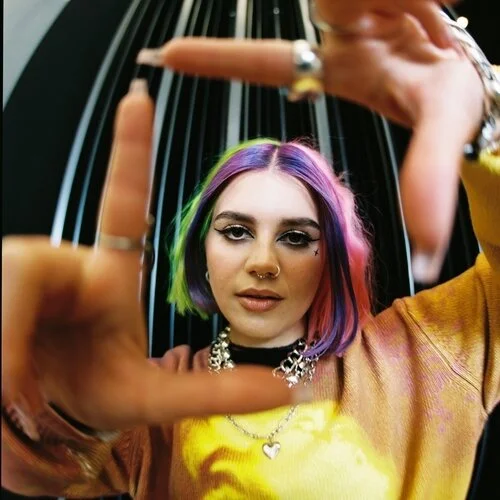
IN THIS PHOTO: beabadoobee

Vol. 4: Cologne: The Nearer the Fountain, More Pure the Stream Flows

__________

THIS is quite an exciting Playlist…

zzz.jpg

IN THIS PHOTO: Damon Albarn/PHOTO CREDIT: Linda Brownlee

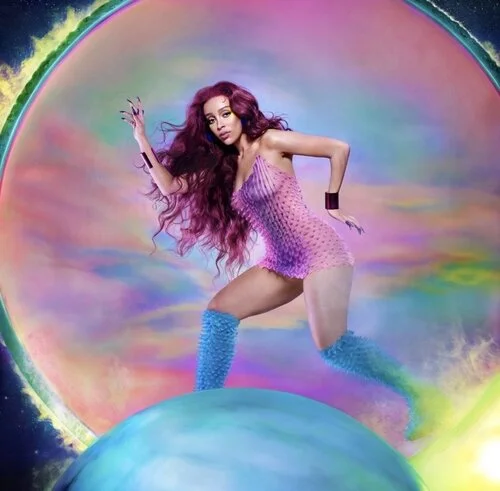
as there is new music from Damon Albarn. His track, The Nearer the Fountain, More Pure the Stream Flows, sits alongside fresh releases from beabadoobee, Doja Cat/The Weeknd, SAULT, Ed Sheeran, Jade Bird, Nao, John Grant, Low, WILLOW, and Snoh Aalegra. Throw into the mix some Joni Mitchell, Jazmine Sullivan, Lucy Dacus, Tyler, the Creator, FLETCHER, and Natasha Bedingfield, and it is a varied and strong selection. If you require some energy and boost to prepare you for the weekend, then this Playlist should do the trick! I think there is a lot of quality to be found. So, for that reason, put the songs on and I am sure that they will…

ssss.jpg

IN THIS PHOTO: Doja Cat

GET you motivated.   

ALL PHOTOS/IMAGES (unless credited otherwise): Artists

__________

ssss.jpg

 PHOTO CREDIT: Blackksocks

beabadoobee – Cologne

xxx.jpg

Damon Albarn - The Nearer the Fountain, More Pure the Stream Flows

hh.jpg

Doja Cat, The Weeknd – You Right

aaaa.jpg

SAULT – London Gangs

wwww.jpg

Ed Sheeran – Bad Habits

aaaa.jpg

Jade Bird - Now Is the Time

xxx.jpg

Nao - Messy Love

aaa.jpg

John Grant – Best in Me

eee.jpg

Low - Days Like These

xxx.jpg

WILLOW – Lipstick

wwqq.jpg

Snoh Aalegra – LOST YOU

aaa.jpg

PHOTO CREDIT: Myesha Evon Gardner

Jazmine Sullivan – Tragic

aaaa.jpg

Joni Mitchell – Urge for Going (With Strings) – Blue Sessions

nn.jpg

Aitch – Leaning Curve

xxx.jpg

Lucy Dacus - Cartwheel

aaa.jpg

Tyler, The Creator – RISE!

eeee.jpg

Unknown Mortal Orchestra - Weekend Run

wwww.jpg

FLETCHER – Healing

sss.jpg

Emma-Jean Thackray – Our People

sss.jpg

Saint Sister – Any Dreams?

aaaa.jpg

PHOTO CREDIT: Pooneh Ghana

Faye Webster - A Dream With a Baseball Player

asss.jpg

PHOTO CREDIT: Henry Redcliffe

LAUREL – Wild Side

PHOTO CREDIT: Jonas Myrin

Natasha Bedingfield – Lighthearted

rrtt.jpg

PHOTO CREDIT: Udoma Janssen

John Glacier – If Anything

ccc.jpg

PHOTO CREDIT: Jade Wilson

Wye Oak - Its Way With Me

aaaa.jpg

Cautious Clay – Shook

qqqq.jpg

Jordan Rakei – Family

aaa.jpg

Emily Burns – I’m So Happy

aaaaa.jpg

The Lathums – How Beautiful Life Can Be

lll.jpg

PHOTO CREDIT: Seren Carys

Lazarus Kane – Milk at My Door

xxx.jpg

Molly Payton – Honey

aaaa.jpg

Tenille Townes – Girl Who Didn’t Care

sss.jpg

Issey Cross - M40 (Love Me Now)

sss.jpg

Nite Jewel - This Time

xxx.jpg

PHOTO CREDIT: Monse Muro

Ada Lea – hurt

zzz.jpg

Lottery Winners – Favourite Flavour

qqq.jpg

Olivia Holt – Next

aaa.jpg

Devendra Banhart & Noah Georgeson - In a Cistern & Into Clouds

aaa.jpg

Colleen Green – I Wanna Be a Dog

aaaa.jpg

Natalie Shay – Medicine Boy

asasasas.jpg

The Vaccines - Back in Love

xxx.jpg

PHOTO CREDIT: Rory Barnes

swim school - anyway

aaa.jpg

Lucy Deakin - how to lose a guy

kk.jpg

PHOTO CREDIT: Matilda Hill-Jenkins

Ed Nash - Plumes

FEATURE: White Heat: Madonna’s True Blue at Thirty-Five

FEATURE:


White Heat

ww.jpg

IN THIS PHOTO: Madonna in 1986/PHOTO CREDIT: Herb Ritts 

Madonna’s True Blue at Thirty-Five

___________

I have written about Madonna’s True Blue…

qqq.jpg

before now. It is an album that turns thirty-five on 30th June. The third studio album from the emerging Queen of Pop, I think it is one of the most important albums of the 1980s. As I do with album anniversary features, I am going to include some information, a couple of reviews – in addition to my own thoughts and feelings regarding said album. Not to say that Madonna was enjoying modest success before 1986. That said, when True Blue was released, it took her career and popularity to new heights. Her eponymous 1983 debut was a magnificent and memorable one. 1984’s Like a Virgin portrayed a slightly bolder artist. With two years to wait until a third album arrived, I feel Madonna produced something more mature, varied and compelling. It was the first album of hers to really announce her presence. She would hit a new peak on 1989’s Like a Prayer. Today in Madonna History provide some details regarding True Blue:

“On June 30 1986, Madonna’s True Blue album was released by Sire Records. She worked with Stephen Bray and Patrick Leonard on the album while co-writing and co-producing all the songs.

True Blue was an immediate global success, reaching number one in then record-breaking 28 countries across the world, including Australia, Canada, France, Germany, the United Kingdom and the United States. It spent 34 consecutive weeks at the top of the European Top 100 Albums chart, longer than any other album in history. It became the world’s top-selling album of 1986, as well the biggest selling album of the 1980s by a woman and remains one of the best-selling albums of all time with sales of more than 25 million copies worldwide. All five singles released from the album reached the top five on theBillboard Hot 100, with Live tTell, Papa Don’t Preach, and Open Your Heart peaking at number one”.

Listening to the exceptional tracks and how Madonna’s voice had strengthened since Like a Virgin, it is no wonder the album reached number-one in twenty-eight countries across the world. It spent thirty-four consecutive weeks at the top of the European Top 100 Albums chart - longer than any other album in history. It became the world's top-selling album of 1986. It was also well as the best-selling album of the 1980s by a female artist! With sales of over twenty-five million copies worldwide, True Blue remains one of the best-selling albums of all time. I really love the five singles (Live to Tell, Papa Don't Preach, True Blue, Open Your Heart, and La Isla Bonita) – though one of my favourite Madonna tracks, White Heat, was not a single. Inspired by and dedicated to Madonna’s then-husband, Sean Penn, True Blue is a romantic, gorgeous, sophisticated album that has plenty of fun. I do feel it is the most assured album of her career to that point. One can read more about the album and its legacy. I feel one of the most notable associations with any Madonna album is her look and fashion choices. If her first two albums saw her adopt a more New York street chic look (beads, bangles and a cooler look), her shorter hair and slightly spiker and tougher look was sexier and bolder. It is clear that Madonna was growing in confidence and, as a co-writer on every True Blue track, she was developing as a songwriter. Co-producing the album too (she worked predominantly with Stephen Bray and Patrick Leonard), this was an artist putting her stamp on the music and showing what a talent she was.

aaaa.jpg

IN THIS PHOTO: Madonna in 1986/PHOTO CREDIT: Herb Ritts

I do feel as though True Blue is an album few talk about when they mention the Madonna classics! It is as important as any she ever released. I first heard the album when I was a child. It might have been a few years after it was released. I was aware of Madonna and was familiar with earlier hits such as Material Girl (from Like a Virgin). True Blue is an album that changed my perspective on Madonna and made me respect her even more. Not an artist to repeat herself, True Blue is a very different record to, say, her 1983 debut. Before getting to reviews, I might be repeating myself here by bringing in some Wikipedia information regarding True Blue’s impact. Not only is the music timeless and among the best of the 1980s; Madonna was becoming this style and music icon. A hugely influential and unique artist, even at that point, True Blue was a watershed moment. It is clear that True Blue has an immense legacy:

“Stephen Thomas Erlewine noted that "True Blue is the album where Madonna truly became 'Madonna the Superstar'—the endlessly ambitious, fearlessly provocative entertainer that knew how to outrage, spark debates, get good reviews—and make good music while she's at it." Mark Savage from BBC stated that True Blue is the album which cemented Madonna's reputation as the 'First Lady of Pop'. Sal Cinquemani from Slant Magazine said that with the album "Madonna made the transition from pop tart to consummate artist, joining the ranks of '80s icons like Michael Jackson and Prince."

Similarly, Robert C. Sickels, the author of 100 Entertainers Who Changed America: An Encyclopedia of Pop Culture Luminaries, wrote that the album "cemented Madonna's place as the most popular female musical star of the 1980s, shining alongside male pop icons like Prince and Michael Jackson." NME dubbed the three as a "holy trinity" of pop music of the decade.

Regarding Madonna's influence on the record industry and younger artists, Debbie Gibson's then manager Doug Breitbart commented: "Madonna has brought back a really strong, melodic component to pop music. She has a very youth-oriented, up, bubbly, fun sound." Slant Magazine listed the album at number 60 on their list of "The 100 Best Albums of the 1980s" and stated that "True Blue was the album on which it became readily apparent that Madonna was more than just a flash-in-the-pan pop star." They added, "It's when she began manipulating her image—and her audience—with a real sense of clarity and purpose and made sure she had quality songs to back up her calculation and world-dominating ambition."

The global success of True Blue marked the first time Madonna entering the Guinness Book of World Records in its 1988 edition, where she was dubbed as the most successful singer for 1986. The album also held the record for number one in the most countries, topping the album charts in a total of 28 countries around the world. True Blue was later included in the 1992 edition of Guinness Book of World Records as the best-selling album by a woman, with copies sold of more than 17 million until October 1990. True Blue was also the world's top-selling album of 1986 and the best-selling album of the 1980s by a female artist. With sales of more than 25 million copies worldwide, True Blue remains one of the best-selling albums of all time.

True Blue also made social impact through its music videos, as author John E. Semonche observed in his book Censoring Sex that Madonna pushed the envelope of what could be shown on television which resulted in increase of her popularity. The music video for "Open Your Heart" was a subject of analysis among scholars for its concept of the stereo-typical male gaze and voyeurism. She appeared as a stripper in the video, who escapes with a young boy from the strip parlour in the end. MTV had some reservations initially before airing the video, which was later resolved after a meeting with Warner Officials. Feminist writer Susan Bordo reacted negatively to the video, saying that the leering and pathetic men in the cubicles and Madonna's escape with the boy is "cynically and mechanically tacked on [as] a way of claiming trendy status for what is just cheesecake—or, perhaps, pornography". Author Donn Welton pointed out that the usual power relationship between the "voyeuristic male gaze and object" is destabilized by the portrayal of the male patrons of the peep show as leering and pathetic”.

I will come to some reviews too. I know Madonna fans around the globe will celebrate her third studio album on 30th June. It is such an amazing album that does not suffer like a lot of music did from 1986. That year gets a bad rap as being a bit bad or substandard. Maybe it was the use of drum machines or a slightly soulless sound. True Blue is a rich and eclectic album that can never grow weary or sound like a product of the time.

It is staggering to think that, for such a classic album, there have been mixed reviews. The review I am about to quote says True Blue is of its time. I disagree with that. It is not an archetypal 1986 album or one that has lost potency since its release. I wonder how many reviewers are giving the album a proper listen. Are they just focusing on the singles?! True Blue is an album where the non-singles are as strong as anything else. This is what SLANT wrote in their review:

“With five extremely varied hit singles, Madonna’s third album, True Blue, was a supreme archetype of ‘80s pop music. With songs like “Papa Don’t Preach,” Madonna made the transition from pop tart to consummate artist, joining the ranks of the decade’s icons like Michael Jackson and Prince. The songs were undeniably more mature than fare like “Material Girl,” dashing some critics’ assertions that she was just another flash in the pan. The striking “Live to Tell” was not only a brave first single, but a statement in and of itself. The ballad rewrote the rules of what a lead single could sound like, while at the same time, ironically, speaking volumes about Madonna’s unwavering drive for fame and mass-acceptance: “If I ran away, I’d never have the strength to go very far.” True Blue includes some of Madonna’s biggest, most influential hits (the robust “Open Your Heart” and the timeless “La Isla Bonita”), but it’s also home to some of her biggest clunkers. Like much of Like a Virgin, the title track is an authentic throwback to the girl-group-era pop that was an admitted influence on the singer, but the effect seems significantly more contrived on “Jimmy Jimmy” and the obligatory save-the-world anthem “Love Makes the World Go Round.” Time stamped with ‘80s-era keyboard and drum synths, True Blue, though chock-full of hits, is undeniably of its time”.

Although True Blue is not in my top-two Madonna albums (Like a Prayer and Ray of Light takes those honours), I think True Blue is her most important release. It took her from the potential Queen of Pop to being this worldwide star who was everywhere! MTV was fairly fresh at that point (it was launched in 1981); Madonna was a star of the channel, in addition to being this much-copied and adored icon. This review from AllMusic is a lot more positive and closer to getting to the truth of True Blue:

“True Blue is the album where Madonna truly became Madonna the Superstar -- the endlessly ambitious, fearlessly provocative entertainer who knew how to outrage, spark debates, get good reviews -- and make good music while she's at it. To complain that True Blue is calculated is to not get Madonna -- that's a large part of what she does, and she is exceptional at it, but she also makes fine music. What's brilliant about True Blue is that she does both here, using the music to hook in critics just as she's baiting a mass audience with such masterstrokes as "Papa Don't Preach," where she defiantly states she's keeping her baby. Her real trick here, however, is transcending her status as a dance-pop diva by consciously recalling classic girl group pop ("True Blue," "Jimmy Jimmy") to snag the critics, while deepening the dance grooves ("Open Your Heart," "Where's the Party"), touching on Latin rhythms ("La Isla Bonita"), making a plea for world peace ("Love Makes the World Go Round"), and delivering a tremendous ballad that rewrites the rules of adult contemporary crossover ("Live to Tell"). It's even harder to have the entire album play as an organic, cohesive work. Certainly, there's some calculation behind the entire thing, but what matters is the end result, one of the great dance-pop albums, a record that demonstrates Madonna's true skills as a songwriter, record-maker, provocateur, and entertainer through its wide reach, accomplishment, and sheer sense of fun”.

On its thirty-fifth anniversary (on 30th June), people will be re-spinning True Blue. Let’s hope that radio stations around the world mark the anniversary. Still one of the most successful albums ever released, True Blue is the sound of a then-twenty-seven-year-old producing strong, melodic Pop music. It is a mature album that also has playfulness and takes risks. In my opinion, there is no denying the fact that Madonna’s True Blue is…

A masterful album.

FEATURE: One for the Record Collection! Essential July Releases

FEATURE:


One for the Record Collection!

zzz.jpg

IN THIS PHOTO: Billie Eilish/PHOTO CREDIT: Kelia Anne MacCluskey 

Essential July Releases

___________

I say with all these features…

aaa.jpg

 IN THIS PHOTO: LUMP/PHOTO CREDIT: Steph Wilson

but, as I am writing this ahead of the start of the next month, things could change in regards albums being pushed back. Let’s hope that most of these July-due albums are on schedule. There are some great releases next month that you’ll want to check out and pre-order. Starting with 2nd July, there are a couple of albums that I am excited about. Bobby Gillespie and Jehnny Beth’s Utopian Ashes is out. Go and pre-order the album from two extraordinary artists. It can be a risk when two big artist join forces. Beth and Gillespie are very natural and connected. Their first album together is one that is shaping up to be really interesting:

“Primal Scream frontman Bobby Gillespie, alongside solo artist and Savages vocalist Jehnny Beth, presents this stunning debut solo project collection - exploring loss, miscommunication and emotional inarticulacy that a married couple experience as they realise that their relationship is breaking down. ‘Utopian Ashes’ draws on the tradition of country soul classics, such as Gram Parsons and Emmylou Harris’s ‘Grievous Angel’ and George Jones and Tammy Wynette’s ‘We Go Together’, to deal with the heavy realities of love turning sour.

It’s an album for people who have dealt with the inevitable sadness that comes with age and acknowledged the realities of life. There is no sweetening of the pill, but it does achieve what should be the goal of all good art: to make us feel less alone. And while it’s not autobiographical, it channels heartfelt truth from the songwriters’ own experiences. In addition to Bobby Gillespie and Jehnny Beth, the album features Johnny Hostile (bass) alongside Primal Scream trio Andrew Innes (guitar), Martin Duffy (piano) and Darrin Mooney (drums)”.

The third album from Laura Mvula, Pink Noise, is also out on 2nd July. She is one of the most talented artists around. You will definitely want to go and pre-order a copy of Pink Noise. From what we have heard from it so far, it is looking like it’ll be among the best albums of this year so far. If you need some more details about Pink Noise then Rough Trade have provided some guidance:

“Pink Noise explores a side of Laura previously uncharted. As triumphant as ever, the album is a battle cry and stark reminder of the sheer talent of the critically acclaimed artist. This is Laura in a new found light - still reflecting her distinctive signature sound but showing the progression of an artist who has come into her own. Contrasting confessional lyricism with compelling and infectious synth pop, Pink Noise feels completely and uniquely Laura. Her artistic prowess knows no limits - take the neo-soul meets art pop of ‘Remedy’ for example, or the darker, pulsating ‘Conditional’ that injects bombastic funk into indietronica. She feels rejuvenated too, especially on electro pop stunners ‘Magical’ and ‘Before The Dawn’. This is Laura Mvula at her most ambitious to date, leaving no stone left unturned in this cosmic new realm”.

The next release date I want to focus on is 16th July. Here, there are a couple of albums that I would recommend people check out. Barenaked Ladies’ Detour de Force is an album that you need to get. Arriving twenty-nine years from their debut album, Gordon, the Canadian band are offering a treat with Detour de Force. Go and pre-order it. We learn more about the album from this article:

“Multi-platinum band Barenaked Ladies have announced their 16th studio album Detour de Force will be released on CD and LP on July 16th. Produced by JUNO and Grammy award winner Eric Ratz and Mark Howard, the eagerly awaited album features 14 newly minted tracks including “Flip,” the buoyant and sonically adventurous debut single and BNL’s first new music in four years. A limited edition blue double vinyl featuring a bonus track will also be offered. Along with the announcement, the band has released a driving, and topical pop-rock gem titled “New Disaster.” The official music video for will be released on June 11th. “‘New Disaster’ is about the distraction of modern politics coupled with the pressures of the 24-hour news cycle,” Ed Robertson shares. “It seemed like the Nostradamus predictions of new disasters were getting worse and worse, even after we recorded the song.” Detour de Force is BNL at its most ambitious, accomplished, intricate, intentional — and, in some ways, circumstantial. Its gestation was long and exacerbated (as so many things have been) by the global pandemic. The good news is that it’s BNL’s most broad-reaching and diverse work to date — fusing the distinct writing voices of Robertson, Hearn and Creeggan into a cohesive work from the stand-out tracks “Flip,” “New Disaster,” and “Good Life,” to the uptempo fun of “Flat Earth,” the playful and country-flavored “Roll Out” to the gentle melodics of “Live Well,” “The National Park,” “God Forbid” and “Man Made Lake” to the sonic roller coaster of the album-closing “Internal Dynamo.” The depth goes beyond sonics throughout the album. Though there’s certainly the verbal playfulness and whimsy that’s part of BNL’s stock in trade, many of the songs have a reflective and philosophical, sometimes topical, underpinning that’s also long been part of the BNL makeup. “We’ve always liked that our band is very diverse in what we do,” says Robertson, “and on this record I really enjoyed the exploration. This record is a journey. Taking off one song would tip it in a way we didn’t feel was representative of the record we made. We wanted everything that’s here to be part of the record.” “This is some of our strongest material in 30 years, easily. I think it stands up there with our best albums. It hangs with ‘Gordon,’ or it hangs with ‘Maroon,'” Tyler Stewart offers”.

One album due on 16th July that I am especially looking forward to is Clairo’s second album, Sling. If you do not know much about her, then this segment from AllMusic should help out:

“Associated with soft, intimate vocals, daydreamy atmosphere, and rumination, Clairo is singer/songwriter Claire Cottrill. Alternating keyboards and guitar as accompaniment, and often coloring her recordings with samples and sound effects, the Boston native began sharing dozens of her stylized but low-key, melody-driven tunes to music-sharing sites as a young teen in 2013. She eventually had a minor viral hit with 2017's "Pretty Girl," and a bigger one with "Flaming Hot Cheetos," whose video garnered millions of views in 2018. Retaining intimacy while adopting a sleeker pop sound, Clairo co-produced her first album, 2019's Immunity, with Rostam, bringing in guests including drummer Danielle Haim and a children's chorus. An arena tour in support of Khalid accompanied the release and was followed by a headlining tour. "Blouse," the first single from Clairo's impending follow-up album, Sling, was released in June 2021.”.

Sling looks like it is a fantastic album that could exceed her exceptional debut. It is one that people should pre-order, as she is a sensational talent and singular songwriter:

“Second album from Clairo. Written and recorded in upstate New York at Allaire Studios, Sling was co-produced by Clairo and Golden Globe/Grammy Award-winning producer Jack Antonoff. Clairo has been praised for her diary-worthy stories earmarked by her devilishly sharp commentary and angelically intimate vocals. The singer, songwriter, multi-instrumentalist and producer has quietly threaded these stories into the fabric of popular culture since she first surfaced as a phenomenon out of her dorm bedroom”.

Another album that you need to pre-order is John Mayer’s Sob Rock. This is an album that I am keen to hear in full. Go and pre-order your copy. Earlier this month, NME wrote the following:

“Mayer has been anything but quiet since his last LP, however. The musician released his platinum-certified standalone single ‘New Light’ in 2018, followed by ‘I Guess I Just Feel Like’ and ‘Carry Me Away’ in 2019.

Mayer had teased that his new album was incoming last month. “I assure you it’ll all fire up very soon,” he said on his Instagram stories.

“I’ll put it like this: every day you have to go without my new music is another day I can work harder to make sure it gets heard by as many people as [sic] might enjoy it.

“I hope you’ll think it’s worth the wait.”

Back in March, Mayer confirmed that work on his next solo album had been completed, with a single being prepared for release. “My album is recorded, mixed and mastered,” he declared in a TikTok video. “I’ve just been chilling and sharing it with friends for the past couple of months”.

I have been a fan of John Mayer’s work for a long time. Again, judging by what we have heard of Sob Rock, it is going to be a strong album from him. Just over twenty years from his debut, Room for Squares, he remains hugely consistent. I would advise people to check out his upcoming eighth studio album.

Going ahead to albums due on 23rd July. Because there are a few big albums from 30th that I want to focus on, there is only the one from 23rd that I will highlight. Leon Bridges’ Gold-Diggers Sound is an album that everyone needs to pre-order:

“Gold-Diggers Sound is the new album from Leon Bridges. This R&B collection is birthed from extended late nights at the Los Angeles, California studio of the same name. The album celebrates Leon’s immersive experience of creating music in the same East Hollywood room where he lived, worked, and drank over the course of two years. The soulful collaboration between Leon as an artist and the space itself was so encompassing that he chose to name the album after the soon-to-be legendary complex”.

I am a big fan of Bridges. I think that he is one of these artists who will be an idol of the future. His voice is incredible - and he always delivers such compelling music. Gold-Diggers Sound is going to be another arresting and stunning album! Make sure you reserve some pennies and add this record to your collection. His previous album, Good Thing, was released in 2018. I reckon we will get an album as strong as that one with Gold-Diggers Sound.

I am featuring Joel Culpepper in a Spotlight feature very soon. His debut album, Sgt Culpepper, is out on 23rd July. Go and pre-order the album from the wonder from South East London:

“Hailing from south-east London, Joel Culpepper is an artist who’s been on Mr Bongo's radar for some time now. With a unique soulful voice and explosive showmanship, Joel’s star is rising. His sonic palette blends an array of genres and influences, that looks back to the greats whilst simultaneously absorbing London’s contemporary musical landscape.

Joel's debut album, Sgt Culpepper, is an incredible modern soul album and the product of a two-year undertaking which saw him attract an array of respected producers and musicians from the UK and beyond, a testament to the reputation he had already built as a dynamic songwriter and performer among his contemporaries. With executive production from Swindle (Ezra Collective, Mahalia), mastering from Joker (Stormzy, Kojey Radical) and with co-productions that include the likes of legendary pop producer Guy Chambers, Raf Rundell (The 2 Bears), Shawn Lee (Saint Etienne, Kelis), and Tom Misch, Sgt Culpepper is a demonstration of the power of community, mingling self-reflection with wider social commentary. The record is split into four chapters: The Battle, which includes previous singles ‘W.A.R’ and ‘Return’, The Surrender, embodied by recent single ‘Poetic Justice’; The Love and The Lesson.

Joel’s desire to forge a sense of collectivism was the lifeblood for Sgt Culpepper, resulting in the diverse roster of talent attached to the project. As well as the aforementioned names, the record includes production from the likes of British multi-instrumentalist Redinho, South London rapper and Roc Nation signee Kay Young, Linden Jay (Poppy Ajudha, Rejjie Snow), and Grammy-award winning songwriter Jimmy Hogarth. "I've been inspired by how the UK jazz and Grime scene supports each other, it’s similar to what happens in the states. Collectives like Odd Future, Aftermath and the earliest being Motown. It’s soul’s turn to band together here, likeminded independent musicians working to support the scene and each other as a whole.”

Through charismatic storytelling, personal epiphanies, and the formation of a new creative collective that underpins his craft, Sgt Culpepper ushers in a new era for Joel as an artist”.

There are few more anticipated albums this year than Billie Eilish’s Happier Than Ever. You definitely should pre-order this!  The follow-up from the remarkable 2019 debut, WHEN WE ALL FALL ASLEEP, WHERE DO WE GO?, Happier Than Ever is going to be another incredible album from the nineteen-year-old modern-day idol:

“Billie Eilish has fast become one of the biggest stars to emerge since the release of her debut single Ocean Eyes, and continues to shatter the ceiling of music with her genre-defying sound. Fast forward from her humble breakout in 2015, Billie’s album When We All Fall Asleep Where Do We Go? debuted at No. 1 on the Billboard 200 in the U.S as well as 17 additional countries around the world upon release, and was the most streamed album of 2019. When We All Fall Asleep Where Do We Go? was written, produced and recorded entirely by Billie Eilish and brother Finneas in their childhood home of Los Angeles. Billie Eilish went on to make history as the youngest artist to receive nominations and win in all the major categories, at the 62nd Grammy Awards, receiving an award for Best New Artist, Album of the Year, Record of the Year, Song of the Year, and Best Pop Vocal Album. BillieEilish is also the youngest artist to write and record an official James Bond theme song, No Time To Die Most recently, Billie Eilish was nominated for four additional awards at the 63rd Annual Grammy Awards in 2021, and took home both Record of the Year for Everything I wanted, and Best Song Written For Visual Media for No Time To Die”.

Another second album that I am excited about comes from LUMP. A stunning duo who make such wonderful music, I can highlight recommend Animal. Go and pre-order your copy. This is what we can expect from LUMP:

“Lump is the product of Brit Award-winning Laura Marling and Mercury Prize-winning Mike Lindsay. Lump's stunning and essential second album Animal is released on Chrysalis Records and Partisan Records and is a vivid and psychedelic masterpiece.

Animal was a word Laura Marling threw into a lyric simply to meet a rhythm. But it seemed to capture the mood of the new record, and of Lump as a whole. “There’s a little bit of a theme of hedonism on the album, of desires running wild,” she says. “And also it fed into the idea we had from the start of thinking of Lump as a kind of representation of instincts, and the world turned upside down.” It is something childlike and grotesque and filled with possibility, they say. “We created Lump as a sort of persona and an idea and a creature,” says Mike Lindsay. “Through Lump we find our inner animal, and through that animal we travel into a parallel universe”.

Marling and Lindsay work so well together. I think that we will see several more albums from the mighty LUMP. From the description and details above, Animal is an album that you will not want to miss out on! Laura Marling especially is such a consistent and staggering talent.

Another huge album out on 30th July is Prince’s Welcome 2 America. Even though the legend has been gone for five years, he has this jam-packed vault of unreleased music that his estate can offer the world. We are all very lucky in that sense. Here are some details about his upcoming album:

“Recorded in the spring of 2010 and then mysteriously abandoned by Prince before its release, the statement album Welcome 2 America documents Prince’s concerns, hopes, and visions for a shifting society, presciently foreshadowing an era of political division, disinformation, and a renewed fight for racial justice. The album features some of Prince’s only studio collaborations with the bassist Tal Wilkenfeld, drummer Chris Coleman, and engineer Jason Agel, with additional contributions from New Power Generation singers Shelby J, Liv Warfield, and Elisa Fiorillo and keyboardist Morris Hayes, who Prince also recruited to co-produce the album.

LP++ - The Deluxe Edition of Welcome 2 America combines the 2LP and CD versions of the album with a never before released Blu-Ray of Prince’s full April 28, 2011 performance at the Forum, part of the Welcome 2 America Tour’s historic 21 Nite Stand in Los Angeles. The show is presented in stereo, 5.1 surround and Dolby Atmos, and includes 24 tracks from across Prince’s career, from his biggest hits to fan favorites to ten rare covers. In addition, the deluxe edition features a 32 page 12x12 book, exclusive poster and an embossed vellum envelope of limited edition memorabilia all housed in a luxe, gold embossed package. Experienced as a complete package, the Deluxe Edition provides an immersive view of Prince’s creative genius during his spontaneous, energetic, and thought-provoking Welcome 2 America era”.

There are two further 30th July-due albums that I want to point your way. Torres’ Thirstier is shaping up to a typically remarkable album. Arriving only a year after Silver Tongue, her latest album is one that you should definitely check out and pre-order:

“Torres’ fifth album Thirstier pumps the miraculous into the mundane. It is in open revolt against the gray drag of time, a searing and life-affirming eruption of an album that wonders what could happen if we found a way to make our fantasies inexhaustible. What if we got whatever we wanted and still wanted it, endlessly, with no threat of boredom and no danger of depletion? What could we become if we let ourselves grow incandescent with eternally renewing desire?

Recorded in the fall of 2020 at Middle Farm Studios in Devon, UK, Thirstier marks a turn towards a bigger, more bombastic sound for Torres. The anxious hush that fell over much of Scott’s previous music gets turned inside-out in songs tailored for post-plague celebration. Scott co-produced the album with Rob Ellis and Peter Miles, drawing on her experience self-producing the acclaimed 2020 LP Silver Tongue to push her music onto an even broader scale. Guitar-driven walls of sound, reminiscent of producer Butch Vig’s work with Garbage and Nirvana, surge and dissipate like surf in high winds, carrying Scott’s commanding voice to the fore. 

From the sparkling country romp of “Don’t Go Puttin Wishes in My Head” to the sour grunge bite of “Keep the Devil Out” and the unabashed, overflowing devotion of the album’s title track, Thirstier clasps together love songs from all angles. Romantic love, platonic love, familial love, self-love, and freeing spiritual love all commingle, all feeding one another and vaulting toward the horizon”.

I am going to finish by recommending the new album from Yola. Stand for Myself is a treat you need to pre-order. Such a strong and immense talent, prepare to blown away by an artist who will be around for years and will inspire so many others:  

“Stand for Myself is the anthemic new album from Yola. Produced by Dan Auerbach, the record is a timeless masterpiece marking an idiosyncratic sonic shift, which will defy all expectation. A sophisticated and diverse sonic mix of symphonic soul and classic pop, tracing an expansive musical thread to Yola’s most eclectic musical inspirations. Yola’s inimitable vocals share nuanced stories of allyship, black feminine strength through vulnerability, collective awakening and loving connection from the sexual to the social. Yola declares that it is only when we stand for ourselves, and acknowledge our complexity, that we can be truly alive. For Yola, living is more than merely surviving”.

Those are the album out next month that people should get involved with. There are others that might interest you; I was listing the ones of particular note. It is definitely a month that offers up treats and big-hitters. There might be other albums announced for July in the meantime (I know that Lana Del Rey’s Blue Bannisters is due soon, though I cannot find details of where one can order it), so do keep your eyes peeled. I shall leave it there. If you are saving up and planning on doing some album shopping next month then I think the albums above…

ARE a good place to start.

FEATURE: There Goes a Tenner (or Two!): Kate Bush and Self-Investment

FEATURE:


There Goes a Tenner (or Two!)

cccc.png

IN THIS PHOTO: Kate Bush on the set of There Goes a Tenner (from 1982’s The Dreaming)

Kate Bush and Self-Investment

___________

MAYBE it is common for most artists…

aaa.png

but it is amazing to think how much of their own money goes into what they do. When we think of mainstream acts and those legendary artists, there is an assumption that the labels pay for everything. When I discovered Kate Bush’s music as a child, that was my assumption. I did not know that artists do put their own money into their work! I have been thinking of this, as I was re-watching an interview Bush gave in 1980 (around the release of Neve for Ever). In the Profiles in Rock interview, she was asked about material things and what she would love to own. Typical of Bush, she was not interested in frivolity and excess. She was asked if there was anything spiritual that she wanted. That was a more complex question. When she was asked about what it was like to have money, Bush explained that the best thing was that she ploughed it back into her own career. There was genuine passion in Bush’s voice. Some artists might begrudge the fact that they would have to spend any of their earnings on new kit. I will talk about The Tour of Life soon It seems to me that, since the earliest days, Kate Bush has spent a lot of her own money making her work as good as it could be. Of course, EMI paid for most things.

By 1980’s Never for Ever, her music was getting more ambitious. The Fairlight CMI was introduced into her music. I feel technology as a whole became more important. At the turn of the 1980s, music was changing, and one could hear a shift – in terms of the sounds and role technology was playing. There is a feeling, to some, that Bush became famous and she kept her money aside - and that it was EMI that made sure she had everything she wanted. Like all labels and artists, there would have been a plan and budget. Bush became hungrier and more curious as a musician and producer. When she started producing her own music, the relative confines of the studio compelled her to think bigger. I love that interview from Profiles in Rock, as Bush seemed genuinely relaxed and philosophical. Many artists might be uncomfortable discussing their own money and materialism. Bush was raised in a comfortable setting and she came from a middle-class family. Some may observe that she never had to struggle financially. It isn’t the case that Bush was pampered or spoilt in any way. There would have definitely been caps and reigns to what could be spent and what she could have. Many artists of her generation would have spent their money on cars, houses and needless luxury. When it came to Bush, she was so detached from fame and that notion of being a ‘Rock star’. Although she did receive gifts through her career – she was gifted a £7,000 Steinway piano by EMI following Wuthering Heights' success and was flown to Paris for dinner (in March 1978) -, she used a lot of her earnings to improve and expand her music. That is an admirable quality!

Hearing and seeing how much of herself she put into the albums, one could forgive Bush for splashing out and spending a lot of her money on a big house. To be fair, at a point in her career, she was earning enough so that she could live in a very nice house and finance bigger ambitions regarding her music. She has lived in some very nice houses and is not struggling for a bob or two. She deserves that and has worked very hard to earn that sort of money, That was not the case when she was starting out and building her name. In fact, I get the impression that Bush would have constantly had a pressure on her shoulders. As an artist with no comparisons and a unique sound, perhaps she was not the most conventional and commercial. EMI had faith in her though, as I will explore in a feature soon, her chart positions were not always great. Her album sales were generally good, though I sense there was always this feeling that there was this fear of failing or not selling as many singles/albums as she would have liked. Think about The Dreaming and how the Fairlight CMI enhanced that. She built her own studio by her family home by the time of 1985’s Hounds of Love. Rather than this being a Pop/Rock star move, it was to allow her somewhere safe and homely to work at her best. Listen to that album and one can definitely feel the difference (from working at various studios around London).

I guess that people could argue that, if an artist has these big aims and plans, then they should kick in a bit of their own money – as it would be a financial risk for a label to invest so heavily! I would say that many artists, given that ultimatum/dilemma, would scale things back. Look at The Tour of Life in 1979. This was Bush’s first tour undertaking. To promote The Kick Inside and Lionheart in 1978, she travelled around the world and appeared on T.V. She had done nothing like The Tour of Life! This was a cross-continental set of dates whose production values and design were far removed from one would expect. Rather than a simple set or something generic and cold, Bush and her tea crated these incredible sets. This gave something back to the audiences and ensured that they were entranced and treated to an unforgettable live experience! The Tour of Life was more like a theatrical production that a gig. From the different scenes/designs to the incorporation of mime, magic, and readings during costume changes, it was a costly and time-consuming thing to pull off. Despite the success and adulation The Tour of Life accrued, it was not a financial success. Such was the cost of mounting the show and travelling, maybe that was a reason as to why Bush did not repeat the feat until 2014 (then, she kept things static at Hammersmith so she did not have to lug a huge production around the world).

The fact was Bush was so committed to her concept with The Tour of Life that she invested a lot of her own money. Prog expanded on this in a feature from last year about The Tour of Life :

“EMI were unsure what the show would involve, so the costs were reportedly split between the label and Bush herself. In return, they got an artist who threw everything into her biggest endeavour so far.

“She was very determined about how her music was presented and performed – that was pretty obvious from her first album,” says Southall. “So no one saw any reason to step in and stop it. The rock’n’roll story was that you put singles out, you put albums out, you went on Top Of The Pops, you toured. But she wasn’t prepared to do the conventional thing”.

There are so many cases of Bush spending her money in various areas in order to improve her art and aid her career. In this interesting article from last year, Penny Brazier looked at Bush and how she never compromised. Many would have looked down their noses at her. Being a woman in the 1970s (when she started out) would have been challenging regarding getting acclaim and respect. She was spending her own money really early on to ensure that, when she did release her debut album, she stood out and was prepared:

“I can’t imagine many teenagers would spend their record company advance on interpretive dance lessons, but Kate was wise beyond her years. She invested her EMI money in her studies with Bowie’s former dance teacher Lindsay Kemp and classes with mime artist Adam Darius.

This is such a great lesson for anyone who works for themselves in the creative industries. Ringfence some of the money you make to put back into learning — whether that’s your own industry or something complementary. You will only keep growing”.

Even though that advance was from EMI, it was Bush’s money - and there was no stipulation to say that she had to spend that money on anything specific. Rather than blow it on comfort and material emptiness, she was sowing seeds and planting trees. This wise investment, as articles like this highlight, was money well spent! Look at the videos and one is instantly gripped. Wuthering Heights’ video, to me, really flies because of the choreography and Bush’s dance training. That video would have helped boost sales figures for the single which, in turn, boosted album sales and gained her new fans. Although some costs (such as travel expenditure for The Tour of Life) wouldn’t have been too appealing to her, Bush’s attitude to money was very different to many of her peers. Post-Hounds of Love, maybe she was indulging more in living a more comfortable life. I feel that her commitment to perusing excellence and using a lot of her own money to strengthen her music is hugely admirable. This noble and commendable quality is one that has influenced a lot of artists through the years. Natural talent is the main reason why Kate Bush is a success and has had a fantastic career for over forty years. I do think that things could have been very different if her Bush had not invested her own money and pegged back her ambitions and curiosity. Maybe The Tour of Life would have been less layered. She may not have invested in technology or built her own studio. All these factors would have been detrimental. Rather than spend money on things that would have created ego rather than great music, Kate Bush wisely used her money to…

INVEST in herself.

FEATURE: Make Some Noise: The Lockdown Playlist: Forty Years of the Beastie Boys

FEATURE:


Make Some Noise

aaa.jpg

IN THIS PHOTO: Beastie Boys in 2009; from left to right: Ad-Rock, MCA and Mike D

The Lockdown Playlist: Forty Years of the Beastie Boys

___________

I am not sure of the exact day…

sss.jpg

 PHOTO CREDIT: Fryderyk Gabowicz/Getty Images

but, as the Beastie Boys formed in July 1981 (they originally consisted of Michael Diamond, John Berry, Kate Schellenbach and Adam Yauch; Adam Horovitz joined in 1982), I wanted to mark forty years of the Hip-Hop icons with a playlist. I know I have given the trio a spotlighting more than once. As it is a big year for them, I want to come back and explore their incredible catalogue (I also recommend people buy the Beastie Boys Book). Before I put in a Lockdown Playlist, it is worth exploring the biography of the New York-formed legends. I lean on AllMusic a lot. They have provided a comprehensive story of an act who are an incredible success story:

“Beastie Boys crashed into the mainstream in the mid-'80s rapping about "The New Style" and yelling "(You Gotta) Fight for Your Right (To Party!)," their brash hedonism striking a chord with hip-hop fans and suburban metalheads alike. This loud, obnoxious blend of hard rock and rap, showcased on their debut Licensed to Ill, wound up having a lasting impact, but the trio of Adam Yauch, Adam Horovitz, and Mike Diamond were young punks and restless artists. They soon abandoned pounding, aggressive rap-rock for the dense sampladelic vistas of Paul's Boutique, their 1989 collaboration with the Dust Brothers. Paul's Boutique stalled the trio's commercial momentum but it became an album revered by hip-hop aficionados, pointing the way to the genre-bending, self-referential pop culture of '90s pop. Beastie Boys played a vital role in that decade, starting with 1992's punk-rap-jazz fusion Check Your Head, which gave them another Top Ten album and established the group as alternative rock icons. Ill Communication consolidated the group's comeback in 1994, thanks in no small part to the hit "Sabotage," accompanied by a campily retro video directed by Spike Jonze.

Music videos, many directed by Yauch under his Nathanial Hornblower pseudonym, were a crucial component of Beastie Boys' popularity, as was their Grand Royal empire -- it spanned a record label and a much-revered but short-lived magazine -- and their activism, a social engagement spearheaded by Yauch co-organizing the Tibetan Freedom Concerts in the late '90s. After the 1998 chart-topper Hello Nasty, Beastie Boys' productivity slowed in the 2000s as the trio settled into an eccentric middle age, balancing the old-school salute To the 5 Boroughs with the soul-jazz instrumental 2007 LP The Mix-Up. As the trio worked on their eighth studio album, Yauch was diagnosed with cancer. The group finished and released Hot Sauce Committee, Pt. 2 in May 2011; he was dead a year later. Horowitz and Diamond stopped working as Beastie Boys, although they reconvened to tell their story through Beastie Boys Book in 2018, which was followed by the Jonze-directed documentary Beastie Boys Story in 2020.

All three members of the Beastie Boys -- Mike D (b. Mike Diamond, November 20, 1966), MCA (b. Adam Yauch, August 5, 1965; d. May 4, 2012), and Ad-Rock (born Adam Horovitz, October 31, 1967) -- came from middle-class Jewish families in New York and had become involved in the city's punk underground when they were teenagers in the early '80s. Diamond and Yauch formed the Beastie Boys with drummer Kate Schellenbach and guitarist John Berry in 1981, and the group began playing underground clubs around New York. The following year, the Beasties released the 7" EP Pollywog Stew on the indie label Rat Cage to little attention. That same year, the band met Horovitz, who had formed the hardcore group the Young and the Useless. By early 1983, Schellenbach and Berry had left the group -- they would later join Luscious Jackson and Thwig, respectively -- and Horovitz had joined the Beasties. The revamped group released the rap record "Cookie Puss" as a 12" single later in 1983. Based on a prank phone call the group made to Carvel Ice Cream, the single became an underground hit in New York. By early 1984, however, they had abandoned punk and turned their attention to rap.

In 1984, the Beasties joined forces with producer Rick Rubin, a heavy metal and hip-hop fan who had then-recently founded Def Jam Records with fellow New York University student Russell Simmons. Def Jam officially signed the Beastie Boys in 1985, and that year they had a hit single from the soundtrack to Krush Groove with "She's on It," a rap track that sampled AC/DC's "Back in Black" and suggested the approach of the group's forthcoming debut album. The Beasties received their first significant national exposure later in 1985, when they opened for Madonna on her Virgin tour. The Beasties taunted the audience with profanity and were generally poorly received. One other major tour, as the openers for Run-D.M.C.'s ill-fated Raisin' Hell trek, followed before Licensed to Ill was released late in 1986. An amalgam of street beats, metal riffs, b-boy jokes, and satire, Licensed to Ill was interpreted as a mindless, obnoxious party record by many critics and conservative action groups. That didn't stop the album from becoming the fastest-selling debut in Columbia Records' history, however, as it sold over 750,000 copies in its first six weeks.

Much of the album's success was due to "Fight for Your Right (To Party)," which became a massive crossover single. In fact, Licensed to Ill became the biggest-selling rap album of the '80s, which generated much criticism from certain hip-hop fans who believed that the Beasties were merely cultural pirates. On the other side of the coin, the group was being attacked from various factions on both the left and the right, who claimed the Beasties' lyrics were violent and sexist and that their concerts -- which featured female audience members dancing in go-go cages and a giant inflatable penis, similar to what the Stones used in their mid-'70s concerts -- caused even more outrage. Throughout their 1987 tour, they were plagued with arrests and lawsuits, and were accused of inciting crime.

While much of the Beasties' exaggeratedly obnoxious behavior started out as a joke, it became a self-parody by the end of 1987, so it wasn't a surprise that the group decided to revamp its sound and image during the next two years. During 1988, the Beasties became involved in a bitter lawsuit with Def Jam and Rick Rubin, who claimed he was responsible for their success and threatened to release outtakes as their second album. The Beasties finally broke away by the end of the year and relocated to California, where they signed with Capitol. While in California, they met the production team the Dust Brothers, and they convinced the duo to use their prospective debut album as the basis for the Beasties' second album, Paul's Boutique. Densely layered with interweaving samples and pop culture references, the retro-funk-psychedelia of Paul's Boutique was entirely different than Licensed to Ill, and many observers weren't quite sure what to make of it. Several publications gave it rave reviews, but when it failed to produce a single bigger than the number 36 "Hey Ladies," it was quickly forgotten about.

Despite its poor commercial performance, Paul's Boutique gained a cult following, and its cut-and-paste sample techniques would later be hailed as visionary, especially after the Dust Brothers altered the approach for Beck's acclaimed 1996 album, Odelay. Still, the record was declared a disaster in the early '90s, but that didn't prevent the Beasties from building their own studio and founding their own record label, Grand Royal, for their next record, Check Your Head. Alternating between old-school hip-hop, raw amateur-ish funk, and hardcore punk, Check Your Head was less accomplished than Paul's Boutique, but equally diverse. Furthermore, the burgeoning cult around the Beasties made the album a surprise Top Ten hit upon its spring 1992 release. "Jimmy James," "Pass the Mic," and "So Whatcha Want" were bigger hits on college and alternative rock radio than they were on rap radio, and the group suddenly became hip again.

Early in 1994, they collected their early punk recordings on the compilation Some Old Bullshit, which was followed in June by their fourth album, Ill Communication. Essentially an extension of Check Your Head, the record debuted at number one upon its release, and the singles "Sabotage" and "Sure Shot" helped send it to double-platinum status. During the summer of 1994, they co-headlined the fourth Lollapalooza festival with the Smashing Pumpkins. That same year, Grand Royal became a full-fledged record label as it released Luscious Jackson's acclaimed debut album, Natural Ingredients. The Beasties' Grand Royal magazine was also launched that year.

Over the next few years, the Beasties remained quiet as they concentrated on political causes and the machinations of their record label. In 1996, they released the hardcore EP Aglio e Olio and the instrumental soul-jazz and funk collection The In Sound from Way Out! Also that year, Adam Yauch organized a two-day festival to raise awareness about the plight of Tibet, and the festival went on to become an annual event. The Beastie Boys' long-awaited fifth LP, Hello Nasty, finally appeared during the summer of 1998 and became their third chart-topping album. A longer wait preceded release of their next record, To the 5 Boroughs, which appeared in mid-2004. In 2005, Capitol issued Solid Gold Hits, a 15-track survey of the Beasties' lengthy career. One year later, the band released a concert film titled Awesome: I Fuckin' Shot That!, which had been pieced together from footage shot by 50 DV and Hi-8 cameras that had been distributed to fans. The DVD version appeared in July of that year.

An instrumental album, The Mix-Up, continued the band's prolific activity in 2007 and garnered a Grammy Award the following year. The Beastie Boys returned to rap with Hot Sauce Committee, Pt. 1, parts of which were previewed during the band's performance at the 2009 Bonnaroo Festival, but the album ended up unreleased in the wake of Yauch's announcement that he had cancer. He underwent successful surgery and radiation treatment, and the band announced late in 2010 that Hot Sauce Committee, Pt. 2 (including virtually all the material intended for the first volume) would be released in 2011. They made good on their promise; the album appeared in May, and was positively received both critically and commercially. One year later, however, in May of 2012, Yauch finally succumbed to cancer”.

To celebrate forty years of the iconic Beastie Boys, I have enjoyed dipping back into their catalogue and compiling the very best cuts from…

NEW York’s finest.  

FEATURE: Hardly Run of the Mill: The Incredible 50th Anniversary Release of George Harrison’s All Things Must Pass

FEATURE:


Hardly Run of the Mill

ddd.jpg

The Incredible 50th Anniversary Release of George Harrison’s All Things Must Pass

___________

I am a little late to this news…

zzz.jpg

but George Harrison’s incredible third solo studio album, All Things Must Pass, has been given a 50th anniversary release (there are seven different physical editions). It was released in 1970. Because of the pandemic and various factors, it has been held back until this year. I am not someone who covers all big anniversary releases. There are some albums that definitely warrant that attention. Harrison’s masterpiece is a six-sided vinyl release packed with tracks! It was hugely acclaimed upon its release and it is seen as one of the best albums of the 1970s. There have been various remastered, and bits and pieces brought out through the years regarding All Things Must Pass. This bumper release is a real treat for fans of the album. Although it is quite a big and expensive anniversary release, owning an expanded celebration of an all-time classic is worth it! I will bring in a couple of reviews for the classic album – to give a sense of why it is so important and revered. Before that, Super Deluxe Edition give us the details regarding the superb 50th anniversary edition of All Things Must Pass:

“George Harrison‘s 1970 album All Things Must Pass will be reissued in August for a belated 50th anniversary edition and will be available in SEVEN different physical editions including an ‘Uber Deluxe Edition’ which comes in wooden crate and contains everything…and more!

Paul Hicks – the mixer/engineer who has worked on the Lennon reissues – has created a new mix of All Things Must Pass, overseen by George’s son Dhani, who is executive producer on this project. There is a new stereo mix, a surround mix and a Dolby Atmos mix of the album. The new stereo mix replaces the original album mix on every format. Speaking of which here are the formats:

Uber Deluxe Edition: 8LP+5CD+blu-ray. Comes in a wooden crate with books, figurines, Klaus Voorman illustration and more.

ttt.jpg

Super Deluxe Edition (CD): 5CD+blu-ray. Original album, plus 3CDs of demos and outtakes, plus a blu-ray with the surround mixes

Super Deluxe Edition (vinyl): 8LP. Original album plus 5LPs of outtakes/demos

Deluxe Edition (vinyl): 5LP. Original album plus 2LPs of outtakes (no demos)

Deluxe Edition (CD): 3CDs. Original album plus an extra discs of outtakes. Comes in a little box.

Standard Edition (vinyl): 3LP set featuring the new mix of the album. This is available on black vinyl and green splatter coloured vinyl

Standard Edition (CD): 2CD set featuring new mix of the album. Gatefold card sleeve presentation.

The Uber Deluxe Edition comes in a wooden crate and includes figurines of Harrison and those gnomes (click image to enlarge)

The Uber Deluxe and both 8LP vinyl and 5CD+blu-ray Super Deluxe Editions contain 70 audio tracks. There are 23 tracks on the original album, so that leaves 47 demo recordings, session outtakes and studio jams, of which 42 are previously unreleased. On the CD edition the three bonus discs are split into two discs of demos (‘day 1’ and ‘day 2’) and a third disc of outtakes.

George Harrison / All Things Must Pass 50th anniversary super deluxe edition 5CD+blu-ray5CD+blu-ray super deluxe edition (click image to enlarge)

The 5CD+blu-ray super deluxe edition comes in a slipcase with a 56-page scrapbook curated by Olivia Harrison, with unseen imagery and memorabilia from the era, handwritten lyrics, diary entries, studio notes, tape box images, a comprehensive track-by-track and more. It also includes a replica of the original album poster (all formats have the poster).

The 8LP super deluxe has all the tracks from the 5CD set and a 60-page scrapbook with the same contents as above.

The 5LP deluxe edition is the remixed album with two bonus LPs which are the Session Outtakes & Jams. In other words, CD 5 from the super deluxe, or LPs 7 & 8 from the 8LP vinyl super deluxe.

All Things Must Pass 8LP vinyl super deluxe edition (click image to enlarge)

The ‘uber deluxe’ has an “elaborate and expanded” version of the scrapbook and includes a second book (44 pages) chronicling the making of All Things Must Pass through extensive archival interviews with notes. This also comes with a wooden bookmark made from a felled Oak tree (Quercus Robur) in George’s Friar Park, the 1/6 scale replica figurines of Harrison and the gnomes featured on the album cover, a limited edition illustration by musician and artist Klaus Voorman, a copy of Paramahansa Yogananda’s “Light from the Great Ones”, Rudraksha beads contained in individual custom-made boxes and the poster.

All Things Must Pass 50th anniversary edition will be released on 6 August 2021. The SDE widgets below cover all seven physical editions except for the ‘Uber Deluxe’ which is available via the official George Harrison store in the UK or the official store in the USA”.

I would encourage anyone who is in a position to do so to investigate the anniversary editions. It is a superb original album that has been accompanied by so many extras! I am a big fan of the solo albums from The Beatles. Whilst my favourites are from Paul McCartney, one cannot ignore the genius and importance of All Things Must Pass. It still sounds so vital, beautiful and spellbinding after so much time. Harrison was definitely confident through All Things Must Pass. Although it is such an expansive album, I don’t think there is any filler. In their review of the album, this is what AllMusic wrote:

“Without a doubt, George Harrison's first solo recording, originally issued as a triple album, is his best. Drawing on his backlog of unused compositions from the late Beatles era, Harrison crafted material that managed the rare feat of conveying spiritual mysticism without sacrificing his gifts for melody and grand, sweeping arrangements. Enhanced by Phil Spector's lush orchestral production and Harrison's own superb slide guitar, nearly every song is excellent: "Awaiting on You All," "Beware of Darkness," the Dylan collaboration "I'd Have You Anytime," "Isn't It a Pity," and the hit singles "My Sweet Lord" and "What Is Life" are just a few of the highlights. A very moving work, with a slight flaw: the jams that comprise the final third of the album are somewhat dispensable, and have probably only been played once or twice by most of the listeners who own this record. Those same jams, however, played by Eric Clapton, Carl Radle, Bobby Whitlock, and Jim Gordon (all of whom had just come off of touring as part of Delaney & Bonnie's band), proved to be of immense musical importance, precipitating the formation of Derek & the Dominos. Thus, they weren't a total dead end, and may actually be much more to the liking of the latter band's fans”.

Before I wrap up, there is a fascinating article from Best Classic Bands that gives us some background about the album. It is a very long article - though I felt it was worth dropping some in:

“Many arrangements embraced Spector’s “Wall of Sound” ethos, combining multiple drummers, massed guitars and keyboards, and backing choruses into sonic juggernauts, heard through canyons of echo. At its most unbridled, the approach overwhelms with blunt force, most glaringly on “Wah Wah,” a blitzkrieg of jangling guitars, thundering drums, blaring horns, and chanted vocal choruses that surely pinned the needles into the red on the recording console. The final mix is so instrumentally dense as to verge on distortion; Harrison himself was reportedly conflicted in his initial reactions to that track, the first recorded for the project.

Elsewhere, the symphonic weight attainable through force of numbers is managed more effectively. “What is Life” harnesses its orchestral firepower more elegantly, pulling back on the verses to let its lead vocals breathe before adding horn and choral fanfares to punch up its joyous choruses. “Awaiting on You All” shares the same balance of uptempo energy while delving more directly into its religious subtext.

Harrison’s forthright meditations include three portentous songs, risky in the context of a secular rock record, that he manages to pull off with subdued arrangements. “Isn’t it a Pity,” a stately inventory of human failure, is the album’s longest vocal track at over seven minutes, reprised in a second version later in the set.

Restraint likewise frames “Beware of Darkness,” a minor-keyed warning against lost dreams and encroaching demons.

Beyond the lamentation of “Isn’t It a Pity” and the threat of “Beware of Darkness” lies the reflective acceptance of the title track, the least doctrinaire and most durable of the three. Had Harrison not chosen to stretch beyond two LPs of songs to add a third disc of instrumental jams, “All Things Must Pass” would have gained added impact as the album’s final statement.

Joining the Maharishi, Phil Spector and the ur-Americana of The Band and the Bramletts as influences here is no less an icon than Bob Dylan, whom Harrison had bonded with during a visit to Woodstock. The collaboration between the future Wilburys yielded two co-writes that represent the two most straightforward love songs on All Things Must Pass, the album opener, “I’d Have You Anytime,” and “If Not For You,” which Dylan himself would also record for his New Morning album.

George Harrison’s overall success with All Things Must Pass surely drew from confidence gained in producing two earlier instrumental albums, while his eagerness to collaborate outside the Beatles’ rarefied fellowship translated to the scale and party atmosphere of the project’s sessions. That he recognized its importance as his first solo statement as singer, songwriter and producer prompted his involvement in a remastered and expanded version completed a year before his death. In that context, the instrumental jams that comprise the original third LP are worthwhile mementos of those fateful sessions, yet it’s fair to admit that at the time of its original release only a minority of fans spent as much time spinning those loose workouts as the more coherent songs on the first two discs”.

I am saving and hope to get one of the 50th anniversary editions/packages of All Things Must Pass. It is a tremendous album released at a time when The Beatles split, and the four members were going their own way. Harrison proved his songwriting brilliance on 1969’s Abbey Road (Something, Here Comes the Sun). He continued that with aplomb on All Things Must Pass. Not confined to one format and edition, we get a treat in the form of seven physical releases of…

A masterpiece from 1970.

FEATURE: Emerald Gems: Kate Bush and Her Irish Roots

FEATURE:


Emerald Gems

zzz.jpg

IMAGE CREDIT: Caroline Andrieu 

Kate Bush and Her Irish Roots

___________

I wrote a feature…

h.jpg

 IN THIS PHOTO: Kate Bush made her first appearance on Irish television on The Late Late Show in 1978

last year when I discussed the Irish influence in Kate Bush’s work. I am going to do one or two features regarding the impact of Bush’s music on the L.G.B.T.Q.I.A.+ community through the decades as it is Pride Month. As I have been thinking about her family and their importance regarding the music and a constant sense of support, it takes me to Ireland. Her mother, Hannah, was born in Waterford and helped introduce her daughter to Irish music and culture. I will sprinkle in a few songs through this feature where the spirit and influence or Ireland are clear. Though Bush travelled to Ireland to record with musicians there for Hounds of Love, I don’t think there is any footage from that time. Of course, she spent quite a bit of time in Ireland and had that familial connection. One other reason why I want to revisit her Irish roots is because, when people describe Bush, they think of her as English. Whilst there is an obvious Englishness to Bush, I think the Irish influence is equally powerful. I want to bring in an article that highlights Bush’s Irish connection and whether, truly, she is English or Irish:

“Bush acknowledged her Irish roots by integrating Irish traditional musicians and instruments into ALL her 1980's albums. Her 1980 hit 'Army Dreamers' gives the first strong hint of her Irish roots. Her lilting vocal is accompanied by her brother Paddy's mandolin playing and Stuart Elliot's bodhrán thumps. 'Violin' from the same Never for Ever album features legendary ex-Bothy Band fiddler Kevin Burke as the titular violinist.

The list of famous Irish traditional musicians that play on her subsequent albums is like a who's who of Irish folk music. The contributions of Donal Lunny (Bothy Band, Planxty, Moving Hearts), Liam O'Flynn (Planxty), John Sheahan (The Dubliners), Seán Keane (The Chieftains), Davy Spillane (Moving Hearts) and very characteristic arrangements by Riverdance composer Bill Whelan connect her to almost all the major Irish folk bands of the 60's, 70's and 80's and the Riverdance boom of the 90’s.

It's hard to tell from the sleeve notes how much of the Irish-style music is arranged/composed by Kate or Paddy Bush and how much is Whelan’s, however one thing that's unmistakable is the instrumentation and melodic content are like an angular, experimental precursor to Riverdance.

Besides the tracks featuring Irish musicians it's novel to hear Bush occasionally bring out a lilting almost-Irish accent on tracks like 'Suspended in Gaffa', 'Army Dreamers', ‘The Red Shoes’ and 'The Big Sky' (where she sings some 'diddely dyes' for good measure). 'The Big Sky' also represents a direct lyrical reference to Ireland 'That cloud, that cloud looks like Ireland'

An Irish lilt is also very discernible in the spoken-word segment on 'The Jig of Life' written and narrated by Bush's brother John Carder Bush. Though he was born in England, there's an unmistakably Irish cadence to his narration.

For reasons that perhaps only Bush herself can explain 'The Sensual World' was the last original studio album by Bush to feature any Irish trad musicians.

Her final nod to her Irish heritage thus far is her recording of 'Mná na hÉireann' at the invitation of Donal Lunny for his Common Ground project in 1996. Learned phonetically due to her lack of Gaelic and coloured by a lush orchestration, this is not a recording for sean-nós purists. Nevertheless the impassioned beauty of Bush's voice on this recording is undeniable”.

I am fascinated by the Irish roots that run through Bush’s music. I think there has been the odd podcast/video dissecting that side of her career. I don’t think we can ever see Bush as purely an ‘English’ artist. Though she was born in Kent, there is something hugely powerful and important regarding her Irish side. It is not like she has subtlety and occasionally sprinkled the country into her songs! From Never for Ever’s Army Dreamers to Hounds of Love’s Jig of Life and The Sensual World’s title track, The Emerald Isle is a hugely source of wonder and creativity. I found an article from the Irish Examiner. Del Palmer (who has worked with Bush since before her debut album in 1978) discussed working in Ireland for Hounds of Love:

“The making of the record was a plunge off the deep end, too – one that saw Bush travel to Ireland to reconnect with her Celtic heritage. The journey would take her from U2’s Windmill Lane stomping the ground to her roots in Waterford and finally the furthest reaches of the Dingle Peninsula.

There, between the grey sky, the choppy sea and the sheep hugging the hills she must have felt she’d arrived at the edge of the world (not by coincidence, surely, the first track of the side-b suite, ‘The Ninth Wave’, is titled ‘And Dream Of Sheep’).

“There were no roads - just tracks,” recalls Del Palmer, Bush’s musical foil across the span of her career and her partner for some 15 years.

You couldn’t make a phone call on a Sunday because the phone-master was away. They used to have wind-up telephones. It was very different.

Bush’s family hail from around Dungarvan and Palmer’s from Cork (he has since become an Irish citizen). With Bush at the peak of her fame, their odyssey into the far south-west of Ireland was, Palmer recalls, enormously liberating.

“We loved it. One night we had to sleep in the car. We couldn’t make a phone call we needed to because it was a Sunday. And it was no problem. It was a Volkswagen Golf — nothing fancy. I can’t think of many other countries where you’d be fine about sleeping in a car.”

By the time of Hounds of Love, Bush had come to a critical juncture. Her previous album, The Dreaming, had not been well reviewed (it was regarded as too experimental).

So a lot was riding on the new LP. Adding to that, both she and Palmer were determined to connect with their Celtic heritage.

“We were recording in Windmill Lane. Dónal Lunny was involved, John Sheahan [The Dubliners], Paddy Glackin [The Bothy Band]. Kate wanted to get back to her roots. On one occasion they had done a piece for Hounds Of Love called ‘The Jig of Life’.

They were all around her and played the piece and she was reduced to jelly. It just blew her away, she got so emotional. Irish music is for her and her family a very intense relationship.

There was also a trip to Waterford to meet Bush’s family.

“We went to look them up and they seemed to come out of the woodwork there were so many. ‘This is cousin Mick, this is cousin Johnny…’ There were thousands of them. They were so friendly”.

I will move on from familial elements and connections in Kate Bush’s music. I am particularly interested in how various nations and cultures have inspired her. I think that Irish instruments and sonics have not been hugely integrated into mainstream music. Of course, we have celebrated Irish musicians; though how many non-Irish acts take guidance from the country? With Kate Bush, she proudly wore her D.N.A. and love of Ireland into her music. Some of my favourite songs from Bush incorporate Irish tones and elements – The Sensual World (song) is heightened and elevated to glorious heights because of the importance of Milly Bloom’s soliloquy from James Joyce’s Ulysses and the use of musicians Davy Spillane, John Sheahan and Dónal Lunny. I will leave things there. In terms of nationality-specific features, I have covered Australia and Japan. From growing up in a household when Irish voices and sounds would have ricocheted from the walls, through to Bush travelling to Ireland and working with musicians there, one cannot deny the prominence and place the nation holds in the Kate Bush story. The Irish elements of Bush’s music contains…

SO much richness and beauty.

FEATURE: Spotlight: Lava La Rue

FEATURE:


Spotlight

aaa.jpg

PHOTO CREDIT: Benjamin Askinas for Wonderland.  

Lava La Rue

___________

AS she has been nominated…

wqq.jpg

as this year’s AIM Awards, I wanted to take some time to spotlight Lava La Rue (Ava Laurel). She is a visual artist, rapper and musician from London, founder of NiNE8 collective. I will work my way up to a review for La Rue’s E.P., BUTTER-FLY, as it is one of the finest of this year. I want to source a series of interviews, so that we can get to know the remarkable Lava La Rue better. In this DAZED interview from 2018, we discover more about La Rue’s flat (at the time) In London - in addition to what it was like growing up:

“Lava La Rue’s flat is a creative space. Paintings, torn-out magazine pages, a photo of Grace Jones, and a couple of spray-painted skateboard decks hang from the wall, while some friends hang out on the sofa. The flat is in Ladbroke Grove, an area of west London whose ultra-wealthy residents often obscure the fact that the borough has one of the starkest equality gaps in the UK. It’s a council flat, a rare bit of social housing remaining in a city that’s sold most of its stock to private landlords, and it’s somewhere the 20-year-old artist can express herself and create her art on her own terms. Lava has been here for the past two years, when she left the foster care system that she’d been in since she was 14.

“I was hopping around, in and out of foster care, until I was 18,” says Lava La Rue – an anagram of her own name, Ava Laurel – while sitting outside her window on a blisteringly hot summer’s day. “I had my dreams set: ‘I wanna do this, I wanna be doing music, I want my own place”.

Laurel grew up locally, raised by her grandmother. When she was 16 years old and still in foster care, she started making music, initially being in a band before getting involved in the spoken word scene. At college, she met a group of like-minded individuals, who not only helped shape the music she was making herself – a lo-fi style of hip hop/neo-soul defined by her hushed raps, diary entry lyrics, and dusty boom-bap beats – but also led to the formation of NINE8, a 15-strong collective of musicians, producers, artists, and designers doing things less do-it-yourself, more do-it-together.

What was it like growing up around west London?

Lava La Rue: It’s inner city, so you have huge affluence and then severe poverty across the road. It’s different to certain areas, where it’s just poverty. Growing up, I’d go to school and there’d be the kid of this (important and wealthy) person, and then kids I knew from the block, all in one classroom. But that’s London, ain’t it?

Can you tell me what foster care was like for you?

Lava La Rue: I was quite lucky. I didn’t go into care until I was in my mid-teens, which is a totally, totally different thing to being in and out of care from the age of five or six. Your experience of identity and attachment is totally different. As a teenager, I really learned a lot about self-preservation, being my own person, and not having dependencies. People learn self-love and self-care at different ages, but I really had to have my own back from a young age.

I grew up with my grandma – she was actually a carer as well, so I had loads of foster brothers growing up. A lot of people aren’t educated about the system at all, but I knew all the ins and outs. I had my dreams set: ‘I wanna do this, I wanna be doing music, I want my own place.’ That was a different experience to someone who doesn’t know. My grandmother was one of the first wave of Jamaicans to come over here, so even though I’m third generation, I have the experience of being raised by the first generation and the whole culture around that.

What do you take your inspiration from?

Lava La Rue: Where I live and the people around me. They all live really interesting lives. As cliché as it is, I’m definitely a Londoner. The shit I feel, literally walking on roads every day, that’s the stuff I generally write about. I take huge inspiration from incredible women – I love Erykah Badu, I love Neneh Cherry, women who exist and say their perspective and are unapologetic of who they are. That stuff is what keeps me going, you know what I mean?

And my collective, man! Mac Wetha is literally one to watch, because I think there’s always an appreciation for producers, but he, in himself, is a star. And obviously Biig Piig is incredible”.

As it is Pride Month, I am spending time with some terrific and hugely promising L.G.B.T.Q.I.A.+ artists who are primed for big things. That is true of Lava La Rue. NME caught up with one of the U.K.’s best talents. Among other things, sexuality, gender identity and the L.G.B.T.Q.I.A.+ experience is discussed:

“Instead of feeling like they were “being mushy” or “giving in” to writing songs about love, they came to appreciate the gravity of a queer person making music – in part for the benefit of the LGBTQIA+ community. “In the past I was using female pronouns for my lovers and people were reaching out to me and being like, ‘You have no idea how much it meant to me to just listen to a bop and it so casually be about a lesbian relationship, but not actually for the whole thing be about that.’”

“It was made in a transitional period for me. I’d fallen head over heels in love and I felt like I had cut off all the negative things in my life. And I was surrounded by really nourishing and caring people. Before that I was very much in hustle mode; trying to make sure my music could cover my living. I’d fucked off to LA [in late 2019] to write this project and suddenly I was like, ‘Do you know what? I’ve got good people around me. I’m OK. I’ve got a great team. I need to not look left, not look right and just focus on the music.’ Suddenly loads of waves of emotions hit me and I realised I started feeling things I’d been putting off for years. When you’re in hustle mode you don’t really allow yourself to process things because you’re just so busy trying to survive. So in that time period I was really emotional and I was like, ‘All right, well let me put this all into the music.’”

zzz.jpg

And what about the growing pains of identity and coming out, if at all? “To be honest I always knew that I was genderqueer and didn’t quite see myself on a specific side of the spectrum from a very young age, but those words weren’t actually in circulation to use. It was just seen as, ‘Oh yeah, little Ava, she’s a bit of a tomboy’. When I did start doing more research, I was like, ‘OK, there’s actually a word for this.’

“A misconception about being non-binary is people think it’s almost like a third gender – like a gender in a middle – where it’s actually a whole spectrum. I think my idols exuded that same energy but I those words really weren’t in circulation. Prince was probably non-binary. I realise now there’s maybe a bit more terminology for exactly how I feel, but even within that I still feel it’s a very complex thing.”

But the conversation isn’t moving fast enough, Laurel adds. “It’s very easy to feel like there’s been progression when you have your own bubble of people or if you have your own echo chamber online. Yet there’s also a whole other world of people where it’s totally not OK, especially in other countries. I have a lot of people close to me who come from countries where you’re absolutely at risk by being openly queer – let’s focus on making those people safe. They need the bare necessities and they’re still not there. To me, that’s not progression. We should be way beyond that by now”.

Before getting to the BUTTER-FLY E.P., I found an interview that La Rue gave to The Forty-Five at the start of this year. I would urge people to read the whole thing. The section about La Rue’s NiNE8 collective caught my eye:

“Unsurprisingly for someone so community-minded, accountability is huge for Lava. With NiNE8 she’s run songwriting workshops for local children, and for the release of ‘G.O.Y.D.’ she donated proceeds from the song to ‘For Our Sibs’, a Black Trans Exclusive collective centring Black Trans, Non-Binary, Gender Non-Conforming, and Intersex folk. It’s not just about giving back to society either, it’s about leading by example.

“The main message of NiNE8 is a collective vibe and solidarity across races and genders and identity and class. [As a solo artist] it’s about something as simple as just trying to teach people self-love, and you know the best way to do that is to put that in your own life. Because there are so many artists that talk about that stuff and just don’t follow it.”

It’s difficult to think of many other musicians who could enthuse about self-esteem, solidarity, and personal growth without coming over preachy or insincere. This ability to connect with audiences on a human level is precisely the reason we need an artist like Lava La Rue in 2021, a year that’s already shaping up to be every bit as challenging as its predecessor.

Ask Lava about her hopes for the year, however, and you’ll find her eyes already trained far further into the distance. “I’m always thinking five years ahead,” she asserts, deadly serious. “I already know the project I want to do at the end of next year and the year after that, and the project I want to release when I’m 25.

“I don’t feel like I’ve remotely peaked or shown half of my capabilities. I’ve only just gotten into the groove. There’s gonna be so much more to come”.

aaa.jpg

The last interview that I am including is from Vogue. Not only is La Rue a talented visual artist and rapper. She is a fashion icon who has a unique blend and set of influences. This is explained more in the interview from earlier in the year:

“Lava La Rue has become a household name in recent years. Many will know the 22-year-old as the singer-songwriter and rapper behind the critically acclaimed 2019 EP Stitches, and as a founding member of NiNE8 – a diverse London collective, home to rappers, producers and familiar names such as Biig Piig. Others will recognise her as a regular at fashion shows and the face of multiple campaigns, or as a vocal and active member of the Black and LGBTQIA+ community, championing Black stories and queer love in the mainstream through music and art. This summer, she released a fan-led music video exploring the “summer of love” in lockdown for her single “G.O.Y.D” (Girl Of Your Dreams) with proceeds going towards the Black Trans collective FOR OUR SIBS.

Fortunately, the pandemic has in no way diminished La Rue’s creative prowess. On 19 February, she releases her second EP Butter-Fly alongside self-made artwork and a music video for the bluesy opening track “Magpie”. Inspired by Björk, Prince and the sounds of her collective, it consists of five personal queer love stories envisioned as “individual movies with the same characters but different settings and genres”. After “Magpie” comes “Angel” – a poppy fusion of West London and American West Coast sounds followed by the ethereal love ballad “Goofy Hearts”, the trippy R&B track “G.O.Y.D”, and “Lift You Up” featuring Karma Kid – a sugary finale to a kaleidoscopic EP”.

How do you DIY your clothes?

I swap unworn clothes in charity shops or revamp them with new materials. I’d make clothes before a night out – ripping, sticking, pinning something up quickly. People liked what I made and that’s how my brand Lavaland came about. When I’m making clothes, I think about functionality and past subcultures that inspire me. I’ll see a sick photo of Joan Jett in a crazy pinned T-shirt or jeans, then go to Portobello Market and make my own version. With Lavaland and NiNE8 Garms, I buy second-hand clothes by the kilo at warehouses. For the boutique collection we did for London Men’s Fashion Week, we found loads of Korean army pants, fixed all the zips and added all the additional textures.

What is your best style or DIY tip?

Don't be afraid to DIY expensive clothes because no one else will be wearing that anyway.

What do you wear on date night?

Pre-Covid, I’d be in a full leather Matrix outfit. It’s casual, sexy and not too crazy. I wore that on my first date with my partner.

Who, in your opinion, is the greatest fashion icon?

They’re all around my house! Posters of Grace Jones, Prince, Joan Jett. I feel like 2021 needs authentic rockstars with their energy”.

eee.jpg

 PHOTO CREDIT: Jack Cullis

I am going to end with a review from NME of BUTTER-FLY. It is an exceptional E.P. from a multidisciplinary artist on the rise. This is what they had to say:

“Take ‘G.O.Y.D’, a lush slow jam about a long-distance relationship. After a torrent of gushy declarations rapped by Laurel (“Call me Molly ’cause I been rolling like a heartthrob”), Clairo picks up the receiver to play the other longing half. It’s a welcome dabble into romanticism, and a jump from the socio-political stories that coloured early work. But, as ever, it comes with a wider purpose. They recently told NME that they were inspired to explore and vocalise these emotions so because “queer love is inherently political” and that “it’s still extremely underrepresented across all genres.”

Elsewhere, Laurel turns up the wonk for EP highlight ‘Angel’ – featuring new-gen rockstar Deb Never – a sparkling tune sprung by hypnotic synths and taut basslines. “Pupils dilating / Want you up and down”, Laurel purrs before switching to breathy R&B singing at the song’s hook. On ‘Magpie’, Laurel instead exposes the risks of love and how they fall in and out too easily. Opening up has its downfalls, after all.

Dreamy trip-hop track ‘Lift You Up’ returns to Laurel’s longtime manta of self-love and acceptance: “This world is for me it’s my Lava town”, they spit in spoken-word over swelling beats, while Karma Kid’s gorgeous falsetto strengthens the track’s hopeful message. ‘Butter-Fly’ revels tonally and thematically in Laurel’s first flush of love, and being its voyager is a rewarding experience. Their next journey will no doubt be just as thrilling”.

Go and follow Lava La Rue if you are uninitiated and unfamiliar. Her music is stunning and points towards a very bright and successful future. I will leave things there. Go and spend some time studying and familiarising yourself with…

THE amazing Lava La Rue.

_____________

Follow Lava La Rue

zzz.jpg

FEATURE: The King of Queen: A Towering Voice: Remembering Freddie Mercury

FEATURE:


The King of Queen

ss.jpg

IN THIS PHOTO: Freddie Mercury performing with Queen at their incredible Live Aid set at Wembley in 1985/PHOTO CREDIT: Getty Images

A Towering Voice: Remembering Freddie Mercury

___________

I will publish other features…

ssss.jpg

 IN THIS PHOTO: Queen/PHOTO CREDIT: Michael Putland/Getty Images

closer to the thirtieth anniversary of his death. It is hard to believe that, on 24th November, it is thirty years since the world lost the peerless Freddie Mercury. The reason I wanted to mention him today is that I have been listening to a lot to his music - more than I otherwise would. One of my favourite Queen albums, A Kind of Magic, turned thirty-five on 2nd June. Founded in 1970, Queen recorded fourteen albums whilst Mercury was alive – they have released posthumous records. Now, Adam Lambert heads the band. Whilst he is an exceptional singer, there is something about Mercury that will never been matched. It is heartbreaking that, on 30th May, 1991, Mercury recorded the final music video with Queen, These Are the Days of Our Lives. He was so strong and committed to the very end. I want to bring in news of a Freddie Mercury graphic novel that is coming soon. Before that, here is some biography  regarding the great man:

“The life of Frederick Bulsara began on the East African island of Zanzibar on September 5, 1946. 25 years later in London under the name of Freddie Mercury he was fronting the now legendary rock group named Queen.

The immortal operatically styled single ‘Bohemian Rhapsody’ was released in 1975 and proceeded to the top of the UK charts for 9 weeks. A song that was nearly never released due to its length and unusual style but which Freddie insisted would be played became the instantly recognisable hit. By this time Freddie’s unique talents were becoming clear, a voice with a remarkable range and a stage presence that gave Queen its colourful, unpredictable and flamboyant personality.

Queen was always indisputably run as a democratic organisation. All four members are each responsible for having penned number one singles for the band. This massive writing strength combined with spectacular lights, the faultless sound, a sprinkling of theatricality and Freddie’s balletic movements made up Queen on stage and on film.

Their phenomenal success continued around the globe throughout the 80’s highlighted in 1985 by their show-stealing and unforgettable performance on stage at Live Aid.

His first major collaboration outside Queen was with Dave Clark for the recording of London’s West End musical Time, in 1986. This was followed in 1987 with the realisation of one of Freddie’s long-term dreams; to record with the world revered opera diva Montserrat Caballé. The LP’s title song, ‘Barcelona’ went on to become an anthem for Señora Caballé’s home city and the theme for the Olympics in 1992.

Freddie returned to the studios to record ‘Innuendo’ with Queen in 1990.

On November 24th, 1991, Freddie’s struggle against AIDS ended when he passed away just over 24 hours after he had publicly announced he had the disease. Musicians and fans from all over the world paid their highest respects as the passing of rock’s most innovative, flamboyant ambassador signified the end of an era at the Freddie Mercury Tribute Concert at Wembley Stadium on April 20, 1992 which gave birth to the Mercury Phoenix Trust, the AIDS charity set up in Freddie’s memory by the remaining members of Queen and Freddie’s Executor, Jim Beach.

xxxx.jpg

IN THIS PHOTO: Freddie Mercury with Montserrat Caballé (they released the album, Barcelona, in 1988.. The L.P.’s title song went on to become an anthem for Caballé’s home city and the theme for the Olympics in 1992) 

Despite twenty years having passed since Freddie lost his life to HIV complications, he remains in the minds of millions throughout the world as one of the greatest artists we will ever see. In September 2010 (coincidentally, around Freddie's 64th birthday) a poll carried out among rock fans saw him named the Greatest Rock Legend Of All Time, beating Elvis Presley to claim the title, and ahead of David Bowie, Jon Bon Jovi, Jimi Hendrix and Ozzy Osbourne.

Taking it one stage further, Freddie’s 65th birthday, September 5, 2011 was celebrated with a major party in London in aid of The Mercury Phoenix Trust, hosted by Queen’s Brian May and Roger Taylor.

While most publicly recognised as the front man to one of the most progressive rock bands of the 70’s, Freddie defied the stereotype. A taste for venturing into new territories – a trait that was to have a marked influence on the direction Queen would take – took Freddie to explore his interests in a wide spectrum of the arts, particularly in the areas of ballet, opera and theatre, even taking a participating role: in October1977 the sell-out audience of a charity gala at the London Coliseum organised by Royal Ballet Principal dance Wayne Eagling received the surprise of an unannounced appearance by a silver-sequinned leotard-clad Freddie performing an intricate routine choreographed for him by Eagling. In 1987 he made a one-night appearance in Dave Clarke’s Time at the Dominion Theatre, although legend has it Freddie occasionally turned up at the theatre to support friend Clarke’s musical, one night selling ice-creams in the stalls! Freddie would have loved the fact that The Dominion now plays host to the band’s phenomenally successful musical We Will Rock You which has now held the Dominion stage nearly seven years longer than Time’s two year run”.

I know there will be a mix of celebration and sadness when we mark thirty years since Mercury’s death. Of course, it is tragic that he is no longer with us, though he left a huge legacy. To me, he is one of the greatest voices ever. The sheer power and panache he injected into every song is amazing! His emotional range was phenomenal. Listening to interviews he conducted, he was quite shy - though he was also very funny and captivating. He had this aura and gravitas that marked him out, not only as one of the greatest frontmen ever; he was also a hugely arresting and fascinating person. Some dislike Queen because of the pomp and overlook the incredible songwriting of Mercury. Aside from writing classics like Bohemian Rhapsody, he penned so many of Queen’s biggest songs, including Bicycle Race, Killer Queen and Crazy Little Thing Called Love. I can just about recall (being eight) when the news of Mercury’s death broke. I was aware of Queen’s music and was sad. In the years since, I have come to appreciate him, not only as the leader of Queen, but as a solo artist too. He was such an amazing force of nature. As a live performer, he was one of the most magnetic. One only need to think about Live Aid in 1985 and that iconic set! I don’t think we will see another artist with the same incredible voice and gift as Freddie Mercury. His legend will never die.

Before ending this feature, there is something exciting happening. Later in the year, a graphic novel is being released in November. As we learn from the official Freddie Mercury site, it something every fan will want to pre-order:

“Z2 COMICS ANNOUNCES THE FIRST-EVER OFFICIAL REDDIE MERCURY GRAPHIC NOVEL–LOVER OF LIFE, SINGER OF SONGS

The Legendary Rock Icon to be Honored In An All-New Book Inspired By His Music, Life, and Words

Click here to pre-order now in Softback, Hardback and Limited Edition Deluxe Hardback, which includes exclusive prints and a coloured version of 'Never Boring'.

LOS ANGELES, CA – Z2 Comics is proud to partner with Universal Music Group and Mercury Songs Ltd for Freddie Mercury: Lover of Life, Singer of Songs, the first-ever graphic novel paying tribute to one of the greatest figures the music world has ever known.

For the first time in comics format, Freddie Mercury: Lover of Life, Singer of Songs will be a journey through Freddie’s life; from his childhood in Zanzibar and India, through his formative years in England, to become the rock star, known and loved by millions around the globe. The story is told in his own words, with each chapter giving a glimpse into the many facets of his life.

Written by Tres Dean (All Time Low Presents: Young Renegades), the graphic novel will give a true insight into the many experiences that helped shape the young Farrokh Bulsara and his compelling existence, both on and off stage—that was the life of Freddie Mercury, Lover of Life, Singer of Songs.

ddd.jpg

Following up on the tremendous success of the Oscar-winning 2018 film Bohemian Rhapsody, and inspired by the book Freddie Mercury: A Life, In His Own Words,  compiled by Greg Brooks and Simon Lupton, this upcoming graphic novel will be another essential addition to the bookshelf or coffee table of fans new and old, sumptuously illustrated by Kyla Smith, Robin Richardson, Safiya Zerrougui, Tammy Wang, and Amy Liu, with accompanying cover painting by David Mack.

Freddie Mercury: Lover of Life, Singer of Songs is available for preorder in standard 136-page softcover ($19.99) and hardcover ($29.99) editions, released in finer comic shops, book and record stores in November. Available exclusively through Z2 in a special hardcover deluxe edition for $99.99 complete with an exclusive vinyl LP, as well as limited edition prints by Sarah Jones, Kyla Smith, and Sanya Anwar. Reserve your copy today!”.

I know we have the Bohemian Rhapsody film that came out in 2018. I watched it and really enjoyed it. We got to see more of Freddie Mercury beyond what he was like in the studio and on stage. I wonder whether there will be a documentary or any other release ahead of the thirtieth anniversary of his death. In any case, I wanted to put out a feature prior to then to remember one of my favourite artists ever. The fact that we are still talking about Mercury and playing his music so long after he has passed shows what an impact he has had. He truly was…

ONE of the very greatest.

FEATURE: Vinyl Corner: Troye Sivan - Bloom

FEATURE:


Vinyl Corner

cccc.jpg

Troye Sivan - Bloom

___________

FOR Pride Month…

rrr.jpg

I want to spotlight some especially great albums from L.G.B.T.Q.I.A.+ artists in Vinyl Corner. I wanted to spend some time with Troye Sivan’s remarkable second album, Bloom. Following from the acclaimed Blue Neighbourhood of 2015, his 2018 follow-up is even finer I love that debut album, though I feel Bloom is a much grander and more nuanced album. I think the Australian singer-songwriter is one of the most underrated artists around. Go and get a copy of Bloom, as it is an extraordinary album that everyone needs to listen to. Rather than jump straight to reviews, there is an interview that The Guardian conducted in 2019 that gives us more context regarding Sivan and his path to Bloom:

“Sivan has been preparing to be looked at since before puberty. As of last year, he is a pop star – not quite a household name, but big enough to command an invitation from Taylor Swift to duet on her recent US tour, and a guest spot from old friend Ariana Grande on his 2018 album Bloom. Critics compared Bloom’s euphoric synth-pop to cult Swedish pop star Robyn (the ecstatic My My My!) and 4AD goths This Mortal Coil (The Good Side, a spectral break-up ballad). He’s also an actor, recently lauded for his supporting role in the gay conversion therapy drama Boy Erased, with Nicole Kidman and Lucas Hedges.

But in 2002, Sivan was a seven-year-old boy living in Perth, western Australia, obsessed with his parents’ tapes of classic concerts. He would watch videos of Madonna and Michael Jackson, in awe at the way they moved and commanded a crowd. “I used to get nervous for them,” Sivan says, wiping off his face paint after the photoshoot. “Oh God, what if they mess up? What if they forget a lyric? I would imagine what it would be like.”

He asked for singing lessons, but was taught choral music, which bored him. “I wanted to sing Hero by Enrique Iglesias – but I didn’t have the guts to ask if I could learn a pop song. So I saw it as practising to get better.” He was rehearsing for the moment when he could become a pop star himself.

Sivan’s family had no music industry connections. “I used to Google ‘how to be a singer’,” he says, rolling his eyes at his naivety. He was an early adopter of social networking. When, aged 13, he uploaded a video of himself singing fellow teen Declan Galbraith’s Tell Me Why (“do the dolphins cry?”) to YouTube, it got 1,000 views – an audience far bigger than he’d sung to as a young chorister touring synagogues. Here was his in.

He started selling CDs of his angelic covers through a DIY website (the Dare To Dream EP, he recounts, cringing at the memory), sending his supportive but baffled mother, Laurelle, to the post office laden with packages. He accrued enough followers to attract an agent, who got him small roles in X-Men Origins: Wolverine and a South African film franchise with John Cleese. Enough, too, for creepy blokes to pose as managers and attempt to solicit him for sex. (He told his parents immediately.)

Then his voice broke. “I was really, really self-conscious because I’d built so much of my sense of self on my singing,” Sivan says. “I would open my mouth and have no idea what was going to come out. It was terrifying and broke my confidence a bit.”

Sivan came out to his family when he was 15, and to his YouTube fans three years later. By then he’d watched enough coming-out videos himself to know how helpful they could be. Plus, now he was signed, he needed to live without fear of being outed. “I wanted to be able to go to a gay club and not be worried that someone’s going to take a photo,” he says. “I wanted to tweet about boys.” On 7 August 2013, he told his (then) one million subscribers, with preternatural calm: “This could kind of change everything for me, but it shouldn’t have to.” He hadn’t warned his label; they emailed congratulations.

He launched his debut album with a series of interwoven videos in which two male lovers confront homophobic parents, repression and suicide – an unusually uncompromising approach to the pop mainstream. “This is something we simply aren’t seeing from other gay pop stars,” wrote the US culture publication Fuse.

Is mainstream acceptance the endgame for LGBTQ pop, or should queerness challenge the status quo? “I’m actually a little bit scared to have the conversation,” Sivan says. “Because I feel there’s some underlying homophobia in the general public, and within our own community.” There are two dominant stereotypes, he adds: gay men can be feminine, or “the hunky hot, masculine gay guy. As soon as you enter this grey area – and this is not just for gay men, but for all queer people – that’s where people are having a harder time understanding.”

Recently, Sivan’s peers have been debating the backlash that followed the announcement that Ariana Grande, a straight artist, would headline Manchester Pride this August. Olly Alexander of Years & Years endorsed Grande’s love for the LGBTQ community, and the city. “But – can’t stress this enough – if more people listened to and supported LGBT+ artists, they’d get more slots,” he tweeted. Sivan demurs on whether the issue lies with a homophobic industry, or with fans who simply aren’t stumping up. “We don’t have a queer Ariana, you know? If we did, I’m sure that person would be headlining. Until that day, I think we should expect that straight people are going to headline these things.”

As things are, Sivan says, he might not be in the music industry for ever. “I have a plan in my head that I’m going to grow up and have kids and a pretty normal adulthood,” he says, getting up to leave for Shabbat dinner with his mother and his boyfriend, who are on tour with him. “I want to do the school run.” He might act more, or go back to school to study graphic design. The worst thing, he says, would be to become predictable. “I am constantly trying to keep myself on my toes – and everyone else, too”.

I am interested to see whether we will get a third studio album from Troye Sivan in the next year or two. He is such an incredible talent with a very inspiring past. I know that he provides strength and inspiration to a lot of other L.G.B.T.Q.I.A.+ artists (and fans).

I am going to close with a couple of reviews for Bloom. There was universal praise for one of the finest albums of 2018. In their review, NME had this to say:

“These days, Sivan possesses a quiet sort of confidence. His potential previously peered through the blinds, looking out over the sleepy suburban cul-de-sac that housed his 2015 debut ‘Blue Neighourhood’. The record borrowed its name from the awkward tension that can hang over your hometown when you’re a young queer kid searching for belonging (Sivan grew up in the suburbs of Perth, Australia). “I am tired of this place / I hope people change” he sang on ‘Fools’, mapping out potential little houses and children’s names for his future like a wistful dreamer.

On ‘Bloom’, however, much of that anguish is left behind. Instead, this record sees Sivan frankly chart his dabbles on the gay dating app Grindr (‘Seventeen’) and put forth a tender sort of apology for his past actions (‘The Good Side’). On closing track ‘Animal, he softly whispers, “I am an animal with you” atop sounds that resemble a make-out mixtape spun out through a purple kaleidoscope. Whatever subject matter he touches, Sivan manages to tear away all the filters; there’s a tender sort of honesty to the whole album.

While Blue Neighbourhood’ moped deliciously amid a painful break-up, its successor explores lust, desire and wanting. Troye Sivan soars joyfully through it all, smuggling winking sexual metaphors and filthy imagery into the picture by way of Trojan horse-shaped pop bangers such as ‘Bloom’.

There is certainly something to be said for the amount of dopamine that permeates every inch of the record. Troye Sivan and other queer pop stars frequently find themselves lumped with common tags – “unapologetically out” is one clumsy term that often gets thrown about. As much as it’s often a cliché, unapologetic – or rather, completely empowered – is a mood that applies wholeheartedly to ‘Bloom’. Here, Sivan has created an album that does away with any apology; instead it sees him seize happiness with both hands”.

To finish off, here is a review from AllMusic. I like bringing in different reviews, as each site/person brings a new perspective to the same album. This is what AllMusic wrote:

“Seizing his moment with a tight set of glimmering pop confections, Australian singer/songwriter Troye Sivan embraces his role as a budding LGBT icon with Bloom, his aptly titled sophomore effort that signals his sexual awakening and personal growth into adulthood. On his 2016 debut, Blue Neighbourhood, fans met the boy; here, Sivan introduces them to a bold and fearless man. Brave and unapologetic, Bloom bursts forth with confidence, grace, and poise, allowing listeners to peek into a world that includes fumbles and mistakes, but also pure joy and romance. On the opener, "Seventeen," Sivan dives right in, recounting the loss of his virginity to an older man. Given the age gap, it's an uncomfortable but ultimately important moment for Sivan, both a rite of passage and endearing coming-of-age touchstone. From there, he spins between the dizzying extremes of young love, celebrating fleeting passions on the joyous "My My My!" and breezy innocence on the Ariana Grande-assisted "Dance to This" before lamenting the last gasps of a union on "Plum" and coming to terms with a breakup on the absolutely lovely "The Good Side." Additional highlights include the explicitly horny metaphor "Bloom" and the irresistible, 1975-esque "Lucky Strike." At a taut ten tracks, Bloom is an unambiguous statement from Sivan, clear in its intent to celebrate the highs and lows of queer love through the eyes of a proud pop star in the making”.

Go and get Troye Sivan’s second studio album. Bloom is an apt title for someone who really was blooming and determine to illustrate and illuminate queer love – through all the highs and lows that it provides. If you are foreign to Bloom, then go and investigate now. It is an album that...

ONE you need to hear.

FEATURE: An Instrumental Sibling: Kate and Paddy Bush

FEATURE:


An Instrumental Sibling

yyy.jpg

IN THIS PHOTO: Kate and Paddy Bush alongside Peter Gabriel/PHOTO CREDIT: Getty Images

Kate and Paddy Bush

__________

THIS will be quite a short feature…

ggg.png

as I have discussed Kate Bush and the relationship with her brothers. Her two brothers brought different things into her life. Music connects all three, though John Carder Bush (her oldest brother), photographed his sister since she was a toddler. He was a teenager when his young sister was born. Paddy Bush, who was born in 1952 (Kate was born in 1958), provides something different. Before giving my thoughts on that, here is some biography about Paddy Bush from the Kate Bush Encyclopaedia:

 “Paddy Bush was born on 9 December 1952. He is an English musician, instrument maker, music critic, producer and artist. He is also the older brother of Kate. His best-known works are his collaborations with her on all of her studio albums up to the 2005 release Aerial. He wrote many contributions to the Kate Bush Club newsletter during the 1980's. Bush often plays standard instruments such as the guitar, mandolin, and harmonica, along with more exotic and unusual instruments, such as the balalaika, sitar, koto, and digeridoo. Bush is the sole European musician who has mastered playing - and making of - the Marovany, a traditional Malagasy instrument related to the Valiha. He undertook a number of extensive trips to Madagascar for filming and radio recording purposes. On one of these, Bush presented the widely screened television documentary 'Like A God When He Plays' which also features popular Malagasy musician Justin Vali. Bush was an original member of the KT Bush Band. In 1993, Bush collaborated with Colin Lloyd-Tucker to form the band Bushtucker”.

People talk about Bush’s music and what a sensational innovator she is. This is true, though I think the ongoing influence from Paddy was a big reason why she unearthed so many unusual sounds and took big leaps. In the Bush household, the aspiring songwriter was exposed to English and Irish sounds (her mother was Irish). There was a lot of different music played, though one feels that Bush’s exploration of bands like Pink Floyd and artists like David Bowie would have come from her peers and self-discovery. Her parents might have helped open her eyes to acts like Frank Zappa, though one feels that this was another discovery by Bush herself. Whilst one hears elements of the more esoteric, experimental and diverse in her music, I think that didn’t really happen until Never for Ever – there are flashes and sparks on her second album, Lionheart. Paddy Bush became a regular player and big contributor on her albums since 1978’s Lionheart. He did appear on the debut, The Kick Inside (he played mandolin on Oh to Be in Love and delivered some backing vocals). I will drop in the documentary that was broadcast around Bush’s The Tour of Life in 1979 (see below). Paddy Bush can be seen (as he was part of the musicians on the tour) talking about his sister and introducing the interviewer to unusual instruments. Although Kate Bush was pretty curious and bonded with technology and unconventional instruments herself, Paddy was especially left-field. Among the instruments Paddy Bush played on Lionheart, one hears strumento de porco (psaltery), mandocello and pan flute.

There are English Folk elements combined with the more international and unorthodox. They sound brilliant and add new layers to the songs he appears on. I might do another feature that expands upon the childhood days for Kate Bush and her brothers’ impact. Having Paddy in the fold took her music to new levels. I love the backing vocals Paddy provided to songs such as Them Heavy People (The Kick Inside), harmony vocals on Lionheart, and the incredible backing vocals on Never for Ever (including the track, All We Ever Look For). There are two elements to Paddy Bush’s impact. His backing vocals provided new characters and richness to various songs. From his backing on Never for Ever’s Army Dreamers, to Hounds of Love’s Cloudbusting, one could hear the sibling bond. A lot of artists bring their siblings into their work, through one can hear so much of Paddy Bush through the catalogue of his young sister. In fact, one can hear him on 2011’s Director’s Cut. He did not appear on the most-recent album, 50 Words for Snow – the first studio album where he does not get a credit. That said, he was a part of the 2014 residency, Before the Dawn (credited as helicopter pilot (Waking the Witch), harmonic vocals, fujare). I wonder, if Bush releases another album, her brother will be part of it. It is amazing to think that, for over forty years, the two have been such an integral and essential part of the music!

Have a look through Kate Bush’s discography on Wikipedia or Discogs and read the list of vocal performances from Paddy Bush. There was this obvious love and trust between the two. I think that Paddy learned a lot from his sister by working with her for so many years – he has produced music of his own; one gets the sense that we hear more from him in the future. One of the problems with The Kick Inside is the fact that Bush did not have too many of her first-choice musicians on the album. Having been part of the KT Bush Band, she would have wanted Brian Bath and Del Palmer in the fold. They first appeared on Lionheart, though having Paddy in the studio on The Kick Inside would have given her confidence and that support – that said, the musicians she played with were very warm and professional. In addition to recording material at or near her childhood house of East Wickham Farm, having her brother alongside her from the beginning would have been very comforting! Rather than it being a case of the star throwing her brother a bone, Paddy’s invaluable importance and knowledge bled into the music of his sister. Think about the instruments one hears on 1980’s Never for Ever. One hears balalaika, sitar, koto, strumento de porco (psaltery), harmonica, musical saw, banshee and mandolin.

Perhaps less prolific and expansive on The Dreaming (as the Fairlight CMI played a bigger role), he still throws in sticks, mandolins, strings and bullroarer! There are a lot of gorgeous Irish instruments (no doubt inspired by her mother and Bush being exposed to Irish folk as a child), but there is also the didgeridoo. The Australian instrument was played by Rolf Harris on The Dreaming, through I think Paddy played a part in introducing it into the studio (Bush wanted to play the instrument, though Aboriginal law prevents women from playing a didgeridoo). Paddy Bush did play didgeridoo on Hounds of Love’s The Big Sky but, in addition to a few other instruments, he played violins and fujara. I have already written about the range of instruments on Bush’s albums, though I have not singled Paddy out before. Each Bush album has a different sonic texture and palette. She is the reason for that, though I feel her brother’s constant discovery of new sounds and his suggestions pricked his sister’s ears. On 1989’s The Sensual World, he wields whip (swished fishing rod), valiha and backing and tupan (among other things). Alongside some great vocals on 1993’s The Red Shoes, Paddy supplied valiha, singing bowls, fujara, musical bow, whistle and mandola. I think one reason why Paddy’s eclectic influence diminished from 2005’s Aerial was the nature of Bush’s music and the fact that there was a relatively simplicity.

There are gorgeous orchestrations through the double album, though there are a lot of more conventional instruments. Rolf Harris (unfortunately) played didgeridoo on the album, whilst Paddy did some backing vocals on the single, King of the Mountain. By Director’s Cut, he was given more to do with some mandola, flute, whistle and backing vocals. 50 Words for Snow is Bush’s most pared-down album, I think. There is percussion and guitars; the piano rules – hence the reason we do not hear Paddy on the album. Maybe, on a new album, she will continue down that road, although one imagines Paddy will feature on another Bush recording before her career is through! I was digging through the archives to see whether Paddy has spoken in detail about his sister and vice versa. I cannot find anything too detailed, though one cannot deny or ignore the influence of Paddy, not only on his sister, but her musical expansiveness and passionate curiosity for new sounds and worlds. Would she has visited Bulgaria and recruited the Trio Bulgarka were it not for Paddy Bush?! I think the wildness and wind of some of The Ninth Wave’s (from Hounds of Love) tracks was because of Paddy. He is such an important part of Kate Bush’s story and success. Let’s hope that the siblings…

WORK together again.

FEATURE: In My Bed: A Misunderstood Icon: Remembering Amy Winehouse

FEATURE:


In My Bed

eee.jpg

PHOTO CREDIT: Jake Chessum

A Misunderstood Icon: Remembering Amy Winehouse

___________

ON 10th June…

opop.jpg

a new book came out: My Amy: The Life We Shared, written by Amy Winehouse’s best friend, Tyler James. It is one that everyone should own, as I feel it clears up some misconceptions about a musical icon. On 23rd July, it will be ten years since the world lost Amy Winehouse. She was just twenty-seven. Her second studio album, Back to Black, will be fifteen later this year. It is one of the greatest albums of the first decade of this century. There was so much hope and promise. Rather than mourn and be too angry at losing such a remarkable talent so young, I wanted to bring in Tyler James’ book and his recent interview with The Times. I am going to write a couple more articles about Winehouse in the lead-up to the tenth anniversary of her death. One of the things that galls me most is how misperceived Winehouse was. Whilst one cannot blame the press entirely (and their hounding and vilification) for her drug and alcohol abuse, one can definitely hold them accountable. There is this idea that Winehouse was a heavy drug-taker on the day of her death. Many get the idea of someone who was addicted and showing no signs of rehabilitation. That is not true. I think it is important that this untrue idea if laid to rest. One of the tragic things about reading The Times’ interview is hearing her best friend talk about how close Winehouse was to getting clean and starting over.

With more personal space and less press intrusion, who knows what could have been. We’d like to think that she would still be here and, in 2021, Winehouse would be putting out stunning music and having her personality and voice felt across social media. I want to bring in a few parts of the extensive and hugely fascinating interview with Tyler James. It is an emotional interview where we learn how Amy Winehouse was turning her life around and was not dependant on heroin:

“Winehouse had been clean of heroin and crack for three years by the time she died, “But she never gets credit for that,” says James, now 39 years old.

The paparazzi, permanently camped outside the Camden Square house and the flats that had preceded it, all of which she shared with James, had recorded everything up to the point of her death: her skeletal frame from bulimia; her heroin highs; her wounds from self-harm; her destructive and often violent relationship with Blake Fielder-Civil, the man she married and then divorced, who inspired her lyrics for the phenomenal 2006 Back to Black album; her trademark pink ballet slippers splattered with blood; her stumbles in and out of cars with her teetering beehive and winged eyeliner.

“She was always thought of as this fantastic jazz singer, not commercial. I don’t think anybody thought that would happen.” There was a halcyon period where they both had money, and drove around Miami in an open-top car, but it didn’t last long. James was dropped by his label, Island, after a faltering start, which marked the beginning of his own addiction to drink and drugs (later dealt with in rehab, which Winehouse paid for). When Winehouse followed her first album, Frank, released when she just 20, with Back to Black, she quickly began to struggle with the pressure of global fame and her own addictions.

qqq.jpg

IMAGE CREDIT: Pan Macmillan 

“I want people to please, please recognise how hard she had worked to come off drugs and just how close she was to [giving up drink] for good, how close she was to being healthy. She was so, so close to being exactly where I am. I can picture her, where she would be right now in life and it wouldn’t have anything to do with being f***ing famous.

“Amy was a girl in her twenties suffering from addiction, and everybody was a part of it. Everybody was watching it. When you go to rehab, you have to be the strongest you’ve ever been in your life, when you are the weakest you’ve ever been in your life. And she had to go through that in front of people. And I want people to understand how hard that was for her. I want people to know what it was, to stop seeing her as this doomed person.”

I meet Tyler James today because, finally, approaching the tenth anniversary of Winehouse’s death, he has written a heartbreaking book about his life with his best friend. It is called My Amy: The Life We Shared and tells the story from when, aged 13 and brought up in a council house in Canning Town, east London, he met her at theatre school after winning a scholarship, right up to the end when he wrote her a love letter and laid it with her ashes at Edgwarebury Cemetery, Edgware.

“To this day,” he says, “someone will come up to me in the street and say, ‘Ah, you’re Amy Winehouse’s best friend.’ They might not even know my name. But it doesn’t bother me at all. Because I’m proud of that. I feel, ‘Yeah! I was lucky to get to know that girl.’ I don’t regret that everything else went on hold. I don’t regret it at all. She would have done it for me. When you love someone, that’s what you do. You don’t bale out”.

Of course, Amy Winehouse’s legacy is not defined by her troubles and demons. Naturally, one cannot talk about her passing without wondering whether her addiction problems and the press pressure on her shoulders could have been avoided. Rather than think of Winehouse in these terms, there does need to be reappropriation and reappraisal. She seemed like someone who was looking ahead. So many fans can only wonder how her voice would have progressed and what musical direction she would have taken after Back to Black. I know that there will be a mix of celebration and remembrance in July as we mark ten years since Winehouse left us. There has been nobody like her since she died. I feel she is one of these artists who will never be forgotten. A true icon and someone who has inspired so many artists, we shall always remember this gigantic and prodigious talent. A unique voice and a women who, despite having endured some problems, was shy, humble, passionate and compelling. I would recommend that people spend some time listening to Winehouse’s music and watching some of her live performances. They are so amazing, moving and memorable! I am glad that we have a book from Tyler James. It is a chance for people to learn more about the true Amy Winehouse. It is a book that sets the record straight from someone…

WHO knew her so well.

FEATURE: Influenced by Sara Cox’s BBC Show, Between the Covers... Should There Be a Televised Record Club?

FEATURE:


Influenced by Sara Cox’s BBC Show, Between the Covers…

aaa.jpg

PHOTO CREDIT: Sean Benesh/Unsplash

Should There Be a Televised Record Club?

___________

THIS will be a short one…

wwww.jpg

 IN THIS PHOTO: Sara Cox/PHOTO CREDIT: Alex Lake/The Observer

but I wanted to react to a great BBC Two show that started last year, Between the Covers. Hosted by Sara Cox (BBC Radio 2), the concept is that four celebrity guests come on each week and discuss books important to them, in addition to a new release. I think it works so well for a few reasons. There is no studio audience so it is like a traditional book club. Not that a studio audience would have much to react to, though I feel the lack of excess noise and distraction means one focuses on the guests’ words and reasons why they love a particular book. Cox is a warm and witty host who throws in joke but ensures that things are not farcical or too silly! She has a clear passion for literature and provides a lightness and humour to a show that could otherwise have been dry and too academic. I am a book fan, but I have found myself discovering new books and becoming more interested because of Between the Covers. It is a BBC gem that has attracted a passionate audience! I know there are podcasts and other shows (from the past) that act like a book club. It is fascinating looking at the podcasts that explore books. For a literature lover, there is a banquet of choice. I don’t think there can be too much choice when it comes to shows and series that are dedicated to literature.

ssss.jpg

IN THIS PHOTO: Graham Norton/PHOTO CREDIT: BBC

I especially like Between the Covers, as I think Cox is a natural and engaging presenter. The fact there is this structure where each guests brings their own book and shares their thoughts on a new release means there is this consistency and set format. It never becomes too rigid or formulaic. Each show is very different; every guest provides their own fascinating takes. Go and bookmark the series if you like literature and have not checked it out. I have repeatedly written about the lack of music television and how, when there are so many different and exciting artists looking for a platform, there is this dearth. The same can be said for other music programmes. Of course, there are podcasts and radio series, yet there is precious little on T.V. I feel there could be a similar show to Between the Covers for a music audience. One is tempted to simply amend the title to Inside the Covers, though it would not simply be a copy of Sara Cox’s show. That said, I like the format of that series and it could allow for exploration of some great albums. A few new albums from the week could be dissected and featured. Whereas Between the Covers has the author of the new book discussing the concept and story, there could be the artist talking about their new album. I would be interested to hear guests discussing their favourite albums.

xxxc.jpg

 PHOTO CREDIT: @jonasleupe/Unsplash

Maybe they could talk about the first album they owned and one that means a lot. It is similar in concept to the First, Last and Everything feature on BBC Radio 6 Music that is on the RadMac Sunday show. More than one new album from the week should be under the spotlight. Perhaps guests could bring in a mixtape with their favourite songs – and then one of the tracks is played. Maybe, in terms of albums, have their favourite album and one that is underrated or people might not know about. There is scope for flexibility, but I do think that there would be an appetite for a T.V. show that is like a record club. In terms of set design, it could be like a record shop setting. Having the seats in a circle in the middle of the set/shop would lend a sense of authenticity and atmosphere. I think that, as it is T.V., including music videos would be a good idea. The idea is to bring music and album passion to the small screen. At the moment, there is this dominance of audio formats and very little T.V. inclusion. Some might say that YouTube and other platforms allows one to have a music T.V. show – though you could also say that about books and why we need Between the Covers. A T.V. show is more for the family, and it lets us slow down and spend some time in front of the screen without the distraction of the Internet and phones.

zzz.jpg

 PHOTO CREDIT: Clay Banks/Unsplash

The digital age has brought us closer to artists and opened our worlds to sounds we might not have otherwise discovered. I also think a certain community and tradition has been taken away. You could mix retro with modern. In the sense that there is a sort of 1980s/1990s ‘record club’ vibe where one could mix cassettes asnd vinyl. The record shop set could see artists drop in. Maybe one artist a week could perform to close the show – one whose new album is being recommended? I like the idea of mixing in different layers and angles. One could do this without things becoming too crowded and unfocused. The fact that we saw the first drop of Record Store Day on 12th June means that there is a big appetite for vinyl and albums in general. I know that there would be demand and a big audience for a show that put music at the forefront. Rather than going between the covers, the viewer could dive…

aqqq.jpg

 PHOTO CREDIT: @jonasleupe/Unsplash

INSIDE of the sleeve.

FEATURE: The Glory and Grace: Kate Bush and The Man I Love

FEATURE:


The Glory and Grace

ee.jpg

Kate Bush and The Man I Love

___________

THIS is a song that I have covered before…

uu.jpg

 PHOTO CREDIT: Guido Harari

but I feel that it warrants a repeat. As much as I love Kate Bush’s original material. She is also an excellent interpreter. I have recently written about her take on Elton John’s Rocket Man – that was a single from a 1991 tribute album to Elton John and Bernie Taupin. Some artists are quite faithful when it comes to taking on someone else’s material. For Bush, it is an opportunity to make the song her own. She achieved this when she recorded the George and Ira Gershwin song, The Man I Love. I have been thinking about her rendition, as it is not one that we hear on the radio much – the same can be said of most of her back catalogue. I especially love what Bush did with the song. In terms of some background and some detail from Bush, the Kate Bush Encyclopaedia provides more detail:

“Song written by George & Ira Gershwin. Originally written for the 1927 Fred and Adele Astaire musical, 'Lady Be Good'. The song received a lukewarm reception and was subsequently dropped from the 1930 version of the show. Lady Mountbatten came across the tune in America and she asked George Gershwin for an autographed copy that she could take back to England, prompting British dance bands to start playing the song. A few years later, a recording by torch singer Helen Morgan finally made the song a success in the US. Other artists who have covered it include Billie Holiday, Ella Fitzgerald and Barbra Streisand.

Kate Bush recorded a cover version of this song in 1994 for the album The Glory Of Gershwin, with Larry Adler on harmonica. The song was released as a single on 18 July 1994 in advance of the release of the album.

“This romantic song was written by George and Ira Gershwin and when Larry Adler put an album together of their songs, called The Glory of Gershwin, he asked me to sing this beautiful song. The album was produced by George Martin. I was very fond of George - such a special talent and creative spirit, a really gentle man, very kind and incredibly interesting. It was a great honour to work with him and Larry.  George and Larry were very different personalities (Larry was a real character), but they made a great creative combination.

It was released as a single and Kevin Godley directed the video. I loved working with Kevin -  so imaginative and great fun. I’d worked with him and Lol Creme when they directed the video for Peter Gabriel’s song, Don’t Give Up. Kevin chose to present the video in a very traditional way which suited the song extremely well.  Godley and Creme are huge talents who left their mark not just in the music industry with their intelligence and wit in the band 10CC but also in the visual world with their groundbreaking videos, working with an impressive list of diverse artists”.

sss.jpg

Although Bush did not include any cover versions on her studio albums, one can discover these gems on other albums. In terms of comparing her vocal performance on The Man I Love to any of her albums, one can sort of see a connection between the song and the 1989 album, The Sensual World. There is a sensuality and gracefulness to her voice. It is rich and powerful when it needs to be. It is one of my favourite vocals from her. Although Bush has not released a cover version recently – I think the most recent one was Sexual Healing (the B-side to the 2005 single, King of the Mountain) -, one cannot rule out the possibility of one in the future. I think she inhabits The Man I Love and gives it her everything. I do often say how radio stations are restrictive regarding which Kate Bush songs they spin – one can narrow it down to fewer than a dozen songs; there are so many gems that have never been played. I would love to hear The Man I Love played a lot more. It is a wonderful song I can come back to time and time again and get something new from. With some incredible production and mixing (the song was mixed by Giles Martin and Rupert Coulson; it was produced by George Martin), one cannot ignore the beauty and nuance of The Man I Love. In a year that was fairly quiet for Bush (1994), her take on a classic allowed people to see yet another side to her incredible voice. I have heard the song so many times and it…

ttt.jpg

 PHOTO CREDIT: Guido Harari

STILL hits me hard.

FEATURE: Spotlight: Yola

FEATURE:


Spotlight

sss.jpg

PHOTO CREDIT: Alysse Gafkjen 

Yola

___________

I was convinced that I…

vvvcc.jpg

had included Yola in my Spotlight feature before. I have had a look through the archives and cannot find anything! No matter. She has been recording music for years, though I feel she is still being discovered by people and not quite at the mainstream. Yola is a Bristol- born artist now based in the U.S. She received four nominations at the 62nd Grammy Awards (2020), including the all-genre Best New Artist category. I will come to her 2019 debut album, Walk Through Fire, soon enough. There is so much fascinating detail and story when we think of Yola. I want to bring in some interviews where we discover more about a tremendous artist with one of the most powerful voices in modern music. The first article I want to bring in is from Rolling Stone. They spotlighted Yola in 2019. Having a big fan in the form of The Black Keys’ Dan Auerbach (who produced the album), it is clear Yola is a very special artist.. There are a few segments from the feature that are particular highlights:

“Yola was at home in Bristol in December of 2015 when she realized her kitchen was beginning to fill up with flames. “I was walking around burning like a human torch, and my first instinct was, ‘Ahhh!’” says the British singer-songwriter, who had accidentally set a new kitchen appliance on fire “But instinct two was laughter, because I was thinking, ‘What’s worse than this?’ And the thing that was worse was the life I had just managed to get myself out of.” The title track, which she wrote with Auerbach and legendary R&B songwriter Dan Penn, became the most obvious way for her to address the direct split head-on. “Fire is like an instant cleanser,” she says. “You immediately are propelled into a new environment of awareness, so there’s no doubt how bad something is, and how extreme it is, and why you need to get away.”

“I started with the idea of a tardy breakup record,” she says, “the idea of putting some things to bed. Saying goodbye to that past version of myself and the relationships inherent in that period of my life.”

The title track, which she wrote with Auerbach and legendary R&B songwriter Dan Penn, became the most obvious way for her to address the direct split head-on. “Fire is like an instant cleanser,” she says. “You immediately are propelled into a new environment of awareness, so there’s no doubt how bad something is, and how extreme it is, and why you need to get away.”

Both the song and the album, she adds, are about “the hurt before the walk and the hope you feel after it.”

The 35-year-old artist, born Yolanda Quartey, has spent the past decade or so shifting between various behind-the-scenes roles as a singer in Bristol and London. By the time she turned 30, she says, her central musical outlet, the Bristol-based band Phantom Limb, had become a toxic environment, a white boys’ club (“like True Blood, except guitars”) in which her own work and art was devalued and trivialized.

“There’s a lot of that patriarchal dominance in Bristol,” she says. “The word ‘feminist’ was a dirty word, and you couldn’t say it. It was this forceful, endless, exclusively white bro-athon, and that paradigm permeates people who are otherwise lovely.”

Back home in England, Yola’s musical skills were being limited exclusively to her vocals, so in order to begin making space for her musical departure from the Bristol scene, she began writing her own music.

“I got to this point of realizing that I could create something for myself by just being a singer-songwriter, like bloody everyone else,” she says. “It wasn’t that revolutionary. And the C, D and G chords really aren’t that challenging.”

pooppo.jpg

Her first attempt was her 2016 EP Orphan Offering, which introduced the singer as an up-and-coming singer-songwriter fusing roots in a new way, but the record’s songs didn’t have enough distance from the Bristol scene the singer had only just begun leaving. “The E.P. was about the agony of the situation,” she says.

Over the next few years, Yola plotted her next move, slowly assembling a team around her as she carefully plotted how she wanted to introduce herself to the world as a solo artist. After making a splash in the Americana scene with Orphan Offering, that meant turning down several high-profile offers to serve as a backup singer, a role that she feels has become one of the only ways in which dark-skinned women of color are given opportunities in music. “Try to think of somebody in pop who is my shade or darker who is a woman,” she says. “It takes work to think of someone. Doing backing vocals becomes this job that people try to coax you into doing all the time as a woman of color. It’s to the point where I’ve been places as the artist where people assume I’m doing backing vocals”.

I think that Yola has progressed as an artist since she started out. Walk Through Fire is a huge statement. With some fantastic singles release last and this year, there is going to be demand for another E.P. or a follow-up to Walk Through Fire. Stand for Myself (her latest single) is one of the best of this year so far.

I am eager to get to an album review. There were some great interviews conducted in 2019. For those who were not conscious of Yola and who she was, one had an opportunity to bond with a tremendous artist. The Guardian sat down with her. Her early life and family situation is especially complex and compelling:

“Yola doesn’t remember her Ghanaian father, who left before she was two. Her mother was of the “late Windrush generation”: a psychiatric nurse who emigrated on a one-way ticket from Barbados in the 1970s. Yola is certain she regretted it: “There’s a whole generation of people that did. It was the worst bait and switch. ‘You don’t want to be in Barbados! It’s really beautiful in Milton Keynes!’”

Yola’s mum was a practical, stoic woman who moved her family to the overwhelmingly white town of Portishead because she imagined a better life for them there. But work was hard to come by and Yola recalls her mum buzzing around on her motorcycle between dozens of different jobs. As well as nursing and care work, she was the Avon lady, and worked at the supermarket. When money was tight, she would plunder the bins behind the store for food that had been thrown out.

“The hustle was real,” says Yola. “We knew we were too poor for Santa. We used to get bath products for Christmas – end-of-line vibes, for a quid or so, that was the treat.” As almost the only black kid in town – aside from her older sister – Yola was never allowed to forget her otherness. “People might have seen us every day but they were still suspicious. They’d keep an eye out as you walked down the aisles to check you weren’t shoplifting stuff. I got used to being placatory and over-nice.”

Music was a place she could feel she belonged. Her mother’s record collection – Aretha Franklin, Marvin Gaye, Dolly Parton, Elton John – was a refuge and she was soon besotted. As a four-year-old, she told her mother she was going to be a singer when she grew up. “But because she was so practical, that was a fictional concept to her.”

Yola’s mother forbade her from pursuing her music, so when she was in her teens, Yola’s rehearsals and gigs became secret affairs, disguised as sleepovers with friends. She tried university, dropped out and, after her London crisis, returned to Bristol, where she became the frontwoman of a country-rock band called Phantom Limb”.

Although she has not performed live a lot during the pandemic, she was certainly busy and well-travelled through 2019. It is no surprise that people wanted to see Yola after she put out Walk Through Fire. The final interview I will quote is from PAPER. Not only do we learn details about Walk Through Fire. As a Black woman in America during a time of political turmoil, Yola’s experience must have been quite tough:

“For as many timeless tearjerkers as there are, Walk Through Fire is suffused with a defiant spirit like on its title track or on "It Ain't Easier." When making the album, Yola learned to play guitar and did so onstage before she was "ready," defying how she's long been told that "ladies shouldn't [play guitar]." Yola cites Dolly Parton, Ella Fitzgerald and Mavis Staples as examples of women whose lives have encouraged her to rebel against these types of expectations.

She's similarly outspoken, and a Black woman singing roots-based rock music during a political moment in America confronting its own hideously racist origins. "I will not be stopped by views that I should be in a role of service because I look how I look," she says. "Not when I have this much to say."

Now, there's no stopping Yola. She's only had a week off touring in the last six months. Just the other night, she was in Boston, and weeks before, she was buying expensive shoes in Milan. She wore them onstage the other night, and strummed her guitar before a packed house. Very intentionally, she closed by singing Aretha Franklin's recording of "You're All I Need to Get By." Franklin, another one of Yola's heroes, sang just about everything, regardless of genre.

Artistic flexibility and a desire to help others connect to their history is now what's most important to Yola — beyond seeing fans wear her merch or sing her lyrics back in sold-out venues, or being occasionally stopped in the street by people who thank her for being herself. For someone who never quite fit anywhere, those experiences are undeniably validating and something she'd now like to pay forward.

"I knew I was always going to be fighting to highlight the relationship of people of color to all of these genres of music," Yola says. "And I'm going to want to talk about the erosion of Black people in rock 'n' roll music, considering Sister Rosetta Tharpe and Big Mama being main creators. This career is about having an arc, and a long enough time to explore it all, instead of just being a one trick pony. That's what drew me to music: a need to tell that story in many ways. The story of where I come from... where we come from”.

I shall wrap things up in a bit. It has been enriching reading about Yola and her career. I think we will see a lot more albums and years of music from her. I feel she is one of the most promising rising artists – though some would say that she is already established.

Just before finishing up, it is worth introducing a positive review for Walk Through Fire. It was one of my favourite albums of 2019. Glide Magazine provided their take on a hugely impressive and stirring debut album:

“The debut full-length album from Yola, titled Walk Through Fire showcases her phenomenal vocals over lush retro-pop and light soul/country arraignments. Produced by Dan Auerbach with songs co-written by Yola, Auerbach, Bobby Wood, Pat McLaughlin and Dan Penn the album is a throwback to Nashville’s 60’s sound even going so far to recruit Wood who played piano with Elvis and Dave Roe who played bass with Johnny Cash.

Auerbach has been wading in these waters for a few albums now (his own Waiting On A Song, and Shannon Shaw’s Shannon In Nashville) but he has not worked with a vocal talent like Yola before as she luxuriates in the opulent musical surroundings. The opening song “Faraway Look” is a stunner, with her vocals soaring into the stratosphere around dynamic orchestral strings, harpsichord, crisp drumming and Broadway level drama. The gauntlet is thrown down directly at the start and while the following songs are all strong, nothing tops this dynamite performance.

A pleasant shuffle “Shady Grove” is more restrained vocally but chock full of surrounding instrumentation before the first single “Ride Out In The Country” delivers a sunny easy groove. The Nashville pop country of “It Ain’t Easier” fits Yola perfectly as her low key head shaking humming is just as affecting as her heartfelt straining pleas and falsetto flights which follow; a gorgeous tune.

While Yola is a survivor, the songwriting stays more surface level on the slow twang of the title track, never catching fire. “Keep Me Here” talks about flawed relationships but musically piles on the schmaltz, overdoing it towards adult contemporary while “Rock Me Gently” seems to be caught between genres and never fully coalesces.  These are minor quibbles though and don’t detract from the overall strength of this debut record.

“Love All Night (Work All Day)” gloriously melds gospel vocals with easy countrified 70’s Los Angeles sound, throwback “Lonely the Night” feels like a ‘20’s jazz song spectacularly redone and the production rich “Deep Blue Dream” stays warm and enveloping.  Yola shines on all tracks, she is the rare singer who doesn’t feel the need to display her powerhouse voice to its maximum affect each time out; sure she can blow the songs away with her pipes but displaying restraint and intimacy can be just as exciting.

The sweet brightness of “Love Is Light”, complete with dazzling rising horns, wraps up the impressive first offering from Yola as she announces to the world’s stage that she is a talent to be noticed immediately. Working with Auerbach and company fuses the robust production and instrumentation with her vocal charms making Walk Through Fire a rousing success on all fronts”.

If you have not discovered Yola yet then go and follow her on social media. I do think we will get another album pretty soon. I hope that she gets to tour and can do some U.K. dates along the way. There are few artists who have a voice like Yola! Such a tremendous artist with a long future ahead, there is no reason to overlook such a talent. Walk Through Fire is a stunning debut, though I can hear Yola growing even more confident and powerful. She is taking her music…

TO a whole new level.

______________

Follow Yola

TRACK REVIEW: Leon Bridges - Why Don’t You Touch Me

TRACK REVIEW:


Leon Bridges

www.jpg

PHOTO CREDIT: @rambo 

Why Don’t You Touch Me


9.6/10


The track, Why Don’t You Touch Me, is available from:

https://www.youtube.com/watch?v=TqgMx3eWdYg

GENRES:

Soul/Neo-Soul

ORIGIN:

Texas, U.S.A.

RELEASE DATE:

18th June, 2021

eee.jpg

PHOTO CREDIT: Justin Hardiman 

The album, Gold–Diggers Sound, is available from 23rd July, 2021. Pre-order here:

https://www.roughtrade.com/gb/leon-bridges/gold-diggers-sound

LABEL:

Columbia

__________

THIS is an interesting review…

ccc.jpg

 PHOTO CREDIT: Bobby Bruderle

as I am featuring a video which is the first of two parts. I am not sure whether the concept for the second part of Why Don’t You Touch Me will be vastly different from the first. The single is out in the world, yet it is interesting that there are two videos for the song. I am referencing the video that went live on Friday (18th June). Keep your eyes open for the second part next week. Why Don’t You Touch Me is the latest song from Leon Bridges. Ahead of the release of the album, Gold–Diggers Sound, we have this gem of a single. I last reviewed Leon Bridges back in 2019. I think it is important to talk about his latest track. Bridges (real name Todd Michael) was born in Atlanta, Georgia in 1989. After one year, his family moved to New Orleans, Louisiana. They spent a year there before moving to Fort Worth, Texas, where Bridges grew up. I am going to work some background into this review. Before I get to the song and lend my thoughts, I want to highlight Bridges and explore various sides of his career. It is worth noting when he discovered music. In this Under the Radar interview, we learn more about Bridges’ earliest musical tastes:

“Jake Uitti (Under the Radar): When did you first discover music as a young person?

Some of the earliest memories for me was when my mother would go pick up my father from work and she would play the Sleepless in Seattle soundtrack. There was a tune by Harry Connick Jr. by the name of “A Wink and a Smile.” I remember as a kid thinking it was kind of like an older tune, not knowing that was a modern record of the time.

sss.jpg

PHOTO CREDIT: Tom Schirmacher for GQ 

What do you think originally drew you to older sounds or aesthetics?

Man, I think a lot of that comes from—I would say the seed was planted initially through my parents. My father was really into Otis Redding, Curtis Mayfield, and Sam Cooke and my mother was into Anita Baker and Sade. It’s just one of those things—throughout our lives we store so much music and influences and it ultimately just pours out into the art. There was a time in my songwriting journey where I just felt compelled to shape my songs around soul music, along with the community of musicians I used to run with. So, it was a mixture of things I attributed to that sound.

You’re known for playing a million open mics as you were coming up. But where do you think your work ethic comes from in this way?

I think a lot of it, for me, was just like when I was in the restaurant industry. I think the motivation in that time was that I needed to get through the day. And then also not wanting to be deemed as lazy amongst my coworkers and managers. A lot of it is totally almost innate. Something that’s always been ingrained—my mother is a big factor in instilling that within me and my siblings.

I worked as a bartender, waiter, and line cook for many years. Did you work in the front of the house or back of the house?

I worked in the back of the house as a dishwasher. I mean, my whole job trajectory is pretty small. I worked at Six Flags amusement park in Arlington, Texas. I subsequently worked this place called Rosa’s Café and then Del Frisco’s and then I transitioned to doing music for a living. I think working in the back is humbling. It was humbling for me. Even now, I look at it like those types of people who are in those jobs, they keep the world going. So, I think it created that perspective to where I never belittle anyone based on who they are or what they do. I see the humanity within everyone”.

ccc.jpg

 PHOTO CREDIT: @Rambo

Although Bridges was born in Georgia, Forth Worth, Texas is his home. It is in his blood. In 2018, Bridges was interviewed by Schön!. He was promoting his second album, Good Thing. It is interested how living in Texas influenced his music and the attachment to the state:

“That’s too bad since you just bought a house in Texas as well! How do you feel Fort Worth and Dallas have influenced your music?

I think, being from Texas, I was lucky enough to fall into the music scene and meet some really awesome songwriters and musicians. To be around guys who were doing Rock ‘n’ Roll, Blues music and mixed country, that really made an impression on me when I was coming up into the music scene and that’s reflective in my music. I love to incorporate blues and country and that’s just what the South is about —that’s what Texas is about. I really like to incorporate that stuff [in my music].

Do you ever see yourself leaving Texas?

Texas is home but I do see myself that the further I progress in my career, it might be a little problematic to stay in my city — only because, I mean, it’ll be hard to really move around and stay incognito the further I progress. But I do want to keep it home for as long as I can…

So is it kind of sad or bittersweet that you feel you can’t stay? I mean I know home is always going to be there but…

Yeah… it will always be there but it is a bittersweet thing but, you know, it’s kind of a good problem to have. It’s awesome that people feel that way about me and my music but then it’s also a problem when I want to go to a grocery store but, you know, I’m just uninspired because I know that if I go by myself it’s going to turn into a thing. But it’s fun”.

xxx.jpg

 PHOTO CREDIT: Jack McKain

Just to go back to musical inspirations. I think one of the things that people noted with Bridges’ debut album, Coming Home, was that there was clear influence in there. Maybe he was wearing those influences on his sleeve too much. The same could be said of our very own Michael Kiwanuka on his debut, 2012’s Home Again. Not that this is necessarily a bad thing! The only problem is that it can be harder to craft your own identity and stand out. I will explore this topic a bit later. Before that, this interview with Esquire caught my eye. In it, they illustrate how the former dishwasher took off and was performing alongside some musical greats:

“Bridges, a native of Fort Worth, Texas, debuted in 2015 with the retro-soul rave-up Coming Home. The sepia-toned album took off, and suddenly the former dishwasher and community college-dropout was sharing stages with the likes of Paul McCartney and Stevie Wonder and performing for President Obama at the White House. He booked Saturday Night Live and earned a Grammy nomination for Best R&B album. And last year, his song “River” went viral thanks, in part, to a placement on the Big Little Lies soundtrack. (Cue his second Grammy nomination, this time for Best Music Video.) He became the newest savior of soul music. “Every tagline was, ‘Sam Cooke Reincarnated!’” he recalls. “I felt pressure. Out the gate, the expectations were high.”

But Bridges always saw himself as more of a disciple of Arthur Alexander, the lesser-known, country-soul pioneer of the ’60s, than Cooke. “His delivery was very subtle—and that’s actually what I’ve always been about,” he says. “I struggled with wanting to make it clear that [being a soul artist] doesn’t mean I have to be screaming on stage like a preacher.” As for that keeper-of-the-flame mantle, Bridges wishes we could all, well, relax: “I just want to let the music be music”.

ccc.jpg

 PHOTO CREDIT: Tommy Escobar

When Leon Bridges was promoting Good Thing, naturally he would look back on his debut and see how far he had come – and how he had progressed as an artist. There is a marked difference between what we hear on Good Thing and what the sound of Coming Home represented. Bridges discussed this more with CLASH in a 2018 interview:

“From Texas to the world; subsequently, his modern brand of authentic nostalgia was making waves - the debut album, ‘Coming Home’ arrived in the summer, its vintage tones proving irresistible, and Bridges found himself in demand across the board from radio, TV and the White House. After performing there at a Ray Charles tribute, Bridges was later personally endorsed by President Obama, who included Leon’s ‘Smooth Sailin’’ on his summer 2016 playlist. It was the crowning achievement of a first chapter that was frenetic and undeniably promising, yet one Bridges was committed to progress from.

“When I wrote ‘Coming Home’,” says Bridges, looking back from the vantage point of February 2018, “I felt that it was necessary to tell my narrative through that sound. I wanted to honour black music, and everybody knows that story, but that was what that was. But even at that time, I was always in love with modern R&B music, and so I had to make that decision. I didn’t want to make a ‘Coming Home Part Two’ because I knew that if I made a ‘Coming Home Part Two’ then I wouldn’t be able to gain a bigger fan base, or I’d feel like I wasn’t being true to myself if I would have made a ‘Coming Home Part Two’”.

ccc.jpg

The difference between his debut and its follow-up, ‘Good Thing’, is striking and immediate; the strapping falsetto in ’70s strings-laden opener ‘Bet Ain’t Worth The Hand’ is a remarkable departure, and stylistic surprises don’t stop coming - there’s the jazzy trip-hop of ‘Bad Bad News’, the clipped beats of ‘Lions’, and the synth-heavy pop-funk bangers ‘If It Feels Good, Then It Must Be’ and ‘You Don’t Know’, two moments certain to startle the retro fans.

“I just kinda felt this weight of expectation from the fans - a lot of my fans, they want that specific sound, and they’d be content if I made that same sound for the rest of my life,” he says of the pressures he faced when considering change, and attributes a realisation he experienced at the 2016 Grammy Awards, where he was nominated for Best R&B Album, as the catalyst for the new musical direction he’d take. Considering his fellow nominees, he noted: “I just thought to myself that I have the talent to be in the same conversations with the Brunos and the Ushers and all those guys, but still stay unique. So that was the whole motivation behind this project: how can we take the elements from the first album but evolve the sound?”

Every artist evolves between their first and second albums. Listening back to Coming Home, one can definitely detect signs that Bridges was a star. That was fully realised on the follow-up. Ahead of the release of the much-anticipated third album, Gold–Diggers Sound, we can see how Bridges has grown as a writer and performer.

xxx.jpg

 PHOTO CREDIT: Sasha C.

I do wonder what the sound of Gold–Diggers Sound will be. We have heard some material from it and, from what I can tell, it is another step on from Good Thing. There are fresh directions and sounds in the mix. Coming to an interview with GQ, Bridges noted that his debut album was selling to predominantly white audiences:

“By his own admission, Bridges was a "baby" when Coming Home dropped in 2015. He was in his early twenties when he recorded it, down in his hometown of Fort Worth, Texas. "I was very sheltered," he says. "I wasn't in a relationship, any relationships at the time. I didn't really, um…go out and drink and all that kind of shit." In the three years since, Bridges has toured the world, been nominated for two Grammys, attended President Barack Obama's last birthday celebration at the White House—"surreal," Bridges calls it, before launching into a surprisingly excellent impression of our former president—and returned with another album, Good Thing, which is due out early this May. The new stuff shows just how much Bridges has grown up: He's debuting a new, contemporary sound, one that more accurately reflects who he's becoming. That person is more mature, more in control, and more aware of himself and the way the world sees him.

Coming Home, Bridges says, found predominantly white audiences. "It's uncomfortable live to look out into the crowd, and during my song 'Brown Skin Girl'—that's part of my patter, the whole thing is like, 'Where's my Brown Skin Girls at?'—and...there aren't any." People didn't seem to think Bridges' music was black, or black enough. "There are people who say ignorant stuff like that," he says. "Which is a crazy thing to hear." The new songs are sexier, more authentic and original and aware; Bridges explicitly changed his sound to find a more diverse audience. If you're a fan of Coming Home, you'll recognize that smoked-honey voice. The music, however, is something different—wholly modern, though visited by the ghosts of the past. You can hear a parade of Bridges' inspirations all over Good Thing: "Fuckin' Usher, Ginuwine, James Blake, Portishead, R. Kelly, Townes Van Zandt, Willie Nelson," he says”.

ss.jpg

 PHOTO CREDIT: Fumi Homma for CLASH

After the arrival and success of Good Thing, there was an upswing in Bridges’ career. He was being seen more as an individual artist. Maybe there was this learning curve between his two albums. When he spoke with the Evening Standard, Bridges looked back and critically assessed his debut record:

“Bridges was weighing up whether to invite Obama to his 30th birthday party this month in Puerto Rico when he ‘ran into his older daughter, Malia, at this bar in New York and she was like, “Oh my God — Oh my God, I really love your music, I gotta come up to a show,” and I was like, “Yeah, bring your dad!”’

It’s a typical snapshot of Bridge’s dishrags-to-riches fairy-tale story: an everyman blessed with a voice so breathtaking it lifted him from small-town Texas, washing plates in a Tex-Mex restaurant, to the White House, then round the world on continent-spanning tours. But now that it’s calm and quiet he tells me that he really misses home.

xxx.jpg

‘That’s definitely my light at the end of the tunnel during touring, that I can go home and be with my friends and family,’ he says, pointing out the various tattoos on his body: 817, the area code of his home town, Fort Worth; an outline of Texas’s state line; his mother’s name, Lisa Sawyer (also a song title), which he had inked in New Orleans.

It has been a steep learning curve. Coming Home was a revival of the 1960s soul era sung by a young, modern man from the South — but critics wondered if he could write anything more original. And so came Good Thing last year: funkier, fresher, a ‘melting pot of different sounds’. Bridges has loved touring it, but bad reviews stay with you. When he played Brixton O2 last November, a major newspaper reported ‘a chant that struck up during a jazzy section mid-gig, urging Bridges to stick to his old material’.

‘It’s like, when I was doing their first stuff, it’s like I wasn’t authentic enough, like I was biting off the soul artists from the past,’ says Bridges, who also blames technical issues for the poorly received gig. ‘Then when I try to do something a little bit different, modern and more unique, in a way, it’s like people weren’t feeling that. But, you know, if the fans didn’t f*** with new s*** they wouldn’t go to the show.’ Making ‘an unpredictable move’ was vital to ‘just have longevity in my career’, he says”.

ccc.jpg

 PHOTO CREDIT: Tom Oldham

I am mentioning sonic and career development to show how far Bridges has come. The same can be said of how he has matured and changed since Good Thing. It is important to chart and examine his steps and rise. I want to bring in this 2019 interview, as we get a snapshot of how Bridges’ music has been used on screen. This is true of songs from both of his albums. He was preparing to record songs with contemporaries from Texas: the incredible Khruangbin:

“Much has changed over the past four years. Artistically, Bridges' sophomore album, Good Thing, released last May, saw the singer-songwriter deviate slightly from the kind of finger-snapping, retro-soul nostalgia that drew the requisite Otis Redding and Sam Cooke comparisons. Still, tracks from both albums continue to prove commercially successful, with songs like "River," "Better Man," and "Beyond" making cameos on HBO's Big Little Lies, the sci-fi film Pacific Rim: Uprising, and BBC's The Graham Norton Show, respectively. That's not to mention collaborations with Kacey Musgraves, Macklemore, and Odesza, a tour with Harry Styles, and several Grammy nominations (and a win). Next up, Bridges will return to his Texan roots with the release of two tracks with Houston-based trio Khruangbin. "It's like psychedelic-gospel-R&B-'70s," he says. "That's the best way I can explain it. I'm really excited." Before taking to the stage with fellow Afropunk headliners FKA Twigs, Rico Nasty, and Gary Clark, Jr., Bridges opens up to CR MEN about his biggest influences, the importance of black-oriented music festivals, and what punk means to him”.

ccc.jpg

I wonder whether there was a conscious moment for Bridges when he changed his writing style and wrote from a different perspective. Perhaps a sense of Bridges coming out of himself and experiencing the wider world resulted in a more open second album. Coming back to that CLASH interview, Bridges noted how his life and music changed drastically in quite a short period:

“Before [all] this, I was very sheltered. I was living at my mom’s house for so long and I had never really been a drinker or partier and all that kind of stuff,” he says. “I had to hide a lot of things, because that’s the kind of environment I grew up in - a religious household. I felt that even writing simple songs about love and all that kind of stuff was not going to be accepted by my mother (the subject of ‘Lisa Sawyer’ from his debut) and the community that I was in.”

“There is more of me,” he says of the album’s character, a true reflection of his personal growth over the last three years. “Instead of writing on the surface, I’m kinda being a little bit more vulnerable with these songs.”

Which all makes for quite a seismic shift, and one that he’s all too aware may leave some disappointed classic soul fans behind - a risk he’s willing to take in the name of evolution. “When I listen to an artist, I want to be surprised by everything they put out,” he reasons. “I just want to show people that I am no longer just the underdog of R&B. I’m a diverse artist and I feel like the album definitely reflects that. I made a statement with the first album, and this is definitely another huge statement, because I feel like people definitely won’t be expecting what we’re putting out”.

mnmn.jpg

I am moving things forward to properly explore Good Thing. One of the most impressive things about the album is how that there is something quite ordinary about it in terms of subject matter. It does not tackle big political matters. Given the Black Lives Matter protests recently, I wonder whether that will work its way into his Gold–Diggers Sound in some form. Bridges spoke with Esquire and talked about how, when it comes to music, everything does not have to be so deep and serious:

“If Good Thing is light on anything, then, it’s politics. Defiant lead single “Bad Bad News”’ sees Bridges stare down society’s preconceived notions of his limits, but otherwise, the set runs parallel to much of today’s conversations, never turning for an intersection. It’s not that Bridges doesn’t have his opinions—we’re living in a time of “bad leadership” he says, succinctly, before remarking that we’re also in a time of oversharing when it comes to our vitriolic stances—but it didn’t feel right here. “What do people want me to do? Write F-Trump songs? That’s not effective,” he says before cautioning, “The time will come and whenever I put that energy into a song, it’s because that’s right thing to do. It will be because I’m passionate about it.”

In fact, Bridges is, in some ways, trying to say less with his music. “It’s cool to accept that not everything has to be so deep,” he says, crediting Young Thug and Drake as masters in turning the Ordinary into Art. “It’s their own world and their own truth and they make it sound super profound,” he says. “Sometimes I feel pressure [to write high-concept lyrics], because I aspire to be like a [Bob] Dylan or a Van Morrison, but I like attacking topics that are relatable.”

That delight in the mundane works, time and time again, on Good Thing. He spools a phone call home to mom into a rapturous reckoning with a relationship’s potential on “Beyond” and considers shirking his friends’ advice and running back to an untrustworthy flame on reverb-lined “Forgive You.” And on the buoyant one-two punch of “If It Feels Good, Then It Must Be” and “You Don’t Know” he finds himself gripped with the thrill of new love and desire. But Bridges saves his best for last. On the stellar album closer “Georgia to Texas” the singer lays his origin story bare—his birth, his mother’s struggle, the hand-me-down-clothes, the lack of money—and in turn, crafts a moving testament to the power of a mother’s love”.

fff.jpg

  PHOTO CREDIT: Tommy Escobar

I love Leon Bridges’ debut album - though I was more struck by the sound and production on Good Thing. In an interview with GoldPlec, Bridges was asked about the production and sonic shift on his second album. Being a more popular artist by this time, he had to consider adapting his music for bigger venues:

“Good Thing' is certainly an album with a modern production ethos. Tracks like Forgive You and Bad Bad News incorporate a broad range of contemporary sounds. While not a total departure from the vintage R&B sound, there's an undeniable hip-hop and nu-soul aesthetic to the whole production, complete with less guitar centred song structures.

Are changes were the result of a new writing approach?

"This was definitely a different approach. In the past, I've done a lot of my writing on guitar. This one was different, the producer that we worked with, he had a big library of instrumentals. Some of the stuff we worked on from scratch but a lot of it was instrumentals that he had. He'd play about 20 of them and I'd pick out the one that spoke to me most. That would be the one we'd work on that day. It started off by just creating the melody and how I wanted the phrasing to be and from there we kind of just formed the lyrics. I would say that the whole concept of the song was really just an afterthought."

One thing that hasn't changed for Bridges is the intimate quality of his material. His tracks aren't anthems, nor are they filled with huge bombastic choruses. The beauty of Bridges' music is nuanced, appreciated more and more with repeated listens. However, considering the artist's leap in popularity since his breakthrough single, he's had to fill bigger venues on tour. Bridges shared his thoughts on that transition:

"I recently hired this guy Josh Johnson and this cat Josh Thumberly on the bass. We basically reimagined everything on the album and some of the older material too. There are these moments of funk and of jazz and psychedelia. It's great”.

vvv.jpg

 PHOTO CREDIT: Fumi Homma for CLASH

One thing a lot of people might not have considered when it came to Leon Bridges is how fame and new popularity would have impacted his mental welfare and life in general. He wanted his music to resonate and reach people. There are a lot of pressures and bad sides that come with that new attention. Coming back to the interview with the Evening Standard, we find out how newfound fame challenged Bridges:

“He was just 25, from a city with a population of less than 900,000. Suddenly, he was the centre of attention, and ‘everything from feeling inadequate in a way, to feeling I’m not a good enough singer, or songwriter, or handsome enough. All that s*** played into my depression.’ He couldn’t stand ‘billions of photos being taken’, he worried he wasn’t ‘smart enough to come across as articulate’.

He drank more. ‘I wouldn’t call myself an alcoholic, but, like, for me, I couldn’t perform without drinking because it made me less self-aware when I was on stage. It was just one of those things that, with the lifestyle, was just so easy, like, to drink every day. When I was out it was usually five to 10 shots, a beer, and that was happening every day. Maybe a couple of shots before the show, then after the show, more drinking. Then when I’m at home, more. So I made new rules when I was like, okay, don’t drink during the week’”.

vvvv.jpg

 PHOTO CREDIT: Daniel King for Esquire

I want to change gears and highlight something that defines Bridges in a way: his unique style and his extraordinary fashion! Befitting of someone who is a bit of an idol, he is the complete package. Not only is his music full of personality and different layers; the same can be said of his looks. Bridges is authentic when it comes to his fashion choices. As he explained to GQ (in the interview I sourced from earlier), there were some doubters to start off with:

“People have a history of thinking the things that Leon Bridges says and does aren't quite real. Take, for example, his style. "Coming out the gate, it kinda seemed like it was something that was fake and put together, because people don't normally see guys dressed like this," Bridges says. His look mashes up vintage pieces with things sourced from the '80s and '90s—he's got a freewheeling, omnivorous vibe. "I think people now are seeing that it's authentic," Bridges finishes. His inspirations run deep: The singer was moved to start dressing the way he does after he discovered Street Etiquette, the avant-garde style blog founded and run by Joshua Kissi and Travis Gumbs. "Like, I had never seen black men dress in that way," he says, meaning Kissi's and Gumbs' signature vintage-prep looks. "And also being a dancer. Back when I was studying dance in college, we would have to perform certain pieces, and so I was exposed to just a whole bunch of vintage styles and all that kind of stuff." As with his music, these days Bridges has found slightly more contemporary influences. "This cat named Tito Deller, he's from here. My friend Barrio Dandy out in L.A. I mean, I even fuck with A$AP Rocky's thing. I love the whole kind of nineties comeback as well," he says”.

xxx.jpg

 PHOTO CREDIT: Ryan Lowry for GQ

Leon Bridges recently spoke with W Magazine. Not only has it been hard to showcase music because of the pandemic. Bridges has not been on stage and rocking his different looks! That will change soon. In the interview, one can tell that Bridges has been frustrated by the pandemic and the limitations:

“You’re known for having a very strong and unique sense of style. How do you feel about getting dressed for public life again?

Man, that’s been a crazy thing about the pandemic—I haven’t really gotten to showcase the fashion. I’ve been ordering a lot of stuff. I’m trying to figure out what will look good onstage when I start touring again. I’ve recently been inspired by the ’70s. I always love something funkadelic, and I’ve transitioned into wearing more flared jeans. But I’ve also been doing a lot of monochrome, specifically all black”.

I am going to Why Don’t You Touch Me in a minute. I wanted to lead up to the song by presenting a bigger picture. Rather than leaping straight in, it is important learn more about Leon bridges and his story. It is clear that he is a fascinating artist who has transformed and grown since 2015’s Coming Home. There is going to be a lot of anticipation ahead of the release of Gold–Diggers Sound.

ccc.jpg

 PHOTO CREDIT: Sam Wilson

I think the music has grown bigger and more ambitious since Good News. That is reflected in the videos. Bridges has always released great videos, though there is something more cinematic and grander about them now. This can be seen in Why Don’t You Touch Me. In the first part of the video – whether the second part will have a completely different concept/scope has yet to be seen -, we start on a shot of a building that says ‘Gold Diggers Entertainment’ on it. A woman is outside smoking. We pan in on her as the camera tracks to the right where a man can be seen by a window looking pensive. It then pans back to the woman who throws her cigarette off the balcony and walks out of shot (and inside of the building). Even before the song kicks in, there is this intrigue and sense of tension. I feel the promotions for the singles on his new albums are more filmic and different to what he offered before. It seems that the video concept is this romance that is quite complex. We see black-and-white and colour shots of the lead actors, Alisha Boe and Jermaine Fowler (the video also features JJ (Joshua John), Joshua Crumley, Bill Malina, Nate Mercereau, Ricky Reed). The two leads are shot in black-and-white as they are chatting in a bar. Bridges is in colour as he can be seen on his own. He looks quite distracted and tense. Getting to the music, and there is a simplicity and soulfulness that hooks you in. We get a heartbeat percussion and a gentle electric guitar strum that perfectly accompanies Bridges’ silky and powerful voice. There is longing and questions from Bridges. In the first verse, it seems as though he has been cast aside: “I've been feeling way too undesired/Before the flame went out, all around us was all on fire/I can feel the distance go for miles/But cold is all you are, and it's causing chills/What's with all this?/You won't even talk about it”.

ccc.jpg

 PHOTO CREDIT: Alisha Boe

Whether the video represents a love triangle or not, I am not sure. The leads are vibing in a bar and there seems to be this natural chemistry. Our hero is left alone and he is trying to piece things together. Perhaps things used to be good but, as she has found someone new, it might be coming to an end. Although Bridges does not mention cheating and the relationship being over, one gets a sense from the video that that might be the case. Bridges is definitely looking for answers and clarity: “Can you be honest?/Is you just running out of thrills?/'Cause every time you put me second, yeah/Girl, make me feel wanted/Don't leave me out here unfulfilled/'Cause we're slowly getting disconnected, yeah”. In the video, the heroine can be seen (in colour) walking from an apartment in tears. Whether she has had a difficult conversation with Bridges or another man, I cannot tell. Things are definitely complex. Although our hero is trying his best to impress her, it seems like she has someone else on her mind: “If you still in love all like you say it/Then why don't you touch me? Yeah/I'm dressing to the nines and your eye's straying/Oh, why don't you touch me? Yeah/Why don't, why don't, why don't, yeah, yeah”. Bridges and Jermaine Fowler can be seen outside smoking together. Perhaps they are friends or unaware that they are with the same woman. Alisha Boe is in the bar as she approaches Bridges. There are these shots between the bar and outside to provide this sense of urgency and developing story. It is like a tense film where revelations are about to be revealed. Boe and Bridges are clearly emotional in each other’s company.

jj.jpg

It seems that their once-solid bond has been affected. “It's been so hard to stay close/If there's a problem, say so/Tell me why you never touch me no more/Maybe I've been too possessive/Maybe I get too aggressive/Maybe 'cause I bring up what we should've deaded/Hard to be real, but don't deny what you can't feel, girl/Maybe I just need attention/Maybe I'm not new enough to stay in love and so it's ending/Tell me it ain't ending, babe”. Bridges voice is gorgeous throughout! There is so much emotion to be discovered. He is putting his heart out there and feels genuinely moved. The video is wonderfully shot. Again, Bridges is seen alone as the two (new?) lovers meet on a rooftop. I think that the second version of the video might well push the story forward. Maybe it will be told from a different viewpoint and story arc. The truth become clearer as Bridges is on a bed alone and we see flashes of the Boe and Fowler kissing. It is heartbreaking that the visuals tell us that things are over. They play over words that suggest Bridges is trying to keep the relationship alive – even though he suspects that it might be futile: “Can you be honest?/Is you just running out of thrills?/'Cause every time you put me second, yeah/Girl, make me feel wanted/Don't leave me out here unfulfilled/'Cause we're slowly getting disconnected, yeah”. I wonder whether the ending of the second video might be different. In this one, it appears there may be a twist in the tail. We see Boe and Fowler together. The heroine wakes and leaves him alone in bed. There is a great shot of the two floating in the air as their fingers slip from one another. The heroine is walking away and ends up in the shot that we saw at the very start: her on the balcony smoking as her man is at the window. It is a great loop that you do not see coming! At the start of the video, we do not know who these characters are. We have this story that unfolds and ends. It is testament to the direction of Jackson Tisi. Why Don’t You Touch Me is a beautiful song and a very impressive song from Bridges. I think the video adds new elements. It is such an engrossing and stylish video with wonderful performances!

mmm.jpg

 PHOTO CREDIT: Nate Ryan/NPR

Not long now until we receive a new album from Leon Bridges. I am especially looking forward. In that interview from Under the Radar that I started out with, Bridges revealed the importance of continuingly moving in terms of his sound and direction:

“Let’s talk about the new album! It’s funny, we’ve talked about you being a subtle person, measured. And that’s how the new album is, in a way, too. There aren’t super high peaks and super low lows. So, what was the genesis of the new record and how did you go about crafting it?

So, I would say the inception of this album started with me sitting down with my good friend and producer, Ricky Reed, and we just talked about the success of my album, Good Thing. We talked about the direction I wanted to head. At that time, I saw that if I was to continue making retro music, essentially, then I would just continue to stay stagnant. I could have a good career doing that but I understood from a standpoint that I would have just hit a peak only doing retro music.

But at the same time I understood that my artistry is diverse and there are so many different influences in there. So, I really wanted to showcase that in this new album and so we felt the only way to unlock that was to create this fully immersive recording experience and invite some of the dopest musicians and writer friends to help cultivate this R&B style that was unique to me. So, the whole concept behind this album is basically like pushing my sound forward, pushing the envelope while still having those organic elements in there.

Because I want to be in the same conversations with some of my R&B counterparts, as well. I felt like how some people say, “He’s slept on.” I just felt like—basically, I want to create music that puts me in front of more people while still doing something that’s authentic”.

When you close your eyes and think about the future, what comes to mind?

I foresee for myself, I think I ultimately want to chill out a bit. At this point, I have at least three projects that are essentially done. Next year, I’ll be releasing another EP. I made some music in Nashville. So, Gold-Diggers Sound, it’s a great album but it’s totally not indicative of what the future me-style is going to be. I’m going to continue to experiment and redefine my art as I progress on this journey”.

jjkjk.jpg

 PHOTO CREDIT: Tommy Escobar

Just before closing things off, there is one more interview that is worth bringing in. Going back to W Magazine, they asked Bridges how the third album would be received by his fans:

“You have a new album coming out soon. Anything you can share about how it will sound?

The new project is titled Gold-Diggers Sound. Gold-Diggers is this unassuming little compound in East Hollywood. It’s kind of in a gnarly neighborhood, but on the inside, it’s a beautiful place. It’s like a hotel, a studio, and a dive bar. I wanted a sound that was R&B, but unique to me. We felt the only way to achieve that was to create a fully immersive experience, so I essentially lived at this place, and I think we were able to find that. There’s understated jazz, there’s more guitar-prominent songs, but it’s definitely more of an R&B-centric album.

How do you think listeners will react to this next phase of your music development?

I’m kind of challenging my fans, because a lot of times artists can be put in the confines of a certain genre, and it can be hard for fans to accept that evolution and growth. And so I just want them to accept the direction that I’m going in. That’s the thing—I always want to stay unpredictable. I don’t think people are going to see this coming, but I think they’re going to love it”.

It has been great reviewing Why Don’t You Touch Me. The first part of the video has been released. I am looking forward to the second part of it! Go and pre-order Gold–Diggers Sound. It is going to be a wonderfully captivating and memorable album from…

vvvv.jpg

A truly wonderful artist.

___________

Follow Leon Bridges  

xxx.jpg

FEATURE: A Buyer’s Guide: Part Fifty-Nine: Judas Priest

FEATURE:


A Buyer’s Guide

PHOTO CREDIT: Justin Borucki

Part Fifty-Nine: Judas Priest

___________

IN this A Buyer’s Guide…

eee.jpg

I am recommending the essential work of the legendary Metal band, Judas Priest. The band have been together over fifty years and their released their most-recent album, Firepower, in 2018. Led by the amazing Rob Halford, he is also an icon of the L.G.B.T.Q.I.A.+ community. Someone who helped break down barriers and walls by coming out. Before getting to the albums, here is some biography from AllMusic:

“Judas Priest were one of the most influential heavy metal bands of the '70s, spearheading the New Wave of British Heavy Metal late in the decade. Decked out in leather and chains, the band fused the gothic doom of Black Sabbath with the riffs and speed of Led Zeppelin, as well as adding a vicious two-lead guitar attack; in doing so, they set the pace for much popular heavy metal from 1975 until 1985, as well as laying the groundwork for the speed and death metal of the '80s.

Formed in Birmingham, England, in 1970, the group's core members were guitarist K.K. Downing and bassist Ian Hill. Joined by Alan Atkins and drummer John Ellis, the band played their first concert in 1971. Atkins' previous band was called Judas Priest, yet the members decided it was the best name for the new group. The band played numerous shows throughout 1971; during the year, Ellis was replaced by Alan Moore; by the end of the year, Chris Campbell replaced Moore. After a solid year of touring the U.K., Atkins and Campbell left the band in 1973 and were replaced by vocalist Rob Halford and drummer John Hinch. They continued touring, including a visit to Germany and the Netherlands in 1974. By the time the tour was completed, they had secured a record contract with Gull, an independent U.K. label. Before recording their debut album, Judas Priest added guitarist Glenn Tipton.

Rocka Rolla was released in September of 1974 to almost no attention. The following year, they gave a well-received performance at the Reading Festival and Hinch departed the band; he was replaced by Alan Moore. Later that year, the group released Sad Wings of Destiny, which earned some positive reviews. However, the lack of sales was putting the band in a dire financial situation, which was remedied by an international contract with CBS Records. Sin After Sin (1977) was the first album released under that contract; it was recorded with Simon Phillips, who replaced Moore. The record received positive reviews and the band departed for their first American tour, with Les Binks on drums.

When they returned to England, Judas Priest recorded 1978's Stained Class, the record that established them as an international force in metal. Along with 1979's Hell Bent for Leather (Killing Machine in the U.K.), Stained Class defined the nascent New Wave of British Heavy Metal movement. A significant number of bands adopted Priest's leather-clad image and hard, driving sound, making their music harder, faster, and louder. After releasing Hell Bent for Leather, the band recorded the live album Unleashed in the East (1979) in Japan; it became their first platinum album in America. Les Binks left the band in 1979; he was replaced by former Trapeze drummer Dave Holland. Their next album, 1980's British Steel, entered the British charts at number three, launched the hit singles "Breaking the Law" and "Living After Midnight," and was their second American platinum record; Point of Entry, released the following year, was nearly as successful.

At the beginning of the '80s, Judas Priest was a top concert attraction around the world, in addition to being a best-selling recording artist. Featuring the hit single "You've Got Another Thing Comin'," Screaming for Vengeance (1982) marked the height of their popularity, peaking at number 17 in America and selling over a million copies. Two years later, Defenders of the Faith nearly matched its predecessor's performance, yet metal tastes were beginning to change, as Metallica and other speed/thrash metal groups started to grow in popularity. That shift was evident on 1986's Turbo, where Judas Priest seemed out of touch with current trends; nevertheless, the record sold over a million copies in America on the basis of name recognition alone. However, 1987's Priest...Live! was their first album since Stained Class not to go gold. Ram It Down (1988) was a return to raw metal and returned the group to gold status. Dave Holland left after this record and was replaced by Scott Travis for 1990's Painkiller. Like Ram It Down, Painkiller didn't make an impact outside the band's die-hard fans, yet the group was still a popular concert act.

In the early '90s, Rob Halford began his own thrash band, Fight, and soon left Judas Priest. In 1996, following a solo album by Glenn Tipton, the band rebounded with a new young singer, Tim "Ripper" Owens (formerly a member of a Priest tribute band and of Winter's Bane). They spent the next year recording Jugulator amidst much self-perpetuated hype concerning Priest's return to their roots. The album debuted at number 82 on the Billboard album charts upon its release in late 1997. Halford had by then disbanded Fight following a decrease in interest and signed with Trent Reznor's Nothing label with a new project, Two. In the meantime, the remaining members of Judas Priest forged on with '98 Live Meltdown, a live set recorded during their inaugural tour with Ripper on the mike. Around the same time, a movie was readying production to be based on Ripper's rags-to-riches story of how he got to front his all-time favorite band. Although Priest was originally supposed to be involved with the film, they ultimately pulled out, but production went on anyway without the band's blessing (the movie, Rock Star, was eventually released in the summer of 2001, starring Mark Wahlberg in the lead role). Rob Halford in the meantime disbanded Two after just a single album, 1997's Voyeurs, and returned back to his metal roots with a quintet simply named Halford. The group issued its debut in 2000, Resurrection, following it with a worldwide tour that saw the new group open up Iron Maiden's Brave New World U.S. tour, and issue a live set one year later (which included a healthy helping of Priest classics) -- Live Insurrection.

In 2001 the Ripper-led Priest issued a new album, Demolition, and Priest's entire back catalog for Columbia was reissued with remastered sound and bonus tracks. In 2003 the band -- including Halford -- collaborated on the liner notes and song selections for their mammoth career-encompassing box Metalogy, a collaboration that brought Halford back into the fold. Owens split from the group amicably in 2003, allowing the newly reunited heavy metal legends to plan their global live concert tour in 2004, with their sixteenth studio album, Angel of Retribution, to be released the following year. In 2008 the band released Nostradamus, a sprawling, two-disc conceptual piece that charted the life and times of the famous French seer. On December 7, 2010, Priest broke the news that their upcoming Epitaph world tour would be their last. The following month, however, they clarified that they were not disbanding, announcing that they were working on new material. Before the tour began, founding member Downing left the band over differences with the other members and their management; he was replaced by Richie Faulkner.

Priest worked on their new album during the tour, which ran until 2012. The album's release was delayed several times, but it was eventually announced that it would see the light of day in July 2014. Entitled Redeemer of Souls, it was described by Priest as a traditional, crowd-pleasing return to their roots, and went on to become the group's first Top Ten album in the U.S., landing at the number six slot on the Billboard 200 chart. A lengthy tour followed, and in early 2016 Priest issued the concert album/DVD/Blu-ray Battle Cry, which featured highlights from their August 1, 2015 performance at Germany's Wacken Festival.

Judas Priest began loosely demoing ideas for a studio album in 2016, but didn't enter the studio as a band until a year later. It wasn't until January of 2018 that they announced to the press and social media that they'd completed Firepower, their 18th studio album. They revisited their original, organic way of recording, with the entire band playing together at the same time in the studio. They underscored this by enlisting producers Tom Allom -- who worked on all of the band's records from 1979 through 1988 -- and Grammy-winning veteran Andy Sneap. In a press release, Halford explained, "Tom Allom has got this classic metal thing, and Andy is a bit more of a 'modern metal producer'," adding, "I think to get this balance between that classic old-school metal to what Andy's world is was just a remarkable coalescence."

In January of 2018, the band announced the March release of Firepower with a teaser video for the single "Lightning Strikes" and news of a forthcoming world tour. In February, guitarist Tipton -- diagnosed with Parkinson's disease a decade earlier -- announced that it had progressed to the point where he had to retire from touring. Sneap would fill his slot on the road. Former guitarist K.K. Downing, who claimed he was shocked that he wasn't asked to replace Tipton on tour, asserted in public that "Sneap's role was actually much more than as a producer on Firepower" -- i.e., he actually played Tipton's parts on the album. Halford took to the media to respond, saying that "everything that you hear from Glenn on Firepower is the amazing Glenn Tipton." He called Downing's accusation "completely superfluous" and "a thousand percent false." On March 2, Judas Priest released the lyric video for second single "Never the Heroes." Firepower was issued on March 9”.

If you need a guide to Judas Priest, then I have recommended their four finest albums, one that is underrated, the latest studio album. I also brought in a book suggestion that should serve you well. Here is my guide to…

THE epic Judas Priest.

_____________

The Four Essential Albums


Sin After Sin

www.jpg

Release Date: 8th April, 1977

Label: Columbia

Producers: Roger Glover/Judas Priest

Standout Tracks: Starbreaker/Raw Deal/Dissident Aggressor

Buy: https://www.discogs.com/sell/release/741024

Stream: https://open.spotify.com/album/2GXeHOkRouW0LnKBMUnVtv?si=NzHqBR01TeCl-H9TQwwE0A&dl_branch=1

Review:

“Judas Priest's major-label debut Sin After Sin marks their only recording with then-teenage session drummer Simon Phillips, whose technical prowess helps push the band's burgeoning aggression into overdrive. For their part, K.K. Downing and Glenn Tipton employ a great deal more of the driving, palm-muted power-chord picking that would provide the basic rhythmic foundation of all but the most extreme heavy metal from here on out. Sin After Sin finds Priest still experimenting with their range, and thus ends up as perhaps their most varied outing. Yet despite the undeniably tremendous peaks here, the overall package doesn't cohere quite as well as on Sad Wings of Destiny, simply because the heavy moments are so recognizable as the metal we know today that the detours stick out as greater interruptions of the album's flow. The proggy ballad "Last Rose of Summer" is the biggest departure here, with florid lyrics and "red blood/white snow" imagery that would be fully at home on any goth rock band's most depressing bedsit dirges. "Here Come the Tears" is musically dissimilar, with heavy guitars and Halford's downcast wailing, but it's just as lyrically mopey. These two sit rather uneasily against the viciousness of the more metallic offerings. Classic opener "Sinner" is packed with driving riffs, sophisticated guitar interplay (including a whammy-bar freakout during a slower middle section), a melody that winds snakily upward, and nifty little production tricks doubtless inspired by Queen. A galloping, fully metallic reimagining of the Joan Baez folk tune "Diamonds and Rust" is a smashing success, one of the most effective left-field cover choices in metal history. "Starbreaker" is the first of many "alien monsters from the sky!" tunes in the band's catalog. Proggy, churchy guitar intro "Let Us Prey" quickly leads into the speed-burner "Call for the Priest," which may just be the earliest building block in the construction of speed metal, and features some of Tipton and Downing's most impressive twin-guitar harmonies yet. "Raw Deal" is a less immediate metal offering that faintly recalls the band's blues-rock roots, though it may be most interesting for the blatant lyrical references to S&M bars and gay haven Fire Island, not to mention an unmistakable endorsement of gay rights. Things close on a high note with the utterly stunning "Dissident Aggressor," one of the heaviest songs in the band's catalog, so much so that it was covered (and not outdone) by Slayer. Once the bludgeoning main riff abruptly kicks in, Halford screams at what must be the very top of his range; a completely manic Phillips offers some of the earliest double-bass drumming in metal; and the crazed guitar solos prove that Tipton and Downing had more than just pure technique at their disposal. It's not a stretch to say that at the time of its release, "Dissident Aggressor" was probably the heaviest metal song of all time. It's the biggest sign here that as good as Judas Priest already was, they were on the verge of something even greater. In what must seem like a much bigger oddity now, the inaugural American tour that ensued found them opening for REO Speedwagon and Foreigner” – AllMusic

Choice Cut: Diamonds and Rust

British Steel

qqq.jpg

Release Date: 14th April, 1980

Label: Columbia

Producer: Tom Allom

Standout Tracks: Rapid Fire/United/Living After Midnight

Buy: https://www.roughtrade.com/gb/judas-priest/british-steel-3954bff0-1f56-40f1-abc6-5a75540ef3b6

Stream: https://open.spotify.com/album/4OwBaU87F1fKR9xAQ5qdhQ?si=5lpLSNe3R42G0zHHAduJng&dl_branch=1

Review:

“The mighty Priest are everything that makes heavy metal the last true youth tribe. To the uninitiated they represent the naffness of the genre: the leather, denim, studs and spandex uniform and the harsh, histrionic, almost operatic vocal delivery. To their legions of fans, however, they will always remain the most important of all heavy metal groups. They represent the bridging point between the heavy doom rock of Black Sabbath et al and the myriad forms of extreme metal that came after the late 80s. They basically laid the bedrock for thrash, death and black metal. Also aiding the genre’s longevity is the uniform, which was popularised and codified by the group who combined the Hells Angels uniform with Viking and fetish elements.

But if Judas Priest are the gatekeepers of real metal, even they have an entry drug and that is British Steel, which here receives the lavish 30th anniversary treatment. The band was already 11 years old and onto their second (and most famous) vocalist, Rob Halford, by the time they released this revolutionary album. In very loose terms it represented a new found maturity and individualism in metal, as it severed the last remaining links to the blues that had informed earlier albums by fellow Black Country bands Sabbath and Led Zeppelin.

The showy virtuosity of previous albums was replaced by the chugga-chug riffola of Rapid Fire. The twin guitar assault of Glen Tipton and KK Downing was promoted to the fore on tracks like Metal Gods – meaning this would be the first album which would break the New Wave of British Heavy Metal (NWOBHM) into the mainstream. But mainly it was Priest’s continued ability to pen stone cold classics like Breaking the Law, Grinder and Living After Midnight that saw them move into the 80s at the top of their game.

This is an essential heavy metal artefact, packaged here with a live disc and accompanying DVD, recorded in 2009. The bonus content gives an important album of the past some contemporary context, rendering it every bit as relevant as fare from today’s younger pretenders” – BBC (30th Anniversary Edition)

Choice Cut: Breaking the Law

Screaming for Vengeance

Release Date: 17th July, 1982

Label: Columbia

Producer: Tom Allom

Standout Tracks: Electric Eye/(Take These) Chains/Screaming for Vengeance

Buy: https://www.discogs.com/sell/list?master_id=26341&ev=mb

Stream: https://open.spotify.com/album/0V7mTTzioHiYIjfM8ATZBI?si=LO11w_hYS_m7kLUeWiImXg&dl_branch=1

Review:

“Judas Priest rebounded from the shaky Point of Entry with Screaming for Vengeance, arguably the strongest album of their early-'80s commercial period. Having moved a bit too far into simplistic hard rock, Vengeance found the band refocusing on heavy metal, and achieving a greater balance between commercialism and creativity. The results were catchy and accessible, yet harder-hitting, and without the awkwardly apparent calculation that informed the weakest moments of the album's two predecessors. Ultimately, Screaming for Vengeance hangs together better than even the undeniable landmark British Steel, both thematically and musically. There's less of a party-down feel here -- the remaining traces of boogie have been ironed out, and the lyrics return to the darkness and menace that gave the band its mystique. Sure, if you stop to read the lyrics, all the references to demons and devils and monsters can look a little gratuitous, but the music here is so strong that there simply aren't any seams showing. Even the occasional filler is more metallic this time around -- in place of trite teenage rebellion, listeners get the S&M-themed "Pain and Pleasure." In fact, "Pain and Pleasure" and "Fever" are the only two songs here that have never shown up on a band retrospective, which ought to tell you that Priest's songwriting here is perhaps the best it's ever been. The midtempo grooves that enlivened British Steel are here in full force on the band's signature tune, "You've Got Another Thing Comin'" (their only American chart single), as well as "Bloodstone," "Devil's Child," and unfairly forgotten single "(Take These) Chains," all uniformly great. But there's a nearly equal emphasis on uptempo headbanging, thanks to the classic "The Hellion/Electric Eye," the terrific album track "Riding on the Wind," and the stupendously high-velocity title cut, which is the closest they ever came to thrash metal (at least in the '80s). Despite a one-album misstep in between, Screaming for Vengeance managed to capitalize on the commercial breakthrough of British Steel, becoming the first Priest album to be certified double platinum, and reaching the Top 20 in America and the U.K. alike. Along with British Steel, it ranks as one of the best and most important mainstream metal albums of the '80s”- AllMusic

Choice Cut: You've Got Another Thing Coming

Painkiller

qqqq.jpg

Release Date: 3rd September, 1990

Label: Columbia

Producer: Chris Tsangarides

Standout Tracks: All Guns Blazing/Night Crawler/A Touch of Evil

Buy: https://www.discogs.com/sell/list?master_id=26296&ev=mb

Stream: https://open.spotify.com/album/7LgrhuKnAXpNEv8qzcVd2t?si=cajHQg0YToKSX7SS3qux6A&dl_branch=1

Review:

“Judas Priest finally released Painkiller on September 3rd, 1990. It was an instant classic. The band came roaring back into the heavy metal universe with perhaps its heaviest release yet. Painkiller was a speed metal masterpiece, and its take no prisoners style was very influential over the next decade and a half, especially to German power metal bands such as Primal Fear and Gamma Ray.

Unlike in previous albums, every song is strong on Painkiller. Whether it be the heavy, intense title track; the short but energetic Leather Rebel; The very metallic sounding Metal Meltdown; or the mid paced and dark Between the Hammer and the Anvil; each song is worth listening to. None of the songs could really be considered filler except for maybe Battle Hymn, as it is just a short introduction to the tenth track, One Shot At Glory. The two bonus tracks on the remaster: the ballad Living Bad Dreams, and Leather Rebel (Live), are also excellent, excellent tracks and very well deserve to be on the album.

Painkiller is full of many memorable riffs and leads from Glenn and K.K. Among the finest moments of the album come from the intense riffing combined with Halford's wailing vocals. In many of the songs, the guitar work is very aggressive, especially in the relentless title track. The songs found on Painkiller are very energetic from start to finish, and each member seems to feed off each other's performances.

If Painkiller had a weak point, it would be the lyrics that were put together for the album's songs. Judas Priest has never been known for writing deep or introspective lyrics, but what you'll find on Painkiller is some of the worst of their career. Silly lines such as "Faster than a lazer bullet / Louder than an atom bomb!"(Painkiller), "Cross cutting thundercharge / Blade of destruction / Flame throwing hurricane destroys the cage"(All Guns Blazing) or "Imminent Collision / Shockwaves all around / Generating energy / Screams so loud"(Metal Meltdown) can be heard throughout the album. The lyrics aren't bad enough to bring down an album Painkiller's stature, but at times they are very cringe worthy. This is my only complaint with Painkiller, however, and it isn't really that big of a problem.

Unfortunately, this would be the last album that vocalist Rob Halford would take part in with the band until 2005's Angel of Retribution, fifteen years later. Rob went on for form many projects such as Fight or his solo band, Halford in the coming years. Priest, on the other hand, layed low for seven years, before releasing their next album Jugulator with Tim 'Ripper' Owens. While this occurred, their 1990 release, Painkiller, flexed it's influential muscle, particularly in the field of power metal, where many band's tried to recreate it's intense riffing and unforgettable leads in their own albums. Painkiller is easily one of the all time great speed metal albums, and definitely ranks among Judas Priest's top 3 albums” – Sputnikmusic

Choice Cut: Painkiller

The Underrated Gem


Rocka Rolla

www.jpg

Release Date: 6th September, 1974

Label: Gull

Producer: Roger Bain

Standout Tracks: One for the Road/Deep Freeze/Run of the Mill

Buy: https://www.discogs.com/sell/list?master_id=26328&ev=mb

Stream: https://open.spotify.com/album/4AxwGk6EmqSZMadj39ZI3T?si=0lqbiSazTDqq8Ah4rdtKiQ&dl_branch=1

Review:

“A sketchy and underfocused debut, Rocka Rolla nonetheless begins to delineate the musical territory Judas Priest would explore over the remainder of the decade: frighteningly dark in its effect, tight in its grooves, and capable of expanding to epic song lengths. On the other hand, Rocka Rolla is also murkier, less precise and powerful in its riff attack, and more blues-based; the stylistic debts to Black Sabbath and Deep Purple are obvious at this juncture, although they would become much less apparent on subsequent releases. The compositions alternate between short songs and extended suites; some are decent, but overall they don't establish a real direction and tend to plod aimlessly in many of the longer pieces. Mostly a curiosity for hardcore fans, Rocka Rolla definitely hints at Judas Priest's potential and originality, but doesn't always suggest the quantum leap in vision that would occur with their very next record” – AllMusic

Choice Cut: Rocka Rolla

The Latest Album


Firepower

vvv.jpg

Release Date: 9th March, 2018

Label: Epic

Producers: Tom Allom and Andy Sneap

Standout Tracks: Lightning Strike/Never the Heroes/Flame Thrower

Buy: https://store.hmv.com/store/music/vinyl/firepower

Stream: https://open.spotify.com/album/7p3G0OCxtlWyJcPE1FxnyB?si=WWLo_idvQ7KGU69ybFR-_w&dl_branch=1

Review:

“What do you do when you made your name hitting notes high enough to summon all dogs within a 40-mile radius, but age takes your pitch down and puts the screech out of reach? It’s an issue particular to metal, and particularly relevant to Rob Halford of Judas Priest, who has responded to age by taking his smoke-alarm voice down an octave or two, into a stentorian baritone. Given that his voice helped define Priest, one needs to treat the assertions that this 18th album is a return to their classic late-70s and early-80s Priest sound with a pinch of salt.

It’s different in other ways: though Tom Allom – who oversaw their breakthrough albums – returns as co-producer, he’s joined by Andy Sneap, and the result is an album whose sound is far thicker and richer than British Steel or . Sometimes the updates are intrusive – the double kick-drums slathered across the first three tracks might be meant to be reminiscent of Exciter, but they’re so overbearing they start to irritate. But by and large it’s all done tastefully enough (if tasteful is the right word for a track like Necromancer, with its none-more-14-year-old boy lyrics: “Raising the dead! Cadavers consumed!”). 

Firepower’s success depends on the songwriting, though, and that’s pretty strong. At 14 songs, there is inevitably some sag – neither Rising from Ruins nor Sea of Red achieve the windswept epicry they are striving for – but the riffs are strong, choppy, hooky and powerful: Traitor’s Gate has one that James Hetfield would have killed for, even 30 years ago. Of course, Firepower could never sound as revolutionary as Priest did when they were codifying metal 40 years ago, but it’s often excellent. If only they’d release the  now, eh?” – The Guardian

Choice Cut: Firepower

The Judas Priest Book


JUDAS PRIEST: 50 HEAVY METAL YEARS

qqq.jpg

Publication Date: 1st February, 2021

Publisher: Rufus Stone Limited Editions Ltd

Synopsis:

“JUDAS PRIEST and Rufus Publications are pleased to announce the publication of the first ever official Judas Priest Photographic Book documenting the bands extensive history over the last 50 years -  JUDAS PRIEST - 50 HEAVY METAL YEARS, the book has been put together by David Silver, Ross Halfin and Jayne Andrews.

“I've photographed Judas Priest from 1978 until now and of all the bands I’ve worked with they are one of the most enjoyable to me - you have to love the mighty Priest,” Ross Halfin, August 2020

This huge, 648 page coffee table book chronicles the history of the world’s foremost heavy metal band using hundreds of unseen, unpublished photographs from Rock’s greatest photographers including Ross Halfin, Neil Zlozower, Mark Weiss, Fin Costello, Oliver Halfin and many more. With a linking text by renowned journalist Mark Blake the book explores the bands exciting history on stage and off in a unique photo documentary designed to excite fans and devotees of true heavy metal the world over. Current band members have all contributed to the book with written pieces detailing their love and passion for the band, making this an extraordinary artefact for their legions of followers. The book features an exclusive cover by Mark Wilkinson who has worked with the band for many years now.

Rob Halford comments "The photographs in this book capture the life of Judas Priest in all our glory!"

The Deluxe Leather Edition: 500 numbered copies 12” square - bound in black leather with a 3D lenticular to the front - gold foil in a beautiful, embossed leather clamshell box and an exclusive fold out poster. Each copy is personally signed by Rob Halford, Glenn Tipton, Ian Hill, Richie Faulkner and Scott Travis” – Rufus Publications

Buy: https://www.rufuspublications.com/jpleather