FEATURE: Second Spin: Alex Lahey - The Best of Luck Club

FEATURE:


Second Spin

Alex Lahey - The Best of Luck Club

___________

THIS is one of these Second Spins…

eee.jpg

where I am focusing on an album that is underplayed rather than underrated. Melbourne-born Alex Lahey put out her second studio album, The Best of Luck Club, in 2019. It follows her exceptional debut, I Love You Like a Brother. The second album, whilst awesome, did not score quite the same huge reviews as the debut. With producer Catherine Marks on board, I think that The Best of Luck Club is a more rewarding and deeper listen. I feel the variety is wider and each song makes a bigger impact. Most reviews were positive – though one does not hear many of the songs from The Best of Luck Club on the radio. It is an album that people should check out. I am going to feed in a couple of reviews soon enough. Before then, Lahey was interviewed by The Guardian. We discover more about her background and working with Catherine Marks. It seems that Nashville provided particular inspiration:

“Lahey grew up in Melbourne but recently moved away to be closer to her girlfriend in Sydney. When we meet there, she’s preparing for the release of her follow-up record, The Best of Luck Club.

“If the spectrum for I Love You Like a Brother was this,” Lahey holds her palms out on the cafe table as if she’s measuring a small fish she’s just caught, “now I’ve immediately stretched it like that.” Her hands spring apart, illustrating the comparative scope she took to album number two.

In broadening that spectrum, Lahey found herself revelling in her music’s stylistic differences rather than manufacturing links between them.

When writing in Nashville, she says: “I was playing with the idea of, ‘What place do these songs belong in?’ ” She found the answer not far away. “I went to [local dive] Dino’s and realised they belong in a shit bar.” The scene she encountered there brought her fuzzy idea into sharp relief.

“The thing I really loved about [the dive bar scene] was the lack of pretentiousness. It doesn’t matter what kind of day you’ve had, it doesn’t matter how heavy or light you’re feeling … everyone has a seat at the table. It became apparent that the songs are in fact like these short stories of every individual in the space.”

Suddenly it was fine if one song was direct and charged, and another was more unassuming; each track had its own personality, like the characters hanging at Dino’s. To help translate her concept and its endless list of references – from Twin Peaks to Sheryl Crow to Elvis Presley in Blue Hawaii – Lahey called upon Catherine Marks, a Melbourne-bred producer who is now based in the UK, where her work for artists like Wolf Alice and The Wombats earned her the 2018 UK Producer of the Year award.

“I don’t know if I would describe the record as being maximalist but I would describe it as being postmodern,” Lahey says, hitting on a description that lights up Marks’s face in recognition of what I realise is a beloved reference between them.

While the relationship between the two is core to the album’s success, Lahey doesn’t want the album’s story to be framed around gender. Celebrating the “women-make-album-together” angle makes something seem “special” that they both hope will soon not be special at all. “There is something about owning [that narrative] that makes other people feel like they can’t do it,” Lahey says”.

I hope that we get more music from Alex Lahey. Whilst I Love You Like a Brother is a great debut, there is something even stronger and more striking about The Best of Luck Club. When they reviewed the album, this is what DIY had to say:

“Alex Lahey’s debut ‘I Love You Like A Brother’ was jam-packed with hooks, wit and charm, a standout first effort from the Melbourne songwriter. Follow-up ‘The Best Of Luck Club’ largely treads the same path; choruses burst out with exuberance, vocals are delivered with knowing winks, and, in particular on self-care anthem ‘Don’t Be So Hard On Yourself’, it’s largely a sensitive, caring listen. However, while ‘I Love You Like A Brother’ was littered with memorable choruses that would be lodged in your brain after one listen, it takes a good while of digging into ‘The Best Of Luck Club’ to find something that sticks. Alex has said that the album tracks “the highest highs and the lowest lows” of her life so far, but upon listening - despite an overall likeability and affable sheen - it’s a little flatter than that”.

I agree that The Best of Luck Club demands a few listens. I think that there are songs that hit you on the first listen. If some found it less immediate compared with I Love You Like a Brother, others found it more nuanced and ambitious.

I wonder, for those who did not give The Best of Luck Club a glowing review, whether they were looking for something very similar to I Love You Like a Brother. Lahey definitely changed and switched things for her second album. This is what CLASH observed in their review:

“After finishing for the day in her Nashville studio, Alex Lahey spent her evenings descending downwards into dive bars, past peeling posters of ‘60s rock bands. The walls were adorned in salubrious red, the leather upholstery shaped by the backsides of regulars who rarely leave for home. Rather than be intimated by the clientele, Lahey instead struck up conversations. Out of these somewhat debauched encounters, she created something gold and shiny.

‘The Best Of Luck Club’ – the Australian’s sophomore record – is an unashamed collection of maximalist glam-rock. The freedom Nashville’s dive bar scene granted Lahey shines gloriously from each of its well-worn corners. These are places with no judgement, where anonymous visitors have no history and the chance to be whoever they want to be. That sense of liberty left the Melbourne multi-instrumentalist – drums are the only thing she doesn’t play on the record – emboldened.  She gave absolutely zero f***s when it came to making ‘The Best Of Luck Club’, and the results are dazzling.

Lahey reclaimed her childhood saxophone for the project, and its strung-out notes at the end of glam-rock banger ‘Don’t Be So hard of Yourself’ symbolise the decadent excess of ‘The Best of Luck Club.’ It’s overflowing with arena-ready choruses, shameless licks of the guitar and heart-warmingly candid lyrics. “Let’s combine all our books and records and forget what belongs to who,” she sings on closer ‘I Want To Live With You’.

The album has immense scale, wonderfully indulgent soundscapes and limitless sing-alongs. Not all the songs come with huge choruses, though: ‘Misery Guts’ sees Lahey frantically spit over a post-punk riff that could’ve been pulled straight from Arctic Monkeys’ debut, while piano-led ballad ‘Unspoken History’ is aimless, leaving the listener in a state of flux. But putting these anomalies aside, ‘The Best of Luck Club’ quite simply kicks ass”.

If you have not heard The Best of Luck Club, then give it a moment and some time. It is a fantastic release from Alex Lahey. Let’s hope, as I say, that the Australian artist has more work in her. She is a fantastic talent! That is on display…

RIGHT through The Best of Luck Club.

FEATURE: The July Playlist: Vol. 2: A Clash of Contrasts

FEATURE:


The July Playlist

IN THIS PHOTO: Dave and Stormzy 

Vol. 2: A Clash of Contrasts

__________

THIS is a packed week…

zz.jpg

 IN THIS PHOTO: Little Simz

for new music. Alongside Dave (ft. Stormzy), there are tunes from Little Simz, Self Esteem, Billie Eilish, Spice Girls, Atomic Kitten, Damon Albarn, and Tinashe. Throw into the mix some Sam Fender, Courtney Barnett, Hayden Thorpe, Angel Olsen, Peggy Gou, and Drug Store Romeos. It makes for a very broad and interesting week! If you require a little energy to get you into the weekend, then I can suggest that you take a listen to the tracks below. They will definitely give you the boost that you require! Have a listen to the best tracks from a…

kkk.jpg

 IN THIS PHOTO: Billie Eilish

HECTIC week.   

ALL PHOTOS/IMAGES (unless credited otherwise): Artists

__________

q.jpg

Dave (ft. Stormzy) – Clash

lll.jpg

Little Simz - I Love You, I Hate You

www.jpg

Spice Girls – Feed Your Love

qaa.jpg

 PHOTO CREDIT: Olivia Richardson

Self Esteem - Prioritise Pleasure

Billie Eilish – NDA

ddmd.jpg

Atomic Kitten - Southgate You're the One (Football's Coming Home Again)

ffff.jpg

Damon Albarn – Polaris

vv.jpg

Tinashe – Bouncin

qqq.jpg

Sam Fender – Seventeen Going Under

www.jpg

Hayden Thorpe - The Universe Is Always Right

aaa.jpg

PHOTO CREDIT: Mia Mala McDonald

Courtney Barnett – Rae Street

ggg.jpg

Angel Olsen – Gloria

rrr.jpg

Jennifer Lopez, Rauw Alejandro - Cambia el Paso

rrr.jpg

Peggy Gou – I Go

eww.jpg

PHOTO CREDIT: Adama Jalloh

RAY BLK, Kaash Paige - MIA

aas.jpg

Nina Nesbitt – Summer Fling

ff.jpg

Sufjan Stevens & Angelo De Augustine - Reach Out

ree.jpg

PHOTO CREDIT: Jamie Wdziekonski

Amyl and the Sniffers – Guide by Angels

rrr.jpg

Charlotte Day Wilson (ft. BADBADNOTGOOD) – I Can Only Whisper

www.jpg

PHOTO CREDIT: Neelam Khan Vela

Drug Store Romeos – Vibrate

eddd.jpg

Pip Millett – Hard Life

www.jpg

The Goon Sax – Desire

www.jpg

Snoh Aalegra (ft. Tyler, the Creator) – NEON PEACH

rrrr.jpg

MEI – Happy Man

aaa.jpg

Vince Staples - ARE YOU WITH THAT?

djdfjdf.jpg

Oscar Lang - Thank You

gff.jpg

Cyn Santana – Come

qqq.jpg

PHOTO CREDIT: Michelle Helena Janssen

Shaybo (ft. Haile) – Friendly

ww.jpg

Charlotte Dos Santos – Away from You

ggg.jpg

PHOTO CREDIT: Alma Kismic

Ghostly Kisses – Don’t Know Why

ddfjd.jpg

PHOTO CREDIT: Reuben Bastienne-Lewis

Declan McKenna – My House

www.jpg

Orla Gartland - You’re Not Special, Babe

rr.jpg

Mabes – Radio

www.jpg

JONES (ft. Nardeydey) - Around

dldl.jpg

Olivia Dean - Slowly

kdkjerk.jpg

PHOTO CREDIT: Isak Okkenhaug

AURORA – Cure for Me

ggg.jpg

Teleman – Right as Rain

ds.jpg

Lily Ward – Poster Girl

amama.jpg

PHOTO CREDIT: RIOT MUSE

Peyton - What Did I Do

rrrr.jpg

Jessica Winter – Funeral

fkfkf.jpg

Lily Mckenzie – Lovers & Friends

sksksk.jpg

Naliya – Roller Coaster

fff.jpg

Bahari – Forget You

eee.jpg

ASHWARYA - LOVE AGAIN

fff.jpg

Lonely Guest (ft. Joe Talbot, Marta, Tricky) - Pre War Tension

qqq.jpg

Natalie Gray - One in a Million

qqq.jpg

foxgluvv - Lemon!

FEATURE: Spotlight: Aziya

FEATURE:


Spotlight

PHOTO CREDIT: Sequoia Ziff

Aziya

___________

IN this Spotlight feature…

PHOTO CREDIT: Sequoia Ziff

I am turning my attentions to the London-based artist, Aziya (Aziya Aldridge-Moore). I feel the past few years has produced so many varied and interesting young artists across various genres. It is hard to categorise and define Aziya – only to say that she is fantastic and set for bigger things. I am going to bring together a few interviews, as Aziya is a fascinating subject and there has been a lot of attention her way. Having released great singles this year like Slip! and Blood, a lot of eyes are trained her way! I want to start with an interview from The Forty-Five. They spoke with her about her recent rise and, among other things, her musical influences:  

“Social media has been integral to helping Aziya to get noticed: “TikTok is a crazy world in itself,” she says, “The connections you can make and the people you can reach is a whole new way.” While she’s managed to navigate TikTok and YouTube, Aziya was skeptical at first: I’m an indie artist. I make rock, indie music. I didn’t even know if people would like what I do. I wasn’t sure if people would be receptive to me doing covers of Tame Impala or Kate Bush, but it’s quite exciting to see that there is a hunger for that rock, indie, guitar-based sound.”

The frame of reference for many current, young alternative artists, like Beabadoobee and Chloe Moriondo, is the alt-rock musicians of the late 90s and early 00s. Aziya, however, sits distinctly in a decade long before she was even born. “I am trying to write quite contemporary melodies underneath gritty guitar, distorted bass tracks,” she says, adding that her inspiration is, “More like the 70s. Whether that’s Ebo Taylor or The Doors, it’s been inspired by that.” She also references Kurt Cobain directly on ‘Heaven For Me’. “You kind of have to, he’s a legend!” she laughs.

Her love of music comes from her parents, who weren’t discriminatory with what they shared with her: “In my household, I was growing up with so many different types of music. Stevie Nicks, System of a Down, Prince, there were so many diverse sounds for me to listen to and explore,” she says, adding that her parents were supportive of her budding career: “My mum got me doing guitar lessons. I was singing a lot, and it was a way of having something to accompany myself. I took what I was playing on guitar and I was doing a bunch of voice notes, but I got fed up of having these really tinny voice notes on my phone.”

That’s how Aziya started producing, learning how to craft her own work and put together a full body of music. “I’m just a bit of a control freak. I need to get this particular sound out and know what’s going on with my music,” she says. Despite that need for autonomy, there are artists she’s desperate to work with when the world opens up again, like Automatic, formed of three women from LA: “They’re really exciting. It’s a really 60s sound with a really modern take. I’d love to collaborate but they just seem like they’re doing something really exciting!” She says, adding that she’s down to “collaborate with as many people as possible,” particularly St. Vincent: “She’s so cool and her new album is so immersive,” she smiles”.

It is clear that Aziya has huge passion. That is resulting in a growing fanbase and songs that are setting her aside from her peers. It will be interesting to see what comes next from her (following the release of a new E.P.). On the basis of what she has put out lately, we are in for a real treat.

Not to repeat what I have already sourced. I feel the guitar is as important to Aziya as anything. NOTION discussed Aziya’s discovery of and bond with the guitar. They also asked her about London and its influence on her:

“But before she found herself performing to thousands through a screen, Aziya started teaching herself the guitar skills to match her powerful vocals at just 10 years old. It was only natural, then, that she would go on to land a place at the famous BRIT School in London and hone her craft.

Growing up on a mixed diet of System of a Down, Santigold and The Stone Roses, Aziya had to take herself on a journey of musical self-discovery before deciding what she wanted to put out to the world.

After a year of building recognition, Aziya is now gearing up to release her debut EP, ‘We Speak of Tides’ – a five-track release entirely written and co-produced by herself. “I want my music to sit in that indie-psych realm, but through my lyricism and melodies I want it to be accessible to anyone”, she reveals”.

How much has living in London influenced you and your music?

I would say the people of London have influenced me, especially in my lyrics. I like writing about experiences I’ve had from nights out, using the good and the bad conversations I’ve had with friends or people I meet. I love going to gigs in really small venues around London too – I’ve definitely found out about a lot of new music, particularly punk bands from going to small gigs (pre-Covid of course!)

How was your experience filming your first music video and the lead up to releasing your first single “Slip!”?

It was a really tangible experience for me, coming up with the concept of the music video to then see it all come to life, it was a crazy sensation and I couldn’t be happier with the video people are gonna see! To be honest, the lead up to releasing the debut track ’Slip!’ has been 99% excitement and 1% nerves – It’s my baby so of course I’m protective of it! Mainly though, I’m so ready for people to hear it.

PHOTO CREDIT: Sequoia Ziff

What is the story behind your forthcoming EP title, ‘We Speak of Tides’?

The EP is based around the intricacies of human relationships – I wanted to speak about how we can go from drawing those in those that we care for (or shouldn’t), but equally how we can push them away when it’s for, (or sometimes not) for the best. I feel like human communication like this can be compared to the motion of tides – like our emotions, tides can be chaotic, sometimes calm, unpredictable but constant and it’s a cycle that will always rise and fall. ‘We Speak of Tides’ is about that ongoing journey we all face in trying to navigate human interaction, this EP touches upon my own personal experience of this.

How has the ride leading up to releasing the EP been for you? Has it been the journey you expected?

I think it’s taught me to be flexible. You’ve got to be prepared for timelines to change whilst being so secure and confident in the music you’re putting out”.

Do you mainly look to personal experiences to inspire your songwriting?

Yeah definitely, I put myself in situations so I can write and reflect on them once they’ve happened. I feel like it makes my writing more personal and so when I record my lyrics they come across more honest because it’s something that’s genuinely happened to me!”.

We Speak of Tides is a terrific release that will bring new fans her way. Make sure that you check it out. I am a fairly recent convert, so I am excited by it and looking forward to seeing where Aziya heads next. I do think about the pandemic and how hard it has been for new artists who were hoping to launch themselves and get their music out there.

www.jpg

NME spoke with Aziya earlier in the year. The subject of the pandemic came up. Alongside the pandemic (in addition to many other things), Aziya spoke about role models and, once more, the guitar:

“Aziya Aldridge-Moore was about to perform at Brixton’s beloved Windmill when the bad news came through. On March 20, 2020, pubs, clubs and venues – like the one Aziya was about to play – were told that they should close “as soon as they reasonably can”. A stinker of a warm-up act, that. The 21-year-old had started to hit London’s gig circuit with her new band in the months prior. Surely this news was disastrous?

“I think I was quite optimistic at that time to be quite honest,” Aziya tells NME over Zoom just over a year later. On the day of the Windmill gig, she had gained thousands of new Instagram followers owing to the success of a cover she posted just days prior. Over the course of lockdown, she continued to utilise the social media platform to reach new fans. It went well; Grimes and Angel Olsen have since given their approval to her re-workings of their tracks”.

For Aziya, it all comes down to her weapon of choice: the guitar. She first picked up the instrument aged 10 but struggled, like many kids do, at mastering chords with such tiny fingers. A shift to the electric guitar is where she felt more comfortable. “It was just so loud and obnoxious. I knew I could make mistakes and it still sounds cool. Moving to the electric was such an experimental time for me and helped me embody a lot of guitarists that inspired me like Prince, Jimmy Page and Jimi Hendrix.”

But even at that young age, she recognised that the concept of guitar heroes was whitewashed and male-centric. It was only as a teenager that she discovered accomplished and pioneering players such as Fanny’s June Millington, gospel rock pioneer Sister Rosetta Tharpe and The Slits‘ Viv Albertine. “Albertine didn’t know how to play guitar but just picked up an electric and thought ‘that sounds cool, it’s loud and it’s me and that’s my sound’ – I resonate with that a lot.”

“I didn’t feel like I had guitar role models growing up,” continues Aziya. “A lot of my intention with my music and my playing is to fill the gap I saw when I was younger; that’s always at the back of my mind. If I’m able to be on your Instagram page or on TV playing loads of gigs, I think that’s important. I wish I had someone that looked like me when I was growing up. And I’m sure there is and was one, it just felt so hard to find”.

If you have not discovered Aziya, then go and follow her on social media. With We Speak of Tides out there, it is a new stage of her career. I hope that she can gig soon and get the songs to the people. Clearly, she has a determination and drive. Aziya is someone who we will be seeing and hearing a lot more from through the years. Spend some time getting to know…  

AN incredible young artist.

______________

Follow Aziya

FEATURE: The Kate Bush Interview Archive: 2016: Andy Gill (The Independent)

FEATURE:


The Kate Bush Interview Archive

wwww.jpg

IN THIS PHOTO: Kate Bush was suspended for six hours in a tank of water at Pinewood Studios filming visuals for And Dream of Sheep on The Ninth Wave (for her 2014 residency, Before the Dawn) 

2016: Andy Gill (The Independent)

___________

WHILST the vinyl…

eee.jpg

 IMAGE CREDIT: Fish People

is quite expensive, I think that every Kate Bush fan should have a copy of Before the Dawn. I have spoken about the live show before. Performed to sell-out audiences in Hammersmith in 2014, it was the first major commitment Bush undertook since 1979’s The Tour of Life. The album release of the residency is a fantastic listen. Credited to The KT Fellowship, it was released on 25th November, 2016 through Bush's label, Fish People. I was not lucky enough to get a ticket to see one of the shows, so the album is a way (sort of) of being in the audience. It sounded like an absolute once-in-a-lifetime experience that I hope she repeats one day. Bush said in interviews how she was nervous about the show and being out there again. Persuaded by her young son Bertie to go back on the stage, Before the Dawn is this hugely exciting and ambitious set that ties together two of her suites of songs. Bush united Hounds of Love’s The Ninth Wave with Aerial’s A Sky of Honey. In a way, we get a sea and a sky mixing together. The former suite is quite dark and tense, whilst Aerial’s is lighter and nature-embracing. Alongside these suites are songs from other studio albums (no songs from her first four studio albums appeared). You can discover more about the 2014 residency. I have said how there is not a lot of Kate Bush’s live work on streaming sites. It is very rare to come across any live recordings here (if any at all!).

I have also asked whether will get a full set from 1979’s The Tour of Life on vinyl. There is the Live at Hammersmith Odeon VHS and C.D. which includes a set (or most of one)- and we get to see her in full flight. I am not sure whether there will be a vinyl version. That was released in 1994. There would be a call from fans to own The Tour of Life on vinyl. I wonder whether you could have a double-vinyl set with photos and notes about The Tour of Life and transfer the VHS recording to a DVD or Blu-Ray. That would be a treat for fans! Regardless, as we have some form of The Tour of Life on C.D., one cannot gripe too much. I am turning my attention to the Before the Dawn album. Bush conducted interviews around its release. I want to focus on one she gave to Andy Gill at The Independent. I am not sourcing the entire interview. There are sections that I want to bring in:

“Kate Bush and I are chatting about girls. I’m telling her about my new favourite group Let’s Eat Grandma, two 17-year-old girls from Norwich blessed with an exploratory interest in spooky, unusual music. They may not be the only ones, Kate suggests. “I heard this thing where they were saying that young girls are very influential in how language is taken forward,” she says. “They tend to lead the way with new phrases and slang terms.”

aaa.jpg

PHOTO CREDIT: Ken McKay/Rex Features 

It wasn’t always the case. For decades, girls were effectively second-class citizens of the pop subculture, shadowy companions of ebullient male partners, until things changed towards the end of the Seventies. Punk was one liberation, but in another direction, Kate Bush herself freed female pop from its largely tear-stained, lovelorn constraints, by singing about things like art, philosophy and death, and by giving voice to a huge array of characters beyond the natural worldview of teenage girls.

She certainly brought new language to pop, and has continued to do so throughout her career – one thinks of the inventive feat of her (literal) 50 Words For Snow, and of her musical realisation of 'Pi' to 80 places. And not just human language, either. On Before The Dawn, the new 3CD live album of her extraordinary shows of 2014, there’s a passage in the suite A Sky Of Honey, from 2005’s Aerial, where she imitates the frolicsome chatter of birds.

“I’ve always loved birdsong,” says Kate, “and I suppose that was the starting point for that piece on the record, speculation about whether it’s a language. The key idea was this connection between birdsong and light, that singing seems to be triggered by the breaking of light, and in the absence of light, they stop singing.” She pauses. “Though there’s a few exceptions – nightjars, reed warblers, blackbirds. And of course, the owl!”

In that suite, an artist appreciates the changing light from sunrise through sunset into night, a progress musically evoked in green and golden tones and timbres. It’s balanced in the show by another suite, The Ninth Wave, from 1985’s Hounds of Love, which presents the drifting ruminations of a woman slowly drowning, alone in the ocean at night. The extraordinary staging for the work involved the skeleton ribs of a boat’s hull, a floating buoy, a helicopter, and a Caligari-esque room of odd angularity, while a huge back-projection of a life-jacketed, singing Kate presented her and her crew with one of the production’s more difficult challenges.

“We shot it in a deep water tank at Pinewood Studios,” she explains. “I’d never worked in water before, and we didn’t know, purely from a technical point of view, if we could find a microphone that could cope with being submerged. So a lot of research went into that. Also, lying on your back, it’s a different way to sing, and we weren’t sure we were going to achieve what we wanted, certainly from an audio point of view. What was probably most difficult, particularly on the first day, was that I was in the tank of water for so long that I actually got really cold. Hour by hour, it was becoming more realistic!”

“Sometimes it was frustrating for some of the band, but I genuinely had to spend a lot of time out in the stalls, watching it, so I could check it all works,” she says. “It was like putting a huge jigsaw puzzle together, and it took a long time to get it all put in place. It was probably about 14 months from deciding to do it, to the first night.”

It must have been quite difficult, then, to return to live performance after such a time away from the stage?

“Yes, I was very nervous,” she says. “I wasn’t sure if I would be any good, that was my concern. I knew that I would enjoy putting the show together – in a lot of ways, I approached it as if I was making a really long video, because a lot of my visual work is quite theatrical, so this theatrical work would be quite filmic, it would be a natural progression. But I was very nervous about going onstage and performing. But the response was just beyond anything I could have wished for, every night, the audiences were so excited and so responsive.”

ww.jpg

PHOTO CREDIT: Ken McKay/Rex Features  

The shows, of course, were a huge success, and fans – especially those unable to acquire tickets – keenly awaited the release of some visual record. But sadly, there are no such plans beyond the new CD package.

“People are surprised that there’s no DVD of the show,” says Kate, “but I’d like to mention this live album that Elton John put out, 17-11-70, which was something that I loved so much. To have an album where you could imagine what the show was, I found that incredibly exciting, and in a way, this live album is almost more representative of what it was like to be at the live show.”

“I really like the idea of work being allowed to continually evolve,” she says. “I’m not sure you’re ever really happy with something you create, you try and do your best, and there’s always certain constraints, whether it’s energy or whatever, but you can only do your best at the time. I just think it’s really great to have situations where you can open it up again if you want to.”

Not that she’s planning any more revisions in the foreseeable future.

“No, I don’t think so,” she says. “I’ve been tied up with this project for such a long time. Now I’m really keen to do something new”.

Few people expected to see Kate Bush back on the stage in a show like Before the Dawn! Whilst I would love to see a new release of The Tour of Life, it is wonderful that we get to hear Before the Dawn on vinyl. One can tell how much Bush and her team worked on the mix and make sure it sounded right. For those who could not get to see her, this is an invaluable way of connecting with and experiencing that performance! I love the interviews she gave in 2016. These are among the most recent ones. Bush indicated that she was doing something new. Her fans would love to her new music from her…

VERY soon.

FEATURE: Beastie Boys at Forty: Hot Sauce Committee Part Two

FEATURE:


Beastie Boys at Forty

Hot Sauce Committee Part Two

___________

I am writing this feature…

aaa.jpg

as July marks forty years since the Beastie Boys’ formation. Not as the trio we would go to know them as. In July 1981, Beastie Boys were formed from members of the Hardcore Punk band, the Young Aborigines, in 1978. They had Michael ‘Mike D’ Diamond as vocalist, Jeremy Shatan on bass guitar, guitarist John Berry and Kate Schellenbach on drums. After Shatan left in 1981, Adam ‘MCA’ Yauch replaced him on bass and the band changed their name to Beastie Boys. Soon after, following Berry’s departure, they were joined by Adam ‘Ad-Rock’ Horowitz. That is a short history – or at least, the overview of the group’s formation. Beastie Boys would soon slimline to the trio of Diamond, Yauch and Horowitz. From the Hardcore Punk roots, they transformed into this Hip-Hop band with an edge of Rock. I don’t think the world had seen anything like Beastie Boys when they put out their debut album, Licensed to Ill, in November 1986. In 2012, Yauch died of cancer and Beastie Boys disbanded. I think they would still be together making music were Yauch still with us. It is tragic to think he has been gone almost a decade. It is also sad considering the strength of the trio’s final studio album, Hot Sauce Committee Part Two. Released on 3rd May, 2011, it is as strong as some of the Beasties’ material from the 1980s and 1990s.

Not to say that they lost form or slumped. Some felt that 2007’s The Mix-Up was an average album. It is an instrumental album so, with those parameters, it is hard to impress as much as the Beasties usually do with their vocal interplay and incredible lyrics. Never the less, the trio produced this magnificent final album. The project was originally planned to be released in two parts. Hot Sauce Committee, Pt. 1 originally planned for release back in 2009. The release was delayed after Yauch was diagnosed with cancer. Following a two-year delay, only one collection of tracks (Hot Sauce Committee Part Two) was released. Any plans for a two-part album was eventually abandoned in light of Yauch's death in 2012. One would not be able to tell of any weakness or upcoming tragedy in the camp. The songs on Hot Sauce Committee Part Two are as strong and memorable as any in the Beastie Boys’ catalogue. From the stunning Make Some Noise (which I think should have been the album’s opener) to Too Many Rappers (ft. Nas), it is such a strong album. I am going to do some other Beastie Boys features to mark forty years of the group’s formation. Whilst everyone will have their say regarding the group’s finest album, there is no denying their last studio album is a magnificent one. For that reason, I am going to bring in a couple of reviews. Thinking about the Beastie Boys and how they evolved through the years, it is amazing to think they were as sharp and inventive in 2011 as they were in 1986 (or prior to that, regarding their earliest songs).

In a very positive review, AllMusic had some interesting things to say about the sensational and hugely memorable Hot Sauce Committee Part Two:

“Once Adam Yauch discovered he had cancer in 2009, the Beastie Boys shelved their forthcoming The Hot Sauce Committee, Pt. 1 and its companion volume, gradually reviving and revising the project once Yauch went into remission. At this point, they scrapped their convoluted plans to release concurrent complementary volumes of THSC and simply went forth with The Hot Sauce Committee, Pt. 2, which retained the bulk of the track list from Pt 1. All this hurly-burly camouflages the essential truth of The Hot Sauce Committee: that the Beasties could sit on an album for two years to no ill effect to their reputation or the record’s quality. This doesn’t suggest they’re out of step so much as they’re out of time, existing in a world of their own making, beholden to no other standard but their own. Certainly, the Beasties stitch together sounds and rhymes from their past throughout The Hot Sauce Committee, Pt. 2, laying down grooves à la Check Your Head but weaving samples through these rhythms, thickly layering the album with analog synths out of Hello Nasty, all the while pledging allegiance to old-school rap in their rhymes. Nothing here is exactly unexpected -- even the presence of Santogold on “Don’t Play No Game That I Can’t Win” isn’t new, it’s new wave -- yet The Hot Sauce Committee, Pt. 2 feels fresh because there is such kinetic joy propelling this music. Last time around, the Beasties weighed themselves down by creating retro-tribute to N.Y.C., taking everything just a little bit too seriously, but here they’re free of any expectations and are back to doing what they do best: cracking wise and acting so stupid they camouflage how kinetic, inventive, and rich their music is. And, make no mistake, The Hot Sauce Committee, Pt. 2 does find the Beastie Boys at their best. Perhaps they’re no longer setting the style, but it takes master musicians to continually find new wrinkles within a signature sound, which is precisely what the Beasties do here”.

If you are new to the Beastie Boys or are more affiliated with their earlier work, I would suggest you take some time out and listen to Hot Sauce Committee Part 2. It is a magnificent album with – like all of their albums – so many gems and memorable lines! In another review, this is what The A.V. Club had to say:

“Beastie Boys eased naturally into their role as hip-hop elder statesmen a long time ago. These days the Boys are so far removed from trends in contemporary hip-hop that they’re practically Paleolithic—and that seems to suit them just fine. On Hot Sauce Committee Part Two, Ad-Rock, MCA, and Mike D. perform old school bits with telltale names like “The Lisa Lisa/Full Force Routine” and “The Larry Routine” with the cheesy élan of grandparents telling cornball jokes to their indulgent grandkids. Like the Boys’ curiously underrated last album, 2004’s To The 5 Boroughs, Hot Sauce is rooted in the good-time party-rocking rhymes and dusty grooves of old-school hip-hop, though the group finds ways to expand its sound without deviating from retro fundamentals.

On previous albums, the proud dilettantes’ genre-hopping sometimes felt like experimentation for experimentation’s sake, but here the forays sound both purposeful and fitting, whether the Beasties are going reggae alongside Santigold on “Don’t Play No Game That I Can’t Win” or fusing hip-hop with cranked-up rock guitars on “Lee Majors Come Again.” The sparky, electronic “OK” leans to the new wave side of the ’80s and Nas slides easily into the old school cadences he last rocked on Ludacris’ “Virgo” on “Too Many Rappers,” a long-in-the-works—and worthy—teaming of legends”.

I shall wrap it here. I really love Beastie Boys and, though one can say that the fortieth anniversary occurs in 2023 (1983 is when the Hip-Hop single, Cooky Puss, meant the group fully transitioned to Hip-Hop – it was when  Kate Schellenbach left). I think that July 1981 is when we can declare the beginning of the career of Beastie Boys. Even though the line-up and sound changed radically within a few years, they started out forty years ago. Their eight studio albums are among the finest ever released. One of my favourites is the amazing Hot Sauce Committee Part 2. As an album, it is…

QUITE a swansong.

FEATURE: Green Days: Vinyl and the Environment

FEATURE:


Green Days

www.jpg

PHOTO CREDIT: @mirianaa_/Unsplash 

Vinyl and the Environment

___________

IT is true that…

aaa.jpg

 PHOTO CREDIT: Wesley Wolfe

formats like cassettes and compact discs are not the most environmentally sound. With the plastic casing on compact discs and plastic cassettes, when people throw them away, there is that environmental impact. It is not the case that digital music leaves no carbon footprint. Streaming can be quite dangerous in terms of the emissions used at data centres etc. I feel one reason why compact discs have declined in popularity is the plastic used. Some artists release their C.D.s with carboard sleeves. Even so, as the technology is declining in general, more and more people are turning to vinyl. One of the benefits of vinyl is that people are storing theirs and they are not often disposed. People want to keep hold of their records. Even so, vinyl is not immune when it comes to its carbon footprint. From shipping and transporting of vinyl through to factories, there is a problem that needs addressing. It is great to see vinyl sales increase and record stores report booming business at a difficult time. As we look at touring and how artists can reduce their carbon footprint, we need to look at vinyl production and its impact on the environment. A recent BBC article discusses the PVC that vinyl is made of. Might there be a new solution to an issue that many are starting to become more aware of?

“With the vinyl revival showing no sign of easing up, its environmental impact is becoming more of a concern.

There were 22 times more vinyl albums sold in the UK in 2020 than in 2007 - with sales leaping from 210,000 to 4.8 million.

The most recent figures from the British Phonographic Industry reveal sales grew by more than 30% in 2020 alone, bringing in revenue of more than £86m.

xx.jpg

PHOTO CREDIT: @rocinante_11/Unsplash

For the first time since the late 80s, the value of record sales in 2021 is expected to surpass that of CDs - although it still lags way behind digital streaming and downloads.

As sales rise, record labels and artists are beginning to look at sustainability issues.

PVC (poly vinyl chloride), the plastic from which records are made, isn't exactly environmentally friendly.

"Vinyl is a form of plastic that is quite difficult to recycle," says Dr Sharon George, senior lecturer in the environment and sustainability at Keele University.

"The C in PVC means chloride (from chlorine) which is quite toxic and difficult to handle. This is one of the reasons recyclers don't really like PVC, so it tends to either go to the landfill or incineration."

That has led some in the industry to begin exploring alternatives.

In 2019, Mercury Prize-nominated singer-songwriter Nick Mulvey achieved a world first by releasing his single In The Anthropocene on what has become known as "ocean vinyl".

"Ocean vinyl was a high-quality playable record made entirely from recycled plastic from the local ocean found in beach combs in the south of the UK," says the musician.

The project was a joint venture with Cornwall-based Sharps Brewery, with all the proceeds going to the charity Surfers Against Sewage.

The record was cut in Florida by Wesley Wolfe, whose company Tangible Formats makes custom bespoke records.

qqq.jpg

PHOTO CREDIT: @florenciaviadana/Unsplash 

He says the raw materials were challenging to say the least. "We had fishing nets, fishing line, candy wrappers, potato chip bags. It was rubbish. Trash."

Ninja Tune's chair Peter Quicke says methods to use recycled plastics are still in their infancy.

"Making vinyl more sustainable is about first doing lighter-weight pressings, 140g pressings as opposed to 180g," he says. "It's about using PVC that's produced in the most environmentally-friendly way."

He says making vinyl in the European Union, where Ninja Tune presses most of its records, is better than making it anywhere else, because of tougher environmental standards for the raw materials.

Not disposable

"It's using recycled cardboard and recycled vinyl where you can and distributing the vinyl in as sustainable a way as possible."

But might the environmental credentials of vinyl records actually be stronger than you think?

Dr George says what's good about them is they are very much seen as "non-disposable" products.

"One of the things about vinyl in record form is that quite often we have this relationship with it like no other form of plastic," she says.

"Vinyl records come under that category of things that we will keep for years and years and even pass on to our children and grandchildren."

As long as we treasure vinyl and it's priced accordingly, it actually stands up quite well against digital forms of music such as streaming and downloading in terms of sustainability, Dr George adds”.

aaa.jpg

 PHOTO CREDIT: @jonasleupe/Unsplash

Whereas compact discs and cassettes are smaller and people quite often bin them, vinyl is this physical thing that is more precious. People pass records down through the generations so, even though there is this rise in vinyl sales, so many of those albums will be held onto for many years to come. Even so, production of this influx means that there is the question around environmental concerns. I have been thinking about that recent BBC article and ways in which vinyl production could change. By recycling and reusing waste material and not having to rely on PVC, that means that we may get to a stage where all records will be made from a new form of material. Of course, this sort of production and solution is in its early phases. There is still the matter of vinyl production facilities and shipping. That may be an issue that is harder to tackle. At the moment, there is positive news. If vinyl sales were in decline, perhaps there would be less urgency regarding an environmentally-friendly answer to using PVC. There are vinyl pressing plants that aim to be as green as possible. This is another positive move forward. It is good to see. As there is this resurgence and continued growth in vinyl sales, production is also increasing. A lot of people will look on with interest and see how vinyl literally changes in the coming years. Whilst it might be unusual not having the usual black vinyl look or the usual feel, it is about the sound and importance of the format. If we can, as record buyers, do as much as possible to protect the environment and possibly reuse waste, then that is…

aaaa.jpg

 PHOTO CREDIT: @rocinante_11/Unsplash

A cause for celebration.

FEATURE: Come Up and Be a Kite: Inside the Cover of Kate Bush’s The Kick Inside

FEATURE:


Come Up and Be a Kite

ddd.jpg

IN THIS PHOTO: An outtake from The Kick Inside’s album cover shoot, showing the metal bar and ropes that were constructed for the shot/PHOTO CREDIT: Jay Myrdal

Inside the Cover of Kate Bush’s The Kick Inside

___________

I recently…

zzz.jpg

 IN THIS PHOTO: The Japanese cover for The Kick Inside/PHOTO CREDIT: Gered Mankowitz

ranked Kate Bush’s album covers. The reason for this is because I feel she gives every cover a distinct image and theme. Everyone has their own opinions on which covers are best. I championed 1982’s The Dreaming as the best. Even though her debut album, The Kick Inside, is my favourite album ever, I am a little more divided on the cover. Some might ask why, then, I would choose to explore it in more detail. I may do a future feature where I explore the different covers for her albums – as there were alternate covers depending on which country an album was released in. I wanted to dive inside the cover for The Kick Inside, as it is a story that really fascinates me. As I love the album so much, I am keen to uncover and interrogate various elements. Before coming to the shoot for The Kick Inside’s (U.K.) cover, it is worth noting that there are some wonderful alternate covers. My favourite, the Japanese cover uses a shot by Gered Mankowitz. The English photographer shot Bush for the Wuthering Heights cover. In the end, his shots and ideas were not used. One of the reasons was that a photo he had taken showed Bush’s nipples. That was circulated and became wider-known. I feel there was an unease in the Bush camp. Maybe that she was being sexualised. Perhaps there were nerves from the record company, EMI. Mankowitz worked with Bush on various shoots. It is his photo that we see as the excellent cover for her second album, Lionheart. It is a shame how things worked out, as the Mankowitz/Wuthering Heights photos are great!

ddd.png

The pink leotard shot from the January 1978 session has been cropped and appears on the Japanese cover alongside pink lettering. I think it is a wonderful cover! For the U.S. cover, there is a Mankowitz shot used. It is Bush is jeans and red boots. Maybe they felt that shot was more wholesome and commercial. I also like the cover for the Canadian release. Even though I prefer other Kate Bush covers, the process of shooting the U.K. cover is interesting. I might explore the stories behind the covers for Lionheart and Hounds of Love. I think, knowing about stuff like album cover shoots, gives us a greater attachment and understanding. Because The Kick Inside is so important to me I wanted to bring in this article from 2018. The Kate Bush News website marked forty years of the album by looking at the cover shoot and getting words from its photographer, Jay Myrdal:

“But apart from my own attachments to the album, today I wanted to publish an article on that very special album cover art, that beautiful thing we all held and relished in our hands back then, in particular. In the UK and many other territories the album’s cover artwork features a photograph of Kate, clinging to a large painted dragon kite, gliding across a vast, all-seeing eye. I am very grateful to the lovely Lisa Oliver for sharing the following with us, an account of that iconic session, written by the photographer, Jay Myrdal. This piece was originally included in a souvenir booklet for a Kate Bush fan event that Lisa organised in recent years. Jay writes:

 It must be remembered that when I shot the photographs of Kate for her first album, ‘The Kick Inside’, no one had heard of her before. She was very young and even EMI didn’t expect her first album to be anything more than a minor success. While the record company were confident that she was indeed a considerable talent, they were as surprised as anyone when she topped the charts. I had listened to the tape of Wuthering Heights before the shoot and my recollection was that, while it was interesting, I thought she had a rather shrill voice and I did not expect it to do very well.

Kate arrived at the studio with her father and a car full of bits of wood and painted paper from which he constructed the kite as it appears in the photograph. I rigged the rather fragile kite on the black painted wall of my studio with ropes and a metal bar which was strong enough for her to hang from.

In the meantime Kate was in the back room with a makeup girl being covered in gold body paint. The image was entirely Kate’s idea and Steve Ridgeway, the art director and I simply did more or less as we were told. The idea had come from the Disney animated film ‘Pinocchio’ and the scene when Jiminy Cricket floats past the whale’s eye using his umbrella like a parachute.

www.jpg

The shoot went well of course but I had never been fully briefed on just how it would be used. I had been instructed to shoot it on black which was how it appeared on the single. Used that way, it worked just fine. Unfortunately, when it was composited against the light yellow background of the eye, the dark shadows around her legs and on the bottom of the kite didn’t work for me. In spite of it being probably the most famous record cover I ever shot, I never used it in my portfolio, feeling that this technical problem was an embarrassment to a perfectionist like myself.

Kate returned to my studio a few times after the shoot, once to collect the kite and a few more times just to say hello. Shortly after her record was released I held one of my well known studio parties and invited Kate but sadly by that time she was far too famous and busy to attend although she did send her apologies via the record company… (sigh!)  – Jay Myrdal FRPS

The kite theme was continued on the back cover with an illustration of a man on a kite by Del Palmer set against a dusky, grainy sky photographed by John Carder Bush. This illustration would ultimately feature the first appearance of the KT symbol hidden on Kate’s album artwork – a tradition she has continued on every album release to this day. If you look closely you’ll also see that Del included a pictogram of his name, “DEL”, on the kite’s right wing! Del recently posted some of his early concept sketches for this to his official Facebook page dating from September 1977”.

ggh.jpg

 IN THIS PHOTO: Del Palmer’s original concept sketches for his ‘flying man kite’ illustration

I really love the recollections and revelations from Myrdal. It must have been a fascinating shoot full of great moments! Perhaps it has given me a new appreciation for the quality of the cover. One can wonder what it would be like if something more like the Japanese cover (with that Gered Mankowitz image) was used. As it is, the U.K. cover for The Kick Inside is what we have and, as such, it is very important. Maybe we will not see the album re-released with extras and demos (its forty-fifth anniversary is in 2023; maybe EMI will bring something out) - though knowing more about the recording process and things like the album cover shoot are gifts to fans. As I have been thinking of album covers and which ones are best, that brought me back to The Kick Inside. I found that old article and I actually found myself transported in that shoot and imagining what it must have been like seeing the cover come together bit by bit!1 Thanks to Kate Bush News for the article and providing that fascinating Jay Myrdal piece. What a treat to learn more about the process and details of…

A fascinating shoot.

FEATURE: Enough for You: Olivia Rodrigo, Modern Music and Plagiarism

FEATURE:


Enough for You

IN THIS PHOTO: Olivia Rodrigo

Olivia Rodrigo, Modern Music and Plagiarism

___________

THE news story is a few days old now…

sss.jpg

but I wanted to react to it. Not that there has been a major misstep or anything too serious. One of music’s brightest stars, Olivia Rodrigo, has been accused or plagiarism. This is a subject I have explored before. Lawsuits and cases have arisen through the years that involve major artists. In the case of Rodrigo, one can notice a similarity between artwork for her debut album, SOUR, and the cover for Hole’s Live Through This. There is also some musical ‘similarity’ between her and Elvis Costello. It is the latest case of an artist being accused of plagiarism. Whilst I do not think there is anything too blatant or obvious, it does reignite the debate about artists being inspired by music of the past and using it in their own way. Before coming to my thoughts, The Guardian reacted to the case of Olivia Rodrigo:

“When Elvis Costello jumped to the defence of the singer Olivia Rodrigo this week, he inadvertently exposed the faultlines in the debate over what constitutes pop plagiarism.

Rodrigo’s album Sour has dominated the mid-year best of lists with its lyrics about Gen-Z apathy, acrimonious breakups and “cathartic rage”, but she has also faced criticism.

Courtney Love accused her of “bad form” because artwork used to promote Rodrigo’s Sour Prom concert film looked very similar to the cover of Live Through This by Love’s band Hole.

Costello, meanwhile, said similarities between Rodrigo’s song Brutal and his 1978 hit Pump It Up were “fine by me”.

“It’s how rock and roll works. You take the broken pieces of another thrill and make a brand new toy. That’s what I did,” Costello wrote on Twitter, referencing his own musical touchstones, Bob Dylan’s Subterranean Homesick Blues and Chuck Berry’s Too Much Monkey Business.

The comparisons have reignited the perennial discussion about where inspiration stops and brazen imitation begins. Crispin Hunt, the former frontman of the Longpigs and director of the Ivor Novello awards, says Rodrigo should not be chastised for taking inspiration from her musical forebears.

“Part of the evolution of music is taking other ideas, it’s a communal experience. It’s essential, so I think Elvis Costello’s stance is very grown up and very honest, whereas Courtney Love’s point here is a bit childish,” he says”.

Katy Perry is one of the most-recent cases of supposed plagiarism. I know that artists have to protect their work and images. That is fine. When it comes to Olivia Rodrigo, she is merely nodding to various older sources rather than wholesale ripping them off. If she had stolen a song, hook or part of a track, then that would be a different matter. It is a dent that she does not need or deserve at such an early stage in her career. The fact that she is saluting (whether she meant to or not), Hole and artists like Courtney Love should be an honour – rather than her trying to steal something or replicate without permission.

sss.jpg

 IN THIS PHOTO: Katy Perry

I have said it before. We do not hear too many samples making their way into modern music. One reason is that getting clearance can be very expensive. Also, one might have to navigate a labyrinth of legal channels and processes to get a small snippet of another song okayed! I suppose it is only right. Though many artists are being priced out and made to jump through so many unnecessary hoops. Original songwriters deserve credit, but I think we could see changes so that sampling could flourish and artists/estates could just credit. For many artists, writing songs that are similar to others is a way of them paying tribute. In some cases, artists are dong it subconsciously. They may love a particular song. They then unwittingly or unknowingly write a song that is either similar or has elements of the other track. I think so many artists do this and, in most cases, it is not serious or meant to undermine or take from others. It is good that young artists like Olivia Rodrigo are bringing aspects and elements of older music to the modern time. It is only right that credit is given if there are obvious similarities to another track. Rather than artists and labels having to pay millions or given a huge amount of royalties to someone else, including amended songwriting credits (where songwriters of those songs are included) is right. That would ensure that there are no legal issues.

A lot of so-called plagiarism cases are taken to court and we hear massive sums of money thrown around! It does seem like estates and songwriters are after the money rather than justice. As there are so many artists releasing songs all the time, one cannot police them all to ensure that there are no copyright problems or similarities to other tracks. New artists have every right to take a portion of another track and remake it. As Elvis Costello said, they (artists) are sort of taken ‘broken pieces’ and putting them into a ‘new toy’. For decades, we can look at tracks and albums and how, when you listen hard (or not in some cases!), there is more than a striking resemblance to something else. If I were an artist, unless someone else was sampling my work verbatim or copying a track, I would be honoured to hear some similarities. It shows that modern artists are aware of older songs and are sort of sampling in a new way. I do agree that the issue of credit is complex and needs to be tackled. Maybe Rodrigo will give Costello a songwriting credit on brutal. He is cool about it though, if a new song is massive because its hook or chorus leans heavily on another track, the original author might have case to feel they should get a credit. It gets murkier when it comes to royalties and what share of the pie they get. We will always see and hear fresh tracks where one can detect a blast from the past. If there were hugely tight rules and legal boundaries, then that would hit creativity and create fear – where artists are terrified they will be sued all the time. Good on Olivia Rodrigo for remodelling a classic slice of Costello – Courtney Love will just have to accept the fact that Rodrigo has not ripped her off in photo/image terms. Whilst plagiarism is serious and not something to be encouraged, I do think that too many people (artists or someone else) are calling artists out…

dddd.jpg

 PHOTO CREDIT: @ekrull/Unsplash

WITHOUT just cause.

FEATURE: Vinyl Corner: Clairo - Immunity

FEATURE:


Vinyl Corner

aaa.jpg

Clairo - Immunity

___________

I was going to include this album …

sss.jpg

for Pride Month. Although it ended a few days ago, I should have tried to nestle it in somewhere. Apart from the fact that Claro is an important member of the L.G.B.T.Q.I.A.+ community (as she came out as bisexual), she prepares to release her second album, Sling, on 16th July. 2019’s Immunity is her extraordinary debut. Arriving a year after the debut E.P., Diary 001, Immunity is a triumphant album. With most tracks written by the Georgia-born Claire Cottrill, there is that personal relevance. The American musician, on her debut album, is incredibly established. By that, it sounds like she has been in the industry for years. There are no nerves or wasted moments. Despite one or two mixed reviews, Immunity won a lot of love! With some songs written alongside Rostam Batmanglij (who Clairo produced the album with), the eleven-track Immunity was placed in many top-fifty end-of-year lists – the Los Angeles Times named it their fifth-favourite album of 2019. I would urge people to buy Immunity on vinyl:

“Last year, 20-year-old multi-instrumentalist, songwriter and producer Clairo crashed onto our radars with her self-produced debut Pretty Girl. The song went viral and quickly catapulted her from dorm-room obscurity to becoming one of the biggest critically acclaimed artists to emerge in 2018. With 350-million combined global streams (and counting) under her belt, a Coachella debut in the bag, as well as sold out tours across North America, Europe and Asia, Clairo is ready to embark on a new chapter and certainly has the talent, credibility and fan base to carry her. Equipped with a stunning debut album titled Immunity - co-produced by Rostam (Vampire Weekend) - Bags offers listeners an exciting glimpse into the artist’s growth both as a young queer woman, straight out of college, who, instead of riding the wave of internet hype, took a chance, stepped out of the limelight and focused on what really mattered to her: making an incredible, cohesive body of work, that she can be truly proud of”.

It is worth bringing in a couple of positive reviews for Immunity. There is so much to love about the album. In their review, NME offered these observations:  

“‘Immunity’, her debut album, is the most open the door into her world has ever been. Written after suddenly finding herself the focus of viral success thanks to her 2017 track ‘Pretty Girl’, the record finds the Massachusetts-born, New York-based musician on a voyage of self-discovery, reckoning with the parts that make up who she is. There are sad stories and happy ones, but the overall sense is that telling them to the universe is putting the power back in Cottrill’s hands.

It’s bookended by two of the weightiest songs Cottrill has released so far. Opener ‘Alewife’ quietly looks back to a night when she was 13 and on the brink of suicide. A friend managed to stop her from doing anything irreversible, which she solemnly promises she would have done without an intervention. “Swear I could have done it if you weren’t there when I hit the floor,” she half-whispers, the softly plonking piano fading out and the heartbeat drum rhythms faltering as she does.

On the other side, ‘I Wouldn’t Ask You’ details the rising star’s struggle with juvenile rheumatoid arthritis and how that impacted on her college relationship. The first half of the seven-minute song is downbeat and stark, only Cottrill, a sparse piano line and the vulnerable voices of a choir of nine-year-olds working together to reflect the helplessness she felt as her partner lovingly looked after her. Midway through, everything shifts. The gloom clears, programmed drum beats snap in and synths that sound like light breaking through the clouds gently flutter in. In the background, the kids sing a message of strength: “We could be so good / We’ll be alright, we’ll be alright.”

In between the two, Cottrill revisits old heartaches and heartbreaks, and offers a glimpse into her experiences of figuring out her sexuality. On the soft, crackling ‘Feel Something’, she runs into an ex at a party and dejectedly declares: “We could be something special if you wanted / I’m afraid that if we tried to, you would just give up.” The Auto-Tuned, bass-driven ‘Closer To You’, meanwhile, finds her trying to get through to someone she knows is bad for her but she can’t help pursuing.

Cottrill is a master at penning lyrics that make you feel like you’re listening to hushed secrets from a friend, but she also has a knack for crafting melodies and rhythms that make you really feel what she’s going through in any given song. Sometimes that means your body surging with adrenaline, your heart racing and limbs fidgeting, as is the case with ‘Bags’. Written about having feelings for a close friend and the dilemma of whether or not to to tell her, it’s full of nervous energy, epitomised by the unintentional noises escaping from Cottrill’s guitar. As she moves her fingers up and down her fretboard, the sound of her skin on the strings causes a series of deep squeaks that sound as if she’s anxiously taking big gulps or gasping for breath.

At other times, that means joyously flinging yourself around your room, giddy from finally feeling comfortable with who you are. ‘Sofia’, one of the most infectious and lively songs on the album, bounces on a Strokes-y staccato strum and Danielle Haim’s punchy drum beats. It’s already a celebratory moment but it becomes dizzyingly so when a thick layer of distortion fuses its layers together midway through. “I don’t want to say goodbye / I think we could do it if we tried,” the 20-year-old sings as the noise subsides, confidently addressing her first female crushes like Sofia Coppola and Sofia Vergara.

‘Immunity’ is an album to burrow into and become resident in its songs. It’s a comforter that wraps itself around you when you’re feeling low and a resilient reminder that there are brighter times ahead. It’s also a great big gleaming signpost that its creator is one of the smartest, subtlest young musicians around, and someone with plenty more tricks up her sleeve”.

I would say to people to go and pre-order Sling. It is an album that promises to be as strong and affecting as Clairo’s debut. Immunity is a stunning album that offers so many rewards. I do like quoting reviews for albums, as each person provides a separate take and sense of perspective. This is what Pitchfork said in their review:

“Immunity brings in new personnel—produced by Rostam Batmanglij, mixed by Dave Fridmann, assisted on drums by Danielle Haim—for a new direction. Clairo’s often compared to one of her teenage idols Frankie Cosmos, both for making lo-fi pop and for becoming entangled in some exhausting discourse about her father’s bankroll and industry ties. But where Frankie Cosmos’ spiritual precursor is college rock, Clairo’s, at least on Immunity, is soft rock. The uptempo tracks are breezy and chill; the ballads are lush and deeply felt. Reverb’d keyboards abound. Several tracks have children’s choirs, but—if such a thing is possible—subtle ones. The fit is surprisingly natural; she certainly sounds much more at ease here than on the likes of an earlier collaboration like “B.O.M.D.,” where Danny L Harle’s trop-pop fripperies sound in retrospect at odds with Cottrill’s plainspoken voice.

Perils do lie this way; much of Immunity approaches the very sad, very posh, and very produced ballads of adult-contemporary drears like London Grammar or Låpsley. (“Feel Something” comes closest to this sound; not coincidentally, it’s the weakest cut.) But, crucially, the album only tiptoes up to the edge of huge production and no further. It’s truly remarkable how many of these tracks, if they were produced even one iota larger, would collapse into mush, and how much restraint it must have taken not to blow them up that big. Opener “Alewife” builds, but modestly: a recorder counterpoint, a little drum fill, some light guitar fuzz, less of a breakdown than a heart skip. “Closer to You” could have been easily overpowered either by the 808s and Heartbreak-style AutoTune on the verses or the power-ballad guitar on the chorus; it isn’t. The children's choirs and vocal processing on “I Wouldn’t Ask You” aren’t there to make the song swell but to dissolve away, leaving a sparse, almost hymn-like arrangement of piano, Cottrill’s un-vocoded melody, and nothing else. “Sofia” is powered by a “Dancing on My Own” synth chug—about the most surefire banger fodder there is—but one that remains in the background beneath crackly, distorted guitar (a late addition). The closest thing to trend-chasing is “Softly,” a Y2K pop-R&B ballad like something TLC or Mya might have recorded as an album track—which is far from bad.

The restraint isn’t just there to be tasteful, but to keep the focus on Cottrill’s voice and words, which have become touchstones for what seems like a full generation of listeners. “You can barely hear what I’m saying on all of my demos on Soundcloud. Maybe that was a style thing or an insecurity thing. Maybe it’s both,” she told Vice of her old music. That’s standard interview stuff, the lorem ipsum of the lo-fi artist who’s graduated to hi-fi. But it’s also true: up front and clear, Cottrill’s voice exudes a quiet warmth and intimacy, whether confessing a personal crisis on “Alewife” (named for the Boston T stop) or realizing she’s fallen for a girl friend in “Sofia"—going from “I think we could do it if we tried” to “Oh my god, I think I’m in love with you" in two verses’ span, as if she’s only just realized it mid-track, in real time.

Last year, Clairo came out as bisexual, and she’s said much of Immunity is about the accompanying experience: crushing on friends, looking for unspoken signs, generally dealing with feelings that one’s still grappling with being possible, let alone reciprocated. For every outright love song there’s one, like breakthrough single “Bags,” that dwells in the everyday and the liminal spaces therein. What Clairo sings about is mundane but charged—watching TV, “wasting time on the couch,” but also dropping hints (like a subtle Call Me By Your Name reference in the verse) and tentatively offering that if the song’s subject were to make a move she wouldn’t mind, really. The melody of the chorus is morose, a flattened affect and a resigned shrug: “I guess this could be worse/Walking out the door with your bags” All the feeling is in the instrumental, chiming above, quietly gorgeous. “Can you see me using everything to hold back?” Clairo sings, and though she’s referring to her crush, she could just as well be singing about Immunity. The effort sounds effortless”.

I’ll leave it there. Ahead of the release of Clairo’s second album, Sling, I wanted to revisit and highlight her exceptional debut. Immunity is an album that was rightly hailed as one of the best of 2019. I think Sling will take Clairo to new heights and ensure that her music reaches a new audience. Immunity is an album that people should check out, as it sounds wonderful and…

PERFECT on vinyl.

FEATURE: Vinyl Corner: Travis – The Man Who

FEATURE:


Vinyl Corner

www.jpg

Travis – The Man Who

___________

I could almost include…

qqq.jpg

Travis’ second studio album, The Man Who, in Second Spin. This is an album that sold really well, yet there were critics who were not that kind towards the album. Released in 1999, perhaps the sound of the album was a little soft; some may have felt that The Man Who was a comedown after years of Britpop and more anthemic music. The Man Who is a beautiful album that has some incredible tracks. 1999 saw some great Dance and Electronic music. Pop was still strong and evolving. Maybe, if The Man Who, had been released a few years before, it might not have done as well in the charts. Reaching the top spot on the U.K. album chart, The Man Who has sold over 3.5 million copies worldwide. I would encourage people to buy the album on vinyl. In the years since The Man Who’s release, it has gained new acclaim and respect. It is one of the most memorable and important albums of the 1990s. Over twenty years after its release, I don’t think The Man Who has dated. Since its arrival, there have been bands and songwriters who take that album to heart and deliver music similar to that of the Scottish band (Fran Healy – vocals, guitar, piano, Andy Dunlop – guitar, Dougie Payne – bass guitar and Neil Primrose – drums). If you have not heard The Man Who before, then go and check it out.

As I do with these features, it is worth sourcing a couple of reviews. I am going to end with a very glowing one. Before then, there is one that Pitchfork in 2000. Although they are not entirely positive in their assessment, they definitely have some kind things to say about The Man Who:

“On The Man Who, power comes from restraint and space. There are enough subtle flourishes buried beneath the pillowy snow to reward repeated listens-- the chimes and ominous keyboard under "As You Are," the wind in "Slide Show," and the sitar strums on the dramatic chorus to "The Last Laugh of the Laughter." The hidden track even rewards those who need to rock with bellowing choruses, gong guitars, and unnerving cymbal ticks.

British bands tend to leave a bad aftertaste with American audiences with their cognizant conceit. If anything, the raw humility of Travis is refreshing. Figures that this has still only seen release in the UK, while Gay Dad is being dumped on us from bombers”.

Not only are singles such as Driftwood and Why Does It Always Rain on Me? worth close listening. Non-singles like The Fear and She's So Strange are incredible. It is testament to Fran Healy’s strengths as a songwriter that The Man Who is a consistent and varied album that offers immediate rewards and reveals new pleasures the more you listen.

I am going to wrap up with a review from AllMusic. As the album is so accessible and easy to love, it is not a shock that so many critics reacted positively. AllMusic wrote this in their review:

“After a debut album that presented Travis as mostly cheerful Brit-poppers and had a clear, crisp Steve Lillywhite production, the band changed things up on their second album, The Man Who. The foursome turned to Radiohead and Beck producer Nigel Goodrich to give their sound some depth while also writing a batch of songs that delved deeply into melancholy and sadness. So much so that when the record label first heard the results, they sent the band back into the studio to write some more upbeat tunes. Songwriter Fran Healy responded with "Driftwood," a seriously catchy song that nobody would dare call cheerful. The dourness and gloom of the songs is a perfect fit for the richly spacious production Goodrich brings to the table and Healy's majestically crooned vocals. He has pipes and range enough to fill a stadium or whisper in the listeners' ear just as convincingly. The band proves skilled at crafting big, echoing songs that never lapse into pomposity and can be taken down to low volumes and not lose any intensity. "Driftwood" is one stunning example of their blend of quiet tenderness and expansive reach; its acoustic guitar underpinnings, soaring guitar lines, strings, and Healy's heavenly vocals all combine to drive the song deep into the memory.

Even more sticky is the band's early career highlight, "Why Does It Always Rain on Me?" It's a jangling, heartbreaking song with a huge chorus, beautiful strings, subtle production, and truly lovely vocals. These two tracks are hard to match, but much of the album comes close. "The Fear" is rambling, loosely played, dark pop that conjures up vintage Van Morrison, "She's So Strange" is a lilting Beatlesque ballad with nice vocal harmonies, and "Writing to Reach You," with its rollicking tempo and fiery guitar leads, almost rocks in context. Only "Turn" strays a bit too far into overwrought territory and sounds out of place among the other quietly melancholic and blue songs. The band and Goodrich work hard to create a mood and apart from that one song -- and the much heavier "Blue Flashing Lights" that the band added as a secret track -- it remains unbroken and a heavy gloom lingers over the songs, which gives the soft melodies and sympathetic performances some real weight. The Man Who is a career-defining record for Travis, setting a course for their brand of medium drama guitar pop and trumpeting Fran Healy as one of the great voices of early-2000s British pop”.

I have been listening back to The Man Who a bit over the past few days. It takes me back to 1999 when the album first came out. It scored some memories back then. Now, in 2021, I can view it in a different light. The band released their ninth studio album, 10 Songs, last year. It is a great album though, to me, Travis were at their absolute peak…

ON The Man Who.

FEATURE: A Nostalgic Treasure: Kate Bush - Live at Hammersmith Odeon

FEATURE:


A Nostalgic Treasure

swwwe.jpg

Kate Bush - Live at Hammersmith Odeon

___________

I completely forgot to mention …

rrr.jpg

 PHOTO CREDIT: Max Browne

this release when I wrote about The Tour of Life recently. I am still correct in what I said regarding the tour and the fact one cannot hear a full set on vinyl. I did neglect to mention a release that slipped my mind. I am thinking about The Tour of Life again, as I have been spending time with Kate Bush’s Before the Dawn residency and how it compared to the 1979 tour. In the previous feature, I asked whether we would get a full set from The Tour of Life on physical formats. Like Before the Dawn, one cannot find streaming/digital recordings. One has to buy the vinyl. As far as I know, Before the Dawn is not going to be available on Spotify at all. I am fascinated by The Tour of Life, as it is a hugely important stage of Bush’s life. I do feel that there would be demand to have a full set available on vinyl, together with with an accompanying book and/or DVD. I shall end with that. The release I was referring to (that eluded me the other week) is Kate Bush – Live at Hammersmith Odeon. Released in 1994, it was released, I assume, to mark the fifteenth anniversary of The Tour of Life. Bush started The Tour of Life in the U.K. (the warm-up gig was in Poole on 2nd April). She did her first European date in Stockholm on 24th April.

ssssss.jpg

The first date at the Hammersmith Odeon was on 12th May. This concert was a tribute to the lightning assistant, Bill Duffield. He died in a freak accident after the warm-up gig in Poole. That Hammersmith benefit has an altered set-list. Bush performed two further dates at the Hammersmith Odeon: 13th and 14th May. It must have been strange ending in London. One would think that she would start her tour close to home. I guess she had a home/local crowd at the end of an exhausting (if exciting) tour. Bush got to finish in London and see out her only tour at the wonderful venue. It was the one she returned to in 2014 for Before the Dawn. If my recent piece on The Tour of Life was about a missing vinyl release of the show, today I wanted to highlight something that is already out there. One can get a C.D. and VHS package for not a lot. It is a very reasonable price! I guess it is relevant looking at her Kate Bush - Live at Hammersmith Odeon release, as it came out in 1981 on home video – so this is the fortieth anniversary year! The Kate Bush Encyclopaedia gives more details:

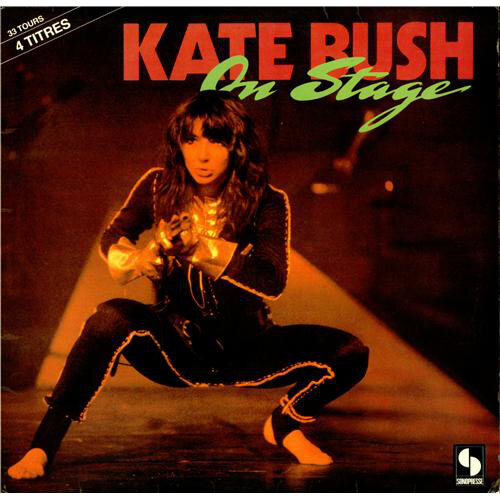
“Live at Hammersmith Odeon is a recording of a live performance by Kate Bush on 13 May 1979 at the Hammersmith Odeon in London. It was originally released on home video in 1981. The video shows only twelve songs from the performance which on most nights consisted of 23 songs. Also, the song L'amour Looks Something Like You, which was included on the On Stage EP was cut from this video.

qq.jpg

Formats

The original release in 1981 was available on VHS and Betamax video, the two leading video formats at the time. There was also a release on Laserdisc. The video was re-released in 1994 as a boxed set that included a CD version of the performance.

Track listing

Moving

Them Heavy People

Violin

Strange Phenomena

Hammer Horror

Don't Push Your Foot On The Heartbrake

Wow

Feel It

Kite

James And The Cold Gun

Oh England My Lionheart

Wuthering Heights”.

Recorded during the penultimate date on The Tour of Life, Bush would have been extremely well-rehearsed and free from nerves (one suspects). Whilst a normal set was comprised of twenty-three/twenty-four songs, we sort of get half of a set (this website suggests that twenty-one numbers were performed on 13th May, 1979). I love the fact that one can get Kate Bush - Live at Hammersmith Odeon in this box-set. In 1994, VHS was a hugely popular format. C.D.s were relatively new to some people. Most artists were recording to the technology. Now, as vinyl has overtaken C.D.s and people are not watching VHS anymore, Kate Bush - Live at Hammersmith Odeon is more of a nostalgic item. Something for collectors and fans. That is why I headlined this feature as ‘a nostalgic treat’. I will buy the box-set and enjoy the C.D. and keep the VHS. Many artists are releasing on vinyl or going discless - due to the environmental aspects of C.D.s.

Kate Bush - Live at Hammersmith Odeon is an essential purchase for many Kate Bush fans. We get more than on the Kate Bush - On Stage E.P. that was released in 1979. One can get that on vinyl. It renews my calls for new consideration regarding The Tour of Life and the Hammersmith Odeon set. EMI control the publishing rights, so there is nothing preventing them from transferring it to streaming. I do feel there is a genuine gulf not having Bush live recordings digitally. As I said before, she might want to keep them to physical formats. Given the fact there are a dozen tracks on Kate Bush - Live at Hammersmith Odeon, there would be the remaining songs from a set. Putting it out as a double vinyl would combine Kate Bush - Live at Hammersmith Odeon and allow the missing songs to be heard. There are terrific photos taken during that Hammersmith set. Max Browne has published a book of those images. A nice new boxset with a double vinyl, multi-page booklet with photos, notes, setlists and details would go great alongside a DVD (with the 1979 Nationwide documentary, which followed Bush as she prepared for The Tour of Life). There are clips from The Tour of Life on YouTube – though the quality is not great. Also, as it is YouTube, a video can be removed with little reason or notice. The VHS provides a clearer and better experience - though most people have done away with their video players! Transferring the set to DVD or Blu-Ray and putting it in this boxset would be a good idea.

I am not sure how many people have Kate Bush - Live at Hammersmith Odeon and whether it is the way to connect fans to Bush’s performances during The Tour of Life. Kate Bush - On Stage provides a small window into what it was like…though updating the Kate Bush - Live at Hammersmith Odeon release for the modern market would be sage. Maybe it could be tied to an anniversary and released in 2024 – a long way off, though it would mark forty-five years of the epic and groundbreaking tour. Not to keep banging on about The Tour of Life but, having jogged my mind to Kate Bush - Live at Hammersmith Odeon, I have a hankering to immerse myself in that set. To have it on both DVD and vinyl would be such a treat. I feel a lot of people overlook The Tour of Life and shows like the one at the Hammersmith Odeon on 13th May, 1979. Most people know about the studio albums. Many do not realise how powerful the live recordings are. Not many of us were around or would have been at one of the sets on The Tour of Life. Bringing it to life now, to me, is more important than it has ever been. It showcases what a phenomenal live performer Bush is! Go and get Kate Bush - Live at Hammersmith Odeon and the Kate Bush - On Stage E.P. I hope that EMI, one day, brings Kate Bush - Live at Hammersmith Odeon up-to-date and releases it on…

DVD and vinyl.

FEATURE: Can You Get to That: Funkadelic's Maggot Brain at Fifty

FEATURE:


Can You Get to That

qqq.jpg

Funkadelic's Maggot Brain at Fifty

___________

WE recently celebrated…

yy.jpg

Joni Mitchell’s seismic album, Blue, turning fifty. It was interesting hearing and seeing people’s experiences of the album and what it means to them (she was touched by the fact people love the album so much). It still has this enormous power and relevance after fifty years. Whereas Blue is an instant classic and album that has been lauded through the years, maybe the same cannot be said of another 1971 classic: Funkadelic’s third studio album, Maggot Brain. The album was produced by band leader George Clinton and recorded at United Sound Systems in Detroit. It was, sadly, the final album recorded by the original Funkadelic line-up (George Clinton, Raymond Davis, Fuzzy Haskins, Calvin Simon, Grady Thomas, Garry Shider, Hot Buttered Soul (Pat Lewis, Diane Lewis and Rose Williams) – vocals, Eddie Hazel – guitar, vocals, Tawl Ross – guitar, vocals, Bernie Worrell – keyboards, vocals, Billy Nelson – bass guitar, vocals, Tiki Fulwood – drums). Consisting of nine different and wonderful tracks, I feel Maggot Brain has risen to the status of an all-time great in the years since its release. Maybe it took a while for people to fully appreciate the album. That said, there were some positive reviews upon its release. It is an album that has some long and quite affecting songs. Maybe not the most accessible or light-hearted Funkadelic release, we go in with the epic and hugely potent title track. With the late Edward Hazel laying down one of the greatest guitar performances ever, it is such a mesmeric start!

One is almost too overcome to listen to the rest of the album. It shows the confidence the group had to put that track at the start! One of my favourite Funkadelic tracks, Hit It and Quit It, is on Maggot Brain. We end the album with another epic in the form of Wars of Armageddon. There is also a double celebration, as George Clinton turns eighty on 22nd July. He produced so many incredible albums as part of Parliament and Funkadelic. Few are more important and seismic as Maggot Brain. Ahead of its fiftieth anniversary on 12th July, I wanted to highlight one of the greatest albums ever. To do so, I am going to quote a couple of reviews. Before then, Soundlab paid tribute to Maggot Brain in 2017:

“Pontificating about funk music is an exercise in futility. Funk is the music of The People and everyone is welcome, hang-ups, social barriers and prejudices be damned. All you need is a head to nod, a toe to tap or an ass to shake. Good funk is felt in the spine, behind the eyes and under the skin and there’s no need to speak because the music itself becomes a universal interlocutor. It’s the rare musical form for which listeners connect with the music by giving themselves over to it completely. Ask not what The Funk can do for your ass, ask instead what your ass can do for The Funk. This isn’t to say funk is mindless but rather it’s the work of all minds or of a universal mind. Funk is somehow primal and futuristic, simultaneously... and this is why it’s so silly to write about funk because one ends up sounding like Matthew Mcconaughey on a bad acid trip–decidedly shallow, ultimately meaningless and tragically square. With that said, what follows is an attempt to review Funkadelic’s glorious masterwork, Maggot Brain. All apologies to George Clinton and the ghosts of Eddie Hazel, and Bernie Worrell, whose hard work and dedication to humanity deserves better than whatever platitudinous nonsense follows:

Funkadelic’s Maggot Brain was released in July of 1971. For a bit of perspective, Carole King and James Taylor dominated the pop charts for most of the month. While the Isleys, Marvin Gaye and Isaac Hayes all charted in July of 1971, they were nowhere near the top. The funkiest thing to be found on the high end of the charts that month was probably the Bee Gee’s “How Can You Mend A Broken Heart.” Thus it’s probably forgivable for the general public to have ignored Maggot Brain upon release, it was just too much. Too much funk, too much rock, too much blues and too much soul. Maggot Brain was also unapologetically original–name another album that opens with an increasingly calescent guitar solo which, over the course of its ten minute runtime, grows into a cascading shower of sparks so white hot as to challenge even Hendrix’s guitar-god supremacy… And that’s just the title track.

As if to remind listeners of their “free your mind and your ass will follow” motto, Funkadelic follows the introspective, smoked-out grind of Eddie Hazel’s “Maggot Brain” with the massive, laid back groove of “Can You Get To That.” The uninitiated might recognize this as the glorious looped sample deployed on Sleigh Bells’ hit “Rill Rill.” A chorus of voices proclaim: “I once had a life/ Or rather, life had me/ I was one among many/ Or at least I seemed to be…” The song, focusing on a kind of emotional karma, is about balance – a key theme for bandleader George Clinton. It also harkens back to Clinton’s days in doo-wop as, during the chorus, a wall of female voices ask: “can you get to that?” in response to a deep baritone male voice harmonizing “I want to know.” It’s all so funky you could stir it with a wooden spoon.

Maggot Brain’s third track, “Hit It and Quit It” is a deceptively smooth soul track featuring a wall of gospel organ played by none other than funk legend Bernie Worrell. “Hit It and Quit It” immediately jumps-off with an infectious groove and repetitive chorus of “You’ve got to hit it/ Hit it and quit it!” The most glorious element of “Hit It and Quit It” though is the easy to miss but impossible to forget rhythm by Tiki Fulwood. Yet another perfect track on a near-perfect record.

If track four of Maggot Brain is memorable for anything it’s the wall of bass laid down by Billy Nelson. Heard on the right set of speakers, in the backseat of the right kind of car, “You and Your Folks, Me and My Folks,” will cause the listener’s lungs to rattle in his or her chest. It’s as sticky a track as “Can You Get to That” but thicker, like trying to pour maple syrup on a cold winter morning. If you can wait, and have some patience the reward is so sweet”.

If you think that Maggot Brain might be a bit heavy-going for you and something that is best avoided, I would urge you to have a listen. It is a genius Psychedelic Funk album that is bursting with life and genius! It is a record that you will want to investigate. It is amazing to think how solid and cohesive Maggot Brain is, given how Funkadelic disbanded shortly after its release:

“After the album was released, the band effectively disbanded: drummer Tiki Fulwood was fired due to drug use; guitarist Tawl Ross reportedly got into an "acid eating contest, then snorting some raw speed, before completely flipping out" and has not performed since; bassist Billy Nelson quit over a money dispute with Clinton. Subsequently only Clinton, Hazel, and keyboardist Bernie Worrell remained from the original Funkadelic lineup”.

Regardless, Maggot Brain is a classic about to turn fifty. There are a lot of hugely positive reviews to choose from. I want to start by introducing AllMusic’s judgement of the mighty Maggot Brain:

“It starts with a crackle of feedback shooting from speaker to speaker and a voice intoning, "Mother Earth is pregnant for the third time, for y'all have knocked her up" and talking about rising "above it all or drown in my own sh*t." This could only have been utterly bizarre back in 1971 and it's no less so decades later; though the Mothership was well on its way already, Maggot Brain really helped it take off. The instrumental title track is the key reason to listen, specifically for Eddie Hazel's lengthy, mind-melting solo. George Clinton famously told Hazel to play "like your momma had just died," and the resulting evocation of melancholy and sorrow doesn't merely rival Jimi Hendrix's work, but arguably bests a lot of it. Accompanied by another softer guitar figure providing gentle rhythm for the piece, the end result is simply fantastic, an emotional apocalypse of sound. Maggot Brain is bookended by another long number, "Wars of Armageddon," a full-on jam from the band looping in freedom chants and airport-departure announcements to the freak-out. In between are a number of short pieces, finding the collective merrily cooking up some funky stew of the slow and smoky variety. There are folky blues and gospel testifying on "Can You Get to That" (one listen and a lot of Primal Scream's mid-'90s career is instantly explained) and wry but warm reflections on interracial love on "You and Your Folks, Me and My Folks," its drum hits distorted to give a weird electronic edge to the results. "Super Stupid" is a particular killer, pounding drums and snarling guitar laying down the boogie hard and hot, while "Hit It and Quit It" has a great chorus and Bernie Worrell getting in a fun keyboard solo to boot”.

Before wrapping up this feature, there is another positive review that goes into depth. Pitchfork provided their impressions in a review from last year:

“Contemporaries working in similar modes such as Sly & the Family Stone, the Chambers Brothers, and War—all of whom were multiracial groups—had found the key to crossover success. But as an all-Black rock unit, Funkadelic struggled to achieve more than cult status in their heyday, even if some of their releases scraped the lower reaches of the charts. Upon its release, Maggot Brain was too strange for most music consumers to grasp. Even in their Detroit homebase, Funkadelic couldn’t catch a break with the city’s AOR radio outlets. Over the decades, however, the album’s guitar heroics, relentless grooves, and cavalier hooks have infiltrated their way into more receptive minds.

Listening to the staccato “Hit It and Quit It,” you can understand why those early-’70s listeners would be perplexed. Keyboard prodigy Worrell unfurls Keith Emersonian burbles and proggy flourishes alien to the funk genre at the time. Revealing Funkadelic’s democratic nature with regard to singers (a ploy that may have hindered their ability to break through commercially, as there was no dedicated frontman), Clinton allowed Worrell to sing his skinny ass off amid a libidinous landslide of guitar riffs and basslines. “Hit It” ranks as one of the filthiest lust songs ever to stoke a libido.

Another example of Funkadelic’s egalitarian microphone policy, “You and Your Folks, Me and My Folks” is sung by Billy Nelson; the track exudes the air of a communal Sly & the Family Stone anthem, but imbued with the menace of the Manson Family, with the bass/drums groove ranking as one of the most lethal in the Funkadelic canon. Despite the sinister aura, the song is a plea for equality and understanding among all people. For what it’s worth, “You and Your Folks” is the most-sampled track on Maggot Brain (11 times), and Alabama Shakes singer-songwriter Brittany Howard covered it on 2020’s Spotify Singles.

In a 1985 issue of Spin, P-Funk professor emeritus Greg Tate dubbed “Super Stupid” a “heavy-metal hydrogen bomb test”; it’s no wonder heavies such as Audioslave and Big Chief took stabs at it. This is mercilessly vicious rock that attracted the attention and respect of British rock royalty when Funkadelic first toured England. Clinton claims David Bowie, Rod Stewart, and members of Cream, the Beatles and Led Zeppelin checked them out on that jaunt. “Super Stupid”’s metallic guitar avalanche is tempered by Worrell’s circus-y keyboard effusions, but the real star is Hazel, who is on fire in extremis, both on ax and vox. “Super Stupid” warns of the foolishness of drug abuse (Worrell claimed in Wax Poetics that band members were snorting heroin) while, incidentally, making you want to take drugs.

Following the release of Maggot Brain, Hazel and Nelson split to work for the vastly more popular Motown act the Temptations, reportedly due to dissatisfaction with Clinton’s handling of the band’s financial situation. Fulwood also was disgruntled about pay and left Funkadelic. Although Clinton doesn’t mention this issue in Brothas, the Wax Poetics interviews feature complaints about George’s stinginess. Ross, too, departed, after alleged misadventures with either LSD or speed. These painful losses were ameliorated by the additions of Bootsy and Catfish Collins, Garry Shider, and Boogie Mosson—all world-class funkateers. Nevertheless, Funkadelic never again released an album as laden with genius as Maggot Brain. It was the culmination of their first phase’s most outrageous and ingenious sonic ideas, establishing a new precedent for how Black musicians would exist in a rock context, juxtaposing metal, gospel, prog, funk, blues, and jazz fusion with nonchalant virtuosity. It’s the epitome of their extravagant virtues and vices.

Summarizing the LP in Brothas, Clinton wrote, “Maggot Brain was going places that Black groups hadn’t gone, into questions about whether America was still on the right path or whether the promise of the late ’60s had completely evaporated.” In these seven songs, you can hear Funkadelic attempting to make sense of the turmoil of the times, as they express the euphoria and anguish of being born and dying in the most extraordinary ways”.

Fifty years after its release, Maggot Brain is an album so many people are talking about. I am going to keep listening to the album for a couple of days, as it is so powerful and nuanced. I come back and a new song impacts me in a different way. Today, spend some time with Maggot Brain. Turn it on and…

LOSE yourself in it.

FEATURE: Childhood Treasures: Albums That Impacted Me: Björk - Debut

FEATURE:


Childhood Treasures: Albums That Impacted Me

www.jpg

Björk - Debut

___________

WERE one to rank Björk’s albums …

aaa.jpg

 IN THIS PHOTO: Björk in Los Angeles, 1993/PHOTO CREDIT: Joseph Cultice

I wonder how many would place 1993’s Debut at the top?! Of course, the album was not her debut (she released an eponymous album in 1977). I would encourage anyone to buy Debut. It is one of my favourite albums. I am going to delve into an article that told the story of Debut and its success. Whilst not quite as accomplished and acclaimed as its follow-up, Post (1995), Debut is a remarkable album. It came out on 5th July, 1993. I was ten at the time. I don’t think I was aware of who Björk was at that time. Maybe the first song of hers I heard was Debut’s first single, Human Behaviour. I was instantly mesmerised! I had not heard another voice quite like hers. I was already fan of Kate Bush. Perhaps that was the closest comparison at the time. I still think there is nobody out there like Björk. I love everything on Debut. Writing alongside producer Nellee Hooper, Human Behaviour, Venus as a Boy, Big Time Sensuality and Violently Happy are classics in her cannon. I also like the lesser-spun songs like There's More to Life Than This and Aeroplane. The album made a big impact on fans and the press in 1993. In years since, one can hear influence on the likes of M.I.A., Grimes, These New Puritans, Tune-Yards, Lady Gaga and Robyn. The sheer audacity of ambition; the mix of sounds and that incredible voice of Björk’s make it an album as important to me as Kate Bush’s The Kick Inside, The Beatles’ Rubber Soul and Paul Simon’s Graceland.

I am going to wrap up with more feelings and thoughts on Debut. Before then – and before I come a review of the album -, I wanted to source from Classic Pop Mag. In 2017, they revisited Debut and provided a history and insight into its recording and legacy. There are a few bits from the feature that I want to quote:

“Having emerged as a child star in her native Iceland with an eponymous album at the age of 11, Björk had already amassed 16 years’ experience in the music business by the time she released her solo breakthrough, Debut, in July 1993. The singer spent her formative years as part of Reykjavik art collective Bad Taste and in punk bands Spit & Snot and Kukl, Björk achieved international success with The Sugarcubes.

While Debut’s otherworldly eclecticism is light years away from The Sugarcubes’ output, Björk’s transition from feisty frontwoman to electro enchantress had been years in the making.

“When The Sugarcubes started to get attention abroad and I got the opportunity to travel in 1988, I was so excited to see live bands,” Björk says. “When I got to the UK and we had a day off between touring, I would go and try to see as many concerts as I could. I was so disappointed because it was so stagnant, nobody was taking any risks. So, I started going to clubs in 1988 and I just became obsessed with them.

“I had to go to lots of them, but when I found the right ones, they had atmosphere and miracles happened.”

Having visited Manchester to collaborate with dance pioneers 808 State, she witnessed first-hand the city’s nightlife, throwing herself into its vibrant hedonism. Her relationship with DJ Dominic Thrupp was her connection to London’s clubland, enabling her to build a network of like-minded creatives with whom she planned to collaborate to bring her ideas to life. Though she had originally planned to work with different producers depending on the style of music she was working on at the time, an introduction to Nellee Hooper was instrumental in bringing Debut to fruition.

“A friend of mine suggested we work together and I was a bit suspicious to begin with,” Björk explained to The Face magazine in 1993. “I had to ask what he had done. I like Soul II Soul, but mainly when they’re on the radio. Myself, I like to go out and dance to hardcore or industrial techno, hard beats with an experimental edge. I thought Nellee was too ‘good taste’ for my liking. But then I met him, got to know him, got to hear about his fabulous ideas and it ended up with him producing the whole album.

“I wanted to include a mixture of sounds, like harps, saxophones, techno beats,” Björk said. “No sound or style was off limits. My target was to break down the stupid barriers that existed. I didn’t want it to be the jazz people over here, the rock’n’rollers over there and the classical people over here, so we had a harp player, a jazz saxophone player, an Indian string section.

“I wanted the album to be pop music that everybody can listen to,” she said. “I think not sticking to any particular musical style makes the album real. Life isn’t always the same. You don’t live in the same style from day to day, unexpected things happen that are beyond your control. That’s this record. One song is about the mood you’re in walking to the corner shop, another is about being drunk and out of it on drugs in a club, and the next one is about feeling romantic and making love.”

Going on to achieve sales of 4.7 million copies worldwide, Debut was Björk’s greatest commercial hit, and though not the debut its title suggested, it was her musical coming-of-age and an album that inspired an entire generation of artists such as Radiohead, M.I.A, Lady Gaga and Florence Welch, all of whom have cited her as a touchstone.

Speaking of Debut’s legacy, Björk described it as, “very nostalgic”. “It’s like an old photo album for me because it was my first opportunity to record an album with money,” she said. “It was like a ‘greatest hits’ from which I could pick from the last 10 years or so of my songwriting. Ever since then I’ve always been more about looking ahead than the past”.

I still play Debut to this day. It takes me back to the ‘90s - and yet there is something modern and current about the album that means my love of it is much more than sheer nostalgia. Debut opened my eyes to an artist who I would follow from that point with fervent fascination.

I think that there are two stages of reviews for Björk’s Debut. In 1993, there was a lot of praise and interest. There were some who were less sold and effusive, I am not sure what the main criticism was. Perhaps it was an album that was so different to what was around they did not know how to take it. There was this wave of reviews later down the line that reassessed the album – people also had other Björk albums to compare it with. In their review, AllMusic had the following to say:

“Freed from the Sugarcubes' confines, Björk takes her voice and creativity to new heights on Debut, her first work after the group's breakup. With producer Nellee Hooper's help, she moves in an elegantly playful, dance-inspired direction, crafting highly individual, emotional electronic pop songs like the shivery, idealistic "One Day" and the bittersweet "Violently Happy." Despite the album's swift stylistic shifts, each of Debut's tracks are distinctively Björk. "Human Behaviour"'s dramatic percussion provides a perfect showcase for her wide-ranging voice; "Aeroplane" casts her as a yearning lover against a lush, exotica-inspired backdrop; and the spare, poignant "Anchor Song" uses just her voice and a brass section to capture the loneliness of the sea. Though Debut is just as arty as anything she recorded with the Sugarcubes, the album's club-oriented tracks provide an exciting contrast to the rest of the album's delicate atmosphere.

Björk's playful energy ignites the dance-pop-like "Big Time Sensuality" and turns the genre on its head with "There's More to Life Than This." Recorded live at the Milk Bar Toilets, it captures the dancefloor's sweaty, claustrophobic groove, but her impish voice gives it an almost alien feel. But the album's romantic moments may be its most striking; "Venus as a Boy" fairly swoons with twinkly vibes and lush strings, and Björk's vocals and lyrics -- "His wicked sense of humor/Suggests exciting sex" -- are sweet and just the slightest bit naughty. With harpist Corky Hale, she completely reinvents "Like Someone in Love," making it one of her own ballads. Possibly her prettiest work, Björk's horizons expanded on her other releases, but the album still sounds fresh, which is even more impressive considering electronic music's whiplash-speed innovations. Debut not only announced Björk's remarkable talent; it suggested she had even more to offer”.

I will wrap up soon. My teenage years were ones where I became entrenched in current music and bought as much as I could. Prior to that, I was not buying as many albums. I was listening a lot to my parents’ music. Albums like Björk’s Debut were hugely important because it was my discovering an album independently. Whilst the songs are great and eclectic, it is Björk’s voice that really sells it to me. So flexible, powerful and original, she imbues every song with so many emotions and colours! There is no doubt that Debut…

IS very special to me.

FEATURE: Original Intent: Kate Bush: Keeping Cover Versions from Her Studio Albums

FEATURE:


Original Intent

ccc.jpg

Kate Bush: Keeping Cover Versions from Her Studio Albums

___________

MAYBE it is not too noteworthy…

aaa.jpg

 PHOTO CREDIT: Alamy

but I feel that most legendary artists, on one of their albums at least, will include a cover version. It is not the case that artists are short of material: rather, they want to bring in cover songs, as they can put their own stamp on things. I have spoken before how Bush’s production work is underrated. Many people, when they think of her, do not usually consider her producing and the skill she has in this area. One reason why albums such as The Dreaming (1982) and Hounds of Love (1985) are so nuanced and extraordinary is because Bush was at the helm. Not that she was shunning people - though one feels that others calling the shorts regarding production would have annoyed her. She worked with producers on her first few albums, yet Bush had a desire to produce her own work and put her stamp on the albums. The same can be said of the songwriting. Whilst one can look at songwriters like Joni Mitchell and say that she wrote her own material and produced her albums (after a certain point), there are very few artists that do not bring in others’ work. In fact, if you look through Mitchell’s catalogue, she has not solo written every one of her songs. Over ten studio albums, Kate Bush has ensured that her name is the only one on the songwriting credits.

One can argue that, on Director’s Cut (2011), she reinterpreted her song, The Sensual World (from 1989’s The Sensual World) and renamed it Flower of the Mountain. As she wanted to use Molly Bloom’s soliloquy from James Joyce’s Ulysses on the original, when she did get permission for Flower of the Mountain, she credited James Joyce. I am not really counting that. No doubt Joyce’s words are important, though the majority of the song was composed by Kate Bush. On The Dreaming, certain musical parts were composed by others (the string arrangement on Houdini was from Dave Lawson and Andrew Powell). Apart from that, Bush has written all of her album tracks. I find that amazing! I will come on to cover songs. One can also not say that she was short of original material and, had she recorded more albums, she would have needed to turn to covers. She wrote the excellent Experiment IV for the greatest hits collection, The Whole Story (1986). She had a B-side as incredible as Under the Ivy (the B-side to Hounds of Love’s first single, Running Up That Hill (A Deal with God), that could have easily slotted on the album’s second side. One suspects there are unrecorded songs that Bush could record and kept aside. I am not sure whether there were moments when Bush thought about doing a cover of two for an album. She has recorded and/or performed live songs by Steely Dan, The Beatles, Ike & Tina Turner, and Elton John.

I may do another feature about the best cover versions by Kate Bush. When it came to tackling other artists’ songs, Bush kept them to B-sides or other projects. She recorded two Elton John/Bernie Taupin tracks for the 1991 album, Two Rooms: Celebrating the Songs of Elton John & Bernie Taupin (Rocket Man was the A-side; Candle in the Wind the B-side). I really love a lot of Bush’s B-sides. Burning Bridge (the B-side to Cloudbusting and Hounds of Love), The Empty Bullring (the B-side to Never for Ever’s Breathing) and Ran Tan Waltz (the B-side to Never for Ever’s Babooshka) are wonderful. She clearly had a lot of material aside that she did not feel fitted on an album. If you look at the songs Bush covered, it is not like they are slight versions that could not have made it onto an album. The Handsome Cabin Boy was a B-side on the Hounds of Love single. Whilst it might not have worked on Hounds of Love, it could have appeared on an E.P. or future project. Donavon’s Lord of the Reedy River was a B-side to the Sat in Your Lap (The Dreaming) single. I feel that could have been an album track. This is also true of My Lagan Love (a traditional song that was a B-side on the Hounds of Love single). Whether she was tackling Sexual Healing (the B-side to 2005’s King of the Mountain) or adapting Elton John classics, it would have been interesting to hear her include a cover on a studio album.

I guess Bush wanted to keep her albums her own - made sure they only featured her own songwriting. I am fascinated by the divide in Bush’s career. There are those album tracks that Bush wrote, although it is clear that she loved reinterpreting other people’s tracks. Bush featuring a wide range of non-original songs as B-sides. Given her love of artists such as David Bowie and Captain Beefheart, I wonder whether Bush ever covered any of their songs and they have not seen the light of the day. I guess this feature is a reaction to the fact that, still, we see big artists release albums where there are scores of other songwriters. You wonder how personal and meaningful the songs are when you count the co-writing credits! Perhaps Bush felt that putting cover versions on her albums would taken her own voice and perspective away. As much as I love her covers, she is at her most exceptional when delivering her own songs. This is one (among many) reasons as to why she is so respected as an artist. That sense of autonomy and singular vision meant that, over ten studio albums, it was her words alone that we heard (taking into consideration the very minor James Joyce inclusion on Director’s Cut). One can never say never, butit is unlikely Bush will include a cover version if she releases another studio album. I really like how she paired Sexual Healing with King of the Mountain in 2005 (quite an introduction to Aerial!). The range of songs she covered is amazing! I suppose Bush created a flow and concept with many of her albums. Putting in a cover song might have disrupted that. Across the studio albums, Bush has ensured that her songs alone have featured. This is something that…  

FEW others can claim.

TRACK REVIEW: Janelle Monáe - Stronger (from the Netflix series, We the People)

TRACK REVIEW:


Janelle Monáe

www.jpg

PHOTO CREDIT: Clara Balzary for The Gentle Woman 

Stronger (from the Netflix series, We the People)


9.6/10


qqq.jpg

The track, Stronger, is available from:

https://www.youtube.com/watch?v=HOqMvZmuLxM

GENRES:

R&B/Soul/Gospel

ORIGIN:

Kansas, U.S.A.

RELEASE DATE:

1st July, 2021

LABEL:

Bad Boy Records LLC

__________

THIS is going to be quite…

a detailed and deep review. I know that most of mine are but, when it comes to Janelle Monáe, there is a lot to cover off and explore! In time, I will get to her new song, Stronger. It is taken from the Netflix series, We the People. I have been waiting for a chance to review Monáe. She is one of the most captivating artists in all of music. Her new track is typically awesome and memorable. I will work my way to that. Right now, I want to look at her earlier life and what it was like growing up. I will discuss her sexuality after (as I think that it is important). As we learn from this interview with PAPER, growing up where she was, it was challenging to raise the issue of her sexuality:

“Monáe grew up in Kansas City in a Baptist church, with a Christian family and in shoes very different from the ones she walks in now. She remembers being quite young when she realized she was queer, and although the vocabulary wasn't there, the feelings were. "I was like eight," she remembers. "I don't think I actually knew how I identified. I knew that I was attracted to women, girls, men, boys. I knew that." Like many LGBTQIA+ people raised in more rural and religious areas, Monáe found it difficult to ask those questions without feeling ostracized.

"I've seen people get beat up because they were considered to be 'too feminine' or 'too masculine' for how they identified," she says. Some of those people were family friends, including a gay male friend of her aunt's, whom she watched be shunned from his community. "It was because of Black men who thought he was trying to come onto them, but he wasn't," Monáe says, "It was their own ignorance and insecurity and fear that led them to lash out. When I saw that..." her voice trails off. "To be a gay Black man, and Black men are like the 'heads of the households' and I'm a Black woman, this young kid. I thought, then it's really over for me”.

 PHOTO CREDIT: Clara Balzary for The Gentle Woman 

By all accounts, it does seem like Monáe had a difficult childhood. Like a lot of artists, Monáe’s parents were not always there. She didn’t have the most stable family life. When she spoke with The Gentle Woman last year, we discover how the church provided an outlet and way for Monáe to channel her talents. We also get a bit of background and history regarding Monáe and where she moved to after she left home:   

“Her father, Michael, was a truck driver who was largely absent and left her mother, Janice, when Janelle was less than a year old. Janice worked cleaning houses and as a janitor. Her mother remarried, and had a second daugther, Kimmy.

Growing up, Janelle sang in the local Baptist church and performed in talent competitions and musicals from a young age, but she insists that she was no wunderkind. “Honestly,” she says, “there were so many talented kids around me, and at that age I was intimidated more than anything.” A precocious storyteller and writer with an avid interest in science fiction (to which she was introduced by her paternal grandmother via The Twilight Zone), she joined a young playwrights’ programme in school and began writing her own musicals, including one inspi-red by the trippy 1979 Stevie Wonder album Journey Through the Secret Life of Plants.

Though she was adept at singing, acting and writing, she was hardly spoiled for choice when she finished school. “Nobody was coming to Kansas City offering record deals,” she says drily. “We were the last place that people would think to look. So I didn’t know if I was just going to be in the music industry proper, but I thought that there could be a place for me on Broadway.” She applied to the American Musical and Dramatic Academy in New York and was accepted on its bachelor of fine arts course in musical theatre. “I was just thinking about what I could do now. And I was like, Yeah, I can sing and act, so that’s what I want to do full time.”

In New York, Janelle shared a small apartment in Harlem with an older cousin who worked night shifts at the post office; they took turns sleeping in the single bed while the other was out. Janelle worked part time as a maid in Manhattan to make ends meet.

But while she was grateful for the opportunity to learn how to sight-read music and properly dissect a role, it wasn’t lost on her that as the only Black woman in her year, she didn’t look like everybody else and wasn’t being represented on the page. “I didn’t see the roles that I liked,” she says. “I didn’t see the new, fresh opportunities for Black voices on stage. And so I was just like, Fuck this, I need to actually spend some time living”.

rr.jpg

 PHOTO CREDIT: Pari Dukovic for GQ

I am going to change topics in a second. I do feel like Monáe’s background is important in terms of her music and how she approaches life now. It does seem, quite evidently, how there wasn’t necessarily this open and accepting attitude within the family when it comes to talking about her sexuality. Many other artists grow up and spend a lot of their life unable to find that supportive voice from their family. Building on the interviews I have already sourced from, Monáe spoke with The Guardian last year. Even though it was difficult to talk about her sexuality, it was necessary for personal growth:

“The conversations she had with her family about her sexuality were hard, mainly because she anticipated pushback. She hates arguing with her loved ones, but not as much as she hates passive-aggression. “We can all be guilty of it and it’s one of my pet peeves. I love my passive-aggressive people as humans, but it is something that is triggering for me, because I grew up in a family where if there was something bothering us, you knew about it. There was no stomping around the house; there was, OK, let’s discuss this. I think the harder a conversation is with the people that you love and care about, the more necessary it is for growth.”

And who knows, she says; sometimes people surprise you. “I have an aunt who is such a Bible thumper – and no disrespect to them, I love Bible thumpers – but she was the first person at the Dirty Computer concert. She was right there in the front row, hugging me and telling me how proud I made her. This was the one I was so convinced would not look at me as her niece that she loved. But our relationship has gotten stronger”.

qqq.jpg

 PHOTO CREDIT: Pamela Hanson for InStyle

Not only is Janelle Monáe a terrific songwriter. She is also a fantastic actor. To tie in with We the People, I wanted to spend some time with Monáe as this screen star. In some ways, she has an aspect of David Bowie: creating these different personas and looks, both on screen and on albums. Coming back to that interview from The Gentle Woman, and we find out about Monáe’s screen progression; how she came to the attention of Prince - also how there is this mixture of the rooted/down to earth and otherworldly (with Monáe):

“Janelle, 34, first fell to earth, Bowie-style, in the mid-2000s as an otherworldly new androgyne on the scene, a genre- and gender-bending musical prodigy who one critic referred to as “James Brown reborn in a more advanced female future”. Her breakthrough album, 2010’s The ArchAndroid, was a sci-fi-inflected, haute-conceptual blend of pop, funk and soul – a declaration of intent that seemed at once indebted to precursors such as George Clinton and Sun Ra and a harbinger of things to come. In interviews she often spoke of being sent from the future, and it was sometimes hard not to take her at her word.

The ArchAndroid attracted the attention of Prince, who became a mentor, as did Stevie Wonder (he and Janelle performed together, and a recorded phone conversation between the two of them appears as an interlude on Dirty Computer). Since the release of The ArchAndroid, Janelle – singer, songwriter, entrepreneur, actress, producer, social activist and fashion iconoclast – has kept enough plates spinning to rival a circus performer.

In short order, she performed at the 53rd Annual Grammy Awards in 2011 alongside the artists Bruno Mars and B.o.B, became a spokesperson for Cover Girl in 2012, and was featured the same year as the guest vocalist on Fun’s “We Are Young”, which became a number one hit across the world, exposing her to a larger mainstream audience. Her second studio album, The Electric Lady, was released in 2013 and appeared to benefit from her growing visibility, reaching number five in the Billboard 200. There were successful guest appearances with everyone from Pharrell Williams to Grimes and Kelly Clarkson and a 2014 performance at the White House with artists including Aretha Franklin. And Janelle’s electrifying stage presence and epicene style, which brought to mind Little Richard as styled by Marlene Dietrich, positioned her as the tuxedo-wearing, pompadour-crowned saviour of pop music.

Janelle made her feature film debut in 2016 with supporting roles in two movies, the Oscar-winning Moonlight and Hidden Figures, which won the coveted nod for best ensemble at the 2017 Screen Actors Guild Awards; to both she brought a palpable intelligence, grit and what Julie Taymor refers to as the “feminine power of listening and being supportive”. By then, it felt as if the impish performer and avowed time traveller had been part of our pop-culture consciousness for aeons.

Over the years Janelle has adopted a post-human persona (often in the form of her sometimes cloying alter ego, Cindi Mayweather, a messianic android from the year 2719 who falls in love with a human), but her roots are undeniably terrestrial. Janelle Monáe Robinson grew up in Kansas City, Kansas, in an extended family that included 50 first cousins. “There were a lot of us,” she explains, touching her ear, a tic-like gesture that she repeats throughout our conversation, “and we all pitched in as needed. I watched over my little cousins; my older cousins watched over me. My aunts made sure I had clothes for school, and my mom did the same for her nieces and nephews. One of the things my family instilled in me is the importance of community”.

I am going to move on to Monáe’s sexuality and how integral and important that is to her identity. I want to stick with acting briefly and come back to that interview from The Guardian. Whilst the film did not pick up huge acclaim, Monáe’s turn in The Glorias was particularly impressive. She spoke about the importance of the film:

“Her choice of acting roles is equally loaded. Later this year, Monáe will appear in The Glorias, a biopic of Gloria Steinem based on her 2015 memoir My Life On The Road, in which different actors, including Julianne Moore and Alicia Vikander, play the feminist in different phases of her life, with Bette Midler as Steinem’s fellow activist Bella Abzug. It covers similar ground to the recent TV show Mrs America, with at least one big difference: that of Monáe’s character, Dorothy Pitman Hughes, who co-founded Ms magazine with Steinem and was an activist and community organiser of equal standing. She didn’t appear in Mrs America, just as she has, relative to Steinem, been largely airbrushed out of history. “That’s why representation matters and that’s why I said yes to this film,” Monáe says.

Steinem herself approached Monáe to ask if she’d play Pitman Hughes. The two women had met, years earlier, at an awards ceremony, where Monáe had the chance to thank Steinem. “Talk about someone who’s timeless,” she says. “She’s so spry, and on it, and involved, and knows about what’s going on today – she’s an icon.” Most impressive, to Monáe, was the fact that Steinem lobbied hard for the Pitman Hughes character to have a central part in the film. (Monáe spoke on the phone to Pitman Hughes, now 82, and found it both inspiring and professionally helpful to hear her “talk about her relationship with Gloria; the things they had to endure”.)

Monáe was also, because Pitman Hughes has been so erased from public memory, “excited that her story was being told. And the fact that Gloria was adamant that Dorothy was in it really let me know what kind of person Gloria is. Dorothy is responsible for helping Gloria to be a great public speaker – she had stage fright, and because Dorothy was a singer, she was able to help her. She was one of the first black business owners in Harlem and was able to teach Gloria more about the black community”.

zzz.jpg

Let’s move on and explore Monáe as this very special and original artist. I already compared her to David Bowie. I don’t think this is unfair or exaggerating. It is clear that, compared to her peers, there is something about Janelle Monáe that is timeless and iconic. She is such a bold, multifaceted and powerful artist. Once more, coming back to the interview from The Gentle Woman, we get a sense of how Monáe has evolved as an artist:   

“Which is not to say that everything about Janelle has remained constant. For one thing, her music has evolved from the sometimes wilfully impenetrable retro-futurist stylings of her early releases to the more commercially viable, eminently danceable pop-funk offerings on Dirty Computer, such as “Screwed”, featuring Zoë Kravitz, and the catchy Prince-inspired single “Make Me Feel”.

She may be, to quote Spin magazine, “a canonised artist without a classic album”, but the absence of commercial superstardom has allowed her the creative freedom to mine the intersection of the personal and the political, and subjects of Black womanhood, identity expression and sexual fluidity, with funky abandon.

“She’s always been somebody who I would consider pretty fearless,” says Mikael Moore, her long-time manager and collaborator, “but if you look at her evolution as a songwriter, as a performer and vocalist, as an MC, I think it shows the risks she’s prepared to take as an artist”.

 PHOTO CREDIT: Ralph Lauren

Part of Janelle Monáe’s appeal and status comes down to her fashion. Rather than being an anodyne or boring artist, she has definitely crafted her own style. In reviews, I like to dig deep with artists and spotlight them from different angles. It provides us with more story and layers. There is an interesting Vogue article that responded to Monáe’s involvement in a special Ralph Lauren event:

“Whether it’s taking over Central Park for his 50th anniversary or staging a one-night-only Art Deco nightclub extravaganza, if there’s one thing Ralph Lauren knows, it’s how to put on a show—even when, as with his spring 2021 collection which debuted this evening, there’s no live audience. To mark the occasion, Lauren enlisted the help of his regular collaborator Janelle Monáe for a black-and-white film performance in the grandiose setting of his Beverly Hills store, here transformed into a smoky speakeasy while Monáe does her best Frank Sinatra in a double-breasted tuxedo and singing a swoon-worthy rendition of “All or Nothing at All.”

“When it comes to music, I consider myself a time traveler,” Monáe told Vogue ahead of her showstopping performance. “I can find the beauty of music in every era, but being able to dip into this made me just fall in love with Old Hollywood and film noir. We went back and forth on a lot of songs from that era, and one of the songs I hadn’t heard before, but Ralph asked me to take a listen to, was this song called ‘All or Nothing at All.’ And it was sung by a lot of the greats, but the rendition that I liked the most was actually a young Frank Sinatra’s rendition.”

Over the past few years, Janelle Monáe has become one of Ralph Lauren’s most visible ambassadors, whether performing at the fall 2019 Art Deco nightclub spectacular, or wearing a breathtaking hooded gown covered in crystals to last year’s Oscars. But Monáe’s relationship with the brand in fact stretches back over a decade, to soon after the release of her first record, 2010’s The ArchAndroid. “They were one of the first brands to embrace me, before I did any movies, before I even had my second album out,” Monáe remembers. “At a time when I couldn't even afford to buy a suit, I remember them gifting me one. They’re like family, at this point, and this event is, to me, one of the most special collaborations we've done thus far.”

Despite Monáe’s keen instincts for fashion as a means of self-expression—it only takes a brief look across her shape-shifting style from album to album to see that it’s one of the most important tools in her arsenal—her interest in performing as part of this season’s show was also due to her appreciation for Lauren’s constantly evolving vision of what it means to be an American brand today. “I think that an American brand should be inclusive, and understanding that we live in a melting pot, which is why I love the models that were chosen,” says Monáe. “I love the thought behind making sure that we had different forms of beauty”.

In terms of politics, things have been turbulent in America the past year or so. There is a fascinating interview from Gay Letter where Monáe was asked about the protest around the murder of George Floyd and what it is like working in music as a Black queer artist in 2021:

“Janelle Monáe has always felt ahead of her time. She’s an artist who seems made for every era she’s in. Janelle released her first music (a demo titled The Audition) in 2003. Three years later she formed a joint venture with her own label Wondaland Records and P. Diddy’s Bad Boy Records. She’s been nominated for eight Grammys but has maddeningly not won any even though her 2018 album Dirty Computer is considered a masterpiece by many critics and fans. In recent years, Janelle has stepped into acting with roles in Moonlight, Hidden Figures, and the Amazon series Homecoming. She’s also stepped more into herself. After a transformative skydiving experience, Janelle decided to open up publicly about her sexuality.

We spoke to Janelle in two conversations, one mere days before the murder of George Floyd in Minneapolis and then another time after the protests against his murder and broader police brutality had erupted in cities across the country. On both occasions we found her to be thoughtful, open, and fully engaged. She is “building and squadding up” and ready to work as hard as ever to demand justice for the thousands of black people killed by police each year. She was crystal clear about the message she wanted to share with the world during our conversation and during this Pride month: “All black lives matter.”

How are you doing? It’s so hard for me to answer that question, honestly. But I just ate, so that’s good. In general, I’m not in a good space. As many of my people are seeing what’s happening to our brothers and sisters, it’s just hard to shake it. It’s hard to shake the anger; it’s hard to shake being upset. It’s hard to get past the video footage and the evidence that police have killed our black brothers and sisters and nobody is charged or convicted. It’s hard to accept what police are giving us, what the administration is giving us, and what those in positions of power are giving us. And we’re not accepting it.

xx.jpg

PHOTO CREDIT: Kelia Anne for PAPER 

How have you been protesting over the last few weeks? I am in Los Angeles. I was down there when the tanks rolled out, when the National Guard were out. I have been helping out, passing out lunches for COVID relief, but in terms of my involvement, I have been very much involved in working with the activist Tamika D. Mallory and her movement Until Freedom. We are demanding that Greg Fischer, who is the mayor of Louisville, fire charge and convict the officers who killed Breonna Taylor. They still haven’t fired the officers for murdering Breonna. They had no reason to be at her house. That’s really where I have been putting most of my energy, speaking out for black women who have been murdered”.

What’s it like to work in the mainstream entertainment industry as a queer woman of color in 2020 compared to when you started in 2003? Here’s what I believe: I believe that I was sent from the future. I absolutely believe that, because even hearing you say 2003 for me, during that time, I felt ahead of what was happening. It always bothered me. It always made me feel like I had to stop time, like I had to figure out how to slow my ideas down. I always felt like people were not ready for an artist like myself. I still feel like that right now and it’s hard to digest. It’s like how do you put an octagon in a rectangle? And I say that humbly. I also say that knowing my potential and knowing the work that I put in and knowing that my team, who I’m so thankful for, have been my support system and talked me off ledges when I’ve just felt super alone.

aa.jpg

I think that right now a lot of people are discovering new things. I just celebrated the 10th anniversary of The ArchAndroid and honestly what feels like the past for many is the future for us. By “us” I mean those who understand the power of telling stories through science fiction. Those who absolutely believe in the mythology of The ArchAndroid, because I’ve seen some of those things happening. Even right now I feel like I write too much science fiction to be dealing with this reality. It feels very close to the world that I warned people about and I don’t love that. I don’t love it. As a result, because we are here, I feel like I’m an artist on assignment. I feel like the universe moves me where I need to go. It’s never been about just recording songs. It’s been about realizing and maximizing the potential of an idea in its totality. Whether that’s doing an album and doing a film with it, or being in roles that are parallel with the things in the music that I’ve talked about since forever. So yes, I feel like I’m still an artist on assignment. I never know my impact until years later. I’m always looking forward and that can pose a challenge, and also a benefit.

When you were more open about yourself and your journey and sexuality, was the response you got from loved ones, or people you care about, surprising? Actually it was. The people who I thought would be more judgmental or turn their backs on me or abandon me, didn’t! No nuclear button was pressed, and in your mind, I don’t know how you identify, but for me, it’s kind of one of those things where you think about it so much, you’re always thinking about how am I going to talk to my mom about this, how am I gonna talk to my religious great-grandmother about this. You know all these people that prayed for me and loved me and had been there for me, my pastor, who is my first cousin—like how am I going to talk to all these people about this? Are they gonna get it? Are they going to abandon me? You think about it more. In your mind you’ve already made up stories about how they’re gonna respond, so it becomes anxiety fueled by you. It becomes depressing, the thought of it and you don’t want to deal with it. Part of my process was making sure that my childhood self, that people had come to love and know, showed up and told them where they were at the time now. About how evolved my childhood self is. I’m still the same child that loves you and cares about you; however, these are new things I’ve discovered about myself. In fact, I’ve always known but did not feel the support in discussing”.

 PHOTO CREDIT: Clara Balzary for The Gentle Woman 

As Monáe is lending her music to the series, We the People (where we “Learn the basics of rights and citizenship with upbeat songs by popular artists like Janelle Monáe, H.E.R., Adam Lambert, Brandi Carlile and more”.), it is worth discussing her attachment to and involvement with politics. Coming back to the interview from The Guardian, they look ahead to (at the time) the new film, Antebellum:

“And there’s no question that Monáe is among the most thoughtful and politically engaged artists of her generation. The new movie in which she stars, Antebellum (due to be released later this year), is a horror vehicle that combines aspects of Get Out, Westworld and 12 Years A Slave. It’s a hard film to write about without giving spoilers, but it’s a high-concept project, half set on a plantation in the American south during slavery, half in the modern world, in which Monáe plays a successful writer who becomes the target of an outlandish racist conspiracy. The themes – how the past is not dead; how entrenched racism is in the US – are always apposite, but particularly so now, when the president is stoking white nationalism as part of his re-election campaign. “I read the script and thought, OK, this is a movie that’s connecting the dots from the past to the present and the future,” Monáe says. “And what the future could possibly look like, if we’re not careful.”

www.jpg

She is talking about America’s white-supremacist roots, a conversation that has, until recently, existed mainly on the fringe. In the wake of the death of George Floyd in May, the discussion has moved to the mainstream, along with the one around defunding the police, and while there are, Monáe says, “a lot of people late to the party, I’m happy that we’re having these conversations. You can’t talk about white supremacy, systemic racism, police brutality, without talking about chattel slavery, which is America’s original sin. My ancestors were forced to come to America and work for free, and the first institution of policing was the slave patrol, which was meant to hunt down and kill black people who had run away. So when we’re screaming, ‘Defund the police’, that’s what we are speaking to: we are reminding people, as this film does, that the police were not meant to protect and serve our community; they were meant to terrorise us. It’s a system built on traumatising black folks.”

Monáe is far more eloquent on the subject of America’s racist history than the writers of Antebellum, Gerard Bush and Christopher Renz. The two men also directed the movie and, in spite of Monáe’s excellent performance, it has a cheap, exploitative feel to it. The sexual violence is hackneyed; the character development thin. The movie would, one suspects, have been vastly superior if Monáe had written it herself. She is a fine actor, with a career that took off with her role in Moonlight, Barry Jenkins’ Oscar-winning film of 2016, and received a boost a year later from her role as Mary Jackson in Hidden Figures, in which she played a mathematician at Nasa, alongside Taraji P Henson and Octavia Spencer”.

It is important to now move to the subject of sexuality. If it was quite hard to be open with her family (to start) about this, Monáe is bringing it more to the forefront. It is less about her own personal experiences and relationships. Monáe, as we find out in the PAPER interview that I quoted from earlier, represents the entire L.G.B.T.Q.I.A.+ community:

“This isn't the first time Monáe, someone at the epicenter of pop culture, has recentered the narrative to focus more on one of the most othered groups in the LGBTQ community instead of herself. Although Monáe can only attest to her own experiences, she has actively made sure to advocate, and make space, for her entire LGBTQIA community. Her performance of Dirty Computer's "Americans" on The Late Show with Stephen Colbert opens on Pose star Mj Rodriquez, who's trans, before the camera slowly pulls out to reveal a group of POC femmes holding each other. She sings a song that says:

Until women can get equal pay for equal work
This is not my America
Until same gender loving people can be who they are
This is not my America
Until black people can come home from a police stop
Without being shot in the head
This is not my America

Monáe publicly dedicated her two Grammy nominations to her "trans brothers and sisters," who she says "are shunned from these sorts of events." Institutional award shows, including the Grammys, are inherently and historically spaces of white, cis, male privilege. While they have recently gotten Blacker, our understanding of diversity must always continue to grow more intersectional. This is part of what Monáe is working toward herself, and advocating for from her audience.

PHOTO CREDIT: Pari Dukovic for GQ 

But it isn't these accolades that make Monáe proud. In fact, it was her choice to do something scary, to take a risk and tell the truth, and thankfully that resonated. "I'm just happy that my personal story has also been personal stories for so many other people. There's so many young people who grew up in the South or Baptist families, who were told that they won't be accepted by Christ. They can listen to this album and feel hugged. They can feel loved. They can feel seen. They can feel heard. That's the most beautiful thing." Monáe's fans were not just able to find parallels with her journey, but able to find validation in being "dirty." With this album she extended an open hand.

Right before dropping Dirty Computer Monáe came out as pansexual in Rolling Stone, calling herself a "free ass motherf*cker." She reinforced that notion with songs like "Make Me Feel," "Crazy, Classic, Life," and "Django Jane." She solidified it every time she championed free gender expression with her clothing, and drove home the point when her boob winked at us this past Met Gala. Monáe is so exceptionally herself, so sacred in her skin, which shines not only through her music but in her powerful roles in 2016 films Moonlight and Hidden Figures Her character in Moonlight, Teresa, a pseudo-guardian to the young, Black, gay protagonist Chiron, sees many parallels with Monáe herself. She is strong, proud, protective, nurturing and poised. But that wasn't always the case”.

www.jpg

  PHOTO CREDIT: Pamela Hanson for InStyle

I want to come back to acting. I could have included this before. I do feel like, with Monáe, we have this modern-day equivalent of David Bowie. I think that Monáe’s acting feeds into her music. I have often talked about the relationship between acting and music. How there are similar traits and disciplines in both fields. Not that many big musicians, however, have a prolific screen career at the moment. She spoke with GQ in 2017 and revealed a particular reason why she was so keen to be seen on the screen:

“Not much about Janelle Monáe says “Homo sapiens.” The tailored intergalactic-butler uniform. The massive voice in the maybe-five-foot frame. Even her skin looks airbrushed. So it isn't surprising that when asked how old she is, she replies, “I'm timeless.” Maybe she's an android. “I look at androids as the future Other,” she says, her empathy for the marginalized extending to A.I. “I feel a responsibility to speak out for the Other.” In her new film, Hidden Figures, about a different kind of Other—badass black women working for NASA in the 1960s—Monáe actually plays a computer. (NASA called its mathematicians “computers.”) Her character doesn't take shit. Neither does Monáe. “I want to redefine what it means to be young, black, wild, and free in America,” she says. It's jarring to see someone so in control of her image submit herself to the demands of a studio and director. But Monáe doesn't flinch at temporarily shelving monochromatic space diva for important movies like the awards-season hit Moonlight. Of course, she also has bigger ideas: “I want to see more black people. Not just in films like Moonlight. Big-budget films, too.” And since the life span of an android is probably, like, 500 years, Monáe will have plenty of time to give the Hollywood muckety-mucks a run for their money”.

frtt.jpg

There are a couple of other things I want to cover before coming to the review of Stronger. I will finish this section by returning to the interview from The Gentle Woman. We return the subject of Antebellum and why it was particularly challenging for Monáe:

“Coming to terms with the residual effects of the past is at the heart of Antebellum, in which Janelle plays a modern-day author who is transported back to the 19th century to live as a slave in the American South and come face to face with her ancestors.

Janelle was widely praised for her roles in Moonlight and Hidden Figures (The New Yorker called her turns in these films “quietly expert”) and the histor-ical drama Harriet, in which she plays the fictional Marie Buchanon, a free Black woman and the owner of a boarding house who helps Harriet Tubman adjust to life after escaping slavery.

But it is her role as Veronica/Eden in Antebellum that has been the most challenging, Janelle says. “Emotionally, spiritually, physically, it’s the toughest role for me to date.” The production involved shooting on a former cotton plantation in Louisiana. “It wasn’t easy for me at all to say, ‘Yes, I’m going to film on a plantation.’ I didn’t want to be anywhere near that. I knew I had a job, though. It was important to highlight the burden that Black women carry to deconstruct systemic racismand white supremacy every single day.People have to understand what we are dealing with and how the past is directly connected to our present. And how the past is not even the past.

“How our ancestors, my ancestors, have been treated historically,” she continues, “is connected to what we are experiencing now with the riots across America. The police are mistreating us; the microaggressions at work and in public – everything that we’re dealing with now is a symptom of past structures that were created to oppress us.”

What got her through filming, she says, was thinking about the special women in her life, such as her great-grandmother, to whom she is still extremely close, as well as public figures she admires, including the activists Brittany Packnett Cunningham and Angela Davis and the outspoken US congresswomen Maxine Waters and Alexandria Ocasio-Cortez, also known as AOC. “When I thought about all of these voices, these women of colour, these Black women, I found the strength. It was important for me to represent a Black woman who was not going to be silenced, in the same way that these Black women and women of colour are out there protecting the rights of marginalised communities in spite of getting death threats, or being publicly called a bitch at work in the case of AOC.”

In addition to continuing to agitate on behalf of Black Lives Matter (her 2015 song “Hell You Talmbout”, in which she names Black Americans killed by police or in racial attacks, has become the movement’s unofficial rally cry) and supporting activists such as Kimberlé Crenshaw and Bernice King, Janelle is also the guiding force behind Fem the Future, an organisation she formed in 2015 to create opportunities for young women to get into the film, television and music industries. “It doesn’t have to be in front of the camera,” she explains. “We’re trying to create more well-balanced humans – people who can compete at a high level in all areas and create art that is centred around stories around women, and Black women in particular. How do we all come together and create more noise? Everybody has been in their corners, but people are realising that we are stronger together and the drum needs to be louder”.

ccc.jpg

 PHOTO CREDIT: Kelia Anne for PAPER 

I have spent some time comparing Monáe with Bowie. In fact, if one were to think of an artist that Monáe is quite closely associated with, then they would arrive at Prince. In fact, Monáe was mentored by the late genius. She was in conversation with The Guardian in 2018. She revealed what it was like to continue her career without her mentor:

“Monáe says the toughest part about staying living in the present in 2018 is moving forward in a world without her chief musical mentor. “It’s difficult for me to even speak about this because Prince was helping me with the album, before he passed on to another frequency,” she says. His sudden death was “a stab in the stomach. The last time I saw him was New Year’s Day. I performed a private party in St Bart’s with him, and after we sat and just talked for five hours. He was one of the people I would talk to about things, him and Stevie Wonder.” Both were among her earliest champions. Before The ArchAndroid was released, she sent each of them a copy, on CD-R, with a handwritten track list.

Prince not only encouraged her then, he lobbied for her first BET awards appearance and he performed on Electric Lady; when he died, he and Monáe were “collecting sounds” for Dirty Computer. “I wouldn’t be as comfortable with who I am if it had not been for Prince. I mean, my label Wondaland would not exist without Paisley Park coming before us,” Monáe says. She laughs a little. “He would probably get me for cussin’, but Prince is in that ‘free motherfucker’ category. That’s the category when we can recognise in each other that you’re also a free motherfucker. Whether we curse or not, we see other free motherfuckers. David Bowie! A free motherfucker. I feel their spirit, I feel their energy. They were able to evolve. You felt that freedom in them”.

The final thing to discuss before coming to the latest Janelle Monáe song is to look back at the Turntables single. Apart from the song,  That's Enough (from Lady and the Tramp (Original Soundtrack), there had not been much from her since Dirty Computer in 2018. Turntables, in a way, had brought Monáe back to a more creative mindset. This was discussed in an interview with Variety from earlier this year:

“You’ve said that prior to doing the song, you had not been in a creative mood or wanting to be in the studio. What pushed you into being motivated?

It wasn’t that I didn’t want to be in the studio. I really wanted to be in the studio, but I think like so many of us, my mental health had to be taken care of. Recording and writing music is such a part of my normalcy, and from the pandemic to the election to voter suppression, nothing going on in the world felt normal to me. So I just had to really understand what kind of world we were going to be walking into, and I had to get my mental health together.

After I watched the film, I got a sense of determination. I knew where I could take that rage, that energy, that fear, that hope, that anxiety— I knew where I could put all that those emotions into, and it was writing the song “Turntables.” I got my marching orders from Stacey. And I guess I started to finally understand that, to use an analogy, if we’re all on a boat, then it’s time to turn the boat. And if Stacy’s asking me for help, I have to show up. Because this is our opportunity to make a turn for the better and really put the power in the hands of the people”.

 PHOTO CREDIT: Pari Dukovic

Stronger is the latest single from the soundtrack for We the People. There is something pastoral and almost Folk-y about the start of the song. It has this dreamy and somewhat medieval sound that then switches to a funky and scratched electric guitar flavour. I like the introduction and the fact we are taken in different directions. The first verse of Stronger is certainly powerful and striking: “Most of my friends want a little peace/Some of my friends want a little solace/Even when we struggle and we get kicked down/We pick each other down with a little polish/All of my friends want a legacy/Don’t wanna be left out/Every time you think we get a little weak/We get a little bit stronger”. When the song moves to the chorus, there is this beautiful soulful and gospel vocal chorus. Rather than Stronger being this angered and aggressive song, Monáe projects power and urgency in a different way. Her delivery has this quality of being mesmeric, smooth and nuanced. One listens to the song again and again and you are hooked into the delivery. The words get into the head and you will find yourself repeating the chorus mantra (“Ah, we the people, we the people/The people getting stronger”). Earlier, I dropped in some interview information where Monáe discussed her relationship with the church and how important that is. In some ways, Stronger seems like a sermon or this biblical release.

If Stronger, maybe, looks to the past and how there has been this fight for freedom for African-Americans, it also applies to the modern day. The notion of being accepted and finding liberty: “Some of the friends taught me how to dream/Some of the friends taught me how to fight/Even those times when we don’t agree/We know we all tryna save the same day/We don’t the life without the liberty/Not gonna be left out/Every time you think you got the best of me/We get a little bit stronger”. When the chorus comes back in again, it seems even more powerful and engaging. The blended voices and the hook of “We the people” gives it this powerful and stirring quality. Listening to Stronger, I wonder whether Monáe will write more songs like this for a new album. Not that Dirty Computer was lacking in material about politics and injustice. I really like the latest track, and I feel that it is among Monáe’s finest work. One can love the compositional blend, where we get bass, handclaps, a beat and that strutted, scratchy electric lick. Voices build and blend in as Monáe delivers another incredible verse: “Now they cast their votes ’cause the people wanna speak/And they checking their balance ’cause the people wanna eat/What they do process ’cause they seek equality/And we pay for the world so the people in the streets/And they love America, where the people wanna be/And they all know their rights from the sea to shiny sea/From the sticks to the ghettos, yeah the people gonna sea/That the people hold the power and together we’re a little bit stronger”. Monáe’s voice gets heavier and more impassioned as the song reaches its closing stages. You get this real intensity and physicality. The final line – “We don’t want the life without the liberty” – is one of the most important. I think that is what Stronger comes down to: the idea that there needs to be freedom and liberty. Stronger can be applied to the situation in America today and Black Lives Matter – as much as it applies to the struggles of the past. With Stronger (for the excellent Netflix series, We the People), Janelle Monáe has released...

ccc.jpg

 PHOTO CREDIT: Erik Carter

ONE of her very best songs.

___________

Follow Janelle Monáe

ee.jpg

FEATURE: Second Spin: Neil Young - Fork in the Road

FEATURE:


Second Spin

ccc.jpg

Neil Young - Fork in the Road

___________

AS he has released…

aaa.jpg

forty studio albums (either solo or with Crazy Horse), it is evitable that there are some Neil Young albums that are overlooked or not up to his gold standard. There are albums of his that I feel did not get the huge reviews it deserved or is not played as much as it should be. That can be said of 2009’s Fork in the Road. His twenty-ninth studio album, I think that it is one of his best ‘later career’ releases. I am going to bring in some contrasting reviews for the album. Whilst it did get positive feedback, some were a bit more mixed. I feel there should be reappraisal of Fork in the Road. It is a really strong album with numerous highlights. Before coming to a couple of reviews, Wikipedia provide some background and information regarding Fork in the Road:

“The album was inspired by Young's Lincoln Continental that had been retooled to run entirely on alternative energy, and Young's background with the Lincvolt project he has been working on alongside mechanic Jonathan Goodwin. The project has been to develop a viable electric energy power system for automobiles. Young's own 1959 Lincoln Continental will serve as their completed prototype. A documentary produced by Larry Johnson followed the electric car in its first long-distance trip to Washington, DC”.

When Worlds Collide is a fantastic opening track. The quality doesn’t really decrease at all. It is a consistently strong album that warrants repeated listen. I do feel that some have ignored the album or not held it in the same esteem as other Young albums.

There have been a lot of positive reviews for it. Saying that, there have been some mixed ones. Fork in the Road is one that is worthy of new investigation. In their review, this is what The Guardian had to say about Fork in the Road:

“He is fierier and funnier than ever, his latest amateur-style videos for new album Fork in the Road an unexpected joy, featuring Young lip-synching in the back of a limo dressed as a banker and him driving his beloved Lincoln Convertible, the sun bleaching the camera, a curly-coated dog behind him.

So, there is much to admire. I just wish I liked his music more. But that keening voice, those Godspell backing harmonies have never done anything other than turn up my tinnitus and make my teeth ache.

The guitar sound is always fantastic - gutsy, driving, grungy - but the drumming is truly terrible and as for the words ... to call them lyrics seems to give too much formal weight. They're more like stream-of-consciousness notes, to be licked into proper shape at a later date.

The subject of this album is - sorry, listeners - his car, the Lincvolt, a 1959 white Lincoln convertible that Young is in the process of having converted to eco-friendly fuels. "The awesome power of electricite-e-e/Stored for you on a giant battere-e-e/She runs so quiet ..." he sings on "Fuel Line", a right-on version of Jeremy Clarkson. There are a few anti-war asides and more about the credit crunch, though nothing goes any deeper than "Cough up the Bucks"' wondering, "Where did all the money go?/ Where did all the cash flow?/ Where did all the revenue sweep?"

Only the pretty "Light a Candle" and the title track itself go anywhere. The rest is tossed away, the sound of a massive talent revving on the spot without ever getting out of first gear”.

I definitely feel Fork in the Road is one of the most interesting Neil Young albums in terms of its concept and inspiration. Maybe there are one or two slightly weaker tracks on the album. Most are really solid and have plenty of nuance. In their assessment, AllMusic remarked the following:

“It somehow is fitting that Fork in the Road arrived in stores a week after President Barack Obama announced his bail-out plan for the American automobile industry: it's Neil Young's one-man campaign to remind everybody what cars used to mean and what they should be again. Neil always has had a soft spot for cars -- he drove a hearse from Toronto to Los Angeles, immortalizing the vehicle in "Long May You Run" -- so this album-length motor manifesto couldn't be called unexpected, nor could its palpable, ever-flowing undercurrent of nostalgia be a surprise for a man who owns a toy train company. Plus, romanticizing the classic years of Detroit is natural; those big boats were gorgeous, so unlike the colorless, characterless sedans that rule the road these days. Neil knows this and knows that dependence on oil is crippling the culture, not to mention the environment, and is enough of an evangelist to cobble together his own green machine, putting an electric engine in a 1959 Lincoln Continental, driving the car to Washington and writing a whole album about the vehicle and its downtrodden times.

Fittingly, Fork in the Road is like his Lincvolt: it has a new engine in an old body, so it has all of the classic contours but runs a little differently. The Lincvolt might be smooth and efficient, but Fork in the Road is charmingly clunky, a side effect of its quick creation and Young's hard-headedness. Neil might be writing records as quickly as a blogger these days but musically he's stuck in the past, never letting go of his chunky Les Paul and candied folk harmonies, embracing his status as an old crank so enthusiastically he happily presents himself as a crazy old coot on the album's cover. At times, he certainly does sound like the resident codger, snarling about the fading economy and how everybody's been downsized, good naturedly sneering "big rock star/my sales have tanked/I still got you/thanks" on the title track. Despite the undercurrent of auto nostalgia here, Young isn't living in the past and he's keenly aware of the present. This blend of dreamy thoughts of yesteryear, spitting fury over the present, and planning for the future gives Fork in the Road a bit of a kick that propels it through a few songs that aren't much more than a garage groove, but the whole thing benefits from its messiness; the loose ends make it feel alive”.

If you have not heard Fork in the Road, go and give it a listen and send some time with it. Young’s twenty-ninth studio album is a rich listen, Young's vocal performance on Fork in the Road was nominated for Best Solo Rock Vocal Performance at the 52nd Grammy Awards in 2010. I have been listening to it a bit over the past few days and have been hooked. Even if you are not a Neil Young fan, you will find something in Fork in the Road to enjoy. It has been great diving into…

A terrific album.

FEATURE: Modern Heroines: Part Fifty-Seven: H.E.R.

FEATURE:


Modern Heroines

www.jpg

Part Fifty-Seven: H.E.R.

___________

THERE are many female artists…

qqq.jpg

 PHOTO CREDIT: Jimmie Armentrout

putting out music today who are going to be hugely important in the future. H.E.R. is already important - though I feel she will grow bigger and inspire many other artists. There are a few interviews that I want to bring in that gives us greater insight into a fantastic artist. Before I come to that, it is worth highlighting some biography. For that, AllMusic provide the lowdown:

“One of the most acclaimed R&B artists since 2016, the year her first EP found a rapt audience, H.E.R. has been celebrated for vulnerable yet assured love ballads and sharp protest songs alike. The singer/songwriter maximizes the power of her honeyed vocals as a simultaneously poetic and straightforward lyricist, shifts to convincing MC mode on a dime, and is also a guitarist and producer. Her first two full-length recordings, H.E.R. (2017) and I Used to Know Her (2019), have each featured platinum singles, including "Focus" and "Could've Been," and she has won four Grammys, most notably Song of the Year for "I Can't Breathe" (2020). "Fight for You" (2021), her contribution to the soundtrack of Judas and the Black Messiah, made her an Academy Award winner for Best Original Song. A desired collaborator across genres, H.E.R. has scored supplemental hits as a co-writer and guest vocalist on Daniel Caesar's "Best Part," YG's "Slide," and Skip Marley's "Slow Down."

The Bay Area native debuted under the anonymously presented guise of H.E.R., short for Having Everything Revealed, in September 2016. A seven-track EP issued on major-label RCA, H.E.R., Vol. 1 received limited promotion, but formative influence Alicia Keys, as well as Bryson Tiller -- also RCA artists -- spread the word through social media. A cover of Drake's "Jungle" attracted additional early attention. "Focus," a trap-styled yearning ballad H.E.R. wrote with Justin Love and co-producer Darhyl Camper, Jr., soon became the singer's first hit. It peaked on Billboard's R&B/hip-hop chart at number 45 and earned H.E.R. the first of her many gold and platinum certifications from the RIAA. H.E.R. Volume 2, a similarly styled follow-up, arrived in June 2017. Within four months, the two EPs were combined, expanded, and re-released as H.E.R. One of the additional cuts was "Best Part," a multi-platinum duet with Daniel Caesar that originally appeared on Caesar's album Freudian.

H.E.R.'s beneficial collaborations continued in mid-2018 with "This Way," recorded with Khalid for the soundtrack of Superfly. That August, she issued I Used to Know Her: The Prelude, which went straight to the top of the R&B/hip-hop chart -- and to number 20 on the Billboard 200 -- thanks to the Bryson Tiller duet "Could've Been." I Used to Know Her, Pt. 2, featuring the single "Hard Place," was out in November. Also by the end of the year, she was nominated for five Grammy Awards: Album of the Year and Best R&B Album (for H.E.R.), Best R&B Performance (for "Best Part"), Best R&B Song (for "Focus"), and Best New Artist, one of the Big Four categories. At the ceremony the following February, she took home the prizes for Best R&B Album and Performance. H.E.R.'s range of collaborators continued to widen as a featured artist on songs by the likes of Chris Brown, Ella Mai, and Ed Sheeran. This activity primed H.E.R. for the August 2019 release of I Used to Know Her, which bundled the EPs from the previous year and added a batch of fresh material. Shortly after she joined YG on the multi-platinum hit "Slide" and contributed to Skip Marley's "Slow Down," the Recording Academy acknowledged her again with five more Grammy nominations. "Could've Been" was up for Best R&B Song and Best R&B Performance. "Hard Place" was nominated for Song of the Year and Record of the Year. The parent LP was among the nominees for Album of the Year.

Although only two tracks were released by H.E.R. as a lead artist in 2020, the singer made them count. First was "I Can't Breathe," a protest song coinciding with Juneteenth and nationwide demonstrations against police brutality, followed by "Damage," a slow jam based on Herb Alpert's Jam & Lewis-produced "Making Love in the Rain." More often, she was a featured guest, as heard on Jhené Aiko's platinum "B.S." and Toni Braxton's "Gotta Move On," and she also fronted Robert Glasper's "Better Than I Imaged," supported by Meshell Ndegeocello. "I Can't Breathe" and "Better Than I Imagined" won respective Grammys for Song of the Year and Best R&B Song. Important projects and major featured appearances, as well as accolades, kept coming in 2021. "Fight for You," which played over the end credits of Judas and the Black Messiah, won that year's Academy Award for Best Original Song. Additionally, she guested on Jazmine Sullivan's Heaux Tales and DJ Khaled's Khaled Khaled, and released "Come Through," another collaboration with Chris Brown”.

I am going to source an interview H.E.R. conducted with NME recently where she spoke about working with Chris Brown. It is something that makes many people uneasy (given the fact he has a history of domestic abuse) and might tarnish those songs. H.E.R. explained how they both admired each other in terms of the art.

In 2018, H.E.R. spoke with Elle. Among other things, she discusses her I Used to Know H.E.R. and the songwriting process. It is a really interesting interview that people should spend some time with:

“Can a singer find success without a celebrity-making machine churning beneath them? The goal for a new artist is typically to get her face and name everywhere: press, social media, videos, endorsements. That's why it was so striking when an anonymous R&B singer-songwriter going by H.E.R. (Having Everything Revealed) mysteriously debuted in 2016 with minimal promotion and no details about the person behind the soulful voice. Her Volume 1 and Volume 2 EP covers are adorned with just a silhouette. Music videos show only a profile or an artfully obscured face. She always wears oversized sunglasses when performing live or being captured on camera.

As she gained popularity, with songs like "Focus," "Best Part," and her cover of Drake's "Jungle" steadily climbing Billboard charts, promotion from the likes of Alicia Keys and Rihanna, and touring for a year straight, fans eventually uncovered her identity: 21-year old Gabi Wilson, who made waves even as a kid with live performances on The View and The Today Show.

Wilson explained that the point of creating H.E.R. was to not distract from her message. "I think it has allowed me to make the music the focus, and for people not to care about the superficial things or who I'm associated with, what clique I belong to—all those things that don't matter," she told ELLE.com. "It's really made people focus on the music, and that's what's special about it."

WHAT WAS YOUR INSPIRATION FOR THE I USED TO KNOW H.E.R. EP?

A lot of the songs have just come from this place of wanting to elevate, bring out more musicality, and do things more freely. I Used to Know H.E.R. is my perspective in life up to this point: All the things I've experienced, all my stories, those things that really have built who I am. The title comes from how people who knew me in high school, who would push me aside or maybe disregard me and consider me a nobody, are now like: I used to know her. They say that a lot.

YOUR MUSIC SEEMS TO BE GEARED TOWARD WOMEN—SEEING THEM, HEARING THEM. HOW DID YOU LAND ON THAT THEME?

In the beginning, it was selfish—me releasing everything and being so honest. And then it turns out that all these women are like, "Wow, I feel this like she's speaking my life." My diary is also a lot of other people's diaries. Just in different ways, different extremes. And it became a beautiful thing. It started to make me realize I can be a voice.

I've become a voice for young women who are growing up and uncomfortable being vulnerable, uncomfortable with changes, heartbreak—and becoming jaded. It's about acknowledging it and empowering yourself, and empowering other women, sharing those stories, and making people feel like they're not alone.

WHAT IS YOUR SONGWRITING PROCESS?

I love to talk about feelings, and my experiences. When I collaborate with people, I love to talk. I just talk, and sometimes the song just writes itself because the song is in the conversation. It's the things that we really want say. Maybe I'm in my room and I'm writing down my thoughts and feelings, and I just go there. Sometimes I deal with something, and I can't write about it in the moment because I'm feeling it, and I have to wait until it passes. It really just depends. I'll sit at the piano sometimes, and chords will just come. I just sing, it's like a freestyle almost. "Losing" from Volume 1, for example. I came up with the chords then I came up with the hook. I went to bed and I was writing the verses like a poem, "Your ambition is attractive, my aggression isn't passive..." Then I added the melody”.

I am going to work my way to her debut album, Back of My Mind, very soon. That was released a couple of weeks ago, and it has gained some really positive reviews. Before getting to that, there are more interviews that are worthy of exploration. Last year, she spoke with Interview Magazine and was questioned by Jacob Utti:

 “UITTI: Do you have a dream collaborator?

H.E.R.: Stevie Wonder. He’s just one of the greatest. He’s known for piano-playing but, to me, he’s just one of the greatest songwriters of all time.

UITTI: What’s a song that always puts you in a good mood?

H.E.R.: A song that always puts me in a good mood is “Free” by Deniece Williams. The song is such a feel good song. It makes you want to fall in love and be happy and just, I don’t know, cruise. It’s a nighttime or daytime song, it doesn’t matter. It’s just makes me want to pick up a guitar.

UITTI: How about a house party playlist?

H.E.R.: A house party? Definitely some A Tribe Called Quest. Some Mary J. Blige. Let me think… I would play some Kendrick. I would mix the old school and the new school. I would play a lot of old school hip-hop.

UITTI: When you think of Kendrick and his album To Pimp A Butterfly, what comes to mind?

H.E.R.: I do. I mean, he opened a door, I think, for a lot of new artists to really get musical with their stuff. And that being mixed with hip-hop is super innovative. People have been doing that before, but as far as my generation and young people that listen to music, it kind of opened their minds and their ears to old school music. George Clinton worked on that project with him. There were a bunch of collaborators that he kind of brought back that made people just appreciate music. That was that project, to me. But he paved the way for a lot of musicians to be in mainstream music and to really to it and be able to mix that hip-hop and use real instruments on records.

UITTI: Do you have a favorite band or song you wish the world knew more about?

H.E.R.: Oh, man, I love Soundgarden. They’re iconic, but still. Vampire Weekend is one of my favorites. Khruangbin, they’re amazing.

UITTI: Do you have a favorite R&B song of all time?

H.E.R.: That’s impossible. It might be that Deniece Williams song, “Free.” But I can’t put that title on it because I love so many different R&B songs.

UITTI: Do you have a favorite guitar song?

H.E.R.: Probably “Purple Rain”.

H.E.R. spoke with NME very recently and talked about her (at the time) upcoming debut album. In June 2020, H.E.R. released the powerful and moving song, I Can’t Breathe:

“June 2020’s ‘I Can’t Breathe’ became a moment of recognition of her voice as a leader. She says the song originated in a FaceTime conversation with her regular co-writer Tiara Thomas, in which they discussed the new wave of protests sparked by George Floyd’s barbaric murder. Derek Chauvin, the police officer involved, has since been found guilty of second and third-degree murder and second-degree manslaughter.

“Our words became the lyrics to ‘I Can’t Breathe’ and it became something that I needed to get out,” she says. “But when it did come out, I didn’t realise that it was actually going to be something that impacted people and that would become the soundtrack to the marching or anything like that,” she says.

Still, it sounds as though the song’s profound resonance has made H.E.R. rethink – or at least recalibrate – her purpose as an artist. “At first I didn’t realise activism was part of that purpose but I guess my voice matters,” she says. “I definitely feel a responsibility because I have this platform, but I think we should all speak out against things that we don’t like and things that should change, regardless of where we come from. Hate is hate.”

At home, her parents would play a lot of Sly Stone and the less well-known Con Funk Shun – both acts were based in the Bay Area – as well as everything from ’90s R&B to AC/DC and “rock gods” Carlos Santana and Jimi Hendrix. When she was nine years old she would fall asleep to classic albums ‘Who Is Jill Scott?: Words and Sounds Vol. 1’ and ‘The Miseducation Of Lauryn Hill’.

Because music was such a huge part of her home life, H.E.R. says she “naturally gravitated” towards joining in: “When my dad and his cover band would rehearse in the living room, I’d be singing at the mic while they were taking a break.” Soon her dad was teaching her to play a few songs on piano and a blues scale on the guitar and her mum was entering her in talent shows. She quickly began to attract attention. On YouTube, you can watch a 10-year-old H.E.R. – then billed as Gabi Wilson – nailing a rendition of Alicia Keys’ 2007 single ‘No One’ on The Today Show. Accompanying herself on the piano, she was already a formidable musician.

Whatever path H.E.R. goes down, she won’t be taking any cheap shortcuts to building that legacy. “I’m always thinking about the future,” she says. “There are certain opportunities that might make sense now in a small way, but in the bigger picture, don’t necessarily fit. So I’m all about putting the puzzle pieces together to make a bigger picture and a bigger moment. And I’m in that right now”.

That takes us to her long-awaited debut album, Back of My Mind. It is an album that, whilst not among the very best of this year, is definitely a promising album that showcases an original talent who has many years ahead of her. In their review, this is what CLASH had to say:

“California’s own H.E.R. has made each step count. The careful creator first won attention back in 2017, and while the industry’s clamour for immediacy has grown ever louder, she’s done things her own way. ‘Back Of My Mind’ is her long-awaited debut album, and it’s certainly utilised her time well – finely contoured, carefully finessed, it utilises R&B as its starting point while yearning towards a broader sense of soul that is curiously more universal, while becoming yet more personal.

An album laden with fantastic collaborators, H.E.R.’s role as curator and lead vocalist isn’t something she takes lightly. Indeed, there’s a sub-album within her of her solo vocals – the pristine ‘Damage’ for example, augmented by its koto flourishes; or the sublime ‘Process’ with its weaving, transcendent lyric.

Yet it’s impossible to ignore the scale of talent on here. Ty Dolla $ign appears on the title track, and it feels like a true moment for both artists – rarely has H.E.R. been so raw, conjuring a moment of intimacy from Ty. The ever-industrious Thundercat appears on ‘Bloody Waters’, the two West Coast artists conjuring something from the depths of Californian soul. Lil Baby adds swagger to punchy roller ‘Find A Way’, while Yung Bleu is the perfect counterweight on ‘Paradise’.

Boasting 21 tracks on the Apple Edition alone, ‘Back Of My Mind’ is a true blockbuster. H.E.R. is resisting labels and pushing past boundaries – check out the whispered incantations of ‘Don’t' or the soul-bearing artistry of ‘Hard To Love’.

In its length and scope, there’s a feeling here of witnessing H.E.R. in 360 – panoramic R&B that more than justifies the wait, a sumptuous, multi-faceted jewel that seems to reveal fresh colour with each play. Speaking to Clash last year, H.E.R. seemed to perfectly encapsulate her approach, one that wrestles with unbridled freedom and personal expression: “You can’t put a label on something that touches everybody…”.

The final review that is worth illustrating is from The New Yorker. They offer some interesting perspectives on an album that fully introduces the world to an artist with an incredible sound:

“There is a long history of artists releasing their “major-label début” after an independent release, a move that implies an upgrade in setup. There is also a shorter history of artists releasing début albums following a string of studio-quality mixtapes, with no discernible differences between the two formats beyond intention. In 2016, Chance the Rapper won the Best Rap Album Grammy for his mixtape “Coloring Book,” before releasing his début album, “The Big Day,” in 2019. The mixtape, in its earliest iterations, in a music ecosystem that wasn’t redefined by streaming, was self-produced, independently released, given away for free, and often full of samples and beats that couldn’t be sourced legally. Mixtapes built momentum so that performers could draw in labels as suitors or generate buzz for a “proper” release. The idea, in both of these trajectories, was that the début album marked an evolutionary step up for the artist.

The H.E.R. catalog mirrors these narratives, with “Back of My Mind” submitted as a sanctioned statement and a clear advancement. In the behind-the-scenes Apple Music mini-doc about the making of “Back of My Mind,” H.E.R. tries to make a distinction between this album and the (Grammy-nominated!) “compilations” that came before by citing greater authenticity in the songwriting and an improvement in musicianship. “There were a lot of recordings on this album that I realized were like elevated versions of songs on my first projects. . . . It just took it to another level,” she says, calling “Back of My Mind” a celebration of R. & B. and an acceptance of her vulnerability and her voice. Although this feels like another act of narrative control from an artist who has been meticulously managing her profile, there is some credence to the idea that H.E.R. is finally stepping into the light.

qqq.jpg

At its core, “Back of My Mind” doesn’t stray too far from H.E.R.’s musical wheelhouse. It is full of the same moody, diaristic narration and alternative beats amplified by live instrumentation. Many of the songs linger in a familiar headspace—that of being taken for granted (as a lover or a performer) and having to reassert her value. The album has the latitude of an artist who has interpolated Lauryn Hill, covered the blues of Foy Vance, and sampled Floetry and Aaliyah. Although previous albums have hinted at this range before, “Back of My Mind” moves into new sounds, and is a bit more persistent in mapping out the complete array of her facilities. In the mini-doc, H.E.R. is shot playing the guitar, the piano, and the drums, executing key components of her songs as a soloist, and this album wants to make that wide-reaching skill set known. Additionally, H.E.R. mobilizes many masters of the style to bolster her cause. The genre-bending beatmaker Kaytranada is listed as a composer. The turn-of-the-millenium pop-R. & B. draftsman Rodney (Darkchild) Jerkins is a producer. The under-heralded singer-songwriters Stacy Barthe and Tiara Thomas fill out a robust writer’s room. H.E.R.’s longtime collaborator DJ Camper, who has made a name producing late-career comebacks for Mary J. Blige and Brandy, is behind the boards once again for much of this album. Ty Dolla $ign sings backup. Beyond the positioning, “Back of My Mind” becomes a satisfying ode to songcraft and form.

Though not quite as ambitious or captivating as similar attempts at constructing an all-encompassing R. & B. cornucopia—such as Solange’s “A Seat at the Table” or Janelle Monáe’s “Dirty Computer”—“Back of My Mind” demonstrates the lasting power of the many distinguished R. & B. traditions and places H.E.R. within them. Punched-up versions of her usual fare can subsume a listener, but the tracks that astonish are the ones on which she scouts the outer reaches of the genre’s influence. H.E.R. has called R. & B. “the foundation of all music,” and though that’s not entirely true, she goes to great lengths to test her hypothesis. The album opener, “We Made It,” and the track “Trauma,” with the Maryland rapper Cordae, find the seams between R. & B. and hip-hop. H.E.R. wades through a thicket of bass on “Bloody Waters” with a wispy falsetto, and then dives deeper into activist soul on “I Can’t Breathe.” She pushes into neo soul with “Hold On” and then retreats into strobing, probing balladry on “For Anyone.” Each of these songs displays a rich timbre that sets her alongside divas of the recent past. This album is a show of pedigree, not a début but a continuation”.

I will wrap up now. It has been great learning more about the wonderful H.E.R. I think that, as I said earlier, she has years ahead of her. Someone who is already impacting other artists, here is someone that will go on to be among the most celebrated and important artists in the world. Back of My Mind is a great debut. I feel that H.E.R. will grow even stronger and produce a series of wonderful albums. If you are new to her music, then I would encourage everyone to…

INVESTIGATE further.

FEATURE: The Lockdown Playlist: Beck’s Best

FEATURE:


The Lockdown Playlist

aaa.jpg

Beck’s Best

___________

I am usually good with album anniversaries…

xxxx.jpg

but I did forget Beck’s Odelay turning twenty-five on 18th June! His fifth studio album, it is one of the best of the 1990s. Because Beck celebrates his birthday on 8th July, I wanted to compile a playlist containing some of his pearls. Whilst I normally bring in some biography from AllMusic, I will drop in Wikipedia’s biography of a true musical innovator:

“Beck David Hansen (born Bek David Campbell; July 8, 1970) is an American musician, singer, songwriter, and record producer. He rose to fame in the early 1990s with his experimental and lo-fi style, and became known for creating musical collages of wide-ranging genres. He has musically encompassed folk, funk, soul, hip hop, electronic, alternative rock, country, and psychedelia. He has released 14 studio albums (three of which were released on indie labels), as well as several non-album singles and a book of sheet music.

Born and raised in Los Angeles, Beck grew towards hip-hop and folk in his teens and began to perform locally at coffeehouses and clubs. He moved to New York City in 1989 and became involved in the city's small but fiery anti-folk movement. Returning to Los Angeles in the early 1990s, he cut his breakthrough single "Loser", which became a worldwide hit in 1994, and released his first major album, Mellow Gold, the same year. Odelay, released in 1996, topped critic polls and won several awards. He released the country-influenced, twangy Mutations in 1998, and the funk-infused Midnite Vultures in 1999. The soft-acoustic Sea Change in 2002 showcased a more serious Beck, and 2005's Guero returned to Odelay's sample-based production. The Information in 2006 was inspired by electro-funk, hip hop, and psychedelia; 2008's Modern Guilt was inspired by '60s pop music; and 2014's folk-infused Morning Phase won Album of the Year at the 57th Grammy Awards. His 2017 album, Colors, won awards for Best Alternative Album and Best Engineered Album at the 61st Annual Grammy Awards. His fourteenth studio album, Hyperspace, was released on November 22, 2019.

With a pop art collage of musical styles, oblique and ironic lyrics, and postmodern arrangements incorporating samples, drum machines, live instrumentation and sound effects, Beck has been hailed by critics and the public throughout his musical career as being among the most idiosyncratically creative musicians of 1990s and 2000s alternative rock. Two of Beck's most popular and acclaimed recordings are Odelay and Sea Change, both of which were ranked on Rolling Stone's list of the 500 greatest albums of all time. The four-time platinum artist has collaborated with several artists and has made several contributions to soundtracks”.

To mark the birthday of the amazing Beck, here is a playlist containing some of his best tracks. His fourteenth studio album, Hyperspace, was released in 2019. Let’s hope there is more coming from him soon. As you can hear from the assorted songs, Beck is a songwriter who is…

HUGELY original and brilliant.

FEATURE: Inspired By… Part Seventeen: Led Zeppelin

FEATURE:


Inspired By…

ll.jpg

PHOTO CREDIT: Dick Barnatt/Redferns

Part Seventeen: Led Zeppelin

___________

THIS is a series…

 PHOTO CREDIT: Michael Ochs Archives/Getty Images

that collates songs from artists who are inspired by a legendary act. Today, I wanted to feature those who have been influenced by Led Zeppelin. One of the most inspiring bands ever, one can trace their DNA to so many other musicians. Because the band (singer Robert Plant, guitarist Jimmy Page, bassist/keyboardist John Paul Jones, and drummer John Bonham) are so important and iconic, I think it is worth bringing in AllMusic’s extensive history of Led Zeppelin:

“What the Beatles were to the '60s, Led Zeppelin were to the '70s: a band so successful and innovative they wound up creating the prism through which their entire epoch was seen. Zeppelin ushered in the era of album rock -- they refused to release singles off their albums, even when they were garnering massive radio play -- and of arena rock, playing ever-larger stadiums as their ticket sales skyrocketed. Other bands played on a similar field but Led Zeppelin carried a unique mystique cultivated by cryptic album art, distance from the press, and, of course, their music. Drawing upon postwar electric blues, early rock & roll, and psychedelia, Zeppelin created a titanic roar in their earliest days but even then they weren't merely heavy. Underneath the wattage, there was a strong undercurrent of folk-rock and the quartet would soon thread in world music, funk, country, and synthesizers, creating an adventurous body of work that had a long, lasting influence on hard rock, heavy metal, and alternative rock.

Quite a feat for a band whose origins lie in the ashes of the pioneering British rock band the Yardbirds. Jimmy Page, a guitarist who made his reputation as a sessionman in the '60s, joined the band in 1966, functioning as the replacement for bassist Paul Samwell-Smith, but he soon split lead guitar duties with Jeff Beck and took over that position entirely once Beck departed. Page contributed heavily to the band's final album, 1967's Little Games, which also saw contributions from John Paul Jones, a bassist and string arranger who also ran in the same studio circles as Page; the two played on Beck's 1966 single "Beck's Bolero," which also featured Keith Moon. Under the direction of their new manager Peter Grant, the Yardbirds supported the album with a tour of the United States, but the group was in its final days. Just before the band's dissolution, Page filled the time with session work, including a spring 1968 session where he played on Jones' arrangement of Donovan's "Hurdy Gurdy Man." During the sessions, Jones requested to be part of any future project of Page's. This future project materialized quickly. In the summer of 1968, the Yardbirds' Keith Relf and James McCarty left the band, leaving Page and bassist Chris Dreja with the rights to the name, along with the obligation of fulfilling an upcoming fall tour. Page set out to find a replacement vocalist and drummer. Initially, he wanted to enlist singer Terry Reid and Procol Harum's drummer B.J. Wilson, but neither musician was able to join the group. Reid suggested that Page contact Robert Plant, who was singing with a band called Hobbstweedle.

After hearing him sing, Page asked Plant to join the band in August of 1968, the same month Chris Dreja dropped out of the new project. Following Dreja's departure, John Paul Jones joined the group as its bassist. Plant recommended that Page hire John Bonham, the drummer for Plant's old band, the Band of Joy. Bonham had to be persuaded to join the group, as he was being courted by other artists who offered the drummer considerably more money. By September, Bonham agreed to join the band. Performing under the name the New Yardbirds, the band fulfilled the Yardbirds' previously booked Scandinavian engagements in late September 1968. The following month, they recorded their debut album in just under 30 hours. Also in October, Dreja informed Page he had the rights to the New Yardbirds name for the live dates only, so the group switched its name to Led Zeppelin. Grant helped the band sign a record-setting contract with Atlantic Records in the United States before the end of the year; they were paid a reported $200,000 advance, at that date the largest sum for any new band. Early in 1969, Led Zeppelin set out on their first American tour, which helped set the stage for the January release of their eponymous debut album. Two months after its release, Led Zeppelin had climbed into the U.S. Top Ten. Throughout 1969, the band toured relentlessly, playing dates in America and England. While they were on the road, they recorded their second album, Led Zeppelin II, and that speed gave the record's loud, riff-heavy blues a palpable urgency.

Like its predecessor, Led Zeppelin II was an immediate hit upon its October 1969 release, topping the American charts two months after its release and spending seven weeks at number one. The album helped establish Led Zeppelin as an international concert attraction, and for the next year, the group continued to tour relentlessly. Led Zeppelin started to broaden their horizons with Led Zeppelin III. Recorded in a cottage in Wales and released in October of 1970, the album saw them weaving British folk into their heavy rock, a hybrid that deepened the band's sound. Led Zeppelin III reached number one in both the U.K. and U.S. but, comparatively, sales were softer for this record than the two previous blockbusters; it never earned a platinum certification in the U.K. but, over the years, it went platinum six times in the U.S., a sign of its reputation as one of band's most distinctive records. Despite Zeppelin's stated aversion to singles, they did support III with the release of "Immigrant Song" as a 7" in the States, backed with the non-LP "Hey, Hey What Can I Do," their only B-side to not appear on an album. Led Zeppelin didn't tour as heavily behind Led Zeppelin III as they did Led Zeppelin II, but they were well on their way to consolidating their status as one of the most popular attractions in rock. Their next record, an untitled record commonly referred to as Led Zeppelin IV, cemented that reputation. Released in November 1971, Led Zeppelin IV merged the heavy blues of II with the folk mysticism of III and at the crossroads of those two extremes lay "Stairway to Heaven," an eight-minute epic that encapsulated much of Zep's majesty. "Stairway to Heaven" was an immediate radio hit, eventually becoming the most played song in the history of album-oriented radio; the song was never released as a single. Despite the fact that the album never reached number one in America, Led Zeppelin IV was their biggest album ever, selling well over 37 million copies over the next four decades.

Led Zeppelin supported Led Zeppelin IV with their biggest tour to date -- biggest according to size, not dates. All around the world they made the leap into stadiums and sports arenas, pioneering a circuit that became commonplace later in the decade, leaving legends of excess along the way. After completing their 1972 tour, they retreated from the spotlight and recorded their fifth album, Houses of the Holy. Appearing in March 1973, Houses of the Holy found them weaving in touches of funk and reggae amidst their crunching rock and seven-minute epics. Once again, Zeppelin had another smash album on their hands and its success led to an American tour that broke box-office records -- most of which were previously held by the Beatles. The band's tour culminated in a three-night stand at New York's Madison Square Garden in July 1973, a stint that was filmed and released as the concert film The Song Remains the Same in 1976. Following this record-breaking tour, Led Zeppelin spent a quiet year during 1974, releasing no new material and performing no concerts. They did, however, establish their own record label, Swan Song, which released all of Led Zeppelin's subsequent albums, as well as records by Dave Edmunds, Bad Company, the Pretty Things, and several other acts. Physical Graffiti, a double album released in February of 1975, was the band's first release on Swan Song. The album was an immediate success, topping the charts in both America and England. Led Zeppelin launched an international tour with a five-night stint at London's Earls Court but on the eve of the American leg that fall, Robert Plant and his wife suffered a serious car crash while vacationing in Greece. The tour was canceled and Plant spent the rest of the year recuperating from the accident.

As Plant recovered, the band headed to Malibu to record a new album. The resulting Presence appeared in the spring of 1976 and while it debuted at number one in both the U.S. and U.K., sales lagged slightly, possibly due to the band's decision not to tour in support of the album. Instead, they released the film The Song Remains the Same, which appeared in the fall of 1976; its soundtrack peaked at number one in the U.K. and number two in the U.S. Zeppelin finally returned to the stage in the spring of 1977 with a tour of the United States (the U.K. was off limits, as the band decided to take a tax exile). The concerts raked in money but nearly three months into the tour, Plant's six-year-old son Karac died of a stomach infection. Led Zeppelin immediately canceled the tour and offered no word whether or not it would be rescheduled, causing widespread speculation about the band's future. For a while, it did appear that Led Zeppelin were finished. Robert Plant spent the latter half of 1977 and the better part of 1978 in seclusion. The group didn't begin work on a new album until late 1978, when they began recording at ABBA's Polar Studios in Sweden. A year later, the band played a short European tour, performing in Switzerland, Germany, Holland, Belgium, and Austria. In August of 1979, Led Zeppelin played two large concerts at Knebworth; the shows were their first English performances in four years and would be their last English concerts.

In Through the Out Door, the band's much-delayed eighth studio album, was finally released in September of 1979. The album entered the charts at number one in both America and England. In May of 1980, Led Zeppelin embarked on their final European tour. In September, they began rehearsing at Jimmy Page's house in preparation for an American tour. On September 25, John Bonham was found dead in his bed -- following an all-day drinking binge, he had passed out and choked on his own vomit. In December of 1980, Led Zeppelin announced they were disbanding, since they could not continue without Bonham.

Following the breakup, the remaining members all began solo careers. John Paul Jones returned to producing and arranging; for years, he remained in a behind-the-scenes capacity, waiting until 1999 to release his solo debut, Zooma. After recording the soundtrack for Death Wish II, Jimmy Page compiled the Zeppelin outtakes collection Coda, which was released at the end of 1982. That same year, Robert Plant began a solo career with Pictures at Eleven. In 1984, Plant and Page briefly reunited in the all-star oldies band the Honeydrippers. After recording one EP with the Honeydrippers, Plant returned to his solo career and Page formed the Firm with former Bad Company singer Paul Rodgers. In 1985, Led Zeppelin reunited to play Live Aid, supported by drummers Phil Collins and Tony Thompson, sparking off a flurry of reunion rumors; the reunion never materialized. In 1988, the band re-formed to play Atlantic's 25th anniversary concert, this time playing with John Bonham's son, Jason. During 1989, Page remastered the band's catalog for release on the 1990 box set Led Zeppelin. At the time, the four-disc set became the biggest-selling multi-disc box set of all time, which was followed up three years later by another box set, the mammoth ten-disc set The Complete Studio Recordings.

In 1994, Page and Plant reunited to record a segment for MTV Unplugged, which was released as No Quarter in the fall of 1994. Although the album went platinum, the sales were disappointing considering the anticipation of a Zeppelin reunion. The following year, Page and Plant embarked on a successful international tour, which eventually led to an all-new studio recording in 1998, the Steve Albini-produced Walking into Clarksdale. Although it received some positive reviews, the album wasn't a massive hit -- it went gold only in America -- and Page and Plant ended their union shortly thereafter; Page went on to tour with the Black Crowes, while Plant resumed his solo career. Further Zeppelin archival releases saw the light of day in the late '90s, including 1997's stellar double-disc BBC Sessions, plus Zep's first official hits compilations -- 1999's Early Days: The Best Of, Vol. 1 and 2000's Latter Days: The Best Of, Vol. 2 -- and How the West Was Won, a 2003 compilation featuring live highlights from Zeppelin's Los Angeles concerts in 1972. That same year, the band released an acclaimed 2003 double-DVD set of live performances from 1969-1979. A full reunion of the surviving members of the band, with Jason Bonham filling in for his father on drums, took place in 2007 when the group played a historic concert at London's 02 in memory of Atlantic Records founder Ahmet Ertegun. The set was filmed and recorded, and finally appeared as a commercial release under the title Celebration Day in the fall of 2012.

In 2014, Led Zeppelin launched a massive catalog campaign supervised by Jimmy Page, containing newly remastered versions of all their albums, available on CD, high-resolution downloads, and vinyl. Additionally, there were Deluxe Editions containing previously unreleased material from the vaults. The first round of reissues contained the band's first three albums and appeared in June 2014; the last round appeared in July 2015. The group also released The Complete BBC Sessions in 2016, an updated and expanded edition of their 1997 collection BBC Sessions. The compilation included eight previously unreleased recordings, among them a long-lost radio session featuring the tracks "You Shook Me," "Sunshine Woman," and "I Can't Quit You Baby." In 2018, an expanded version of How the West Was Won appeared in March and a Super Deluxe Edition of The Song Remains the Same showed up in September”.

To show the importance of Led Zeppelin, the playlist at the end consists of artists who have either cited them as important or are definitely influenced by them. You can see that there are some serious heavyweights in the mix! There is no doubting the fact that Led Zeppelin remain…

ONE of the most influential bands ever.

FEATURE: A Buyer’s Guide: Part Sixty-One: Lynyrd Skynyrd

FEATURE:


A Buyer’s Guide

ccc.jpg

Part Sixty-One: Lynyrd Skynyrd

___________

FOR this A Buyer’s Guide…

sss.jpg

 PHOTO CREDIT: Michael Ochs Archives/Getty Images

I am recommending the best work from the legendary American band, Lynyrd Skynyrd. If you are not aware of who they are and the impact they have had, then AllMusic’s biography gives details regarding a classic act:  

“Lynyrd Skynyrd is the definitive Southern rock band, fusing the overdriven power of blues-rock with a rebellious Southern image and a hard rock swagger. Skynyrd never relied on the jazzy improvisations of the Allman Brothers. Instead, they were a hard-living, hard-driving rock & roll band. They may have jammed endlessly on-stage, but their music remained firmly entrenched in blues, rock, and country. Throughout the band's early records, frontman Ronnie Van Zant demonstrated a knack for lyrical detail and a down-to-earth honesty that had more in common with country than rock & roll. During the height of Skynyrd's popularity in the mid-'70s, they adopted a more muscular and gritty blues-rock sound that yielded the classic rock standards "Sweet Home Alabama," "Simple Man," "What's Your Name," "That Smell," "Gimme Three Steps," and "Free Bird." The group ceased operations after the tragic deaths of Van Zant, Steve Gaines, and backup singer Cassie Gaines, who were killed in an airplane crash on October 20, 1977. Skynyrd re-formed in 1987 with Ronnie's younger sibling Johnny Van Zant on vocals, and guitarist and co-founder Gary Rossington, who would serve as the group's sole constant member over the years. In 2018, after decades of performing and recording, the band embarked on a farewell tour, which was chronicled on the 2020 concert LP and film Last of the Street Survivors Tour Lyve!

(Pronounced 'Lĕh-'nérd 'Skin-'nérd)While in high school in Jacksonville, Florida, Ronnie Van Zant (vocals), Allen Collins (guitar), and Gary Rossington (guitar) formed My Backyard. Within a few months, the group added bassist Leon Wilkeson and keyboardist Billy Powell, and changed their name to Lynyrd Skynyrd, a mocking tribute to their gym teacher Leonard Skinner, who was notorious for punishing students with long hair. With drummer Bob Burns, Lynyrd Skynyrd began playing throughout the South. For the first few years, the group had little success, but producer Al Kooper signed the band to MCA after seeing them play at an Atlanta club called Funocchio's in 1972. Kooper produced the group's 1973 debut, Pronounced Leh-Nerd Skin-Nerd, which was recorded after former Strawberry Alarm Clock guitarist Ed King joined the band. The group became notorious for their triple-guitar attack, which was showcased on "Free Bird," a tribute to then-recently deceased Duane Allman. "Free Bird" earned Lynyrd Skynyrd their first national exposure and it became one of the staples of album rock radio, still receiving airplay decades after its release.

"Free Bird" and an opening slot on the Who's 1973 Quadrophenia tour gave Lynyrd Skynyrd a devoted following, which helped their second album, 1974's Second Helping, become its breakthrough hit. Featuring the hit single "Sweet Home Alabama" -- a response to Neil Young's "Southern Man" -- Second Helping reached number 12 and went multi-platinum. At the end of the year, Artimus Pyle replaced drummer Burns and King left the band shortly afterward. The new sextet released Nuthin' Fancy in 1975, and it became the band's first Top Ten hit. The record was followed by the Tom Dowd-produced Gimme Back My Bullets in 1976, which failed to match the success of its two predecessors. However, the band retained their following through constant touring, which was documented on the double-live album One More from the Road. Released in late 1976, the album featured the band's new guitarist, Steve Gaines, and a trio of female backup singers, and it became Skynyrd's second Top Ten album.

Lynyrd Skynyrd released their sixth album, Street Survivors, on October 17, 1977. Three days later, a privately chartered plane carrying the band between shows in Greenville, South Carolina and Baton Rouge, Louisiana, crashed outside of Gillsburg, Mississippi. Ronnie Van Zant, Steve Gaines, and his sister Cassie, one of the group's backing vocalists, died in the crash; the remaining members were injured. (The cause of the crash was either fuel shortage or a fault with the plane's mechanics.) The cover for Street Survivors had pictured the band surrounded in flames; after the crash, the cover was changed. In the wake of the tragedy, the album became one of the band's biggest hits. Lynyrd Skynyrd broke up after the crash, releasing a collection of early demos called Skynyrd's First and...Last in 1978; it had been scheduled for release before the crash. The double-album compilation Gold & Platinum was released in 1980.

Later in 1980, Rossington and Collins formed a new band -- naturally named the Rossington Collins Band -- that featured four surviving members. Two years later, Pyle formed the Artimus Pyle Band. Collins suffered a car crash in 1986 that killed his girlfriend and left him paralyzed; four years later, he died of respiratory failure. In 1987, Rossington, Powell, King, and Wilkeson reunited Lynyrd Skynyrd, adding vocalist Johnny Van Zant and guitarist Randall Hall. The band embarked on a reunion tour, which was captured on the 1988 double-live album Southern by the Grace of God: Lynyrd Skynyrd Tribute Tour 1987. The re-formed Skynyrd began recording in 1991, and for the remainder of the decade, the band toured frequently, putting out albums occasionally. The reunited Skynyrd frequently switched drummers, but it had little effect on their sound.

During the '90s, Lynyrd Skynyrd were made honorary colonels in the Alabama State Militia, due to their classic rock staple "Sweet Home Alabama." During the mid-'90s, Van Zant, Rossington, Wilkeson, and Powell regrouped by adding two Southern rock veterans to Skynyrd's guitar stable: former Blackfoot frontman Rickey Medlocke and ex-Outlaws Hughie Thomasson. With ex-Damn Yankee Michael Cartellone bringing stability to the drum chair, the reconstituted band signed to CMC International for the 1997 album Twenty. This lineup went on to release Lyve from Steel Town in 1998, followed a year later by Edge of Forever. The seasonal effort Christmas Time Again was released in fall 2000. Although Wilkeson died one year later, Lynyrd Skynyrd regrouped and recorded Vicious Cycle for a 2003 release. The concert film and LP Lyve: The Vicious Cycle Tour followed a year later, 2006 saw the release of Face to Face, and 2007 brought Paper Sleeve Box. But death continued to haunt the band, and the lineup continued to change, as much from attrition as anything else. Wilkeson, Skynyrd's bassist since 1972, died in 2001 and was replaced by Ean Evans that same year (Evans, in turn, died in 2009). Thomasson left the band to re-form his band Outlaws in 2005, dying two years later in 2007. His spot in Skynyrd was taken by Mark "Sparky" Matejka, formerly of Hot Apple Pie, in 2006. Original keyboardist Powell died at the age of 56 at his home near Jacksonville, Florida in 2009. That year also saw the release of a new studio album, God + Guns, on Roadrunner Records. Live from Freedom Hall was released on the same label in 2010. A new studio album, Last of a Dyin' Breed, produced by Bob Marlette, recorded at Blackbird Studio in Nashville, and featuring a new bass player, Johnny Colt (formerly a bassist for the Black Crowes), appeared in 2012. In April 2015, original Skynyrd drummer Bob Burns died in a single-car accident in Bartow County, Georgia. After battling lung cancer, guitarist Ed King died in Nashville, Tennessee in August 2018. That same year saw the group announce their farewell tour. Last of the Street Survivors Tour Lyve!, a concert album and film documenting the tour, was released in 2020”.

To celebrate the work of Lynyrd Skynyrd, I have recommend the four essential albums, the underrated gem, their latest studio album - I have also recommended a book that makes for useful reading. Here are the very best albums from…

THE amazing Lynyrd Skynyrd.

_____________

The Four Essential Albums


Pronounced 'Lĕh-'nérd 'Skin-'nérd

xcvc.jpg

Release Date: 13th August, 1973

Label: MCA

Producer: Al Kooper

Standout Tracks: Tuesday’s Gone/Gimme Three Steps/Simple Man

Buy: https://www.discogs.com/sell/list?master_id=70569&ev=mb

Stream: https://open.spotify.com/album/3THuBNp86ScbTXwpTmAbdw?si=OOa23mnsRSmbi8LfcPkQ1Q&dl_branch=1

Review:

“The Allman Brothers came first, but Lynyrd Skynyrd epitomized Southern rock. The Allmans were exceptionally gifted musicians, as much bluesmen as rockers. Skynyrd was nothing but rockers, and they were Southern rockers to the bone. This didn't just mean that they were rednecks, but that they brought it all together -- the blues, country, garage rock, Southern poetry -- in a way that sounded more like the South than even the Allmans. And a large portion of that derives from their hard, lean edge, which was nowhere more apparent than on their debut album, Pronounced Leh-Nerd Skin-Nerd. Produced by Al Kooper, there are few records that sound this raw and uncompromising, especially records by debut bands. Then again, few bands sound this confident and fully formed with their first record. Perhaps the record is stronger because it's only eight songs, so there isn't a wasted moment, but that doesn't discount the sheer strength of each song. Consider the opening juxtaposition of the rollicking "I Ain't the One" with the heartbreaking "Tuesday's Gone." Two songs couldn't be more opposed, yet Skynyrd sounds equally convincing on both. If that's all the record did, it would still be fondly regarded, but it wouldn't have been influential. The genius of Skynyrd is that they un-self-consciously blended album-oriented hard rock, blues, country, and garage rock, turning it all into a distinctive sound that sounds familiar but thoroughly unique. On top of that, there's the highly individual voice of Ronnie Van Zant, a songwriter who isn't afraid to be nakedly sentimental, spin tales of the South, or to twist macho conventions with humor. And, lest we forget, while he does this, the band rocks like a motherf*cker. It's the birth of a great band that birthed an entire genre with this album” – AllMusic

Choice Cut: Free Bird 

Second Helping

dd.jpg

Release Date: 15th April, 1974

Labels: Sounds of the South/MCA

Producer: Al Kooper

Standout Tracks: Don't Ask Me No Questions/The Ballad of Curtis Loew/Call Me the Breeze

Buy: https://www.discogs.com/sell/list?master_id=70584&ev=mb

Stream: https://open.spotify.com/album/54V1ljNtyzAm053oJqi0SH?si=rgmxKg1pQ6CCSfVgef0MBA&dl_branch=1

Review:

“The album kicks off with “Sweet Home Alabama”, a simple song has become indelible over its 40 years of existence. Unlike everything else on the album, this track was recorded in Georgia in late 1973 with just King, Wilkeson, and drummer Bob Burns laying down the basic backing track (with full band overdubs to follow later). The famous opening riff was one of the first King developed after switching from bass to guitar. With a great locked-in bass line, fantastic dual guitars, and plenty of other sonic candy, Van Zant’s vocals tell stories of contemporary and historical importance, including both tributes and scorns. One of the more famous comes at the beginning of the second verse with a literal calling out of Neil Young in response to his songs “Alabama” and “Southern Man”, which Van Zant (a close friend of Young’s) felt unfairly indicted a whole culture and region.

The moody “I Need You” is like a continuation of the “Tuesday’s Gone” and “Simple Man” tracks from the 1973 debut album. This long and slow blues ballad contains screaming and whining guitar leads by the trio of guitarists. “Don’t Ask Me No Questions” is direct rocker with a crisp, blended guitar riff, composed by Rossington. Kooper added some horns for effect on this popular track with a great and direct hook that is easily catchy. The original first side winds down with “Workin’ for MCA”, which seems at once to be a tribute and indictment of the group’s record label. This jam-based rocker literally tells story of group’s signing two years earlier and features a great electric piano lead by Billy Powell, followed by trade-off leads by each of the three guitarists.

The original second side of Second Helping starts with one of the best tracks on the album, “The Ballad of Curtis Loew”. This touching tribute to an unsung blues man contains calm and moody country guitars by Collins and, although the song gradually builds with more rock-oriented arrangement, it maintains its pure vibe all the way along until the slowing slide guitar in the outro. While the song is based on a composite of people, it paints a vivid picture of Van Zants’ original neighborhood in Jacksonville, Florida and the inspiration to play music. “Swamp Music” is pure Southern blues, with an upbeat, underlying rhythm, This song never really deviates from its basic structure and contains good, short jams with vocals mocking the guitar licks. “The Needle and the Spoon” may be the weakest song on the album, as it sounds like a shallow knock-off of “Sweet Home Alabama” in riff, rhythm, and melody but probably could have developed into something better if it had been given the time to grow. The only cover on the album is J.J. Cale’s “Call Me the Breeze”, which worked out to be a really good fit for Lynard Skynard. Powerful double riffs, the return of the horns, an upbeat rhythm by Wilkeson and Burns, blues-based jamming by all three guitarists, and a honky-tonk piano Powell all shine on this upbeat album closer.

Second Helping reached #12 on the Billboard album charts and was certified Gold within a few months of its release, eventually reaching Platinum status. This turned out to be the high-water mark of Lynyrd Skynyrd’s commercial success. Subsequent years were marked with lineup shifts and personal tragedy, making these few years of the band’s original existence all the more precious and important” – Classic Rock Review

Choice Cut: Sweet Home Alabama

Nuthin' Fancy

sss.jpg

Release Date: 24th March, 1975

Label: MCA

Producer: Al Kooper

Standout Tracks: Railroad Song/Am I Losin’/Made in the Shade

Buy: https://www.discogs.com/sell/list?master_id=70581&ev=mb

Stream: https://open.spotify.com/album/6SIQDipZD7xtkwnlS5FvQx?si=Bnv-SmJ0Suyl9vjBSJ817w&dl_branch=1

Review:

“The opening cut, "Saturday Night Special," revives the moral-based songs the band had done on occasion ("The Needle And The Spoon"). A powerful rocker, Van Zant and crew take a stand against handguns, especially the type the song was named after. The triple-guitar team of Ed King, Gary Rossington and Allen Collins is as powerful as ever on this one.my_heart_sings_the_harmony_web_ad_alt_250

But Lynyrd Skynyrd dare to explore different mixes of rock and country on Nuthin' Fancy, leaning more towards the country/folk side of their roots. "Railroad Song" has a touch amongst the electric guitar work, and Pyle's drumming is absolutely incredible. The song is an enjoyable epic of life riding the rails - by choice, no less - and experiencing the joys and perils of hobo life along the way. "Am I Losin'" sounds like it could have been written for Burns, an acoustic song akin to the Marshall Tucker Band about the loss of a friendship. (The only negative on this one is a rehash of the guitar lick from "Sweet Home Alabama.")

The return to roots is most evident on "Made In The Shade," featuring not electric guitars, but foot stomps, dobro, and a down-home feel to the track that makes it pleasurable - even for those who hate country music.

In fact, the country roots are so well explored on Nuthin' Fancy that the rockers suffer a bit. Sure, "Saturday Night Special" is a great track, but "I'm A Country Boy" fails to light the speakers on fire, while "Whiskey Rock-A-Roller" is an improvement. "On The Hunt" could have been a great track, but it lacks the Skynyrd magic that turned older songs like "Workin' For MCA"and "Call Me The Breeze" into classics.

That leaves us with one other song, "Cheatin' Women," which again takes Lynyrd Skynyrd into a different musical vein - that of pop. Billy Powell's organ work adds an AOR flavor to the track, while Van Zant drawls the magic into the song. Slow enough to be dropped as a rock song, fast enough to not be classified as a ballad, this may be the only real time Lynyrd Skynyrd delved into the pop world - pity, for they captured the moment well.

Nuthin' Fancy may not have the oversaturated radio tracks the newer fans are looking for, but has something even more important - substance, as well as a little attitude. The record's back cover used to feature a member of the band giving the finger to the photographer as the band walked past - which captures the spirit of Lynyrd Skynyrd perfectly” – The Daily Vault

Choice Cut: Saturday Night Special

Street Survivors

aaa.jpg

Release Date: 17th October, 1977

Label: MCA

Producers: Tom Dowd/Jimmy Johnson & Tim Smith (track 3)

Standout Tracks: What’s Your Name/That Smell/I Never Dreamed

Buy: https://www.discogs.com/sell/list?master_id=70586&ev=mb

Stream: https://open.spotify.com/album/3cEeuCHkW291w1PGd4f3cM?si=Vf7S8vf5ScC8ne2YWap0pg&dl_branch=1

Review:

“In 1977, Lynyrd Skynyrd was enjoying a rejuvenation of sorts. Van Zant had cleaned up his act after the birth of his daughter, guitarist Gary Rossington was in the process of straightening up his life following a car crash the previous year, and Steve Gaines, who had just joined the band (replacing original guitarist Ed King), was providing a creative spark the band had been missing on their last studio outing, Gimme Back My Bullets. While Lynyrd Skynyrd would always be Van Zant's baby, he graciously allowed Gaines the freedom to kick in his own influences - and even take over lead vocals on occasion.

This turned out to be an excellent decision for the band. Gaines' two songs (and two co-writing contributions) were the kick in the ass that began shifting Lynyrd Skynyrd from a Southern boogie band to a group that could be appreciated at all levels by all sorts of fans. In this manner, my_heart_sings_the_harmony_web_ad_alt_250Street Survivors succeeds on all levels.

Most everyone knows the song "What's Your Name" off this album, as it has been beaten to death by classic rock stations. It still is a very enjoyable track, both for the humorous look at groupies and the renewed triple-guitar attack of Gaines, Rossington and the late Allen Collins. I don't remember their playing ever to be this fluid and crisp - incredible!

"That Smell," another song latched onto by rock radio, is still one of the most powerful substance-abuse songs I've ever heard. A song that took its basis from Rossington's 1976 car crash ("Oak tree, you're in my way"), it was the newly clean-and-sober Van Zant's wake-up call to Rossington. (When you hear Van Zant say in the background of one of the guitar solos, "You know I've been there before," you know that this message is sincere.)

Possibly one of the most surprising and most beautiful moments on Street Survivors is "One More Time," a song which began to break Lynyrd Skynyrd out of the boogie band classification. Flowing, stacatto guitar lines, impressive trap work by drummer Artimus Pyle and Van Zant sounding the best he ever had behind the microphone make this one a forgotten classic in my book.

In the same vein, the Van Zant-Gaines collaboration "I Never Dreamed" breaks the band out of the good-ol-boy mode, creating a song which is both gentle and powerful at the right times. Van Zant wisely delivers his vocal more softly than he might have normally, and the track clicks.

Gaines' influence is felt with the rollicking blues number "I Know A Little," which not only shows off some fancy guitar work (and what sounds like a dobro lead to me) but also the bass work of Leon Wilkerson, which often took a backseat to both guitar lines and Billy Powell's piano. Wilkerson shows how good he is on the bass here. Gaines also shows off his pipes by trading vocals with Van Zant on "You Got That Right" and taking over the microphone on "Ain't No Good Life," featuring Powell on roadhouse piano (a little out of tune, but that just added to the track). The only cover, that of Merle Haggard's "Honky Tonk Night-Time Man," is the only weak link on the album - and even that's a halfway decent track due to the fancy guitar work.

When you realize the revitalization that Lynyrd Skynyrd was going through in 1977, it makes the plane crash all the more tragic. This was a band that was at the top of their career when the unthinkable happened; one is left to wonder what new plateaus they would have reached had they been given the chance to follow Street Survivors up. (The surviving members finally reunited in 1980 as the Rossington-Collins Band. Collins later formed his own band which recorded one album in 1983; he was paralyzed in a car crash in 1986 and died four years later.)

I don't want to knock the present-day incarnation of Lynyrd Skynyrd, but Street Survivors is a high I don't think they will ever be able to reach again. This is one album that is a must-own for music fans of all styles and ages”- Daily Vault

Choice Cut: You Got That Right

The Underrated Gem


Vicious Cycle

ccc.jpg

Release Date: 20th May, 2003

Label: Sanctuary

Producers: Ben Fowler and Lynyrd Skynyrd (except 15)

Standout Tracks: That's How I Like It/The Way/Lucky Man

Buy: https://www.discogs.com/sell/list?master_id=235318&ev=mb

Stream: https://open.spotify.com/album/3NbApvN5mjC9Pa6G0WG1ly?si=8vWTgkSzTsSsCuBm-wNlCA&dl_branch=1

Review:

“Having endured the loss of yet another bandmember with the passing of original bassist Leon Wilkeson, Skynyrd picks up the pieces yet again and delivers the goods the way only it can. Lyrically, the band hasn't stretched out its list of topics in any new directions, but quite honestly, who cares? This is Skynyrd. This isn't music to study to or scratch your chin by -- this isn't the soundtrack to relaxing nights sipping instant coffee and talking about deep feelings. This is homegrown music that's about partying and rock & roll, with a little bit of contemplative soul-searching mixed in for good measure. The music is still top-notch, probably the best it's been since the early '90s. And while the obvious absence of Ronnie VanZant will forever haunt the group like a bad plague, his brother has more than adequately been up to the task -- filling those giant shoes with the same passionate dirt and grit in his vocals as Ronnie did all those years ago. The band is the same, still rocking harder than most even after all these years. And for once the phrase "bonus track" lives up to that title; a duet of "Gimme Back My Bullets" between Skynyrd and nu-metal spokesman of the moment Kid Rock is simply the icing on the cake. Easily Skynyrd's best work in years and a welcome return to form for one of rock's most treasured asset”– AllMusic

Choice Cut: Red, White, & Blue

The Latest Album


Last of a Dyin' Breed

ccc.jpg

Release Date: 21st August, 2012

Labels: Roadrunner Records/Loud and Proud Records

Producer: Bob Marlette

Standout Tracks: Last of a Dyin' Breed/Homegrown/Nothing Comes Easy

Buy: https://www.discogs.com/sell/list?master_id=506679&ev=mb

Stream: https://open.spotify.com/album/7K0F8oeNuBaN9NBSlBX9VO?si=8tEPh-QPSACL2f4JgfwTkw&dl_branch=1

Review:

“Lynyrd Skynyrd place one foot in their past and one in the present, with mostly positive results, on their new album 'Last of a Dyin' Breed.'

Let's face it, any album from the modern-day Skynyrd, with only Gary Rossington remaining from the group's original roster, has to be graded on a curve. To compare 'Last of a Dyin' Breed' to 'Second Helping' or 'Street Survivors' would do a disservice to both eras of this legendary band.

Besides, for 25 years now, the Rossington and Johnny Van Zant-fronted lineup has been keeping the music of Ronnie Van Zant, Allen Collins, Bob Burns and company alive in a very reverent and respectable manner. 'Last of a Dyin' Breed' just might be the most comfortable they've ever seemed at both living up to their famous name and expressing their own vision.

After a gritty slide guitar opening from Rossington, Van Zant kicks off the album with a quick lyrical tribute to his departed brother -- "Learned from the best, he taught me well" -- before vowing to keep on keeping on as the band storm along behind him: "I hear that highway a-calling / Oh feel the breeze / An open highway's all I'll ever need / ...Last of a dyin' breed."

The confident, well-paced strut of 'One Day at a Time' arrives next, and exemplifies what's good about much of this record, with clear, muscular production showcasing strong riffs and oversized, crowd-friendly choruses. Occasionally, such as on 'Homegrown' and 'Good Teacher,' the band treads too far into chugging Nickelback-style modern radio territory, but for the most part they stick to modernized (and yes, sometimes over-polished) variations on their bread-and-butter Southern rock style.

Highlights include the impressively heart-tugging power ballad 'Ready to Fly,' on which an elderly mother tells her son she's ready to join her loved ones in the great beyond, and the swampy, dynamic 'Mississippi Blood,' which features Van Zant trading vocals with former Blackfoot frontman (and sixteen-year Skynyrd veteran) Rickey Medlocke to fantastic effect” – Ultimate Classic Rock

Choice Cut: One Day at a Time

The Lynyrd Skynyrd Book


Lynyrd Skynyrd: Complete Recordings Illustrated

jj.jpg