FEATURE: Groovelines: Rihanna (ft. JAY-Z) - Umbrella

FEATURE:


Groovelines

ww.jpg

Rihanna (ft. JAY-Z) - Umbrella

___________

I can’t think why…
xx.jpg

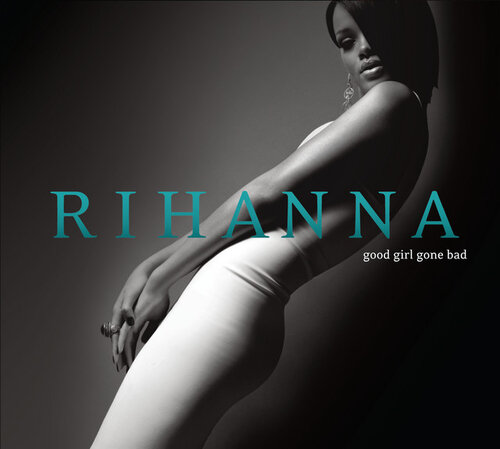
I have overlooked this song when thinking of inspiration for Groovelines. Umbrella is a classic track by Rihanna. Taken from her third studio album, Good Girl Gone Bad (2007). It features JAY-Z (who co-wrote the song with its producers Tricky Stewart and Kuk Harrell). The song was originally offered to Britney Spears, but her label rejected it. To me, Umbrella is one of the best songs of the ‘00s. It is a song that gets into the head with its catchiness, though the lyrics make you think. That idea of shelter and platonic respect and affection. I will end with a Wikipedia section that collates some of the reception that Umbrella was afforded. Beforehand, DAZED marked the tenth anniversary of the worldwide smash:

“In March 2007, the world desperately needed a new, female pop hit. Lady Gaga, Katy Perry, and Kesha were still a year or two from arriving to the party with their fireworks, bad romances, and era-defying anthems, while Britney Spears was in the middle of a highly-publicised breakdown. Beyoncé was going steady, but hadn’t quite crossed over from the more R&B-centric side of pop music into the full-on pop juggernaut she is today. And then there was Rihanna, a Caribbean-diva-in-making who already had the hits, the looks, and the moves, but who lacked that one special song.

Though she was already two albums into her career, Rihanna still hadn’t quite found her musical identity until “Umbrella” came out. She’d had big hits, like the dancehall-inflected “Pon De Replay” and the “Tainted Love”-sampling “SOS” (the latter of which earned Rihanna her first #1), but a lot of her music was dismissed as by-the-numbers ‘urban’ pop filler, and it was hard to see her breaking through into pop’s top tier. Things were, of course, about to change, but it’s interesting to imagine what might have happened had history turned out differently. “Umbrella”, after all, wasn’t originally intended for Rihanna – it was first offered to Britney Spears, whose label famously turned it down.

Lyrically, “Umbrella” was your typical pop metaphor for being supportive, inviting listeners to stand under the singer’s metaphorical umbrella on a rainy day. It could be heard as either a song about love or a song about friendship, making it even more appealing to a big audience – although some more eccentric listeners read a sinister subtext into the lyrics, insisting they’re actually about demonic posession. The lyrics are pretty clunky (the words, “in the dark you can’t see shiny cars” can never be redeemed), but they’re not really important – instead, it’s all about that magical, post-chorus chanting. The “ella-ella-eh-eh-eh” hook may have seemed contrived or repetitive at first, but it quickly grew on listeners. It also clearly foreshadowed the arrival of Lady Gaga’s trademark stuttering syllable-repeating, paving the way for her “rah-mah-mah-ahs” and “pah-pah-pahs”.

Released to US radio on March 24 and as a single on March 29 that year, “Umbrella” topped the Billboard Hot 100 for seven consecutive weeks and turned Good Girl Gone Bad, Rihanna’s third album and one of her finest, into a multi-platinum event, spawning five more singles and a re-released deluxe version the following year. The song brought Rihanna and Jay-Z a Grammy for Best Rap/Sung Collaboration, and was also nominated for Record of the Year and Song of the Year. Meanwhile in the UK, “Umbrella” topped the UK Top 40 chart for ten weeks, with the start of her chart reign oddly coinciding with an unprecedented burst of rainfall and flooding around the country. The same thing happened in New Zealand and Romania, which both experienced violent storms, leading to The Sun newspaper coining ‘the Rihanna curse’ and advising readers to buy sunnier songs in future. Arguably more strange was that Rihanna ended up performing the song at the BRITs with Klaxons – a surreal team-up that’s aged terribly, but which might have made some sense when the UK band were at their critical and commercial peak”.

I am not a massive Rihanna fan, though I do really like Umbrella and the Good Girl Gone Bad album. It is the Pop icon at her absolute peak. Nearly fifteen years after its release, Umbrella still sounds so amazing and fresh. Her bond with JAY-Z on the track is electric.! There have not been many songs since that have matched Umbrella’s swagger and swoon. Maybe those are t6he wrong words. There is a definite sense of confidence working alongside romance and tenderness. Rihanna turns in an amazing performance on the track! MTV also marked a decade of Umbrella in their feature:

“Once “Umbrella” made its way to the airwaves and onto people’s iPods, it stuck. The ubiquitous hit — which went on to earn Rih her first Grammy and her first VMA — shattered download records and even crashed iTunes. It lived on the charts for an entire year, ascending to the top of the Hot 100 just after Memorial Day and holding the No. 1 spot for seven consecutive weeks (it was unseated in July by “Hey There Delilah” by The Plain White T's). “Nothing else came close that summer in terms of weeks at No. 1,” says Bronson. “No question that that song ruled the summer of ’07.”

“Umbrella” represented a sonic evolution for Rihanna, but it also coincided with a whole new look: one that found her shedding her wholesome, island-girl image and opting for sexier styles. “Edgy” became her new norm — she cut her hair into an asymmetrical bob and began performing in leather and latex dresses alluding to bondage.

No part of this was coincidental. She told Billboard in June 2007, “My new look is purposely adult. I did what felt natural.” It was also, she added, simply part of her Good Girl Gone Bad mission statement. “I wanted to show growth as a person and artist. But for me, ‘bad girl’ does not mean ‘wild girl.’ It's more about taking chances, trying new things — visually and musically.”

The launchpad for that visual transformation was the “Umbrella” music video, which premiered on April 26, 2007. Director Chris Applebaum, who also helmed the “SOS” video, told MTV News that Rihanna was “starting to mature and wanting to break out” with “SOS.” That propelled her to continue “pushing boundaries” with “Umbrella,” which he says couldn’t have come at a more opportune time.

“She hadn’t really turned into a big worldwide superstar yet, so she wasn’t self-conscious,” Applebaum explained. “She didn’t have this eye on her that she has now, where your behavior and the statements that you make and the things that you do when you’re a superstar are different than the things that you do beforehand. I think that was Rihanna at a really honest moment. Kind of a little bit scared, a little bit afraid of what people were going to think about her. But also, I think, feeling pretty convinced. She had a small group of people around her that were all like, ‘Do it! Go for it! This is your moment, take advantage of it!’”

That’s exactly what she did. Between the rainstorm of sparks, the stunning choreography, and the showstopping silver body paint, the “Umbrella” video showed off Rihanna’s class, brass, and swagger. Most importantly, though, it defined who she was as an artist.

“There’s something really authentic and genuine about a person who stands up for the first time and says, ‘This is who I am,’” Applebaum says. “And that was a moment in her life that we were able to capture. I feel like that was really what made it special”.

I will leave this with a section regarding how Umbrella was received. There is no doubt in my mind that it is one of the great songs from the past fifteen years. Whether you class it as Pop, R&B or something else, there is no doubt it has a place in musical history. Here is some useful information from Wikipedia:

"Umbrella" received critical acclaim. Andy Kellman of AllMusic commented: "'Umbrella' is [Rihanna's best song] to date, delivering mammoth if spacious drums, a towering backdrop during the chorus, and vocals that are somehow totally convincing without sounding all that impassioned – an ideal spot between trying too hard and boredom, like she might've been on her 20th take." Alex Macpherson of British newspaper The Guardian, "Umbrella" is "evidence" that Rihanna's "strict work ethic is paying off", adding that she "delivers [in the song] an impassioned declaration of us-against-the-world devotion". Tom Breihan of Pitchfork, though he complimented the production, dismissed Rihanna's voice which "takes on an unpleasant icepick edge when she tries to fill the space between the slow-tempo beats", adding that the song is "uncompelling as event-pop, particularly because of the disconnect between Rihanna's cold, clinical delivery and the comforting warmth of the lyrics".

Sal Cinquemani from Slant Magazine wrote "That the song is just plain good, regardless of genre, proves that Jay and Rihanna, who's already scored hits across several formats with a string of singles that couldn't be more different from each other, are dedicated to producing quality hits—however frivolous they may be." Quentin B. Huff of PopMatters.com said that ""Umbrella" is a monster, so much so that I'll even confess to spending a portion of a rainy afternoon practicing the hook." Jonah Weiner of Blender magazine called the song the album's highlight and stated that it "would be far less engrossing if it wasn't for the way Rihanna disassembles its ungainly title into 11 hypnotic, tongue-flicking syllables". The New York Times' Kelefa Sanneh described the song as "a space-age hip-pop song".

I have been playing Umbrella a bit in preparation for this feature. Go and listen to the whole of the Good Girl Gone Bad album and the sort of wave Rihanna was riding back in 2007. The lead single from her incredible third studio album, it is no surprise that Umbrella was such a massive success. The amazing track is definitely…  

AN absolute diamond.

FEATURE: Love You Too: The Beatles’ Revolver at Fifty-Five: Ranking the Tracks

FEATURE:


Love You Too

The Beatles’ Revolver at Fifty-Five: Ranking the Tracks

___________

FANS of The Beatles…

ff.jpg

have debated what their best album is for decades. There was a period when 1967’s Sgt. Pepper’s Lonely Hearts Club Band was king. Abbey Road (1969) has always been in the top-three. For so many fans, there are no finer albums in their cannon than 1966’s Revolver. The album turns fifty-five on 5th August. It was the album that followed Rubber Soul. There was quite a leap between albums. Pushing the studio like never before and introducing more experimentation and psychedelia into the mix, Revolver was accompanied by the double A-side single, Eleanor Rigby/Yellow Submarine. Revolver marked The Beatles' final recording project before their retirement as live performers. It is regarded as one of the greatest and most innovative albums in history. Because of the approaching fifty-fifth anniversary, I am going to rank the album’s fourteen tracks. I have written features before where I have studied the album and chosen the best songs. This is me purely deciding which are the very best of the best – even the songs in the bottom half are magnificent! I am going to rely heavily on the expertise of the Beatles Bible. They provide a good introduction and dig into, perhaps, The Beatles’ greatest release:

“From the ‘one, two, three, four’ ‘Taxman’ count-in through to the climax of ‘Tomorrow Never Knows’, Revolver announced to the world that The Beatles of old were no more. Touring was in the past, the loveable moptops had grown up, and they were free to explore, experiment, and push musical boundaries from within the studio.

Revolver paved the way for The Beatles’ extensive experimentation on ‘Strawberry Fields Forever’, ‘I Am The Walrus’, and Sgt Pepper’s Lonely Hearts Club Band. It is often considered to be the group’s finest body of work, and showed all four members of The Beatles working together, equally, at their creative peak.

This album has taken longer than the others because, normally, we go into the studios with, say, eight numbers of our own and some old numbers, like ‘Mr Moonlight’ or some numbers we used to know, which we just do up a bit. This time, we had all our own numbers, including three of George’s, and so we had to work them all out. We haven’t had a basis to work on, just one guitar melody and a few chords and so we’ve really had to work on them. I think it’ll be our best album yet. They’ll never be able to copy this!

Paul McCartney, 1966

Revolver, The Beatles’ seventh UK long player, was released on 5 August 1966, and three days later in the United States. It ushered in an era in which the group became increasingly interested in exploring production techniques in the studio.

The album was released just before The Beatles’ final US tour in August 1966. None of its songs, however, were performed live. The group considered many of the songs too complex and unsuitable for live performance, during a time in which they were often unable to even hear themselves play above the screams of audiences.

We were really starting to find ourselves in the studio. We were finding what we could do, just being the four of us and playing our instruments. The overdubbing got better, even though it was always pretty tricky because of the lack of tracks. The songs got more interesting, so with that the effects got more interesting.

I think the drugs were kicking in a little more heavily on this album. I don’t think we were on anything major yet; just the old usual – the grass and the acid. I feel to this day that though we did take certain substances, we never did it to a great extent at the session. We were really hard workers. That’s another thing about The Beatles – we worked like dogs to get it right”.

To celebrate fifty-five years of an all-time classic, I have assorted the fourteen tracks in order of quality - or, more accurately, the absolute genius from the mere wonderful! I may do another feature before 5th August that takes a dive into Revolver and the story behind its creation – in addition to how it was perceived and what critical reaction was. Here are my rankings of the tracks from…

ONE of history’s greatest albums.

_____________

14. Love You To

Writing and Recording:

Written by: George Harrison

Recorded: 11th and 13th April, 1966

Producer: George Martin

Engineer: Geoff Emerick

Personnel:

George Harrison: vocals, acoustic guitar, electric guitar, sitar

Paul McCartney: backing vocals, bass

Ringo Starr: tambourine

Anil Bhagwat: tabla

Other musicians: sitar, tambura

Background and Quotation:

“Following the sitar motif on ‘Norwegian Wood (This Bird Has Flown)’, ‘Love You To’ was The Beatles’ first full attempt at recording a piece of music in the classical Indian style.

At the time George Harrison was learning the sitar from Ravi Shankar, who inspired him to learn more about Indian music and Eastern religion.

I wrote ‘Love You To’ on the sitar, because the sitar sounded so nice and my interest was getting deeper all the time. I wanted to write a tune that was specifically for the sitar. Also it had a tabla part, and that was the first time we used a tabla player.

George Harrison” - Beatles Bible

13. Doctor Robert

Writing and Recording:

Written by: Lennon-McCartney

Recorded: 17th and 19th April, 1966

Producer: George Martin

Engineer: Geoff Emerick

Personnel:

John Lennon: vocals, rhythm guitar, harmonium

Paul McCartney: backing vocals, bass

George Harrison: backing vocals, lead guitar, maracas

Ringo Starr: drums

Background and Quotation:

“Lennon later described ‘Doctor Robert’ as an autobiographical song.

Another of mine. Mainly about drugs and pills. It was about myself. I was the one that carried all the pills on tour. Well, in the early days. Later on the roadies did it. We just kept them in our pockets loose. In case of trouble.

John Lennon

All We Are Saying, David Sheff

Although many in London thought the titular doctor referred to art dealer Robert Fraser, it was actually written about Dr Robert Freymann, who ran a discreet clinic on Manhattan’s East 78th Street.

Known as Dr Robert or the Great White Father, Freymann had a reputation for giving vitamin B-12 injections containing large doses of amphetamines, mainly to well-heeled New Yorkers.

Word spread of his willingness with prescriptions, eventually finding its way to Lennon and McCartney on one of their American trips.

John and I thought it was a funny idea: the fantasy doctor who would fix you up by giving you drugs, [the song] was a parody on that idea. It’s just a piss-take. As far as I know, neither of us ever went to a doctor for those kinds of things. But there was a fashion for it and there still is. Change your blood and have a vitamin shot and you’ll feel better.

Paul McCartney

Many Years From Now, Barry Miles” – Beatles Bible

12. I Want to Tell You

Writing and Recording:

Written by: George Harrison

Recorded: 2nd and 3rd June, 1966

Producer: George Martin

Engineer: Geoff Emerick

Personnel:

George Harrison: lead vocals, lead guitar, handclaps

John Lennon: backing vocals, tambourine, handclaps

Paul McCartney: backing vocals, bass, piano, handclaps

Ringo Starr: drums, maracas, handclaps

Background and Quotation:

“The Beatles began recording ‘I Want To Tell You’ on 2 June 1966. Mark Lewisohn’s The Complete Beatles Recording Sessions notes this exchange prior to take one:

Martin: What are you going to call it, George?

Harrison: I don’t know.

Lennon: ‘Granny Smith Part Friggin’ Two’! You’ve never had a title for any of your songs!

‘Laxton’s Superb’ was engineer Geoff Emerick’s idea, a pun on ‘Granny Smith’, the working title of ‘Love You To’.

One really got the impression that George was being given a certain amount of time to do his tracks whereas the others could spend as long as they wanted. One felt under more pressure when doing one of George’s songs.

Geoff Emerick

The Complete Beatles Recording Sessions, Mark Lewisohn” – Beatles Bible

11. I’m Only Sleeping

Writing and Recording:

Written by: Lennon-McCartney

Recorded: 27th and 29th April; 5th and 6th May, 1966

Producer: George Martin

Engineer: Geoff Emerick

Personnel:

John Lennon: vocals, acoustic rhythm guitar

Paul McCartney: backing vocals, bass

George Harrison: backing vocals, lead guitar

Ringo Starr: drums

Background and Quotation:

“The Beatles began recording ‘I’m Only Sleeping’ on 27 April 1966, when 11 takes of the rhythm track were put to tape. John Lennon added his lead vocals two days later.

One of the defining features of ‘I’m Only Sleeping’ is the backwards guitar. This was, in fact, two parts, conceived and performed by George Harrison during a five hour late-night session on 5 May 1966. Harrison first wrote down the notation for the solos he wanted, reversed them, and recorded them twice – one with fuzz effects, and the other unadorned.

The idea for the backwards solos came about after a tape operator accidentally threaded a tape into the machine the wrong way.

It played backwards, and, ‘What the hell is going on?’ Those effects! Nobody knew how those sounded then. We said, ‘My God, that is fantastic! Can we do that for real?’… So that was what we did and that was where we discovered backwards guitar. It was a beautiful solo actually. It sounds like something you couldn’t play.

Paul McCartney

Many Years From Now, Barry Miles” – Beatles Bible

10. Got to Get You Into My Life

Writing and Recording:

Written by: Lennon-McCartney

Recorded: 7th, 8th and 11th April; 18th May; 17th June, 1966

Producer: George Martin

Engineer: Geoff Emerick

Personnel:

Paul McCartney: vocals, bass

John Lennon: rhythm guitar

George Harrison: lead guitar

Ringo Starr: drums, tambourine

George Martin: organ

Eddie Thornton, Ian Hamer, Les Condon: trumpet

Alan Branscombe, Peter Coe: tenor saxophone

Background and Quotation:

“In fact, the song was about marijuana, as McCartney later explained.

‘Got To Get You Into My Life’ was one I wrote when I had first been introduced to pot. I’d been a rather straight working-class lad but when we started to get into pot it seemed to me to be quite uplifting… I didn’t have a hard time with it and to me it was mind-expanding, literally mind-expanding.

So ‘Got To Get You Into My Life’ is really a song about that, it’s not to a person, it’s actually about pot. It’s saying, I’m going to do this. This is not a bad idea. So it’s actually an ode to pot, like someone else might write an ode to chocolate or a good claret.

Paul McCartney

Many Years From Now, Barry Miles

‘Got To Get You Into My Life’ took some time to get right in the studio – the Anthology 2 album has a version from the first day’s recording, 7 April, played on a harmonium and sounding quite different to the final arrangement heard on Revolver.

The next day The Beatles tried a different arrangement, ending up with the rhythm track they settled on. On 11 April they overdubbed a guitar part, but the song remained untouched again until 18 May.

On that day they added the song’s distinctive brass and woodwind parts, plus two lead vocal parts, tambourine and organ” – Beatles Bible

9. Good Day Sunshine

Writing and Recording:

Written by: Lennon-McCartney

Recorded: 8th and 9th June, 1966

Producer: George Martin

Engineer: Geoff Emerick

Personnel:

Paul McCartney: vocals, bass, piano, handclaps

John Lennon: backing vocals, handclaps

George Harrison: backing vocals, handclaps

Ringo Starr: drums, handclaps

George Martin: piano

Background and Quotation:

“Capturing the mood of the gloriously hot summer of 1966, ‘Good Day Sunshine’ kicked off side two of Revolver.

It was really very much a nod to The Lovin’ Spoonful’s ‘Daydream’, the same traditional, almost trad-jazz feel. That was our favourite record of theirs. ‘Good Day Sunshine’ was me trying to write something similar to ‘Daydream’. John and I wrote it together at Kenwood, but it was basically mine, and he helped me with it.

Paul McCartney

Many Years From Now, Barry Miles

‘Good Day Sunshine’ was recorded over two days in June 1966, under the working title ‘A Good Day’s Sunshine’. On 8 June The Beatles rehearsed the track many times before recording the rhythm track – bass, piano and drums – three times.

The first of these takes was the best, and onto it Paul McCartney overdubbed his lead vocals, along with harmonies from John Lennon and George Harrison.

The next day Ringo Starr added more drums, George Martin played his piano solo, more harmonies were added to the ending, and all four Beatles taped handclaps” – Beatles Bible

8. Taxman

Writing and Recording:

Written by: George Harrison

Recorded: 20th, 21st and 22nd April; 21st June, 1966

Producer: George Martin

Engineer: Geoff Emerick

Personnel:

George Harrison: vocals, lead guitar

John Lennon: backing vocals

Paul McCartney: backing vocals, lead guitar, bass

Ringo Starr: drums, tambourine, cowbell

Background and Quotation:

“The song which kicked off Revolver, The Beatles’ 1966 masterpiece, was written by George Harrison and was a bitter attack on Britain’s supertax system.

Inspiration for ‘Taxman’ came after Harrison discovered how much of The Beatles’ earnings went straight to the Treasury.

I had discovered I was paying a huge amount of money to the taxman. You are so happy that you’ve finally started earning money – and then you find out about tax.

In those days we paid 19 shillings and sixpence out of every pound, and with supertax and surtax and tax-tax it was ridiculous – a heavy penalty to pay for making money. That was a big turn-off for Britain. Anybody who ever made any money moved to America or somewhere else.

George Harrison

Anthology” – Beatles Bible

7. For No One

Writing and Recording:

Written by: Lennon-McCartney

Recorded: 9th, 16th and 19th  May, 1966

Producer: George Martin

Engineer: Geoff Emerick

Personnel:

Paul McCartney: vocals, bass, piano, clavichord

Ringo Starr: drums, tambourine, maracas

Alan Civil: horn

Background and Quotation:

“The song was written in March 1966 while McCartney was on holiday with Jane Asher in Switzerland. It was originally called ‘Why Did It Die?’

I was in Switzerland on my first skiing holiday. I’d done a bit of skiing in Help! and quite liked it, so I went back and ended up in a little bathroom in a Swiss chalet writing ‘For No One’. I remember the descending bassline trick that it’s based on, and I remember the character in the song – the girl putting on her make-up.

Occasionally we’d have an idea for some new kind of instrumentation, particularly for solos… On ‘For No One’ I was interested in the French horn, because it was an instrument I’d always loved from when I was a kid. It’s a beautiful sound, so I went to George Martin and said, ‘How can we go about this?’ And he said, ‘Well, let me get the very finest.’

Paul McCartney

Anthology

George Martin wrote down the understated melody that Paul sang to him, and Alan Civil performed it. Always pushing boundaries, Martin and McCartney decided to insert a top note into the score outside the instrument’s normal range.

We came to the session and Alan looked up from his bit of paper: ‘Eh, George? I think there’s a mistake here – you’ve got a high F written down. Then George and I said, ‘Yeah,’ and smiled back at him, and he knew what we were up to and played it. These great players will do it. Even though it’s officially off the end of their instrument, they can do it, and they’re quite into it occasionally. It’s a nice little solo.

Paul McCartney

Anthology” – Beatles Bible

6. Here, There and Everywhere

Writing and Recording:

Written by: Lennon-McCartney

Recorded: 14th, 16th and 17th  June, 1966

Producer: George Martin

Engineer: Geoff Emerick

Personnel:

Paul McCartney: vocals, acoustic guitar, bass, finger clicks

John Lennon: backing vocals, finger clicks

George Harrison: backing vocals, lead guitar, finger clicks

Ringo Starr: drums, finger clicks

Background and Quotation:

“Paul McCartney’s favourite among his own compositions, ‘Here, There And Everywhere’ is often cited as his finest love song.

It was written alongside John Lennon’s swimming pool in Weybridge, while McCartney waited for Lennon to wake up.

I sat out by the pool on one of the sun chairs with my guitar and started strumming in E, and soon had a few chords, and I think by the time he’d woken up, I had pretty much written the song, so we took it indoors and finished it up.

Paul McCartney

Many Years From Now, Barry Mile

‘Here, There And Everywhere’ was particularly highly regarded by Lennon.

Paul’s song completely, I believe. And one of my favourite songs of The Beatles.

John Lennon

All We Are Saying, David Sheff” – Beatles Bible

5. Yellow Submarine

Writing and Recording:

Written by: Lennon-McCartney

Recorded: 26th May; 1st June, 1966

Producer: George Martin

Engineer: Geoff Emerick

Personnel:

Ringo Starr: vocals, drums

John Lennon: backing vocals, acoustic guitar

Paul McCartney: backing vocals, bass

George Harrison: backing vocals, tambourine

Mal Evans: backing vocals, bass drum

Neil Aspinall, George Martin, Geoff Emerick, Pattie Harrison, Brian Jones, Marianne Faithfull, Alf Bicknell: backing vocals

Background and Quotation:

“Released as a double a-side with ‘Eleanor Rigby’, ‘Yellow Submarine’ has become a divisive song among Beatles fans. To many it’s a charming singalong for all ages; for others, it’s one of the band’s weakest moments, and an unnecessary bout of whimsy on the otherwise flawless Revolver.

I don’t actually know where they got the idea for it; I just felt it was a really interesting track for me to do. I’d been doing a lot of covers. At that time I did either covers or something they wrote specifically for me.

Ringo Starr

Anthology

Written by Paul McCartney, ‘Yellow Submarine’ was always intended to be a children’s song. It chimed perfectly with the carefree, nostalgic and childlike attitudes that dominated the burgeoning psychedelic era.

I remember lying in bed one night, in that moment before you’re falling asleep – that little twilight moment when a silly idea comes into your head – and thinking of ‘Yellow Submarine’: ‘We all live in a yellow submarine…’

I quite like children’s things; I like children’s minds and imagination. So it didn’t seem uncool to me to have a pretty surreal idea that was also a children’s idea. I thought also, with Ringo being so good with children – a knockabout uncle type – it might not be a bad idea for him to have a children’s song, rather than a very serious song. He wasn’t that keen on singing.

Paul McCartney

Anthology” – Beatles Bible

4. She Said She Said

Writing and Recording:

Written by: Lennon-McCartney

Recorded: 21st June, 1966

Producer: George Martin

Engineer: Geoff Emerick

Personnel:

John Lennon: vocals, rhythm guitar, Hammond organ

George Harrison: backing vocals, lead guitar, bass guitar

Ringo Starr: drums, shaker

Background and Quotation:

“The final track recorded for Revolver, ‘She Said She Said’ was inspired by an LSD-influenced conversation between John Lennon and actor Peter Fonda.

During The Beatles’ US tour in the summer of 1965, they rented a house in Los Angeles’ Mulholland Drive. On 24 August they played host to Roger McGuinn and David Crosby of The Byrds, and the two parties, apart from Paul McCartney, spent the day tripping on LSD.

The actor Peter Fonda arrived at the house, also on acid. He attempted to comfort Harrison, who thought he was dying.

I told him there was nothing to be afraid of and that all he needed to do was relax. I said that I knew what it was like to be dead because when I was 10 years old I’d accidentally shot myself in the stomach and my heart stopped beating three times while I was on the operating table because I’d lost so much blood.

John was passing at the time and heard me saying ‘I know what it’s like to be dead’. He looked at me and said, ‘You’re making me feel like I’ve never been born. Who put all that shit in your head?’

Peter Fonda” – Beatles Bible

3. Tomorrow Never Knows

Writing and Recording:

Written by: Lennon-McCartney

Recorded: 6th, 7th and 22nd April, 1966

Producer: George Martin

Engineer: Geoff Emerick

Personnel:

John Lennon: vocals, organ, tape loops

Paul McCartney: lead guitar, bass guitar, tape loops

George Harrison: guitar, sitar, tambura, tape loops

Ringo Starr: drums, tambourine, tape loops

George Martin: piano

Background and Quotation:

“‘Tomorrow Never Knows’, the monumental closing track on Revolver, was also the first song to be recorded for the album.

While the title, like ‘A Hard Day’s Night’, was a Ringoism particularly liked by John Lennon, the lyrics were largely taken from The Psychedelic Experience, a 1964 book written by Harvard psychologists Timothy Leary, Ralph Metzner, and Richard Alpert, which contained an adaptation of the ancient Tibetan Book of the Dead. 

Lennon discovered The Psychedelic Experience at the Indica bookshop, co-owned by Barry Miles. On 1 April 1966 Lennon and Paul McCartney visited the bookshop.

John wanted a book by what sounded like ‘Nitz Ga’. It took Miles a few minutes to realise that he was looking for the German philosopher Nietzsche, long enough for John to become convinced that he was being ridiculed. He launched into an attack on intellectuals and university students and was only mollified when Paul told him that he had not understood what John was asking for either, and that Miles was not a university graduate but had been to art college, just like him. Immediately friendly again, John talked about Allen Ginsberg and the Beats, laughing about his school magazine the Daily Howl: ‘Tell Ginsberg I did it first!’ Miles found him a copy of The Portable Nietzsche and John began to scan the shelves. His eyes soon alighted upon a copy of The Psychedelic Experience, Dr Timothy Leary’s psychedelic version of the Tibetan Book of the Dead. John was delighted and settled down on the settee with the book. Right away, on page 14 in Leary’s introduction, he read, ‘Whenever in doubt, turn off your mind, relax, float downstream.’ He had found the first line of ‘Tomorrow Never Knows’, one of the Beatles’ most innovative songs.

Many Years From Now

Barry Miles” – Beatles Bible

2. And Your Bird Can Sing

Writing and Recording:

Written by: Lennon-McCartney

Recorded: 20th and 26th April, 1966

Producer: George Martin

Engineer: Geoff Emerick

Personnel:

John Lennon: vocals, rhythm guitar, handclaps

Paul McCartney: backing vocals, lead guitar, bass, handclaps

George Harrison: backing vocals, lead guitar, handclaps

Ringo Starr: drums, tambourine, handclaps

Background and Quotation:

“Like ‘Rain’, ‘And Your Bird Can Sing’ hinted at knowledge denied to all but the enlightened, showing the influence of LSD. It is also likely that the oblique lyrics were an attempt at writing something akin to the wordplay of Bob Dylan, whose songs Lennon greatly admired.

Lennon was later dismissive of ‘And Your Bird Can Sing’, describing it as “a horror” and “throwaway”. Paul McCartney claims to have helped Lennon write the song.

‘And Your Bird Can Sing’ was John’s song. I suspect that I helped with the verses because the songs were nearly always written without second and third verses. I seem to remember working on that middle eight with him but it’s John’s song, 80-20 to John.

Paul McCartney

Many Years From Now, Barry Miles

‘And Your Bird Can Sing’ was the theme song for The Beatles’ US cartoon series during its third season.

On 20 April 1966 The Beatles recorded two takes of ‘And Your Bird Can Sing’, beginning with a rhythm track of guitars and drums. They then overdubbed three lead vocal tracks from John Lennon, harmonies from Paul and George, and tambourine and bass.

This version of the song was rejected, but was eventually released – complete with hysterical laughter from John and Paul – on Anthology 2” – Beatles Bible

1. Eleanor Rigby

Writing and Recording:

Written by: Lennon-McCartney

Recorded: 28th and 29th April; 6th June, 1966

Producer: George Martin

Engineer: Geoff Emerick

Personnel:

Paul McCartney: vocals

John Lennon: harmony vocals

George Harrison: harmony vocals

Tony Gilbert, Sidney Sax, John Sharpe, Jurgen Hess: violin

Stephen Shingles, John Underwood: viola

Derek Simpson, Norman Jones: cello

Background and Quotation:

“Eleanor Rigby’, which originally appeared on the Revolver album and on a double a-side single with ‘Yellow Submarine’, is justifiably held as a one of The Beatles’ truly timeless compositions.

I don’t like supposing that somebody like Jesus was alive now and pretending and imagining what he’d do. But if he was Jesus and he held that he was the real Jesus that had the same views as before – well, ‘Eleanor Rigby’ wouldn’t mean that much to him.

John Lennon, Chicago Press Conference, 11 August 1966

Anthology

Paul McCartney came up with the initial idea in the music room in the basement of Jane Asher’s family home in Wimpole Street, London.

I wrote it at the piano, just vamping an E minor chord; letting that stay as a vamp and putting a melody over it, just danced over the top of it. It has almost Asian Indian rhythms.

Paul McCartney

Many Years From Now, Barry Miles

As with ‘Yesterday’ before it, McCartney didn’t have lyrics at first, and improvised sounds and words to fill the lines. An early version was heard by musician Donovan at his flat in London’s Maida Vale.

One day I was on my own in the pad running through a few tunes on my Uher tape recorder. The doorbell rang. It was Paul on his own. We jammed a bit. He played me a tune about a strange chap called ‘Ola Na Tungee’.

‘Ola Na Tungee/Blowing his mind in the dark/With a pipe full of clay/No one can say.’

Donovan

Many Years From Now, Barry Miles” – Beatles Bible

FEATURE: A Buyer’s Guide: Part Sixty-Five: Robyn

FEATURE:


A Buyer’s Guide

www.jpg

Part Sixty-Five: Robyn

___________

IN this A Buyer’s Guide…

d.jpg

I am eager to explore the essential albums from Robyn (Robin Miriam Carlsson). Just before getting to that, I want to drop in some biography from Wikipedia:

“Robin Miriam Carlsson (born 12 June 1979), known as Robyn is a Swedish singer, songwriter, record producer and DJ.[8] She arrived on the music scene with her 1995 debut album, Robyn Is Here, which produced two US Billboard Hot 100 top-10 singles: "Do You Know (What It Takes)" and "Show Me Love". Her second and third albums, My Truth (1999) and Don't Stop the Music (2002), were released in Sweden.

Robyn returned to international success with her fourth album, Robyn (2005), which brought a Grammy Award nomination. The album spawned the singles "Be Mine!" and the UK number one "With Every Heartbeat". Robyn released a trilogy of mini-albums in 2010, known as the Body Talk series. They received broad critical praise, three Grammy Award nominations, and produced three top-10 singles: "Dancing On My Own", "Hang with Me" and "Indestructible". Robyn followed this with two collaborative EPs: Do It Again (2014) with Röyksopp, and Love Is Free (2015) with La Bagatelle Magique. She released her eighth solo album Honey in 2018 to widespread acclaim”.

I have not heard whether Robyn is following up Honey anytime soon. There will be a lot of demand for a ninth studio album, as she is one of the most consistent and incredible artists. Since her 1995 debut, the Stockholm-born artist has released such an incredible array of albums. I am recommending the four essential, the underrated gem and her latest studio album. There is a caveat, in the sense that few of Robyn’s albums are available on vinyl. She also released two ‘mini-albums’ – Body Talk Pt. 1 and Body Talk Pt. 2 -, that I am including as albums. Robyn released Body Talk: a combination of the best tracks from the two later that year (all three arrived in 2010). I am making quite a few exceptions for this outing. For the next A Buyer’s Guide, I am going to include an artist where there is a book available about them – I could not find a Robyn-related book. Here are the essential albums…

FROM the wonderful Robyn.

___________________

The Four Essential Albums


Robyn Is Here

ss.jpg

Release Date: 13th October, 1995

Labels: Ricochet/Ariola/BMG

Producers: Anders Bagge/Christian Falk/Ghost/Max Martin/Denniz Pop/Harry Sommerdahl

Standout Tracks: You've Got That Somethin'/Just Another Girlfriend/Do You Really Want Me (Show Respect)

Buy: https://www.discogs.com/sell/list?master_id=45736&ev=mb

Stream: https://open.spotify.com/album/5OvepfQiCFMCzML6fTgrBW?si=WYGL8gzSRnWvefy-VqqpVg&dl_branch=1

Review:

“So front-loaded it could almost be a vinyl album with a hot side and a cool side, only since the singer is 17 call them perky and caring. Positioned at four and six, the Max Martin-aided "Show Me Love" and "Do You Know (What It Takes)" are key, but without Robyn and her boys' "Bumpy Ride," "You've Got That Somethin'," and "The Last Time" at one, three, and five you wouldn't listen twice. Then, a few spins in, you notice a hint of velvet in her timbre‑-more like suede, really‑-that suggests not sensuality but emotional depth. Which in turn makes the orchestrated popsongs about romantic responsibility sound thoughtful rather than mawkish. Too bad she'll turn 21 like every other teen idol” – MSN Music (Expert Witness)

Choice Cut: Do You Know (What It Takes)

My Truth

Release Date: 17th May, 1999

Label: BMG Sweden

Producers: Christian Falk/Internal Dread/Cherno Jah/K-Fam/Lindström & Ekhé/Billy Mann/Masters at Work/Robyn/Thomas Rusiak

Standout Tracks: Play/My Only Reason/My Truth

Buy: https://www.discogs.com/sell/release/164910

Stream: https://open.spotify.com/album/3zDtIn6e06q49DbBPI6JUr?si=P3yUN_NORuKY4pvTkmNn_w&dl_branch=1

Review:

“Despite a string of big hits and platinum sales for her debut, Robyn's sophomore effort was never even released in America. Her U.S. record company feared that the record would fail to connect with pop radio, and Robyn, who co-wrote every track, refused to compromise her artistic vision. In the resultant struggle the album was lost, although it was another hit in her native Sweden. Listening to the record, you can understand why the record company was nervous. At the same time, though, it's hardly a radical departure from Robyn Is Here. Indeed, in many ways it's a step forward. While that album was bogged down in filler and samey production, this album is much more organic and mature. There are no truly weak moments. There is a greater focus on the lyrics, which are generally intelligent and introspective. This is not to say that Robyn transformed herself into Lisa Loeb; lead single "Play" is as playful a song as she's ever recorded. Other highlights include the funky "Main Thing" and the distinctive, minimal "Electric." The main problem with the album is that the hooks just aren't as instant or irresistible as those of "Show Me Love" and "Do You Know?" It takes several listens for the songs to really sink in, which could have spelled death among the fast, disposable sounds of pop radio in 1999. Also, the album has a uniformity of sound that can make some songs drift in and out without really making any impression. Record executives may also have been nervous about songs such as "Giving You Back" and "88 Days," which deal with Robyn's guilt over a youthful abortion. Not a commercial blockbuster then, nor a perfect listen, but this album does mark an important step forward for Robyn as an artist, and should be of interest to any fans of her later work” – AllMusic

Choice Cut: Play

Robyn

didfiudf.jpg

Release Date: 29th April, 2005

Label: Konichiwa

Producers: Klas Åhlund/Patrik Berger/Kleerup/The Knife/Johan Liljedah/lTeddybears/Fabian ‘Phat Fabe’ Torsson

Standout Tracks: Be Mine!/Who's That Girl/Crash and Burn Girl

Buy (pre-order): https://www.roughtrade.com/gb/robyn/robyn-rsd

Stream: https://open.spotify.com/album/5pnQHnJrmEo8WMgkBFJ1KG?si=esvFt3i4Q46nPQZhYvoERA&dl_branch=1

Review:

“If there were any justice, the divas who’ve been trading off the No. 1 slot — Mariah, Madonna, and newcomer Leona Lewis — would also be slugging it out with a platinum-blond dark horse from Scandinavia. Enter Sweden’s Robyn, who arrives Stateside with Robyn, an album that’s a veritable parade of Songs of the Summer.

After landing a few mediocre teen-pop hits in the ’90s (namely ”Show Me Love”), she’s forsaken her white-soul dullness for hooky dance-pop greatness with help from electro-favoring fellow Swedes like the Teddybears and the Knife. From the girly hip-hop of ”Konichiwa Bitches” to the Eurodisco defiance of ”With Every Heartbeat,” she’s developed a real backbone to go with that asymmetrical ‘do. Not since Pink’s M!ssundaztood has an easily dismissed young thrush made so unexpected a leap to career artist.

That comparison starts with Robyn’s first single, ”Handle Me” — a less nasty but even hookier version of Pink’s lounge-lizard-repelling ”U + Ur Hand.” But she hardly sticks to playing a tough cookie: The next song, ”Bum Like You,” offers an amusing, knowing lesson in How to Fall for a Jerk 101. Meanwhile, in the pensive, timbales-‘n’-synths-driven ”Who’s That Girl,” Robyn decries her guy’s impossible standards. ”Good girls are pretty, like, all the time,” she sings. ”I’m just pretty some of the time.” Her album, however? Fantastic all of the time. A” – Entertainment Weekly

Choice Cut: Handle Me

Body Talk

hh.jpg

Release Date: 22nd November, 2010

Label: Konichiwa  

Producers: Jocke Åhlund/Klas Åhlund/Patrik Berger/Diplo/Douster/Kleerup/Max Martin/Niggaracci/Röyksopp/Savage Skulls/Shellback

Standout Tracks: Indestructible/Hang with Me/Call Your Girlfriend

Buy: https://www.discogs.com/sell/list?master_id=291012&ev=mb

Stream: https://open.spotify.com/album/0le9TO3kU69m6iWHTjNs9Y?si=SZF-hIj8RqeS_F47TyhA6Q&dl_branch=1

Review:

“What sets Robyn apart from her contemporaries is the three-dimensional complexity of her character, and all sides are on display here. There's plenty of don't-fuck-with-me attitude in the icy electro-throb of "Don't Fucking Tell Me What to Do", which introduces a shit-talking heroine who may be flawed but won't be anyone's pawn. And with production by Diplo, the mock-outrageous Jamaica homage "Dancehall Queen" proves she's not kidding. But she's also sensitive enough that, during one of Body Talk's most inspired moments-- the soaringly tuneful electro-pop ballad "Call Your Girlfriend"-- she tells her boyfriend exactly how to break it off with the other woman to inflict the least emotional damage.

However, the highlight from this Year of Robyn remains the gorgeous "Dancing on My Own". What's especially remarkable is that there was any room for improvement: The track appears here as an amped-up "radio remix" with bonus synths giving the lovelorn chorus an extra wallop. But then again, Robyn is a master of re-invention: "Indestructible" and "Hang With Me" were first released as emotive acoustic ballads, and later given revved-up Eurodisco overhauls that ramped up the intensity without sacrificing an ounce of their bittersweet charm. Those are the versions included here, and both lend further ammunition to Body Talk's already military-grade stockpile.

Robyn's willingness to experiment with album conventions may feel like an ingenious gimmick, but there's no artifice to the desire for human connection that underlies her vocal quiver and party-starting kickdrums. She communicates heartbreak so convincingly that some of her most devoted fans actually wonder online about her presumed loneliness. She also attacks the charts from the fringes. She explores the fringes from the charts. She should be universal. So why isn't she? With Body Talk, Robyn ups the ante for pop stars across the radio dial and raises her own chances of appearing on yours. And for all her three-album talk, she never forgets that cardinal rule of showmanship: Always leave them wanting more” – Pitchfork

Choice Cut: Dancing on My Own

The Underrated Gem


Body Talk Pt. 2

Release Date: 6th September, 2010

Label: Konichiwa  

Producers: Klas Åhlund/Diplo/Kleerup/Niggaracci/Savage Skulls

Standout Tracks: In My Eyes/Love Kills/We Dance to the Beat

Buy: https://www.discogs.com/sell/list?master_id=273176&ev=mb

Stream: https://open.spotify.com/album/77jvaKjAJW0O7c3QLSq1ne?si=fiHKCfE6TgeYwSt7iswRcg&dl_branch=1

Review:

“Almost every track on Robyn’s Body Talk Pt. 1 sounded like a smash single; in fact, most of them were released promotionally in one form or another. On the contrary, the second installment in the trilogy feels like it’s filled with album tracks—albeit album tracks from a pretty fucking fantastic album. “We Dance to the Beat” is sick, a sister song to the even more irreverent “Don’t Fucking Tell Me What to Do,” and “Love Kills” would be a highlight even on Pt. 1. But as a standalone album, Body Talk Pt. 2 is a minor letdown following the near-perfection of its predecessor.

Producer Klas Åhlund once again does most of the heavy lifting here, while Diplo handles “Criminal Intent,” which nearly curdles due to its cheesiness but is saved by a vocal performance that is just the right ratio of sass and cute. In a just world, the Snoop Dogg collaboration “U Should Know Better” would out-spin Katy Perry and Doggy Dogg’s “California Gurls” on U.S. radio, but it’s tempting to retract that endorsement solely for the repeated paraphrasing of the Maya Angelou quote “When you know better, you do better.” Kleerup’s contribution, “In My Eyes,” is good, but it pales in comparison to Pt. 1‘s “Dancing on My Own,” which, though produced by Patrik Berger, was a far better successor to Kleerup’s own “With Every Heartbeat.” There’s a danger that by the time the final installment of Body Talk drops, the formula is going to sound a little stale. If the series is a three-course meal (to continue the metaphor from my review of Pt. 1), none of them should taste like leftovers.

Luckily, I’m a music critic, not a food critic, and Pt. 2 is further evidence that Robyn is still one of the most consistently innovative major-label pop artists working today. One novel aspect of the Body Talk project (in addition to its staggered release, of course) is the introduction of a track from the following chapter in the series by way of an acoustic version of the song. Here, “Hang with Me”—presented with just piano, strings, and vocals on Pt. 1—is given the full-on disco-pop treatment, and the orchestral rendition of “Indestructible” that closes Pt. 2 will presumably be reprised in similar fashion. If the acoustic version of the song is any indication, the forthcoming “four to the floor” mix is likely to match or even surpass both “With Every Heartbeat” and “Dancing on My Own” for sheer emo power in Robyn’s increasingly impressive canon” – SLANT

Choice Cut: Hang with Me

The Latest Album


Honey

Release Date: 26th October, 2018

Labels: Konichiwa/Island/Interscope

Producers: Joseph Mount/Klas Åhlund/Mr. Tophat/Adam Bainbridge/Robyn

Standout Tracks: Missing U/Between the Lines/Ever Again

Buy: https://www.discogs.com/sell/list?master_id=1443747&ev=mb

Stream: https://open.spotify.com/album/0CQ68SLY0B5e6L1rn8jfkc?si=0ImDhUQHQM6Dt1QCeUhGnA&dl_branch=1

Review:`

“Honey’s centrepiece may be Because It’s in the Music, a track that feels like the inverse image of Dancing on My Own, in which music offers no sense of escape or release: “I’m right back in that moment and it makes me want to cry,” she sings. The melody has the potential to feel anthemic, but it doesn’t, because the sound is weirdly fractured. The signifiers of euphoria – disco strings, tingle-inducing electronic shimmers, a lovely synth motif not a million miles removed from Ryuichi Sakamoto’s Forbidden Colours – never quite connect with each other: they’re scattered throughout the track and feel oddly lonely.

This track is also, pleasingly, the negative image of Scott’s cover of Dancing on My Own, a single that implied a song’s real gravitas and impact can only truly be revealed if you perform it in traditional, “authentic” singer-songwriter style. But, like the rest of Honey, Because It’s in the Music is a track on which the gravitas and impact comes as much from the way it manipulates the sonic palette of modern pop as the lyrics or melody. Whether the album ends up exerting the kind of influence over the Top 40 that her earlier releases did seems questionable – it feels almost too opaque and inward-looking for mass appeal. As evidence of a unique artist pursuing a personal vision in a world filled with the commonplace, however, Honey is perfect” – The Guardian

Choice Cut: Honey

TRACK REVIEW: Amyl and The Sniffers - Security

TRACK REVIEW:


Amyl and The Sniffers

s.jpg

PHOTO CREDIT: Jamie Wdziekonski 

Security


9.6/10


The track, Security, is available from:

https://www.youtube.com/watch?v=j5DZA2NLYis

GENRES:

Alternative/Indie/Pub Rock

ORIGIN:

Melbourne, Australia

aa.jpg

The album, Comfort to Me, is available from 10th September. Pre-order here:

https://amyl-and-the-sniffers.myshopify.com/

LABEL:

B2B Records

TRACKLISTING:

Guided by Angels

Freaks to the Front

Choices

Security

Hertz

No More Tears

Maggot

Captial

Don’t Fence Me In

Knifey

Don’t Need a Cunt (Like you to love me)

Laughing

Snakes

__________

THIS is a band…

ee.jpg

 PHOTO CREDIT: Charles Engelken for DIY

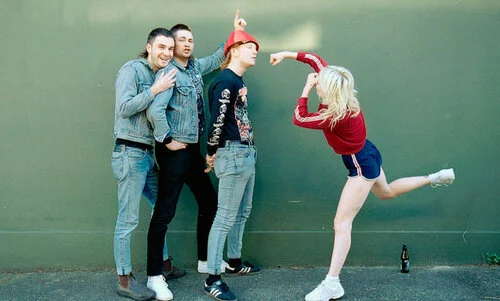
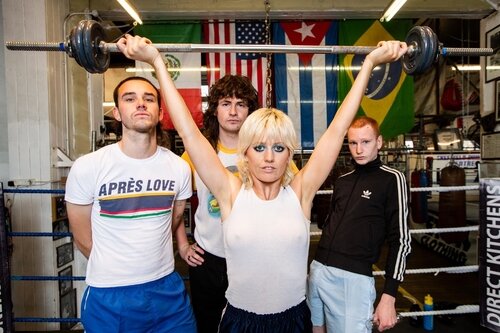
that I have been meaning to review for a while now. Amyl and The Sniffers consist of Amy Taylor, Bryce Wilson, Dec Martens and Gus Romer (formerly Calum Newton was in the band). Hailing from Melbourne, this is a rare chance for me to review an Australian band. Not that there is a scarcity of great Australian talent: the country is producing some amazing talent. I think the media do not pay as much attention to the country as they do the U.K. and U.S. That is a shame! Even though Amyl and The Sniffers come from Melbourne, they are an international band who have a big fanbase in the U.K. The band have spent time recording in the U.K. and performed here a bit. I am going to focus for a bit on their lead, Amy Taylor. Before that, it is worth highlighting Amyl and The Sniffers’ creative process. For this, I am bringing in an interview CLASH produced in 2019:

“Singer Amy Taylor writes lyrics live in the rehearsal room, while Declan and drummer Bryce Wilson hammer out lean pop-punk riffs that manage to be both incendiary and uncannily danceable. They have this one song about having a pushbike stolen, and I wonder how it came about.

“Nobody’s bike actually got stolen,” recalls Declan. “That never happened. There’s a band back in Melbourne, mates of ours, called WOD. The singer of WOD ripped off the bass player’s girlfriend’s haircut, like, just straight up copied her look, and then wrote a fucken song called ‘I Stole Your Haircut’."

aaa.jpg

 "They changed it to 'Bike' because they thought it would work better I guess, and we thought it would be funny to write a response.”

Apparently the whole poppers-name thing does raise the odd eyebrow when going through customs, especially in more drug-paranoid places like the USA.

“But, like my mum always says,” begins Declan, adorably, “If they let a band called ‘Megadeth’ in then they should absolutely let Amyl & the Sniffers in.”

And by the way, if any poppers manufacturers are thinking of endorsing the band: “Absolutely, if you give us a million bucks each. I’d probably be the face of poppers for a few hundred, to be fair.”

They’re having fun on their adventures, that much is clear.

“We’re always the worst people in the room. We’re always the loudest, the drunkest. Our tour manager especially is an absolute nuisance. A rascal. He sprays us with beer, and like, always eats more food than anybody. Like, more than whole other bands put together."

So they're keeping it real. “We’re just doing what we used to do back home in Australia, at the pub, but with more encouragement.”

As we finish chatting, and as I sense we’re getting on quite well, I tell Declan Martens my favourite joke about Australian people. Basically: What’s the difference between Australia and a glass of milk? If you leave a glass of milk out for a bit it’ll develop a culture”.

drr.jpg

In Amy Taylor, we have this incredible lead that is a fireball of energy, anger and personality! One of my concerns is that, in this modern age, we do not really have these band leaders who are controversial or have that magnetism. Once was the time when one would find these figures with ease. Now, because I think music is more sanitised and the scene has changed so much, it is very rare. Taylor is definitely someone who has the spirit of Punk running through her veins. In 2019, Oyster spoke with Taylor. They asked her about Punk, and how music sort of came into her life:

“Amy Taylor is everything I wish I was. She has bleached hair and her mouth is always open. She takes up space and doesn’t apologise. She stands in front of people and screams from the soft centre of her heart and the angry pit of her stomach. And then she lands a Gucci campaign. As the frontwoman of one of Australia’s favourite young bands of the moment, Amyl and the Sniffers, she relentlessly demands beer, power and “to be treated right”. In our interview, however, she demands nothing. She talks honestly, ripe with contradiction, says she isn’t “heaps smart” (arguable!), and details the band’s self-titled debut album, which has been punching all of us in the head since its release in May.

ss.jpg

 Hayley Morgan: Is punk fantasy for you? I mean, when you were growing up did you see it as a sort of place where you could go and be exactly who you wanted to be?

Amy Taylor: That’s hard to answer because I’m not sure that there’s just one meaning of punk — it’s subjective, I reckon. For one person, it could just be a genre; for another, it’s rebelling against the government; for another, it’s the way they dress; for another, it’s staunch activism. It really can mean anything and it depends on who’s looking at it. I’m like a lot of people and I’m in a constant limbo of thinking nothing matters. As in: live free, do what you want, we’re all gonna die, so what does it matter anyway? Which is true, but on the other hand, I have the need to help people who have it worse than me, or who are getting fucked over worse than me. The world’s really crazy. But, to answer that, and it’s obviously just my opinion, I reckon the world can be anything extended from your mind. I think legit anything and everything is a fantasy — everything is a choice and just thoughts. That’s true to me at the moment anyway. I mean, the whole world is like a scam, or a fantasy, like a video game or something. I definitely think the music scene and going to live gigs was one of the places where I could be me. It’s a social setting, but you don’t have to talk to anyone. Everyone’s there for a common reason and has something in common, so there’s a connection, but you don’t have to be a certain way. You can just be as you feel and the energy of a song can let you be you. I’m influenced by a lot of different genres and different things, and what I love and what I want to be is always changing. So, it probably isn’t singularly punk music that has been a place for that, but it’s 100% one of them.

eee.jpg

PHOTO CREDIT: Matilda Hill-Jenkins 

What do you reckon it was about your upbringing that opened the gates to music? What gave you the guts to get up in front of a crowd and belt out what you’re feeling?

I don’t really know. It’s not like I was always confident — I couldn’t have done it when I was in high school. I first got into going to shows when I was about 14. There wasn’t much to do in the town where I grew up, other than go to the beach, which was nice, but I went to a hardcore all-ages show or some shit and I loved the anger and energy, and I was attracted to the violence. It scared me and also made me really excited. I’ve always felt comfortable just doing things that I like or wearing shit I like. I just felt comfortable being me — sometimes more than others and other times I feel like a fucking wanker. But when we started, especially around the boys in the band, it never crossed my mind what other people would think and I liked the challenge of trying something new. And, to be honest, it just doesn’t scare me. I really don’t give a shit if I make a mistake — I think mistakes are magic. It’s just nice to express energy, and I love music so it’s not really something that crossed or crosses my mind. That’s something I was never taught.

Would you say that being onstage grants you permission to do or say stuff that you normally wouldn’t?

Sometimes. I’m not heaps smart, but the music world and touring world has taught me a lot of shit. So because I know more, I’ll say more, whereas if I don’t know, I try to keep my mouth shut. I definitely feel powerful onstage — when I first started, and we’d play to not many people, it was sick. I could just nick someone’s beer and they wouldn’t complain. But I think saying stuff on stage is the same as talking behind someone’s back — you should always be able to say it to someone’s face. Anything I do onstage, I would want to feel just as confident to do it offstage. Not that I always do. I’m only one person in the end.

 PHOTO CREDIT: Charles Engelken for DIY 

I ask this not looking for a feminist pull quote, but rather looking for a positive update: is being a woman in punk, onstage and in a crowd, still a bit shit?

Hmm, you know what? Sometimes it is, sometimes it isn’t. Again, it’s never something that crossed my mind before I started and I never really let it get to me. I don’t give my energy to any of that shit. I don’t think you can control what people say or do or think. I think leading by example is better. I just focus on what I want to be doing and how I want it to look. I love taking up space with my femininity. But at the same time, I’ve definitely punched a few blokes for being too handsy while we’re playing, and people definitely talk shit all the time, but why would I give that power? There’s plenty of space for everyone and, even if not, I’ll still exist. Willie Nelson wore a shirt once that said: ‘Why teach a pig how to sing? You’ll annoy the pig and waste your time’”.

I am keen to bring in more interviews that spotlight Taylor, as she is someone who is compelling and always great value. Someone very honest and without a filter – in a good way -, you get this very genuine person who reminds one of those band leads who were filled with personality and punch. As I said, one does not really see it much now. One can tell that Amyl and The Sniffers are going to be around for a long time yet.

 PHOTO CREDIT: Matilda Hill-Jenkins for Loud and Quiet

I think the authenticity we see in Amy Taylor comes from her upbringing. By all accounts, she had a very ordinary childhood. A very working-class background. When Loud and Quiet chatted with Amy Taylor a couple of years back, she revealed (among other things) details about her childhood, how the band clicked, and what drew her to Punk:

“I don’t know how to say this without coming across like a bit of a dickhead, but my family are like, really Western Suburbs. Even though we lived in a really hippy spot, we were all about beers and cars. Basically, we were ‘us’ if you know what I mean?

My dad is a crane driver, so he gets to work all over. When we were kids, he used to work the tip, and I remember him bringing back all this cool shit; like stuff that he found in the skips or whatever. Mostly it was just random shit like couches, but I can remember him bringing back some really cool stuff like bikes and whatever. One time he brought home a billy cart, which was really fun, and I can kind of remember him bringing home a big carton of out of date Coca Cola for some reason.

My dad loves old cars, so our lives revolved around eating ice-cream and looking at fucking muscle cars, which, to be fair, I really loved growing up. I think that seeped into my parents’ music taste. I mean, they both have a great taste in music, but they’re not music nerds or anything like that. Mostly they buy records with titles like ‘20 of the best beer songs’. Y’know, like the ones with a picture of a beer can on the front that’s just old rock, like KISS and Toto and what have you.

I moved there when I was 18 or 19 or whenever and I absolutely love living there. I don’t get to be there all that much these days, but whenever I’m back home in Australia I try to spend a least a couple of days there. There’s always plenty of really good up and coming bands to check out and plenty of people who are up for fucking about and playing music.

When we first started, we all lived in the same house together. The boys all played in other bands, but one night, as I had a drum kit in my room for some reason, we started fucking around making music, and our group has started from there.

I think that’s why I’ve always been attracted to punk. I can remember the feeling of finding this space where you were allowed to be really gnarly and shit, and being like, ‘oh shit, this is what I need’. I mean, playing live lets me get this aggression out of me.  Don’t get me wrong, I try to treat everyone with respect – like give people the benefit of the doubt or whatever – but if people are being an arsehole, I don’t kind of see it as fun. It opens up a new avenue for a bit of rage”.

rrr.jpg

 PHOTO CREDIT: Charlie Hardy

One interesting thing I want to bring up is what it is like interviewing Amyl and The Sniffers. It is not only their leader who keeps you on your toes and makes for a memorable interviewee. The entire band seem to be pretty rowdy and boisterous! HAPPY caught up with the band in 2019. It is perhaps unspringing that, as a pub band, they do not have the same routine and discipline as other groups. It appears that there is no limit to their stamina and energy levels! This passage from the interview caught my eye:

“At about 2:15pm, drummer Bryce Wilson and guitarist Dec Martens met me out the front of the pub with a pack of Tooheys longnecks in hand. We sat on the side of the road with our longies, chatting about their Sydney gig from the night before.

After a huge set at Sydney’s Paddington RSL with C.O.F.F.I.N and Dress Up, Dec and Bryce slept in the hallway of their hotel, while vocalist Amy Taylor and bassist Gus Romer continued partying with the other bands.

10 minutes or so later, two Ubers pulled up outside The Unicorn. From them emerged the remaining two members of Amyl & The Sniffers, two members of C.O.F.F.I.N, and three members of Dress Up. None of them had slept, and they were all still pissed”.

ssa.jpg

 PHOTO CREDIT: Jenn Five for DIY

I am going to work my way forward to the new song, Security. It is from their upcoming second album, Comfort to Me. I will be interested to see what the album is like and whether it is a push away/evolution from their debut – or whether the template it roughly the same. In the space of a few years, Amyl and The Sniffers have strengthened and progressed. Coming back to that interview from Loud and Quiet, Amy Taylor looked back in a sort of amazement at the fact the band, on their first E.P. or two, were very different to what we hear today:

“Based in Melbourne, her band have emerged from Australia’s east coast fertile punk scene with a love of hot pants, mullets, faded metal t-shirts and a sound that sits somewhere between AC/DC, The Runaways and Dolly Parton. However, while the band’s fashion sense and musical influences might recall the low-rent thrills of the 1970s pub rock scene, Amyl and The Sniffers mostly blow through any misplaced nostalgia with a Ramones-like commitment to playing punk rock that is loud, fast and razor sharp.

Due to release Monsoon Rock, their debut album, on Rough Trade in May, Taylor is the first to admit that the band is currently in the middle of a transitional period. Writing, self-recording and releasing 2016’s Giddy Up EP in the space of 12 hours, they’re trying to take a little bit more time in the studio these days. Then again, if the recently released title track is anything to go by all the added tea breaks have done nothing to dull the band’s relentless, breakneck energy.

“It’s kind of funny to listen to that first EP now,” laughs Taylor when we talk about how the band has developed from their first few releases. “I mean, I know it’s only been a couple of years but we couldn’t even play our instruments properly when we started. It’s crazy to think how far we’ve come”.

As things are opening up more and we are seeing artists gig again, Amyl and The Sniffers will have a busy diary! It has been pretty hectic for them since they started out. This DIY interview struck me, as we get a portrait of a very immediate and youthful band who, seemingly, have few boundaries. That is something that makes them so engaging and fresh. However, there is great discipline in the camp. Even though the interview was conducted in 2019 (as many I am sourcing from were), they have grafted hard to get where they are:

“2018 was essentially one non-stop tour for the band, travelling to the other side of the world and back to capitalise on the early hype of their EPs. The sheer speed of this ascent to fame meant that they were left a little overwhelmed, Dec says, perched on a windowsill. “It was pretty much like being thrown into the deep end with it all. We were still learning what sort of toll it takes on your body and your mental health, constantly moving and touring and performing every night.”

It’s to be noted, however, that the guitarist makes these declarations of newfound maturity with a glazed, hungover stare into the middle distance. “I got back to the hotel at 9.30 this morning. Just… doing drugs,” he shrugs.

ddd.jpg

PHOTO CREDIT: Sacha Lecca for Rolling Stone 

His point is not that he’s realised he needs to tone down the excess to cope with the stresses of constant touring, he says. More like the opposite. “I’ve definitely stepped it up a little bit now that I know what it takes. I feel more comfortable being able to go out and party a bit more. I had this epiphany the other day that the van won’t leave without me.”

Though Amy’s volatile charisma and raw, endless energy made them explosive from the outset, Amyl and the Sniffers have also had to put in the graft. “Amy was such a good performer from the get go, just to keep up and keep my spot in the band I had to get good at guitar,” admits Dec. “So I practised a lot, just to make sure that we had more than one strength, or at least there wasn’t a weakness.”

Their album, for example, is more coherent and direct than their EPs. Amy’s lost none of the brash humour that made ‘Big Attraction’ and ‘Giddy Up’ so enjoyable, but on their next release she demands to be taken more seriously. She demonstrates the full extent of her ambition, and of her abilities, lifting the Sniffers’ vicious brand of rock ‘n’ roll from scrappy punk to something more cohesive and breathlessly exciting. The riffs have got tighter, and she seizes the opportunity they present.

Tonight, the live set is chaotic, but never out of their control. After ten seconds, the crowd are banging their heads, but it’s not quite the pandemonium we’ve come to expect. As Dec spins a rollicking guitar solo halfway through opener ‘Monsoon Rock’, Amy spots that the fuse has yet to be lit, and duly launches herself amongst them. If no one else is going to start the mosh, she seems to think, it might as well be her. She’s only in the audience for a few seconds, but the damage is done”.

dd.jpg

I want to spend a bit of time on the incredible debut album, Amyl and The Sniffers. It introduced so many people to the band. It was, in my view, one of 2019’s best albums. Circling back to that HAPPY interview, Amy Taylor and Dec Martens discussed what it was like finishing their debut album:

“HAPPY: Congrats on getting the album done. How does it feel?

AMY: It’s so exciting. We’ve finally done a full-length. It’s so great to get out new music.

HAPPY: You re-did all the songs on it, right?

DEC: Yeah, we did actually. How’d you know that? We demoed the whole album in December 2017 with Joey from King Gizzard at the Flightless studio, and from that, only Cup Of Destiny got put out. The rest of them we weren’t really happy with. We were still new to the whole recording process. Along the way, we got more labels signed, and we were touring a whole lot more, so we ended up recording the whole thing again in November last year, 2018.

HAPPY: For the new recordings, you recorded with Ross Orton in Sheffield. Had you ever worked in that kind of environment before?

DEC: No, that was the first time.

fs.jpg

HAPPY: What was it like entering that world?

DEC: It was cool.

AMY: It was still pretty low-key. It was just one room, and Dave the engineer lived there. It just felt like a bedroom that was done up.

DEC: Yeah, it was really similar to a bedroom recording. It was really quite simple. We were still pretty pressed for time, so we were doing one song a day. It wasn’t like we were sitting around discussing what we were going to do. So in that way, it was pretty similar to every other recording we’ve done. We’re used to that smash-it-out method. The big difference was that this space was purpose-built for recording. When we did it with Gizzard, it stank of Gizzard sweat. No ventilation in that room.

HAPPY: Why Sheffield? Was that a label thing?

DEC: Yeah, well that’s where Ross lives, and Ross has worked with our label before. Our A&R at Rough Trade are friends with Ross, and he’d never done a Rough Trade album before, so he wanted to do one. Then the people at Rough Trade said we’d be a good fit, and we just did a video chat with him, and he was cool. So we said, “yeah, let’s go with this guy.” We already had flights to England booked, so we thought we might as well go along with it. And it ended up being a really good fit. It’s not exactly who you’d expect us to record with, but I’m really glad we did.

HAPPY: So capturing the live sound was the main goal of this album?

DEC: Yep, that’s our strength. I think we’d all admit that. It’s definitely not the songs… our songs suck. Just kidding. But we’re defined by our live shows, so the goal was to keep the record as live as possible.

HAPPY: Overseas, particularly in the UK and Europe, everyone’s really into Aussie pub music…

DEC: Yeah totally!

HAPPY: Why do you think that is?

AMY: I think people just like something different. People think it’s exotic”.

eww.jpg

One might assume the view that Amyl and The Sniffers are quite a ragged band in terms of their look. Not to step into cliché territory but, as an Australian pub band, how many would pin them as stylish and cool!? Maybe there would be a few…though many might peg them as being a bit tatty and ultra-casual. In fact, Amyl and The Sniffers are a stylish bunch! The MALESTROM chatted with the band a while back. The subject of fashion cropped up:

“TM: How important is style to the band? Because you have quite a definitive look…

Dec: It’s not super important, but it’s something that we value if you know what I mean. When we first recruited Gus to be in the band, before we heard him play bass, he had a leg up on everyone else because he did had a mullet. It’s just this thing I’m really passionate about and I think Amy is too, we had to do some convincing with Bryce.

For me I never did it to be different, that’s just how I wanted my hair and everyone else should have their hair this way too. If it became mainstream and really popular, it wouldn’t bother me.

We all talk about each other’s looks and clothes and we go shopping with each other and every time someone gets new clothes we compliment if we like them and help each other choose what we get.

So I guess the look is important, but not in a way that we take it too seriously. It’s just all part of the passion and the music and the sound and the look you know”.

As much as Amyl and The Sniffers love recording and laying down their music, one knows that they live for live performances. That chance to get out there and connect with the crowds. Sticking with The MALESTROM, and some important touring questions were posed:

“TM: Do you guys have a rider that you ask for?

Dec: So we just ask for normal beers, no ales, just lagers, Pilsners. And then a bottle of vodka or Jameson depending on how we feel, what the night before was. Usually, if it’s the night before a big night then we have vodka and if we’re going to have a big night we have Jameson’s. And we also ask for fruit and vegetables for the next day and a couple of corn chips.

TM: What’s your go-to lager? Do you ask for Aussie beers?

Dec: In Australia we get VB, that’s my favourite beer. Usually, in America, we get PBR and Modelo. In England, it’s just Red Stripe and Fosters.

TM: Do you miss any Aussie home comforts when you’re out on tour?

Dec: The Last tour I took Vegemite with me, but I didn’t use it as much as I thought I would. And every time I flew into America they’d always open up my bag and check it. So I thought I may as well not bring that anymore.

I mean we’re only away for six weeks this time, so there’s nothing you really miss. Also the Crobar in London, we just went there, they have VB, so we had all the Rough Trade family buying us VBs all night”.

eee.jpg

I have never seen Amyl and The Sniffers on stage; something that I want to rectify if they are playing in the U.K. anytime soon. From what I have heard and read, they are one of the most intoxicating bands to watch. One imagines that their live sets are even more electric than what we hear on record. GIGWISE spoke with the Melbourne crew in 2019. They talked about their connection to the stage; what it was like being signed to a pretty big and reputable label:

“Nevertheless, it’s on stage where Amyl and the Sniffers feel more at home right now.

“I’d definitely say we’re more of a live band,” declares Romer. “I think this album represents a whole new thing compared to the previous two EPs and single releases. The production is way different, and even the songwriting process has changed as well.”

Singer Amy Taylor, a diminutive presence in her own right, is quick to reaffirm this. “We’re definitely more of a live band. Even our first recordings. We only put them out because we wanted to get booked so bookers knew what we sounded like and bands too so we could play with them. It’s the best feeling ever! Even if there were only ten people watching us every night I’d still feel the same way.”

 Now firmly at the forefront of Rough Trade’s glowing roster. Not only for 2019 but also well into the future. While signing to such a prestigious label would be a daunting prospect to some, Amyl and the Sniffers appear to have taken it all in their stride.

“There were a fair few labels talking to us at the time,” admits Romer. “Geoff (Travis) heard about us after The Great Escape then he saw us in Hamburg along with Jeannette (Lee) from the label. After that, Rough Trade was the only place we wanted to be. They’ve done some incredible releases and have an amazing history. They take super good care of us and everyone is lovely. It’s awesome.”

“We love working them now. We’ve become part of the family,” adds Taylor. “It’s a really strange thing for me. Coming from Australia, I didn’t know that much about overseas record labels so it was really exotic and foreign coming to meet them but I’m so glad we went with them because that’s what it’s like; being part of a family. They come to our gigs and we just hang out.”

Having experienced Europe and in particular the UK on a regular basis over the past year or so, this part of the world has become something of a second home to the band. So much in fact that the prospect of relocating is something they’re seriously considering”.

ss.jpg

The video for Security sees Amy Taylor in a graveyard and psyching herself up. It is an interesting visual start! Shot and directed by John Angus Stewart, one is instantly intrigued. The song itself begins with punched and rousing percussion; a sound that awakens you and gets the feet moving. I love the simplicity, charm, vividness and realness of the lyrics. Even from the first verse, you are caught by Taylor’s amazing voice. It carries so much weight and honesty: “Security will you let me in your pub/I’m not looking for trouble/I’m looking for love/I’m not looking for harm/I’m looking for love/Will you let me in your hard heart, let me in your pub”. There is a great, hypnotic wave of a riff that propels the song. The band have always been masterful when it comes to hooks. Perhaps Security is not quite as raw and stripped-back as some of their earlier songs. Security is great because it is raw and biting, yet there is a bit of polish that means the song sounds somehow bigger and more important. That may seem strange. I listen to the track and it balances Amyl and The Sniffers’ Punk/pub ethos, combined with the sound of a modern studio/recording facility. The video is Taylor, essentially, jiving and moving around the graveyard. I am not sure why that concept was chosen, although I do like it and how you are sort of gripped and mesmerised by her performance! I am not sure whether the heroine is talking about a relationship where games are being played and there is this sense of deceit. One is definitely interested to dig deeper into the lyrics. The second verse got me thinking: “I distracted you with all of my bullshit/I covered myself in distractions/Colours and patterns, you couldn’t see the real me/I wanna deceive you, you’re stupid I’m fast”.

ww.jpg

One is caught by Taylor’s excellent vocals. She puts so much into everything she does! The band are on the same level, in the sense that we get so much grunt and swagger. Security is a song one will want to come back to again and again. “Will you let me in your hard heart/Let me in your hard heart/Let me in your pub” has that mixture of romantic and, well…something else. One can rely on Amyl and The Sniffers to make you smile and keep things real! There is emotion and romance together with something less heady and more grounded. The next verse or two is intriguing: “You looked at normies different to me/You looked at them with trust/I looked at normies different to you/Cuz you looked at them with lust/I see them lurking from all of the angles/The egos say they can prey/You liked the colours and the patterns I’m wearing/Poison you like the exotic snake”. It seems to be this sense of a friend or lover looking at people more normal and straight – in terms of their attitude, fashion and personality. Taylor is someone more exciting and perhaps a little more risky. She is definitely a more exciting prospect - though one who has a bit of edger and bite. When you look at the lyrics again, it seems to be Taylor, simply, being held back at the entrance to a pub.

aaa.jpg

 PHOTO CREDIT: Jenn Five for DIY

Perhaps she is being given looks and seen as a bit troublesome. Rather than cause trouble, she is looking for love and something calmer. Maybe she has seen someone in there and has an eye on a bloke. Trying to reassure those who feel she is problematic, you are supporting and backing Taylor. The video keeps you invested to the end. There is not a lot to it beyond this setting of the graveyard and Taylor dancing. The band are terrific on Security. The guitar and bass have real attack and wind to them. The drums rumble and spoil for a fight. At the centre is Amy Taylor, who delivers one of her most impassioned and nuanced vocal performances. I am looking forward to hearing the Comfort to Me album. One can definitely hear how the band have come on since their earliest work in terms of their proficiency and songwriting. Security is a real gem. Finishing on the lines “I’m not that drunk/Let me into your pub”, one cannot help but get behind the band. If you have not discovered Amyl and The Sniffers and like what you hear on Security, then go and follow them and see where they head next. I feel they will keep on putting out albums and add many more people to their admiring legions of fans. Hailing from Melbourne, I am also invested to spend more time in Australia and see what other bands are doing great things.

dddd.jpg

Just before wrapping things up, it is worth looking ahead to September. That is when the world will get Comfort to Me. Amy Taylor has written a very lengthy description and story behind the album’s creation. Before then, and from the Amyl and The Sniffers website, here is a brief description of Comfort to Me:

“Late in 2020, Amyl and The Sniffers went into the studio with producer Dan Luscombe to record their sophomore album, ‘Comfort To Me’. Written over a long a long year of lockdown, the album was influenced by and expanded on a heavier pool of references - old-school rock’n’roll (AC/DC, Rose Tattoo, Motörhead and Wendy O Williams), modern hardcore (Warthog and Power Trip) and the steady homeland heroes (Coloured Balls and Cosmic Psychos).

Lyrically, the album was influenced by Taylor’s rap idols and countless garage bands. Seventeen songs were recorded in the Comfort to Me sessions and the top 13 made the cut. They were mixed long-distance by Nick Launay (Nick Cave, IDLES, Yeah Yeah Yeahs) and mastered by Bernie Grundman (Michael Jackson, Prince, Dr Dre)”.

I am pumped to hear what their second album is all about. On the evidence of songs like Security, we are hearing new elements come into the mix. That said, there has not been a drastic change (not that there needs to be!). Amyl and The Sniffers grow stronger with every release. I know that their upcoming album is going to scoop a load of positive reviews!

I want to get to a feature from DORK. Few details were spared when Amy Taylor described the process of Comfort to Me, and how the much-anticipated album came together:

“All four of us spent most of 2020 enclosed by pandemic authority in a 3-bedroom rental in our home city of Melbourne, Australia. We’re like a family: we love each other and feel nothing at the same time. We had just come off two years of touring, being stuck in a van together eight hours a day, and then we’re trapped together for months in this house with sick green walls. It sucked but it was also nice. We spent heaps of time in the backyard listening to music, thrashing around in shorts, eating hot chips. The boys had a hard time being away from the pub and their mates, but it meant we had a lot of time to work on this record. Most of the songs were really intuitive. Main thing, we just wanted it to be us.

“In the small windows we had in between lockdowns, we went to our rehearsal space, which is a storage locker down the road at National Storage Northcote. We punched all the songs into shape at Nasho and for the first time ever we wrote more songs than we needed. We had the luxury of cutting out the songs that were shit and focusing on the ones we loved. We were all better musicians, as well, because that’s what happens when you go on tour for two years, you get really good at playing. We were a better band and we had heaps of songs, so we were just different. The nihilistic, live in the moment, positivity and panel beater rock-meets-shed show punk was still there, but it was better. The whole thing was less spontaneous and more darkly considered.

eee.jpg

“The lyrics I wrote for the album are better too, I think. The amount of time and thought I put into the lyrics for this album is completely different from the EPs, and even the first record. Half of the lyrics were written during the Australian Bushfire season, when we were already wearing masks to protect ourselves from the smoke in the air. And then when the pandemic hit, our options were the same as everyone: go find a day job and work in intense conditions or sit at home and drown in introspection. I fell into the latter category. I had all this energy inside of me and nowhere to put it, because I couldn’t perform, and it had a hectic effect on my brain. My brain evolved and warped and my way of thinking about the world completely changed.

“Having to deal with a lot of authority during 2020 and realising my lack of power made me feel both more self destructive and more self disciplined, more nihilistic and more depressed and more resentful, which ultimately fuelled me with a kind of relentless motivation. I became a temporary monster. I partied more, but I also exercised heaps, read books and ate veggies. I was like an egg going into boiling water when this started, gooey and weak but with a hard surface. I came out even harder. I’m still soft on the inside, but in a different way.

ssss.jpg

 “All of this time, I was working on the lyrics. I pushed myself heaps and heaps, because there were things that I needed to say. The lyrics draw a lot from rap phrasing, because that’s what I’m into. I just wanted to be a weird bitch and celebrate how weird life and humans are. The whole thing is a fight between by my desire to evolve and the fact that somehow I always end up sounding like a dumb cunt.

“So anyway, that’s where this album comes from. People will use other bands as a sonic reference to make it more digestible and journalists will make it seem more pretentious and considered than it really is, but in the end this album is just us — raw self expression, defiant energy, unapologetic vulnerability. It was written by four self-taught musicians who are all just trying to get by and have a good time.

“If you have to explain what this record is like, I reckon it’s like watching an episode of The Nanny but the setting is an Australian car show and the Nanny cares about social issues and she’s read a couple of books, and Mr Sheffield is drinking beer in the sun. It’s a Mitsubishi Lancer going slightly over the speed limit in a school zone. It’s realising how good it is to wear track pants in bed. It’s having someone who wants to cook you dinner when you’re really shattered. It’s me shadow-boxing on stage, covered in sweat, instead of sitting quietly in the corner”.

It has been great reviewing Amyl and The Sniffers. Go and pre-order Comfort to Me if you like what you hear. They are a band who are going to be around for a while. One cannot help but support and root for them. They are one of the most exciting and fresh band around. They may have started (all those years ago) with quite a modest fanbase. That has all changed now. If you are new to them or have resisted dipping your toes into the water, then change all of that and…

fff.jpg

JOIN the growing army.

___________

Follow Amyl and The Sniffers

FEATURE: Spotlight: Priya Ragu

FEATURE:


Spotlight

qsasddf.jpg

Priya Ragu

___________

BECAUSE she is releasing…

qqq.jpg

her mixtape, damnshestamil, on 3rd September, I wanted to feature the incredible Priya Ragu. That is not the only reason. Ragu is an amazing artist who everyone should check out. I will sprinkle some of her songs through this Spotlight. I also am keen to put some interviews together, so that we can discover more about an incredible talent.  The first interview that I want to mention is from The Line of Best Fit. They spotlighted Priya Ragu back in February:

“Her whole life is a product of such curious contradictions. Ragu's story, for one, starts at the confluence of two starkly different cultures. She grew up in Switzerland after her parents were forced to flee from the Sri Lankan civil war in the 1980s. They were understandably strict growing up. “My parents were very protective,” Ragu concedes. “They just wanted the best for us. I wasn’t able to do the things that my schoolmates were able to do.” She’s wryly self-deprecating about it in conversation now but as one of the few Tamil families around, her childhood presented challenges. “I was a loner!” she laughs. “I didn’t have many friends, I was just doing my own thing. They were able to do sleepovers and I was never allowed to do that, so of course they would leave me out.”

It was a family trip to Toronto that first opened Ragu's eyes to her own culture. “That was the first time I was able to really live that side of me (Tamil),” she recalls. “There’s way more Tamil there than in Switzerland. Seeing Tamil restaurants, Tamil shops, even the bus driver was Tamil!” Trips to South India - particularly Chennai - ensured that she remained in touch with her heritage as much as possible: “Chennai is also Tamil Nadu so the culture is more or less similar to Sri Lanka. My parents are very spiritual so they would take us to the temples. It was almost like every second year we flew down.”

Tamil music was a frequent soundtrack in her early years, particularly the composers Ilaiyaraaja and A.R. Rahman. Forever grappling with the tension of her two cultures though, it wasn’t until discovering The Fugees that her ears were opened to the possibilities of Western artists. “I think it was Lauryn Hill’s voice,” Ragu explains. “It just connected with my soul, the way she sang the melodies and her emotions that were seeking through her voice. I just felt really connected when I heard her for the first time.” When she lists her current musical influences, they remain wonderfully varied: “I’ve been listening to a lot of Snoh Aalegra (the Swedish singer/songwriter born in Stockholm to Persian parents) and Anderson .Paak. I’ve been listening to old soul music too, like Stevie Wonder. I also like Common, Mos Def, The Roots.”

Her musical talent was first explored at the age of 10 when she joined her father’s little band. “I don’t think you can call him a singer but he loved to sing, back in Jaffna,” Ragu remembers. “On weekends we had jam sessions at our house, we had family members coming over and friends, my brother would play the keys and people would sing songs from Kollywood movies (Tamil cinema).” Her father became friends with the owner of an instrument store and soon they were using the store’s rehearsal room once a week to practice their songs.

Similar to Billie Eilish and her artistic partnership with Finneas, Ragu makes all of her music with her brother, Japhna Gold: a musician himself long before she started, he now handles the production while Ragu mainly controls the lyrics (“We really complement each other”). Working so closely with a sibling could be fractious but not so with Ragu and Gold. “Our relationship has become way stronger,” she enthuses. “It’s a path we’re taking together and to be able to celebrate all of these little successes that are happening with your family member, that’s the coolest thing.” The sound the pair have forged through this happy partnership is an intoxicating blend of modern R&B and powerful South Indian beats”.

I have been following Priya Ragu since last year. She is putting out so much incredible music! If you have not experienced her work, then follow her on social media and check it out. It is hard to categorise and define what it sounds like. Tracks like Good Love 2.0 have elements of R&B and Art-Pop. Ragu is a compelling vocalist and amazing creative. She is so commanding and fantastic on everything she records. Although she sort of came to out attention last year, so many people have highlighted Ragu as one to watch. The Forty-Five included her in the prestigious The Future Five. They were excited to find out more about what this year holds (the interview came out in January):

“Late last year, Priya Ragu shot out of the blue with one of 2020’s best instant salves. ‘Good Love 2.0’ – her debut single for new label home Warner – inhabits the side of R&B that makes you feel like you’re forever on a tropical club dancefloor or in a festival tent at sundown. A tale of perfect love, it’s lightly euphoric and full of evocative imagery (“Can’t deny we fell in love like shooting stars/ We were young, we were reckless/ Champagne toast on us for breakfast”) that blasted through the gloom of 2020.

The eagle-eyed, finger-on-the-pulse among us would have already been familiar with the track though. It was one of four that Ragu released independently and, like those other songs, sparked attention for the Swiss-Tamil musician across the globe. As well as making smooth songs with transportative powers, Ragu’s creations boast a unique sound that reflects her own upbringing – a mix of the western pop she was steered away from by her parents when she was growing up, and the Kollywood, Tamil and Southeast Asian music that filled her house. Topped with her caramel vocals, it’s an irresistible, exciting blend that offers a fresh, original take on classic R&B and neo-soul.

sss.jpg

PHOTO CREDIT: Megan Winstone/Vogue 

Before labels came calling, Ragu was ready to release a whole album of such gems last year, but plays on BBC Radio 1 from Annie Mac ignited interest in her. “My brother [Japhna Gold, Ragu’s constant collaborator] was like, ‘Maybe we should wait and see, sit down with the labels and see what they have to say,’” she explains. “I was like, ‘No, no, no, let’s just drop it!’ I was really not patient.” Then the coronavirus pandemic hit and scuppered her plans for a release party and concert. “I took it as a sign that maybe I had to listen to my brother and wait.” As we found out in our chat with R&B’s new inventor and optimist, it’s just one occasion that fate has taken the lead in Ragu’s story.

You’re part of The Future Five – what are you looking forward to in 2021?

“For sure, a lot of positive vibration. Really, I would say, uplifting, positive, good songs. And a lot of cool visuals.”

You grew up in Switzerland – not somewhere that’s particularly thought of as a big music hub – and there isn’t much representation of Southeast Asian, or specifically Sri Lankan or Tamil, musicians in the west. How did that affect you when you were starting out?

“That was never the first thing in my mind, to represent the cultures. But I also never thought that I could be this international singer, so even to break out of Switzerland and to reach out over borders… People write to me from all over. I just never thought that would be possible, you know? It rarely happens in Switzerland. For sure there are a lot of amazing artists that have reach in Germany, because of the German language, but not internationally. I was like, ‘How do I even do that? I don’t even sing in German. I won’t even reach Germany!’ So I didn’t have that confidence.”

You were just doing it more for yourself.

“Yeah, I just had my normal job. I was working for Swiss Airlines, buying aircraft parts. This music thing was always there. A lot of people would ask me [at open mics and in the music scene in Switzerland], ‘Hey, when are you dropping an album? When are you dropping a single?’ At that time, I was not even writing my own songs – it was a lot of pressure. So I took a step back. But I didn’t realise that was the universe speaking through them for me to take action. I knew I had this gift in me and I just never took the time for it, because I worked full time. So I just said, ‘Maybe I should take a half year of time and quit the job and just focus on music to see what I’m able to do’. I did that. I went to New York and I just wrote the songs with my brother over Skype and I was really impressed that I had these abilities within me.”

Your parents weren’t very supportive of you doing music at first and so you kept it quiet. At what point did you share your music and ambitions with them?

“When I first released the first song with my brother. I didn’t feel like it was necessary to say, ‘Now I want to make music and this is life now’. I just made music and I did work at the same time – which I’m still doing, I still work for the airline, but it’s just 30 per cent. At one point, they knew, because they saw that it’s not letting me go, this music thing. Also with my brother, it’s very rooted in his own mind. For sure he’s going to be a musician for life. I didn’t have that, so he really inspired me to take this path because he never gave up”.

There are a couple of other interviews that I want to bring in before wrapping up. Going back a little bit, in December 2020, EUPHORIA. featured Priya Ragu. She talked about the lack of representation when it comes to South Asians in the mainstream:

“Her forthcoming album showcases that same juxtaposition of cultures, providing a unique blend of music styles. For example, one of the tracks has this almost retro-classic soul feel to it, whereas single “Good Love 2.0” certainly has more distinct Indian influences to it. “Not every song is a mixture of cultures, some songs are super soulful and some songs are Kuthu, Indian, rhythm. The album’s just a mixture of everything. It gives me the freedom to create what I want.”

Ragu is also very aware of the fact that there is little representation in mainstream music when it comes to South Asians — not without being pigeonholed to just one particular genre. To be able to have that freedom to create her own style and challenge perceptions of traditional cultural gender norms is something that’s close to her heart. “For me, when I grew up, it was just M.I.A. And as soon as I saw her, a whole new world opened up to me and it gave me a lot of strength. And also to embrace my own culture. I’m hoping that I can inspire other people from the diaspora that we are not only the people who can clean and cook, but we have this creativity in us as well.”

Ragu’s adamant on incorporating exactly that message into her music as well. “It’s about celebrating diversity and showing off my Tamil roots and just really embracing who you are.”

Ragu’s brother, Japhna Gold, is her main collaborator when it comes to her music. She smiles as she recounts exactly why they work so well together. “We have the same vision — we want to empower women and we want to stand for the same causes and stuff like that. So we see ourselves as messengers in a way, you know? Through our music. So it’s just easier to work with my brother.” Ragu adds that it’s also just a lot easier to work with someone who knows you so well, knows your past and present so intimately, because they’ve already seen it up close. “To show weakness and stuff like that, I don’t know if I could do that with some random producer. It’d take a long time to open up”.

The final interview that caught my eye was from/with gal-dem. Ragu was asked about confronting some hesitation and reservations from her parents regarding her career path – and when she started making music with her brother:

“How are your parents feeling about your career taking off? I read in an interview from a while ago that they weren’t that keen about you pursuing music – which I guess is a relatively standard immigrant parent thing, wanting us to go for paths that offer security.

I mean, it’s totally understandable that they didn’t support me initially. My parents came from a civil war and of course they just want the best, safest thing for their children. Also, they didn’t see any opportunities or possibilities to become successful here in Switzerland – you rarely see artists making it big internationally from Switzerland. So I was just seeing how I could make it here in Switzerland, but that was also kind of a hindrance for me because I was brown-skinned, I was singing in English, not German or French, I was doing soul music (which not a lot of people in Switzerland listen to).

But clearly you kept going anyway.

Yeah, I still had my safe job, everything was good, I had good friends – but it just wasn’t enough, you know? I just thought, ‘this can’t be the purpose of my life’. I only started taking music seriously a few years ago, me and my brother, then we put a few songs out by ourselves. Everything I was earning with my office job, I invested back into my music. You were asking how my parents felt – of course, they were strict for a long time. Like a lot of South Asian parents they wanted me to settle down, but I knew there was something else I needed to do. I was suppressing my inner-voice which was telling me to do music, but it was too loud in the end – I had to listen to it. It wasn’t an easy thing to do – especially when I’m in my early 30s. You don’t see a lot of people changing their careers, risking things or starting something new, especially in music.

eww.jpg

We’re glad that you took the risk. When did you and your brother start making music together? Growing up together did you have similar music taste?

Definitely, I grew up looking up to him and always wanted to know what he was listening to. But he wouldn’t share [laughs], he was like ‘find your own music!’ So sometimes I would just hack his computer to see what he was listening to. When we were kids, we played at events with our father – I sang Tamil songs. That was for about two years or so. Then in 2017 my brother and I started making music – before that, he was producing and rapping. I was confused, doing backing vocals for other artists. When we started working together it was kind of a clash, pulling in different directions – I wanted to be more soul-y, jazz-y, sax, flute, he wanted to do boom-bap, something more experimental. But then after we had made one song, it was easier to keep going – it became easier for me to trust where he was going with it. Then at one point he was like ‘let’s bring in some of these South Indian melodies and rhythms’. And so we did – I think it makes a good mixture of both worlds.

I was on Instagram and saw that you’d worked with the stylist Neesha Tulsi Champaneria – she’s so good! In general is it important for you to work with South Asian creatives, or did that just happen randomly?

I really consciously try to work with other South Asian creatives! It’s important for me to bring both parts of my culture into what I do, musically, styling, visuals, everything. It’s a lot of fun to have this creative freedom. We shot the video for ‘Good Love 2.0’ in Goa, and we worked with talent out there. There’s so much talent there, making art we haven’t seen in the west, so it’s cool to give those artists a platform too”.

Even though she has not been on the scene for that long, I feel Priya Ragu is going to be a much bigger name very soon. Her music has that sense of edge and wonder that distinguishes her from many of her peers. Many are looking forward to her mixtape later in the year. It will be interesting to discover what it offers. If you are new to the music of Priya Ragu, do ensure that you…

CHECK her out now.

_____________

Follow Priya Ragu

www.jpg

FEATURE: Inspired By… Part Twenty-Two: Pink Floyd

FEATURE:


Inspired By…

ww.jpg

PHOTO CREDIT: Michael Ochs Archive

Part Twenty-Two: Pink Floyd

___________

FOR part twenty-two of this…

qqq.jpg

Inspired By…, I am featuring one of the greatest bands ever. Pink Floyd are a hugely influential group that have recorded some of the finest music of all-time. I will finish off with a playlist of songs from artists who are influenced by the band or have been compared with them. Before that, AllMusic’s biography of Pink Floyd provides some useful guidance and background:

“Some bands turn into shorthand for a certain sound or style, and Pink Floyd belongs among that elite group. The very name connotes something specific: an elastic, echoing, mind-bending sound that evokes the chasms of space. Pink Floyd grounded that limitless sound with exacting explorations of mundane matters of ego, mind, memory, and heart, touching upon madness, alienation, narcissism, and society on their concept albums of the '70s. Of these concept albums, Dark Side of the Moon resonated strongest, earning new audiences year after year, decade after decade, and its longevity makes sense. That 1973 album distilled the wild psychedelia of their early years -- that brief, heady period when they were fronted by Syd Barrett -- into a slow, sculpted, widescreen epic masterminded by Roger Waters, the bassist who was the band's de facto leader in the '70s. Waters fueled the band's golden years, conceiving such epics as Wish You Were Here and The Wall, but the band survived his departure in the '80s, with guitarist David Gilmour stepping to the forefront on A Momentary Lapse of Reason and The Division Bell. Throughout the years, drummer Nick Mason and keyboardist Rick Wright appeared in some capacity, and the band's sonic signature was always evident: a wide, expansive sound that was instantly recognizable as their own, yet was adopted by all manner of bands, from guitar-worshiping metalheads to freaky, hippie, ambient electronic duos. Unlike almost any of their peers, Pink Floyd played to both sides of the aisle: they were rooted in the blues but their heart belonged to the future, a dichotomy that made them a quintessentially modern 20th century band.

That blues influence, quickly sublimated and only surfacing on the occasional Gilmour guitar solo, was the foundation for the band's very name, as the group decided to splice the names of two old bluesmen -- Pink Anderson and Floyd Council -- as a tribute to the American music they loved. These members of the early Floyd -- guitarist/singer Syd Barrett, bassist Roger Waters, keyboardist Rick Wright, and drummer Nick Mason -- were all architecture students at London Polytechnic, with the exception of Barrett, who was an art student and a friend of Waters since childhood. This version of the band started gigging regularly in 1965, with Barrett becoming the group's lead singer quite quickly. During this time, the group relied on blues and R&B covers, not unlike many of their British peers, but they wound up extending the time of their sets through extended instrumental jams, planting the seeds of space rock that would come to fruition not much later. In 1966, the group's increasingly adventurous sets became something of a sensation in the London underground, leading to a contract with EMI early in 1967. Their first single, "Arnold Layne," backed with "Candy and a Currant Bun," appeared in March of 1967, and it was banned from some radio stations due to its gender-bending lyrics, but the single wound up in the U.K. Top 20, and the group's second single, "See Emily Play" -- a menacing, mincing stomp with a profound, lasting influence -- went into the Top Ten, paving the way for the release of The Piper at the Gates of Dawn. On their full-length LP, Pink Floyd veered toward the experimental and avant-garde, particularly on the elastic, largely instrumental vamps "Astronomy Domine" and "Interstellar Overdrive," resulting in an album that had a significant influence not only upon its release but well beyond. It was also a hit in the U.K., reaching number six on the British charts.

This was a sudden rush to stardom and complications arose nearly as quickly. Not long after the release of Piper, Barrett began showing clear signs of mental illness, to the point he would often freeze on-stage, not playing a note. At this point, David Gilmour -- a friend and associate of the band -- was brought in as a second guitarist, with the intention that he'd buttress the group's live performances while Barrett continued to write and record new material. This soon proved to be an impossible situation, and Barrett left the group, at which point the band's management also jumped ship, leaving them without any kind of leader.

In the wake of Barrett's departure, the remaining members of Pink Floyd developed a different musical identity, one that was expansive and eerie, characterized by the band's spacy, somber explorations and, eventually, Waters' cutting, sardonic lyrics. This transition took some time. In 1968, they released A Saucerful of Secrets, which contained Barrett's final composition for the group, "Jugband Blues," and it found the group moving forward, particularly on the instrumental sections. A Saucerful of Secrets also saw the group begin a long, fruitful collaboration with Storm Thorgerson's design team Hipgnosis; they'd wind up designing many iconic album covers for the band, including Dark Side of the Moon and Wish You Were Here. Hipgnosis emphasized album art, and albums are where Pink Floyd concentrated from this point forward. After the soundtrack to More, the group moved to EMI's progressive rock imprint Harvest and became the label's flagship artist beginning with the 1969 double-LP Ummagumma. Divided between live performances and experimental compositions from each member, the record wound up in the Top Ten in Britain and sowed the seeds of a cult following in the United States.

Pink Floyd's next album, Atom Heart Mother, featured extensive contributions from composer Ron Geesin and wound up as the band's first number one album in the U.K. The band embarked on an extensive supporting tour for the album and when they returned they delved even further into studio experimentation, learning the contours of the studio. Their next studio album, 1971's Meddle, bore the fruit of this labor, as did 1972's Obscured by Clouds, which was effectively a soundtrack to Barbet Schroeder's film La Vallee. All the experiments of the early '70s were consolidated on their 1973 album Dark Side of the Moon, an album for which there simply was no precedent in their catalog. Deepening their music while sharpening their songwriting, Floyd created a complex, luxurious album with infinite space and depth. Partially helped by the single "Money," it was an immediate success, reaching number one on the U.S. Billboard charts and peaking at number two in the U.K., but what was striking was its longevity. Dark Side of the Moon found space on the Billboard charts and then it just stayed there, week after week for years -- a total of 741 weeks in all (once it finally dropped off the charts, Billboard began the Catalog charts, where Dark Side was a fixture as well). Dark Side of the Moon was a staple on classic rock radio but it also was a rite of passage, an album passed down to teenagers when they were turning to serious music, and it was an album that stayed with listeners as they aged.

Now established superstars, Pink Floyd dug deep on Wish You Were Here, their 1975 sequel to Dark Side of the Moon, which functioned as an album-long tribute to Syd Barrett. Compared to Dark Side, Wish You Were Here wasn't quite a blockbuster but it was certainly a hit, debuting at number one in the U.K. and reaching that peak in the U.S. as well. Floyd continued to tour steadily, often working out new material on the road. This is particularly true of 1977's Animals, which had its roots in several songs aired during the 1975 tour. During the Animals tour, Waters had a difficult experience with a Montreal crowd where he spit on a heckler, and he used this incident as the genesis for 1979's rock opera The Wall. Co-produced by Bob Ezrin, The Wall may be Floyd's most ambitious album, telling a semi-autobiographical story about a damaged rock star, and it's one of the band's most successful records, topping the charts throughout the '80s and turning into a pop music perennial along the lines of Dark Side. Part of its success in 1980 was due to "Another Brick in the Wall, Pt. 2," where an instrumental motif from the album was given a disco beat and an anti-authoritarian spin, leading to a genuine number one hit single from the band. Certainly, the single had more to do with the album's success than the live production of the album, as Pink Floyd only did a handful of dates in major cities. Nevertheless, these shows, consisting of a wall being built across the stage during the first act and the band performing behind it during the second, were legendary (Waters would revive and update the production years later to great success).

Pink Floyd did attempt to film The Wall for a documentary film, but the footage was botched, so they decided to pursue a feature film directed by Alan Parker and featuring Boomtown Rat Bob Geldof in the lead role. The Wall arrived in theaters in 1982 and turned into a midnight movie staple. A year later, The Final Cut -- a further autobiographical work from Waters, its title a sly dig to his battles with Parker on the film -- arrived, but it didn't come close to matching the chart success of any of its predecessors. Behind the scenes, things were tense. Rick Wright had been fired during the making of The Wall -- he was hired as a contract player during the recording and tour -- and Waters split after the release of The Final Cut, assuming that it was the end of the band. Waters released his debut solo album, The Pros and Cons of Hitchhiking -- a piece that was pitched to Floyd in 1978, but the band chose The Wall instead -- in 1984, and not long afterward, Gilmour and Mason indicated they intended to carry on as Pink Floyd, so the bassist sued the duo for the rights to the Pink Floyd name. Waters lost and Pink Floyd released A Momentary Lapse of Reason in 1987, just months after Waters released his own Radio KAOS. Bad blood was evident -- T-shirts on Waters' tour bore the question, "Which One's Pink?," an old lyric that now had greater resonance -- but Pink Floyd emerged victorious, as A Momentary Lapse of Reason turned into an international hit, and racked up some hit singles, including "Learning to Fly," which was supported by the band's first music video. Most importantly, the band racked up significant box office returns on tour, playing to sold-out stadiums across the globe. This tour was documented on the Delicate Sound of Thunder live album.

The success of A Momentary Lapse of Reason allowed Pink Floyd to dictate their own schedule and they took their time to return with a new album, eventually emerging in 1994 with The Division Bell. Greeted by warmer reviews than its predecessor, The Division Bell was another international success, and the accompanying tour -- which featured a performance of the entirety of The Dark Side of the Moon -- was a smash success. As before, the tour was documented with a live album -- this one was called Pulse, packaged in eye-catching artwork with a pulsing LED light -- and it performed respectably. After that, Pink Floyd went into effective retirement. The group was inducted into the Rock and Roll Hall of Fame in 1996, while Gilmour released some solo albums, including the acclaimed On an Island, but most of their efforts were devoted to managing their catalog. Long a beloved band of audiophiles, Floyd saw their catalog boxed and remastered several times, including 5.1 mixes on SACD in the early 2000s.

As the new millennium progressed, a détente arose between the Floyd and Waters camps, culminating in an unexpected reunion of the original lineup of Waters, Gilmour, Mason, and Wright at the 2005 charity concert Live 8. The reunion was a rousing success, sparking rumors of a more permanent arrangement, but Gilmour declined. Instead, Waters ramped up his touring -- he performed Dark Side in its entirety, then turned his attention to The Wall, touring that for years. Gilmour and Mason wound up appearing at a 2011 show in London, signaling that there was no ill will between the members. Barrett passed in 2006 from cancer and, in 2008, Wright also died from the disease.

In 2011, Pink Floyd launched an ambitious reissue project called Why Pink Floyd…? spearheaded by multi-disc, rarity-laden box set reissues of Dark Side of the Moon, Wish You Were Here, and The Wall; newly released exclusives included the original Alan Parsons mix of Dark Side, heavily bootlegged live tracks like "Raving and Drooling," and demos. Three years later, in 2014, The Division Bell was reissued to celebrate its 20th anniversary, but the bigger news was the announcement of a new album called The Endless River. Constructed using outtakes from the recording sessions for The Division Bell, the primarily instrumental album was co-produced by Gilmour, Roxy Music's Phil Manzanera, Youth, and Andy Jackson, and featured heavy contributions from the late keyboardist Rick Wright along with new work from Gilmour and Mason. The Endless River saw release in November of 2014. Two years later, Pink Floyd released the mammoth box set The Early Years 1965-1972, which combined 28 CDs, DVDs, and Blu-Rays to tell a complete audio and visual picture of the band's first act; six of the box's seven volumes were released individually in March 2017. Released alongside the box was The Early Years 1967-1972: Cre/Ation, a double-disc compilation of highlights from the set. The Later Years: 1987-2019, a luxurious sequel to The Early Years chronicling the post-Waters era, arrived in 2019, accompanied by a single-disc collection of highlights from the big box”.

I am going to finish off now. Whilst you might be familiar with Pink Floyd and their back catalogue, you might not be aware of artists who have followed them or take inspiration from them. Here is a playlist of songs from artists who are moved by…

THE incredible Pink Floyd.

FEATURE: Childhood Treasures: Albums That Impacted Me: Manic Street Preachers - This Is My Truth Tell Me Yours

FEATURE:


Childhood Treasures: Albums That Impacted Me

aa.jpg

Manic Street Preachers - This Is My Truth Tell Me Yours

___________

IN this feature that…

www.jpg

collects together albums that were important to me during childhood, I am minded of Manic Street Preachers’ fifth studio album, This Is My Truth Tell Me Yours (1998). Similar to the massive predecessor, Everything Must Go, its follow-up was a huge success. I remember loving the 1996 album. That was one of my earliest experiences of the Manics. Some of the albums I have featured in this run are from earlier in childhood. This Is My Truth Tell Me Yours contains some of the best songs from the legendary Welsh band. If You Tolerate This Your Children Will Be Next and Tsunami are great singles that are among my favourite from the band. The one that really stuck in my mind was You Stole the Sun from My Heart. It is, in my view, the standout from the album. A reason why This Is My Truth Tell Me Yours resonated was because, by 1998, I was buying a lot more albums. I have included the album before in Vinyl Corner. At the age of fourteen, music was really speaking to me. Nearly every weekend, I would get a bus into town and buy the new singles and albums that took my fancy. This Is My Truth Tell Me Yours was one I bought because I already had the first single, If You Tolerate This Your Children Will Be Next (released in August 1998). I also went on to buy the single, You Stole the Sun from My Heart, as that came out in March 1999. I have so much love for This Is My Truth Tell Me Yours. In 1998, I might have passed my Britpop phase and was getting more into other types of music.
I feel the catchiness of the songs and the power of the band drew me to the Manic Street Preachers and This Is My Truth Tell Me Yours. It is an album I can listen to fresh today and get a lot from it. I also revisit the album because it takes me back to 1998 and (a time) when I bought the album. One of the Manics’ most-successful albums, This Is My Truth Tell Me Yours got some terrific reviews. I think it is worth bringing in a couple of them. Pitchfork were clearly impressed when they heard This Is My Truth Tell Me Yours:

“It's been a hard road for the Manic Street Preachers. When they formed back in 1991, the cheeky band from Blackwood, Gwent, Wales, had the gall to claim they would become the biggest band in the world and then break up. Well, time has proven them at least partly right. Now beloved throughout the U.K. as the "nation's band,"-- Oasis having lost the plot and forsaken that role with Be Here Now-- they are very much of the musical establishment, while remaining a potent force of artistic and political conscience. It's just that they've finally overcome their Clash obsession and turned inward with lyrics that aim more at the personal and mundane aspects of everyday life, as opposed to their earlier grand, political sloganeering.

Weathering the disappearance of original primary lyricist Richey Edwards, the band has not only thrived, but also grown in new directions. This is My Truth Tell Me Yours is the first set of Manics lyrics written solely by bassist Nicky Wire. Wire's self- professed domestic obsession, which takes its extreme form in his love of what the British call "hoovering" (or "vacuuming," for the less Anglophile among you), differs drastically from Edwards' grand neuroses. Essentially, Wire paints with much smaller brushes, focusing on self, relationships and family while penning the Manics' most emotional and personal set of lyrics ever. Yet the personal is still informed by the political. The record's anthem, "If You Tolerate This Your Children Will Be Next," is inspired by volunteers of the International Brigade who battled the Fascists in the Spanish Civil War. Meanwhile, "S.Y.M.M." reflects Wire's feelings about the Hillsborough Disaster, where 96 people died at a British soccer game.

Supporting Wire's powerful lyrics, the Manic Street Preachers play with virtuosity and conviction. James Dean Bradfield's voice has never sounded better-- he's evolved into one of the best rock singers around. The band's music is also the most far- ranging of their career, incorporating a broader instrumentation that includes non- typical rock instruments like the sitar, melodica, omnichords, and organ. For example, "Ready For Drowning" possesses a moody, almost classical- sounding organ with some of the most intriguing harmonic shifts ever penned by a rock musician.

The Manic Street Preachers are also one of the few groups capable of integrating orchestral instruments in a way that still produces great rock music (check out the cello in "My Little Empire"), always avoiding the schmaltzy elevator music that can result when some rock musos get a hold of an orchestra. Meanwhile, they manage to infuse some quite dour lyrics with some of the most haunting melodies in rock this side of Radiohead. Bradfield and Moore seldom choose the obvious chords, arrangements and melodies, resulting in music that is heads- and- tails above almost any band on the planet. I'd say it's my album of the year so far, but I picked it number one last year. (It actually came out in the U.K. last fall)”.

I am going to round things off in a minute. I will finish with a review from AllMusic. If Everything Must Go was the band adapting to life without Richey Edwards – and the tragedy and pain of the time -, they were starting to look forward on This Is My Truth Tell Me Yours:

“If Everything Must Go found Manic Street Preachers coping with Richey James' sudden, unexplained disappearance, its follow-up, This Is My Truth Tell Me Yours, finds them putting the tragedy behind them and flourishing as a trio. Wisely, the group builds on the grand sound of Everything Must Go, creating a strangely effective fusion of string-drenched, sweeping arena rock and impassioned, brutally honest punk. Since the band never writes about anything less than major issues, whether it be political or personal, it's appropriate that their music sounds as majestic and overpowering as their pretensions. Given that the first single was titled "If You Tolerate This Then Your Children Will Be Next," calling the Manics pretentious is fair game, but they make their pretensions work through a blend of intelligence, passion, and sheer musicality. This Is My Truth sports more musical variety than its predecessors, which means it can meander a bit, particularly toward the end. Nevertheless, these misgivings disappear with repeated listens, as each song logically flows into the next.

 If the album ultimately isn't as raw or shattering as The Holy Bible or emotionally wrenching as Everything Must Go, it's because the ghost of Richey has been put behind them. That doesn't mean that This Is My Truth is light, easygoing listening -- the portentous, murky closer "SYMM" guarantees that -- but it's not as torturous as its immediate predecessors. But what it shares with them is a searing passion and intelligence that is unmatched among their peers on either side of the ocean -- and, in doing so, it emphasizes the Manics' uniqueness as one of the few bands of the '90s that can deliver albums as bracing intellectually as they are sonically”.

Although my early childhood years were so important regarding discovery and music coming into my life, my teenage years were formative. So many albums I bought at that time are in my life now. Manic Street Preachers’ This Is My Truth Tell Me Yours is one that I have very fond memories of. I remember buying the album and also picking up the singles. If you are not aware of This Is My Truth Tell Me Yours, it is definitely worth some of your time. For me, it was part of a very important phase of my life. I only need to play a song like You Stole the Sun from My Heart for a few moments and I am transported back…

TO a golden time.

FEATURE: Second Spin: The Police - Reggatta de Blanc

FEATURE:


Second Spin

ww.jpg

The Police - Reggatta de Blanc

___________

THIS is a Second Spin…

 IN THIS PHOTO: The Policer in 1979/PHOTO CREDIT: Barry Schultz

where I am featuring an album that was well-received and excellent, yet it does not get talked about as much as it should now – and some of the non-singles have been overlooked. The Police released five albums in their lifetime. With Sting, Andy Summers and Stewart Copeland in the line-up, you were always guaranteed of excellence! Maybe not their best-known and celebrated album, Reggatta de Blanc was released in October 1979. Following their impressive 1978 debut, Outlandos d'Amour, their follow-up is bigger and better. Aside from both titles having foreign titles, there are not huge similarities between the two. That is impressive given the short period of time between releases. Most people know the big tracks from Reggatta de Blanc: Message in a Bottle and Walking on the Moon. Although the album is a classic and it helped make The Police one of the finest and most important Post-Punk bands, there were some reviews that were mixed or unsure. Reggatta de Blanc definitely ranks alongside the best albums of the late-1970s. On The Police’s official website, they provide some notes and comments from the band for Reggatta de Blanc:

“LINER NOTES

A brief three months after their debut album 'Outlandos d'Amour' was released, The Police were back in Surrey Sound Studios recording tracks for their second album. This time there was a distinct air of confidence about the sessions. Whereas the debut was recorded piecemeal over six months or so, 'Reggatta de Blanc' came together very quickly, with the band actually cancelling two weeks of studio time that they did not require. Stewart Copeland recalled, "This time the material wasn't rehearsed but the band was. We knew each other's styles because we'd been playing together constantly for eight months, which we hadn't been doing when we recorded the first album. 'Reggatta' took us three weeks to record. We just went into the studio and said 'right, who's got the first song!'"

Sting was equally positive about the recording, "That was where it all clicked. There was so much happening in my writing and singing, Stewart's and Andy's playing, and suddenly it all meshed together. We had reggae influences in our vocabulary and they became synthesised into our infrastructure until it was utterly part of our sound and you couldn't really call it reggae anymore. It was just the way we played. I think 'Reggatta' was that moment for us."

A mere week after starting the session, the band were filmed at a one-off show at Hatfield Polytechinc for the BBC series 'Rock Goes To College', and they debuted a new song they were working on, 'Message in a Bottle'. Interrupting the recording for another tour of the States and a short UK tour the Police returned to Surrey Sound in August 1979 to complete the album before headlining the Reading Festival. 'Reggatta' was released in early October and certainly lived up to the expectations raised by the release of 'Message In A Bottle' a month previously, and stayed at the number one spot for four weeks. The band set off once more for the States before returning to the UK for a sell-out tour of major venues - Police fever had struck, and they were THE band of 1979.

Apart from a further three classic songs in the shape of 'Message In A Bottle', 'Walking On The Moon' and 'The Bed's Too Big Without You', the album featured several other strong tracks such as 'Bring On The Night', 'Deathwish' and several of Stewart Copeland's catchy, quirky tunes.

ARTIST COMMENTS

"We recorded our second album in much the same way as our first, even though we'd had some chart success with 'Roxanne' and 'Can't Stand Losing You' and a successful tour of the US under our belts. We used the same studio, although by now we could afford the day rate and brand-new multitrack tapes. I suppose we were a little superstitious about our good fortune and didn't want to change things too much."

"Lyrics", 10/07

"That was where it all clicked. There was so much happening in my writing and singing, Stewart's and Andy's playing, and suddenly it all meshed together. We had reggae influences in our vocabulary and they became synthesised into our infrastructure until it was utterly part of our sound and you couldn't really call it reggae anymore. It was just the way we played. That's the great thing about rock'n'roll. It bastardises everything, and I much prefer mongrels over pure races. As a musician, you learn your craft and emulate and copy people, and suddenly there's a moment in your development when you grow up and finally become yourself. I think 'Reggatta' was that moment for us. Then we got caught up in the whole business of becoming a "successful rock group" and almost lost it. We calmed down after that, but we had to work hard to get back into that serendipitous state again."

Musician, 6/83

"'Reggatta de Blanc' was actually a stage jam from the middle of 'Can't Stand Losing You' that eventually solidified into a new piece."

Stewart Copeland: Revolver, 4/00”.

Although the band are incredible and the production from Nigel Gray (and The Police) is excellent, Sting’s songwriting stepped up a gear. As this article highlights, he was developing into a hugely important scribe:

“Most pertinently, though, Regatta De Blanc underlined Sting’s rapidly-evolving prowess as a songwriter of significance. The singer-bassist demonstrated that he could blend infectious pop and militant reggae to near-perfection on live favorites “Bring On The Night” and “The Bed’s Too Big Without You,” but it was on the album’s twin peaks, “Message In A Bottle” and “Walking On The Moon,” that he really hit pay dirt.

Widely recognized as a high-water mark in their career, “Message In A Bottle” rewarded The Police with their first UK No.1 and remains a personal favorite of the band’s, with Andy Summers later remarking, “It’s still the best song Sting ever came up with and the best Police track.” The three musicians all put their stamp on the song, with Sting’s Robinson Crusoe-esque tale of loneliness and isolation aided and abetted by one of Summers’ most distinctive, cyclical riffs and some of Copeland’s most dynamic drumming.

Released after Regatta De Blanc had already topped the UK Charts, “Walking On The Moon” made it three in a row for The Police when it rose to No. 1 in November 1979. Though initially envisaged as a rocker, the song was later given a radically sparse, reggae-pop makeover starring Sting’s prominent bassline and Copeland’s dextrous drumming, ensuring the sonics (fittingly promoted by a video filmed at Florida’s Kennedy Space Center) captured the track’s gravity-defying subject matter to a T.

With Regatta De Blanc eclipsing heavyweights such as The Clash’s London Calling and The Jam’s Setting Sons in the UK charts, The Police entered 1980 as one of rock’s fastest-rising groups. Their superstars-in-waiting status was confirmed when they embarked on their first world tour and performed to capacity crowds in far-flung territories such as Mexico, India, Egypt, and Taiwan. By the time they released their multi-platinum third album, Zenyatta Mondatta, in October 1980, they’d become one of the biggest bands on the planet”.

I feel that, despite some positive reviews and kudos (Reggatta de Blanc is a definite classic), many people are not aware of the album. Not that many of its tracks (beyond the obvious hits) are played. It is a shame, as Reggatta de Blanc is a masterful work from a band growing stronger, tighter and more energised. In their review, this is what the BBC had to say:

“‘Message…’’ is not the only commercial triumph on the album. ‘’Walking On The Moon’ blends reggae beats with the frank and understated lyrics that the Police excel at. It also made it to number one.

More dub beats follow in ‘’The Bed's Too Big Without You’’ but this time with a more soporific affect. It brings the mellowness back into the album (and was later covered by reggae singer Sheila Hilton in 1981). It reminds you what it's like to miss a partner.

But the boys do break out from their reggae influences at times. What you get when you listen to the title track is a blur of world music - an indefinable wordless frenzy which just sounds like the boys having a blast and ends far too soon.

As ever, Sting’s lyrics run much deeper than they appear. His strangulated voice and the echoing guitars on ‘’Bring On The Night’’, epitomise one man’s desire to come to the end of his time. The line ‘The evening spreads itself against the sky’ is self-consciously taken from TS Eliot’s ‘’The Love Song Of J Alfred Prufrock’’, a poem which itself deals with frustration and alienation.

Three Copeland tracks ‘’Does Everyone Stare’’, ‘’Contact’’‘ and ‘’On Any Other Day’’ stand out for their discordance and black humour. The first two focus on the space that exists between individuals while the drummer himself takes over the vocals on "On Any Other Day" a humorous take on mid-life crisis.

Regatta de Blanc could only have come after Outlandos D’Amour. The production values are higher, more intricate and some of the music more grown up – incorporating world music and jazz influences as well as reggae and roots”.

Whilst not necessarily underrated, it is true that Reggatta de Blanc is not as celebrated and widely played as it should be. Compare it to other albums from The Police such as 1980’s Zenyatta Mondatta or 1983’s Synchronicity (their final album), and Reggatta de Blanc is not quite as revered and dissected. I think everyone should listen to Reggatta de Blanc and spend some serious time with it. If The Police made better albums, I don’t think any were as important…

AS Reggatta de Blanc.

FEATURE: The Kate Bush Interview Archive: 1989: Phil Sutcliffe (Q)

FEATURE:


The Kate Bush Interview Archive

aaa.jpg

IN THIS PHOTO: Kate Bush in 1989/PHOTO CREDIT: John Carder Bush 

1989: Phil Sutcliffe (Q)

___________

AS it was Kate Bush’s…

dffk.jpg

yesterday, I am doing more features about her than usual. In the latest part of the interview series, I have found one from Q from 1989. Thanks to this essential site - they are brilliant when it comes to highlighting Bush’s incredible interviews through the years. In future parts, I am keen to go back to 1982. Now, I am in a year when Bush released her sixth studio album, The Sensual World. It is a tremendous album. There were some great interviews conducted around the time. I feel Phil Sutcliffe’s interview is among the best. It is a deep interview that sort of guides us through Bush’s career. I am not going to bring in the whole thing. It is worth selecting quite a few sections:  

“Although signed at the tender age of 18, Kate Bush stoutly refused to be "the record company's daughter." She's quietly become her own manager, producer, publisher, and video director, retreating to the strife-free sanctuary of a home studio to agonise over her complex recordings and cautiously contemplate trips to the outside world. Phil Sutcliffe encounters "the shyest megalomaniac you're ever likely to meet".

"It felt like a mission," says Kate Bush. "Even before I'd had a record out I had a tremendous sense of conviction that my instincts were right. You know, *This is it!* There could be no other way.

"I remember so well sitting in an office at EMI with some very important people who were saying that James And The Cold Gun should be the first single. For me this was just *totally* wrong. How could it possibly be anything other than Wuthering Heights? But they were going, Defintely not. Look, you don't understand the market. So we went on saying the same things to one another for a few more minutes -- I was being politely insistent, I usually am in an argument, I'm not good at expressing anger, that's still hard for me.

"Then a guy called Terry Walker, another executive, came in with some papers in his hands and put them on the desk. He looked around, saw me and said, Oh hi Kate, loved the album! Wuthering Heights *definitely* the first single, eh? And he walked out again. If he hadn't come in at that moment, well, I don't know what would have happened. It was so well-timed it was almost as if I'd paid the guy to do it. They obviously thought of me as just a strong-willed girl, but they trusted his opinion."

After Wuthering Heights had spent four weeks at Number 1, these same execs -- most of whom, a contemporary recalls, had groaned "What is *that*?" when they first heard it wailing round the corporate corridors -- began to view this stubborn kid (all five feet three and seven stone of her) with a mixture of guarded respect and superstitious awe. Kate Bush was on her way to taking control of her working life and, as she puts it, becoming "the shyest megalomaniac you're ever likely to meet".

Constantly putting in 15-hour days, she stood up to it because she was in Olympic shape from her dance training. But the shows, two-and-a-half hours long with 17 costume changes, took her to unforgettable depths of fatigue -- such that the 28 nights in Britain and Europe remain the entire concert career of Kate Bush, give or take a Secret Policeman's Ball. "The idea is so unattractive when I think about what the tour took out of me," she says. "I haven't wanted to commit myself since." And, being the overreacher she is, she simply can't contemplate the straightforward band set that suffices for other pop stars.

It was the same with TV. Later that year she conceived a half-hour special for BBC2 with more elaborate set-pieces including a dramatised version of Roy Harper's Another Day with Peter Gabriel. But that was the last time she tried it.

Which left video as her only active visual medium. "They're so cliched and narcissistic," she says. "Most of what I've done makes me cringe, though I liked Army Dreamers, because it was a complete little film, not too grand and not clouding the issue. And Cloudbusting too (featuring Donald Sutherland and the rain-making machine). That's probably the best I've ever done. But Experiment IV was the first one I directed myself. I was so keen to do that because I actually knew I would be making a video while I wrote the song, so I was thinking visually from the start. But then it nearly killed me, the hours it took, directing and acting in it. Two weeks non-stop. It was too much for me..."

Perhaps it's only in the sound studio that she can truly encompass what she strives for. Once Novercia was set up it was clear that, before long, she would be producing herself and, after co-producing her 1980 album Never For Ever with Jon Kelly, the engineer on her first two albums, she was ready. Setting out on The Dreaming, she remarked with tact and a touch of steel that, "Jon wanted to keep working with me, but we discussed it and he realised that it was for the best."

This time round, apart from dancing and running, the panacea was the garden at the house she and Del moved into three years ago in Eltham, Southeast London (brother Jay and family live next door; her parents' home still only half an hour away). "I sometimes I think I might as well just be a brain and a big pair of ears on legs, stuck in front of a mixing desk," she says. "But when I took that break from The Sensual World I really got into gardening. I mean, it's literally a very down-to-earth thing, isn't it? Real air. Away from the artificial light. Very therapeutic."

Another renewable source of inspiration has been exotic instrumentation, usually provided by a visit to Dublin and various members of the staunchly traditional folk troupe, The Chieftains, or by turning to brother Paddy (who specialised in making medieval instruments at the London College of Furniture and will knock out the odd koto or strumento de porco as and when). But for The Sensual World she's leavened the Celtic skirl with a bit of Balkan. She first heard the Trio Bulgarka in '86 and was suitably astonished. A year later it dawned on her that their full-throated harmonies might suit her songs. Connections were made through Joe Boyd of Hannibal Records, their UK label, and Kate flew out to Sofia for an entrancing experience of world music.

"They couldn't speak a word of English and I couldn't speak a word of Bulgarian," she says. "Everything went through translators and it didn't matter at all. Lovely working with women, and especially them, they're very affectionate. We tended to communicate through cuddles rather than words. In fact, we could get on perfectly well without the translators. At one point we were talking away in the studio when the translator walked in and we all shut up because she'd suddenly made us self-conscious about what we were doing." The Trio can be heard on three tracks, including the strikingly unlikely setting of Deeper Understanding, a very modern-world song about an alienated woman and her relationship with her computer.

"This is definitely my most personal, honest album," she says. "And I think it's my most *feminine* album, in that I feel maybe I'm not trying to prove something in terms of a woman in a man's world -- God, here we go!" She seems to be wary of provoking a heavy debate about feminism. "On The Dreaming and Hounds Of Love, particularly from a production standpoint, I wanted to get a lot more weight and power, which I felt was a very male attitude. In some cases it worked very well, but.. . perhaps this time I felt braver as a woman, not trying to do the things that men do in music."

The Fog is a brave song. It co-stars Kate's dad on spoken vocals intoning with fatherly/doctorly reassurance, "Just put your feet down child/'Cos you're all grown-up now".

"I started with the idea of a relationship in deep water and thought I could parallel that with learning to swim, the moment of letting go," she says. "When my dad was teaching me to swim he'd hold both my hands, then say, Now, let go. So I would, then he'd take two paces back and say, Right, swim to me, and I'd be, Oo-er, blub, blub, blerb. But I though it was such a beautiful image of the father and child, all wrapped up in the idea of really loving someone, but letting them go, because that's a part of real love, don't you think, the letting go?"

So it's personal about Kate and her father then. It sounds as though it might be personal about her and Del too.

"Yes, it does, doesn't it?" She laughs, really amused by her professionally evasive reply. "Have you ever watched Woody Allen being interviewed? Obviously his films are very personal and when the interviewer asks him the 'Has this happened to you then?' question, he's all.. ." She cowers back into her chair, crosses and uncrosses her legs, thrashes about like a speared fish. "Then he'll say, Uh, well, no, I'm just acting out a role. It's ironic, but it's much easier to speak about very personal things to lots of people through a song, a poem or a film than it is to confront the world with them through someone asking questions. Maybe you worry because it's going to be indirectly reported."

ty.jpg

IN THIS PHOTO: Kate Bush in 1989/PHOTO CREDIT: Guido Harari 

Kate Bush leads a quiet, fairly limited life so her options on subject matter my be relatively restricted. Although she has ventured into political issues with Breathing (nuclear war) and The Dreaming (Aborigine rights), she generally declares her own ignorance and refrains from writing songs that would only prove it. But she will often borrow a story and make it her own -- from books (Wuthering Heights, obviously, and Cloudbusting, from Peter Reich's memoir of his father called A Book Of Dreams), TV (Pull Out The Pin was inspired by a documentary about the Viet Cong), or films (the idea for Get Out Of My House came from The Shining).

The Sensual World is a song that translates the old ache to a different level -- with the invaluable help of James Joyce. "I had a rhythm idea with a synth line I took home to work on one night," she says. "While I was playing it this repeated *Yes* came to me and made me think of Molly Bloom's speech right at the end of Ulysses -- which I *have* actually read all through! I went downstairs and read it again, this unending sentence punctuated with 'yeses', fantastic stuff, and it was uncanny, it fitted the rhythm of my song." (The last lines of Molly Bloom's great stream of consciousness read: "then he asked me would I yes to say yes my mountain flower and first I put my arms around him yes and drew him down to me so he could feel my breasts all perfume yes and his heart was going like mad and yes I said yes I will Yes.")

Although to Kate "it felt like it was meant to happen", when she applied through "official channels" (presumably the Joyce estate) for permission to use it, she was refused. But she wasn't to be deflected. "I tried to write it like Joyce," she says, smiling in self-mockery. "The rhythm at least I wanted to keep. Obviously I couldn't do his style. It became a song about Molly Bloom, the character, stepping out of the page -- black and white, two-dimensional, you see -- and into the real world, the sensual world. Touching things." She declaims exaggeratedly. "The grass underfoot! The mountain air! I know it sounds corny, but it's about the whole sensual experience, this wonderfully human thing. . ."

And lines like "his spark took life in my hand"?

"Yes, it is rather saucy. But not nearly as sexy as James Joyce." She looks concerned again. "I'd be really worried -- there's nothing I can do about it now because it's all part of the process -- but I would be worried if people felt this ambiguity between sensual and sexual.

"I definitely *became* a person when I left school and suddenly took control of my life," she says. "I felt like that was the first time I'd really been there. Do you.. .? It was the beginning of my life really. 

"Now I think I get a tremendous amount of security from my work, through being able to write songs. Though perhaps I'm very insecure except when I'm working. There again I work so much.. . I'll have to think about this. I'll be thinking about it all day now. What I'm looking out for is to let go of being so damned obesessive about work that I just get sucked into it. It's important for me now for there to be some kind of, er, *lightness* about it.

"You know, it's only an album. That is what I keep saying to myself”.

There is a lot to love about the interview. There are a few short interviews around the time of The Sensual World’s release. Q ad Phil Sutcliffe were pretty thorough! Of course, all these years later, she did get the permission from the Joyce estate to use his words on The Sensual World’s title track – Bush renamed it Flower of the Mountain and included it on her 2011 album, Director’s Cut. I will continue with the interview series for as long as I can. I was keen to feature one from 1989, as I don’t think I have spent too much time with The Sensual World and what was happening with Kate Bush around that time. Go and read the full Q interview from 1989. As you will read, it is one that contains…

PLENTY of revelation.

FEATURE: Modern Heroines: Part Fifty-Nine: Courtney Barnett

FEATURE:


Modern Heroines

zz.jpg

PHOTO CREDIT: Mia Mala McDonald 

Part Fifty-Nine: Courtney Barnett

___________

BEFORE looking at her upcoming album…

aaa.jpg

 PHOTO CREDIT: Gem Harris for Loud and Quiet

and some news about that, I wanted to look back at a few interviews Courtney Barnett has conducted through the years. The Sydney-born artist’s debut album, Sometimes I Sit and Think, and Sometimes I Just Sit, was released in 2015 (her double-E.P., A Sea of Split Peas, arrived in 2013). It was met with huge acclaim. Barnett released Lotta Sea Lice, a collaborative album with Kurt Vile, in 2017. Her second album, Tell Me How You Really Feel, was released in 2018. We are going to get the much-anticipated Things Take Time, Take Time is November. I am really looking forward to the album. Barnett’s style and consistency is something to treasure. She is humorous and conversational; also striking and urgent. There is so much to love about her songwriting. I do feel that she will be a massive artist in the future. An icon. At the moment, she is definitely a popular and much-loved artist - though I think the best is yet to come. The first interview I want to bring in is from Loud and Quiet. They interviewed Barnett way back in 2013. It is an interesting early interview where we get a glimpse into the career and mindset of a hugely promising young artist:

“Though I can’t see her face, Courtney seems to speak with a perpetual crease at the corner of her lips. It’s no exaggeration to say that I can, quite audibly, hear her smile as she chats about her new life as a rising star. “I got back from overseas like three days ago and I’ve just been catching up on work. After this I’m going to a party. I’ve got a friend sitting out in my garden. It’s my birthday tomorrow. So I’m just ready to – you know – have some fun.”

Having dismissed the idea of a record deal early on, Barnett took things into her own hands by creating Milk! Records. “I didn’t really think about it, to be honest, when I started it. I had no idea of the music industry and I just assumed that getting a record deal, in inverted commas, was quite a far-out concept, so I didn’t even consider it.” By distilling the notion down to its simplest form, it became clear that she could take on a lot of the work herself. “I was like, ‘Well, what is a record label?’ A record label is just a middle man to get your music to people.” Not only that, but she feels that if the music is reaching the people who care the most then her job is a successful one. “I was playing a shitload of gigs at the time and I prefer my music to go to people who are nice and enjoy the music, who come to the shows and tell me that they’re interested and they want to buy the CDs. I’d prefer for those people to buy the records than a hundred other random people who probably don’t give a shit. I was kind of going for quality over quantity and I figured I could just do that myself. It just kind of grew from there. I thought, ‘I can just do this. I can do my own artwork and post CDs out to people.’”

While she admittedly stumbled into the business, the 25-year-old isn’t content with releasing only her own music through the imprint. “We’ve got a few other bands at the moment and I reckon we’re gonna branch out and get a distribution deal or something. Which is something that I never even knew about before. We’re gonna keep the same general idea in progress.” She’s pretty confident in her roster and one of Barnett’s lyrics goes, “My friends play in bands / they are better than everything on radio.” I have to ask: are they? “Yeah, I reckon! I’ve got heaps of friends who play music and they’re great. It’s a very broad statement, but there’s lots of shit on the radio and there’s lots of bands who get famous because they have a lot of money. There’s also a lot of really great bands on the radio so whatever. But it’s a bit of a tongue in cheek comment saying that my friends make cool music as well”.

If you have not spent a lot of time with Courtney Barnett’s music, then set aside some. You can find her on Twitter and keep abreast of what is happening. I am keenly looking ahead to see where Barnett goes and just how big her career gets. We have a very special and talented artist who releases such incredible music.

The next piece that I want to source from is The Guardian’s interview of 2018. She talked about Tell Me How You Really Feel. As a gay artist, I am sure Barnett has (unfortunately) had to deal with a lot of homophobia on social media. She faced some nasty comments when she covered INXS for an Australian iPhone X campaign:

“It’s hard to imagine a more stellar trajectory than Barnett’s, but she has always been fame’s accidental tourist. Her 2016 debut album, Sometimes I Sit and Think, and Sometimes I Just Sit, was a string of worry beads – about social disconnection, overthinking and neighbourly relations – that was nominated for a Grammy and a Brit, and won the Australian Music Prize and four Aria awards in her home country. “Put me on a pedestal and I’ll only disappoint you,” she warned in Pedestrian at Best – but that warning fell on deaf ears.

Despite her guarded nature, Barnett’s skill is in making even her most specific lyrics relatable. It’s unlikely that the audiences who saw her perform Depreston on The Ellen DeGeneres Show and The Tonight Show were familiar with the Melbourne suburb of Preston, yet she has tapped into a generation literate in depression and anxiety, as well as an older crowd reared on the fine-tuned melancholy of Lou Barlow and Kurt Cobain.

Barnett still sings with the baffled shrug of her previous record, but Tell Me How You Really Feel is a more intense album: take the kettle whistle at the beginning of Hopefulessness, which turns a domestic scene into an existential scream. Then there’s the song Crippling Self-Doubt and a General Lack of Confidence. By way of explanation, she says: “When I’ve done shows and interviews, I’ve noticed myself doing that female thing, of trying to please people even when they say rude things, not speaking up for myself. Small things, which add up and manifest as a bigger self-hatred.”

Not long after the release of Nameless, Faceless, Apple rolled out its Australian iPhone X campaign, which set a video of people celebrating the country’s legalisation of gay marriage to Barnett’s cover of INXS’s Never Tear Us Apart. The YouTube clip received so much negativity that comments were disabled. Barnett says: “I really ummed and ahhed about it, but I did that [advert] because it’s such a mainstream company, just to shove it in people’s faces, and then I saw the most fucking homophobic comments on it”.

“Different is definitely the word, though you get the sense that it’s done little to change Barnett’s outlook. The path from bedroom crooner to internationally-renowned rockstar Barnett has mapped is one characterised by her freewheeling approach to songwriting, paired with an evident clarity of vision.

She's got two tonally distinct, critically acclaimed albums under her belt, the second of which, Tell Me How You Really Feel, she's still touring. And just last week her DIY label Milk! Records put out the new single by alt rock cornerstones Sleater-Kinney, produced by none other than St. Vincent”.


I want to stick with Tell Me How You Really Feel for a bit. It is her latest album, and one that took her to the attention of a whole new audience. Songs like Charity and Nameless, Faceless are gems from an album that is stuffed with incredible tracks. Barnett spoke with Skiddle in 2019. In addition to discussing how her songs change over time, we learn more about Barnett’s friendship with Sleater-Kinney:

“Well I became friends with the band a couple of years ago. I don't really remember how just… somehow.” she says, talking with a tone of both self-effacement and genuine warmth about her connection with Sleater-Kinney. “And yeah. We hung out a couple of times, and then Janet [Weiss] played drums with me and Kurt Vile on our tour. They've just kind of become friends, and so it was a real honour to release their new song and then the album on my little label. It's amazing.”

When I ask if she grew up on Sleater-Kinney and their contemporaries she pauses before saying no. “To be honest I didn't actually grow up with them. I didn't even know what DIY was,” she says. “It wasn't until my early 20s that I discovered this whole other world. If you remember that doco… documentary we call them docos - but yeah, that documentary about Kathleen Hanna. I watched that and I was like oh wow: Bikini Kill and Sleater-Kinney, and so I started researching what riot grrrl was and all that stuff. I mean I was probably actually in my mid-20s. So like five years ago.”

It’s telling of her attitude that Barnett was emulating the staunch do-it-yourself principles of her peers way before she was even aware of them. With a handful of tracks, a loan from her grandmother, and a sketch of a milk bottle in hand, she ran the first 1000 CD pressing of her debut EP I’ve Got A Friend Called Emily Ferris way back in 2012.

Seven years later and she’s managed to maintain those principles, even as her records are distributed internationally. Such a scale of interaction has clearly afforded Barnett some consideration on how perception and time affect meaning, especially a year on from the release of Tell Me How You Really Feel.

“It's funny how much songs change over time. From writing them and then even from the first time I show them to people. Like when I first showed them to my band suddenly they meant something different with someone else listening to them,” she tells me. In much the same way, Barnett’s own vocal delivery has shifted over time, from the rapid-fire stream-of-consciousness rhythm of her debut, to the more measured cadence of her follow-up.

If Barnett views reading other people’s innermost confessions as voyeuristic, we wonder aloud if she herself feels like the subject of voyeurism. “Yeah for sure. I think as a songwriter you’re projected onto, and you kind of can’t fight it - that's part of the whole package. I was just thinking about this yesterday. I'm reading this Zadie Smith book of essays and she writes this essay about Joni Mitchell and how much she loves the album Blue and how as music lovers we have an idea of the artists that we love and they're forever kind of captured in that time and moment.”

This unique blend of self awareness and humility, wherein Barnett recognises her status as a figure of interest, but doesn’t overstate her worth, can’t help but be charming. Earlier, when discussing the art installations pieced together from her fan’s contributions she chuckles slightly, then says “It's a funny thing cos I didn't really... do much, because it's just everyone else's words.” As said in her breezily-tempered Aussie accent it’s sincere, even as it elides the sweeping impact her own words have had in cultivating such a wide-spanning and open discourse”.

I am going to bring things up to date soon. It is worth sourcing a review of Tell Me How You Really Feel. When they sat down with the album, this is what NME had to say:

“No-one’s born to hate – we learn it somewhere along the way.” This is the sombre note on which Australian slacker-queen Courtney Barnett begins her second album, amid heavy-hearted, Nirvana-indebted guitar. It’s a typically astute observation from a singer-songwriter who is carving a career out of them: Barnett’s speciality is picking meat off the bones to expose the emotional skeletons of life’s seemingly mundane happenings. Both her 2013 double-EP ‘A Sea Of Split Peas’ and 2015 debut album ‘Sometimes I Sit And Think And Sometimes I Just Sit’ established her as funny and candid – and a cracking storyteller.

In 2016, she told NME that her follow-up would be “darker and more melancholy” and immediately, opener ‘Hopelessness’ strikes a change in vibe. Whereas those previous releases felt like a chat over a cuppa between mates, ‘Tell Me How You Really Feel’ feels more personal, like opening a window into Barnett’s mind, exposing her vulnerabilities and fears in the process.

PHOTO CREDIT: Christo Herriot 

Barnett has been open about her struggles with mental health – recently explaining to NME: “I’ve always had a melancholic feeling since I was a kid; I guess it just crept in” – and several songs deal with the repercussions of having anxiety as a constant presence in her life. The reflective ‘Need A Little Time’ and breezy ‘City Looks Pretty’ tackle the challenges that come with fame, including isolation: “Friends treat you like a stranger and strangers treat you like their best friend.” Insecurity rears its head over slouchy guitars on ‘Crippling Self Doubt And A General Lack Of Self Confidence’, which features Kim Deal on backing vocals, Barnett sighing: “I never feel as stupid as when I’m around you”.

Later, ‘Nameless, Faceless’ rages at modern misogyny, quoting Margaret Atwood: “Men are afraid that women will laugh at them; women are afraid that men will kill them.” But it also takes on Internet trolls, who add to the sniping in Barnett’s head: “He said I could eat a bowl of alphabet soup and spit out better words than you. Are you kidding yourself?”

‘Tell Me How You Really Feel’ is Courtney Barnett at her angriest and most vulnerable, but being a drinker of details means she can also blow the beauty of life’s little things up to full-size. Closer ‘Sunday Roast’ is wonderfully smeared slacker ballad and an ode to cherishing friendship that sees Barnett carve out her heart and leave it open on the kitchen table. It’s that candid charm that may just make her the voice of her generation”.

Courtney Barnett had definite plans for 2020. Things have had to change with the pandemic. Even so, she has recorded an album. So many people are curious to hear what Things Take Time, Take Time sounds like and whether it is going to be similar to Tell Me How You Really Feel. Rolling Stone caught up with Barnett recently to chat about her third solo studio album:

“At the start of 2020, Courtney Barnett was looking forward to a year of open-ended songwriting, with just one proviso. “It’s important to remember to live and to experience and to have something real to write about,” she told Rolling Stone in an interview that January. “Not just to sit in a room and write an album for the sake of making an album.”

Barnett laughs when she’s reminded of that conversation now. “That’s funny,” the Australian singer-songwriter, 33, says on a call from her home in Melbourne. “Very ironic … Whether I liked it or not, that’s what the world gave us. It’s probably the most quiet year I’ve ever had.”

The album that she spent most of 2020 sitting in a room and writing is called Things Take Time, Take Time, and it will arrive this November 12th on Mom + Pop Music and Marathon Artists. For fans of Barnett’s distinctive songwriting, it’s a rich reward, full of the sly observations on the peaks and valleys of everyday life that have made her one of the past decade’s most beloved indie artists. There are surprises in store, too: The 10 songs on the album shine in a newly revealing light, mostly stripped of the crunching rock-band sound that filled her first two solo LPs, and presented instead in a form that feels closer to the radical honesty of a solo bedroom tape. It just might be the most personal record yet from an artist who’s already given the world plenty of emotional truth.

Barnett describes Things Take Time, Take Time as an album about finding “some sort of joy and gratitude, out of some sort of pain and sadness” — a new morning after a dark night. “Write a List of Things to Look Forward To,” a bright, jangly highlight of the new LP, is a good example of what she means.

She’d begun writing new songs shortly after the spring 2018 release of her second solo album, the turbulent Tell Me How You Really Feel, but ended up discarding most of them after a while. “Write a List of Things to Look Forward To” was one of the first songs she kept. It arrived toward the end of 2019, at a time when she was feeling deeply distraught for reasons that included a devastating bushfire season in Australia.

“I was just really sad,” she recalls. “I was in a really dark place, and a friend told me … They didn’t know how to help me. They said, ‘Why don’t you try to write a list of positive things in your life that you’re looking forward to?’ At the time, I was like, ‘Nothing. There’s nothing I’m looking forward to.’”

zss.jpg

 Her friend kept pushing, and eventually Barnett came up with enough items to fill “like, 25 verses,” which she later pared down to the two-minute-plus mini-anthem that appears on Things Take Time, Take Time. “Sit beside me, watch the world burn,” she sings over upbeat chords. “I love that the song feels so fun,” Barnett says. “It sounds like you’re driving across a highway and it’s sunny. I love the juxtaposition of those things.”

She went on to play a pair of bushfire relief fundraisers in the early weeks of 2020, then flew to the U.S. for a short solo tour that ended with a benefit show in Los Angeles on Valentine’s Day. By the time she got back to Melbourne, the new threat of Covid meant that she had to self-quarantine. Without anywhere of her own to stay, she crashed at a friend’s empty apartment. “I ended up staying there for the whole year,” she says. “It was this amazing little flat, and it had these beautiful big windows and big light. I was really lucky to get that place”.

I shall leave things there. After the release of her third solo album, I hope Barnett get chance to showcase the songs. Keep an eye on her social media channels for news regarding dates. A compelling and inspiring musician, Courtney Barnett is definitely someone who is going to influence many other artists. I think there are a lot of artists who take a lead from Barnett. She is one of the most interesting songwriters around. With Sydney’s Courtney Barnett, we have…

A seriously amazing musician.

FEATURE: Physical Attraction: The Continuing Popularity and Place of Vinyl

FEATURE:


Physical Attraction

aw.jpg

PHOTO CREDIT: Sean Benesh/Unsplash

The Continuing Popularity and Place of Vinyl

___________

EVEN though I have…

ddd.jpg

 PHOTO CREDIT: @rocinante_11/Unsplash

covered this subject a fair few times through the years, it is worth coming back to. Whilst vinyl and physical sales are not as booming as would like – the pandemic has made that difficult -, sales are doing really well. Streaming is still what many of us are relying on in terms of our music - though there are signs to suggest that there will always be a place for vinyl and other physical formats. I am not sure whether one single reason can be given to the continued stability and popularity of vinyl. Maybe people feel that streaming services are not treating artists fairly. Many prefer the physical experience of vinyl – compact discs are also being bought still, though not as much as vinyl. Music Week reports how, despite some albums being held back and release schedules being disrupted, there is some good news:

“This time last year, the music business was still in uncertain territory as release plans were scrapped and campaigns had to be transformed.

But 16 months on from the onset of the pandemic, for the first time we now have the sales and streaming data to compare one Covid quarter with another. And the results suggest that UK record labels (and their retail partners) have successfully adapted to the uncertainty and restrictions”.

Let’s hope that, as things start to get more stable and record shops are welcoming more people in, we see a lot more vinyl sales! There was a time during the pandemic where many shops were struggling to survive and there was a feeling that they may go out of business. Many are still implementing social distancing, so things are not completely back to normal quite yet.

x.jpg

 PHOTO CREDIT: Nada Hanifah/Unsplash

I have heard positive news from articles relating to U.K. sales. Things have been doing well in the U.S. this year. DJ magazine told how sales are heading in the right direction, despite the pandemic being a big factor there:

“19.2 million vinyl albums were sold in the US in the first six months of 2021, a 108% increase on the same period of last year.

The figure is significantly higher than the 9.2 million vinyl LPs that were sold in the first six months of 2020, and part of an ongoing trend that has seen vinyl make a huge resurgence in recent years. 

Vinyl album sales also just outedged the sale of CD albums, which sat at 18.9 million for the first six months of 2021, according to MRC Data, an analytics firm that specialises in collecting data from the entertainment and music industries. It follows on from vinyl surpassing the annual revenue of CDs in the US last year for the first time in 34 years, which was the first time that had happened in 34 years.

The increase in music consumption isn't just limited to physical sales, with audio streaming up by 15% in the first half of this year.

The top-selling vinyl albums at the midpoint of the year are Taylor Swift’s 'Evermore', Harry Styles’ 'Fine Line', Kendrick Lamar’s 'Good Kid M.A.A.D. City' and Billie Eilish’s 'When We Fall Asleep, Where Do We Go?'”.

qqa.jpg

 PHOTO CREDIT: Karsten Winegeart/Unsplash

Here in the U.K., sales were pretty good earlier in the year. Shops reopening and welcoming people in has made a clear difference (online sales would have contributed):

“Vinyl sales were up 16.1% compared to the first three months of 2020, with a total of 1,080,653 records sold.

With the UK’s third national lockdown having started in early January, the increase in sales relates to a wider trend from 2020 that saw both new and second-hand vinyl sales increase during lockdowns. Discogs reported a strong jump in sales during the first lockdown in March 2020.

The numbers also reflect a more general increase of vinyl sales, with UK sales reaching a record high of 4.8 million records sold during 2020 — all of which bolsters the British Phonographic Industry prediction that record labels will earn more from the sales of vinyl than CDs in 2021 for the first time since 1987.

The re-opening of non-essential shops on the 12th April also seems likely to have an impact on this year’s vinyl sales, with HMV recording over twice the number of visitors on its re-opening weekend compared to the weekend after the lifting of the first lockdown in 2020, as The Guardian reports”.

Discovering that the upward trend has continued, and we are seeing people either order vinyl and physical music online, is giving energy and hope to the industry. Streaming will always be important…but many are not placing convenience and lower costs over the experience one can only get from physical music. If things improve in terms of the pandemic and stores can relax social distancing measures further – or customers feel safe doing so -, there will be another wave of sales. For someone like me who was raised on physical music, it is amazing and encouraging to see people sticking with it! From diehards and those who have always loved physical music, to younger buyers wanting to see more money go to artists (or simply feel like they are connected too the music being made), this latest positive news…

ww.jpg

 PHOTO CREDIT: @guillaume_t/Unsplash

IS just what we need.

FEATURE: Too Good to Be Forgotten: Songs That Are Much More Than a Guilty Pleasure: Ricky Martin - Livin' la Vida Loca

FEATURE:


Too Good to Be Forgotten: Songs That Are Much More Than a Guilty Pleasure

qaa.jpg

Ricky Martin - Livin' la Vida Loca

___________

I am sticking with…

edeer.jpg

a similar themes and time period to recent outings of this feature. I am going to cover another genre and time period next week. I always say that there is no such thing as a guilty pleasure song - though some feel that there is. I have seen Ricky Martin’s smash, Livin' la Vida Loca, appear on some lists of guilty pleasure songs (including this one). Released on 23rd March, 1999, the track was the first single from Ricky Martin’s eponymous album. Written and produced by Robi Rosa and Desmond Child, it is a song that was a big part of my school life. In 1999, I was taking my GCSEs and there were songs from that time that soundtracked the process and eventual results. Martin’s chart-topping mega-hit is one you cannot knock or be embarrassed for liking – such is its catchiness, infectiousness and power! Livin' la Vida Loca is a track that opened doors for Latin artists. He was one of the (if not the first) crossover star who could combine Latin elements with something more mainstream. For me, Livin' la Vida Loca is one of the catchiest and most compelling Latin-Pop songs ever. Music Tales looked at the song this year and asked why it is so catchy:

“Livin' la Vida Loca is likely one of the best-known tracks in the entire repertoire of the Puerto Rican singer-songwriter Ricky Martin. The song not only sparked his career but also predetermined the success of other Spanish-speaking Latin pop artists in their transition to the English-speaking market.

The song title can be translated from Spanish as living "the crazy life," while the unpretentious English lyrics briefly—and not without humor—describe a stormy romance against the backdrop of a vibrant nightlife. Neither a standard music video nor a completely ordinary arrangement can be the sole reason behind the overwhelming success of the track in the 2000s and its ubiquitous presence at dance parties around the globe. So what was exactly the reason behind such widespread popularity that elevated Livin 'la Vida Loca to its iconic status in the history of pop music.

A sufficient explanation for the high popularity of Livin' la Vida Loca can be found in its harmonic structure as well as its developed musical form, both of which sustain this signature pulsation so necessary for dance hits. The song was written by the leading Latin music producer Draco Rosa in collaboration with Desmond Child, a prolific songwriter who has penned a number of hits for artists like Kiss, Aerosmith, Bon Jovi, Cher, and Alice Cooper.

Structurally, Livin' la Vida Loca is composed of three sections, and its harmonic progressions follow the mold of classical theory, namely the C♯m natural minor mode. In the harmonic analysis of the song's chord chains, the scale degrees (denoted with Roman numerals) show the following progressions:

C♯m–G♯–C♯m–B–C♯m or i–V–i–VII–i for verses

C♯m–F♯m–G♯m–A–B–G♯ or i–iv–v–VI–VII–V for bridges

C♯m–B–C♯m or i–VII–i for choruses

The bridges highlight a very energetic movement of the chords showing a stepwise progression from the fourth to the seventh scale degrees and ending with the G♯ major dominant chord. This creates a powerful transition to the chorus which consists of just two triads, making it that much catchier. It is noteworthy that the G♯ major chord, appearing in the verses and bridges, does not belong to the natural minor mode but here it is a manifestation of the harmonic minor scale. This technique is often used in classical cadences to heighten the anticipation of a tonic chord”.

It is a pity that some people distance themselves from Ricky Martin or feel that Livin' la Vida Loca is a song that is not one to shout about. It is brilliant performed and insatiable! In terms of what it achieved in the 1990, it did create this Latin wave. Artists like Jennifer Lopez were following in Martin’s footsteps. Wikipedia collated the critical reaction to one of the biggest songs of the ‘90s:

“Livin' la Vida Loca" has been met with widely positive reviews from music critics. Chuck Taylor from Billboard applauded the song, saying it is "so electrifying, so terrifically filled with life, that even folks at the retirement home down the street could get their groove on with couple spins", and described the song as a "frantically-paced, dance-ready track." Also from Billboard, Leila Cobo ranked it as the best track of Ricky Martin (1999), calling it "Awesome". She questions, "Was there a person alive in 1999 whose jaw literally did not drop when they saw Ricky Martin strut and swivel in the video to the song whose title would come to exemplify an era and a lifestyle?" In another article, she labeled it "an irresistible invitation to dance". Also from the same magazine, Harley Brown wrote, "No matter what language it was in, 'La Vida Loca' was a bona fide hit." In addition, Billboard staff praised the single, saying: "The big horns, the seductive bass, the debauchery in the lyrics, and Ricky Martin shaking his bon-bon: how could anyone resist this late '90s anthem penned by Robi Draco Rosa and Desmond Child?" Multiple sources have named "Livin' la Vida Loca" a "mega-hit", including The Hollywood Reporter, Rolling Stone, Billboard, and Entertainment Tonight. Liz Calvario‍ from Entertainment Tonight complimented the track, saying it is "part of pop culture history".

Martin was featured on the cover of Interview magazine in June 1999 because of the popularity of the song. In the featured article, he was interviewed by his friend Gloria Estefan about the rising wave of Latin music. Agustin Gurza from Los Angeles Times celebrated the song, labeling it "a sensual smash hit that came to symbolize the frenzied cultural breakthrough of a long-marginalized minority". Writing for LiveAbout, Bill Lamb gave the song a positive review, saying: "It's irresistibly sexy and nearly impossible to listen to without moving the body." In her review for O, The Oprah Magazine, Amanda Mitchell ranked the track as Martin's second-best song on her 2019 list, and Aishwarya Rai from Republic TV named it Martin's greatest hit. Brittany Berkowitz and Elisa Tang from Good Morning America described "Livin' la Vida Loca" as an "epic dance song", and Katrina Rees from CelebMix described it as infinitely infectious. Metro Weekly's Randy Shulman complimented the track, labeling it "a song with an infectious hook and a sexy, growling delivery". Alejandra Torres from ¡Hola! named its chorus "the greatest chorus of all time". Rafly G. from TheThings called the song "an iconic piece of art". Greg Kot from Chicago Tribune described it as "the year's most ubiquitous hit single" and wrote: "It's the kind of tune that defines the word 'pop': a jolt of instant caffeine, with its fizzy combination of surf guitar, Latin percussion and strutting horns." He also acclaimed its "canny, genre-leaping arrangement, eye-popping production, and Latin-lover lyrics".

I wanted to highlight a song that is certainly not a guilty pleasure! One can play the song and feel lifted and hooked. It was like nothing I had heard. Coming into the world like an explosion in 1999, it certainly ended the decade with a real kick! One of the key releases from the history of Latin Pop, Livin' la Vida Loca is a track that helped create opportunities for a lot of other artists. For that reason alone (and many others) Livin' la Vida Loca deserves…

A lot of respect.

FEATURE: The July Playlist: Vol. 5: Then Life Was Beautiful When I Started Getting Older

FEATURE:


The July Playlist

sss.jpg

IN THIS PHOTO: Billie Eilish/PHOTO CREDIT: Yana Yatsuk for Rolling Stone 

Vol. 5: Then Life Was Beautiful When I Started Getting Older

__________

THIS weekly Playlist…

ss.jpg

 IN THIS PHOTO: Amyl and The Sniffers

is fronted and starring new music from Billie Eilish. She released her second studio album, Happier Than Ever, today. Alongside new music from her are tracks from Nao, Amyl and The Sniffers, Bruno Mars/Anderson .Paak/Silk Sonic, L Devine, Angel Olsen, Poppy, LUMP, Natasha Bedingfield, Yola, Saint Etienne, Sleigh Bells, and Jungle. It is a busy and exciting playlist that should give you the energy and kick to get you into the weekend! Make sure that you check out the songs below. There is some good variation in the mix. If you require a boost to get you up and ready, then the tracks here should do the trick. These crackers should definitely…

aa.jpg

 IN THIS PHOTO: Angel Olsen/PHOTO CREDIT: Dana Trippe

GET you moving! 

ALL PHOTOS/IMAGES (unless credited otherwise): Artists

__________

PHOTO CREDIT: Yana Yatsuk for Rolling Stone 

Billie Eilish – Getting Older

ss.jpg

Nao - And Then Life Was Beautiful 

aaa.jpg

Amyl and The Sniffers – Security 

qq.jpg

Bruno Mars, Anderson .Paak, Silk Sonic – Skate

kk.jpg

PHOTO CREDIT: Dana Trippe

Angel Olsen - Safety Dance 

ddd.jpg

Dermot Kennedy – Better Days

qqq.jpg

Banoffee – Idiot 

ww.jpg

L Devine – Priorities 

saa.jpg

Poppy – Flux

dd.jpg

Jungle – Truth 

z.jpg

Dry Cleaning - Bug Eggs 

sss.jpg

Saint Etienne - Pond House 

aas.jpg

Steps – Take Me for a Ride

saa.jpg

PHOTO CREDIT: Matilda Hill-Jenkins

LUMP - Gamma Ray 

xx.jpg

Anna Prior - Thank You for Nothing

ww.jpg

Sleigh Bells - Locust Laced

rrr.jpg

PHOTO CREDIT: Rahim Fortune for Vogue

Yola – Dancing Away in Tears

cc.jpg

Mark Ronson – Show Me

www.jpg

Natasha Bedingfield - Adorable

aaa.jpg

PHOTO CREDIT: Owen Harvey/The Observer

Porridge Radio – New Slang

sikdki.jpg

Lauran Hibberd - You Never Looked So Cool

aaa.jpg

Ada Lea – damn 

aaa.jpg

Zuzu – My Old Life

ddd.jpg

Hot Milk – I Think I Hate Myself

aaa.jpg

NEDA – Good Intentions

aaa.jpg

The Family Rain – Head in a Hornet’s Rain

sss.jpg

Olivia Dean – Cross My Mind

eert.jpg

Tyga – Mrs. Bubblegum

ss.jpg

Matilda Mann – February

ww.jpg

Amber Run – I’m Tired

ssa.jpg

TOKiMONSTA, Channel Tres - Naked

www.jpg

Lauren Faith – Falls Right Down

ss.jpg

Au/ra – Screw Feelings

ww.jpg

Stella Mwangi – Naughty

ww.jpg

Leith – Love Vibes

d.jpg

PHOTO CREDIT: Fryd Frydendahl

MØ - Kindness

 
as.jpg

Emilia Tarrant – If Love Is a Gun

dd.jpg

PHOTO CREDIT: Elizaveta Porodina

Zella Day – Golden

a.jpg

PHOTO CREDIT: Olivia Rose

Skepta (ft. J Balvin) - Nirvana

po.jpg

Katelyn Tarver - Shit Happens

19. King of the Mountain

zs.jpg

Released: 24th October, 2005

B-Side: Sexual Healing

Chart Position: 4

From the Album: Aerial (2005)

Producer: Kate Bush

Song Info:

“Song written by Kate Bush. Originally released on 24 October 2005 as the first and only single from her eighth studio album Aerial. The song was first played on 21 September 2005 on BBC Radio 2. The song was written ten years prior to most songs on the album.

Formats

'King Of The Mountain' was released as a CD-single, a picture disc 7" single and digital download. All formats came with an extra track: Sexual Healing.

Versions

There is only one official version of 'King Of The Mountain': the album version, which was also released as a single. However, there are a few unofficial remixes of the track, all issued in 2005 on bootleg 12" singles.

A live version appears on the album Before The Dawn.

Music video

The music video was first aired on UK's Channel 4 on 15 October 2005. It was directed by Jimmy Murakami, produced by Michael Algar, edited at The Farm (Dublin) by Hugh Chaloner with flame and 3D effects by Niall O hOisin, Arron Inglis, Brian O'Durnin and Mark from Australia” – Kate Bush Encyclopaedia

18. Moments of Pleasure

Released: 15th November, 1993

B-Sides: Moments of Pleasure (Instrumental)/Home for Christmas/Show a Little Devotion/December Will Be Magic Again/Experiment IV

Chart Position: 26

From the Album: The Red Shoes (1993)

Producer: Kate Bush

Song Info:

“I think the problem is that during [the recording of] that album there were a lot of unhappy things going on in my life, but when the songs were written none of that had really happened yet. I think a lot of people presume that particularly that song was written after my mother had died for instance, which wasn't so at all. There's a line in there that mentions a phrase that she used to say, 'every old sock meets an old shoe', and when I recorded it and played it to her she just thought it was hilarious! She couldn't stop laughing, she just thought it was so funny that I'd put it into this song. So I don't see it as a sad song. I think there's a sort of reflective quality, but I guess I think of it more as a celebration of life. (Interview with Ken Bruce, BBC Radio 2, 9 May 2011)

 I wasn't really quite sure how "Moments of Pleasure" was going to come together, so I just sat down and tried to play it again-- I hadn't played it for about 20 years. I immediately wanted to get a sense of the fact that it was more of a narrative now than the original version; getting rid of the chorus sections somehow made it more of a narrative than a straightforward song. (Ryan Dombai, 'Kate Bush: The elusive art-rock originator on her time-travelling new LP, Director's Cut'. Pitchfork, May 16, 2011)” – Kate Bush Encyclopaedia

17. The Sensual World

rr.jpg

Released: 18th September, 1989

B-Sides: Walk Straight Down the Middle/The Sensual World (instrumental)

Chart Position: 12

From the Album: The Sensual World (1989)

Producer: Kate Bush

Song Info:

“Because I couldn't get permission to use a piece of Joyce it gradually turned into the song about Molly Bloom the character stepping out of the book, into the real world and the impressions of sensuality. Rather than being in this two-dimensional world, she's free, let loose to touch things, feel the ground under her feet, the sunsets, just how incredibly sensual a world it is. (...) In the original piece, it's just 'Yes' - a very interesting way of leading you in. It pulls you into the piece by the continual acceptance of all these sensual things: 'Ooh wonderful!' I was thinking I'd never write anything as obviously sensual as the original piece, but when I had to rewrite the words, I was trapped. How could you recreate that mood without going into that level of sensuality? So there I was writing stuff that months before I'd said I'd never write. I have to think of it in terms of pastiche, and not that it's me so much. (Len Brown, 'In The Realm Of The Senses'. NME (UK), 7 October 1989)

 The song is about someone from a book who steps out from this very black and white 2-D world into the real world. The immediate impressions was the sensuality of this world - the fact that you can touch things, that is so sensual - you know... the colours of trees, the feel of the grass on the feet, the touch of this in the hand - the fact that it is such a sensual world. I think for me that's an incredibly important thing about this planet, that we are surrounded by such sensuality and yet we tend not to see it like that. But I'm sure for someone who had never experienced it before it would be quite a devastating thing. (...) I love the sound of church bells. I think they are extraordinary - such a sound of celebration. The bells were put there because originally the lyrics of the song were taken from the book Ulysses by James Joyce, the words at the end of the book by Molly Bloom, but we couldn't get permission to use the words. I tried for a long time - probably about a year - and they wouldn't let me use them, so I had to create something that sounded like those original word, had the same rhythm, the same kind of feel but obviously not being able to use them. It all kind of turned in to a pastiche of it and that's why the book character, Molly Bloom, then steps out into the real world and becomes one of us. (Roger Scott, Interview. Radio 1 (UK), 14 October 1989)” – Kate Bush Encyclopaedia

16. Rocket Man

aa.jpg

Released: 2nd December, 1991

B-Side: Candle in the Wind

Chart Position: 12

From the Album: Two Rooms: Celebrating the Songs of Elton John & Bernie Taupin (1991)

Producer: Kate Bush

Song Info:

“From the age of 11, Elton John was my biggest hero. I loved his music, had all his albums and I hoped one day I'd play the piano like him (I still do). When I asked to be involved in this project and was given the choice of a track it was like being asked 'would you like to fulfill a dream? would you like to be Rocket Man?'... yes, I would. (Two Rooms liner notes, 1991)

I was really knocked out to be asked to be involved with this project, because I was such a big fan of Elton's when I was little. I really loved his stuff. It's like he's my biggest hero, really. And when I was just starting to write songs, he was the only songwriter I knew of that played the piano and sang and wrote songs. So he was very much my idol, and one of my favourite songs of his was 'Rocket Man'. Now, if I had known then that I would have been asked to be involved in this project, I would have just died… They basically said, 'Would we like to be involved?' I could choose which track I wanted… 'Rocket Man' was my favourite. And I hoped it hadn't gone, actually – I hoped no one else was going to do it… I actually haven't heard the original for a very long time. 'A long, long time' (laughs). It was just that I wanted to do it differently. I do think that if you cover records, you should try and make them different. It's like remaking movies: you've got to try and give it something that makes it worth re-releasing. And the reggae treatment just seemed to happen, really. I just tried to put the chords together on the piano, and it just seemed to want to take off in the choruses. So we gave it the reggae treatment. It's even more extraordinary (that the song was a hit) because we actually recorded the track over two years ago. Probably just after my last telly appearance. We were quite astounded when they wanted to release it as a single just recently. (BBC Radio 1 interview, 14 December 1991)” – Kate Bush Encyclopaedia

15. December Will Be Magic Again

Released: 17th November, 1980

B-Side: Warm and Soothing

Chart Position: 29

From the Album: Non-Album Single

Producers: Jon Kelly/Kate Bush

Song Info:

“Song written by Kate Bush. The song was originally recorded in 1979 and premiered during the Christmas Special in December 1979, but it was not officially released until 17 November 1980, when 'December Will Be Magic Again' was issued as the follow-up to Army Dreamers.

Versions

In addition to the studio version on the single release, another very different cut exists with bongos and slide whistles on the rhythm track. This version has only been released on Christmas compilation CD's” – Kate Bush Encyclopaedia

14. Rubberband Girl

Released: 6th September, 1993

B-Side: Big Stripey Lie

Chart Position: 12

From the Album: The Red Shoes (1993)

Producer: Kate Bush

Song Info:

“Song written by Kate Bush. Originally released as a single by EMI Records in the UK on 6 September 1993. Also released on her seventh album The Red Shoes. The song was subsequently also released as a single in the USA, on 7 December 1993.

Formats

'Rubberband Girl' was released in the UK as a 7" single, a 12" single picture disc, a cassette single and a CD-single. In the USA, the single appeared on CD only. A cassette single was also released in Canada.

All formats feature the lead track and the B-side Big Stripey Lie. On the 12" single and some CD-singles, an extended mix of Rubberband Girl appeared. in the USA, the B-side was Show A Little Devotion instead of Big Stripey Lie” – Kate Bush Encyclopaedia

13. This Woman’s Work

ss.png

Released: 20th November, 1989

B-Sides: Be Kind to My Mistakes/I'm Still Waiting

Chart Position: 25

From the Album: The Sensual World (1989)

Producer: Kate Bush

Song Info:

“John Hughes, the American film director, had just made this film called 'She's Having A Baby', and he had a scene in the film that he wanted a song to go with. And the film's very light: it's a lovely comedy. His films are very human, and it's just about this young guy - falls in love with a girl, marries her. He's still very much a kid. She gets pregnant, and it's all still very light and child-like until she's just about to have the baby and the nurse comes up to him and says it's a in a breech position and they don't know what the situation will be. So, while she's in the operating room, he has so sit and wait in the waiting room and it's a very powerful piece of film where he's just sitting, thinking; and this is actually the moment in the film where he has to grow up. He has no choice. There he is, he's not a kid any more; you can see he's in a very grown-up situation. And he starts, in his head, going back to the times they were together. There are clips of film of them laughing together and doing up their flat and all this kind of thing. And it was such a powerful visual: it's one of the quickest songs I've ever written. It was so easy to write. We had the piece of footage on video, so we plugged it up so that I could actually watch the monitor while I was sitting at the piano and I just wrote the song to these visuals. It was almost a matter of telling the story, and it was a lovely thing to do: I really enjoyed doing it. (Roger Scott Interview, BBC Radio 1 (UK), 14 October 1989)

 That's the sequence I had to write the song about, and it's really very moving, him in the waiting room, having flashbacks of his wife and him going for walks, decorating... It's exploring his sadness and guilt: suddenly it's the point where he has to grow up. He'd been such a wally up to this point. (Len Brown, 'In The Realm Of The Senses'. NME (UK), 7 October 1989)” – Kate Bush Encyclopaedia

12. Experiment IV

Released: 27th October, 1986

B-Sides: Wuthering Heights (New Vocal)/December Will Be Magic Again

Chart Position: 23

From the Album: The Whole Story (1986)

Producer: Kate Bush

Song Info:

“This was written as an extra track for the compilation album The Whole Story and was released as the single. I was excited at the opportunity of directing the video and not having to appear in it other than in a minor role, especially as this song told a story that could be challenging to tell visually. I chose to film it in a very handsome old military hospital that was derelict at the time. It was a huge, labyrinthine hospital with incredibly long corridors, which was one reason for choosing it. Florence Nightingale had been involved in the design of the hospital. Not something she is well known for but she actually had a huge impact on hospital design that was pioneering and changed the way hospitals were designed from then on.

The video was an intense project and not a comfortable shoot, as you can imagine - a giant of a building, damp and full of shadows with no lighting or heating but it was like a dream to work with such a talented crew and cast with Dawn French, Hugh Laurie, Peter Vaughn and Richard Vernon in the starring roles. It was a strange and eerie feeling bringing parts of the hospital to life again. Not long after our work there it was converted into luxury apartments. I can imagine that some of those glamorous rooms have uninvited soldiers and nurses dropping by for a cup of tea and a Hobnob.

We had to create a recording studio for the video, so tape machines and outboard gear were recruited from my recording studio and the mixing console was very kindly lent to us by Abbey Road Studios. It was the desk the Beatles had used - me too, when we’d made the album Never For Ever in Studio Two. It was such a characterful desk that would’ve looked right at home in any vintage aircraft. Although it was a tough shoot it was a lot of fun and everyone worked so hard for such long hours. I was really pleased with the result. (KateBush.com, February 2019)” – Kate Bush Encyclopaedia

11. Wow

zzz.jpg

Released: 9th March, 1979

B-Side: Full House

Chart Position: 14

From the Album: Lionheart (1978)

Producer: Andrew Powell (assisted by Kate Bush)

Song Info:

“I've really enjoyed recording 'Wow'. I'm very, very pleased with my vocal performance on that, because we did it a few times, and although it was all in tune and it was okay, there was just something missing. And we went back and did it again and it just happened, and I've really pleased with that, it was very satisfying. (Lionheart Promo Cassette, EMI Canada, 1978)

 'Wow' is a song about the music business, not just rock music but show business in general, including acting and theatre. People say that the music business is about ripoffs, the rat race, competition, strain, people trying to cut you down, and so on, and though that's all there, there's also the magic. It was sparked off when I sat down to try and write a Pink Floyd song, something spacey; Though I'm not surprised no-one has picked that up, it's not really recognisable as that, in the same way as people haven't noticed that 'Kite' is a Bob Marley song, and 'Don't Push Your Foot On The Heartbrake' is a Patti Smith song. When I wrote it I didn't envisage performing it - the performance when it happened was an interpretation of the words I'd already written. I first made up the visuals in a hotel room in New Zealand, when I had half an hour to make up a routine and prepare for a TV show. I sat down and listened to the song through once, and the whirling seemed to fit the music. Those who were at the last concert of the tour at Hammersmith must have noticed a frogman appear through the dry ice it was one of the crew's many last night 'pranks' and was really amazing. I'd have liked to have had it in every show. (Kate Bush Club newsletter, Summer 1979)” – Kate Bush Encyclopaedia

10. Breathing

Released: 14th April, 1980

B-Side: The Empty Bullring

Chart Position: 16

From the Album: Never for Ever (1980)

Producers: Jon Kelly/Kate Bush

Song Info:

“It's about a baby still in the mother's womb at the time of a nuclear fallout, but it's more of a spiritual being. It has all its senses: sight, smell, touch, taste and hearing, and it knows what is going on outside the mother's womb, and yet it wants desperately to carry on living, as we all do of course. Nuclear fallout is something we're all aware of, and worried about happening in our lives, and it's something we should all take time to think about. We're all innocent, none of us deserve to be blown up. (Deanne Pearson, 'The Me Inside'. Smash Hits (UK), May 1980)

 When I wrote the song, it was from such a personal viewpoint. It was just through having heard a thing for years without it ever having got through to me. 'Til the moment it hit me, I hadn't really been moved. Then I suddenly realised the whole devastation and disgusting arrogance of it all. Trying to destroy something that we've not created - the earth. The only thing we are is a breathing mechanism: everything is breathing. Without it we're just nothing. All we've got is our lives, and I was worried that when people heard it they were going to think, 'She's exploiting commercially this terribly real thing.' I was very worried that people weren't going to take me from my emotional standpoint rather than the commercial one. But they did, which is great. I was worried that people wouldn't want to worry about it because it's so real. I was also worried that it was too negative, but I do feel that there is hope in the whole thing, just for the fact that it's a message from the future. It's not from now, it's from a spirit that may exist in the future, a non-existent spiritual embryo who sees all and who's been round time and time again so they know what the world's all about. This time they don't want to come out, because they know they're not going to live. It's almost like the mother's stomach is a big window that's like a cinema screen, and they're seeing all this terrible chaos. (Kris Needs, 'Fire In The Bush'. Zigzag (UK), 1980)” – Kate Bush Encyclopaedia

9. Cloudbusting

ww.jpg

Released: 14th October, 1985

B-Sides: Burning Bridge/My Lagan Love/The Man with the Child in His Eyes/Sat in Your Lap

Chart Position: 20

From the Album: Hounds of Love (1985)

Producer: Kate Bush

Song Info:

“This was inspired by a book that I first found on a shelf nearly nine years ago. It was just calling me from the shelf, and when I read it I was very moved by the magic of it. It's about a special relationship between a young son and his father. The book was written from a child's point of view. His father is everything to him; he is the magic in his life, and he teaches him everything, teaching him to be open-minded and not to build up barriers. His father has built a machine that can make it rain, a 'cloudbuster'; and the son and his father go out together cloudbusting. They point big pipes up into the sky, and they make it rain. The song is very much taking a comparison with a yo-yo that glowed in the dark and which was given to the boy by a best friend. It was really special to him; he loved it. But his father believed in things having positive and negative energy, and that fluorescent light was a very negative energy - as was the material they used to make glow-in-the-dark toys then - and his father told him he had to get rid of it, he wasn't allowed to keep it. But the boy, rather than throwing it away, buried it in the garden, so that he would placate his father but could also go and dig it up occasionally and play with it. It's a parallel in some ways between how much he loved the yo-yo - how special it was - and yet how dangerous it was considered to be. He loved his father (who was perhaps considered dangerous by some people); and he loved how he could bury his yo-yo and retrieve it whenever he wanted to play with it. But there's nothing he can do about his father being taken away, he is completely helpless. But it's very much more to do with how the son does begin to cope with the whole loneliness and pain of being without his father. It is the magic moments of a relationship through a child's eyes, but told by a sad adult. (Kate Bush Club newsletter, 1985)” – Kate Bush Encyclopaedia

8. Army Dreamers

Released: 22nd September, 1980

B-Sides: Delius/Passing Through Air

Chart Position: 16

From the Album: Never for Ever (1980)

Producers: Jon Kelly/Kate Bush

Song Info:

“Army Dreamers' is about a grieving mother who through the death of her soldier boy, questions her motherhood. (Kate Bush Club newsletter, September 1980)

 It's the first song I've ever written in the studio. It's not specifically about Ireland, it's just putting the case of a mother in these circumstances, how incredibly sad it is for her. How she feels she should have been able to prevent it. If she'd bought him a guitar when he asked for one. (Colin Irwin, 'Paranoia And Passion Of The Kate Inside'. Melody Maker (UK), 10 October 1980)

 The song is about a mother who lost her son overseas. It doesn't matter how he died, but he didn't die in action - it was an accident. I wanted the mother to be a very simple woman who's obviously got a lot of work to do. She's full of remorse, but he has to carry on, living in a dream. Most of us live in a dream. (Week-long diary, Flexipop, 1980)

 No, it's not personal. It's just a mother grieving and observing the waste. A boy with no O-levels, say, who might have [??? Line missing!] whatever. But he's nothing to do, no way to express himself. So he joins the army. He's trapped. So many die, often in accidents. I'm not slagging off the army, because it's good for certain people. But there are a lot of people in it who shouldn't be. (Derek Jewell, 'How To Write Songs And Influence People'. Sunday Times (UK), 5 October 1980)” – Kate Bush Encyclopaedia

7. Hounds of Love

wee.jpg

Released: 24th February, 1986

B-Sides: The Handsome Cabin Boy/Jig of Life/Burning Bridge/My Lagan Love

Chart Position: 18

From the Album: Hounds of Love (1985)

Producer: Kate Bush

Song Info:

“The ideas for 'Hounds Of Love', the title track, are very much to do with love itself and people being afraid of it, the idea of wanting to run away from love, not to let love catch them, and trap them, in case th hounds might want to tear them to pieces and it's very much using the imagery of love as something coming to get you and you've got to run away from it or you won't survive. (Conversation Disc Series, ABCD012, 1985)

 When I was writing the song I sorta started coming across this line about hounds and I thought 'Hounds Of Love' and the whole idea of being chasing by this love that actually gonna... when it get you it just going to rip you to pieces, (Raises voice) you know, and have your guts all over the floor! So this very sort of... being hunted by love, I liked the imagery, I thought it was really good. (Richard Skinner, 'Classic Albums interview: Hounds Of Love'. BBC Radio 1 (UK), 26 January 1992)

 In the song 'Hounds Of Love', what do you mean by the line 'I'll be two steps on the water', other than a way of throwing off the scent of hounds, or whatever, by running through water. But why 'two' steps?

Because two steps is a progression. One step could possibly mean you go forward and then you come back again. I think "two steps" suggests that you intend to go forward.

But why not "three steps"?

It could have been three steps - it could have been ten, but "two steps" sounds better, I thought, when I wrote the song. Okay. (Doug Alan interview, 20 November 1985)” – Kate Bush Encyclopaedia

6. Sat in Your Lap

Released: 22nd June, 1981

B-Side: Lord of the Reedy River

Chart Position: 11

From the Album: The Dreaming (1982)

Producer: Kate Bush

Song Info:

“I already had the piano patterns, but they didn't turn into a song until the night after I'd been to see a Stevie Wonder gig. Inspired by the feeling of his music, I set a rhythm on the Roland and worked in the piano riff to the high-hat and snare. I now had a verse and a tune to go over it but only a few lyrics like "I see the people working", "I want to be a lawyer,'' and "I want to be a scholar,'' so the rest of the lyrics became "na-na-na"' or words that happened to come into my head. I had some chords for the chorus with the idea of a vocal being ad-libbed later. The rhythm box and piano were put down, and then we recorded the backing vocals. "Some say that knowledge is...'' Next we put down the lead vocal in the verses and spent a few minutes getting some lines worked out before recording the chorus voice. I saw this vocal being sung from high on a hill on a windy day. The fool on the hill, the king of the castle... "I must admit, just when I think I'm king."

The idea of the demos was to try and put everything down as quickly as possible. Next came the brass. The CS80 is still my favourite synthesizer next to the Fairlight, and as it was all that was available at the time, I started to find a brass sound. In minutes I found a brass section starting to happen, and I worked out an arrangement. We put the brass down and we were ready to mix the demo.

I was never to get that CS80 brass to sound the same again - it's always the way. At The Townhouse the same approach was taken to record the master of the track. We put down a track of the rhythm box to be replaced by drums, recording the piano at the same time. As I was producing, I would ask the engineer to put the piano sound on tape so I could refer to that for required changes. This was the quickest of all the tracks to be completed, and was also one of the few songs to remain contained on one twenty-four track tape instead of two! (Kate Bush Club newsletter, October 1982)” – Kate Bush Encyclopaedia

5. Running Up That Hill (A Deal with God)

ddd.jpg

Released: 5th August, 1985

B-Side: Under the Ivy

Chart Position: 3

From the Album: Hounds of Love (1985)

Producer: Kate Bush

Song Info:

“This song is very much about two people who are in love, and how the power of love is almost too big for them. It leaves them very insecure and in fear of losing each other. It's also perhaps talking about some fundamental differences between men and women. (Kate Bush Club newsletter, 1985)

 It is very much about the power of love, and the strength that is created between two people when they're very much in love, but the strength can also be threatening, violent, dangerous as well as gentle, soothing, loving. And it's saying that if these two people could swap places - if the man could become the woman and the woman the man, that perhaps they could understand the feelings of that other person in a truer way, understanding them from that gender's point of view, and that perhaps there are very subtle differences between the sexes that can cause problems in a relationship, especially when people really do care about each other. (The Tony Myatt Interview, November 1985)

 'Running Up That Hill' was one of the first songs that I wrote for the album. It was very nice for me that it was the first single released, I'd always hoped that would be the way. It's very much about a relationship between a man and a woman who are deeply in love and they're so concerned that things could go wrong - they have great insecurity, great fear of the relationship itself. It's really saying if there's a possibility of being able to swap places with each other that they'd understand how the other one felt, that when they were saying things that weren't meant to hurt, that they weren't meant sincerely, that they were just misunderstood. In some ways, I suppose the basic difference between men and women, where if we could swap places in a relationship, we'd understand each other better, but this, of course, is all theoretical anyway. (Open Interview, 1985)” – Kate Bush Encyclopaedia

4. Babooshka

Released: 27th June, 1980

B-Side: Ran Tan Waltz

Chart Position: 5

From the Album: Never for Ever (1980)

Producers: Jon Kelly/Kate Bush

Song Info:

“Babooshka' is about futile situations. The way in which we often ruin things for ourselves. (Kate Bush Club newsletter, September 1980)

 Apparently it is grandmother, it's also a headdress that people wear. But when I wrote the song it was just a name that literally came into my mind, I've presumed I've got it from a fairy story I'd read when I was a child. And after having written the song a series of incredible coincidences happened where I'd turned on the television and there was Donald Swan singing about Babooshka. So I thought, "Well, there's got to be someone who's actually called Babooshka." So I was looking through Radio Times and there, another coincidence, there was an opera called Babooshka. Apparently she was the lady that the three kings went to see because the star stopped over her house and they thought "Jesus is in there".' So they went in and he wasn't. And they wouldn't let her come with them to find the baby and she spent the rest of her life looking for him and she never found him. And also a friend of mine had a cat called Babooshka. So these really extraordinary things that kept coming up when in fact it was just a name that came into my head at the time purely because it fitted. (Peter Powell interview, Radio 1 (UK), 11 October 1980)” – Kate Bush Encyclopaedia

3. The Man with the Child in His Eyes

Released: 28th May, 1978

B-Side: Moving

Chart Position: 6

From the Album: The Kick Inside (1978)

Producer: Andrew Powell

Song Info:

“The inspiration for 'The Man With the Child in His Eyes' was really just a particular thing that happened when I went to the piano. The piano just started speaking to me. It was a theory that I had had for a while that I just observed in most of the men that I know: the fact that they just are little boys inside and how wonderful it is that they manage to retain this magic. I, myself, am attracted to older men, I guess, but I think that's the same with every female. I think it's a very natural, basic instinct that you look continually for your father for the rest of your life, as do men continually look for their mother in the women that they meet. I don't think we're all aware of it, but I think it is basically true. You look for that security that the opposite sex in your parenthood gave you as a child. (Self Portrait, 1978)

 I just noticed that men retain a capacity to enjoy childish games throughout their lives, and women don't seem to be able to do that. ('Bird In The Bush', Ritz (UK), September 1978)

 Oh, well it's something that I feel about men generally. [Looks around at cameramen] Sorry about this folks. [Cameramen laugh] That a lot of men have got a child inside them, you know I think they are more or less just grown up kids. And that it's a... [Cameramen laugh] No, no, it's a very good quality, it's really good, because a lot of women go out and get far too responsible. And it's really nice to keep that delight in wonderful things that children have. And that's what I was trying to say. That this man could communicate with a younger girl, because he's on the same level. (Swap Shop, 1979)” – Kate Bush Encyclopaedia

2. The Big Sky

xxx.jpg

Released: 28th April, 1986

B-Sides: Not This Time/The Morning Fog (12" only)

Chart Position: 37

From the Album: Hounds of Love (1985)

Producer: Kate Bush

Song Info:

“Someone sitting looking at the sky, watching the clouds change. I used to do this a lot as a child, just watching the clouds go into different shapes. I think we forget these pleasures as adults. We don't get as much time to enjoy those kinds of things, or think about them; we feel silly about what we used to do naturally. The song is also suggesting the coming of the next flood - how perhaps the "fools on the hills" will be the wise ones. (Kate Bush Club newsletter, Issue 18, 1985)

 'The Big Sky' was a song that changed a lot between the first version of it on the demo and the end product on the master tapes. As I mentioned in the earlier magazine, the demos are the masters, in that we now work straight in the 24-track studio when I'm writing the songs; but the structure of this song changed quite a lot. I wanted to steam along, and with the help of musicians such as Alan Murphy on guitar and Youth on bass, we accomplished quite a rock-and-roll feel for the track. Although this song did undergo two different drafts and the aforementioned players changed their arrangements dramatically, this is unusual in the case of most of the songs. (Kate Bush Club newsletter, Issue 18, 1985)” – Kate Bush Encyclopaedia

1. Wuthering Heights

aaa.jpg

Released: 20th January, 1978 (leaked on 4th November 1977)

B-Side: Kite

Chart Position: 1

From the Album: The Kick Inside (1978)

Producer: Andrew Powell

Song Info:

“I wrote in my flat, sitting at the upright piano one night in March at about midnight. There was a full moon and the curtains were open, and every time I looked up for ideas, I looked at the moon. Actually, it came quite easily. I couldn't seem to get out of the chorus - it had a really circular feel to it, which is why it repeats. I had originally written something more complicated, but I couldn't link it up, so I kept the first bit and repeated it. I was really pleased, because it was the first song I had written for a while, as I'd been busy rehearsing with the KT Band.

I felt a particular want to write it, and had wanted to write it for quite a while. I remember my brother John talking about the story, but I couldn't relate to it enough. So I borrowed the book and read a few pages, picking out a few lines. So I actually wrote the song before I had read the book right through. The name Cathy helped, and made it easier to project my own feelings of want for someone so much that you hate them. I could understand how Cathy felt.

It's funny, but I heard a radio programme about a woman who was writing a book in Old English, and she found she was using words she didn't know, but when she looked them up she found they were correct. A similar thing happened with 'Wuthering Heights': I put lines in the song that I found in the book when I read it later.

I've never been to Wuthering Heights, the place, though I would like to, and someone sent me a photo of where it's supposed to be.

One thing that really pleases me is the amount of positive feedback I've had from the song, though I've heard that the Bronte Society think it's a disgrace. A lot of people have read the book because of the song and liked it, which I think is the best thing about it for me. I didn't know the book would be on the GCE syllabus in the year I had the hit, but lots of people have written to say how the song helped them. I'm really happy about that.

There are a couple of synchronicities involved with the song. When Emily Bronte wrote the book she was in the terminal stages of consumption, and I had a bad cold when I wrote the song. Also, when I was in Canada I found out that Lindsay Kemp, my dance teacher, was in town, only ten minutes away by car, so I went to see him. When I came back I had this urge to switch on the TV - it was about one in the morning - because I knew the film of Wuthering Heights would be on. I tuned in to a thirties gangster film, then flicked through the channels, playing channel roulette, until I found it. I came in at the moment Cathy was dying, so that's all I saw of the film. It was an amazing coincidence. Kate Bush Club Newsletter, January 1979” – Kate Bush Encyclopaedia

FEATURE: Spotlight: Ayra Starr

FEATURE:


Spotlight

dd.jpg

Ayra Starr

___________

THIS is an exciting feature…

zzz.jpg

as I get to Spotlight the amazing Ayra Starr. If you have not heard of her music, then I hope that this piece will guide you her way. Her eponymous E.P. came out earlier in the year; it grabbed a lot of attention. She is definitely someone with a long and bright future in music! The first interview that I want to bring in is from NME. Among other things, we get a sense of what it was like for Starr growing up and how she got into music:

“Manifesting notoriety in her aptly-chosen moniker, Ayra Starr’s lyricism isn’t cloaked in confusing metaphors or peppered with clichés; it’s a collection of her raw, unfiltered thoughts. In her recently-released debut self-titled EP, Ayra contemplates power, freedom and pain, placing her vocals over a dynamic sound that bolsters a soulful pulse. By deploring polyrhythmic beats and Yoruba vernacular in tracks like ‘Sare’, Ayra revives West African music tradition without a nostalgic relapse.

Growing up between Nigeria and the Benin Republic, Ayra always loved music and came from “a very musical home; music brought everybody together.” But unlike many West-African teens, Ayra wasn’t forced to play it safe when it came to choosing a career but was pushed to follow her dreams. It was her mother’s words of encouragement that motivated Ayra: “My mum would always call me asking me to follow through with music”.

asjdjd.jpg

PHOTO CREDIT: Danielle Mbonu for Hyperbae

After initially avoiding to take music seriously, she finally caved aged 17, gleaming knowledge of her craft from the internet. “I never went for any formal training; I would just go on YouTube. It would take months to learn things, it was very challenging”. Giggling, she continues, “but I like a challenge!” Once she felt skilled enough, she started covering songs by artists like Andra Day and 2Face Idibia on her Instagram – but putting herself out there was hard at first. “I would be too scared to post my videos. I wouldn’t check it for three hours after I posted because I’d always be so scared”.

In December 2019, she posted the original song ‘Damage’ onto her page, which caught the attention of Mavin Records, the iconic Nigerian record label that has fostered the careers of Tiwa Savage, Rema and Wande Coal. It was through Don Jazzy [Mavin Records boss], who first introduced Ayra to music production. In a matter of months, Ayra went from producing covers in her bedroom to sitting in a music studio and has produced her first body of work.

Not only is Ayra grateful for the support, but she’s also glad to be a rising star during Nigeria’s era of global dominance, where artists like Burna Boy, WizKid and Davido continue to smash the international music charts. “Thank God, at last! Witnessing this motivates me to make more music because I know that not just Nigerians are listening to me now. I’m reaching people in countries I never even knew would like my music”.

There is a lot to love about Ayra Starr. She is this amazingly eclectic artist who is releasing really fantastic music! I feel that she is a role model; someone providing a lot of strength and inspiration to other women in the industry. Her eponymous E.P. is a phenomenal work that signals a rare talent. In this interview, Ayra Starr discusses the themes of the E.P. I didn’t know that she wrote songs with her brother:

“Ayra Starr –  is there a meaning behind your name?

[It’s] an Arabic name that means “somebody that is highly respected.” It means woke and eye-opening and that’s what I stand for. My music is very eye-opening.

What themes and moods were you going for with your debut EP?

I tried to talk about women and people taking their power back. The last track on the EP just talks about life from a teenage point of view. [I understand teenagers] go through a phase [where] you’re partying all the time and following the wrong crowd. It’s just me explaining everything will be better. It’s just peer pressure. It’s just ageing. We can always grow from that.

Do you often write songs with your brother and are any of these songs on the EP?

Like four songs from the EP were written by me and my brother. He helps me with my words and feelings, how I want it to sound. He just generally understands. He plays the guitar and Piano [so] expect amazing songs from me and him”.

aaa.jpg

I am going to wrap up soon enough. Before then, there are a few other interviews that are of interest. DJ Booth spoke with Ayra Starr recently. The E.P. has done amazingly well. Not only has it helped bring this great artist to wider attention. Let’s hope that it helps bring more Nigerian voices to the forefront:

“The Ayra Starr EP is a bite-sized exhibition of the 19-year-old singer’s vocal and lyrical range. It explores themes of romance, self-care, nostalgia, and coming of age from the perspective of a Gen Z Nigerian woman with shrewd lyricism and unbridled expression of emotion.

Ayra wields a necessary conviction to recount phenomena from personal and adjacent experiences. “Most of the things I’ve learned are basically from watching other people experience them because I’m 18, and I’ve not really gotten to experience most of these things, but I’ve been around enough to see them happen to people around me,” she explains to Audiomack.

Your Ayra Starr EP went No. 1 in five countries and officially brought you into the limelight. A few months later, what’s been its biggest impact, in your opinion?

When I [have] people message me like, “Your EP saved my life,” that’s just the most important thing to me. I don’t know if that would feel like a great impact to other people, but to me, it is. Going No. 1 in five countries is amazing; I’m grateful for that, but are people listening to the music? Are they listening to the message? Not just dancing to it, not just feeling the vibe. And for me to know that people love the music and also understand the message, that’s amazing.

“DITR” has a message that resonates with Nigerians across generations who’ve experienced coming of age in a stifling environment. What were you thinking about when you made that song?

The normal Nigerian stereotypes and normal life; going to school and just… In other parts of the world, when people go to Uni and leave their parents’ homes, they’re allowed to be wild and explore. But in Nigeria, when people do that, it tends to spiral because there's a lot of stress in the country from the schools. People become addicted to drugs; people leave the path of where they were supposed to go and all of that. So I took that and put it into the song.

Do you think young Nigerian voices are heard enough today?

I think they’re starting to be heard, but not enough. Younger people are becoming more confident with their crafts and what they have to say. Before, it used to be, “What do you know you’re talking about? You’re too young to know,” but now everybody has something to say, and they are becoming confident enough to say it. Either through music, poetry, or how they live their lives. Younger people are becoming freer. They can color their hair the way they want because people are becoming more confident in themselves and how they want to live.

In a conservative Nigerian society infamous for policing women’s bodies, your style portrays a woman owning and confident in her sexuality. When did you decide to disregard patriarchal social constructs around appearance?

That’s where we have it wrong, ‘cause not everything is about sexuality. Sometimes I want to wear something because I feel hot and not because I want to show off my body. Not everything about women is sexual; women in this country are just over-sexualized. You breathe and it’s too sexy; you don’t breathe [and] it’s not sexy enough. I just dress the way I want to dress, the way I feel comfortable. Nobody’s mindset is going to stop me from having an independent mind and just doing what I want to do, what genuinely makes me happy as a person”.

It has been a tough last year or so for all artists. For those new hoping to gig and get out there, only now is there a bit of light and possibility. Releasing her Ayra Starr E.P. when she could not gig. That must have been pretty tough. In this interview, Starr was asked about the E.P. and its success. We also learn that she enrolled at university at a very young age:

“Amazing! It’s been a year since you started recording your EP and Ayra Starr, the project, dropped on the 21st January 2021. How is it been received so far?

It’s been amazing. I’m so grateful. Like people are going nuts. Before I came out, I would just imagine that “Oh! People might not like it”. I would just like…try to process my mind for the haters. “People are going to hate it. That’s fine. That’s fine.” But I’ve not been getting that at all. I’ve just even been seeing it. People are like, “okay, at least they like one song”. People are like, “Oh, they love the EP”, so it’s like, it’s been crazy and I’m so grateful.

Now when it comes to the lead single from the project, Away, I hear it was a freestyle you wrote when you were feeling down, you said it felt like therapy to you. You’ve also touched on the fact that you write with your younger brother, Milar. Talk us through your creation process.

I write what I feel, so sometimes I don’t have a beat to go with the melodies in my head. I can write a full song without a beat. I just have a song and I have melodies, and I’m writing lyrics and melodies. Most of the time I also write with my brother. He plays the guitar and the piano so we write together; he’s an amazing songwriter. He just knows what to say! He knows words. He knows how to articulate his feelings. So when we get to the studio [with] my producer, Loudaa, we all just vibe. Everybody does their own work. So I come up with the melodies, my brother comes up with the words, and Loudaa makes the beats. It’s like we’re just in sync with each other. There’s no like specific process, it just depends on what we are feeling.

PHOTO CREDIT: Danielle Mbonu for Hyperbae 

You’re also a smarty pants! Is it true you went to university at 14 years?

[Laughs] People in Nigeria usually get to uni when they’re like 15 or 16. I just did it like, a year younger! Everyone is always like, “Oh, wow. You’re so intellectual…” [laughs] Guys. Don’t ask me. Don’t think I’m Albert Einstein or something but like I wrote my YX in SS2 – that’s like the year before my senior year. I tried it and I passed so my mum encouraged me to go to uni. I did uni. I got in at, you know, 14. I turned 15 the next week! So it’s kinda like 14-15, I just use 14 to brag a little [laughs]. So yeah, that was it sha! I was a teenager all through school. Most people in my school was like 18 like 17, and I was 14. I would never tell anyone I was 14 because they would pick on me because of my mouth. I would get into fights all the time. So just imagine [if] they knew I was 14, I would get beat up [laughs].

[Laughs] Brains and beauty. Love to see it. Now, you studied International Relations and Political Science. Do you feel like having a degree has kind of prepared you for this life in music?

Definitely. Definitely. It has really helped me. Like I said, I met lot of people in uni. So mentally I feel like I’m aware and mature in a lot of things. I’ve seen things. I’ve seen people’s experiences. And just reading, a lot of things internationally has definitely opened my eyes. I can sing about a country’s political problems and all that because I know all that. I’ve learnt and I’ve read. I’ve met a lot of people from different countries that I just know, experiences, and it really helps me.

 Amen and Amen. You’ve started strong. Do you feel like there is any pressure to overperform or outperform others especially as a young female in the industry?

At all! I’m just living my life. I’m just going to do me all day and every single time, I’m going to do me because me being me got myself here. I did what I wanted to do. I sang the same music I’ve always wanted to sing so I’m just going to be me all through. I’m going to what I want to do on stage. I’m going to do me all through

In one word, can you describe want your listeners to walk away with once they listened to your music?

I want them to feel like they’ve just came out of a therapy session. When you come out of the therapy session, you feel at peace and feel more in control of yourself and you feel powerful. So, I definitely want by my listeners to feel at peace and powerful; so it’s P + P. That’s good! I’m gonna write that down [laughs] You know, I want people to feel like words that they couldn’t saym things that they couldn’t express, I’m expressing it for them. So when they listen to me, they’re like, “Oh, yes!” So I definitely want that”.

There is one more interview that I want to put in. Hyperbae spoke with Ayra Starr earlier this year. She has been bullied herself. She wants to make music to empower those who have gone through the same thing. She wants to give strength to so many different people:

“Outside of music, what other things do you love doing?

It’s between just binge-watching shows and reading books for me. I’m really a binge-watcher. I just watched a whole K-drama called Lovestruck in the City yesterday. I watched it from last night at 7 p.m. and now I’m done with it. The last book I read was The Husband’s Secret. That book was so… oh my God! (Laughs) It’s a mystery kind of… I don’t even know how to explain. It’s just such a nice book that just shocked everybody that has ever read the book.

In one word, how would you describe Ayra Starr?

I hate that number because I’m so indecisive. “One” is so annoying. I’d say “happy” is the word. I think I’m happy all the time. It annoys a lot of people, but I’m always happy. I’m just a free spirit. I think I’m that way now because when I was younger, I used to be really anxious about life and I used to be depressed and all that. Then just one day I was like, “Why? Why am I angry, why am I depressed, why am I not happy?” When I was 14, I was still trying to understand myself and the world and at that age, I was in university already. I didn’t even understand what was happening.

Their feminist views were quite prominent in their music. Do you see yourself toeing that line in terms of the messaging in your music?

When I make music, I just really like to empower people however I can. People that need empowering. If you’ve been bullied before, you’d love “Away.” If you’ve been heartbroken, you’d love “Away.” If you’re a feminist, you’d love “Away.” I just really like to empower people. The people that are not added to the equation. I just like to make everybody feel like they are one. The Lijadu Sister — what they did was so powerful, and I want to be able to do that too, not only in terms of feminism but in different aspects of life. I want people to feel like they are listening to somebody that is speaking their mind”.

If you are new to Ayra Starr, then check out her music and get behind her. I discovered her relatively recently. It has been interesting reading about her and listening to the music. I know that she will go onto great things. After her eponymous E.P. blew up and grabbed so many people, there is this demand and expectation. There is a debut album, 19 & Dangerous, on the way. I am really looking forward to that! It is going to be fantastic. Here is a salute to a young artist who…

IS going to go very far indeed.

______________

Follow Ayra Starr

ssas.jpg

FEATURE: Inspired By… Part Twenty-One: Whitney Houston

FEATURE:


Inspired By…

www.jpg

Part Twenty-One: Whitney Houston

___________

I should have included…

saa.jpg

Whitney Houston earlier in this feature. She is one of the most influential artists ever. 9th August marks what would have been her fifty-eighth birthday. We sadly lost the icon on 11th February, 2012. It is strange to think that she is not around anymore. One wonders how she would have followed her final studio album, 2009’s I Look to You. To mark the importance and legacy of Whitney Houston, I am ending with a playlist of songs from artists who are either inspired by her or have cited Houston as important. Before then, and as I do with these features, AllMusic provide some biography:

“Whitney Houston was inarguably one of the biggest female pop stars of all time. Her accomplishments as a hitmaker were extraordinary; just to scratch the surface, she became the first artist ever to have seven consecutive singles hit number one, and her 1993 Dolly Parton cover "I Will Always Love You" became nothing less than the biggest hit single in rock history. Houston was able to handle big adult contemporary ballads, effervescent, stylish dance-pop, and slick urban contemporary soul with equal dexterity; the result was an across-the-board appeal that was matched by scant few artists of her era, and helped her become one of the first Black artists to find success on MTV in Michael Jackson's wake. Like many of the original soul singers, Houston was trained in gospel before moving into secular music; over time, she developed a virtuosic singing style given over to swooping, flashy melodic embellishments. The shadow of Houston's prodigious technique still looms large over nearly every pop diva and smooth urban soul singer who has followed, and spawned a legion of imitators.

Whitney Elizabeth Houston was born in Newark, New Jersey, on August 9, 1963; her mother was gospel/R&B singer Cissy Houston, and her cousin was Dionne Warwick. By age 11, Houston was performing as a soloist in the junior gospel choir at her Baptist church; as a teenager, she began accompanying her mother in concert (as well as on the 1978 album Think It Over), and went on to back artists like Lou Rawls and Chaka Khan. Houston also pursued modeling and acting, appearing on the sitcoms Gimme a Break and Silver Spoons. Somewhat bizarrely, Houston's first recording as a featured vocalist was with Bill Laswell's experimental jazz-funk ensemble Material; the ballad "Memories," from the group's 1982 album One Down, placed Houston alongside Archie Shepp. The following year, Arista president Clive Davis heard Houston singing at a nightclub and offered her a recording contract. Her first single appearance was a duet with Teddy Pendergrass, "Hold Me," which missed the Top 40 of the Billboard Hot 100 -- but reached number five on the R&B chart -- in 1984.

Houston's debut album, Whitney Houston, was released in February 1985. Its first single, "Someone for Me," was a flop, but the second try, "You Give Good Love," became Houston's first hit, topping the R&B chart and hitting number three on the Hot 100. Houston's next three singles -- the Grammy-winning romantic ballad "Saving All My Love for You," the brightly danceable "How Will I Know," and the inspirational "The Greatest Love of All" -- all topped the Hot 100, and a year to the month after its release, Whitney Houston hit number one on the Billboard 200. It eventually sold over 13 million copies in the U.S., making it the best-selling debut ever by a female artist. Houston cemented her superstar status on her next album, Whitney; it became the first album by a female artist to debut at number one, and sold over nine million copies in the U.S. Its first four singles -- "I Wanna Dance with Somebody (Who Loves Me)" (another Grammy winner), "Didn't We Almost Have It All," "So Emotional," and "Where Do Broken Hearts Go" -- all hit number one, an amazing, record-setting run of seven straight. In late 1988, Houston scored a Top Five hit with the non-LP single "One Moment in Time," recorded for an Olympics-themed compilation album.

Houston returned with her third album, I'm Your Baby Tonight, in 1990. A more R&B-oriented record, it immediately spun off two number one hits in the title track and "All the Man That I Need." But the quality of the material was generally viewed as, overall, much weaker than her previous efforts, and following those two hits, sales of the album tapered off quickly, halting at around four million copies. Nevertheless, Houston remained so popular that she could even take a recording of "The Star Spangled Banner" (performed at the Super Bowl) into the Top 20 -- though, of course, the Gulf War had something to do with that. In retrospect, the erratic quality of I'm Your Baby Tonight seemed to signal Houston's declining interest in making fully fleshed-out albums. Instead, she began to focus on an acting career, which she hadn't pursued since her teenage years; she also married singer Bobby Brown in the summer of 1992. Her first feature film, a romance with Kevin Costner called The Bodyguard, was released in late 1992; it performed well at the box office, helped by an ad campaign that seemingly centered around the climactic key change in Houston's soundtrack recording of the Dolly Parton-penned "I Will Always Love You." In fact, the ad campaign undoubtedly helped "I Will Always Love You" become the biggest singles in pop music history. It set new records for sales (nearly five million copies) and weeks at number one (14), although those were later broken by Elton John's "Candle in the Wind 1997" and Mariah Carey and Boyz II Men's "One Sweet Day," respectively. Meanwhile, the soundtrack eventually sold an astounding 16 million copies, and also won a Grammy for Album of the Year.

Once Houston had stopped raking in awards and touring the world, she prepared her next theatrical release, the female ensemble drama Waiting to Exhale. A few months before its release at the end of 1995, it was announced that she and Brown had split up; however, they called off the split just a couple months later, and rumors about their tempestuous relationship filled the tabloids for years to come. Waiting to Exhale was released toward the end of the year, and the first single from the soundtrack, "Exhale (Shoop Shoop)," topped the charts; the album sold over seven million copies. For her next project, Houston decided to return to her gospel roots; the soundtrack to the 1996 film The Preacher's Wife, which naturally featured Houston in the title role, was loaded with traditional and contemporary gospel songs, plus guest appearances by Houston's mother, as well as Shirley Caesar and the Georgia Mass Choir. Houston also began making headlines for what appeared to be increasing unreliability, canceling several TV and concert appearances due to illness.

In 1998, Houston finally issued a new full-length album, My Love Is Your Love, her first in eight years. Houston worked with pop/smooth soul mainstays like Babyface and David Foster, but also recruited hip-hop stars like Missy Elliott, Wyclef Jean, Lauryn Hill, and Q-Tip. The album sold even fewer copies than I'm Your Baby Tonight, but it received Houston's most enthusiastic reviews in quite some time. Moreover, it produced one of her biggest R&B chart hits (seven weeks at number one) in the trio number "Heartbreak Hotel," done with Faith Evans and Kelly Price. She also duetted with Mariah Carey on "When You Believe," a song from the animated film The Prince of Egypt.

Unfortunately, Houston was also back in the tabloids in early 2000. Speculation about her personal life only grew when she was dropped from the Academy Awards telecast that March, officially because of a sore throat, but reputedly due to poor rehearsals and a generally out-of-it air. Later in the year, Arista released the two-disc compilation Greatest Hits, which actually featured one disc of hits and one of remixes and included new duets with Enrique Iglesias, George Michael, and Deborah Cox. It was also announced that Houston had signed a new deal with Arista worth $100 million, requiring six albums from the singer. The self-styled comeback album Just Whitney arrived in 2002, followed by One Wish: The Holiday Album in November of the following year. Two years later, however, her personal issues became even more public through the 2005 reality television series Being Bobby Brown. She eventually divorced her husband and went into intense rehabilitation.

An album of new material was initially set for release by the end of 2007, but delays pushed it -- titled I Look to You, featuring collaborations with Alicia Keys and Swizz Beatz, R. Kelly, Akon, and Diane Warren -- back to September 2009. It became her first number one album since the Bodyguard soundtrack. She toured the world in 2010, and talked about beginning recording for her next album, but entered outpatient rehab in the summer of 2011 for continuing drug and alcohol problems. That fall, Houston filmed a role in a remake of the 1976 musical film Sparkle, starring alongside Jordin Sparks. In early 2012, rumors began to swirl that Simon Cowell was courting Houston for a mentor spot on The X Factor, but before anything came of it, tragedy occurred. On February 11, the day before the 2012 Grammys, Houston was found dead in her bathroom at the Beverly Hills Hilton. The cause of death was found to be accidental drowning caused by heart disease and cocaine use. The Grammy ceremony paid tribute to her life with a Jennifer Hudson performance of "I Will Always Love You”.

I am a big fan of Whitney Houston. She truly was one of a kind. Go and seek out as much of her music as you can. The playlist below is an assortment of the many artists who count Houston as a source of inspiration. Her legacy and influence will continue…

FOR decades to come.

FEATURE: Ready to Go: Republica at Twenty-Five

FEATURE:


Ready to Go

Republica at Twenty-Five

___________

I have missed a couple…

www.jpg

 PHOTO CREDIT: Paul Natkin/Getty Image

of big album anniversaries recently. It is hard to keep on top of them all and remember which albums are coming up that require celebration! One album that is celebrating a big anniversary this week is Republica’s self-titled debut. Friday (30th) is the twenty-fifth anniversary of one of the best debuts of the 1990s. With the amazing and electric Saffron (Samantha Marie Sprackling) leading the band, I was hooked on the album when I heard it. With the majority of the tracks written by Saffron, Tim Dorney, Andy Todd and Johnny Male, Republica is a phenomenal album with so multiple highlights. Many associate the album with two of its huge singles: Ready to Go and Drop Dead Gorgeous. These are anthemic songs that still sound fresh and bouncy after all of these years. A Deluxe Edition of the album was released on 28th February, 2020. There has been talk of a third album from Republica. Their second album, Speed Ballads, was released in 1998. It would be interesting to hear Republica put out new material. I remember female-led bands of the 1990s like Republica, Garbage (who are still releasing music), Elastica, Sleeper (who are still going today), and Hole. I think they offered something that male-fronted bands didn’t. Maybe it is a diversity or a vocal sound that gave the songs more emotional depth. The combination of edginess and accessibility on Republica is one reason why it was so popular.

It is tough and physical, yet the songs are digestible and stand up to repeated listens. Combining Alternative Rock, Pop, Electronic Rock and Trip Hop, Republica is a wonderful listen that is broad and contains incredible music. It is not only Saffron’s vocals that make the album pop and resonate. The band are kinetic, tight and powerful throughout. The track order is great too. I think the songs are in the right order. Ready to Go kicks off the album is perfectly confident fashion. Bloke, the lead single from the album, follows that; the third single, Drop Dead Gorgeous, is track six. At eleven tracks running in at just over forty-eight minutes, Republica is quite a long listen – though it never feels bloated or in need of a trim. There are a couple of reviews that I want to bring in for Republica. In their review, this is what AllMusic had to say:

“Republica essentially sound like they're stuck in 1990, when house and rave were just beginning to make their presence felt in dance-pop -- which, to more critical ears, will mean they sound dated for the mid-'90s, when jungle, drum'n'bass, ambient, and all other forms of techno were finally edging their way into the mainstream. And that argument would be relevant if Republica were attempting to work in that genre, but as their eponymous debut indicated, they had no interest in hardcore techno -- they just wanted to dance. Working with strong, accessible Hi-NRG beats and catchy choruses, the trio has a bright, energetic sound that is quite infectious when tied with the right melodies, such as on the hit singles "Ready to Go" and "Drop Dead Gorgeous." If they had more than one sound, however, Republica would be even more entertaining, but as it stands, the record is a stretch of pleasantly numbing dance-pop punctuated by two terrific singles”.

On its twenty-fifth anniversary this Friday, go and listen to Republica if you are new to it. Maybe the album was more impactful in the context of 1996. It was a time when Britpop was raging. There was so much happening away from that centre; so many interesting bands coming through. Last year, We Are Craft gave their thoughts regarding the Deluxe Edition of Republica:

“One of those ‘all killer, no filler’ albums with every track a dancefloor-enhancing banger of a tune, Republica starts strongly with the anthemic Ready to Go which has since been used extensively in every media imaginable worldwide including advertising, film and TV.  The album continues with the same unapologetic vibe with Bloke which is gently mocking what it meant to be ‘a man’ in the ‘New Lad’ era.  Bloke was originally released as a single in 1995 to test the waters, but only reached the lower echelons of the Top 100 pop charts, at number 85.

Following Bloke quite aptly is the track Bitch which is unashamedly ‘I want, I want, I want!’ Get Off and Picture Me lead very nicely into midway through the album.  Drop Dead Gorgeous chronicles the dubious morals of an ex but justifying it by the fact that he is ‘drop dead gorgeous’.  It was a massive hit for the band, reaching Number 7 in the UK Charts.  I remember, that at the time it was being played EVERYWHERE and it hit the Top 40 in Europe most notably in Germany, Ireland, Holland, Sweden and Switzerland as well as chart positions in New Zealand and America.  It is interesting that the track got nowhere in Australia, bombing at Number 131 of their charts.  There’s no accounting for taste as, in my opinion, it’s a brilliant track full of life, joy and attitude.

The album progresses with Out of the Darkness, which is a trancy-vibed track with balls. This song was Republica’s debut single originally entitled Out of this World, which was later re-worked into the album track Into the Darkness.  In its original form, this track received its first radio airplay courtesy of the much-missed legend of the alternative music scene at Radio 1, namely the inimitable John Peel.

The angst continues with Wrapp and Don’t You Ever, then ends on a high with Holly which could have easily been another single for Republica. The rest of CD1 includes some bonus tracks and radio edits.  CD2 offers some extended remixes and alternative mixes of sings from the album and CD3 contains more ‘club based’ remixes from the likes of The Chemical Brothers.  Across the three CDs there are in fact 32 bonus tracks”.

I shall finish off there. Republica is one of my favourite albums of the 1990s. Twenty-five years on from its release, I can put the album on and pick up something new. The singles still have plenty of life and appeal, though it is the deeper cuts that come to the surface – Picture Me and Out of Darkness are a couple of songs that do not get a lot of radio focus. Happy twenty-fifth anniversary to the mighty debut from the Berkshire-formed band. I do hope that we have not heard the last from them. Reaching number four in the U.K. album chart and possessing the top-ten single, Drop Dead Gorgeous, the amazing Republica introduced a band…

WITH real intent.

FEATURE: Constellations of My Heart: Kate Bush: My Ten Favourite Tracks

FEATURE:


Constellations of My Heart

IN THIS PHOTO: Kate Bush in an on-set photo from The Line, the Cross and the Curve (1993) film whilst performing And So Is Love

Kate Bush: My Ten Favourite Tracks

___________

ALTHOUGH I have sort of…

sss.jpg

 IN THIS PHOTO: Kate Bush in a promotional still for Army Dreamers (from Never for Ever, 1980)/PHOTO CREDIT: John Carder Bush

compiled the ‘best’ Kate Bush tracks in features that looked ahead to the thirty-fifth anniversary (in November) of her greatest hits album, The Whole Story, I wanted to list my ten favourite Bush tracks. I am not sure whether I have done this for a while. Because it is her birthday on 30th July, I am doing more features about Bush this month than I normally would. Whilst my four-favourite Kate Bush songs are pretty solid, there might be a couple of new ones in the top-ten now. I am only taking from nine of her studio albums and B-sides – I am not including Director’s Cut (as it was reworkings of songs from The Sensual World and The Red Shoes) and cover versions/collaborations with other artists. Here are the ten Kate Bush tracks that I…

ddd.jpg

 IN THIS PHOTO: Kate Bush in 1989 for The Sensual World

LOVE the most.

______________

1. Houdini

ww.jpg

From the Album: The Dreaming (1982)

Producer: Kate Bush

Standout Lyrics:

“Through the glass/I'd watch you breathe/("Not even eternity")/Bound and drowned/And paler than you've ever been/("will hold Houdini!")”.

Song Info:

“The side most people know of Houdini is that of the escapologist, but he spent many years of his life exposing mediums and seances as frauds. His mother had died, and in trying to make contact through such spiritual people, he realized how much pain was being inflicted on people already in sorrow, people who would part with money just for the chance of a few words from a past loved one. I feel he must have believed in the possibility of contact after death, and perhaps in his own way, by weeding out the frauds, he hoped to find just one that could not be proven to be a fake. He and his wife made a decision that if one of them should die and try to make contact, the other would know it was truly them through a code that only the two of them knew.

His wife would often help him with his escapes. Before he was bound up and sealed away inside a tank or some dark box, she would give him a parting kiss, and as their lips met, she would pass him the key which he would later use to unlock the padlocks that chained him. After he died, Mrs. Houdini did visit many mediums, and tried to make contact for years, with no luck - until one day a medium called Mr. Ford informed her that Houdini had come through. She visited him and he told her that he had a message for her from Houdini, and he spoke the only words that meant for her the proof of her husband's presence. She was so convinced that she released an official statement to the fact that he had made contact with her through the medium, Ford.

It is such a beautiful and strange story that I thought I had very little to do, other than tell it like it was. But in fact it proved to be the most difficult lyric of all the songs and the most emotionally demanding. I was so aware of trying to do justice to the beauty of the subject, and trying to understand what it must have been like to have been in love with such an extraordinary man, and to have been loved by him. I worked for two or three nights just to find one line that was right. There were so many alternatives, but only a few were right for the song. Gradually it grew and began to piece together, and I found myself wrapped up in the feelings of the song - almost pining for Houdini. Singing the lead vocal was a matter of conjuring up that feeling again and as the clock whirrs and the song flashes back in time to when she watched him through the glass, he's on the other side under water, and she hangs on to his every breath. We both wait. (Kate Bush Club newsletter, October 1982)” – Kate Bush Encyclopaedia

2. Wuthering Heights

www.jpg

From the Album: The Kick Inside (1978)

Producer: Andrew Powell

Standout Lyrics:

“Ooh, let me have it/Let me grab your soul away/Ooh, let me have it/Let me grab your soul away/You know it's me, Cathy”.

Song Info:

“I wrote in my flat, sitting at the upright piano one night in March at about midnight. There was a full moon and the curtains were open, and every time I looked up for ideas, I looked at the moon. Actually, it came quite easily. I couldn't seem to get out of the chorus - it had a really circular feel to it, which is why it repeats. I had originally written something more complicated, but I couldn't link it up, so I kept the first bit and repeated it. I was really pleased, because it was the first song I had written for a while, as I'd been busy rehearsing with the KT Band.

I felt a particular want to write it, and had wanted to write it for quite a while. I remember my brother John talking about the story, but I couldn't relate to it enough. So I borrowed the book and read a few pages, picking out a few lines. So I actually wrote the song before I had read the book right through. The name Cathy helped, and made it easier to project my own feelings of want for someone so much that you hate them. I could understand how Cathy felt.

It's funny, but I heard a radio programme about a woman who was writing a book in Old English, and she found she was using words she didn't know, but when she looked them up she found they were correct. A similar thing happened with 'Wuthering Heights': I put lines in the song that I found in the book when I read it later.

I've never been to Wuthering Heights, the place, though I would like to, and someone sent me a photo of where it's supposed to be.

One thing that really pleases me is the amount of positive feedback I've had from the song, though I've heard that the Bronte Society think it's a disgrace. A lot of people have read the book because of the song and liked it, which I think is the best thing about it for me. I didn't know the book would be on the GCE syllabus in the year I had the hit, but lots of people have written to say how the song helped them. I'm really happy about that.

There are a couple of synchronicities involved with the song. When Emily Bronte wrote the book she was in the terminal stages of consumption, and I had a bad cold when I wrote the song. Also, when I was in Canada I found out that Lindsay Kemp, my dance teacher, was in town, only ten minutes away by car, so I went to see him. When I came back I had this urge to switch on the TV - it was about one in the morning - because I knew the film of Wuthering Heights would be on. I tuned in to a thirties gangster film, then flicked through the channels, playing channel roulette, until I found it. I came in at the moment Cathy was dying, so that's all I saw of the film. It was an amazing coincidence. Kate Bush Club Newsletter, January 1979)” – Kate Bush Encyclopaedia

3. Them Heavy People

www.jpg

From the Album: The Kick Inside (1978)

Producer: Andrew Powell

Standout Lyrics:

“They open doorways that I thought were shut for good/They read me Gurdjieff and Jesu/They build up my body, break me emotionally/It's nearly killing me, but what a lovely feeling”.

Song Info:

“The idea for 'Heavy People' came when I was just sitting one day in my parents' house. I heard the phrase "Rolling the ball" in my head, and I thought that it would be a good way to start a song, so I ran in to the piano and played it and got the chords down. I then worked on it from there. It has lots of different people and ideas and things like that in it, and they came to me amazingly easily - it was a bit like 'Oh England', because in a way so much of it was what was happening at home at the time. My brother and my father were very much involved in talking about Gurdjieff and whirling Dervishes, and I was really getting into it, too. It was just like plucking out a bit of that and putting it into something that rhymed. And it happened so easily - in a way, too easily. I say that because normally it's difficult to get it all to happen at once, but sometimes it does, and that can seem sort of wrong. Usually you have to work hard for things to happen, but it seems that the better you get at them the more likely you are to do something that is good without any effort. And because of that it's always a surprise when something comes easily. I thought it was important not to be narrow-minded just because we talked about Gurdjieff. I knew that I didn't mean his system was the only way, and that was why it was important to include whirling Dervishes and Jesus, because they are strong, too. Anyway, in the long run, although somebody might be into all of them, it's really you that does it - they're just the vehicle to get you there.

I always felt that 'Heavy People' should be a single, but I just had a feeling that it shouldn't be a second single, although a lot of people wanted that. Maybe that's why I had the feeling - because it was to happen a little later, and in fact I never really liked the album version much because it should be quite loose, you know: it's a very human song. And I think, in fact, every time I do it, it gets even looser. I've danced and sung that song so many times now, but it's still like a hymn to me when I sing it. I do sometimes get bored with the actual words I'm singing, but the meaning I put into them is still a comfort. It's like a prayer, and it reminds me of direction. And it can't help but help me when I'm singing those words. Subconsciously they must go in. (Kate Bush Club newsletter number 3, November 1979)” – Kate Bush Encyclopaedia

4. The Big Sky

From the Album: Hounds of Love (1985)

Producer: Kate Bush

Standout Lyrics:

“That cloud, that cloud/Looks like Ireland/C'mon and blow it a kiss now/But quick…”.

Song Info:

“The Big Sky' was a song that changed a lot between the first version of it on the demo and the end product on the master tapes. As I mentioned in the earlier magazine, the demos are the masters, in that we now work straight in the 24-track studio when I'm writing the songs; but the structure of this song changed quite a lot. I wanted to steam along, and with the help of musicians such as Alan Murphy on guitar and Youth on bass, we accomplished quite a rock-and-roll feel for the track. Although this song did undergo two different drafts and the aforementioned players changed their arrangements dramatically, this is unusual in the case of most of the songs. (Kate Bush Club newsletter, Issue 18, 1985)

 'The Big Sky' gave me terrible trouble, really, just as a song. I mean, you definitely do have relationships with some songs, and we had a lot of trouble getting on together and it was just one of those songs that kept changing - at one point every week - and, um...It was just a matter of trying to pin it down. Because it's not often that I've written a song like that: when you come up with something that can literally take you to so many different tangents, so many different forms of the same song, that you just end up not knowing where you are with it. And, um...I just had to pin it down eventually, and that was a very strange beast. (Tony Myatt Interview, November 1985)” – Kate Bush Encyclopaedia

5. Symphony in Blue

sss.jpg

From the Album: Lionheart (1978)

Producer: Andrew Powell (Assisted by Kate Bush)

Standout Lyrics:

“The more I think about sex, the better it gets/Here we have a purpose in life: Good for the blood circulation/Good for releasing the tension/The root of our reincarnations”.

Song Info:

“Song written by Kate Bush in 1978, released on her second album Lionheart. It was one of three newly written songs for the album, along with Coffee Homeground and Full House. It is believed that the lyric of the song is an attempt at describing Kate's own belief system. The descriptions of God, sex and the colour blue seem to be inspired by reading about Wilhelm Reich's theory in A Book Of Dreams.

Formats

'Symphony In Blue' was released as a single in Canada and Japan. In Canada, the B-side was Hammer Horror; in Japan it was Fullhouse.

Performances

Kate performed 'Symphony In Blue' during the live shows of the Tour of Life. The song also appeared in the 1979 Christmas special” – Kate Bush Encyclopaedia

6. Moving

From the Album: The Kick Inside (1978)

Producer: Andrew Powell

Standout Lyrics:

“How I'm moved, how you move me/With your beauty's potency/You give me life, please don't let me go/You crush the lily in my soul”.

Song Info:

“Song written by Kate Bush, included on her debut album The Kick Inside. The song is a tribute to Lindsay Kemp, who was her mime teacher in the mid-Seventies. She explained in an interview, "He needed a song written to him. He opened up my eyes to the meanings of movement. He makes you feel so good. If you've got two left feet it's 'you dance like an angel darling.' He fills people up, you're an empty glass and glug, glug, glug, he's filled you with champagne."

'Moving' opens with a whale song sampled from 'Songs of the Humpback Whale', an LP including recordings of whale vocalizations made by Dr. Roger S. Payne.

Formats

On 6 February 1978, 'Moving' was released as a 7" single in Japan only, featuring Wuthering Heights on the B-side.

Versions

There are two officially released versions of 'Kite': the album version and the live version from Hammersmith Odeon. However, a demo version from 1977 has also surfaced and was released on various bootleg cd's” – Kate Bush Encyclopaedia

7. Babooshka

From the Album: Never for Ever (1980)

Producers: Kate Bush/Jon Kelly

Standout Lyrics:

“All yours/Babooshka, babooshka, babooshka ja, ja/All yours/Babooshka, babooshka, babooshka ja, ja”.

Song Info:

“It was really a theme that has fascinated me for some time. It's based on a theme that is often used in folk songs, which is where the wife of the husband begins to feel that perhaps he's not faithful. And there's no real strength in her feelings, it's just more or less paranoia suspicions, and so she starts thinking that she's going to test him, just to see if he's faithful. So what she does is she gets herself a pseudonym, which happens to be Babooshka, and she sends him a letter. And he responds very well to the letter, because as he reads it, he recognises the wife that he had a couple of years ago, who was happy, in the letter. And so he likes it, and she decides to take it even further and get a meeting together to see how he reacts to this Babooshka lady instead of her. When he meets her, again because she is so similar to his wife, the one that he loves, he's very attracted to her. Of course she is very annoyed and the break in the song is just throwing the restaurant at him...  (...) The whole idea of the song is really the futility and the stupidness of humans and how by our own thinking, spinning around in our own ideas we come up with completely paranoid facts. So in her situation she was in fact suspicious of a man who was doing nothing wrong, he loved her very much indeed. Through her own suspicions and evil thoughts she's really ruining the relationship. (Countdown Australia, 1980)” – Kate Bush Encyclopaedia

8. The Wedding List

ddd.jpg

From the Album: Never for Ever (1980)

Producers: Kate Bush/Jon Kelly

Standout Lyrics:

“And when it's all over you'll roll over/The butt of my gun: One in your belly, and one for Rudi/You got what you gave by the heel of my bootie/Bang-bang--Out! like an old cherootie/I'm coming for you”.

Song Info:

“The Wedding List' is about the powerful force of revenge. An unhealthy energy which in this song proves to be a "killer". (Kate Bush Club newsletter, September 1980)

 Revenge is so powerful and futile in the situation in the song. Instead of just one person being killed, it's three: her husband, the guy who did it - who was right on top of the wedding list with the silver plates - and her, because when she's done it, there's nothing left. All her ambition and purpose has all gone into that one guy. She's dead, there's nothing there. (Kris Needs, 'Fire in the Bush'. Zigzag, 1980)

 Revenge is a terrible power, and the idea is to show that it's so strong that even at such a tragic time it's all she can think about. I find the whole aggression of human beings fascinating - how we are suddenly whipped up to such an extent that we can't see anything except that. Did you see the film Deathwish, and the way the audience reacted every time a mugger got shot? Terrible - though I cheered, myself. (Mike Nicholls, 'Among The Bushes'. Record Mirror, 1980)” – Kate Bush Encyclopaedia

9. Under the Ivy

From the Album: The B-side of Running Up That Hill (A Deal with God) (Hounds of Love, 1985)

Producer: Kate Bush

Standout Lyrics:

“Go into the garden/Go under the ivy/Under the leaves/Away from the party/Go right to the rose/Go right to the white rose/(For me)”.

Song Info:

“It's very much a song about someone who is sneaking away from a party to meet someone elusively, secretly, and to possibly make love with them, or just to communicate, but it's secret, and it's something they used to do and that they won't be able to do again. It's about a nostalgic, revisited moment. (...) I think it's sad because it's about someone who is recalling a moment when perhaps they used to do it when they were innocent and when they were children, and it's something that they're having to sneak away to do privately now as adults. (Doug Alan interview, 20 November 1985)

 I needed a track to put on the B-Side of the single Running Up That Hill so I wrote this song really quickly. As it was just a simple piano/vocal, it was easy to record. I performed a version of the song that was filmed at Abbey Road Studios for a TV show which was popular at the time, called The Tube. It was hosted by Jools Holland and Paula Yates. I find Paula’s introduction to the song very touching.

It was filmed in Studio One at Abbey Rd. An enormous room used for recording large orchestras, choirs, film scores, etc. It has a vertiginously high ceiling and sometimes when I was working in Studio Two,  a technician, who was a good friend, would take me up above the ceiling of Studio One. We had to climb through a hatch onto the catwalk where we would then crawl across and watch the orchestras working away, completely unaware of the couple of devils hovering in the clouds, way above their heads!  I used to love doing this - the acoustics were heavenly at that scary height.  We used to toy with the idea of bungee jumping from the hatch. (KateBush.com, February 2019)” – Kate Bush Encyclopaedia

10. This Woman’s Work

From the Album: The Sensual World (1989)

Producer: Kate Bush

Standout Lyrics:

“Of all the things I should've said/That I never said/All the things we should've done/That we never did/All the things I should've given/But I didn't/Oh, darling, make it go/Make it go away”.

Song Info:

“John Hughes, the American film director, had just made this film called 'She's Having A Baby', and he had a scene in the film that he wanted a song to go with. And the film's very light: it's a lovely comedy. His films are very human, and it's just about this young guy - falls in love with a girl, marries her. He's still very much a kid. She gets pregnant, and it's all still very light and child-like until she's just about to have the baby and the nurse comes up to him and says it's a in a breech position and they don't know what the situation will be. So, while she's in the operating room, he has so sit and wait in the waiting room and it's a very powerful piece of film where he's just sitting, thinking; and this is actually the moment in the film where he has to grow up. He has no choice. There he is, he's not a kid any more; you can see he's in a very grown-up situation. And he starts, in his head, going back to the times they were together. There are clips of film of them laughing together and doing up their flat and all this kind of thing. And it was such a powerful visual: it's one of the quickest songs I've ever written. It was so easy to write. We had the piece of footage on video, so we plugged it up so that I could actually watch the monitor while I was sitting at the piano and I just wrote the song to these visuals. It was almost a matter of telling the story, and it was a lovely thing to do: I really enjoyed doing it. (Roger Scott Interview, BBC Radio 1 (UK), 14 October 1989)” – Kate Bush Encyclopaedia

FEATURE: The Modern Age: The Strokes’ Phenomenal Debut Album, Is This It, at Twenty

FEATURE:


The Modern Age

dff.jpg

The Strokes’ Phenomenal Debut Album, Is This It, at Twenty

___________

IT is annoying that…

ss.jpg

there is not a definitive database where we get the release dates of albums. There are so many different dates listed for different albums. The Strokes’ incredible debut, Is This It, was released on 30th July, 2001 in Australia (those some sites say it was 31st July). The New York band released the album in the U.S. on 9th October; the U.K. got the album on 27th August. Following from their 2001 E.P., The Modern Age, the band members formed compositions largely through live takes during recording sessions. Songwriter/lead singer Julian Casablancas continued to detail the lives and relationships of urban youth. Listed alongside some of the best albums ever, Is This It reignited guitar music. There was this period at the end of the 1990s when guitar music and bands were not widespread and huge. The Strokes’ fresh and invigorating album led a revival – in October 2002, our very own The Libertines released their debut album, Up the Bracket (they have been compared with The Strokes). I am going to put in a couple of reviews for Is This It. Not long before going to university, I remember the album coming out. It was a real revelation! Even in the 1990s, I had not heard anything like Is This It. I was instantly intrigued by The Strokes. I wonder why the album was released in Australia first?! It is a bit odd that this vital debut album celebrates its twentieth anniversary at various different dates – the U.S. has to wait a few months. That said, the fact it was released first on 30th July, 2001 means the whole world can mark its twentieth at the same time.

Even though The White Stripes came before Is This It – and they were definitely doing something new with guitar music -, the energy, style and tone of the album rejuvenated the scene and set a template for future bands. Back in 2016, NME listed twenty things that we probably didn’t know about Is This It. I have chosen a few points:

“The initial sessions for the record were done with producer Gil Norton (Pixies – ‘Doolittle’) but were scrapped by the band as they felt that the output sounded “too pretentious”. The group then teamed up with Gordon Raphael who they met at one of their live shows six months earlier.

During work on the album, Julian Casablancas and guitarist Nick Valensi received lessons from guitar teacher JP Bowersock, who also helped craft some of the album’s immortal solos.

The entire album was recorded from March to April 2001 in only six weeks, at Raphael’s Transporterraum studios in their native New York City.

During recording, a member of the band’s US label, RCA, heard an early cut of the record and claimed the recordings sounded “unprofessional” and that Raphael was “ruining Julian’s voice and killing any chance the band had of a career”.

The album was released across a three-month span in various locations around the globe. Australia got the album first on July 31, 2001, with the UK following on August 27 and October 9 in the US.

The album reached Number Two in the UK Albums Chart upon release, with first week sales of 48,393 copies. The uplift in sales was attributed to the Reading & Leeds sets that they had played the weekend prior.

As well as admitting they modelled ‘Last Nite’ on Tom Petty’s ‘American Girl’, they also “ripped off” bass parts from English band The Cure. “There are some bass lines on our first album that were 100% ripped off from The Cure. We were worried about putting out the album, because we thought we’d get busted” said Nikolai Fraiture years later”.

Earlier this year, NME ran a feature asking whether The Strokes would celebrate and acknowledge the twentieth anniversary of their debut album. Is This It’s producer, Gordon Raphael, revealed whether the band would get involved:

“Gordon Raphael, the producer of The Strokes’ legendary debut ‘Is This It’, has shared his thoughts on the chances of the band marking the album’s 20th anniversary this year – as well as revealing details of a book he’s written about the era.

The game-changing debut was released on July 30 in the summer of 2001, with a new wave of garage rock and indie following in its wake.

The record’s producer, Gordon Raphael, has now downplayed the chances of the band embarking on an anniversary tour or celebrating two decades of the album in any large-scale way.

“I haven’t heard of any plans, and from what I know about The Strokes – I could be very wrong – but I think the last thing on their mind is a record they made 20 years ago,” Raphael told NME. “For me, it was a real high point of my career and I’ll never forget that moment. I still get calls from bands all over the world that love that album, but The Strokes probably feel like, ‘Come on, man – we’ve made a ton of albums, we have our own solo projects, and we’re writing brand new music. Don’t talk to me about that thing we did when we were 20-years-old’.”

He continued: “I don’t think that they have the same, ‘Oh my God! ‘Is This It’! Woah!’ kinda feeling. That’s just not their personalities, but I could be wrong. Let’s see what happens.”

Commenting on the album’s enduring legacy, Raphael said that was “a complete joy that 20 years later people are still listening to it and they love it”.

“Really well-crafted songs never go out of fashion – no matter what era they’re from,” he said. “A great song just really speaks. Aside from their style, how cool they were and the sound that I might have helped develop, it’s the songs that matter”.

There will be features this week that mark the legacy of Is This It. I am going to finish with a couple of positive reviews for one of the most important albums released. One can have a look around today to see which bands and artists have been influenced by Is This It. Kings of Leon, The Libertines and Arctic Monkeys definitely were. I feel even a more modern band like Wolf Alice have elements of The Strokes about them. I don’t know. If one were to do some digging and took a closer look, you could see and feel D.N.A. of The Strokes in a lot of today’s sounds. I want to bring in AllMusic’s review of Is This It:

“Blessed and cursed with an enormous amount of hype from the British press, the Strokes prove to be one of the few groups deserving of their glowing reviews. Granted, their high-fashion appeal and faultless influences -- Television, the Stooges, and especially Lou Reed and the Velvets -- have "critics' darlings" written all over them. But like the similarly lauded Elastica and Supergrass before them, the Strokes don't rehash the sounds that inspire them -- they remake them in their own image. On the Modern Age EP, singles like Hard to Explain, and their full-length debut, Is This It, the N.Y.C. group presents a pop-inflected, second-generation take on late-'70s New York punk, complete with raw, world-weary vocals, spiky guitars, and an insistently chugging backbeat.

However, their songs also reflected their own early-twenties lust for life; singer/songwriter/guitarist Julian Casablancas and the rest of the band mix swaggering self-assurance with barely concealed insecurity on "The Modern Age" and reveal something akin to earnestness on "Barely Legal" -- a phrase that could apply to the Strokes themselves -- in the song's soaring choruses. The group revamps "Lust for Life" on "New York City Cops" and combines their raw power and infectious melodies on "Hard to Explain," arguably the finest song they've written in their career. Nearly half of Is This It consists of their previously released material, but that's not really a disappointment since those songs are so strong. What makes their debut impressive, however, is that the new material more than holds its own with the tried-and-true songs. "Is This It" sets the joys of being young, jaded, and yearning to a wonderfully bouncy bassline; "Alone Together" and "Trying Your Luck" develop the group's brooding, coming-down side, while "Soma," "Someday," and "Take It or Leave It" capture the Strokes at their most sneeringly exuberant. Able to make the timeworn themes of sex, drugs, and rock & roll and the basic guitars-drum-bass lineup seem new and vital again, the Strokes may or may not be completely arty and calculated, but that doesn't prevent Is This It from being an exciting, compulsively listenable debut. [In light of the World Trade Center disaster, the track "New York City Cops" was pulled from the U.S. release]”.

To finish off, I will quote from Pitchfork’s assessment of a truly remarkable album. To me, the way The Strokes talk about the everyday and routine with such gravitas is at the heart of the album. So many people could relate to the songs and how they spoke to them. Of course, many associate the album with the standout single, Last Nite. The Modern Age, Hard to Explain, New York City Cops and Someday are classics. At eleven tracks, the album is quite sleek and focused. Julian Casablancas marked himself out as one of the most important and relevant songwriters of his generation. This is what Pitchfork said:

“Frontman Julian Casablancas' vocals bear more than a passing resemblance to early Lou Reed, but where Reed seemed to accidentally dispense life-changing lyrics through a drugged drawl, Julian sings about the simple trivialities of big-city life with stark lucidity. These songs revolve around frustrated relationships, never coming near to approaching anything that might resemble insight. Yet, with Casablancas' self-assured, conversational delivery, and the almost primal energy of the four guys backing him, attention shifts from the simply present lyrics to the raging wall of melody these guys bang out like it's their lifeblood.

There's a hint of Britain's post-punk 70s in the Strokes' frenetic furor. Bands like the Buzzcocks and Wire subscribed to a similar less-is-more production aesthetic, and seemed naturally adept at scribbling out instantly approachable melodies. And like Singles Going Steady (and, to a lesser extent, Pink Flag), there's something in the Strokes' melodies that few other bands possess: they're immediate without pandering, relying on the instant gratification of solid, driving rhythms while maintaining strong but simple hooks that seem somehow familiar, yet wholly original.

Their production is stripped raw, and not terribly divergent from that of their band-of-the-moment contemporaries, the White Stripes. But the difference between the two bands lies in their degrees of skill: the Stripes have an air of amateurishness that belies songwriter Jack White's obvious talents; the Strokes, even on their debut album, sound like experienced professionals for whom mastering the form seems only an album away.

"The Modern Age" stomps like a renegade elephant with bashed kickdrums and turbulent guitar riffs while Casablancas passionately reels off, "Work hard and say it's easy/ Do it just to please me/ Tomorrow will be different/ So this is why I'm leaving," in an unsteady sing-speak that invokes all the right elements of a great rock leadman. "Last Nite" quakes with growled vocals and bluesy, blustery distortion. "Hard to Explain" eerily recalls the blissful pop of the Wrens' Secaucus with an unforgettable hook, distorted drumkits and fuzzed-out ride cymbals”.

Happy twentieth anniversary to Is This It. A lot of wonderful albums were released in 2001 – including The White Stripes’ White Blood Cells and Daft Punk’s Discovery -, though very few had the same explosion and popularity as Is This It. Listen to it now if you have not done in a while. The Strokes are still making music today. Their sixth studio album, The New Abnormal, was released last year to largely positive reviews. I think they were at their very best right out of the gate. Is This It is…

AN undeniable classic.