FEATURE: The Lockdown Playlist: Keith Moon at Seventy-Five: His Greatest Drumming Performances

FEATURE:


The Lockdown Playlist

wqq.jpg

PHOTO CREDIT: LFI/Photoshot 

Keith Moon at Seventy-Five: His Greatest Drumming Performances

___________

IF one had to think about…

qqqqq.jpg

 IN THIS PHOTO: The Who in 1965

the greatest drummers ever, they might put Ringo Starr, John Bonham or Ginger Baker at the top of their list. Maybe Mitch Mitchell, Neil Peart or Steve Gadd. Many would put Keith Moon atop their list. The legendary drummer for The Who, he died at the age of thirty-two in 1978. As his seventy-fifth birthday would have been on 23rd August, I have put together a playlist with some of Moon’s greatest drumming performances. Before then, I want to drop in some biography from AllMusic:

“Keith Moon was best known as a member of the Who, but he was far more than that, even within the context of his role within the group. Moon, with his manic, lunatic side, and his life of excessive drinking, partying, and other indulgences, probably represented the youthful, zany side of rock & roll, as well as its self-destructive side, better than anyone else on the planet. In that sense, he was the soul of the Who, as much as Pete Townshend was its brain and Roger Daltrey was its heart; and, along with John Entwistle, Moon was at the core of its sound, and not just for his drumming per se. He played the skins with the kind of wild abandon that most trained musicians before him, not knowing any better, would have described as lunatic, in the worst sense of the word, and he lived his life with just about that same degree of intensity (even once running himself over with his own car). But more than the drumming itself, it was the lunacy that he brought to the personality mix of the four members that kept their music and their playing, not to mention their image, on the cutting edge of youth, even as they all moved into their thirties and tried to get more serious about music.

Moon's musical importance was similar to that of Brian Jones in the Rolling Stones. In much the same way that Jones, through his talent (and his abuse of it) helped lift the Stones above the level of every other blues-based band going, and made their image distinct, Moon did the same thing for the Who. When Jones left the Stones, to die just a few weeks later, they became more professional musically; they settled down with a true and admirable virtuoso in the guise of Mick Taylor, and their sound tightened up, but the youthful edge, the teenage lust was gone, not only from their sound but from their playing. When Keith Moon died, the Who carried on and were far more competent and reliable musically, but that wasn't what sold rock records.

Moon occasionally played on other peoples' records, but he only finished and released one solo album of his own, Two Sides of the Moon (though another may have been planned in 1975). Not taken seriously at the time, this record now appears to have captured the essence of Moon's nature. Recorded in a series of marathon sessions that were as notable for their huge bills for alcohol as the studio time involved, it is a strange, haunting mix of innocent '50s/early-'60s rock & roll and leering, joyful lust, and a savage sense of wit directed at the music business and played out both between and in the songs themselves”.

Here is a Lockdown Playlist that marks the upcoming seventy-fifth birthday of the legend that was Keith Moon. Surely one of the finest drummers the world will ever hear, one can enjoy his tremendous performances on The Who’s albums. This is an assortment of memorable songs where Keith Moon...

REALLY shines.
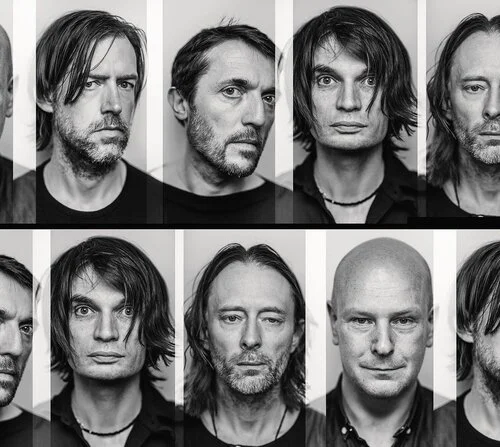
FEATURE: Inspired By… Part Twenty-Six: Radiohead

FEATURE:


Inspired By…

yyy.jpg

PHOTO CREDIT: Alex Lake 

Part Twenty-Six: Radiohead

___________

FOR this edition of Inspired By…

 IN THIS PHOTO: Radiohead in 1996/PHOTO CREDIT: Pat Pope/REX/Shutterstock

I am focusing on one of my favourite bands ever. The legendary Radiohead have inspired so many other artists. I am ending this feature with a playlist of songs from artists who either follow Radiohead or have cited themselves as influences. Before getting to that, AllMusic have provided some biography of the Oxford band:

“At some point in the early 21st century, Radiohead became something more than a band: they became a touchstone for everything that is fearless and adventurous in rock, inheriting the throne from David Bowie, Pink Floyd, and the Talking Heads. The latter group gave the band its name -- it's an album track on 1986's True Stories -- but Radiohead never sounded much like the Heads, nor did they take much from Bowie, apart from their willingness to experiment. Instead, they spliced Floyd's spaciness with U2's messianic arena rock heft, bridging the gap with guitar skronk borrowed from the '80s American underground. Jonny Greenwood's jagged, brutal interjections on "Creep," the band's 1993 breakthrough hit, recalled the ugly noise of the Pixies and Nirvana, a sound that translated over the expanse of an ocean, but in the throes of the alternative rock explosion of the mid-'90s, Radiohead were the odd band out. America remained besotted with their homegrown sensations, so "Creep" was treated as a one-hit wonder, and at home in England, they were seen as dour art-rock students lacking the glamour of neo-glam sensations Suede, and deliberately dodging the beery singalongs of Oasis. During the peak of Brit-pop in 1995, Radiohead released The Bends, a significant leap forward from their 1993 debut, Pablo Honey, and while that gained them some traction, it was 1997's OK Computer that broke down all the doors for the band and changed alternative rock in the process.

Expanding their sound with electronica and unapologetic prog rock suites, Radiohead turned into a different band with OK Computer, and the world followed suit. Soon, whenever rock bands dabbled in electronics, it was derived not from tightly sequenced rhythms, but rather, from glassy textures and introspection, a sensibility pioneered by the quintet. Radiohead doubled down on this aesthetic on 2000's Kid A, a record that traded concise hooks for minimal arrangements and jazz, providing a dividing line between an audience that once loved the group for their guitars and those listeners attracted to the band's aspirations. From this point on, Radiohead would occasionally flirt with concise song structures but were drawn toward unusual paths in both their music and business. Once their contract with EMI expired, they remained an independent band, pioneering different avenues of digital releases. They issued 2007's In Rainbows with little warning, letting listeners pay whatever they'd like for the record -- cementing Radiohead's reputation as a band compelled to look forward, not back.

Every member of Radiohead was a pupil at Oxfordshire's Abingdon School. Ed O'Brien (guitar) and Phil Selway (drums) were the eldest, followed by a year by Thom Yorke (vocals, guitar, piano) and Colin Greenwood (bass). These four musicians began playing in 1985, dubbing themselves On a Friday, and before long they added Colin's younger brother Jonny, who'd previously played in Illiterate Hands with Yorke's brother Andy and Nigel Powell. Jonny started on keyboards but moved to guitar, yet this incarnation proved short-lived. By 1987, everyone but Jonny left for university, where many members pursued music, but it wasn't until 1991 that the quintet regrouped and started gigging regularly in Oxford. Eventually, they came to the attention of Chris Hufford -- then best-known as the producer of shoegaze stars Slowdive -- who offered the group the chance to record a demo along with his partner Bryce Edge; the two soon became the band's managers.

EMI bit at the group's demo, signing them in 1991 and suggesting they change their name. On a Friday became Radiohead and they recorded their debut EP, Drill, with Hufford and Edge, releasing the record in May 1992. Next, the group entered the studio with producers Paul Kolderie and Sean Slade to record their full-length debut. The first fruit from these sessions was "Creep," a single released in the U.K. in September of 1992. "Creep" didn't go anywhere at first. The British music weeklies slagged it, radio didn't play it, and it limped to number 78 on the charts. Pablo Honey, the band's full-length debut, appeared in February 1993, supported by the single "Anyone Can Play Guitar," but neither release gained much traction in their native U.K. and that May's non-LP single, "Pop Is Dead," didn't help matters much, either. By that point, however, "Creep" started to gain attention in other territories. First, the song became a hit in Israel, but the bigger waves came from the United States, which was in the throes of the alternative rock revolution. Influential San Francisco radio station KITS added "Creep" to their playlist and it spread along the west coast and onto MTV as it became a genuine hit, nearly topping Billboard's Modern Rock chart and reaching 34 on the Hot 100, a big achievement for a British guitar band. A re-released "Creep" turned into a British Top Ten hit, peaking at number seven in the autumn of 1993. The band who'd had no success suddenly had more than it could handle.

Radiohead kept touring Pablo Honey into 1994, but no subsequent hits were forthcoming, raising the specter of the band as a possible one-hit wonder -- a criticism that weighed heavily on the group, who were anxious to record their new songs. They received the opportunity early in 1994, entering the studio to work with producer John Leckie -- then best-known for his work with the Stone Roses -- with My Iron Lung, an EP released in late 1994, being the first music released from the sessions. Muscular and ambitious, the EP provided a good indication of what would come on 1995's The Bends. Released in March 1995, The Bends not only found Radiohead growing musically -- it was dense and expansive, without skimping on songs -- but also in reputation, as critics in the U.K. embraced the band with the audience eventually following: none of the first three singles ("High and Dry," "Fake Plastic Trees," "Just") rose above 17 on the U.K. charts but the final single, "Street Spirit (Fade Out)," wound up reaching five in early 1996. Radiohead's rise may have been assisted by the mania cultivated by Brit-pop, a term that didn't quite suit the band -- they were far artier and rock-oriented -- but nevertheless stoked interest in indie guitar bands, which the quintet certainly was. Over in the U.S., The Bends stalled out at 88 on the Billboard charts but the record gained a cult following among listeners and the band never stopped touring, taking North American opening slots for R.E.M. in 1995 and Alanis Morissette in 1996.

During 1995 and 1996, the group recorded new material with Nigel Godrich -- an engineer on The Bends sessions who was now the band's producer -- with songs slowly creeping out during the course of the year. "Lucky" showed up on War Child's 1995 charity LP The Help Album, "Talk Show Host" appeared on a B-side, and "Exit Music (For a Film)" showed up on the soundtrack to Baz Luhrmann's Romeo & Juliet. The latter showed up on OK Computer, the June 1997 album that proved pivotal in Radiohead's career. "Paranoid Android," a twitchy suite released as a single in May of that year, suggested the ambition of OK Computer -- and by reaching number three, it was the band's biggest hit to date in the U.K., placing them on the cusp of a breakthrough.

A breakthrough is precisely what OK Computer turned out to be, a record that proved pivotal not just for Radiohead but for the direction of '90s rock. Greeted with enthusiastic reviews and corresponding strong sales, OK Computer closed the doors on the hedonism of Brit-pop and the dour after-effects of grunge while opening a new path to sober, adventurous art-rock where electronics co-existed with guitars. Over the next few years, the band's influence would become readily apparent, but the album made a sizable impact upon its release, too, debuting at number one in the U.K. and earning a Grammy for Best Alternative Album. Radiohead supported it with an international tour, documented in Meeting People Is Easy.

By the time Meeting People Is Easy showed up in theaters, the group began work on their fourth album, once again reuniting with producer Godrich. The resulting Kid A doubled down on the experimentalism of OK Computer, embracing electronics and threading in jazz. Appearing in October in 2000, Kid A was one of the first major albums to be pirated through file-sharing services, but this bootlegging had no apparent effect on the sales of the record: it debuted at number one in the U.K. and the U.S., becoming their first American chart-topper. Once again, the album took home the prize for Best Alternative Album at the Grammys and although it didn't produce any hit singles -- indeed, no singles were released from the record -- it was certified platinum in several territories. Amnesiac, a collection of new material initiated during the Kid A sessions, appeared in June of 2001, topping the U.K. charts and reaching two in the U.S. Two singles were pulled from the album -- "Pyramid Song" and "Knives Out" -- a signal that the album was more commercially accessible than its predecessor. At the end of the year, the band issued I Might Be Wrong: Live Recordings, and by the summer of 2002, they turned their attention to recording a new album with Godrich. The resulting Hail to the Thief appeared in June of 2003, once again debuting in the upper reaches of the international charts -- number one in the U.K. and number three in the U.S. -- and the group supported the album with live dates culminating in a headlining appearance at the 2004 Coachella Festival that coincided with the release of the B-sides and remix collection COM LAG, a record that helped close out their contract with EMI.

Over the next couple of years, Radiohead entered a hiatus as individual members pursued solo projects. Yorke released the heavily electronic solo collection The Eraser in 2006, and Jonny Greenwood embarked on a side career as a composer, beginning with 2004's Bodysong and then striking a fruitful collaboration with Paul Thomas Anderson for 2007's There Will Be Blood; Greenwood would also work on Anderson's subsequent films The Master and Inherent Vice. During all this, the group tentatively chipped away at their first post-EMI album. Some unsuccessful sessions with Spike Stent led the band back to Godrich by the end of 2006, and the group completed recording in June of 2007. Still without a record label, they decided to release the album digitally through their official website, letting users pay whatever they wanted for a download of the album. This novel strategy acted as the album's own promotion -- most of the articles about the release claimed it was revolutionary -- and In Rainbows allegedly moved over a million downloads on the first day of its release in October 2007. In December, the album received a physical release in the U.K., followed by a January 2008 physical release in the U.S.; the record sold well, debuting at number one in the U.K., and it earned Grammys for Best Alternative Music Album and Best Boxed or Special Limited Edition Package.

Radiohead toured in support of In Rainbows into 2009, during which time EMI released Radiohead: The Best Of in June of 2008. The band took time off in 2010, which allowed Yorke to form a band called Atoms for Peace with producer Godrich and Flea from the Red Hot Chili Peppers. During this time, drummer Phil Selway released his debut solo album, Familial. By early 2011, the group finished a new album and, like In Rainbows before it, Radiohead initially released The King of Limbs digitally through their website. The downloads appeared in February, with the physical copies appearing in March; the album reportedly shifted upwards of 400,000 digital copies upon its release. That autumn brought the release of the remix album TKOL RMX 1234567, and the band continued to tour The King of Limbs material into 2012. Once the tour wrapped up, the group took some quiet time as a new round of solo projects appeared. Atoms for Peace released Amok in February 2013 and Yorke put out Tomorrow's Modern Boxes in September 2014, just a month before Selway issued his second album, Weatherhouse. In the autumn of 2014, the band began work on a new album and continued to record throughout 2015, releasing only "Spectre" -- a proposed James Bond theme rejected by the filmmakers -- that year. The ninth Radiohead album, A Moon Shaped Pool, appeared on May 8, 2016, preceded earlier in the week by the singles "Burn the Witch" and "Daydreaming." Radiohead supported A Moon Shaped Pool with an international tour, and in June of 2017 they celebrated the 20th anniversary of OK Computer with a double-disc reissue dubbed OKNOTOK. Featuring a host of bonus cuts and previously unreleased material, its number two showing on the U.K. charts was bolstered by a major televised live performance at Glastonbury. Over the next year, Selway, Yorke, and Greenwood each issued film soundtracks with the latter earning an Oscar nomination for his score to Phantom Thread”.

To mark the huge influence of one of the greatest bands ever, my ending playlist is comprised of artists who have elements of Radiohead in their bones. I am not sure whether the band’s are following up 2016’s A Moon Shaped Pool anytime soon. I know that, whenever a new album comes, it will be…

SIMPLY amazing.

FEATURE: Second Spin: Iron Maiden - Brave New World

FEATURE:


Second Spin

aaa.jpg

Iron Maiden - Brave New World

___________

THERE are distinct stages…

qqq.jpg

 IN THIS PHOTO: Iron Maiden circa 2000

of Iron Maiden’s career. There is that phenomenal run of wonderful albums from their debut, Iron Maiden (1980), to their seventh album, Seventh Son of a Seventh Son. That was released in 1988. Hugely prolific and extraordinary, it was only during the 1990s when some cracks and weaknesses began to show. The band regained focus and quality by the 2000s. They are preparing to release their seventeenth studio album, Senjutsu, in September. Consisting Bruce Dickinson – vocals, Dave Murray – guitars, Janick Gers – guitars, Adrian Smith – guitars, Steve Harris – bass, keyboards, Nicko McBrain – drums, Senjutsu follows the excellent The Book of Souls of 2015. The legendary London Metal band show no sign or slowing or calling time. I love how they have released so many fantastic albums through the years! There are a few of their albums that are quite poor and some that are underrated. I feel 2000’s Brave New World falls into the latter camp. Although the album was generally well-received and peaked at seven on the U.K. chart, there have been some reviews that are not so kind. I do not hear many songs from Brave New World played on the radio or compared to Iron Maiden’s classics. It was their first studio release since the return of their long-time lead singer Bruce Dickinson (he left the band in 1993). Playing as a six-piece for the first time, I think there are a lot of great songs through Brave New World.  Brave New World and The Wicker Man are two clear highlights, though each of the ten tracks are really solid.

I am going to bring in a couple of the slightly less positive reviews for Brave New World. As I mentioned, it got mostly good press. It is a shame that some were not as enamoured and sold. This is what AllMusic wrote in their review:

“The return of Iron Maiden's "classic" Dickinson/Harris/Murray/Smith/McBrain lineup (plus third guitarist Janick Gers) in 1999 led to an incredibly successful world tour that saw the New Wave of British Heavy Metal legends commanding stages with the same unmitigated power and authority as they had during their mid-'80s heyday. But the question remained as to whether the reconstituted group would be able to carry this momentum into a studio setting and recapture the songwriting chops of its glory years. This question made Brave New World one of the most highly anticipated metal releases of 2000, and thankfully, the eventual answer to that question was a resounding "YES!" In fact, the album pretty much picked up right where the "classic" lineup had left off on 1988's Seventh Son of a Seventh Son: with a faithful rediscovery of Iron Maiden's best-loved sonic aesthetic and compositional quirks, updated only insofar as was necessary to measure up to new-millennium recording standards. In every other respect (and much like Seventh Son of a Seventh Son), Brave New World's meticulously orchestrated three-guitar attack still allowed for a greater sense of space than early Maiden albums (as well as the use of subtle keyboard textures in a supporting role), while boasting a beefier, in-your-face mix à la Piece of Mind or Powerslave. The remarkable pipes of singer Bruce Dickinson actually seemed to have benefited from a less grueling touring schedule over the previous decade, and his renewed songwriting partnership with bassist Steve Harris (and other assorted bandmembers) yielded several new Maiden live standards such as punchy first single, "The Wicker Man," and the positively anthemic title track. Also worthy of special mention were Harris' emotional solo copyright, "Blood Brothers," Adrian Smith's distinctive solo licks throughout "The Fallen Angel," and six-string stalwart Dave Murray's Arabian-flavored contributions to "The Nomad." These highlights notwithstanding, a more lucid appraisal revealed that Brave New World was no Number of the Beast, once the initial euphoria died down. But as comeback albums go, its excellence was undeniable, and announced not only Iron Maiden's triumphant return, but an important turning point in heavy metal's long, arduous climb back to respectability after years of critical abuse”.

Another review that caught my eye is from NME . They were a little less convinced by Brave New Wold when they reviewed it in 2005:

 “Fashion was never a consideration. Metal always existed outside the realms of time anyway, and Iron Maiden were its prime old-skool sorcery’n’riffs exponents. They survived everything the ’80s threw at them, but now, with sports metal prowling, this is no time to go soft.

For the most part they haven’t. With longest-enduring singer [a]Bruce Dickinson[/a] back in their number, they still want to rattle your grey matter. Accordingly there are no hip-hop beats, no rapped choruses, just reassuring masturbatory solos and the high camp of men obsessed with monsters and goblins. It makes ‘The Wicker Man’ a rough-house tumble of operatic silliness, while ‘The Mercenary’ unleashes the dogs of war in guitar form.

But there’s a problem – that very dismissal of the outside world, which kept them safe all those years, now leaves them looking rather obsolete. It’s not just their ongoing fondness for cap-sleeve denim jackets and mullets, nor the risible face of skeleton mascot Eddie staring from the cover. Iron Maiden were always prone to [I]Dungeons & Dragons[/I] hilarity and pretension (the tradition kept up by the dire orchestral portent of ‘Blood Brothers’ and ‘Dream Of Mirrors’), but in the face of Korn and Slipknot offering more authentic rage and violence, they’re no longer the high priests of the black arts, and seem almost innocent by comparison. And that, surely, is as far from the point as it’s possible to get”.

I would advise people to read this Kerrang! review, as they were a lot more positive. I think that Iron Maiden were at their peak in the 1980s, though their last few albums have been tremendous. The 1990s and early-2000s were not the greatest for the band in terms of quality. There are definitely some Iron Maiden albums that have not won complete love that we need to reinspect. Brave New World is a great example. If you are a casual Iron Maiden fan or a diehard who has set Brave New World aside, then make sure that you revisit…

THIS great record.

FEATURE: Beyoncé at Forty: Imagining an ‘Ultimate Queen’ Vinyl Series

FEATURE:


Beyoncé at Forty

dd.jpg

PHOTO CREDIT: Getty Images 

Imagining an ‘Ultimate Queen’ Vinyl Series

___________

BECAUSE the modern icon…

dd.jpg

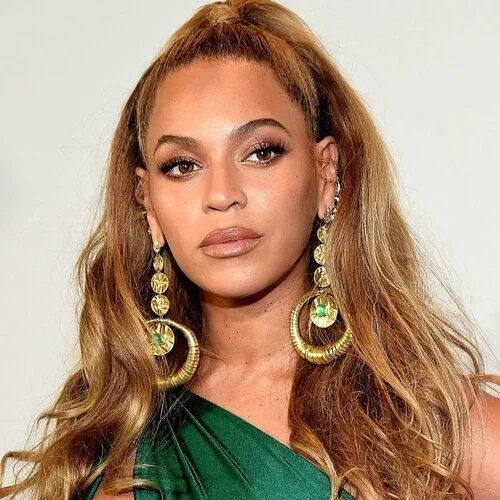
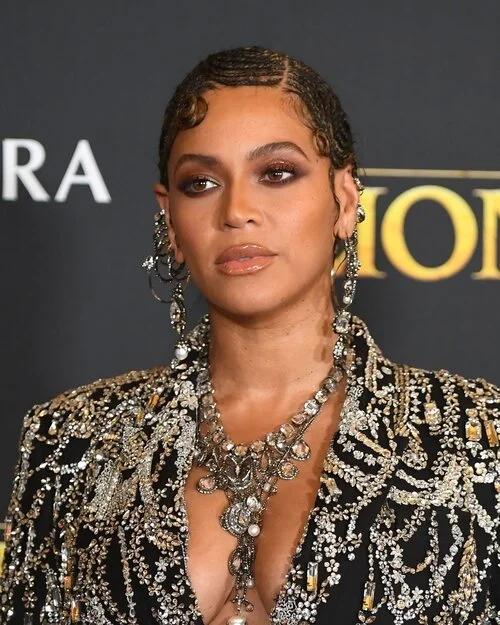
that is Beyoncé turns forty on 4th September, I am doing a series of varied features. I will look deeply at one or two of her studio albums, how I discovered her music when she was part of Destiny’s Child, where she could head from here and what the future holds. We do know that new music is not too far away. I will explore this more in a feature where I look ahead. FADER were among the many who reported some good news:

“If anyone was going to spend the pandemic doing something productive, it would be Beyoncé. True to form, the singer-songwriter and entrepreneur has been keeping herself busy for the last 18 months, revealing in her new Harper's Bazaar cover story that she's been in the studio working on new music. No release date is revealed, only that "the music is coming."

With all the isolation and injustice over the past year, I think we are all ready to escape, travel, love, and laugh again. I feel a renaissance emerging, and I want to be part of nurturing that escape in any way possible. I’ve been in the studio for a year and a half. Sometimes it takes a year for me to personally search through thousands of sounds to find just the right kick or snare. One chorus can have up to 200 stacked harmonies. Still, there’s nothing like the amount of love, passion, and healing that I feel in the recording studio. After 31 years, it feels just as exciting as it did when I was nine years old. Yes, the music is coming!

Lemonade, Beyoncé's last solo album, was released in 2016. In 2019 she released Homecoming, a live album documenting her instant-classic performance at Coachella, as well as her soundtrack for The Lion King”.

Alongside her six solo studio albums is the soundtrack for The Lion King, in addition to her Coachella performance and her albums with Destiny’s Child. There is also her album with JAY-Z as part of The Carters, EVERYTHING IS LOVE. There is a lot of her work out there! I know that there are only a couple of her studio albums easily available on vinyl. You can get them on C.D., though the vinyl is not as readily available. After Beyoncé has turned forty, I guess she will enter a new phase both personally and musically. It would be a good idea to have all of her albums in a collection. Maybe it will be two boxsets: the solo studio albums and the other albums. I know you can get her HΘMΣCΘMING: THE LIVE ALBUM on vinyl, so maybe that does not need to be included. As, to the best of my knowledge, there have not been a greatest hits collection. Perhaps that is something that is being planned. There are a few live albums of hers available. Having a live boxset, a solo studio albums set and then an assortment of Destiny’s Child, The Carters and a greatest hits compilation. With each set, one could have booklets or words about what they represent – how great she is as a studio musician, a collaborator and a live act. Perhaps an ‘Ultimate Queen’ series, it would not merely be a chance to cash-in ahead of new music. Having the albums readily available on vinyl would offer fans a chance to own something they can keep for years.

It would bring new people to Beyoncé’s music. She is one of these artists whose albums and career has been so important. As great as it is to access her music on streaming services, there is nothing that can beat the feel and sound of vinyl! I am not a massive fan, though I have been following her since the 1990s and really respect her as an artist and person. She is a definite icon who has produced some sensational music. Preserving this or providing a vinyl set (or series of) would be awesome. So many other artists have reissued albums on vinyl and put out boxsets. It is strange that all of her work is not on new vinyl (you can probably get most of her stuff second-hand). On 4th September, the world will salute one of the modern times’ most influential artists. It is exciting to learn that new music is brewing. It seems like the perfect time to look back in the catalogue and release the studio and live albums on vinyl. I guess, with every studio album, there would have been demos and outtakes. As one of my favourite albums of hers, B'Day, is fifteen on 1st September, it got me wondering about an anniversary edition. This is just me thinking out loud – though there would be demand for Beyoncé vinyl! It only leaves me, ahead of 4th September, to wish her…

A very happy birthday.

FEATURE: Kate Bush’s Before the Dawn: Under the Tawny Moony: Staging a Masterpiece

FEATURE:


Kate Bush’s Before the Dawn

www.jpg

IN THIS PHOTO: Kate Bush during the shooting of the video for And Dream of Sheep (a song that is part of her suite, The Ninth Wave)/PHOTO CREDIT: Trevor Leighton 

Under the Tawny Moony: Staging a Masterpiece

___________

I am writing a number of features…

qqqq.jpg

around Kate Bush’s Before the Dawn, as the album from the live show turns five later in the year. That was the last ‘original’ release from Bush – in the sense that she was performing fresh in 2014, even though the songs were older. The Hammersmith residency took place seven years ago (the first show was on 26th August, 2014). Apart from the video for And Dream of Sheep that was part of the show, there is nothing else that was filmed that the public can see. Other artists, when embarking on a residency that is so big and important, would film a behind-the-scenes thing and have a documentary, perhaps. Apart from the show itself, we have the live album. I would urge people to buy that album. The show itself, back in 2014, was the first time Kate Bush had undertaken any extensive live work since 1979. As such, there was this incredible anticipation and excitement! I did not get to see any of the twenty-two dates, though I have got the album. Tickets were on sale to the general public on 28th March, 2014 and were sold out within fifteen minutes. For Before the Dawn, Bush won the Editor's Award at the Evening Standard Theatre Awards. She was nominated for two Q Awards in 2014: Best Act in the World Today and Best Live Act – she did not win either. I will bring a review or two in for Before the Dawn. One can only imagine how complex and time-consuming it would have been to put the show together!

In terms of the technical credits (written by Kate Bush, directed by – Kate Bush, Adrian Noble, creative advisor – Albert McIntosh, lighting designer – Mark Henderson, set designer – Dick Bird, projection designer – Jon Driscoll for Cinelumina, creative consultant – Robert Allsopp, costume designer – Brigitte Reiffenstuel, movement direction – Sian Williams, oceanic wave design – Basil Twist, illusionist – Paul Kieve), there would have been a lot of consultation and coordination. There are various actors who appear through Before the Dawn. Then there are the musicians to get tight and in-sync. Bush’s son, Albert McIntosh, was one of the actors in the show. He was key in getting her back on the stage. I can imagine the discussions in the Bush household as the idea was floated. It is interesting what compelled the thought process. Bush released 50 Words for Snow in 2011. She might not have felt that recording another album was rewarding at that point. Keen to do something new, live music came to mind. It would have been the first time in many years that Bush had performed on a stage in front of people. The Eventim Apollo Hammersmith was always where she was going to set the show. She had performed there as part of her only tour: 1979’s The Tour of Life. It was the Hammersmith Odeon back then. It was a great venue that, whilst not massive, had a proscenium arch that would allow for flexibility.

sdf.jpg

Once she had decided on the venue, it was a case of getting together her ideas. I have written about how various Kate Bush albums have either never been performed live or have not been featured that much. This article gives details regarding the setlist, technical details and critical reception. As you can see, Bush mainly took from 1985’s Hounds of Love and 2005’s Aerial. Both albums feature conceptual suites that could be joined together. That spark and realisation would have been exciting for her! Not only did she get the chance to bring Hounds of Love’s The Ninth Wave to the stage; she would also realise Aerial’s second disc, A Sky of Honey. There are songs from other albums, though the main body is those two albums. Two that mean very much to Bush, it would have been exciting to plot the course of the show. Even so, how do you connect two suites that are very different!? Even when she had the concepts formed and ready, there is the job of recruiting musicians and her crew. Then there are the meetings, the rehearsals and ensuring that the show is ready for the audiences. What must have started out as quite an interesting idea and chance for a change would have turned to nervousness and exhaustion. Bush experienced this when putting together The Tour of Life…though it had been a long time since she was in that position!

Rather than Before the Dawn being this drain or regrettable thing, it was a live show that must rank alongside the most popular and well-received ever. From a technical standpoint, the sets and visuals were amazing by all accounts! If it was stressful getting it all sorted and conceptualised, the final results must have pleased Bush! She spoke with FADER in 2016 (to promote the live album of the residency) and was asked about the technical side of Before the Dawn:

“As a performer, do you you get lost in the moment or do you focus on the technical intricacies?

I had to stay really focused as a performer because I'm quite nervous, and I wanted to make sure I was really present when I was performing so that I could try and deliver the character of the song. And actually, the first set was the most difficult part to perform for me, because almost each song is from a completely different place.

Before the 2014 shows you hadn’t toured since 1979. When your return to the stage was so well-received, did you wish you’d done it sooner?

I don't know really. The original show was of the first two albums that I’d made, and I had hoped that to do another show after I had another of two albums’ worth of material. And as I started getting much more involved in the recording process, it took me off into a different path where it was all about trying to make a good album. It became very time-consuming, so I moved into being more of a recording artist. And every time you finish an album, there's the opportunity to make visuals to go with some of the tracks. So I became very involved in that, as well.

Do you have a technical achievement that you're most proud of in your career?

I'm really proud of what we did with those live shows, because it was very ambitious and I didn't know if it would work. It was a very complex technical show that involved the most incredible team of people. The most intelligent, sensitive people. Fantastic band, actors, everybody there had something so special to bring to that show, and I think the response that we got was more than you could ever wish for. I'm so pleased that we did it.

It was a very humbling experience, really. Every night you had a completely different audience, and every night they were so warm. It really meant so much that they liked it. It was very moving, because it felt like the audience came on that journey with us, and, each night, it was a slightly different journey”.

That is the great thing about Kate Bush as a live performer. She does not merely want to deliver the songs and do a simple concert. Almost treating it like a play or film, so much attention and thought goes to the technical and visual side. Ensuring that the audiences are immersed and almost part of the show. From the Introduction and Lily at the start of Act 1, though to Aerial’s title track at the end of Act 2, Before the Dawn was a revelation and marvel in terms of its concept, achievements and scale. Even after the audiences ensured the dates were sold out and rousing applause was provided each night, would this long-awaited return to the stage translate into great critical reviews!?

Unsurprisingly, there was a lot of affection for Kate Bush on her 2014 stage return. Alexis Petridis of The Guardian was there for one of the nights and shared his thoughts:

“As it turns out, the august broadsheet rock hack could not have been more wrong: for huge sections of the performance, Bush's movements look heavily choreographed: she moves with a lithe grace, clearly still drawing on the mime training she underwent as a teenager forty years on. Her voice too is in remarkable condition: she's note-perfect throughout.

Backed by a band of musicians capable of navigating the endless twists and turns of her songwriting – from funk to folk to pastoral prog rock - the performances of Running Up That Hill and King of the Mountain sound almost identical to their recorded versions - but letting rip during a version of Top of the City, she sounds flatly incredible.

You suspect that even if she hadn't, the audience would have lapped it up. Audibly delighted to be in the same room as her, they spend the first part of the show clapping everything she does: no gesture is too insignificant to warrant a round of applause. It would be cloying, but for the fact that Bush genuinely gives them something to cheer about.

For someone who's spent the vast majority of her career shunning the stage, she's a hugely engaging live performer, confident enough to shun the hits that made her famous in the first place: she plays nothing from her first four albums.

The staging might look excessive on paper, but onstage it works to astonishing effect, bolstering rather than overwhelming the emotional impact of the songs. The Ninth Wave is disturbing, funny and so immersive that the crowd temporarily forget to applaud everything Bush does. As each scene bleeds into another, they seem genuinely rapt: at the show's interval, people look a little stunned. A Sky of Honey is less obviously dramatic – nothing much happens over the course of its nine tracks – but the live performance underlines how beautiful the actual music is.

Already widely acclaimed as the most influential and respected British female artist of the past 40 years, shrouded in the kind of endlessly intriguing mystique that is almost impossible to conjure in an internet age, Bush theoretically had a lot to lose by returning to the stage. Clearly, given how tightly she has controlled her own career since the early 80s, she would only have bothered because she felt she had something spectacular to offer. She was right: Before The Dawn is another remarkable achievement”.

I love the fact Kate Bush came back to the stage in 2014 in such an impressive and grand fashion! Whereas there were some tense and stressful moments putting together Before the Dawn – where she filmed in a water tank at Pinewood Studios for the And Dream of Sheep segment was especially fraught and long! -, it seemed like there was this family on stage. Bush said in interviews how nervous she was every night. The crowds, as she also said, were an absolute dream! They were clearly thrilled to have their hero on the stage performing her tremendous music. No matter what Before the Dawn turned out to be, there would have been this love and rapture! As it was, Kate Bush and her band (The KT Fellowship) produced this masterpiece of a show. There were some minor dips (some parts didn’t completely work; others maybe a little self-indulgent or over-ambitious), though the things that wowed and stunned the senses were numerous and unforgettable. The live album does a lot to evoke what audiences witnessed in Hammersmith in 2014. Ahead of the live album’s fifth anniversary later in the year, I wanted to return to Before the Dawn. Let us hope that this was not Kate Bush’s live farewell. Even though she is sixty-three, there is nothing to say that she would not be willing to do anymore live work – though it might be smaller in scale compared with Before the Dawn. In 1979, she wowed the world with The Tour of Life. Proving herself to be an incredible live performer who pushed the boundaries of a Pop or Rock show. Thirty-five years later, she did that again! If Bush had nerves and worried prior to the shows, she needn’t have. As reviews and the reception Before the Dawn received proves, it was a triumphant production from…

aqw.jpg

A musical legend.

FEATURE: Groovelines: Eminem (ft Dido)  – Stan

FEATURE:


Groovelines

eee.jpg

Eminem (ft Dido)  – Stan

___________

WHEN deciding which track…

qqq.jpg

to include for this feature, I wanted to focus on one that has a lot of relevance now. It was controversial when it came out in 2000 – I guess it is still courting a certain amount of controversy! The Marshall Mathers LP is an album that I really like, though it has attracted some debate as to whether it is Eminem playing a character when he sings of violence against women and messages of homophobia. Is it what he really thinks, or is it just a persona? Whilst I suspect that it is part of his act, Eminem has always been accused of sending out the wrong messages. Stan is a track that went to number-one in the U.K. Featuring a memorable vocal sample from Dido, Stan is a song with such immersive and vivid lyrics. Before moving along, Wikipedia provides some background to the song:

“Stan" is a song by American rapper Eminem featuring vocals sampled from British singer Dido. It was released in October 2000 as the third single from Eminem's third album, The Marshall Mathers LP (2000). It reached number one in 12 countries, including the United Kingdom, Germany, Ireland, and Australia.

Dido's lyrics are a sample of the opening lines of her song "Thank You". The 45 King-produced track also uses a slightly modified break from "Thank You" as its base sample; both songs were released as singles in late 2000. "Stan" has been called one of Eminem's best songs and is considered one of his signature songs. Rolling Stone magazine ranked "Stan" 296th on its list of The 500 Greatest Songs of All Time. The song was also listed 15th on VH1's list of the greatest hiphop songs of all time and named in the Rock and Roll Hall of Fame's 500 Songs that Shaped Rock and Roll.

The song was nominated for multiple awards, including Best Song at the MTV Europe Music Awards, Video of the Year, Best Rap Video, Best Direction, and Best Cinematography at the MTV Video Music Awards. It won Best International Artist Video at the MuchMusic Video Awards. In April 2011, Complex magazine put together a list of the 100 greatest Eminem songs and ranked "Stan" second. The eponymous character's name gave rise to a slang term that refers to overzealous, maniacal, overly obsessed, entitled fans of a celebrity or personality; the term has since been included in the Oxford English Dictionary”.

Today, a ‘stan’ is someone who is a huge fan of something. Maybe a bit obsessive or overly-keen, it refers to the title character of the Eminem song who worships his idol. He writes to him and, when he doesn’t get a quick response, he gets angrier and eventually murders his girlfriend. It is a track that grows darker and more unsettling. I feel The Marshall Mathers LP warrants new respect, as it’s a masterful album filled with tremendous, accomplished and confident songs. GQ marked twenty years of Stan last year. It was interesting hearing why Eminem decided to write the song and what legacy it has now:

 “Stan” is turning 20. The song first appeared on Eminem’s The Marshall Mathers LP in May 2000, but wasn’t released as a single until 21 November, topping the UK charts the week before Christmas. “Stan” is still considered Eminem’s masterpiece as a songwriter and storyteller and it all started, oddly, with the 1998 Gwyneth Paltrow romcom Sliding Doors. Producer Mark “The 45 King” James heard the song “Thank You”, by an unknown English singer-songwriter called Dido, on a TV commercial for the movie and heard sampling potential. He taped it off the TV, severed the depressive verse from the consoling chorus and fashioned it into a hip-hop loop. In “Thank You”, Dido is singing about a bad day that’s about to be turned around by love; in James’ eight-line loop, she is describing a grey, damp purgatory of one bad day after another.

James’ track ended up on a tape of potential beats that Eminem played in his car one day. One of Dido’s lyrics, “Your picture on my wall, it reminds me that it’s not so bad,” brought to mind the fans who had descended on him after the success of his 1999 debut, The Slim Shady LP, writing unnervingly intense fan mail and besieging his Detroit home. What if the picture on the wall were not of a lover but a celebrity? What if the song were the internal monologue of a tormented fan? He could see the whole story unfolding like a movie in his head. “A lot of times when I’m writing songs, I see visions for everything I’m writing,” he later told the lyrics website Genius. “This was one of those.”

Eminem was thinking of the danger posed by fans (Madonna and Björk were two of the stars whose violent stalkers made the news in the 1990s), but also of the tendency of fans and journalists to take lurid lyrics too literally: Marilyn Manson had absurdly been blamed for inspiring the two students who killed 13 people at Columbine High School in April 1999. The song could be Eminem’s corrective to listeners and critics alike: don’t get carried away. “It’s kind of like a message to the fans to let them know that everything I say is not meant to be taken literally,” he told MTV at the time.

Running to almost seven minutes, “Stan” was the ideal centrepiece for an album inspired by the head-wrecking experience of instant fame and notoriety but Eminem didn’t see it as a hit. “When I was writing it, I just thought, ‘Whoa, people are going to get sick of this because it goes on for so long,’” he told Genius. In fact, both the tense narrative and Dido’s career-making hook proved irresistible. What’s more, the song made critics who had been ambivalent about Eminem’s trollish provocations think again. When Elton John took Dido’s part in a performance at the 2001 Grammy Awards, he not only drew a line under the rapper’s juvenile use of homophobic slurs but gave him the blessing of classic rock. “Stan” showed the world that the obnoxious class clown had real depth, with the literary critic Giles Foden going so far as to compare him to Robert Browning, “the Victorian master of sly irony”. Eminem never made a track as eerily perfect again and he knew it, frequently referencing “Stan” on later albums. In the 2013 sequel “Bad Guy”, Stan’s younger brother Matthew takes his revenge. On 2017’s “Walk On Water”, Eminem recovers from a bout of insecurity by reminding himself: “Bitch, I wrote ‘Stan’.”

By then, the character was firmly embedded in the language of pop and internet culture. The rapper Nas made Stan into a generic noun when he insulted Jay-Z in his 2001 dis track “Ether” (“You a fan, a phony, a fake, a pussy, a stan”), but the word didn’t really catch on, as both noun and verb, until the social media-saturated 2010s, and only entered the Oxford English Dictionary in 2017: “an overzealous or obsessive fan of a particular celebrity”. It’s often assumed to be a portmanteau of “stalker” and “fan”, although it’s not clear if that was Eminem’s intention or just a neat coincidence. Strangely, “stan” was for a few years used benignly and with pride, as if Eminem’s song had never existed. Think of phrases such as “We have no choice but to stan” or “We stan a true queen.” A 2014 Atlantic introduction to “stanbases” had a typically jolly, winking tone. Obsessive fandom had been ironised, but there were always fans whose behaviour was more sinister and it was only a matter of time before they came to the for”.

I am going to end up with a feature from American Songwriter. They did a feature looking behind the song on its twentieth anniversary. Although some were shocked by Stan and felt that it would encourage young listeners to mimic the lead character or enact some of the threats, it is a masterclass in narrative songwriter, filled with twists and turns:

“The final product is a memorable piece of work; Eminem’s sense of time and syllabic accent, and his emotional delivery, make this song remarkable. But the words also stand on their own on paper, with a sense of rhyme and meter that put him among the greats of both music and straight poetry. To wit: Dear Slim, I wrote you but you still ain’t callin’/I left my cell, my pager and my home phone at the bottom/I sent two letters back in autumn/You must not have got ’em/It probably was a problem at the post office or somethin’/Sometimes I scribble addresses too sloppy when I jot ’em. Writer Giles Foden compared him to legendary English poet Robert Browning in The Guardian of London, a comparison that would no doubt freak out some 19th century Browning fans.

“Stan” spawned an award-winning video that is now legendary. Featuring Dido, the eight-minute video was heavily edited by most outlets for both length and language. The video helped make “Stan” a worldwide hit that changed the face of pop music and hip-hop. Eminem’s lyrical artistry here transcends any genre; this is more than hip-hop or alternative hip-hop, and more than just pop. And it’s still relevant 20 years later.

qqq.png

PHOTO CREDIT: Interscope Records 

These accolades might be a little hard for some people to take. From those who consider Eminem vulgar and tasteless, to people who think he’s a homophobic misogynistic jerk at heart, there’s always going to be a critic. But the lyric of “Stan” isn’t just the work of somebody who managed to get in the zone for a couple hours or just had a good day or is even channeling something from an unseen source. Art like this comes from somebody who clearly has given his life to his pursuit, and has walked the walk while others talk the talk. A piece of work like this, where every syllable and nuance is as perfect as it can be, is rare and inspirational and doesn’t come often or easy. Ninety-nine percent perspiration, indeed”.

I know that Eminem has had a difficult relationship with the press through the years. He is one of the greatest rappers of his time. The Marshall Mathers LP might stand as his towering work. In terms of his songwriting and delivery, there was nothing like it in 2000! The album still sounds impactful and hugely moving over twenty years from its release. The Marshall Mathers LP has been reappraised. Whilst one cannot ignore all of the lyrics and more controversial content, you have to respect the musical ambition and accomplishment! Since its release, The Marshall Mathers LP has been ranked as one of the best albums ever but a number of magazines/sources. A sensational song from a remarkable album, Stan is named for a modern-day phenomenon. More importantly, it helped turn Eminem into a superstar; one of the greatest songwriters of the time. There is no doubting that Stan is…

A true classic.

FEATURE: Spotlight: India Shawn

FEATURE:


Spotlight

zzz.jpg

India Shawn

___________

I realise I have included…

 PHOTO CREDIT: AG Creative

quite a few female solo artists in this feature lately. I will move onto some male artists and bands soon enough. I wanted to feature India Shawn today, as she is an incredible talent that one should definitely not pass by! I am bringing in a few interviews so that we can get a better impression and picture of a terrific artist. Before then, Forth District provide some biography:

“Los Angeles born songbird and songwriter, India Shawn, has been lending her musical talents to the industry for over 9 years. Before releasing her debut EP, ORIGIN, in 2012, she already had writing credits and song placements under her belt as a member of her writing team, Full Circle. She’s worked with top names including Chris Brown, Diddy-Dirty Money, El Debarge, Keri Hilson, and Monica. In 2013, Solange Knowles featured India’s popular track, I’m Alive, on her Saint Heron compilation album, further endorsing her impact on the new wave of music.

With a smooth voice that connects to listeners immediately, lyrics that resonate with your heart, and fearless experimentation with R&B elements, India’s music has spiritual and emotional components to it. She continues to breathe fresh air into the industry with her and James Fauntleroy’s collaborative Outer Limits EP.

The essence of her music provides a spiritual/emotional connection with her listeners that is distinct and authentic while combining current and innovative elements. India Shawn’s songs take you back in time when music made you feel good inside. A musical experience that makes you think, touches your heart and motivates, some say, are the elements that are missing in today’s dynamic. India’s first solo project entitled “ORIGIN” can be expected to deliver awesomely good music that is relevant, transparent, and exciting. India Shawn is completely enchanting! Her music will captivate your mind and heart like the brightness of her beautiful, mysterious smile – something incredibly wonderful awaits…”.

A lot of interviews with India Shawn have been conducted around the release of various singles. Okayplayer. spoke with her last year when she put out Cali Love:

“Raised on the edge of Los Angeles, India Shawn is a phoenix rising from the ashes to stake her rightful claim in the fast-paced music industry. After all, she’s been putting in work for years as a songwriter co-penning for the likes of Chris Brown, Monica, Diddy’s Dirty Money and more. It all started during her childhood, she sang in the youth choir at her church and her mother was a singer in addition to a praise and worship leader.

A relocation to Atlanta would prove to be a step in the right direction for the aspiring singer. This move led to her connecting with a local music fixture who helped her create a few of her first tracks, following this she was inspired to do more. “Full Circle,” a songwriter team consisting of India, her sister and a friend would come into fruition. Accompanied by “The Clutch,” a well-known songwriting collective, the two teams became successful in their own right.

During this point of her blossoming career, singing wasn’t the focus. By 2010, she signed a publishing deal with Universal Music and admitted to feeling something was missing.  “I felt stuck,” she shared. “I knew I wanted to be writing and recording my own songs.” By 2012 she released Origin, her debut. This release features an experimental sound throughout. The majority of the production was done by John Key, producer and touring drummer for Solange. “Origin was recorded with the very pure intention of wanting to make an album for myself,” Shawn said. The project arrived with features from Hit-Boy and James Fauntelroy. “I’m Alive” was included on Solange’s Saint Heron album compilation (2013). Over the next few years, she finished college, kept recording music and would continue following her passions.

Once 2015 hit she began working with Fauntelroy again, their creative partnership led to Outer Limits a refreshing project. At this point, she wasn’t working in music full-time. A move back to Los Angeles marked by odd jobs seemed to be the reset she needed. She ended up meeting her current manager as she held down a gig with Postmates. Fast forward to 2019, she was singing backup for Anderson. Paak and would go on to sign a record deal with Epic Records that same year.

Her newest work proves that she’s kept her pen sharp over the years. The evolved sound is a culmination of the relationships she’s built since her teenage years, one being friend and producer D’Mile. On a recent visit to our Brooklyn office (pre-coronavirus), Shawn shared a few of her latest tracks with us. One standout “Cali Love” has a West Coast vibe. She expresses that this cut tackles complicated romances in LA. We also heard “Not Too Deep,” her second single of the year with 6LACK early and enjoyed the easygoing nature of it.

Why did you decide to shift gears a bit and focus on your own career rather than writing for other artists?

I’m still happy and grateful to write for others, I’ve just had more fun making music for myself. It’s less pressure, and I guess it’s kinda self-indulgent, but the entire process: living the experience, writing it all out, recording it, and sharing it has been more fulfilling for me.

Who are your top three musical influences?

Lauryn Hill for her voice and authenticity, Beyonce for her power and work ethic and Brandy for her tone and vulnerability”.

One of my favourite tracks from last year was Not Too Deep. Recorded with 6LACK, it was a clear sign that India Shawn is one of the most special artists around. She talked about that single in this interview, in addition to what it was like writing it with Varren Wade:

“Not Too Deep” featuring 6LACK is your new single. It feels hopeful, like you want to take a chance. One thing I think listeners will likely connect with is how realistic the lyrics are. Like in the second verse when you sing, “Cause nothing stays the same, we’re going to change over time.” Can you share how the song came together?

This particular one I liked him so much but at the time, I had just gotten out of a long-term relationship so it was like, “Man, I’m really intrigued with this guy and we have fun and it’s cool. Maybe we could freeze time right here in that feel good, honeymoon phase.”

What was the songwriting experience like co-writing “Not Too Deep” with Varren Wade?

Varren is like my bro, so it’s like just me reading my diary aloud. We have to be on the same page. Not literally, but that’s what it feels like. A bottle of wine is what I like in my sessions and you know, just get comfortable. D’Mile literally just plays, picks up any instrument like the keys or the bass and starts playing around and I always love what he does. And then, we’ll start humming melodies and that’s just kind of how that one came together. It’s a very organic collaboration with Varren and I and that’s why I like to write with him because we just bounce ideas off each other until we get a line that we’re both satisfied with.

What’s one important thing you’ve learned as a songwriter that helped you to transition into an artist?

I don’t know why my mind just goes to Chris Brown. When I was doing the writing stint, we worked with Chris a lot, and Chris was like a workaholic but not in a way that felt like he was doing it because he had to. It was like he was really having fun and honestly. I can say the same thing about Anderson .Paak. They just have fun, and I feel like that is a big piece of the studio aspect, but also taking that and being on stage and just having to embody the whole artist’s life.

ORIGIN is your first official project. What does it mean to you today as an artist?

ORIGIN is so special to me. That’s my baby. I feel like it’s still in a sense some of my favorite work to date because it was so pure. In some ways, I’m trying to get back to the freedom I was in when I made the project because I wasn’t making that for popularity. I was tired of writing and chasing placements and I went home to Atlanta and my boyfriend produced this album for me and I wrote the project. I felt like I had a different level of confidence because I was doing it for me and not necessarily for other people. I’m always going to love and appreciate ORIGIN.

Outer Limits and ORIGIN are, for the most part, two completely different sonic energies. How have you grown from each project?

I think I’ve definitely grown vocally from just singing a lot. Even after or during those projects, I never stopped singing and doing background work, so I think I just strengthened my vocals and those go-to tools in the studio. Additionally, I’m working with my dream producer now, D’Mile and just honing in on the sound. I feel like those projects were amazing in their own right but this project is probably the most soulful. Those were kind of pop, in a sense. Even ORIGIN had like indie, folk vibes on it too. This project is an R&B, soul record, for sure”.

Movin’ On was another remarkable release from India Shawn last year. Snobette discussed the song’s video with the L.A. artist. The subject of mental health in the Black community was explored:

“SNOBETTE: Because of COVID-19, a lot of people are quarantined with their romantic partner. How do you believe music should be pushing forward conversations about realistic narratives of Black love?

India Shawn: “I think we need more love and truth in music in general. We needed it before the pandemic, and we’ll need it after. I believe all the events of 2020 have caused us to reflect on our art and challenged us to create something more meaningful, more substantial, more loving.

SNOBETTE: In 2020, the mental wellness of the Black community has most certainly been challenged in more ways than none. What do you believe are some ways to manage your mental health and bounce back after a breakup during COVID-19?

India Shawn: “Speaking from my own personal experience, I’ve found that it’s very important to surround yourself with loving people. Therapy has been so key for me; it’s good to have a safe place to get it all out. Stay active! Make a playlist of empowering songs. Read something enlightening. Get out in the sun, move your body, drink water! Sleep, sing, dance, eat your favorite foods! Focus on yourself and on the things you want to grow. Whatever you do, don’t give up!”

SNOBETTE: How do the visuals for “Movin’ On” accurately depict the mental health, self-love and the role of social media when it comes to breakups?

India Shawn: The video introduces me totally devastated, chugging a bottle of liquor and scrolling through ex-bae’s insta. Haven’t we all been there? Just me? (laughs) It’s real life!

“We find ways to temporarily escape our issues while still totally engrossed in our situation via social media. At some point we have to make a conscious decision to choose better, or life will choose for us and we’ll find our backs against the wall. I came to that point in this video, but then I awoke to a new day, filled with new possibilities. I still couldn’t get him out of my head, probably because I was hypothetically insta-stalking him the night before (laughs), but, I was determined to move on and inevitably found my happiness and freedom.

“It was really important for us to make it about me and not have me riding off into the sunset with another man. You have to choose yourself. The answer is always self-love”.

India Shawn put out the single, Don’t Play with My Heart, recently. I am not sure whether there is an album planned soon. It is going to be exciting to see where she heads next. Here is an artist who gives the world such interesting and consistently strong music! Atwood Magazine caught up with her earlier this year around the release of Too Sweet:

“ATWOOD MAGAZINE: THANKS FOR TAKING THE TIME OUT TODAY, INDIA! FIRST OF ALL, “TOO SWEET” IS A FANTASTIC SONG AND I WAS ENAMORED THE MOMENT I HEARD IT. CAN YOU SHARE A LITTLE ABOUT THE STORY BEHIND THIS SONG?

India Shawn: Thank you so much!! It’s one of my faves from the forthcoming album. I was inspired to write this song after being ghosted. I was hanging with a guy friend, we cracked open a bottle of pinot noir, had a beautiful convo, and shared a lil moment. I was so excited about him the next day — I really felt like he was a match, but he ended up going ghost on me. Instead of writing another sad love song, I decided to reframe the story and empower myself by saying I was just too sweet for him! – that’s why he’s at a loss for words.

HOW DO YOU FEEL “TOO SWEET” REINTRODUCES YOU AND CAPTURES YOUR ARTISTRY IN 2021?

India Shawn: I think it just builds upon the groundwork I laid for the project in 2020. The production is incredible, the songs are really good. I’m 4 releases in, and the music is consistently soulful yet genre-bending. It’s fresh! I love that the UMO feature shows versatility and the range of my musical taste and relationships.

DO YOU HAVE ANY PERSONAL HIGHLIGHTS FROM THE SONGWRITING EXPERIENCE OF BRINGING THIS MUSIC TO LIFE?

India Shawn: What I remember quite vividly was the FUN I had writing the song with my boy Varren Wade. I felt excited about getting this idea out in a way that I’d never heard before. It’s empowering but still cheeky and flirty. We were both so charged up that night. My mgmt had gotten me a ticket to join them at a Drake concert at the Forum that same night, but I was feeling so high creating Too Sweet that I missed pretty much the entire show (I made it for the last 2 songs).

AS A LYRICALLY FORWARD ARTIST, DO YOU HAVE ANY FAVORITE LYRICS IN THIS SONG?

India Shawn: “…now you’re cold ’cause you aint felt a soul so free — guess that’s ’cause you aint met a woman like me, my love is too sweet.” I like to touch on the spiritual in my music. In that line I’m saying you haven’t encountered an energy like mine, and maybe there’s some fear there of the unfamiliar”.

Go and follow India Shawn and check out her work. She is a phenomenal young artist with years ahead of her! I am not sure how well-known she is in the U.K. As this year comes to an end, I think that her music will reach more people here. In a very short time, I think that India Shawn is going to be…

A major artist.

________________

Follow India Shawn

ttt.jpg

FEATURE: A Buyer's Guide: Part Sixty-Eight: Nas

FEATURE:


A Buyer's Guide

aaa.jpg

Part Sixty-Eight: Nas

___________

AS his new album…

eee.jpg

King's Disease II came out this month and has received some incredible reviews, I thought it would be a good time to include Nas in A Buyer’s Guide. Before coming to the albums of his that you need to own, here is some biography from Wikipedia:

“Nasir bin Olu Dara Jones (/nɑːˈsɪər/; born September 14, 1973), better known by his stage name Nas (/nɑːz/), is an American rapper, songwriter, and entrepreneur. Rooted in the New York hip hop scene, he is regarded as one of the greatest and most influential rappers of all time. Nas has released twelve studio albums since 1994, seven of which are certified platinum and multi-platinum in the U.S.

The son of jazz musician Olu Dara, Jones's musical career began in 1989 as he adopted the moniker of "Nasty Nas" and recorded demos for Large Professor. He was a featured artist on Main Source's "Live at the Barbeque" (1991), also produced by Large Professor. Nas's debut album Illmatic (1994) received universal acclaim upon release, and is considered to be one of the greatest hip hop albums of all-time; in 2021, the album was inducted into the Library of Congress's National Recording Registry.[8] His second album It Was Written (1996) debuted atop the Billboard 200 and charted for four consecutive weeks; the album, along with its single "If I Ruled the World (Imagine That)" (featuring Lauryn Hill), catapulted Nas into international success. Nas's albums I Am (1998) and Nastradamus (1999) were criticized as inconsistent and too commercially oriented, and critics and fans feared that his output was declining in quality.

From 2001 to 2005, Nas was involved in a highly publicized feud with Jay-Z, popularized by the diss track "Ether". It was this feud, along with Nas's albums Stillmatic (2001), God's Son (2002), and the double album Street's Disciple (2004), that helped restore his critical standing. After quashing the feud, Nas signed to Jay-Z's Def Jam Recordings in 2006 and went in a more provocative, politicized direction with the albums Hip Hop Is Dead (2006) and his untitled 9th studio album (2008). In 2010, Nas released Distant Relatives, a collaboration album with Damian Marley, donating all royalties to charities active in Africa. His 11th studio album, Life Is Good (2012), was nominated for Best Rap Album at the 55th Annual Grammy Awards. After receiving thirteen nominations, his 13th studio album, King's Disease (2020), won him his first Grammy for Best Rap Album at the 63rd Annual Grammy Awards.

In 2006, MTV ranked Nas fifth on their list of "The Greatest MCs of All Time". In 2012, The Source ranked him second on their list of the "Top 50 Lyricists of All Time". In 2013, Nas was ranked 4th on MTV's "Hottest MCs in the Game" list. About.com ranked him first on their list of the "50 Greatest MCs of All Time" in 2014, and a year later, Nas was featured on the "10 Best Rappers of All Time" list by Billboard. He is also an entrepreneur through his own record label; he serves as associate publisher of Mass Appeal magazine and the co-founder of Mass Appeal Records”.

If you need a guide to the Nas albums that you should buy, then I have recommend the four essential ones. I have suggested an underrated album that is worth checking out, his latest studio album, in addition to a book that makes for useful accompaniment. Here is A Buyer’s Guide dedicated to…

THE wonderful Nas.

____________

The Four Essential Albums


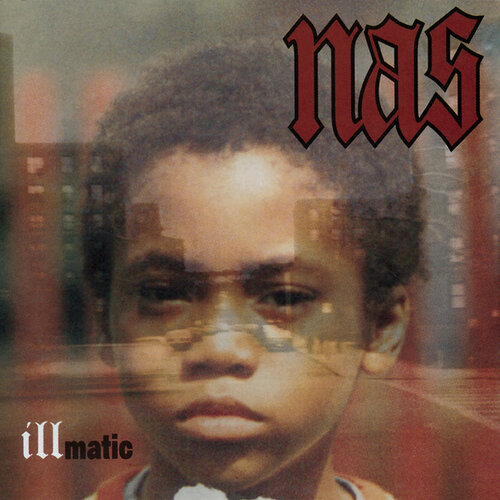
Illmatic

www.jpg

Release Date: 19th April, 1994

Label: Columbia

Producers: DJ Premier/Faith N./Large Professor/L.E.S./Nas/Pete Rock/Q-Tip

Standout Tracks: N.Y. State of Mind/The World Is Yours/One Love (ft. Q-Tip)

Buy: https://www.roughtrade.com/gb/nas/illmatic  

Stream: https://open.spotify.com/album/3kEtdS2pH6hKcMU9Wioob1?si=fbaRVi5qTS-HoGZw05XyFA&dl_branch=1

Review:

“Illmatic is imprisoned within itself. The power is targeted in the narrow scope of its worldview. There are six desperate and savage blocks and there is nowhere else. Nas captures the feeling of being young and trapped. You see his struggle and you see his ghosts.

The more I listen to Illmatic, the more haunted it feels. When you're younger, it clubs you with its hail of words and the skeletal beauty of its beats. But the older I get, the more it strikes me as a teenaged requiem for those still living. "Old Soul" is the sort of stock phrase used by yoga teachers and amateur psychics, but it always fit Nas. He's 20 and prematurely nostalgic, struck by memories of park jams and watching "CHiPS.", when Shante dissed the real Roxanne, and how much he misses Mr. Magic.

There is no narrative about Ill Will, but you hear the name over and over. Will was his best friend and first music partner who lived on the 6th floor with turntables and a mic. He was shot to death in Queensbridge over a drunken argument. You don't hear how Nas and his wounded brother Jungle rushed Will to the hospital, got static from emergency room officials, and watched him die. But the sense of grievous loss shadows almost every bar, especially "Memory Lane" and "One Love".

If you listen to it enough names start to pop out: Fatcat, Alpo, Grand Wizard, Mayo, the foul cop who shot Garcia, Jerome's niece, Little Rob, Herb, Ice, and Bullet. The entirety of "Represent". You start to wonder where they are now, or if they are. The album's lone guest AZ, lays it down flat: he's destined to live the dream for all the peeps who never made it.

But Nas uses Illmatic as more than a vehicle to escape. The styles and stories that formed him fuse into something that withstands outdated slang and popular taste: it is a story of a gifted writer born into squalor, trying to claw his way out of the trap. It's somewhere between The Basketball Diaries and Native Son, but Jim Carroll and Richard Wright couldn't rap like Nas.

That's why 19 years later, Get On Down is re-issuing a box set with a vinyl, gold CD, and an ersatz cherry wood case featuring a 48-page book with The Source article that originally crowned him-- even if Illmatic was the archetypal cassette album (along with the purple tape). It's best heard by ignoring the dogma, culture wars, Nas clones, and would-be saviors that have accreted since April of 1994. Who cares whether it's the greatest rap album of all-time or not? It's an example of how great rap can be, but not necessarily the way it should be.

There was no real follow-up to Illmatic because Nas understood that he'd tapped into a moment that could only come once and in one place. This is what things had been building towards. A little over a decade later, Nas claimed that hip-hop was dead, but this world that was his was already starting to vanish on Illmatic. But you can still summon it from the first rumble of the train. This is what happened when the doors opened” – Pitchfork (https://pitchfork.com/reviews/albums/17497-illmatic/)

Choice Cut: Life's a Bitch (ft. AZ & Olu Dara)

It Was Written

Release Date: 2nd July, 1996

Label: Columbia

Producers: DJ Premier/Dr. Dre/Havoc/Rashad Smith/L.E.S./Live Squad/Trackmasters

Standout Tracks: Street Dreams/I Gave You Power/If I Ruled the World (Imagine That) (ft. Lauryn Hill)

Buy: https://www.discogs.com/sell/release/298151

Stream: https://open.spotify.com/album/78Fgb88MY0ECc4GVMejqTg?si=qWtFvNQjQLOBCxKwEol5Hw&dl_branch=1

Review:

“For his second album, It Was Written, Nas hired a bunch of hip-hop's biggest producers -- including Dr. Dre, DJ Premier, Stretch, and Trackmasters -- to help him create the musical bed for his daring, groundbreaking rhymes. Although that rhyme style isn't as startling on It Was Written as it was on his debut, Illmatic, Nas has deepened his talents, creating a complex series of rhymes that not only flow, but manage to tell coherent stories as well. Furthermore, Nas often concentrates on creating vignettes about life in the ghetto that never are apolitical or ambivalent. This time around, the production is more detailed and elaborate, which gives the music a wider appeal. Sometimes this is a detriment -- Nas sounds better when he tries to keep it street-level -- but usually, his lyrical force cuts through the commercial sheen. Combined with the spare but deep grooves, his rhymes have a resonance unmatched by most of his mid-'90s contemporaries. Because, no matter how deep his lyrics are, his grooves are just as deep and those bottomless funk and spare beats are what make It Was Written so compulsively listenable” – AllMusic
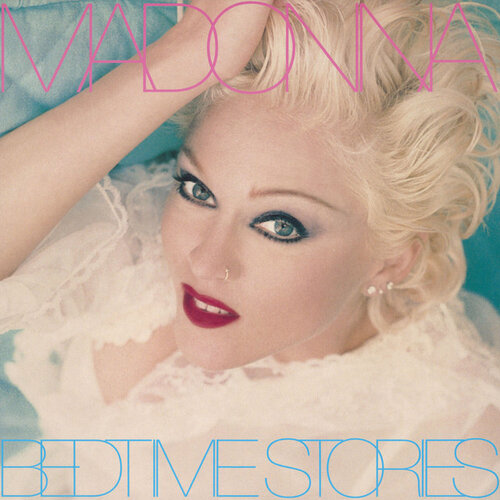
Choice Cut: The Message

God's Son

Release Date: 13th December, 2002

Labels: Ill Will/Columbia

Producers: Nas (also exec./)Steve Stoute (exec.)/Agile/The Alchemist/Alicia Keys/Chucky Thompson/Eminem/Ron Browz/Salaam Remi

Standout Tracks: Get Down/The Cross/I Can

Buy: https://www.discogs.com/sell/list?master_id=20252&ev=mb

Stream: https://open.spotify.com/album/3rV1aPkrWyMs6YTvTpSbIY?si=MYEQw-GnR1W9YOmuCydgXA&dl_branch=1

Review:

“In keeping with the current hip-hop penchant for acknowledging old-school ways and mores, ‘Get Down’ starts proceedings with a sleekly funky James Brown loop and a lyrically visual and detailed portrait of some heavy courtroom drama. Nothing if not known for his arrogance, which comes with the territory, Nas then declares he carries ‘The Cross’ for rappers on the song of that title produced by Eminem, over hazy, string-laden beats. Normally, thinking you’re Jesus means you’ve lost your tiny mind, but there’s nothing wrong with being a child of God, and he doesn’t stray too far into blasphemous territory.
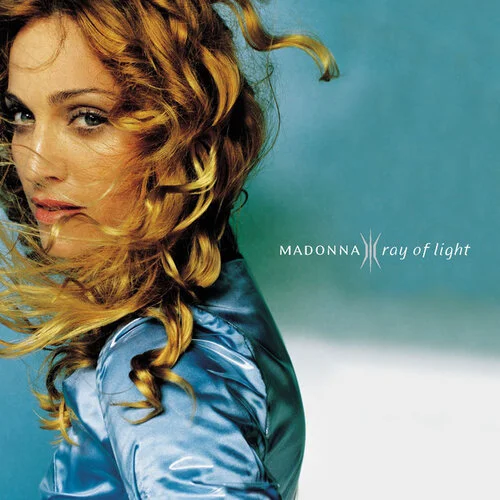
The excellent ‘Made You Look’ follows, with monk-like chanting and sampled gunshots on the beat. And there’s also something to be said for the way ‘The Last Real Nigga Alive’ gives the real deal lowdown about the last decade in hip-hop New York City – and it’s the only song to elude to Jay-Z with an offhand dismissal of ‘The Gift And The Curse’.

Which doesn’t mean there aren’t moments of respite from the seriousness on show, as ‘Hey Nas’ attests, with rumoured beau Kelis along for the chorus ride. But Nas is nothing if not for the kids, who are, afterall, the future. The jaunty ‘I Can’ has a playground singalong accompaniment, as well as a black history lesson and a mantra for empowerment and self-improvement. Nas tells kids they can be whatever they wanna be. He’s also typically innovative with the structure of ‘Book Of Rhymes’: the verses double as discarded pages of his rhyme book.

By ‘Warrior Song’ and ‘Revolutionary Warfare’, an air of militancy has crept in, that stems from an interest in the ’60s Black Panthers. Yet, this is, in turn, offset by the penultimate ‘Dance’ and the closing ‘Heaven’- two genuinely moving tunes that touch on the death of his mother, the former in detail, the latter doubling as a ‘what are we doing to ourselves?’ call to the streets.

Truly, ‘God’s Son’ is the work of a man in his prime” – NME

Choice Cut: Made You Look

Life Is Good

qqq.jpg

Release Date: 13th July, 2012

Label: Def Jam

Producers: 40/Al Shux/Buckwild/Da Internz/DJ Hot Day/Heavy DJ.U.S.T.I.C.E. League/No I.D./Rodney Jerkins/Salaam Remi/Swizz Beatz

Standout Tracks: A Queens Story/Daughters/Cherry Wine (ft. Amy Winehouse)

Buy: https://www.discogs.com/sell/list?master_id=456220&ev=mb

Stream: https://open.spotify.com/album/4tpG2K3nqcrFNGBikX3dc0?si=6VBnPW63TSOJygq12FkTJQ&dl_branch=1

Review:

“Given that the cover of Life Is Good pictures Nas alone, clutching his ex-wife’s wedding dress—apparently the only item she left behind after their ugly divorce—listeners could be forgiven for reading sarcasm into the title. The rapper’s 10th album really does find the Queens legend in a good place, though, taking stock of his accomplishments and giving thanks for how far he’s come since his days as a hungry kid living on free school lunches and small crimes. And if his verses are to be believed, whatever bitterness his divorce left him with has since passed. He opens the album with a sincere dedication to his ex-wife and fellow artist Kelis, and on the closer, “Bye Baby,” he frames their marriage as a valiant effort: “At least I can say I tried, plus enjoyed the ride / Plus we got our little boy, my little joy and pride.”

Nas doesn’t claim that life is perfect, though. As he nears middle age, he struggles to reconcile his growing distance from the streets—“I been rich longer than I been broke,” he confesses on “Loco-Motive”—and on “Daughters” he worries that his criminal past undermines his parental authority. He never oversells these concerns or plays them for false drama. They’re just minor anxieties, beautifully expressed in a plainspoken, thought-a-second flow that has relaxed with age. Nas rhymes so fluently that rap now feels like his first language. It’s easy to imagine him conducting all of his day-to-day conversations in verse, speaking in elaborate streams of internal rhyme and poetic wordplay as he orders a pizza or changes cell-phone providers.

But great verses have always come easy to Nas, even during the lowest hours of his up-and-down career. Unlike his overambitious, unevenly produced recent albums Hip Hop Is Dead and Untitled, though, Life Is Good fits Nas with beats that are as thoughtful as his prose. Primary producers Salaam Remi and No I.D. stuff their tracks with callbacks to golden-age rap: boom-bap drums, lush keyboards, smooth saxophones, and the occasional Run-D.M.C. and MC Shan sample—tasteful accents that celebrate hip-hop’s glory years without fetishizing them. Only the thoroughly out-of-place Swizz Beatz club thumper “Summer On Smash” breaks the album’s beatific spell; otherwise, Life Is Good leaves Nas in his comfort zone, where the vital music of his youth proves a rousing platform for commenting on matters of middle age” – The A.V. Club

Choice Cut: The Don

The Underrated Gem


I Am...

qqq.jpg

Release Date: 6th April, 1999

Label: Columbia

Producers: Nas (exec.)/Steve Stoute (exec./)L.E.S./DJ Premier/Trackmasters/Timbaland/Alvin West/Dame Grease/Nashiem Myrick/Carlos ‘Six July’ Broady

Standout Tracks: N.Y. State of Mind Pt. II/Hate Me Now (ft. Puff Daddy)/You Won't See Me Tonight (ft. Aaliyah)

Buy: https://www.roughtrade.com/gb/nas/i-am

Stream: https://open.spotify.com/album/4UhEjfIRx4tE1XRY21vwNa?si=aAPEW06aSymaI0KNR6Vaqg&dl_branch=1

Review:

“I’m at the Gambling spot/My hands on a knot/New York Yankees cap cover my eyes/Stand in one spot/ I take a nigga’s dough/Send him home to his shoe box/You lost that, nigga/I’ll put your dollar in a jukebox, Nas raps on “N.Y. State of Mind Pt. II.” Since his much-heralded arrival, in 1994, Nasir Jones has raised the stakes for urban elocutionists with mood-setting lines like this scenario of a cool criminal scheming on a vic. But within these glam-meets-ghetto days of hip-hop, the best MCs are those who can pass off their tragic dichotomies as cool: Rage against the machine and subscribe to the Robb Report; fuck the world but respect her in the morning. “Dime’s givin’ fellatio/Siete zeros/Bet my nine spit for the pesos/But what’s it all worth?/Can’t take it with you under this earth/Rich men died and tried/But none of it worked/They just rob your grave/I’d rather be alive and paid,” he observes on “Nas Is Like,” from I Am . . ., his third disc, jumping from the virtues of getting head, seven-figure lifestyles and busting guns to existentialism and back again, all in seconds. By comparison, it usually takes KRS-One at least two songs to refute himself so thoroughly.

Despite his years in the game, Nas is still a diamond in the rough — perhaps the rawest lyrical talent of his day but lacking the guidance and vision to create a complete album. He’s at his best on “Small World” and “Undying Love”: Sedative strings and twinkling keys back up winding narratives ripe with Shakespearean calamity. When biting song templates from the late Notorious B.I.G. — the Puffy-assisted tirade “Hate Me Now,” the sex manual “Dr. Knockboot” — he’s full of danceable, grooving entertainment, but the sentimental “We Will Survive” is a mediocre elegy to the souls of B.I.G. and Tupac Shakur. When Timbaland and Aaliyah pop up on the thumping “You Won’t See Me Tonight,” Nas makes double infidelity sound like something to strive for; but “K-I-SS-I-N-G,” an eloquent tale of courtship and the difficulties of married life, is bogged down by a hook as corny as Mike and Carol Brady. Similarly, his quixotic attempts at social activism, “I Want to Talk to You” and “Ghetto Prisoners,” sound hokey. When he sings “I wanna talk to the mayor/To the governor/To the motherfuckin’ president/I wanna talk to the FBI/And the CIA/And the motherfuckin’ congressmen,” you figure that if singing this bad can’t get them to stop their ills, nothing will. But what I Am . . . lacks in content, it makes up for in lyrical acumen; the album doesn’t deliver the introspection its title implies, but it compensates for it in storytelling and craftsmanship. I Am . . . offers tantalizing hints of promise tethered by a need for pop acceptance — in a way it is what Nas is, warts and all” – Rolling Stone

Choice Cut: Nas Is Like

The Latest Album


King's Disease II

ttt.jpg

Release Date: 6th August, 2021

Label: Mass Appeal

Producers: B. Carr/Brian Alexander Morgan/Corbett/Eminem/Ezreaux/Hit-Boy/Jansport J/Rogét

Standout Tracks: The Pressure/Rare/Moments

Buy: https://www.hhv.de/shop/en/item/nas-king-s-disease-ii-gold-vinyl-edition-848096v1?f_lco=453054526&f_lcu=50&f_scp=44&gclid=Cj0KCQjw6s2IBhCnARIsAP8RfAgy-_mTwnIpvQR-bT_RQ37E3Ss6xm4bQL5b1DDantbkXs8E30u16FEaAouwEALw_wcB

Stream: https://open.spotify.com/album/6CM5qhYBvpgYNek5kYwuOJ?si=Wsq6XDVTSfKogY9LA3JApA&dl_branch=1

Review:

“Last year’s King’s Disease, then, was intended as his triumphant, chest-thumping return. In some respects, it was: linking up with the likes of Hit-Boy for an album-length affair led to a cohesive product, and its highs were among the best material he’d released in years. Yet, despite picking up the Grammy for the year’s best hip hop album, its broad sense of nostalgia felt almost defensive, too comfortably snug to Nas’ nature.

All this makes King’s Disease II among the greatest surprises in music thus far this year. A course correction as sequel, the album finds Nas once again paired up with Hit-Boy - who brings the beats arguably more than ever before - and the two clearly did a supremely honest assessment of just what needed adjusting from their first offering.

Exactly how they pulled this off is initially something of a mystery. After all, the album still largely draws its narrative from mining nostalgia, yet, this time around, the album finds Nas acting as something a frank historian - from the regretful chronicle of East/West Coast beef that is “Death Row East” to the misty eyed, genuine stroll down memory lane of “Moments” (Nastalgia, anyone?).

King’s Disease II also finds strength in its storied guests. “EPMD 2” finds Nas, beyond having the legendary duo themselves playing support, finally linking up on the mic (discounting leaked reference tracks) with Eminem. To be sure, you already know what his verse sounds like: he attacks it with technical ability and flows as if his life depended on it, and while it finds him oddly keen on Christmas references (“That's a lot of bucks flyin' when I'm makin' it rain, dear” doesn’t at least amuse you, just know, you’re a registered hater), a tribute to the recent fallen, from DMX to MF DOOM, is welcome and bracing. Yet, even stronger still is Lauryn Hill’s turn on “Nobody”. Glancing at the tracklist before release, it was all too easy to assume Ms. Hill would simply drop by for a flawless hook, instead, she graces us with a supremely memorable verse. It’s as essential a moment in hip hop as any in 2021. On both tracks, a gracious Nas is more than willing to take a backseat to his guests, displaying just what shines through on King’s Disease II: his confidence that he’d nailed it this time around.

Indeed, seemingly sick of all the nitpicking he’s endured for decades now, Nas has crafted an album designated the only would it could be to escape such criticism: an impenetrable one. There’s not an ounce of fat, not a wasted moment, not a single beat that doesn’t suit its purpose to the letter. It’s a monolithic testament to a rapper tired of being treated as both the victor and the underdog at once. It’s undeniably clear just which one he is here. King’s Disease II is a victory lap that nonetheless never lets up its pace” – The Line of Best Fit

Choice Cut: Nobody (ft. Ms. Lauryn Hill)

The Nas Book


Nas's Illmatic - 33 1/3

eee.jpg

Author: Matthew Gasteier

Publication Date: 1st June, 2009

Publisher: Bloomsbury Publishing PLC

Synopsis:

“This title explores a key hip hop album marking the cross over point where the streets and the charts collided. Contradiction the simultaneous existence of two competing realities and larger than life persona are at the core of "Nas' Illmatic". Yet Nas' identity - as an inner-city youth, a child of hip hop and a Black American - predicts those philosophical quandaries as much as it does its brazen ambition. The artistic impact of Illmatic was massive. The record finds its place in the greatest transition in hip hop up to that point. Along with the Wu Tang Clan's debut from the previous year, Illmatic put New York back on the map after a long period of West coast, G-funk dominance. Nas also mapped out the laid-back lyrical style that would usher in the modern era of hip hop. "33 1/3" is a series of short books about a wide variety of albums, by artists ranging from James Brown to the Beastie Boys. Launched in September 2003, the series now contains over 50 titles and is acclaimed and loved by fans, musicians and scholars alike” – Waterstones

Order: https://www.roughtrade.com/gb/matthew-gasteier/nas-s-illmatic

FEATURE: The August Playlist: Vol. 3: This Mood Ring Is One in a Million

FEATURE:


The August Playlist

IN THIS PHOTO: Lorde/PHOTO CREDIT: Ophelia Mikkelson Jones

Vol. 3: This Mood Ring Is One in a Million

__________

FOR this packed Playlist…

 IN THIS PHOTO: Aaliyah

there are some new tracks from Lorde, Aaliyah (or, technically, a track from an old album that has just been released on Spotify), Ed Sheeran, Angel Olsen, Sam Fender, Pip Blom, and Blossoms. We also have some tunes from Tiwa Savage (ft. Brandy), José González, GRACEY, and Villagers. If you need a bit of energy and motivation to get you into the weekend, then put these songs on and they should do the trick! It is another busy and eclectic week for music that should cater for most tastes. This August has been a really interesting one for music. Let’s hope that this continues! For the weekend ahead, make sure that you keep these tracks with you and…

 IN THIS PHOTO: Ed Sheeran

PLAY them loud.   

ALL PHOTOS/IMAGES (unless credited otherwise): Artists

__________

 PHOTO CREDIT: Ben Sklar

Lorde – Mood Ring 

Aaliyah – One in a Million

Ed Sheeran – Visiting Hours

Sam Fender – Aye

Angel Olsen – Eyes Without a Face 

PHOTO CREDIT: Alma Rosaz

Remi Wolf - Grumpy Old Man

Pip Blom - You Don’t Want This 

Maisie Peters - Volcano

Blossoms – Care For

PHOTO CREDIT: Shane McCauley

James Blake – Life Is Not the Same

Jake Bugg – About Last Night

Tiwa Savage (ft. Brandy) – Somebody’s Son

PHOTO CREDIT: Pooneh Ghana

Parquet Courts – Walking at a Downtown Pace

PHOTO CREDIT: Mikel Cee Karlsson

José González – Swing

GRACEY – What a Waste

PHOTO CREDIT: Fabrice Bourgelle

Jordan Rakei – Clouds

Orla Gartland – Things That I’ve Learned

Cleo Sol – Don’t Let Me Fall

Amber-Simone – Black, No Sugar

Lotic - Come Unto Me 

salem ilese - ben & jerry

PHOTO CREDIT: SHOT BY NEE

Deyah – Shoreditch

PHOTO CREDIT: Corinne Schiavone

Hana Vu - Everybody’s Birthday

PHOTO CREDIT: Ina Tatarko

Kiran Leonard – Sights Past 

Penelope Isles – Iced Gems 

Zola Courtney – Before We Were Us

Sam Williams (ft. Dolly Parton) - Happy All the Time 

Villagers – Circles in the Firing Line

Carrie Baxter – Something in the Water

DMA’S – We Are Midnight

PHOTO CREDIT: Fredrik Ahlberg

Lilly Ahlberg – Promise Me

t

Sarah Proctor – Tired

JONES – Read My Mind

Fia Moon – Simple

Ann Marie – Hate Love

Jelani Blackman – Bubblin

FEATURE: Beyoncé at Forty: Will We See the Return of Destiny’s Child?

FEATURE:


Beyoncé at Forty

vvvd.jpg

Will We See the Return of Destiny’s Child?

___________

EVEN though we saw a raft of…

f.jpg

 PHOTO CREDIT: Robyn Beck/AFP/Getty Images

iconic girl groups through the 1960s and 1970s, I think that the 1990s produced more than its fair share! Maybe our very own Spice Girls were among the most popular, though I always felt that the U.S. alternative was much stronger, varied and edgier. The tunes were hook-ier and bigger, the vocals finer and more accomplished. Few girl groups rivalled Destiny’s Child. Whilst there was personnel change in the ranks, the ‘classic line-up’ comprised Beyoncé, Kelly Rowland and Michelle Williams. The trio performed together as part of Beyoncé’s Coachella set in 2018. Their performances together were sensational! Because Beyoncé is forty on 4th September, I am doing a number of features about her. Many would want a studio follow-up to her amazing 2016 album, Lemonade. That said, if there was another Destiny’s Child album, nobody would complain! The last album from the group, Destiny Fulfilled, arrived in 2004. It is an underrated record that contains some of the group’s best tracks. I would expect that, were there a reunion, we might get an album similar to that one. Beyoncé has confirmed she has been working on new music. DAZED ran an article recently after fans noticed how the social media pages for Destiny’s Child had changed:

“Destiny’s Child fans are buzzing after the group changed the header image on their Facebook and Twitter accounts earlier this week, prompting the question: is new music on the way?

The group’s name started to trend on Twitter shortly after, with fans speculating everything from reissues of old music to new material and a reunion tour.

 The trio previously caught up in May ahead of the release of Michelle Williams’ new book, Checking In: How Getting Real about Depression Saved My Life – and Can Save Yours. In an audio clip posted to Williams’ Twitter, Beyoncé can be heard saying: “I’m cooking some music.”

The singer recently confirmed this in a cover story for Harper’s Bazaar's September issue, where she stated: “Yes! New music is coming.”

“I’ve been in the studio for a year and a half. Sometimes it takes a year for me to personally search through thousands of sounds to find just the right kick or snare. One chorus can have up to 200 stacked harmonies,” she said. “Still, there’s nothing like the amount of love, passion, and healing that I feel in the recording studio. After 31 years, it feels just as exciting as it did when I was nine years-old.”

While there hasn’t been any official news surrounding a Destiny’s Child release, Beyoncé’s recent Tiffany ambassadorship and her new Ivy Park collection hint that exciting things are on the horizon”.

Maybe there is going to be a tour or something of that sort. Their third studio album, Survivor, turned twenty earlier this year. I am writing this on 19th August; it is a bit too early to say what will come and whether it will be an album. Maybe, as Beyoncé is forty next month, there will be a celebration around that. If she were to lead Destiny’s Child out on a tour or announce that they had written an album, that would send fans wild! I would definitely be up for that.

It has yet to be seen. Destiny’s Child are one of the finest girl groups ever. Soulful, sassy, inspiring and replete with gems, it is a shame that 2004 was when we last heard an album from them. That said, Beyoncé especially was keen to go solo and try something new. There is still a lot of love between her, Michelle Williams and Kelly Rowland. Let us hope that rumours translate to announcements in the coming days and weeks. I shall wrap things up. I am engrossing myself in Beyoncé for the next week or so. Ahead of a big birthday, it gives me an excuse to delve into her music and how influential she. Recent possibilities of a Destiny’s Child project have definitely got people interested. We shall see what comes. Maybe it is not going to be an album that sounds like their music in the early-2000s. It may – if there is an album – be a more composed and mature offering. Perhaps there is a Beyoncé album in addition to some Destiny’s Child dates. The thought of the incredible girl group touring and bringing those classics to the fans is what we need right now! Their chemistry, strength, incredible singing and awesome tracks are enough to…

TAKE our breath.

FEATURE: I Get My Machine to Let Them In: The Vocal Changes on Kate Bush’s The Dreaming

FEATURE:


I Get My Machine to Let Them In

xx.jpg

The Vocal Changes on Kate Bush’s The Dreaming

___________

I have quite a run of Kate Bush features next month…

ddd.jpg

 PHOTO CREDIT: Trinity Mirror/Mirrorpix/Alamy

as a few of her studio albums were released in September. She tended to release her studio albums between September and November. I am not sure why, though I do like the fact we have the chance to reinspect these great albums. The Dreaming arrived in September 1982. It is an album that marked a huge shift for Bush. A lot of the reviews for the album were quite mixed. Many felt that there were so many sounds clashing and it was a very busy and crowded album. I think one aspect that critics latched onto was the vocals. There are a lot of overdubs, accents and layers through The Dreaming. Although Bush had always put in vocal layers and a cast of characters, there is a distinct leap from 1980’s Never for Ever and The Dreaming. As the sole producer on the album, Bush could take her music exactly where it needed to go. She has looked at The Dreaming as an album where she maybe went a bit mad; like she was making a statement as An Artist. It is a stunning album with ten tracks that are so fascinating and accomplished. The lyrics throughout are astonishing and so impressive! Bush has this knack of being able to twist words and phrases. She offers up these unique and inspiring thoughts and lines that make you think. The Dreaming is full of that. It is the vocal work throughout that, to me, is the standout.

Maybe critics were expecting an album that was a bit lighter and less overloaded. The fact the album got to three in the U.K. meant there was a lot of love from the fans. It was two years since Bush released Never for Ever, so this sense of anticipation surrounded The Dreaming. One of the issues Bush had with her earlier albums was the vocals. Feeling they were a bit high-pitched, young-sounding and limited, The Dreaming contains greater vocal dexterity, these different accents and a rawer, deeper sound. That said, Bush mixes graceful beauty together with something intense and, at times, frightening. I have written about Kate Bush’s voice and how she changed between albums. Now, I specifically want to look at the transition and notable difference between her 1982-released album and her vocals on the first three albums, The Kick Inside (1978), Lionheart (1978) and Never for Ever (1980). Maybe not as pronounced but, consider The Beatles in 1963 and 1967. In four years, they had embraced the studio more. They had tired of touring and had chance to focus on pushing their sound forward. Bush, in the four years between 1978 and 1982, had also changed radically. Not that she tired of touring, though it is clear that she wanted to concentrate more on making albums. I will explore the vocal side more.

Before then, the Kate Bush Encyclopaedia provides a few interview snippets where Bush talked about The Dreaming. I have selected a couple:

“Yes, it's very important for me to change. In fact, as soon as the songs began to be written, I knew that the album was going to be quite different. I'd hate it, especially now, if my albums became similar, because so much happens to me between each album - my views change quite drastically. What's nice about this album is that it's what I've always wanted to do. For instance, the Australian thing: well, I wanted to do that on the last album, but there was no time. There are quite a few ideas and things that I've had whizzing around in my head that just haven't been put down. I've always wanted to use more traditional influences and instruments, especially the Irish ones. I suppose subconsciously I've wanted to do all this for quite some time, but I've never really had the time until now. ('The Dreaming'. Poppix (UK), Summer 1982)”.

“I have no doubt that those who buy singles because they like my hits, are completely mystified upon hearing the albums. But if it comes to that, they should listen to it loudly! If a single theme linked The Dreaming, which is quite varied, it would be human relationships and emotional problems. Every being responds principally to emotions. Some people are very cool, but they are silenced by their emotions, whatever they might be. To write a song, it's necessary that I be completely steeped in my environment, in my subject. Sometimes the original idea is maintained, but as it takes form, it possesses me.

One of the best examples would be this song that I wrote on 'Houdini': I knew every one of the things that I wanted to say, and it was necessary that I find new ways that would allow me to say them; the hardest thing, is when you have so many things to fit into so short a space of time. You have to be concise and at the same time not remain vague, or obscure. The Dreaming was a decisive album for me. I hadn't recorded in a very long time until I undertook it, and that was the first time that I'd had such liberty. It was intoxicating and frightening at the same time. I could fail at everything and ruin my career at one fell swoop. All this energy, my frustrations, my fears, my wish to succeed, all that went into the record. That's the principle of music: to liberate all the tensions that exist inside you. I tried to give free rein to all my fantasies. Although all of the songs do not talk about me, they represent all the facets of my personality, all my different attitudes in relation to the world. In growing older, I see more and more clearly that I am crippled in facing the things that really count, and that I can do nothing about it, just as most people can do nothing. Making an album is insignificant in comparison with that, but it's my only defense. (Yves Bigot, 'Englishwoman is crossing the continents'. Guitares et Claviers (France), February 1986)”.

The vocals throughout The Dreaming are immense. I feel Kate Bush is one of the most technical and finest vocalists ever. Each song is sung differently. The opening track, Sat in Your Lap, is frantic, physical and acrobatic. There Goes a Tenner is Bush taking on a cockney accent; Pull Out the Pin, Suspended in Gaffa and Leave It Open all have their own vocal sound. The Dreaming’s title track is Bush with an Australian accent, whilst Night of the Swallow and All the Love cannot prepare us for the epic closing one-two of Houdini and Get Out of My House. If one could see a vocal thread and type through The Kick Inside, there is nothing really that connects the songs on The Dreaming. Such is the wide array of vocal tones; this is a very different artist to the one of her debut. Alongside the vocal changes was the fact the compositions were a lot different. The proliferation of the Fairlight CMI, I feel, gave her greater confidence to experiment with her vocals and  broaden her palette. The lack of commercial and conventional tracks was something that took many critics aback. It is clear Bush wanted a more adult and grown-up vocal sound for The Dreaming. Something more masculine, perhaps. One example of her astonishing vocal firepower comes from the album closer, Get Out of My House. In this Medium feature from 2019, some interesting observations about the song were made:

“The song is inspired by the Stephen King novel (famously adapted for film by Stanley Kubrick) The Shining. According to Kate, it is “the only book I’ve read that has frightened me.” (1982, KBC Issue 12) The influence is apparent in the song’s subject matter: a human as a house boarding itself up from demonic outside forces trying to get in. Eventually when these demonic forces or spirits do get in and start chasing the narrator, the narrator shapeshifts and eventually turns around to scare away what is chasing them down.

Like the transforming narrator, Kate shifts into different characters (the house’s inhabitant, the concierge, a literal mule) and disembodied backing vocals while featuring other people to sing as well (engineer Phil Hardiman, brother Paddy Bush and guest Esmail Sheikh.) The song is also overflowing with symbols — dirty window panes, keys (carried over from Houdini), cats and mules, and of course the House. The mule we hear at the end is a courageous departure for Kate. In the song, the mule turns to scare away the undesirable guest, perhaps a fearful noise and animal, but also symbolic for how stubborn mules are. It is Kate turning in the faces of those who doubt her or make fun of her and standing up for herself.

After the narrator becomes the mule, “Hee-haw”-ing away, we hear Esmail Sheikh reciting rhythmic Indian syllables (Dha Dhin Dha Dha…) in a performance style known as Konnakkol (Bol refers to the specific syllables themselves.) This is yet another international element in found in the album, and Konnakkol is heard again later on in a Fruitopia jingle Kate composed in 1994, known as “Skin”.

This song stands as a testimony of Kate’s creativity. It strikes fear in those who listen, yet stands courageous as a strange and innovative piece of music.

In the album’s liner notes there’s a note that reads “This album was made to be played loud.” And if this song is any indication, Kate is right”.

As it turns forty next year, I do think that the balance of opinion has changed regarding The Dreaming. It is more respected…and many have changed their minds. It has found a wider audience. Following the stress and endless work of putting together The Dreaming, Bush refreshed and reset for 1985’s Hounds of Love. One thing she did take with her is that vocal width and breadth. Tonally and stylistically different, one can hear many layers and vocal sounds through Hounds of Love. The Dreaming is remarkable for a number of reasons. With a notably different vocal sound at the forefront through the album, this was Kate Bush breaking away from her first few albums and almost starting over. It is no surprise that one of the greatest singers ever would flourish and fly on an album as broad and fascinating as The Dreaming, The vocals through the 1982 album is Bush at…

HER very best.

FEATURE: Inspired By... Part Twenty-Five: Miles Davis

FEATURE:


Inspired By...

PHOTO CREDIT: Tom Palumbo 

Part Twenty-Five: Miles Davis

___________

ON 28th September…

aa.jpg

it will be thirty years since Miles Davis died. The legendary Jazz trumpeter and bandleader is one of the most influential musicians ever. I am going to end with a compilation of songs from artists influenced by the great man. Before then, here is some extensive biography from AllMusic:

“A monumental innovator, icon, and maverick, trumpeter Miles Davis helped define the course of jazz as well as popular culture in the 20th century, bridging the gap between bebop, modal music, funk, and fusion. Throughout most of his 50-year career, Davis played the trumpet in a lyrical, introspective style, often employing a stemless Harmon mute to make his sound more personal and intimate. It was a style that, along with his brooding stage persona, earned him the nickname "Prince of Darkness." However, Davis proved to be a dazzlingly protean artist, moving into fiery modal jazz in the '60s and electrified funk and fusion in the '70s, drenching his trumpet in wah-wah pedal effects along the way. More than any other figure in jazz, Davis helped establish the direction of the genre with a steady stream of boundary-pushing recordings, among them 1957's chamber jazz album Birth of the Cool (which collected recordings from 1949-1950), 1959's modal masterpiece Kind of Blue, 1960's orchestral album Sketches of Spain, and 1970's landmark fusion recording Bitches Brew. Davis' own playing was obviously at the forefront of those changes, but he also distinguished himself as a bandleader, regularly surrounding himself with sidemen and collaborators who likewise moved in new directions, including the luminaries John Coltrane, Herbie Hancock, Bill Evans, Wayne Shorter, Chick Corea, and many more. While he remains one of the most referenced figures in jazz, a major touchstone for generations of trumpeters (including Wynton Marsalis, Chris Botti, and Nicholas Payton), his music reaches far beyond the jazz tradition, and can be heard in the genre-bending approach of performers across the musical spectrum, ranging from funk and pop to rock, electronica, hip-hop, and more.

Born in 1926, Davis was the son of dental surgeon, Dr. Miles Dewey Davis, Jr., and a music teacher, Cleota Mae (Henry) Davis, and grew up in the Black middle class of East St. Louis after the family moved there shortly after his birth. He became interested in music during his childhood and by the age of 12 began taking trumpet lessons. While still in high school, he got jobs playing in local bars and at 16 was playing gigs out of town on weekends. At 17, he joined Eddie Randle's Blue Devils, a territory band based in St. Louis. He enjoyed a personal apotheosis in 1944, just after graduating from high school, when he saw and was allowed to sit in with Billy Eckstine's big band, which was playing in St. Louis. The band featured trumpeter Dizzy Gillespie and saxophonist Charlie Parker, the architects of the emerging bebop style of jazz, which was characterized by fast, inventive soloing and dynamic rhythm variations.

It is striking that Davis fell so completely under Gillespie and Parker's spell, since his own slower and less flashy style never really compared to theirs. But bebop was the new sound of the day, and the young trumpeter was bound to follow it. He did so by leaving the Midwest to attend the Institute of Musical Art in New York City (renamed Juilliard) in September 1944. Shortly after his arrival in Manhattan, he was playing in clubs with Parker, and by 1945 he had abandoned his academic studies for a full-time career as a jazz musician, initially joining Benny Carter's band and making his first recordings as a sideman. He played with Eckstine in 1946-1947 and was a member of Parker's group in 1947-1948, making his recording debut as a leader on a 1947 session that featured Parker, pianist John Lewis, bassist Nelson Boyd, and drummer Max Roach. This was an isolated date, however, and Davis spent most of his time playing and recording behind Parker. But in the summer of 1948, he organized a nine-piece band with an unusual horn section. In addition to himself, it featured an alto saxophone, a baritone saxophone, a trombone, a French horn, and a tuba. This nonet, employing arrangements by Gil Evans and others, played for two weeks at the Royal Roost in New York in September. Earning a contract with Capitol Records, the band went into the studio in January 1949 for the first of three sessions and produced 12 tracks that attracted little attention at first. The band's relaxed sound, however, affected the musicians who played it, among them Kai Winding, Lee Konitz, Gerry Mulligan, John Lewis, J.J. Johnson, and Kenny Clarke, and it had a profound influence on the development of the cool jazz style on the West Coast. (In February 1957, Capitol finally issued the tracks together on an LP called Birth of the Cool.)

Davis, meanwhile, had moved on to co-leading a band with pianist Tadd Dameron in 1949, and the group took him out of the country for an appearance at the Paris Jazz Festival in May. But the trumpeter's progress was impeded by an addiction to heroin that plagued him in the early '50s. His performances and recordings became more haphazard, but in January 1951 he began a long series of recordings for the Prestige label that became his main recording outlet for the next several years. He managed to kick his habit by the middle of the decade, and he made a strong impression playing "'Round Midnight" at the Newport Jazz Festival in July 1955, a performance that led major-label Columbia to sign him. The prestigious contract allowed him to put together a permanent band, and he organized a quintet featuring saxophonist John Coltrane, pianist Red Garland, bassist Paul Chambers, and drummer Philly Joe Jones, who began recording his Columbia debut, 'Round About Midnight, in October.

As it happened, however, he had a remaining five albums on his Prestige contract, and over the next year he was forced to alternate his Columbia sessions with sessions for Prestige to fulfill this previous commitment. The latter resulted in the Prestige albums The New Miles Davis Quintet, Cookin', Workin', Relaxin', and Steamin', making Davis' first quintet one of his better-documented outfits. In May 1957, just three months after Capitol released the Birth of the Cool LP, Davis again teamed with arranger Gil Evans for his second Columbia LP, Miles Ahead. Playing flügelhorn, Davis fronted a big band on music that extended the Birth of the Cool concept and even had classical overtones. Released in 1958, the album was later inducted into the Grammy Hall of Fame, intended to honor recordings made before the Grammy Awards were instituted in 1959.

In December 1957, Davis returned to Paris, where he improvised the background music for the film L'Ascenseur pour l'Echafaud. Jazz Track, an album containing this music, earned him a 1960 Grammy nomination for Best Jazz Performance, Solo or Small Group. He added saxophonist Cannonball Adderley to his group, creating the Miles Davis Sextet, which recorded Milestones in April 1958. Shortly after this recording, Red Garland was replaced on piano by Bill Evans and Jimmy Cobb took over for Philly Joe Jones on drums. In July, Davis again collaborated with Gil Evans and an orchestra on an album of music from Porgy and Bess. Back in the sextet, Davis began to experiment with modal playing, basing his improvisations on scales rather than chord changes.

This led to his next band recording, Kind of Blue, in March and April 1959, an album that became a landmark in modern jazz and the most popular album of Davis' career, eventually selling over two million copies, a phenomenal success for a jazz record. In sessions held in November 1959 and March 1960, Davis again followed his pattern of alternating band releases and collaborations with Gil Evans, recording Sketches of Spain, containing traditional Spanish music and original compositions in that style. The album earned Davis and Evans Grammy nominations in 1960 for Best Jazz Performance, Large Group, and Best Jazz Composition, More Than 5 Minutes; they won in the latter category.

By the time Davis returned to the studio to make his next band album in March 1961, Adderley had departed, Wynton Kelly had replaced Bill Evans at the piano, and John Coltrane had left to begin his successful solo career, being replaced by saxophonist Hank Mobley (following the brief tenure of Sonny Stitt). Nevertheless, Coltrane guested on a couple of tracks of the album, called Someday My Prince Will Come. The record made the pop charts in March 1962, but it was preceded into the best-seller lists by the Davis quintet's next recording, the two-LP set Miles Davis in Person (Friday & Saturday Nights at the Blackhawk, San Francisco), recorded in April. The following month, Davis recorded another live show, as he and his band were joined by an orchestra led by Gil Evans at Carnegie Hall in May. The resulting Miles Davis at Carnegie Hall was his third LP to reach the pop charts, and it earned Davis and Evans a 1962 Grammy nomination for Best Jazz Performance by a Large Group, Instrumental. Davis and Evans teamed up again in 1962 for what became their final collaboration, Quiet Nights. The album was not issued until 1964, when it reached the charts and earned a Grammy nomination for Best Instrumental Jazz Performance by a Large Group or Soloist with Large Group.

In 1996, Columbia Records released a six-CD box set, Miles Davis & Gil Evans: The Complete Columbia Studio Recordings, that won the Grammy for Best Historical Album. Quiet Nights was preceded into the marketplace by Davis' next band effort, Seven Steps to Heaven, recorded in the spring of 1963 with an entirely new lineup consisting of saxophonist George Coleman, pianist Victor Feldman, bassist Ron Carter, and drummer Frank Butler. During the sessions, Feldman was replaced by Herbie Hancock and Butler by Tony Williams. The album found Davis making a transition to his next great group, of which Carter, Hancock, and Williams would be members. It was another pop chart entry that earned 1963 Grammy nominations for both Best Instrumental Jazz Performance by a Soloist or Small Group and Best Instrumental Jazz Performance by a Large Group. The quintet followed with two live albums, Miles Davis in Europe, recorded in July 1963, which made the pop charts and earned a 1964 Grammy nomination for Best Instrumental Jazz Performance by a Small Group or Soloist with Small Group, and My Funny Valentine, recorded in February 1964 and released in 1965, when it reached the pop charts.

By September 1964, the final member of the classic Miles Davis Quintet of the '60s was in place with the addition of saxophonist Wayne Shorter to the team of Davis, Carter, Hancock, and Williams. While continuing to play standards in concert, this unit embarked on a series of albums of original compositions contributed by the bandmembers themselves, starting in January 1965 with E.S.P., followed by Miles Smiles (1967 Grammy nomination for Best Instrumental Jazz Performance by a Small Group or Soloist with Small Group [7 or Fewer]), Sorcerer, Nefertiti, Miles in the Sky (1968 Grammy nomination for Best Instrumental Jazz Performance by a Small Group or Soloist with Small Group), and Filles de Kilimanjaro. By the time of Miles in the Sky, the group had begun to turn to electric instruments, presaging Davis' next stylistic turn. By the final sessions for Filles de Kilimanjaro in September 1968, Hancock had been replaced by Chick Corea and Carter by Dave Holland. But Hancock, along with pianist Joe Zawinul and guitarist John McLaughlin, participated on Davis' next album, In a Silent Way (1969), which returned the trumpeter to the pop charts for the first time in four years and earned him another small-group jazz performance Grammy nomination. With his next album, Bitches Brew, Davis turned more overtly to a jazz-rock style. Though certainly not conventional rock music, Davis' electrified sound attracted a young, non-jazz audience while putting off traditional jazz fans.

Bitches Brew, released in March 1970, reached the pop Top 40 and became Davis' first album to be certified gold. It also earned a Grammy nomination for Best Instrumental Arrangement and won the Grammy for large-group jazz performance. He followed it with such similar efforts as Miles Davis at Fillmore East (1971 Grammy nomination for Best Jazz Performance by a Group), A Tribute to Jack Johnson, Live-Evil, On the Corner, and In Concert, all of which reached the pop charts. Meanwhile, Davis' former sidemen became his disciples in a series of fusion groups: Corea formed Return to Forever, Shorter and Zawinul led Weather Report, and McLaughlin and former Davis drummer Billy Cobham organized the Mahavishnu Orchestra. Starting in October 1972, when he broke his ankles in a car accident, Davis became less active in the early '70s, and in 1975 he gave up recording entirely due to illness, undergoing surgery for hip replacement later in the year. Five years passed before he returned to action by recording The Man with the Horn in 1980 and going back to touring in 1981.

By now, he was an elder statesman of jazz, and his innovations had been incorporated into the music, at least by those who supported his eclectic approach. He was also a celebrity whose appeal extended far beyond the basic jazz audience. He performed on the worldwide jazz festival circuit and recorded a series of albums that made the pop charts, including We Want Miles (1982 Grammy Award for Best Jazz Instrumental Performance by a Soloist), Star People, Decoy, and You're Under Arrest. In 1986, after 30 years with Columbia, he switched to Warner Bros. and released Tutu, which won him his fourth Grammy for Best Jazz Instrumental Performance.

Aura, an album he had recorded in 1984, was released by Columbia in 1989 and brought him his fifth Grammy for Best Jazz Instrumental Performance by a Soloist (on a Jazz Recording). Davis surprised jazz fans when, on July 8, 1991, he joined an orchestra led by Quincy Jones at the Montreux Jazz Festival to perform some of the arrangements written for him in the late '50s by Gil Evans; he had never previously looked back at an aspect of his career. He died of pneumonia, respiratory failure, and a stroke within months. Doo-Bop, his last studio album, appeared in 1992. It was a collaboration with rapper Easy Mo Bee, and it won a Grammy for Best Rhythm & Blues Instrumental Performance, with the track "Fantasy" nominated for Best Jazz Instrumental Solo. Released in 1993, Miles & Quincy Live at Montreux won Davis his seventh Grammy for Best Large Jazz Ensemble Performance.

Miles Davis took an all-inclusive, constantly restless approach to jazz that won him accolades and earned him controversy during his lifetime. It was hard to recognize the bebop acolyte of Charlie Parker in the flamboyantly dressed leader who seemed to keep one foot on a wah-wah pedal and one hand on an electric keyboard in his later years. But he did much to popularize jazz, reversing the trend away from commercial appeal that bebop started. And whatever the fripperies and explorations, he retained an ability to play moving solos that endeared him to audiences and demonstrated his affinity with tradition. He is a reminder of the music's essential quality of boundless invention, using all available means. Twenty-four years after Davis' death, he was the subject of Miles Ahead, a biopic co-written and directed by Don Cheadle, who also portrayed him. Its soundtrack functioned as a career overview with additional music provided by pianist Robert Glasper and associates. Additionally, Glasper enlisted many of his collaborators to help record Everything's Beautiful, a separate release that incorporated Davis' master recordings and outtakes into new compositions. In 2020, the trumpeter was also the focus of director Stanley Nelson's documentary Miles Davis: Birth of the Cool, which showcased music from throughout Davis' career. Also included on the documentary's soundtrack was a newly produced track, "Hail to the Real Chief," constructed out of previously unreleased Davis recordings by the trumpeter's fusion-era bandmates drummer Lenny White and drummer (and nephew) Vince Wilburn, Jr.”.

To celebrate Miles Davis and the artists that he has inspired, this playlist throws some love his way. One might assume that only Jazz musicians have been inspired by Davis. That is not the case. Here are some artists who owe a nod…

TO the Jazz icon.

FEATURE: Childhood Treasures: Albums That Impacted Me: Basement Jaxx - Remedy

FEATURE:


Childhood Treasures: Albums That Impacted Me

fff.jpg

Basement Jaxx - Remedy

___________

I might run this feature down…

qqq.jpg

as I have covered albums that were important to me during childhood. It was a special time where I was discovering and digesting as many albums as possible. One that was important arrived at the very end of my childhood. I would say sixteen is the transition from childhood to adulthood. One of the best of 1999 arrived from Basement Jaxx. Their debut, Remedy, was a reaction to the rather bland and lifeless Dance and Club music that was round then – especially what was coming from the U.K. I will come onto my memories of the album and why it was pivotal. It was exciting hearing Basement Jaxx arrive. Remedy is packed with colour and a fusion of sounds. Although Pitchfork gave Remedy a crappy review – they are loathed to give too much praise! -, most were very impressed and heralded a terrific group. In fact, Felix Buxton and Simon Ratcliffe are the men and brains behind the Jaxx. I don’t think we have really seen another act like them. There is some okay Dance and Electronic music now, though few acts can match the headiness and bliss one gets from an album like Remedy. It is worth bringing in a couple of positive reviews for Remedy. This is what AllMusic had to offer:

“The duo's long-awaited debut album is one of the most assured, propulsive full-lengths the dance world had seen since Daft Punk's Homework. A set of incredibly diverse tracks, Remedy is indebted to the raw American house of Todd Terry and Masters at Work, and even shares the NuYoricans' penchant for Latin vibes (especially on the horn-driven "Bingo Bango" and the opener, "Rendez-Vu," which trades a bit of salsa wiggle with infectious vocoderized disco). True, Ratcliffe and Buxton do sound more like an American production team than a pair of Brixton boys would -- they get props (and vocal appearances) from several of the best American house producers out there including DJ Sneak, Erick Morillo, and Benji Candelario. And "U Can't Stop Me" is an R&B production that could probably have gotten airplay in major rap markets across the U.S. Elsewhere, Buxton and Ratcliffe chew up and spit out mutated versions of hip-hop, ragga, Latin, R&B, soul, and garage -- the varied sound that defined the worldwide house scene of the late '90s”.

I don’t think Remedy is a product of the late-1990s; an album that has not aged too well or cannot resonate. I listen to the album now and it sounds so big, important and mesmeric! It is no wonder that so many tipped Basement Jaxx for great things in 1999! This is what NME wrote in their review:

“Indeed, 'Remedy' is probably as good a dance album (and that's dance as in, have a dance) as anyone from these Isles has produced this decade. Hate them that little bit more now? Come on, fight it. Imagine, instead, that you're fiddling through the radio band looking for something that, for a change, consistently surprises and lifts you. 'Remedy' is that pirate. It's a wonderful new frequency where house, ragga, techno, soul, funk... Jesus, flamenco are all mashed together and it feels like some kind of perfect moment.

It's a soundtrack that starts frantically in the dead of night and progresses to a peaceful, if disoriented dawn. Here is beautifully melodic dance music that's free of pretensions, but rammed with bold intelligence; that hits you as hard in the guts as it does in the feet. It's an excellent ride.

It starts unconventionally with the folk techno barrage of 'Rendez-Vu', all flamenco guitars, vocoder and romantic longing, and really doesn't look back. Marvel at 'Jump'n'Shout''s heads-down/hands-up ragga nuttiness (MC Slarta quite rightly scorning those who, "never did know the rules/They never did go to Basement Jaxx school"). Laugh at the genius of turning The Selecter's 'On My Radio' into a punky hip-hop anthem on 'Same Old Show'. And wonder how Goldie can ever make another concept album now that his whole long-playing career has been so economically condensed into 'Always Be There''s spun-out six minutes.

These are some of the peaks on an album that really - save for 'Bingo Bango''s over-exuberant Latino outburst - doesn't have any dips. In fact 'Remedy' describes itself accurately. Maybe it will cure the British dance disease of confusing intelligence with a need to journey up its own arse, and it highlights, once again, that musical boundaries are only there to be blurred. Above all, though, it blasts your petty prejudices clean out of the water”.

My first experience with Remedy is the huge single, Red Alert. It is the highlight of the album. I have said this in own features, but that song was played at my high school leaving prom in 1999. It was a slightly bittersweet night - though music played then has stuck with me. I was not a huge fan of House or that style of music. I was much more about Pop and R&B during the 1990s. Songs like Red Alert were really eye-opening! I became more engaged with Dance after that. I broadened my viewpoint and listened to more Techno, Café Del Mar, Club classics, modern Electronica and music that I had otherwise have overlooked. Remedy was a really important album that soundtracked various moments as I left high school. Other favourite songs from the album of mine include Rendez-Vu, Yo-Yo and Bingo Bango. Felix Buxton and Simon Ratcliffe blended these cocktails together and made them work. With elements of Latin House, Ragga-House and so much more, there is so much to enjoy through Remedy. I listen to the album now and I can still get so much from it! Such an enjoyable, varied and rich record, I hope that it does inspire artists still. I feel Dance music is not in a great state now. Artists and musicians could do well to borrow some elements from Remedy. The year 1999 was a changing one from me where I left high school and started sixth form college. I see that year as me going into adulthood and, in many ways, leaving my childhood behind. Therefore, albums from that year are so important. Right near the top of the list is…

BASEMENT Jaxx’s debut masterpiece.

FEATURE: Modern Heroines: Part Sixty-Three: Saweetie

FEATURE:


Modern Heroines

dddddd.jpg

Part Sixty-Three: Saweetie

___________

THERE has been a lot of anticipation…

ssssssssssssss.jpg

 PHOTO CREDIT: John Edmonds for W

around the release of Pretty Bitch Music. The debut album from Saweetie, it has been delayed because she wants to reconstruct some songs. Because of that, the playlist I include at the end of the feature is not going to have as many songs as other artists I have featured in this series. Even though the twenty-eight-year-old Californian rapper is at her debut album stage, I reckon she will be a big artist who is going to inspire a lot of other people. In 2018, her debut E.P., High Maintenance, was released. I am going to source a few interviews that Saweetie has been involved with. Before then, AllMusic wrote a biography about the incredible talent:

“Inspired by similarly forthright rappers Lil' Kim, Trina, and Khia, as well as R&B artist Teedra Moses, Saweetie broke through with her gold-certified 2017 single "ICY GRL" and two years later scored a Top 40 pop hit with "My Type."

Born in Santa Clara, Diamonté Harper grew up in and around the Bay Area, primarily in the city of Hayward. Though she aspired to be a rapper in early childhood, she excelled academically, earned a full-ride college scholarship, and obtained a degree after attending San Diego State and the University of Southern California. Harper's interest in music intensified once she got some attention for short performance clips uploaded to Instagram. One set of nonchalantly celebratory rhymes, delivered over the instrumental of Khia's 2002 hit "My Neck, My Back," developed into "ICY GRL," her debut as Saweetie. The official video for the track, uploaded in October 2017, went viral and notched millions of views, and led to a major-label deal with Warner Bros.

Saweetie's first EP, High Maintenance, arrived in March 2018 and entered Billboard's R&B/hip-hop chart at number 32. Centerpiece "ICY GRL" was certified gold the following January. Almost exactly a year after the arrival of High Maintenance, the rapper returned with a second EP, ICY. Two tracks featured Quavo, but that August, the London on Da Track-produced solo cut "My Type" took Saweetie into the Top 40 of the Billboard Hot 100. A stand-alone track, "Tap In," arrived in June 2020, followed by "Back to the Streets" featuring Jhené Aiko that October. Another song, "Best Friend," featuring Doja Cat, appeared in January 2021”.

aa.jpg

 PHOTO CREDIT: Dennis Leupold

The first interview I want to bring in is from Harper’s Bazaar. They spoke with her earlier in the year about running her own business and the release of her upcoming album (which has since been delayed):  

“The 27-year-old rapper—born Diamonté Harper—is also gearing up to release her debut album, Pretty Bitch Music. With singles like the “Best Friend” earworm featuring Doja Cat, the uplifting breakup anthem “Back to the Streets” with Jhené Aiko, the laid-back “Pretty Bitch Freestyle,” and the TikTok-approved “Tap In,” fans are clamoring for more. And she’s delivered: On April 16, Saweetie set the tone for the upcoming season with the release of her Pretty Summer Playlist: Season 1 EP featuring rising artists like Drakeo the Ruler and Bbyafricka.

Saweetie flourished during the ongoing pandemic, as she was able to completely focus on endeavors other than rap, whether it’s transforming her Instagram into a viral treasure trove or partnering with brands like Quay Australia.

“I think it just goes to show you that I was being overworked, and I didn't have the time that an artist requires when they're first emerging. Like, I literally dropped ‘Icy Girl’ [in 2017], and then was just on the road nonstop,” Saweetie tells BAZAAR.com. “I never had time to really sit down and breathe. So everything that I'm accomplishing right now in quarantine has just been on my wish list to do. So I'm really grateful for this time to just sit down, breathe, recharge, and kind of remap my career.”

Focused on becoming a mogul, Saweetie is not allowing naysayers (whom she calls “annoying cousins”) to deter her path. “I'm on my way to accomplishing so many greater things in life,” she explains. “That's why I try to motivate through my music, through my brand, through my YouTube courses or reality shows. I definitely think that this journey is bigger than me. Once I realized that, it became so much more fulfilling.”

Would you say your communications degree has helped you figure out how to present yourself online?

I don't think [University of Southern California] taught me that. For one, one of my good friends is named Sabrina. Our dads grew up together, and we went to college together. She's my content manager now. So the ideas come from our minds, and I've always had a wild mind ever since I was a little kid. She helps me manage and create this wonderful content. But what I will say is USC helped me with just a whole bunch of invaluable skills that I don't think I would have acquired in corporate America or the street.

It taught me how to deal with different people, how to have patience with business, how to properly manage my time, because I do run my own business. It just taught me responsibility and communication skills, the psychology of interacting with people and how to prosper—especially in such an intense industry like music. Everybody knows USC is such a prestigious school, either you sink or swim. There's no in between. Fortunately, I was blessed enough to get through it and graduate.

I see people who say, “Saweetie relies on samples too much. Where's her original sound?”

I think greatness makes people uncomfortable. And I think people try to come up with excuses to not like me and to make themselves feel better about their life. I don't get as offended as I used to, because there was a point in time where I was dragged for, like, two years on social media. I was trending on Twitter for some bullshit every other day. I never defended myself, because I'm not really a social media pop off-er—I'd rather just pop off in person. So overcoming those obstacles and those negative viral tweets was just to work super hard. I’m gonna sample for the rest of my life; it’s my specialty. Tons of people sample, but my samples just get the most recognition.

Now that you're into fashion and beauty more, what are some things that you’ve learned?

Something that really opened my eyes to the fashion world is quality. Even with my artist merch, there were a couple of tweets that went viral about, “Saweetie’s merch line is too expensive.” But the reason why is because it's cut-and-sew. The fabric is thicker. So this is not something where you're going to wash it in the washing machine, and then it fades or the picture disappears. I want my fans who are, like, 70 to have a T-shirt from 2021 and be like, “Dang, this looks really good. The quality really held up.” … I always make sure that the quality always matches the price point”.

I am going to stick with the themes of fashion and beauty, as I feel Saweetie is a bit of an icon who is influencing other artists – especially Black women in music. W chatted with her in May. She was asked about a difficult incident involving the rapper, Quavo. Saweetie also talked about committing to her own success:

“In her senior year, Saweetie began making videos of herself rapping in her car, which she shared on Instagram. “I was living in rooms that I found on Craigslist,” she said. “And that was a scary thing. I got tired of the lifestyle where my bank account was at zero. So I gave myself a year in L.A. to be discovered, and I decided that if I didn’t get discovered, I would go back to the Bay Area. In the ninth month, I was signed to Warner Records, and they released ‘Icy Girl’ in 2017.”

“Icy Girl” was a big hit, but, more important for Saweetie, the concept of “icy” became central to her mantra of success. “Icy means confident. Icy means strong. Icy means independent. Icy means you are in charge of your life in every way,” Saweetie said, as if she were giving a PowerPoint presentation. She paused. “I am icy.” The video for “Icy Girl,” in which a very blonde Saweetie raps the words while staring down the camera, was an instant sensation. “It caught like wildfire, and it was a lot to take in,” she said.

When they were first getting to know each other, Quavo wrote to Saweetie: “You an icy girl. You need a glacier boy.” She was definitely intrigued. Her 2019 song “My Type,” with its suggestive lyrics (“Eight-inch big, ooh, that’s good pipe... That’s my type”), was perceived as an ode to Quavo. Saweetie will not discuss their relationship or what went wrong, but a week after our conversation, TMZ unearthed a video that was shot in the elevator of her apartment building. In the clip, Saweetie and Quavo are tussling over an orange suitcase, and in the fight for control, Saweetie slips and falls to the floor. Quavo does nothing to help her. Eventually, the doors open, and Saweetie limps out.

According to statements put out by both Saweetie and Quavo, the incident took place last year and was not the reason for their breakup. Not surprisingly, given her forward-motion philosophy of life, Saweetie was not interested in dwelling on the past. “I have goals,” she told me repeatedly. “In quarantine, I did a lot of mood-boarding. I had mood boards for fashion, music, and lifestyle. Lifestyle would be, what kind of cars do I want to have? What kind of house? When do I want to have kids? If I want to be a fashion girl, how far do I go with that? If you want to be successful, you have to be detailed in life.” Saweetie paused and showed me her phone. The screen saver read “900 million.” “I want 900 million dollars,” Saweetie explained. “I look at Rihanna. I look at Kylie. I look at all the girls who are working in the worlds that I’m in. I kind of averaged out the money between all these women I admire, and 900 million is the number. So if I’m having a bad day, I’m just like, 900 million, girl! Go!”

As she turned and looked at her backside in the mirror, Saweetie started to pose. Her hair was styled into an elegant 1960s bouffant pageboy. “Maybe I should wear my hair like this on the cover,” she said, referring to her debut album, Pretty Bitch Music, which is set to be released in late summer. “The world is going to be shocked by my new music,” she said. “From now on, I think they’re going to be shocked by everything I do.” She smiled. “Shocked in a good way. Shocked in a way that makes the world pay attention”.

Penultimately, this interview with The Forty-Five caught my eye. They spotlighted her back in November. Saweetie was tight-lipped regarding the release date for Pretty Bitch Music, but she was eager to say how inspiring the songs will be:

“Saweetie remains tight-lipped today about a definite release date for her debut, ‘Pretty Bitch Music’, but speaks excitedly of how it’s “so many levels up” from her two mixtapes so far. The latest single from it is ‘Back To The Streets’, a brilliantly breezy slice of West Coast hip hop, featuring guest vocals from Jhené Aiko and production from Timbaland. As a lifelong Timbaland, Missy Elliott and Aaliyah fan, working with the legendary producer proved a huge thrill for Saweetie, and yet the collaboration speaks of the league she’s already ascended to at this young stage of her career.

“Expect some inspirational music,” she grins when asked what lies in store on the rest of the album. “Some boss bitch music. Some ratchet music. Some empowering, ‘I’m over you and yo shit’ music.” She laughs, before continuing, “It’s about everything that comes with being a woman. I feel like I touch on a lot of emotion too. I know I make party records, but [the album is] definitely well-rounded.”

The album title further feeds into that idea of inspiring others, with Saweetie aiming to reclaim the word ‘bitch’, transforming it from a slur into a badge of honour. “I love 2Pac and what he did with the phrase ‘thug life’, and that’s what I’m doing with ‘bitch.’ So ‘bitch’ stands for boss, independent, tough, creative and the h is hyphy [a Bay-area phrase] which means turn it up and have a good time.”

“All my music is empowering,” she continues. “It’s only right that I had a title that served some form of empowerment for my listeners, because empowerment is so important. I remember being a little girl listening to Destiny’s Child and other songs that empowered me and it can literally change your day. If I can make someone happy or make someone feel motivated then I feel like my job is done.”

Considering how committed she is to using her platform to inspire, I wonder how she squares that with social media’s propensity to mislead, pushing unattainable ideals and impossible standards on potentially vulnerable audiences. “I feel like there’s more pressure for me to get creative, rather than appear perfect,” she replies, thoughtfully. “I think the facade of being perfect is out the window, especially because nowadays the fans want to know exactly who they’re supporting.” The assertion rings true too because, for all the glossy photo shoots, and loved-up pictures of Saweetie with her long-term boyfriend Quavo, there’s plenty of humour and unfiltered-candour to be found on her Instagram grid too”.

This year, Saweetie was named as one of thirty people under thirty to watch: the most inspiring and influential people in the world. Forbes provided that honour and interviewed her. Before wrapping up, I want to bring in some sections of that interview:

“I want to be a global mogul,” says the Forbes Under 30 alum. “Eventually, I want to see my brand supersede Saweetie.”

Her brand, Icy, sells clothing inspired by her lyrics, like $100 terry cloth sweatpants emblazoned with the line “rich with no day job” from her breakout single, “Tap In.”

“I’m just really excited to take over,” she says. “What’s great about me dominating is that I’m very inclusive and love to share my light and help other people out.”

Born Diamonte Harper and nicknamed Saweetie by her grandmother, she began writing poems and setting them to music at 13. But she kept her hobby secret from family—even her grandfather, San Francisco 49’s linebacker Willie Harper, and uncle, MC Hammer—channeling her energy into academia and enrolling in San Diego State University at age 17 to study psychology, theater and communication, according to W. During her sophomore year, she transferred to the University of Southern California to study communications and business at the famed Annenberg School. As a senior, she started sharing videos of her rapping in her car  on Instagram because she couldn’t afford studio time. One of these videos, featuring her rapping over Khia’s “My Neck, My Back (Lick It),” caught the attention of Artistry Group CEO Max Gousse. Later that year, Warner Brothers signed her and dropped her first single, “Icy Girl,” on October 2, 2017.

Since then, “Icy Girl” has gone RIAA-certified Platinum. Her subsequent quarantine-era singles “My Type,” “Tap In” and “Best Friend” have been certified Gold and Platinum (the latter is currently number 37 on Spotify’s U.S. Top 50 chart.)

drf.jpg

Sternlicht: How has your family influenced the person you are today?

Saweetie: I don’t know what kind of woman I’d be without my family. They make me feel normal. I take the success day-by-day, but people look at me as a celebrity. I don’t feel like a celebrity, to be honest, but my family just makes me feel normal.

Sternlicht: If you weren't a rapper, what would you be?

Saweetie: I’d be Olivia Pope.

Sternlicht: You’re Black, Filipino and Chinese. How has your background shaped you?

Saweetie: At an early age, I struggled with identifying who I was, because it’s two different families, two different sets of rules, two different cultures. But respect is something that both of my families hold with pride. It gave me a bigger perspective of what to expect from the world.

Sternlicht: Has being in the spotlight affected your everyday life and relationships?

Saweetie: Honestly, fame is interesting. It’s a double-edged sword. I’m appreciative of all this fame; however, it’s like I’m under a microscope. It’s something I’m slowly gauging but I’m grateful for the love and support my fans give me so I try not to complain because I realize it comes with the territory.

Sternlicht: Speaking of fans, rising to prominence during the pandemic, you’ve not been able to have concerts and interact with fans face-to-face. What’s it like to emerge on the other side as a celebrity?

Saweetie: I’m a homebody. I flourish the most when I’m at home. Quarantine gave me the time to both think and execute before the world was able to take a breath. It gave me the chance to get back to my creative roots. Through content and creativity we were able to make the brand bigger.

Sternlicht: What is your mission with Icy?

Saweetie: My goal is to create a strong business foundation—not something that’s just for clout or publicity—but a working machine that will last for decades to come. I want my great grandkids running the Icy business”.

I shall leave it there. Ahead of the release of her highly-anticipated debut album, there is so much heat and love around Saweetie. She is one of the most compelling young artists in the world. I have no doubt that she will be one of the most important of her generation. I love her music and feel we will get many albums from her. As a businesswoman, artist and actress, she is such a talent! It has been great spending some time with…

A modern superstar.

FEATURE: Groovelines: Kylie Minogue – Can’t Get You Out of My Head

FEATURE:


Groovelines

aa.jpg

Kylie Minogue – Can’t Get You Out of My Head

___________

ALTHOUGH I am a big fan of the song…

aaaa.jpg

it is also coming up to its twentieth anniversary. Kylie Minogue’s Can’t Get You Out of My Head was the first single taken from her 2001 album, Fever. Can’t Get You Out of My Head was released on 8th September of that year. As it is approaching its twentieth anniversary, I want to shine a light on the number one hit. Written by Cathy Dennis and Rob Davis, Can’t Get You Out of My Head is one of Minogue’s best-regarded songs. It marked the continuation of a new phase of her career. 1997’s Impossible Princess is a great album, though some critics were a bit mixed. It marked Minogue moving from Pop and experimenting more with Electronica and Trip-Hop. It is an album that has been re-evaluated and reassessed since its release. 2000’s Light Years signalled a modern return to a ‘classic Kylie’ sound: catchy Pop music that got in the head and was distinctly her. Tracks such as Spinning Around marked the start of a new era. 2001’s Fever continued that. The album has many great songs – including Come Into My World and In Your Eyes -, though Can’t Get You Out of My Head is the one that stands out. I want to delve deeper into the track. I am going to bring in an article relating to the song. I am interested in the Wikipedia article regarding the writing of the track:

“In 2000, British singer-songwriter Cathy Dennis and English songwriter Rob Davis had been brought together by Universal Publishing to work on new music. The session for "Can't Get You Out of My Head" began with Davis generating a 125 bpm drum loop using the computer program Cubase. Dennis improvised with the line "I just can't get you out of my head", which later became the song's lyric. After three and a half hours, Davis and Dennis had recorded the demo for "Can't Get You Out of My Head" and the vocals were recorded the same day; the pair said the recording process was "very natural and fluid", and did not rely on heavy instrumentation.

Prior to pitching the song to Kylie Minogue, Davis and Dennis unsuccessfully offered it to S Club 7 and Sophie Ellis-Bextor. Davis then met with Minogue's A&R executive Jamie Nelson, who was impressed by the song's upbeat production and thought it would appeal to clubgoers. Nelson booked the song for Minogue to record. Although Davis thought the recording session would later be cancelled, Minogue wanted to record the song after hearing 20 seconds of the demo. The song was recorded at Davis's home studio in Surrey, England. The music, except the guitar part, was programmed using a Korg Triton workstation via a MIDI interface. Tim Orford was the mix engineer for the song. In a 2011 interview Dennis stated, "even though Kylie wasn't the first artist to be offered the song, I don't believe anyone else would have done the incredible job she did with it".

In 2001, Minogue embarked on the On a Night Like This tour to promote her seventh studio album Light Years (2000).[6] She premiered "Can't Get You Out of My Head" on stage during the tour. It was later chosen as the lead single from Minogue's eighth studio album Fever and Parlophone Records released it on 8 September 2001 in Australia and on 17 September in the United Kingdom and other European countries”.

There are many classic Kylie Minogue singles that people are attached to. Whether it is early material like I Should Be So Lucky, Hand on Your Heart or Step Back in Time, or the later tracks like All the Lovers, even the most casual fan will have their favourite – for me, Step Back in Time is her best track.

For many, Can’t Get You Out of My Head is the one they love the most. Whether they are entranced by the hypnotic video, the insanely catchy chorus or the fact that it arrived at a particular time. It is shocking to think that the single was released a few days before the terrorist attacks in the U.S. There is no relation (obviously), though songs like Can’t Get You Out of My Head mark a joyous period in Pop (the attacks, I think, affected artists and music after 11th September). The 1990s had the best Pop and music in general, though the quality continued after that. 2001 was a terrific year for music. I always though it was quite bold having Can’t Get You Out of My Head as the third track on Fever. It seems like a natural album opener. As it was, it followed More More More and Love at First Sight. In 2011, PRS published an article about the writing and creation of one of the decade’s best songs. Cathy Dennis and Rob Davis discussed their creation of Can’t Get You Out of My Head:

“Released in September 2001, Kylie Minogue’s Can't Get You Out of My Head went on to become the Australian Popstress' biggest hit and one of this century's most popular and influential hits.

Amazingly, the song was written by Cathy Dennis and Rob Davis during their first-ever songwriting session together. Can't Get You Out of My Head became the first song in UK radio history to have 3,000 radio plays in a single week, it went to number one in every European country bar Finland, it gave Minogue her first US top-ten single in more than a decade and has sold more than four million copies. The track won three Ivor Novello Awards for 2001.

M spoke to the award winning songwriters Cathy Dennis and Rob Davis about how they wrote this enduring pop hit.

‘We wrote the song at home, in my old house in the autumn of 2000. I think it was Simon Fuller who put us together via Universal Publishing,’ says Rob. ‘It was the second song I wrote with Cathy. We had two days together and on the second day we wrote Can’t Get You Out of My Head.’

‘It was a very natural and fluid process,’ remembers Cathy. ‘The whole thing - and it does annoy me, as it will annoy others - was written in about three and a half hours.

‘We know how hard we work sometimes to write songs and then spend months picking them to pieces, but this was the easiest process, the chemicals were all happy and working together.’

Rob explains that they started off using Cubase software on a Mac computer, running a 125 bpm drum loop and playing along with an acoustic guitar.  ‘Then Cathy started singing, “I just can’t get you out of my head” to a D-minor and we just built the track up as we went along. The demo was done in about three hours, the vocals all laid between about 12pm and 7pm.’

'Rob and his late wife were very hospitable during the session, with a near-constant stream of snacks served up', says Cathy. However, mental images of a sleek state-of-the-art studio environment are dispelled as Cathy reveals that they used ‘the most primitive set-up you could imagine! Different producers work in different ways. But it’s good to be reminded you don’t have to be reliant on equipment. A song is about melody and lyrics and being able to take something away in your memory that is going to haunt you.

qq.jpg

IN THIS PHOTO: Cathy Dennis/PHOTO CREDIT: Ben A. Pruchnie/Getty Images

‘We had the “can’t get you out of my head” bit and we had the bridge, but it needed another hook and that was the “la-la’s”. We knew it didn’t need another lyric, so I just went “la, la, la…”’

Can’t Get You Out of My Head revived the electro-pop style song, which had fallen out of vogue for about a decade. ‘Rob had an off-beat guitar idea and I had a drum production idea of something like Jason Nevins’ mix of Run DMC's It’s Like That. Then Rob came up with more chords and I had an idea which was kind of Kraftwerk-y and we just carried on like that,’ she adds.

Rob explains that Cathy sang the whole song on the demo, including harmony vocals, and some of her vocals were kept in for the Kylie version too. ‘The Kylie version is basically the demo, same key and everything. It wasn’t mixed and mastered but the parts were all there. I think I added a little bit of guitar and strings when we mixed it,’ he says.

‘None of the sections in the song conform to the typical verse-chorus structure,’ Cathy explains. ‘They’re misplaced sections that somehow work together, and that’s because we didn’t try to force any structure after the event. The seeds were watered and they very quickly sprouted into something bigger than any of us.’

‘It breaks a few rules,’ Rob agrees, ‘as it starts with a chorus and in comes the “la’s” – that is what confused my publisher when he first heard it.’

qq.jpg

Simon Fuller heard it and decided it wasn’t right for his group S Club 7. Then Sophie Ellis-Bextor turned it down, confides Rob. Shortly after he met Kylie’s A&R man Jamie Nelson and sent him a demo cassette. He loved it and wanted it for Kylie, and just a month later he had booked her in to record the vocals later that year. Rob was convinced the appointment wouldn’t be kept, but it was.

‘Even though Kylie wasn’t the first artist to be offered the song,’ admits Cathy, ‘I don’t believe it was meant to go to anyone other than Kylie, and I don’t believe anyone else would have done the incredible job she did with it, with the video, looking super-hot!’

After the pair had finished the song, Rob recalls: ‘We thought it was good, but obviously we didn’t think it would be as massive as it turned out to be.’

Watch Kylie's live performance of Can't Get You Out of My Head from Aphrodite Les Folies, Live in London”.

I wanted to publish a feature ahead of the twentieth anniversary of a song that is not only one of Kylie Minogue’s greatest moments; it also rans alongside the best Pop songs ever written. One can feel the confidence in Minogue’s performance. With incredible production from Cathy Dennis and Rob Davis, it is a song that I remember fondly. I was just about to start university. Having been a fan of Minogue since childhood, it was great to hear this song that was similar to the more mature and experimental sounds on Impossible Princess, yet it was more accessible, punchier and glossier. The irony of Can’t Get You Out of My Head is that the song, once heard, is almost impossible…

TO dislodge from the brain!

FEATURE: Symphony in You: Kate Bush and Producer Andrew Powell

FEATURE:


Symphony in You

rr.jpg

PHOTO CREDIT: Gered Mankowitz 

Kate Bush and Producer Andrew Powell

___________

I have been re-reading…

aaa.jpg

IN THIS PHOTO: Andrew Powell

the biography by Graeme Thomson, Under the Ivy: The Life & Music of Kate Bush, and I wonder whether she regards her first couple of albums with any real affection and fond memories. Certainly, when Bush headed into AIR Studios in the summer of 1977 to record and complete her debut album, The Kick Inside, she was excited and eager. Even if, fairly soon after releasing the album, she distanced herself and felt that she was not as involved with shaping the sound and direction and she would have liked, Bush definitely wanted to spend time in the studio seeing how everything came together. I feel one of the reasons why her first couple of albums, The Kick Inside and Lionheart, are so beautiful-sounding and memorable is the production of Andrew Powell. Bush assisted Powell on Lionheart – as she wanted more of a say -, but I think that his expertise and experience really made a difference. Although The Kick Inside was Powell’s first real experience of producing an album, he was a skilled musician with perfect pitch. A Cambridge graduate who was a friend of Pink Floyd’s David Gilmour (who helped discover Bush and made that connection between her and Powell), Bush produced her third album, Never for Ever, without Powell. That might suggest an unhappy working relationship or an artist who felt more free producing on her own.

Powell has worked in music relatively consistently since 1978. According to his Wikipedia page, his last project came four years ago:

“More recent work has included arranging and conducting Wouter Van Belle's work Wow & Flutter, as well as writing for brass bands including the Grimethorpe Colliery Band, Parc & Dare Band and Burry Port Town Band; and album Stockhausen: Michael's Farewell, etc with John Wallace.

Living Stones received its world premier at St Davids Cathedral, Wales, on 27 October 2007, and Glasiad y dydd dros Ben Dinas at the City of London Festival on 19 March 2008.

In 2017, after a break from film scoring of nearly thirty years, he wrote the original music for the sci-fi short movie Here We Go Again, Rubinot!, directed by Italian cinematographer Giuliano Tomassacci. The score was published the following year on Kronos Records in a limited edition CD release.

Powell is artistic director of BluestoneArts, a social enterprise company that promotes music, words and visual arts in north Pembrokeshire”.

I am going to bring in an article where we get to find out more about Andrew Powell’s role and relationship with Kate Bush. It would be nice, if The Kick Inside was reissued on its anniversary (either the completion of recording in 1977 or the release in 1978), to hear some words from Andrew Powell. He was a big part of Kate Bush’s debut album.!

When we think of Bush and her career, personnel like producers and musicians do not necessarily get as much attention and focus as her. They are all key to her sound and success. Although Andrew Powell produced Bush’s first two albums, he did arrange the strings, alongside Dave Lawson, for The Dreaming’s Houdini. Before coming to the article I was mentioning, the Kate Bush Encyclopaedia provided an interview exert of Powell discussing his earliest experiences with Bush:

“David Gilmour phoned me one day, and invited me for lunch at the Pink Floyd's office in Bond Street, London. When I arrived there, he introduced me to Kate Bush (or Cathy, as she was then known.) She was a very quiet, but obviously thoughtful, young girl. He played me some of her songs, and I was impressed by her vivid musical and lyrical imagination. We talked about which songs to do - I took a tape away, and we had a further discussion a few days later: we agreed on 3 songs to record, and David handed the project over to me. I booked some time at AIR London Studios in Oxford Circus with the renowned Geoff Emerick as engineer (who, to my great embarrassment, wasn't credited on the album), and booked a rhythm section consisting of Barry de Souza on drums, Bruce Lynch on bass, and Alan Parker and Paul Keogh on guitars. Kate would play piano (although I played both piano and electric piano on "Berlin"). We had another session a few days later with the orchestra, who played on "Berlin", and also played The Man with the Child in his Eyes - Kate played piano and sang live with the orchestra. If she was nervous, it didn't show - I still think this is one of the best vocals I have heard from her. Geoff, who was assisted by Peter Henderson, did great mixes of all 3 titles (the other one was called "Humming" - it was never released) and David took the tape to Bob Mercer at EMI, who signed her”.

Before wrapping things up, The Music Aficionado published a feature about Andrew Powell, where we got to learn more about his work with Kate Bush:

“The Kick Inside, Kate Bush’s debut album, was the first major project for Andrew Powell as a producer, and he is all over that album arranging the orchestral tracks, playing bass on Wuthering Heights and keyboards on other songs. The album is wonderful start to finish, but the hits are the real winners and represent some of Powell’s best work as arranger. The Man with the Child in His Eyes, written by Bush at the age of 13(!), features her playing the piano, accompanied by an orchestra arranged by Powell. The interplay between the piano, orchestra and her vocals is classic. Powell said of her singing on that song: “I still rate it as the best vocal sound I’ve ever heard from Kate“.

The album’s big hit was of course Wuthering Heights, the song that created history in British music – the first song composed and performed by a female singer to top the charts. Kate Bush on the song: “I wrote it in my flat, sitting at the upright piano one night in March at about midnight. There was a full moon and the curtains were open, and every time I looked up for ideas, I looked at the moon. Actually, it came quite easily. I couldn’t seem to get out of the chorus – it had a really circular feel to it, which is why it repeats. I had originally written something more complicated, but I couldn’t link it up, so I kept the first bit and repeated it.” Powell brought rookie engineer Jon Kelly, who was assistant engineer for Geoff Emerick at AIR studios in London. Like his mentor who got his break with the Beatles about 10 years earlier, Kelly could not hope for a better initiation as a principal engineer: “I give full credit to Andrew Powell and the great musicians, who were very supportive, while Kate herself was just fantastic. Looking back, she was incredible and such an inspiration, even though when she first walked in I probably thought she was just another new artist. Her openness, her enthusiasm, her obvious talent — I remember finishing that first day, having recorded two or three backing tracks, and thinking ‘My God, that’s it. I’ve peaked!'”

aa.jpg

The great musicians Kelly mentions were all very familiar to Andrew Powell. Bass player David Paton and guitarist Ian Bairnson were both in the band Pilot and later joined the Alan Parsons project. Paton worked extensively with the band Camel in the 1980s and 1990s. Bairnson had success with Paul McCartney’s Mull of Kintyre and played on additional Kate Bush albums. The drummer on Kate Bush’s debut was Stuart Elliott who was part of Cockney Rebel and later worked with Powell on Year of the Cat and many of the Alan Parsons Project albums. He continued to work with Kate Bush on four more albums and hits including Babooshka, Running Up That Hill, Hounds of Love and Cloudbusting. Elliott later recalled the recording sessions: “The album The Kick inside was not at all demanding in any sense. It is one of very few albums I have ever done where there was instant chemistry between the whole band in response to Kate’s brilliant music. Kate made it very easy for us in that she performed the songs live on piano and vocal during all takes so following her and adding our own interpretation to her songs was all that was needed. Thankfully it just fell together without any verbal guidance from either Andrew or Kate.”

Wuthering Heights is rather complex for a pop song, thus rarely covered over the years. The chorus has a rhythm that changes from 4/4 to 3/4, throwing off many unsuspecting listeners and musicians. Amazingly the vocals for the song were recorded in a single complete take without overdubs, a fit unheard of with today’s pop singers.

Andrew Powell produced one more album for Kate Bush, Lionheart, released later in 1978. For Powell it was somewhat a lesser achievement: “Kate hadn’t been allowed enough time off from promotion work to write new songs, so we ended up using some which had been short-listed for The Kick Inside. There were probably a couple of songs which, with hindsight, shouldn’t have made it onto the record.” Still, there are gems on that album and although it does not feature an orchestra as widely at the debut album, Powell’s services were needed on the energetic single Hammer Horror. Not as commercially successful as the previous hits, but a great song nonetheless”.

I wonder how Powell feels about The Kick Inside and those months working with Bush on that album and Lionheart. I feel he was the right producer for an album as important as her debut. If Bush feels that she was more of a participant and less of an architect, I think that this stems more from her being very ambitious or feeling that not enough control was given to her. Regardless of whether she was a bit frustrated or the working relationship was not perfect, Andrew Powell got something terrific out of her and the musicians. I love her first two albums – especially The Kick Inside. I can only imagine how productive, interesting and revealing it would have been being in the studio and hearing these phenomenal songs come together. For his role in her first couple of albums, Andrew Powell deserves…

MUCH more acclaim.

FEATURE: Vinyl Corner: Gram Parsons – GP

FEATURE:


Vinyl Corner

aaa.jpg

Gram Parsons – GP

___________

FOR this Vinyl Corner…

I am spending time with the debut album from the legendary Gram Parsons. GP was released in January 1973. Many might know Parsons as a member of The Byrds. He can be heard on their 1968 album, Sweetheart of the Rodeo. I really love Parsons’ debut solo album. He tragically died only eight months after the release of GP at the age of twenty-six. If you have not got GP on vinyl, I would recommend you get a copy. It is a beautiful album where Parsons demonstrates his incredible vocals. Although GP failed to reach the Billboard chart, it did receive critical acclaim. Streets of Baltimore and The New Soft Shoe are my two favourite tracks from the album. I don’t think there is a weak or wasted moment from GP. After Parsons was dismissed from the band, Flying Burrito Brothers, he took a new direction for his solo music. As opposed the Soul, Rock and Country mixture of Flying Burrito Brothers, Parsons went for something that was Country-heavy for his solo debut. The Young Folks looked back on GP in 2018. I have highlighted a few interesting sections from their detailed feature:

“By the time he had reached his early twenties, Gram Parsons had already completely revamped the sound of The Byrds with his love of twanged-out Americana and brought a country rock hybrid flavor to the masses as a pioneering member of both the International Submarine Band and The Flying Burrito Brothers. After being asked to leave the latter for his rampant drug use, Parsons was forced to reevaluate his life. Taking what he had learned from his close knit friendship with the Rolling Stones, he was ready to craft his first solo album, unleashing an unfiltered vehicle upon which to display what he had affectionately called “Cosmic American Music.”

While Parsons had birthed the lovechild of honky-tonk and rock and roll, with GP, he gave way to a smoother, more subdued sound. This is thanks in no small part to his blossoming musical partnership with Emmylou Harris, a roots folk singer Parsons was urged to check out by his former bandmates. Together, as seen on this seminal album, the pair would form one of the most cohesive and harmonious musical duos to ever grace the airwaves. Along with a band that included James Burton, the lead guitarist for Elvis Presley, GP drew from both Parsons’s songwriting idols and his inner demons, following a trail of breadcrumbs down to the Delta and crafting a record that is unabashedly American.

Cashing in on the old country music trick of romanticizing heartache, Parsons opens his debut with “Still Feeling Blue,” setting the scene in a smoky dive bar on the outskirts of a working class town. As he exposes turns of phrase and double meanings, he wastes no time demonstrating his abilities as a wordsmith that had gotten him admitted into Harvard. The song is also a deliberate homage to the whiskey-soaked Southern music Parsons was turned onto as a young man, rifling through the history of Americana by highlighting fiddle, pedal steel guitar, and even Alan Munde plucking away on the banjo.

The album comes to a close with “Big Mouth Blues,” another blues rock anthem that brings back the horn section, cranking up both the tempo and the volume. A real toe-tapper, the song calls to mind the fast-paced, bar brawl Americana that Bob Dylan was experimenting with at the same time. It’s a bouncy swamp tune that chronicles an inflated ego getting a smooth talker into trouble: “I wish there was a way that I knew to get even / Way to get a lick in /A ‘bobbin and a’weavin’ / And all the things besides goin’ and a’leavin’.”

In a self-fulfilling twist, Parsons fatally overdosed just eight months after the album’s release. Nevertheless, the legacy took root. Gram Parsons remains one of the most influential figures in the world of music to never find mainstream success. With GP, it’s not difficult to follow the trajectory of where his career was headed, had his life not been cut tragically short. Still, nearly half a century later, musicians and critics alike continue to benefit from the wit and humanity of his brief yet prolific catalog”.

Nearly fifty years after its release, and GP still sounds like nothing else. I think it is dominated by Parsons’ unique voice. One might hear the odd songs from the album on the radio now and then, though I do feel it is under-explored. In their review of the album, this is what AllMusic had to say:

“Given Gram Parsons' habit of taking control of the bands he played with (and his disinclination towards staying with them for very long), it was inevitable that he would eventually strike out on his own, and his first solo album, 1973's G.P., is probably the best realized expression of his musical personality. Working with a crack band of L.A. and Nashville's finest (including James Burton on guitar, Ronnie Tutt on drums, Byron Berline on fiddle, and Glen D. Hardin on piano), he drew from them a sound that merged breezy confidence with deeply felt Southern soul, and he in turn pulled off some of his most subtle and finely detailed vocal performances; "She" and "A Song for You," in particular, are masterful examples of passion finding balance with understatement. Parsons also discovered that rare artist with whom he can be said to have genuinely collaborated (rather than played beside), Emmylou Harris; Gram and Harris' spot-on harmonies and exchanged verses on "We'll Sweep out the Ashes in the Morning" and "That's All It Took" are achingly beautiful and instantly established her as one country music's most gifted vocalists.

On G.P., Parsons' ambitious vision encompassed hard-country weepers, wistful ballads, uptempo dance tunes, and even horn-driven rhythm and blues. He managed to make them all work, both as individual tunes and as a unified whole. If it falls just short of being his greatest work (an honor that goes to the Flying Burrito Brothers' The Gilded Palace of Sin) thanks to a couple songs that are a bit too oblique for their own good ("The New Soft Shoe" may be beautiful, but who knows just what it's supposed to be about), this album remains a haunting reminder of Parsons' talent and influence, and has only gotten better with the passing years”.

If you have not heard GP or wanted to know where to start when it comes to Gram Parsons, I feel that his 1973 solo debut is a good foundation. It is an album brimming with personality where Parsons gives life and something extraordinary to each of the eleven tracks. GP is an album that has received more acclaim and proper love years after it release. It is the case with many albums that they do not get too much attention when they come out. GP is a classic example. It is a shame that the world lost Gram Parsons at such a young age. There is no telling how far he could have gone and what impact he would have made on the music world. GP is a glimpse into his undeniable talent. With one of the greatest voices ever, one cannot help but immerse themselves in GP. It is a brilliant album that is well worth…

OWNING on vinyl.

FEATURE: Spotlight: The Linda Lindas

FEATURE:


Spotlight

zaa.jpg

The Linda Lindas

___________

ONE terrific group…

that I am excited about is The Linda Lindas. They are a great Punk Rock band hailing from Los Angeles. Consisting of Bela Salazar, Eloise Wong, Lucia de la Garza, and Mila de la Garza, their eponymous E.P. was released last year. They are a remarkably young, interesting and super-talented group that are set to be legends of the future. Before I bring in a few interviews with the band, their website provides some useful biography:

“Half Asian and half Latinx. Two sisters, a cousin, and their close friend. The Linda Lindas channel the spirit of original punk, power pop, and new wave through today's ears, eyes, and minds. Mila (10), Eloise (13), Lucia (14), and Bela (16) first played together as part of Kristin Kontrol’s pickup band of inexperienced kids for Girlschool LA in January 2018, where they were joined by Bobb and Bethany from Best Coast and Karen O. That summer, Bela asked Lucia, Eloise, and Mila to back her up on a few songs at a Hi-Hat gig, and the garage punk band was born.

They weren't called The Linda Lindas until they started playing Save Music in Chinatown benefit matinees in the fall, where they’ve shared the stage with punk lifers and legends including The Dils, The Gears, Alley Cats, and Phranc. They’ve also played with Alice Bag, joined Best Coast and Money Mark at a DIY political fund raiser, opened a sold-out record release show for Bleached, and were hand-picked by Riot Grrrl legends Bikini Kill to open up for them at one of their reunion shows at the Hollywood Palladium. They rounded out 2019 with performances at the Viva Pomona Festival and the Dia De Los Muertos Festival at Self-Help Graphics LA.

In 2020, The Linda Lindas wrote and performed an original song for The Claudia Kishi Club documentary, wrote a song and made a video with punk rock friends and legends to get out the vote in the presidential election, and self-released their eponymous debut EP, which features songs penned and sung by each member of the band. In 2021, they reached a wider audience by appearing in a key scene of the Amy Poehler film, Moxie, before performing their now-legendary set for the

Los Angeles Public Library that included “Racist, Sexist Boy.” Unexpectedly and organically, the clip went viral, expediting their pending deal with Epitaph Records and setting them up for more shows, more music, and more fun”.

I really love The Linda Lindas! They are a funny, fresh, spiky, tuneful, consistent, complex and effortlessly cool band that are delivering such compelling music. There is nobody in music right now quite like them, that is for sure!

There are a few recent interviews that are worth dropping in. SLATE recently featured the group and compared them to the iconic feminist bands of the past. They also talked about the success of the group’s single, Racist, Sexist Boy:

“Punk may be having a moment—from the punk aesthetics of the new Disney movie Cruella to the grunge influences of Olivia Rodrigo’s debut album. And if you’ve spent time on social media over the past few weeks, you’ve likely run into a more surprising member of the punk scene: a band of girls who have taken the whole country by storm with just one viral video.

The half-Asian, half-Latinx punk band is made up of sisters Mila and Lucia, their cousin Eloise, and their close friend Bela (each of whom is between the ages of 10 and 16). Together, the Linda Lindas—named after a classic Japanese punk song by the Blue Hearts—have been steadily rising in popularity, playing dozens of shows throughout the city’s major punk venues—from Chinatown to East L.A.—and making a name for themselves in local community music scenes.

Since forming in 2018, the girls have also played with several feminist punk legends, including riot grrrl band Bikini Kill, Karen O of the Yeah Yeah Yeahs (whom radio station KQED cites as a mentor for the band), and L.A.’s own “Violence Girl” Alice Bag of the Bags, a quintessential punk band that was instrumental in creating L.A.’s very first punk scenes, back in the late 1970s and early 1980s. In the past year alone, the Linda Lindas have even had their music featured in two films: the Amy Poehler–directed Netflix movie Moxie, where they cameo as a local middle school group and cover “Rebel Girl” by Bikini Kill & “Big Mouth” by the Muffs, and The Claudia Kishi Club, a short Netflix documentary about the Baby-Sitters Club character, for which they wrote an original song.

After a live performance of another original track, the punchy “Racist, Sexist Boy,” went viral  after it was posted on the Los Angeles Public Library’s Twitter account on May 20, the quartet suddenly landed both a new, larger fanbase and a record deal. The Linda Lindas signed to Epitaph Records, an independent punk record label known for signing prominent groups like Green Day, Bring Me the Horizon, Weezer, and L7.

When Mila, 10, and Eloise, 13, wrote “Racist, Sexist Boy,” they were responding to an experience Mila had in school at the beginning of the pandemic: A boy came up to her and said that his dad had warned him to stay away from Chinese people. “After I told him I was Chinese, he backed away from me,” Mila explains in the viral video, where the band performs the song at an AAPI heritage month celebration event held in a library in L.A..

“I actually talked to Mila right after that incident she had with that little boy,” Bag, who has known the Linda Linda girls for a couple of years now, told Slate. “And she was telling me about it … and she was saying, ‘I’m gonna write song about it.’ ”

“This [song] is about him and all the other racist, sexist boys in this world,” Eloise shouts at the start of the video. After a countdown from Mila, the drummer, the band breaks out into the sludgy, thumping track, with Eloise’s cutting vocals piercing through the empty library. In the tradition of the outspoken feminist punk bands that inspired them, the Linda Lindas’ “Racist, Sexist Boy” unabashedly calls out injustice amid crashing drums and power chords.

The Los Angeles Public Library’s video of the band’s performance has since garnered more than 4 million views on the platform. Soon, other, even bigger names caught wind of the group and started spreading the love too. Tweeting a video of the Linda Lindas’ “Rebel Girl” and “Big Mouth” covers, Paramore’s Hayley Williams wrote, “The Linda Linda’s have been one of my fav new punk bands since about the time they came out of the womb.” Rage Against the Machine guitarist Tom Morello also took to Twitter to praise the Linda Lindas and call “Racist, Sexist Boy” the song of the day.

“I think [their fearlessness] is very much in the tradition of some of the bands that came out of the Eastside in the early ’80s,” Betty Avila, the executive director of Self Help Graphics, a creative and mutual aid space dedicated to serving young people and people of color in East L.A., told Slate in a recent interview about the Linda Lindas’ seemingly sudden wave of success. Self Help’s space was also once the home of the Vex, an all-ages punk club and influential hub for young punk rockers of color, especially Latinx artists, since it opened in 1980; it closed in 1983. Avila has maintained the organization’s  connections to L.A.’s diverse punk scenes ever since. The punk culture at the Vex, built up by bands like Chicanx punk groups Los Illegals and the Zeros (nicknamed the “Mexican Ramones”), was widely influential and went on to attract a broader, more recognizable swath of artists: Prominent rock bands like Bad Religion (whose guitarist owns Epitaph), Meat Puppets, and the Red Hot Chili Peppers played the venue in the early ’80s”.

A few months ago, The Guardian interviewed the band. Not only did they explore their viral video performance from the L.A. Public Library; we also got to hear how the band formed and how Kathleen Hanna of Bikini Kill became a fan of theirs:

“The girls started playing together in 2018, as part of a pickup band for a Girlschool LA festival, where they connected with Bethany Cosentino from Best Coast and Karen O of the Yeah Yeah Yeahs. The girls’ families have ties to the industry: Mila and Lucia’s father is Carlos de la Garza, a Grammy award-winning mixer and engineer for Paramore and Best Coast. And Eloise’s dad is Martin Wong, who co-founded the Asian American pop culture magazine Giant Robot.

“We have cool parents,” said Lucia, seated in her LA backyard, which is also home to their father’s studio. (The parents, listening in on the interview from a distance, shouted their approval of this quote.)

“I grew up with the DIY culture of punk, going to punk shows, making mixtapes – with the idea that anyone can do whatever,” said Eloise, who is finishing seventh grade. “Punk is anything we want it to be. I like ‘do-it-yourself’ because it’s whatever you feel like. It doesn’t have to be a certain way.”

When they first started playing, only Bela could play rock and punk, though the three younger musicians had studied classical piano. They quickly overcame their inexperience and started booking gigs, playing Save Music in Chinatown benefits and then opening for LA punk legend Alice Bag. At one of their first shows, Mila had a broken thumb from a scooter accident, but that didn’t stop her; she played drums with one hand.

Kathleen Hanna of Bikini Kill fell in love with the band after they covered Rebel Girl, and the singer invited the Linda Lindas to open for them at a Hollywood Palladium reunion concert in 2019.

The Linda Lindas – whose name was inspired by a 2005 Japanese film, in which high school girls learn Linda Linda, a song by the Blue Hearts – went on to perform an original song for a Netflix documentary, The Claudia Kishi Club.

“We started three years ago and it was just a fun thing – and then we were like, ‘Woah, we just played the Hollywood Palladium!’ And then we were like, ‘Woah, we were just in a movie!’ And now we are viral,” said Lucia. “It’s bizarre”.

I am going to finish off with an interview from Pitchfork. The Linda Lindas are remarkable mature and composed in interviews - considering they are so young and relatively new to music. This levelheadedness bodes well for a very prosperous and exciting future. Among other questions, of course, they were asked about the library show:

“Who were you most excited to hear from?

Mila: Kathleen Hanna emailed us. During the library show, the others were wearing these shirts that are part of her project called Tees for Togo, which helps raise money for girls’ education and healthcare in Togo. She said that we helped her raise $4,000 in two days. I’m really glad we got to do that.

Lucia: Kathleen Hanna has done so much for us. She saw a video of us playing “Rebel Girl” at a benefit show for [L.A. school board member] Jackie Goldberg and then invited us to open for her at the Hollywood Palladium. Like, who does that? She also helped us get that part in Moxie, the Netflix movie.

What was it like opening for Bikini Kill?

Bela: That was our first real show!

Lucia: That was the biggest show we’ve ever played.

Eloise: When we heard that she had asked us to open for her, we were like, “what!!!”

Lucia: I’m a pessimist, I don’t believe things until they happen. My mom came up and showed me this email, and I was like, “We’re not actually going to open for her, she’s just saying that.” We had been in the band for less than a year at the time, and we were still working it out, playing only covers, getting the hang of our instruments. The opportunity came along, and we practiced almost every day. It was like, “We have homework? Just stay up until midnight doing that.” When we got on stage, it was half an hour but it flew by so fast. Eloise and Mila cartwheeled on stage.

What made you gravitate toward punk music?

Mila: We like it because it’s anything you want it to be.

Eloise: It’s just doing whatever’s fun for yourself.

And it must be fun to scream.

Mila: That’s right up Eloise’s alley.

Lucia: She’s the best at it, really. Whenever any of us try to do it, it just sounds like—

Mila: [yells mildly]

What were your upbringings like? Did they shape your decision to make music?

Eloise: Ever since I was little, I’ve always gotten to go to DIY events and punk shows. [Eloise’s dad is Martin Wong, co-founder of the culture magazine Giant Robot.] Since Chinatown has this history of punk shows, my parents put on shows to raise money for my elementary school music program with bands like Phranc, Alice Bag, and the Alley Cats.

Lucia: Our dad works in the music industry. I have played classical piano since I was in preschool, but I’ve always kind of been in awe of the guitars that our dad has, the drums and keyboards. It’s amazing that we now get to put music out into the world. We put out an EP last December and we’ve been writing so much. We want to put out more songs this summer.

Bela: My parents aren’t musicians, they’re more visual artist types. Basically I just decided I wanted to play guitar—everyone else had a lot more exposure.

Lucia: Bela was the only one who knew how to play her instrument going into this, though.

When did you start writing your own songs?

Lucia: Before the pandemic, we got an email asking for us to write a song for a short Netflix documentary about Claudia Kishi of the Baby-Sitters Club books. That gave us a real push to start actually writing original music, and then the pandemic really pushed us to start writing new songs. Eloise wrote a few about the pandemic.

Mila: The process is different for each one. Sometimes we write it on our own and then bring it to the group and see if they have any changes.

Lucia: Sometimes we have a riff, and we need help on it—we don’t know where we want it to go. That’s why it’s so helpful to have other people.

Mila: We have a voting song, and a song about her Bela’s cat.

Bela: My cat is just a mess. She’s crazy—[turns toward the others] is that a word I can use? No? She’s bizarre”.

I shall leave it there. I am not sure whether The Linda Lindas have an album coming out or whether, later in the year, there will be another E.P. On the evidence of what they have released so far, the group have a very exciting and popular sound that has resonated with a great many people. I am excited to see what comes next. Go and follow The Linda Lindas and check out their music. They are a wonderful band who have the skills and ingredients to…

GO very far.

______________

Follow The Linda Lindas

aaa.jpg

FEATURE: Deeper and Deeper: The Best Lesser-Known Cuts from Each of Madonna’s Studio Albums

FEATURE:


Deeper and Deeper

IN THIS PHOTO: Madonna in 1992 

The Best Lesser-Known Cuts from Each of Madonna’s Studio Albums

___________

BECAUSE it is Madonna’s birthday…

ff.jpeg

 IN THIS PHOTO: Madonna in 2005

tomorrow (16th August), I am doing a few features to mark that. Some may say that it is a bit overboard to do a run of features for a single artist on their birthday. To me, Madonna is one of the most interesting artists ever! There is so much to cover and investigate when it comes to her career. Today, I want to concentrate on a song from each of Madonna’s studio albums that are not as well known - though they are definitely worth investigation. There are several songs on all of her albums that do not get played; those deeper cuts that are really solid and warrant greater exposure. I am selecting what I consider to be the best ‘deep cut’ (non-singles) from her studio albums. I am not including soundtrack albums in my feature. To mark Madonna’s upcoming sixty-third birthday, here are a collection of fascinating songs that, whilst not single-worthy, are highlights from her fourteen studio albums that people should listen to. I hope that my choices allow you to gain a greater appreciation…

qqq.jpg

 IN THIS PHOTO: Madonna in a promotional image for 2019’s Madame X

OF Madonna’s amazing albums.

_______________

Madonna - Physical Attraction

aaa.jpg

Track Position on Album: 7

Album Release Date: 27th July, 1983

Buy: https://www.discogs.com/sell/list?master_id=5319&ev=mb

Labels: Sire/Warner Bros.

Producers: John ‘Jellybean’ Benitez/Mark Kamins/Reggie Lucas

Album’s US Billboard 200 Chart Position: 8

Standout Track Lyric: “Maybe we were meant to be together/Even though we never met before/We got to move before the sun is rising/And you'll be walking slowly out the door, out the door”.

Like a Virgin - Stay

w.jpg

Track Position on Album: 9

Album Release Date: 12th November, 1984

Buy: https://www.discogs.com/sell/list?master_id=18021&ev=mb

Labels: Sire/Warner Bros.

Producer: Nile Rogers

Album’s US Billboard 200 Chart Position: 1

Standout Track Lyric: “I know there's bound to be some hard times ahead/I'd be a fool to believe/But if you go, I'd rather think of dying instead/I'll never want you to leave”.

True Blue - White Heat

aa.jpg

Track Position on Album: 3

Album Release Date: 30th June, 1986

Buy: https://www.discogs.com/sell/list?master_id=67836&ev=mb

Labels: Sire/Warner Bros.

Producers: Madonna/Stephen Bray/Patrick Leonard

Album’s US Billboard 200 Chart Position: 1

Standout Track Lyric: “I can't let my heart/Put on a show/'Til you surrender baby/You've got to let it go”.

Like a Prayer - Act of Contrition

qq.jpg

Track Position on Album: 11

Album Release Date: 21st March, 1989

Buy: https://www.discogs.com/sell/list?master_id=34627&ev=mb

Labels: Sire/Warner Bros.

Producers: Madonna/Patrick Leonard/Stephen Bray/Prince

Album’s US Billboard 200 Chart Position: 1

Standout Track Lyric: “I firmly resolve with the help of Thy grace/To confess my sins, to do penance, to amend my life/And to avoid the temptations of evil/Oh my God, I am heartily sorry for having offended Thee”.

Erotica (PA Version) - Secret Garden

er.jpg

Track Position on Album: 14

Album Release Date: 20th October, 1992

Buy: https://www.discogs.com/sell/list?master_id=34414&ev=mb

Labels: Maverick/Sire/Warner Bros.

Producers: Madonna/Shep Pettibone/André Betts

Album’s US Billboard 200 Chart Position: 2

Standout Track Lyric: “A petal that isn't torn/A heart that will not harden/A place that I can be born/In my secret garden/A rose without a thorn/A lover without scorn”.

Bedtime Stories - Survival

a.jpg

Track Position on Album: 1

Album Release Date: 25th October, 1994

Buy: https://www.discogs.com/sell/list?master_id=34099&ev=mb

Labels: Maverick/Sire/Warner Bros.

Producers: Madonna/Dallas Austin/Babyface/Dave Hall/Nellee Hooper

Album’s US Billboard 200 Chart Position: 3

Standout Track Lyric: “Here's my question (my question)/Does your criticism/Have you caught up/In what you cannot see?/Well, if you give me respect/Then you'll know what to expect, a little”.

Ray of Light - Candy Perfume Girl

Track Position on Album: 4

Album Release Date: 22nd February, 1998

Buy: https://www.discogs.com/sell/list?master_id=67803&ev=mb

Labels: Maverick/Warner Bros.

Producers: Madonna/William Orbit/Patrick Leonard/Marius de Vries

Album’s US Billboard 200 Chart Position: 2

Standout Track Lyric: “Rush me ghost you see/Every center my home/Fever steam girl/Throb the oceans”.

Music - Runaway Lover

eww.jpg

Track Position on Album: 3

Album Release Date: 18th September, 2000

Buy: https://www.discogs.com/sell/list?master_id=34721&ev=mb

Labels: Maverick/Warner Bros.

Producers: Madonna/Mirwais Ahmadzaï/William Orbit/Guy Sigsworth/Mark ‘Spike’ Stent/Talvin Singh

Album’s US Billboard 200 Chart Position: 1

Standout Track Lyric: “You're set adrift with no direction/Just like a ship that's lost at sea/You don't care where you drop your anchor/Make sure it doesn't land on me”.

American Life - X-Static Process

www.jpg

Track Position on Album: 8

Album Release Date: 21st April, 2003

Buy: https://www.discogs.com/sell/list?master_id=33988&ev=mb

Labels: Maverick/Warner Bros.

Producers: Madonna/Mirwais Ahmadzaï/Mark ‘Spike’ Stent

Album’s US Billboard 200 Chart Position: 1

Standout Track Lyric: “I'm not myself when you go quiet/I'm not myself all alone at night/I'm not myself don't know who to call/I'm not myself at all”.

Confessions on a Dance Floor - Future Lovers

aa.jpg

Track Position on Album: 4

Album Release Date: 9th November, 2005

Buy: https://www.discogs.com/sell/list?master_id=34205&ev=mb

Label: Warner Bros.

Producers: Madonna/Stuart Price/Mirwais Ahmadzaï/Bloodshy & Avant

Album’s US Billboard 200 Chart Position: 1

Standout Track Lyric: “Connect to the sky/Future lovers ride their ambitions high, would you like to try?/Let me be your guide, cut inside your pride/Future lovers hide love inside their eyes”.

Hard Candy - Heartbeat

xx.jpg

Track Position on Album: 4

Album Release Date: 19th April, 2008

Buy: https://www.discogs.com/sell/list?master_id=18125&ev=mb

Label: Warner Bros.

Producers: Danja/The Neptunes/Timbaland/Justin Timberlake

Album’s US Billboard 200 Chart Position: 1

Standout Track Lyric: “On any given night, catch me on the floor/Working up a sweat, that's what music's for/I'd rather not explain, for me it's just usual”.

MDNA - I’m a Sinner

rewwe.jpg

Track Position on Album: 9

Album Release Date: 23rd March, 2012

Buy: https://www.discogs.com/sell/list?master_id=421537&ev=mb

Label: Interscope

Producers: Madonna/Alle Benassi/Benny Benassi/The Demolition Crew/Michael Malih/Hardy ‘Indiigo’ Muanza/William Orbit/Martin Solveig

Album’s US Billboard 200 Chart Position: 1

Standout Track Lyric: “Like a moon with no light of my own/Surfs the sky for a place to call home/I woke up with my hand in the fire/Get my kicks when I'm walking the wire”.

Rebel Heart - Body Shop

mnnm.jpg

Track Position on Album: 11

Album Release Date: 6th March, 2015

Buy: https://www.discogs.com/sell/list?master_id=805764&ev=mb

Label: Interscope

Producers: Madonna/Diplo/Ariel Rechtshaid/Avicii/Blood Diamonds/Billboard/Jason Evigan/Shelco Garcia & Teenwolf/Kanye West/Mike Dean/Toby Gad/AFSHeeN/Josh Cumbee/Salem Al Fakir/Symbolyc One/Magnus Lidehäll/Vincent Pontare/Astma & Rocwell/Carl Falk

Album’s US Billboard 200 Chart Position: 2

Standout Track Lyric: “Stuck to the seat, our body heat, what will you do with all of this ass?/Let's shift a gears, get outta here, we're steppin' on the gas/We gotta bounce, we're goin fast, let's let the seat go back/You take the wheel, I'll sit on top”.

Madame X (Deluxe) - Faz Gostoso

Track Position on Album: 11

Album Release Date: 14th June, 2019

Buy: https://www.discogs.com/sell/list?master_id=1563046&ev=mb

Label: Interscope

Producers: Madonna/Mirwais/Mike Dean/Diplo/Billboard/Jason Evigan/Jeff Bhasker/Pharrell Williams

Album’s US Billboard 200 Chart Position: 1

Standout Track Lyric: “But today he's saying, "no way"/Better throw that cachaça away/Boy, I think that you're losing your mind/You act like a fool, a fool all the time”.

FEATURE: Kate Bush, Accentuating the Positives: Returning to The Dreaming’s Divisive Title Track

FEATURE:

Kate Bush, Accentuating the Positives

ee.jpg

IN THIS PHOTO: Kate Bush in 1982 

Returning to The Dreaming’s Divisive Title Track

___________

I have written about…

eewe.jpg

The Dreaming in a feature where I also spotlighted There Goes a Tenner. These are two singles from 1982’s The Dreaming that did not fare well in the charts. Whilst the title track got to number forty-eight, There Goes a Tenner was Bush’s worst commercial performance for a single to that point. The Dreaming’s first single, Sat in Your Lap, reached eleven and was a good achievement. There would have been decisions and choices as to which single could be next. I can understand why the title track was selected. There are interviews of Bush promoting the song where there is this concern (from the interviewer) that, perhaps, it is not the most commercial/conventional single. I have had a difficult relationship with the song, where I have sort of overlooked it and not really given it time. The more I listen to, the stronger it gets. I can understand that some felt that the Australian twang is a little strong and, perhaps, a little bit dominant. Some saw Bush’s accent as cultural appropriation. Today, maybe people would see a song about the destruction of Aboriginal homelands by white Australians as virtue signalling. By 1980’s Never for Ever, political and social issues were a much bigger part of Bush’s work. She had come a long way since we heard the mostly romance/love-based songs of her first two albums, The Kick Inside and Lionheart – though, even in 1978, she was pushing boundaries!

The accent, from Bush’s perspective, I guess would cast her in the role of the villains (“Many an Aborigine's mistaken for a tree/'Til you near him on the motorway/And the tree begin to breathe”). I actually like her choice. It gives an authenticity to the song – even if some would say the accuracy of the accent is not quite there. It was a bold move from an artist who did not merely want to narrate a song. She wanted to embody it! The Kate Bush Encyclopaedia published an article about the song, where we get Bush’s story and background to her fourth studio album’s title track:

“We started with the drums, working to a basic Linn drum machine pattern, making them sound as tribal and deep as possible. This song had to try and convey the wide open bush, the Aborigines - it had to roll around in mud and dirt, try to become a part of the earth. "Earthy" was the word used most to explain the sounds. There was a flood of imagery sitting waiting to be painted into the song. The Aborigines move away as the digging machines move in, mining for ore and plutonium. Their sacred grounds are destroyed and their beliefs in Dreamtime grow blurred through the influence of civilization and alcohol. Beautiful people from a most ancient race are found lying in the roads and gutters. Thank God the young Australians can see what's happening.

fff.jpg

IN THIS PHOTO: Kate Bush in a promotional photo for The Dreaming/PHOTO CREDIT: Guido Harari 

The piano plays sparse chords, just to mark every few bars and the chord changes. With the help of one of Nick Launay's magic sounds, the piano became wide and deep, effected to the point of becoming voices in a choir. The wide open space is painted on the tape, and it's time to paint the sound that connects the humans to the earth, the dijeridu. The dijeridu took the place of the bass guitar and formed a constant drone, a hypnotic sound that seems to travel in circles.

None of us had met Rolf (Harris) before and we were very excited at the idea of working with him. He arrived with his daughter, a friend and an armful of dijeridus. He is a very warm man, full of smiles and interesting stories. I explained the subject matter of the song and we sat down and listened to the basic track a couple of times to get the feel. He picked up a dijeridu, placing one end of it right next to my ear and the other at his lips, and began to play.

I've never experienced a sound quite like it before. It was like a swarm of tiny velvet bees circling down the shaft of the dijeridu and dancing around in my ear. It made me laugh, but there was something very strange about it, something of an age a long, long time ago.

Women are never supposed to play a dijeridu, according to Aboriginal laws; in fact there is a dijeridu used for special ceremonies, and if this was ever looked upon by a woman before the ceremony could take place, she was taken away and killed, so it's not surprising that the laws were rarely disobeyed. After the ceremony, the instrument became worthless, its purpose over. (Kate Bush Club newsletter, October 1982)”.

In my view, The Dreaming (album) contains some of Bush’s most evocative and original lyrics. She has always been a phenomenal lyricist - through the images she provokes on The Dreaming’s title track are amazing. How many people have looked at the lyrics and the wordplay?! Another terrific section comes when she sings the following: “The civilised keep alive/The territorial war/"See the light ram through the gaps in the land."/Erase the race that claim the place/And say we dig for ore/Or dangle devils in a bottle/And push them from the/Pull of the bush”. The video had quite a cinematic feel, in the sense it was a wide shot that did not have a lot of quick cuts and constant camera movement. Not that this was the reason why the single did not fare too well. Perhaps The Dreaming is not the most commercial song she could have released. It is one of these songs that would work best as a deeper cut that people come to and spend time with – as the album’s title track, maybe she felt that it just had to be released as a single (though she did not release The Kick Inside’s title track as a single). Bush definitely had a concern for the Aboriginals. She saw their plight and did not want to remain silent. One wonders how else she could have delivered the track. By inhabiting an Australian accent, she embodies those who are causing this destruction, as opposed someone merely watching it from afar.

dd.jpg

 IN THIS PHOTO: Kate Bush at a record signing at Virgin Megastore on Oxford Street in London for The Dreaming on 14th September, 1982

The vocal work throughout the song is busy and interesting. Her production work is amazing. Perhaps there are songs on The Dreaming that sound fresher today or are easy to enjoy. So many people have dismissed the track or placed it low in their rankings of her best singles. Although not on the same level as Wuthering Heights, Running Up That Hill (A Deal with God) or Babooshka, The Dreaming is a song that warrants new inspection. With dense and immersive lyrics that are so unusual and interesting, I do wonder how much of an impact it made in Australia. It got to number ninety-one in the charts, compared with the number two position that Babooshka (Never for Ever) achieved a couple of years previous. Sat in Your Lap only got to ninety-three in Australia…so they preferred the title track slightly more! Although it is not a deep cut – as it is a single -, The Dreaming is one of the under-appreciated Kate Bush tracks that people should check out. It is one that I have not given too much time too. I like the direction of the video. Paul Henry directed it. His work is quite impactful and great-looking. EMI did not like the video themselves and ordered something more traditional and marketable for There Goes a Tenner (Henry returned to direct, but he definitely was told to keep things simpler!). The animal noises by the late Percy Edwards are brilliant! Rather than use sample or library sounds, Edwards gives the sounds a more human element.

With sound effects and a great composition, there is a lot to enjoy about The Dreaming. The only stain comes when we consider how Rolf Harris played the didgeridoo. Bush removed his parts from Aerial following his conviction for sexual assaults. Harris performed spoken parts for Aerial, so it is different when it comes to The Dreaming. Bush cannot remove the didgeridoo (as it is so pivotal); she could get someone else to play it and  re-release the song - but I don’t think that many people know about Rolf Harris’ involvement. That cannot detract from a song that is really impressive. I also like how the title came to her:

“The title actually came last. It always does. It's the most difficult thing to do. I tried to get a title that would somehow say what was in there. It was really bad. Then I found this book [Hands me huge tome on australian lore]. I'd written a song and hadn't really given it a proper name. I knew all about this time they call Dreamtime, when animals and humans take the same form. It's this big religious time when all these incredible things happen. The other word for it is The Dreaming. I looked at that written down and thought, ``Yeah!'' (Kris Needs, 'Dream Time In The Bush'. ZigZag (UK), 1982)”.

Bush put out the song, Dreamtime, as the B-side to The Dreaming – another song that people should hear. To me, The Dreaming is a far stronger and more interesting song than people have given it credit for. I have a lot of love for the album as a whole. I would urge people to buy Laura Shenton’s recent book about The Dreaming. One gets a sense of this growing and increasingly ambitious artist producing solo for the first time, creating these magnificent songs. A lot of the album does not get too much attention. The amazing title track certainly deserves…

NEW focus and respect.