FEATURE: Kate Bush: The Iconic Shots: The Tour of Life ‘Curtain Call’, 1979 (Max Browne)

FEATURE:


Kate Bush: The Iconic Shots

IN THIS PHOTO: Kate Bush and band during the finale of a Hammersmith date from 1979’s The Tour of Life/PHOTO CREDIT: Max Browne 

The Tour of Life ‘Curtain Call’, 1979 (Max Browne)

___________

I am going back to the late-1970s…

 IN THIS PHOTO: Kate Bush in 1979

for inspiration when it comes to this Kate Bush series. I am interested in spending more time with iconic and mesmeric photos of her through the years. I am going to go into more detail regarding The Tour of Life in 1979. One would think that, as there is so much action and motion, it would be difficult to capture a single shot that is among the very best. Max Browne has released a book of photos he took of Kate Bush and her band when she performed The Tour of Life in Hammersmith over three nights. There are a few shots that he took that I could well of highlighted as especially superb. The one that I have always loved and captures Kate Bush in a special moment is a finale/curtain call from one of her Hammersmith nights. She is taking a bow and looking exhausted, yet happy. That adulation she is receiving as her band are in line behind her looking on. It is a great composition taken only a year after Bush released her debut album, The Kick Inside. It is rare even now for an artist to command such a huge live audience and so much press attention only a year in. Of course, Bush had been recording and known to people prior to 1978, though the leap that was taken by 1979 is amazing!

I will end with my thoughts regarding a remarkable and timeless shot from English photographer Max Browne. First, the Kate Bush Encyclopaedia have some details regarding Bush’s one and only tour:

The Tour of Life, also known as the Lionheart Tour or even the Kate Bush Tour, was Kate Bush's first, and until recently only, series of live concerts. The name, 'Tour of Life', was not coined until after its completion, with all promotional material referring to it simply as the Kate Bush Tour.

Consisting of 24 performances from Bush's first two studio albums The Kick Inside and Lionheart, it was acclaimed for its incorporation of mime, magic, and readings during costume changes. The simple staging also involved rear-screen projection and the accompaniment of two male dancers. The tour was a critical and commercial success, with most dates selling out and additional shows being added due to high demand. Members of the Kate Bush Club were provided with a guaranteed ticket.

Rehearsals

The tour was to become not only a concert, but also incorporating dance, poetry, mime, burlesque, magic and theatre. The dance element was co-ordinated by Bush in conjunction with Anthony Van Laast – who later choreographed the Mamma Mia! movie and several West End smashes – and two young dancers, Stewart Avon Arnold and Gary Hurst. They held morning rehearsals for the tour at The Place in Euston, after which Bush spent afternoons in Greenwich drilling her band. Off stage, she was calling the shots on everything from the set design to the programme art.

Band

The band playing with Kate Bush on stage consisted of Preston Heyman (drums), Paddy Bush (mandolin. various strange instruments and vocal harmonies), Del Palmer (bass), Brian Bath (electric guitar, acoustic mandolin and vocal harmonies), Kevin McAlea (piano, keyboards, saxophone, 12 string guitar), Ben Barson (synthesizer and acoustic guitar), Al Murphy (electric guitar and whistles) and backing vocalists Liz Pearson and Glenys Groves.

Critical reception

As the tour rolled out around the UK the reviews were euphoric: Melody Maker called the Birmingham show "the most magnificent spectacle ever encountered in the world of rock. (...) I hadn't expected to be impressed by her as a singer, both she and the band were nothing short of immaculate". According to Sounds, the show was "so finely realised that it's beyond criticism”.

Consisting of songs from her first two albums – The Kick Inside and Lionheart -, together with some new material, it seems like, to be in that audience, it would have been a once-in-a-lifetime experience! The critical reviews and huge acclaim Bush received was sort of at odds with how some viewed her in 1978. Gaining respect from corners who were dubious, cruel and dismissive, the fact she got to breathe new life into these songs and perform them in such a direct and immediate way meant that you get a completely different experience live than listening to the record. That sense of awakening and transformation. I think it was the terrific sets and costumes that meant audiences and critics got to see Bush in her element. I love a load of the photos Max Browne took in 1979 for The Tour of Life. Of course, you can get a better quality of the photo I have selected if you buy his book. I have chosen the one I have because it marks the end of a show. You cannot see the audience, though one suspects there is frenzy and rapturous applause. Kate Bush looks tired and sweaty, yet there is that look of appreciation from her. There were similar shots taken in 2014 when she returned to Hammersmith for Before the Dawn. That was a massive moment for her, though I feel her performing in London – she took the tour around Europe and the U.K. – for her first tour and huge live commitment is even more special. To have been a photographer there and trying to get those special shots. There is something unforgettable and iconic about the photo Max Browne took. This is what Max Browne said about that particular shot:

Photographer Max Browne recalls: "I have never photographed a more enchanting show or multi-talented performer than Kate Bush at Hammersmith om 1979 - pure magic and such incredible stamina. Almost every number required a costume change, intricate dance choreography whilst singing, and 'The Tour of Life' show lasted over two hours in total. The bar was set so high that she never toured again but what an achievement. Thank goodness the show was recorded for T.V. The shot was taken the night of the recording after the 'Wuthering Heights' finale when Kate's relief and exuberance are palpable. A personal favorite, the focus is spot on too!”.

It is hard to argue with Browne regarding why that particular photo is so wonderful. That relief and happiness you see from Bush’s face is matched by the respect her band have for her. It is definitely one of my favourite Kate Bush photos. This series looks to explore the finest Kate Bush photos. Having worked with a number of great photographer during a career, we are spoilt for choice when it comes to sensational photos…
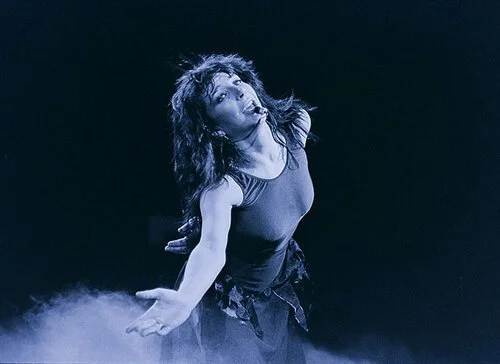
 IN THIS PHOTO: Kate Bush during the Tour of Life in Hammersmith in May 1979/PHOTO CREDIT: Max Browne

THROUGH the years

FEATURE: My Five Favourite Tracks of 2021: Wolf Alice – The Last Man on Earth

FEATURE:


My Five Favourite Tracks of 2021

PHOTO CREDIT: Jordan Hemingway

Wolf Alice – The Last Man on Earth

___________

THIS is the only instance…

where an album of the year and track of the year from my selected five intersects. I have already named Wolf Alice’s Blue Weekend as one of my favourite albums of this year. One track from it, The Last Man on Earth, is one of the best tracks I have reviewed in a very long time. I reviewed the song back on 28th February. I am going to come back to some reviews for Blue Weekend in a bit – as the album is one of this year’s best and warrants more spotlighting -, but I want to spend a bit of time with The Last Man on Earth. The lead single from their third studio album, there was a lot of excitement when the song was announced. As we can tell from this Wikipedia article, The Last Man on Earth has its roots in some rathe deep literature:

"The Last Man on Earth" was the band's first single in almost 3 years, following an extensive tour through 2018 and early 2019 for their second album, Visions of a Life. Frontwoman Ellie Rowsell said this about the lyrics of the song:

"It's about the arrogance of humans. I'd just read Kurt Vonnegut's Cat's Cradle and I had written the line 'Peculiar travel suggestions are dancing lessons from god' in my notes. But then I thought: 'Uh, your peculiar travel suggestion isn't a dancing lesson from god, it's just a travel suggestion! Why does everything need to mean something more?”.

I will come to the album reviews in a second. The Mancunion were excited when the exceptional and epic The Last Man on Earth was announced earlier in the year:

After a four-year long hiatus and a multitude of tantalising teasers dotted around social media, Wolf Alice are finally making their highly anticipated return to the world of indie music with their latest offering ‘The Last Man On Earth’. Following on from their previous album, ‘Visions Of A Life’, will be no easy feat; but if anyone can do it, I would place my life in the hands of the dazzling Ellie Rowsell. Emailing their fans, the band offered up a quick peak into what the last almost-half-a-decade has entailed

The eerie monochrome visuals, directed by Jordan Hemingway, are the perfect accompaniment. Ellie’s striking, angelic vocals cut through the smoke screen of mystery to introduce a new era of Wolf Alice.

Nothing short of straight out of a indie-teen movie, the flickering screens, kaleidoscopic imagery, and fire-torn backdrop almost signal the end of Wolf Alice as we know them – in fact, we’re worlds away. This new venture is as much a short cinematic feat, as it is a powerful ballad.

Inspired by Kurt Vonnegut’s novel ‘Cat’s cradle’, Ellie carefully plucked the lyrics from a fictitious tale, and added deeper meaning to the words “Peculiar travel suggestions are dancing lessons from God”.

Emotive lyrics and soaring vocals build up to make an escapist’s dream. The delicately layered piano and strings bring a heavenly, divine feel to the track; the orchestral bliss is emphasised by the lyrics “light shining down”.

Pegged by Ellie as the “Musical form of her own existential crisis,” and serving as a majestic dive into the mind of the powerful front woman, the glistening self-confession proves her prowess and demonstrates her evolution as a delightful songwriter.

Talking on the new album with Annie Mac on BBC Radio One: after a post-tour burnout, the band spent a few months apart and re-kindled their love for music in an Air BnB in Somerset, where they began writing their new tracks. Ellie explained that the album title was inspired by a taxi ride of perfectly blue skies. This new, grander, grandeur version of Wolf Alice are the most sonically mature the band has ever been, and I can’t wait for more newness”.

There are many great songs on Blue Weekend. I especially love The Last Man on Earth, as it was the first thing that I heard, and it sort of blew me away! It is a track that provide such an emotional hit. The critical reviews for Blue Weekend have been exceptional. This is what NME said:

There are lines on this record that have the power to transport you to very specific places or feel like Rowsell has extracted your soul from your body, put it under a microscope, then handed you a report on her findings. They are particular in the stories they lay out but, within the details, offer places to find yourself and the tales you could tell. It’s a phenomenon that the singer and guitarist references on the piano-led, emotional epic ‘The Last Man On Earth’: “Every book you take that you dust off from the shelf/Has lines between lines between lines that you read about yourself.” Simultaneously, she analyses a compulsion of the human race and offers another opportunity to indulge in it yourself.

The increased openness in the front woman’s words is perhaps no surprise, given the six years Wolf Alice have had since releasing their debut album ‘My Love Is Cool’. In that time, they’ve grown from buzzy newcomers to a bonafide Big Deal, via milestones of success you can’t help but absorb confidence from: breathless praise for second album ‘Visions Of A Life’, a Mercury Prize win for that record in 2018, selling out their biggest headline show to date at London’s Alexandra Palace. Now, they’re making the step up to riotous festival headliners, leapfrogging from topping the bill at the likes of Truck to taking pole position at this year’s Latitude.

In broad strokes, ‘Blue Weekend’ is a study on relationships – yes, with romantic partners, but also with friends, with yourself and with the world at large. The sparse and minimal heartbreaker ‘No Hard Feelings’ contains evocative scenes within its exploration of a separation. “It’s not hard to remember when it was tough to hear your name,” Rowsell sighs. “Crying in the bathtub to ‘Love Is A Losing Game’.” The song referenced might change for different people, but the feeling that sucker-punches you from within is universal.

If that track takes you into the depths of lovelorn grief, sunkissed album closer ‘The Beach II’ whisks us off to somewhere much calmer. Here, Rowsell is by the shore, drinking lukewarm “liquid rose” with her mates, but in her narration positions herself as an observer looking on fondly. “The tide comes in as it must go out, consistent like the laughter/Of the girls on the beach, my girls on the beach, happy ever after,” she sings softly. Combined with the gently surging guitars and buzzing synths beneath her, the song captures a moment of magic that makes you feel like you’re hovering above your own memories of the tableau it depicts”.

Actually, rather than pull in another review for Blue Weekend, I will end with NME’s reaction to one of Wolf Alice’s best songs. The band could have selected other tracks as lead-off for Blue Weekend, though they clearly felt that The Last Man on Earth would resonate:

Relatability is big currency in pop culture these days and it’s a common phenomenon for us to interpret songs, books, movies and more based on our own experiences. We inject importance into their storylines and lyrics based on how they make us feel about our lives, the lines between whether a piece of art is actually good or just makes us feel seen increasingly blurred. It’s an event that doesn’t escape Rowsell’s of our self-important society: “Every book you take and you dust off from the shelf/ Has lines between lines between lines that you read about yourself,” she observes. “Does a light shine on you?”

It’s sharp, smart songwriting that provides both a critical assessment of humanity’s egotistical impulses and allows us to do the very thing it warns of – finding ourselves in the lyrics and moulding them to fit our worlds. Wolf Alice have long proven themselves to be one of the best and brightest bands in Britain, but here they give us yet more evidence that they’re still setting the standard for UK music and beyond.

Usually, the start of a new era for the four-piece is signalled by a storming, moshpit-inciting banger. Their 2015 debut album ‘My Love Is Cool’ had the sludgy swagger of ‘Giant Peach’ and ‘Yuk Foo’ – the first track from their phenomenal 2017 album ‘Visions Of A Life’ – set fire to everything that had come before in a blaze of urgent rock riffs and guttural screams from Rowsell. Even EPs ‘Blush’ (2013) and ‘Creature Songs’ (2014) introduced themselves with tracks that made you want to throw yourself headfirst into a sweaty mass of strangers.

‘The Last Man On Earth’, though, changes tack. It’s not until midway through the song that we get much more than Rowsell’s vocals and a simple piano line. It’s a different pace for the band – one that puts their singer at the forefront and lets her emotive voice do the work until we enter a grand, powerful second half. As she delivers one of the song’s most cutting lines (“Who are you to ask for anything more/ The only thing you should be asking for is help”), drummer Joel Amey, bassist Theo Ellis and guitarist Joff Oddie enter the stage and gradually lift the track to epic new heights that dip between vintage psych riffs and majestic walls of sound built to fill arenas”.

One of my top five choices for the best track of the year, Wolf Alice’s beautiful masterpiece that is The Last Man on Earth is one everyone needs to hear. There are a lot of other songs vying for a top five place (including Billie Marten’s Human Replacement), though I could not omit this song. It is one that stunned me back in February. It seems Wolf Alice can get even better and bigger. Given the strength and brilliance of Blue Weekend, that is…

QUITE a scary thought!

FEATURE: Modern Heroines: Part Eighty-One: Bree Runway

FEATURE:


Modern Heroines

 PHOTO CREDIT: Conor Cunningham 

Part Eighty-One: Bree Runway

___________

AS one of the three nominees…

for this year’s Rising Star prize at the BRITs (the winner will be announced on 10th December), I wanted to shine a light on Bree Runway. Although she is a relatively new artist on the block. I feel she is a future icon and someone who is going to have an incredible future. I will come to a few interviews in a minute, so that we can find out more about her intentions, background and power. The 2000and4Eva mixtape was released last year. I believe Bree Runway is planning an album next year, though she has released/appeared on songs since her mixtape came out. I want to illustrate a positive review of Bree Runway’s incredible mixtape. This is what The Forty-Five had to say about a fantastic release:

Bree Runway’s YouTube channel description reads: ‘it’s like Lady Gaga and Lil Kim had a love child”. Writing about Bree already feels like writing about a star like Gaga, and that’s not just because she recently covered ‘Paparazzi’, though her performance cements what we already knew: the pop kingdom is Bree’s for the taking.

‘2000And4Eva’ is more than a love letter to the year 2000 – the record illuminates a path between eighties/nineties pop and female pop artistry of today. The nine tracks flaunt Bree’s hard graft in mixing genres and generations to invent something fresh, a mission the self-defined ‘alternative black girl’ first embarked on with a self-released debut EP in 2015. Back then, her DIY creative spirit and visual edginess shone out from her Hackney bedroom. By 2017 she was dancing on stage with Years & Years’ Olly Alexander. By 2018, she’d signed to EMI.

A dedicated scholar of MTV, Bree is steeped in the aura of past decades. The theatrics of Madonna and Kiss, the gated reverb of Phil Collins, a Grace Jones flamboyance, sitcom scenes, chunky pink phones, leather jackets and leg-warmers: eighties cues sit alongside rap and r’n’b wisdom from artists like Missy Elliott and Timbaland.

Yet Bree’s songs are never trapped by nostalgia. Watch the ‘Damn Daniel’ music video and you start to believe she actually invented the eighties. The best song on the mixtape, it’s also a strong contender for best pop song of 2020, so dangerously catchy you’ll find yourself singing “if you fuck with him, he’ll fuck all your friends” aloud in the supermarket. The final minute of ‘Damn Daniel’ is possibly the most glorious minute of pop this year. ‘4 Nicole Thea & Baby Reign’ is a brief but emotional tribute to a lost friend, while ‘Little Nokia’ bleeds together rap and crunchy guitar, Claire’s Accessories in grown-up song form, chains, spikes and all. Elsewhere, her lines range from the funny – “Snatchin’ everybody wigs, now they look like thumbs” – to the all-out flex: “He only hit me with a tеxt when he want that goddess-level sex”. Bree doesn’t take herself seriously – and she takes herself as seriously as death.

‘Apeshit’, the single that snared praise from Missy Elliott, finds nice significance in sharing mixtape space with ‘ATM’, which Missy actually guests on, but it’s testament to Bree’s artistic strength that this isn’t even the most important moment on the record. On ‘Rolls Royce’ she draws out the n-word just long enough to remind you of that black square you posted on Instagram in June. This year, while everyone was busy pledging ‘to understand’, Bree got on with squaring up to the obstacles in her way through sheer talent and determination.

‘2000and4Eva’ is not very long, and we already know four of its tracks. We want an album! But Bree Runway already carries herself like a star: she doesn’t need to rush. She’s busy blasting aside the expectations of her race and gender, seeing how many boxes she can rip open before deciding what to do with their contents. Watch out, Gagas and Dua Lipas of the world: Bree Runway is on her way. Actually, she’s already here”.

The first interview takes us back to late last year. DIY inducted Bree Runway into their Class of 2021. Among other things, Bree Runway talked about putting her mixtape together. There is a real sense of confidence and excitement that comes through when she speaks:

And it shows. For ‘2000AND4EVA’, Bree amassed a small crew of exciting female artists to jump on her songs (Rico Nasty and Maliibu Miitch, alongside Tate and Missy) - women who celebrate their differences and won’t be defined by industry standards.

“When you’re stepping out into music, you can think, ‘I better do what people would like and I better do what’s popular’,” she says of her earlier, R&B-focused sound. “But again, the choice thing: if it doesn’t feel good and it doesn’t feel completely natural to you, then don’t do it. I’m so much more than what I was doing when I first started. The amount of people that listen to me, the different countries, the amount of fan accounts... The conversations are different, the opportunities are different, everything is different. That saying is true: when you work hard for a year, things can really really change.”

Being a pop star in 2021 is harder than it was twenty years ago. In the early noughties, Lady Gaga could control the image she projected to the world, not setting foot outside without an encasing of bubble wrap, a dress made of flesh or, at the very least, a really, really uncomfortable pair of shoes. It all helped build the cult of Gaga. But in an always-on social media age where everyone, famous or not, is expected to share constantly, is that level of stardom still achievable?

PHOTO CREDIT: Hannah Diamond

“There’s a Bree Runway gloss, and I love my stuff looking star-studded, but sometimes I don’t mind breaking out of character and showing people how silly I am or how funny in a very non-corny way, because I actually am really funny, aren’t I?”

Oh. We’re supposed to answer. “Yes, yes. You’re really funny, yes.” It’s the only hint we’ve had all day that Bree needs any kind of validation. We’re kind of flattered.

Watching her glide through today’s photoshoot, directing the photographer, stylist and make-up artist, it’s obvious we’re seeing a real visionary at work - someone whose career is going to twist and turn in lots of exciting, unforeseen ways. With artists like Rihanna and Madonna building business empires alongside their musical output, is Runway Enterprises something we can expect in future?

“Oh definitely,” she confirms. “Just like I said about me being more than one genre, there’s definitely more to me as a woman as a whole. I’m into fashion, I’m into tech, I’m into cars. There’s so much more that lies ahead. I’d love to do a collaboration with Lamborghini - that would be sick.

“A pop star needs to be a chameleon,” she continues. “Your ability to switch and adapt needs to be on 10. A pop star needs to be a fashion icon. And a pop star needs to be any genre they want to be at any time.”

With so much achieved in this, the most unconventional of times, it’s undeniable that 2021 is going to be a behemoth of a year for Bree. She’s keeping tight-lipped about what’s next, although we’re sure it’s already mapped out on a vision board somewhere.

“What’s coming is that Bree Runway is going to change the game,” she says, with a glint in her eye”.

Actually, there is another 2020 interview that is worth sourcing. It seems, reading this interview from DORK that the lure of MTV and the power of music videos helped captivate Bree Runway at a young age:

Pledging no allegiances to any genre, always expect the unexpected with Bree. She’s got big dreams and a 20/20 vision that’d have you thinking she’s been doing this for decades.

In a way, she has. Born in Hackney, Bree grew up glued to the telly, watching music videos on MTV which influenced her own artistry later on (the ‘APESHIT’ video is so Missy Elliot, it got co-signed by the legend herself). A born performer, she’d put on shows for her family as a kid, organising the whole thing herself.

“My mum used to go to work, and me and my cousin would be left at home, and we would always watch MTV. That inspired me to start hosting mini-concerts to my family members,” she says over the phone from London, where she’s performing the decidedly less glam task of combing banana from a hair mask out of her hair.

“So I’d organise the line-up, and I would decide which cousin would be singing and which cousin would dance and which cousin would rap, and then I’d tell the adults that we’re gonna come down by eight o’clock, I need everyone’s sat down and then we’d perform for them. Then that carried through to primary school and stuff. I would do performances, and my mum was almost like our own Tina Knowles because she’d make our costumes for us. And she’s still very involved in my costume stuff today.”

 When it comes to inspiration, she’s got no end of it. From actual Michelle Obama coming to Bree’s school (yes, really), watching her sing and encouraging her to pursue music (“She had a lot of time for me that day, and she gave me some very inspirational words, I have to thank her for that”), to the icons she grew up watching, she’s constantly motivated to create bold and distinctive art.

The confidence she exudes today, however, has taken a long time to build up. She mentions she was wary about the idea of becoming an artist due to how she was bullied over her dark skin as a child.

“I was never fully confident enough to go for music completely, though, so I would start and stop a lot. I was just aware of how much more you’re seen when you’re an artist, you’re more open to the public, and because of how much I was bullied growing up, I didn’t want to put myself in that position. But with age and just being exposed to more artists, like Lady Gaga, Grace Jones, because I saw pieces of myself in them, they kind of inspired me to just go for it no matter what people think about you. Some people think they’re crazy, some people think they’re amazing, but at the end of the day it doesn’t really matter, because they’re still icons.”

But learning to love herself was crucial to who she is as an artist today. Click on any of her music videos or check the replies to her tweets and you’ll find many young Black girls telling Bree what an inspiration she is and how she’s everything they wanted to see in a pop star growing up. The video for ‘Big Racks’ kicks off with statistics about racism in the workplace, and throughout she’s shown experiencing various microaggressions, and eventually covering her face in white plasters to assimilate”.

Last year was definitely a big one for Bree Runway. Even though it was strange for all artists, she did enjoy some real success and recognition. Vogue profiled her earlier in the year, where we get a sense of how things have exploded this past year:

It’s been a rollercoaster year for everyone, but yours also took you to record highs in your career. How have you been finding it?

I split up with management at the top of the year, so I’ve been working solo, and still having to produce music videos and stuff. There’s the help of the team, of course, but I have just jumped over every single hurdle this year. The rewards have been rude. Getting 4Music “Artist of the month.” Cardi B found me; Saweetie; Doja can’t stop singing my praises. It’s really like, “What? What the hell?!” Fans always say, “You should be on like a gazillion eyes” – but it’s just not about the superficial stuff for me, it’s about the eyes that are watching you. That is so important. The impact you’re leaving on other Black girls to get more creative or think without limit.

Usually you build local buzz, then national, then international, but with you, it feels like it’s been everything at once.

You can’t make it up. I’m so happy that the biggest stars in the world recognise me and rate what I’m doing. It’s so crazy how the love changes when it crosses over to a global thing. In the UK, everyone’s quite conservative. No-one wants to look like a fan. Then your music gets passed over to people who are not afraid to make you feel like you’re the hottest thing on the planet. We really got to loosen up here, seriously.

 What’s your biggest artistic inspiration?

Everyday life. I can make music out of anything. Even that phone ringing, I could sample that. I grew up listening to Missy, Britney, Kelis, Lil Kim, Grace Jones, all the eccentric, out-there women. And men like Freddie Mercury, David Bowie. Those are my peopledem. I’m currently listening to old Latin music from like the 1970s, old Daddy Yankee, and also Kate Bush. I don’t want to sound shady but music was just more experimental before. I feel like people experimented with sounds and crossed genres. It just gives me assurance in myself that what I’m doing isn’t so strange or left. It’s been done in different ways. You just need to focus on nourishing your way. I’m from here, but I don't make Afropop or Afroswing or whatever. My genre is very much a fluid thing. You close your eyes for a minute… She’s a country singer. Oh, she’s a rock star. This is my comfort, this quirky eccentric world.

What are you working on at the moment?

I’m going to start working on the debut album. I already have a concept for it. I want it to be a true embodiment of everything I am, which is everything. I haven’t really started singing on music yet, but I can sing. That’s the rebel in me being like, just because I have a nice voice doesn’t mean I have to be a singer. But, I’m gonna sing more on the album.

What’s your biggest dream?

I have so many. One is to be a leading example of the fact that a Black girl can do anything, and Black girls are everything. I want to be a huge advocate for that. What you expect from us all — oop, there’s more, much, much more to what you expect, and what you think we should be doing. I want to be a huge example of that — global. Like, “If Bree did it, I can do it.”

You once said you were scared of fame; how are you feeling now?

I feel good. I was only afraid of being more famous because I was afraid of being seen. I thought people were gonna say the things about me they said in school. It’s definitely about silencing the inner child that has been hurt and bullied and just assuring her that we’re all good – like, it’s not the same anymore, babe. We got this. And it’s been great. People receive it. They love it. They actually love me for me. So it’s just like, what were them hoes talking about again?”.

Before closing up, there is another interview I want to source. Bree Runway is a star who is definitely primed for amazing success and a huge legacy. THE FACE chatted with her back in May. The broad and unconventional source of inspiration means her music and sound is different to anything else. She is definitely changing the shape of Pop and Rap:

You’ve got to fake it ​‘till you make it,” she says of her evolution from a performance-shy child to a fearless pop innovator. ​“I’m a very outlandish person in how I dress.” (Think Lil’ Kim meets Lizzie McGuire, styled in Jean Paul Gaultier.) ​“I just had to own the fact that I was going to get stared at. Then I realised that a lot of the same people who were staring started looking like me or doing what I do. It’s only weird because you’re the only one doing it. When they see how much it works for you, they all want a piece of it.”

Disrupting pop’s status quo with an ever-evolving, shape-shifting sound, Runway’s lane is as wide as it is long, switching gears between genres on each and every track. Released last November, debut mixtape 2000and4Eva is a case in point. Throwback hip-hop and electro? Check. Futuristic reggae? Check. Hard-hitting punk rap? Check. Club-ready bangers? Duh.

When you look back at the biggest pop stars of the past few decades – Madonna, Britney Spears, Beyoncé – the one quality they all share is the ability to reinvent themselves. Typically, this sound and image revamp is ushered in with a new album cycle, presenting fans with a fresh ​“era” to mark the occasion. But Bree Runway is yet to release her debut album and we’ve already seen her take on more genres than most artists will cover throughout their entire careers, packaged with jaw-dropping aesthetics each time.

She’s straddled a giant, Y2K mobile phone in the music video for Little Nokia, channelled Shania Twain’s That Don’t Impress Me Much leopard print ensemble for Damn Daniel, and in What Do I Tell My Friends? twerked over her murder victim’s bloodied body. For Runway, it’s less of a reinvention and more a showcase of her versatility. We’re not witnessing her first era; we’re being invited into her universe, one that’s only set to expand as her star continues to rise.

“Going to the studio and making a fresh sound every single day? That’s as easy as breathing to me,” says Runway, matter-of-factly. ​“It would be more pressure to look at Spotify statistics, see what the most popular songs are and try to replicate them.”

A lot of her influences are a far cry from the sounds currently in the charts. She listens to Ghanaian highlife artists such as Daddy Lumba to soak up the genre’s unique percussion. She delves into the catalogues of late-Seventies/early-Eighties American funk pioneers Zapp to analyse their use of vocoders. She plays soca, calypso music that originated in Trinidad, because, well, she just likes it.

But it all started with Britney – the video for her 2001 classic I’m A Slave 4 U, to be specific. She first saw it at a sleepover with her cousin. MTV was on in the background, as young Brenda lay on the floor pretending to be asleep. ​“I turned around and saw Britney Spears’ belly out on the TV and she was doing her sweaty choreo. I had to wake my cousin up!” She spent the next day gripped to the screen, waiting to see the music video again. ​“Britney Spears did pop in such a cutting-edge way and her collaborating with Pharrell, that whole era, was just great. She was a pure example of what a pop star is.”

It’s fitting, then, that Runway’s first single of 2021, Hot Hot, upholds I’m A Slave 4 U’s raunchy, sweaty legacy. Titillating viewers as she flips her hair and washes a car in the music video, the track is a summer scorcher, reminding us all that ​“You can never ever do it like a Brenda”.

Now, Runway is preparing to reach her next career milestone: the debut album. At first, this felt like a daunting task, the pressure to ​“strike while the iron is hot” being at odds with her instinct to wait until she was in the ​“perfect place to write an album”. But the week after we speak, she’s clearly found her groove, teasing her Instagram followers with a photo in the studio.

“It’s going to be an extension of my work, but on the highest level,” she promises confidently. ​“You’re going to be getting variety. I’m going to try some things that I haven’t tried before. I’m going to be singing way more. It’s going to be sick.”

Runway’s journey isn’t only about her own success, though. There are personal goals she’d like to achieve (there’s a big one she’s about to tick off – a feature on a Lady Gaga record). But above all, she wants to inspire others.

“I would love to continue to impact the lives of Black women around the world,” she says, acknowledging the positive effect seeing someone like her on TV might have had when she was younger. ​“And I would love to birth a generation of stand-out kids, who were the underdogs growing up but have something unique in them and, because of me, they don’t feel like they have to play it down.” Bree Runway pauses briefly, searching for the right words to prophesise her own impact. ​“I want to see artists that are just on some other shit”.

Whether she is named as the BRITs’ Rising Star or not, Bree Runway is already a star and is someone in a league of her own! I will end with a playlist of the best tracks from Bree Runway to date. She is a sensational and inspiring artist who has…

A whole lot more to say.

FEATURE: Spotlight: Lola Young

FEATURE:


Spotlight

PHOTO CREDIT: Rosie Alice Foster

Lola Young

___________

I wanted to put…

PHOTO CREDIT: Rosie Alice Foster

Lola Young in my Spotlight feature as, on 10th December, we will find out whether she is the BRITs Rising Star (she is up against Holly Humberstone and Bree Runway). Young is also on the shortlist for BBC’s Sound of 2022. She is an amazing young talent who is only just in her twenties. I want to come to some interviews where we can find out more about her and the amazing work she has released already. I wonder if she has plans for another album (following her 2019 debut, Intro. Before getting to any interviews, here is some background and biography about one of the U.K.’s brightest young artists:

Fiercely independent and possessing a true artistic vision, 20-year-old Lola Young has all the potential, spirit and individuality to become the UK’s next biggest talent.

Growing up in south London and with an inherent sense of direction and personal drive, Lola immersed herself in music. “It’s been a part of my life since I had my first memory,” she says. “And I’ve been singing since I could talk. Not that I was a good singer then. I really had to learn, practice, get lessons and teach myself. Hard work was involved when it came to me learning how to sing. People might say, ‘It sounds like you were born with that voice.’ It was not the case at all.”

Hard work could be her motto. Despite her age, Lola has been living and breathing music for nearly half her life. She started writing songs aged 11, and by the time she reached 13, she had already competed in (and won) a national open mic competition and appeared on a television show that gave young teens a sense of what life working in the music industry was like. “I was still young,” she recalls, “and while I had managers and labels interested then, which was cool, I didn’t really give it a legitimate thought.”

Securing herself a place at the prestigious BRIT school (Amy Winehouse, Rex Orange County, Loyle Carner), Lola says she spent her time at the school “finding myself creatively and stylistically”. Still, something wasn’t quite right. “School is a difficult thing because it's about conforming and authority,” she says of her time spent in education. “And those are two things that I've never really loved.”

Once she graduated from the BRIT school, she began gigging non-stop around London and focusing on fine tuning her abilities as a live performer. “When people talk to me about performing live,” the 18-year-old says, “I say that I’ve always worked so hard in that area. I’ve done so many shitty open mic pub gigs where I’ve rocked up and played to three old men drinking beer and talking through my performance. But I had to do that.”

At the heart of Lola’s live set was the music she had written. While most artists might distance themselves from the songs they wrote when they were young, Lola embraces the emotional and musical journey she’s been on. One specific song, “I Learned From You”, was written five years ago when she was just 13, and is a highlight of her live set. In fact, despite its age, the track still manages to leave Lola in her feelings. Recalling one particularly emotional performance that left her tearful, Lola says: “That song was written about a close family member and after I performed it at that show, someone came to me and said that it made them think about this figure in their life. And it was like, ‘Wow! That is exactly what I wrote it about.’ They had attributed it to their own life. That blew my mind.”

PHOTO CREDIT: Laura Bailey 

Lola soon found herself being managed by industry figureheads Nick Shymansky and Nick Hugget and signed a deal with Island Records, the label that she says felt most homely. It’s all been a crash course in resilience. “And when I say resilience,” she continues, “I mean you have to be able to know what you want. And you have to know what you are. Actually, no one knows who they are,” she laughs, “but you can know what you're trying to be. I always had a rough idea of what I was trying to be.”

That vision manifests itself in the music she writes. “My music is all the different parts of me and how I work,” she explains. In this way, it defies categorisation, while every beat and melody has meaning and intention. As a lyricist, Lola draws you in to her world, creating evocative scenes with all the tenderness and sensitivity of a folk artist, while maintaining the sharpness, wit and attitude of a rapper.

This is exemplified on debut single “Six Feet Under”, a haunting, subtle but hook-laden song that feels sketched out of Lola’s very being. Co-produced by Al Shux (Kendrick Lemar, Jay Z), the song was written by Lola on the piano before being worked into an atmospheric, celestial, ambient and lightly electronic missive with an unconventional beat and Lola’s heart wrenching vocals singing about the battle to pull yourself out of depression. “It’s about that mental feeling of being stuck in a time and place while the world continues to turn,” Lola says of the song. “Life goes one, regardless of the way you feel about it.”

Elsewhere, “The Man” plays with intimate balladry and electronic minimalism, while songs like “3rd Jan” and “Blind Love” cover different sides of her boundless sonic universe. The latter especially is so tender and barefaced, Lola’s voice pulled back to a whisper, that it feels inevitable that it will become emblematic of thousands of people’s relationships, the soundtrack to love itself.

“As a songwriter I like that I can listen to an album and I can feel inspired to write a song,” Lola says of her inspirations. “But usually I’d say that I write when I’m really in touch with my feelings. I use it as my therapy.” Raised on a diet of Joni Mitchell and Prince, Lola, as a standout lyricist, says that she feels particularly inspired by artists who she considers poets first. “A lot of people say that they don’t hear Joni or these artists in my music, but they’re there. I have always been interested in words and how they fit together.”

The battling spirit that saw Lola pushing against the authoritative restraints at school applies to her approach to her career. “I think it’s interesting because people always try to box you,” she explains. “But what I always say is that you should just make the box really big. Because at the end of the day, when people say they want to box you or pigeonhole you, it means that they want to restrict you. Without sounding narcissistic, I'm not really one thing. I'm quite a few things and my music is quite a few things. And I think that’s important to remember: you're not just one thing.”

Such self-assurance is essential in the music industry but Lola admits she still feels overwhelmed when hearing how her music resonates with people. “It’s intense,” she explains. “I struggle with personal issues myself and even though it’s really overwhelming and beautiful when people come up to me and tell me these things, I will only hear the negative. I feel like a lot of musicians are like that. They’ll come off stage and they’ll focus on what went wrong.” She is learning, though: “It’s important to forgive yourself for those things.”

Exceptionally talented with an undeniable creative focus, she is a musical force. A thrilling and uncompromising live performer with an astute and unique gift for writing songs that encapsulate and explore the human condition, Lola Young can’t be boxed or categorised. And because of that she is one of the most exciting new British artists ready to be discovered”.

Before coming to interviews from this year, I want to head back to last year. Atwood Magazine spoke with Lola Young about her incredible track, Woman. It followed up a terrific E.P. in the form of Renaissance:

British singer/songwriter Lola Young opens her most empowering release to date with a raw foreword of sorts; an author’s note introducing the subject matter at hand, establishing both the context for the art we are about to experience and why we are experiencing it. Vulnerable, heartfelt, and polished, “Woman” features Lola Young in her finest hour with a stirring ode to and embrace of womxnhood. Unapologetic and fierce, it’s a seismic emotional outpouring and a stunning expression of love and respect not just for herself, but for all the womxn in her life.

Many great songs have been named “Woman,” and few have come as close to capturing the essence of womxnhood as Lola Young’s “Woman.” Released July 27, the artist’s follow-up to her April EP Renaissance is an effortless, intimately charged upheaval in the very best of ways. The 19-year-old pours herself out in an achingly honest dedication. “‘Woman’ is a song about female empowerment,” Young shared upon the track’s release. “It’s a song about how I feel towards the patriarchy, but also an introspective piece that looks at the gender roles and how these can be broken down. This song means a lot to me because it’s something I had never previously written about and it has an honest vulnerability to it that I hope makes people feel an understanding towards us women.”

I wanted to write an ode to women because I felt it was important, where we are socially, to use my voice to empower women and their bodies in particular.

Young’s lyrics bounce between empowerment, common critiques and double-standards for womxn, and pure assertions of strength, inner and outer beauty. She sugarcoats nothing, painting a vivid portrait of her female experience in a patriarchal society. As a song, “Woman” balances this structural imbalance with a feverish dedication to overcome, persevere, and embody the artist’s womxnhood. This vision comes to life in Young’s Olivia Rose-directed music video. “I wanted to make this video because I believe women are all undeniably strong, sexy, free, brave, vulnerable, raw and powerful, and that we do not have to hide away,” Young explains. “We do not have to remain unseen, our bodies should never be sexualised or a taboo conversation, or only seen through the male gaze. We have the ability to normalise our bodies being on show, and accept them for their differences, as It’s important to remember those differences are currently often shamed. I came up with the idea of the women in the video being fully nude. The energy on set was insane, I have never felt more empowered in my life. Nipples, bums, rolls, stretch marks, cellulite, all of these things are beautiful along with the ‘perfect’ body.”

This is my personal experience of being a woman; hopefully other women will have their own take on what it means to them.

 Lola Young’s “Woman” is uncompromisingly soulful, impassioned, and utterly electrifying. Co-produced with Wolf Tone founder and producer Paul Epworth (Adele, Florence and the Machine, Rihanna), it is without a doubt the most mature offering we have yet heard from the emerging artist – a vivid immersion of intoxicating, deep grooves and heated vocals with a clear, strong vision”.

WHAT ATTRACTS YOU TO THE SUBJECTS OF BOTH FEMALE EMPOWERMENT AND STRIFE?

Lola Young: I don’t really know what attracts me to it; I guess I just feel things like most people do and because of this I want other people to feel things when listening to my music. This is quite a political song and I have always been attracted and interested in social politics so the fact that women’s bodies are definitely over sexualised is something I thought would be interesting to write about, as I haven’t heard many other songs speak about this.

YOU REPEAT THE WORD “WOMAN” AGAIN AND AGAIN, REALLY EMPHASIZING THE IDENTITY BOTH ASSOCIATED WITH AND TAKEN FROM THE WORD. WHAT DOES THAT WORD, “WOMAN,” MEAN TO YOU?

Lola Young: The word “woman” means very different things depending on how I’m feeling. However, in general I’d say the word woman means the ability to be strong whilst being emotional. The ability to be many things at once. To me it means being free whilst at some points being quite the opposite, but it also is about how we change that little by little and how a woman is of course different from a man, but nevertheless just as powerful.

YOUR SINGING IS TRULY RAW AND FEARLESS IN THIS SONG. HOW DID THE RECORDING PROCESS FOR CAPTURING SOME OF THESE INTIMATE LINES SHAKE OUT? WHAT WAS THAT PERFORMANCE LIKE, FOR YOU?

Lola Young: It was hard work recording the vocal for this song, but I really made sure I put myself in the place when singing that meant I could really feel the lyrics and the melody. It was tough and it took a while but I loved recording it over and over because it meant I could really try and capture the right emotive take”.

I am interested knowing when Lola Young got bitten by the musical bug and how it all started for her. A great interview with The Forty-Five from earlier in the year sees them ask her that, in addition to (among other subjects) when she started working on her stunning voice; also what the future holds for her:

You got started in music incredibly young. Do you remember the first song you ever wrote?

Yeah, I was around 11 when I wrote my first song and it probably wasn’t any good. I can remember writing one, a Christmas song on the piano, and it was terrible! I just remember something about Santa and all this rubbish. It wasn’t great but it was the start of my development. I have material from when I was 13/14 that I still use today. Women mature a lot quicker, so I don’t think I’ve changed that much between 13, 14, and 20. Obviously, I’ve changed, but in terms of my songwriting style and everything, I don’t think that’s changed too much. There’s a song called ‘I Learned From You’, which is coming out in the near future and I wrote that when I was very young. I just wanted to be a songwriter at first.

When did you start to work on your voice?

Some artists, they’re born with an incredible voice. A lot of the best are gospel singers who go and sing in Church growing up. They just have it in them and for me, I couldn’t really do that. I had to go to vocal coaching and singing lessons to train my voice to ensure that it wasn’t weak.

I’m quite content with the way things are going but I did have a cyst on my vocal cords chopped off last year. It was horrible. My voice is much deeper and a bit breathier now and I couldn’t sigh high at all. I went to my GP and they said: “You either live with this and it’s fine. It won’t do any harm, but you live with it. Or we have to do surgery.” And I was like, “I’m doing surgery.”

After surgery, I had three days of no talking. I had to write everything down on a piece of paper. Obviously, they just didn’t like me talking – rude, right? So then after that, it was honestly pretty traumatic. The whole process of recovery, which is really hard because it’s not only that you need to relearn how to sing. It’s that you need to relearn how to talk.

Finally, what can we look forward to seeing from you in the future? Is there anything that you can tease?

So I’ve got a project coming out, which I’m very, very excited about. I’m not gonna give away too much, but it’s an EP called ‘After Midnight’ that’s very raw and not really like anything that I’ve done before. If I’m going to be honest, all the music I’ve made so far I’m happy and content with, but I also do feel like there’s more to me. Without sounding like Kanye! But I do think there’s more to me and I’m just excited for the next few projects. One day, I’d love to drop a trap album honestly, like straight trap songs, or some pure folk. So we’ll see!”.

NOTION spoke to Lola Young back in August about her new E.P., After Midnight. They asked whether, having released her debut as a teenager, the music industry treated her differently (compared with how they would deal with a slightly older artist):

Firstly, mental health is such an important topic of conversation, so how are you doin

I’m alright you know; I think I’m good. I have a mental health condition, so I know and understand the struggle of someone who goes through it day-to-day. Luckily mine is very much sporadic, my episodes kind of come at different points in my life. So, right now I think I’m good, I mean it is what it is. I also just want to say thank you for asking this question because I think it is so important for it to become normality to ask people how they actually are. I’m someone who usually does ask that question, I think it’s really important to check up on the people around you, or even those that aren’t. I met a girl recently on a video that I was at, and I could tell that they seemed quite down, so you’ve always got to check. Sometimes you can sense it just by a person’s energy.

What inspired you to become an artist? Had you always known you wanted to do music?

Yeah, I’ve always known I wanted to do music since I was very young and it was just one of those things where there was never another option for me. It was only this. I was never really good at anything else when I was at school. Like I was good at school, but I wasn’t amazing, you know? And I feel like there are two types of people in this world, there are the people that are sick at school and academics and then there are the people that just aren’t very good. And with the education system, there seems to be this thing where there’s just no middle ground. I mean there are people who get B’s and C’s, but they just classify that as being ‘not good’. There are a lot of creative people in this world, and I think a lot of them have a tendency to be a bit contained or reserved when this shouldn’t be the case.

I read that you released your debut album at only age 18; have you felt people treat you differently in the industry due to your age [Lola is now 20]?

Yes and no. Growing up I was always – I don’t want to say mature, because I definitely haven’t always been mature, haha. But in the sense of that, I’m able to just talk to people and to communicate what I want. So, I don’t feel like that’s ever really been an issue because I always know what I want in regard to my music. Also, that first release, I see it more as just a little project that I dropped, and yeah, I guess you could call it an album, but it was more just me experimenting. Basically, I feel like people will only treat you differently if you feel differently yourself. Now that’s obviously not the same in every scenario, but I feel like people will only treat you differently if you allow them to.

Did the Covid-19 lockdown affect you as an artist or was it a blessing in disguise?

I’d say a blessing in disguise in some sense where I could really focus on myself and my music. But also, the complete opposite at times. It was very hard for a lot of people, especially us creatives because it messed up a lot of things. It messed up a lot of my plans and other artists’ plans. So definitely a blessing and a curse at the same time for sure.

How do you go about setting yourself goals? Do you tend to set massive ones or like month by month?

I think I try to set small ones but sometimes they just end up really big and too far for me to reach. I think it’s important to set yourself small goals. Even just when we spoke about mental health, setting small goals like I’m going to wake at this time tomorrow and make my bed. In reality, that is such a small goal but if you do it then it can help set off a chain of events. So yeah, in terms of my music I definitely try to set up a group of smaller goals rather than a few big ones”.

Not only is Lola Young the singer behind this year’s John Lewis advert. She could also be named as the BRITs’ rising star. Even if she is not, the fact that she has been nominated demonstrates how important and promising a talent she is! An artist with a long and successful career ahead of her, go and follow her and check out the music. London-based Lola Young is a remarkable songwriter and singer possessed of…

SUCH enormous promise.

_______________

Follow Lola Young

FEATURE: Spotlight: Cassandra Jenkins

FEATURE:


Spotlight

Cassandra Jenkins

___________

ON this occasion…

I am spotlighting an artist I only turned onto relatively recently. The amazing Cassandra Jenkins is someone who has released one of the best albums of the year with An Overview on Phenomenal Nature. Her second studio album, it is a sublime Alternative Folk album that is dreamy and impressionistic. I am going to come to a couple of reviews for the album in a bit. Before that, it is worth sourcing a couple of interviews with the Brooklyn-born artist. In a detailed and brilliant interview with Pitchfork, we discover more about Jenkins’ path into music. She also talks about what it was like working with the late musician David Berman:

As we lay in the snow, arms outstretched as if we got tired in the middle of making snow angels, Jenkins tells me about the author and filmmaker Miranda July’s idea of “everyday acting,” how you can make scenes out of ordinary moments if the people around you are willing to “go there” with you. For Jenkins, 36, this means adopting a persona when talking to a stranger in the grocery store, sporting binoculars around birders to signal that she’s one of them—or plopping in the snow in the middle of a crowded park. She gets a lot of joy from these performances because they allow her to step outside herself and dissolve into another space with a stranger.

The idea of decentering the self comes up again and again as a guiding principle behind Jenkins’ new psych-folk album, An Overview on Phenomenal Nature. On it, she acts as an ethnographer archiving quotidian sounds and conversations as much as a songwriter telling her own story. Album closer “The Ramble” transforms birdsong and footsteps recorded in the woodsy park sanctuary into a droning meditation. “Hailey” is a straightforward document of a friend’s Instagram post made tender by Jenkins’ cautious vocal delivery and the finger-plucked guitar and banjo notes. And centerpiece “Hard Drive” is a spoken word mantra that references people Jenkins interacted with in her day-to-day life: a security guard, bookkeeper, psychic, and driving instructor. Their idiosyncrasies, like the security guard’s feminism and the psychic’s reassurance, come together to form one consciousness—all the little pieces of herself that Jenkins finds in others.

Jenkins’ relationship with music has always been inextricably linked to her family. Her parents played cruise ships as part of a lounge act in the 1980s before raising Jenkins in an apartment on Manhattan’s Upper West Side. When Jenkins was a child, her dad bought a bus so their family band could drive around the country and perform at obscure folk festivals together. Up until the pandemic hit last year, her family regularly hosted touring musicians and held concerts in that same Manhattan home. It was at these shows that Jenkins played some of the songs on her new album for the first time.

After graduating from the Rhode Island School of Design in 2006, she bounced between day jobs and said yes to playing in every group she could including, but by no means limited to, a honky tonk bar band, a surf band, an emo band, and a synth-pop band. She went on her first tour in 2010 with an all-female bluegrass outfit called Uncle Earl and has since played with indie rock vets like Craig Finn and Eleanor Friedberger. “She has this calmness about her where you notice immediately that she’s really listening to you,” Friedberger says of Jenkins. “A lot of times in New York when you meet other musicians they’re always thinking of the next thing to say to impress you, but she’s just not like that at all.”

In the summer of 2019, Jenkins was preparing for a three-month tour as part of celebrated songwriter David Berman’s new band, Purple Mountains. But right before the trek was set to start, Berman took his own life. “We weren’t close friends, and I only knew him for four days, but I still had this incredibly unique experience of him,” Jenkins says, adding that she was profoundly impacted by his death. Though she was initially nervous to write about Berman, his spirit permeates Phenomenal Nature. On “Ambiguous Norway,” his memory surrounds her like fog, and on “New Bikini” she ruminates on the advice her friends gave her—“Baby, go jump in the ocean”—to cope with the loss.

Berman’s songs were full of darkness and vulnerability, lit up by wry observations about suburban kids, airport bars, and country clubs. He and Jenkins share a propensity to watch the world and insist on wonder as a guiding principle. Despite the loneliness and disappointment in their work, there’s a hopeful understanding that, as Berman sang on his 1998 song “People,” “Moments can be monuments to you/If your life is interesting and true.”

Soon after Berman died, Jenkins realized she had forgotten to cancel a flight to Norway that she had planned before agreeing to go on tour. When she noticed it was set to depart at the exact time her first Purple Mountains show was meant to start, she took it as a sign and went on the trip. While there, she met a Danish chef who told her that in Norway, clouds serve as proxies for mountains. The mountain reference, coupled with the fact that Berman’s middle name was Cloud, felt like an eerie coincidence, one that made her question the nature of existence itself. “I felt like all the borders of my experiences were just collapsing—it was this wink, and I was like, ‘Are you seeing this?’” she says, gesturing to a higher power above her head. “I was seeing connections like that everywhere in this really psychedelic way.”

Jenkins describes having “traveller eyes” after her trip to Norway. She obsessively recorded people and places for months, not knowing what she would do with the audio. She had written a whole set of songs, but found that they no longer felt resonant after a period of such meaningful change. She struggled the few times she tried to play them, recounting with a laugh one particularly jarring instance when she was opening for her friend Lola Kirke, the musician and actress known for role in Noah Baumbach’s Mistress America. “I ended up doing this workout routine and telling jokes about my dad,” Jenkins recalls. “At one point I remember getting off the stage and doing a conga line with the audience. Lola was in the line behind me and she asked, ‘What are you doing?’ I was like, ‘I’m having a crisis!’”

In October 2019, she booked time in the studio with producer, multi-instrumentalist, and songwriter Josh Kaufman, whose resume includes work with the Hold Steady and the National, as well as with Taylor Swift on her two recent folk-leaning albums. Jenkins showed up with voice memos, iPhone notes, and lyrics over the course of a week, and the pair pieced together six of the album’s seven tracks. “She ended up with something totally different than she had gone in looking for,” Kaufman says. “It takes a certain kind of person to not feel the obligation of their previous impulse.” Compared to the more structured and academic approach she took to making her debut album, 2017’s Play Till You Win, the process of putting Phenomenal Nature together was purposefully loose. She wanted to write songs with two or three chords that she could easily play with strangers or her family members.

Your album is named after an exhibition of Indian visual artist Mrinalini Mukherjee’s fantastical sculptures. How did her work influence the music?

In many ways the security guard that I talked to at the exhibition is my mascot of the record. I was struck by the fact that this woman had stopped me and said, “Let me give you an overview of this thing” when in fact it was a completely subjective monologue. I loved the gall of that lady to do that. I think a lot of times when someone is offering an overview of something, it is infused with their personality. Or when someone’s asking you a question, they’re revealing something about themselves.

You held day jobs digitally restoring gems at the Natural History Museum, working at a farmer’s market, and as a photographer. How have all these different gigs shaped how you approach being a musician?

I’ve never been a careerist, especially in music. It’s always been something I live and breathe with my family. Maybe it’s also a combination of a fear of failure, or not wanting to commit myself fully because I don’t want to ruin the thing that I enjoy most in life. It’s part of my mental health practice to make sure I’m always learning about other things and not getting absorbed in the narcissistic act of putting out my own music. This record is a great example. I really didn’t think anyone was gonna hear it. But I loved making it, and it really carried me through a difficult period in my life. Music hasn’t done that for me before in this way.

What was it like playing with David Berman?

My experience of him was really informed by the days in the wake of his passing, when I met so many people that played or corresponded with him. People have so many stories of him. I was so devastated that I didn’t get to know him better.

It’s intimidating to write about someone who is such a legend to so many people. When I joined [Purple Mountains] I was nervous because I was like, “Why am I here? There are so many people that can play this guitar part, why me?” But then, when I was standing next to him, I immediately was like, “Oh I get it, I know why I’m here.” He was so funny and open, and definitely struggling. I just was so excited to love this person. I knew that immediately. I could feel how deeply he felt the songs. He had a hard time getting through the [Silver Jews] song “The Wild Kindness,” but by the time we were done rehearsing, he had gotten through it without crying.

“The Ramble” is wordless and meditative, and a slightly different tone than the rest of the album. Why did you want to end the record with that song?

It was the last song to come into place. I wrote it in May 2020, a few months after the rest of the record, because I was spending a lot of time there. I actually wrote a guitar part and an audio guide to “The Ramble” but ended up taking out both because it felt too much like a directive. I wanted it to be a walk through the park with me but I wasn’t telling you where to go. You can just choose your own adventure.

When I wrote the song, I was feeling very mournful but also watching nature creep up everywhere. I wanted it to have that energy of the dandelion that pops up between the cracks of the sidewalk. That quality of moving forward. Through a lot of tragedy, nature has its way”.

I am eager to come to the way some critics assessed An Overview on Phenomenal Nature. I have listened to Jenkins’ debut album, Play Till You Win. Her follow-up is on another level. It is definitely one of the most beautiful records of 2021. Although it may not appear high in a lot of critics’ end-of-year polls, it is an album from a magnificent songwriter. In this interview with Under the Radar Mag, we find how An Overview on Phenomenal Nature deals quite openly and starkly with grief and loss:

Cassandra Jenkins speaks about her latest album, An Overview on Phenomenal Nature, while packing up her car in Upstate New York. After our conversation, she will drive back to the city to get her first dose of the COVID-19 vaccine. On the album’s masterful track “Hard Drive,” listeners sit in the backseat of a car while Jenkins receives driving lessons from her instructor Darryl: “Speeding up the west side, changing lanes, he reminds me to leave room for grace,” Jenkins softly says in the track.

The making of An Overview on Phenomenal Nature, not unlike learning to drive, was an exercise in letting go and vulnerability. “If you ask Darryl, driving is basically relevant to everything. That’s our spoken metaphor,” Jenkins says. The album was recorded in six days with multi-instrumentalist and producer Josh Kaufman (of Bonny Light Horseman and Muzz) at his studio. She entered the studio with some words, ideas, and loose melodies with the goal of having rough demos by the end of her stay. Instead, Jenkins says that an album steadily started to shape like “molding things out of clay.”

“My last two releases [2017’s Play Till You Win and 2013’s EP] were songs that were finished and arranged and I had lots of goals for how they would sound,” Jenkins explains. “This record was the complete opposite. I had such a hectic schedule at the time and Josh is always busy, so the time limitation really forced me to get out of my head and not overthink things. A little bit would come along and then I’d look back at a song that night and I’d start to see it forming or we’d start to see it forming in the studio.”

For the majority of An Overview on Phenomenal Nature, its ambient and folk instrumentation drifts gently, which allows Jenkins’ lyrics to be the primary focus. Across the album, she sings about grief and falling apart. In 2019, Jenkins was preparing to go on tour with David Berman’s project Purple Mountains when Berman took his own life. “I have to tell you, I was really going through a crisis and capturing that on tape,” Jenkins admits. “That’s what I feel like this record is.”

But there are also moments of profound peace and songs that feel suffused by the light of her friendships. On “New Bikini,” Jenkins’ friends, and mother, encourage her to tap into water’s restorative powers. The sentiment echoes what Bonnie Tsui writes in her book Why We Swim: “We dare to jump so we can see something new. And sometimes we do it to recover a sense of what we once had.”

“I got cracked open by some of the hard stuff that I’ve experienced over the last few years,” Jenkins says. “It left no room for the gymnastics that we can do in our minds to not admit to certain behaviors that we aren’t proud of or to quiet the voices that really need to be heard because we don’t want to face them”.

The reviews for An Overview on Phenomenal Nature have been hugely positive. I feel that more people need to listen to Cassandra Jenkins’ latest album. This is what AllMusic noted about it in their review:  

Five years after her debut album, Cassandra Jenkins returns with Overview on Phenomenal Nature, a stunning work of impressionistic connections, contradictions, and observations all stitched together into a web of graceful dream folk. A native New Yorker with years of collaboration under her belt, Jenkins grew up within the East Coast folk community, singing and playing guitar in her family's string band before beginning a solo career in the mid-2010s. Along the way, she also cut her teeth as a session player, touring with Eleanor Friedberger, Lola Kirke, and Craig Finn. She also joined David Berman's Purple Mountains project and began rehearsing with them for a tour that was ultimately canceled after the singer's tragic death in 2019. Themes of loss and healing reverberate throughout the album, especially on the hushed "Ambiguous Norway" and the gorgeous standout "New Bikini," a pair of tracks in which Berman plays a significant role. The latter song's gentle sway and nods to the restorative power of water make it feel more palliative than mournful, a trait that could be applied to the album as a whole. From the outset, Jenkins conveys a soothing sense of intimacy that draws listeners into her small odysseys where museum guards wax philosophical on humanity's connection to nature ("Hard Drive") and the letting go can be found in the arms of a stranger ("Michelangelo"). Yet in spite of its intimacy, there's an expansive, wide-open quality to producer Josh Kaufman's arrangements which ripple with ambient synths, strings, and some stellar sax and flute work from ubiquitous local hero Stuart Bogie. With her tranquil voice and astute poetic sense, Jenkins flirts with melancholy, joy, sorrow, and wonder in a way that is both cerebral and touching. Her songwriting talent and willingness to experiment was already evident on 2017's Play 'til You Win, but the perfect balance of exploration and poignancy on Overview make it a significant step forward for her”.

To end up, there is another review that I want to mention. Pitchfork made some interesting observations when they sat down with An Overview on Phenomenal Nature:

With the exception of “Michaelangelo,” a thematic overture that summons the understated wisdom of Aimee Mann, Jenkins composed the entire album in Kaufman’s studio over the span of a week. Plainspoken and intuitive, her writing zooms into a specific period in her life. In summer 2019, she was prepared to join David Berman on his comeback tour as Purple Mountains when, just before opening night, she received news that he had died by suicide. Throughout these songs, she guides us through the immediate aftermath—grief, helplessness, canceled flights—along with a more imagistic fog of loneliness and confusion.

While Jenkins’ early work offered a cozy spin on glammy Americana, here she and Kaufman carve a new atmosphere that feels particularly suited to this material. “Empty space is my escape,” she sings in “Crosshairs,” and her collaborators take these words as a kind of prescription, letting their melodies and rhythm materialize around her like constellations. Often, the cadence of her storytelling informs the sound of the band: Her search for enlightenment amid the depressive limbo of “New Bikini” casts them as a kind of ambient lounge act, while the solitary ghost story of “Ambiguous Norway” emits a heavenly campfire glow, like the ballads from Bon Iver rendered as sci-fi.

Jenkins’ goal as a writer is to remain present, receptive to the poetry of daily life. But anyone who has dabbled in meditation knows the other side of that pursuit: the anger of feeling stuck in your own head, the frustration at your own frustration, the fear that maybe you’ve veered too far off course to ever get centered again. Despite the lapping calm of “New Bikini,” with its luxurious saxophone accompaniment from Stuart Bogie, there is a storm brewing below the surface. In each chorus, Jenkins recalls a friend’s advice—“Baby, go get in the ocean/The water, it cures everything”—and reconsiders it with optimism, skepticism, or sarcasm. Over the course of the song, you can hear her outlook dissolve from peaceful, cosmic nothingness into the more void-like, everyday kind.

Despite the trauma in her subject matter, Jenkins’ writing summons a graceful, almost aspirational quality of lightness. She draws on the language of self-help—the mind-body connection, chakras, carving yourself from marble—but she also leaves room for pain to exist unresolved, unprocessed. She fills her music with community and friends, but she also understands that no one has it all figured out—least of all the people who claim to. This is why a song like “Crosshairs,” with its heartsick plea to “fall apart in the arms of someone entirely strange to me,” does not come across like rock bottom desperation: From Jenkins, this is a prayer, her belief that shared vulnerability can lead to its own kind of strength.

The album’s gravitational center, and her peak as a songwriter, is “Hard Drive.” Over a steady, slow-building arrangement, Jenkins recites each verse in her speaking voice, undistracted, letting us into four distinct scenes: an art exhibit, a bookshop, a driving lesson, and a friend’s birthday party. Here, Jenkins meets a psychic who offers a few words of hope and guides her through a breathing exercise. Somewhere along the way in Jenkins’ retelling, a transformation takes place. Singing in the second person, she becomes the psychic. The drums cycle uphill and the band crescendos toward a psychedelic sunrise of pedal steel and ringing, open, major chords: “We’re gonna put your heart back together,” she promises. “Are you ready?” Her voice glimmers with the confidence of someone who already knows the answer”.

Cassandra Jenkins is an artist that everyone should follow. Her songwriting digs deep and she has this voice and emotional pull that takes you directly into her music. I am going to follow her career and what comes next. It will be really interesting to see what arrives from Cassandras Jenkins…

IN 2022.

_____________

Follow Cassandra Jenkins

FEATURE: A Perennial Favourite: The Legacy and Wonder of Mariah Carey’s All I Want for Christmas Is You

FEATURE:


A Perennial Favourite

 The Legacy and Wonder of Mariah Carey’s All I Want for Christmas Is You

___________

AT this time of year…

the Christmas classics are being played. There are new Christmas tracks every year but, to me, they are nothing compared to the greats. From the start of December (or earlier) shops and cafes are blasting out some of our absolute favourites. One of my all-time favourite Christmas tunes is Mariah Carey’s All I Want for Christmas Is You. She co-wrote and co-produced it with Walter Afanasieff for her fourth studio album and first holiday album, Merry Christmas (1994). The song was released as the lead single from the album on 29th October, 1994. It has Christmas ingredients like bells, a choral feel, an uplifting sound and positive message. Whereas other Christmas songs are about materialism or being with family, Carey just wants to be with a special someone. Favouring this man above lots of presents and the excesses of the season, it is a song that has a singalong chorus and a powerhouse vocal from Carey. I am going to come to an article about All I Want for Christmas Is You soon. Prior to that, there are some articles that point to its critical reception and its record sales. This Wikipedia article collates the feedback and reviews of, to me, the best Christmas track of the 1990s:

All I Want for Christmas Is You" received critical acclaim. Roch Parisien from AllMusic called the song "a year-long banger", complimenting its instrumentation and melody. Steve Morse, editor of The Boston Globe, wrote that Carey sang with a lot of soul. In his review for Carey's Merry Christmas II You, Thomas Connor from the Chicago Sun-Times called the song "a simple, well-crafted chestnut and one of the last great additions to the Christmas pop canon".

Shona Craven of Scotland's The Herald, said, "[it's] a song of optimism and joy that maybe, just maybe, hints at the real meaning of Christmas." Additionally, she felt the main reason it was so successful is the subject "you" in the lyrics, explaining, "Perhaps what makes the song such a huge hit is the fact that it's for absolutely everyone." Craven opened her review with a bold statement: "Bing Crosby may well be turning in his grave, but no child of the 1980s will be surprised to see Mariah Carey's sublime All I Want For Christmas Is You bounding up the charts after being named the nation's top festive song." While reviewing the 2009 remix version, Becky Bain from Idolator called the song a "timeless classic" and wrote, "We love the original song to pieces—we blast it while decorating our Christmas tree and lighting our Menorah."

Kyle Anderson from MTV labeled the track "a majestic anthem full of chimes, sleigh bells, doo-wop flourishes, sweeping strings and one of the most dynamic and clean vocal performances of Carey's career". Music & Media commented, "Phil Spector's Christmas album has been the main inspiration for this carol in a "Darlene Love against the wall of sound" tradition." Music Week wrote, "Mariah meets Phil Spector, some chimes and the inevitable sleigh-bells; this is everything you would expect from a Mariah Carey record." In a 2006 retrospective look at Carey's career, Sasha Frere-Jones of The New Yorker said, the "charming" song was one of Carey's biggest accomplishments, calling it "one of the few worthy modern additions to the holiday canon". Dan Hancox, editor of The National, quoted and agreed with Jones' statement, calling the song "perfection". According to Barry Schwartz from Stylus Magazine, "to say this song is an instant classic somehow doesn't capture its amazingicity; it's a modern standard: joyous, exhilarating, loud, with even a hint of longing." Schwartz praised the song's lyrics as well, describing them as "beautifully phrased," and calling Carey's voice "gorgeous" and "sincere”.

All I Want for Christmas Is You ranks alongside the best songs for this time of year. Many will argue as to whether it is the very best, but so many people buy it and demand it be played because it is so effusive, catchy and warm. There is a bit of treacle, though the power of Mariah Carey’s voice and conviction, combined with Christmas sounds and images, makes it a gem that has been embraced by multiple generations. It is not a Christmas song that peaked in the ‘90s and then declined. If anything. All I Want for Christmas Is You has grown even bigger and more influential. On 4th December, this article spotlighted a unique honour for a holiday song:

Mariah Carey’s Christmas anthem, “All I Want for Christmas Is You” became the first and only holiday single to take home the Recording Industry Association of America’s (RIAA) Diamond Award in recognition of 10 million sales and streaming units in the United States.

“The continued love for my song never ceases to amaze me and fill my heart with a multitude of emotions,” Carey said. “It blows my mind that ‘All I Want for Christmas is You’ has endured different eras of the music industry. The RIAA DIAMOND award?! Wowww! I’m so fortunate to have the greatest fans on Earth, my Lambily, who continue to support my legacy. I love you.”

As of Friday, the song also returned to Billboard Hot 100 and clinched the #1 Spot on Billboard’s Greatest of All Time Holiday 100 Songs”.

Even if you are not a fan of Mariah Carey and her studio albums, it is hard to resist the festive classic that is All I Want for Christmas Is You. I am a fan of Carey and I feel this song stands alongside her very best. In 2021, All I Want for Christmas Is You is still celebrated and beloved. It is a song that will never go out of fashion or not be on Christmas wish lists. In 2019, TIME penned a piece about the continuing legacy and importance of the 1994 diamond:

The temperatures are dipping and twinkling lights are being hung, but nothing confirms that the holiday season is in full swing as cogently as Mariah Carey’s now-iconic holiday classic, “All I Want for Christmas Is You.”

The festive track, a veritable pop masterpiece written and performed by Carey (with a co-writing assist from her longtime collaborator at the time, Walter Afanasieff) has consistently dominated not only the holiday music charts, but the zeitgeist since it made its joyous debut in 1994. Perhaps even more impressive is the Christmas song’s ability to be beloved throughout this time period, somehow capable of charming listeners in spite of its ubiquity every holiday season. Now, 25 years and endless screenings of Love, Actually later, the song has become on of the ultimate modern Christmas anthems, unrivaled by any of its contemporary peers and more than able to hold its own with longtime favorites of the holiday canon.

 The popularity of “All I Want for Christmas Is You” is noteworthy, not merely in its staying power (although a quarter of a century at the forefront of the holiday genre is a flex, if there ever was one) or its momentum in gaining ubiquity year after year, but in its ability to command the category over a period in which her industry and the culture has evolved significantly. The Internet, streaming services and multiple waves of new artists have gained considerable traction in the past three decades, but when it comes to the holiday song, Carey and “All I Want for Christmas Is You” have reigned triumphant, over (not in spite of) multiple platforms.

Case in point? According to a 2016 Nielsen report, “All I Want for Christmas” was the only song to make the top 5 holiday songs for radio airplay, streaming services and song purchases, helping to demonstrate the track’s appeal across generations and platforms. Last year, Nielsen found that total digital streaming of audio and video for the song clocked in at just under 229 million, while digital sales of the song were 100k and radio airplay checked in at over 42,000. The multi-platinum song consistently tops the Billboard Holiday Hot 100 and made history in early 2019 when it hit #3 on the Billboard Hot 100, becoming the first holiday song in 60 years to break the top 5 and the second-ever holiday song to chart that high.

There are multiple factors to the song’s popularity, the most obvious of which are the powerhouse vocals of the beloved elusive chanteuse. But the savvy songwriting and themes of the song have played an integral role in the success of the track as well. The track and the album it appeared on, Merry Christmas, were inspired by the upbeat sounds of Phil Spector, who made the hit 1963 Christmas album, A Christmas Gift for You from Phil Spector.

In an interview with Business Insider in 2013, co-writer Afanasieff noted that he was fairly surprised that the track was as commercially successful as it was because it didn’t adhere to conventional holiday music or the sounds of the time.

“My first reaction was, ‘That sounds like someone doing voice scales,’” Afanasieff said. “Are you sure that’s what you want?”

As is her wont, Carey knew exactly what she wanted and kept the melody true to her vision, resulting in a song that Afanasieff says has stayed on top due to precisely that — its uptempo sound, a near rarity in the offerings of American Christmas songs. That’s not to say that the song is simple in any way, however.

“The melody of ‘All I Want For Christmas’ is astoundingly complicated considering how simple it seems,” songwriter and And the Writer Is… podcast host Ross Golan tells TIME. “The brain latches on songs after the listener invests significant time to learn them. That song in particular is now neurologically built into the zeitgeist.”

This, of course, attests to Carey’s skills as a songwriter, a factor that’s often overshadowed by her outstanding talent and larger-than-life persona. Lest listeners forget while listening to her hit the whistle register, Carey wrote 17 of her 18 #1 hits, a feat that astounds on multiple levels.

“This song is a testament to something that Mariah Carey is still undervalued for: Her songwriting,” beauty writer and self-professed lifelong Lamb (for the uninitiated, Lambs or the “Lambily” are the devoted fans of Carey) Tynan Sinks tells TIME. “Mariah Carey wrote this song, dude. Isn’t that crazy? It’s such a classic that people think it’s a cover of something else, but it’s a Mariah Carey original, baby. She just sat down one day and literally invented Christmas.”

In 2015, Slate reported that the song’s seemingly magic ability to put you in a festive holiday mood is actually because of its dulcet harmony, which contains at least 13 distinct chords, including a specific minor subdominant chord, which they dub “the most Christmassy chord of all” and is found in songs like Irving Berlin’s classic “White Christmas.”

In a deep dive into the song’s structure at Quartz, musicologist and Switched on Pop podcast host Nate Sloan also revealed that since Carey was inspired by old school holiday music, she used an AABA song structure that was popular in the 1940s and 1950s and that was used for songs like “Frosty the Snowman” and “Rudolph the Red-Nosed Reindeer,” which can do plenty for holiday nostalgia for the good ‘ol days.

Unlike “Rudolph” and “Frosty,” however, Carey’s track provides a more adult take on a Christmas song, which also proved to be a boon. By eschewing children-centric holiday iconography like Santa and Rudolph for Carey’s trademark musical subject, love and romance, she reached a whole new — and very large — demographic with a theme that everyone could identify with.

“It’s not a religious song,” Andrew Mall, assistant professor of music at Northeastern Univeristy tells TIME. “She talks about Christmas, but no religious beliefs. It’s actually a love song. Anyone can inhabit those lyrics; the lover is not named, the lover is not gendered, so anyone can put themselves in that position as needing someone to love at the holidays. It’s a secular love song and not a religious Christmas carol.” Mall also attributes the song’s popularity to nostalgia of another kind: for the ’90s as a whole, especially the music of the time.

Not only is All I Want for Christmas Is You one of the best Christmas/holiday songs ever. I think it is a song that sits alongside the best in any genre. Its positivity and sense of joy is never cloying or old-fashioned. Other Christmas songs are played less than when they were released, though Mariah Carey’s seems to get more airplay each year! It is testament to a song that is instantly recognisable and as must-listen at this time of year. All I Want for Christmas Is You is a song that we will be enjoyed…

FOR decades to come.

FEATURE: No One Compares 2 U: The Magnificent Sinéad O'Connor at Fifty-Five

FEATURE:


No One Compares 2 U

PHOTO CREDIT: Terry O'Neill/Hulton/Getty

 The Magnificent Sinéad O'Connor at Fifty-Five

___________

ON 8th December…

the magnificent Sinéad O'Connor (Shuhada Sadaqat) turns fifty-five. As she is such an important artist, I wanted to put a playlist together celebrating an icon. I will get to that soon. Before doing so, it is worth learning more about O’Connor and her career. This AllMusic biography tells us more about a remarkable artist:

Sinéad O'Connor ranked among the most distinctive and controversial pop music stars of the alternative era, the first and in many ways, the most influential of the numerous female performers whose music dominated airwaves throughout the last decade of the 20th century. Brash and outspoken -- her shaved head, angry visage, and shapeless wardrobe a direct challenge to popular culture's long-prevailing notions of femininity and sexuality -- O'Connor irrevocably altered the image of women in rock. Railing against long-standing stereotypes simply by asserting herself not as a sex object but as a serious artist, she kick-started a revolt that led the way for performers ranging from Liz Phair to Courtney Love to Alanis Morissette.

O'Connor was born in Dublin, Ireland, on December 8, 1966. Her childhood was often traumatic: her parents divorced when she was eight, and she later claimed that her mother, who was killed in a 1985 automobile accident, frequently abused her. After being expelled from Catholic school, O'Connor was arrested for shoplifting and was shuttled off to a reformatory; at the age of 15, while singing a cover of Barbra Streisand's "Evergreen" at a wedding, she was spotted by Paul Byrne, the drummer for the Irish band In Tua Nua (best known as protégés of U2). After co-writing the first In Tua Nua single, "Take My Hand," O'Connor left boarding school in order to focus on a career in music, and began performing in area coffeehouses. She later studied voice and piano at the Dublin College of Music, and supported herself delivering singing telegrams.

Upon signing a contract with Ensign Records in 1985, O'Connor relocated to London; the following year, she made her recorded debut on the soundtrack to the film Captive, appearing with U2 guitarist the Edge. After scrapping the initial tapes for her debut LP on the grounds that the production was too Celtic, she took the producer's seat herself and began re-recording the album, dubbed The Lion and the Cobra in reference to Psalm 91. The result was one of the most acclaimed debut records of 1987, with a pair of alternative radio hits in the singles "Mandinka" and "Troy." Almost from the outset of her career, however, O'Connor was a controversial media figure. In interviews following the LP's release, she defended the actions of the IRA, resulting in widespread criticism from many corners, and even burned bridges by attacking longtime supporters U2, whose music she declared "bombastic."

Nonetheless, O'Connor remained a cult figure prior to the release of 1990's chart-topping I Do Not Want What I Haven't Got, a harrowing masterpiece sparked by the recent dissolution of her marriage to drummer John Reynolds. Boosted by the single and video "Nothing Compares 2 U," originally penned by Prince, the album established her as a major star, but again controversy followed as tabloids took aim at her romance with Black singer Hugh Harris while continuing to attack her outspoken politics. On American shores, O'Connor also became the target of derision for refusing to perform in New Jersey if "The Star Spangled Banner" was played prior to her appearance, a move that brought public criticism from no less than Frank Sinatra, who threatened to "kick her ass." She also made headlines for pulling out of an appearance on the NBC program Saturday Night Live in response to the misogynist persona of guest host Andrew Dice Clay, and even withdrew her name from competition in the annual Grammy Awards despite four nominations.

O'Connor also continued to confound expectations with her third album, 1992's Am I Not Your Girl?, a collection of pop standards and torch songs that failed to live up to either the commercial or critical success of I Do Not Want What I Haven't Got. However, any discussion of the record's creative merits quickly became moot in the wake of her most controversial and damaging action yet: after finally appearing on Saturday Night Live, O'Connor ended her performance by ripping up a photo of Pope John Paul II, resulting in a wave of condemnation unlike any she'd previously encountered. Two weeks after the SNL performance, she appeared at a Bob Dylan tribute concert at New York's Madison Square Garden, and was promptly booed off the stage.

By then a virtual pariah, O'Connor's retirement from the music business was subsequently reported, although it was later claimed that she had merely returned to Dublin with the intent of studying opera. She kept a low profile for the next several years, starring as Ophelia in a theatrical production of Hamlet and later touring with Peter Gabriel's WOMAD festival. She also reportedly suffered a nervous breakdown and even made a half-hearted attempt at suicide. In 1994, however, O'Connor returned to pop music with the LP Universal Mother, which, despite good reviews, failed to relaunch her to superstar status. The following year, she announced that she would no longer speak to the press. The Gospel Oak EP appeared in 1997, and in mid-2000 O'Connor issued Faith and Courage, her first full-length effort in six years. Sean-Nós Nua followed two years later, and was widely hailed for its return to the Irish folk tradition as its inspiration.

O'Connor used the press exposure from the album to further assert her pending retirement from music. In September 2003, the two-disc She Who Dwells... appeared through Vanguard. It collected rare and previously unreleased studio tracks, as well as live material culled from a late-2002 date in Dublin. The album was positioned as O'Connor's swan song, though official word was not forthcoming. Collaborations followed in 2005, a compilation of appearances on other artists' records throughout her long career. Later that year, she released Throw Down Your Arms, a collection of reggae classics from the likes of Burning Spear, Peter Tosh, and Bob Marley that managed to reach the number four spot on Billboard's Top Reggae Albums chart. O'Connor returned to the studio the following year to begin work on her first album of all-new material since Faith and Courage. The resulting Theology, inspired by the complexities of the world post-9/11, was released in 2007 through Koch Records on the artist's own imprint, That's Why There's Chocolate & Vanilla.

O'Connor's ninth studio album, 2012's How About I Be Me (And You Be You)?, tackled familiar subjects like sexuality, religion, hope, and despair, all of which were topics that dominated her post-Theology personal and public life. After a relatively quiet period, O'Connor found herself once again embroiled in controversy in 2013 after a personal dispute with singer Miley Cyrus, whom O'Connor wrote an open letter to warning her of exploitation and the dangers of the music industry. Cyrus also responded with an open letter, which seemed to mock the Irish singer's documented mental health issues. O'Connor's tenth album, I'm Not Bossy, I'm the Boss appeared in August 2014. Inspired by Lean In's female empowerment campaign "Ban Bossy," the set was a rock-oriented and melodious affair as heard on the lead single "Take Me to the Church”.

To mark the upcoming fifty-fifth birthday of Sinéad O'Connor, I have assembled a playlist with some of her very best tracks. There are rumour of a new album, No Veteran Dies Alone, coming along soon. Her last album, I'm Not Bossy, I'm the Boss, was released in 2014. As you can tell from this career-spanning playlist, there is no one in the music world…

LIKE the magnificent Sinéad O'Connor.

FEATURE: If the Queen of Music Were to Return… Speculation and Possibility Around a New Kate Bush Album

FEATURE:


If the Queen of Music Were to Return…

Speculation and Possibility Around a New Kate Bush Album

___________

I am returning to this subject…

so soon, as there is a sense of anticipation in the air regarding Kate Bush music. It has been confirmed that Big Boi has recorded a song with her. We are not sure the form Bush’s vocal will take, though one gets the feeling the song will be out by the end of the year. The Kate Bush News Facebook page asked, a week or two ago, what people would expect or want were a new Kate Bush album to be announced. This is something I have thought about frequently. To be fair, no announcement has been made at all. One feels that it cannot be too long until something arrives in the world. It has been ten years since 50 Words for Snow was released. Although, technically, Bush released the live album, Before the Dawn, in 2016, that does not count as a studio album – even though they are new vocals from her. I have said before, when a new album does arrive, it is unlikely to veer too far from 50 Words for Snow. It is not as thought she will come back to her earlier sound or something like The Dreaming. Some said – on the Facebook post Kate Bush News sent out - how they would like to hear something like Director’s Cut. That album was also released in 2011, and it saw Bush recording new versions of songs that originally appeared on the albums The Sensual World (1989) and The Red Shoes (1993).

 Whether she would ever go back to albums like Never for Ever (1980) or Lionheart (1978) and think about re-examining them at all. She is not averse to retrospection, if it was called for or something that she needed to do. It is more likely an original album will come. Whereas before I have said that an eleventh studio album will mix 2005’s Aerial and 50 Words for Snow in terms of its sound and style, I have had a bit of a rethink. One might observe that, as Bush is an artist who never repeats herself and keeps on venturing into new sonic space, it is likely that she will add new layers to her music. The point of these features is not to pressure Bush into making music (not that she will ever see anything I write). It is more an excitement of wondering whether 2022 will be a year when we get an album from her. A lot of people who have been discussing Kate Bush and a possible album have said that she might go more into Jazz territory. We get some of that on 50 Words for Snow. Maybe an album that is even more experimental and instrumental. That might be something that would catch people off guard. I have been listening back to 1989’s The Sensual World. This is an album that was acclaimed when it came out, yet it remains underrated and under-played in my view. I love the percussion through that album and the overall sound. I predict that, were Bush to put out music in the future, she may well nod to this album.

Naturally, nobody anywhere can say exactly what Kate Bush’s next album will sound like. Maybe she will look to release an album in a different, less conventional way. I can imagine the pandemic has been as tough for her as anyone. Perhaps, whilst recording might have been gradual or slow, there was plenty of time for reflection and writing. Working with Big Boi might have instilled some Hip-Hop sensibilities or inspired her to go a little left-field and serve up an album that is like The Dreaming, in terms of the clash of sounds and something a little odder. Even as I am typing, I am contradicting myself and wondering if, actually, Bush could surprise everyone! One thing that is certain is that, whenever (and if) she does choose to release an album, the last twenty months or so would have affected her. Bush has never been overly-personal with her albums, though she has addressed tough subjects previously. Whereas Aerial and 50 Words for Snow were a little more conceptual and there was this feeling of weather and the elements playing a part, I think something darker and more urgent might make its way into Bush’s writing. Whether that reflects the growing climate crisis or the sense of separation we have felt, I wonder if she will explore a concept or suite of songs like she did on Hounds of Love (with The Ninth Wave) and Aerial (with A Sky of Honey).

Bush has collaborated with other artists through her career. Her albums have always consisted or a variety of musicians. That is not going to change. One would ask, on another album, would she include as many musicians as she has on Aerial and Hounds of Love, or would it be more scaled-back? There are still logistical challenges at the moment, but I reckon, when she is in a position to record, that there will be quite a few musicians and players in the mix. Maybe not as many vocal collaborations as on 50 Words for Snow (including Elton John on Snowed in at Wheeler Street), but there will be that desire in her to join with other musicians. This is the last feature (promise) that I write that asks about a new album and what it might sound like. I guess the next big Kate Bush news we will get is when the song with Big Boi is released, whether that is next month or early next year. After that, there will be various anniversaries to mark. Every week, I see so many fans write about her music or songs that have impacted them. Bush is someone who can affect so many people and remain right at the forefront without releasing new music. Such is the strength and importance of what she has already released! A lot of people are looking ahead to a more positive and optimistic next year. In terms of music release, it is hard t say which artists will bring out an album. There are millions of people around the world who hope that Kate Bush…

IS among them.

FEATURE: The Lockdown Playlist: Some (Early) Christmas Presents: A Festive Mix

FEATURE:


The Lockdown Playlist

PHOTO CREDIT: Isaac Martin 

Some (Early) Christmas Presents: A Festive Mix

___________

MAYBE it is a tad early…

 PHOTO CREDIT: Laura Beth Snipes

to be going in with the Christmas tunes, but they are being played a lot at the moment. At around this time every year, I put out a selection of Christmas tracks. Because there is a bit of uncertainty around restrictions this Christmas – whether rising cases and a new variant will mean we are locked down or there are travel curbs -, I think we all need a bit of cheer. This Lockdown Playlist is a selection of classic and more modern Christmas cuts. From well-known standards through to some that are fresh this year, it is a sacksful of early Christmas presents that should provide some energy at the very least! I think that any day in December is okay when it comes to getting the Christmas songs out! Here are some of my favourite new and older songs that really set the tone. If you are in need of a Christmas mix, then the songs below…

 PHOTO CREDIT: Szabo Viktor

GIVE food for thought.

FEATURE: Hella Good: No Doubt’s Rock Steady at Twenty

FEATURE:


Hella Good

 No Doubt’s Rock Steady at Twenty

___________

NOT many albums…

are celebrating anniversaries at this time of year. No Doubt’s fifth studio album, Rock Steady, was released on 11th December, 2001. The band began writing the album with initial recording sessions in Los Angeles and San Francisco. They travelled to London and Jamaica to work with various performers, songwriters, and producers. I think that it is a very different-sounding album compared to their 1990s output. Many reviewers gave it a low score or were not that hot on it. I feel it is an album with some sensational moments – such as Hella Good and Hey Baby! -, capped by performances from a band at the top of their game. Gwen Stefani’s vocals are especially addictive and strong! I feel one problem some had with Rock Steady is that there is less of the guitar, bass and drum sound of their other albums. There are more electronic sounds from keyboards. In 2001, there were quite a lot of artists nodding back to the 1980s and that sound. Stefani, to me, is the star of Rock Steady in terms of her vocal range and the emotional impact she provides. I wonder whether, on its twentieth anniversary, there will be any reissues of the album. It is one of my favourite No Doubt albums. My favourite song of theirs, Hey Baby, is a classic from 2001. Rock Steady is a terrific album that should be played a lot more.

I want to source a couple of positive reviews for Rock Steady. In their assessment of a hugely underrated album, SLANT had this to say:

With Rock Steady, released in December of 2001, No Doubt completed their transmogrification into life-sized cartoons and unwittingly supplied the world with its gooiest post-9/11 balm. “It’s icky, it’s sticky, ooh!” Gwen coos on the propulsive “Waiting Room,” a collaboration with the artist formerly known as The Artist Formerly Known As Prince that was originally meant for Saturn. Prince helped the multihued frontwoman of the world’s biggest ska-pop outfit further explore her inner-kitsch and the finished product fits snugly alongside the electro-pop, dancehall, and new wave of Rock Steady than it ever would have on No Doubt’s previous effort. While slower tracks like “Running” and “Underneath It All,” co-written by The Eurythmics’ Dave Stewart, sound like super-polished Saturn leftovers, the album offers up more of the new wave deliciousness that was promised with 1999’s “New,” the band’s collaboration with Talking Head Jerry Harrison—“Don’t Let Me Down” and “Platinum Blonde Life,” produced by The Cars’ Ric Ocasek, both deliver a head-rush circa 1981.

Not since Blondie—an earlier example of a band eclipsed, perhaps, by its frontwoman—has a rock act so effortlessly, irreverently, and fashionably skidded across so many different genre boundaries at one time. The retro “Hella Good” previewed Gwen’s dance-pop ‘80s fetish, which came to a head on last month’s Love. Angel. Music. Baby.

But Rock Steady never abandons No Doubt’s more obvious roots; the dancehall rocker “Hey Baby” and the feel-good dub of “Start the Fire” find the band sunnier (and tighter) than ever. Even beneath the sheen of “Underneath It All” you can hear Tom Dumont’s signature guitar riffs. And Gwen’s lyrics are still personal, only the focus is no longer bassist Tony Kanal, but future husband Gavin Rossdale. Impatience is a central theme, whether it’s long distance lust on the William Orbit-produced “Making Out” (“The flowers arrive to my surprise/But that just ain’t good enough”), patience on “Waiting Room” (“What a price this traveling love”), and trust and suspicion on “In My Head” (witnessing her own band’s backstage antics surely didn’t help—see “Hey Baby”).

Rock Steady’s title track is the centerpiece of the album, a dub lullaby that seems to tie the whole record together thematically (“Love is like a punishment/Homegirl here to represent,” Gwen sings) and musically (not that it needed tying together, despite its seven different production teams). Rock Steady is rife with the kind of songs that conjure vivid images in the listener’s mind, and that’s a testament to both the band’s music and Gwen’s lyrics. When first hearing “Detective,” you can almost see the film noirish video that could have been. The track is home to a tarty hip-hop melody that was probably picked up somewhere between Gwen’s duet with Eve and the band’s studio dabblings with Dr. Dre and the Neptunes (only one of those collaborations, “Hella Good,” made it onto the final record). But personality crises aside, Rock Steady is as consistent an album (and as enjoyable a listen) as one can expect from a band that refuses to stand still.

I am going to end with a review from AllMusic. They started the review by stating that Rock Steady is an album from a band getting back into the swing of things having left fairly big gaps between previous releases:   

Five years separated Tragic Kingdom and its 2000 follow-up, Return of Saturn. About 15 months separated Saturn and its sequel, Rock Steady -- a clear sign that No Doubt was getting back to business, but it's really a more accurate reflection of Gwen Stefani's stature in 2001. Once Saturn started slipping down the charts -- apparently, the kids weren't ready to hear a post-new wave album about facing your thirties with your biological clock ticking -- Stefani started popping up all over the place, appearing on Moby's remix of "South Side" and duetting with Eve on "Let Me Blow Your Mind." These were major, major hits, restoring luster to Gwen Stefani, and therefore, No Doubt, while giving them some hip-hop/dance credibility (albeit rather small cred), so it was time to turn out another record to capitalize on this re-opened window. Smartly, they followed a Madonna blueprint by working with several producers -- Nellee Hooper, Sly & Robbie, Ric Ocasek, Prince, Steely & Clevie -- and running it through Mark "Spike" Stent for mixing and additional production, thereby giving it a unified sound while covering all the bases.

And they certainly cover all their bases, retaining their footing in new wave and ska revival while ratcheting up their fondness for reggae (specifically, dancehall and ragga, unfortunately; the guest toasters are the only real misstep here) and their newly acquired taste for dance and hip-hop. It's a testament to No Doubt's abilities as a band (not to mention their sheer likeability; they're just so good-hearted and unpretentious, it's hard to imagine getting angered about this band) that it neither sounds like pandering to the charts or the opening salvo in Stefani's solo career -- it simply sounds like a good, hooky, stylish mainstream pop record, something that's rather rare in 2001”.

I really love Rock Steady, and I feel that it is an album that did not get as much credit as it deserved when it came out. With some truly terrific songs throughout, go and listen to it ahead of its anniversary of 11th December. I have been dipping in and out of the album since 2001 and am still not bored of it! Twenty years after its release, Rock Steady still sounds…

AS fresh as ever.

TRACK REVIEW: Wet Leg - Too Late Now

TRACK REVIEW:


Wet Leg

PHOTO CREDIT: Hollie Fernando

Too Late Now


9.5/10


The track, Too Late Now, is available from:

https://www.youtube.com/watch?v=UB3PJwPMHzQ

RELEASE DATE:

29th November, 2021

ORIGIN:

Isle of Wight, U.K.

GENRE:

Indie Rock

 The album, Wet Leg, is available from 8th April, 2022 and can be pre-ordered here:

https://wetleg.tmstor.es/

LABEL:

Domino

__________

EVEN though their latest tracks…

 PHOTO CREDIT: Frances Beach

was released earlier in the week, I wanted to review Wet Leg. Rhian Teasdale and Hester Chambers have had quite an eventful and successful 2021! Many people did not know about them at the start of the year. With their debut, Chaise Longue, doing wonderfully well and making them a duo to watch, they have followed it up with several other great tracks. I am going to come to Too Late Now soon. Prior to evaluating that song, there are various aspects that I need to cover off. Many people might be curious to know how Wet Leg started life. In an NME interview from September, we discovered how Wet Leg began life:

It all started with a pact. Following almost a decade of friendship (Teasdale and Chambers met at college, and played in various bands and as fledgling solo musicians on their native Isle Of Wight), the pair took a spontaneous, mildly drunk ferris wheel trip at 2019’s End Of The Road festival. It is here where they found the embryonic elements of Wet Leg after seeing IDLES storm the main stage that evening – and they decided to start something of their own, on the basis that they “wanted to have more fun than every other single band”.

“We agreed on the premise of our band there and then: as long as you’re having fun, then everything will be alright,” says singer Teasdale. “And we’ve told ourselves that we’ll stick to that, always.” It set them unwaveringly on a path towards experimenting with different styles – including percussive elements and big pop choruses – before they finally nailed the Wet Leg sound while stuck together in quarantine, as Teasdale learned to play guitar in between songwriting sessions and hours of longboard dancing – an intricate subset of skateboarding that the pair say taught them how to be more patient with each other”.

 PHOTO CREDIT: Hollie Fernando

I am struck by how Teasdale and Chambers came together and started to plan their musical careers. It is that possibility of fun that pushed them forward. As we can see from an interview with The Line of Best Fit, bands such as IDLES were a source of inspiration and impetus:

So where did the dream really start for Wet Leg? Teasdale elaborates on the band’s musical origins: both she and Chambers have been writing since they were approximately 17 years old. “A few years ago, we were going around festivals together with a different project, which was more folky - I was playing piano and she was playing guitar. We just spent the summer playing at a few little festivals and seeing music together.

“We'd seen Big Thief and Idles, and we saw that they were having so much fun when they were playing live, we realised we wanted to do that too. We wanted to start a band like Wet Leg, be more punky and fun, so that [we] could play guitar quite loud.” The pair were also inspired by the sounds of Aussie punks The Chats, who Teasdale cites as “a good example” of something that inspired the duo to write songs that “don't take themselves too seriously.”

“Before COVID, I had actually stopped doing music altogether,” Teasdale reveals. “Hester was also really busy making jewellery for the family business and I was in London working crazy, crazy hours doing wardrobe assistant stuff. So, Wet Leg was just a kind of 'as and when' thing. But when the pandemic happened, I came back to the Isle of Wight for it and I stayed in a house on my own and just wrote loads, and that's when we made the video for 'Chaise Longue”.

 PHOTO CREDIT: Holly Whitaker

Not to stick too much on this theme but, to give context and background to Wet Leg’s beginning, I will bring in an interview from The Current. The Isle of Wight-formed duo were asked about the reality of going from visualising and suggesting a group to actually making it happen:

Chaise Longue" has been such a catchy song ever since we've been playing it last summer, we've been wanting to know more about you. So let's start from the beginning, and I know that the beginning is not that long ago with the two of you being in a band. Take me back to how the two of you know each other, and how you decided to start a band.

HESTER CHAMBERS: You go first, I think you're faster.

RHIAN TEASDALE: Ok I'll go fast, and then if I forget anything, you have to butt in and let me know. So we've known each other since college. But we've been in and out of bands on the Isle of Wight, never quite seeming to come together. Then I was doing like a solo thing, and I was sick of it, and sick of doing everything by myself. It was really boring, and I got the courage together to ask Hester if she'd play the last few run of shows with me, before I stopped doing it. Then we just ended up having a really fun summer of just like going to festivals and seeing loads of music and getting inspired. That's where we came up with the idea to start our own band, start something fresh. Start something where we're both playing guitars. For the past projects I was playing keys and sat down, and it was quite folky and a bit subdued and all the lyrics were like, really introspective and sad. So rolling around festivals together in the summer, I think that really influenced our band and what we wanted it to be about.

PHOTO CREDIT: Jono White 

I don't know a ton about where you live--the Isle of Wight, I connect that to a pretty major music festival. Is that something that the two of you have attended together and you felt some inspiration like, "Hey, we want to do that." I mean, it's one thing to say, "Hey, let's start a band!" But then to actually do it is another thing. Hester, I just want to ask you, when the concept of the band came up, how do you decide like, "Okay, well, this is the kind of music we like," or, "This is the kind of music we want to play," because you guys make some really fun songs from what I've heard so far.

HESTER CHAMBERS: Early on, we were just getting to grips with playing guitars in a different way. Well, for me in a different way to what I had done before, and for Rhian to even really pick one up. So it was having the courage, and we started off kind of trashy, like we just wanted to make the sounds and have loads of fun doing it.

So how long between the time that you know, "Okay, we're going to start a band. Here we're going to test out some sounds. We know that we want to play guitars. We know we want to have fun." How long between that and playing your first show together?

RHIAN TEASDALE: Not long. We didn't even have a full set of songs.

When you were going to play your first show together, what did you do? You're like, "Okay, we have to fill a set time." So for that first show what did you guys decide to do? How did you fill the time?

HESTER CHAMBERS: Oh, what was our first one? It was--

RHIAN TEASDALE: It was Isle of Wight Festival.

HESTER CHAMBERS: Yeah, a locals tent, like really great. It was our favorite place to be when we go to the festival. I think we probably had about half an hour, but we definitely didn't hit that. I think one of the songs we did was a cover of a friend's song”.

 PHOTO CREDIT: Holly Whitaker

One of the most distinct aspects of Wet Leg is their name. Whilst not one that ranks alongside the best and most memorable, it at least does stem from the duo’s desire not to be taken too seriously – or at least not have people analyse their name too much for hidden meanings. In an interview from The Forty-Five, the duo talked about naming one of their singles Wet Dream. Maybe fearing that some would find the song too raunchy, they explained why they kept the title:

There was a bit of a discussion about whether [‘Wet Dream’] was a bit raunchy, a bit racy. Oooooh,” says Rhian, mockingly. “Our radio plugger was like, ‘It is a bop, but… is it OK to talk about being in someone’s wet dream?’

“I feel like if it was a guy that segued it in there, nobody would bat an eyelid,” she posits “But it’s because we’re sweet little girls, it’s a problem.”

They’ve not been deterred though, sex is a running theme in Wet Leg songs but the stories are told through a slightly Vic and Bob lens. Does Rhian have to channel her Sasha Fierce alter ego when writing about doin’ the do?

“Yeah, I can’t just be full-on Sexy Goddess. I have to be Sexy Goddess with lobster claws. Lobster Goddess”

Maybe that will come down the line? For album two, you can lose the claws?

“I don’t know. I have to take those claws into the bedroom, otherwise I can’t be that version of myself. My boyfriend is like ‘Please, just for once! Not the claws!” and I’m like “No! I’m a sexual being. They’re staying”.

PHOTO CREDIT: Hollie Fernando

I am not aware of too many other artists based on the Isle of Wight. There is Lauran Hibberd and a few others, yet I am informed that there is a burgeoning scene and a lot of promising artists here. Among the rising artists from the Isle of Wight, Wet Leg are definitely putting the area on the map (though both of them are not based here anymore). Coming back to the interview with The Forty-Five, it seemed that the Isle of Wight was a great area for Teasdale and Chambers to grow up in:

Growing up on the Isle of Wight, though remote, was a good base for the band. Their youth was spent getting sloshed on the beach and dabbling in music. And though bands typically missed The Isle off their touring route, there was a burgeoning music scene that required its participants to think a little deeper. “The only gigs that happen [on the Isle of Wight] are pretty DIY, which is quite nice” Rhian explains. “You have to get quite creative with it. There’s a festival called Ventnor Fringe Festival. I played one of my first ever [solo] gigs there and back in the day, there would just be pop-up venues. One was a house that was still being built. The floor was all rubble and they put tea lights in the walls. It was a show to only about 20 people but it was great. So while it’s a shame you can’t easily go and see touring bands because it’s so expensive to get over, it’s kind of nice because you have this small DIY scene. People make their own fun, I guess.”

In music terms, The Isle of Wight is famed for its annual festival which ran from 1968-1970 before being revived in the early noughties. For Wet Leg, it marked the start of the summer. “I know a lot of people who failed their GCSEs because they were the same week as Isle of Wight Festival,” says Rhian. “My housemate is 32, and even now is just like: ‘Why did I not go to my Maths GCSE?’ But the festivals were really good. Really inspiring”.

I cannot talk about Wet Leg’s new single without nodding back to Chaise Longue. So many people’s favourite track of the year, it definitely announced an original and promising new musical force. Humorous and catchy, it is no surprise the song has captured such a wave of appreciation and love. When they spoke with Under the Radar Mag earlier in the year, the duo reacted to the reception of their debut single:

Wet Leg’s tongue in cheek humor abounds on their hypnotic debut single, “Chaise Longue.” Fittingly the track was inspired by Chambers’ grandfather’s chaise longue. “I kind of inherited it,” she explains, “and it now lives in my flat. When Rhian stays over it’s also where she sleeps. She actually wrote all the lyrics to ‘Chaise Longue’ whilst sitting on the chaise longue (all day long).”

It only took a few demos to convince Domino Records to sign Wet Leg. “Given we’d formed pretty much at the start of the pandemic and Domino hadn’t really seen us live,” reveals Chambers. “It’s so great that they have put their faith in us.”

Chambers is also delighted, albeit somewhat taken aback, about how “Chaise Longue” has resonated with people. At the time of this writing its video has over 800,000 views on YouTube, with comments such as “This has got to be the greatest debut single in years,” “Finally something fucking different, that does something new,” and “This is going to skyrocket, and if it doesn’t, it’ll be one of the coolest gems in music history.”

“It’s been a lovely surprise,” she says, “we wrote it in one an evening, just writing for fun and being silly and we had no clue at the time that it would connect with so many people”.

They were perhaps not expecting such popularity and focus after their first single. Being tipped as a band/duo to watch, Wet Leg have followed Chaise Longue with other songs that show they have range and a great sonic locker of new sounds and lyrical wonder. Circling back to the interview from The Line of Best Fit, the duo discuss what happened after the success of Chaise Longue:

The pair have managed to create equally distinctive visuals which complement their eccentric lyrics and melodies. I ask where her ideas for the visuals come from, as they look deceptively simple. “You're right, they are quite simple. Particularly 'Chaise Longue' where there's just three set-ups that it chops between: it's just vibe - there's no narrative. It's just this little world with us two as these cottage-core characters.

“It was all kind of accidental,” Teasdale recalls. “I ordered loads of clothes from the internet, and we tried on some different looks and outfits. We went for the big hats, flaming sunglasses and pretty dresses just because we thought it was a funny look. We had loads of other setups planned for that video, but after the first evening of taking a camera out and playing around, when we got back and I downloaded the free trial of Final Cut Pro and I dragged it into the computer and put the song to it, it seemed like it was kind of already done.”

After the success of “Chaise Longue” the duo received support from their label for a new video, so were able to take things up a notch with the visuals for “Wet Dream,” which include a food fight and some hand-made lobster claws. “It was weird going from making music videos with just Hester, to having to explain your ideas to proper people when this is their job.” Teasdale explains. “That was a funny transition, but it was really nice to have people on board that knew what they were doing. The ideas we have for videos always seem to come from the outfits we’re wearing. I think it stems from the characters that we create and the world that we build around that”.

 PHOTO CREDIT: Holly Whitaker

Since a lot of interviews from earlier in the year, Wet Leg have made announcements (such as the fact their eponymous album is out in the spring) and made strides. Looking at an interview with DORK from September, Wet Leg explained what they did when they learned that word of Chaise Longue reached New York:

Despite the modesty on their part, there’s no question in our eyes that Wet Leg are soon going to be a Very Big Deal Indeed. We know, don’t count your chickens before they hatch and all that, but with a debut single as cracking as theirs, it really does feel nailed on. It seems we’re not the only ones getting excited, with Chaise Longue getting regular radio airplay and blanket coverage which even reached publications in New York. In true rock’n’roll style, this unexpected success was celebrated with… a beach barbecue.

“It was an eventful barbecue, though!” says Rhian. “After it was done, we wanted to make a little campfire, and I decided to tip out the hot coals onto this pile of wood we’d made, to really get it going. So I pick up the barbecue, and I’m all full of myself like ‘this is a pretty cool idea’. I charge over to the wood holding the barbecue and just put my foot in the sand where the barbecue has been for several hours, and when I turn round to see why my foot is so hot, I realise I’m just in this glowing red sand! So yeah, we had a pre-recorded Radio 1 interview, and I listened to it with my foot in the sink for about four hours, hoping I hadn’t permanently crippled myself.”

“It was so gnarly!” says Hester. “Rhian was so cool about it, real rockstar stuff.”

“I’ve actually got fresh skin coming through now, which looks more beautiful than my skin has in years,” says Rhian. “So if the band doesn’t work out, I’m going to become a beauty therapist and get people to walk on burning hot sand. No pain, no gain”.

The more that you read and learn about Wet Leg, the more that you realise that they are very cool and laidback. Teasdale and Chambers spoke with Stereogum when their second single, Wet Dream, came out. An American publication, they were clearly impressed with what Wet Leg had to offer:

It’s true: Wet Leg are cool. They might hail from the southern coast of England, but their sound is pure West Coast charm and perverse Midwestern nonchalance — which is to say their closest musical relatives are perhaps the shambling slacker rock of Pavement or the Breeders at their goofiest and most carefree. Debut single “Chaise Longue” is a smart, charmingly nonsensical bop, which blends flipped Mean Girls references (“Is your mother worried? Would you like us to assign someone to worry your mother?”) and bawdy puns (“I went to school and I got the big D”) with an infectious chorus.

In a similar vein, second single “Wet Dream” is an entertaining rebuke to a booty-calling ex, in which lead vocalist Rhian Teasdale’s sultry come-ons (“Baby, do you want to come home with me?”) are entertainingly deflated by her dubious boast “I’ve got Buffalo 66 on DVD.” Their flair for the sardonic and slightly surreal carries over to more vulnerable material like “Too Late Now,” billed as a song about “sleepwalking into adulthood.” Even their band name — which doesn’t mean anything at all, according Teasdale — summons up a tangle of gross, sexy insinuations. Wet Leg are a fizzing tonic for the UK’s indie rock scene, a genre well known for its tendency to take itself a little too seriously”.

Although it would have been harder for Wet Leg to get traction last year, 2021 has not exactly been ideal! As gigs have only come back relatively recently, there are still restrictions and drawbacks. In the Stereogum interview, Wet Leg revealed how they had time to figure out a plan and work on music when lockdown was implemented last year. They have also wasted little time in catching up:

When the pandemic ground normal life to a halt, Teasdale suddenly had a lot more time on her hands: “Suddenly me and [Chambers] actually had the time to focus on making music. Wet Leg began as just us pursuing our hobbies, because it was a good way to fill our time, but we ended up finding a manager in lockdown, signing to Domino [Records] in lockdown, hitting all of these career milestones in lockdown…” One of the next milestones on tap: the release of their self-titled debut album in April.

Like TV Priest or Dry Cleaning, Wet Leg have firmly joined the ranks of the bands who have had to negotiate the majority of their careers while the world was shut down. Before lockdown, they’d only ever played four gigs, with three of them “on the Isle of Wight, for [their] parents.” By contrast, their fifth-ever gig in a packed-out tent at Latitude Festival, as part of the UK government’s pilot scheme testing out the viability of live events after the pandemic. Wet Leg are wasting no time catching up, though — they’ve just come off a stint supporting Declan McKenna and Inhaler, with the latter celebrating their last set by delivering a real-life chaise longue mid-set, for the band to recline on while playing its namesake. As we speak, they’re gearing up for a UK headline tour — one which quickly sold out, prompting them to dryly tweet, “Big thank you to everyone that’s bought a ticket after having only heard two songs haha.”

While Teasdale described life as a solo touring artist as a bit of a drag (“lots of driving places by yourself, and soundchecking on your own, having all of this lonely weird limbo time”), her experience touring as part of a band has been a very different experience: “It’s been fun, really fun, we’re part of a lovely bunch.” And if it stops being fun, Teasdale makes it clear she won’t be sticking around — this time, she’s adamant that “we’re not trying to achieve anything… we’re just in a band for the fun of it”.

I will end this review by sourcing a review of one of their live shows. It is evident that there are big gigs looming and the duo are going to busy in 2022 (they have announced extensive tour dates on their social media channels and website). Coming back to the NME interview from the start, Wet Leg explained some of the challenges of playing bigger stages; they also want to be recognised as guitar heroes:

Playing their first real performances to bulging festival tents this summer – including a legend-making Latitude set and more recently, a homecoming show at Isle of Wight Festival – the pair proved that they have enough material to keep the band moving forward beyond being the flavour of the month. With its hollered vocals and squally riffs, they say that second single ‘Wet Dream’ – a punk-leaning number that is equally cheeky as its predecessor – was received ecstatically. But these shows (which included support slots with Declan McKenna) also proved that the band is still in its infancy – despite the fact that they’ve already achieved what so many of their peers could dream of.

“We’ve been playing big stages that we haven’t properly grown into yet,” Chambers explains. “Even on a practical level it’s been a challenge; I’ve struggled with asking for what I want in my monitors and coping with the size of the crowds that have come to see us.” She pauses. “But that’s OK. We’re always learning.”

Wet Leg have come to realise that bearing up to their new everyday reality is an extraordinary experience for any band to process, let alone one that had only played four gigs – “including three on the Isle Of Wight to our family,” says Chambers, giggling – prior to lockdown. When asked if they think that the hype around them is overblown, they agree immediately, and posit that the feverish online chatter and mega-exciting cosigns (from Hayley Williams and Iggy Pop, no less) have burdened them with stratospheric expectations from the off.

“We want to be recognised as guitar heroes, as it doesn’t hurt to win sometimes,” Teasdale says, hesitantly, as though she is analysing her own answer word-by-word in real-time. “But also, you just have no control over these things as music is so subjective, and we’re not ultra competitive people…”

NME interjects: But surely there is no harm in being competitive, though, when the bar has already been set so high by yourselves?

“It’s absolutely nuts – and right now, we can’t even”.

Revealed with another new song, Oh No, the duo announced their eponymous debut album for the spring. Many will look back on the songs Wet Leg have put out this year and explain which is the best. Although Chaise Longue set them on a new path of success, subsequent songs have built their sound and almost improved on that track. Too Late Now is a song that Teasdale and Chambers have said is about sleepwalking into adulthood – something that many of us can identify with! The video for the track is typically memorable and fun. There is a dreaminess to the introduction. With some groove, bounce and pulsating drums, I get touches of 1990s’ music. Elements of bands like The Sundays, perhaps. In the video, we see the duo and others dressed in bath robes and towels. It is like they have just woken up. Walking the streets, it signals this humorous nature of the duo! They are definitely not taking themselves too seriously! That said, the video (directed by Fred Rowson) is beautifully shot and it looks great. The first verse, with lyrics delineated and punctuated precisely and slowly, sticks in the memory: “If I thought that you were cool/We would have hung out more in school/But now that we have all grown up/Well, all my friends have given up”. I wonder if that verse is about Wet Leg aiming words at someone else or something that someone has said to them. As the song is this sleepwalk into adulthood, maybe it attests to the fact that, perhaps, they were not too cool for school and have only recently obtained a level of coolness and credibility – long after many of their friends and peers might have. In the video, the duo move to a supermarket (still dressed in robes and towels) and are piling things from a shelf (in what looks like a chemist) into a trolley. The vocal pace and feel stays the same until the pre-chorus. It seems that, for all the reflection and recognition of life not being quite as bodacious as it could be, there is a certain level of acceptance too: “No, there's nothing left to say/I just get up and walk away/If it ain’t broke, don't try to fix/Well, life's supposed to be this shit”.

The pre-chorus sees the vocal change from this slowly-delivered thing to a faster, talk-sung section. Whilst many bands employ talk singing (including the almost oppositely-named Dry Cleaning (who are quite dull with it), Wet Leg are quite compelling when they are more conversational. It is at this point in the video where we see Rhian Teasdale  peeling what looks like a cucumber (though it could be a courgette!). The pre-chorus mentions a soul-lifting bubble bath, a sort-of nod to Dire Straits’ Money for Nothing, in addition to asking whether the song they are singing is, well…a song: “Now everything is going wrong/I think I changed my mind again/I’m not sure if this is a song/I don't even know what I'm saying/Everything is going wrong/I think I changed my mind again/I'm not sure if this is the kinda life that I saw myself living/I don't need no dating app to tell me if I look like crap/To tell me if I'm thin or fat, to tell me should I shave my rat/I don't need no radio, no MTV, no BBC/I just need a bubble bath to set me on a higher path”. I love Teasdale’s vocals in this part. There is a sense of weariness, yet I can also detect so many other elements and emotions (she would sound great narrating documentaries or voicing audiobooks!). The video remains fun and striking as one member of the cast wanders the streets, cucumbers on eyes (that solves the cucumber vs. courgette debate!) looking zombified. Rather than, like Chaise Longue, there is a more typical structure where the chorus is repeated and is the dominant focus…Too Late Now brings us two verses, a pre-chorus, the chorus and then the outro. The chorus, to me is the best Wet Leg have written. It is quite angry, explicit, defeated and a little harrowing.

I was wondering, reading the lyrics, whether we might have seen the duo in a car like Thelma and Louise, heading for a tragic death. Maybe budgetary constraints put pave to anything like that! Chambers is seen flagging a lift, mind: “I'm gonna drive my car into the sea/I’m gonna drive downtown while looking pretty ordinary/Too late now, lost track somehow/I’m like, oh my god, this world is pretty harrowing/Down we go while holding hands/If I fuck this up, I'm taking you down with me/Too late now, lost track somehow/Well, if I fuck this up, I’m taking you down with me/I'm gonna drive my car into the sea/I'm gonna drive downtown while looking pretty ordinary/Too late now, lost track somehow/I'm like, oh my god, this world is pretty harrowing”. I think Too Late Now is one of the most fun and well-developed songs from Wet Leg. It has a lot of fizz and bounce, whilst the composition is rich and raw at the same time. The outro does sort of return to the pre-chorus where the bubble bath is mentioned; a remedy and way to obtain truth and order. A great song that will appear on the Wet Leg in April, this might be the best offering from the duo so far. Seemingly getting stronger with every release, it means their album is going to be pretty fantastic!

With a series of gigs and a debut album out next year, 2022 is going to be the most successful one for Rhian Teasdale and Hester Chambers. The Guardian caught Wet Leg playing Omera in London in October. It is clear that they are a stunning live proposition:

Happily, there were more ear worms where Chaise Longue came from: Wet Leg’s second single, Wet Dream, found lead singer Teasdale wringing humour from an ex’s sexual fantasy. Its oh-so-catchy chorus and disco handclaps prove irresistible tonight.

If Wet Leg’s signature move is a kind of sarcastic innuendo (“I’ve got Buffalo 66 on DVD” is one of Teasdale’s come hithers), they perform it while looking thoroughly wholesome. The band’s videos featured the pair dressed as folksy “cottage-core” milkmaids – homespun frauleins who nonetheless sometimes sport lobster claws. They might look like First Aid Kit, but live Wet Leg’s sound recalls bands such as Elastica and the Breeders or a slew of more recent acts Wet Leg have talked up in interviews, Australian punks the Chats, for one.

Tonight, no one is actually wearing a wimple, although the guitarist has a chintzy curtain tassel dangling from his guitar neck. And although it is still very early days – an album is mooted for some time next year – the band Wet Leg probably most resemble tonight is Pavement, a mainstay of the Domino label in the 90s. It’s in the offhand way Teasdale delivers non-sequiturs and the stop-start pacing and fuzzy crescendos of their songs.

‘It’s a miracle no one gets brained by a stray tuning key’: Wet Leg at Omeara. Photograph: Andy Hall/The Observer

Some songs punch out from the default indie rock of this short set. I Don’t Want to Go Out drips with trademark Teasdale snark, accessorised here and there by a spacey, theremin-like keyboard line. A song called Supermarket confirms their skewwhiff indie-rock orientation. Later, Teasdale sings about checking her phone on another off-kilter track that has an unexpectedly heavy, near-psychedelic payoff.

In between are songs that depart from the template in their quietude or straightforwardness. In interviews, Wet Leg have alluded to previous outfitsthat didn’t bear fruit. Some basic internet research reveals Teasdale’s very respectable past as a piano-playing folk singer, Rhain, in the mould of Joanna Newsom – a far cry from the arch, cod-Amish badass she has become.

The “fun” plan seems to be working, though. “We’re going to play the last song now,” says Teasdale pointedly. And the band blast through a joyous rendition of Chaise Longue, the two friends yelling the lyrics at each other, grinning all the while”.

 PHOTO CREDIT: Andy Hall/The Observer

Although Wet Leg are a band on stage, it is obviously very much about the lead duo of Teasdale and Chambers. I have been referring to them as a duo because, in all the interviews and promotional photos, that is who were are presented. On stage, there are other members to flesh out their sound. In a DIY from September, Wet Leg talked about their stage ethos. It was clear that, even then, they had much more material than Chaise Longue in their arsenal:

As those recent shows have attested, however, Wet Leg have more than enough material up their sleeves to keep a crowd on side. More exciting than the initial thrill of their first offering is that ‘Chaise Longue’ isn’t even their best track. Buoyed by the endearing dynamic between their leaders - friends for a decade since college - Wet Leg’s songs are full of playful quirks and giddy kicks; for all that they describe themselves as “painfully polite” people in real life, musically there are moments during their live set that align them more with a British take on Yeah Yeah Yeahs, packed with exuberance and screams.

“Pretty early on we came up with the ethos of, ‘Feel the fear, and do it anyway’. Be scared, that’s fine, you’re always gonna be scared, but don’t let it get on top of you,” says Rhian of their mindset. “And also we shout at each other: ‘THIS IS A SAFE SPACE!!’”

“When we started the band we were listening to The Garden, Big Thief and IDLES,” continues Hester. “Things where there’s something fun in the music and there are no rules, and it’s free.” Even their name, explains Rhian, acts as “a good reminder to not take yourself too seriously”. “And also,” she caveats, “I think it came round because I saw Squid had a little squid emoji and I was so jealous, so we smashed at our phones to see what combinations came up. There were some ridiculous ones but to be safe we went with Wet Leg”.

I will review Wet Leg again when their eponymous album arrives in April. It is already one of the most highly-anticipated albums of next year. Even though the year is not yet done, Wet Leg are going to want to rest and recharge over Christmas. 2022 will be exciting and successful for Wet Leg. It is a year where we will…

PHOTO CREDIT: Matthew Baker/Getty

SEE them go very far.

___________

Follow Wet Leg

FEATURE: Kate Bush: The Iconic Shots: The ‘Classic in Black’ Shot, 2005 (Trevor Leighton)

FEATURE:


Kate Bush: The Iconic Shots

PHOTO CREDIT: Trevor Leighton 

The ‘Classic in Black’ Shot, 2005 (Trevor Leighton)

___________

THERE are not that many interviews…

from 2005 with Kate Bush. I wanted to use one, just so that I can give some context to a classic photo of hers. I have used a couple in my interview series I ran a bit back. I am going to return to an interview I have used before so that I can give background to the great shot at the top of this feature. I often associate the best Kate Bush photos with the 1970s, 1980s and 1990s. Whilst there are fewer images of her available since then, the release of Aerial in 2005 meant that we got a few new photos – 2011’s 50 Words for Snow provided even more. I wonder how many people thought that an album like Aerial would arrive when it did. Or at all. It is a terrific double album (her first) that announced a sort of return to the spotlight. For other albums, Bush has been photographed by John carder Bush (her brother), Guido Harari or another photographer. Even though there were not many images taken of her in 2005, one by Trevor Leighton stands out. Bush looks classic in black. It is a mix between a painted portrait and something candid. Bush, who would have been forty-seven, still looks so young! She looks dignified and strong, yet there is something quite alluring and mysterious about her look. Whilst not as enigmatic and fascinating as Gered Mankowitz’s shot of her in a pink leotard from 1978, this is the (slightly) older artist as radiant and engaging as ever! It is a beautiful photo that did have an outtake or two. The photo that we see was given to the National Portrait Gallery by Leighton.

Small wonder something that is like a work of art should make its way into this feature. Trevor Leighton has taken a few photos of Kate Bush. I am going to return to photographers like Guido Harari and John Carder Bush in future instalments of this series. In the 2005 photo by Treavor Leighton, Bush does look content and relaxed. As a new-ish mother (her son, Bertie, was born in 1998), and with a new album out after twelve years, I guess that there would have been this relief and degree of triumph and accomplishment. You can tell by listening to Aerial that Bush was re-inspired and had rekindled a certain desire and genius. 1993’s The Red Shoes, whilst a great album, does show some fatigue or weaker moments. Perhaps Bush was in need of some rest and time away. Aerial is her at her very best. Related to that incredible shot by Trevor Leighton, there is an interview that Bush conducted with The Guardian that provides some background to Aerial. Bush herself shared a certain public curiosity as to whether she would finish and release a new album:

This is how 12 years disappear if you're Kate Bush. You release The Red Shoes in 1993, your seventh album in a 15-year career characterised by increasingly ambitious records, ever-lengthening recording schedules and compulsive attention to detail. You are emotionally drained after the death of your mother Hannah but, against the advice of some of your friends, you throw yourself into The Line, the Cross & the Curve, a 45-minute video album released the following year that - despite its merits - you now consider to be "a load of bollocks". You take two years off to recharge your batteries, because you can. In 1996, you write a song called King of the Mountain. You have a bit of a think and take some more time off, similarly, because you can.

 Two years later, while pregnant, you write a song about artistic endeavour called An Architect's Dream. You give birth to a boy, Albert, in 1998 and you and your guitarist partner Danny McIntosh find yourselves "completely shattered for a couple of years". You move house and spend months doing it up. You convert the garage into a studio, but being a full-time mother who chooses not to employ a nanny or housekeeper, it's hard to find time to actually work in there. Bit by bit, the ideas come and a notion forms in your mind to make a double album, though you have to adjust to a new working regime of stolen moments as opposed to the 14-hour days of old. Your son begins school and suddenly time opens up and though progress doesn't exactly accelerate ("That's a bit too strong a word"), two years of more concentrated effort later, the album is complete. You look up from the mixing desk and it is 2005.

If the outside world was wondering whether Kate Bush would ever finish her long-awaited album, then it was a feeling shared by its creator. "Oh yeah," she sighs. "I mean, there were so many times I thought, I'll have the album finished this year, definitely, we'll get it out this year. Then there were a couple of years where I thought, I'm never gonna do this. If I could make albums quicker, I'd be on a roll wouldn't I? Everything just seems to take so much time. I don't know why. Time ... evaporates."

 There was a story that some EMI execs had come down to see you and you'd said something like: "Here's what I've been working on," and then produced some cakes from your oven. True? "No! I don't know where that came from. I thought that was quite funny actually. It presents me as this homely creature, which is all right, isn't it?"

Even if apocryphal, it's a nugget that reveals something about Bush's relationship with a record label she signed to 30 years ago. For a long time now, she hasn't taken a penny in advances and refuses to play them a note of her works-in-progress. In the latter stages of Aerial's creation, EMI chairman Tony Wadsworth would come down to visit Bush and leave having heard nothing. "We'd just chat and then he'd go away again," Bush says. "We ended up just laughing about it, really."

If the completion of Aerial put paid to one set of anxieties for Bush, then its impending release has brought another - not least, a brace of newspaper stories keen to push the "rock's mystery recluse" angle. It seems the more she craves privacy, the more it is threatened. "For the last 12 years, I've felt really privileged to be living such a normal life," she explains. "It's so a part of who I am. It's so important to me to do the washing, do the Hoovering. Friends of mine in the business don't know how dishwashers work. For me, that's frightening. I want to be in a position where I can function as a human being. Even more so now where you've got this sort of truly silly preoccupation with celebrities. Just because somebody's been in an ad on TV, so what? Who gives a toss?"

A clock somewhere strikes two and the chipper, ever attentive McIntosh arrives with tea, pizza, avocado with balsamic vinegar and cream cake for afters, only to be playfully admonished by his partner, who protests: "I can't eat all this shit!"

 If there is perhaps less mystery to Kate Bush than we might have expected, her music remains reassuringly the same ecstatic alchemy of the humdrum and otherworldly. Recalling the hello-clouds wonder of The Big Sky from 1985's Hounds of Love or the frank paean to menstruation that is Strange Phenomena from her debut, The Kick Inside, Aerial finds Bush marvelling in the magic of the everyday: the wind animating a skirt hanging on a clothes line, the trace of footprints leading into the sea, the indecipherable codes of birdsong.

But the one track on Aerial that best bridges the divide between Bush's domestic and creative existences is the haunting piano ballad Mrs Bartolozzi, in which a housewife character drifts off into a nostalgic reverie while watching clothes entwining in her washer-dryer. It's also the one track set to polarise opinion among listeners, with its eerie, unhinged chorus of "washing machine ... washing machine". Bush acknowledges as much.

"A couple of people who heard it early on," she says, dipping a spoon into her avocado, "they either really liked it or they found it very uncomfortable. I liked the idea of it being a very small subject. Clothes are such a strong part of who a human being is. Y'know, skin cells, the smell. Somebody thought that maybe there'd been this murder going on, I thought that was great. I love the ambiguity".

One of the best photographs taken of Kate Bush, Trevor Leighton’s 2005 portrait is one that draws the eye and provokes a range of responses. As I said, Bush doesn’t seemed to have aged since her earliest career days. They say that a picture paints a thousand words. Trevor Leighton’s mesmeric photo says…

 EVEN more than that.

FEATURE: Vinyl Corner: The Dave Brubeck Quartet - Time Out

FEATURE:


Vinyl Corner

The Dave Brubeck Quartet - Time Out

___________

FOR this Vinyl Corner…

I am recommending the classic Time Out from The Dave Brubeck Quartet. Released in 1959 on Columbia Records, it was recorded at Columbia's 30th Street Studio in New York City. Even if you are not a Jazz fan, I would urge people to get the album on vinyl. It is a masterpiece that still sounds breathtaking over sixty years since it was released. Even though the album is known for its famous hit, Take Five (which was actually written by Paul Desmond), there is so much to appreciate throughout the album. As I do with these features, I am going to source a couple of reviews. Before that, this article talked about Time Out and why the signature and sound of Take Five was especially bold and unusual in 1959’s Jazz world:

Hollywood knows a good stereotype when it sees one, hick or slick, and “Brubeck” meant cerebral, cool, West Coast. The Dave Brubeck Quartet was already one of the hottest ensembles in jazz in the ’50s, playing hundreds of concerts, and releasing multiple LPs, every year. Brubeck’s face had been on the cover of Time magazine in 1954, Jailhouse Rock came out in 1957, and it would still be two years before the Quartet had its incandescent burst into the stratosphere—and into jazz history—with the release of Time Out.

Led by the hit single “Take Five,” written by alto saxophonist Paul Desmond, Time Out was the first jazz album to sell a million copies. It broke many conventions in achieving that. For one thing, it was a jazz album with nothing but original pieces. No comforting “standards” were on it to reassure buyers wary of new music.

For another, the cover art was a contemporary, abstract painting. People like to look at faces, especially of celebrities, but there were no photos of the popular musicians greeting the public, just egg shapes and abutting slaps of color.

But the biggest risk, of course, was the music. “Take Five” added one little beat to the normal 4/4 pulse and made it 5/4, an unheard-of time signature for jazz. It’s found in avant-garde music or in folk traditions tucked away in Hungary, India... or in Turkey, where Dave discovered it. On tour, he heard local musicians playing odd rhythms and decided right there that he’d make a jazz album employing unusual time signatures. “Blue Rondo à la Turk” in a crazily sliced 9/8 was born there, and so was Brubeck’s lasting popularity.

These are beats you can’t dance to and can’t sing to, or so we’d think. The album was a gauntlet slammed into the ground of jazz. With Time Out, it’s as if Dave Brubeck were announcing, “Ladies and gentlemen, there is only one rule in jazz. It’s got to swing. And we can swing in 4, 3, 5, 7, 9, or anything. Here we go.” And off they went. “Take Five” was not only the Quartet’s biggest hit, it is still the biggest jazz single in history.

Desmond’s tune, and his sound, epitomize the ice-smooth and pungent spice of his talent. He likened his own playing to a dry martini, and there’s never been a better description. His supple, mid-air twists still amaze, but he’s a giant because of the non-headlining gifts he prized above all others. In a letter to his father he listed them: “beauty, simplicity, originality, discrimination, and sincerity.”

He was Charlie Parker’s favorite alto player. Desmond admired Parker and other bop musicians, but knew he could never be one. He joked, “I have won several prizes as the world’s slowest alto player, as well as a special award in 1961 for quietness.”

Joe Morello is the kind of drummer whose talent knocks you down in stages. He’s not the freight train that Art Blakey was, nor a Buddy Rich Formula One race car. Philly Joe Jones played like he was falling down a flight of stairs and then strolled away smiling, but Joe Morello was Picasso, painting himself into cubist corners and turning the trap set into a mirage. Or like M.C. Escher, with finely detailed, perfectly executed stick-work leading you down a stairwell and out onto a roof.

But he could shout, too. His solo on the “Take Five” single sneaks in, stutter-stepping, but before long he’s slamming doors, or the same door, over and over, until he’s satisfied that it’ll say shut. Then he skips away on the ride cymbal.

With time-bending sax and shape-shifting drums, the bass player had better be strong, and Eugene Wright is that rock. His playing has been described as “Kansas City,” which, to my ears, in the context of the Dave Brubeck Quartet, means solid and fluid at the same time. It’s steady but always singing and tuneful. Wright is more than just the reliable springboard for the others, but a master technician of blues and feel. The little laugh at the end of “Unsquare Dance,” a blues Rubik's Cube from the Time Further Out album, is Wright’s relief that their layered syncopations over 7/4 actually worked!

The secret of Brubeck’s music, though, and of his success, has nothing to do with style. His impact on jazz isn’t because he's cool or West Coast. It’s not that Brubeck didn’t play standards (he did). It’s not even rhythm or time signatures or the supposed braininess Hollywood made him the poster boy for. If you want intellect, after all, bop’s your game.

No, Dave Brubeck’s secret is that his music is beautiful—unerringly, dreamily, laughingly beautiful. Paul Desmond’s playing, Joe Morello’s, Eugene Wright’s: all beautiful. He wrote new standards. Jazz or no jazz, he wrote songs, and each solo within the song was also a song. Dave Brubeck made music like no one else. That is his secret, and that is his legacy”.

It is a good time to get to some reviews. As I said, one does not need to be a Jazz aficionado or lover to understand what Time Out is all about. It is such a rich, detailed and wonderfully performed album that everyone should own. This is what AllMusic said in their review:

Dave Brubeck's defining masterpiece, Time Out is one of the most rhythmically innovative albums in jazz history, the first to consciously explore time signatures outside of the standard 4/4 beat or 3/4 waltz time. It was a risky move -- Brubeck's record company wasn't keen on releasing such an arty project, and many critics initially roasted him for tampering with jazz's rhythmic foundation. But for once, public taste was more advanced than that of the critics. Buoyed by a hit single in altoist Paul Desmond's ubiquitous "Take Five," Time Out became an unexpectedly huge success, and still ranks as one of the most popular jazz albums ever. That's a testament to Brubeck and Desmond's abilities as composers, because Time Out is full of challenges both subtle and overt -- it's just that they're not jarring. Brubeck's classic "Blue Rondo à la Turk" blends jazz with classical form and Turkish folk rhythms, while "Take Five," despite its overexposure, really is a masterpiece; listen to how well Desmond's solo phrasing fits the 5/4 meter, and how much Joe Morello's drum solo bends time without getting lost. The other selections are richly melodic as well, and even when the meters are even, the group sets up shifting polyrhythmic counterpoints that nod to African and Eastern musics. Some have come to disdain Time Out as its become increasingly synonymous with upscale coffeehouse ambience, but as someone once said of Shakespeare, it's really very good in spite of the people who like it. It doesn't just sound sophisticated -- it really is sophisticated music, which lends itself to cerebral appreciation, yet never stops swinging. Countless other musicians built on its pioneering experiments, yet it's amazingly accessible for all its advanced thinking, a rare feat in any art form. This belongs in even the most rudimentary jazz collection”.

To round off, here is a link, where All About Jazz reassessed Time Out in 2011. They start by saying that the album is not the only Jazz milestone and masterpiece released in 1959:

The album is one of two masterpieces made in 1959 sharing that fate. The other is trumpeter Miles Davis' Kind of Blue (Columbia). But Brubeck's album has suffered the most. Davis' studied cultivation of his image, along with such spurious qualifications for hipsterdom as his bouts of heroin and cocaine addiction, mean that Kind of Blue's magic still shines through the cloak of over-familiarity.

Time Out, on the other hand, was made by a quartet which included three nerdy looking white guys in college professor spectacles. Plus it spawned an international hit single in "Take Five"/"Blue Rondo A La Turk." With all that going against it, you had—and, perhaps, still have—to be truly hip to recognize the album's perfection.

Despite its eventual commercial success, Time Out was slow off the blocks. Columbia executives thought Brubeck's exploration of unusual time signatures (5/4, 9/8, 6/4, 3/4) would baffle the public and they did little to promote the disc. But the public proved to be thoroughly unbaffled and sales multiplied through word of mouth, fired by the quartet's relentless touring. Finally, a year after Time Out's release, the "Take Five" single was put out and history made.

Columbia then got the group back in the studio in short order to record a follow-up, Time Further Out (1961), another fine album which included the hit "It's a Raggy Waltz."

"Take Five" includes one of the most thrilling drum solos ever recorded, a 2:20 master class in percussive accentuation, colorization and structure. Unlike the rest of Time Out, which was composed by Brubeck, the tune was written by alto saxophonist Paul Desmond. "It was never supposed to be a hit," Desmond said later. "It was supposed to be a Joe Morello drum solo." Morello had joined the quartet in 1956 over Desmond's initial objection: the saxophonist was concerned that Morello's muscular style would jar with his own lyrical approach. Desmond was won over, and when the composer royalties for "Take Five" started pouring in, he must have been relieved Brubeck had stood his ground and insisted on hiring Morello.

There is much, much more to love about Time Out, most particularly Desmond's deceptively fragile alto and Brubeck's unique blend of blues tonalities, two-fisted block chording, and advanced, European-derived harmonization. And a bunch of great tunes including "Take Five," "Blue Rondo A La Turk," "Strange Meadow Lark," "Three to Get Ready" and "Kathy's Waltz," named after Brubeck's daughter, Cathy, but misspelled by the sleeve's typographer.

If Time Out has become a little inaudible in your life, it is time to play it again and marvel”.

A magnificent and hugely important album that definitely warrants more mainstream attention, 1959’s Time Out is perfect on vinyl. From Blue Rondo à la Turk to Pick Up Sticks through Take Five, there are few albums as mesmerising as The Dave Brubeck Quartet’s finest work. This is a great album that…

VINYL was intended for.

FEATURE: All Yours: Back to the Mighty Babooshka

FEATURE:


All Yours

PHOTO CREDIT: John Carder Bush 

Back to the Mighty Babooshka

___________

I do some song-specific features…

IN THIS PHOTO: Kate Bush on the German T.V. show, Rock Pop, on 13th September, 1980 performing Babooshka

about Kate Bush now and then. The reason I am returning to Babooshka is that I have new angles. In fact, I saw photos shared online regarding the single cover; the shots that were taken to promote it. I think John Carder Bush’s (her brother) photos are among the very best on that shoot. Released on 27th June, 1980, Babooshka was the second single (after Breathing) from Bush’s third studio album, Never for Ever. I will go over a couple of bits that I have included in other features about the song. Undoubtedly one of her greatest tracks, I was thinking about Bush’s album openers and how they draw you in. A couple of weeks back, Adele asked Spotify to disable the shuffle feature so that she and other artists could have their albums enjoyed in the running order intended. Although I have suggested in other features how a couple of Bush’s albums might be improved with the rearrangement of a few songs, she is an artist who takes a lot of time to consider the sequencing. Never for Ever starts remarkably with Babooshka! It is a song that showcases the sonic leap Bush took between Never for Ever and her previous album, Lionheart (1978). Evocative and quite epic, it starts an album that remains underrated. Prior to coming to some new thoughts about this song, it is worth getting some story and quotes from Kate Bush herself. Produced alongside Jon Kelly and reaching number five in the U.K, this is a song that has a remarkably memorable music video to boot!

Bush performed Babooshka live on a variety of European shows. The costumes she wore for each are incredible (I found a video from 1979 where Bush discussed playing live and the fact that she wanted to remain grounded). I shall come to that. First, and to get some explanation behind the song, the Kate Bush Encyclopaedia helps out:

Apparently it is grandmother, it's also a headdress that people wear. But when I wrote the song it was just a name that literally came into my mind, I've presumed I've got it from a fairy story I'd read when I was a child. And after having written the song a series of incredible coincidences happened where I'd turned on the television and there was Donald Swan singing about Babooshka. So I thought, "Well, there's got to be someone who's actually called Babooshka." So I was looking through Radio Times and there, another coincidence, there was an opera called Babooshka. Apparently she was the lady that the three kings went to see because the star stopped over her house and they thought "Jesus is in there".' So they went in and he wasn't. And they wouldn't let her come with them to find the baby and she spent the rest of her life looking for him and she never found him. And also a friend of mine had a cat called Babooshka. So these really extraordinary things that kept coming up when in fact it was just a name that came into my head at the time purely because it fitted. (Peter Powell interview, Radio 1 (UK), 11 October 1980)

It was really a theme that has fascinated me for some time. It's based on a theme that is often used in folk songs, which is where the wife of the husband begins to feel that perhaps he's not faithful. And there's no real strength in her feelings, it's just more or less paranoia suspicions, and so she starts thinking that she's going to test him, just to see if he's faithful. So what she does is she gets herself a pseudonym, which happens to be Babooshka, and she sends him a letter. And he responds very well to the letter, because as he reads it, he recognises the wife that he had a couple of years ago, who was happy, in the letter. And so he likes it, and she decides to take it even further and get a meeting together to see how he reacts to this Babooshka lady instead of her. When he meets her, again because she is so similar to his wife, the one that he loves, he's very attracted to her. Of course she is very annoyed and the break in the song is just throwing the restaurant at him...  (...) The whole idea of the song is really the futility and the stupidness of humans and how by our own thinking, spinning around in our own ideas we come up with completely paranoid facts. So in her situation she was in fact suspicious of a man who was doing nothing wrong, he loved her very much indeed. Through her own suspicions and evil thoughts she's really ruining the relationship. (Countdown Australia, 1980)”.

There are so many things to love about Babooshka. The video alone is one! It is iconic in her cannon. Her videos up until this point had been original and had lots of interesting things in them but, compare Babooshka to videos for The Man with the Child in His Eyes, Hammer Horror and even Wow, and Babooshka seems like a step forward. The video depicts Bush beside a double bass (symbolising her/the protagonist’s husband). She is wearing a black bodysuit and a veil in her role as the embittered wife. When the chorus comes, her outfit changes into a mythlike Russian costume as her alter-ego, Babooshka. It is a very sexy and bold moment that announced that Bush was taking her music somewhere new! The use of the Fairlight CMI (she was introduced to the technological goldmine by Peter Gabriel) adds some great effects (including the sound of breaking glass). Some great balalaika by Paddy Bush and one of Bush’s most confident and fascinating vocal performances makes Babooshka this treasure of a song. I feel Babooshka is one of Bush’s more under-appreciated songs. That might sound insane considering that is charted well and is played a lot. When critics and fans rank her singles, Babooshka does not make the top five all of the time. I think it warrants a place there. One cannot overlook the impact of Wuthering Heights and The Man with the Child in His Eyes but, in 1980, Bush seemed to be making this statement with Babooshka. It is so different to anything that she had released to that point. The lyrics paint this beautiful picture of mistrust and mystery. One of my favourite ever Kate Bush verses is this: “And when he laid eyes on her/He got the feeling they had met before/Uncanny/How she/Reminds him of his little lady/Capacity to give him all he needs”.

There are a couple of detailed articles that I want to source from. The first, from Dreams of Orgonon examines the story and inspirations behind the song. I love what is observed about Baboshka’s relationship dynamic, and the moral ambiguity:

Wuthering Heights” was a reunion of lovers. “Babooshka” relates the slow burn of a dysfunctional relationship, culminating in a glam psychotic break. The song’s title character acts as if Bush intended to finally write the Catherine of Brontë’s Wuthering Heights: a petty, jealous hooligan ruins her relationship with her partner in a frantic bout of possessiveness.  Her plan, of course, is barmy — Babooshka tests her husband’s loyalty by catfishing him through “scented letters” (not a great plan — what happens if Babooshka’s husband finds these letters on a desk while the lady of the house makes herself some Earl Grey? Somebody make a short film about this). Babooshka uses these letters to arrange a tête-à-tête between her husband and her assumed personality — “just like/his wife/but how she was before the years flew by.” The song is unclear on whether Babooshka is recognized by her husband, merely suggesting he gives into her whims (he’s absolutely a sub). Babooshka’s self-poisoning narcissism breaks their relationship, creating a process of martial recursion in which the fear of a relationship’s ending itself ends that relationship.
But what of the relationship’s nature? The details of the emotional split between the couple is expressed vaguely. “Babooshka” is predicated on its protagonist’s desire to “test her husband,” and only supplies the occasional detail on the couple’s relationship. When the husband reads the catfish letters (someone please write a biography of me and title it The Catfish Letters), he observes that she resembles his wife “before the tears/and how she was before the years flew by.” Evidently their marriage was happy at one point, before some cataclysm ruptured it and damned them to a joyless union. Before Babooshka turned to suspicion and jealousy, she had the “capacity to give him all he needs” (we could dedicate an entire piece to the fact that the husband obviously has a mommy kink, but let’s try to keep our readership here). Her scheme to win him over is an expression of desire to return to the joy of their early married years, an act of futile nostalgia. The fantasy she enacts is not simply toxic; it’s regressive and pitiful.

Of course, the song’s moral ambiguity is its most interesting aspect. While there’s an almost reactionary slant to the way “Babooshka” perceives relationships, particularly in the way it treats gender along binary and determinist lines, Bush does push against the grain. She often demonstrates a willingness to interrogate the internal experiences of her characters, particularly women characters. Exploring the ramifications of jealousy is crucial to imbuing her characters with interiority. Bush has Babooshka’s husband failing similarly, even if she doesn’t realize it. Most texts are buzzing with suggestions their authors haven’t considered. In the case of “Babooshka,” Bush enacts a complex meditation on how gendered expectations can poison relationships. Babooshka lets her suspicions and preoccupation with re-becoming young and glamorous overcome her life, and her husband lets his treacherous predilections towards young beauty lead him astray. No party comes out morally in the clear, and yet neither is entirely unsympathetic. They’re trapped in an ugly binary where people are programmed to perform in ways incompatible with human psychology. If there’s a way to use the framework of folklore in a thoughtful and modern way, this is it.

As such, “Babooshka” makes the case that Kate Bush’s songwriting can be multiple things at once and create a conflicting hive of meaning, and that Bush’s love for the archaic is hardly blinded by a nostalgic haze. She demonstrates a consistent willingness to interrogate how stories like these work, how human beings act when plugged into myth and folklore, and the ways in which these situations are incompatible with humanity. Some of the most complex women in fiction are characters in Kate Bush songs. Never for Ever’s status as the first studio album by a female artist to reach #1 in the UK remains significant for a number of reasons. If Dreams of Orgonon has a thesis, it’s that Kate Bush is a traditionally-minded person who can’t stop herself from writing feminist songs. Break the glass. Howl “Babooshka, ya-ya!” The 1980s are here, and there’s a new swordmistress of chaos to herald them”.

 PHOTO CREDIT: John Carder Bush

Many do not realise that Bush’s songs, in various ways, have helped shape how we view various cultures and nations. Babooshka’s Russian-sounding/named title – though misspelt - was a bit of a breakthrough. At a time when the Cold War was dividing the United States and the Soviet Union and their respective allies, not that many artists – certainty in the West – were writing anything that nodded to the Soviet Union. The Guardian wrote an interesting article in 2014 (as Bush came to the stage for her residency, Before the Dawn). They argue how, as many had a dodgy and stereotyped view of Russians, Babooshka helped changed things:

Since the concerts were announced, everyone has had something to say about why Kate Bush matters. For me Bush’s music touched parts of the brain that other less cerebral 70s singers didn’t come close to reaching.

For instance, her 1978 No 1 single Wuthering Heights rescued Emily Brontë’s novel from languishing dustily on school exam syllabuses, unloved by unmotivated teenage readers, and gave it a new generation of admirers. The plaintive refrain, “Heathcliff, it’s me, I’m Cathy, I’ve come home,” brought chillingly back to life the uncanny nightmare episode at the start of the book.

For me, though, the key song in Kate Bush’s repertoire is not Wuthering Heights but Babooshka, her Russian-ish single from 1980 – a hit in many countries, not least Britain, France and America.

As a London schoolgirl studying Russian at the time, I didn’t care at all that Kate Bush pronounced the Russian name with the stress in the wrong place, and clearly had no idea that it meant “granny”. I just remember being gobsmacked to realise that any sort of Russian theme could come up in the charts at all – let alone one that didn’t fit either of the two prevailing Russian stereotypes. In those iron curtain days, to my mind Russians were either Ealing countesses, the children and grandchildren of the dispossessed, impoverished, desperately genteel White Russians who’d escaped from the 1917 revolution with nothing but their titles. Or they were solid, slab-faced politburo men from the newspapers, in solid suits, with hair lacquered into silvery central committee quiffs which always rather reminded me of menacing ice-cream cones.

Then suddenly this weird little fairytale about a love test gone wrong, full of the chirpy yet minor cadences of eastern folk and gypsy music, was on everyone’s lips all over the western world.

The song tells the story of a wife trying to check her husband’s loyalty by sending him notes purporting to come from a younger woman, which she signs “Babooshka”. Her fear that her husband no longer sees her as young and attractive are borne out by the barbed lines conveying his thoughts: “Just like his wife before she ‘freezed’ on him / Just like his wife when she was beautiful”. The trap is set when, in her bitterness and paranoia, Babooshka arranges to meet her husband, who is attracted to her alter-ego character because she reminds him of his wife in earlier times – and so she lets her fears ruin her marriage.

 The video featured Bush beside a double bass symbolising the husband, wearing a black bodysuit and a veil in her role as the embittered wife, then changing into an extravagant, myth-like and rather sparse “Russian” costume as Babooshka. It was a kind of mass-culture rethink of some of the themes of Lady Macbeth of Mtsensk District, the Shostakovich opera which had so annoyed Stalin – the plotting, the secretiveness, the centrality of human relationships instead of politics, and that wily female desperation bringing tragedy in its wake.

But at the time the important thing was that Babooshka’s story, with its dancey, faintly eastern-sounding music and the emotional subtlety that toned down its cruelty, helped blow away the cobwebs from what most people then thought they knew about life on the communist side of Europe. It was proof that Russians weren’t all about Pravda and giant factories and dreary rolled-steel statistics, after all. There were real people out there, too: people who liked their wild love songs in a minor key; people with hearts, sometimes broken; people struggling to escape frustrating situations.

This made Babooshka a helpful soundtrack as the vast political changes began, very soon afterwards, on the eastern side of 1980s Europe – changes that would eventually bring the divided continent back together. The song opened millions of western hearts and minds to the possibility that the easterners they were reading about were no longer anonymous foot soldiers in a cold war that was ending, but rather flesh-and-blood folks like them”.

One of Kate Bush’s most extraordinary and impactful song, I wanted to return to the magnificent Babooshka. Over forty years since it was released, it is still being discovered by new fans. It is a magnificent and hugely compelling song that will be passed down and adored…

THROUGH the ages.

FEATURE: Spotlight: Gwenifer Raymond

FEATURE:


Spotlight

Gwenifer Raymond

___________

AN artist that was recently…

 PHOTO CREDIT: Jinwoo

shortlisted for the Welsh music Prize (the award went to Kelly Lee Owens for Inner Song), Gwenifer Raymond is a phenomenal artist who more people should know about. I will come to that shortlisted album, Strange Lights Over Garth Mountain, soon. It is hard to categorise or define Raymond’s sound. There is Bluegrass at its heart, yet there are so many other elements at play. I don’t think I have recommend an artist in this feature who is instrumental. One is so captivated by Raymond’s compositions that you do not need vocals. Before coming to a review of the album and a live review of one of Gwenifer Raymond’s live shows, there are interviews that give us more details about an amazing composer and musical talent. Guitar Player spoke to her n April about her unique acoustic style:

Raymond found a local guitar and banjo instructor well versed in the traditional genres she was developing, and with his help began developing her clawhammer technique – a right-hand approach that combines a downward thumb movement for the bass note with an upward two-fingered “claw” that sounds the melody notes on the upper strings.

“I’ve turned my right hand into an autonomous engine at this point,” she says. “I used to watch movies and play the same riff for an hour and a half.” Central to Raymond’s practice regimen were the seminal recordings of country-blues legend Mississippi John Hurt.

“You just slowly get the boom-boom of the bass notes going, and then you introduce the melody notes and eventually learn to do it on the beat, and then the offbeat, and then you put a triplet in, and you can speed it up,” she says. “Once you learn a few tricks, you’ve taught your hand to do all those things and it becomes a very offline process.”

Raymond’s clawhammer drives both her 2015 debut, Sometimes There’s Blood, and its follow-up, 2018’s You Never Were Much of a Dancer.

But on her latest release, the expansive Strange Lights Over Garth Mountain (Tompkins Square), the guitarist applies her technique and favored open tunings of G, D, and C minor to songs that embrace nerve-jangling dissonance and often completely eschew standard folk structures in favor of a more through-composed feel.

Raymond attributes this evolution to her having been commissioned to score the 1907 French silent horror short film The Red Spectre.

“I had to write a seven- or eight-minute-long track that followed the emotional arc of the movie, so it wasn’t like a verse-chorus style thing,” she says. “That just immediately sparked me into wanting to write more compositional songs with movements and more complicated musical arcs in them.”

Given that Raymond’s instrument is her primary means of connecting with her audience, her close attention to tone is not surprising. To the guitarist, communicating with sound is often more effective than doing so with words.

“Talking is hard, as I often discover during interviews,” she says. “In conversation, if you’re trying to get something across but you can’t quite find the words for it, you just make a noise and a gesture. In many ways, that’s what instrumental music does. It’s creating the mood of a concept in a non-representative way.

“And it can do that because the words might not even really exist. Or maybe they exist, but not in the language that you speak, because there are plenty of words in different languages that don’t exist in others. So it’s the nonverbal grunting that you do when you can’t quite get an idea across. But prettier”.

Released in November 2020, Strange Lights Over Garth Mountain is a different sound and vibe compared to her debut. As she explained in this interview, she moved away from the Blues and Folk style to writing more composed songs that are more personal too:

What’s the title of your latest release, and what does it mean to you?

My latest release was my second album, entitled Strange Lights Over Garth Mountain, which came out in November of last year. Like my first album it was a collection of guitar instrumentals in the ‘primitive’ style. I feel as though this album is leaning more into the left-field than the first – the songs are longer and more ‘compositional’ for lack of a better word, rather than deriving so heavily from the folk and blues traditions. In many ways I think it’s perhaps a more personal album, more reflective of my own upbringing, rather than of the records on my shelves – turning it into something more like ‘Welsh Primitive’.

What was the hardest part about putting this release together, and why?

I’m quite a slow writer, it takes me a long time to fully compose and realise a piece of music. I think this album is more complex than the first; the song structures are more evolving and less based in a traditional verse-chorus structure. I guess I was more ambitious in what I wanted to create, and harsher with myself about what I was writing as I was writing it. Thus, my song writing process – already pretty slow – has gotten even slower. Of course, I think is was absolutely worth the effort.

PHOTO CREDIT: Antonio Olmos/The Observer 

What do enjoy most about producing your own material?

I produced it myself, although there’s obviously not too much production that goes into a raw album of solo instrumental guitar. I had intended to go into the studio to record it but the pandemic hit and my plans had to change, so I ended up recording it myself in my basement flat where I live in Brighton. I’m not sure if I’d call this an effect of ‘production’ exactly, but I do think these circumstances in recording influenced the mood of the album. In my opinion solo instrumental music is innately very intimate, and so I think the effect of recording in isolation – with no other person present at that moment to listen in – has done something to intensify that sense of intimacy between recording and listener.

What do you want the listener to take away from listening to your music?

As I just mentioned, I think that listening to solo instrumental music is often innately quite an intense and intimate experience. I think the strength of this style music is also in its ability get across quite verbally inarticulable expressions of something… I personally wouldn’t want to dictate, or even suggest what a listener should take away from my music. Rather I just want them to find something – anything – in it that reflects or resonates within themselves.

How does a track normally come together? Can you tell us something about the process?

My tracks come together slowly over time. Typically, I happen across a hook upon which I think a song could hang, and then rest of it is more a matter of discovery. It’s kind of an evolutionary process, hence why it can take so long. I wouldn’t say I write the song as opposed to figure out what it’s meant to be. The process is no more sophisticated really than playing an awful lot of guitar whilst sitting and staring out of the window.

What band/artists have influenced you the most since you started this project, and why?

I take a lot of influence from all over the shop to be honest. The most obvious sources would be your key acoustic fingerstyle guitar players: John Fahey, Blind Boy Fuller, Skip James and the like. However, there’s direct references (whether or not they’re obvious to anyone but me) on the latest album to Erik Satie and Master Wilburn Burchette. I don’t really like listing strict influences though, as I tend to be a bit of a digital crate digger and draw my influences a bit more piecemeal from various folk, avant-garde, doom metal, outsider, blues trash and garage rock sources that I stumble upon in internet excavations. That and basically anything put out by Numero Group”.

Aquarium Drunkard asked Raymond how she managed to hone and perfect her guitar style. They also wanted to know whether she hails from a musical family:

AD: It’s a real practice playing the kind of music you play. How long did it take you to get up to speed?

Gwenifer Raymond: Oh, I don’t know. I’ve been playing guitar since I was a wee one. I’ve been playing guitar for maybe 25 years. It’s practice. You pick up different techniques. At one point I made a concerted effort so that I had a bunch of those Stefan Grossman classic blues tab books, with John Hurt thumb techniques, which I’d seen my teacher doing. So, I started trying to do that on my own, in my own style of playing.

AD: Did you come from a musical family?

Gwenifer Raymond: No. Well, sort of. Neither of my parents are musicians, but they’re both big music fans. We had lots of music around the house. On my mother’s side of the family, some of them were quite musical. Most of them I never met. But my uncles were all adept players. And certainly, my brothers are both musicians.

AD: What can you tell me about Welsh music and how it plays into your work? I don’t know much about it or how it’s distinct from Irish or Scottish or English folk music. What can you tell me about it?

Gwenifer Raymond: Yeah, I don’t listen to too much Welsh folk, beyond, obviously hymns and stuff when I was at school. I have listened to some, though, and it’s almost like a cross between Scottish and Irish. It’s kind of in that category. I think it was more the landscape of Wales with lots of open space and big dark mountains. It was that kind of imagery that plays in my head to the music, rather than folk music”.

I am going to bring in a review for the extraordinary Strange Light Over Garth Mountain. The Guardian were suitably impressed with the Welsh-born, Brighton-based artist’s second album:

The Garth Mountain marks the south-east of the Welsh mining valleys and the north-west of Cardiff, bronze age burial mounds pocking its peak in strange, crumpled formations. It loomed behind Gwenifer Raymond’s house when she grew up, as the guitarist moved from explorations of punk towards folk, traditional music, the blues and beyond.

Raymond’s 2018 debut, You Never Were Much of a Dancer, set alight the ghost of American primitive pioneer John Fahey (one track was a requiem for him, echoing his own for Mississippi John Hurt). Her fingers tangled around her guitar strings in thrilling, intricate patterns. This time, on an album richly influenced by her birth country, she tries to invent a new style: Welsh primitive, she calls it, infused with folk horror, conjuring up coal trains steaming along the foot of her garden and tall, eerie trees, black against the grey sky.

Those expecting Welsh folk styles will be disappointed. Strange Lights’ closest cousin from Cymru is probably Rhodri Davies’ Telyn Rawn album from earlier this year, where his medieval harp’s horsehair strings seemed to seethe and bleed. Raymond’s references are more about mood, beginning with Incantation’s slow, single drum and shaken bells, then a simple, stark guitar line that weaves a menacing spell. Hell for Certain ups the pace, becoming thick, dense and tangled like a Davy Graham raga. Worn Out Blues bends out its sad melody with sighs of both melancholia and terror.

Gwaed am Gwaed (Blood for Blood) most effectively conjures up an ominous landscape, however, driven by a minor-key folk ballad figure that writhes around and over itself, like a mythical creature slithering out of the shadows. Raymond’s similarly fearsome precision often feels both portentous and perfect”.

To finish off, it is worth quoting from a live review. Raymond is an artist who, on record is fabulous, yet you get something altogether different with her stage performance. The Guardian reviewed a gig of hers in Islington earlier in the year:

This Welsh musician plays really loud and really fast too, like a vengeful bluegrass musician conjuring up roiling fury, then dropping into languorous eddies, switching between paces with pin-sharp precision. Guitar playing should never be mere gymnastics – “shredding” for shredding’s sake – but Raymond combines awe-inducing technique with grace, depth and emotion.

Hell for Certain, a track from her 2020 album Strange Lights Over Garth Mountain – played in its entirety tonight – sounds even faster and more muscular than its recorded version. (In the video, shot by her mother, Raymond looks wryly uncomfortable in a lace dress, creepy Victoriana and taxidermy arrayed around her.) If anyone made bloody, dramatic Welsh westerns, her instrumentals would be the natural soundtrack. Another 2020 track, Gwaed am Gwaed, translates as “blood for blood”.

The venue’s usual capacity is nearly 900; social distancing has reduced it to 150 tonight. Those of us in the stalls are siloed into pods of two seats with a little table for drinks. But even with smaller numbers, the combination of space and enthusiastic warm bodies means that Raymond’s playing echoes around the space like a living thing, more three-dimensional and organic than its recorded version. Ah, gigs: this is my first one since March 2020.

The folk roots of Raymond’s music lie in faraway Appalachia; the acoustic blues of the American south are well represented too. Her specific field of solo guitar is known as “American primitive” – almost everyone involved now agrees that is a highly problematic name, because it both appropriates and patronises the work of its black inspirations, but a new one hasn’t been minted yet. John Fahey (1939–2001), the father of the genre, coined it, and a steady trickle of acolytes have since taken up this mesmeric, meditative form that, with its open tunings and air of mystery, has as much in common with Indian ragas and drone-based music as it does Anglo-US fingerpicking.

American primitive long remained the preserve of white guys. Great as many of them have been (the late Jack Rose in particular), that is now changing. A recent New York Times article profiled a series of non-white, non-male and non-binary solo guitar players breaking the mould; Raymond is one of the rising talents quoted. “The music can only get more interesting,” she says”.

Go and check out and follow Gwenifer Raymond. She is an award-nominated, hugely acclaimed young artist whose music is so vivid and stunning. Even if you are not a fan of Folk or Bluegrass, that will not be a problem. There is something deeper and different when it comes to an album like Strange Light Over Garth Mountain. If you have not listened to that album, you will definitely want to…

INVESTIGATE it now.

____________

Follow Gwenifer Raymond

FEATURE: Revisiting… Nilüfer Yanya – Miss Universe

FEATURE:


Revisiting…

Nilüfer Yanya – Miss Universe

___________

IN a feature that looks back…

 PHOTO CREDIT: Hollie Fernando

at great albums from the past few years, I wanted to spend some time with Nilüfer Yanya’s debut album, Miss Universe. With her second album, Painless, due next year, it is a good moment to highlight her incredible debut. Yanya grew up in Chelsea, London listening to Turkish and Classical music playing at home. By the age of twelve, she graduated to the guitar. I would advise people to go and buy Miss Universe, as it is an extraordinary album from a true original:

At 18, Nilüfer – who is of Turkish - Irish - Bajan heritage – uploaded a few demo s to SoundCloud. Though she’s preternaturally shy, her music – which uniquely blends elements of soul and jazz into intimate pop songs with electronic flourishes and a newly expressed grungy guitar sound – isn’t. And it didn’t take long for it to catch people’s attention. She signed with independent New York label ATO, following three EPs on esteemed london indie label Blue Flowers, and earned a place on the BBC Sound of 2018 longlist. She also supported the likes of The xx, Interpol, Broken Social Scene and Mitski on tour. Now, Nilüfer releases her debut album, Miss Universe. Though she recorded much of it in the same remote Cornwall studio she used to jam in as a much younger person, it is bigger and more ambitious than anything she has done before. Angels, with its muted, harmonic riffs, channels ideas “of paranoid thoughts and anxiety” – a theme that runs through the album, not least in its conceptual spoken word interludes which emanate from a fictional health management company WWAY HEALT H TM. “You sign up, and you pay a fee,” explains Nilüfer of the automated messages, which are littered through the album and are narrated by the titular Miss Universe. “They sort out all of your dietary requirements, and then they move onto medication, and then maybe you can get a better organ or something... and then suddenly it starts to get a bit weird. You're giving them more of you and to what end?”.

Released on 22nd March, 2019, Miss Universe is one of the best albums of that year. It is a surprise that you do not hear many of the tracks played. Yanya is a terrific songwriter. We are preparing for her second album. She did put out in the E.P., Feeling Lucky?, last year. Her quality and consistency is impressive indeed! Scooping universal acclaim, Miss Universe is an album that cannot be ignored or played now and then. In their review, CLASH noted the following:

Singer-songwriter Nilüfer Yanya has come a long way since she started uploading tracks to Soundcloud five years ago. The Londoner has been writing music in her head since she was six, and writing on the guitar since 12, and now at 23 she continues to work with a self-assured autonomy, refusing to let hype or pressure tip her balance. This inner confidence forms the backbone of her debut album: a work tightly-cluttered with ambition and a knack for elevated hooks, a showcase for multi-disciplinary song writing.

An enduring, overriding anxiety about modern life also runs through the record, projecting a dystopian, technological paranoia, but – weirdly – ‘Miss Universe’ is not sinister. In fact, a large chunk of its creative genius is rooted Yanya’s authentic, very human, DIY ethics and attitude, in her vivacious presence and mesmeric exuberance.

Part of this exuberance is an infectious, chirpy passion for pop music. But it’s not pop of the formulaic, fabricated, conveyor belt type; no, it is innovative and striking pop euphoria. The vibrant, pulsing opener ‘In Your Head’ plays with elements of alt-rock and grunge, while eerie, automated messages from WWayHealth – an imagined health management company – cleverly thread core themes through a musically diverse project.

Yanya brings unexpected sonic vibes on ‘Melt’, with its cacophony of brass instruments – inspired by a festival experience – and her Sade-like vocals and jazzy electro-pop atmospherics of ‘Baby Blue’ work intrinsic wonders. On a different end of the emotional spectrum, the soothing facets of ‘Safety Net’ explores the importance of just being, and accepting, oneself, while with concluding track ‘Heavyweight Champion of the Year’ Yanya addresses reaching inner limits, her own ‘metaphorical bar’.

The singer-songwriter has created an astoundingly original piece of work; every track sends shivers down the spine, but hitting different vertebrae - sometimes the impact is measured and controlled, others it’s shocking and bold.  Using her otherworldly, but very human, backdrop Yanya tackles the modern collective experience from an individual perspective - ‘Miss Universe’ is an intimate record full of personal fears and emotions, but these are of wider, universal relevance. They should resonate with us all”.

I like the fact Yanya did not use material from previous E.P.s for her debut. Instead, we get something fresh. Miss Universe is interspersed with interludes featuring messages from something called WWAY HEALTH. These skits and messages are voiced by Yanya. Consisting of short monologues in the form of automated phone messages that intimate at an alienating healthcare bureaucracy. In a way, it is almost like a Hip-Hop album (where interludes are more common). The Guardian picked up on this in their review:

As with the skits on hip-hop albums, you do wonder how often you’ll want to revisit the interstitial tracks once you have got her point about how all this plays on, and increases, anxiety. Indeed, you don’t really need them to grasp it. No matter how big the choruses get, the music carries a sense of disquiet: you’re never far from, as one track puts it, Monsters Under the Bed. If Heavyweight Champion of the World sounds like a hit single, it’s a troubled one. Even before you get to the lyric, “I’m tired from all these dreams, lack of sleep, I’m still wired”, you notice the way the staccato vocal pulls fretfully at the melody and the nervy urgency with which Yanya hits the strings of her guitar.

Similarly, while you can easily imagine In Your Head becoming an indie disco staple, its depiction of a relationship collapsing is filled with apprehension and vain attempts at second-guessing. The drums boom, the guitar riffs are punchy and appealing, but there’s something wrong with the sound: it lurches when it should flow, feeling as if it’s about to fall to pieces. So does Melt, which comes decorated with the aforementioned smooth 80s saxophones. Its initial calm, small-hours atmosphere gradually unravels and the lyrics reveal themselves to be about the point in an evening where hedonistic indulgence slips into worryingly nihilistic abandon. The result sounds not unlike Arthur Russell’s attempts to make pop music, so wildly off-kilter they went unreleased until years after his death.

It all feels very frayed and personal, as do the intriguing musical juxtapositions. When a guitar that seems to have escaped from an early 2000s R&B track constructed along the lines of Destiny’s Child’s Jumpin’ Jumpin’ unexpectedly appears in the middle of Paralysed, or Heat Rises manages to simultaneously recall the Strokes’ Hard to Explain and Kelis’s collaboration with Andre 3000, Millionaire, it never feels like an artist being clever for the sake of it. It’s more like listening to someone let the music that seeped into them in their teens gush out, albeit in a profoundly altered state. Altered enough, in fact, that it occasionally leaves you scratching your head. You listen to the rhythm track of Paradise – made up of clicks and yelps, augmented by the scrape of Yanya’s fingers down her guitar strings and wonder how she arrived at it. The answer suggested by the rest of her debut album is that she’s a true original”.

If you are not aware of the album and Nilüfer Yanya, then go and check out Miss Universe. It is a great album that marked the (full-length) arrival of one of Britain’s best young artists. The London-based songwriter is someone I have been a fan of for a while. Her debut saw her as Miss Universe. On her second album, we could see her…

GOING stratospheric.

FEATURE: Collectables, Must-Haves…and Everything Else: Would a Kate Bush Shop Succeed and Prove Popular?

FEATURE:


Collectables, Must-Haves…and Everything Else

IMAGE CREDIT: Anthony Freeman  

Would a Kate Bush Shop Succeed and Prove Popular?

___________

I have sort of pitched this…

 PHOTO CREDIT: Alan Davidson/Rex/Shutterstock

when I talked about a Kate Bush pop-up shop. That was earlier in the year. There was a Bush pop-up shop that moved online that was erected and housed to promote her Remastered albums in 2018. It was a great endeavour that proved hugely popular. I think that, as she is growing in popularity, there is too much choice online; many people might miss out on something great. What I was thinking, as opposed to the idea I floated last year, having a permanent residence where there would be this shop entirely for her merchandise and records. There are bands and artists who do have shop space dedicated to them. I know ABBA are a group who have that honour. It would not need to be a big space. There are her studio albums and different versions of her albums. For instance, depending on which country they were released in, you get different covers. Her albums are available on vinyl, C.D. and cassette. There are boxsets and books; there are magazines about her, in addition to a range of different merchandise. Whether it could survive donating a lot of the profits to charity, I am not too sure. The 2018 pop-up raised money for Crisis. There was great merchandise, some stuff from her Before the Dawn residency (programmes, I think), and a whole host of goodies.

 IN THIS PHOTO: An item on sale at the Kate Bush pop-up shop that appeared in London in 2018

I think that non-Kate Bush fans would love to spend some time in a shop that is all about her. Not to repeat myself too much, but there could be clothing and general apparel. A whole section with records. These would be vinyl, cassette and C.D. versions of her studio albums, E.P.s and anything else. There are also plenty of books about Bush that have come onto the market the past decade or so. Away from the more accessible and ‘conventional’ items, there are rarities and signed items you can get from auction sites that could be brought in-shop. Costing more, there are plenty of fans that would pay for the privilege. In terms of anything else in the shop, I guess having a screen or screens dotted around could play her interviews and music videos. I have a lot of Kate Bush produce in terms of the albums and some books, though there are things that are on my wish-list that would be awesome to have access to right away. I like websites where you can bid for items. Even so, it can get very expensive and take a while for the goods to arrive (if you are a successful bidder). I know it would be hard to replenish a section of a shop with rarities. You might get different items and signed goods that come in every month. The more fixed stock like books and albums could easily be restocked and kept topped up.

I have said before, when thinking of locations, how Covent Garden seems to be ideal. It is probably less expensive than other parts of London rent-wise, and Bush herself spent time there when training in dance. I associate Covent Garden with Bush taking lessons at the Dance Centre  before her debut album came out. As I wrote recently, Bush did some charity work as a retail assistant in Covent Garden in 1988. I think that it would be able to pull a lot of people in. There are so many cool bits of merchandise and fan-made goods that could be brought to the wider public. Not that it would take business away from these sites. Instead, they would be able to sell goods like a market stall. Information about that website that people could visit afterwards. I look online and can see how many articles are published about Bush. She seems to grow in stature and popularity by the year! Another reason for having a shop in that part of London is that there are not that many record shops in the centre of town. It is quite difficult to get Kate Bush records on the high street in most parts of London. In a wider sense, it is a chance to celebrate and mark the incredible influence and impact of one of the music world’s true treasures. It would not just be me who would get excited about a all-under-one-roof trove for Kate Bush gold. I think that a shop could do…

REALLY well.

FEATURE: Groovelines: Berlin – Take My Breath Away

FEATURE:


Groovelines

Berlin – Take My Breath Away

___________

I love a good ‘80s power ballad…

and the one I am featuring in Groovelines is a classic! written by Giorgio Moroder and Tom Whitlock for the 1986 film Top Gun, Take My Breath Away was performed (epically) by the New Wave band, Berlin. No mere one-hit wonder, the song won the Academy Award for Best Original Song and the Golden Globe Award for Best Original Song in 1986. It is one of those tracks that everyone knows and has heard. Many might not be aware of the story behind the classic. There are a couple of articles that look at how the song was written and what it was like for Berlin recording it. One of the biggest number one tracks of the 1980s, I think that Take My Breath Away still sounds impactful and emotive. It may have dated a bit, though you can put the track on and feel lifted by it. Stereogum put great number ones under the microscope. They looked about – among other things – how Giorgio Moroder became involved, in addition to how the song differs from some of the more overwrought and forgettable film songs of the 1980s:

By the time he made “Take My Breath Away,” Moroder had been working in movies for nearly a decade, and he’d effectively left behind the Euro-disco sound that he’d revolutionized with his old collaborator Donna Summer. Moroder had won two Oscars, and he’d co-written and produced #1 hits for two different Bruckheimer-produced films: Blondie’s “Call Me,” from American Gigolo, and Irene Cara’s “Flashdance… What A Feeling,” from Flashdance. Moroder had also produced the Scarface soundtrack, re-scored the silent sci-fi classic Metropolis, and worked with David Bowie on “Cat People (Putting Out The Fire).” He’d recorded an album with the Human League frontman Philip Oakey. He’d made “The NeverEnding Story,” the theme song from the film of the same title, with the Kajagoogoo leader Limahl, and I will love that song for as long as I draw breath on this planet. (“The NeverEnding Story” peaked at #17.) The man was doing well for himself.

The Los Angeles synthpop group Berlin, singer Terri Nunn in particular, were huge admirers of Moroder. Berlin had formed in 1978, when synthpop was still an extremely fringe concern in America. They loved European electronic groups like Kraftwerk; Nunn later told The Guardian, “The band name was our attempt to make people think we were German.” Nunn, a Los Angeles teenager, joined Berlin in 1979, after they’d already been through a couple of singers. (The #1 single in America on the week of Nunn’s birth was Gary U.S. Bonds’ “Quarter To Three.”) Nunn was a part-time actress who’d auditioned for the role of Princess Leia in Star Wars when she was 15. Her audition, with Harrison Ford, is still online. It’s pretty funny! She would not have been a very good Princess Leia!

At least on paper, “Take My Breath Away” does all the things that a big-movie love ballad is supposed to do. Whitlock’s lyrics are absolute romantic gibberish: “Watching every motion in my foolish lover’s game/ On this endless ocean, finally lovers know no shame.” The music is slow and stately, and there’s a late-song key change to pound all the emotions home. But rather than string-soaked grandeur, “Take My Breath Away” keeps things chilly and synthetic. It floats there with an eerie sort of stillness — pretty, but airless.

It’s instructive to compare “Take My Breath Away” to Joe Cocker and Jennifer Warnes’ “Up Where We Belong,” another love ballad from a blockbuster movie about a hotshot military recruit who falls in love at training camp. “Up Where We Belong” is pure early-’80s schlock, full of tinkly pianos and melodramatic strings. Cocker and Warnes sing it like they’re howling at the heavens. Moroder’s approach on “Take My Breath Away” couldn’t be more different. He pulls everything back, turning the song into a dreamily morose sigh. And in Terri Nunn, he found the right singer to deliver that sigh.

The Top Gun soundtrack, like the movie, was a huge hit, even though most of it is forgettable garbage from bands like Cheap Trick and the Miami Sound Machine. (After “Danger Zone” and “Take My Breath Away” faded from the charts, Loverboy made it to #12 with their own garbage-ass Top Gun ballad “Heaven In Your Eyes.”) The next year, Moroder and Whitlock won the Best Original Song Oscar for “Take My Breath Away,” beating out Peter Cetera’s “Glory Of Love” and the An American Tail banger “Somewhere Out There” in the process. (“Somewhere Out There,” as performed by Linda Ronstadt and James Ingram, peaked at #2. Their version is an 8, though the version that Fievel sings in the movie would probably be a 10.) Moroder accepted his third Oscar from Bernadette Peters, and he seemed overcome. “This I really like,” he said. Later on, Moroder said that “Take My Breath Away” was his favorite song that he’d made — a crazy thing to hear from the man partially responsible for “I Feel Love”.

My favourite aspect of Take My Breath Away is the vocal performance from Terri Nunn. She brings so much electricity and passion to the words! In November last year, The Guardian interviewed her and Giorgio Moroder about the creation of Take My Breath Away:

Terri Nunn, singer

Before I was in Berlin I auditioned for the part of Princes Leia in Star Wars. I was 15 but looked 12. Harrison Ford was over 30 but looked 19 or 20. We sat in deckchairs to say our lines. George Lucas, bless him, sent me a letter thanking me and saying: “We chose Carrie Fisher, but we’d like to help you.” He introduced me to Steven Spielberg and all these guys. I was offered the part of Lucy Ewing in Dallas, but the seven-year contract scared me because I really wanted to do music. My mother told me to go with my heart, but my agent was so annoyed with me for turning down Dallas that he dropped me. A year later, I met John Crawford [bass/vocals] and joined Berlin.

People laughed at us at first because power-pop or arena rock were popular and we were into electronic music – Kraftwerk and Ultravox. The band name was our attempt to make people think we were German.

We loved what Giorgio Moroder was doing and begged to work with him, but he was huge: he had worked with David Bowie, Donna SummerBlondie and on Flashdance. We could eventually afford him for just one song, No More Words. While we were working with him, he got the contract for Top Gun and wrote Take My Breath Away. He’d tried other singers on it but the film’s producers had turned them all down, so Giorgio suggested us. We hadn’t had big hits, but he could be very convincing and told them: “Oh, they’ll be huge.”

We went into Giorgio’s vast studio complex in North Hollywood, where he was doing three or four projects simultaneously with an assistant producer in every room. He would blow in and say: “I don’t like the horns. Take them out. We’ll do more later. OK, bye.” Then he’d return later: “Oh I love it! Do more harmonies!”

He added horns and guitars and made everything more lush. He kept bringing me back to simplify the vocal, saying: “People need to want to sing along.” In acting, I’d learned a lot about channelling emotion. I was alone. I’d been so busy with the band I’d not had a relationship for four years. So I sang it from a feeling of sadness and longing, and maybe that’s what resonated. At first, nothing happened and our manager said: “Terri, if this goes Top 10, I’ll get a mohawk.” But the record company kept pushing and it went to No 1 around the world, so MTV came and filmed our manager getting a mohawk”.

Having turned thirty-five earlier in the year, Berlin’s sweeping and anthemic Take My Breath Away is a song that is the highlight from Top Gun’s soundtrack. With lyrics from Tom Whitlock and production/composition from Giorgio Moroder, it has been good exploring the history and story of one of the biggest songs from the 1980s. After all of these years, Take My Breath Away remains…

A singalong classic.

FEATURE: Vinyl Corner: Spoon - Kill the Moonlight

FEATURE:


Vinyl Corner

Spoon - Kill the Moonlight

___________

BECAUSE the American Rock band…

Spoon are releasing the new album, Lucifer on the Sofa, next year, I wanted to look back at one of their classic albums for Vinyl Corner. Released in 2002, Kill the Moonlight is quite a stark and bleak listen. It has plenty of beauty to be found. A change of sound for Spoon, it features instruments like tambourines and pianos in a more stripped production. I would urge people to get it on vinyl. As I do with all albums I include, I want to showcase a couple of reviews. Whereas 2001’s Girls Can’t Tell was a departure from 1998’s A Series of Sneaks, fans were offered something new on Kill the Moonlight. I have heard Spoon’s music before, though I did not hear Kill the Moonlight until fairly recently. It is an album that one should grab on vinyl and experience something that was hugely acclaimed upon its release. In their review of one of 2002’s best albums, this is what AllMusic had to say:

Coming just a year-and-a-half after their triumphant return Girls Can Tell, Kill the Moonlight isn't so much a step backward as a step sideways, almost like a breather after the emotional and musical intensity of their previous album. It isn't surprising, really, that the group would choose to follow such a cathartic album as Girls Can Tell with a collection of tougher, leaner, and meaner songs like "All the Pretty Girls Go to the City," which sounds like the inverse of Girls' "Everything Hits at Once"; "The Way We Get By," a prime example of Spoon's smart, nervy rock; or the spare, spooky pop of "Paper Tiger" and "Someone Something."

It is somewhat surprising, however, that Spoon managed to pare down their sound even more on Kill the Moonlight -- tracks such as "Small Stakes" and "Something to Look Forward To" are so stripped-down and sculpted that they're practically aerodynamic; the only problem is that they don't always take off from there. Still, even the album's sparest moments feature Spoon's much-heralded knack with catchy melodies and hooks, even if songs such as "Don't Let It Get You Down" would be even more memorable with a slightly more fleshed-out approach. Hints of this appear on the songs with unique production twists, such as "Stay Don't Go," which sports a human beatbox rhythm; on the distant backing vocals and baritone saxes of "You Gotta Feel It"; and on the album-closer, "Vittorio E.," an undulating, vaguely psychedelic ballad that finally gives the band's playing and songwriting the full treatment they deserve. Though the album's brittle immediacy is far from a disappointment, and the quick turnaround between Kill the Moonlight and their previous one is a treat for Spoon fans, one can't help but notice that this album just isn't as revelatory as Girls Can Tell. But even if the artistic course Spoon seems to be plotting is two steps forward, one step back, it's more than rewarding enough to enjoy every stop on the journey”.

With the incredible vocals of Britt Daniel giving every song such importance and weight, I have been listening back to Kill the Moonlight quite a bit. If you have not heard the album before, it is a lot more rewarding than it is challenging. I feel reviews of Kill the Moonlight give you a good impression of what makes the album so stunning and celebrated. Many critics have placed it in their list of the best albums of the ‘00s. This is Pitchfork’s take on Kill the Moonlight:

But any hack band can create space, right? Maybe. But using it is the tricky part. Like some of the best minimalists in music, Spoon use the null and void to create tension which bolsters and sets apart every nuance of the music-- every handclap, every reverberating crash, every beep from the synthesizer. "Paper Tiger," in particular, effortlessly floats into of the realm of the hyper-real; there's nearly more silence than music. Spoon has always struck me as a band that, no matter how good the rest of their album was, could always be relied upon to produce at least one or two songs every album that would make my jaw drop ("Car Radio," "Everything Hits at Once," "Lines in the Suit"). And while Moonlight has far more than its fair share of stunners, "Paper Tiger" blows them all away. Daniel distantly croon-growls, "I'll never hold you back/ And I won't force my will/ 'I will no longer do the Devil's wishes'/ Somethin' I read on a dollar bill," over reverse-playback beats, solitary piano chords, and drumsticks; nothing else. It's an effect of singular elegance and power.

The rest of the album is largely more upbeat, fortunately, or it could have slipped into a fugue. A little of the guitar braggadocio that netted the band so many past comparisons to the Pixies, and older acts like Wire, is showcased on "Jonathon Fisk." The riffs hit hard and fast, and some of the horns Bowie once used on Hunky Dory drop by to lighten things up. Later, the rock piano stylings of Jerry Lee Lewis could shed a tear for catapulting the bittersweet "Someone Something" into the "best of" section of Spoon's catalog. Bright-eyed optimism and the faintest hint of the uncertainty of expectation are conveyed through the staccato piano, and the vocals build and carry it off to a beautiful conclusion. Also of note: "Something to Look Forward To" may be the best fusion of older and newer Spoon to date, and "Stay Don't Go" will likely be your only chance to experience a sample of Britt beat-boxing. Truly surreal.

Kill the Moonlight is a hailstorm of complex emotional underpinnings; sometimes vibrant, sometimes morose, but usually in a frighteningly anxious limbo. "Vittorio E" closes shop and turns eyes toward the future with a 3\xBD-minute synopsis of the album's emotional heft. Choir-like harmonies fade in from the depths behind the main vocal, and a simple, sweet piano refrain lifts it away from any of the sadness or trouble left behind it. It never looks back.

Indeed, Spoon's latest is their magnum opus to date; it takes a scalpel to the highlight reel of their career, cutting and pasting a 35-minute tour de force that ends too soon. And yet, despite all the elements Spoon has toyed with over the years, it doesn't sound distinctly like any of them. In fact, this all feels like a decidedly different Spoon, like the real start of the next phase for which the merely likable Girls Can Tell was only a bridge. So be prepared. The difference is in the distance”.

I will end here. Containing twelve tracks that all seem different, vital and utterly engrossing, Kill the Moonlight is an album that is best appreciated on vinyl. With Lucifer on the Sofa due next year, it was a good time to look back at their fourth L.P. Though some fans might disagree, I think that Kill the Moonlight is…

THEIR best album to date.

FEATURE: Kate Bush’s How to Be Invisible at Three: The Songs with the Best Lyrics on Nine of Her Studio Albums

FEATURE:


Kate Bush’s How to Be Invisible at Three

The Songs with the Best Lyrics on Nine of Her Studio Albums

___________

I wanted to mark the anniversary…

 IN THIS PHOTO: Kate Bush during filming for The Line, The Cross and the Curve in 1993/PHOTO CREDIT: Guido Harari

of Kate Bush’s How to Be Invisible. On Monday (6th December), her first lyrics book turns three. For any new convert or big Kate Bush fan, I think that the book is a great gift idea. I would recommend people go and buy it:

A landmark publishing event, How to be Invisible is the first ever published collection of Bush’s lyrics, selected by the artist and brought together in a beautiful clothbound gift edition.

Ivor Novello winner Kate Bush has long forged her love of literature with music. From Emily Brontë through to James Joyce, Bush has consistently referenced our literary heritage, combined with her own profound understanding of language and musical form.

How to Be Invisible: Selected Lyrics draws from her superlative, 40-year career in music. Chosen and arranged by Kate Bush herself, this very special, cloth-bound volume will be the first published collection of her work.

Accompanying the collection is an expansive introduction from Cloud Atlas author David Mitchell. ‘For millions around the world Kate is way more than another singer-songwriter: she is a creator of musical companions that travel with you through life,’ he said. ‘One paradox about her is that while her lyrics are avowedly idiosyncratic, those same lyrics evoke emotions and sensations that feel universal”.

To mark three years since the release of Kate Bush’s great lyrics book, I wanted to highlight a song from each of her nine studio albums (I am not including 2011’s Director’s Cut) that boasts especially strong lyrics. Of course, one should not be so reductive but, to demonstrate how unique and brilliant Kate Bush is as a lyricist (in addition to her immense compositional, production and vocal chops!), there is always that golden song on each L.P. that blows you away with its imagery – choosing it is hard, yet it allows me opportunity to spotlight her special poetry. Another great book that illustrates Bush’s words and songs is Finding Kate. It is a magnificent book from Michael Byrne and Marius Herbert that sets some of Bush’s best lines and greatest lyrics to these beautiful illustrations. The song selections are great, and we get a mix of the better-known songs and the deeper cuts that offer up their brilliance in the book. A happy third anniversary to Kate Bush’s How to Be Invisible. A magnificent, illuminating, striking, wonderful and quote-worthy book, it is one that should be…

IN every Kate Bush fan’s home for Christmas.

__________________

The Kick InsideThe Man with the Child in His Eyes

Album Release Date: 17th February, 1978

U.K. Single Release Date: 26th May, 1978

Producer: Andrew Powell

The Second-Best Song for Lyrics: Wuthering Heights

The Lyrics:

“("He's here! He's here!

He's here! He's here!")

I hear him, before I go to sleep

And focus on the day that's been.

I realize he's there,

When I turn the light off and turn over.

Nobody knows about my man.

They think he's lost on some horizon.

And suddenly I find myself

Listening to a man I've never known before,

Telling me about the sea,

All his love, 'til eternity.

Ooh, he's here again,

The man with the child in his eyes.

Ooh, he's here again,

The man with the child in his eyes.

He's very understanding,

And he's so aware of all my situations.

And when I stay up late,

He's always waiting, but I feel him hesitate.

Oh, I'm so worried about my love.

They say, "No, no, it won't last forever."

And here I am again, my girl,

Wondering what on Earth I'm doing here.

Maybe he doesn't love me.

I just took a trip on my love for him.

Ooh, he's here again,

The man with the child in his eyes.

Ooh, he's here again,

The man with the child in his eyes

LionheartSymphony in Blue

Album Release Date: 13th November, 1978

Producer: Andrew Powell (assisted by Kate Bush)

The Second-Best Song for Lyrics: Wow

The Lyrics:

I spent a lot of my time looking at blue,

The color of my room and my mood:

Blue on the walls, blue out of my mouth;

The sort of blue between clouds, when the sun comes out,

The sort of blue in those eyes you get hung up about.

When that feeling of meaninglessness sets in,

Go blowing my mind on God:

The light in the dark, with the neon arms,

The meek He seeks, the beast He calms,

The head of the good soul department.

I see myself suddenly

On the piano, as a melody.

My terrible fear of dying

No longer plays with me,

for now I know that I'm needed

For the symphony.

I associate love with red,

The colour of my heart when she's dead;

Red in my mind when the jealousy flies,

Red in my eyes from emotional ties,

Manipulation, the danger signs.

The more I think about sex, the better it gets.

Here we have a purpose in life:

Good for the blood circulation,

Good for releasing the tension,

The root of our reincarnations.

I see myself suddenly

On the piano, as a melody.

My terrible fear of dying

No longer plays with me,

for now I know that I'm needed

For the symphony.

I spent a lot of my time looking at blue

No wonder that I blue it!

Never for EverThe Wedding List

Album Release Date: 7th September, 1980

Producers: Kate Bush/Jon Kelly

The Second-Best Song for Lyrics: Breathing

The Lyrics:

No, I'll never give the hunt up

And I won't muck it up

Somehow this is it, I knew

Maybe fate wants you dead, too

We've come together in the very same room

And I'm coming for you

Do you think I'd ever let you

Get away with it, huh?

He swooned in warm maroon

There's gas in your barrel, and I'm flooded with Doom

You've made a wake of our honeymoon

And I'm coming for you"

"All of the headlines said 'Passion Crime"

'Newly weds Groom Shot Dead

'Mystery Man.' God help the bride

She's a widow, all in red

With his red still wet. She said--"

I'll put him on the wedding list

I'll put him on the wedding list

I'll get him and I will not miss

Now, as I'm coming for you

All I see is Rudi

I die with him, again and again

And I'll feel good in my revenge

I'm gonna fill your head with lead

And I'm coming for you

And when it's all over you'll roll over

The butt of my gun:

One in your belly, and one for Rudi

You got what you gave by the heel of my bootie

Bang-bang--Out! like an old cherootie

I'm coming for you

"All of the headlines said 'Passion Crime:

'Newly weds Groom Shot Dead

'Mystery Man.' God help the bride

She's a widow, all in red

With his red still wet. She said--"

She sure got him on the wedding list

I'll got him on the wedding list

I'll got him and I will not miss

I'll put him on the wedding list

"And after she shot the guy

She committed suicide

I'm coming, Rudi

"And later, when they analysed

They found a little one inside.

"It must have been Rudi's child"

I shot, I shot, I shot him honey

"Never mind, she got the guy"

He hit the ground, Rudi

"An eye for an eye"

Ashes to ashes...

"Eye for an eye"

I hit him, hit him

Rudi!, Rudi

I'm coming coming coming honey

"Eye for an eye"

Rudi

The DreamingHoudini

Album Release Date: 13th September, 1982

Producer: Kate Bush

The Second-Best Song for Lyrics: Pull Out the Pin

The Lyrics:

I wait at the table,

And hold hands with weeping strangers

Wait for you to join the group

The tambourine jingle-jangles

The medium roams and rambles

Not taken in, I break the circle

I want this man

To go away now

With a kiss

I'd pass the key

And feel your tongue

Teasing and receiving.

With your spit

Still on my lip

You hit the water

Him and I in the room

To prove you are with us too

He's using code that only you and I know

This is no trick of his

This is your magic

I'd catch the cues

Watching you

Hoping you'd do something wrong

Everybody thinks you'll never make it

But every time you escape

'Rosabel believe,

Not even eternity

Can hold Houdini!'

"Rosabel, believe!"

Through the glass

I'd watch you breathe

("Not even eternity")

Bound and drowned

And paler than you've ever been

("will hold Houdini!")

With your life

The only thing in my mind

We pull you from the water

You ("Hou-di-ni")

And I and Rosabel believe

Hounds of Love - And Dream of Sheep

Album Release Date: 16th September, 1985

Producer: Kate Bush

The Second-Best Song for Lyrics: Cloudbusting

The Lyrics:

Little light shining

Little light will guide them to me

My face is all lit up

My face is all lit up

If they find me racing white horses

They'll not take me for a buoy

Let me be weak, let me sleep and dream of sheep

Oh I'll wake up to any sound of engines

Every gull a seeking craft

I can't keep my eyes open

Wish I had my radio

I'd tune into some friendly voices

Talking 'bout stupid things

I can't be left to my imagination

Let me be weak, let me sleep and dream of sheep

Ooh, their breath is warm

And they smell like sleep

And they say they take me home

Like poppies, heavy with seed

They take me deeper and deeper

The Sensual WorldThis Woman’s Work

Album Release Date: 16th October, 1989

U.K. Single Release Date: 20th November, 1989

Producer: Kate Bush

The Second-Best Song for Lyrics: Deeper Understanding

The Lyrics:

Pray God you can cope.

I stand outside this woman's work,

This woman's world.

Ooh, it's hard on the man,

Now his part is over.

Now starts the craft of the father.

I know you have a little life in you yet.

I know you have a lot of strength left.

I know you have a little life in you yet.

I know you have a lot of strength left.

I should be crying, but I just can't let it show.

I should be hoping, but I can't stop thinking

Of all the things I should've said,

That I never said.

All the things we should've done,

That we never did.

All the things I should've given,

But I didn't.

Oh, darling, make it go,

Make it go away.

Give me these moments back.

Give them back to me.

Give me that little kiss.

Give me your hand.

(I know you have a little life in you yet.

I know you have a lot of strength left.

I know you have a little life in you yet.

I know you have a lot of strength left.)

I should be crying, but I just can't let it show.

I should be hoping, but I can't stop thinking

Of all the things we should've said,

That were never said.

All the things we should've done,

That we never did.

All the things that you needed from me.

All the things that you wanted for me.

All the things that I should've given,

But I didn't.

Oh, darling, make it go away.

Just make it go away now

The Red ShoesMoments of Pleasure

Album Release Date: 2nd November, 1993

U.K. Single Release Date: 15th November, 1993

Producer: Kate Bush

The Second-Best Song for Lyrics: Lily

The Lyrics:

Some moments that I've had

Some moments of pleasure

I think about us lying

Lying on a beach somewhere

I think about us diving

Diving off a rock, into another moment

The case of George the Wipe

Oh God, I can't stop laughing

This sense of humour of mine

It isn't funny at all

Oh, but we sit up all night

Talking about it

Just being alive

It can really hurt

And these moments given

Are a gift from time

On a balcony in New York

It's just started to snow

He meets us at the lift

Like Douglas Fairbanks

Waving his walking stick

But he isn't well at all

The buildings of New York

Look just like mountains through the snow

Just being alive

It can really hurt

And these moments given

Are a gift from time

Just let us try

To give these moments back

To those we love

To those who will survive

And I can hear my mother saying

"Every old sock meets an old shoe"

Ain't that a great saying?

"Every old sock meets an old shoe"

Here come the Hills of Time

Hey there Maureen

Hey there Bubba

Dancing down the aisle of a plane

'S Murph, playing his guitar refrain

Hey there Teddy

Spinning in the chair at Abbey Road

Hey there Michael

Do you really love me?

Hey there Bill

Could you turn the lights up?

Aerial - Mrs. Bartolozzi

Album Release Date: 7th November, 2005

Producer: Kate Bush

The Second-Best Song for Lyrics: How to Be Invisible

The Lyrics:

I remember it was that Wednesday

Oh when it rained and it rained

They traipsed mud all over the house

It took hours and hours to scrub it out

All over the hall carpet

I took my mop and bucket

And I cleaned and I cleaned

The kitchen floor

Until it sparkled

Then I took my laundry basket

And put the linen all in it

And everything I could fit in it

And all our dirty clothes that hadn't gone into the wash

And all your shirts and jeans and things

And put them in the new washing machine

Washing machine

Washing machine

I watched them go 'round and 'round

My blouse wrapping itself in your trousers

Oh the waves are going out

My skirt floating up around my waist

As I wade out into the surf

Oh and the waves are coming in

Oh and the waves are going out

Oh and you're standing right behind me

Little fish swim between my legs

Oh and the waves are coming in

Oh and the waves are going out

Oh and the waves are coming in

Out of the corner of my eye

I think I see you standing outside

But it's just your shirt

Hanging on the washing line

Waving its arm as the wind blows by

And it looks so alive

Nice and white

Just like its climbed right out

Of my washing machine

Washing machine

Washing machine

Slooshy sloshy slooshy sloshy

Get that dirty shirty clean

Slooshy sloshy slooshy sloshy

Make those cuffs and collars gleam
Everything clean and shiny

Washing machine

Washing machine

Washing machine

50 Words for Snow - Misty

Release Date: 21st November, 2011

Producer: Kate Bush

The Second-Best Song for Lyrics: 50 Words for Snow

The Lyrics:

Roll his body.

Give him eyes.

Make him smile for me,

Give him life.

My hand is bleeding, I run back inside.

I turn off the light,

Switch on a starry night.

My window flies open.

My bedroom fills with falling snow,

Should be a dream but I'm not sleepy.

I see his snowy white face but I'm not afraid.

He lies down beside me.

So cold next to me.

I can feel him melting in my hand.

Melting, in my hand.

He won't speak to me.

His crooked mouth is full of dead leaves.

Full of dead leaves, bits of twisted branches and frozen garden,

crushed and stolen grasses from slumbering lawn.

He is dissolving, dissolving before me and dawn will come soon.

What kind of spirit is this?

Our one and only tryst.

His breath all misty,

And when I kiss his ice-cream lips

And his creamy skin,

His snowy white arms surround me.

So cold next to me.

I can feel him melting in my hand.

Melting, melting, in my hand.

Sunday morning.

I can't find him.

The sheets are soaking

And on my pillow:

Dead leaves, bits of twisted branches and frozen garden,

crushed and stolen grasses from slumbering lawn.

I can't find him - Misty

Oh please can you help me?

He must be somewhere.

Open window closing,

Oh but wait, it's still snowing.

If you're out there,

I'm coming out on the ledge.

I'm going out on the ledge