FEATURE: Spotlight: Kara Marni

FEATURE:


Spotlight

 Kara Marni

___________

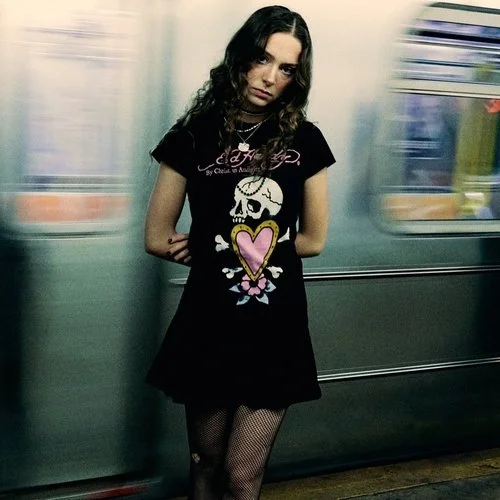
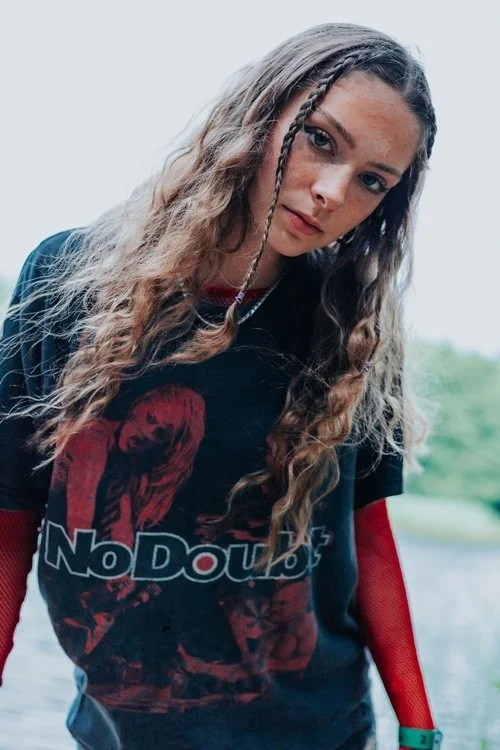
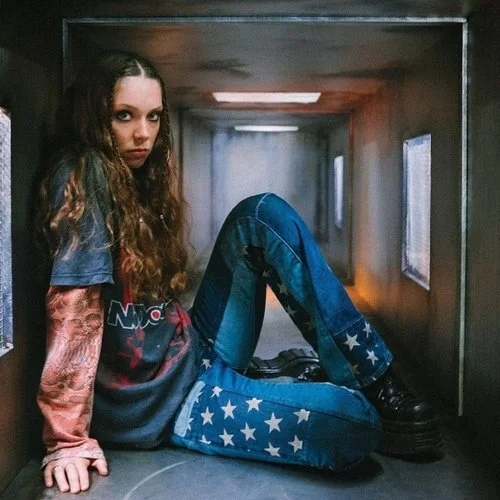
I have featured Kara Marni

on this site before, though I have not put her in Spotlight before. This is an oversight on my part for two reasons. Firstly, I have been a fan of her music for a few years. Also, she is definitely one of the hottest and most exceptional young artists. 2nd Nature, released earlier in the year, is one of my favourite cuts of 2021. Marni’s E.P. State of Mine, was released this year. I think that she is gearing up to a debut album. This is something a lot of people will want from the London-based artist. I am going to draw in a few interviews conducted over the past year or so, so that we can see the development of a sensational artist. Before that, this biography from Primary Talent lets us into the world of the brilliant Kara Marni:

Throughout her short career so far, R&B singer-songwriter Kara Marni has always been unapologetically honest. As an artist who wears her heart on her sleeve at all times, Kara’s soulful brand of storytelling offers a diary-like window into the drama of her life. Early on her journey, Kara took up a spot at the prestigious BRIT School. However, when her career began to take off she took the bold decision to drop out. “I was doing so many recording sessions that I was basically already doing everything I was studying for,” Kara says of her BRIT days. “Being at the school was no longer as useful to me as just doing it.”

Once she was out in the music world Kara began recording her 2018 debut EP Love Just Just Ain’t Enough and its follow up No Logic, which arrived a year later. No Logic, in particular, showed her growth as a songwriter detailing the arc of a relationship from the honeymoon phase to the messy split. “That EP represents the lack of self-control and losing your mind when you’re around a certain person,” she says of relatable songs including Caught Up and Lose My Love.

The theme of chaotic emotions continues on new song Young Heart, a collaboration with US rapper Russ. The pair connected via Instagram when he DMed her after falling in love with an acoustic version of her song Lose My Love. Kara was in the studio working on Young Heart, about not learning lessons from previous relationships, and asked if he’d be interested in contributing a verse. “The reason I think the song is special is that it happened so organically,” she explains of working with a rapper who rarely contributes guest features. “I’m a big fan and think he’s so talented. He brought his swag and extra energy to the song and really brought it to life.” As for the song, a melodic and bittersweet post-break-up moment of reflection, she explains: “I’m asking myself why I don’t learn the lessons from the shitty situations that life puts you in. I need to listen to the signs and stop ignoring the red flags.”

The new material arrives after a breakout year in 2019 in which Kara’s music was streamed over 30m times across multiple platforms. She is a mainstay of the major pop and R&B playlists, including Spotify’s This Is How We Do and A List: R&B on Apple Music. In 2019 she capped off a busy international festival season by headlining Glastonbury’s Pussy Parlure stage before an October headline U.K. and European headline tour culminated in her third sold-out London date. In addition to headline shows, she has also supported Lewis Capaldi, Rita Ora, Raye, and Ray BLK at gigs across Europe. Her music has been featured on Love Island and MTV Push as well as by a wide range of radio stations including Radio 1, Capital Xtra, Rinse, Reprezent and Radio 1Xtra, where Lose My Love spent 5 weeks on the A-list. Naturally, press attention has followed and Kara has been covered by Complex, Pitchfork, Noisey, and Vogue among others.

Kara’s songs have always had a self-reflective side to them, inspired by her love of Amy Winehouse and Lauryn Hill classics. It’s something she’s set to lean into further on her new music, writing from an even more personal place about experiences that go beyond romantic adventures. “I wanted to touch on subjects I’d not written about and push myself,” she says of upcoming songs about her mental health and experience of childhood bullying. “The music represents me as a person - it’s all over the place but it’s reflective and totally honest. I’m very in touch with my feelings, which can be a blessing and a curse.”

Being real and truthful is key to the R&B music Kara makes and loves. It’s a genre that has often been overlooked in her native U.K. but she’s among a wave of artists who are slowly changing that narrative. “It’s tough because it has felt like a struggle [for recognition], Kara explains. “In the past few years I’ve definitely felt a shift.” She cites the transatlantic success of Jorja smith and Mahalia among her peers flying the flag for U.K. R&B music. Kara is part of a generation of artists who have found strength in unity rather than opposition. “There’s always been a sense of women have an arm around me,” she says summing up her feminist stance, “and I make music in the same way, for people who want to feel understood.”

TRENCH ''Now, with a sizable stack of music under her belt and the respect of the R&B and soul scenes, the next few years are looking blindingly bright for Kara Marni’

COMPLEX 'Only two EPs in, she's already produced bonafide earworms such as "Opposite" and "Caught Up” …the stars are aligning for Kara

VOGUE ‘"2019 is the year where we see Kara turning into a full-fledged star as she continues to wow audiences and listeners'

OBSERVER 'The rising R&B artist’s latest shimmers with classic, plush production and formidable vocals'

GAL-DEM 'Kara Marni is making waves in the music world with her luxe blend of soulful pop'

WONDERLAND "With mesmerising melodies and Kara’s gorgeous vocals, the track blends R&B and soul influences to create a stunning sound that shows how much the young songwriter has progressed this last year”.

The first interview that I want to bring in is from 2019. Pre-pandemic, NOTION spoke with a rising artist who was definitely turning heads. With her distinct sound and clear passion, Marni was being tipped as a Pop artist to watch closely:

After being recruited by Rita Ora and Ray BLK to support them on tour, and slipping into the studio to work with the likes of The Invisible Men (Zayn, Ellie Goulding) and Sebastian Kole (Alessia Cara, Jennifer Lopez), Kara Marni is well on her way to being ushered into the upper echelons of the pop’s sisterhood.

The North Londoner dubs her sound “soul with sprinkles of pop”, but it’s perhaps more accurately described as take-no-prisoners-pop that addresses topics like empowerment and turning your back on toxic situations and relations. Since splitting from London’s infamous Brit School, Marni has been honing her craft via the hard graft work ethic she’s inherited from her eccentric Greek family. The result is her debut EP, Love Just Ain’t Enough, a collection of songs inspired by her love of soul greats like Minnie Riperton and Donna Summer. With her unabashed ambition firmly in place, it’s clear Marni is coming for the crown.

How has your Greek heritage influenced you?

Being part of a Greek family, we definitely wear our hearts on our sleeves. We’re quite open and I guess that’s helped me in terms of my writing. When I’m writing, say with a producer, it’s like speed dating, you’ve never met these people, you just get a day or a morning and you literally have to have that connection immediately. That kind of open heartedness has helped me in terms of writing. My Greekness has had a definite influence on my eating too [laughs]. Food is of such importance to my family. I’ll come off stage from Brixton Academy and my mum’s like ‘have you had your food that I made?’ It’s like ‘mum. I’ve just done a show’, but all she cares about is if I’ve eaten.

PHOTO CREDIT: Dylan Meyers

Did Ray BLK and Rita Ora impart any advice to you?

Rita said to always try and just enjoy everything because those moments are fleeting. So when I’m on stage to really actually be present in that moment. That stuck with me because the moments of pure joy, when you’ve come off stage, you’ve had an amazing show, you really do need to realise how amazing that is because you don’t get those moments back and you don’t know when they’ll stop. So I try to enjoy everything. I’m lucky to be living my dream, even though I hate how cliche that sounds.

How was Brit School, was it like the movie Fame?

Brit School was good in the sense that it confirmed for me what I wanted to do but I left after a year because I met my manager and I was ready to work on my music. I realised I wanted to take things more seriously when I saw how serious everyone was about their music.

What are you singing along to when you’re washing up?

I’m really inspired by the soul greats, Minnie Riperton, Diana Ross, Aretha Franklin. My dad’s a huge muso, he collects thousands of vinyls. I grew up listen to big incredible female voices, that kind of soulfulness I try to put into my own music.

What’s your writing process?

It happens differently every time. Sometimes I start ideas at home with my guitar, just come up with a lyric or chorus that I like and then take it to the studio. Most of the time it comes from something I want to write about, that’s the most important thing: a concept.

Last night with Naughty Boy in the studio he had an idea that he wanted me to write on, he played it to me and I was like ’oh my god this is sick’ and then we started from that. Sometimes we’ll start from scratch from just a guitar or piano chords. Voice notes are my life, if I didn’t have voice notes my life would be over—okay that’s a bit dramatic. It wouldn’t be over but I rely on that, I have thousands of voice notes, all my ideas basically. I should actually back up my phone incase I lose it!”.

In August last year, HUNGER spoke with Kara Marni. With the pandemic relatively new, it must have been such a worrying and strange time to make plans and record music. Even so, Marni definitely expressed ambitions to put out a lot more music:

Who’s the artist you would most like to collaborate with and why?

There are loads of people I would love to collaborate with but at the minute Pink Sweat$ is at the top of my list. He’s incredible!

What’s the biggest achievement of your career so far?

Releasing my latest song “Young Heart” featuring Russ. I just feel really honoured that he reached out and helped make it happen as I’m a big fan of his and respect him hugely. The track has also made me realise how far I’ve come.

Outside of music, what are five things you want people to know about you?

I love fashion nearly as much as I love music, I used to dance competitivelybeing Greek I obviously I love food and cooking, my yia-yia instilled a passion for growing herbs in me and if you date me please don’t be shocked when I start writing songs about you!

Looking ahead, what do you hope to achieve in five years’ time?

To release an album…or two. And to be living my best life touring around the world!”.

PHOTO CREDIT: Jordan Rossi 

Prior to coming to a fairly recent interview, I want to highlight one from Pop Sugar from back in February. Mentioning the new track, Trippin’, we get a real sense of where Marni has come from and why she was made to make music:

Kara Marni has quite literally been singing since the day she was born. While other babies were crying, Marni was making music, and even her yiayia (that's grandma in Greek) knew early on that the sounds she made as a child were going to end up becoming something special. She went on to record YouTube covers and perform at weddings for family and friends, eventually getting spotted and finding her current management. Ever inspired by her dad's record collection, which featured the likes of Aretha Franklin, Diana Ross, and Roberta Flack, the singer later discovered musicians like Amy Winehouse and Lauryn Hill, all of whom influenced the musical style she has today.

Marni's latest project involved her reworking one of the world's most recognisable R&B tunes, "1 Thing" by the legend that is Amerie, into her own track, "Trippin". We caught up with her to chat about the story behind the song, how she re-created it for a new audience, and why it means so much to her.

"You know where you have one song that was just a soundtrack to your life and just keeps appearing? '1 Thing' was very much that song for me. I just instantly had a connection with it," Marni told POPSUGAR. "When I go to a studio, I always take songs that I'm listening to and that I really like and I want to create something similar to. I always played that song, and we always tried to do something, but it just never worked. I just don't think you can re-create that sound." Like most of us, though, lockdown provided Marni with the perfect opportunity to revisit old ideas and turn them into something real. "I called up my producer, John, and said, 'Do you know what, why don't we literally take the best part of this song and basically reproduce it? Why don't we take the chorus and rework or rewrite it?'"

And that's exactly what they did. Marni explained that to make "Trippin", she interpolated the chorus melody, took the best part about the song, and then rewrote the verse and prechorus and everything around it. Using a song that's 16 years old and attempting to transform it into a modern-day anthem takes some work, but with the help of updated production technology, additional instrumentation, and rewritten lyrics, Marni managed to create an entirely new song. And she didn't stop there. A remix of the track was also created and featured none other than Earth, Wind & Fire frontman Verdine White.

"Honestly, he's such a legend and it was such an honour. He's beyond talented, and I loved Earth, Wind & Fire," Marni said. "They're one of my dad's favourite bands, so it's pretty surreal that it's kind of come full circle and the band is playing on my record. When you hear the instruments, that's them. When you reach that kind of legendary status of music, there's just a different kind of humility that comes with it, because you've achieved everything. You don't expect these legends to be so humble, but they are. [White's] just so humble and down to earth," Marni said, adding that "it's so nice to have that as an upcoming artist, that kind of arm around me, from someone who's been there and done that."

 When it comes to releasing a new track, creating the song itself is only half of the work. For both "Trippin" and the remix, Marni filmed a video and a visualiser during lockdown, inspired by galaxies far, far away (we can't imagine why). "I really wanted to push that kind of space theme. And it is very galactic. Obviously, we're in lockdown and I didn't have the budget to go to the moon. So we created a moon and basically shot the video on that," Marni explained. "For the visualiser, the outfit was actually such a big part of it. Earth, Wind & Fire basically helped me choose the outfit because when my stylist showed it to me, I was like that, for me, just evokes Earth, Wind & Fire."

Marni's already working on new music to release with her next single, "Twisted Fantasy", which is on its way soon. "I just want to put out more music this year, because I write so many songs, I don't see why I overthink everything and just release one song every couple of months. It drives me mad, I overthink all my releases," she said. "Now more than ever is a time where we shouldn't be overthinking this stuff. People want entertainment, people want music. Especially for me, even as just a music fan, it's helped me so much through this pandemic, listening to music and writing music. But as a listener, now more than ever, is the time to put out music because we all need a distraction, whether it's Netflix or music or whatever. So I'm just like, it's time to stop overthinking!”.

Just before I wrap up, there is a great interview from UNCLEAR from October. Marni talked about the single, 2nd Nature, and what she wants listeners to get from the song:

What’s been your favorite song to record so far?

Kara: “‘Trippin’ because it was the first song I recorded myself in #ShedLeopardStudios, AKA my garden, and was super proud that I actually managed to make it sound somewhat professional!”

Let’s hear about your track “Over You.” What does Toni Romiti bring to the feature on this single?

K: “I love that Toni displayed her strong female perspective in her verse, ‘Back to brand new, like I never even knew you,’ and flipped a rubbish situation she was put by an ex and used it to empower herself.”

Has handling your music career surrounding Covid changed at all?

K: “Yes, during this process I’ve become a lot more self sufficient in all aspects. I’m now able to properly record my song ideas myself; from playing chords on guitar/piano into logic, comping my vocals, mixing and etc. It’s actually been really liberating. Now I can do what I want, when I want, and how I want!

Tell us about your single “2nd Nature.” What is it about and what’s your message you’d like your listeners to hear?

K: “I wrote ‘2nd Nature’ during lockdown about being so comfortable with someone that being around them became addictive. I really wanted to reflect another angle of the song with the video so I played on the title by utilizing three elements of nature — fire, water, and air. And it’s based on how my feminine energy in control of the elements.”

What’s your favorite childhood memory from your hometown?

K: “Trips to Kenwood —  a place near me where I spent most my childhood covered in melted ice cream and fizzy drinks, many happy memories there. And also going trips to Camden Town has always been somewhere I’ve associated with one of my idols Amy, and when I walk around I always feel like there is a presence there.”

What’s your favorite track on your new EP State of Mine?

K: “‘Sick Of Me,’ my most vulnerable song off State Of Mine. Wrote it during the height of lockdown when I was really struggling being with my thoughts 24/7 with no distractions from being able to go out and do stuff and when my anxiety was thriving. If any of you reading this have also wished you could escape your mind for a bit, then this ones for you”.

2022 is going to be a great year for Kara Marni, where we could well see her debut album arrive. In addition to gigs and further radioplay, she will join he top ranks and elite layers of the Pop universe. If you are not familiar with the incredible sound of Kara Marni, then check out her work and…

MAKE amends now.

_____________

Follow Kara Marni

FEATURE: A GIF to the Young Generation: The Reach and Power of the Internet in Bringing Kate Bush’s Music to New Listeners

FEATURE:


A GIF to the Young Generation

IMAGE CREDIT: OMG.BLOG 

The Reach and Power of the Internet in Bringing Kate Bush’s Music to New Listeners

___________

AFTER seeing an article…

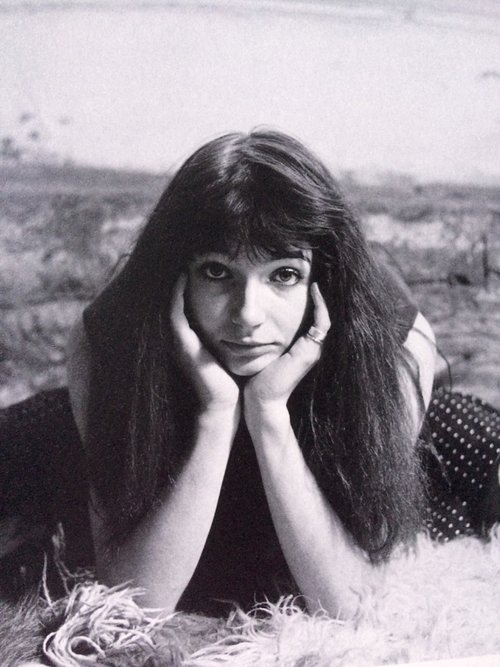
 PHOTO CREDIT: Bill Kennedy/Mirrorpix/Getty Images

published online by Rolling Stone last week, I wanted to follow up on my fairly recent article about Kate Bush’s music on TikTok. I have said often enough how Kate Bush’s music is not often played on the radio. More accurately, it is played a lot, though the range of songs is quite narrow! I do wonder how many younger listeners are discovering Bush’s music through this medium. The vast majority of the time, when her songs are played, you tend to get the hits the most people have heard. The logic behind this is that the less-known songs might cause people to turn over or not be popular. It seems strange, as I keep saying, how radio stations are reductive when it comes to her. I know that memes are bringing Bush’s music to new people. Through discovering these, they are watching interviews and discovering songs. A while back, when talking about TikTok, I wrote how this platform is seeing Bush’s music spread far and wide. By users scoring short videos with clips of her songs, it means that her brilliance and relevance continues strong. Even though a lot of her songs used on TikTok are the well-known ones, there are some deeper cuts that means her catalogue is being explored more thoroughly. It seems strange that other platforms other than radio are more influential regarding ensuring Kate Bush’s music is being discovered around the world. I know that radio stations are important, though the power of sites like TikTok means that her music can be heard by millions.

Whether soundtracking a video or used in a GIF, these short and punchy visuals and audio snippets are hugely effective. I personally feel Bush’s music needs to be listened in full. Unless you have an album and are willing to investigate it all, so many tracks will pass you by. One might assume that the rise of memes, GIFs and short-form videos would devalue her work or mean people are only listening to the bigger hits – and maybe are not listening too long or are less liable to deep-dive. In fact, I feel that there is something more varied and interesting about GIFs, memes etc. that you do not get from radio. Streaming sites are great regarding offering Bush’s music to all, though it is not advertised a lot and, once more, perhaps the bigger numbers are played a lot more than hidden gems that deserve more love. I have seen so many memes that quote interviews or song lyrics. In turn, that takes people to a song they may not have heard or an interview that opens their eyes to a new part of Kate Bush’s work. Some Kate Bush memes are humorous or are slightly piss-taking, though many use her lyrics, photos and idiosyncrasies in an inventive way. There are so many out there but, rather than write articles or generic tweets, people can share memes and start conversations about her work. The fact they are visually appealing and easy to read means that the impact is instant and huge.

Even if a meme is quite jokey, that can lead to people either discovering Kate Bush for the first time, or they might be compelled to spend a few hours with her music. GIFs are great, as you can animate a clip of a music video or an interview with some words. If, in decades past, music T.V. was the most important and go-to source for artists to get their music heard by the masses, social media has taken over a lot. I look through Twitter each day and see all the posts about Kate Bush. People share photos, GIFs, memes, music videos and song links. That starts conversations and can lead to discovery of minor Kate Bush songs or interviews that few have seen or heard. It is a shame that radio stations continue to be predictable when it comes to which Bush songs they spin. Whilst writing this, I have seen GIFs and memes that have quoted deeper cuts from albums such as The Dreaming (1982), The Red Shoes (1993) and The Sensual World (1989). Why did Rolling Stone write an article about Kate Bush memes? Why is she more popular now than ever? I think the two can be answered by the fact Bush is so magnetic and eye-catching. Such an innovative and striking artist, one cannot take their eyes off of her! Her hugely original music and loveable personality combines and wins the heart and inspires the mind. If some, years ago, felt Bush an acquired taste or two weird or experimental, the appetite people have for her music and words now shows that she was ahead of her time.

As we head into 2022, there might the flicker of new music or activity from Kate Bush. Social media means it is so easy to share GIFs and videos with people. Those who have loved Kate Bush for years ardently share her music and prove their loyalty. What is as pleasing is that people who have never heard of Kate Bush or know very little about her are picking up her music and being educated by something as simple as a meme or GIF. Whereas other artists from the 1970s and 1980s are declining in popularity or not as loved as they once were, Kate Bush is seemingly incapable of deterioration or entropy. I do wonder, in real-world terms, which songs and albums are being played when people see a GIF or meme. Certainly, people discuss Kate Bush and interact, though I would be interested to see statistics around the tracks people play on streaming platforms and sites like YouTube. As I said, deeper cuts are being unearthed and songs once left to collect dust are being represented through short video clips and photos with lyrics attached. Able to match photos, interview snippets, song lyrics and quotes with videos of Bush means that her work and world is more accessible and visible than ever before. This will only continue and grow stronger as the years go by. New generations are finding out about one of the music world’s most important and dazzling artists. Whether you feel the only way to get a true sense of her brilliance is to listen to the music itself, one cannot deny that formats like GIFs and memes are a vital source of connection, gateway and communicating. The fact that articles are being written about the thrill of Kate Bush memes and how they are reaching people in their twenties…

IS such a good thing.

FEATURE: Modern Heroines: Part Eighty-Three: Holly Humberstone

FEATURE:


Modern Heroines

Part Eighty-Three: Holly Humberstone

___________

HAVING recently won…

 PHOTO CREDIT: Frances Beach

the BRIT Awards Rising Star gong, I wanted to spend more time with Holly Humberstone. Even though the world is awaiting a debut album, Humberstone has had a remarkable 2021. Although some see her as a breakthrough pandemic talent, she is someone who is a lot more than a leading light in a troubling time. Her E.P., The Walls Are Way Too Thin, was released last month. I am going to end with a review of that. Prior to that, I want to bring in a few interviews from this year where we get to hear from Humberstone and learn more about a stunning artist. The twenty-one-year-old Grantham-born artist is primed for a huge 2022. Prior to coming to interviews where Humberstone talks about working on her debut album, I want to source GQ. They spoke with her last month after the release of her second E.P.:

The first song you ever wrote…

I don't actually remember ever sitting down and being like, Okay, I'm going to write a song now. I just remember really idolising powerful women musicians. So I just come home and write at the piano, write about everything that was going on at primary school. It was just my way of working through everything that maybe was confusing me or that I wanted to make sense [of]. My voice used to be really high before I went through puberty, really squeaky, and I’d try to do as many little runs and be as Christina Aguilera as possible... it wasn’t suited to my voice at all! I've lived in the same house forever and we don’t throw anything away so there are loads of old notebooks with really cringy songs I used to write about all the big boys that I fancied at school — so they're fun to look back at.

When was the first time you had your heart broken?

I actually think, in romantic relationships, I've never had my heart broken. I'm always the heartbreaker, which is kind of a savage vibe from me. I'm not really a relationship type girl, I just seem to get put off really easily or I find spending so much time with one person really draining. But I think the first time I was so, so heartbroken, was probably when my dogs died. We had two flat-coated retrievers and they were the most amazing, precious dogs. But the thing about big dogs is they don’t tend to live very long. I think ours were 10 years old and we’d had them since I was seven so they were just our best friends, a total part of the family. One of them had been ill and he died, and the other one was fine. Then Lola, the girl, 10 days later, she died too. She couldn't go on without her partner in crime. It was awful. We buried them in the back garden and planted apple trees and rose bushes over their graves. That's probably the first time I remember being like, really, really, really heartbroken about something. I don't even know if it's worth getting the dogs because you love them so much and so deeply and it’s inevitable that they’ll die before you do. It’s so painful, is it worth it?

The first time you were starstruck…

I think the first time I was starstruck was working with this guy, Rob [Howie Milton], who I write most of my stuff with. Basically, I grew up in Lincolnshire, but the closest city is Nottingham. And there was this huge band called Dog Is Dead. Everyone was obsessed with them at school. They were the coolest. Then it just so happened that when I had started doing sessions for the first time, we were trying out a few different people - and I’m a shy person, I find writing such an intimate thing. So it’s hard to be vulnerable with the average writer you get put in a room with, which is often like a 40-year-old man who I’ve got nothing in common with. So we were struggling to find anyone that I could relax around and feel comfortable with. And then I worked with Rob and we just clicked but the whole time I was like, 'Oh my god, it's Rob from Dog Is Dead'. I still get a bit starstruck around him. Maybe that's why we work together so well, because I've listened to songs so many times that his writing influenced me when I was younger”.

Prior to the release of the acclaimed The Walls Are Way Too Thin – perhaps the best E.P. of this year –, Holly Humberstone spoke with DORK. She spoke about the different creative process of her second E.P. compared to her debut:

Your second EP is coming out soon, can you tell us a bit about it?

I wrote the EP over the last twoish years, so a lot of it was put together throughout lockdown, and some of it was put together before. I feel like my first EP is a time capsule that I wrote when I was still living at home, just leaving school and going through those types of experiences. This next EP feels like the next chapter and everything that came after that. I released the song ‘Haunted House’, which is about leaving home and also about moving to London and having a bit of a weird time in the flat in London. I guess the EP is just about things changing in my life, and I feel like I’ve been in a sort of in-between stage. Between being a teenager and then moving out, relationships and things like that. Experiencing all of those things for the first time. Just working through all these weird emotions and feelings. Two songs are already out, ‘Haunted House’ and ‘The Walls Are Way Too Thin’. There should be a song out – maybe, I can’t confirm or deny – in August, which I’m really excited about. Hopefully, the rest of the EP will be out later in the year. I’ve just had loads of fun writing it.

Was the process of working on this record different than on your debut EP?

It was a bit different because a lot of it was done over lockdown and finished over lockdown, but I tend to write in the same way. I wrote bits on my own and bits with a collaborator that I worked a lot with called Rob, who I really trust and feel really comfortable with and can be open with. It’s always really fun, going into the studio and writing with Rob. I’ve a lot of collaborations with other people that I really admire as well.

Talking about Phoebe Bridges, you share similar emotionality when it comes to your songwriting. It’s raw and in-depth. Does this vulnerable way of writing come naturally to you?

For sure. I feel like I’ve always written for myself, and I’ve always used writing as a way of working through things. A lot of the time, I’m not sure how I feel about something that I’m going through before I’ve written a song about it and then writing the song helps me work through the feelings but in kind of a simple format. The song is clear, and it’s me trying to filter everything I’m feeling and put it into a concise bit so I can understand a bit more. I’ve always done that. I can’t remember when I started writing, but I was really young. I was probably around seven or something. I used to write about things going on in primary school and boys I fancied and stuff. It’s always been my safe space. My comfort zone. I write for myself; that’s why everything seems really honest because I’m genuinely trying to figure out how I feel about stuff.

Is it a kind of self-therapy for you then?

Yes, it’s my safe space. I’ve also found that a lot of this EP has come about in the last two years when I was going through a lot of changes in my life, like leaving home. Just so many changes that you go through as a young adult moving out of home and experiencing all of these things for the first time, and I feel like writing is my comfort zone, and it’s kind of like the one constant that I’ve been able to come to with all of this confusing shit going on”.

There are a couple of interviews that I want to tick off the list before I come to a review of The Walls Are Way Too Thin. When speaking with The Guardian back in October, Humberstone discussed how she did not want people telling her how to write her songs. She also revealed how she has been planning ahead to the release of her much-anticipated debut album:

The purpose of her songwriting hasn’t changed since she was 11, she says. “I have chaos in my head all the time. When I sit down to write, it’s working through all these things that I’m going through. When I put it in a song, it’s a more manageable piece to understand. It’s really my therapy.”

When real life resumed, Humberstone had a small kind of stardom to reckon with, alongside the regular worries of young adulthood. Her new EP, The Walls Are Way Too Thin, brims with the fear of change. On the advice of surveyors, her family left the crumbling rural cottage where she had spent her life. “My ultimate comfort, sacred space,” says Humberstone – the place where her parents, NHS medics, encouraged their four daughters to be creative and make a mess. She moved to London (“overwhelming”), her parents went to Wales and her sisters scattered around. They recently lost their grandma, too. Growing up with three sisters left her shocked by the reality of touring with an all-male crew in the US: “Them coming into my room and there’s sanitary towels everywhere and I’m like: let’s just clear that away …” (Next time, she wants an all-female band.)

“It’s a really awkward age where you have to face all these things for the first time,” says Humberstone, a sweetly nervy talker who persistently describes herself as “awkward”. On her right hand, a ring spells out “SISTER”.

She is still working with her small team and retained her master recordings in the deal – as well as her creative control. “I made it very clear that I don’t want any fingers in the pie,” she says. “I feel really uncomfortable about people who aren’t involved in the creative process telling me how I should write my songs.” She has made most of her music to date with Rob Milton, formerly of the Nottingham-based indie band Dog Is Dead, and finds writing with strangers anxiety-inducing. Yet she looked up two blue-chip songwriters during her trip to LA to see what they might come up with. “I idolise these people and it was fun, but still tricky,” she says. The point, she insists, isn’t striving for pop hits. “I just go in with my baggage and my feelings.”

After her autumn tour concludes, Humberstone has time off to write her debut full-length. “An album is the most terrifying thing ever,” she says. “It’s so final and such a big piece of work to be happy with.” The songs written so far touch on the return of her social life and some decisively brief flings. After the end of a three-year relationship, documented in her debut EP, she has decided her career means she doesn’t have the energy for romance: “And I like being on my own at the moment”.

Even though there is a lot of support in her corner and Humberstone has the acclaim of the BRIT Awards, there is still a bit of pressure and fear around the release of the debut album. NME chatted with Humberstone back in September. Humberstone talked about how releasing an album is daunting – although she has a lot of material collected that she needs to put out:

Over the next few months, the 21-year-old’s focus will turn to working on her aforementioned debut album, which will follow last year’s exceptional debut EP ‘Falling Asleep At The Wheel’ (which received the full five-star treatment from NME) and it’s forthcoming follow-up, ‘The Ways Are Way Too Thin’, due for release in November later this year.

“For me, an album is a really daunting thought. Being done with my debut album and having that much work, and all of it being final, is so scary – so I think it’s going to be a while [before it’s released]” she says. “I’ve had loads of time now to just experiment and try different things out, and to have fun with my writing without the pressure.

“I have loads of music that I’m so excited about – but I don’t think I’ll ever feel like it’s finished as I get bored of my work quite quickly. At some point, I’ll just have to be like, ‘That’s it. I’m just putting it out,’ – and then I can forget about it and start on the next new thing…

 Just before finishing off, it is worth sourcing one of the many positive reviews for The Walls Are Way Too Thin. This is what The Line of Best Fit noted about one of the finest releases of this year:

Since 2020’s Falling Asleep At The Wheel EP, Holly Humberstone has been working with long-time producer collaborator Rob Milton on her latest offering; The Walls Are Way Too Thin. Continuing her brand of heartbreak and early-twenties angst, the EP turns up the heat on last year’s release – swapping out the slow and steady for the cinematic and dramatic.

It seems as though the helplessness and despair from the past has blossomed into sadness and understanding. Whether this is mourning her childhood home on “Haunted House”, or a relationship that could have been on title track “The Walls Are Way Too Thin”, Humberstone has upped her game and fuelled the fire of her career. Even on “Thursday” - the one track that harkens back the most to her last EP - there is a sense of maturity and growth from Humberstone that feels appropriate for 18 months away.

“Friendly Fire”, using a delightful acoustic arrangement, builds and swells with emotion as a perfect ending to the EP, and standout track “Scarlett” displays some incredible songwriting from the 21-year-old star. Her collaboration with The 1975’s Matty Healy on “Please Don’t Leave Just Yet” shines bright too, with unmistakable influence from Healy’s previous work merging perfectly with Humberstone’s vocal and style.

The Walls Are Way Too Thin is an EP from an undoubtedly rising star. From its songwriting to production, its emotive lyrical content to considered vocal performance, it’s a home run of a project. Holly Humberstone is destined for great things, and this EP is just the beginning”.

One of this country’s most astounding and promising young artists, I feel Holly Humberstone is going to be a massive name in the future. Someone who will go on to inspire so many other artists, we have only seen the start of her majestic musical reign. On the evidence of what she has released so far, Holly Humberstone is going to be…

A future legend.

FEATURE: Groovelines: Deee-Lite – Groove Is in the Heart

FEATURE:


Groovelines

Deee-Lite – Groove Is in the Heart

___________

A song that ranks…

alongside the important in my life, I remember when the song was released in August 1990. New York’s Deee-Lite put out Groove Is in the Heart and, in doing so, spawned a hit that reached the top spot in Australia and on both the Canadian and U.S. dance chart. The lead single from World Clique, I wanted to know more about the song and its story. I will end with a bit of information regarding Groove Is in The Heart’s legacy and impact. To me, it is one of the defining songs of the 1990s. Its sample are incredible! Fusing Herbie Hancock and Billy Preston, Groove Is in the Heart explodes with vibrancy, cool and colour! It is a joyous and giddy track that is very much a product of the early-1990s. Maybe it is testament to Deee-Lite’s unique spirit, but I have not heard anything like this song or them since. Over thirty years since its release, there is something fresh about the song. Even though it is very much part of the 1990s, one can never grow bored of listening to this classic! DJ Mag spotlighted such an important track on its thirtieth anniversary last year:

In a dance music world fractured into sub genres and micro niches, there are two things that unite global clubbers in love and admiration: a well organised cloakroom, and Deee-Lite’s ‘Groove is in the Heart’, which celebrates its 30th birthday this year. The New York group’s classic track is infectious, euphoric, nigh-on impossible to dislike. Slice ‘Groove is in the Heart’ in two and it bleeds good vibes and rubbery, melodic funk.

What makes it all the better is how utterly unlikely the song is, a work of pop art that sounds perfectly of its time and eerily prescient. ‘Groove is in the Heart’ is a patchwork quilt of influences, from funk to house, pop to jazz, that shouldn’t work together but somehow do. Its sample-delic Technicolour sound sits beautifully with the collage art of De La Soul’s 1989 album ‘3 Feet High and Rising’, but also foreshadows the cut-and-paste production puzzles that The Avalanches would make their own two decades later.

The band’s origins were similarly cosmopolitan. Deee-Lite were both very New York, their music slotting into the city’s decadent club scene, and globally disparate — DJ Dmitry was from Ukraine, Towa Tei from Tokyo, and Lady Miss Kier from the US — anticipating the explosion in global pop in the late 2010s.

The band’s pan-generic appeal was clear early on, performing in New York’s hip-hop and house clubs, both gay and straight, drawing what Rolling Stone would call “vivid, multiracial, pan-sexual crowds”. Never one to be shy, Kier would design outfits for each gig, with spectacle at a premium. As their buzz grew louder, a major label bidding war ensued and the group signed with Elektra. By this point, a nascent ‘Groove is in the Heart’ — “a love letter to DJs”, according to Kier — was already in their arsenal.

The track that would later launch a million dances is built upon a wonderful collage of samples. There’s a bassline lifted from Herbie Hancock’s ‘Bring Down the Birds’ (then a staple of Dmitry’s DJ sets), drums and whistle taken from from Vernon Burch’s ‘Get Up’, and sound effects from Ray Barreto’s ‘Right On’. Whosampled lists eight samples for the song but there may well be more, a remnant of the days when litigation had yet to catch up with sample culture.

“I wrote the lyrics for ‘Groove Is In The Heart’ before I heard the musical loop,” Lady Miss Kier writes in the sleeve notes for the 2017 reissue of Dee-Lite’s debut album ‘World Clique’. “Dmitry had a record by Herbie Hancock and I can’t remember if he or Towa found the loop, but as soon as I heard it I laid down the melody that was in my head and we all added samples onto it, which I call ‘fills’”.

Insignificant as it might sound, these “fills” would prove hugely important in the song’s success. ‘Groove Is In The Heart’ explodes with kooky, joyful noises — from slide whistles to finger pops, scratches to cowbells — that create the impression that the listener is privy to the best party on earth.

Recording studios are, on the whole, pretty dull places. But it sounded like Deee-Lite were having an absolute ball as they laid it down. “Of course we were enjoying it!” Dmitry tells DJ Mag, “but it was a lot of gruelling work. We were in the studio for 18 hours a day.”

“Although Dmitry played live instruments in our show, myself and Towa didn’t play any instruments,” Lady Miss Kier says, “so we used samples to write music from other people’s music. We were used to the complexity of P-funk and the minimalist nature of Kraftwerk.”

Drizzled into the sonic stew were the contributions of some serious legends. The song reuniting three members of George Clinton’s epochal funk outfits, Parliament Funkadelic — Bootsy Collins on bass, Maceo Parker on saxophone, and Fred Wesley on trombone.

“I wrote Bootsy a fan letter and included our demo, around 1988,” says Kier. “It included the song ‘Groove is in the Heart’. He called back and left a message saying if we ever got a record deal, he would be up for some sessions. I was jumping up and down.”

The song eventually reached number one in Australia, number two in the UK, and number four in the US — a remarkable result in a country that had yet to embrace club culture on a national level. In her liner notes to ‘World Clique’, Lady Miss Kier claimed that the success of ‘Groove is in the Heart’ helped to open up the minds of the rock music industry to dance music.

“We pushed the ‘old boy’ network of rock promoters to accept DJ culture and dance music whilst on tour by having DJs as openers,” she says. “We stayed firm on our nightclub roots when the label was asking just to keep it POP! Instead we spotlighted Vogueing in our shows and influenced many artists at the time.”

While further hits of the same magnitude may have eluded them, Deee-Lite’s musical moment did not come and go with ‘Groove is in the Heart’. 'World Clique' is a wonderful piece of work, a vivacious patchwork of New York clubland and sharp pop hooks not a million miles away from St Etienne or Róisín Murphy. The group would later be remixed by titans of electronic music from Masters at Work to Carl Craig, the mixes rounded up on the epic 1996 compilation ‘Sampladelic Relics & Dancefloor Oddities’”.

I can never tire of the luminous and irresistible Groove Is in the Heart. It is no shock that the song has been lauded and acclaimed through the years. This Wikipedia article gives us more details regarding the legacy of one of the greatest songs ever:  

In 2003, Q Magazine ranked "Groove Is in the Heart" at number 323 in their list of the "1001 Best Songs Ever". VH1 placed it at No. 67 in their list of "100 Greatest Songs of the 90s" in 2007. Pitchfork named it the 59th best track of the 1990s. They wrote: "With their sass-tastic frontwoman and kitsched-to-death fashion sense, Deee-Lite probably seemed like a good bet at a time when pop's future was still up for grabs. If you were a kid in the 'burbs, they almost resembled a Daisy Age hip-hop group (the day-glo/flower-power look, the Q-Tip guest rap) as much as a house act (a strange urban subculture we had little access to in junior high)."

In 2011, The Guardian featured the song on their "A history of modern music: Dance". In April 2017 the single was re-released on pink vinyl, as part of Record Store Day with remixes of "What Is Love?" on the B-Side. BuzzFeed listed the song number 3 in their "The 101 Greatest Dance Songs of the '90s" list in 2017.

In 2018, Time Out listed the song number 23 in their list of "The 100 best party songs", adding: "In this tale of New York's anything-is-possible East Village of the late '80s, a trio of candy-coloured club kids – Super DJ Dmitri, Lady Miss Kier and Towa Tei – decide to form a band. The threesome (with a little help from ringers Q-Tip, Maceo Parker and Bootsy Collins) come up with 'Groove Is in the Heart', a sweetly innocent percolator of a tune that, against all odds, becomes the worldwide club smash of 1990. True story!"

In 2021, Rolling Stone ranked the "Groove Is in the Heart" at 223 in its updated list of The 500 Greatest Songs of All Time, calling it "a collage across different generations of funkateers”.

A song with such an interesting background; one that has grown through the years and reached so many people, I was excited to include it in Groovelines. A dancefloor favourite, it is a shame that Deee-Lite are no longer recording together. I guess it would be hard to recapture the thrill and originality of Groove Is in the Heart and the World Clique album. Such an amazing and timeless song, spin Groove Is in the Heart and let it…

LIFT the spirits high.

FEATURE: A.K.A. Berlin: Kate Bush’s The Saxophone Song

FEATURE:


A.K.A. Berlin

Kate Bush’s The Saxophone Song

___________

I am coming back to…

The Kick Inside and a very important track from Kate Bush. This was one of three tracks recorded in 1975 alongside The Man with the Child in His Eyes (which also appeared on The Kick Inside) and Humming. Produced by David Gilmour (who is credited as Executive Producer on The Man with the Child also), The Saxophone Song is one of the gems from Bush’s debut album. For those who feel that Bush’s debut album contains too many high-pitched vocals and theatrics, this song was proof that her voice was mature and grounded. Graceful, swooning and beautiful, her performance through The Saxophone Song is magnificent. Before continuing with my exploration of the track, the Kate Bush Encyclopaedia sources quotes from Kate Bush:

I wrote 'The Saxophone Song' because, for me, the saxophone is a truly amazing instrument. Its sound is very exciting - rich and mellow. It sounds like a female. (Dreaming: The Kick Inside, 1978)

The song isn't about David Bowie. I wrote it about the instrument, not the player, at a time when I really loved the sound of the saxophone - I still do. No, I don't know him personally, though I went to his "Farewell to Ziggy Stardust" concert and cried, and so did he. (Kate Bush Club newsletter, November 1979)”.

Not much has been written through the years about The Saxophone Song. The second track on The Kick Inside, it perfectly flows from Moving. As it was originally called Berlin, I imagine Bush as this observer in the German capital. Watching this hypnotic saxophone play, it is an unusual setting for a song. I think only someone like Kate Bush could combine these elements and create such a rich and sumptuous track. The lyrics in the song take us in that bar and what Bush/the narrator is seeing: “There's something very special indeed/In all the places where I've seen you shine, boy/There's something very real in how I feel, honey”. As a seventeen-year-old recording the track, there is this maturity from a teenager. That said, I like the turn of phrase and the language used. Apart from some casual admiration, Bush turns in poetry of the highest order. There were not many songwriters producing lyrics of her standard: “The candle burning over your shoulder is throwing/Shadows on your saxophone, a surly lady in tremor/The stars that climb from her bowels/Those stars make towers on vowels”. Bush references the poetry of the saxophone in the song. The fact this instrument stirs something in her and is so powerful has caused her to write so beautifully. The players on the song (drums: Barry de Souza, bass: Bruce Lynch, guitars: Paul Keogh, Alan Parker, keyboards: Andrew Powell, saxophone: Alan Skidmore and electric guitar: Paul Keogh) are excellent.

I love the trippy and prog keyboards at the end and Skidmore’s wonderful saxophone performance. Bush’s vocal is so engaging. I am surprised that The Saxophone Song was not released as a B-side. Although four singles were released from The Kick Inside (two in the U.K.) prior to the release of her second album, Lionheart, The Saxophone Song did not feature. I would have liked to have seen this song get more exposure around the world. It was performed during the set of Bush’s 1979 The Tour of Life. Many people might not have heard The Saxophone Song. It is a beautifully written song that takes us inside the saxophone; inside a Berlin bar as we smell smoke, hear silent chatter and feel this electricity coursing through the room. Although Bush was taught the violin as a child and, obviously, is synonymous with piano, I wonder why the saxophone was signalled out. Not an instrument that she came to play on any of her albums, there is no doubting that, in the moment, she was in love with its sound: “It's in me/It's in me/And you know it's for real/Tuning in on your saxophone/Doo-bee-doo-bee-doo...”. A magnificent song from my favourite album ever, The Saxophone Song is one that we need to hear more on the radio. The more that I hear it, the more I transport myself to that Berlin bar! Years after I first heard the song, it has lost…

NONE of its magic.

FEATURE: Inspired By… Part Forty-One: James Brown

FEATURE:


Inspired By…

 Part Forty-One: James Brown

___________

THIS time around…

 PHOTO CREDIT: David Corio/Getty Images

one of the most influential artists ever is in Inspired By… There is no way to overstate the importance of James Brown. On 25th December, it will be fifteen years since Brown died. Even so, his le4gacy and genius lives on. Before coming to a playlist of songs from artists influenced by James Brown, AllMusic gives us some insightful and useful biography:

Soul Brother Number One," "The Godfather of Soul," "The Hardest Working Man in Show Business," "Mr. Dynamite" -- those are mighty titles, but no one can question that James Brown earned them more than any other performer. Other singers were more popular, others were equally skilled, but few other musicians were so influential over the course of popular music. And no other musician put on a more exciting, exhilarating stage show: Brown's performances were marvels of athletic stamina and split-second timing. Through the gospel-impassioned fury of his vocals and the complex polyrhythms of his beats, Brown was a crucial midwife in not just one, but two revolutions in American music; he was one of the figures most responsible for turning R&B into soul and he was, most would agree, the one figure most responsible for transforming soul music into funk. Fittingly, his music became even more influential as it aged, since his voice and rhythms were sampled on innumerable hip-hop recordings, and critics belatedly hailed his innovations as among the most important in all of rock or R&B.

Brown's rags-to-riches-to-rags story has heroic and tragic dimensions of mythic resonance. Born into poverty in the South, he ran afoul of the law by the late '40s on an armed robbery conviction. With the help of singer Bobby Byrd's family, Brown gained parole and started a gospel group with Byrd, changing their focus to R&B as the rock revolution gained steam. The Flames, as the Georgian group was known in the mid-'50s, signed to Federal/King and had a huge R&B hit right off the bat with the wrenching, churchy ballad "Please, Please, Please." By that point, the Flames had become James Brown & the Famous Flames; the charisma, energy, and talent of Brown made him the natural star attraction.

All of Brown's singles over the next two years flopped, as he sought to establish his own style, recording material that was obviously derivative of heroes like Roy Brown, Hank Ballard, Little Richard, and Ray Charles. In retrospect, it can be seen that Brown was in the same position as dozens of other R&B one-shots: talented singers in need of better songs, or not fully on the road to a truly original sound. What made Brown succeed where hundreds of others failed was his superhuman determination, working the chitlin circuit to death, sharpening his band, and keeping an eye on new trends. He was on the verge of being dropped by King in late 1958 when his perseverance finally paid off, as "Try Me" became a number one R&B (and small pop) hit, and several follow-ups established him as a regular visitor to the R&B charts.

Brown's style of R&B got harder as the '60s began; he added more complex, Latin- and jazz-influenced rhythms on hits like "Good Good Lovin'," "I'll Go Crazy," "Think," and "Night Train," alternating these with torturous ballads that featured some of the most frayed screaming to be heard outside of the church. Black audiences already knew that Brown had the most exciting live act around, but he truly started to become a phenomenon with the release of Live at the Apollo in 1963. Capturing a Brown concert with all its whirling-dervish energy and calculated spontaneity, the album reached number two on the album charts, an unprecedented feat for a hardcore R&B LP.

Live at the Apollo was recorded and released against the wishes of the King label. It was this kind of artistic standoff that led Brown to seek better opportunities elsewhere. In 1964, he ignored his King contract to record "Out of Sight" for Smash, igniting a lengthy legal battle that prevented him from issuing vocal recordings for about a year. When he finally resumed recording for King in 1965, he had a new contract that granted him far more artistic control over his releases.

Brown's new era had truly begun, however, with "Out of Sight," which topped the R&B charts and made the pop Top 40. For some time, Brown had been moving toward more elemental lyrics that threw in as many chants and screams as they did words, and more intricate beats and horn charts that took some of their cues from the ensemble work of jazz outfits. "Out of Sight" wasn't called funk when it came out, but it had most of the essential ingredients. These were amplified and perfected on 1965's "Papa's Got a Brand New Bag," a monster that finally broke Brown to a white audience, reaching the Top Ten. The even more adventurous follow-up, "I Got You (I Feel Good)," did even better, making number three.

These hits kicked off Brown's period of greatest commercial success and public visibility. From 1965 to the end of the decade, he was rarely off the R&B charts, often on the pop listings, and all over the concert circuit and national television, even meeting with Vice President Hubert Humphrey and other important politicians as a representative of the Black community. His music became even bolder and funkier, as melody was dispensed with almost altogether in favor of chunky rhythms and magnetic interplay between his vocals, horns, drums, and scratching electric guitar (heard to best advantage on hits like "Cold Sweat," "I Got the Feelin'," and "There Was a Time"). The lyrics were not so much words as chanted, stream-of-consciousness slogans, often aligning themselves with Black pride as well as good old-fashioned (or new-fashioned) sex. Much of the credit for the sound he devised belonged to (and has now been belatedly attributed to) his top-notch supporting musicians such as saxophonists Maceo Parker, St. Clair Pinckney, and Pee Wee Ellis; guitarist Jimmy Nolen; backup singer and longtime loyal associate Bobby Byrd; and drummer Clyde Stubblefield.

Brown was both a brilliant bandleader and a stern taskmaster, the latter leading his band to walk out on him in late 1969. Amazingly, he turned the crisis to his advantage by recruiting a young Cincinnati outfit called the Pacemakers featuring guitarist Catfish Collins and bassist Bootsy Collins. Although they only stayed with him for about a year, they were crucial to Brown's evolution into even harder funk, emphasizing the rhythm and the bottom even more. The Collins brothers, for their part, put their apprenticeship to good use, helping define '70s funk as members of the Parliament-Funkadelic axis

In the early '70s, many of the most important members of Brown's late-'60s band returned to the fold, to be billed as the J.B.'s (they also made records on their own). Brown continued to score heavily on the R&B charts throughout the first half of the '70s, the music becoming more and more elemental and beat-driven. At the same time, he was retreating from the white audience he had cultivated during the mid- to late '60s; records like "Make It Funky," "Hot Pants," "Get on the Good Foot," and "The Payback" were huge soul sellers, but only modest pop ones. Critics charged, with some justification, that the Godfather was starting to repeat and recycle himself too many times. It must be remembered, though, that these songs were made for the singles radio jukebox market and not meant to be played one after the other on CD compilations (as they are today).

By the mid-'70s, Brown was beginning to burn out artistically. He seemed shorn of new ideas, was being out-gunned on the charts by disco, and was running into problems with the IRS and his financial empire. There were sporadic hits, and he could always count on enthusiastic live audiences, but by the '80s, he didn't have a label. With the explosion of rap, however, which frequently sampled vintage J.B.'s records, Brown became hipper than ever. He collaborated with Afrika Bambaataa on the critical smash single "Unity" and reentered the Top Ten in 1986 with "Living in America." Rock critics, who had always ranked Brown considerably below Otis Redding and Aretha Franklin in the soul canon, began to reevaluate his output, particularly the material from his funk years, sometimes anointing him not just "Soul Brother Number One," but the most important Black musician of the rock era.

In 1988, Brown's personal life came crashing down in a well-publicized incident in which he was accused by his wife of assault and battery. After a year skirting hazy legal and personal troubles, he led the police on an interstate car chase after allegedly threatening people with a handgun. The episode ended in a six-year prison sentence that many felt was excessive; he was paroled after serving two years.

Throughout the '90s, Brown continued to perform and release new material like Love Over-Due (1991), Universal James (1992), and I'm Back (1998). While none of these recordings could be considered as important as his earlier work and did little to increase his popularity, his classic catalog became more popular in the American mainstream during this time than it had been since the '70s, and not just among young rappers and samplers. One of the main reasons for this was a proper presentation of his recorded legacy. For a long time, his cumbersome, byzantine discography was mostly out of print, with pieces available only on skimpy greatest-hits collections. A series of exceptionally well-packaged reissues on PolyGram changed that situation; the Star Time box set is the best overview, with other superb compilations devoted to specific phases of his lengthy career, from '50s R&B to '70s funk.

In 2004, Brown was diagnosed with prostate cancer but successfully fought the disease. By 2006, it was in remission and Brown, then 73, began a global tour dubbed the Seven Decades of Funk World Tour. Late in the year while at a routine dentist appointment, the singer was diagnosed with pneumonia. He was admitted to the hospital for treatment but died of heart failure a few days later, in the early morning hours of Christmas Day. A public viewing was held at Apollo Theater in Harlem, followed by a private ceremony in his hometown of Augusta, Georgia.

Just prior to his death, Universal's Hip-O division launched an extensive James Brown reissue series called The Singles, which contained both sides of every 45 he released between 1956 and 1981. The first volume appeared in September 2006, the last in 2011. R.J. Smith published the biography The One: The Life and Music of James Brown in 2012 to widespread acclaim. Two years later, Brown was the subject of the biopic Get On Up, featuring Chadwick Boseman as Brown, as well as the Alex Gibney documentary Mr. Dynamite: The Rise of James Brown, which was produced by Mick Jagger. Universal released two live archival projects -- Live at the Apollo, Vol. IV: September 13-14, 1972 and Live at Home with His Bad Self -- during the second half of the 2010s”.

To show how far James Brown’s influence and incredible music has spread, this playlist is packed with tracks from artists who owe something to Brown. Maybe they follow in his lead or there is an aspect of their music that is similar to that of Brown. As you can see from the number of tracks, there are so many artists who owe a debt…

TO the legendary James Brown.

FEATURE: Modern Heroines: Part Eighty-Two: Tove Styrke

FEATURE:


Modern Heroines

PHOTO CREDIT: Emma Svensson 

Part Eighty-Two: Tove Styrke

___________

I wanted to include Tove Styrke

in Modern Heroines, as she recently released new singles, Mood Swings and Start Walking. I am a fan of the Swedish singer-songwriter, and I have been following her career since her eponymous debut album of 2010. She is a wonderful talent who I think will be making music for many years to come. An inspiring and original Electropop/Pop artist, I am going to start with press and interviews around her most-recent studio album, 2018’s Sway. I will work up to her new single and a fascinating interview that Styrke was involved with. In 2018, Women in Pop spoke with an artist who has high-profile fans including Lorde:

One of the biggest fans of the song is Lorde, who instantly added it to one of her Spotify playlists. “Oh my god, I didn’t believe that at first”, the 24-year-old exclaims. “I admire Lorde so much. She’s such a great songwriter, and it really made me happy.

I would love to just meet her, and I’d really love to pick her brain. I don’t understand how somebody so young can write those lyrics.”

As a teenager, Styrke was obsessed with Björk; these days though, she also loves Rihanna, Beyoncé and Britney Spears (her complex, throbbing version of ‘…Baby One More Time’ almost rivals the original). At the age of 16, Styrke was a finalist on Swedish Idol, and although talent shows usually don’t have a stellar track record of creating internationally successful artists, she says, “For me, it turned out great. I got my first deal and I’ve been working with my label and we really get along. But, that might not be the case for everyone. I feel like the reason my career has been successful, or at least one that I’m happy with, is because I write my own material and I love working. Everyone is different, but my main advice for people who want to make music is pretty simple: just make music!”

In the eight years since she released her self-titled debut, Styrke has witnessed some big shifts in the music industry, especially when it comes to equality for women. “Right now, I feel women make the most interesting pop music. I think the landscape is getting better for us, and I can definitely see a change from when I started to now, especially in terms of the kind of questions I get asked. I feel like I no longer have to explain in every interview that I write my own songs.”

While Styrke believes there’s a better equilibrium in the gender stakes, she says, “There’s always stuff to achieve. It’s not like we’re done. However, I do feel like my job is getting easier. For example, when I’m on tour, I don’t want to have all guys in the crew. I don’t want an all-girl crew, but I feel people perform better when it’s mixed. It used to be difficult for others to understand how important that was for me, but now it’s a very natural thing and people don’t think twice when I ask for it.”

Styrke will release her third album this year, although she admits she initially suffered from writer’s block after the success of her second album Kiddo, which Spin named as one of the top 25 pop albums of 2015. “It’s was tricky”, she says. “For me, the second album felt a lot like a debut album. You know when people say that everybody has at least one book in them; it’s a little bit the same with music. Everybody has a need to get something off their chest, and with that second record, I just had to scratch a little bit underneath the surface and it all came out and I wrote it really fast. This time though, I had to dig a lot deeper to find some friction. I had a fear that maybe I don’t have any creativity in me, that maybe the inspiration is gone. It was really scary, but then when I wrote ‘Say My Name’, something clicked. This is new and interesting, and it’s a place where I can start digging, and it’s been a really exciting journey for me”.

Prior to coming onto a review for Sway, there is another interview from 2018 that I want to bring in. WONDERLAND. talked with Tove Styrke about the visual side of her music, in addition to how Sway has been received:

 “Who would you most like you collaborate with?

I think Rihanna would be the coolest. I feel like she’s a modern day Madonna, she can do no wrong. There’s so many interesting up and coming artists as well that I would love to collaborate with. I’ve really love Whack World, the audiovisual album that Tierra Whack did; I love that she’s doing her thing, and the visual side of the album is so cool.

Are visuals important to you as an artist?

For me, it’s important to keep this sort of vibrant, bold, very pop, but also interesting and unique visual language. But at the same time, it’s important that the core of the music needs to be real. The story needs to be real, and told in a way that feels genuine, that people can relate to.

Is it important to you that people connect with your lyrics?

Yeah, a big part of why I even do this is because I want to connect with people. I want to write it in a way that people can relate to it, and take that song, live with it, apply it to their own life, and recognise themselves in it. That’s where we connect and find common ground. For me, that’s such a comforting thing.

What’s the reception for Sway been like so far, have you had that kind of feedback?

I’m so grateful that people really seem to love these songs. Walking on stage and realising that people knew every word to every song brought me to tears the other night. And I’m not that person, I’m not emotional like that in public! It’s this complete understanding between me and them and it’s so amazing, it’s like I’ve found my people.

How do you want people to feel at your shows?

I want the show to be a space for people to celebrate. I want everybody to feel like their best self. It’s such a positive energy, not just for me, it’s a back and forth thing. My fans are the coolest people, they’re so smart and funny and they come to the shows with so much to give, and that makes it possible for me to give so much back to them.

How do you approach styling your outfits?

I love dressing up and I love doing my own makeup, that’s like my meditation before shows. With the clothes, I want to create a superhero version of myself, to feel like a larger than life version of me. For instance, I’m wearing an amazing cowboy hat that’s sparkly and pink, and it’s got my logo and name around the brim. I love it so much, it’s the corniest thing but my favourite thing and it makes me feel like I’m a cool anime figure.

PHOTO CREDIT: Emma Svensson 

Looking forward, have you got any plans to release more music?

Yes, I’m releasing a new song on Friday! It’s called ‘Vibe’. To me it’s very much like an ending but a new beginning at the same time. It’s definitely in the same world as the other songs from Sway, but it’s got a little bit more heartbreak. And I’ve been wanting to do a guitar-heavy song for a long time, I’m so excited about it.

What’s it about?

The lyric is “I thought we had a vibe”. Like, you really thought that there was something, but things just didn’t work out. I feel like a lot of the songs on the album are about beginnings, before you know if it’s going to work out or not. It was interesting to take it a little bit further into the future of knowing someone, where it actually pans out.

Where would you like to see your career going?

I want this project to keep growing. I want to keep expanding, keep exploring, keep being curious and challenging myself. Over the past two or three years I feel like I’ve gained so much confidence, and that confidence gives you a lot of freedom. I really feel like I can do anything – I mean, everybody can do anything. It’s a very good place to be in”.

Just before coming up to date, it is worth getting an idea of how Sway was received. I think it is one of 2018’s best albums. It proved what a remarkable talent Tove Styrke is. This is what NME about to say about her third studio album:

 “Tove Styrke has been at this for almost a decade. In 2009, aged 16, she competed on Swedish Idol (eventually placing third), putting out her debut single the following year. Since then there have been two albums of euphoric electropop; but if these first releases were an extended introduction to the star’s quirk-pop, ‘Sway’ is the one that’ll cement Styrke’s place as nouveau-pop royalty.

Crafted over the past 18 months, Styrke’s third album is a soundtrack to falling in love and navigating its complexities. From early crushes and drunken lust to romantic vulnerability, rejection and not knowing if it’s what you really want, ‘Sway’ encompasses it all. Fun and empathic, this is music to listen to with pals and bellow out of a car’s open window as much as it is music for a snotty, post-breakup cry.

PHOTO CREDIT: Arvida Byström

Each of the eight tracks is expertly crafted. From album opener ‘Sway’ – where bold, staccato vocals cut through neon-bright production – to the sweet whispers on stripped back ‘On the Low’ (which Styrke described as “the heart” of the album), and her intuitive cover of Lorde’s ‘Liability’, this release shows off Styrke’s full range, both as a vocalist and as a song-writer. Equally at home on a made-for-radio chorus (dancehall infused ‘Say My Name’) as on the vocoder manipulated vocals of ‘I Lied’, you’re left with no doubt that Styrke’s is an force to be reckoned with. And then there’s ‘Mistakes’, the glorious musical equivalent of getting butterflies in your stomach. Shimmering, percussive production is punctuated by Styrke’s robotic vocals boldly declaring its mischievous chorus: “You make me wanna make mistakes.” It’s pure pop perfection.

Clocking in at just 26 minutes, ‘Sway’ is a succinct but comprehensive statement from Styrke – one that demands attention and declares her as a musical tour-de-force. The release of this album comes in between a string of dates with industry darling Lorde and this month’s shows with pop behemoth Katy Perry. Although Styrke is supporting them now, ‘Sway’ proves it won’t be long until she’s standing shoulder to shoulder with them”.

Mood Swings announced a sort of comeback and new phase for Styrke. It is an amazing track that will provoke many to ask whether another album is coming. After that single, she released another in the form of Start Walking. It seems that an album is coming together. After the release of Mood Swings, The Line of Best Fit spoke with a stunning artist about what her future plans are:

On comeback single “Mood Swings” the cult favourite delivers a frantic preview of her new project, which she describes as a “happy vomit” of influences from every corner of pop. The punchy verse begins with Styrke stuttering over a percussive synth beat, claiming “I got two sides, one I call Jekyll, one I call Hyde,” the new song offers a look into the pop star’s psyche once you dig under the surface.

Over the years, Styrke has risen through the ranks to be one of pop’s most trusted and consistent artists. Based in Stockholm, and raised in the northern city of Umeå, Styrke gained attention originally thanks to Swedish Idol. Competing in the 2009 season she placed third having performed covers of everything from Kylie to U2 through to Katy Perry. The next year she shared her self-titled debut album which boasted collaboration with Sweden’s top songwriters including Lykke Li, Noonie Bao and Patrick Berger.

Since the release of Sway in 2018, collaborations with RITUAL and Lost Kings have tied fans over, as did a return to Swedish reality TV late last year when Styrke made her debut on Så mycket bättre. The show’s title translates as So much better and sees artists reimagine their co-stars’ songs. Eurovision stars Loreen and Benjamin Ingrosso were part of the line-up when Styrke appeared, previous notable contestants include Kleerup, Icona Pop and Albin Lee Meldau.

Behind the scenes, Styrke didn’t stop either. She’s been working on her next project since the completion of Sway, and despite having scrapped almost an entire album’s worth of material, restrictions around movement due to the pandemic opened up new virtual doors for the Swedish star to collaborate. During her self-imposed lockdown, she taught herself how to play the guitar, to a level she feels comfortable stripping things back on an acoustic for solo performances.

BEST FIT: Welcome back. I can’t believe how long it’s been since we spoke and you had new music to share. The world has literally completely changed. How have you been?

Tove Styrke: It's been the weirdest. I feel like everything in my life has never been this extreme. Like ever before. Not even going through puberty was like this. And you think that's gonna be like the worst ever? You get a pandemic and fuck, shit got real. Like, oh my god, humanity… we could die.

Before the pandemic hit did you get a chance to take a break and relax before starting work again?

I actually started writing immediately and I was trying so many different things. Then Corona happened. And all of a sudden, there was this shift, none of it really felt relevant anymore. It's not that the new material has anything to do with the state of the world, but this shift of what felt important, made it feel completely irrelevant.

But, I’ve been working a lot on Zoom and that’s one of the things I’ve discovered that I love. It’s bliss and I know a lot of people hate it, but I love it. It’s so much more effective and because I'm the kind of person who is really introverted at first, but I could never make stuff on my own, I have to interact with people to feel like I exist.

Going to LA and hanging out for 12 hours [to make a song] takes so much energy for me and being able to do the same session, get the same outcome with the same people and like, make the same song is great. I can go and have a snack. And I can go and breathe in peace and come back with a restored battery. That’s so nice.

I have also been able to work with people who are not based in Stockholm because all of a sudden people are actually working on Zoom, if they're in London, LA or New York and that's so so great. Otherwise, you're working with people who are based in Stockholm and everybody's in the same pot, like just rolling around. It's just so nice to be able to be here and still live my normal life and have all these different, creative outlets.

So “Mood Swings” is the first taste we have of new music. How did this one come together?

This one was actually crazy. So I started working on all these new songs and then I got sent a really early demo of [“Mood Swings”]. And immediately, I loved it. I don't usually like taking on songs from other people, but I've actually done that more than just with this song. I guess you go through different creative phases.

I loved the vibe and could totally envision exactly what it was going to be when it's finished. So, I rewrote a bunch of stuff and chopped some stuff off and reproduced it and everything, so it’s been a very creative and fun process. With my last album, [and] a lot of my music my M.O. has been spending a ridiculous amount of time, sitting with a headache in the studio. And I just felt like that's not the most, that might not be the best way to spend my time. I feel like it’s better to try a bunch of ideas and change things.

Maybe I love it or hate it, but now, I can say let’s write a country song and try that. I’m trying things out and I’m less scared of it being shit because I'd rather just keep going. I feel so much more inspired and it's been a more productive way for me to work.

You mentioned Sway having this really distinctive, cohesive sound, and it feels like that minimalistic approach to pop was everywhere after you put the record out. Do you feel like it had a big impact on the pop world?

It was so crazy. I can't tell you how many times it happened, that people texted me like ‘yo, I'm in a session, and everybody brought your song’, because every time you're in a session everyone asks what you’re listening to and everybody brought [my] fucking song. People were obsessed with “Say My Name” and “Mistakes”. Shawn Mendes was texting me like ‘this song is amazing!’ He was talking about it for a year after it came out as well, he couldn’t let it go. I was like I don’t know what is happening, but it’s so cool.

I'm so happy that it was successful like that, and that people appreciated it because we spent so much time making it that perfect. I'm so glad that it was worth it. It doesn't really matter how big it got, or how many streams it got because that will always be like a medal for me. It’s something I really take pride in and I'm so proud to have that album in my discography. It's such a good album, and it will always be that.

 Speaking of openness and fluidity, over the last year or so you took a big step and started to embrace your queer identity, at least publicly, for the first time. That’s definitely breaking down a barrier, does it feel good to be able to share this with fans?

I've always been completely honest. with who I am. It's just now I'm in a relationship with a woman and I think it's very cool that you don't have to come out, and like I said I hate being put in boxes, I have such a difficult time with labels for me. I understand that they've been so helpful for people, especially in the past, and it's important to have names for things to be able to talk about them. I really respect that. I think it's really amazing that I can come out on my social media and be like, ‘hey, this is my girlfriend’ and everybody's like, ‘oh my god, that's the most awesome thing ever’ and in a way, I feel like they’re just like relating to me more if they are queer and I think that's really cool.

I was on this panel, a while ago, where we were [discussing] LGBTQ+ experiences in the music industry. I was mainly like listening because this side of things, being openly queer, is new to me. It was really interesting to hear, some of the age differences were so big, some people have been out since the ‘70s. I was really taken by that, like, so many have fought for people like me to just be here now and be like, yeah, I don’t like discussing labels can’t we all just love people. I’m so, so grateful for that. So many people have put in that work for me to be able to be as free as I can.

I know things are still up in the air, but you must be planning what the live shows will be like in this era. Can we expect anything soon?

I'm playing something, but I can't tell you what it is yet. You know what I really wanna do? Like one-hit-wonders used to go, you go to a festival and perform your one hit like three times in a row. I wanna do that with “Mood Swings” so bad. Go with my full band and have amazing clothes, in character as the grey one, plain Jane, and do this huge intro that promises so much and then do the single. Then you go again, and people think you’re crazy, and then you do it one more time.

But drums are gonna happen. I used to hate drums because they're so hard to control, the sound of, in a space, they can take over. You know, me having been such a control freak, I didn't like that. But I've been loving them more and more. So that's gonna happen. And also like, I don't know, I just feel these songs since they're so different. There are so many different vibes. I think the shows are gonna be incredible. it's gonna be so much fun to play them”.

I reckon we will see a new album from Tove Styrke in 2022. She is an artist that I love, and feel is among the best around. Someone who has a long and busy future ahead, it is interesting listening to her albums and seeing how the music has evolved. I am ending with a playlist that collects some of the best songs from the amazing Swedish-born artist. It only takes a few songs to realise what an amazing talent…

TOVE Styrke is.

FEATURE: Taking It Back to the Start… Looking Ahead to Madonna at the BBC

FEATURE:


Taking It Back to the Start…

IN THIS PHOTO: Madonna in 1982/PHOTO CREDIT: Richard Corman 

Looking Ahead to Madonna at the BBC

___________

LATER tomorrow evening…

BBC Two is dedicating a series of programmes to Madonna. I am especially looking forward to Madonna at the BBC. It is a selection of Madonna’s performances at the BBC through the years. I was thinking of what to do to mark a special night focusing on the Queen of Pop. Instead of concentrating on her live performances or ranking her studio albums, I wanted to look back at her debut single. Next year, Everybody turns forty. Not many people know about Madonna’s first single, as people tend to look at the bigger hits like Holiday and Material Girl. The anniverssary is not until 8th October but, as the BBC is giving us a career-spanning spotlight of Madonna, I thought I would focus on a song that you do not hear much. Even in the low-budget video for Everybody, you can tell that Madonna was different to her peers. Shaping up to be a future star in 1982, this artist in her early-twenties was already looking ahead. Her eponymous debut album came out in 1983. I like Everybody, as it is a song that did not make a big chart impact. Written by Madonna and recorded at Sigma Sound Studios in New York, I think that Everybody is one of Madonna’s most underrated tracks. Although the Michigan-born artist knew that she would be a big name, I wonder how many people listening to Madonna’s debut single in 1982 realised it. It wouldn’t be long until her debut album came out and more eyes were starting to turn her way!

Prior to moving along, there is a Wikipedia article where we learn some reception and reaction to one of the most important Pop debut singles:

Author Rikky Rooksby, in his book The Complete Guide to the Music of Madonna, noted that the song closed the Madonna album on a flat note. He called the music artificial, repetitive and uninspired. Don Shewey from Rolling Stone commented that "At first, it ["Everybody"] doesn't sound like much at all. Then you notice its one distinguishing feature, a girlish hiccup that the singer uses over and over until it's irritating as hell. Finally, you get hooked, and you start looking forward to that silly little catch in her voice." Author J. Randy Taraborrelli in his biography on Madonna commented that the song was a rhythmic call to party.

Author Santiago Fouz-Hernández in his book Madonna's Drowned Worlds, complimented the chorus of the song, saying that "Everybody" and "Music" are the two Madonna singles which define her artistic credo – that music has the power to overcome divisions of race, gender, and sexuality. Matthew Lindsay of The Quietus praised the song, calling it "spectacular" and "hard to resist." Lindsay added "with its breathy spoken word passages and invitation to dance, Madonna's debut single was a template that would be revisited throughout her career.” In 2012 Louis Virtel of The Backlot listed "Everybody" at number two on his list of "100 Greatest Madonna Songs," commenting that the song is an example of Madonna's undeniable talents. Virtel goes on to say through the song Madonna shows she is "a commander, the Baryshnikov of pop chutzpah, and a rightful disco empress." In 2006, Slant Magazine ranked as the 18th greatest dance song of all time”.

 IN THIS PHOTO: Madonna in 1982/PHOTO CREDIT: Richard Corman

I know that there is a Madonna biopic in the offing that Madonna is directing and co-wrote. I wonder whether she is going to go back to 1982 and the years before when she was heading to New York and making her first moves. It seems that, with her debut single, there wasn’t huge belief that she would make it. In 2015, Rhino discussed the mixed reaction to Everybody:

33 years ago today, a certain Material Girl released her debut single on Sire Records, and now “Everybody” knows her name. (Did you see what we did there?)

Even before Madonna was anybody, she walked around New York with the attitude that she was somebody, perhaps hoping that it was only a matter of convincing everyone else. Having written and recorded a handful of songs, she carried around her rough tapes in hopes of being able to catch a break, which is what happened the night she convinced the DJ at Danceteria - a gentleman by the name of Mark Kamins - to play one of those songs: “Everybody.” Its reception was sufficient for him to decide to try and help Madonna get a record deal, and although he struck out on his first try - Chris Blackwell of Island Records declined to sign her - he came up a winner at Sire Records which signed her for a two-song deal.

IN THIS PHOTO: Madonna in 1982/PHOTO CREDIT: Laura Levine

As it happens, label exec Michael Rosenblatt was underwhelmed by what he heard of “Everybody” and changed it to a one-song deal, and even at that, the artwork for the single pointedly showed no picture of Madonna, providing the label with the opportunity to promote the soulful track to R&B radio. That's right: the woman whose visage was one of the most identifiable images of the '80s wasn't even shown on the cover of her own debut single. Even more surprisingly, the song wasn't a pop hit, but it did hit #3 on the Dance Singles chart, and the video secured a certain amount of airplay, positioning Madonna to begin her breakthrough in earnest when she released “Burning Up” a few months later”.

Without Madonna on the single cover and with little kudos in terms of the mainstream charts, other artists might have faded and have been forgotten. As it was, Madonna had the tenacity and talent to fast become one of the most important artists of her time. Listening back almost forty years after her debut single was released, Everybody is a fantastic and fun song that ranks alongside her very best. I might seem a little dated now, though one can sense in the song an artist who wanted to separate herself from the crowd and keep going. Luckily there was a demand for her music! I wonder if Madonna herself thinks back to 1982 and a year when Pop music would change. As the BBC is dedicating a big chunk of their schedule to the amazing and legendary Madonna, I wanted to head back to the song that started everything. It is a minor hit in her cannon, though it is a song that started a spark that would soon turn…

INTO a wildfire.

FEATURE: You Have Been Loved: Remembering the Great George Michael

FEATURE:


You Have Been Loved

IN THIS PHOTO: George Michael in 1987/PHOTO CREDIT: Michael Putland/Getty Images 

Remembering the Great George Michael

___________

IT is bittersweet hearing Wham! and Last Christmas

because George Michael died on Christmas Day in 2016. Such a Christmas favourite, we will remember five years since his death on 25th December. I am going to put out an ultimate George Michael collection in a playlist, as he is one of the greatest artists who ever lived. Very soon, George Michael is being honoured by the BBC. This year marks forty years since Wham! formed, so people are being asked to choose their favourite George Michael song. This article explains more:

BBC Radio 2 is calling on listeners to vote for their favourite George Michael song, to mark the 40th anniversary of his entry into the music industry with the formation of Wham! in 1981. The final top 40 of George Michael favourites will be played on a three hour show presented by Claudia Winkleman on New Year’s Day.

“As well as being an amazing performer, George’s songwriting was a thing of beauty”, says Winkleman. “From love to heartbreak, joy to sadness, there’s a song from his extensive catalogue to suit every mood and emotional need”.

Head Of Music at Radio 2, Jeff Smith, adds: “George Michael is one of Radio 2 listeners’ most loved artists. He was a master lyricist and composer and his music, from the early hits with Wham! in the early 80s through to his later work, continue to have a timeless appeal”.

Two more Michael-focussed shows will be broadcast on Radio 2 on 1-2 Jan, ‘George Michael – Older At 25’ and ‘George Michael At The BBC”.

Before coming onto the playlist, I want to source AllMusic, as they provide a detailed biography about the sensational and much-missed George Michael and his career rise:

George Michael was the biggest British pop star of the 1980s, spinning a series of infectiously catchy pop singles into global stardom that saw him sell over 100 million albums worldwide. Blessed with a fine voice and a knack for writing engaging melodies that worked well with dance-friendly rhythms, Michael became the rare teen sensation who matured into a respected star as an adult.

Michael was born Georgios Kyriacos Panayiotou on June 25, 1963 in the North London suburb of East Finchley; his father was a Greek Cypriot restaurant owner who changed his name from Kyriacos Panayiotou to Jack Michael when he immigrated to England in the 1950s. Michael's family relocated to Bushey, Hertfordshire when he was in his early teens, and he struck up a friendship with one of his new schoolmates, Andrew Ridgeley. Both Michael and Ridgeley were interested in music, and in 1979 they formed a ska band called the Executive; the group didn't go far, but it gave them a taste for the spotlight, so they took what they learned and in 1981 formed a pop duo called Wham! The early Wham! demos impressed executives at Innervision, an independent record label that signed the group to a contract. By 1982, Wham! had hit the U.K. pop charts with "Wham Rap" and "Young Guns (Go for It)," and scored an American record deal with Columbia.

Michael and Ridgeley soon discovered how unfavorable their deal with Innervision was, though, and they opted out of their contract by forfeiting all future royalties on material from their first album, Fantastic, to sign with Sony worldwide. The choice proved to be shrewd; Wham!'s second album, 1984's Make It Big, transformed them from British hitmakers to a genuine international sensation, as "Wake Me Up Before You Go-Go," "Everything She Wants," "Careless Whisper," and "Freedom" became wildly successful in the U.K., Europe, and the United States. Wham! soon became one of the biggest new acts of the era, and in 1985 they became the first Western pop group to tour the People's Republic of China. But Michael displayed an ambition that went beyond Wham!'s new success, and the "Careless Whisper" single was released with the credit "Wham! Featuring George Michael," setting the stage for him to strike out on his own. In 1986, after Michael had released a proper solo single, "A Different Corner," Wham! announced their breakup and said farewell to their fans with a sold-out concert at London's Wembley Stadium.

Michael wasted no time making his mark, releasing his first solo album, Faith, in 1987. He produced and arranged the album, as well as writing the songs, and it managed to top Wham!'s phenomenal success, spawning a series of major hit singles (including "I Want Your Sex," "Father Figure," "Kissing a Fool," and the title track) and selling over 20 million copies worldwide. Michael promoted the album with a series of stylish, sexy music videos and a concert tour that found him playing 137 shows over the space of 16 months. Faith left no doubt that Michael was one of the new icons of pop music, and after recording successful duets with Elton John ("Wrap It Up" and "Don't Let the Sun Go Down on Me") and Aretha Franklin ("I Knew You Were There [Waiting for Me]"), he proved he had the respect of veteran acts as well as younger audiences.

However, Michael felt reined in by his image as a pop singer, and after taking a break, he released Listen Without Prejudice, Vol. 1 in 1990, a set that was noticeably more somber, sophisticated, and personal than his previous work. Presumably to put the focus on his music rather than his image, Michael refused to appear in any music videos for the album and declined to tour in support; the album fared well commercially, but not as well as Faith, and Michael began expressing dissatisfaction with Sony, declaring his contract was financially inequitable and creatively stifling. Michael sued Sony to end his contract, leading to a long and costly legal battle that ended in 1995, with Michael signing to the newly launched DreamWorks Records label in the United States and Virgin in the rest of the world. (During the interim, Michael released a live EP that included material he performed with the surviving members of Queen at the 1992 Freddie Mercury Tribute Concert.) In 1996, Michael finally released his third solo effort, Older, which followed in the more contemplative vein of Listen Without Prejudice, Vol. 1. While the album went platinum in the United States, it was considered a commercial disappointment considering the success of Michael's previous work, though it fared better in Europe and the U.K.

In 1998, Michael released Ladies and Gentlemen: The Best of George Michael, a two-disc anthology that featured solo material as well as recordings with Wham! It also included a new song, "Outside"; the song and its video were created in response to a widely publicized incident in which Michael was arrested by an undercover officer in Los Angeles for "performing a lewd act" in a public restroom. After the arrest made headlines, Michael publicly acknowledged his homosexuality, and in time it was revealed that the song "Jesus to a Child" from Older was written in tribute to his late partner Anselmo Feleppa, who died of AIDS-related illnesses in 1993. In 1999, Michael released an album of covers, Songs from the Last Century, which was released worldwide by Virgin after Michael parted ways with DreamWorks.

In 2002, Michael signed a new record deal with Polydor and released the single "Freeek," with a new album expected to follow. However, the subsequent full-length release, Patience, didn't arrive until 2004, and in a surprising move, it was issued not by Polydor, but the Sony-affiliated Epic label after Michael returned to the company he'd left nine years earlier. He told journalists that he expected it to be his final commercially released album, adding he hoped to release future material online, with any proceeds going to charity. A second two-disc collection, Twenty-Five, was issued in 2008 and Michael soon launched the Twenty-Five tour, playing North America for the first time in 17 years. Over the next five years, Michael toured regularly, starting the Symphonica tour in 2011. An orchestral pop show, it was captured on record by producer Phil Ramone, although Ramone died before the album could be released. Michael completed the album and issued it under the title Symphonica in March 2014; it reached number one in the U.K. and number 60 in the U.S. His next project was a documentary, Freedom, plus the announcement that he was working on new recordings, but he died before anything was released, succumbing to heart failure on Christmas Day in 2016.

The first posthumous George Michael project was an expanded 2017 reissue of Listen Without Prejudice, Vol. 1, which also featured his 1996 appearance on MTV Unplugged. In 2019, a romantic comedy called Last Christmas featured a selection of songs by Michael and Wham!, including the previously unreleased "This Is How (We Want You to Get High)”.

Nearly five years after the world lost one of its brightest stars, we remember George Michael and the enormous impact he made on the music industry. A stunning singer and one of the greatest songwriters, hearing his music keeps his memory alive. Even though George Michael died in 2016, it is clear thar his…

MEMORY will never fade.

FEATURE: Kate Bush: The Iconic Shots: ‘Into the Habit’, Brian Griffin (1983)

FEATURE:


Kate Bush: The Iconic Shots

PHOTO CREDIT: Brian Griffin 

‘Into the Habit’, Brian Griffin (1983)

___________

IN 1983…

Brian Griffin took a series of Kate Bush photos. You can see them on his website. Bush had seen his cover for Depeche Mode’s A Broken Frame, and she wanted something similar. That album was released the year before. Griffin notes, in his recollections of the photos, that the shots were taken near his home in Frieth, Buckinghamshire. That would not have been too far from where Bush lived, so the idea of doing an interesting shoot so close would have won her quickly. The fact that she had a vision in mind would have given Brian Griffin impetus and inspiration. The final shots are incredible! Although my favourite is one of her in colour, the shot I am highlighting is Griffin’s personal favourite. A gorgeous and almost classic black-and-white shot, this is Bush as you had never seen her. In the early years, Bush was portrayed as sexual and that element was emphasised. As a nun, this was almost a commentary and reversal of that. There is no particular title for the photos, so I have chosen one. It is wonderful seeing Bush in this guide, looking comfortable and serious. It is clear that she was very much into the idea and, as a result, the photos produced were among the best of her. Bush was driven to Griffin’s location. He said how Bush was waiting on the basement at 6:30 one morning on the pavement outside of his studio in Rotherhithe Street. Being so close to where Bush lived (she would have split her time between South London and her family home in Kent). In 1983, Bush was emerging into a new phase.

She released her fourth studio album, The Dreaming, in 1982. The first album of hers she produced solo, the work and intense time she put into its layers, experimentation and sound took a lot out of her. She was exhausted after it, and the long days meant that she did not have much leisure time or opportunity to eat healthily. In 1983, she overhauled her diet, reconnected with dance, allowed herself some time with family and her boyfriend (Del Palmer) to just be normal and unwind. She built a bespoke and huge studio near her family home at East Wickham Farm, Welling. Bush began demos and the workings for what would be 1985’s Hounds of Love. 1983 was a pivotal year where Bush’s music and happiness took a step up. She was preparing her most-acclaimed album and accomplished album. The fact that she was in a better position and looking ahead might have led to her being very responsive and interested working with Griffin. In terms of promotion, there was not a lot out that Bush would have needed to be photographed for. She released The Single File (a video compilation and box set) in November. The same month, she released the last single from The Dreaming, Night of the Swallow (only released in Ireland). Brian Griffin was struck by Kate Bush’s beauty and talent. It must have been exciting but nerve-wracking composing these shots and trying to make them as good as possible!

 PHOTO CREDIT: Brian Griffin

I am picturing the scenes of Bush dressing as a nun and where that happened! Being in a field, there would have been very few people near, so it was a fairly intimate shoot. Usually, Bush would be in a studio or surrounded by people when getting photographed. Here, there was a bit more room to manoeuvre and not feel self-conscious. The actions and physicality of the shots shows that Bush was taking up dance again and was also seemingly refreshed and reinvigorated. Sometimes, when artists do dress as religious figures or as a nun, it can cause offence. 1983 was a time when Madonna was breaking through. She is someone who would both inspire and cause offence with some of her imagery. I wonder whether she saw Brian Griffin’s photos or knew about Kate Bush in 1983. In any case, what we have is a series of six photos that cast Bush as a nun. Remarkably striking and compelling, this is a shoot that I would have loved to have observed! Almost forty years after they were taken, they have not aged or look like they were shot in the 1980s. By that, there is none of the big hair and ‘80s fashion. Instead, this is more like a work of art of something from a film. That is another reason why I love the photos. I can see why Brian Griffin was particularly keen on the shot at the very top. It is beautifully lit. Bush has this expression on her face where you wonder if she is deep in thought or listening out for something.

Why is she in a cornfield? Why would a nun be there? You get all this mystery and sense of intrigue. It is a shame that none of the photos made their way onto an album cover or anything from Bush. Maybe she was thinking of these photos when she was recording Hounds of Love. It would have been interesting seeing a video where Bush portrayed this nun figure and we got some context around the shot – maybe action that took Bush there as she was on the run or searching for something. One of my favourite shots of Kate Bush, this 1983 session has such an interesting story and context. Seemingly not related to any pressure from her label, EMI, maybe it was a way for Bush to stay in the public eye or to announce the bones of what would become her fifth studio album. Whatever the reasoning, what we have are exceptional and hugely memorable shots. Brian Griffin’s notes and words about the shots shows what an impression Kate Bush made on him. This, I feel, is…

THE experience of so many.

FEATURE: A Buyer’s Guide: Part Eighty-Five: Aimee Mann

FEATURE:


A Buyer’s Guide

Part Eighty-Five: Aimee Mann

___________

IN this outing…

of A Buyer’s Guide, I am recommending the best work of Aimee Mann. She is a Virginia-born artist who released her tenth studio album, Queens of the Summer Hotel, in November. A remarkable and intelligent songwriter, I am keen to explore her work. Prior to that, here is some biography from AllMusic:

A singer/songwriter of perceptive intelligence who possesses a refined sense of craft, Aimee Mann sustained a long, successful career that ran from the twilight of new wave until the height of adult alternative pop. Mann first came to prominence as the leader of 'Til Tuesday, a stylish pop outfit who had a Top Ten hit with "Voices Carry" in 1985. 'Til Tuesday didn't manage to score a second big hit, but by their last album, Everything's Different Now, in 1988, Mann was collaborating with Jules Shear and Elvis Costello, a sign of how respected she was by her songwriting peers. Mann launched her solo career in 1993 with Whatever, landing an alternative rock hit with "I Should've Known," but it was its 1995 sequel, I'm with Stupid," that was instrumental in building the loyal audience that would stick with her through the decades. Mann consolidated that cult success with her soundtrack to Paul Thomas Anderson's 1999 epic Magnolia, work that led to an Academy Award nomination for Best Song for "Save Me." Bachelor No. 2 or, the Last Remains of the Dodo arrived in its wake, the first of many albums she released on her indie label SuperEgo. Mann's consistency -- every few years, she'd release a new set of originals -- overshadowed her artistic hunger, as she complemented her regular albums by appearing in films, collaborating with Ted Leo in the Both, and working in musical theater, including writing music for a musical adaptation of Girl, Interrupted that turned into her 2021 album, Queen of the Summer Hotel.

Mann led 'Til Tuesday from 1983 through 1990. Her first solo album, Whatever, was a more introspective, folk-tinged effort than 'Til Tuesday's records, and received positive reviews upon its release in the summer of 1993. The album was a modest hit, spending seven weeks on the American charts, where it peaked at 127.

Early in 1995, Mann had a minor hit with "That's Just What You Are," a song included on the soundtrack to the television series Melrose Place. Following the success of the single, Mann was set to release her second solo album in the first half of 1995, but her record label, Imago, filed for bankruptcy before its release. She signed a contract with Reprise Records after Imago went under, but Imago prevented her from releasing any records. For most of 1995, Mann battled Imago in an attempt to free herself from the label, eventually winning her independence at the end of the year. After her dispute with Imago was settled, she signed with DGC Records. Mann's second album, I'm with Stupid, was released in England in late 1995 and in January of 1996 in America. Again, it was greeted with positive reviews yet weak sales.

Mann's career got a kick-start in early 2000, however, when she released her soundtrack for the critically acclaimed film Magnolia; the song "Save Me" was later nominated for an Academy Award. Originally available only at live dates, the solo Bachelor No. 2 received a national release in May. In mid-2002, Mann returned to the forefront with the self-released Lost in Space.

Late 2004 saw the release of Live at St. Ann's Warehouse, a CD/DVD package recorded during her summer tour. It was followed in 2006 by the critically acclaimed Forgotten Arm, a concept album built around the return from Vietnam of a drug-addicted boxer. Mann released a collection of Christmas songs called One More Drifter in the Snow in 2006. @#%&! Smilers followed in 2008.

Mann spent the next few years working on adapting The Forgotten Arm into a musical, a project that was ultimately abandoned. She remained in the spotlight through semi-regular concerts and a memorable cameo on the IFC comedy series Portlandia before finally returning in September 2012 with Charmer, her first album in four years. In 2013, Mann started performing with Ted Leo in a project that was eventually named Both; the duo released an album, also called Both, in 2014. Following that, Mann turned her attention to her ninth solo album, recording the deliberately slow and sad Mental Illness with producer Paul Bryan. The record appeared in March 2017.

In 2018, Mann began working on a musical adaptation of Girl, Interrupted, the 1993 memoir from Susanna Kaysen that turned into a 1999 film starring Winona Ryder and Angelina Jolie. By 2021, the musical had yet to appear, but Mann recorded her songs for 2021's Queens of the Summer Hotel, which was produced by Paul Bryan”.

If you have not heard of Aimee Mann or are slightly new to her work, this A Buyer’s Guide highlights the four essential studio albums, the underrated gem, and her latest release. There is also an interesting book that makes for useful reference. Here is my guide to the best work…

OF the incredible Aimee Mann.

_______________

The Four Essential Albums


Whatever

Release Date: 11th May, 1993

Labels: Imago Records (original release)/Geffen (reissue)

Producers: Tony Berg/Jon Brion/Michael Hausman/Aimee Mann

Standout Tracks: I Should've Known/4th of July/Stupid Thing

Buy: https://www.discogs.com/sell/list?master_id=88957&ev=mb

Stream: https://open.spotify.com/album/2V6NgriUw7DSFLceZjp0xM?si=SZdwA_luTMuwD8GfitBxDQ

Review:

On her solo debut Whatever, the former vocalist for Til Tuesday cements her position as a center-stage artist and top-notch songwriter, and Aimee Mann's blend of wit, smarts, cynicism, and downright humability make for a wonderfully pleasing collection of catchy songs. Musically, the jangle-pop feel of Whatever harkens back to the Beatles and the Byrds but without forsaking its contemporary origin. Lyrically, it is often hard to know whether Mann is spilling her guts out over a love or a deal gone bad. In fact, it is often a combination. But the seamless ease with which she tells the tales, moving from her head to her heart and back again, exposes her mighty talent. Teaming with some of her former bandmates, including longtime collaborator Jon Brion, gives Mann a comfort and a sure footing from which to climb and stretch, which she does with certainty. "I Should've Known," "Could've Been Anyone," and "Say Anything" get the heads bobbing, while the more somber "4th of July" and "Stupid Thing" will beckon forth even the loneliest of hankies. And how many artists pay tribute to Charles Dickens? (Witness "Jacob Marley's Chain.") Talk about literate songwriters and you have to speak of Aimee Mann. The dismissive tone of the title belies the time that was put into this album, for even after its recording, it took Mann quite a long while to find a home. Initially released on Imago Records, Whatever was later reissued by Geffen Records” – AllMusic

Choice Cut: Jacob Marley's Chain

I'm with Stupid

Release Date: November 1995

Label: Geffen

Producer: Jon Brion

Standout Tracks: Choice in the Matter/Par for the Course/That’s Just What You Are

Buy: https://www.discogs.com/sell/list?master_id=107203&ev=mb

Stream: https://open.spotify.com/album/0N3PbNuwko4aAMnJ19W3iM?si=r0YhSnXkRWKyDPxpPoPonQ

Review:

Most of the folks who’ve worn a T-shirt with the deathlessly popular slogan ”I’m With Stupid” over the years were, presumably, kidding. Aimee Mann, who borrows it for her new album title, isn’t. If you never got past the former ‘Til Tuesday leader’s deceptive porcelain looks and pretty, disaffected murmur to discover the misanthrope within, you may be shocked at just how vitriolically well I’m With Stupid lives up to its promising title. She administers scoldings to ex-boyfriends, ex-record labels, and other alleged nincompoops with a degree of indignation Alanis Morissette probably has yet to imagine in her young life. Yet, for the liberal amount of times Mann resorts to the F-word while raking these rakes over the coals, she remains one of rock’s most elegantly gifted melodic and lyrical writers, with a well-attuned psychological acuity to her catchy kiss-offs that any angry young woman would envy. Bitterness, regret, and recrimination never sounded any sweeter, or smarter.

Mann’s first solo album, 1993’s cult-attracting Whatever, was an odd, frequently brilliant mix of buoyant Beatles-isms and weary post-breakup resignation. I’m With Stupid is a consistently tougher number, employing fewer fab flourishes in favor of a big, cranky, buzzing bottom end that anchors her broadsides closer to the gut whence they hail. And she sounds prouder as well as louder. In tender moments she might own up to her own codependent culpability in these quagmires (”And all that stuff I knew before/Just turned into ‘Please love me more,’ ” she admits in an unusually vulnerable couplet). Mostly, though, Mann is the model of resilience, blaming it on the other guy and — as in ”That’s Just What You Are,” where an ex’s lazy declaration of independence is deftly turned back into an insult — making a damn good case why. Hail the once and future queen of kiss-and-tell-off” – Entertainment Weekly

Choice Cut: Long Shot

Bachelor No. 2 or, the Last Remains of the Dodo

Release Date: 2nd May, 2000

Labels: SuperEgo/V2

Producers: Jon Brion/Mike Denneen/Buddy Judge/Aimee Mann/Brendan O'Brien

Standout Tracks: Nothing Is Good Enough/Red Vines/Driving Sideways

Buy: https://www.discogs.com/sell/list?master_id=107206&ev=mb

Stream: https://open.spotify.com/album/2oAh7vprZx8iSqoyNxQASX?si=HLZuvLSAT9KRoGq849eYbA

Review:

Mann has said that Bachelor No. 2 could’ve come out as early as 1998, but a combination of label gridlock and the marketing cycle around Magnolia, whose soundtrack hit stores just before the film’s December 1999 theatrical debut, delayed its release until the following May. In the meantime, on tour, an impatient Mann sold homemade EPs of her new music, in what she has characterized as a “real DIY fuck-you-record-company-I’m-selling-it-myself” gesture. And after the no-confidence vote from Iovine, she bought back her masters from Interscope, founded the label SuperEgo, and put out Bachelor No. 2 on her own. That courageous move presaged a future where artists with dedicated fan bases wouldn’t need corporate middlemen to access them.

With a boost in name recognition from Magnolia and the Oscars, sales of the album soared past 200,000—easily outperforming I’m With Stupid. (This was an especially decisive victory for Mann: In 1999, then-Sony VP Gail Marowitz had told the Times that “if Aimee sold 70,000 records independently, she would be making more money than if she sold 300,000 on a major label.”) It was in collaborating with Anderson on a movie that eventually played in more than 1,000 theaters that Mann finally found a wider audience primed to appreciate her pithy, disenchanted songs.

Largo’s is the rare story of a small, independently owned music venue that has a happy ending. Flanagan and friends left the original venue for a larger one, Largo at the Coronet, in 2008. Eleven years later, Brion maintains a monthly Friday-night residency, and in December, Mann and Ted Leo are scheduled to play three nights of Christmas shows. “For a while there,” Mann once said, “I was actually going to call the record Underdog Day.” Bachelor No. 2 or, the Last Remains of the Dodo probably makes a grander, more elegant name for a contemporary classic. But the alternate title certainly would have fit” – Pitchfork

Choice Cut: Calling It Quits

Mental Illness

Release Date: 31st March, 2017

Label: SuperEgo

Producer: Paul Bryan

Standout Tracks: Lies of Summer/Patient Zero/Knock It Off

Buy: https://www.discogs.com/sell/list?master_id=1158451&ev=mb

Stream: https://open.spotify.com/album/1YRaL8DFmYsu52szGJWO9t?si=JXNuPtXmTJWVvZCl_1jgqg

Review:

Slyly referencing the perceived fragility of the melancholic singer-songwriter with the title of her new solo album – her ninth – Aimee Mann is making a relevant point: falling in love, falling out of love, being with someone, being alone, can drive some people seriously demented.

Mann has been a solo chronicler of such altered states since her 1993 debut, Whatever, yet she takes it up a notch here with her strongest collection of songs since 2000’s Bachelor No. 2. This time around – sensing, perhaps, that her precise, character-driven lyrics required extra sensitivity – Mann replaces pop/rock crunch with the warmest of Laurel Canyon acoustics.

The results are silky earworms of the highest order, with Mann admirably making solitude and sadness entities that should be inhabited instead of spurned” – The Irish Times

Choice Cut: Goose Snow Cone

The Underrated Gem


Charmer

Release Date: 17th September, 2012

Label: SuperEgo

Producer: Paul Bryan

Standout Tracks: Labrador/Soon Enough/Gamma Ray

Buy: https://www.discogs.com/sell/list?master_id=473855&ev=mb

Stream: https://open.spotify.com/album/0FAifNXe3C8AHqTe25ggcg?si=4mJzqMArTTWHiFiyf8qgoQ

Review:

On first listen, Charmer plays like Mann’s most superficial outing. It’s certainly her breeziest, least thorniest and easiest to swallow. Yet closer inspection reveals this to be a thematically unified collection of songs exploring superficiality in all its guises. Against a polished backdrop, Mann acerbically dissects vanity, physical beauty, and social status in track after track, as the characters that populate the album use their appearances and reputations to manipulate and barter their ways through life. The charmer of the title track is ruled by self-hatred and hidden agendas, a friend amicable enough to earn the nickname “Gumby” is actually a wayward father and on “Labrador,” a callous lover makes a pet of the narrator.

Mann has chosen to score her words with music that borrows from Harry Nilsson, Fleetwood Mac’s mid-‘70s work, and Joni Mitchell’s hit singles – in short, intelligent yet radio-ready masterstrokes of studio craft that cloaked insightfully cynical messages in primary colored pop bouquets. The trouble here is, while Mann’s words often sting, Charmer is stuck in a sort of sonic purgatory that’s competently, unadventurously spacey and twangy.

For the album to be a total success, its broad strokes would have to be the kinds that burn themselves into listeners’ memories. Unfortunately, Mann lacks the sort of extroverted dynamism to sell material this compact and direct. Problematically, the songs also frequently fail to slowly worm their way into your subconscious in the expected ways. The album lacks the unassuming, artisanal quality that’s always been so integral to the singer’s work, even during her most accessible moments. At Charmer’s lowest points, she almost seems to be tempering her edge and wit to be congruent with the innocuous arrangements, as on the surprisingly dim “A girl who lives in crazytown/Where craziness gets handed down” chorus of the overly slick “Crazytown.”

Charmer is at its finest during the most subdued, quietly detailed stretches, which veer closer to what we’ve heard from Mann on past efforts. While “Slip And Roll” finds her reverting back to the boxing fascination that was so apparent on The Forgotten Arm, the song’s unadorned yet careful composition makes it a highlight, while the bouncy but haunting “Soon Enough” favorably recalls Mann’s collaborations with Jim O’Rourke.

Likewise, the less varnished, James Mercer-assisted “Live A Lie” is a looser detour, a touch earthier than the songs that surround it, though still tuneful and in keeping with Charmer’s core lyrical concerns. “You can see yourself in the side mirror/Tossing your hair/If no one is there/Then why do you care?” wonders the Shins’ frontman as he begins to trade barbs with Mann, none sharper than the latter singer’s piercingly offhand “No one bares a grudge like a boy genius/Just past his prime/Gilding his cage a bar at a time.”

With such winning moments, it’s hard not to wonder what kind of album Charmer could have been had Mann spent more of the record in her comfort zone, admirable as her will to toy with vibrant, synth-dominated arrangements is” – American Songwriter

Choice Cut: Charmer

The Latest Album


Queens of the Summer Hotel

Release Date: 5th November, 2021

Label: SuperEgo

Producer: Scott Bryan

Standout Tracks: Give Me Fifteen/Burn It Out/I See You

Buy: https://www.discogs.com/sell/release/20865229?ev=rb

Stream: https://open.spotify.com/album/7b9VCvOsMz0N4oFD9YUgHo?si=yg_HvbtxTEeaRh_1gd8U0A

Review:

Despite the heavy subject matter—and arrangements largely hewing to piano, strings, and acoustic guitar, with the occasional horns and drums—Mann often counterposes lighter melodies and rhythms with the downbeat material. It’s a trick she’s often employed (think “Nothing Is Good Enough” off of Bachelor No. 2), and it works again here, as the bleak lyricism of “Robert Lowell and Sylvia Plath” employs a gently loping waltz. Even more effective is “Give Me Fifteen,” a song that details the danger inherent in a misogynistic ’60s medical process, with its doctor breezily announcing, “In the time it takes to walk around the block / I can have you scheduled for electroshock.” The musical accompaniment to this darkness? A bouncy rhythm and hooky melodies, not unlike her cover of “One” from the Magnolia soundtrack.

In some ways, the imposition of shorter song lengths necessitated by the musical format juices her songs, lending a Guided By Voices-like sense of get-in-and-get-out brevity, leaving the listener wanting more. “Home By Now” and “Little Chameleon,” with their simple piano intros and drawn-out strings, both come in well under the two-minute mark, but are all the more impactful for it. And “You Could Have Been A Roosevelt,” a Beatles-esque composition, barely crosses that time threshold, yet is stunning—not just one of the best tracks on the record, but able to hold its own against her finest work.

The overall vibe created by the record, though, is mellow, with swaying rhythms and quiet compositions that take advantage of her talent for softer, low-register delivery. Opener “You Fall” sets the tone well, with her backing vocals and brushed drums establishing a vibe apropos for a smoky lounge, maybe even from the era in question. And the one-two punch of mid-album tracks “You Don’t Have The Room” and “Suicide Is Murder” make for a musical and thematic core to the record, the former a mournful rejoinder blended with elegantly swooning strings and the latter an aching ballad of regret, but both containing her not-quite-staccato piano playing opening up into something grander.

The most stage-indebted of the numbers do come with a slight asterisk, however. “At The Frick Museum,” with its sing-song melody and repetition, feels like it’s meant to be heard in an off-Broadway setting, and “12 In Mexico,” with its 3/4 stroll and declamatory statements about “I’m the crazy one they can point to,” doesn’t quite pop on its own. Between those and the “Check” reprise, some instrumentation comes across a little too much like filler.

But even with a few forgettable numbers, Queens Of The Summer Hotel makes an impact. No knowledge of its origin story in a theatrical production is needed to make these narratives of longing and tragedy sing, just as no electric guitar is required to showcase Mann’s ace knack for songwriting. It may fall on the more mellow and restrained side of her catalogue, but this is a record to be savored—mining beauty (and yes, some humor) from pain is an Aimee Mann specialty, and this record serves as further testament to that fact. It’s been nearly four decades since she founded ’Til Tuesday, but the musician has never sounded more confident” – The A.V. Club

Choice Cut: Suicide Is Murder

The Aimee Mann Book


Aimee Mann On Track: Every Album, Every Song (On Track)

Author: Jez Rowden

Publication Date: 1st April, 2021

Publisher: Sonicbond

Synopsis:

Any consideration of the song writing craft would be incomplete without the inclusion of American singer/songwriter Aimee Mann. From her first steps as singer and bass player with '80s synth pop band 'Til Tuesday, who scored a massive MTV hit with 'Voices Carry' in 1985, she has continually produced starkly autobiographical and often ironically melodic songs that cut through the emotional detail. With a career now spanning almost forty years, she has built a catalogue of nine studio albums since going solo in the early 1990s and, via a series of record label frustrations, has developed into a fiercely independent recording artist, flying outside the mainstream. Her critical acclaim has never wavered, and whilst happy to work in a niche market, her soundtrack for the film Magnolia and the accompanying Oscar nomination raised her profile considerably, adding to her stalwart army of fans. This book gives an overview of Aimee Mann's career from her earliest days, making it big with 'Til Tuesday and onward through her solo career to date, investigating every recorded track in a comprehensive guide for fans and new listeners keen to investigate a true original and double Grammy winner whose songs should be much more widely recognised” – Amazon.co.uk

Order: https://www.amazon.co.uk/Aimee-Mann-Track-Every-Album/dp/1789520363/ref=sr_1_1?keywords=aimee+mann&qid=1638955981&s=books&sr=1-1

FEATURE: Second Spin: She & Him - Volume 3

FEATURE:


Second Spin

She & Him - Volume 3

___________

PERHAPS a new name…

on this blog, She & Him is a collaboration between M. Ward and actor Zooey Deschanel. They have released a series of albums (the latest, Christmas Party, came out in 2016). One of my favourite albums of theirs, Volume 3, was released in 2013. It contains three cover songs and eleven tracks written by Deschanel. The chemistry between Deschanel and Ward is terrific. I love Deschanel as a songwriter and singer. Volume 3 got a lot of positive reviews, though there were a few that were more mixed. I am going to bring in a couple of contrasting reviews. I think that it is an album full of joyfulness, nostalgia, breeziness and terrific simplicity. Songs like Never Wanted Your Love are instantly memorable and likeable. One does not hear too many songs from She & Him on the radio. I do wonder if we will get another studio album from the duo. Maybe not their most celebrated album, Volume 3 has a lot to recommend and love. I do not feel there is a weak song on the album. In a more mixed review, this is what Sputnikmusic had to say:

It’s hard to tell whether She & Him have moved past the point of novelty or remain tarnished by it. On the one hand, the group’s collection of records has had nary a “bad” song on it. Forgettable, at times? Yes. Uninspiring, at others? Almost certainly, but throughout Volume One and Volume Two and now Volume Three the pair have maintained a reliable pop professionalism that has occasionally created sparks of black-and-white brilliance, an unerring portrait of a time when “I could’ve been your girl / you could’ve been my four-leaf clover,” was all that was needed for one starry-eyed girl to tell the heartbreaker in his varsity jacket.

Few artists have recreated (and, arguably, mastered) a specific sound as lovingly as She & Him. The playful pop instincts of the Beach Boys rub shoulders with the wistfulness of ‘60s girl groups; doo-wop meshes imperceptibly with Brill Building melodies and hints of Nancy Sinatra sass; sweeping Phil Spector symphonics unfurl like a velvety blanket next to carefree fingerpicking and aw-shucks guitar pop. At their best, She & Him transport you to somewhere else, where Zooey Deschanel isn’t a star and M. Ward is just the man behind the curtain, another in a long line of faceless studio hired hands. It’s a place where the magic is in the simplicity of the songs and the everyday romance they conjure, effortlessly and innocently. But, shit – a Christmas album? And now Volume Three, a record so tightly and painstakingly circumscribed by its period sounds and M. Ward’s polite production that it loses any mild sense of personality She & Him have managed to acquire in the past few years, just at a time when Deschanel should be staking her own artistic identity loudly and firmly.

Here, M. Ward indeed becomes that man behind the curtain, his signature blues touch only a faint whisper among the carefully manicured jazz inflections and retro indie pop tailor-made for a summer Sunday – preferably spent down at the local soda fountain. When things are spiced up, as on the faux-disco of “Together” or on the rumbling cover of Blondie’s “Sunday Girl,” it barely registers a notch above the rest of Volume Three’s flawlessly produced, entirely inoffensive sounds, lest Ward disturb the neighbors. Previous records reveled in these same sounds, true, yet they did it with some vigor, a certain punchiness and spice that kept them bouncing around in your head far longer than they rightfully should have.

Volume Three prefers to keep the focus on Deschanel, and while the melodies remain, they too often seem like just another part of the tapestry, not the selling point. Yet where Volume Three might have been picked up accordingly by a more prominent performance by Deschanel, the singer remains just as suppressed by the strict adherence to this genre exercise as Ward. Deschanel has never had trouble sounding wounded, but her voice here rarely jumps out at you – she prefers to just play the role rather than live it. Even when she’s obviously having fun, as she does on the whimsical “Sunday Girl” or the quintessential torch song (“Hold Me, Thrill Me, Kiss Me”), it inevitably feels rote, a meticulous tastefulness that is pretty and nostalgic, yet largely uninteresting.

It’s unclear whether this is a result of Ward’s unusually subdued production or Deschanel’s own limitations as a songwriter, but this is where She & Him’s self-imposed restraints tend to sabotage their artistic growth. Deschanel writes fine pop songs, but at this point, the tired ‘50s tropes and Grease-styled romantic calamities unfairly handicap her palette and diminish her talents. As a result, Volume Three can’t flourish under the force of her considerable personality or Ward’s craftsmanship, because the latter has been deadened and the former is unwilling to break the illusion. Until one or the other makes a change, it seems doubtful that She & Him will ever become more than a particularly well-credentialed homage”.

I do feel that Volume 3 is a very strong album that warrants more airplay. More people should know about it. AllMusic were a lot more positive when they sat down with the album:

Always looking backward to the sunny sounds of the '60s, She & Him often feel like a band out of time, a pair of pop dreamers born too late to be a part of the musical scene they've painstakingly crafted a pastiche of with their third album, Volume 3. Like the previous two volumes, the album finds collaborators Zooey Deschanel and M. Ward diving headfirst into the sunny, lovestruck sounds of Brill Building pop with a splash of country twang for good measure. While this means the album doesn't do a lot to distinguish itself from the pair's early efforts, it certainly doesn't diminish its effortlessly enjoyable sound. In a way, this kind of anonymity seems like a part of the bands M.O. Sure, both of the players here are famous in their own right, but rather than slap their names on the album, they gave the project a perfectly pleasant, albeit generic name. And rather than giving the albums a cute title, they're given the archival title of "Volume." All this speaks to a desire to simply let the music exist on its own, classically pop, terms, allowing listeners to get swept up in a song like "I Could've Been Your Girl" not because it has that lady from the movies in it, but because it's the kind of breezy, melancholy pop that's really easy to fall in love with. Three albums (plus a Christmas record) in, you're either on board with what She & Him are doing or you aren't, and if you're stone-hearted enough to not be into the band by now, Volume 3 isn't likely to sway you. However, for those of you already caught in the band's spider web of eternal summer, this album delivers the goods”.

If you have not heard of She & Him or are not certain whether you will like them, I can recommend an album like Volume 3. An incredibly satisfying and complete album that will have you dipping back in long after you have first spun it, go and check of the 2013-released album from…

THE amazing M. Ward and Zooey Deschanel.

FEATURE: The Lockdown Playlist: Billie Eilish at Twenty

FEATURE:


The Lockdown Playlist

 Billie Eilish at Twenty

___________

THERE is not a great deal…

happening at this time of year regarding music. Apart from the best of lists, not much is brewing in terms of news and new stuff. I wanted to use this feature to celebrate the upcoming twentieth birthday (on 18th December) of modern-day superstar Billie Eilish. One of the most accomplished artist of this age, she released her second studio album, Happier Than Ever, in July. Prior to ending with a playlist of her best songs to date, I want to source some biography from AllMusic:

California-bred singer/songwriter Billie Eilish crafts genre-blurring outcast anthems that bridge the gap between ethereal indie electronic and dark alternative pop. With angsty, introspective lyrics that don't shy away from issues of mental health, she endeared herself to a devoted audience during her breakthrough years in the late 2010s when she was still just a teenager. On the heels of a sold-out headlining tour, she issued her chart-topping, Grammy-winning debut album, 2019's When We All Fall Asleep, Where Do We Go? In 2021, she returned to the top of the charts with her sophomore set, Happier Than Ever.

Born and raised in Los Angeles, Eilish grew up in a household of actors and musicians and was home-schooled along with her brother Finneas O'Connell (the Slightlys). At the age of eight, she joined the Los Angeles Children's Choir, developing the soulful vocals that would later appear on her early singles.

After the release of the pop-leaning "Six Feet Under" and "Fingers Crossed," Eilish made her breakthrough with "Ocean Eyes," produced and co-written with her brother Finneas and released by Interscope. It surpassed 14 million online streams and spawned a number of remixes with Astronomyy, Blackbear, and Goldhouse. Eilish followed up in February 2017 with "Bellyache," then landed another track, "Bored," on the Netflix series 13 Reasons Why. An EP, don't smile at me, featuring the singles "Copycat" and "watch," followed later that summer.

In 2018, Eilish contributed a track to the second season of 13 Reasons Why, collaborating with Khalid on the hit single "Lovely," which charted globally. Later that year, she issued a pair of singles, "You Should See Me in a Crown" and "When the Party's Over," which both landed on her full-length debut, When We All Fall Asleep, Where Do We Go? Issued in March 2019, the breakthrough effort showcased her hybrid blend of pop, electronic, and hip-hop textures with a rock edge. Debuting at number one on the Billboard 200, the LP quickly became a worldwide smash and one of the most critically lauded efforts of 2019. Meanwhile, the pulsing single "Bad Guy" topped the Hot 100 and even got the remix treatment with Eilish's childhood idol, Justin Bieber.

While an international tour kept Eilish on the road into 2020, she released a stand-alone single, "Everything I Wanted" -- a bittersweet reflection on her meteoric rise to fame -- and became the youngest artist to be nominated in the four major Grammy categories (Record and Song of the Year for "Bad Guy," Album of the Year, and Best New Artist). At the award ceremony in 2020, she made history by sweeping those main fields, becoming the second person -- and first since 1981 -- to pull off such a feat. On the heels of her win, Eilish premiered "No Time to Die," her theme song to the 25th James Bond film of the same name.

Later that summer, Eilish released the R&B-washed "My Future," which became a Top Ten hit on the Hot 100. That August, her 2019 acoustic set Live at Third Man Records received wide release for Record Store Day, rising to number 55 on the Billboard 200 and topping the U.S. Vinyl Albums chart. The single "Therefore I Am" closed out the year, topping charts across the globe. Both tracks landed on her sophomore album, 2021's Happier Than Ever. Released in July, the set also featured "Your Power," an indictment of exploitation disguised as an acoustic ballad, and the trip-hop-inflected kiss-off "Lost Cause." With Finneas again handling production, the album unveiled a matured perspective for the artist and added fresh genres to her arsenal, from the aptly titled "Billie Bossa Nova" to the '90s alternative rock edge of the title track. Happier Than Ever went straight to number one in the U.S., U.K., and several other territories”.

To mark the upcoming twentieth birthday of the remarkable Billie Eilish, below is a selection of her best tracks. An idol and future legend who is one of the best artists and live performers in the world, I know that 2022 will be a very busy one for.  A very happy birthday to Billie Eilish…

FOR 18th December.

FEATURE: Second Spin: Skylar Grey - Don't Look Down

FEATURE:


Second Spin

Skylar Grey - Don't Look Down

___________

THIS have is quite a new album to me…

even though it was released back in 2013. Skyler Grey is an artist that I am aware of and like very much. An amazing artistwho has written songs for peopleincluding Kehlani, G-Eazy, Alicia Keys, Christina Aguilera, Zedd, Nick Jonas, Céline Dion, and CeeLo Green, her music is amazing and deserves more attention. Her second studio album, Don’t Look Now, got mixed reaction. Some felt that the album hinted at Grey’s Hip-Hop potential but was too Pop-focused. Maybe a little less edgy than it could have been or not entirely sure of its sound, balance and convictions, I think that the 2013 album is well worth another spin. Although Don’t Look Now features guest spots from Big Sean, Eminem, Travis Barker and Angel, it is Grey’s force and talent that comes to the front and is the most impressive. I will quote a couple of mixed reviews for the album, in order to outline what critics have said about the L.P. I feel that it is a lot stronger than it was given credit for. Tis is SLANT’s take on Skylar Grey’s second studio album:

Holly Brook Hafermann, a.k.a. Skylar Grey, is best known as the brains behind Eminem and Rihanna’s “Love the Way You Lie,” and Marshall Mathers has been grooming the singer-songwriter for a splashy Interscope debut ever since. Don’t Look Down is the sound of an artist negotiating with her own MC impulses, of a talented lyricist whose pop instincts tell her to abridge herself. Complicating matters further, executive producer Eminem allows far too many cooks in the kitchen, a reflexive inclusivity that leaves the album feeling over-processed. At heart, Don’t Look Down is a vaguely hip-hop-inflected homage to ‘90s pop, not so much uninteresting as underwhelming and repetitive in its orchestration. Grey writes a great abortion song, but you’d be forgiven if you confused it with her song about the weather.

Grey’s voice is a versatile instrument, capable of channeling various pop idioms while only sometimes disappearing into them (à la Vanessa Carlton). Her default setting is a curious midpoint between Shakira and Shania Twain. She performs her vocal flips with a savvy precision (again, rather too cleanly), but can also bring in darker tones, as on the boozy “Wear Me Out,” an Amy Winehouse-style midtempo song of erotic defiance. When she’s having fun you can tell: “C’mon Let Me Ride,” featuring Eminem, is a high-camp glory of a song, as Grey expresses her libido through the usual perverse childish metaphors and Mathers apes Freddy Mercury’s “Bicycle” before dropping a zig-zagging verse that turns the beat on its head. It’s the funniest fuck song of the year so far.

Grey’s influences can lead her to sound like a China doll at times, too polished and coy and pure. Yet throughout, she’s forthright about her sexual standards, exhorting an ex to improve his cunnilingus technique, if only for the next girl’s sake. On “Shit Man!,” which features an excellent, Nicki-Minaj-once-removed verse from Angel Haze, Grey rocks out over some heavy-ass questions: “So now what happens if I choose/To have this child with you?” More to the point, she answers them: “We don’t even have a ring yet/We’re gonna need a bigger house,” she reasons during the chorus, “And you say you’re not ready/I don’t believe in abortions.” What could be more jarring than this near-conservative sense of purpose, this unrepentant ultimatum? It’s an awesome celebration of choice, and an object lesson in Grey’s impulse to baffle expectations in her songs”.

Before coming to another review for Don’t Look Down, there is an interview from 2013 that is worth exploring. The Hollywood Reporter asked Grey about the album and working with the likes of Eminem on such an important release (as it was her major label debut):

Don’t Look Down comes via producer Alex da Kid’s KIDinaKORNER imprint, housed under the Interscope Records banner, with Eminem serving as executive producer of the album and appearing on its first single, “C’Mon, Let Me Ride.” It’s a testament to the rapper-producer’s faith in the 27-year-old Wisconsin native whose first true solo effort is a confident, fully realized effort.

The Hollywood Reporter recently sat down with Grey at L.A. hotspot Sayers Club to discuss her songwriting, high-powered relationships, new album and what took so long.

The Hollywood Reporter: Anticipation for the record has been high, and attaching Eminem’s name to it adds even more excitement. It seems there’s still a mystique to him. Would you agree?

Skylar Grey: He does have a mystique. It’s an intense curiosity. It’s not just, “Oh, there’s this new artist.” It’s, “There’s this new artist that Eminem is working with and supporting, so that makes it even more interesting.” I definitely see that.

THR: The album’s release date has been pushed back several times. Can you talk about why?

Grey: One of my biggest problems is I get bored too easily, and I like to experiment too much, to the point where I confuse myself and I confuse my fans. So it just took me some time to figure out exactly what I wanted this album to sound like because I had worked with so many types of people and tried so many different things. I had to wait for the right batch of songs to come together and feel like a whole piece.

THR: And it feels that way to you now?

Grey: It does — finally.

THR: As a complete work, what does it represent to you?

Grey: Lyrically, I’m talking about my life, from being a kid to struggling financially and struggling in the music industry — not directly about that, but the emotions that I went through. So it’s all very real stuff that I’ve experienced. To me, the album is all about growing up, coming into your own and accepting the challenges that you face in life.

THR: Can you give an example using a song?

Grey: There’s a song called “Glow in the Dark” [about] when you’re facing all these different challenges and you don’t know where to go, [how] it can weaken you because you’re just uncertain. I write a lot about the past because I really see things clearly in hindsight — obviously everybody does, so there are morals in every song. Then, once I’ve learned all those things and gotten through the hard times, I come out feeling really powerful and “Glow in the Dark,” to me, is that powerful song on the album”.

To round off, there is another review that I want to source. AllMusic were mixed in their reaction to an album that, I think, has a lot to recommend about it:

After nearly a decade of toiling away on the margins of the music industry, the former Holly Brook became Skylar Grey and scored a massive hit as a songwriter with Eminem and Rihanna's duet "Love the Way You Lie." On that song, Grey's melodies functioned like Dido's did on "Stan," but after spending years and years as a sensitive singer/songwriter, Skylar Grey takes great pains to signify as tough on her 2013 debut, Don't Look Down. Heavy on stylish accouterments -- everything from echoed pianos and tightly rolling loops to cameos from Angel Haze and Big Sean -- Don't Look Down deliberately trades in bad-girl glamour, with Grey singing innuendoes and explicit profanities with ease, luxuriating in minor-key melodies and haunting, immaculately textured productions. Grey is clever enough to allow herself some measure of silliness -- there is absolutely no other way to describe the Queen-quoting "C'mon Let Me Ride" -- a move that reveals the seams in her goth-princess persona and makes a good chunk of Don't Look Down come across as nothing more than bubblegum Lana Del Rey. What saves Skylar Grey is what brought her fame: her finely honed songcraft, how she knows how to sculpt a melody so it cuts through the clutter and sinks into the subconscious. Try as she may to distract with her strut and style as Skylar Grey, what resonates is the same kind of melodic turn of phrase that was apparent back when she was calling herself Holly Brook”.

Rather unfairly overlooked and underrated upon its release in 2013, Skylar Grey’s Don’t Look Down is a great album. Wear Me Out and Final Warning are singles that makes the first half of the album so strong. The second half is not as strong, through songs such as Clear Blue Sky are pretty decent. If you have not heard of Skylar Grey or the Don’t Look Down album, then take some time to play a…

GREAT album.

FEATURE: The Most Impressive Debut Album of 2021: Olivia Rodrigo - SOUR

FEATURE:


The Most Impressive Debut Album of 2021

Olivia Rodrigo - SOUR

___________

ALTHOUGH there was close competition…

from Arlo Parks’ Collapsed on Sunbeams (one of the best albums of 2021), and girl in red’s if I could make it go quiet, I think the best debut album of this year comes from Pop superstar Olivia Rodrigo. Even though one of my favourite albums of the year, Joy Crookes’ Skin, is a debut album and I really love it, I wanted to single out another album (even though London-based Crookes is exceptional). In terms of its confidence, width and quality, SOUR is my choice for the most impressive and bold introduction album of 2021. The Californian-born eighteen-year-old Rodrigo is an exciting Pop proposition primed for big things. I am not a huge fan of modern Pop, but I think Rodrigo is an inventive and fresh talent that is worthy of the hype and acclaim. She explained how SOUR explores her discoveries as a seventeen-year-old, with its title referring to the ‘sour’ emotions young people experience but are often criticised for, such as anger, jealousy, and unhappiness. Spanning balladry and Emo-spiked bangers, SOUR is an accomplished album where Rodrigo is credited as songwriting on each of the eleven tracks (she even wrote enough for you and happier solo). Reaching number one in the U.K. and U.S., SOUR is a remarkable album that anyone can pick up with no prior knowledge and enjoy. I am keen to get to some positive reviews for a mighty debut. Prior to that, NYLON interviewed Olivia Rodrigo earlier in the year about her breakthrough period and the arrival of her debut studio album:

I’m so excited!” says the 18-year-old, leaning in towards the computer monitor the way you might IRL. She is excited to be in the U.K., excited to perform at the 2021 BRIT Awards, excited to meet her hero Taylor Swift, excited to release her first album, SOUR, out May 21, excited that her music career has brought her here, to this moment.

And why wouldn’t she be? Nobody is having a better year. In January, “drivers license” debuted at the top of the Billboard Hot 100 and eviscerated Spotify’s record for the most song streams in a week. Her first ever performance of the song was on The Tonight Show With Jimmy Fallon. Her follow-up single, the psychedelic pop “deja vu,” scored 20.3 million streams in the U.S. in the first week of release. Then there was the Saturday Night Live sketch where the show’s male talent (Kenan Thompson, Pete Davidson, Bowen Yang, and crew) were moved to tears by “drivers license.” Less than three months later, and she’s the show’s musical guest, performing her third song as a soloist, the dance-y pop-punk barn-burner “good 4 u.”

You could call it quick, but you can’t say it’s without merit. Rodrigo’s talent as a songwriter is so apparent, it has nearly eclipsed the teen star drama that accompanied her debut. (In short: Rodrigo’s costar and rumored ex, Joshua Bassett, was spotted with fellow teen star Sabrina Carpenter, who sounds a lot like the older blonde of “drivers license”; Bassett and Carpenter released what fans believed were rebuttal songs.) Although Rodrigo sings about her insecurities, during our Zoom interview she talks about her craft and production with the self-assurance of someone who knows we’re going to be talking about it for years to come. “There are therapeutic benefits to songwriting,” she tells me. “Whenever I’m feeling upset, I go to the piano. I go to the piano before I call a friend.” But she still marvels at the power that music — her music! — holds: “You can literally create a whole song in your bedroom, and it can affect millions of people.”

Let’s talk songs: "deja vu" compares your ex’s new relationship to your own without pitting two women against each other.

I am obsessed with the concept of déjà vu. I had in my Notes app, "When she's with you, do you get déjà vu?" My producer and collaborator Dan Nigro and I were sitting at the piano; we were writing a sadder, or more down-tempo song. He was like, "Eh, this is not very good. Let's try something else." I was scrolling through my Notes app and that [line] came up, and we were like, "Oh, that's a clever play on déjà vu." And so we built this whole world. [Pitting women against each other] is just not something I subscribe to or think about in my daily life. Ever. It's not something that I'm like, "Oh, I can't write songs about that because that's bad." I really don't genuinely feel that way. I mean, obviously I compare myself to people all the time, and lots of my songs are about that, but it's never a competition. So yeah, I'm really happy with it. I'm also really happy with how much of a departure it is from the "drivers license" world, both in attitude and in sonics. I hope that I can keep showing versatility in my songwriting.

A lot of social psychologists think déjà vu is common with people who are stressed-out or anxious.

Really? That makes so much sense for me. It's just the coolest, weirdest experience ever. It's so trippy, the song itself.

PHOTO CREDIT: AB+DM

It’s so trippy, and so is “jealousy, jealousy.” The bass intro, the harmonies with yourself, the fact that you sing the word “slowly” slowly, the Fiona Apple-esque alternative piano — you shout!

That song was one of the first songs that I wrote on the record with this wonderful writer named Casey Smith. In this time period, I was super obsessed with social media. I would look for things that would hurt my feelings all the time and compare myself to everyone. I felt like my life was only what I showed to others. I didn't feel like my life was any deeper than my Instagram feed. That’s a really troubling mindset to be in as a teenager. And so I guess I wanted to write a song about that. It isn't sad or "Oh, I don't feel like I'm enough,” it’s "Oh, God, I'm so jealous." It’s tongue-in-cheek, and a little funny to me. But the sonics on the song are the reason why we put it on the record. There’s this piano in the bridge that's so convoluted and almost atonal. Sometimes it just doesn't go with the music and it's so chaotic. And I love Fiona Apple. I'm obsessed with her new record and she is definitely a big inspiration of mine. I remember thinking that I wanted to make jazzy music like her when I was younger, so I would play these jazz chords, and be like, "Nobody can do it like her. I'm not going to be able to do anything even half as good as [1996’s] Tidal was." But yeah, she's so incredible. I'm obsessed with her lyricism. She has such a good vocabulary, too. She wrote Tidal when she was 19, which is crazy to me. Just the words that she uses, she's like, "sullen girl." I'm obsessed with her.

In that 2000s era you’re referencing, the Disney stars were Miley, Demi, and Selena. They acted and made music, but it always seemed like their music careers were tethered to their Disney work. Your music feels very separate. Like, you curse on songs, and they could never! Is this a new era of pop stardom?

I’m very aware of that classic “Disney pop girl” archetype. My music is definitely separate from my acting in a way I always dreamed would happen. When “drivers license” came out, everyone was like, "I have no idea who this Olivia Rodrigo girl is, but I love this song." That is the absolute dream for me, because I've always wanted to be taken seriously as a songwriter. Being an actor can interfere with that, just because being an actor is based on telling lies, and being a songwriter is based on telling the absolute, whole truth. And people always ask me, "Oh, did you say fuck in ‘drivers license’ to show that you aren't just a Disney star?" It’s cool that people might think that, but I’m just making music that I love and that I feel passionate about. It’s who I am. I have a dirty mouth. It was what felt natural and good to me, and people resonated with that. If I am ushering in a new generation of pop stars that aren't afraid to speak their mind, that's so cool. I'm just doing my thing, though.

You are so busy! What do you do when you have some downtime?

I actually hung out with Conan [Gray] a couple days ago. Conan's the best ever. It’s really fun to start getting more artist friends who really understand the weird niche parts of being a young person in the music industry. But when I get time off, I sleep, do school, normal teenage things. I don't know. I talk to my friends a lot. My best friend in the world, her name's Madison [Hu], and I did a show with her [Disney’s Bizaardvark] when I was 14. We're just soul mates”.

Although drivers license was the song that everyone was talking about, SOUR has a lot more to it. Some of my favourite tracks – jealousy, jealousy and favorite crime – are non-singles. I feel that Rodrigo will bring out a second album within the next year. AllMusic noted the following in their review:

Olivia Rodrigo became the brightest new pop star of 2021 with "Driver's License," the single that broke streaming records and kicked off a string of number one hits. It's easy to hear why the song was so popular: As she sang about the plans that fall apart in the wake of a breakup and the sheer magnitude of her very first heartbreak, the rawness in Rodrigo's voice and lyrics spoke to those her own age and provided some potent flashbacks for those a little -- or a lot -- older than her. On the rest of her debut album Sour, she delivers on the potential of that blockbuster single and then some. Rodrigo nails what it's like to be 17, heartbroken, and frustrated, and updates the traditions of the sharp-eyed and sharp-tongued songwriters before her for Generation Z. Like her hero Taylor Swift, she's got a flair for details and a willingness to share every aspect of her heartache, even (or especially) the bitter side of it; on "Happier," she sings to her ex, "I hope you're happy/But don't be happier."

Her ability to pair a sizeable amount of disdain with equally big hooks recalls Lorde on the slinky self-loathing of "Jealousy, Jealousy," and there are even shades of Alanis Morissette's jagged, jilted younger woman in "Deja Vu"'s hyper-literate litany of tarnished memories. Rodrigo expands on "Driver's License" with similarly barbed and self-aware power ballads like "Traitor," which captures the pain when an ex rebounds more quickly than expected, and with the folky introspection of "Favorite Crime," where she reflects on how her desperation to hang onto a relationship made her culpable in her own pain. However, Sour might be even more vital when Rodrigo lashes out on the album's rock-tinged songs. She revels in her anger on "Good 4 U"'s sneering verses and pogo-ing choruses, letting the drum rolls build up a head of steam that the riffs unleash, and begins the album with a surprisingly punky blast of angst on "Brutal," where she tears down the idealization of teenage years ("I'm so sick of seventeen/Where's my fuckin' teenage dream?") over guitars that are the musical equivalent of an eyeroll. Moments like these lend another exciting dimension to her music, even if she takes a few steps beyond the rest of the album's fury on the tender closing track "Hope Ur OK." Rodrigo wants to be taken seriously as a songwriter, and she should be -- her combination of sweet melodies and bitter moods, her conversational flow, and her self-awareness are all skills many songwriters twice her age would love to call their own, and they make Sour a well-rounded emotional journey and strong debut album”.

Prior to finishing things off, I would urge people to go and buy SOUR. It is a really fantastic album. There is another review that I want to bring in. CLASH stated how Rodrigo has grown from a Disney star to a rising Pop artist in such a short period of time:

If the past 12 months have been the weirdest in memory, then spare a thought for pop riser Olivia Rodrigo. This time last year she was a Disney star – fast forward and she’s a global icon three singles in, a teen voice already being touted as one of Gen Z’s finest.

Debut album ‘Sour’ arrives weighed down with hype and expectation, an 11 track song cycle that aims to make its mark. The banner headline of this review, then? ‘Sour’ exceeds the hype and smashes those expectations to pieces – lyrically strong, her bold, revealing, and punchy songwriting produces 11 potential smash hit singles, with each one feeling like a readymade anthem.

‘Brutal’ is a stabbing, succinct opener, recalling everyone from Garbage to Paramore via Elastica with its three chord minimalism. ‘Traitor’ opens out her pop palette a little, before the majestic, instant-classic ‘Drivers Licence’ arrives to make you fall in love with her calm, assured heartbreaker all over again.

‘Déjà vu’ sits close to the centre of the album, and Rodrigo’s heart – the buzzing digi-pop palette feels off kilter, breaking the rules because she’s too damn young to know them. ‘Good 4 U’ remains the exceptional, surging, stadium-throbbing monster it became on its release, but placed in this context her lyrical introspection becomes ever-more apparent.

‘Enough For You’ is a gorgeous hymn, perhaps the closest Olivia comes to echoing heroine – and now friend – Taylor Swift, with its ‘folklore’ esque acoustic chords. Indeed, Taylor is actually named on the credits, with ‘1 Step Forward, 3 Steps Back’ acting as a bridge between two incredibly potent female pop voices.

Indeed, what’s revelatory on ‘Sour’ is the sheer breadth Olivia Rodrigo can occupy. Only three singles deep into her career, she’s able to move from the glorious torch song atmospherics of ‘Happier’ – a piano-pounding song of regret – to the blunt, half-spoken slacker pop of ‘Jealousy, Jealousy’.

Brought to a close with the demo-like intimacy of ‘Hope UR OK’, this is a bravura pop experience. Marked by excellence from front to back, ‘Sour’ is the sound of a bold talent operating on their own terms – potent in its execution, revealing in its lyricism, it’s a record that finds Olivia Rodrigo effortlessly claiming her status as pop’s newest icon, and one of its bravest voices”.

A stunning debut album from the American Pop artist, I wanted to spend some time extolling SOUR. It will appear in many critics’ end-of-year lists when it comes to the very best of 2021. Although it is not one of my five favourite albums of this year – Joy Crookes’ debut album, Skin, is a better album in my eyes -, SOUR is the most impressive and interesting debut album of the year. A teenage artist with so many years ahead of her, if you have not heard SOUR, then listen to it now and let it get…

UNDER your skin.


FEATURE: Kate Bush: The Iconic Shots: ‘Hollywood’, 1979 (Gered Mankowitz)

FEATURE:


Kate Bush: The Iconic Shots

PHOTO CREDIT: Gered Mankowitz 

‘Hollywood’, 1979 (Gered Mankowitz)

___________

I am not going to…

 IN THIS PHOTO: Gered Mankowitz

repeat photographers too much in this feature but, as Gered Mankowitz was responsible for more than a few iconic Kate Bush photos, I wanted to highlight another one. There is debate and contrast when it comes to deciding which photo of Bush is the most striking. I think few summon as much awe as his stunning 1979 shot. It is Kate Bush looking like a Hollywood star. It is hard to put my finger on who Bush resembles in the photo, though there is that attempt to replicate the classic portraits of actresses from the 1940s and 1950s. It is a black-and-white photo that is very different to other shots of Kate Bush. Look at other Gered Mankowitz images he took of Bush in 1978 and 1979 and there is a marked change. Earlier photos of her are in colour, where she tends to be youthful and teenage. The 1979 is more mature and almost classic. Maybe trying to cast her in a more serious light, it shows the range of moods and expressions that Bush was capable of summoning. I am not sure whether Mankowitz himself regards his ‘Hollywood’ shot as the best one with Kate Bush. Maybe, before the series ends, I will select another one of his photos for inclusion. I feel the best photographers can get something very special from their subjects. In this case, there is a smoky and elegant expression that helps lodge the photo in your mind.    

There are so many reasons to love the 1979 photo. It was taken at a time when Bush was popular but still rising. She had released two studio albums – The Kick Inside and Lionheart of 1978 -, and I think the media had a particular image of her. Maybe there was a feeling that she was quite kooky or strange. Some saw her as the singer of Wuthering Heights: strange, high-pitched and a slight novelty. Some press photos of 1978 sort of cast Bush as an ingenue; that or they played up to that perception of her as someone who was easy to ridicule. I hate reading any article or interview where Bush is cast condescending or mocking tones. As we can see from the Gered Mankowitz photo, she was someone who should be taken seriously. Capturing something classy, beautiful and timeless, here is a photographer who showed a vast range and imagination. Matching Kate Bush’s maturing and evolving sound and the fact that she was complex and hard to peg, one can look at the ‘Hollywood’ photo for ages! It is so indelible and classy. I love the composition and the pose Bush gives. She would be involved with a lot of wonderful photos through her career, but I think the bond and trust she had in Gered Mankowitz is clear. He managed to get something special from her. His 1979 ‘Hollywood’ shot is proof of that. To me, it is one of the greatest photos of Kate Bush…

THERE has ever been.

FEATURE: Vinyl Corner: Martha Wainwright - Goodnight City

FEATURE:


Vinyl Corner

Martha Wainwright - Goodnight City

___________

WHEN thinking about an album…

 PHOTO CREDIT: Carl Lessard

to include in Vinyl Corner this week, I realised that I had not included Martha Wainwright before. I wanted to include this album, because it is one of her more underrated albums. Guest contributors include novelist Merrill Garbus, Glen Hansard, Michael Ondaatje, Beth Orton, and members of the McGarrigle and Wainwright families. Goodnight City is an album that I would recommend people get on vinyl. It is a terrific listen that got some good reviews. Even though not everyone was on board, the general vibe from people was positive. I like the fact that there are other writers on the album. It doesn’t make Goodnight City less personal or fractured. Instead, you do get this nice blend of sounds and directions that hangs together well. I have been listening back to Goodnight City a bit lately, and it is an album that contains some of Martha Wainwright’s best songs. She has said how the other writers did seem to tap into her life. Wainwright changed bits here and there so, essentially, it seems like the songs were written by her. There is a lot to enjoy and recommend when it comes to Goodnight City. As I do with albums I feature in Vinyl Corner, I want to bring in a couple of reviews for Goodnight City. The first review I want to bring in is from The A.V. Club. This is what they had to say in their review:

There have long been two sides to Martha Wainwright’s musicality: the singer-songwriter of her own distinction and the master interpreter of song. In the four years since her last solo effort, she’s seemingly emphasized the latter, playing the standards as a lounge singer in the Emmy-winning Olive Kitteridge; covering the work of Canadian songwriters (even translating her own) for the TV series Trauma; and releasing an album of family lullabies and folk covers with sister Lucy Wainwright Roche. Her latest, Goodnight City, merges these two sides, with inspired performances of both her own new work and contributions by writers as diverse as author Michael Ondaatje and Tune-Yards’ Merrill Garbus.

Goodnight City starts off in familiar enough fashion. Lead single “Around The Bend” is the kind of raw folk Wainwright is known for, with frank admissions—“I used to do a lot of blow”—delivered in her beautifully unruly vocal style. But by the second song, Wainwright reveals this record’s life force, its tonal departure from past work. “Franci” is a downright buoyant declaration of love for her youngest son: “Everything about you is wonder,” she sings, relishing in simply repeating his name. Goodnight City, while every bit as emotionally cathartic and complex as previous records, is markedly lighter and more outward looking. And almost everything comes back to Wainwright’s children.

Her two young boys seem to have helped Wainwright move through the loss of her mother in 2010, a devastation that understandably dominated 2012’s Come Home To Mama. The theme of motherhood inevitably carries through to Goodnight City, but much of its anguish has been replaced by optimism. On the affecting “Traveller,” her sons bridge the two: “You’re alive / You’re alive,” Wainwright sings of her mother, “In those children’s eyes.”

A great deal of Goodnight City’s lightness comes from Wainwright’s dauntless experimentation with genre. Fevered rocker “So Down” rages with full-on New York glam, while the dark, cosmic twang of Beth Orton contribution “Alexandria” calls to mind Wrecking Ball-era Emmylou Harris. The lively, bass-driven shuffle of “Take The Reins” nods to its writer (Garbus) while offering Wainwright fresh territory to explore with a stirring falsetto. With few missteps (the clichéd “One Of Us”), Wainwright and her band have found interesting arrangements to showcase her incredible range as a performer. She gives herself over to each challenge completely, inhabiting a variety of aesthetics and personas that deserve album-length explorations all their own.

But these are less personas than they are very real aspects of a multifaceted artist. The many perspectives on Goodnight City add up to a dynamic record that speaks to the power of letting others—be they family, friends, idols, alter egos—help pull us out of and realize fuller versions of ourselves. The cover of Goodnight City shows the artist looking two ways at once, clearly in transition, and Wainwright’s experimental spirit here suggests an exciting way forward”.

The Line of Best Fit note how, even though there are a few missteps on Goodnight City, the album is a definite step in a positive direction for Martha Wainwright:

Her debut EP, Bloody Mother Fucking Asshole, dealt in the intensely personal and the viscerally emotional, but when she followed it up with a self-titled full-length in 2005, things were poppier, airier and palpably more mellow. It was her second LP three years later that felt like the point at which she’d properly matured, setting the wit and insight of her earlier work against lusher production and sharper arrangements. Far from continuing in the same vein, though, Wainwright took a left turn, following I Know You’re Married But I’ve Got Feelings Too with a tastefully-done live album of Edith Piaf covers a year later.

As terrific a showcase for Wainwright’s vocal ability as that record was, the beginnings of an identity crisis seemed to be manifesting themselves on her third album proper, Come Home to Mama, a wildly diverse piece of work that swung from deep intimacy - the title was plucked from “Proserpina”, a version of the last song Wainwright’s mother wrote before she died - to ill-advised electro-pop (“Black Sheep”, “Can You Believe It”). The intervening years - as well as last year’s pleasantly breezy collaborative effort with her half-sister, Lucy Wainwright Roche - seem to have served as a palate cleanser; LP4, Goodnight City, harks back to the accomplished tone of I Know You’re Married But...

Not that Wainwright’s done things by the book. Only half of the 12 songs on the record are her own compositions; the rest have been written by or with close collaborators, including brother Rufus, Beth Orton and Glen Hansard. The album’s triumph lies in its cohesion, especially given the disjointed nature of Come Home to Mama; you get the sense that Wainwright was happy, here, to bend the songs she didn’t write to her own specification rather than run with the blueprint she was handed. “Look Into My Eyes”, a co-write with her aunt, Kate McGarrigle, and cousin, Lily Lanken, is a case in point, taking a slew of different ideas that shouldn’t really work together - fluttering synths, smoky saxophone and lyrics that flit between English and French - and melding them together to dramatic effect. Similar ideas are in play on Orton’s contribution, “Alexandria”; snatches of sinister brass and a consistently ominous piano generate a stormy atmosphere that Wainwright matches all the way with a swaggering vocal turn.

There are missteps, particularly “Take the Reins”, a weirdly subdued blues-folk turn that proves not even Wainwright can shine much light on the baffling acclaim that the track’s writer, Merrill Garbus of Tune-Yards, seems to garner from all corners. Those moments are few and far between, though, and most promising on Goodnight City is what a leap forward it represents from Come Home to Mama in terms of Wainwright nailing stylistic variation on her own cuts, from the gorgeous, country-flecked opener “Around the Bend” to the simmering tension of “Window”. Her most polished record to date, in every sense of the word”.

Maybe not the very best Martha Wainwright album (perhaps her 2005 eponymous album takes that honour), 2016’s Goodnight City is a really interesting and engaging album with some excellent tracks. If you have not heard of Martha Wainwright or are not sure where to start, I feel Goodnight City is a fine place to begin. I would recommend people check out Goodnight City on vinyl, as it is…

A brilliant album.

FEATURE: Spotlight: Katherine Priddy

FEATURE:


Spotlight

PHOTO CREDIT: Neash Photo/Video

Katherine Priddy

___________

I was keen to spotlight…

the Birmingham-based singer-songwriter, Katherine Priddy, as her debut album, The Eternal Rocks Beneath, is one of the most beautiful and impressive of the year. Drawing comparisons to Nick Drake and John Martyn, her music has this warmth and intoxicating spirit that lodges in the heart and lingers in the mind. As I do in these features, I am going to bring a couple of interviews in. I will finish with a great review of Priddy’s fantastic debut album, The Eternal Rock Beneath (one which beautifully spin on the mythological). In an interview with Belles & Gals, we find out more about Katherine Priddy’s musical tastes growing up, in addition to what life in lockdown was like earlier in the pandemic:

When did you first become interested in music, and who were your musical influences growing up?

I have always enjoyed listening to music and grew up in a household where music was often on the stereo, though it took me a long time to realise I could actually make it myself and even longer to realise I could become an actual musician. My parents listened to a really eclectic mix of music, from Irish folk music like Planxty and Christy Moore, through to English folk artists such as Nick Drake and John Martyn, then a whole heap of strange progressive rock and metal to boot. I think the common thread throughout the music I enjoyed most as a child was the storytelling aspect – I have always focused in on the lyrics when I listen to songs. I think its important to listen to a wide variety of music in order to really feed your creativity.

Could you tell us a bit about your journey as a musician so far?

As I said, I’ve always enjoyed listening to music and was in the school choir and school orchestra as a child, but it was in my pre-teens that I began teaching myself guitar and first started trying to write my own songs. My school encouraged me to enter The Next Brit Thing competition, despite the horror I felt at singing in front of people, and I ended up getting to the finals in the 02 arena – that was my first gig outside of my village. After that, I started supporting artists such as Vashti Bunyan, Scott Matthews and John Smith, before heading off to University to focus on studying English. It wasn’t until I finished my studies that I began to take my music really seriously and headed into the studio for the first time to release my debut EP ‘Wolf.’ The release went so much better than I could have hoped for, and things have been growing since then really in terms of gigs and festival performances. I am now very excited to be releasing my debut album, after 2 years of recording and waiting, and feel very ready to take on this next chapter.

What has life been like in lockdown? What opportunities and challenges have you faced as a musician in particular?

It has definitely been difficult, though there have been some really positive and hopeful moments that have shone through for me. I was actually hoping to release this record last year, but I chose not to put it out at the start of the pandemic as that wasn’t how I wanted to remember my debut album release and I wanted to feel like I had given it the best chance possible.

The waiting was hard, and losing a year’s worth of gig bookings and carefully laid plans was heartbreaking, but I made the decision to focus on building my online audience through a series of live streams, online festival performances and collaborations with other musicians. Despite shielding my Dad and being in total lockdown, I was able to perform as part of Philadelphia Folk Festival Online, which is not something that would have come about otherwise, and my Nick Drake collaboration with Jon Wilks, Lukas Drinkwater and Jon Nice was played on BBC Radio 2. I was also totally blown away by the outpouring of support from those who follow my music – it made a huge difference to my morale. It doesn’t look as though we’re quite out of the woods yet, but I’m really hoping for the return of some live music this summer. Live performance is my favourite part of this job and it seems there’s still an appetite for it!

Finally, if you could pick one female Folk/Americana/Country music artist to write a song with, who would it be and why?

Ahhhh you’ve saved the hardest question ‘til last! I think if I had to chose, it would be Joan Baez. I grew up listening to her music and her lyrics and songwriting are just beautiful. It would be a dream come true to write and sing a duet with a voice that has been such a constant in my life”.

I have been listening to Katherine Priddy’s music for a little while now, and it always sends me somewhere otherworldly. It has been played on stations like BBC Radio 6 Music. She has such a gorgeous voice and lyrics that are transformative and almost spiritual. Folk Radio chatted with Priddy in the summer. She discussed her songwriting process:

Have you forgotten what we were like then / when we were still first rate / and the day came fat with an apple in its mouth” whispers Katherine Priddy over the opening crossfire of Eurydice. Deliberate like Joan Shelley, yet with the fluid weave of Brigid Mae Powers; the only thing more haunting than the Birmingham based songwriter’s crystalline voice is her lyrics. However, in this instance we find Katherine quoting Animals by Frank O’Hara. It would seem the New York poet’s allusions to heady yesterdays are not too far removed from Priddy’s own meditations on time and love though. Her stunning debut The Eternal Rocks Beneath (reviewed here) is a haze of nostalgia, cast in the shifting light of passing seasons. As the world around us continues to change at an alarming rate, we caught up with the rising talent to discuss the finer details of her songcraft, how she’s withstood the recent highs and lows, and why she should never be left alone with your mum’s finest china.

“When I listen to music, I hear the words first and foremost, before the melody,” Priddy begins. Perhaps we should expect as much from an English Literature graduate, but still, it’s compelling to hear how her creative process hangs on this love of language. She offers one of the most valuable insights into her thoughts around songwriting when discussing O’Hara’s book Lunch Poems: “I like the way he uses names, places and moments, and never explains them. So, you feel like you’re either looking at him through a window or walking behind him down the street for five minutes, capturing fragments of conversation. There’s something about that almost voyeuristic style that I really like. I think that’s what songs should be like, just a brief little insight into something. It doesn’t all have to be explained.”

Although she has a trad repertoire, Priddy’s been wholly embraced by the folk scene on the grounds of the remarkable strength of her originals. “I don’t necessarily sing traditional folk, but what I really like is how it’s often used to tell stories. It became a voice for either passing on a tale or a moral teaching and I think that has influenced the way I write” she says. Adopting this time-honoured form of storytelling, Priddy then applies some of the introspection songwriters like Nick Drake and Joni Mitchell are famed for. “[Drake] was a very important artist for me when I was younger. His lyrics are so heartfelt. I saw something the other day about how his songs are seen as very autobiographical, but I think he was often the observer, the shy man in the corner. His songs tell other people’s stories, just as much as they tell his own.” Of the latter, she says, “Joni paints incredible characters and moments that I find totally captivating. Cactus Tree (from Song to a Seagull) is one of my favourite songs. I just want to know the woman that the song’s about.”

Pressing Katherine further about writers that may have informed her debut, she reveals lines from The Book Thief by Markus Zusak and Everything is Illuminated by Jonathan Safran Foer are penned in her lyrics notebook. When I ask whether these novels might in some way be tied in with the transient elements of childhood she mentioned in her Indigo blog, she responds, “Possibly. A lot of the songs on the album have little images and moments that will mean something to me, but might be lost on someone else, but that’s the joy of writing music. For me, it’s always for myself, as well as for the audience. The blackbird for example, that starts and finishes the album, is the most evocative sound of childhood for me as it was always the last thing I’d hear before I went to bed in the summer and the first thing I’d hear when I woke up. Whenever I hear blackbirds on warm evenings, I am immediately transported back to my childhood bedroom (and my Hedwig pyjamas).”

It then comes as something of a surprise to learn Ring O’Roses, the record’s moodiest moment, is one of Priddy’s earliest songs; “It’s perhaps the oldest song on the album. Again, perhaps it ties into my love of mythology, fairy tales and nursery rhymes. There’s a real dark history to a lot of the stories and rhymes you learn as a child, even though you’re often not made aware of it at the time. Anyway, I just wanted to use something ever so slightly familiar and comfortable and take it out of context to make it a bit unsettling. Melody wise, I learnt guitar on my Dad’s guitar and one day I picked it up and he had it tuned down to DADGAD, so I started messing about and the Ring O’Roses melody came out.”

Priddy started performing in her late teens, playing support slots and the odd headline show, before moving to Brighton for university. “Again, I did quite a few gigs whilst I was there,” she recounts, “I supported Martin Carthy & Dave Swabrick, that was a really lovely gig. In fact, I actually choked onstage, mid-song and had to stop; you know when it’s not just a tickle, it’s a full-on choke. Then when Carthy & Swabrick went up, Dave did this really big dramatic fake cough and said ‘I think there must be something in the air up here tonight’ and gave me a little wink. So, that was very sweet of him.” There have been plenty of brushes with folk’s finest since, having opened for the likes of Vashti Bunyan, John Smith, The Chieftains and Richard Thompson, her time on tour with the latter being a real standout.

“The entire experience was amazing but one of the main things that stood out to me was how supportive the Irish audiences were. I mean I see music as a valid career, but you’re not always made to feel as though it is. But gigs in Galway and Cork, the audiences out there, they’re just so into live music. I’ve never fed off a crowd as I did on that tour.

The queues for merch afterwards and the people who wanted to tell you who’s Aunty lives here, and where you can stay if you ever play a gig here. I was given money to go and get Fish & Chips after a gig! I absolutely loved touring Ireland and the fact that I was with Richard Thompson made it a hundred times more exciting.”

I’m sure much like many artists out there, Priddy’s keen to move the narrative away from the pandemic and these past fifteen months. However, distressing as it was, it did seem to reinforce the importance of artistic expression and community.

“When it all kind of went wrong and the diary was emptied it was obviously pretty devastating. I did a lot of head-in-hands, banana bread baking and gardening, all those things that people were doing. With the collaborations though it was a really unique opportunity where we were all suddenly sat at home, because normally artists have projects constantly on the go or they’re touring. You only see each other once or twice a year at festivals. So, it was really nice to see the music community pulling together and people working with each other in a way that we might not have been able to do otherwise”.

Go and follow the magnificent Katherine Priddy. She is a sensational and hugely talented artist that we all need to know more about. The Eternal Rocks Beneath is one of this year’s best albums. The Arts Desk provided their take on Priddy’s unforgettable debut album:

The folk world is slowly coming out of its long pandemic slumber, with Sidmouth’s month-long festival starting in the midst of Storm Evert’s high-summer arrival, and tours from the likes of fiddler extraordinaire Sam Sweeney, Eliza Carthy, and acclaimed newcomer, singer, songwriter and finger-picking guitarist Katherine Priddy, whose debut album is one of the most striking in British folk for some time.

The folk genre remains in good health, despite crippling lockdowns and the touring impact of Brexit on artists whose incomes tend to rely as much on gigging among our European neighbours as around the UK. Some of Priddy’s perfectly turned, articulate and emotive songs first appeared in 2018, on her Wolf EP, which came garlanded with fulsome praise from one Richard Thompson. She’s since played the stages of Cambridge, Towersey, Shambala and Underneath the Stars, released a Valentine’s single, and supported Thompson himself on a tour of Ireland. After her debut at Cambridge, she won the Christian Raphael Award for developing artists, granting her financial support and advice for the next 12 months.

She’s obviously used that advice and support to its maximum advantage, because The Eternal Rocks Beneath ("rocks" here is a verb) is a striking, and strikingly beautiful set of powerful and vivid songs, performed with an assurance and maturity that is all the more remarkable given that some of them, such as opener “Indigo”, were written when the 25-year-old was still a teenager. It’s an unshadowed childhood pastoral, her fine, clear and resonant voice and adept musical setting steering it into a lush lyricism that reduces the distances between childhood and adulthood so that they are not so wide as to be insurmountable.

Two songs from the Wolf EP are also included here, the title song’s probing lyric addressing the figure of the wolf’s dark allure, at once repellent and compelling. It’s vivid, concise and revealing. You can see why Thompson admired this song so much. "Ring A Roses", with its ominous, drone-like opening, is one of the darker highlights, the deadly old nursery rhyme exhaled in layered vocals, as Priddy expands on the terror of the Black Death to create a taste of lingering folk horror. When it was first recorded, COVID-19 wasn’t even a glint in the microscopic eye of the coming storm.

Elsewhere, with “The Spring Never Came”, emotional leave-takings and the metaphors of the turning seasons coalesce into reflections on separation and heartbreak, studded with images that don’t fade: “Your whispers come creeping, from my dreams they drip down my spine” – while musically it moves from spare fingerpicking to string section to a sort of chanson, fuelled by flares of accordion and driven by brush drums.

"Letters from a Travelling Man", the album’s single, is a brilliant character song, complete with great pop hooks and a lean Americana setting, while at the heart of the record there are imagistic songs about the Greek myth of Icarus, that eternal over-reacher, and Eurydice, each rising from intimate, breathy vocals to big choruses and an epic, big-ballad reach as Priddy reaches, finds and brings out – here and across the album – the compelling stories within”.

One of this country’s most noteworthy and fine singer-songwriters, I wonder what comes next in 2022. If you get to see Katherine Priddy perform live, then make sure that you do (check out her website for details). This wonderful songwriter is…

A name to watch closely.

_____________

Follow Katherine Priddy

TRACK REVIEW: Mitski - Heat Lightning

TRACK REVIEW:


Mitski

Heat Lightning


9.3/10


The track, Heat Lightning, is available from:

https://www.youtube.com/watch?v=gvIkcN5YMH4

RELEASE DATE:

7th December, 2021

ORIGIN:

New York, U.S.A.

The album, Laurel Hell, is available from 4th February, 2022 and can be pre-ordered here:

https://www.secretlystore.com/laurel-hell-mitski?ffm=FFM_e25855277b7644042dea6c7db466f0b2

LABEL:

Dead Oceans

PRODUCER:

Patrick Hyland

__________

EVEN though there are not many interviews…

 PHOTO CREDIT: Parris Thomas

from this year, I am keen to include some interview details for the Mitski. Releasing new music this year, there is a lot of new interest around the New York-born artist. Real name Mitski Miyawaki, her latest album came out in 2018. Be the Cowboy was a hugely successful album that marked Mitski as a tremendous songwriter and talent. Het upcoming album, Laurel Hell, is out on 4th February. I am going to come to the new track, Heat Lightning, in a minute. Before coming to the single, there is a lot to cover off when it comes to knowing more about this incredible artist. I was interested to know what it was like growing up for Mitski. As we find out from a New Yorker article from 2019, she had an itinerant upbringing:

Mitski, the indie musician, was eighteen when she wrote her first song. That may not seem particularly precocious in an era when adolescent pop phenoms release entire albums that were recorded in their parents’ house. But Mitski Miyawaki, who is now twenty-eight, had not envisaged a future as a musician, or much of a future at all.

Mitski grew up all over the world. Her mother, whose last name she uses, is Japanese; her father is American and worked for the State Department, in capacities that she does not discuss. By the time Mitski was eighteen, she had lived in Japan, the Czech Republic, Malaysia, the Democratic Republic of the Congo, Turkey, Alabama, and Virginia. Changing schools almost yearly, she was always the new kid, always the foreigner, trying on personae—the studious girl, the party girl—with varying degrees of success and self-alienation. At a suburban school in Virginia, she decided to be the quiet girl, and barely spoke to her classmates all year. Then she signed up for the year-end talent show and performed Dolly Parton’s “I Will Always Love You,” in the bombastic style of the Whitney Houston cover. Mitski has an astonishing voice—clear and supple and haunting—and so when I first heard the talent-show story I imagined it as a redemptive scene out of a John Hughes movie. She told me that it hadn’t felt that way at all. “When I was planning it, I’d envisioned it as much more cinematic and funny and grand,” she told me in a text message. “But the actual execution of it was much smaller in cinematic scope. I was just singing this melodramatic song to confused and alarmed faces.” Instead of forging a connection with her peers, she felt like a “carnival attraction,” an even weirder version of the outsider she already was.

 Movies offered a refuge. Mitski admired Hayao Miyazaki’s lush animated films, especially the way they never fully explained the mysteries of the fantastical worlds they conjured. We talked about a scene from “Spirited Away” in which a very young girl embarks, alone, on a long train journey. “It’s so resolute, the way she’s looking out the window, especially because she has no return ticket,” Mitski said. “It’s the face of someone who’s made a decision.”

For an isolated child, immersion in movies can sometimes lead to social miscues. Mitski told me, “In tenth grade—this says a lot about how developmentally delayed I was—I had in my mind that it was the proper thing for me to have a love interest. And you’d see in movies where two characters instantly see each other and are, like, I’m in love!, and then it just cuts to them on a date or interacting. So in my brain I interpreted that as, if I just keep looking at this boy, that’s how it will start.” She went on, “A lot of my adolescence was like that. Me thinking I was doing the right thing by re-creating a movie scene that I’d seen but then realizing that’s not how it happens in real life.”

Like many young people, Mitski was intensely preoccupied with how she looked. “I spent all my teen-age years being obsessed with beauty, and I’m very resentful about it and I’m very angry,” she told Jillian Mapes, of Pitchfork, in an interview onstage in Brooklyn a few years ago. “I had so much intelligence and energy and drive, and instead of using that to study more, or instead of pursuing something or going out and learning about or changing the world, I directed all that fire inward, and burnt myself up.”

She knew that she had a good voice—she’d been singing in choirs since middle school, and had always stood out. Whenever she was lonely in a new house or city or country, she’d walk around and hum invented fragments of melody. But these acts of self-consolation were insufficient. “As a teen-ager, I didn’t want to be alive,” she told me. “Everything was so hard. I just wanted to be dead. I didn’t have anything I was good at, because I didn’t know I could make music yet. And I didn’t fit anywhere. And I took a lot of risks, and I just did a lot of things where I didn’t take care of myself”.

 PHOTO CREDIT: Ebru Yildiz

I think one of the things a lot of people might not know about Mitski is her generosity. This is one thing I found out when researching her. Coming back to the article from The New Yorker, we get a sense of how Mitski has supported her peers and is highly regarded:

Among musicians, Mitski is known as a quietly generous colleague. Phoebe Bridgers told me that, after she signed her first record deal, Mitski wrote to her to say that being a performer “can be very isolating,” and offered, “Let me know if you ever want to talk about anything.” Bridgers added, “I know she’s done that for a ton of my friends, at varying levels of their careers.” The musician Sasami Ashworth told me that Mitski was “sort of a mother hen.” When Ashworth was about to go on tour without merch—she couldn’t afford any—Mitski told her she’d never make enough money just by performing in clubs, and immediately sent her five hundred dollars to have T-shirts printed. Ashworth also noted that Mitski is “very conscious of who she brings on tour—having opening acts she wants to uplift personally, financially, and professionally.” She went on, “Mitski doesn’t necessarily talk about feminism all the time on Twitter, but she has so many women of color and queer people working with her.” The two acts that opened for Mitski in 2016—Japanese Breakfast and Jay Som—are both fronted by Asian-American women. That triple bill was “sort of legendary,” Ashworth said”.

As an Asian-American artist, Mitski does not want to be seen as a figurehead or start a revolution. If there is reluctance for Mitski to see herself as a role model or leader, her professional confidence is clear. In 2018, she spoke with The Guardian (to promote Be the Cowboy). It is clear that Mitski, as an artist, knows exactly what she is doing:

Sometimes, though, Mitski is so good at connecting with people that it backfires. Her fans feel they know her more intimately than they actually do and occasionally act as though they are entitled to her time and attention. She recalls walking off stage after a recent concert, when fans grabbed her and shouted at her to take selfies with them. “That’s valid, I really appreciate it, but I was saying, ‘No, please stop, please let me go’, and everyone’s eyes were glazed over. I realised I wasn’t actually a fellow person; I was an idea. That’s what I’m uncomfortable with. People want to take something of me to keep with them, and I don’t want to be owned like that. I want to be a fellow person standing on the same ground, I don’t want to be someone’s little treasure in their pocket.”

Nor does she want to be put on a pedestal, and asked to represent something bigger than herself – though as an Asian American woman in an industry historically dominated by white men, she often finds herself painted as a figurehead. “The US is in political turmoil so people want change. They’re unsatisfied with their life, understandably, and then they see my face all the time and they put it together and think, ‘This person should fix it for me’. But I took like, maybe one American history course. I don’t know anything about politics or law, I’m just a dumb musician. I’m just as mystified as the person looking at my face. I don’t think it’s wise to turn to me for revolution, because I’m not equipped for that.”

But when it comes to her artistic worth, Mitski is self-assured. Though reviews of her work are usually glowing, she finds it galling when they imply the music must “just flow out of me”, as if she has no agency. “People cannot fathom the fact that maybe a woman created something from nothing, and that she has control over what she makes,” Mitksi says. “People have worked so hard to try to make me seem like I don’t know what I’m doing. But I know exactly what I’m doing”.

It is worth spending some time with the remarkable Be the Cowboy. Her fifth studio album, it was one of the very best from 2018. In an interview with FADER, Mitski talked about the inspirations and characters behind the album:

When did you write and record Be the Cowboy?

“It was done little by little between tours — which was challenging, because it gave me so much time to doubt and second-guess myself. Between each song's recording, I'd go on tour and be left pondering about whether I'd done it right. I don't wanna do that again. If I make another album, I'd like to do it in a limited amount of time so I can be in it and then get out of it, so that by the time I start doubting it'd be too late.

It was mostly just me and [producer Patrick Hyland] in the room. We played most of the instruments except for the occasional horns — that's something you just can't fake. So we got a couple of horn players who we didn't know based on recommendation of the studio owner, but other than that it was very straightforward.

Tell me about the characters that populate the album. Are you the protagonist of the songs?

I think Björk said in an interview that all of her albums are just exaggerations of a specific part of herself. I think it's like that for me. It's not like [the album’s protagonist] is a fictional character, but I noticed a personality in me that was very obsessed with control and feeling like I have power — because I am powerless and don't have a lot of control. So I kind of investigated that person in me. What is the exaggerated form? Well, it's a woman who's incredibly controlled, severe, and austere. But maybe there's some kind of deep desire or emotion that's whirling around in her and trying to get out. Maybe she's losing control.

PHOTO CREDIT: Holly Whitaker

One of the album’s themes seems to be this idea that even with fame, there's still a lingering fear that it's not enough — that we need something more.

I'm less talking about fame in the crude sense, and more [about how] I'm someone who goes on stage and becomes a symbol. People project onto me. Internally, [I’m trying] to understand that dynamic. I think that's something that everyone thinks about. Even in day-to-day conversation, we're projecting onto each other. And [there's] a weird dissatisfaction either way: you want people to project onto you and see you as something bigger than you are, but when people actually do that, it's not what you want. You want people to know you for who you are, but when they actually know you for who you are, you're like, "No, I want you to think I'm great."

Another big theme seems to be loneliness. How does that relate to the other stuff we’ve been talking about?
There's the loneliness of being a symbol and a projection, but I think that loneliness [says a lot about] being a woman, or being an other — some kind of identity that has a lot of symbols attached to it. And there's also just touring. Touring is a very ... it isolates. The longer musicians tour, the more isolated they become from the rest of society, because the way you live is so incredibly different. And no one can really relate to your experiences, so you can't talk to anybody about it and you go deeper and deeper inside
”.

 PHOTO CREDIT: Koury Angelo

One of the things that is clear about Be the Cowboy is the power of the sound. There is a raw and mesmeric female artist that moves the senses. It is an empowering and stunning album that still reverberates today. In an interview with The Line of Best Fit, Mitski discussed where that powerful female energy stemmed from – or at least one inspiration behind the sound of Be the Cowboy:

Sonically this violence can be heard on the record. There’s threat in the off-ness of some of vocals, a lot of "brash sounds" as Mitski describes them. “I have leaned into an easiness with vocals that aren’t doubled,” she explains, “keeping vocal flaws in there and not having harmonies, just one voice." Mitski says she’s stopped polishing or rounding things off for the listener, producing a more up-front, bold sound: "Not soft and giving - all the sounds are sort of opinionated." She describes making sounds coming from a forceful female perspective, and it’s empowering.

Mitski adds that part of the record's female energy was inspired by The Piano Teacher, a 1983 psychological thriller novel by Elfriede Jelinek that was later adapted for screen in a film written and directed by Michael Haneke. It tells the story of an unmarried piano teacher at a Vienna conservatory, living with her mother in a state of emotional and sexual disequilibrium, who enters into a sadomasochistic relationship with her student.

"She's very cold and icy, doesn’t form relationships,” explains Mitski. “But then this young student seduces her and she goes for it… then her desires end up being too much for him to handle. He runs, and tells her she's disgusting – the only person she's ever opened up her heart to. In the film, the last scene is of her just stabbing herself." This character seems to have echoes of other 'too passionate', violent women in literature such as Madame Bovary and Cathy of Wuthering Heights. Mitski has taken a figure we're all familiar with and spun a unique musical take on her”.

 PHOTO CREDIT: Parris Thomas

Prior to coming to a new track, Mitski is preparing her sixth studio album, Laurel Hell, soon. In this article, we get some more details about the album’s recording. Mitski also discussed her previous single, The Only Heartreaker:

Mitski has announced a new album: Laurel Hell is out February 4 via Dead Oceans. Today’s announcement comes with the release of the new single ‘The Only Heartreaker’, which follows last month’s ‘Working for the Knife’ and arrives with an accompanying video co-directed by Maegan Houang and Jeff Desom. Watch it below, and scroll down for LP’s cover artwork and full tracklist.

“I needed love songs about real relationships that are not power struggles to be won or lost,” Mitski said of the new album in a statement. “I needed songs that could help me forgive both others and myself. I make mistakes all the time. I don’t want to put on a front where I’m a role model, but I’m also not a bad person. I needed to create this space mostly for myself where I sat in that gray area.”

Mitski recorded the follow-up to 2018’s Be the Cowboy with her longtime producer Patrick Hyland during the pandemic, when some of the songs “slowly took on new forms and meanings, like seed to flower,” and the album as a whole became “more uptempo and dance-y. I needed to create something that was also a pep talk,” Mitski explained. “Like, it’s time, we’re going to dance through this.”

  PHOTO CREDIT: Ebru Yildiz

Mitski co-wrote ‘The Only Heartreaker’ with Semisonic’s Dan Wilson. Talking about the single in a new interview with Apple Music, Mitski said:

This is the first song in my entire discography of however many albums I’ve made where I have a co-writer, and it’s because this song was this puzzle that I couldn’t solve. And I was just sitting on it forever. I have so many iterations of it. Nothing felt right. And right when I was stewing over it, I was actually in LA, doing co-write sessions for other artists. And we had this one day, or I had this one day with Dan Wilson. I had every intention to write for somebody else, but then I just sat down at his piano, and I was like, he’s one of the best, smartest songwriters in the world. Maybe he can help me with this song. And so I brought the song to him, and it turned out he’s really good. He helped me solve so many of the problems and kind of lead me out of the labyrinth of it. And yeah, I’m really glad that I took that chance with him.

Commenting on the song’s video, Houang said: “The worst pain I’ve experienced is when I’ve fully understood the pain I’ve caused another. It’s one of the hardest parts of being human, that no matter our intentions, we’ll inevitably do something hurtful to our fellow man, if not someone we love.  In this case, the harm Mitski enacts in the video is to the world.  It’s unstoppable and destructive, but worst of all, she doesn’t even want it to happen.  She’s a stand-in for humanity as we collectively do so little to save ourselves and our planet”.

The introduction to Heat Lightning features beautiful guitar strings and a tribal drum. It is almost like a tribal song; like something born of nature that is beckoning the spirits. It is a wonderful start that projects all sorts of vivid and beautiful images. It seems that Mitski has been restless. I am not sure whether the heroine has been going through a tough time or not, but the lyrics point to someone who is going through a transition: “Heat lightning/Running outside the window/I’ve laid awake since 1 and now it’s/4 o’clock/Though I’ve held on/Can’t carry it much longer/On the ceiling dancing are the/Things all come and gone”. I wonder whether the words are relating to a relationship end or a personal struggle for Mitski. After that compelling introduction, you are hooked by the story and lyrical development. There is a dreaminess and stillness to the vocals that lull you in and have this haunting quality. On this passage, it sounds like there is a male voice harmonising with Mitski: “And there’s nothing I can do/Not much I can change/So I give it up to you/I hope that’s okay/There’s nothing I can do/Not much I can change/I give it up to you/I surrender”. There is a gorgeous musical passage with twinkling piano that translates and evolves into a more spirited and zippy sound. The chorus finds Mitski’s voice more open and flowing. Rather than it being smokier or more haunted, there is an energy and passion. I love the beauty and gracefulness of Mitski’s voice.

 PHOTO CREDIT: Holly Whitaker

Like the verse, I was wondering whether the chorus was a reaction to a romantic ill, or whether it was more compelled by a dream. There is something quite mystical about the vocal and lyrics: “Heat lightning/Watch it from my doorstep/Sleeping eyelid of the sky/Flutters in a dream/Well I’ve held on/But feel a storm approaching/Trees are swaying in the wind/Like sea anemones”. Visions of the sky and sea combine and entwine. “And there’s nothing I can do/Not much I can change/Can I give it up to you/Would that be okay/There’s nothing I can do/Not much I can change/I give it up to you/I surrender/There’s nothing I can do/Not much I can change/I give it up to you/I surrender”. I have come back to the song time and time again, and I get caught in the warm-tide sound of the vocal. Although the lyrics point to something more troubled under the surface, there is a beauty and tenderness that gets into the heart. Like Be the Cowboy, there is a meticulousness to the composition and a powerfulness in the quieter moments. Even though there is something mordent or scarred at work, I detected something softer and alluring. Following Working for the Knife and The Only Heartbreaker, Heat Lightning is another incredible song that highlights that the fact Laurel Hell will be an amazing album. It is an L.P. that looks at relationships where Mitski did not want to talk about power struggles and win and loss. Heat Lightning shows what we can expect from Laurel Hell: vulnerability and resilience, sorrow and delight, error and transcendence. Above all, and ultimately, love will prevail and is powerful. A lot of different emotions will combine and play out across eleven tracks. One of the music world’s most consistent and important artists, Mitski is someone always blows you away. On Heat Lightning, she delivered a song that, once heard, will not be forgotten…

IN a hurry.

___________

Follow Mitski

FEATURE: (25th) December Will Be Magic Again: The Kate Bush Christmas Gift Guide

FEATURE:


(25th) December Will Be Magic Again

PHOTO CREDIT: John Carder Bush 

The Kate Bush Christmas Gift Guide

___________

IF you need some late (or not)…

Christmas gift guides for the Kate Bush fan in your life, I wanted to recommend some ideas. Rather than select particular albums, there are some awesome sets of vinyl, in addition to books and some merchandise that can bulk up a stocking or look pretty tantalising under the tree! If you prefer vinyl or C.D.s, there is some choice when it comes to Kate Bush. I am going to post links to either, though when it comes to a Christmas gift that gives you a good overview of Bush’s work, the Remastered series from 2018 is a good investment. As her more obscure and rare tracks are as revealing and interesting as her albums tracks, Remastered in Vinyl IV is a treat. Alternatively, you can get The Other Sides. Here, we get remixes, some B-sides and cover versions that are well worth owning! Getting the first, second and third boxset gives you all of the studio albums. I would especially recommend the first part, as you get Bush’s The Kick Inside (1978), Lionheart (1978), Never for Ever (1980) and The Dreaming (1982). I feel that we see the biggest transition and change between these albums. If you are limited in terms of budget, that is the one to start with. You can pick the boxsets up for £50 on vinyl from HMV. Quite pricey but, as you get four studio albums, that is good value. As the third boxset included the double album, Aerial (2005), the cost is a little more. To complete the audio/vinyl/C.D. section of this guide, there is a purchase that every fan would love. In 2016, Bush released the live album of her 2014 residency, Before the Dawn. This is something that I can personally recommend. I have that set and, not having been at any of the gigs, I do get a sense of what it must have been like. If you have not got it or are looking for a lead regarding a Kate Bush-related gift, this is one that should be in your mind!

Prior to coming to books, there is a bit of a market when it comes to merchandise and Kate Bush goods. There is official merchandise that offers plenty of choice. The T-shirts are pretty cool! If you want some T-shirts and other cool (unofficial) merchandise, then Red Bubble is a good site to check out. I like what they have to offer, and I have bought from them before. Maybe complimenting a vinyl boxset with a Kate Bush T-shirt or print would be a nice bundle? Another side with a wide array of options is Etsy.  They list prints, totes and a load of Kate Bush-related produce that is perfect as stocking fillers or a main present. I am looking at it now and am tempted to order myself a couple of gifts there! In addition to some rarer items, eBay provide some interesting and diverse options regarding merchandise and memorabilia. There is so much to pick from so, no matter if you have a new Kate Bush convert or a life-long fan in your life…they should be catered for pretty well!

Aside from a calendar for 2022 there are more than enough books on Kate Bush that are a perfect starting point for fans. The past year or two have been especially fertile regarding books about her. There are books out of print that would have been great to get, so having new releases is pleasing. It means that people can get a better insight into Bush. I would say getting Kate Bush: All The Top 40 Hits from Craig Halstead is a good buy. It pretty much does what it says on the cover regarding looking at all of her top forty tracks. There are a couple of track-by-track guides that, like the book above, goes into more detail regarding her songs. I have this one, Kate Bush On Track: Every Album, Every Song (On Track), and I can say that Bill Thomas does a good job providing details about her songs and some personal opinions. It is a just over a tenner - so it makes for a nice stocking filler. Released in February, Kate Bush: Song by Song from John Van der Kiste is the same sort of thing. There are differences between the two books, so buy both for the hardcore fan. For the more casual or new fan, I would point you towards Thomas’ book. That said,  both are excellent and offer passion and great research. Laura Shenton released two great books about Kate Bush last year. They dove deep into two very different albums. Her take on The Kick Inside is fascinating. That is my favourite album, so I am a little biased. I would urge anyone looking for a good starter book to buy that, as we get feel what it was like for Bush recording her 1978 debut album; the impact that album had cannot be underestimated!

Bush’s fourth studio album, The Dreaming is also explored and dissected. Both books are around the £10 mark, so they make for good presents. I think both are equally good - although Shenton’s writing on The Kick Inside is particularly good. There is a ‘holy trinity’ of affordable books (I will end with a  few that are a little dear) that everyone needs to ponder when deciding which Kate Bush books are worth buying. The first is her book of lyrics, How to Be Invisible, that presents some choice lyrics spanning forty years of a wonderful career. The fact that the book arrived forty years after her debut album was timely. It also allowed Bush plenty of choices when it came to selecting which songs to include for selection! Graeme Thomson’s excellent biography, Under the Ivy: The Life & Music of Kate Bush is a book I have bought several times and read so many times! It is a brilliant book that would be the one above all I would recommend if you want to know about Kate Bush from her childhood to 2014 (the book takes us up to her residency at Hammersmith). A book that is a bit more expensive (£40) is John Carder Bush’s – Kate’s brothers – KATE: Inside the Rainbow. This is another that is an absolute essential purchase! The great photos and commentary from Carder Bush mean we get to see this aspiring artist as a child. Through her album cover shoots and single artwork, it works up to 2011. Carder Bush’s recollections, notes and the pride he has for his sister makes it an emotional, informative and delightful read! WOW! Kate Bush by Gered Mankowitz is a selection of his photos of Kate Bush from 1978 and 1979 (many of which are previously unpublished) in a huge volume. It is £395 (plus shipping for international orders), so it is more of a luxury item. If you are a huge Kate Bush fan, this is a rare item that is more of an investment. The same can be said of The Kate Inside by Guido Harari. He photographed Bush between 1982 and 1993. His snaps are among the very best. I hope that the suggestions above are helpful if you know a Kate Bush fan and are wondering what to get. Even though there has been no music from her for a while, when it comes to vinyl, books, merchandise and other Kate Bush-related treats, there is…

 PHOTO CREDIT: Mike Forster/ANL/REX/Shutterstock

NO shortage of choice!