FEATURE: Lowdown Under: Looking Back: Songs from the Best Australian Albums and E.P.s of 2021

FEATURE:


Lowdown Under

IN THIS PHOTO: Middle Kids/PHOTO CREDIT: Mia Naome Al-Taher

Looking Back: Songs from the Best Australian Albums and E.P.s of 2021

___________

I am a little late to this…

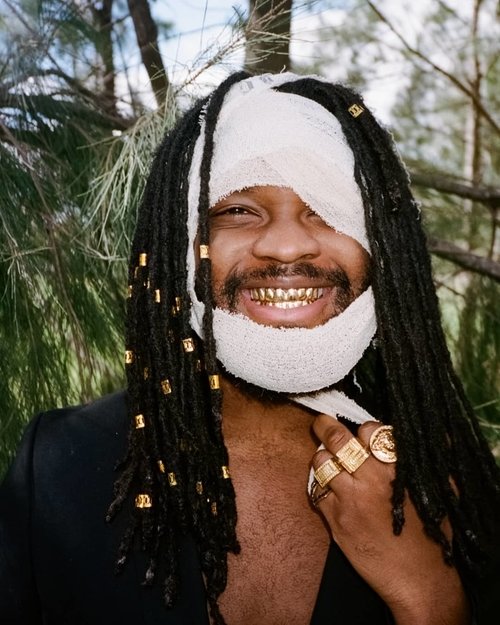
 IN THIS PHOTO: Genesis Owusu

but, as I am nodding back at last year and the best albums that came out, I have been looking at various polls and lists (year-end/best albums of 2021) and there are some incredible albums and E.P.s from Australian artists (or those who were raised or born in the country). This nation has always produced sensational music and, even though many critics and sites focus heavily on U.S. and U.K. artists, Australia is a country that warrants even more focus and exposure. From newer acts like Middle Kids and Genesis Owusu, to more established acts like Courtney Barnett and Nick Cave & Warren Ellis, 2021 saw some absolutely fabulous albums from Australian acts! I am going to run a feature this year that highlights the best new Australian artists to look out for. Now, I wanted to nod back to last year and the sheer array of original, incredible and standout albums and E.P.s from Australian musicians. You may well discover a great artist you have not before from the playlist. As you can see, these artists from Australia delivered…

 IN THIS PHOTO: Courtney Barnett/PHOTO CREDIT: Mia Mala McDonald

SUCH amazing work in 2021.

FEATURE: In Order of Brilliance... Ranking Kate Bush’s Studio Album Title Tracks

FEATURE:


In Order of Brilliance…

IN THIS PHOTO: Kate Bush in an outtake from the Hounds of Love (1985) cover shoot/PHOTO CREDIT: John Carder Bush 

Ranking Kate Bush’s Studio Album Title Tracks

___________

THIS is another idea…

 IN THIS PHOTO: Kate Bush in an outtake from the Lionheart (1978) cover shoot/PHOTO CREDIT: Gered Mankowitz

that I don’t think I have done before. I have ranked her album tracks before, though I don’t think I have only ranked the album title tracks. In this rundown, I am including Oh England My Lionheart as a title track – even though the album is called Lionheart. Her third studio album – aside from 2011’s Director’s Cut – is the only one without a title track. I am not sure why Never for Ever (1980) does not have a title cut. There was a song of that name recorded prior to the Never for Ever album, though it was never used. I am going to rank the remaining eight title tracks, in order of their strength and longevity. They are all terrific tracks, though there are a few that stand out and are stronger. Here is my ordering of Kate Bush’s…

 IN THIS PHOTO: Kate Bush in a promotional photo for 2011’s 50 Words for Snow/PHOTO CREDIT: Ken McKay

MAGNIFICENT title tracks.

_______________

8. Oh England My Lionheart

Album Release Date: 13th November, 1978

Producer: Andrew Powell (assisted by Kate Bush)

Label: EMI

Track Information:

It's really very much a song about the Old England that we all think about whenever we're away, you know, "ah, the wonderful England'' and how beautiful it is amongst all the rubbish, you know. Like the old buildings we've got, the Old English attitudes that are always around. And this sort of very heavy emphasis on nostalgia that is very strong in England. People really do it alot, you know, like "I remember the war and...'' You know it's very much a part of our attitudes to life that we live in the past. And it's really just a sort of poetical play on the, if you like, the romantic visuals of England, and the second World War... Amazing revolution that happened when it was over and peaceful everything seemed, like the green fields. And it's really just a exploration of that. (Lionheart Promo Cassette, EMI Canada, 1978)” – Kate Bush Encyclopaedia

7. The Red Shoes

Album Release Date: 2nd November, 1993

Producer: Kate Bush

Label: EMI

Track Information:

Song written by Kate Bush. Originally released on her seventh album The Red Shoes. Also released as a single by EMI Records in the UK on 4 April 1994. Lead track of the movie The Line, The Cross and the Curve, which was presented on film festival at the time of the single's release.

Formats

'The Red Shoes' was released in the UK as a 7" single, a cassette single and two different CD-singles. The 7" single and cassette single feature the B-side track You Want Alchemy. CD-single 1 added 'Cloudbusting (Video Mix)' and This Woman's Work, and CD-single 2, released one week after the other formats, features Shoedance (see below), together with the single remix of The Big Sky and the 12" version of Running Up That Hill.

Versions

There are three versions of 'The Red Shoes': the album version, which was also used on the single released, and 'Shoedance', which is a 10 minute remix by Karl Blagan of 'The Red Shoes', featuring excerpts from dialogue from the movie The Line, The Cross & The Curve. Finally, there's the version from Bush's album Director's Cut in 2011” – Kate Bush Encyclopaedia

6. The Dreaming

Album Release Date: 13th September, 1982

Producer: Kate Bush

Label: EMI

Track Information:

We started with the drums, working to a basic Linn drum machine pattern, making them sound as tribal and deep as possible. This song had to try and convey the wide open bush, the Aborigines - it had to roll around in mud and dirt, try to become a part of the earth. "Earthy" was the word used most to explain the sounds. There was a flood of imagery sitting waiting to be painted into the song. The Aborigines move away as the digging machines move in, mining for ore and plutonium. Their sacred grounds are destroyed and their beliefs in Dreamtime grow blurred through the influence of civilization and alcohol. Beautiful people from a most ancient race are found lying in the roads and gutters. Thank God the young Australians can see what's happening.

The piano plays sparse chords, just to mark every few bars and the chord changes. With the help of one of Nick Launay's magic sounds, the piano became wide and deep, effected to the point of becoming voices in a choir. The wide open space is painted on the tape, and it's time to paint the sound that connects the humans to the earth, the dijeridu. The dijeridu took the place of the bass guitar and formed a constant drone, a hypnotic sound that seems to travel in circles.

None of us had met Rolf (Harris) before and we were very excited at the idea of working with him. He arrived with his daughter, a friend and an armful of dijeridus. He is a very warm man, full of smiles and interesting stories. I explained the subject matter of the song and we sat down and listened to the basic track a couple of times to get the feel. He picked up a dijeridu, placing one end of it right next to my ear and the other at his lips, and began to play.

I've never experienced a sound quite like it before. It was like a swarm of tiny velvet bees circling down the shaft of the dijeridu and dancing around in my ear. It made me laugh, but there was something very strange about it, something of an age a long, long time ago.

Women are never supposed to play a dijeridu, according to Aboriginal laws; in fact there is a dijeridu used for special ceremonies, and if this was ever looked upon by a woman before the ceremony could take place, she was taken away and killed, so it's not surprising that the laws were rarely disobeyed. After the ceremony, the instrument became worthless, its purpose over. (Kate Bush Club newsletter, October 1982)” – Kate Bush Encyclopaedia

5. 50 Words for Snow

Album Release Date: 21st November, 2011

Producer: Kate Bush

Label: Fish People

Track Information:

Years ago I think I must have heard this idea that there were 50 words for snow in this, ah, Eskimo Land! And I just thought it was such a great idea to have so many words about one thing. It is a myth - although, as you say it may hold true in a different language - but it was just a play on the idea, that if they had that many words for snow, did we? If you start actually thinking about snow in all of its forms you can imagine that there are an awful lot of words about it. Just in our immediate language we have words like hail, slush, sleet, settling… So this was a way to try and take it into a more imaginative world. And I really wanted Stephen to read this because I wanted to have someone who had an incredibly beautiful voice but also someone with a real sense of authority when he said things. So the idea was that the words would get progressively more silly really but even when they were silly there was this idea that they would have been important, to still carry weight. And I really, really wanted him to do it and it was fantastic that he could do it. (...) I just briefly explained to him the idea of the song, more or less what I said to you really. I just said it’s our idea of 50 Words For Snow. Stephen is a lovely man but he is also an extraordinary person and an incredible actor amongst his many other talents. So really it was just trying to get the right tone which was the only thing we had to work on. He just came into the studio and we just worked through the words. And he works very quickly because he’s such an able performer. (...) I think faloop'njoompoola is one of my favourites. [laughs] (John Doran, 'A Demon In The Drift: Kate Bush Interviewed'. The Quietus, 2011)” – Kate Bush Encyclopaedia

4. The Sensual World

Album Release Date: 17th October, 1989

Producer: Kate Bush

Label: EMI

Track Information:

The song is about someone from a book who steps out from this very black and white 2-D world into the real world. The immediate impressions was the sensuality of this world - the fact that you can touch things, that is so sensual - you know... the colours of trees, the feel of the grass on the feet, the touch of this in the hand - the fact that it is such a sensual world. I think for me that's an incredibly important thing about this planet, that we are surrounded by such sensuality and yet we tend not to see it like that. But I'm sure for someone who had never experienced it before it would be quite a devastating thing. (...) I love the sound of church bells. I think they are extraordinary - such a sound of celebration. The bells were put there because originally the lyrics of the song were taken from the book Ulysses by James Joyce, the words at the end of the book by Molly Bloom, but we couldn't get permission to use the words. I tried for a long time - probably about a year - and they wouldn't let me use them, so I had to create something that sounded like those original word, had the same rhythm, the same kind of feel but obviously not being able to use them. It all kind of turned in to a pastiche of it and that's why the book character, Molly Bloom, then steps out into the real world and becomes one of us. (Roger Scott, Interview. Radio 1 (UK), 14 October 1989)” – Kate Bush Encyclopaedia

3. Aerial

Album Release Date: 7th November, 2005

Producer: Kate Bush

Label: EMI

Track Information:

Versions

There is only one studio version of this song.

A live version appears on the album Before The Dawn.

Performances

The song was performed live as part of Kate's Before The Dawn shows in London, 2014.

Credits

Drums: Steve Sanger

Bass: Del Palmer

Guitars: Dan McIntosh

Keyboards: Kate

Percussion: Bosco D’Oliveira” – Kate Bush Encyclopaedia

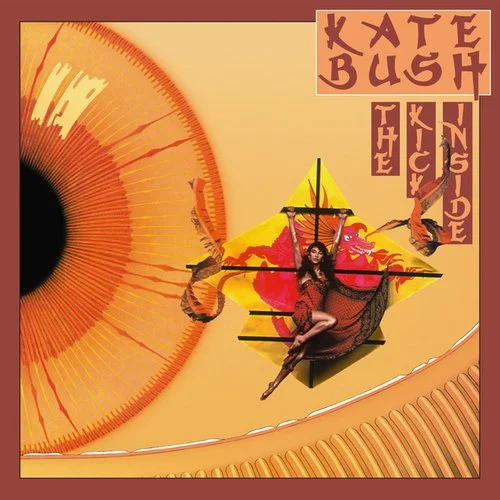
2. The Kick Inside

Album Release Date: 17th February, 1978

Producer: Andrew Powell

Label: EMI

Track Information:

The song The Kick Inside, the title track, was inspired by a traditional folk song and it was an area that I wanted to explore because it's one that is really untouched and that is one of incest. There are so many songs about love, but they are always on such an obvious level. This song is about a brother and a sister who are in love, and the sister becomes pregnant by her brother. And because it is so taboo and unheard of, she kills herself in order to preserve her brother's name in the family. The actual song is in fact the suicide note. The sister is saying 'I'm doing it for you' and 'Don't worry, I'll come back to you someday.' (Self Portrait, 1978)” – Kate Bush Encyclopaedia

1. Hounds of Love

Album Release Date: 16th September, 1985

Producer: Kate Bush

Label: EMI

Track Information:

When I was writing the song I sorta started coming across this line about hounds and I thought 'Hounds Of Love' and the whole idea of being chasing by this love that actually gonna... when it get you it just going to rip you to pieces, (Raises voice) you know, and have your guts all over the floor! So this very sort of... being hunted by love, I liked the imagery, I thought it was really good. (Richard Skinner, 'Classic Albums interview: Hounds Of Love'. BBC Radio 1 (UK), 26 January 1992)

In the song 'Hounds Of Love', what do you mean by the line 'I'll be two steps on the water', other than a way of throwing off the scent of hounds, or whatever, by running through water. But why 'two' steps?

Because two steps is a progression. One step could possibly mean you go forward and then you come back again. I think "two steps" suggests that you intend to go forward.

But why not "three steps"?

It could have been three steps - it could have been ten, but "two steps" sounds better, I thought, when I wrote the song. Okay. (Doug Alan interview, 20 November 1985)” – Kate Bush Encyclopaedia

FEATURE: Second Spin: Kenickie - At the Club

FEATURE:


Second Spin

Kenickie - At the Club

___________

HERE is an album that I did…

 PHOTO CREDIT: Stephen Sweet/Rex Features

not experience the first time around in 1997. I came to Kenickie’s debut album, At the Club, in the 2000s. Listening back now, I can hear other bands who have been inspired by Kenickie. At the Club still sounds utterly fresh and thrilling. One of the big albums of 1997, it reached number nine on the U.K. With incredible, distinct and hugely impressive singles like Punka, Millionaire Sweeper, and In Your Car, it is an album that has more than its share of gems. I feel that it is not played as much as it should be. At the Club was produced by John Cornfield, Andy Carpenter and band-member Peter Gofton (Johnny X). Reviews for the album were largely positive. Maybe one of the albums from a sensational year that got buried because of the sheer quality around it, I wanted to revisit a record that turns twenty-five on 12th May. If you have not heard Kenickie’s amazing debut album, then get on it now! The Sunderland band were led by BBC Radio 6 Music and BBC Radio 4 broadcaster Lauren Laverne. I have a lot of love for the band. With her brother Peter Gofton (Johnny X) on percussion, and Marie du Santiago and Emmy-Kate Montrose providing sensational musicianship and vocals, the band were an amazing force in the 1990s! I believe that an album such as At the Club is deserving of fresh inspection now. I want to bring in a couple of positive reviews/articles about the album.

This is what NME had to day about At the Club back in 1997. Despite some minor criticisms, they were impressed by what they heard from such a young band:

With their spiky punk-pop scrongling deepened and softened by Supergrass producer John Cornfield, Kenickie now sound wide-bodied and ready for take-off. Guitars shimmer like Hard Candy nail varnish throughout. Reference points are adopted and discarded at disorienting speed: early Blondie for the girls-with-guns playground games of 'Spies'; the Shangri-Las for the call-and-response vocals and synchronised handclaps of 'In Your Car' and the ever majestic 'Come Out 2Nite'; even Dinosaur Jr for the warmly chugging hymn to how downright classy Kenickie are that is, erm, 'Classy'. It's all PVC and parties, champagne and lip gloss, tacky glamour and fruity banter. But if it was only this -; the giddy rush of first love, classroom crushes and furtive youth club snogs -; then Kenickie really would be the shallow cheap-thrills merchants their dissenters would have us believe. If they truly were one-trick Shetland ponies in spangly threads, then those Shampoo and Fluffy parallels would make sense. Indie Spice Girls accusations could be flung with impunity, and Kenickie would be whoring themselves around the TFI Friday circuit until the cash cows staggered home.

That, of course, is not the case. Because as well as evoking adolescence's dizzying sense of immortality and hormonally charged confusion like no other album this decade, 'At The Club' consolidates an oft-overlooked strand of Kenickie's vision which throws the rest into stark perspective. Because there is vulnerability here behind the invincible posturing, a crushing sense of youth's transience and a prescient awareness of disappointments to come. Bloody hell -; and still not turned 20.

So 'People We Want' might ring with Lauren Laverne's teenage impatience to gallop out and seize the long-promised adult prizes of love and stardom, but she also sounds tremulously uncertain that these treasures even await her at all. The gushing guitar gradients of 'Brother John' tell us that, "Everyone looks better when they're sad," while 'How I Was Made' quietly evokes the fragile bodily self-disgust of Richey or Kurt at their most morbid. Even the Lottery winners of 'Millionaire Sweeper' end up lost and lonely, while album-closers 'I Never Complain' and 'Acetone' find Lauren hunched forlornly over her acoustic guitar, her breathy sighs tinged with suicidal intent. Crikey. Party time, anyone?

OK, 'At The Club' isn't the best album ever made. For that, Kenickie will need to learn how to distil their huge, witty, tragicomic and obscenely gifted personalities into musical form -; and, so far, no songs have been invented which can take that level of sassy charisma without collapsing into a black hole of dense antimatter.

They could also benefit from stretching their pop palette to match their skyscraping ambition, acknowledging the electronic age which shaped them as much as geetars: after all, their primary school days were brightened by the likes of ABC, the Human League and Duran Duran. The only clear sign of this on 'At The Club' is 'Robot Song', the longest and finest number here, an android-pop ballad with a whiff of Blur's 'Boys & Girls' about it which relates the saga of a cyborg who craves human feelings but, when he gets them, is overwhelmed by sadness. Smart, tinged by tragedy and clever beyond its years -; in other words, totally Kenickie.

Even so, despite its minor shortcomings, 'At The Club' fizzes with pure spunk, drop-dead cool and blinding potential”.

Before I finish things up, this Back Seat Mafia feature discuses an impressive and brilliant album that has been forgotten a certain amount. Not often ranked alongside the best debuts of the 1990s, that is something that needs to be revised:

The guitar bands that rose to prominence in the UK through the mid 90s in the UK were a mixed bunch. There were a handful of thoroughly enjoyable bands, but on the whole as it was largely either ridiculously pretentious, impossibly dull or lowest-common-denominator rubbish. It was even worse for the female fronted groups, as they were either frowny and miserable or just useless .

Other than PJ Harvey, Britain hadn’t produced a genuinely talented and enjoyable female fronted rock band for years and the masses were turning to identikit mouthy girls wearing shrunken T-shirts, fronting groups of anonymous blokes with guitars. Things were bleak. Then, at what looked to be the darkest hour, when the most vital females in music were The Spice Girls, three whip smart Northern lasses decked out in leather, PVC and leopard print, with big guitars, big choruses and a bloke who played the drums staggered out of the gloom and into the hearts of those that could recognise a genuinely subversive band when they heard one.

For all their attempts to mirror working-class attitudes and experiences, the majority of Brit-pop bands had fallen short. Not Kenickie though. On At the Club they sang songs of cheap nights out, booze, partying, seducing blokes because they drove flash cars, self doubt and bitchiness. On top of this they were fun too. This earthy approach did much to hide the fact that Kenickie were far more intelligent and knowing than most gave them credit for. Yes they wrote singalong songs about partying and picking up blokes, but they weren’t afraid to acknowledge the dark underside of this lifestyle as well. Despite their girly choruses both “How I Was Made” and “Acetone” are strangely sad and moving songs and a tune like “Robot Song” is strangely unnerving.

At the end of the day though, this is a pretty accurate picture of the lifestyle of British girls who were in their late teens during the last five years of the 20th century (or at least those that I knew anyway). It has big, supercharged guitars, stomping beats, marvelous singalong choruses, songs about the joys of wearing “P.V.C.” and listening to lo-fi music.

They may have followed up At the Club with a downbeat album which saw the band end on a whimper, but this joyous debut stands as a monument to one of the great forgotten bands of the late 90s. There weren’t many bands willing to blend power-pop with girl-group stylings at he time, but in recent years there seems to have been some belated acknowledgment of Kenickie’s inherent brilliance. These days former Kenickie frontwoman Lauren Laverne is now a much-loved radio and television presenter and is probably better known now than she’s ever been. The other band members, despite each still being part of the music scene to varying degrees, little has been heard from, apart from Laverne’s brother and his bewildering array of contributions to the UK music scene over the past decade.At the Club is one of those albums that is an audio time-capsule of its time, yet anyone who journeys onto West Street on a Saturday evening can confirm that its themes have remained oddly timeless. Who knows, maybe it is finally time for Kenickie to be given the respect that they were always due”.

An album I have bonded with and explored a lot over the past few days, 1997’s At the Club was the exciting and hugely talented Kenickie coming into the music with a bang! Maybe one will hear Punka now and then, but what about, Brother John, Robot Song, P.V.C., or I Never Complain?! An album chocked with great songs that are worthy of a spin, go and listen to a tremendous album. Ahead of its twenty-fifth anniverssary in the summer, I wanted to highlight an amazing album that…

EVERYONE should hear.

FEATURE: A Buyer’s Guide: Part Eighty-Six: JAY-Z

FEATURE:


A Buyer’s Guide

Part Eighty-Six: JAY-Z

___________

ON this outing of A Buyer’s Guide…

 PHOTO CREDIT: Raven B. Varona

I wanted to celebrate and highlight the work of a Hip-Hop pioneer and godfather. The legendary JAY-Z is an artist who, since his 1996 debut (Reasonable Debut) has released some of the finest albums ever. He is a hugely inventive and inspirational artist who is part of one of the world’s greatest power couples (he is married to Beyoncé). Before recommending his four essential albums, an underrated gem, his latest studio album and a good book, I wanted to bring in some biography from AllMusic:

From the projects to the throne, New York rapper, producer, and entrepreneur Jay-Z embodied the quintessential rags-to-riches dream, becoming one of the most successful MCs of his generation while creating an empire that made him one of the richest artists of the era. After debuting in the late '90s with Reasonable Doubt and In My Lifetime, Vol 1, he began a chart run that notched over a dozen number one albums spread over two decades, including the multi-platinum, Grammy-winning Vol. 2...Hard Knock Life (1999), the Blueprint series (2001, 2002, 2009), and The Black Album (2003). In addition to his solo work, Jay-Z also found mainstream crossover success with pop, R&B, and rock artists, notably collaborating with protege Rihanna on their Grammy-winning "Umbrella" (2008); alternative metal outfit Linkin Park on 2004's genre mash-up Collision Course; Alicia Keys on New York City's unofficial anthem, the chart-topping "Empire State of Mind" (2011); frequent foil Kanye West on Watch the Throne (2012); and wife Beyoncé on numerous hit singles, international tours, and the joint album Everything Is Love (2018). He also contributed the song "What It Feels Like" to the soundtrack of the Oscar-nominated 2021 drama Judas and The Black Messiah. In addition to rapping, Jay-Z has also served as a label head (Roc-A-Fella/Roc Nation/Def Jam), team owner (NBA's Brooklyn Nets), real-estate mogul, and fashion designer.

Born in 1969 and raised in the rough Marcy Projects of Brooklyn, New York, Jay-Z was raised by his mother and turned to the streets, where he made a name for himself as a fledging rapper and drug dealer. Known as "Jazzy" in his neighborhood, he soon shortened his nickname to Jay-Z and did all he could to break into the rap game. As he vividly discusses in his lyrics, Jay-Z also became a street hustler around this time, doing what needed to be done to make money. For a while, he ran around with rapper Jaz-O, aka Big Jaz. From Jaz he learned how to navigate the rap industry and what moves to make. He also participated in the group Original Flavor for a short time. Jay-Z subsequently decided to make an untraditional decision and start his own label rather than sign with an established one as Jaz had done. Together with friends Damon Dash and Kareem "Biggs" Burke, he created Roc-a-Fella Records. Once he found a reputable distributor, Priority Records (and later Def Jam), Jay-Z finally had everything in place, including a debut album, Reasonable Doubt (1996).

Though Reasonable Doubt reached only number 23 on the Billboard 200 chart, Jay-Z's debut eventually became recognized as an undisputed classic among fans, many of whom consider it his crowning achievement. Led by the hit single "Ain't No Nigga," a duet featuring Foxy Brown, Reasonable Doubt slowly spread through New York; some listeners were drawn in because of big names like DJ Premier and the Notorious B.I.G., others by the gangsta motifs very much in style at the time, still others by Jay-Z himself. By the end of its steady run, Reasonable Doubt generated three more charting singles -- "Can't Knock the Hustle," "Dead Presidents," and "Feelin' It" -- and set the stage for the follow-up, In My Lifetime, Vol. 1 (1997).

Peaking at number three on the Billboard 200, In My Lifetime sold much more strongly than its predecessor. The album boasted pop-crossover producers such as Puff Daddy and Teddy Riley, and singles such as "Sunshine" and "The City Is Mine" indeed showcased a newfound embrace of pop crossover. Yet there were still plenty of hard-hitting songs, such as "Streets Is Watching" and "Rap Game/Crack Game" to lace In My Lifetime with gangsta rap as well as pop crossover. Jay-Z's next album, Vol. 2: Hard Knock Life (1998), released a year after In My Lifetime, was laden with hit singles: "Can I Get A..." and "Hard Knock Life (Ghetto Anthem)" broke the Top 20 of the Billboard Hot 100, while "Cash, Money, Hoes" and "Nigga What, Nigga Who" also charted. Vol. 2: Hard Knock Life ended up winning a Grammy for Best Rap Album.

Like clockwork, Jay-Z returned a year later with another album, Vol. 3: Life and Times of S. Carter (1999), which topped the Billboard 200 and spawned two hits: "Big Pimpin'" and "Do It Again (Put Ya Hands Up)." The album was Jay-Z's most collaborative to date, featuring ten guest vocalists and a roll call of in-demand producers such as Dr. Dre and Timbaland. Jay-Z then scaled back a bit for Dynasty Roc la Familia (2000), his fifth album in as many years. The album showcased Roc-a-Fella's in-house rappers, such as Beanie Sigel, Memphis Bleek, and Freeway. On Dynasty Roc la Familia, Jay-Z also began working with a few new producers: the Neptunes, Kanye West, and Just Blaze. The Neptunes-produced "I Just Wanna Love U (Give It 2 Me)" became a particularly huge hit single this go-round.

Jay-Z's next album, The Blueprint (2001), solidified his position atop the New York rap scene. Prior to its release, the rapper had caused a stir in New York following his headlining performance at Hot 97's Summer Jam 2001, where he debuted the song "Takeover."

The song features a harsh verse ridiculing Prodigy of Mobb Deep, and Jay-Z accentuated his verbal assault by showcasing gigantic photos of an adolescent Prodigy in a dance outfit. The version of "Takeover" that later appeared on The Blueprint includes a third verse, this one dissing Nas, who, in response to the Summer Jam performance, had called out Jay-Z, "the fake king of New York," in a freestyle known as "Stillmatic." As expected, "Takeover" ignited a sparring match with Nas, who responded with "Ether." Jay-Z accordingly returned with a comeback, "Super Ugly," where he rapped over the beats to Nas' "Get Ur Self A..." on the first verse and Dr. Dre's "Bad Intentions" on the second. The back-and-forth bout created massive publicity for both Jay-Z and Nas. In addition to "Takeover," The Blueprint also featured "Izzo (H.O.V.A.)," one of the year's biggest hit songs, and the album topped many year-end best-of charts.Jay-Z capitalized on the runaway success of The Blueprint with a number of follow-up projects. He collaborated with the Roots for the Unplugged album (2001) and with R. Kelly for Best of Both Worlds (2002). He then went on to record, over the course of the year, 40 or so new tracks, 25 of which appeared on his next record, the double album The Blueprint²: The Gift & the Curse (2002). Though billed as a sequel, The Blueprint² was considerably different from its predecessor. Whereas the first volume had been personal, considered, and focused, the second instead offered an unapologetically sprawling double-disc extravaganza showcasing remarkable scope. As usual, it spawned a stream of singles, led by his 2Pac cover "'03 Bonnie & Clyde," featuring his future wife Beyoncé. Furthermore, Jay-Z guested on a pair of summer 2003 hits: Beyoncé's chart-topping "Crazy in Love" and Pharrell Williams' Top Five hit "Frontin'."

It was then that Jay-Z announced his imminent retirement after the release of one more album. That LP, The Black Album (2003), was rush-released by Def Jam and soared to the top Billboard spot at the end of the year. It spawned a couple big hits -- "Dirt Off Your Shoulder" and "99 Problems" -- and inspired a popular mash-up bootleg, The Grey Album, by Danger Mouse. The subsequent year (2004) was a whirlwind for the retiring Jay-Z. He embarked on a farewell tour that was topped off by an extravagant Madison Square Garden performance documented on the Fade to Black DVD, and he also embarked on an arena tour with the embattled R. Kelly.

With his reputation bigger than ever, Jay-Z accepted an offer to assume the role of president at Def Jam. The seminal rap label was struggling and needed someone to guide it through a rocky transitional phase. Jay-Z accepted the challenge and took over the company begun by Russell Simmons and Rick Rubin roughly 20 years earlier. (As part of its deal with Jay-Z, Def Jam's parent company, Universal, bought Roc-a-Fella.) Considerable fanfare met the presidential inauguration, as Jay-Z became one of the few African-American major-label executives in the business. Numerous rappers owned or operated their own boutique labels, but none had ever risen to such major-label heights. The rapper-turned-president didn't take his job lightly, either, at least judging by his initial year at the helm. Within months of assuming his position, he fostered a string of newfound talents, including Young Jeezy and Rihanna.

In 2005, Jay-Z came out of retirement for the I Declare War concert in New York City. The ambitious show featured a parade of high-profile guest stars, including Diddy and Kanye West, and in a peacemaking move, Nas. With this longstanding beef squashed, Jay-Z announced he was coming out of retirement for good. He made it official when Kingdom Come (2006) hit shelves. Jay-Z kept firing with American Gangster (2007), inspired by the concurrent film of the same name. After he left Def Jam and established Roc Nation -- a label, music publisher, and talent agency through Live Nation -- he released a third installment in the Blueprint series, The Blueprint 3 (2009). Announced with the single "D.O.A. (Death of Auto-Tune)," the album featured productions from Kanye West and Timbaland, plus guest features for West, Rihanna, and Alicia Keys, the latter of whom appeared on "Empire State of Mind," one of the biggest hits of Jay-Z's career. At various points during the next two years, Jay-Z and West, joined by numerous associates, worked on Watch the Throne (2011). The album debuted at number one on the Billboard 200, supported by the smash hits "Otis" and "Niggas in Paris."

On January 7, 2012, Beyoncé gave birth to Blue Ivy Carter. Jay-Z quickly released "Glory," featuring his daughter as B.I.C.; she became the youngest person to appear on a Billboard-charting single. High-profile television a few months later announced Jay-Z's 12th solo album, Magna Carta...Holy Grail (2012). Released that July 4, it featured production from Timbaland and partner Jerome "J. Roc" Harmon, while the lead song involved Justin Timberlake, with whom Jay-Z toured that summer. During the next few years, Jay-Z was involved primarily with assorted business and philanthropic ventures, as well as the production of the documentary Time: The Kalief Browder Story. He appeared on a handful of tracks headlined by other artists, including Drake's "Pop Style" and DJ Khaled's "I Got the Keys." Further collaborations, such as his and Beyoncé's appearances on Khaled's "Shining," along with an induction into the Songwriters Hall of Fame (as the first rap artist), and the addition of newborn twins to the Carter family, all preceded the album 4:44 (2017). His 13th full-length, the critically acclaimed, platinum-certified set debuted atop the Billboard 200 and was nominated for Album of the Year and Song of the Year (for single "The Story of O.J.") at the 60th Annual Grammy Awards in 2018. Later that year, he embarked on an international stadium tour with Beyonce dubbed On the Run II. To coincide with the trek, the pair released the surprise album Everything Is Love as the Carters. Including the Migos-assisted lead single "Apeshit" -- which was promoted with a music video shot at the Louvre -- Everything Is Love debuted at number two and featured production by Pharrell Williams, Mike Dean, Cool & Dre, Boi-1da, and more. In 2021, Jay-Z contributed the track "What It Feels Like" (featuring the late-Nipsey Hussle) to the soundtrack to the Oscar-nominated film Judas and The Black Messiah”.

To show what an incredible and consistent artist JAY-Z is, here are my suggestions regarding which albums you should buy. I have also highlighted a book that gives more information about a truly superb talent. If you are new to JAY-Z, I hope that the below provides you…

WITH some guidance.

_____________

The Four Essential Albums


Reasonable Doubt

Release Date: 25th June, 1996

Labels: Roc-A-Fella/Priority

Producers: Shawn Carter (exec.)/Damon Dash (exec.)/Kareem ‘Biggs’ Burke (exec.)/Big Jaz/Sean Cane/Clark Kent/Dahoud/DJ Irv/DJ Premier/Knobody/Peter Panic/Ski

Standout Tracks: Dead Presidents II/Feelin' It (featuring Mecca)/Ain't No Nigga (featuring Foxy Brown)

Buy: https://www.discogs.com/sell/list?master_id=9258&ev=mb

Stream: https://open.spotify.com/album/3gHvsTdiiZWGxEg32lyLwk?si=NHaAsoEOTSSgu9U-mlE_eQ

Review:

Before Jay-Z fashioned himself into hip-hop's most notorious capitalist, he was a street hustler from the projects who rapped about what he knew -- and was very, very good at it. Skeptics who've never cared for Jigga's crossover efforts should turn to his debut, Reasonable Doubt, as the deserving source of his legend. Reasonable Doubt is often compared to another New York landmark, Nas' Illmatic: A hungry young MC with a substantial underground buzz drops an instant classic of a debut, detailing his experiences on the streets with disarming honesty, and writing some of the most acrobatic rhymes heard in quite some time. (Plus, neither artist has since approached the street cred of his debut, The Blueprint notwithstanding.) Parts of the persona that Jay-Z would ride to superstardom are already in place: He's cocky bordering on arrogant, but playful and witty, and exudes an effortless, unaffected cool throughout. And even if he's rapping about rising to the top instead of being there, his material obsessions are already apparent. Jay-Z the hustler isn't too different from Jay-Z the rapper: Hustling is about living the high life and getting everything you can, not violence or tortured glamour or cheap thrills. In that sense, the album's defining cut might not be one of the better-known singles -- "Can't Knock the Hustle," "Dead Presidents II," "Feelin' It," or the Foxy Brown duet, "Ain't No Nigga." It just might be the brief "22 Two's," which not only demonstrates Jay-Z's extraordinary talent as a pure freestyle rapper, but also preaches a subtle message through its club hostess: Bad behavior gets in the way of making money. Perhaps that's why Jay-Z waxes reflective, not enthusiastic, about the darker side of the streets; songs like "D'Evils" and "Regrets" are some of the most personal and philosophical he's ever recorded. It's that depth that helps Reasonable Doubt rank as one of the finest albums of New York's hip-hop renaissance of the '90s” – AllMusic

Choice Cut: Can't Knock the Hustle (featuring Mary J. Blige)

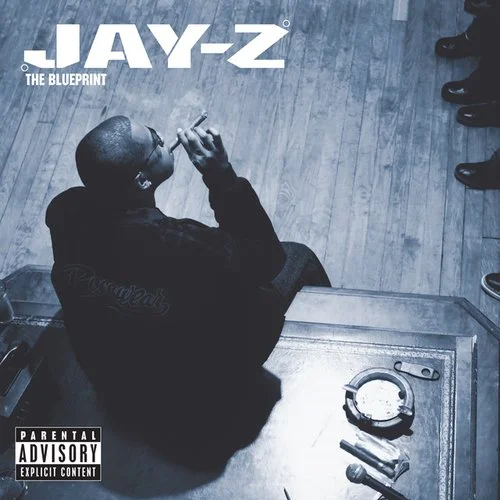
The Blueprint

Release Date: 11th September, 2001

Labels: Roc-A-Fella/Def Jam

Producers: Shawn Carter (exec.)/Damon Dash (exec.)/Kareem ‘Biggs’ Burke (exec./)Bink/Eminem/Just Blaze/Michael Jackson/The Trackmasters/Luis Resto/Kanye West/Timbaland

Standout Tracks: Izzo (H.O.V.A.)/Girls, Girls, Girls/Song Cry

Buy: https://www.discogs.com/sell/list?master_id=46989&ev=mb

Stream: https://open.spotify.com/album/69CmkikTHkGKdkrUZTtyWl?si=oZ3nmbeESziuvIpwDYQU6w

Review:

Bouncing up means coming down, and he does for "Renegade," teaming with the world's other greatest MC to whine about the perils of being the world's greatest MCs and all. I shouldn't have to mention the brilliant rhymes, but (surprisingly, after a few bombs on the d12 album) it's almost ridiculous how good Eminem's beat is-- strings, synth and "Good Vibrations"-style theremin tones roll easy like 1987. After that, Jay puts focus in full on his rep, bigging up Reasonable Doubt more times than every other cut of his career combined. Jay's always been moving towards abolishing the hardcore production style that originally went with being gangsta, but the funny thing about this is how overwhelmingly post-gangsta he is-- the fruits of a thug life that was too long ago to dwell on.

"If I ain't better than B.I.G./ I'm the closest one," he says on "Hola Hovito," and that's an important clarification; when Puffy and Easy Mo Bee were laying pop beats under Biggie's real-life crime stories, the old school heads complained about how the rugged and rough aesthetic was on the way out. But "Juicy" shut the haters up by simply explaining that Biggie was pop only because he didn't need that dirty funk-rock life anymore. And so, while frat boys went buckwild for screeching thugs like Cypress Hill and Onyx who boasted of a running crime rate, Biggie had already gotten over it and just wanted to live his life in peace. But everyone knows what actually happened, and after his crime style finally caught up with him, the new generation of pop thug was ushered in. After Biggie's death, no one comes closer than Jay-Z” – Pitchfork

Choice Cut: Takeover

The Black Album

Release Date: 14th November, 2003

Labels: Roc-A-Fella/Island Def Jam

Producers: Shawn Carter (also exec.)/Damon Dash (exec.)/Kareem ‘Biggs’ Burke (exec.)/3H9th Wonder/Aqua/The Buchanans/Eminem/DJ Quik/Just Blaze/Kanye West/Luis Resto/The Neptunes/Rick Rubin/Timbaland

Standout Tracks: What More Can I Say/Change Clothes (featuring Pharrell Williams)/Dirt Off Your Shoulder

Buy: https://www.discogs.com/sell/list?master_id=47051&ev=mb

Stream: https://open.spotify.com/album/6vT81iUtDPLkfHDAwoRNpu?si=4RZKX6A0SJOB9W9ndXyWUA

Review:

It's rare for a rapper to make a goodbye album -- generally the marketplace kicks you out of the game first. But Jay-Z is a rare rapper. The dominant figure of the post-Biggie and --Tupac era, he spit cool and witty with devastating flows, dropped classic albums, influenced MCs, changed pop culture and built a tall stack of dollars in the process.

Time will tell whether or not The Black Album is Jay-Z's final release, but it certainly is a goodbye album. He's settling scores and letting us deeper into his life than ever. He talks in depth about his parents, giving his mother, Gloria Carter, time to shine on the opening song, "December 4th." On the Eminem-produced "Moment of Clarity," he invokes the memory of his father, Adnes: "Pop died/Didn't cry/Didn't know him that well/Between him doin' heroin and me doin' crack sales." But by the end of the verse, he has forgiven his late father and says to him, "Save a place in heaven till the next time we meet forever."

The Black Album has a dream team of producers, including Kanye West ("Lucifer," "Encore"), Just Blaze ("December 4th"), the Neptunes ("Change Clothes," "Allure") and Timbaland, whose obese club-banger "Dirt Off Your Shoulder" easily wins the prize for best beat, with Rick Rubin's raucous, rock-drenched "99 Problems" a close second.

Given one last chance to make an impact, Jay-Z has come up with one of the better albums of his career, though perhaps a shade lesser than his very best, Reasonable Doubt and The Blueprint. Still, we've witnessed not merely a Hall of Fame career but one of the top-shelf greatest of all time, up there with Rakim, Big, Pac and Nas. And like every great rapper, Jay-Z has never been afraid to tell us he's Number One. On "What More Can I Say," he rhymes, "Pound for pound I'm the best to ever come around here/Excluding nobody." He could be right” – Rolling Stone

Choice Cut: 99 Problems

American Gangster

Release Date: 6th November, 2007

Labels: Roc-A-Fella/Def Jam

Producers: Shawn Carter (exec.)/Antonio ‘L.A.’ Reid (exec.)/Sean ‘Diddy’ Combs with The Hitmen (also assoc.)/Bigg D/Chris Flame/Idris ‘Driis’ Elba/Jermaine Dupri/Just Blaze/Skyz Muzik/The Neptunes/No I.D./Toomp/Mario Winans

Standout Tracks: American Dreamin'/I Know/Say Hello

Buy: https://www.discogs.com/sell/list?master_id=47134&ev=mb

Stream: https://open.spotify.com/album/6JlAOzNEYuPBZHf1iTs5kT?si=jKd9J-RQTVCGsw0zr6GbxA

Review:

With his criminally overhyped, thuddingly anticlimactic comeback album, Kingdom Come, Jay-Z offered listeners insight into the surprisingly dull life of a thirtysomething hip-hop mogul with nothing to prove and nothing much to say. The album's disappointing sales suggested that fans found the view from the boardroom infinitely less compelling than the street-corner perspective of Jay-Z's early work. On American Gangster, the hustler-turned-executive finds inspiration in the Ridley Scott film of the same name, the lush atmosphere of '70s soul, and the bracing grit of blaxploitation.

American Gangster stumbles a bit in its Diddy-dominated first half, but it locks into a slinky retro nighttime groove with "I Know," which breathes new life into the heroin-seduction song with one of Pharrell's mile-wide space-disco grooves. And the album sustains that groove until the final track. Meanwhile, "Blue Magic" ruthlessly deconstructs the Neptunes' sound until all that's left is organ vamping, spare percussion, and vintage Jay-Z braggadocio. On the similarly minimalist "Success," Jay-Z and Nas reaffirm their potent chemistry over No I.D.'s sleazy funk. Gangster makes explicit the implicit subtext of so much street rap: that studio gangstas are generally more influenced by the contents of their DVD collections than their personal memories. Judging by this surprisingly strong return to form, Jay-Z might want to consider spending less time in the office and more time at the movies” – The A.V. Club

Choice Cut: Roc Boys (And the Winner Is)...

The Underrated Gem


Vol. 2... Hard Knock Life

Release Date: 29th September, 1998

Labels: Roc-A-Fella/Def Jam

Producers: Shawn Carter (exec.)/Damon Dash (also exec.)/Kareem ‘Biggs’ Burke (exec.)/Irv Gotti/Kid Capri/J-Runnah/Jermaine Dupri/Rockwilder/Lil' Rob/Mahogany/The 45 King/DJ Premier/Erick Sermon/Stevie J/Swizz Beatz/Timbaland/Darold ‘POP’ Trotter

Standout Tracks: Nigga What, Nigga Who (Originator 99) (featuring Big Jaz)/Money, Cash, Hoes (featuring DMX)/Can I Get A... (featuring Ja Rule and Amil)

Buy: https://www.discogs.com/sell/list?master_id=46840&ev=mb

Stream: https://open.spotify.com/album/3j1xCJdBMCl6wYQXurz2tb?si=Nz8o9-P1S_SzT7iZY-pRhw

Review:

After recording with underground legends such as the Jaz, Original Flavor, Mic Geronimo and Big Daddy Kane, rapper Jay-Z got his big break with the Foxy Brown duet "Ain't No Nigga" on the "Nutty Professor" soundtrack. This radio and club hit set the stage for the Brooklyn rapper's debut album, 1996's "Reasonable Doubt." Rife with vivid images detailing the saga of a highbrow criminal, the collection was embraced by a New York audience thirsty for its own version of gangster hip-hop.

Jay-Z's biggest asset is his ability to relay the most intricate nuances of life--especially a life saturated with drugs, guns and disposable women. He seemingly reinvented these topics on last year's "In My Lifetime, Vol. 1" and the soundtrack for this year's "Streets Is Watching," a direct-to-video movie in which Jay-Z was the star.

"Vol. 2--A Hard Knock Life," which entered the national sales chart this week at No. 1, reconfirms Jay-Z's status as a superior wordsmith. Following the current rap record trend of featuring a multitude of guest stars, 13 of the 14 tracks feature at least one other voice. Still, Jay-Z emerges as the hero of this hard-hitting, lyrically intense opus” – Los Angeles Times

Choice Cut: Hard Knock Life (Ghetto Anthem)

The Latest Album


4:44

Release Date: 30th June, 2017

Label: Roc Nation

Producers: Jay-Z (exec.)/No I.D. (co-exec.)/Dominic Maker/James Blake

Standout Tracks: The Story of O.J./4:44/Bam (featuring Damian Marley)

Buy: https://www.discogs.com/sell/list?master_id=1206473&ev=mb

Stream: https://open.spotify.com/album/7GoZNNb7Yl74fpk8Z6I2cv?si=LYlr3hbYRmecYTa-rfrDvg

Review:

This is Jay-Z’s mea culpa. When Beyoncé called out her husband on Lemonade in 2016, revealing how the man born Shawn Carter had been tomcatting around with “Becky with the good hair” while his missus was stuck at home changing baby Blue Ivy’s nappies, he did the sensible thing and kept out of sight. A year later (and with Beyoncé reported to have given birth to twins), on an album released exclusively on the Tidal streaming service he part-owns, he has done what unfaithful partners have been doing since time immemorial: slunk back with his tail between his legs.

“I don’t deserve you,” he wails on the title track, before apologising for myriad crimes, mostly involving other women. Then, with the air of a man coming to terms with what he has done on the morning after, he asks himself: “You did what with who? What good is a ménage à trois when you have a soulmate? You risked that for Blue?” He over-eggs the pudding when he promises to be emotionally available at all times, always there for her from now on, cross his heart and hope to die, but you have to admire the intensity of feeling.

Beyoncé deigns to lend her hubby a few backing vocals on Family Feud as he offers more apologies, making clear he knows which side his bread is buttered by stating: “Leave me alone, Becky.” On Kill Jay-Z he goes into full ego-meltdown mode, begging forgiveness for shooting his brother when he was 12, and selling drugs to people he loved, before confessing: “You egged Solange on, knowing all along all you had to say was you was wrong”, a reference to a filmed incident of Beyoncé’s sister Solange Knowles attacking Jay-Z in a lift. Rap is in large part based on braggadocio, yet here a giant of hip-hop culture is engaging in the kind of self-flagellation more commonly associated with tormented singer-songwriters.

When he isn’t donning the hair shirt, Jay-Z is rapping about familiar subjects of race and money, set for the most part to a melodic, mellow blend of subdued beats, Nina Simone, Donny Hathaway and gospel samples, and cut-up piano and orchestral parts. “OJ like, ‘I’m not black, I’m OJ’ . . . OK,” he raps in characteristically breathy fashion on The Story of OJ, offering a series of black stereotypes before concluding they are all “still nigga”, then moving on to a quick primer on the basics of property and art investment. “We stuck in La La Land. Even if we win, we gonna lose,” he raps on Moonlight, a reference to the mostly white La La Land, mistakenly announced as the Oscar winner for best picture when the real winner was the African-American drama Moonlight, firing up a racial debate in the process. Legacy, which uses Donny Hathaway’s Someday We’ll All Be Free, looks at Jay-Z’s position as a successful black man and what that will mean for his family and the culture at large” – The Times

Choice Cut: Family Feud (featuring Beyoncé)
The JAY-Z Book


Empire State Of Mind (Revised): How Jay Z Went from Street Corner to Corner Office Revised Edition

Author: Zack O'malley Greenburg

Publication Date: 22nd September, 2015

Publisher: Portfolio

Reviews:

Fascinating, well-done biography of one of the most extraordinary entrepreneurs of our era.

--Steve Forbes

Greenburg has become one of the rare reporters to bring dignified coverage of the hip-hop business into the mainstream. Empire State of Mind is a pure product of Greenburg's care and insight, an exploration of hip-hop's most enigmatic mogul.

--Dan Charnas, author of The Big Payback: The History of the Business of Hip-Hop

Greenburg follows the money and key pieces of the Jay Z puzzle in this insightful, savvy read. This book is like a GPS leading us through the modern urban realityof how Jay Z's empire was built.

--Fab 5 Freddy, artist, hip-hop pioneer, and former host of Yo! MTV Raps

A superb guide for your career, even if you are looking to be an investment banker or grocery store manager instead of a hip-hop legend.

--CNN.com”.

Order: https://www.amazon.co.uk/Empire-State-Mind-Street-Revised/dp/1591848342/ref=sr_1_2?crid=JA410R65ZM26&keywords=jay-z&qid=1640523381&s=books&sprefix=jay-z%2Cstripbooks%2C501&sr=1-2  

FEATURE: Golden Years: Songs from Albums Turning Five in 2022

FEATURE:


Golden Years

 Songs from Albums Turning Five in 2022

___________

IN early-January of each year…

I like to put together a series of playlist with songs from albums celebrating big anniversaries. I am going back five years to 2017. That is a year that saw more than its fair share of classics released into the world. A track from the very best that 2017 had to offer, we will celebrate five years of these superb albums very soon. The playlist below is a collection of awesome songs from albums released…

FIVE years ago.

FEATURE: Golden Years: Songs from Albums Turning Ten in 2022

FEATURE:


Golden Years

Songs from Albums Turning Ten in 2022

___________

IN early-January of each year…

I like to put together a series of playlist with songs from albums celebrating big anniversaries. I am going back ten years to 2012. That is a year that saw more than its fair share of classics released into the world. A track from the very best that 2012 had to offer, we will celebrate ten years of these superb albums very soon. The playlist below is a collection of awesome songs from albums released…

TEN years ago.

FEATURE: Golden Years: Songs from Albums Turning Fifteen in 2022

FEATURE:


Golden Years

Songs from Albums Turning Fifteen in 2022

___________

IN early-January of each year…

I like to put together a series of playlist with songs from albums celebrating big anniversaries. I am going back fifteen years to 2007. That is a year that saw more than its fair share of classics released into the world. A track from the very best that 2007 had to offer, we will celebrate fifteen years of these superb albums very soon. The playlist below is a collection of awesome songs from albums released…

FIFTEEN years ago.

FEATURE: The Lockdown Playlist: Tim Wheeler at Forty-Five: The Best of Ash

FEATURE:


The Lockdown Playlist

Tim Wheeler at Forty-Five: The Best of Ash

___________

ON 4th January…

it is the forty-fifth birthday of Ash’s Tim Wheeler. To honour and mark that birthday, I am going to end with a playlist of the best Ash tracks. Prior to that, AllMusic provide some biography of the incredible Northern Irish band:

The musicians in Northern Irish punk-pop trio Ash first played together in 1989, when childhood mates Tim Wheeler and Mark Hamilton received guitars for Christmas and established a metal act named Vietnam. Following a handful of shows, Vietnam adopted the Ash moniker in 1992 and added Rick "Rock" McMurray on drums. The musicians shared a love for the raw British punk of the Buzzcocks and crafted their musical talents to take the Brit-pop scene by storm at the start of the decade. NME was soon swooning over these "teen punkers from Belfast," and by 1994, Ash had signed with Infectious Records and issued the Trailer EP.

Ash's youth was undoubtedly alluring, yet the band's Irish roots exuded a bit of American flair similar to the likes of Pavement and the Lemonheads. Wheeler, Hamilton, and McMurray weren't even out of high school before three of their singles hit the Top Five in the U.K. indie charts. A year later, Ash made their full-length debut with 1977, topping the U.K. album chart, and set their sights on America, having inked a deal with Reprise Records. Named in honor of the year Star Wars was released, 1977 displayed Wheeler and Hamilton's full-fledged love for all things extraterrestrial and science fiction-related; the record also flaunted sharp guitar hooks and exact production work by Owen Morris (Oasis, New Order, Paul Weller). Ash took to headlining major festivals -- T in the Park, Glastonbury, Roskilde, and Reading -- and playing club dates across the globe. In fall 1997, female guitarist Charlotte Hatherley was added to the previously all-male lineup, marking a change in the band's sound and image.

With a new bandmate aboard, Ash matured during the late '90s, as their sound featured heavier guitars and a gritty lyrical shift. The band's sophomore effort, Nu-Clear Sounds (1998), featured the work of Garbage's Butch Vig (Smashing Pumpkins, Nirvana) at the mixing board, but it also resulted in mixed reviews. NME turned on the band, criticizing Ash's new sound, calling the band "terrifying ghoulrawk thrashnik, deathcore noiseterror sultans of satanic verse" in August 1998. Harsh words and reviews notwithstanding, Ash forged ahead with Free All Angels (released in April 2001, although it didn't even see a U.S. release until the following summer) and 2005's Meltdown, which marked the band's first stateside release for the Record Collection label. They closed the year supporting U2 on their third world tour and, soon after, Wheeler and Hamilton decided to relocate to New York while the band went on a six-month hiatus. Charlotte Hatherley announced her departure from the band one year later, having logged nearly a decade with the group.

Ash forged ahead as a trio and released Twilight of the Innocents in 2007, claiming that the album would be their last. Interestingly enough, they also assured their fans that they were not breaking up; instead, the group would only release singles in response to consumer trends. Starting in 2009, the band began the A-Z Series, releasing a new single every two weeks until all 26 singles were released. The following year they released A-Z: Vol. 1 -- which compiled singles A through M -- while A-Z: Vol. 2 completed the collection with songs N-Z a few months later. In 2011, to mark the release of their Best of Ash compilation, they were reunited with guitarist Hatherley for a short U.K. tour where they performed fan-favorite Free All Angels in its entirety.

Ash marked their 20th anniversary in 2012 with a sold-out show at the Garage in London, and they released an EP to coincide with the impressive milestone. Titled Little Infinity, the record consisted of cover versions, including the Beach Boys' "Do You Wanna Dance" and ABBA's "Lay All Your Love on Me." They continued their resurgence into 2013 with their first appearance in seven years at industry showcase SXSW in Texas, and they also played a handful of U.S. headline shows. Their busy touring schedule continued with a set of intimate shows in the U.K. before appearing at festivals at home and as far away as the 280 Festival in Jakarta. The trio kicked off 2014 with a string of shows on the West Coast of America before setting sail to perform on the Weezer Cruise. The following year they announced the release of their first full-length studio album since 2007's Twilight of the Innocents, despite their promise that it was their last. Titled Kablammo!, the record appeared in May 2015. Two years later, to mark the 20th anniversary of their debut album, 1977, the trio released Live on Mars: London Astoria 1997, a live album documenting their five-night 1997 residency at London's famed Astoria venue”.

Still going to this day, Ash are a group that have released some classic tracks. Let’s hope that we keep hearing music from them for many more years. Led by the incredible Tim Wheeler, I wanted to celebrate his upcoming forty-fifth birthday. Ending with an Ash playlist, here are some of the best moments…

FROM Tim Wheeler.

FEATURE: Golden Years: Songs from Albums Turning Twenty in 2022

FEATURE:


Golden Years

 Songs from Albums Turning Twenty in 2022

___________

IN early-January of each year…

I like to put together a series of playlist with songs from albums celebrating big anniversaries. I am going back twenty years to 2002. That is a year that saw more than its fair share of classics released into the world. A track from the very best that 2002 had to offer, we will celebrate twenty years of these superb albums very soon. The playlist below is a collection of awesome songs from albums released…

TWENTY years ago.

FEATURE: Golden Years: Songs from Albums Turning Twenty-Five in 2022

FEATURE:


Golden Years

 Songs from Albums Turning Twenty-Five in 2022

___________

IN early-January of each year…

I like to put together a series of playlist with songs from albums celebrating big anniversaries. I am going back twenty-five years to 1997. That is a year that saw more than its fair share of classics released into the world. A track from the very best that 1997 had to offer, we will celebrate twenty-five years of these superb albums very soon. The playlist below is a collection of awesome songs from albums released…

TWENTY-FIVE years ago.

FEATURE: It's Been Such a Long Week: Kate Bush’s In Search of Peter Pan

FEATURE:


It's Been Such a Long Week

IN THIS PHOTO: Kate Bush during a trip to Japan in 1978/PHOTO CREDIT: Koh Hasebe/Shinko Music/Getty Images 

Kate Bush’s In Search of Peter Pan

___________

I have used various features…

to explore and examine underrated Kate Bush songs. I wanted to look at a track that is from, perhaps, her most underrated album. Lionheart was released late in 1978, mere months after her debut album, The Kick Inside. I love Lionheart, and there are songs from the album that hardly ever get played. In Search of Peter Pan is one such example. I am going to come to an article that looks closely at In Search of Peter Pan. I feel it is an undervalued track that is far stronger than it has been given credit for. Before moving on, the Kate Bush Encyclopaedia provides us a quote from Bush about In Search of Peter Pan:

There's a song on [Lionheart] called 'In Search Of Peter Pan' and it's sorta about childhood. And the book itself is an absolutely amazing observation on paternal attitudes and the relationships between the parents - how it's reflected on the children. And I think it's a really heavy subject, you know, how a young innocence mind can be just controlled, manipulated, and they don't necessarily want it to happen that way. And it's really just a song about that. (Lionheart promo cassette, EMI Canada, 1978)”.

Apart from singles like Wow, I am not sure how many people are conscious of Lionheart. The Kick Inside gets defined by its singles; the same is true of Lionheart. Bush’s second studio album has many fine moments. I especially love the opening lyrics: “It's been such a long week/So much crying/I no longer see a future/I've been told when I get older/That I'll understand it all/But I'm not sure if I want to/Running into her arms/At the school gates/She whispers that I'm a poor kid/And Granny takes me on her knee/She tells me I'm too sensitive/She makes me sad/She makes me feel like an old man/She makes me feel like an old man”. This article analyses In Search of Peter Pan. Whilst there are criticisms, there are some interesting observations:

Of course we have to talk about the song’s titular character. Peter Pan is effectively popular culture’s favorite anthropomorphization of adolescence. As he will never grow up, he embodies childhood as an endless state which actively revolts against growing up. Given that Bush had been writing fairly adolescent songs not too far back, it’s clear to see why she’d use Pan as a touchstone. Yet her path differs from Pan’s: in the chorus, she declares her desire to grow up and “find Peter Pan” (perhaps as some kind of star sailor) and escape from the trap of adult life.

The departure from Peter Pan is that Bush states that she will become an adult instead of just flying to Neverland. Part of being an adult to Bush is being able to enjoy childlike things. More pertinently, as a child you believe you will hold onto childish things forever, and as an adult she holds onto this belief. The culture of children is an important part of Bush’s ethos — it presents an alternative to the tedium of adulthood. She’s never let go of childhood as an ideal, letting it play a role in her work as late as Aerial.

“In Search of Peter Pan” has no shortage of adolescent agony. At the start of the song, Bush has given up and declared that she “no longer see[s]” a future. Throughout the song she sings about a child whose life has been derailed by adult interference, taking the game right out of it. Modes of escape are flights of fancy, whether it be the singer’s friend Dennis who fancies himself beautiful (a queer part of the song) or flying away to be Peter Pan. Fantasy is a refuge for Bush: when in doubt, remember your inner fantasist”.

I have a lot of love for In Search of Peter Pan. The second track on Lionheart – after the majestic Symphony in Blue -, the song has the unenviable job of being sandwiched between the two best tracks on the album (Wow is the third track). Never a B-side or a song that gets discussed too much that positively, it is definitely worth spending time with a great cut. I love the innocence and child-like nature of the lyrics, in addition to the closing words from Pinocchio: “When you wish upon a star/Makes no difference who you are/When you wish upon a star/Your dreams come true”. One of the gems from the brilliant Lionheart, In Search of Peter Pan is a track that…

DESERVES much more love.

FEATURE: Seismic Tremors: Tori Amos’ Little Earthquakes at Thirty

FEATURE:


Seismic Tremors

 Tori Amos’ Little Earthquakes at Thirty

___________

RELEASED on 6th January…

 IN THIS PHOTO: Tori Amos in 1992/PHOTO CREDIT: Jay Blakesberg

(although some sites say 13th January) in the U.K in 1992, Tori Amos’ debut album, Little Earthquakes, is about to turn thirty. It is one of the great debuts, in my view. Such an honest, hard-hitting and beautiful album from the then-twenty-eight-year-old. Considered one of the great albums and, no doubt, one of the very best ever, it features the staggering singles Silent All These Years, China, Winter and Crucify. After Atlantic Records rejected the first version of the album, Amos began working on a second version with then-boyfriend Eric Rosse. Prior to coming to a couple of reviews for Little Earthquakes, Bustle spoke with Amos at the end of last year about her new album, Ocean to Ocean. They also asked about her incredible debut of 1992:

In 1988, Tori Amos made a promise to the muses: Help me write this music, and I promise I will always be honest in my lyrics, always use my art for good. At that point in her career, things were not exactly off to a raucous start. Her synth-pop project, Y Kant Tori Read, had just bombed, and her debut album had been rejected by her record company. Amos had once been the youngest person accepted to Johns Hopkins University Peabody Institute at 5 years old, but after a decade of playing in piano bars, she was wondering if she’d ever fulfill the promise of her early success. Thankfully, the muses came through, and in 1992, a 28-year-old Amos released her extremely successful debut album, Little Earthquakes. Immediately, it cemented Amos’ place in the pantheon of greats.

It wasn’t your standard singer-songwriter fare. Little Earthquakes was radically vulnerable, filled with reflections on Amos’ religious upbringing, sexual experiences, and innermost vulnerabilities; the lead single, “Me and a Gun,” detailed her rape. Amos wasn’t sure how it would be received. “I didn't know how people would respond because the piano was not cool at that time,” the 58-year-old singer tells Bustle. “But people started coming up to me after the shows, they would line up and talk to me about their experiences and how this record reflected what they had been through. It was as if I hadn’t realized just how many people had gone through trauma in their life.”

Sixteen studio albums later, Amos continues to give people permission to feel and talk about their trauma, both as a musician and as the first national spokesperson for RAINN (Rape, Abuse and Incest National Network). She’s never been afraid to write about what scares her most. The candor goes hand in hand with her searing voice, which sounds like a mash-up of Kate Bush and Siouxsie Sioux, if they were screaming into an ancient cave. When you hear Amos sing — particularly on her famed Live at Montreux album, recorded in 1991 and 1992 — it feels otherworldly, as if she rose from the sea one day, shook the salt off her bright red hair, and sat down at a piano.

What was your life like at 28, in 1991?

In 1991, I had a single come out, a little EP with “Me and a Gun” and “Silent All These Years.” After having just seen Anita Hill on television say “I could not keep silent” — that was on October 11, 1991, and then “Silent All These Years” came out soon after that. [I had] no idea she was going to say that [testifying against Clarence Thomas]. She had great courage to speak up and speak out, and I think that was a real testament of the time — almost an underscoring of what was to come, with women finding their voice over the next year, and years, really.

Little Earthquakes was such an intimate debut album, covering everything from your childhood to your violent assault. How did it feel to bear your soul at 28?

Well, I didn’t know what was coming. I don't think anything can prepare you for it, because honestly, I had no idea that there was going to be a response. I wasn’t thought of as a commercial-type artist; I wasn’t a pop princess. I didn’t know what to expect. I just knew I had to play these songs because it was what I had been through. I was shocked, I was totally shocked that people would come stand in line. [That] they would buy a ticket to hear my songs after playing piano bars since I was 13 years old where people would spill beer all over the piano and me, playing everybody else's songs. It was quite something that people would actually pay to get a ticket and come hear my own songs.

What was the process of making Little Earthquakes like?

The record was written in different stages because it was rejected when I first turned it in. I needed to go add some songs to it, so we took a road trip. We were in California and we went to the Southwest and we went up to Colorado and came back through Utah. Songs like “Precious Things” were inspired by that trip. I guess I have been applying that idea over the years, which is to take a pilgrimage, to go to a different place to get inspiration to break your routine. We would do that we would go to the desert and do that and come back. I’ve been doing that ever since really, trying to take a pilgrimage.

I hear so much that writing is all about routine, about waking up and sitting at your desk every day. But that doesn’t seem like your process at all.

Yeah, I don’t do that. I have total respect for people that do that, [but] my thing is researching, intake, taking in thoughts, stories, documentaries, reading books, and even hearing music — especially music someone will play me that I haven't heard before. There is a point when the muses arrive, and I cannot tell you when that is going to be, and that drives everyone insane. If I am on a deadline, especially, I think, “Okay, can’t you just show up? Björk’s fine, leave her back in frickin’ Iceland, she is absolutely fine without you, where are you anyway?” (I say that with an absolute affinity for Björk.)

I can’t tell you when they are going to show up but I know when they are not here, because the music doesn't have the same ... it’s not the same. So I can sit there and put some tunes together, but it is not the same thing as when the muses pop in. It has been happening forever, since I was little. When they don't show up, I get a little anxious, especially if it's been a little while.

After it came out, Little Earthquakes charted quickly and then you immediately embarked on a world tour. How did you take care of yourself and adjust to life on the road?

I had played at a piano bar for so long, it helped give me stamina in order to do these shows, three on, one off, six shows a week. I guess I was in the peak of my physicality at that time, but I had worked up to it for many years. My mom came out on the road with me and she would hang out with me and visit, and it was such a fun exchange that we had. I treasured that.

I am not sure whether I heard the entirety of Little Earthquakes in 1992. I definitely heard Winter and Crucify. These songs opened my eyes and moved me. Amos was (and is) such a powerful, potent and amazing force. I got the same sort of tingle and shivers hearing her sing as I did when I heard Kate Bush for the first time when I was about four or five. Although Tori Amos has released so many exceptional and timeless albums, I think that her debut remains her best work. There are some great features about the album. In 2012, NME (who reckoned the album was released on 13th January, 1992; though I am sure it is 6th January) marked twenty years of a classic debut:

Reeling from the failure of her Y Kant Tori Readsoft-rock band (dodgy barnet alert!), Amos had recorded most of the tracks for ‘Little Earthquakes’ already, giving Atlantic Records a demo in 1990. The label agonised over the final tracklisting and choice of singles. The singer was shunted between Bangles producer Davitt Sigerson in LA, Tears For Fears producer Ian Stanley in London, and finally then-boyfriend Eric Rosse.

The version that was finally released incorporated all these versions, but you can’t tell that by listening to it. It doesn’t sound stitched together. It stands as a complete whole, revealing itself like an autobiography.

It opens with ‘Crucify’, a bitter recollection of a childhood brought up under the cloud of Catholic guilt. The lyrics stuck the boot in (“I’ve been raising up my hands, drop another nail in. Just what God needs/One more victim“) to organised religion, but Amos also upbraided herself for remaining under its power (“My heart is sick of being in chains.”

The idea of “chains” is one that’s explored obsessively on the album. In the next track ‘Girl’, Amos casts herself as the heroine of Sylvia Plath’s The Bell Jar, balancing the expectations of society with her own (“She’s been everybody else’s girl/Maybe one day she’ll be her own”).

Similarly, in ‘Silent All These Years’, she’s searching through the clamour of everyone else’s voices for her own. The double header of ‘Winter’ and ‘Mother’ find her alternatively running into the arms of her parents and bristling against their ideals of who she should be (“I walked into your dream/And now I’ve forgotten how to dream my own dream/You are the clever one aren’t you”).

But perhaps ‘Little Earthquakes’ most stunning moment was ‘Me And A Gun’, a revelatory song of unflinching honesty. Singing acapella about a rape she suffered, we’re driven to exactly that place, time and feeling. The stream-of-consciousness intensity she summons during this song almost feels like a piece of guerrilla theatre, but perhaps that is because it’s so shockingly real.

Amos’ piano confessionals and theatrical sensibility made many cite her as Kate Bush’s natural successor. That didn’t quite come to pass. Post-‘Little Earthquakes’, she followed a slightly different path. You can, however, draw a line between ‘Little Earthquakes’ and the likes of Alanis Morrisette and Fiona Apple, but also the punkier likes of Hole and riot grrrl.

She would never top ‘Little Earthquakes’ but she didn’t need to. It’s a monumental confessional masterpiece”.

Prior to finishing things off, I want to source two different reviews of Little Earthquakes. This is what AllMusic offered when they sat down to review the masterful debut from Tori Amos:

With her haunting solo debut Little Earthquakes, Tori Amos carved the template for the female singer/songwriter movement of the '90s. Amos' delicate, prog rock piano work and confessional, poetically quirky lyrics invited close emotional connection, giving her a fanatical cult following and setting the stage for the Lilith Fair legions. But Little Earthquakes is no mere style-setter or feminine stereotype -- its intimacy is uncompromising, intense, and often far from comforting. Amos' musings on major personal issues -- religion, relationships, gender, childhood -- were just as likely to encompass rage, sarcasm, and defiant independence as pain or tenderness; sometimes, it all happened in the same song. The apex of that intimacy is the harrowing "Me and a Gun," where Amos strips away all the music, save for her own voice, and confronts the listener with the story of her own real-life rape; the free-associative lyrics come off as a heart-wrenching attempt to block out the ordeal. Little Earthquakes isn't always so stomach-churning, but it never seems less than deeply cathartic; it's the sound of a young woman (like the protagonist of "Silent All These Years") finally learning to use her own voice -- sort of the musical equivalent of Mary Pipher's Reviving Ophelia. That's why Amos draws strength from her relentless vulnerability, and that's why the constantly shifting emotions of the material never seem illogical -- Amos simply delights in the frankness of her own responses, whatever they might be. Though her subsequent albums were often very strong, Amos would never bare her soul quite so directly (or comprehensibly) as she did here, nor with such consistently focused results. Little Earthquakes is the most accessible work in Amos' catalog, and it's also the most influential and rewarding”.

In a matter of days, Tori Amos’ acclaimed debut, Little Earthquakes, turns thirty (there is quibble as to whether it came out in the U.K. on 6th or 13th January). It is an album that resonates to this day. It seems that Amos is very proud of that time, even though it presented its challenges. I want to end with the BBC’s review of Little Earthquakes:

Cathartic, confessional and wilfully contrary, Tori Amos’ debut set the template for 90s female singer-songwriters; a look in the mirror before leaps like Lilith Fair.

Now if there are two things that tend to land a reviewer in trouble, they are lumping female singer-songwriters together and ‘lazily’ comparing a leading light of the genre to Kate Bush. Yet there can be little argument that Amos influenced scores of followers and that this, in 1992, sounded very much like a candid, original voice who happened to love Bush’s first two, piano-and-voice-based albums.

For all the tinselly keyboards that could have been Rick Wakeman on a 1970s session, Amos’ use of imagery and flayed soul-baring meant that Little Earthquakes was a ubiquitous bed-sit favourite. Blokes either took it seriously or never got to talk to a woman again.

And it took itself seriously. Classically-trained Amos, now a major international star, was then playing tiny clubs. She was brought to London from Maryland by a major label who’d been patient with the sessions but figured the Brits would be kinder to her eccentricity. Poetic, often anguished songs about religion, sex and identity were rendered strangely accessible by her rippling melodies and steel-dressed-as-sugar voice. Silent All These Years and Winter became unlikely hit singles, with Amos performing with quiet subversion on mainstream TV shows. Her cult grew and grew.

Crucify, Precious Things, Leather and Mother all touch on various aspects of her preoccupations: the big, Freudian themes. It was Me and a Gun which raised the most eyebrows, her voice alone narrating her own trauma as a rape victim. It sometimes sounds like she’s striving to blank out the ordeal by leavening it; at other times it’s unbearably frank. It drew praise and opprobrium in equal measure, yet confirmed that this was a genuine artist with loftier aims than transient popularity.

Musically one hears also early Cat Stevens, Laura Nyro, and Joni Mitchell’s lyricism of course. Yet Amos had arrived on her own commendably idiosyncratic terms. The album’s title resonated: she was causing mighty tremors with tender tiptoes”.

A staggering and hugely moving debut album from an artist who is still creating music of the highest order, spend some time listening to the mesmeric Little Earthquakes. It is definitely one of my favourite albums ever. A very happy anniversary to…

A seismic debut.

FEATURE: Burn Baby Burn: Thinking Ahead to BBC Radio 6 Music’s Twentieth Anniversary

FEATURE:


Burn Baby Burn

IN THIS PHOTO: Chris Hawkins/PHOTO CREDITS: BBC

Thinking Ahead to BBC Radio 6 Music’s Twentieth Anniversary

___________

I am a couple of months early here…

 IN THIS PHOTO: Lauren Laverne

when it comes to marking the twentieth birthday of BBC Radio 6 Music. On 11th March, 2002, Burn Baby Burn by Ash was the first song that beckoned in this exciting new station (Phill Jupitus played it on his breakfast show). BBC 6 Music was the first national music radio station to be launched by the BBC in thirty-two years. Although the line-up of presenters has changed through the years, at the heart of BBC Radio 6 Music is this sense of community and family. Although I was hugely upset that Shaun Keaveny left the station this year (after he was told his afternoon show would not continue), I am glad there have been some positive changes in terms of new blood. Exciting relatively new faces to the station such as Jamz Supernova, Anne Frankenstein, The Blessed Madonna and AFRODEUTSCHE, sit alongside long-standing presenters such as Craig Charles (who took over Keaveny’s afternoon show), Tom Ravenscroft, Marc Riley, Gideon Coe, Chris Hawkins, Lauren Laverne, and Mary Anne Hobbs. I listen to Steve Lamacq and Tom Robinson (the BBC Introducing Mixtape is a must-listen) when it comes to looking for new music tips. There is such a range of different broadcasters at the station (the roster is completed by in Amy Lamé, Radcliffe and Maconie, Cerys Matthews, Guy Garvey, Matt Everitt’s The First Time with…, Iggy Pop, Don Letts, Radcliffe and Maconie, Huey Morgan, and Gilles Peterson!). BBC Radio 6 Music do an Artist in Residence: where artists get to stand in as presenters and play music that means a lot to them. At the moment, IDLES are in the chair. My listening day starts with Chris Hawkins on early breakfast. He has been with the station since the first day…and I love how hard-working he is (he worked over Christmas and also did a shift on BBC Radio 2). His passion and commitment to the station is inspiring!

I then stay tuned and hear Lauren Laverne on weekday breakfasts. Another hugely important person to the station, she is someone whose audience figures have kept growing. I stay with the station and catch Craig Charles and Steve Lamacq. Legends like Marc Riley and Huey Morgan are presenters I tune into. There is Radcliffe and Maconie at the weekend alongside Amy Lamé. Even though there have been some changes in 2021, I think this year allows further flexibility regarding presenters and new names. I would love to hear Georgie Rogers, Matt Everitt, Siobhán McAndrew and Claire Crane back on the station more doing music news; Anne Frankenstein getting her own slot, in addition to a broadcaster from another station coming in. Not to say there is staleness but, as the station have made changes in 2021 – apart from the rather ridiculous one to help oust Shaun Keaveny -, it has brought some fresh direction and energy. Ahead of their twentieth anniversary, I do wonder what other changes will occur. Last year, Music Week spoke with the station’s head, Samantha Moy, about the station’s growth and what changes are planned going forward:

How have you evolved 6 Music in the past year?

“6 Music is still 6 Music. We are a radio station made by music lovers, for music lovers. A year ago I said that I wanted 6 Music to have even more meaning and more relevance to more music fans - representing an even greater variety of musical genres and communities. I feel we’ve come some way in achieving that. On Saturdays, you can now find Jamz Supernova (1pm-3pm) and The Blessed Madonna (9pm-12am) – both are DJs and broadcasters who bring considerable curatorial strength and a defining legacy in club culture to 6 Music and our audience.

 “We’ve renamed 6 Music Recommends, our new music strand, to New Music Fix and whilst the format of the show hasn’t changed, we have seen an increase in on-demand listens since the launch of the new title in July. In November last year, we introduced 6 Music’s Artist in Residence, where we welcomed artists into our world, to share some of their favourite music directly with listeners. So far we’ve had fantastic series from Loyle Carner, Arlo ParksPhoebe BridgersSt. Vincent, Mykki Blanco, Beabadoobee and Wolf Alice. Other new formats and commissions include Lose Yourself With… presented by Nabihah Iqbal, Honey Dijon, Rostam and more, our Loud and Proud season marking Pride Month in June and our recent All Day Raves celebrating the club culture of the 80s, 90s and 00s. We have also just curated our own stage at All Points East festival for the first time. We’re still 6 Music, we’ve just expanded and tried new things and I’m very proud of that.”

Is 6 Music still an alternative station?

“Yes. We are alternative to the mainstream. 82% of the music on our playlist last year was from independent labels. Alternative – as in indie? Yes we are, as well as a myriad of other genres, scenes and specialisms. Truly, we love music of all kinds and we love artists who push boundaries, develop and hone their craft. The last 18 months have been difficult for artists and our audience too - there might have been moments when we are the only voice a listener might hear, so it’s been so important to be the thread which ties us together through our love of music. And in those dark wintry months, we’ve brought a little sunshine through the speakers – celebrating our cut of pop and revelling in nostalgia as we did with 6 Music Goes Pop and 6 Music Goes Back To.”

IN THIS PHOTO: Jamz Supernova 

What are your plans and ambitions for the station in the months and years ahead?

“To build on what we’ve achieved so far. We’ll always keep the schedule and our plans alive with brilliant commissions, guests and presenters – and of course music. But one thing that I can’t wait for is getting the gang back together - it’s been a long time since we've all been in the same space. I’m looking forward to the return of the 6 Music Festival – with all our presenters and as many of our listeners we can get there. I love those moments when you see Mark Radcliffe and Marc Riley having a chat, or Mary Anne and Steve Lamacq in a studio together, Tom Robinson darting about to as many shows as possible in one weekend or Gideon Coe crate digging for records. It’ll be wonderful to get back to sharing our love of live music together in person.”

Toby L, co-founder, Transgressive Records

“6 Music has become an essential staple for innovative, progressive artists around the world, servicing career-focused acts with a platform that presents their message unfiltered and with unrivalled knowledge and passion. Everybody involved, from presenters to producers, lives and breathes art and music. Every time we see a Transgressive song playlisted, the uplift across streaming, sales and tickets for an artist hits new peaks. And this is true for both brand new artists or returning acts - the engagement and interaction from listeners is consistently immense. The way that the material is contextualised and presented on air is heartfelt, informed and passionate - which is to mirror the beating heart of any defiantly independent artist or music company. It’s undeniable that 6 Music has become part of the fabric of modern British music culture, and the country is all the better for it, too.”

Fred Gillham, UK MD, Concord 

“6 Music is an important station for many of our artists. The audience listens to 6 because they simply love music and are looking to the station to introduce them to great artists, regardless of any genre labelling. It’s such a unique platform to have in the UK, there really aren’t any equivalents. That approach is naturally more likely to align with the independent sector and for labels like ours we should celebrate the fact we have such a platform to be able to showcase the diverse and amazing artists we work with. Their support for Nubya Garcia is testament to that and undoubtedly has played a part in introducing a broader audience to her great talent”.

From live sessions and their updated monthly playlists to the great new tracks and the broad scope of sounds, BBC Radio 6 Music remains an essential portal of support, guidance and embrace. Through the pandemic, the presenters have acted like family or friends. They have been there to help us through such a tough time! The station goes from strength to strength. By 2018, BBC Radio 6 Music was the most listened-to digital-only radio station, with an average weekly audience of 2.53 million. I know that we have two months to go, but 11th March marks twenty years since BBC Radio 6 Music took to the air (the station was known as BBC 6 Music until 2011). It was once accused of being dedicated to Indie and guitar music, but the station has broadened massively and diversified through the years. Whilst it is not a perfect station and there is room for improvement, the fact that so many of the presenters remains there after so many years shows how important BBC Radio 6 Music is! My favourite weekday presenters are Lauren Laverne and Chris Hawkins. I love each broadcaster’s style and voice, and I particularly admire how the station does a special day – like their all-day rave or a decade-specific special. I think they are planning an all 1990s day very soon (they are heading back to the 1980s all day on Thursday, 6th January).

 IN THIS PHOTO: Mary Anne Hobbs

I do wonder what they have planned for their anniverssary. One hopes that gigs will be back and venues can remain open. BBC Radio 6 Music did not do their annual festival in its usual format last year or 2020. It would be nice to think they could assemble a line-up and do a special festival on their twentieth anniversary year. It is clear that there will be something planned for 11th March. I wonder whether it will be an all-request day or something where the listeners are in charge. For such an important birthday, I hope there is a proper celebration where big musicians do live sets, we get some bespoke shows and archive clips. Only a couple of years into the new millennium, this new and rather unsure station shot onto the air. Although it was almost closed down over a decade back, it has survived and proved itself to be an essential part of the BBC radio family! I feel that we will see BBC Radio 6 Music thrive, conquer and expand in the years to come. I wanted to get in there first and wish the station a happy twentieth anniversary. Many will be looking forward to announcements regarding anniversary events. I do hope that a 2022 BBC Radio 6 Music festival will go ahead. Above all, the presenters and producers who have kept the station going and helped so many people through the years should be congratulated and commended. They have been a foundation of strength and solidity. If you are new to BBC Radio 6 Music and will be settling in shortly before their twentieth anniversary, I would say this is a station…

WORTH sticking with.

FEATURE: The Man Who Fell to Earth: David Bowie at Seventy-Five

FEATURE:


The Man Who Fell to Earth

PHOTO CREDIT: Collection Christophel - Photothèque Lecoeuvre 

David Bowie at Seventy-Five

___________

I am going to slot in…

 PHOTO CREDIT: Stephen Shapiro

a couple of playlists, as the legendary David Bowie turns seventy-five on 8th January (of course, he sadly died on 10th January, 2016). I am going to pop in a few features, rather than concentrate on anything specific such as one of his albums or another aspect. I have written about bowie’s innovation, his fashion and the impact he has had on other artists. I did not want to pass his seventy-fifth birthday by without writing something. Before going on, this month, the BFI are presenting Bowie: Starman and the Silver Screen: a series of films featuring Bowie or about him, showing how magnetic he was on the screen.

He was just a very disarming man with such power... a kind of charismatic power, a beauty and extraordinary talent and genius at what he did”

Martin Scorsese

As a performer David Bowie was magnetic on screen, and as a composer, innovator and artist his fascination for film fed an insatiable creative drive, write season co-programmers Rhidian Davis and Leïla Taleb TV made Bowie a star in 1972 when his glam-rock alter-ego Ziggy Stardust beamed alien sex-magic directly into Britain’s living rooms via Top of the Pops. His engagement with film, theatre and design forged his high-concept approach to pop stardom and supercharged the evolution of music video. Bowie’s big-screen acting ambitions were first realised in 1967, but it was in 1976 that brilliant casting made him The Man Who Fell to Earth. He was drawn to learn from great directors, and worked with Nic Roeg, Martin Scorsese, Nagisa Oshima, David Lynch and Alan Clarke. It can be hard to look beyond Bowie ‘the star’ to appreciate the characters he portrayed, but he was always more interested in personas than in the craft of naturalism. Five years on from his passing, Bowie’s star still sparkles brightly”.

Despite the fact I have discussed Bowie’s legacy before, it is worth mentioning it again ahead of what would have been his seventy-fifth birthday. Classic Rock History give  us an idea and impression of Bowie’s influence and huge impact:

Born David Robert Jones in January of 1947, Bowie’s legacy impacted countless people, spawning movements and genres of all kinds. He and Marc Bolan are credited with creating Glam Rock while Bowie was simultaneously inspiring the earliest incarnations of the punk scene. As the punk rockers rose to stardom, Bowie shifted, spurring his record company to adopt the slogan, “There is old wave, there is new wave, and there is Bowie”.

Sticking with music his influence can be felt in nearly every genre out there. Take hip-hop for example. Bowie’s music has been sampled by more artists and producers than you’d care to count. Names like Ice Cube, Public Enemy, Dr. Dre, Tribe Called Quest, P. Diddy, and Jay Z. are just the tip of the iceberg when it comes to performers who have used Bowie’s work in their own. In fact, just after Bowie’s death Kanye West tweeted that “David Bowie was one of my most important inspirations, so fearless, so creative, he gave us magic for a lifetime”.

David Bowie was the first concert Madonna ever attended. He was a collaborator of the Rolling Stones and Iggy Pop. He produced Lou Reed and sang with Bing Crosby. He sang with Queen and composed for The Flaming Lips. In fact, the list of artists Bowie has collaborated with in some form or fashion is hundreds of entries long. It’s a staggering body of work.

Moving away from music though, Bowie is considered a fashion icon and David Bowie’s influence is still being felt. Clothes fit him well and his constantly changing persona allowed him to wear whatever caught his fancy but his style was his own, no matter how many times it changed. People noticed and their work was influenced by him. Go to any fashion show, be it the work of Dries Van Noten, Jean Paul Gaultier, or Emilio Pucci, and you’re bound to see some piece that oozes with Bowie’s style and stature.

Here’s a strange one. Video games. Bowie’s influence is all over the gaming world and in not so subtle ways. Hideo Kojima is known as the creator of Metal Gear Solid, one of the most popular games ever made but most people don’t know that Kojima’s game is a virtual tribute to Mr. Bowie. Levels are named after his songs. Plot lines are developed around Bowie-esque characters. An entire mercenary unit in the game is named the Diamond Dogs after Bowie’s hit song. In fact, Kojima’s claims that pretty much every character in the game is styled after a different Bowie persona. It wasn’t just Metal Gear either. Bowie himself appeared in the game Omikron: The Nomad Soul and the game Xenosaga’s main character is named Ziggy.

Bowie’s influence on our social mores is notable as well. Bowie was a gender bender at a time when homosexuality was not only uncool, it was still illegal. Bowie’s fluid sexuality and openly bisexual behavior made him a target but it also made homosexuality cooler and more acceptable to the mainstream. Thousands of young people struggling with their identities looked up to him as a beacon of hope and change. Bowie, the ultimate outsider, made them feel accepted.

Bowie influenced art as well, both as a performer and a visual artist. His appearances always walked the line between a musical concert and a performance art piece featuring pink poodles with TV’s imbedded in their bellies or giant puppet costumes just to name a few. As an artist himself his work has gained quite a bit of attention. His show “David Bowie Is” shattered attendance records at the Chicago Museum of Contemporary Art.

Even the topic of death has not escaped David Bowie’s influence. His final album, Blackstar, was recorded as a good-bye, a final sign off by a man who knew he was losing a battle with liver cancer. The lyrics of the first single, Lazarus, are a haunting letter from the grave as David Bowie manages to turn his own passing into an art piece.

Suffice to say the world is a very different place because of David Bowie’s influence. I think the most poignant thing I’ve heard about his passing was in the form of a quote from actor and comedian, Simon Pegg, who said, “If you’re sad today just remember, the world is over 4 billion years old and you somehow managed to exist at the same time as David Bowie”.

Prior to finish up, I want to spend some time with Bowie’s eleventh studio album, Low. That turns forty-five on 14th January. There is debate as to which Bowie albums are the best. I think that Low should appear in everyone’s top ten of his (it is in my top five favourite Bowie albums). Prior to that, Far Out Magazine published an article a year ago that highlighted the best eight Bowie interviews. I have selected a few:

Calling out MTV

Many videos circle the internet with Bowie offering a piece of advice or heralding a moment of the future his interviewers have yet to realise was possible. However, in this footage shared by MTV themselves, the iconic Starman takes aim at the network’s lack of diversity and asks VJ Goodman to explain on their behalf.

Bowie was in full promotion of his album Let’s Dance when he sat across from Goodman in 1983. The bottle blonde Bowie is sat with ease and comfort and perhaps suggested that Goodman had your run of the mill press junket answers already in the can. Bowie decided that now would be a good time to take on the newly formed network.

“Having watched MTV over the past few months, it’s a solid enterprise with a lot going for it,” Bowie said. “I’m just floored that by the fact that there’s so few black artists featured on it. Why is that?” It’s a stunning question to fire back at an interviewer and perhaps more impressively during the promotion of your new pop record.

It’s a tight spot for Goodman to get out of but he tries to defend those who write the cheques nevertheless: “I think we’re trying to move in that direction,” he said. The conversation continues as Goodman suggests that black artists wouldn’t be as welcomed in all of the states MTV can be viewed in and that an artist like “Prince” may not do well in a Mid-west state. “I’ll tell you what, maybe the Isley Brothers or Marvin Gaye means something to a black 17-year-old,” Bowie replied.

“And surely he’s part of America as well. Do you not find that it’s a frightening predicament to be in? Is it not possible it should be a conviction of the station to be fair? It does seem to be rampant through American media. Should it not be a challenge to make the media far more integrated?” The situation then seems to deteriorate with Goodman clearly on the ropes. The VJ continues to try and explain away the question posed and somehow ends up suggesting that white kids won’t want to listen to black music in 1983 as they did in 1967. It’s an unfathomably obtuse retort and places Goodman as ignorant at best. Cooly and calmly, knowing that Goodman has done his own damage, Bowie smirks and says: “Interesting. Thank you very much…I understand your point of view”.

When Bowie predicted the internet

During his lifetime, David Bowie very rarely looked backwards and he never dwelled on his success. Every new invention or addition to his life was greeted with the same fascinated curiosity and willingness to embed it into his life. The same can be said for the introduction of that wondrous web of ugliness, otherwise known as the internet.

Bowie was an actor, a musician and a performer but, as well as all that, he was also a pioneer of all things online. BowieNet, launched on September 1st, 1998, was the Starman’s very own Internet Service Provider. The singer, with his expert vision, saw the blossoming of the internet as something precious and powerful at the same time. Considering he’d set up his own BowieNet as a private ISP the previous year, he was well placed to offer a clear opinion on the new-fangled technology.

In this clip from 1999, the Thin White Duke talks about the internet within the music industry and suggests: “The potential of what the Internet is going to do to society, both good and bad, is unimaginable.” He continues with his vision of the future saying that rock ‘n’ roll had died and, “The internet is now, it carries the flag of being subversive and possibly rebellious. Chaotic, nihilistic,” as Bowie’s interrupted by a snort of derision from his interviewer, the singer puts him right, “Oh yes it is!”. During the interview, Bowie also talks about the “demystification between the audience and the artist” which he thinks is one of the internet’s most powerful tools.

 Bowie suggests the “vocabulary of rock is too well known” and that it no longer acts as a conveyor of rebellion, Bowie also suggests the internet has taken its place, “I find that a terribly exciting area. So from my standpoint, being an artist, I like to see what the new construction is between artist and audience. There is a breakdown, personified I think by the rave culture of the last few years—where the audience is at least as important as whoever is playing. It’s almost like the artist is to accompany the audience.”

As Paxman continues to suggest the claims made around the internet are being wildly exaggerated, Bowie makes the respected journalist look a little silly with his responses. “I don’t think we’ve even seen the tip of the iceberg. I think the potential of what the Internet is going to do to society, both good and bad, is unimaginable. I think we’re actually on the cusp of something exhilarating and terrifying”.

Introducing Ziggy Stardust

In one of Bowie’s little known interviews, he let slip the mask of pop production and accidentally gave a preview of his new creation, Ziggy Stardust, to an unwitting American radio host. “Could you explain a little more in-depth about the album that’s coming out—Ziggy?” the interviewer asks, likely thinking he would be given a fob-off response. But artists weren’t as media-trained back then and Bowie is happy to provide a preview of the star in waiting. “I’ll try very hard. It’s a little difficult,” began the singer, “but it originally started as a concept album, but it kind of got broken up, because I found other songs I wanted to put in the album which wouldn’t have fitted into the story of Ziggy, so at the moment it’s a little fractured and a little fragmented.

“So anyway, what you have there on that album when it does finally come out,” he continues, laying out the blueprint for one of his most treasured creations, “is a story which doesn’t really take place, it’s just a few little scenes from the life of a band called Ziggy Stardust and the Spiders From Mars, who could feasibly be the last band on Earth—it could be within the last five years of Earth.” Bowie is still bubbling with the creativity of the project and finds it somewhat difficult to piece it all together “I’m not at all sure. Because I wrote it in such a way that I just dropped the numbers into the album in any order that they cropped up. It depends in which state you listen to it in.”

Thinking about the meaning behind the album and the songs on it, Bowie is again a little unwilling to commit to a certain understanding: “The times that I’ve listened to it, I’ve had a number of meanings out of the album, but I always do. Once I’ve written an album, my interpretations of the numbers in that album are totally different afterwards than the time when I wrote them and I find that I learn a lot from my own albums about me”.

Whereas others will focus on different things concerning Bowie’s seventy-fifth birthday, I wanted to select specific things to discuss. Low is an album that many do not consider an absolute classic. I think that it features some of Bowie’s best songs. Sound and Vision is the biggest cut from the album, though songs such as Speed of Life and Art Decade are superb. This interesting article looks closer at a magnificent release that is forty-five on 14th January:

On January 14th, 1977, David Bowie released his 11th studio album Low, the followup to 1976’s Station to Station. Low, whose working title was New Music Night and Day, was originally penned as the soundtrack for Bowie’s 1976 film, The Man Who Fell to Earth. Bowie’s proposed soundtrack was rejected by director Nicolas Roeg, who favored a more pastoral, folky sound. Despite this, Roeg would later describe Bowie’s rejected soundtrack as “haunting and beautiful.” As with Station to Station, the cover features a still from the film.

The album represents a stark contrast from the bombast and excess of Bowie’s career to date, featuring an A-side of paranoid pop gems and a B-side of deliciously moving instrumentals and mood pieces. The album title is a play on both Bowie’s mood and demeanor during the sessions, as well as an interest in keeping a more isolated profile, eager to distance himself from a flurry of negative press and to kick his destructive cocaine habit.

The album marks the beginning of a fruitful three-album collaboration with Roxy Music keyboardist-turned-avant-garde-ambient-pioneer Brian Eno, which would include “Heroes” (1977), and Lodger (1979). Despite kicking off the “Berlin Trilogy,” much of Low was recorded in France at Château d’Hérouville, with final sessions tracked at the Hansa Studio by the Wall in West Berlin. The record’s A-side features the incredible talents of his soul-era band, including guitarist Carlos Alomar, drummer Dennis Davis, bassist George Murray, and keyboardist Roy Young, who balance the fractured pop experiments with short bursts of crystallized funk, many of which, like the surreal, yet catchy “Breaking Glass,” fade soon after taking flight. Low’s A-side also features two instrumentals, the short-yet-sweet “Speed of Life” and the nostalgic “A New Career in a New Town,” a homage to “Groovin’ With Mr. Bloe” that evokes more with harmonica than most can express with words. It’s impossible to neglect both the icy “Always Crashing in the Same Car,” (this writer’s favorite song on this side of the dividing line) and “Be My Wife,” a disjointed love song with more than just romanticism bubbling underneath its catchy surface.

While the later albums in the Berlin Trilogy featured high-profile guest collaborations, there are only two to be found on Low: backing vocals by Iggy Pop on the jittery “What In the World,” and lead guitar by Ricky Gardiner, who also would perform on Iggy’s Lust For Life, recorded shortly after Low‘s release.

Low‘s highly influential B-side was composed entirely by Bowie and Eno, utilizing an array of synthesizers and electronic instruments, as well as a set of Oblique Strategies, a small deck of cards featuring cryptic remarks to help guide the creative process. Influenced heavily by both Kraftwerk’s pioneering electronic experiments as well as Bowie’s interest in Polish folk music and fantasies of Eastern European decay, Low‘s B-side is often imitated and very seldom topped, and is a religious experience when listened to as a stand-alone piece of music. It’s also worthy to note that while Eno provided much of the creative spark and tools for experimentation on both sides of Low and beyond, he is often erroneously credited as producer. Instead, Bowie’s long-term producer Tony Visconti would again sit at the mixing desk, shaping the sessions into the gorgeous soundscapes we all know and love.

While the album was extremely polarizing upon its release, it has since earned critical acclaim as a pioneering and influential record. At the time of its release, the album alienated many of Bowie’s glam-rock devotees and new American fans, yet it gave birth to a new era of disenfranchised punks, who followed Bowie down the rabbit hole to find salvation in the album’s experimental shades. Low (as well as its sister record “Heroes”) helped pave the way for much of post-punk’s bleak, futuristic outlook. U2’s Bono would emulate much of Bowie’s Berlin-era arc, recording at Hansa studios with Brian Eno for Achtung Baby and Zooropa. Even more notoriously, Joy Division’s scrappy punk beginnings pulled their name from the apex of Low‘s B-side, the evocative and powerful “Warszawa,” which Bowie penned after a short train overlay in war-ravaged Poland.

Upon Bowie’s death, Joy Division/New Order drummer Stephen Morris spoke with The Quietus and shared a brief memory of the band’s early days, asking the producer of An Ideal for Living to make his drums sound like “Sound and Vision,” the chilly-yet-euphoric gem that’s since become one of Bowie’s most celebrated numbers. Nine Inch Nails’ Trent Reznor also expressed his admiration for Low during the creation of The Downward Spiral, and performed  “Subterraneans” with Bowie on stage for much of their 1995 tour. Robert Smith of The Cure has also revealed his love for the album, and claimed that the record changed the way he saw sound.

Meanwhile, Low‘s influence could be noticeably heard across most key records in the blossoming post-punk landscape, including Ultravox’s Systems of Romance, The Sound’s Jeopardy, The Human League’s Reproduction, Magazine’s Secondhand Daylight, Orchestral Manoeuvres in the Dark’s Organisation, and early Simple Minds, just to name a handful”.

There will be a lot of mixed emotions as we mark what would have been David Bowie’s seventy-fifth birthday on 8th January. He died only two days after his fifty-ninth birthday in 2016. The world was not expecting such devastating news! The master’s influence and genius will never wane. From his amazing film appearances to classic albums and his incredible interviews, there is so much to be thankful for. David Bowie’s wonderful spirit, huge legacy and incomparable talent…

CAN never die.

FEATURE: Golden Years: Songs from Albums Turning Thirty in 2022

FEATURE:


Golden Years

Songs from Albums Turning Thirty in 2022

___________

IN early-January of each year…

I like to put together a series of playlist with songs from albums celebrating big anniversaries. I am going back thirty years to 1992. That is a year that saw more than its fair share of classics released into the world. A track from the very best that 1992 had to offer, we will celebrate thirty years of these superb albums very soon. The playlist below is a collection of awesome songs from albums released…

THIRTY years ago.

FEATURE: Golden Years: Songs from Albums Turning Thirty-Five in 2022

FEATURE:


Golden Years

Songs from Albums Turning Thirty-Five in 2022

___________

IN early-January of each year…

I like to put together a series of playlist with songs from albums celebrating big anniversaries. I am going back thirty-five years to 1987. That is a year that saw more than its fair share of classics released into the world. A track from the very best that 1987 had to offer, we will celebrate thirty-five years of these superb albums very soon. The playlist below is a collection of awesome songs from albums released…

THIRTY-FIVE years ago.

FEATURE: Golden Years: Songs from Albums Turning Forty in 2022

FEATURE:


Golden Years

Songs from Albums Turning Forty in 2022

___________

IN early-January of each year…

I like to put together a series of playlist with songs from albums celebrating big anniversaries. I am going back forty years to 1982. That is a year that saw more than its fair share of classics released into the world. A track from the very best that 1982 had to offer, we will celebrate forty years of these superb albums very soon. The playlist below is a collection of awesome songs from albums released…

 FORTY years ago.

FEATURE: Golden Years: Songs from Albums Turning Forty-Five in 2022

FEATURE:


Golden Years

Songs from Albums Turning Forty-Five in 2022

___________

IN early-January of each year…

I like to put together a series of playlist with songs from albums celebrating big anniversaries. I am going back forty-five years to 1977. That is a year that saw more than its fair share of classics released into the world. A track from the very best that 1977 had to offer, we will celebrate forty-five years of these superb albums very soon. The playlist below is a collection of awesome songs from albums released…

FORTY-FIVE years ago.

FEATURE: Light My Fire: The Doors’ Legendary Eponymous Debut Album at Fifty-Five

FEATURE:


Light My Fire

The Doors’ Legendary Eponymous Debut Album at Fifty-Five

___________

WITH a few classic albums…

 IN THIS PHOTO: The Doors in New York in 1967/PHOTO CREDIT: Joel Brodsky

celebrating big anniversaries in January, I am going to write about a couple of the biggest. The Doors’ sensational debut album was released on 4th January, 1967. Ahead of its fifty-fifth anniversary, I wanted to go deeper into an album that ranks alongside the best ever released. Recorded between 19th and 24th August, 1966, The Doors contains some of the band’s very best material. Break On Through (To the Other Side), The Crystal Ship, Alabama Song (Whisky Bar), Light My Fire, Back Door Man, and The End can be found here. Jim Morrison, Ray Manzarek, Robby Krieger and John Densmore are sensational and so powerful right through The Doors. Although some have criticised Jim Morrison’s lyrics as being somewhat lacking, shallow or pretentious, I feel that his writing and vocals are wonderful. Paul McCartney claimed that, following the album's release, he wanted The Beatles to capitalise on The Doors’ musical style for their upcoming album, Sgt. Pepper's Lonely Hearts Club Band. Considered to be one of the all-time great albums, I know that there will be commemoration and investigation on its anniverssary. Before coming to a couple of reviews for The Doors, there is an article from 2017 where Albumism marked fifty years of a brilliant album:

The Doors as a concept, band, or debut album, should have never existed. There is no father to their style, and so far, there have been no legitimate sons. These four men, along with their first and best work, continue to be an army of one.

The Doors unveiled their debut album fifty years ago today. It is a 44-minute song suite that still sounds, in equal parts, groundbreaking, exhilarating, and deeply disturbing to this day, a half century later.

1967 was the year that the rock “album,” as we know it, truly began. Sgt. Pepper’s Lonely Hearts Club Band. The Velvet Underground & Nico. Are You Experienced?!? Axis: Bold as Love. Piper at The Gates of Dawn. Disraeli Gears. They all dropped in this single, very special year. Unique, not only for the rock album’s evolution, but for the entirety of popular culture as well. In film, it was the year that ushered in the “auteur era” in filmmaking, with Bonnie & Clyde and Easy Rider striking the match that would burn on through the seventies, into Apocalypse Now and Raging Bull at the dawn of the Reagan era. It was the “Summer of Love.” It was the “Season of The Witch.” You had to pick up, every stich. Meanwhile, the spool this time period unraveled, produced a string we’ve been looking to gather up, ever since.

Let’s get back to what we’re really here for: The Doors. This was a debut album, brought to you by a four-piece band, from the land of sun. The guitarist, Robbie Krieger, had only spent six months playing his instrument by the time the group was signed. Their drummer, John Densmore, was principally trained in jazz. Their keyboardist, the late great Ray Manzarek, was a maestro in multiple disciplines, who proved himself proficient on both the Hammond B-3, and Fender Rhodes.

The Doors were also a band, inexplicably, without a bass player. You need bottom? If you were The Doors, you didn’t. While if you were the type of listener who felt them, the bottom was already the environment you and The Doors occupied. The Doors were the darkest dream gone bad you ever had. In the brightest, sunniest spot you could find. When you get back, we’ll drop a line.

Fifty years ago, The Doors dropped a mind-blowing piece of work, in the form of their self-titled debut, which still stands the test of time. If you try to tell me that there’s a rock album made in the last twenty years that can say the same, I will tell you that you’re lying. Never mind the bollocks. Don’t let any recent skinny-jean scene, hyped by Pitchfork, fool you. The Doors, was and still is, some true-blue voodoo.

Unlike many of the rock records prior to 1967, this was an album that existed for purposes far beyond just its two singles. For my money, “Soul Kitchen,” with its three-and-a-half minutes of organ-stabbing groove, coupled with flirtatious guitar tickle-riffing and carousing lyrical deliverance, is this entire album’s most undeniable cut. The Doors, who famously lifted their name from Aldous Huxley’s 1954 autobiographical essay The Doors of Perception, take Huxley’s inspiration back to its original source material, legendary poet William Blake, deploying Blake’s beautifully apocalyptically Dionysian verbiage on the haunting lilt of “End of The Night.”

Morrison sells Willie Dixon’s blues classic “Back Door Man” in a way that none of the British Invasion blues-rock fetishists, like Clapton or Plant, ever could. He does so not by adoringly imitating a style he could never fully capture, but by using his own unbridled, youthful swaggering menace, plus his urgent bark to the proceedings. The hot, soon-to-be-dead guy is something the men might not know, but the little girls understand.

If we wanted to nitpick The Doors, we could probably quibble a bit over some of its less transcendent tunes. Once you get past its time-period-beholden, sardonic reversal of fellow LA rock band The Byrds’ “Turn, Turn, Turn,” “Take It As It Comes” is disposable. “I Looked At You” borders on being better suited for cleaner-cut LA-based acts like The Mamas & The Papas, or even The Monkees. Neither relative hiccup, is enough to distort nor distinguish this album’s flame at all.

And then….there’s “The End,” the album’s conclusion, both literally, and figuratively. This song, is damn near twelve minutes of madness, which encapsulates the best of what this band and its singer could do, as well as the best of what their medium has to offer”.

Even though we associate The Doors with the big hits, I think that the lesser-heard songs are worth fond listening. Twentieth Century Fox and I Looked to You are incredible. A complete and varied album with plenty of passion and wild alongside more nuanced Blues, the Californian band followed up their debut quickly with Strange Days in 1967 – a mere eight months after their debut arrived in the world. AllMusic said this when they reviewed The Doors:

A tremendous debut album, and indeed one of the best first-time outings in rock history, introducing the band's fusion of rock, blues, classical, jazz, and poetry with a knockout punch. The lean, spidery guitar and organ riffs interweave with a hypnotic menace, providing a seductive backdrop for Jim Morrison's captivating vocals and probing prose. "Light My Fire" was the cut that topped the charts and established the group as stars, but most of the rest of the album is just as impressive, including some of their best songs: the propulsive "Break on Through" (their first single), the beguiling mystery of "The Crystal Ship," the mysterious "End of the Night," "Take It as It Comes" (one of several tunes besides "Light My Fire" that also had hit potential), and the stomping rock of "Soul Kitchen" and "Twentieth Century Fox." The 11-minute Oedipal drama "The End" was the group at its most daring and, some would contend, overambitious. It was nonetheless a haunting cap to an album whose nonstop melodicism and dynamic tension would never be equaled by the group again, let alone bettered”.

Before finishing off, I want to quote a review from Rolling Stone. I like how there are comparisons with The Beatles’ Sgt. Pepper's Lonely Hearts Club Band. The Doors definitely stirred something inside of Paul McCartney and the band:

The Doors arrived in 1967, the same year as Sgt. Pepper's Lonely Hearts Club Band; both were psychedelic touchstones and among the first major rock discs that truly stood as albums, rather than collections of songs. But whereas the Beatles took a basically sunny view of humanity, the Doors' debut offered the dark side of the moon. Their sound was minor-keyed and subterranean, bluesy and spacey, and their subject matter — like that of many of rock's great albums — was sex, death and getting high. On "End of the Night," the band invited you to "take a journey to the bright midnight."

The key to the band's appeal was the tension between singer Jim Morrison's Dionysian persona and the band's crisp, melodic playing. Keyboardist Ray Manzarek and guitarist Robby Krieger's extended solos on the album version of "Light My Fire" carried one to the brink of euphoria, while the eleven-minute epic "The End" journeyed to a harrowing psychological state. Scattered among these lengthier tracks are such nuggets as "Soul Kitchen" ("learn to forget") and Morrison's acid-drenched takes on the blues ("Back Door Man") and Kurt Weill ("Alabama Song"). Though great albums followed, The Doors stands as the L.A. foursome's most successful marriage of rock poetics with classically tempered hard rock — a stoned, immaculate classic”.

A happy fifty-fifth anniverssary to the inspiring, enduring and mesmeric The Doors. The album and Light My Fire were inducted into the GRAMMY Hall of Fame. In 2015, the Library of Congress selected The Doors for inclusion in the National Recording Registry based on its cultural, artistic or historical significance. It is no wonder The Doors has received such high acclaim and accolade! It is an L.P. that I love as much now as I did when I was a child. Take some time out today to listen to this almighty debut…

TO the end.

FEATURE: Golden Years: Songs from Albums Turning Fifty in 2022

FEATURE:


Golden Years

 Songs from Albums Turning Fifty in 2022

___________

IN early-January of each year…

I like to put together a series of playlist with songs from albums celebrating big anniversaries. I am going back fifty years to 1972. That is a year that saw more than its fair share of classics released into the world. A track from the very best that 1972 had to offer, we will celebrate fifty years of these superb albums very soon. The playlist below is a collection of awesome songs from albums released…

FIFTY years ago.