FEATURE: A Plea to the Fans… The Long-Held Ambition to Get a Kate Bush Podcast Completed

FEATURE:


A Plea to the Fans…

IN THIS PHOTO: Kate Bush photographed in 2014 to promote her hugely successful residency, Before The Dawn/PHOTO CREDIT: Trevor Leighton

The Long-Held Ambition to Get a Kate Bush Podcast Completed

___________

I have written about this a few times…

 IN THIS PHOTO: Kate Bush in 1978

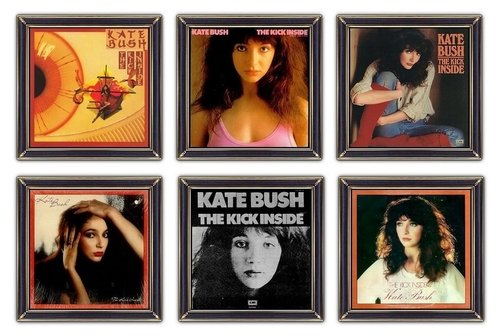
but this and next year are important ones in terms of Kate Bush. Although the anniversary I am most interested in happens next year, there are a couple this year. Later in the year, it is also the fortieth anniversary of The Dreaming in September. I am going to write quite a few features about it in the run-up. Next year is the forty-fifth anniversary of her debut album, The Kick Inside. In February, the world will celebrate forty-five years of one of the most impressive and original debuts ever. Whilst I might do a podcast beyond that album, it will definitely be a starting point. I also want to go deeper into her work. Rather than, at the moment, it being a series of podcasts, I want to do an extensive one where I speak with fans of her work. Including musicians, broadcasters and other semi-famous superfans, I was hoping that it could be recorded in a room or studio so that a select audience of fans could also attend. I have previously suggested Abbey Road for the location, as Bush recorded there a bit through her career. The Kick Inside was recorded at AIR Studios in London, so that is another possibility. In terms of size, there needs to be room for the guests to speak and sit, in addition to potential filming equipment were it to be filmed. I have previously speculated how musicians could provide cover version of Kate Bush songs to go alongside everything else. Whereas a live performance and stage might prove too demanding and costly, I am keen on the idea of them recording songs before the time. They would then be interspersed through the broadcast.

In terms of the title, I am keen to stick with All the Love (it is the title of a track from The Dreaming), and maybe adding : The Work of Kate Bush. The forty-fifth anniversary of The Kick Inside would be the jumping-off point. In terms of date of release/broadcast, it would be a bit before the album’s anniversary on 17th February. I would hope to have it recorded, were it not live, several months beforehand. Such an important anniversary will probably not be marked in such a way by anyone else. To the best of my knowledge, there has not been a podcast or recent broadcast where Kate Bush fans have properly discussed her work. People can correct me if I am mistaken. I have a vague guestlist in mind, though this is always subject to change. I want a broad spectrum of people who, in different ways, have been impacted by Bush. This would also include one or two who run fan sites and have a connection of this manner. Playing songs, interview clips and live performances, it would be a podcast that I have been thinking about for years now! I cannot do it single-handed. I do not own the space to realise such a vision. Also, in terms of funding, it may be beyond my budget. I know that Abbey Road do not host podcasts and recordings from those who raise money through crowd-funding. That may rule them out. Regardless, there are other general studios and locations that the podcast could be held from.

I want to make it a location special to her. As I am starting with The Kick Inside, something linked to that debut. Maybe AIR Studios is possible. I know she took dance lessons in Covent Garden, so that may be another possibility. As much as anything, I want to get people together to express their love for Kate Bush! There has been a general surfeit of podcasts or anything like this lately – or at all come to think about it! Although there is time to get it together, funding and location are the biggest considerations and obstacles. The latter can be booked when the former is dealt with. I have been reluctant to launch a crowdfunder until I can decide who will be involved and when it will happen. But, as soon as I have that detail firmed up, I will reveal it. The biggest plea is to the fans; the question is whether they might fund something like this were there rewards that they would receive. Again, those details are not 100%, but it would be worth their money! Now that things are opening up and there is a bit more certainty regarding events and gatherings, I should not imagine any real issues between now and the end of the year. If there is a surge again in the winter, I hope to have things recorded before any potential restrictions. From previous posts, there has been encouragement and support for a Kate Bush podcast. I will do a specific one about The Kick Inside at some point. In order to give her entire career a proper focus, I want to start off more broadly. It has been a dream of mine for a while, so I wondered whether people would support the concept. Of course, if there is backing (people would go to a crowdfunder) then I can release dates, guests and more details. At the moment, I wondered whether Kate Bush fans would back All the Love, so that we can mark the anniversary of The Kick Inside next year (or before, as we would need it edited well in advance)? It is a rare chance to get a lot of people together to mark and celebrate…

THIS woman’s amazing work!

FEATURE: Reel-to-Real: Michel Gondry: Lucas – Lucas with the Lid Off (1994)

FEATURE:


Reel-to-Real

Michel Gondry: Lucas – Lucas with the Lid Off (1994)

___________

SOME people say…

that music videos are no longer relevant or as influential as they used to be. Once was the time when stations like MTV were showing the biggest music videos from the major artists of the time. A lot of my most vivid and memorable musical moments came from discovering videos from artists like Madonna, Michael Jackson, and Soundgarden. Whilst music T.V. does not really exist and we are relying on YouTube and other platforms for our entertainment, that is not to say music videos lack importance and weight. I think one of the issues is that the videos are not shared as much as audio; maybe artists favouring the quality of the song rather than the visual aspect. Looking back, there are videos that have stuck with me and are iconic. In this short feature, I will run through a few of the videos that I feel rank alongside the very best. For this first outing, I am looking at my favourite video of all. Lucas’ Lucas with the Lid Off was released in 1994. A great song from Danish rapper Lucas Secon, it was released as the lead single from his second album, Lucacentric (1994). It features a sample from the 1935 Benny Goodman song, When Buddha Smiles. Before explaining why the video is so powerful, here is some biography about its director, Michel Gondry:

“Michel Gondry is a film, music video, and commercial director as well as an artist and a screenwriter. He was born and raised in Versailles, France. His parents were musicians and hippies. His grandfather was inventor Constant Martin, who perfected and successfully commercialized radio sets, most famously the Clavioline, a precursor to the synthesizer. Gondry's parents encouraged him and his brother, Olivier "Twist" Gondry, also a television commercial and music video director, to pursue their artistic interests. At a young age, Michel Gondry would create animated short films using his father's Super 8 Camera and complex flip-books. After high school, he enrolled in an art college in Paris.

Gondry started his filmmaking career while living in Paris by directing music videos for his rock band, Oui Oui (he was the drummer). His work caught the attention of Icelandic songstress Bjork, who selected Gondry to direct the music video for her debut single "Human Behaviour" in 1993. Like the song, the video is inspired by British broadcaster and naturalist David Attenborough. It is about the relationship between humans and animals, and Gondry shot the video from a bear's point of view. The video debuted to much acclaim and Michel Gondry moved to London and started directing commercials. In 1997, he relocated to New York City, despite his limited understanding of English. Nevertheless, Gondry became one of the most sought-after music video directors in the business, collaborating with bands like Daft Punk, The White Stripes, The Chemical Brothers, The Vines, Stereogram, Radiohead, and Beck.

In 1998, while directing a commercial for Smirnoff Vodka, Gondry developed the "bullet time" special effect, which creates as slowed-down version of an unfilmable event, like a bullet flying. Later that year, the Wachowski siblings adapted this technique for their 1999 smash hit film, The Matrix. Gondry's 2004 commercial for Levi's 501 Jeans holds the title for "most awards won by a TV commercial" in the Guinness Book of World Records.

Michel Gondry segued into feature film directing in 2001 with Human Nature, a quirky comedy-drama written by Charlie Kaufman and starring Patricia Arquette, Rhys Ifans, Tim Robbins, and Miranda Otto. It had its world premiere out of competition at the 2001 Cannes Film Festival and was released in the United States by Fine Line Features in April 2002. The film was a box office disappointment and garnered mixed reviews from critics, who nonetheless appreciated Gondry's quirky style.

Kaufman and Gondry collaborated again to make Eternal Sunshine of the Spotless Mind, which opened in 2004. It became one of the most critically acclaimed films of the year, and Kaufman, Gondry, and Pierre Bismuth won the Academy Award for Best Original Screenplay. Star Kate Winslet was nominated for Best Actress for her performance as Clementine Kruczynski, but lost to Hilary Swank in Million Dollar Baby. In 2010, critics for periodicals and websites like Empire, Premiere, Time Out New York, Entertainment Weekly, and The A.V. Club revisited [Eternal Sunshine] calling it one of the best films of the decade.

In 2005, Gondry directed Dave Chappelle's Block Party, a musical documentary about the comedian's efforts to organize a large, free concert in Bedford-Stuyvesant, Brooklyn. Gondry's next narrative feature film The Science of Sleep, came out in 2006. The film, which Gondry wrote, was based on a 10-year-old's bedtime story. It combines elements of surrealism, science fiction, fantasy, and comedy and was generally well-received by critics. He used design elements from the film to create an installation called "The Science of Sleep: An Exhibition of Sculpture, and Pathological Creepy Little Gifts" at Deitch Projects in New York City. From 2005-2006, Gondry was an Artist in Residence at the Massachusetts Institute of Technology (MIT) in Cambridge, Massachusetts.

In the mid-2000s, Gondry tried his hand at television, directing an episode of HBO's Flight of the Conchords. In 2008, he wrote and directed Be Kind Rewind, a $20-million comedy starring Jack Black and Mos Def as video store clerks who must re-create the store's entire catalog of VHS films after a freak disaster erases the tapes. It performed fairly well at the box office, earning approximately $30 million worldwide.

The documentary A Thorn in the Heart, which Gondry made about his Aunt Suzette and her son Jean-Yves, came out in 2009. In 2011, Gondry took on his biggest budget film to date, The Green Hornet, a comic book adaptation starring Seth Rogen. The reviews were fairly dismal (especially in comparison to Gondry's previous work). Additionally, the film's inflated budget and rushed 3-D conversion drew the ire of viewers and critics alike and it performed tepidly at the box office. Gondry went back to his independent, quirky roots with his following feature film, The We and the I, which screened as part of the Directors' Fortnight at the 2012 Cannes Film Festival. It has thus far only been released in France.

To date, Michel Gondry has directed close to 100 music videos for a diverse array of artists like Paul McCartney, Kanye West, Cody ChestnuTT, Lenny Kravitz, The Rolling Stones, Sinead O'Connor, Belinda Carlisle, Wyclef Jean, Sheryl Crow, The Foo Fighters, The White Stripes, The Polyphonic Spree, and Kylie Minogue. His commercial portfolio includes spots for Adidas, Coca-Cola, Fiat, GAP, Heineken, Motorola, Nike, Polaroid, and Volvo. He continues to be a visual innovator, making short films and releasing them on his Vimeo channel. Gondry's son, Paul, has followed in his father's artistic footsteps, directing music videos and creating art. They live in Brooklyn, New York”.

The video is a one-take black-and-white thing of beauty. I have a special love of one-take videos. It takes that extra level of skill and concentration to execute it! One reason why Lucas with the Lid Off strikes a chord is because it is complicated. Even though there are no edits and it is all shot in one take, the video is about the process of a song being recorded and released. We see Lucas at the decks creating the song before the camera tracks around a studio. Taking in a couple driving, Lucas on the Tube and him ending up in a cinema, it is almost like a biography of a song! The action ends back up at the start. Although the sets are fairly basic and there are not too many layers in terms of extras, the fact that everyone hits their mark and it is such a smooth process blows me away! Almost like a theatrical play, the actors are all in sync and there is no room for error. There are some camera angles and shots that I am not sure how they happened. One occurs when we see Lucas’ feel dangling off of a bed. Occurring near the start, the camera twists and turns so that the reveal shows Lucas on the bed. Another great moment happens when he is on a train and there is a reflection of him and the other passengers. As there is no mirror present by the looks of things, I wonder how that effect was created live!

This series explores videos from various years that are striking and stunning. Not to be too subjective, but I feel Lucas with the Lid Off is the greatest video ever. In 1994, there were not too many one-shot videos being made. Michel Gondry has made amazing videos for the likes of Kylie Minogue, The White Stripes, Björk, and Daft Punk. One of his earliest videos, Lucas with the Lid Off is a majestic and masterful moment that confirmed Gondry as one of the most innovative and intelligent video directors. Other artists have done one-take videos since 1994, though I feel Gondry’s video is a bit of a trailblazer and foundation – others would have seen the video and been inspired by it. Such a fascinating and original video, it is one that will continue to compel me for years to come. I do think music videos have the power to move people and take songs to new levels. Although I love the track, it is the video for Lucas with the Lid Off that makes it so staggering. For the first part of this Reel-to-Real feature, I was eager to highlight my favourite music video. From the French pioneer Michel Gondry, it is a beautiful, energetic and hugely impressive video that is as wonderful now as it was almost twenty-eight years ago! If you have not seen the video, then make sure you play it a few times. As far as music videos go, it is…

A true masterpiece.

FEATURE: Inspired By… Part Fifty-One: Annie Lennox

FEATURE:


Inspired By…

Part Fifty-One: Annie Lennox

___________

NOT to get too focused…

on a particular style and layout, I want to keep the structure of Inspired By… the same. It is important to learn about the artist who I am highlighting. I owe AllMusic a lot of thanks for their extensive insight. Here is some valuable information about the iconic and genius Annie Lennox:

“Following the disbandment of Eurythmics in 1991, vocalist Annie Lennox began a solo career that rivaled Eurythmics' in terms of crossover popularity. Born and raised in Aberdeen, Scotland, Lennox began playing music as child, learning how to play both the piano and flute. In her late teens, she won a scholarship to London's Royal Academy of Music, but she dropped out before she took her finals. For the next several years, she worked around London, performing various jobs during the day and singing at night. In the late '70s, she met guitarist Dave Stewart through a friend. Stewart, who had previously played with Longdancer, asked Lennox to join a new band he was forming with a songwriter named Peet Coombes. The band was named the Tourists, and they released three albums between 1979 and 1980 and scored a number four U.K. hit with a cover of Dusty Springfield's "I Only Want to Be with You."

While they were collaborating in the Tourists, Lennox and Stewart became lovers. Soon, tensions within the band grew, and by 1980 the pair had left the band to begin Eurythmics. During the early '80s, the sleek synth pop of Eurythmics became one of the most popular sounds of new wave, racking up a number of hits in both the U.S. and U.K., including "Sweet Dreams (Are Made of This)," "Love Is a Stranger," "Who's That Girl," and "Here Comes the Rain Again." Midway through their career, Eurythmics began pursuing a harder, more straightforward rock & roll sound.

In 1990, following the release of Eurythmics' commercial disappointment We Too Are One, Lennox announced that she was taking a two-year sabbatical to have a child. During this time, the group quietly dissolved, Lennox had a baby, and she began working on her first solo album. Diva, her solo debut, arrived in 1992 and showcased a calmer, more mature vocalist designed to cross over into the adult contemporary market. On the strength of the singles "Walking on Broken Glass" (number 14) and "Why" (number 34), Diva sold over two million copies in the U.S. alone; the album was also nominated for three Grammy awards.

Lennox delivered her second solo album, a covers collection entitled Medusa, in 1995. Peaking at number 11, Medusa spawned the hit single "No More I Love You's" and went platinum by the end of 1995. Lennox took some time off to raise her child and become more actively involved with humanitarian endeavors. A full eight years after Medusa was released, she returned with Bare, one of the strongest and most personal albums of her career. After another break, she released Songs of Mass Destruction in September 2007 and made plans to embark on an extensive North American tour, starting in October. Three years later, Lennox returned to recording with her first holiday album, entitled A Christmas Cornucopia. In 2014, she delivered another covers-oriented album, the Mike Stevens-produced Nostalgia. The following year, Lennox re-released the album as Nostalgia: An Evening with Annie Lennox, which included both the original studio album and a bonus Blu-Ray disc of her live PBS concert recorded on-stage at Los Angeles' historic Orpheum Theatre backed by a 19-piece ensemble”.

One of the greatest artists the world will ever see, Annie Lennox has affected so many other artists. From Lennox’s unique style and her amazing voice, the power and beauty she puts into her songs has been take to heart by so many. Below is a playlist of songs from artists who are inspired by…

THE one and only Annie Lennox.

FEATURE: Revisiting… Thom Yorke - ANIMA

FEATURE:


Revisiting…

Thom Yorke - ANIMA

___________

WHILST is it accrued a lot of positive reviews…

I have not heard too many tracks from Thom Yorke’s ANIMA played on the radio lately. It is an album that, maybe, has a niche and particular sound that means it is not as accessible as others. Less frequently heard than a lot of Radiohead albums, ANIMA is one of the best from 2019. Produced by Nigel Godrich (longtime producer for Radiohead), ANIMA is a magnificent album where Yorke penned the lyrics; he worked with Godrich on the music. I am going to come to a couple of reviews for ANIMA soon. The album was accompanied by a fifteen-minute film directed by Paul Thomas Anderson. Yorke’s most-recent solo studio album, one wonders if we will hear one from him or Radiohead this year. He has a new group, The Smile, that features and Radiohead’s Jonny Greenwood and Sons of Kemet drummer Tom Skinner (in collaboration with Nigel Godrich). ANIMA is an album that warrants some fresh spins and new attention. When speaking with Zane Lowe on Apple Music’s Beats 1, Yorke talked about the album:

 “Speaking about ‘ANIMA’, Yorke revealed that the album was relatively quick to make thanks to the concept of “anti-music” behind the album. “We’ve had most of this stuff for ages, and the joke was, it was really quick to do. We set up as we do the live shows for most of it…and knocked it out.

“It was really fun. It was quick and easy and we knew where we were going because we lived with it for so long. The therapy of ‘I don’t want to write a bunch of songs. I want to just make noise’ was great and I found myself immersing myself in old musique concrète and all this anti-music and it was great. I loved it.”

Yorke also revealed more about the ideas behind the album’s title: “I think the reason it ended up being called ‘ANIMA’ was partly because I’m obsessed with this whole dream thing, and it comes from this concept that [Carl] Jung had. But, also, we have started to emulate what our devices say about us and emulate the way we behave from that.

“The reason we can watch Boris Johnson lie through his teeth, promise something that we know will never happen is: we don’t have to connect with it directly because it’s a little avatar. It’s this little guy with a stupid haircut waving a flag…..“That’s all right, that’s funny”. And the consequences are not real. The consequences of everything we do are not real. We can remain anonymous. We send our avatar out to hur abuse and poison and then trot back anonymous.”

On the back of this, Yorke addressed the current state of politics, saying that “fundamental structural change was needed.”

Yorke continued: “People have come to terms with the idea, [that] the only way that things change is fundamental structural change. And the only way that can happen when you have a bunch of clowns, is to be angry”.

I think that Anima is one of the best albums from 2019. It is one that deserves to be played and talked more about now. The anger Yorke expressed towards Boris Johnson seems especially relevant now. One wonders what Yorke will come up with on a new album considering the corruption and lies from the P.M. In their review, this is what AllMusic said about the wonderful ANIMA:

“It sounds counterintuitive to say Thom Yorke delivers uneasy music with a sense of ease, yet ANIMA unfurls with a slow, steady confidence that can be called comfortable. Perhaps this relaxed gait is due to how ANIMA finds Yorke treading familiar territory, revisiting the kind of jittery, chilly electronica that has been his solo specialty ever since he snuck out The Eraser in 2006. During the 13 years that separate The Eraser and ANIMA, indie and electronic music underwent several changes, but Yorke and his longtime producer Nigel Godrich aren't especially interested in chasing trends. They're working with a similar tool box that they did in a previous decade, running loops, distorting acoustic instruments, operating faders, and leaning into glitches and skittish rhythms. All these sounds mean ANIMA sounds superficially similar to its predecessors (The Eraser, plus 2014's Tomorrow's Modern Boxes), but Yorke and Godrich are craftsman, offering a different perspective on a familiar subject. That subject is, naturally, a distrust of the modern world and a fear of a creeping dystopia, a paranoia that suits the troubled times of 2019. Perhaps the world has turned to meet Yorke on his old stomping ground, but that's where his light touch comes into play. Where he once seemed consumed with dread, Yorke gently argues for the importance of humanity within a cold, alienated world. When he attempts to articulate this stance in his lyrics, he can be a shade direct -- witness how he rails against "goddamned machinery" on "The Axe" -- but his bluntness is softened by the slow, shifting soundscapes that populate ANIMA. Against all odds, Yorke's eerie electronic shimmer doesn't inspire fear so much as console; in this dark time, it's reassuring to hear a human heart beating the digital clutter”.

To round off, I want to quote NME’s take on one of Thom Yorke’s best releases. They note that, whilst there is very little in the way of happiness to be found on ANIMA, it is a remarkable album that is fascinating, stunning and hugely emotive:

“There’s little hope in ‘ANIMA’. Little in the way of joy. It sounds exactly like a record trying to say something about 2019 should sound. Often the record approaches the realm of the atonal. The song ‘The Axe’ owes much to Yorke’s challenging work on last year’s Suspiria soundtrack. ‘Impossible Knots’ recalls the caustic experiments that Portishead have conducted in recent times. And yet – thanks to the extraordinary voice that’s long defined Yorke’s career – there’s grace here too. ‘Twist’ could be an ‘In Rainbows’-era Radiohead song, while midway through the record there’s a song called ‘Dawn Chorus’. In many ways it’s ‘ANIMA’’s signature song. It, at once, sounds completely resigned, absolutely world weary, while also unparalleled in its beauty. It evokes visions of flowers growing on a rubbish dump.

And yet there’s no question that ‘ANIMA’ is a record that looks at the world it’s been born into with disgust. It’s filled with songs that sound like they were written just after breaking point. Closer ‘Runwayaway’, as well as being notable for featuring some blues guitar that is uncharacteristically pretty for a record baring just Yorke’s name, is best described as an audio interpretation of what insanity sounds like. It’s like a lullaby written during a fever dream, with snippets of strange sci-fi tinged samples creeping in and out of the composition. Yorke’s enduring fascination with dreams again works itself into the DNA of the record. ‘ANIMA’ was launched with an innovative viral marketing campaign that has seen strange adverts surface across the globe, purportedly placed by a company called ‘Anima Technologies’, that promote a ‘dream recovery service’.

Fittingly, there’s shades of the 2007 videogame Portal here. A bit of Blade Runner. It’s hard to hear these songs without thinking of the bleached white film sets so often seen in Kubrick movies. Anything that depicts a broken future, where humanity has been traded in for progress, and still we lost. You know what? It might be worth listening – really listening – to what Thom Yorke has to say”.

I am going to leave it here. Go and listen to ANIMA if you have not done already. A wonderful album that will definitely make an impression, it is one that still sounds relevant. The songs are as powerful and potent now than they were almost three years ago. One of the great albums from 2019, ANIMA should be played widely and reinvestigated. The third solo album from Yorke is so strong. Perhaps we shouldn’t be surprised, as he is a very…

SPECIAL artist indeed.

FEATURE: Revisiting… Bree Runway - 2000AND4EVA

FEATURE:


Revisiting…

Bree Runway - 2000AND4EVA

___________

WHEREAS I normally include albums…

 PHOTO CREDIT: Hannah Diamond for DIY

in this feature, I am highlighting a mixtape in this Revisiting… 2000AND4EVA is the debut mixtape from the Hackney-born rapper, it confirmed Runway as one of the hottest talents in the world. A rising talent who, with the mixtape, released her strongest work to date, I think many will ask if an album is arriving this year. The work of a remarkable artist, 2000AND4EVA was released on 6th November, 2020. Released during the earliest stages of the pandemic, it wasn’t an ideal situation and time to put out such a stunning work. That said, Bree Runway did do promotion for her mixtape. I am going to come to a couple of reviews for a mixtape that, to me, needs to be revisited now and heralded. Whereas there is not the same attention and focus on mixtapes and E.P.s compared to albums, there was a lot of fascination and interest around her. DIY inducted Bree Runway into their Class of 2021 in 2020. They were keen to chat with an amazing artist who signed to EMI Records in 2018 and released the E.P., Be Runway, in 2019:

“Growing up, Bree’s influences were as diverse as her sound suggests. Obsessing over everyone from emo rockers The Used (“I definitely found my crew in that scene”) to Lady Gaga, she even took to wearing a singular leather glove and carrying around a teacup in homage to Miss Germanotta. “I took it on the train,” she notes of the latter. “That’s 100% true.”

PHOTO CREDIT: Hannah Diamond for DIY 

A melting pot of different styles and ideas, Bree’s fresh approach to pop is breathing new life into the UK music scene. Across the pond, she cites the likes of Lil Nas X, Lizzo and Doja Cat as changing what it looks and sounds like to be a pop star. But over here, she’s carving her own path. “I feel like, in the UK, people often bash what they don’t understand rather than opening themselves up to something different,” she reckons as to why our pop stars all seem to fit a certain mould. “And not to sound mean, but I can see that sheep culture thing here,” she continues. “Like, ‘Let’s only hype up what everyone else is hyping up’, rather than stepping out of line and hyping something else that’s a bit different. But it doesn’t really bother me honestly, because I’m not a sheep, so whatever.”

Bree’s individuality is her superpower, but she didn’t always see it that way. As a child growing up in East London, she was badly bullied, with colourist remarks prompting her to bleach her skin in the hope she’d be accepted into the fold at school. But despite a difficult childhood and an emotionally tough year (Bree lost pregnant friend, YouTuber Nicole Thea, this summer; a track on the mixtape is dedicated to her), Bree radiates positivity and confidence, no signs of past or recent trauma weighing her down. In a year packed with so much negativity, we could all use a little schooling on how to lift the fog.

“There are two things you need to make use of: awareness and choice,” she says more convincingly than any £70-an-hour therapist. “You need to be aware of what makes you feel lesser than you are. And you also have to realise you have the choice, like, what do you want to do with this feeling? Do you just let it weigh you down and waste your life?

However, as well as investing in herself, it’s Bree’s prioritisation of solid female friendships that has helped her grow into the self-assured artist she is today. Her best friend is Victoria’s Secret model Leomie Anderson who, after years of bullying, helped Bree see herself as beautiful and embrace her dark skin. The pair met at college and are tight to this day. “I’m such a girls’ girl. I just love being close to great girls where we lift each other up, we support each other’s ventures. It’s more than just looking pretty in pictures – you can genuinely be each other’s backbones. That’s very, very, very very important to me,” she stresses.

And it shows. For ‘2000AND4EVA’, Bree amassed a small crew of exciting female artists to jump on her songs (Rico Nasty and Maliibu Miitch, alongside Tate and Missy) - women who celebrate their differences and won’t be defined by industry standards.

“When you’re stepping out into music, you can think, ‘I better do what people would like and I better do what’s popular’,” she says of her earlier, R&B-focused sound. “But again, the choice thing: if it doesn’t feel good and it doesn’t feel completely natural to you, then don’t do it. I’m so much more than what I was doing when I first started. The amount of people that listen to me, the different countries, the amount of fan accounts… The conversations are different, the opportunities are different, everything is different. That saying is true: when you work hard for a year, things can really really change.”

Being a pop star in 2021 is harder than it was twenty years ago. In the early noughties, Lady Gaga could control the image she projected to the world, not setting foot outside without an encasing of bubble wrap, a dress made of flesh or, at the very least, a really, really uncomfortable pair of shoes. It all helped build the cult of Gaga. But in an always-on social media age where everyone, famous or not, is expected to share constantly, is that level of stardom still achievable?

“There’s a Bree Runway gloss, and I love my stuff looking star-studded, but sometimes I don’t mind breaking out of character and showing people how silly I am or how funny in a very non-corny way, because I actually am really funny, aren’t I?”

Oh. We’re supposed to answer. “Yes, yes. You’re really funny, yes.” It’s the only hint we’ve had all day that Bree needs any kind of validation. We’re kind of flattered”.

Before I conclude, I want to bring in a couple of reviews. Although Bree Runway is played on radio and the songs from 2000AND4EVA were commended, one does not hear as much buzz now as there should be. NME reviewed one of 2020’s best releases. They have been a supporter of Bree Runway for a long time - so it is no surprise that they had a lot of good things to say about 2000AND4EVA:

“Bree’s fearless versatility on the mixtape further challenges any remaining assumptions that Black musicians can’t partake in certain genres. By successfully balancing a number of different flows and deliveries across its nine tracks, Bree is able to showcase myriad personalities throughout ‘2000AND4EVA’. One such illuminating comparison can be made between ‘APESHIT’, a chugging fusion of hip-hop and rock, and ‘Damn Daniel’, her colourful, ‘80s-inspired pop collaboration with Yung Baby Tate.

Thankfully, as she dips her toes into these various genres, the mixtape doesn’t come across like a sonic mishmash of ideas and experimentation, as Bree instead reaches an equilibrium where her multiple musical personalities converge into a signature sound. Every part of this mixtape feels well thought-out, from the plain-spoken lyricism to the impressive roll call of featured guests.

It’s almost no surprise to see Bree’s musical ‘mommy’ Missy Elliott collaborating with her on ‘ATM’, as the vibrant hip-hop track oozes with witty one-liners such as Elliott’s “I got so much drip you can see me surfing”. Bree’s main lyrical themes, meanwhile, collide as images of wealth, sex and opulence fuel the chant “ATM, push my button again”.

‘2000AND4EVA’ also features Maliibu Miitch’s husky stint on the luxurious anthem ‘Gucci’ and a new version of Bree’s September single ‘Little Nokia’, now featuring Rico Nasty. Although her appearance is brief, Rico doesn’t shy away from displaying her high-powered and dynamic style, complementing the thunderous, electric production that rings out. This energy remains high in Bree’s irreverent freestyle ‘No Sir’ and the reggae-infused ‘Rolls Royce’, which features such boastful lines as: “Skin dark like the window tinted / I’m already better than this next bitch”.

One track that makes a successful departure from Bree’s usually theatrical sound is the minute-long interlude ‘Nicole Thea & Baby Reign’. Serving as a sombre tribute to her late friend Thea — a popular YouTuber who passed away earlier this year while eight months pregnant with her son Reign — the stripped-back song implores the listener to focus on the poignant, emotionally wrought words sung by Bree: “I’ll see you on the other side”.

As a debut full-length project, ‘2000AND4EVA’ is a menacing and carefree offering — one in which Bree Runway manages to be bold, belligerent yet vulnerable throughout — from a different and altogether exciting new pop star”.

CLASH were among those lining up to show their praise of Bree Runway. One hit of 2000AND4EVA and it definitely stays with you! This is what they had to say when they spent time with an incredible collection of songs:

“Clocking in at just over 17 minutes long with an impressive slew of features from Yung Baby Tate, Malibu Miitch and Rico Nasty, not to mention one of Bree Runway’s most-cherished icons Missy Elliott, the London native has used her ever-growing platform to touch on various topics including colourism, stereotypes for Black women in the music industry and more. Filled from start to finish with an assortment of flavoursome textures and complex layers, ‘2000AND4EVA’ is set to represent the new generation of ‘the Black female in pop’; Bree Runway has took it in her stride to dismantle the narrative and pave a lane of her own.

Opening the mixtape with the rolling licks of an electric guitar, ‘APESHIT’ instantly emerges you into a Rockstar-esc realm. Bursting through with a bouncing and anthemic energy, the female force laces the backdrop with an unquestionable female prowess enriched with a roaring confidence and sass. Swiftly transitioning into a rhythmic and hip-moving breakdown, Bree Runway unleashes a run of infectious bars all whist boasting her ability to switch up her flow. Effortlessly moving into the distorted sounds of ‘LITTLE NOKIA’, this track is embellished with roaring guitars that play as a seamless contrast against Bree’s slick vocals and seeping harmonies.

Having co-written all eight tracks alongside some of the industry’s highly talented producers including Moon Willis, LIOHN, Finn Keane and more, Bree Runway has been able to capture a sound fit for every personality. Shining a luminous light on diversity, ‘2000AND4EVA’ weaves a warm essence of inclusivity from start to finish.

Calling on one of her biggest idols for ‘ATM’, this is without a doubt one of the stand-out tracks from the mixtape. Clearing the way for an anthemic, infectious and bold hook, this track is filled with a piercing energy from the onset. Brimming with cinematic effects, Bree Runway and Missy Elliott go back to back on this bad b chant! However, that wasn’t the powerhouse’s only feature, enlisting American hit-makers Maliibu Mitch and Yung Baby Tate, both ‘DAMN DANIEL’ and ‘GUCCI’ are filled with a seductive and commanding feel that are bound to leave you up and moving.

Paying a heart-felt and moving tribute to her late friend, ‘NICOLE THEA AND BABY REIGN’, this track slows things down for a second as the East Londoner unveils a more vulnerable and warming side to her. Encouraging her listeners to feel-out the pain behind the loss of a loved one; clocking in at just over one minute long, Bree’s angelic vocal tone and wordsmith take centre stage as she sings; “I’ll see you on the other side / This pain I know will pass us by / I know that all these tears will dry”.

Weaving in and out of the warm reggae rhythms that illustrate ‘ROLLS ROYCE’, we find ourselves stumbling out of the mixtape through the crunching sounds of the ‘NO SIR FREESTYLE’. Embodying the meaning of reckless, this potent cut smoothly shifts into ‘LITTLE NOKIA’ featuring no other than pop-rap queen Rico Nasty. Bouncing off each other’s thrilling energy, this collaboration serves at the ultimate powerful link up.

In creating a bold, dynamic and cohesive body of work, this mixtape only solidifies Bree Runway’s rise to fame. Having re-written the rule book and put her own stamp on music, the luminary is proving herself as one to watch this coming 2021”.

In this feature, I look back on albums (normally) that were popular and well-reviewed when they were released, yet do not get as much focus and airplay as they should a time later. 2000AND4EVA was a real revelation in 2020. It still sounds astonishing now. I think this year will be a massive one for the London rapper. A brilliant artist with a massive future, 2000AND4EVA is a terrific mixtape! If you have not heard it, then you really need to listen to it…

AS soon as possible.

FEATURE: Inspired By… Part Fifty: Gwen Stefani

FEATURE:


Inspired By…

Part Fifty: Gwen Stefani

___________

MARKING the fiftieth part of this feature…

 IN THIS PHOTO: Gwen Stefani with No Doubt in 1992

I wanted to show the influence of a terrific artist. Gwen Stefani, as lead of No Doubt and a solo artist, has influenced so many other artists. One of the coolest and most talented artists of her generation, it is no surprise that so many have followed her lead! Whilst there is only one Gwen Stefani, one can feel and hear her inspiration far and wide. Before I come to the playlist of songs from artists influenced by her, AllMusic’s biography gives us some useful information about the captivating Gwen Stefani:

“Gwen Stefani parlayed her breakout stardom as the lead singer of the SoCal ska-punk outfit No Doubt into an enduring career as a pop star. Stefani reached the top of the charts many times during No Doubt's peak. "Spiderwebs," "Just a Girl," and the ballad "Don't Speak" -- all pulled from their 1995 album Tragic Kingdom -- were enduring alternative rock hits. The early-2000s smashes "Hey Baby," "Hella Good," and "Underneath It All" found the group dabbling in pop, dance, and R&B, a musical expansion that coincided with Stefani stepping outside of the band as a featured vocalist on the hits "South Side" by techno superstar Moby and "Let Me Blow Ya Mind" by the rapper Eve. All this extracurricular activity helped set up the launch of Stefani's solo career in 2004 with the album Love.Angel.Music.Baby., a platinum blockbuster that gave her a number one single with the thumping Neptunes collaboration "Hollaback Girl," plus the hits "Cool," "What You Waiting For?," and "Rich Girl," the latter a reunion with Eve. The 2006 record The Sweet Escape consolidated her pop success thanks to the Top Tens "Wind It Up" and "The Sweet Escape," but by that point, Stefani began to venture outside of music. She launched her fashion line L.A.M.B. in 2004, a pursuit she'd develop over the coming decade. She started to dabble in film, an interest that eventually led to her joining the televised singing competition The Voice in 2014. Music remained essential to Stefani's appeal -- she reunited with No Doubt on occasion in addition to returning to her solo career with This Is What the Truth Feels Like, an album released a decade after The Sweet Escape -- yet her position on The Voice underscored how she was a multifaceted star who shone upon every aspect of the entertainment industry.

Born and raised in Fullerton, California, Stefani had a musical epiphany at the age of 17. She had fallen in love with the Madness and Selecter records her brother Eric was constantly spinning. Seeing Fishbone, the Untouchables, and other bands involved in Los Angeles' ska revival scene only reinforced her interest, so she was more than ready when her brother asked her to join a ska band he was forming with a friend named John Spence. Gwen originally shared lead vocals with Spence, but in December of 1987 he committed suicide, leaving the band -- now called No Doubt -- with an uncertain future. According to numerous interviews with the bandmembers after their breakthrough, Gwen was the glue that held No Doubt together during these hard times, pushing the group to keep trying. She was also romantically involved with the band's bass player, Tony Kanal, by this time.

After playing numerous gigs and parties, No Doubt were signed to Interscope in 1991. The label considered their 1992 debut album a flop and refused to financially support a tour or further recordings, but the band refused to give up. The self-financed Beacon Street Collection appeared in 1994 and did well enough to make nice with Interscope, but the band was once again going through a traumatic period behind the scenes. Eric Stefani left to become an animator for The Simpsons and Gwen and Tony's relationship had ended. Gwen wrote a collection of songs focused on heartbreak and rebirth that would become No Doubt's third album, Tragic Kingdom, and the rest, as they say, is history.

With the smash singles "Just a Girl," "Spiderwebs," and "Don't Speak," the album reached the number one spot in Billboard and garnered two Grammy nominations. The press began to focus on Stefani's role in the band. Voted one of People magazine's "50 Most Beautiful People," video and photo shoots focused on her and rumors spread that the other three members of the band were unhappy with the lack of attention they received. This topic of discussion continued as the band released Return of Saturn in 2000 and the heavily reggae-influenced hit album Rock Steady a year later. During this time, Stefani's romantic relationship with Bush frontman Gavin Rossdale became a frequent topic of No Doubt's songs. The pair married on September 14, 2002. She also started doing some work outside the band, lending her vocals to the remix of Moby's "Southside" and rapper Eve's "Let Me Blow Your Mind."

After Rock Steady, No Doubt took a break. Stefani approached Kanal about producing an off-the-cuff solo project that would be influenced by her non-ska favorites. Prince, the Time, Club Nouveau, and Madonna were the names thrown around and the idea was to make the project "fast and easy." Over time, the "fast and easy" record morphed into something much bigger. Old friend, former labelmate, and hit songwriter Linda Perry became involved and the project became much more polished, slick, and dance-oriented. A pile of high-profile collaborators -- Dr. Dre, the Neptunes, Dallas Austin, Andre 3000, Nellee Hooper, Jimmy Jam, and Terry Lewis -- became involved. In September of 2004, the infectious and hyper dance single "What You Waiting For?" appeared with its accompanying video dominating MTV.

The album, Love.Angel.Music.Baby., hit the shelves in November with surreal artwork that introduced Stefani's four-woman "posse," the Harajuku Girls. The all-Asian Harajuku Girls were inspired by Stefani's fascination with the Harajuku girls of Japan, young club kids with a flippant and fun attitude toward fashion. Appearing with Stefani live, in videos, and in photos, the Girls quickly drew criticism from the Asian community, angry about the rumor that they had to sign a contract to never speak English even though they could, and that Stefani's Girls looked nothing like the "real" Harajuku girls. Nonetheless, the album was a hit and continued to roll out singles. Based on a dancehall cover of Fiddler on the Roof's "If I Were a Rich Man," "Rich Girl" became the next smash, reuniting Stefani with Eve. The cheerleader kiss-off anthem "Hollaback Girl" was the third success. While the singles were dominating pop and dance radio, Stefani appeared as Jean Harlow in Martin Scorsese's The Aviator. With music and movies checked off, Stefani moved into the world of fashion and introduced her clothing line, L.A.M.B. Taking her influence to the world of tech, she designed the Harajuku Lovers' 4.1 MP Digital Camera for Hewlett-Packard. The camera was released in a limited edition with a Stefani-designed case and a biographical DVD.

Late in 2005, Stefani discovered she was pregnant with her first child, but her schedule remained busy in 2006: along with working on L.A.M.B., she released a line of limited-edition fashion dolls complete with outfits from her videos and tours, and worked on her second solo album with producers including Akon, Swizz Beatz, Tim Rice-Oxley of Keane, Nellee Hooper, the Neptunes, and Tony Kanal. That spring, Stefani gave birth to a boy. The Neptunes-produced, Sound of Music-sampling "Wind It Up" arrived later that fall and heralded the full-length The Sweet Escape, which was released on the same day as the live DVD Harajuku Lovers Live.

No Doubt announced a return to the studio in 2008, but progress slowed to a crawl as the band experienced a bout of writer's block and the Rossdale-Stefani family continued to grow with their second child, Zuma Nesta Rock. The band maintained their momentum by touring through 2009. No Doubt eventually released Push and Shove in 2012, featuring a mix of Rock Steady-esque dancehall bangers and new wave ballads similar to Stefani's solo material. In February 2014, Stefani and Rossdale had their third boy, Apollo Bowie Flynn. Later that year, Stefani joined the judges panel on The Voice with her friend Pharrell, opening the pair to a number of subsequent collaborations. Stefani lent her vocals to fellow Voice coach Adam Levine for Maroon 5's "My Heart Is Open." She also appeared on tracks with Calvin Harris and Snoop Dogg.

By late 2014, Stefani was in the midst of a full-scale comeback, releasing a pair of singles: the Ryan Tedder/Benny Blanco-penned "Baby Don't Lie" and another Pharrell production, "Spark the Fire." The following year, she contributed the song "Shine" to the Paddington Bear movie soundtrack and a duet with Eminem on "Kings Never Die" from Southpaw. In August 2015, Stefani and Rossdale filed for divorce. A third song -- "Used to Love You" -- was released months later. It gained moderate airplay and was the only comeback single to be included on her third project, This Is What the Truth Feels Like, which was released in March 2016 and debuted at number one on the Billboard 200. The second official single from the album, "Make Me Like You," was accompanied by a video that Stefani recorded live during the 2016 Grammy Awards. Later that year, she provided the voice for the DJ Suki character in the animated movie Trolls and, along with Justin Timberlake, appeared on several songs from the film's soundtrack.

In September 2017, she released the seasonal album You Make It Feel Like Christmas, which featured a duet with her Voice co-star -- and current romantic partner -- Blake Shelton. Stefani duetted with Shelton on his 2020 single "Nobody But You," a song featured on the compilation Fully Loaded: God's Country, and added "Here This Christmas" to a reissue of You Make It Feel Like Christmas. At the end of the year, she returned to pop music with "Let Me Reintroduce Myself," a single that built upon the effervescent sounds of No Doubt”.

The magnificent, magnetic and utterly wonderful Gwen Stefani is a true legend who has compelled and inspired a wave of artists. Still writing and releasing solo music – let’s hope there is more No Doubt too -, we will see that influential power continue for many years! Below is a playlist of songs from artists who, in some way, have been influenced by…

THE great Gwen Stefani.

FEATURE: Spotlight: Blue Bendy

FEATURE:


Spotlight

Blue Bendy

___________

AS I am keen to cove…

 PHOTO CREDIT: Jason Sheehan

a range of artists from different genres for my Spotlight run, I come to a sextet who are very promising. You do not hear of many larger bands. Apart from the likes of Black Country, New Road, and a few others, most bands are four or five-piece. One band I am new to but very excited about are Blue Bendy. They do not have too many tracks and videos on YouTube at present, so it is best to check them out on Bandcamp and Spotify. I am going to pepper in some of their tracks. So we can discover more about a brilliant young band, there are some good interviews out there. The next two are a bit shorter and punchier. Loud and Quiet spent time with the band early last year. It is exciting seeing this fascinating band cement their sound and take steps forward:

“It seems that the band has come a long way since those early show. Formed in 2017 by Nolan and guitarist/synth player Joe Nash shortly after both had moved to London from Scunthorpe (“I was just sort of making some music on my own and Joe had heard them. He approached me and said, ‘You’re amazing, can I start a band with you?’ and I said, ‘Yeah fine.’”), the band was initially completed by bassist Sam Wilson, Harrison Charles on guitar, and Oscar Tebbit on drums. “We asked [Oscar] to join because he could ride a motorbike and we thought that’d be a good idea. It’s good for posing with,” Nolan deadpans. It wasn’t until they’d been gigging for almost a year that Morgan joined the group, bringing with her another synthesiser and softly-uttered vocals that serve as the perfect counterpart to Nolan’s Lincolnshire drawl – think Laetitia Sadier meeting Mark E. Smith. “Since Olivia joined, it feels like we’ve been trying to make something weirder, and poppier,” says Nash.

Their first show as a six-piece was in June 2018, although Morgan was yet to learn all the parts. “I’d only been playing for a week or something, so I was kind of fake playing on stage,” she laughs. “No one knew.” More gigs followed, including coveted support slots with Squid, The Magic Gang, Scalping and Omni, which won them plenty of new fans, including Franz Ferdinand frontman Alex Kapranos, who approached them backstage after the Omni show. “We came offstage and he was just there talking to us,” says Nolan. Do they keep in touch? “I think we sent him a meme,” quips Morgan. “We have a bit of back and forth with him on Instagram,” says Nash, “he’s a part-time commenter on our posts.” Surely enough, when a picture of the band crops up on my feed that evening, Kapranos has commented: “Great photo!”.

The band are planning on sending him their new music once it’s done, and they share a collaborator – the producer Margo Broom, who has worked with Goat Girl and Fat White Family, and at whose Hermitage Works Studios Blue Bendy have been spending increasing amounts of time. Broom comes up a lot over the course of our chat, and it’s clear that access to her and her studios has had a major impact in developing the band’s sound.

“She heard ‘Suspension’ and wanted to get us in,” Nolan recalls. “I guess she liked it to some degree and thought she could do a better job, basically.” Broom seems to be a kind of mentor and, at times, a seventh member. “I don’t think [she] would like me saying this, but we’re often sort of all over the shoulder, keeping an eye on what she’s doing. They say not to make certain things part of a committee, but it’s quite a lot of give and take, I think.”

IN THIS PHOTO: Tom Porter for Loud and Quiet 

Making things happen genuinely by committee, in a band of six, is no mean feat, but it is clear that each member has a real say in every aspect of Blue Bendy. “It’s democratic, isn’t it?” Charles says, as the others appropriately nod. “I think when there’s six of you, you’ve gotta realise – and it’s taken a while – that sometimes less is more. And you’ve just got to strip everything back.”

“I mean, we all have the same end goal,” says Nash, adding that having Hermitage Studios at their disposal has helped the group dynamic. “Before, you’d be in like a pressure cooker of a three-hour studio that you’re renting for £15 an hour. And everybody wants their part at the end of the day, and you’re trying to argue for it but also trying to think about it fitting into the song. We’re much better at it now, but in the past there have been times where you had to either stand your ground and stake your claim, or just think, ‘This isn’t worth it’ and accept the change.”

“There’s a lot of slaying of darlings isn’t there?” posits Nolan.

“There’s a lot of slaying of dreadful songs as well,” replies Charles, much to the others’ amusement. Even watching them interact over Zoom, it’s obvious how well and how easily they get along.

“I wanted to basically come out of it a new band,” says Nolan. “Lots more things recorded, nearly a completely different setlist – to feel like we’re taking it up a notch. And I think that’s kind of what we’re achieving, I think we are much tighter, I think we’re better musically than we were before. We’ve never felt more cohesive. I certainly haven’t felt as happy with everything as a whole as I do now”.

I like Blue Bendy a lot. They released the E.P., Motorbike, on 11th February. I am sure that we will get even new music this year from them. If you have not followed them, then make sure that you keep abreast of all their happenings. Fred Perry fired some questions their way. I have selected a few that caught the eye:

“Name, where are you from?

JN: We’re Blue Bendy (Arthur Nolan (Vocals), Joe Nash (Guitar), Harrison Charles (Guitar), Olivia Morgan (Keys & Vocals), Sam Wilson (Bass) and Oscar Tebbutt (Drums)), based around New Cross in London, as individual members we’re far-flung. Scunthorpe, Warrington, Guildford, Devon and Woodbridge.

Describe your style in three words?

AN: Do not crease.

OM: Still The Same.

Of all the venues you’ve been to or played, which is your favourite?

JN: We played the Crescent Community venue in York not so long ago, the whole set up was great, really friendly staff and punters and it sounded great.

A song you wished you had written?

AN: 'Happy Hour' by The House Martins.

Best song to turn up loud?

JN: 'Something For Joey' by Mercury Rev.

A song people wouldn’t expect you to like?

OM: Probably something like 'Into Dust' by Bladee. Maybe people would expect that? I don’t know.

Best song to end an all-nighter on?

AN: 'Clock' by Plaid.

OM: 'Best Days' by Blur.

Any new music you are listening to right now?

AN: No one you don’t know already. Everyone we know in London is making uncompromising music; not least Jean Penne and Legss.

JN: I really love the new Vanishing Twin album, I’d say we share a big crossover of influences with them. GLOWS keeps bringing out consistently great singles too.

OM: My friend showed me Helena Celle recently and I’m really loving it – again just loads of obscure synth sounds. Also, Keg are really great live and really excited to hear more from them”.

Prior to concluding, there is one more interview that I want to highlight. This one is from DIY. They asked some more general and non-music-specific questions of one of the most promising bands of 2022:

“Describe your music to us in the form of a Tinder bio.

Sextuple looking to experiment.

What’s your earliest musical memory?

Probably listening to something in my dad’s car when he’d pick me up on a friday. Enon’s knock that door comes to mind.

Who were some artists that inspired you when you were just starting out (and why)?

Just anything dark or weird or poppy. Iceage, Broadcast, Orange Juice.

You’re from South London! What do you think of the music scenes there at the moment?

I’m not sure we personally feel connected to any London scenes, but we have lots of friends in London making great music.

Are there any other artists breaking through at the same time that you take inspiration from?

Seeing bands you know personally, playing to arenas and being nominated for Mercury Prizes has without doubt pushed us to work a lot harder and expand our musical capabilities. We’d be less good if it wasn’t for that without doubt. Ned Green and the Legsss boys are very old friends so there’s a touch of healthy competition there too.

Who would be your dream collaborator?

Lord knows. A post session becks blue with JPEG might be wild.

Musically or otherwise, what are you most looking forward to this year?

Just more recording and lots of shows. We play in Europe for the first time in a couple of weeks and we’re excited.

If people could take away one thing from your music, what would it be?

I suppose just thinking it’s cool. Everyone we speak to seems to take something different from it”.

Go and follow Blue Bendy and show them some love. With a great and possibly busy year ahead of them, it is a good time to be a fan. I am hoping to see them live if they have any London gigs coming up soon. A fantastic group with a compelling sound, there is no doubt that Blue Bendy…

ARE going to go far.

______________

Follow Blue Bendy

FEATURE: Kate Bush and the Rock & Roll Hall of Fame: Will It Be Third Time Lucky for The Iconic Artist?

FEATURE:


Kate Bush and the Rock & Roll Hall of Fame

IN THIS PHOTO: Kate Bush in 1993 during the filming of the short film, The Line, the Cross and the Curve/PHOTO CREDIT: Guido Harari 

Will It Be Third Time Lucky for the Iconic Artist?

___________

AT the time…

 IN THIS PHOTO: Kate Bush in 1985

of writing this (5th February), the standings for this year’s Rock & Roll Hall of Fame sees Kate Bush in the bottom five. The voting is open until 29th April. She appeared in the longlist last year and missed out. Whilst it is great she is reappearing so quickly – one feels the way her music has been shared and adored this past year accounts for that -, one feels she might not be inducted into the prestigious Rock & Roll Hall of Fame. This year sees a mix of new inclusions and previously-nominated in the running. This NME article explains more:

“Eminem, Kate Bush, Beck, Eurythmics, Duran Duran, Dolly Parton, Lionel Richie, Rage Against The Machine, A Tribe Called Quest, Carly Simon, Judas Priest, Fela Kuti, New York Dolls, Dionne Warwick, MC5, DEVO and Pat Benatar have made the nominees list.

A body of more than 1,000 artists, industry members and historians will help decide which five acts out of the 17 will progress into the final round of induction consideration. Fans also have the chance to contribute to the selection process by voting every day here or at the museum in Cleveland, Ohio.

Five acts will then be tallied among the other ballots to ultimately decide the Class of 2022.

This year marks the first time that Eminem has become eligible for a nomination. The Rock Hall’s rule is that an act must have released their first commercial recording 25 years earlier than the year of the nomination.

Eminem joins Beck, Duran Duran, Lionel Richie, A Tribe Called Quest, Carly Simon and Dolly Parton in being a first-time Rock Hall nominees this year, although several of those acts have been eligible before 2022.

As Billboard notes, this is the sixth nomination for Detroit rockers MC5 and the fourth nod for Rage Against The Machine. Kate Bush, Judas Priest, New York Dolls, Eurythmics and Devo have all now been nominated three times.

It’s the second nod for Dionne Warwick and the late Fela Kuti after being nominated in 2021. It’s also Pat Benatar’s second nomination, after first appearing on the 2020 ballot.

Advertisement

The Rock & Roll Class of 2022 is revealed in May. A date and location for the ceremony itself has yet to be announced but the event will happen sometime this autumn.

IN THIS PHOTO: Lionel Richie/PHOTO CREDIT: Alan Silfen 

Last May Rock & Roll Hall Of Fame CEO Greg Harris defended the lack of heavy metal inductees following the announcement of that year’s shortlist.

Foo Fighters, Jay-Z and Tina Turner all featured in the 2021 cohort of inductees alongside The Go-Go’s, Carole King and Todd Rundgren in the Performers category. Kraftwerk, Gil Scott-Heron and Charley Patton, meanwhile, each received the Early Influence Award.

However, Rage Against The Machine and Iron Maiden – who were confirmed to be in the Rock Hall’s Class Of 2021 last February – were not included in the final list, prompting renewed conversation around the ceremony’s lack of heavy metal acts.

“It’s an interesting one, because we do [celebrate metal],” Harris told Audacy Music during an interview. “We celebrate all forms of rock’n’roll… We nominated Maiden, Judas Priest have been nominated, we put Def Leppard in.”

Harris explained that “over 80 per cent of [nominees] eventually do get inducted” into the Rock & Roll Hall Of Fame.

“So it’s really a question of: let’s keep nominating them, let’s get ​’em on the ballot, and let’s get it out to the voting body,” Harris continued. “This ballot had 16 artists on it. They just can’t all go in”.

Although there is a long way to go until voting closes, it would be a shame to think that, once more, the worthy Kate Bush is nominated and fails to get into the Rock & Roll Hall of Fame. She is obviously not going to travel to the U.S. and attend a ceremony later in the year. It would be credit and acceptance of an artist whose relevance and importance in music is established and growing. I think one of the problems is that U.S. critics and sources have never really embraced Bush. She has a large fanbase in the country and she has inspired so many artists there, yet there is that divide between the press and public. One cannot say the Rock & Roll Hall of Fame is solely about Rock artists and a narrow soundscape. The longlist this year sees Pop and Country artists sit alongside artists from various corners of music. One of the most influential artists ever, Kate Bush is someone who is celebrated and yet underrated. She has won awards through her career, and yet she should be more prized. I have spent a lot of time discussing how Kate Bush has been overlooked when it comes to some proper honours and awards.

I think that Bush does deserve a place in the Rock & Roll Hall of Fame. She has had a career that has lasted over four decades. There is such a wave of support behind her that, whilst it is humbling and heartwarming, maybe that will not translate into a  place in the Rock & Roll Hall of Fame. One feels Dolly Parton will earn a place this year. That is deserved - though I wonder why Parton is doing so well in the votes whereas Kate Bush is not. Both have had extraordinary careers, but I would argue Bush’s contribution to music is even greater than Parton’s. Whatever comes about after voting closes in April, it may be another year Kate Bush has missed out. It does beg the question as to why she does not rack up huge votes. Whilst the Rock & Roll Hall of Fame gets votes from all around the world, I think most of the votes will come from America. Not that awards and exclusive music clubs are everything. One can see the huge love there is for Kate Bush. It would be nice it she was provided an honour, given the fact her music and work garners so much admiration and scurrility. Three nominations for entry into the Rock & Roll Hall of Fame may lead to a third denial, as baffling as that sounds! We can only hope that 2023 is the year when the public vote her into…

THE Rock & Roll Hall of Fame.

FEATURE: Modern Heroines: Part Eighty-Five: AURORA

FEATURE:


Modern Heroines

Part Eighty-Five: AURORA

___________

FOR have this eighty-fifth…

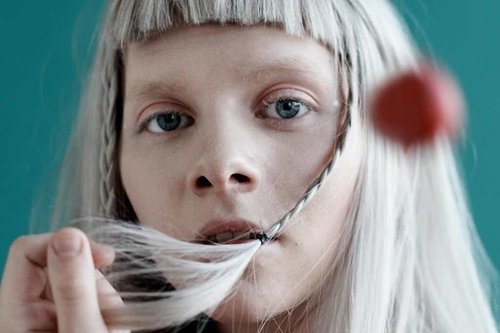
part of Modern Heroines, here is an artist who has just released an album that will rank alongside this year’s best. That may seem extremely premature, but I believe that AURORA’s The Gods We Can Touch is exceptional! It has received such positive reviews. I will come to a couple at the end. I wanted to get to a couple of interviews with AURORA. The Norwegian singer, songwriter, dancer and record producer is one of the finest talents in the world. Although it is dangerous and ill-advised to label women as ‘female songwriters’ and differentiate in terms of gender – as they should be seen as songwriters and artists without the need to add gender -, this feature is designed to highlight amazing women who are inspirational and will be future legends. I do think that AURORA is an artist with so many years ahead of her. She began writing her first songs and learning dance at the age of six. After some of her songs were uploaded online and became popular in Norway, she signed a recording contract with Petroleum Records, Decca and Glassnote Records. A sensational artist who has only grown stronger and more complete with each album, I want to head back to her previous L.P. In 2018, she released the E.P., Infections of a Different Kind (Step 1). That was followed by the 2019 album, A Different Kind of Human (Step 2). In 2018, AURORA spoke with the Evening Standard. At this point, she was, perhaps, not as well-known as she is now. A Different Kind of Human (Step 2) definitely established her as a major artist:

“The singer-songwriter, who performs under her first name, didn’t like all the dust, which hurt her eyes, and worried for the plants, which looked so dry. Here in Bergen, a waterfront city surrounded by mountains where it is constantly raining, she fits.

“I feel like a city is strange when there is no source of escape,” she says. “You need mountains, ocean, or forest. My parents have a sailboat and love being in the ocean. I am a forest person. I like to climb trees, to have things over me, to be isolated and hidden.”

Being hidden is going to be harder for her this year as she steps up to bigger things with a second album on which her dark sounds open out to welcome the world. Her comeback single, Queendom, is a whooshing synth-pop anthem of empowerment that sees her setting out a rulebook for her own country. “You have a home in my Queendom,” she sings.

“It’s a celebration of the people who today’s society is not built around,” she explains. “Quiet people, shy people, introverts. The world is based around those who are very loud — we like them for some reason. I am fighting for everything that can’t fight for itself, which is the planet, the children, animals, sometimes the women, sometimes the men.”

This tiny 21-year-old, who grew up in Os, an even quieter area just south of Bergen, seems an unlikely leader of an army, even if she does call her fans “warriors” and her haircut, a sharp blonde bob with two longer strands framing her face, is rather Game of Thrones. She speaks high, soft and giggly, with a trace of a childhood stutter, her hands wafting through the air. I feel like I’ve tumbled into a children’s storybook to meet a magic fairy.

When the museum where she planned to meet me turns out to be closed for an event, she strides in her red shoes, oversized coat and floaty skirt to a nearby café, where they serve “the BEST hot chocolate”. She drinks it as though she cannot comprehend the miracle she is experiencing.

Occasionally she ramps up the kookiness to such an extent that I start to wonder if she’s teasing me. What was the first thing you did when you got home? I ask. “Well, I put on my big grey jumper that I got from my mum. Then I washed my right foot because that’s the one I prefer to wash in the evening. I wash my left foot in the morning. I don’t know why. It’s just a habit I’ve had since I was a child. Just in the sink — I don’t have a bath..”

Okaaay. And how about pets? Did anyone miss her while she was away? “I have an algae ball. He’s big and round and green and kind of furry. He’s called Igor and he likes to be cold, so sometimes he lives in my fridge. I brought him on tour once but it was hard to get him through the airports.” I look this up later and it is a real thing. They’re called marimo, and are popular in Japan.

The overall impression is that here is someone who couldn’t have less in common with the blokey rock of Oasis, which strangely, is probably how you know her. In 2015 she was the voice of the John Lewis Christmas ad — the one with the lonely old man living on the moon — covering the Oasis song Half the World Away on piano. When she was first asked, she thought John Lewis was a man and wondered when she was going to meet him.

Her relaxed, pretty interpretation is her only UK hit, reaching number 11 in the charts, but her own music is a more interesting proposition. Her debut album, All of My Demons Greeting Me as a Friend, arrived in 2016 full of icy electronic songs. Check out her creepy ballad Murder Song (5, 4, 3, 2, 1) for a contrast to that cosy cover version.

“That album was meant to make people look into themselves, to make them feel like individuals that were seen by me and my songs,” she tells me. “The next album, the perspective is wider. It’s more like there’s a whole army instead of one individual”.

I want to come more up to date, as there was a great recent interview. Every interview AURORA does – and there aren’t that many of them – is amazing. You get this wit, humour, incredible personality and warmth. Couple that with amazing talent and hugely impactful songs, and here is somebody primed to be iconic. Official Charts chatted with an artist who, whilst seen as enigmatic, is very accessible and has a hugely wide and adoring fanbase:

“Congratulations - The Gods We Can Touch is officially out into the world. How do you feel?

I'm feeling relieved! And very free. Like I've just become free again after giving birth and I can drink wine again! [The album] feels like a child, it deserves to have the love of the world instead of just me. It's a very nice experience.

The album has such an evocative title - and you've spoken about its connections to ancient myths and mythos like the Greeks. What made you want to tell this kind of story?

The key words [for the this project] are the divine and the human. For me, they're the same and I don't know why we've made them different things. I've been reading up lots on ancient religions and how [the way we worshipped] changed. We used to worship the Earth, and music was a way of connecting us to something divine. I love Greek mythology because [they didn't] put shame on being a woman, or being gay, or being trans or sexual and curious. I'm fascinated by how much we've lost over time, and how much shame we put into beautiful things. Music is a reminder of the thing's we've forgotten.

The Gods We Can Touch is currently tracking to become your first-ever UK Top 10 album. Congratulations! Why do you think this work is resonating so much right now?

Many people just want to be free, to be allowed to be who they are. Maybe we're just tired of being suppressed? It's time for us to unleash the full potential of ourselves and our experience of this beautiful life, where we don't have to fight for the right to exist. I think that's a very important thing. Our obsession with perfection is absurd; we should just worship what's natural and imperfect, like you or me. It's important for me to erase that line”.

Back in October, triple j interviewed AURORA about the recording of her new album and the success she has achieved on TikTok. I have embedded the interview below, but there were a few segments that stood out:

 “Her new single ‘Giving In To The Love’ was inspired by Prometheus

AURORA clarified that’s NOT the 2012 film in the Alien franchise, but the OG Greek myth Prometheus.

“I was thinking – one day, as you do - about how he supposedly made mankind in clay, and how he stole the fire from the gods to make us alive and complete us."

“I was thinking about this clay and how much we obsess with this clay that kind of means nothing. And how it seems to distract us from the value of the fire that we keep inside. That’s very sad.”

 “The world today makes a lot of people very unhappy because we obsess with these strange things about how we look. So many people base their whole worth on how they look, and they never feel like they look beautiful enough. I find this obsession with beauty both very fascinating and scary."

“It’s kind of about that. I guess: Clay? No, no. Fire? Yes, yes.”

Wiser words have never been spoken.

On ‘Runaway’ going viral on TikTok

“It hit me in quite a magical way," she remarks of the 2015 single, which has found a second life on the platform, soundtracking everything you can imagine, from card tricks to a man walking his pet tiger.

I was very moved by people allowing my song into their hearts… It’s very brave to let anything into your heart and touch it. So, I felt very touched by it.”

“I wrote [‘Runaway’] when I was 11 - very young. It’s very surreal – but I guess it makes sense also, because…

“…whatever comes from an authentic place on the inside will hit authentic places on the outside for other people.”

“I think people needed a song like that,” she continues. “It’s nice to see people uniting during such a separated time and keep themselves busy with this trend – isolated in their rooms. It’s very touching but it’s also very absurd.”

The track, which opened both her debut EP and 2015 album, has been used in over 1.8million videos on TikTok. She’s found great success on the platform too, reaching nearly 4 million followers by just being positively lovely self.

On recording her new album in a castle

‘Giving In To The Love’ arrives ahead of The Gods We Can Touch (out 21 January), which was recorded during a month-long stay at the Insta-worthy Baroniet Rosendal, self-described as a “Manor House from 1665 between fjord, glacier, mountains and waterfalls.”

"It's this little castle here in Norway,” AURORA explains. “I know the people that keep it… warm.”

“You have to jump on a boat, or you can technically walk of course… It takes two hours and you arrive in this beautiful little place called Rosendal. There’s many huge mountains there and they bend over the little village like they’re taking care of it.”

 “The castle is 400 years old. It was owned along long time ago by a French baron who was very interested in arts and the healing possibilities of music. That’s why I went there, it just felt right.”

“It was a beautiful adventure. I made this album asking a lot of questions – not really claiming that I have any answers. I’m asking a lot of important questions about this one tiny little life we have been given and whether we spend it in the right way.”

On the difference between Norwegian and Australian bats:

AURORA is embarking on a big European tour next year, and fingers crossed, she’ll make her way back Down Under sooner rather than later.

“I hope. I love being in Australia. I always feel so alive there and I love the bats, and I also love the people. You’re so freaking friendly and it’s so nice.”

Bats > people. But wait… they don’t have bats in Norway?

“We have them, but they’re very small and they’re not as impressive. They have no – erm- confidence”.

The Gods We Can Touch is genuinely one of the finest albums this year. Even if we are in February, one can tell that not that many albums this year will equal its brilliance. The Norwegian artist is hitting a peak that is wonderful to see! There was a lot of love for her third studio album. This is what The Line of Best Fit said in their review:

“Though, here she largely avoids the societal commentary that often permeated her previous work in favour of a more intimate examination of love - and of all the joys and horrors that ensue from it. This juxtaposition is best captured on “A Dangerous Thing”, where AURORA sings “Something about you is soft like an angel / And something inside you is violent and danger”. Again, on “Everything Matters”, the seemingly sweet and innocent (“you sleeping in the seat next to me / Like a baby”) is subverted by Tori Amos-esque, off-kilter piano playing that suggests a brewing storm.

Meanwhile, album highlight and pre-release single “Heathens” blurs the boundary between what is inherently good and bad; offering an ode to the Biblical Eve and painting her as a saviour who gifted humankind free will - acknowledging the inherent terror and boundless opportunity this entaled.

“Exist For Love” best captures the sentiment expressed by this album’s title - the idea of love as something deeply spiritual; the closest thing we have to heaven on earth. The song’s focus begins expansively (“They say there is a war / Between the man and the woman”), but it soon moves to the intimate and personal (“And then you take me in / And everything in me begins to feel like I belong”), which is where she excels. Here, she makes not just love - but her own music - sound like heaven on earth. Here she is not just a musician, but a generational talent capable of creating transfixing otherworlds and, with The Gods We Can Touch, an ethereal masterpiece”.

I wanted to end with AllMusic’s assessment of The Gods We Can Touch. AURORA is an amazing artist whose music is certainly provoking a lot of interest and fascination:

“Whereas her debut album, All My Demons Greeting Me as a Friend, was an introspective work, and follow-ups Step 1: Infections of a Different Kind and Step 2: A Different Kind of Human concerned broader humanity, Norwegian pop star Aurora Aksnes examines behavior through the lens of mythology on her fourth album, The Gods We Can Touch. She came up with the unifying idea after writing the electro-pop ditty "Cure for Me," a song about divesting herself of shame ("I don't need a cure for me"); it made her think of Panacea, the Greek goddess of remedy. AURORA's next step was to rent a castle in the mountains to record the rest of the album (with longtime producer/co-writer Magnus Skylstad and others). Unexpectedly immediate and often warm and restrained despite its elaborate approach, The Gods We Can Touch mixes natural, live-sounding vocals and acoustic instrumental performances with ethereal processed harmonies, drum machines, synthesizers, and various programming. Committing to a more spontaneous sound, songs including "Artemis" and "Exist for Love" were reportedly first takes. The sparse "Artemis" tells its seductive narrative with a Mediterranean flair that includes fingerstyle guitar and bandoneon as well as some of those otherworldly layered vocal harmonies (and Theremin). An album highlight, "Exist for Love," is a more tender, likewise mostly acoustic, track that begins with the line "They say there is a war between the man and the woman." It soon eases into a soaring, strings-swept melody as the singer professes her love. "Exist for Love" isn't the only song here with a dreamy, almost '40s Disney-like musical romanticism that contrasts with club-ier synth-bass tracks to epic effect. Members of the latter category include "Temporary High," a dark, post-punk-shaded outing that warns of fleeting affection, and the forbidden-love anthem "Blood in the Wine," which channels a defiant electro-pop softened with piano and acoustic guitar. The album's varied textures and elevated subject matter culminates in the four-minute outro "A Little Place Called the Moon," which returns to a vintage, theatrical orchestral pop and leaves listeners on a magical note. While The Gods We Can Touch is ultimately a pop record, it only expands upon AURORA's already mystical bearing”.

An artist who is going to be legendary and influence so many others, I am a big fan of AURORA. She is a sensational songwriter and performer. I know that she will get a lot of festival bookings this year. If you have not discovered her music and brilliance, then make sure that you rectify that. I have included a collection of her best tracks in the playlist at the bottom. It is sonic proof that AURORA is an artist…

EVERYONE should know.

FEATURE: Vinyl Corner: Beck - Mutations

FEATURE:


Vinyl Corner

Beck - Mutations

___________

THE sixth studio album from Beck…

 IN THIS PHOTO: Beck at Foxboro Stadium in 1998/PHOTO CREDIT: Sam Erickson

I wanted to include Mutations in this Vinyl Corner. An album I would recommend people buy on vinyl, it was a different pace to the more eclectic and colourful Odelay (1996) and Midnite Vultures (1999). Perhaps displaying a more mature side and a more Folk-Rock sound (that would be explored again on 2002’s Sea Change), it showed that Beck Was an artist you could not define or predict what he would do next. Definitely seen as one of Beck’s best albums, he produced it alongside Nigel Godrich. Although it did not get the same sales and acclaim as Odelay, Mutations was a chart success. It won a Grammy Award for Best Alternative Music Album. I want to include a review of Mutations, as critics have had some interesting things about an album that is one of the best of the 1990s. Many fans and followers would not have expected Mutations to follow Odelay. The two albums are very different, yet both are exceptional and are typically and predictably masterful. Before I get to that review, there are a couple of features that further investigate and explore a remarkable album. Stereogum wrote about Mutations in 2018 on its twentieth anniversary. They noted the shift and changes between Odelay and Mutations:

“By 1998, Beck was in the rare position of being both unimpeachably cool and absolutely huge. His 1996 everything-at-once album Odelay was an era-defining smash. He lodged alt-rock radio hits in an era where that still mattered, performed at the Grammys, losing Album Of The Year to Celine Dion. He swept the 1996 Village Voice Pazz & Jop Awards, made the cover of Rolling Stone, and was named the Most Important Artist In Music by Spin. He had become such a shorthand for “Smart But Accessible Alt-Culture Figure” that MillerCoors even shamelessly ripped off his whole steez for a beer campaign based around a slacker character named Dick.

Of course, no one stays in their imperial period forever, and one can only imagine how Beck felt, watching as the wildly free-flowing sound he and the Dust Brothers created on Odelay was immediately turned into frat-boy fodder by the likes of Smash Mouth and Sugar Ray. So with Mutations — which turns 20 tomorrow — he made a hard pivot, setting aside his free-associative hip-hop sensibilities for a series of cosmic folk songs that saw him trading Irony for Feelings.

After the tour for Odelay wound down, Beck recruited Nigel Godrich for his major work after helming Radiohead’s OK Computer, the other huge era-defining alt-rock album of the late ’90s. Beck and his crack live band cut a song a day for 14 days, for an off-the-cuff feel that Godrich would soak in his trademark antiseptic, Kubrikian sheen. The original plan was that Bong Load Records, the tiny Los Angeles label that first released Beck’s breakout “Loser” would also release Mutations.

Beck had worked out an unprecedented deal with Geffen Records that would allow him, in theory, to release albums with smaller labels, which is how K Records was able to release his collection of early lo-fi recordings One Foot In The Grave and Flipside released his hodgepodge Stereopathetic Soulmanure the same year as Geffen released his official debut Mellow Gold. But after hearing Mutations, Geffen pulled rank and insisted on releasing the album, marketing it as a detour for hardcore Beck fans while he stayed hard at work on the “real” follow-up to Odelay. No videos were made for the album, and aside from appearing on Saturday Night Live, Beck did little to promote it, but such was his stature at the time that the album eventually went platinum and won Best Alternative Music Album Grammy.

I get the sense that amongst critics and fans, Mutations is often considered Beck’s dress rehearsal for his 2002 heartbreaker Sea Change, trying sadness on for size before later going Full Desolation. But honestly, this is probably because of the album highlight “Nobody’s Fault But My Own,” which finds Beck beating himself up over unspecified mistakes over a sea of psychedelic strings that could have been sampled from Rubber Soul. It was a startling turn at the time, the effortlessly cool guy from “Where It’s At” asking aloud, “Pointing a finger, throw the book at you/ And who would want to dance with you?”

But listening to Mutations today, I think what the album tells us is that even when he’s trying to be serious, Beck is still a playful guy. “Cancelled Check” and “Bottle Of Blues” have a light, Hank Williams-worthy sway to them, complete with some light piano rolls on the former; you can practically see Beck copping a sheepish grin while tinkling the ivories at a frontier barroom for a bunch of prospectors during happy hour. “O Maria” might revolve around an oddly moving couplet that signifies the need to grow up already (“Everybody knows/ the circus is closed”) but it glides by on a ’60s melody that feels cloned from Donovan.

There’s enough fingerprints of classic rock songwriters, from the Lennon-ish melodies and chord changes on “Dead Melodies” through the Bob Dylan worthy whines of “Lazy Flies” that it sometimes feels like Beck’s aim was to make an album that if you found it in a dusty vinyl pile, you might mistake as a lost prize from the ’60s, à la Inside Dave Van Ronk. But while Beck is a scholar of music, he’s never been content with merely reproducing his record collection. Mutations is filled with dozens of tiny little Beckisms, choices only he would make, be it contrasting a wheezing harmonica with sci-fi synth wiggles on “Cold Brains,” undercutting the Beatles-like reverie of “We Live Again” with dread-inducing negative space or spicing his Brazilian-music homage “Tropicalia” with post-modern lyrics about isolation and a noisy sound collag”.

Another great feature that dove into Mutations noted how a different producer (Nigel Godrich) accounts for the sonic changes in Mutations. Wanting to make something more beautiful and emotionally deep than Odelay, perhaps, Godrich was a perfect producer to work with. It is noted how Mutations might be one of Beck’s prettiest albums:

“A new production collaborator

As Odelay rolled over towards a US double platinum circulation, it was time to get back on record, with a new production collaborator. Beck now teamed with Nigel Godrich, the British producer who had come to the fore with his brilliant coordination of the talents of Oxford, England tastemakers Radiohead. Far from any extended studio contemplation, they recorded Mutations in two weeks.

Working at Ocean Way, the Hollywood studio that proudly declares sales from records made there at one billion units, Beck, Godrich and a crack team of musicians started recording on March 19, 1998 and wrapped on April 3. What emerged was as confident, concise and cutting-edge as one had come to expect, no mere Odelay doppelganger but an even deeper, joyfully melodious exploration of Beck’s individuality.

Immediately after completion and before release, he was on to new challenges that included the premiere of a performance art piece featuring his grandfather, Beck and Al Hansen: Playing With Matches, at the Santa Monica Museum of Art in California. On May 24, on his only UK date of the year, a remarkable triple bill combination saw Beck and John Martyn playing at the homecoming show, at Haigh Hall in Wigan, by the British modern rock champions of the time The Verve.

Beck’s own summer tour of North America began on June 1, on shows that featured the additional attractions of Sean Lennon and Elliott Smith. On a massive show in New Jersey, this writer had the privilege of seeing Beck, on a bill that also featured Ben Folds Five, playing a triumphant set opening for the all-conquering Dave Matthews Band.

An album of exotic instrumentation

When it was released, on November 3, 1998, Mutations unveiled arrangements by Beck’s father, David Campbell and exotic instrumentation including tamboura, sitar, and the cuica drum. There were also contributions from distinguished players who remain with Hansen to this day, such as keyboard player Roger Manning, bassist Justin Meldal-Johnsen, and drummer Joey Waronker.

The album went straight into the US chart at its No.13 peak, and was gold inside a month. Even if it didn’t go on to mirror the commercial achievements of Odelay, the record overflowed with evidence that Beck was now firmly established as one of the most innovative artists in the world. The following February, Mutations beat Fatboy Slim, Tori Amos, Moby, and Nine Inch Nails to the Grammy Award for Best Alternative Music Performance.

Gone was the sample-heavy hip-hop veneer of his previous triumph, and critics were united in their admiration of Beck’s refusal to take the easy option of repeating himself. “A collection of psychedelic folk-rock and country waltzes that couldn’t have wandered much further from Odelay,” purred the Los Angeles Times in its year-end round-up. “Another fully formed creative facet of Beck we haven’t seen before.”

The NME, meanwhile, advised: “You’d better sit down. Mutations sees Beck replacing the spinning turntable with the acid-rock lightwheel, the concrete streets with the long and winding road, retreating further from glaring expectation into the complex little universe between those fluffy sideburns.

“‘Nobody’s Fault But My Own’ strings its nerves out across those Wichita telegraph poles; ‘Sing It Again‘ is ‘Norwegian Wood’ tinged with rabbit-skinning pedal steel, while the deceptively cheery honky-tonk of ‘O Maria’ casts Beck as saloon showgirl, playfully chucking grizzled cowboys under the chin.”

Beck’s prettiest record?

Rolling Stone’s Nathan Brackett observed the album’s distinctive juxtaposition of dark lyricism (“the night is useless and so are we,” declared ‘O Maria’) and attractive melodies. “The twenty-eight-year-old Beck Hansen’s new album…brims with death, decay and decrepitude,” he wrote. “But in its own peculiar way, it’s also his prettiest record to date”.

To round off, I want to quote a positive review for Mutations. NME tackled the album when it came out. They observe how Beck did not release Mutations as a follow up or companion to Odelay:

“SO YOU'VE HAD ENOUGH FROM the all-you-can-wear trainer buffet, kicked a soda can moodily round the old-skool yard, and whatever the game is, you're pretty damn sure you know the score. Ready for the next round, you genuflect in the direction of the hipsters' Mount Rushmore, from where Yauch, Horowitz, Diamond, and there on the end, young Mr Hansen, stare down unimpeachably. You won't, however, be expecting their winter collection to include velvet tabards and incense, and as for the cacti and spittoons, well, you'd rather eat plaid.

You'd better sit down. 'Mutations' sees Beck replacing the spinning turntable with the acid-rock lightwheel, the concrete streets with the long and winding road, retreating further from glaring expectation into the complex little universe between those fluffy sideburns.

To be fair, Beck insists 'Mutations' isn't the official follow-up to 'Odelay' - that should hit the planet some time next year - but a continuation of the wax-cylinder folk unearthed on 1994's 'One Foot In The Grave'. There's no white-suited, jewel-fingered pirouetting possible here, the singer retreating to a massively unfashionable time where consciousness was peeled raw by hallucinogens, where psychedelia toppled into psychosis and the open spaces of country rock offered fresh air amid the patchouli fumes.

More 'Ohdearlay' than a joyous whoop from a cultural swinger, it's a bleak and gentle record - the opening 'Cold Brains' wobbles like a nervous breakdown on a plate, while the disillusioned 'We Live Again' suggests a man weary of the hip hype. "Dredging the night, drunk libertines", he croons, desolate, "I grow weary of the end". Only cocktail-shaker single 'Tropicalia' fits his now-established image, Antonio Carlos Jobim hanging in the 'hood while preposterous synth scrunching suggests a guest appearance by Ross from Friends. Yet as Beck's ancient voice becomes all the more intimate, the mischievous angel takes a turn for the worse, tapping into a timeless mythology of melancholy. 'Nobody's Fault But My Own' strings its nerves out across those Wichita telegraph poles; 'Sing It Again' is 'Norwegian Wood' tinged with rabbit-skinning pedal steel, while the deceptively cheery honky-tonk of 'O Maria' casts Beck as saloon showgirl, playfully chucking grizzled cowboys under the chin.

Once out on the road, though, Beck soon reins himself back into inner space, passed out on the floor of the Fillmore Ballroom watching his brain go by. The beautiful medieval whimsy of 'Lazy Flies' sounds like Beck was surrounded by jesters and maidens playing finger-cymbals. 'We Live Again' steps back even further to the days when Pink Floyd still had a definite article, but most terrifying is freakout, 'Diamond Bollocks' where booted fairies stomp out the peace-and-love embers. From fly irony to Iron Butterfly is one hell of a leap, and Beck makes it like Neil Armstrong on a helium bender.

You would expect nothing less. 'Mutations' might be the inveterate individualist's way of keeping ahead, but more gladdeningly, it swerves the style diktats and mint-condition rareties in favour of pure emotion. Sure, Beck remains the Midas Of Cool, but most importantly, it's his heart that's made of gold”.

One of Beck’s best albums is well worth getting on vinyl. A signal of what was to come on albums like Sea Change and Morning Phase (2014), those who were expecting an album as kaleidoscopic and weird as Odelay might have been surprised. Even though Mutations does have some exotic instruments in the mix, it is a much more composed and acoustic-based. Beautifully crafted and with no weak songs on the album, Mutations is beautiful. I have no hesitation in recommending it…

FOR Vinyl Corner.

FEATURE: Kurt Cobain at Fifty-Five: One the Greatest Songwriters of His Generation

FEATURE:


Kurt Cobain at Fifty-Five

One the Greatest Songwriters of His Generation

___________

ON 20th February…

 IN THIS PHOTO: Kurt Cobain with Nirvana’s Dave Grohl and Krist Novoselic

the world will mark what would have been Kurt Cobain’s fifty-fifth birthday. He died tragically young at the age of twenty-seven in 1994. He was the kind of artist one could have seen taking Nirvana to new heights, Maybe they would only have recorded another album after 1993’s In Utero, but Cobain could have had a successful solo career. I also envisage him in films and having a successful career in that area. Socially-minded and conscientious, he would have been more involved in politics and injustices in society. All of this could have been realised…but sadly we will never know how far he could have done. Cobain left so much behind. He is often seen as a voice of his generation – maybe a tag he would not have agreed with or liked -, and he was the peerless lead of one of the world’s great bands. One of the great frontmen and guitarists, he had this voice that could convey anger and spleen one moment; flipping to something sensitive and almost sensual the next. He was a remarkable singer and musical presence. To me, Kurt Cobain’s greatest strength was his songwriting. Someone who could pen timeless and hugely affecting lyrics, he was as much a poet as Bob Dylan, Joni Mitchell or Leonard Cohen. He could also write superb and memorable melodies. A complete songwriter with a voice that one would have loved to have hears for years more, there has been nobody since who has Cobain’s talent and command. I almost think that some part of music’s past died with Cobain in 1994. We do not really have bands who are that iconic and can be provocative. No leads who have the same sense of chaos, enigmatic and mysterious. Cobain was sensitive and thoughtful, though he was troubled and pained.

I feel he brought all of this into his work. Whatever you consider to be his best lyrics, there are so many golden examples of his genius and rarefied ability! Last year, his former bandmate Dave Grohl stated how Cobain was the greatest songwriter of his time. This NME piece tells us more:

“Dave Grohl has reflected on Kurt Cobain‘s seismic musical impact, as well as discussing the emotional toll of Nirvana‘s untimely split.

Speaking on Apple Music’s Medicine At Midnight Radio, Grohl also reflected on how the band were initially surprised by their rise to global fame in the early 1990s.

“We were still in our van and we were just watching this happen in front of us,” he said.

​“The shows were getting bigger,” he explains. ​“The crowds were getting bigger. The crowds outside of the shows were bigger than the crowds inside the shows. We could see that something was happening, but we really never expected that it would turn out to be as big as it was. I don’t think any of us expected that.”

Reflecting on the band’s split after Kurt Cobain took his own life in 1994, Grohl said their untimely break-up was one of his “life’s greatest heartbreaks”.

“Of course, it was an incredibly challenging experience and ultimately one of the greatest heartbreaks of my life that Nirvana isn’t still here today making music,” he said.

“Whether it would be called Nirvana or something else. It is one of my life’s greatest heartbreaks that Kurt isn’t still here to write more amazing songs because it’s pretty clear that he was blessed with a gift.

I think it’s safe to say that he was the greatest songwriter of our generation. I’m very proud to say that I got to be his drummer and play those songs every night”.

When thinking about Kurt Cobain – as we will on 20th February -, many consider this tragic figure, or a life cut short. Others looks at Nirvana as a whole and how he helped inspire a generation of fans. Many might think of his feminism and how he was very progressive. Quite different from a lot of the stunted, sexist and idiotic peers around him, he was someone who wanted equality and a bigger voice for women. He was loved and respected by so many people. I want to end with a feature from College Times. They looked at the greatest songwriters from the past twenty-five years. They made a case for Kurt Cobain being among the elite:

“The 1980s was perhaps the tackiest decade of the 20th Century. Hairspray galores, Charles Haughey, MJ with a chimp and Cher entertaining a bunch of sailors at her age (and still going now); it was no '60s or '70s. By the decade's close however, a ray of light was shining. Nearer to us, it was with the advent of the Stone Roses. Across the shores, in the city of Seattle, it was with Nirvana. This was the band that would bring rock n' roll back to the fore, not with flashy synths and gimmicks but with a raw edge, nearer to punk. The '90s was a time when the world would rock once more!

Bleach was released in 1989 and its a rough listen, not for the lack of quality in songwriting but for the lack of production. What strikes most prominently is the simplicity of the songs. "About a Girl" was written by Cobain after a binge-day of Beatles' listening and although it has that famous Nirvana-sound, it is at its core, written with a pop mentality. Cobain actually enjoyed a fair-share of pop music, or what he considered to be "pop," referencing R.E.M. as an influence. This may have been his key to greater success above other grunge acts. While that song went on to garner a legacy in their catalogue however, Bleach would not be the album that would bring Nirvana to the mainstream.

Nevermind is often cited as the album of the '90s, at least alongside OK Computer and Definitely Maybe. Its impact was such that grunge would dominate the music scene in both America and the UK until Britpop took prominence in 1994. Anyone reading any music magazines back in late 2011 for the 20th anniversary will understand what a classic it has become. Recorded in Sound City Studios (which Dave Grohl would later make a documentary about), it took the Nirvana grit and added some polish for accessibility. "Smells Like Teen Spirit" became the radio hit that would never go away, parodied by Weird Al for the barely distinguishable vocals of Kurt. "Come As You Are," "Lithium" and "In Bloom" would also become staples of their career and still, there was even more to be excited about. In "Polly" and "Something In The Way," we get a taste of the more sensitive, brooding side of Cobain, an all too eerily true picture of what was to come. There were no fillers on this one. As it replaced MJ's Dangerous at the top of the Billboard Charts in early 1992, it became clear that a new band was ready (though not literally, as Cobain would often note) to take the world by storm.

Incesticide was the next release, a minor one because it was a compilation of outtakes and demos but a jewel for fans and critics alike, who would only get to hear one more full studio album of Nirvana. This was In Utero, which is 20 years and a month old now. Reacting to the pop-image they had obtained, Cobain once again revisited his demons to create a heavier sound. The idea to obscure themselves from the mainstream failed however as the album sold in masses once again. Featuring "Heart Shaped Box," "Pennyroyal Tea" and "Rape Me," this was the swan-LP of a band whose career, whilst speeding towards new heights was bound to crash under the pressure.

Cobain, whose lyrics pervaded the charts were haunted with depression and disenchantment, could no longer take it and took his life in April 1994. His legacy has only increased since and not just for the interesting life story but for the timeless songs, which stood distinctly against the dissipating pop environment of before. Simple melodies with honest lyrics did it for Lennon and likewise for Cobain. It was a short career but longeitivity is not necessarily a good thing as far as legacy is concerned”.

On 20th February, fans around the world will mark Kurt Cobain’s fifty-fifth birthday. His incredible impact and brilliance keep on shining and resonating. From artists following his lead and influenced by his genius, through the stations playing the music of Nirvana, we will always remember the great Kurt Cobain. He was a songwriter who spoke from his soul and heart, and yet his words connected with so many people. Not only confined to angsty and angry teens or people he thought was like him, his lyrical gift and wonderful melodic sensibility meant that he created a catalogue that has struck and seduced people of all ages. Definitely one of the very greatest writers music has ever witnessed, Dave Grohl was right when he said it is so sad that the world will never hear more songs from Cobain. What we can do to keep his memory and huge talent alive is playing those songs. From the iconic Nevermind (1991) to Nirvana’s awesome debut, Bleach (1989), to In Utero, there is so much to enjoy. Even the rare tracks are far stronger than what other songwriters can produce! A remarkable artist whose importance and relevance will never fade; I am ending with a playlist of Nirvana’s best. Although there are a few covers, we can hear what a diverse and hugely consistent writer Cobain was. On 20th February, I hope that every fan of his will play a song that means the most to them. I will definitely take part and remember the…

GREAT Kurt Cobain.

FEATURE: Second Spin: Tom Petty and the Heartbreakers - The Last DJ

FEATURE:


Second Spin

Tom Petty and the Heartbreakers - The Last DJ

___________

I have been thinking about Tom Petty…

as this year is five years since he died. It was such a shock hearing the news of his passing. Looking back, and the man produced so much incredible music! His band, Tom Petty and the Heartbreakers, released albums that were adored and lauded. There were a few from their catalogue that divide critics. Whilst not overlooked or brushed off, 2002’s The Last DJ is an album that some see as weak or not to the band’s best. I am going to end with an article where Petty explained how he is proud of the album and wont back down. There are contrasting reviews that I want to bring in. This is The Guardian’s opinions:

“Tom Petty hates being pushed around by record companies, and went on strike against MCA until it dropped the price of his album Hard Promises. Twenty years later comes this semi-concept album raging against corporate greed and dumbing-down. If only The Last DJ were the cure.

Although there is satirical potential in songs such as Money Becomes King (about a rock'n'roller who is compromised by sponsorship) or the title track (the protagonist "plays what he wants to play and says what he wants to say"), the soporific blandness of the music undercuts it time and again.

And since Warner Bros has been trying to drown Petty in $100 bills for years, maybe this is a job for a more impecunious man”.

Even though both reviews are short and do not give too much respect to a genuinely solid album, Entertainment Weekly scored The Last DJ higher.

 “Apparently, Tom Petty needed to work himself into an indignant lather to produce his most consequential songs in years. The Last DJ is basically an album-length rant about greed and corruption in the music biz. Okay, so that’s not exactly a news flash, but Petty’s droll wit and the Heartbreakers’ empathetic playing make tracks like ”Money Becomes King” and ”Can’t Stop the Sun” about as entertaining as polemical pop music can be. And the expansive arrangements give ”The Last DJ” a pleasant, Beatles-flavored kick”.

I think that, whilst The Last DJ is not in the top-five Tom Petty and the Heartbreakers albums, it is one that is underrated and warrants a second spin. Maybe a sense of anger and bitterness on some songs. There is a definite shot against the greed of the music industry. Even though some critics did not like the sound and direction of The Last DJ, the album did get into the U.S. top ten. This Ultimate Classic Rock article from 2017 told us the background and reaction to the band’s eleventh studio album:

“When they first heard Tom Petty and the Heartbreakers’ The Last DJ, fans, critics and even casual listeners largely came away with the impression that Petty was bitter – or at least cranky – about the music industry. The idea was that, as a veteran rocker, he was now the old man yelling at the kids to get off of his lawn, explaining about how things were better in his day.

Not that this was totally wrong. The album’s title track and lead single is hardly shrouded in mystery; it’s a requiem for radio as it was when Petty was first a fan, when DJs were tastemakers with distinct personalities. If the singer doesn’t snarl on the track, he does seem to be seething as he spits lines like, “As we celebrate mediocrity, all the boys upstairs want to see / How much you’ll pay for what you used to get for free.”

But, Petty would counter, that listeners were being too single-minded about the subject matter – that there was more to his point and deeper musical layers to this record, his 11th with the Heartbreakers.

“I kept seeing these billboards for radio stations that said, ‘No Talk.’ And I thought, ‘God, that’s sad,” Petty said in Conversations With Tom Petty. “And then I saw it as a parallel, a metaphor, for what was going on in the world. So, I kind of devised this kind of moral play. If the record is about anything, it’s about morals – and how far do we go in the name of money, and what’s gained and what’s lost.”

“The Last DJ” was a nickname that Petty had applied to Los Angeles-based hero of free-form radio Jim Ladd, who was credited with being an inspiration for the album in the liner notes. In the songwriter’s mind, Ladd represented what was not just great about radio, but about free expression. The money men, such as the titular CEO in the track “Joe,” are on the other side of the equation.

At least two other songs on the album – “Money Becomes King” and “Can’t Stop the Sun” – also tied into this theme. If, in writing these tunes, Petty was perceived as a curmudgeon, that was probably true, although he was a curmudgeon with the intent of rallying for the 21st century’s new bands to get the same kind of respect and assistance given to him and the Heartbreakers in the ’70s.

“You don’t see many new acts with a continuity to it. There’s usually not that second hit record,” Petty said in a promo video for the record. “And that’s because these acts aren’t nurtured in any way by the people that hire them. We were very nurtured along in the beginning and sort of taught the artistry of the recording studio and how it’s a very different animal than the stage. … But I don’t think they get that education much these days.”

Regardless of Petty’s reasons, corporate radio took a strong dislike to the album and its lead single, in some cases, banning it from the airwaves. Despite the diminished radio promotion, The Last DJ still debuted at No. 9 on the Billboard chart when it was released on Oct. 8, 2002. However, it became the Heartbreakers’ first studio album since their debut not to go gold in the U.S. within months of its release. Years later, it has still failed to achieve that certification.

In addition, reviews weren’t uniformly glowing. Because the songs were unvarnished in presenting Petty’s view, and because he spoke pointedly about his opinions in the press while promoting The Last DJ, critics tended to focus on the lyrics, and give less attention to the music, when assessing the record.

Petty’s stance became the story. “The saddest thing about that album to me is that the lyrics got so much attention, that all the music got overlooked,” Petty said in 2005. “And there’s really good music on that record. And there’s beautiful playing, and really good melodies. And I took a lot of time on those songs.”

Petty has expressed his satisfaction with gentle rocker “Have Love Will Travel,” as well as the orchestral treatment given to songs including “Dreamville” and “Like a Diamond.” Composer and producer Jon Brion collaborated with the band on the symphonic accoutrements, while founding Heartbreaker Ron Blair returned to the fold to replace his replacement, Howie Epstein (though Petty and guitarist Mike Campbell played bass on most of the album, before Blair returned). It marked a new era.

Although The Last DJ didn’t perform well commercially, critically or on radio, some Heartbreakers fans – including Bob Dylan – consider the album an overlooked gem. Petty maintained a high opinion of the record.

“I thought The Last DJ was really good,” he said. “It’s different for us, and it was a step forward, I thought. I’m really proud of it. I think it will endure. I think it will be around a lot longer than its detractors seem to think”.

If you are a big fan of Tom Petty and the Heartbreakers and have not played The Last DJ in a while, I would urge you to do so. For anyone new to the band, listen to an album that has many highlights. Opening with the title track and Money Becomes King, it is an L.P. that wastes no time in making an impact! It definitely makes its voice heard. The band are terrific throughout. The Last DJ saw the return of Ron Blair on bass guitar, replacing his own replacement, the ailing Howie Epstein. Despite a band of a shift in the group, one cannot notice a big change from 1999’s Echo (even though that album was better received). Maybe I will include Tom Petty and the Heartbreakers in A Buyer’s Guide soon, as I do not think I have done so yet. In any case, go and check out The Last DJ. It is a great album that has never fully got…

THE praise and understanding it deserves.

FEATURE: A Buyer’s Guide: Part Ninety-One: Enya

FEATURE:


A Buyer’s Guide

PHOTO CREDIT: Alan Betson/The Irish Times 

Part Ninety-One: Enya

___________

OVER the next couple of weeks…

 PHOTO CREDIT: Sheila Rock/Rex/Shutterstock

I am going in very different directions when it comes to A Buyer’s Guide. Next week, I am heading to California for Cypress Hill. This week, I am traveling to County Donegal in Ireland for Enya. A hugely influential artist whose music cannot be mistaken for anyone else, I am going to recommend the four albums of hers that you should get. I will also suggest one that is underrated and worthy and in need of more focus. I will finish by looking at her most recent studio album (she did release a Christmas album in 2019, but I am keen not to feature holiday albums). I will also suggest an Enya book that is worth taking a look at. Before then, AllMusic provide some biography about one of music’s most distinct voices:

“With her blend of folk melodies, synthesized backdrops, and classical motifs, Enya created a distinctive style that more closely resembled new age than the folk and Celtic music that provided her initial influences. Enya is from Gweedore, County Donegal, Ireland, which she left in 1980 to join the Irish band Clannad, the group that already featured her older brothers and sisters. She stayed with Clannad for two years, then left, hooking up with producer Nicky Ryan and lyricist Roma Ryan, with whom she recorded film and television scores. The result was a successful album of TV music for the BBC. Enya then recorded Watermark (1988), which featured her distinctive, flowing music and multi-overdubbed trancelike singing; the album sold eight million copies worldwide. Watermark established Enya as an international star and launched a successful career that has continued into the new millennium.

Enya (born Eithne Ní Bhraonáin) was born into a musical family. Her father, Leo Brennan, was the leader of the Slieve Foy Band, a popular Irish show band; her mother was an amateur musician. Most important to Enya's career were her siblings, who formed Clannad in 1970 with several of their uncles. Enya joined the band as a keyboardist in 1980 and contributed to several of the group's popular television soundtracks. In 1982, she left Clannad, claiming that she was uninterested in following the pop direction the group had begun to pursue. Within a few years, she was commissioned, along with producer/arranger Nicky Ryan and lyricist Roma Ryan, to provide the score for a BBC-TV series called The Celts. The soundtrack was released in 1986 as her eponymous solo album.

Enya didn't receive much notice, but Enya and the Ryans' second effort, Watermark, became a surprise hit upon its release in 1988. Enya spent the years following the success of Watermark rather quietly; her most notable appearance was a cameo on Sinéad O'Connor's I Do Not Want What I Haven't Got. She finally released Shepherd Moons, her follow-up to Watermark, in 1991. Shepherd Moons was even more successful than its predecessor, eventually selling over ten million copies worldwide; it entered the U.S. charts at number 17 and remained in the Top 200 for almost four years.

Again, Enya was slow to follow up on the success of Shepherd Moons, spending nearly four years working on her fourth album. The record, entitled Memory of Trees, was released in December 1995. Memory of Trees entered the U.S. charts at number nine and sold over two million copies within its first year of release. In 1997 came the release of a greatest-hits collection, Paint the Sky with Stars: The Best of Enya, which featured two new songs. Enya's first album of new material in five years, Day Without Rain, was released in late 2000. In 2001, she contributed material to the first film in Peter Jackson's award-winning Lord of the Rings trilogy, scoring a hit with the single "May It Be." Amarantine, her first full-length recording since Day Without Rain, followed in November 2005. A holiday EP, Christmas Secrets, arrived in 2006, followed by an all new, full-length collection of original seasonal music called And Winter Came in 2008.

Her second greatest-hits collection, The Very Best of Enya, was released in 2009, though it would be another six years until her next album arrived. "Echoes in Rain," the first of two singles from Enya's eighth album, appeared in September 2015, and the normally reclusive star opened up for a number of interviews and was promoted heavily on social media for the first time. Created with longtime collaborators Roma and Nicky Ryan, Dark Sky Island was released in November of that year”.

To show the amazing albums Enya has produced, below are my suggestions regarding the ones that you need to own. Even if you are not a big Enya fan, I guarantee there will be something from her that takes your fancy. Here is the essential work of a…

WONDERFUL artist.

__________________

The Four Essential Albums


Enya/The Celts (1992 Reissue)

Release Date: March 1987/November 1992 (Reissue)

Labels: BBC (1987, U.K.)/Atlantic (1987, U.S.)/WEA (1992, Europe)/Reprise (1992, U.S.)

Producer: Nicky Ryan

Standout Tracks: I Want Tomorrow/The Sun in the Stream/Triad

Buy: https://www.discogs.com/sell/list?master_id=27579&ev=mb

Stream: https://open.spotify.com/album/2L4XSyyDeIW30SawLTOlj4?si=5--BOsKdRTejwljGk-UArg

Review:

“Initially released simply as Enya, The Celts shows that the style she became famous for on Watermark was already well under way. With production and lyrical help fully in place thanks to her husband-and-wife gurus Nicky and Roma Ryan, Enya's combination of Celtic traditionalism and distinctly modern approach finds lush flower here. All the elements that characterize her music -- open, clear nods to her Irish heritage, any number of vocal overdubs to create an echoing, haunting feeling, and layers of synth and electronic percussion -- can be found almost track for track. The flip side is that those who find such a combination to be gloopy mush won't be at all convinced further by her work here. It's understandable why folk music traditionalists and anti-mainstream types would get the hives, but those not coming from that angle will find much that's rewarding. Given that The Celts is a commissioned piece of work, it actually stands on its own quite well. The charging surge of the title track functions both as a fine introduction and its own stirring, quietly powerful anthem, a good sign for the rest of the album. There are a couple of slight missteps -- an electric guitar solo disrupts the string-and-vocal flow of the truly lovely "I Want Tomorrow," for instance. Generally, though, her musical instincts serve her very well, with many striking highlights. The appropriately three-part "Triad" showcases her ear for vocal work excellently, while both versions of "To Go Beyond," especially the second, which closes the disc with an exquisite extra string part, also are worthy of note” – AllMusic

Choice Cut: The Celts

Watermark

Release Date: 19th September, 1988

Labels: WEA (U.K.)/Geffen (U.S.)

Producers: Nicky Ryan/Ross Cullum/Enya

Standout Tracks: Watermark/Storms in Africa/Evening Fall

Buy: https://www.discogs.com/sell/list?master_id=27697&ev=mb

Stream: https://open.spotify.com/album/0NJjvdOd3ULUTvoVFCCFJN?si=w97TlQ3RQ0GcmYfFnbs2qg

Review:

“Watermark is the second album by the Irish musician Enya, who began her career with the traditional group Clannad and went solo in 1986. Her first U.S. release, Watermark may sound overly subtle at first, but it quickly establishes itself as a rich mood piece of broad proportions.

As evidence of Watermark's broad appeal, both the album and its single "Orinoco Flow" have shot up the U.S. charts – mirroring the album's phenomenal recent success in Europe. The opening, title track sails the listener gently into an ebb-and-flow movement that permeates the album. This simple instrumental leads into the complex "Cursum Perficio" ("Journey's End"), for which producer Nicky Ryan overdubbed up to 100 voice tracks to create a chorus of Latin-chanting Enyas. This distinctive choral effect is also used on "Orinoco Flow" and "The Longships," and its striking harmonies are countered by the exquisite clarity of Enya's solo vocal on the third track, "On Your Shore."

From ethereal plaint to rippling sea chantey, Watermark becomes a glorious aural mosaic. The lyrics, by Roma Ryan, are unornamented but compelling, accentuating the multifarious feel of the album by using Latin, Gaelic and English. The ethnic touches throughout tend to enrich without dominating, as with the Gaelic lyrics on the closing track, "Na Laetha Gael M'Oige."

With its traditional and classical elements and its broad acoustic vocabulary – ranging from Irish uilleann pipes to clarinets and even church organs – Watermark transcends the category of Celtic New Age. It is a tapestry of sound and image to be discovered over time, its evocations ultimately personal, subjective and definitely worth a journey of exploration. (RS 548)” – Rolling Stone

Choice Cut: Orinoco Flow

Shepherd Moons

Release Date: 4th November, 1991

Labels: WEA (U.K.)/Reprise (U.S.)

Producer: Nicky Ryan

Standout Tracks: How Can I Keep from Singing?/Book of Days/Marble Halls

Buy: https://www.discogs.com/master/27537-Enya-Shepherd-Moons

Stream: https://open.spotify.com/album/6ZuPbMe6CvQKl1nvAy0nZm?si=cSe61gnhRsOp5AgLOxdLsw

Review:

“In November 1991, Reprise Records released Enya’s Shepherd Moons, the follow-up to the Irish singer’s 1988 album, Watermark. Within the confines of the Entertainment Weekly music department, we did what most critic types did at the time: We gave a quick listen to its pristine, immaculately produced surfaces and then made sarcastic jokes about Celtic New Age stars who resemble Demi Moore. When we begrudgingly realized a review was called for, we relegated Shepherd Moons to a quick paragraph and a B grade and thought that was the end of it.

Shows how much we know. Almost a year and a half later, the album still sells at the rate of roughly 18,000 copies a week — 2 million copies so far — and continues to linger on the fringes of the Billboard Top 40 album chart. ”That’s pretty strong,” says Mike Fine, CEO of SoundScan, the company that tabulates record sales. ”Most artists don’t generate that type of sales 75 weeks after release.” It has also grabbed the No. 1 spot on the Billboard New Age chart for 47 consecutive weeks. Watermark, meanwhile, has sold more than 2 million.

Sales figures tell only half the story, though. Enya (née Eithne Ni Bhraonain) has become something of a soundtrack for our lives. Her music can be heard in restaurants and bookstores, on TV commercials, and on the soundtracks of movies like Far and Away, Green Card, and Toys. A few weeks back, the Shepherd Moons track ”Caribbean Blue” (a breathy, upbeat waltz that personifies everything Enya) popped up as background music on, of all things, the surf-and-mirth TV series Baywatch.

Sleeper albums aren’t new in pop. As of this writing, The Best of Van Morrison and Nine Inch Nails’ 1989 debut Pretty Hate Machine are loitering on the pop charts long after they should have departed (150 and 109 weeks, respectively), and rock’s ultimate cult item, Pink Floyd’s 1973 headphone symphony The Dark Side of the Moon, has just been given the deluxe treatment for its 20th birthday.

Maybe it has something to do with the word moon, but like that album, Shepherd Moons is more than a chart mainstay; clearly it has tapped into our collective psyche. How else do you explain the way people who normally hate anything even remotely New Age — like Top 40 fans and college-radio mavens — are drawn to Enya? Maybe a colleague nailed it when she said Enya’s interchangeable albums (including her tentative, eponymous debut from 1986) are a form of mass hypnosis: Beneath the records’ crystalline grooves are voices telling us to listen to Enya, listen to Enya, listen to Enya.

For those who haven’t had the pleasure of hearing the music, a quick sonic description: Although it is called New Age, Enya’s vacuum-packed music is more like pop with classical pretensions. She sings — or, more like it, breathes — in a pure, virginal soprano, occasionally in Gaelic. She then records up to 200 additional vocal parts and layers them for a gothic-choir effect. Other songs are strictly instrumentals. In either case, Enya’s glistening cascades of piano and synthesizers sound soothingly like a gently flowing waterfall. (That could explain why Shepherd Moons sells best on the water-loving West Coast.) The combined effect is both captivating and elusive. The frail melodies seem to slip through your fingers, repeatedly drawing you back into the record in the vain hope that this time you will pin it down. Much like Enya herself, in fact, who rarely does interviews and keeps a low profile in Ireland when not recording.

No, sleeper albums don’t get any sleepier than Shepherd Moons. But at the same time, Enya’s music isn’t nearly as numbing as anesthetics like Kenny G. Her relaxing melodies are a retreat — from more clattering forms of pop like rap and alternative rock, from the barrage of media and hype in contemporary culture, from the struggles and annoyances of daily life. But as escapes go, her music is surprisingly realistic. Beneath the aural beauty lies the forlorn, brooding pessimism common to the Irish. In album photos, Enya is often shown in stark black-and-white shots standing before rocky cliffs and windswept beaches. The love songs are predominantly mournful (”Who then can warm my soul?/Who can quell my passion?” she murmurs on Watermark‘s ”Exile”). And though she may acknowledge the world’s injustices on Moon‘s ”How Can I Keep From Singing?” she doesn’t sound terribly convinced that her music can change anything.

You don’t have to be Celtic to appreciate those sentiments, which may be the key to the ongoing success of Shepherd Moons. Enya’s fans don’t kid themselves: Her music may be escapist, but sorrow, loss, and displacement are lurking around the corner — often just like in life itself. On second thought, Shepherd Moons is an A-“ – Entertainment Weekly

Choice Cut: Caribbean Blue

And Winter Came…

Release Date: 7th November, 2008

Labels: Warner Bros. (E.U.)/Reprise (U.S.)

Producer: Nicky Ryan

Standout Tracks: White Is in the Winter Night/O Come, O Come, Emmanuel/Oíche Chiúin - Chorale

Buy: https://www.discogs.com/sell/list?master_id=27464&ev=mb

Stream: https://open.spotify.com/album/2CemN34rnpp6wrCFJo555S?si=TbMxovToQWS4URJWKkL7TQ

Review:

“If you think about it for more than a second you wonder why it's taken this long for the Irish queen of new age-lite to make a Yuletide album. The softly arpeggiated synth strings and lushly manifold, overdubbed voices put one in mind of nothing less than snowflakes and heavenly choirs. Well, actually she has made a couple of seasonal EPs, but this is the first full-length effort - and for Enya afficianados this can be taken as something that fits perfectly into her canon thus far while giving them considerable amounts of seasonal cheer into the bargain.

And Winter Came... features Enya herself on writing duties for all but two tracks, aided by her usual team of Roma Ryan on lyrics and Nicky Ryan as producer. It's a billing that's been together since 1987's debut; indeed they might be considered a band, working under the singer's name. The usual blend of ambient synthesizer chords and floating whispery voices speak of stars, moonlight, angels and even toys (One Toy Soldier). Aurally, it's like curling up in front of a log fire with a glass of your favourite Amontillado.

Of course, huge swathes of people regard this stuff as evil in small round silvery plastic form (let's not even go near the analogy that the creators of Southpark used her music as), yet there's a reason why she's garnered so much film soundtrack work and racked up the sales. Her music fulfills a very specific purpose: to evoke calm and a palpable atmosphere (no matter how ersatz and air freshener bland you regard it).

Only My! My! Time Flies! breaks the spell with its Beatle tribute tune and wailing guitar solo. It's still a mellow kind of rocking, mind you, and the solo is reverb-drenched enough to make it not too intrusive while you're writing those Xmas lists or resting after an excess of pudding.

Finally, just to ensure the maximum amount of esprit de noel there's the inclusion of two traditional tunes. O Come, O Come, Emmanuel and Oiche Chiuin (Silent Night rendered beautifully in Gaelic). It's actually on these adaptations that you get to hear the true mastery of the multi-tracking and deceptively simple arrangements that have netted them over 70 million sales. It makes you wish that she'd put more traditional fare on this lushly indulgent, gift-wrapped album”  - BBC

Choice Cut: Trains and Winter Rains

The Underrated Gem


The Memory of Trees

Release Date: 20th November, 1995

Labels: WEA (U.K.)/Reprise (U.S.)

Producer: Nicky Ryan

Standout Tracks: The Memory of Trees/China Roses/On My Way Home

Buy: https://www.discogs.com/sell/list?master_id=27630&ev=mb

Stream: https://open.spotify.com/album/34NreMWi5xh62VQFWLPm9U?si=9dPs54sFQcWUdRlbpwavKA

Review:

“No surprises here, of course -- Enya didn't achieve new age superstardom by challenging anyone's expectations. This album is every bit as hushed, lovely, and soulless as everything else she's ever done; like a perfect angel food cake, it's sweet, soft, and utterly lacking in nutritive substance. There's nothing the matter with angel food cake, of course, and there's also nothing really the matter with The Memory of Trees, though its Druidic theme does smell awfully trendy (nothing was quite so hip as neopaganism in 1995), and it steers so strictly the same melodic and textural course she's been following throughout her solo career that you're tempted to wonder why anyone would want to spend the money on what amounts to a complete rehash of her earlier work. While other cultural influences play a greater part in this album, the beautiful and brooding Celtic melodies she brought with her from her earlier work with Clannad are still the primary raw materials, and her skillful use of them is still the main thing that sets her apart from the new age pack. She also has a truly lovely voice, and there's no point trying to resist the gentle charm of "China Roses" and the incantatory power of "Anywhere Is." But so little of the album lives up to the promise of these and one or two other tracks that it's hard to recommend it very enthusiastically” – AllMusic

Choice Cut: Anywhere Is

The Latest Album


Dark Sky Island

Release Date: 20th November, 2015

Label: Warner Bros.

Producer: Nicky Ryan

Standout Tracks: The Humming/So I Could Find My Way/Sancta Maria

Buy: https://www.discogs.com/sell/list?master_id=916153&ev=mb

Stream: https://open.spotify.com/album/4FStw70Tk1spCN8V1o11oW?si=Nl_fRwYAQrO1yT11pBYuDQ

Review:

“Enya’s new record is partly inspired by Sark, the Channel Island that, with its exceptional night sky, became the world’s first “dark sky island” in 2011.

The album, however, also reveals a profound and expansive meditation on nature, and our relationship to it, reaching back to earlier work such as 1991’s Shepherd Moons.

The album opens with the moving The Humming, which explores a recurring motif and perhaps Enya’s most central image – the sea, its melody resembling the waves she sings of.

Her vocal power seems to increase as years go by; on So I Could Find My Way it manages to be both frail and strong.

The song Even in the Shadows retains a sense of urgency, with layers of vocal and electronics building up to something tremendous, and her touchstones of folk, church music and traditional Irish haunt subtly, illuminating the celestial Sancta Maria, and, indeed, the work as a whole. Nourishing and immersive” – The Irish Times

Choice Cut: Echoes in Rain

The Enya Book


Enya: The Discography (Limited Edition)

Author: Phillip Callaghan

Publication Date: 20th November, 2020

Publisher: Independently published

Synopsis:

“As an avid Enya fan, we all get hooked on collecting the music, each song the Irish songstress releases. Hunting down tracks, we’ve never heard in our early stages, to prolific collecting and following. Each song having a favorite place in our hearts, or simply to relax and unwind, whatever the occasion. Some collectors only reach for certain memorabilia like posters, cd’s, cassettes or vinyl and then there are the complete collectors, who sort after anything that's been released from the star, baseball caps, limited edition box sets, press kits, to bootlegs and anything else they can find, worldwide. Purpose. Many Enya releases are unique by geography, printing company, and other variants. In order to develop a comprehensive overview of all her releases, a standardized index and collection of these various products needed to be established. This discography will include, soundtrack, albums, singles, videos, EP’s, attributed on, Inc some photographic evidence. Formats will include, CD’s, cassettes, vinyl, VHS, DVD, 3inch CD’s, laserdisc, memorabilia, promotional products, minidisc, long-boxes, collections, and many more... with catalogue numbers (where possible) Years Covered. The early years 1980-1985The Celts/ Watermark 1986-1989-1990Shepherd moons/ The Celts (Re-issue) 1991-1992-1994The Memory of Trees/ Paint The Sky With Stars 1995-1997-1998A Day Without Rain/ May It Be/ Only Time Collection 2000-2001-2002Amarantine/ Christmas Edition/ Sounds Of the Season 2005-2006And Winter Came/ The Very Best Of Enya 2008-2009Dark Sky Island 2015.in this discography there many pictures and there is plenty of readable material too. this book measures 7inch x 10 inch. 260pages. This Is an updated new version” – Amazon.co.uk

Order: https://www.amazon.co.uk/Enya-Discography-Limited-Phillip-Callaghan/dp/B08NWZQHZP/ref=sr_1_3?crid=3QSTWR2Y5TZM&keywords=enya&qid=1643266807&s=books&sprefix=enya%2Cstripbooks%2C82&sr=1-3

INTERVIEW: Sarah-Louise Young (An Evening Without Kate Bush)

INTERVIEW:

Sarah-Louise Young (An Evening Without Kate Bush)

__________________

I have been doing a run of features…

 PHOTO CREDIT: Clive Holland

this past few weeks, as Kate Bush’s debut album, The Kick Inside, turns forty-four on Thursday (17th February). In a related interview, I have been finding out more about acclaimed performer Sarah-Louise Young and her celebrated and hugely popular show, An Evening Without Kate Bush. It is a terrific mix of cabaret, music and comedy (“Kate’s not there, but you are. Acclaimed performer Sarah-Louise Young (Cabaret Whore, The Showstoppers, La Soiree) has teamed up with theatremaker Russell Lucas (Warped at VAULT Festival) to explore the music and mythology of one of the most influential voices in British music. From releasing Wuthering Heights at the age of 19 to selling out the Hammersmith Apollo nearly forty years later, Bush has always surprised and confounded her critics. Through it all her fans have stayed strong. Young invites you to celebrate her songs with this unique and mind-blowing show”). Currently showing at the Soho Theatre, I would recommend everyone who is a Kate Bush fan to go and get a ticket and see the show. Even if you are not well-versed when it comes to Bush, it is a brilliant night out that you won’t regret! I ask Sarah-Louise Young about An Evening Without Kate Bush, when she discovered the music of the British icon, whether there are any more dates of her tour planned, and what she would ask Kate Bush if she ever came to meet the icon. It has been informative, fun and fascinating getting to know more about…

A tremendous performer and Kate Bush devotee.

__________________

Hi Sarah-Lou. Your incredible show, An Evening Without Kate Bush, is currently running at the Soho Theatre. What has it like being back on stage, and what have the audiences’ reactions been like?

Thank you so much for coming. It’s been a total joy to bring this show to London after nearly a two year wait due to Covid. We did a small U.K. tour last autumn of an extended two-act version, and the response both on the road and here has been tremendous. Of all the shows I have created, this is the one which most celebrates the people in the room and their stories. I was invited to perform it online during the pandemic, but I really wanted to wait to be able to do it in person.

The show is massively influenced by each audience on the night, and I never know how it’s going to go until it’s over! The first few live shows after a long time of performing just in my sitting room on Zoom were surreal - but it was wonderful to be back.

PHOTO CREDIT: Clive Holland

You celebrate the songs and music of Kate Bush in a unique show. The visual nature of An Evening Without Kate Bush is one of its strengths. What is it like preparing for each show and ‘inhabiting’ Kate Bush?

I do a lot of stretching!

When my brilliant co-creator Russell Lucas and I were developing the show, we never set out to impersonate Kate Bush. It would be impossible! She’s unique. We were more interested in the fans and their relationship with her music and mythology. We aim to treat the songs respectfully and playfully, leaning into Kate’s own sense of humour and fun whilst maintaining the vocal rigour they require. I have to look after myself physically whenever I perform, but for this show especially as there is so much movement in it. I warm-up my body, my voice and often sing through a few songs beforehand to climb back inside the often complex musical landscape of her music.

“We were more interested in the fans and their relationship with her music and mythology”.

It’s easy to get lost in tracks like Hounds of Love, because they are so brilliantly percussive and she weaves lyrics around each other so sections don’t always mirror each other. You can’t lose focus or you get lost! I also like to tune into the audience as they enter if I can (at the Soho, my dressing room is right next to the stage so, although I can’t hear specific words, I can get a feel for whether they are a lively crowd or a little reserved).

It might be an impossible question, but are there particular moments of the show that you relish the most? Any particular personal highlights?

It’s a great question. In my Julie Andrews show, Julie Madly Deeply, one of my favourite moments is eight seconds where I am moving a microphone. It’s nearly the end of the show; the audience is hopefully with me; the underscore is beautiful; there is a delicious lighting change and I’m about to speak with her words for the first time. It always makes me tingle. In A.E.W.K.B. I love the moment, usually about half-way through Don’t Give Up, when the couple dancing on stage have realised they basically get to hug for a six minutes and, after some expected clowning about, just start to relax and enjoy the opportunity to be close. The audience is often singing with me, and it’s a lovely moment of coming together.

At the end of the song, I thank them and guide them carefully to their seats and they often say a big thank you or lean in for a hug. I love that moment. I guess my favourite parts are when something spontaneous or unexpected happens as a result of some audience interaction. They keep me on my toes, and anything unique to that gathering of people reminds them and me that this night, this configuration of people will never happen again.

It’s special. I like theatre which is made with love and danger; that excites me.

Can you remember when you discovered the music of Kate Bush? What was it about her that struck you and fostered that devotion?

My big brother Matt was a big fan, so her music was always in the house. I do remember Wuthering Heights in 1979, although I was only four. Hounds of Love was the album which did it for me. I was ten, and each time one of her videos featured on Top of the Pops, it was like a mini-movie. I loved her eyes, her voice, the drama, the humour - it must have appealed to my theatrical nature.

Later, I listened with more mature ears to her other work and was just blown away by her constant evolution as an artist and trailblazing experimentation.

Do you have a favourite song, album or period of Kate Bush’s music? If you could travel back in time and spend a moment with her, where might that be?

We open the show with And Dream of Sheep, which is absolutely beautiful. I could pop back and tell her to put some more clothes on when she was filming the video in the flotation tank so she doesn’t get hypothermia!

Of course, I would have loved to have seen her live on her Tour of Life show back in 1979, but I would have got in the way! If I could be a fly on the wall for a video, it would be Sat In Your Lap. I used to be scared of the Minotaur - but it looked like a lot of bonkers fun to film.

Oh goodness, this is a tough question. Okay, ultimate moment to go back to but only if I could be an invisible ghost unseen and unheard… I’d love to have heard her composing The Man with the Child In His Eyes when she was thirteen. Alone with her piano… working out the melody and the words. That would be something. But her solitude is part of what makes her the artist she is, so instead I’ll settle for the recording of Get Out of My House when, if memory serves me well from the book, she asked people to wander around the outside of the studio making spooky noises to try and scare her! I could have been one of those people.

You did say I got five choices right?

Bush’s music and work seems more popular now than it ever does. Why do you think she remains so adored and intriguing to so many people?

Her fans have travelled with her and as she has evolved as an artist. She has become the soundtrack to their lives. That’s my oven-ready hypothesis. I also think she influenced so many other artists that the whole music scene is steeped in her musical juices as it were. She was one of the first people to experiment with the Fairlight. She mastered complex sampling of vocals, including the Trio Bulgarka from Hungary… and, if you read the list of pop royalty lining up to play a couple of bars on her albums, everyone wants to work with her.

She never shied away from writing about the largeness of life either - epic themes, the loneliness of love, the wonder of creation, the sensuality of being human. Her albums are somewhere you can climb inside and dream in. She’s one of us and yet totally Other. She’s a tea-drinking mum and an Ivy-Clad Goddess.

“She never shied away from writing about the largeness of life either - epic themes, the loneliness of love, the wonder of creation, the sensuality of being human”.

If you could ask Kate Bush one question, what do you think you might ask her?

“Please would you come and see our show?”.

We’d love her to but she’d have to come in a disguise, or else the audience would lose their reason. I feel like she’s said what she needs to say in her music. Perhaps I’d just ask her if she’d like a cup of tea and we’d see what happens next… 

Are there plans to take An Evening Without Kate Bush further in 2022? Might we see more shows after the current run?

Yes. We are on tour from 1st March and are hopping all over the U.K., from Guildford to Perth, Southend to Sale. The dates can be found at www.withoutkatebush.com, and we are adding more all the time. I’ll also be up at the Edinburgh Fringe again alongside a new show I’m making called The Silent Treatment about a singer who loses their voice. I’d also love to take the show to Australia (where she has a big following). We were in talks with Sydney Opera House, but then the world changed. My partner and I wrote a book during lockdown called The RSVPeople, and I would love to be able to get a copy to Kate somehow… if anyone has an address?

To end with, I will play out a Kate Bush song of your choice. Which one do you think we should hear and why?

Ooh, let’s have a bit of Hammer Horror!

We do this one in the two-act touring version of our show and it’s brilliantly theatrical. She’s amazing in the video. I was surprised to find that a lot of people don’t know it (to me, it’s one of the classics). If you asked me tomorrow I’d probably choose a different one, as they are all brilliant but, for today, it’s Hammer Horror. Thanks for asking!

FEATURE: Kate Bush’s The Kick Inside at Forty-Four: A Collectable and Magnificent Thing

FEATURE:


Kate Bush’s The Kick Inside at Forty-Four

IMAGE CREDIT: Classic Album Art 

A Collectable and Magnificent Thing

___________

THAT title may seem vague…

 IN THIS PHOTO: Kate Bush in 1978/PHOTO CREDIT: Gered Mankowitz

but, as Kate Bush’s debut album, The Kick Inside, turns forty-four on Thursday (17th), I wanted to mop up and conclude my run of features about the album by highlighting its pluses and brilliance. In previous features, I have dropped in reviews and discussed how The Kick Inside remains underrated. As I look to its forty-fourth anniversary, I know a lot of people will take to social media and mark that occasion. I wanted to use feature to urge anyone who does not own the album to go and get it. One can get the U.K. vinyl, though there are international versions of the album that are worth collecting. I have said how the Japanese edition is the one I want, as I love the photo of Bush on it. Rather than The Kick Inside being marked a s promising debut on its anniversary, it needs to be seen as an album that every Kate Bush fan should own and savour. Not just an L.P. with a few good tracks, it is a powerful and consistent work that has inspired so many people. I am going to end with an article that expounds and highlights the virtues of The Kick Inside. To me, it is an album that is an important piece of music history. The first album by an undoubtable icon and musical genius, it is fascinating listening to the songs and how assured Bush is. I would suggest people compile a deep cuts playlist of tracks from The Kick Inside, as they do not get shared that much.

I am a huge fan of all Kate Bush’s work, but I think The Kick Inside is so meaningful because it is an album that started it all. As a teen one could forgive Bush for being unsure or lacking in real assuredness. On the contrary, she is an artist doing things nobody else was. If you are a big fan of the album, it is worth trying to get it on cassette. I am a big fan of the time Bush recorded the album and the promotion she did. From the De Efteling special in May 1978 to T.V. and print interviews, she was traveling afar and doing so much! For those who feel The Kick Inside does not have the same sort of impact and reach as Hounds of Love, it is worth thinking about how incredible the album is and how it is so distinct. I will return to a Stereogum feature from 2018. They marked forty years of The Kick Inside by, among other things, exploring why it such a remarkable and influential document:

“Her groundbreaking legacy of experimental yet accessible, inspiringly individualistic work begins with the extraordinary debut album that turns 40 this weekend: The Kick Inside. Released when Bush was 19 in 1978, it included songs she had written as early as age 13 and introduced the world into Bush’s wild imagination. Arriving in a year otherwise dominated by disco and punk (“Wuthering Heights” replaced Abba’s “Take A Chance On Me” as the UK’s #1 single) this imagination felt “strangely out of time” and singular. The album’s focus on female sexuality, its use of voice as an instrument, and Bush’s unique storytelling techniques — particularly her exciting use of fluid narrative identity, in which she changes identities and narrative point of view with every song — created a new, unprecedented model for women in music. The Kick Inside (referred to as TKI from now on) made the world a safer place not just for women musicians but also for freaks and outcasts everywhere, and its anniversary is well worth celebrating.

TKI is also revolutionary because it establishes Bush’s narrative style as fluid and multiple; her songs are short stories each written from a different narrator’s perspective rather than from her own point of view. This writing style stands in stark contrast to the traditionally personal style of music focusing on love and heartbreak that continues to dominate the charts. “I often find myself inspired by unusual, distorted, weird subjects, as opposed to things that are straightforward. It’s a reflection of me, my liking for weirdness,” she said in 1980. Unlike the majority of pop/rock artists, The “I” in Bush’s music is rarely Bush. Her songs are not confessional, but are rather short stories told from the points of views of a diverse range of narrators. From Bush’s songs, we can know about themes that interest her, but Kate Bush herself rarely speaks in her work; her narrators, who occupy multiple genders, races, and historical times, do instead. This is a deeply radical break from traditional “confessional “ songwriting, especially for women up to that point. Consider that the most acclaimed female musician of the time, and probably of all time, Joni Mitchell, is most-lauded for her confessional album, Blue.

Perhaps most importantly, beginning with The Kick Inside she has inspired a wide array of artists to “let the weirdness in.” Lady Gaga covered Bush’s duet with Peter Gabriel, “Don’t Give Up,” because she wanted to “make something that young people would hear and learn something about Kate Bush”, and her theatricality has its roots in Bush’s so-bizarre-they’re-brilliant live performances. Björk frequently cites Bush as a pivotal influence on her musical “form”, saying “I remember being underneath my duvet at the age of 12, fantasising about Kate Bush,” and even sent Bush of a demo of herself covering Bush’s “Moving” in 1989. Lorde played “Running Up That Hill” before the shows on her Melodrama tour, and Bat For Lashes’ Natasha Khan said of Bush, “As an artist myself, [she’s] helped me to not be frightened to put my vulnerability as a woman [in my work] and in that, be powerful.”

Bush’s influence is also felt in hip-hop, especially due to her early use of sampling, best seen in her sampling of the Gregorian chanting from Werner Herzog’s film Nosfertu The Vampyre in Hounds Of Love’s “Hello Earth.” One of her biggest champions is OutKast’s Big Boi, who has repeatedly called her “my favorite artist of all time,” and Tricky from Massive Attack said of Bush’s song “Breathing,” which features the line “breathing my mother in,”: “I’m a kid from a council flat, I’m a mixed-raced guy…totally different life to Kate Bush, but that lyric, ‘breathing my mother in,’ my whole career’s based on that.” Even Chris Martin “admitted” that Coldplay’s “Speed Of Sound” “was developed after the band had listened to Kate Bush”.

On its anniversary, I wanted to end with a feature that explains why I love The Kick Inside. From the various different covers to the way The Kick Inside is still undervalued and full of real revelations and excellence. There is no doubting the importance of Kate Bush’s debut and how arresting, beautiful and compelling its songs are. The fact many other artists have been influenced by it shows what a strong debut it was. The Kick Inside is talked about daily. This is something that will continue…

FOR the rest of time.

FEATURE: Wind Was Blowing, Time Stood Still: Peter Gabriel’s Eponymous Debut Album at Forty-Five

FEATURE:


Wind Was Blowing, Time Stood Still

Peter Gabriel’s Eponymous Debut Album at Forty-Five

___________

THE first of four eponymous albums…

 IN THIS PHOTO: Peter Gabriel performs in New York City on 21st March, 1977/PHOTO CREDIT: Michael Putland/Getty Images

by Peter Gabriel, I wanted to mark the upcoming forty-fifth anniversary. Released on 25th February, 1977, it is a very important debut. After leaving Genesis, there were a lot of eyes on Gabriel and what he would release. Even if many critics – and Gabriel himself – rank subsequent albums higher than his debut, Peter Gabriel/Peter Gabriel 1: Car is stunning. Although some songs are a little over-produced (the album was produced by Bob Ezrin), songs like Solsbury Hill (his top ten debut single) and Modern Love are among his best work. Even if some critics compared Gabriel’s debut to his Genesis work and felt that the was weaker without them, there was plenty of praise for a very strong album that boasted fine songwritintg.  If you do not own the album already, it is one that people can affordably buy on vinyl. Before ending with a review of Peter Gabriel’s 1977 debut album, his official website details the backstory of Peter Gabriel. It must have been strange to leave an established band and recruit new musicians when he stepped out solo:

“Having left Genesis the previous summer, Peter’s first solo album arrived in February 1977. He was 26. With legendary producer Bob Ezrin taking charge the intention was to make something more direct and tougher than what had come before.

“With the first album I’d just left Genesis and had been used to having roles defined, and so suddenly to find myself in a studio full of serious musicians (serious in terms of their ability and what they’d done and so on) was unnerving.

It took me three albums to get the confidence and to find out what I could do that made me different from other people. And the first record really was a process of trying …

I’d chosen Bob Ezrin to produce the album, after having met with many producers, and he was based in Toronto at the time. We were working in his studio there, and there was a selection of people that he’d recommended and some that I’d brought in. It was an interesting thing to see how it would work.

I really wanted the first record to be different from what I’d done with Genesis so we were trying to do things in different styles. A bit of barbershop, which Tony Levin helped with, there were more bluesy things, a variety of songs and arrangements that were consciously trying to provide something different than what I’d done before.

The sessions were in wintertime in Toronto and there was a lot of snow around. I had a bicycle and that was a good way to discover Toronto. It was so long ago that Tony Levin actually had hair, which is something very hard to believe now. He’s been bald for so many years, and of course, now I’m the same way myself, but looking back at the photos that was the most shocking thing.

The album cover was done with Hipgnosis who I’d worked with a little bit during the end of the Genesis period and Storm (Thorgerson) and Peter (Christopherson) particularly from there. I think that they are very important in the way that album sleeves have developed over the years. Storm had a very dry, laconic, sense of humour that made it a lot of fun to be around him. You ended up the butt of some of his jokes, but I always enjoyed working with him and it was actually his car that I was sitting in on the front cover. I liked the idea of the water and the black and white and the blue colour.

The picture was taken in Wandsworth, London in Storm Thorgerson’s car, a Lancia Flavia. It was sprayed with water from a hose and Peter sat in the passenger seat. Originally in black and white, the artwork was then hand-coloured and each droplet highlight patiently scraped clean with a scalpel by Richard Manning.

One idea I’d had for that first cover was to do mirrored contact lenses and it took me about a month to find someone who would manufacture mirrored contact lenses. Someone in America, I think in Boston, agreed to do it, but they made me sign something that if I damaged my eyes they wouldn’t take any responsibility – because they’d put a bit of mirror on the back of these hard lenses. They were very painful to wear, but the effect was fantastic; it was like having steel balls for eyes. I remember putting them on in an aeroplane at one point and scared quite a few people, which gave me a lot of pleasure at the time. But, eventually the mirror gradually eroded from the back of the lenses.

Another photo session around that time, which I enjoyed, was with Terry O’Neill who’s a really good photographer. I wanted to do this smoking underwater thing and he found a place in London which was this old seventies disco with coloured lights and a mini pool in the centre of it, which I’m sure they would fill with scantily dressed young ladies in a very Hefner seventies vibe. I went in this pool to get filmed and the lights had shorted and so I got quite a shock underwater as I was doing the filming, but that was quite fun that session.

The first time I went out on the road with another band, other than the one I’d grown up and been to school with, was also a very different experience. Some of the musicians were very much professional musicians and would be flying back to New York between dates to do early morning jingles. Others came from a similar background to myself and were more about the music than maximizing the income.

But it was a lot of fun and I remember we had this percussionist, Jimmy Maelen who sadly died, but he was always a great performer and used to have these two huge gongs at the back of his percussion kit and he would set them up very carefully before the show, and they would be up above so that he had to jump up to the top height he could reach before he could hit the centre of them. So it was always maximizing the drama.

The video for Modern Love was done with this director Peter Medak (I’d seen the film The Ruling Class which I really enjoyed, a great film with Peter O’Toole) and he did that with me in Shepherds Bush. They were just putting in this new shopping centre with moving escalators which seemed very ‘of the future’ at the time.

We did something with Solsbury Hill later, just messing around at Real World with a painter friend of mine Graham Dean. Unfortunately, we didn’t really have budget to do much in the way of video at that time.”

Bob Ezrin talking to CBC Radio in Canada in May 2019 about the making of the album:

So, then we got together in Toronto, I put together a band. We made this record here on Hazleton. I had a studio here by then [Hazleton Avenue is the address of Ezrin’s Nimbus Studios]  which was really good and I was quite sure it would work well for him. I didn’t want to be away from my family any more than I had to and so I put together a band, which was like the Dirty Dozen; a bunch of people he had mostly never met before, including Tony Levin who has stayed with him all this time and Steve Hunter who played that guitar part [referencing Solsbury Hill]… and Jimmy Maelen and Allan Schwartzberg, a phenomenal drummer. He introduced me and Peter to Larry Fast who came and played synthesiser and Joey Chirowski who was in a band called Crowbar, who played piano, a local guy. And Peter said ‘can I have a Brit?’ And I said, oh ok, you can have one draft pick, who do you want? ‘Well, I’d like Fripp’, so I said can’t you get someone who’s decent? [laughs!] So we brought Fripp over to join the band.

This group of people… I like to say that miracles happen when you have a confluence of disparate, brilliant personalities. These were as different as you could get, everyone came from a different discipline and had a different background, but when they got together and started playing this stuff, which they did live in the studio, it was unbelievable, magical”.

Last year, Peter Gabriel’s finest album, So, turned thirty-five. It got a lot of new study and love. I think that it is important that his incredible debut album is celebrated. Whilst it might not be his very best album, Peter Gabriel did get into the top ten in the U.K. upon its release, and it showcased a new side to Gabriel’s songwriting. There is one review that I think is worth highlighting. This is what AllMusic said about Gabriel’s eponymous debut album:

“Peter Gabriel tells why he left Genesis in "Solsbury Hill," the key track on his 1977 solo debut. Majestically opening with an acoustic guitar, the song finds Gabriel's talents gelling, as the words and music feed off each other, turning into true poetry. It stands out dramatically on this record, not because the music doesn't work, but because it brilliantly illustrates why Gabriel had to fly on his own. Though this is undeniably the work of the same man behind The Lamb Lies Down on Broadway, he's turned his artiness inward, making his music coiled, dense, vibrant. There is still some excess, naturally, yet it's the sound of a musician unleashed, finally able to bend the rules as he wishes. That means there are less atmospheric instrumental sections than there were on his last few records with Genesis, as the unhinged bizarreness in the arrangements, compositions, and productions, in tracks such as the opener "Moribund the Burgermeister" vividly illustrate. He also has turned sleeker, sexier, capable of turning out a surging rocker like "Modern Love." If there is any problem with Peter Gabriel, it's that Gabriel is trying too hard to show the range of his talents, thereby stumbling occasionally with the doo wop-to-cabaret "Excuse Me" or the cocktail jazz of "Waiting for the Big One" (or, the lyric "you've got me cookin'/I'm a hard-boiled egg" on "Humdrum"). Still, much of the record teems with invigorating energy (as on "Slowburn," or the orchestral-disco pulse of "Down the Dolce Vita"), and the closer "Here Comes the Flood" burns with an anthemic intensity that would later become his signature in the '80s. Yes, it's an imperfect album, but that's a byproduct of Gabriel's welcome risk-taking -- the very thing that makes the album work, overall”.

Forty-five years after its release, Peter Gabriel is an album that is still so popular and acclaimed. Alongside the masterful Solsbury Hill, there are so many great tracks. Gabriel would become more experimental on future albums - though there is a wonderful combination of some of his Genesis work and a newfound confidence. Recording the album in autumn 1976 between London and Toronto, it is fascinating thinking about Gabriel, his musician and Bob Ezrin and realising…

WHAT they would create.


TRACK REVIEW: Caroline Polachek - Billions

TRACK REVIEW:


Caroline Polachek

PHOTO CREDIT: Nedda Afsari

Billions


9.6/10


The track, Billions, is available from:

https://www.youtube.com/watch?v=4zEQJrggKgk

RELEASE DATE:

9th February, 2022

ORIGIN:

New York, U.S.A.

GENRE:

Alternative Pop

LABEL:

Perpetual Novice

__________

FOR this review…

 PHOTO CREDIT: Hugo Comte

I am spending some time with one of my favourite artists of the moment. I last reviewed Caroline Polachek when her track, Insomnia, came out in 2019. With the release of her latest album, Pang (2019), we received a wonderful album from a truly compelling artist. I am going to come to her latest single. I am not sure whether there is an album planned for this year. The New York-born artist is one of the most interesting and talented in the world. Everything she puts out leaves a lingering impression. I will come to her new track, Billions, in a minute (she actually released the audio for Long Road Home yesterday, but I might cover that another time). Before that, I want to work my way to it. I will start out with a little bit about her background. I shall come to a more fulsome exploration of her background soon. Prior to that, Harper’s BAZAAR chatted with Polachek a couple of years ago. It is amazing reading about her previous life (in terms of her non-songwriting past) and where she has come from:

“In the early 2000s, Caroline was still pursuing degrees in biology and classical voice.

"I thought I wanted to go to school for either biology or classical voice and I could not decide which one, so I went to the University of Colorado, the only school in America that has great bio and opera departments. And as soon as I got there I realized I didn’t want to study either, and I wanted to study art, but the art department was terrible. I got straight As for two years, 4.2 GPA, and started from scratch at NYU.

"Chairlift started when I was at University of Colorado. Chairlift came with me when I went to New York. When I got accepted to art school, Aaron [Pfenning, Polachek’s Chairlift bandmate] dropped out of school and came with me." 

She’s working with the same operatic voice coach she had when she was 14 years old.

"When I was in high school, I was obsessed with singing. I was in seven music groups at one point, and I was also auditioning for these state choirs. And these auditions, totally counter-intuitively, weren’t choral-style singing, they were opera. It made no sense, but you’d still have to prepare these arias, so I found a recommendation for a voice teacher who could help me. And I worked with this amazing woman named Pamela Kuhn, who had a much more radical approach than any of the choir teachers I had worked with up until that point.

"Fast forward 12 years, Chairlift is in the process of making our final record Moth, and there are these songs that are really pushing me and my high register like ‘Ch-Ching,’ where I’m belting and that’s not what my voice is built for. So, I realize while I’m in the studio that if I take these songs on tour, I'm risking permanently damaging my voice.

"I’m like, ‘I still have my voice teacher’s number on my phone from when I was 14, let’s see if she still has my number.’ I called her up and I’ve been working with her again ever since. She’s become a personal mentor, kind of a godmother figure for me."

PHOTO CREDIT: Lindsay Ellary 

After stripping her previous acts and stage names—Chairlift, Ramona Lisa, and CEP—Pang is more “her” than anything else Polachek has ever made.

"I think it’s a fusion of a lot of different things that I’m interested in, and have always been interested in, but have kind of compartmentalized in the past. I think with Chairlift there was always this soulfulness and playfulness, especially in the sonics, but with RamonaLisa, I really got to flex more on my formalist, romantic side. And with CEP, I just got to be a complete synth-nerd and create a framework for that kind of exploration of sonics. Now, I’m doing all those things in the same ball pit”.

Fashion and music helped build her identity.

"What you put on during the day has so much to do with emotional survival—like how you can keep yourself spiritually intact and go about your day and create an identity for yourself. I feel like music does that for people as well, like ‘Who am I in the world? What are my values? What’s my thing? What’s my scene? Who are my people?’

"Both fashion and music, especially as a teenager, helped give me so much meaning in life, and sense of identity, and what kind of adult I want to turn into, and what I cared about in the world. I think things like fine art and cinema maybe don’t have as much to do with that, but are operating on potentially more important levels. It’s about creating identities”.

There is a lot more to explore when it comes to Caroline Polachek. The former Charlift member has forged this amazing solo career. The New Yorker profiled and interviewed Polachek last year. Their feature focused on her returning to gigs after a year or more away. I discovered more about where Polachek was born and her family history;

“Polachek was born in Manhattan, but she spent her early childhood in Tokyo, where her parents, both of them ex-academics, managed investment portfolios. Her favorite TV show, “Creamy Mami, the Magic Angel,” was about a girl who turned into a pop star after being granted powers by an alien. She resisted music lessons, but could play songs on the piano by ear. Her father was a classical pianist and violinist, and to keep his daughter’s sonic experiments from becoming disruptive he bought her a Yamaha keyboard for her room. When she was seven, her family moved to Greenwich, Connecticut, and Polachek, a loner until late adolescence, became a horse girl. She credits riding with teaching her about rhythm and how to map space—to her instructor’s chagrin, she would mentally subdivide the beats of her horse’s gait and beatbox along in the saddle. “You learn to steer with your eyesight,” she said. “Wherever you look, your body weight shifts to match, and the horse matches. I feel like that’s a skill I still have in terms of how I navigate the stage and hold myself—leading with my eyes.”

Her father struggled with bipolar disorder and depression, and he distanced himself from the family. Polachek’s parents divorced soon after the move back to the States. “Even when I was a kid, there were years that would go by without me talking to him,” she told me. But, when she was an adult, they rebuilt their relationship, and after he got sick she talked to him on the phone about his symptoms, trying to encourage him by telling him about her recovery. By late April, it was clear that he wasn’t going to make it. “Saying goodbye to him over FaceTime was one of the most painful experiences of my life,” she said. “And I just really didn’t want to leave the house for a long time after that.” A couple of months after her father’s death, she wrote a tribute to him on Instagram, describing him as “a lightning wit, and a better musician than I can ever hope to be.” Her father, who had been a scholar of the Qing dynasty and taught at Princeton and Columbia, had “hated pop music and never once came to see me perform,” she wrote, “but his belief in the arts as a secret language for transcendent beauty, radical politics, and syncretic spirituality bolstered my faith in making music.”

PHOTO CREDIT: Damon Casarez for The New Yorker 

Polachek began looking for people to sing with when she was fifteen, and ended up in two nu-metal bands, four choirs—one at church and three at school—and an a-cappella group. In 2004, she enrolled at the University of Colorado, where she met Aaron Pfenning, another student and musician. The two started dating, and formed Chairlift. They moved to Brooklyn in 2006; there, they joined up with the producer Patrick Wimberly, and Chairlift became a trio. Polachek worked toward a B.F.A. at N.Y.U. while the band played warehouse shows and put music up on MySpace, selling burned CDs for a dollar. Her mother had made it clear that she would be cut off financially after graduation, and Polachek was too pragmatic and too proud, she told me, to depend on her parents as an adult. She hoped to get a job as a gallery girl, to “eat shit and slowly make my way into the art world,” she said. She was also making art. One of her projects, “The Gothletic Archetype,” which involved reworked photos of teen-age volleyball players, had just been accepted for a group show when a producer at KCRW, in Santa Monica, played a demo of the Chairlift song “Bruises” on the air. Apple soon bought the rights to play it in a commercial for the iPod Nano. Chairlift was signed by Columbia.

PHOTO CREDIT: Tsarini Merrin

“It was a blessing, but it was a curse,” Polachek told me, of the Apple spot. The band was instantly more popular, but people wanted to hear songs that sounded like the one from the ad. Pfenning and Polachek broke up, and he left the band. Polachek kept writing songs, which Wimberly produced, but she was frustrated by the constraints of this arrangement. “I became more micromanagey,” she told me. “I think I started to resent the fact that I didn’t have my hands on the wheel, that I had to go through a boy. There was a side of me that didn’t really play into the idea of a band, that was more electronically-minded, and wanted to play more with the idea of theatre and costume than I felt able to do when surrounded by unshaved guys onstage.”

She recorded an album entirely on her laptop, on her own, and released it, in 2014, under the name Ramona Lisa, an old Facebook alias. The songs had seraphic melodies that melted into discordant static; she called the genre “electronic pastoral.” She had begun dating Ian Drennan, another artist and musician, and they were married in 2015, at the New York Chinese Scholar’s Garden, on Staten Island. Vogue did a photo spread of the ceremony: the gardens were deep emerald, and the table arrangements were studded with persimmons. Pamela Kuhn, Polachek’s opera teacher, officiated”.

 PHOTO CREDIT: 91 Rules 

I cannot talk about Caroline Polachek without mentioning her fantastic album, Pang. It is definitely one of the best albums of 2019 and one that ranks alongside her very best work. I want to introduce a 2020 interview from i-D. Polachek was based in London at the time. In addition to discussing the writing and creation of the album, we also had described the atmosphere and average day-to-day of living in the city:

“If you wanna create a moment of relief in a song, you have to create something that’s gonna disappear.” A car alarm has been going off outside the window where Caroline Polachek and I are sitting in London with tea and an attention-seeking whippet for about five minutes now. It stops. The sudden silence reminds her of a technique one of her collaborators, producer Dan Carey, uses. “He’ll add this really subliminal track of white noise that builds and builds and then you just take it away. And you can’t tell what just happened but it’s like when that alarm stopped; it just creates this calm.” I ask whether she’s implemented this in her own work. “Me? Relief? That’s not my genre,” she laughs. “I’m all angst!”

After 11 years and three albums at the helm of Brooklyn synth-pop band Chairlift — plus a handful of releases under solo side projects Ramona Lisa and CEP — at the end of 2019, the classically trained musician released an album in her own name for the very first time. This is the most her her music has ever felt, she says. “There are aspects of my personality and my taste that I got to live out in other projects, even in collaborations, but this fuses all of those impulses together.”

PHOTO CREDIT: Ian Kenneth Bird 

The critically acclaimed Pang beautifully explores apathy, taking risks and letting love change the course of your life. It was named after the intense feelings experienced at the time of writing it, feelings that she describes as so much deeper than anxiety. “I was having adrenaline surges that were actually really unpleasant. I was unable to sleep, I lost my appetite, dropped a bunch of weight and was constantly wired.”

When it landed last summer, lead single “Door” blew minds and set the tone with a surreal kaleidoscopic video of Caroline flanked by two greyhounds, the album’s spirit animal. “I’ve always been very attracted to how earnest and beautiful and nervous they are,” Caroline says, looking to the sighthound in the room. “When the album was coming together, it kind of hit me that a greyhound embodies that: it looks like how adrenalin feels. They’re kind of the embodiment of the flight or fight response, and their sharp linear quality felt so synced up with the melodies and the textures and the intention of the album.” It’s a novel thing, to assign a spirit animal to a body of music, but it’s something that Caroline almost always does — Chairlift’s last album was called Moth, and Ramona Lisa’s Arcadia used cicada imagery and sounds throughout. “I thought it was this romantic idea,” she remembers. “Being buried underground for seven years, then you come out and have one summer to find your mate and die. I was just so obsessed with the gothic romanticism of that lifecycle.”

PHOTO CREDIT: 91 Rules  

Caroline describes her vision for Pang as “expressionist storybook goth”. At first glance, a mythical fantasy world; look a little closer and you’ll find something deeper than that. “I’ve forever been a fan of surrealism and the way that psychology and mental states got turned into landscapes, objects and situations,” she says. “Particularly by the female surrealists, who were so overlooked... artists like Dorothea Tanning, Kay Sage and Leonora Carrington. Dali and Magritte get all the hype!” The album’s three music videos, which Caroline co-directed with her artist boyfriend Matt Copson, who — when not accidentally quarantined in London — she lives with in Los Angeles, embrace this fully.

“At that time I felt so polarised: I felt like there was my inner world and then there was my lived experience which was, like, me in a sweatshirt in a studio, which is not what the music felt like. The music was coming from this other place.” And so they created it. First there was “Door”, with the aforementioned greyhounds, yes, but also an infinity mirror, an endless corridor of doors and a swirling wormhole hanging outside her bedroom window. Then came the “Ocean of Tears” surrounding Caroline’s pirate ship. Forewarning that “this is gonna be torture” in the opening line, she feels the distance as she looks to her beloved through a telescope from up in the crow’s nest, the wordless chorus a siren call. Finally there was “So Hot You’re Hurting My Feelings”, in which a cowboy-booted and school skirt-suited Caroline line-dances through the fire pits of hell”.

Pang made such a big impression. There is no doubting the fact the album was crafted by a real genius and visionary. With songs that seemingly came from a higher place, there was a lot of attention around Polachek following the album’s release. Her third studio album – her debut under her given name -, make sure you check out Pang if you have not heard it already. DOCUMENT spoke with Polachek in 2020. Aside from discovering more about the album, they also observe what Polachek is like as an interviewee:

“There is something magical about Caroline Polachek: a not-quite-of-this-world quality that anyone familiar with her work would first attribute to her voice, a remarkable instrument that is epic and ethereal and elegant, like a cathedral underwater. After 12 years as one half of the beloved indie-pop duo Chairlift—during which she also released two solo projects under the monikers Ramona Lisa and CEP—she came bursting out of the gate with Pang, her debut record under her own name. As a text, Pang is beautifully intense and kind of mind-blowing as Polachek’s introspection toggles between the familiar and banal—“Back in the city, I’m just another girl in a sweater,” she reflects on “Door”—to the idiosyncratic: “I’m feeling like a butterfly trapped inside a plane, maybe there’s something going on, I’m not insane,” she considers, haunted, on “Hit Me Where it Hurts.” Pang is raw and confessional, and it’s only part of what Polachek has to offer. “I think about vulnerability… that felt like a new level of openness,” she says, ruminating on the past year since the album’s release. “In a funny way I kind of find myself pushing back against that right now. Not in terms of being reactionary, and wanting to be opaque. But more like wanting to jump into total abstraction and nonsense as a kind of coping mechanism. Maybe more of a reflection of life.”

In conversation, Polachek is so much more than a bleeding heart. Her observations are suffused with wry, almost synaesthetic parlance; I’m reminded of her episode of Genius’ “Verified,” where she describes “So Hot You’re Hurting My Feelings”—arguably Pang’s most accessible, dance-floor ready track—as “a sneeze” for how quickly it came out of her. Her comic timing is dead-on, and she keeps making me laugh even when I don’t think she’s necessarily trying to be funny. Above all else, I feel a prescience when I talk to Polachek that is totally sensical: it’s part of that same magic that she has built from the ground up, immersed in the electricity of her visual and aural worlds.

From the long-distance desire of “So Hot You’re Hurting My Feelings” to the Sisyphean rotation of “Door,” Pang is the quintessential quarantine album, although it was released last October. There is even a song called “The New Normal” that recalls minute quotidian details as the seasons pass: “It’s house arrest, no stopping for dinner,” she clairvoyantly notes at one point. Fans and critics see Pang as a perfect and complete record, but for Polachek the COVID-19 pandemic resulted in some unfinished business with the work. “There’s a lot I wanted to do that I didn’t get to do,” she says. “I was still quite inspired by a lot of the challenges and ideas that that album laid out.” In lieu of planned projects, she released an extended mix of opening track “The Gate,” a textural and cyclical revision that she sees as a “parallel universe or alternate ending” to the original song”.

One thing that many people do not discuss when they think of Caroline Polachek is her as a producer. She was one of the producers on Pang - and she is a producer with a great strength and sense of what she wants to achieve. BRICKS spoke with Polachek at the start of last year. They were keen to ask her about production:

“I think your audience is only starting to realise and appreciate your role as a producer. Do you find that working – or specifically interacting with a computer – changes how you think about music and songwriting?

Yeah, absolutely. I’m such a linear songwriter, so I tend to stay in the “left to right” mode of Ableton rather than breaking it into the interchangeable modular loops which is a more classic electronic way of working. But that makes sense given that I was a songwriter first.

The longer I spend straddling the producer/vocalist/writer hybrid, the more it all gels into one, to the point that I have to be careful if I’m writing songs in front of the computer because I’ll start modifying my voice as I’m writing – using effects as a writing tool. I’m sometimes paranoid about that process slowing down the writing, or watering it down. Not that it has, per se… probably just my own paranoia.

I think that paranoia is really valid. You were saying you were writing songs way before you were doing what you would consider production – I assume you were still using a computer in some sense, right? Did you self-record before you self-produced?

The first instance of that was I had this Yamaha PSR that had six song banks that you could work in, and within those song banks, you had six layers. So, I learned I could have six songs recorded at any given time, but if I wanted to make a seventh song, I’d have to delete one or record it onto my secret tape cassette recorder. That put me in a very ephemeral mindset, where the final form is on a dead-end cassette tape that no one else hears.

For me, that is production, right? Even before you were interfacing with something like Ableton or Logic, you already had this limitation where you were doing these tracklists, and then it resulted in what you call the ‘secret tape’. Sort of exec-producing your own early songwriting, just because of the technology.

Absolutely. If I was thirteen years old now doing that those songs would be online in some form, which I would infinitely regret ten years later! Having a private place to learn is really important”.

 PHOTO CREDIT: Vasso Vu

There is new music brewing. The fact that she has put two songs out in close succession (Long Road Home came out a couple of days or so after Billions, and one suspects a music video will appear at some point), I am not sure when her next album is coming, through it is likely to be very soon. Caroline Polachek spoke with METAL after the release of her last single, Bunny Is a Rider:

“When you’re talking about writing your new music and how it’s moving away from words, what is that sounding like?

I always tend to write non-lyrically. At least at first, even songs of mine that are the most on the nose like So Hot You’re Hurting My Feelings. That song started with a melodic motif – a synth and keyboard motif – and then everything got written over and then spliced together. I realised that a lot of songwriters are the opposite – they’ll start with a text – but, for me, it’s always either groove, structure or melody, and then words are the last thing. So, in that sense, the stage three of the song-making process has changed, not stage one and two. I guess what it means is that I’m more curious about pursuing the mood in its own right rather than the mood as it relates to external events.

What do you mean by that?

For example, when I write lyrics, it usually feels like decoding, a little bit – like I’m listening to what the melody is already expressing and then I try and put words to that expression. On my last album, I did a lot of very personal work because there was so much going on in my life that I wanted to talk about, but I was very rarely showing up in the studio with the bravery to talk about these things. So, I would write melodically and then listen and say, okay, well, this song is very clearly very sad. What can this be about? And then, well, actually, this was going on and this is very sad. So, obviously, this is where the song came from. It’s like a detective process, but this time around I’m more interested in describing the moods themselves rather than linking them back to ontological events.

Does lyricism still exist at all within what you’ve created? How are you mapping out any sort of words or lyrics when you’re writing these new songs?

It absolutely exists. It’s just looser, more playful and abstract. And this is a mode of writing that I’ve gone in and out of my whole career. There’s a song called Amanaemonesia that I did with my former band called Chairlift which is, completely, free association, but still has a very strong character. And then, Bunny Is A Rider is a song I did just a few months ago now, and that song follows the same methodology as well”.

PHOTO CREDIT: 91 Rules 

Just before moving on to Billions, I want to bring in an interview that looked at Polachek back on the road and touring whilst there is still a pandemic on. Although it is a strange time still, there is a sense of relief that things are beginning to return to ‘normal’. The Current asked Polachek about her recordings during the pandemic and being back on the road:

“Now Polachek, who first made a splash as the leader of Chairlift, is currently on the road on her Heart is Unbreaking tour. She stops at First Avenue on Tuesday, December 7. Here are highlights of her conversation with New Hot host David Safar.

DAVID SAFAR: Let's get started by talking about things we've done during the pandemic, and Caroline, something that you've done that caught my ear is this cover of the Corrs’ "Breathless." Can you tell us about what inspired you to put this one out?

CAROLINE POLACHEK: "Breathless" has been a favorite song of mine since I was little. It came out in the late ‘90s and I remember being a kid in the back of my mom's car looking out the window and listening to these sisters singing. They were doing this really cool vocal flipping technique, which is so idiomatic to English and Scottish folk singing, and that kind of style ended up having a big influence on me later. That song is just so cleverly written because there's actually a sneaky change in each one of the choruses and verse transitions. It's just so well written that you can't even tell. And it just has this kind of windswept sweetness to it that I just love so much.

PHOTO CREDIT: 91 Rules 

I was playing with Charli XCX at her afterparty for her New York Pop 2 show, and Danny L Harle was DJing and I had this idea. [I asked], “Can you do a cover of ‘Breathless’ during your DJ set for Charli's afterparty?” So, we spent about two hours, I got the karaoke midi of "Breathless” online and we arranged out a super simple version in about two hours. I performed it at night, and people were absolutely mental. I was like, “This has to get added to the Pang live show.” We toured it a little bit, and then during the pandemic [...] it kind of was a reminder for me of being back on stage and being at parties. So we did it as a nostalgic act and it was really fun.

I love that story. The other thing you did during the pandemic was you re-recorded "So Hot You're Hurting My Feelings," a new version called "So Cold.” How did that come about?

That was all A. G. Cook. He did an incredible series of live streams of parties and events, and for the PC Music Pop Carol Party he was like, “Look, this is about as pop carol as we can get, why don't we do a Christmas edit of ‘So Hot You're Hurting My Feelings.’" He wrote a lot of his lyric changes, including the great line, “don't send me presents” instead of “don't send me photos,” because “you're so cold, you're hurting my feelings.” Funny story about that version, he did my afterparty in London a few weeks ago, and at the peak dancefloor moment of the after party he slammed on the Christmas remix of that song. At a couple shows following that, I've accidentally sung the Christmas lyrics on stage instead of the real lyrics. Which has been extremely embarrassing, but you know, I guess we're all getting into the holiday spirit right now.

You're out on the road right now, and you're coming to Minneapolis. What's it been like getting back on stage?

It's been surreal. I mean, I feel so lucky to be able to talk right now. I think it's still so many people's first shows back out. And, you know, I feel very grateful to say that a lot of my listeners really connected with my music during the pandemic. So we're having a very emotional response to it live right now, and I don't take any of this for granted. It's been very emotional for me as well”.

PHOTO CREDIT: Damon Casarez for The New Yorker 

It is time to get to the song. Billions is another great track from Caroline Polachek. Different to Bunny Is a Rider, it definitely hints at a slightly different sonic and lyrical direction than Pang. One of the things about Polachek’s songs is her delivery. Listen to tracs like Bunny Is a Rider and how short the lines were. Punchier and shorter, it is about the vocal delivery. Billions is similar, in the sense the lines are quite short; Polachek’s presentation and singing adds so many other layers, words and emotions. Before getting to the first verse, it is worth talking about the introduction and video. The intro has percussive pulses, what sounds like tape being rewound quickly, and some slightly far-off heavenly vocals. It is an atmospheric and intriguing introduction that instantly gets into your head. In the video, Polachek is seen picking berries and bunches of berries from vine. Dressed in a baseball cap and an all-white outfit (complete with glamorous jewellery), you will definitely be hooked by the visuals. Polachek looks seductive and beautiful, yet there is something almost mythical and biblical about the scenes and storyline. Whereas Bunny Is a Rider has slightly lower vocals that were quite quickly delivered (they had a definitely sense of punctuation and urgency), there is something breathier and higher-pitched here: “Psycho, priceless/Good in a crisis/Working the angles/Oh, billions/Sexting sonnets/Under the tables/Tangled in cables/Oh, billions/Salty (Ah), flavor (Ah)/Lies like a sailor/But he loves like a painter/Oh, billions”. Whether the song is about wealth and a sense of entitlement and deceit, I am not too sure.

PHOTO CREDIT: Aidan Zamiri

Polachek has always been a wonderful lyricist who creates her own world. The chorus is simple but delivered with passion: “Ah, ah/Say, say, say, say something to me/Ah, ah/Say, say, say, say something to me”. Whereas the first verse was slower and more sensual, the second verse sees the video change from the vines and this setting to the heroine in the bath. What looks like a bath of milk, we see a sink and towels nearby in this interesting set. With her vocals reminding me a bit of Christine and the Queens’ Héloïse Letissier (especially when she sings “billions” in the background), the second verse has a slightly heavier and tauter vocal. In the sense that it is less breathy and romantic than the first verse. It has a harder edge. That is appropriate given the set change and Polachek writhing and moving in the bath. Again, the lyrics of the verse contain short lines and vivid images. With no real inspiration and particular person in mind, what we have are these visions tied together that each listener will get something different from: “Headless angel/Body upgraded/But it's dead on arrival/Oh, billions/Twisted, manic/Cornucopia/Yeah, my cup overfloweth/Oh, billions”. Upcoming from her sophomore album (which we do not have a date for yet), Polachek has played Billions live. I can imagine her having a very eye-catching setting for this number, suggested by the video. The pre-chorus is interesting: “Hand it over (Ah), broker (Ah)/Give me the closure/He's a pearl, I'm the oyster/Oh, billions”. In the video, with this innocent and sense of the spiritual and saintly as she wears white, she can be seen moving around glasses. Drinking vessels that she picks up and there seems to be the sense of attachment to – whether she sees herself as fragile as glass or connects with them in some way -, Polachek seems lost in her visions.

 PHOTO CREDIT: Lindsay Ellary

It is a beautiful video that was directed and edited by Caroline Polachek & Matt Copson. Polachek definitely has a real talent as a director and visual artist! Before the song closes, we see Polachek dressed now in black and looking both dignified and almost widow-like, but also very alluring. She turns the pages of a book. The light changes from a whiter and lighter tone to reds and blacks. It is a change that is welcomed by the Trinity Croydon Choir. One of the busiest and most successful boys' choirs in the world, it is an inspired choice to end the song! They repeat the line “Oh, I never felt so close to you”. It is a beautiful, almost haunting and divine way to end a song that has moved through different stages and worlds. Billions started with a composition and sound that reminded me of Björk’s work in the ‘90s. Polachek, in the video, is almost a biblical figure or temptress. It moves to the bathroom and a sense of temptation. I wonder whether picking berries was like being in the Garden of Eden; her in a bath of milkier water had religious semblance and symbolism? Almost a maid or some historic figure at the end, I love the rich imagery and the colours. It is beautifully shot and edited so that we get this feast of contours, wonderfully nuanced images and an almost filmic representation of this Caroline Polachek song. I cannot wait to see what more comes from her forthcoming sophomore album. Polachek is an artist in her own league that has a distinct and fantastic sound. If you have not heard her music or are new to it, then listen back and see what bounty she has to offer. She is an artist that we…

 PHOTO CREDIT: Danielle Levitt

SHOULD all cherish.

___________

Follow Caroline Polachek 

FEATURE: Groovelines: All Saints – Pure Shores

FEATURE:


Groovelines

All Saints – Pure Shores

___________

ONE of the best songs…

of the early-2000s, All Saints released Pure Shores as the lead single for The Beach: Motion Picture. It was also included on their second studio album, Saints & Sinners. Written by group member Shaznay Lewis and producer William Orbit, it was released on 14th February, 2000. To mark twenty-two years of one of All Saints’ best singles – it reached number one in the U.K. and charted well around the globe -, I wanted to spend time with it. War of Nerves came out in 1998. That was the final single from their successful eponymous debut album. The Saints & Sinners album came out in October 2000. Some noted stronger songwriting and better vocals from the group (Melanie Blatt, Shaznay Lewis, Nicole Appleton and Natalie Appleton). Alongside other huge songs like Black Coffee, Pure Shores is an excellent tracks that is still played regularly to this day. 2018’s Testament is their latest album, so if the group are in concert at some point, I am sure they will play Pure Shores. Definitely one of the best Pop tracks of the past twenty-five years, I want to start with a Wikipedia article that collated some of the more positive reaction to Pure Shores:

“Pure Shores" was well received by music critics upon release. In his review for The Times, Ed Potten characterized the song as the "musical equivalent of a pina colada: faintly exotic, syrupy sweet and ultimately quite intoxicating." Similarly, Tom Horan of The Daily Telegraph deemed the track "fiendishly catchy". Uncut's Chris Roberts praised the production's "beauty" and said it "will sound as floatily motivating in a decade's time". John Walshe of Hot Press wrote that it "marries William Orbit's swirling galaxies of sound with their harmony-driven pop to perfect effect", while Caroline Sullivan of The Guardian argued that All Saints "lend radiance to [Orbit's] twinkling fairy lights" and their vocals "would be haunting even without Orbit's sparse production".

Dan Gennoe of Q named it the "crowning glory" of The Beach soundtrack which "confirmed All Saints' position as pop's coolest girl band." In The Sydney Morning Herald, Stephanie Peatling said the "lush" song "puts the streetwise cousins of the Spice Girls back on the block." Fiona Shepherd of The Scotsman described it as a "classy single" to "offset all the gossip column inches". Dorian Lynskey wrote for Mixmag that "Pure Shores" provided "a twist" to All Saints, regarding it as "a heady, sensual melancholy better suited to headphones than the Met Bar." Playlouder's reviewer wrote that the "bewitching" track found the group "ditching the famous-for-being-famous tag, and finally becoming the statuesque pop goddesses they always claimed to be." Stylus Magazine critic Dom Passantino gave the song a rating of eight out of ten, calling it "the last time any member of All Saints, William Orbit, and Leonardo DiCaprio were worth a collective damn”.

Although some remarked Pure Shores was lightweight and did not have sufficient weight and a big enough chorus to demand repeated listens, reaction has changed a bit since 2000. It is a song that has clearly endured and connected with people of various different generations. At the 2001 BRIT Awards, Pure Shores was nominated for Song of the Year but lost to Rock DJ by Robbie Williams.

Pure Shores was written by Shaznay Lewis, and William Orbit. Legendary DJ Pete Tong was the A&R man for All Saints in 2000. He wanted the song to be part of the soundtrack for Danny Boyle’s The Beach. Boyle hated the idea of a Pop act being associated with the film. It was Orbit’s name on the song and his production reputation that persuaded Boyle to relent. It seems rather short-sighted in retrospect, as All Saints were never a really commercial or sugar-sweet Pop band producing banal songs. They had depth, attitude and cool that was more than respectable for his film! Orbit wrote the backing track and provide Lewis with a short scene from the film. Based on that composition and imagery, she did not have to work from scratch. She read the novel the film was based on, and she needed no brief regarding the song’s story. It is said that Lewis penned the first draft whilst flying out to Los Angeles to meet William Orbit. Having misplaced  Lewis did not need to rethink her original approach. She came up with the title after writing the song. Pure Shores is a great cut that you do not need to necessarily associate with the film, even though the music video does reference it. One can put it on fresh and without context and appreciate it. Some stunning vocals, excellent production and great lyrics by Shaznay Lewis make it a song that will last and be heard for decades! I want to finish with a review from Freaky Trigger. They noted how Pure Shores is All Saints in a more sophisticated mode. I often think that they were inspired by Madonna’s Ray of Light album from 1998. That was also produced by William Orbit:

“It wasn’t just the times, of course: the success of chillout brands like the endless Cafe Del Mar compilation series also spoke to the unshiftable fact that the original generation of British ravers wasn’t getting any younger. There was a little of the old ambient house DNA in the chillout mix – Air’s proggish synth explorations, or the puckish whimsy of Lemon Jelly. But you could draw a stronger line back to the serious-minded atmospherics of trip-hop. More importantly, the success – and global pretensions – of chillout saw it travel on paths broken by the likes of Sasha or Paul Oakenfold. Dance music culture embraced the DJ jet set, and the idea of a shrinking planet – one where you might play downtempo beats in Montevideo before hopping to Kyoto for a big room set – played a big part in establishing superstar DJ mythology. Chillout music offered the sun-kissed day to superclub nights – and its easy, weightless, cultural blends were just as much a soundtrack for a globalised world. So what did you do with your days as a traveler in Ibiza, Goa, Sydney or Madagascar? You went to the beach.

After all, the Thomas Friedman style dream of a flattened Earth didn’t end with the music. British pop and British travel are intimately linked. The story of Popular has tracked British holiday destinations and aspirations, from the exotic dreams of the Shadows, through Cliff Richard in France and naff Spanish souvenirs and onto Ibiza. That British party Empire reached its widest extent as the 90s ended and backpackers spilled out into India, Asia, South America, gluing trinket signifiers of local culture onto dance music as they did. The Beach, the Alex Garland novel that became the film All Saints were writing for, is a creation nailed to its times, a fantasy of self-discovery through strife on a perfect beach in a world freed from geopolitics. Temporarily, as it happened.

In other words, a song about a beach, flecked with chillout bubbles and ripples, called “Pure Shores” is about as 2000 a pop-cultural object as you could possibly imagine. Add in the fact that it’s very good, and no wonder it became one of the year’s biggest sellers. All Saints, from the beginning, kept answering very similar questions: what if girl group pop grew up, got sophisticated, became fashionable? Having ended up at sleek R&B with their final 1998 singles, you could easily imagine the group keeping on in a more American direction, trying to become the British TLC. As the Spice Girls would find out later in the year, this was no easy mission. The choice of William Orbit as a co-writer and producer – a man with very firm roots in techno and ambient music – helped All Saints dodge that particular trap.

And it’s as a pop take on ambient music that “Pure Shores” works. This is a beautifully unified song, as much like “Good Vibrations” as any contemporary pop – form, mood and content all pushing in one thematic direction, an evocation of paradise, soothing spiritually and physically. The lapping of the rising and falling synths, the vocal lines swirling around one another, the patient, strolling pace of the song, the chorus’ giddy surge, and ultimately the crash and spray of the bridge – it’s all going to the same place. It’s not an especially thrilling record, more one that settles quickly into comfortable familiarity. But comfort and relaxation are good things, nourishing things, as long as they aren’t all pop (or culture) aims for. From the vantage point of 2015, where the rest of the world is more often approached with sorrow or fear than touristic zeal, the year 2000 is itself a vanished country, half blessed, half naive. “Pure Shores” is a traveller’s daydream of it, a torn-off scrap of map”.

In my view, one of the finest releases from the first decade of this century, Pure Shores is a real gem. A perfect introduction to the Saints & Sinners album of 2000, Pure Shores is twenty-two today. Despite one or two back in the day who were not big fans of All Saints, one cannot deny that Pure Shores is…

A Pop classic.

FEATURE: Spotlight: M(h)aol

FEATURE:


Spotlight

M(h)aol

___________

THE superb band M(h)aol…

have been together for a while now (though their line-up has changed since their formation). That said, they are in the spotlight and being tipped for 2022 because of the release of the Gender Studies E.P. last year. The band (their name is pronounced ‘male’) consist of Róisín Nic Ghearailt, Constance Keane, Jamie Hyland, Zoe Greenway and Sean Nolan. They divide themselves between London, Bristol, Dublin and Cork, and they are definitely primed to make big steps this year. I will come to a couple of reviews for Gender Studies, in addition to a fairly recent interview. The first piece I want to source is from 2020. M(h)aol came back after the release of their debut single, Clementine. Perhaps not the most ideal year to put out new music – as the pandemic put a damper on any touring ambitions -, it was good to see the group refocused and primed for a new chapter. The Thin Air spoke with the promising and hugely impressive young band in 2020:

“As you well know, the intervening years in a post-referendum and post-Girl Band Irish landscape have seen a seismic transformation – with peak post-punk dude fecundity. Things were supposed to improve. Women were to experience something resembling equal representation on every level of society and art. M(h)aol’s job was done.

Instead, the five years since their emergence has seemingly directed the zeitgeist back at them, their abrasive, hypnotic vitality captured in return single ‘Laundries’, which we’re delighted to share with you today for the first time. Minus guitarist Sean Nolan, Stevie Lennox had a chat on their absence, return and the need for artists like M(h)aol, with singer Róisín Nic Ghearailt, bassists Jamie Hyland and Zoe Greenway, and drummer Constance Keane – currently based across Dublin, London and Bristol.

It’s been five years since your first and only single, ‘Clementine’. What have you each been up to in the time between?

C: It’s weird, releasing Clementine feels like both a month ago and 20 years ago. Since then I’ve been working on my solo project, Fears, and working in other aspects of the music industry, in management and at labels.

R: Jesus, that’s a big one. Musically, nothing. M(h)aol is 100% my only foray into music. It’s not something I would do of my own volition which is part of what makes being part of this project so special. It’s so removed from the activities that I get up to in my day to day. In terms of what I’ve been up to in my personal life, well, I just finished a MSc in Gender Studies and International Relations so just deep-diving into feminism.

J: There has been a lot of hiding in the shadows of studios for me. I managed to get out and play a few gigs for Gash Collective over that time but yeah, mostly hiding.

Z: I’m currently finishing up an MA in Cinematography in London, but before that I was working in film production in New York for a few years and living with Róisín. But having two members in a completely different timezone isn’t really conducive to a consistent band practice! It just seemed to make sense that we’d go on hiatus for a while until we’re all in the same country to start playing again.

Your new song concerns the Magdalene Laundries and their toxic role in the Irish theocracy. Like your live show, this song feels like a physical and emotional expulsion – did you feel you had something more to say?

R: We actually wrote the first draft of this song five years ago in what felt like a much more optimistic time. It was just after the Marriage Referendum and it really felt like things were changing for the better. Fast forward five years and we are looking at a radically different political landscape. The lyrics of the song have changed for me and are no longer strictly about the Magdalene Laundries, they seem more urgent now, almost a warning to ourselves not to forget our past.

Some of the lyrics are now related to what’s happening here with Direct Provision which I think stems from the same mindset whereby rather than create a society where the goal is that everyone can lead a life of dignity and respect people are sequestered off in an ‘out of sight out of mind’ mentality. One of the verses I say “fallen in love with a new god’s spell” which for me means these kinds of neoliberal values that we’ve replaced the Catholic Church with.

Within neoliberalism there’s a promotion of a scarcity mindset that creates a culture where there is the impression that there are not enough resources for everyone. You can see that reflected in the housing crisis here, the resources are there, what’s holding the government back is the idea that they are not or the financial gain that comes from pretending they aren’t there. The Magdalene Laundries may seem like ancient history but we are seeing events playing out here that I think stem from a similar toxic belief and political system.

C: This release is coming out so soon after the 24th anniversary of the last Magdalene Laundry closing. That’s younger than every member of the band. I think Irish society likes to treat it as “old Ireland”, when really the same attitudes have just focused on different targets.

I also think there’s a serious need for women to be making music that sounds like we do, and the more the better. I started this band years ago from a real frustration about how I was treated as a woman in music. Sure, some small things have changed since then, but the fundamentals are still fucked. It’s now “cool” to call yourself a feminist. But now we have men openly calling themselves feminists, and then supporting abusers. We have men calling themselves feminists, but doing absolutely nothing to empower anyone that looks different to them. I personally want to challenge that. You’re calling yourself a feminist, but what does that actually mean? What are you doing in your privileged position as a white straight cis man in a successful band, to support and promote anyone that isn’t a carbon copy of yourself? Where is your safe space policy for your shows? You watched ‘The Punk Singer’ one time, but are you working with the numerous amazing organisations who work to make gigs safe for people who aren’t straight white cis men? This scene is lazy as hell and full of people who think they are challenging the status quo, while literally being the status quo.

J: Is there ever NOT more to say about the institutional oppression of women?

You played your fundraising reunion show at Christmas. What triggered your decision to play again, and can you tell us how that came together?

R: Ok! So memory is subjective but how I remember it was, I was in Bristol (where I lived before lockdown) and was showing my housemates the video for Clementine and was saying to them “you know I will never play again” and then literally texted Connie and was like “SHOULD WE PLAY AGAIN?!?” and it snowballed from there. Also, Christmas 2019 was the first time in like three years where the whole band was in the same country at the same time so the signs felt auspicious. The fundraising element of it, I think as an all-white group who truly believes in intersectionality you need to look at what you are doing as a band to recognise your privilege and do what you can for other causes. MASI is an incredible organisation who are doing necessary and vital work.
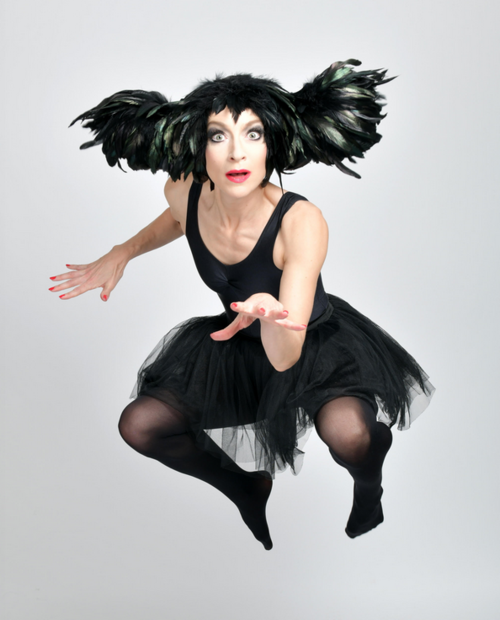
C: I really missed playing together. I was in work, messaging Róisín last October and we were like “would it be absolutely insane to book a show at Christmas, given that we haven’t practiced in like three years?”. Jamie organised the show, and it made total sense for us to use it as a chance to raise funds for MASI. We all lived in different cities – London, Bristol, and Dublin – so we could only fit in one practice before the show. Then I got the flu, so the one practice before the show ended up being a few hours before the show itself with me zoning out in the corner. Full transparency – I remember very little from that evening, but I remember it felt amazing to be together again.

J: It was the first time, as far as I know, that we were all going to be in the same place for a long time. I think Connie never really gave up on M(h)aol being a thing so I think it was her who put the feelers out again to see if we all wanted to do something together.

C: Generally speaking, I don’t know when to give up.

Z: It was really nice because it feels like there’s so much more of a purpose to play when you’re fundraising, especially around the holidays.

Did you make the decision to start writing together again before or after your return gig?

R: Definitely after, for me there was the fear that things wouldn’t flow or that the last three years had changed everything.

C: Yeah I totally agree with this, I had essentially zero concept how that first time back together was going to go and I didn’t want to get my hopes up.

J: We hadn’t actually written a song since some time in 2016. Myself, Connie and Seán went into the studio I was working out of at the time and hashed out a couple of songs. I still have demos of them floating around old harddrives… “risk taker” and something about “feminist” branded items from unethical, fast-fashion stores.

C: Oh yeah, ‘risk taker’ is about when you’re on your period and you’re having a shower and you didn’t bring a new pad/tampon/menstrual cup into the bathroom with you and you have to do that little run from the bathroom to your bedroom without blood flowing down your leg and onto the carpet.

How was it when you got back in the room together again? Did things flow?

R: Oh my god absolutely like M(h)aol is a much more enjoyable project for me now. I can’t speak for my bandmates but I am coming to it from a much better place mental health wise and confidence wise. I’m much happier to play around and add nuance to the lyrics that I just wouldn’t necessarily have done before and generally just have the belief that we have something worthwhile to say. I think it’s growing up, you go out into the world and experience things that strengthen your convictions. Everything matters, I know the music I listen to has influenced my political beliefs so much. It all means something and to have the chance to come together with people I really care about and respect is (not to be cringe here)  just such an honour. The session where we recorded Laundries was by far my favourite one we’ve had. It felt like magic.

C: I still can’t believe how quickly we got back into the swing of things. There was a bit of sitting listening to old recordings on our phones to try to remember how to play our songs, but somehow it all came together pretty swiftly. It was the first time I had sat at a drum kit in a few years, so I was feeling slightly anxious about having to perform live around three hours later, and I feel so lucky that it was with such an encouraging group of people.

J: I feel like it’s really telling about the band that as soon as we were in a room together again, it could easily have still been a few months since we last did it and, honestly, the experience took me out of a potentially heavy depressive swing. Do I remember that before I joined, there was a bit of a meme that rehearsals were semi therapy sessions?

Z: It was definitely Sean’s new fashion belt that brought some magic back to the rehearsals”.

I am glad that M(h)aol are still together and, more than that, at their strongest and most focused. Gender Studies was one of the best and most affecting E.P.s of last year. Get in Her Ears spoke to the group last year ahead of a big show at London’s The Shacklewell Arms in November:

“Can you remember who, or what first inspired you to start making music? And can you tell me how you all met & become M(h)aol?

Jamie: I grew up with the radio always on, it would be a very odd moment to not have music playing in the background at home throughout my childhood. I would have heard everything between Bach madrigals, Gilbert & Sullivan operettas, early blues records, Duran Duran albums in passing. I’ve a very vivid memory of watching MTV as a child and hearing Shanks & Bigfoot and that music video, that really sparked something.

I’d been learning piano on my grandad’s very old, very out of tune piano for a while before I got bored of it and my older brother got a guitar and showed me the Pixies and how to play a few guitar lines from those tunes. The simplicity of how to actually play them, but then the musical complexity/impact of them in context was amazing. I first met Connie after a soundcheck eating almonds and playing cards in the back of the Twisted Pepper in Dublin. It took a few years but now she can’t get rid of me and she’s subjected the rest of the band to me as well.

Róisín: Myself and Connie were obsessed with The Punk Singer when we were 21 and she ended up shaving my head and that was the catalyst for M(h)aol. It was a total shock to me that I was in a band. For the first year we just practiced in her gorgeous rehearsal space in Rathmines. For an entire year we just tried to figure out what we were saying and why.

Sean: I was shanghaied by Connie while at work, and joined the band under protest.

There are universal themes within your music (reflections on misogyny and gender-based violence) but there are also strong connections to Irish history too (your band is named after Grainne Mhaol, the context of your track ‘Laundries’), so talk us through the significance of these histories how they’ve informed your song-writing…

Jamie: Irish history is fascinating, at every turn there is something incredible, be that incredibly painful, interesting, or empowering.

Róisín: Growing up in Ireland has shaped us so much for better or worse. There’s so much intergenerational trauma in the country, stemming from clerical abuse etc, but also intergenerational pleasure stemming from our rich history of rebellion and literature”.

Before I round up, it is important to show a couple of reviews for Gender Studies. A terrific E.P. that showed huge intent, there were plenty of positive reviews out there for it. This is what Dead Good Music noted in their review:

“Up for some intense bass-driven post-punk? We’ve got a proper noise of feminist punk for you! Dublin five-piece M(h)aol release their debut EP Gender Studies.
The title doesn’t leave you wondering what this album is about, and it couldn’t be more topical.

M(h)aol, pronounced ‘male’ and translating to English ‘bald’, are the finest Irish feminist post-punk transforming ferocious sound into a political message. Since the band is majority female, choosing a name that is pronounced like ‘male’ comes with an attitude and is a response to how female musicians are seen and treated within the industry.

M(h)aol play it the punk way, namely the music they themselves want to hear. They spread a politically conscious message. And they have an attitude. Not only their name is a statement, but they are also pushing forward in the fight for social justice, animal welfare, and feminism.

Their message should be heard!

The debut EP Gender Studies was recorded in only 3 days, since the band is located in different locations. It covers tough, but urgent topics such as violence against women, misogyny within the music industry, and how to navigate through life when you’re not a suited, white man.

All the songs on the EP are relatively short, most of them under 3 minutes. But they come with a bang.

The lead single ‘Gender Studies’ is a cracker. It’s a crashing sound that comes with fab, disturbing riffs of smashing guitars, a huge bass, and great drums. The message is a shake-up – urgent, and straight to the point. In a spoken-word style, the lyrics deliver how pointless gender constructs and the forcing of gender binaries are. It’s a topical message.

The single is accompanied by a great video in a film noir style where the constraints of gender roles and social expectations are portrayed powerfully.

The opening track is a teaser for the other tracks of the album. This isn’t a quiet ride. Instead, it’s a fierce bass-driven race.

There is this insane pounding dark bass in ‘Desperation’ that leads through the entire track. It hits us with distorted sound and destroying energy, strong drums, and great vocals.

‘Kinder Bueno’ is short and sweet and definitely not about chocolate. It’s 52 seconds of again, dark pounding bass, blended with crashing guitars and ferocious drums.

A slow mysterious start comes with ‘Laundries’. But don’t worry, the song paces up while it progresses, and gets faster. The vocals are calm first and then go wild, which leads to a disturbing sound where the distorted bass drives the song and takes the lead. It’s a powerful track full of dark energy and raw dissonance.

“No one ever talks to us / unless they wanna fuck” is the bitter truth of ‚No one ever talks to us’, the second release from the album. It emphasises how often women are only considered interesting if they seem attractive to the male’s eye. It’s a track that builds upon noise and distortion in the middle and to the end and again offers that great disturbing, crashing guitar sound.

After all the wildness and high volume, the EP comes to a rather quiet end with the very atmospheric cover of ‘Óró sé do bheatha bhaile’ (English: Oh, welcome home). This is an old Irish folk song about Gráinne Mhaol, a pirate queen from the sixteenth century. Well-known in Irish folklore and another inspiration for the band’s name. The perfect ending for the EP.

M(h)aol create the soundtrack for a revolution we desperately need. They transform their notes into political messages. They are authentic, radical, and resist social norms and expectations. Their music is a call on all women out there to stand up and scream along.

The EP is released digitally on October 29th. A vinyl release will follow on January 12th. It is released via the record label TULLE that supports underrepresented voices within the music industry – another great statement by the band!”.

GIGWISE also sat down and had their say about an E.P. that I first hard last year but am still playing. It is a great work that everyone needs to investigate and spend time with:

“There is certainly something in the water across the Irish Sea, something that breeds next level post-punk. From The Murder Capital to Fontaines D.C. and everything in between, Irish punks are making a big splash. None more so than M(h)aol, whose debut EP channels political rage, with cutting lyrics set to industrial post-punk.

The EP opens with 'Desperation Desperation', an upbeat number with overarching menace. M(h)aol don’t shy away from discussing topics that other bands may steer clear from, such as gender, violence against women and the mysoginistic nature of the music scene. This is without doubt a vital piece of feminist work, set to staggeringly good punk noise.

The title track is a real standout from the EP—the cut channels the sound of Interpol, with vocalist Róisín Nic Ghearailt discussing gender identity over scratchy, fuzzy guitar and feedback. M(h)aol don’t hold back and they don’t give you a moment to collect your thoughts before they launch into 'Kinder Bueno', a 50-second cut that sounds like Nirvana basement tapes with thunderous drums and guitar that soon dissipate into nothingness.

'Laundries Laundries' is a haunting number, raging against the violence that women face on a daily basis, as well as speaking on the Magdalene Laundries, whose violent and misogynistic methods tormented Irish women for decades. M(h)aol tackles these topics tactfully, but they do not hold back when it comes to slamming sexist practices in the modern world and music scene.

Latest single 'No One Ever Talks To Us' follows this pattern by calling out men who are only interested in talking to women to use them for sex. The EP closes out with the hauntingly beautiful 'Oro Oro', a track that would be at home on the score of a tense thriller flick: the melodic vocals and the tense, anxious feedback make this a beautiful closer to the Gender Studies EP.

M(h)aol have hit the nail on the head here. They take on issues of gender and sexism with righteous anger, representing the violence that women face daily. Gender Studies is one of the most important pieces of political art released this year”.

If you have not discovered M(h)aol and are no familiar with them, go and listen to their music and follow them on social media. A terrific group who have a strong connection and a sound of their own, they will be arming and readying themselves ahead of festival season. They are already confirmed for Green Man. They produce a sound and sensation that is precisely…

WHAT the music world needs.

______________

Follow M(h)aol

FEATURE: One for the Record Collection! Essential March Releases

FEATURE:


One for the Record Collection!

IN THIS PHOTO: The cover for Chari XCX’s forthcoming album, CRASH 

Essential March Releases

___________

NEXT month is a busy one for albums…

 IN THIS PHOTO: Mattiel

and, as I always say, I am publishing this quite a bit in advance, so some release dates might change – and some new albums might come out of nowhere and surprise us. I shall start with 4th March, as there are two albums particularly that I would recommend people pre-order. The first is Nilüfer Yanya’s Painless. I am a big fan of her 2019 album, Miss Universe. I would urge everyone to get their copy of Painless:

“Mercurial London artist Nilüfer Yanya releases her hugely anticipated second album Painless. It's the follow-up to Nilüfer Yanya’s renowned 2019 debut album Miss Universe, which fully established her as a singular artist and a distinctive voice that simply has to be heard.

As the daughter of two visual artists (her Irish-Barbadian mother is a textile designer and her Turkish-born father’s work is exhibited at the British Museum) creativity was always destined for Nilüfer Yanya’s future. Now she enters the next stage of her creative journey, Yanya is running head first into the depths of emotional vulnerability on her sophomore record Painless. The album was recorded between a basement studio in Stoke Newington and Riverfish Music in Penzance with Miss Universe collaborator and producer Wilma Archer, Deek Recordings founder Bullion, Big Thief producer Andrew Sarlo, and musician Jazzi Bobbi.

Where Miss Universe stretched musical boundaries to include a litany of styles from smooth jazz melodies to radio ready pop, Painless takes a more direct sonic approach. By narrowing down her previously broad palette to a handful of robust ideas that revolve around melancholy harmonies and looped industrial beats to mimic the insular focus of the lyrics, Yanya has smoothed out the idiosyncrasies of previous releases without losing what is essential to her.

Painless is a record that forces the listener to sit with the discomfort that accompanies so many of life’s biggest challenges whether it be relationship breakdowns, coping with loneliness, or the search for our inner self. “It's a record about emotion,” Yanya explains. “I think it's more open about that in a way that Miss Universe wasn't because there's so many cloaks and sleeves with the concept I built around it.” She adds, summing up the ethos of the new album, “I'm not as scared to admit my feelings”.

The other album due out on 4th March I would point people in the direction of is The Weather Station’s How Is It That I Should Look At the Stars. Go and pre-order your copy. This album is shaping up to be among this year’s very best. I love the Tamara Lindeman-fronted band. This new album is going to be one you will not want to miss out on:

“One year after the release of Ignorance, The Weather Station returns with How Is It That I Should Look At The Stars. The album is intended to be heard as a companion piece to Ignorance; songs written at the same time that connect thematically and emotionally, songs that reveal the vulnerability at the heart of the body of work. Recorded live in just three days, How Is It That I Should Look At The Stars is achingly intimate; full of breath, silence, and detail.

How Is It That I Should Look At The Stars was written in the same fruitful winter of songwriting that gave rise to Ignorance, but were songs that Lindeman felt were too internal, too soft to fit on the album she had envisioned.

Not long after completing Ignorance, Lindeman decided to make this album on her own terms, fronting the money herself and not notifying the labels. She assembled a new band, and communicated a new ethos; the music should feel ungrounded, with space, silence, and sensitivity above all else.

On this record, there are no drums, no percussion; in the absence of rhythm, time stretches and becomes elastic. Lyrically, many of the songs return to what has often been a hallmark of Lindeman’s writing; a description of a single moment and all the meaning it might encompass. And this dilation of the moment occurs musically too; as the band moves through music so ephemeral it often incorporates stretches of near silence, and breaths, single notes, and brief solos take on greater importance in the absence of other sound. Whereas the recordings on Ignorance leaned towards ambition and grandeur, here the band reaches towards a different goal; grace perhaps.

How Is It That I Should Look At The Stars was recorded from March 10 - 12, 2020. When the band entered the studio, Covid-19 was a news item, not front of mind, but by the time they left, just three days later, everything had changed. Somehow, the music captures that instability; it is ungrounded and diaphanous, it floats and drifts. It is an album of immense sensitivity, a recording of a band and a person daring to reach towards softness without apology”.

Actually, there is one more album that I want to recommend from 4th March that slipped my mind! Kojey Radical’s Reason to Smile is an album that I am looking forward to. One of our very finest talents, Reason to Smile is an album that people should get! If you have not heard his music before, I think that this L.P. might be a good introduction:

“Having already made such an indelible mark on British music it's hard to believe that Kojey Radical has never released an album. Over four previous EPs, Kojey Radical has given people greatness but on Reason To Smile he's striving for perfection. Defined by a sound he describes as "space and bass" and featuring the singles War Outside (ft Lex Amor) and Gangsta, Reason To Smile is without doubt Kojey Radical's most ambitious and complete work to date and an emphatic statement of the levels at which he operates”.

Skipping to 11th March, there are a few that I want to cover and include. The first is Bodega’a Broken Equipment. The U.S. group are an act who keep growing and getting better. Pre-order their album and see what I mean. They are an amazing group that have a sound of their own:

“The follow-up to the band's acclaimed debut album, Endless Scroll (2018), and 2019's Shiny New Model EP, Broken Equipment was inspired by a book club. In the early months of 2020, the Brooklyn art-punk incendiaries gathered together with close friends to study the works of a wide range of philosophers. Passionate debates lasting long into the night became a regular occurrence, motivating the band to become as ideologically unified as the weighty tomes they were reading. Broken Equipment is Bodega’s attempt to interrogate the external factors that make them who they are, propelling existential quandaries with tongue-in-cheek humour, highly personal lyrics, and irresistible grooves.

The album’s 12 songs are set in present day New York City, packing in references to contemporary issues of algorithmic targeting, media gentrification, and the band itself. On 'NYC (disambiguation)', they break down how the Big Apple was “founded by a corporation” and history remains alive in the present. The poetic 'Pillar on the Bridge of You' is the first love song Ben ever wrote for Nikki, while 'All Past Lovers' gazes back to the “southern belle” and “chat room suitor” who still live inside him today. To accompany the propulsive pace of 'Statuette on the Console' and its lyrics about switching perspectives, Nikki recorded alternate versions in eight different languages. “I used God in that song as this arch overlord character, but it could also be a real estate developer,” she explains. “It’s about anyone who puts their reality on your back and forces you to carry it around.” In that song, Nikki also wryly states that although she doesn’t have faith in this particular “God,” she is still “living life with (my) platitudes.” On 'Territorial Call of the Female', Nikki playfully quips that “when the man is around that’s when I’m putting you down,” highlighting how in the past she unknowingly reinforced patriarchal values by turning against other women to attract men. It’s moments like these where Bodega most exemplifies their self-professed motto that “the best critique is self critique”.

Another great album due on 11th March comes in the form of Jenny Hval‘s Classic Objects. The Norwegian artist is someone so consistent and astonishing. This is an album that, again, people should know about and pre-order:

“Norwegian musician and novelist Jenny Hval releases her new album Classic Objects. Classic Objects is a map of places; past places, like the old empty Melbourne pubs Hval’s band used to play in, public places Hval missed throughout lockdown, imagined, future places, and impossible places where dreams, hallucinations, death and art can take you. It is interested in combining heavenly things and plain things.

Classic Objects is Hval’s version of a pop album. Every song has a verse and a chorus. There are interchangeable moments of complexity, interesting melodies throughout, and a feeling of elevation and clarity in the choruses. Heba Kadry mixed it to sound as though it’s played through “a stereo in a mysterious room”.

There are two more albums from 11th March that I want to bring in. One is from a duo I have been following for years now. Superhuman by Ferris & Sylvester is an album I can confidently recommend to everyone. Do ensure that you pre-order this incredible album from the English duo if you can, as they are going to be a big act very soon:

“Ferris and Sylvester release their debut album Superhuman via [Integral] / PIAS, a body of work highlighting the very best of the duo’s timeless songwriting. The twelve track album holds ten never before heard songs and takes the listener on a journey through the duo’s world where genres intertwine and emotions are stripped down to the core.

The album was recorded at Bear Creek Studios, Seattle USA with Grammy nominated producer Ryan Hadlock (The Lumineers, Brandi Carlile, The Strokes) and at Sawmills Studio, Cornwall UK with producer Michael Rendall (Pink Floyd, The Jesus and Mary Chain, Youth). Combining influences from Folk, Blues and Americana music from both sides of the Atlantic, the duo’s debut sits in a new and distinct territory”.

Prior to moving to 18th March, there is another album from 11th that is worth your pennies. Widowspeak’s The Jacket is an album that will rank alongside the best from next month. Go and pre-order an album that is going to be terrific:

“Written in the months before and after the release of their critically acclaimed fifth album Plum, The Jacket feels like a full-circle moment for the duo of singer-songwriter Molly Hamilton and guitarist Robert Earl Thomas. Thematically, it considers Plum’s broader questions about the values ascribed to one’s time and labor through the more refined lens of performance and music-making. This is due in part to the band’s recent return to New York City, the site of their own origin story, where they recorded The Jacket at the Diamond Mine with co- producer and noted Daptone Records affiliate Homer Steinweiss.

Reunions always breed reflection, and Hamilton admits that much of the album’s themes are tied to formative experiences in the band’s own early years. Some songs speak to the process of moving on (“Unwind”, “Salt”), while others muse about regret (“True Blue”, “Forget It”). The album’s namesake track considers the literal and figurative costumes we dress our personalities in: imbued with meaning and sense of time and place, becoming so representative of who we think we are before they’re ultimately left behind. The symbolic spaces of work, music, nightlife are seen through the haze of recalling one’s own unknown legends.

Sonically, The Jacket finds the band at their usual and best: dynamics shift seamlessly between gentle, drifting ballads and twangy jams, built up from layered guitars, dusty percussion and ambling bass lines. Elsewhere: whimsical flutes, choral textures, and basement organs. Thomas’s guitar playing is as lyrical and emotive as it’s ever been, and Hamilton’s voice: comfortable and effortless. This seamless dynamic is amplified perfectly in the mix by Chris Coady (Yeah Yeah Yeahs, Beach House) . Widowspeak expertly pepper in slow-core, dream-pop, pacific northwest indie, and outlaw country, resulting in a 60s-meets-90s aesthetic. This sense of sonic nostalgia adds another layer to lyrics that reflect on old selves, invented and true. The Jacket is a wizened meditation on performance and past lives from a band who’ve seen their fair share, hitting their stride now over a decade in”.

Let’s move to 18th February. The iconic Cypress Hill are releasing Back in Black that week. It is one that everyone needs and should pre-order. They are sounding as potent and incredible as ever:

“Cypress Hill shifts culture. Since releasing its eponymous debut album in 1991, the California rap group has regularly revolutionized rap. B-Real and Sen Dog’s innovative lyrics, distinctive voices and poignant street-centered subject matter catapulted the group to superstar status. Its first LP sold more than 2 million units and its second album, 1993’s Black Sunday, pushed another 3 million units thanks to the Grammy-nominated singles “Insane In The Brain” and “I Ain’t Goin’ Out Like That”. Along the way, Cypress Hill earned a star on the Hollywood Walk of Fame, sold more than 9 million albums, and were nominated for three Grammy Awards. During a time increasingly defined by singles of the moment, rappers B-Real and Sen Dog wanted to make a statement by releasing an album. Back in Black, the group’s tenth studio project, finds the group flexing its musical muscles and pushing itself creatively. With a mesmerizing mix of celebratory, confrontational, inspirational, reflective, and rugged songs, Cypress Hill shines throughout Back in Black. Entirely produced by Black Milk (Slum Village, Lloyd Banks, Pharoahe Monch), the LP is an homage to Cypress Hill’s return and its collaboration with Black Milk”.

The remarkable Mattiel are releasing the much-anticipated Georgia Gothic on 18th February. Go and pre-order the album a remarkable album from a terrific group. It goes to show that March is gifting us with so many great albums that are worth getting on vinyl:

“Georgia Gothic, a magic third in Mattiel’s run of full-length albums, was shaped in the quiet seclusion of a woodland cabin in the north of the Atlanta duo’s mother-state. Cultivated by time spent together on the road touring the first two albums, it is this newfound sense of intimacy between Mattiel’s members that enabled the writing of Georgia Gothic not as two separate musicians, but rather as one creative entity. The album remained within the four walls of Brown and Swilley’s private world for much of its evolution — with recording taking place in a simple studio set up by the pair in the borrowed room of a dialysis centre, Swilley in the producer’s seat — until, nearing completion, it was transferred into the trusted hands of the Grammy-award-winning John Congleton (whose extensive list of credits includes artists as diverse as Angel Olsen, Earl Sweatshirt, Erykah Badu and Sleater Kinney) for mixing. Not only does the affinity between its creators translate into an electric synergy between Georgia Gothic’s words and music — the brine-shock of Brown’s taut lyricism cut against the bourbon-smoothness of Swilley’s instrumentation — but here too are the palpable spoils of experimentation, each party trustful enough of the other to trial and error their practices into new geometries”.

On 25th March, there are some seriously good albums you need to own. Before getting there, there are two more from 18th March. Charli XCX’s CRASH is one you must order, as it is going to one of the biggest albums of this year. As the British Pop pioneer said last year, CRASH is going to be an album of contrasting emotions and styles:

“Charli XCX has discussed her forthcoming LP in a new interview with InStyle. The singer is gearing up to release her fifth album – the follow-up to 2020’s how i’m feeling now – next year.

Speaking on the new album, which is inspired by the 80s, XCX told InStyle: “It’s kind of all about sex and sexuality”.

“It can make people dance and cry at the same time,” she added. “It’s a vibe.”

The album’s title is yet to be announced, however XCX has teased what appears to be a release date over on Instagram, sharing a picture of a headstone with the date March 18 2022 on it.

Last month, XCX released her first solo single of 2021, and the lead single for the upcoming LP, Good Ones. The song landed alongside a Hannah Lux Davis-directed music video, with XCX explaining in a statement that the track and visual aesthetic marked a “new era” for her. The previously teased headstone also featured in the video.

Her Best Song Ever podcast also launched earlier this summer, featuring conversations with Caroline Polachek, Christine and the Queens, Beabadoobee and more. Both projects follow collaborative musical efforts such as her Drama remix with Bladee and Mechatok, alongside her Xcxoplex remix with A.G. Cook. Earlier this year, XCX also formed a “supergroup” with The 1975 and No Rome.

The artist also worked on a quarantine documentary which premiered at this year’s SXSW film festival. The project, Alone Together, documented the recording process behind how i’m feeling now”.

The last album I want to recommend from 18th March is Little Boots’ Tomorrow’s Yesterdays. This is another terrific artist I can wholeheartedly suggest you follow. The album is one you need to pre-order. Before moving on, last year, More Music spoke with Little Boots (they discussed “a nationwide project, A Song for Us commissions leading music creators across genres to write new songs inspired by the people of their county. Sound UK and More Music were delighted to co-commission talented singer-songwriter and DJ, Little Boots to create a new song, working with Lancashire Youth Vocal Ensemble and other local singers and inspired by the people of Lancashire”.). She was asked how lockdown was for her and how she coped during such a tough time:

“I’ve learnt that my fans are incredible, they way they have supported me through lockdown and helped fund a new album via Patreon in the absence of gigs was amazing. I also found it to be a new set of rules for creativity, certain things were taken way such as being able to work with other people in the studio, but on the flip side we had a lot more time, this encouraged me to step up my production skills and produce my new album mylsef, something I probably wouldn’t have done otherwise”.

Coming to 25th March, there are three big albums that I will end with. The first one is Aldous Harding’s Warm Chris. Harding is one of the greatest voices and finest artists in the world. I love everything she does. Warm Chris is an album that is going to be among her very best:

“Aldous Harding releases a new studio album, the follow-up to 2019’s acclaimed Designer. For Warm Chris, the New Zealand musician reunited with producer John Parish, continuing a professional partnership that began in 2017 and has forged pivotal bodies of work (2017’s Party and the aforementioned Designer). All ten tracks were recorded at Rockfield Studios and includes contributions from H. Hawkline, Seb Rochford, Gavin Fitzjohn, John and Hopey Parish and Jason Williamson (Sleaford Mods)”.

There are two more albums that I want to highlight. Ibibio Sound Machine’s Electricity is going to be an awesome album. One you should pre-order, it is fascinating reading about what the album is going to deliver. You certainly need to get involved:

“Even in trying times, “there is no love without electricity.” Electricity is the fourth and most progressive album from Ibibio Sound Machine, and like all good Afrofuturist stories, it begins with an existential crisis. “It’s darker than anything we’ve done previously,” says Eno Williams, the group’s singer. “That’s because it grew out of the turbulence of the past year. It inhabits an edgier world.”

Electricity was produced by the Grammy Award and Mercury Prize nominated British synthpop group Hot Chip, a collaboration born out of mutual admiration watching each other on festival stages, as well as a shared love of Francis Bebey and Giorgio Moroder. The fruits of their labor reveal a gleaming, supercharged, Afrofuturist blinder. Electricity is the first album Ibibio Sound Machine have made with external producers since the group’s formation in London in 2013 by Williams and saxophonist Max Grunhard. True, 2017’s Uyai featured mixdown guests including Dan Leavers, aka Danalogue, the keyboard jedi in future-jazz trio The Comet Is Coming, but Hot Chip and Ibibio Sound Machine worked together more deeply throughout the process, collaborating fully. Along the way, the team conjured a kaleidoscope of delights that include resonances of Jonzun Crew, Grace Jones, William Onyeabor, Tom Tom Club, Kae Tempest, Keith LeBlanc, The J.B.’s, Jon Hassell’s “Fourth World,” and Bootsy Collins.

The hook of opener “Protection From Evil” has Williams wielding a massive synth line from Hot Chip’s Al Doyle like a spiritual shield against unspecified, malign forces unspecified because Williams is speaking in tongues. Her lyrics are onomatopoeic: their meaning is defined in her energetic delivery. As Electricity takes off, so do Williams’ words towards a brighter future, alternating between English and Ibibio, sometimes within verses, and propelled by Joseph Amoako’s unabating afrobeat. She digs into this sentiment further on single “All That You Want,” coolly assuring her romantic interest while also requesting reciprocity. Meanwhile, Scott Baylis’ playful Juno synth guides the listener’s feet along the dancefloor.

Electricity is a deep and seamless realization of Williams’ and Grunhard’s ambitious founding manifesto to combine the singularly rhythmic character of the Ibibio language which Williams spoke growing up in Nigeria with a range of traditional West African music and more modern electronic sounds. While the band enjoys veering further into electronic territory with the help of mutuals like Hot Chip, Grunhard emphasizes, “For us, it’s not just a matter of embracing new technology. What’s key is to keep the music grounded in African roots.” Ibibio Sound Machine best exemplify this on Electricity’s “Freedom.” That track was inspired by the water-drumming rhythms of Cameroon’s Baka women, which in turn fueled its lyrics, which in turn prompted Hot Chip and Ibibio Sound Machine to layer joyfully kinetic electronic counterparts on top in the studio. As the track culminates with the mantra of “rage, hope, cope, soul,” it’s clear that Ibibio Sound Machine have channeled, harnessed, and distilled these words as guiding principles, both for the album and for the turbulent world that awaits it”.

I will finish off with the legendary Placebo. Never Let Me Go is an album that is one you should think about pre-ordering. Following the somewhat patchy 2013 album, Loud Like Love, Never Let Me Go looks like it is a bit of a return to form for Placebo:  

“In September, Placebo resurfaced from a long hibernation to release their first single in five years – and first from the new album - 'Beautiful James'. A joyous and celebratory song, it came quietly loaded with antagonism for the increasingly prominent, ignorant, factions that have come to litter modern conversation.

As great masters in cataloguing the human condition, Placebo’s unique way of examining both its flaws and beauty finds fertile ground in 2021. Crawling out of the pandemic into a landscape of intolerance, division, tech-saturation and imminent eco-catastrophe, theirs is a voice that has rarely felt more significant to contemporary discourse, and more appropriate to sing these stories to the world. Within the magnetic slow-burn of new track ‘Surrounded By Spies’ no punches are pulled in confronting the erosion of civil liberties, as Brian Molko’s deft lyrical delivery is married to a creeping sense of claustrophobia that fittingly makes the walls feel as though they are closing in from all around”.

If you need suggestions about which albums to get next month, I hope that the list above helps out. There are some seriously great releases in March! From huge Pop artists such as Charli XCX to a smaller act like Mattiel, it s a busy and exciting month for music. Whilst you might not be able to afford all of them, I hope there are some albums that you can…

SET some money aside for.