FEATURE: Vinyl Corner: Lykke Li - Wounded Rhymes

FEATURE:


Vinyl Corner

Lykke Li - Wounded Rhymes

___________

THERE are two reasons…

for including Lykke Li in this Vinyl Corner. Not only is it her birthday on 18th March; her amazing second studio album, Wounded Rhymes, is one that people should get. I am going to point people in the way of the Anniversary Edition which came out last year. If supply is short, you can buy the album here. This is what the Anniversary Edition offers:

“LA-based, vocalist, producer, and songwriter Lykke Li releases the 10th Anniversary Deluxe Reissue of her seminal album Wounded Rhymes. The critically acclaimed album was produced by Bjorn Yttling and named one of the Best Albums of 2011 by The New York Times, Pitchfork, Entertainment Weekly, The Guardian, Clash, Paste, SPIN, and more. The album yielded singles I Follow Rivers, Get Some, Sadness is a Blessing, and Youth Knows No Pain. The first LP features the original album, along with a bonus LP featuring unreleased demo versions of Youth Knows No Pain, Jerome, I Follow Rivers and remixes by The Magician and Tyler, The Creator. The vinyl release features the original artwork on the sleeve, plus an o card wrapping the release with the brand new anniversary artwork.

Track-listing

Disc 1

Side A
1 - Youth Knows No Pain
2 - I Follow Rivers
3 - Love out of Lust
4 - Unrequited Love
5 - Get Some

Side B
1 - Rich Kids Blues
2 - Sadness Is A Blessing
3 - I Know Places
4 - Jerome
5 - Silent My Song

Disc 2

Side A
1 - Youth Knows No Pain (The Lost Sessions)
2 - Jerome (The Lost Sessions)
3 - I Follow Rivers (The Lost Sessions)
Side B
1 - I Follow Rivers (The Magician Remix)
2 - I Follow Rivers (Tyler, The Creator Remix)”
.

A remarkable follow-up to her 2008 debut, Youth Novels, the Swedish musician created something of a masterpiece with her second album. Lykke Li spoke with The Guardian in 2011 and she talked about the sound and direction of Wounded Rhymes:

No, it's easy to make a dark album," she laughs. "I love pouring my heart out. People don't want to hear you whine when you're with friends, so you can sing about it instead – it's the best outlet."

The first album was also preoccupied by painful love affairs, though sweetened by cute-sounding hits such as "Little Bit". At the time, she talked about a "really weird relationship" that had been torturing her for years. Is it the same heartbreak haunting her on this album?

She furrows her brow. "The problem is, when I talk about heartbreak or whatever, people want to melt it down to some break-up of a relationship, but it's not about that. If you're a sensitive person, just stepping outside can be heartbreaking."

All this makes Wounded Rhymes sound like a decidedly gloomy prospect, but actually it's a captivating album full of beautiful moments despite – or perhaps because of – Li's unconventional voice, which was childlike on Youth Novels but has become harder and huskier. ("I think I sing like shit," she tells me at one point, though her numerous fans might disagree.) And it's not all melancholy. "Youth Knows No Pain" and "Get Some" are rousing songs with big crashing drums and punchy choruses.

"Like a shotgun/ Needs an outcome/ I'm your prostitute/ You gon' get some," she drawls on the latter track. It sounds very much like a threat, but some have interpreted the line in a less complicated way. What did she mean by it?

"It's my comment on how men, and especially journalists, look on women and write articles about female artists," she says, fixing me with a flinty stare.

I tug at my collar uneasily. Could she explain further?

"How much can you explain? If that's what you think, if that's your opinion, then I'm your prostitute, you're gonna get some. It's not about sex, or being a victim, it's actually really powerful, you know. It's kind of like Scarface or something: 'You want some of this, I'm going to get you some of this.'

"I just want to be free," she goes on. "Men can be whatever they want to be. Like David Bowie. He can have no shirt or go dressed as a woman. Why can't I do that?”.

Before I end this feature, I want to bring together a couple of effusive reviews for an album that ranked alongside the best albums of 2011. Many publications and sites placed Wounded Rhymes in their top twenty of the year. A  top forty album in the U.S. and U.K., it contains the stunning song, I Follow Rivers. This is what The A.V. Club had to say about Wounded Rhymes:

When Sweden’s Lykke Li first appeared, she seemed like an indie-pop dream—slight of stature, big on heart. Adorable, energetic, and just artsy enough, she was effortlessly able to weave radio buoyancy through a comely web of electro, folk, and rock. Bloggers and critic types were sure they’d discovered their chart-conquering heroine, and then… she disappeared. Wounded Rhymes is the overdue follow-up to Li’s 2008 debut, Youth Novels, (recorded while she was 19; she’s now 24) and it might as well belong to someone else entirely. That Lykke Li was looking for love. This one found it, then sent it back after discovering it was a bad fit. “Sadness is my boyfriend,” she sings on “Sadness Is A Blessing,” a song that owes its big drums, dramatic piano hits, and copious reverb to The Shangri-Las, or perhaps Björn Yttling’s take on the Phil Spector sound. It seems impossible that the girl who sung “Little Bit” would become the woman of “Unrequited Love,” a spare country ballad which concludes that her heartache “must mean I live again / And get back what I gave my men / Get back what I lost to them.” The fact that this is followed by the darkly bouncy single “Get Some,” in which she casts herself as a prostitute employing “pussy power” (her words, via Pitchfork), only widens the gulf between then and now. At its core, this is an album about innocence lost—the opener, “Youth Knows No Pain,” is hardly celebratory; it’s a message to her old self, essentially saying, “You have no idea”—set to a cavernous, damaged pop score. At her core, this new snarling, burned Lykke Li is unfamiliar, perhaps even to herself, but it’s to our benefit. We get to meet her all over again”.

Pitchfork had some interesting observations about Wounded Rhymes. Even though it is over ten years old, I listen back to the album now and it keeps revealing new things. Certain songs have grown in stature and meaning all of these years later! This is part of Pitchfork’s review:

Like Joss Whedon's show, Wounded Rhymes is an album of stark, scintillating contrasts: between fantasy and reality, between the powerful and the vulnerable, between the brash and the quiet, between the rhythmic and the melodic. Audacious anthems jostle next to heartbreak ballads like "Unrequited Love", with its simple guitar and shoo-wop backing vocals. Dense, busy numbers give way to emotionally and musically stripped tracks like "I Know Places". "I'm your prostitute, you gon' get some," she sings on "Get Some", a come-on so blunt that it's become the talking point for this album. As a single, the song brazenly grabs your attention, but in the context of this album, alongside such forlorn songs, it becomes a desperate statement, disarmingly intimate in its role-playing implications but also uncomfortably eager to shed or adopt new identities to ensure a lover's devotion.

Rather than adjust or reconcile them, Li lets all those contradictions ride, having grown more comfortable in her musical skin. While there are no highs here quite as high as Youth Novels' "Little Bit" or "Breaking It Up" (and no low nearly as low as "Complaint Department", though "Rich Kids" comes pretty damn close), there is a sense of cohesion missing from that debut, as well as an understanding that a record can be a document of a particularly tumultuous time and place. To write these songs, Li spent long months in New York and Southern California, spending a great deal of time alone in the desert. The result is depressive without being depressing, dark without being bleak, as it rejuvenates, refines, and redirects her eccentricities.

The biggest moments on Wounded Rhymes take the form of slower ballads, whether stripped down like "I Know Places" or grandiose like "Sadness Is a Blessing". But they gain their power in contrast to the more upbeat tracks like opener "Youth Knows No Pain". Dropping some of the coy affectations of Youth Novels, Li proves a surprisingly dramatic singer with a powerful voice and strong phrasing, able to render the emotional pain of "Sadness Is a Blessing" as somehow exultant-- a transcendent state of being.

Like any good vocalist, she knows when to bow out and let the music speak for her. "I Know Places" cuts off early to set up a long, dreamy coda that acts as both a quiet promise of escape and an album intermission that sets up the penultimate "Jerome", which seems to synthesize every single emotional and musical urge on the album. Both ballad and banger, the song sheds its elements until only the thunderous heartbeat rhythm remains. That moment bleeds into the finale, "Silent My Song", a nearly a cappella closer that swells and fades dramatically. "No fist needed when you call," Li sings. "You silent my song." It's a devastating statement, yet ultimately an untrustworthy one: She has harnessed her heartache and her happiness to amplify her voice, not to lose it”.

Go and see if you can go and get a copy of Lykke Li’s Wounded Rhymes. It is a beautiful album that people should hear. Although a lot of the sounds and lyrics are quire dark at times, there is a lot of different emotions and textures throughout. Lykke Li’s voice is at its very best throughout the album. Ensure that you put Wounded Rhymes

IN your collection.

FEATURE: Man in the Mirror: Wil a Planned Michael Jackson Biopic Prove Too Controversial?

FEATURE:


Man in the Mirror

IN THIS PHOTO: Michael Jackson performs in Germany in June, 1988/PHOTO CREDIT: David Baltzer/Zenit/IAIF IAIF/Redux

Will a Planned Michael Jackson Biopic Prove Too Controversial?

__________

THE fact that Michael Jackson’s…

best-known album, Thriller, is forty in November makes new of a biopic well-timed and appropriate. Although the news broke a couple of weeks or so back, I have been thinking about it a lot. It is fair to say there has been a lot of controversy around Jackson’s legacy the last few years or so. Following the Leaving Neverland documentary where allegations of sexual abuse were levied at him, there was a long period after 2019 when his songs were not played on radio. I have heard his tracks played on BBC Radio 2, though many of the other major stations have him blacklisted. It may be some time before that decision is overturned. It makes the timing of a biopic interesting. Will there be critical and public appetite and understanding for the new project? This NME article reported news of a biopic that has been greenlit by the Michael Jackson estate:

A new Michael Jackson biopic is in the works, with Bohemian Rhapsody‘s Graham King on board to produce the film.

According to Variety, the forthcoming movie – titled Michael – is being made with the blessing of the Michael Jackson estate. The screenplay is being written by John Logan (Gladiator, Skyfall), who previously worked with King on Martin Scorsese’s The Aviator (2004).

John Branca and John McClain, co-executors of Jackson’s estate, will produce the biopic alongside King, who first met the Jackson family in 1981. Lionsgate will distribute Michael globally.

“I’m humbled to bring their legacy to the big screen,” King explained. “Sitting at Dodger Stadium watching the Victory Tour, I could never have imagined that nearly 38 years later I would get the privilege to be a part of this film.”

Per a press release, “Michael will give audiences an in-depth portrayal of the complicated man who became the King of Pop. It will bring to life Jackson’s most iconic performances as it gives an informed insight into the entertainer’s artistic process and personal life.”

The late singer’s mother, Katherine Jackson, said: “Ever since Michael was little, as a member of The Jackson 5, he loved the magic of cinema. As a family, we are honoured to have our life story come alive on the big screen.”

The involvement of Jackson’s estate in the project suggests that the movie won’t deal with the allegations of child sexual abuse that were levelled against the singer during his career and after his death in 2009.

Back in 2019, the four-hour documentary Leaving Neverland included testimony from James Safechuck and Wade Robson, who claimed they were sexually abused by Jackson as children in the 1990s.

Michael Jackson denied any wrongdoing prior to his death aged 50.

It was reported in November 2019 that Graham King had secured the rights to make a film about Jackson’s life and career. At the time, it was said that the movie was not “intended to be a sanitised rendering of Jackson’s life”.

Of course, there is more to the legacy and name Michael Jackson than controversy. Since he started recording with The Jackson 5 and released solo material, he rightly was crowned the King of Pop. Selling millions of albums, producing pioneering live shows and some of the very greatest songs we will ever hear, I am glad that there is a biopic happening. It is not to say it will whitewash and overlook allegations, controversy and darker moments. This is the thing with music biopics. Whether it concerns Elton John, Freddie Mercury or another artist, a lot of the more salacious, troubling and darker times. Michael Jackson is someone who, for good and bad, courted media obsession right through his career. He himself put himself on a pedestal and did let ego and popularity get to him. I wonder whether Michael is going to be a look at Jackson from the start to end of his career or it will be a particular time period. It does sound like it will be pretty deep. The fact the estate is backing it means that there could be subjectiveness in terms of what is omitted. One would not assume that any of the abuse allegations through his career will be covered - though I think we will see a more complex and disturbed artist, rather than painting him as this saint and icon. He was a genius and master of his craft, so I would be interested seeing someone portray Jackson as he works in the studio on albums like Thriller alongside produce Quincy Jones.

I think Michael will be a chance for reflection. Neither portraying Jackson as spotless or a blighter and maligned figure, there will be multiple sides of his character examined. Although I do not want the biopic to shirk from looking objectively at Jackson, I also feel that the music should be the main focus. Almost forty years after one of his greatest masterpieces, Thriller, Michael Jackson remains unsurprised as a Pop artist. I have to ask the question as to whether the public and critics will be on board. We are not sure when it is coming out, though the memories are fresh and the scars raw regarding Leaving Neverland. If the biopic is too clean-cut and sanitised, then that will lead to criticism. If it is too honest and open, then that could also put people off. If it is released this year or next, we may see opinions and consensus change enough so that Jackson is  re-evaluated or accepted. For those like me who grew up with his music, it is bittersweet news. There will be a lot of questions asked about whether Jackson is worthy; whether we should be putting him on the big screen. As someone who discovered Pop in a big way through him, it is only right that he is celebrated and honoured. Some quarters will protest and scathe the biopic. It will be popular in the box office and, as music biopics often do, see Jackson’s albums bought in bulk. He will definitely make appearances on the chart again. Let’s hope that Michael is not black and white, and it does look at the layers and different sides to a musician who is compelling and troubled in equal measures. Getting the balance right and making the biopic truthful is key! In that sense…  

NO message could have been any clearer.

FEATURE: Spotlight: Paris Jackson

FEATURE:


Spotlight

PHOTO CREDIT: Janell Shirtcliff 

Paris Jackson

___________

BECAUSE she just released…

 PHOTO CREDIT: Djeneba Aduayom

the dreamy new work, the lost ep, I think it is a perfect time to feature the incredible Paris Jackson. It is a weird couple of days. Tomorrow, I am releasing a future about her late father, Michael, as a new biopic is in the works. I adore Michael Jackson, and I was a massive fan right from childhood. I ask whether the public reception of the biopic will be kind and whether it is the right time to release it. Whilst an icon, there is still controversy attached to his name – is that something that the public and critics will negatively respond to? I think that such an influential artist deserves a biopic, yet it may be a difficult time to release a project. We shall see what happens. I want to spotlight his stunningly talented daughter, as she is an artist in her own right – even though, clearly, her father was a big influence and source of guidance for her (she was just eleven when he died in 2009). Aged only twenty-three, she is someone with a busy and hugely prosperous future ahead! In addition to music, she is an actor and model. I think her music career is starting to take off; her new music is her strongest work yet. I want to work up to some great interviews. Prior to coming more up to date, I wanted to look back at her debut album, wilted, of 2020. It is a really strong album, and I think that it is actually a bit underrated. Whether the lost ep is a transition between albums, I am not sure. It is a gorgeous trio of tracks that showcases her amazing vocal and songwriting prowess.

Before working my way up to her new E.P., Republic Records gave us the skinny when it came to her amazing debut album, wilted:

Over the course of 11 exquisitely composed tracks, Jackson illuminates her journey from sorrow to strength with a specificity that’s often heartrending. But when absorbed as a complete body of work, Wilted radiates a deep sense of wonder that Jackson traces back to her fascination with one of nature’s strangest phenomena: the possibility of rebirth from decay, as manifested in the life cycle of her most beloved plant. “I love mushrooms and what they represent, which is decay as an extant form of life,” says Jackson. “You take a wilted flower that’s deprived of sunlight and water and everything it needs, and as it breaks down and rots away, a mushroom will grow from that. A new life is born, and it’s an unconventional sort of life. Maybe the daytime the flower existed in wasn’t the right place for it to grow, but now it’s nighttime and everything’s neon and happy and so beautiful. This mushroom gets to live its best life.”

Building off a batch of demos she’d recorded on her own, Jackson created  Wilted at Hull’s Atlanta studio with the help of his longtime collaborator/producer Dan Hannon. As a massive fan of Manchester Orchestra—her left arm bears a tattoo of the cover art from their 2017 album A Black Mile to the Surface—Jackson sought out Hull and McDowell based on the relentless imagination behind their output, and felt an immediate creative chemistry with both musicians. “Straight out of the gate we were all on the same page, and by day three we all started getting weird—but the exact same kind of weird,” Jackson recalls. “There were certain songs on the record where I told them, ‘If there’s anything you ever wanted to try in the studio before but felt like it was way too out there, just run with it.’ We were all so excited about trying new things, and we felt free to experiment with whatever we wanted.”

Like all of  Wilted, the luminous lead single “Let Down” balances that unbridled experimentation with Jackson’s elegant sense of songcraft and gift for sculpting indelible melodies. A portrait of precarious longing, “Let Down” unfolds in a graceful convergence of textures inspired by the music of Radiohead (a factor Jackson lovingly nodded to by taking the track’s title from a cut on OK Computer). “That album is one of my favorites, and it was definitely a reference point for some of the sounds on this record,” she says. “I love how they combine acoustic and electric guitar and layer in a lot of synth, and how Thom Yorke will hit all the notes in his vocal range in just one song.” When matched with the dreamlike quality of her lyrics (“Head hanging down/Shredded evening gown/Eyes painted black/A tragic paperback”), the impact of Jackson’s own voice is doubly powerful, transmuting heartache into something impossibly lovely.

While much of  Wilted embodies a heavy-hearted mood, the album opens on the unfettered hope of “Collide,” a gentle reverie whose tumbling piano tones and sweetly lilting harmonies capture the pure rush of falling in love. “I wanted to start out on a happy note, and then as the story goes on the hope starts to fade and you’re trying so hard to hold onto something that’s just falling apart,” says Jackson. An anguished plea for peace of mind (“I wanna hold my head up high/I want the truth/I want a goddamn lullaby”), “Repair” hints at the devastation to come, the track’s tender urgency intensified by its ingeniously crafted rhythms (“It sounds like chains rattling, but really it’s us shaking a giant box of tambourines,” Jackson points out).

With “Let Down” serving as the album’s centerpiece, the latter half of  Wilted fully immerses the listener in its unsparing catharsis. On “Eyelids,” for instance, Hull joins Jackson for a hushed meditation on the unbearable pain of memory, their voices blending in a beautifully haunting duet. One of the album’s most exhilarating moments, “Scorpio Rising” speaks to the mind-warping effects of despair, building a potent momentum from its jagged riffs and wildly frenetic percussion (an element partly formed by sampling Jackson’s sharply inhaled breath). That volatile energy also infuses the title track to Wilted, a glorious epic whose spectral harmonies and shapeshifting sonic layers ultimately give way to a self-possessed clarity (“A new flower manifests/One that won’t need the sun…I’ll be my own sun”). And on “Another Spring,” Jackson closes out with a bright and soulful piece of folk-pop imbued with clear-eyed resolve (“I’ll rearrange and let my wounds shine through/Let my wounds bring another spring”).

In bringing Wilted to life, Jackson continually tapped into her fine-honed intuition. “The songs tend to come when I suddenly feel the need to sit down and play guitar,” she says. “If I ever try to force it, then nothing really happens. I’ll usually find a chord progression that feels good and then a melody that works with it, and the lyrics just happen on their own.” A lifelong singer who names such eclectic songwriters as George Harrison, Ray LaMontagne, and Mötley Crüe’s Nikki Sixx among her inspirations, Jackson has embraced a deliberately free-spirited creative approach since penning her first song at age 13. “It’s never been an ambition of mine to find a certain sound or formula to stick to,” she says. “I know that my music is always going to keep changing with each new thing I make. I just want to try everything.”

With the release of  Wilted, Jackson remains passionately focused on pushing forward in her artistry. “I experienced a lot of healing through making this record, and in an ideal world it would be amazing if people experienced a similar kind of healing from listening to it—but I’d rather leave it up to them to take whatever they want from the album,” she says. “I put so much of myself into these songs and got as raw and vulnerable as I possibly could, and we ended up taking them to a level that I never could have imagined”.

I have a lot of love and respect for Paris Jackson. Children of incredibly famous artists have that extra pressure on their shoulders. They will always be compared to their famous parent or asked about them all of the time. Having lived so much of her young life in the spotlight, she has shown incredible strength and dignity. This is an artist that we need to support and show affection for. Variety published a fantastic interview with Paris Jackson (she spells her name in all lowercase on some of her channels; I will keep it as is). I have highlighted a few questions and answers from that chat:

Did COVID factor into your writing at all?

Not really so much in the writing, but it definitely gave me more free time.

How long have you been writing songs prior to this?

Maybe a little less than 10 years, I think.

But this felt like the right time to make your debut with a record?

Yeah, I guess. It really just worked out the way it did. The album was just ready, so we were just like: okay, let’s release it.

Did you see the album as having a concept or a story to it?

No, at first I didn’t, because I wrote all the songs as I was going through just life. Then when it came time to actually get in the studio and start recording demos, it was a matter of: Okay, well, out of all the songs I’ve written this year, which ones am I going to choose to record? And as I was writing down which songs I wanted to record, it started to seem a little bit like a concept record. So I was like, Okay, I’m going to intentionally make this, you know, a story. It’s my experience with love and betrayal and heartbreak. And, in that sense, it is autobiographical. But I feel like it’s also written in a way that can be all-encompassing, because everybody experiences that in some form or another, you know?

Do you write your songs on a particular instrument?

Guitar. That’s the only one I know well enough to be able to write on. I’m kind of slowly picking up piano here and there, but I don’t know it well enough to be able to write on the piano.

So you went to Andy with a batch of demos. What kind of form were they in?

I had gone into a studio out here with an engineer, and recorded just very basic ideas of what I wanted to do with the songs. I had guitar and vocals. And for “Another Spring,” for example, I didn’t have a banjo, so we took the guitar, I did some plucking, and then we tuned it up using autotune, and added filters over it to make it sound like a banjo. We used sample percussion to get the ideal sound that I was trying to go for, and then we used a synthesizer to get the cello sounds that I wanted. I would just sing to the engineer what I heard and what I wanted, and he would play it on the synthesizer. So they were just like really standard demos. But Andy said that normally when he works with someone new, they just come with like a voice memo from their phone. So he said it was really helpful that I had basically full songs. … Some songs, as I’m just playing it on guitar after it’s been written, I’ll hear what I want the bass to sound like, and if I want there to be electric guitar. I’ve been told I have the producer brain, so I definitely hear the song before it’s made.

What was the stamp you felt Andy could give these songs?

I am obsessed with his music. Honestly, he can do no wrong in my eyes. So when I brought the songs to him, I was just like, “Whatever you want to do with these songs, let’s do it.” There were some songs where he was like, “I don’t want to change anything at all.” And then there were some songs where he’s like, “All right, well, let’s work on the lyrics,” or “let’s improve this in some way.” Or he’ll just totally take the producer standpoint and enhance the sound. And then, like “Eyelids” for example, he totally wrote his own verse, and we worked on the harmonies together. But I trust his instincts. We connected in a really cool artist way. Most of the time, if someone tries to tell me to change something, depending on the person, it can feel like they’re not respecting my art, you know? But with Andy, there was so much trust there that I was very open-minded to what he had to say.

Did you envision a certain palette of sound, or a genre of music you wanted the songs to end up in?

I knew I wanted “Undone” to be more upbeat, a little bit more on the rock side. I knew I wanted “Scorpio Rising” and “Wilted” to be the weirder ones on the record. I wanted to really experiment with textures and just weird sounds, and I really wanted to make the listener feel uncomfortable in a comforting way. I believe that art is supposed to comfort the disturbed and disturb the comfortable. I wanted to try and capture the feelings that I get when I listen to certain Radiohead songs, and howI’ve seen some people react where it just makes them uncomfortable and uneasy, but it feels so comforting to me. I knew I wanted “Another Spring” to just be like super folky. And then there were just some other ones where I’m like, “Yeah, I just want it to be a mashup of Radiohead and Manchester Orchestra, so, I trust you, Andy. Do your thing.”

Manchester Orchestra. Radiohead. What other kind of music do you gravitate to? Which artists speak most to you?

Honestly, I have so, so, so many influences. But for specifics, “Undone” was very heavily influenced by the band Grandaddy, and the lead singer Jason Lytle and his music. “Another Spring” was very influenced by Caamp and the Lumineers.

What adjectives would you use for what this record is?

Mmm… just a good starting point. Because I want to keep growing. I want to keep expanding. I want to keep experimenting. I want to try as many things as I can, while staying true to myself and what I think sounds and feels right. I mean, just for the sake of naming a genre, I’d say it’s more alternative folk, but I don’t plan on staying with just that. I’m definitely going to keep some of those elements, but I really, really want to expand, and just try everything out.

Talk about the little touches and textures on the album, like the glass jangling or whatever that sound is on “Repair.”

That was a really fun one to record. That one was very heavily influenced by Cage the Elephant — and Radiohead, of course. The sound that you’re thinking of, the percussion, was actually a box filled with tambourines and shakers and little percussion thingies, and we just shook the whole box in front of a mic. It was really fun.

I was also really struck by the quality of your voice. I hadn’t heard you sing before. Who would you say are some of the inspirations for you as a singer?

I guess Thom Yorke, for sure. And Andy. I don’t know. I mean, I grew up hearing my dad’s voice all the time, so I imagine that’s definitely got to have an influence on me, subconsciously — and just picking up things here and there because that was my childhood. I think all the music that I listen to, in some way, just influenced my sound.

Your singing voice feels very unaffected. It doesn’t have a put-on to it. A lot of popular singers do a voice, and yours is a little bit more pure.

First of all, thank you — I appreciate that. That is definitely my intention, is to be as honest as possible with my music, and to just be myself. But I definitely, in the future… I’m starting to try out different sounds with my voice, and see how far I can go before it starts sounding bad and weird. When I’m by myself in my car, I’m trying out different voices to see what sounds right. Up until this point, I’ve just been 100 percent myself, and just singing how I sing. But I’m trying more raspy stuff, and just trying to see what my voice can do, and really explore.

You mentioned Thom Yorke, who goes up into falsetto a lot. There’s something very vulnerable about that — especially for a man, I guess — but something kind of pure and vulnerable about his voice.

Oh man, he’s so incredible. If you haven’t gotten a chance to check out “In Rainbows – From the Basement,” which they released earlier this year, he does exactly what you’re talking about. It’s kind of like a wailing. It’s the most beautiful thing I’ve ever heard”.

Paris Jackson’s music is incredible and shows that she has a long future. Of course, her dad would have been a big reason why she wanted to make her own stuff. As we learn from this TODAY article of March 2021, Paris Jackson has been influenced by her father a lot. She also earns everything herself and does not want anything handed to her.

The model, actor and singer noted that she was conceived in Paris, born in Los Angeles and was raised “kind of everywhere but” those iconic cities.

“It was also like we saw everything,” she said of the upbringing she and her brothers, Prince, 24, and Bigi, 19, enjoyed. “We saw third world countries. We saw every part of the spectrum.”

Looking back now, she regards it as “a blessing and a privilege to be able to experience so much at a young age.” And she feels fortunate that her father gave her so much more than just a material inheritance. The music legend left her with enough life lessons to last a lifetime.

“I’m also a full believer that I should earn everything,” she said of her position in life now, as she pursues a number of careers in entertainment and fashion. “I need to go to auditions. I work hard. I study scripts. I do my thing.”

“Even growing up it was about earning stuff,” she recalled. “If we wanted five toys from FAO Schwarz or Toys ‘R’ Us, we had to read five books. It’s earning it, not just being entitled to certain things or thinking, ‘Oh, I got this.’ It’s like working for it, working hard for it, it’s something else entirely. It’s an accomplishment”.

 PHOTO CREDIT: Karwai Tang/Getty Images

It is important learning about Paris Jackson’s musical influences and her writing process. I also think that, for someone who is already famed and has an iconic father, there is going to be a lot of concentration and intrigue about her childhood and personal life. In April 2021, Jackson spoke with the Evening Standard. She talked about addiction and living at Michael Jackson’s Neverland. As we become aware, she is someone who is her own artist and has crafted her own credential. She is a very cool, compelling, inspiring and artistic soul:

World famous from the moment she was born, Michael Jackson’s only daughter says she has become accustomed to battling preconceived ideas about her character. ‘I’ve had more than a handful of people tell me, “Wow, when I met you I thought you were gonna be a bitch!”’ she says, the expletive barely past her lips before she starts trying to reel it back in. ‘Excuse my language. They’re like: “When I met you I thought you were gonna be a spoiled brat.” While that’s nice to hear, it’s also like, oh, people already think that before they even meet me. A lot of times I don’t have a chance to show people who I really am.’

Now aged 22, Jackson is taking her chance to show the world her true self — musically, at least. Her debut album, Wilted, is a collection of melancholy indie-folk inspired by the likes of Radiohead’s Thom Yorke and Californian band Grandaddy. While that may sound like a far cry from her father’s remarkable pop oeuvre, she counts his work among her influences, too. ‘I think he’ll always influence everything I do in some way, whether it’s subconscious or intentional,’ she reasons. ‘I was around that creativity all the time, so I’m sure I learnt a lot of what I have from that”.

Jackson’s teenage years were particularly difficult. In 2013, aged 15, a debilitating combination of grief, depression and intravenous drug addiction eventually led her to try to kill herself. In the wake of the suicide attempt she was sent to a reform school much like the one where her friend Paris Hilton has alleged she suffered ongoing abuse. When Hilton went public with her allegations last year, Jackson posted her support on Instagram and said she had been through something similar, writing: ‘As a girl who also went to a behaviour modification “boarding school” for almost two years as a teenager, and has since been diagnosed with PTSD because of it and continue to have nightmares and trust issues, I stand with @ParisHilton and the other survivors.’

Today, she stops short of saying these kinds of institutions should be banned outright. ‘I think it depends on every situation,’ she says, taking a drag from her pink-hued nicotine vape. ‘I will say that I understand the necessity of the idea of it. You just have to go about it a certain way, and this was not the way to go about it. The idea is to rehabilitate, not to cause more harm”.

Among those encouraging her musical endeavours is her godfather, Macaulay Culkin. ‘His music taste is really cool,’ she says. ‘He listens to stuff like Devendra Banhart and The Orwells, so when I do stuff closer to that kind of stuff I send it to him. He’s been really, really supportive.’

PHOTO CREDIT: Djeneba Aduayom 

Alongside her music career, Jackson is also a model and actor. She appeared in the 2018 crime caper, Gringo, and in 2019 guest-starred in an episode of slasher series Scream. ‘I love acting,’ she says. ‘I definitely would love to keep doing that, and the modelling thing. The older I get and the more I do it, the more I start to actually understand fashion and the art behind it.’

She has come to terms with the incredible fame that was her inheritance, in part by using it to draw attention to causes she believes in. She credits her faith in the power of activism in part to her godmother, Elizabeth Taylor (she is an ambassador for Taylor’s Aids Foundation), but mostly to her father for bringing her up to be anything but a spoiled brat”.

Go and follow the magnificent Paris Jackson. With a new E.P. hot off the press, it is another chapter and development from the rising artist. As she progresses through her twenties and thirties, we will see her music blossom, evolve and expand. I think that, in a way, she will take a similar course to her aunt, Janet. Her music became more political, raw and harder-hitting; maybe more sensual, sexual, personal and challenging from the late-1980s. It would be great to hear Paris and Janet Jackson on record together soon. The California-born multi-talented artist will go into films, T.V. and do a lot in the coming years. You can tell music is her true passion. Always growing stronger and more confident and distinct as an artist, the lost ep is sign that she an outstanding artist! Do not miss out on…

THIS musical treasure.

_____________

Follow Paris Jackson

FEATURE: Inspired By… Part Fifty-Two: TLC

FEATURE:


Inspired By…

PHOTO CREDIT: Getty Images 

Part Fifty-Two: TLC

___________

I have done a few…

Inspired By… featured in short succession. The reason is because there are particular artists whose influence and importance has struck me. For this edition, I am ending with a playlist of songs from artists who have followed TLC. One of the greatest groups of the 1990s, they comprised  Tionne ‘T-Boz"’ Watkins and Lisa ‘Left Eye’ Lopes. They formed in Atlanta, Georgia in 1990. After adding Rozonda ‘Chilli’ Thomas to the mix, TLC enjoyed a string of big hits. They are one of the most influential groups ever. On 25th April, it will be twenty years since we lost the amazing Lisa ‘Left Eye’ Lopes. I am including them now as their amazing debut album, Ooooooohhh... On the TLC Tip, is thirty on 25th February.  The group’s final album, TLC, was released in 2017. Looking back, it is amazing how much TLC achieved with albums like their 1992 debut, 1994’s CrazySexyCool and 1999’s FanMail. To show how impactful they were, the playlist is composed of some artists who definitely have been influenced by TLC. Before that, I wanted to include AllMusic’s biography of the spectacular trio:

One of the biggest-selling female groups of all time, TLC rode a blend of post-new jack swing R&B and pop to superstardom during the '90s. Tionne "T-Boz" Watkins, rapper Lisa "Left Eye" Lopes, and Rozonda "Chilli" Thomas appealed equally to pop and R&B audiences, blending catchy hooks and bouncy funk with a playful and confident attitude. Their sound was reflected in their image, equal parts style and spirit, bolstered by a flamboyant, outrageous wardrobe. After their star-making second album, CrazySexyCool, the group fell into disarray and took over four years to record their follow-up, Fanmail, though the hits kept coming. By the end of the '90s, they had three multi-platinum albums and nine Top 10 Hot 100 hits to their credit. Tragedy struck in 2002 when Lopes was killed in a car accident, but Watkins and Thomas sporadically performed and recorded as TLC into the late 2010s.

TLC formed in Atlanta, Georgia, in 1991, when Watkins and Lopes split off from another group. In short order, they met Thomas, locally based producer Dallas Austin, and singer, songwriter, and producer Pebbles, who became their manager. They quickly scored a record deal with L.A. Reid and Babyface's new label, LaFace, and in February 1992 issued their new jack-styled debut album, Ooooooohhh...On the TLC Tip. The video for the provocative and aggressive lead single, "Ain't 2 Proud 2 Beg," established their quirky, colorful fashion sense, and true to her nickname, Lopes stirred up some attention by wearing a condom over her left eye to promote safe sex. The song became a Top Ten Hot 100 hit, as did its follow-ups, the ballad "Baby-Baby-Baby" (a number two hit) and "What About Your Friends."

The group's second album, CrazySexyCool, followed in November 1994 and was a blockbuster success. Taking a cue from Salt-n-Pepa's makeover on Very Necessary, CrazySexyCool toned down the boisterousness of their first album in favor of a smoother, more mature presentation. They were still strong and sexual, but now fully adult as well, and were more involved (especially Lopes) in crafting their own material. The slinky lead single, "Creep," became TLC's first number one pop hit, topping the chart for four weeks. It was followed by three more Top Five singles: "Red Light Special," "Waterfalls" (which became their biggest hit ever, spending seven weeks at number one), and "Diggin' on You." TLC were a bona fide phenomenon, and their stylish videos and live performances kept upping the ante for their outrageous fashion sense. CrazySexyCool eventually sold over 11 million copies in the U.S. alone, and won a Grammy for Best R&B Album.

TLC spent much of 1996 getting their financial affairs in order, and were set to re-enter the studio in the summer of 1997, but the sessions had trouble getting off the ground due to a public spat with Dallas Austin, who did wind up handling the vast majority of the sessions. Still, it took quite some time to put together. Lopes announced in the summer of 1998 that she was working on a solo album, and Watkins tried her hand at acting with an appearance in the Hype Williams-directed Belly. All the delays, tension, and side projects fueled rumors of an impending breakup. Fanmail, TLC's hotly anticipated third album, was finally released in February 1999 and debuted at number one. Its first single, "No Scrubs" -- a dismissal of men who didn't measure up -- topped the Hot 100, as did the follow-up "Unpretty," which tackled unrealistic beauty standards. Fanmail wound up going six-times platinum, and won another Best R&B Album Grammy. As TLC prepared to tour, tensions between the individual members spilled over into a public feud. Lopes blasted TLC's recent music and challenged her bandmates to record solo albums, so that fans could see who had the real talent. The blowup was only temporary, but rumors about the group's future continued to swirl.

In 2001, TLC nonetheless regrouped and entered the studio together to work on material for a new album. Meanwhile, Lopes' solo debut, Supernova, was scheduled for release and then scrapped on several occasions. It eventually came out overseas, but domestically Arista pulled the plug. Meanwhile, TLC's recording was halted when Watkins was hospitalized for complications with her anemia. At the beginning of 2002, Lopes announced that she had signed a solo deal with the infamous Suge Knight's new label, Tha Row, for which she would begin recording a follow-up to the unreleased Supernova under the name N.I.N.A. (New Identity Non-Applicable). She never got the chance. While vacationing in Honduras, Lopes lost control of a vehicle she was driving and died after a head trauma on April 25, 2002. The surviving members of TLC completed 3D, the album on which they had been working, and released it that November. Although none of its singles entered the Top Ten, the album itself debuted at number six and went double platinum.

Watkins and Thomas performed as TLC at New York radio station Z100's Zootropia concert in June 2003. Said to be TLC's last performance, the duo performed with a video projection of Lopes. Two years later, they co-starred in R U the Girl, a nine-episode reality television program on the UPN network, in which singers competed for the award of contributing to a TLC single. Tiffany "O'so Krispie" Baker won and subsequently appeared on "I Bet." Watkins and Thomas continued to perform together and occasionally recorded. The anniversary tie-in 20, an anthology released in October 2013, included the Ne-Yo collaboration "Meant to Be," which played during the closing credits of VH1's original movie CrazySexyCool: The TLC Story. After additional touring, TLC recorded a new album supported with crowdfunding. The self-titled set was released in 2017, led by the nostalgic single "Way Back," featuring Snoop Dogg”.

Nearly thirty years after their debut album, I was excited to put TLC in this Inspired By… Below is a small selection of tracks from those who I feel have an element of TLC in their own music. Whether they have name-checked TLC or have been compared to them, this is a salute to…

A legendary group.

FEATURE: She’s Leaving Home: Kate Bush and The Beatles

FEATURE:


She’s Leaving Home

 IN THIS PHOTO: Bob Geldof, Kate Bush and Paul McCartney in 1980 

Kate Bush and The Beatles

___________

BECAUSE I am writing a lot…

 IN THIS PHOTO: The Beatles in 1966/PHOTO CREDIT: Robert Whitaker

of features about Paul McCartney ahead of his eightieth birthdays in June, I have also been researching The Beatles. There is still a lot of talk following The Beatles: Get Back from last year. A hugely important band to so many artists, Kate Bush was a big fan. I wondered what Beatles albums were played in her house. I cannot find a link to the interview but, early in her career, she was asked about her favourite albums. She said that The Beatles’ Magical Mystery Tour (a double E.P. from 1967) was her favourite from the group. Maybe not a popular choice for most Beatles fans, I can understand why she would have selected that. Becoming more experimental with her own music, the different colours, shades and odder moments would have inspired her and resonated. Magical Mystery Tour came out when Bush was at school. A kaleidoscopic album, I think that Bush had a greater fondness for The Beatles’ albums post-1966. The Beatles were using the studio a lot more from that point and pushing technology to the limits. This is something Bush connected with. She took a similar approach when she started producing her own albums. Listen to The Dreaming (1982) and Hounds of Love (1985), and I can hear elements of The Beatles in there. Definitely, when we discuss Bush as being more out-there and experimental, it is easy to draw a line to The Beatles. I  wonder whether Bush has a favourite album from The Beatles from their first few years. I could always imagine her giving her own take to a song like I Saw Her Standing There (Please Please Me, 1963) or Help! (Help!, 1964).

 IN THIS PHOTO: Kate Bush and Paul McCartney

I will come to some articles that document times Kate Bush tackled The Beatles. All of her covers were Beatles albums from 1967 onwards. I am not sure whether Bush got to meet George Harrison before he died or whether she has met Ringo Starr. There are several photos (from more than one meeting) of her with Paul McCartney. I have said before how this is a duet or collaboration everyone would love to hear! Imagine hearing McCartney and Bush come together for one of their albums. I could see no reason why either would object or not want it to happen. The sonic experimentation and great melodies from the band affected Bush from a young age. This article talks about one of the earliest occasions Kate Bush covered a Beatles song:

Song written by John Lennon, but credited to Lennon-McCartney. The song was inspired by Timothy Leary's campaign for governor of California against Ronald Reagan, which promptly ended when Leary was sent to prison for possession of marijuana. According to Lennon, "The thing was created in the studio. It's gobbledygook; 'Come Together' was an expression that Leary had come up with for his attempt at being president or whatever he wanted to be, and he asked me to write a campaign song. I tried and tried, but I couldn't come up with one. But I came up with this, 'Come Together', which would've been no good to him - you couldn't have a campaign song like that, right?"

Kate Bush performed the song with her own KT Bush band in March 1977. Gigging around the pubs of south London in a Hillman Imp and Morris 1000 van, she performed a set that included songs like the this song, 'Come Together'. Vic King, who played drums in the band, later reflected: "Kate didn’t frequent pubs, but she wanted to do it because she had to learn stage presence and projection. She wasn’t doing it because she loved being on stage”.

From that Abbey Road classic, Bush would have explored The Beatles’ catalogue. It is interesting in terms of the main songwriter, who she was inspired by most. I feel that she gravitated more towards Paul McCartney. In terms of their personalities and songwriting styles, they are closer in tone compared to John Lennon and George Harrison. Not only did Bush cover Let It Be for a 1987 charity single with a load of other artists, she performed it a couple of other times at least. The Kate Bush Encyclopaedia explains more:

Kate Bush performed 'Let It Be' live in a Japanese television programme in June 1978 (most probably 'Sound in S', 23 June 1978).

On 12 May 1979 she performed the song as part of one of her own live shows, in aid of Bill Duffield together with guest starts Steve Harley and Peter Gabriel. In March 1987 (four consecutive nights from 26 to 29 March), Kate performed 'Let It Be' during the Secret Policeman's Third Ball for Amnesty International together with David Gilmour”.

Although Bush did not really get a chance to work up any Beatles songs professionally and put them out as a B-side, I am fascinated in her love of the band. Maybe there is something very English or universal about them that struck her. One could say that Bush is less Pop-orientated than The Beatles. I think the biggest attraction for her was the eclectic nature of their albums and how they could put so many different sounds and layers into the mix. One can never say Bush will not cover the band again. I would love to hear her in the studio and laying down a great take of a Beatles song she has already covered or taking on something else. When she visited Japan in 1978 to promote her debut album, The Kick Inside, she did perform a number of Beatles songs. Maybe this was the most translatable band and artist for Japanese audiences. As The Beatles were popular there and are less obscure than other artists, it would have been easy for audiences to understand and recognise what Bush was singing. Returning to the Kate Bush Encyclopaedia, and they reveal the Beatles songs Bush covered in Japan:

During a promotional visit to Japan, Kate Bush performed five songs on television: Moving, Them Heavy People, She's Leaving Home, The Long And Winding Road and Let It Be. These performances have all been attributed to the show 'Sound in S', 23 June 1978, but they may in fact have been performed for various different TV programmes”.

I love the fact that Bush decided to perform She’s Leaving Home from Sgt. Pepper’s Lonely Hearts Club Band. A McCartney number (of course!), it is quite a hard song to nail. Reversing the gender roles and singing more from the point of view of a mother having to see their child leave home, I wonder whether that would inspire some of her later songs like Army Dreamers (Never for Ever, 1980), All the Love (The Dreaming), Watching You Without Me (Hounds of Love), Reaching Out and This Woman’s Work (The Sensual World), or even A Coral Room (Aerial, 2005). I am sure Bush watched The Beatles: Get Back and was blown away. It made me wonder whether there was any documentary footage of Bush when she recorded her albums. That would be fascinating! Although other artists like David Bowie, Elton John, Captain Beefheart, Roxy Music and Steely Dan inspired her in different ways, she did not really cover their music extensively. The Beatles is the act that Bush has interpreted the most. From those pub gigs in 1977 to her joining the Ferry Aid single, Let It Be, in 1987, The Beatles have been close to her heart – and I know that is very much still the case. I still hold hope that Bush and McCartney will do something together. As he is eighty soon, it would be lovely if there was some musical interaction between two musical legends! I just wanted to explore Bush’s love and appreciation of the greatest band ever. Taking on some of their best-known songs, she definitely added her own take and stamp. Though we do have access to a number of recordings of Kate Bush covering The Beatles, I’ve got a feeling that there may be…

MORE in the archives.

FEATURE: Delectable Collectables: What Is the Future of the Compact Disc?

FEATURE:


Delectable Collectables

PHOTO CREDIT: Olena Sergienko/Unsplash

What Is the Future of the Compact Disc?

___________

I wrote about it recently…

 PHOTO CREDIT: Brett Jordan/Unsplash

but the compact disc has a big anniversary this year. Though they were invented in the late-1970s, the first album to be released on CD was Billy Joel's 52nd Street. It was released alongside Sony's CDP-101 on 1st October, 1982 in Japan. On 2nd March, 1983, CD players and discs were released in the United States and other markets. Compact discs recently increased in terms of sales for the first time in seventeen years. That takes us back to 2004/2005. It is strange to think that a music listening format that we all know about has been struggling for so many years. I think it is relative. The rise in streaming numbers and vinyl sales does not necessarily indicate a lack of love and relevance for the CD. Alongside a desire to pay for content and, hopefully, more of that revenue will end up with artists compared to streaming, there is a slightly nostalgic edge. Lots of people have grown up listening to CDs, so they have reconnected with that during the pandemic. Also, there is that desire for something physical. A music connection you get with vinyl, CDs and cassettes. To me, we are seeing the start of a new rise that, whilst it may not last for years, is a revival. The past few years especially have been grim when it comes to the health of the CD. Talks of its demise and irrelevance have been presented by the media. Maybe this is not the big explosion we would like to see, though increased sales are positive news. The Guardian wrote about it earlier this month:

After languishing in his car boot for several years, Jordan Bassett’s CD collection – mostly dating back to his teenage years – will soon be on proud display in his newly converted home office space.

Bassett, a commissioning editor at the NME, has no means of playing the CDs and, in any case, his musical tastes have moved on. But the 100-150 thin, shiny 5in discs have sentimental value – and, who knows, one day they may be part of a revival similar to vinyl among music aficionados.

PHOTO CREDIT: Denissa Devy/Unsplash 

Although the decision by Tesco this week to clear its shelves of CDs was an unambiguous indication of the decline of the once-revolutionary music format, it’s not dead yet.

Last year, UK sales of physical entertainment products fell 18.5% to just over £1bn, while digital revenues rose by 8.3% to £8.7bn, according to the Entertainment Retailers Association.

In 2007, at the height of the CD market, more than 2bn discs were sold globally. The digital streaming platform Spotify launched in 2008, and CD sales started their trajectory downwards.

But towards the end of last year, there was a blip on the graph. CD sales rose by 15%, mainly thanks to Adele’s 30, which sold nearly 900,000 in CD form, Abba’s Voyage and Ed Sheeran’s =.

In a love letter to CDs published in Rolling Stone last month, Rob Sheffield wrote: “Compact discs were never about romance – they were about function. They just worked. They were less glamorous than vinyl, less cool, less tactile, less sexy, less magical. They didn’t have the aura that we fans crave.

“You didn’t necessarily get sentimental over your CDs, the way you fetishised your scratchy old vinyl, hearing your life story etched into the nicks and crackles …. But CDs work. They just do. You pop in the disc, press play, music booms out. They delivered the grooves so efficiently, they became the most popular format ever.”

PHOTO CREDIT: Brett Jordan/Unsplash 

He lauded CD “boxsets, bootlegs, mixes from friends old and new, young bands whose albums I buy from the merch table at live shows”, and lamented the ephemeral nature of streaming culture.

A recent article in Wired magazine also praised the CD format, and its “ridiculous affordability”. Streaming was for the masses, vinyl was for hipsters, said the author, but his experiment in CD listening had brought “unexpected joys”.

Despite the convenience of streaming music at the touch of a keypad, some fans prefer to have tangible collections, complete with liner notes, to pore over, arrange and rearrange.

And, as Adele pointed out to Spotify when threatening to pull her latest album from the platform unless it hid the shuffle button, “our art tells a story and our stories should be listened to as we intended”.

Bassett said: “We may be seeing the end of CDs as a mass-market product, but we could also be seeing the beginning of the repositioning of the CD as a more fetishistic item.”

But, he added, it was unlikely to match the vinyl revival of recent years. “There is not the same romance, the magic of dropping a needle on to vinyl. The plastic cases cracked easily. I remember listening to Nirvana’s Nevermind on the school bus and every time that the bus went over a bump, your CD would skip”.

I shall end with a bit about the positives and negatives when it comes to CDs. I will also talk about the future of the format. It is not only the U.K. where there is a new love of the humble compact disc. As Pitchfork write, American audiences and buyers are showing their love – even if the incline in sales does not indicate profitable news for artists hoping to rely on CDs to bolster their bank accounts:

Clearly, no one is saying that the compact disc will have enough economic force to (nearly!) send a pop star into space. But record sellers contacted by Pitchfork maintain that CD sales have indeed been on the rise, and some Gen Z music fans are happy to enthuse about their affection for these once-futuristic pieces of plastic. While there seem to be voguish as well as nostalgic factors driving this interest in CDs among people younger than Napster, the phenomenon is also a reminder of how the original digital-audio medium’s influence has lingered into the streaming era. “The CD made indifference a viable consumer attitude,” wrote the anthropologist Eric Walter Rothenbuhler. CDs, after all, were the first physical format that listeners could practically ignore due to their slim size and near-perfect sound quality, priming audiences for an era of passive, portable consumption.

Throughout the pandemic, one reliable community for buying and selling CDs has been Discogs. A spokesperson for the online marketplace told me that CD sales via the site climbed to 3.7 million units last year, an 8.8 percent increase, and are on pace to remain steady in 2022. The first year of the pandemic was even bigger. In 2020, Discogs CD sales leaped 37 percent, to 3.4 million units, while vinyl jumped 41 percent to 12 million. On this major hub for record collectors, at least, the CD has been back.
PHOTO CREDIT: Brett Jordan/Unsplash 

Record stores similarly express measured optimism about the format. CD sales are up around 15 percent at Newbury Comics, says Carl Mello, director of brand engagement for the independently owned New England music chain. But he adds that 70 percent of Newbury’s CD sales currently are for K-pop titles, known for their ornate packaging and design. Unsurprisingly, artists who are already huge seem to be doing particularly well: Mello says Taylor Swift’s catalog titles are all selling two to five times better than last year, with similar increases for Kanye West, Ariana Grande, My Chemical Romance, the Strokes, and other boldfaced names. In a wild instance of technology folding in on itself, many young fans proudly display their CD collections on TikTok. “Just as vinyl TikTok is a thing, so is CD TikTok,” Mello notes.

Other record stores are also slinging jewel cases like it’s 1999. Elsewhere in New England, Bull Moose saw sales of new and used CDs surge 20 percent last year, says Chris Brown, CFO of the Portland, Maine-based indie chain. “People shouldn’t dismiss the 1 percent growth,” he observes. “That’s huge after several years of declines.”

Jim Henderson, co-owner of California independent chain Amoeba Music, points out that a plunge in used CD prices means that some classic albums are available in the format for as little as $4 to $5. “At Amoeba we never saw a stark drop-off in interest in CDs, just some lighter years as the spotlight shifted to LPs,” Henderson says. “We expected less interest than ever coming out of the pandemic quarantine period, where streaming and vinyl sales spiked. But it really hasn’t played out that way.” Also keeping the format commercially relevant is the decision by artists like Olivia Rodrigo, J. Cole, and Silk Sonic to push out their CD releases ahead of vinyl backlogs.

Although millennials may have soured on CDs during the 2000s, the format has devotees among Gen Z. Andrea Cacho, a 20-year-old sophomore at New York University, tells me that she and her friends are “on the CD wave.” Cacho, a WNYU DJ from Puerto Rico, says she bought her first CD—a used copy of New York City indie-rock band New Wet Kojak’s 1995 debut—a year ago, after arriving at school. She now has 62 CDs spanning punk, metal, screamo, pop, and Christian music. She typically buys her discs from the used bin at Generation Records in Greenwich Village for as little as a quarter (though Green Day’s Dookie cost her $10). “I was tired of discovering music through YouTube or Spotify,” Cacho tells me. “I wanted to be surprised.”

To play them, she first bought a cheap Walkman at Walmart, then upgraded to a Studebaker radio with a CD player. “Most of my friends who started getting CDs don’t even have a means of playing them,” she laughs. “So sometimes they’re like, ‘Yeah, can I come over and use your radio?’.

I think that there is a lot of positivity to be taken from the news CD sales have increased. They are selling across various generations, not only those who have grown up around them. Whilst there may be more affection and focus from those of a certain age, the albums they are buying are not only older ones. New albums are being bought on CD. Vinyl is great, though it lacks a certain portability. You cannot listen o vinyl on the go or enjoy it in the same way. Cassettes are also really cool, but fewer people have players and listen to them in the car. A lot of people still have CD players in their cars and stereos in their houses where they can play CDs. Also, older technology like Discmans are being dug out. I do feel there will be a boom in the production of Walkmans and Discmans. Maybe not reviving the old models – you only need to look at auction sites to see how much original Walkmans go for! -, it would be awesome if there was a new model of Discman. One disadvantage of the CD is that is would skip and stop when you played it in a Discman. The discs themselves can be fragile and only need to be lightly dropped on a carpeted area before they are scratched and smudged! If labels could ensure that more profit and revenue go to artists (compared to streaming), then I think people will naturally buy more CDs, vinyl and cassettes – as they want to feel like the artists are getting deserved payment.

IN THIS IMAGE: A Sony Discman/IMAGE CREDIT: Behance

Rather than it being a nostalgia kick, a modern update of Sony’s Discman and Walkman could draw in more listeners and buyers. I would definitely be interested, as so many artists put out their albums on CD and cassette. I know there are models available, though something that could maybe play both CDs and cassettes would be a bonus. I think there are disadvantages to the CD that need addressing so they can be calibrated in readiness for a sales boom. Apart from the fragility of them – which I am sure could be corrected when CDs are pressed – there is the environmental cost. A lot of new albums are still coming out with plastic cases. Maybe cardboard equivalents are not quite as sturdy and desirable, though every physical format needs to be conscious of its carbon footprint. The plastic waste generated by CD cases could be huge. Of course, most people will keep the cases and CDs, but there will be a day when they’ll be disposed of. Maybe a new material that is less bendable and vulnerable than cardboard could make an attractive casing. If the cost of an album could be kept reasonable, then I would not be surprised if the sales of CDs kept going up. I definitely don’t think we are in a position where they are threatened with extinction or becoming obsolete. New generations are going to discover them, and there is a massive sector who will always favour physical music.

 PHOTO CREDIT: averie woodard/Unsplash

I love the idea of new-designed CD and cassette players that would beckon more buyers and making listening on the move easier. Some may say that it is more cost-effective and less burdensome streaming songs and listening that way. I am not suggesting one would be walking around with a massive bag of CDs and cassettes! Instead, they would take a few with them. The physical sales boom can be explained by a desire to listen to albums in full and in sequence. You can skip tracks listening to a CD album, but there is something nice about a complete album you have bought that you can also pass down to someone else. If future generations are going to preserve and enjoy great albums, then it is unlikely to be via digital methods. The act of physically handing music down is invaluable and precious. All this being said, this will not equate to a massive rise in CD sales. Instead, the trend will go upwards for a little while before flattering out. Even so, that does mean that production will continue unabated. Record shops are still going to keep CDs alive, and there is attractiveness beyond nostalgia that means this forty-year-plus technology keeps going on. If we can sort out the environmental issues and introduce a new line of CD players, that would go a long way. There was a lot of positivity around the recent news of CD sales going up. Maybe not a complete revival, it does signal things moving in the right direction. That is always…

 PHOTO CREDIT: Guillaume TECHER/Unsplash

ENCOURAGING to see.

FEATURE: Revisiting… Paramore - After Laughter

FEATURE:


Revisiting…

Paramore - After Laughter

___________

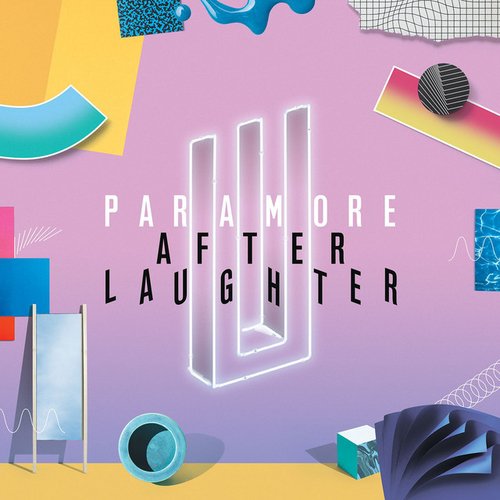
THERE is talk of a new Paramore album…

 PHOTO CREDIT: Pooneh Ghana for DIY

at some point this year. In this feature, I go back up to five years and look at albums that were hyped at the time and deserve a lot of focus and airplay now. After Laughter arrived four years after Paramore’s eponymous album. Both albums are great, though I feel After Laughter is stronger. Perhaps their best album so far, it is one everyone should know and listen to. As I do, I am getting to a couple of reviews for it. There was a lot of media interest around After Laughter in 2017. The band (fronted by Hayley Williams) were discussing this album that seemed to signal a new phase for them. DIY conducted an extensive interview with the band. I have selected some segments of the chat which stood out:

Almost eighteen months later, the three current members of Paramore – Williams and York are re-joined by original drummer Zac Farro – are sat together in the corner of a lofty Nashville photo studio. It’s a Friday afternoon and the trio are in the middle of planning a trip to see Radiohead in Atlanta this weekend. It’s also just a little over a month until their fifth album ‘After Laughter’ will be released and, as of the time of writing, only a handful of people in the world have any idea what’s coming.

“It’s weird,” ponders Hayley, on how it feels to be five albums deep and over ten years into their career. “I still feel like we’re really green, especially with this record. It felt like there were so many new things to try and so many new feelings about life - you’re finally all the way over the hump of being able to deny that you’re an adult now. Yeah, this was a crazy record to make.”

PHOTO CREDIT: Pooneh Ghana for DIY 

Unsurprisingly, the sense of anticipation surrounding the band’s next move has been palpable. In March 2016, the then-duo of Hayley and Taylor set sail on their second Parahoy! but fans remained uncertain of what would come next. And while their performances on board - their first after Jeremy’s departure - were fraught with emotion and honesty, with wounds still open, the four-day cruise would go on to be much more significant than they’d anticipated.

“I’ve never really wanted to cry on a cruise…” Hayley laughs, looking back at the rather emotional experience. “That wasn’t a selling point for certain!” It did, however, provide some much-needed catharsis for the then-two members. “Taylor and I talked about that right after it happened. It was really tough, and a lot had changed. All of a sudden, I felt very naked up there.

“[Parahoy!’s] supposed to be this fun thing; it’s meant to be a place where we all leave the world behind and we do our own thing, connect over music, play games and none of it matters, because who even knows how to find us? It’s this really beautiful community and feeling, yet I was really sad. There was this - I dunno - cloud that felt like it wouldn’t get off our backs for a moment there.

PHOTO CREDIT: Pooneh Ghana for DIY 

“Then we did this meet and greet that was about three hours long,” she explains. “People were coming up and looking us very deeply in the eyes and genuinely telling us things like, ‘Oh man, we’re so proud of you guys’ or ‘We’re so happy we get to be a part of this music’. These really incredibly genuine sentiments. There are always these really nice reminders with Paramore that it’s not just about us. I think that’s why we’ve been able to survive all of this shit: because it’s not really about us. When you’re looking into people’s eyes and you know they’re going through something probably worse than you, it just gives you a fresh perspective. We came home from that with a little bit of extra energy to get going with writing again. It was a good thing.”

By the time June rolled around, the band – who had invited Farro back into the fold by this point – were gearing up to head into the studio. “I mean, I never feel prepared, but I was scared,” confirms Taylor, on how they were feeling in the lead up. “I did feel like we had all the pieces, but it’s always a bit terrifying.” After the ambition of their previous full-length, the bar was set high, and that sentiment wasn’t lost on them. “Music is one of the only mediums of art where you do something and that is what you exist with for years.” An artist can create a piece and move on, a director finishes a film then continues with their next project. “For us,” Taylor continues, “we make a record and we live it. There’s a lot of pressure from both outside and within, because you want it to be great, you want to believe in it. That was where the fear came in; it was about making something that we all loved and that - even if it didn’t work out - we could all still stand behind it and be proud.”

PHOTO CREDIT: Pooneh Ghana for DIY  

The first step in making their fifth record was to build themselves a support network. Alongside Zac, who originally left the band in 2010 and has most recently been working on his own project HalfNoise, the group recruited ‘Self-Titled’ producer Justin Meldal-Johnsen to co-produce with Taylor. “When me and Hayley went into the studio,” adds Taylor, “we were a duo, so it was about putting people around us that we had history with and confidence in.” Rebuilding their bridges, they tried to create something that felt much more like a band. They were able to move forward, and more importantly, be themselves.

That’s an element that has ultimately shaped ‘After Laughter’ itself. While their previous record saw them giving anything a go, this time around they knew the path they needed to tread. Building upon the high octane energy of the likes of ‘Ain’t It Fun’ and ‘Still Into You’, it takes the bubbly vibrancy of those tracks and cranks it up to eleven.

“We intentionally didn’t look back at all,” Taylor is quick to assure. They now finally felt liberated enough to pursue the sounds they’d played with last time, but in a bigger way. “I really wanted this album to be different, but I didn’t really know what that would be like. I knew I didn’t want a ton of high lead guitars and I was getting kinda sick of head banging - our necks just always hurt!” While ‘Ain’t It Fun’ represented one of the most distinctly different sounds they explored last time around, now it was about calling upon the attitude and the mentality that had allowed for that song to be birthed in the first place. “We definitely just wanted to be honest with where we’re at,” he adds, “and be excited to listen to [the music] ourselves.”

Honesty was also the key component within Hayley’s lyrics. While Paramore have never been a band to shy away from pain or hardship in years before, this set of songs shout the message loud and clear. Unabashed and open, raw to the last, with titles like ‘Hard Times’, ‘Forgiveness’ and ‘Fake Happy’, the album shows that it’s clear the pain they’ve felt over the past two years hasn’t dimmed. Now, they’re unafraid to show it. “You can say it, it’s alright!” laughs Hayley, at the suggestion that these lyrics are much more forthright in their, well, sadness. “Honestly, we don’t even have the energy…” she admits, trailing off a little.#

After almost a decade of dealing with issues - whether they be the departures of band members, the band’s portrayal in the media or simply the mechanics of the industry - it’s no shock to learn that Paramore are often exhausted. “We went through enough shit, man,” she goes on. “It’s not a selling point; life can be so hard. It’s funny to think that there’s anybody in the world that would look at us and think that our lives aren’t really hard just because we played Wembley or something. That’s cool but we still go home at the end of the tour.

“We’ve been playing shows for years and have been around so many people and parts of the world, and you just reach a certain point where you’re like, ‘I’m done.’ We don’t ever wanna be rude or unprofessional, but we’re just people,” she continues, tapping into one of the album’s main sentiments. “If we’re all faking it or being phoney, when do we ever get to connect? I don’t want to live in that mindset anymore, where I have to perform, not on stage but, as a human. It’s just tiring!”.

To show why After Laughter deserves some more love, there are a couple of reviews worth sourcing. With so many great songs and some brilliant production from Justin Meldal-Johnsen and Taylor York, After Laughter is a terrific album. This is what NME had to offer in their review:

Emo kids’ eyeliner will be even smudgier than normal this week, because on their fifth album Tennessee alt.rockers Paramore have finally fully ditched the serrated guitar-driven angst and the baggy trousered alt.awkwardness and taken a swan dive heart-first into a big, sunny swimming pool full of old school pop bangers.

Hayley Williams might have heavily hinted at the band’s new direction on 2013’s power-pop leaning ‘Paramore’ album, but ‘After Laughter’ comes over like the earnest, fist-pumping soundtrack to a long-lost John Hughes coming-of-age film. No longer is this a band to file alongside My Chemical Romance but rather the glossy likes of Haim, especially when the sassy handclaps and hairflicks of ‘Forgiveness’ kick in. The nods to their punk past are few and far between, coming through only ska-inflected bounce on ‘Caught In The Middle’, which brings to mind early No Doubt, and the moody, marauding ‘No Friend’, on which Hayley takes a time-out and lets Aaron Weiss from Philadelphia rockers mewithoutYou holler grumpily.

But that’s certainly no bad thing – unless you’re really, really attached to 2006. With it’s perky marimba, album opener ‘Hard Times’ sets the scene perfectly; a synth-y, tropical offering that’s as cheery and comfortingly brash as a Hawaiian shirt worn out of season – it’s possible to hardly even notice that the lyrics are about being in a damn shitty mood (“Walking around with my little rain cloud / Hanging over my heard and it ain’t coming down”). ‘Told You So’ is similarly sprightly, but with an equally glum outlook (“For all I know / The best is over and the worst is yet to come”). More sonic therapy comes via the addictive ‘Grudges’, which feels like a turbocharged take on The Bangles, and bouncy ‘Pool’ while there’s whispers of classic rock heroines Heart in the dreamy power ballad ‘Forgiveness’ and string-laden ‘26’.

Catharsis is never usually this joyous, but sometimes smiling through the pain works better than crying”.

To finish, I want to quote more extensively from a review that Consequence put out. Even though After Laughter got a couple of mixed reviews, the overall reaction was one of huge positivity and respect. It is deserved for an album that is a real pleasure. With so many different sounds blending together, it is no wonder what so many publications ranked After Laughter among their favourite albums of 2017:

Consider the megahit single from Paramore, “Ain’t It Fun”. In addition to being quite possibly the best song Paramore have written, “Ain’t It Fun” typifies the band’s ability to keep one foot in its established identity while toeing new sonic territory with the other. The exultant gospel choir in the song’s sing-along bridge is a hat-trick unheard in the band’s prior LPs, but the palm-muted and distorted guitar chords that accompany the choir keep Paramore rooted in their alternative rock and emo origins. With Paramore, the old is rarely far from the new. The same applies to After Laughter, which, for all its bouncy synths and sugary hooks, still echoes the angsty band that made Riot!. When Williams accuse-asks on “Fake Happy”, “You think I look alright with these mascara tears?”, one can’t help but remember the stud belts and black skinny jeans copies of Riot! were sold alongside at Hot Topics nationwide.

Original drummer Zac Farro returns to Paramore on After Laughter after having split from the group with some controversy in 2010. This follows the similarly controversial departure of bassist Jeremy Davis, which took place after Paramore’s release. (A 2016 legal battle between Davis and the band ended in a settlement this year.) Since Farro’s initial departure in 2010, it has become something of a staple to speak of Paramore’s tumultuous lineup, as if with each new (or returning) member, something about the band itself must also be changing. Even with the shifting instrumental emphasis and differences in timbre on After Laughter, Paramore do a fine job building on the momentum initiated by their widely acclaimed self-titled record.

Lead single “Hard Times” kicks things off with a Hot Chip calypso jam, which concludes with an irrepressibly catchy riff in the outro. Even in this moment of genius, however, there is an unfortunate sign of strange things to come. The arpeggio riff at the end of “Hard Times” is matched note-for-note by a robotic voice, the sound of Daft Punk’s Random Access Memories joining the party in the last few seconds. “Hard Times” is a fine single and a great choice to open After Laughter, but such sonic accoutrements are unnecessary when the core of the song itself is solid. The same goes for “Fake Happy”, which boasts a simple and effective synth riff and yet inexplicably begins with a hushed acoustic intro, with Williams’ voice filtered through a kind of telephone effect. In moments like these, After Laughter’s wise emphasis on hooks and choruses is unnecessarily accented by odd instrumental and arranging choices.

When the hooks are good, though, they’re great. “Rose-Colored Boy”, despite its somewhat clunky titular metaphor, joins “Ain’t It Fun” in prime sing-along quality, both for its cheerleader intro and Williams’ impressive vocal gymnastics in the chorus. “Idle Worship” provides some welcome energy late in the record, especially given that the odd, mostly throwaway Aaron Weiss (mewithoutYou) feature, “No Friend”, derails an otherwise strong conclusion to the record. Weiss contributes a mostly spoken, mostly inaudible series of cryptic sentences that practically beg listeners to read into them as a description of Paramore’s career: “A semi-conscious sorrow sleeping in the bed I’ve made/ That most unrestful bed, that most original of sins/ And you’ll say that’s what I get when I let ambitions win again.” The last of those three sentences puts into words an objection raised against Williams in past controversies related to Paramore. To some, Paramore can appear to be Hayley Williams Featuring Some Other Guys.

If there’s one thing Paramore and now After Laughter disprove, it’s that very suggestion. Williams boasts undeniable talent, but her gusto requires the sharp songwriting and clever instrumentation of her bandmates, and After Laughter testifies to what happens when a singer like Williams is met with a group of quality instrumentalists. The truly interesting conflict for Paramore on After Laughter comes not in there being yet another lineup change, but rather the band’s juxtaposition of angsty lyrics and cheery pop. “Throw me into the fire/ Throw me in, pull me out again,” Williams sings atop the insistent bass drum and slinky bassline on the bridge of “Told You So”. No matter its rocky moments, After Laughter exhibits the enduring trait that makes Paramore so appealing: Even when the situation is dire and emotions are running high, they tell it like it is with smiles on their faces. You’d be forgiven for missing the seriousness on After Laughter for just how much damn fun it is”.

A wonderful album that is right up with Paramore’s best work, After Laughter is one that I was eager to revisit. I said that there may be an album from them this year. In January, it was confirmed that the band have entered the studio to work on their upcoming sixth album. It does seem like it will be a more guitar-heavy release. Before we get that, have a listen back to the amazing After Laughter. It is a fine album from…

A great American band.

TRACK REVIEW: Mimi Webb - House on Fire

TRACK REVIEW:


Mimi Webb

House on Fire


8.8/10


PHOTO CREDIT: Frank Fieber

The track, House on Fire, is available from:

https://www.youtube.com/watch?v=i-M9_cKCGuM

RELEASE DATE:

18th February, 2022

ORIGIN:

Gravesend, U.K.

GENRE:

Pop

LABEL:

Epic Records

__________

A rising British talent…

 PHOTO CREDIT: Parri Thomas

who is one of the most promising young artists around, Mimi Webb is someone to watch closely. Currently on tour (she plays the Manchester Academy 2 tonight), Webb finished third in BBC’s Sound of 2022. It is clear that she is an artist that is already showing enormous promise. Following her debut E.P., Seven Shades of Heartbreak, last year, there will be calls and excitement about an album. I am going to come to Webb’s latest single. I will work my way there. To start, it is worth looking at Webb’s start and when she became interested in pursuing music. In the Sound of 2022 interview with the BBC, Webb was asked about her musical upbringing:

When did you discover you could sing?

I think I was probably eight years old. I always sang, since I was a toddler - but I think the moment when I first thought, "Oh, there's something going on here" was when I was eight and doing choir and musical theatre at school.

Who was the first person who encouraged you?

It was my piano teacher at secondary school. In my first lesson, he asked me what could I play and I said, "Oh, I can play Someone Like You by Adele and I can sing it, too." He was probably thinking, "Hang on, this is a piano lesson" but when I sang, he just was blown away. He then called up the guitar teacher, who came and listened too, and they basically got my mum on the school phone and told her, "This is something you need to pursue". I was so excited!

What was the first song you wrote for yourself?

Actually, I've been writing since I was 10 years old. I'd sing these random songs I made up in my head in the back of the car. My mum used to assume they were real songs, but they weren't! And the more I did it, the more she would be like, "Oh my gosh, this is quite cool."

You ended up leaving home at 16 to attend BIMM in Brighton. What was that like?

BIMM was two hours away from Canterbury - so it was very intense and scary. I had to move in with a host family and make a whole new friendship group. But I kept saying to myself, "I want to be an artist and this is the way I need to go about it. If I go two stairs up, I won't be going back down."

Are your family helping to keep you grounded now that your career's taking off?

One hundred per cent. I just moved to my own place in London about a month ago, but I'm always, on the phone to them, FaceTiming, catching up. They keep my feet on the floor”.

 PHOTO CREDIT: Frank Fieber

Mimi Webb attended BIMM Institute in Brighton. That seemed like a great experience for her, at least when it came to making connections and getting noticed. I was interested knowing more about Webb’s musical loves, and how she transitioned from a music lover as a child to someone actively pursuing it. In an interview with The Line of Best Fit, we discover more about Webb’s experiences with TikTok, her childhood music fascinations, and moving to the BIMM:

For Canterbury singer Mimi Webb the pandemic has been a double-edged sword. On the one hand, she’s used the time to cultivate a dedicated following on TikTok that’s translated into streams and radio spins. While on the other, she’s living her success through the lens of Zoom.

“Because people are at home, they're playing more music, they're chilling out more. So you know, it's just so easy to connect with them,” she smiles from her bedroom, across yet another video call. “I think with my music being quite emotional as well, everyone really had that time to look at themselves and hone in on that emotion. I think people wanted to be real with themselves, because when you're working Monday to Friday, you haven't always got time to actually care about how you're feeling and listen to music that gets you in that place.”

The 21-year-old Webb was raised in Kent, falling in love with singers like Adele and Emeli Sandé from a young age. “I grew up listening to all these incredible artists that give that goosebumps kind of big feeling,” she says. “I've always just grown up loving that kind of emotional impact.”

PHOTO CREDIT: Cameron Bensley

Although her family weren’t particularly musical, they nurtured Webb’s passion, enrolling her on a part-time course at the BRIT school and supporting her performances in school choirs, band nights and variety shows.

At sixteen she had a choice between going full-time at BRIT or moving to Brighton to attend BIMM. She chose the seaside music college, as it offered songwriting courses, as well as performance-based modules. Webb left home and moved in with a host family. “For those two years I really evolved and grew off of my own back,” she explains. “You’re out there in the world on your own. You're living and breathing the kind of atmosphere of music and the environment, so you’re really driven.”

Through BIMM and the opportunities her attendance created she met management company Best Friends - the same people behind Billie Eilish, Finneas and Ashe - and signed with Epic Records at eighteen. As they were readying her first single, she took a trip to New York for meetings where she was introduced to Charli D’Amelio. The two went for dinner and showed TikTok to Webb: “I was like, I don't know what I could do on it!” she laughs. “So we did a video together and I just sang one of my songs that I'd written a few months before. It kind of just went crazy from there, like the reaction it had. And I just thought, this is crazy that this app does that. Can actually connect to that many people”.

Like so many artists, Webb started making music during lockdown. Her career started before then - but it was over the past couple of years when she has been going for it with real intent. Although it must have been a struggle, the fact Webb is a noticed artist who is being tipped for big success shows her determination and passion! NOTION spoke with Webb back in May. They asked about making music during lockdown, and what it has been like entering such a demanding industry relatively fresh out of college:

On the other hand, you only started releasing music last year (which I do not believe), but especially in a time of such chaos, did you ever think I might have to put music on pause or was it just full steam ahead?

I was not putting anything on pause. I remember at the start of the pandemic, I was like, right guys, I’m getting my setup, I’m learning how to do my vocals and how to record it all. We’re just not stopping like this because last year as well, 2020 was very much a year of right here we go. Let’s kick it all off. When we all went into the pandemic, I just thought to myself, no, not having it, I’m still going to do what I can do at home. It’s a very, full gun ahead, whatever the saying is full speed ahead – just very passionate about getting everything going. Every day I was up straight into work, I’ve got my little studio set up at home, and then it’s just back and forth.

At the time, still being new to the music scene and just finished Brighton Music College – was there any time you thought this could not go right, and as a rising artist within such a demanding music industry, how do you overcome those challenges?

There are those times where you end up getting a bit worried, releasing, the time span of how you’re going to do things and, there are so many amazing artists but, I think to believe in yourself and surround the whole thing with love and support for your peers and be happy and great – allowing the love of the industry in. I think that is where I learned, wow this is how it works. But there are definitely loads of times where you sit there and think, oh, and I think that happens with everyone, doesn’t it with anything you do. You’ve just got to be able to filter it all through and go with the things that make you feel good and happy”.

I want to spend a bit more time with Mimi Webb and her experiences during lockdown. Wonderland. interviewed her last April. It must have been such a strange time for Webb to fulfil her ambitions and express her true talents when the world was locked down:

How has the last year affected you as a new artist trying to establish themselves in the industry?

It pretty was crazy at the start. I remember thinking to myself, how am I going to be able to record my vocals? How am I going to write music? And I had become so reliant on being in a studio and having the equipment there. But I was able to adapt and learn how to use the equipment I had at home and get used to Zoom sessions to keep making music during lockdown. And now my most recent single is a total product of quarantine. Personally, I think I’ve come out of this time as a completely different person. My look has changed, I’ve become a stronger artist because I had time to reflect and work out the details of who I am.

You released your first single, “Before I Go,” a month into lockdown – what was it like to try to start your career in these circumstances?

It was definitely a real stress. We were able to finish the song and the music video right before lockdown started. But there was a sense after that release of where do we go from here? We’ve managed to find ways to work through it. This time has also given people a chance to really listen to music. TikTok has been really amazing for my career in that way, because the platform has been such a big part of people hearing my music and following me as an artist.

How has the time you’ve been able to reflect impacted you as an artist?

2020 was a very strange one for me. I was going through a moment where I was trying to find my feet in the industry. I was trying to find my sound. I was trying to have my own lane that no one else had because that really is a pressure when you are a new artist. But as time has gone on, I have definitely realized that you can really just put out whatever you want as long as the song is really strong, and you believe in it. I’ve been able to drop the pressures of all of those side of thoughts. I feel like an artist now, I feel like I have only just become an artist because of this period of experimentation and finding my sound”.

 PHOTO CREDIT: Talie Eigeland

I want to come on to social media and Mimi Webb’s influences. TikTok has been a big and important platform for many artists. It allows access to a large audience; a site where you can share music, clips and short videos seems perfect for a Pop audience. In December, NOTION spoke with Webb once more. We discover more about her musical influence, and how TikTok has played a role in her rise to recognition and success:

Citing her key influences as powerhouse vocalists Amy Winehouse, Adele and Sam Smith, like her heroes, Mimi’s ability to tap into both vulnerability and strength through her music is winning her legions of fans around the world. Currently, she’s tip-toeing towards six million monthly listeners on Spotify alone. “I never expected it,” she affirms. It’s easy to quantify things numerically since we live in a world where streaming and followers dictate popularity and trends, but Mimi quantifies her success by the resonance her music has with people. Always keeping an eye on new DMs and comments, she cherishes the interactions she has with fans both old and new. “The fact that these people feel comfortable to let me into their personal life and speak to me about it and they want to get advice from me [is amazing],” she says. “You kind of get to know everyone through social media just because you see the name so often.”

However, like any digitally-fed Gen-Z, Mimi knows the importance of a constant social media buzz for artists. Whilst she “gets all excited” seeing new TikTok comments and duets on her videos, she does also speak candidly about the pressure she – and many other artists – feel to be constantly engaged on social media. “You’ve really got to make sure you get information across in the right way and be on top of your game, even though you’re probably doing five shoots a week and loads of shows every month,” she explains. “It’s very intense trying to keep on top of it and share the information that you know your fans need to see. You want to make it look good and you want to come across really great. I’ve always been the girl next door vibe so I’ve just shown what I’m up to and what I do, but I think there’s now that line of making sure you’re keeping a mystery as well and to keep everyone super interested and ready for new information. I think the more you grow, there are definitely more lines you can’t cross. And it’s just getting used to that – becoming an artist and a brand.” Despite this, it seems Mimi’s mind is ahead of the game already: “I’m getting to the point now where I’m making sure I stay organised and on top of it. When I do that, I feel like I’m getting through it all well,” she relays”.

TikTok, as I said, has been key for Webb. Although the platform has its faults and drawbacks, it is a great way to promote music and new work. POPSUGAR. dubbed Mimi Webb TikTok’s most underrated artist. They wanted to know more about her TikTok videos:

PS: When you first started making TikTok videos, was there a part of you that imagined what it would be like now?

MW: No! I was freaking out. I was like, "Come on, I want to try it, see what it does." I was saying to my mum and dad, "I want to really try this out," and we just kind of went for it, and I didn't really know what would happen. I'd seen that TikTok could do amazing things for songs, because it had really blown up a lot of songs, like "You Broke Me First" by Tate McRae, that was one of my favourite songs. When I started, I couldn't really get my head around it, because you just see all these numbers, and you can't actually figure out what it is until you then see the growth the song makes outside of the app.

PS: Your friends and family make appearances in a lot of your TikTok videos. How difficult was it to convince them to get involved?

MW: They were really up for it! I think because I don't really play them anything, and I don't like to tell them too much. I've always been a bit like that, I think because I moved away at a young age, and I was kind of on my own for a while. For them to even get a scoop of what's going on and to be let into the secret, they were like, "Yes, well, whatever way, we want to do it." I never really played them anything, and I always kept it all to myself, because I just wanted to wait for the right moment.

PS: I'm sure they loved that. What do you think it is about TikTok that has been so helpful for young artists?

MW: It's very welcoming, and everyone wants to hear new music on the app. I think it's a really creative app, and there's not any judgment on what you do, because there's so many different things people can do. TikTok isn't for just one thing — it's for so many different things. That's what I love about it. People do dances, singing, songwriting, jokes, comedy — all those kind of things. It's definitely the best place to go when you're a new or upcoming artist, and it really helps you connect with the fans”.

I cannot discuss Mimi Webb without talking about her excellent debut E.P., Seven Shades of Heartbreak. Whilst it is an excellent E.P., we learn from the BBC Sound of 2022 interview how it was slightly prophetic – the title pointed at some future heartbreak and realisation:

When Mimi Webb started recording her EP, Seven Shades Of Heartbreak, last year, she had no idea it would prove prophetic.

Writing songs about the loves she'd lost focused her attention on her current relationship - and she wasn't keen on what she discovered, as her boyfriend quickly learned

"The EP helped me realise that that relationship wasn't right for me," she confesses. "It really helped me figure out what I felt was missing... And he probably struggles with it, you know? When he listens to the EP, he's going to think 'Oh, God'".

Still, she wouldn't change a thing.

"It's just so crazy how I look back on that EP now," she says during our conversation in mid-December. "It came out two months ago and I was in such a different place. It's really showed how much can change within a short period."

That applies equally to her personal and her professional life. Seven Shades Of Heartbreak became the 21-year-old's first top 10 album, and she ended the year performing her single, Good Without, on the Top of the Pops Christmas special”.

 PHOTO CREDIT: Cameron Bensley

I want to come back to the POPSUGAR. Interview before moving along. They asked Mimi Webb about her debut E.P., Seven Shades of Heartbreak One of the most anticipated E.P. releases of last year, it must have been a relief for her to get it out during the pandemic. It would have been in her mind for a very long time:

PS: Speaking of new music, your first EP is out today! How are you feeling, and what can you tell us about it?
MW: I'm so excited. It's really about clarifying my sound now and making that really dominant and really understandable. It's about a situation that I'm going through and I've been through, and it's something everyone can relate to. It's got lots of different chapters of that one situation in it.

PS: How would you describe your sound for people who haven't heard you before?
MW: Definitely the emotional ballad, powerhouse sing-your-heart out songs. I love the instrumentation we use and the production, sonically; it's got that pop feel as well. It's definitely got the mix between pop and then ballad.

PS: When writing the EP, was there anyone you were particularly inspired by or listening to at the time?
MW: I'm always listening to Adele, and I think she's always been a really big influence and inspiration for me throughout my years of writing. I also love Lewis Capaldi. I definitely took some inspiration from his album and the emotional songs out there”.

PHOTO CREDIT: Yoshitaka Kono 

Prior to coming to her new song, there is an interview with Official Charts. It was interesting learning which album Mimi Webb first fell in love with, and what her earliest songwriting memory was:  

What is your earliest music memory?

It was being at school and playing in all the talent show and band nights. Learning instruments, singing in the school choir… I was always really involved in all of it it. I was always known as Mimi, the girl who will never shut up singing! I did a lot of musical theatre when I was young, but my voice was never really suited for that. I think that helped me find my music passion as it took me intro the studio and to that side of the art.

Any embarrassing moments you’d rather forget?

Definitely! I remember when I was around 13, I would be so dramatic on the stage. I would sing Adele’s Someone Like You and literally look like I was about to cry. I mean, I’ve always been a massive drama queen – I’m an emotional person. For me, it was always about selling the show, but I really had no clue what I was doing.

What was the first album you fell in love with?

I was completely obsessed with Adele’s first album 19. There’s not a bad song on that album. I love that her songs aren’t necessarily what you’d expect them to be about. Emeli Sande’s first album as well. Anything with that goosebumps feeling and a really big vocal, I am always there for it.

What was the first you wrote about?

It was called Pinocchio and it was about a relationship I was in when I was really young. I was feeling lied to and I was in a bad place, so the song was all my anger towards that situation. I remember thinking, no-one can hear this!

What music is on heavy rotation for you at the moment?

I’m loving Olivia Rodrigo’s album Sour, she’s just smashed it really, hasn’t she? Taylor Swift’s Folklore is still incredible. To be honest, I’ve been so busy writing and recording that I need to get into some more new music. But that singer-songwriter, real music that resonates with people is the kind of stuff I love – it’s what inspires my music.

Is there an artist people might be surprised to hear you love?

I love Rihanna so much. Her Anti album was just incredible – Needed Me, B*tch Better Have My Money, all of it. I know I would never be able to make that kind of music and create that kind of vibe, but I love listening to it”.

 PHOTO CREDIT: Talie Eigeland

House on Fire’s video begins with a man in his house on a laptop. He receives messages from Mimi Webb. She suspects he was lying and was out with a girl called Alice. He says he was at home and not out with anyone else. Webb accuses him of being a liar. The next shot, comically, sees him on a stretcher - as it is implied she burned his house down. We get context to the song before anything is sung. Webb is someone not to be messed with! She has had enough of being lied to and taken for granted. With a fresh and determined vocal, House on Fire never relents when it comes to its energy and bounce. Although I was not normally review mainstream Pop music, there is something about Webb’s music that draws you in. She has aspects of Dua Lipa in terms of her vocal and sound, yet she is very much her own artist. Her lyrics are especially distinct and personal. The first lines and expressions are particularly vivid: “I make friends with the head of police/To make sure he'd suspect me the least/If I'm caught I'll be out in a week/I got my story straight down to a T”.

This is much cheekier, more sinister and slightly American (I got more of a sense of California and U.S. cops than London or someone in this country). Webb professes her innocence as a shady and cheating boy is pulled from a flaming house: “Oh I'd say it wasn't me, hmm/And sure we dated once in a while/But if there was a motive, it's not enough for a trial”. The video is funny and powerful. Webb knowingly winks and smiles as the carnage unfolds. We see her dressed as a firefighter dancing on the lawn. We know that she will get away with arson. The composition keeps it simple with a beat and some electronics. It allows Webb the chance to have her voice at the centre and front of the mix; a sound she can ride on and keep the strut and swagger high. The compelling story continues: “I saw you out, it was zero degrees/And you had your hands right under her sleeves/Oh, you said you don't get cold, you liar/Now I'ma set your house on fire/Running, I'm running back to your place/With gas and a match, it'll go up in flames/Now I know you're not at home, you liar/Now I'ma set your house on fire”.

One might feel it is extreme for Webb to burn the house of her cheating boyfriend after one or two indiscretions, but he has been lying and assuming he would get away with it. Someone who takes no crap, this is a heroine who is not going to sob or get angry and leave it there! A sign that she is someone you do not screw with, House on Fire has this rush and intensity that lives up to its name. I love the fact that, unlike a lot of Pop songs, Webb is more concerned with creating story and plot as opposed simply repeating lines and relying on a catchy chorus. House on Fire has one of them, though it also has an original lyrical dynamic: “If somebody goes and calls the brigade/I'll already be too far away/I bought a map and I planned the escape/I'll dye my hair, change my name”. There is a great mix of funny and horror in a way. It is creepy in the sense that the anti-hero is being taken to hospital, yet we see several Mimi Webbs in the back with him administering oxygen. One could almost see the video taking a truly bloody turn. As it is, it is kept lighter. Having alibis and saying that the police and fire brigade would never suspect her, she has gotten away with the perfect crime! She warns the ailing boyfriend how she is appreciates honesty and decency: “You should've seen this from the start/When you could've been honest, you could've been smart/Yeah, we might have touched, we might have kissed/But, darling, I'm sorry, it's not enough to convict”. A master criminal who has everything planned and is going to extreme lengths to have her revenge, we learn how the relationship was quite new or casual.

 PHOTO CREDIT: Yoshitaka Kono

One might ask, for a relationship that has not progressed that far or got too deep, whether Webb’s ultimatum, fire retribution and her criminality is proportionate! It adds layers to a song that other artists would not inject. Much more than a commercial or shallow Pop song, there is nuance and mystery. Sexy, colourful and funny, the video moves to the hospital as Webb is dressed as a (sexy) nurse. In a hospital that looks like it could be set in America in the 1980s (it has that vibe and aesthetic), we move to a rehabilitation room/centre, - the actual set looks like a gym or sports hall, as it allows for more space and movement -, where Webb is taunting and unapologetic. The man, I bet, would turn back time and do things differently after he is bandaged and sees Webb on a T.V. singing her lines of anger and revenge. Whilst other men might be hesitant about having a relationship with Webb – if she can burn someone’s house down for some light cheating, would they always be looking over their shoulders and afraid to do anything wrong?! -, her message has been clearly made. The liar liar’s house is on fire, and the video ends with him on the roof on a treadmill, precariously placed near the edge. So many shades of black come into this video! Webb plays this cross between a femme fatale and a girlfriend who is speaking for women who have been cheated on, stepped on and not been able to get their kick in (I am surprised there were not references to Basic Instinct or Fatal Attraction (Webb boiling the boy’s phone like Glen Close did the bunny in the 1987 film). The final lines complete the plan, as Webb has a disguise and has made her getaway: “You can look around, but you won't find her/She'll be outta town with the getaway driver/That's the way it feels when the flames get higher/Now I'ma set your house on fire”. In the video, Webb makes a gesture like she is dropping the mic, as she is seen breathing heavily with a sense of relief and victory on her face. Enacting her revenge and ensuring that this one man does not mess with another woman, the song completes. House on Fire is a song you will re-spin and play quite a bit. The video on its own is another to get you coming back, as it is packed with fascinating and standout scenes. I love the concept of the song and how it is empowering and filmic! As I said, one might question the validity and rationale of Webb’s extreme comeback to cheating in a relationship that seemed like it was on its infancy. Regardless, House on Fire is a fantastic offering from an artist who is going to have her busiest year yet. House on Fire, to me, would really come to life on stage. It is a song that is destined to be a fan favourite before long.

 PHOTO CREDIT: Talie Eigeland

I want to end up by returning to the interview with NOTION from December. Although Mimi Webb is quite a new artist, she is pretty ambitious and determined:

It’s this determination to not just survive, but thrive in the ever-competitive music industry that is surely playing a big part in Mimi’s mounting success. Having already ticked off so many goals early on in her career, including playing Reading and Leeds festivals in August and with her own UK headline show planned for the end of October, what’s left on her bucket list? “Definitely the James Bond theme song. I’d love to write and perform that. That is a massive one for me. But if I’m realistic, I’m like, ‘We’re just gonna have to wait a bit for that one, Mimi!’” she cackles. “I’d love to do a performance at The BRITs next year. That would be incredible. Nominations, that’s just crazy to me. It freaks me out,” she laughs again, also listing off her dreams to attend The GRAMMYs and both play and sell out arena tours. Collabs with Calvin Harris and Dua Lipa are on the manifestation board too, but Mimi is ready to wait until the right song and collaboration comes along. “At the end of the day, for me as an artist, I just want it to make sense and relate and come across well,” she explains. “It’s just making sure you get that right and it works. I can’t wait for those opportunities to start coming in.” Despite her big (yet definitely within reach) dreams, Mimi is as grounded as ever, emphasising: “I’m really, really realistic with it, which is good. It makes me feel like there’s so much more to go for and new opportunities”.

House on Fire is a great new track from Mimi Webb. Someone who is going to have a wonderful and successful career, I am sure we will see something in the way of an E.P. or album this year. Now that touring has resumed, Webb is definitely getting out there and taking it worldwide. Next month, she heads to North America…and she is not back in Europe until the summer. It is going to be a hectic and busy year for Webb. Make sure you follow her and see where she heads next. House on Fire is a suitably hot and intense track from…

  PHOTO CREDIT: Parri Thomas

A talented and bright young artist.

___________

Follow Mimi Webb

FEATURE: Second Spin: Halsey - hopeless fountain kingdom

FEATURE:


Second Spin

Halsey - hopeless fountain kingdom

___________

LAST year…

Halsey released her best album yet with If I Can't Have Love, I Want Power. Her fourth studio album, it is an artist who talks of self-doubt and self-sabotage across a collection of songs that demonstrate her full range of talents in full flight.! Rightly lauded as one of 2021’s best albums, it is an absolutely faultless work. With a recent video for Girl Is a Gun impressing and showing what a hugely creative and astonishing artist she is, Halsey will also appear in a future film, National Anthem. The New Jersey-born artist is going from strength to strength. Destined to be a big film actor and one of the defining artists of her generation, there is no telling how big and iconic she will grow! Not to dampen that flame, but one of her albums has not received the acclaim it deserves…

Maybe Halsey herself would view hopeless fountain kingdom as a transition record. Her 2015 debut, BADLANDS, was a great album that showed huge sparks of potential. 2020’s Manic got huge reviews, and it is almost as strong as If I Can't Have Love, I Want Power. I feel hopeless fountain kingdom is a lot stronger than the reviews suggested. Even though it has been certified Platinum and went to number one in the U.S., it is a more radio-friendly album than anything else she has done. Maybe a bit commercial in places and complete with a couple of weak tracks, it is clear that the magnificent Halsey would fulfil her true potential on her next album. I really like hopeless fountain kingdom. It has some of her best songs on it – including Eyes Closed and Sorry -, and her music videos are visually spectacular and arresting. Such a striking and beguiling artist, Haley (real name Ashley Nicolette Frangipane) brought in collaborators like Quavo and Lauren Jauregui. She is strongest when she is on her own and is definitely up front and unaccompanied.

I want to bring together a couple of contrasting reviews. The first, from NME, is a more positive one. On the whole, hopeless fountain kingdom got a fairly positive response, though Halsey’s other three albums have received a more positive critical reaction. NME stated the following in their assessment of an album that I feel is incredibly strong:

Appearing on The Chainsmokers’ 2016 mega-hit ‘Closer’ has had a big impact on Ashley Nicolette Frangipane, AKA Halsey. Her 2015 debut ‘Badlands’ made her a cult popstar. ‘Closer’ made her a household name.

In truth, ‘Closer’ has a trace of blandness Halsey stampedes past when working on her own. ‘Hopeless Fountain Kingdom’ gets by on a universal quality, but there’s a personal touch you don’t find on everyday pop full-lengths. It’s a break-up album, placed in the context of a Romeo And Juliet-inspired world. The record even begins with the prologue to the Shakespearean tragedy, while the video for ‘Now Or Never’ is like her own take on Baz Luhrmann’s iconic 1996 film.

On ‘Sorry’ she admits to treating “the people that I love like jewellery” over heart-wrenching pianos. “I didn’t mean to try you on,” she sings. ‘Good Mourning’ gives Rihanna-gone-sci-fi-vibes, while ‘Bad At Love’ recalls the singer’s past relationships.

‘Hopeless Fountain Kingdom’ might be defiantly ambitious, but it’s surprisingly cohesive. Even cameos from Fifth Harmony’s Lauren Jauregui and Migos’ Quavo, and co-writes from Sia and Greg Kurstin can’t derail the feeling this is 100 per cent her own output.

The only time a guest threatens to overshadow her is on ‘Eyes Closed’, co-written by The Weeknd and drenched in his brooding R&B signature. But it’s far from the best song on the record, proving Halsey’s fast moving from cult hero to global superstar”.

To end up, I will bring in Pitchfork’s take. They had some positive things to offer - though they were a little bit more ambivalent towards Halsey and her second studio album:

Halsey’s sophomore album *hopeless fountain kingdom *comes with a backstory to rival an ARG. There were actual fountains and actual newspapers sent to actual doorsteps, but in 2017 this is the status quo. Tove Lo’s debut as the voice of Max Martin’s Wolf Cousins writing collective was presented as a four-part concept album about emotional turmoil. Beyoncé’s last two albums are bona fide franchises. Artists from The Fame-era Lady Gaga to suddenly-woke Katy Perry conduct album campaigns about how their music truly means something. It’s easy to see why: Streaming is a hopeless penny fountain, radio is a hopeless playlist kingdom, so one scrounges any extramusical interest one can. And most musicians prefer to think they’re making art, not content—especially with an audience that demands increasing creative control from artists and an industry that doesn’t keep up.

This is certainly less outwardly exploitative than the antiquated pop model of finding a teen, then corrupting their fictionalized innocent image for public ogling. Halsey’s bid at true meaning on hopeless fountain kingdom is to simply prove she’s “more than capable of writing radio music,” as she told Rolling Stone. The concept is ambitious, but the product ticks all the boxes: staid piano ballad (“Sorry”), In the Zone* *nostalgia (“Walls Could Talk”), R&B dilettantism (“Don’t Play,” Quavo-assisted “Lie”), recreations of proven hits (“Now or Never”). Of course, ever since she said she was raised on Biggie and Nirvana while getting high on kind and legal bud on *Badland’*s “New Americana,” Halsey has been accused of inauthenticity. Everything from her hairstyle to her racial and sexual identity has been seized upon as clues to debunk the enterprise. *The New York Times *called her “a millennial built in a lab.” Grantland: “Halsey’s life can be reduced to a perfect millennial construct.” Halsey lamented to Billboard the “conspiracy theorists who think [she] was crafted in a boardroom.” However, who but an actual Tumblr teen would imagine herself on a Rider-Waite card or dream up a post-teenage apocalypse where the only scarcity is connection?

“100 Letters” sets the scene: dingy floors, negs, and would-be love notes destroyed in the wash. The production is fittingly dirgelike with new age percussion loops and far away decaying guitar samples, like an Enigma track left overnight in a dive-bar bathroom. “Alone,” plush with brass and cellos, also sounds ‘90s: like a track off Everything But the Girl’s Temperamental if someone were actively having a panic attack over it. The lyrics cut through parties and drinks and hangers-on as Halsey’s vocal climbs the scale, increasingly agitated, up to the last, worst anxiety: “I know you’re dying to meet me, but I can just tell you this/Baby as soon as you meet me, you’ll wish that you never did.” “Eyes Closed” portrays that timeless gambit of getting over someone by getting under someone else, as well as the timely gambit of getting into co-writer The Weeknd’s production drears, withering melodies, and joyless sex. But while the backing vocals sound like Tesfaye, he’d never write something so abandoned as “he’ll never stay—they never do.”

The album’s not entirely anhedonic. The heart-thud pace and breathless quotables in “Heaven in Hiding” suggest genuine lust—that lurid diary entry with 25 blank pages on either side. Nor, despite the sheer quantity of shitty dudes here, is it just men who fail to connect. “Strangers” shimmers and yearns like a recent Tegan and Sara cut, with Heartthrob co-writer Greg Kurstin and with Fifth Harmony’s Lauren Jauregui as duettist. Jauregui, like Halsey, is bisexual, and “Strangers” is Halsey’s stated attempt to get a love song between two women onto pop radio. Not coincidentally, it contains the album’s most nuanced lyrics, the coupling that’s most promising yet most out of reach.

On an album full of radio experiments, some succeed—“100 Letters,” “Walls Could Talk” and “Alone” demonstrate the perennially fertile sound of alt-pop—and some inevitably fail. The two R&B tracks are a swagger void. “Devil in Me” is hopeless fountain kingdom’s requisite Sia track, and like so many others, Halsey makes it sound like anything but. More damningly, style never quite matches substance. That could be the young creative’s “taste gap”; Halsey is just 22. Or it could be the market. Is lead single “Now or Never,” as the story goes, “one part in the center of a long narrative that tells the story of two people in love despite the forces trying to keep them apart”? Or is it just writer Starrah commissioned to make another, poppier “Needed Me”—less prickly, less urban, less precise with the vocals? To some, it might not matter. Others might await a kingdom built on more than just airplay”.

Maybe the middle of the album is not as strong as the rest, though Halsey is commanding, hugely listenable and accomplished throughout. A stunning singer and songwriter, we need to give the underrated hopeless fountain kingdom another spin. Maybe it was being judged against her debut album or what critics thought Halsey should have released. With a couple more albums under her belt, I think that hopeless fountain kingdom does not stand out as average or anything other than a solid album. She has grown as a writer and performer since 2017, but she proved her worth on hopeless fountain kingdom. One of the music’s world’s most dizzyingly talented artists and a human being that captures the breath and moves the senses, go and check out Halsey’s hopeless fountain kingdom. It is a truly great album that Halsey…

SHOULD be proud of

FEATURE: I Love Every Little Thing About You: Stevie Wonder’s Music of My Mind at Fifty

FEATURE:


I Love Every Little Thing About You

Stevie Wonder’s Music of My Mind at Fifty

___________

WITH such an important album anniversary…

 IN THIS PHOTO: Stevie Wonder in 1972/PHOTO CREDIT: Jeffrey Mayer

coming up, I want to lean on some reviews and articles that take a close look at Stevie Wonder’s Music of My Mind. Released by Tamla on 3rd March, 1972, it was the fourteenth studio album by Wonder. It was also his first to be recorded under his new contract with Motown. Wonder was allowed full artistic control. It shows too. Playing most of the instruments and penning the majority of the tracks, the blossoming genius brought in Malcolm Cecil and Robert Margouleff as co-producers. Despite the fact Music of My Mind did not do overly-well commercially, the album is now seen as the beginning of Stevie Wonder’s classic period. It definitely came at a time when Wonder was producing some of his very best work. I wanted to dive into Music of My Mind ahead of its fiftieth anniversary. Credit due to a Udiscovermusic article from 3rd March last year. On its forty-ninth anniversary, they provided background to the majestic Music of My Mind:

It was on 1971’s Where I’m Coming From that Stevie Wonder came of age, in more ways than one. That was the LP, released soon after his 21st birthday, on which he exercised his new legal right to make music as he wanted, not to the predetermined specifications of Berry Gordy and Motown. But it was the following year’s Music of My Mind that played host to an even greater adventure in self-discovery.

The album, released on March 3, 1972, marked the beginning of Wonder’s creative relationship with co-producers Robert Margouleff and Malcolm Cecil, of the electronic duo Tonto’s Expanding Headband. The pair would later help to shape several of his more celebrated works of genius during the 1970s. Music of My Mind was no commercial sensation, but it stands tall among Stevie’s most important work, both in terms of his ever more profound songwriting sensibility, and in its use of his new best friend in the studio, the synthesizer.

By this time, technology was beginning to keep pace with Wonder’s insatiable appetite for invention. As he told Roger St. Pierre in the New Musical Express in the January, a few weeks before the release of the new set: “I first heard a Moog in 1971 and became very interested in its possibilities. Now I’m working with a VS04.

“I used it on my new album which will be called ‘Music of My Mind’ and that’s exactly what it is because the synthesizer has allowed me to do a lot of things I’ve wanted to do for a long time but which were not possible till it came along. It’s added a whole new dimension to music. After programming the sound you’re able to write or process the melody line immediately and in as many different manners as you want.”

This was still the sound of a young man whose new songs could still express ineffable joie de vivre, as on the opening, gospel-tinged funk of “Love Having You Around,” and the irrepressible “I Love Every Little Thing About You.” But the album also housed such reflective moments as “Superwoman (Where Were You When I Needed You),” with electric guitar detail by Buzz Feiten, and “Seems So Long.”

The scope of Stevie’s expression was a marvel to behold. Just the imagination, for example, to place heavy echo on his voice in “Happier Than The Morning Sun,” and play its chief accompaniment on a clavinet; or the vocal phasing and percussive playfulness on “Girl Blue.” The record ended with “Evil,” a simple and incisive piece of social commentary that, one might say, opened the door to his conscience. “Evil,” he asked, exasperated, “why have you engulfed so many hearts? Why have you destroyed so many minds?

The Cash Box trade review of the LP enthused: “Stevie has now reached the point where he must be considered a composer of the first order…a vital and expressive album from a man who used to be ‘Little’ and now is very big indeed.”

Penny Valentine, writing in Sounds, was in no doubt about the album’s significance. “This has been hailed as Stevie Wonder’s final ‘coming of age,’” she wrote, “but I think this album is more important and will certainly have more important repercussions than that. To me this album represents the ‘coming of age’ of black soul music. A growth that started with Curtis Mayfield, was extended by Isaac Hayes, and has now reached fruition in the hands of Stevie Wonder. It is that important a landmark in contemporary music.”

Valentine likened Music of My Mind to another staging post release on Motown some ten months earlier. “To Wonder this is a personal triumph. Not only in conveying his music to the listener, not only in no longer being thought of as simply a clever little black kid who swung through a song with apparent effortlessness. It’s a triumph comparable to Marvin Gaye’s break with Motown tradition for What’s Going On so that he could go out alone and do what had laid innate in him for so many years.”

Music of My Mind made its indelible mark on Stevie’s fellow musicians, too. Jeff Beck told the NME: “Stevie’s really on the crest of a wave at the moment. ‘Music of My Mind’ is a revolutionary album – it’s the sort of monster project which comes out and turns everybody’s head.” Later, Stevie memorably gave Jeff his tear-stained “‘Cause We’ve Ended As Lovers,” which became part of Beck’s much-admired 1975 instrumental album Blow By Blow. Syreeta had, by then, recorded a vocal version for her own Motown album Stevie Wonder Presents Syreeta.

Music Of My Mind reached No.6 on Billboard’s R&B chart, but only No.21 on its pop listing, and almost unthinkably now, missed the UK charts altogether, as had Where I’m Coming From”.

Despite the fact many would not place Music of My Mind in their top three Stevie Wonder albums, it is a masterpiece from an artist who has produced more than his share! Beginning a classic period that ranks up there with the best of them (I am thinking of David Bowie’s albums of the 1970s or Joni Mitchell’s earliest albums). I want to end with a couple of pretty positive and strong reviews of Music of My Mind. If you can grab a vinyl copy of the album, it is great listening on that format. Definitely check out the album whatever you can ahead of its fiftieth anniversary on 3rd March. This is what AllMusic said about Stevie Wonder’s fourteenth studio album:

With a new contract from Motown in his hand, Stevie Wonder released Music of My Mind, his first truly unified record and, with the exception of a single part on two songs, the work of a one-man-band. Everything he had learned about musicianship, engineering, and production during his long apprenticeship in the Snakepit at Motown Studios came together here (from the liner notes: "The sounds themselves come from inside his mind. The man is his own instrument. The instrument is an orchestra.") Music of My Mind was also the first to bear the fruits of his increased focus on Moog and Arp synthesizers, though the songs never sound synthetic, due in great part to Stevie's reliance on a parade of real instruments -- organic drumwork, harmonica, organs and pianos -- as well as his mastery of traditional song structure and his immense musical personality. The intro of the vibrant, tender "I Love Every Little Thing About You" is a perfect example, humanized with a series of lightly breathed syllables for background rhythm. And when the synthesizers do appear, it's always in the perfect context: the standout "Superwoman" really benefits from its high-frequency harmonics, and "Seems So Long" wouldn't sound quite as affectionate without the warm electronics gurgling in the background. This still wasn't a perfect record, though; "Sweet Little Girl" was an awkward song, with Stevie assuming another of his embarrassing musical personalities to fawn over a girl”.

To finish off, I want to bring in BBC’s opinion about Music of My Mind. I think this is an album we will be pouring over decades from now. It is certainly one of my favourite Stevie Wonder albums:

Music of My Mind was Stevie Wonder’s first release after he gained complete artistic freedom from Motown Records’ "hit factory". Re-signing to the label after his contract lapsed on his 21st birthday, no committee would tell him which track to release as a single or what cover versions to include – this was now his domain alone.

Aside from trumpet, guitar and support from his wife at the time, Syreeta Wright, Wonder played every note on this, his 14th studio album. It also marks the first time he collaborated with synthesizer pioneers Robert Margouleff and Malcolm Cecil.

Music of My Mind is a work that brims with passion, excitement and exuberance. Opener Love Having You Around signposts the new territory: a leisurely, synth-driven jam, its propulsive beat, jive talk and the line “Every day I want to fly my kite” render it childlike celebration of the freedom Wonder was now enjoying.

The album was described at the time by Sounds as representing the “coming of age of black soul music”, and it’s as much the sound of African-America in the early 70s as Marvin Gaye or Curtis Mayfield. From Wonder’s visible afro on the cover to its reference to Melvin Van Peebles’ then-current landmark blaxploitation movie Sweet Sweetback's Baadasssss Song, it was the record that put to bed "Little" Stevie Wonder forever.

This being Wonder, however, all of his polemic is sweetened with breathtaking melodies. I Love Every Little Thing About You is one of his most beautiful songs. Happier Than the Morning Sun is great fun, and the second half of Superwoman (Where Were You When I Needed You) shows Wonder’s indestructible way with a love ballad.

The closing track, Evil, was written at the height of the Vietnam War as response to Memorial Day. It ends proceedings on a downbeat, questioning note, and is indicative of just how far Wonder had travelled since My Cherie Amour.

Somewhat left in the shadow cast by his following two albums, Talking Book and Innervisions, Music of My Mind nevertheless remains a fascinating, influential listen”.

To mark the upcoming fiftieth anniversary of a magnificent Stevie Wonder album, I was excited to source some detail and praise for it. There will be a lot of posts and appreciation for it on 3rd March. Such a remarkable album from one of the most consistent and pioneering artists we have ever seen, Music of My Mind is a jewel that is worthy of high esteem. There is no doubt that this album is…

A mighty fine work!

FEATURE: Begin Again: A Modern-Day Pop Genius: Looking Back at Red (Taylor's Version)

FEATURE:


Begin Again: A Modern-Day Pop Genius

Looking Back at Red (Taylor's Version)

___________

I can’t really do full justice…

to the brilliance of last year’s Red (Taylor's Version), but I wanted to write about it. Swift was in the news last month after Damon Albarn accused of her of not writing her own songs – that she was a collaborator rather than the main source of its creation. She has had a busy month so far. Apart from appearing on a remix of the Ed Sheeran track, The Joker and the Queen, she is appearing on a new charity album:

Seems Taylor Swift knows all too well how to give fans what they want for Record Store Day. On Wednesday (Feb. 9), Vans announced that the superstar will be included on Portraits of Her, a special charity benefit album for the annual event.

Set to be released in independent record stores on April 23, the 16-track album will raise money for We Are Moving the Needle, a nonprofit dedicated to empowering and supporting female professionals in the recording industry. While it’s unclear whether Swift will be contributing a new song or a re-recorded track to the compilation, she’ll be joined by the likes of Julien BakerBanks, Laura Jane Grace of Against Me!Girl in RedK.FlayMariah the ScientistJulia Michaels and Princess Nokia on the tracklist.

“This album celebrates generations of women who have overcome barriers to representation, recognition, and opportunity in the music industry,” said Tierney Stout, Vans’ director of global music marketing, in a statement. “Brands, record labels, musicians and other organizations, including Record Store Day and We Are Moving the Needle, are working together to give today and tomorrow’s female talent more visibility, support and opportunities.”

Emily Lazar, a mastering engineer and founder of We Are Moving the Needle, added, “Women are an incredible asset to the music industry, yet they are underrepresented across the board, but particularly in recording studios. To close the vast gender gap in this industry, we must all work together to empower women on and off stage, behind the music, in the studio, and everywhere else in this business”.

Swift was named Record Store Day global ambassador back in January, and the unnamed song for the charity album isn’t the only surprise she has up her sleeve. The icon also plans to drop an as-yet-unannounced title of her own to mark the 15th anniversary of the holiday for vinyl lovers the world over”.

In 2020, Swift released her ninth studio album, evermore. If that were not enough, she re-recorded and released two of her older albums. A new version of 2008’s Fearless was released earlier last year. 2012’s Red was recontextualised with new addition and wonderful expansion in November. I wonder whether Swift is approaching other studio albums this year. I always feel, like Lady Gaga, she could appear in films. She seems to have this natural ability and gravitas where she could own the big or small screen. Perhaps too busy with music, she is inspiring other artists and stepping out by taking ownership of her studio albums. As this Wikipedia article shows, new producers and personnel came in to give a brilliant Taylor Swift album new dimensions and dynamics:

Red (Taylor's Version) is the second re-recorded album by American singer-songwriter Taylor Swift, released on November 12, 2021, through Republic Records. It is a re-recording of Swift's fourth studio album, Red (2012), following her first re-recorded album, Fearless (Taylor's Version), which was released in April 2021. The re-recording venture is Swift's countermeasure against the changed ownership of the masters to her first six studio albums.

The album encompasses re-recorded versions of 20 songs from the Red deluxe edition and Swift's 2012 charity single "Ronan"; the 10-minute-long, unabridged version of "All Too Well"; Swift's own recordings of "Better Man" (2016) and "Babe" (2018), both of which she wrote but gave away to other country artists; and six new "from the Vault" tracks that were intended for the 2012 album. Swift and Christopher Rowe produced most of Red (Taylor's Version), while Aaron Dessner, Jack Antonoff, Paul Mirkovich, Espionage, Tim Blacksmith, Danny D, and Elvira Anderfjärd handled the rest. Shellback, Dan Wilson, Jeff Bhasker, Jacknife Lee, and Butch Walker also returned to produce the re-recordings of tracks they had worked on in 2012. Phoebe Bridgers and Chris Stapleton joined the album as guest vocalists alongside original features from Gary Lightbody and Ed Sheeran”.

I would urge people to buy Red (Taylor's Version) on vinyl. Although the album is Swift starting to reclaim her work and take back creative and artistic control, I also think that it gives new life and opportunities to the songs. Although the original Red is a great album, I feel Taylor Swift’s version shows her growth and brings new weight and brilliance to the songs. With stronger instrumentation and production, one has to recommend and respect such a phenomenal achievement! Tracks twenty-two to thirty are denoted as the ‘From the Vault’ tracks, the newly added songs to the re-recording. I have been thinking of a way to commend and write about Swift following the tension and support that followed Albarn’s ill-advised comments about her songwriting. Showing she is among the greatest Pop artists and composers of her generation, Red (Taylor's Version) is spectacular! I wonder whether 2014’s 1989 will be the next album that she re-records. Bringing in collaborators and recording new music videos, it must have been a long and very tiring process. Not showing any fatigue or lack of inspiration, Red (Taylor's Version) is a modern-day Pop pioneer at her peak. The critical reception to the album was hugely positive. Pitchfork discussed the second re-recorded album from Swift:

This is the Swiftiverse. Is Red (Taylor’s Version) really trying to exist anywhere else? The second of six albums that Swift is remaking from scratch to regain financial and legal control of her catalog, it’s built on the well-founded belief that her fandom will consume anything spun by her hands—even lightly retouched versions of songs that came out less than a decade ago, plus a fistful of contemporaneous unreleased tracks for good measure. Leave it to Taylor to turn a business maneuver into a sweeping mid-career retrospective; leave it to Swifties to receive the songs, the merch, and the short film as gifts, glimpses into their idol’s secret history handed down as rewards for their devotion.

Originally released in 2012, Red was the clear nexus between where Swift’s career started and where it was heading. After a three-album progression away from country, she revealed the extent of her pop ambition, calling in producers Max Martin and Shellback—Swedish heavy-hitters who had sent Britney Spears and P!nk up the charts—to cue the synths and drop the bass. (“Message in a Bottle,” the first song Swift wrote with the pair, is among Red (Taylor’s Version)’s new offerings; its abundant polish nearly makes up for its dearth of personality.) Red was also where she began to seek source material beyond her own biography; the character studies (of Ethel Kennedy on the lightly ditzy “Starlight”; of a Joni Mitchell-esque elder on “The Lucky One”; of a mother who loses her young son to cancer on vault track “Ronan”) point in the direction of folklore, where, years later, the gulf between Swift and her narrators would widen.

Like Fearless (Taylor’s Version), the first of Swift’s re-recordings to be released, Red (Taylor’s Version) stays true to the original. Hunting for subtle differences between the old and the new feels like a game of Where’s Waldo?, and sometimes just a test of headphone fidelity. Various instruments are slightly louder or quieter in the mix; a note or two might have been tweaked in the melody of “Sad Beautiful Tragic”; the “wee-ee”s on “We Are Never Ever Getting Back Together” are even more cloying than before. A notable exception to this trend of sameness is the bonus track “Girl at Home,” formerly a prim, strummy ode to girl code, freshly remade with producer Elvira Anderfjärd (a Max Martin signee) as a burbling, bottom-heavy synth-pop joint.

If you haven’t listened to Red, recently or ever, it’s well worth your time; in its ecstatic, expressive vocals, tart humor, vivid imagery, and tender attention to the nuances of love and loss, you’ll find everything that makes Taylor Swift great. But the real draw for her main audience, who already know Red like the back of their hands, is the new material. Some of it is new only in the sense of being newly attached to this album or newly reclaimed by Taylor: “Ronan” was a one-off charity single in 2012; Little Big Town recorded “Better Man,” a stolen rearview glance on the drive away from toxic love, in 2016; and the venom-laced air kiss “Babe” was released by the country duo Sugarland in 2018. Most anticipated is an extended cut of a classic: “All Too Well,” a Red track with an outsize presence in Swift lore.

A slow-burn account of sunsetting love, long since codified as an exemplar of Swiftian storytelling, the original version of “All Too Well” was the product of Swift and co-writer Liz Rose’s extensive edits to a 10-minute demo. Now, Swift has dug up the lost verses. Not all of them are additive; Swift’s beyond-her-years analysis in the final verse feels disconnected from the in-process pain of the version that we know, and when she opens up the song for its subject’s input (“Did the love affair maim you too?”), she undermines the definitiveness of her own account. The extra bulk dilutes the original’s walloping crescendo, making it harder to locate the emotional climax. Still, it’s surreal to see the stuff of lesser writers’ dreams—“You kept me like a secret/But I kept you like an oath”—abandoned, until now, on the cutting room floor.

Some of the vault tracks feel like they were left off of Red because they weren’t up to snuff; see the garish cheer of “The Very First Night,” the too-obvious hook of “Run” (“like you’d run from the law”). Much more compelling is “Nothing New,” a somber acoustic ballad squarely in the wheelhouse of guest star Phoebe Bridgers, which grapples with the music business’ famously fickle relationship to young women. These same anxieties—about being chewed up, spit out, and replaced—surfaced on “The Lucky One,” but here, instead of projecting them onto another character, Swift inhabits them in her own voice. “Nothing New” was written by Swift in her early 20s, a time when she was deeply scared of alienating her audience. I wonder if she withheld it out of fear that it would become a self-fulfilling prophecy—that by exposing her disillusionment, she’d dull her own shine.

Swift has an unfortunate habit of relegating female guests on her songs to the background; just ask Haim, Imogen Heap, the Chicks, or Colbie Caillat. Bridgers, meanwhile, makes off with a full verse and chorus to herself. In light of the song’s subject, this feels significant: By inviting a popular younger artist who has studied her textbook to share her stage, Swift suggests that there’s ample room for them both. But things get eerie on the bridge, when she begins waxing prophetic about the young woman who will eventually take her crown. Trading lines with Bridgers, she sings:

I know someday I’m gonna meet her, it’s a fever dream

The kind of radiance you only have at 17

She’ll know the way and then she’ll say she got the map from me

I’ll say I’m happy for her, then I’ll cry myself to sleep.

Just this year, a 17-year-old Olivia Rodrigo released her breakout smash, then borrowed liberally enough from Swift to grant her two writing credits—one of them retroactive—on her debut. Swift is too smart not to know that some of her listeners will make this connection. Whatever; she owns it. Ownership is, after all, this project’s raison d’être—ownership of master recordings, but also of personal and artistic history. You have to admire Swift’s pluck in standing so resolutely behind hers. Red, often lauded as Swift’s best album, is not perfect; it contains some of her great masterpieces (“Holy Ground,” “22,” “All Too Well”), but also some duds (while reviewing this record, I got through “Starlight” for maybe the first time since 2012). Red (Taylor’s Version) may be a commercial endeavor first, but that doesn’t mean it lacks an underlying artistic statement: that sometimes we must revisit our past, both the flattering and the less flattering bits, in order to get to our future. Swift won’t have any trouble finding companions for the road”.

I guess Taylor Swift is keen to record new material and another studio album that moves her story and sound forward. As she has this run of six albums that she is taking back into the studio, this is her main focus. This is what CLASH had to opinion when they tackled one of last year’s best albums:

Listening to Taylor Swift’s new album ‘Red (Taylor’s Version)’ is, Clash imagines, the same feeling that parents get when reading books they first read as children to their own offspring. Familiar, comforting but at the same time, tinged with a little sadness now that you're grown up and life isn't as simple as it once seemed.

Swift wrote in journals accompanying 2019’s album ‘Lover’ that vault song ‘Nothing New’ (featuring Phoebe Bridgers) encapsulates the feeling of being scared of aging and things changing and losing what you have. No wonder Bridgers was close to tears recording her part; getting older is scary. At the lower end of her vocal range, Swift croons: “How can a person know everything at 18, but nothing at 22?”, mirroring the sentiment of another vault song, ‘Winter Sun’ where emotions feel all consuming but you’re, “Too young to know it gets better”.

As adult listeners, we all know that love isn't as dramatic as that 'Red' passion, that Swift describes as "driving a new Maserati down a dead end street". Instead, it's doing the dishes before you're asked to, and cosying up on the settee in comfortable silence at the end of a long hard week.

Now, rather than dressing up like hipsters with your girlfriends to make fun of your exes a la ‘22’, you like each others' Instagram photos and try and fail to find a date in your diary that works for you all to have brunch, ad nauseum. Taylor Swift has bottled the better times and then pressed them onto four vinyl LPs that will get adults everywhere thinking about how Everything Has Changed.

While ‘Red’ was originally a high-energy release about the emotional extremes of young adulthood, the additional ‘vault’ tracks are more understated and reflective in nature. One such song, ‘Run’, was written prior to ‘Everything Has Changed’ with Ed Sheeran - a long-time friend of the American starlet - on the very first day they met. It’s a slow, gentle track about the youthful tendency to make your person your world.

With the new additions, the album is a medley of genres. With an electronic soundscape and pulsing beat evocative of Swift’s 2014 album ‘1989’, the Carly Rae-Jepsen-esque offering, ‘Message In A Bottle’ is about standing on the precipice of a new romance, aware of a mutual attraction. Equally poppy is ‘The Very First Night’. In contrast, ‘I Bet You Think About Me’ featuring Chris Stapleton is a ballad about insecurity, with the instrumental harking back to the singer’s country roots with the harmonica.

Following two years of tremendous global loss - and the gain of two new albums by Swift alongside another re-record, of ‘Fearless (Taylor’s Version)’ - it’s hard not to need a box of tissues at the ready for ‘Ronan’. First of the songs ‘from the vault’, ‘Ronan’ is a response to Finding New Meaning In The Loss Of A Son, a blog set up by Maya Thompson chronicling her son Ronan’s battle with cancer, in the run up to his tragic death.

Tackling another kind of loss, vault track ‘Better Man’ is for anyone who has ever endured abuse or escaped from a toxic relationship; it explores the complex feeling of missing someone who treated you poorly. It’s thematically similar to ‘Babe’, which fans believe is about Swift’s relationship with actor Jake Gyllenhaal, a largely unremarkable song about betrayal.

All the vault songs, however, pale in comparison to the epic ten-minute version of fan-favourite ‘All Too Well’ which concludes our emotional marathon. This character assasination of the 40-year-old actor will go down in history as one of the best breakup songs ever written.

You're in line at the supermarket when you see them, three aisles down. Your breath catches in your throat, it’s like you’ve been punched in the gut. They look the same, a little softer around the edges, perhaps, but time does that; they're not 22 anymore, and neither are you. You walk to your car, autumn leaves crunching underfoot as you comb back through all the memories. As you breathe in the cold winter air you remember it, all too well.

While some see Taylor Swift’s re-recording efforts as a statement of female empowerment, triumphing over those who have wronged her, really it’s much simpler than that. As ‘Red (Taylor’s Version)’ shows, this is an exercise in catharsis. Leafing back through the storybook of our own formative years, we feel it all”.

I want to end with a review from The Line of Best Fit. Before coming to that, it is worth mentioning the fact Red (Taylor's Version) broke several streaming records. It became the most-streamed album in a day from a female artist on Spotify, with more than 90.8 million global opening-day streams. Swift also became the most streamed woman in a single day—with more than 122.9 million global streams on the platform across her entire discography—and the first woman in Spotify history to amass 100 million streams in a day:

Red was in parts the sound of Swift kicking at the coat-tails of pop respectability, hyper-aware of the space she inhabited as well as the scenes that would (eventually) embrace her. The last substantial work she would undertake with longtime production collaborator Nathan Chapman, it also marked the beginnings of a two-album relationship with Max Martin and Shellback, which would see Swift through her imperial phase.

The record’s always been a watershed moment in her story - a perfect distillation of Swift's self-aware, lyrically biographical gee-shucks persona set against career-defining songs that ultimately changed the way she’d be perceived. It was obviously going to be the most anticipated part of Swift's quest to re-record the first six of her albums. Thankfully, Red (Taylor's Version) sees Swift delivered a package that balances fan service alongside an insightful documentation of one of modern pop’s best songwriters at a key juncture in her career. In anyone else’s hands, 30 tracks might feel bloated and indulgent, but Swift tempers length with careful curation, sequencing and a respect for what made the original Red such a superb pop record.

As on Fearless (Taylor’s Version), her vocal is subtly bolder and more assertive but otherwise the same songs sound much the same - perhaps a little more organic and autumnal in places, a nod to her lockdown albums (Aaron Desssner and Jack Antonoff are credited as producers across the record). But it’s the tracks from the “vaults” that really surprise: “Nothing New”, a sad lullaby of a duet with Phoebe Bridgers, is among the best things she’s ever made, with a tender back-and-forth bridge between the two women. Along with the Chris Stapleton-featuring “I Bet You Think About Me” - the record’s most country-leading moment - she turns in two songs that equal the original’s collabs with Ed Sheeran and Gary Lightbody. Elsewhere “Better Man” and “Babe” - both Swift-penned and performed originally by Little Big Man and Sugarland respectively - sound energised and full with their creator’s voice leading them. “Message in Bottle” and “The First Night” are A-grade Swift and would fit easily on Red’s follow-up 1989, while a second Sheeran-featuring song “Run” is all the better for its light use of the red-headed Brit’s vocal.

Her ten-minute version of “All Too Well” at the conclusion of the record is as disarming as it is fascinating. An artefact of her songwriting and recording process, it sits neatly alongside to the glimpses of Swift at work we get in Miss Americana, last year's Netflix documentary. While it adds little to the album musically, it plays into the mythology that surrounded Red’s original release, doubling down to an extreme on the drama and emotion. There are more clues than ever about the song's antagonist who shouts “fuck the patriarchy” as he throws his keys to Taylor and charms her father "with self effacing jokes”, “sipping coffee like you were on a late night show." Its inclusion highlights the strengths of the song’s truncated version; the result of some very well-informed artistic choices. The vitriol is dialled back there; Swift understands the intricacies of pop music, retaining choice lines from the seven verses that play out the song’s sadness, shame and regret with perfect pitch”.

The remaining four reissues and re-releases will break streaming records and earn Swift more kudos. Her reputation was one of the world’s most influential and inspiring artists has already been confirmed. Red (Taylor's Version) is an important, extensive and terrific album boasting some of Swift’s best vocals! It is an album I respect greatly – from an artist who does not need to prove herself to Damon Albarn or anyone else. The release of Red (Taylor's Version) marked, perhaps…

TAYLOR Swift’s greatest moment.

FEATURE: Pop at Twenty-Five: Revisiting an Overlooked and Divisive U2 Album

FEATURE:


Pop at Twenty-Five

Revisiting an Overlooked and Divisive U2 Album

___________

ARRIVING four years…

 PHOTO CREDIT: Paul Bergen/AP

after the popular Zoopla, U2 released their ninth studio album, Pop. Whilst an excellent album with some of the Irish legends’ best material, Pop remains divisive and underrated. It has won some positive reviews, though a lot see it as one of the band’s less spectacular efforts. Recording sessions began in 1995 with various record producers, including Nellee Hooper, Flood, Howie B, and Steve Osborne. Incorporating more Electronic elements than previous albums, the writing period was troubled. Drummer Larry Mullen Jr. was laid up due to a back injury, which meant that the other band members to take different approaches to songwriting. Because of delays and various other things, the band struggled to come up with material and were working on the album to the last minute. Not that this rushed and disruptive time resulted in poor material. If anything, I feel Pop has some brilliant songs, though the sequencing might let it down somewhat. Released on 3rd March, 1997, I wanted to mark the twenty-fifth anniversary of Pop with a couple of retrospective features and a positive review. Whilst U2 took a more stripped-down approach with Pop's follow-up, All That You Can't Leave Behind (2000), and the songs from Pop did not feature in their live sets much, I feel the album is ripe for reappropriation and new light. Discothèque, Staring at the Sun and Gone are big highlights from the album. Pop did get some great reviews. Many felt U2 transitioned between albums with greater confidence; impressed by their invention and evolution. Others loved the sound of Pop and how it was different to their other L.P.s

I hope that there is celebration and fresh spotlight of Pop on its twenty-fifth anniversary on 3rd March. There are a couple of articles that revisit an album that remains one of U2’s less-celebrated efforts XS Noize looked back at Pop back in 2015:

In March of 1997 U2 released their much anticipated ninth studio album POP, for fans and critics alike it quickly became their most polarizing release. There is a prevailing feeling that POP has become the orphan child in U2’s discography. The band seems to have all but abandoned playing songs from the album in concert. In many ways, it has become the album that dares not speak its name. I have never understood the negative feelings towards the album which I find artistically the equal of many of the band’s prior works and not as it is commonly characterized a career misstep. The band has often said the release was rushed and needed more time. In looking back it is easy to see that circumstances surrounding the creation of POP were stressful and rather counterproductive, but that does not completely explain why many critics and fans at the time dismissed the album. With the band currently on tour, it seems a good time to reexamine this woefully under-appreciated recording.

POP was U2’s most experimental effort but was not unique in the context of what was populating the charts at the time; electronic, dance and techno were rife. Why is it that a record that stretched just beyond the reach of Zooropa’s experimentation would create such a backlash? Why in the same year could bands like The Prodigy and Radiohead put out albums that shared many of the same musical or thematic elements as POP, end up being heralded and feted, while POP was left out in the cold? Some suggest in retrospect that POP was too complicated and dark for vast public consumption. Or was it possible that U2 has simply gone beyond the boundaries their fans would allow them to go; A case of this far but no farther? Since the time of its release, it has been accepted as common knowledge that Rock and Roll’s most astute operators had stumbled on POP. Many a rock group would love to have such a career stumble with 6 million copies sold, yet POP is considered a flop, it boggles the mind.

Any re-examination of POP requires a look at the surrounding history and specifics of the album. POP was the third leg of the musical trilogy that started with Achtung Baby, through Zooropa and finished with POP. Throughout the 90’s U2 had been one of the few remaining 80’s heavy hitter bands that had not imploded. They had successfully changed with the times, transforming the image they projected and their music. On Achtung Baby, their most successful outing, they began the process of welding pop, alternative, techno, dance and electronica together. Zooropa would continue that transformation adding a euro-centred ennui to the mix and even more glitchy goodness to their already successful sound. It followed that on paper POP should have been the triumphant culmination of the marriage of all these genres. On the release the band would go farther out on a limb, adding sampling, loops, programmed drum machines and sequencing. The band indeed had come a long way from producer Steve Lillywhite playing the glockenspiel to fill out the sound of October.

Work on the album started in late 1995 with a variety of producers, and boiled down to Nellie Hooper, Flood, Howie B and Steve Osborne; missing were the stalwart Brian Eno and Daniel Lanois. The band entered the Hanover Quay studio trying for inspiration and improvisation with a no holds barred attitude. There was very little material written prior to entering the studio, very much like Achtung Baby. Quickly what started as a fun relaxed project ended up a stressed laden deadline looming agony. It became clear in Nov 1995 that Larry after his surgery was not ready to re-enter the studio as he was in excruciating pain when behind the drums, so he returned to P/T rehab and the remaining band members soldiered on. The full band reconvened in Feb of 1996 and Flood, Howie B and Hooper attempted to rework the material they had. They ran into a snag when Mullen had to re-record drum parts to replace loops Howie B had sampled without permission, chewing up more precious time that in hindsight the band didn’t have to burn.

In the meantime, U2 had mistakenly given their manager Paul McGuinness the okay to book the tour and now the album was anything but ready. The band was struggling and if not panicked, rightfully concerned as they were now under the deadline of having to have the album finished in time for the 1997 POP Mart tour. The release date was moved from December of 96 to March of 97. U2 simply ran out of time and the final product has never really been to their liking. So much so that they have re-recorded and remixed many of the songs after the fact. The resulting release led The Edge to described POP as a compromised project, and Mullen stating that given two to three more months it would have been an entirely different record. In contrast, Paul McGuinness stated that POP was a situation of “Too many cooks in the kitchen.” Historically POP did not fare as well as their prior releases in the 90’s. It did reach #1 in 35 countries including UK and US but its lifetime sales are the lowest in U2’s catalogue. Of POP’s six singles releases, three songs would not crack the top 40; something unheard of in U2’s recent past.

Hindsight being 20/20 it is easy to identify many underlying issues for the band in and out of the studio around the time of POP’s creation. One important factor was the lack of Larry Mullen’s input on the initial sessions. Larry has never been one to laud experimentation for its own sake and as always served as the brakes when other band members strayed too far down the path to outright musical oblivion. He served as the sceptical and practical consultant with the impeccable ear for what worked. Early in POP’s incubation, Mullen was sidelined and not fully able to participate in initial recording sessions due to back surgery and P/T rehab. The lack of Mullen’s advice and consent early in the process was a portent to other problems. Even more threatening than Mullen’s bad back was Bono's possible career-ending vocal issues. Each of these physical problems took longer to overcome than anyone expected and significantly ate into creative studio time. Another underlying issue was the band was exhausted with being rock culture trailblazers; they were still burnt out and distracted a year or two after the Zoo TV Tour. The distractions of real life were rife for the band members. Bono came off the Zoo TV Tour and literally had no routine to his daily life and had to piece his everyday life back together. Larry had started a family and was confronting his lingering back problems, Edge was at the beginning of starting a new family, and Adam was working on his sobriety and musical skills. In late 1995 the band had not completely recovered from their road weariness and the personal issues lurking underneath the surface manifesting themselves on POP.

When you talk to younger fans of U2 they tend to like POP and question why it is considered sub-par. Many older fans in general simply dislike the release. It is a strange dichotomy. If POP is listened to in the context of the immediate prior releases, Achtung Baby comes off as the initial revamp after The Joshua Tree trilogy. Zooropa further subverts what people had come to expect from the band and it all but tee up POP which is despairing, vulgar at times, complicated and weary, but also stunningly groundbreaking for U2’s sound. The released attempted to legitimize all those underground genres buzzing around while still being a popular hit. That was a laudable goal, however, the real problem was that beneath all the glitz and head faking experimentation, the album really touches on themes few ever discuss out loud and even less on a rock recording. Found here is a relentless collect of the loudest, angriest, strangest songs U2 has up to now released. Unlike The Joshua Tree where Exit was scary and angry but surrounded by comfortable songs; POP continually bludgeons the listener with very heavy thoughts and emotions. In the songs, you find ennui, uncertainty and world-weariness.

POP was the make it or break it album to justify U2’s continued musical experimentation while still attempting to sell a boatload of records. As history reveals it did not work. I find that a shame as I listen to it currently and am amazed at the originality and emotional bravery that are on display throughout the album. Listening to in hindsight it is truly an amazing musical masterwork. POP and its creators owe no apologies to anyone for its existence. There may have been many obstacles and underlying issues, but the release is as good as or better than many things on offer at the time of its creation. U2 would regain phenomenal popularity and sales figures as they returned to their more familiar songwriting and production with the wondrous All That You Can’t Leave Behind. That album would set U2 up for yet another century of stellar work. But POP would mark the last time U2 would be this experimental and risk-taking. In a way U2’s stumble with POP passed the trailblazing baton to Radiohead in 1997, that band would experience their first true breakthrough album that year with OK Computer and would go on to push the edges of the popular musical envelope. Possibly it took a younger less established band to be that ironic and convey so much questioning dread? In the end, POP is an under-appreciated gem that deserves more praise and recognition for the masterwork it is, and my fervent wish is that the band would give POP’s stellar tunes another chance to be performed and appreciated”.

There are some weaker moments on Pop. Whilst not perfect, it is also not a bad album. I have said how there are some great songs. Maybe the order they are in is wrong, and there are one or two tracks near the end that are not up to the standard of the best from Pop. That being said, I like Pop a lot and think that is it fascinating. Spectrum Culture had their say about the album in 2018:

More than 20 years later, Pop remains a fascinating and frustrating U2 album. Time has knocked the novelty off some of the production, making some of the songs sound hopelessly dated and it also the first U2 record that features one or two embarrassingly bad tracks. However, Pop is also a startling sonic experiment for a band that was unwilling (up to that point) to turn to retread. According to Bono, Pop “begins at a party and ends at a funeral,” a very true assessment of a record that sounds confectionary at first but finishes in darkness.

Lead single “Discothèque” starts with a distorted guitar, a sound the Edge had been tinkering with since Achtung Baby, until a techno dance beat kicks in. The irony plays thick here and the band recorded an appropriately garish video, where they appear to be trapped inside a mirror ball, to complement the song. Though energetic and wildly different than any prior U2 songs, “Discothèque” can’t help but feel dated now. The same cannot be said for the second track, “Do You Feel Loved,” which is more of a slow-burner. Using some of the same sounds that would propel the Prodigy to stardom, “Do You Feel Loved” feels heavier, less purposely cheesy than “Discothèque.” Bono plays with his vocals, lowering himself down to a whisper on some verses. The idea of love has always been a preoccupation of Bono and the singer claims he purposely left the question mark off the song title, claiming that its inclusion would make the title feel too “heavy.”

For fans who remember Pop as the record where U2 went techno, the track that most embodies that statement is “Mofo.” Once again exploring the themes of his mother’s death, who passed away from a brain aneurysm that she suffered at her own father’s funeral in 1974, Bono eschews the anthemic sentimentality of “I Will Follow” with one of the band’s most inorganic tracks ever and easily the best of the three opening songs. “It was as if my whole life was in that song,” Bono explained. “Electronic blues death rattle. It takes the cliché insult ‘motherfucker’ and turns it into something raw and confessional.” U2 frequently kicked off their concerts with this song, a rattling lament turned dance party.

If the first three songs on Pop stunned fans, Bono and company returned to more traditional territory on the album’s middle portion. “If God Would Send His Angels,” an acoustic-tinged ballad, features U2’s traditional sound as Bono has yet another conversation with God, “Staring at the Sun” – the album’s second single – is a paint-by-numbers U2 single that didn’t chart well, but found new life live where Bono and the Edge played it stripped down as an acoustic duo. Meanwhile, “Last Night on Earth” and “Gone” are fuzzy rockers that sound like they could have fit in on Achtung Baby but are somewhat interchangeable. If you removed the first three tracks, Pop, up to this point, could have been U2’s return to form.

U2 returned to experimentation with “Miami,” easily the worst track on Pop and one of the worst songs the band has ever recorded. Almost a decade later, Q magazine included “Miami” in a feature entitled “Ten Terrible Records by Great Artists.” Featuring a looping drum and Mullen’s hi-hat played backwards, “Miami” also sees Bono rhyming the title with “my mammy.” This could have been a song best left to rot in the middle of the record, but the band trotted it out more than 60 times on the PopMart tour. It also begins the trend of bad U2 songs named after cities. Meanwhile, “The Playboy Mansion” is pleasant enough but feels dated with references to Michael Jackson and O. J. Simpson.

Just like Achtung Baby, Pop closes with some of U2’s strongest ever songs. The trio that finishes Pop redeem the atrocity of “Miami.” A dark calm surrounds “If You Wear That Velvet Dress,” Pop’s most ambient track. Bono’s vocals rarely rise above a whisper, making it sounds like some of the sensuous songs Pulp released in the second half of the ‘90s. The real showstopper is penultimate track, “Please,” one that has aged into one of the band’s most underappreciated masterpieces. Like God and love, “Please” deals with another one of Bono’s preoccupations: the conflict in Northern Ireland. Mullen’s drumming recalls his work on “Sunday Bloody Sunday” and the Edge’s guitar adds a sinister dimension. If the song had been released a decade earlier, it would have likely been a hit. The album ends with “Wake Up Dead Man,” a leftover from the Achtung Baby sessions, a strong, if somewhat downbeat way finale. As Bono pleads with Jesus to save the world, the song goes from dirge to full-on anthem. It is also likely the first U2 track to feature the f-bomb.

While Pop burst out of the gate and debuted at one number one on the charts in nearly 30 countries, its sales quickly flagged. It ultimately went on to sell 6.7 million copies, even less than Zooropa. Even the band seemed to distance itself from the record, claiming that it was made of compromise and would have sounded different had the band had more time to record. Since its release, U2 has re-recorded and remixed many of the tracks.

Still, without Pop, U2 never would have recorded “The Ground Beneath Her Feet.” Rather than press forward, however, U2 retreated and put out the backwards looking All That You Can’t Leave Behind three years later. Featuring mammoth hits such as “Beautiful Day” and “Elevation,” the album felt like a stab at commercial, rather than artistic, success. It worked, as it sold 12 million copies worldwide. Still, All That You Cannot Leave Behind feels like a strong U2 record but isn’t nearly as daring or audacious as Pop. As the ‘90s came to the close, so did U2’s most adventurous period. The proof is there on record. More than half of Pop is indelible U2, better than most of the band’s post-2000 songs”.

I feel Pop is undervalued and still sounds great now. Maybe there were expectations of what Pop should sound like. Perhaps fans and critics were hoping for something akin to 1991’s Achtung Baby. I love Rolling Stone’s review of Pop. They sat down with the album after its release in 1997:

It is hard to believe we’re a whole decade away from The Joshua Tree — U2’s very own Born in the U.S.A., their Purple Rain, their defining moment of megastardom. Seems like only yesterday that the band was gazing out from the wide-screen desertscape sleeve of the 15 million-selling album: four Dublin boys against the world, about to conquer it.

Then again, so much has happened since U2 packed the stadiums of America with soul-stirring anthems like “Where the Streets Have No Name” and “I Still Haven’t Found What I’m Looking For.” Like all of rock’s most astute operators, the band has striven to reinvent itself at every turn, to stay at least one step ahead of the game. Most boldly of all, after Rattle and Hum’s muddled flirtation with America’s roots music, U2 pulled up stakes for dark, kinky Berlin and turned themselves into the mischievous, neo-glam rockers of Achtung Baby and Zooropa. It didn’t matter that the Zoo TV Tour was post modern posing of the worst kind (who could forget Bono’s cringe-producing telephone calls from the stage?), for U2 had succeeded in changing the way we looked at them. Even if you took Bono’s demonic Mister MacPhisto, his Last Rock Star alter ego, with a large pinch of salt, you still had to credit the guy with a canny awareness of pop’s cultural bankruptcy in the late 20th century.

Advance word on Pop, the new U2 album, suggested that it would edge still further away from rock & roll heroics that the band was even experimenting with the spooky, flim-noirish soundscapes of trip-hop. The album’s very title seemed to indicate a conscious rejection of “rock,” a shrewd move at a time when America is tiring of alternative guitar sludge and even Billy Corgan is talking of using “loops” on his next record. (R.E.M., U2’s greatest rival in the Biggest Rock Band in the World stakes, may have called their last album New Adventures in Hi-fi, but the adventures in question sounded suspiciously old.)

As it turns out, you won’t find much evidence of trip-hop on Pop, although sections of “Miami” and “If God Will Send His Angels” come close to that mutant strain of the genre. What you will find is a whole arsenal of sound effects, tape manipulations, distortions and treatments designed to mask the fact that U2 are still essentially a four-piece male rock band. Unlike R.E.M., U2 know that technology is ineluctably altering the sonic surface — and, perhaps, even the very meaning — of rock & roll. In that sense, their competition now is not so much R.E.M. as it is Orbital or Prodigy.

What we can say immediately is that Pop sounds absolutely magnificent. Working with Flood, who engineered Achtung Baby and co-produced Zooropa, the group has pieced together a record whose rhythms, textures and visceral guitar mayhem make for a thrilling roller-coaster ride, one whose sheer inventiveness is plainly bolstered by the heavy involvement of techno/trip-hop wizard Howie B(familiar from his work on Passengers’ Original Soundtracks I).

Having messed with conventional rock sound ever since hiring Brian Eno to produce The Unforgettable Fire, on Pop, U2 stray considerably deeper into the world of loops and samples — of remix culture in general — than they did on Achtung Baby. There’s a Byrds riff here, a snatch of Le Mystere des Voix Bulgares there. There are endless fascinating bleeps, squawks, drones and juddering — and a good deal less rattle and hum. (U2 aren’t interested in “roots” anymore, or at least no longer treat them as articles of faith.) Even in the realm of the once-trusty electric guitar, the distortion of sound is so radical that you barely recognize the instrument. Indeed, the Edge has a veritable field day on Pop, one minute out-Neil Younging Neil Young, the next taking the psychedelic funk of “The Fly” and “Mysterious Ways” to new extremes. Those searing, sheared harmonics are still there, but they’re compressed and warped and mangled into crazy new shapes.

Pop may turn out to be a make-or-break album for U2. Alone among the giants of the ’80s, they have a chance to carry their musical vision into the 21st century while still selling a ton of records. Are people still listening, or has rock & roll splintered into too many different tribes for a single band to shoulder the weight of our faith in its dream? Well, if people have stopped caring, it won’t be U2’s fault. With Pop, they’ve defied the odds and made some of the greatest music of their lives. Pretty heroic stuff, come to think of it”.

On 3rd March, U2’s Pop is twenty-five. Many people know songs from the album, yet many feel it is not as iconic and accessible as some of the band’s best releases. I wanted to spend time with an album that did divide people back in 1997. In 2022, songs from it are still being played. Looking at retrospective assessment, many feel it is a weird step too far or a bit of a disappointment. I feel it is an excellent and confident album from U2! Go and listen to Pop and spend some time with an album that warrants more love. From Discothèque to Wake Up Dead Man, Pop is a thrilling hour-and-a-bit that…

EVERYONE should hear.

FEATURE: Spotlight: Kings Elliot

FEATURE:


Spotlight

PHOTO CREDIT: Karolina Wielocha

Kings Elliot

___________

I have put a fair few…

Spotlight feature out this year already. I am determined to highlight some great new artists who are worth following. I have known about Kings Elliot for a while now. She is a really interesting artist who is going to be among the ones to watch this year. I am bringing in a few interviews – ending one where the artist discusses some of her favourite music. First, I read an article from December 2020. I did not know that one her most powerful songs, I’m Getting Tired of Me, led to a video filmed whilst she was having a panic attack. For a first single, it was remarkably affecting and brave:

When rising artist Kings Elliot released her debut single “I’m Getting Tired of Me” in late November, she accompanied the stunning track with a video just as stunning. Well… Actually words like “touching”, “moving” and “groundbreaking” might fit better, cause what the video shows is the Swiss-raised, now London-based artist accidentally recording a panic attack she was having, when she was about to film the initial idea for the music video.

Battling borderline personality disorder, depression and anxiety, Kings channels her experiences with mental health problems, self-doubt and loneliness, and she uses her art to explore her personality and personal thoughts and fears. The result, “I’m Getting Tired of Me”, is a perfectly-crafted cinematic pop song growing in sound for every note, and growing on us for every listen.

The music video beautifully shows how strength can come from something deeply vulnerable. Kings decided to release the personal footage to remind everyone watching that no matter how bad it gets, it also gets better in the end.

We reached out to the artist to hear the story behind the powerful music video and the thoughts laying ground for publishing it.

We were in the middle of lockdown, there wasn’t much money available but I had an idea in my head for my first video: I’m performing the song while different footage of myself is projected onto me, fitting with “I’m Getting Tired of Me” being about the ongoing struggle with my mental health and not being able to escape myself. I set up the tripod to film that projector footage and hit record. In the middle of a take, I had a panic attack.

My best friend was in the room next door and came over to check on me. They sat on the bed across from me and talked me through my emotions, helping me regulate my breathing. In moments like these, I cannot move and I cannot be touched, I can only be spoken to from a distance until it’s over. It wasn’t until later that I realised the camera had been recording everything.

When I watched the footage back later that night, I realised that it literally sums up what I wrote the song about.

What struck me was that you actually watch me gradually recover, there’s even a moment of peace in my face at some point. And that’s why I wanted to share it. It’s sort of a reminder that panic attacks pass, even though they can feel all-consuming. Especially when they hit you out of nowhere. I speak to so many people on my Instagram about my and their mental health. It only seemed right for me to share this, and let people see that you don’t need to hide it, or be ashamed of your struggles”.

I am not aware of too many Swiss-born artists who are now residing in the U.K. Not that it directly impacts what her music sounds like, but I think it gives Kings Elliot a special edge and background. When promoting her single, Call Me a Dreamer, late last year, she spoke with Boyfriend Magazine about her songwriting process. I was interested in the response Kings Elliot gave when asked whether her songwriting has changed since she moved to London:

I think it’s best to start with introductions, so we know you were born in Switzerland and now reside in London, so tell us a little bit more about you and where it all started for you?

I always knew I wanted to be an artist, ever since I was about 6 years old. When I finished my education in Switzerland I decided it was time to pursue music properly, so I moved to London 5 years ago. When I first got here I didn’t know anyone and I worked 4 jobs at the same time while trying to write and produce songs. It’s been a challenging few years but now I feel I’ve found my feet.

 Your music has a soft and light tone, but stirs deep with its thought provoking lyrics, so it’s clear to see that music is a powerful outlet for you, but what do you hope listeners of your music to take away?

There is something so comforting and healing about sad music – I’d like people to feel more heard when they listen to my songs and for it to break down barriers around mental health. I want people to feel empowered in their pain and know that there’s nothing to be ashamed of, in fact it’s really strong to admit you’re struggling.

What is the songwriting process for you and are there any singer songwriters in the industry that inspired you as we’ve heard that you often listen to music from the 40’s and 50’s?

Usually I write with a need to understand and work through something I’m going through. I sometimes spend hours talking to my main collaborator (writer/producer halfrhymes) and then eventually after what feels like some good therapy we’ll play around with chords and sing a melody until the song forms itself. It’s really weird how it happens and it’s different every time!

Do you feel your songwriting has changed since moving from Switzerland to London?

My songwriting has definitely developed a lot over the past few years, not just because I relocated but mainly because I do it 50 x more since I’ve moved and I found people to write songs with, who have helped me grow and hone in on my sound. Every song you write is like practising something until it’s worth showing someone”.

DIY shone a spotlight on Kings Elliot early last year. A remarkable artist who is going to be courting attention from other artists, she was asked about which other artists she might like to join forces with:

Are there any other artists breaking through at the same time that you take inspiration from?

So hard to think of myself as breaking through, but there’s lots of new artists that I’m a big fan of. Luz, who is an incredible unsigned artist from Ireland, Ryann who is an amazing artist and also wrote Tate McRae’s ‘You Broke Me First’. I also love what Yeaow is doing. And, he’s getting huge now, but a lot of people have said I remind them of a female Anson Seabra which got me to listen to a lot of his music and he’s such an incredible, pure songwriter. It’s weird though, when I’m writing songs I don’t really listen to any current artists, I always seem to take inspiration from the 40s and 50s instead.

Who would be your dream collaborator?

I know this sounds a bit cheesy, but I’ve been lucky enough to find my dream collaborator early on. His name is Conway (Halfrhymes). The songwriting, production and mixing all happens between us two and it feels so special that way! That said, there are definitely people I’ve looked up to for a long time that I’d love to someday write with, like Emily Warren, or I love Finneas’ creativity. I think my dream collaboration would be on an animated film soundtrack though.

Musically or otherwise, what are you most looking forward to this year?

Finally putting my favourite songs out there, finally (hopefully) meeting the people that have been listening to my music so far and of course seeing my family and my best friends again!!

If people could take away one thing from your music, what would it be?

I want people to see a beautiful side to sadness… cause there is something so comforting and healing in sad music. I want people to stop stigmatizing mental health issues and if there’s any way I can play even the tiniest part in that, then my ‘mission’ feels accomplished. To anyone reading this going

through it, there’s absolutely nothing to be ashamed of and you can DM me anytime”.

Prior to finish things up, I want to reference a CLASH feature. As part of the interview, Kings Elliot selected a few songs and artists who inspire her. I have picked a few of them that particularly caught my eye:

King Princess - 'Cheap Queen'

“King Princess is one of those artists that picks you up and swoops you right into their world. I absolutely love her songwriting, her production, her voice, the things she sings about, her image. Everything. Plus she has “King” in her name. I was a big fan of her debut EP, but when 'Cheap Queen' came out I was just floored by how cohesive it felt and how hard it went.

No one else does what she does, and it was so refreshing and empowering to see the types of choices she made and “risks” she took. It’s a new album but it’s already a classic for me.

Banks - 'Goddess'

The title says it all for me. As far as I’m concerned, Banks is a Goddess. Full stop. I discovered her when I first moved to London and immediately felt so connected to her. The songs on that album are so beautifully crafted, the lyrics so poetic and the production so sharp. It absolutely blew me away! I’ve seen her live multiple times and loved it every time.

It’s an album I’ve revisited over the years since it came out and I discover new things in it everytime, which is something I genuinely hope people can say about my records and something I took away from everything Banks has done - making the music mutli-dimensional enough to never let the listener feel like they know everything.

Yungblud - 'fleabag'

I completely fell in love with Yungblud’s sound and personality from the very first time I heard him. He’s definitely the outlier on this list, but I have so much respect for people who try to challenge the status quo from the platform of popular music.

I love seeing a globally rising pop/rock artist do everything he can to provide a safe space for his fans to be themselves and to encourage acceptance. And it never feels preachy. I’m also a sucker for a record I can turn up load and scream along to”.

Someone who is going to have a very successful year, everyone needs to keep a look out for Kings Elliot. With some wonderful music under her belt so far, this is an artist who is going to go a long way. So many people are responding and reacting positively to what she is putting out. Everyone should find a place in their lives…

FOR the amazing Kings Elliot.

_______________

Follow Kings Elliot

FEATURE: Dreams of San Pedro… Madonna’s La Isla Bonita at Thirty-Five

FEATURE:


Dreams of San Pedro…

Madonna’s La Isla Bonita at Thirty-Five

___________

THE fifth and final single…

 IN THIS PHOTO: Madonna in 1986/PHOTO CREDIT: Herb Ritts

from Madonna’s 1986 album, True Blue, La Isla Bonita turns thirty-five on 25th February. The song was written and produced by Madonna and Patrick Leonard (with additional songwriting by Bruce Gaitsch). The initial composition of the song was first offered to Michael Jackson before Madonna both accepted it and wrote the lyrics and melody. I could see Jackson including it on Bad (1987) – a track from that album, Liberian Girl, has similarities. Often ranked alongside the best Madonna singles, it reached number one in the U.K. I think that True Blue showed a mature side to Madonna. Her songwriting and vocals were at their strongest, and her material was broad and nuanced. Whilst I associate True Blue with Madonna having cropped blonde hair, La Isla Bonita shows her with long locks. Look at how she appears in the videos for Papa Don’t Preach (the album’s seconds single) and Open Your Heart (True Blue’s fourth single). There are so many different styles and transformations – both fashion-wise and in terms of the songwriting! A sexy, stunning and sensual track, Madonna has performed La Isla Bonita on most of her world tours. It is a fan favourite and one of her absolute best releases. Normally, when an artist releases four or five songs from an album, they get weaker as you go along. I would say La Isla Bonita is as strong as Papa Don’t Preach. The antepenultimate track of True Blue (it appears after the title track), the Latin influence was new for Madonna. One can hear Latin influences on her latest album, Madame X (2020), but it didn’t appear too much between 1987 and 2020.

Madonna fans around the world will celebrate a mesmeric single on its thirty-fifth anniversary on 25th February. I am going to end with some critical reaction to the song. Before that, Smooth Radio gives us the facts and pertinent details behind one of Madonna’s greatest songs:

What does 'La Isla Bonita' mean?

In case you were wondering, it's Spanish for 'The Beautiful Island'.

Now you know!

Who wrote 'La Isla Bonita'?

Madonna co-wrote the song with her regular collaborator Patrick Leonard, with additional lyrics from Bruce Gaitsch.

The song was written for Madonna's third album True Blue in 1986.

Where is San Pedro and what inspired the song?

The town of San Pedro in the island of Ambergris Caye, Belize is thought to be the main inspiration behind the song.

However, Madonna later told Rolling Stone: "I don't know where San Pedro is. At that point, I wasn't a person who went on holidays to beautiful islands.

"I may have been on the way to the studio and seen an exit ramp for San Pedro."

She also described the song as her tribute to the "beauty and mystery of Latin American people".

Michael Jackson turned the song down

That's right, Patrick Leonard originally wrote this for Michael Jackson for his Bad album, but Michael didn't like the title and turned it down.

Leonard then offered it to Madonna, who rewrote some of the lyrics.

However, Michael was only offered a demo version with just an instrumental rather than the lyrics. We'd love to have heard his take on it!

Where was the music video filmed?

The video was set in Los Angeles, and was directed by Mary Lambert, who also directed other Madonna videos including 'Borderline', 'Like a Virgin' and 'Like a Prayer'.

Actor Benicio del Toro appears in the video as a background character, playing a teenager sitting on a car hood.

Madonna plays two different characters in the video: a short-haired Catholic woman and a flamboyant Flamenco dancer.

How did it perform in the charts?

'La Isla Bonita' peaked at number four in the US, making it her 11th consecutive top-five hit, a feat surpassed only by the Beatles and Elvis Presley.

In the UK, it was Madonna's fourth number one single, and sold over 450,000 copies.

It was also a number one in Austria, Canada, France, Germany, Iceland, Poland and Switzerland”.

By 1987, Madonna was definitely the Queen of Pop! After releasing True Blue and it getting huge reviews (though I think it is underrated), La Isla Bonita arrived a couple of years before she elevated to new heights on the album, Like a Prayer. Always transforming and exploring new ground, La Isla Bonita was one of her strongest tracks to that date. This Wikipedia article provides the feedback and critical impressions of a masterful and hypnotic song:

In a review for the album The Immaculate Collection, David Browne of Entertainment Weekly compared the song with the moves of Carmen Miranda on MTV. Slant Magazine music critic Sal Cinquemani, in a review for the True Blue album, called the song one of Madonna's greatest, most influential and timeless songs. Author Maury Dean in his book Rock 'n' Roll Gold Rush praised the song saying, "Madonna coos a Spanish lullaby. Sizzly romance blooms among the cozy sheltering palms. Tough tunes for most males to shrug off."

Rikky Rooksby, in his book The Complete Guide to the Music of Madonna called the song "a little escapism". Dawn Keetley in his book Public Women, Public Words called the song one of Madonna's most perfect songs capturing her inner emotional life. William McKeen called the song "tranquil" and "Up on the Roof type imaginary escapes from the city snarl, the kind of Latin-flavored sweets that Blondie could never resist." Ken Barnes of Creem wrote the song is "no "Open Your Heart", but its lilting (yet reflective) quality transcends the south-of-the-border cliches."

Jon Pareles of The New York Times said that "La Isla Bonita" was one of Madonna's "friendlier" love songs. Don McLeese of the Chicago Sun-Times believed that the song was the best song on the album, as well as the most memorable. Meanwhile, Steve Morse of The Boston Globe believed that it was one of her "prettier" songs. Joey Guerra of the Houston Chronicle, while reviewing Madonna's Sticky & Sweet Tour, called the song a true retro one. Marty Racine, from the same newspaper, believed that the song was one that stood out on the album. Los Angeles Daily News, when discussing Madonna's style of music, believed that "La Isla Bonita" was a song that was "pointing in [a] welcome direction”.

With Madonna co-writing and co-producing all tracks on True Blue, she was this amazingly talented and confident artist. Her music videos were iconic. Cinematic and imbued with so much style and story, there is a special place in my heart for La Isla Bonita. As it is about to turn thirty-five, I wanted to explore it more and give it the love and depth it deserves. An essential Madonna track, it will be adored and played for generations more! The fact it is a live staple shows how much love Madonna herself has for it. Here is my hearty salute to…

A Madonna classic.

FEATURE: You Can Check-Out Any Time You Like, But You Can Never Leave! Eagles’ Hotel California at Forty-Five

FEATURE:


You Can Check-Out Any Time You Like, But You Can Never Leave!

Eagles’ Hotel California at Forty-Five

___________

WITH a B-side of Pretty Maids All in a Row

Eagles’ Hotel California was released as a single on 22nd February, 1977. To mark its forty-fifth anniversary, I wanted to spend time with a song I have written about before. Taken from the Hotel California album of 1976, I think the song is one of the best ever released. It is a shame that there was not a huge and ambitious music video made for it. Of all the tracks ever released, I think that I would go back to Hotel California and shoot something. So vivid are the lyrics, there are all sort of scenes and scenarios that race through the mind! The album itself is one of the best-selling of all time. Opening with Hotel California, New Kid in Town and Life in the Fast Lane, one is hooked right away. Such a strong start to a remarkable album! Written by band members Don Felder, Don Henley and Glenn Frey, with a great lead vocal from Henley, the song is instantly recognisable. Still widely played on radio, the single reached the top spot in the U.S. There are a few articles that are worth sourcing. I was interesting learning about the making of the track and where its inspiration came from. In 2018, the BBC published an article regarding the meaning behind the classic track:

Michael Jackson's Thriller has been overtaken as the all-time best-selling album in the US by the Eagles' greatest hits, and that band's album Hotel California is at number three. What is the spooky title track all about, asks Alan Connor.

Rock stars of the 1970s were not kind to hotels.

In Life's Been Good, sometime Eagles guitarist Joe Walsh describes the process bluntly. "I live in hotels, tear out the walls," he confesses: "I have accountants pay for it all."

"It all" being a small fortune. In the official history of the band, Walsh recalls a single night at Chicago's Astor Towers in which he and Blues Brothers star John Belushi managed a $28,000 ( £22,000) damage bill.

Among other bands, misuse of the hospitality industry was part of the legend - think of Led Zeppelin drummer John Bonham roaring down the corridors of Los Angeles' Continental Hyatt on a Harley Davidson he'd got for his birthday, or The Who's drummer Keith Moon, on his own birthday, ploughing a Lincoln Continental into the swimming pool of Flint Michigan's Holiday Inn.

The senior Eagles, Glenn Frey and Don Henley, quietly tolerated Walsh's destruction but when it was their turn to write about what life on the road meant to them, the result was much less literal - and it made an enormous fortune rather than costing a small one.

Don Henley had been playing with the phrase "Hotel California" for some time, but to become a song, it had to go through the regimented process the band had adopted by the mid-1970s. The Eagles were not yet at the point of communicating via lawyers, but they were referring to one another by surname.

Another Eagles guitarist, Don Felder, was tasked with recording instrumental snatches onto tape and submitting them to Frey and Henley in hope of their approval. He had been doing this at home in Los Angeles' Topanga Canyon, but while on tour he took a call from his wife Susan, who had recently given birth.

It was a short call: "We're moving." Relaxing in their garden, she had noticed that the blanket she was lying on with the baby was next to a nest of rattlesnakes. Susan and son flew immediately to a rented beach house in Malibu; Don joined them and that evening duly began recording a suggestion for a song.

A snake in an apparently idyllic garden is the kind of on-the-nose image that would have fitted right in with what his rhythm track was to become. The chords he strummed followed a pattern closer to flamenco than to rock, but played on the off-beat, which gave the song its working title of Mexican Reggae when Frey and Henley granted it the nod.

As for the words the pair added, they describe a weary traveller who's lured into a "lovely place" of grotesque characters: it's glamorous and creepy and it seems he can never escape.

A lot of imagination has been exerted in the last four decades trying to decode the song's images, or to assemble them into something coherent. It's probably worth bearing in mind Frey's words: "We decided to create something strange, just to see if we could do it”.

There are a couple of other features that provide further detail when it comes to a song that is so engrossing and memorable. American Songwriter revisited the meaning of Hotel California in a great feature last year:

So what is the true meaning of Hotel California?

The same narrative arc found in The Magus, going from sincere idealism and earnest curiosity to a sense of darkness and despondence, runs parallel to so much. Like coming of age and the loss of innocence. Or the sparkling allure of golden age California’s dashing but dangerous lifestyle of cash and drugs. Or the energetically revolutionary but eventually fleeting spirit of the 1960s. And maybe even the entire American experience.      

You start with nothing. It all looks so good! Then you get everything. And you get crushed under the weight of everything’s excess. What was it all for to begin with? 

So “Hotel California” is a sort of broad allegory for rising and falling? Maybe.

Here is what the band members themselves have said about the song’s meaning:

The band members themselves have offered a variety of different explanations for the meaning of “Hotel California.” They’ve said it’s a socio-political statement. They’ve said it’s about darkness and light. And they’ve said it’s about the self-destruction that comes from greed and hedonism.

But of course, all of those things are hard to put your finger right on. And maybe that is why the song has been interpreted in so many different ways over the years. When art so perfectly reflects the experience of life, it can be about everything and one specific thing at the same time, depending on the consumer of the art. Like a sort of lyrical Rorschach test.

The song’s true meaning, like life itself, is elusive. And maybe that is exactly the point.

What does “Hotel California” have to say about modern times?

Even if the exact meaning of “Hotel California” is subject to some degree of individual interpretation, there are certain themes deeply imbued in the song. Chief among them is the danger of excess.

California. America. Rock and Roll. The 1960s. Even The Eagles themselves. All have suffered from excess in some way, whether it be drugs, wealth, success, and even a desire for change.

As it is today, we find ourselves locked in a time of extremes. No middle ground. No moderation.

If “Hotel California” has anything to tell us about modern times, maybe it’s that we need to take things down a notch. Don’t get too high and don’t get too low. Focus on the little things in life. The things that matter most”.

Apologies if there is any repetition regarding the information sourced about Hotel California. LOUDER spoke wot Don Felder last year about he helped to write the song which is, perhaps, the best-known from the Eagles:

When I first joined the band, my high school band mate Bernie Leadon told me, ‘If you want to wrote songs with Don [Henley] and Glenn [Frey], just make musical beds for them, don’t try to give them full songs with lyrics, because that’s their job’. So ahead of making what turned out to be the Hotel California album, I wrote 15 or 16 demo songs, based on that approach.

"Two of them ended up on the record, one of which was Victim Of Love, and the other which became the title track. Truthfully, at the time, Hotel California was just another song on the cassette. I didn’t necessarily think it was the best song, but Don called me up after a few days living with the music and said, ‘I really like that one that sounds like Mexican reggae’, and I knew which one he meant.

"So we started kicking around ideas for it. Glenn came up with the original concept of Hotel California, and then Henley sat down and wrote those fantastic lyrics. His lyrics are like little photographs, which, much like reading a book rather than watching a movie, allows you to draw pictures in your mind. ‘On a dark desert highway’, that’s five words, but it already puts a picture in your head: ‘Cold wind in my hair’, you can feel it, you can see it."

"The guitar solo was straight from my demo. Joe Walsh and I had played together on [1976 live album] You Can’t Argue With A Sick Mind, before he joined the Eagles, and so I wanted to write something that would incorporate how he and I played together. It was just a guide solo, but by the time we got to make the Hotel California record, Don Henley had been living with that music for over a year, and he wanted the solo done note-for-note, so the solo on the song is identical to what was on the demo.

"To be honest, I thought the song was too long. In the ’70s AM radio wouldn’t play songs longer than 3 minutes and 30 seconds, but Hotel California has one minute of music before Don even starts singing, and a two minute guitar solo at the end. It was just the wrong format. But Henley insisted the record company put it out as a single. And I’ve never been so delighted to have been proved so wrong.

"It’s an honour and unexpected surprise to have been part of writing, producing and playing on a record that has had such global success. About four or five years ago I played a show for the United Nations at the Waldorf Astoria hotel in New York, to an audience of about 500 people, including presidents and heads of state. I played Hotel California and no matter what language people spoke, or what country they were from, everyone sang the entire song. That’s when I saw that the song truly had a global impact”.

On 22nd February, Eagles’ Hotel California turns forty-five. Anthemic, epic and absolutely exceptional, Hotel California is a song we will be talking about for years to come. For its anniversary, go and find the song, turn it up and sing along. I think that it is impossible not be fall in love…

WITH this classic cut.

FEATURE: A Plea to the Fans… The Long-Held Ambition to Get a Kate Bush Podcast Completed

FEATURE:


A Plea to the Fans…

IN THIS PHOTO: Kate Bush photographed in 2014 to promote her hugely successful residency, Before The Dawn/PHOTO CREDIT: Trevor Leighton

The Long-Held Ambition to Get a Kate Bush Podcast Completed

___________

I have written about this a few times…

 IN THIS PHOTO: Kate Bush in 1978

but this and next year are important ones in terms of Kate Bush. Although the anniversary I am most interested in happens next year, there are a couple this year. Later in the year, it is also the fortieth anniversary of The Dreaming in September. I am going to write quite a few features about it in the run-up. Next year is the forty-fifth anniversary of her debut album, The Kick Inside. In February, the world will celebrate forty-five years of one of the most impressive and original debuts ever. Whilst I might do a podcast beyond that album, it will definitely be a starting point. I also want to go deeper into her work. Rather than, at the moment, it being a series of podcasts, I want to do an extensive one where I speak with fans of her work. Including musicians, broadcasters and other semi-famous superfans, I was hoping that it could be recorded in a room or studio so that a select audience of fans could also attend. I have previously suggested Abbey Road for the location, as Bush recorded there a bit through her career. The Kick Inside was recorded at AIR Studios in London, so that is another possibility. In terms of size, there needs to be room for the guests to speak and sit, in addition to potential filming equipment were it to be filmed. I have previously speculated how musicians could provide cover version of Kate Bush songs to go alongside everything else. Whereas a live performance and stage might prove too demanding and costly, I am keen on the idea of them recording songs before the time. They would then be interspersed through the broadcast.

In terms of the title, I am keen to stick with All the Love (it is the title of a track from The Dreaming), and maybe adding : The Work of Kate Bush. The forty-fifth anniversary of The Kick Inside would be the jumping-off point. In terms of date of release/broadcast, it would be a bit before the album’s anniversary on 17th February. I would hope to have it recorded, were it not live, several months beforehand. Such an important anniversary will probably not be marked in such a way by anyone else. To the best of my knowledge, there has not been a podcast or recent broadcast where Kate Bush fans have properly discussed her work. People can correct me if I am mistaken. I have a vague guestlist in mind, though this is always subject to change. I want a broad spectrum of people who, in different ways, have been impacted by Bush. This would also include one or two who run fan sites and have a connection of this manner. Playing songs, interview clips and live performances, it would be a podcast that I have been thinking about for years now! I cannot do it single-handed. I do not own the space to realise such a vision. Also, in terms of funding, it may be beyond my budget. I know that Abbey Road do not host podcasts and recordings from those who raise money through crowd-funding. That may rule them out. Regardless, there are other general studios and locations that the podcast could be held from.

I want to make it a location special to her. As I am starting with The Kick Inside, something linked to that debut. Maybe AIR Studios is possible. I know she took dance lessons in Covent Garden, so that may be another possibility. As much as anything, I want to get people together to express their love for Kate Bush! There has been a general surfeit of podcasts or anything like this lately – or at all come to think about it! Although there is time to get it together, funding and location are the biggest considerations and obstacles. The latter can be booked when the former is dealt with. I have been reluctant to launch a crowdfunder until I can decide who will be involved and when it will happen. But, as soon as I have that detail firmed up, I will reveal it. The biggest plea is to the fans; the question is whether they might fund something like this were there rewards that they would receive. Again, those details are not 100%, but it would be worth their money! Now that things are opening up and there is a bit more certainty regarding events and gatherings, I should not imagine any real issues between now and the end of the year. If there is a surge again in the winter, I hope to have things recorded before any potential restrictions. From previous posts, there has been encouragement and support for a Kate Bush podcast. I will do a specific one about The Kick Inside at some point. In order to give her entire career a proper focus, I want to start off more broadly. It has been a dream of mine for a while, so I wondered whether people would support the concept. Of course, if there is backing (people would go to a crowdfunder) then I can release dates, guests and more details. At the moment, I wondered whether Kate Bush fans would back All the Love, so that we can mark the anniversary of The Kick Inside next year (or before, as we would need it edited well in advance)? It is a rare chance to get a lot of people together to mark and celebrate…

THIS woman’s amazing work!

FEATURE: Reel-to-Real: Michel Gondry: Lucas – Lucas with the Lid Off (1994)

FEATURE:


Reel-to-Real

Michel Gondry: Lucas – Lucas with the Lid Off (1994)

___________

SOME people say…

that music videos are no longer relevant or as influential as they used to be. Once was the time when stations like MTV were showing the biggest music videos from the major artists of the time. A lot of my most vivid and memorable musical moments came from discovering videos from artists like Madonna, Michael Jackson, and Soundgarden. Whilst music T.V. does not really exist and we are relying on YouTube and other platforms for our entertainment, that is not to say music videos lack importance and weight. I think one of the issues is that the videos are not shared as much as audio; maybe artists favouring the quality of the song rather than the visual aspect. Looking back, there are videos that have stuck with me and are iconic. In this short feature, I will run through a few of the videos that I feel rank alongside the very best. For this first outing, I am looking at my favourite video of all. Lucas’ Lucas with the Lid Off was released in 1994. A great song from Danish rapper Lucas Secon, it was released as the lead single from his second album, Lucacentric (1994). It features a sample from the 1935 Benny Goodman song, When Buddha Smiles. Before explaining why the video is so powerful, here is some biography about its director, Michel Gondry:

Michel Gondry is a film, music video, and commercial director as well as an artist and a screenwriter. He was born and raised in Versailles, France. His parents were musicians and hippies. His grandfather was inventor Constant Martin, who perfected and successfully commercialized radio sets, most famously the Clavioline, a precursor to the synthesizer. Gondry's parents encouraged him and his brother, Olivier "Twist" Gondry, also a television commercial and music video director, to pursue their artistic interests. At a young age, Michel Gondry would create animated short films using his father's Super 8 Camera and complex flip-books. After high school, he enrolled in an art college in Paris.

Gondry started his filmmaking career while living in Paris by directing music videos for his rock band, Oui Oui (he was the drummer). His work caught the attention of Icelandic songstress Bjork, who selected Gondry to direct the music video for her debut single "Human Behaviour" in 1993. Like the song, the video is inspired by British broadcaster and naturalist David Attenborough. It is about the relationship between humans and animals, and Gondry shot the video from a bear's point of view. The video debuted to much acclaim and Michel Gondry moved to London and started directing commercials. In 1997, he relocated to New York City, despite his limited understanding of English. Nevertheless, Gondry became one of the most sought-after music video directors in the business, collaborating with bands like Daft Punk, The White Stripes, The Chemical Brothers, The Vines, Stereogram, Radiohead, and Beck.

In 1998, while directing a commercial for Smirnoff Vodka, Gondry developed the "bullet time" special effect, which creates as slowed-down version of an unfilmable event, like a bullet flying. Later that year, the Wachowski siblings adapted this technique for their 1999 smash hit film, The Matrix. Gondry's 2004 commercial for Levi's 501 Jeans holds the title for "most awards won by a TV commercial" in the Guinness Book of World Records.

Michel Gondry segued into feature film directing in 2001 with Human Nature, a quirky comedy-drama written by Charlie Kaufman and starring Patricia Arquette, Rhys Ifans, Tim Robbins, and Miranda Otto. It had its world premiere out of competition at the 2001 Cannes Film Festival and was released in the United States by Fine Line Features in April 2002. The film was a box office disappointment and garnered mixed reviews from critics, who nonetheless appreciated Gondry's quirky style.

Kaufman and Gondry collaborated again to make Eternal Sunshine of the Spotless Mind, which opened in 2004. It became one of the most critically acclaimed films of the year, and Kaufman, Gondry, and Pierre Bismuth won the Academy Award for Best Original Screenplay. Star Kate Winslet was nominated for Best Actress for her performance as Clementine Kruczynski, but lost to Hilary Swank in Million Dollar Baby. In 2010, critics for periodicals and websites like Empire, Premiere, Time Out New York, Entertainment Weekly, and The A.V. Club revisited [Eternal Sunshine] calling it one of the best films of the decade.

In 2005, Gondry directed Dave Chappelle's Block Party, a musical documentary about the comedian's efforts to organize a large, free concert in Bedford-Stuyvesant, Brooklyn. Gondry's next narrative feature film The Science of Sleep, came out in 2006. The film, which Gondry wrote, was based on a 10-year-old's bedtime story. It combines elements of surrealism, science fiction, fantasy, and comedy and was generally well-received by critics. He used design elements from the film to create an installation called "The Science of Sleep: An Exhibition of Sculpture, and Pathological Creepy Little Gifts" at Deitch Projects in New York City. From 2005-2006, Gondry was an Artist in Residence at the Massachusetts Institute of Technology (MIT) in Cambridge, Massachusetts.

In the mid-2000s, Gondry tried his hand at television, directing an episode of HBO's Flight of the Conchords. In 2008, he wrote and directed Be Kind Rewind, a $20-million comedy starring Jack Black and Mos Def as video store clerks who must re-create the store's entire catalog of VHS films after a freak disaster erases the tapes. It performed fairly well at the box office, earning approximately $30 million worldwide.

The documentary A Thorn in the Heart, which Gondry made about his Aunt Suzette and her son Jean-Yves, came out in 2009. In 2011, Gondry took on his biggest budget film to date, The Green Hornet, a comic book adaptation starring Seth Rogen. The reviews were fairly dismal (especially in comparison to Gondry's previous work). Additionally, the film's inflated budget and rushed 3-D conversion drew the ire of viewers and critics alike and it performed tepidly at the box office. Gondry went back to his independent, quirky roots with his following feature film, The We and the I, which screened as part of the Directors' Fortnight at the 2012 Cannes Film Festival. It has thus far only been released in France.

To date, Michel Gondry has directed close to 100 music videos for a diverse array of artists like Paul McCartney, Kanye West, Cody ChestnuTT, Lenny Kravitz, The Rolling Stones, Sinead O'Connor, Belinda Carlisle, Wyclef Jean, Sheryl Crow, The Foo Fighters, The White Stripes, The Polyphonic Spree, and Kylie Minogue. His commercial portfolio includes spots for Adidas, Coca-Cola, Fiat, GAP, Heineken, Motorola, Nike, Polaroid, and Volvo. He continues to be a visual innovator, making short films and releasing them on his Vimeo channel. Gondry's son, Paul, has followed in his father's artistic footsteps, directing music videos and creating art. They live in Brooklyn, New York”.

The video is a one-take black-and-white thing of beauty. I have a special love of one-take videos. It takes that extra level of skill and concentration to execute it! One reason why Lucas with the Lid Off strikes a chord is because it is complicated. Even though there are no edits and it is all shot in one take, the video is about the process of a song being recorded and released. We see Lucas at the decks creating the song before the camera tracks around a studio. Taking in a couple driving, Lucas on the Tube and him ending up in a cinema, it is almost like a biography of a song! The action ends back up at the start. Although the sets are fairly basic and there are not too many layers in terms of extras, the fact that everyone hits their mark and it is such a smooth process blows me away! Almost like a theatrical play, the actors are all in sync and there is no room for error. There are some camera angles and shots that I am not sure how they happened. One occurs when we see Lucas’ feel dangling off of a bed. Occurring near the start, the camera twists and turns so that the reveal shows Lucas on the bed. Another great moment happens when he is on a train and there is a reflection of him and the other passengers. As there is no mirror present by the looks of things, I wonder how that effect was created live!

This series explores videos from various years that are striking and stunning. Not to be too subjective, but I feel Lucas with the Lid Off is the greatest video ever. In 1994, there were not too many one-shot videos being made. Michel Gondry has made amazing videos for the likes of Kylie Minogue, The White Stripes, Björk, and Daft Punk. One of his earliest videos, Lucas with the Lid Off is a majestic and masterful moment that confirmed Gondry as one of the most innovative and intelligent video directors. Other artists have done one-take videos since 1994, though I feel Gondry’s video is a bit of a trailblazer and foundation – others would have seen the video and been inspired by it. Such a fascinating and original video, it is one that will continue to compel me for years to come. I do think music videos have the power to move people and take songs to new levels. Although I love the track, it is the video for Lucas with the Lid Off that makes it so staggering. For the first part of this Reel-to-Real feature, I was eager to highlight my favourite music video. From the French pioneer Michel Gondry, it is a beautiful, energetic and hugely impressive video that is as wonderful now as it was almost twenty-eight years ago! If you have not seen the video, then make sure you play it a few times. As far as music videos go, it is…

A true masterpiece.

FEATURE: Inspired By… Part Fifty-One: Annie Lennox

FEATURE:


Inspired By…

Part Fifty-One: Annie Lennox

___________

NOT to get too focused…

on a particular style and layout, I want to keep the structure of Inspired By… the same. It is important to learn about the artist who I am highlighting. I owe AllMusic a lot of thanks for their extensive insight. Here is some valuable information about the iconic and genius Annie Lennox:

Following the disbandment of Eurythmics in 1991, vocalist Annie Lennox began a solo career that rivaled Eurythmics' in terms of crossover popularity. Born and raised in Aberdeen, Scotland, Lennox began playing music as child, learning how to play both the piano and flute. In her late teens, she won a scholarship to London's Royal Academy of Music, but she dropped out before she took her finals. For the next several years, she worked around London, performing various jobs during the day and singing at night. In the late '70s, she met guitarist Dave Stewart through a friend. Stewart, who had previously played with Longdancer, asked Lennox to join a new band he was forming with a songwriter named Peet Coombes. The band was named the Tourists, and they released three albums between 1979 and 1980 and scored a number four U.K. hit with a cover of Dusty Springfield's "I Only Want to Be with You."

While they were collaborating in the Tourists, Lennox and Stewart became lovers. Soon, tensions within the band grew, and by 1980 the pair had left the band to begin Eurythmics. During the early '80s, the sleek synth pop of Eurythmics became one of the most popular sounds of new wave, racking up a number of hits in both the U.S. and U.K., including "Sweet Dreams (Are Made of This)," "Love Is a Stranger," "Who's That Girl," and "Here Comes the Rain Again." Midway through their career, Eurythmics began pursuing a harder, more straightforward rock & roll sound.

In 1990, following the release of Eurythmics' commercial disappointment We Too Are One, Lennox announced that she was taking a two-year sabbatical to have a child. During this time, the group quietly dissolved, Lennox had a baby, and she began working on her first solo album. Diva, her solo debut, arrived in 1992 and showcased a calmer, more mature vocalist designed to cross over into the adult contemporary market. On the strength of the singles "Walking on Broken Glass" (number 14) and "Why" (number 34), Diva sold over two million copies in the U.S. alone; the album was also nominated for three Grammy awards.

Lennox delivered her second solo album, a covers collection entitled Medusa, in 1995. Peaking at number 11, Medusa spawned the hit single "No More I Love You's" and went platinum by the end of 1995. Lennox took some time off to raise her child and become more actively involved with humanitarian endeavors. A full eight years after Medusa was released, she returned with Bare, one of the strongest and most personal albums of her career. After another break, she released Songs of Mass Destruction in September 2007 and made plans to embark on an extensive North American tour, starting in October. Three years later, Lennox returned to recording with her first holiday album, entitled A Christmas Cornucopia. In 2014, she delivered another covers-oriented album, the Mike Stevens-produced Nostalgia. The following year, Lennox re-released the album as Nostalgia: An Evening with Annie Lennox, which included both the original studio album and a bonus Blu-Ray disc of her live PBS concert recorded on-stage at Los Angeles' historic Orpheum Theatre backed by a 19-piece ensemble”.

One of the greatest artists the world will ever see, Annie Lennox has affected so many other artists. From Lennox’s unique style and her amazing voice, the power and beauty she puts into her songs has been take to heart by so many. Below is a playlist of songs from artists who are inspired by…

THE one and only Annie Lennox.

FEATURE: Revisiting… Thom Yorke - ANIMA

FEATURE:


Revisiting…

Thom Yorke - ANIMA

___________

WHILST is it accrued a lot of positive reviews…

I have not heard too many tracks from Thom Yorke’s ANIMA played on the radio lately. It is an album that, maybe, has a niche and particular sound that means it is not as accessible as others. Less frequently heard than a lot of Radiohead albums, ANIMA is one of the best from 2019. Produced by Nigel Godrich (longtime producer for Radiohead), ANIMA is a magnificent album where Yorke penned the lyrics; he worked with Godrich on the music. I am going to come to a couple of reviews for ANIMA soon. The album was accompanied by a fifteen-minute film directed by Paul Thomas Anderson. Yorke’s most-recent solo studio album, one wonders if we will hear one from him or Radiohead this year. He has a new group, The Smile, that features and Radiohead’s Jonny Greenwood and Sons of Kemet drummer Tom Skinner (in collaboration with Nigel Godrich). ANIMA is an album that warrants some fresh spins and new attention. When speaking with Zane Lowe on Apple Music’s Beats 1, Yorke talked about the album:

 “Speaking about ‘ANIMA’, Yorke revealed that the album was relatively quick to make thanks to the concept of “anti-music” behind the album. “We’ve had most of this stuff for ages, and the joke was, it was really quick to do. We set up as we do the live shows for most of it…and knocked it out.

“It was really fun. It was quick and easy and we knew where we were going because we lived with it for so long. The therapy of ‘I don’t want to write a bunch of songs. I want to just make noise’ was great and I found myself immersing myself in old musique concrète and all this anti-music and it was great. I loved it.”

Yorke also revealed more about the ideas behind the album’s title: “I think the reason it ended up being called ‘ANIMA’ was partly because I’m obsessed with this whole dream thing, and it comes from this concept that [Carl] Jung had. But, also, we have started to emulate what our devices say about us and emulate the way we behave from that.

“The reason we can watch Boris Johnson lie through his teeth, promise something that we know will never happen is: we don’t have to connect with it directly because it’s a little avatar. It’s this little guy with a stupid haircut waving a flag…..“That’s all right, that’s funny”. And the consequences are not real. The consequences of everything we do are not real. We can remain anonymous. We send our avatar out to hur abuse and poison and then trot back anonymous.”

On the back of this, Yorke addressed the current state of politics, saying that “fundamental structural change was needed.”

Yorke continued: “People have come to terms with the idea, [that] the only way that things change is fundamental structural change. And the only way that can happen when you have a bunch of clowns, is to be angry”.

I think that Anima is one of the best albums from 2019. It is one that deserves to be played and talked more about now. The anger Yorke expressed towards Boris Johnson seems especially relevant now. One wonders what Yorke will come up with on a new album considering the corruption and lies from the P.M. In their review, this is what AllMusic said about the wonderful ANIMA:

It sounds counterintuitive to say Thom Yorke delivers uneasy music with a sense of ease, yet ANIMA unfurls with a slow, steady confidence that can be called comfortable. Perhaps this relaxed gait is due to how ANIMA finds Yorke treading familiar territory, revisiting the kind of jittery, chilly electronica that has been his solo specialty ever since he snuck out The Eraser in 2006. During the 13 years that separate The Eraser and ANIMA, indie and electronic music underwent several changes, but Yorke and his longtime producer Nigel Godrich aren't especially interested in chasing trends. They're working with a similar tool box that they did in a previous decade, running loops, distorting acoustic instruments, operating faders, and leaning into glitches and skittish rhythms. All these sounds mean ANIMA sounds superficially similar to its predecessors (The Eraser, plus 2014's Tomorrow's Modern Boxes), but Yorke and Godrich are craftsman, offering a different perspective on a familiar subject. That subject is, naturally, a distrust of the modern world and a fear of a creeping dystopia, a paranoia that suits the troubled times of 2019. Perhaps the world has turned to meet Yorke on his old stomping ground, but that's where his light touch comes into play. Where he once seemed consumed with dread, Yorke gently argues for the importance of humanity within a cold, alienated world. When he attempts to articulate this stance in his lyrics, he can be a shade direct -- witness how he rails against "goddamned machinery" on "The Axe" -- but his bluntness is softened by the slow, shifting soundscapes that populate ANIMA. Against all odds, Yorke's eerie electronic shimmer doesn't inspire fear so much as console; in this dark time, it's reassuring to hear a human heart beating the digital clutter”.

To round off, I want to quote NME’s take on one of Thom Yorke’s best releases. They note that, whilst there is very little in the way of happiness to be found on ANIMA, it is a remarkable album that is fascinating, stunning and hugely emotive:

There’s little hope in ‘ANIMA’. Little in the way of joy. It sounds exactly like a record trying to say something about 2019 should sound. Often the record approaches the realm of the atonal. The song ‘The Axe’ owes much to Yorke’s challenging work on last year’s Suspiria soundtrack. ‘Impossible Knots’ recalls the caustic experiments that Portishead have conducted in recent times. And yet – thanks to the extraordinary voice that’s long defined Yorke’s career – there’s grace here too. ‘Twist’ could be an ‘In Rainbows’-era Radiohead song, while midway through the record there’s a song called ‘Dawn Chorus’. In many ways it’s ‘ANIMA’’s signature song. It, at once, sounds completely resigned, absolutely world weary, while also unparalleled in its beauty. It evokes visions of flowers growing on a rubbish dump.

And yet there’s no question that ‘ANIMA’ is a record that looks at the world it’s been born into with disgust. It’s filled with songs that sound like they were written just after breaking point. Closer ‘Runwayaway’, as well as being notable for featuring some blues guitar that is uncharacteristically pretty for a record baring just Yorke’s name, is best described as an audio interpretation of what insanity sounds like. It’s like a lullaby written during a fever dream, with snippets of strange sci-fi tinged samples creeping in and out of the composition. Yorke’s enduring fascination with dreams again works itself into the DNA of the record. ‘ANIMA’ was launched with an innovative viral marketing campaign that has seen strange adverts surface across the globe, purportedly placed by a company called ‘Anima Technologies’, that promote a ‘dream recovery service’.

Fittingly, there’s shades of the 2007 videogame Portal here. A bit of Blade Runner. It’s hard to hear these songs without thinking of the bleached white film sets so often seen in Kubrick movies. Anything that depicts a broken future, where humanity has been traded in for progress, and still we lost. You know what? It might be worth listening – really listening – to what Thom Yorke has to say”.

I am going to leave it here. Go and listen to ANIMA if you have not done already. A wonderful album that will definitely make an impression, it is one that still sounds relevant. The songs are as powerful and potent now than they were almost three years ago. One of the great albums from 2019, ANIMA should be played widely and reinvestigated. The third solo album from Yorke is so strong. Perhaps we shouldn’t be surprised, as he is a very…

SPECIAL artist indeed.

FEATURE: Revisiting… Bree Runway - 2000AND4EVA

FEATURE:


Revisiting…

Bree Runway - 2000AND4EVA

___________

WHEREAS I normally include albums…

 PHOTO CREDIT: Hannah Diamond for DIY

in this feature, I am highlighting a mixtape in this Revisiting… 2000AND4EVA is the debut mixtape from the Hackney-born rapper, it confirmed Runway as one of the hottest talents in the world. A rising talent who, with the mixtape, released her strongest work to date, I think many will ask if an album is arriving this year. The work of a remarkable artist, 2000AND4EVA was released on 6th November, 2020. Released during the earliest stages of the pandemic, it wasn’t an ideal situation and time to put out such a stunning work. That said, Bree Runway did do promotion for her mixtape. I am going to come to a couple of reviews for a mixtape that, to me, needs to be revisited now and heralded. Whereas there is not the same attention and focus on mixtapes and E.P.s compared to albums, there was a lot of fascination and interest around her. DIY inducted Bree Runway into their Class of 2021 in 2020. They were keen to chat with an amazing artist who signed to EMI Records in 2018 and released the E.P., Be Runway, in 2019:

Growing up, Bree’s influences were as diverse as her sound suggests. Obsessing over everyone from emo rockers The Used (“I definitely found my crew in that scene”) to Lady Gaga, she even took to wearing a singular leather glove and carrying around a teacup in homage to Miss Germanotta. “I took it on the train,” she notes of the latter. “That’s 100% true.”

PHOTO CREDIT: Hannah Diamond for DIY 

A melting pot of different styles and ideas, Bree’s fresh approach to pop is breathing new life into the UK music scene. Across the pond, she cites the likes of Lil Nas X, Lizzo and Doja Cat as changing what it looks and sounds like to be a pop star. But over here, she’s carving her own path. “I feel like, in the UK, people often bash what they don’t understand rather than opening themselves up to something different,” she reckons as to why our pop stars all seem to fit a certain mould. “And not to sound mean, but I can see that sheep culture thing here,” she continues. “Like, ‘Let’s only hype up what everyone else is hyping up’, rather than stepping out of line and hyping something else that’s a bit different. But it doesn’t really bother me honestly, because I’m not a sheep, so whatever.”

Bree’s individuality is her superpower, but she didn’t always see it that way. As a child growing up in East London, she was badly bullied, with colourist remarks prompting her to bleach her skin in the hope she’d be accepted into the fold at school. But despite a difficult childhood and an emotionally tough year (Bree lost pregnant friend, YouTuber Nicole Thea, this summer; a track on the mixtape is dedicated to her), Bree radiates positivity and confidence, no signs of past or recent trauma weighing her down. In a year packed with so much negativity, we could all use a little schooling on how to lift the fog.

“There are two things you need to make use of: awareness and choice,” she says more convincingly than any £70-an-hour therapist. “You need to be aware of what makes you feel lesser than you are. And you also have to realise you have the choice, like, what do you want to do with this feeling? Do you just let it weigh you down and waste your life?

However, as well as investing in herself, it’s Bree’s prioritisation of solid female friendships that has helped her grow into the self-assured artist she is today. Her best friend is Victoria’s Secret model Leomie Anderson who, after years of bullying, helped Bree see herself as beautiful and embrace her dark skin. The pair met at college and are tight to this day. “I’m such a girls’ girl. I just love being close to great girls where we lift each other up, we support each other’s ventures. It’s more than just looking pretty in pictures – you can genuinely be each other’s backbones. That’s very, very, very very important to me,” she stresses.

And it shows. For ‘2000AND4EVA’, Bree amassed a small crew of exciting female artists to jump on her songs (Rico Nasty and Maliibu Miitch, alongside Tate and Missy) - women who celebrate their differences and won’t be defined by industry standards.

“When you’re stepping out into music, you can think, ‘I better do what people would like and I better do what’s popular’,” she says of her earlier, R&B-focused sound. “But again, the choice thing: if it doesn’t feel good and it doesn’t feel completely natural to you, then don’t do it. I’m so much more than what I was doing when I first started. The amount of people that listen to me, the different countries, the amount of fan accounts… The conversations are different, the opportunities are different, everything is different. That saying is true: when you work hard for a year, things can really really change.”

Being a pop star in 2021 is harder than it was twenty years ago. In the early noughties, Lady Gaga could control the image she projected to the world, not setting foot outside without an encasing of bubble wrap, a dress made of flesh or, at the very least, a really, really uncomfortable pair of shoes. It all helped build the cult of Gaga. But in an always-on social media age where everyone, famous or not, is expected to share constantly, is that level of stardom still achievable?

“There’s a Bree Runway gloss, and I love my stuff looking star-studded, but sometimes I don’t mind breaking out of character and showing people how silly I am or how funny in a very non-corny way, because I actually am really funny, aren’t I?”

Oh. We’re supposed to answer. “Yes, yes. You’re really funny, yes.” It’s the only hint we’ve had all day that Bree needs any kind of validation. We’re kind of flattered”.

Before I conclude, I want to bring in a couple of reviews. Although Bree Runway is played on radio and the songs from 2000AND4EVA were commended, one does not hear as much buzz now as there should be. NME reviewed one of 2020’s best releases. They have been a supporter of Bree Runway for a long time - so it is no surprise that they had a lot of good things to say about 2000AND4EVA:

Bree’s fearless versatility on the mixtape further challenges any remaining assumptions that Black musicians can’t partake in certain genres. By successfully balancing a number of different flows and deliveries across its nine tracks, Bree is able to showcase myriad personalities throughout ‘2000AND4EVA’. One such illuminating comparison can be made between ‘APESHIT’, a chugging fusion of hip-hop and rock, and ‘Damn Daniel’, her colourful, ‘80s-inspired pop collaboration with Yung Baby Tate.

Thankfully, as she dips her toes into these various genres, the mixtape doesn’t come across like a sonic mishmash of ideas and experimentation, as Bree instead reaches an equilibrium where her multiple musical personalities converge into a signature sound. Every part of this mixtape feels well thought-out, from the plain-spoken lyricism to the impressive roll call of featured guests.

It’s almost no surprise to see Bree’s musical ‘mommy’ Missy Elliott collaborating with her on ‘ATM’, as the vibrant hip-hop track oozes with witty one-liners such as Elliott’s “I got so much drip you can see me surfing”. Bree’s main lyrical themes, meanwhile, collide as images of wealth, sex and opulence fuel the chant “ATM, push my button again”.

‘2000AND4EVA’ also features Maliibu Miitch’s husky stint on the luxurious anthem ‘Gucci’ and a new version of Bree’s September single ‘Little Nokia’, now featuring Rico Nasty. Although her appearance is brief, Rico doesn’t shy away from displaying her high-powered and dynamic style, complementing the thunderous, electric production that rings out. This energy remains high in Bree’s irreverent freestyle ‘No Sir’ and the reggae-infused ‘Rolls Royce’, which features such boastful lines as: “Skin dark like the window tinted / I’m already better than this next bitch”.

One track that makes a successful departure from Bree’s usually theatrical sound is the minute-long interlude ‘Nicole Thea & Baby Reign’. Serving as a sombre tribute to her late friend Thea — a popular YouTuber who passed away earlier this year while eight months pregnant with her son Reign — the stripped-back song implores the listener to focus on the poignant, emotionally wrought words sung by Bree: “I’ll see you on the other side”.

As a debut full-length project, ‘2000AND4EVA’ is a menacing and carefree offering — one in which Bree Runway manages to be bold, belligerent yet vulnerable throughout — from a different and altogether exciting new pop star”.

CLASH were among those lining up to show their praise of Bree Runway. One hit of 2000AND4EVA and it definitely stays with you! This is what they had to say when they spent time with an incredible collection of songs:

Clocking in at just over 17 minutes long with an impressive slew of features from Yung Baby Tate, Malibu Miitch and Rico Nasty, not to mention one of Bree Runway’s most-cherished icons Missy Elliott, the London native has used her ever-growing platform to touch on various topics including colourism, stereotypes for Black women in the music industry and more. Filled from start to finish with an assortment of flavoursome textures and complex layers, ‘2000AND4EVA’ is set to represent the new generation of ‘the Black female in pop’; Bree Runway has took it in her stride to dismantle the narrative and pave a lane of her own.

Opening the mixtape with the rolling licks of an electric guitar, ‘APESHIT’ instantly emerges you into a Rockstar-esc realm. Bursting through with a bouncing and anthemic energy, the female force laces the backdrop with an unquestionable female prowess enriched with a roaring confidence and sass. Swiftly transitioning into a rhythmic and hip-moving breakdown, Bree Runway unleashes a run of infectious bars all whist boasting her ability to switch up her flow. Effortlessly moving into the distorted sounds of ‘LITTLE NOKIA’, this track is embellished with roaring guitars that play as a seamless contrast against Bree’s slick vocals and seeping harmonies.

Having co-written all eight tracks alongside some of the industry’s highly talented producers including Moon Willis, LIOHN, Finn Keane and more, Bree Runway has been able to capture a sound fit for every personality. Shining a luminous light on diversity, ‘2000AND4EVA’ weaves a warm essence of inclusivity from start to finish.

Calling on one of her biggest idols for ‘ATM’, this is without a doubt one of the stand-out tracks from the mixtape. Clearing the way for an anthemic, infectious and bold hook, this track is filled with a piercing energy from the onset. Brimming with cinematic effects, Bree Runway and Missy Elliott go back to back on this bad b chant! However, that wasn’t the powerhouse’s only feature, enlisting American hit-makers Maliibu Mitch and Yung Baby Tate, both ‘DAMN DANIEL’ and ‘GUCCI’ are filled with a seductive and commanding feel that are bound to leave you up and moving.

Paying a heart-felt and moving tribute to her late friend, ‘NICOLE THEA AND BABY REIGN’, this track slows things down for a second as the East Londoner unveils a more vulnerable and warming side to her. Encouraging her listeners to feel-out the pain behind the loss of a loved one; clocking in at just over one minute long, Bree’s angelic vocal tone and wordsmith take centre stage as she sings; “I’ll see you on the other side / This pain I know will pass us by / I know that all these tears will dry”.

Weaving in and out of the warm reggae rhythms that illustrate ‘ROLLS ROYCE’, we find ourselves stumbling out of the mixtape through the crunching sounds of the ‘NO SIR FREESTYLE’. Embodying the meaning of reckless, this potent cut smoothly shifts into ‘LITTLE NOKIA’ featuring no other than pop-rap queen Rico Nasty. Bouncing off each other’s thrilling energy, this collaboration serves at the ultimate powerful link up.

In creating a bold, dynamic and cohesive body of work, this mixtape only solidifies Bree Runway’s rise to fame. Having re-written the rule book and put her own stamp on music, the luminary is proving herself as one to watch this coming 2021”.

In this feature, I look back on albums (normally) that were popular and well-reviewed when they were released, yet do not get as much focus and airplay as they should a time later. 2000AND4EVA was a real revelation in 2020. It still sounds astonishing now. I think this year will be a massive one for the London rapper. A brilliant artist with a massive future, 2000AND4EVA is a terrific mixtape! If you have not heard it, then you really need to listen to it…

AS soon as possible.